The coolest building in downtown Jacksonville: the Old Morocco Building (a.k.a. the Morocco Temple).
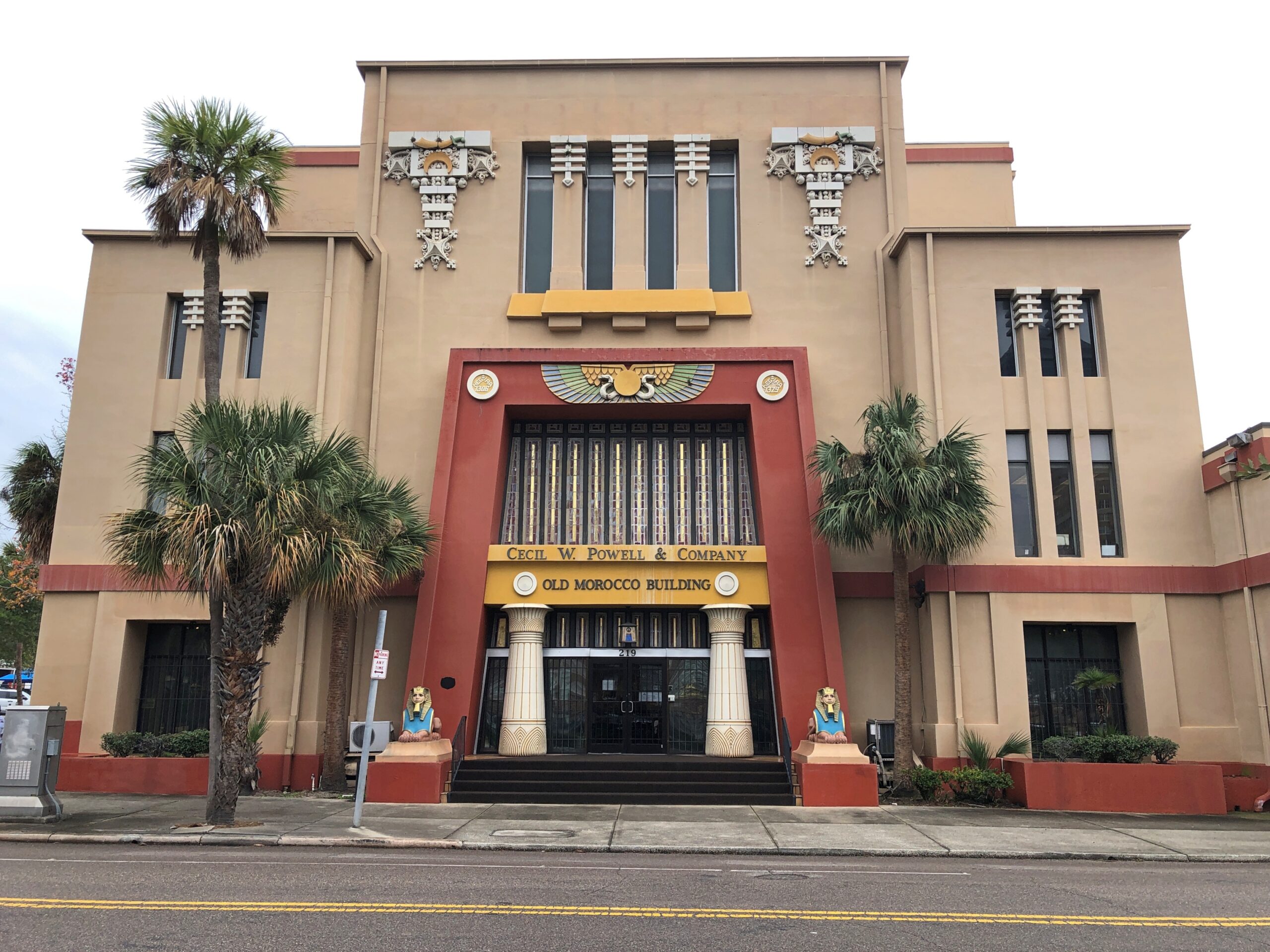
That’s my opinion, formed pretty much instantaneously on December 18, during our wander around downtown. We only spent a few hours in that part of Jacksonville, meaning my exposure was necessarily limited, but I’m sticking with my opinion. After all, what could be cooler than an Egyptian revival-Prairie School structure with sphinx-like guards out front? (And how about them toes?)
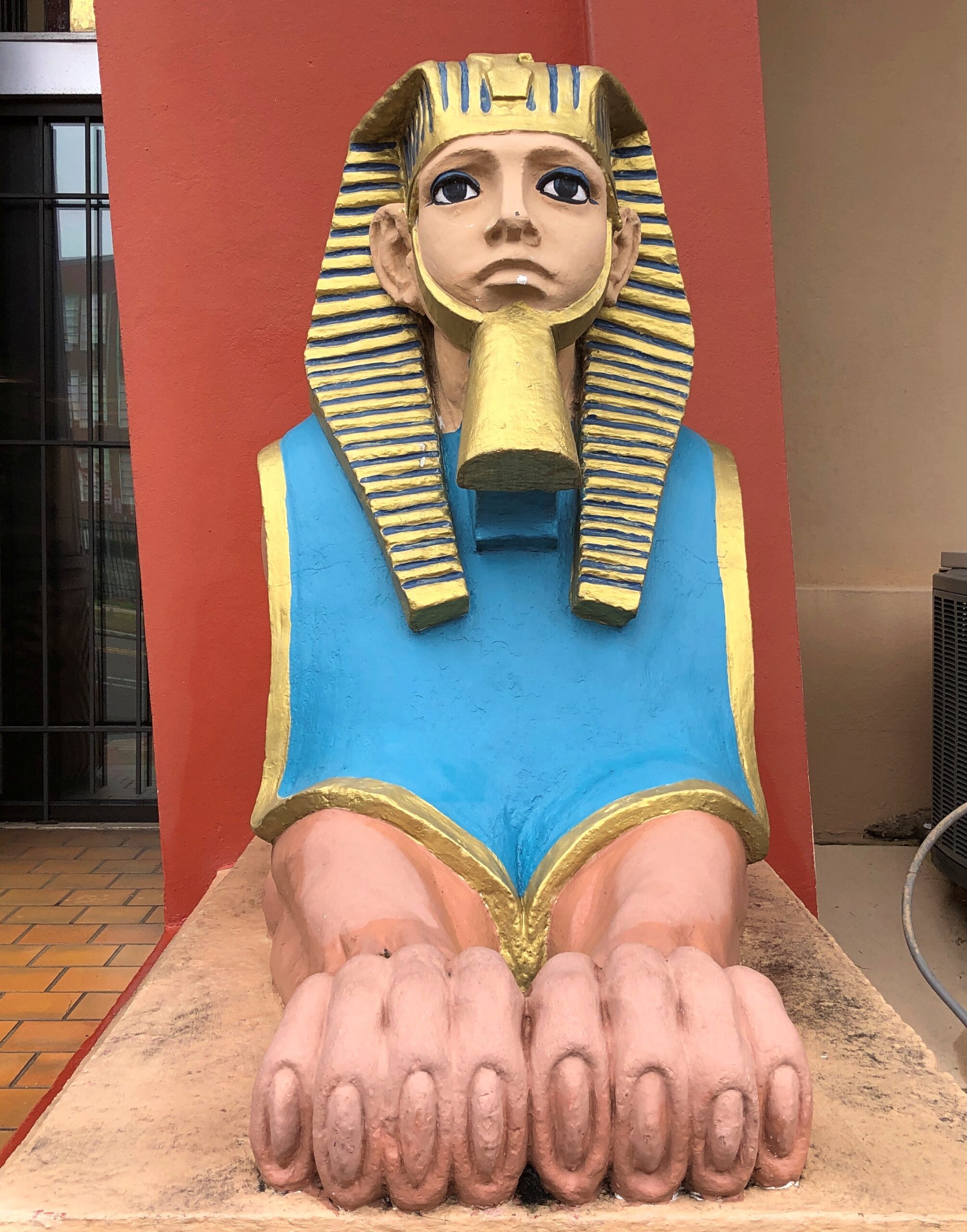
“The main facade features Egyptian-style terra-cotta columns with lotus-leaf capitals, tinted art-glass, sphinx-like sculptures, and a terra-cotta sun disk ornament with cobra heads,” notes Prairie School Traveler.
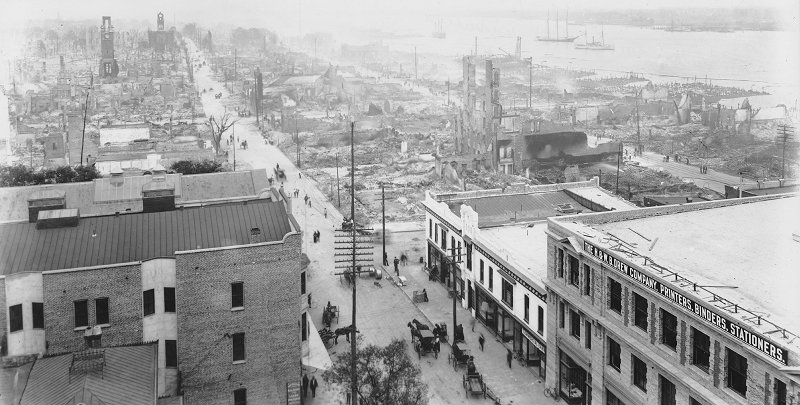
The Shriners – who else? – tapped architect Henry John Klutho to design the building, which was completed in 1911. Klutho had been based in NYC, but after the Great Fire of 1901 in Jacksonville, he came south to participate in the redevelopment of the city. If he did nothing else, the Morocco Temple would be enough. I understand the interior is similarly exotic, though modified after the Shriners moved out in the 1980s, but we didn’t venture in.
The aftermath of the fire. Redevelopment opportunities galore.
We’d come to Jacksonville, two days after leaving Key West, for two reasons. One, to visit old friends. Last year, I managed to visit old friends in Austin, San Antonio, Tokyo, rural Tennessee, coastal North Carolina, central Georgia, Denver, New York, suburban Boston, and finally Jacksonville. An essential ingredient for the year, these visits.
Also, I wanted to visit the generally ignored Jacksonville. A place one doesn’t hear about much. Miami has its Vice and Orlando its Mouse and Key West its Jimmy Buffett. But Jacksonville?
We were advised that parking would not be an issue in downtown Jacksonville, even on a weekday. It wasn’t. We set out to see what we could see.
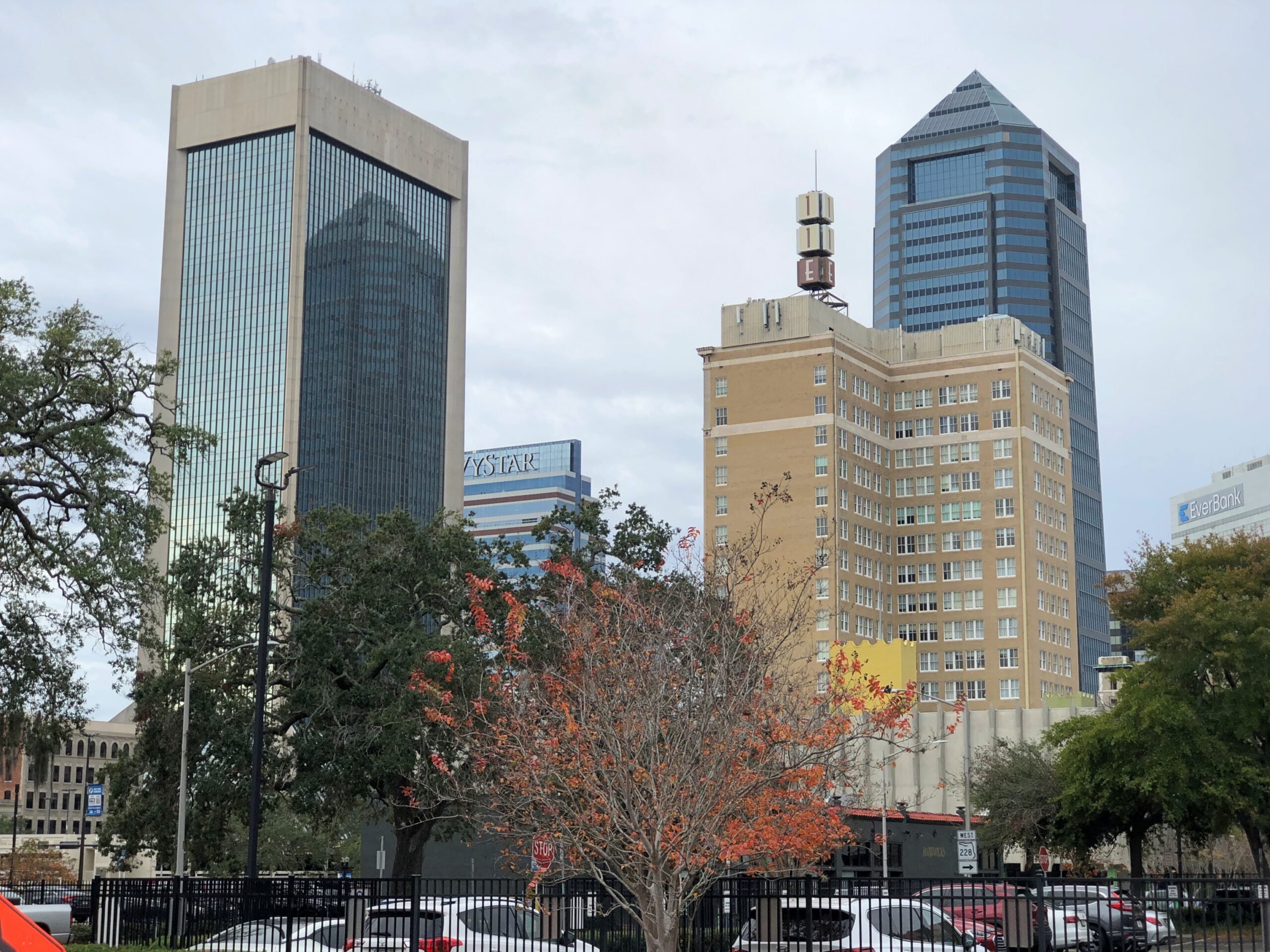
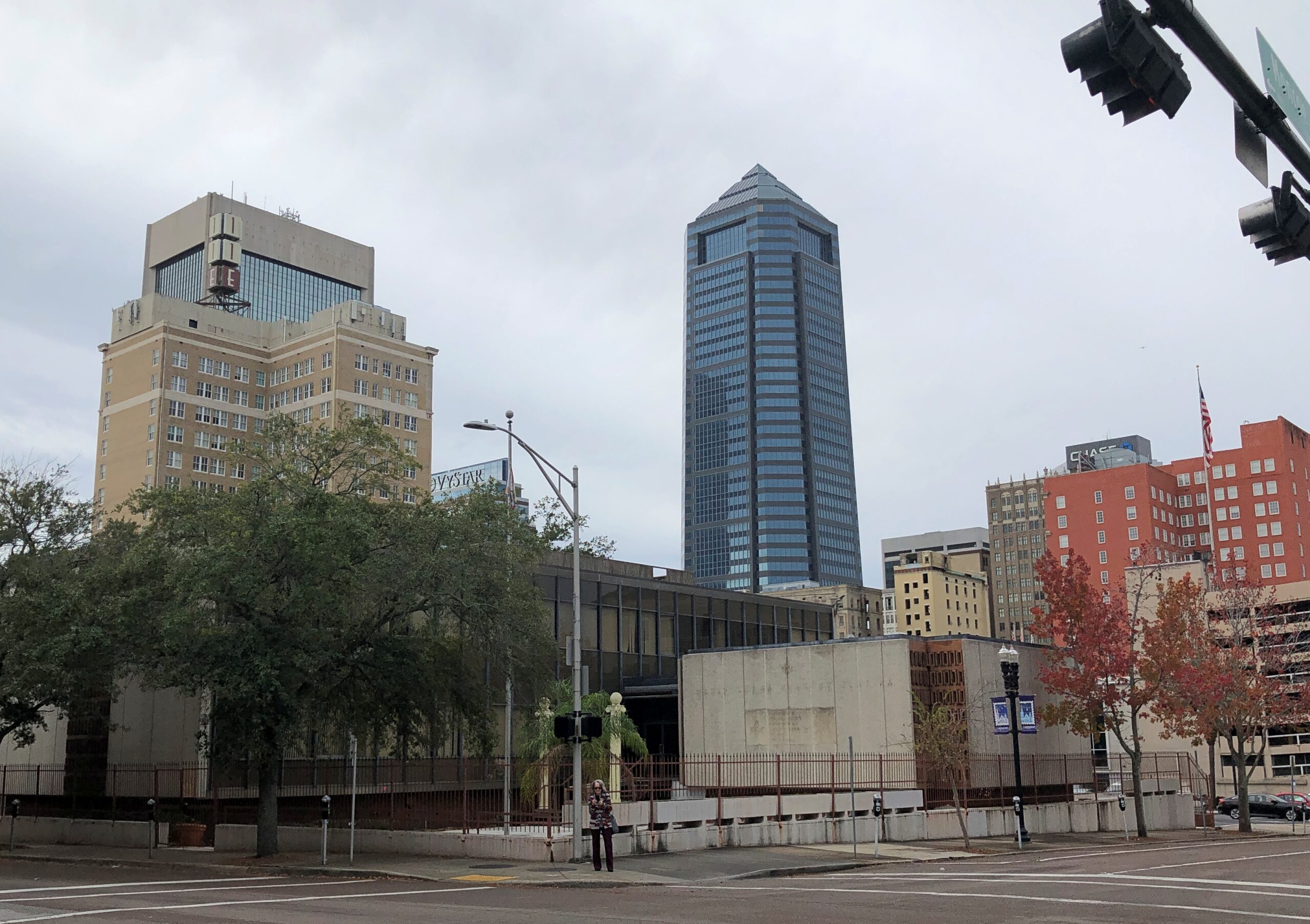
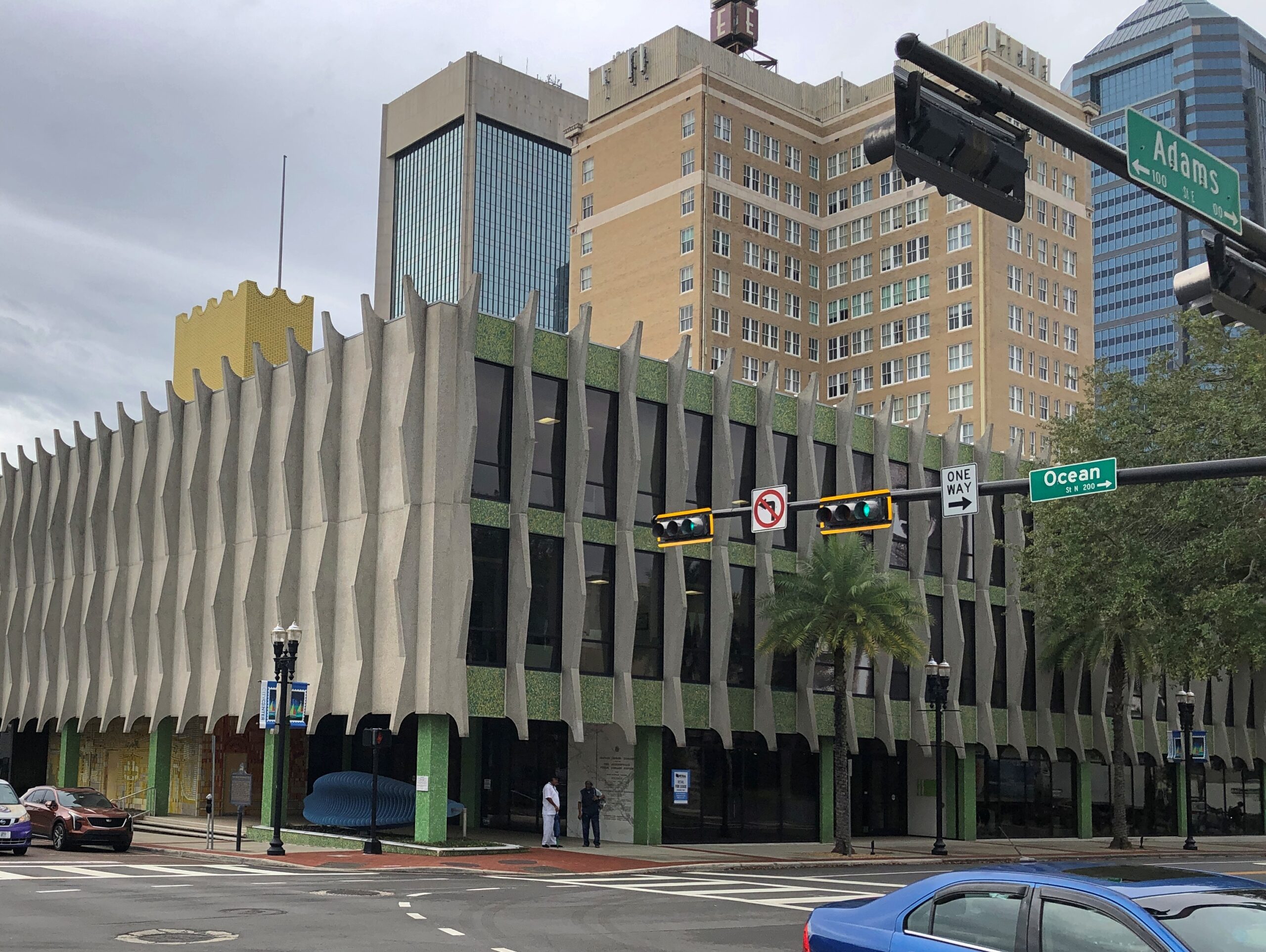
It was almost spooky how empty downtown was. Even the downtown Detroit of recent years is more active.
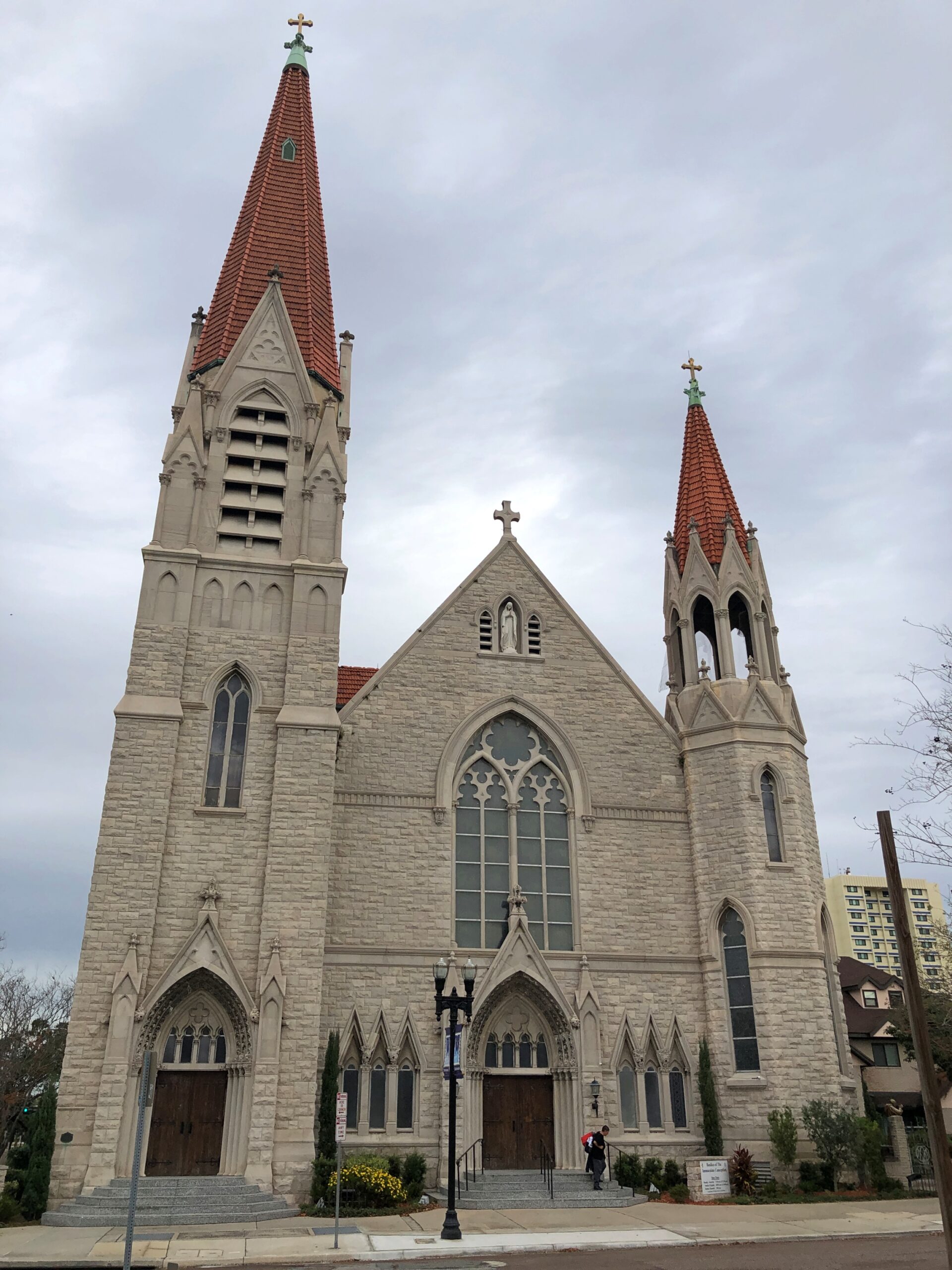
Downtown Jacksonville included some large but closed churches, such as the Basilica of the Immaculate Conception.
But at least Padre Pio is near the basilica to greet you.
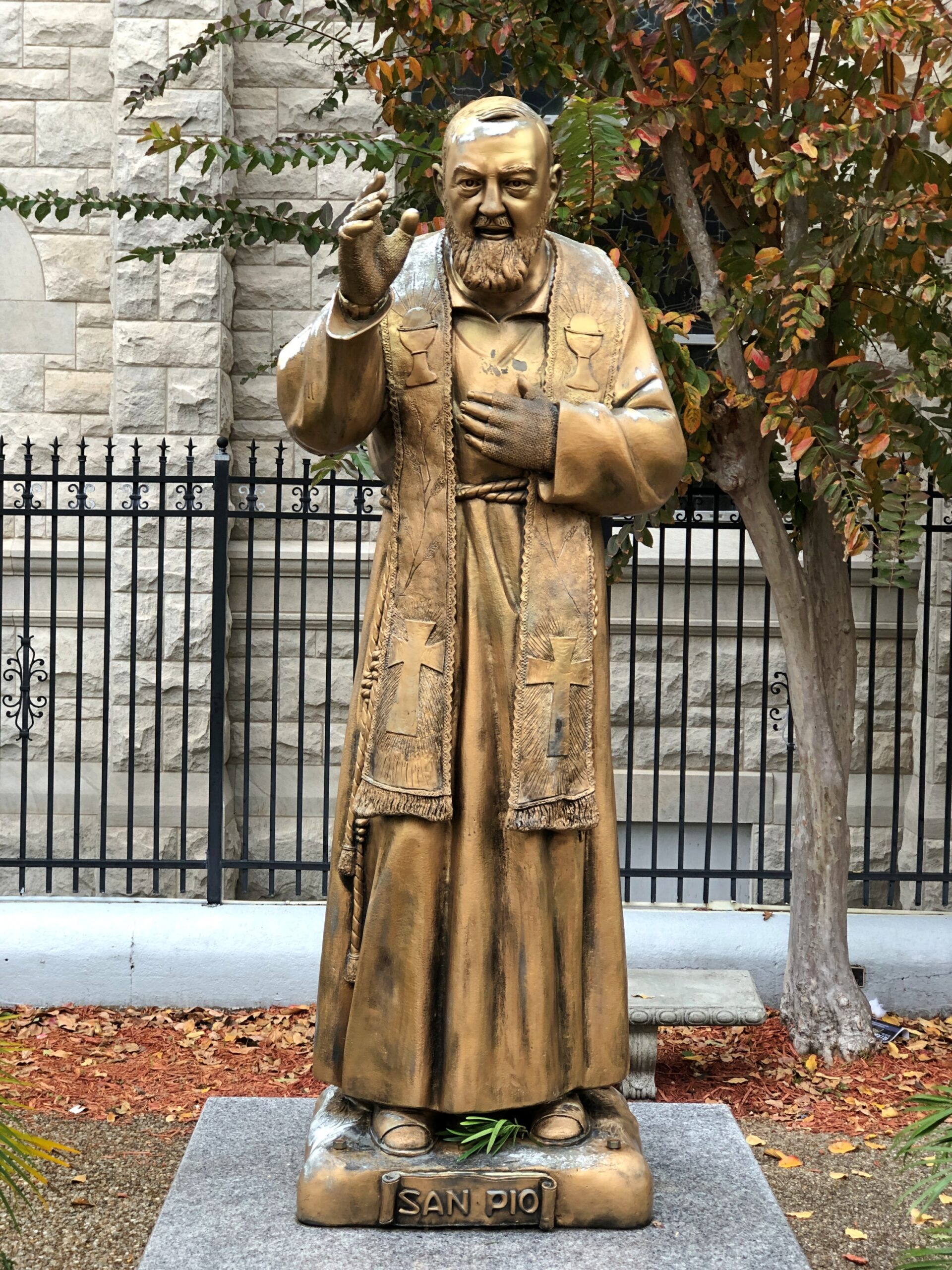
If I’d known what to look for – because I had to look him up later – I’d have noticed the bandages covering both of his wrists. Among other things, St. Pio was known for his stigmata.
Down the street, also closed: First Presbyterian.
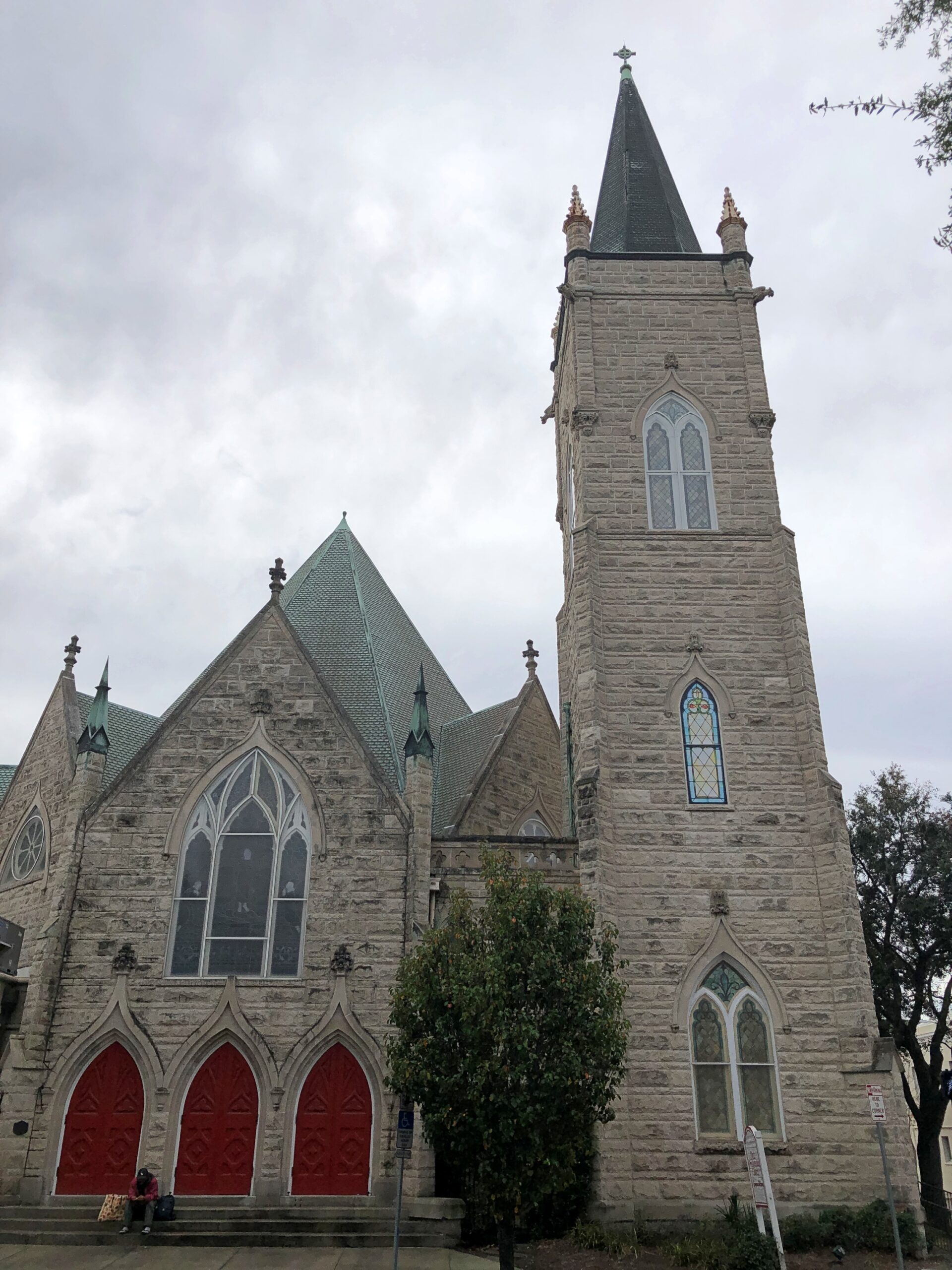
St. John’s Cathedral, Episcopal. At first I assumed it was closed.
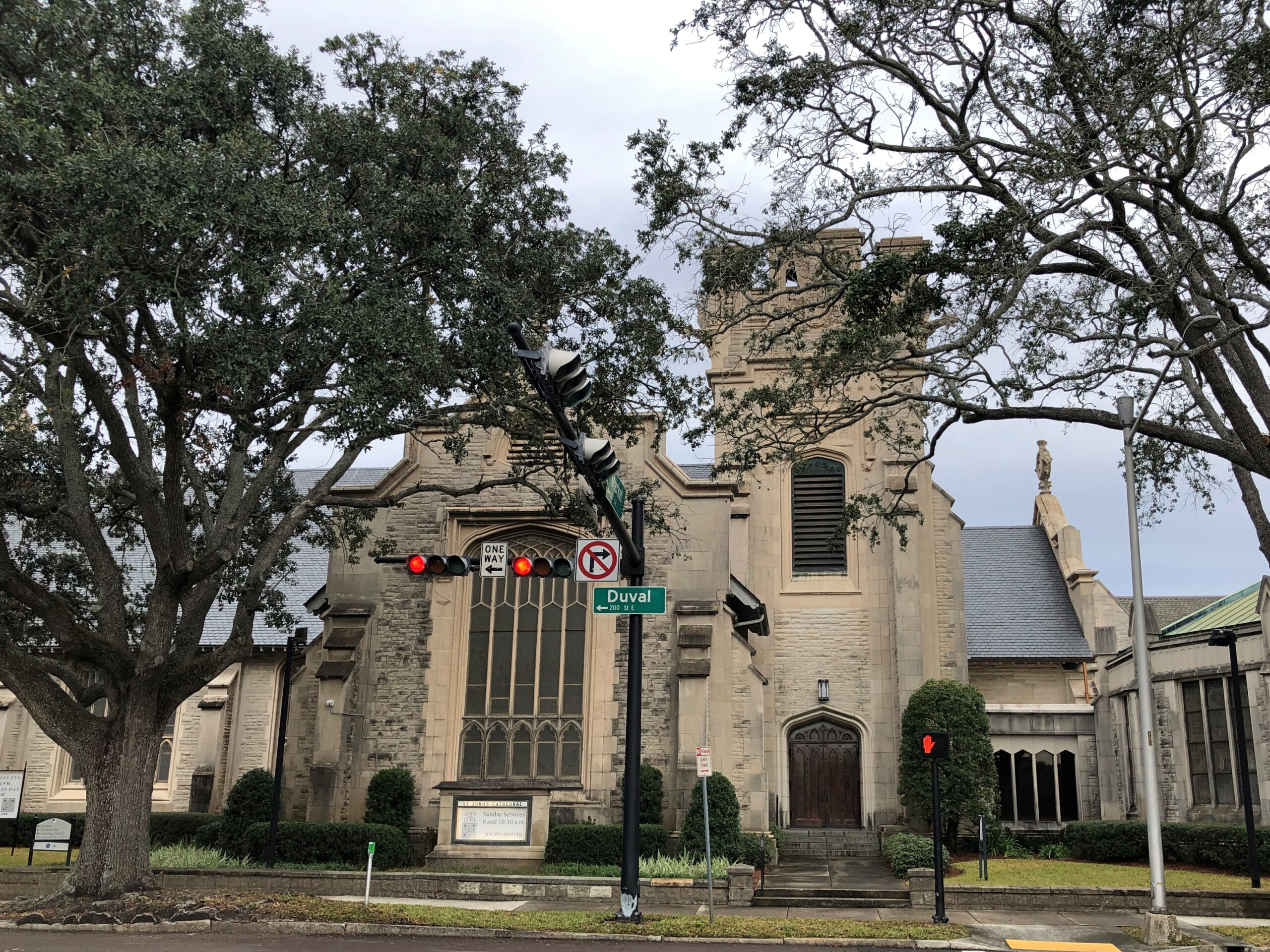
This is the third church on the site. An 1840s structure burned down (and sank into the swamp?) in 1862, during one of the times the city changed hands between Union and Confederate. A grander church replaced it after the war but, oops, along came the aforementioned Great Fire of 1901. The current structure dates from 1906, the work of noted church architect Howard Nott Potter.
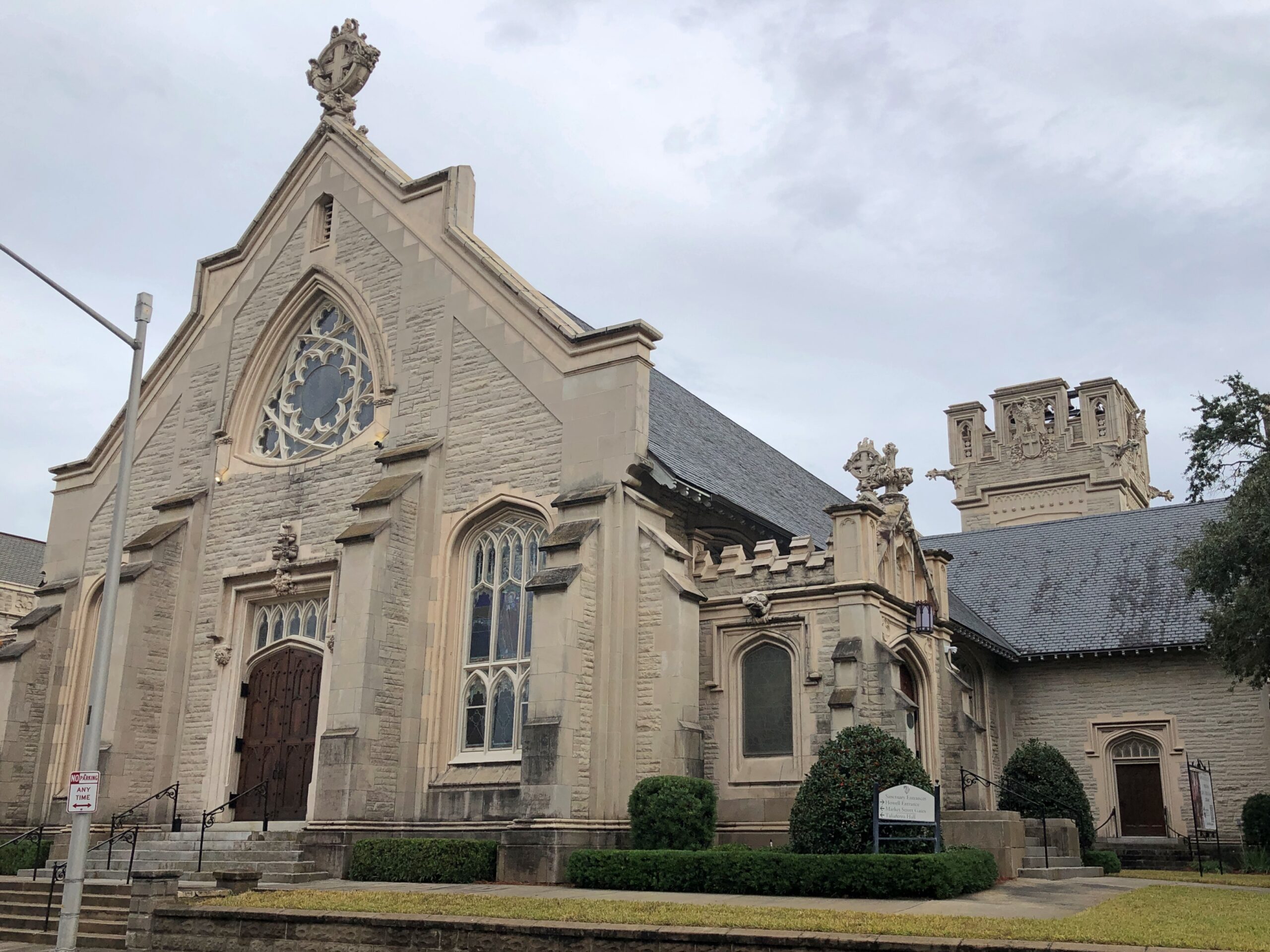
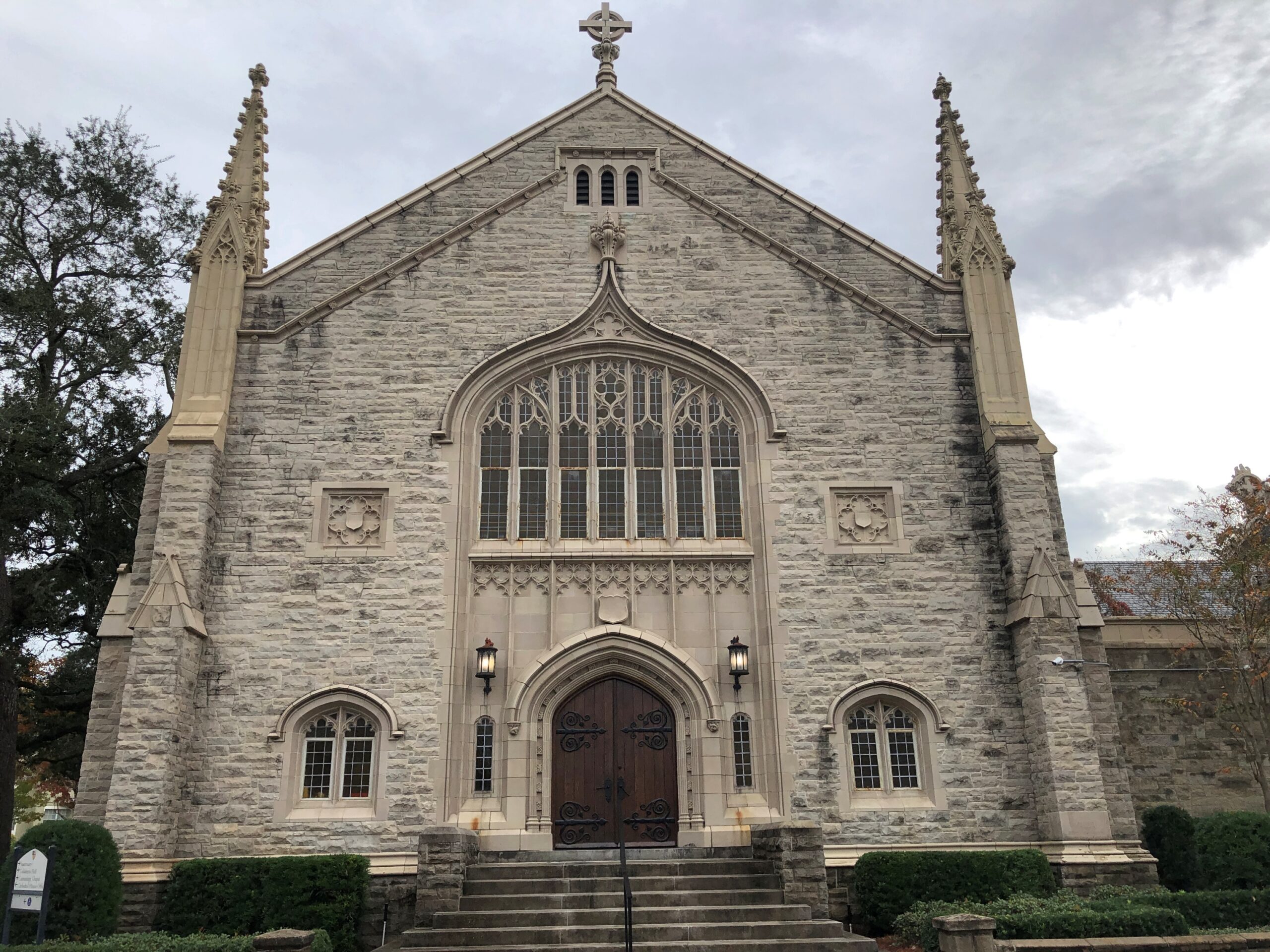
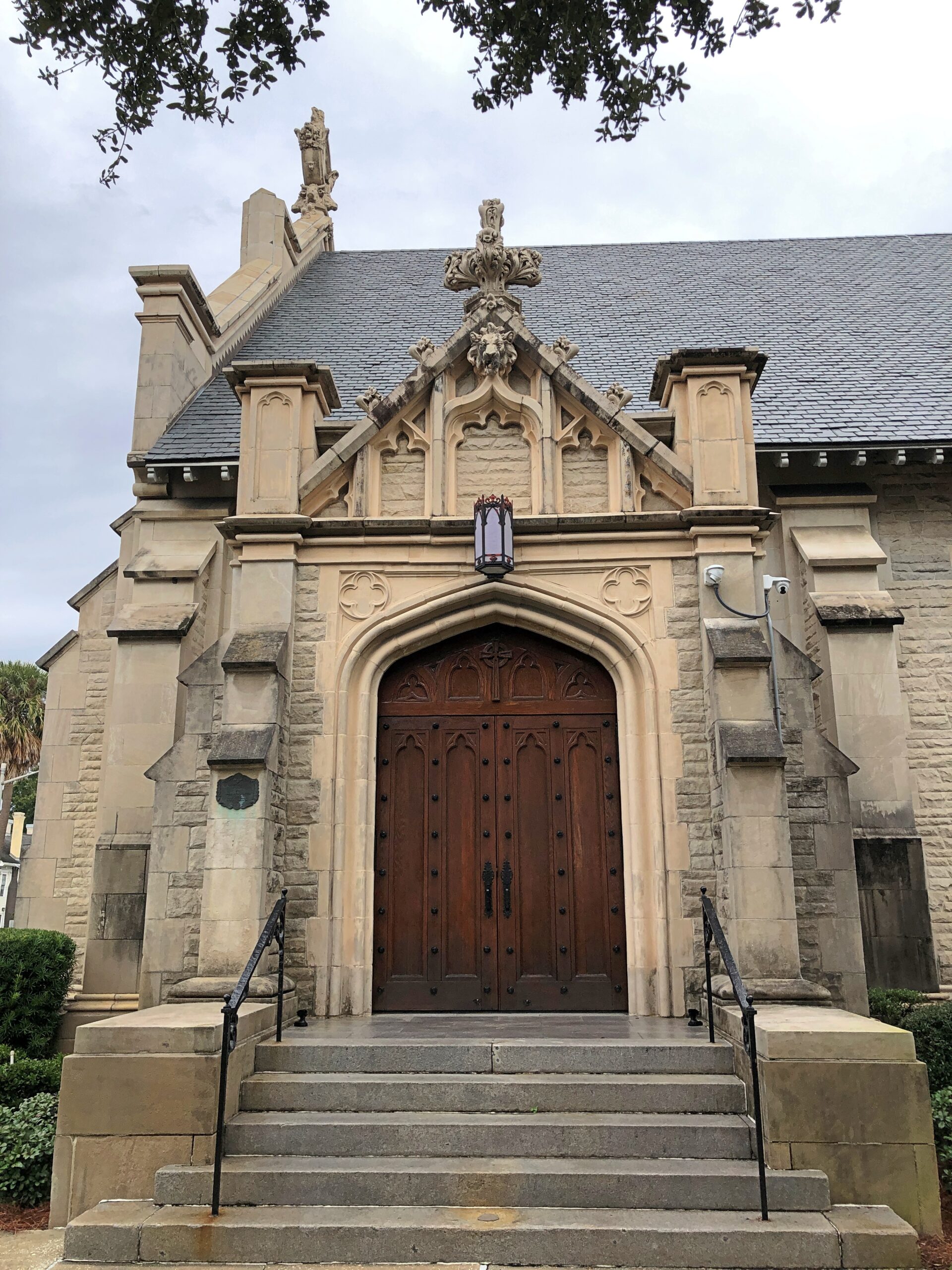
We found a way in, almost hidden around back. We were well rewarded.
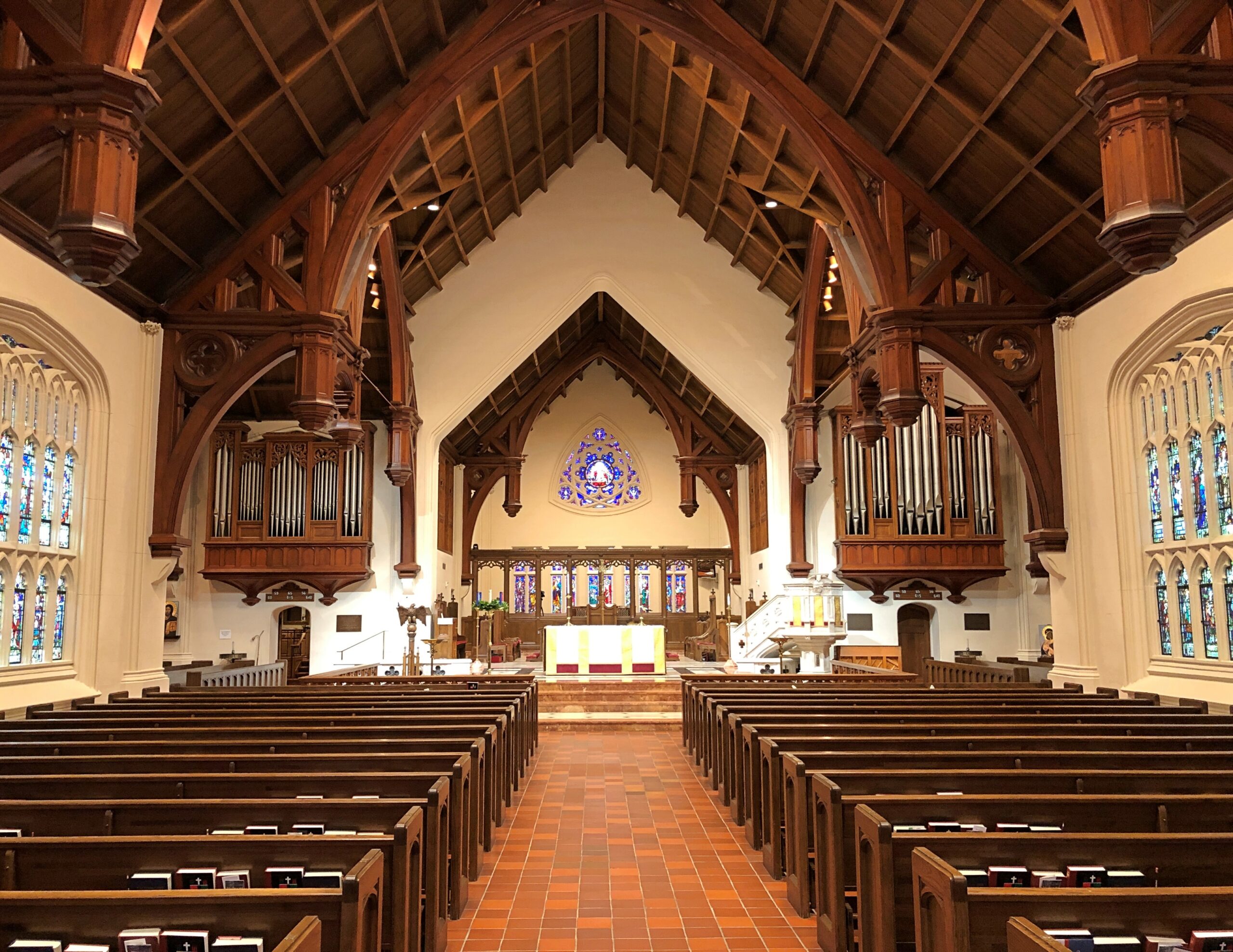
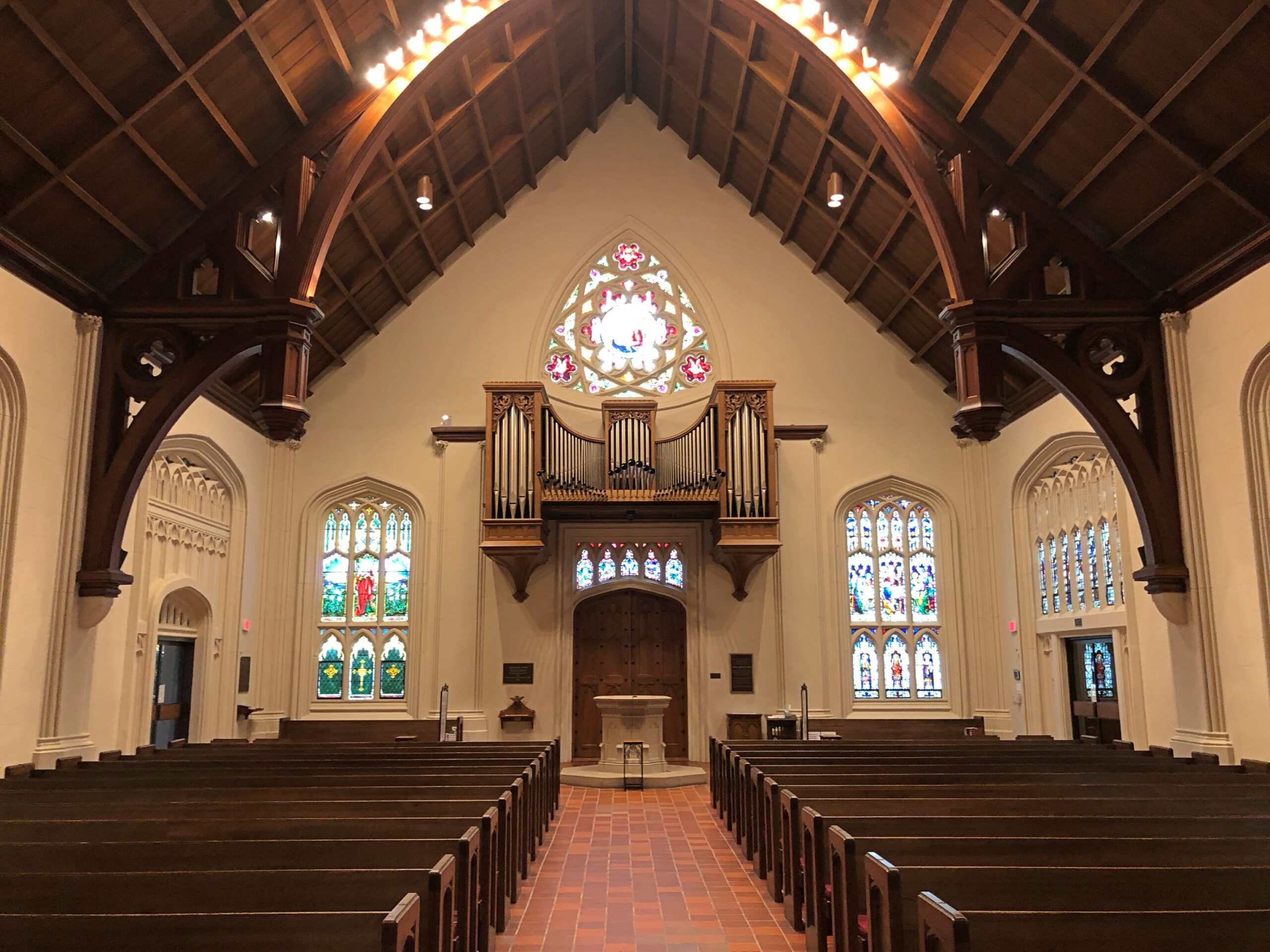
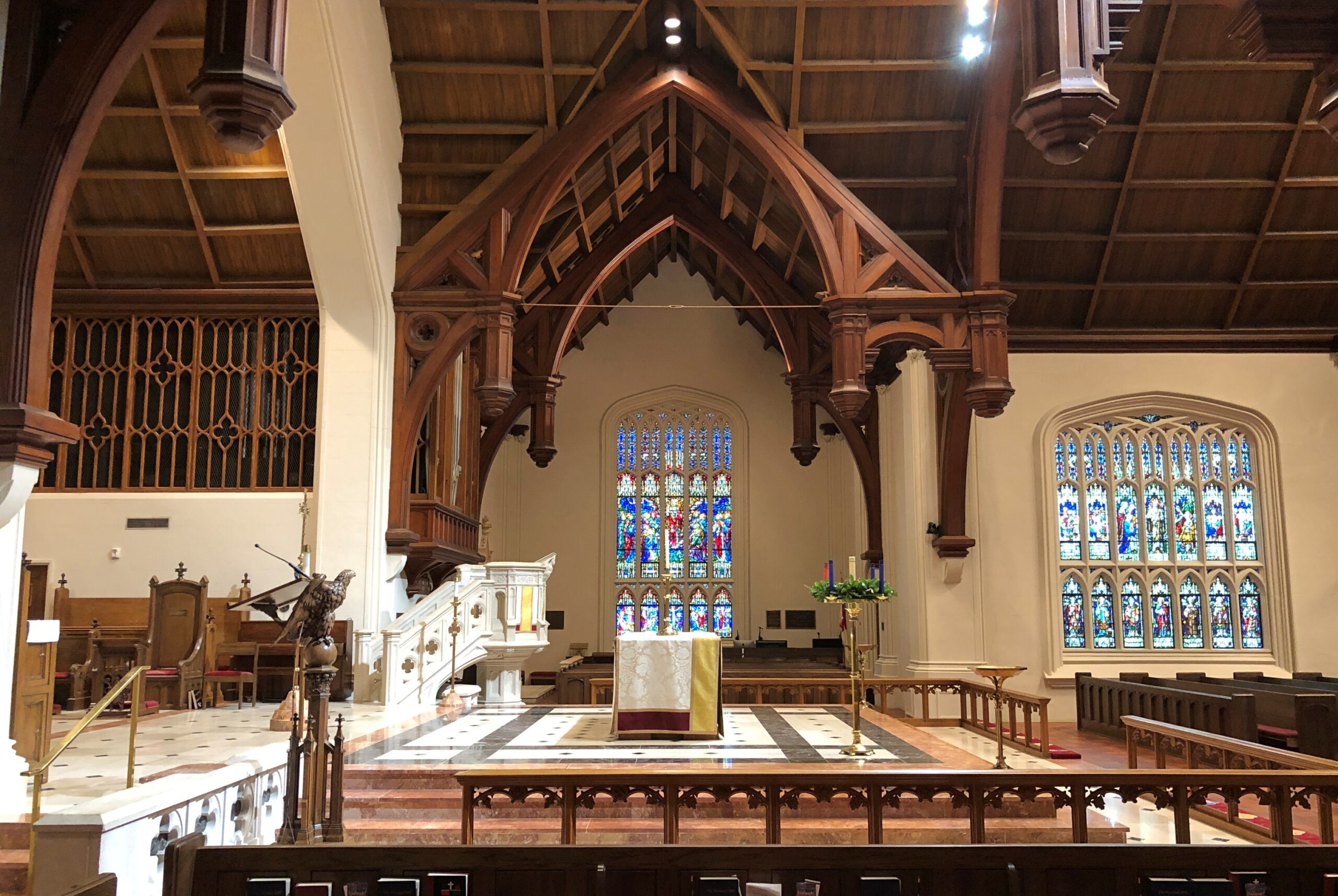
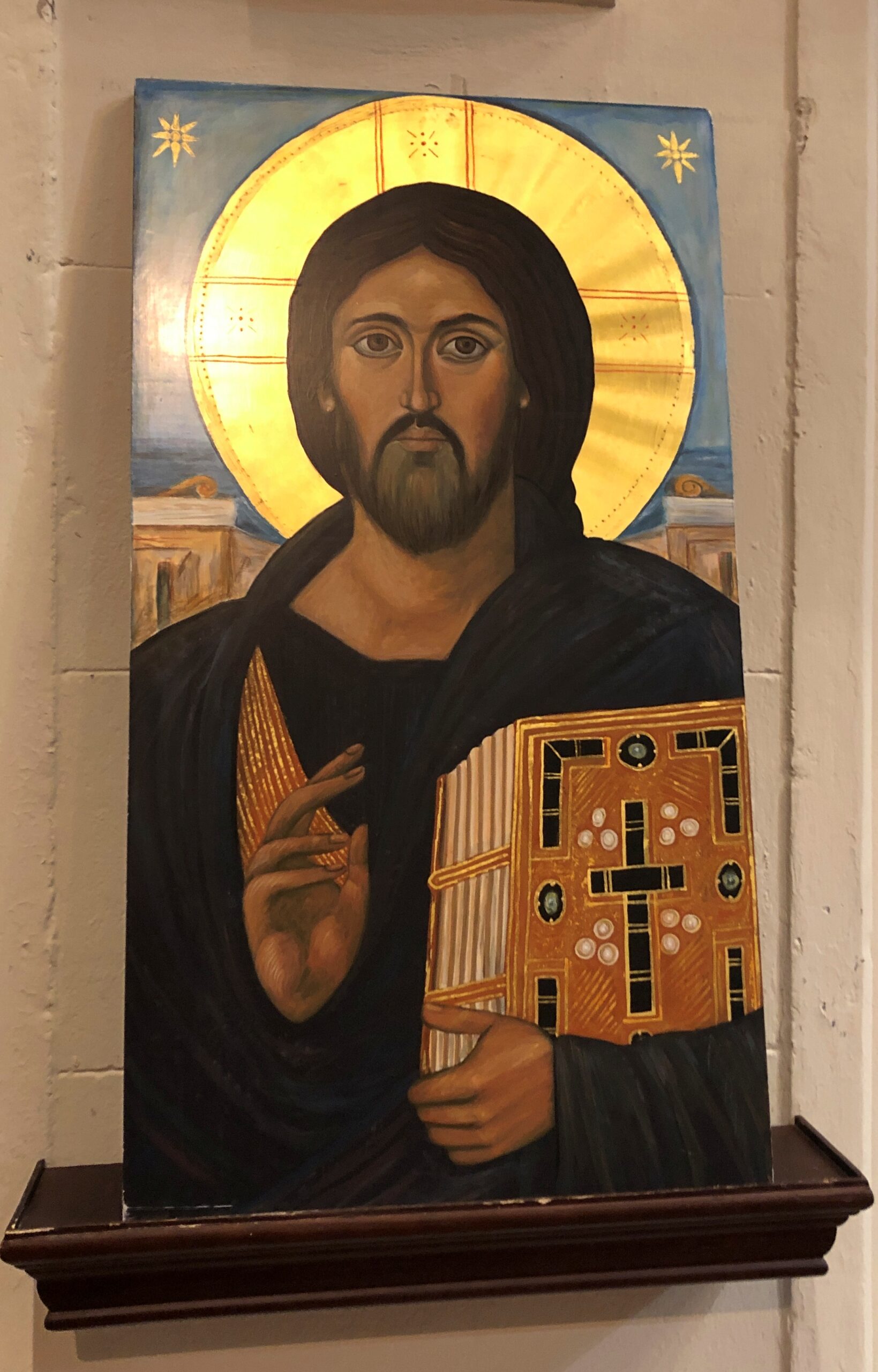
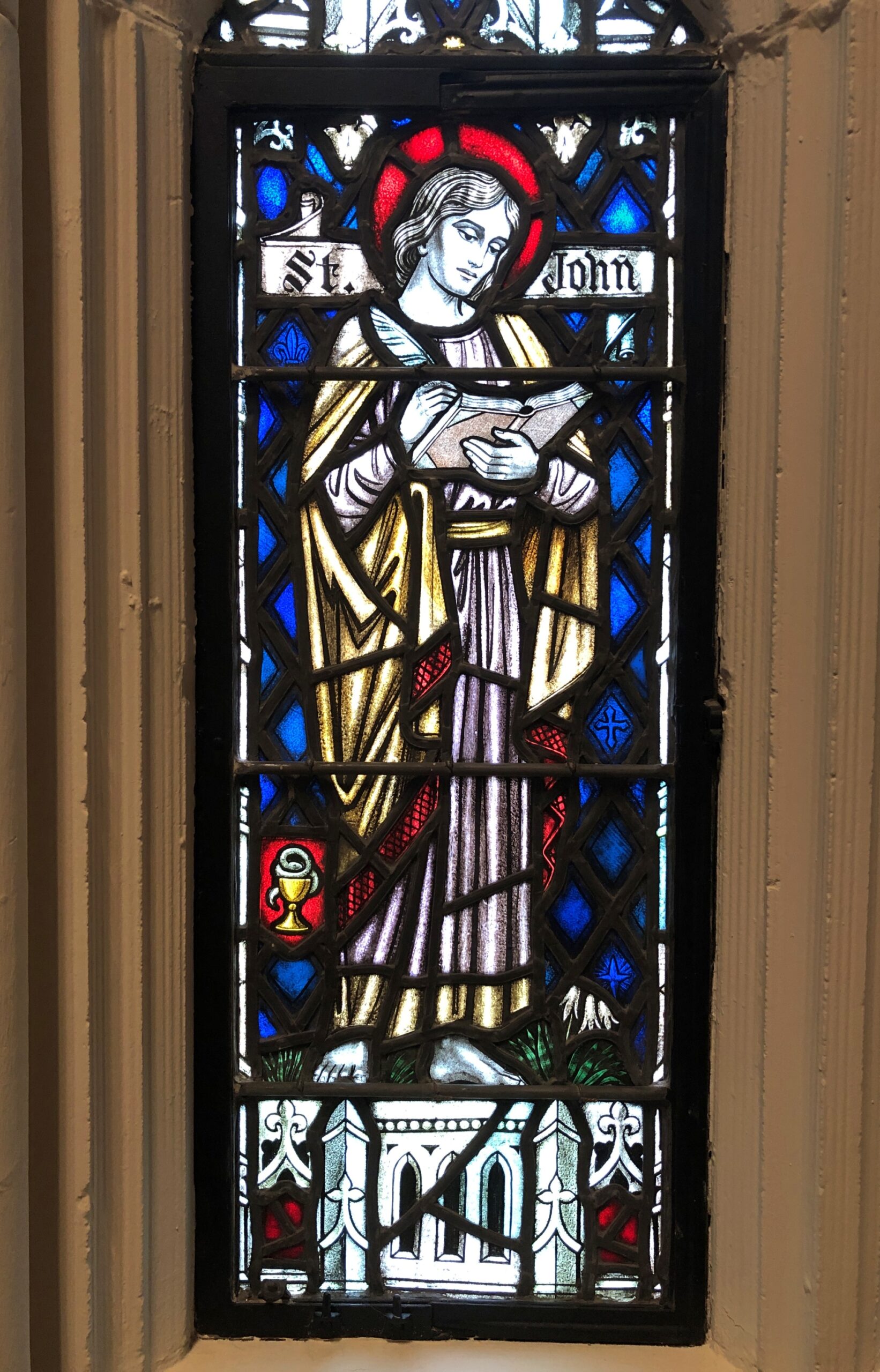
Fine stained glass. St. John makes an appearance, as you’d think.
So does St. Longinus.
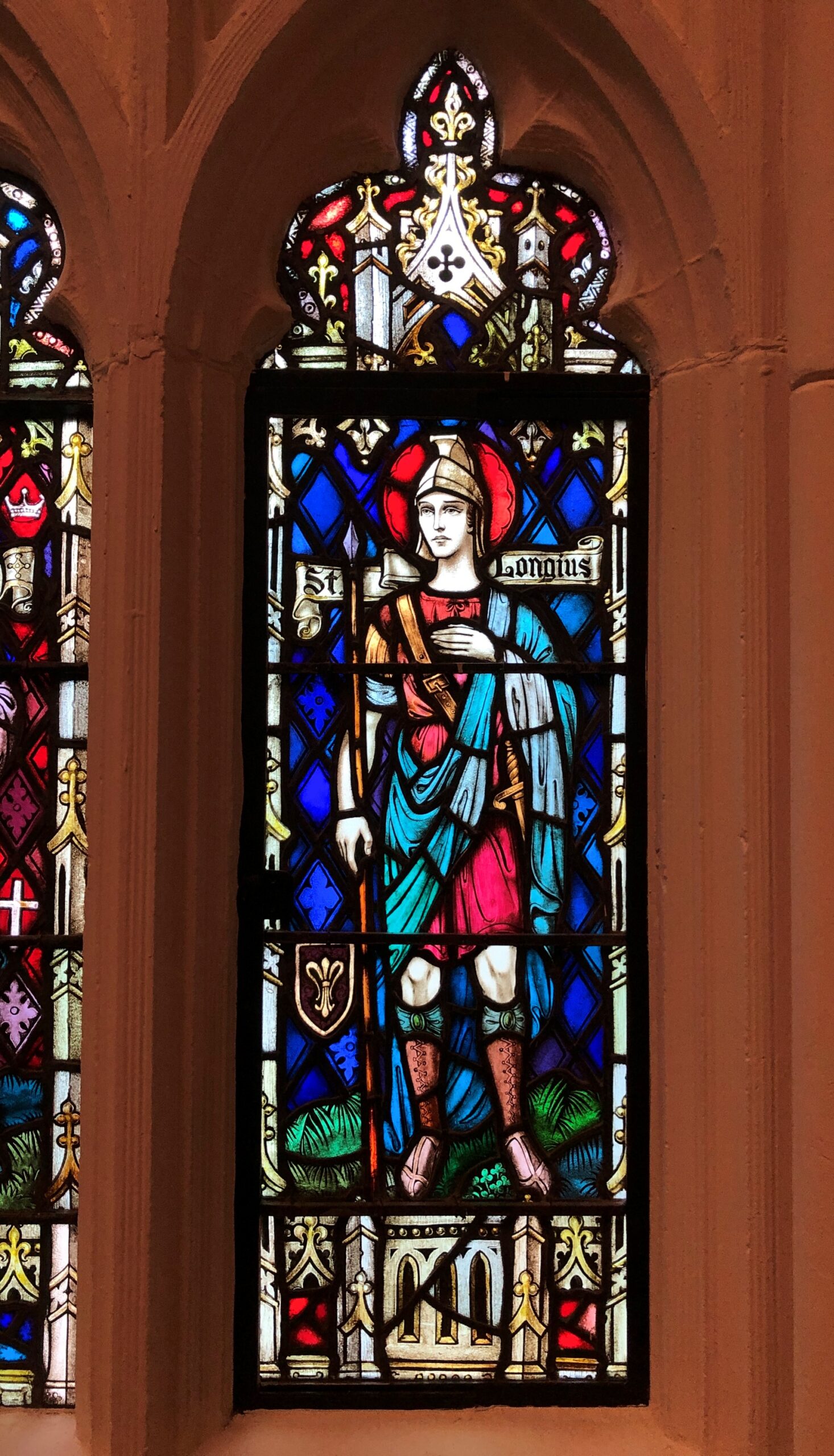
You might say he had a bit part in during the crucifixion, mentioned in one line exactly (John 19:34) and not even by name. But from such small acorns large bodies of belief grow.