The day was on, the heat was on, and I was on the road again. I’d driven out to Myrtle Beach from Illinois. Now I planned to drive back.
First stop, not far: Conway, South Carolina, much smaller than Myrtle Beach, yet the seat of Horry County. I’d assume that arrangement goes back to the time when the county’s focus was on Conway, a center of turpentine production, not Myrtle Beach, which was a wasteland dotted with wax myrtles.
Nothing like a handsome county courthouse.
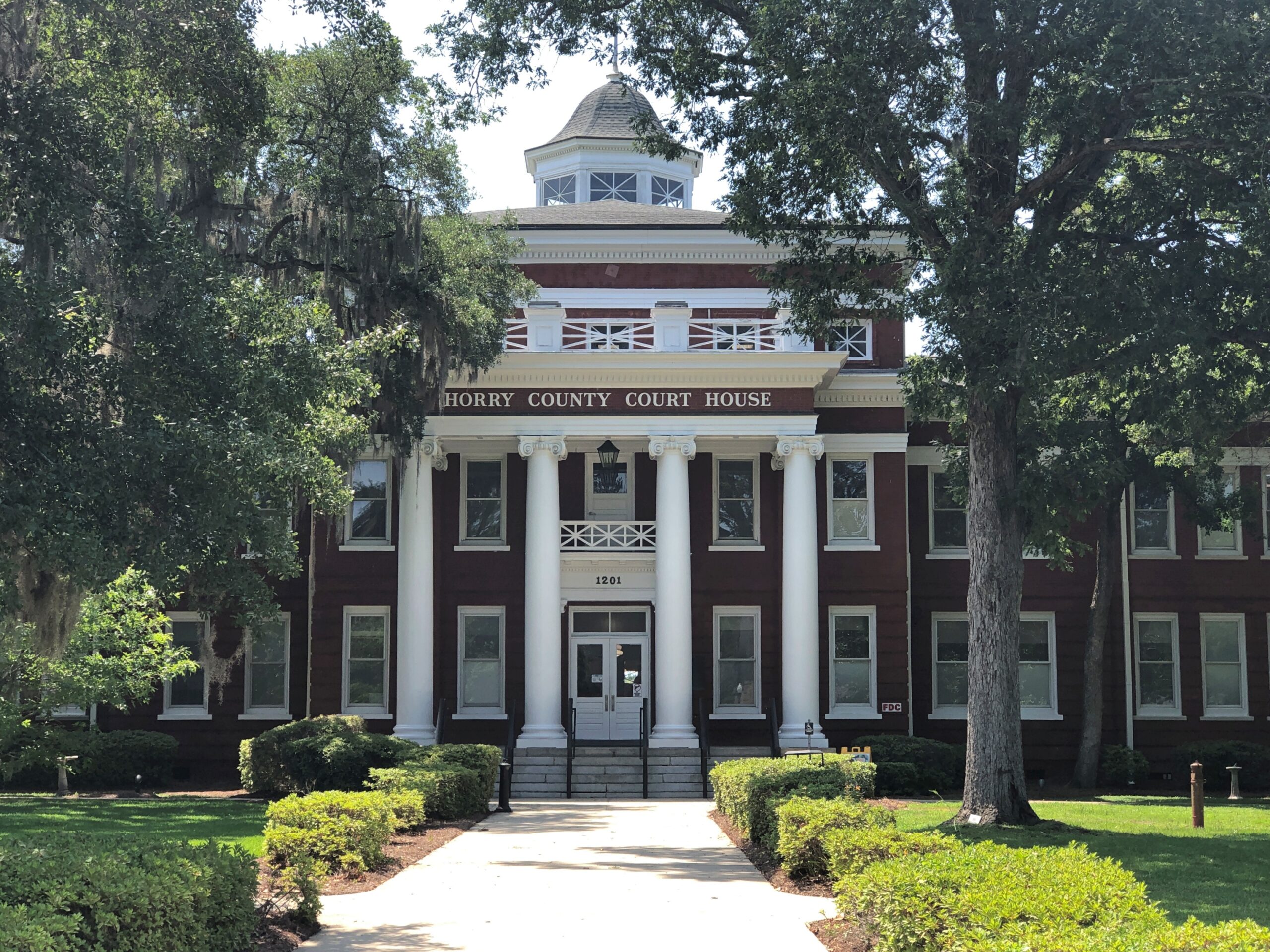
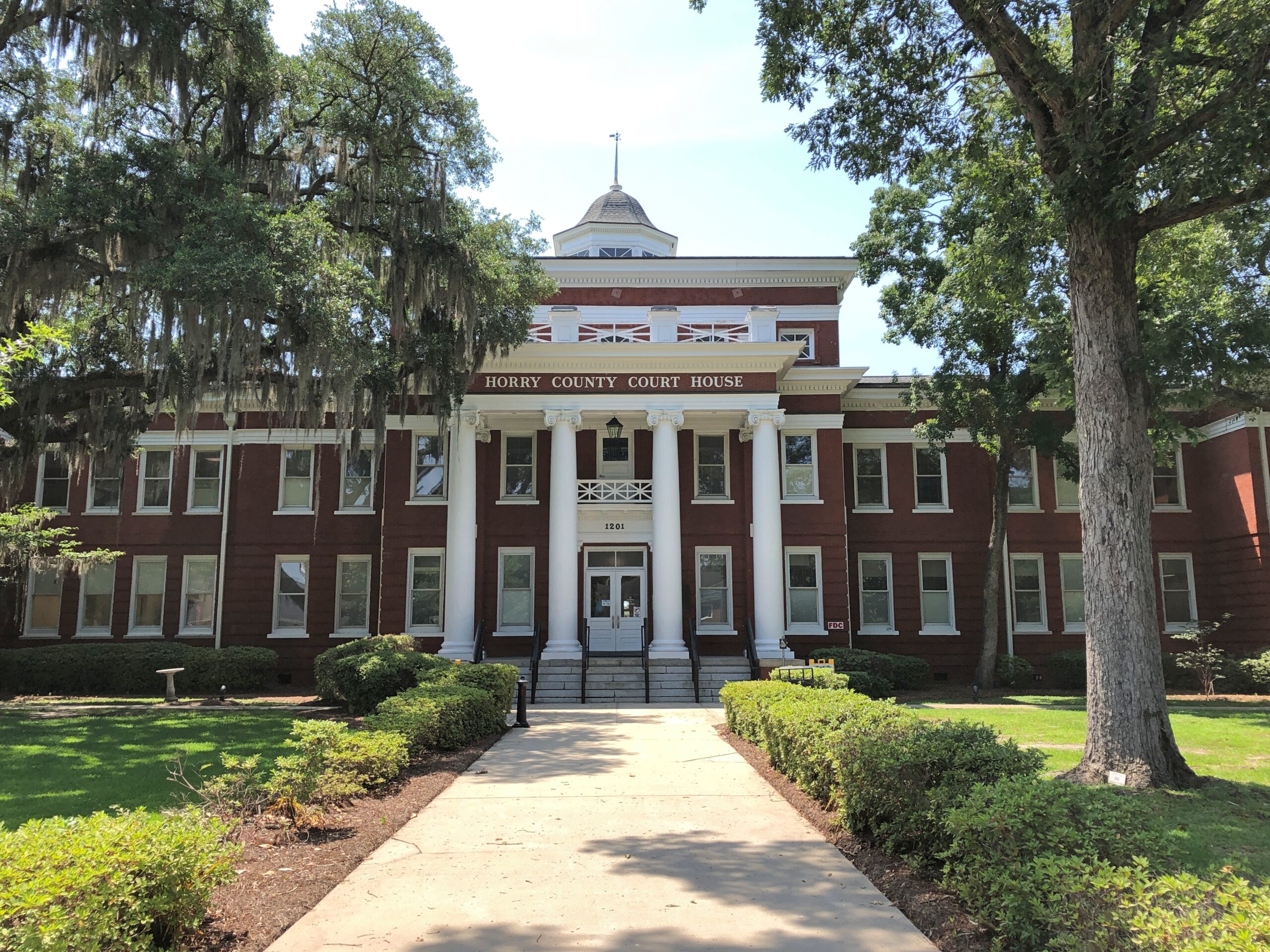
In the ragged diamond shape that is South Carolina, Horry is the easternmost tip. At the time of the Civil War and immediately afterwards, Horry was the poorest county in the state, an almost literal backwater isolated by the Pee Dee Swamp on the west and south. Now the county is one of South Carolina’s most prosperous.
The transformation is a story of railroads and a turpentine boom, followed by a tobacco boom, followed by a tourism boom. Along the way, new prosperity meant a new courthouse, finished in 1908.
Not long after, in the 1920s, the courthouse was the scene of another of those trials of the century mostly forgotten after a century, namely the Bigham trial, “in which Edmund Bigham — a member of a prominent, controversial Florence County family — was tried for the murder of five family members, including his brother Smiley Bigham, who was a state senator,” South Carolina History Trail says.
“Crowds packed the courtroom daily and the trial attracted newspaper reporters from as far away as New York City. One potential witness was murdered, another died of a heart attack while testifying, and some locals believed that the defendant somehow made the nearby Waccamaw River overflow its banks. The courtroom drama ended when the defendant suddenly accepted a guilty plea.”
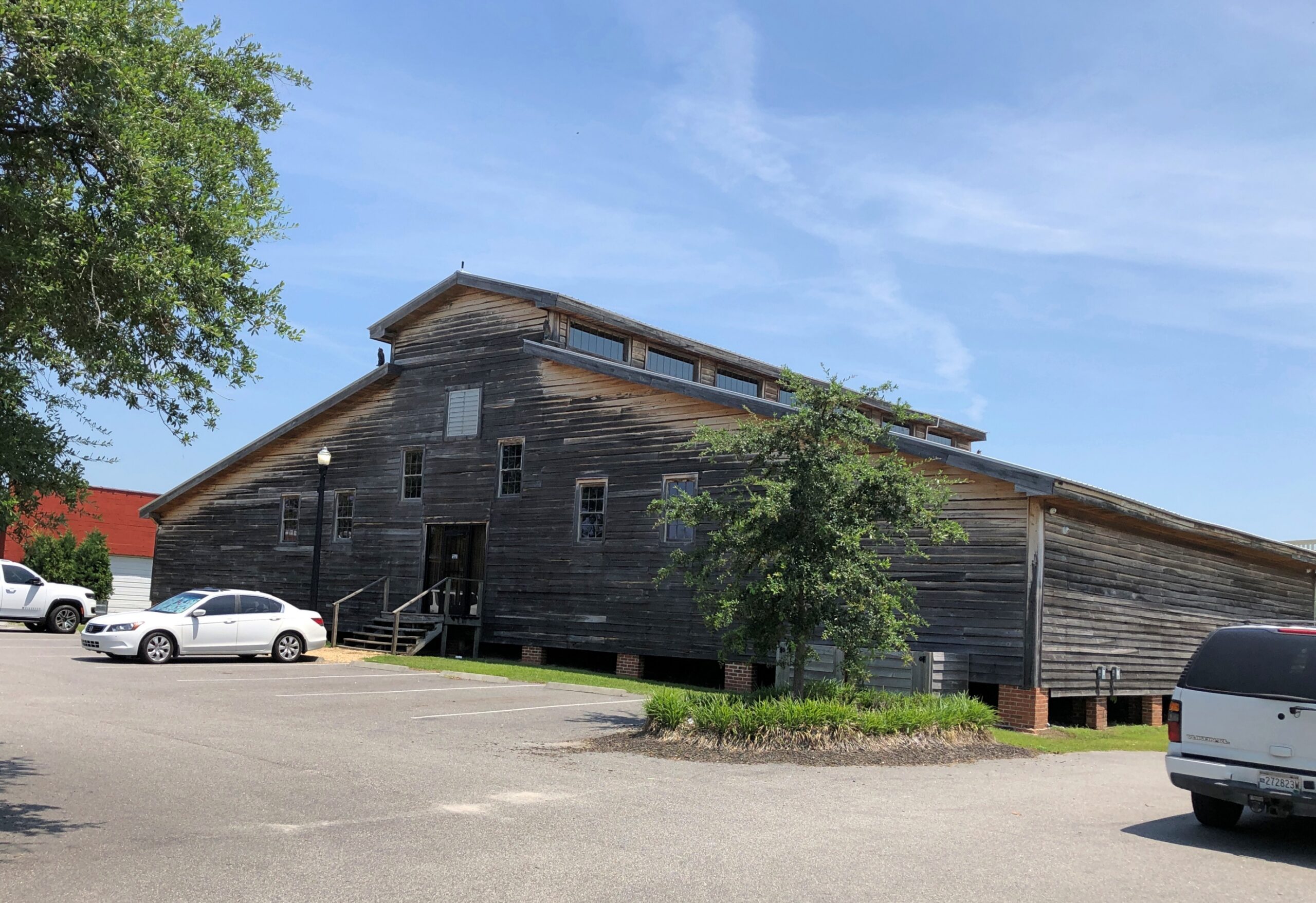
Not far from the courthouse, because nothing is very far from anything else, is an enormous wooden warehouse. This is the back.
Round to the front.
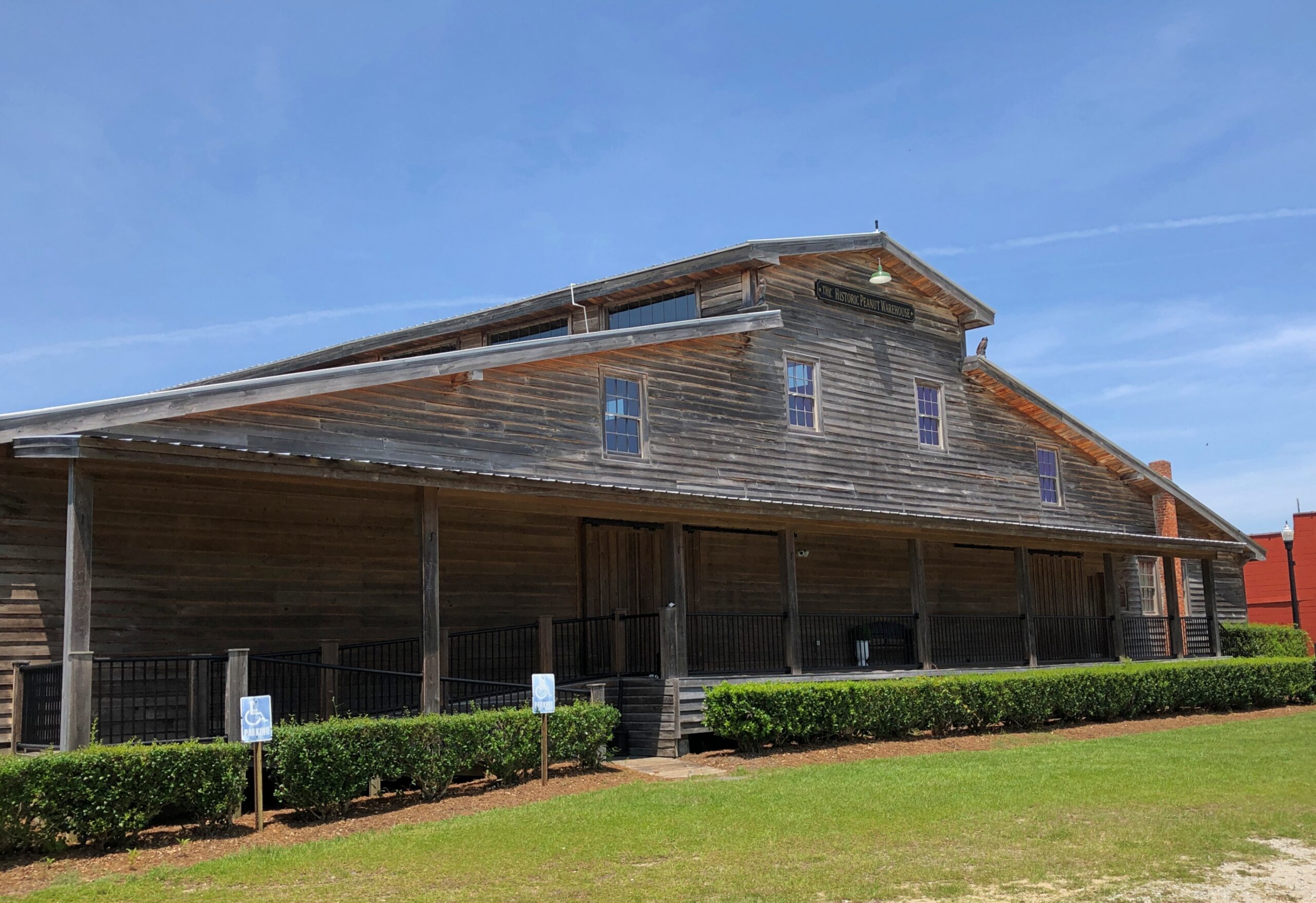
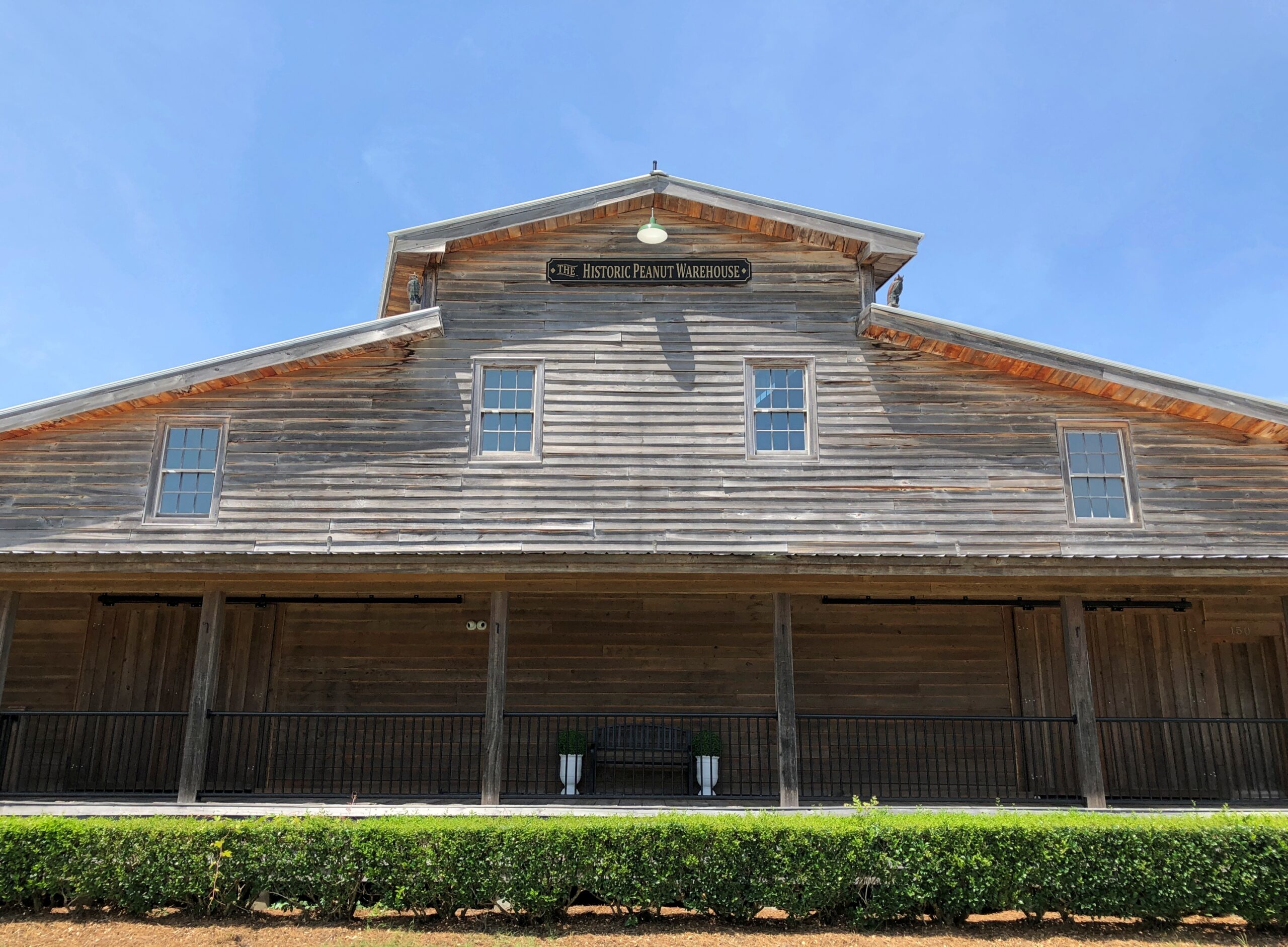
Historic Peanut Warehouse. Historic tips us off that no goober peas have been stored there in some time, and the like-new wood means restoration in the not-so-distant past.
Anyway, I should have known peanuts had something to do with the wooden giant.
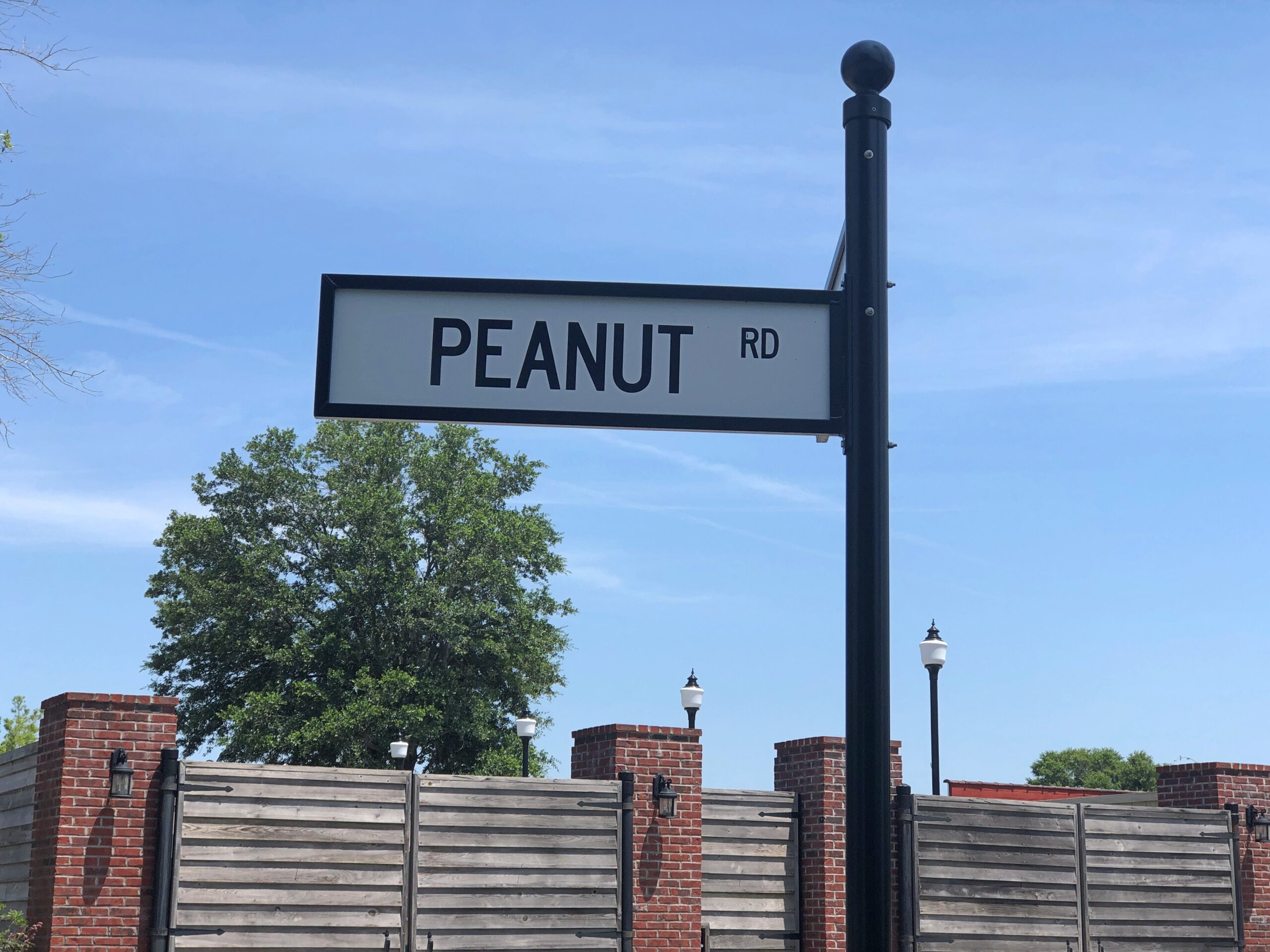
When new in 1900, the warehouse held peanuts, but after some years that gave way to decades of tobacco storage. In our time, you can hold an event there, and I’d bet its lifeblood is weddings.
Other parts of Conway beckoned, such as a walkway along the Waccamaw River. The prospect of heat exhaustion or at least a headache put me off such an idea. But the heat didn’t mean I couldn’t admire the artful green-and-white local water tower.
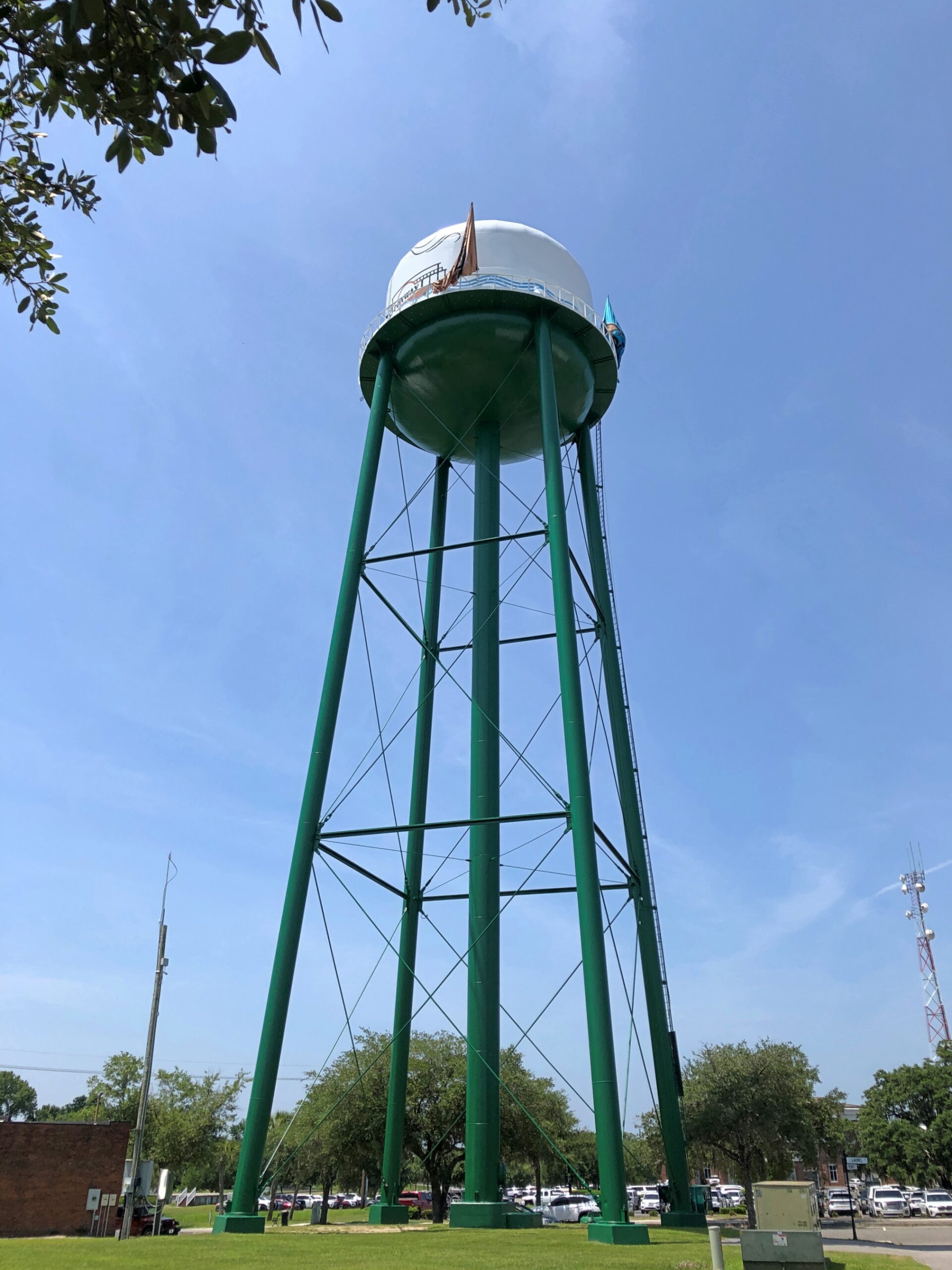
As a small child visiting my grandma in Alamo Heights, Texas, I admired the local water tower, silver-gray with a distinct cap atop it, and easily visible from her house. I’ve been looking at water towers ever since. (This article says the tower’s nickname was Tin Man, but I never heard anyone call it that, and my own personal name for it, which became family argot, was “Squeaky.”)
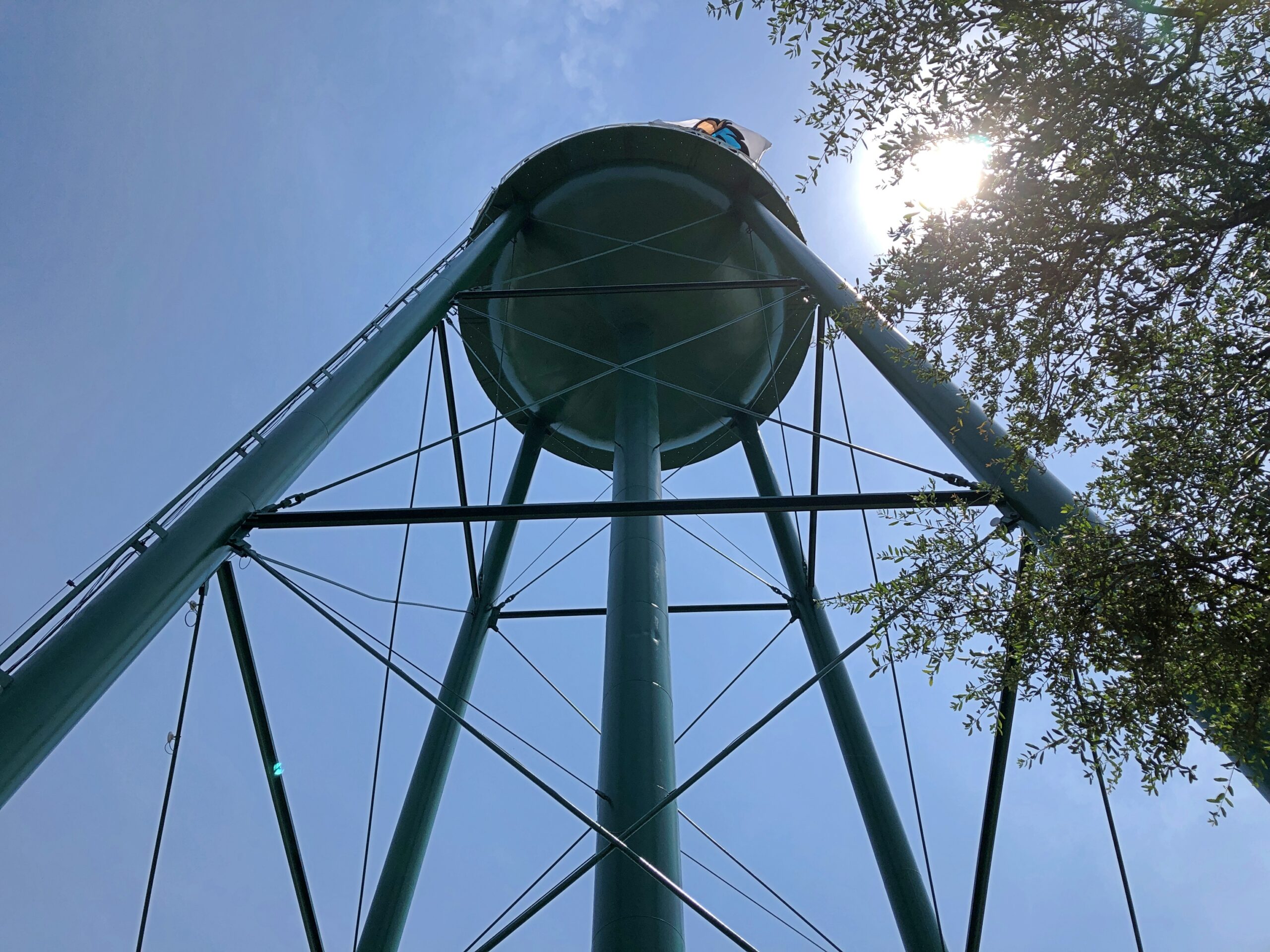
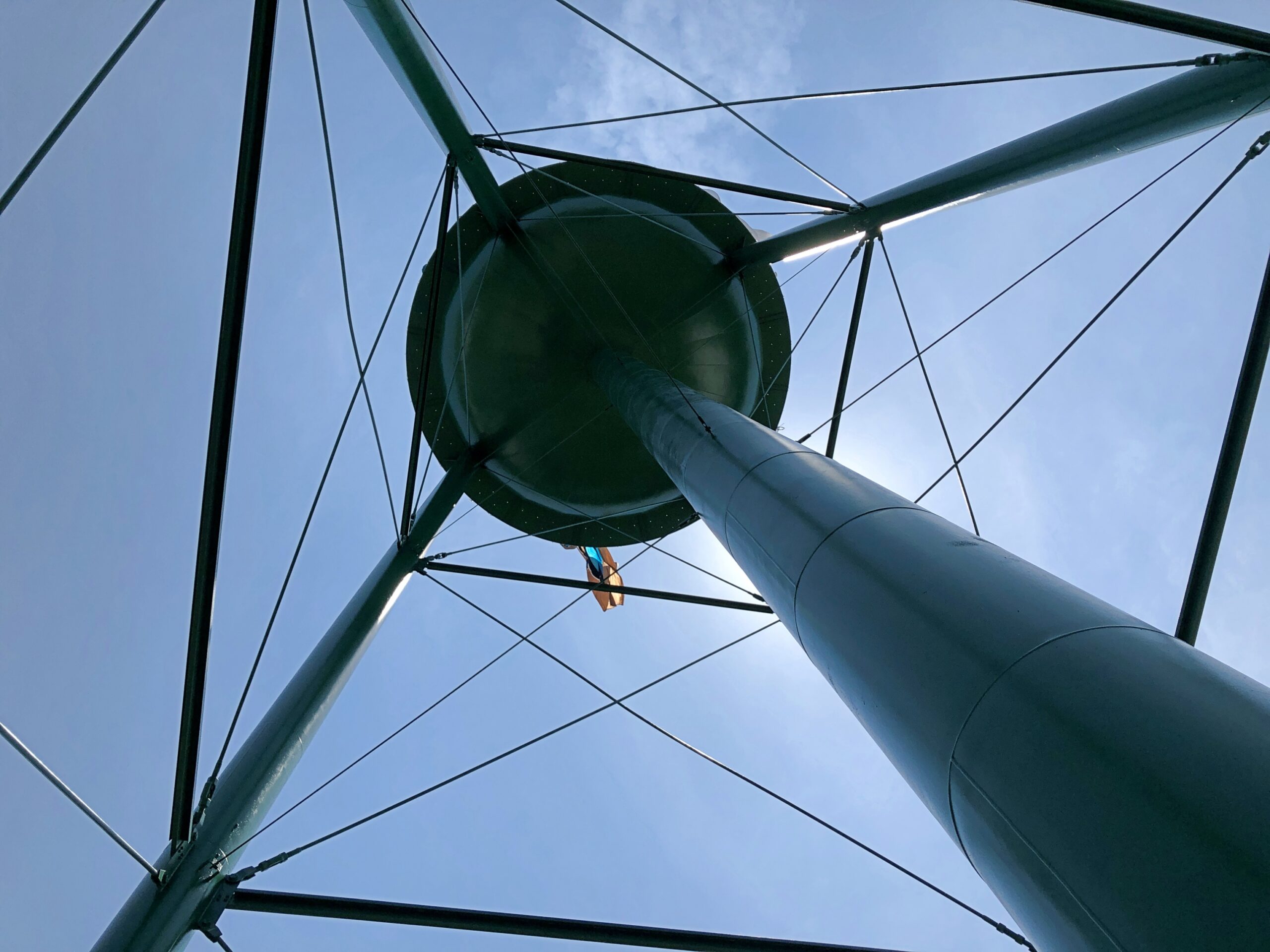
Near the water tower.
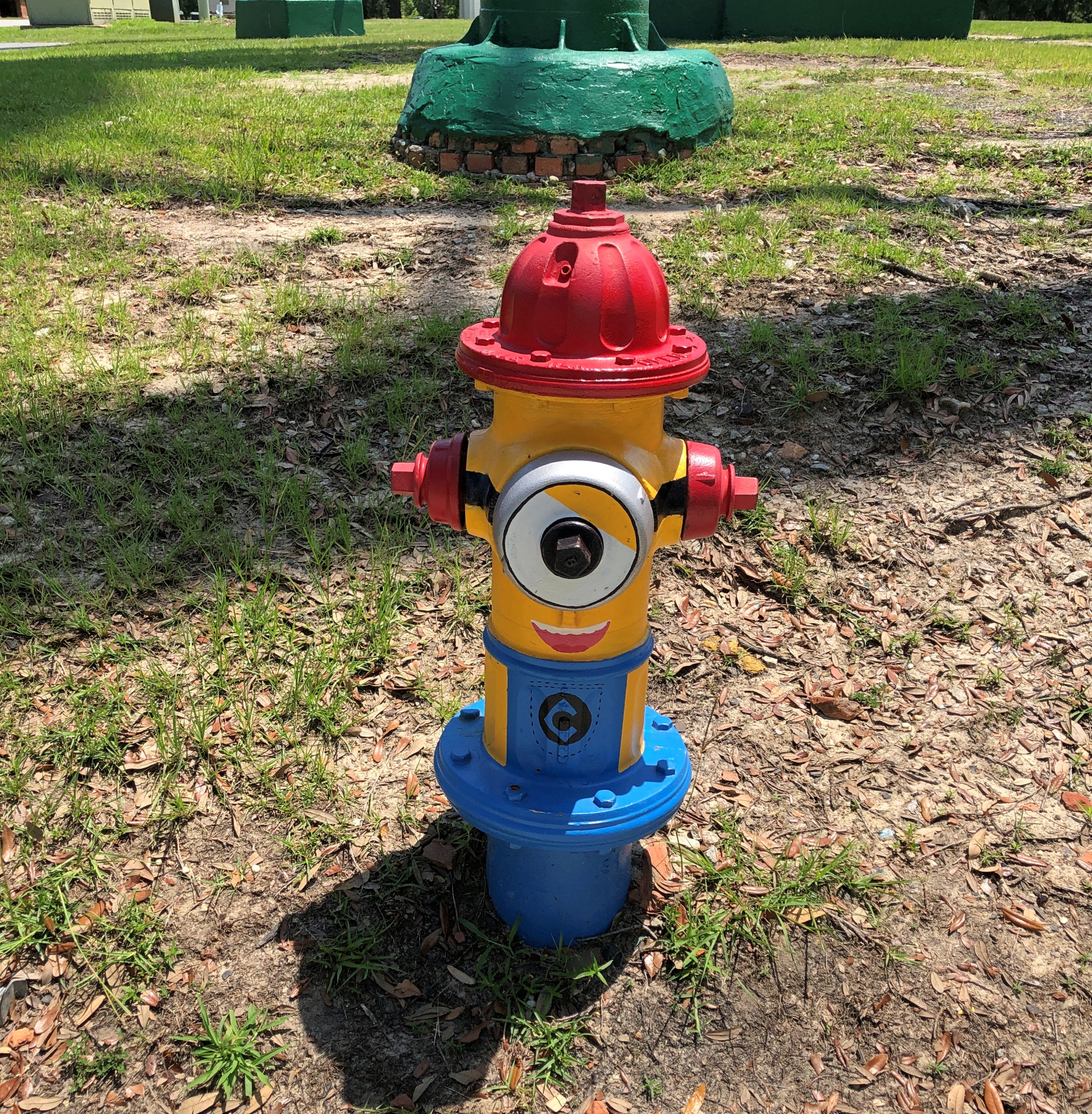
A bit of municipal whimsy. We could all use a little more of that. But not too much.