As mentioned before, Punxsutanwney, Pennsylvania, has gone a long way to let the world know about its groundhog and its celebration of things groundhoggish. Of course, that town isn’t the only place to do so, just the best known. I’ll bet few people south of the U.S.-Canada line know about Wiarton Willie. I didn’t know myself until I passed through Wiarton, Ontario, a couple of years ago, because travel is broadening, you know.
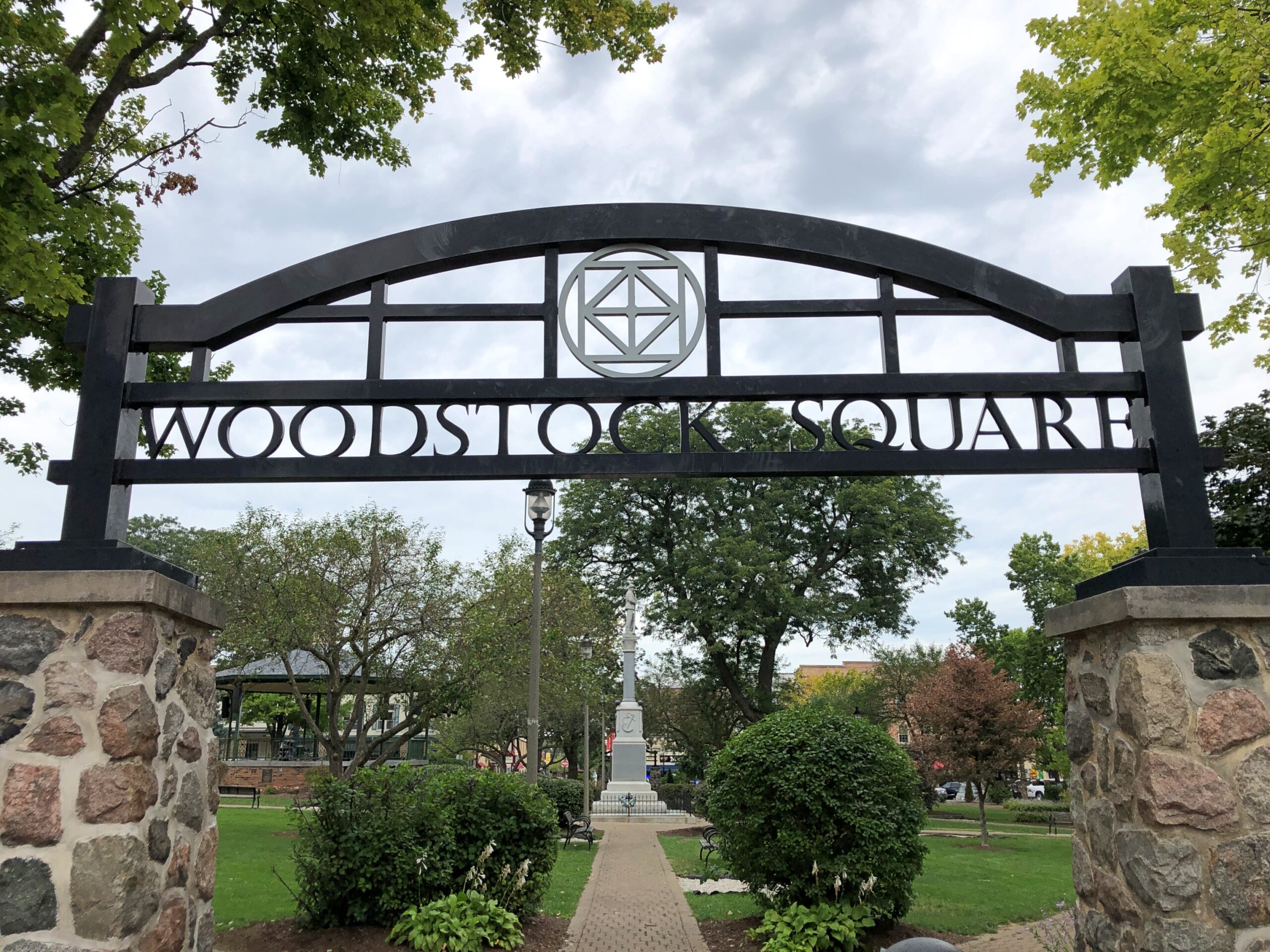
Back in the U.S., there is an up-and-coming town for celebrating groundhogs, and it’s less than an hour’s drive from where I live: Woodstock, Illinois. Yuriko and I made that drive on Saturday and spent a few hours in Woodstock’s pleasant downtown. The town has no history of imported northern European folk customs associated with rodents, but of course director Harold Ramis’ decision to film the many Groundhog Day exteriors in Woodstock did the trick.
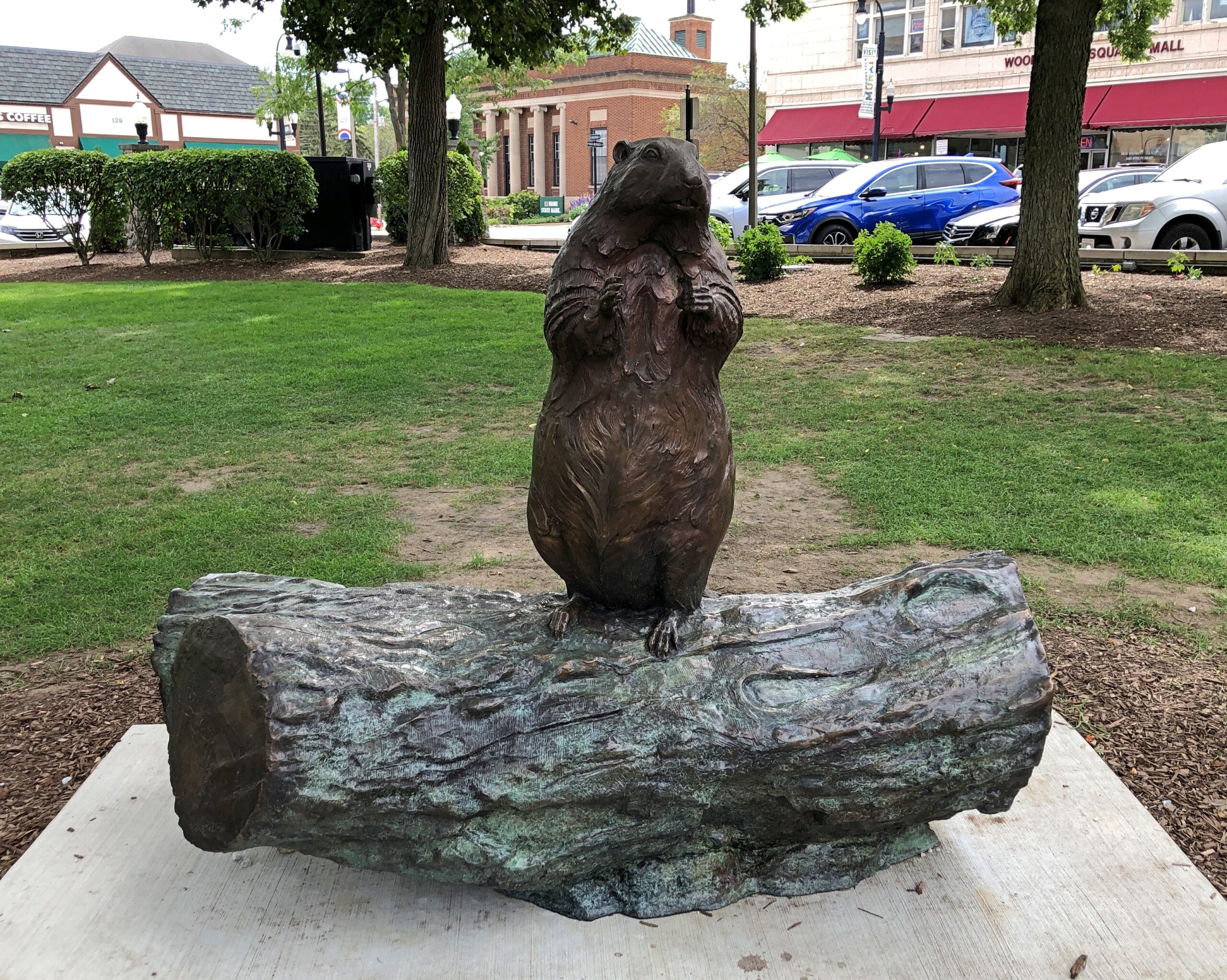
Since I was there last, a new acknowledgment of the movie has been added in Woodstock Square, which is the hub of the historic downtown.
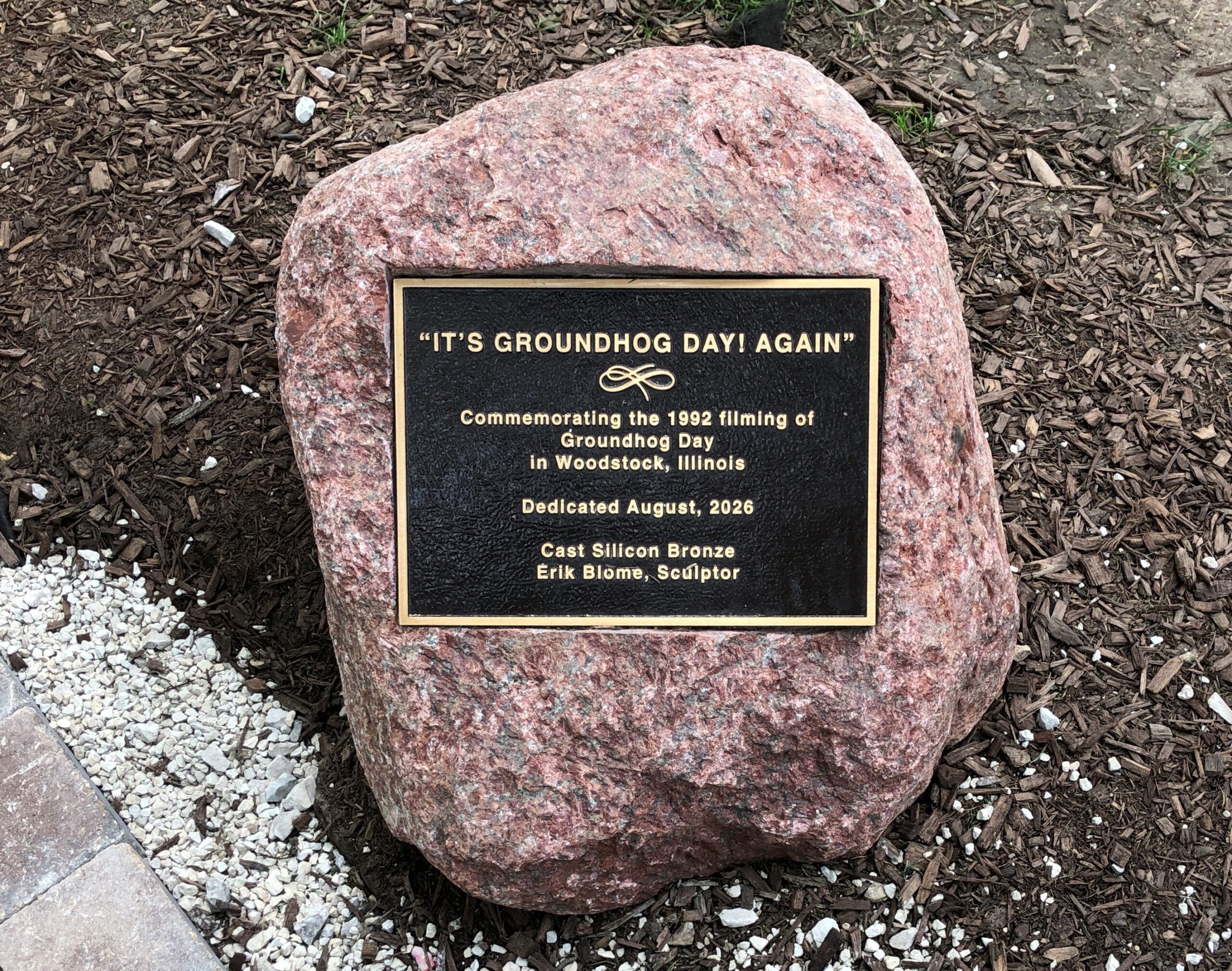
Very new, as in added earlier this month. In fact, on August 2 – six months ahead or behind February 2.
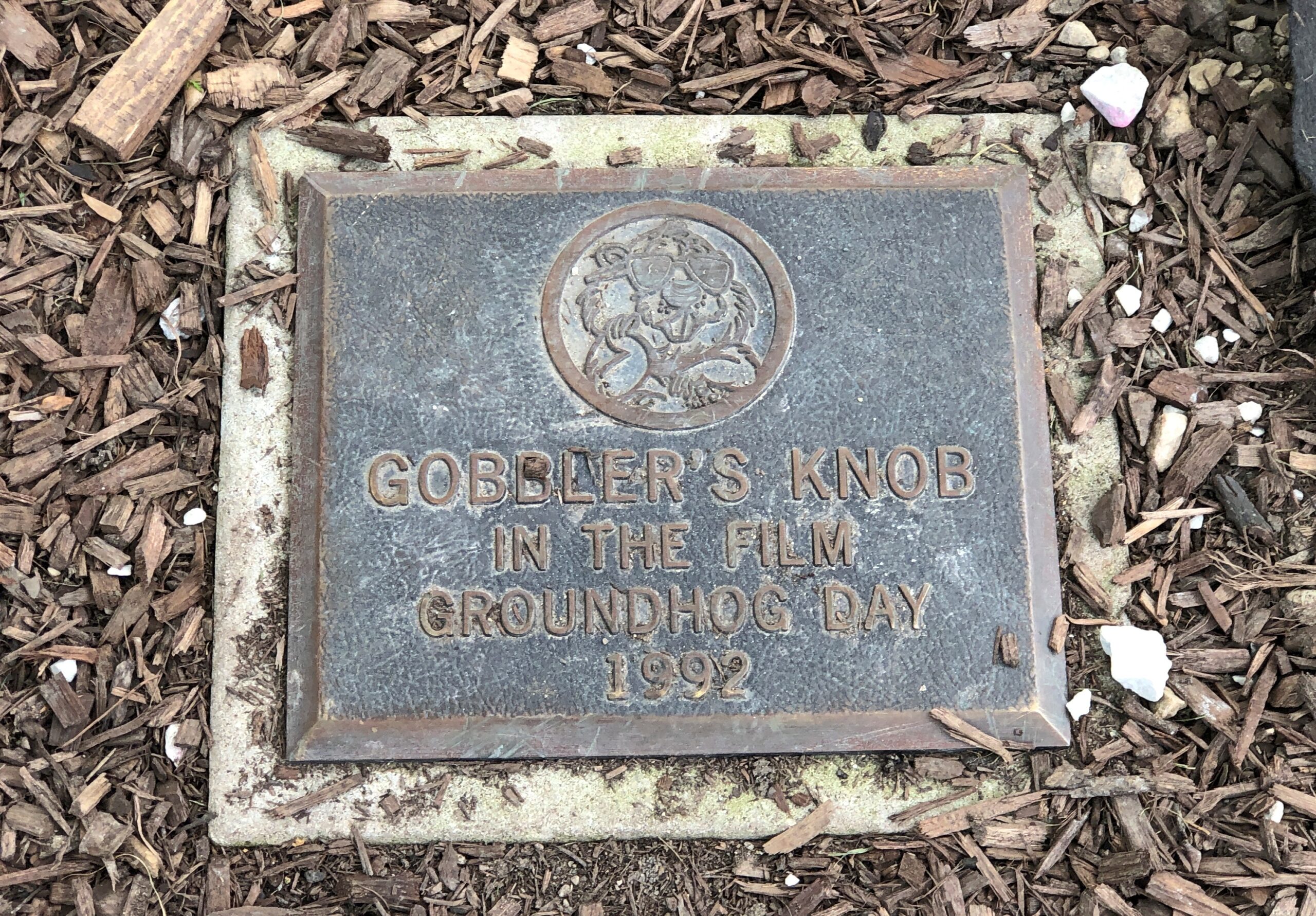
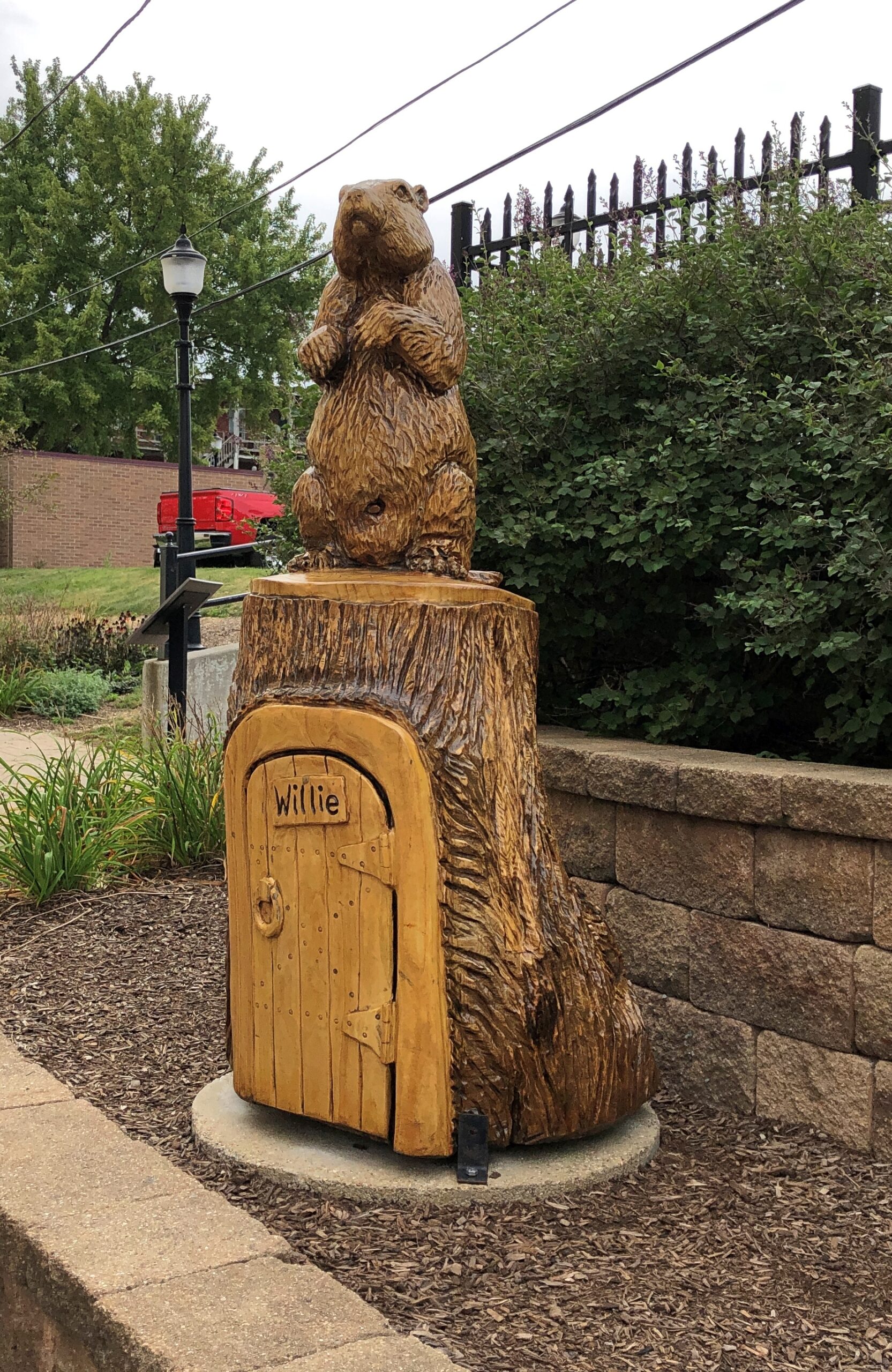
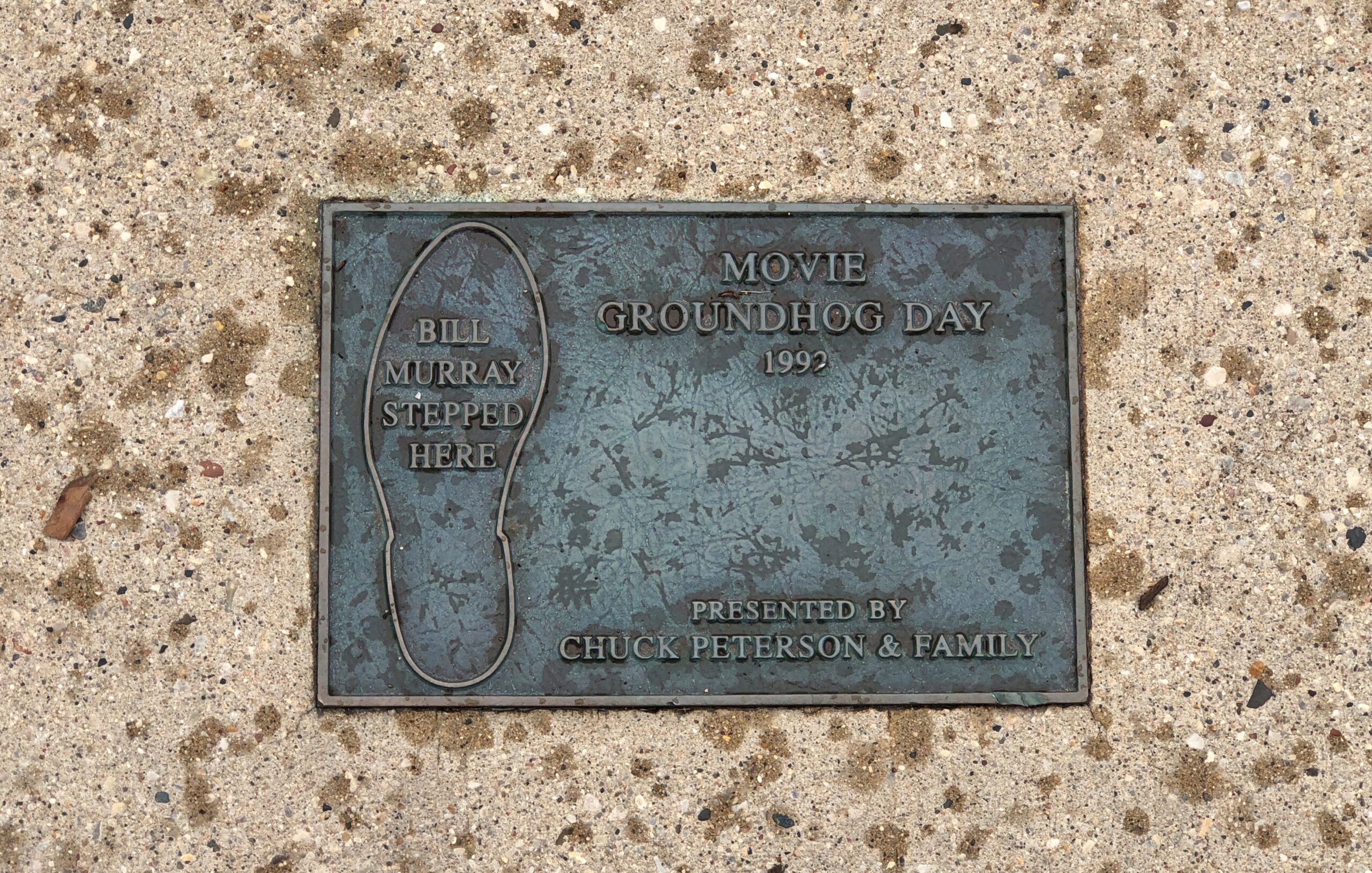
There is a newer plaque, and an older one, near the latest Woodstock Willie statue.
Not far from the square, behind the town movie theater, is an older Willie.
Woodstock has its own groundhog fest, and this is the place from which Willie emerges. I assume that it – cage isn’t the word, maybe temporary pen – is moved to Woodstock Square for the February 2 event, though it’s unlikely I will be at that event to see for myself.
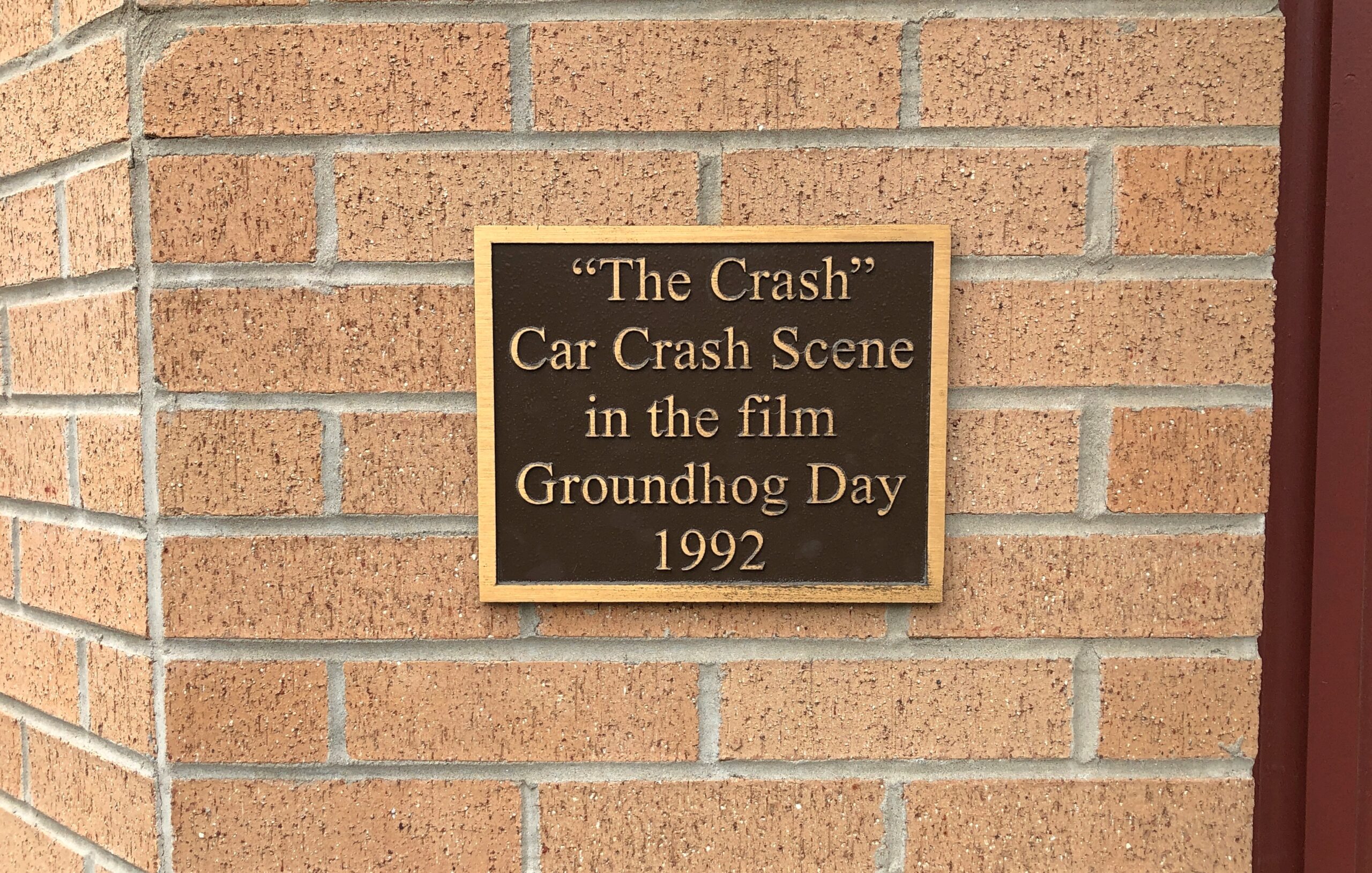
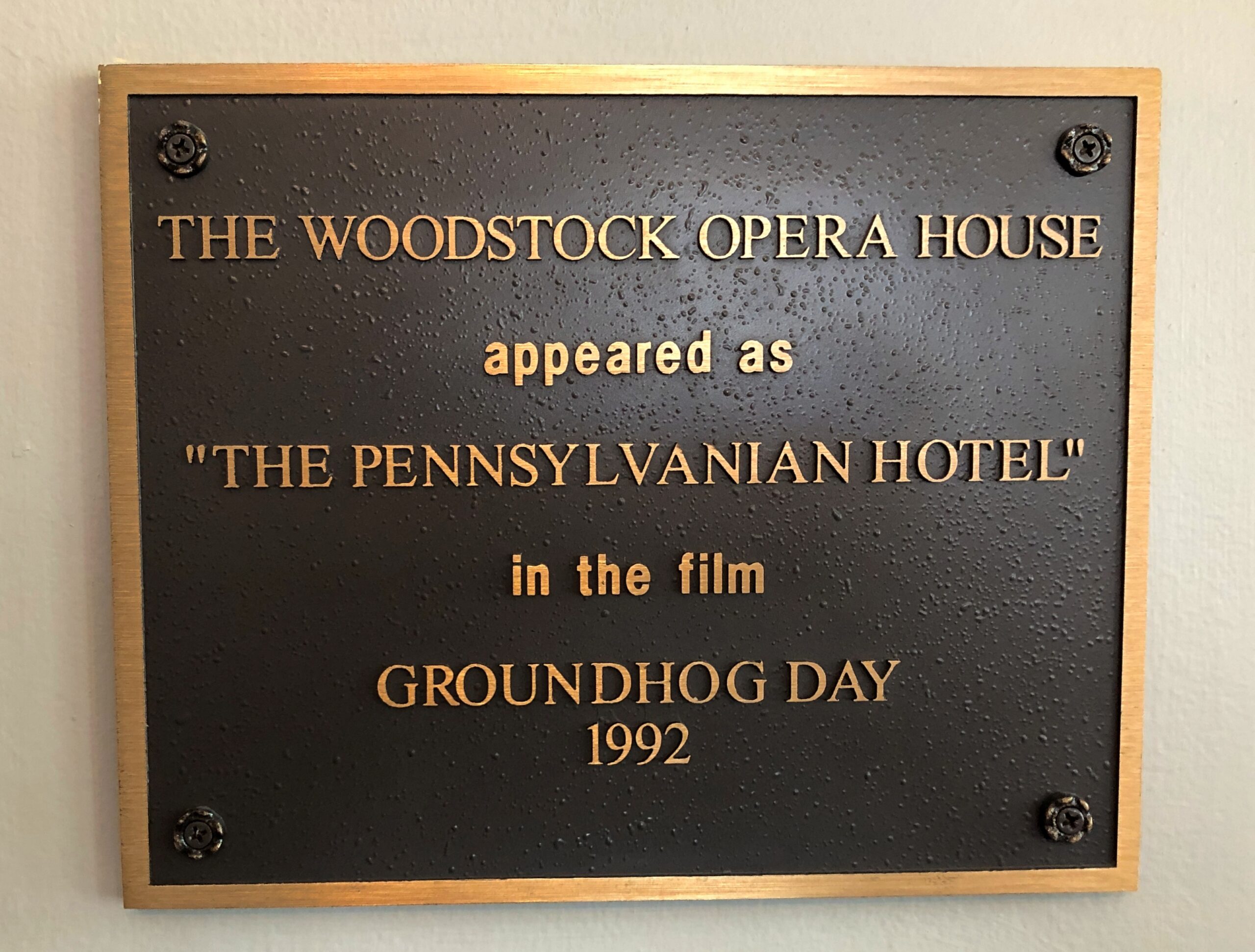
Other local plaques refer to the movie. This one has been in place for quite a while.
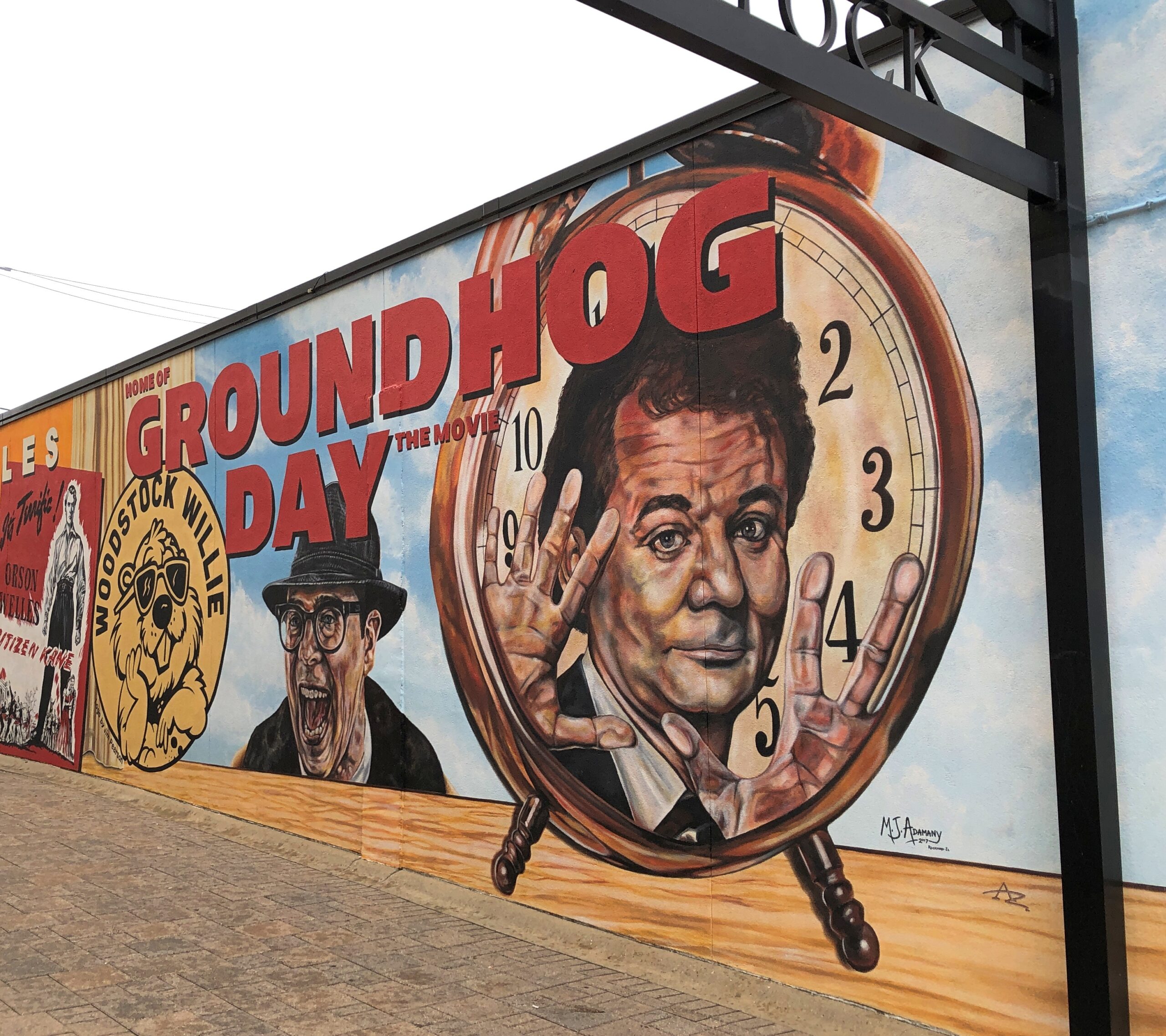
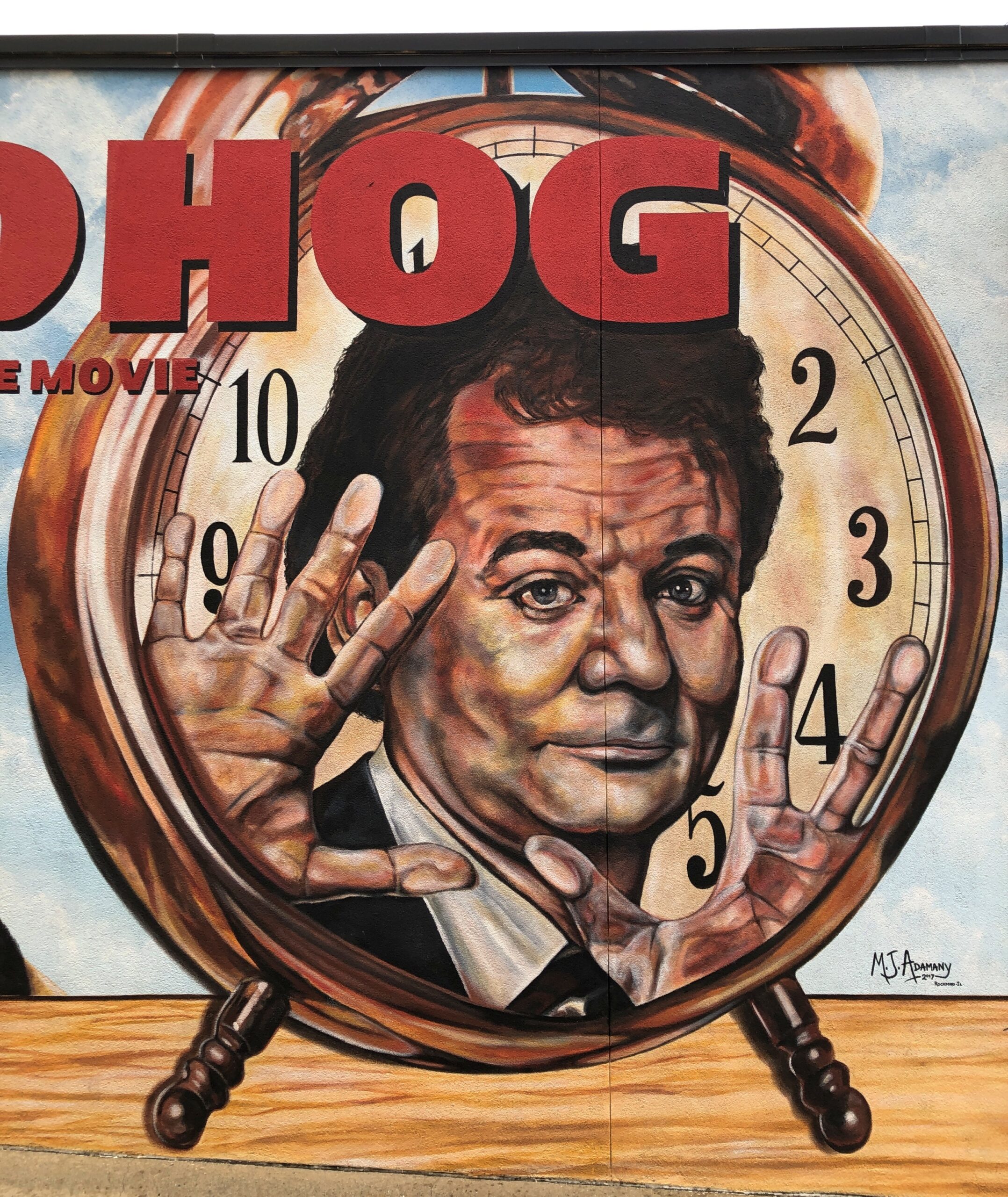
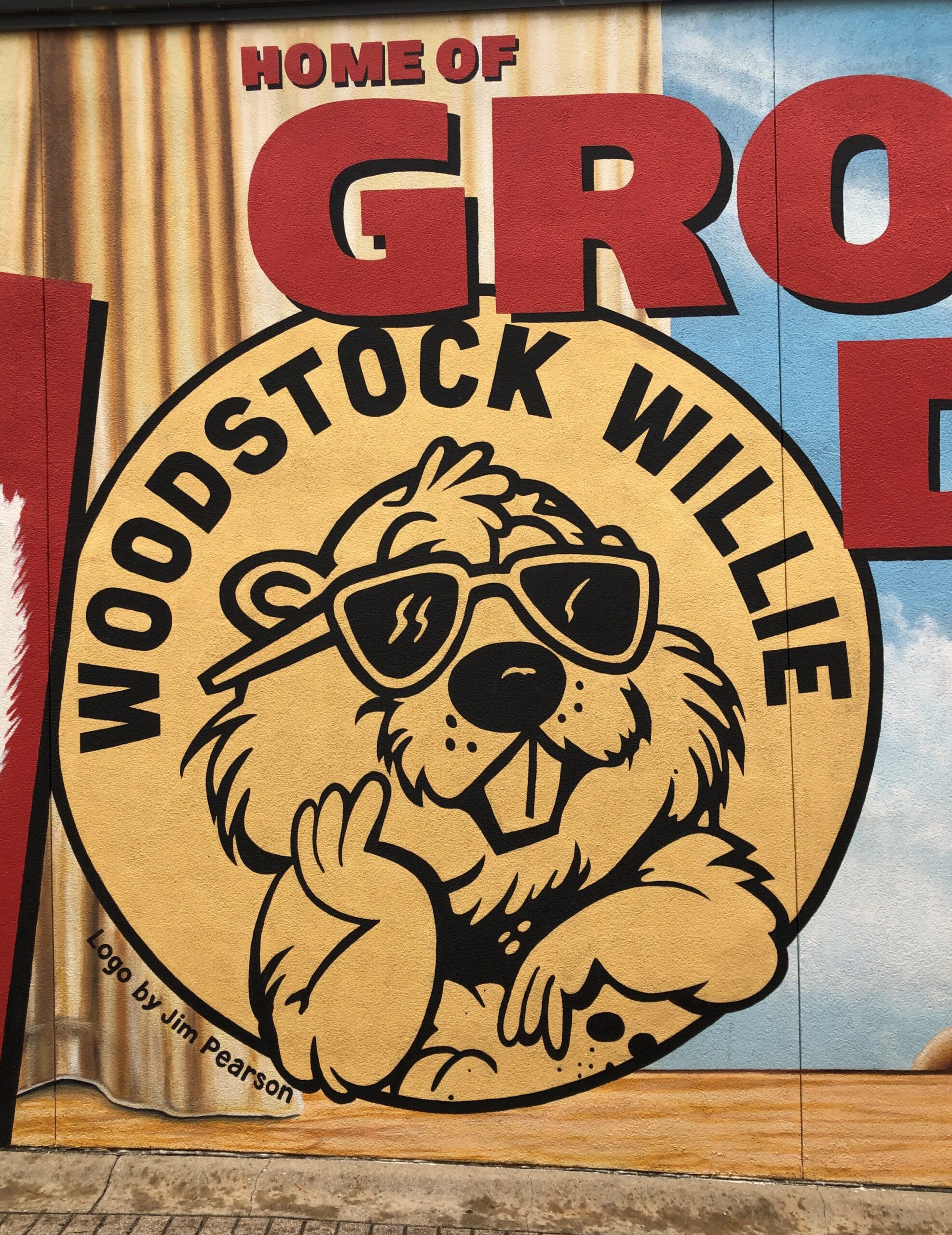
Also near the local movie theater is a Groundhog Day mural, evoking the movie’s promotional materials, and adding Woodstock Willie retroactively.
A good mural, but how is it Ned Ryerson (Stephen Tobolowsky) rates a spot? It is a funny bit and all, but I’d much rather see the fetching Rita Hanson (Andie MacDowell) there.
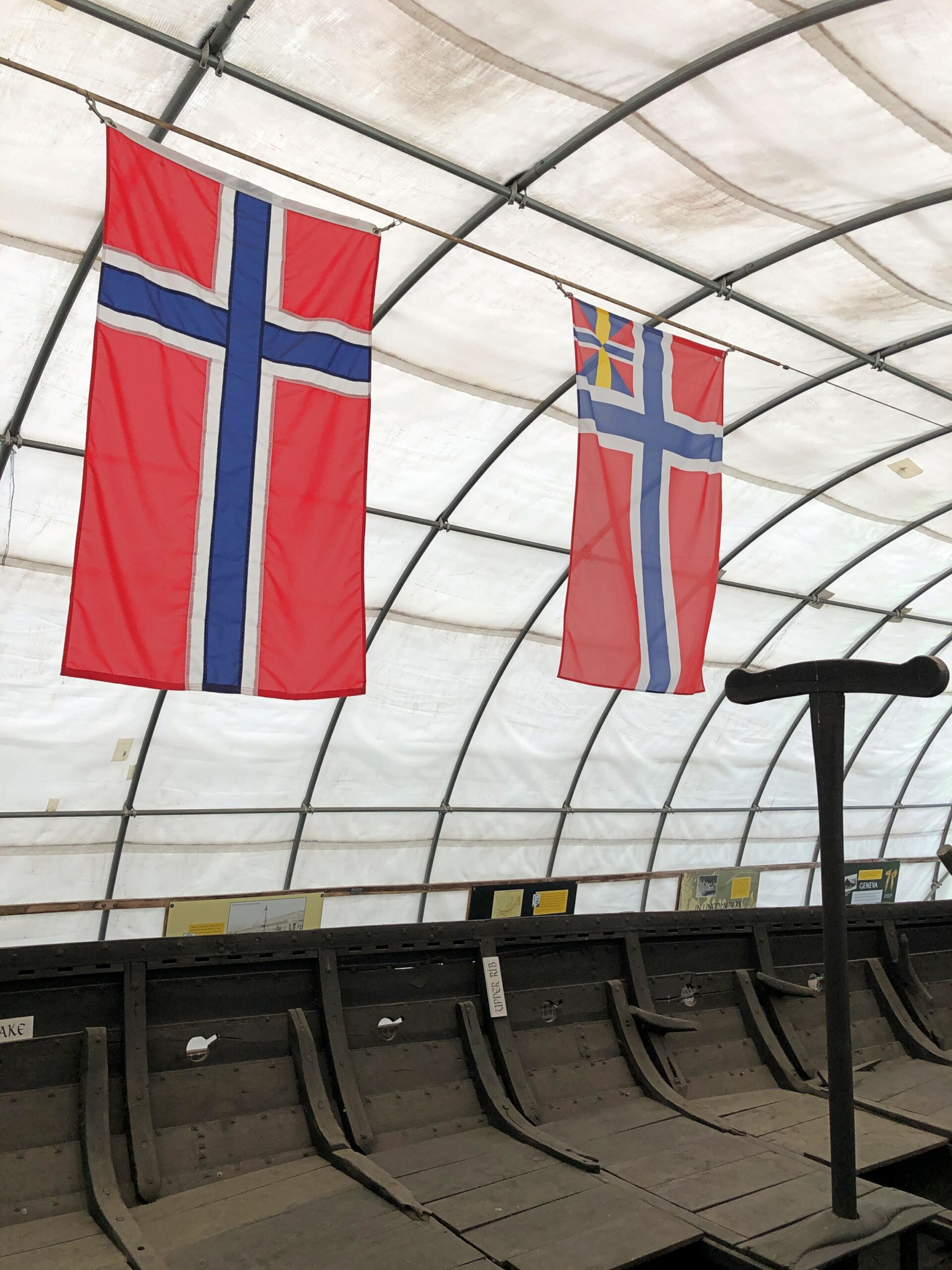
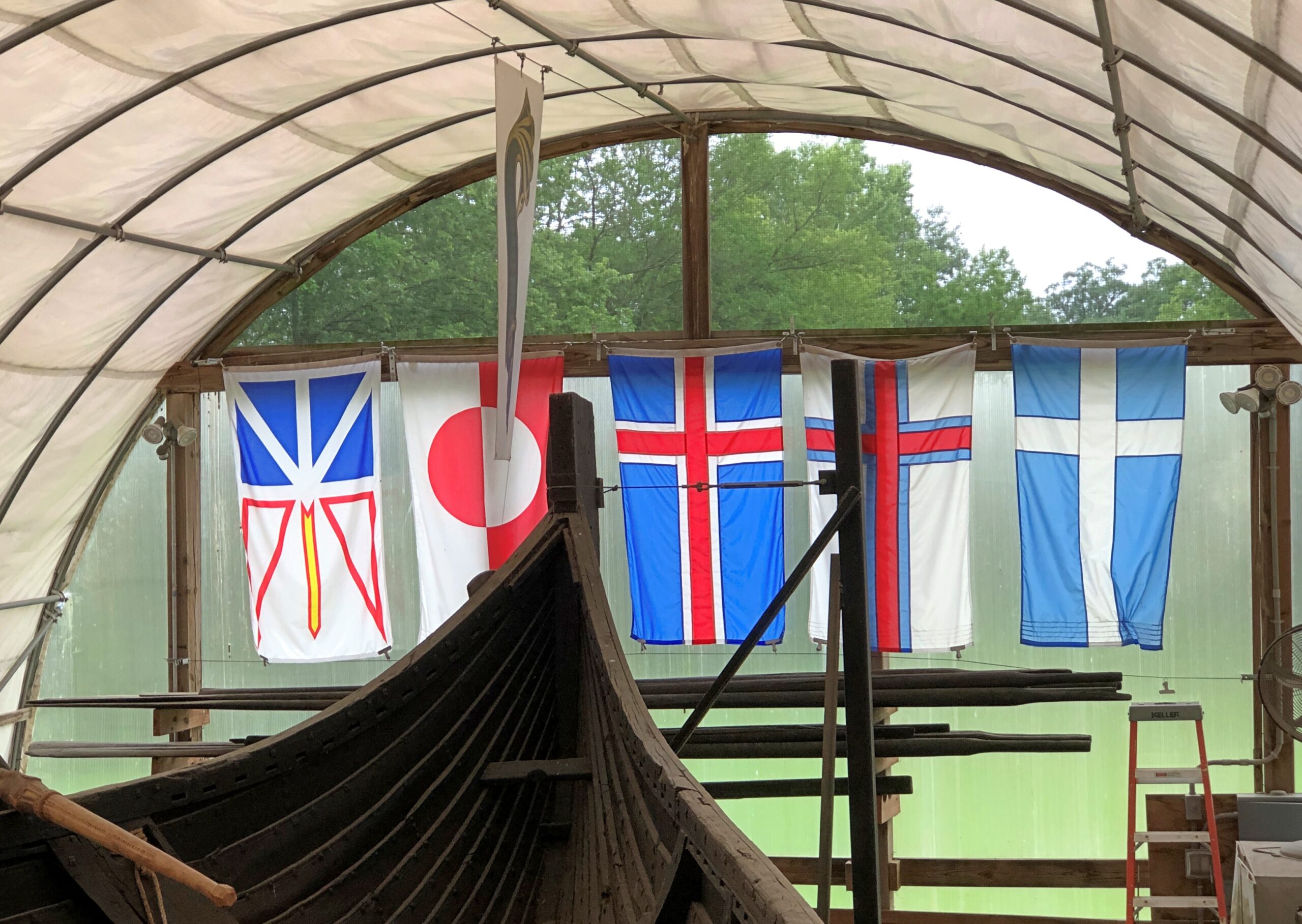
A number of flags hang near the Viking under its protective structure in Geneva, Illinois. As “Bob” our guide told us, they represent flags associated with the ship and its voyage. Its ultimate destination is represented by the modern Stars and Stripes near the bow. Not to be nitpicky — sometimes I want to be, though — a 44-star flag would have been more appropriate, being current in 1893.
There are also a couple of Norwegian flags.
The current flag is to the left, of course. To the right, the flag that the ship actually flew, is the Norwegian flag bearing the union mark of Norway and Sweden. I don’t believe I’d ever seen that one before, and for good reason: the union mark was removed toward the end of the 19th century at insistence of the Norwegians, even before the union itself was dissolved in 1905.
Other flags associated with the ship (some retroactively) are behind the stern.
Left to right: The flag of Newfoundland and Labrador – really retroactive, considering it was adopted in 1980 – Greenland (even more retroactive, 1985), Iceland, the Faroe Islands and the Shetland Islands.
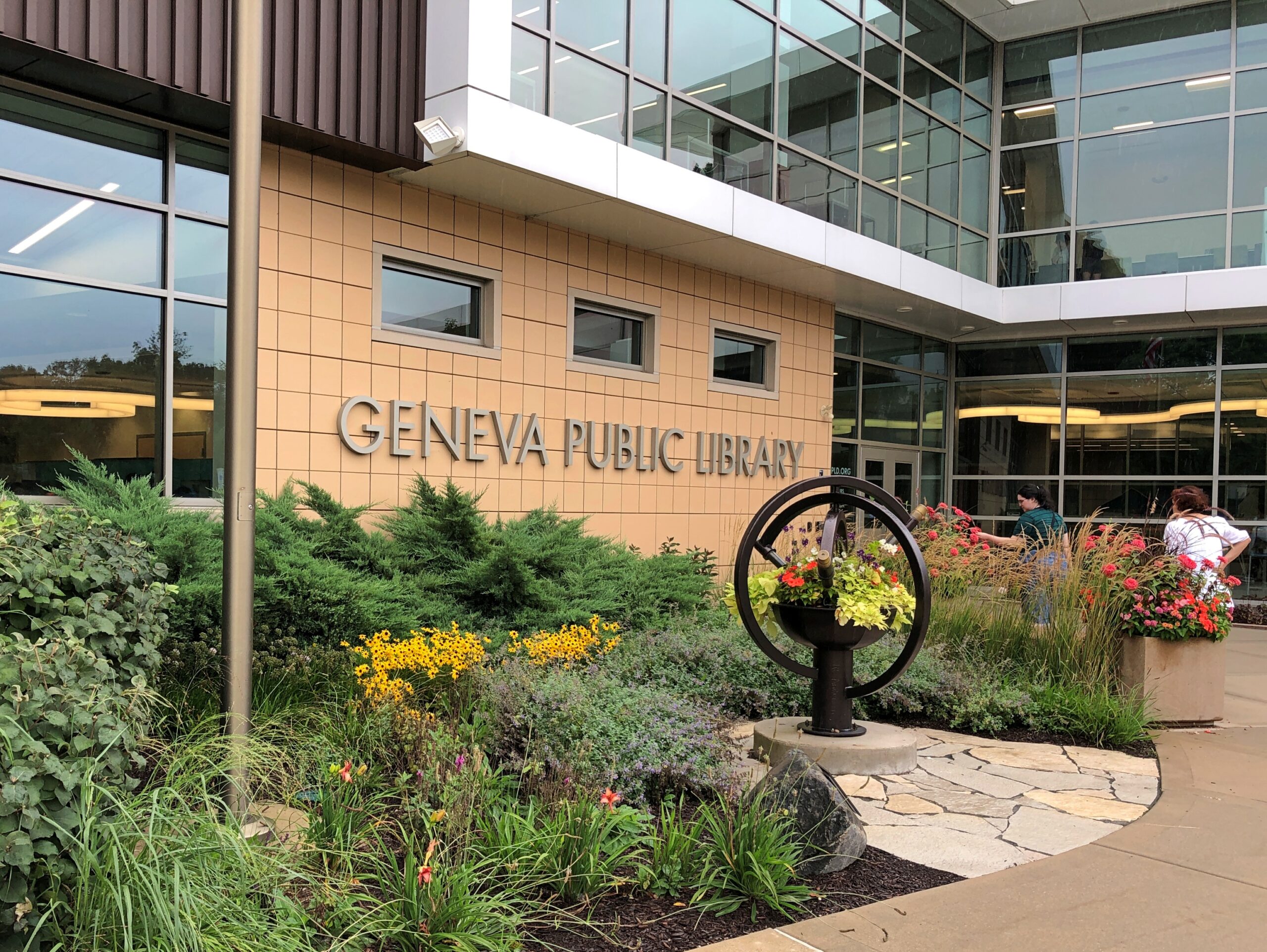
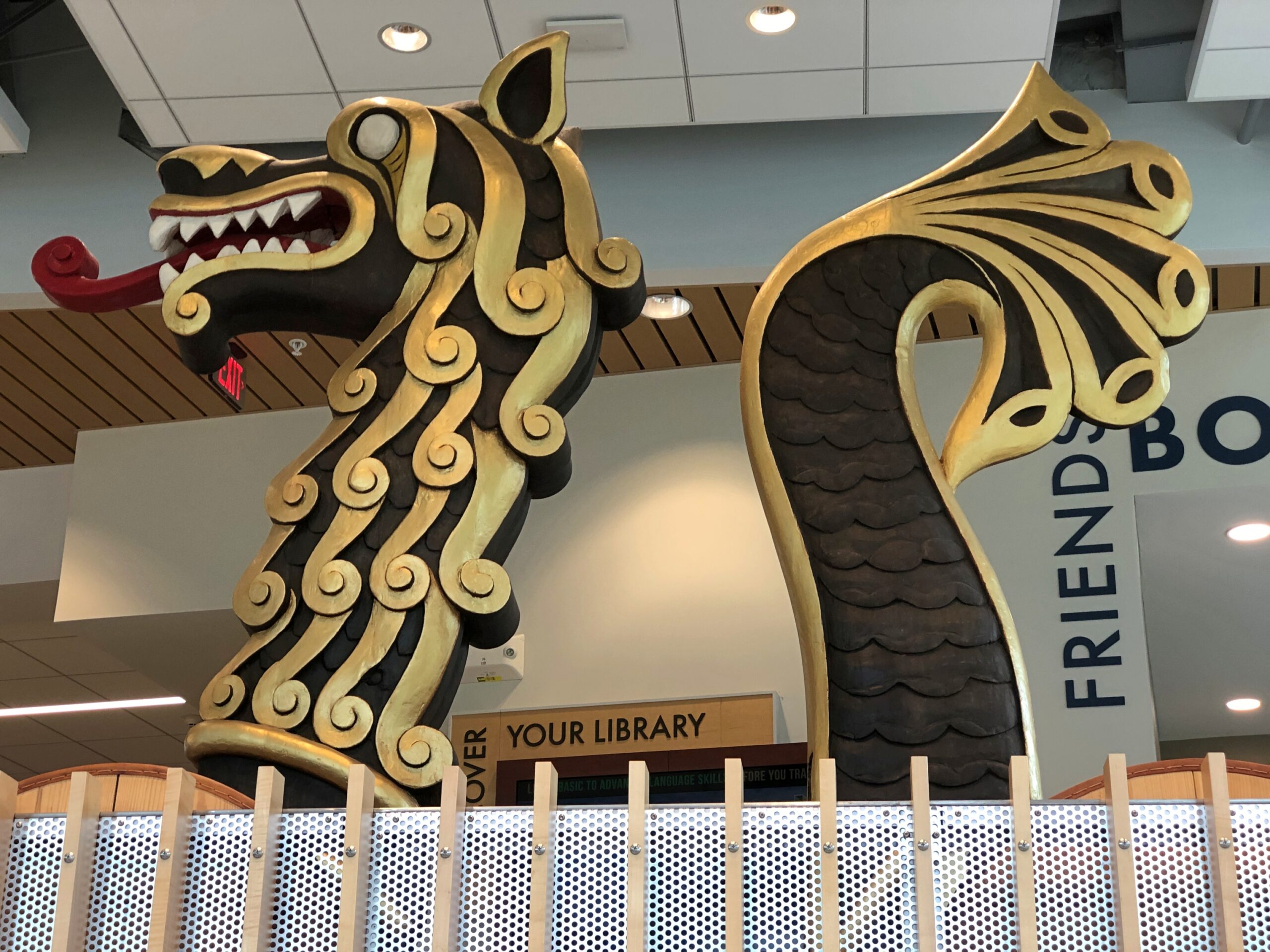
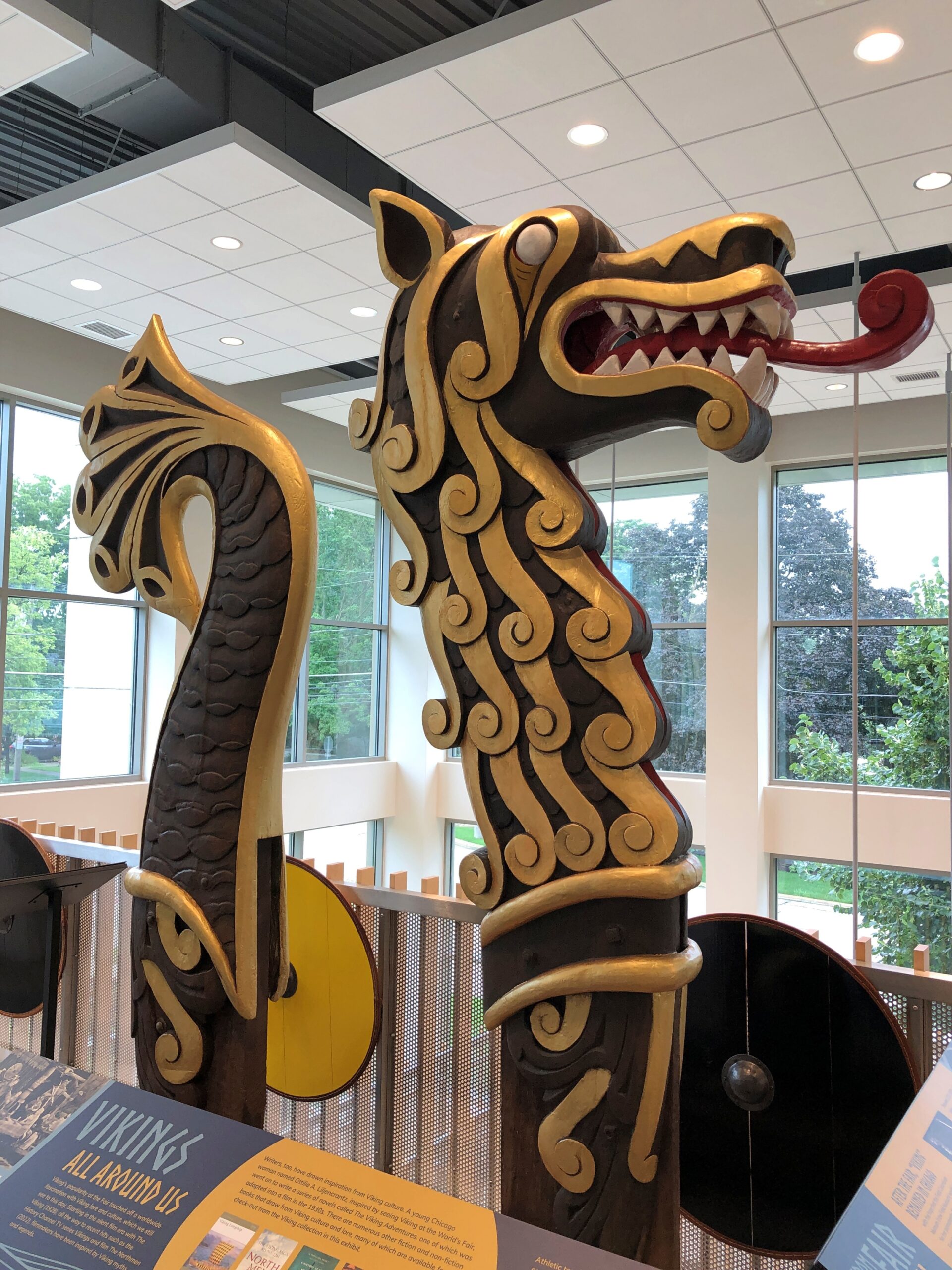
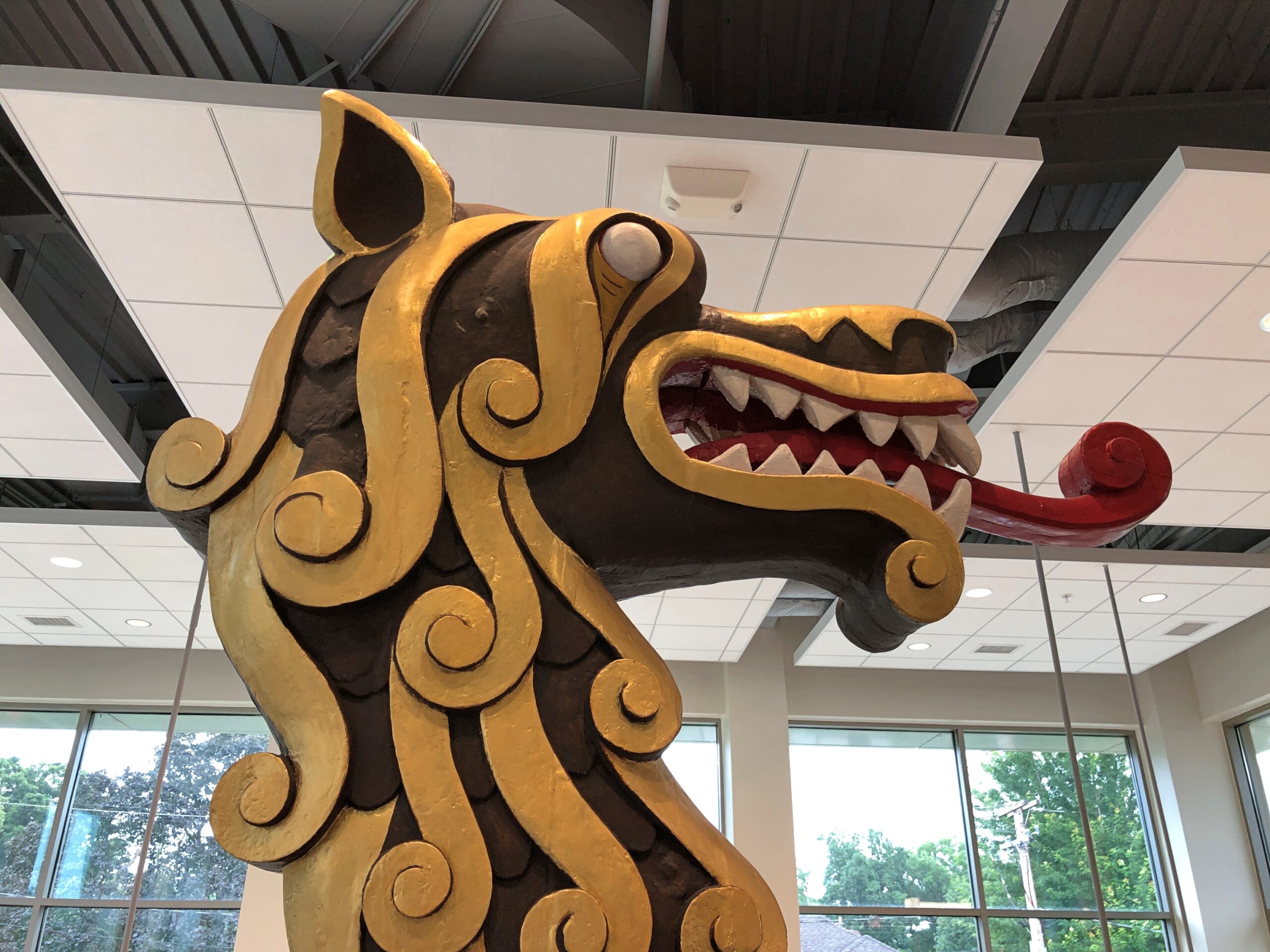
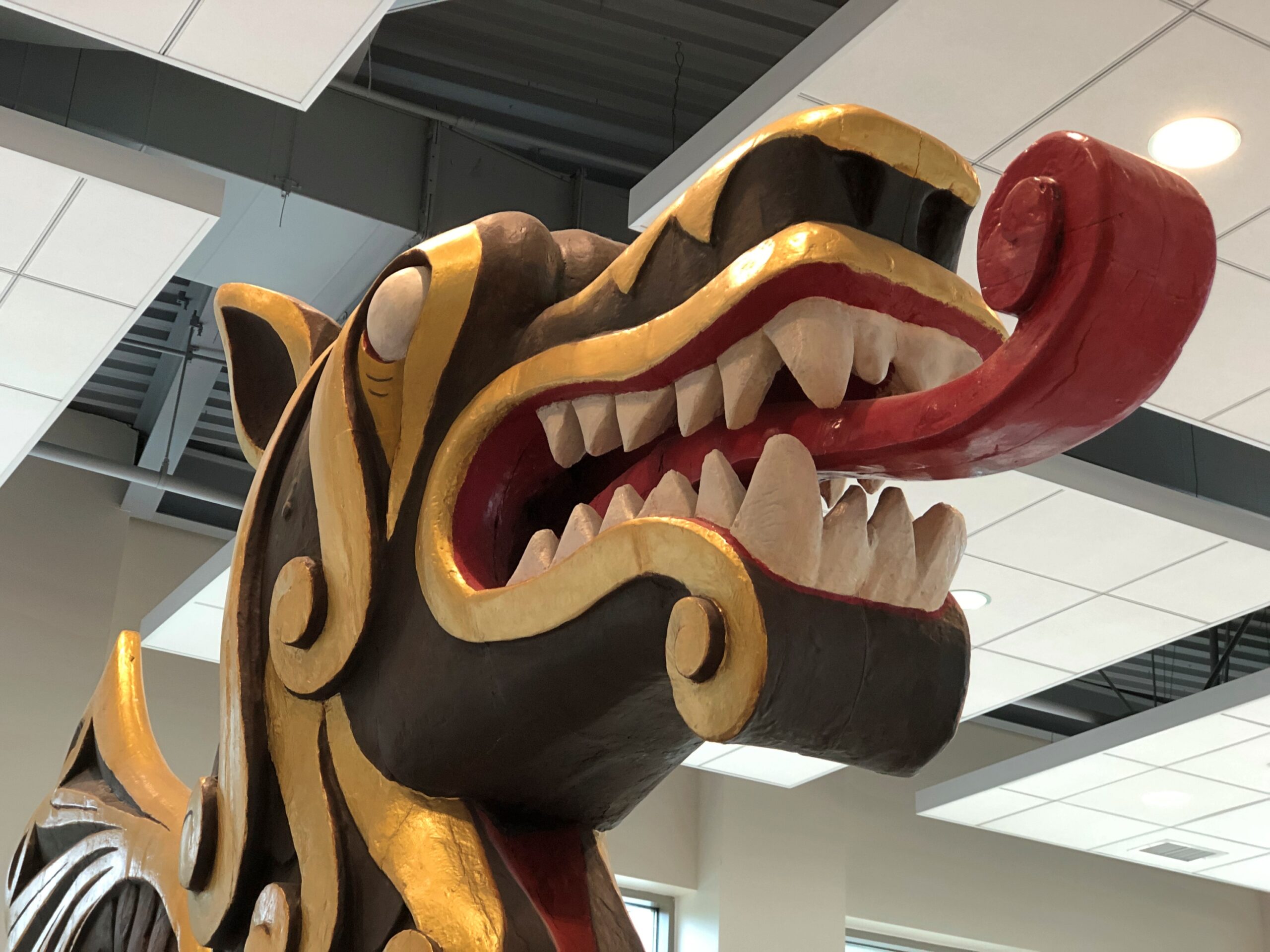
When we left the ship-shed, we weren’t quite done with the Viking. Turns out the ship’s figurehead, depicting the goddess Freya, isn’t attached to the ship, even though the same nonprofit owns it. For now, Freya is on display at the Geneva Public Library. We had to go see that.
The figurehead has been restored to its 1893 painting scheme. Freya, it seems, had acquired a number of coats in the decades after the fair. Currently, she stands on the second floor of the library, along with the — figuretail? — which attaches to the stern, anyway.
An impressive bit of work.
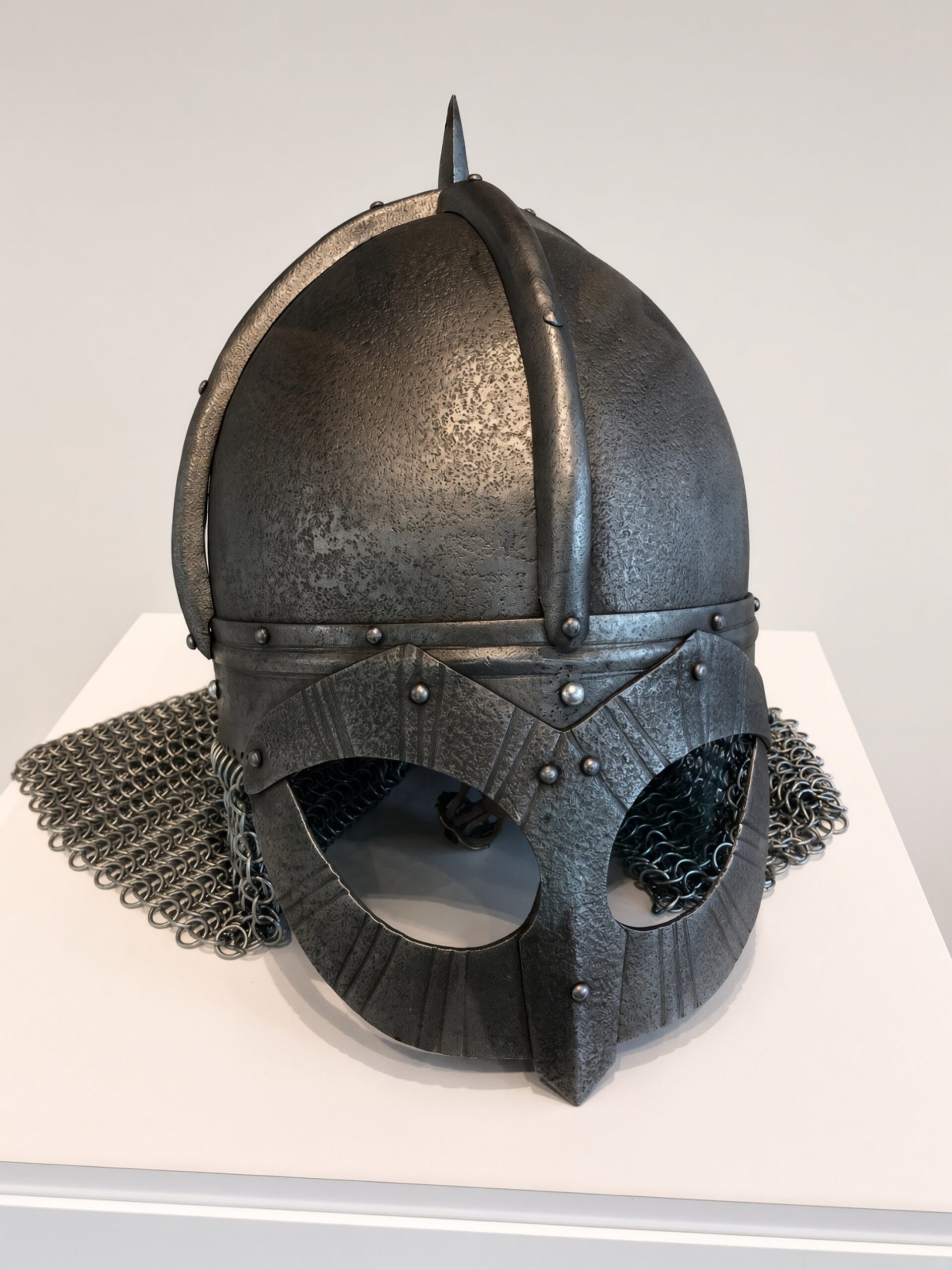
Nearby are a few Viking-related items behind glass. For my purposes, I had an AI image program remove the glass and its glare, but I left the artifacts looking the same. Such as the helmet. No horns, of course.
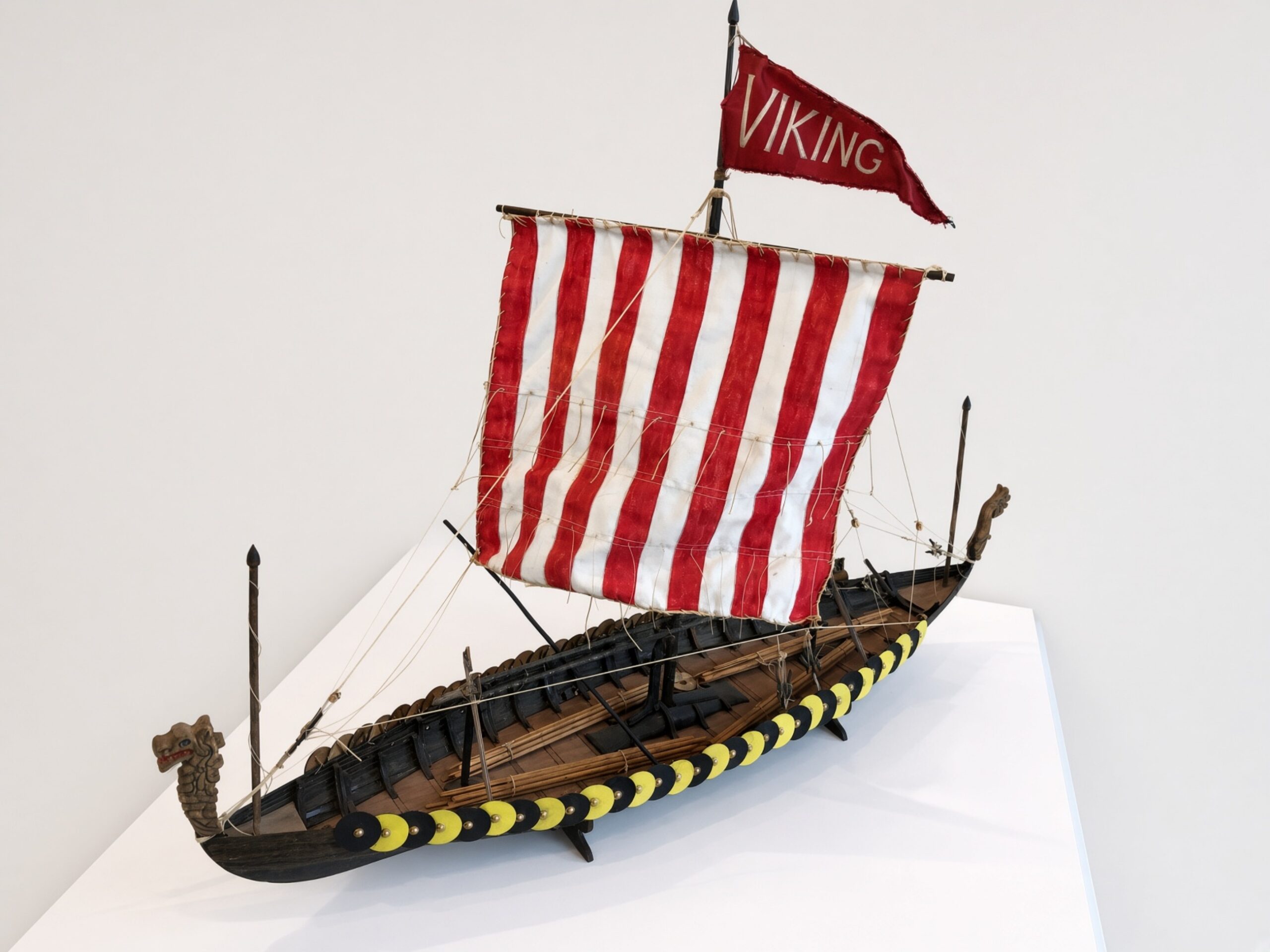
A model of the ship.
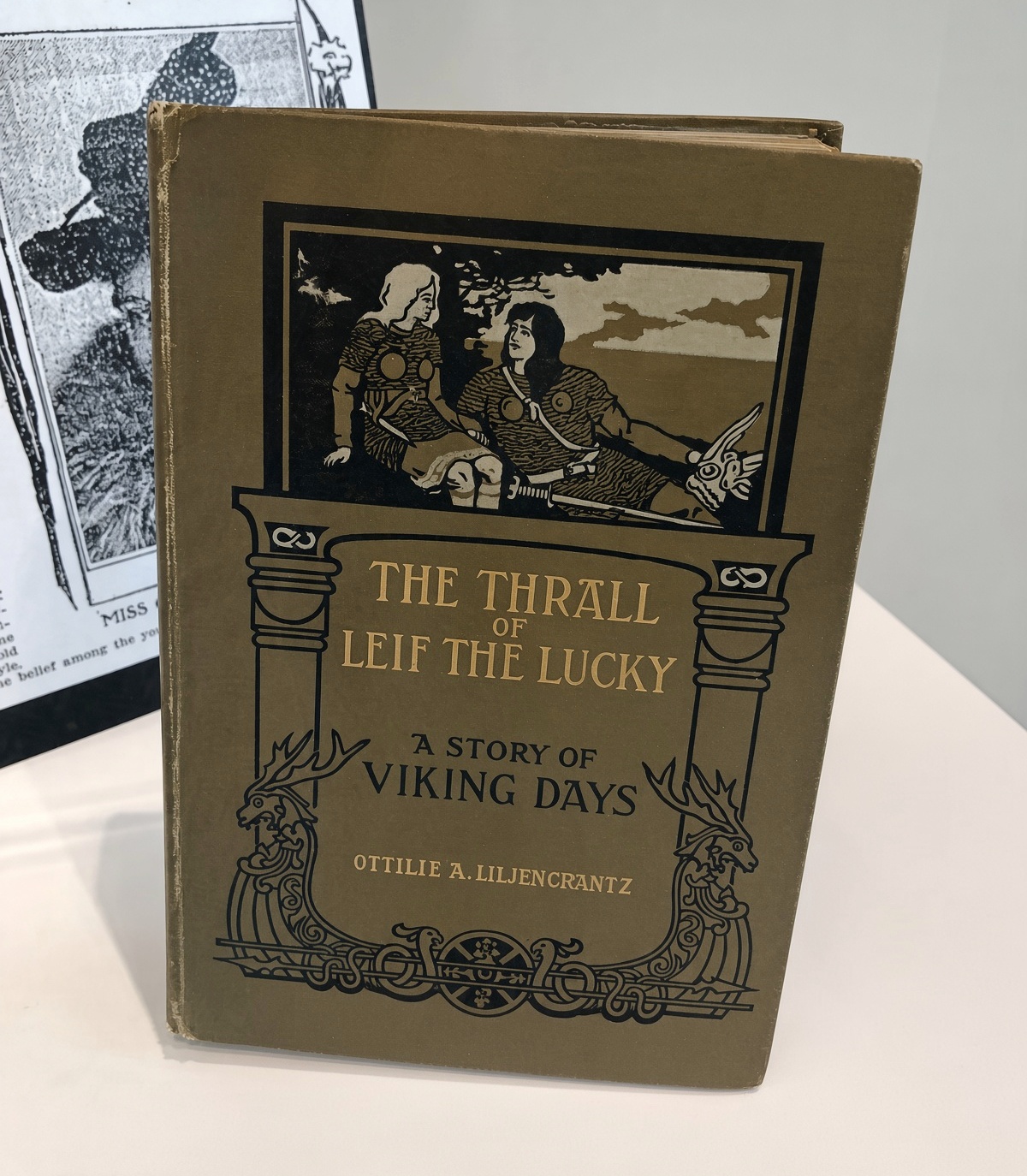
A copy of The Thrall of Lief the Lucky: A Story of Viking Days (1902) by Chicagoan Ottilie A. Liljencrantz (d. 1910). There’s an AI animation doable for the cover of this book, but I don’t feel like spending any credits on it. This is the script: The thrall, whom I assume is the dark-haired fellow, says, “In the final chapter, I die of typhus.”
Naturally, I’d never heard of Liljencrantz (who has?), but she wrote a number really popular of Norse-themed historical novels in the early 20th century, taking inspiration from her own Swedish heritage but also from visiting the Viking in 1893 as a teenager. She did much to popularize Viking stories in modern America, as did the visit of the ship itself – just another instance of the World’s Columbian Exposition being one of the founts of the modern world. I believe we have the fair to thank for Ernest Borgnine, among others, being a Viking (briefly), for the inanity of Hägar the Horrible, and for Donald Duck going to look for the Golden Helmet and the deed to North and South America.
For its part, The Thrall of Lief the Lucky was made into The Viking (1928), a Technicolor silent. Since the book is now well in the public domain – and available at Project Gutenberg – time for a gritty film reboot. If TheOdyssey can do well at the box office, so can Lief; tough men in wooden ships are tough men in wooden ships, eh?
Just for fun, I took a dive into the Project Gutenberg posting of The Thrall of Lief the Lucky. File it under they for sure don’t write ’em like that anymore (unless AI does). Three more-or-less random samples:
Egil laughed, a hateful gloating laugh, and settled himself against a tree to see the finish. As Helga’s arm was flung up the second time, the thrall leaped upon her and tore the whip from her grasp and broke it in pieces. He would that he might have broken her as well; he thirsted to,—when he caught sight of the laughing Egil, and everything else was blotted out of his vision. Without a sound, but with the animal passion for killing upon his white face, he wheeled and leaped upon the Black One, crushing him, pinioning him against the tree, strangling him with the grip of his hands.
The attraction proved to be a chattering brown ape that some sailor had brought home from the East. Part of the spectators regarded it as a strange pagan god; part believed it to be an unfortunate being deformed by witchcraft; and the rest took it for a devil in his own proper person,—so there was great shrieking and scattering, whichever way it turned its ugly face. It happened that Sigurd was better informed, having seen a similar specimen kept as a pet at the court of the Norman Duke; so the terror of the others amused him and his companion mightily. They stayed until the creature put an end to the show by breaking away from its captor and taking refuge in the rigging.
Then both became silent, for Leif had faced about and was awaiting their full attention before announcing the next move. “I dislike to see brave men disgrace their beards with bondmaids’ gabble,” he said sternly. “Fix in your minds the shame that was spoken of Biorn Herjulfsson because of his lack of enterprise. The same shall not be said of us. Rolf Erlingsson and Ottar the Red and three others shall follow me; and we will walk inland until the light has entirely faded from the highest mountain peak yonder, and the next point below is yellow as a golden fir-cone. The others of you shall follow Valbrand for the same length of time, but walk southward along the shore, since it may be that something of interest is hidden behind these points—”
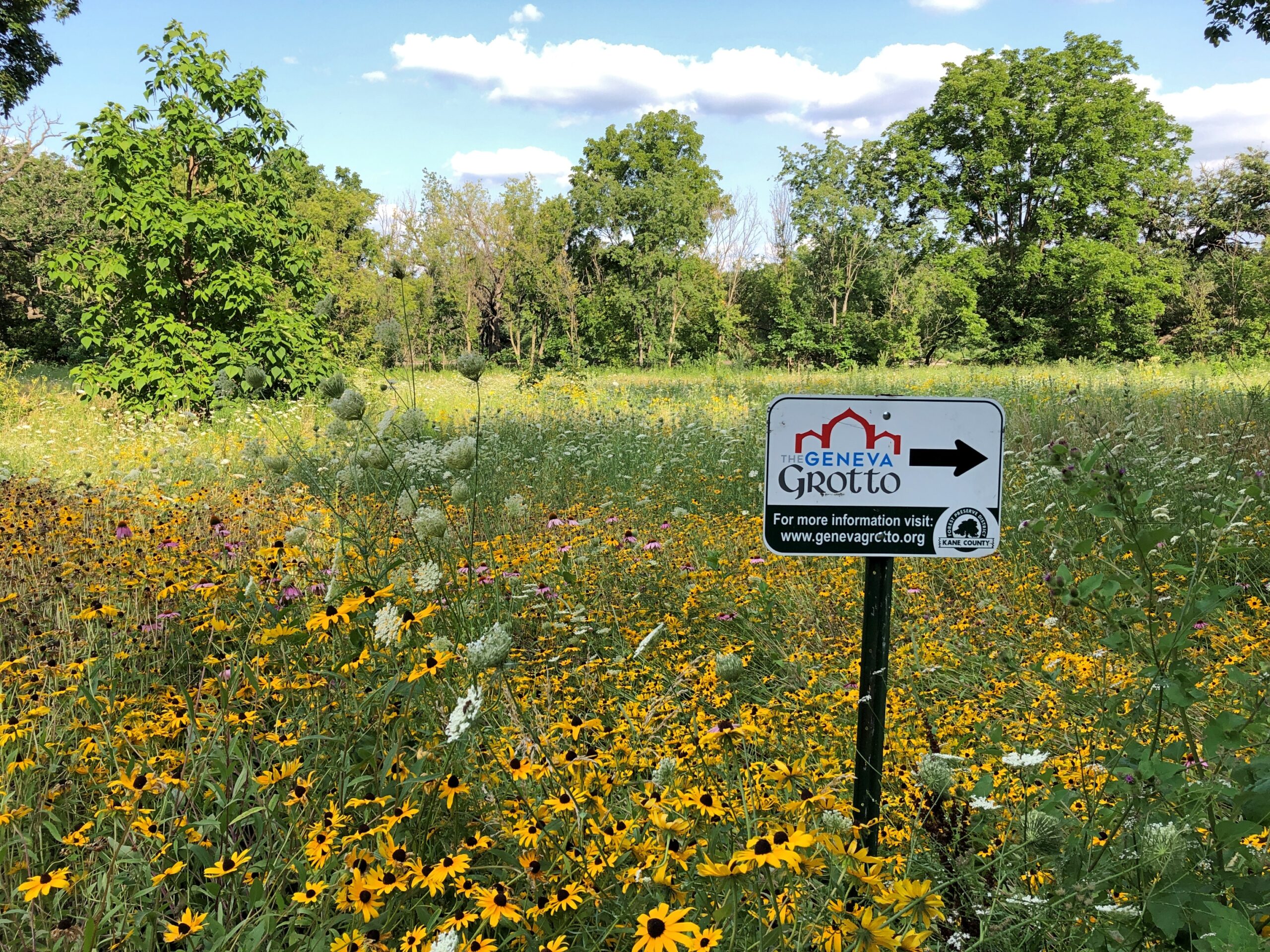
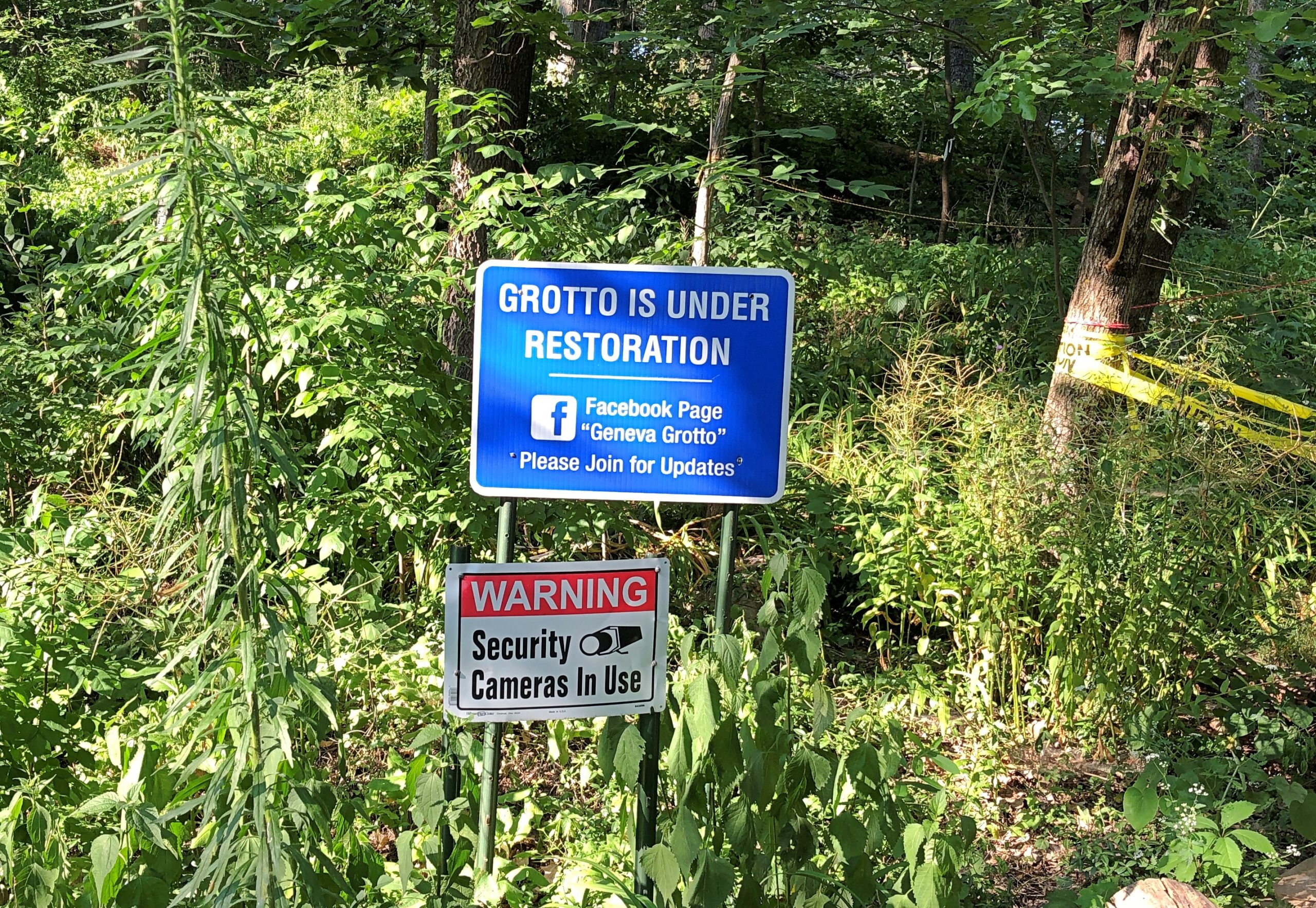
I don’t know about anyone else, but when I see something like this, I’m intrigued. The Geneva Grotto, you say?
Barring an obvious hazard – and there weren’t any, unless you count the possibility of mosquitoes carrying some disease yet unknown to science – that’s the kind of thing that bears further investigation. So toward the end of our most recent visit to Geneva, Illinois, we followed the sign, which is next to a parking lot in the Gunnar Anderson Forest Preserve on the Fox River, behind the Kane County Government Center.
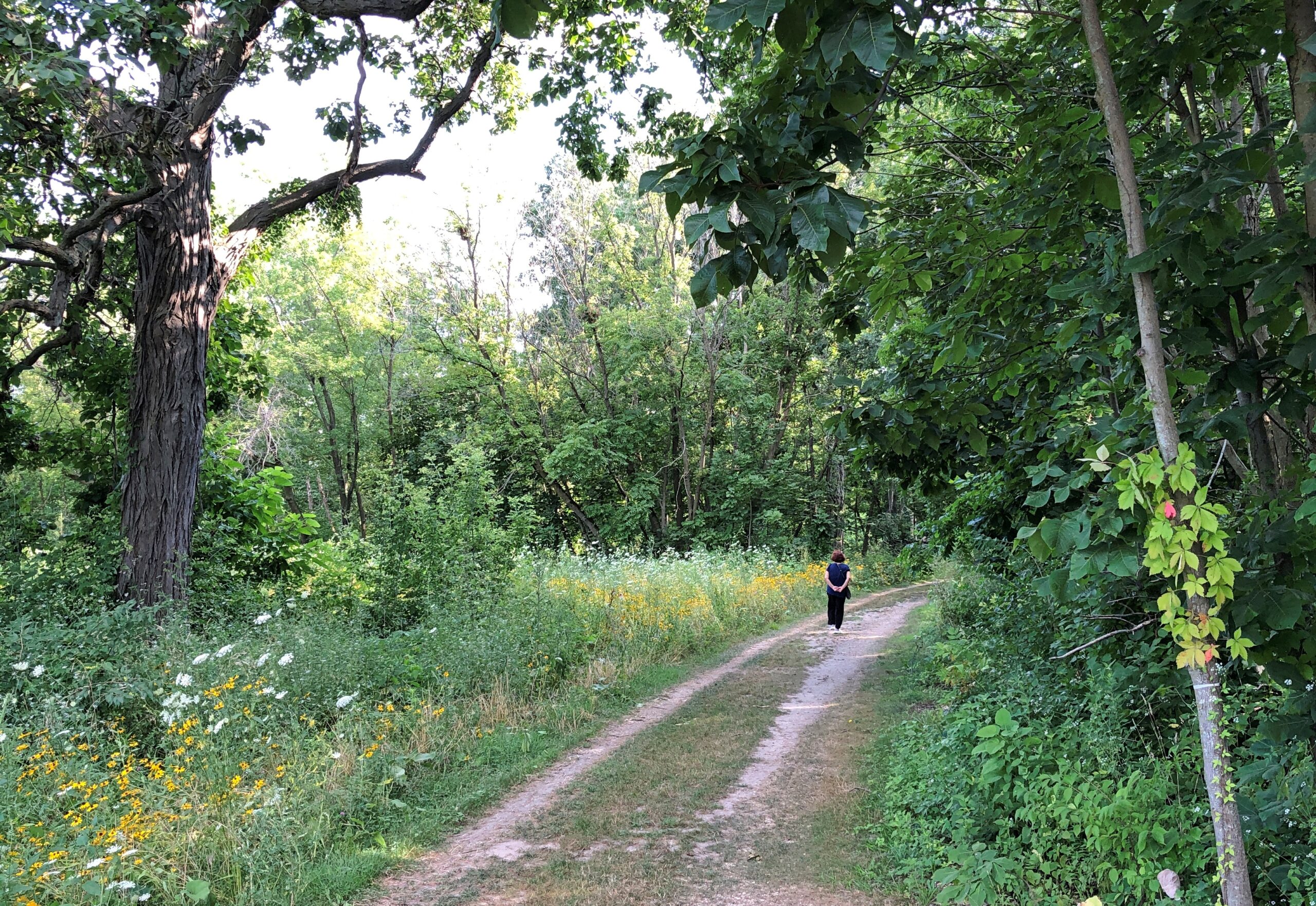
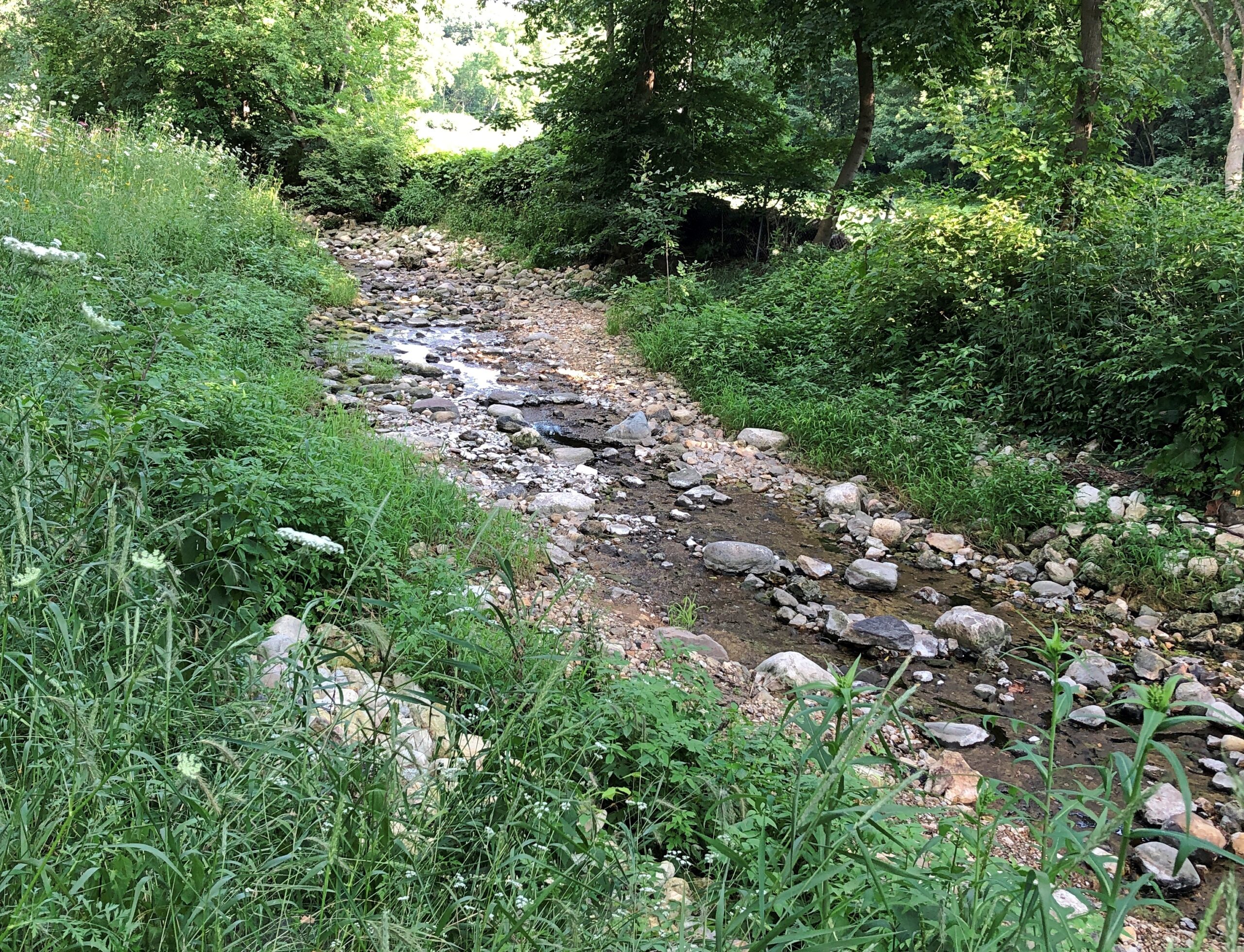
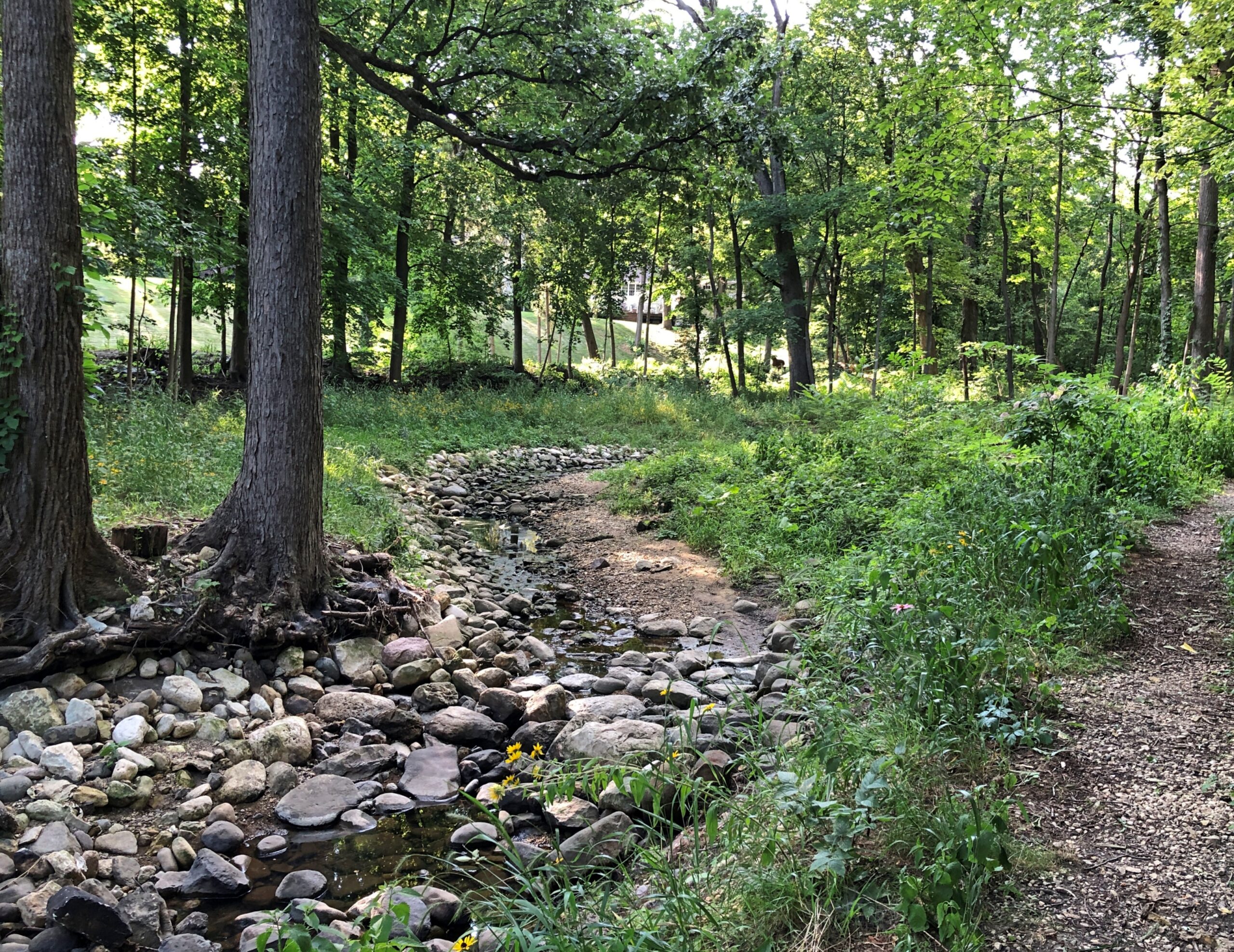
The tracks lead to a smaller trail into the forest, along a small, rocky creek that feeds into the Fox.
So small it isn’t acknowledged on Google Maps. The place felt a little remote, but of course it isn’t. At various points along the way, houses just outside the forest preserve are visible. Also, it doesn’t take long to get to the promised destination: less than five minutes. Bold exploration, this was not. More like seeking out the obscure, which I have a certain knack for.
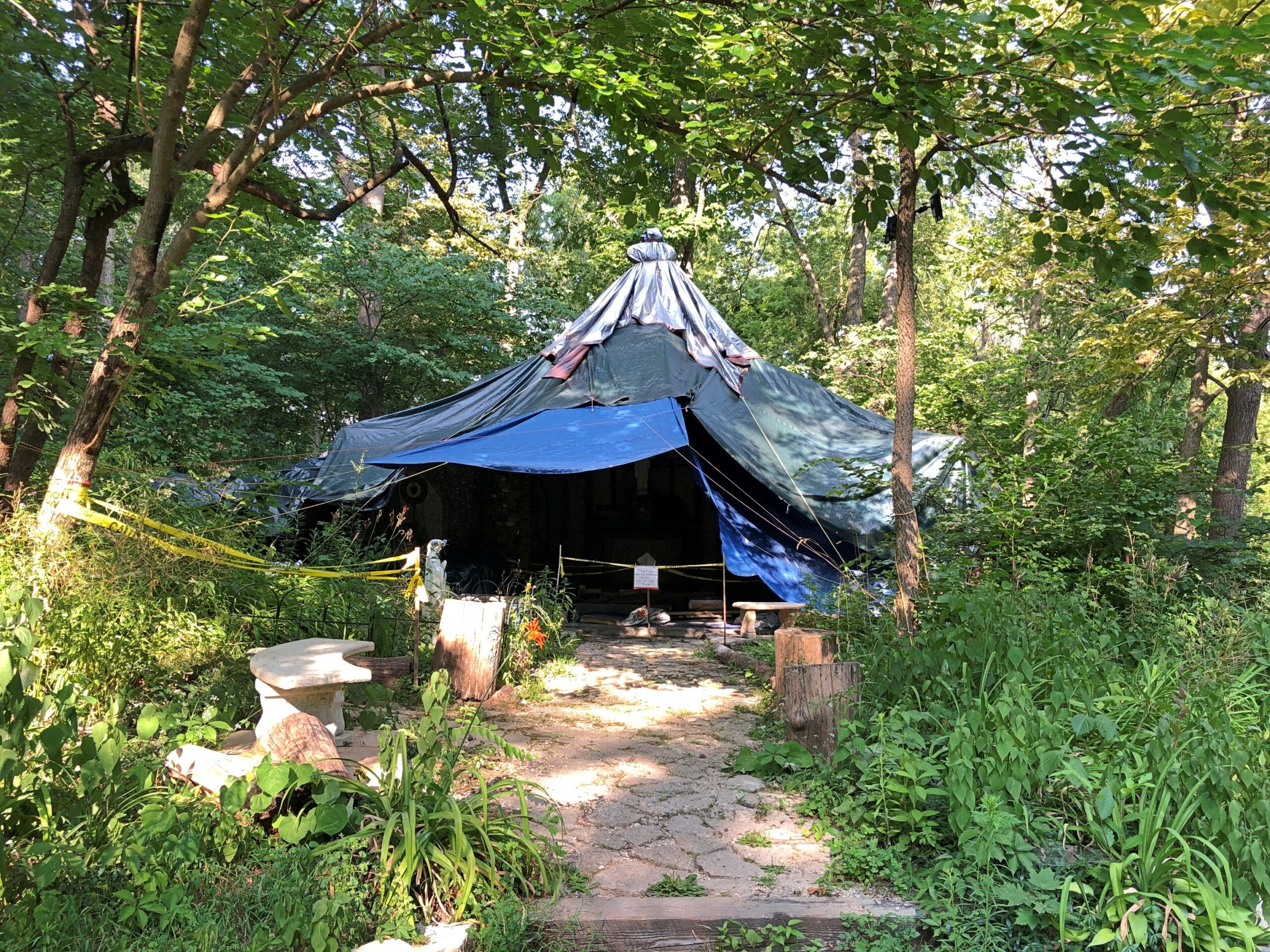
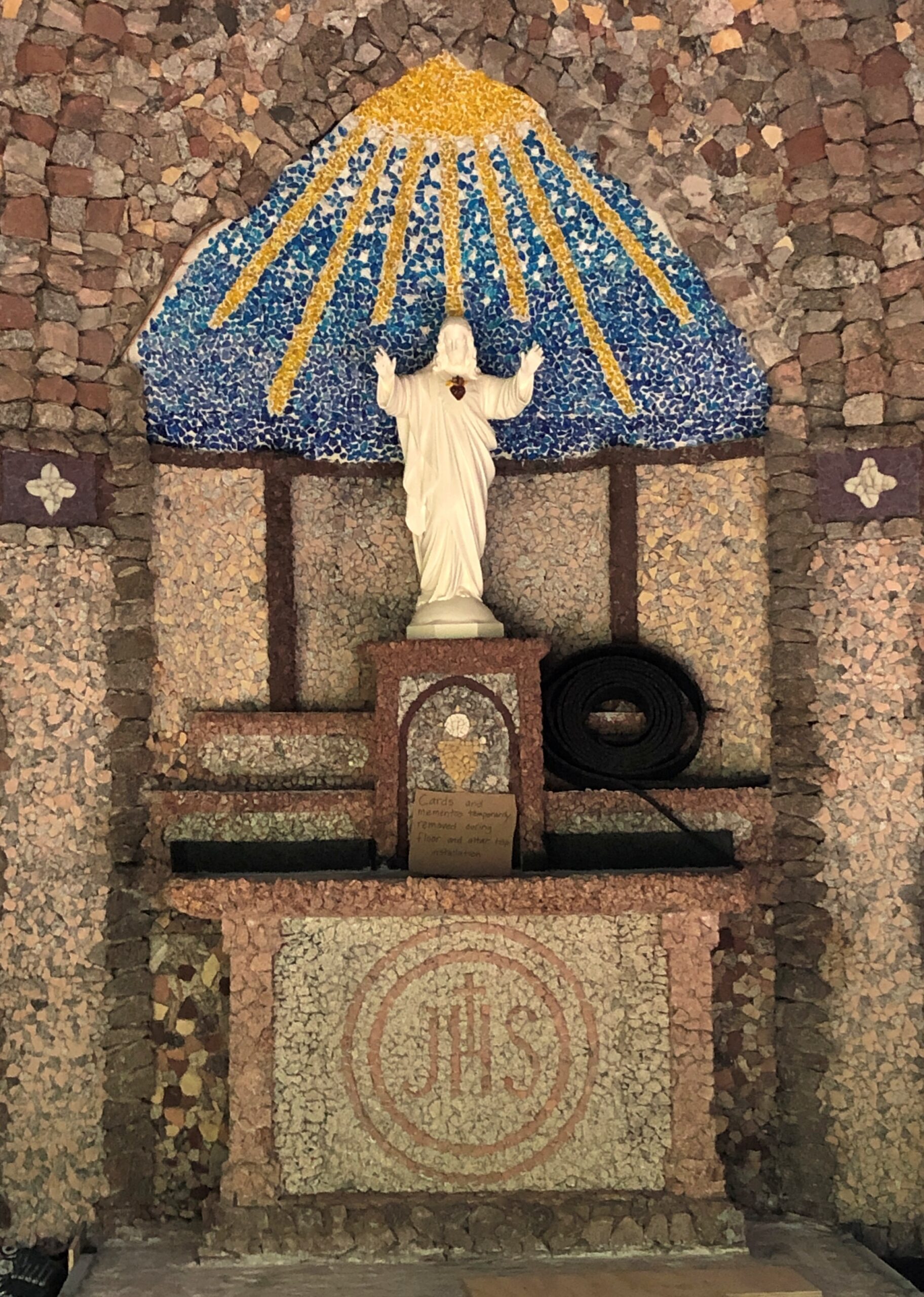
When we arrived, the grotto stood in the forest, and under a tarp.
Restoration is under way. Wanker vandals damaged the place in recent decades, I understand, so a camera now watches.
When I see that kind of setup, I’m reminded I’m reminded of the opening lines of “Soldier of Plenty” by Jackson Browne (1986).
God is great, God is good He guards your neighborhood Though it’s generally understood Not quite the way you would
So while the grotto might be obscure, it isn’t unknown. In fact, it has its own web site. Or rather, the volunteers overseeing the restoration do.
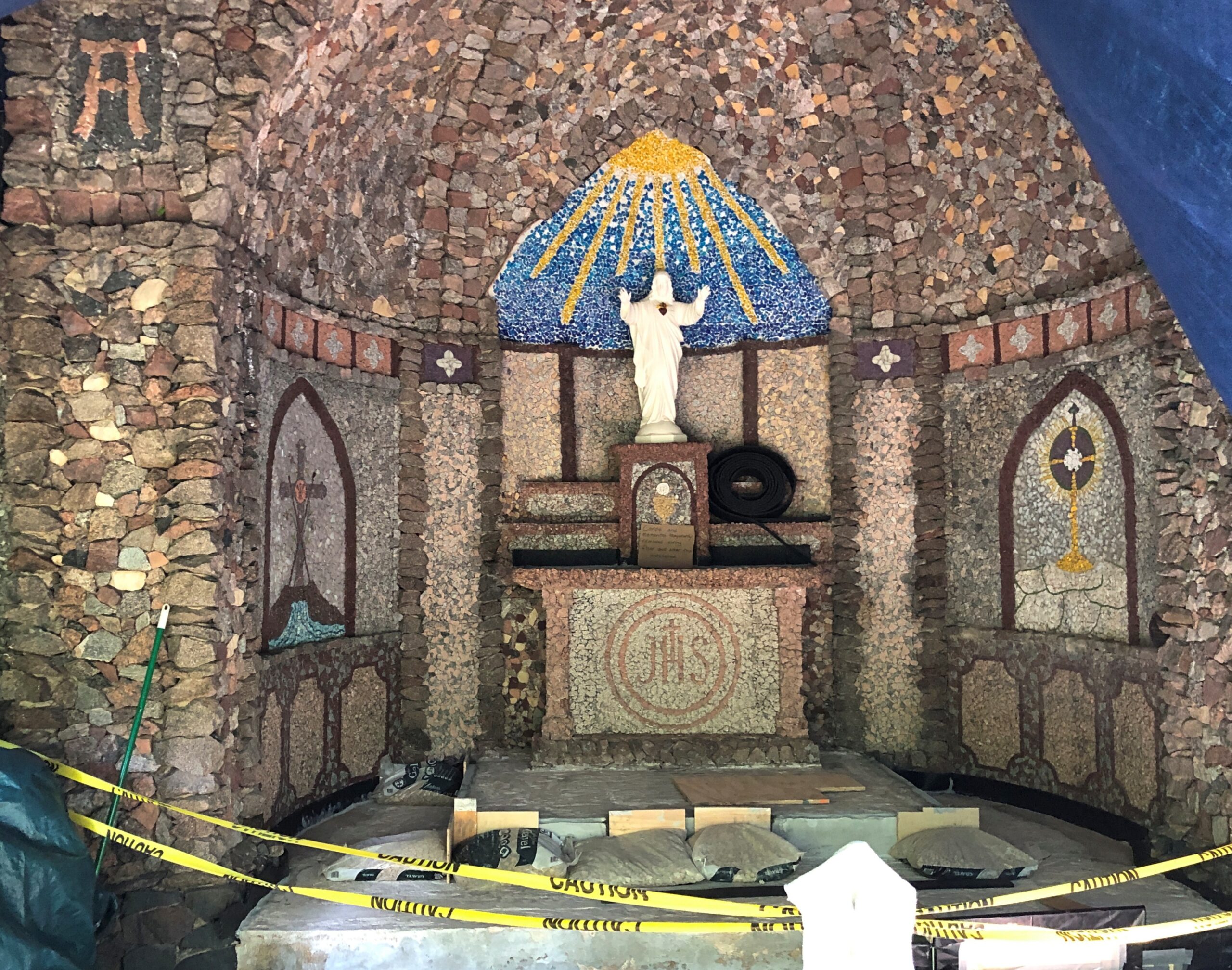
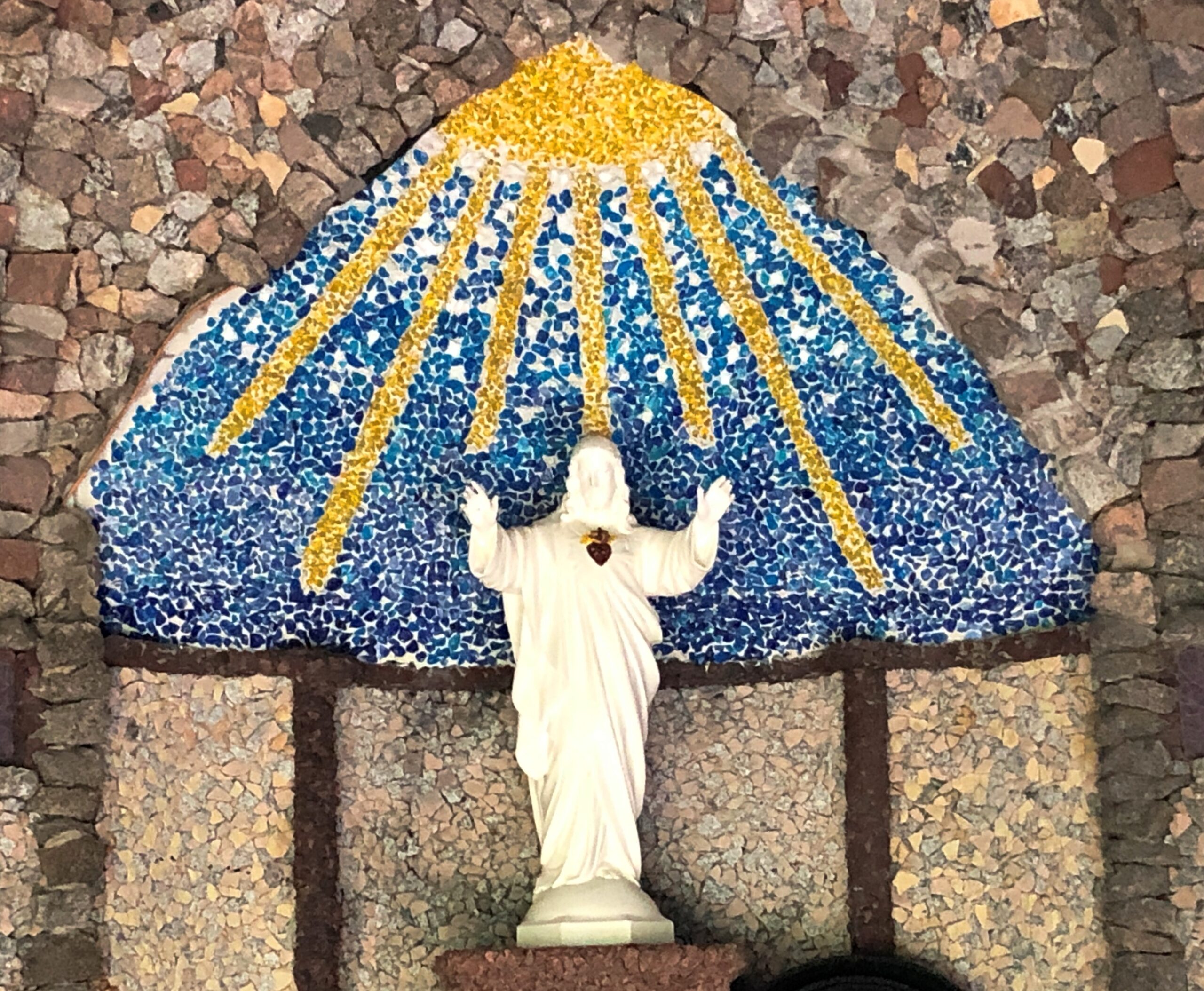
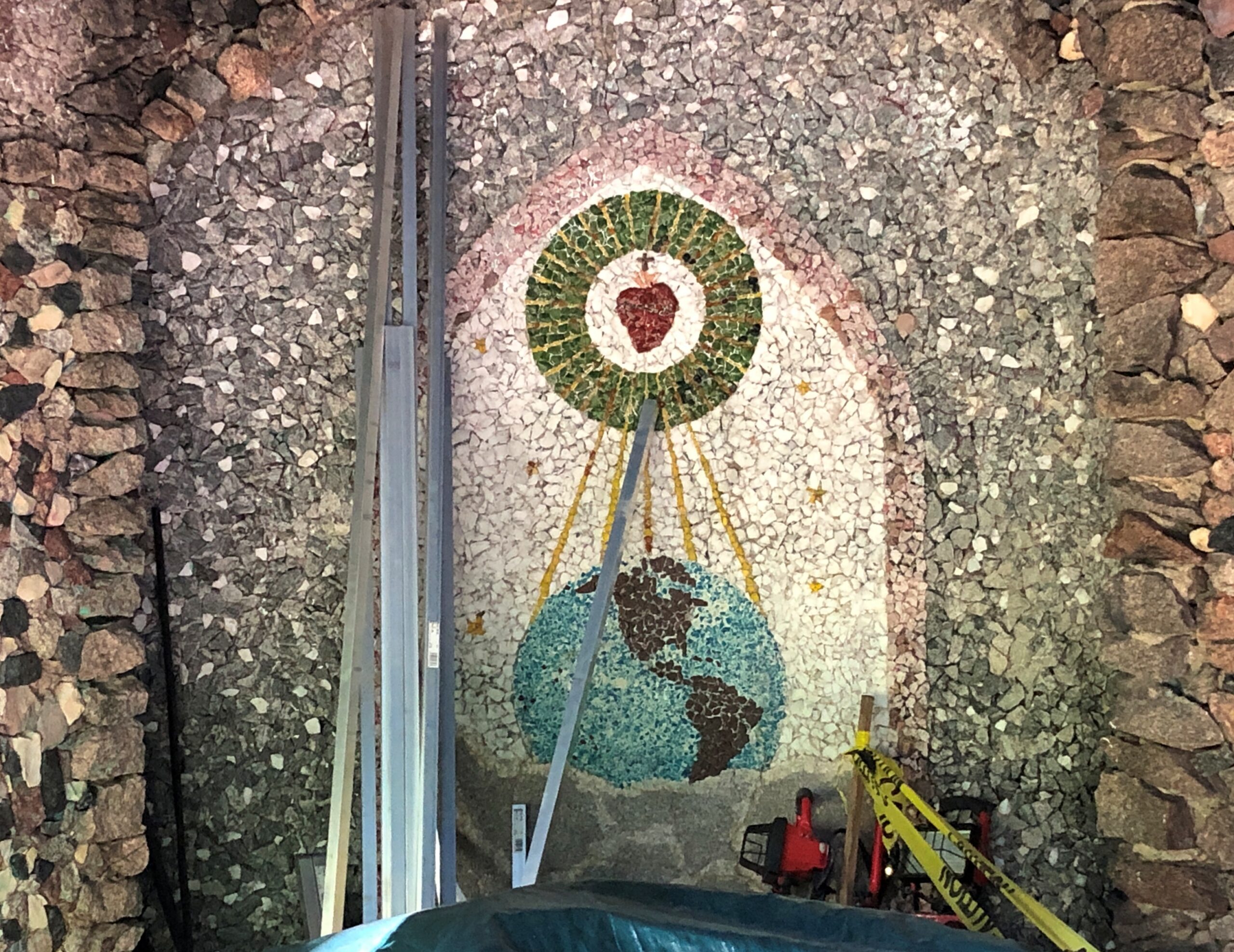
“Built in the 1930s when the property was owned by the Missionaries of the Sacred Heart [MSC], the outdoor chapel is an imposing stone structure,” the site says. “A German priest [Bro. Driesch] built the shrine, using rocks and colored glass from the local river beds to create the small chapel-like structure.”
We got as close as we could without stepping on the stone floor of the grotto, since a sign further warned us that that would hinder the restoration. Close enough that some of the interior mosaics were visible.
The land ultimately proved so valuable that the MSCs sold it in the early ’70s and moved on. But the grotto, with the help of restoration, endures.
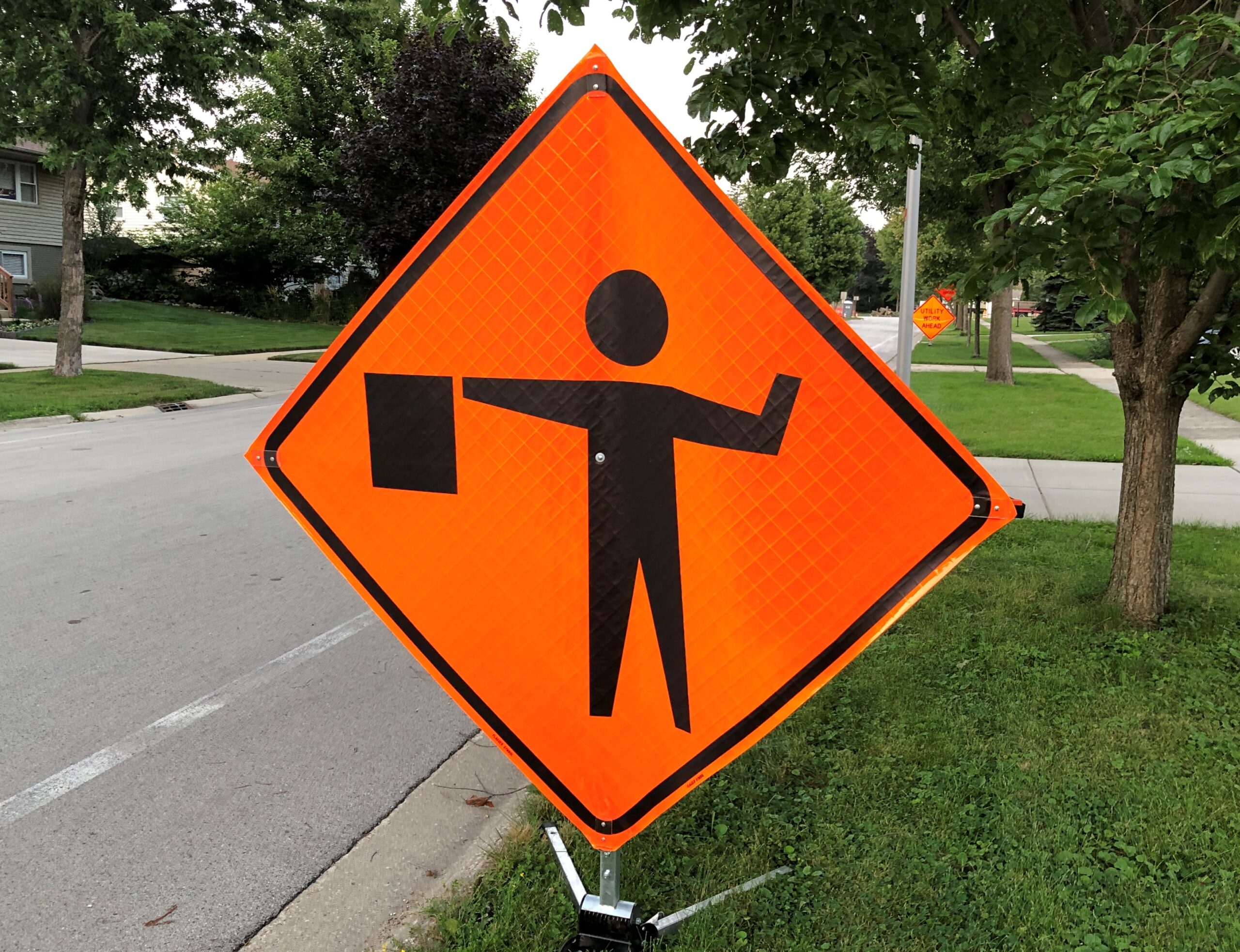
In the near quarter-century I’ve lived on my street, this was the first orange warning sign ever posted directly in front of my house.
Indicating a flagman ahead, of course, but if you squint, the figure is holding a book to read, with a flagpole and flag attached to his back. It could be done; some kind of harness and a light-weight aluminum pole or the like.
***
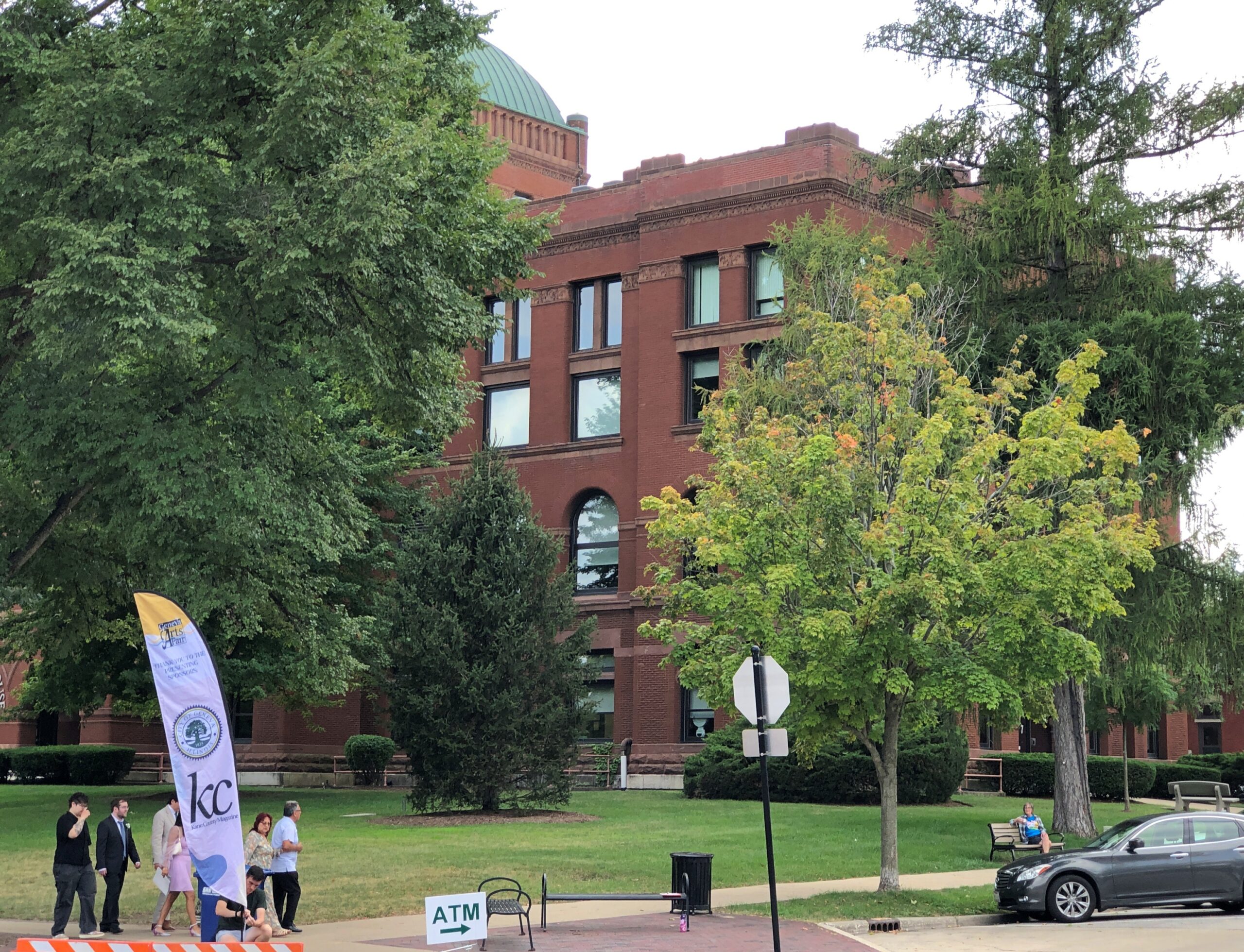
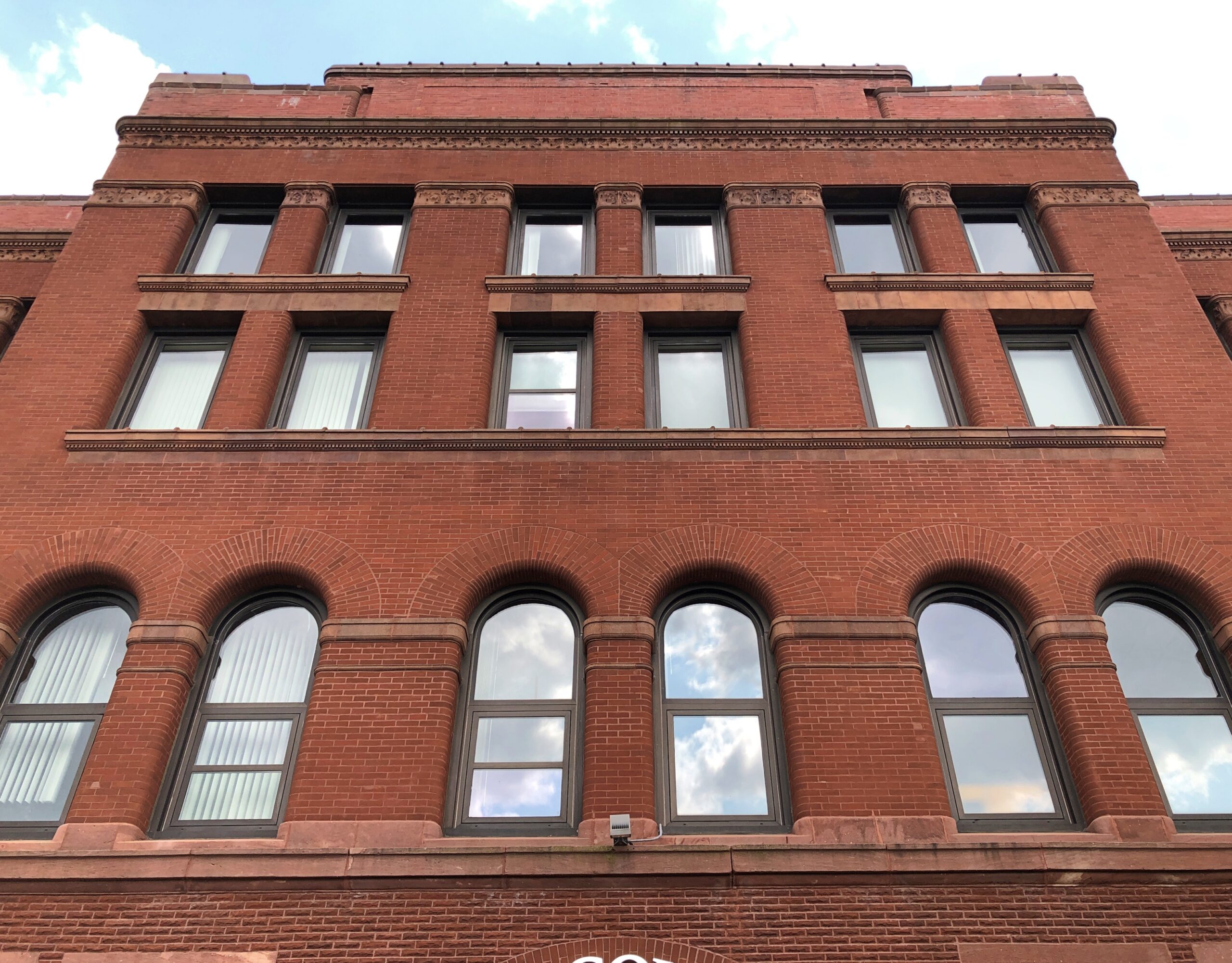
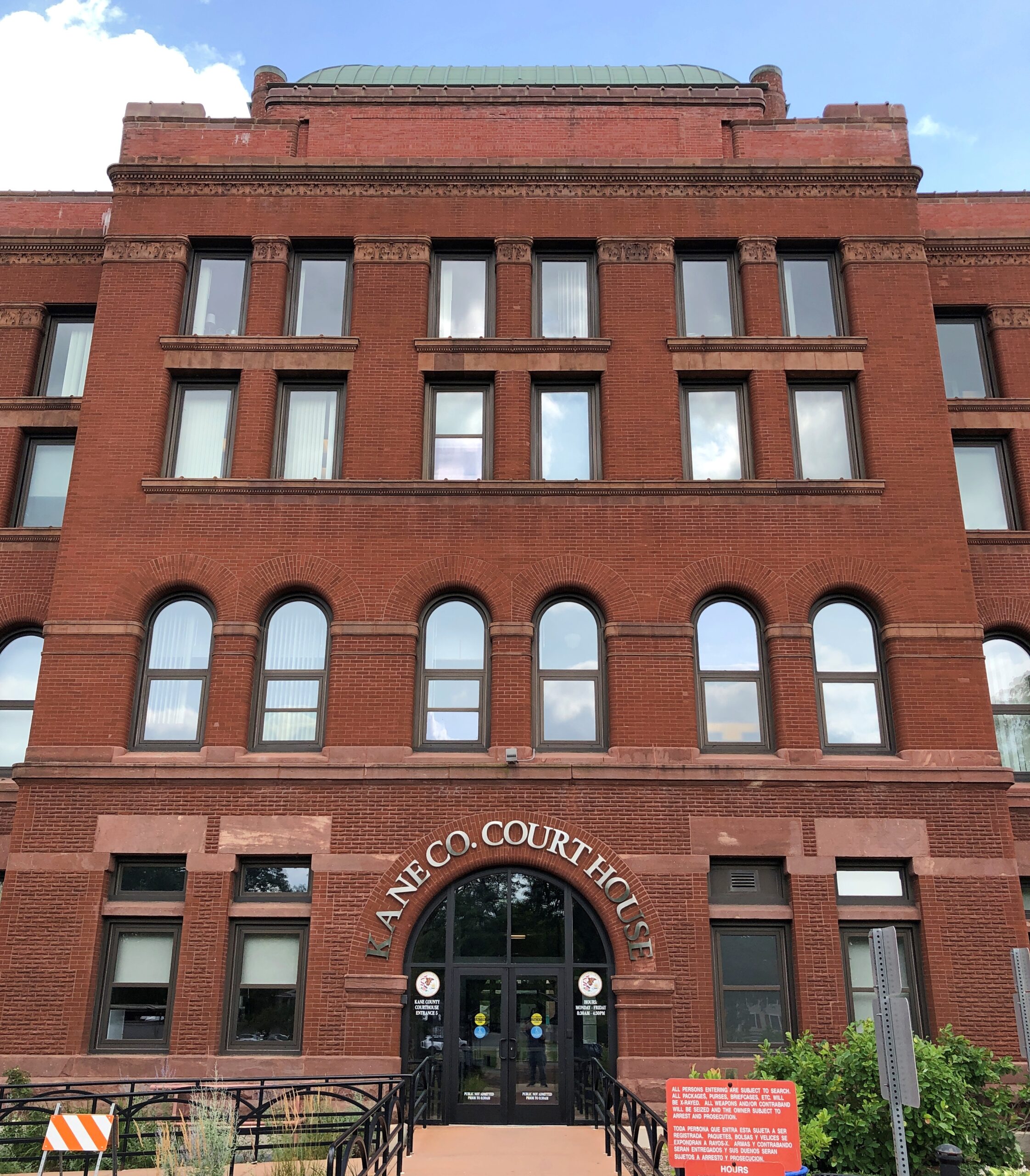
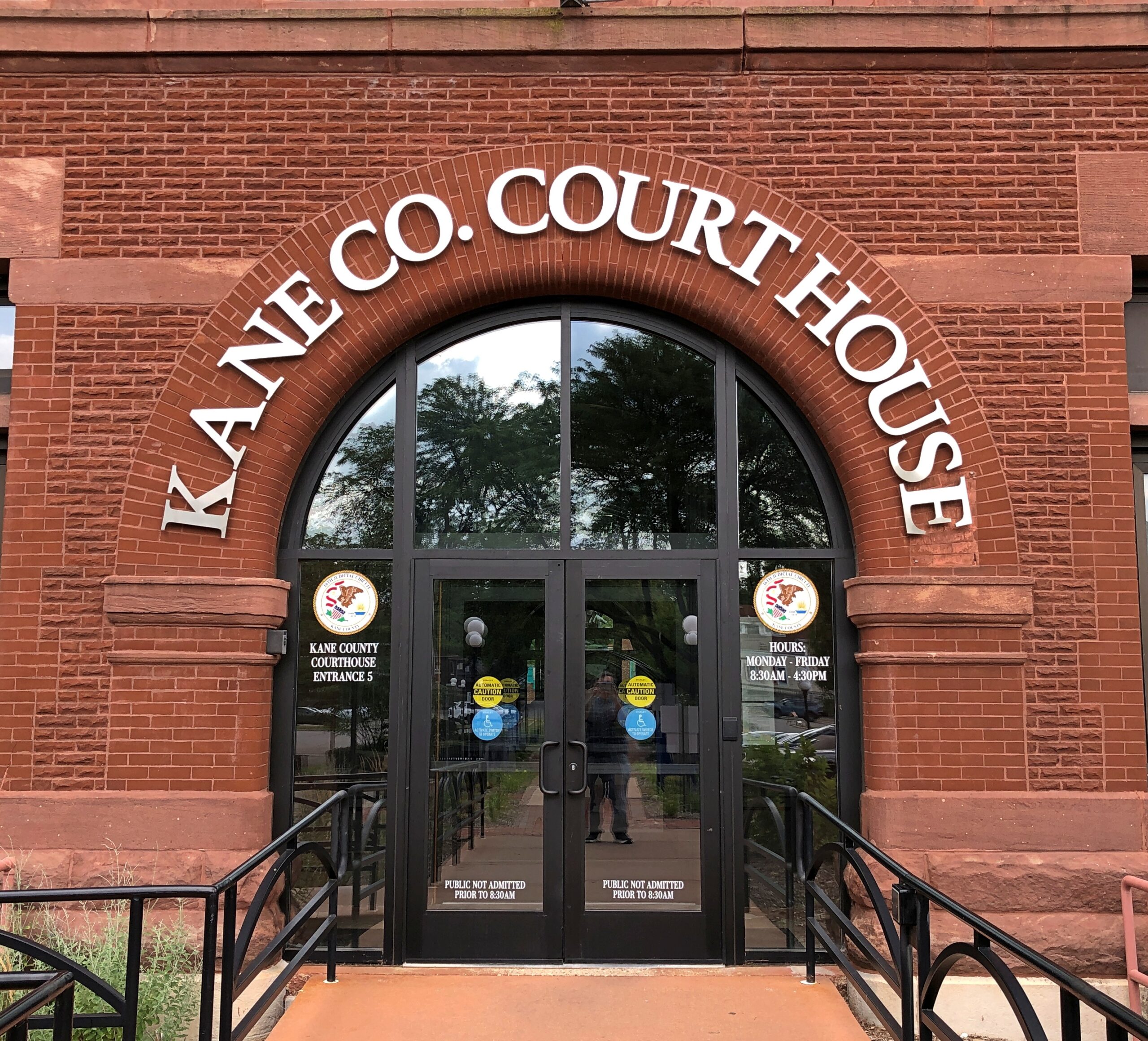
How big does a building need to be hulking? No doubt context is important. I’d say that in the context of Third Street in Geneva, Illinois, the Kane County Courthouse is a hulking presence, though its hulk is softened by being set back from the street, and by grounds marked by large trees.
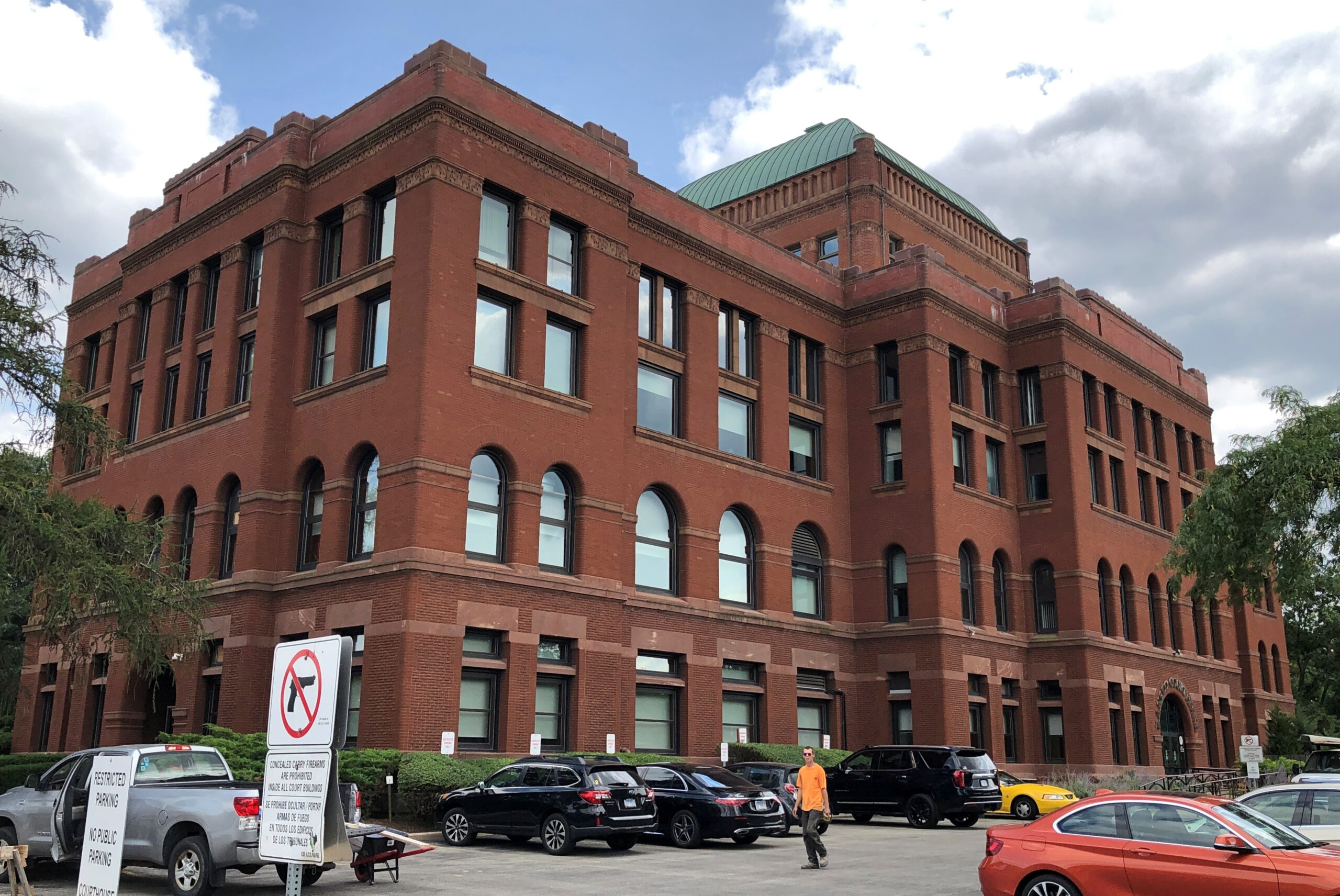
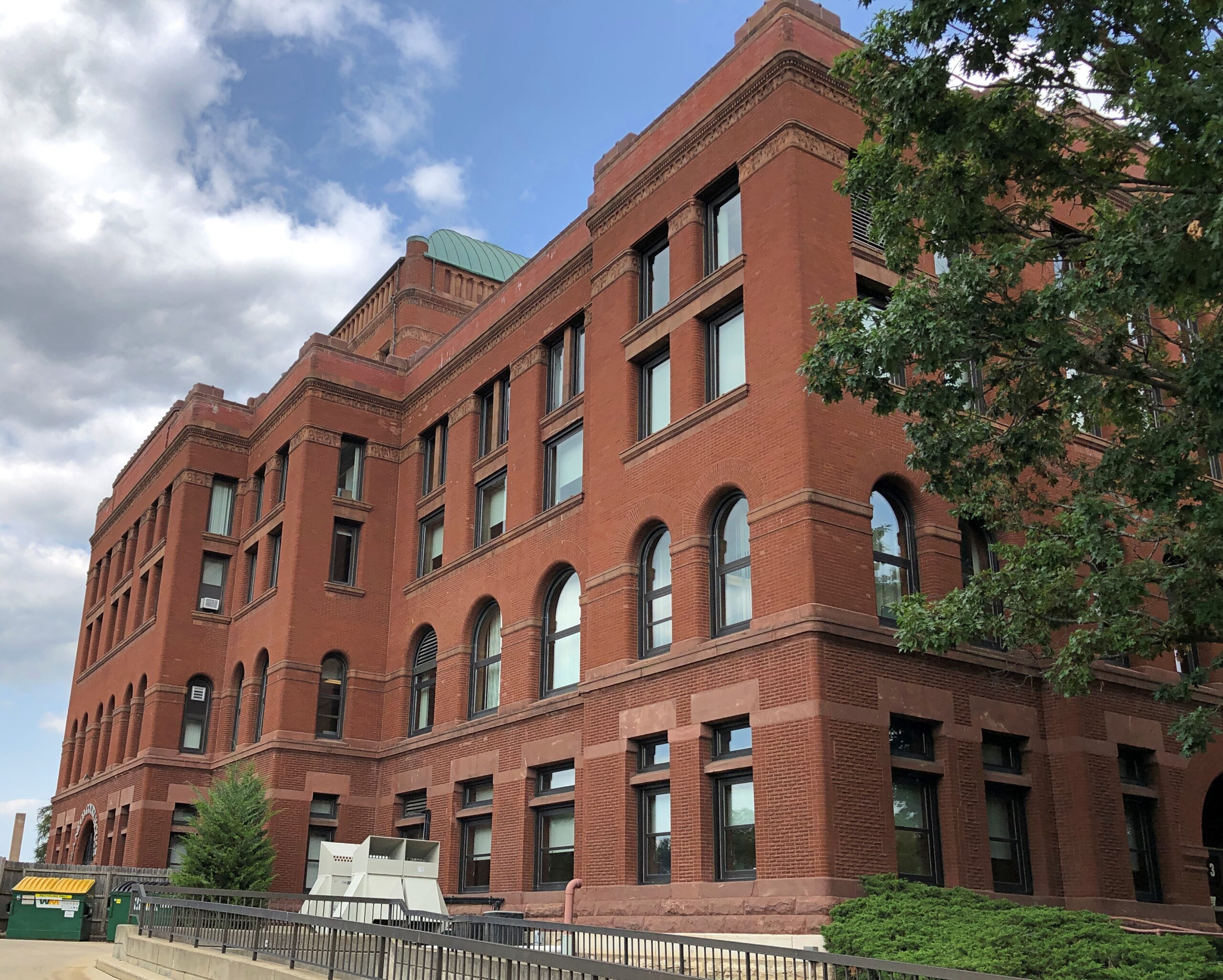
To get a full appreciation of the massed brickwork, head around the building for a more open view.
The area didn’t used to be open. The county jail — back when jails were jails and not correctional facilities – used to be there, built at the same time as the courthouse, in 1892. It didn’t last to the present.
“The Kane County Board commissioned Chicago architects W. J. Edbrooke and Franklin P. Burnham to create the impressive courthouse and accompanying jail — a testament to the county’s commitment to functionality and architectural excellence,” notes Kane County Connects.
“At the time, the jail was described as ‘the best building, most complete and convenient jail building and sheriff’s residence in the state of Illinois,’ according to an article in The Republican. The same article optimistically noted that any prisoners locked in the new jail would remain there as needed.
“However, just six weeks later, three prisoners escaped. That week’s Republican article began, ‘It is rather a bad start for Kane County’s new jail to have an escape in the first month of its occupancy.’
“By the 1970s, the 1892 facility was deemed ‘totally inadequate’ and in ‘deplorable condition’… The building was ultimately demolished in 1975.”
Be that as it may, there’s no doubt about where you are these days if you find yourself near the courthouse.
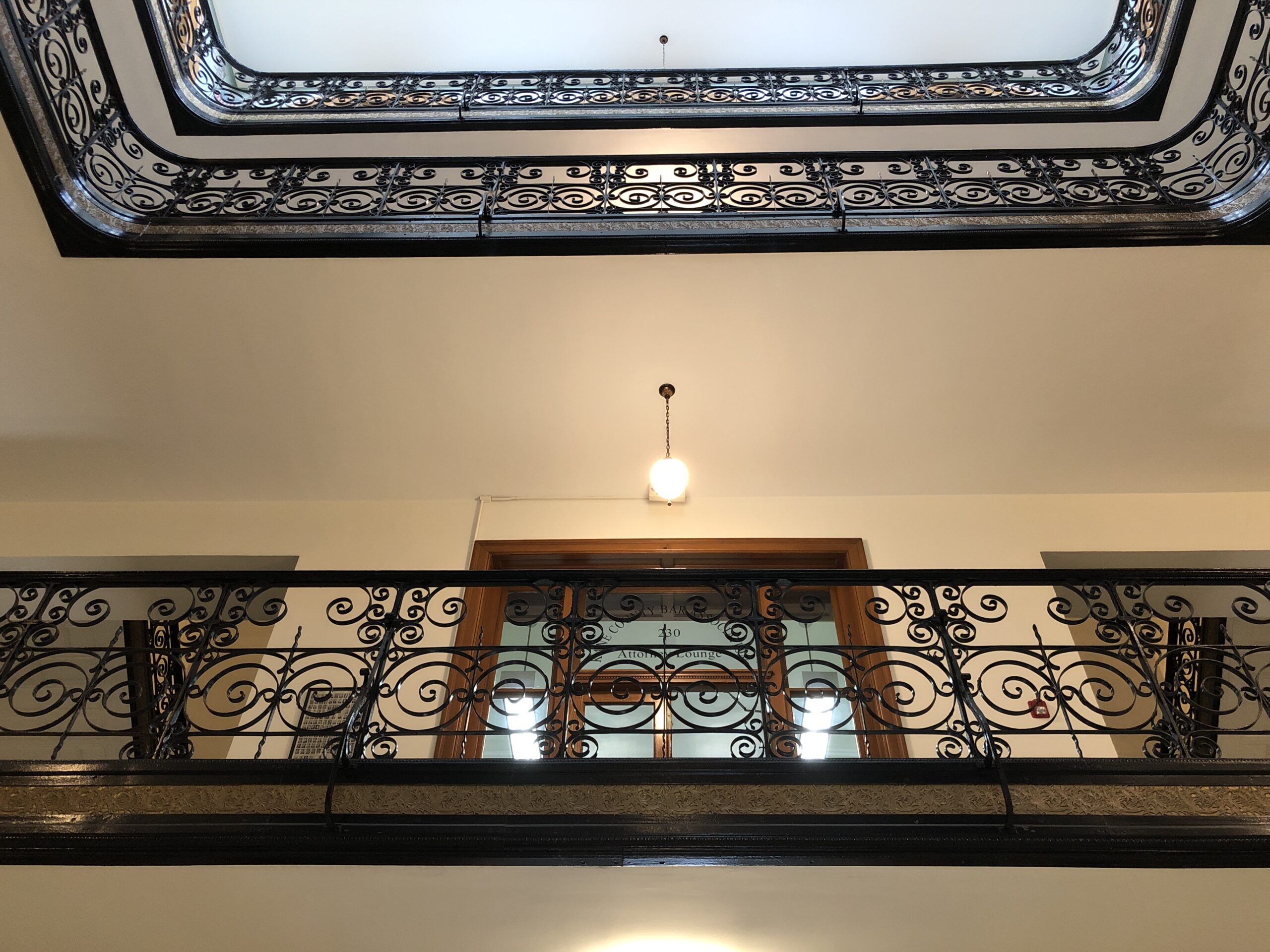
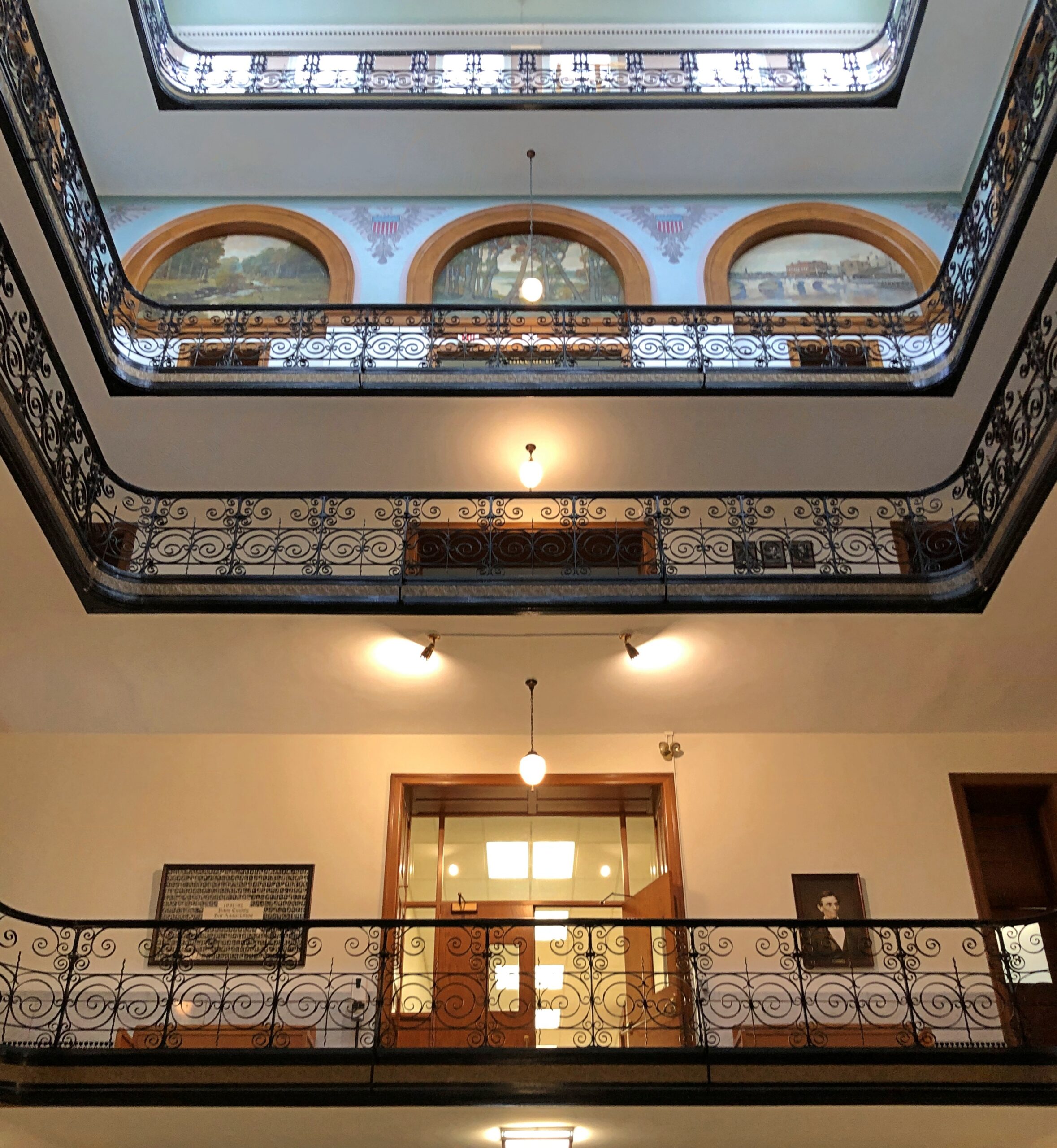
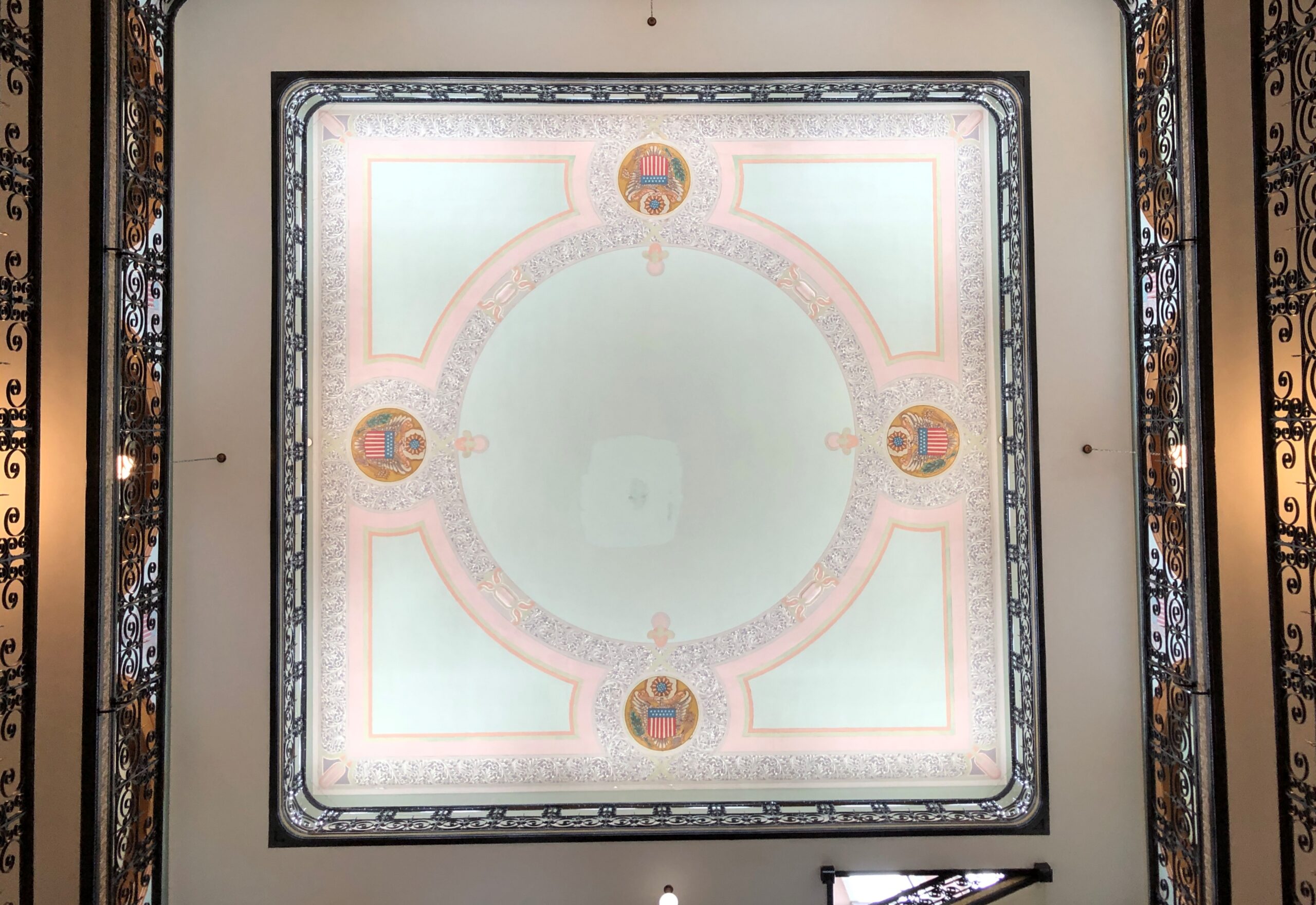
I went through the minor rigmarole (empty pockets, put everything in tray, walk through metal detector) for a look at the vaulting interior, designed in the days before air conditioning. Also, back when county budgets allowed for fine ironwork.
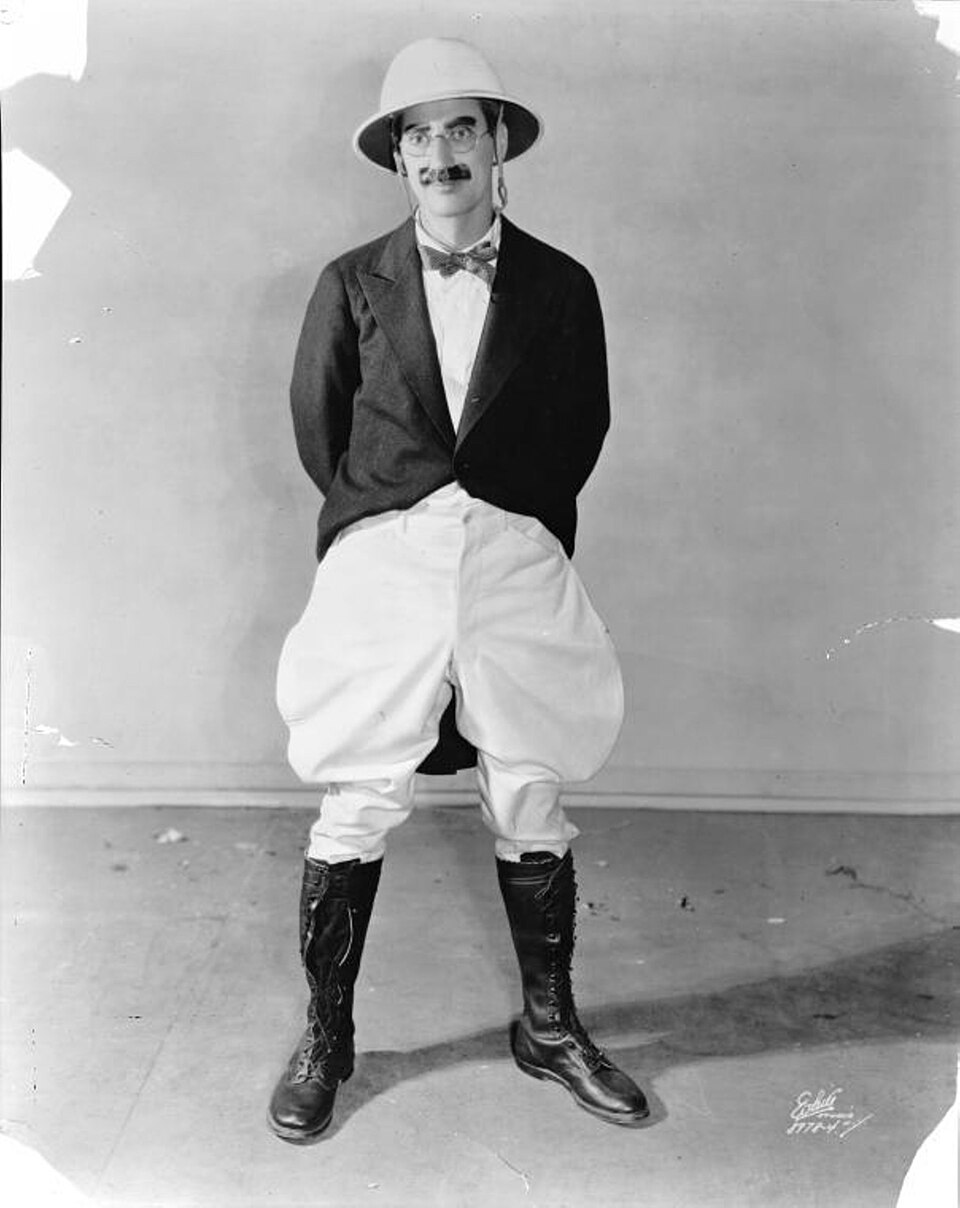
Today I noticed that Animal Crackers (1930) is on one of the streaming services I subscribe to, so naturally I watched the first 15 minutes or so. As you should do, to enjoy Groucho’s definition-of-jaunty rendition of “Hooray for Captain Spaulding.” I was happy to see that the print included a full version of the song – without a briefly jarring cut of one of Groucho’s lines that has marked the song every other time I’ve seen the movie.
Namely, this line:
Mrs. Rittenhouse: He is the only white man who covered every acre —
Spaulding:I think I’ll try and make her —
Guests: Hooray, hooray, hooray!
Exceedingly mild stuff here in the 21st century, but 1930s censors felt differently.
Broadway World reported in 2016: “The new restoration of Animal Crackers includes footage unseen here for over 85 years. In its year-long restoration, Universal utilized a 35mm composite nitrate dupe negative from the British Film Institute. The negative not only contained the best resolution of any other known element, but also contained long-unseen footage excised from U.S. prints in the 1930s due to censorship cuts, including a ribald line in Groucho’s signature ‘Hooray for Captain Spaulding’ number and his song and dance upon returning from Africa, Harpo pulling perennial Marx foil Margaret Dumont’s slip out from under her dress, Groucho telling a joke about a ‘shotgun wedding,’ and more.”
The streaming version must be the 2016 one, since, besides the restoration of lines, its resolution is beautifully crisp. I will be sure to watch the rest of the movie, probably in bits, as I tend to do here at the gates to my dotage, and look for the other moments. Which must have been more skillfully cut, since I didn’t know they were missing.
The clip of the song available on YouTube is a bit fuzzy, but it is lyrically restored.
One more thing along those lines: I discovered that this photo is in the public domain. As is the movie. Yes.
***
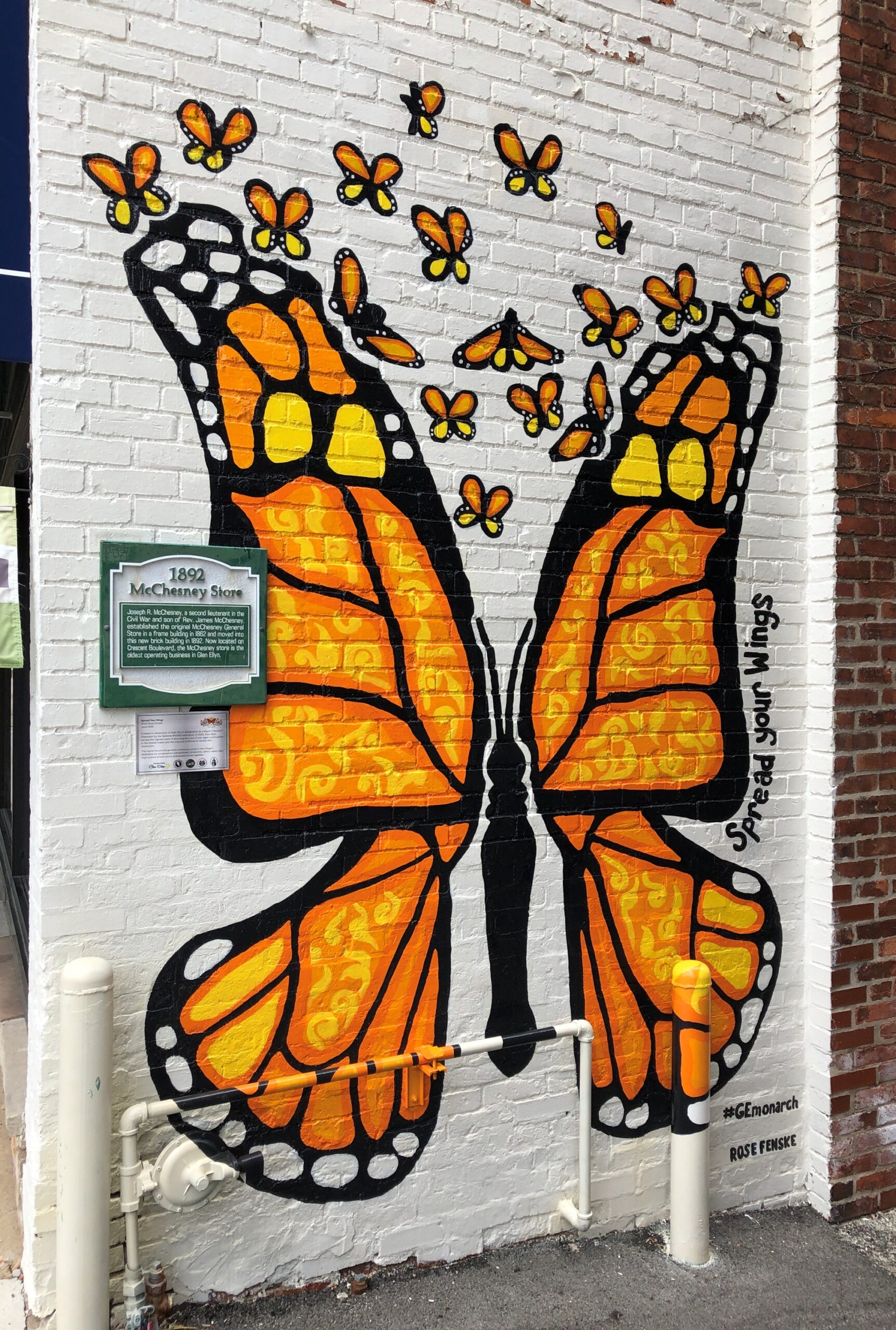
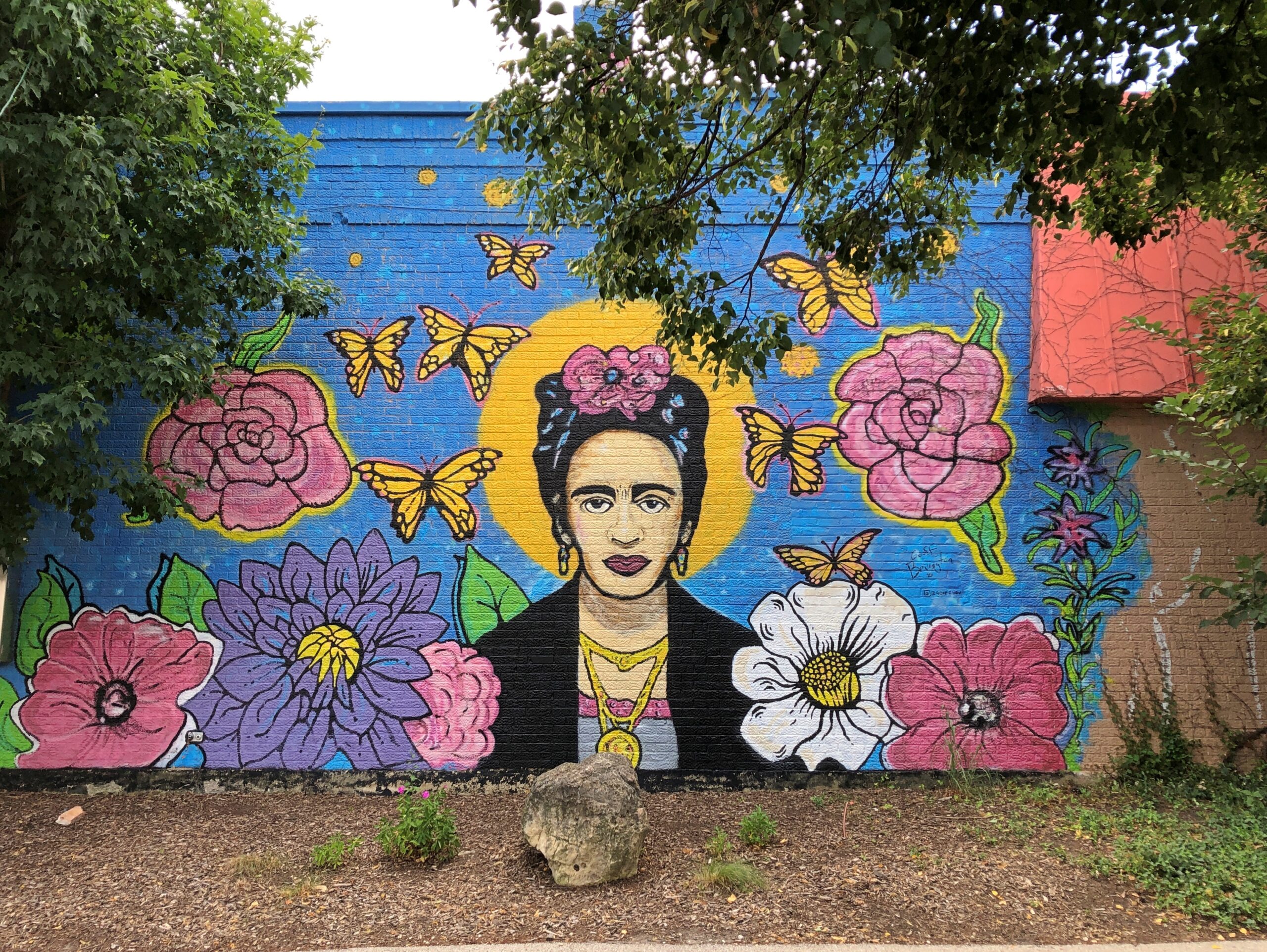
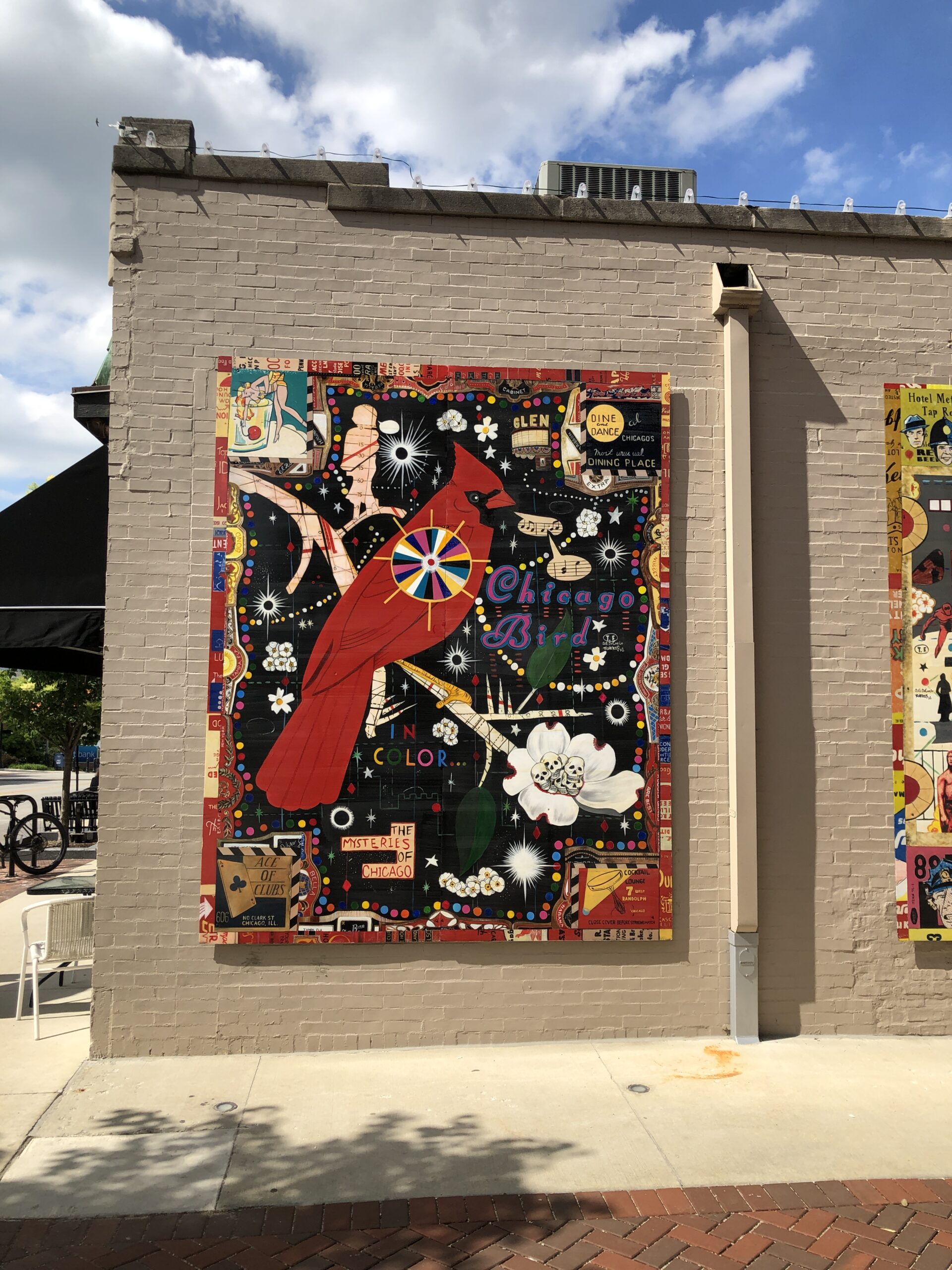
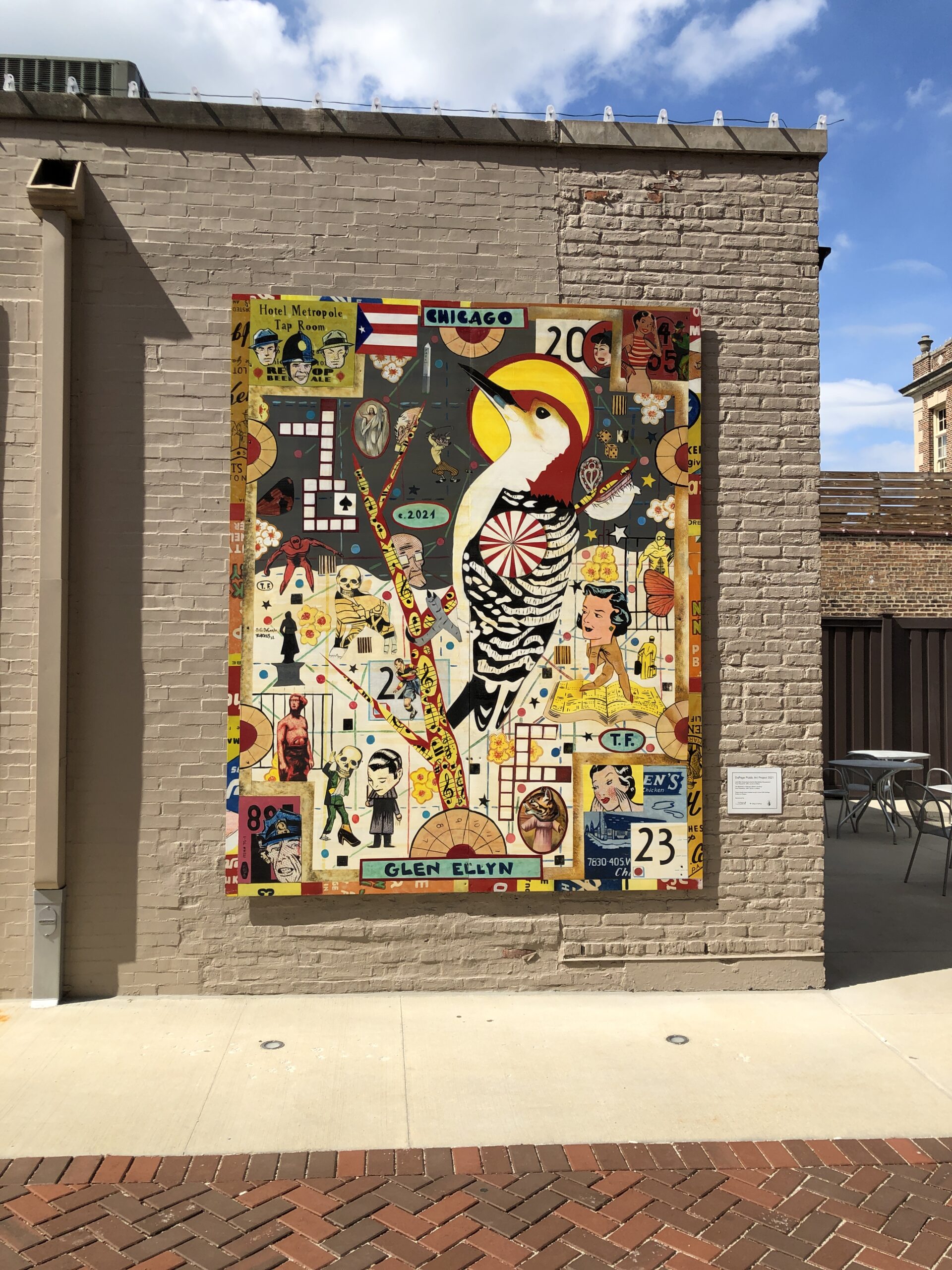
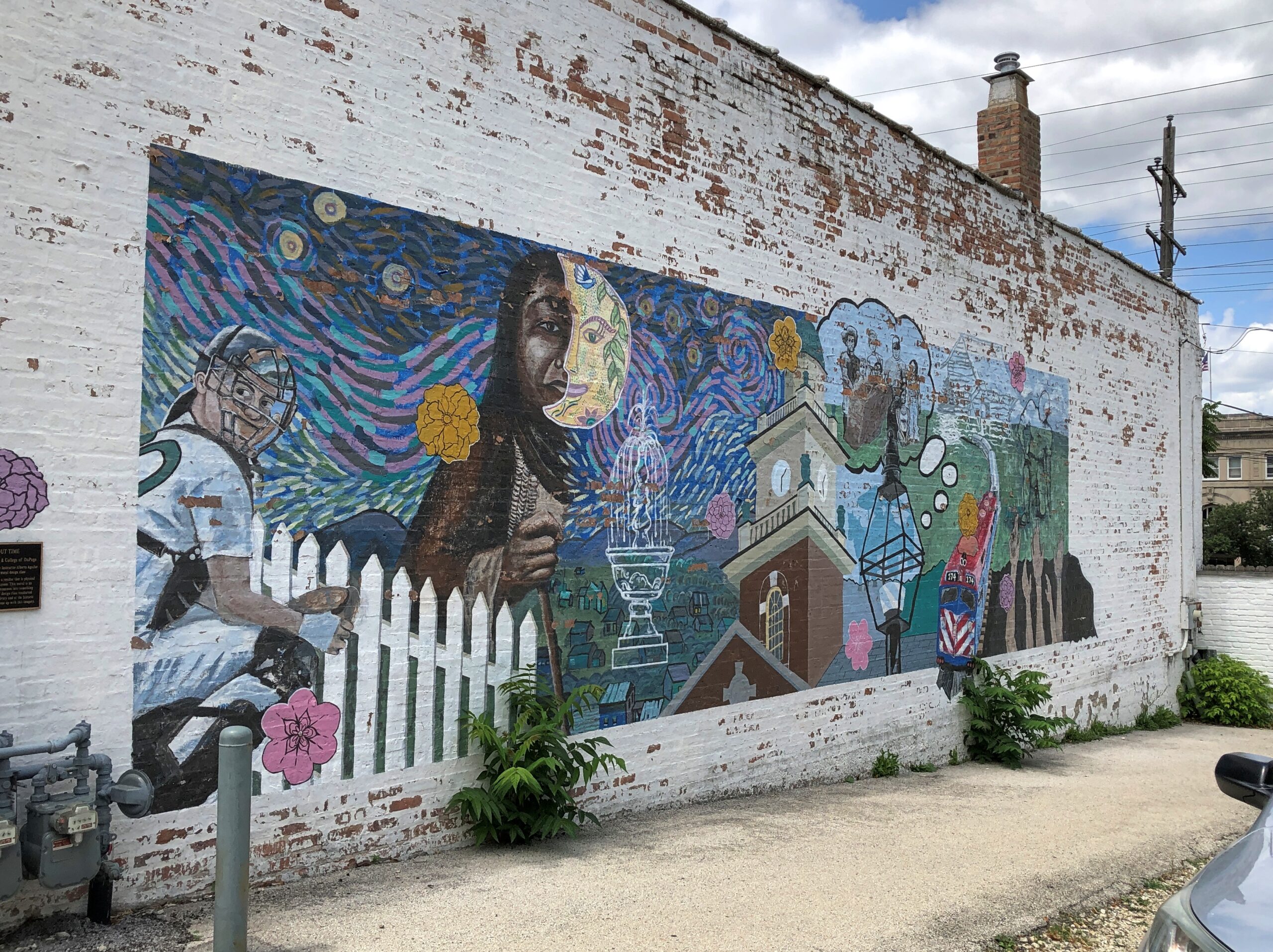
Murals aren’t just for cities or small towns. Suburban example: Glen Ellyn, Illinois.
“Spread Your Wings” by Rose Fenske (2026)
“Frida” by Geoff Bevington (2020)
“Downtown Glen Ellyn Murals” by Tony Fitzpatrick (2021)
I’m assuming that “Downtown Glen Ellyn Murals,” generic as it is, is the title of that one.
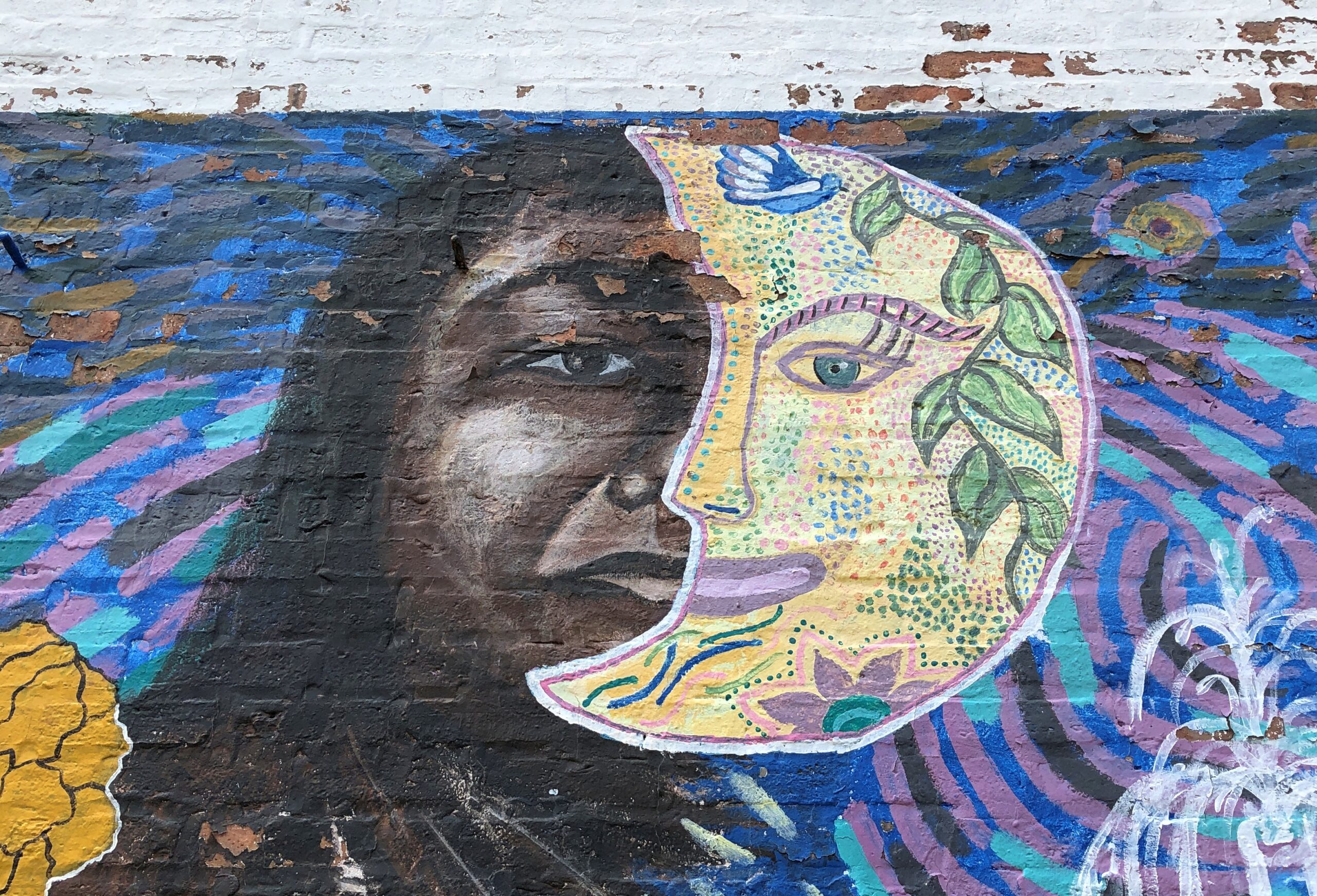
“It’s About Time” by Alberto Aguilar (2003)
I’ve been to downtown Glen Ellyn twice since the beginning of warm weather this year. In wandering around both times, I came across the murals by chance. The organization Downtown Glen Ellyn provides a little detail.
There are more. Cool.
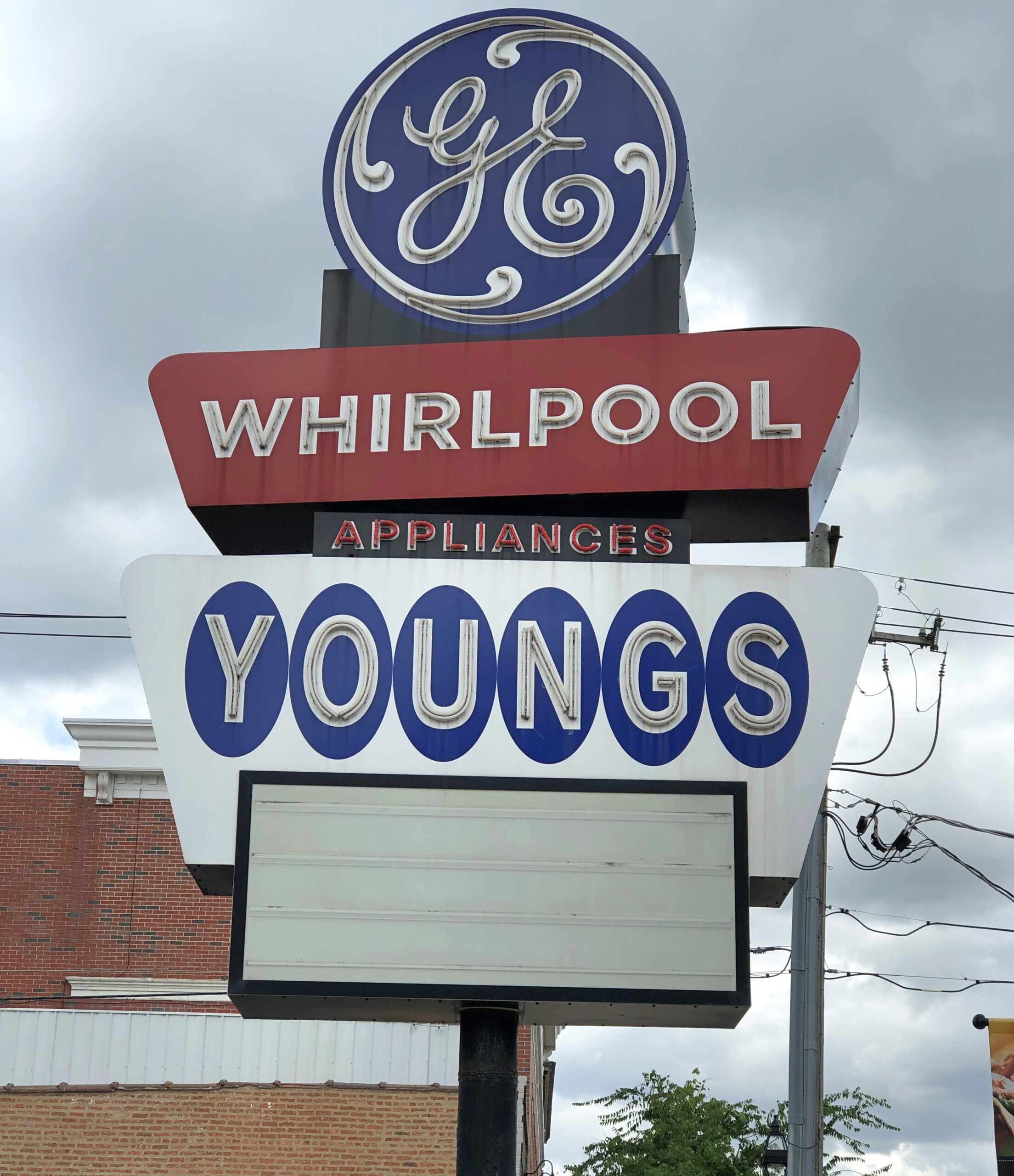
A shop not far off Main St., which is the main shopping nexus in town, was the last home of Young’s Appliances. Right now a real estate agent’s sign indicates that the place, which looks entirely empty, is for sale.
A storied store, dating from the earlier decades of the 20th century, as middle-class homes started buying household appliances in quantity. As far as I can tell, defunct a few years now, but for all that the sign’s in pretty good shape. Is the sign considered an i-word locally, and so maintained? (I refuse to use icon that way, though I know it’s a losing battle.)
Also not far off main street.
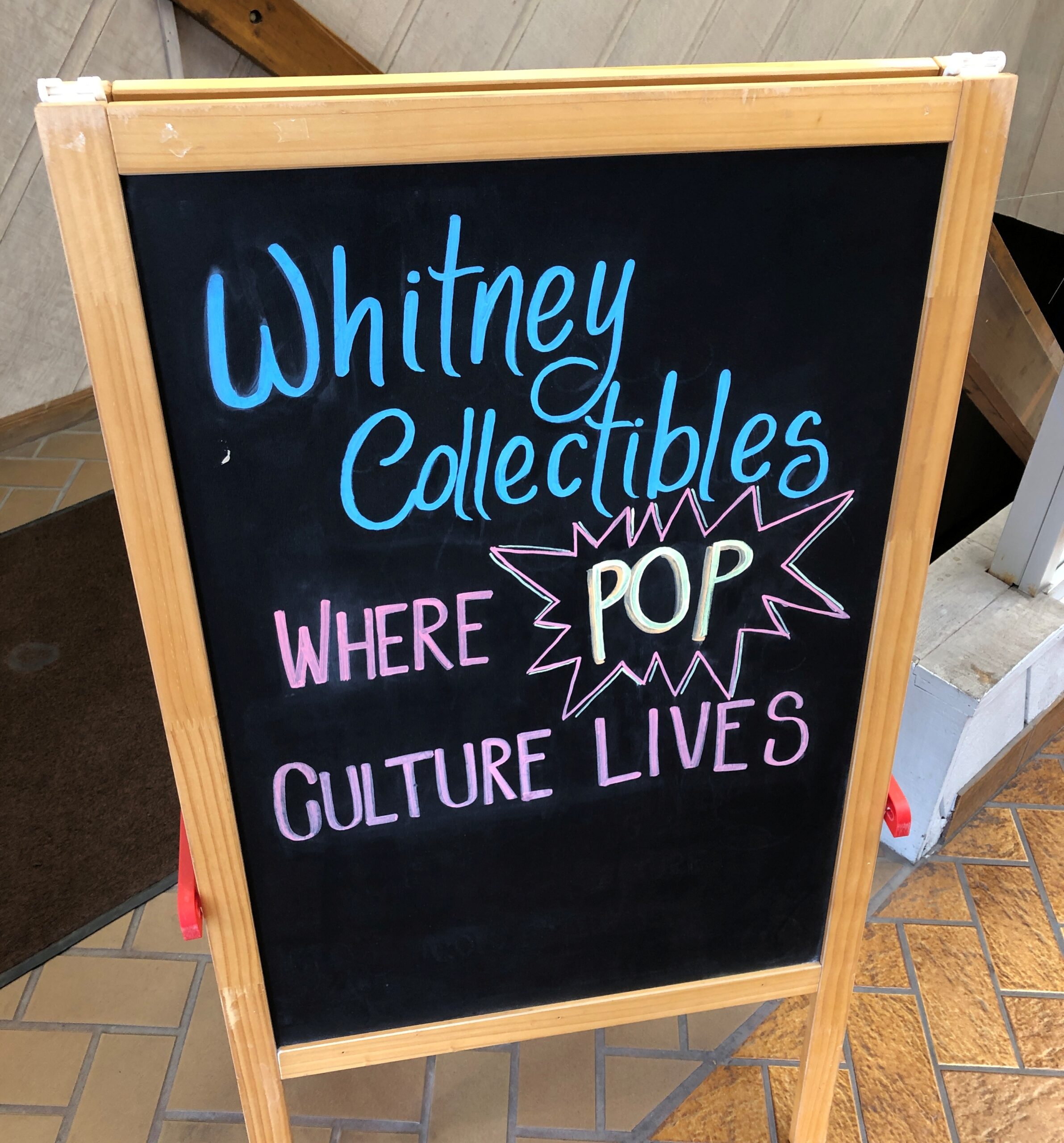
The store is tucked at the back of a multi-tenant retail space on the first floor of a building on Main. Crowded at the moment I took a look, mostly with kids, so I took a pass. But I would like to find out just what flavor of pop culture sometime.
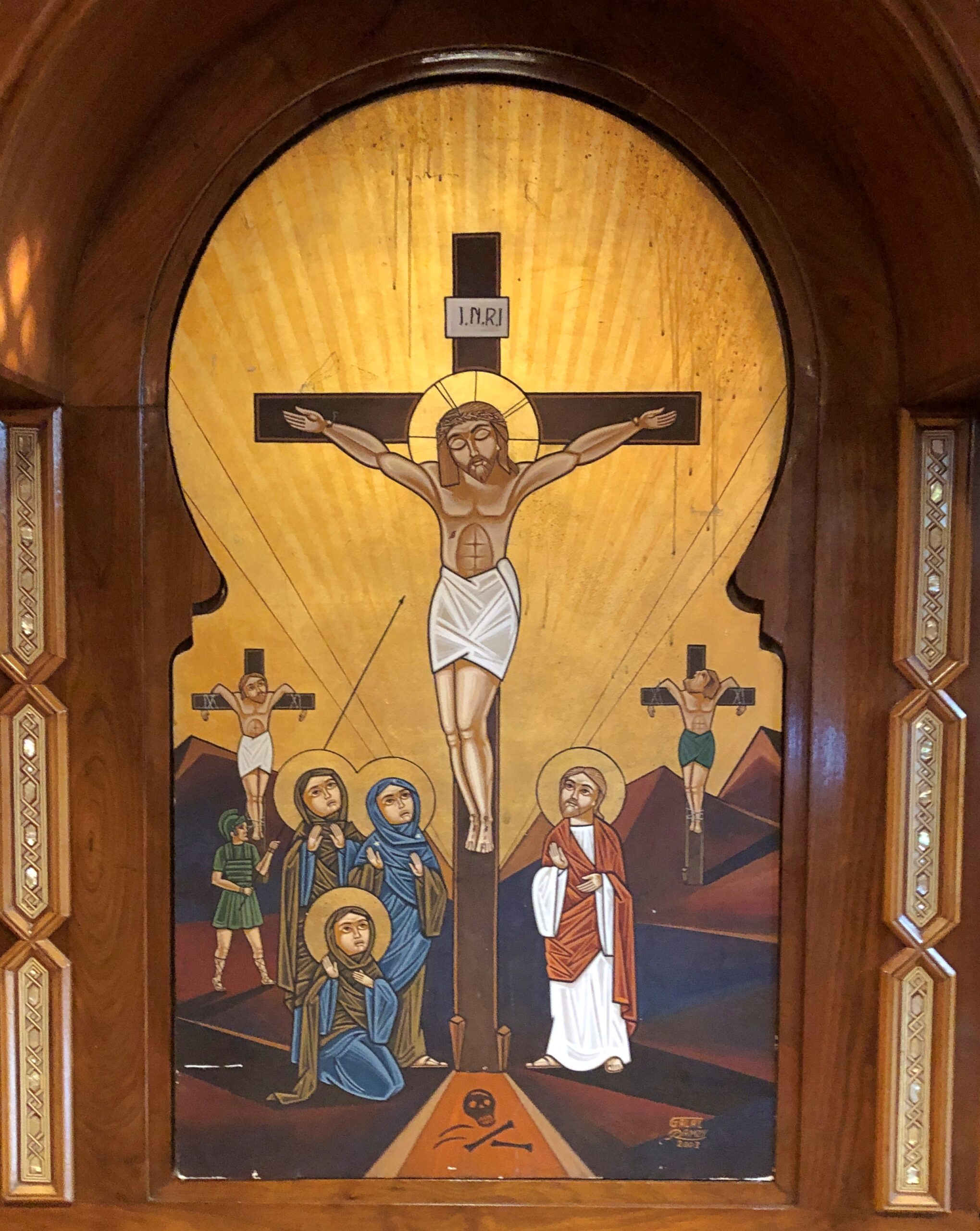
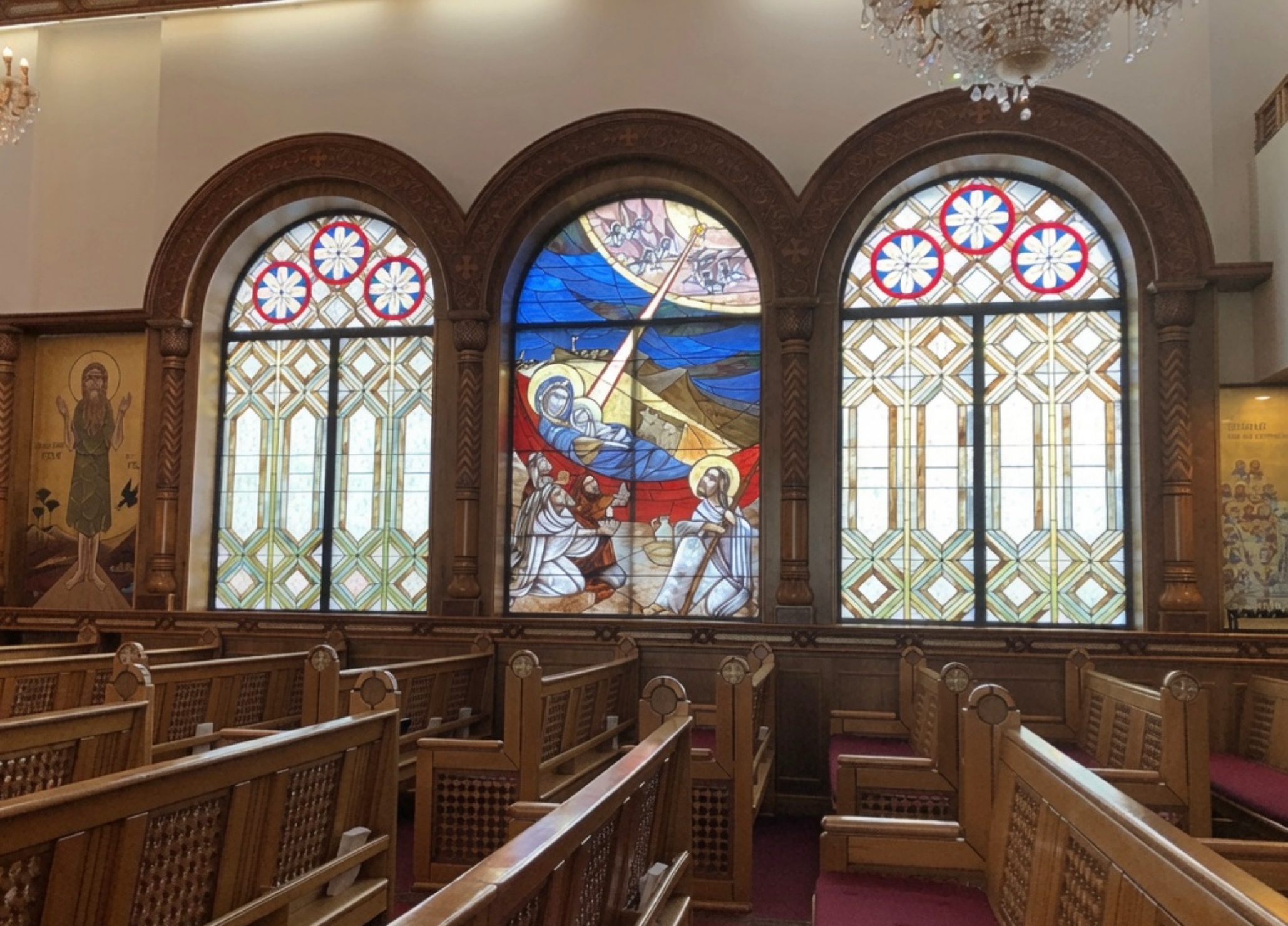
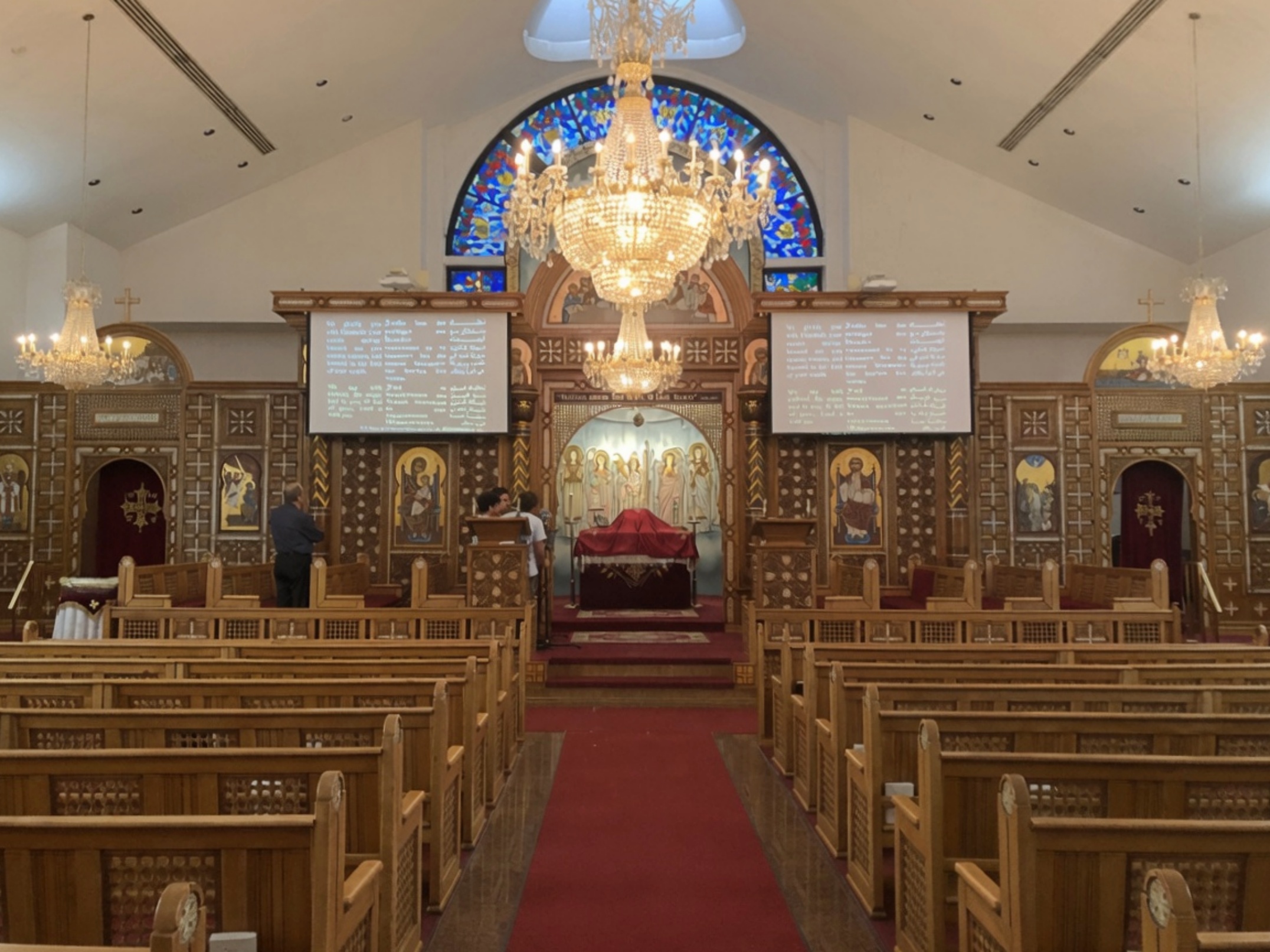
Earlier this month, entirely by chance, I saw that St. Mary’s Coptic Orthodox Church in Palatine was about to hold its annual Egypt Fest. I noticed, besides offering the kinds of things you’d find at a local festival, such as food and children’s rides, the event also offered the opportunity to visit the church building. Instantly I knew I wanted to attend. I didn’t remember ever visiting a Coptic church before. So I went that Saturday afternoon.
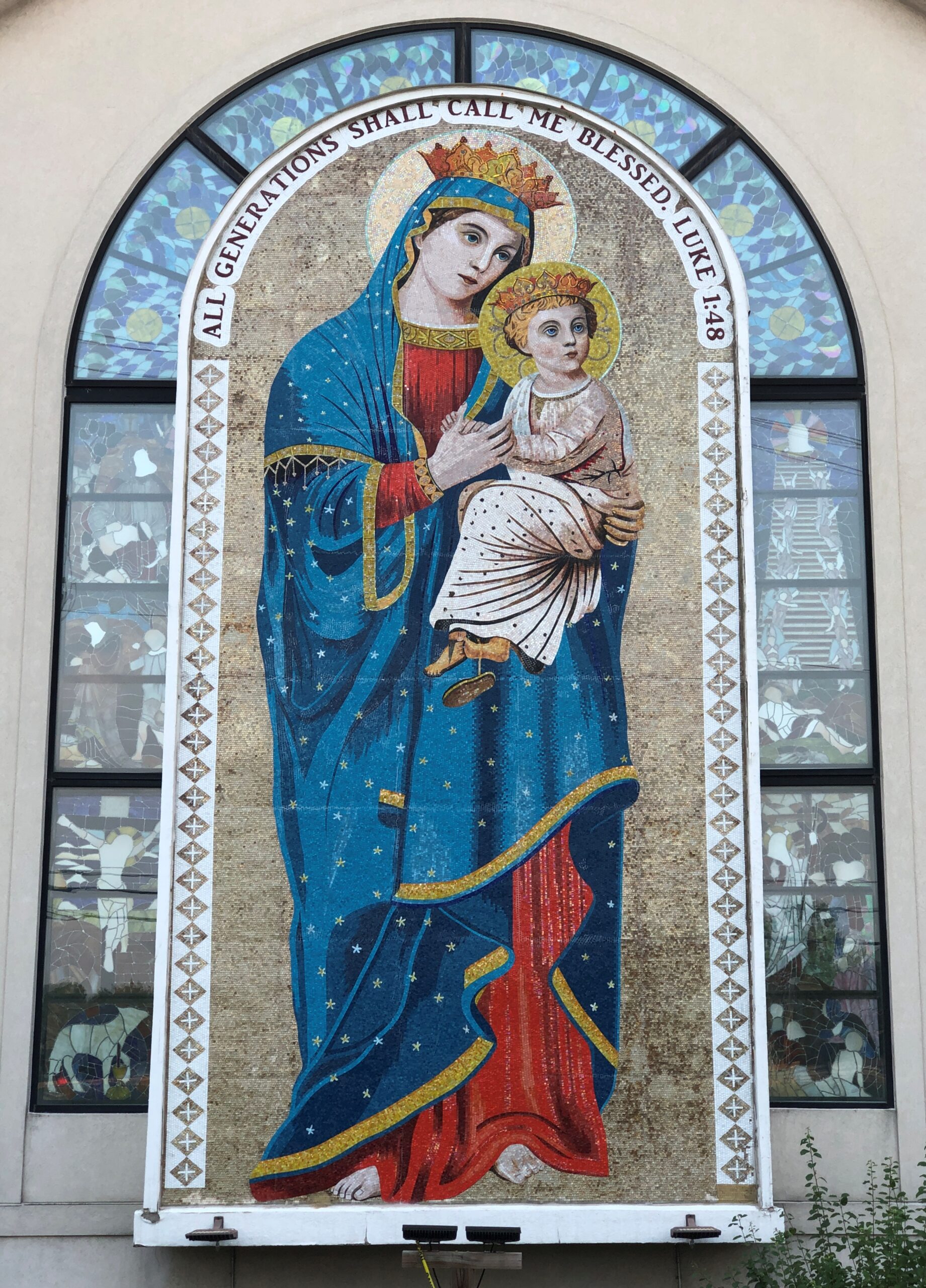
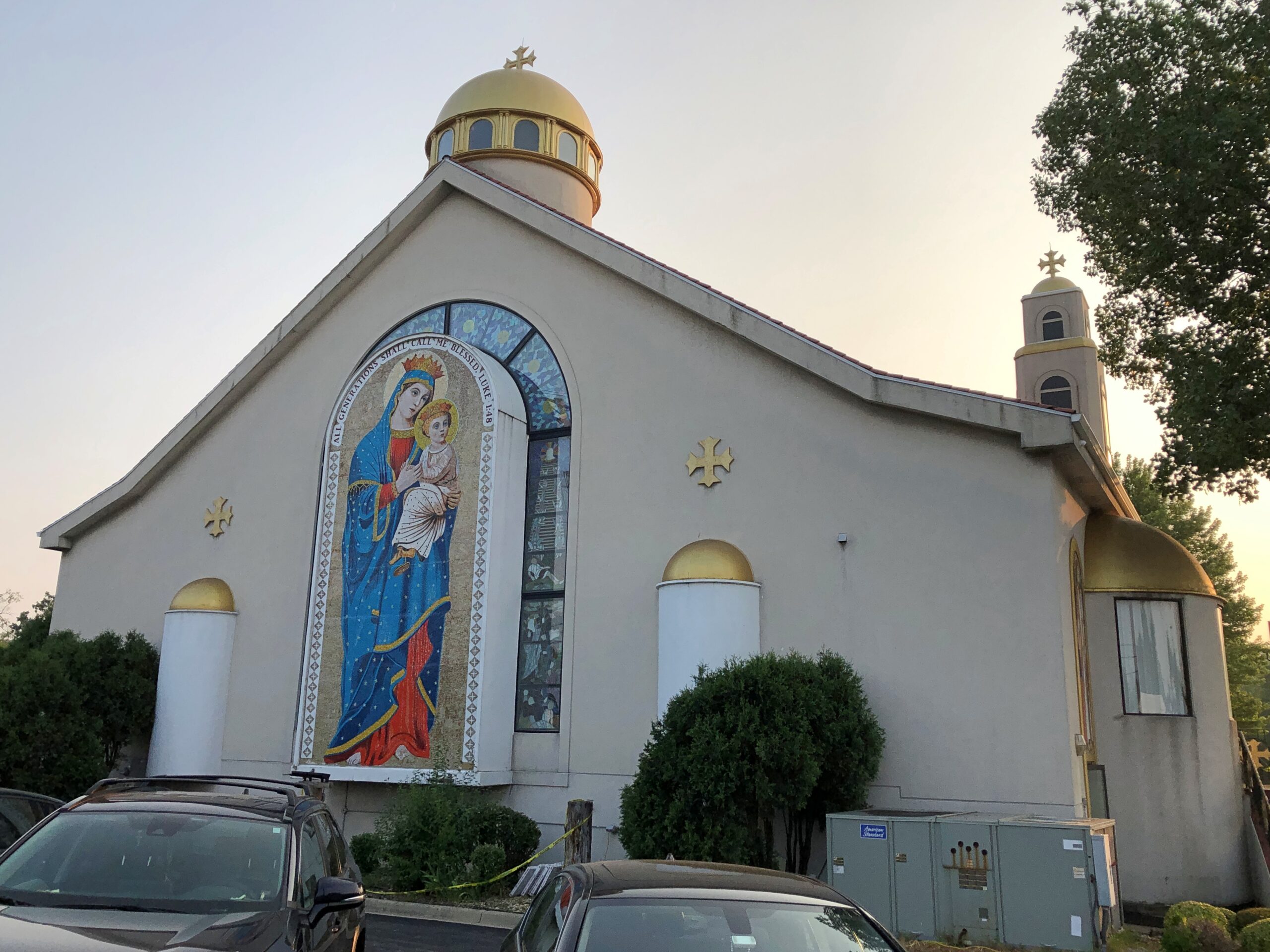
The church is in a prosperous neighborhood not far from a major highway that I drive often, and I knew it well, in the sense that St. Mary and the Christ Child in their glory are visible from the highway. But also as a flyby. Visiting in person, I got a better look.
They are featured on the back wall. Facing east, if my geographic awareness is correct.
The church was indeed open. An interior detail.
Stained glass.
Pews and an iconostasis. Unusual, but I’ve seen it before. Priests and a few laymen were active in the sanctuary that afternoon. The prayers, which I took to be partly in Coptic, had a hypnotic quality. Text of the prayers scrolled by in English, Coptic (I assume) and Arabic.
That kept me in the pews a while, as I tried to remember what I learned, many years ago, about what had caused the rupture between Constantinople and Alexandria in the 5th century. During the Council of Chalcedon. That much I remembered. The nub of the quarrel? I had to look that up later.
The nature of the Son. The sort of argument that inspired riots, once upon a time. Now I imagine even most lifelong parishioners of whichever side would shrug at the difference. The Copts have more immediate concerns anyway, such as ongoing persecution in Egypt itself. We have our issues in North America, but at least Copts can live in peace here, and maintain an elegant church in a prosperous neighborhood.
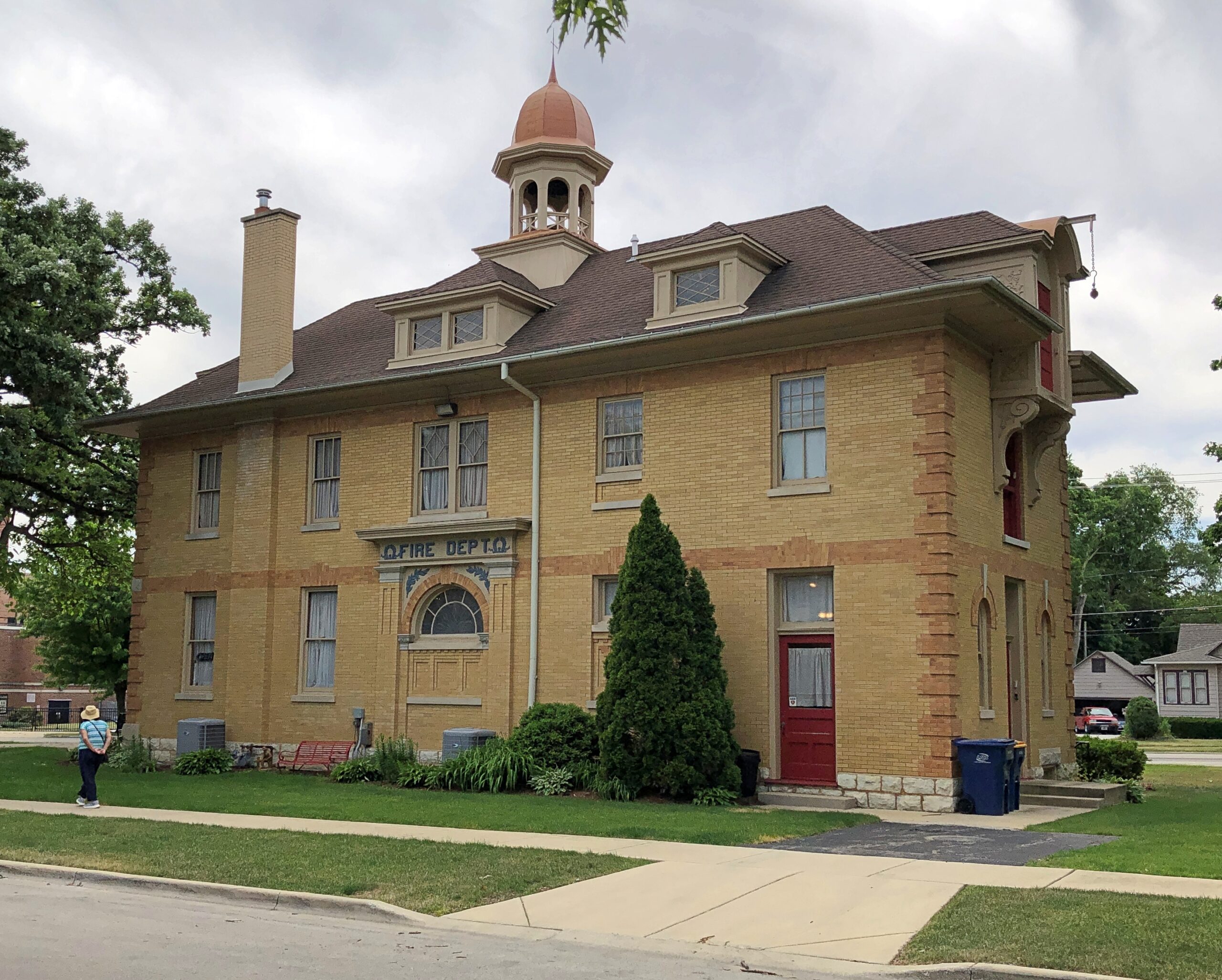
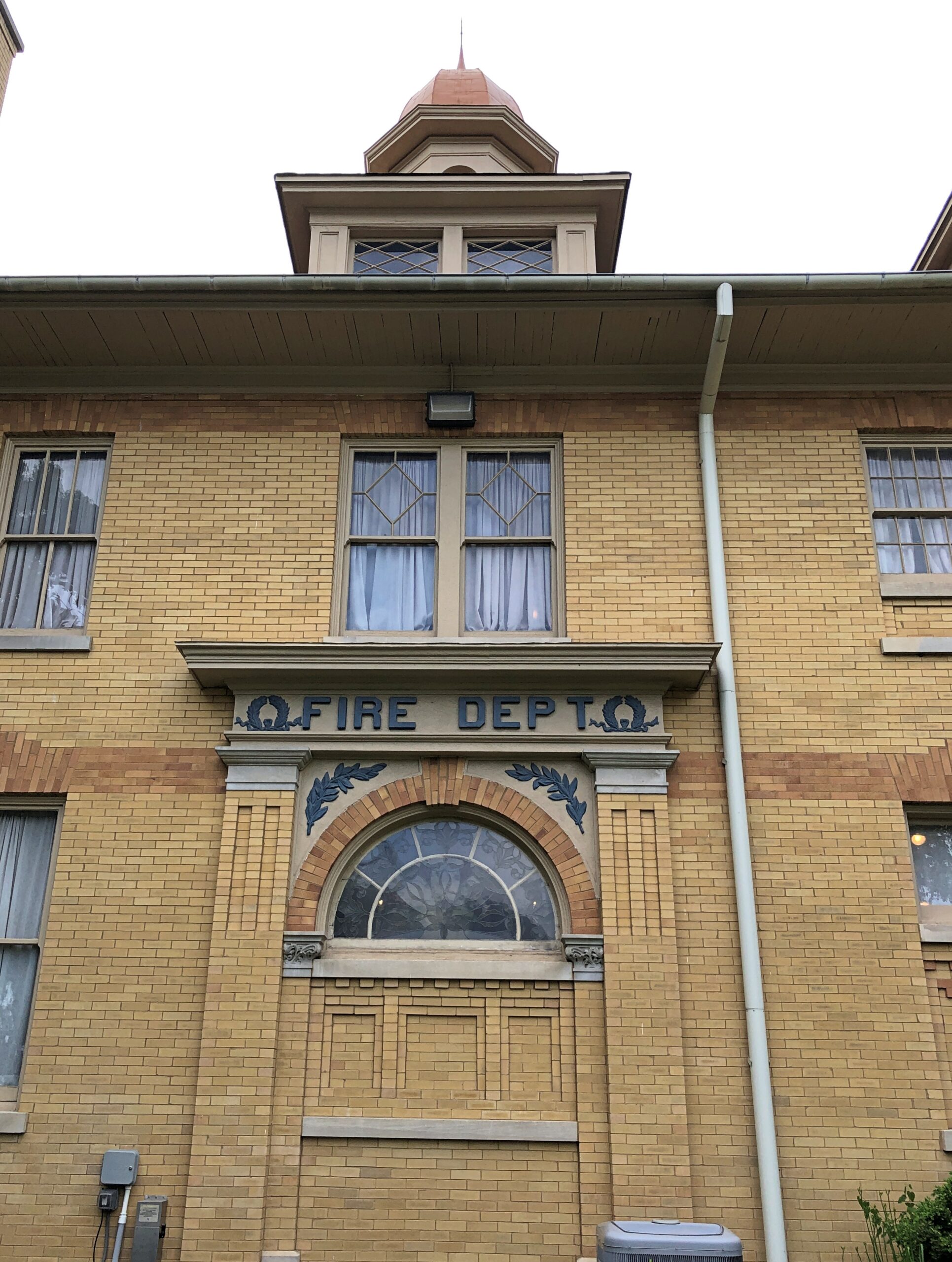
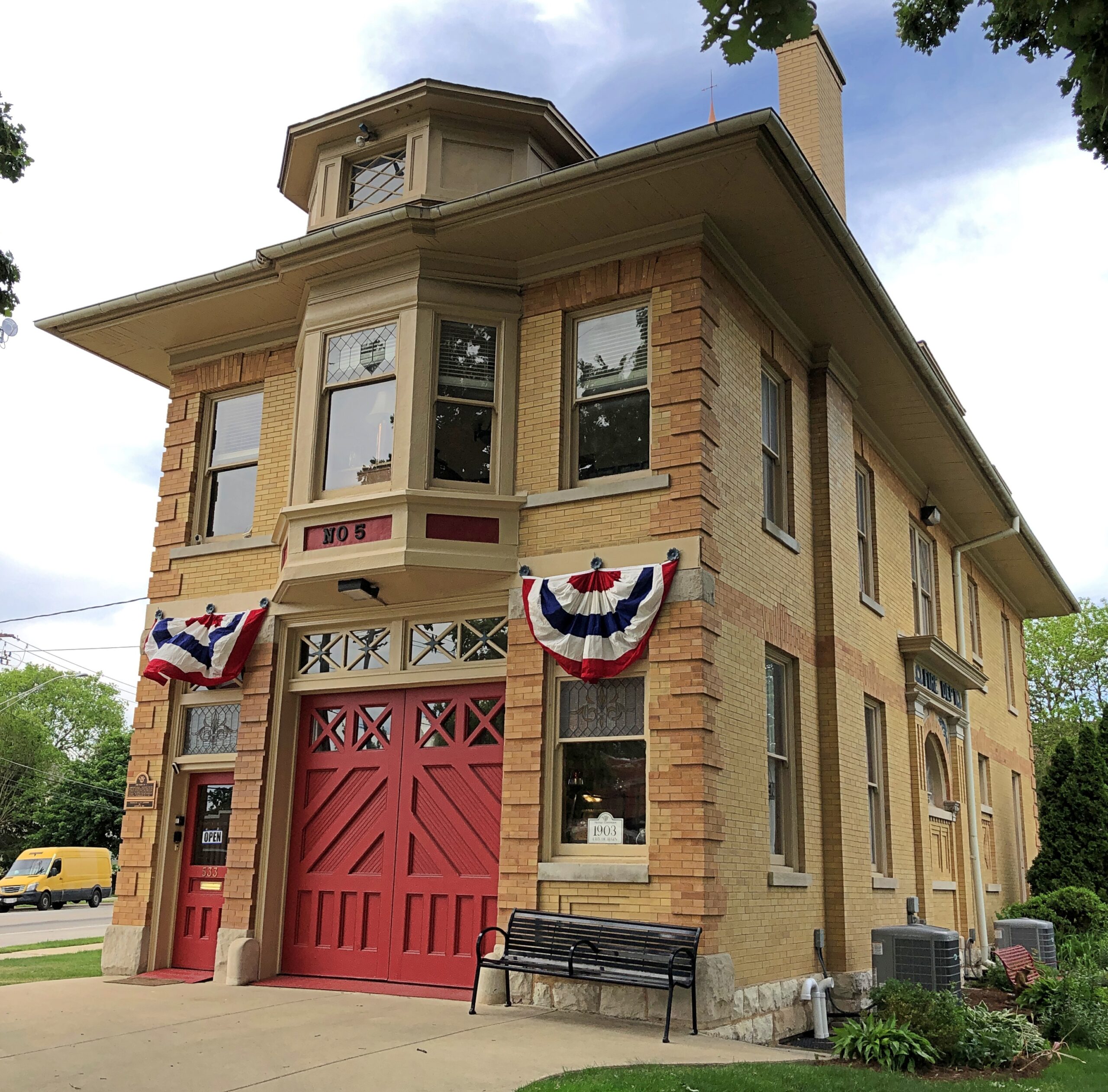
It was a small puzzle. The building in front of me was called a “fire barn.” Not something you hear very often, and in fact I wondered whether I’d ever heard of the term before. The standard term is, of course, fire station. But it didn’t take long to work it out: horses are known to be kept in barns; the fire engines in Elgin, Illinois, used to be horse-drawn; so a barn to keep fire-department horses – and naturally other equipment – would be a fire barn, even after fire engines became horseless.
So at Elgin Fire Barn No. 5 Museum not long ago that I took an instant liking to fire barn. Even though they don’t house horses anymore, we’d do well to call our fire stations fire barns instead. A touch of poetry to an otherwise dry municipal designation.
Elgin No. 5 Fire Barn is a legacy of progressive ideas about fire suppression in the late 19th and early 20th centuries, built in 1903 as a solid edifice showing how serious the city was about deploying the cutting edge of fire-control technologies of the time. The building was in service for almost all of the 20th century and, as often for these things, narrowly escaped demolition after 1990. But the citizens of Elgin ultimately didn’t want to part with it. Good for them. The barn is owned by a nonprofit these days.
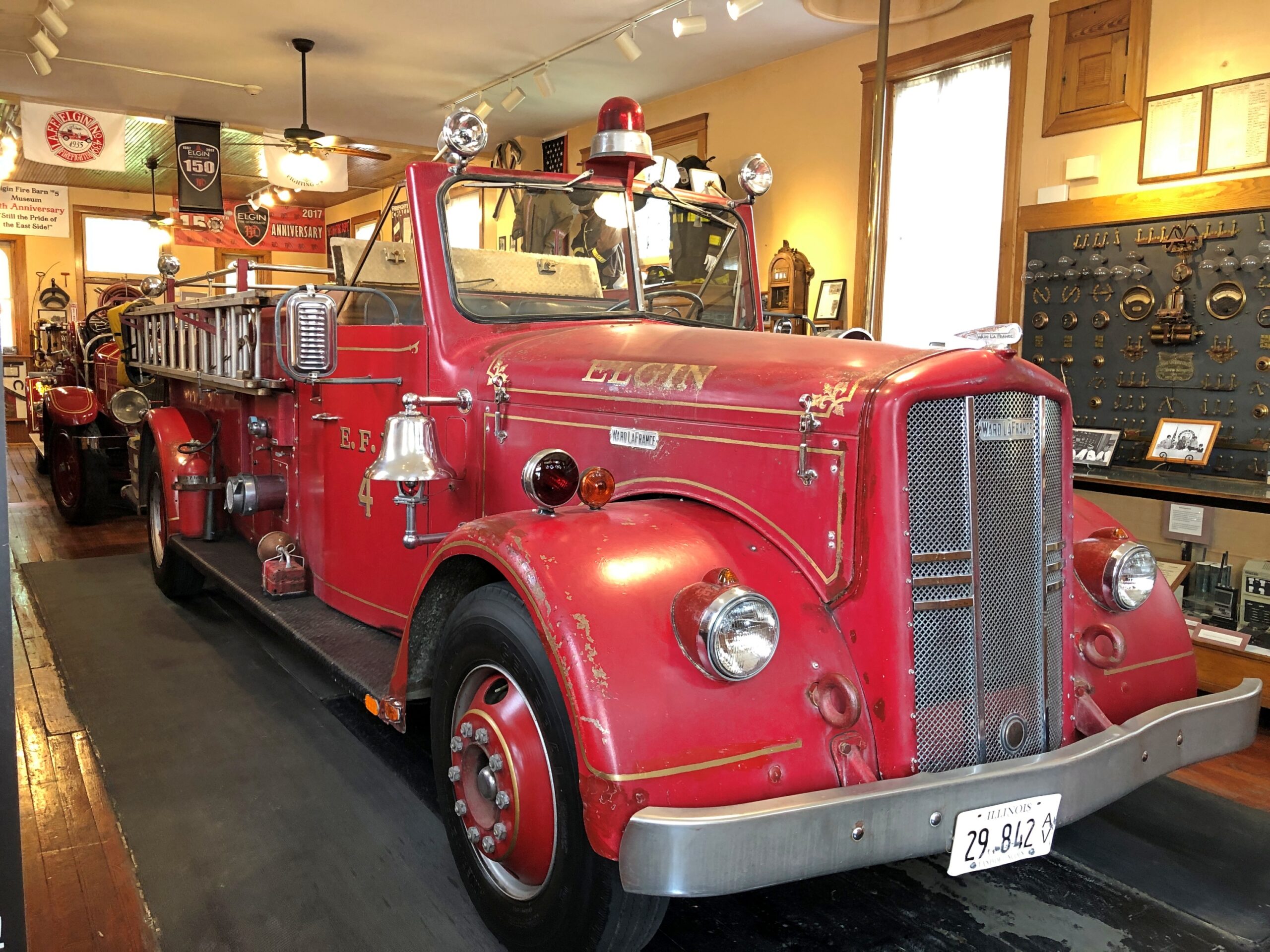
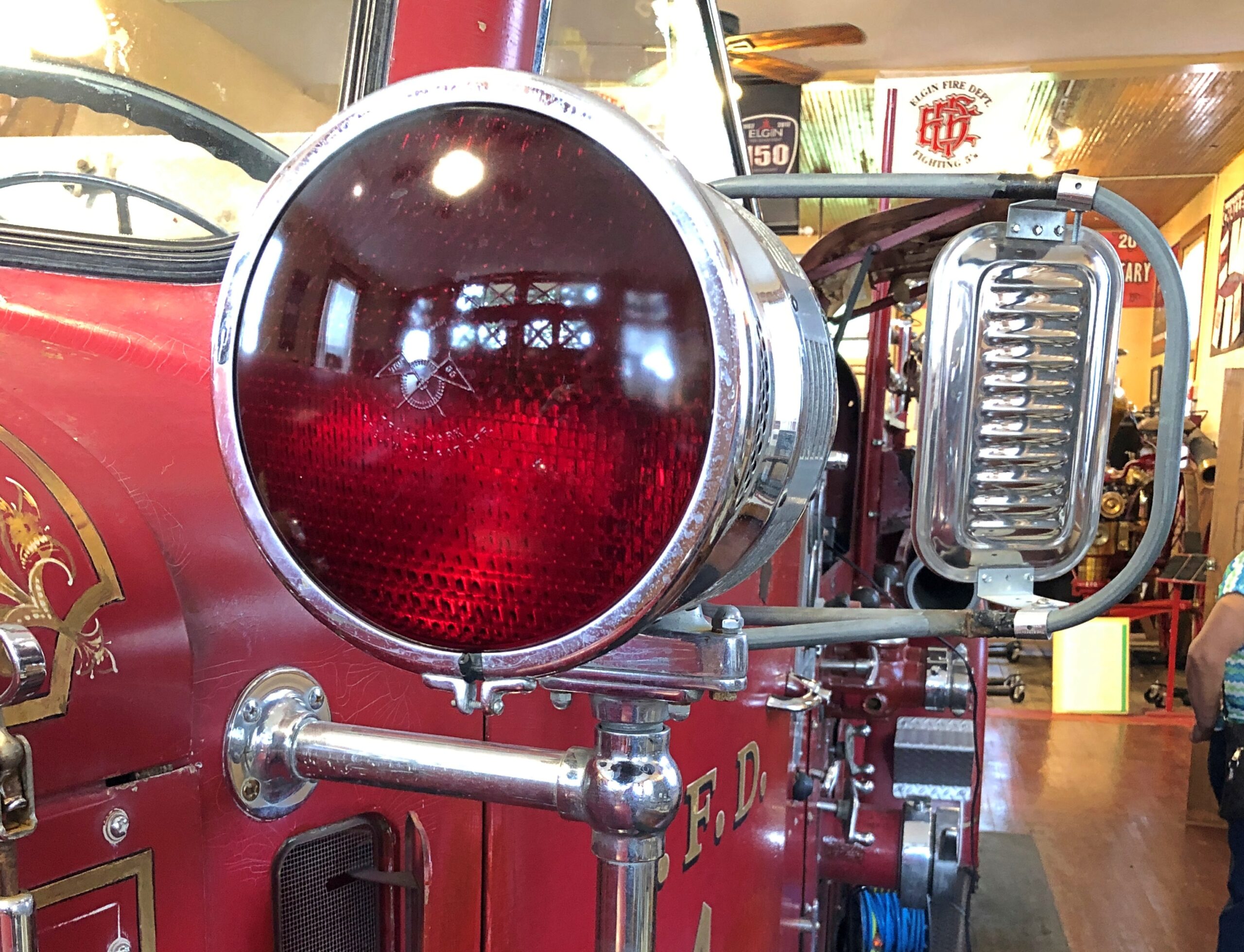
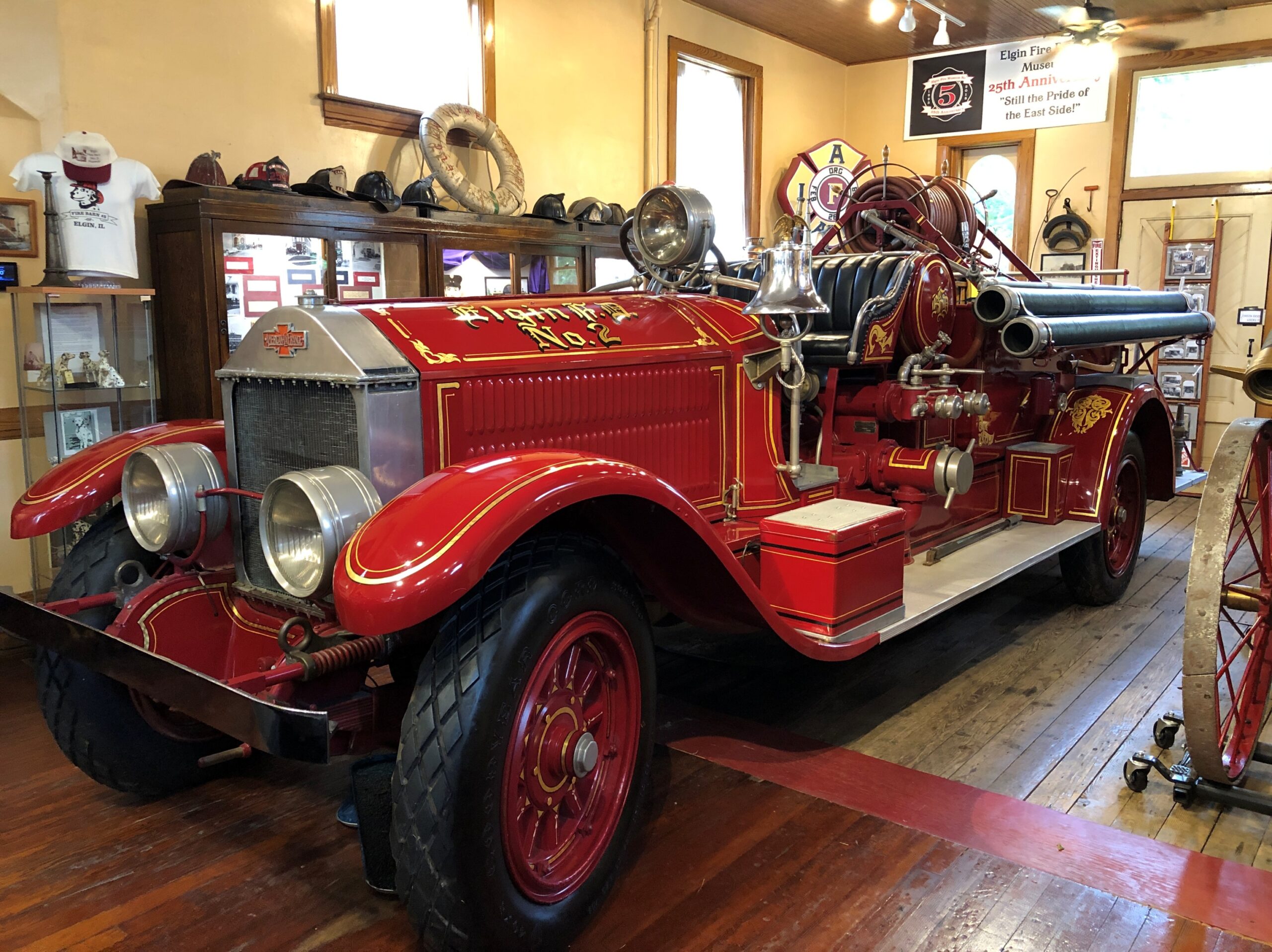
Much space in the museum is for fire engines that once called the barn home.
Good old open-cab engines. The only other place you see them regularly are stylized versions on yellow signs warning motorists that a fire station is nearby. Otherwise, they are museum pieces. I remember editing an article for Fire Chief magazine 30 years ago in which the executive of a fire engine manufacturer said that even a special commission by a fire department for an open-cab engine — and he didn’t think it likely — would be declined.
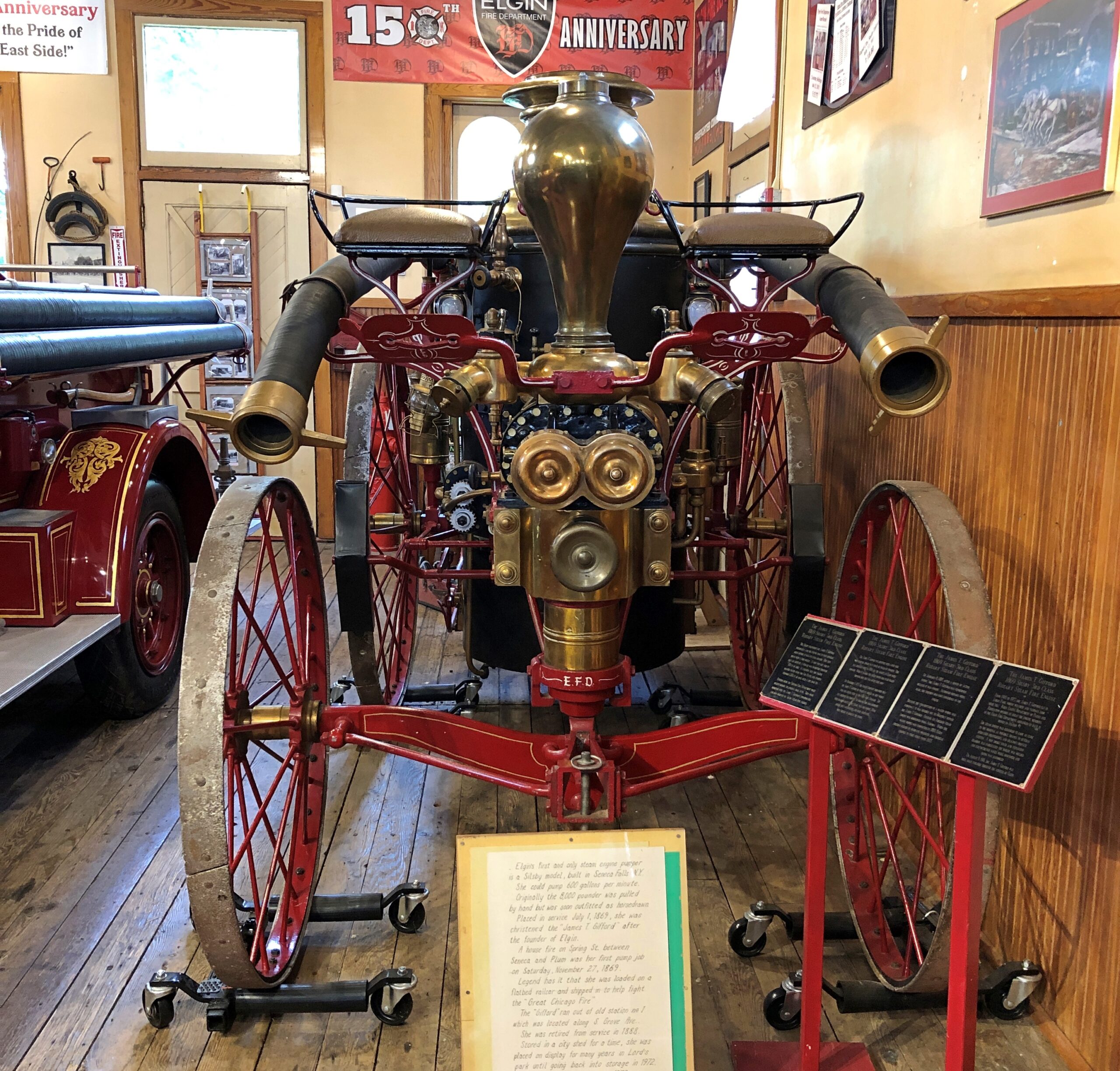
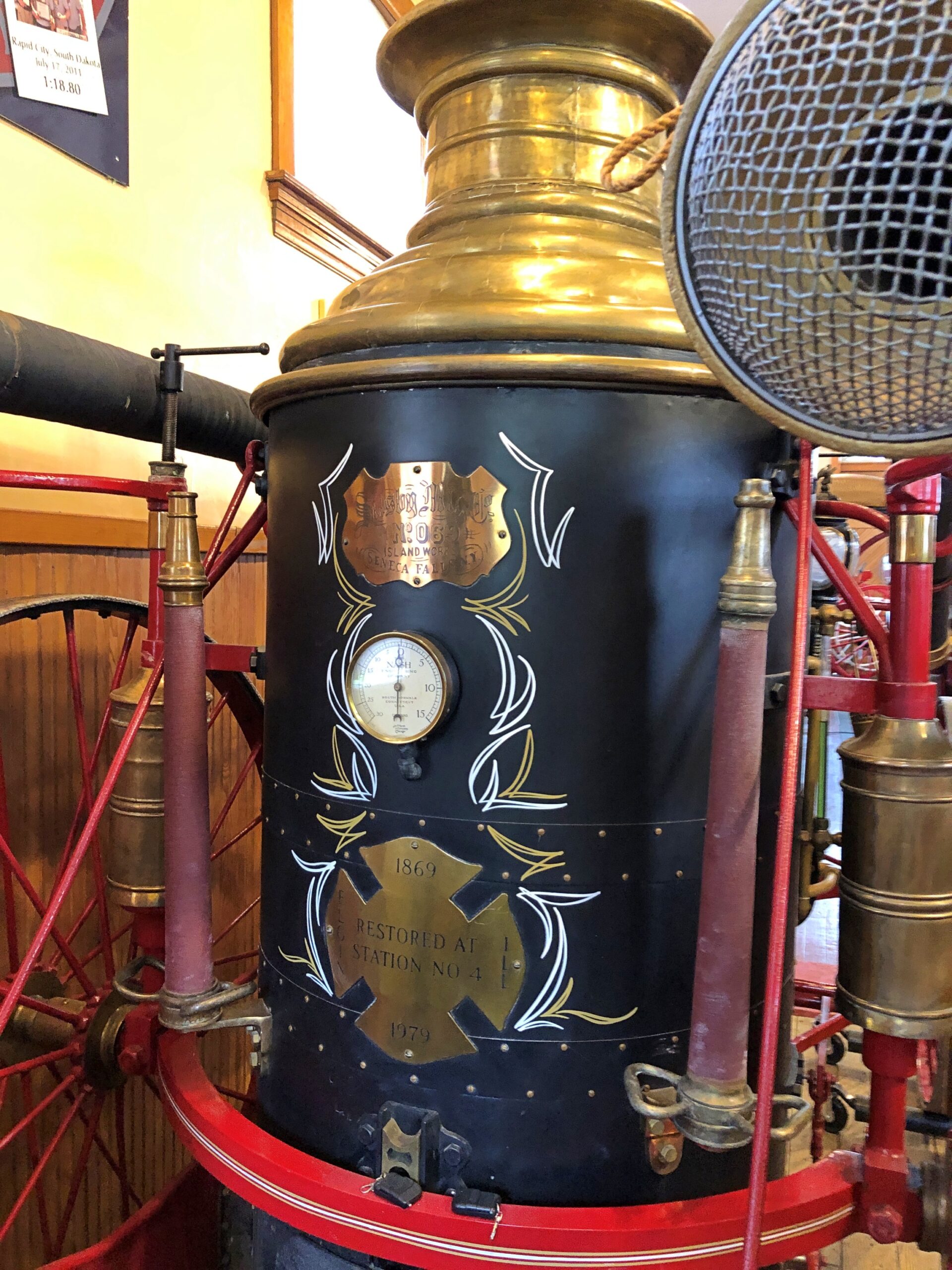
The museum also holds an Elgin apparatus that had been retired before the building of Fire Barn No. 5, though in its mid-19th century heyday, this steam powered pumper was Star Trek tech, compared to able-bodies citizens trying to put out building fires with bucket brigades.
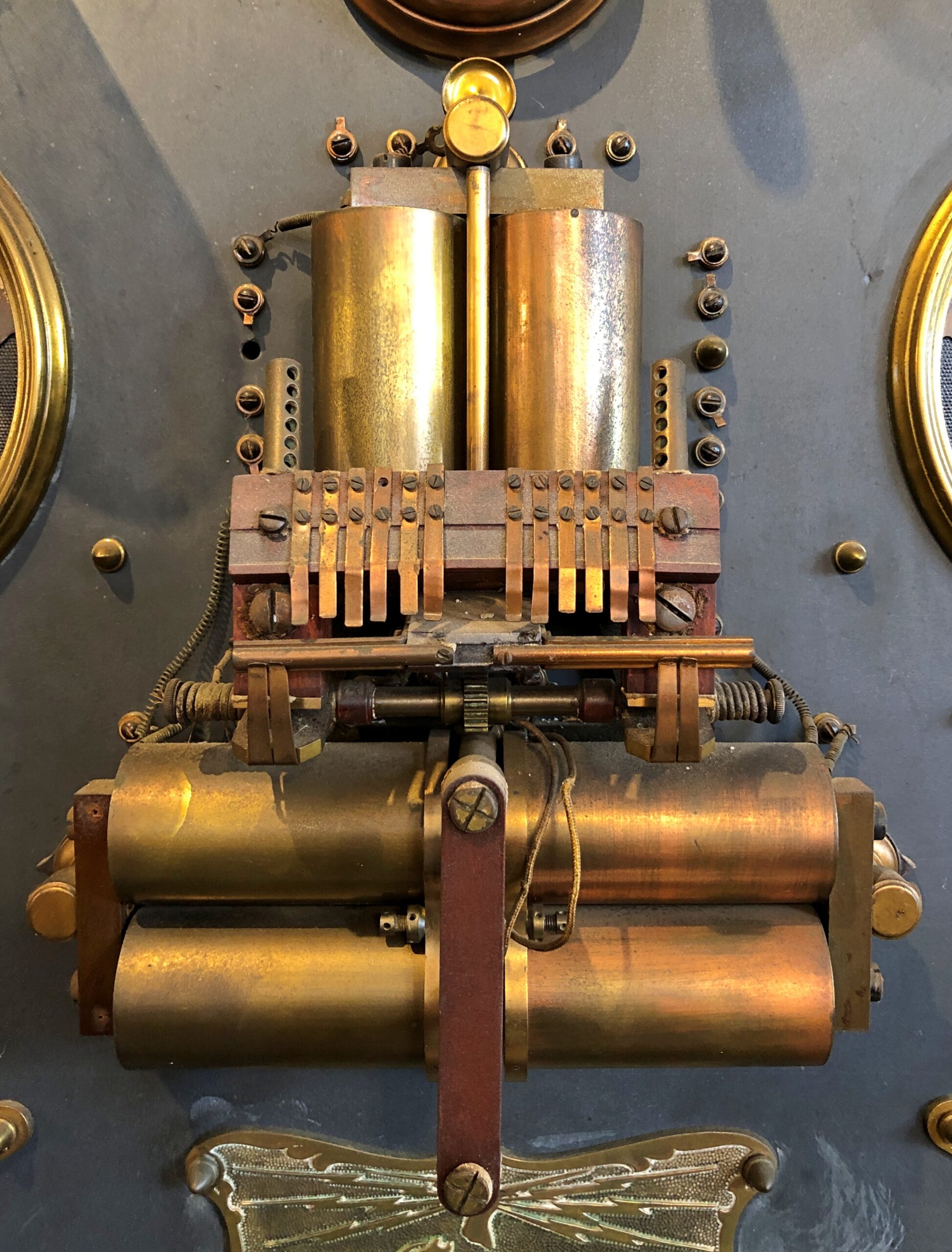
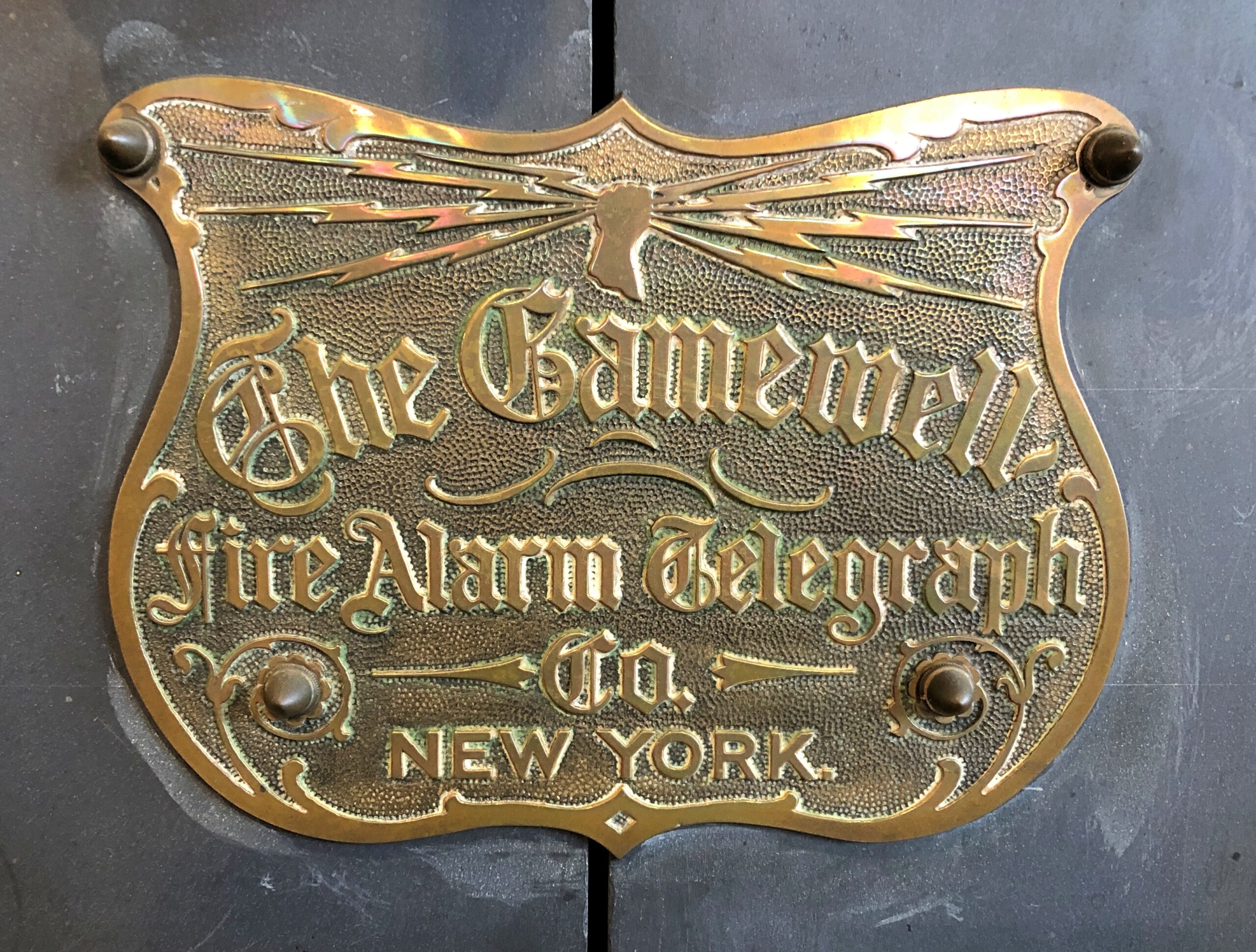
Speaking of advanced Victorian fire tech: the brass shapes of an alarm system based on telegraphy.
For a time in the 19th century, if you wanted a fire alarm telegraph system, you went to Gamewell. The name exists even yet as a unit of Honeywell.
We met Bob on the second floor. Well, “Bob” since my memory for names, never that good, isn’t improving with the years. A retired Elgin firefighter, Bob volunteered at the museum with a clear enthusiasm for the artifacts: the trucks, but also axes, ladders, a collection of helmets and turnout coats, department badges, photos of old-time firemen, documents and items and utensils used at the fire barn, considering that much time spent was there, between emergencies. Bob showed us around, since no one else was visiting the museum at that moment, and we had a good talk about the way things used to be, fire suppression-wise.
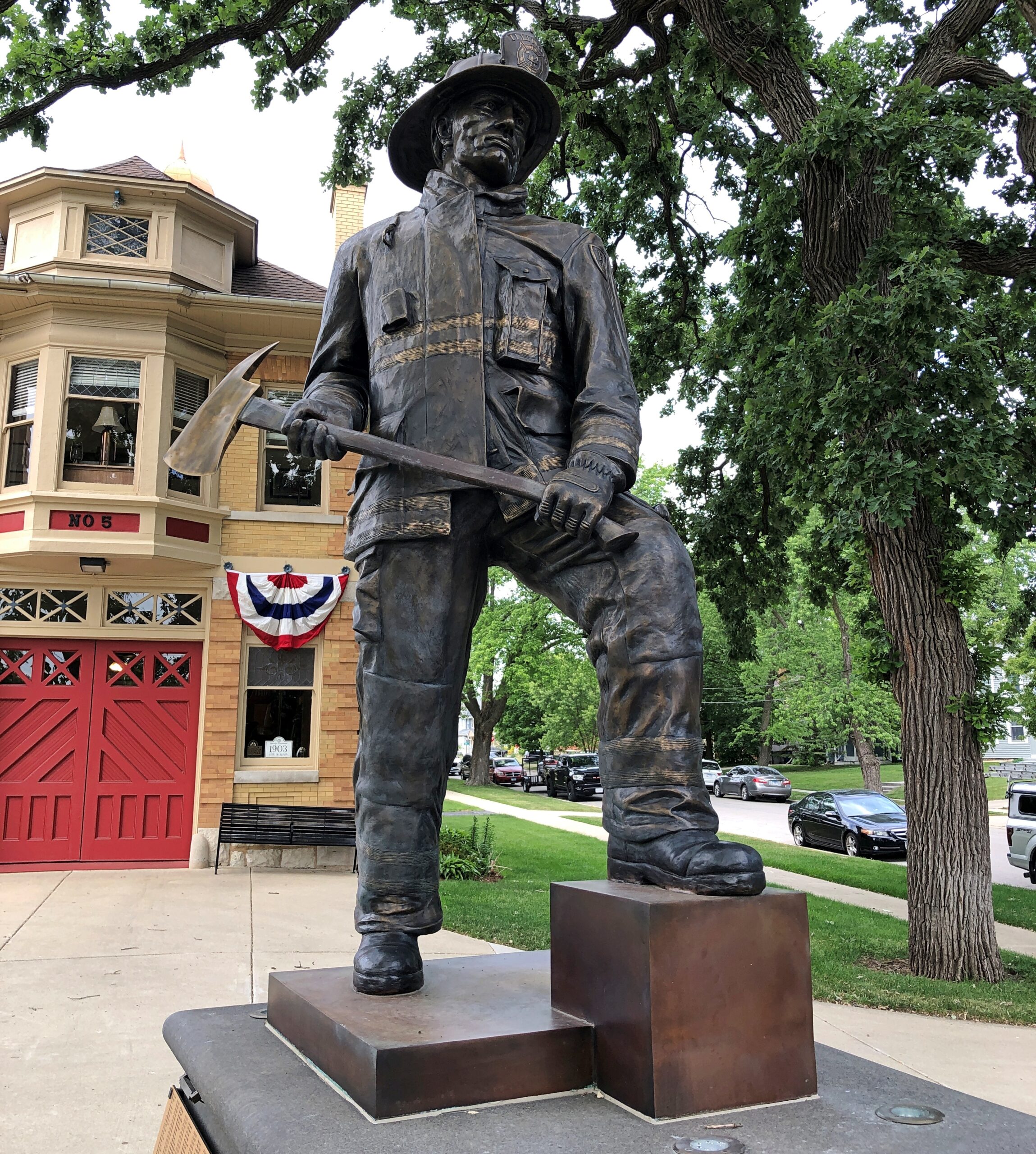
In front of the museum is a memorial to Illinois firefighters.
Part of the doughty school of bronzes, often depicting pioneers and soldiers and members of the CCC — and firemen ready to take on an emergency (though in this case, pre-SCBA, looks like). Doughty was definitely part of the job description.
I’m glad for a lot of reasons that I lived in Japan in the early ’90s and not later. One reason: pre-Google and (more importantly) pre-Google Maps, you navigated by your own wits, aided by not-always-detailed paper maps, wayfaring signs in Japanese and sometimes English, directions from other foreigners – part of the mass of gaijin lore we all tapped into – and helpful Osakans.
It was doable. One time I bought a used bicycle from a colleague who lived in a fairly far corner of metro Osaka, far from me anyway, on the condition that I come take it away. Meaning about a 20-mile ride through the heart of greater Osaka, a ride I broke into two segments by locking the bike after the first day’s pedaling at a subway station and going home that way. Good thing Japanese streets are more or less suitable for bicycling, but less so for wayfinding, since the urban texture tended to be a rinse-and-repeat cycle of narrows streets, concrete apartment blocks, and small shops shoehorned into even narrower lanes.
Six- or eight-lane boulevards crisscrossed the region, and so did small and larger rivers. One time a helpful Osakan directed me to an elevator door tucked away in a grey wall of odd shapes and angles – a door that had been accidentally camouflaged by its utilitarian surroundings. The unmarked elevator took pedestrians and bicyclists down to the entrance of a spare, well-lit underground tunnel under a major river at a spot that had no bridge.
But I need to say that the rinse-and-repeat was only superficial. Like other places, most other places I’d say, with a little time and observation, details come into focus. In the case of Osaka, a shrine tucked into wall or a weedy embankment near a canalized creek that was home to a couple of gnarled, flowering trees, or sometime as incongruous as a speedboat parked in a spot for a car. Or an unusual handmade retail sign, clearly made by pop for the front of a mom-and-pop (or maybe by mom, who wouldn’t be accorded credit for it, and maybe not inclined to take credit).
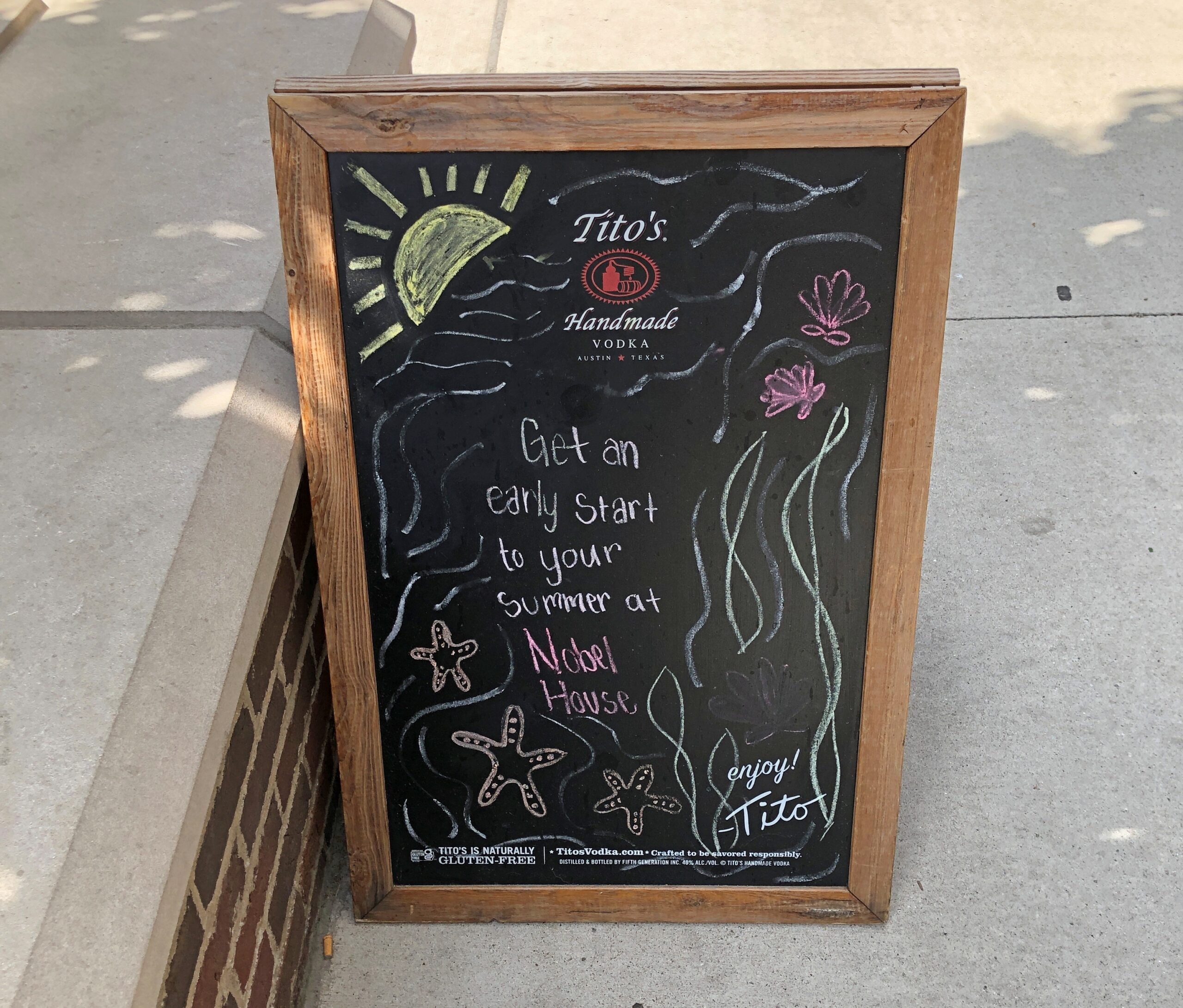
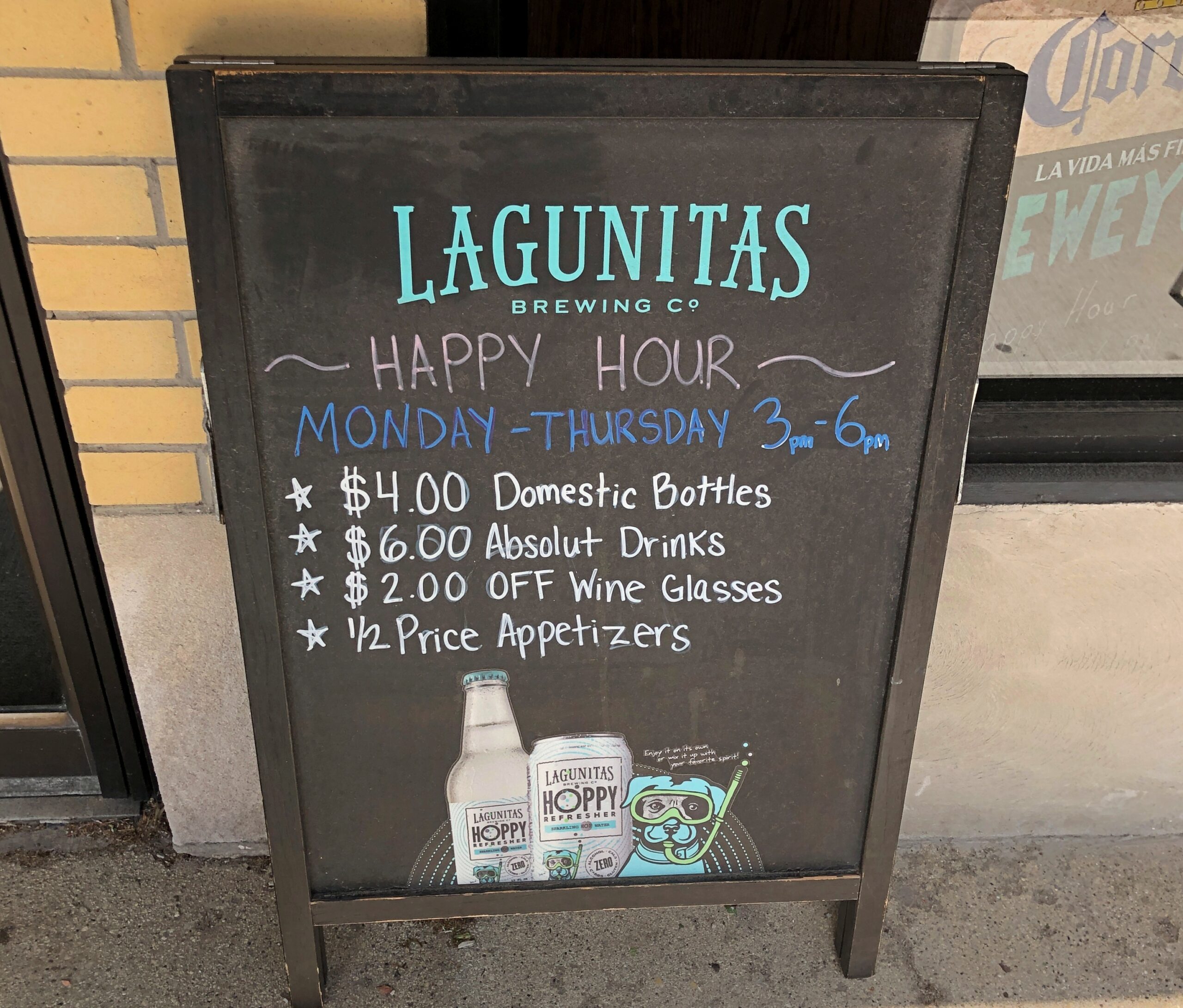
There’s a Flickr collection, or even a coffee table book, in the unlimited variety of limited-edition retail signs, handmade or made by advertisers. A worldwide selection. They’re more sporadic in the Chicago suburbs, generally clustering on main shopping streets – of which there are a fair number, tucked away and locally focused. So far this summer we’ve made our way to a handful of suburban shopping streets.
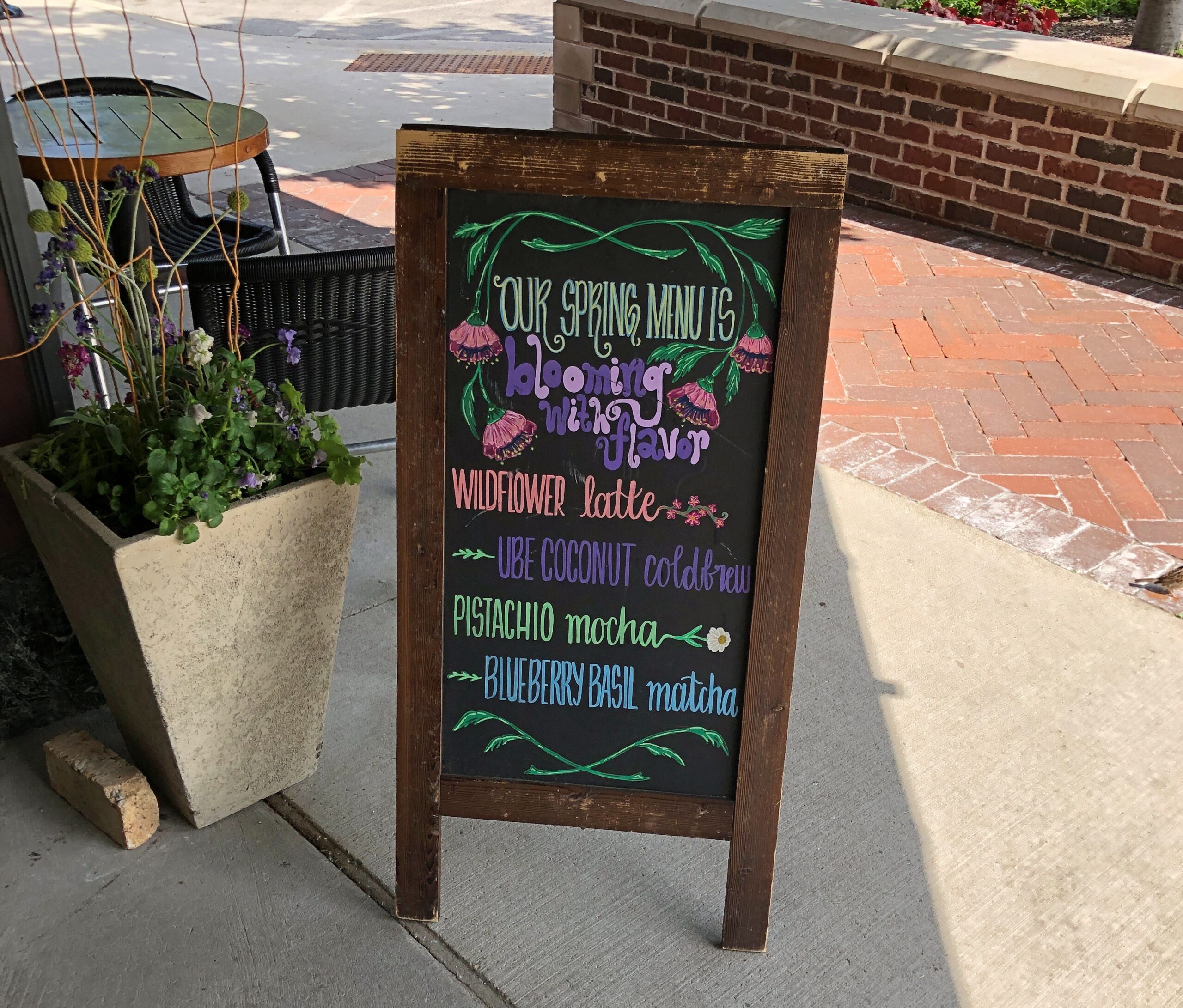
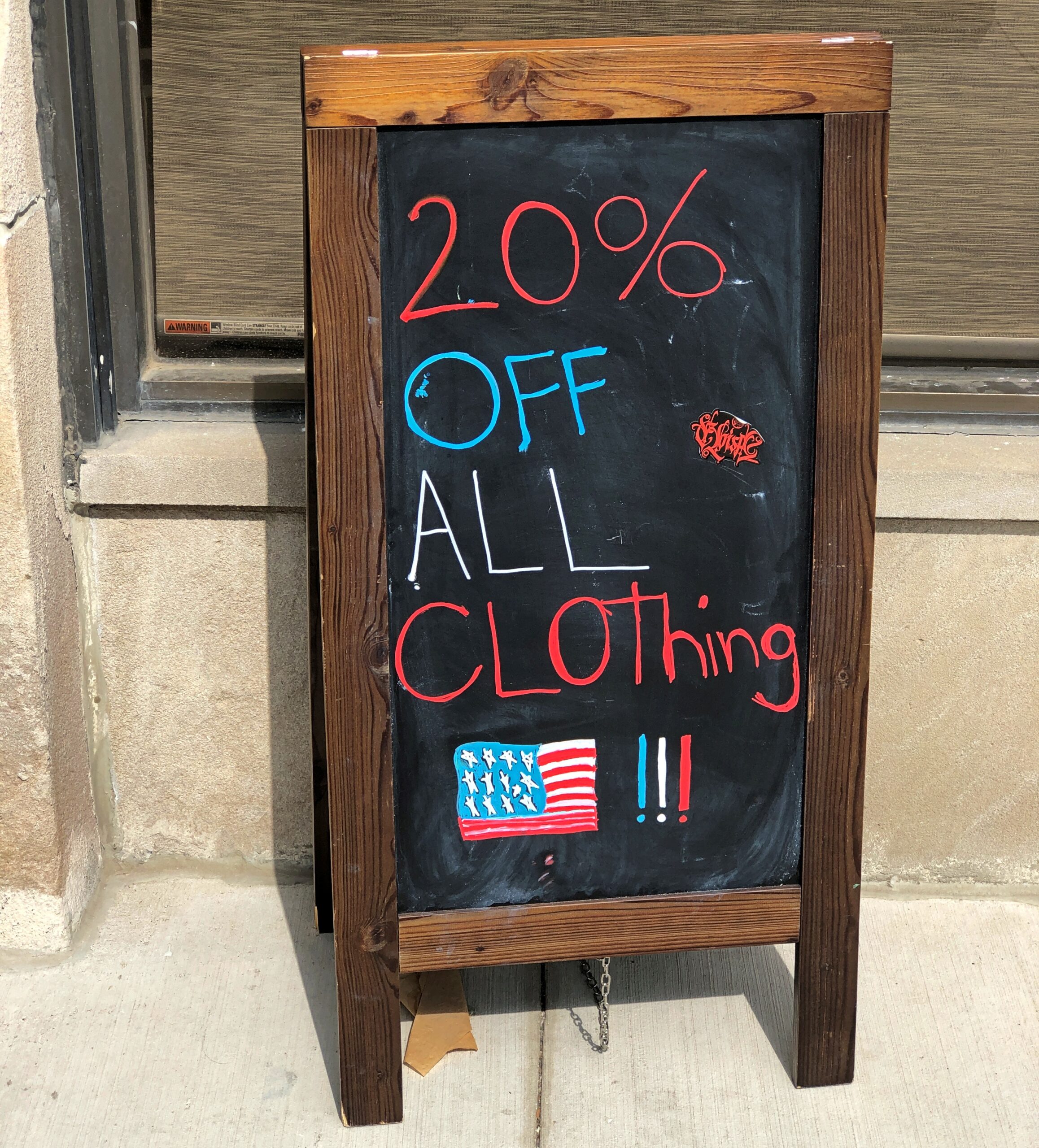
Starting with the imprimatur of Tito, Alamo Heights High School Class of ’79.
Straightforward, gets the signing job done.
For those who aren’t into that whole neurotoxin thing.
“We need something out there now, we’re about to open.”
How could this not be a favorite?
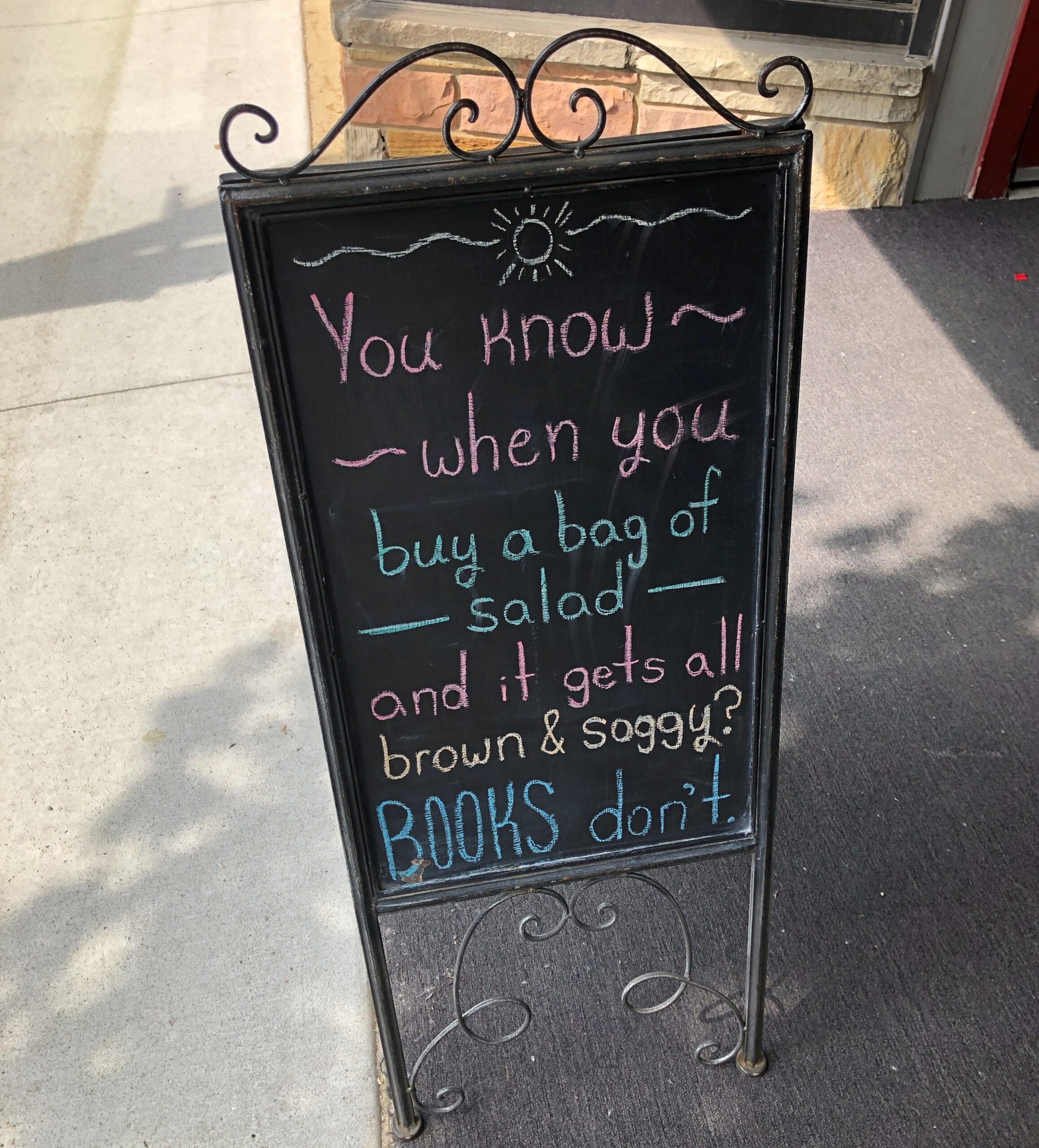
True, not brown and soggy. Brown and crumbly, with enough time.
The run of days from Juneteenth to July 4 at least, and even better to Nunavut Day (July 9), would be a fine time to slow down, like between Christmas and New Year’s Day, only warmer and without the mad runup to December 25. Back to posting around July 6.
Thousands of impressions flitter by on the road, most instantly forgotten when literally on the road – driving, you need to be in the moment, or else – or quickly forgotten, when “on the road” means you’re out and about somewhere that isn’t home. Still, a handful of details stick, even without photos. But photos help.
Maine
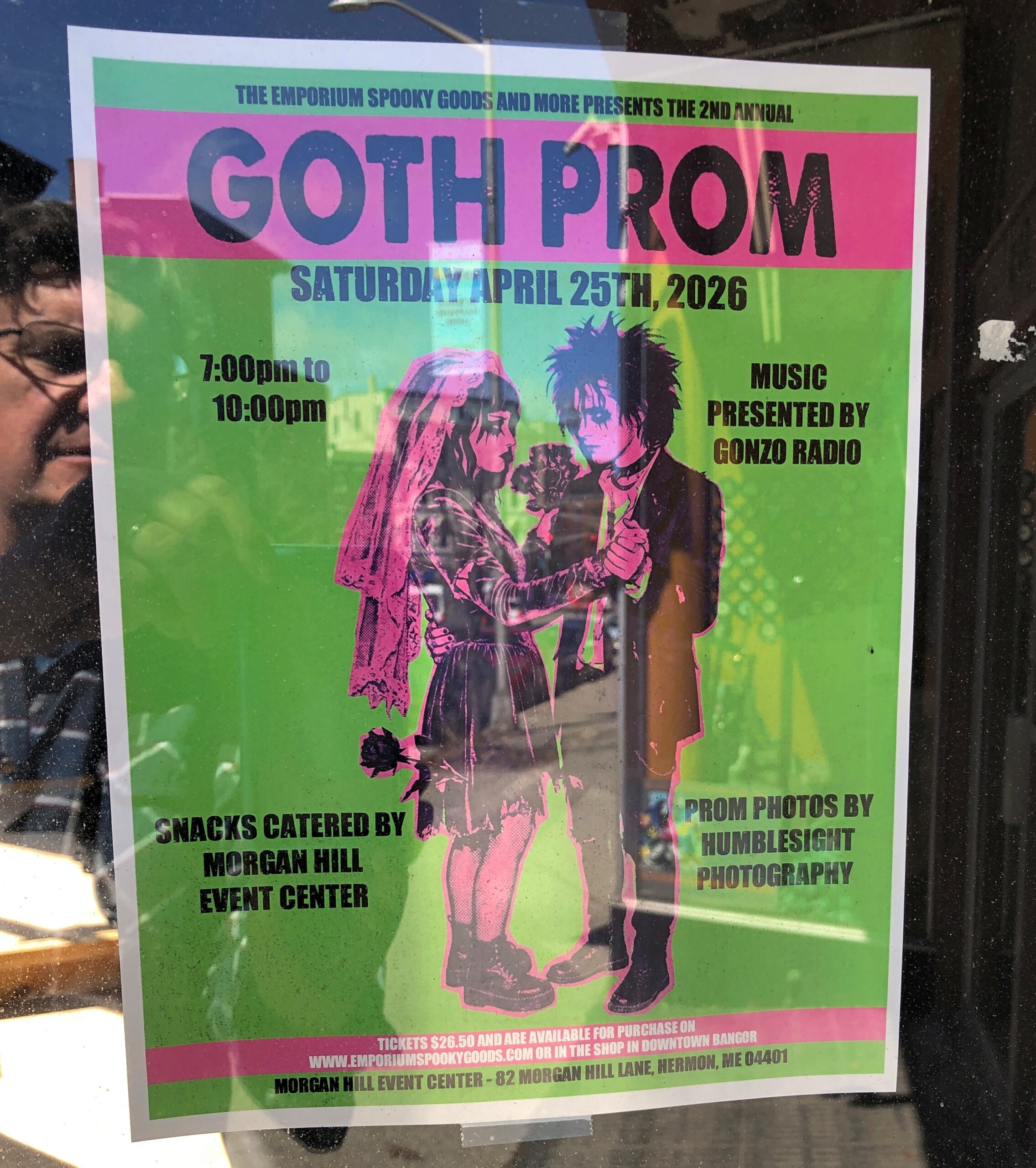
I call it “Self-portrait with Goth Prom.” Poster spotted in downtown Bangor.
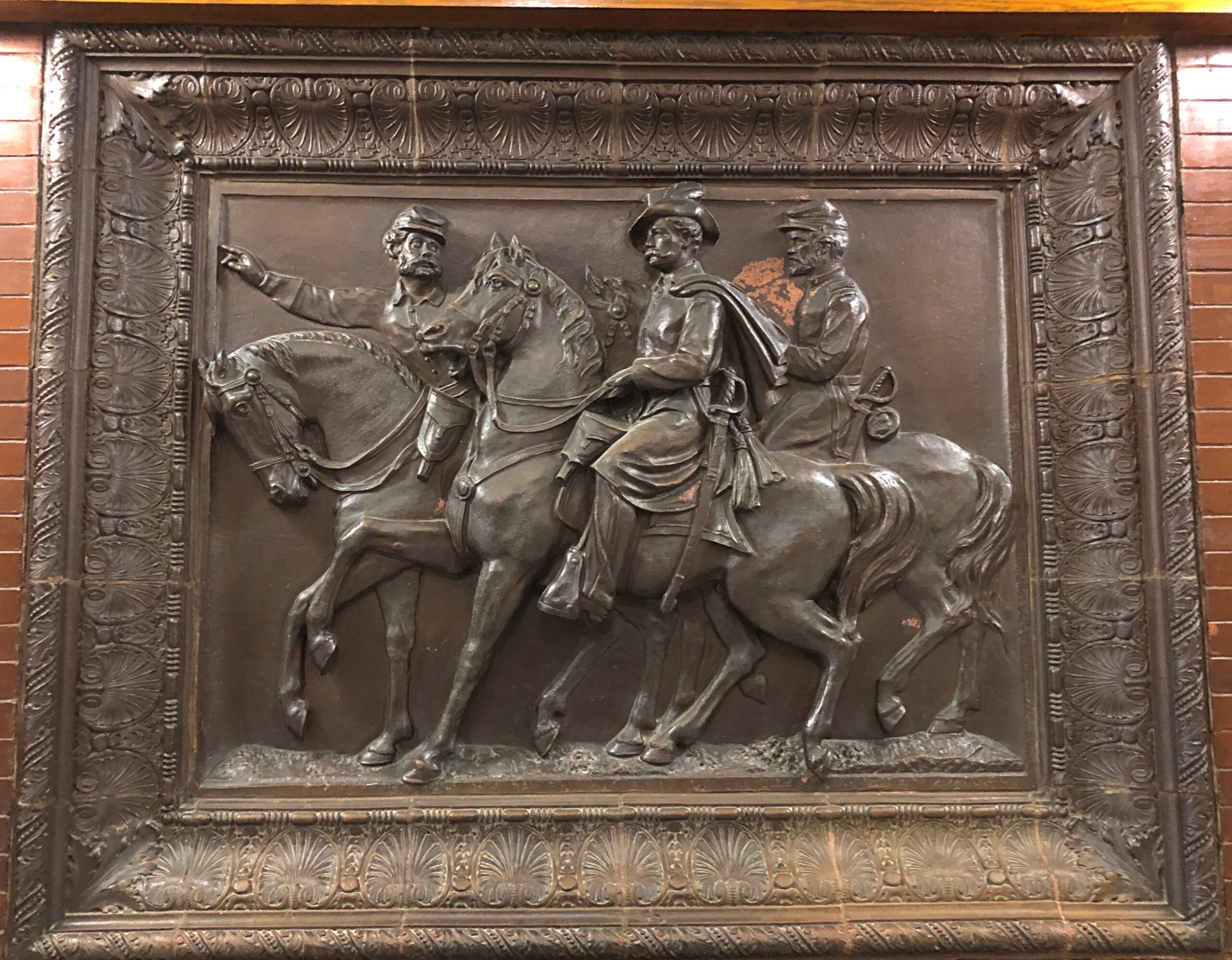
In the Maine Statehouse, a flat-ish object of a different kind.
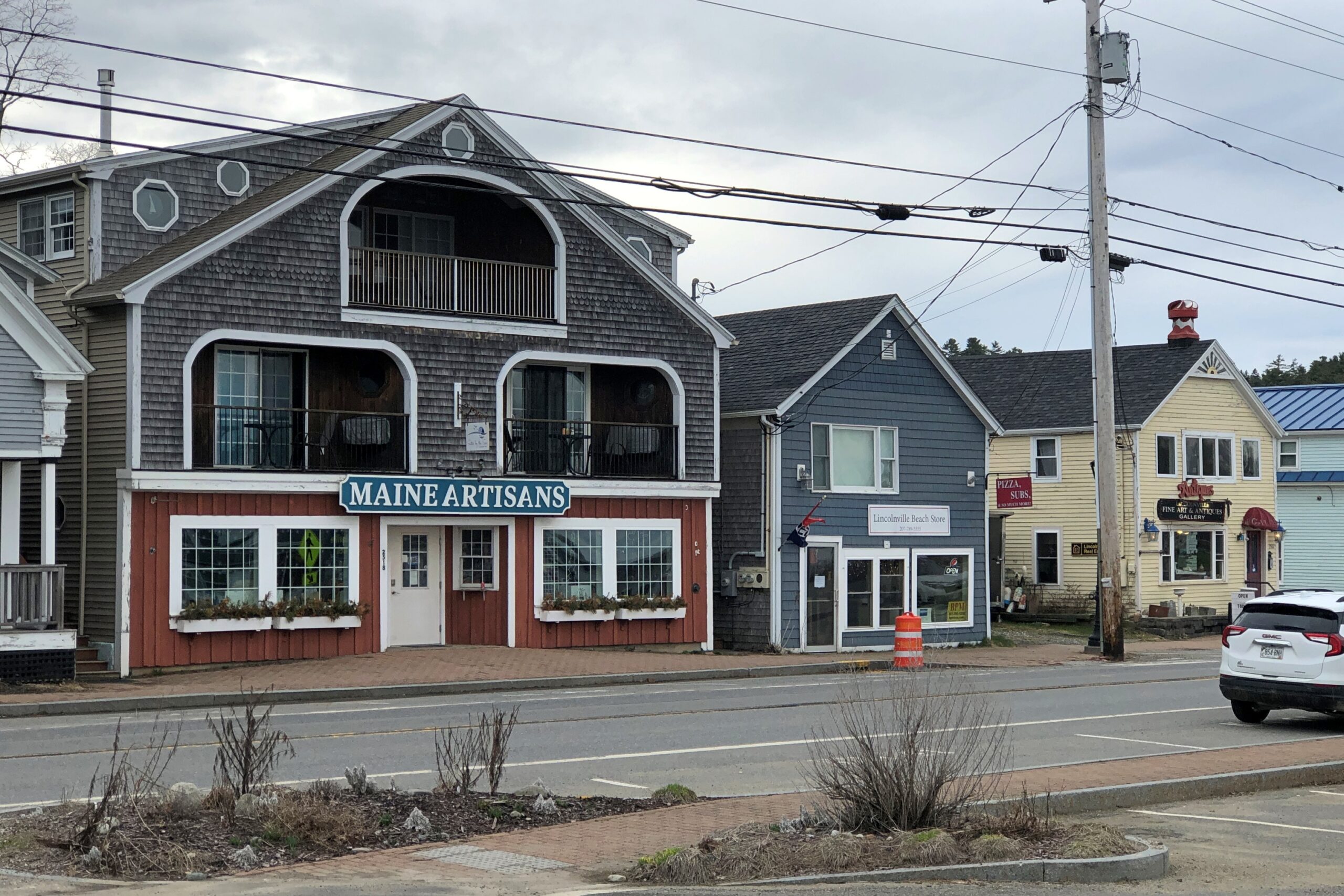
Lincolnville, on the coast of not far from Belfast.
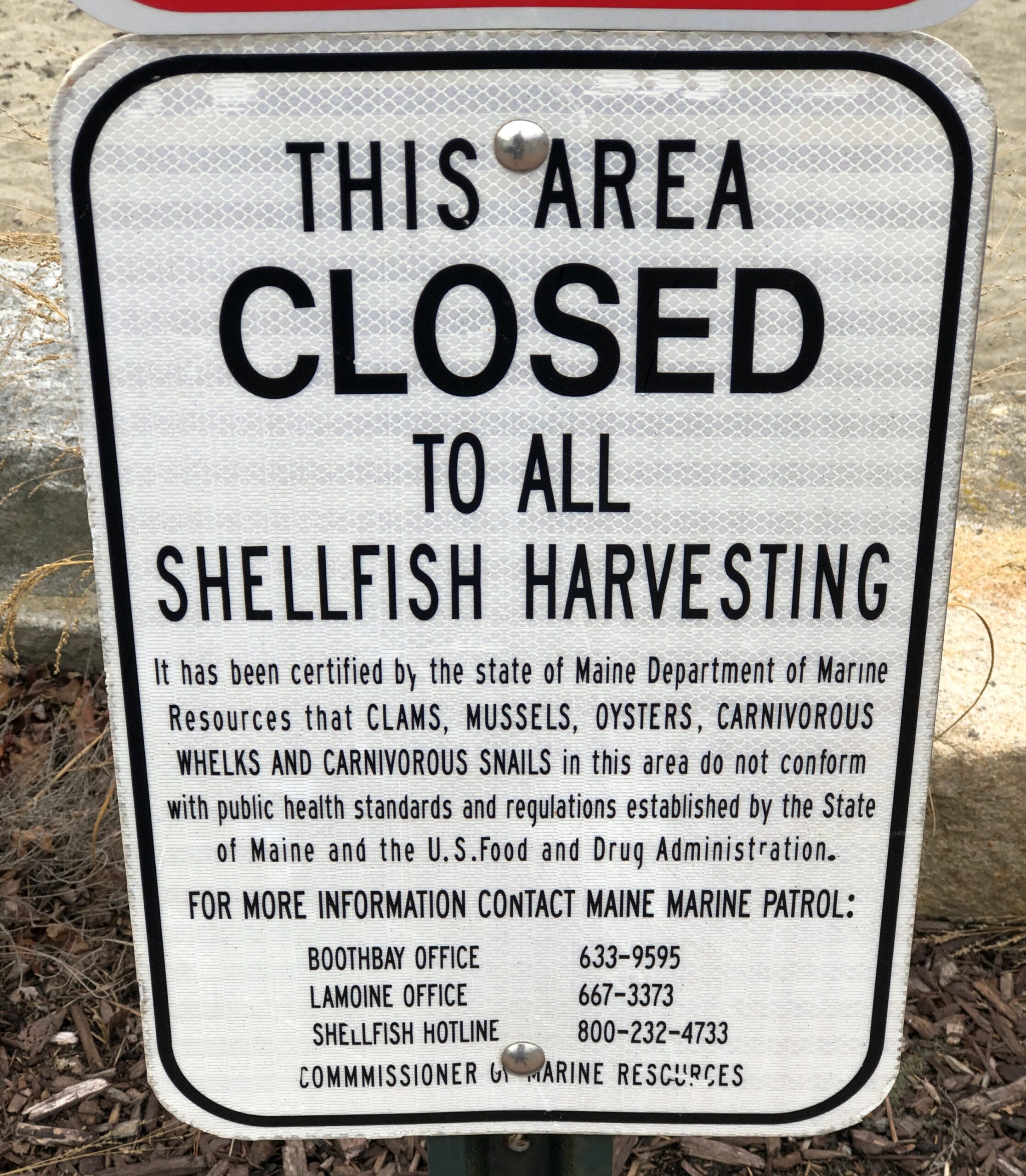
Carnivorous whelks. I was frankly ignorant about carnivorous whelks, and glad to learn a little about them. Because what a great name for a snail.
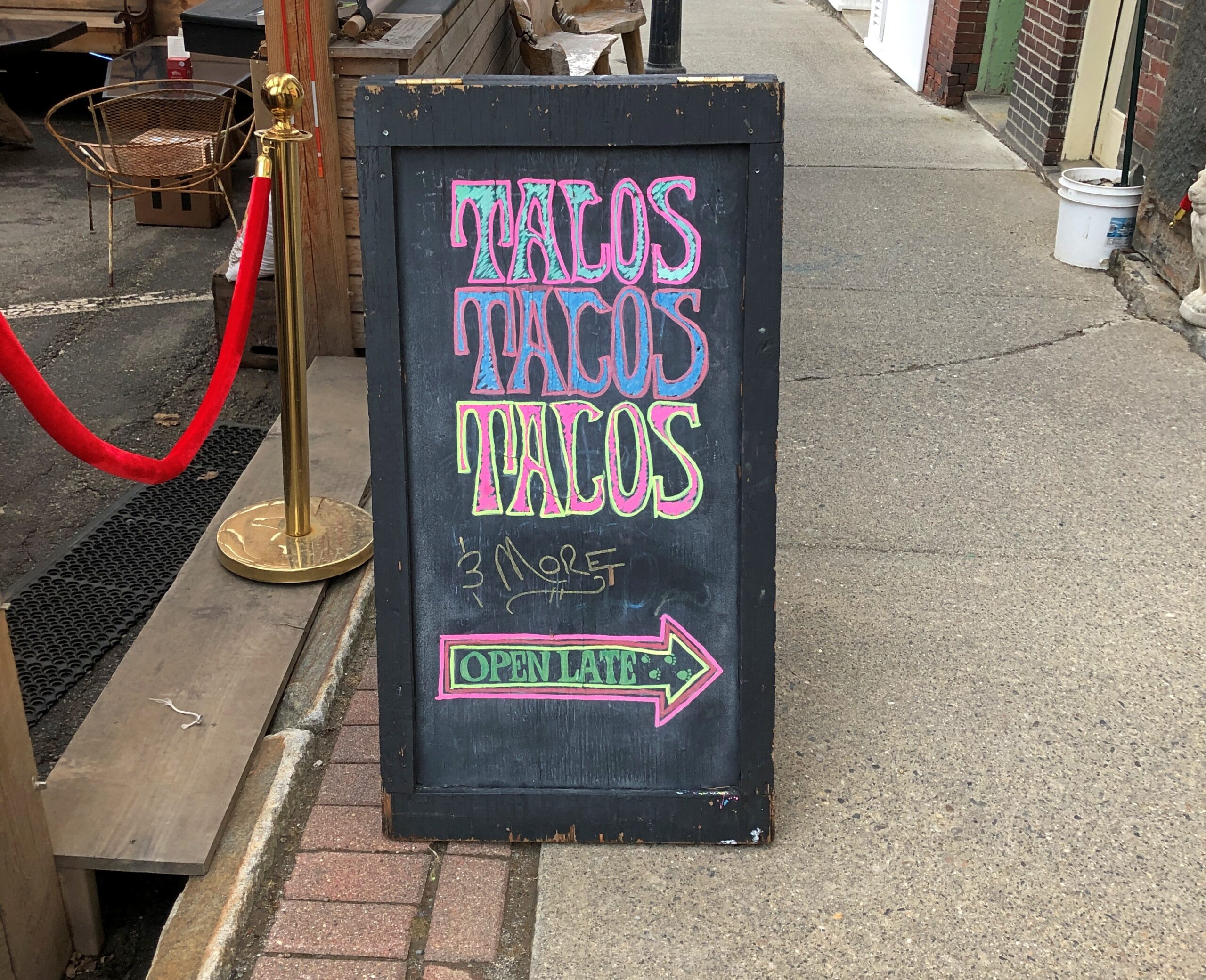
Too bad I wasn’t hungry in Belfast. I’d have had tacos.
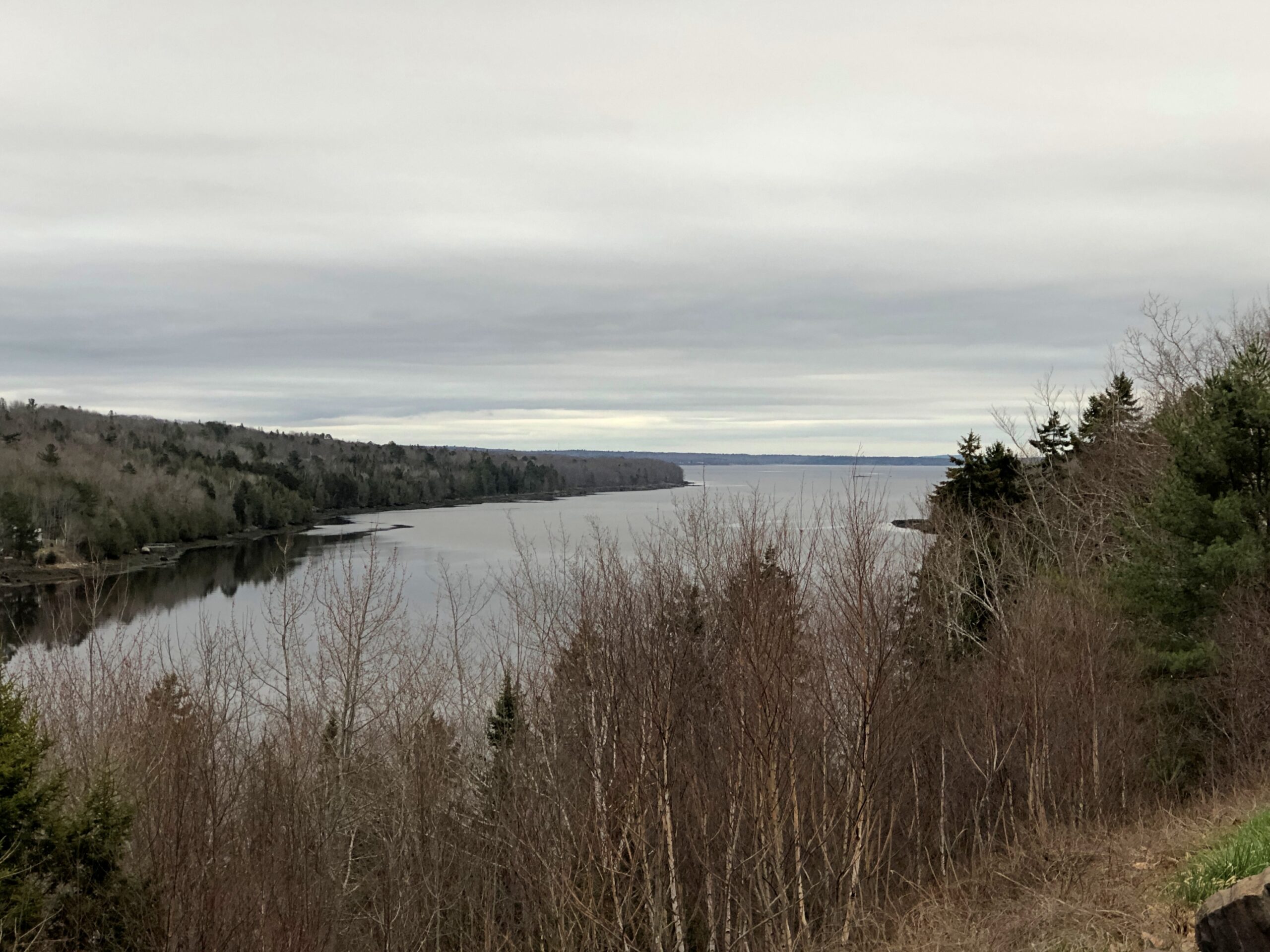
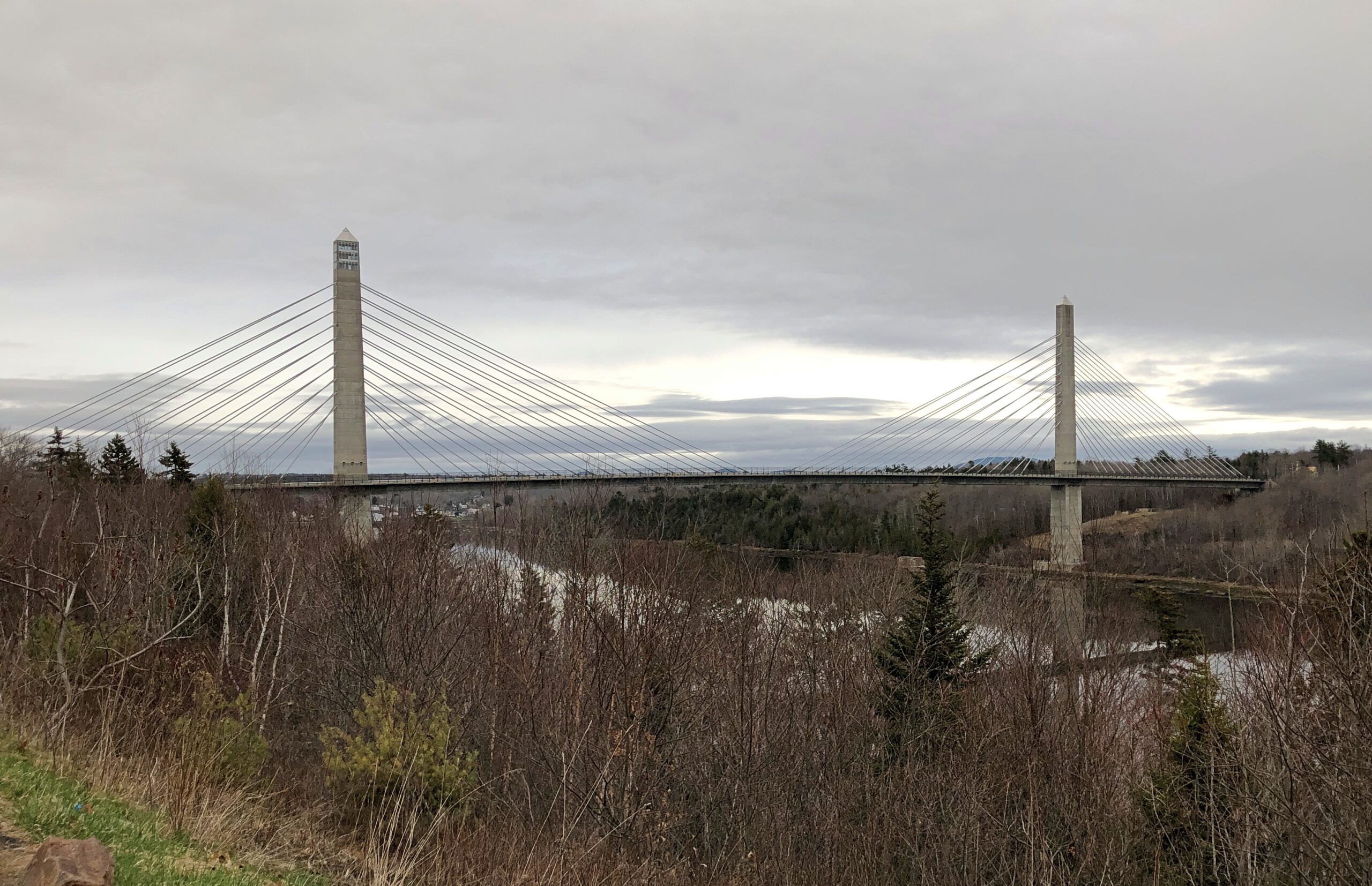
The Penobscot River and the Penobscot Narrows Bridge. A literal and scenic highpoint on that part of US 1 as it winds through near-coastal Maine. The bridge includes an observatory, unfortunately not open in April. Driving over the bridge itself was another pleasure of coastal Maine.
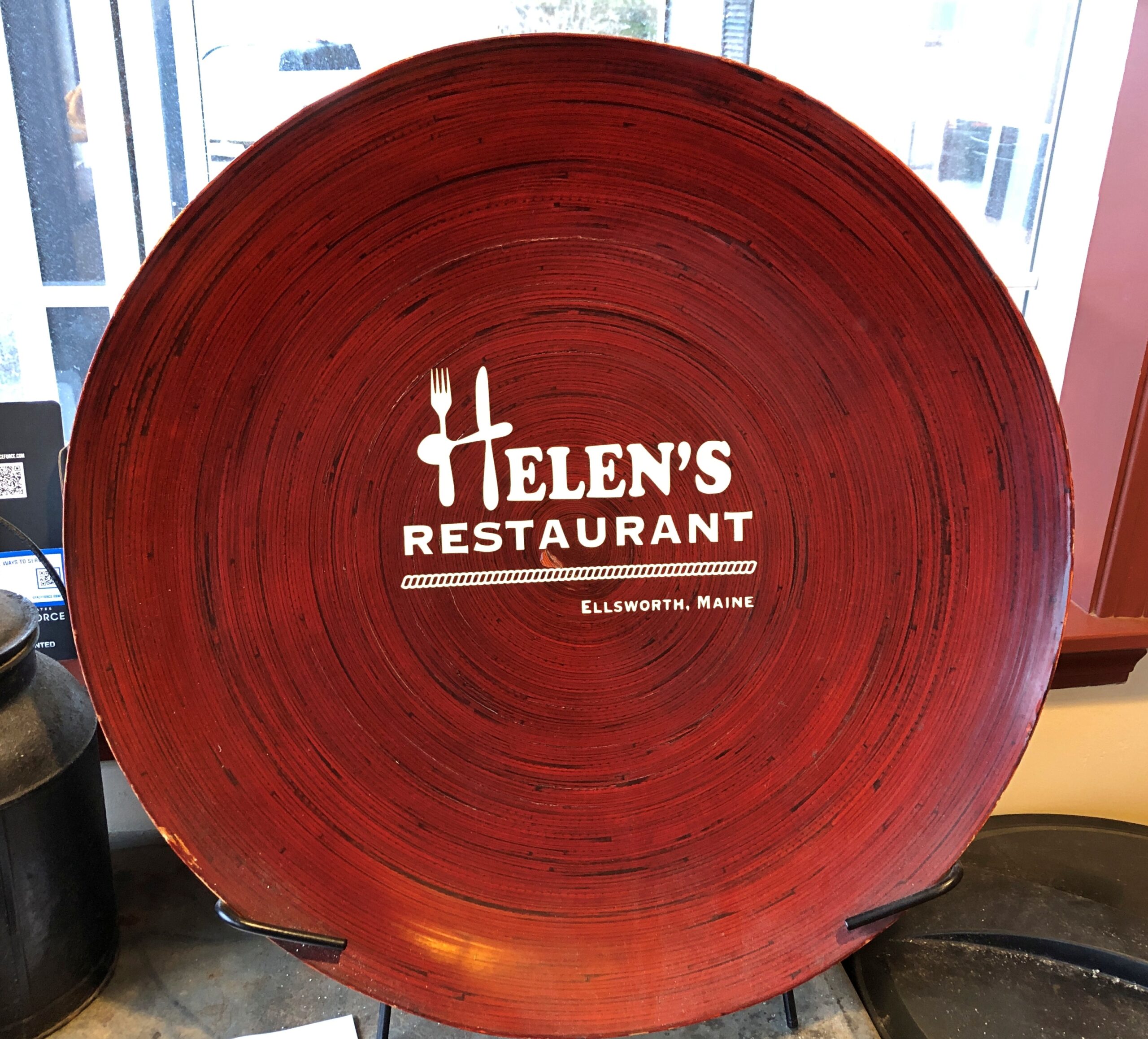
Helen’s Restaurant in Ellsworth. Tasty fish and chips. Haddock, specifically. What do you take for a haddock? “Well, sometimes I take-a aspirin, sometimes I take-a calomel.” It was some years before I learned that calomel was something I’d never take in a million years.
Massachusetts
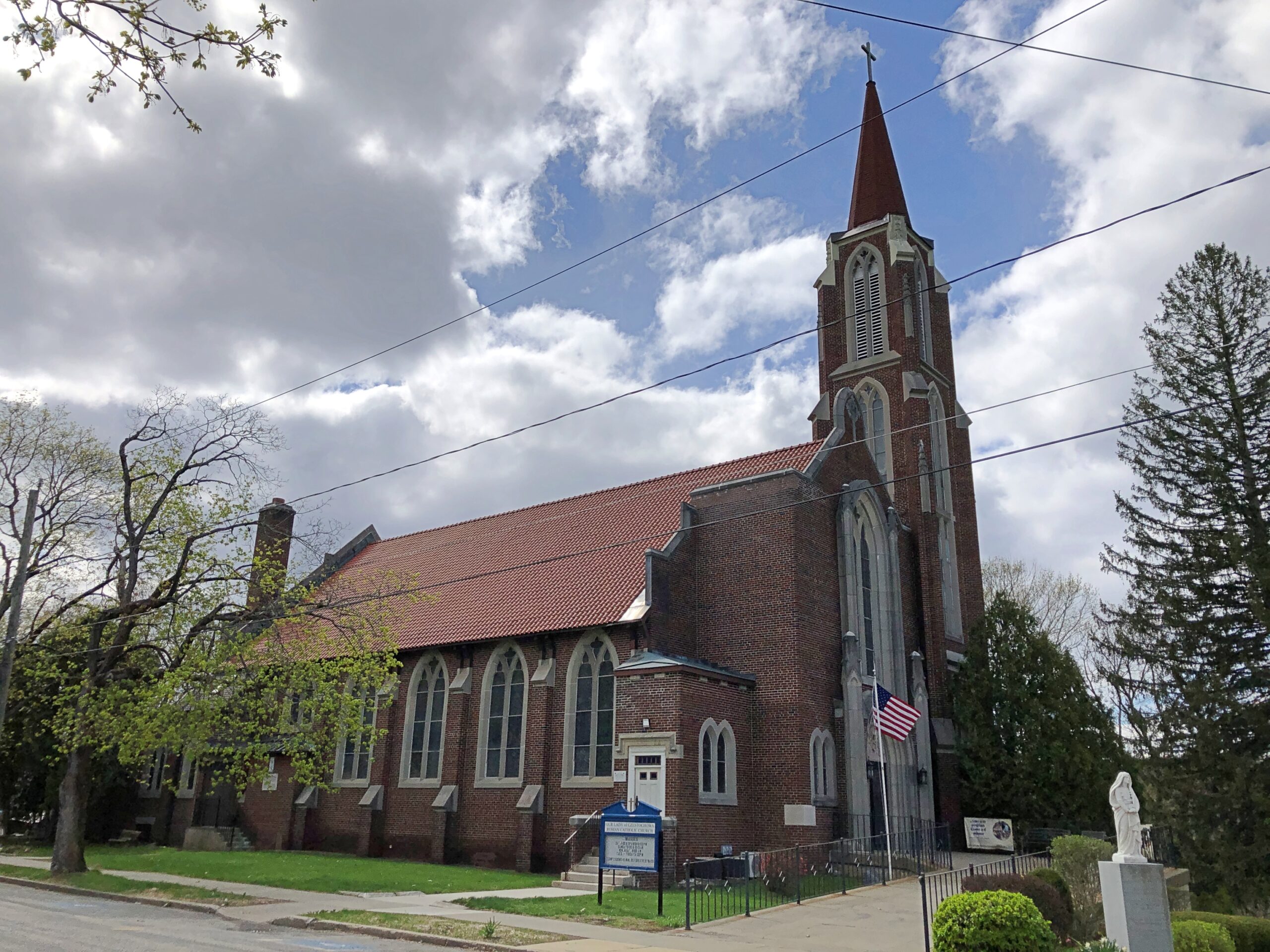
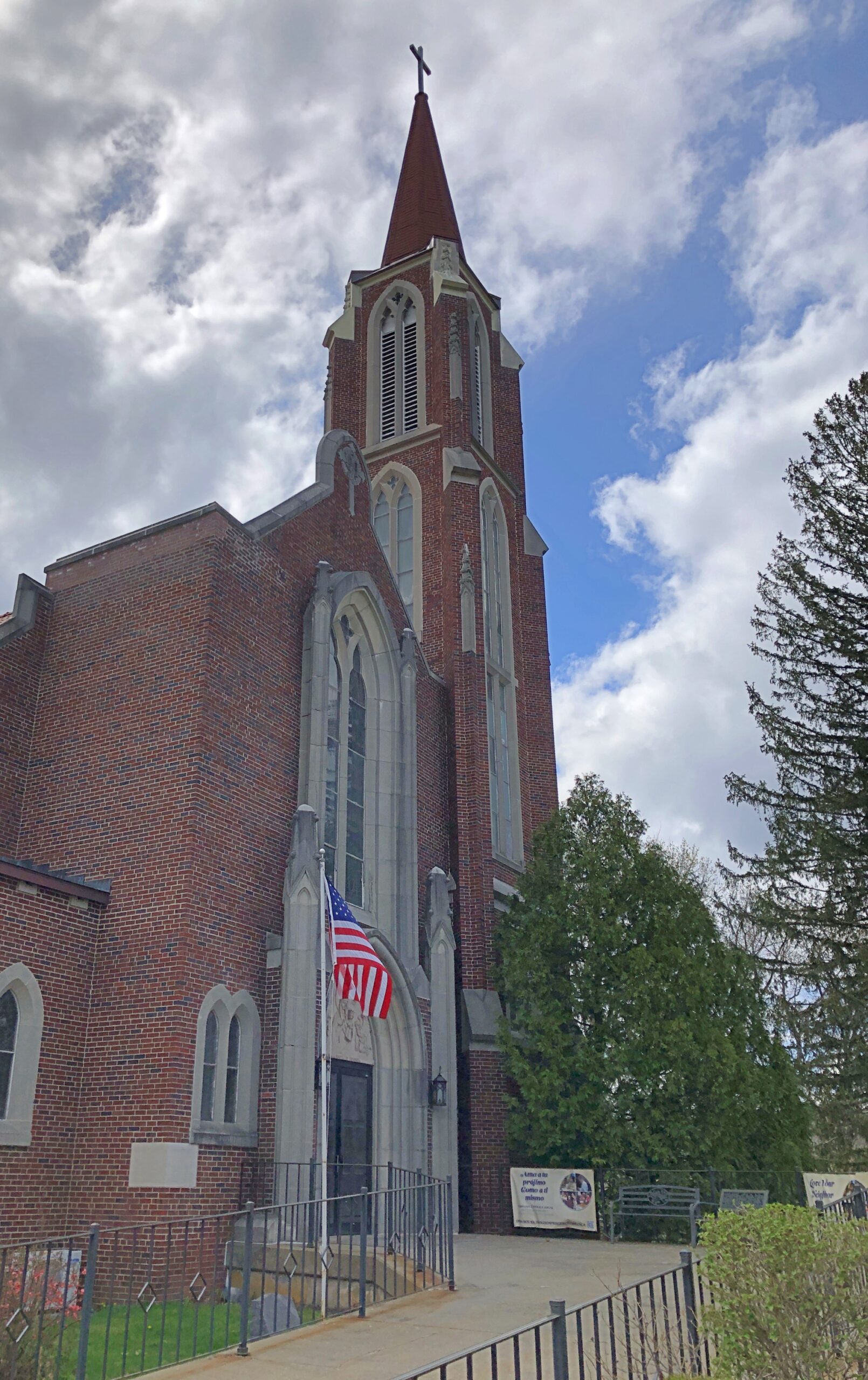
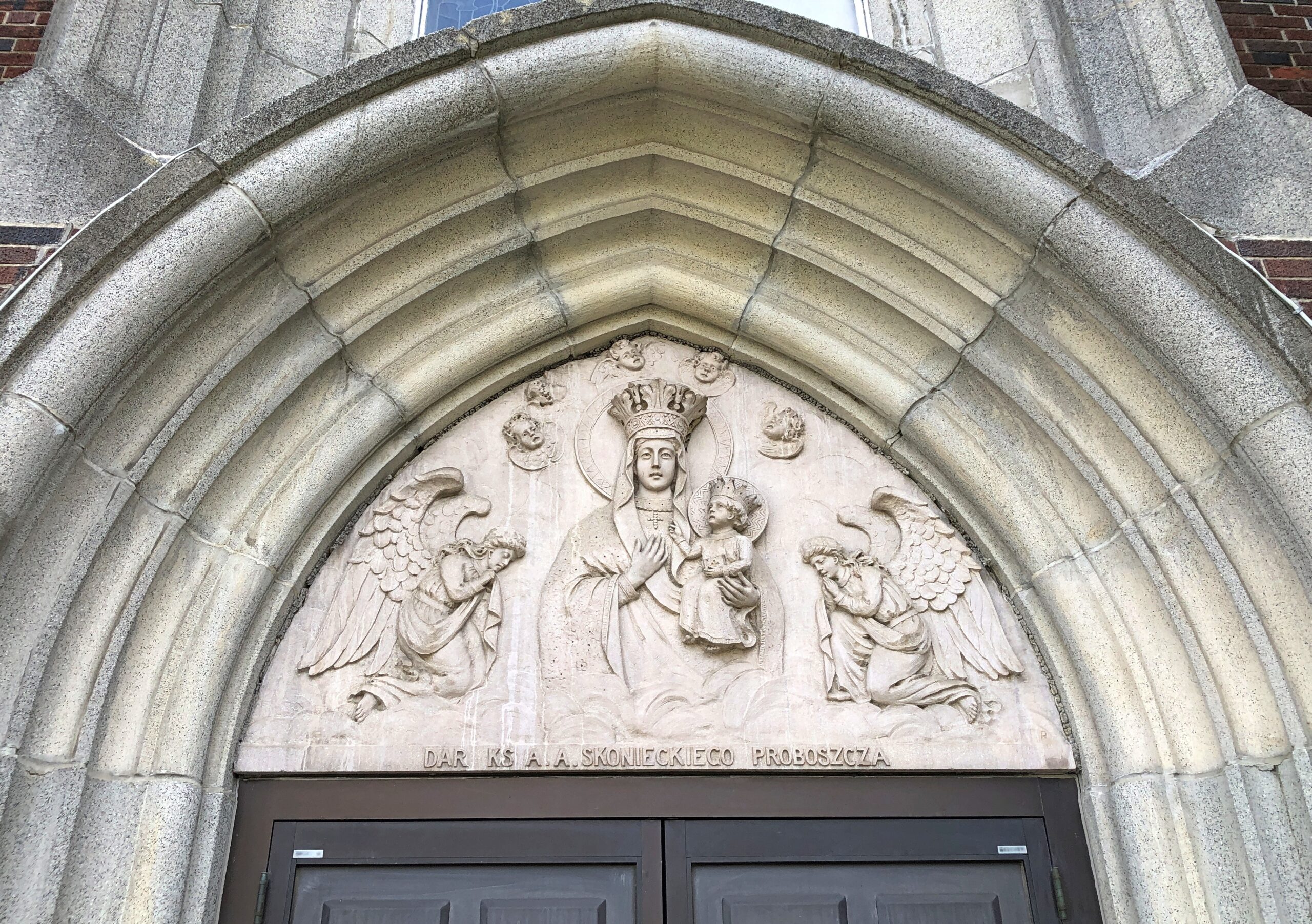
Our Lady of Czestochowa Parish, Turners Falls.
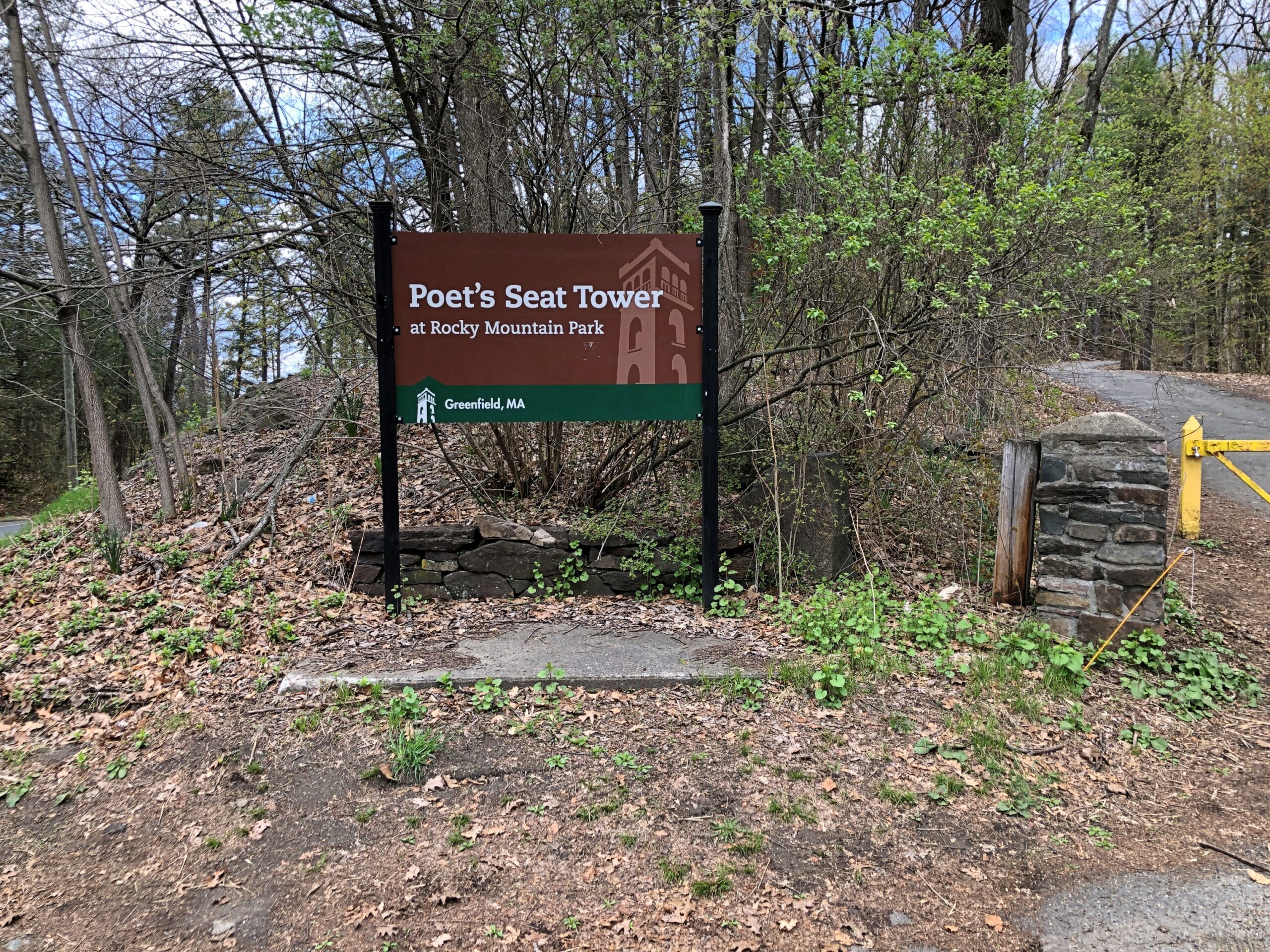
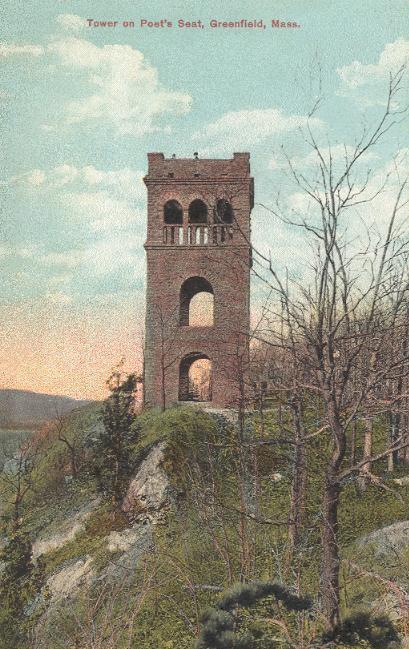
The church was closed. So was Poet’s Seat Tower.
As the tower appeared more than 100 years ago.
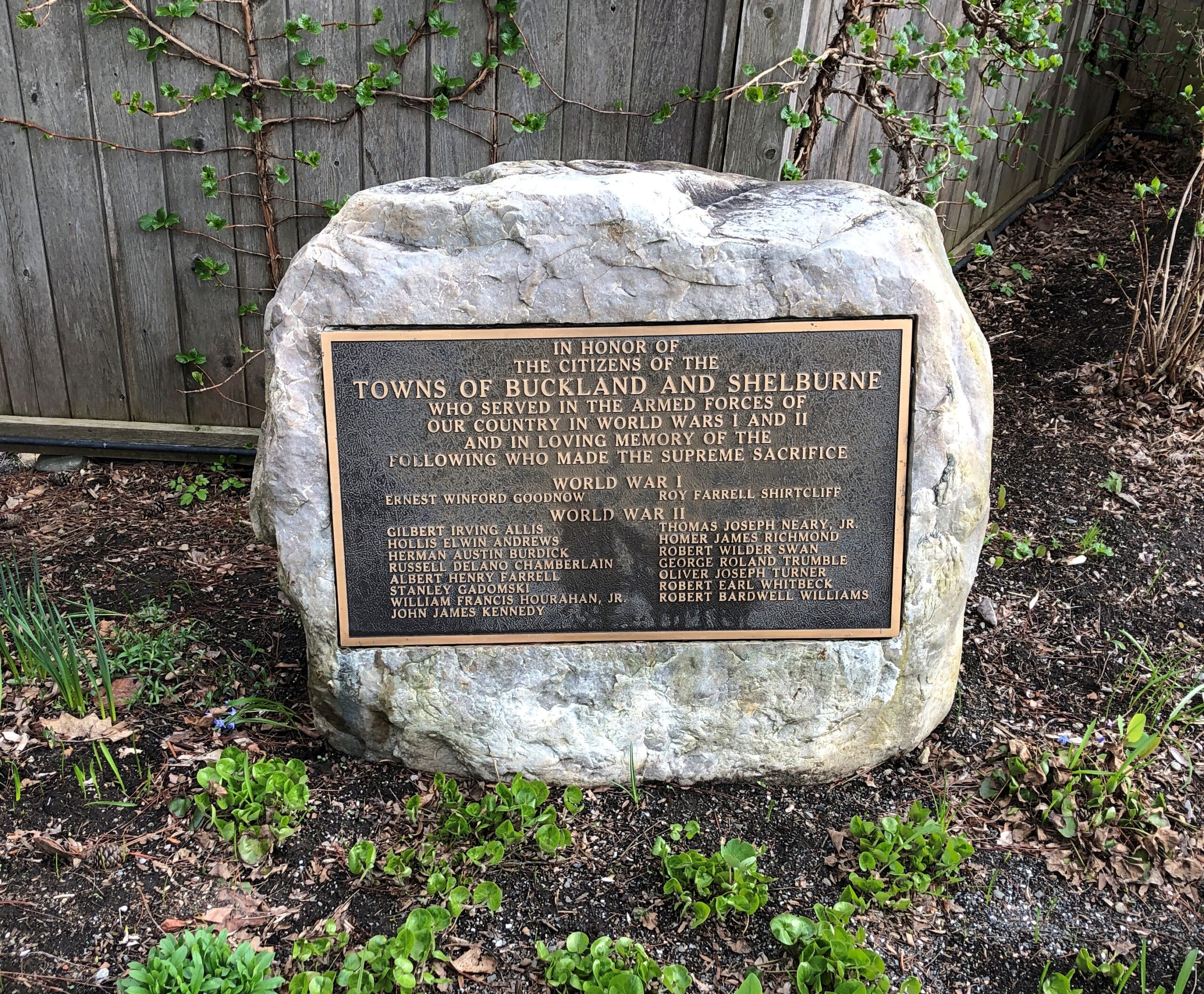
Shelburne.
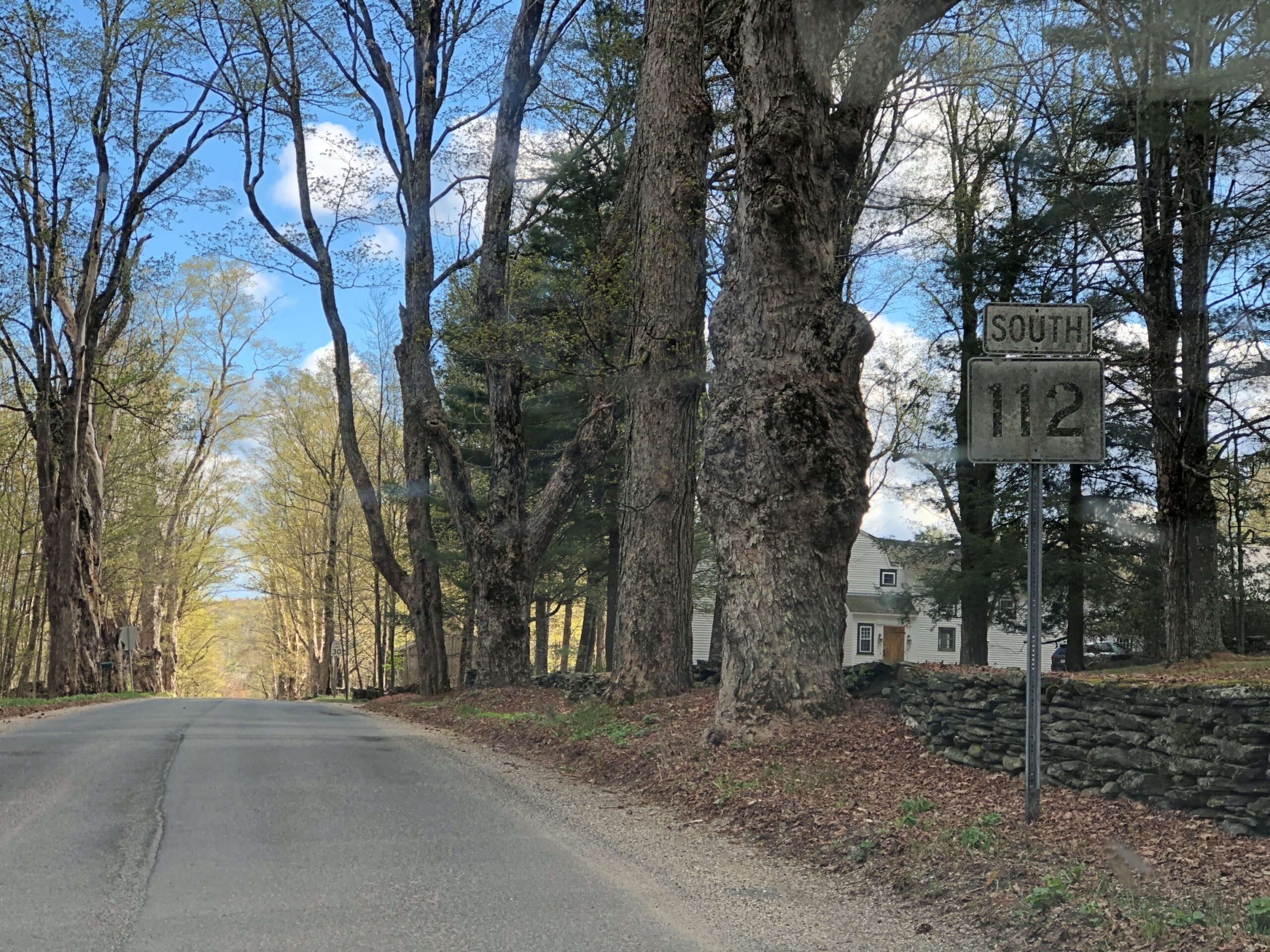
Massachusetts 112 (Route 112) in Hamilton County. Car commercial driving.
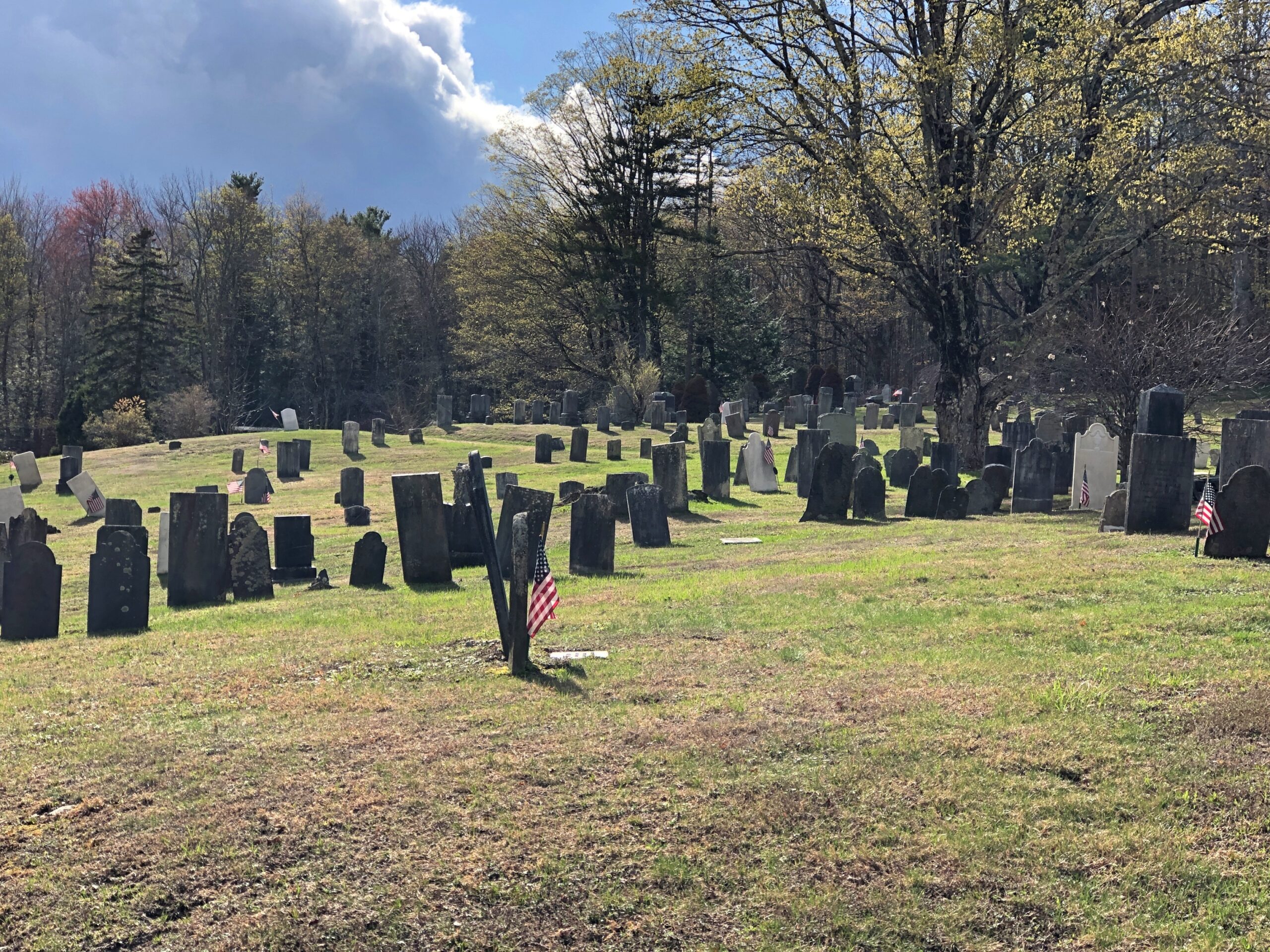
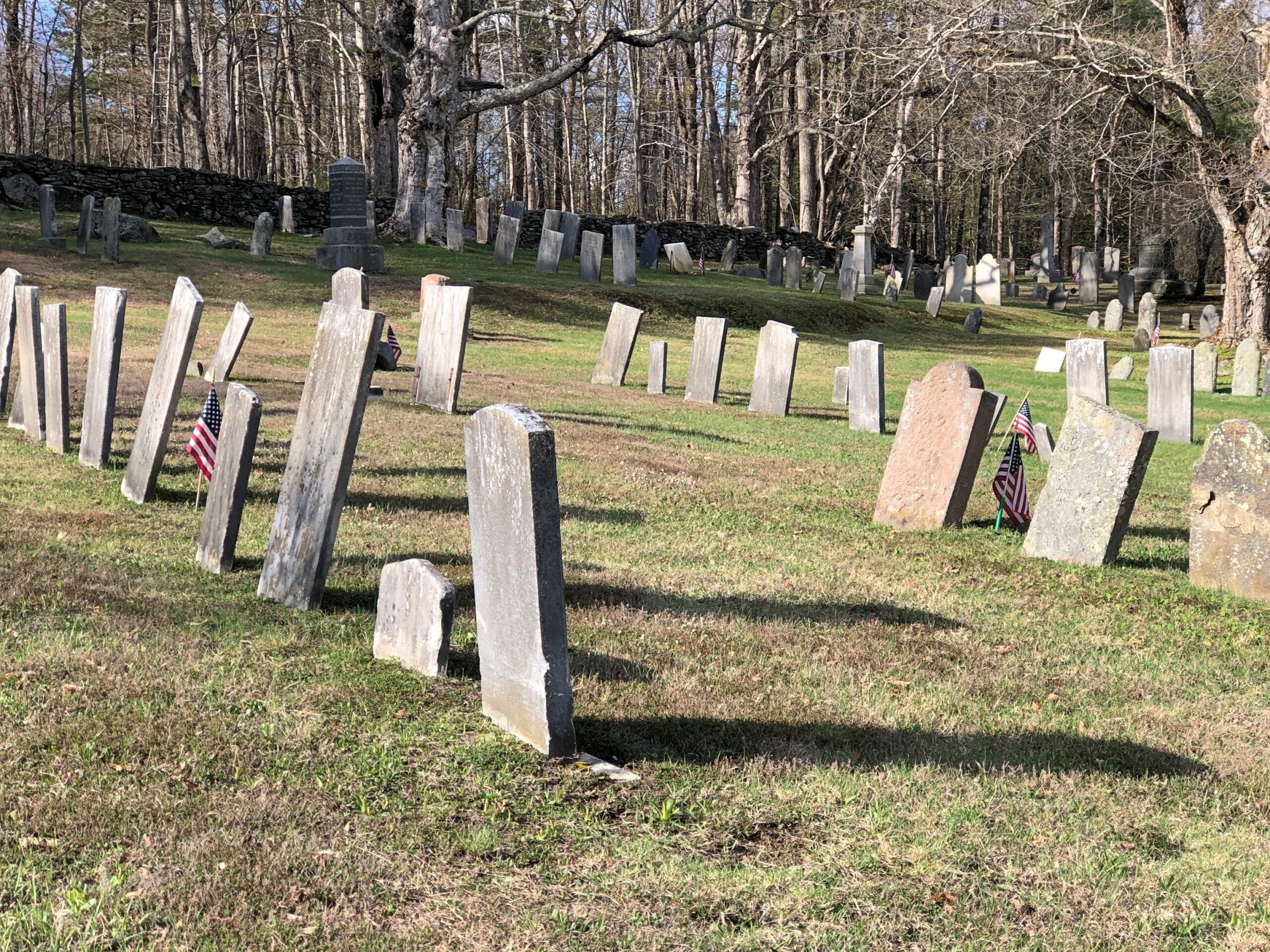
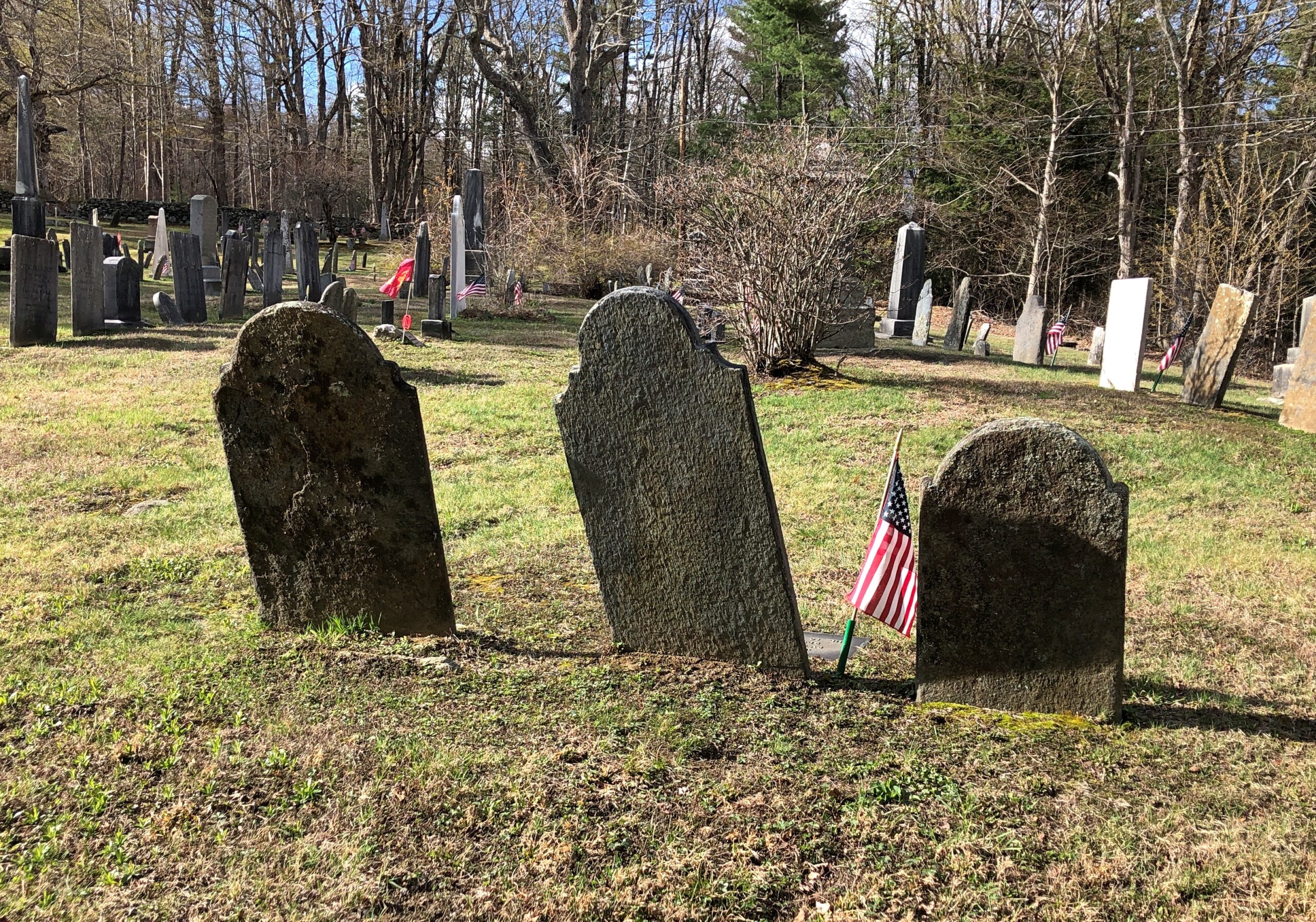
Goshen Cemetery, just off Route 112.
Ohio
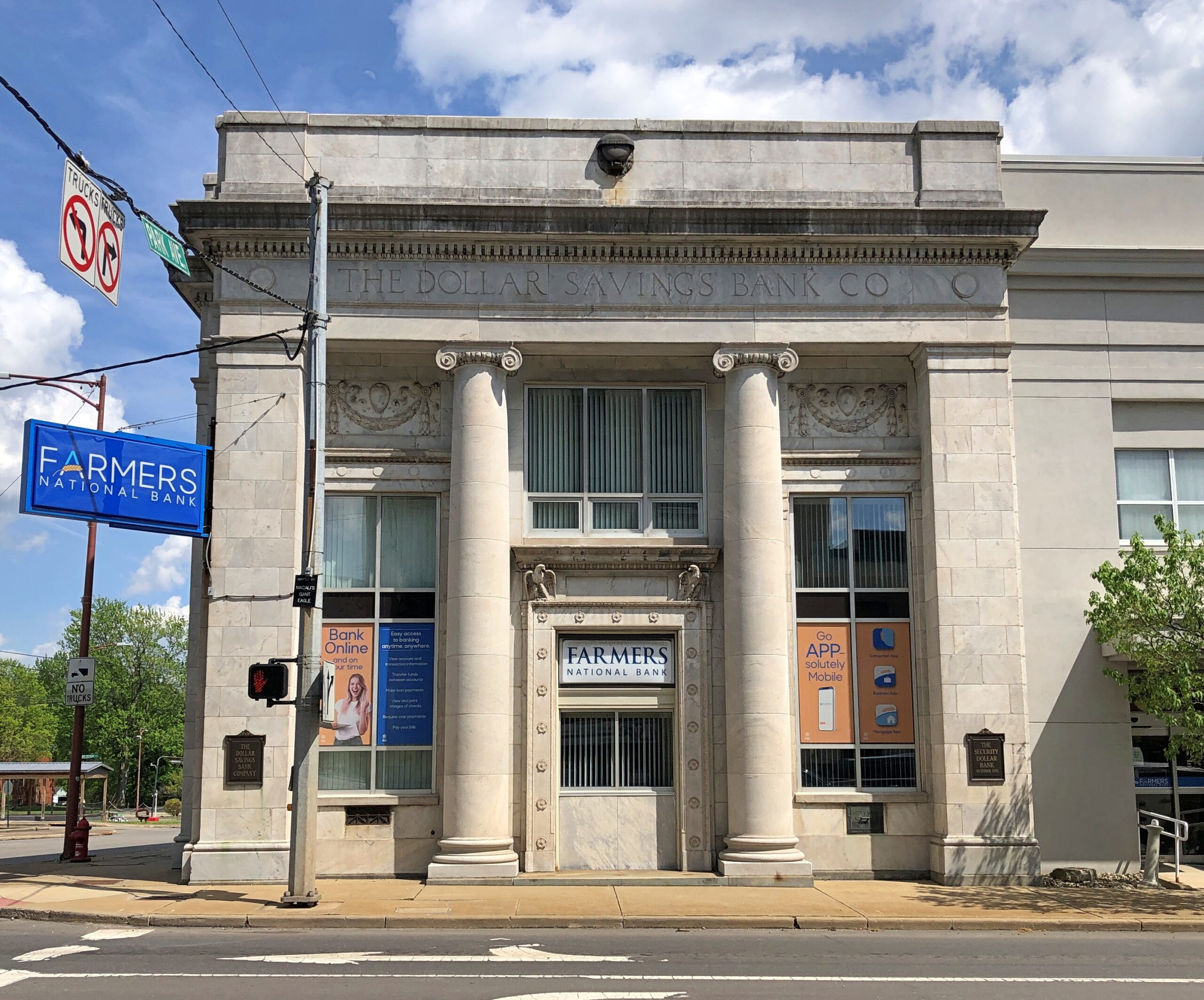
A solid bank building in Niles, across the street from where William McKinley was born. The Dollar Savings Bank Co. sounds like the kind of place that George Babbitt would mention, but distain in favor of a bank with longstanding ties to the best business men in Zenith.
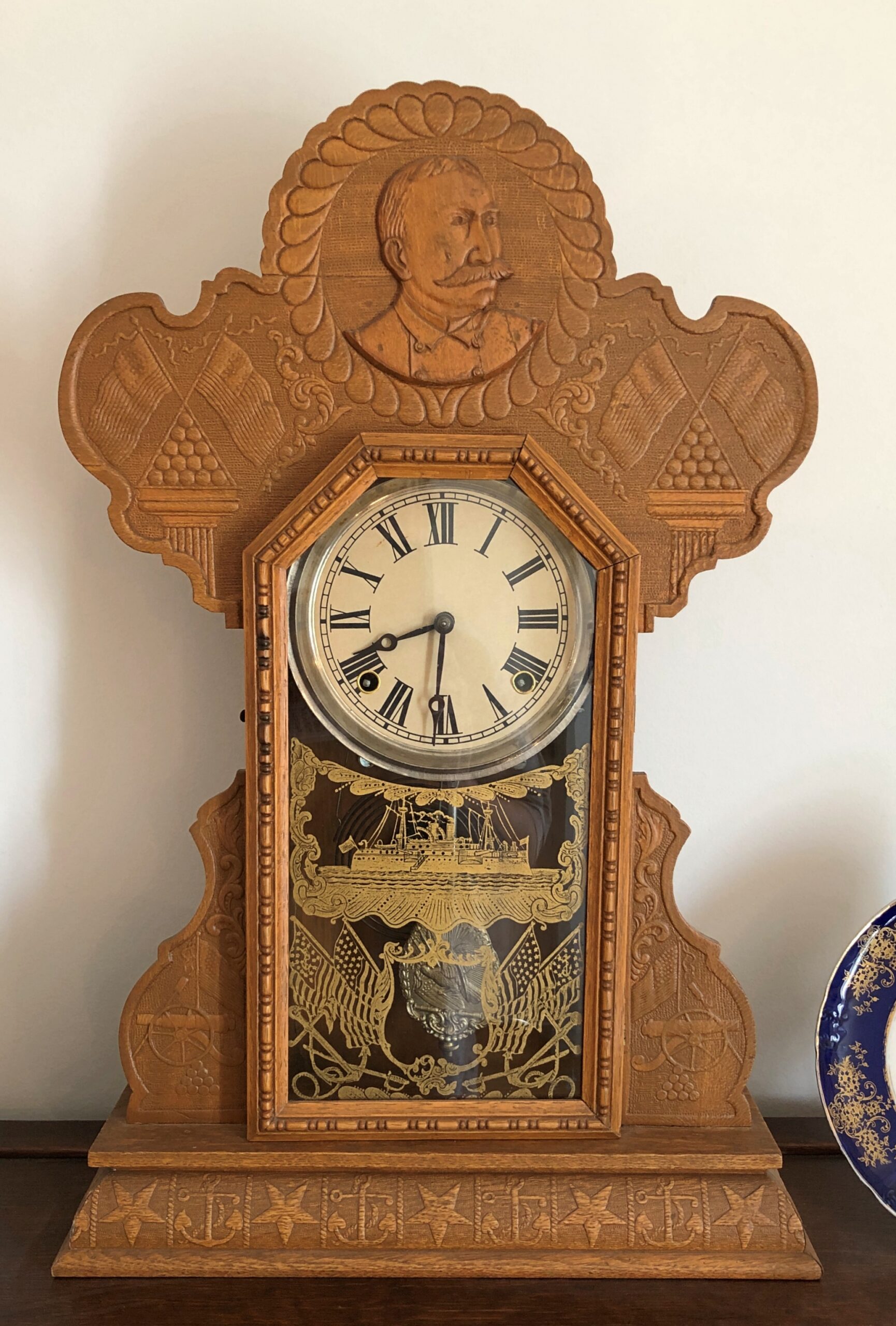
An Admiral Dewey clock at the McKinley Birthplace Museum. A textbook case, that Dewey, of how fleeting fame usually is.
Passing through northeast Ohio intrigued me greatly about that part of the state. Akron, Canton, Youngstown, Austintown — all places I can imagine going, and enjoying the visits. See ’em before the reverse migration really gets underway.
Further west, the drive on the Lincoln Highway (US 30) was a pleasure: mostly four lanes, rarely crowded. The flat farmlands don’t qualify as conventionally scenic, but the budding springtime fecundity has a lot to recommend it, even as a strictly visual pleasure: the bright greens of new leaves, the brown and grays of the fields recently plowed, small roads heading off usually at right angles to the main road, a run between Upper Sandusky and I-75 near Lima with few buildings of any kind, except distant farm structures.
Downtown Lima: the Allen County courthouse, seen from North St.
Looks like my kind of breakfast place. Closed on Sunday anyway.
Another North St. detail. Spiderman sitting on — something. A large scoop of strawberry ice cream?
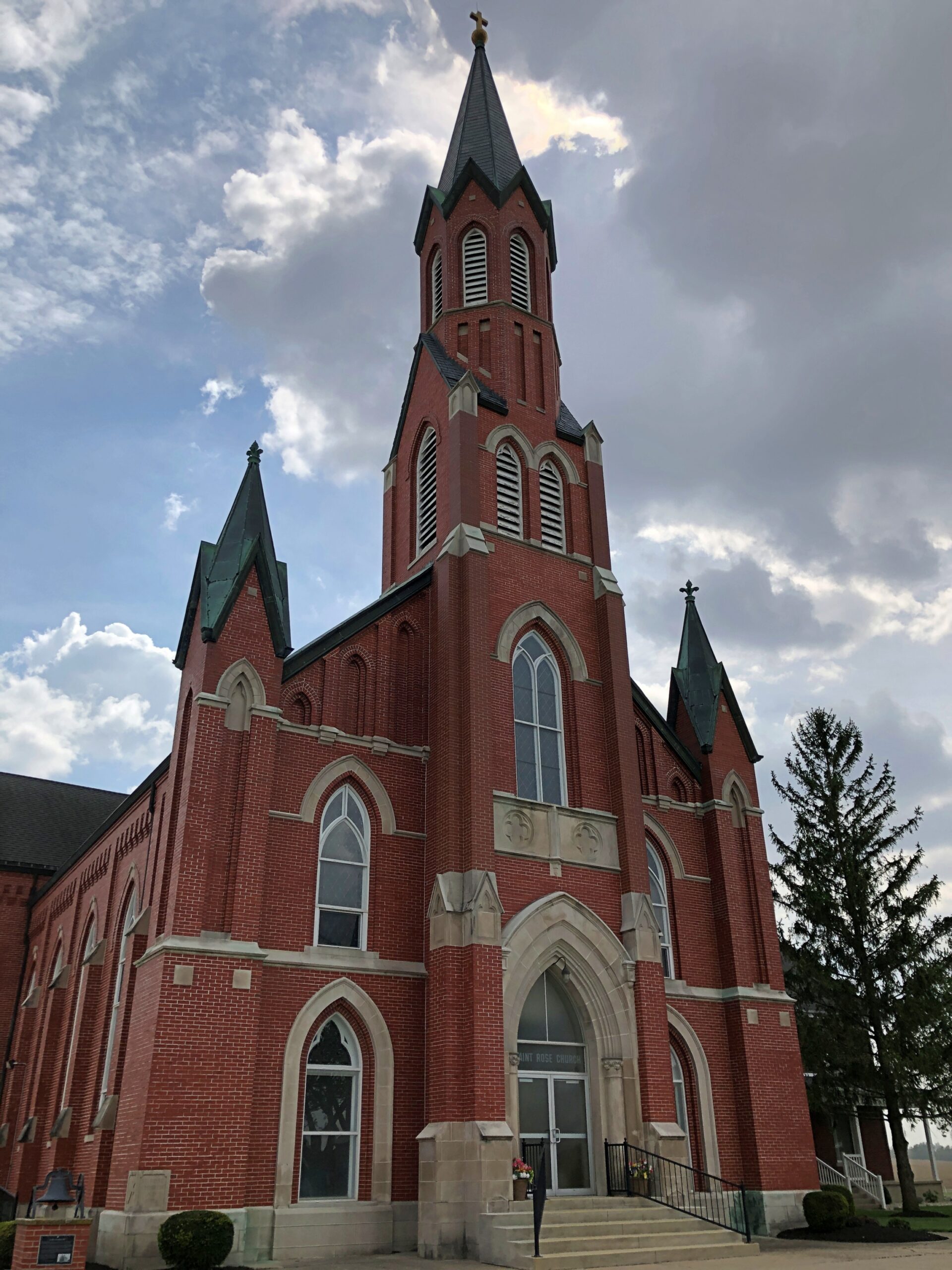
Saint Rose Church in the hamlet of Saint Rose, not far east of the Ohio-Indiana line. A Cross-Tipped Church.
Pennsylvania
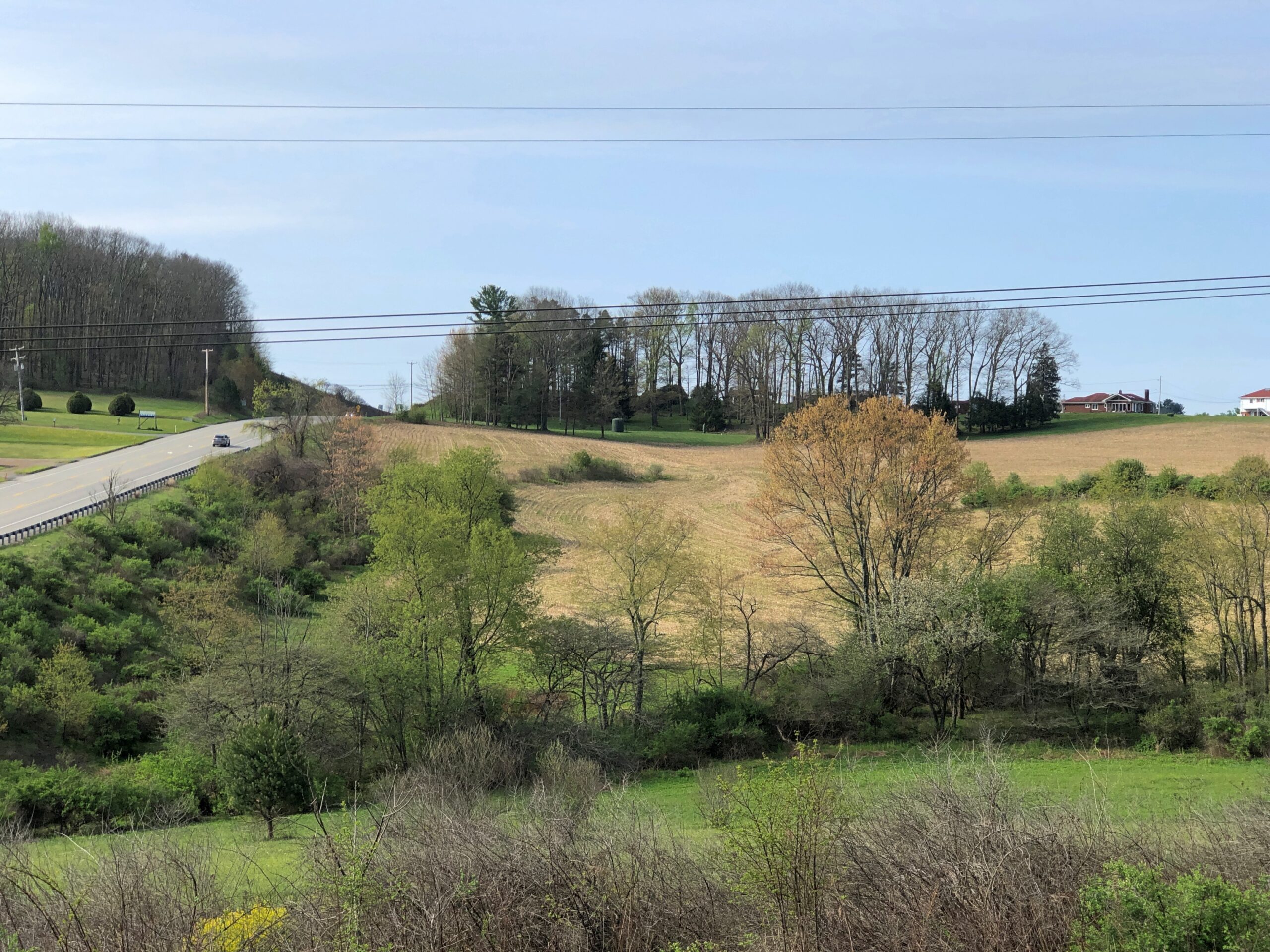
The hills at the edge of Punxsutanwney.
The drive west across Pennsylvania began across the Delaware River from Port Jervis, NY, taking US 209 southwest through part of Delaware Water Gap National Recreation Area. Bet the straight-ish, two-lane road is busier in peak recreation season in the Recreation Area, but in April, I booked along without encountering much in the way of traffic. Trees were still budding, but it wouldn’t be long before some stretches of the highway would pass through green tunnels. The sunlight was already casting green leaf shadows on the road.
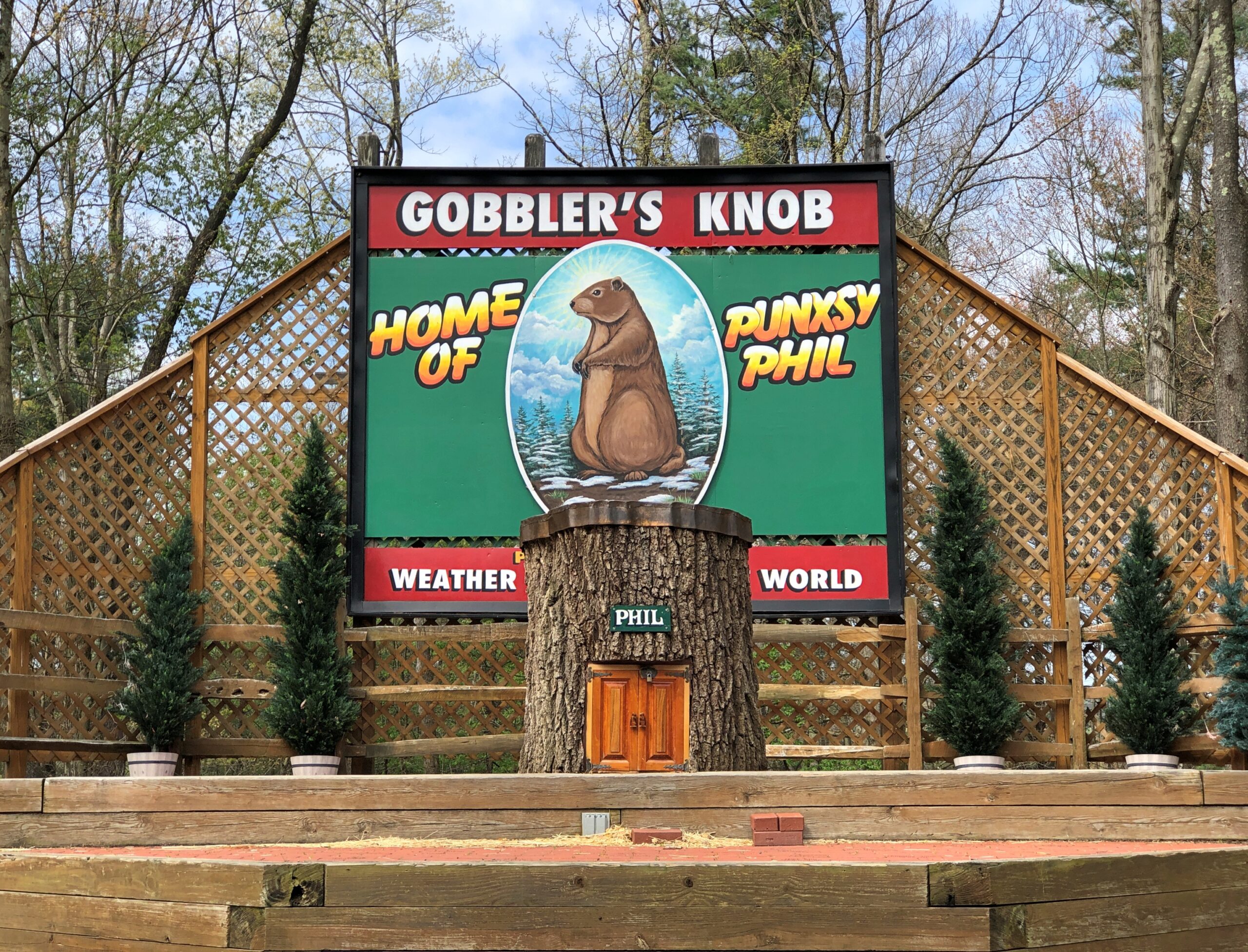
Watch Groundhog Day, and the impression is that the festivities are held in the center of town — which they are, in the Punxsutanwney stand-in of Woodstock, Illinois. Go to Punxsutanwney itself and learn that the February 2 fest is a few miles from town in a place called Gobbler’s Knob.
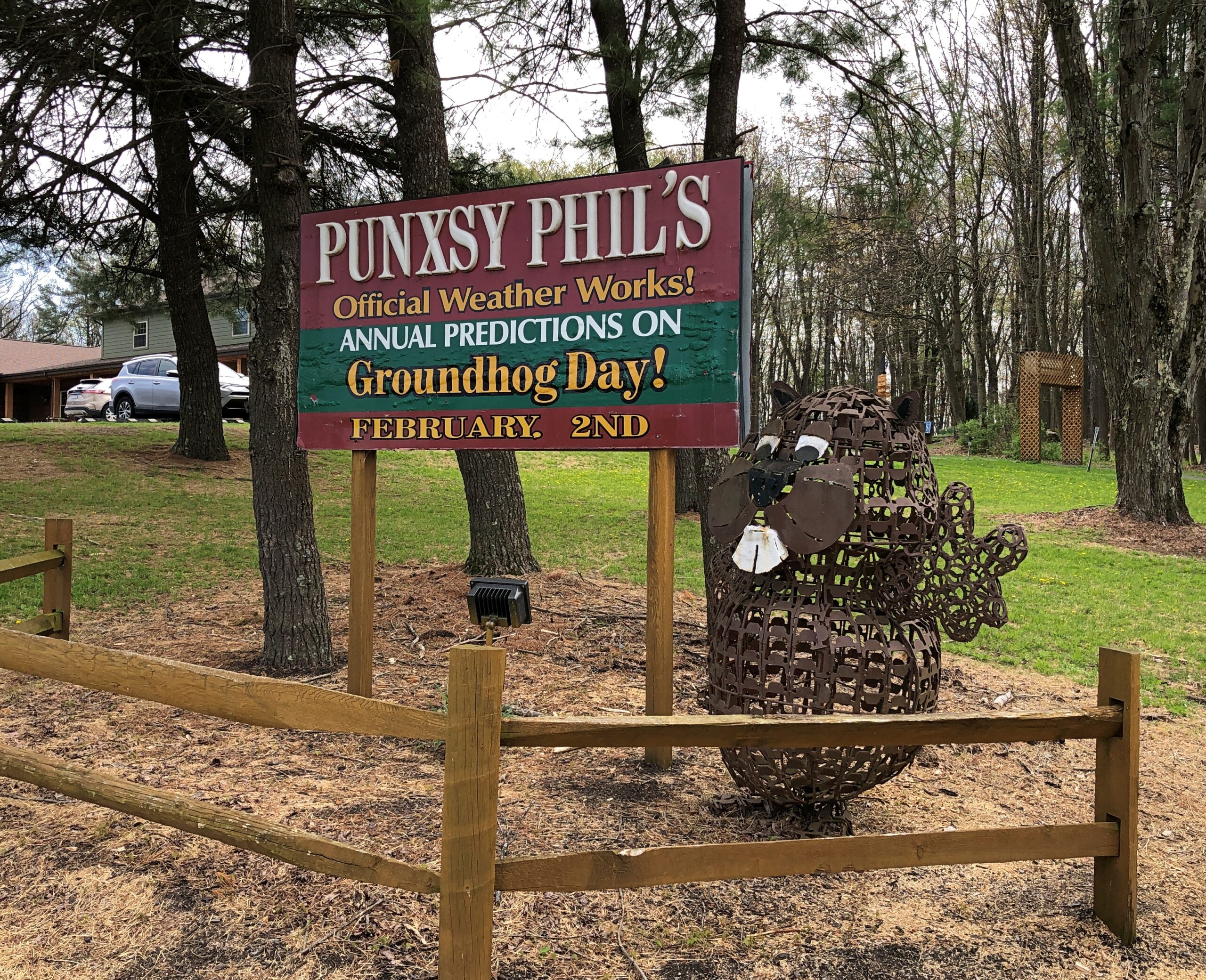
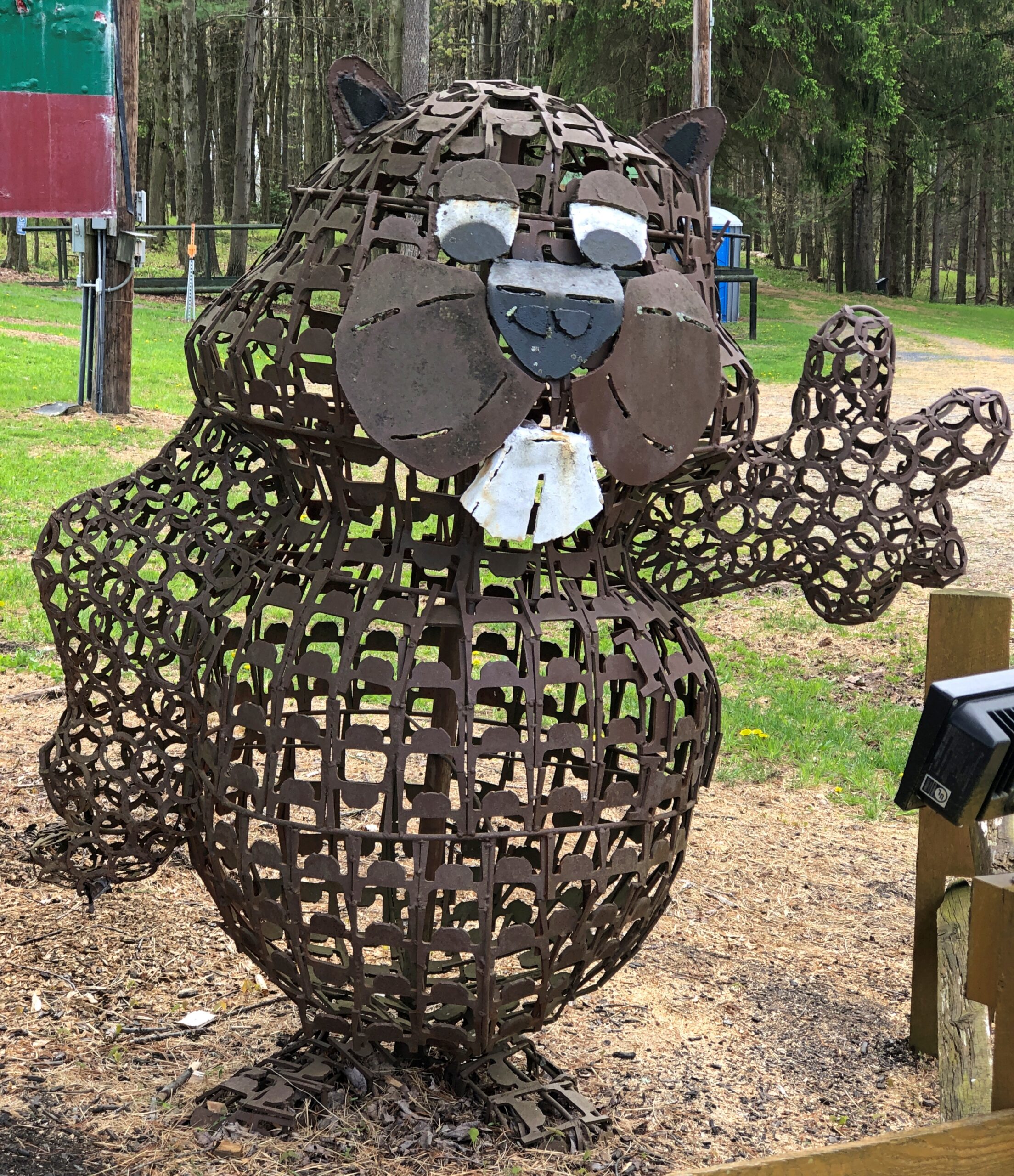
One more Phil. Iron Phil.
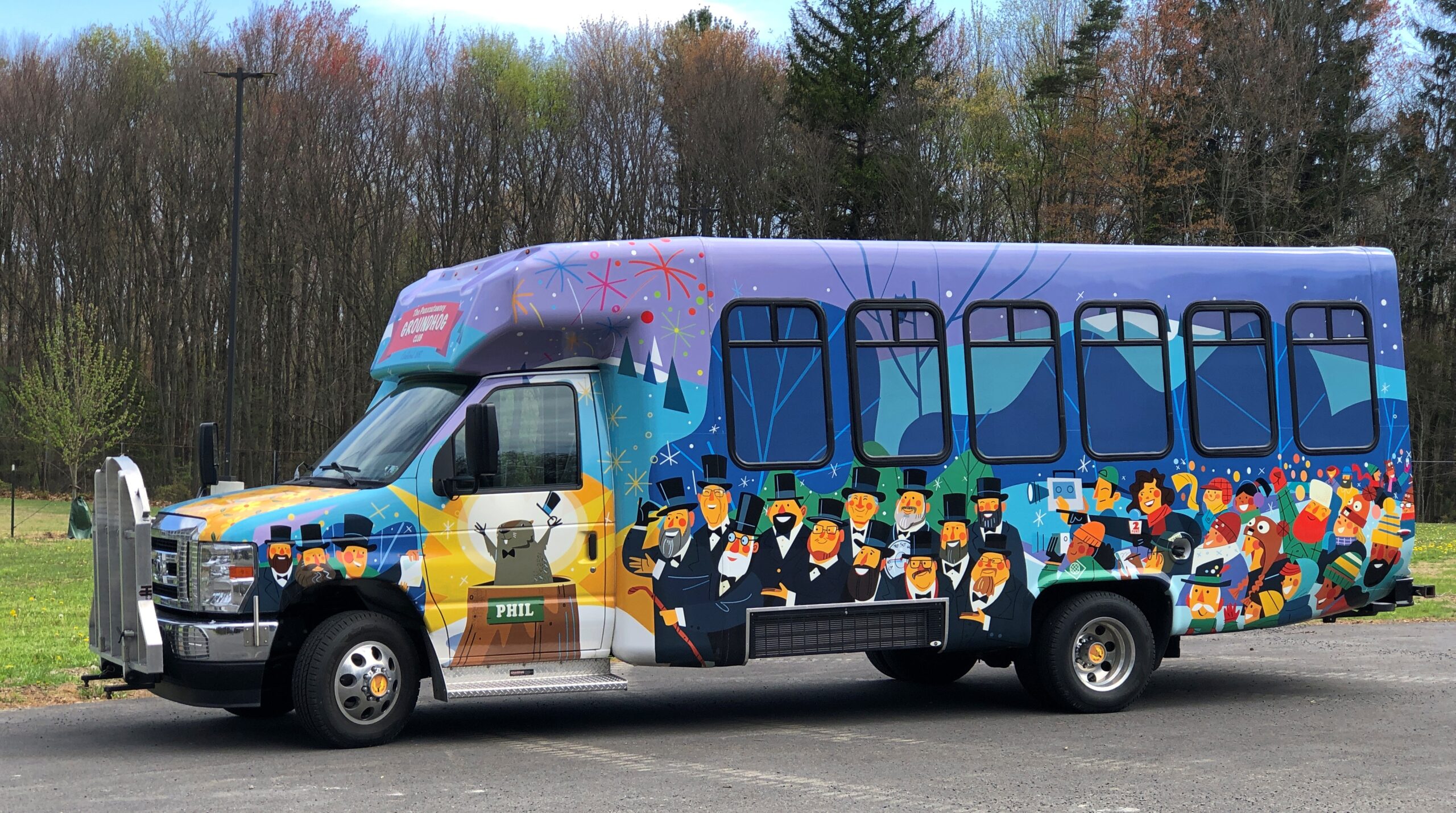
The clerk at the Gobbler’s Knob gift shop took pains to let me know that the site, and the festivities, were overseen by a nonprofit, not the commonwealth. Outside is the nonprofit’s bus, or at least I assume that, probably used to ferry people from town to GK and vice-versa, to help deal with the popularity of the event.
I like a good local festival as much as anyone, but February 2 is a deal-breaker. Can’t Phil come out again on August 2 to predict how much longer summer is going to last?
One More (Indiana)
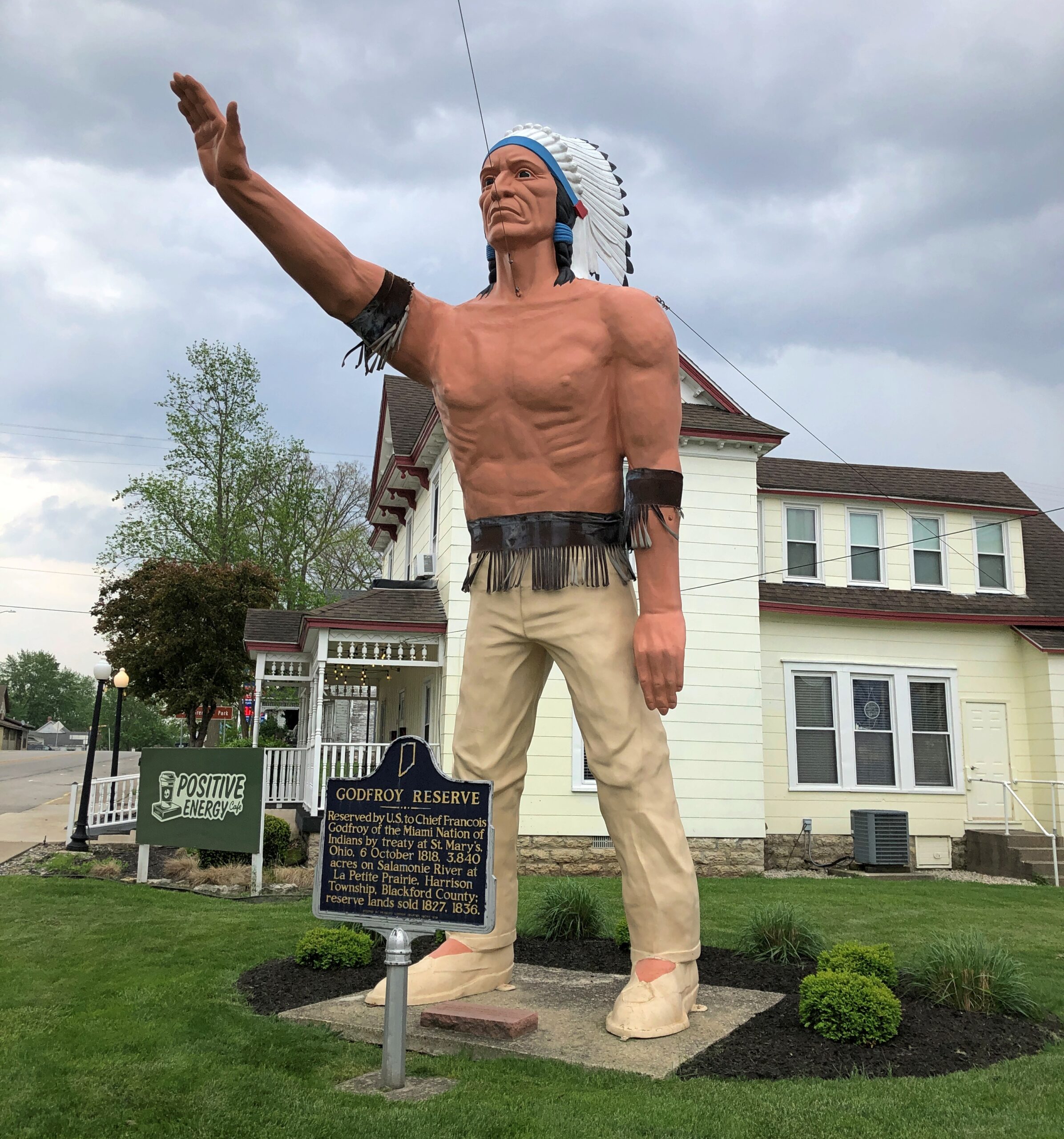
Miami Chief Francois Godfroy stands at the corner of Main Street and Huntington Street/Indiana 18 in Montpelier. Well, maybe it’s supposed to remind passersby of the chief more than actually depict him.
A Daughters of the American Revolution historical marker says: Reserved by U.S. to Chief Francois Godfroy of the Miami Nation of Indians by treaty at St. Mary’s, Ohio, 6 October 1818. 3,849 acres on Salamonie River at La Petite Prairie, Harrison Township, Blackford County: reserve lands sold 1827, 1836.
Waymarking says: “The statue was made in Venice, CA in 1960 for the Tom Wood Pontiac dealership in Indianapolis. Later it was in front of the Indian Museum at Eagle Creek Park In Indianapolis. After the museum closed, the statue (of more a plains Indian than a NE Indiana tribe) was obtained by Chief Larry Godfroy — a descendant who presented it to the City of Montpelier and they erected it as a monument in 1984.”
An example of nonlinear tourism, a term I just made up, is my visit to Warren, Ohio. Linear tourism, another term I just (logically) made up, is picking a destination and sticking to it. That isn’t a bad approach, some of the time. But at other times, one follows an urge to go that next place on the map, to see what you can see. Nonlinear tourism has an element of spontaneity, obviously, and it probably isn’t the best way to plan a long trip.
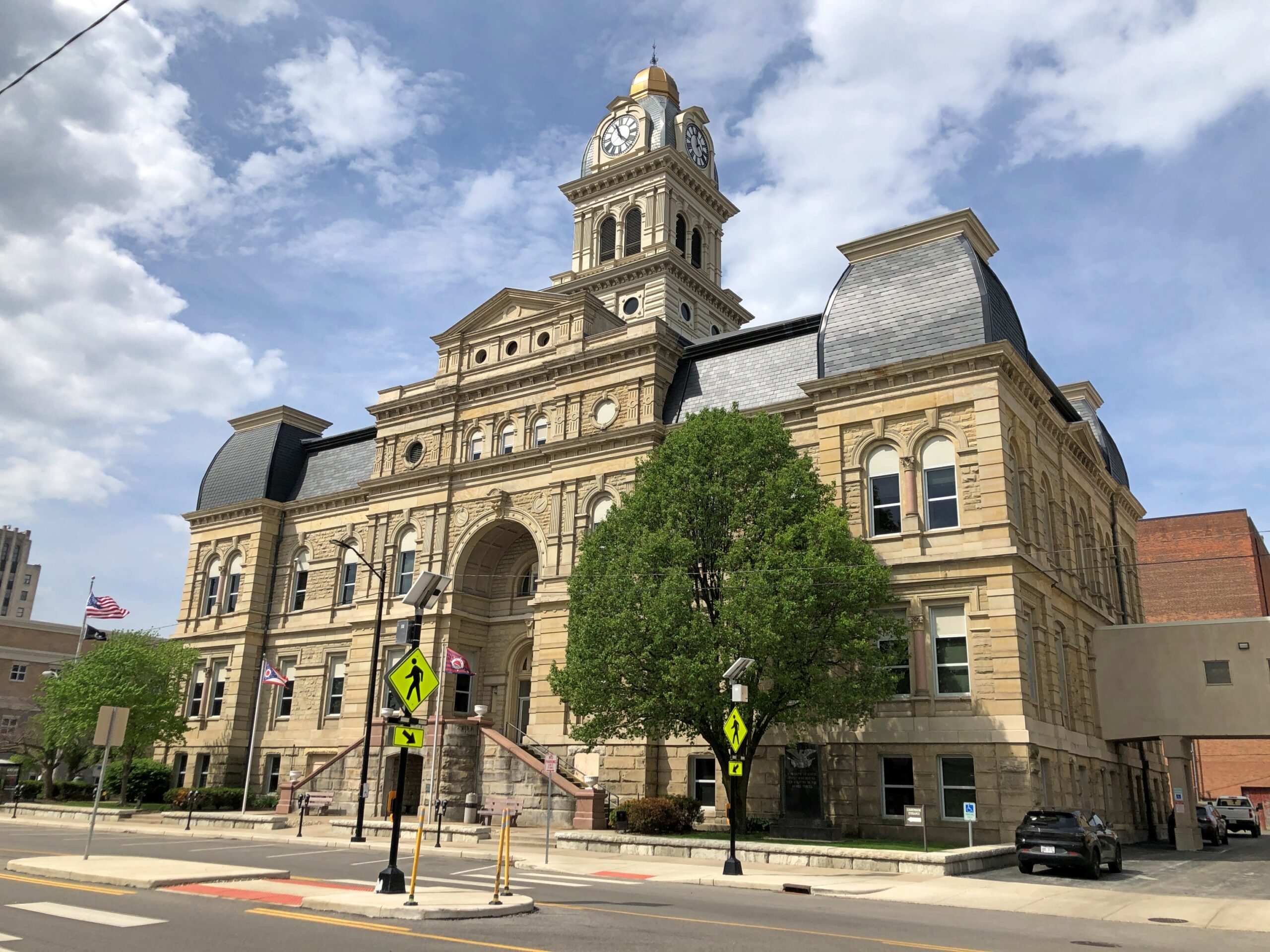
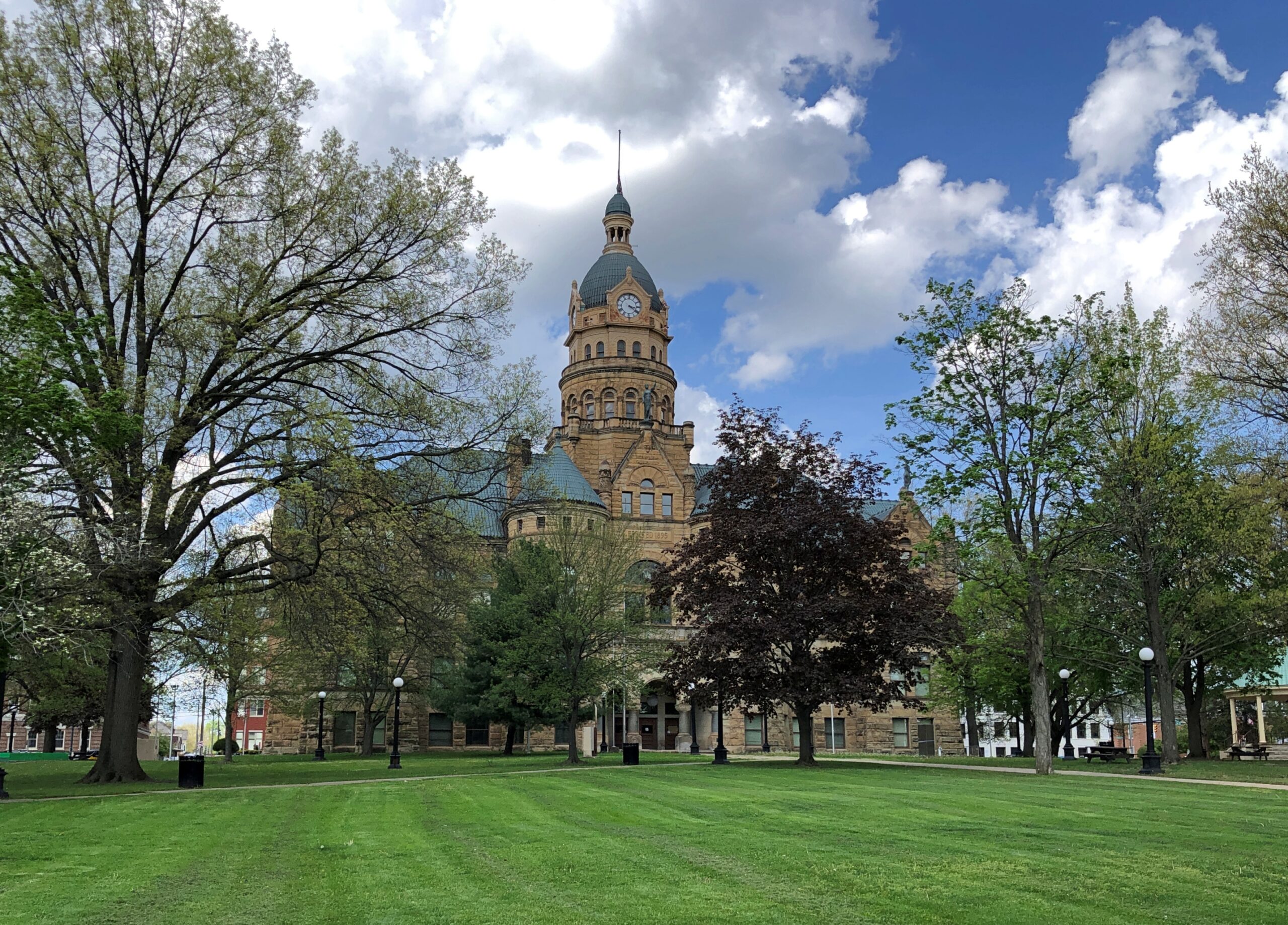
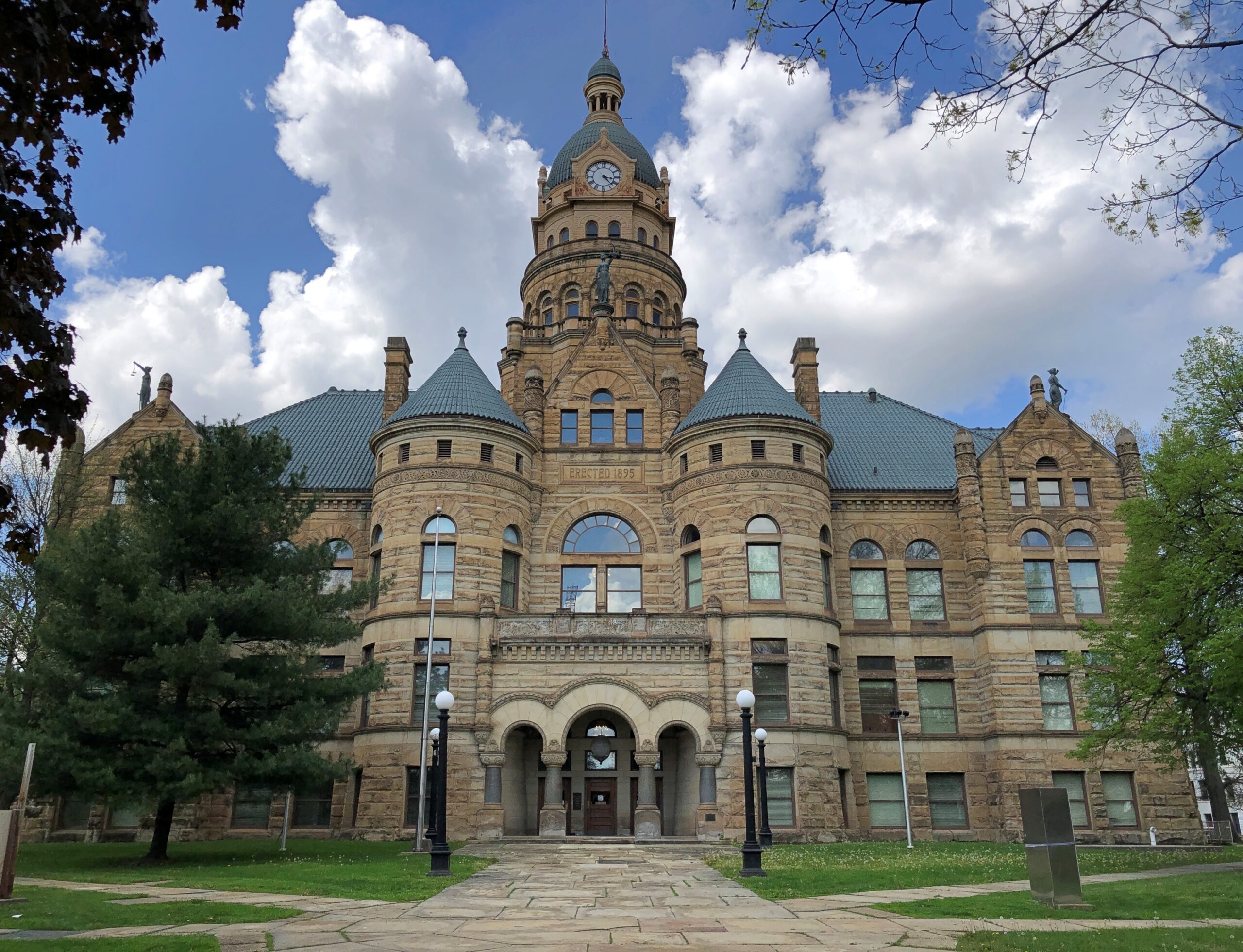
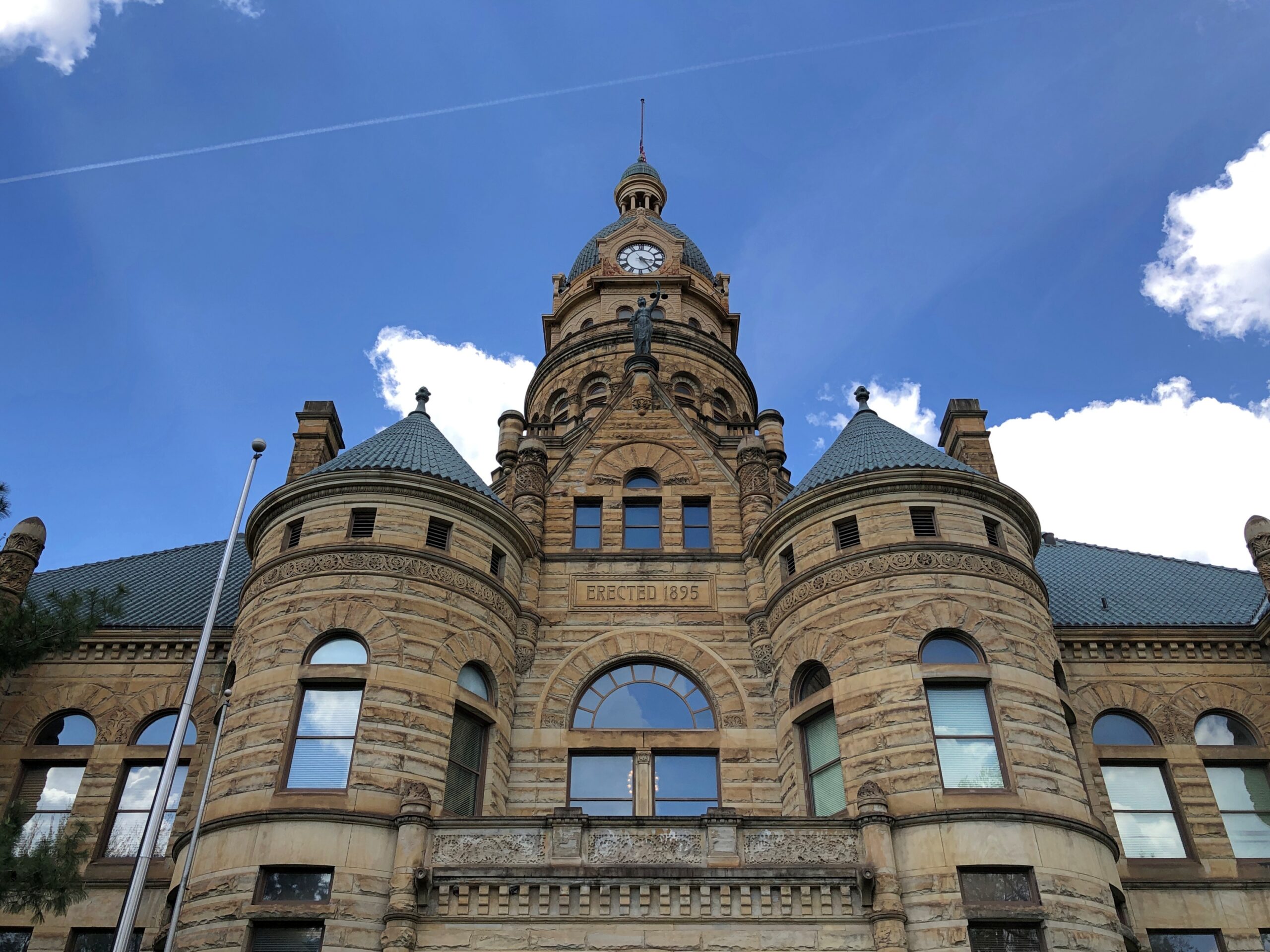
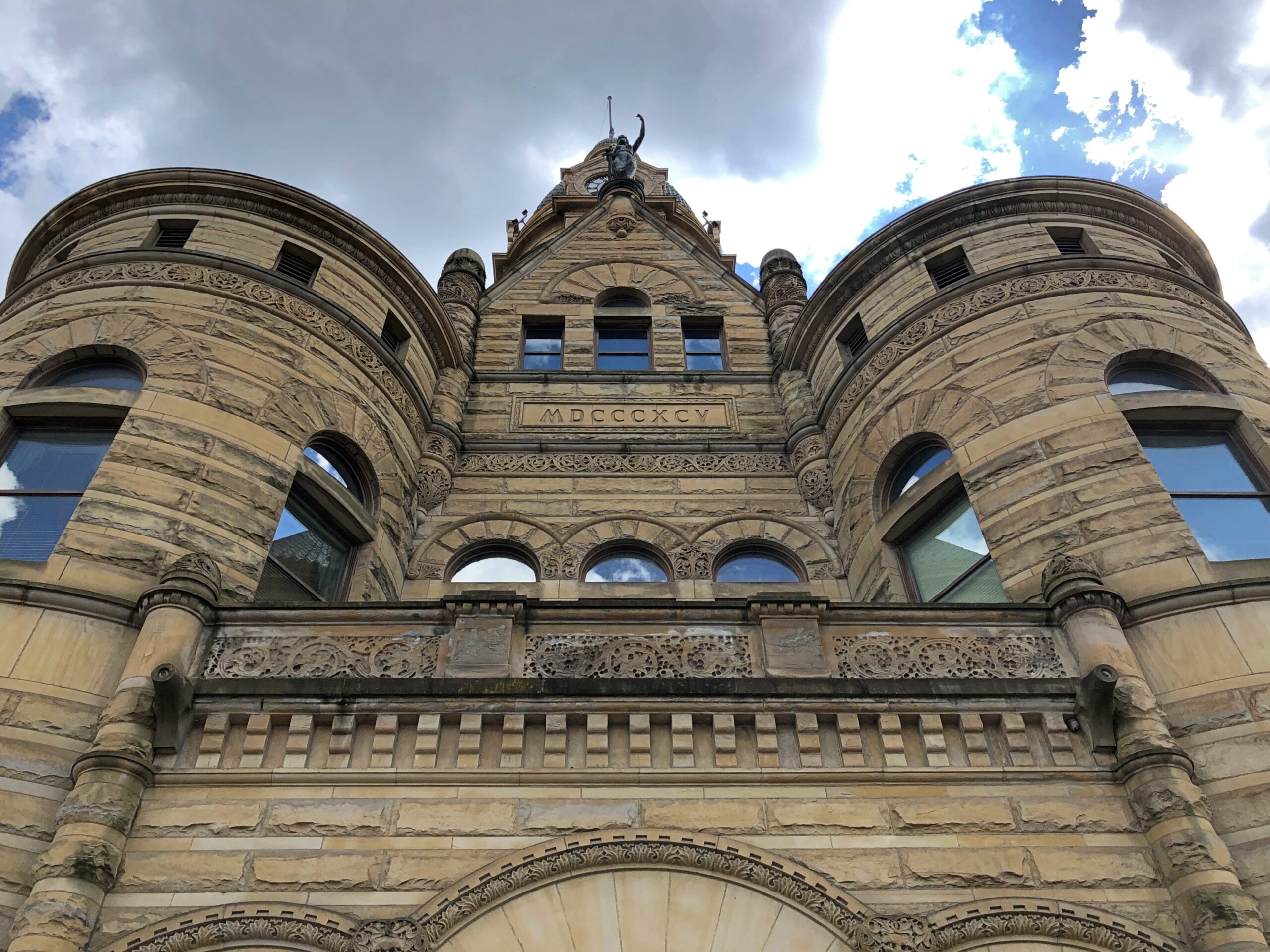
Sometimes the rewards are worth the slight meander. There I was in Niles, done with my visit to McKinley sites, and I thought: Warren’s just up the road. So I went. Warren is the seat of Trumbull County, and a prosperous place 100-plus years ago – Packard got its start there, for one thing – and so the county could afford a grand courthouse in 1895. That was worth the side trip right there.
Front and back.
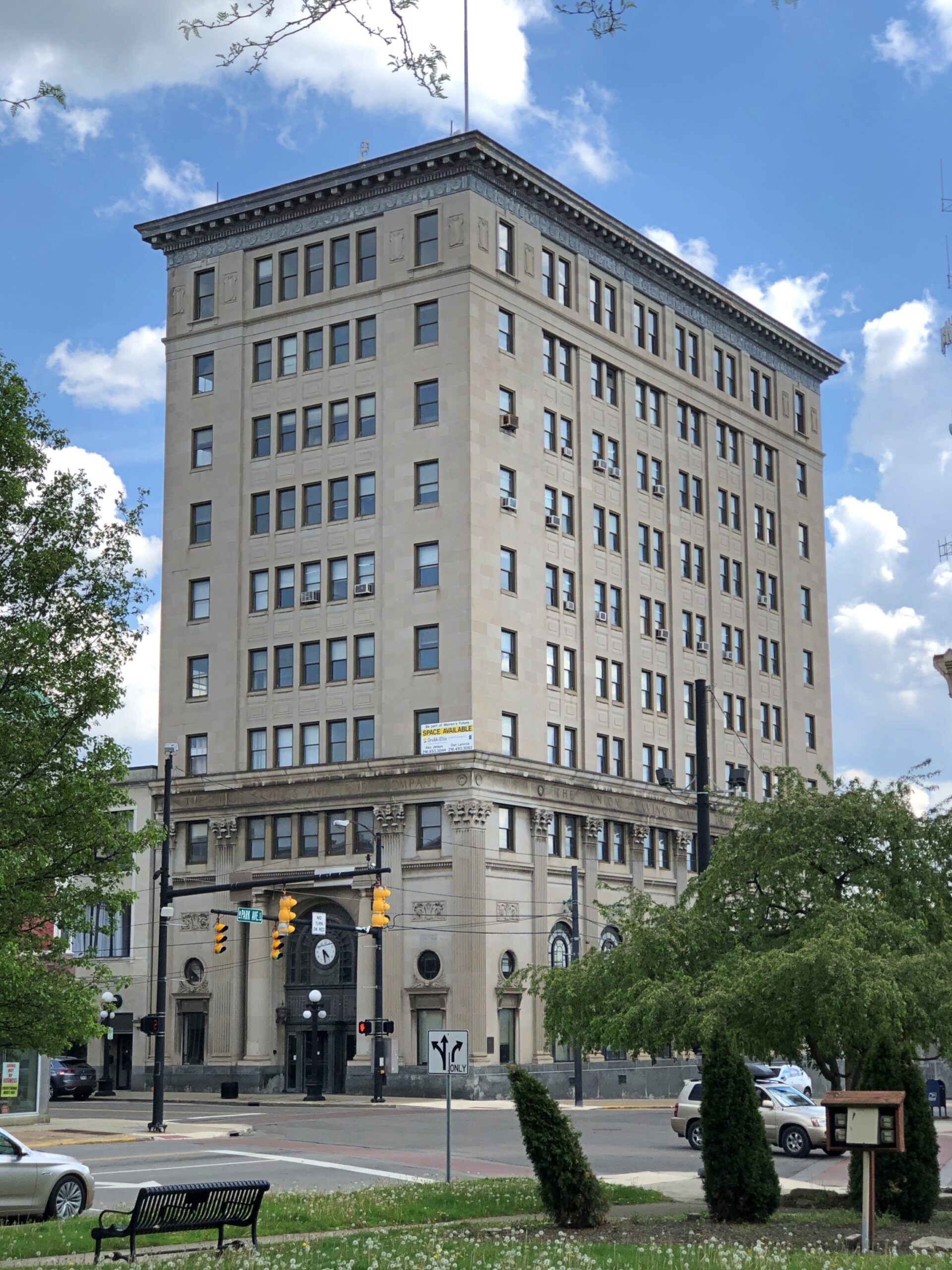
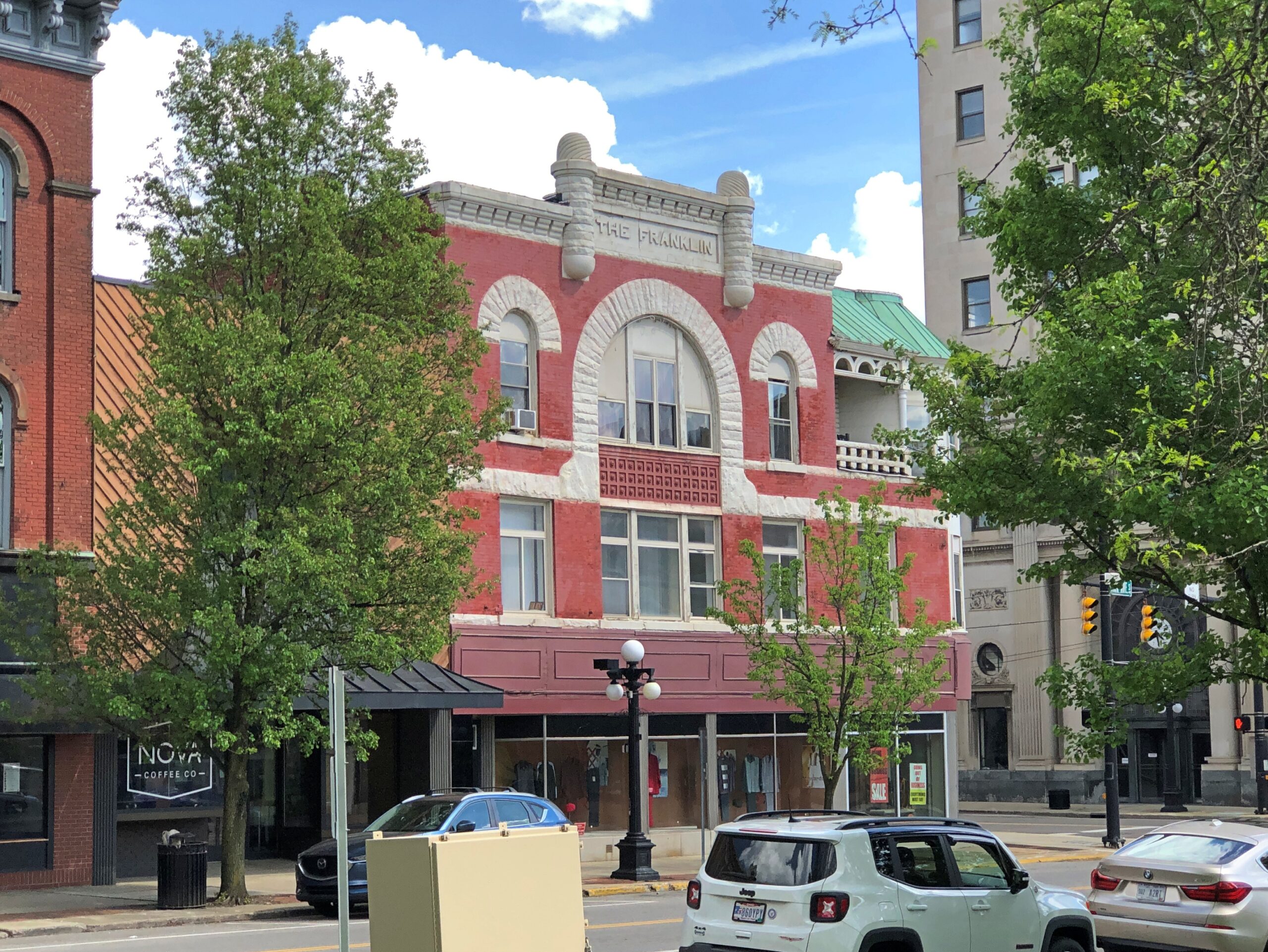
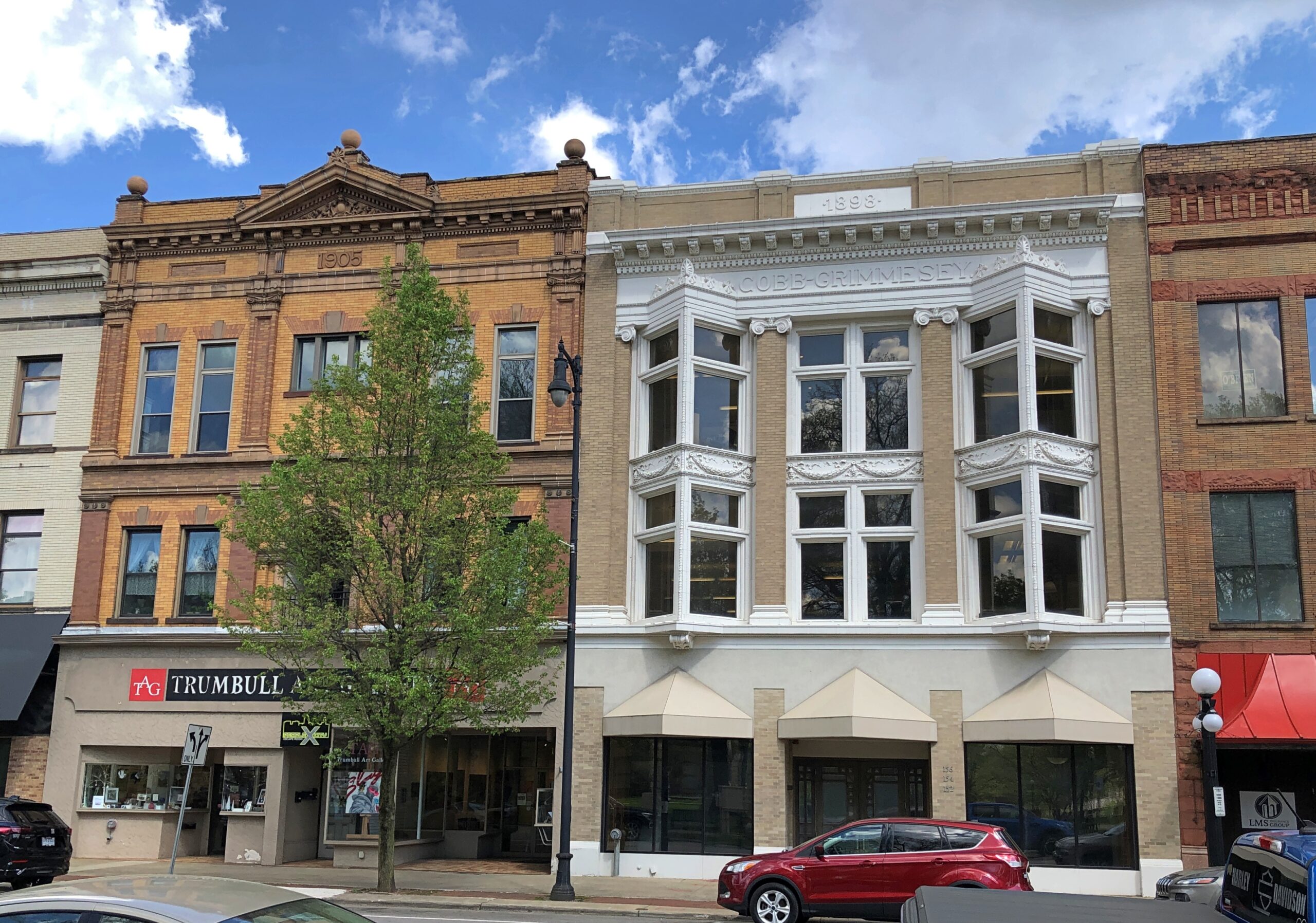
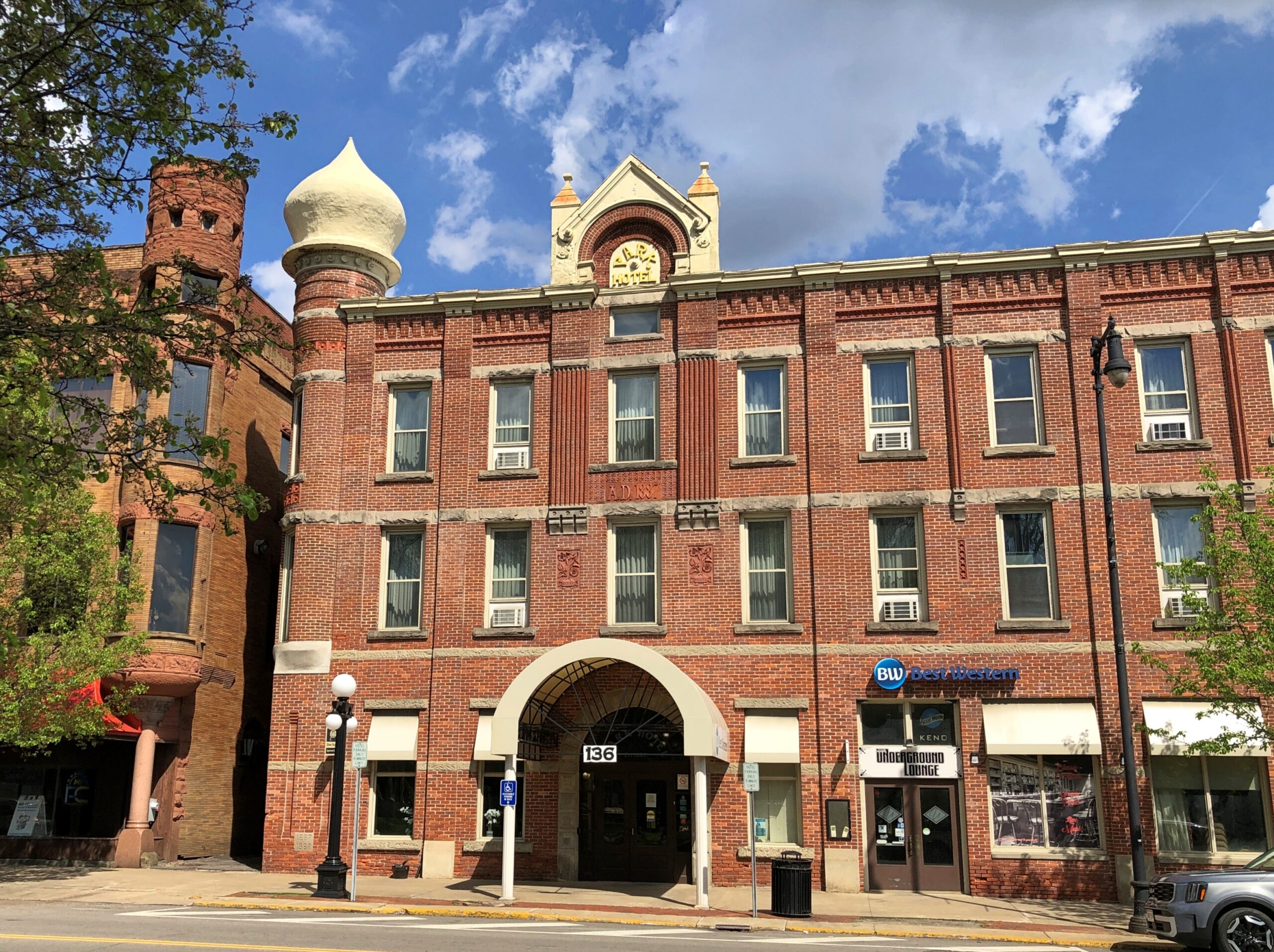
The buildings ringing the courthouse were also worth a look. Warren might not be the industrial hub it once was (though Ohio is making a comeback in that regard), but it isn’t in bad shape, from the looks of things.
That’s what commercial buildings need more of: onion domes.
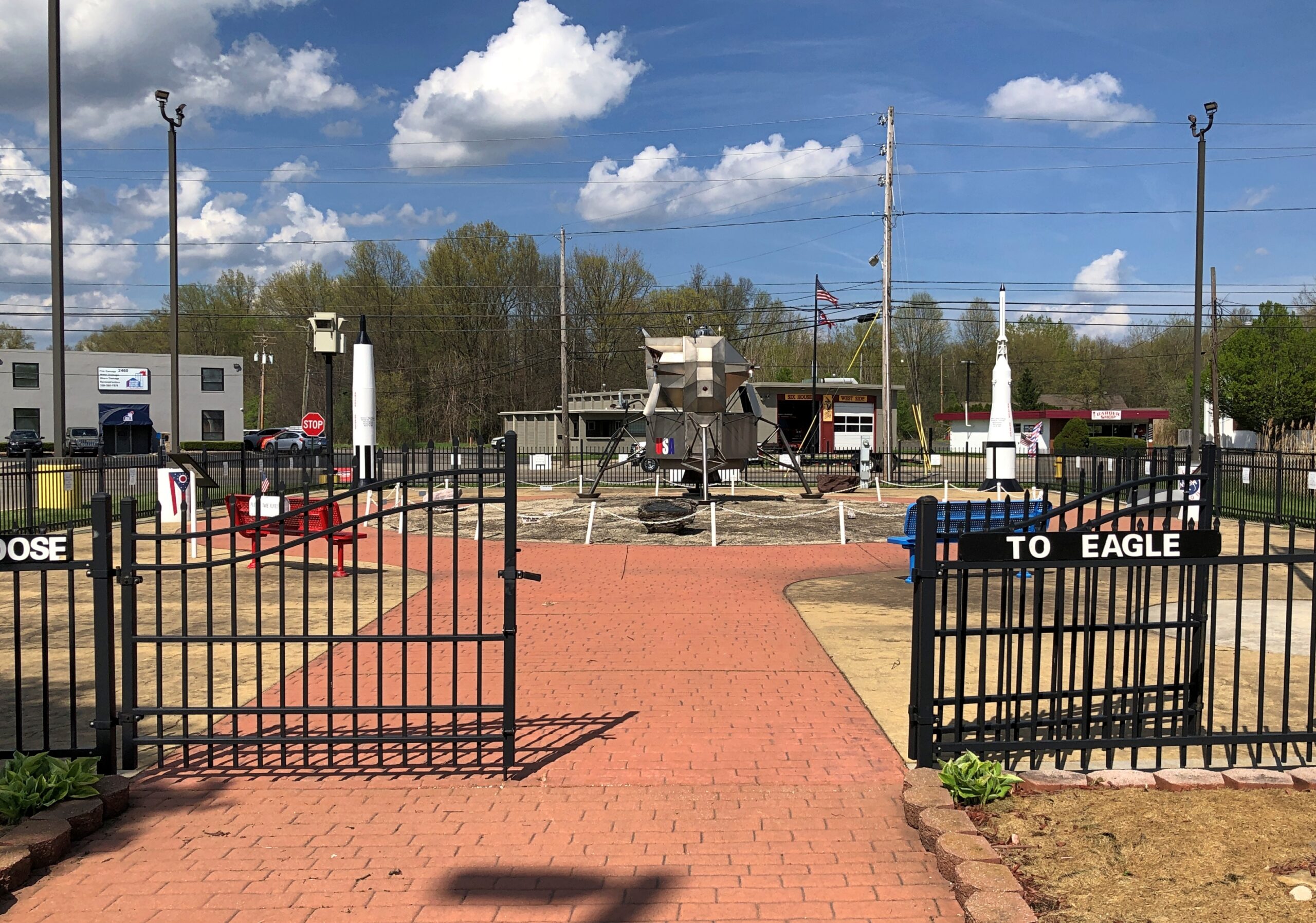
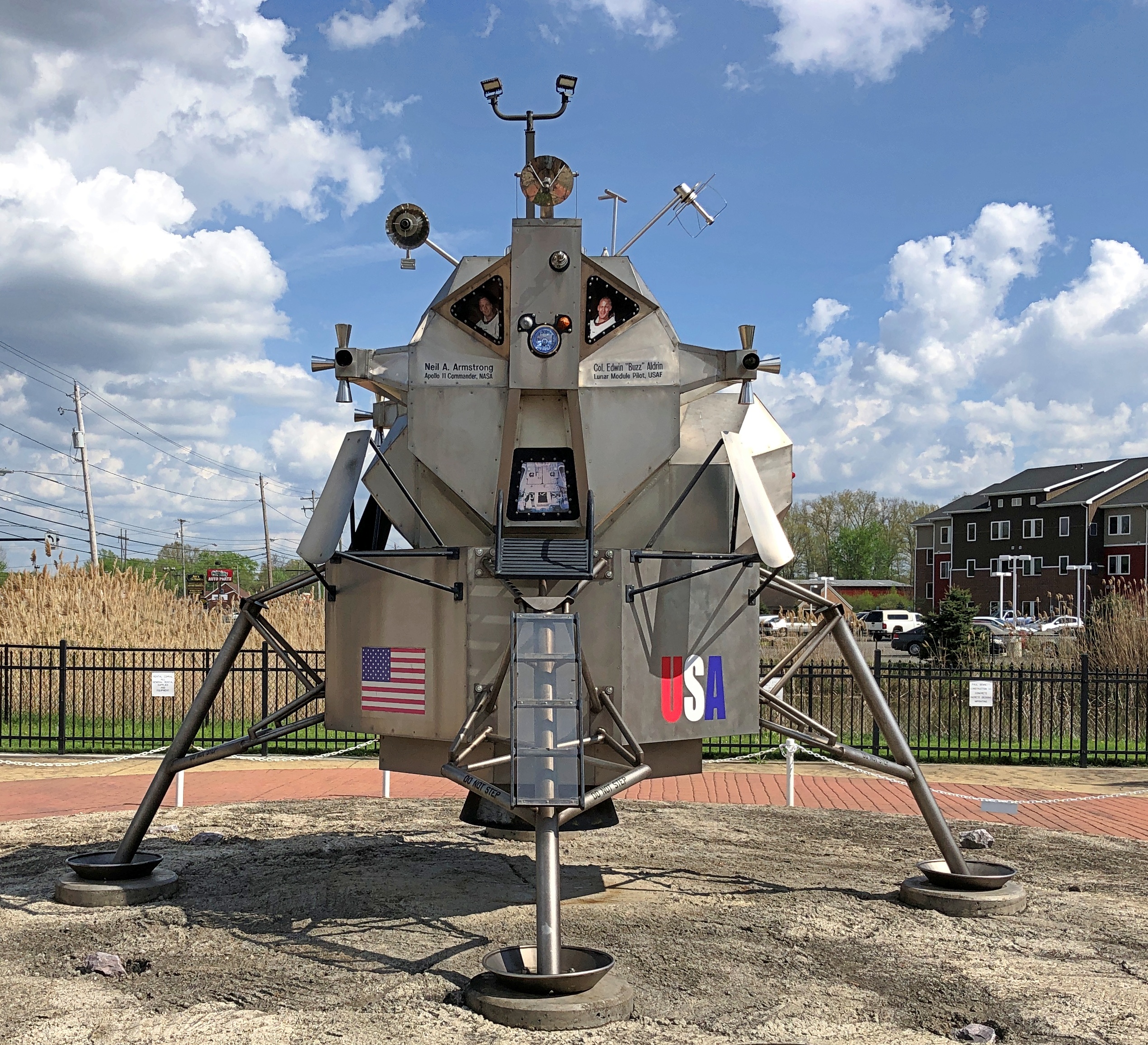
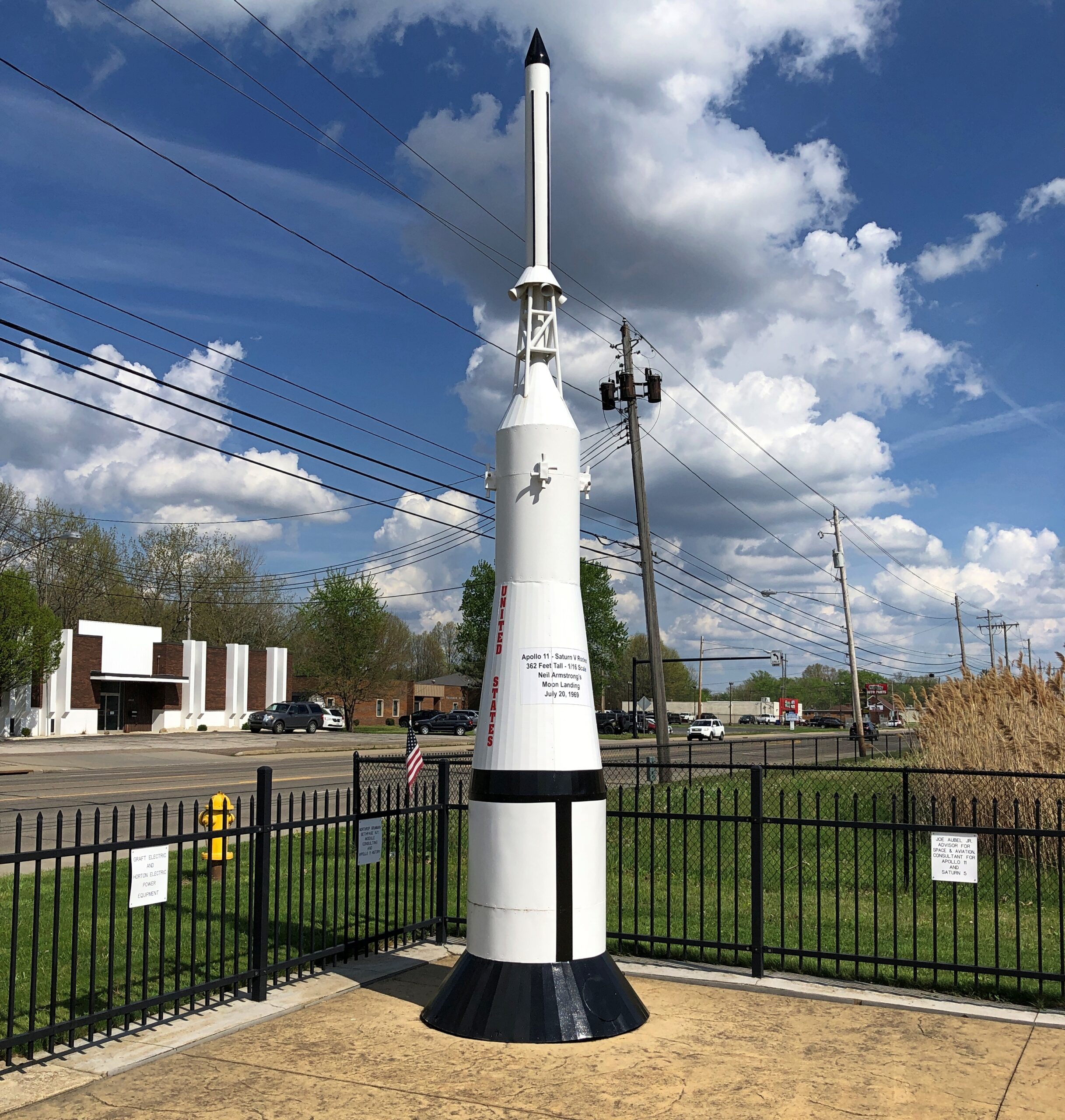
One more place in Warren before I headed west: a replica lunar module on a mock lunar surface.
It’s called “First Flight Lunar Module.” Its web site says: “Neil Armstrong and his family made their home in Warren, Ohio, for a time when he was a young boy. An interest in flying developed at an early age and on July 26, 1936, at the age of 6, young Neil and his father, Stephen, embarked on his first flight in a Ford Tri-Motor airplane – a Tin Goose – from Warren Airways on Parkman Road, now the site of the Apollo 11 First Flight Lunar Module…”
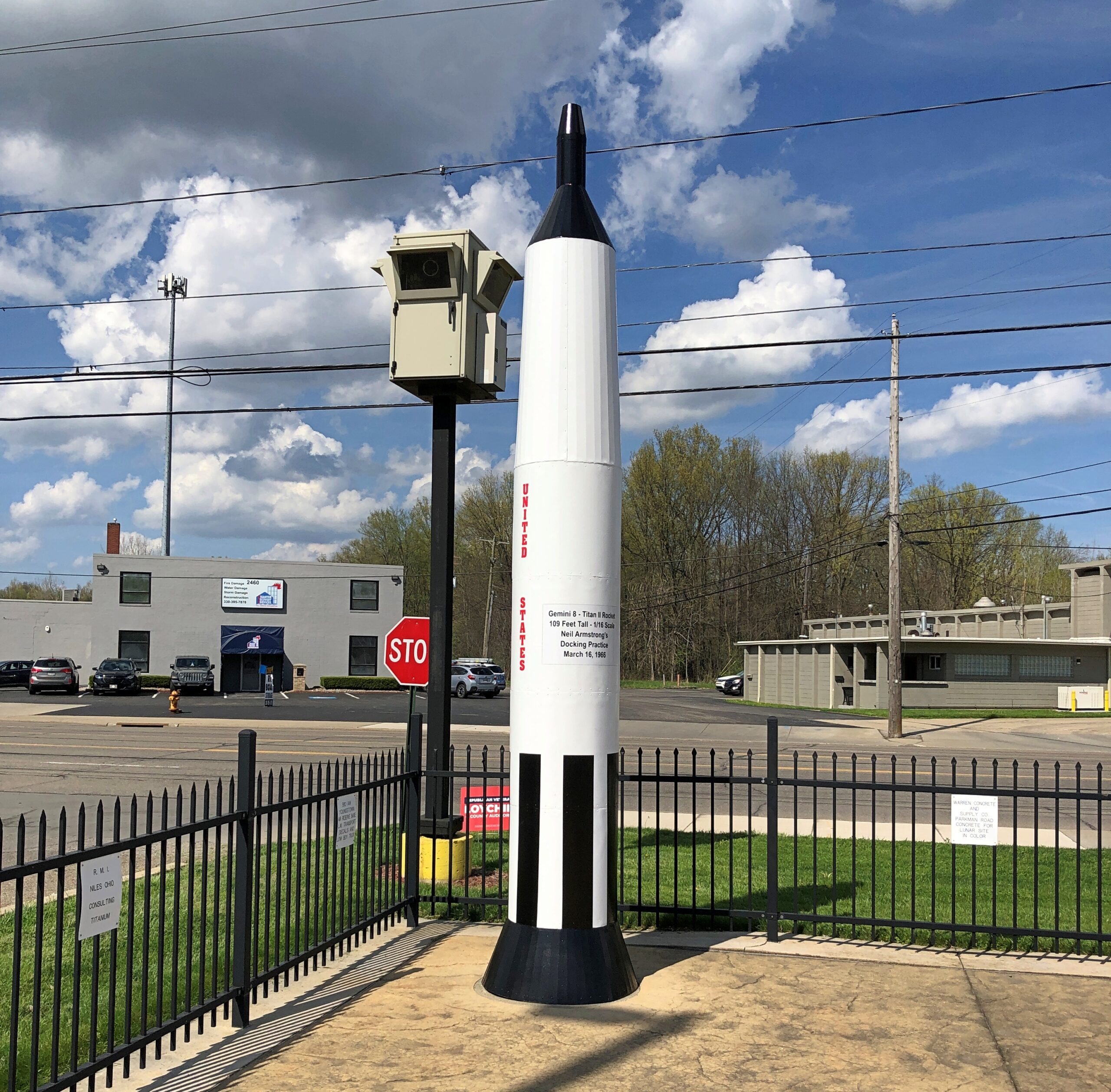
Replicas of Gemini 8 and the Apollo 11 Command/Service Module are also at hand. (And the Escape Tower and part of the third stage, too.)
“Neil’s achievements and ties to the local community inspired retired area photographer Pete Perich’s dream to create a memorial honoring Armstrong. Through the vision of Pete’s daughter, Linda Carpenter, and the technical assistance of Lisa Goetsch, the long-time dream began to become a reality in the summer of 2001.”
Cool. Another benefit of nonlinear tourism for me.


.svg)