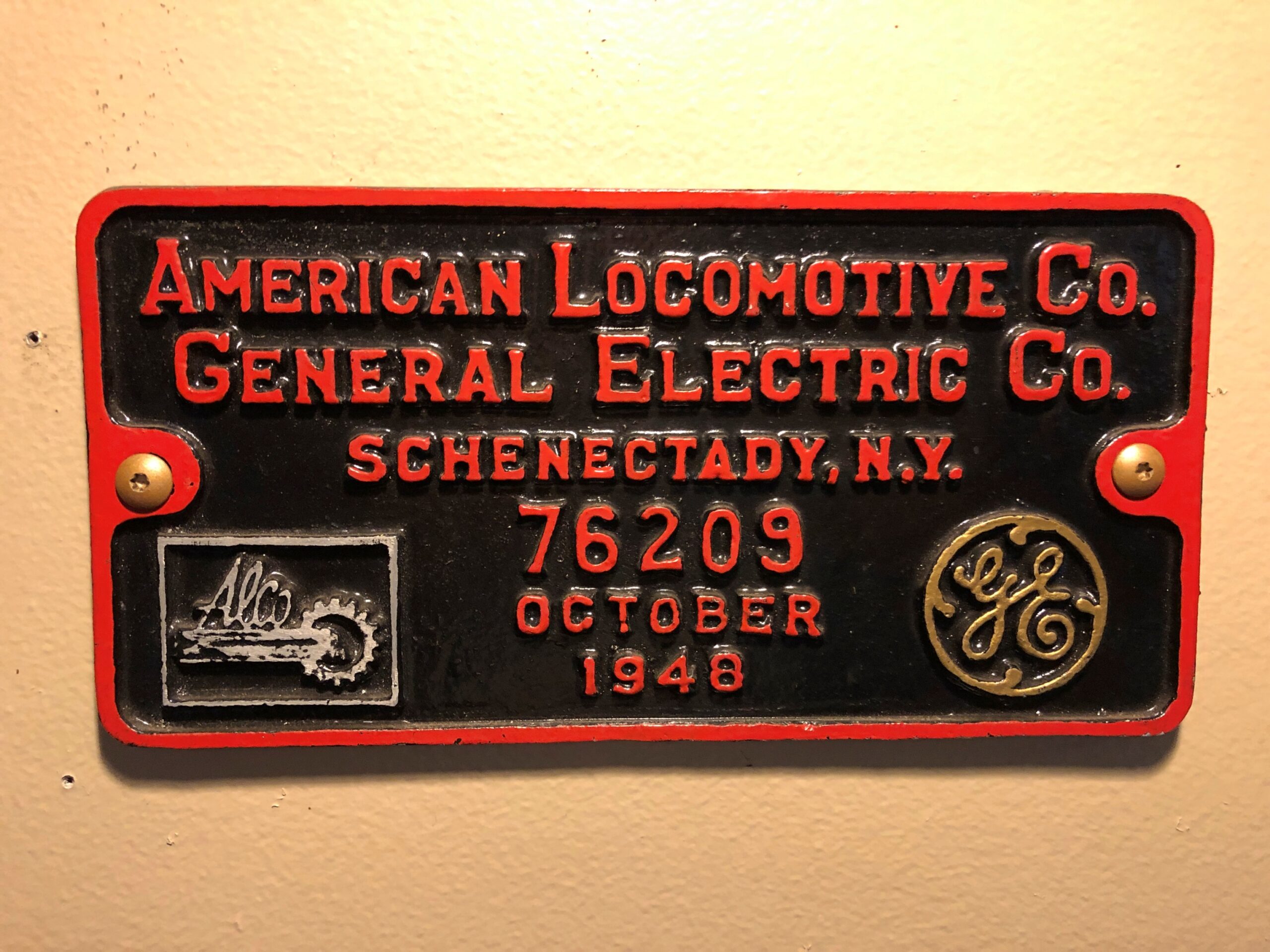
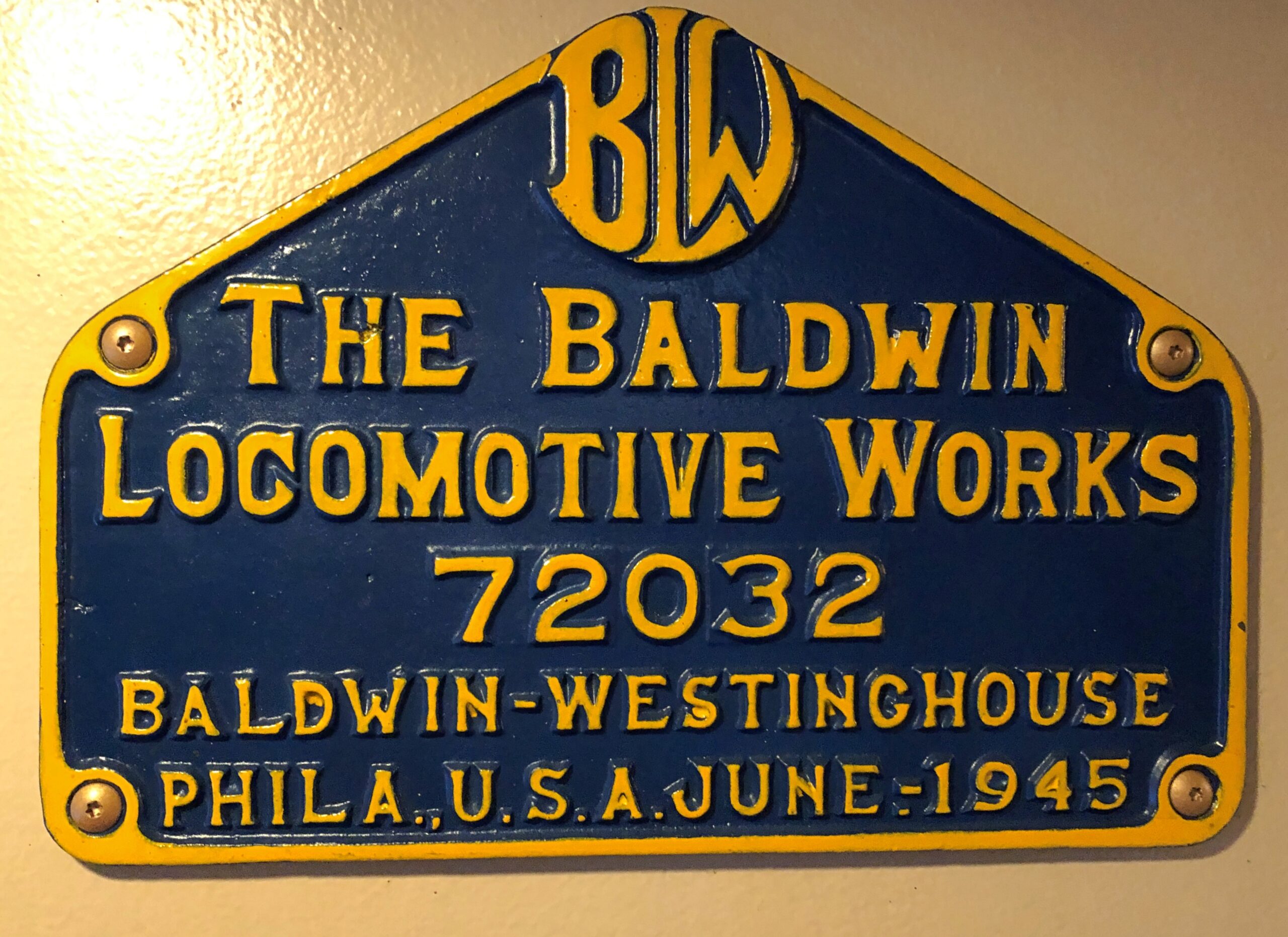
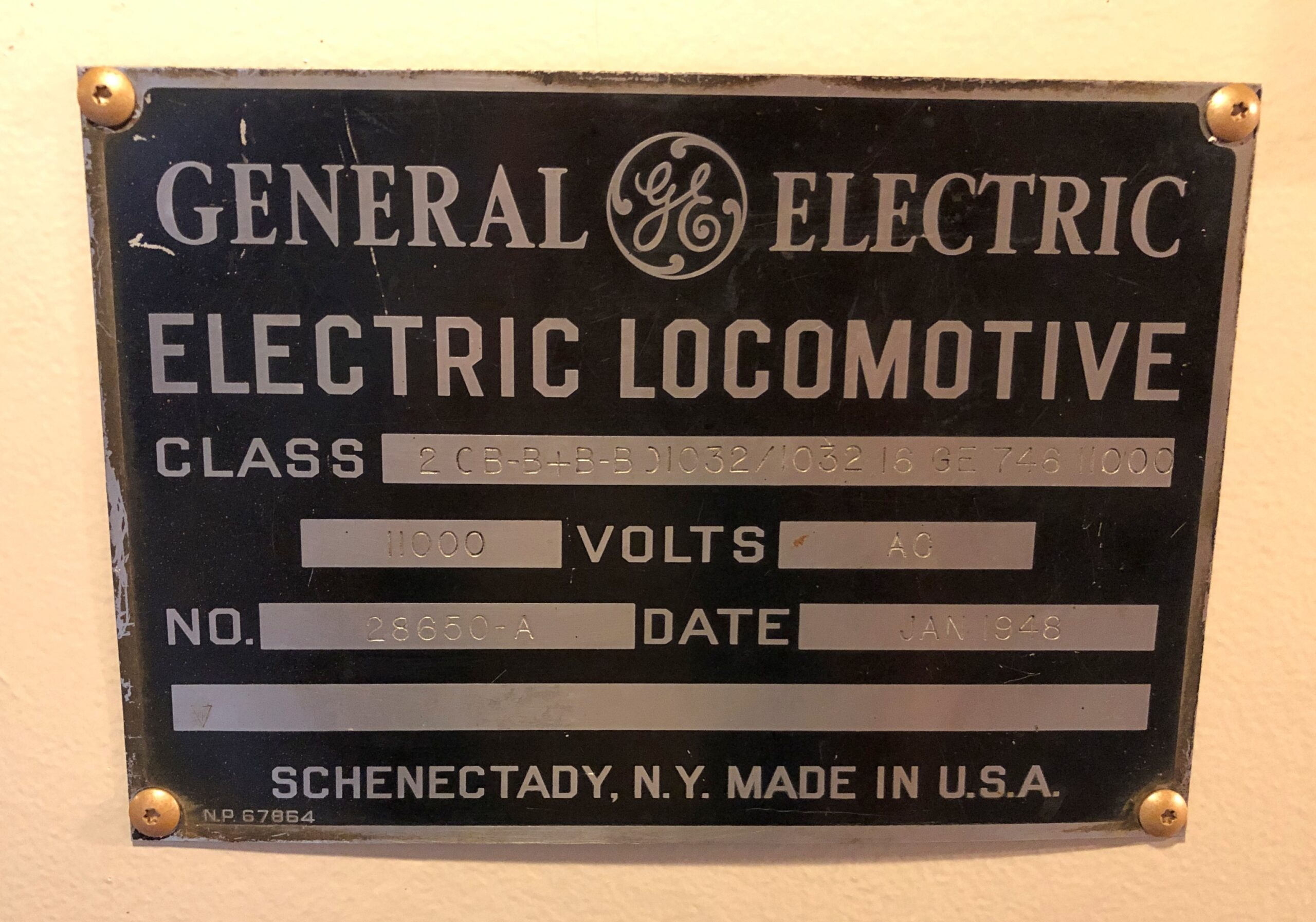
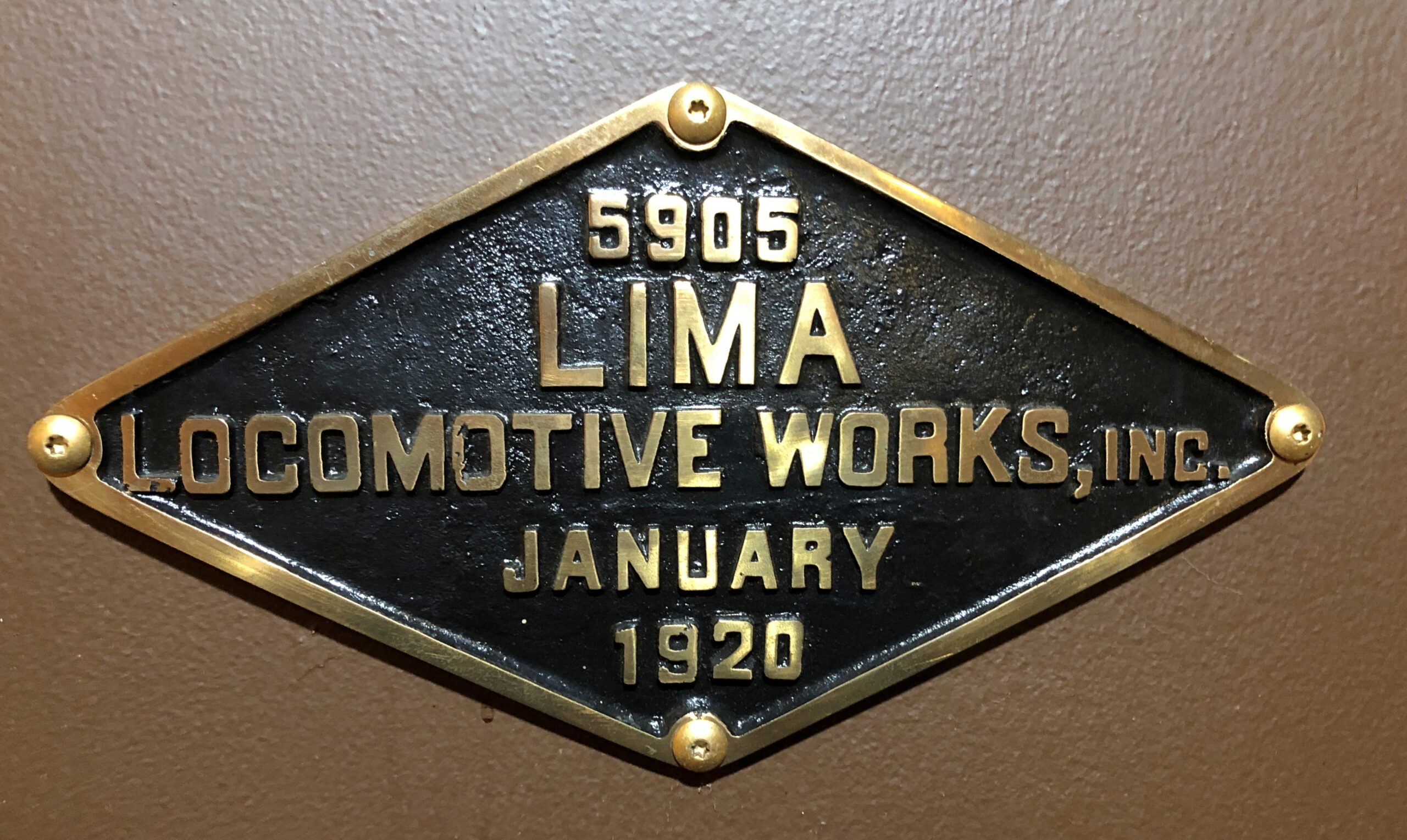
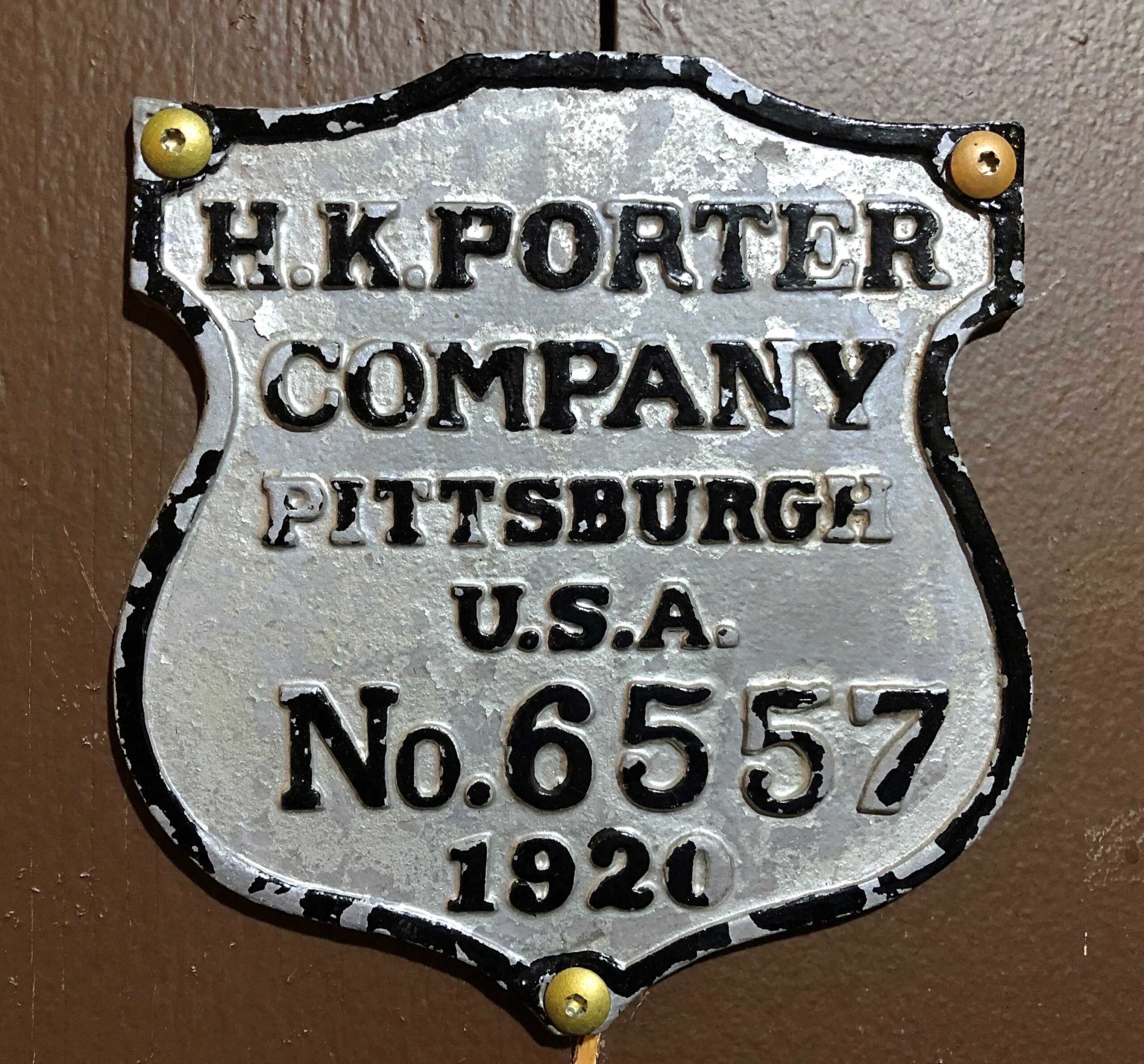
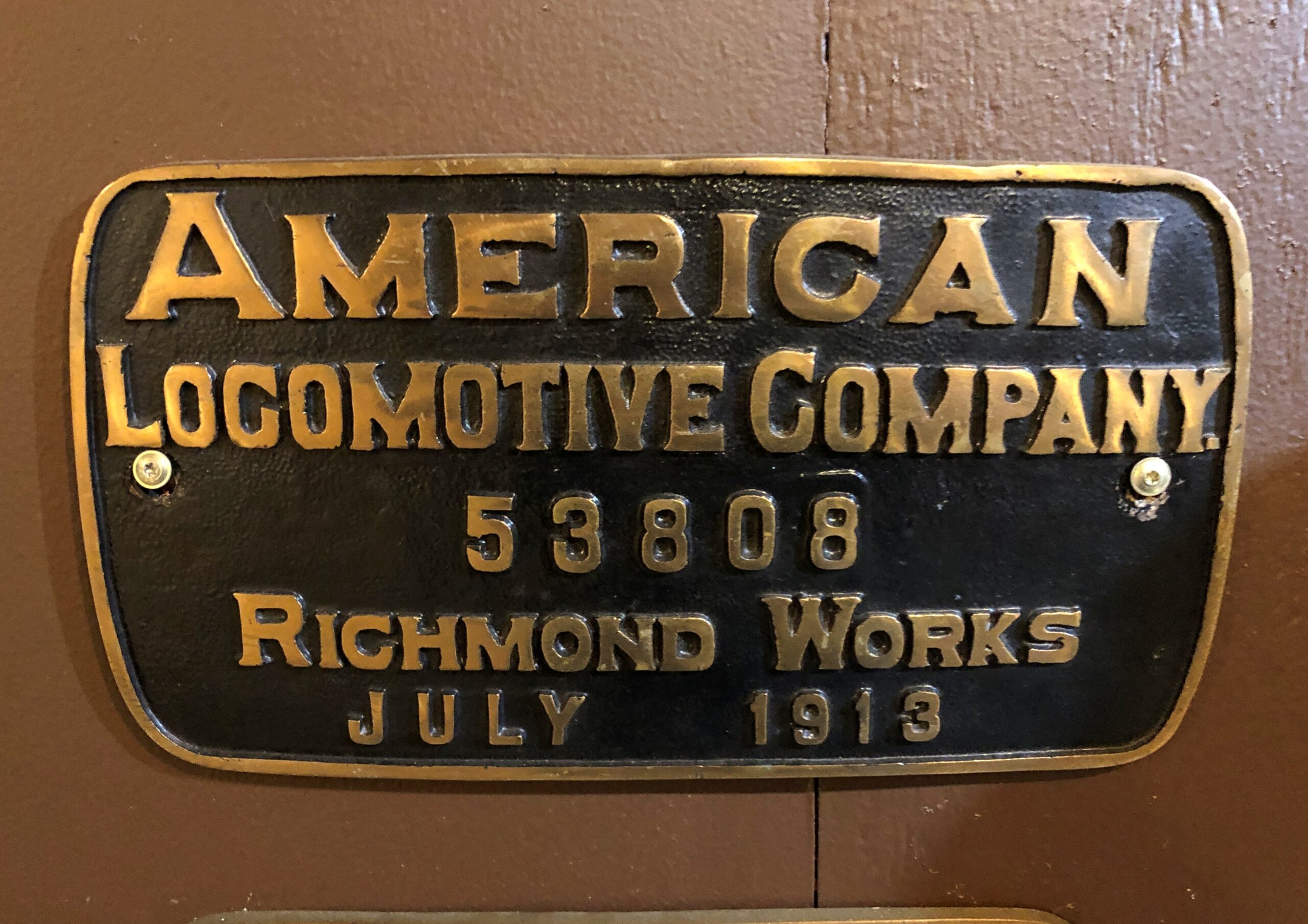
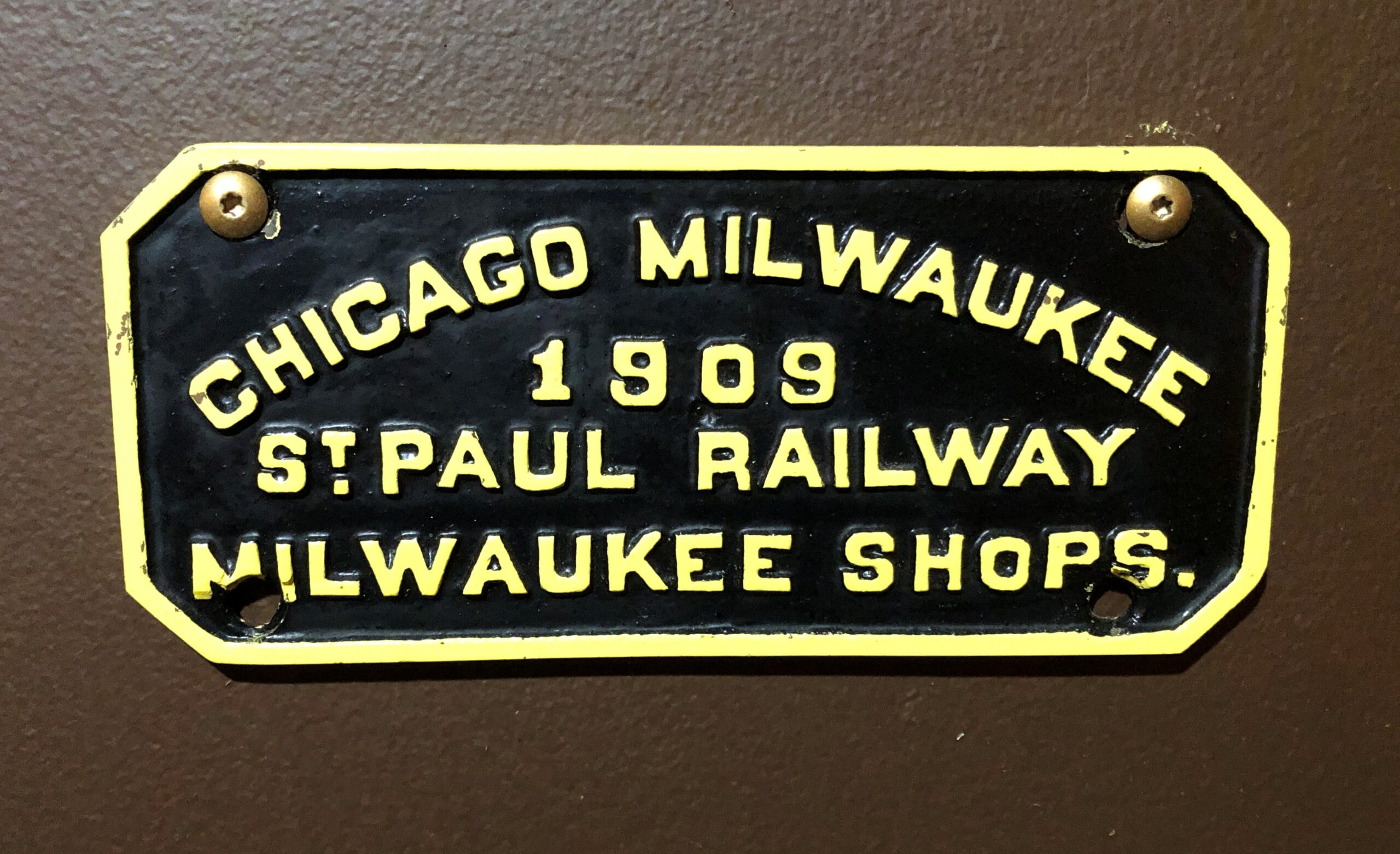
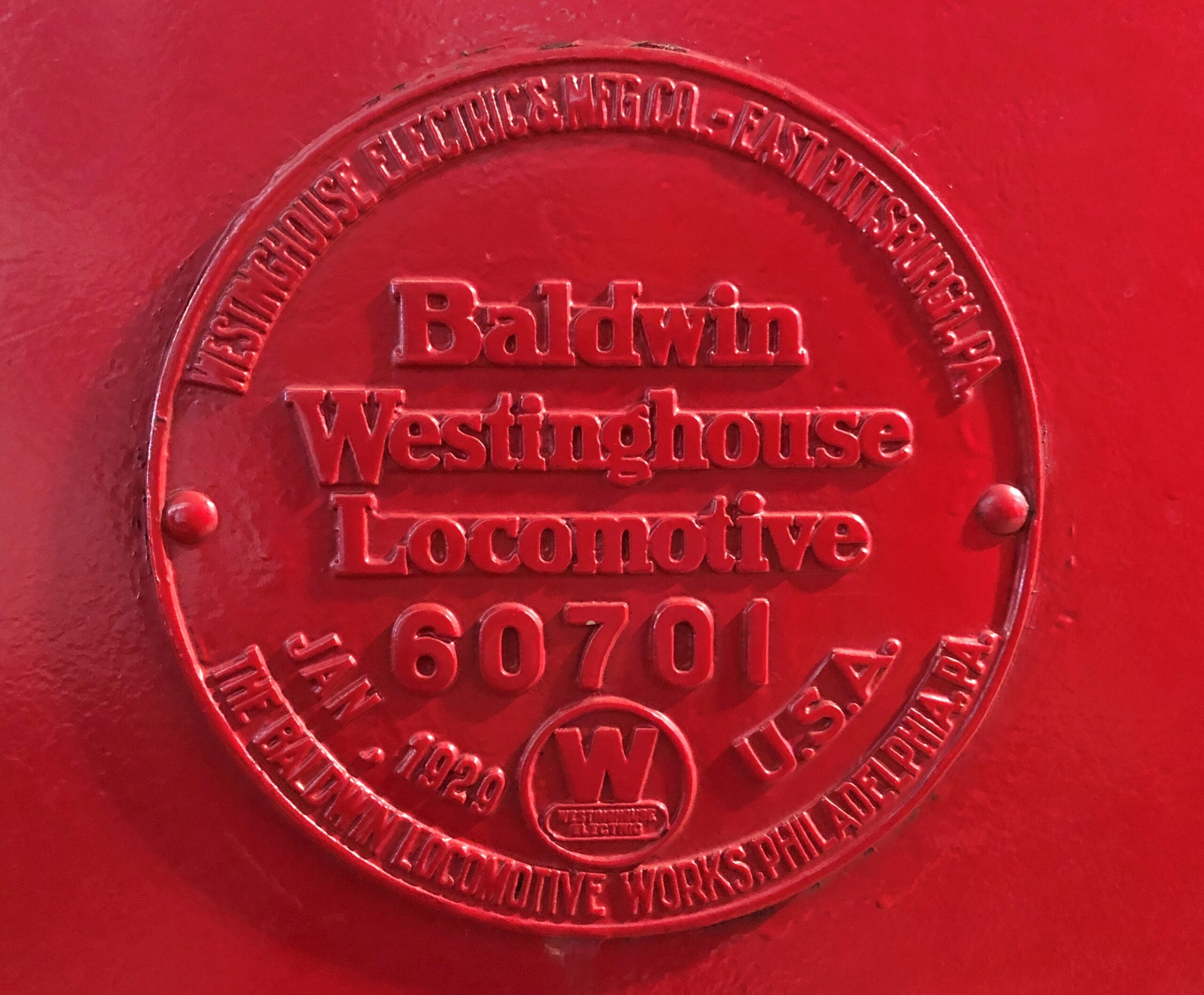
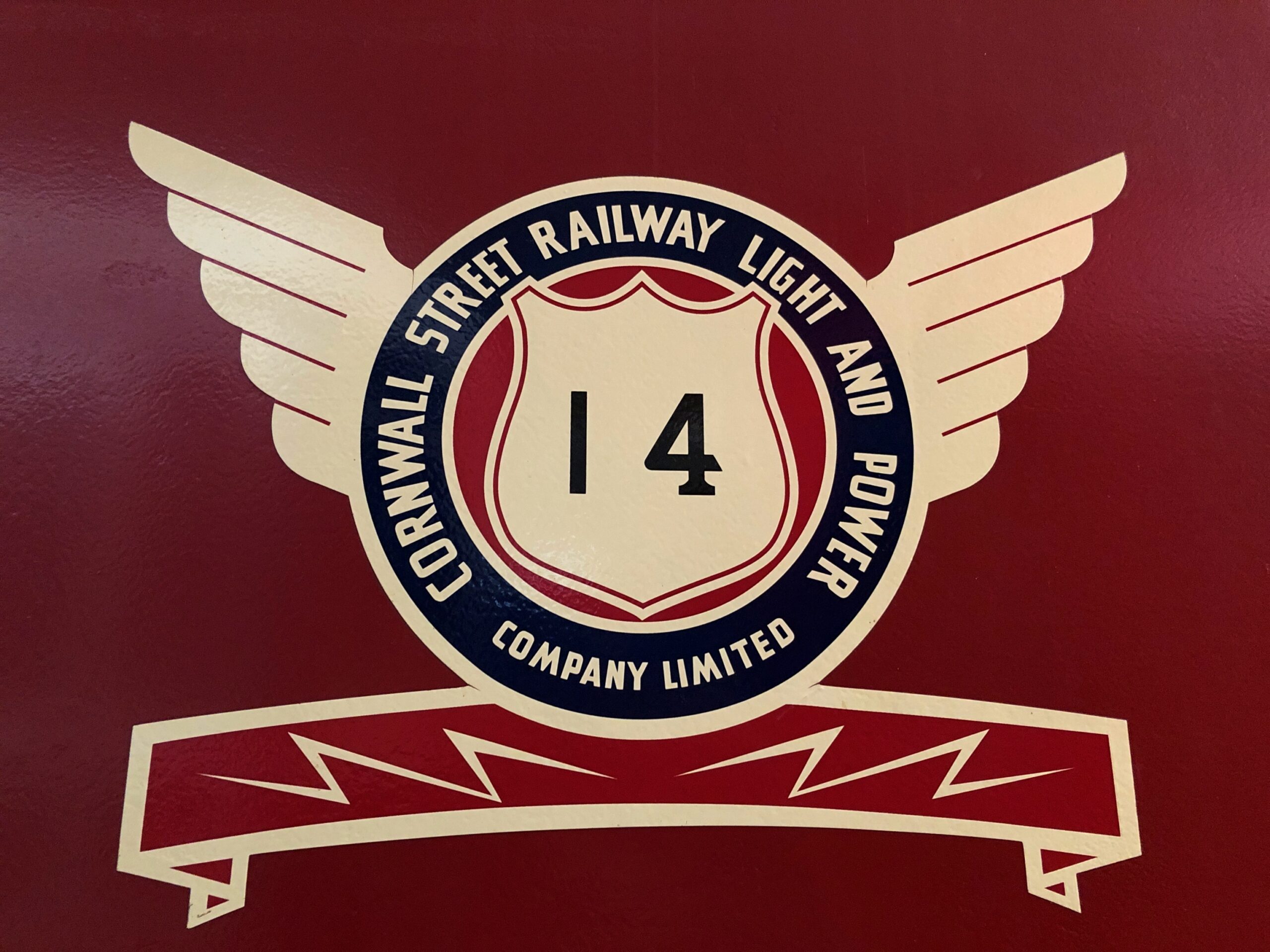
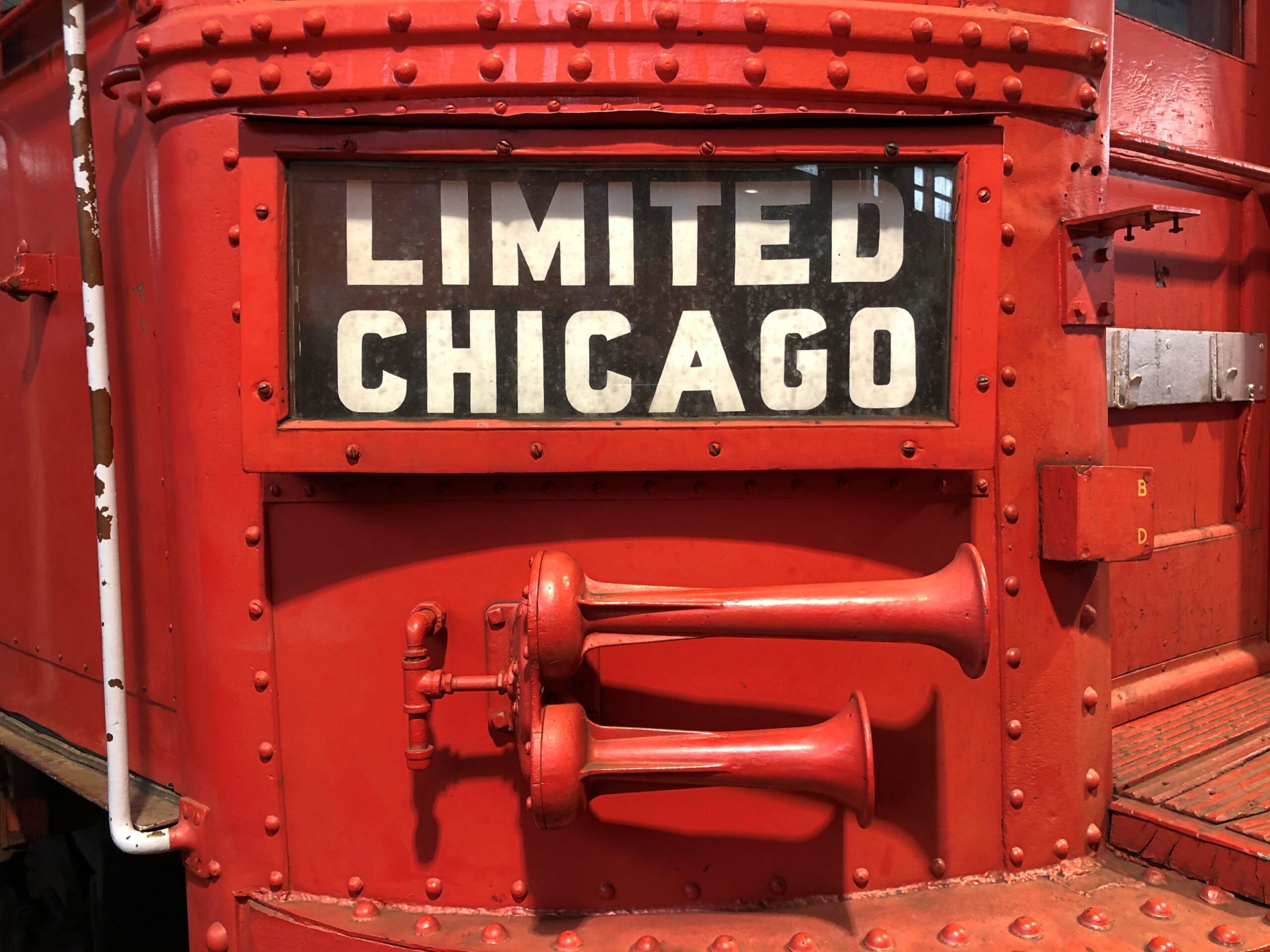
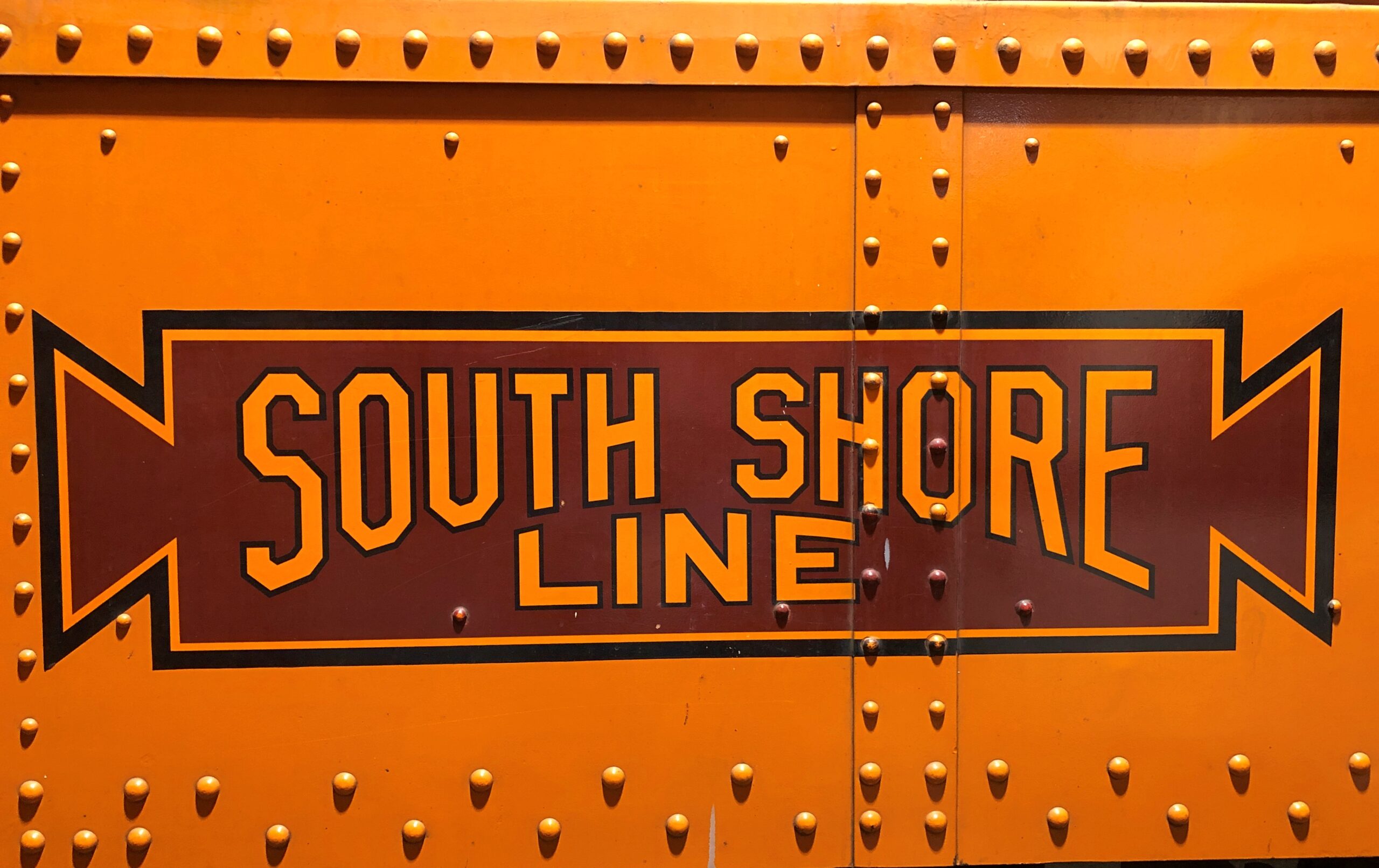
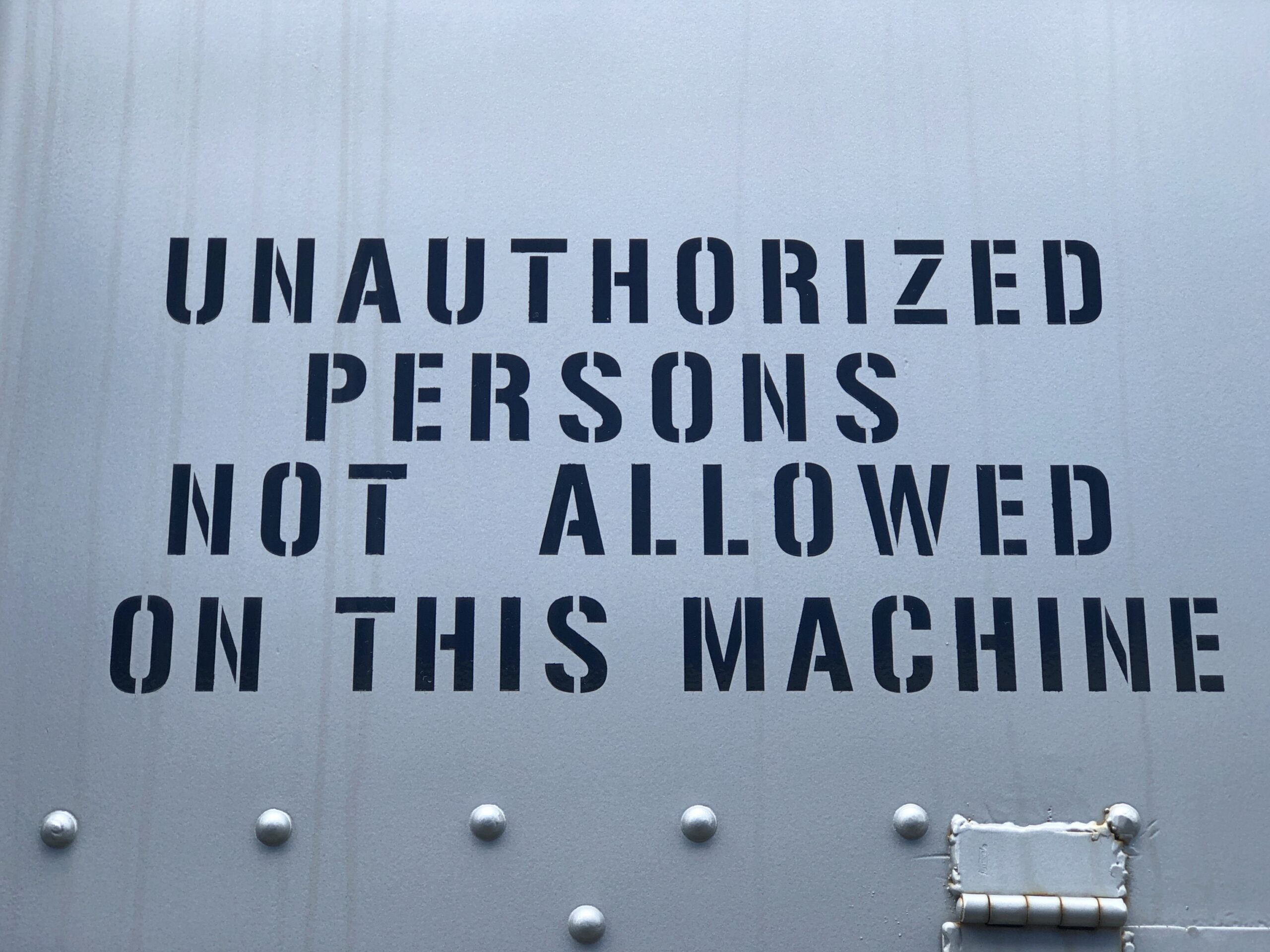
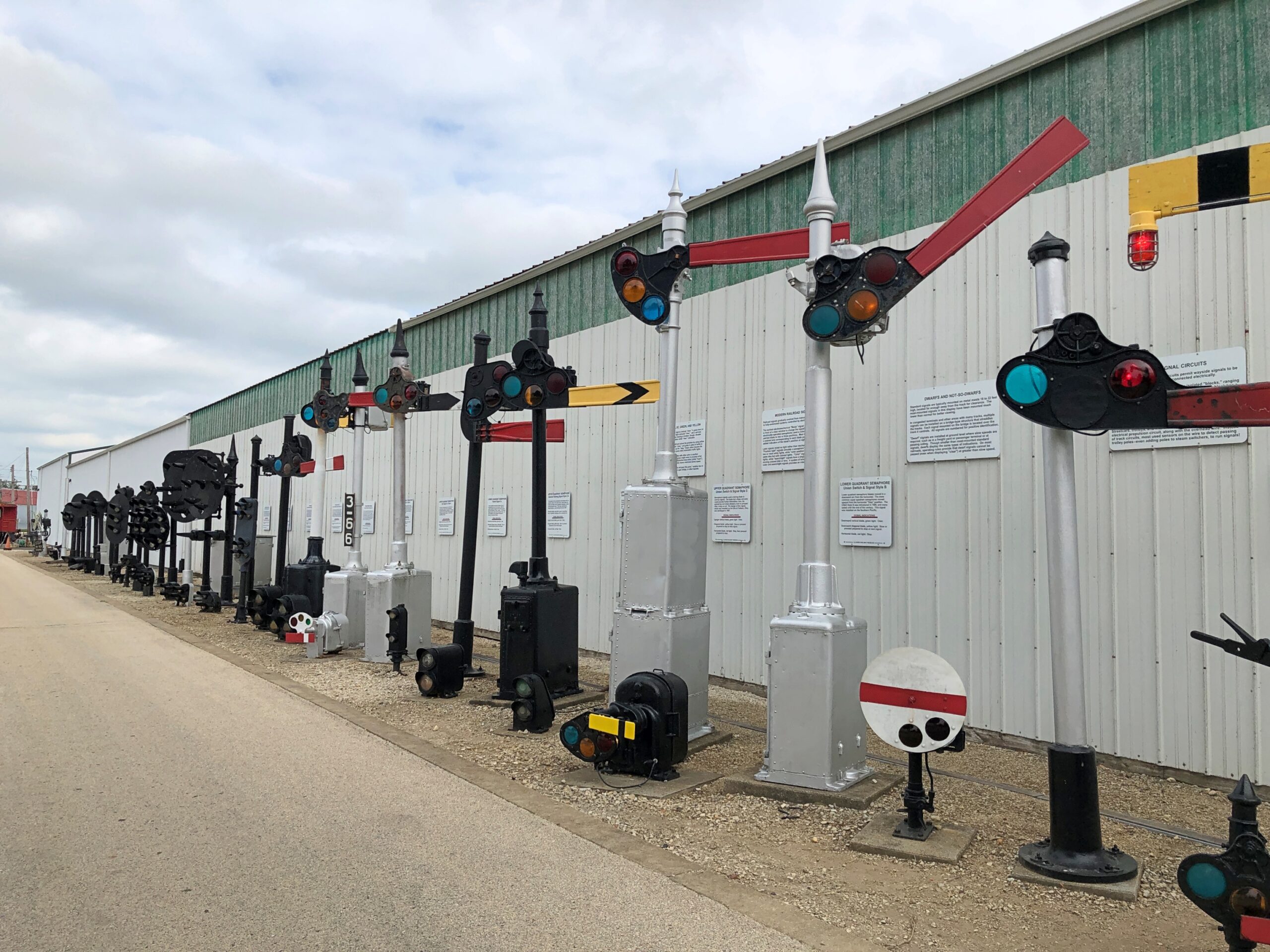
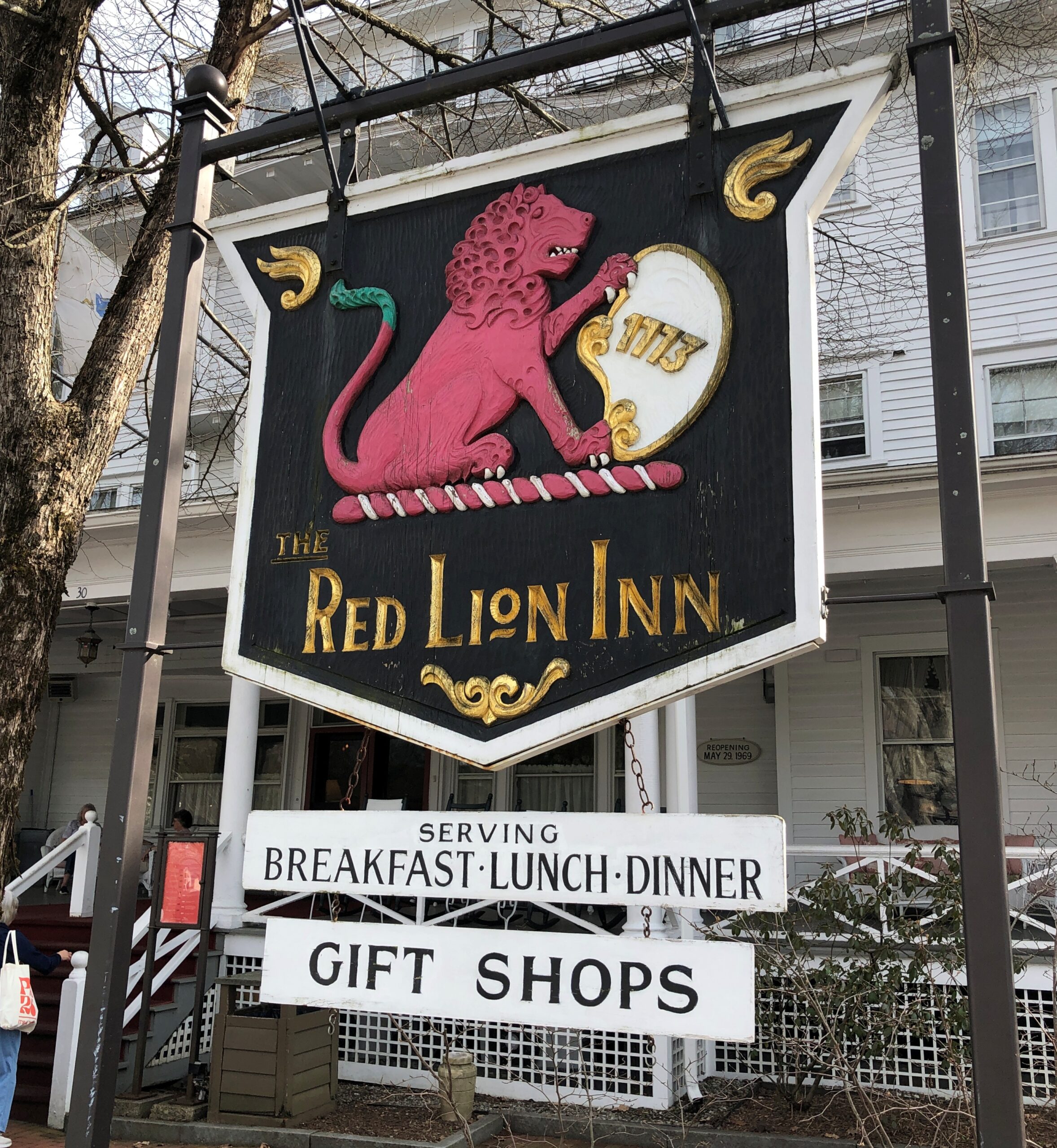
The Illinois RR Museum, as mentioned, has plenty of impressive rolling stock, some of which actually rolls. But like any good museum, the showpieces aren’t the only pieces. The small items have their own stories to tell, or at least to suggest. At one point I went into a repurposed car — I forget what kind of car it was — and found myself in the Builder Plate Hall.
Builder Plate? “In this hall are the builder plates from the builders of steam, electric, diesel, interurban, streetcars and passenger cars,” said a sign in the car. “A builders plate is like the VIN plate on a car. It gives the car a serial number that is unique to that car. A builder plate can service [sic] the same purpose. It is used to identify a locomotive.”
Evocative, these plates.
Evoking the rumble of finished locomotives on tracks, but also the din and heat of the factory floors where working men put together these machine-age power marvels to specs that began on drafting tables by gas light and then early electric bulbs.
I don’t want to romanticize such hard jobs too much, but it’s hard not to.
Are all locomotives made in China in our time? No. According to this Wiki list, there are many more defunct U.S. locomotive makers than not, but there are still active ones, including major repair facilities. Good to know.
And damn it, every time I look into a subject like that, I uncover a new destination. In this case, the Altoona Works.
At the Illinois RR Museum, the cars themselves offer detail. Sometimes builder plates.
Or branding.
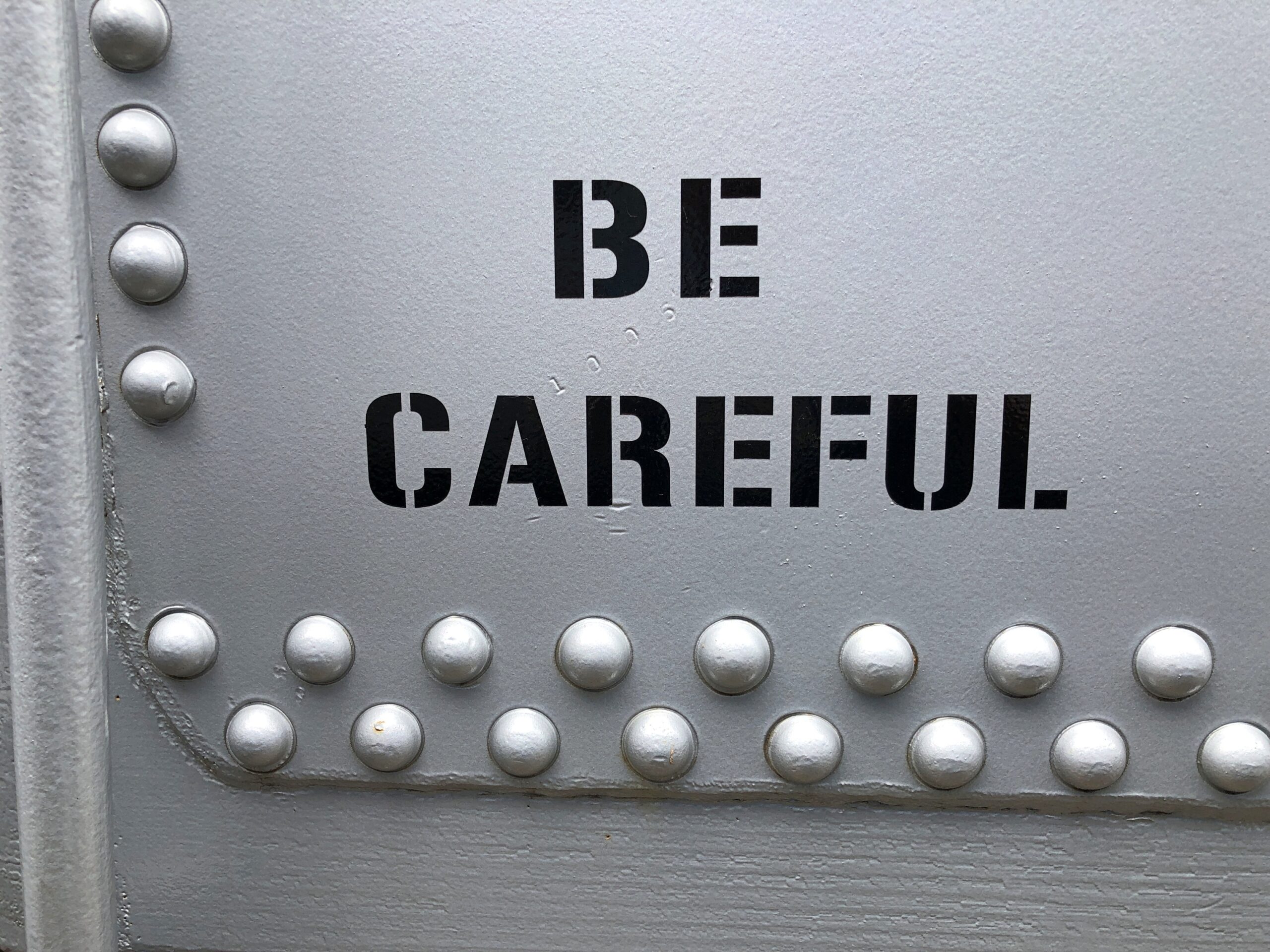
Or warnings.
A curious thing to put on your train, but there’s a story.
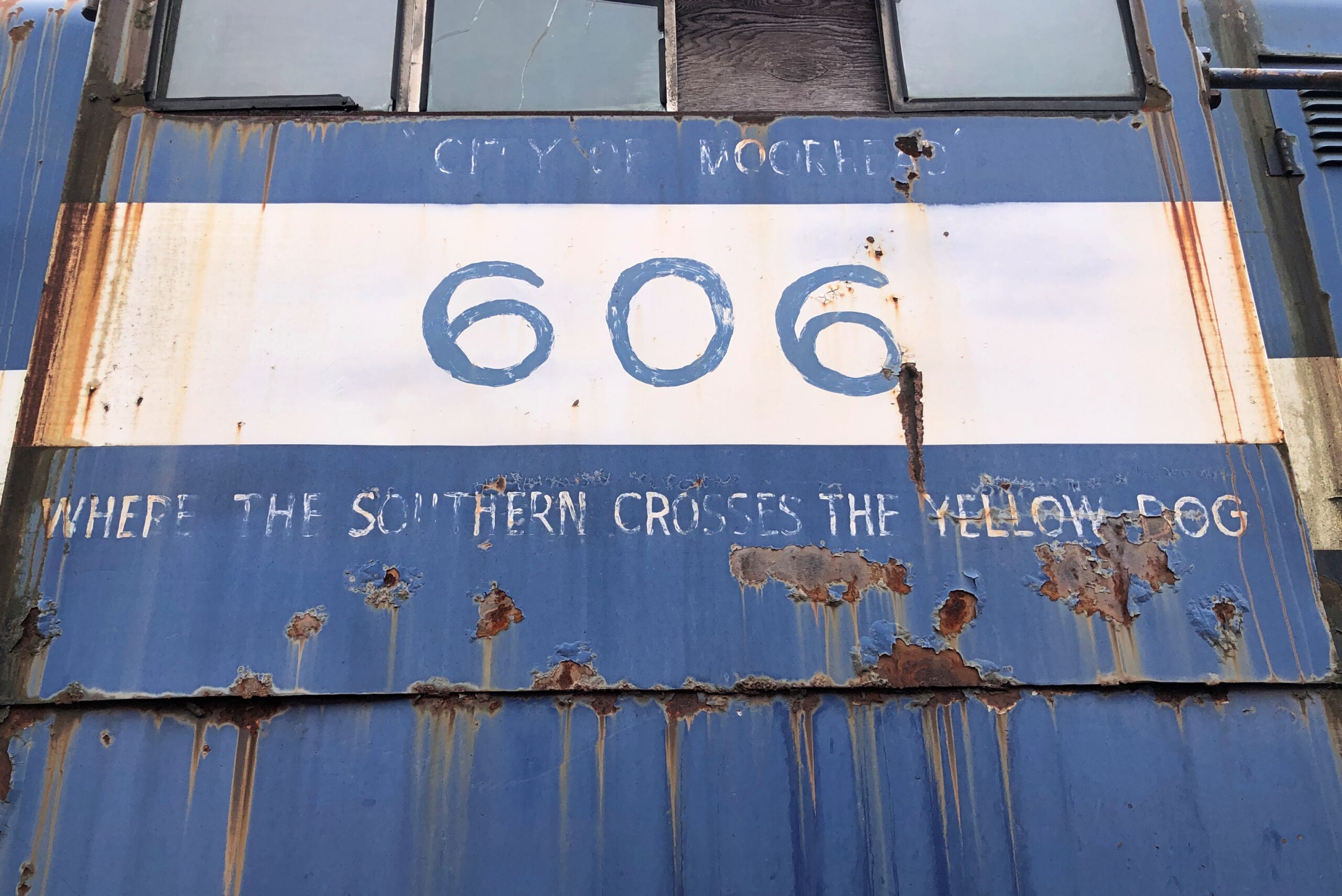
The train, or at least the locomotive, looks to have a name: The City of Moorhead. Where the Southern Crosses the Yellow Dog.
“W. C. Handy, ‘The Father of the Blues,’ immortalized the crossing of the Southern Railway and the Yazoo Delta (‘Yellow Dog’) Railroad at Moorhead in his 1914 song ‘Yellow Dog Rag,’ better known under its later title, ‘Yellow Dog Blues,’ ” notes Mississippi Blues Trail. “Handy wrote that he first heard the line ‘Goin’ where the Southern cross the Dog’ sung by a guitarist at the Tutwiler train station (c. 1903). Moorhead became a hub not only of rail transportation but of blues activity in local juke joints.”
A more recent interpretation of the song is, of course, on YouTube.
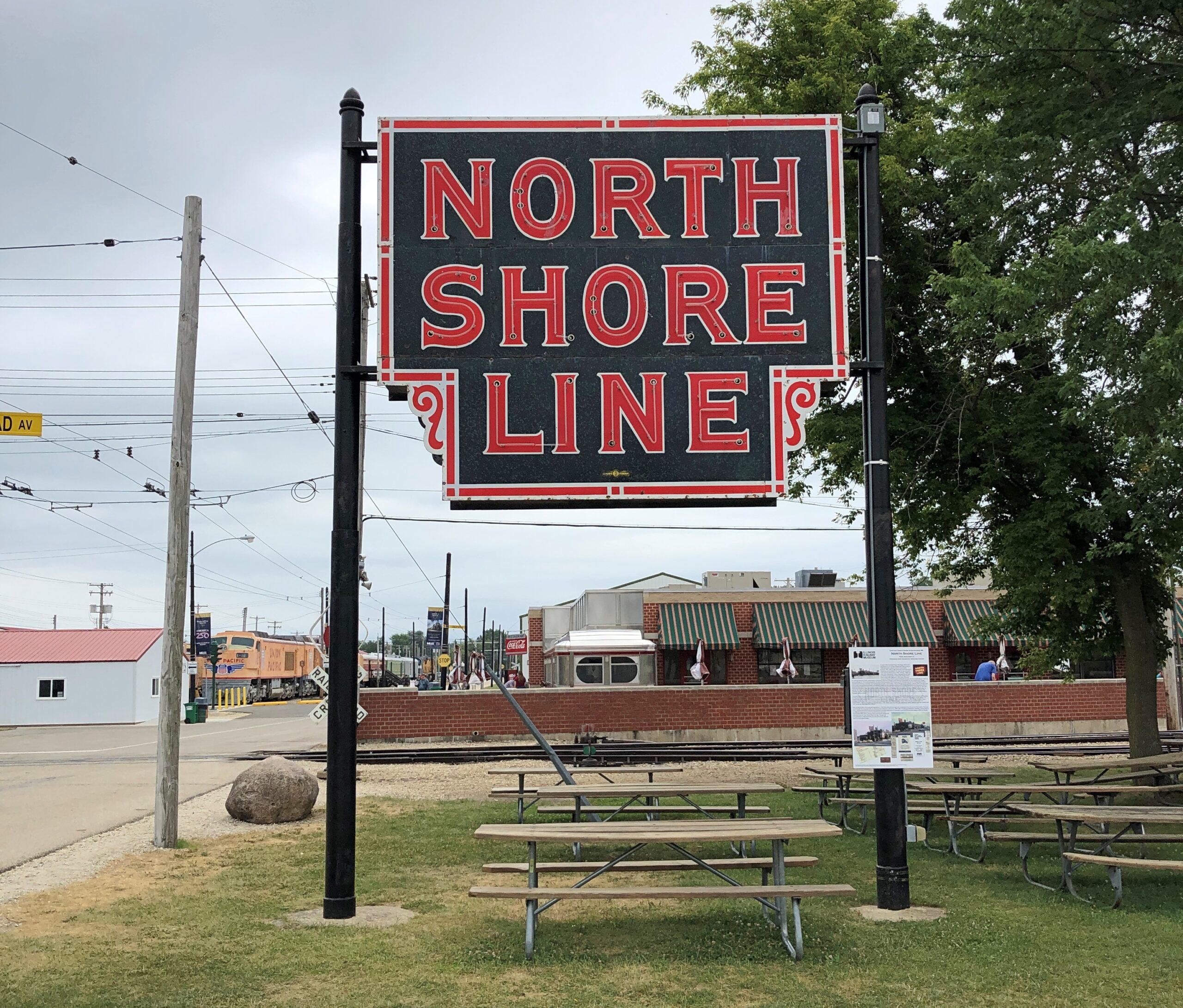
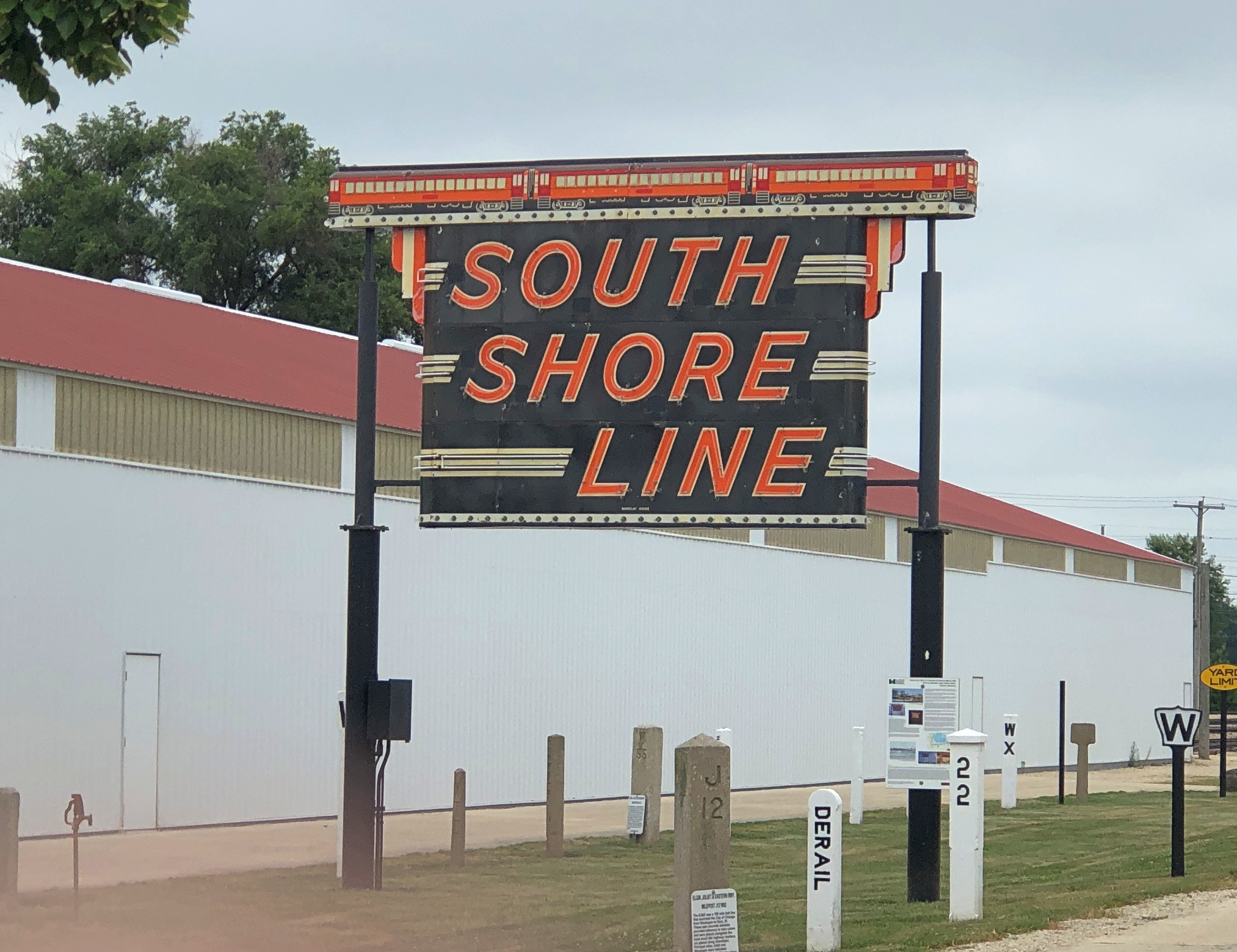
Larger signs. Where there’s a north, there’s a south.
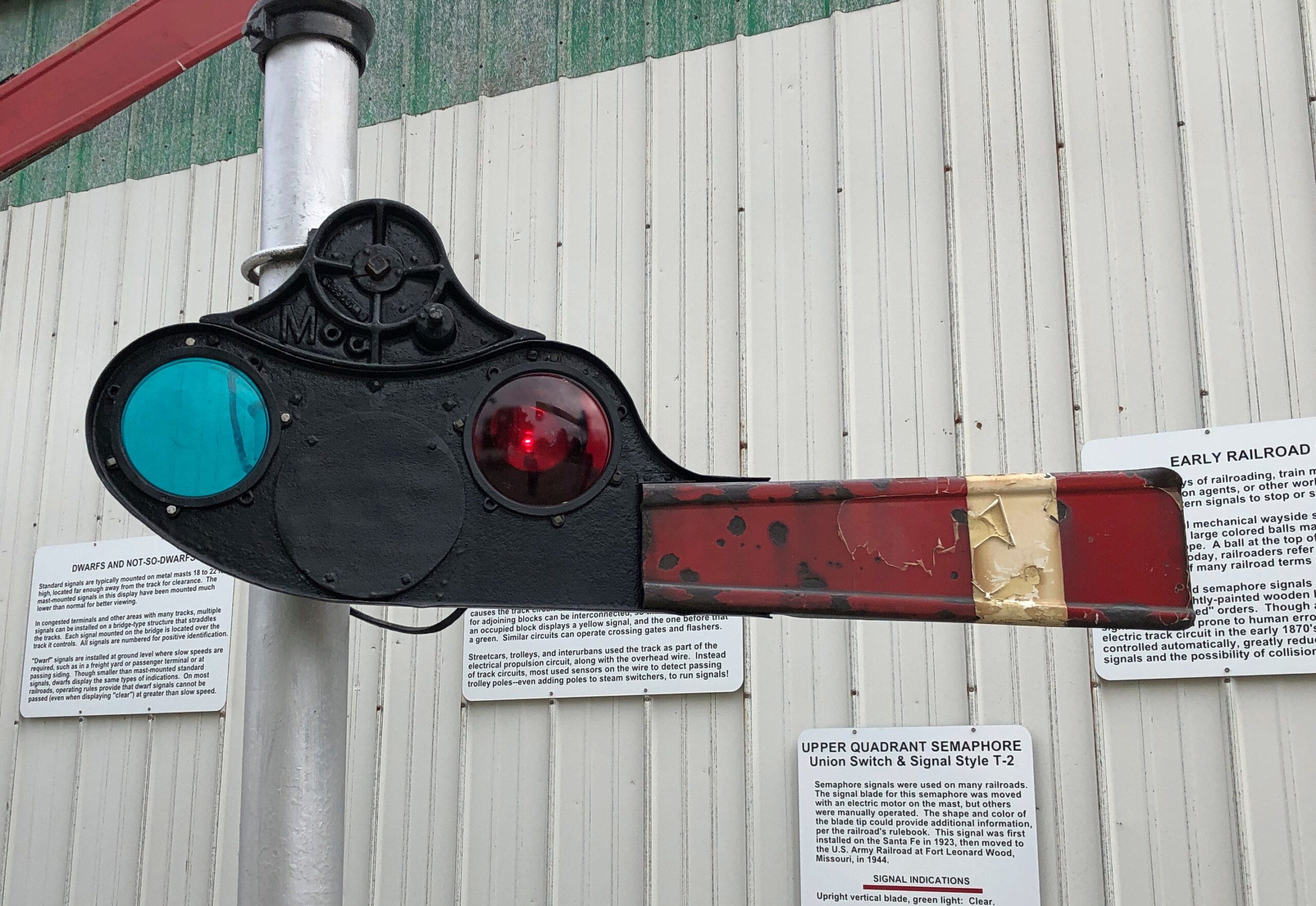
Signals.
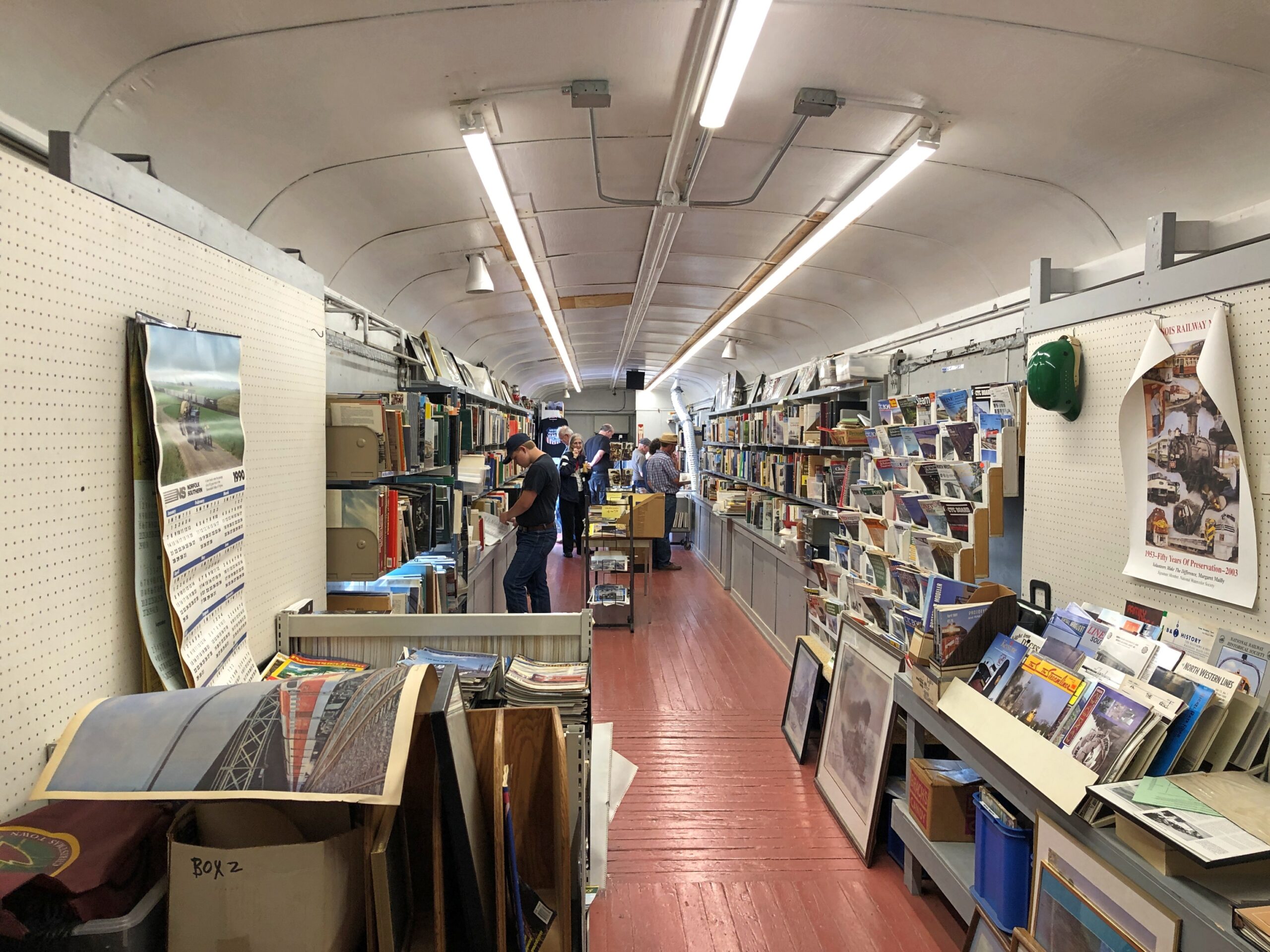
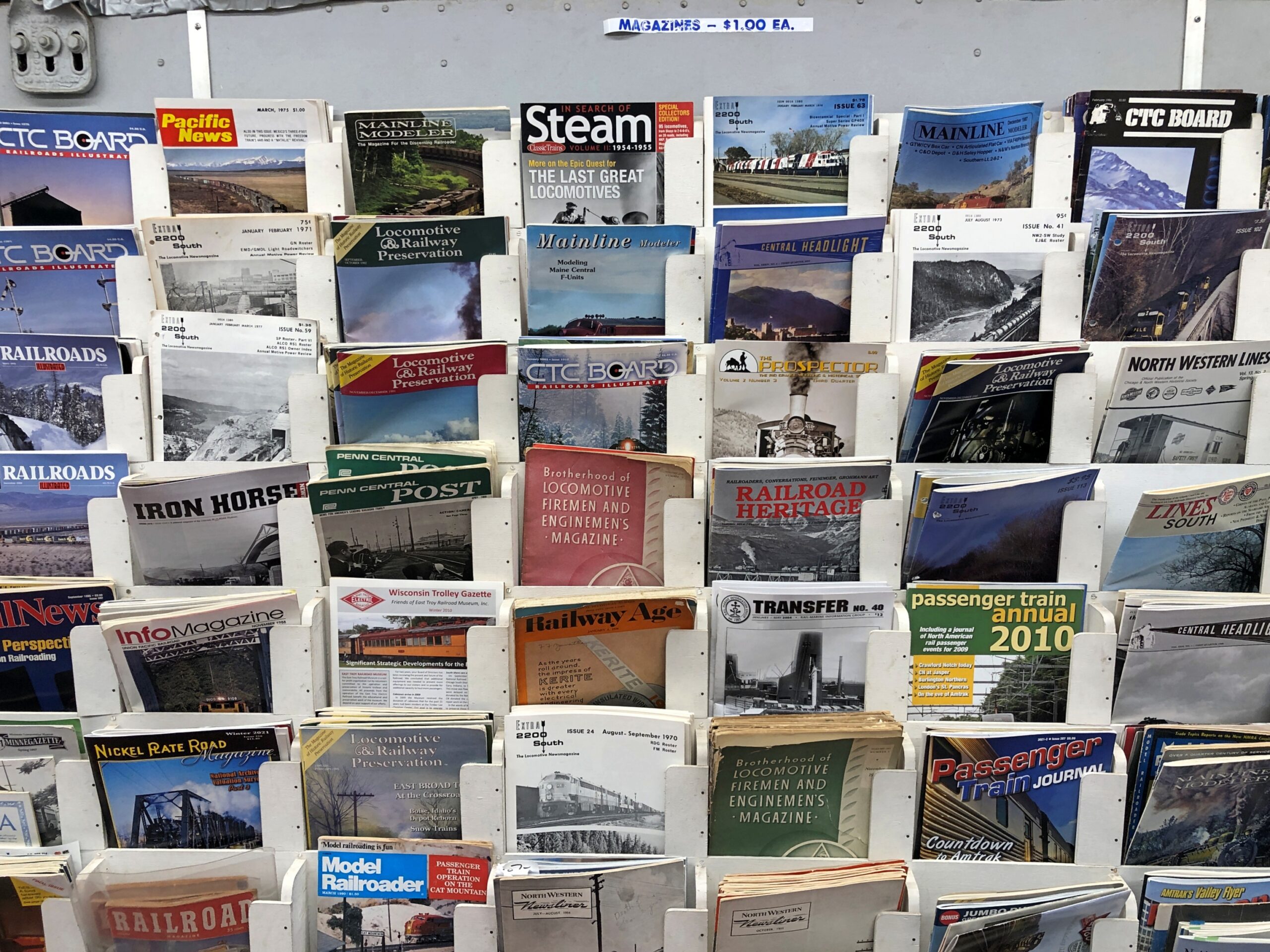
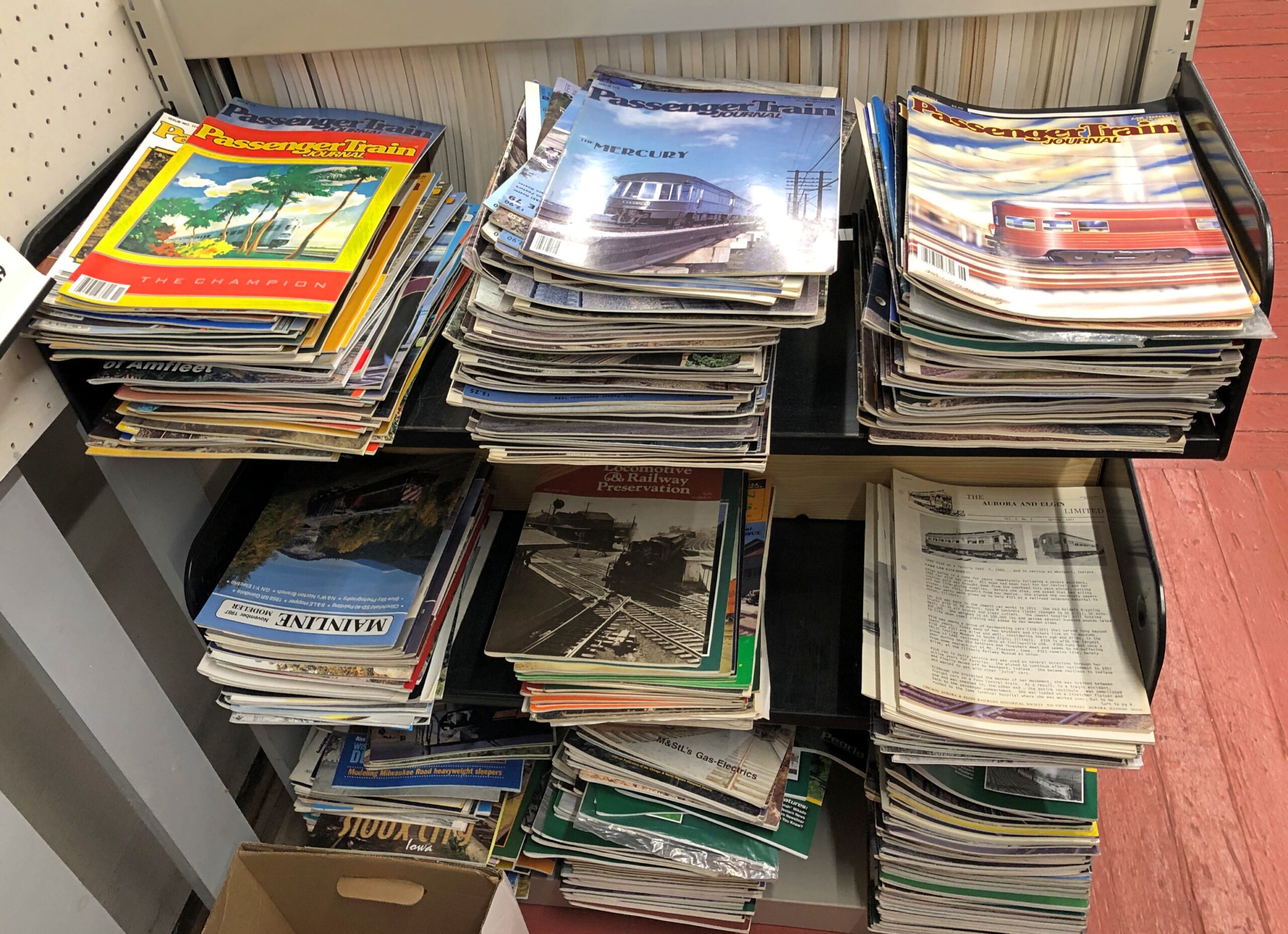
The museum has a railroad-oriented book store in another repurposed car.
Lots of material for the enthusiast.
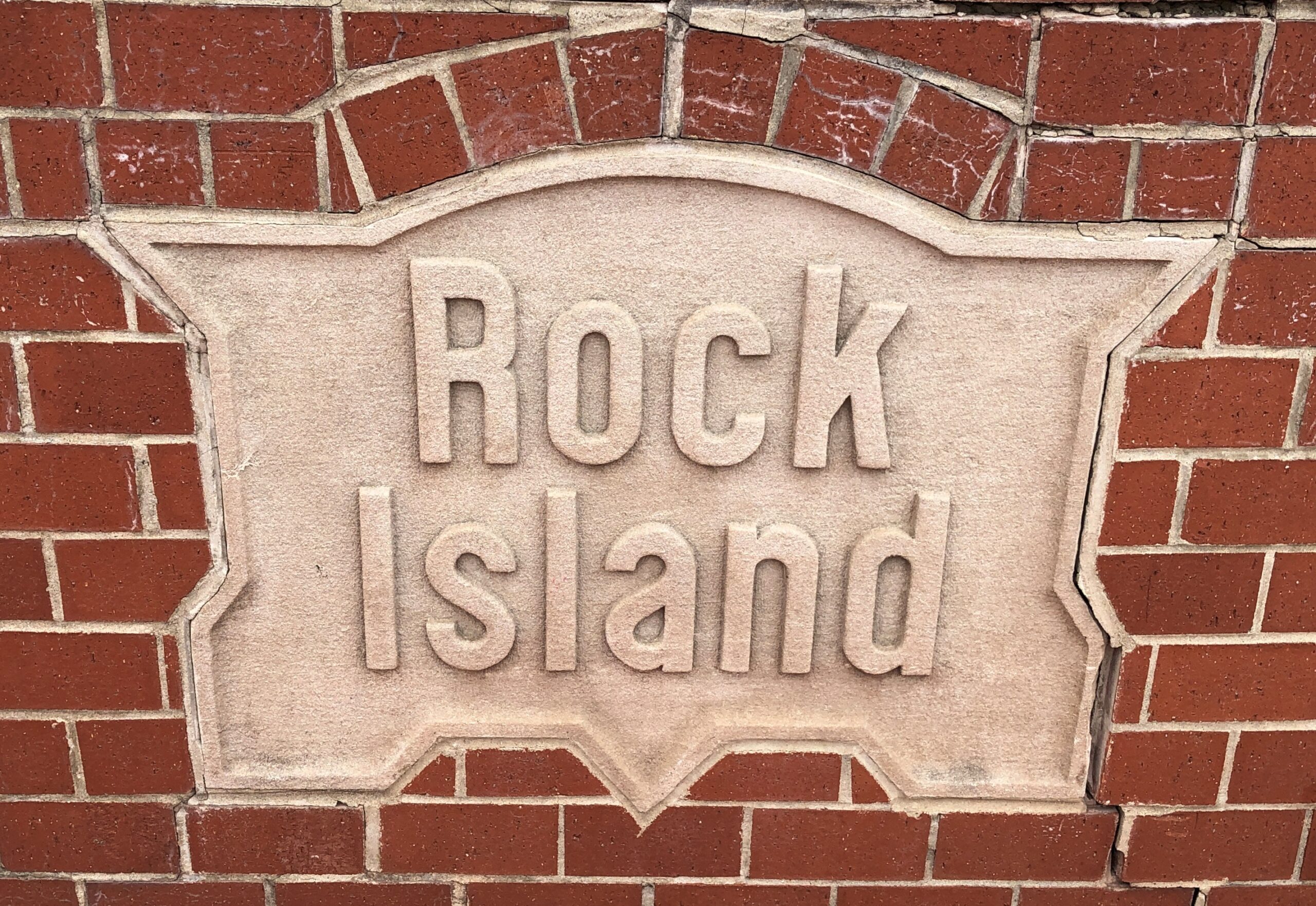
One more item: a bit of re-embedded signage from the Chicago, Rock Island and Pacific Railroad, which traversed Illinois not far from here.
Good to see it. Because, as we all should know, the Rock Island Line is a mighty good road, the Rock Island Line is the road to ride.
More fun with AI today. I subscribe to a transcription service which is incredibly useful – there was nothing I disliked more about my job than transcribing interviews by hand. I’d mention the system by name, but not unless I receive a month or two free. Are you reading me closely, Algorithm? Have the company make me an offer.
The transcription isn’t as accurate as its ads claim, however. That’s to be expected. It’s pretty good though, and I can work up accurate quotes, especially if I compare the transcription to the recording. But it isn’t very good at listening to song lyrics. This morning, I let “Moonlight Cocktail” play as the system struggled to transcribe it, to see what would happen.
“Moonlight Cocktail” is best known as a Glenn Miller recording, released in early 1942. Considering how popular the song was – number-two song for that year after “White Christmas” – it’s remarkable how completely forgotten it’s been. It shouldn’t be. It’s a wonderful, lilting piece, evoking in rich strokes the common experience of young sweethearts tucking themselves away somewhere pleasant during the “blue of a June night.”
Its dulcet music was by Luckey (Lucky) Roberts (d. 1968), all-about man of popular music in the early 20th century whom you can imagine tickling a keyboard vigorously at a lively Harlem nightspot, if you put your mind to it. Sweet lyrics by Kim Gannon (d. 1974), best known for “I’ll Be Home for Christmas.”
The first two stanzas, as recorded by the Glenn Miller Orchestra:
Couple of jiggers of moonlight and add a star Pour in the blue of a June night and one guitar Mix in a couple of dreamers, and there you are Lovers hail, the moonlight cocktail
Now add a couple of flowers, a drop of dew Stir for a couple of hours ’til dreams come true As to the number of kisses, it’s up to you Moonlight cocktails need a few
As heard by my transcription system:
Awful of jiggers of moonlight and the sun pour in the blue of the June night and roar good heart. I had a couple of flowers of dry or dew, slur for a couple of hours till dreams come true. As for the number of kisses, it’s up to you.
Interesting, though I don’t know what it means, that the system got the sentence, “As for the number of kisses, it’s up to you” exactly right, which the Modernaires sung in close harmony, but then didn’t catch the next sentence at all, which lead singer Ray Eberle started, only to be finished winsomely by the Modernaires. Actually, it bypassed the lines beginning “Mix in a couple of dreamers…” as well. The ways of AI are mysterious.
Guess the system needs more work – but who really needs a transcription service for songs anyway? How could it overcome the challenges associated with (say) “Louie, Louie”? All questions for minds (or machines) more probing than mine.
As long as I was playing around with the song, I used another AI system, one of the many image generators, with this prompt: Draw cover art for the song Moonlight Cocktail.
One more bit of Maine: “The Stein Song.” Back to posting on May 26, when it might actually be warm around here.
Never been much of a Rudy Vallée fan, as if someone my age (or really, someone still alive) is expected to have an opinion on him – but “The Stein Song” is fun. The only school drinking song to top the U.S. charts, whatever that meant in 1930. Ah, the economy is slowing down. Time to drink.
Not long ago, I wondered how accurate the lyrics of “Alice’s Restaurant Massacre” were on one specific point. I had my reasons.
You can get anything you want at Alice’s Restaurant Walk right in, it’s around the back Just a half a mile from the railroad track
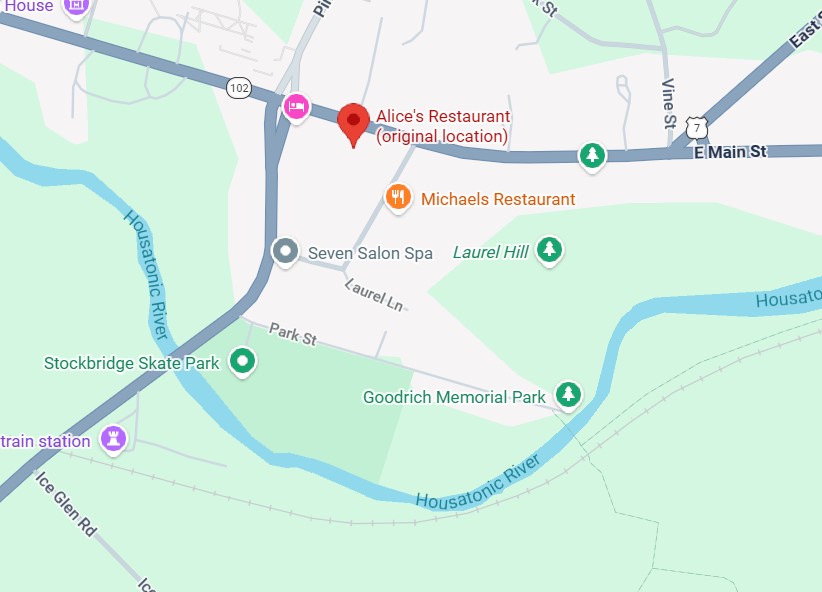
Seems like a convenient rhyme, but that’s not all. Google Maps tells me that the site of Alice’s Restaurant is about a half a mile from a railroad track. I didn’t save the scale on this map, but the distanceis correct. This is mildly amazing. Who expects geographical accuracy from a song lyric?
That morning, April 14, I’d extracted myself from Midtown Manhattan via various sorts of transport, retrieving my car at long-term parking at Newark International, and planned to spend the night in Portsmouth, New Hampshire. Though New England isn’t large, it is molasses when it comes to driving through its densely settled areas, and first I had to get out of New Jersey and New York, then cross Massachusetts. All that meant an all-day drive. Stockbridge, Massachusetts, former home of Alice’s Restaurant, was a stop along the way.
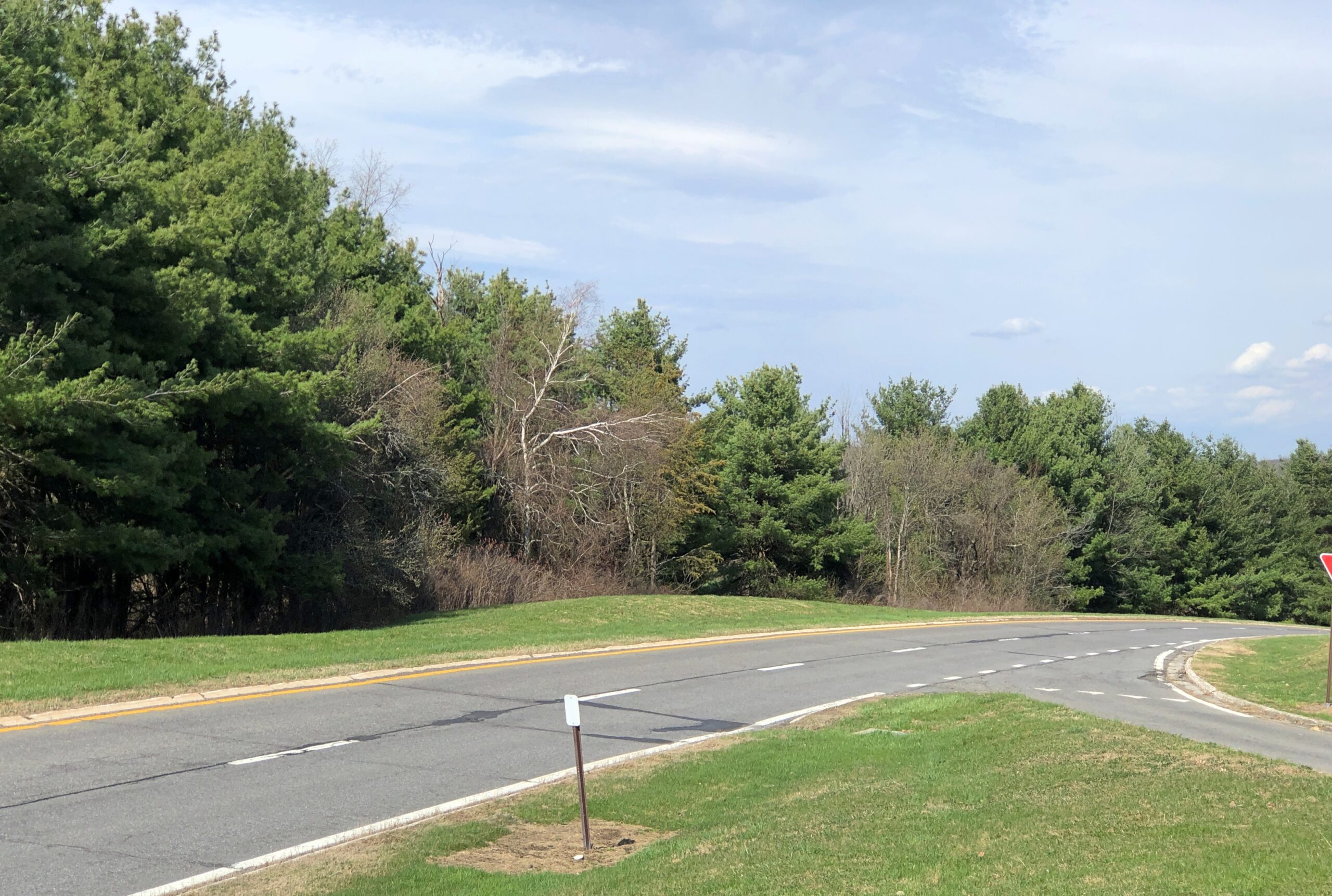
Near the eastern edge of New York state, I cruised north on the Taconic State Parkway.
That sounded good, I thought when I noted the name on a map. It was. Budding greenery, smooth driving, no trucks. Or that many other cars, the further north you go. Construction started about 100 years ago, at the urging of then private citizen Franklin D. Roosevelt. The parkway is in the same league as the Natchez Trace Parkway or the Blue Ridge Parkway, though only about a quarter as long as either.
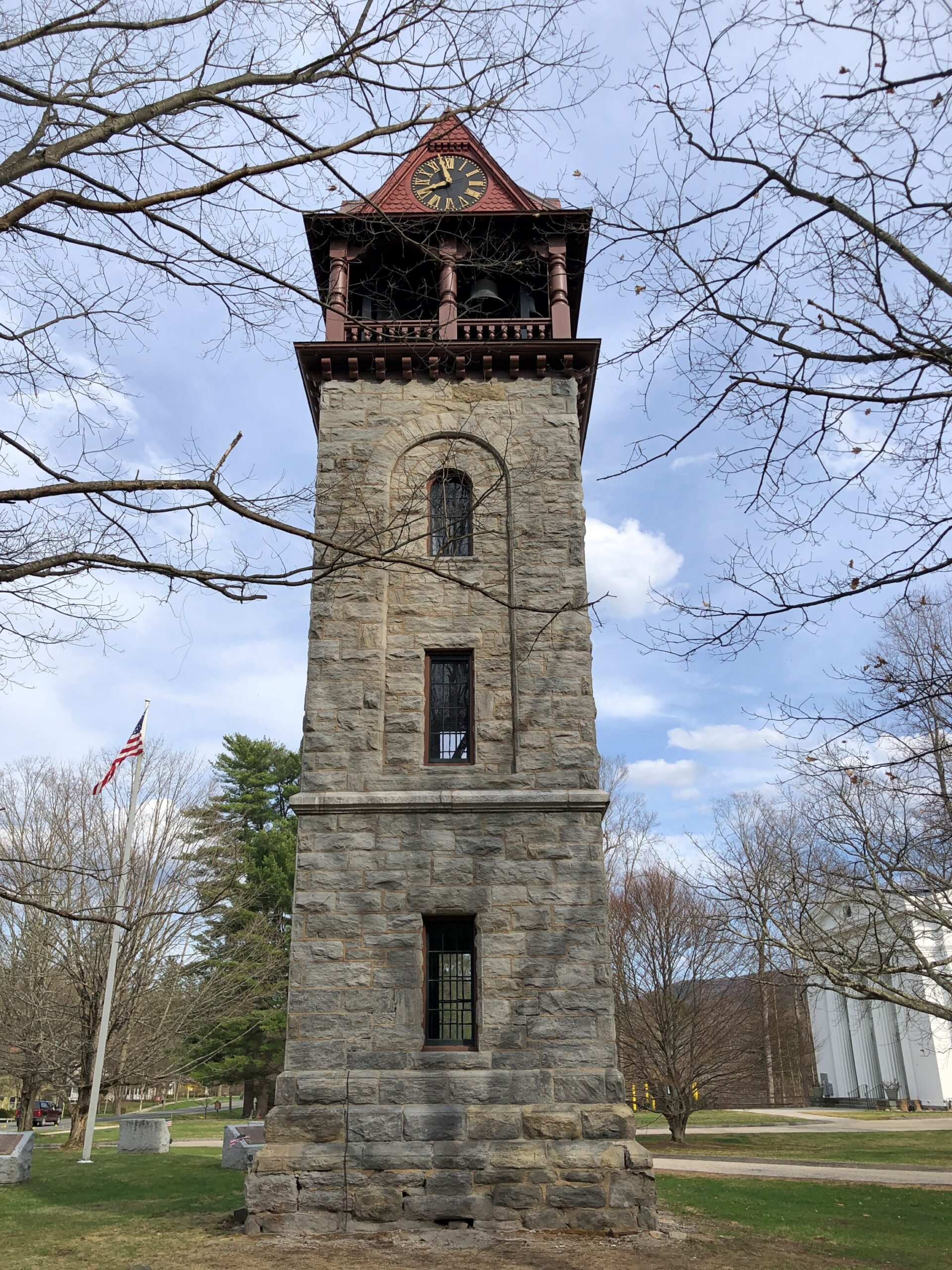
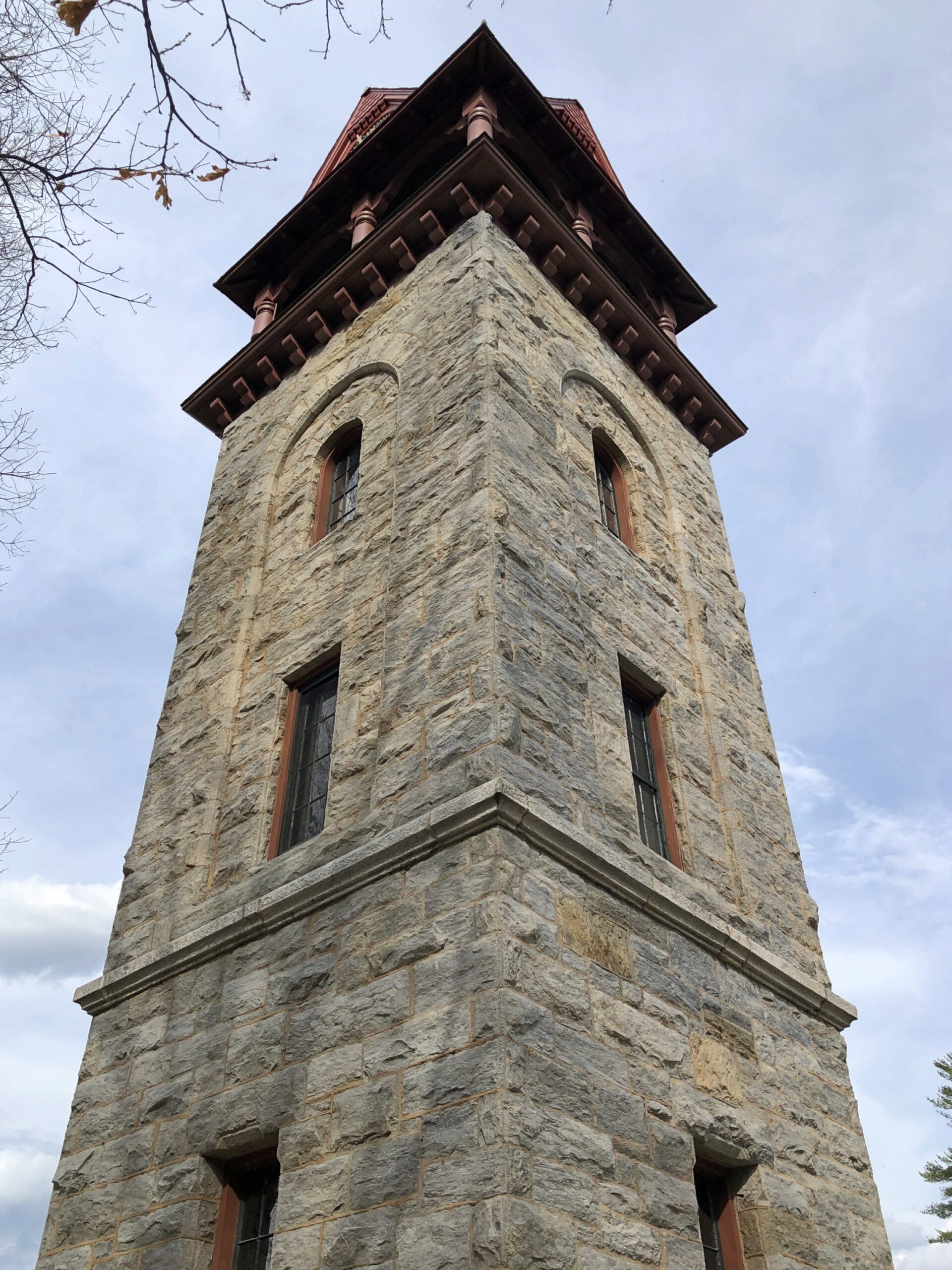
Once I’d gone far enough north, I took connecting roads to the Massachusetts Turnpike. Stockbridge, which is slightly south of the turnpike, counted more-or-less as a midway point on my day’s drive. As I entered town via Massachusetts 102, I noticed a tower. A stone tower, exuding 19th-century New England sturdiness. Its clock was wrong.
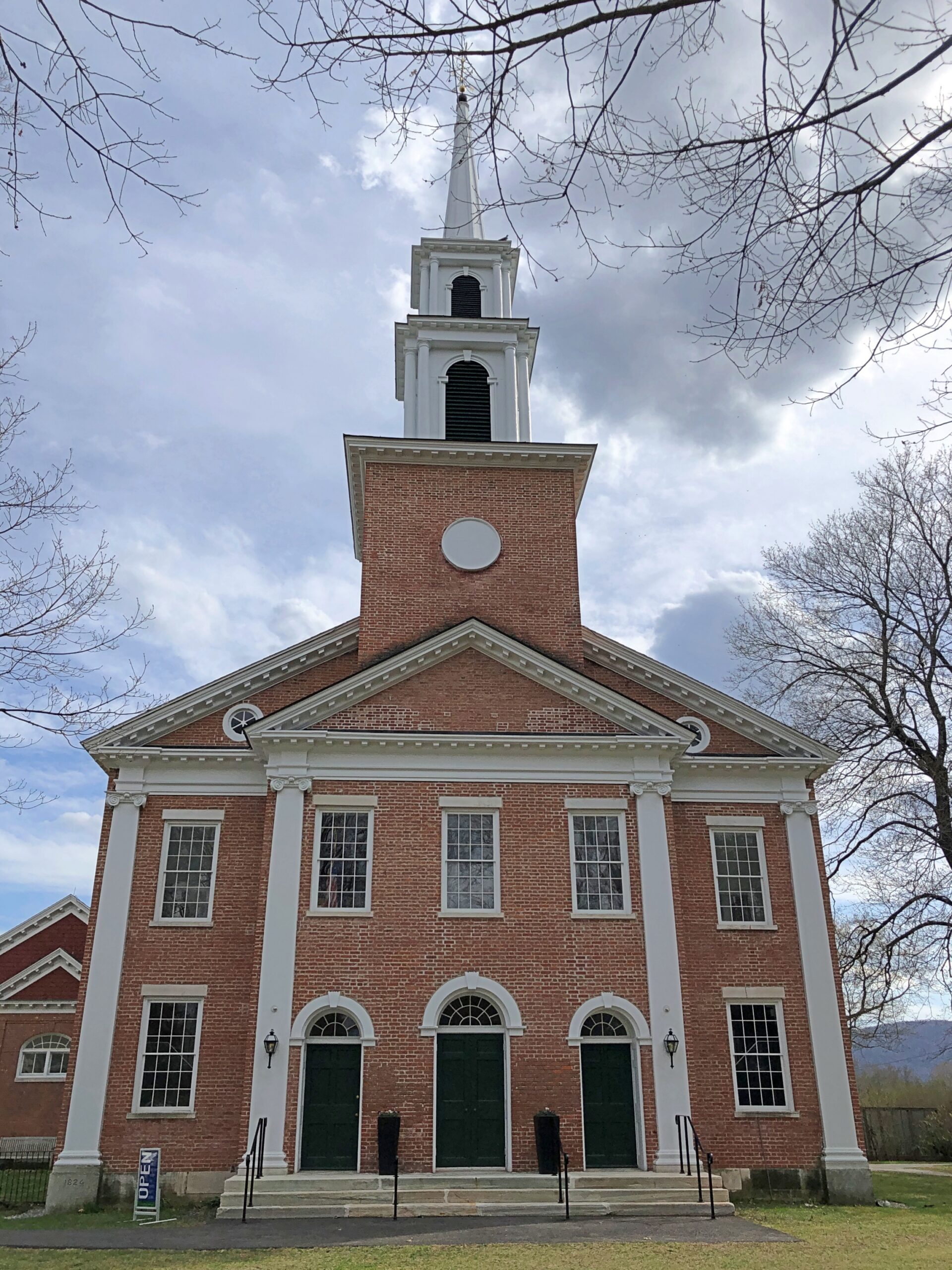
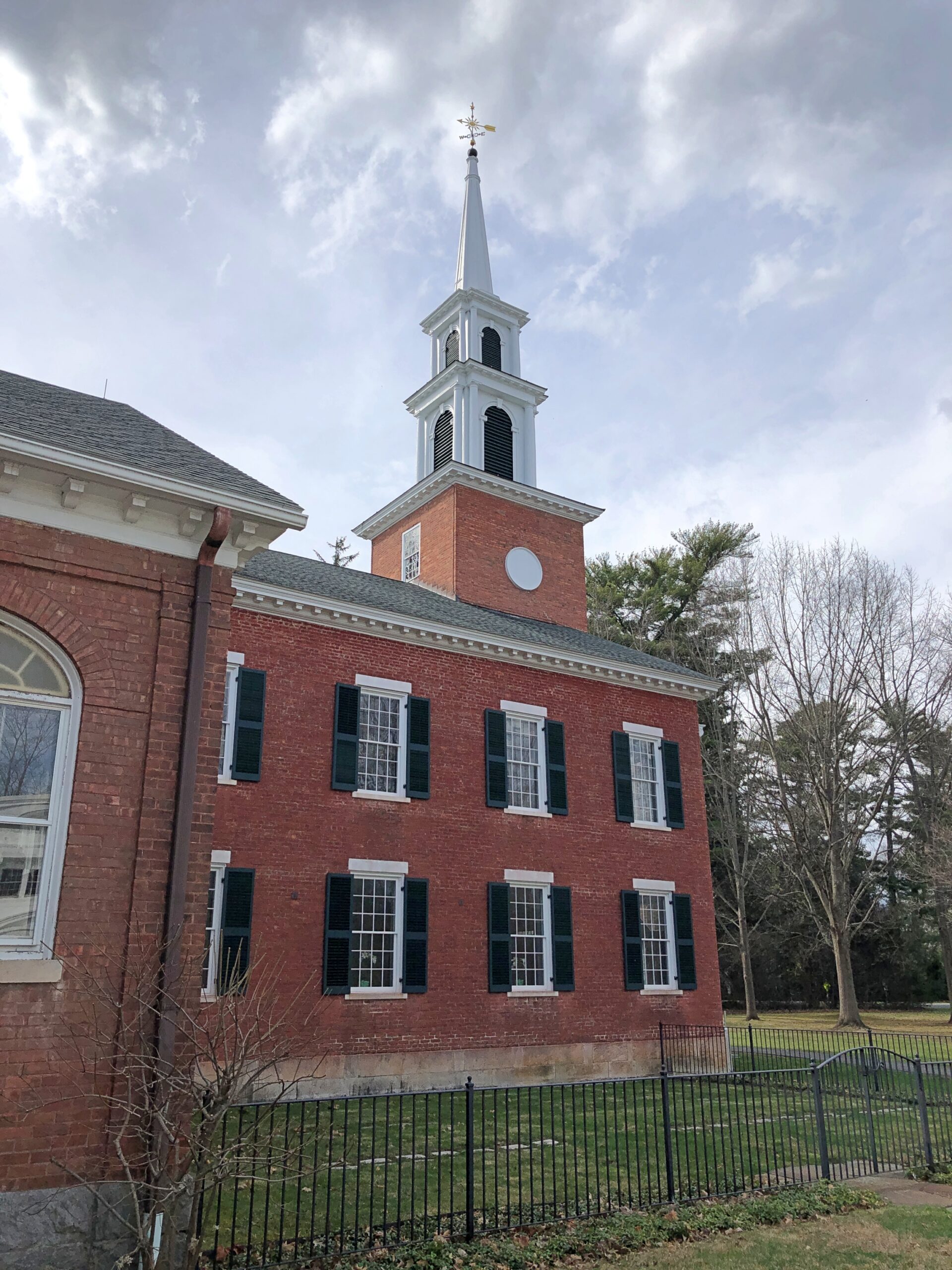
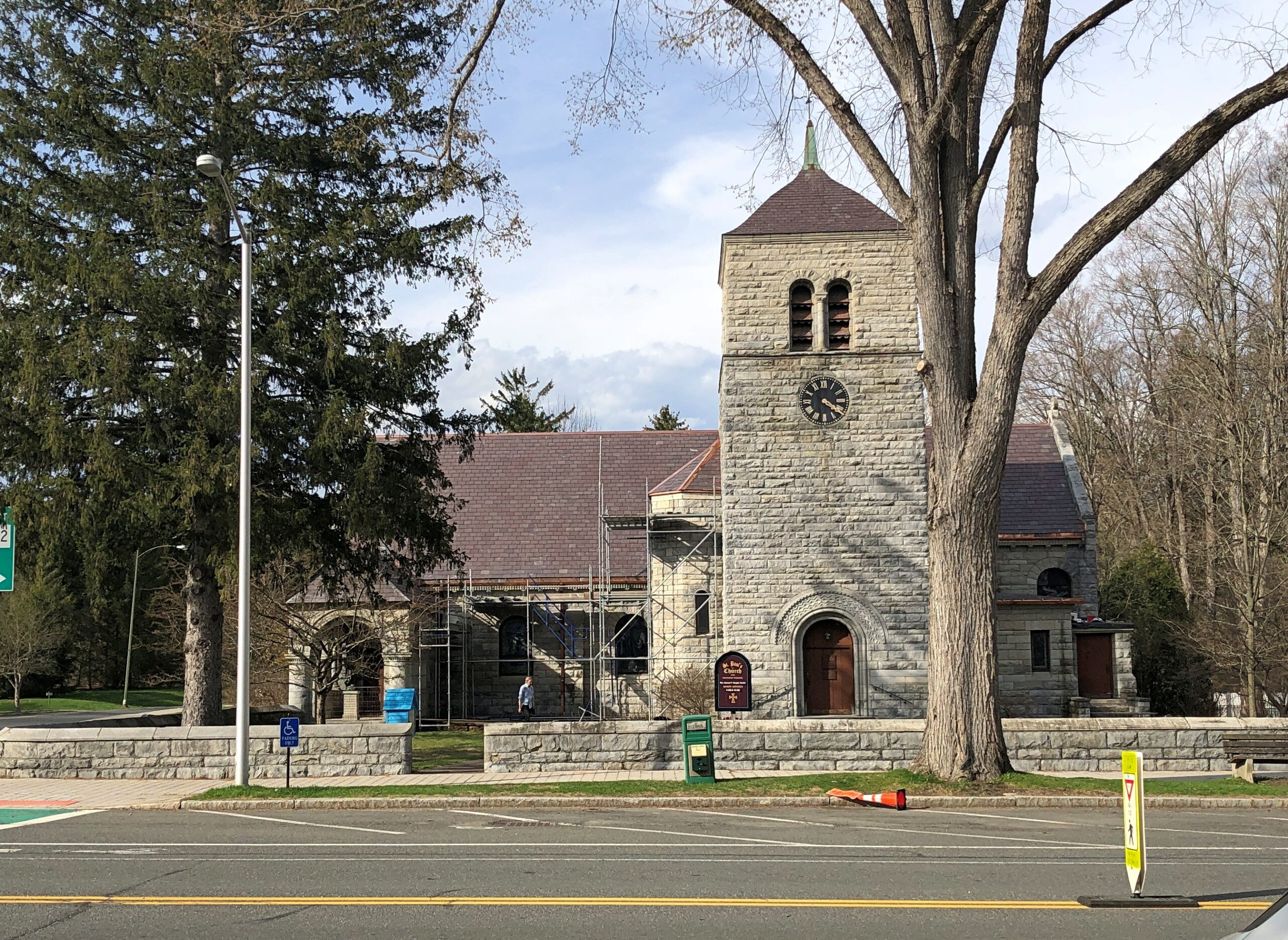
The Children’s Chimes Tower, a 19th-century bell tower built on the site of the town’s original church. A 19th-century replacement for that church stands near the bell tower, looking as New England as can be.
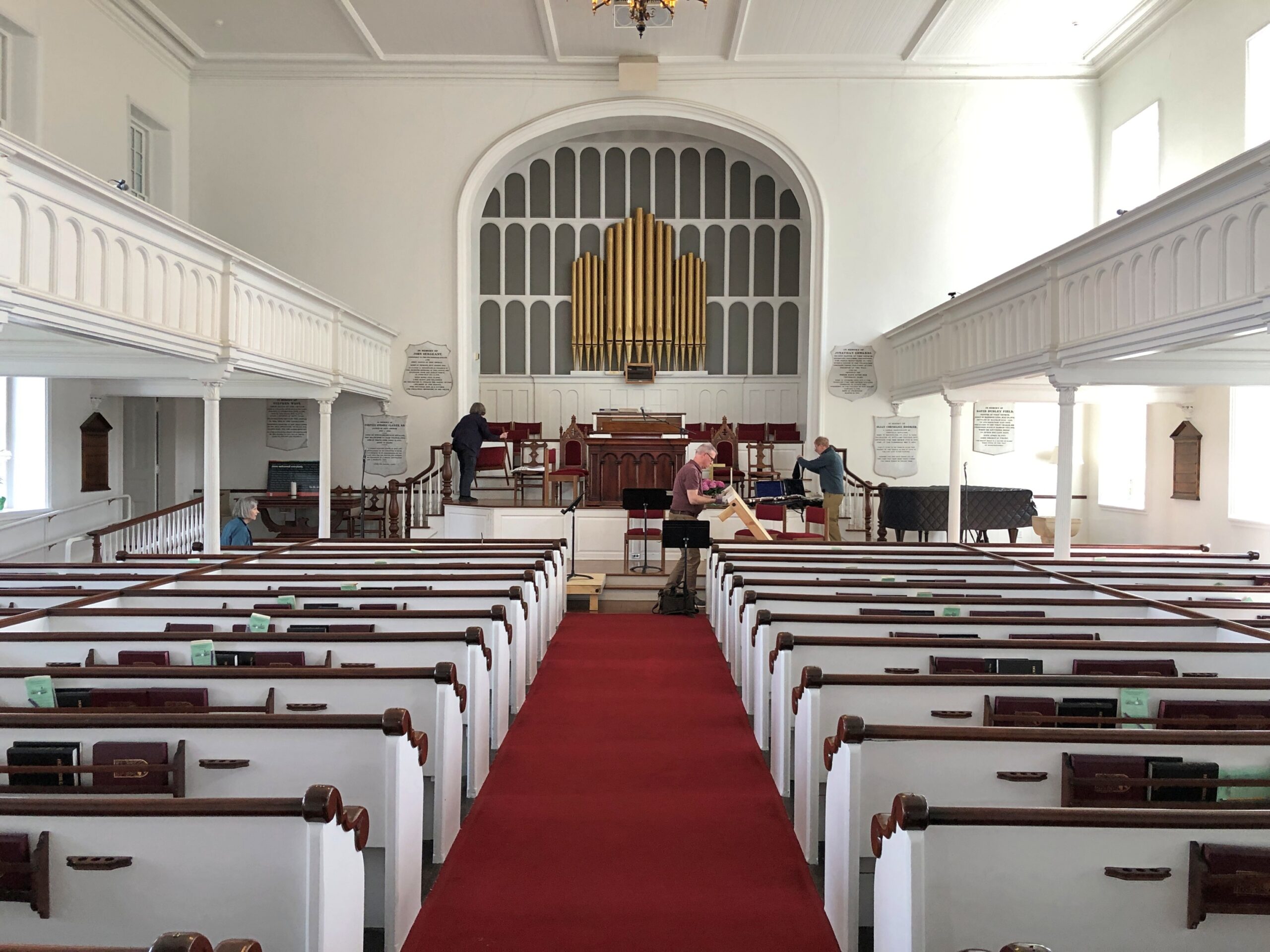
The First Congregational Church UCC. Remarkably, it was open.
Musicians were practicing, or rather seemed to be wrapping up a practice. They paid no attention to me as I looked around.
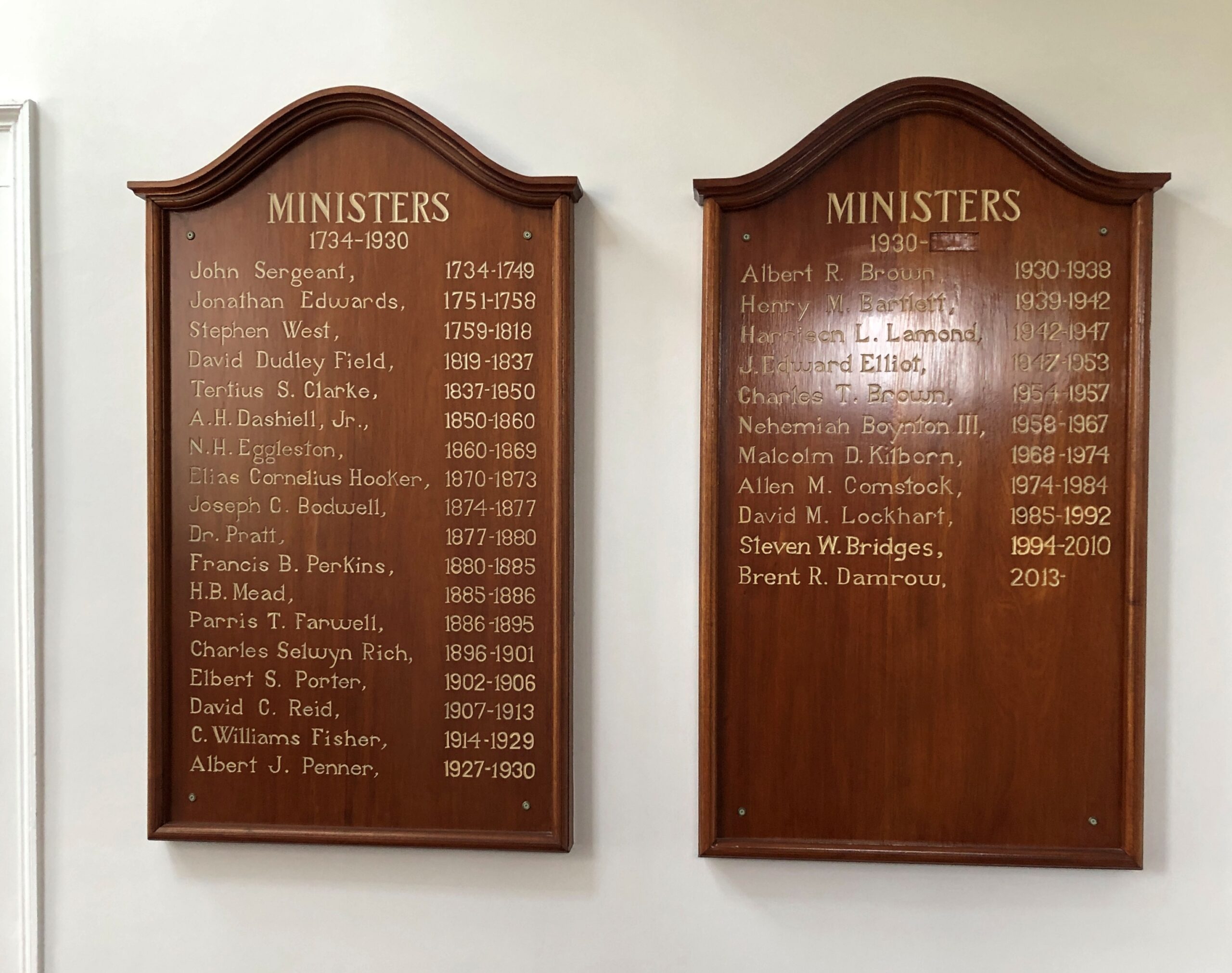
Jonathan Edwards was the church’s second pastor. “Sinners in the Hands of an Angry God” Jonathan Edwards? Yes.
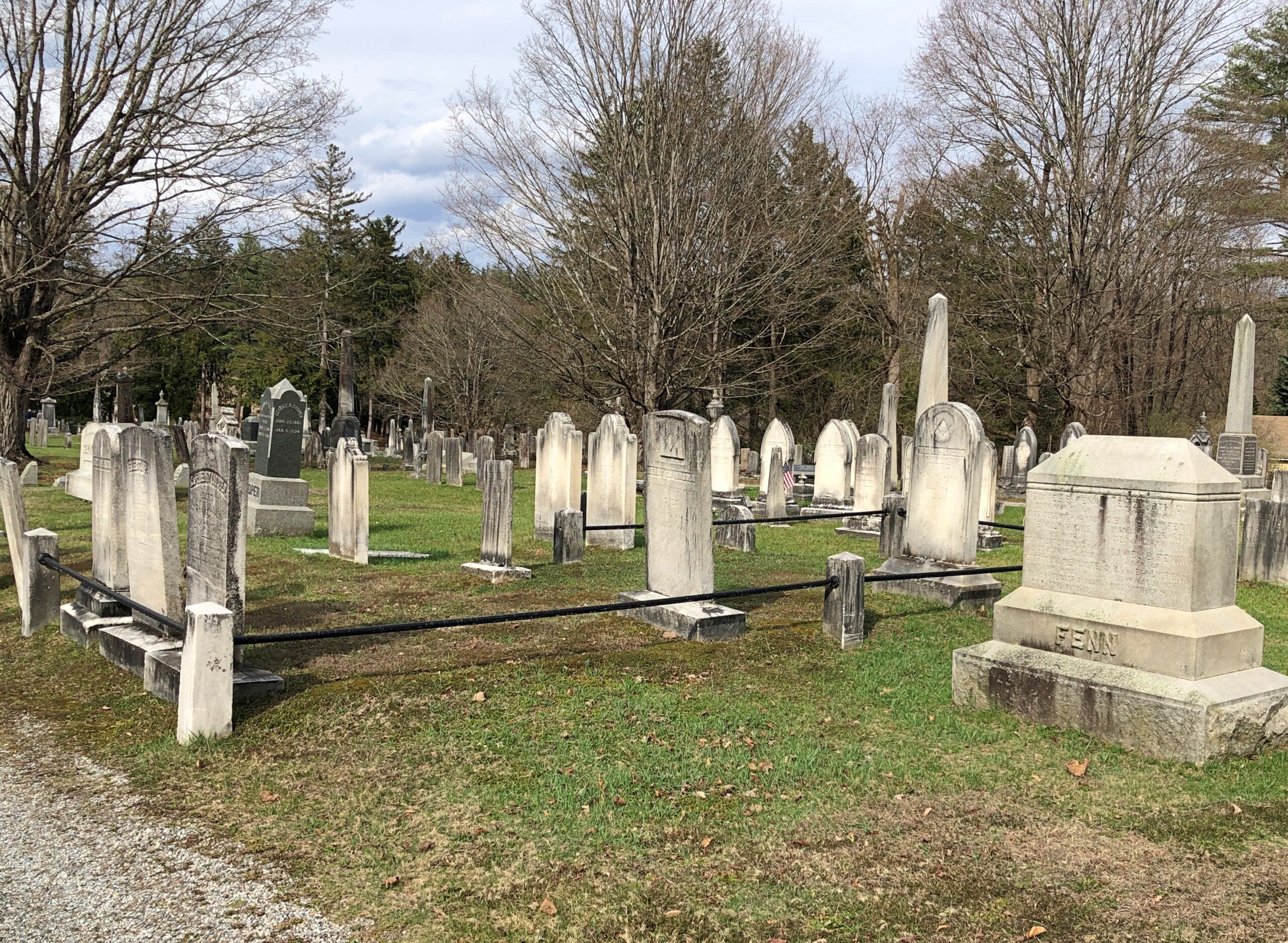
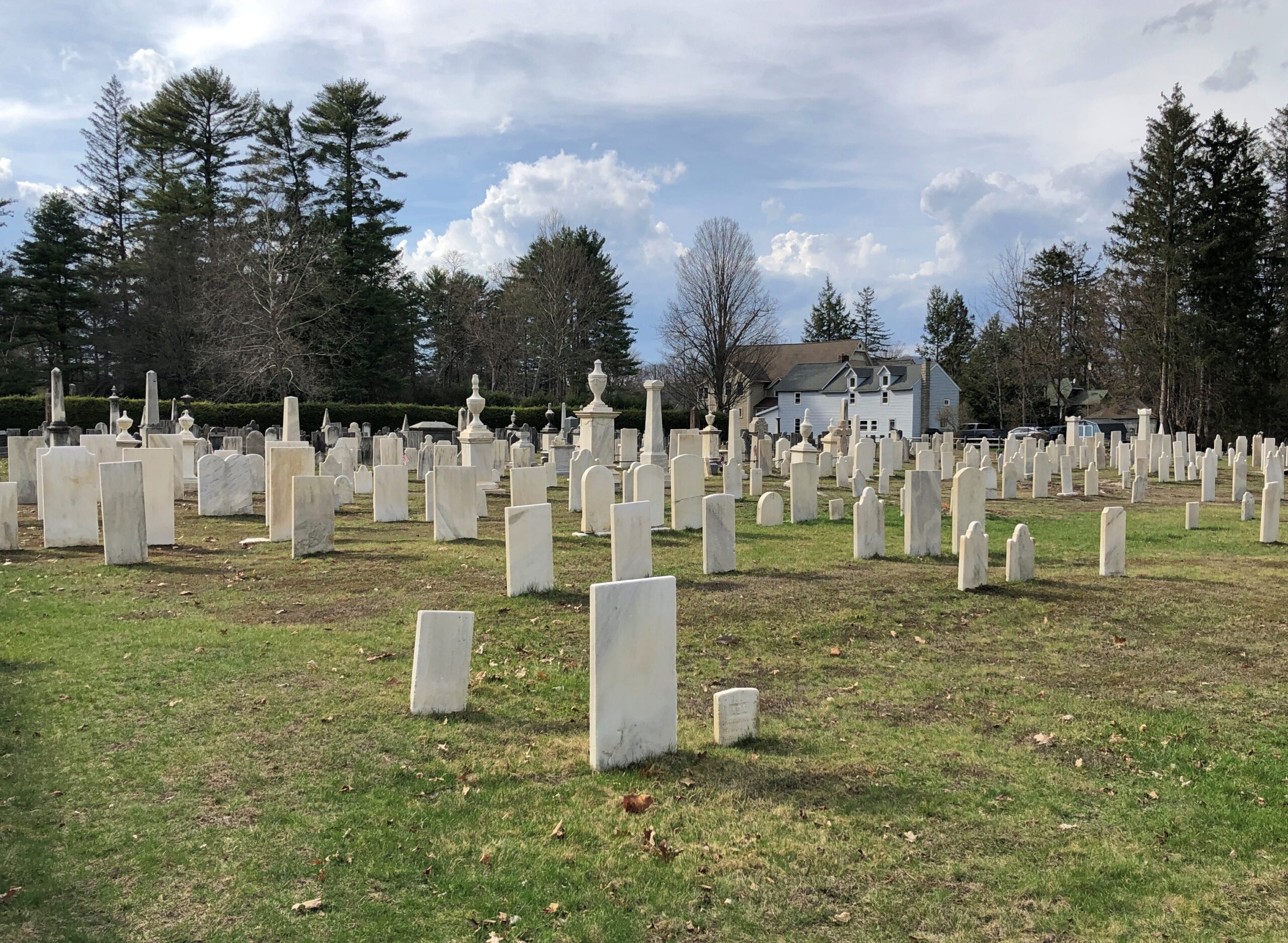
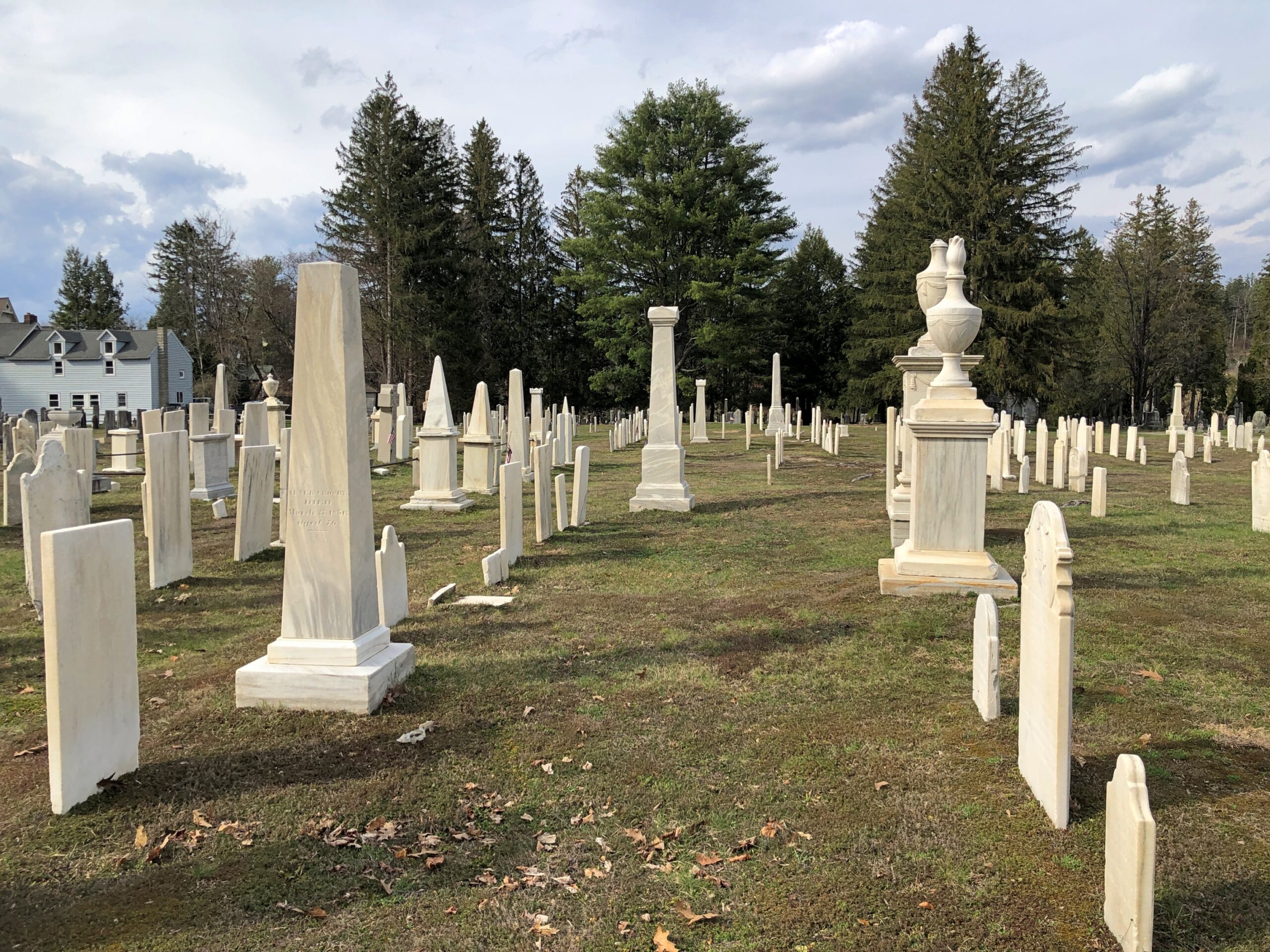
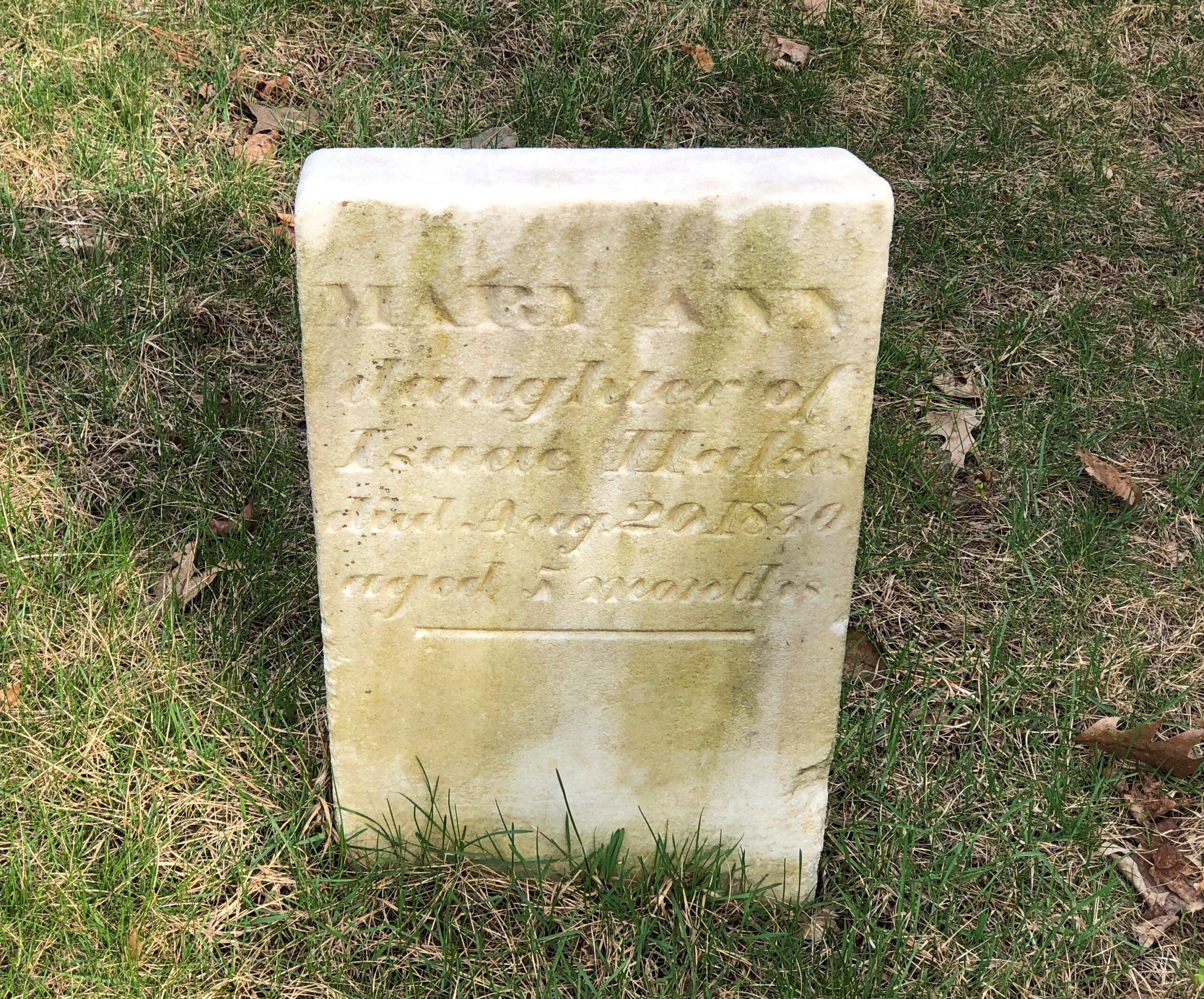
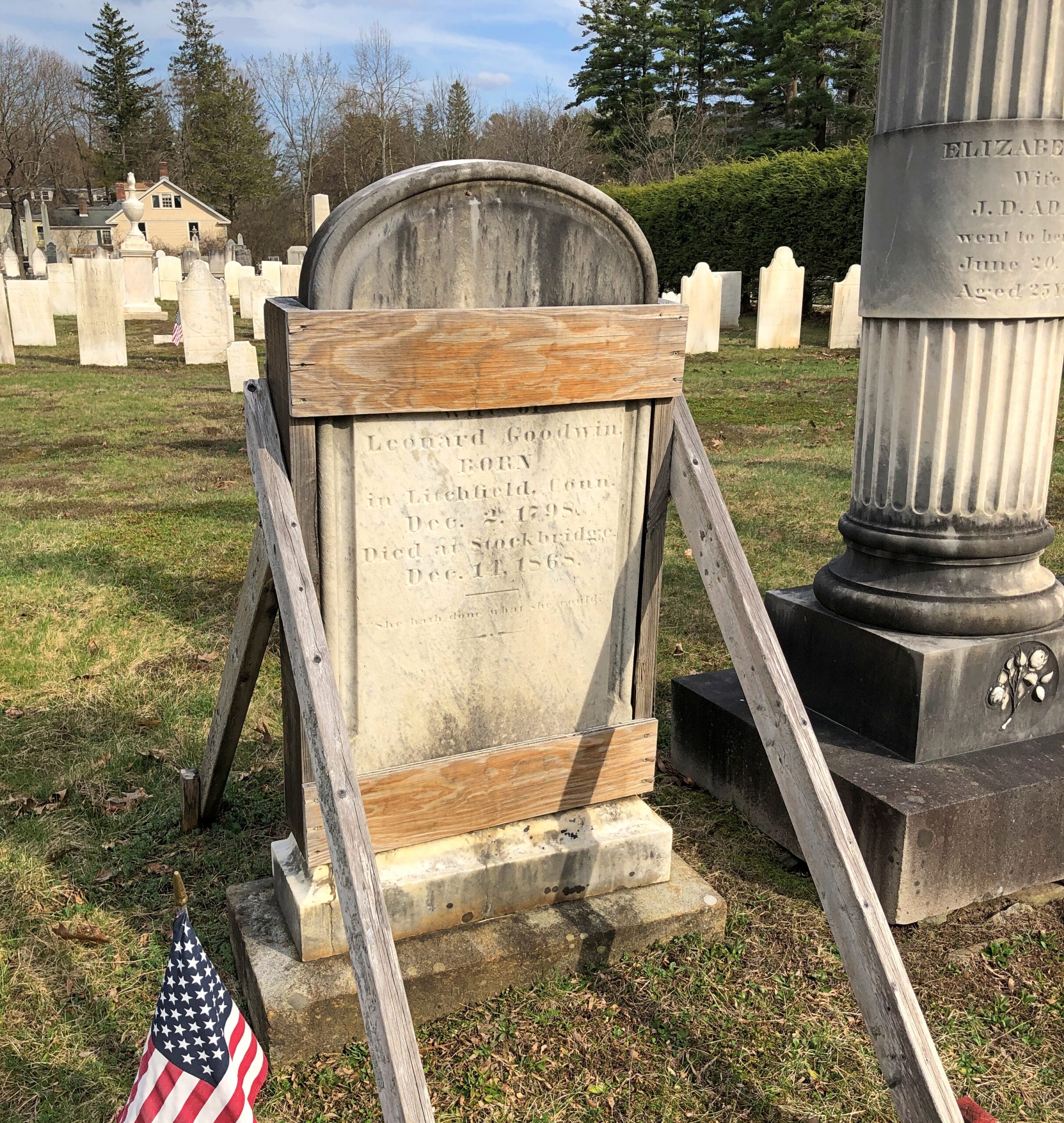
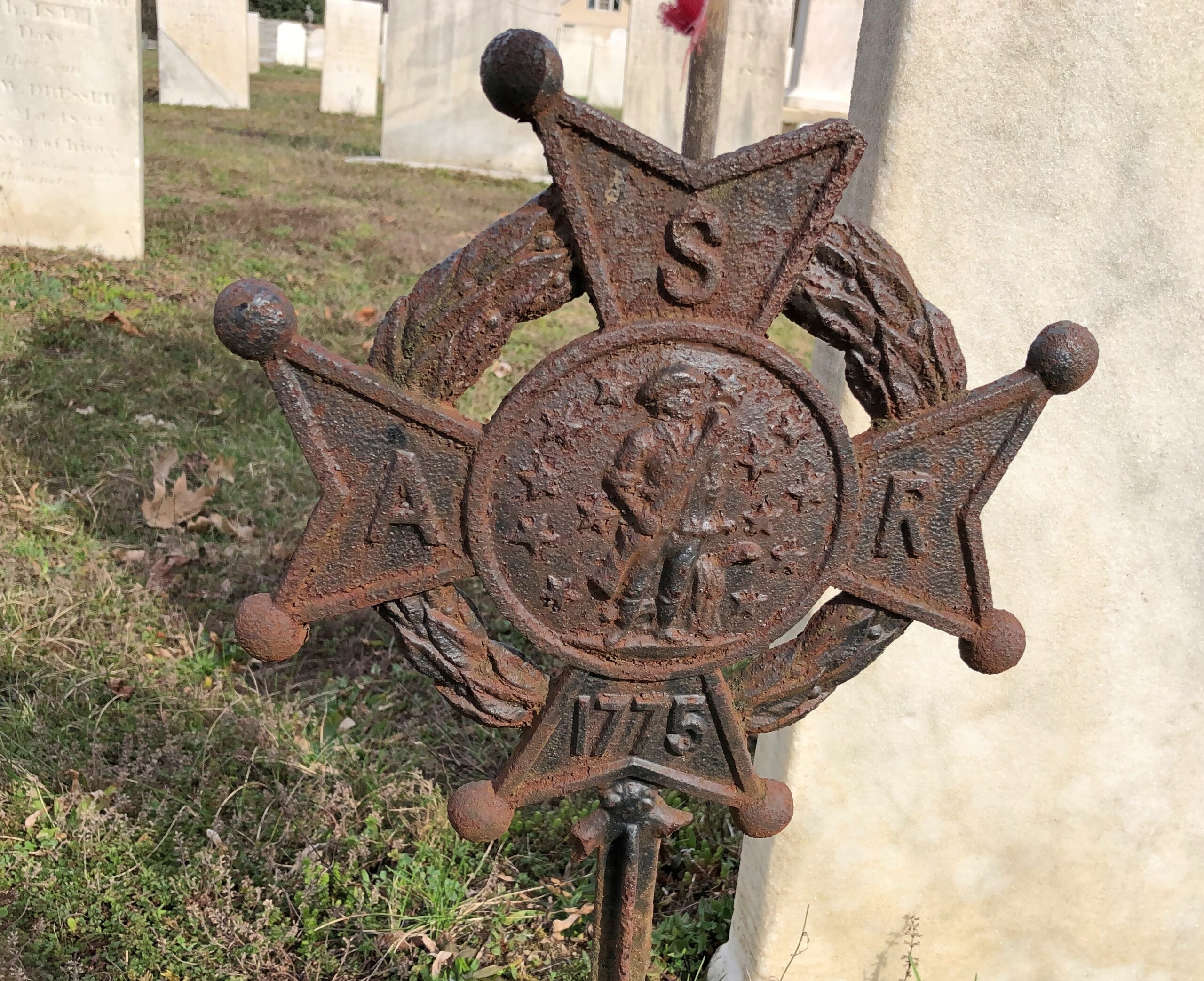
Across the road from the church and freestanding bell tower – which doesn’t chime, except in the summer – is the town cemetery.
“One of the earliest burials was the first minister, John Sergeant, who died in 1749,” says the Stockbridge Library. “Members of the Mohican tribe who joined the church also were buried here. Twenty years later, discussions began about ways to enclose the burial area to keep out cattle, horses, and pigs. It wasn’t until 1853, however, that a new organization in town, the Laurel Hill Association, took on the responsibility to clean and protect the area.”
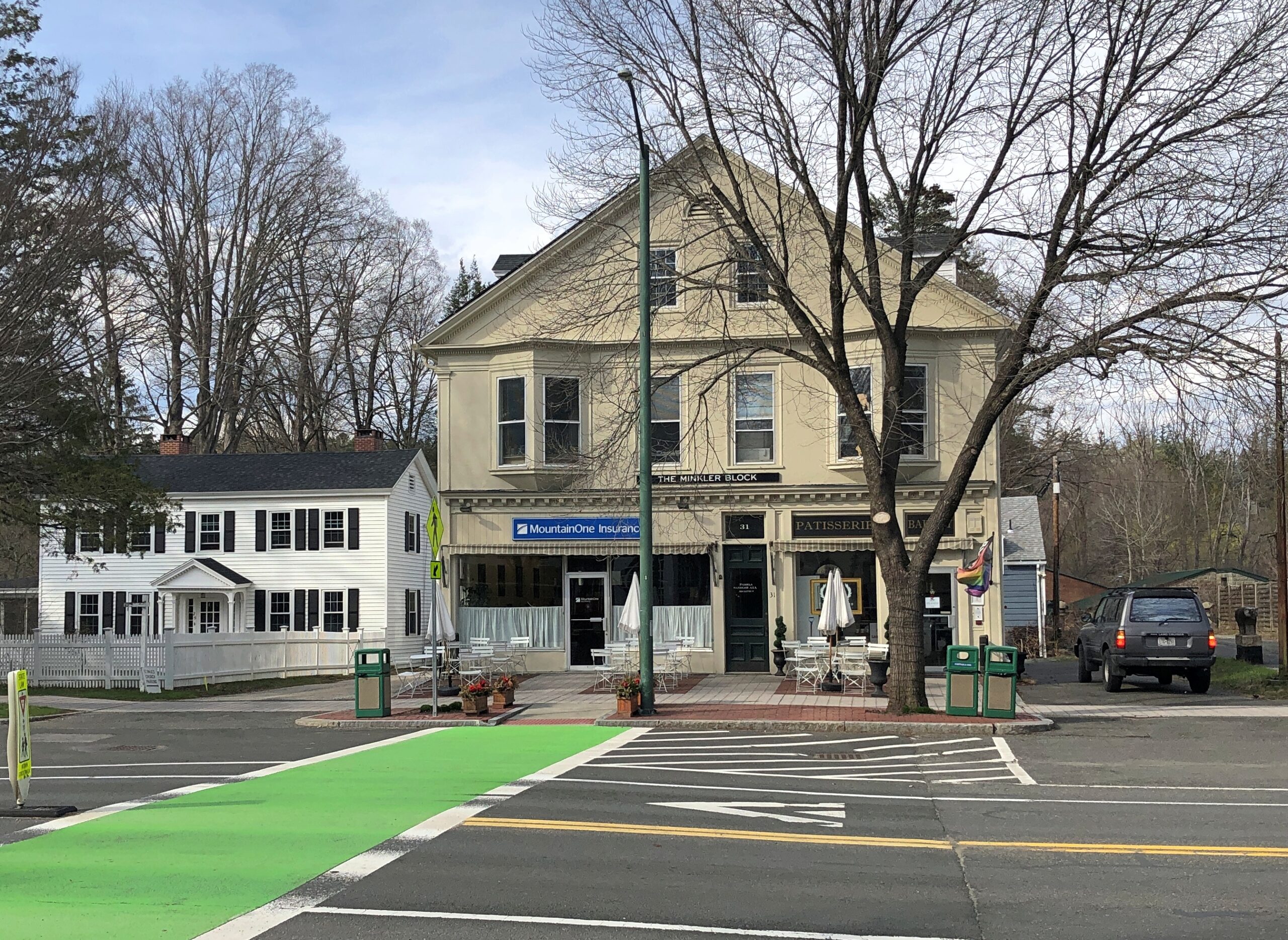
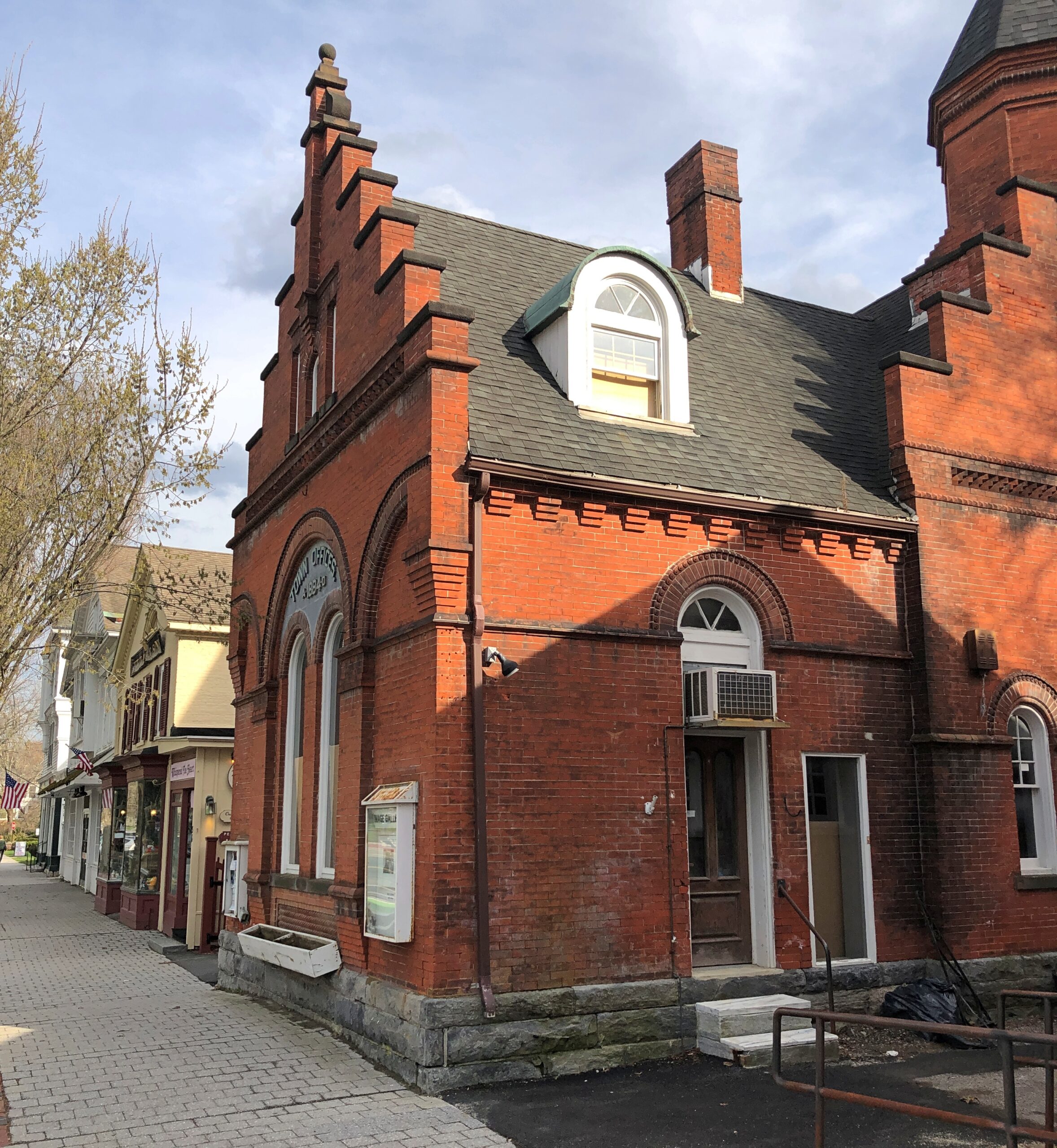
Route 102 turns into Main Street, with its shops, hotels, and other establishiments.
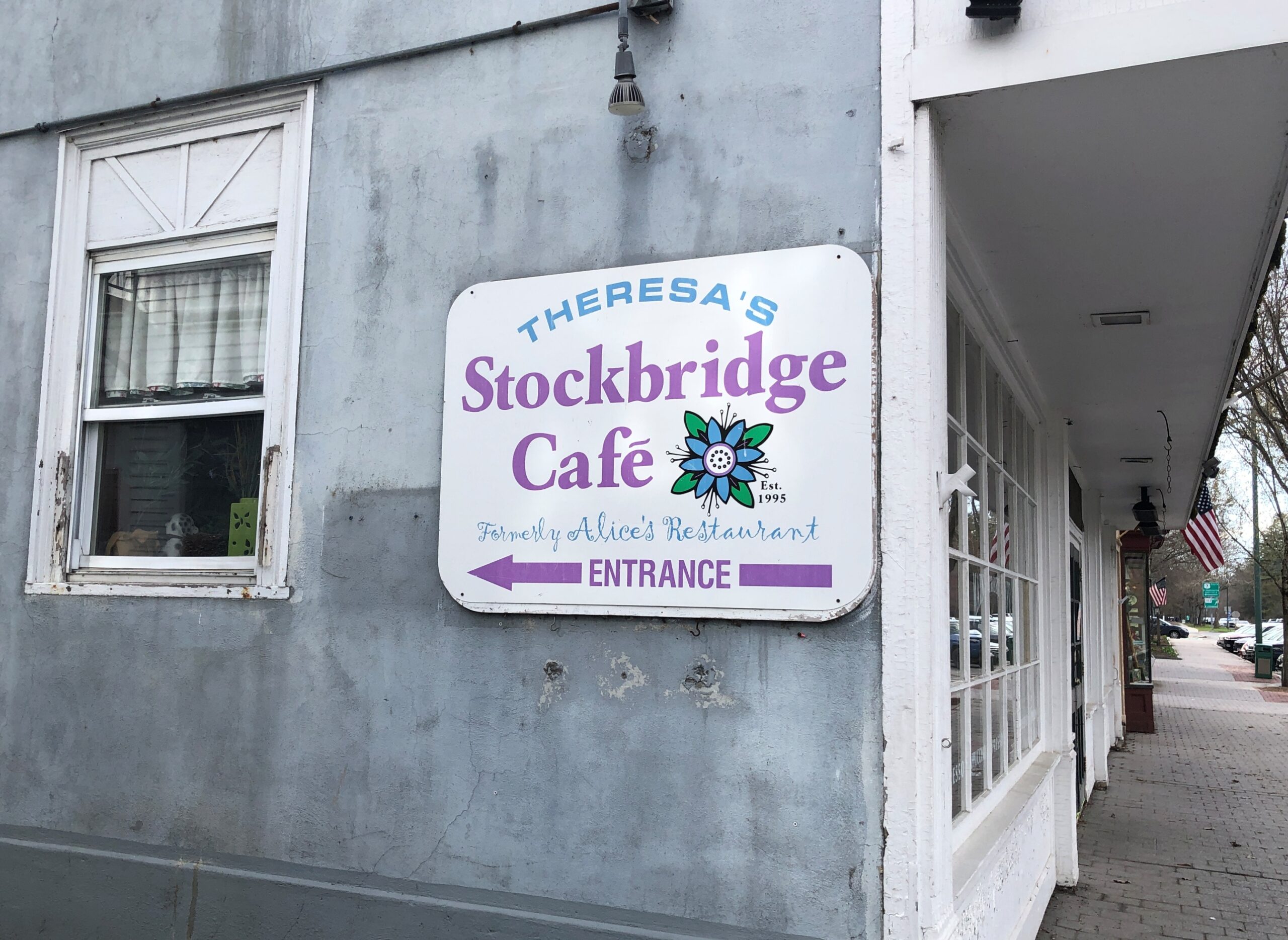
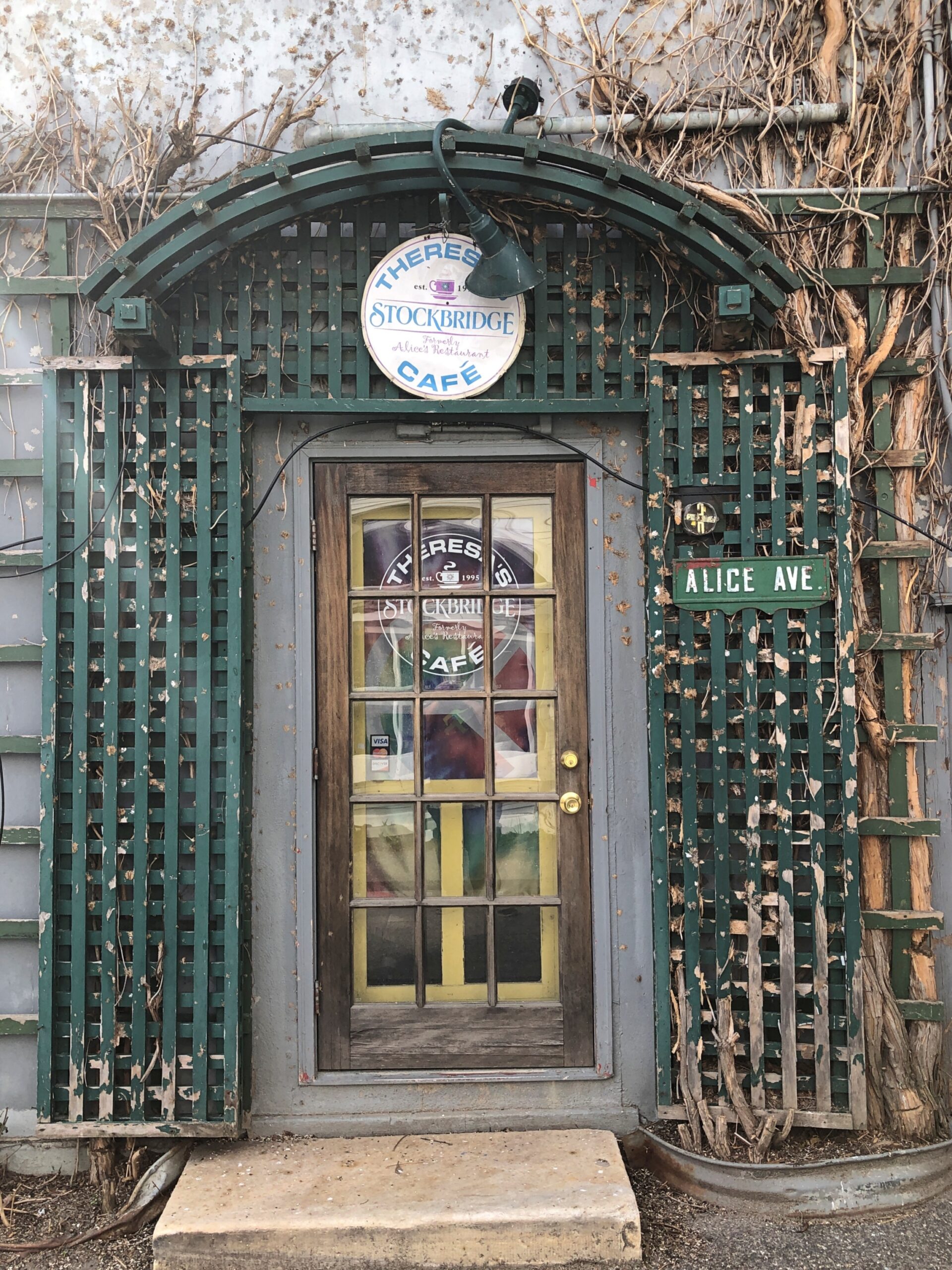
And, around the back (off Main St., that is), just a half a mile from the railroad track, is Theresa’s Stockbridge Café.
Regards for Easter. And Maundy Thursday and Good Friday and Easter Saturday. Back posting on Easter Monday.
This seemed like a fitting set of images for the occasion.
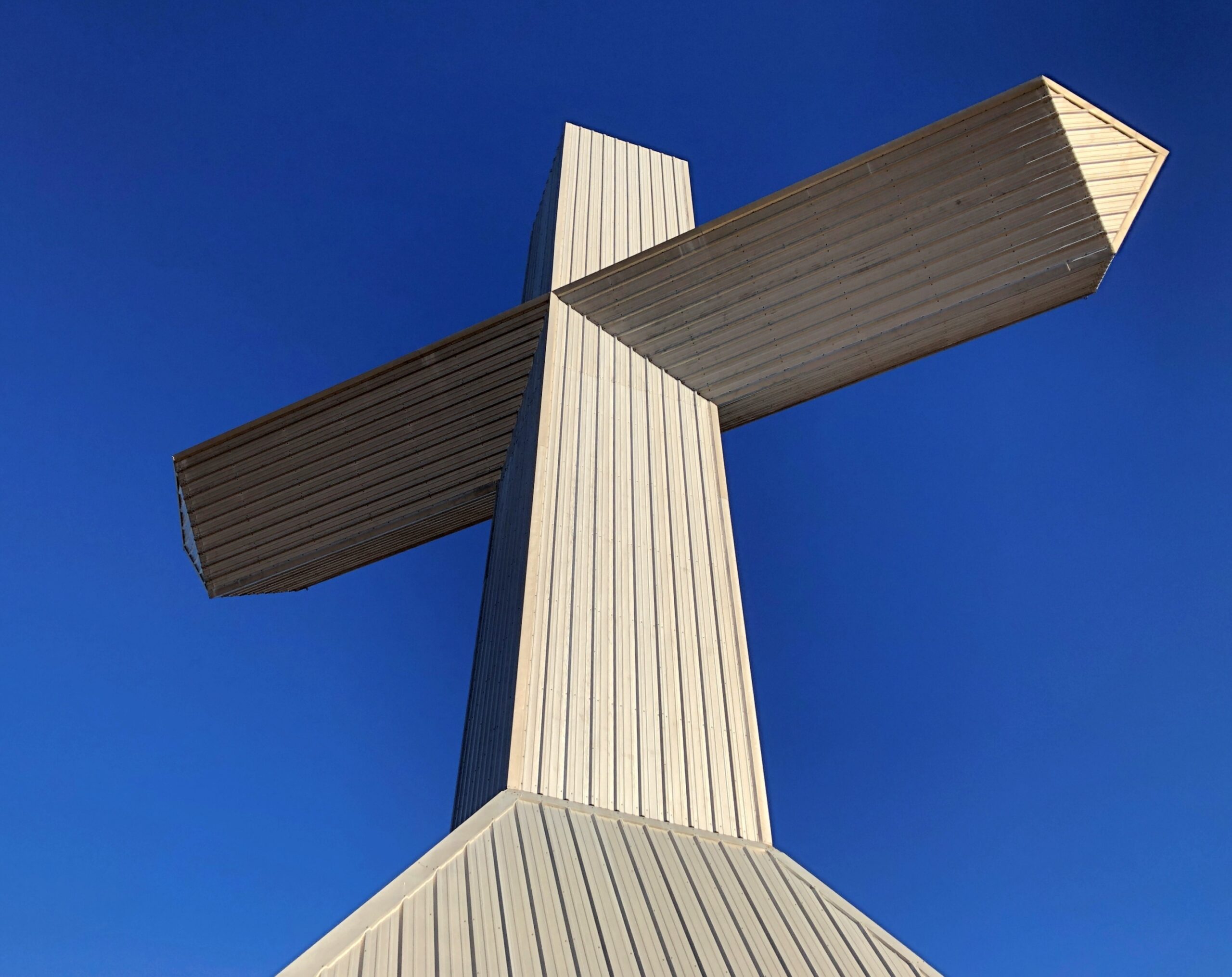
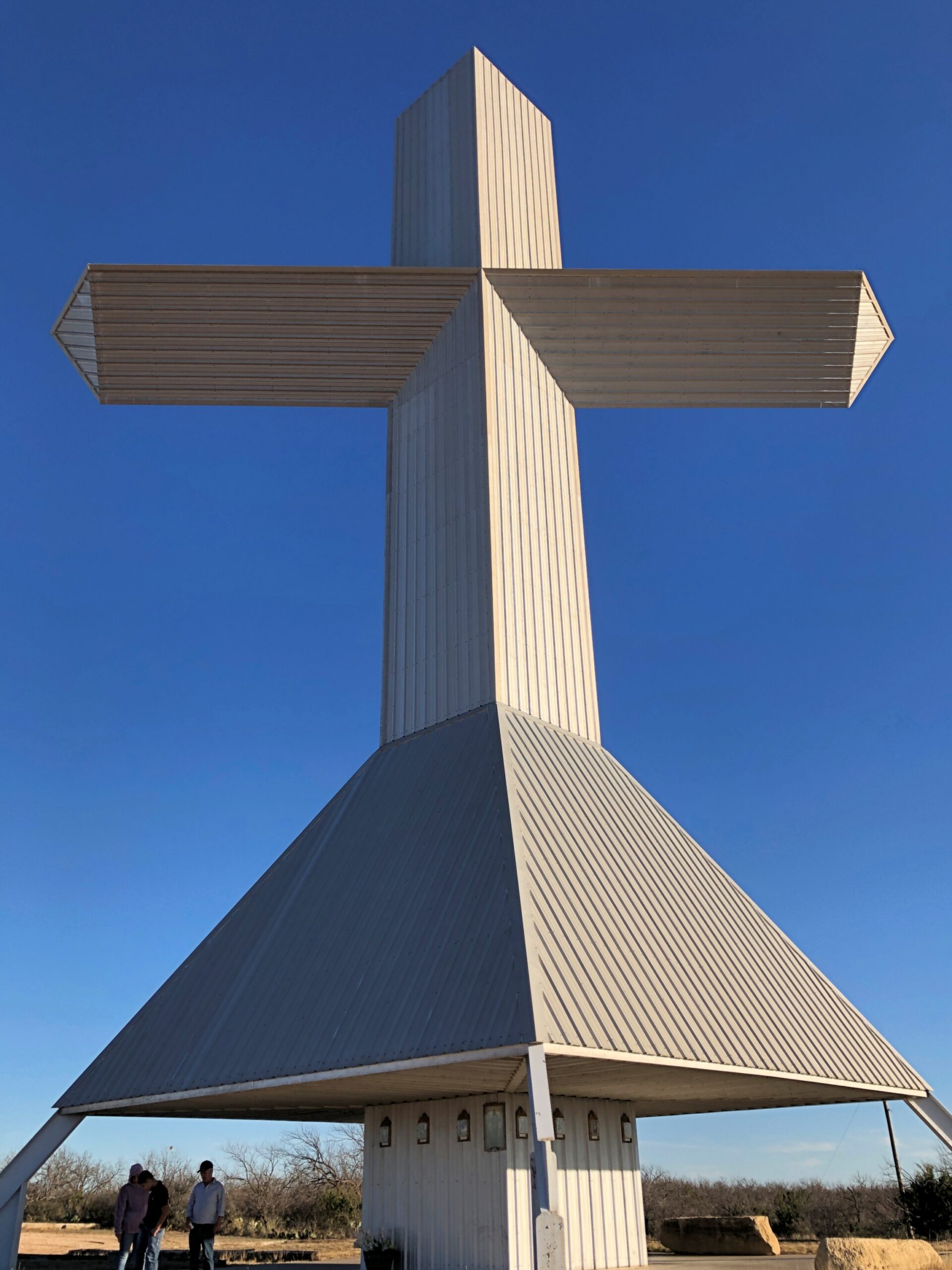
A 100-foot steel cross rises on a small hill a few miles south of Ballinger, Texas, seat of Runnels County. Couldn’t very well pass that up, considering that we were passing through Ballinger (pop. about 3,600) anyway, toward the end of our drive that day from metro DFW to San Angelo, Texas.
“The Ballinger cross was built by a local construction company and commissioned by Jim and Doris Studer, owners of Buddy’s Plant Plus,” notes the Austin Chronicle. “The company is the only U.S. factory making water-soluble fertilizer for Miracle-Gro. After 20 years of making fertilizers in Florida, the Studers went looking for a drier climate. In 1988, they moved the company to Ballinger, where it quickly became one of the largest employers in the county.”
Jim Studer reportedly had been considering the construction of a cross about half that height, as a token of gratitude for a successful business. Then, during a visit to Florida, he was nearly electrocuted in what could easily have been a fatal accident – and decided to roughly double the size of the structure. A thanks to the Lord for not being offed at that moment, perhaps, but no doubt sincere gratitude regardless, for his thriving business. The cross went up in 1993.
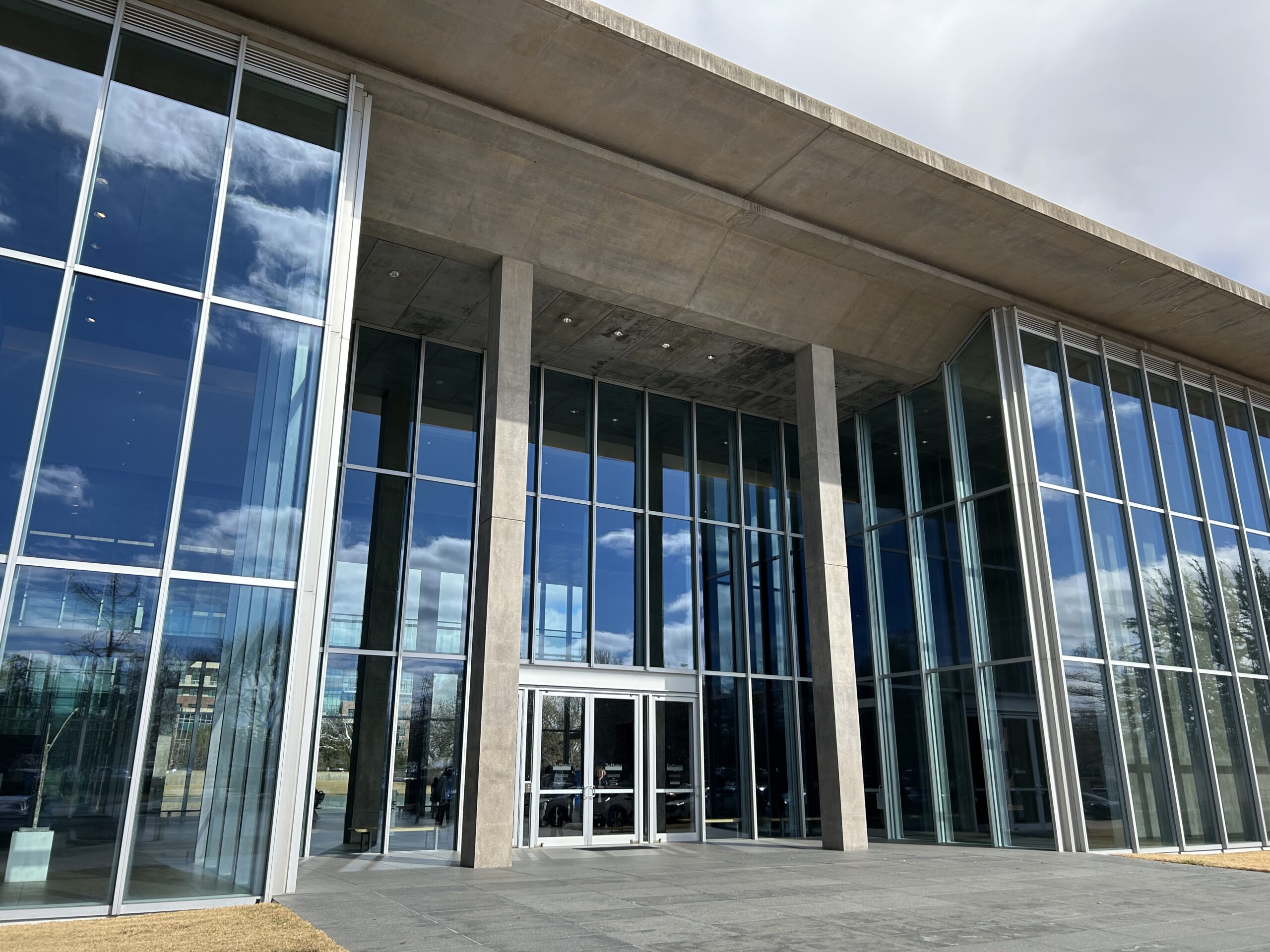
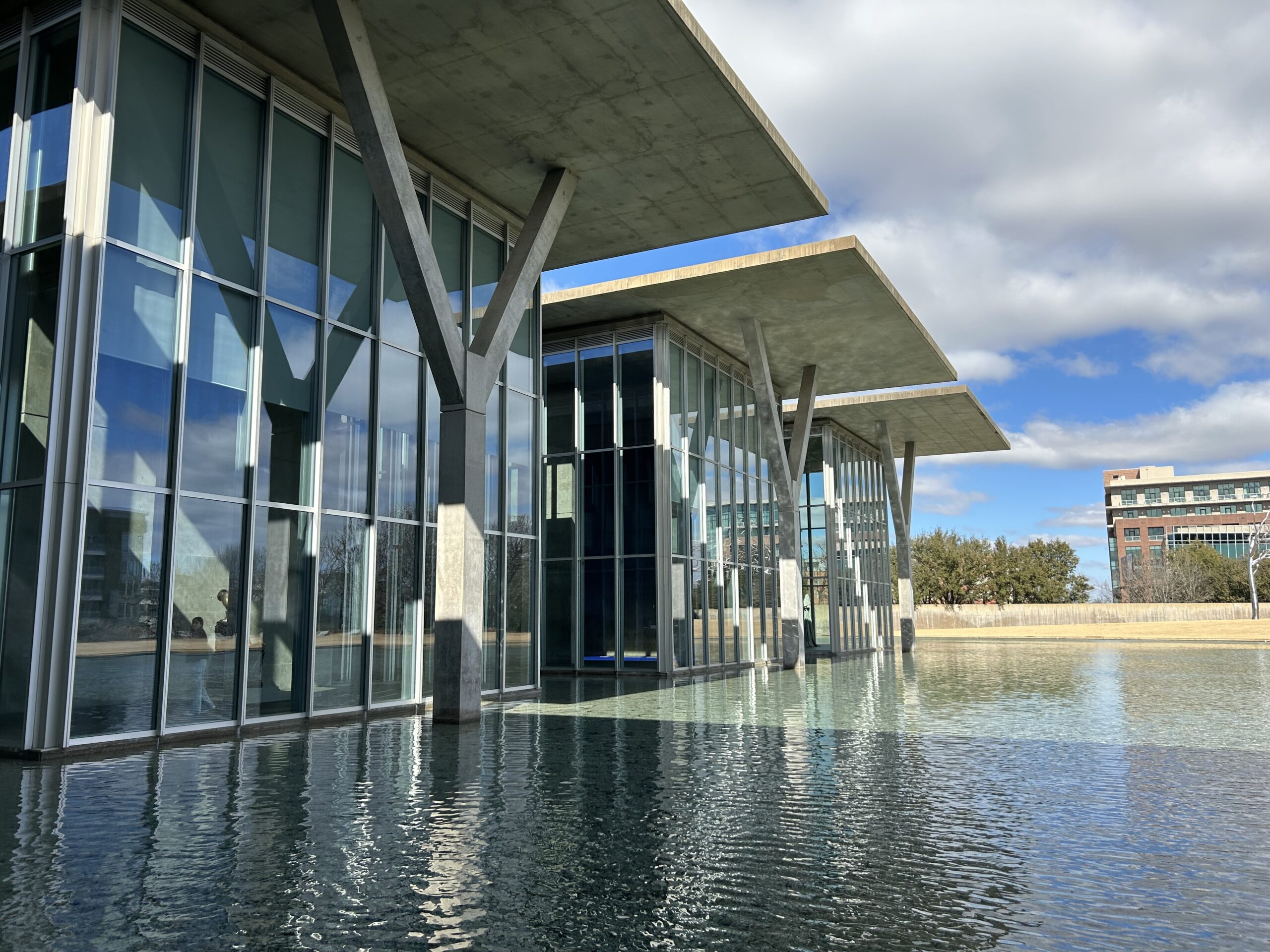
We’d left Dallas that morning in mid-February, skirting the cities on I-20 West, except for a brief stop in the Fort Worth museum district. Specifically, at the Modern Art Museum of Fort Worth. Yuriko had heard about my visit in 2019 and been slightly miffed, since she too wanted to see the Tadao Ando-designed structure. So we shoehorned a visit for a look at the structure on the day’s itinerary, though not the museum collection. It loses nothing on a second viewing. Gets better.
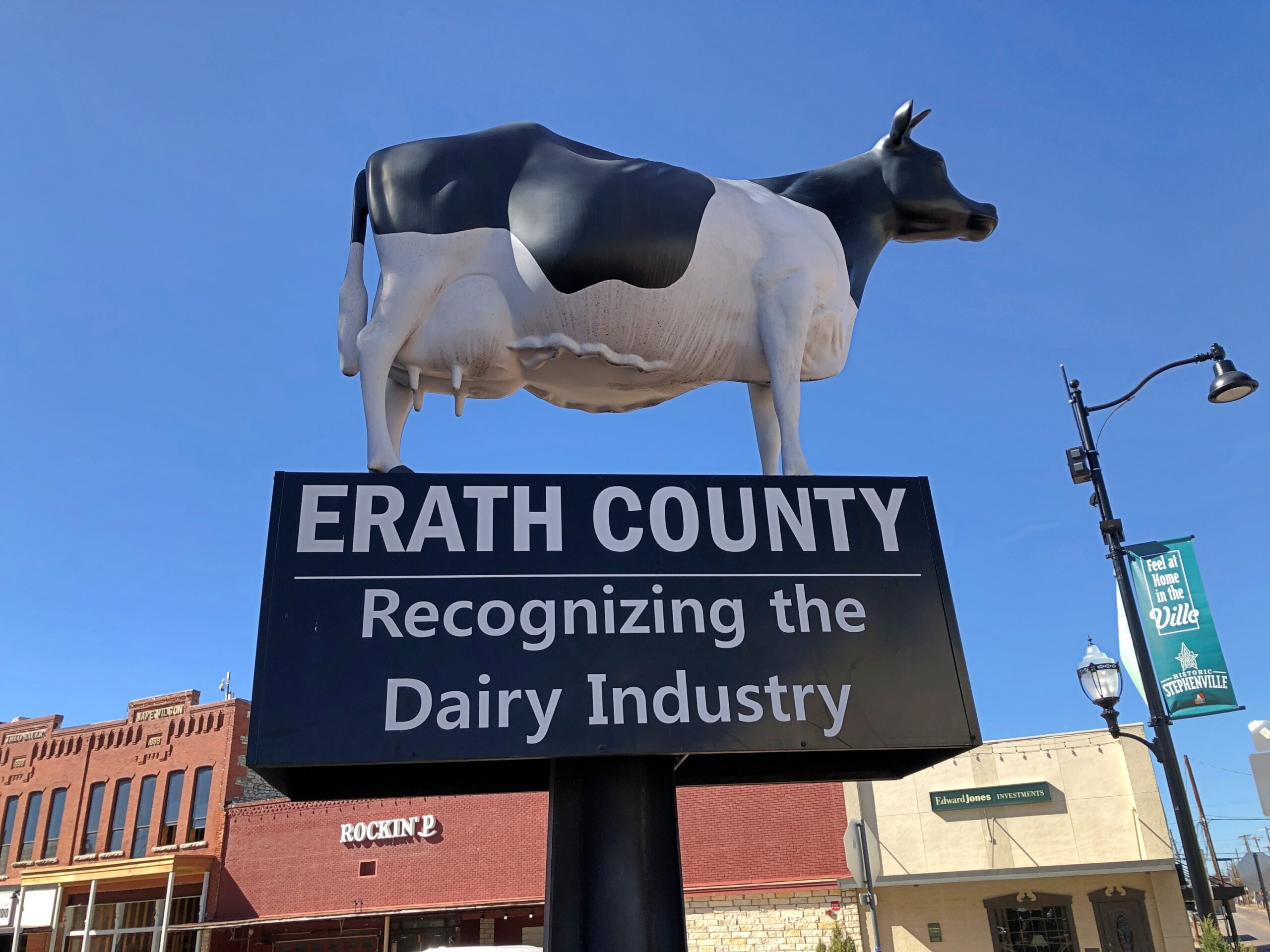
Go southwest from Fort Worth on US 377 and soon enough you’ll arrive in Stephenville (pop. 20,800 or so), seat of Erath County.
A dairy industry in Erath County? Yes, indeed: sales of $350.9 million in 2022, according to the USDA, by far the largest ag product in the county, and third highest for milk sales among all the 254 counties in Texas, and 24th in the nation. Meat cattle in Erath County are a distant second at $82.7 million that year, so a milk cow standing in the shadow on the Erath County courthouse is just about right.
I had to look it up: number one county in nation for milk production by dollar volume is not in Wisconsin, but rather Tulare County, California, at more than $2.8 billion in 2022. First out of 1,770 counties nationwide producing milk. Now there’s a Jeopardy answer to stump everyone.
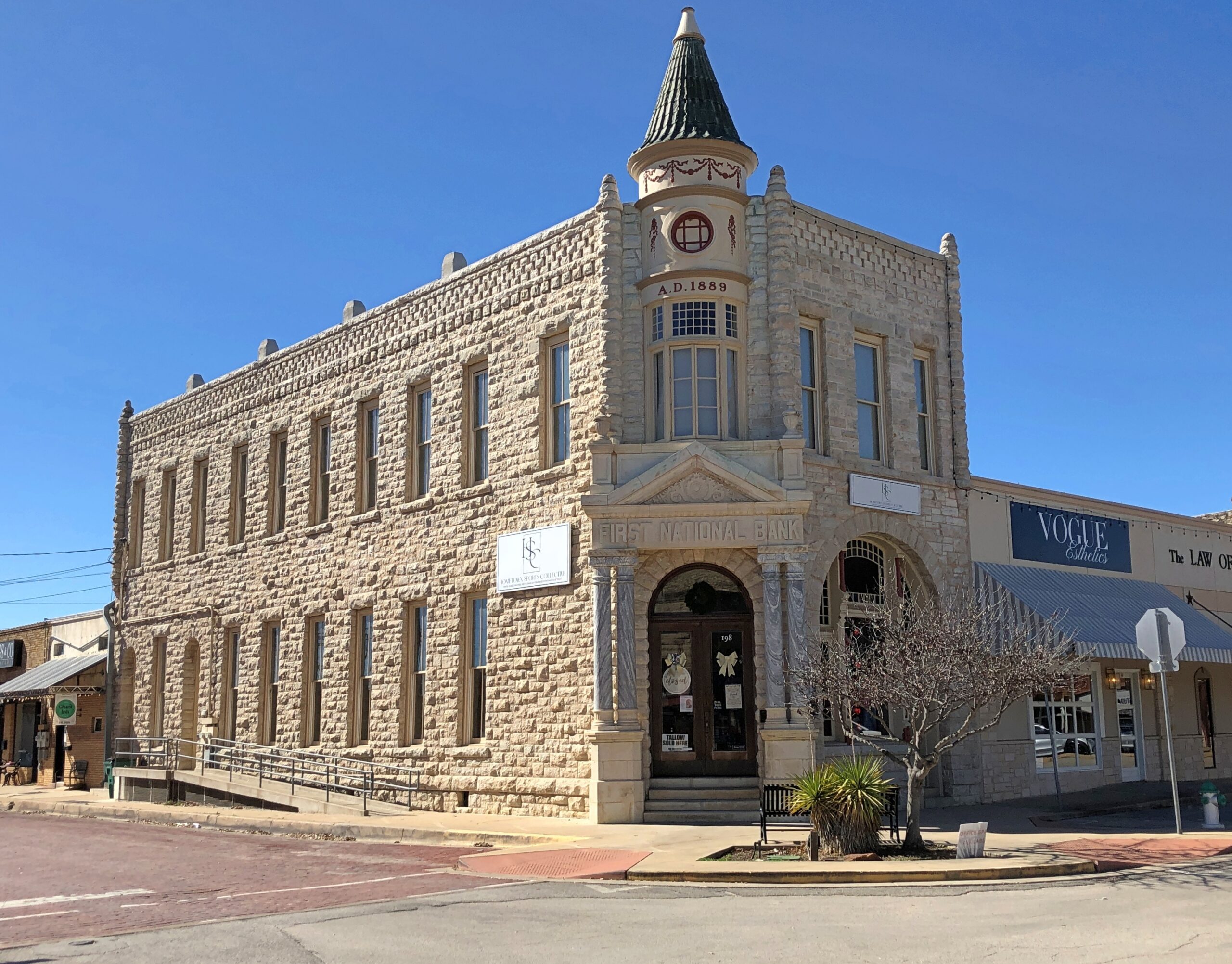
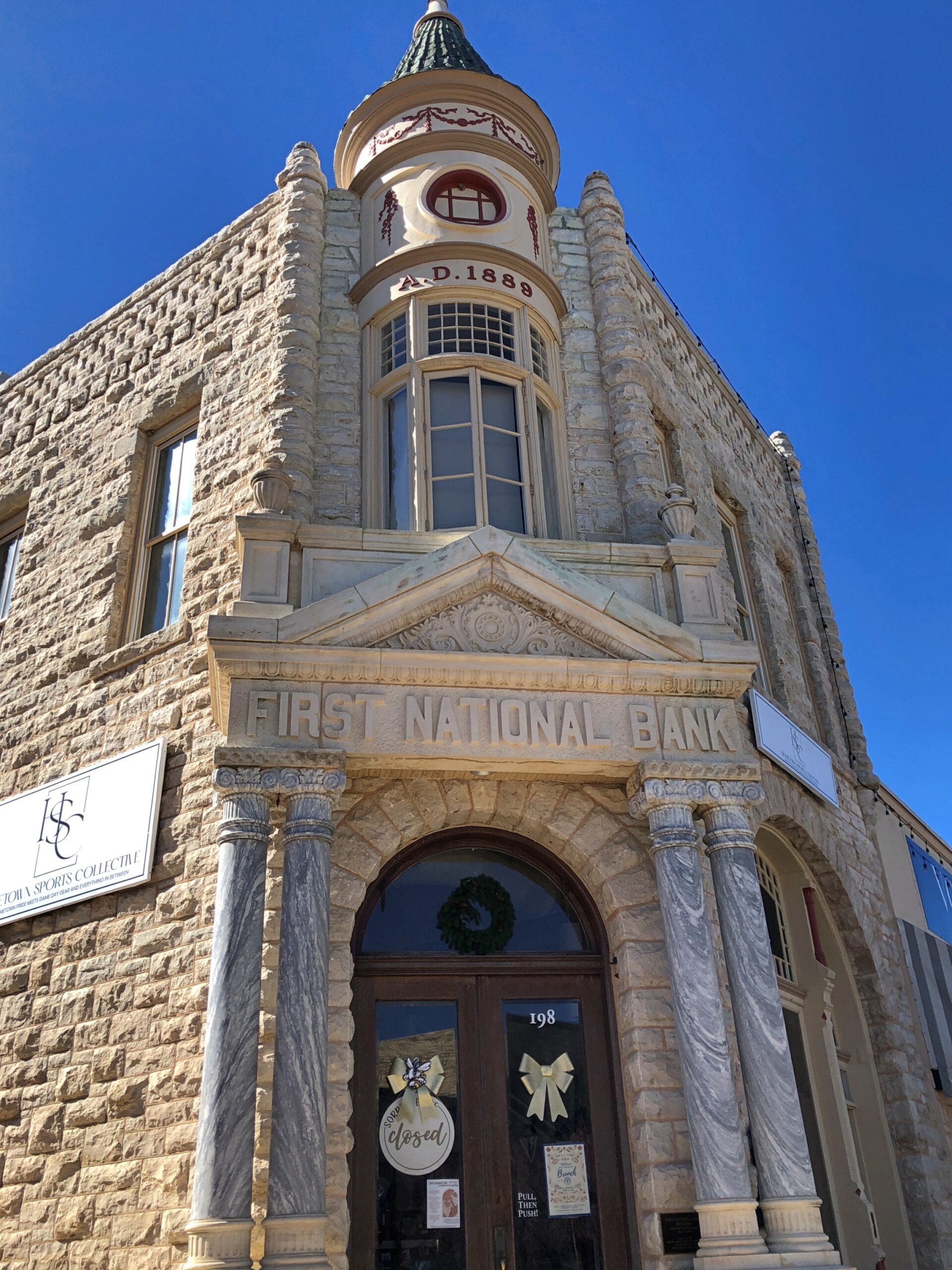
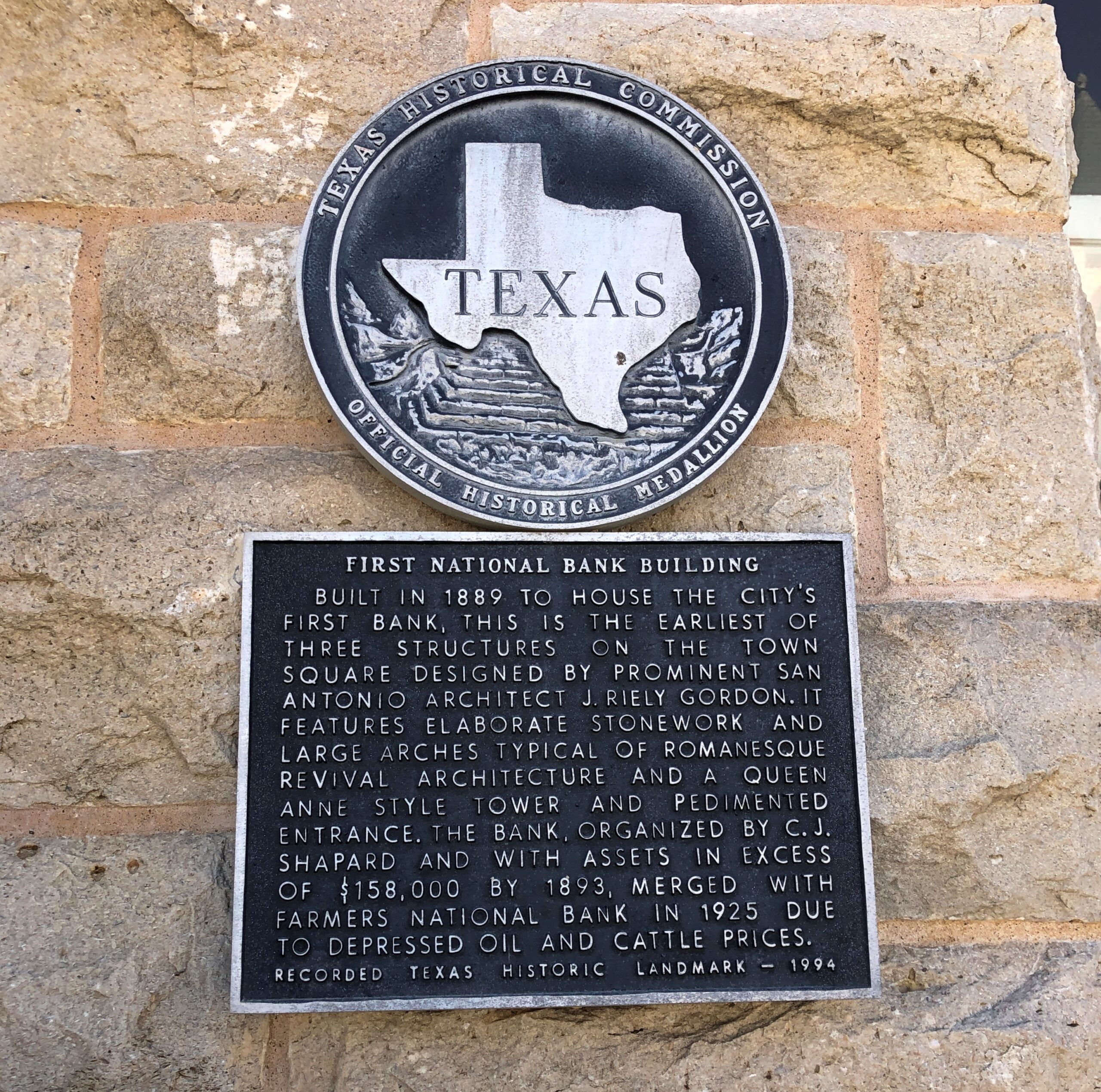
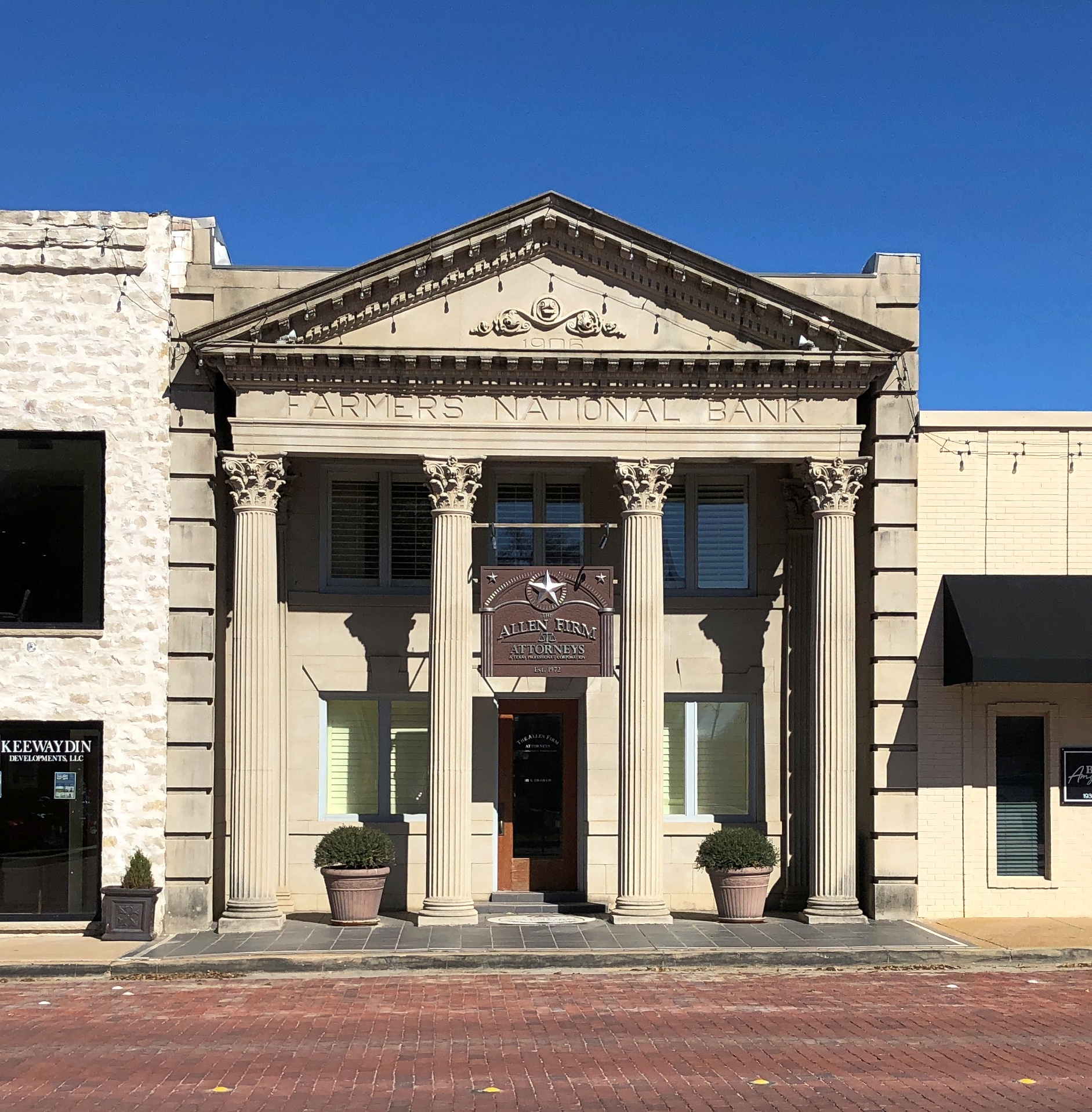
We ate lunch in Stephenville at Greer’s, which served a chicken-fried steak to beat all, then took a constitutional around the Erath County courthouse. Starting with one hefty former bank building, vintage 1889.
For Texas county courthouses, James Riely Gordon (d. 1937) is a starchitect, but of course that wasn’t all he did. When he designed this bank, he was 26.
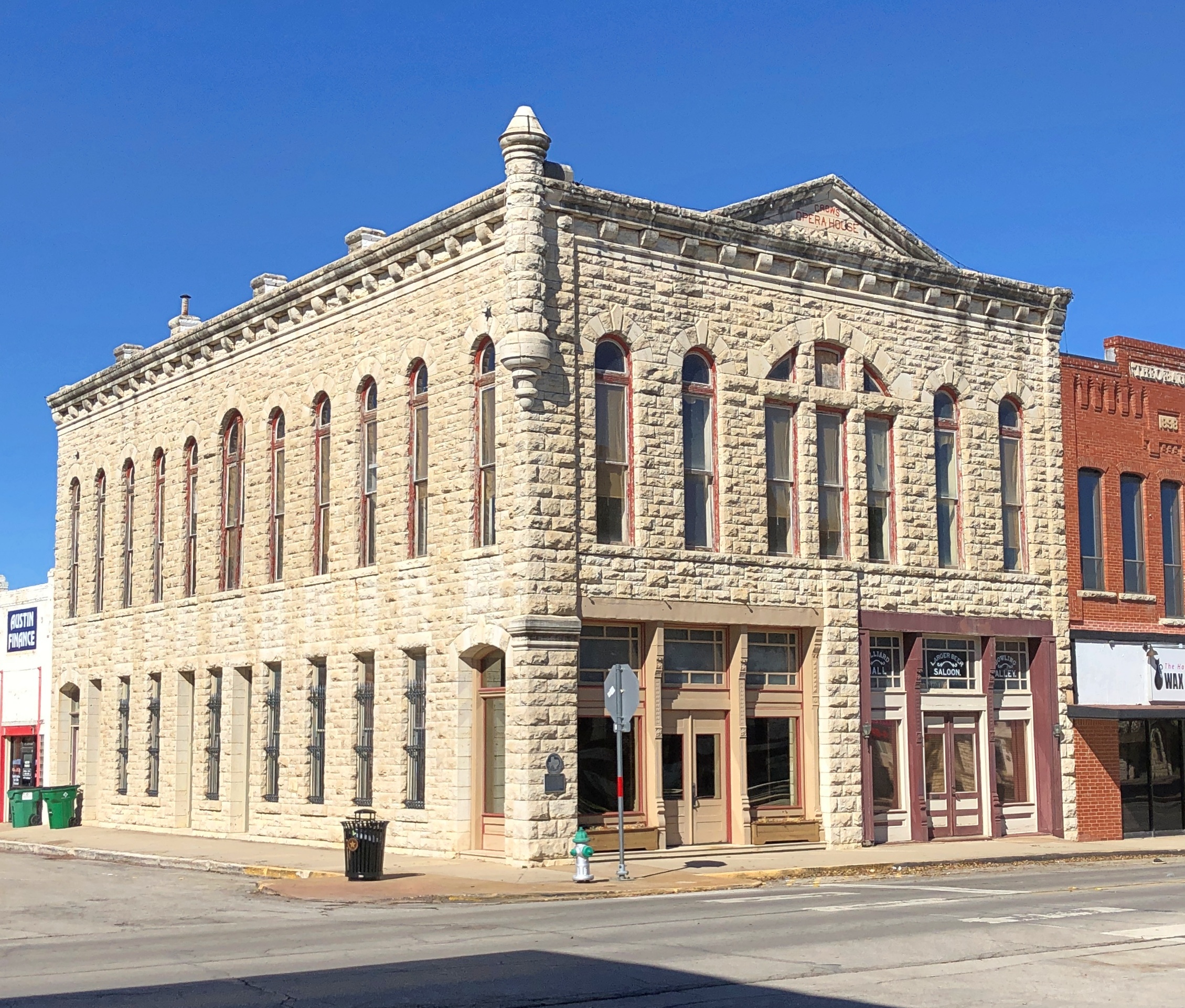
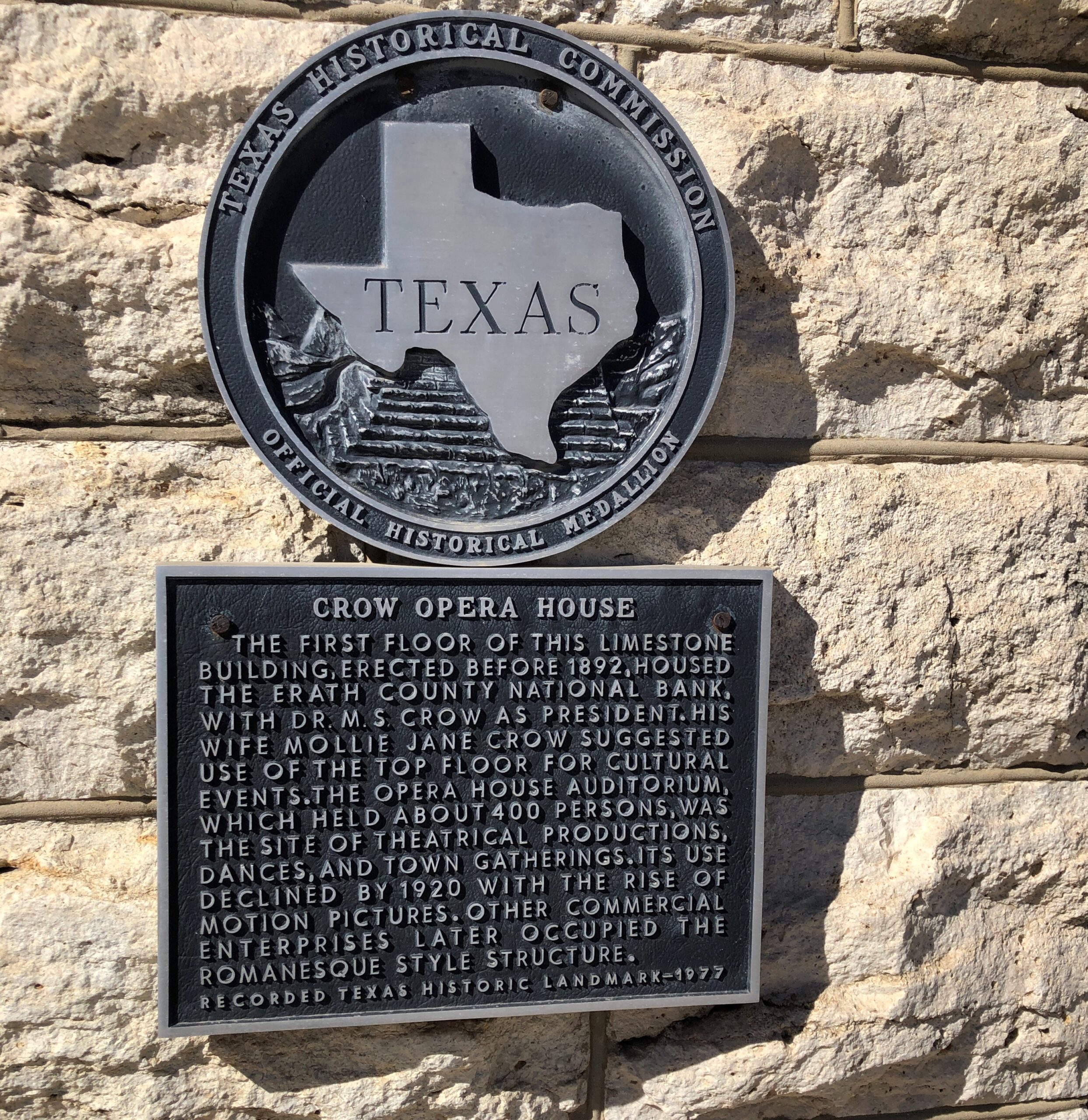
Every town worth its late 19th-century salt has to have an opera house.
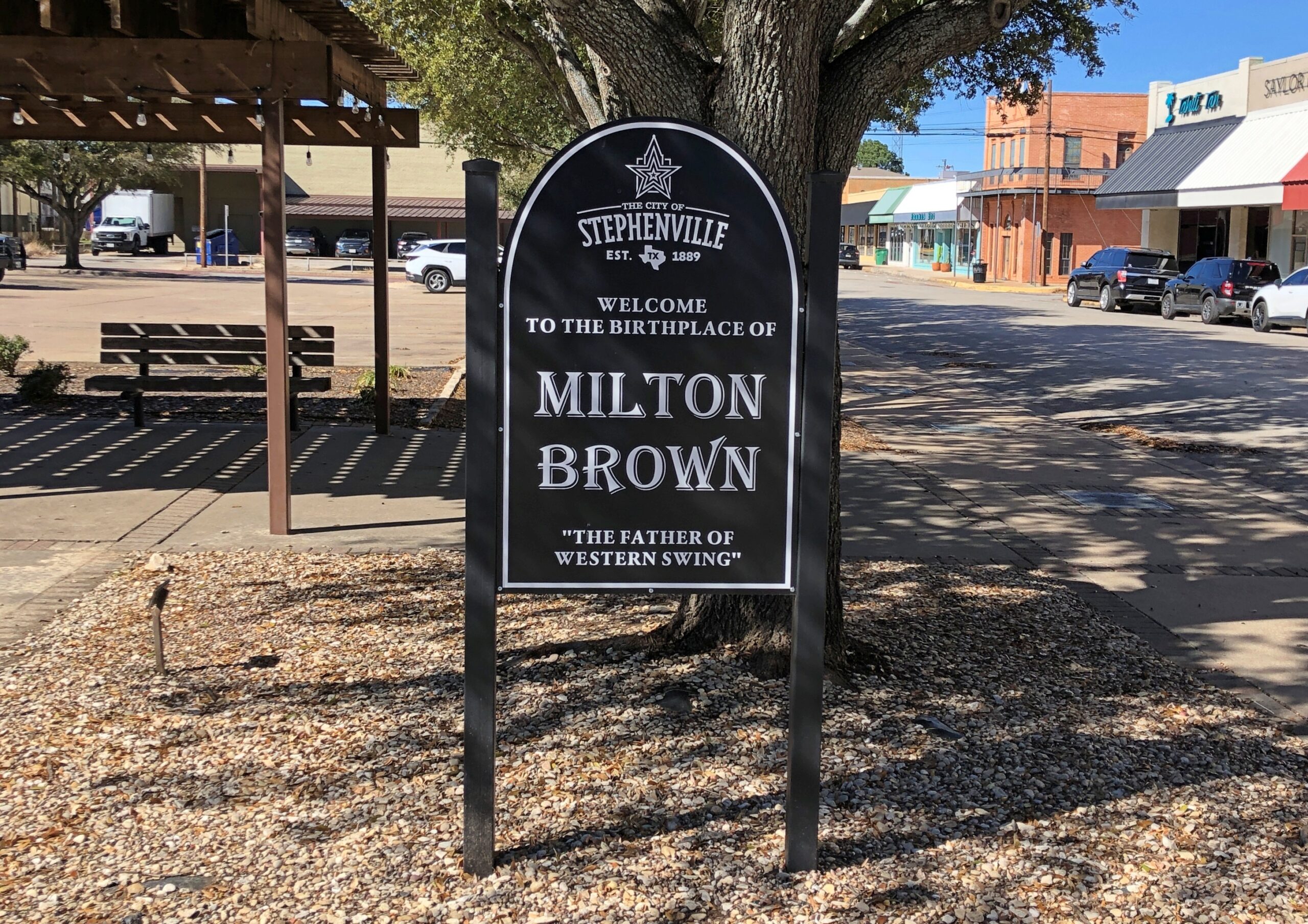
Wiki: “Brown began his musical career in 1930, when he met Bob Wills and guitarist Herman Arnspiger. They were performing at a local Fort Worth dance and Brown joined the duo on a chorus of ‘St. Louis Blues.’ The trio decided to team up to play medicine shows around Texas and Brown landed a regular radio spot on WBAP for the group, where they played a show sponsored by Aladdin Lamp Company, which had the band change its name to the Aladdin Laddies.”
Man, there’s another streaming platform limited series for you: the founding of western swing. Add a fictional love triangle between Bob Wills and Milton Brown and a fictional fetching woman, and some fictional tension between Bob and Milton, who nevertheless produce terrific music to enthusiastic audiences early in the Depression, until Milton dies suddenly in the last episode in a car wreck, as the real musician did in 1936 at age 32. Bob is left to carry on.
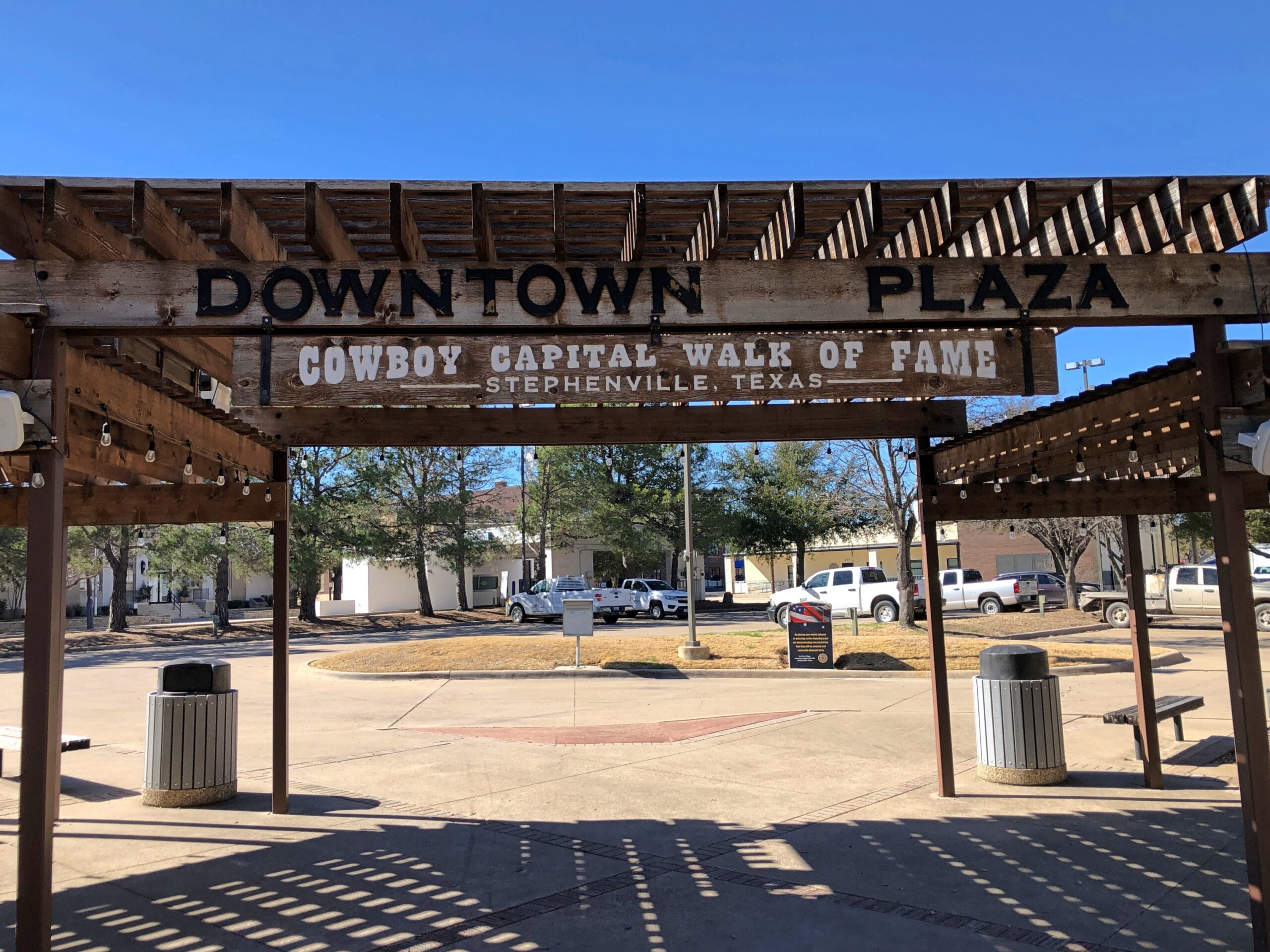
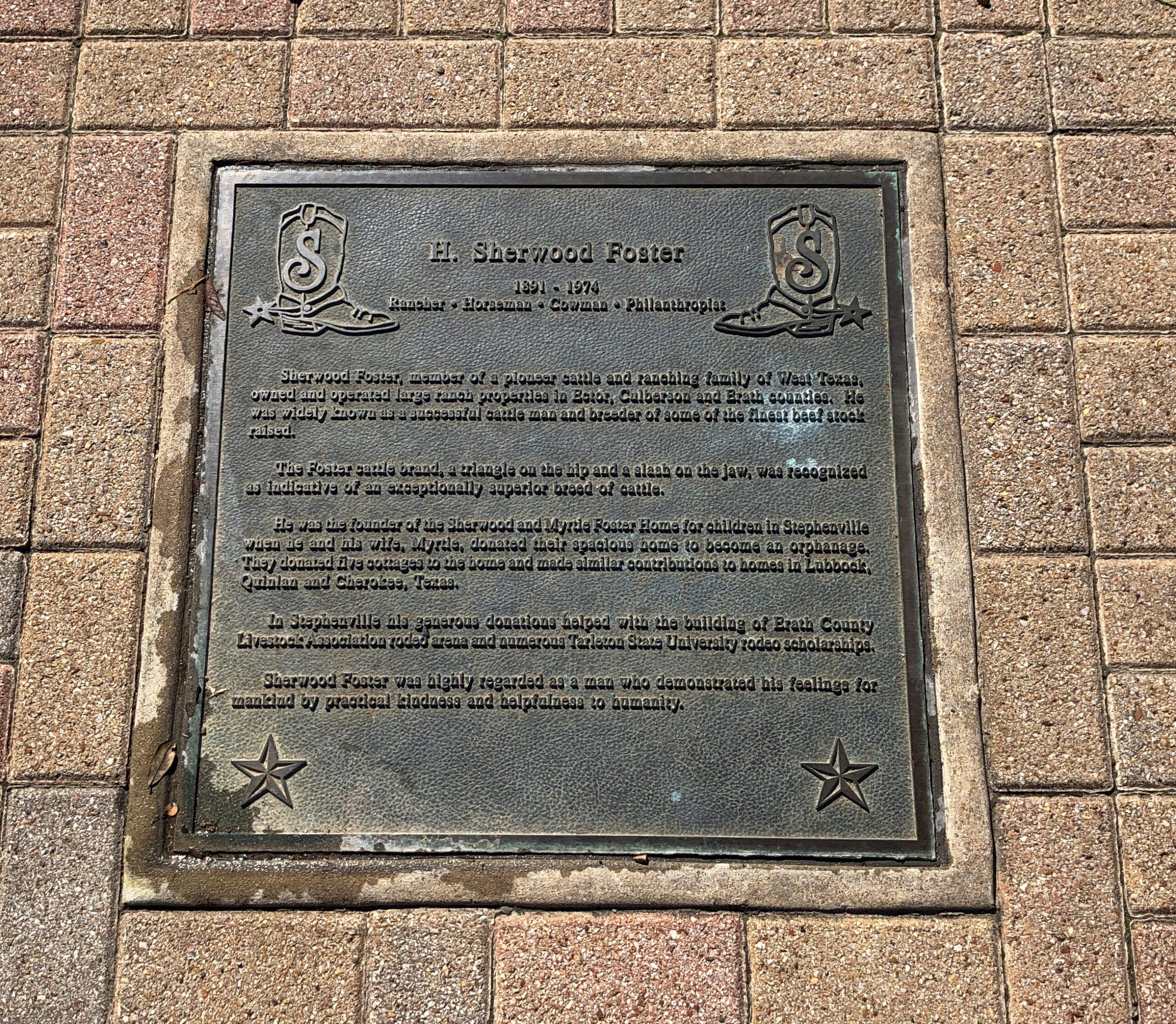
Milton’s not the only one honored near the Erath County courthouse.
There were a fair number of plaques like this, too many to read, so I picked one.
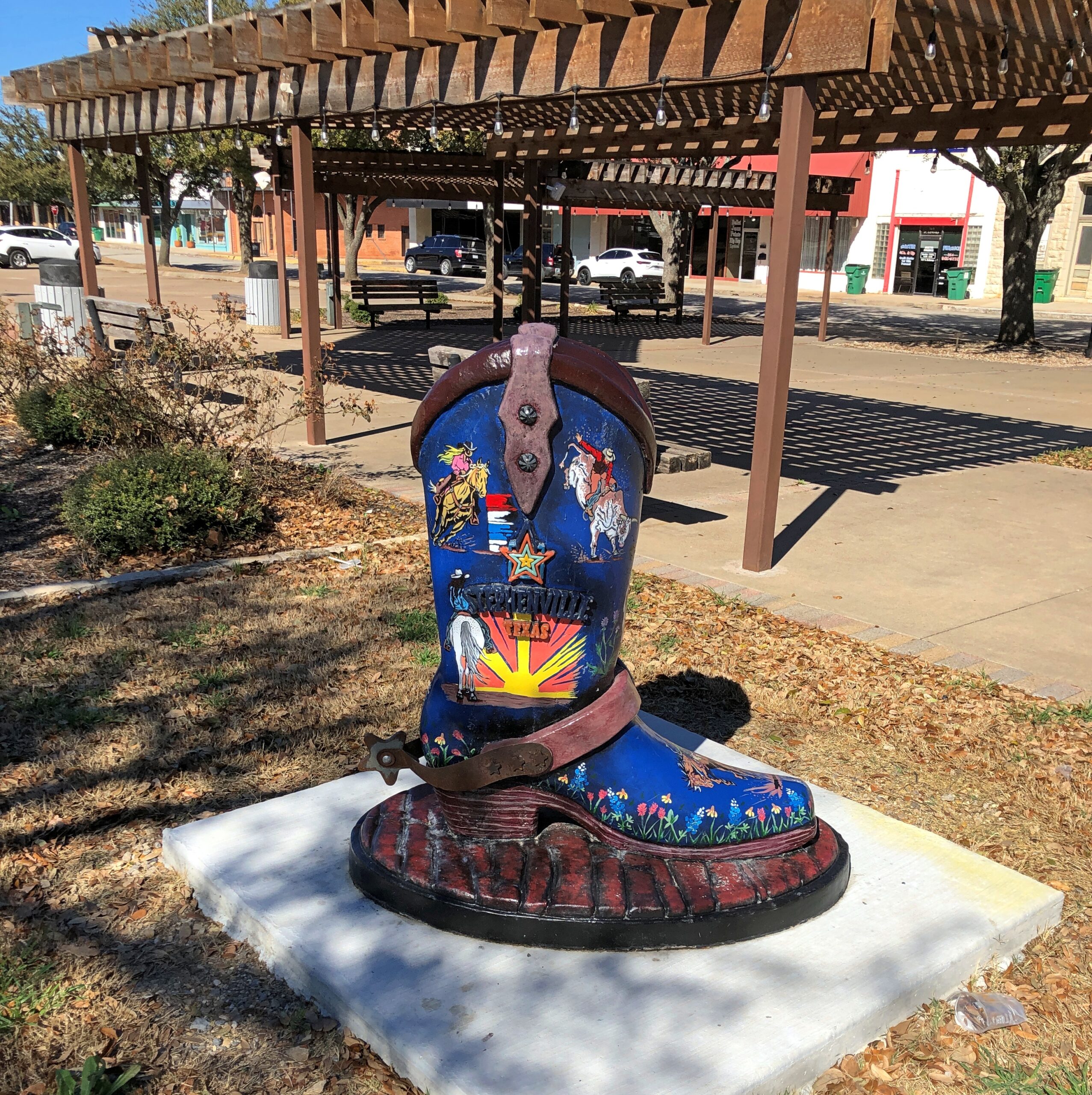
Chicago had its art cows (that was in 1999?!?) and Sturgeon Bay, Wisconsin, has its sturgeons, so Stephenville had boots?
You’d think maybe, considering the importance of dairy locally, there would also be — do dairy workers wear special boots? If so, there should be one of those on display too.
More Stephenville.
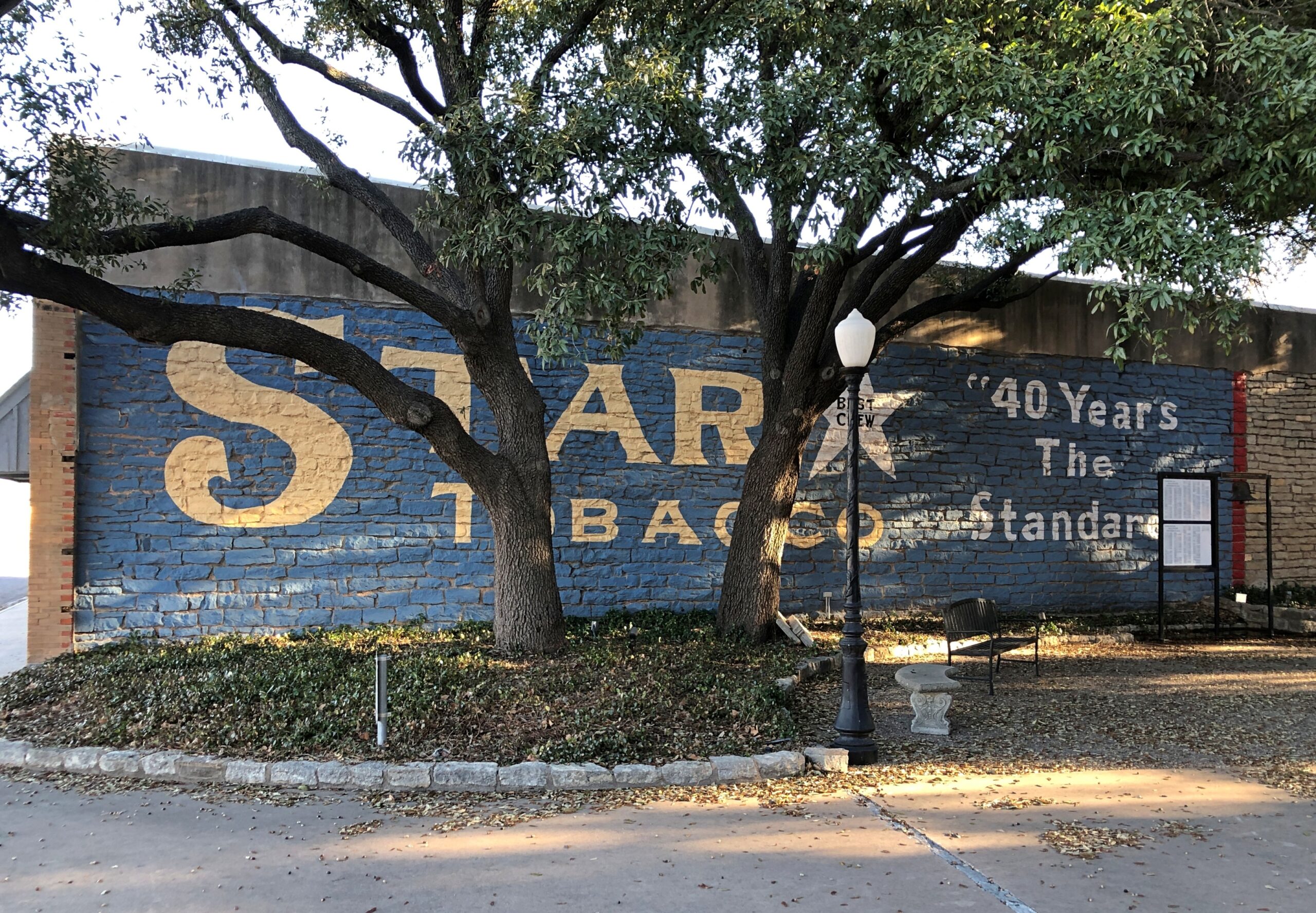
US 67 joins US 377 for a run southwest of Stephenville, through such burgs as Dublin, Comanche and Brownwood. Then US 377 peels away to the south; but we followed US 67 west to Ballinger. That town was mostly a stop to get our bearings, really, but I also did a short walkabout while Yuriko napped in the car.
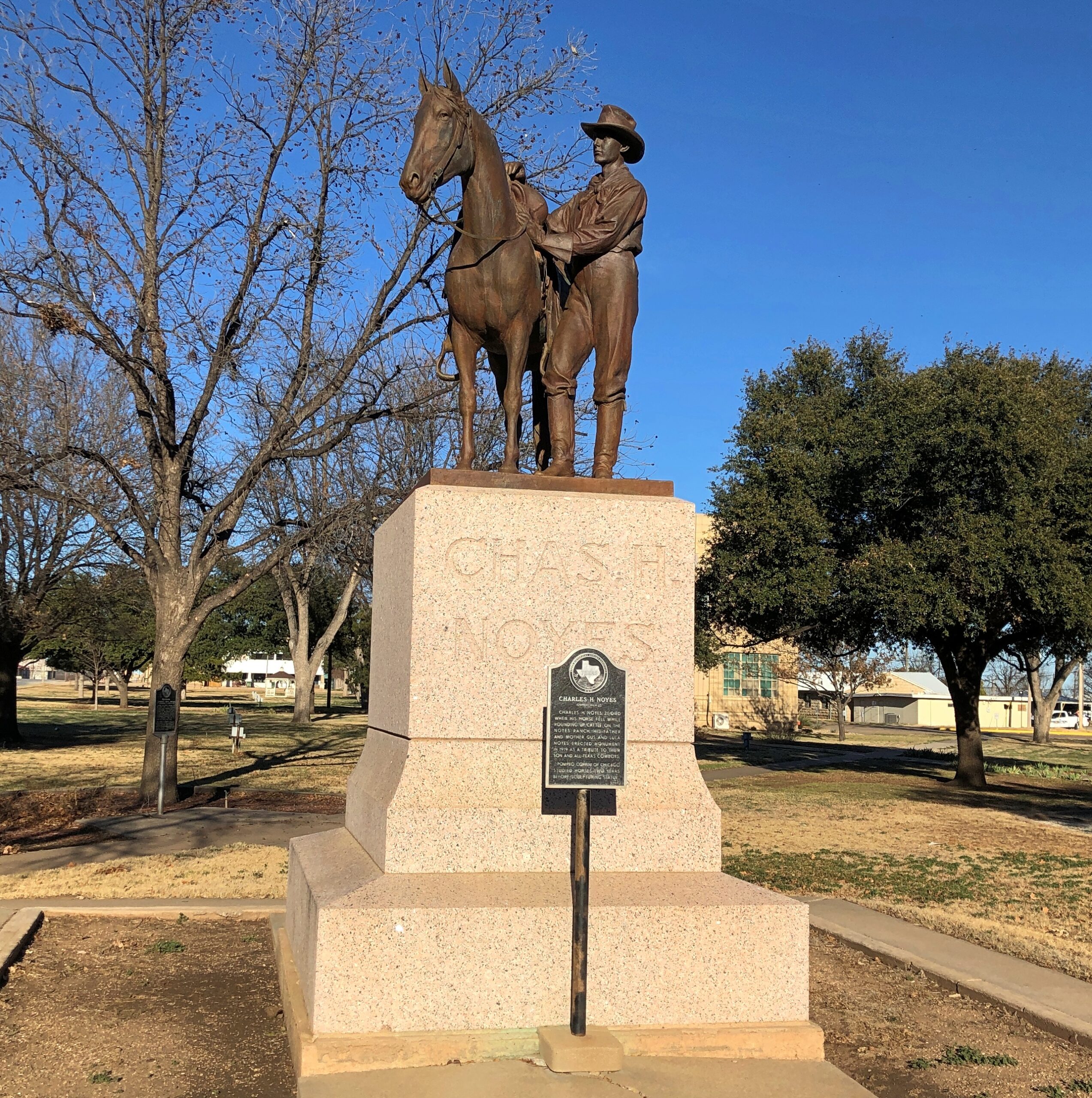
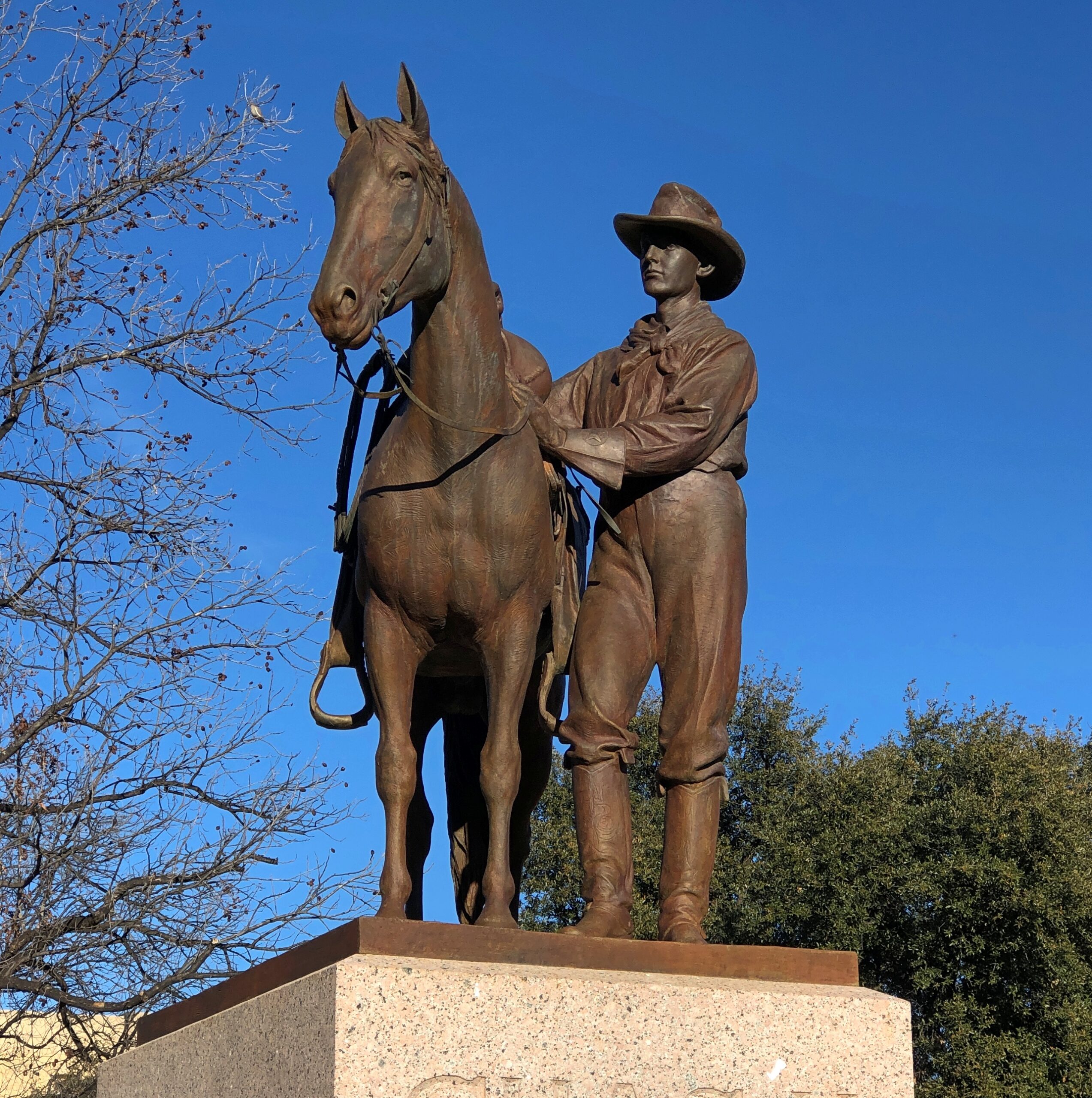
I made the acquaintance of Charles H. Noyes (d. 1917).
Charles was a young Runnels County man who died by being thrown from his horse while minding cattle. His parents tasked no less than Pompeo Coppin to do the sculpture honoring his memory. Nice work, Pompeo. RIP, Charles.
I have to admit it, we bought gas at Buc-ee’s more than once on our trip to Florida. Turns out that the chain’s gas prices are comparable with Costco. That is, 20 to 30 cents cheaper per gallon than most standard gas stations. Costco tends to be on main thoroughfares in densely populated places, which is sometimes convenient, sometimes not. Buc-ee’s is the flip of that, tending to be on major highways at some distance from densely populated places. Sometimes convenient, sometimes not.
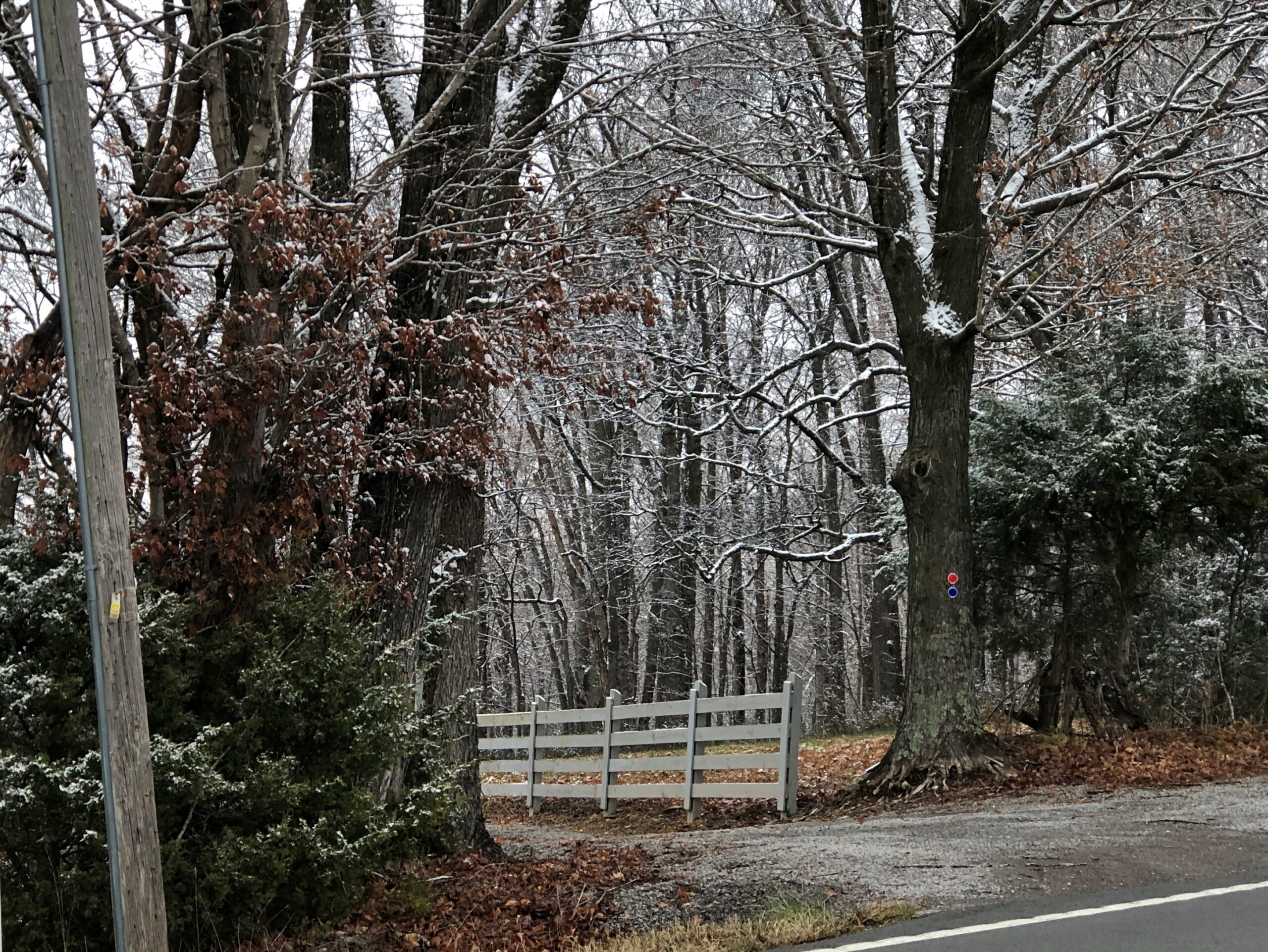
We gassed up at the Smiths Grove, Kentucky Buc-ee’s just off I-65 on December 5, early in our trip. We had to make a decision on how to proceed from there. One choice: continue on I-65 to Nashville, take I-40 east from there roughly to Cookeville, Tennessee, and take smaller roads into Jackson County, to reach our friends’ home in the holler. Or: take smaller roads across southern Kentucky and into Tennessee, bypassing metro Nashville and going through towns and hamlets and farmland and woods we’d never seen before, ultimately connecting to the appropriate small roads in Jackson County. It isn’t too hard to guess what we did.
Kentucky 101
It so happened that exiting from Buc-ee’s in Smiths Grove takes you to Kentucky 101, a two-lane highway that can either take you back to I-65 or south through Warren and Allen counties. Coming from the crowds of Buc-ee’s, people and cars, the contrast of heading south on Kentucky 101 is clear.
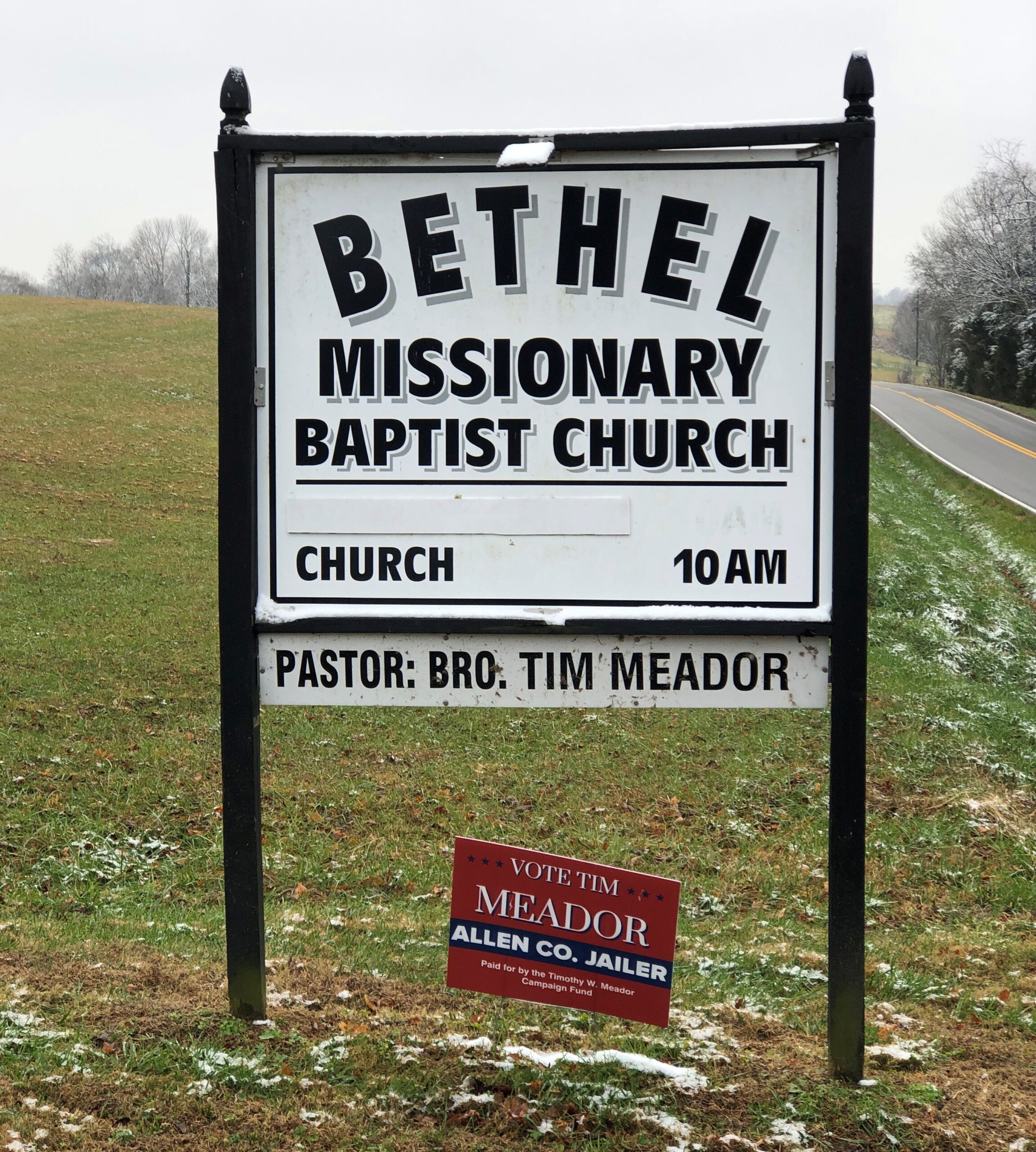
As of now, at least, Bro. Tim Meador is the Allen County Jailer, so I assume he won the most recent election.
I know that’s a county job that probably involves a fair amount of paperwork. Still, I picture the Jailer as an official who, like in a movie, puts offenders in the jug himself, turning a skeleton key (one of a few jangling on a big ring) to lock the cell.
Scottsville, Kentucky
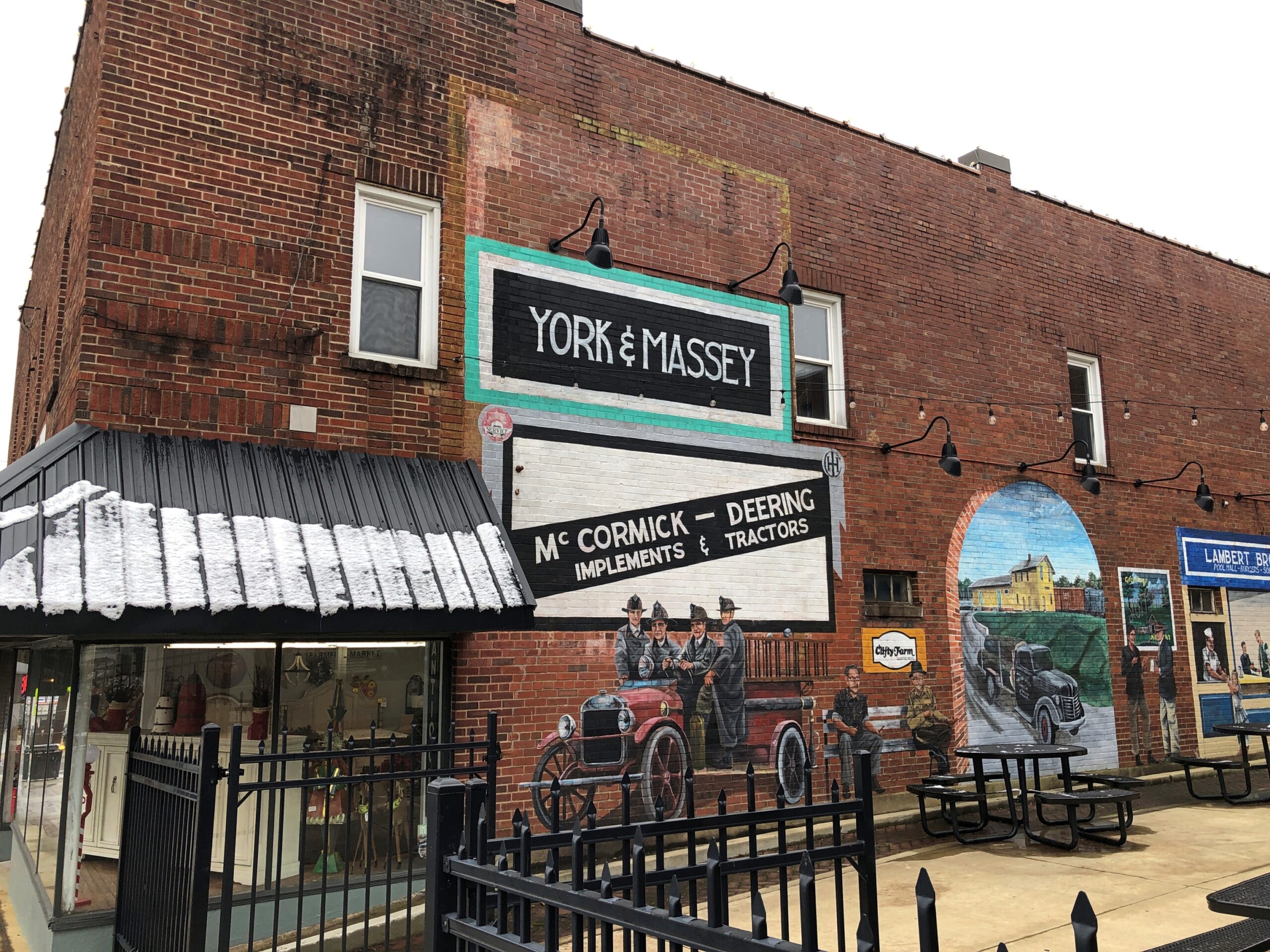
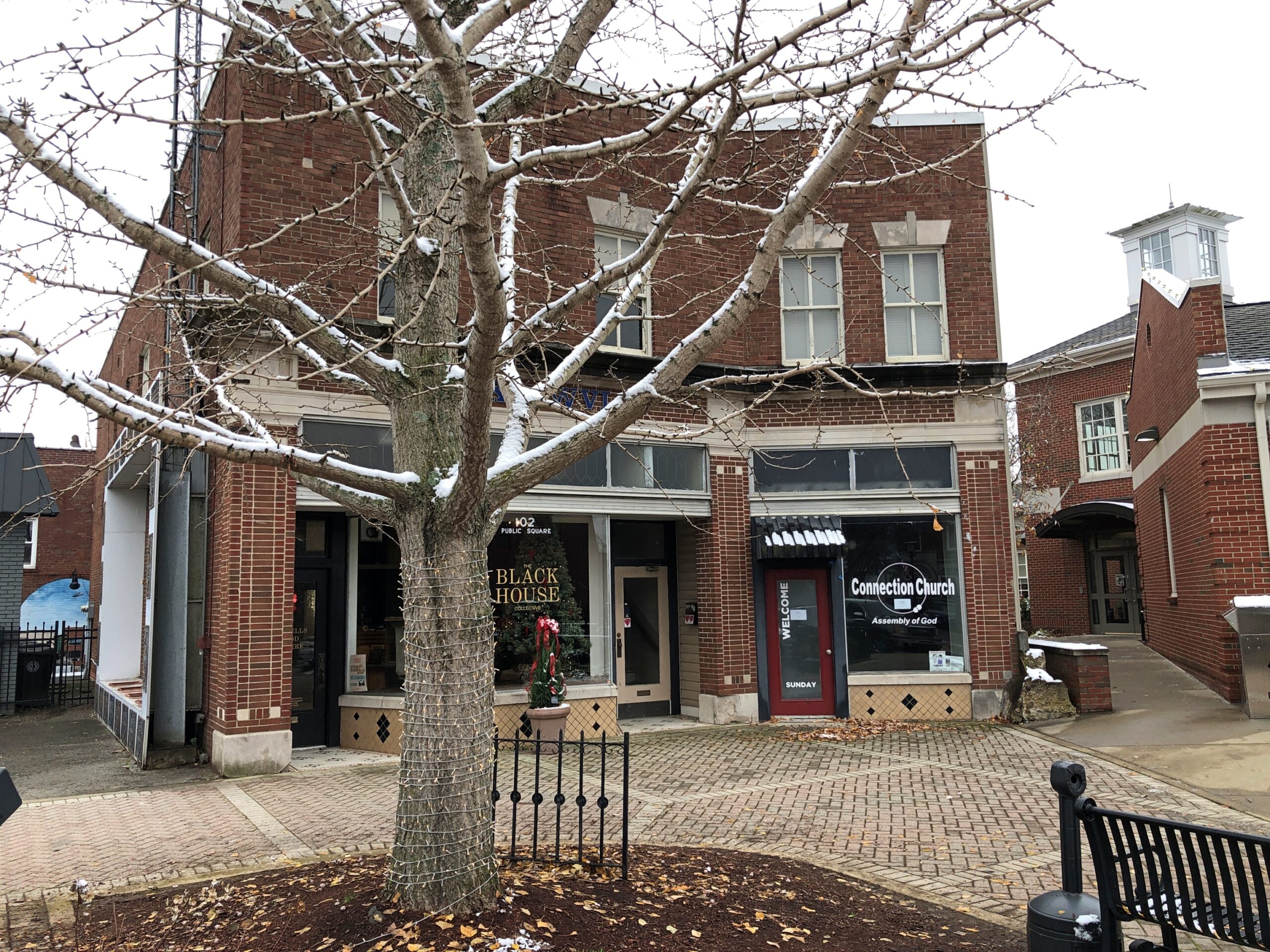
The main traffic hub of Scottsville (pop. 4,300), the seat of Allen County, is the junction of Kentucky 101 and 98, known as Main and Court streets locally. Instead of a county courthouse, the hub is in the form of a square with businesses around it and a lot of traffic passing through. More than I would have guessed.
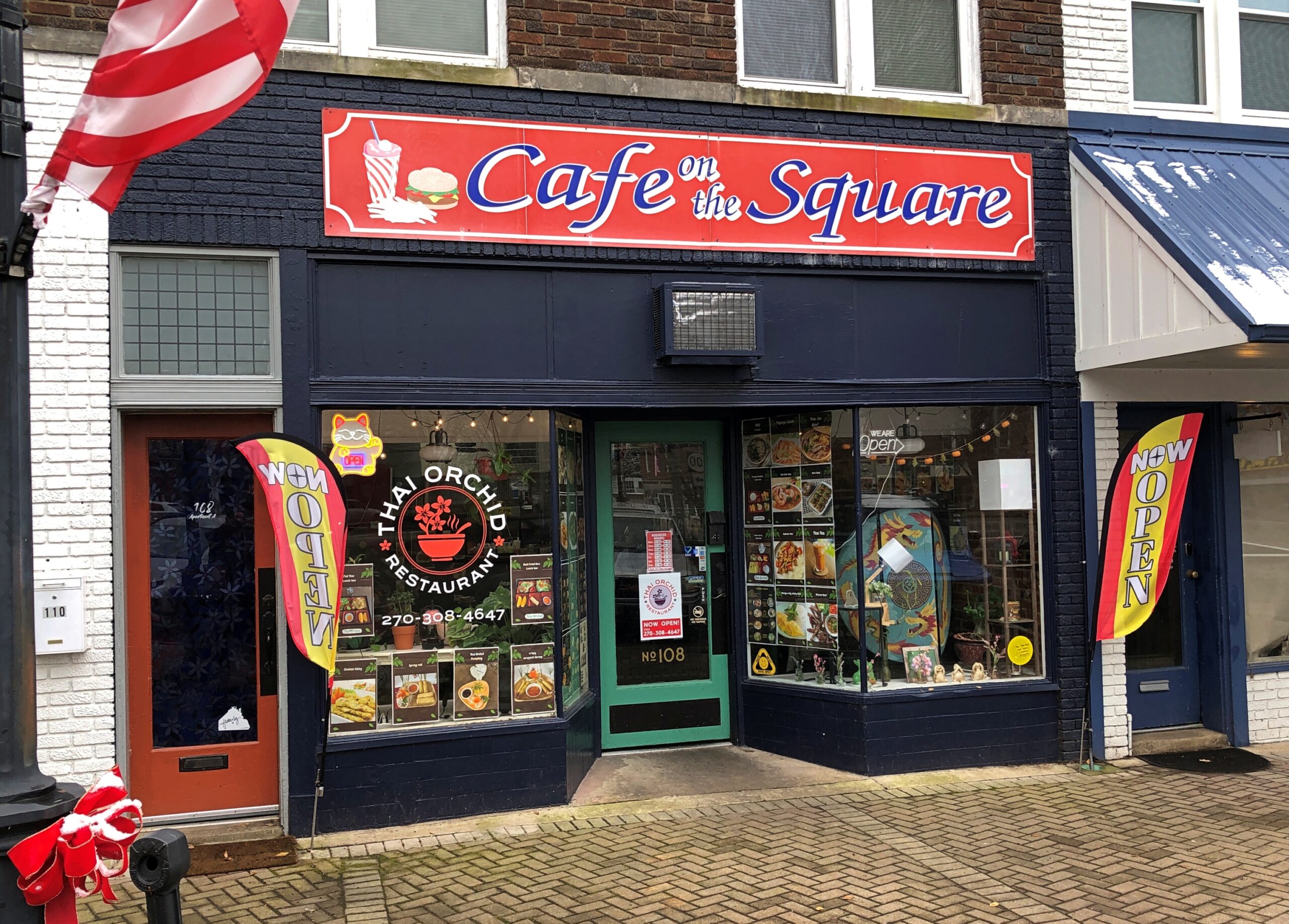
It was lunchtime. I can report that Thai Orchid is as good as you might find in a larger town. In our time, Thai has pretty much joined the tapestry of American cuisine as thoroughly as Chinese or Mexican food did in previous generations.
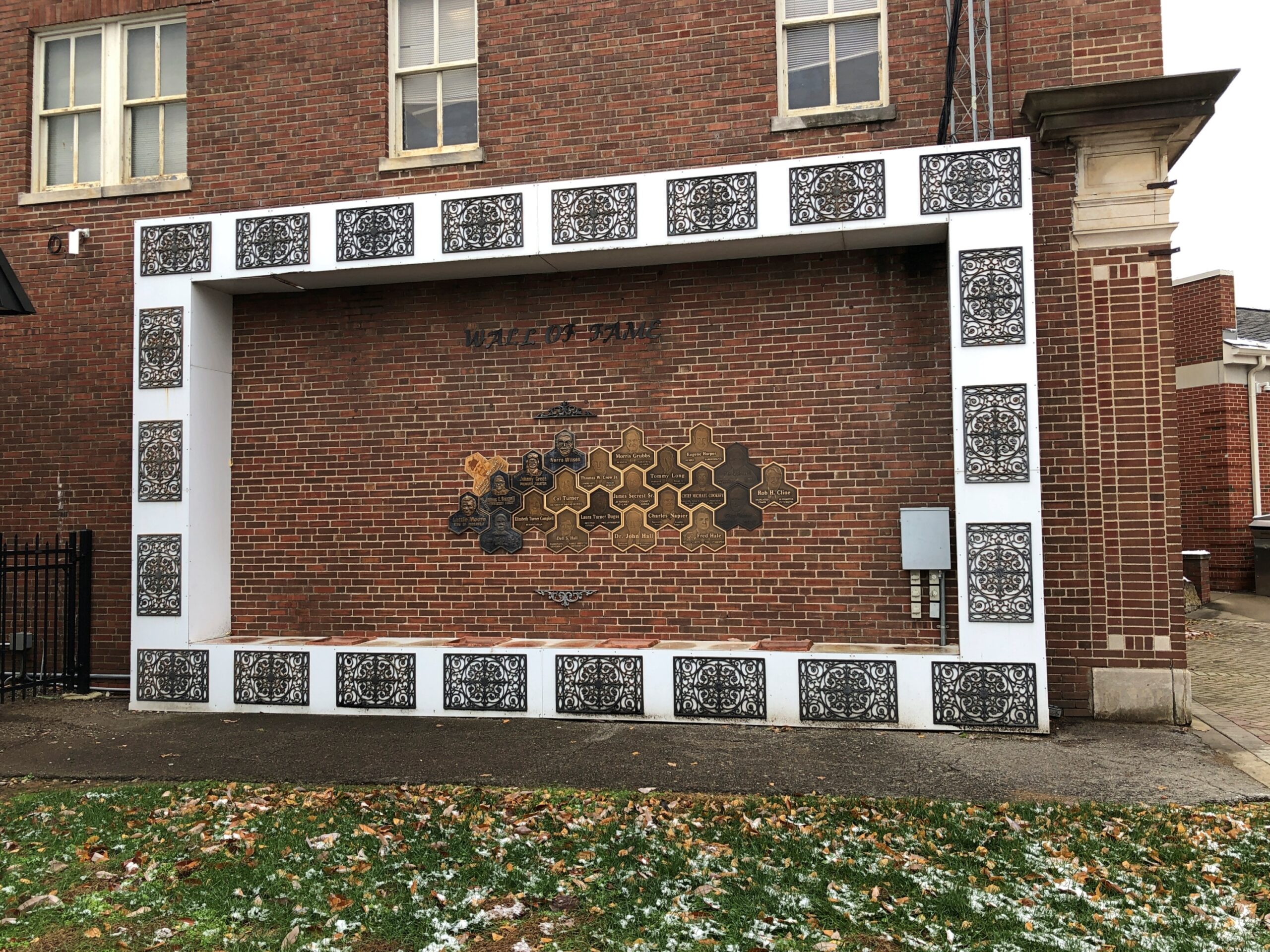
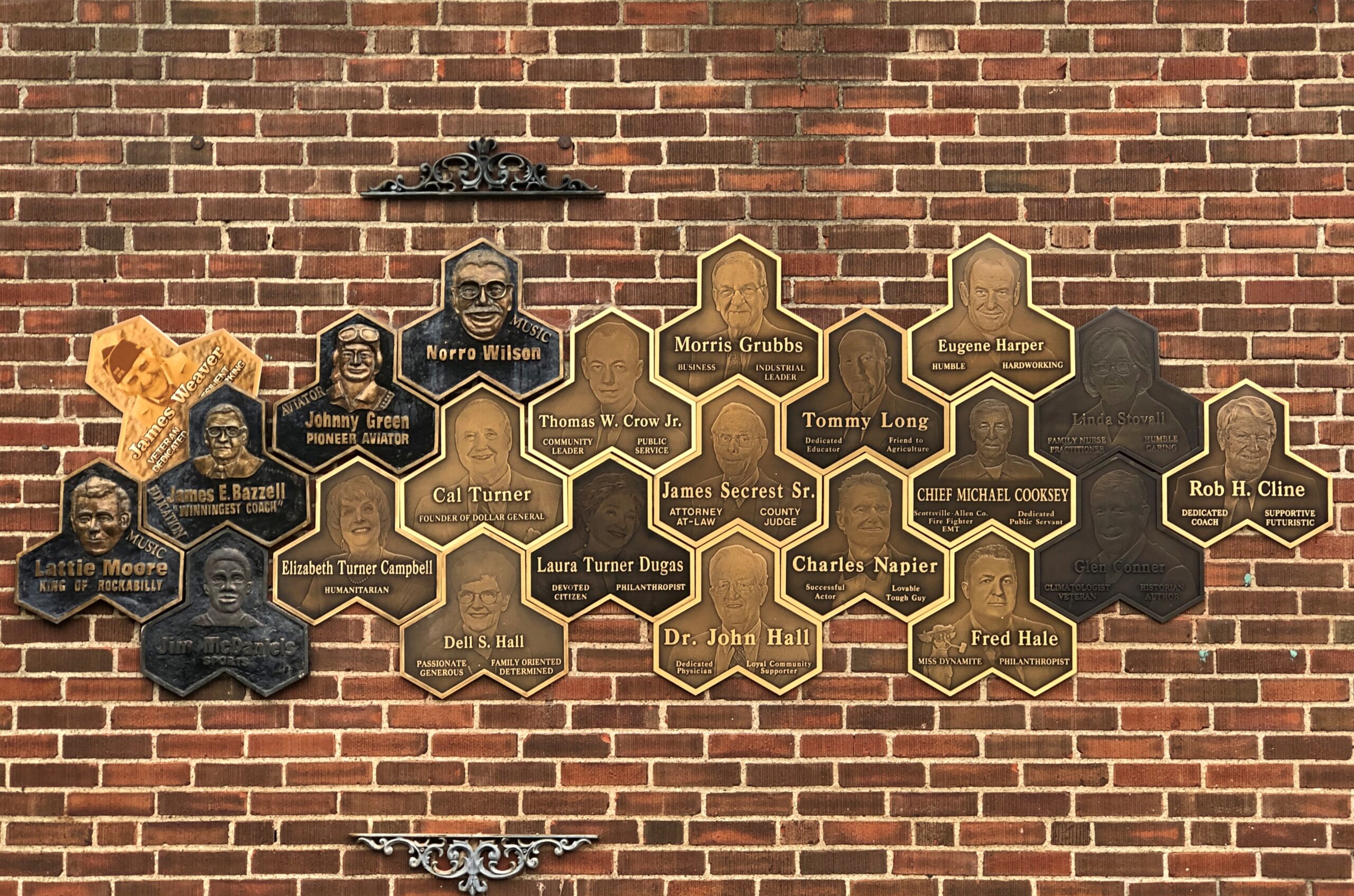
The main public library is near the square, sporting a local Wall of Fame.
The names include Lattie Moore, who sang, “I’m Not Broke but I’m Badly Bent,” a song with pretty much the same theme as Al Dexter’s “Wine, Women and Song.”
I won’t look all the names up, but the Scottsville Wall of Fame also includes Johnny Green, pioneer aviator, who did the first commercial flights between Florida and Cuba, apparently.
Red Boiling Springs, Tennessee
We drove on Kentucky 98 east to the near-border town of Gamaliel, pop. 391, still on the Kentucky side of the line. A lesser-known Biblical name, but I also can’t help thinking of the G. in Warren G. Harding.
South from there, Kentucky 63 turns into Tennessee 56 after a few miles. There’s no sign marking the border, just one announcing the Tennessee highway number. Pretty casual for a line that might have been an international border, had the secessionists had their way (unless, of course, Kentucky left the old US).
Besides a cool name, Red Boiling Springs (pop. 1,205), Tennessee, has a history. As the name suggests, people took the waters there.
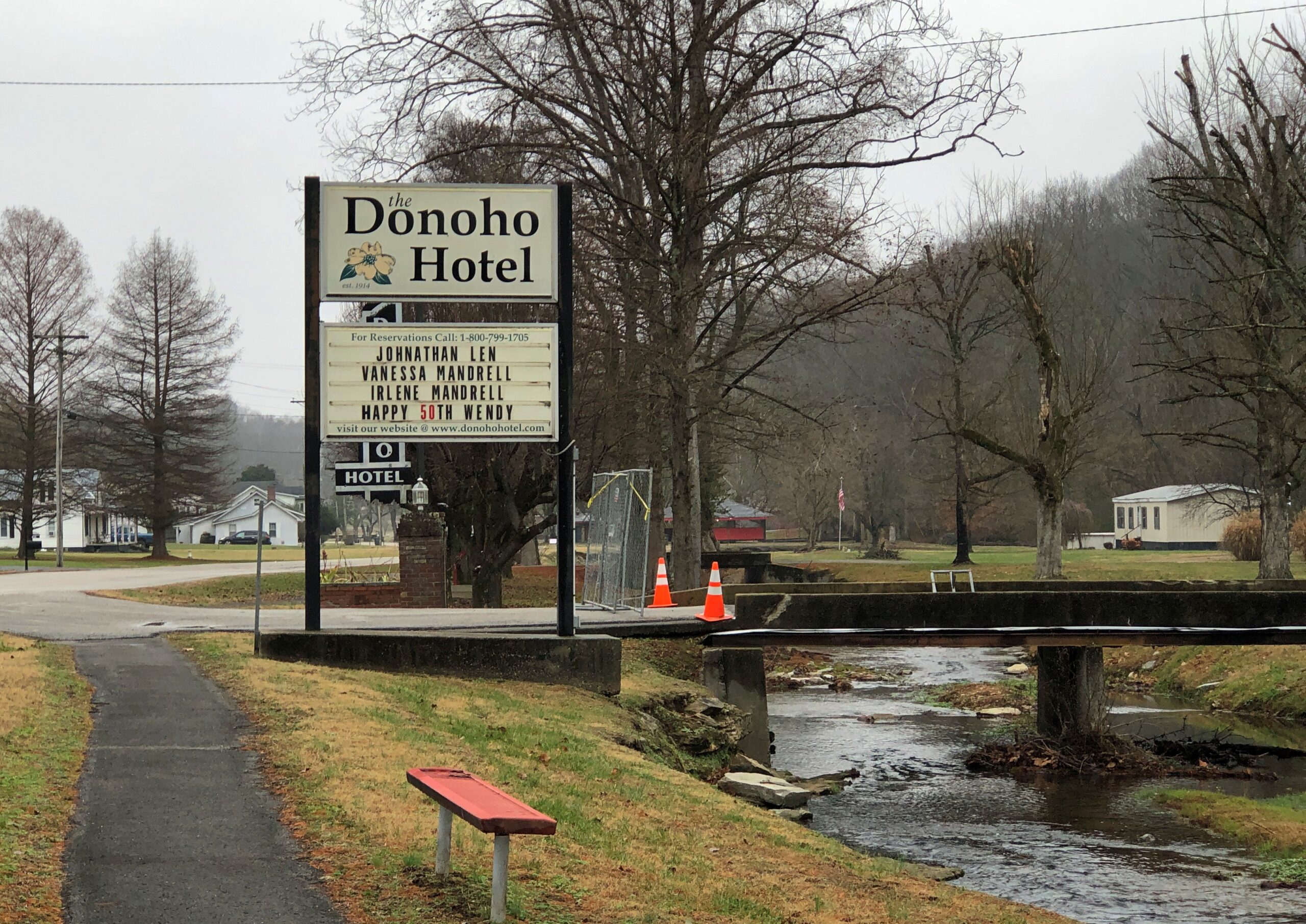
“As recently as 1920, Red Boiling Springs had about a dozen places in which visitors could stay,” The Tennessee Magazinereported a few years ago. “The largest was the Palace Hotel, which had 180 rooms. Over the next several generations, business declined… and… a 1969 flood destroyed large parts of the town. However, three of the Red Boiling Springs resort hotels are still open. They were in (nearly) continuous operation throughout the 20th century and still reflect more of the lifestyle of the late 19th century than they do the 21st.”
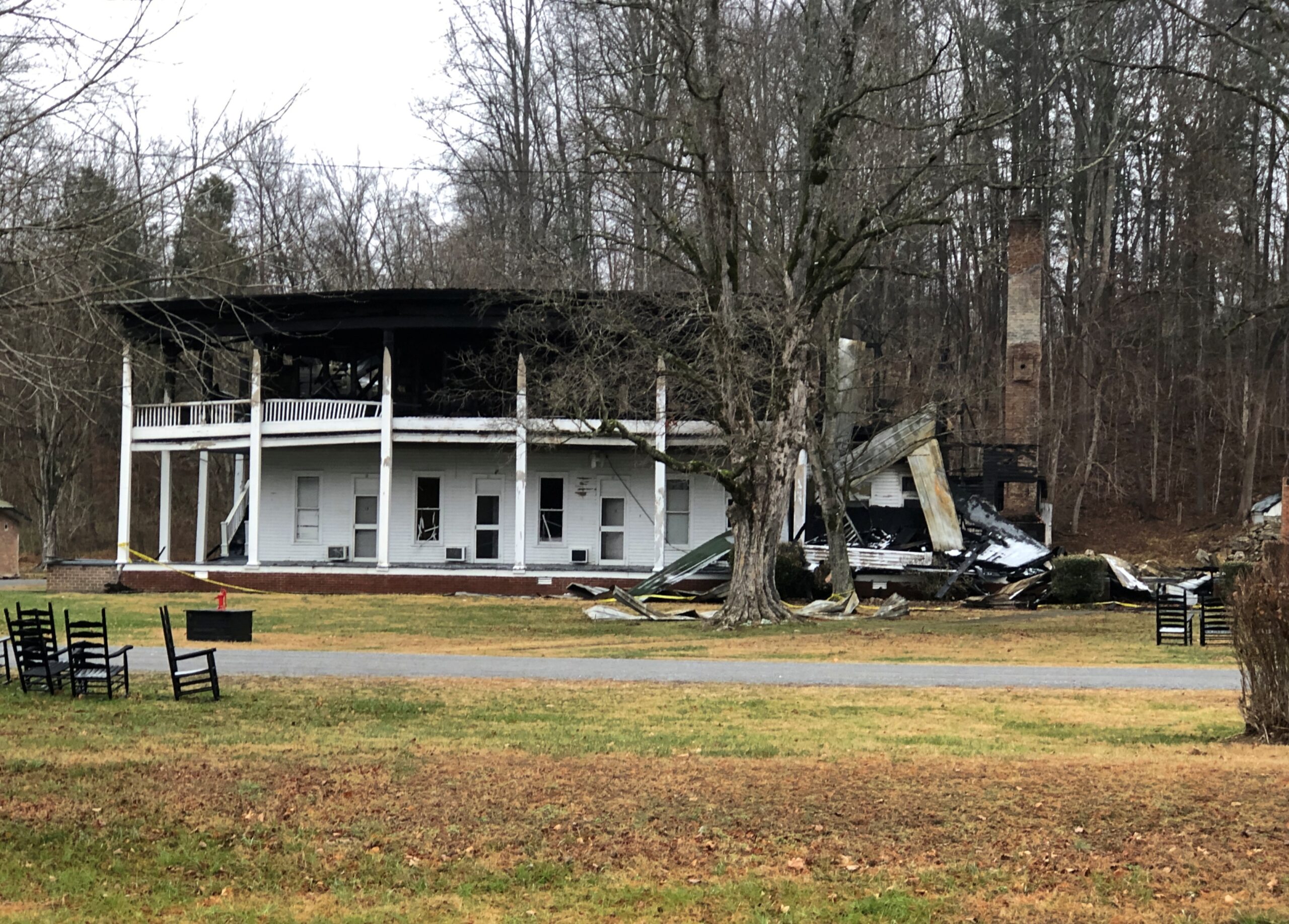
Make that two hotels. One of those mentioned in the article, the Donoho, burned down in November.
The gray, chilly day somehow fit the scene of a wrecked historic hotel.
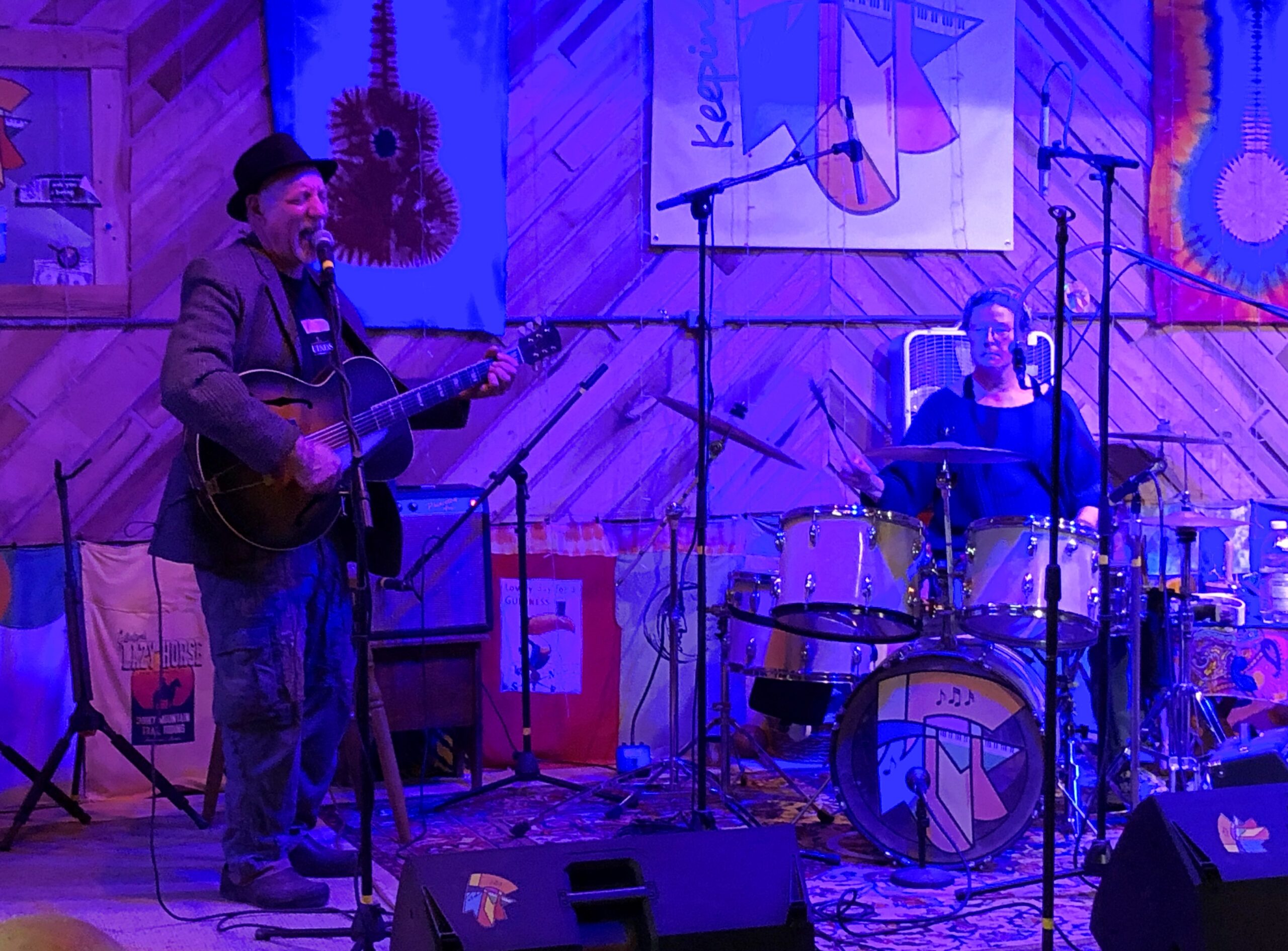
Damned shame. I can’t leave it at that. Soon after passing through Red Boiling Springs, we arrived at our destination in eastern Middle Tennessee. The next day, we enjoyed a Tennessee hootenanny.
Our hosts, Dave and Margaret, on guitar and drums.
Kids came in some numbers for Halloween here in the northwest suburbs yesterday, but I didn’t keep an exact count this year. The day was cool but not cold, without a hint of rain, so that might have encouraged turnout, like for voting. One time a passel of kids showed up, maybe a dozen or so, all under 10, with a smaller passel of parents off near the sidewalk.
We were giving away full-sized candy bars until they ran out, and the passel squealed with delight at receiving the various Hersey products. Even now, the costumes are a blur, maybe because I didn’t recognize a lot of the characters. Ones that I might have known weren’t familiar either. I asked the parents of a very small boy — ah, first-timers — what he was supposed to be. His shirt pattern reminded me of TMNT, but it was Hulk, they told me. “Hulk smash,” they said. “Hulk smash, all right,” I agreed.
All of the Halloween traffic, except for a handful of older kids, came before dark. My not-so-inner curmudgeon reacts: in my day, we trick-or-treated after dark, risking bodily injury on the streets, and we liked it.
But I am glad to report that the older kids – junior high and even high school – are far fewer than they were, say, 20 years ago. So it’s back to the way it should be. For older people, there are always such seasonal events as the Greenwich Village Halloween Parade. To this day, the ’06 iteration of that parade remains the only time I’ve encountered the band KISS live – they were the grand marshals (RIP, Ace Frehley). We also encountered Space Ghost then, or at least a fellow who was adamant about his Space Ghost identity.
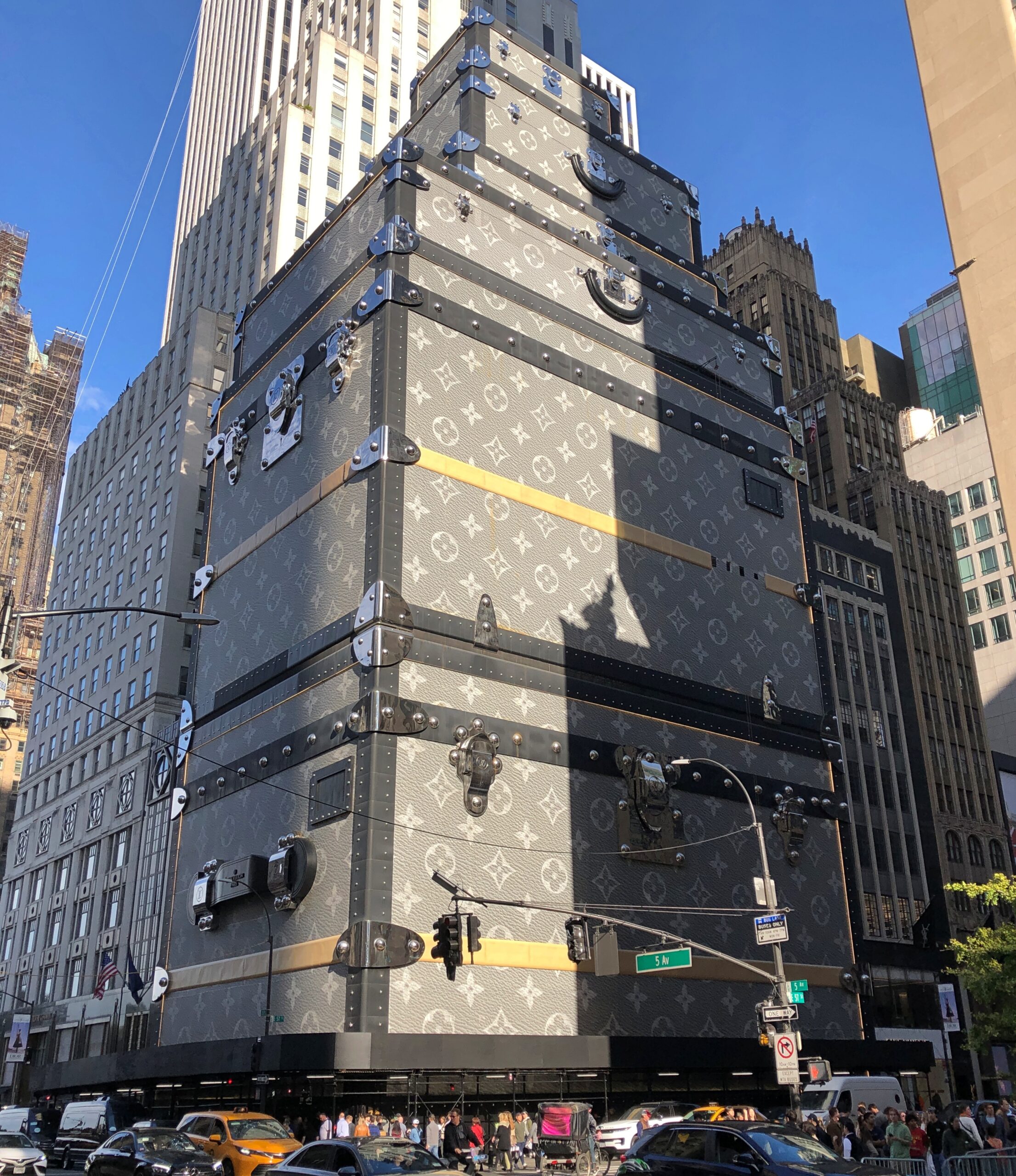
Near Central Park on Fifth Ave. is 1 East 57th Street. We walked by last month.
A few years ago, luxe retailer LVMH Moët Hennessy Louis Vuitton added a faux facade to its NY flagship store there on the avenue, one that evokes its signature luggage trunks in a highly visible way. Redevelopment plans for the building behind the trunks were unveiled not long ago, so I suspect the trunk-appearance doesn’t have much longer to look down on Billionaire’s Row and its strato-priced residential properties (whose high rents and sale prices don’t necessarily guarantee high-quality construction, apparently).
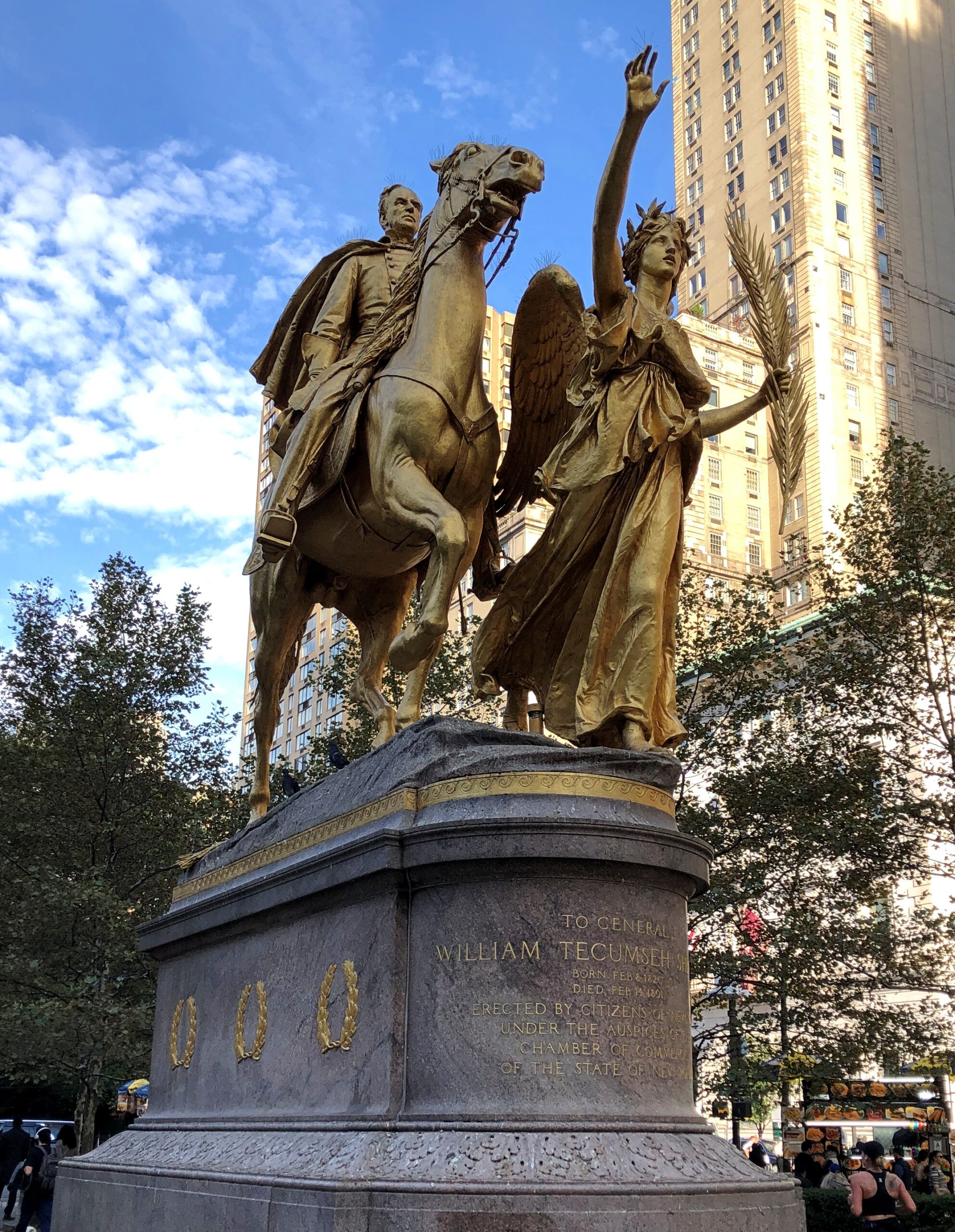
As we neared Central Park, we spent a little time at Augustus Saint-Gaudens’ statue of William Tecumseh Sherman (dedicated 1903) in Grand Army Plaza. Life’s too short not to look at some Saint-Gaudens from time to time.
Not far away, something a little newer.
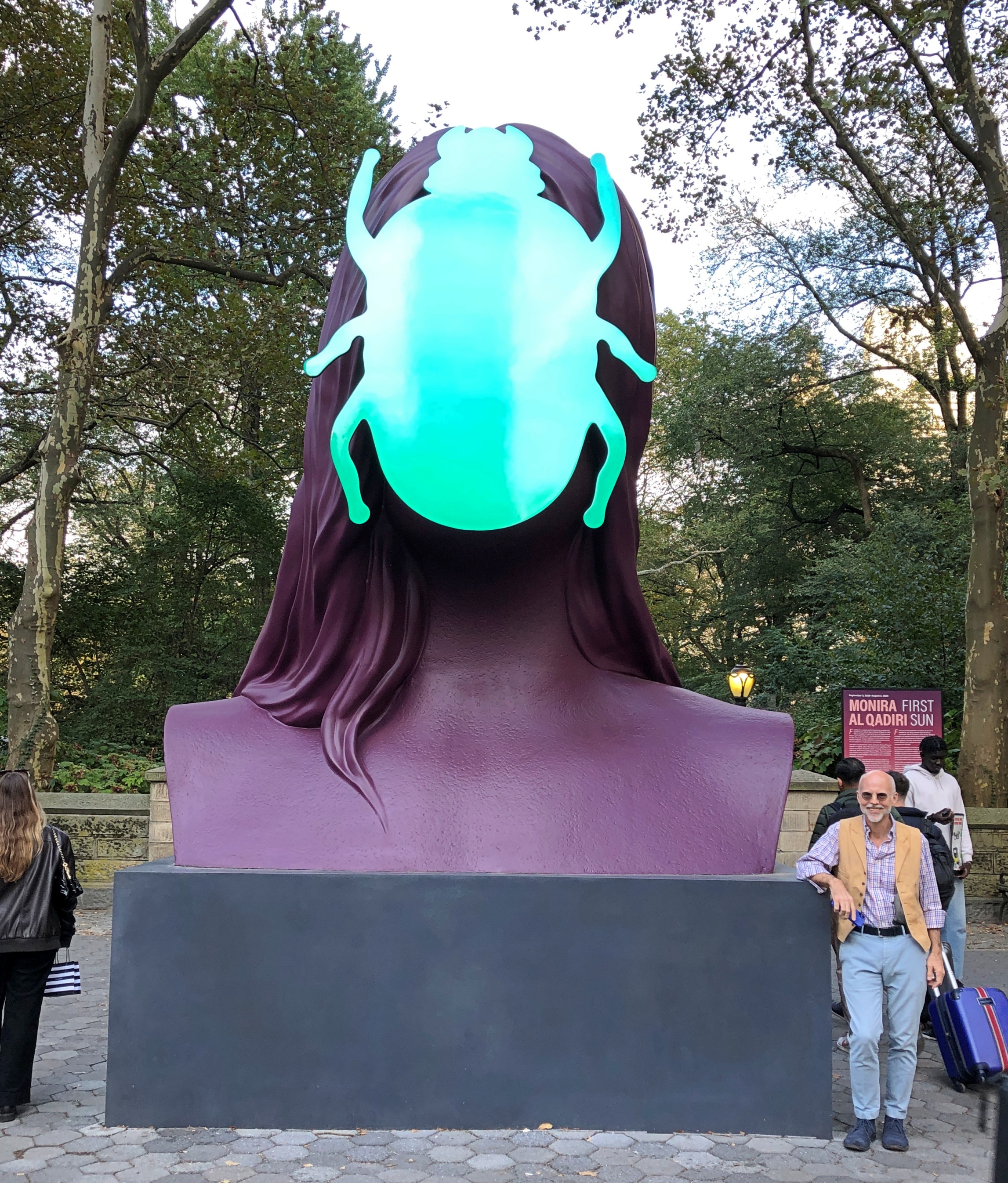
“First Sun,” a painted aluminum sculpture of a human-scarab figure by Senegalese artist Monira Al Qadiri, and slated to be in place until the end of next summer.
Visible from near the statues is the storied Plaza Hotel and an Apple Store, which is open 24 hours, Google Maps tells me. Storied in a different way.
I’m glad the Plaza acknowledges its fictional role in The Great Gatsby by featuring a lavish-beyond-the-dreams of Croesus Gatsby Suite. Of course. A smart hotel operator isn’t going to waste an opportunity like that. In this case, Fairmont Hotels and Resorts, a Canadian company, managing for owner Katara Hospitality – the large hotelier owned by the Qatari government. In the 21st century so far, the Plaza has been owned by an Israeli company and then an Indian one before Katara bought it. There’s something oddly American about an ownership trajectory like that.
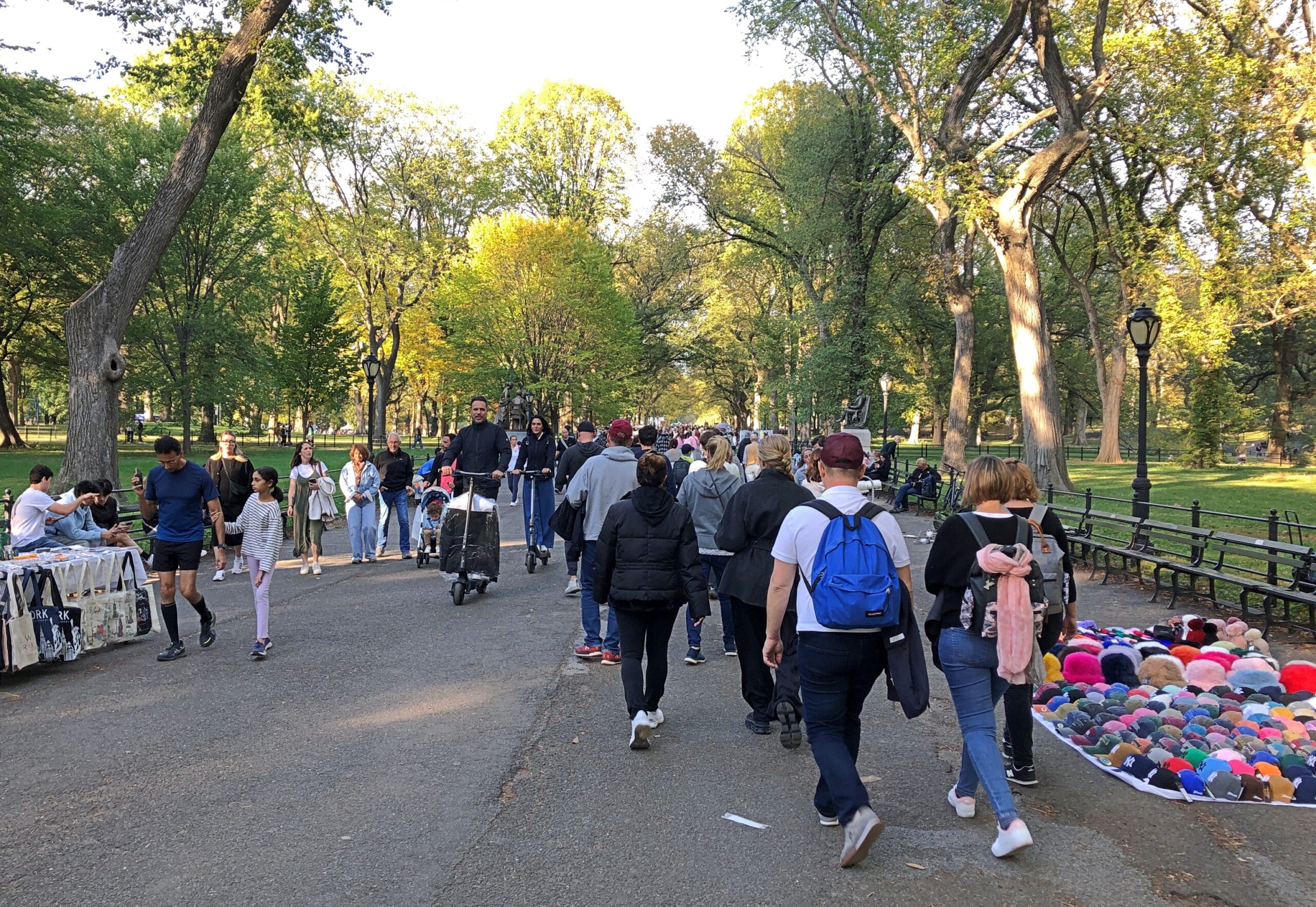
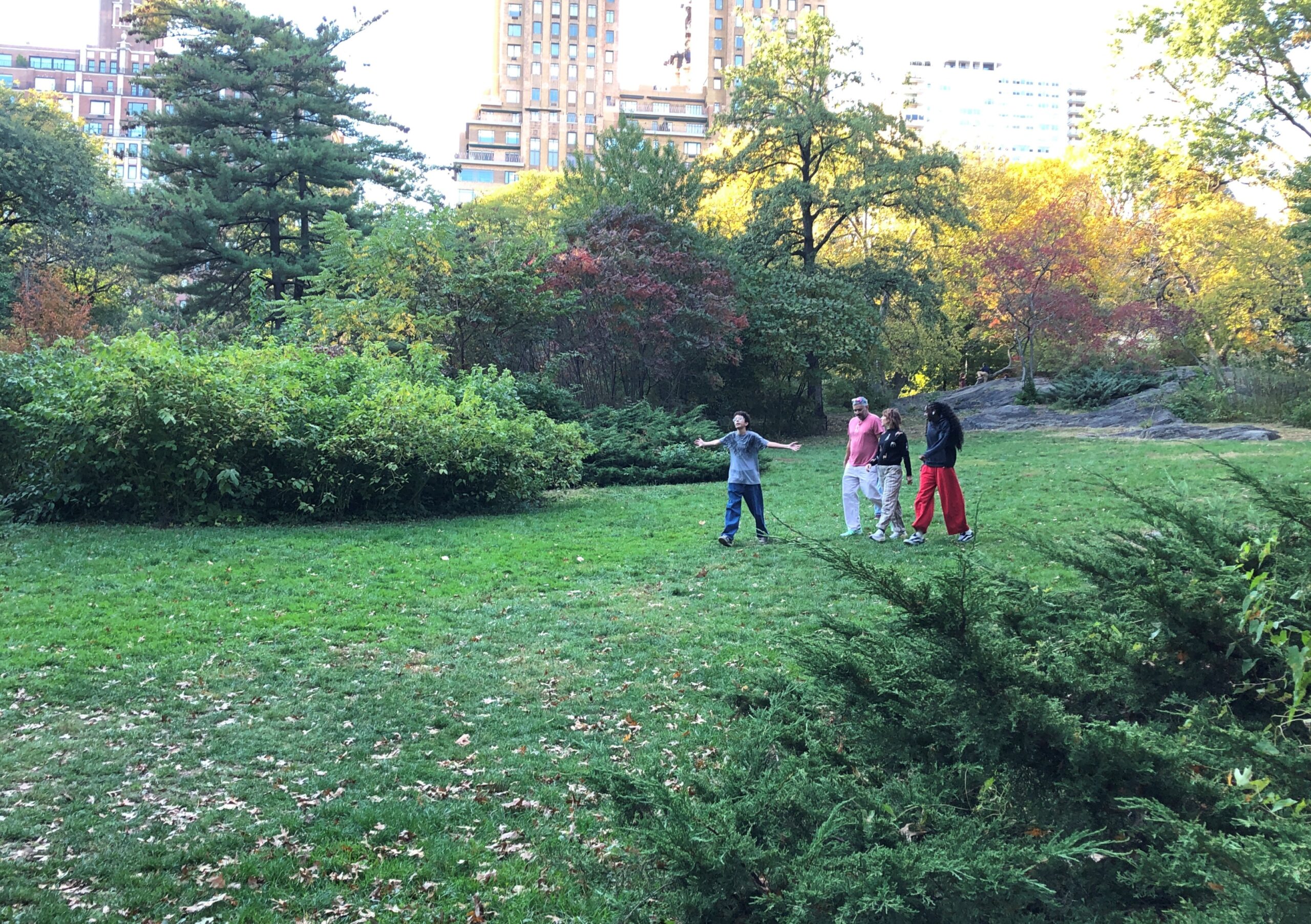
We – Robert, Geof, Yuriko and I – charted ourselves a simple walking path through some of the southern reaches of Central Park. Manhattanites and visitors to the borough were out in Saturday-afternoon force. Saturday, in the park/I think it was the 18th of October. No, that doesn’t scan. A fair number of pitch-a-blanket cap and souvenir salesmen were out, too, but not nearly as many buskers as a great city park like Central Park should attract.
There’s an editorial right there: why America needs more buskers, and why some American cities need to chill when it comes to suppressing buskers. Europeans might not be right about everything, but about allowing buskers? Yes.
The leaves weren’t at peak just yet, with the greens still hanging on more than not. I don’t remember which visit to Central Park it was, but one time I wandered the park during peak coloration, whipped into even greater yellow-and-red glory by a brisk October wind. Temporary clouds of leaves came and went, even as the wind shook more leaves from their branches. Color, but also motion.
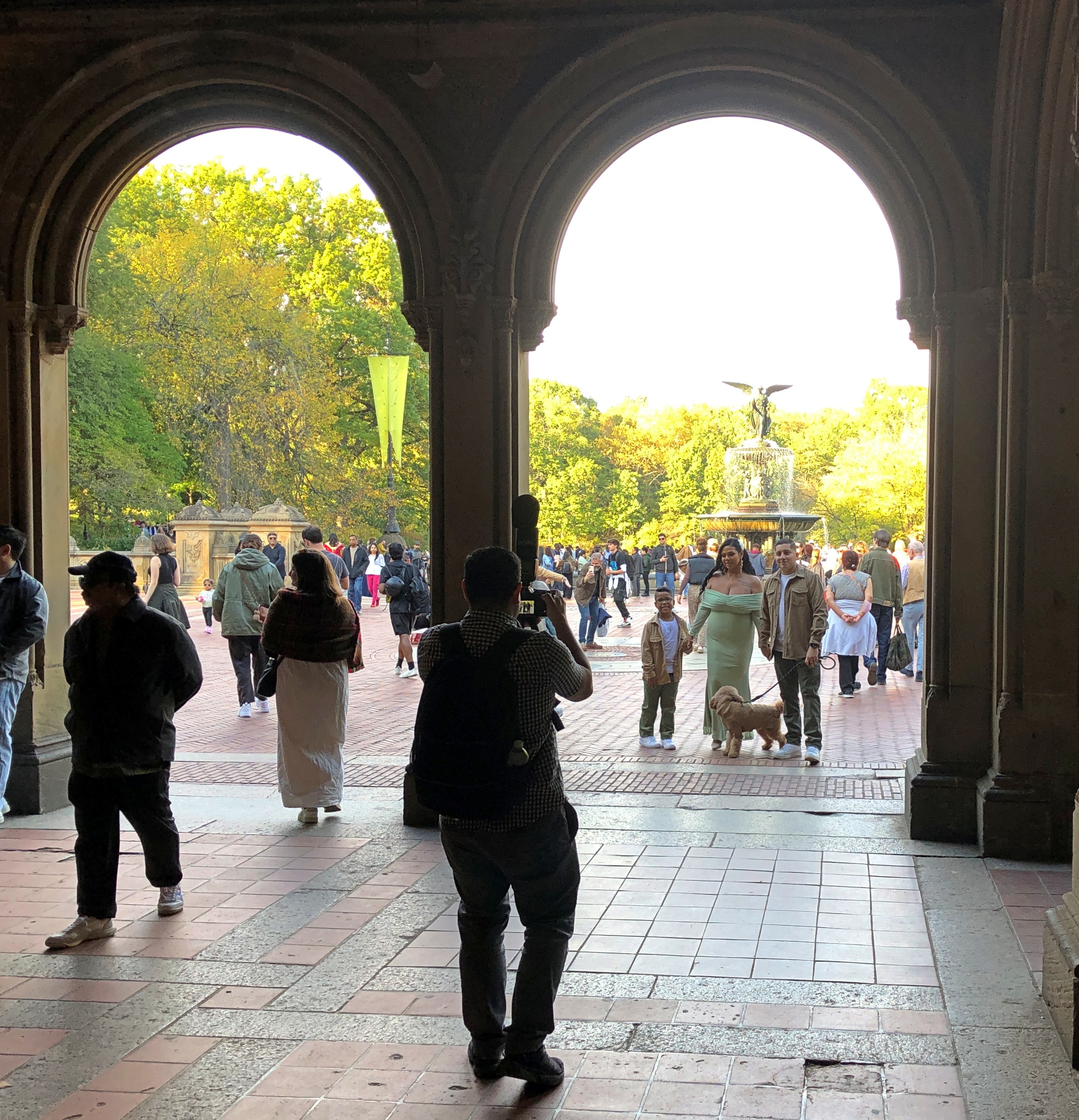
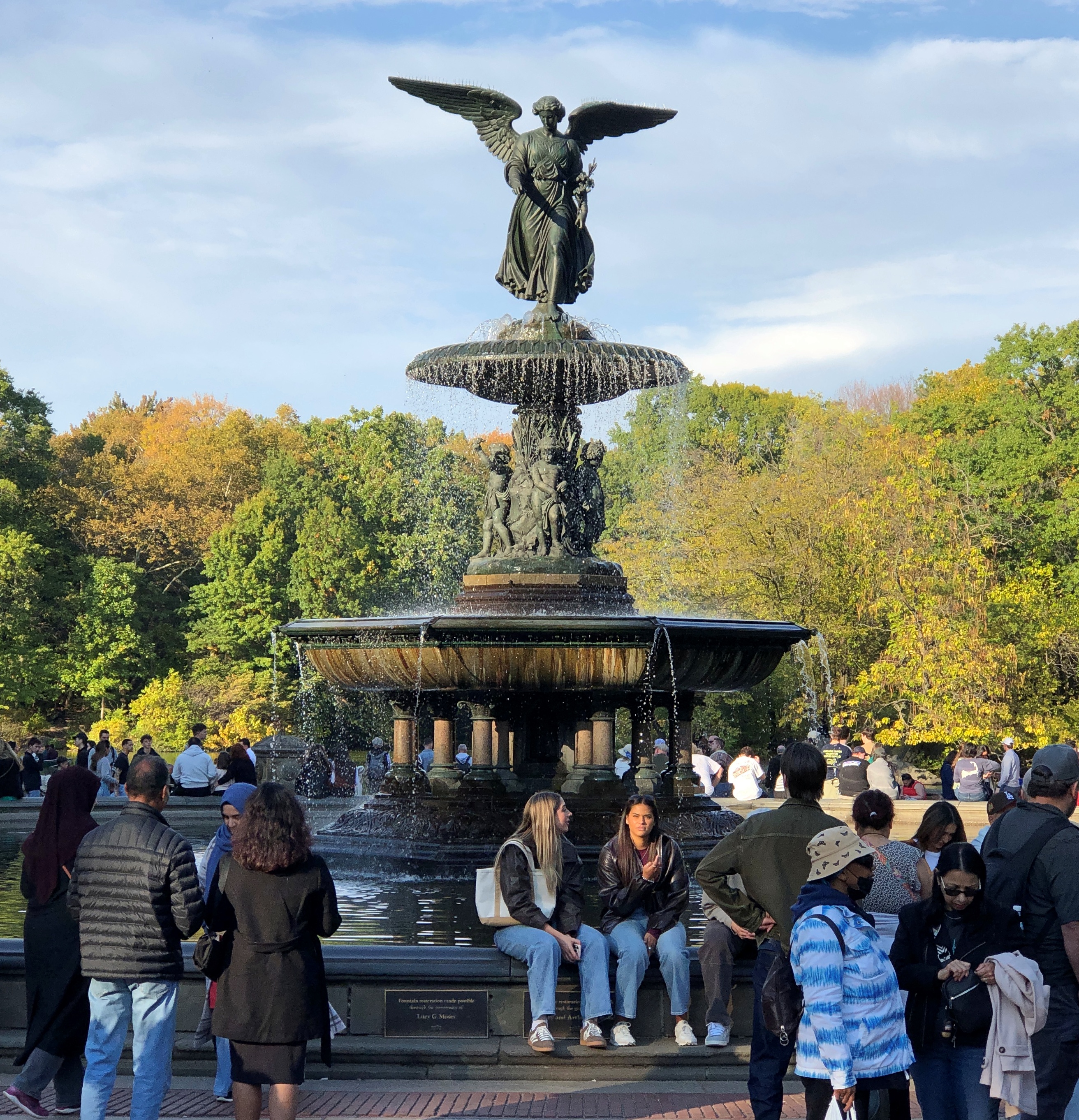
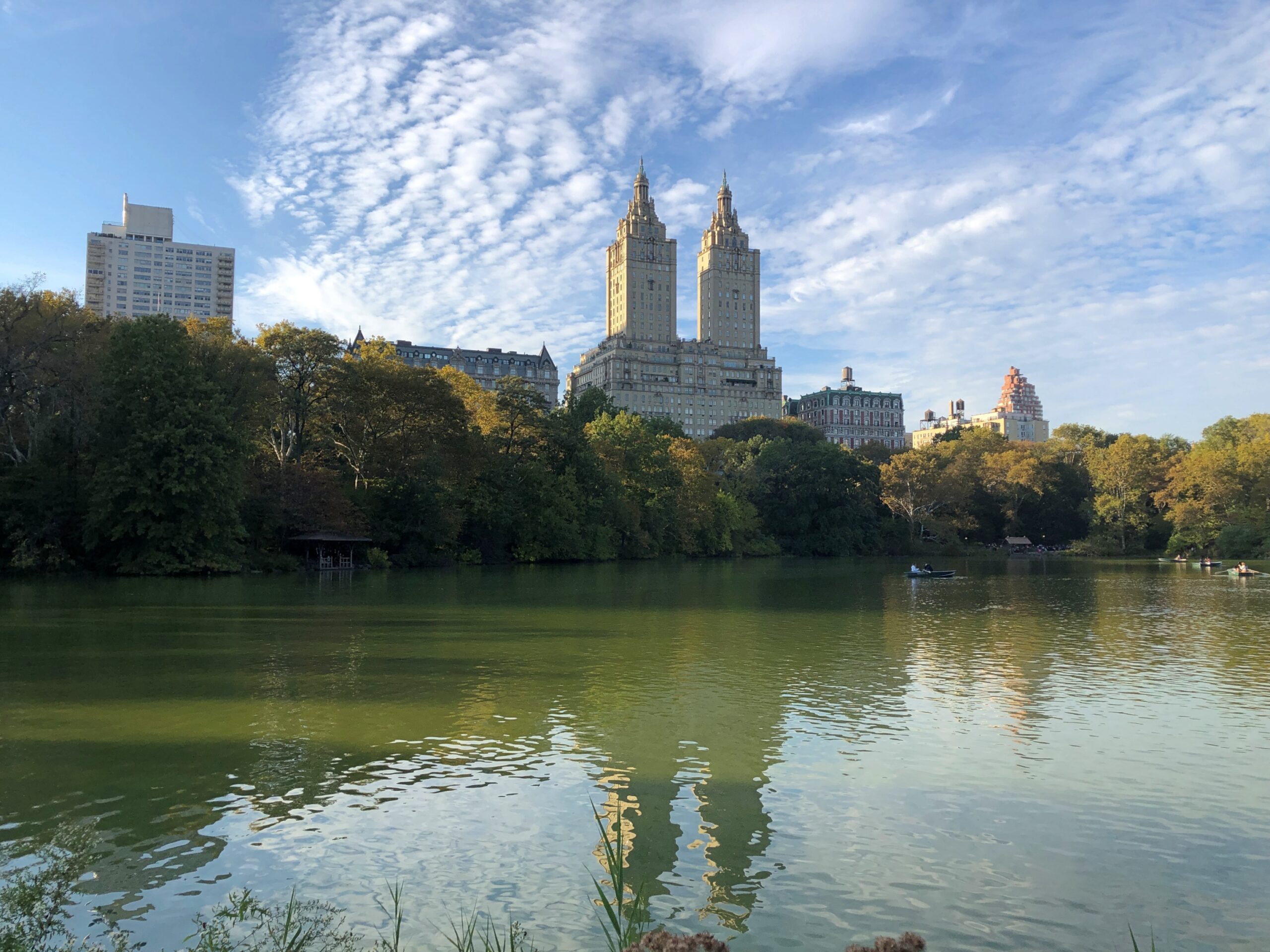
Eventually, we came to The Lake by way of Bethesda Terrace and Fountain.
But not all the way across The Lake to The Ramble, whose Wiki description drily states that “historically, it has been frequented for both birdwatching and cruising,” with hyperlinks articles about both of those activities. What about cruising birdwatchers? There’s a Broadway musical in that concept somewhere.
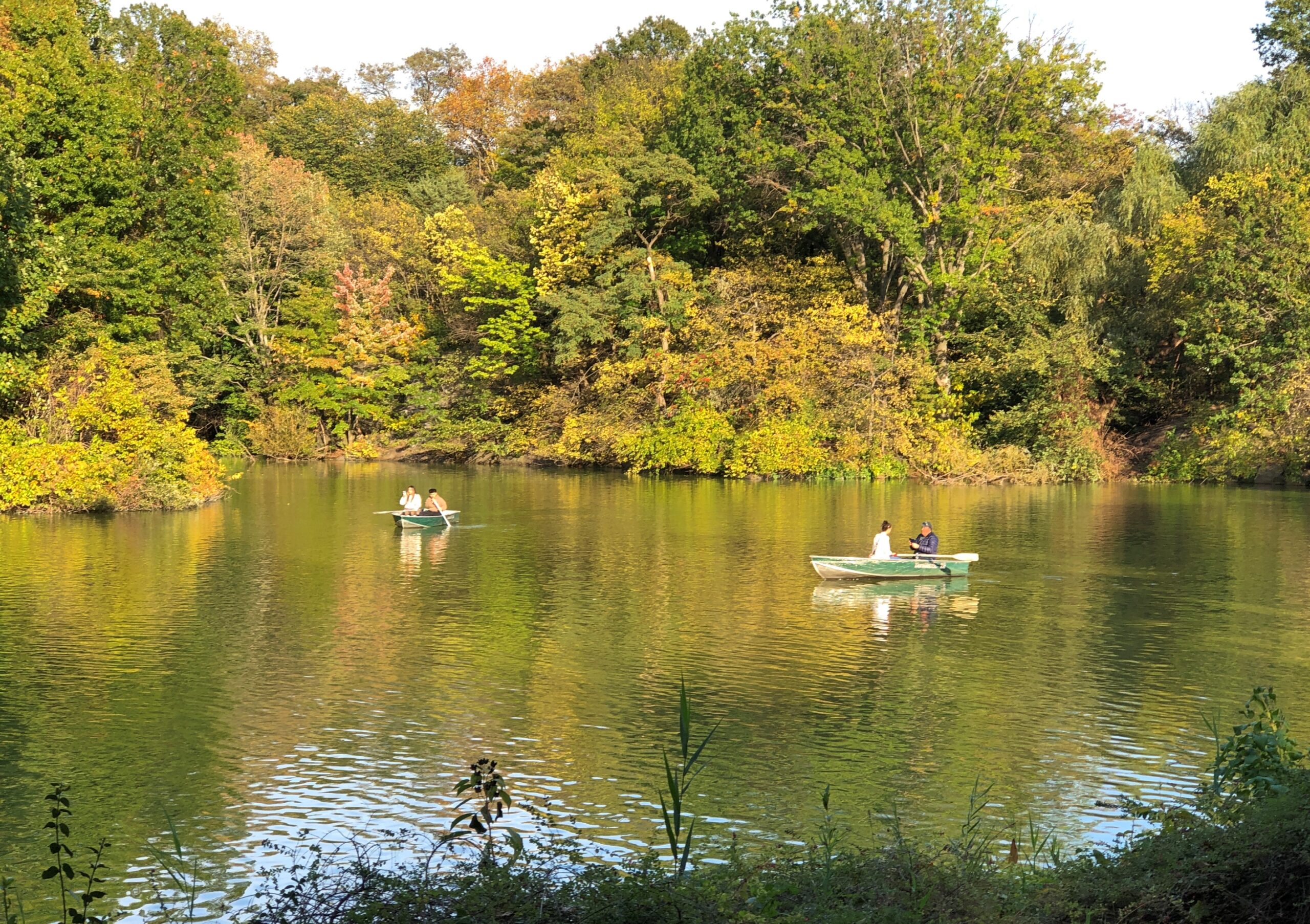
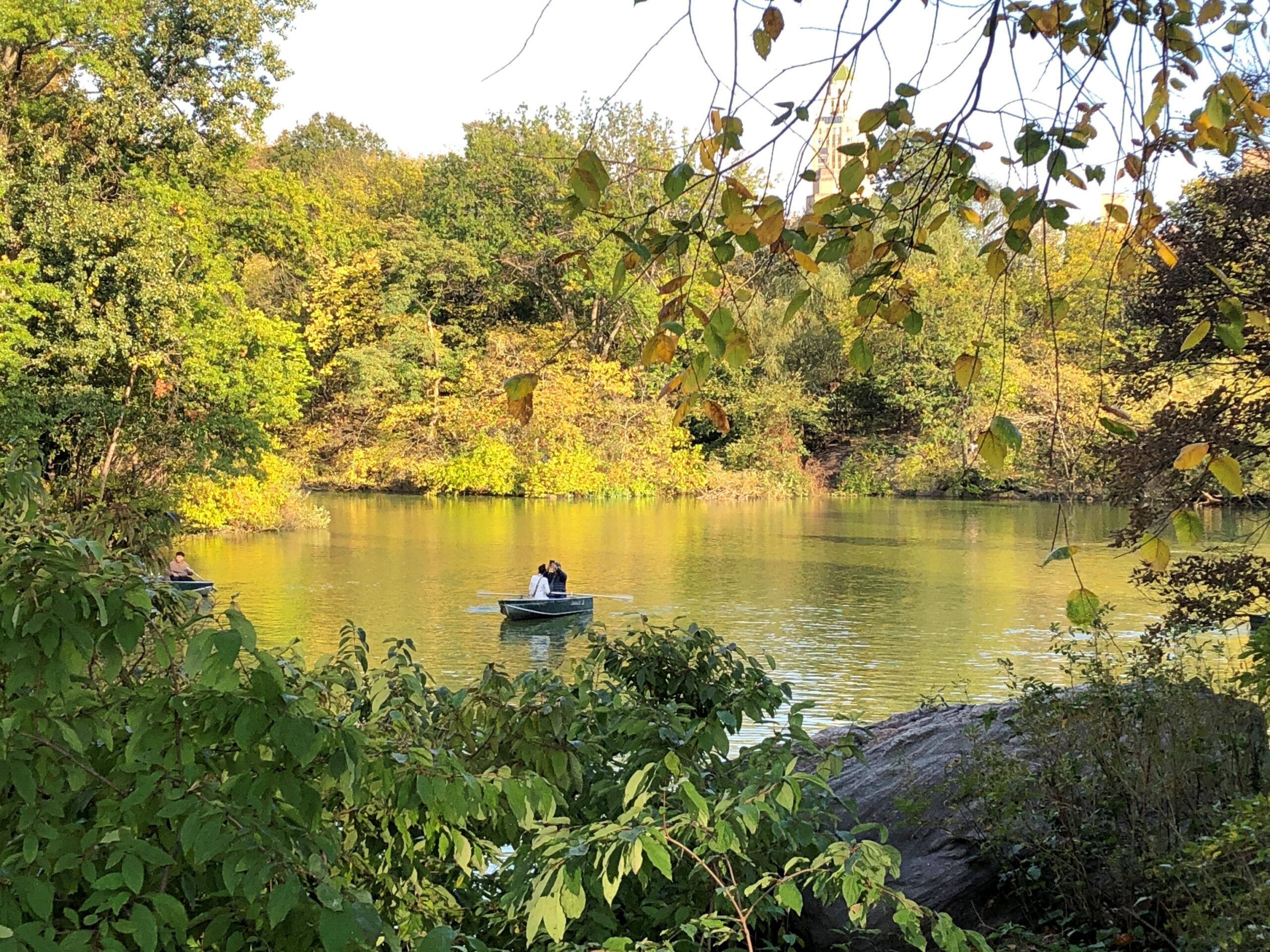
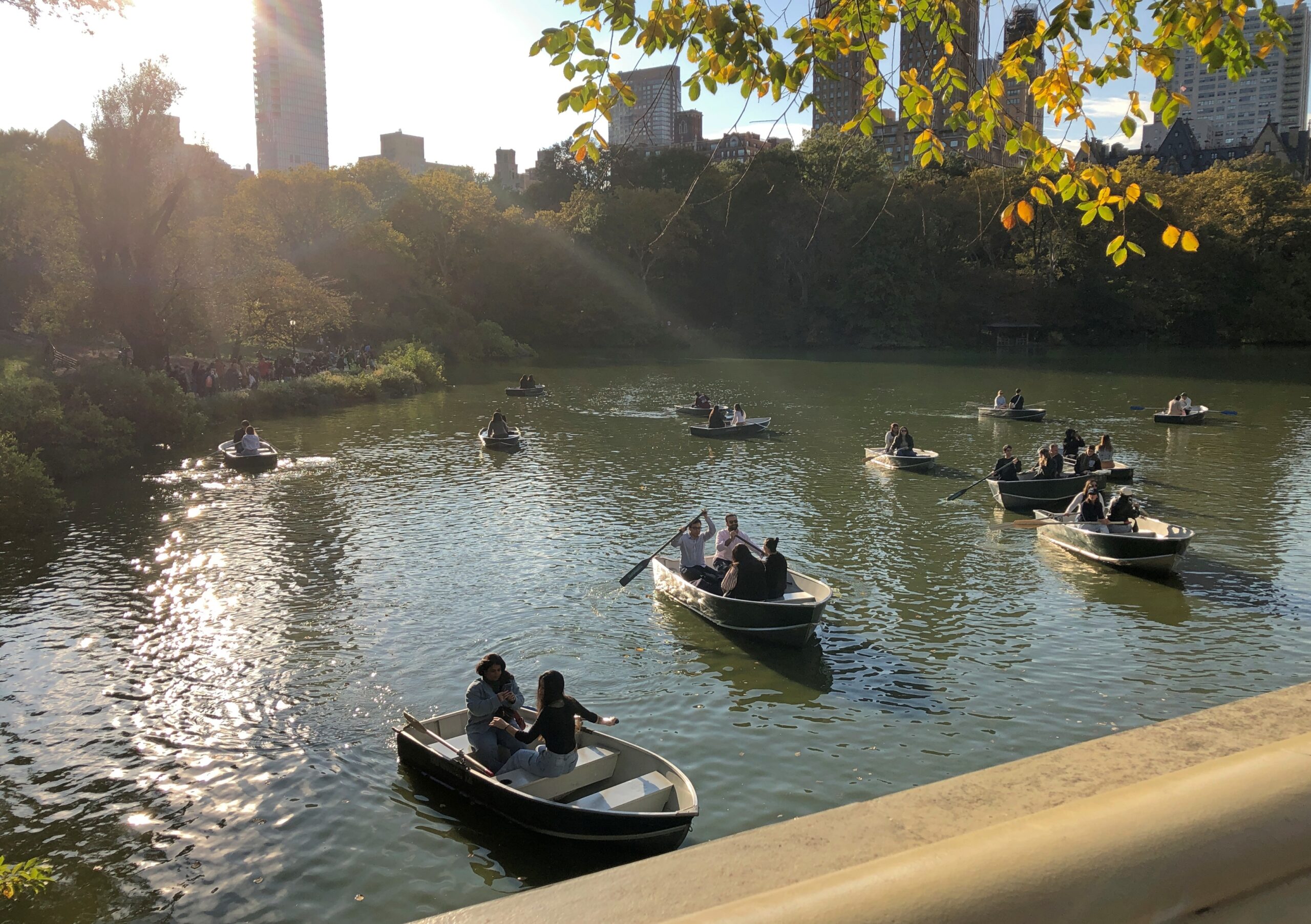
The Lake was clearly a good time and place for casual boating.
In that part of Central Park, it’s hard to miss Strawberry Fields. There is a fairly empty section.
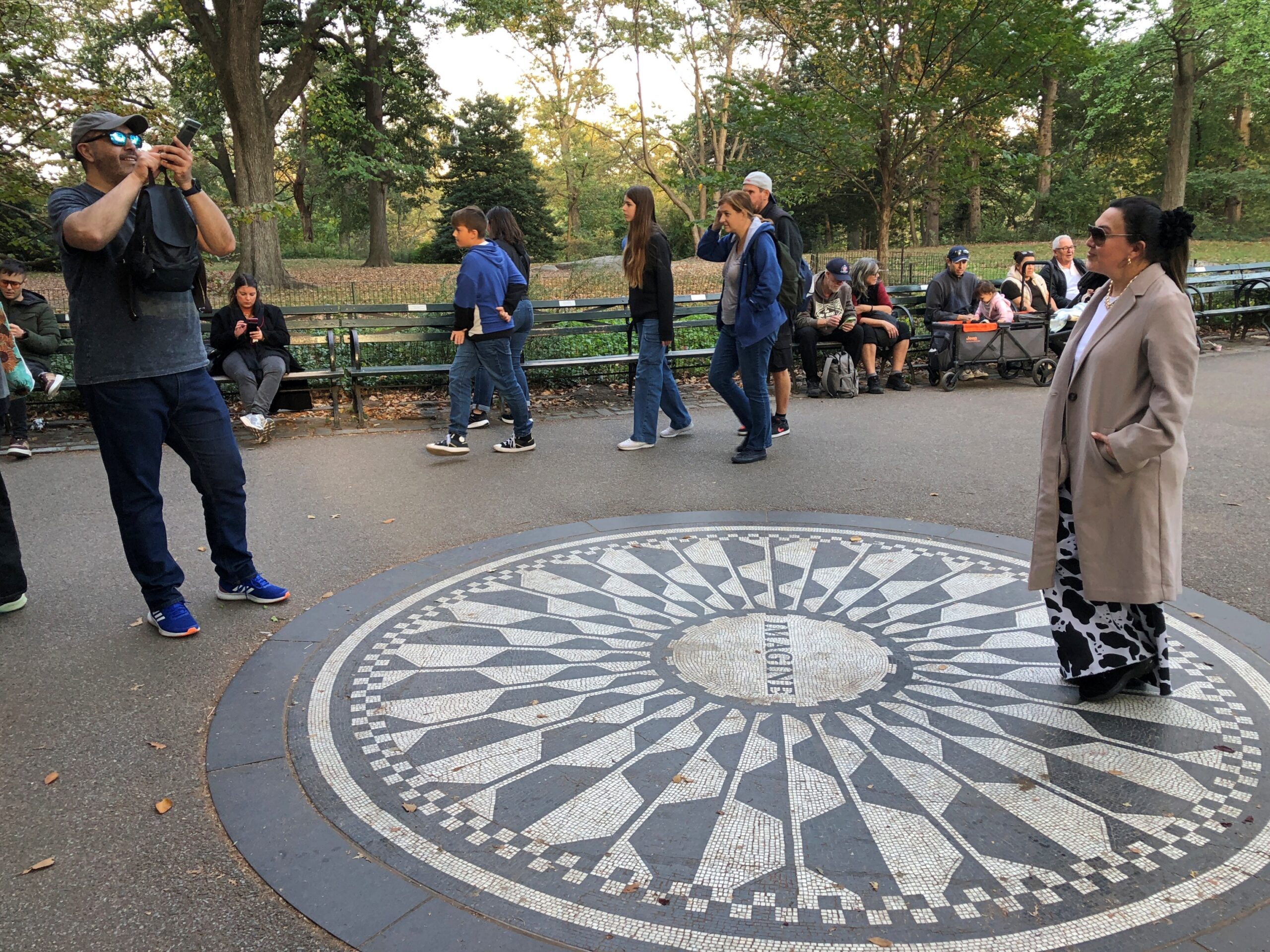
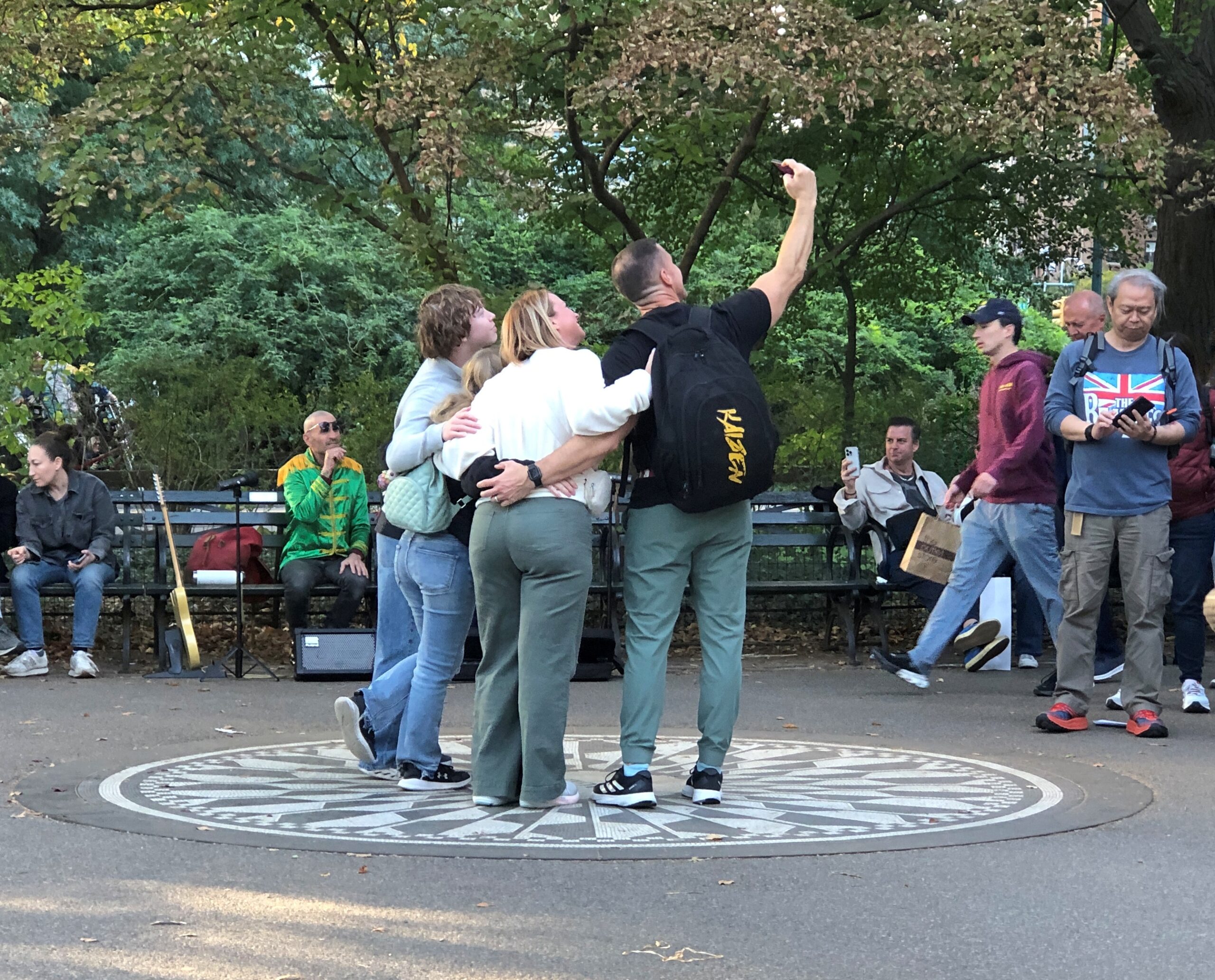
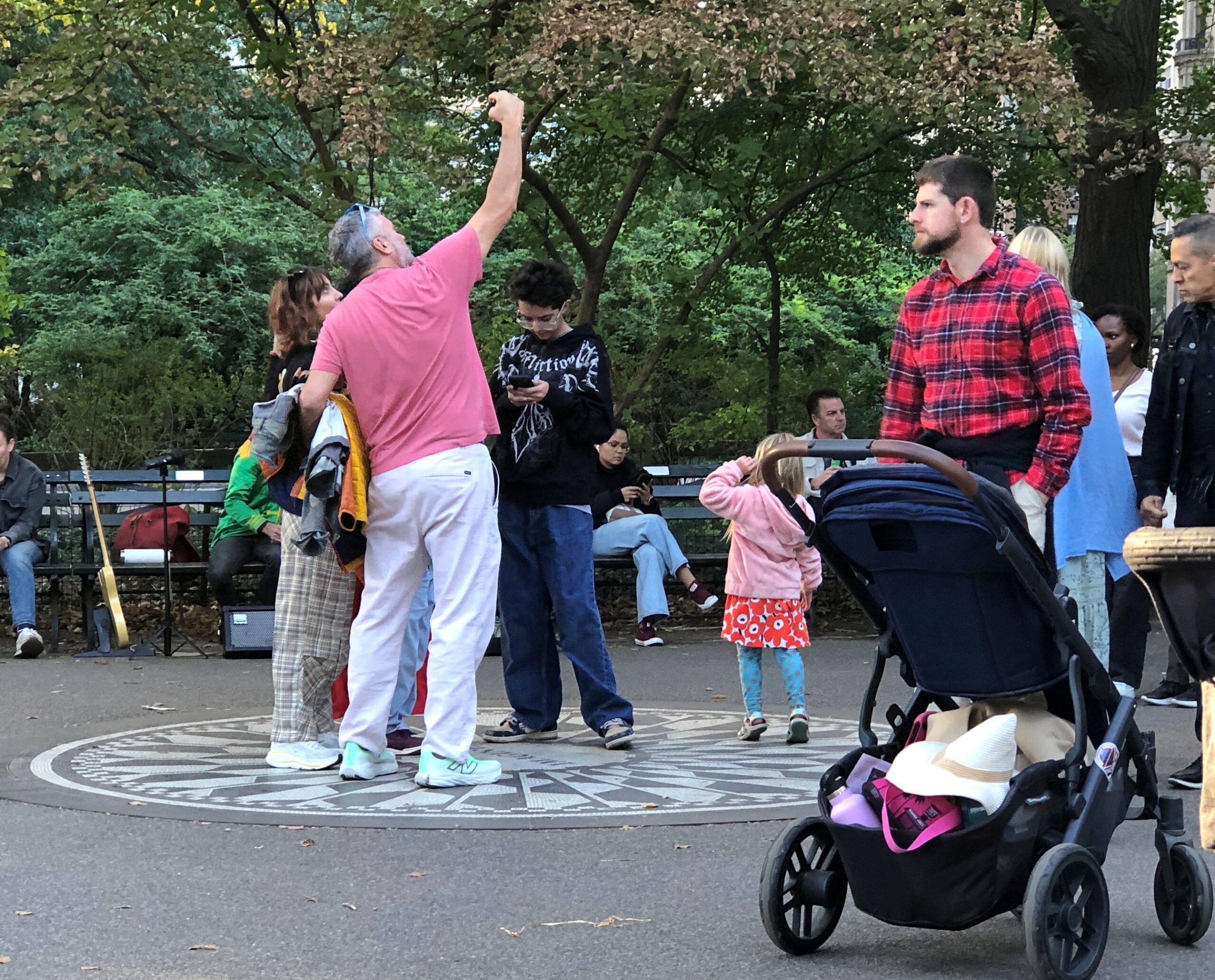
That’s not the case when you get to the Imagine memorial. Among the visitors, a guitarist was noodling out one of the more famous Lennon-McCartney tunes, but I forget which. One of the usual ones. Not “Dr. Robert,” say, or “Happiness is a Warm Gun.” So that was one busker anyway, since I think he had a guitar case open in front of him. All you need is love, sure, but bills are bills.
Gone these 45 years and still packing ‘em in. Good for you, Mr. Lennon. In another 45 years? It would be interesting to know, and I sure I won’t.
I’m afraid the history of memorials doesn’t bode well for the longevity of any memorial, even the kind that people line up to pose with. I didn’t know the man, but I suspect somehow that the thought of fading into obscurity wouldn’t have bothered John Lennon.
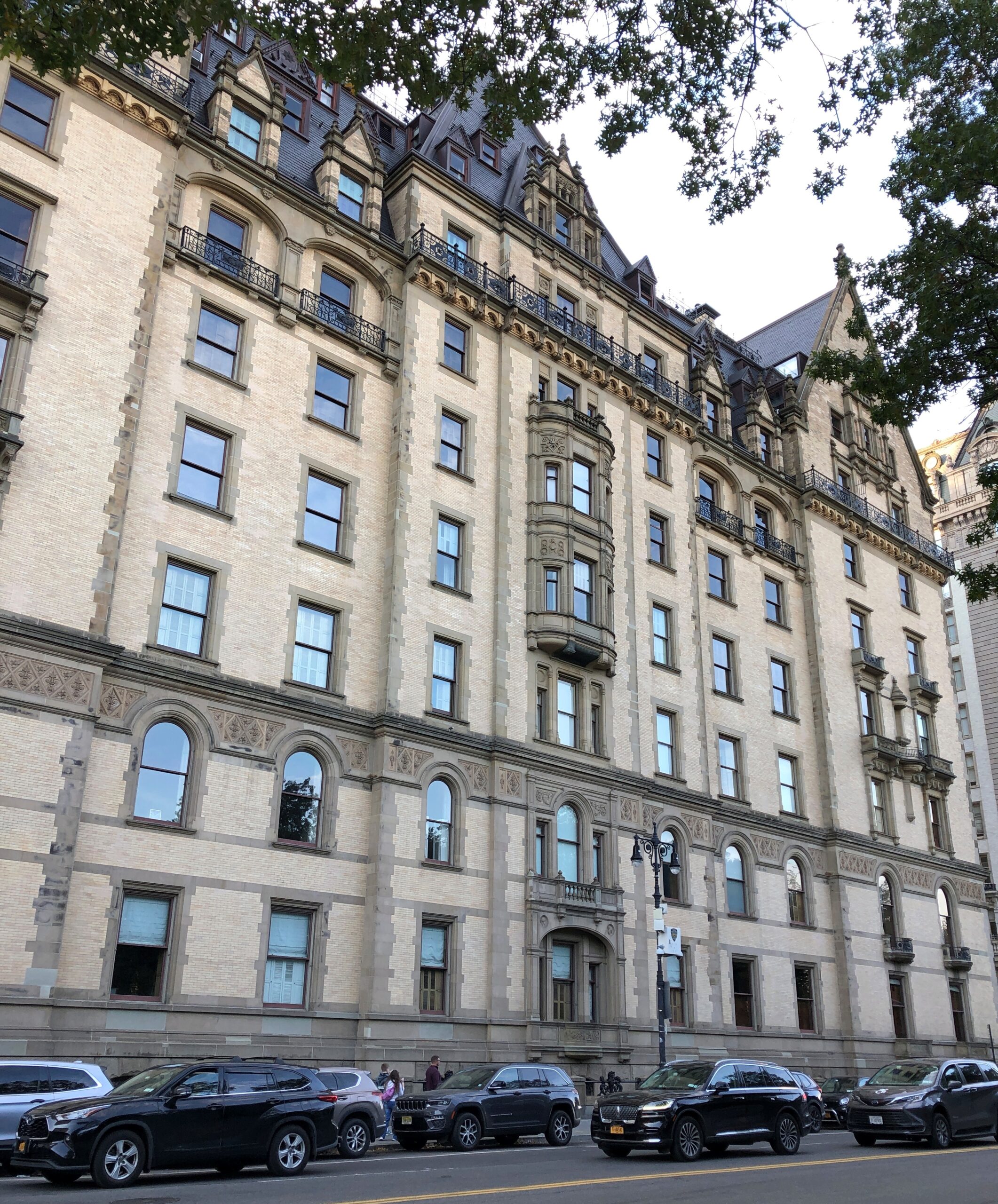
At that point, you emerge from the park and are practically face-to-face with the Dakota.
We headed east to a subway station, and happened to walk by the entrance of the Dakota. In its grim way, it’s a kind of memorial too. The signs make it known with no uncertainty that no one unauthorized is getting in.
Drive out from Erie, Pa., headed northeast, and soon you have a decision to make: I-90, which becomes the New York State Thruway, or I-86, which does not. Besides costing more money, the NYST went places I didn’t want to go (this time): greater Buffalo, Rochester, Syracuse, Utica and into Albany, a route I drove as long ago as 1991 on my way to Boston.
By contrast, I-86 passes through much smaller places, winding through the hilly Allegheny Plateau, a way I had not been before. High time to do so, I thought. The road is also New York 17, with signs along the way identifying it as the Southern Tier Expressway. “Southern Tier” is the southernmost counties in upstate New York, which apparently is a longstanding regional term.
That’s a good-looking sign, and serves as a nod to the Seneca, who hold land in this part of the state. A Seneca artist named Carson Waterman did the design. For some miles before and after the town of Salamanca, which is part of the Seneca holdings, standard green highway signs include both English and Seneca.
One of the larger places on the Southern Tier Expressway is Jamestown, which I know from the song. It’s a game I occasionally play with my friends: Did You Know There’s A Song About…? and then I name something like rural electrification in Australia or the Versailles conference. In this case, the song is “Maddox Table” and it’s about labor organizing in Jamestown, hometown of the band 10,000 Maniacs. The town isn’t specifically mentioned in the lyrics, but Bemis Point is. Even before the Internet, I could look that up, and note that it’s a local recreation destination on Chautauqua Lake.
Chautauqua Lake is in Chautauqua County, the westernmost bump on the map of New York state. Ah, storied Chautauqua, which brings to mind the outdoor exhortations of men in full suits and women in long dresses, regardless of how hot it was. There’s another streaming service series for you: Chautauqua, set in the raucous 1890s. Could be a comedy or a Gritty Drama.
I wanted to reach my destination, Binghamton, NY, before too late, so I didn’t linger near the lake. But I did stop at the rest area on Chautauqua Lake, which is large, and contains multitudes of structures along its shores, and probably many more people in the summer. One of the more scenic rest areas of the trip, it turned out.
So was the next rest area, not far from Corning. A few hours to devote to the glass museum in that town would be well spent, I think.
After an uneventful night in Binghamton – the kind I prefer on the road – I set out for greater NYC, by way of the highway New York 17, the “future I-86” according to my maps, and then the highways New York 30 and 28.
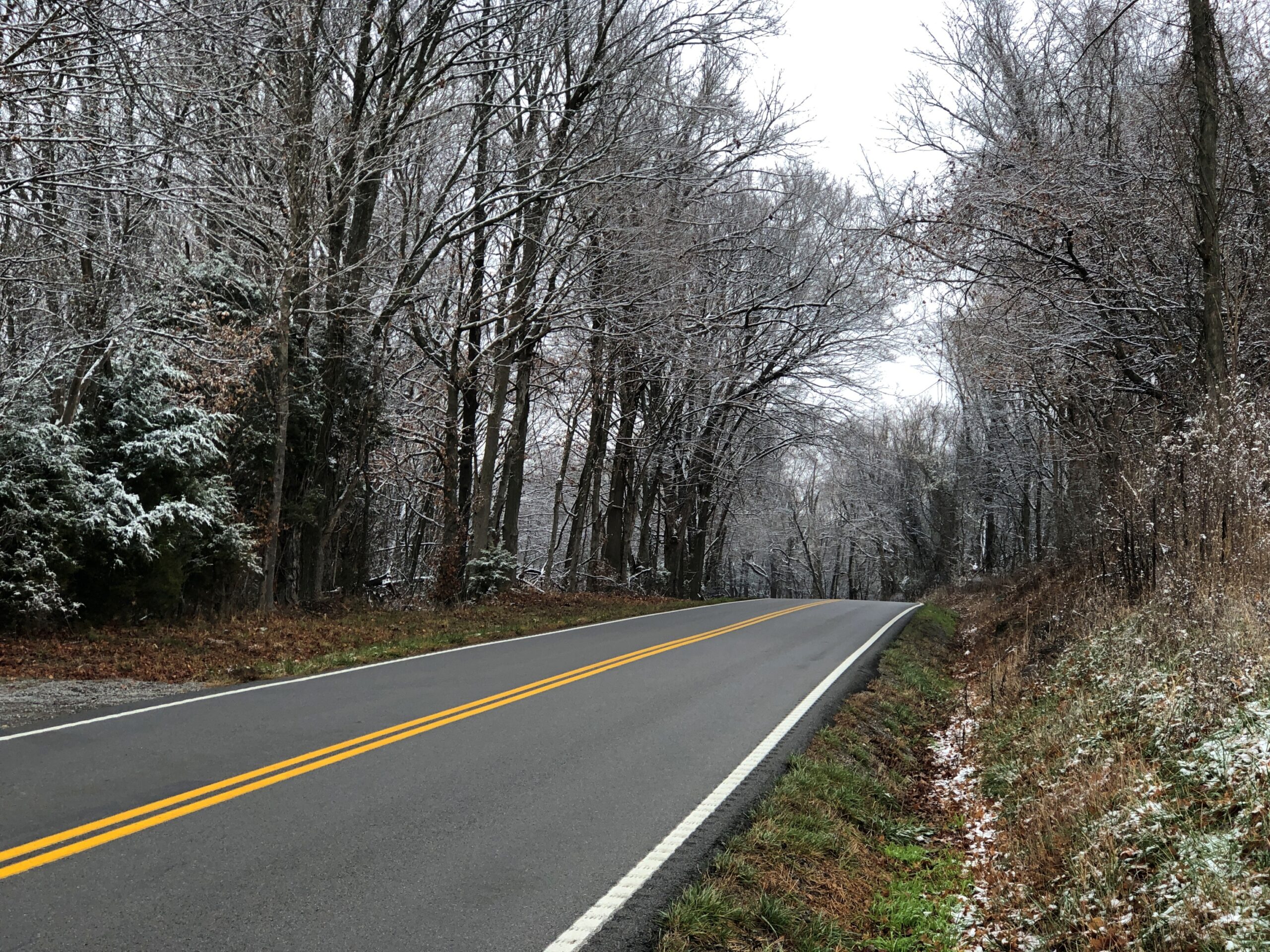
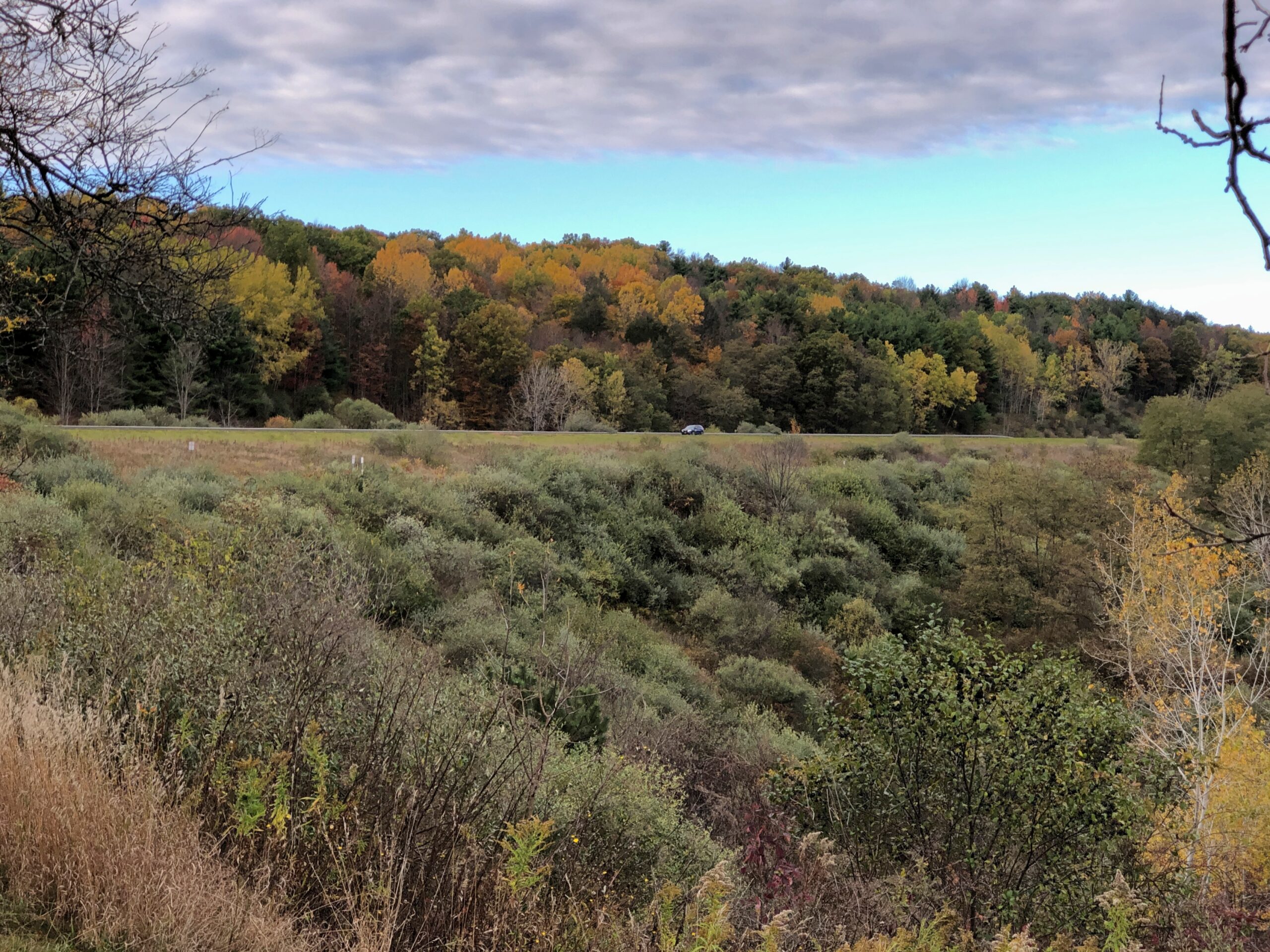
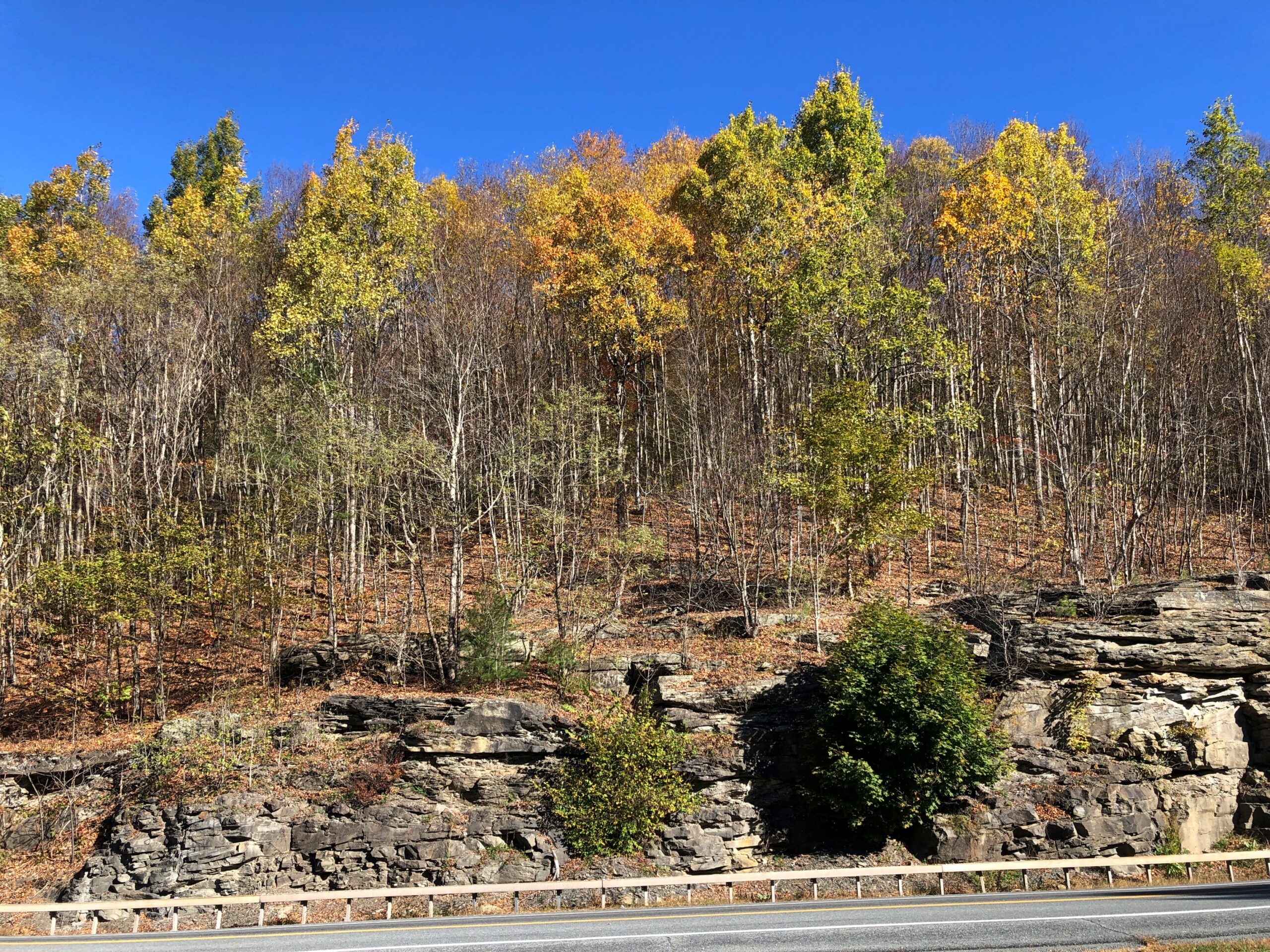
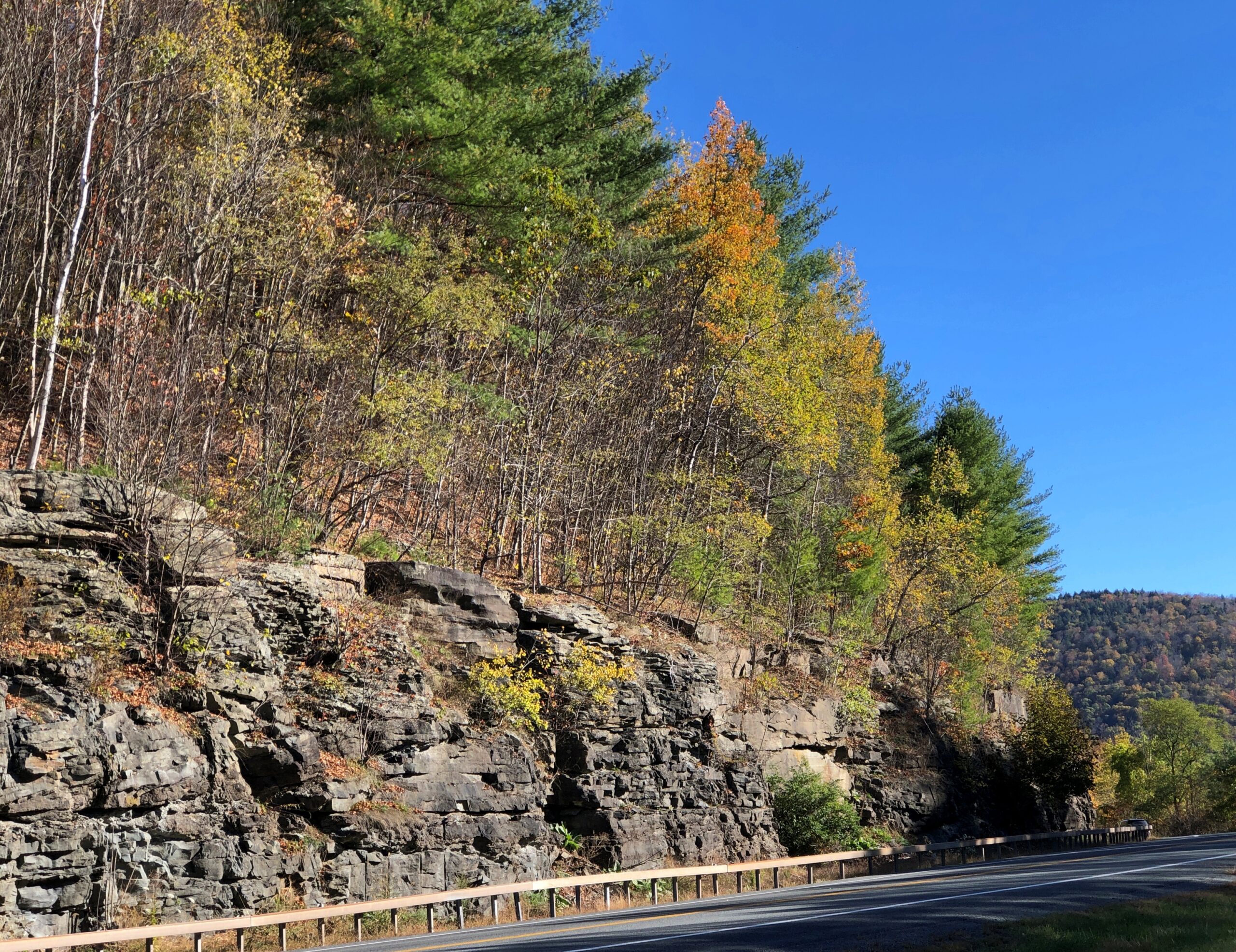
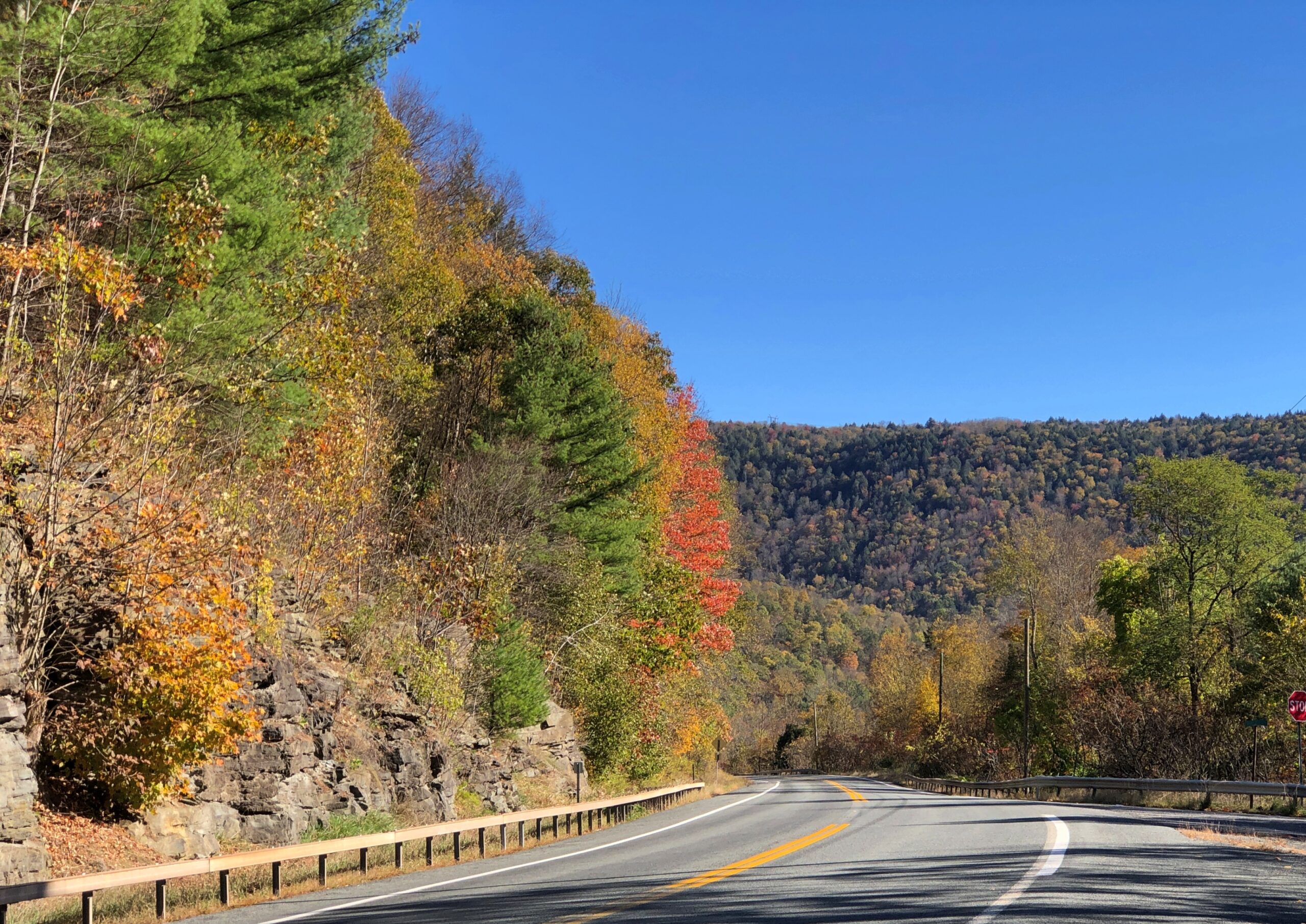
NY 30 skirts the edge of Catskill Park. Last time I was in the Catskills was during the Clinton administration, back when the Concord Hotel and Resort was still clinging to existence, so it’s been a while, and I’d never been in the colorful and nearly empty western edge of the park in October. That emptiness made all the difference in the car commercial driving I enjoyed.
During all the driving over the next week or so after NY 30, empty roads would not be part of my reality.
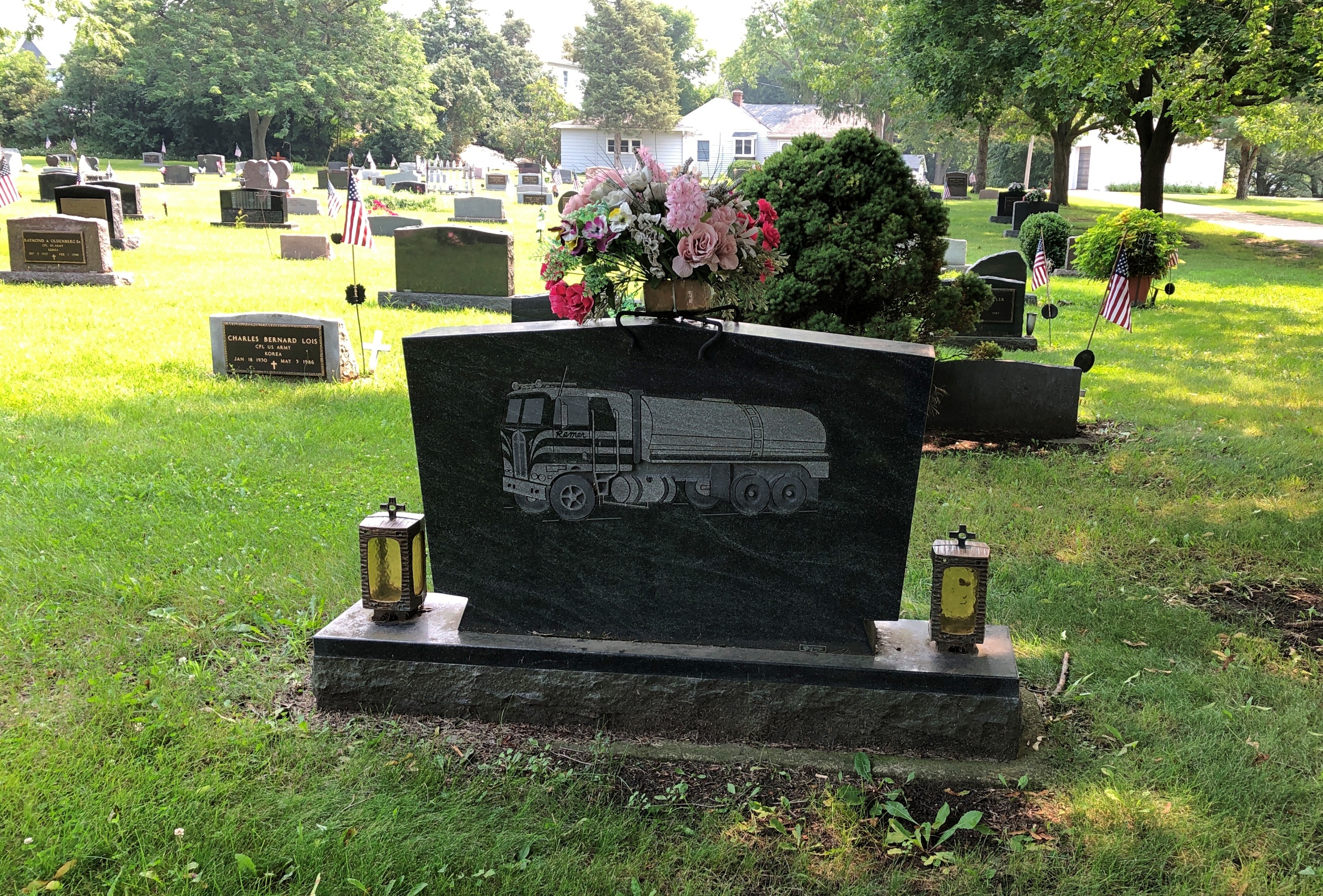
Something I’d never seen on a gravestone: a truck. I’ll bet most people can say that.
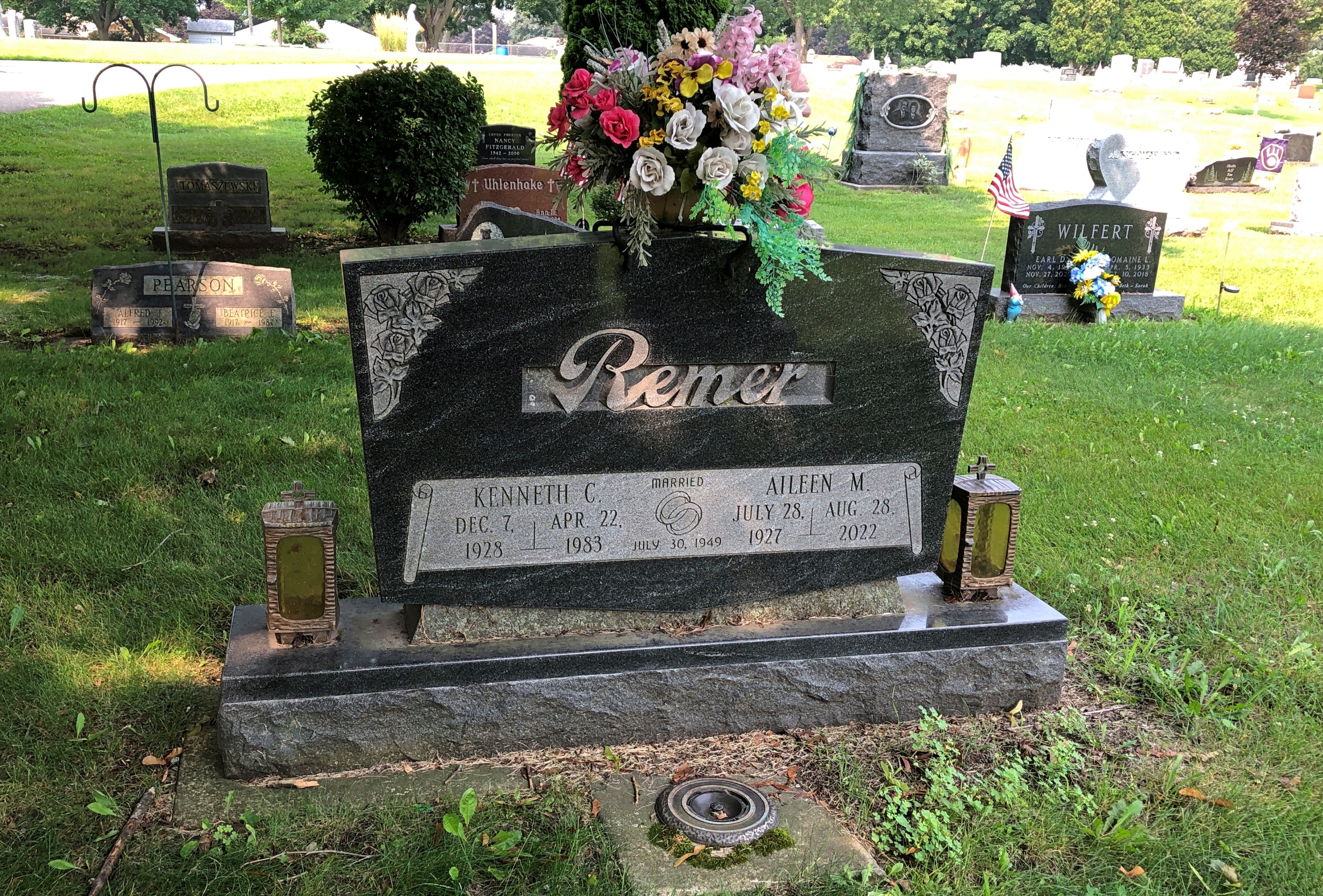
My best guess when I saw it was that Kenneth C. Remer was a trucking man who, among other things, lived through the short romanticization of trucking men in the mid-1970s. Something I’m sure is lost on later generations, as if that matters. If I were silly enough to say “That’s a big 10-4” to either of my daughters, I wouldn’t expect comprehension. That bit of code wasn’t invented by truckers, but even so.
I looked him up, as one can in our time. His obit says he was a “partner in Remer Milk Service.” So could be he drove a milk truck, at least sometimes. That is a liquid-hauling truck depicted on the stone. Not something celebrated in song and story, but useful work all the same.
Another thought on that: though “Convoy” was much more popular, C.W. McCall’s “Wolf Creek Pass” is by far the more entertaining song. (And it’s a real place.) A better song about driving a truck is “Willin’,” originally by Little Feat. Of all people, the inestimable Linda Ronstadt did a remarkable cover of it.
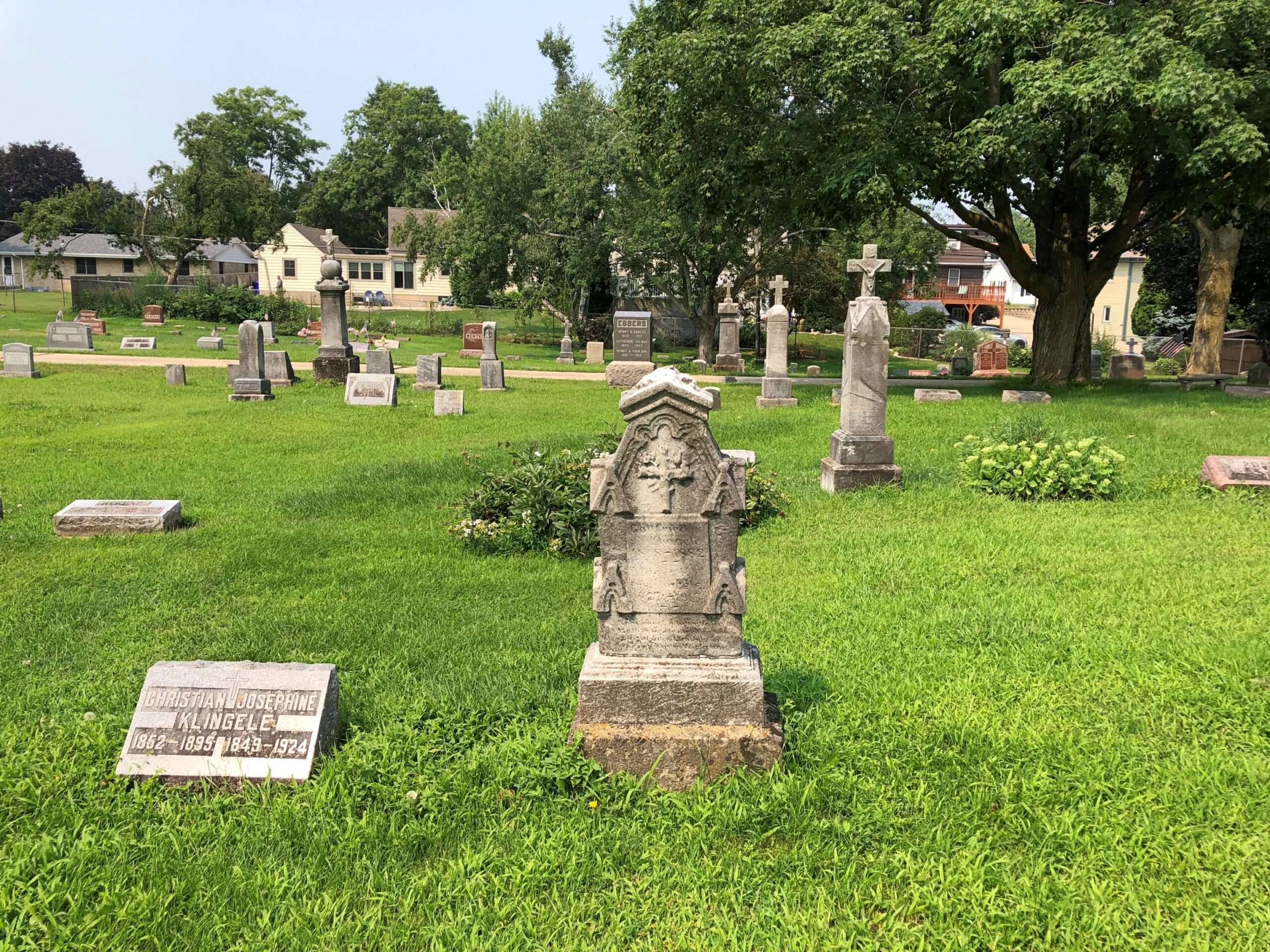
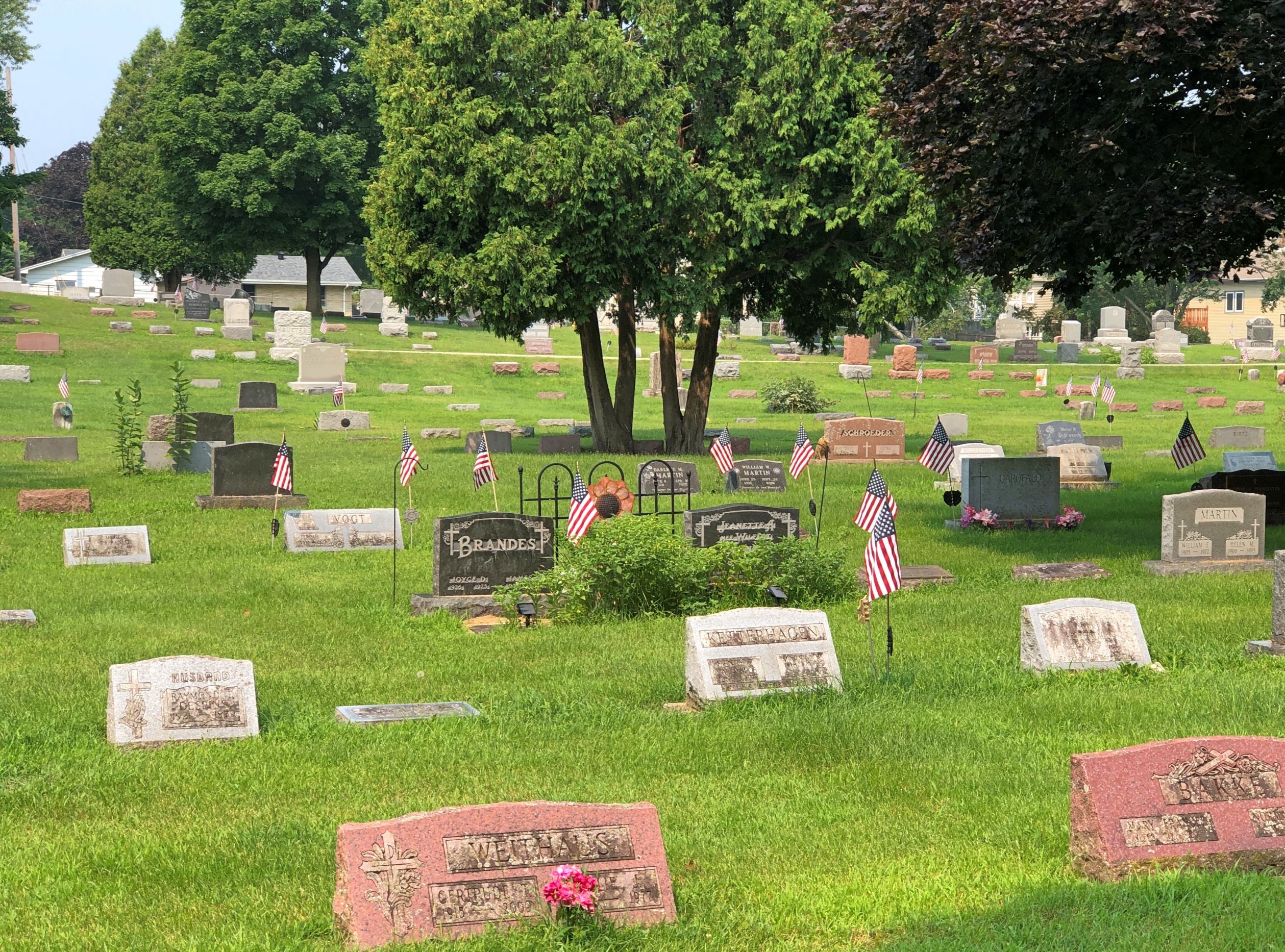
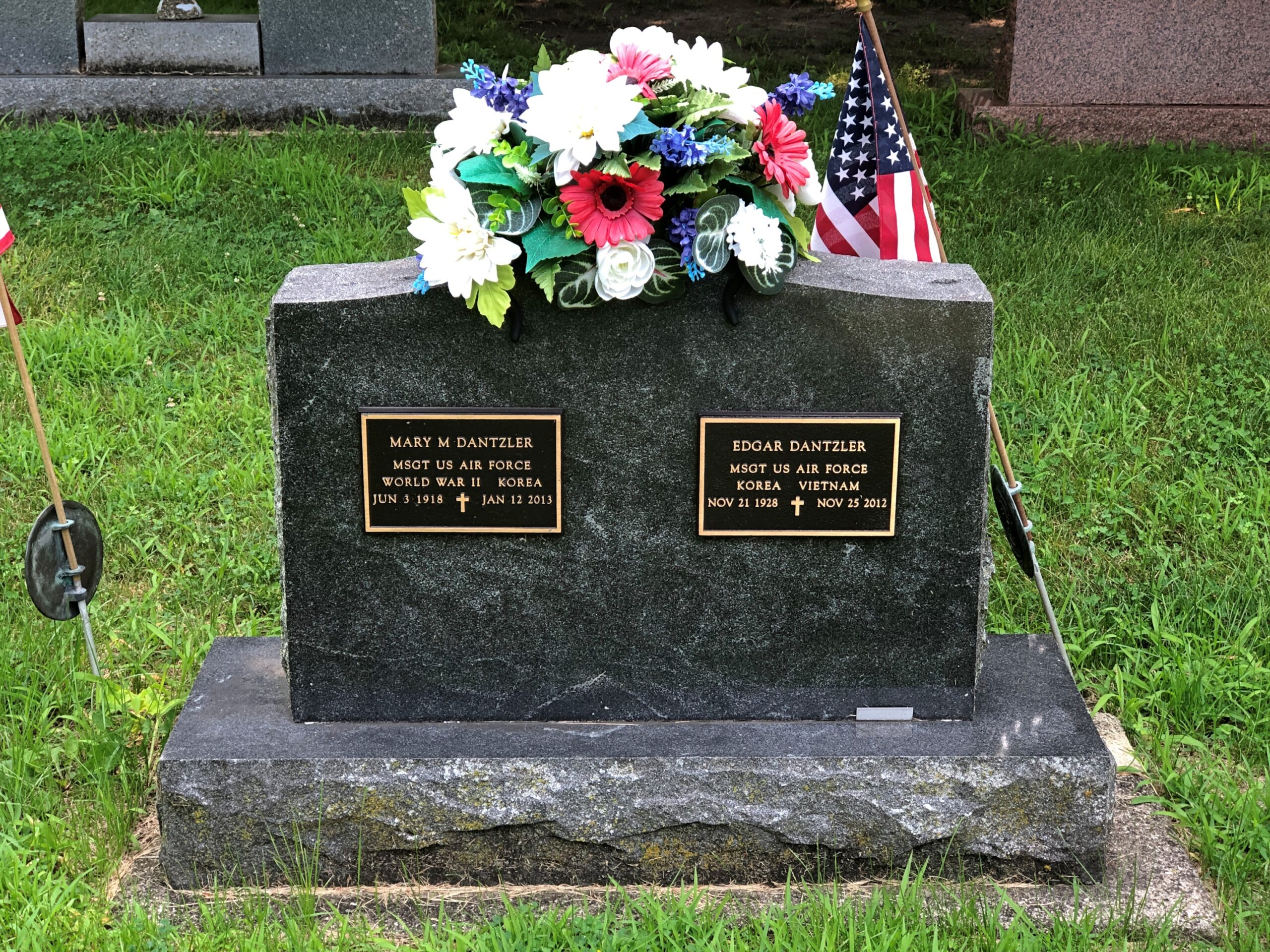
I encountered Mr. and Mrs. Remer at St. Mary’s Cemetery in Burlington, Wisconsin last month. A Catholic cemetery with a nice assortment of stones.
Unusual: two Air Force (I assume originally Army Air Corps) Master Sergeants, married to each other.
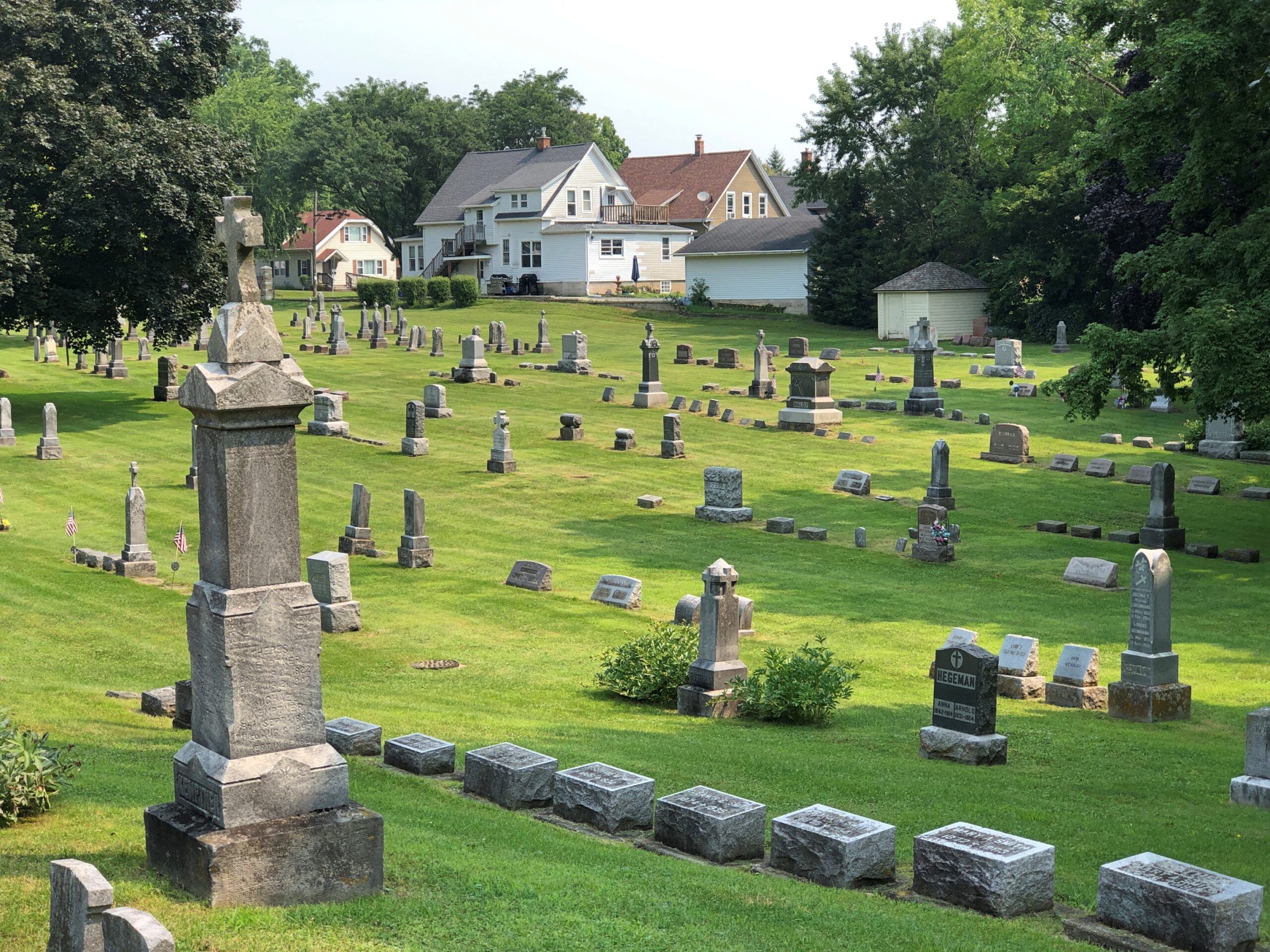
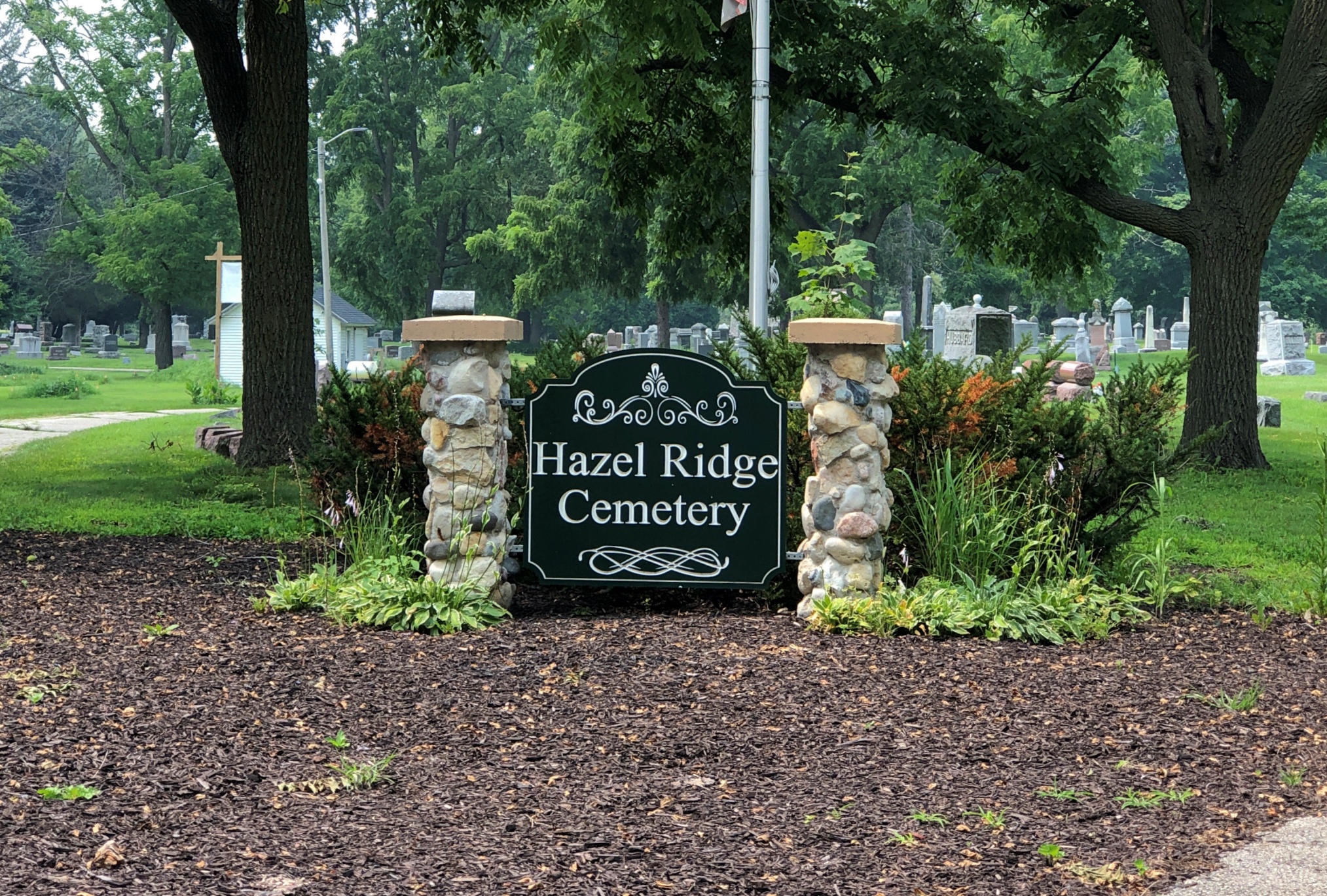
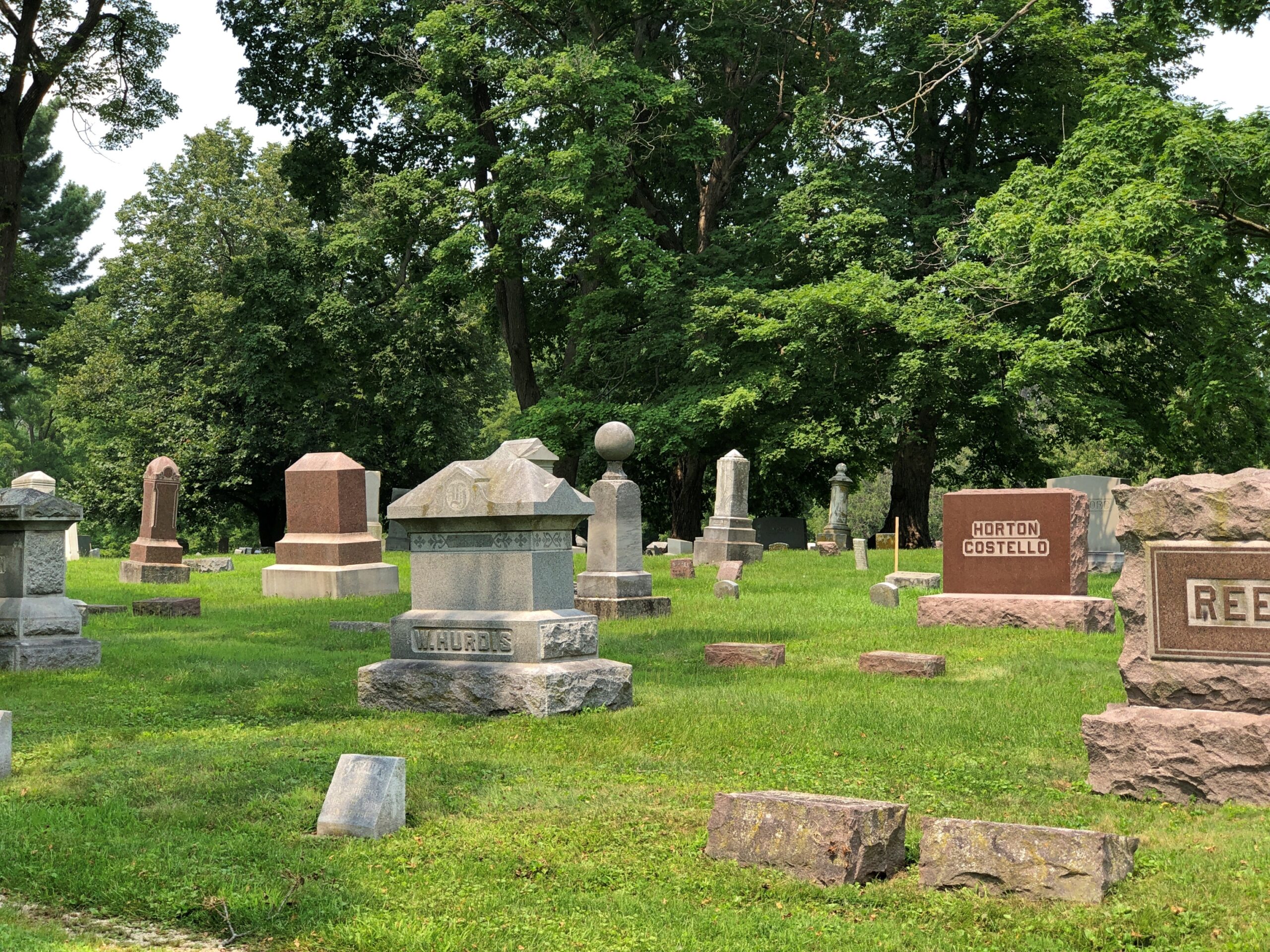
During my recent visit to Elkhorn, Wisconsin, I did no more than look for an “historic cemetery” on Google Maps to find Hazel Ridge Cemetery. Historic for sure, founded more than 150 years ago.
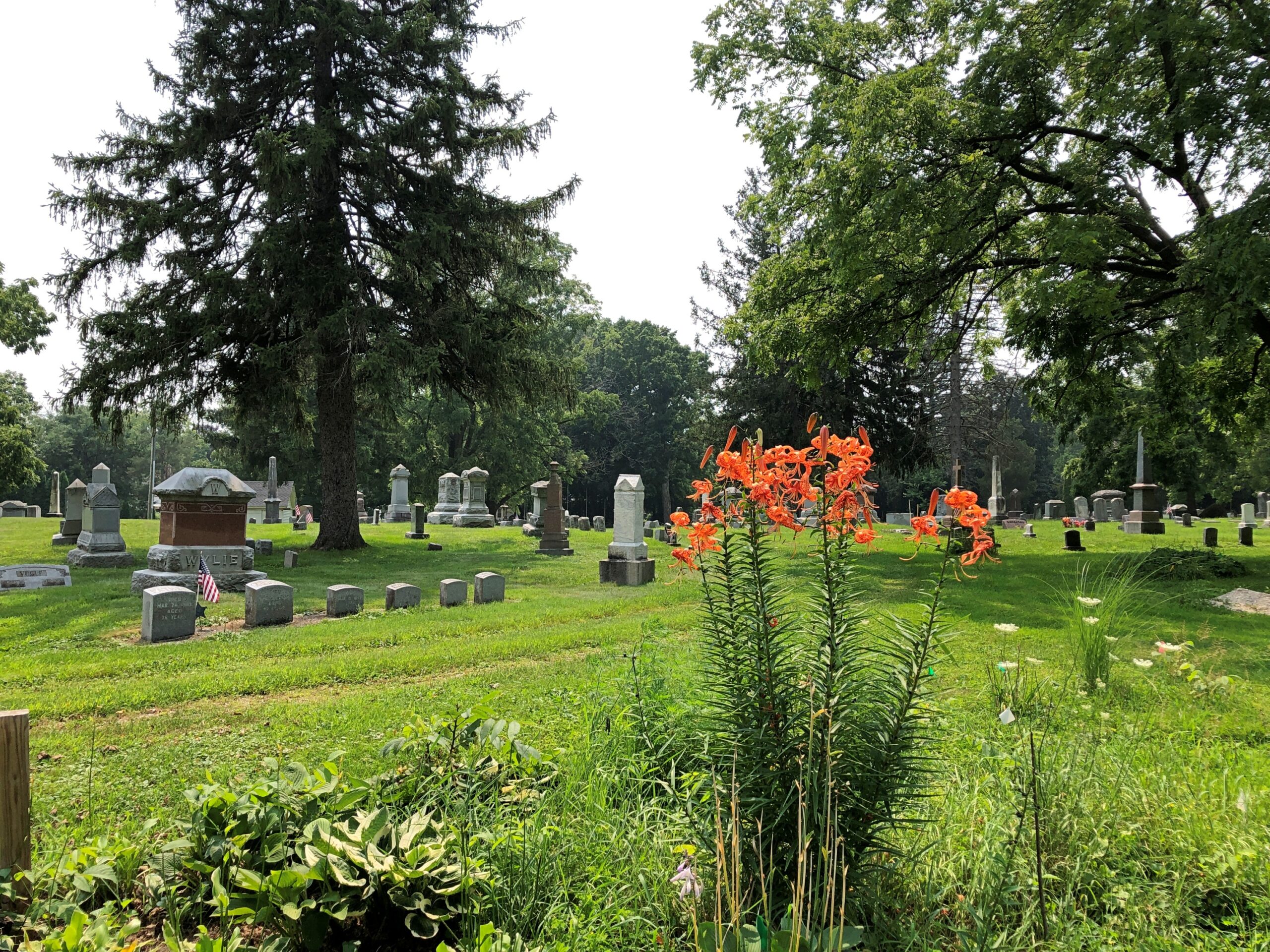
It too has a fine collection of memorials. The cemetery is also an arboretum, with more than 25 native species and ornamental varieties.
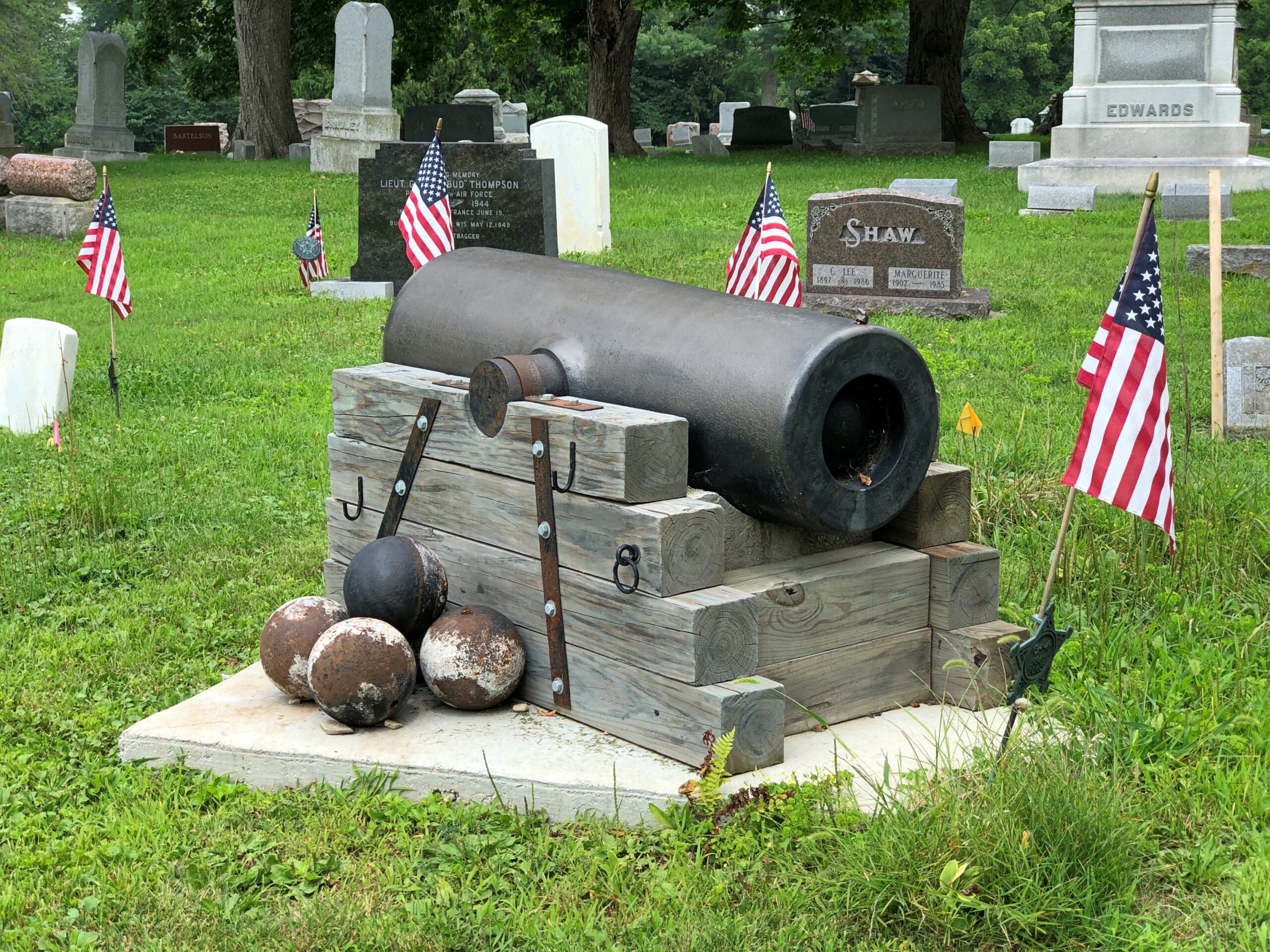
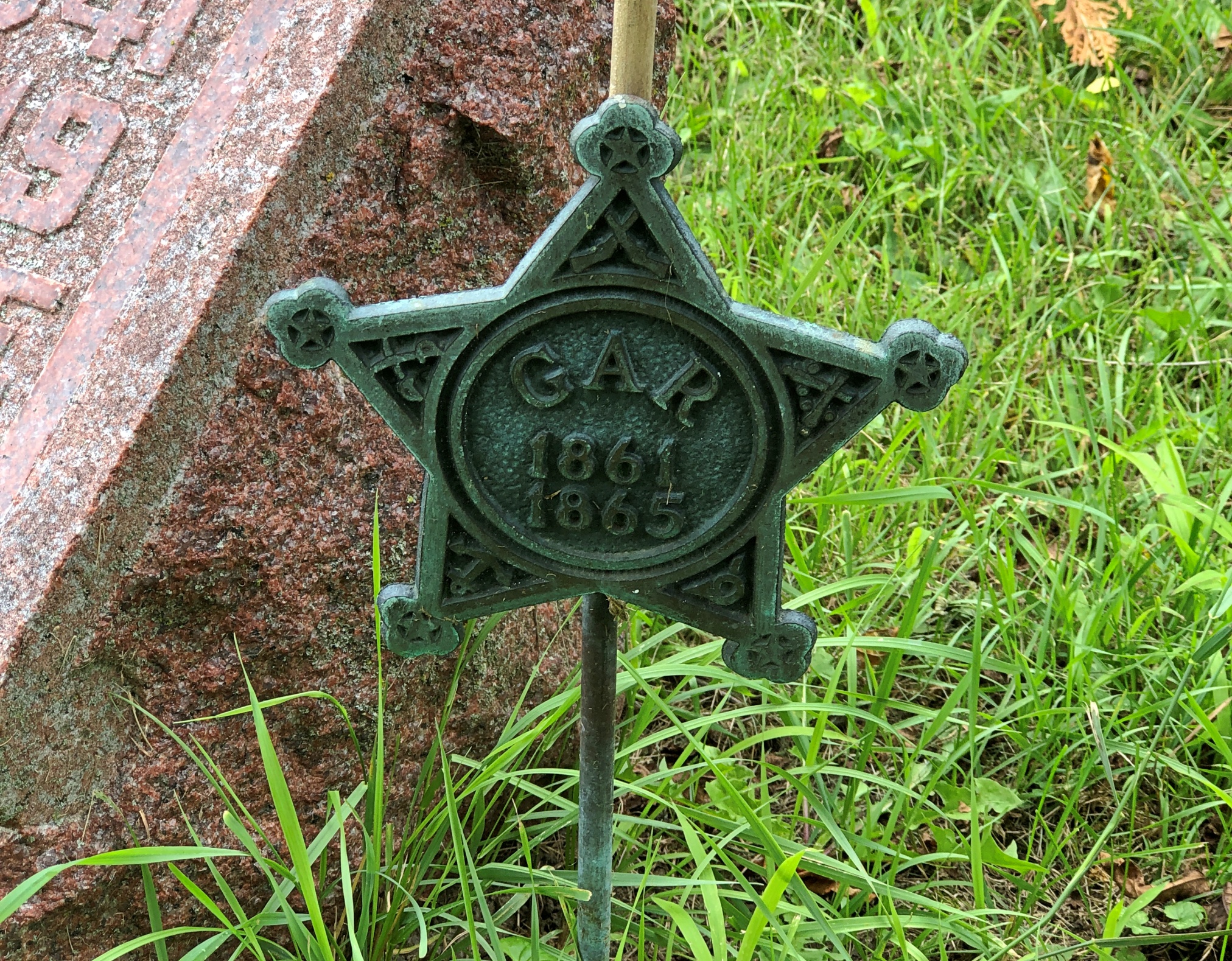
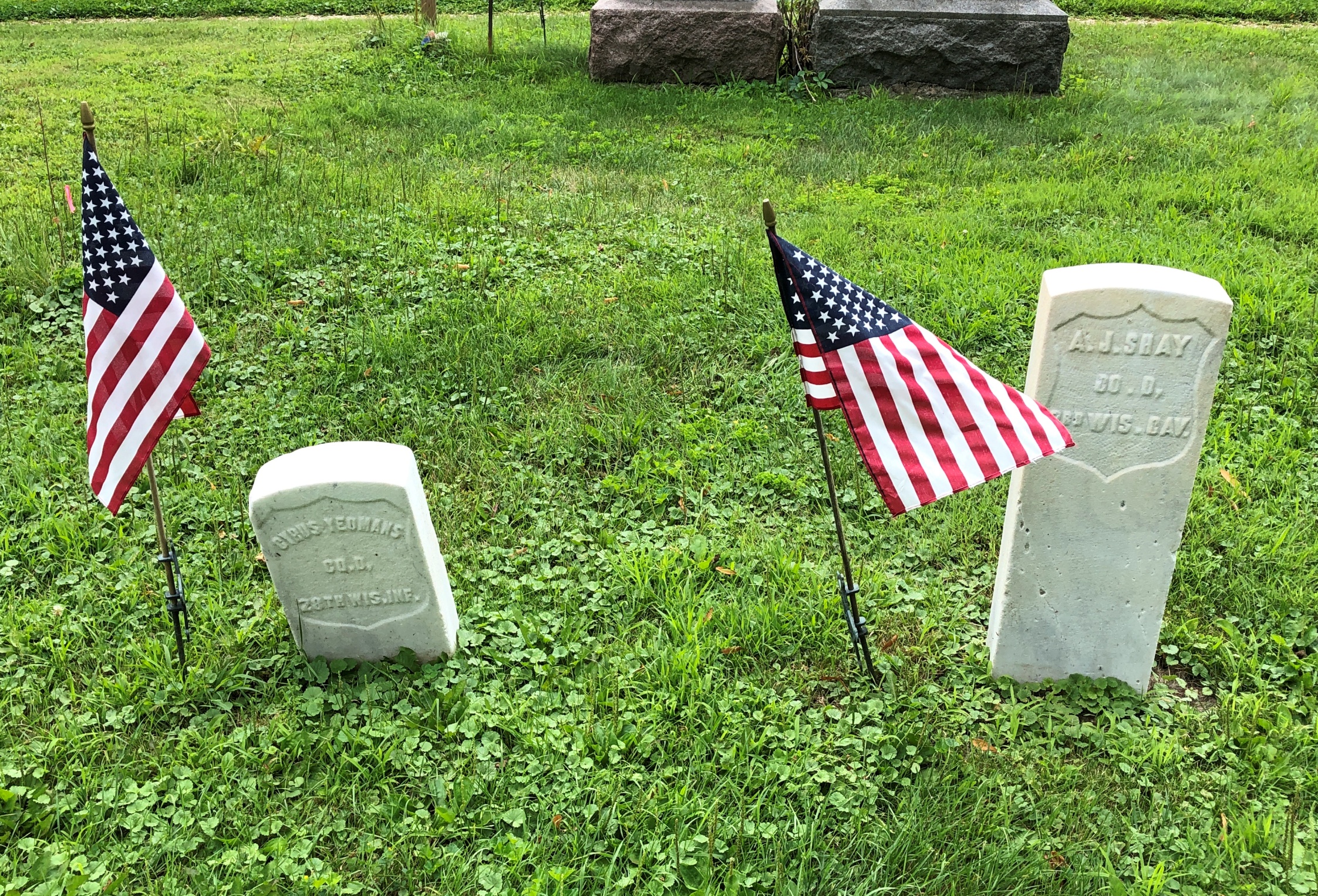
Hazel Ridge has a clutch of war dead memorials, including an 8-inch siege Howitzer as the centerpiece of a Grand Army of Republic memorial.
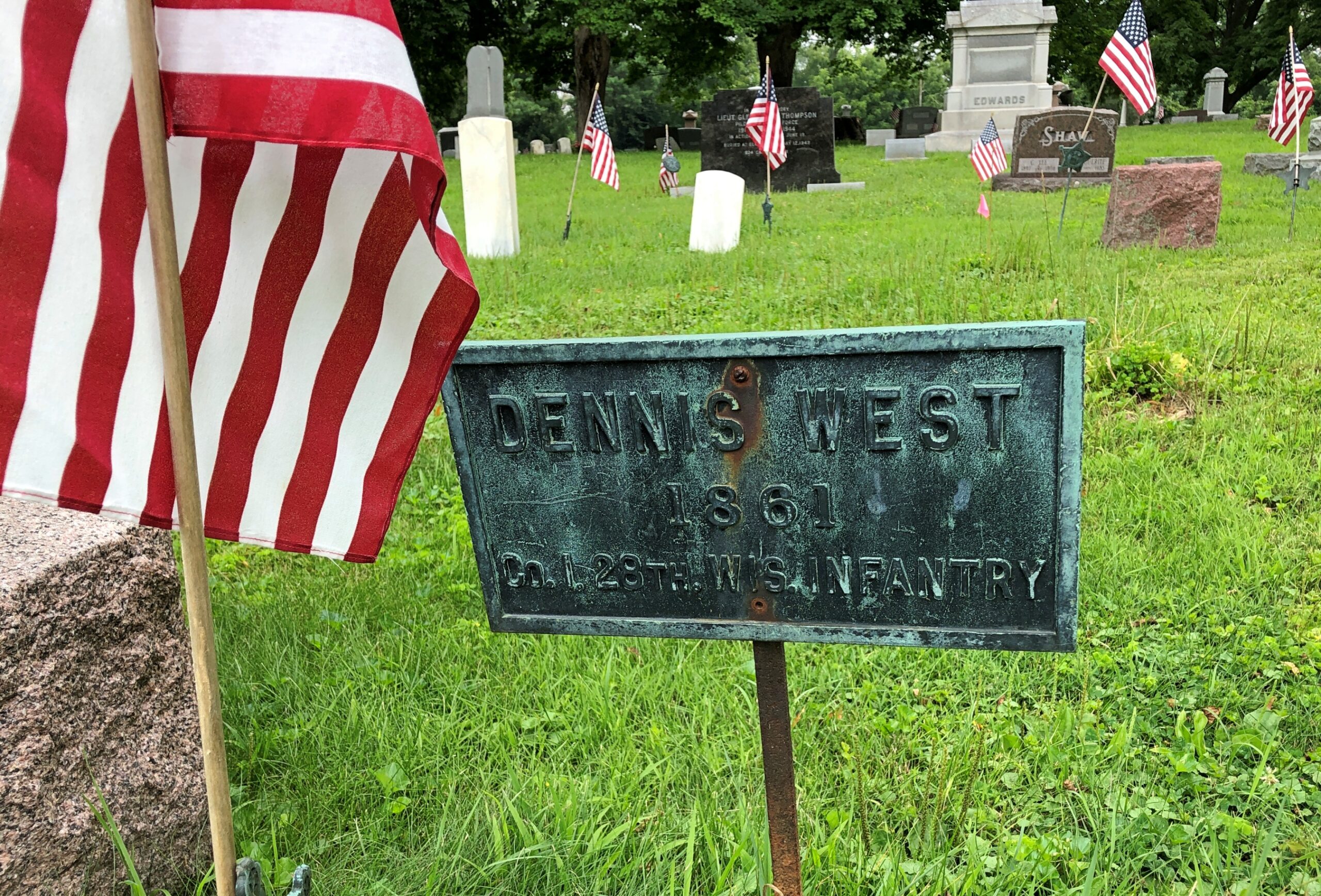
This particular cannon, according to a nearby sign, was made in 1862 at the Fort Pitt Foundry in Pittsburgh. I assume it did its part for the Union. Nearby are soldiers who did likewise.
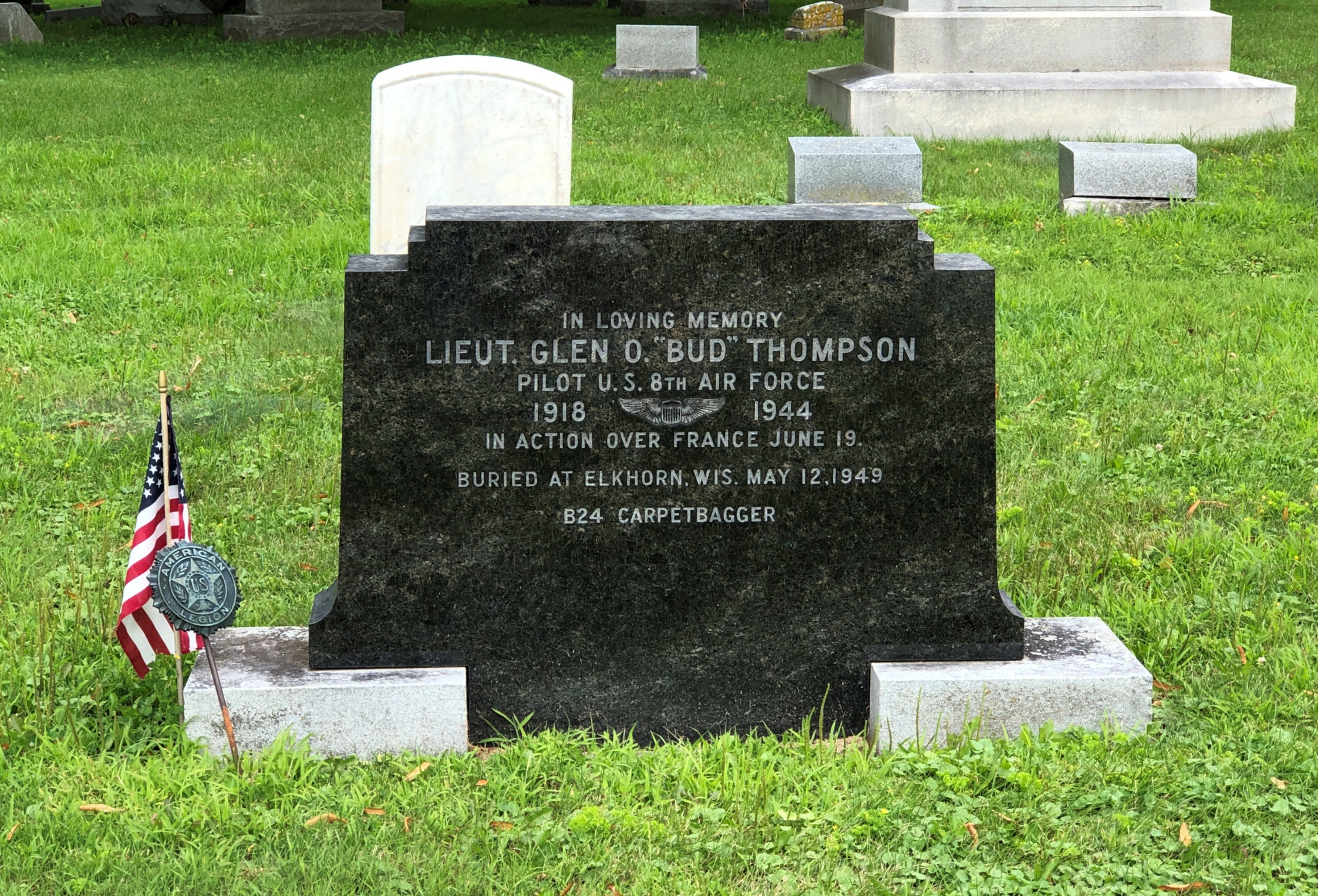
And those who died in later wars.
The single word “Carpetbagger” on the stone tells quite a story. Operation Carpetbagger involved black-painted B-24s flying low and slow by night, dropping supplies and agents to the resistance in France before and after the Normandy invasion. Clearly dangerous work. RIP, Bud.
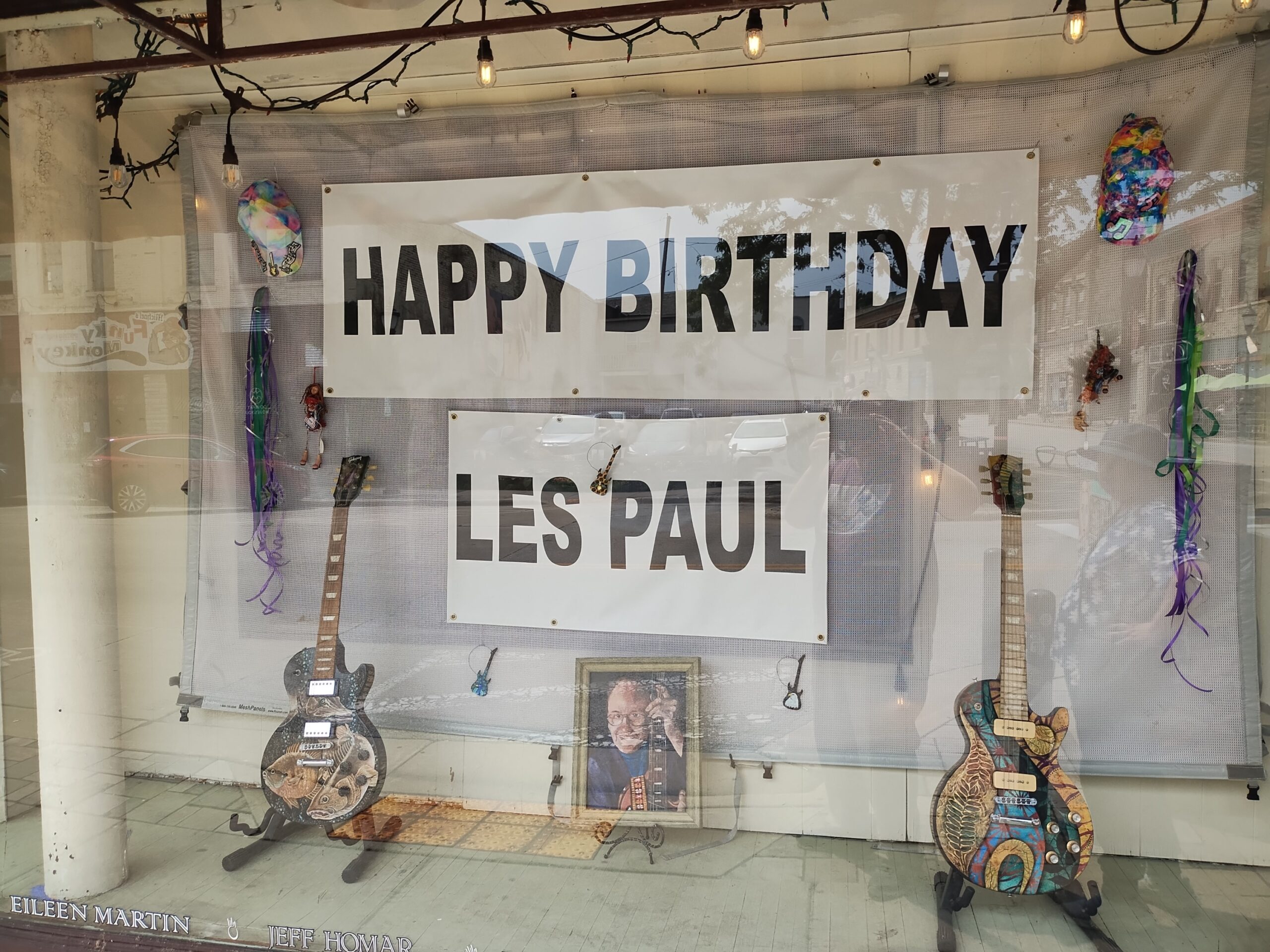
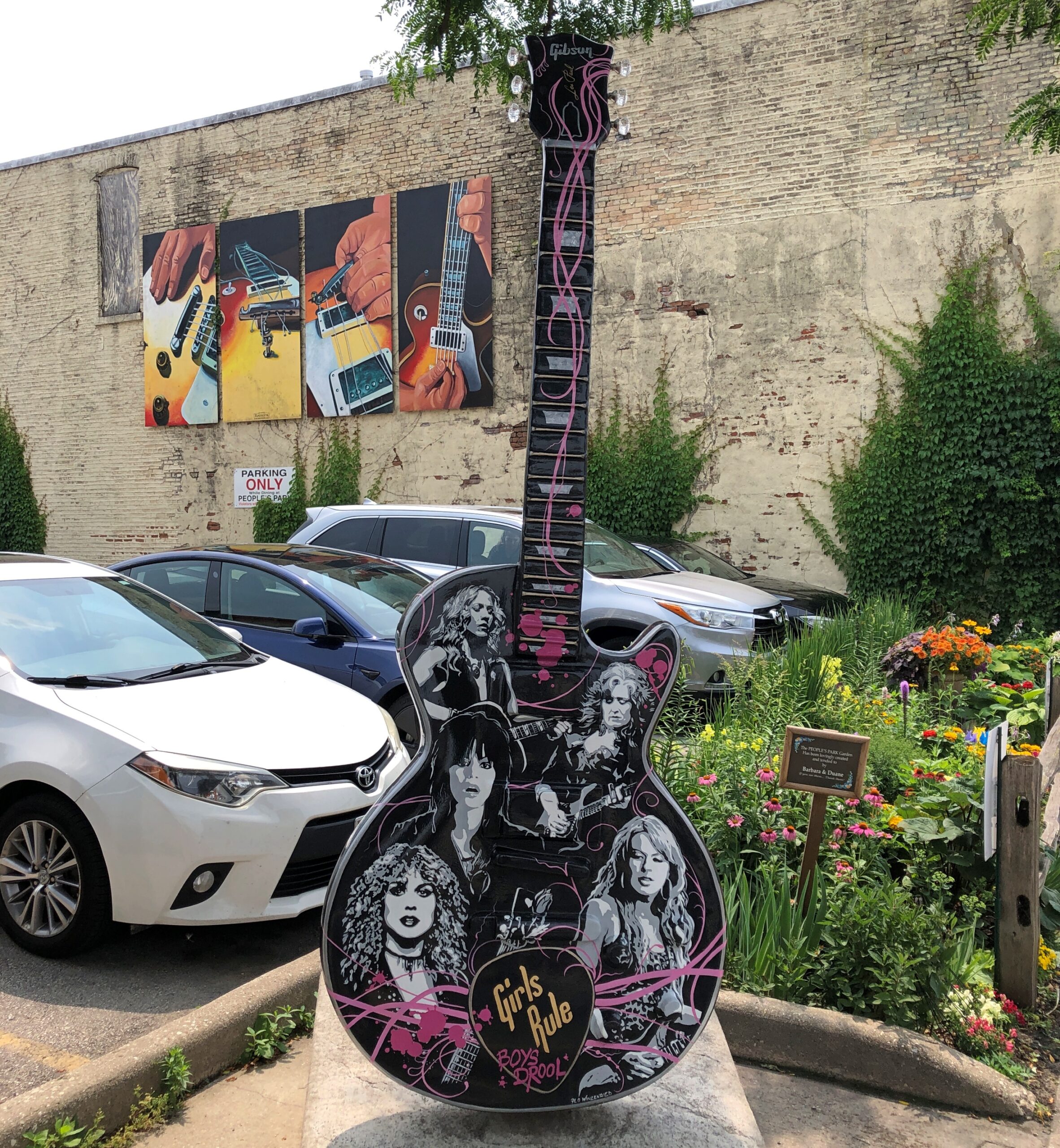
Something I didn’t know about Waukesha, Wisconsin, before we went there last month: that Les Paul (b. 1915) grew up around there. Waukesha certainly hasn’t forgotten.
A recent sign, since his birthday is in early June. Waukesha is a “GuitarTown,” because of its association with the famed musician and music technologist. Apparently there is more than one GuitarTown, since Gibson Guitars doles out the moniker, or at least used to.
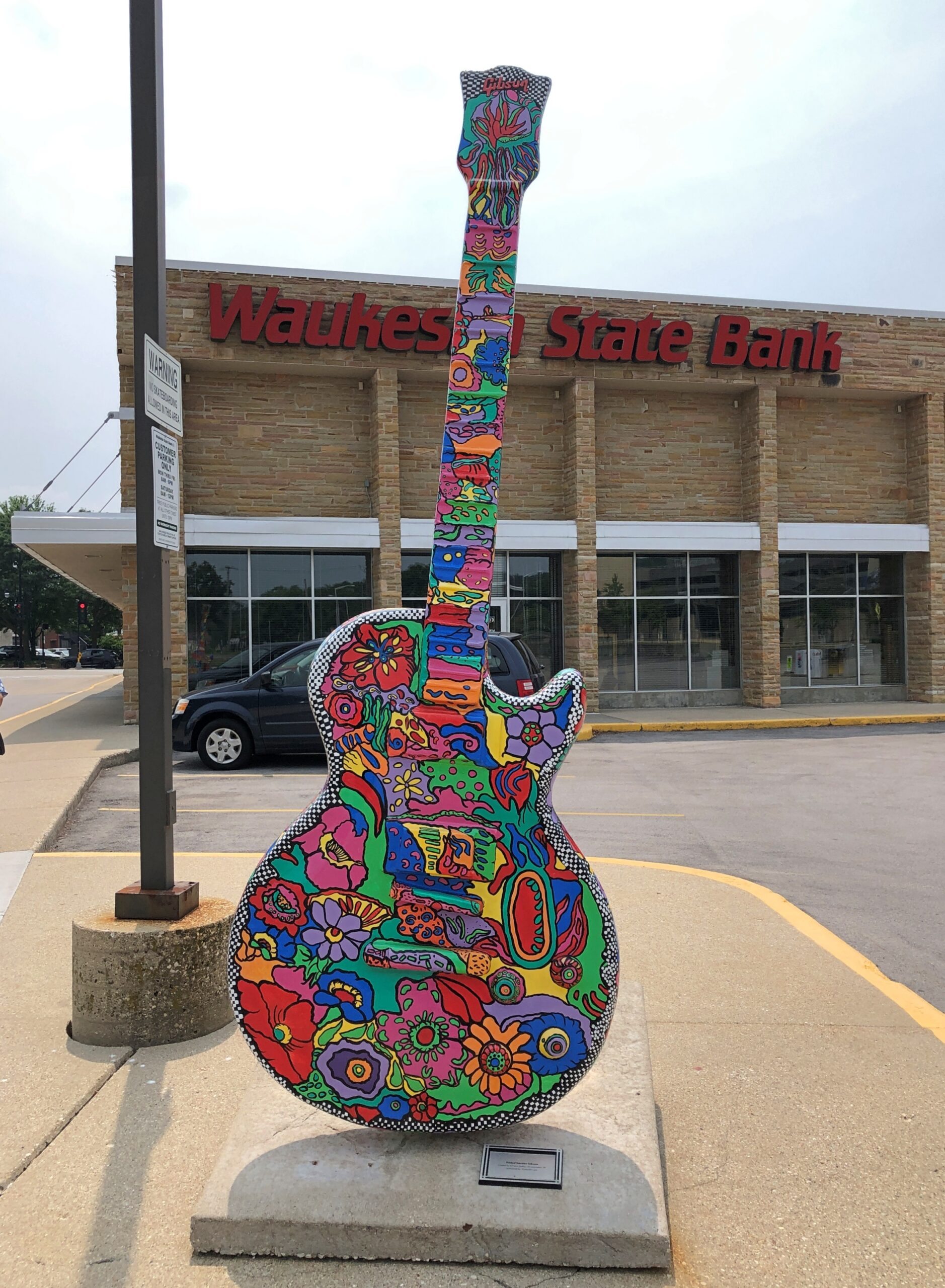
“Waukesha was named a Gibson GuitarTown in 2012 and 2013, two years in a row, to honor the birth and resting place of electric guitar legend Les Paul,” The Freeman reports. “Other GuitarTowns include Austin, Nashville and London.”
As GuitarTown, Waukesha has 15 guitar statues in public places, each 10 feet tall and designed by local artists. Elsewhere in town, you can find Les Paul Middle School, Les Paul Parkway, the Les Paul Performance Center, and the Les Paul gravesite monument. Missed that, alas. Maybe some other time. But we did drive on his parkway. And see a few of the giant guitars.
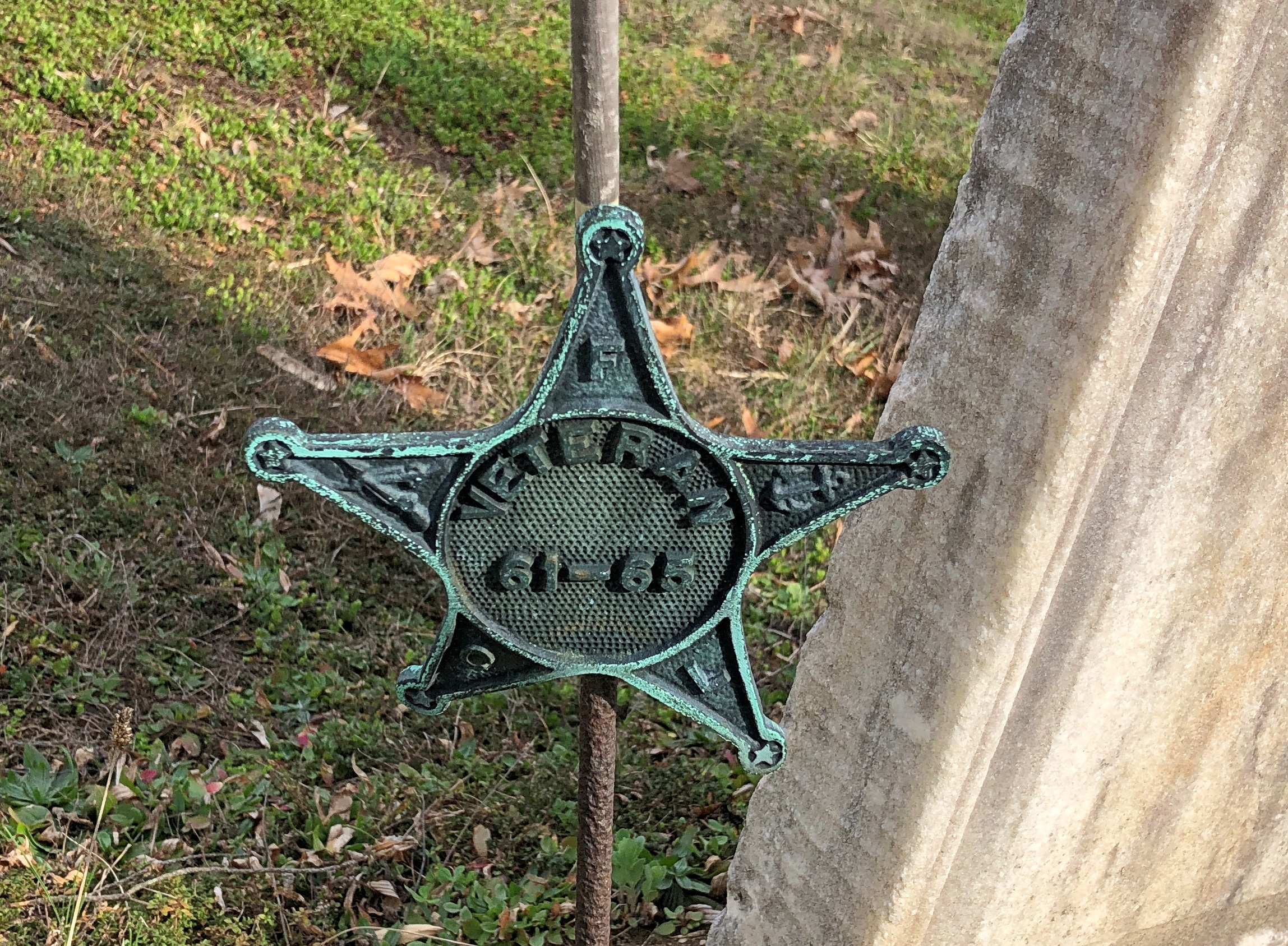
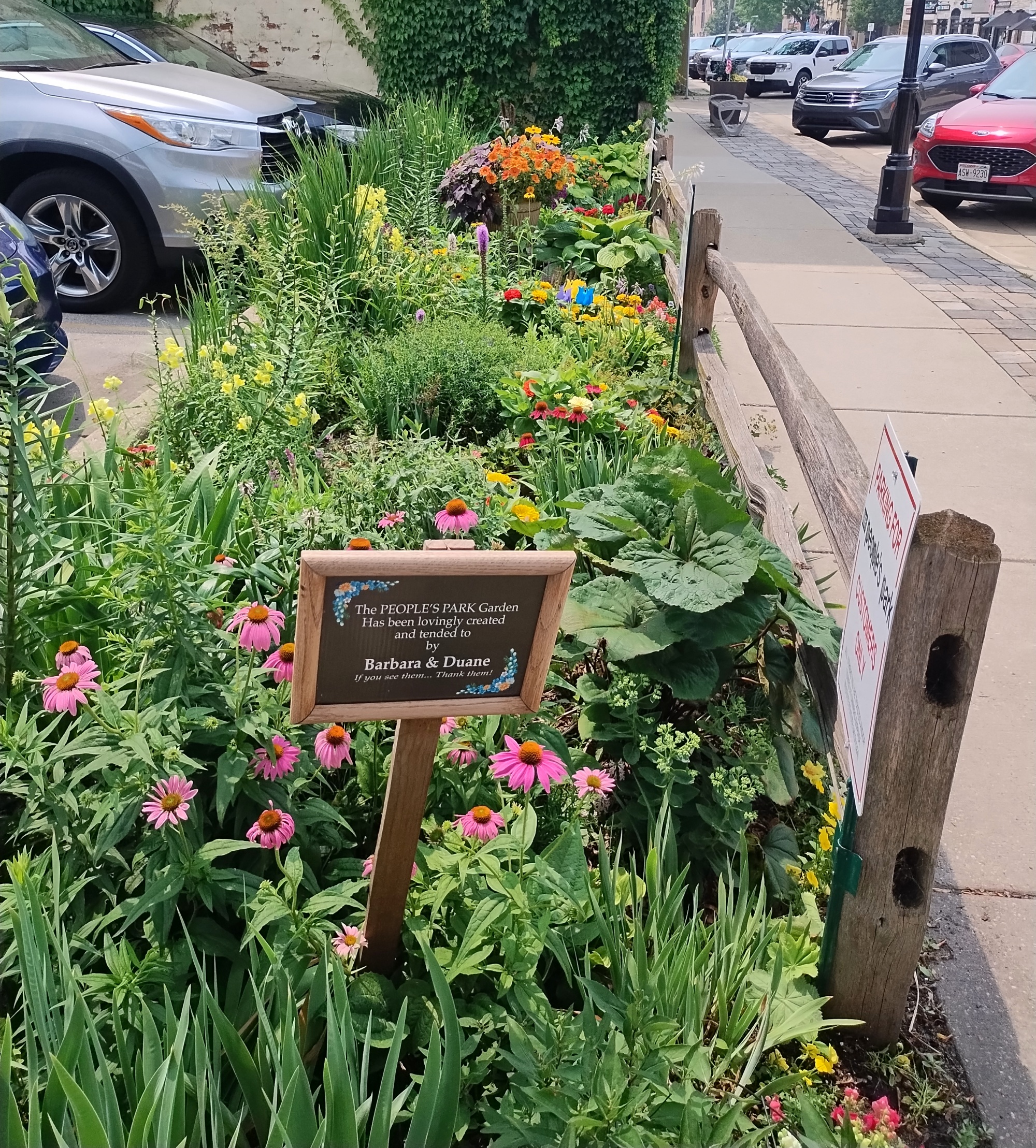
Next to that particular guitar, a small garden is wedged between the sidewalk and a parking lot. The PEOPLE’S PARK Garden, says the sign.
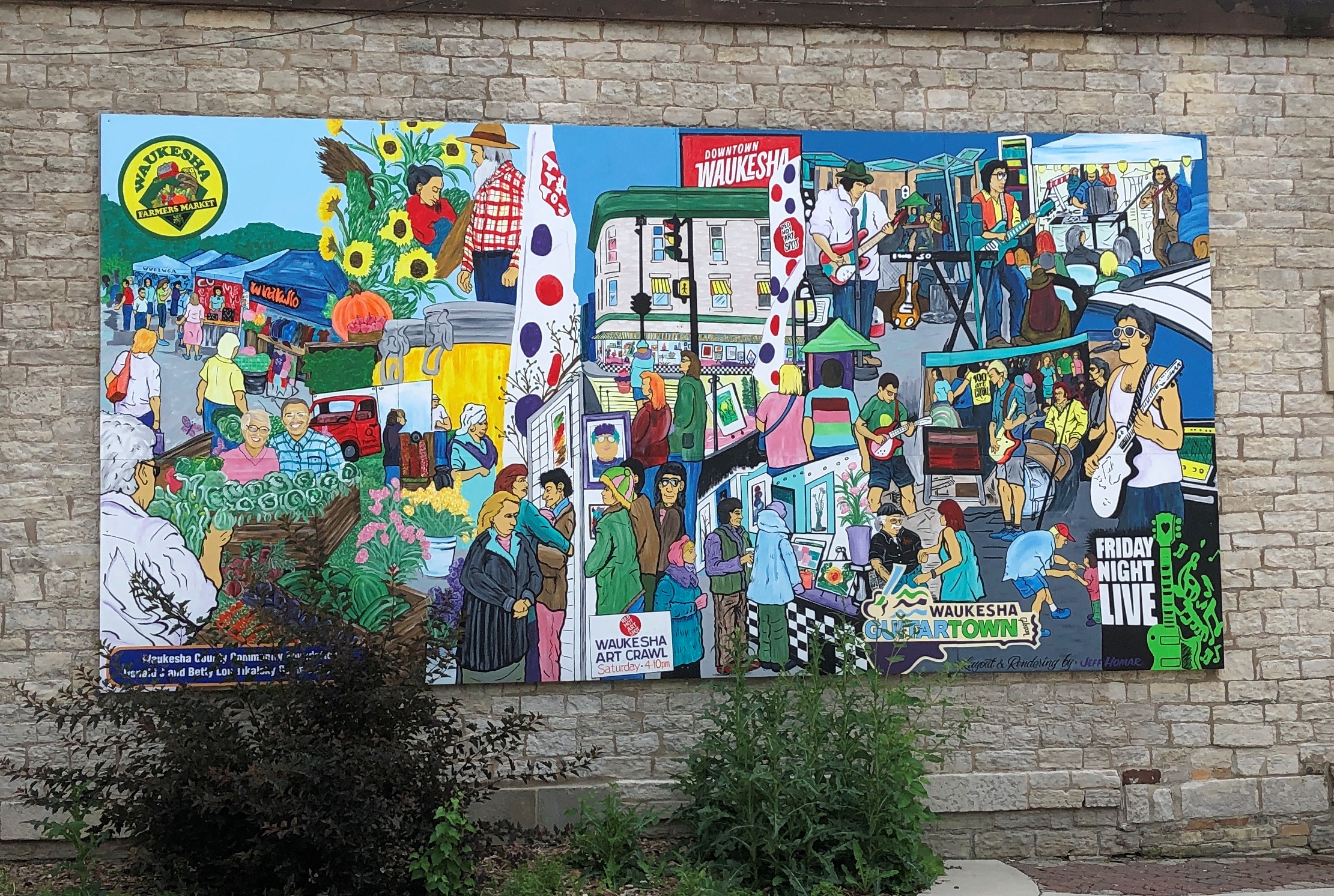
The Wall Dogs also came to town and painted 13 murals. I assume this is one of them.
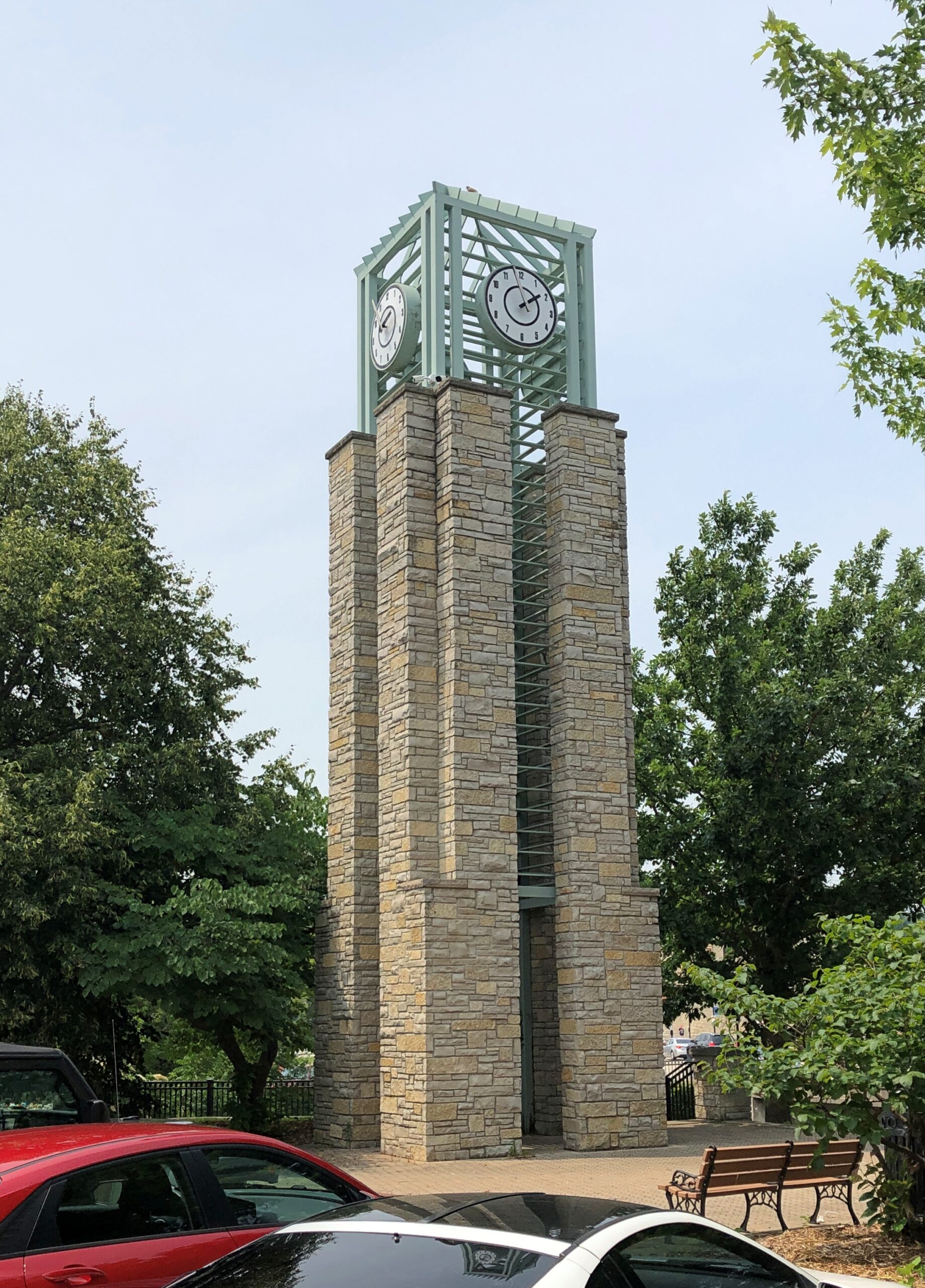
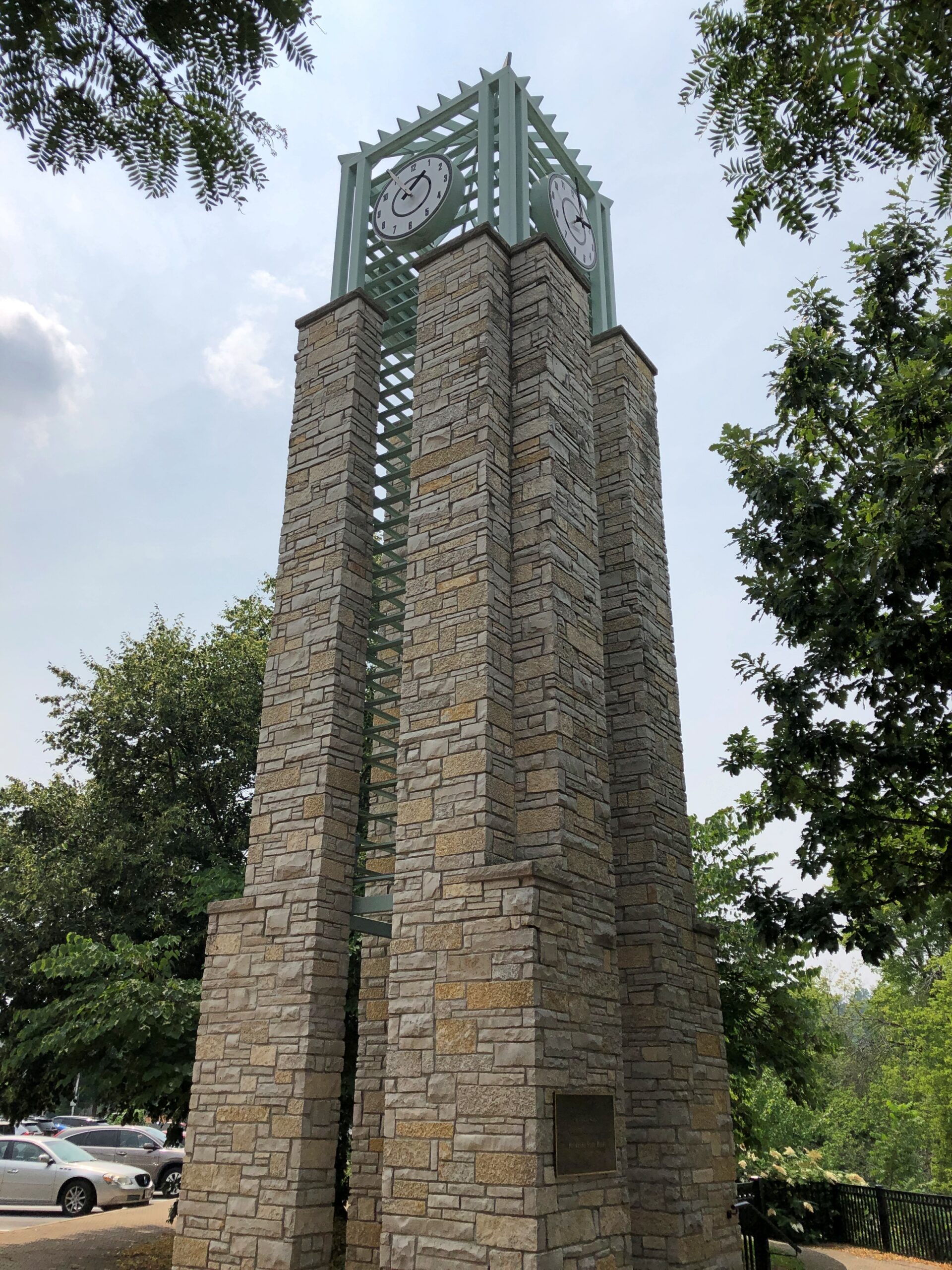
Across a parking lot from that mural rises Waukesha’s impressive stone clocktower.
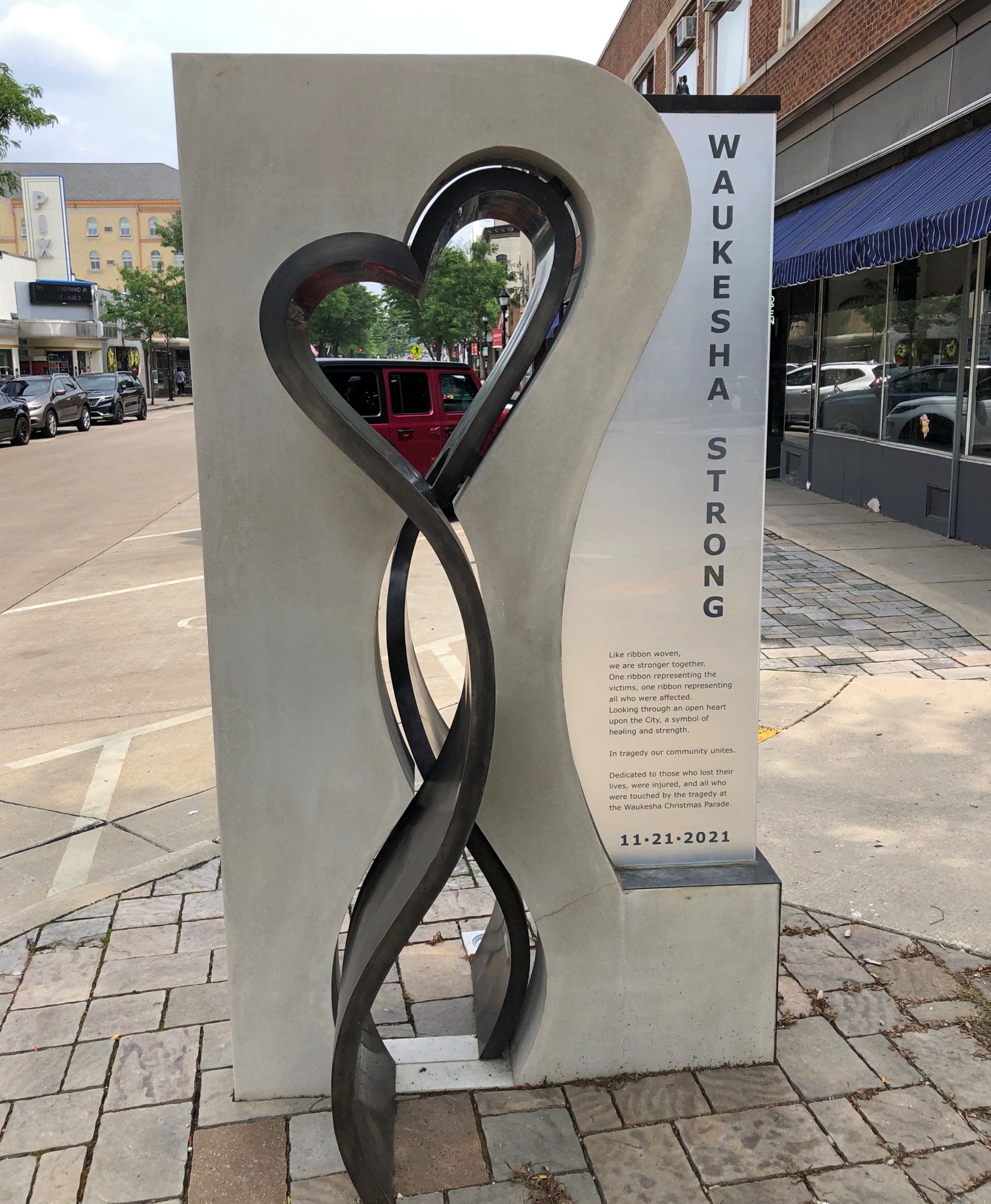
On Main Street, a memorial.
Outrages by homicidal wankers are so common that I had to refresh my memory about that particular one, in late 2021. Then I remembered. The only good thing I can report is that the wanker, who went double wanker at his trial by asserting sovereign citizen nonsense, is now a permanent resident of a tightly locked state facility.
Upriver a half mile or so from downtown is the sizable riverside Frame Park.
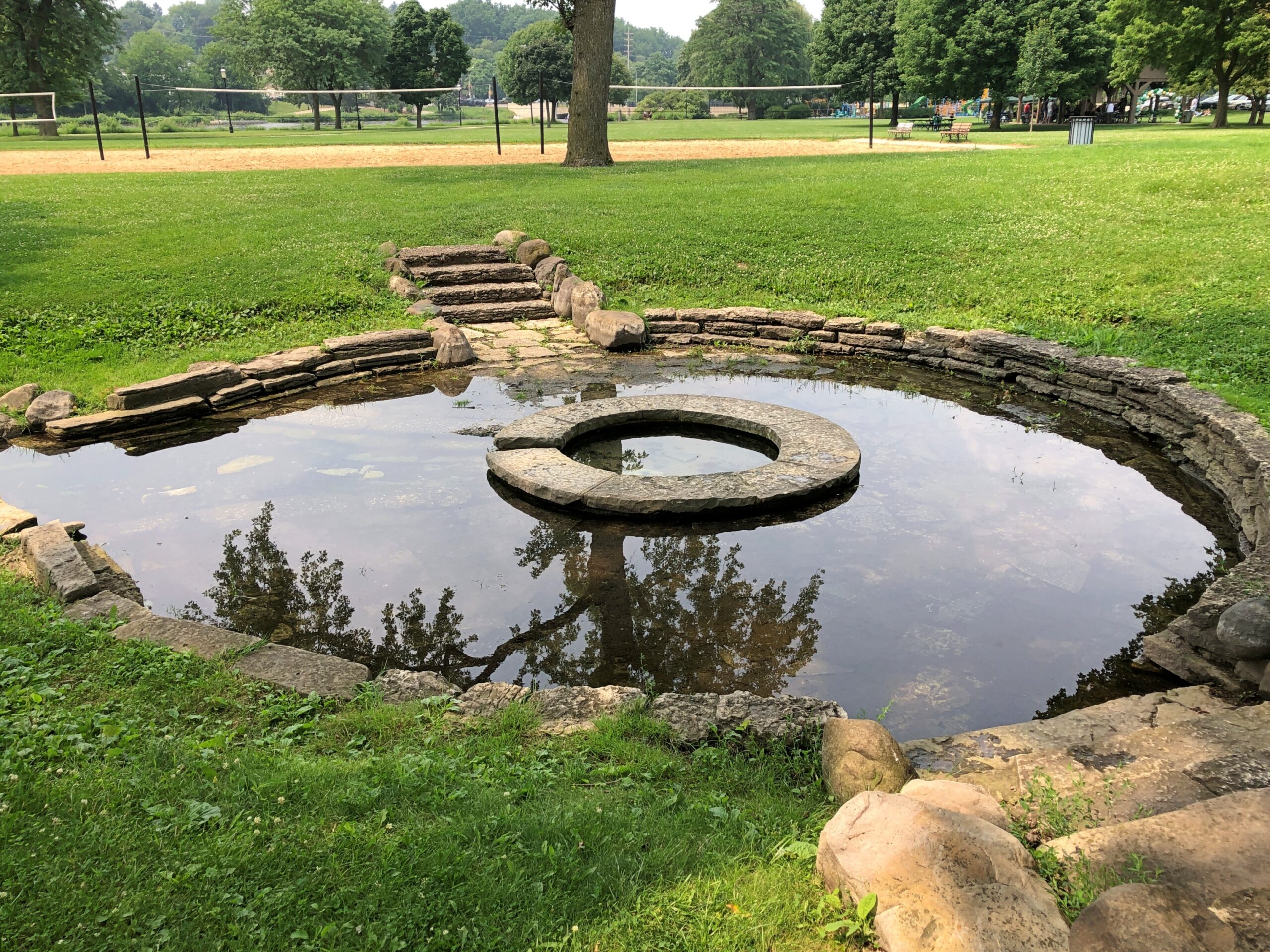
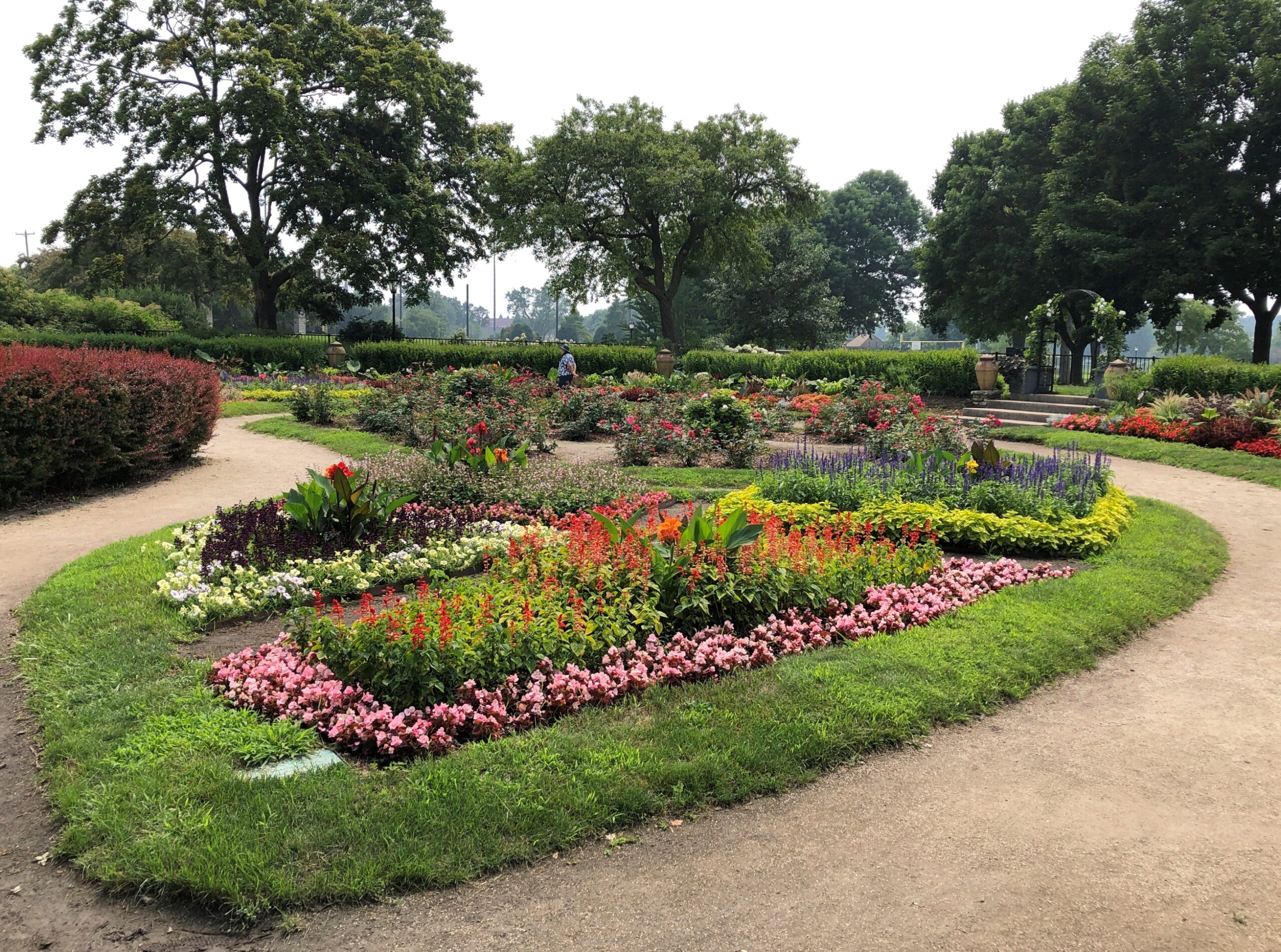
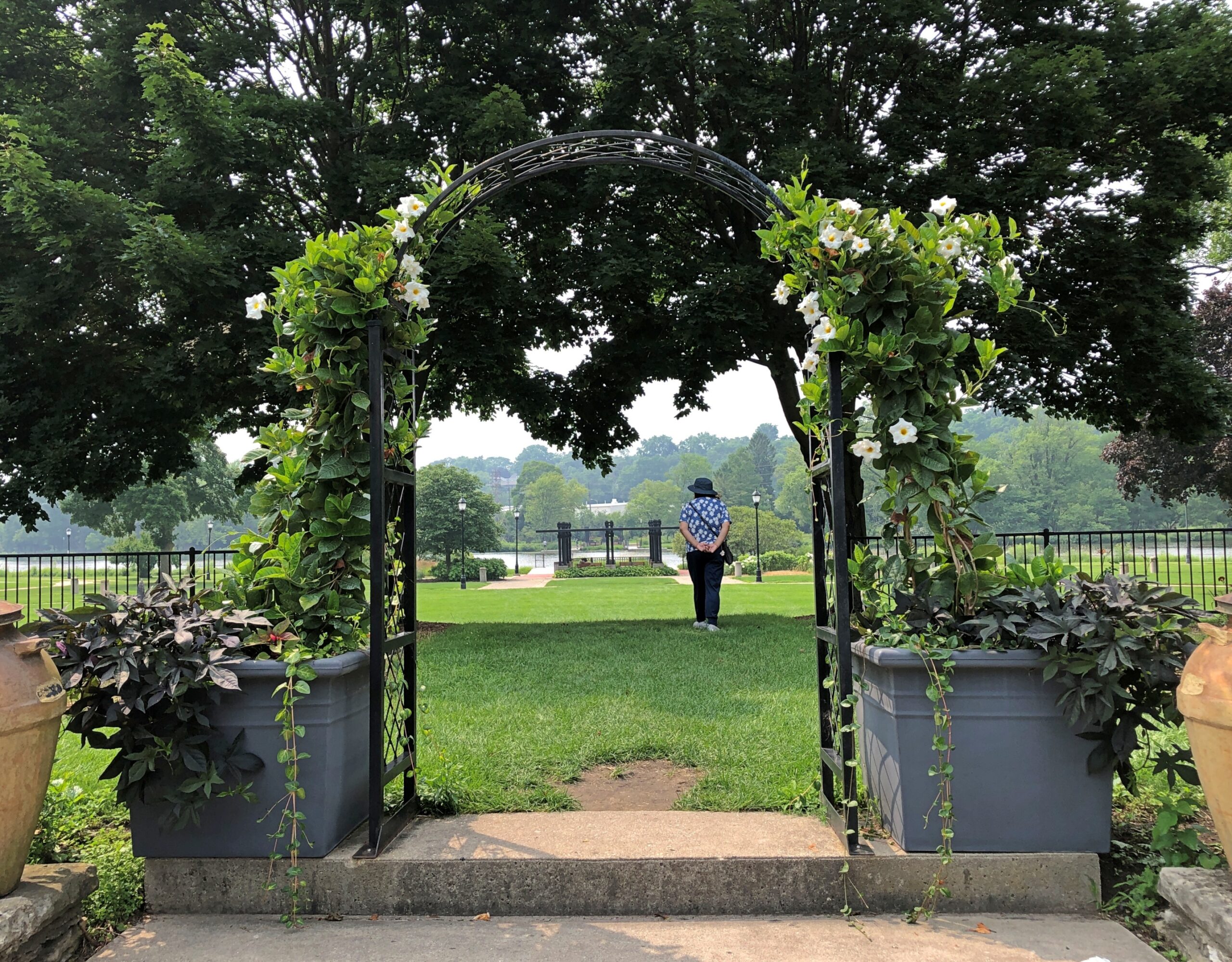
Including the Frame Park Formal Gardens.
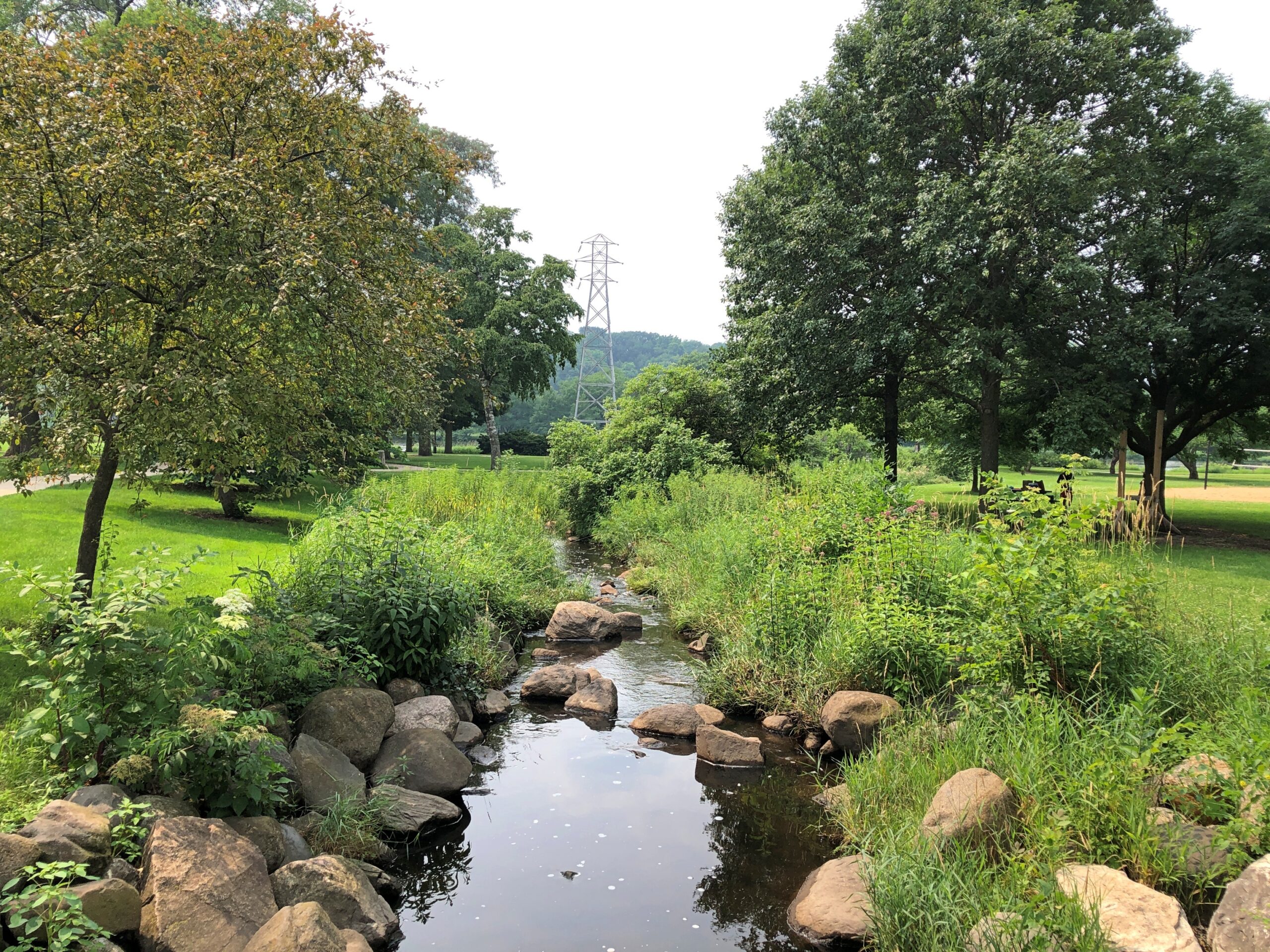
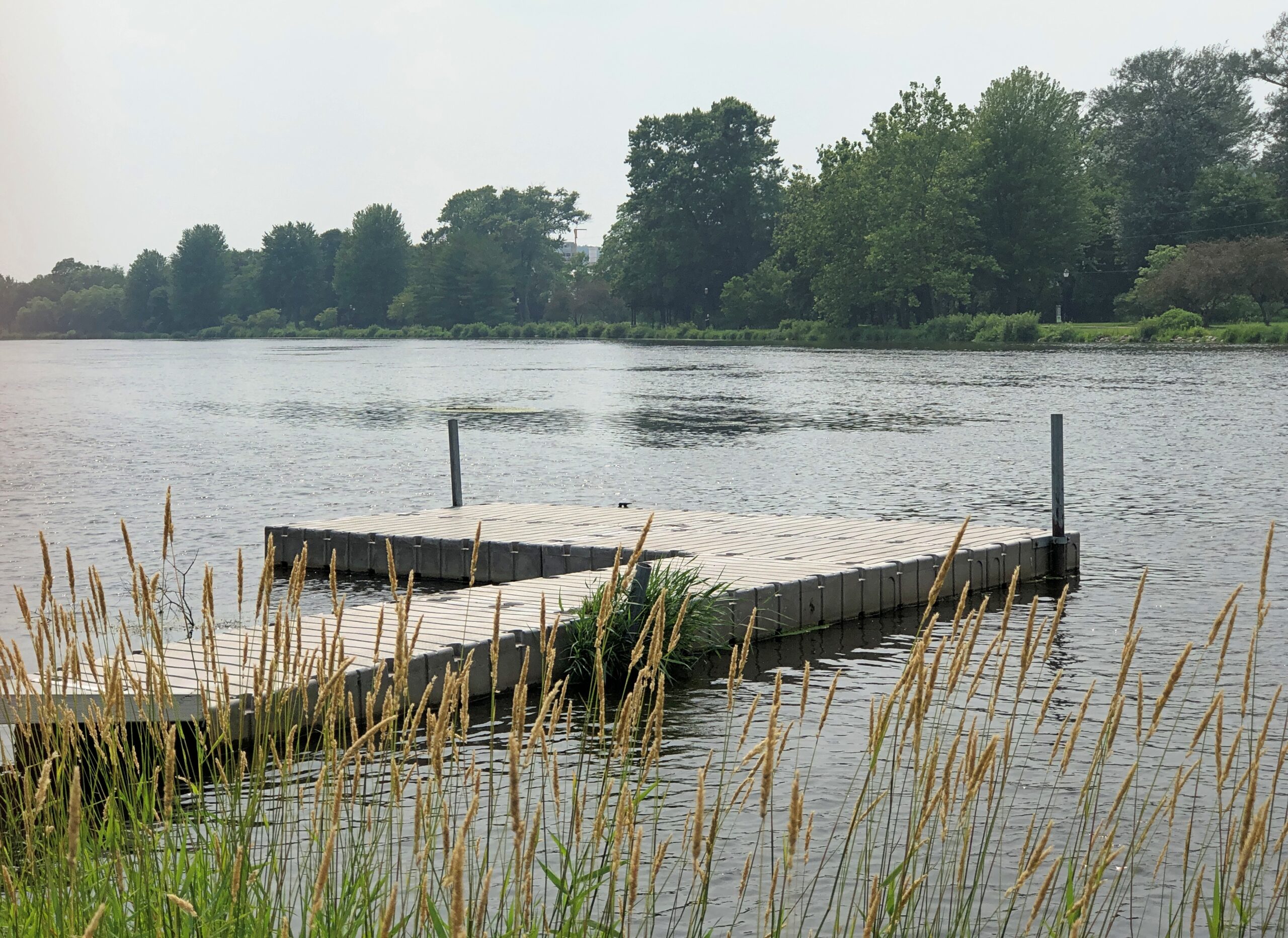
I hope the park and its garden weren’t damaged too much by the raging Fox, since it is flat most of the way from the garden to the river.
The Fox is large at this point. Not something you want to see described as “angry.”