Shelburne, Massachusetts

I heard by chance that the Spurs are in the playoffs, again. NBA games are on the list of things I don’t care about, but this is the Spurs we’re taking about, so Go Spurs. I’m old enough to remember when pro sports were considered a modest-priced entertainment, which would have been the days when the Spurs huffed along in the ABA. When that league went under, that paved the way for the basketball monopoly we now enjoy.

I remember a print ad for the Spurs from their early NBA days. A basketball, mostly in shade, set against a pitch black background; a small but bright light is emerging from a crack in the basketball; the tag line says, In the Arena, Everyone Can Hear You Scream. Brilliant.

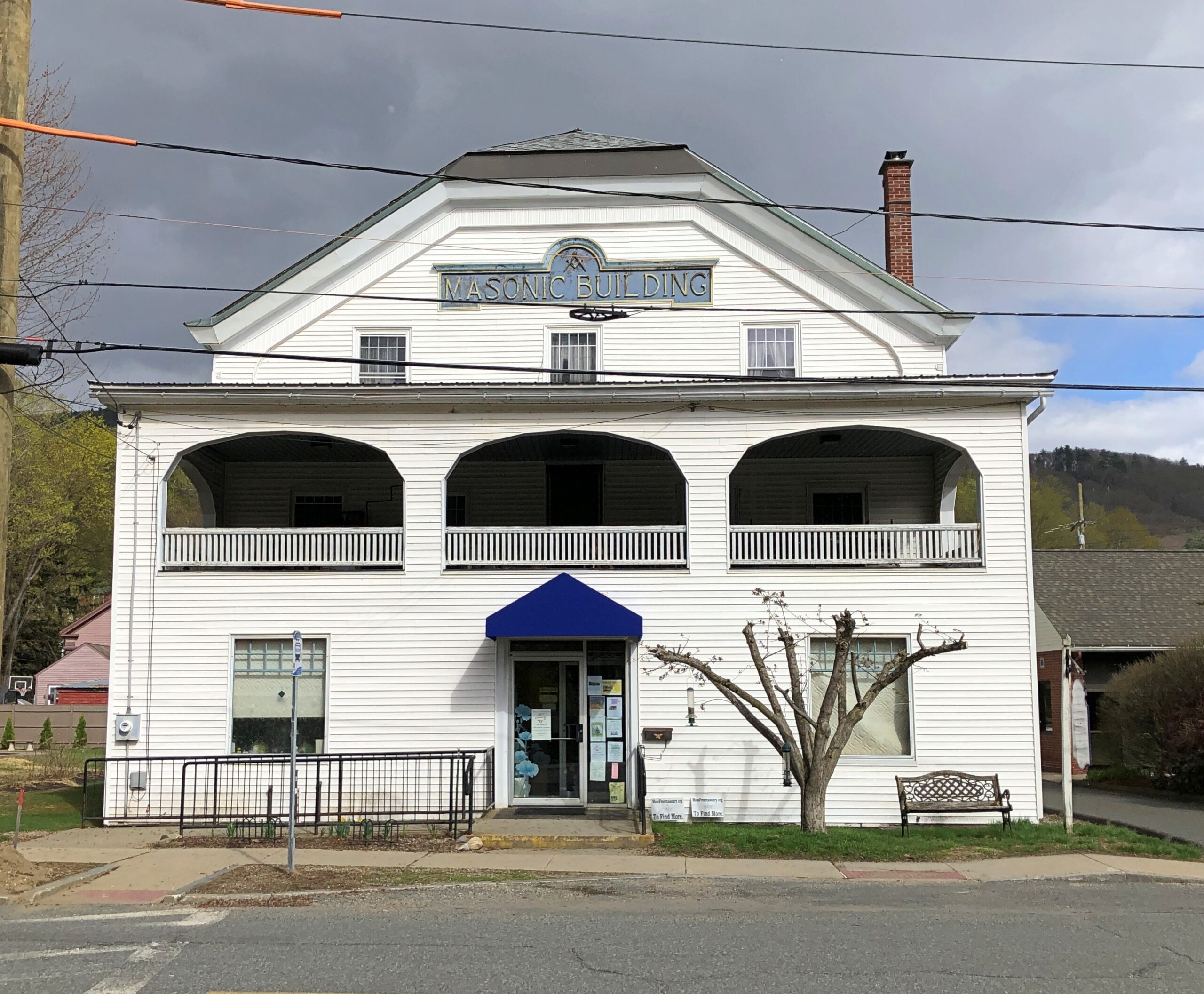
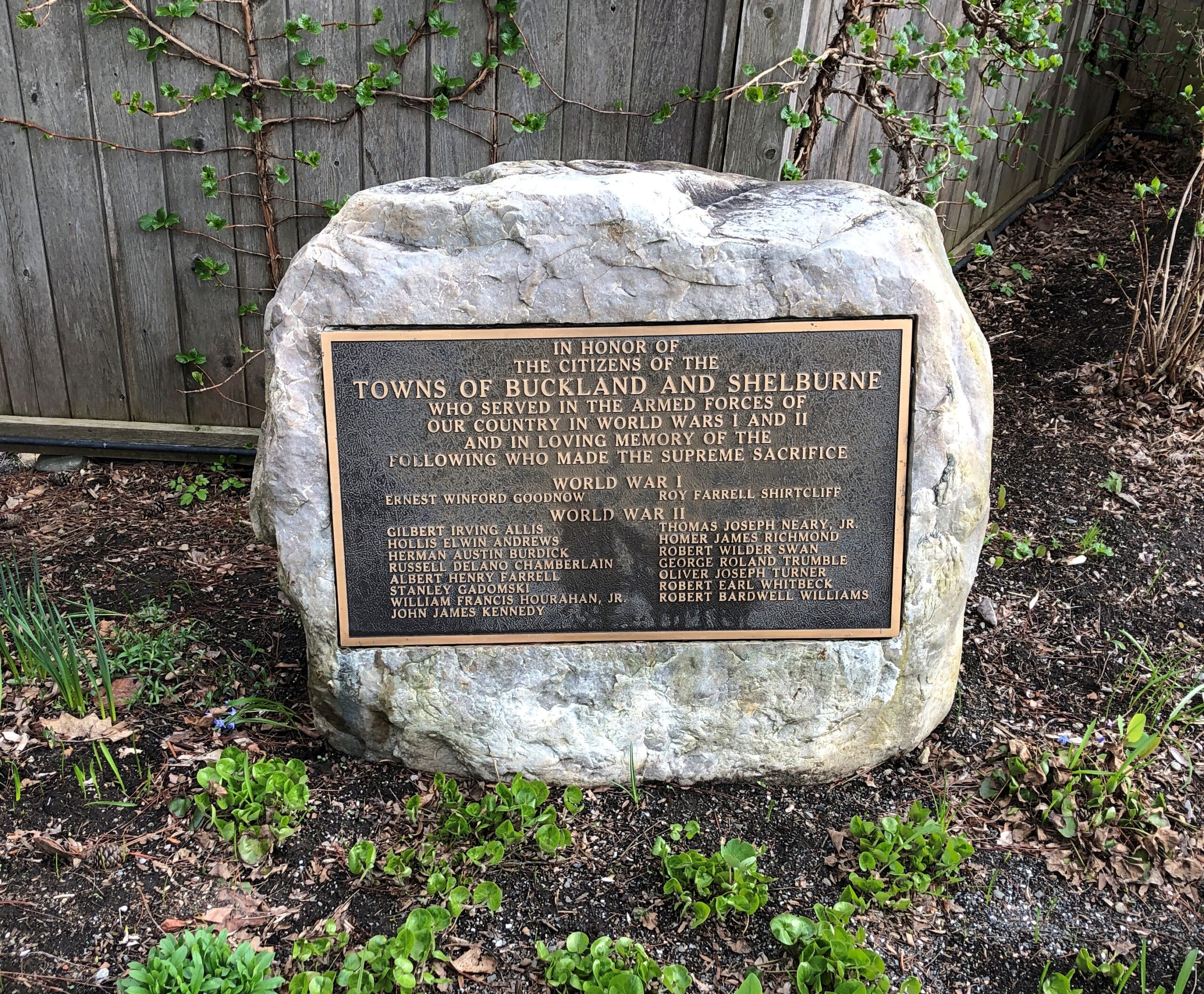
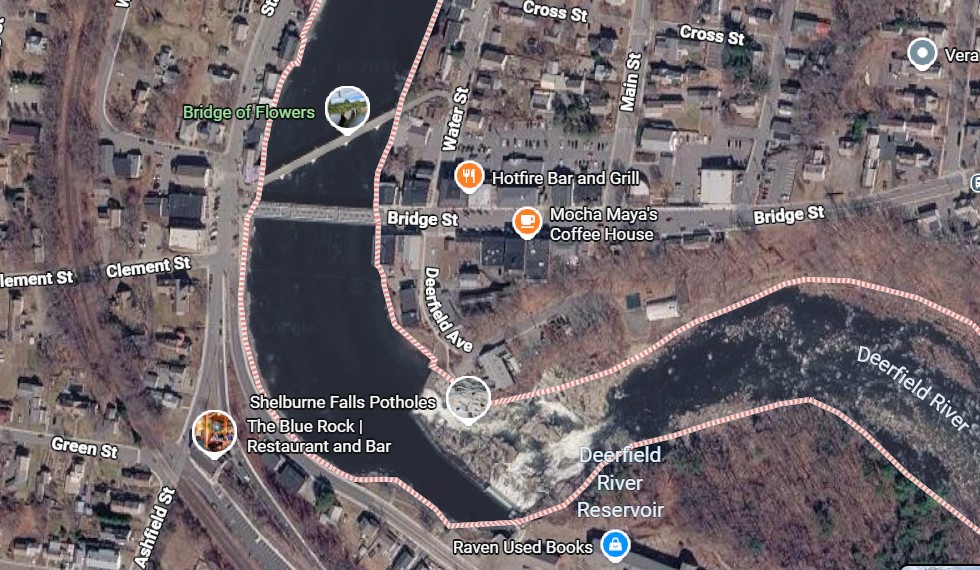
Here we go again with the incongruous Massachusetts place names: “The village of Shelburne Falls is located partly in Shelburne and neighboring Buckland,” notes Wiki.

So I suppose I visited Shelburne Falls the whole time when I visited Shelburne and walked across a bridge to Buckland, and then back to Shelburne on a different bridge.

Interesting that a town in the United States is named for Lord Shelburne, a British prime minister when the Revolution was still ongoing. On the other hand, it was on his short watch – at the end of that war – when the British government said, enough already, be independent if you want it so much. So there ought to be something named for him on this side of the Atlantic (and there’s another in Vermont, besides one in Ontario).

The Bridge of Flowers

I had good weather for my return to the Midwest from the Northeast, beginning on a clear, warm day in Massachusetts. Large towns hang like pearls on Route 2, and while I would have made a selection of them to visit even in chillier weather — and spend time on foot in those towns — the spring warmth was one of those travel bonuses you can appreciate right away. Pop off Route 2 in Franklin County and you’re in Shelburne.

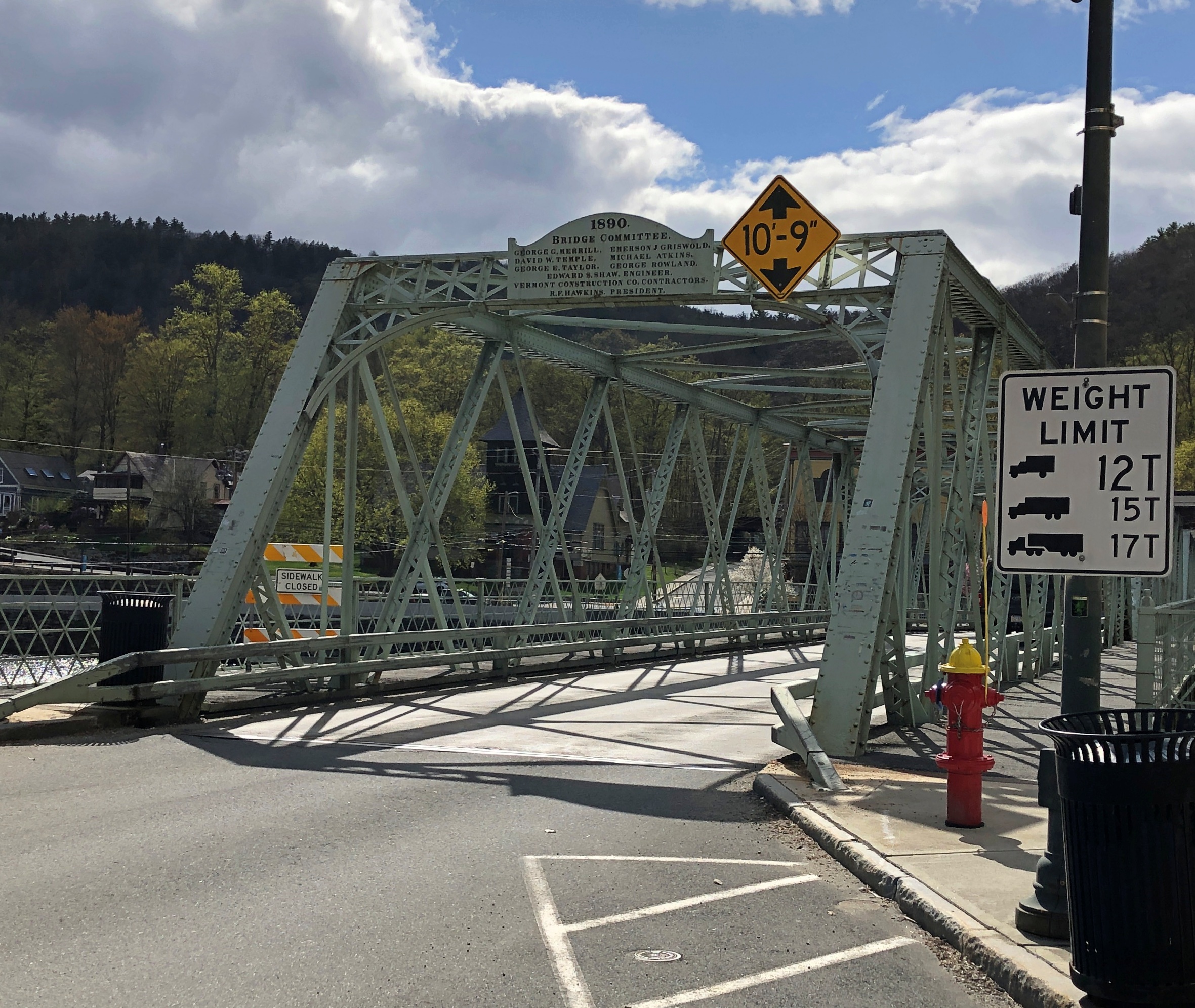
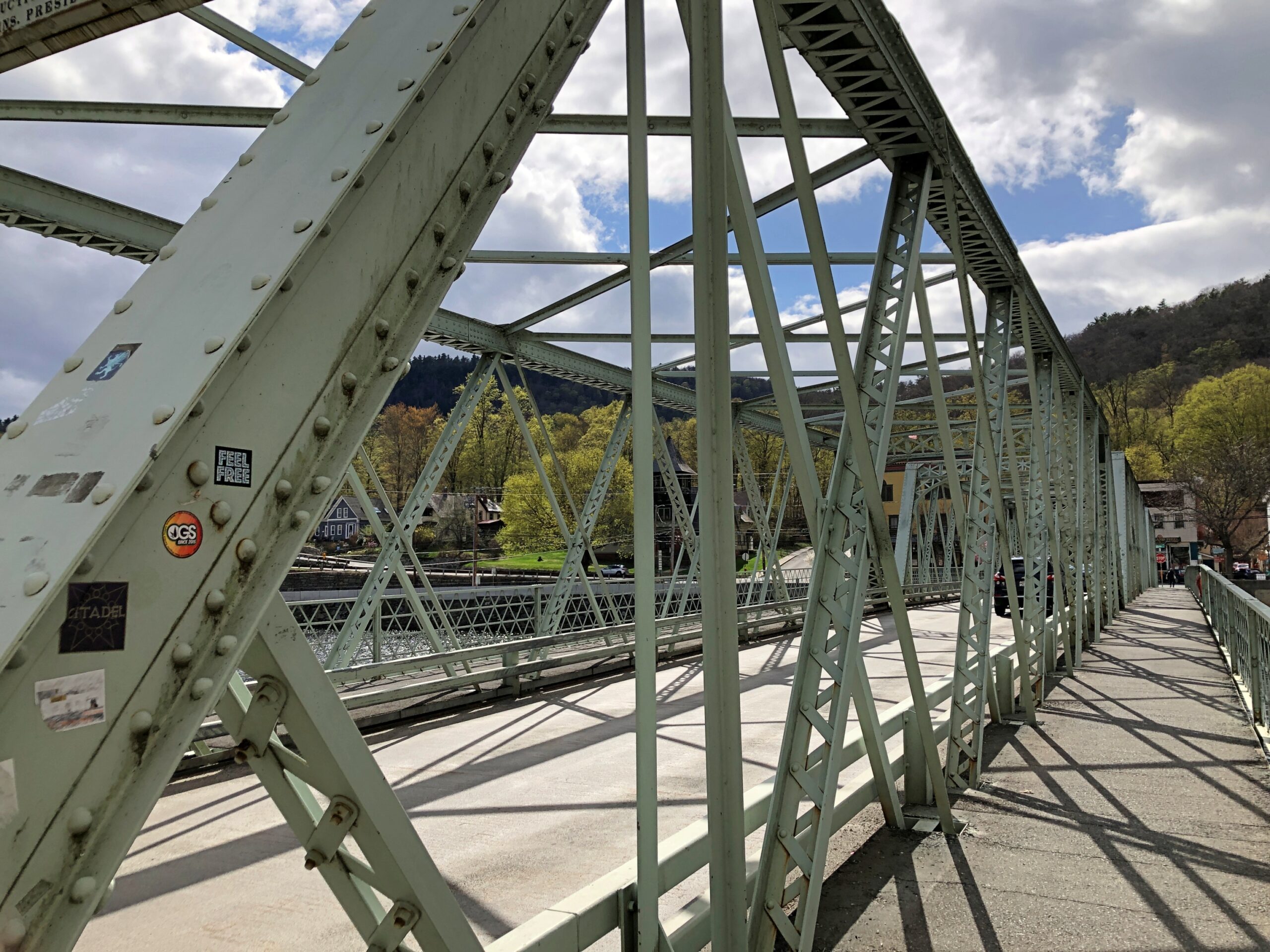
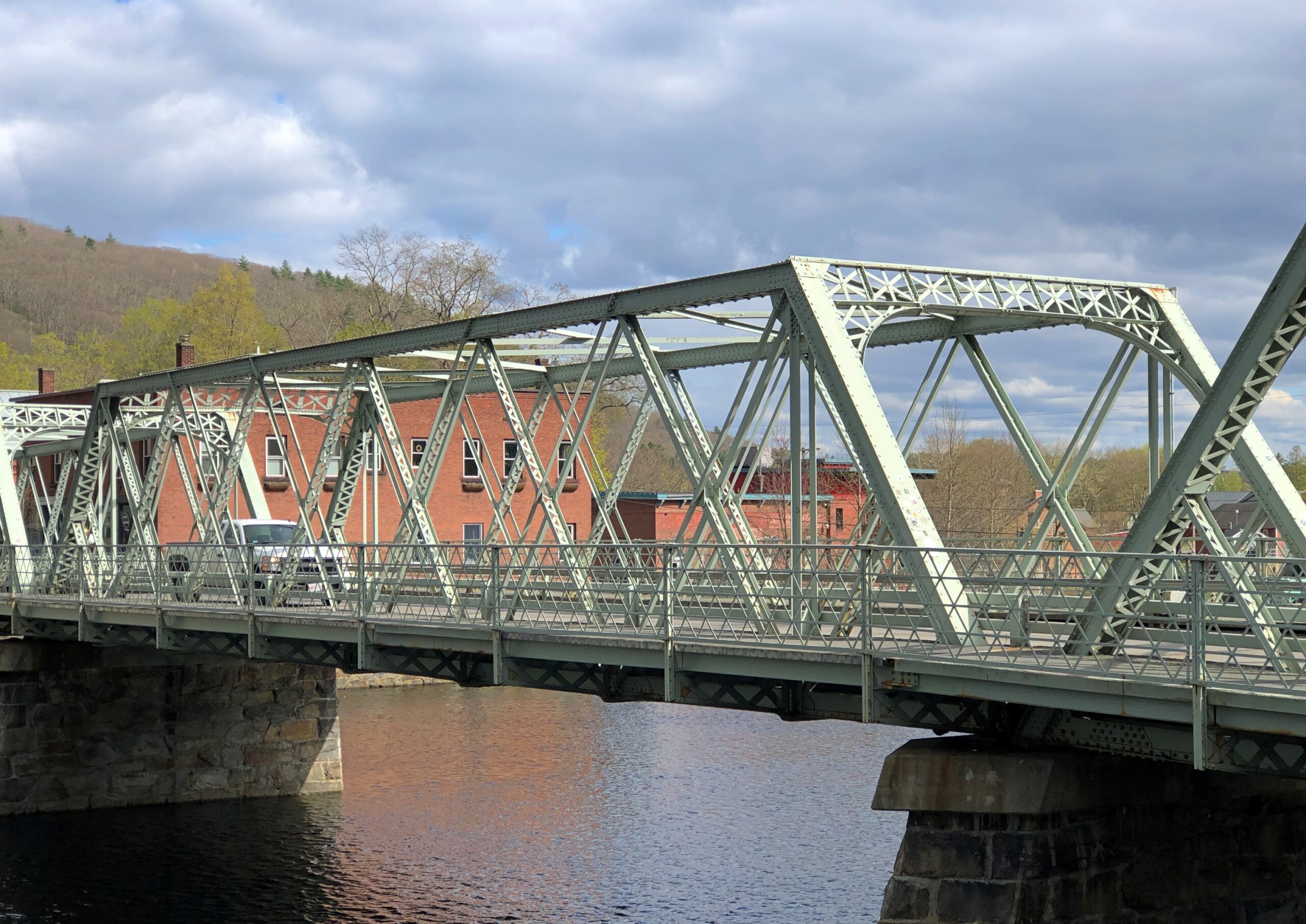
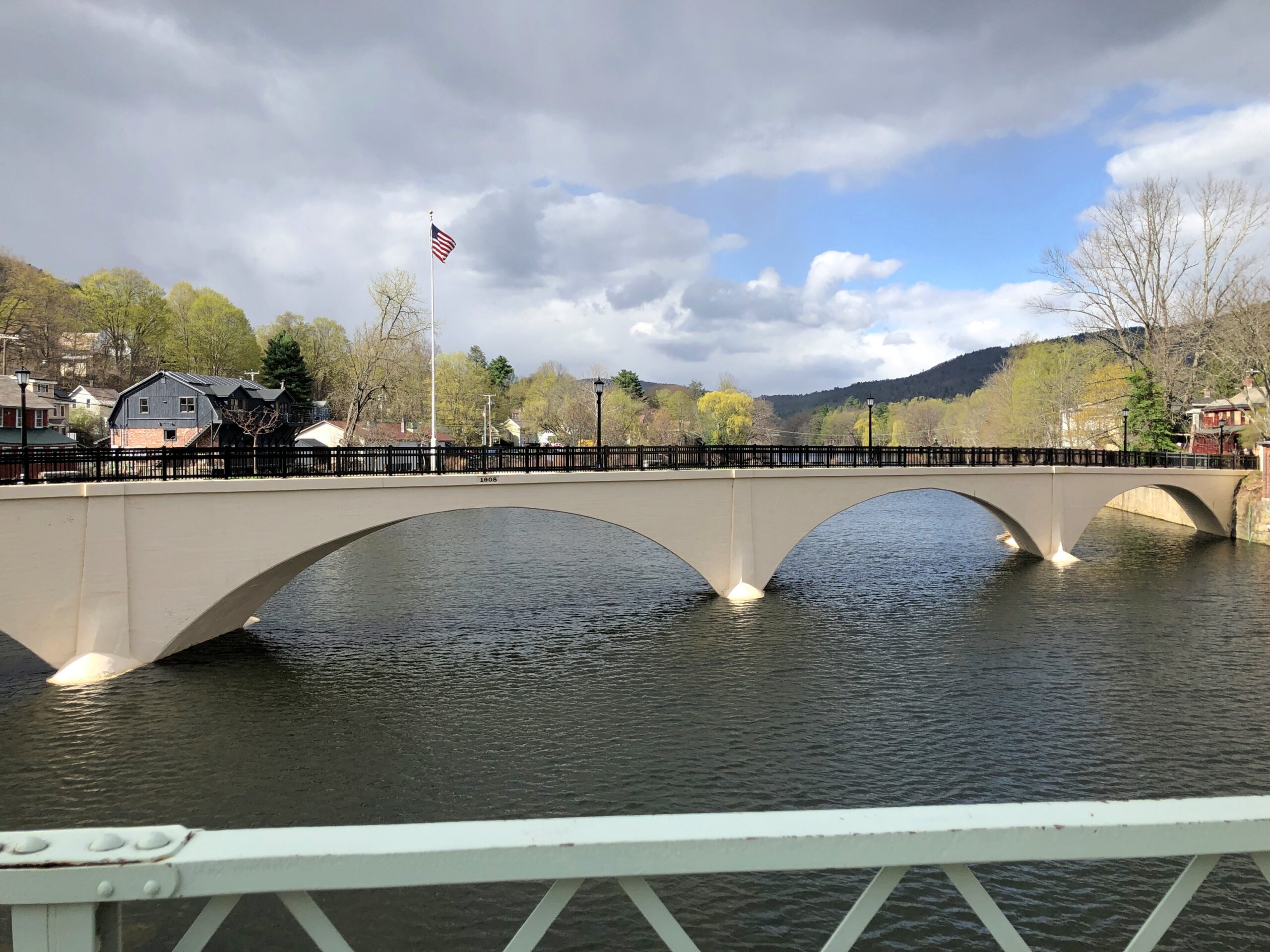
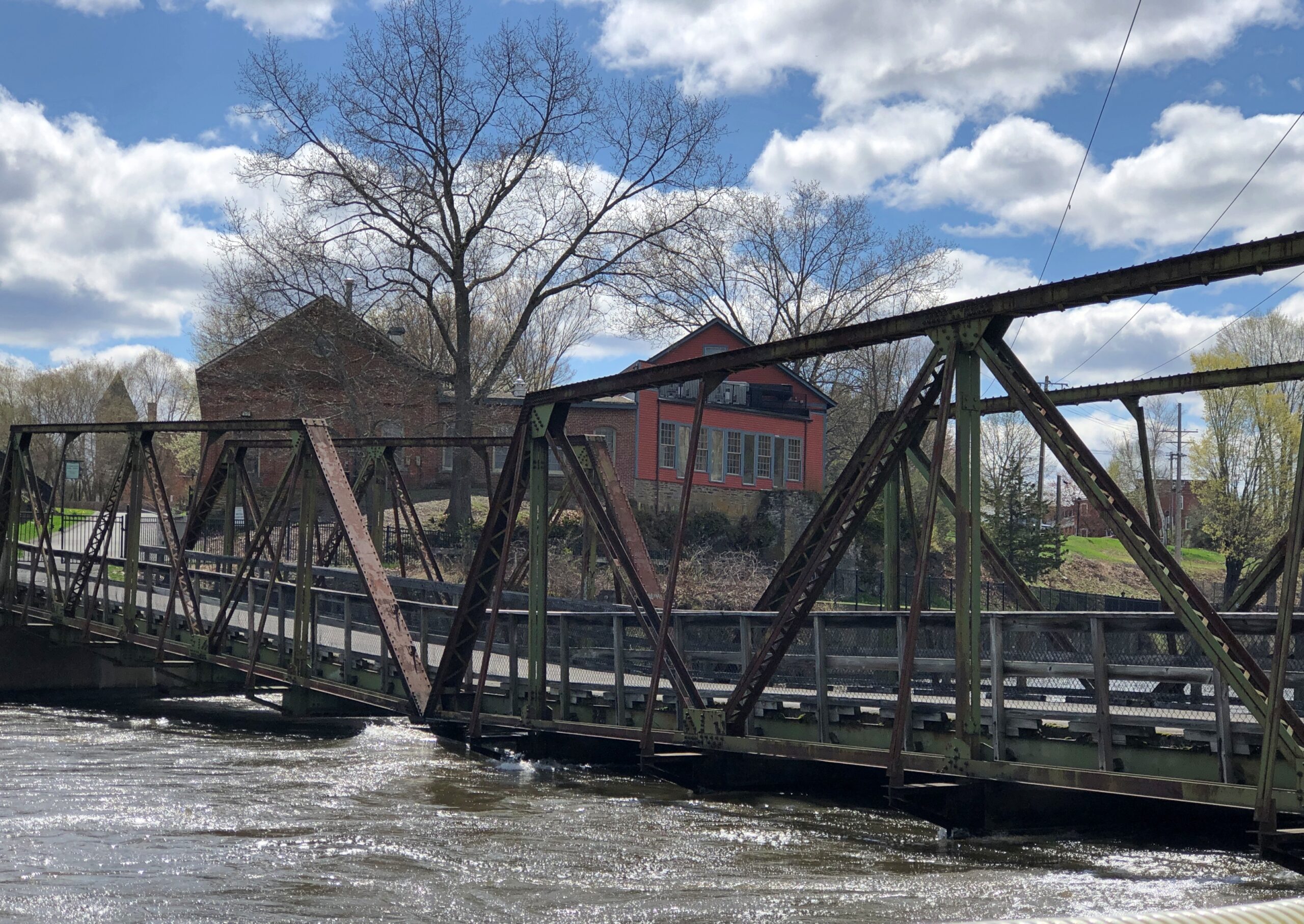
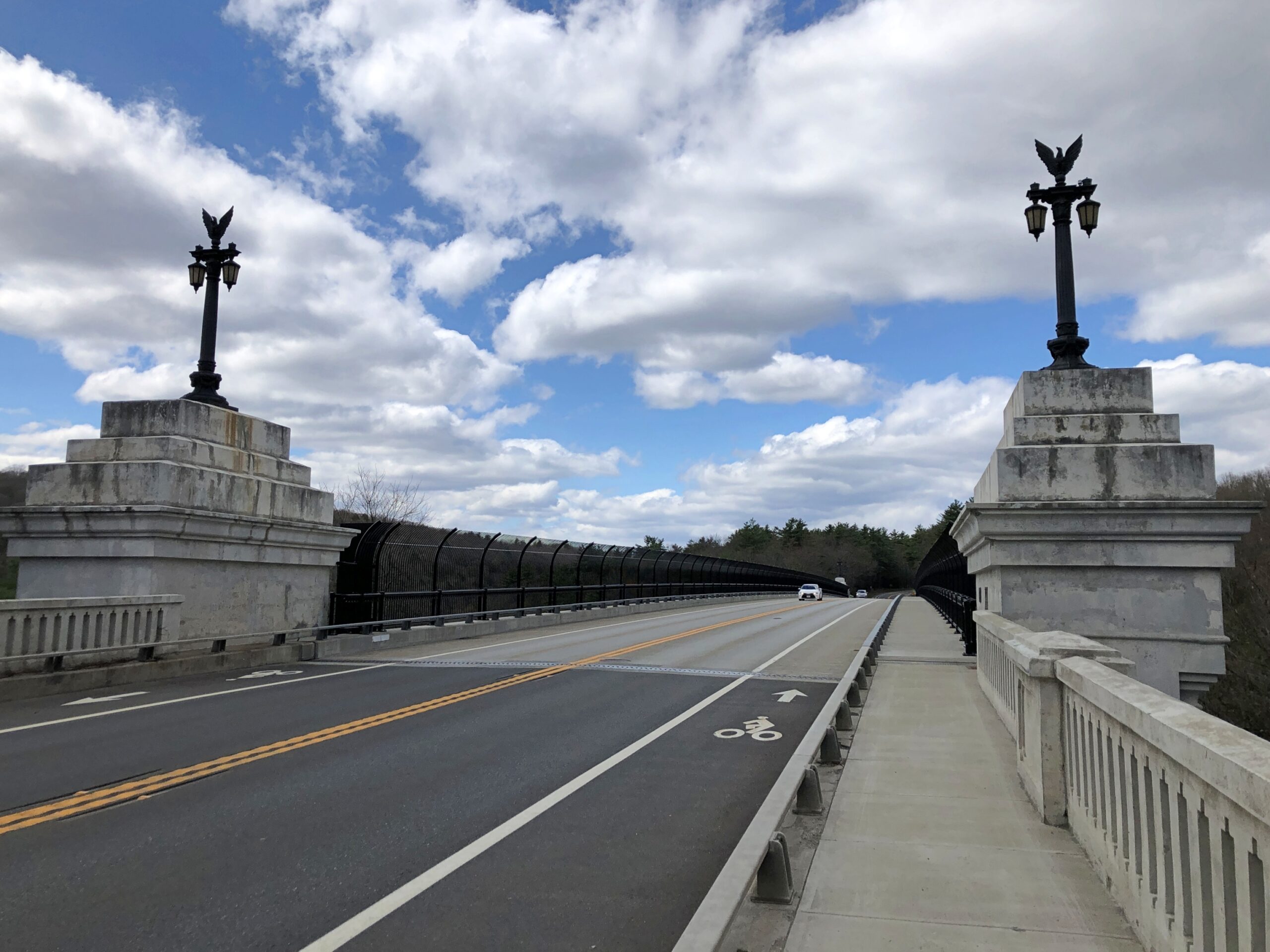
Shelbourne hugs the Deerfield River, so Shelbourne needs bridges. You can still drive across one erected in 1890, which the city fathers of the time signed like it was a work of art. As well they should have. Better, you can walk across the structure, which is known locally as the Iron Bridge. Bridge Street goes across it.

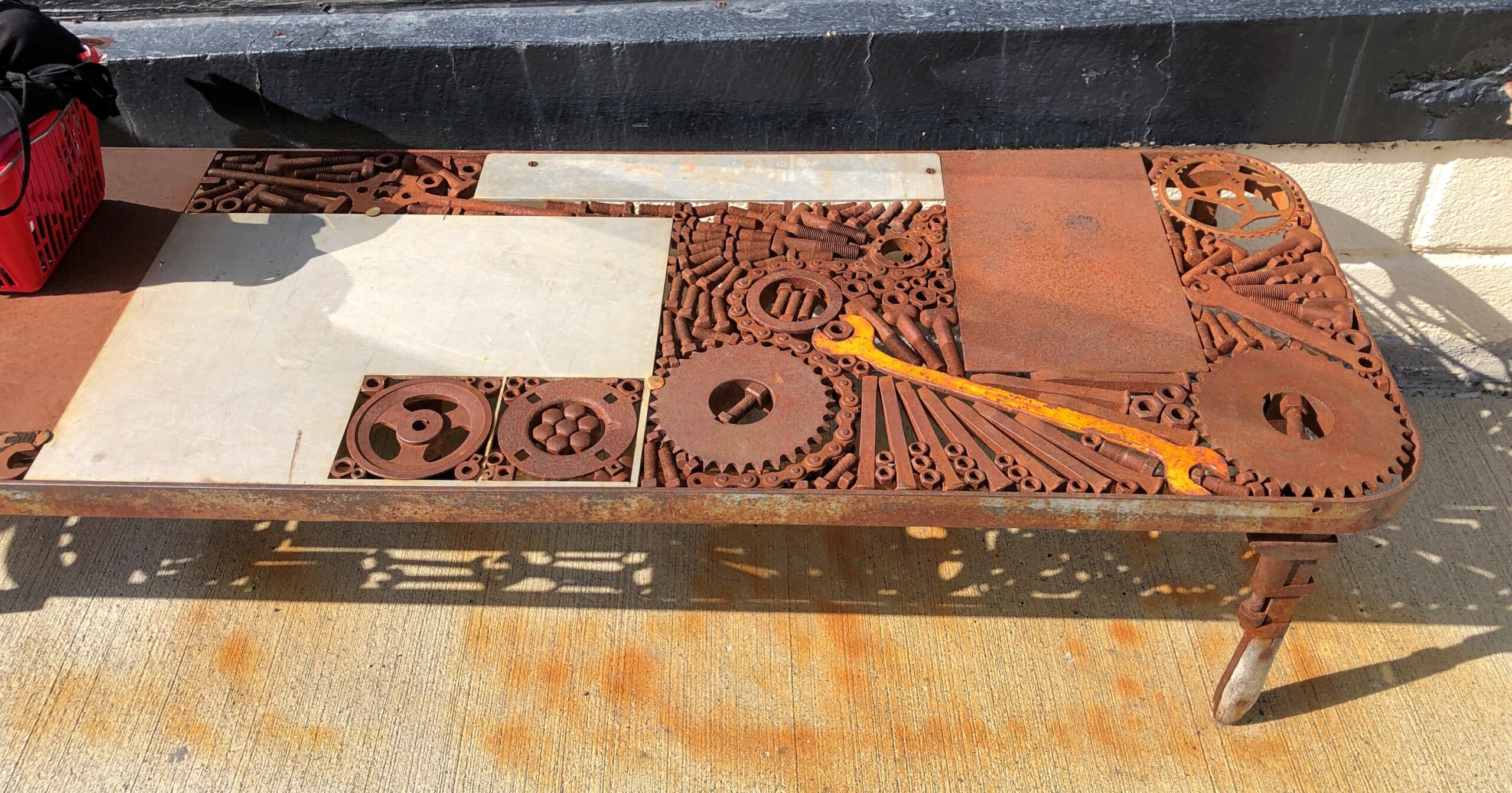
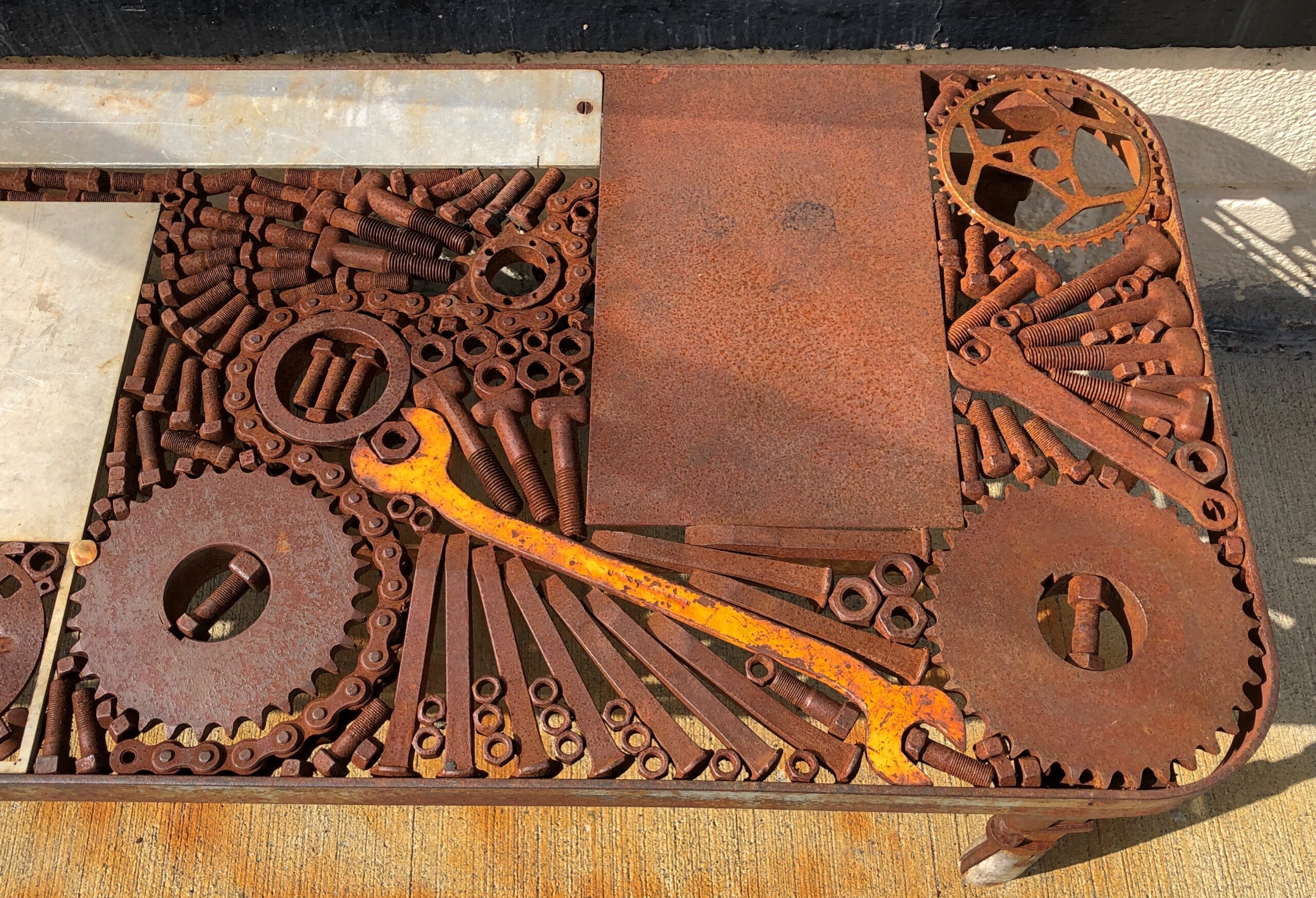
One of the more unusual metal benches I’ve encountered, just off the Shelburne entrance to the Iron Bridge. More iron. Yes, you can sit on it.

The Dearfield, major tributary of the Connecticut.

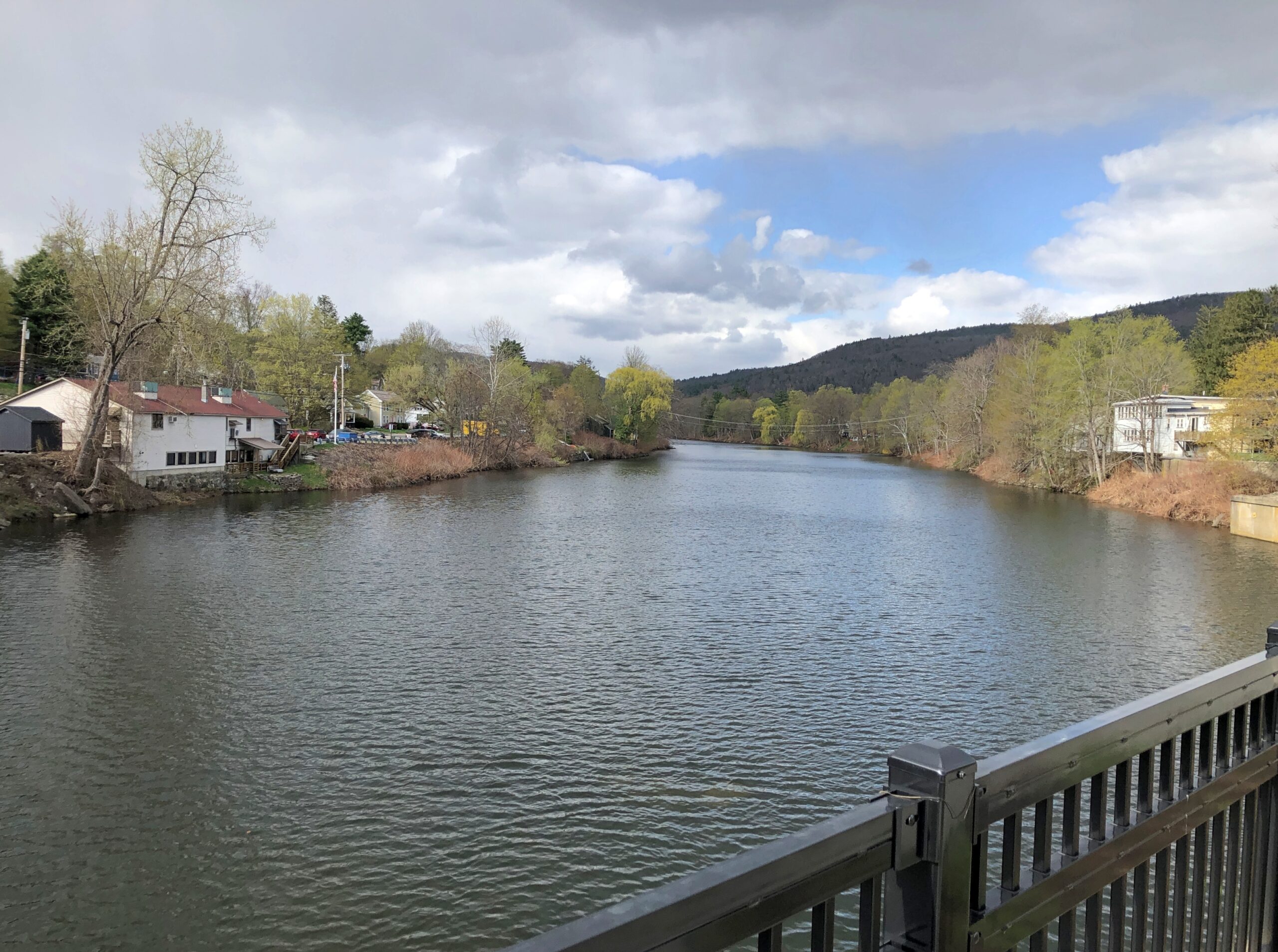
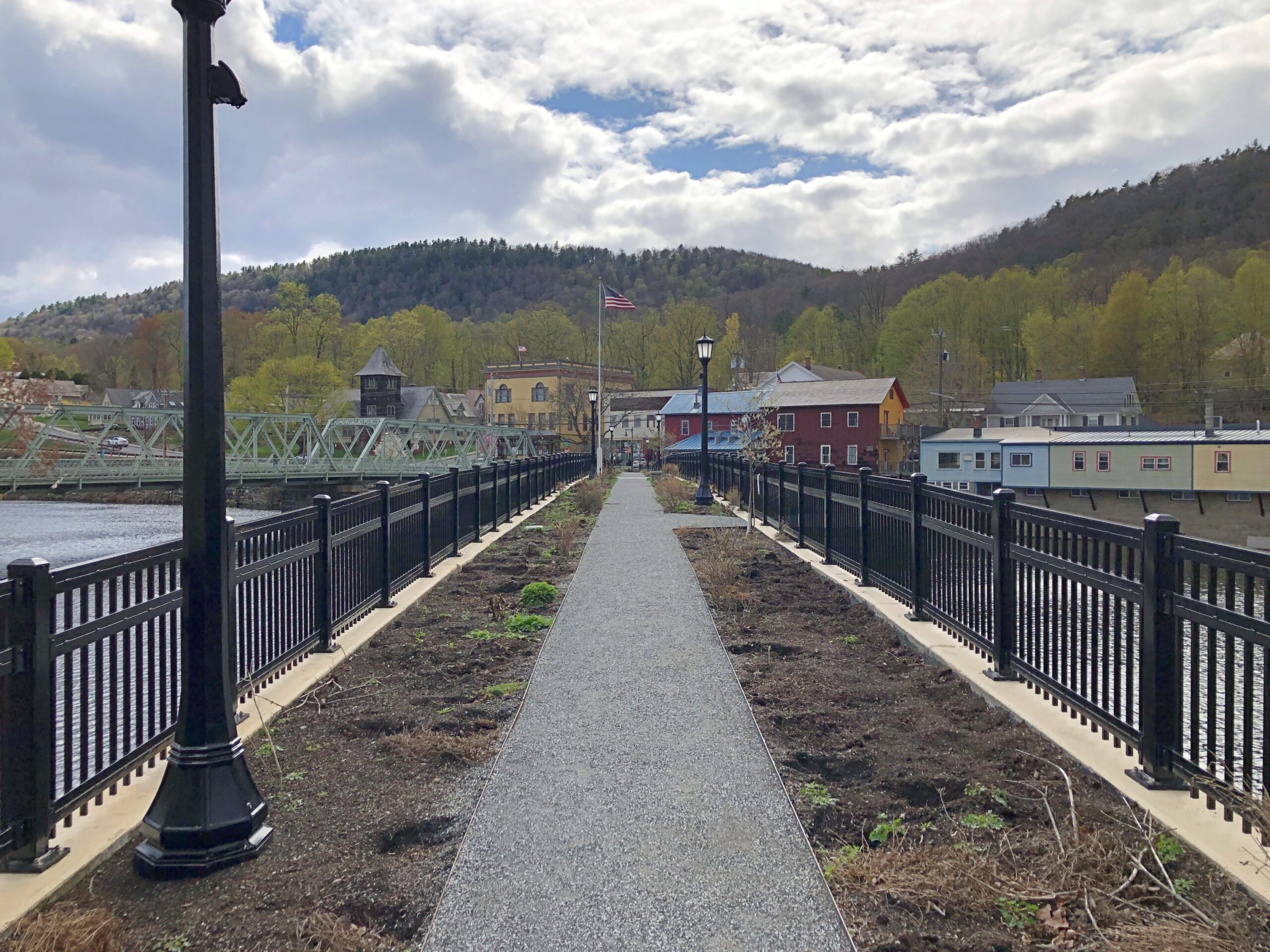
The Iron Bridge takes you to Buckland, though I guess you’d still be in Shelburne Falls, but anyway, a few steps along river – and I mean that literally, maybe 20 or 30 steps – is the Bridge of Flowers. The view looking back across at Shelburne.

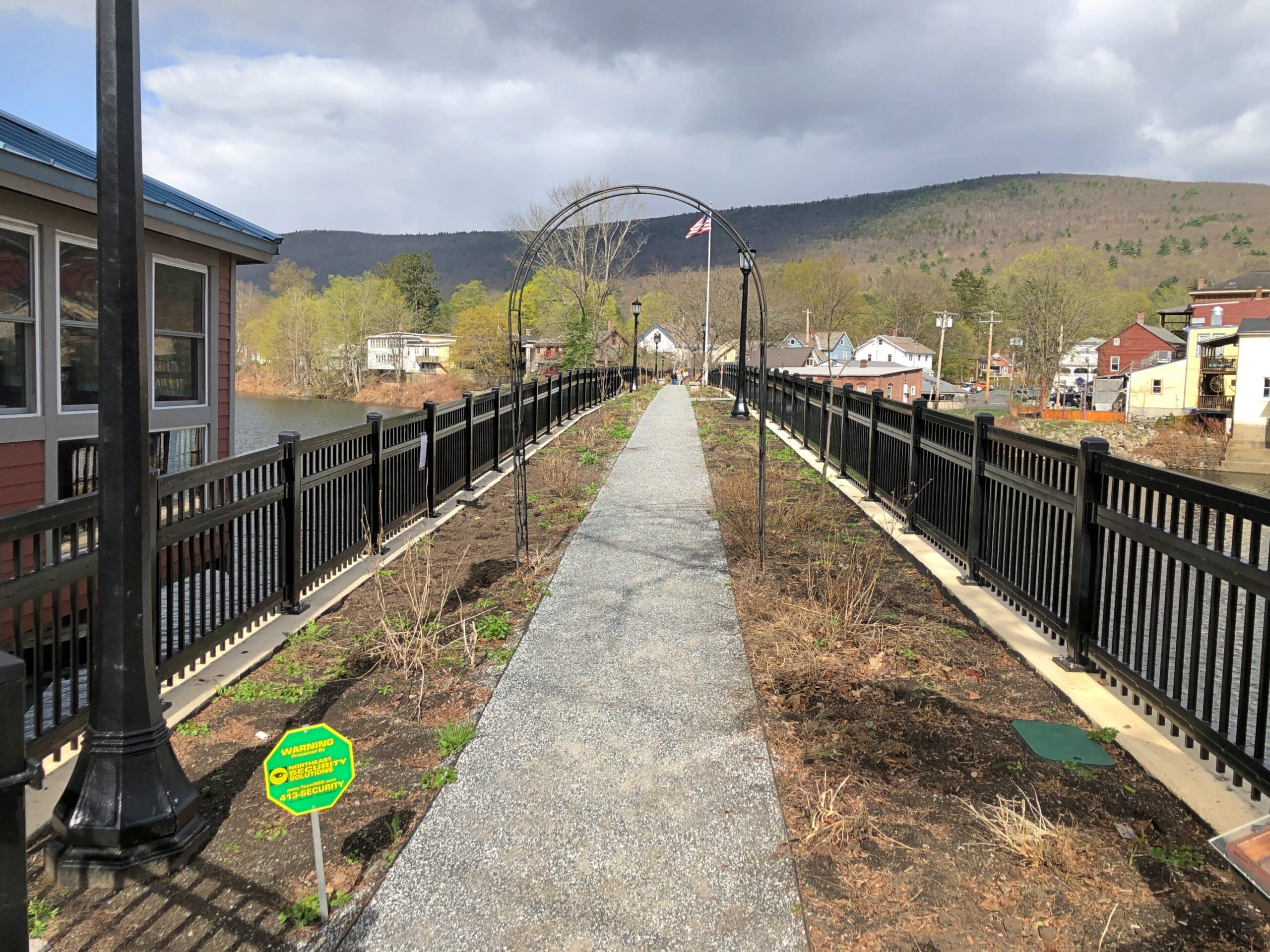
Not many flowers at that moment, but replanting was underway. Long ago the narrow bridge carried a trolley, but after that business went bust in the late 1920s, the Shelburne Woman’s Club facilitated its transformation into a linear garden.

Mid-way across the Bridge of Flowers. Even though not flowering (much), a bridge very much worth crossing.

The view looking back at Buckland.

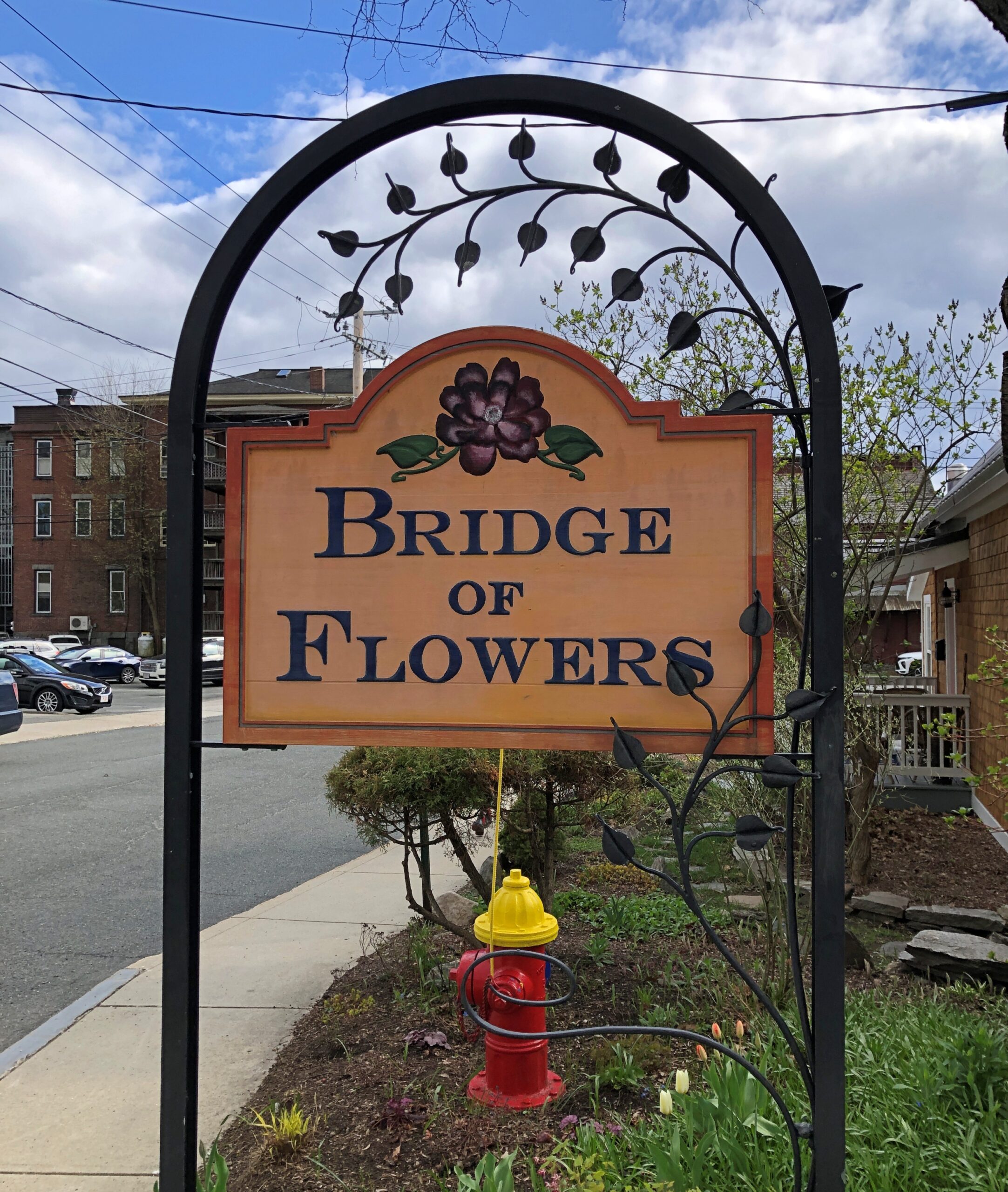
The sign on the Shelburne side.

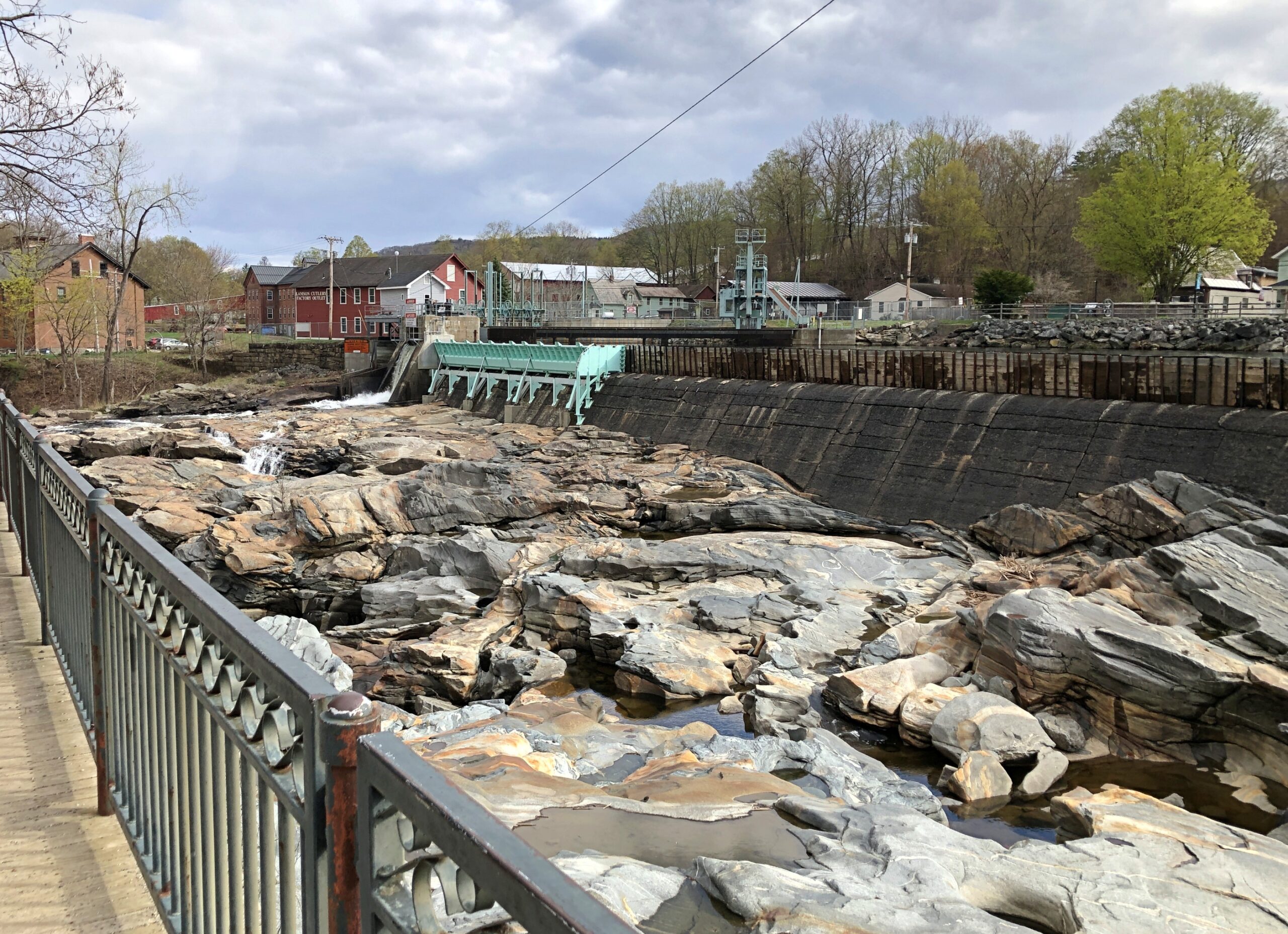
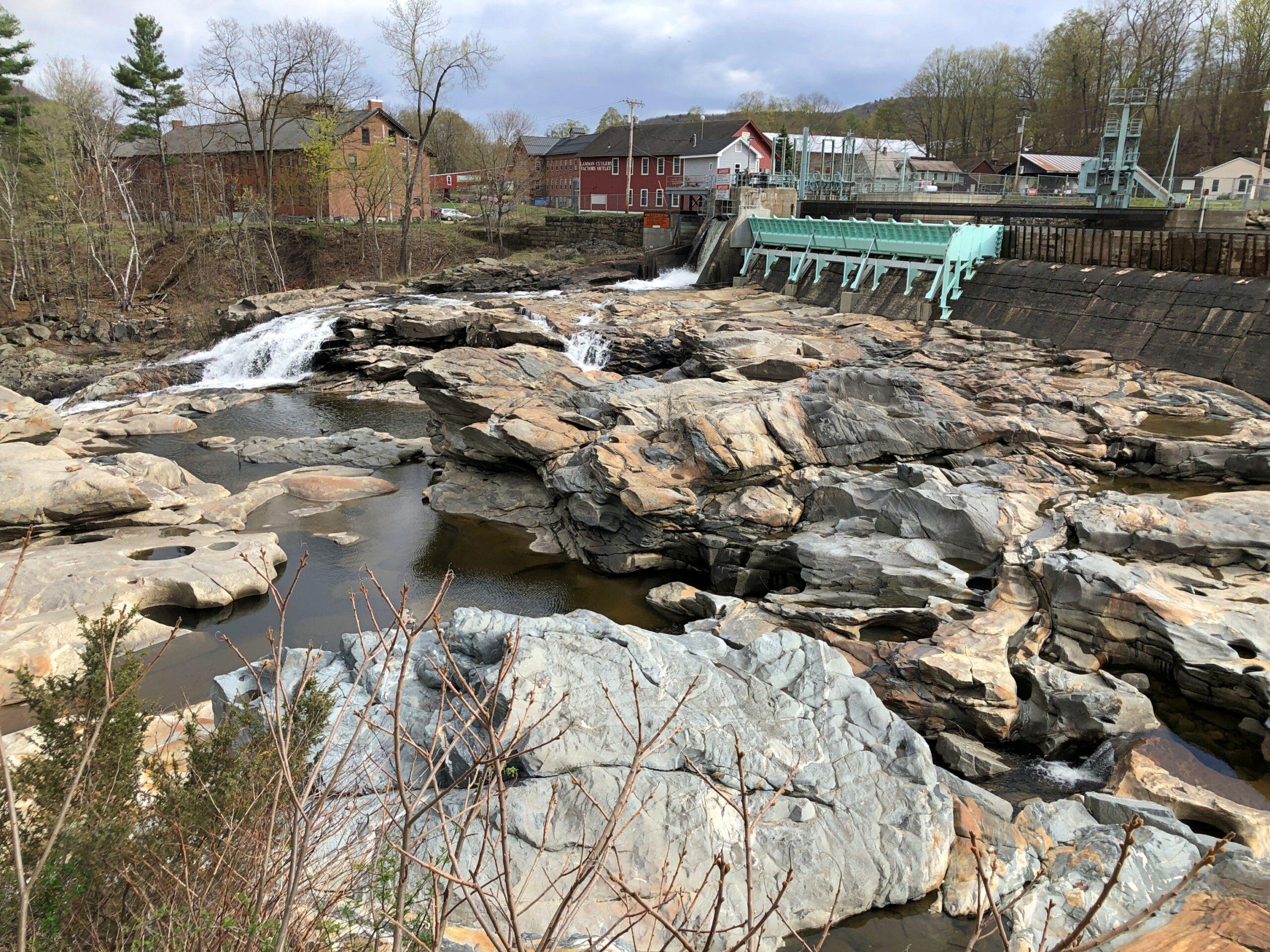
Nothing is far apart in Shelburne, so a short walk takes you to a geological oddity.

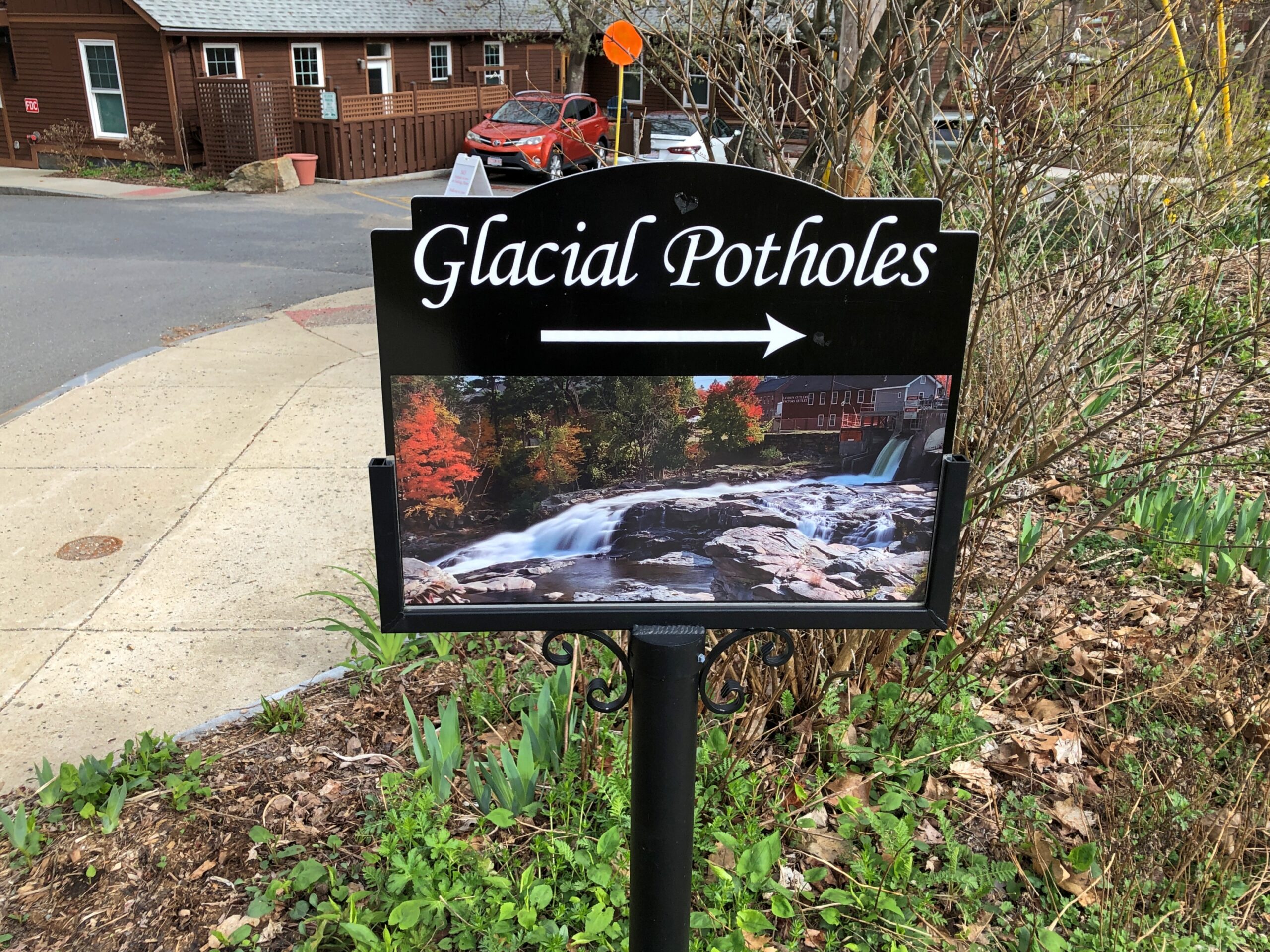
Glacial Potholes

Another sign.

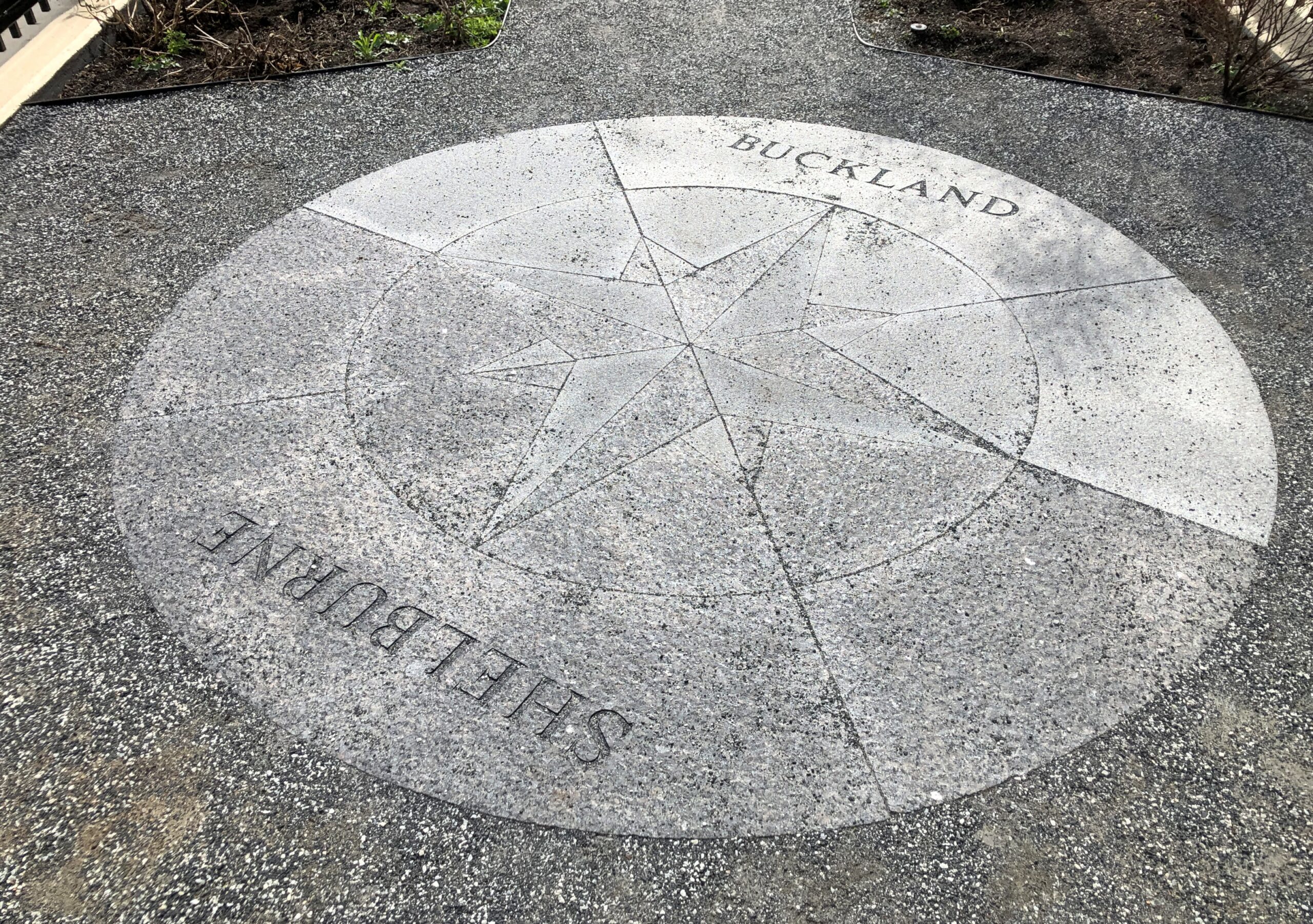
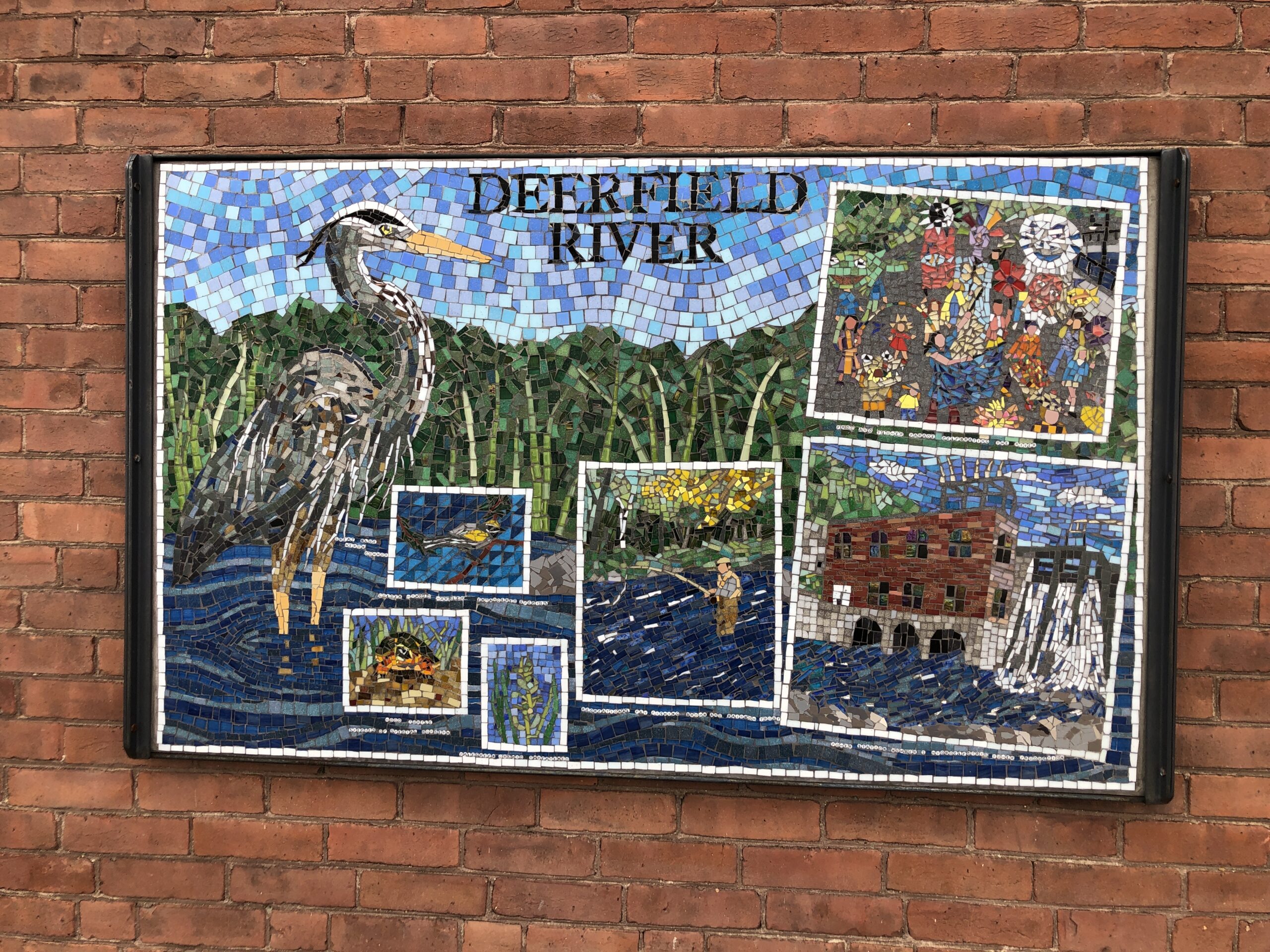
Follow the arrow and you pass a mosaic celebrating the locale. A high-quality image of this would make a good postcard.

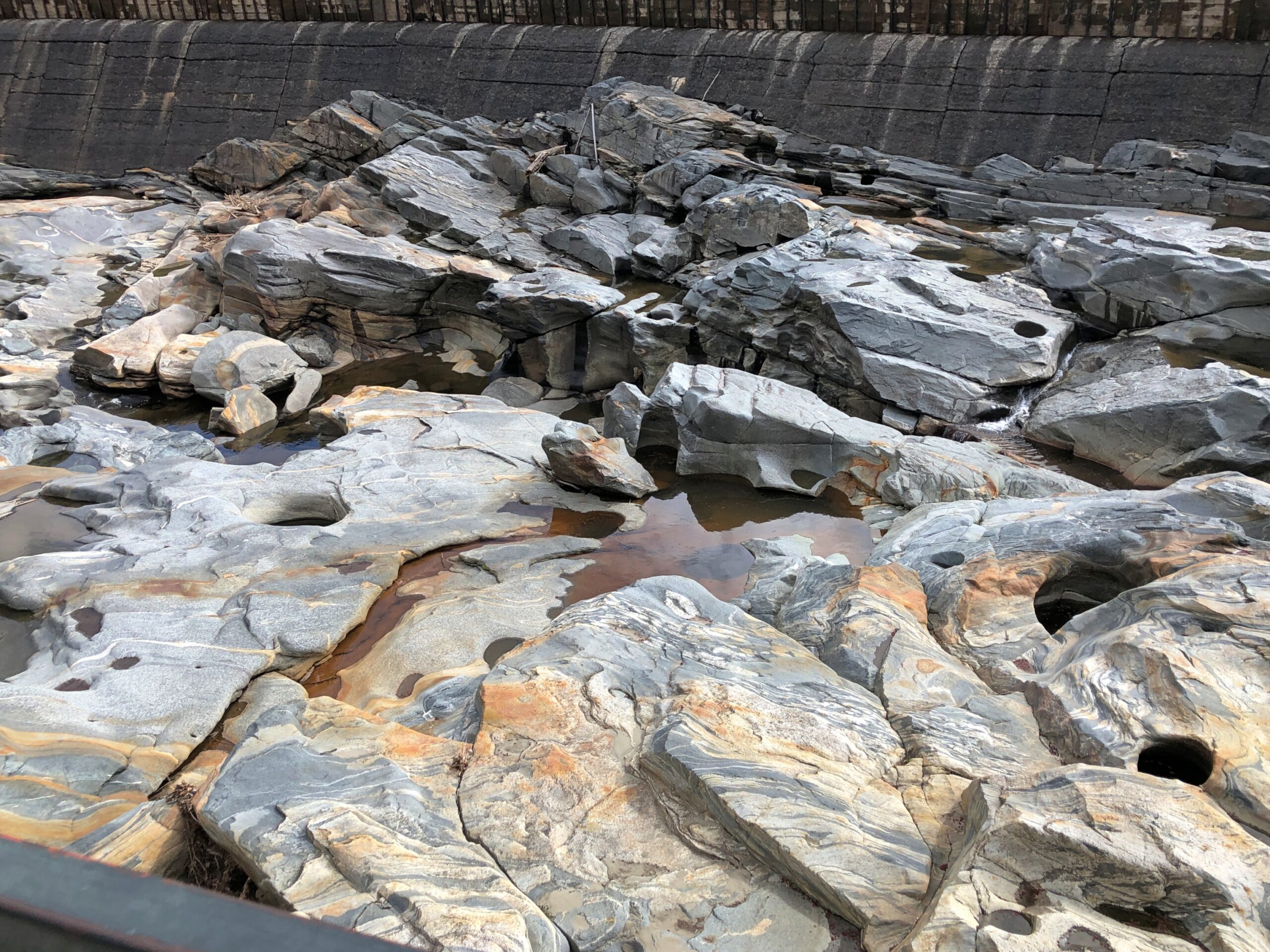
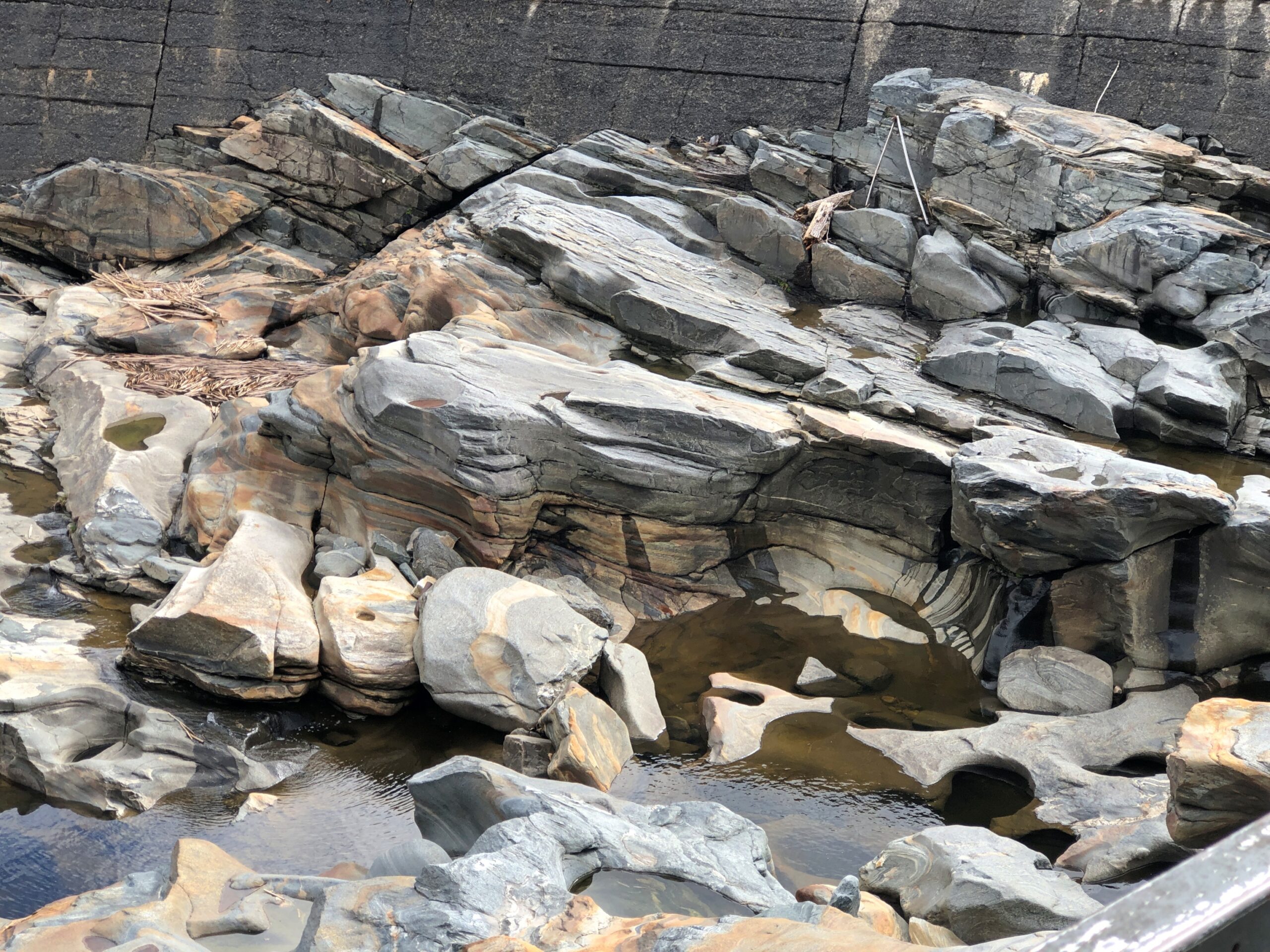
Then come the potholes.

I didn’t know glaciers could create potholes, but it seems that they can and have. Also known as giant’s kettles.

Different in details — stone and coloration and process — but erosion as much as Sioux Falls in Sioux Falls. Or on the Bruce Peninsula. Or the coast of Maine, for that matter. Water doing its grind beyond the timescales of humanity.

The spillway was busy. It had been a rainy day before.

Artful rocks, with no artist except erosion.

Avenue A, Turners Falls, Massachusetts

What’s this?

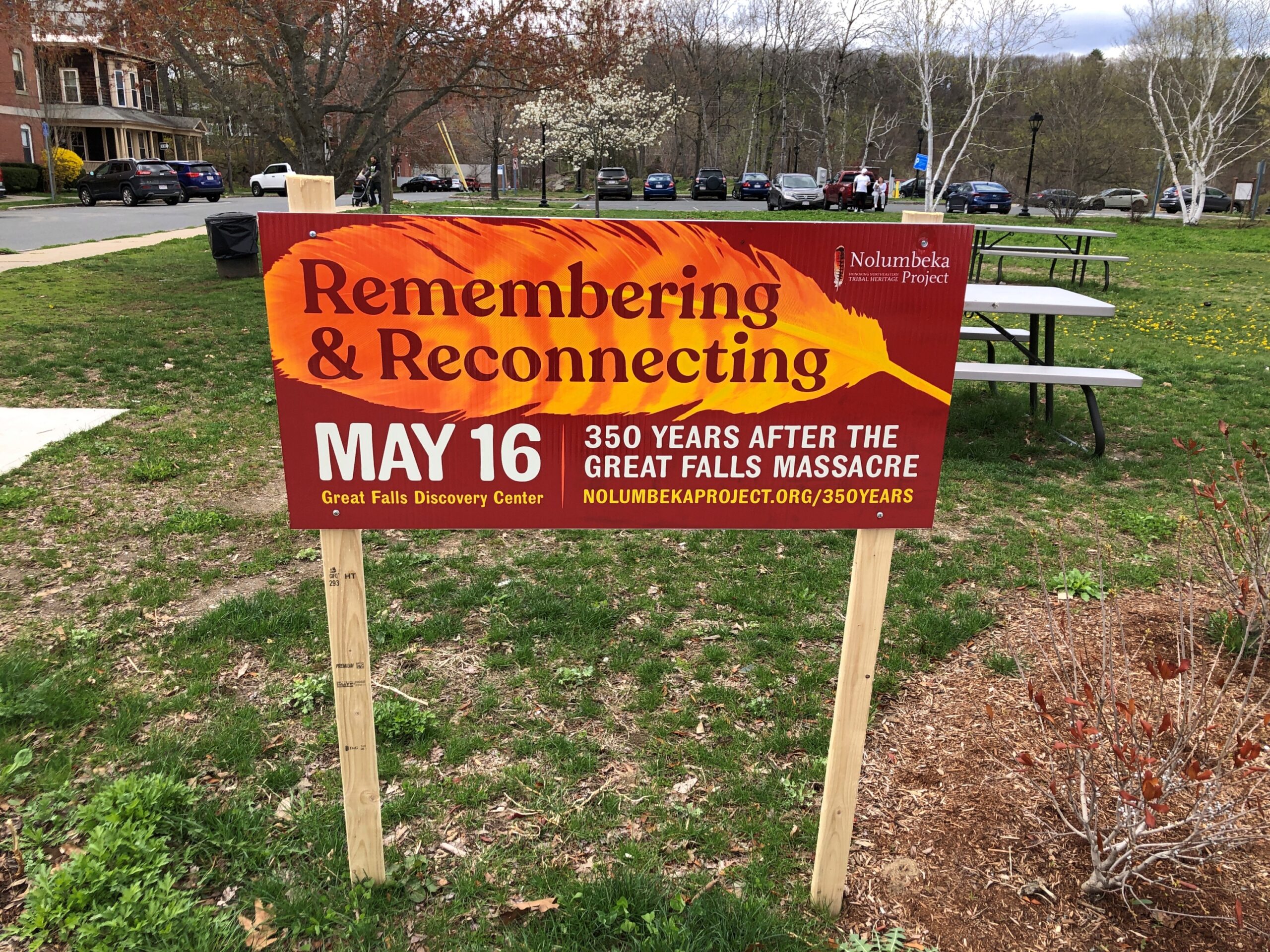
The first thing I saw on Avenue A in Turners Falls, Massachusetts, in mid-April was this sign. A small reminder of a bloody incident in a bloody war, all but forgotten – and I mean the incident and the war – outside of regional historians and eccentrics like me and, unsurprisingly, the descendants of the Algonquian tribes who were on the receiving end of a surprise attack by men under the command of Capt. William Turner in 1676 during King Philip’s War. Most of the Indians slain, mainly Nipmuc, were non-combatants, as neither side tended to make that distinction in that vicious war. Turner’s attack did not, however, go unanswered in real time: as he and his men were pulling back, they were beset by counterattacking warriors, who managed to turn the retreat into a rout, killing Turner, among many others.

All that I looked up later. In the moment I took a stroll on down the avenue, which is the main street of Turners Falls, an unincorporated village in the town of Montague. So it’s actually a neighborhood? Peculiar nomenclature, these New Englanders have, since I think of a village as a village and a town as a town, and one doesn’t get to be in the other.

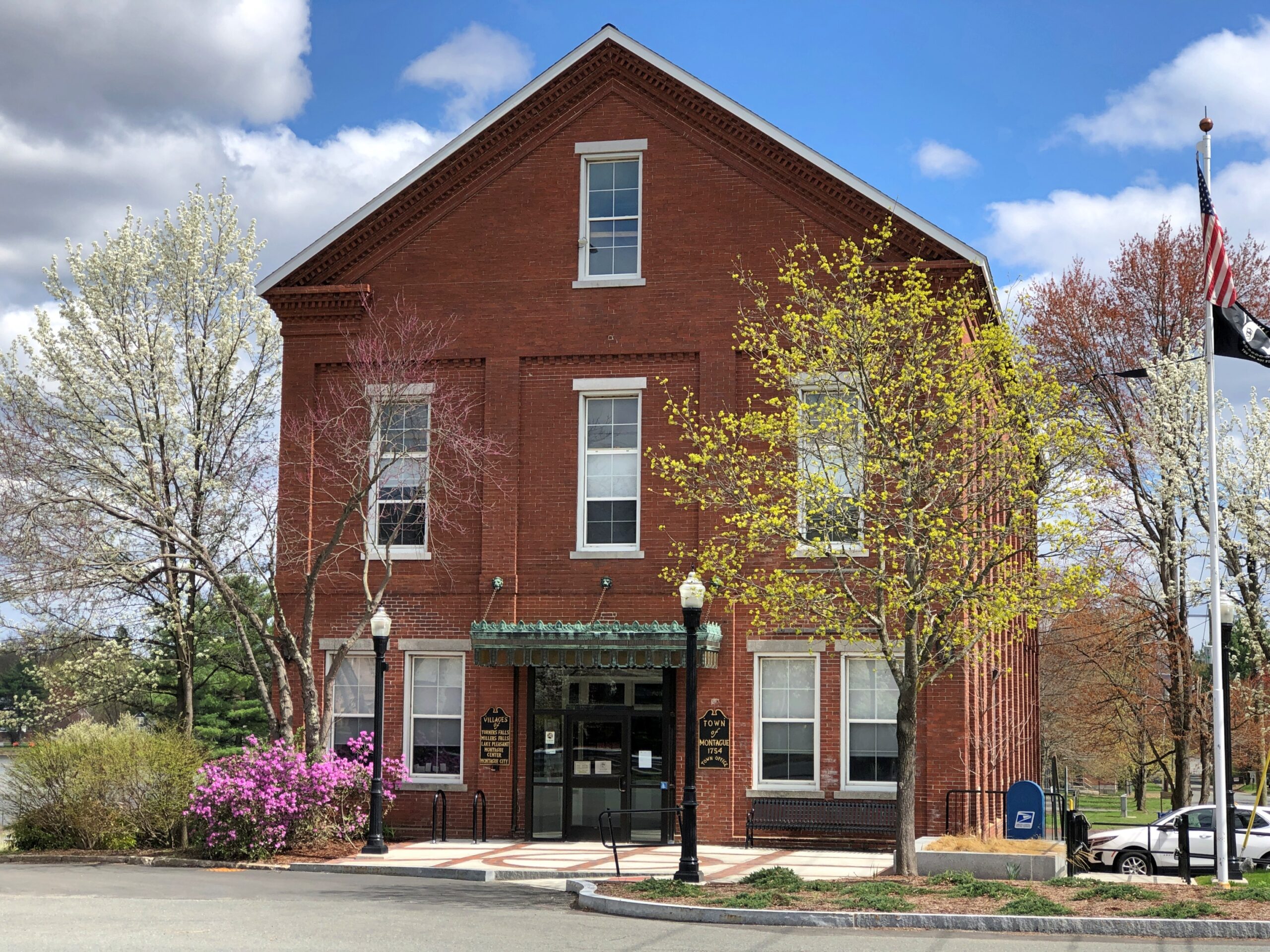
According to the sign on the town office (above), the other villages in Montague are Millers Falls, Lake Pleasant, Montague Center and Montague City. So – Montague City is within the town of Montague? Massachusetts is just a little strange with its names, but never mind.

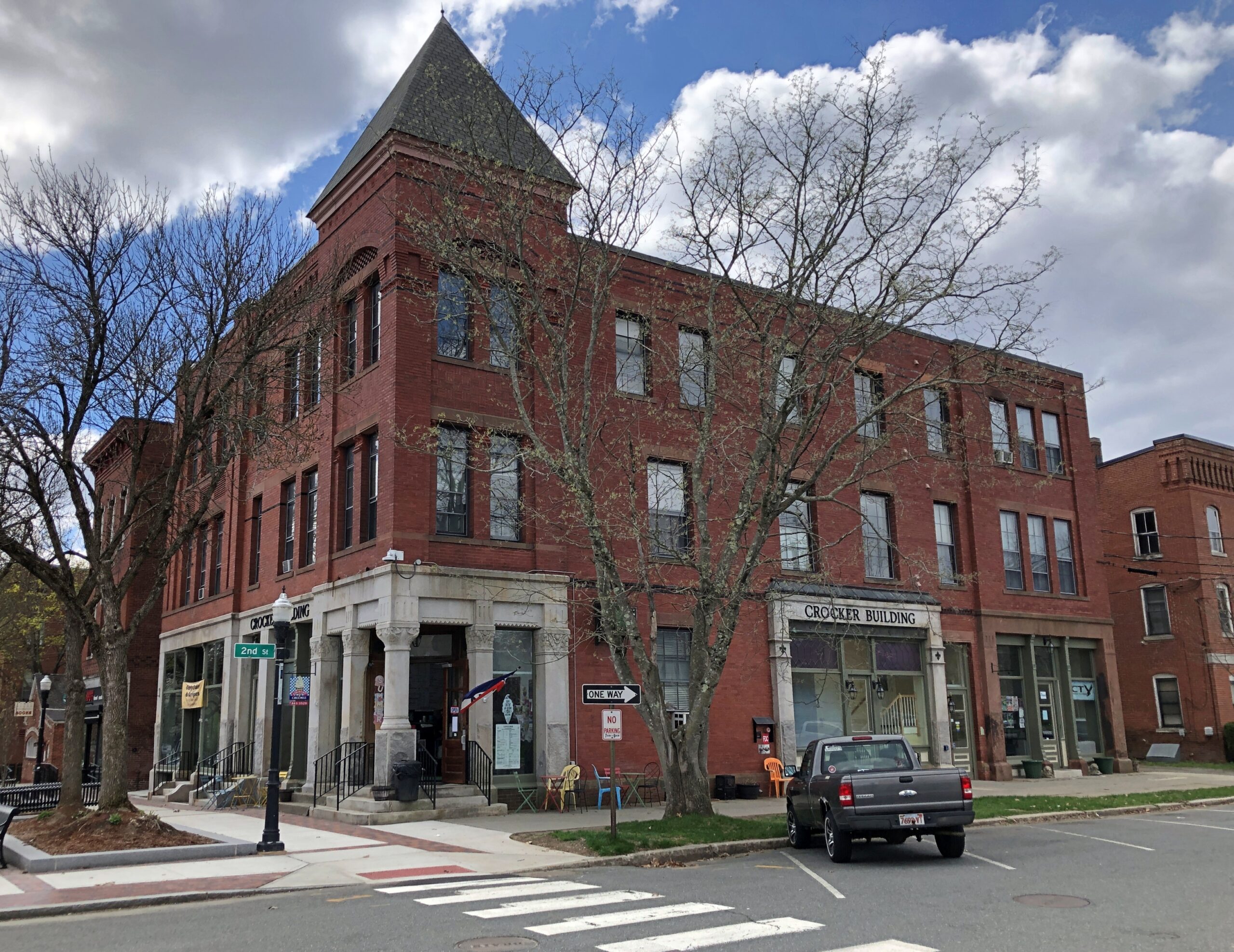
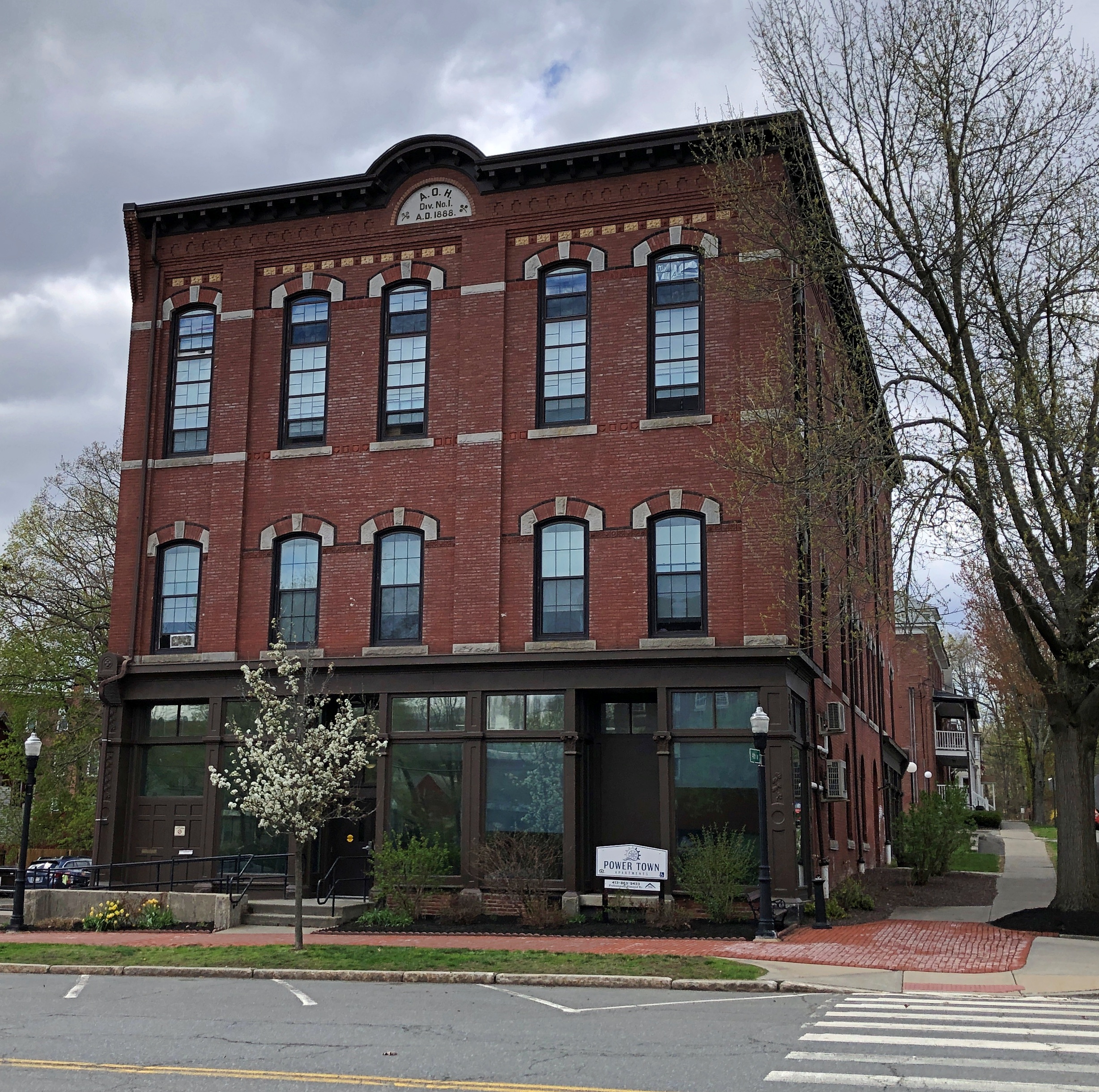
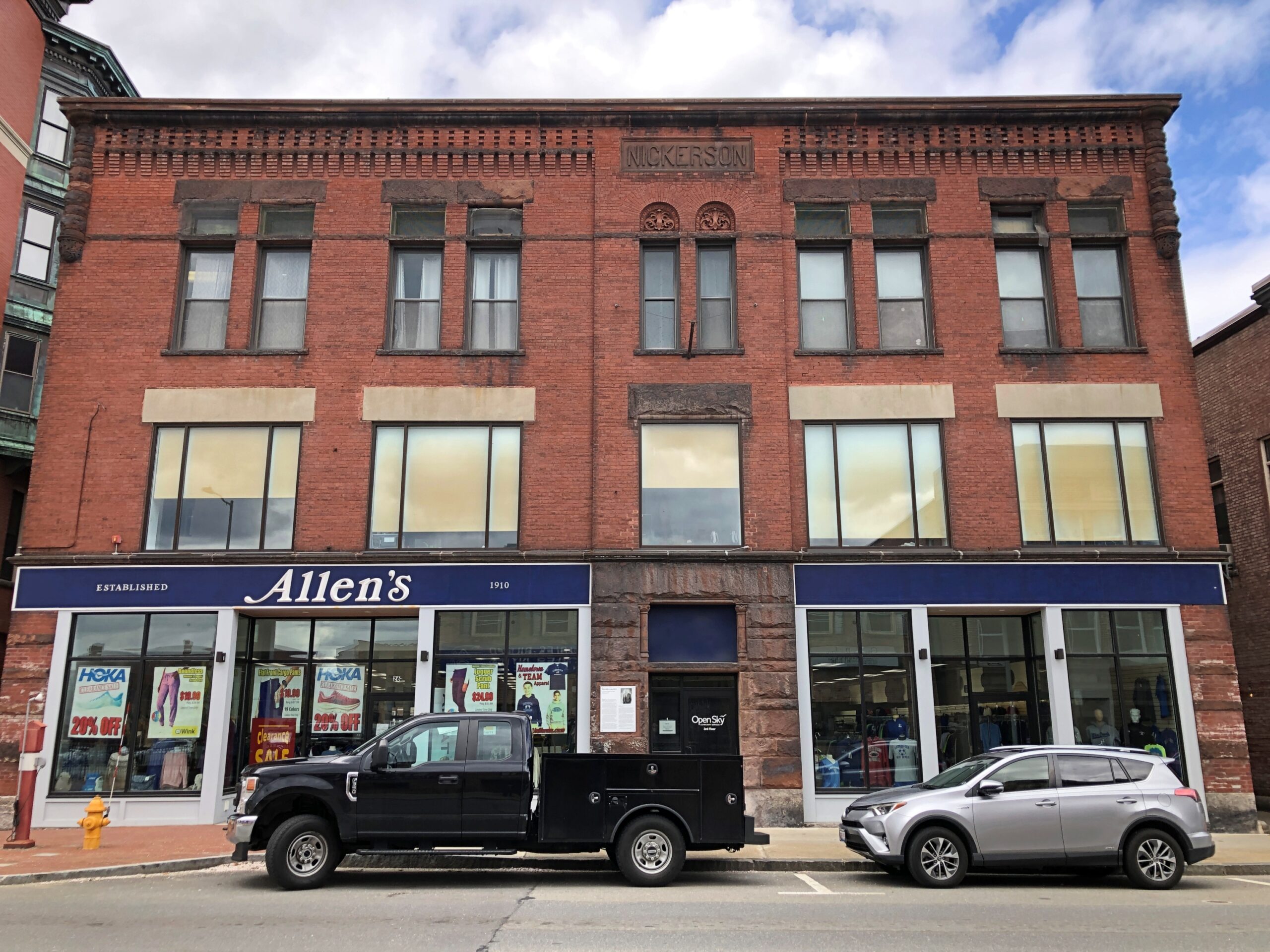
As a main street, Avenue A is lined with some handsome older buildings.

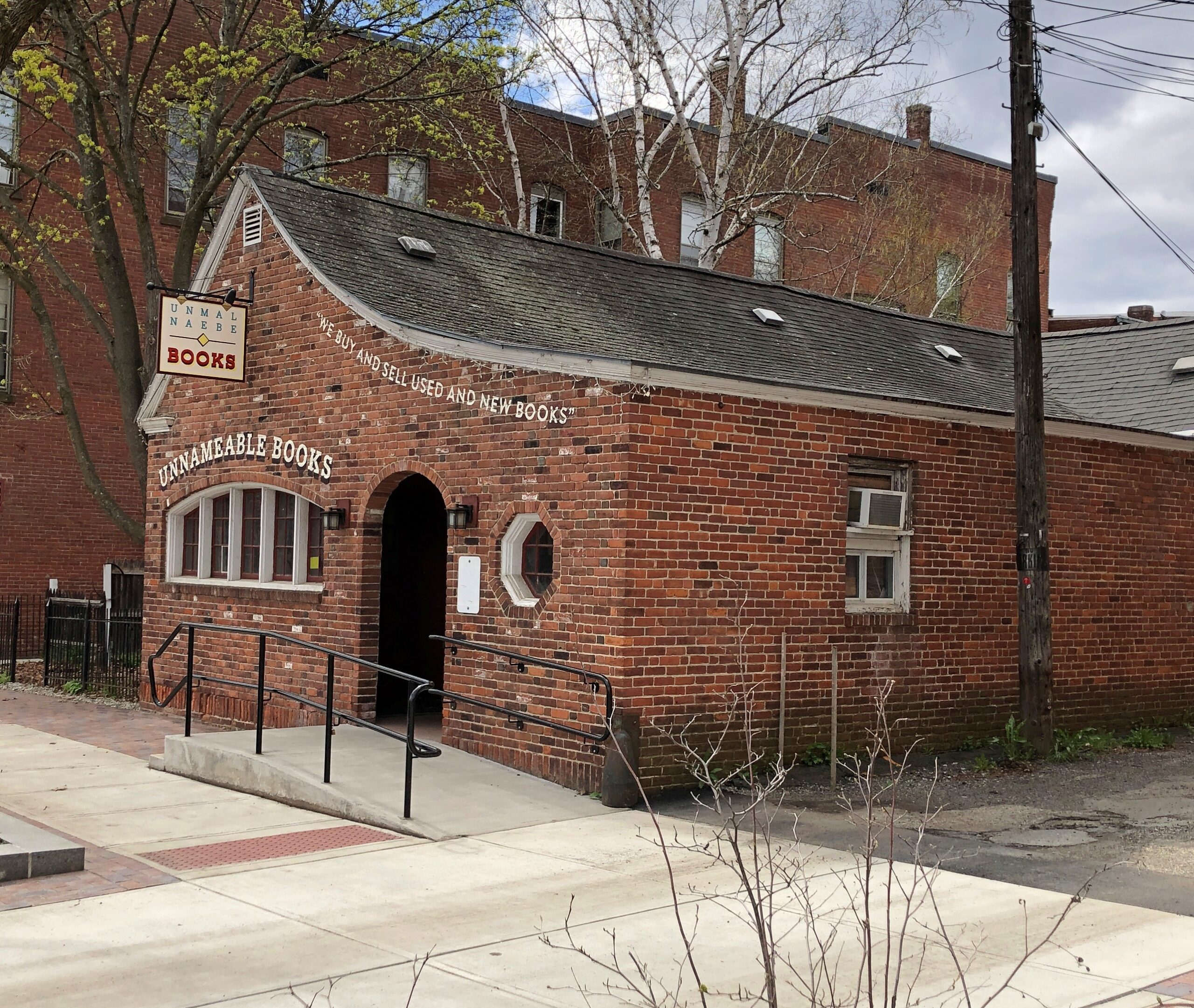
Good to see a small bookshop.

Other nearby retail includes Ed’s Barber Shop, the Country Creemee (ice cream), Ce Ce’s Chinese Restaurant, Kharma Salon, Booska’s Flooring, Waterway Arts, Mystic Pinball and the Upper Bend Cafe. Not exactly a day-trip retail selection, but elements of it are there.

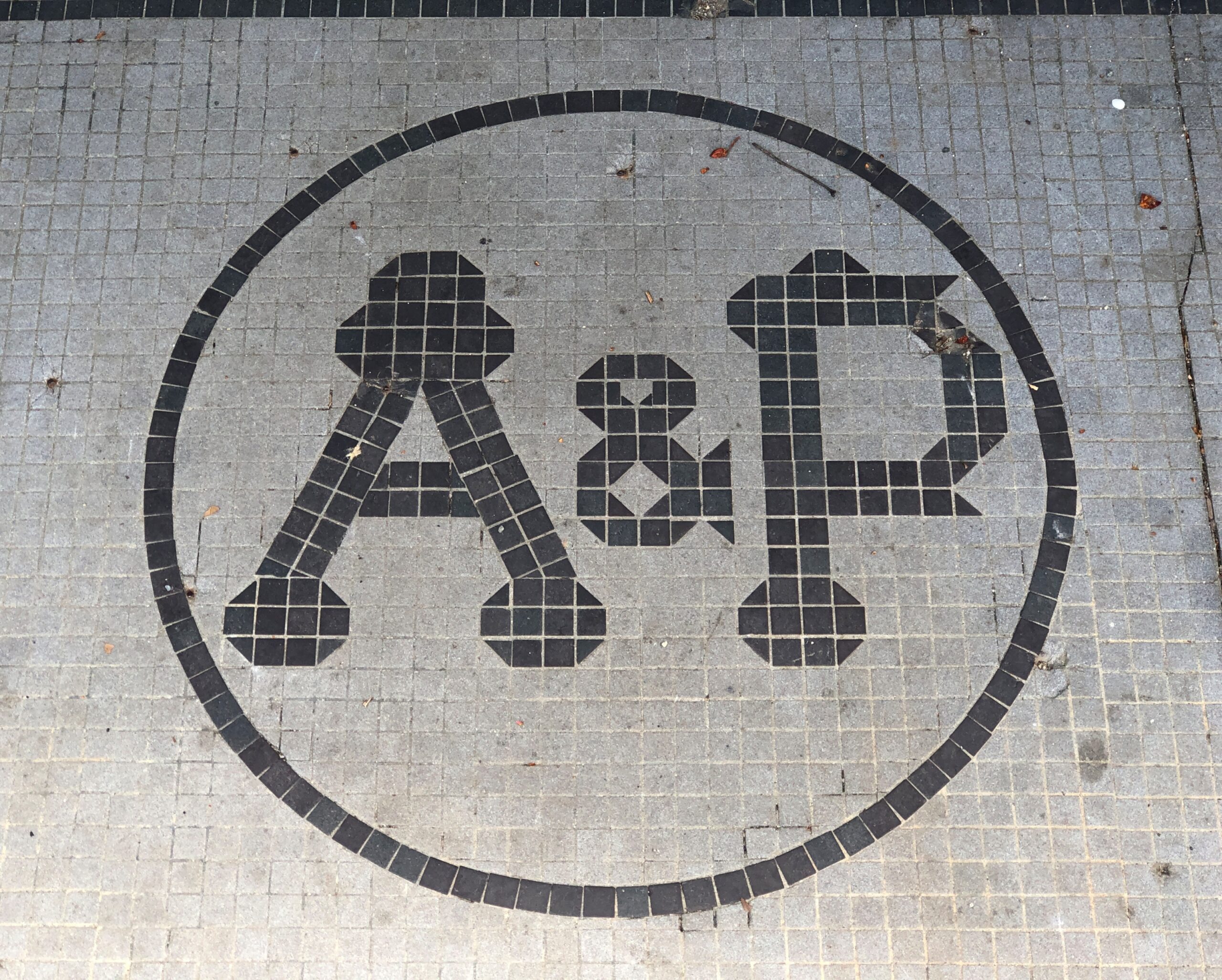
Commercial artwork.

A relic of a commercial establishment long gone. About 100 years ago, A&P operated about 15,000 locations, including presumably one in Turners Falls.

Which only goes to show that retail empires rise and fall as surely as political empires, and are as little remembered as most of them. Keep that in mind next time you’re in a Walmart.

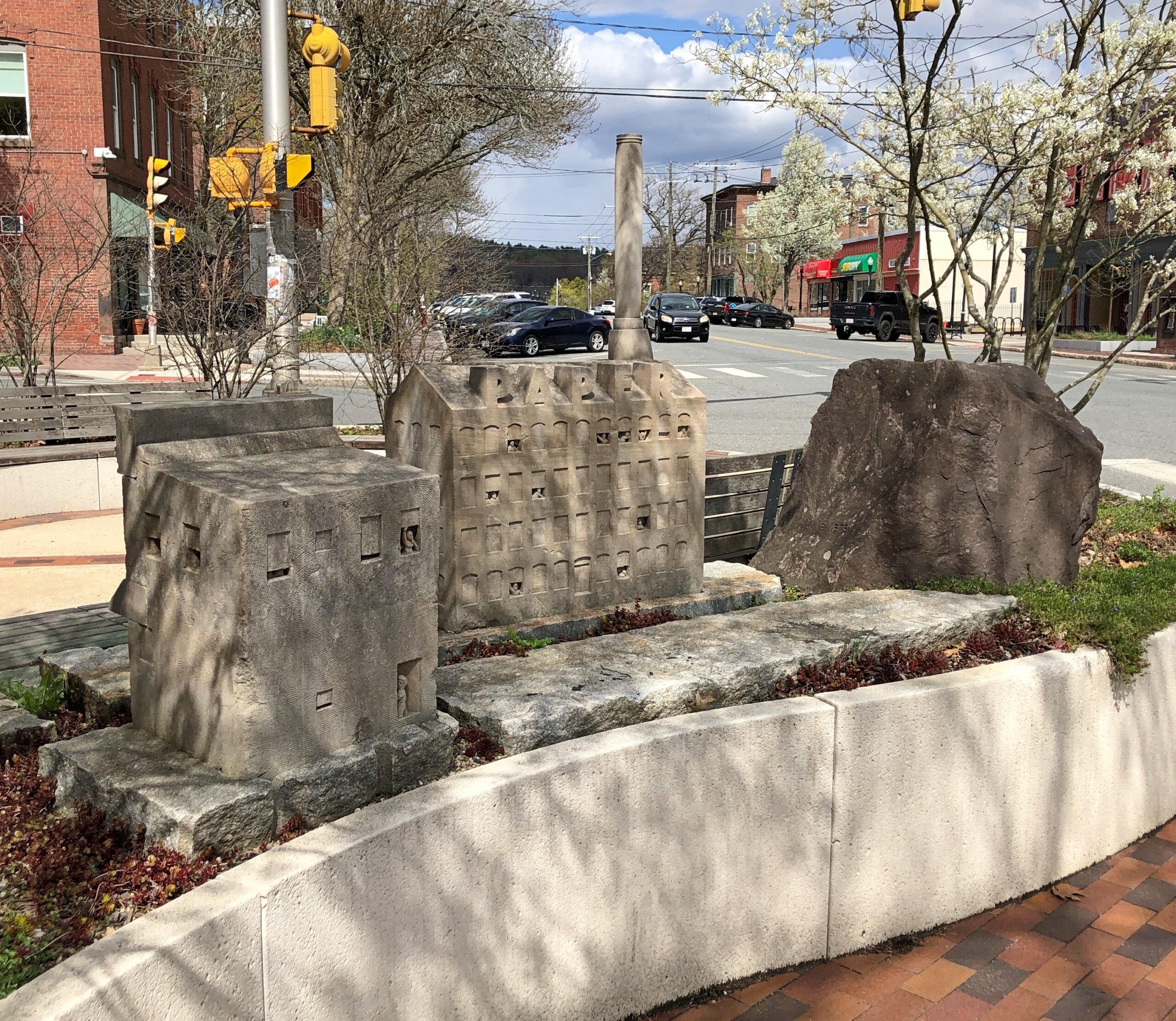
Public art: “Rock, Paper, Scissors” (2017). by Tim de Christopher, who used local red sandstone for the rock and Indiana limestone for the paper mill and barber shop — paper and scissors — evoking the town’s industrial and social history. (The barber shop is on the right, the mill in the middle, and the rock on the left.)

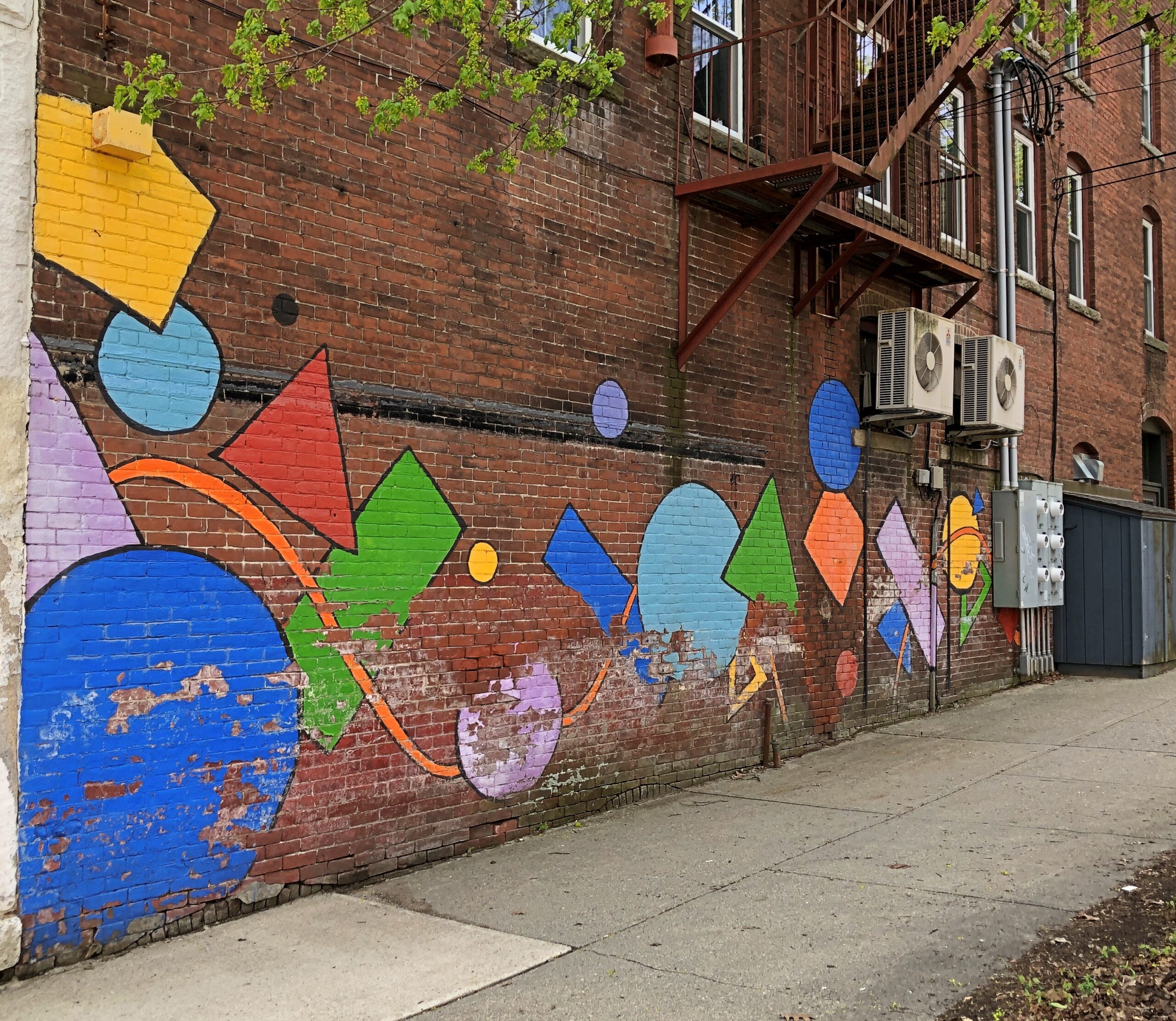
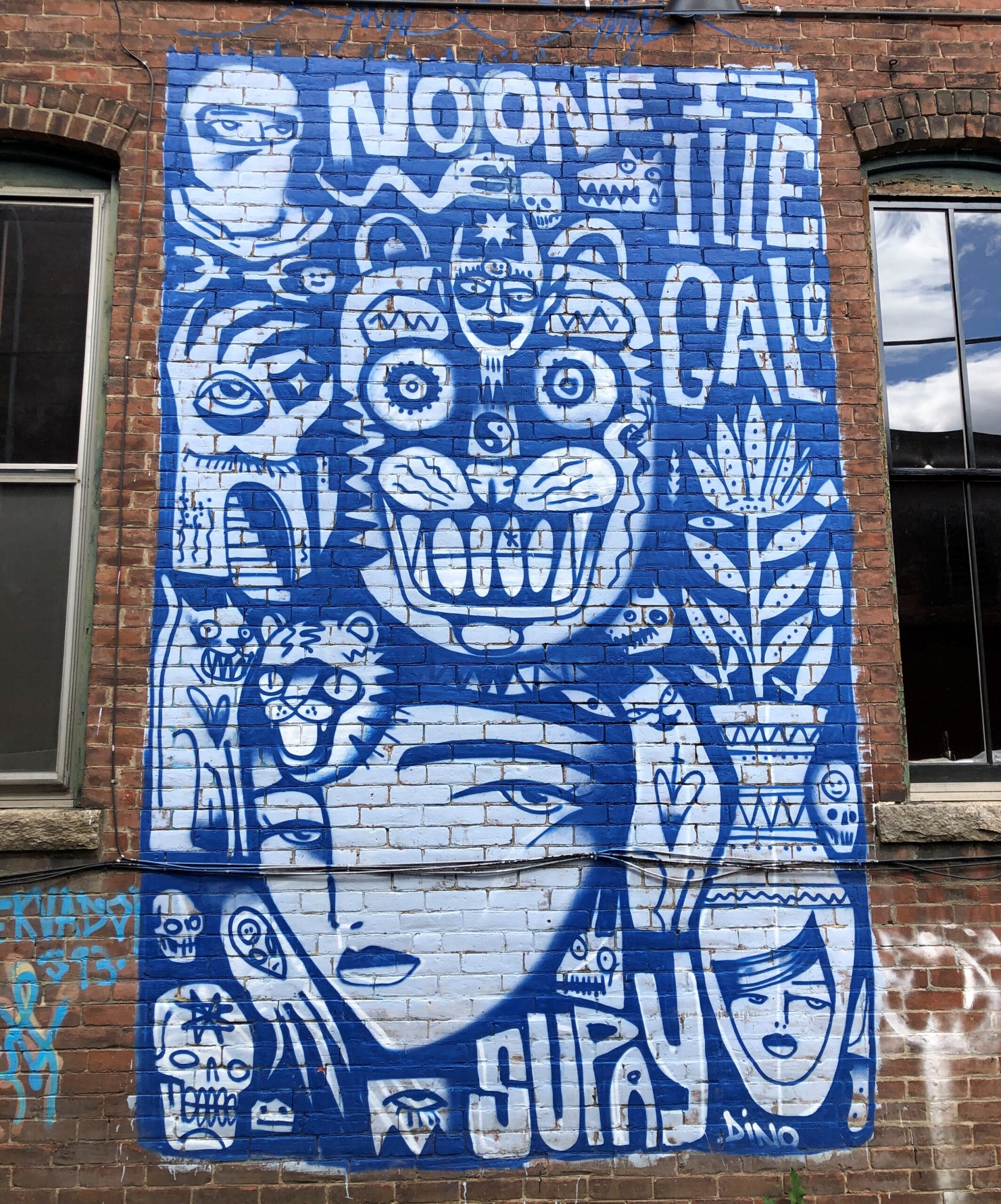
A geometric mural.

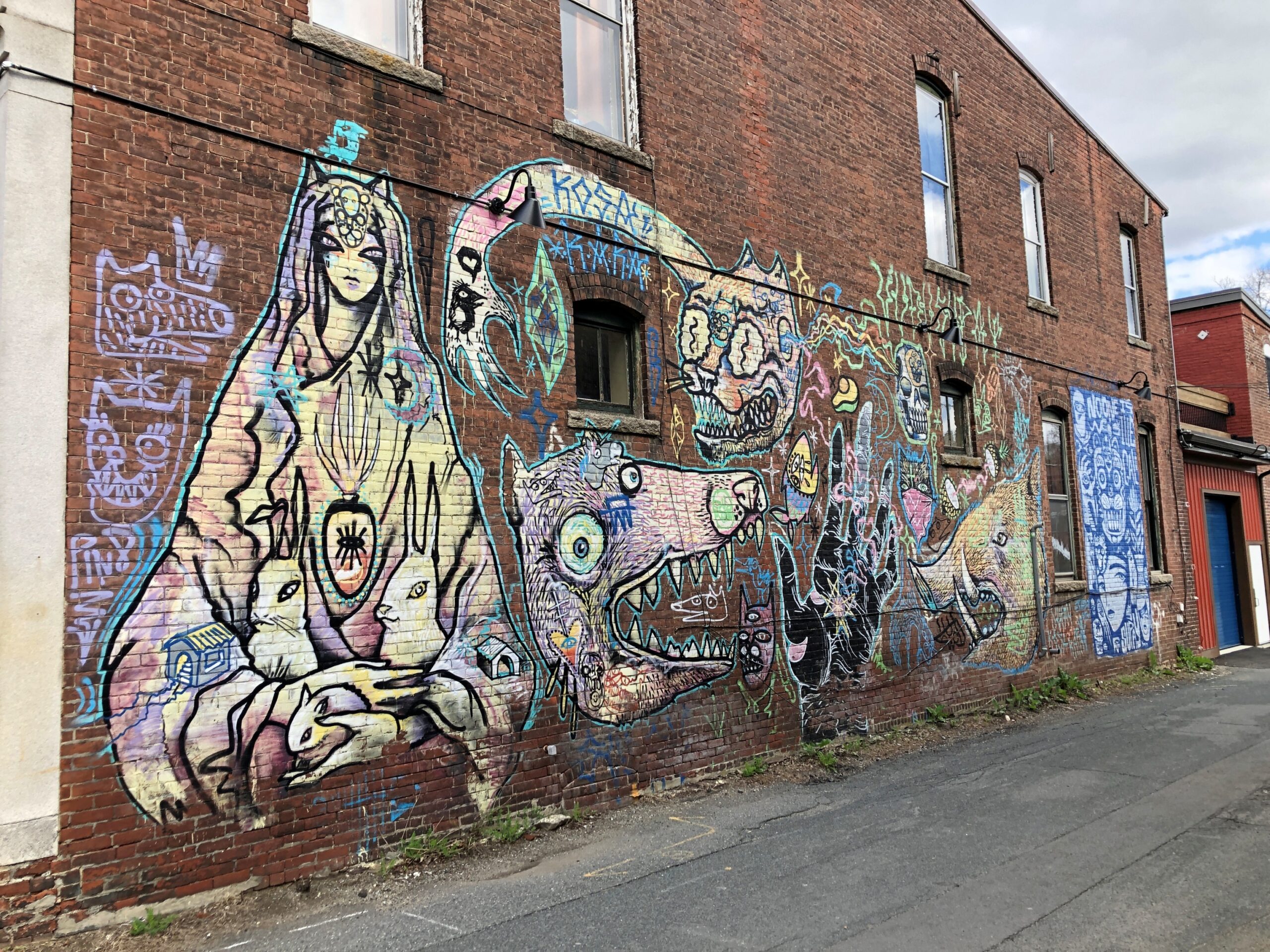
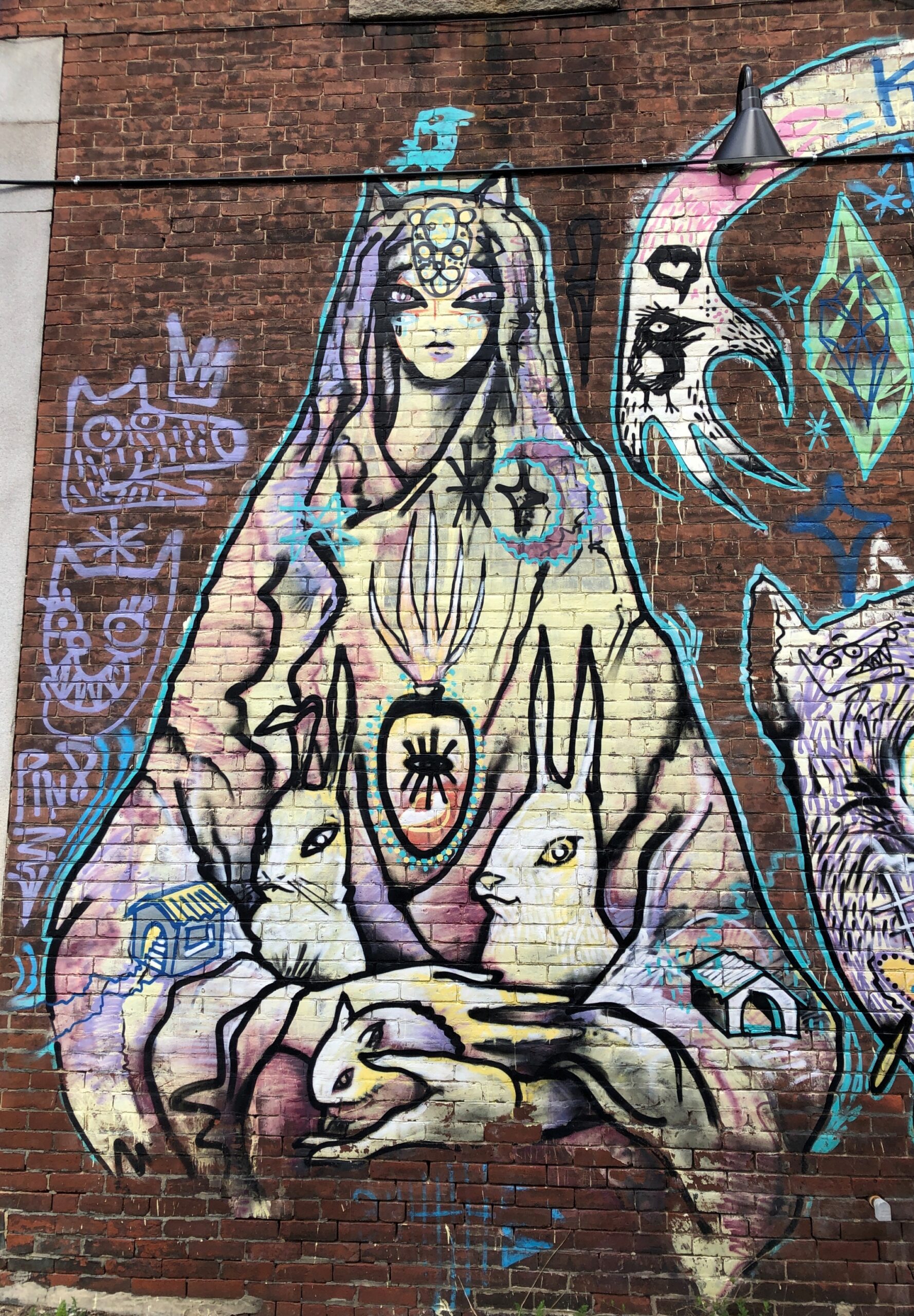
An elaborate graffiti-style mural.

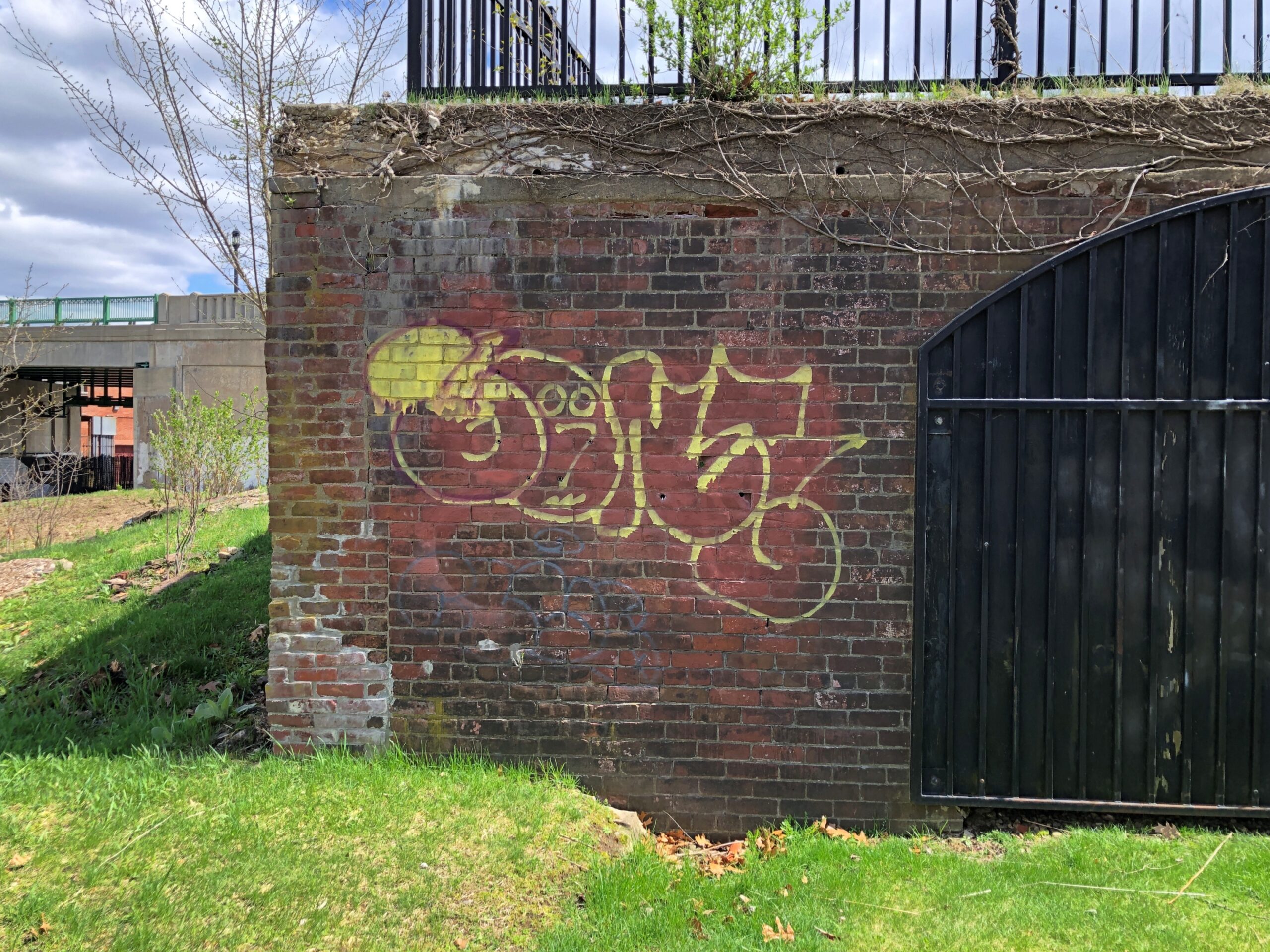
Or maybe actual graffiti. Details.

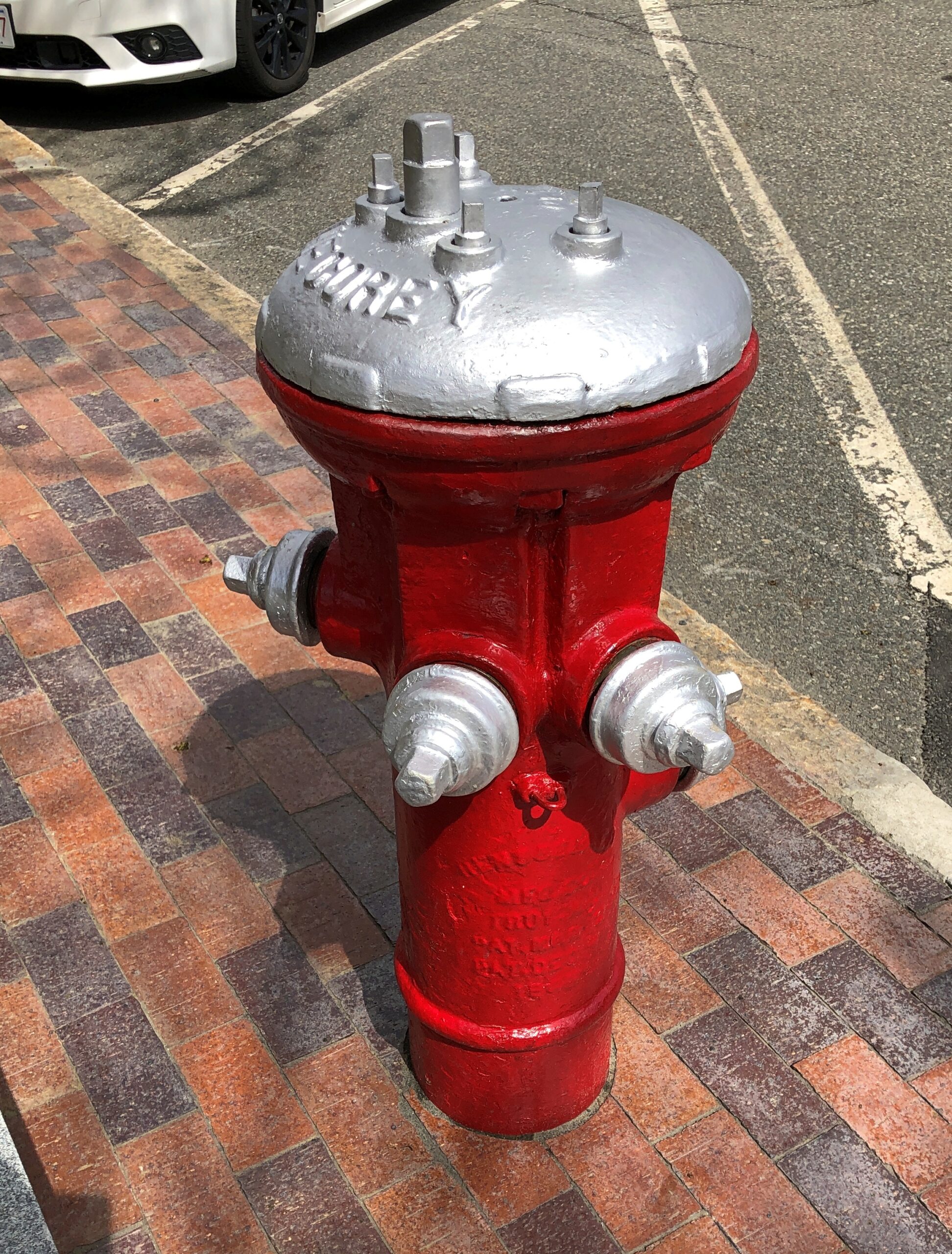
And a fire hydrant.

As peculiar as the local nomenclature. A metal udder.

Turners Falls Canal

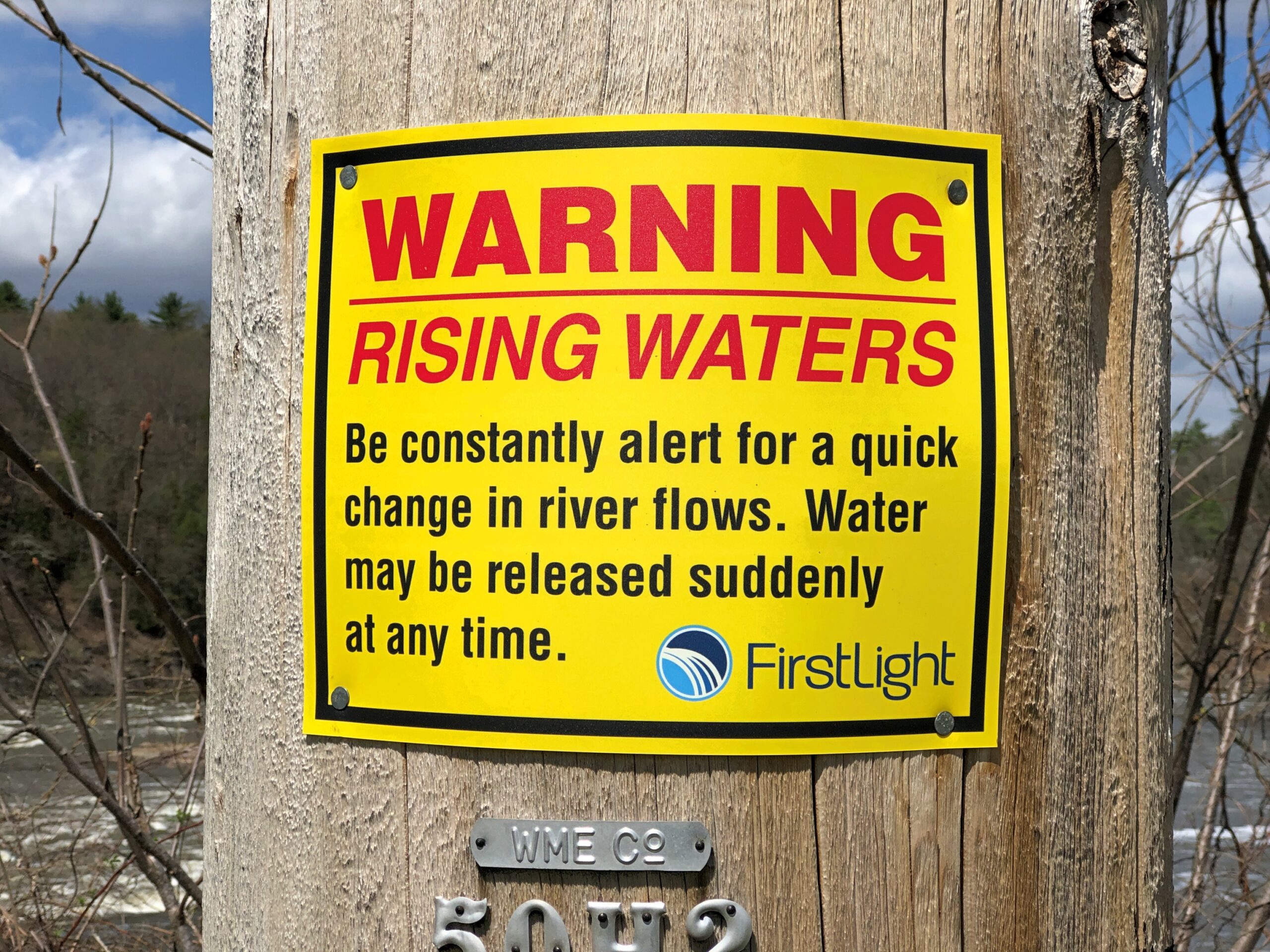
I can’t say I hadn’t been warned.

FirstLight describes itself as a “clean power producer, developer, and energy storage company.” Such as from legacy dams of the Connecticut River watershed, though some of those are coming down.
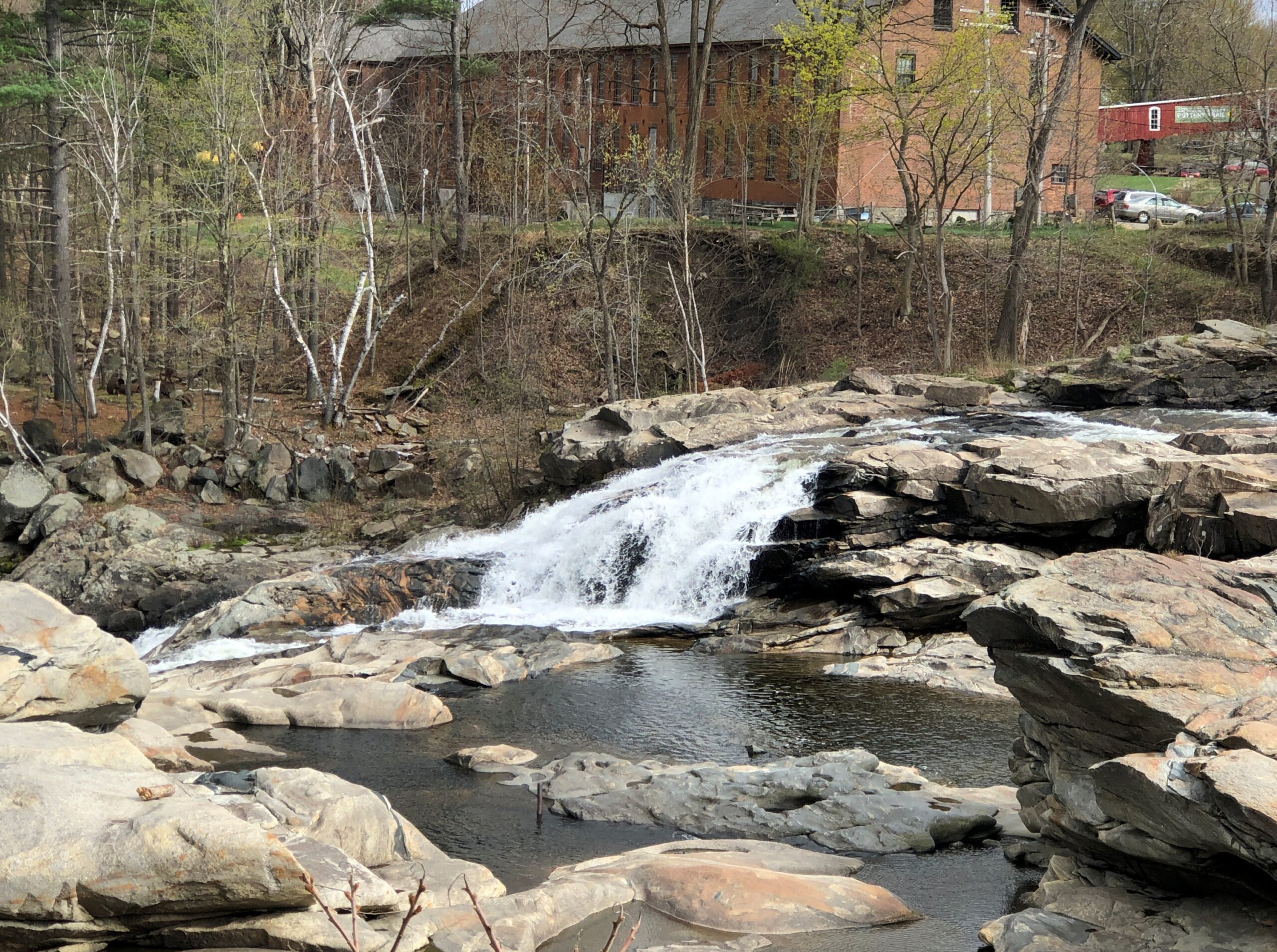
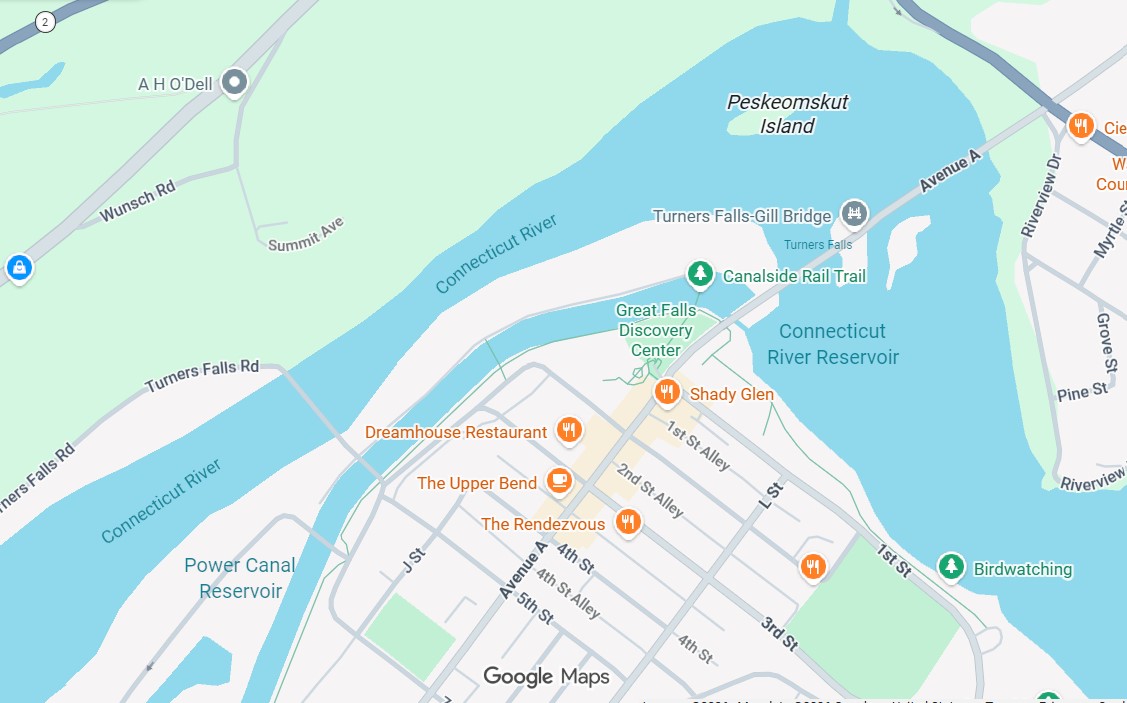
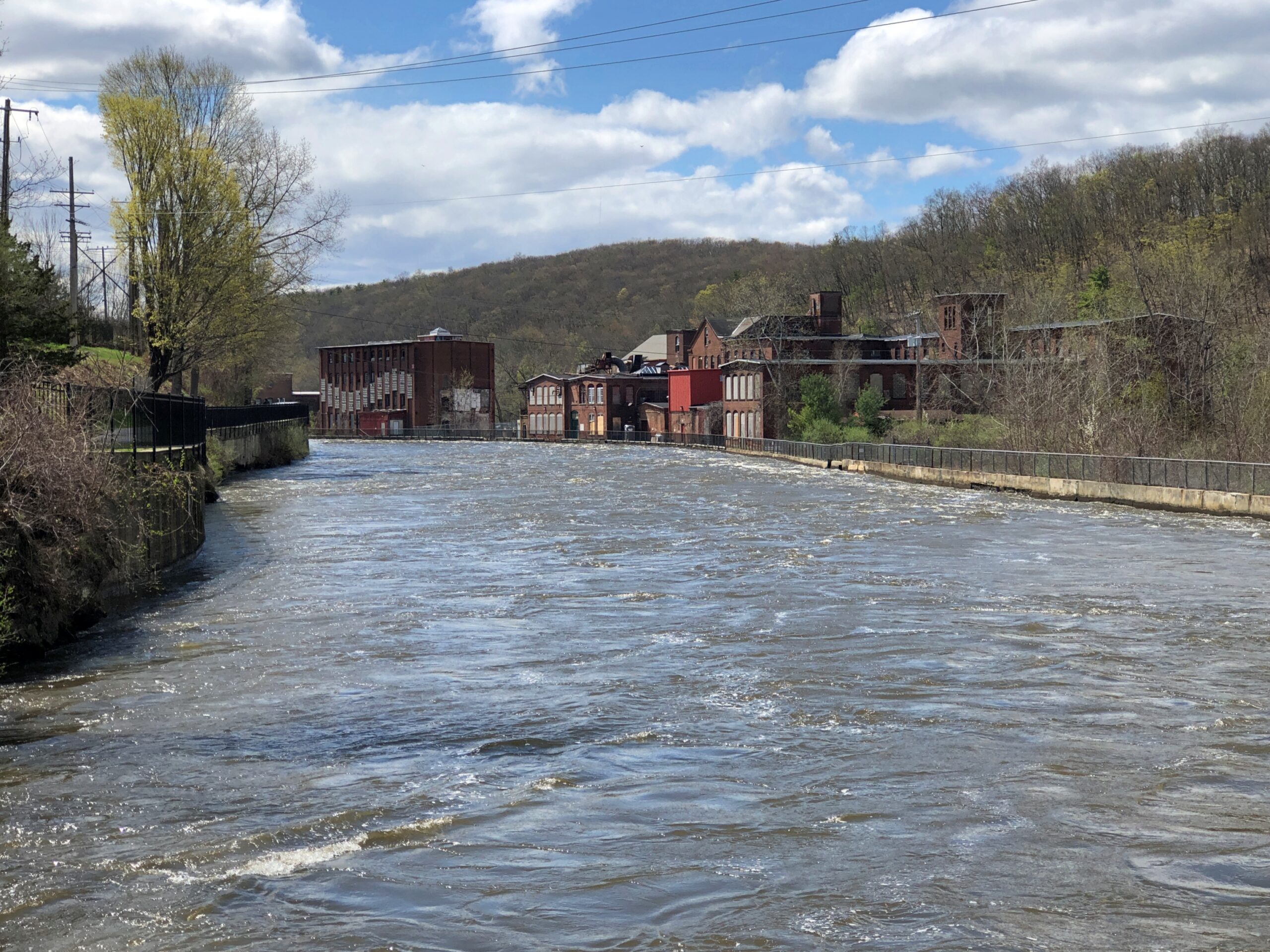
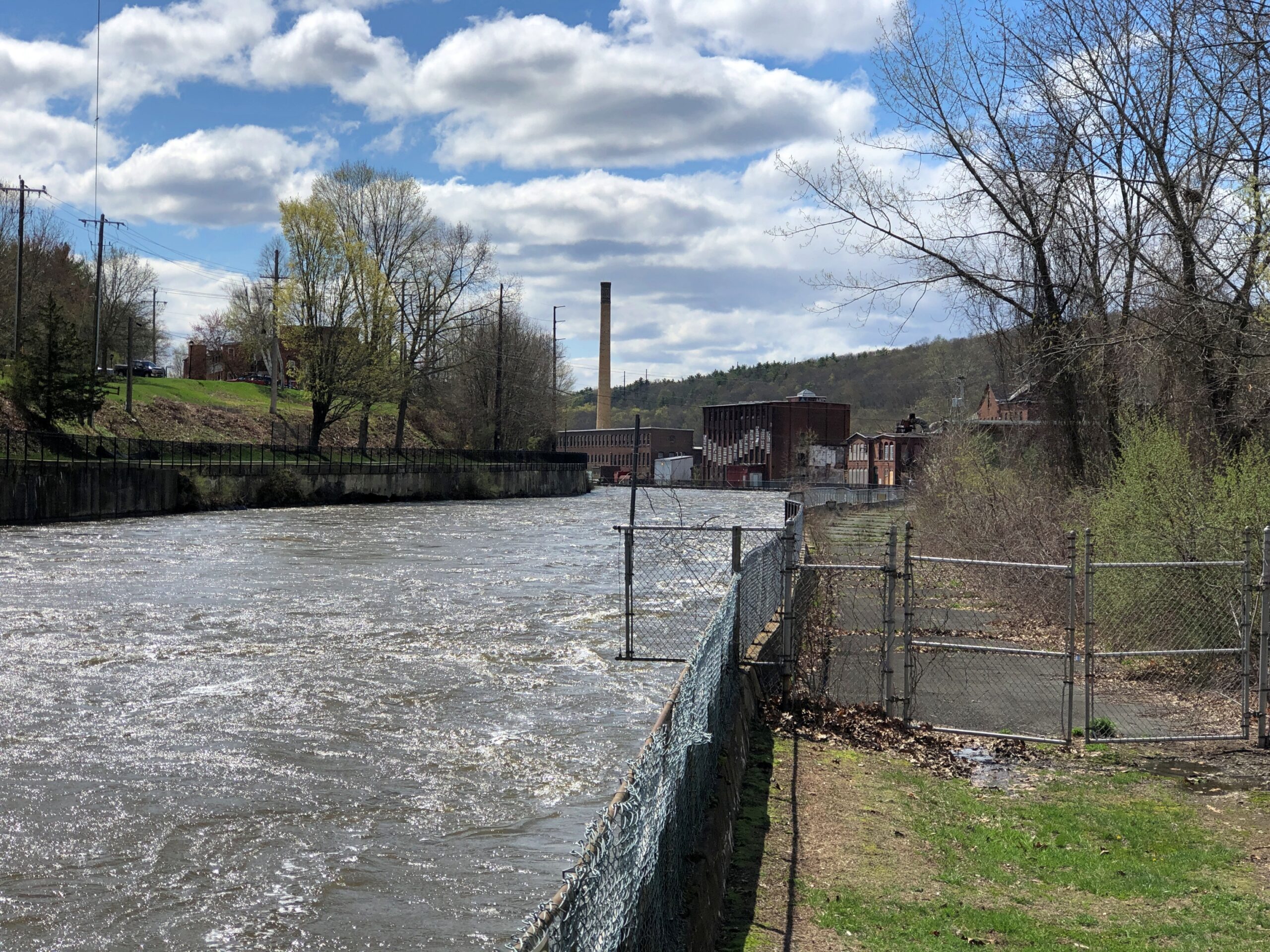
Luckily, the nearby waters didn’t make any sudden moves in the vicinity of my person that afternoon. I was near the Connecticut River at a place called Turners Falls (no apostrophe), Massachusetts. The sign is posted on a man-made island, in fact, created by a canal paralleling the river – Turners Falls Canal.

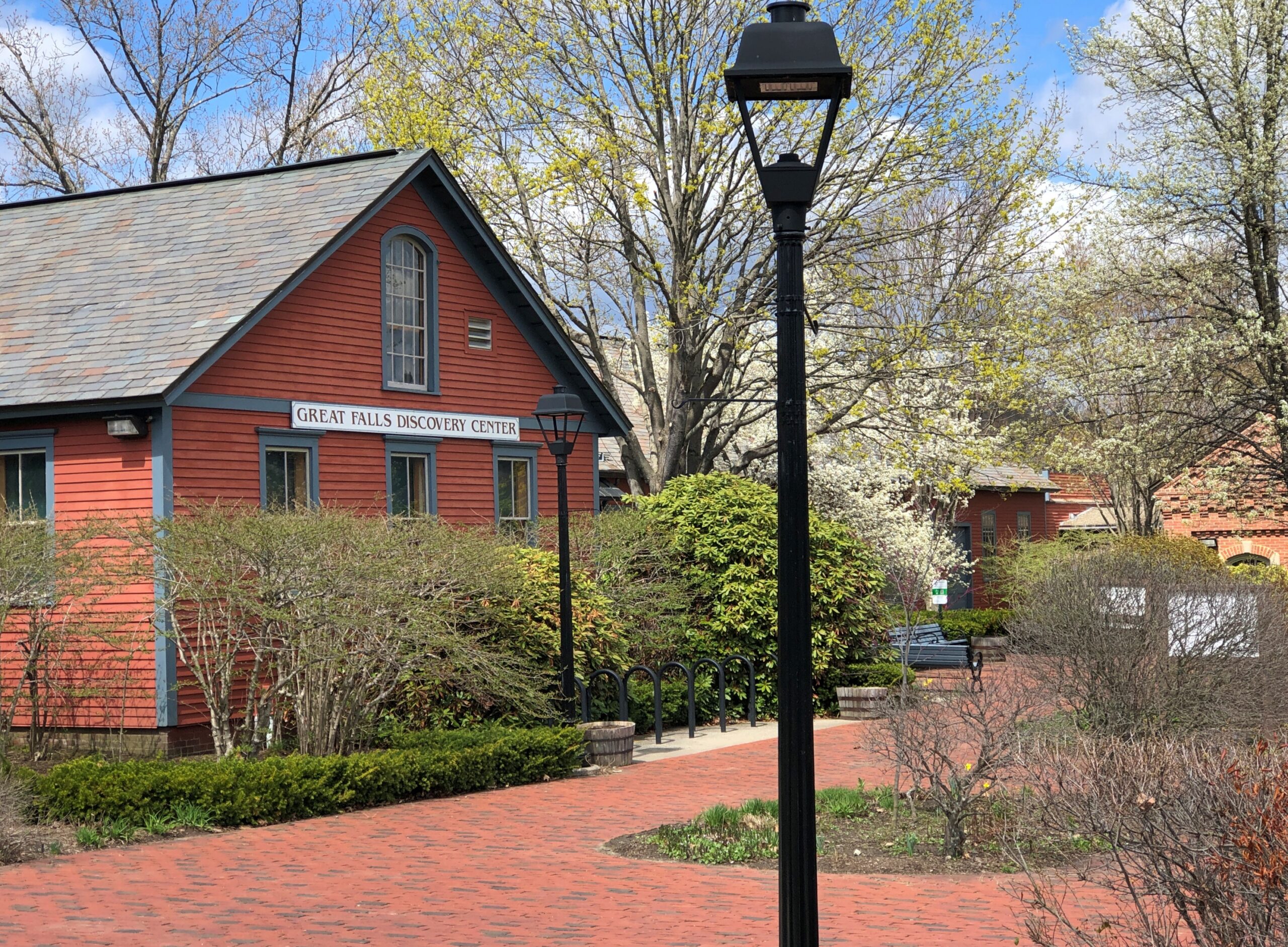
I’d crossed the Connecticut via a bridge, and the canal too, and parked on Avenue A in Turners Falls near the Great Falls Discovery Center, which is housed in restored mill buildings on the south edge of the canal.

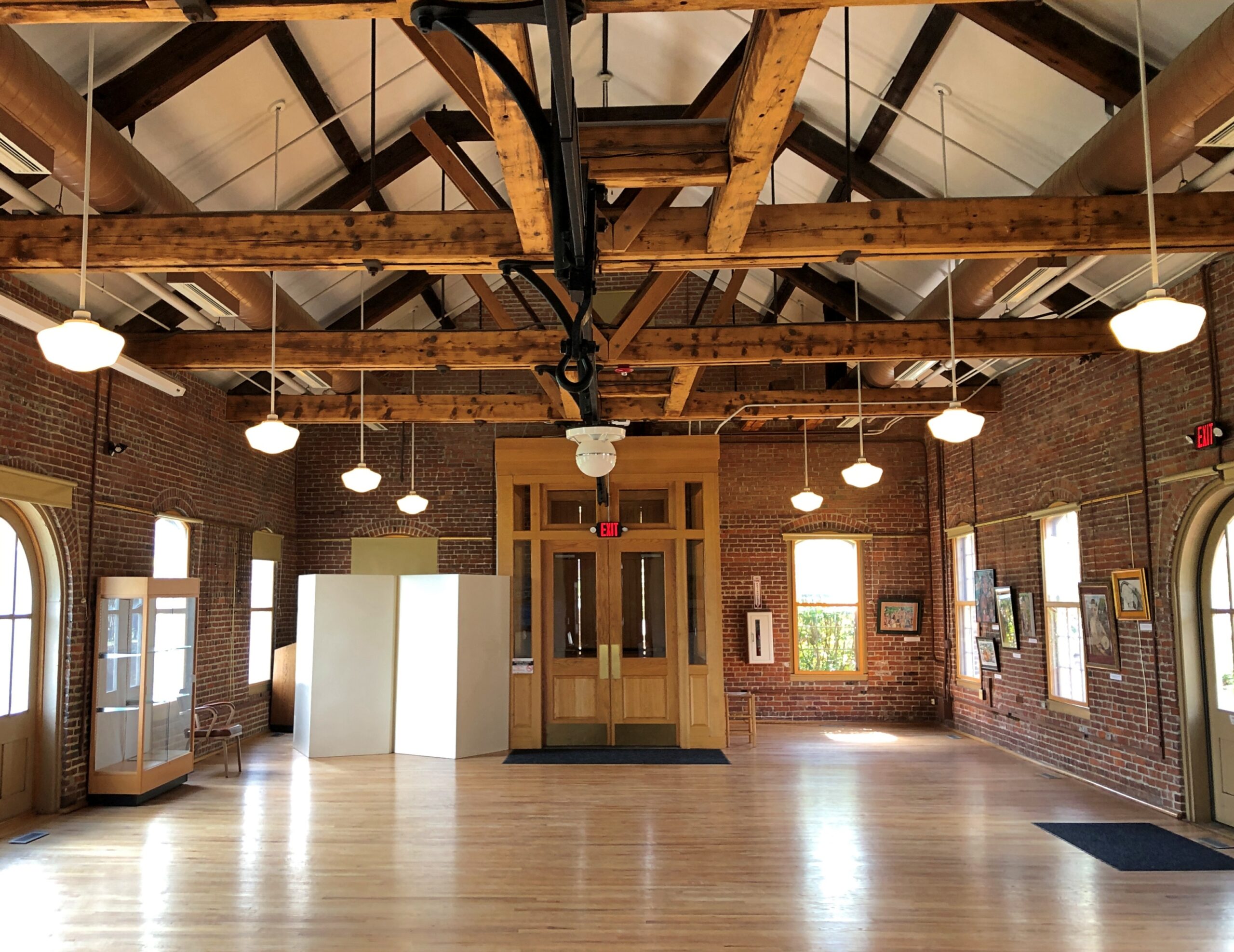
Great Falls Discovery Center, owned by the Massachusetts Department of Conservation and Recreation, includes open habitat exhibits, fish tanks, and dinosaur fossils, and is generally geared to small fry. It does have a nice, if underutilized, exhibit space in one of the restored buildings.

I understand that “Great Falls” is an earlier name of the falls, now the site of a dam, and that a fellow named Turner led an attack on a native settlement on the river 350 years ago, leading to the renaming of the falls – more about all that later. A path from the center leads to the canal.
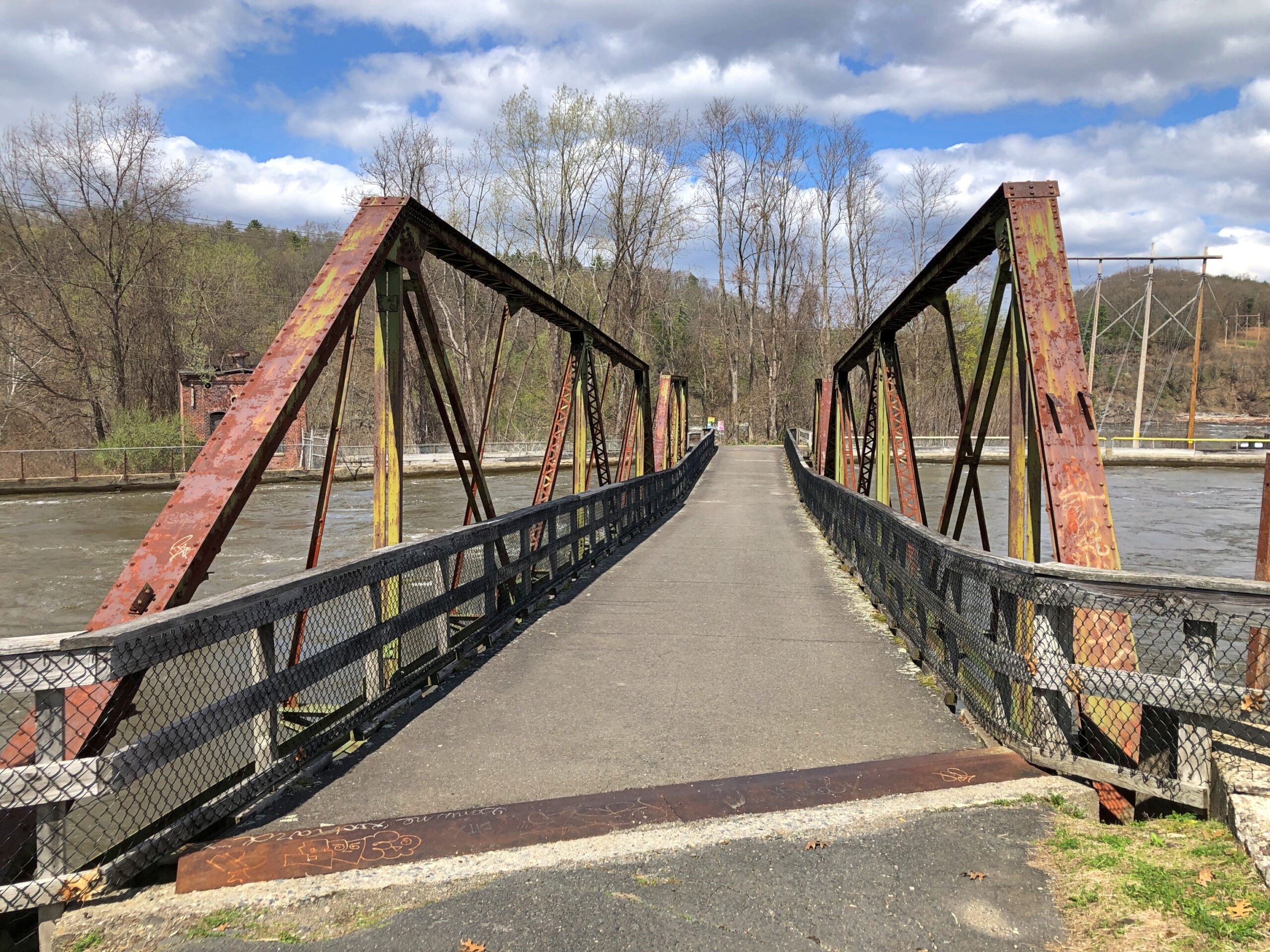
A rusty foot bridge across the canal.

Looks a little dodgy, especially when the flow is strong, as it was that day in the wake of heavy spring rain the day before.

But not dodgy enough to keep me from crossing to take in the views of the canal from the footbridge.

Turners Falls Canal, Mass.

The tip of the island, while accessible at that point, is desolate. The rest of the island seemed to be fenced off.

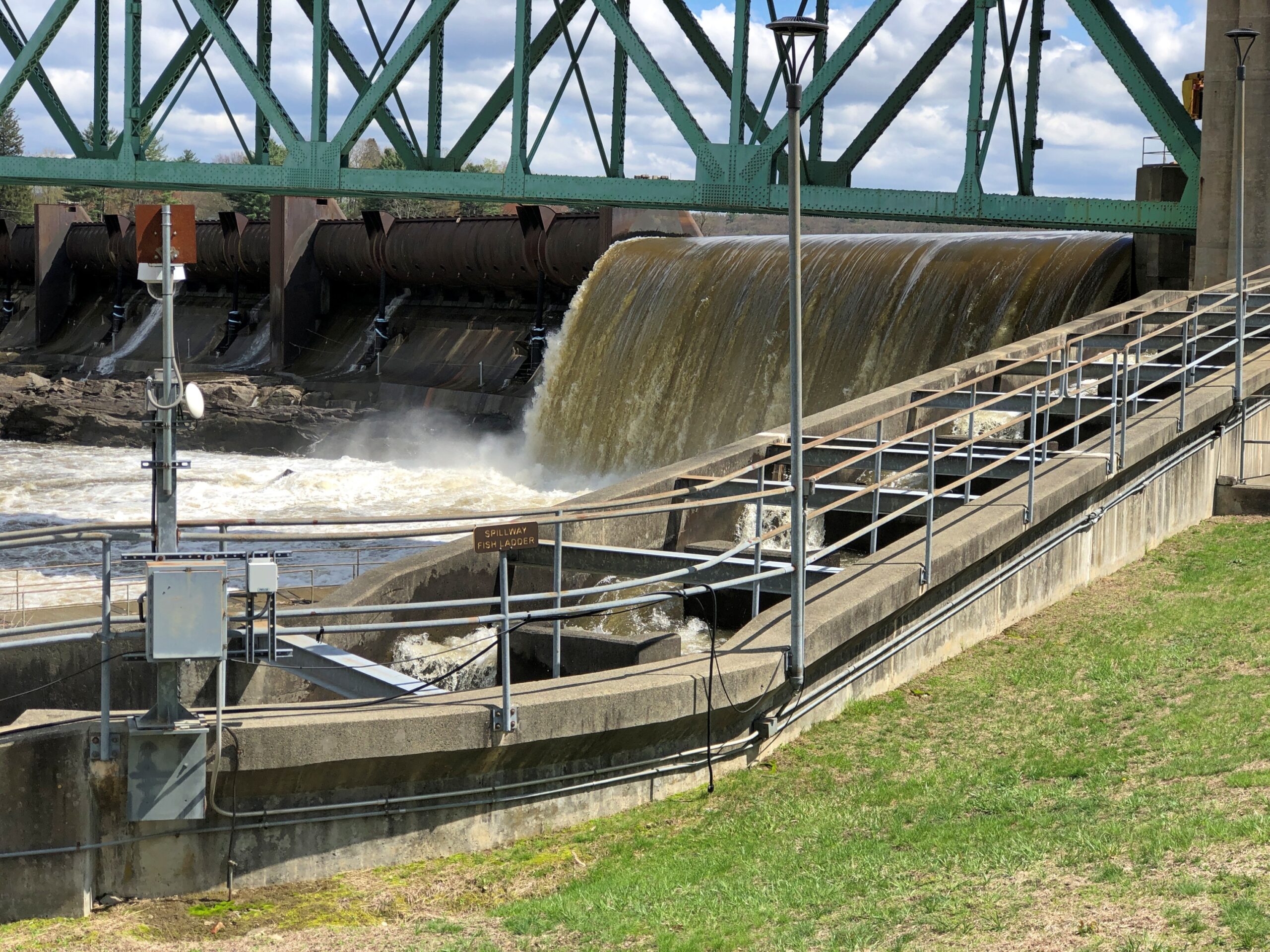
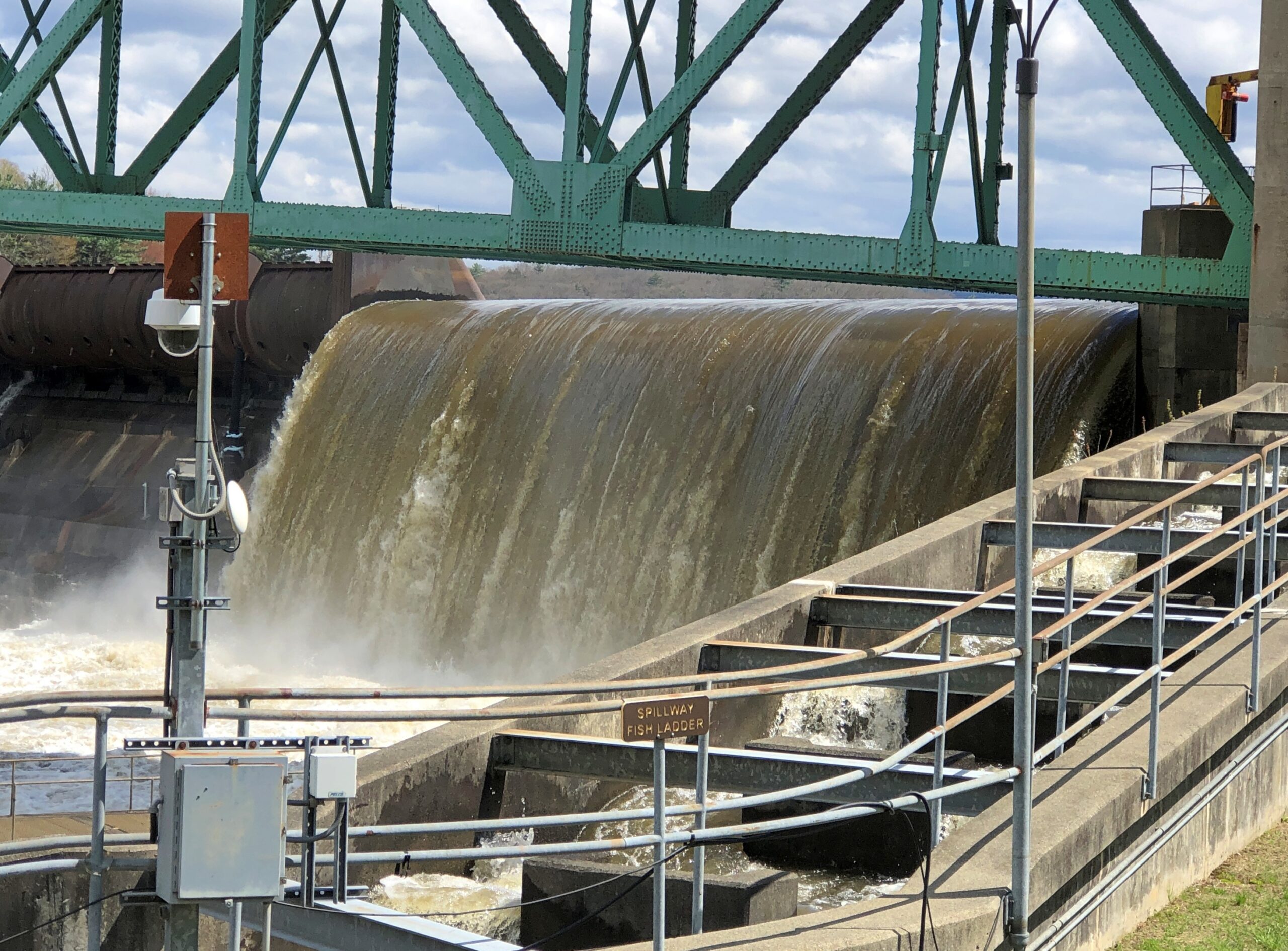
But it does offer a view of the dam and its associated fish ladder. A powerful flow that day.

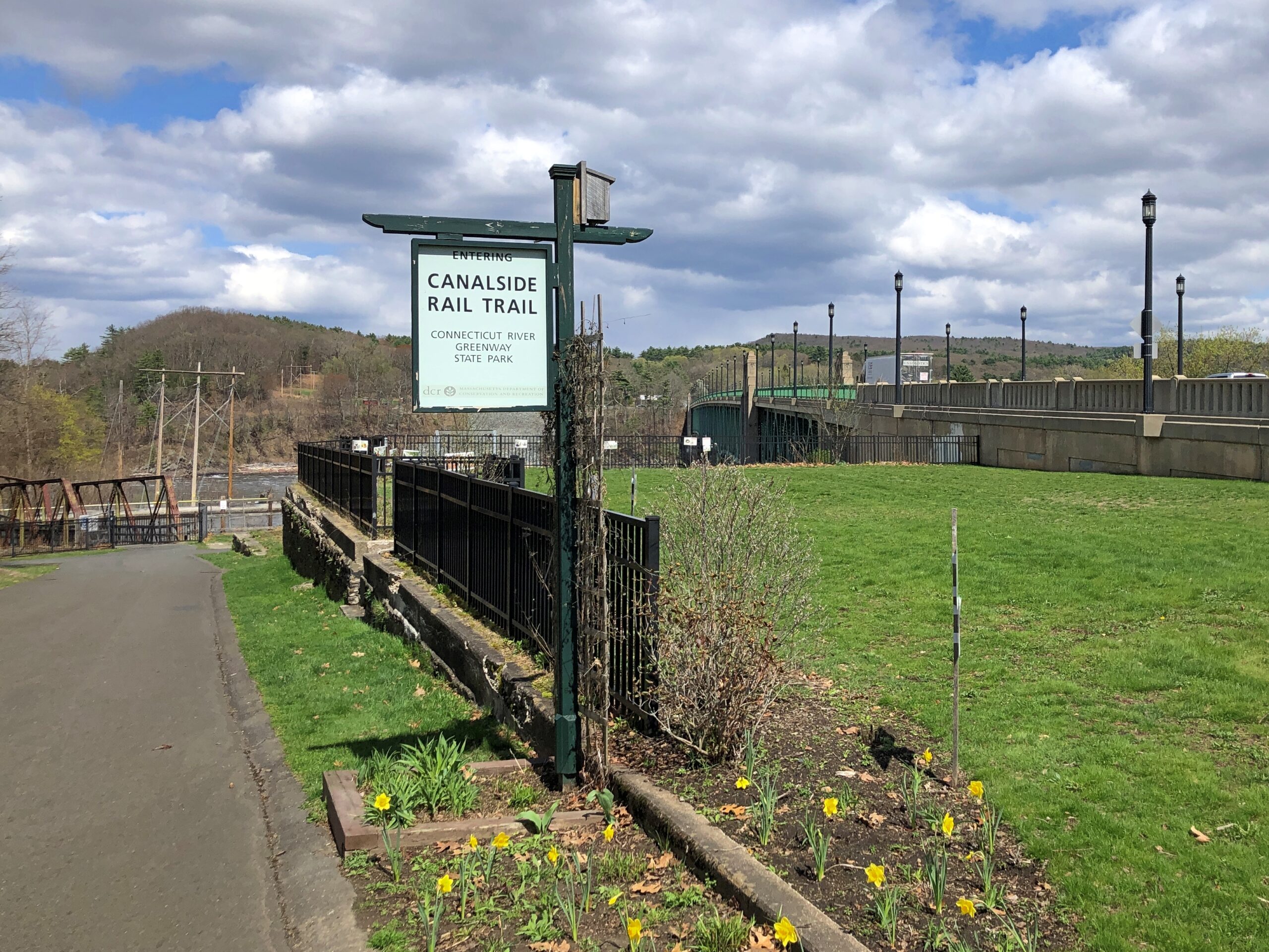
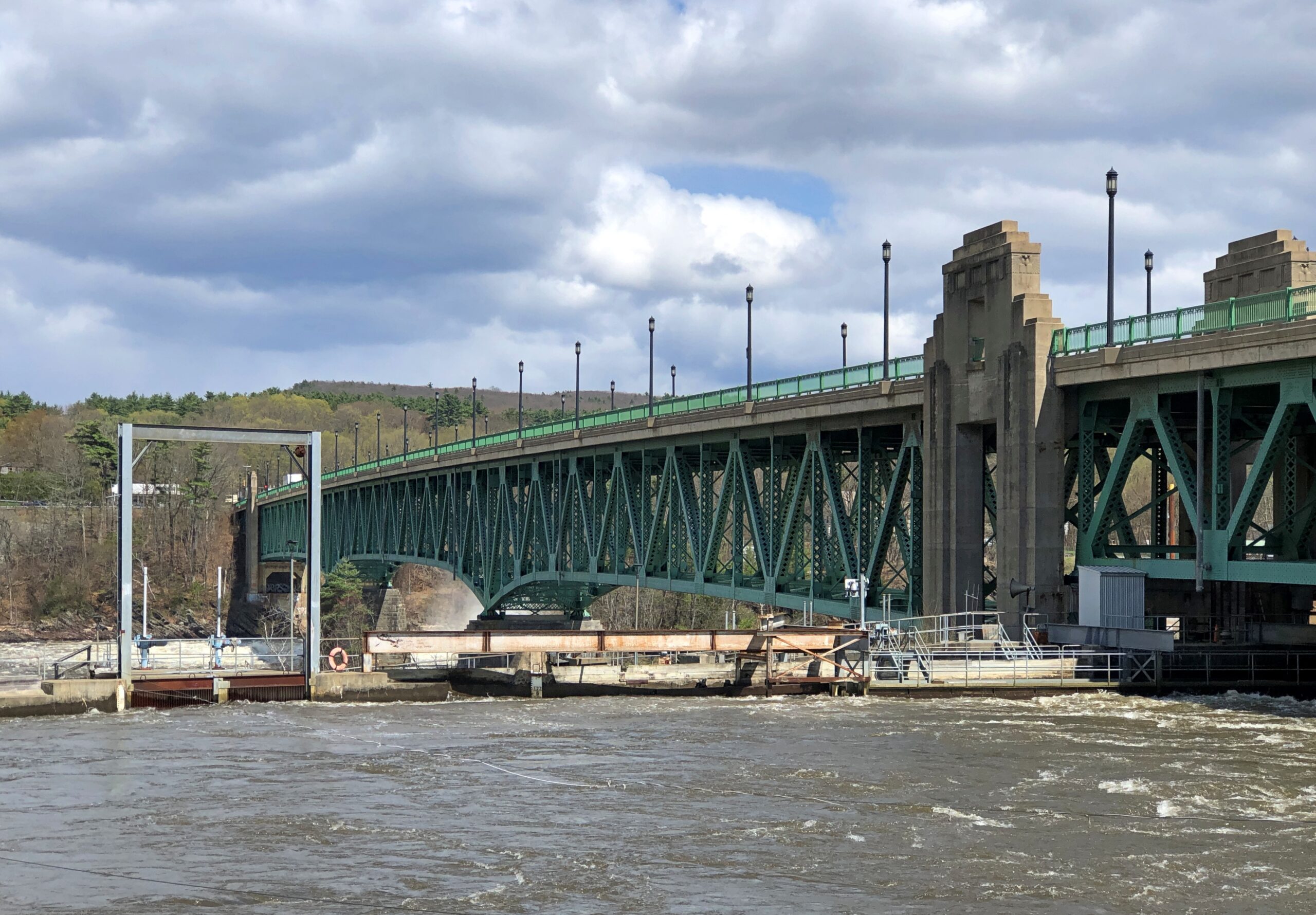
Also visible: the bridge across the Connecticut that I’d driven a little while before, the Turners Falls-Gill Bridge, completed in 1938 and renovated in the 2010s. Gill is the town on the other side.

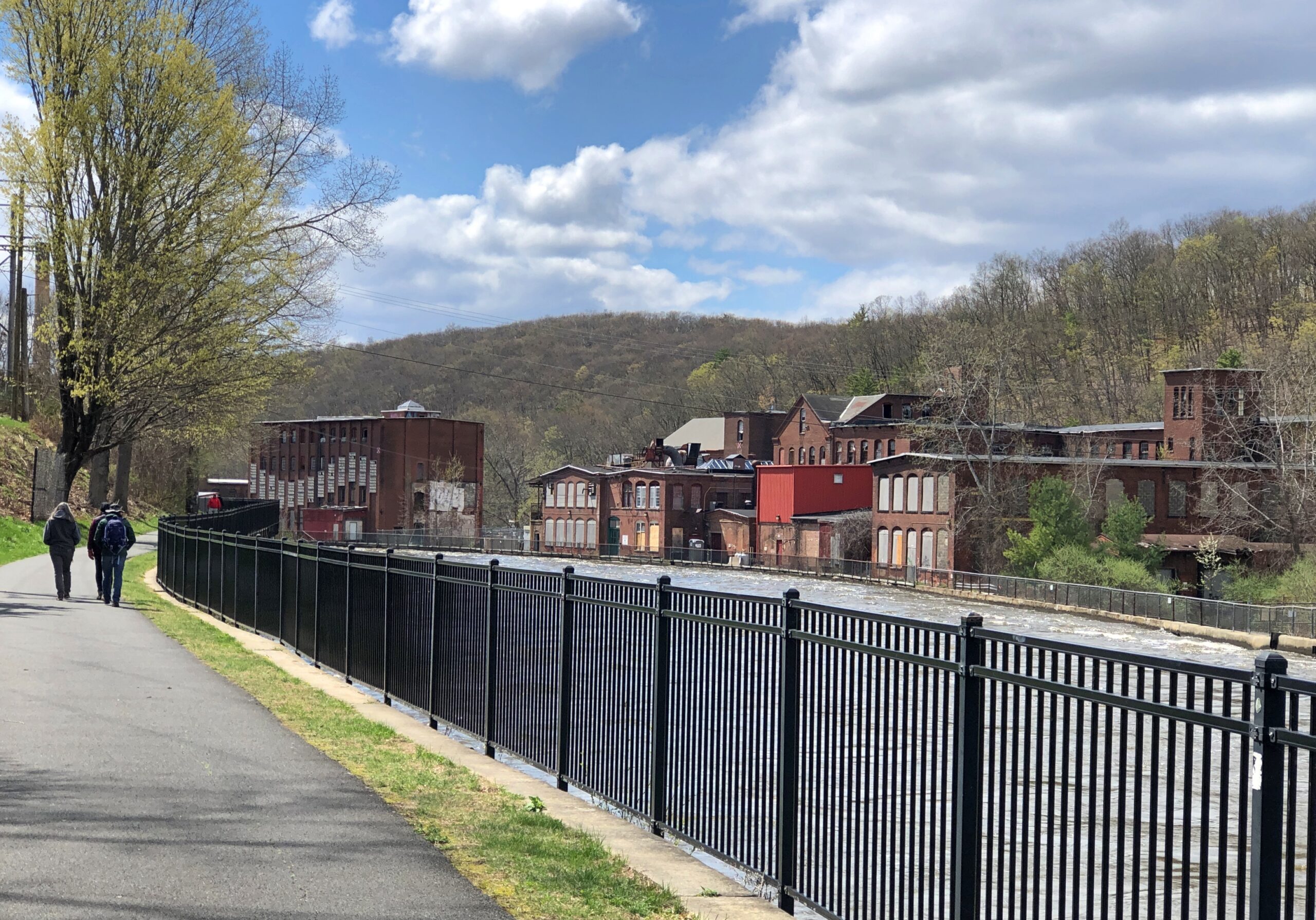
I crossed back and took a stroll down the footpath along the canal: the Canalside Rail Trail.

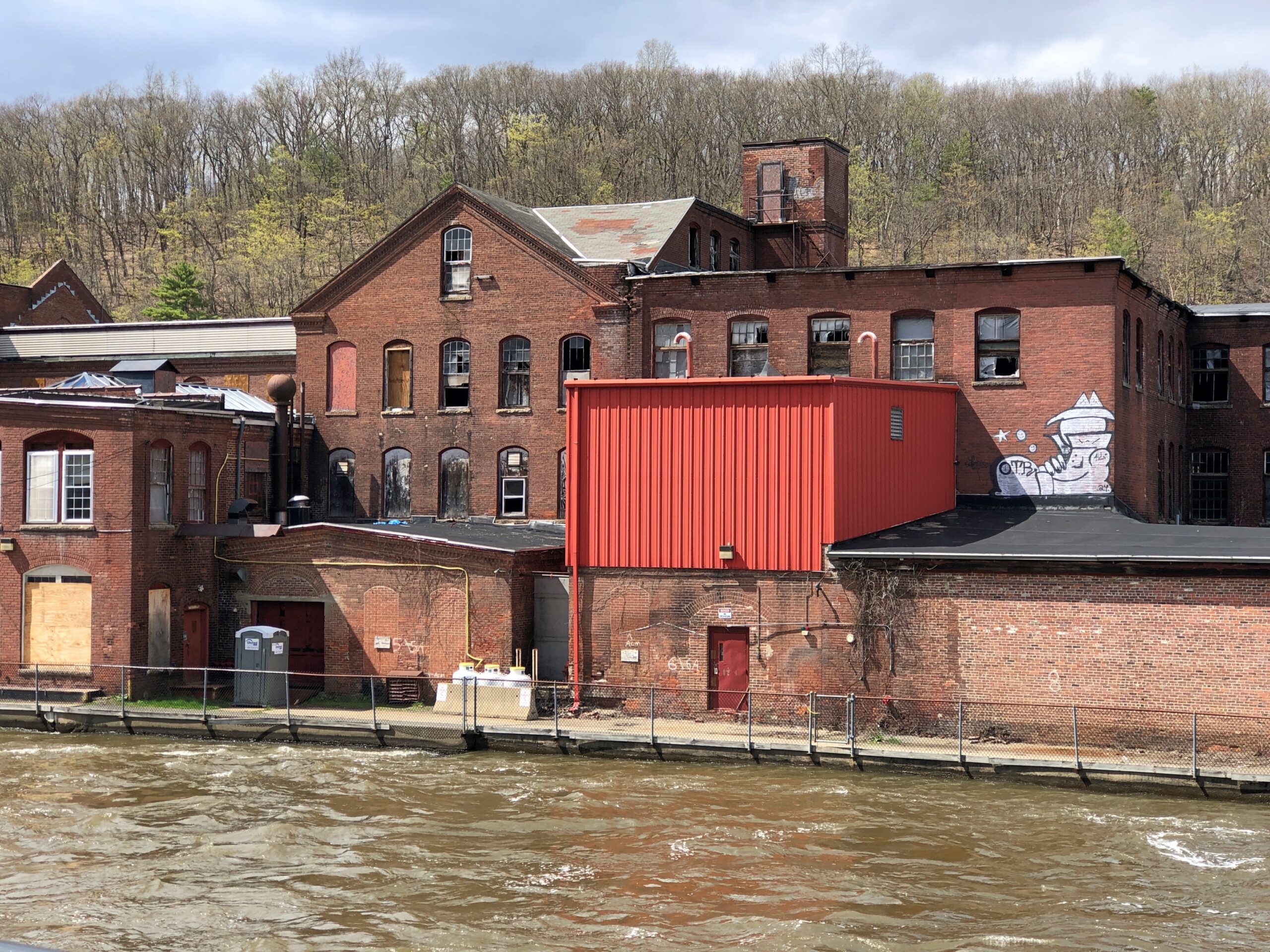
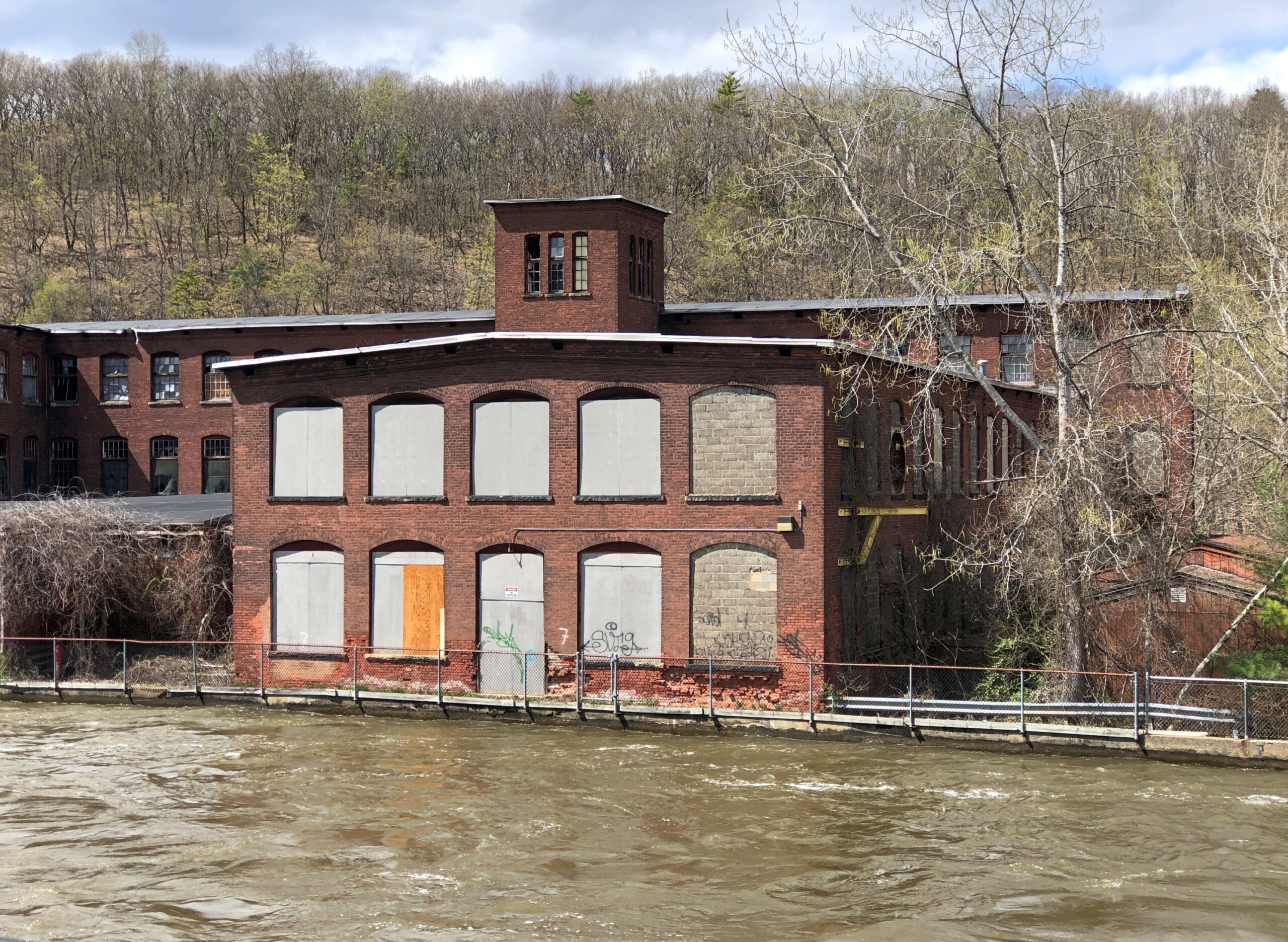
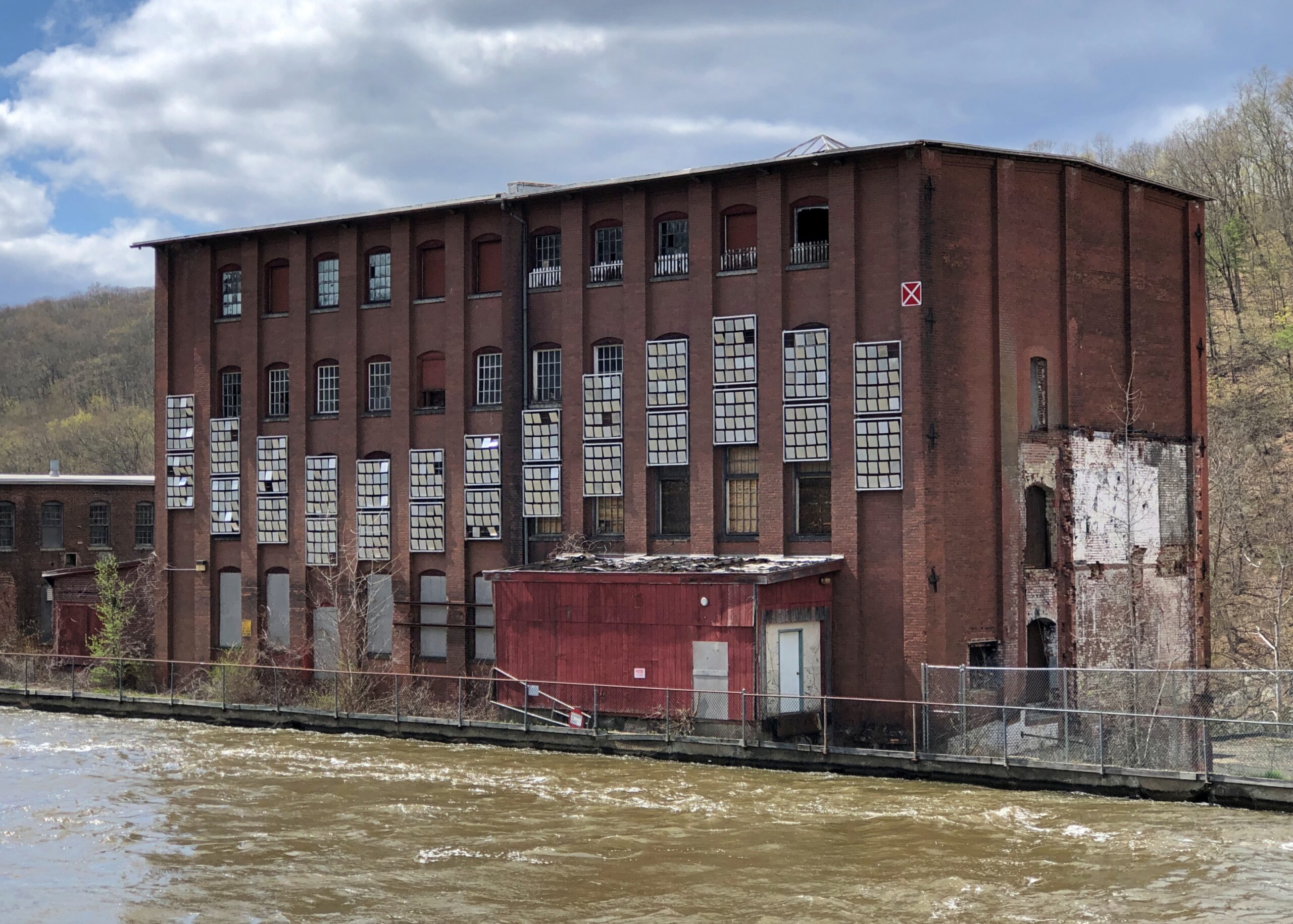
An earlier canal – dug early in the 19th century, just as the U.S. canal boom was getting underway – provided passage via locks around Turners Falls, and a boon to trade in the area. Railroads made that canal obsolete by the mid-19th century, so when the river was dammed, a different canal, a “power canal,” was created to provide water power for factories (the first canal, I believe, was submerged, but I’m not quite sure). Anyway, those factories are closed in our time, but their husks linger.

Waiting for the time when the area’s population is growing again — perhaps during a reverse migration from the too sunny South in the next mid-century — and these sturdy structures can be remade into residential properties.

French King Bridge

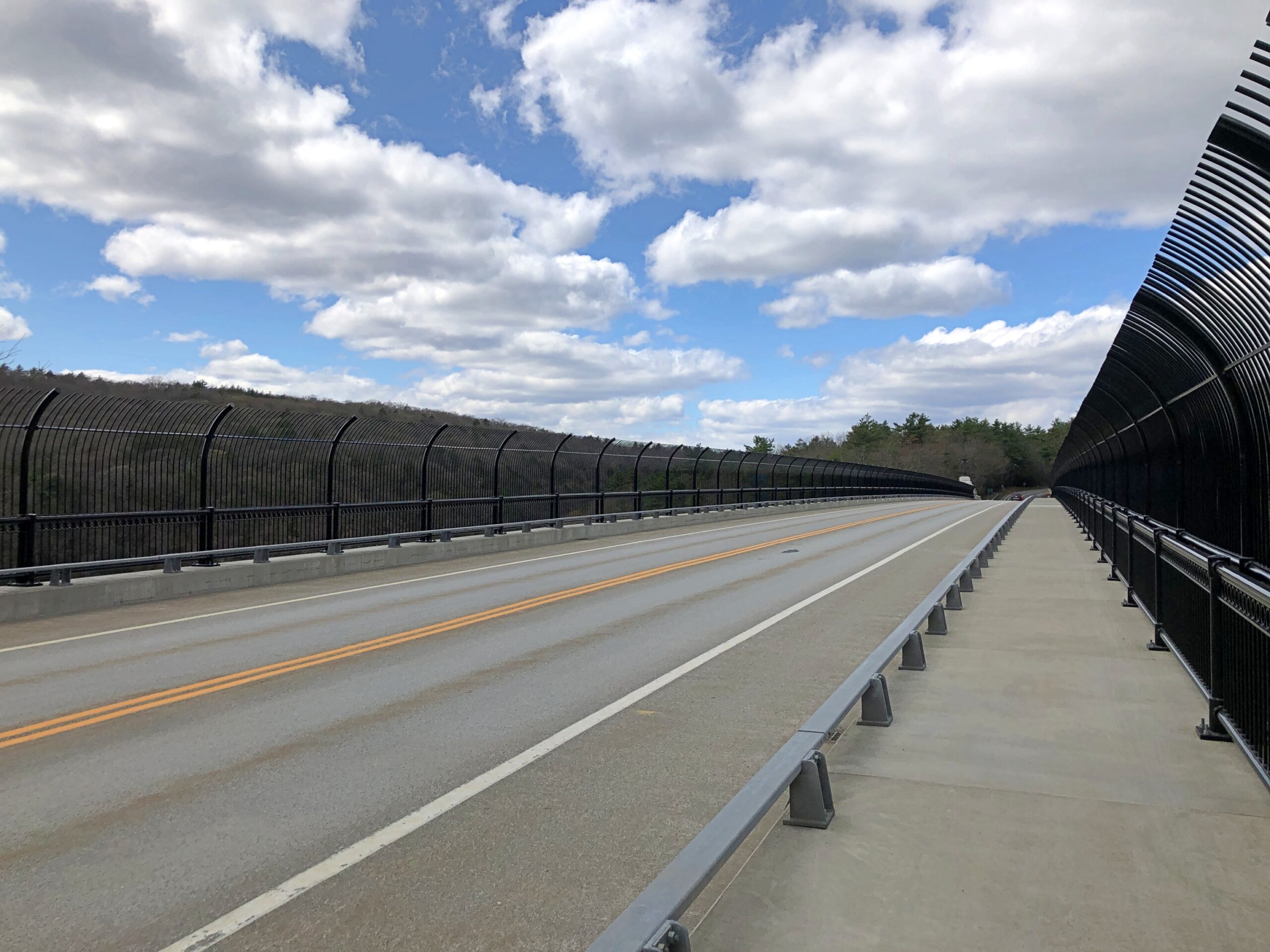
In my experience, a bridge with a name is usually worth a look. So it was with the French King Bridge, which crosses the Connecticut River in Franklin County, Massachusetts. There was even a wide place in the road (Route 2) to park, so that accessing the pedestrian experience was easy.

Just to judge by the walkway, a middling pedestrian experience. There are worse, especially bridges with high traffic volumes, but also many more walkable ones.

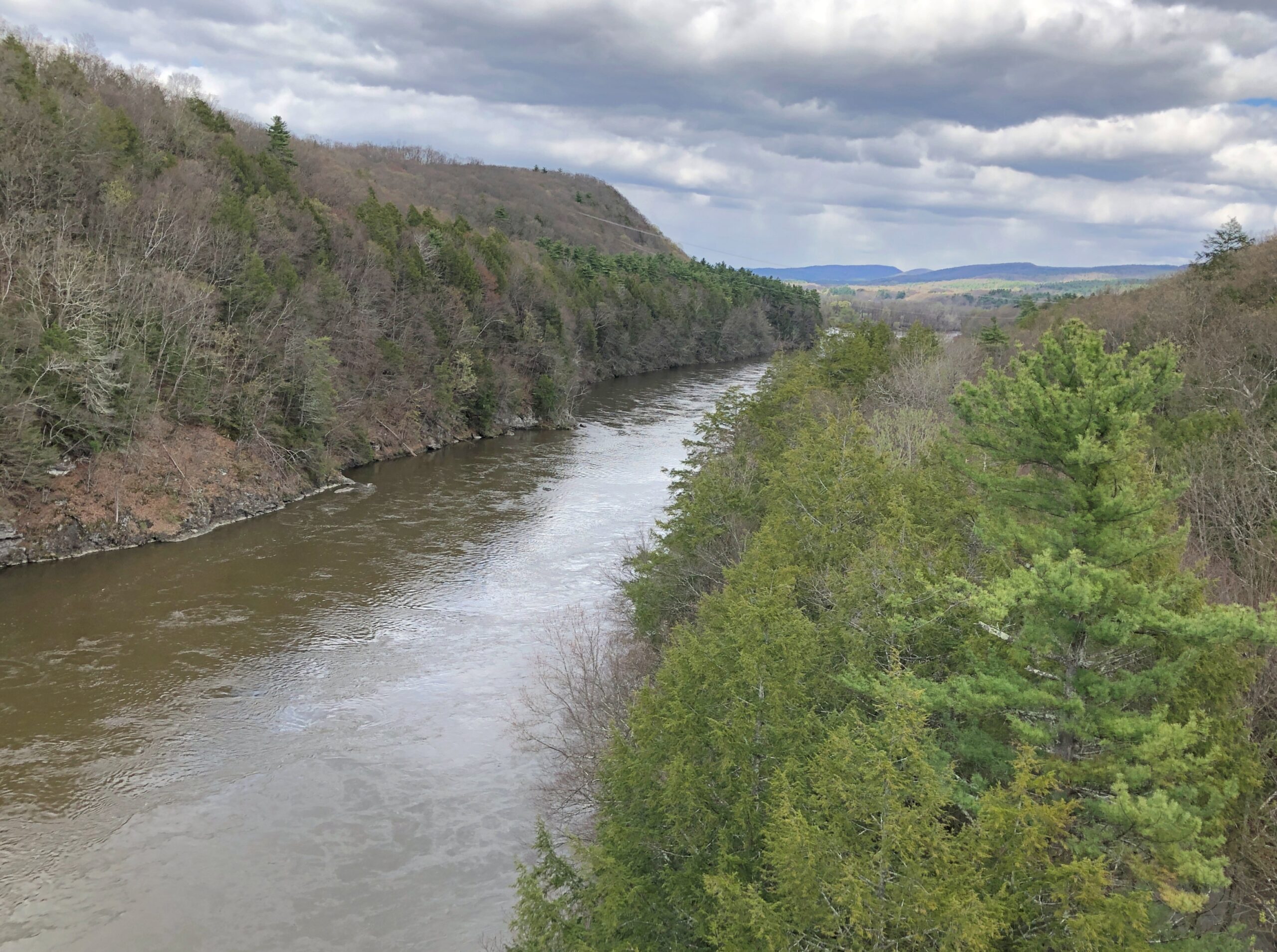
Then there’s the view from French King. That’s worth the stop and then some.

Looking upstream, or generally north. The Connecticut rises in New Hampshire very near the Canadian border and reaches Long Island Sound near Old Lyme, Connecticut. People have been living in the Connecticut River Valley for at least 6,000 years.

French King is an arch (see image from below here), like the New River Gorge Bridge in West Virginia, only a lot smaller and not nearly as high. But high enough: seems that MassDOT recently installed the cage-like bar structure at each edge of the walkways across the bridge because of people’s occasional but unfortunate habit of pitching themselves into the river, almost always fatally.

I know suicide ideation is a worrisome thing for those plagued with it, and I’m glad I’m not. But I believe most of us have anti-suicide ideations, as in, jumping off a bridge is not the way I would do myself in. Of course, I’ve ruled out all the other common methods as well.

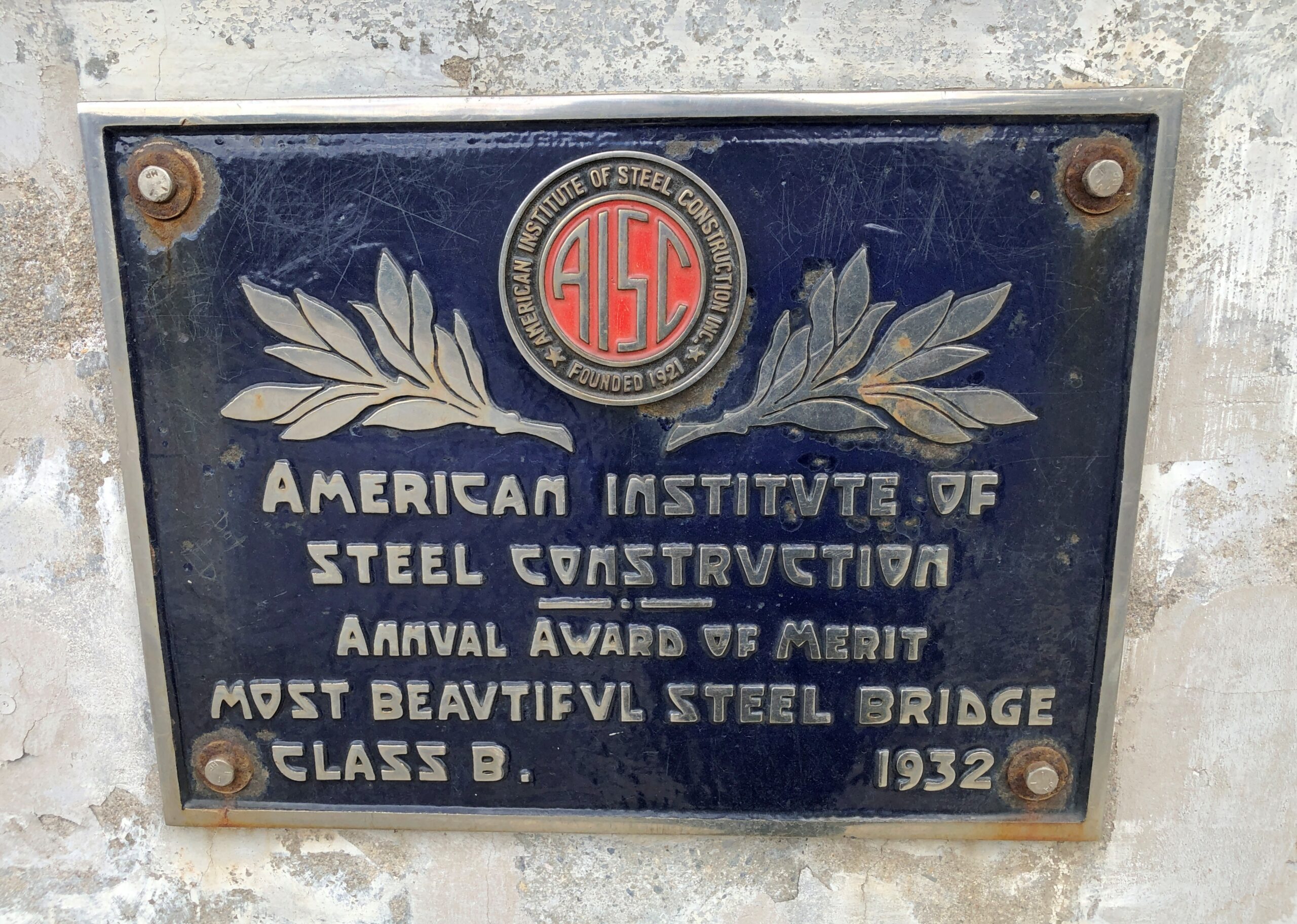
Engineers at the time of the bridge’s construction thought highly of the design.

One thing leads to another online, and pretty soon I was leafing through web pages at the American Institute of Steel Construction. Such as this page – Featured Projects – by the National Steel Bridge Alliance, showcasing some cool-looking steel bridges: Lake Bridges over Kentucky Lake and Lake Barkley; Lake Champlain (Crown Point) Bridge; Homestead Grays Bridge (Pittsburgh); Hope Memorial (Lorain-Carnegie) Bridge (Cleveland).

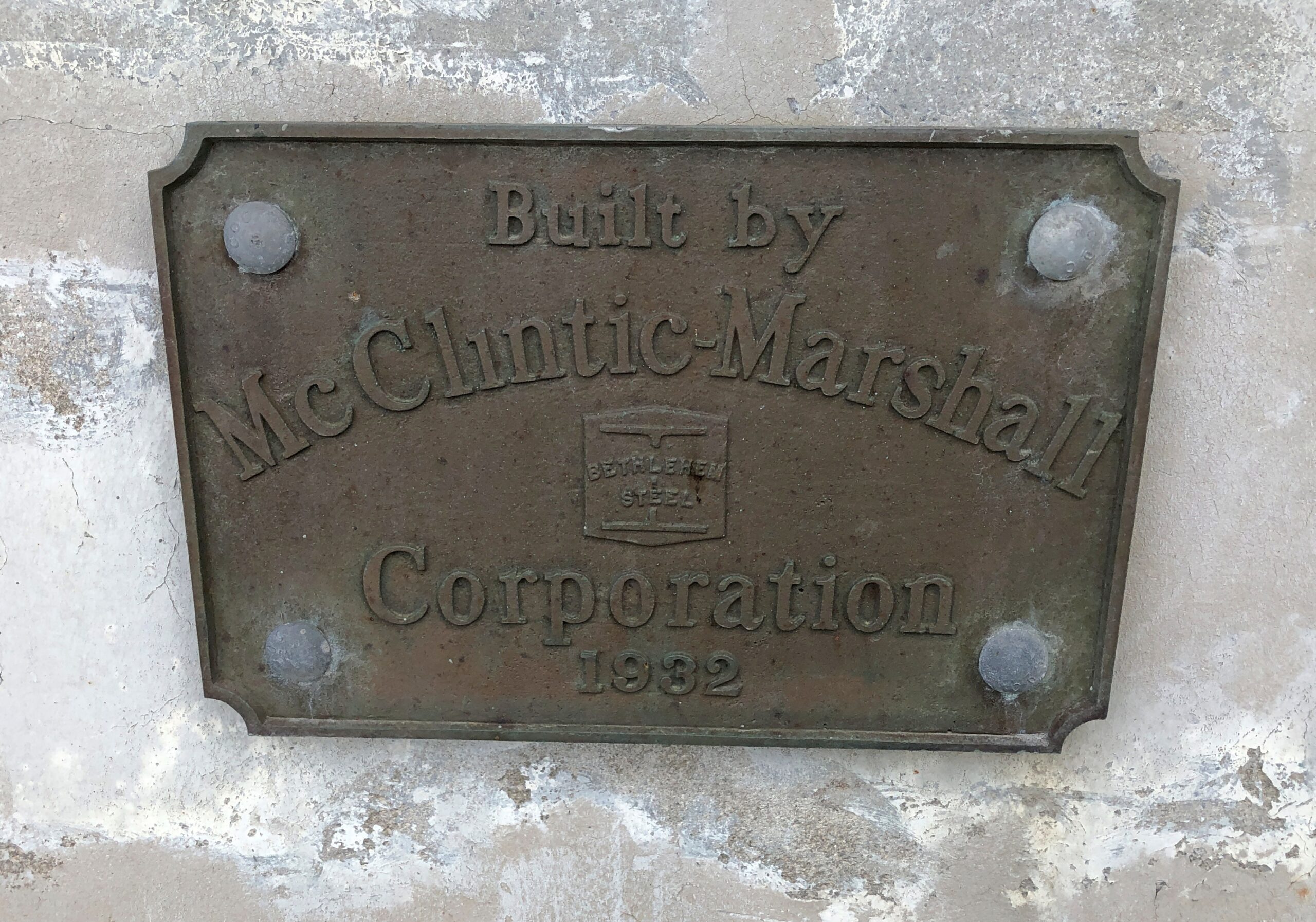
Bridge builders.

McClintic-Marshall was just warming up with the French King Bridge. Not long after, the company won a contract for the superstructure of the Golden Gate Bridge.

“The McClintic-Marshall Co., a subsidiary of Bethlehem Steel Corp., bid $10,494,000 for the contract to build the steel superstructure,” notes the Pottstown Historic Society. “Of course, because McClintic-Marshall was located in Pottstown, the outcome of this bid was of enormous importance for the entire area… On Jan. 12, 1933, anxiety gave way to joy as The Pottstown Mercury announced “M’CLINTIC’S BIG CONTRACT TO BE SIGNED TODAY.”
Finally, the name. French King after a nearby large rock in the middle of the river of that name. Before the river was dammed, it rose prominently out of the water. That naming is vaguely attributed to passing Frenchmen but more seems like one of those go figure origins common enough in place names. Maps wouldn’t be quite as interesting without them.

Leominster, Massachusetts

The highway Massachusetts 2 – locally called Route 2 – traverses the northern reaches of the commonwealth, from the Boston Common to the border with New York more than 140 miles away, or vice versa. I went west, fortunately not starting in Boston itself, but still slightly inside Route 128.

Once you leave the thickest of metro Boston headed westward, the route becomes more casually picturesque, mildly winding through mildly hilly territory, providing access to Massachusetts towns more and less pleasant, depending I suppose on the vagaries of their economic history. Not an epic drive of the kind you encounter high in some mountains or across wide bodies of water, but a satisfying one all the same.

Eventually you come to the western part of the state, as mountainous as it gets, and the road acquires appropriate twists and vistas. My favorite moment on the road was when I first drove it in 1989. I took one of those twists, and saw a suddenly appearing sign that said Entering Florida. Of course someone has posted a picture.

Florida, Massachusetts, that is, a town (pop. 671) in the Berkshires.

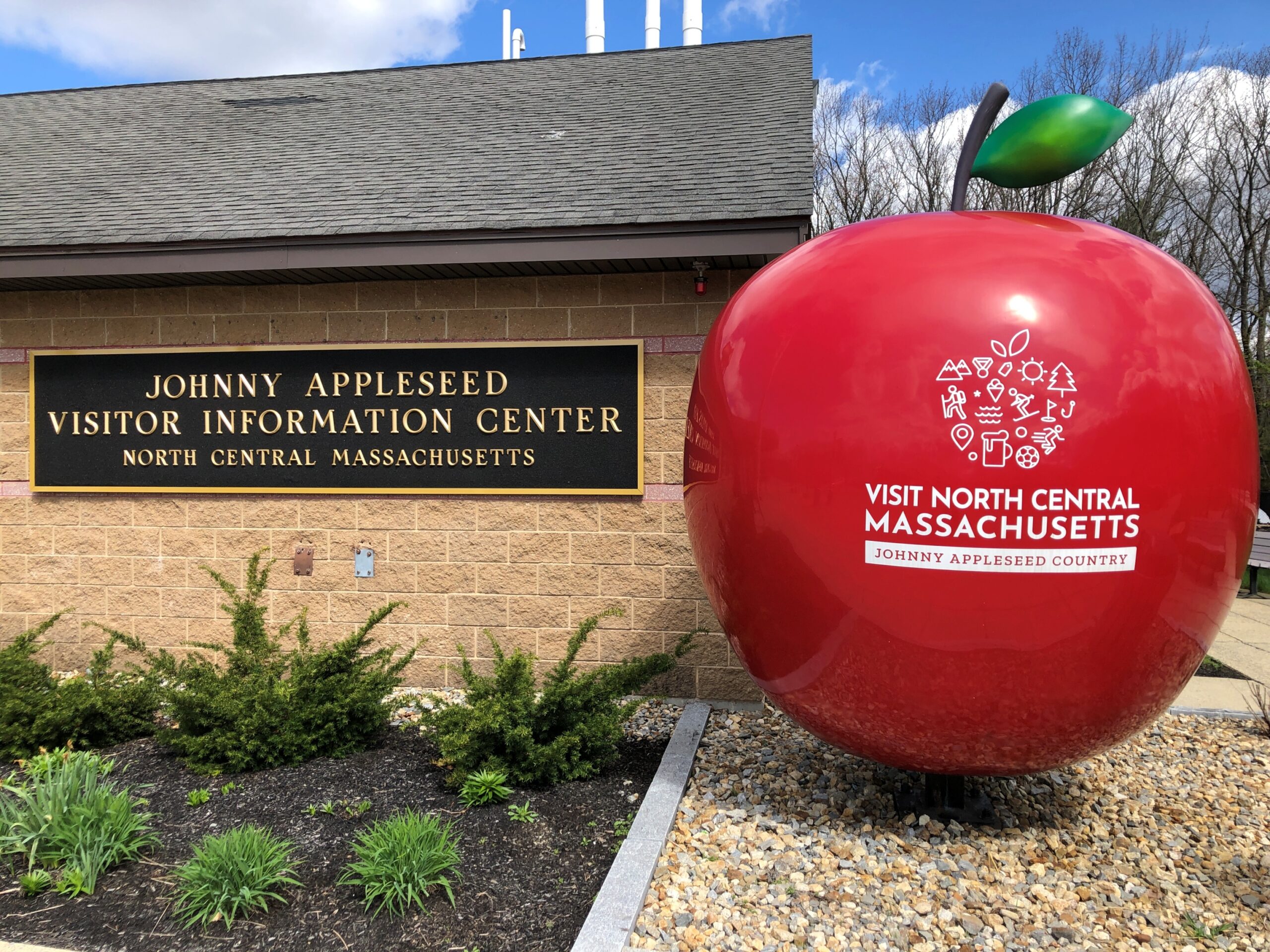
That was another drive. In April I traveled on Route 2 as far west as Shelburne Falls, but I’m getting ahead of myself. First I stopped at a rest stop on the way that reminds us that Johnny Appleseed hailed from these parts.

Indeed, John Chapman was born in Leominster, Massachusetts before the Revolution, though he came to fame in the wild-and-woolly Northwest Territory (and its spanking-new states) and now reposes in Fort Wayne, Indiana under some apple trees.

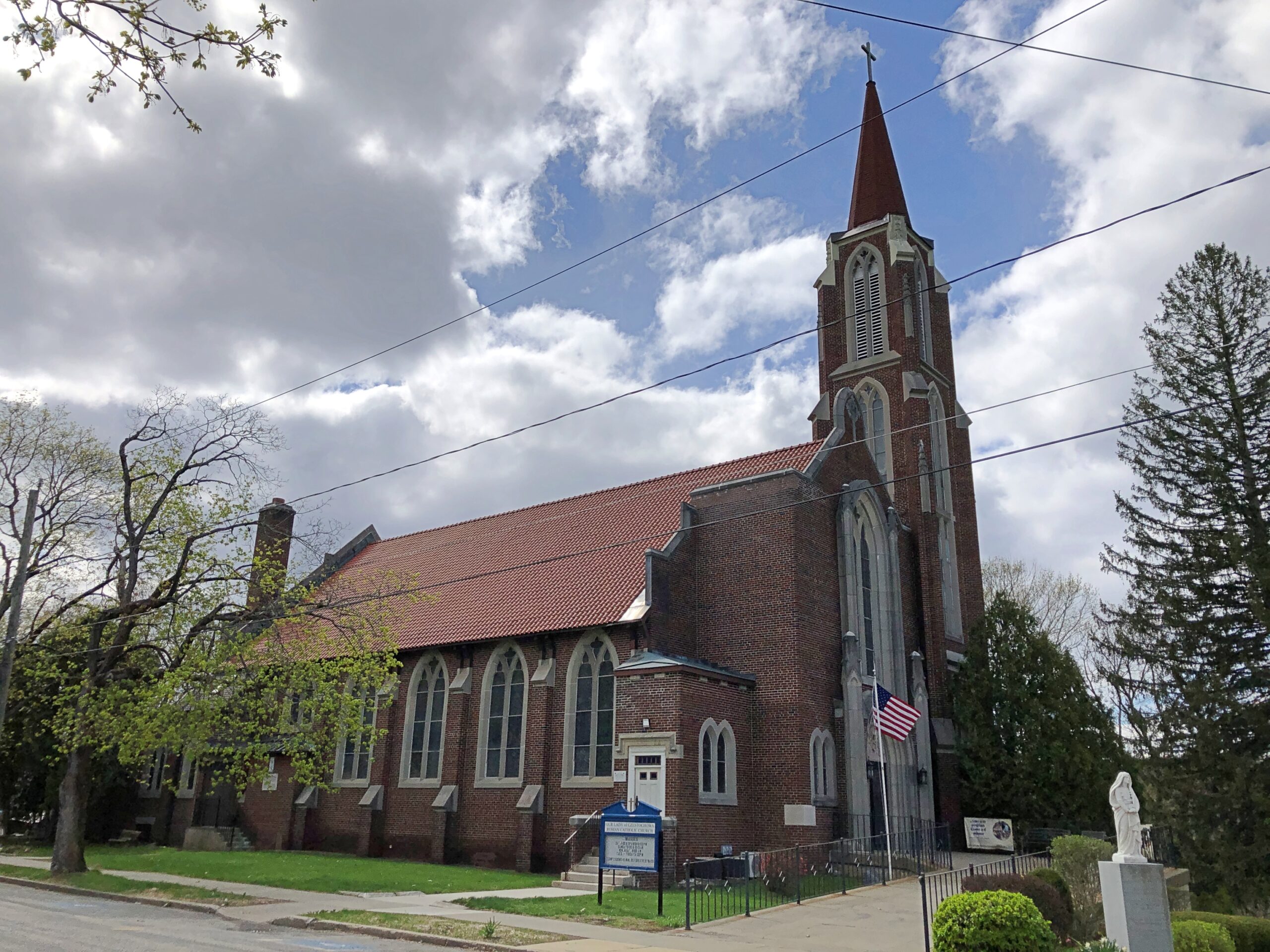
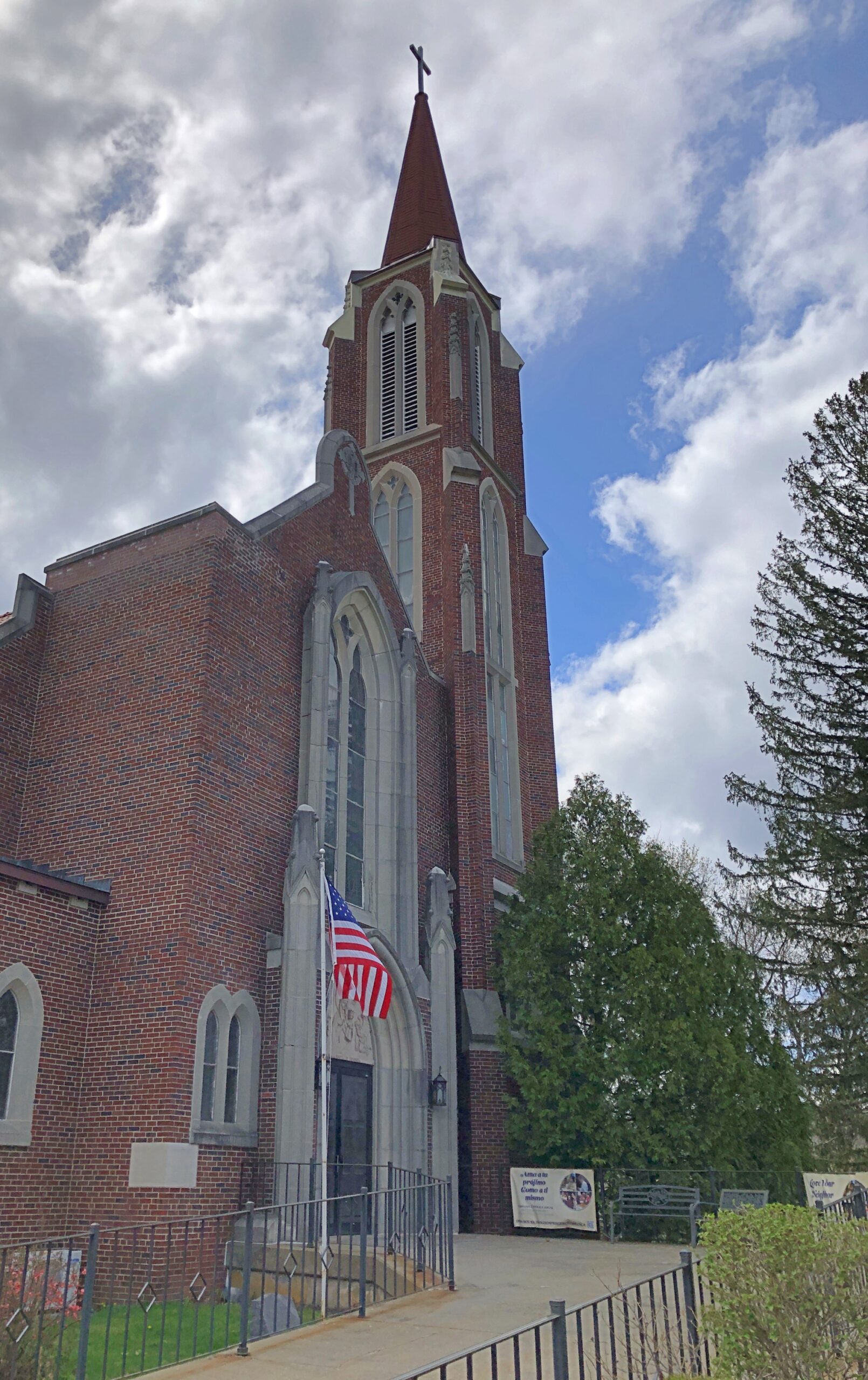
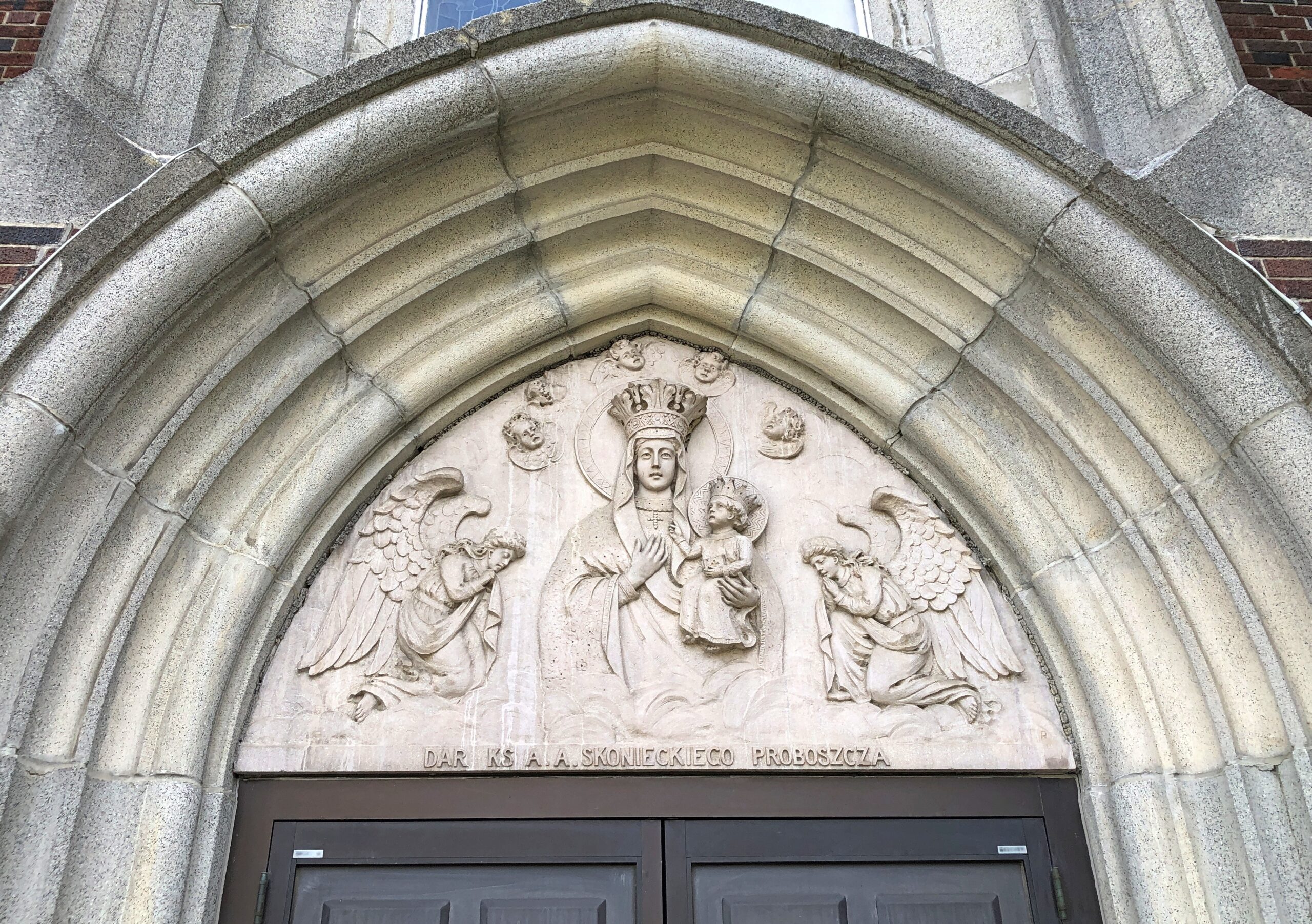
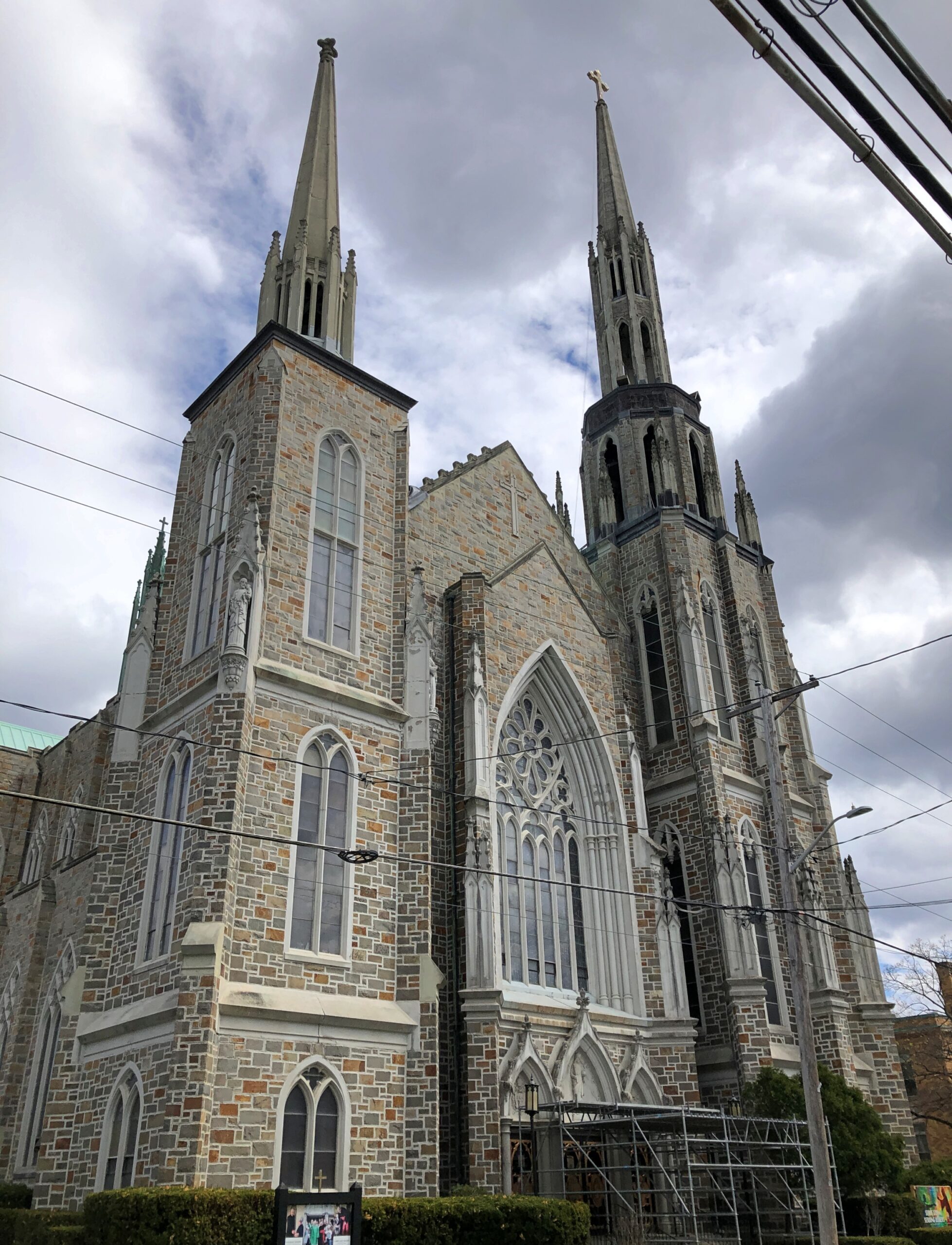
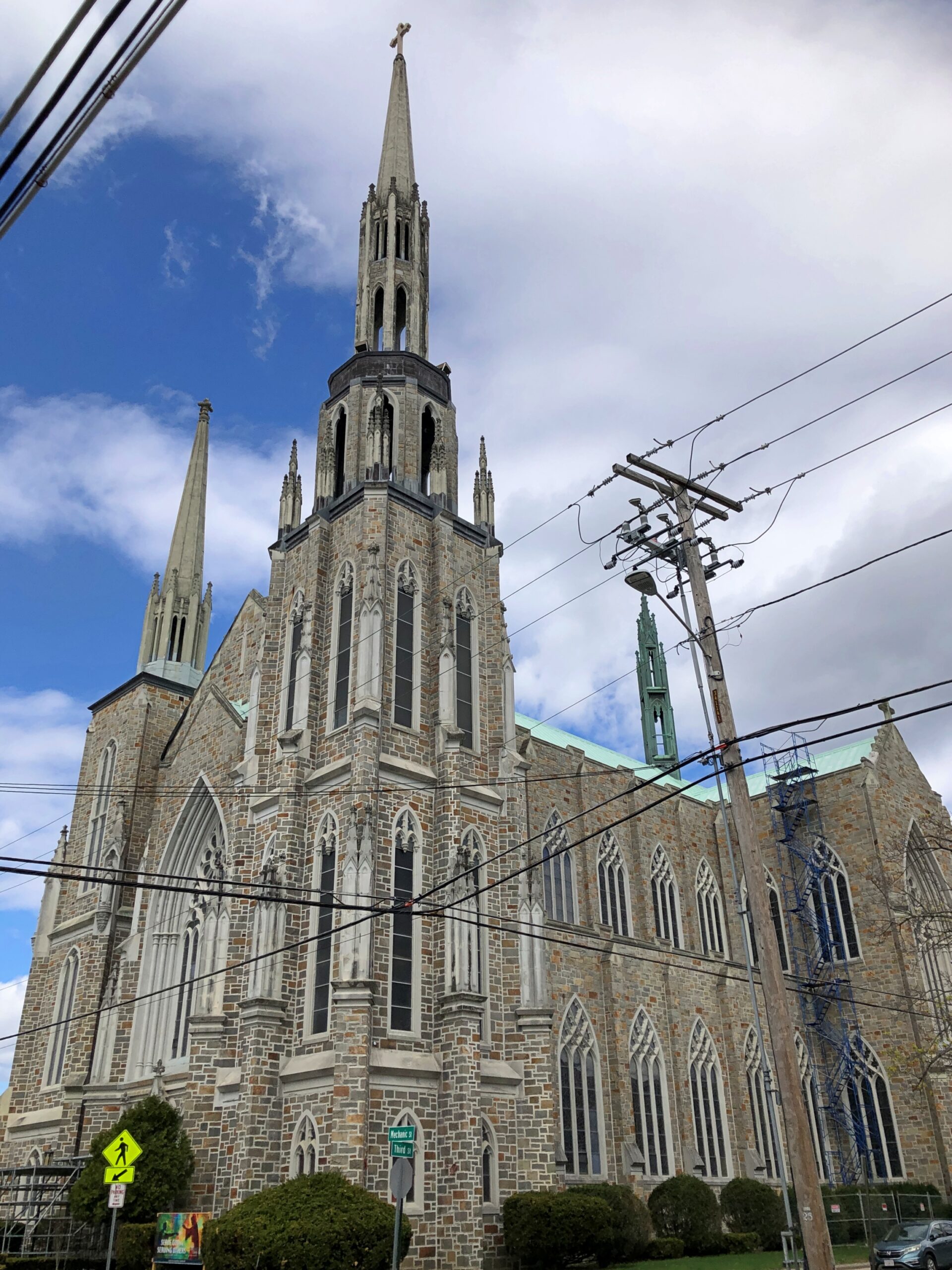
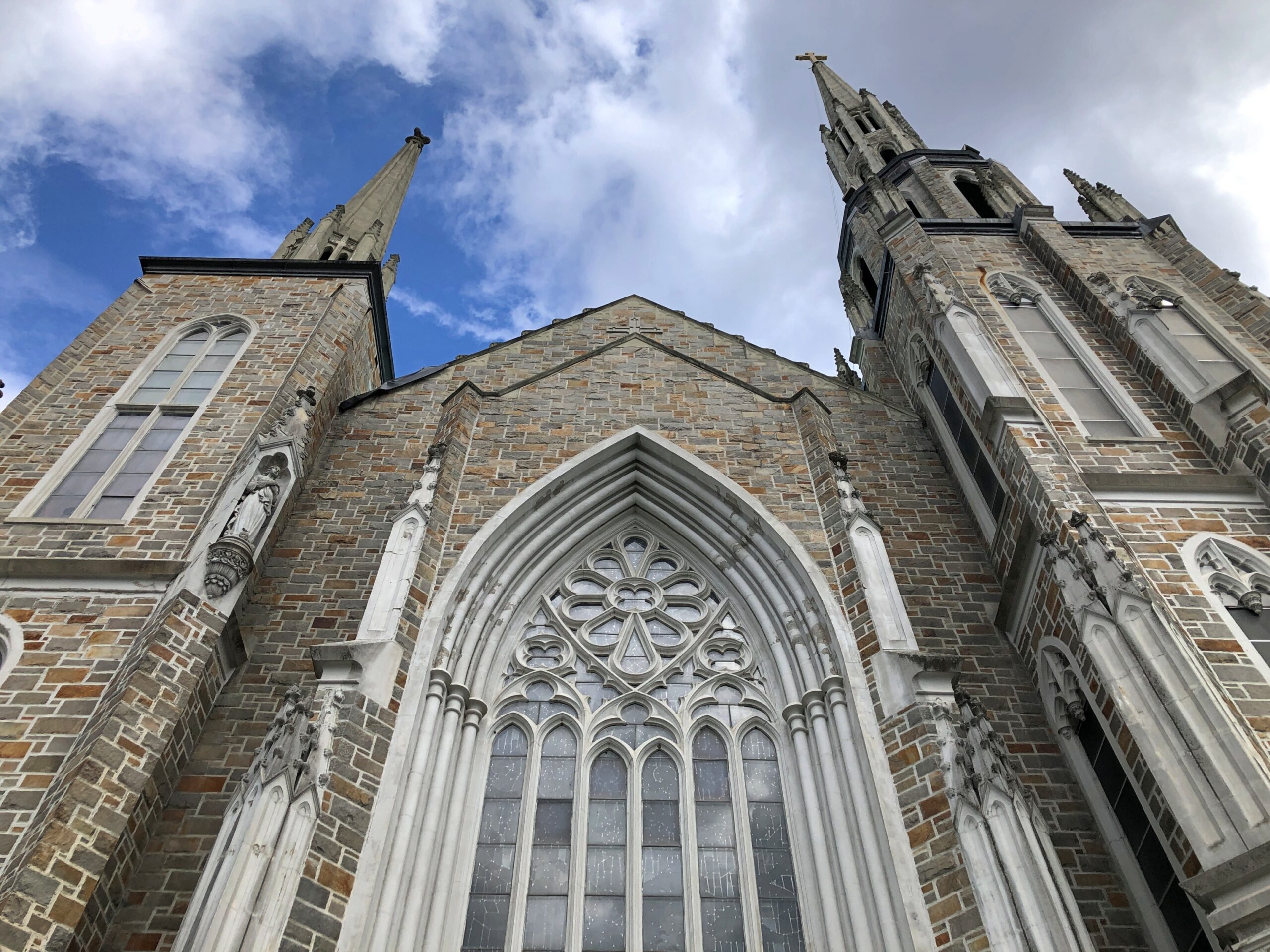
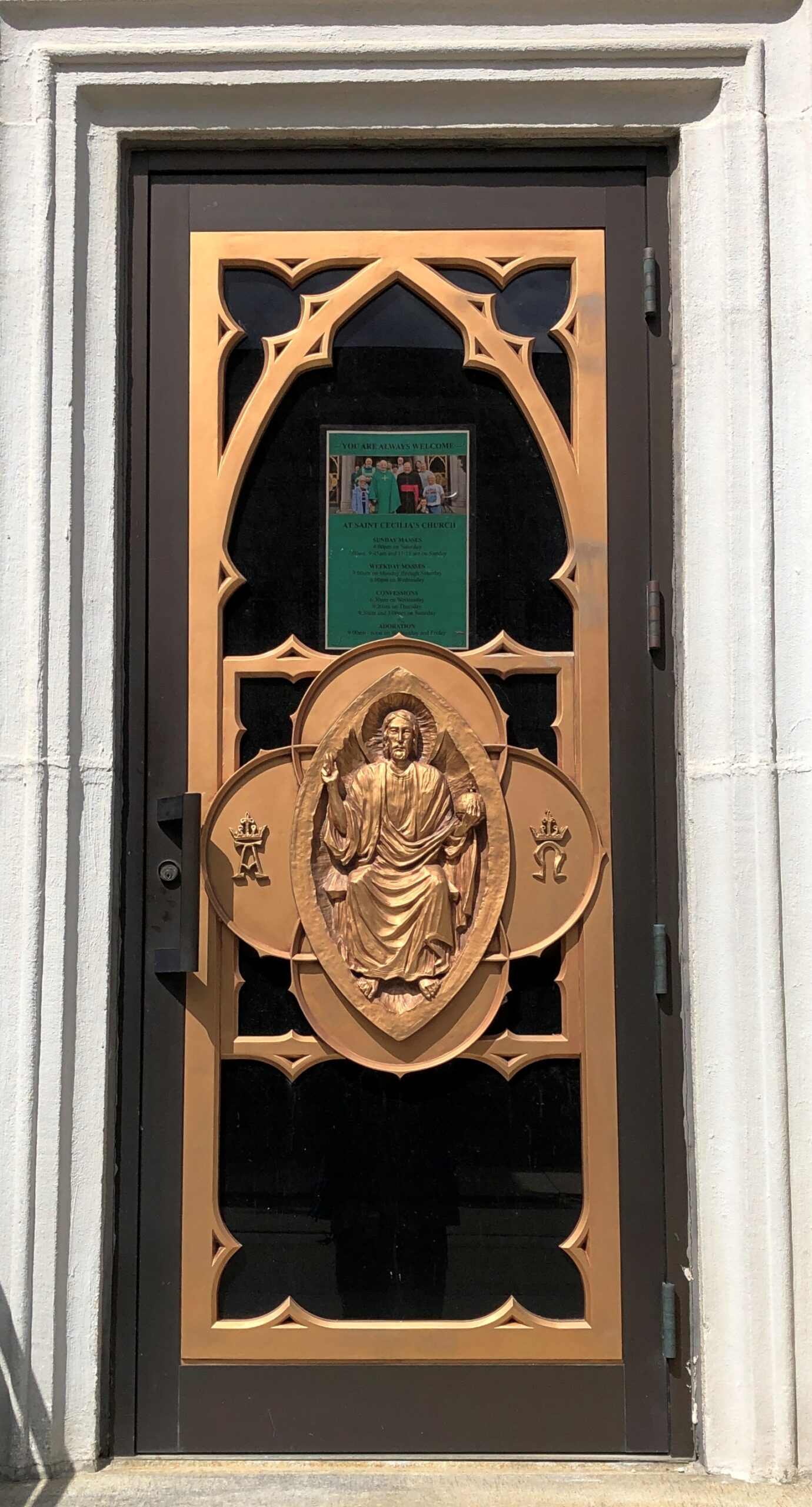
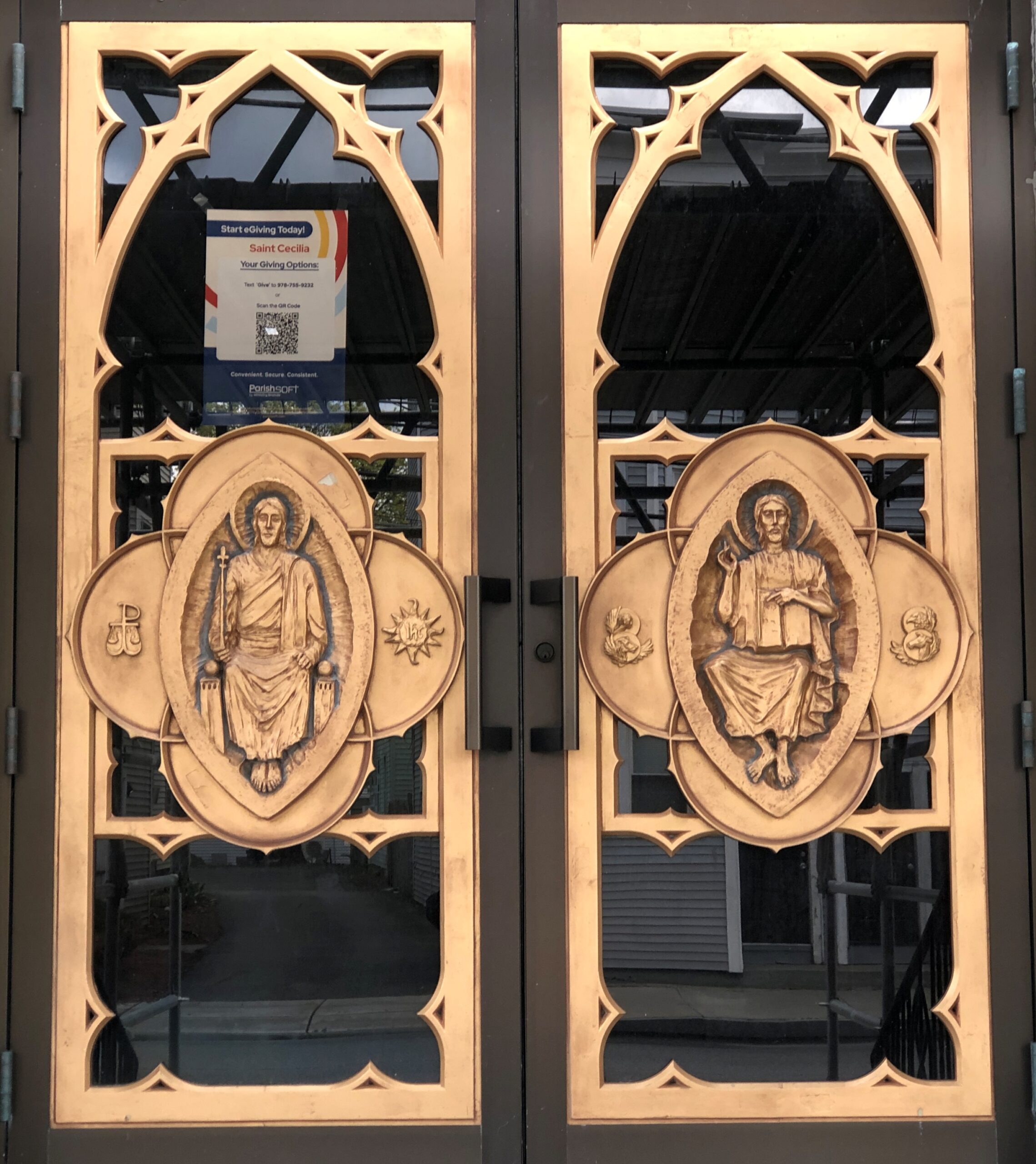
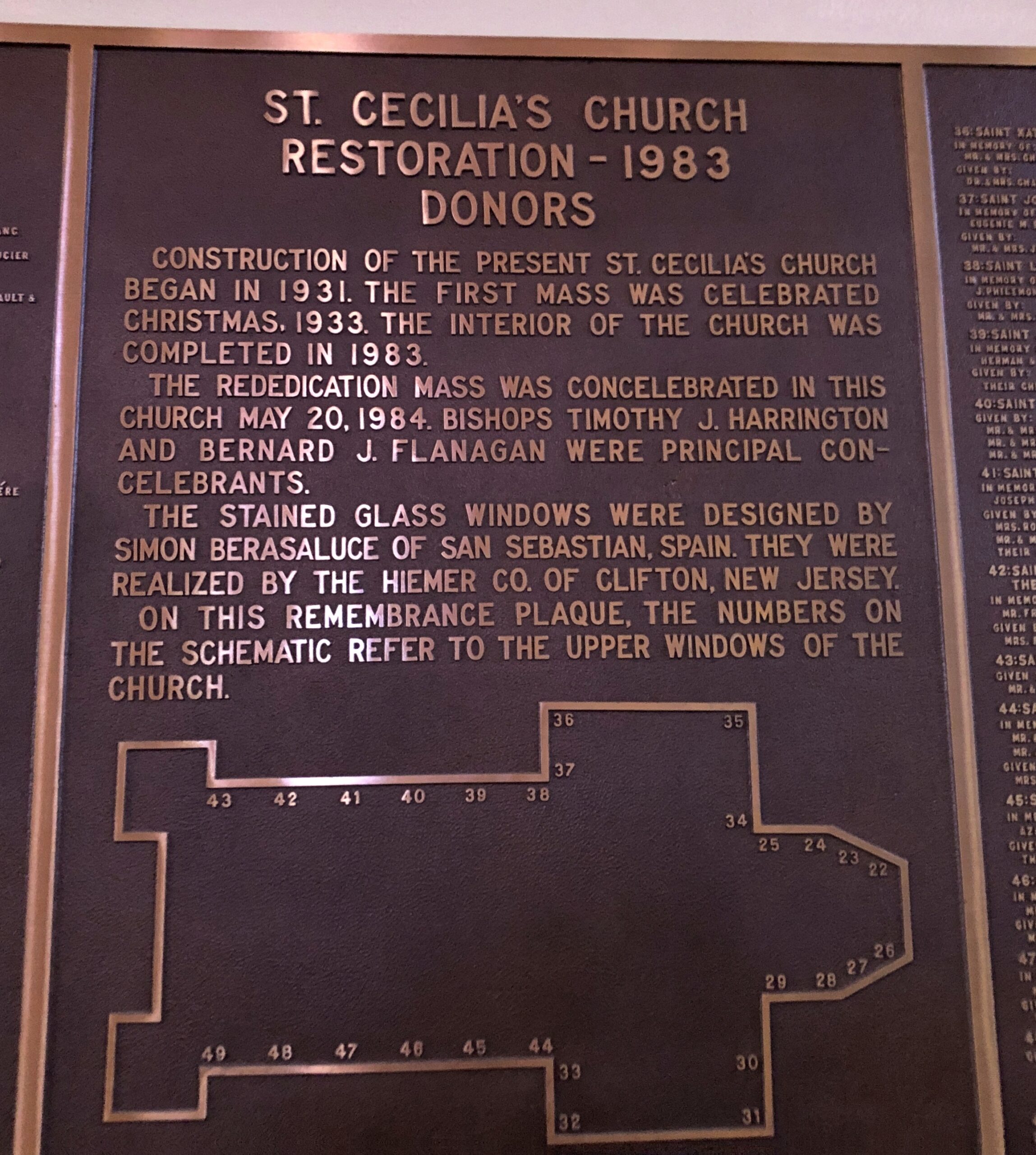
I was inspired to stop in Leominster (pop. 43,800). First stop, St. Cecelia’s Church, whose construction began in 1931 and which was restored in 1983.

Good to see a church of that name; reminds me of Santa Cecilia in Trastevere, a favorite part of Rome for me (40+ years ago), though the Massachusetts church itself is rather different.

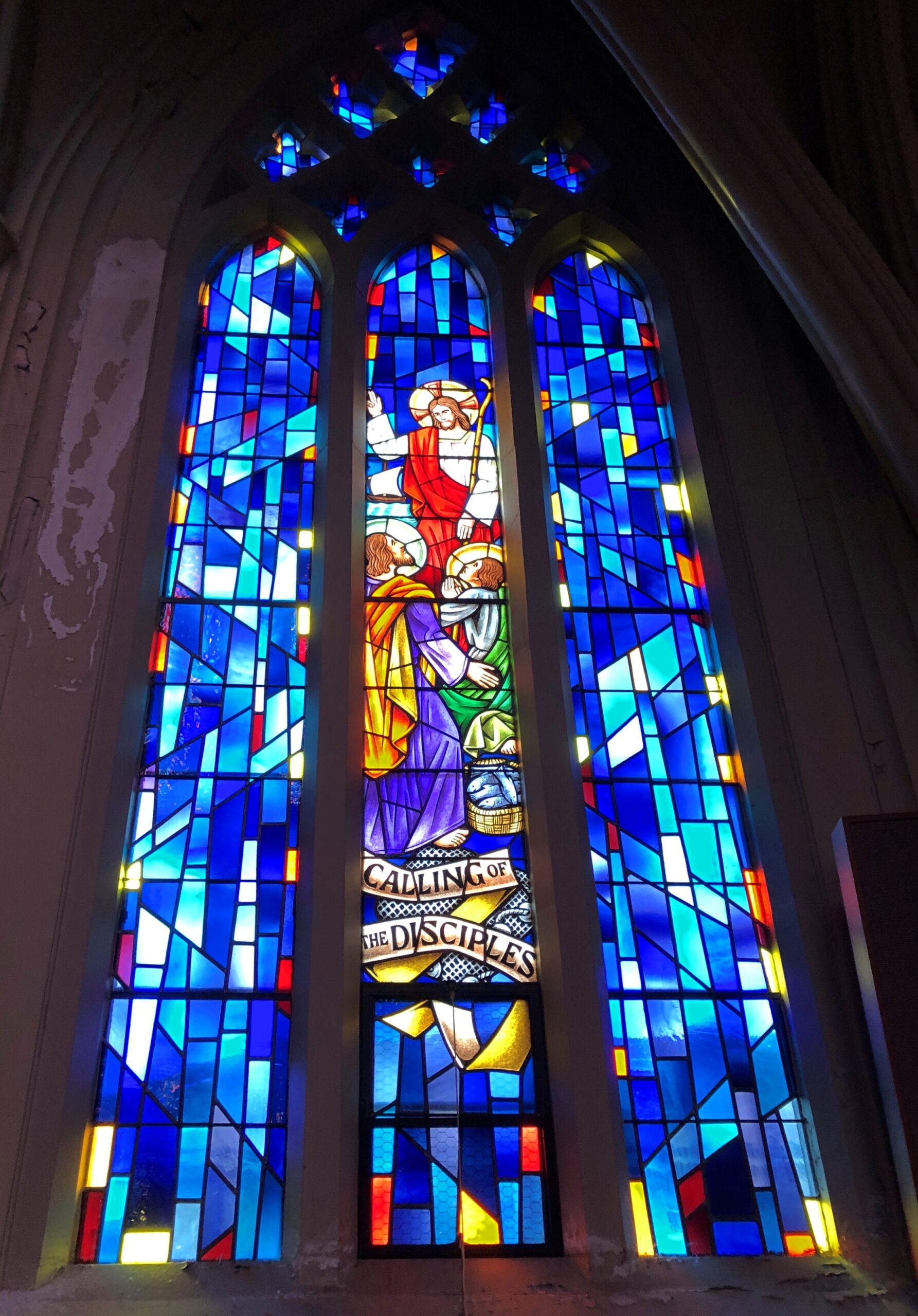
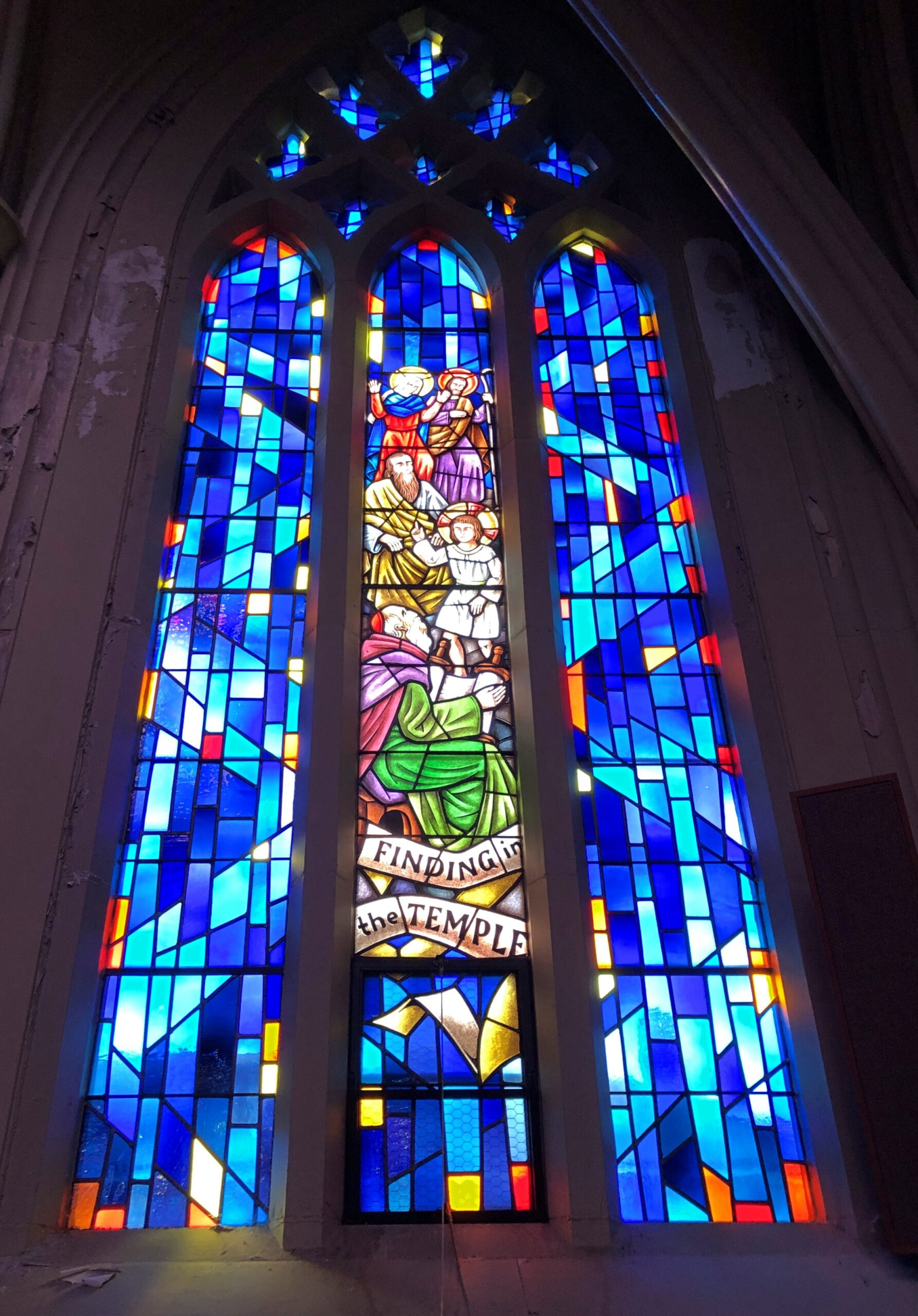
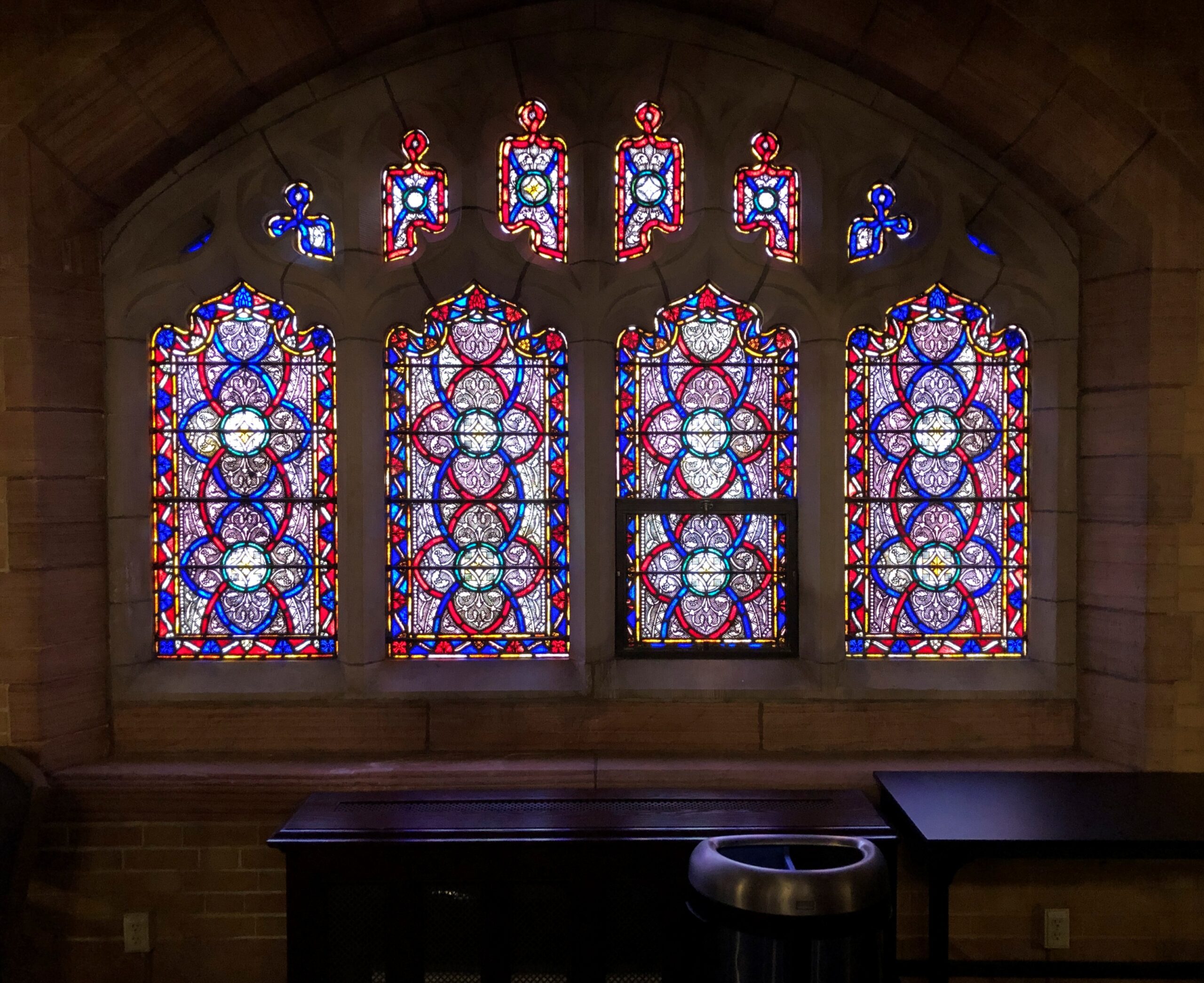
Some fine stained glass, designed in Spain, created in New Jersey.

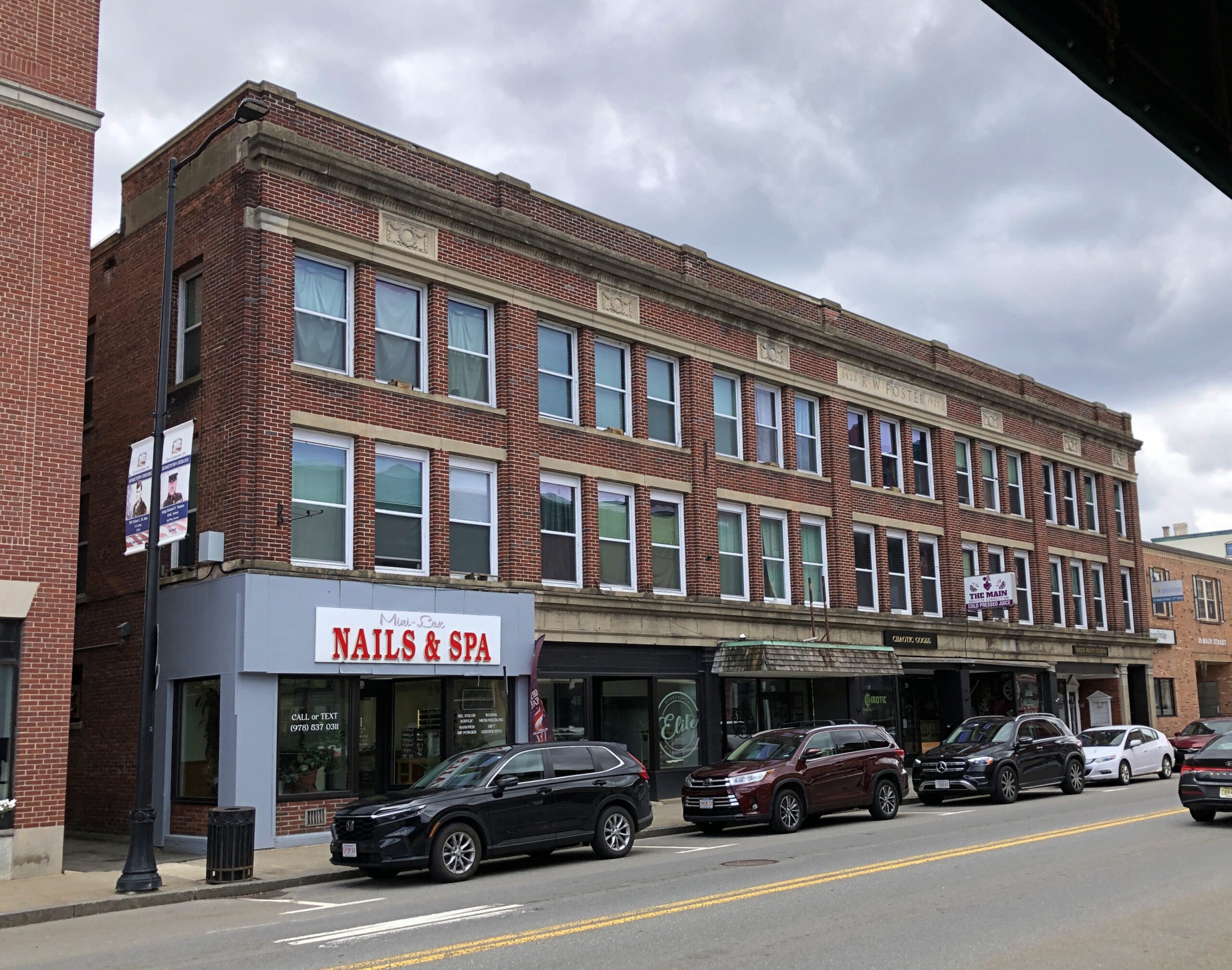
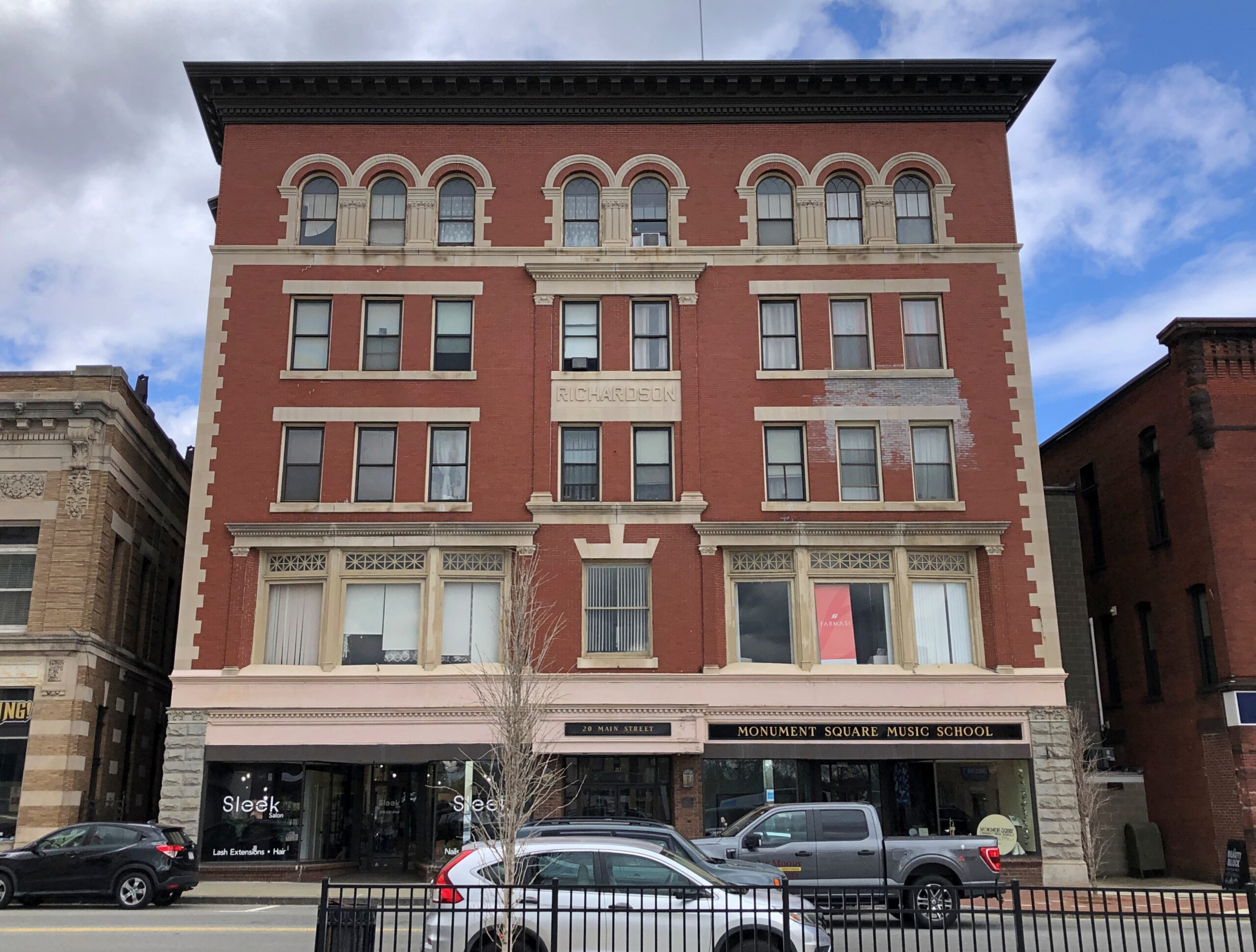
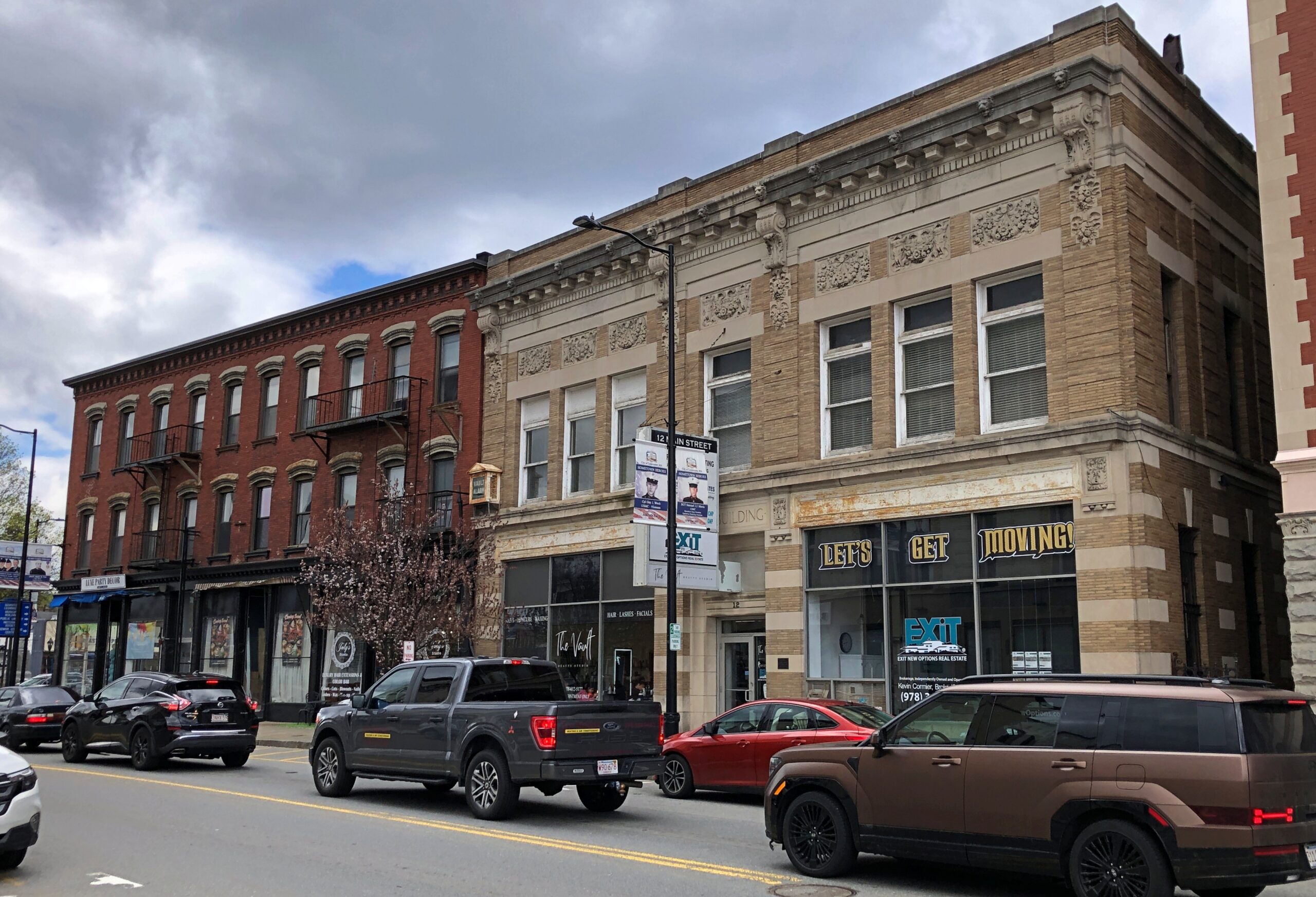
Leominster has the sort of long economic arc (for America) one finds in the Northeast: agriculture to manufacturing to services, though those first two economic activities are to some degree ongoing even now. The town is prosperous enough to support well-kept and still-used downtown buildings.

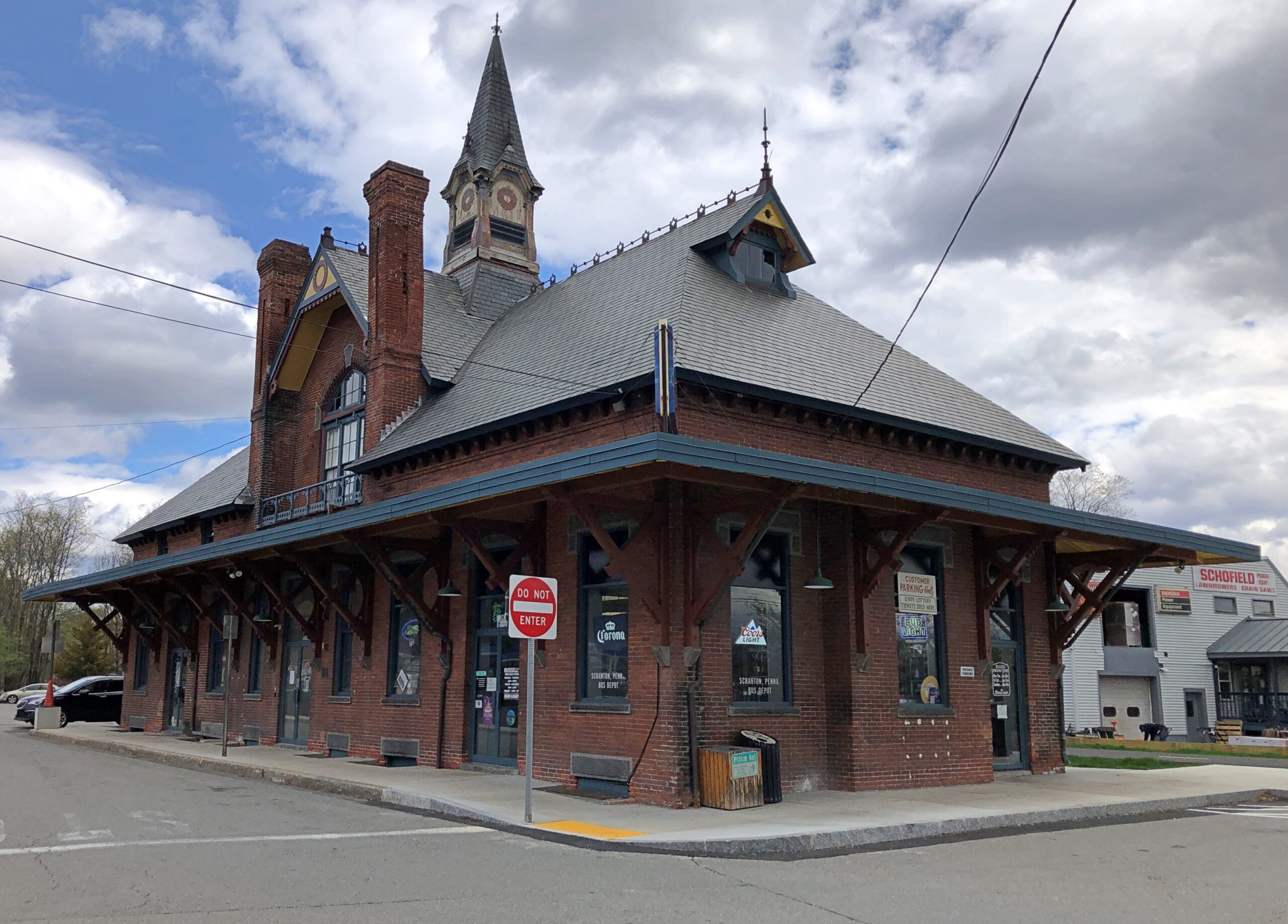
I liked the handsome former train station, now retail.

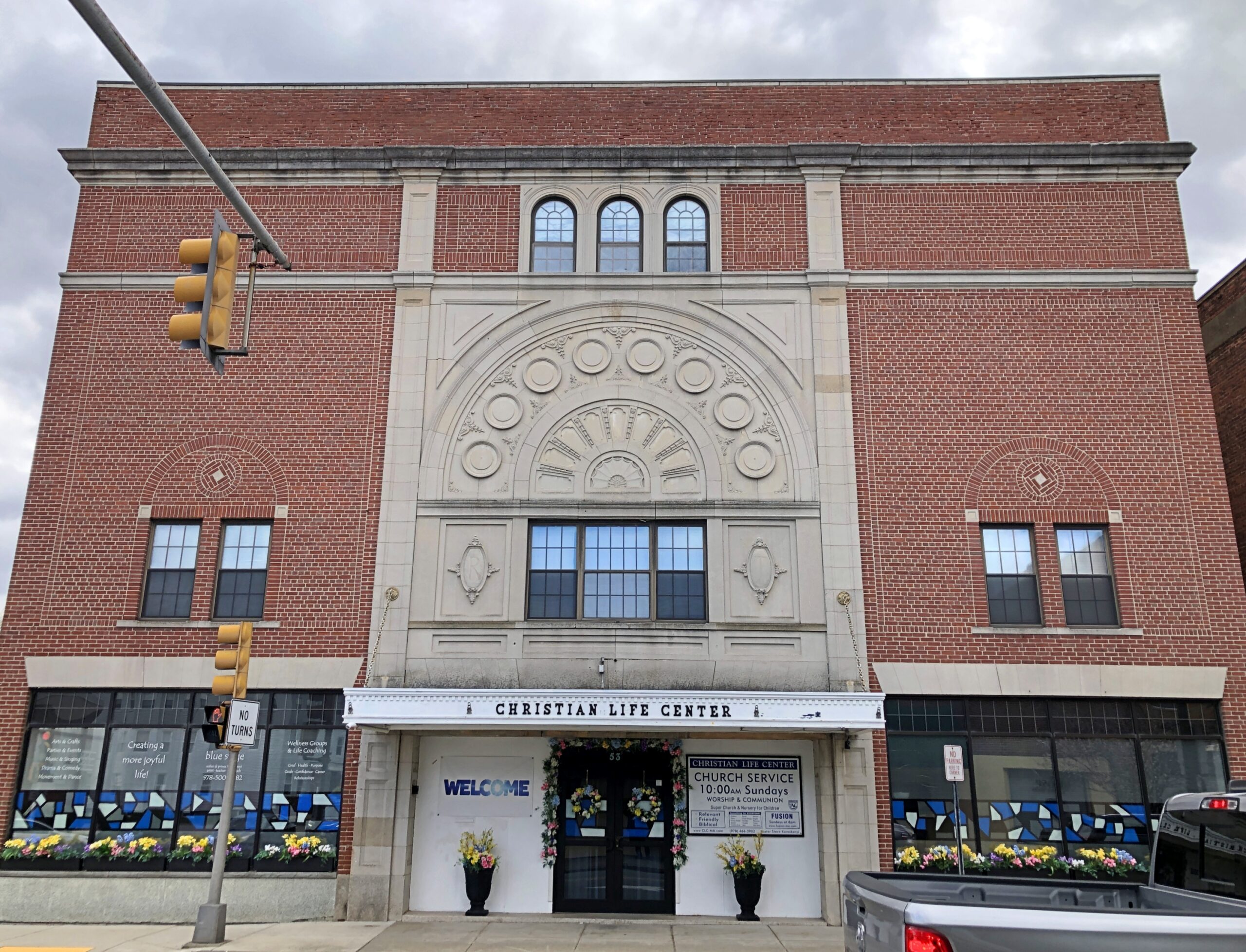
Another church.

Not as vaulting as the Catholic church down the road, but still a handsome brick structure. I had to look into it: this church is affiliated with the Assemblies of God, the largest Pentecostal association in the U.S.

Manufacturing in the case of Leominster meant a remarkable specialty in the 19th century and into the 20th: combs. Even more remarkable, a history of American comb making, published in 1925, is posted online, namely Comb Making in America, “An Account of the Origin and Development of the Industry for which Leominster has Become Famous to which are added Pictures of Many of the Early Comb Makers and Views of the Old Time Comb Shops.”
That publication date puts it in the public domain. Ah, there’s another setting for a streaming service limited series costume drama — among the cutthroat world of comb making in 19th-century Leominster. I don’t know that “cutthroat” is accurate at all, but who cares. Maybe two brothers fighting for control of their dying father’s comb empire, and their love for the same upper-class woman (who is anachronistically feisty), amid a backdrop of bitter labor agitation, with two labor leaders pushing for unionization, and their love for the same woman (a different woman, that is, one of the comb makers, but also feisty.). See, that wasn’t hard at all. Who needs AI to come up with ridiculous ideas?

The Forward of Comb Making in America calls Leominster the “present seat” of the industry in America: “The industry has changed this thriving town, which is about fifteen miles from Worchester and forty-five miles from Boston, from a small agricultural hamlet into an industrial center of more than twenty thousand people whose products are known throughout the world.”

In the early days, of course, making combs from animal horn and the like was a labor-intensive effort. A more modern industry arose with the invention of celluloid. Later came more sophisticated plastics and molding tech, and the expansion of the industry into other molded items. Such as Foster Grants and Tupperware, both of which originated in Leominster. A simple Google search reveals that there is still a plastics industry in Leominster.

I didn’t spend a lot of time in Leominster, so maybe I missed it. But where’s the giant comb or Foster Grant or Tupperware container in a prominent public place? Leominster officials and private boosters, get on it. Or at least invite the Wall Dogs to town to whip up some local history murals.

Mount Auburn Cemetery: The Stones

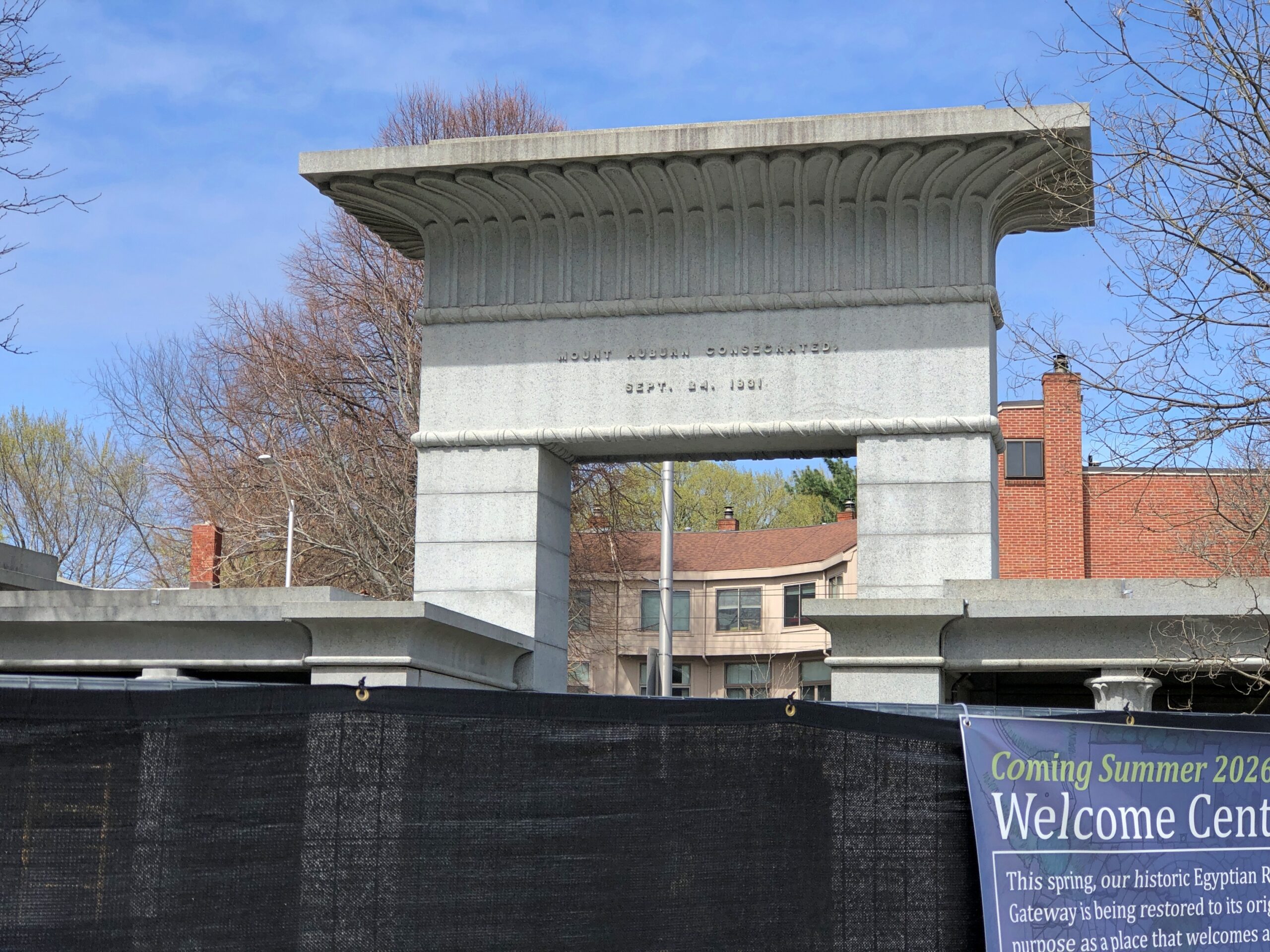
The main gate of Mount Auburn Cemetery, an Egyptian Revival structure, was behind a temporary fence the day I dropped by. That’s only reasonable, as an object that needs periodic renovation.

I took a paper souvenir from the cemetery, one that’s given away: a detailed map and guide. An exceptionally detailed map and guide, I should add, including not only the vehicular roads that twist around the grounds (something like the roads in greater Boston), but all of the many, many footpaths, all of which seem to have names. Also noted are special features, including chapels, ponds, named knolls, the sites of 62 notable people buried on the grounds, plus the sites more than 20 notable memorials or works of funerary art. It’s more than anyone could take in during a short visit, or even a lot of longer visits.

That’s never deterred me. I parked near the entrance and set out, picking up the map at the visitors center and spending a moment at Story Chapel.

The chapel is named for Joseph Story (d. 1845), associate justice of the Supreme Court, colleague of John Marshall and, in as much as I know about the subject (not much), a titan of early U.S. jurisprudence. He was also first president of Mount Auburn and, when his time came, he was buried there, though that was among the many memorials I didn’t happen to see.

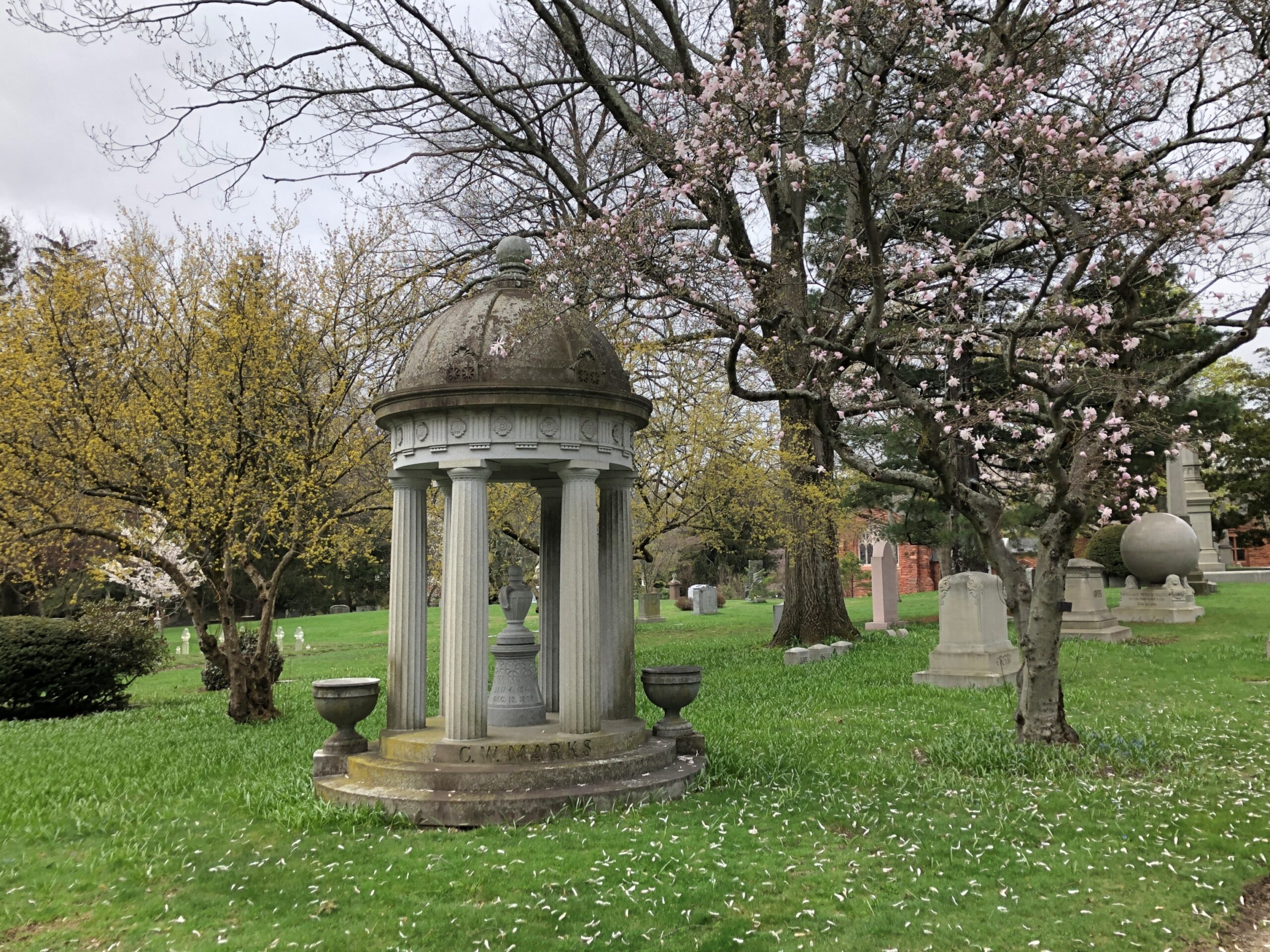
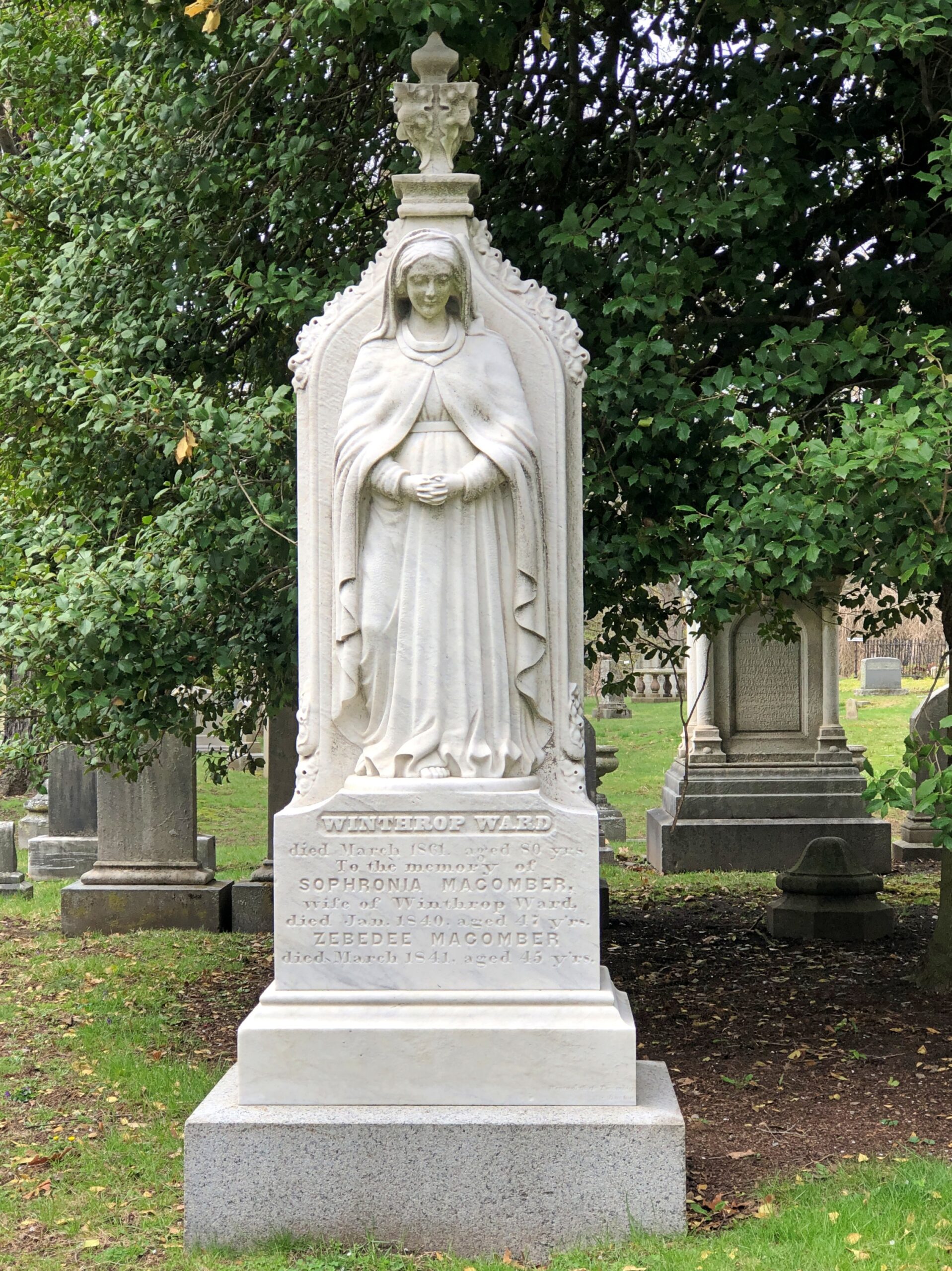
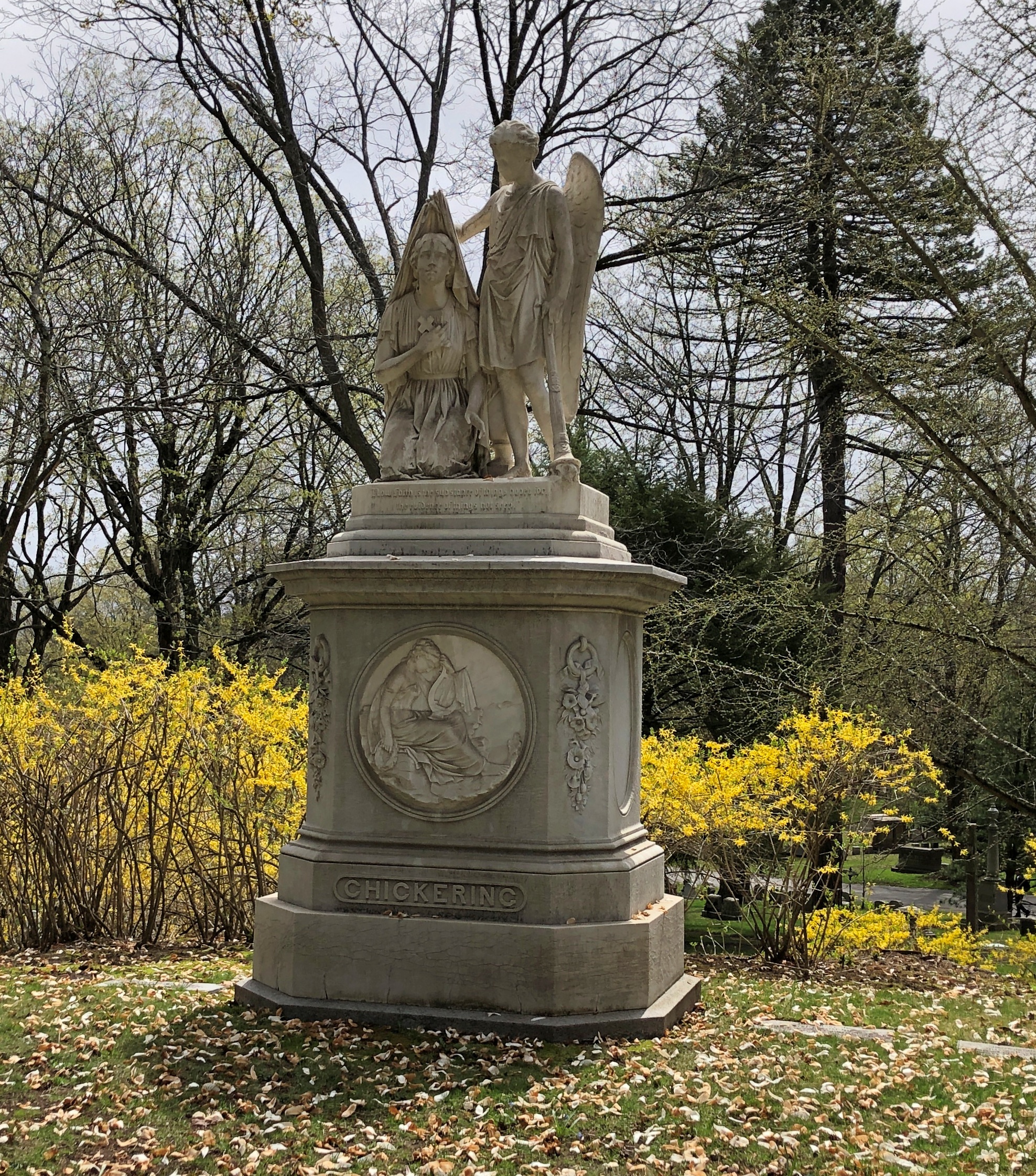
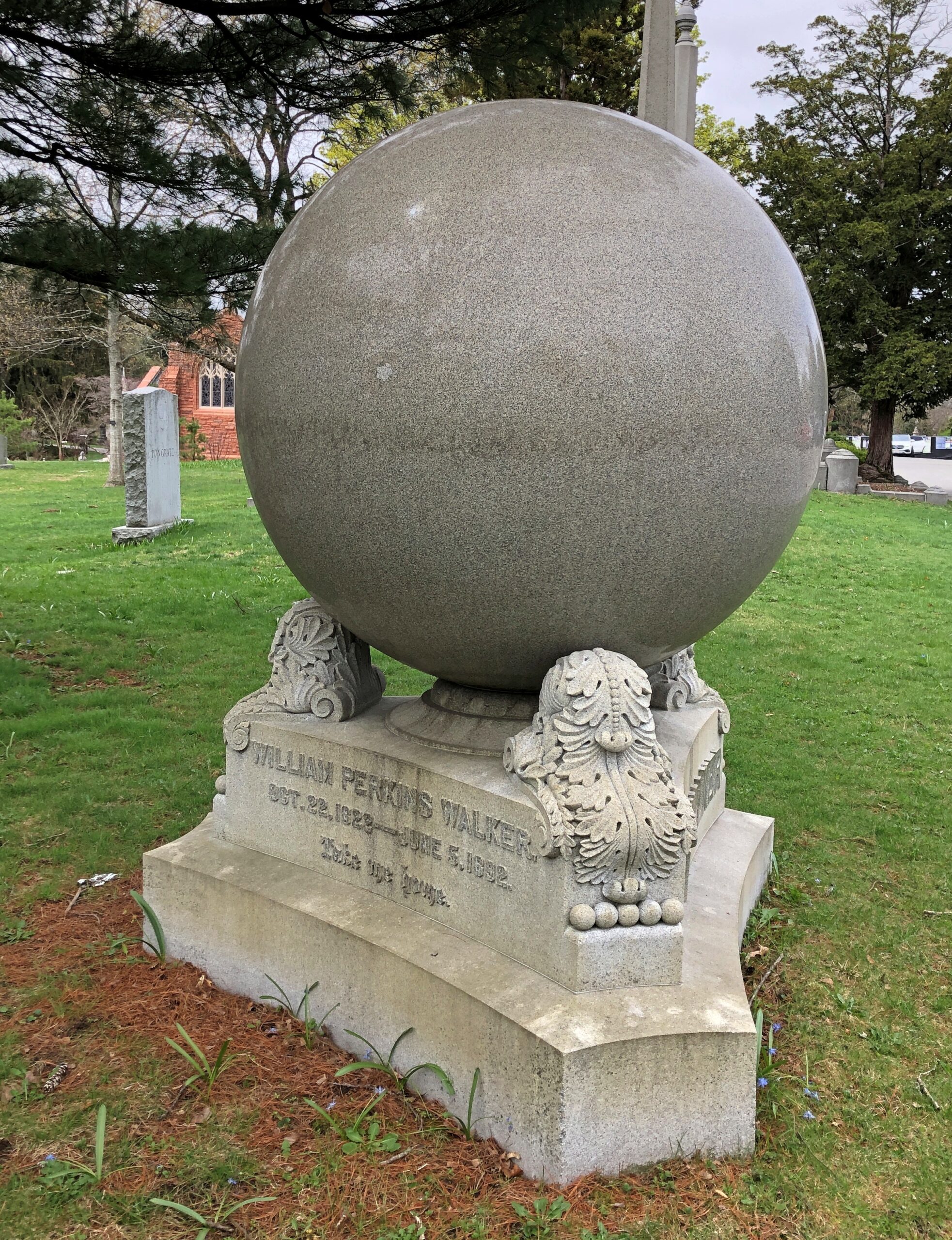
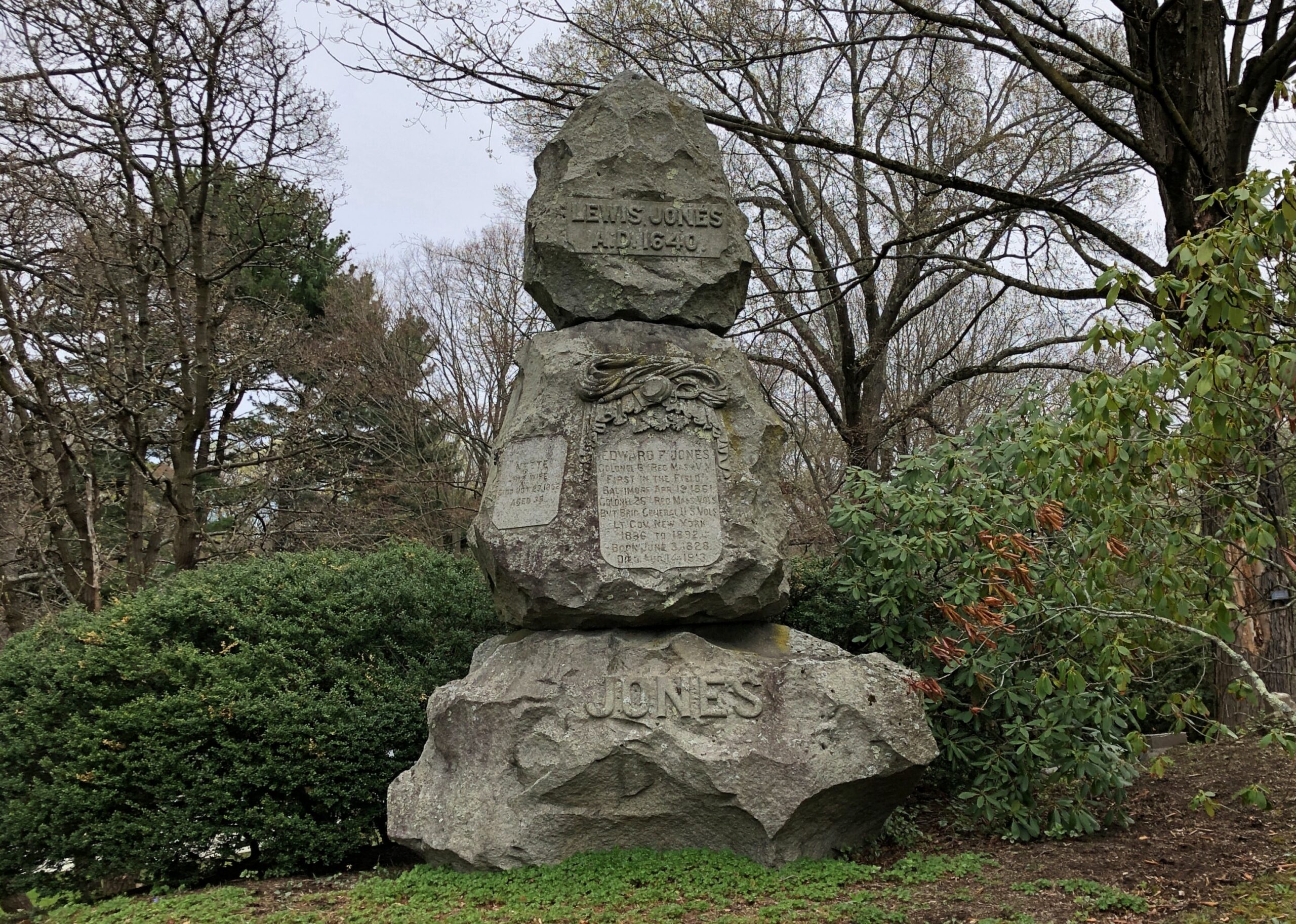
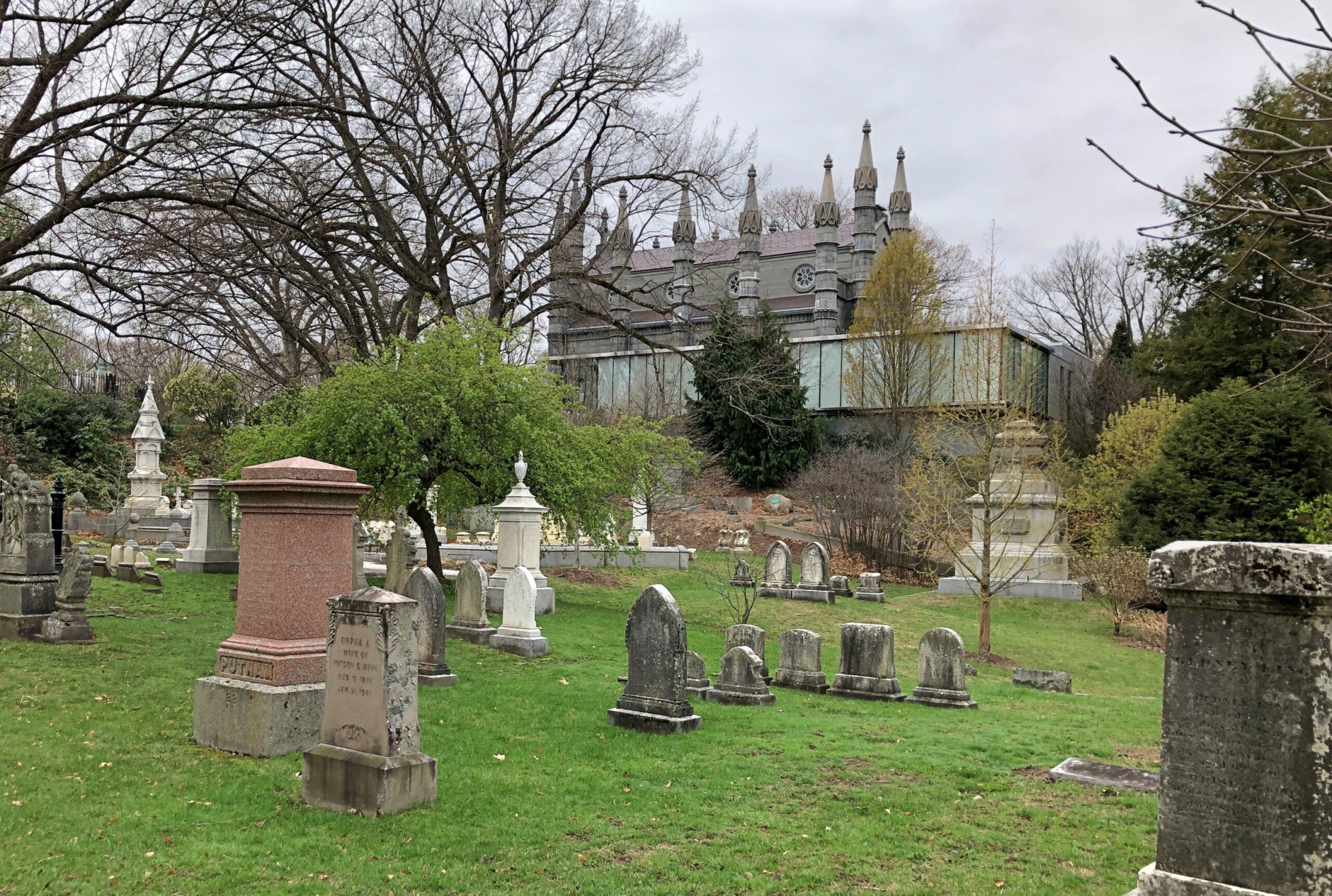
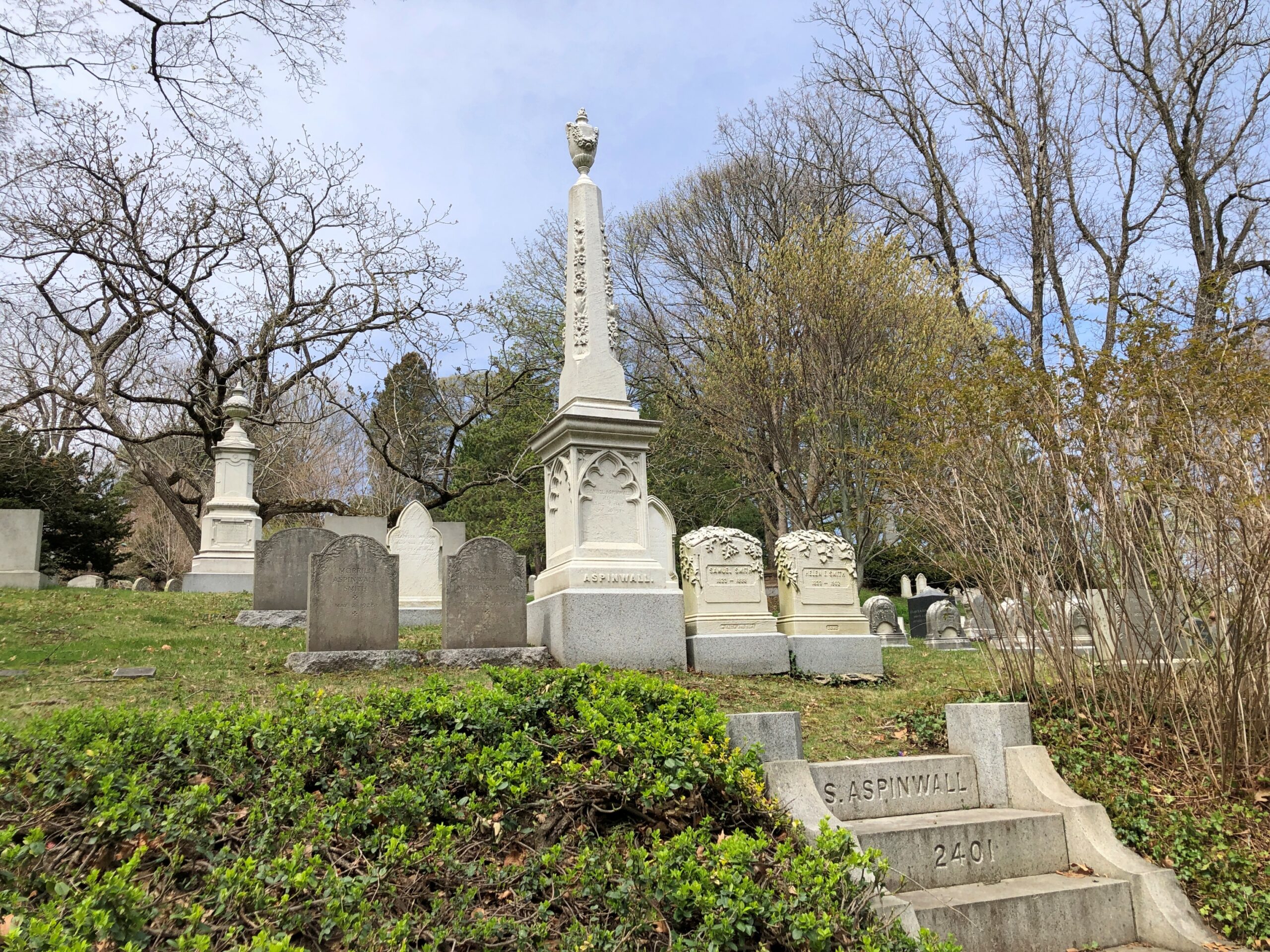
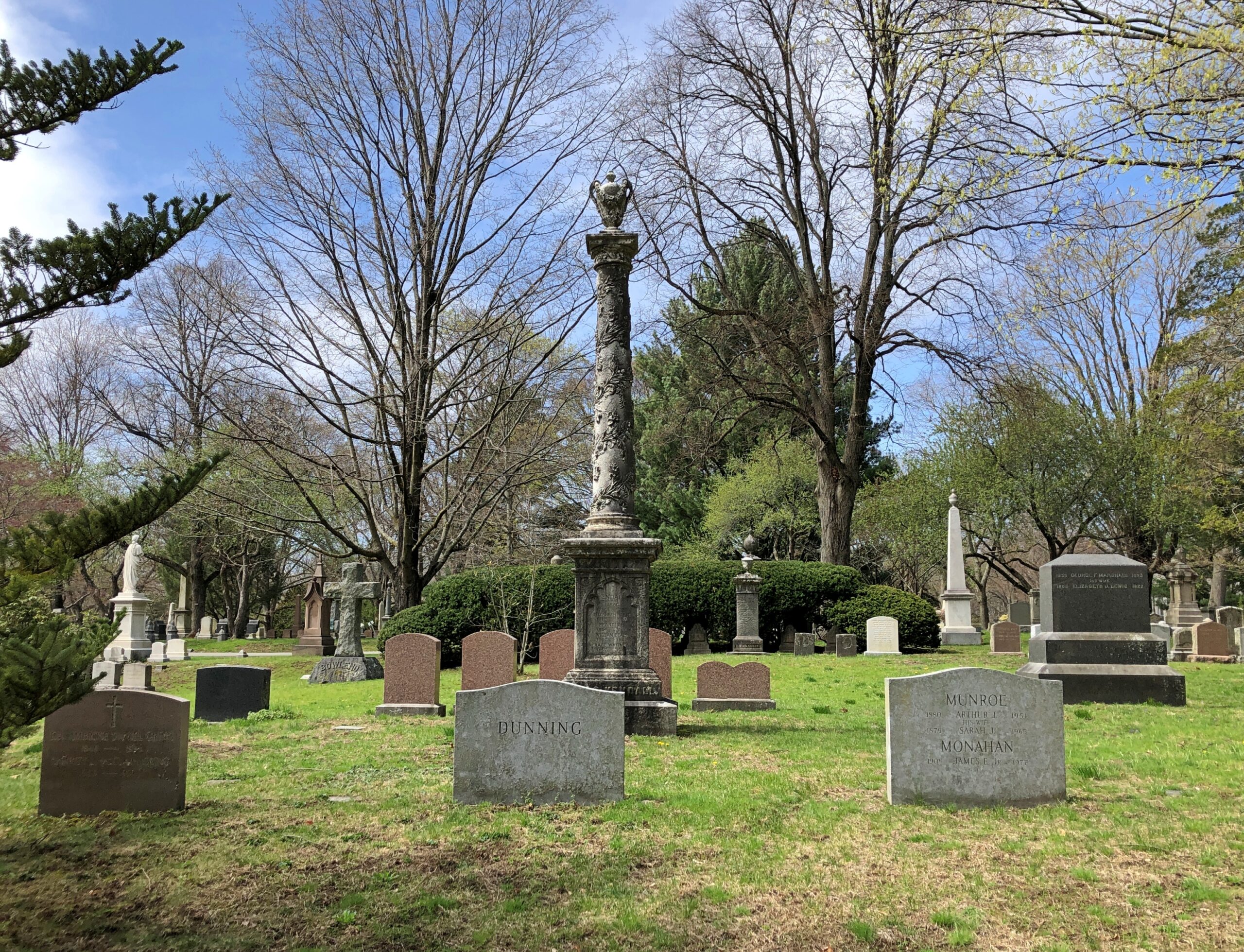
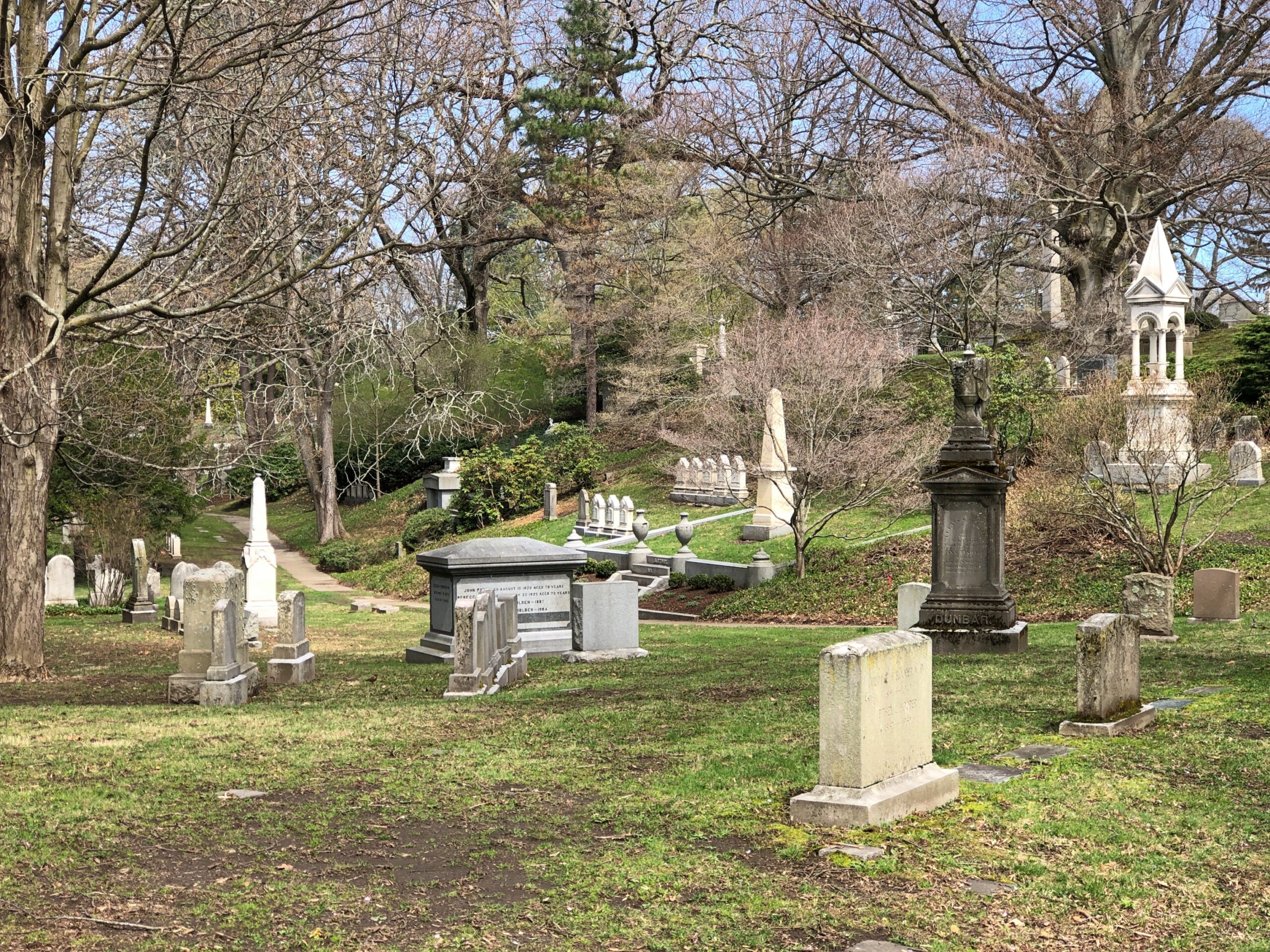
So many memorials. Some more conventional, but no less beautiful or impressive for it.

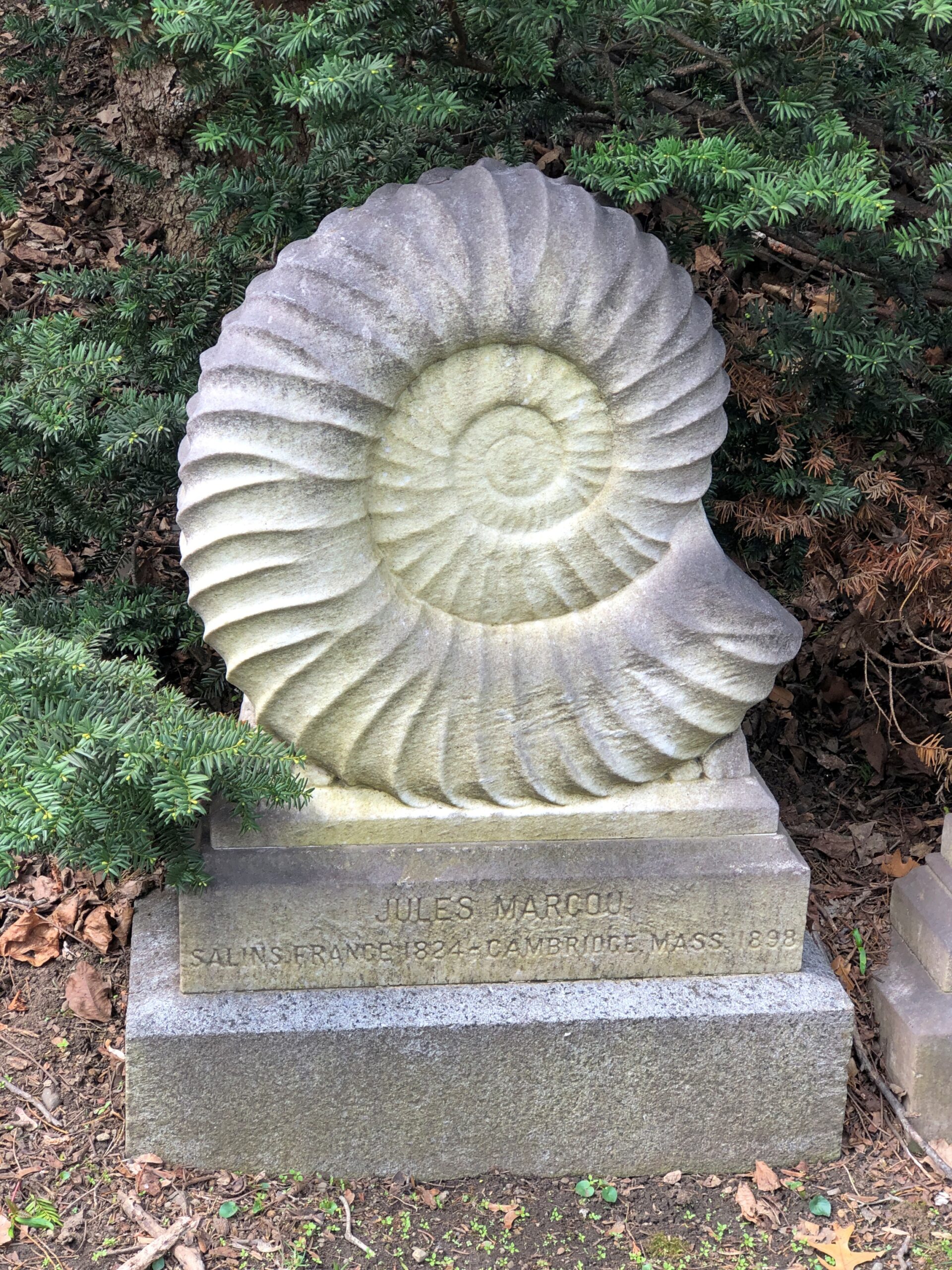
Some less conventional. Any grand cemetery needs a component of the unusual or odd.

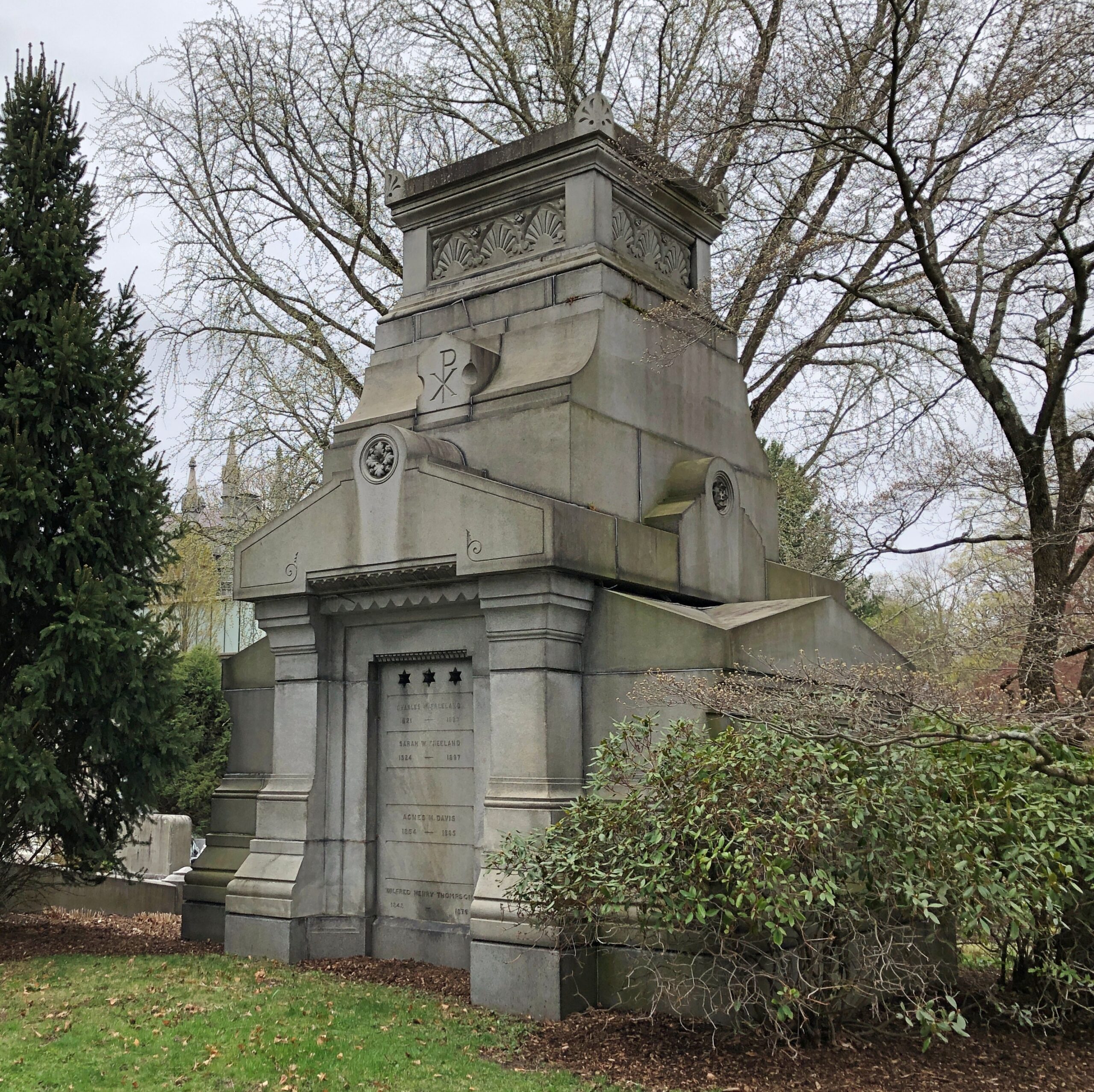
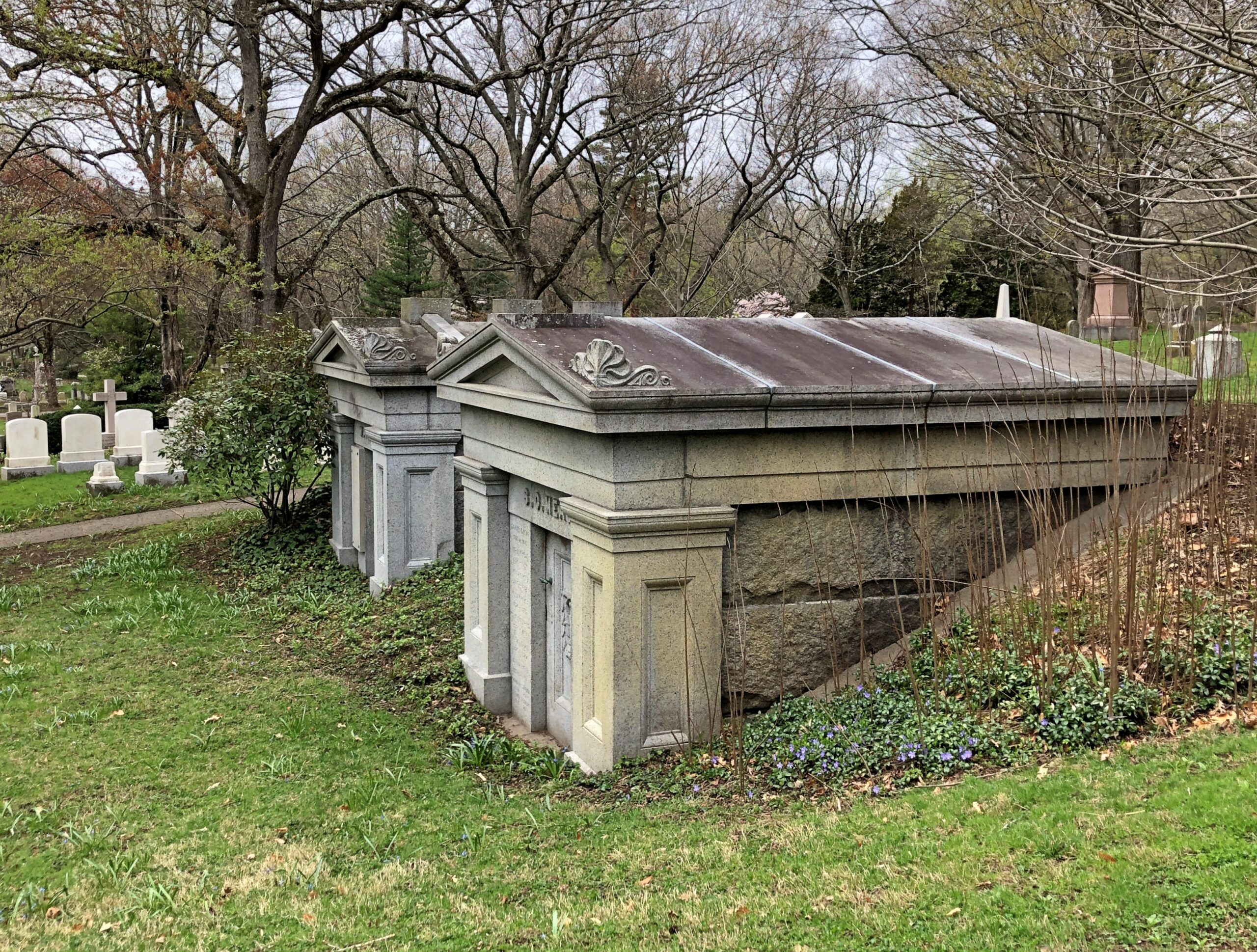
A number of mausoleums, though perhaps not as many as you’ll see at Green-Wood or Woodlawn in the Bronx.

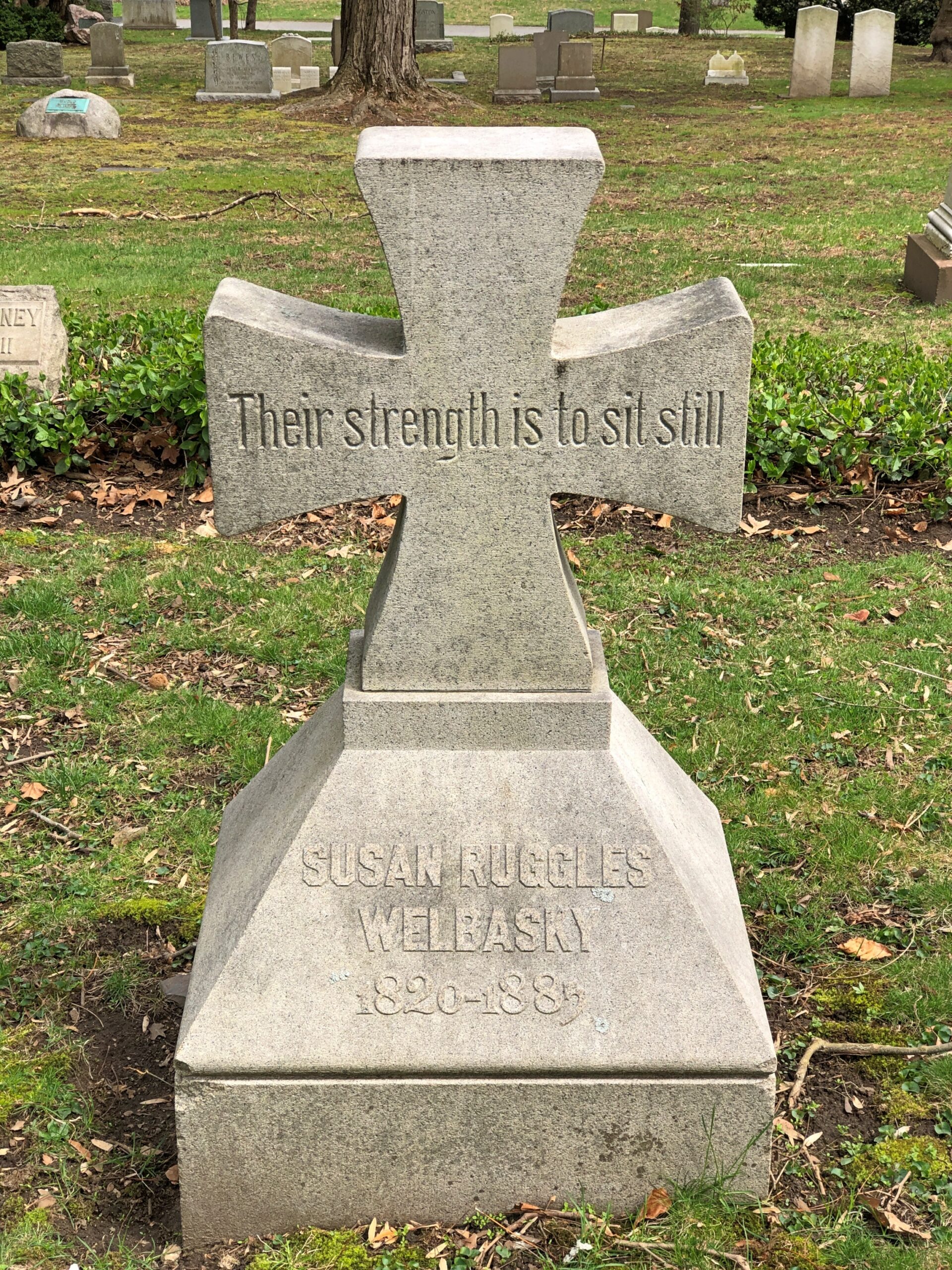
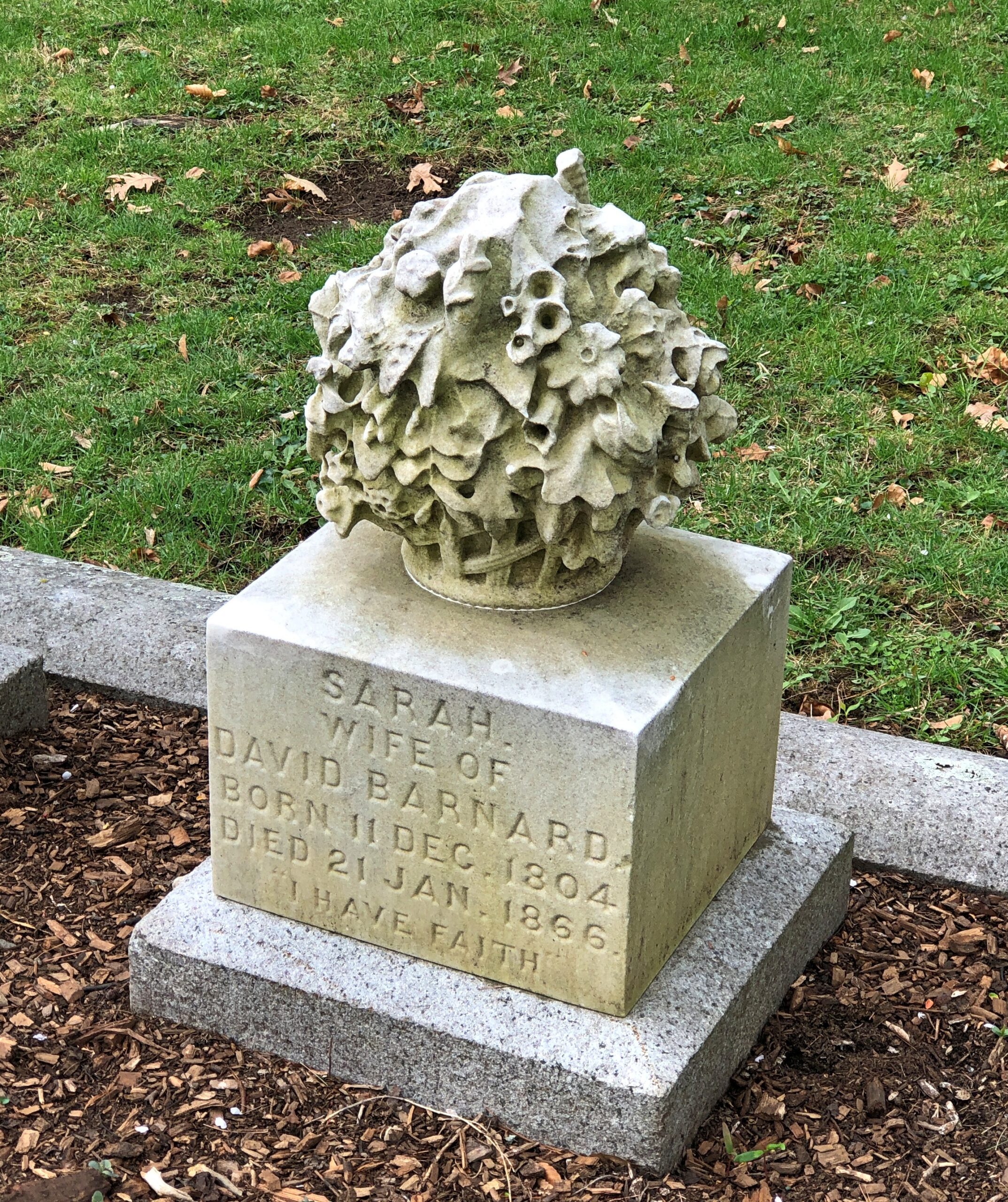
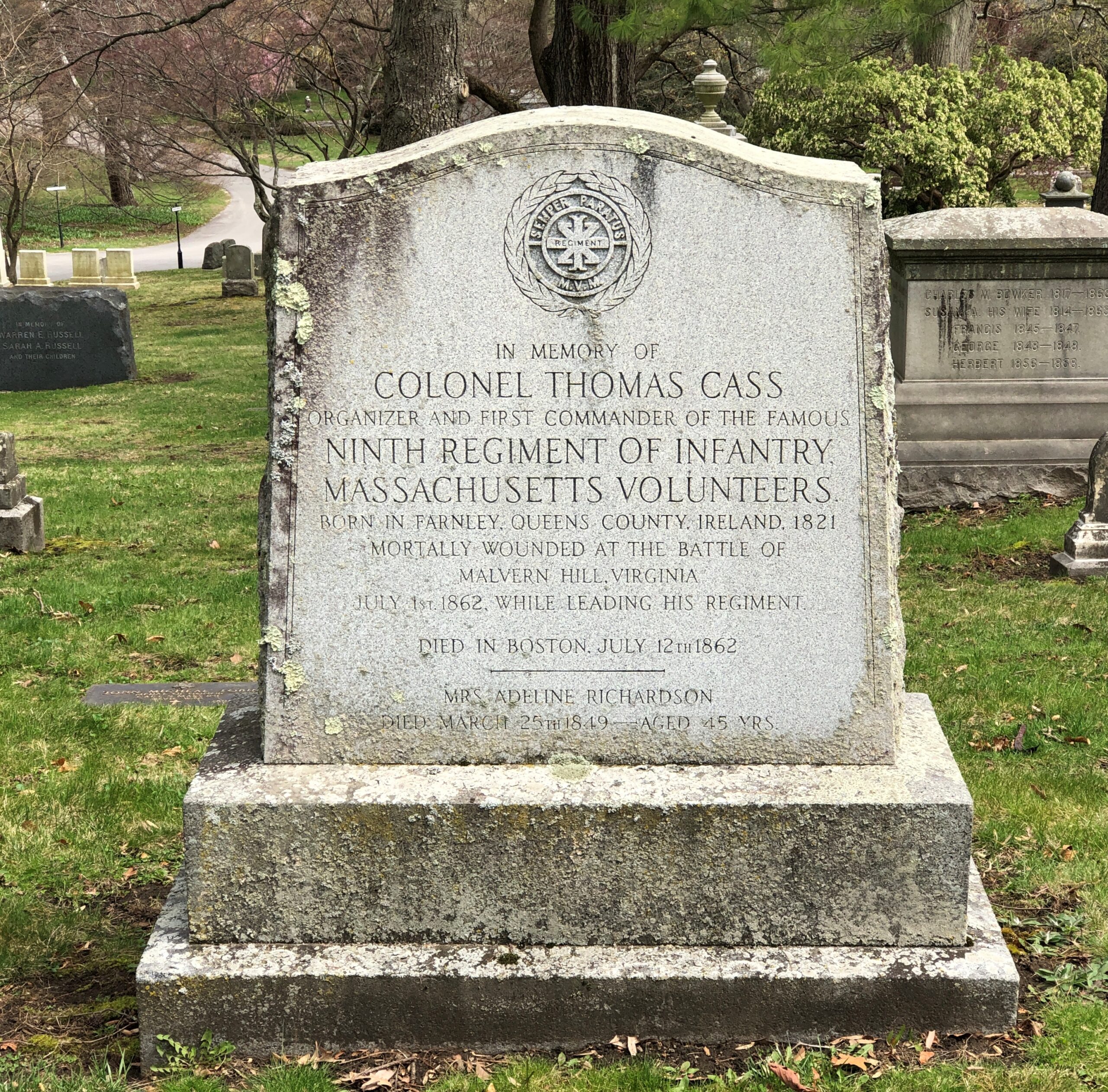
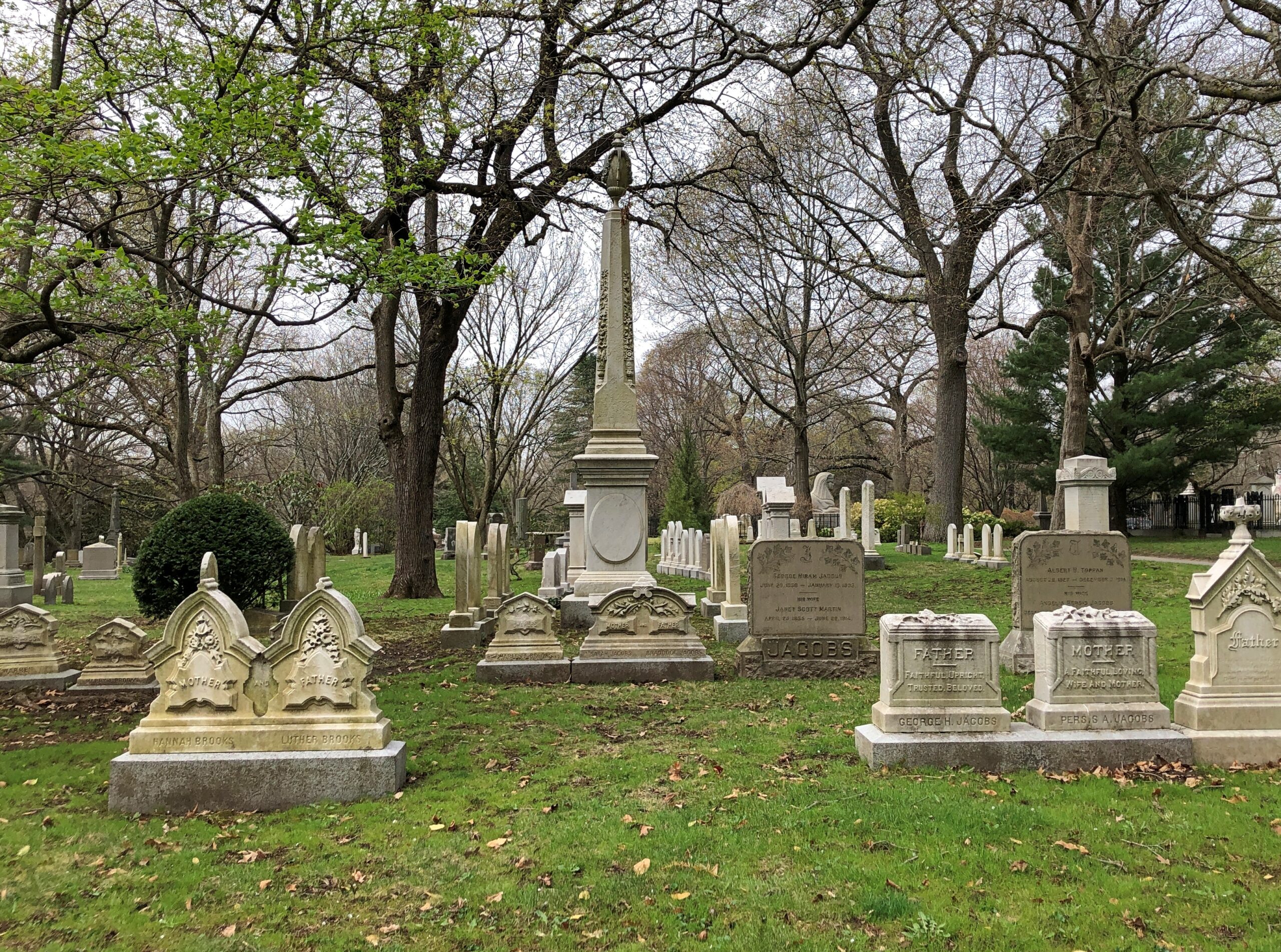
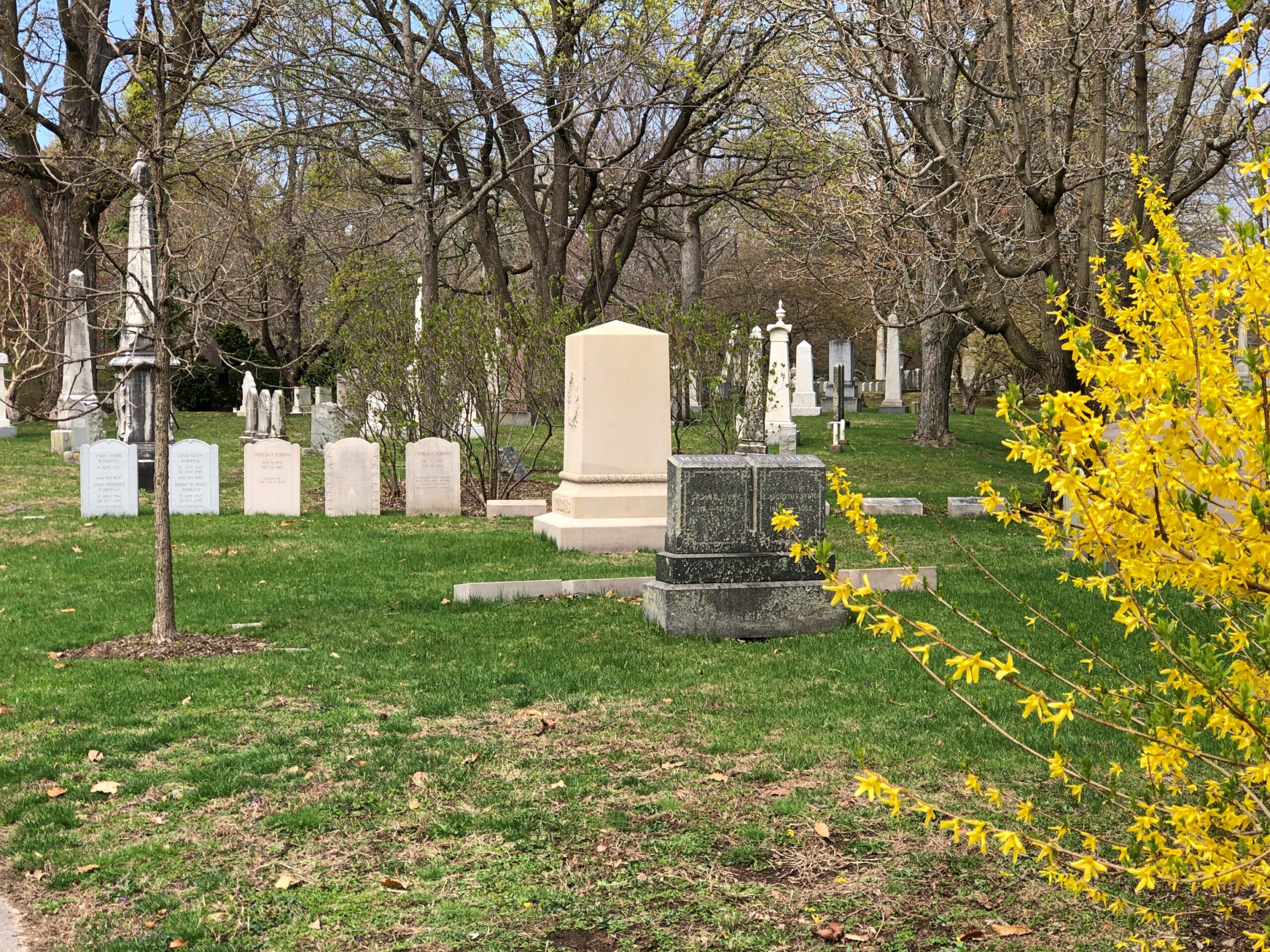
More modest stones.

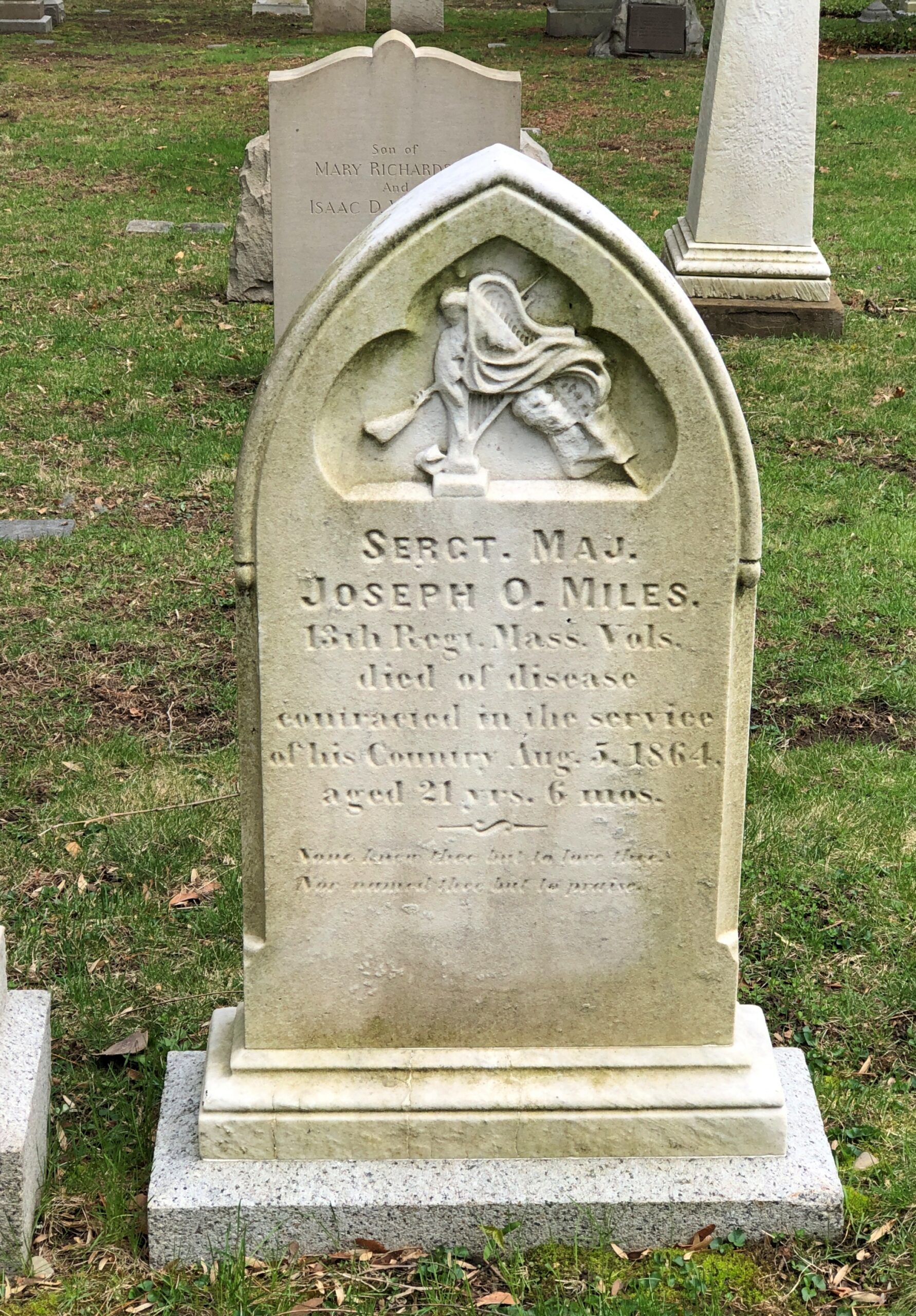
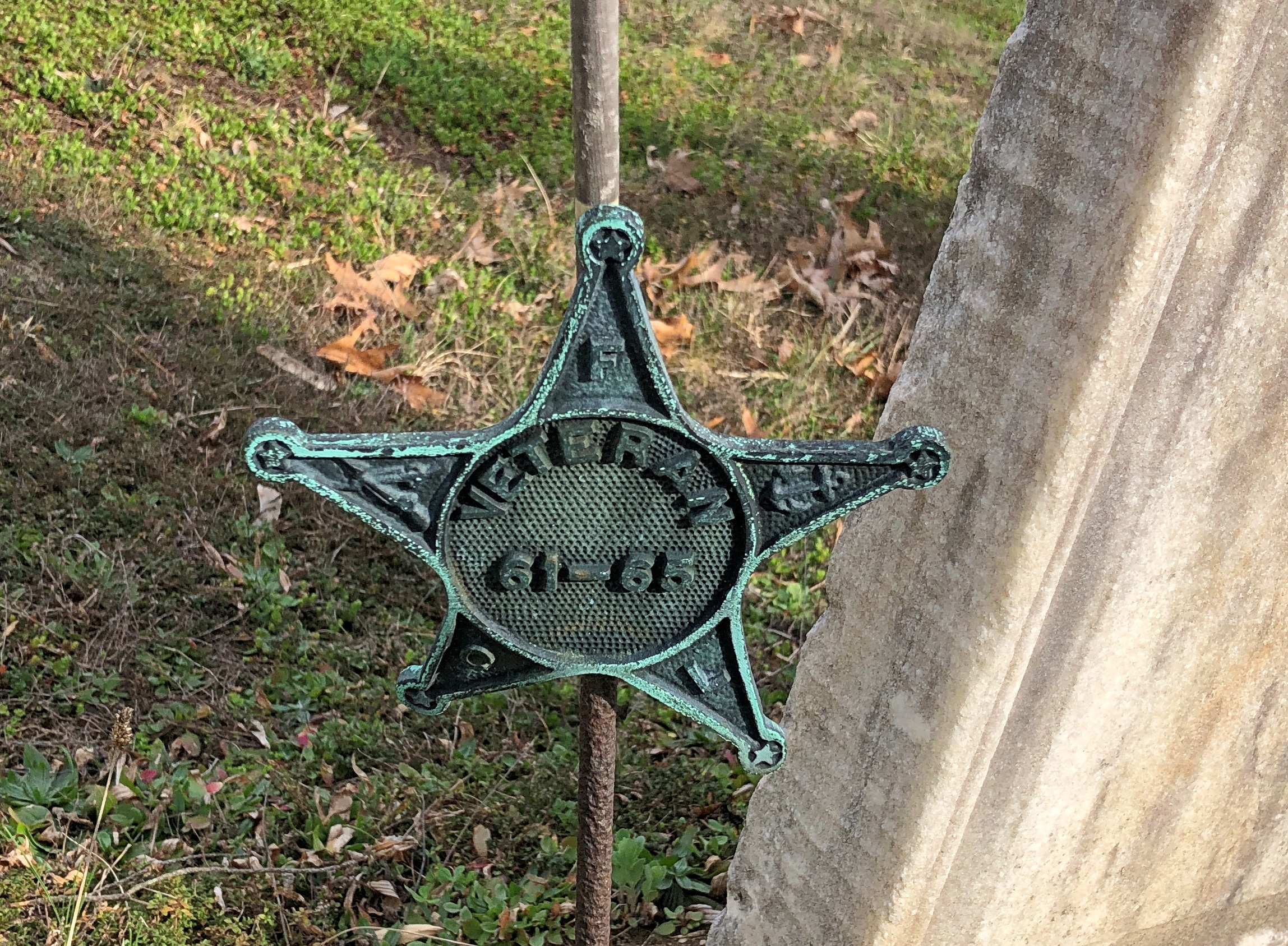
Men who died for the Union.

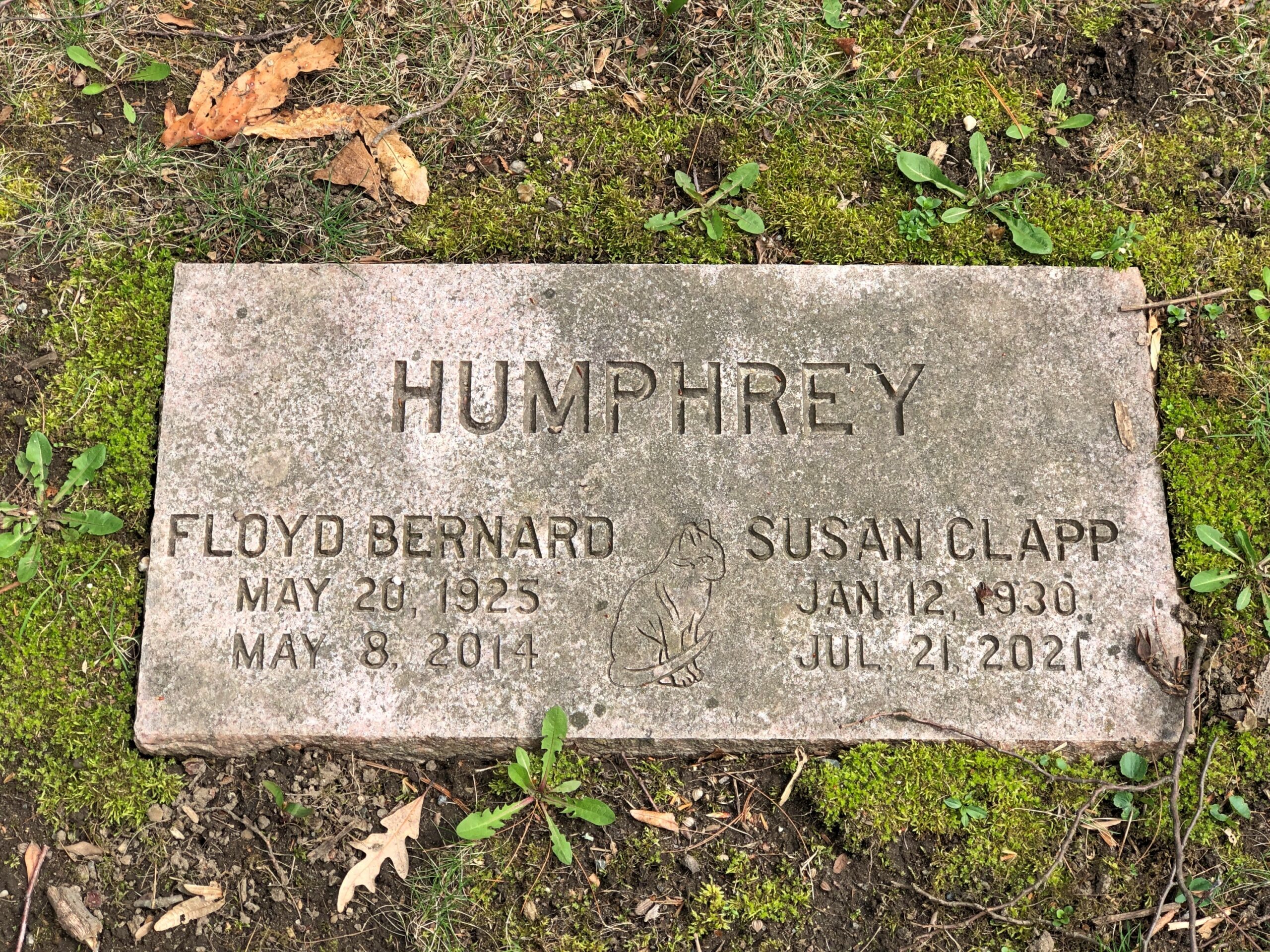
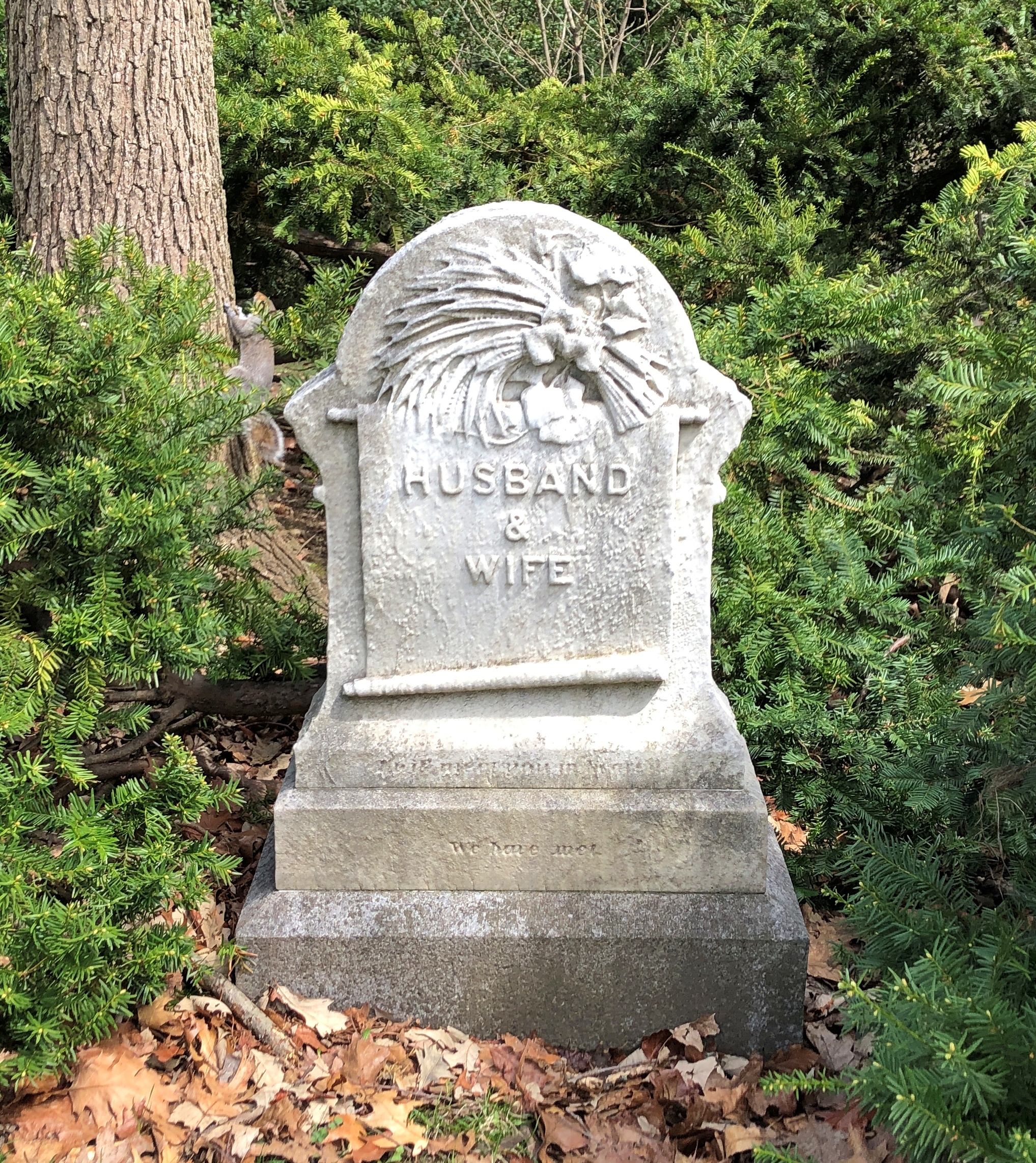
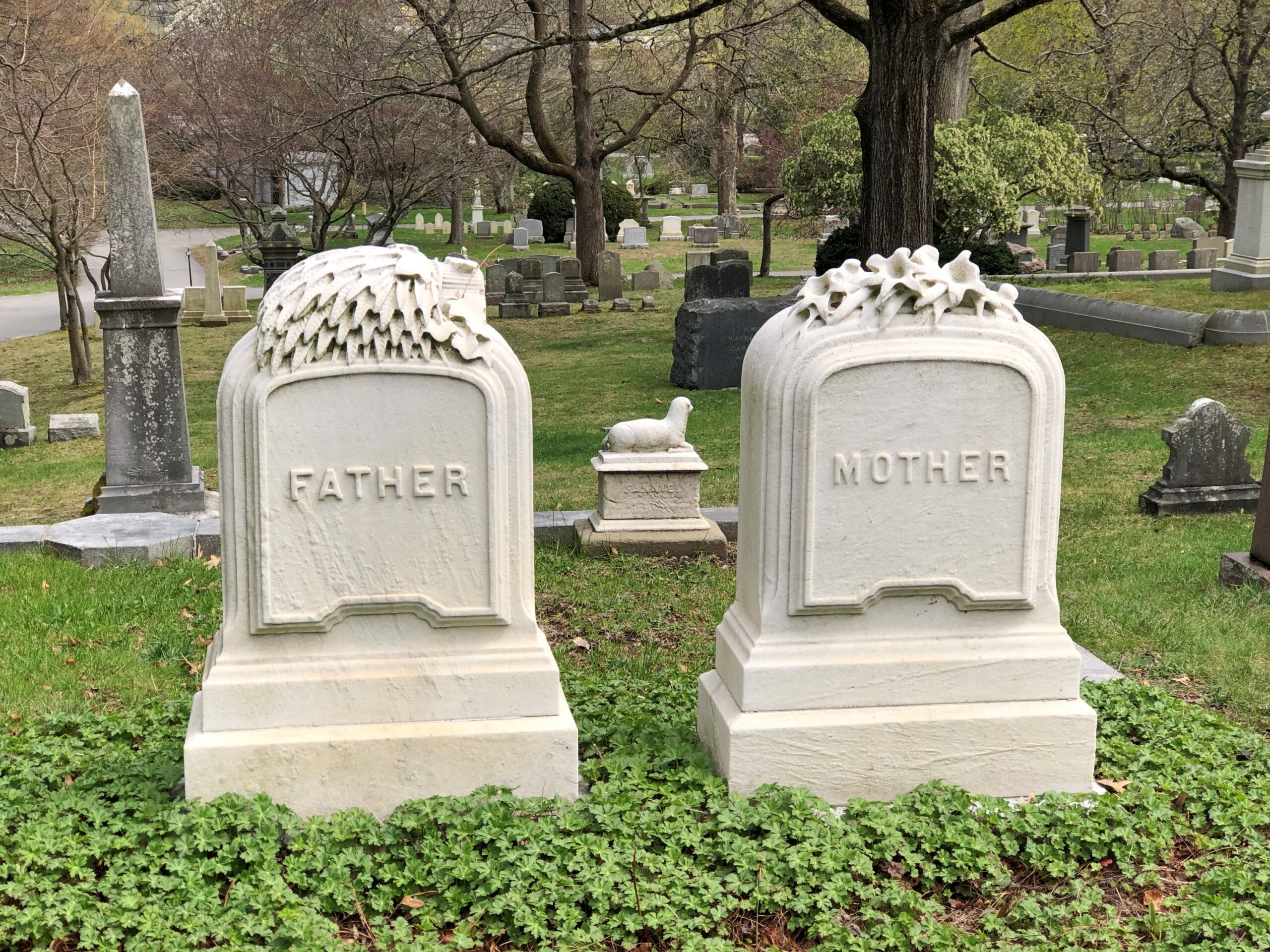
A good many couples.

Mount Auburn Cemetery

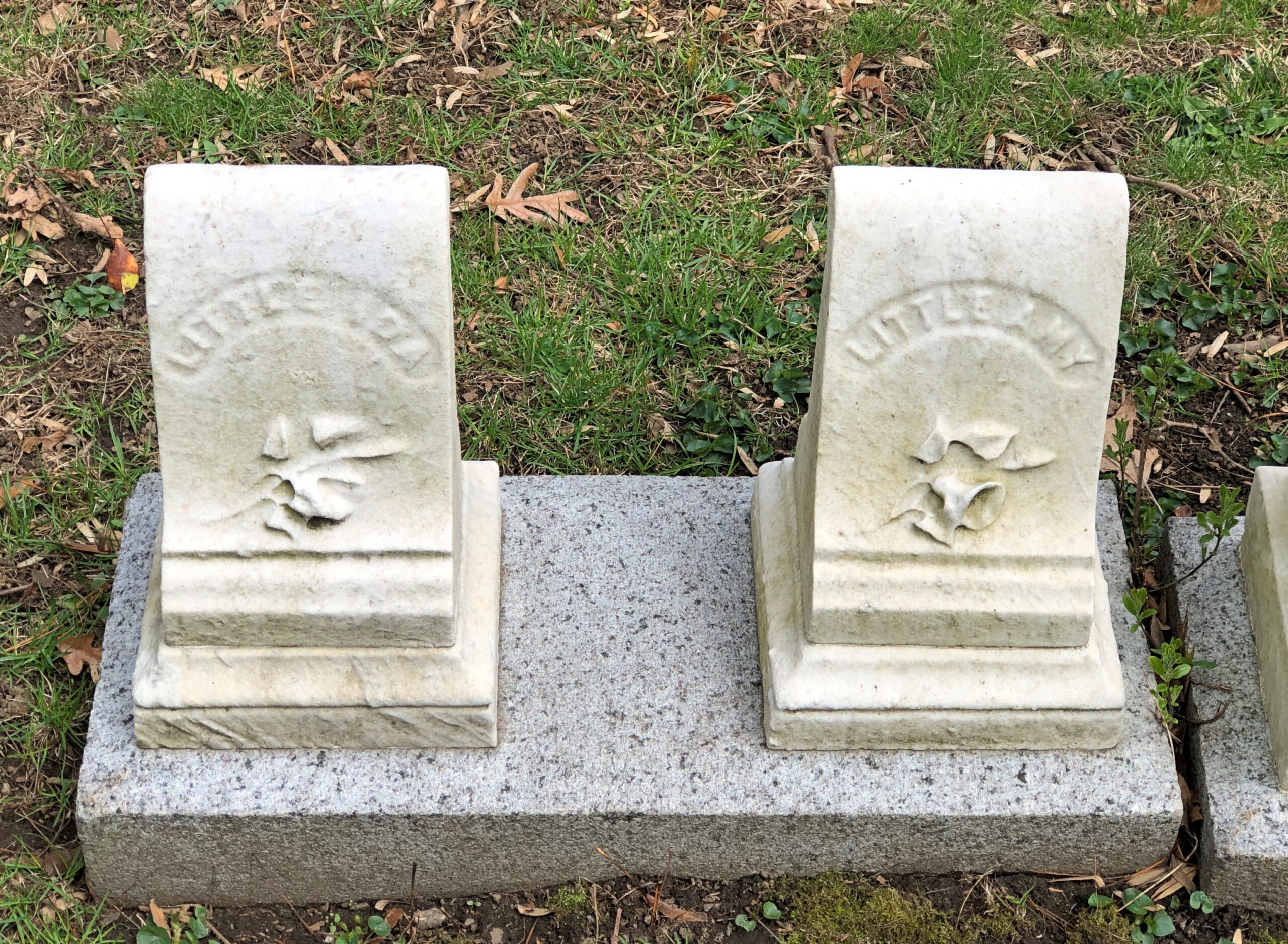
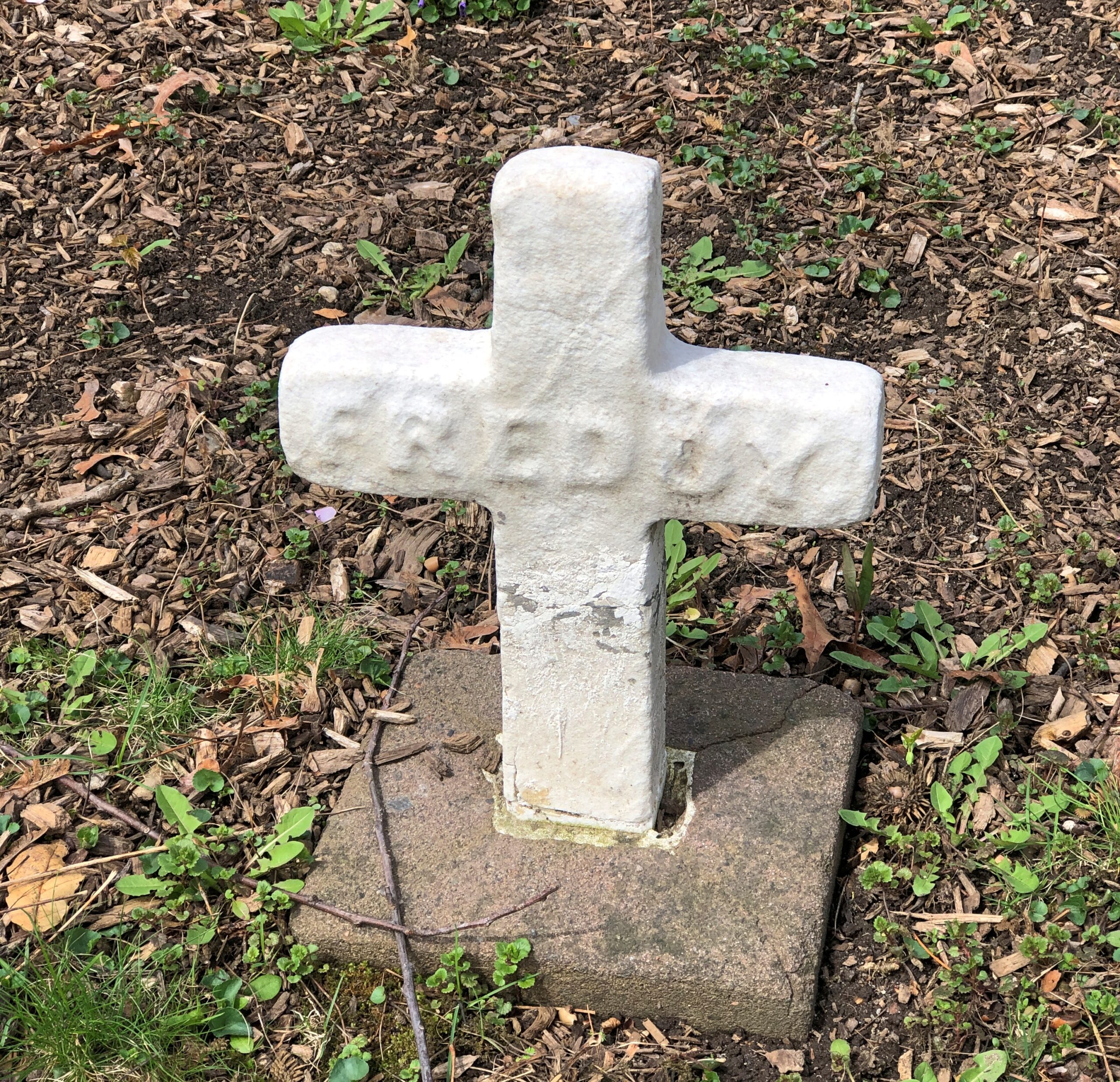
A sad story, one of many.

Maybe a sad story. A little enigmatic, anyway.

Looking at the map’s list of famous permanent residents, one thinks: “Right, I know him. And him. And him. And her. There’s another person I’ve heard of. And another. And I think I know that one – I do…”

On it goes. A short selection of those I didn’t have to look up: Louis Agassiz, John Bartlett (of Quotations fame), Edwin Booth, Charles Bulfinch, Dorothea Dix, Mary Baker Eddy (“discoverer” of Christian Science, the map says), Edward Everett (spoke at Gettysburg, was upstaged), Fannie Farmer, Felix Frankfurter, Buckminster Fuller, Charles Dana Gibson, Curt Gowdy, Oliver Wendell Holmes Sr., Julia Ward Howe, Henry Cabot Lodge, Henry Wadsworth Longfellow, Bernard Malamud, Arthur Schlesinger Jr., B.F. Skinner, I.F. Stone, and Charles Sumner.

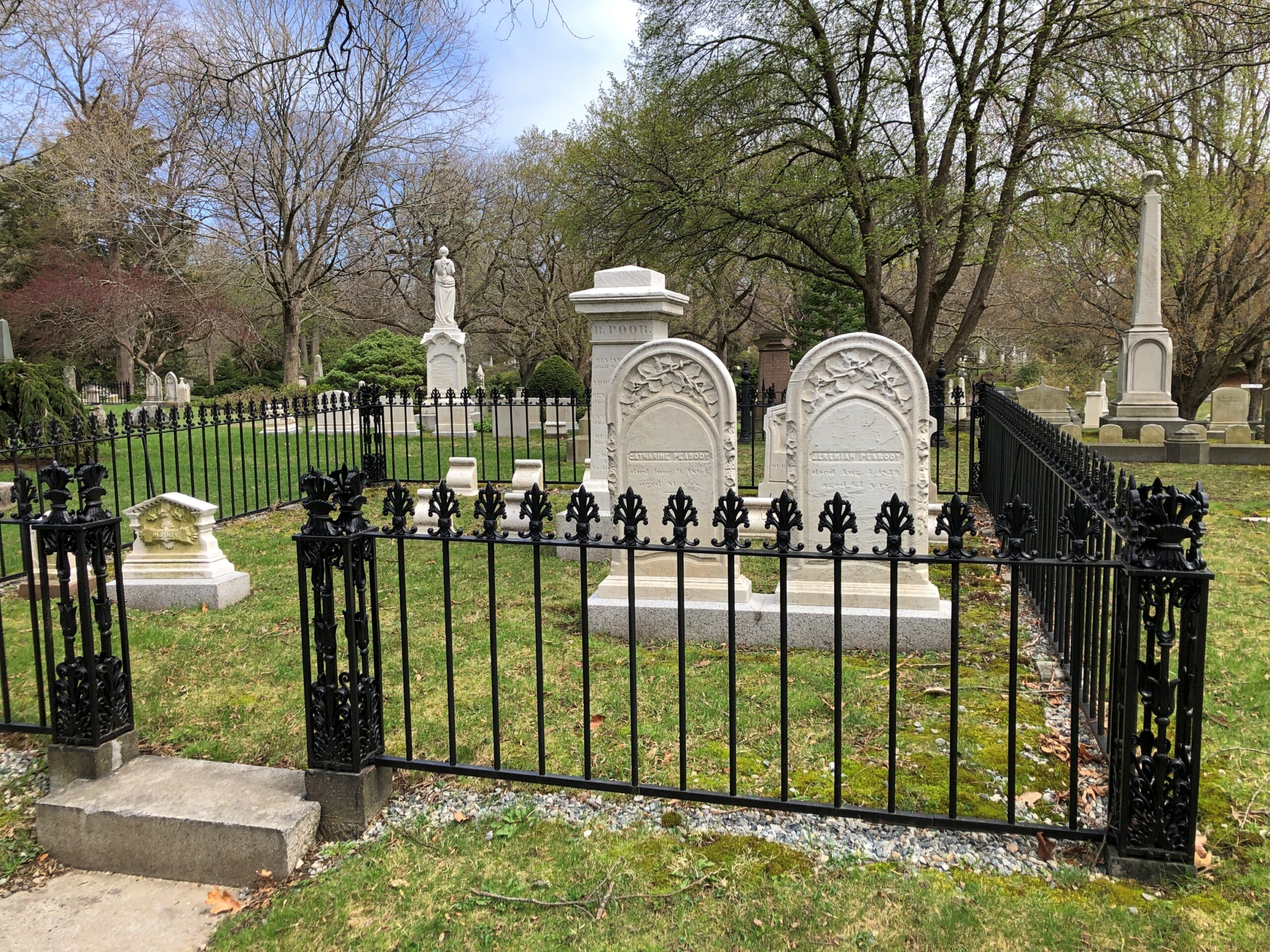
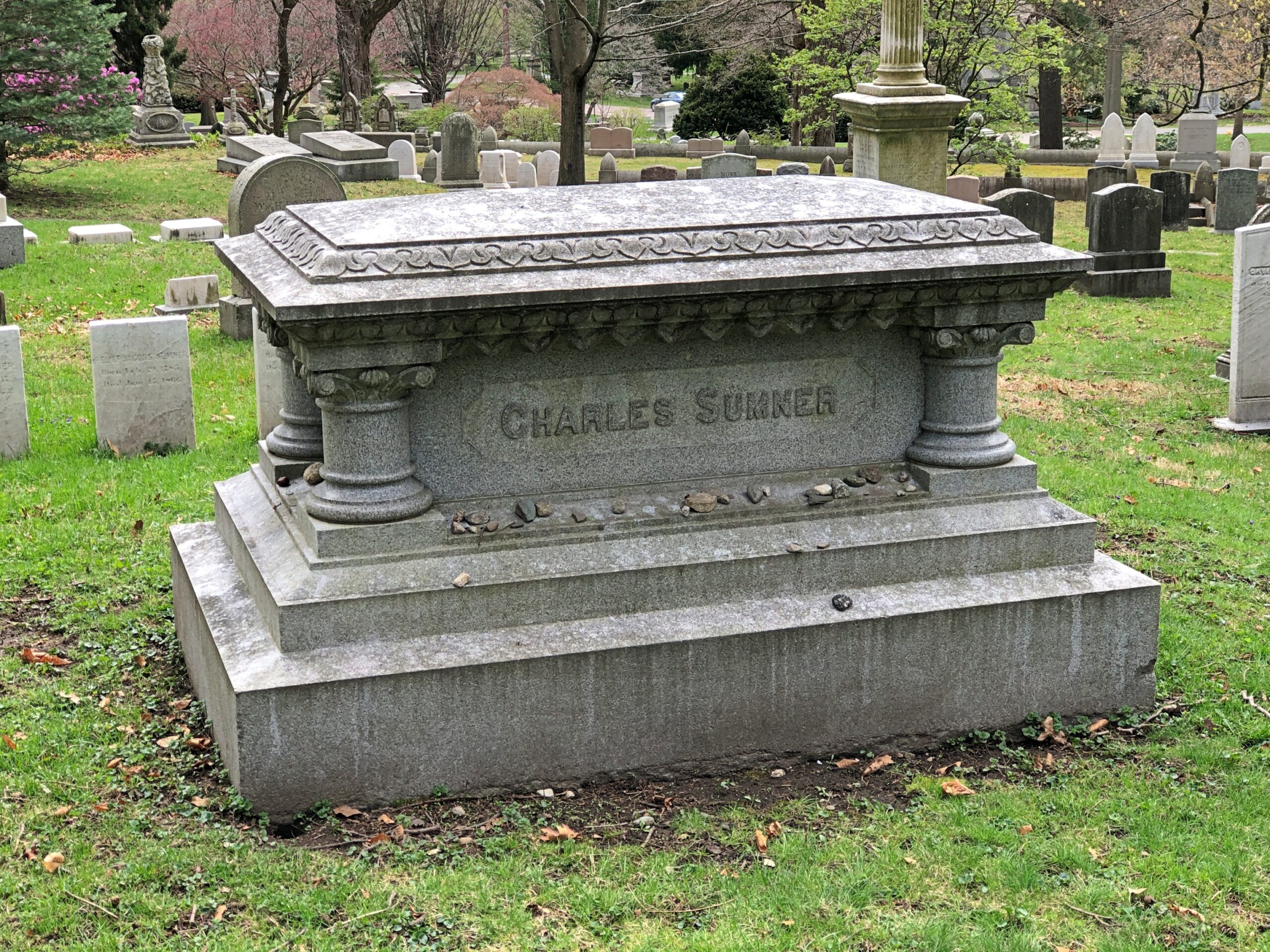
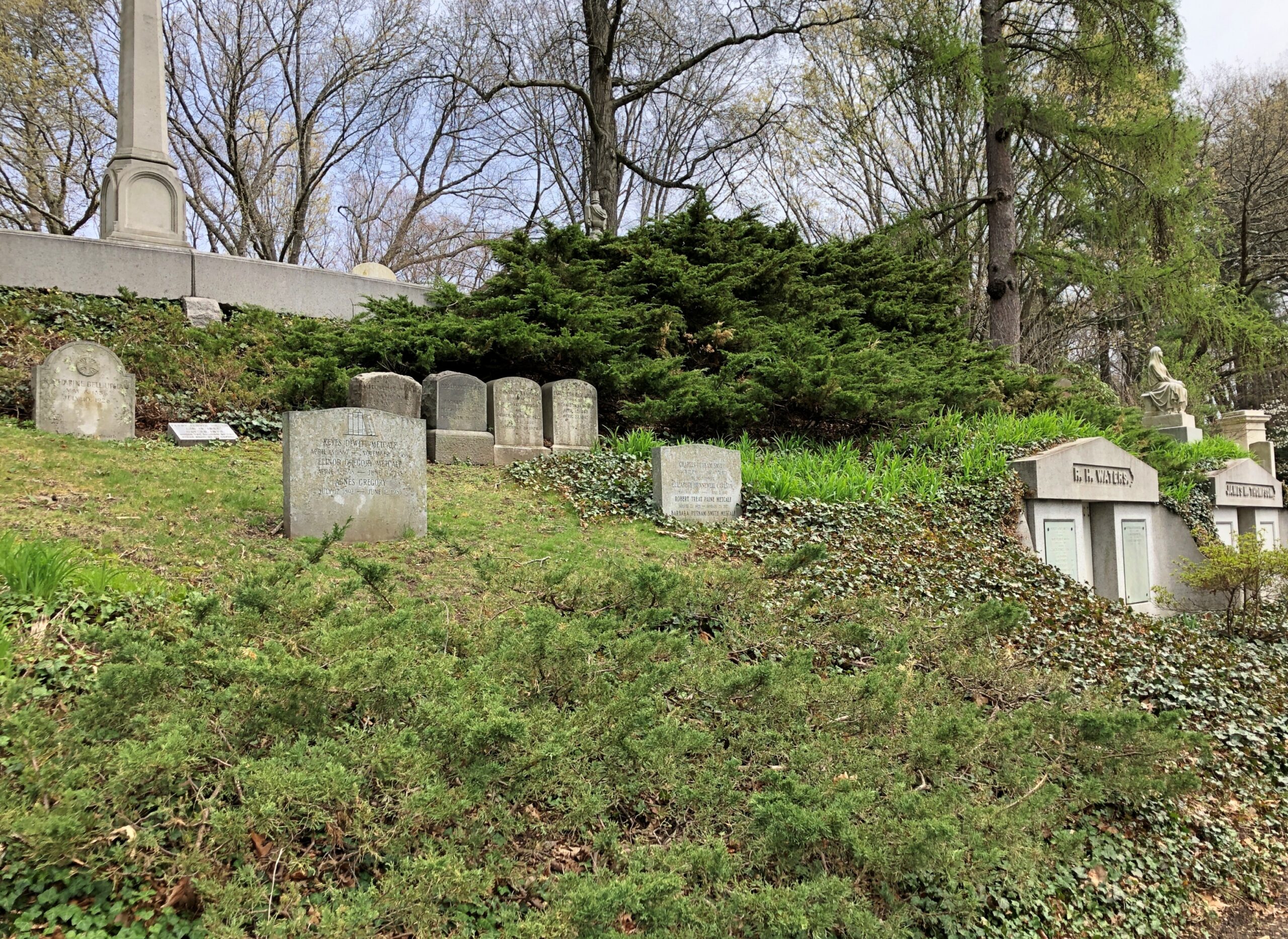
I could have spent all day looking for them, but mostly I didn’t. I did see Charles Sumner’s stone. People leave smaller stones. I found one and did too.

Near Sumner. I’d never heard of him, but I like that name.

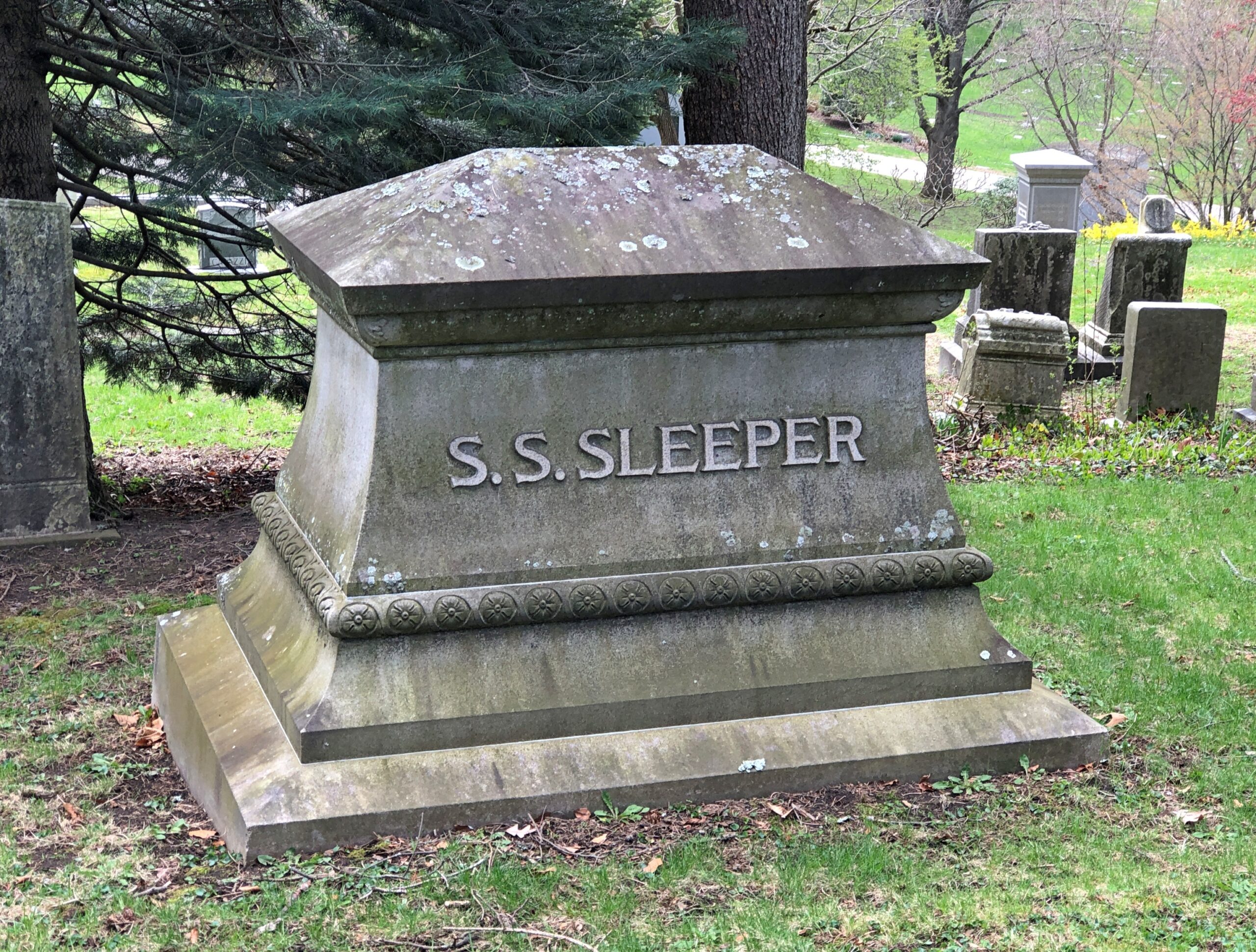
Solomon Sias Sleeper (d. 1895), successful Cambridge merchant and local politico and philanthropist.

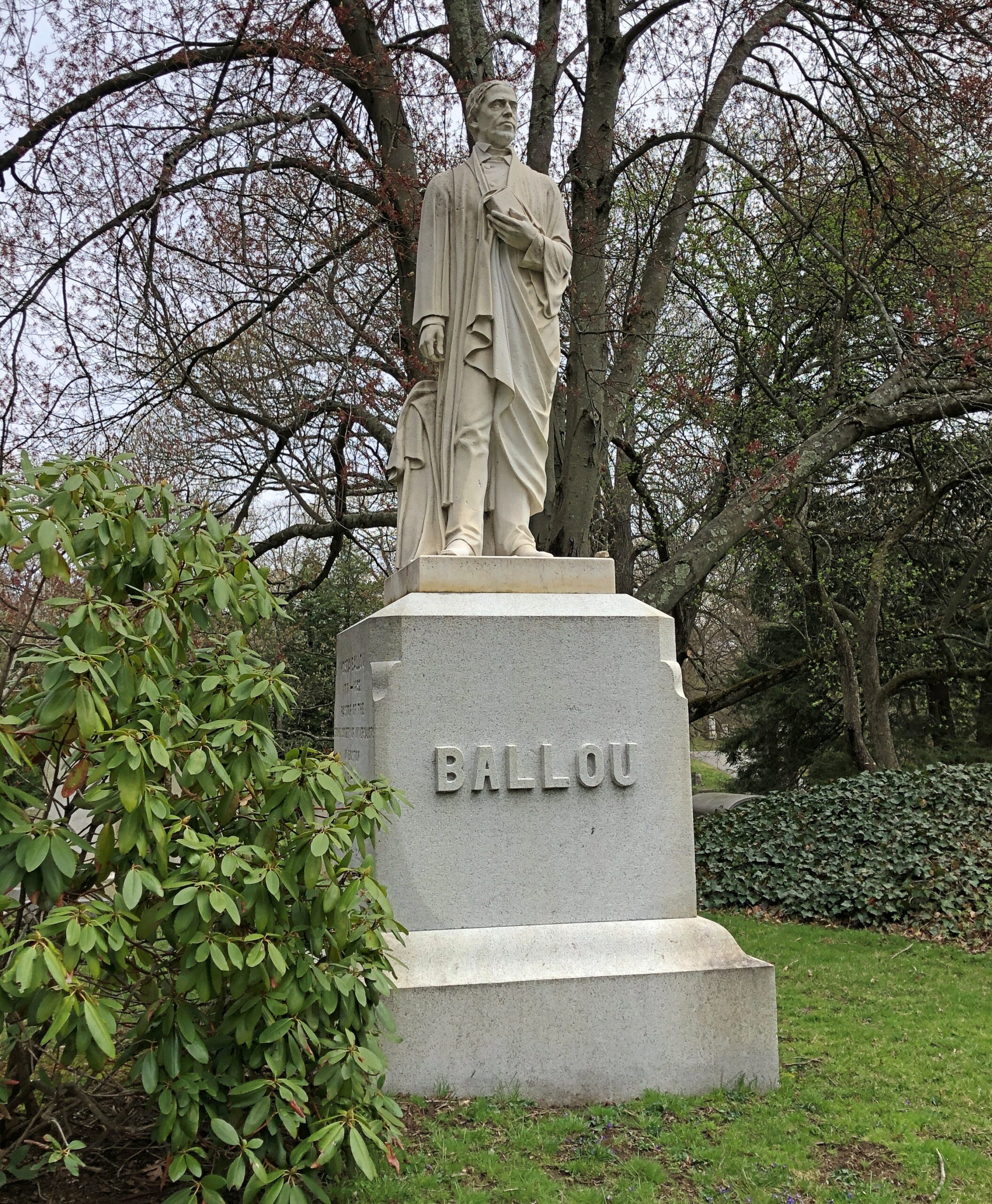
The map also lists impressive memorials. I found a number of those. Such as the Rev. Hosea Ballou Monument, honoring a Universalist clergyman (d. 1852).

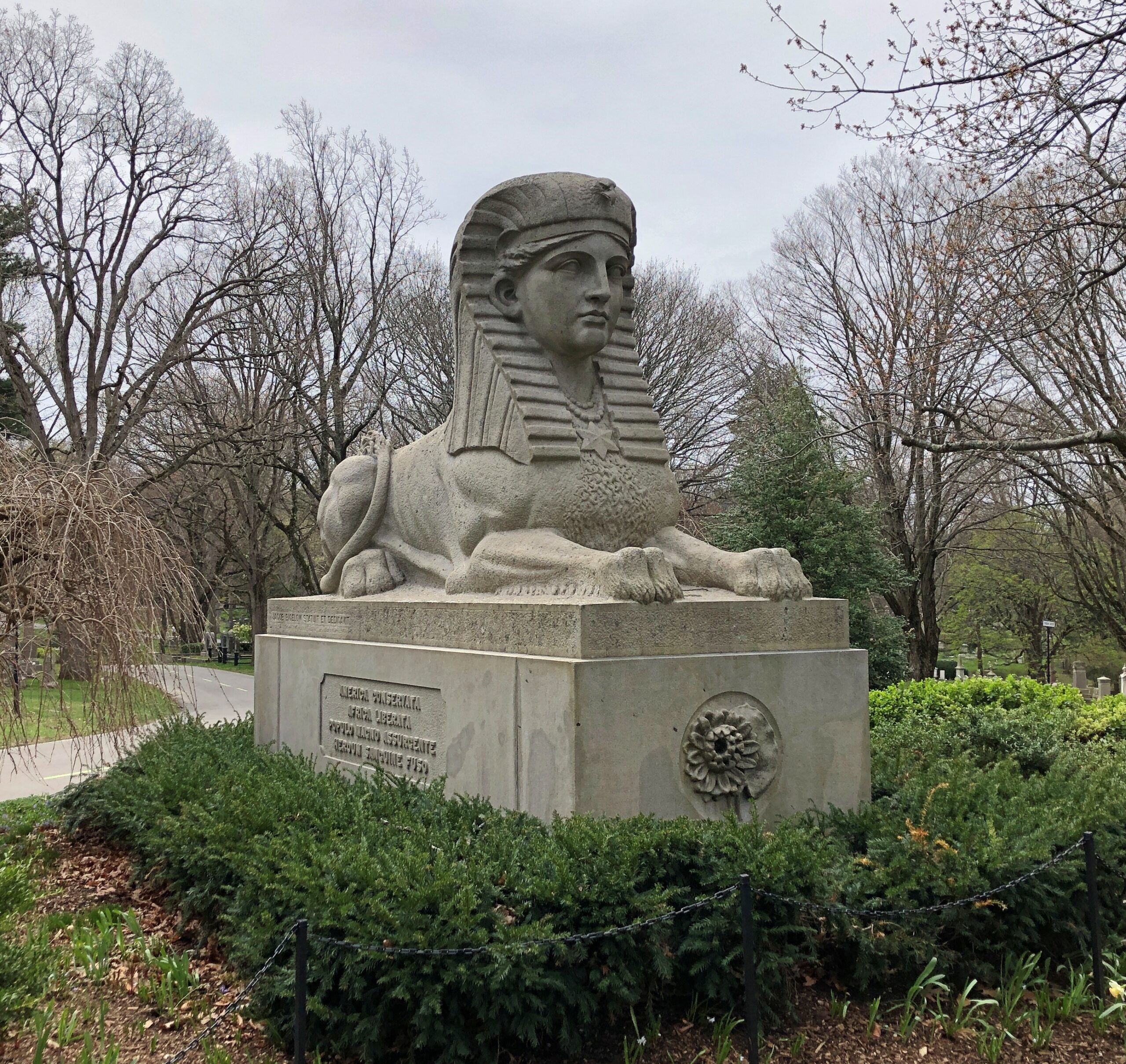
A Civil War memorial, erected in 1872 — the only time I’ve seen a sphinx used for that purpose.

“The sphinx was chosen because of its ideal personification of intellect and physical force and its representation of the combined ideas of beauty and strength,” the notes on the map say. I know the sphinx has a very long history and comes with a lot of encrusted lore, but that sounds like a peculiar Victorian interpretation that didn’t really stick.

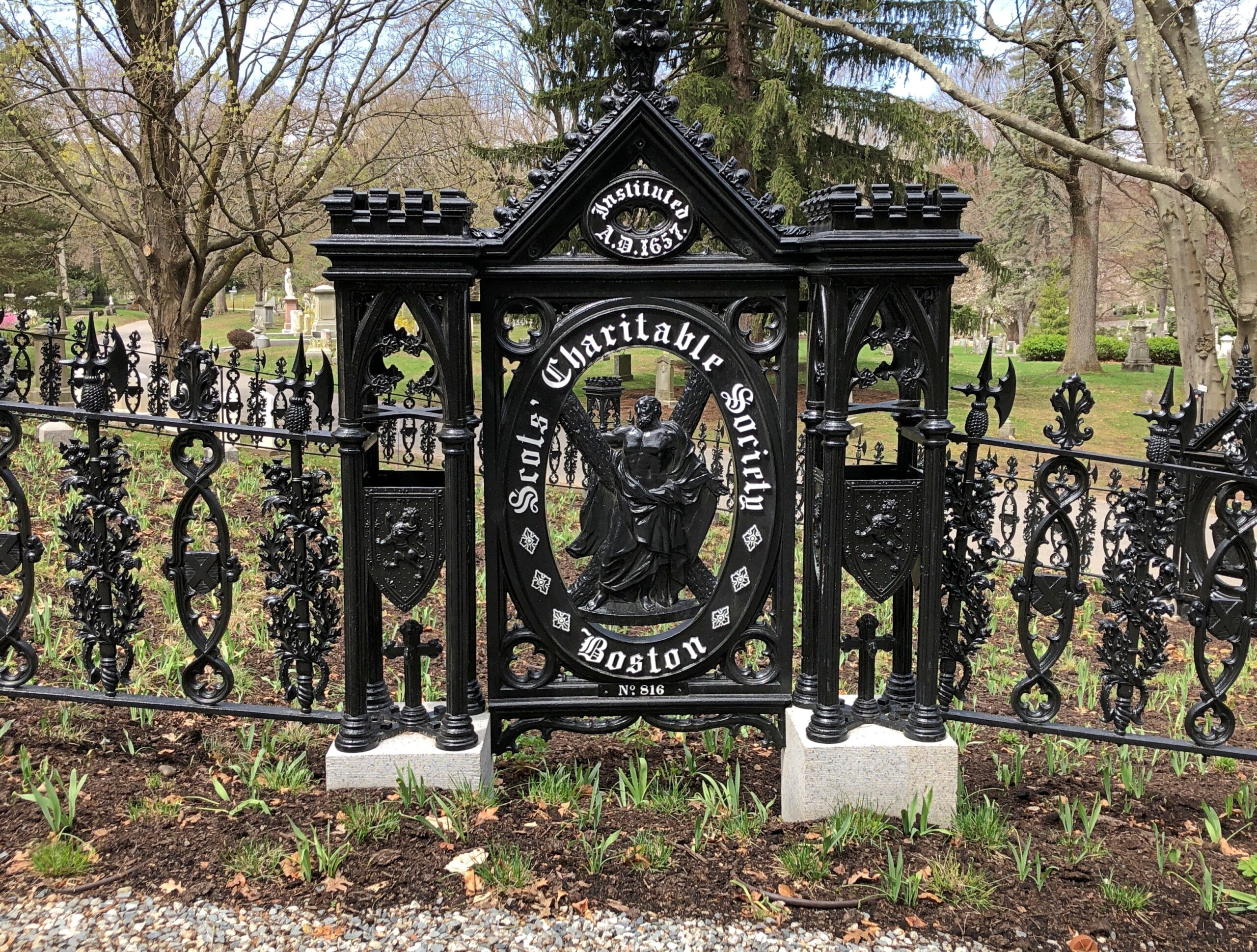
The Scots’ Charitable Society Lot.

An organization founded in 1657 in Massachusetts. It “aims to help people of Scottish heritage by providing relief to Scottish-American individuals and families in need, and by granting undergraduate scholarships to the Scottish-American community,” says its web site because it is still around.

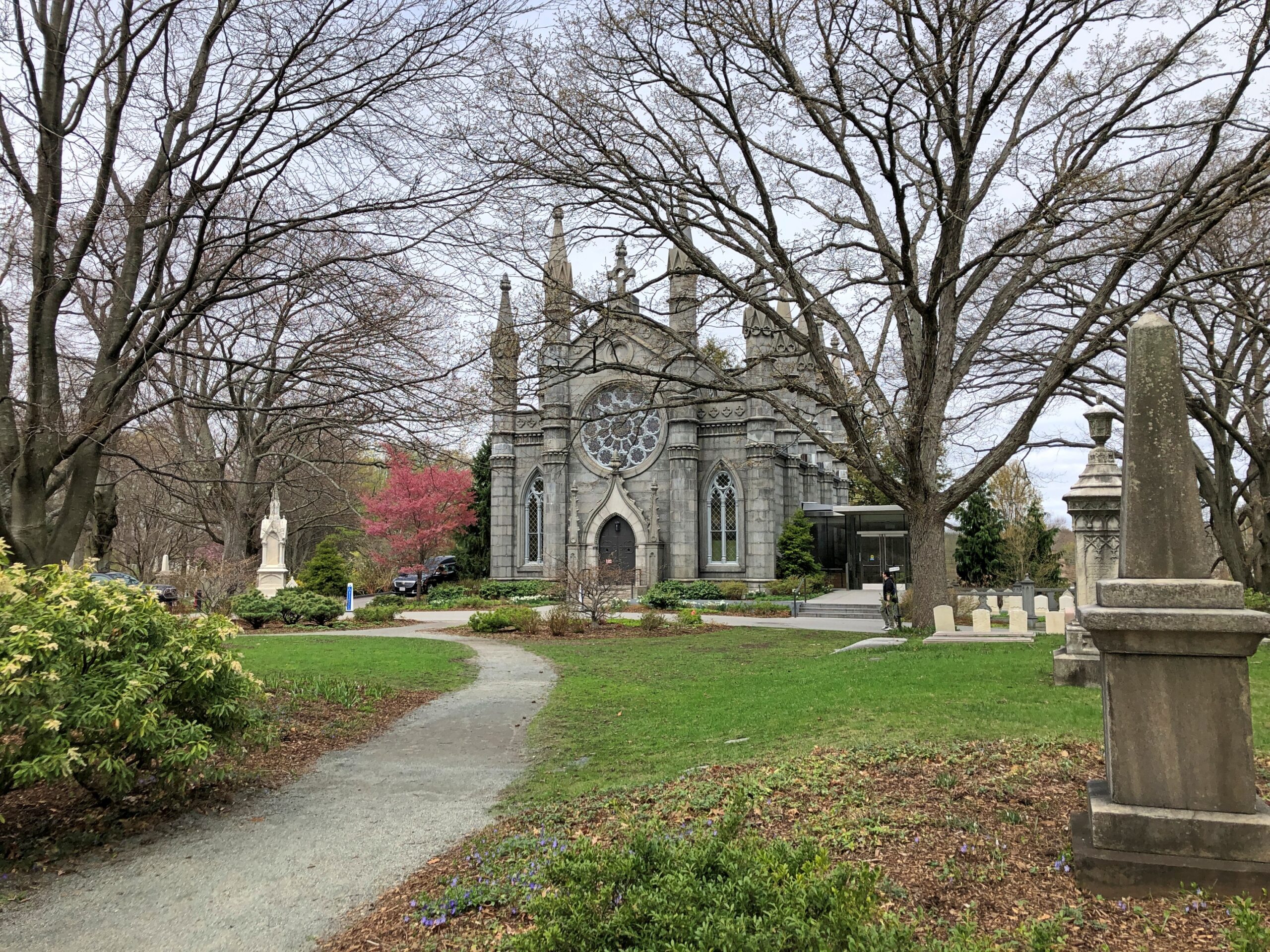
Bigelow Chapel.

Named for Jacob Bigelow (d. 1879), second president of Mount Auburn.

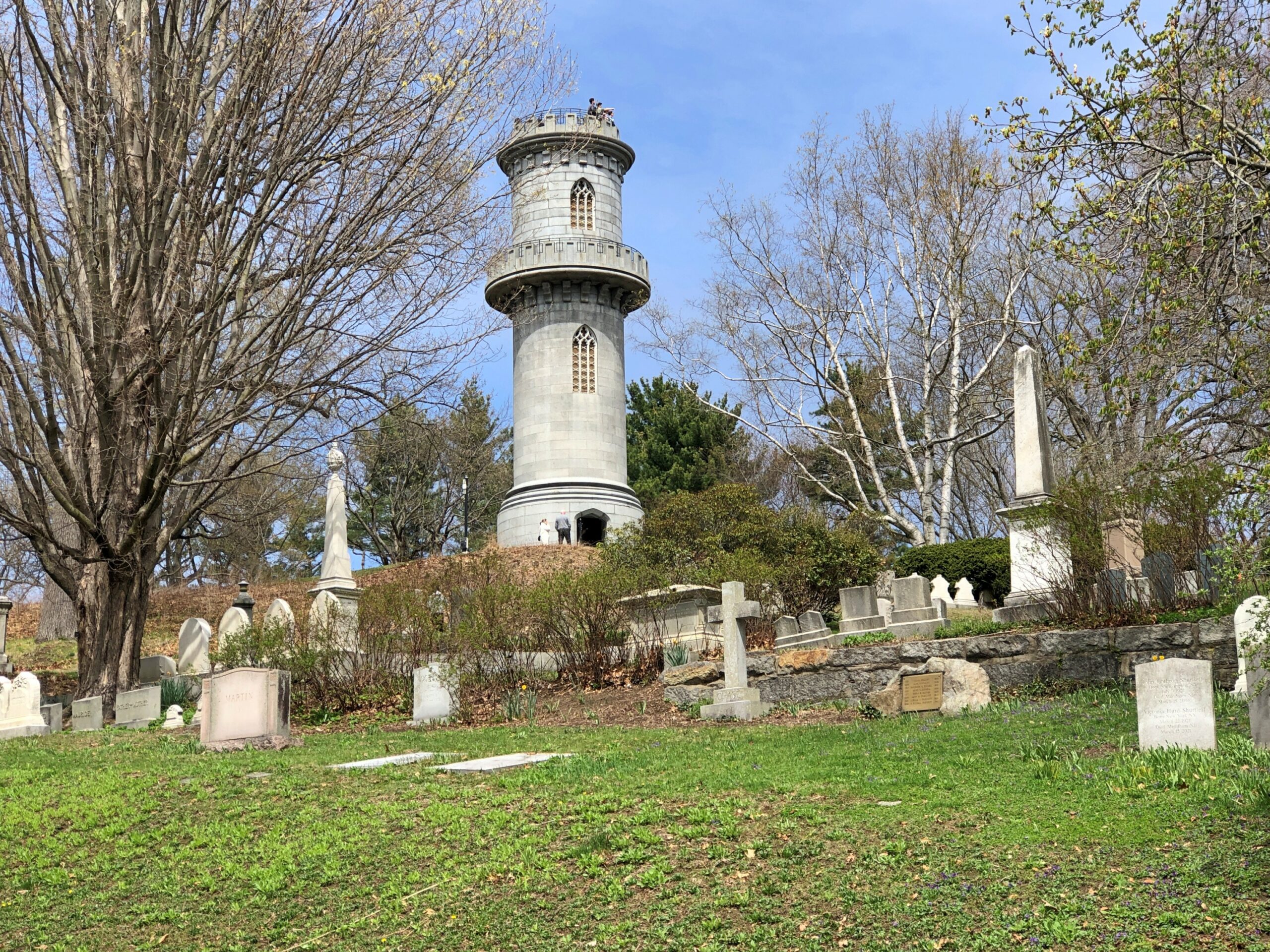
Washington Tower. The highest point on the grounds, honoring George Washington. Designed by Bigelow in collaboration with architect Gridley J. F. Bryant. I didn’t have the energy to climb the hill and then the tower at that moment. Too bad. I understand the view of the Boston skyline from there is terrific.

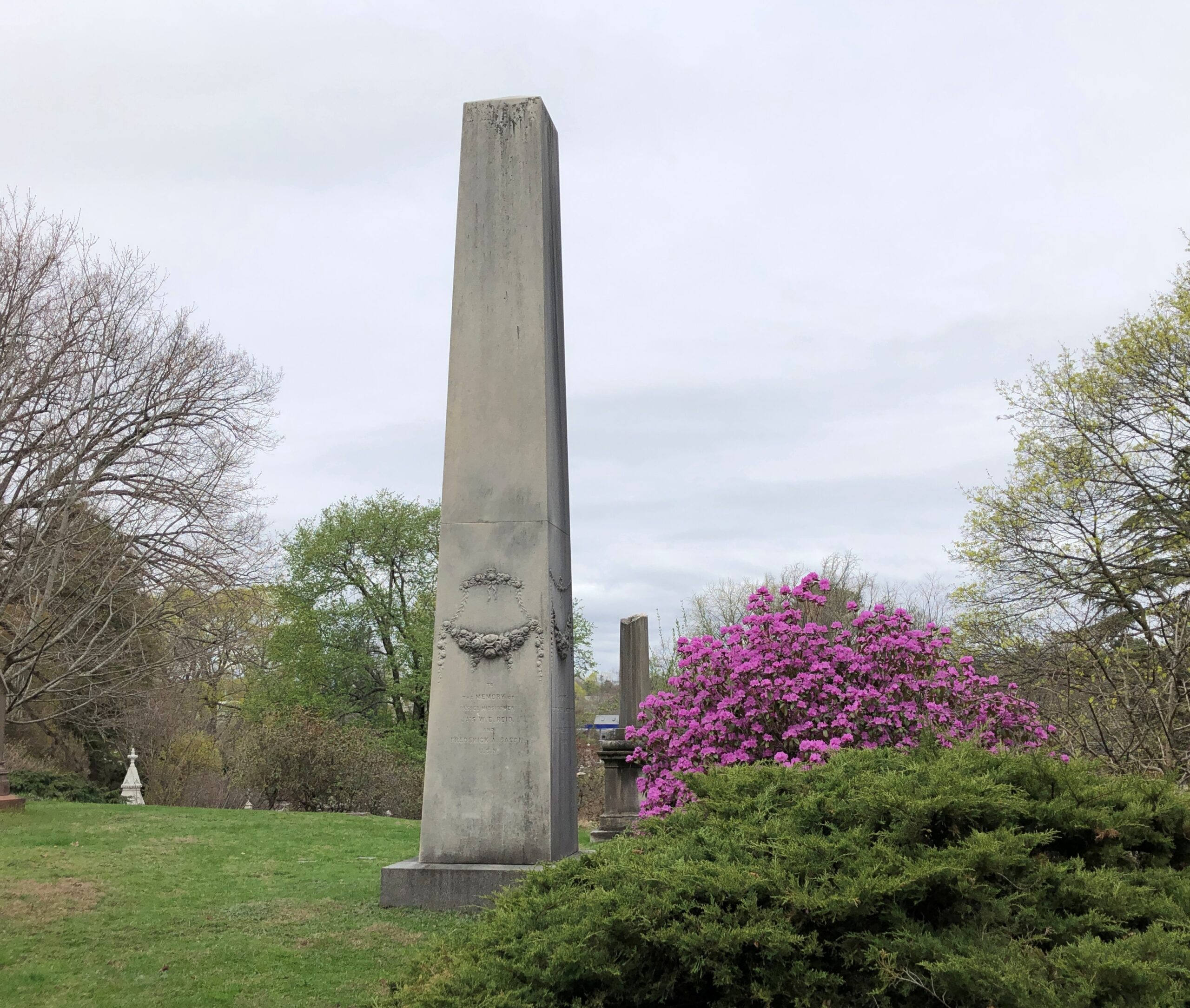
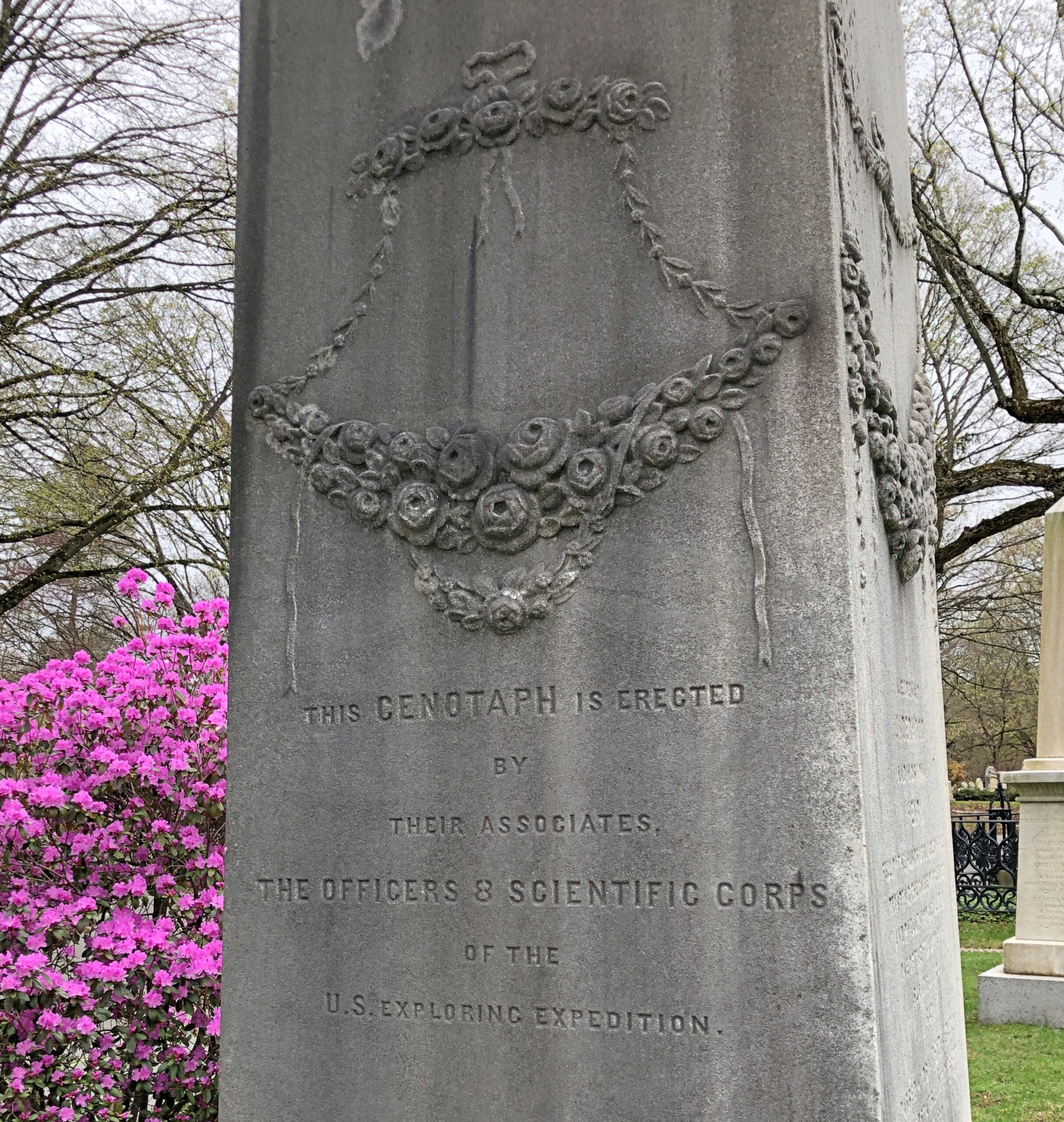
A cenotaph for four members of the U.S. Exploring Expedition who didn’t return from the Pacific.

I was delighted to see it. In its way, as important as Lewis and Clark’s journey, and something I’m certain 99-point-more percent of Americans have never heard of.

Back to Joseph Story. He gave the dedication speech at the cemetery on September 24, 1831. It’s a long one, per custom of the time. Per custom of my time, a short quote:

Here, let the brave repose, who have died in the cause of their country. Here, let the statesman rest, who has achieved the victories of peace, not less renowned than war. Here, let genius find a home, that has sung immortal strains, or has instructed with still diviner eloquence. Here let learning and science, the votaries of inventive art, and the teacher of the philosophy of nature come. Here let youth and beauty, blighted by premature decay, drop, like tender blossoms into the virgin earth; and here let age retire, ripened for the harvest. Above all, here let the benefactors of mankind, the good, the merciful, the meek, the pure in heart be congregated, for to them belongs an undying praise.

Mount Auburn Cemetery: The Landscape

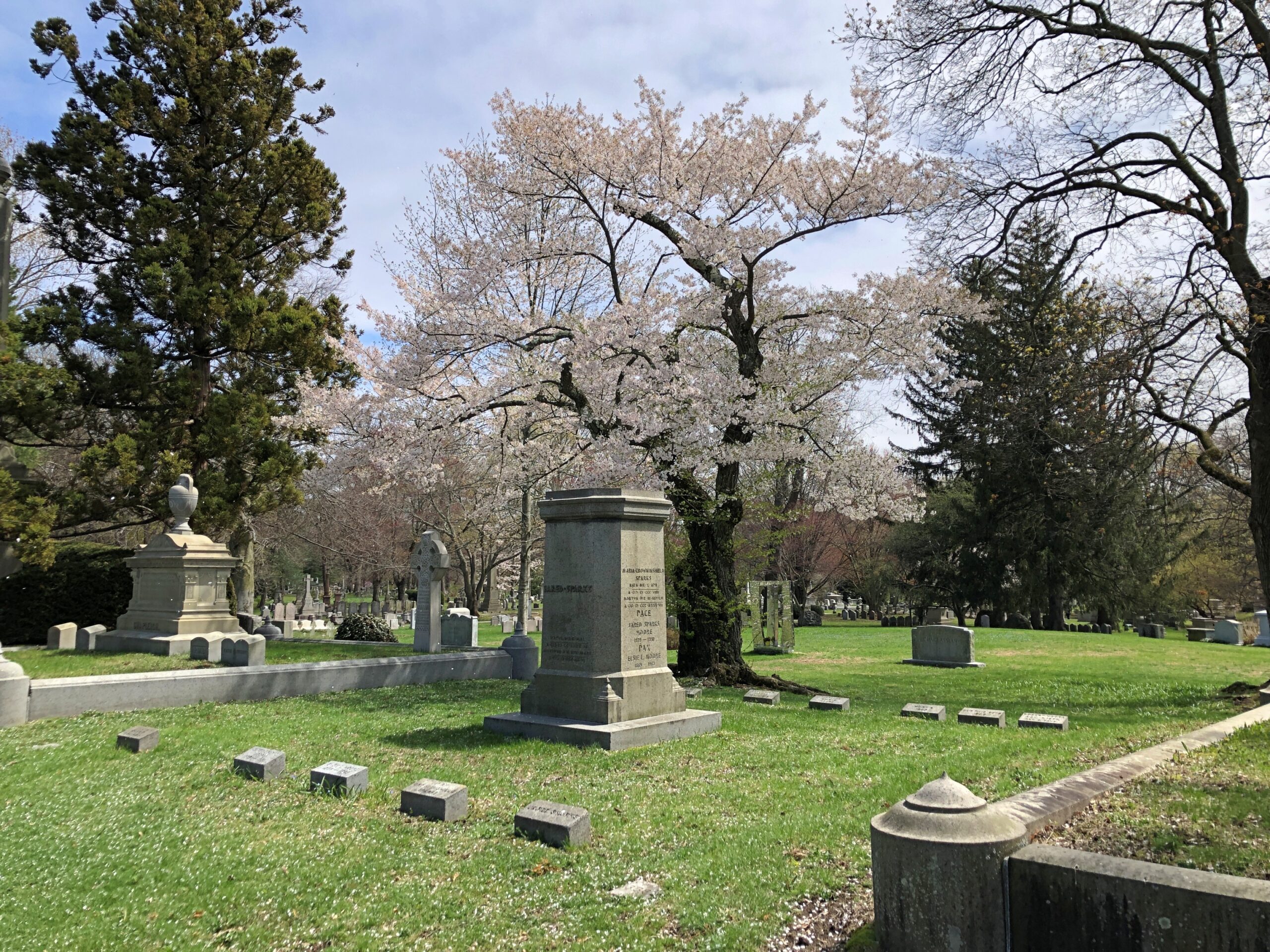
The weekend I spent with friends in Boston in April wasn’t actually in Boston most of the time, but its suburbs, and not with my friends quite all the time. On that Saturday, late morning to early afternoon, I passed some warm springtime moments by myself in the thrall of Mount Auburn Cemetery, mostly in Watertown, partly in Cambridge.

Mount Auburn Cemetery

How is it that I’d never gotten around to visiting Mount Auburn Cemetery until 2026? What kind of cemetery tourist lets that one go for so long? This is the Ur of landscaped American rural cemeteries, acknowledged as the first one, established in 1831. Did I also mention that it’s drop-dead gorgeous? So to speak.

Mount Auburn is one of those rare cemeteries – like Arlington National outside DC or Saint Louis Cemetery No. 1 in New Orleans – that attracts visitors even in our time. Not a huge number, at least when I visited, but a healthy trickle. Spring, I suspect, is a popular season there.

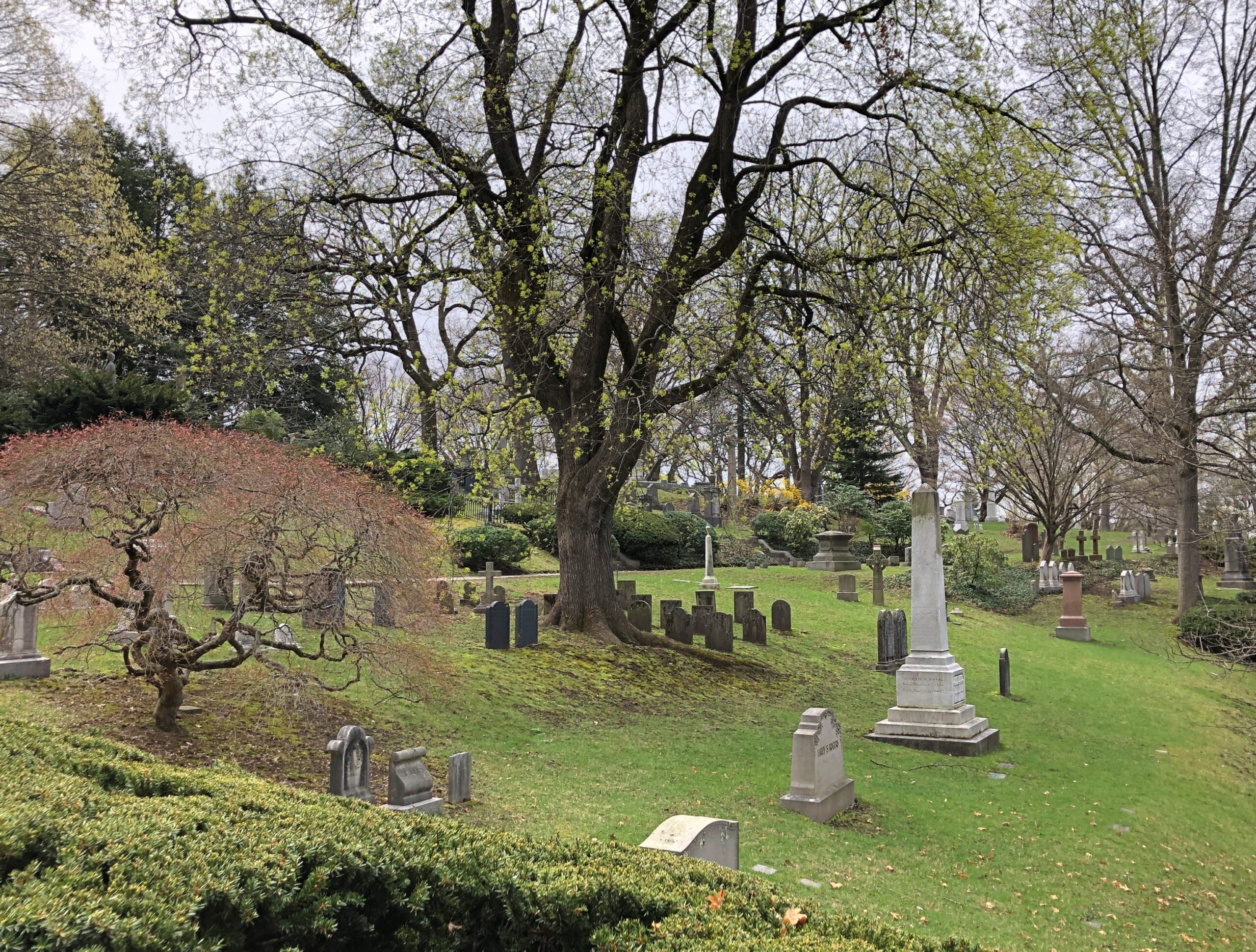
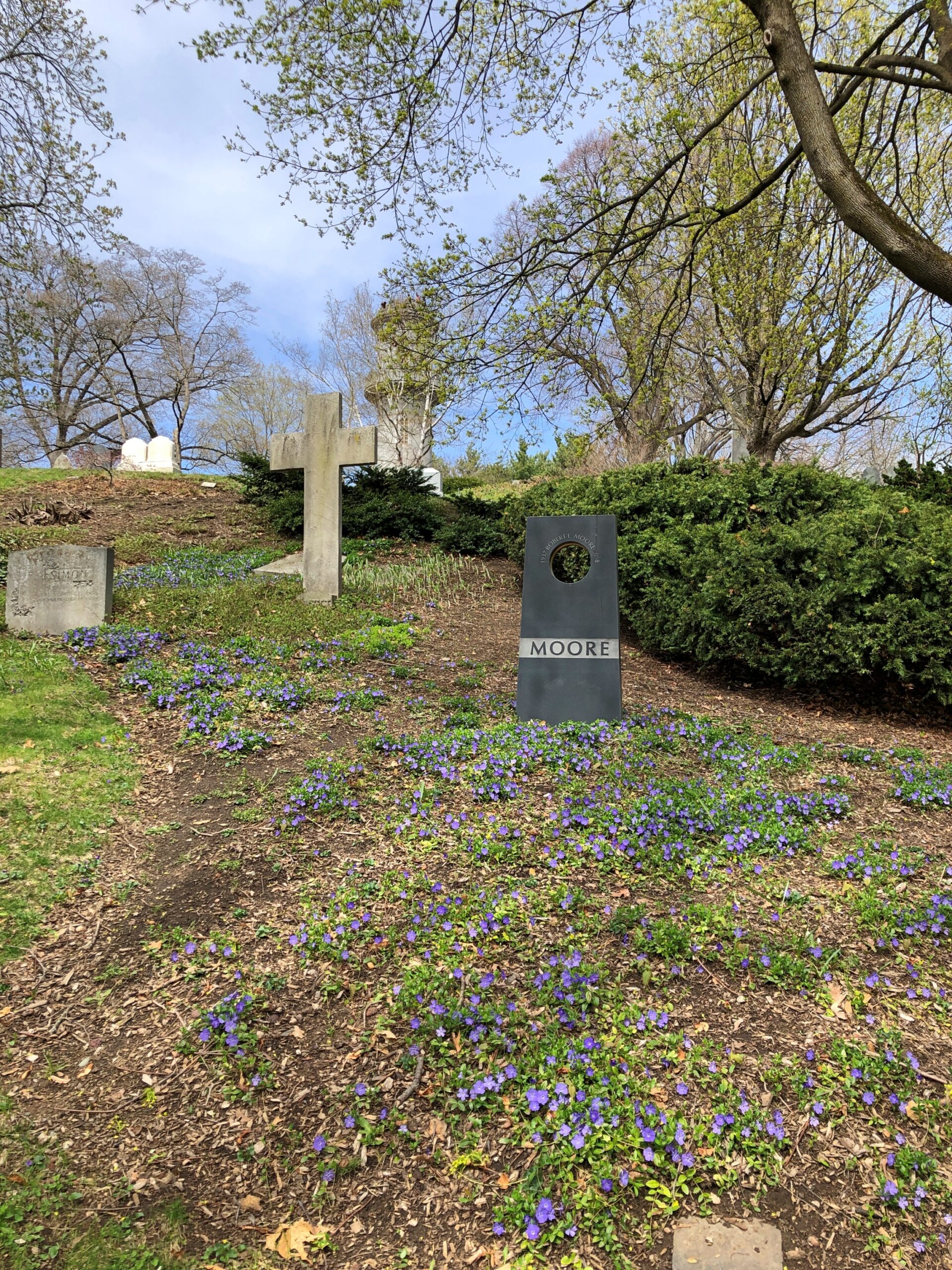
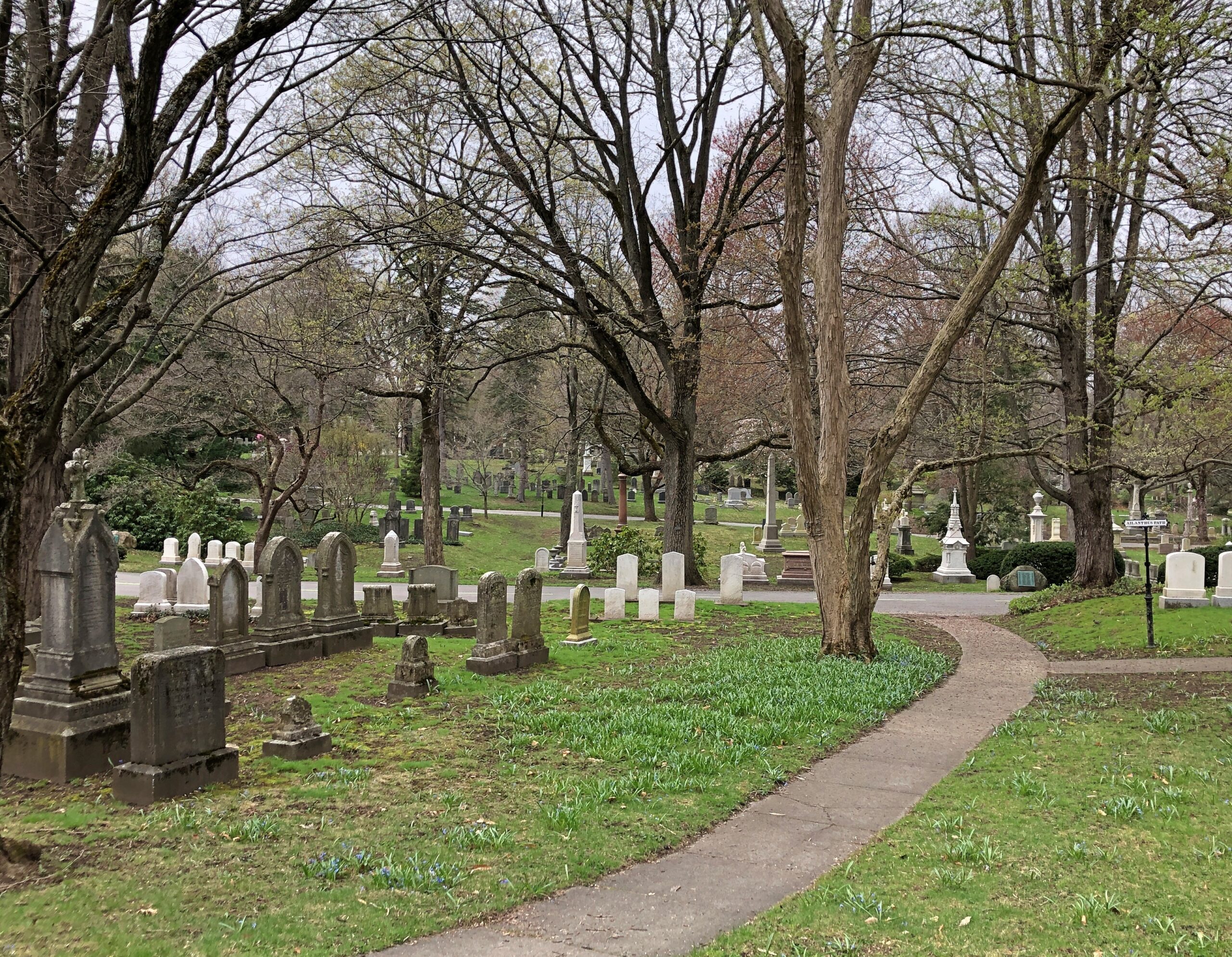
Arlington National inspires feelings of patriotism from as deep an historical well in North America has to offer; New Orleans’ tombs are dressed in mystery and garlanded with voodoo. What does Mount Auburn have? Landscaping of the highest order. A pattern by which all the following garden cemeteries can be judged: stones of great variety, plants equally various, and an alternation of flat and hilly contour.

The Massachusetts Horticultural Society, itself a recent establishment by the 1830s, created Mount Auburn during a time of peace and expansion in Boston, with the violence of the Revolution barely in living memory and U.S. sectional friction deepening, but not to the strife it would become by the ’50s. The president of the society, Henry Dearborn (d. 1851), is credited with designing Mount Auburn.

The site, with its twists and minor vistas, turned out to be just the place for a revolution in burial practice. Dearborn must have had a gardener’s instinct for the reinventing the wooded hills, but he was much more than a gardener, and the cemetery is much more than a garden. And anyway, Dearborn just set the thing in motion nearly 200 years ago, in collaboration with landscape architect Alexander Wadsworth and botanist Jacob Bigelow. The cemetery, a place to recall lives that are over, is ongoing.

Since then, every stone, every planting, all the small decisions and actions that go into managing 174 acres with 100,000 or more permanent residents, have formed a national treasure.

Stockbridge, Massachusetts

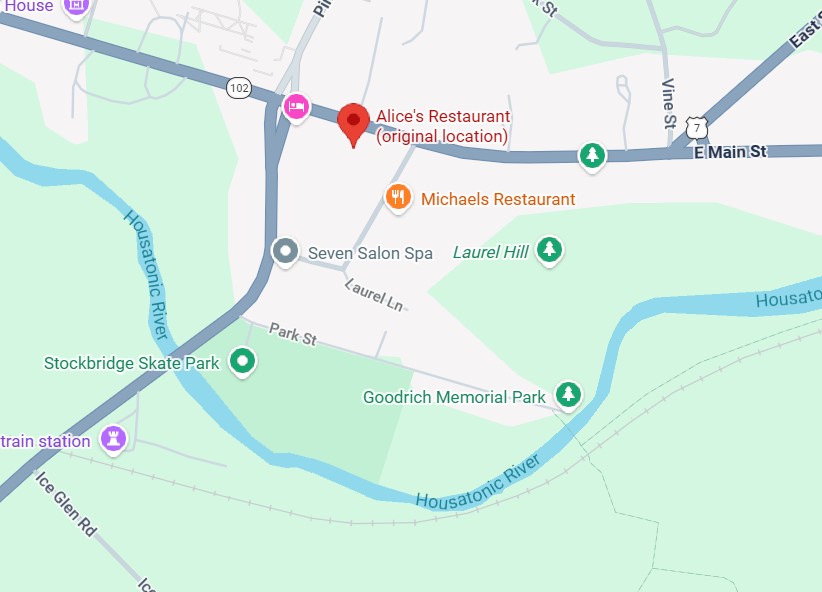
Not long ago, I wondered how accurate the lyrics of “Alice’s Restaurant Massacre” were on one specific point. I had my reasons.

You can get anything you want at Alice’s Restaurant
Walk right in, it’s around the back
Just a half a mile from the railroad track

Seems like a convenient rhyme, but that’s not all. Google Maps tells me that the site of Alice’s Restaurant is about a half a mile from a railroad track. I didn’t save the scale on this map, but the distance is correct. This is mildly amazing. Who expects geographical accuracy from a song lyric?

That morning, April 14, I’d extracted myself from Midtown Manhattan via various sorts of transport, retrieving my car at long-term parking at Newark International, and planned to spend the night in Portsmouth, New Hampshire. Though New England isn’t large, it is molasses when it comes to driving through its densely settled areas, and first I had to get out of New Jersey and New York, then cross Massachusetts. All that meant an all-day drive. Stockbridge, Massachusetts, former home of Alice’s Restaurant, was a stop along the way.

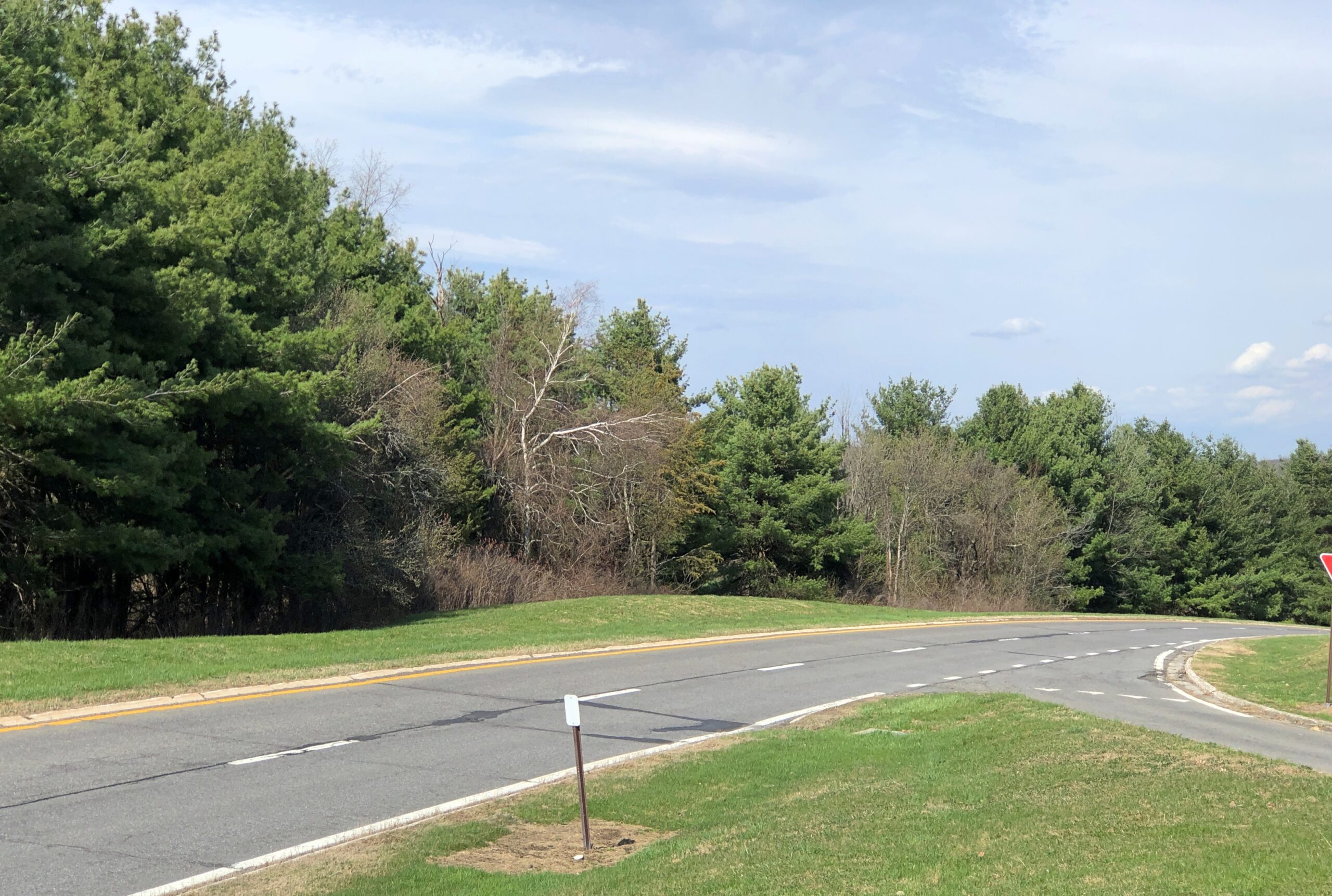
Near the eastern edge of New York state, I cruised north on the Taconic State Parkway.

That sounded good, I thought when I noted the name on a map. It was. Budding greenery, smooth driving, no trucks. Or that many other cars, the further north you go. Construction started about 100 years ago, at the urging of then private citizen Franklin D. Roosevelt. The parkway is in the same league as the Natchez Trace Parkway or the Blue Ridge Parkway, though only about a quarter as long as either.

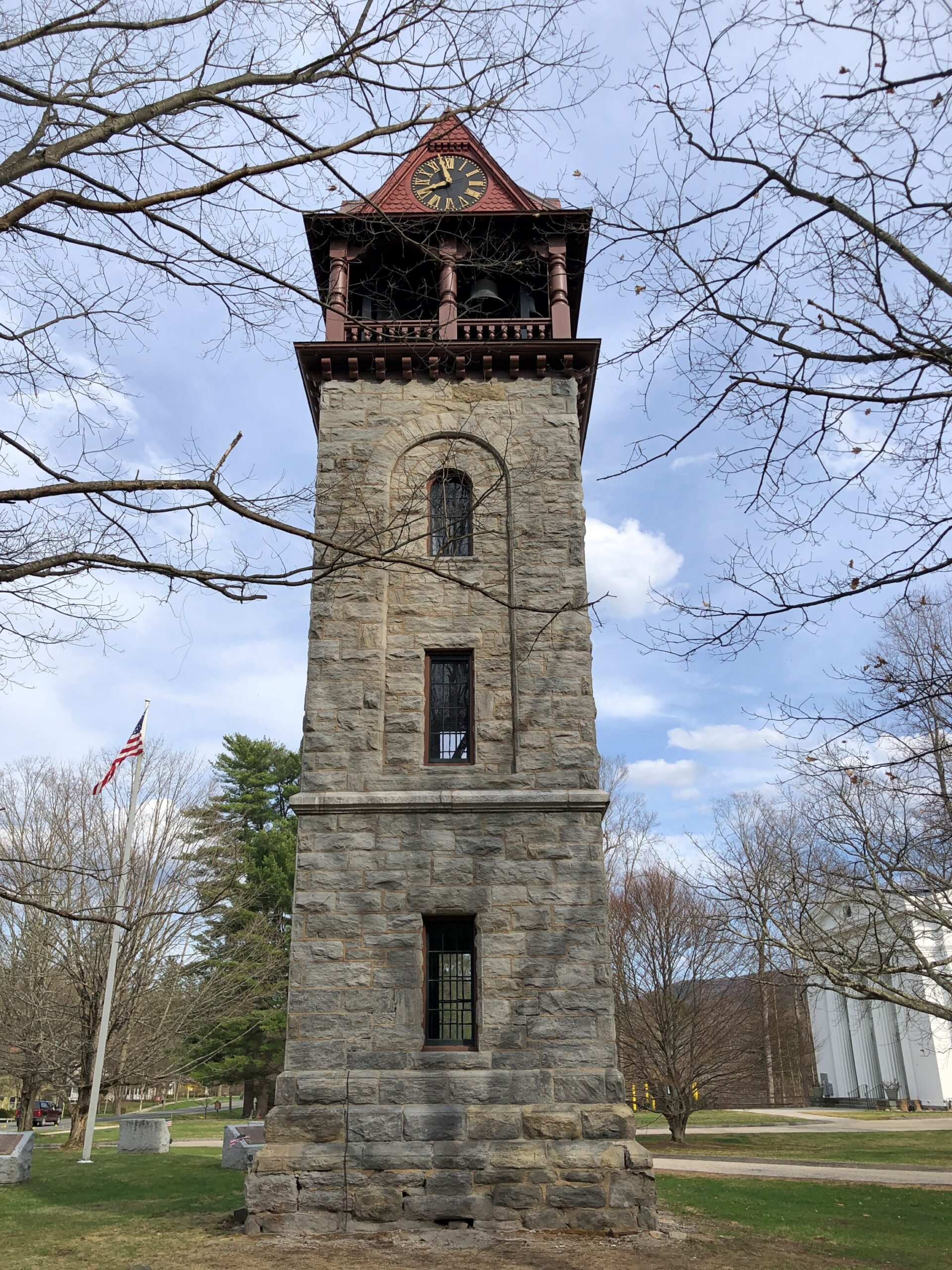
Once I’d gone far enough north, I took connecting roads to the Massachusetts Turnpike. Stockbridge, which is slightly south of the turnpike, counted more-or-less as a midway point on my day’s drive. As I entered town via Massachusetts 102, I noticed a tower. A stone tower, exuding 19th-century New England sturdiness. Its clock was wrong.

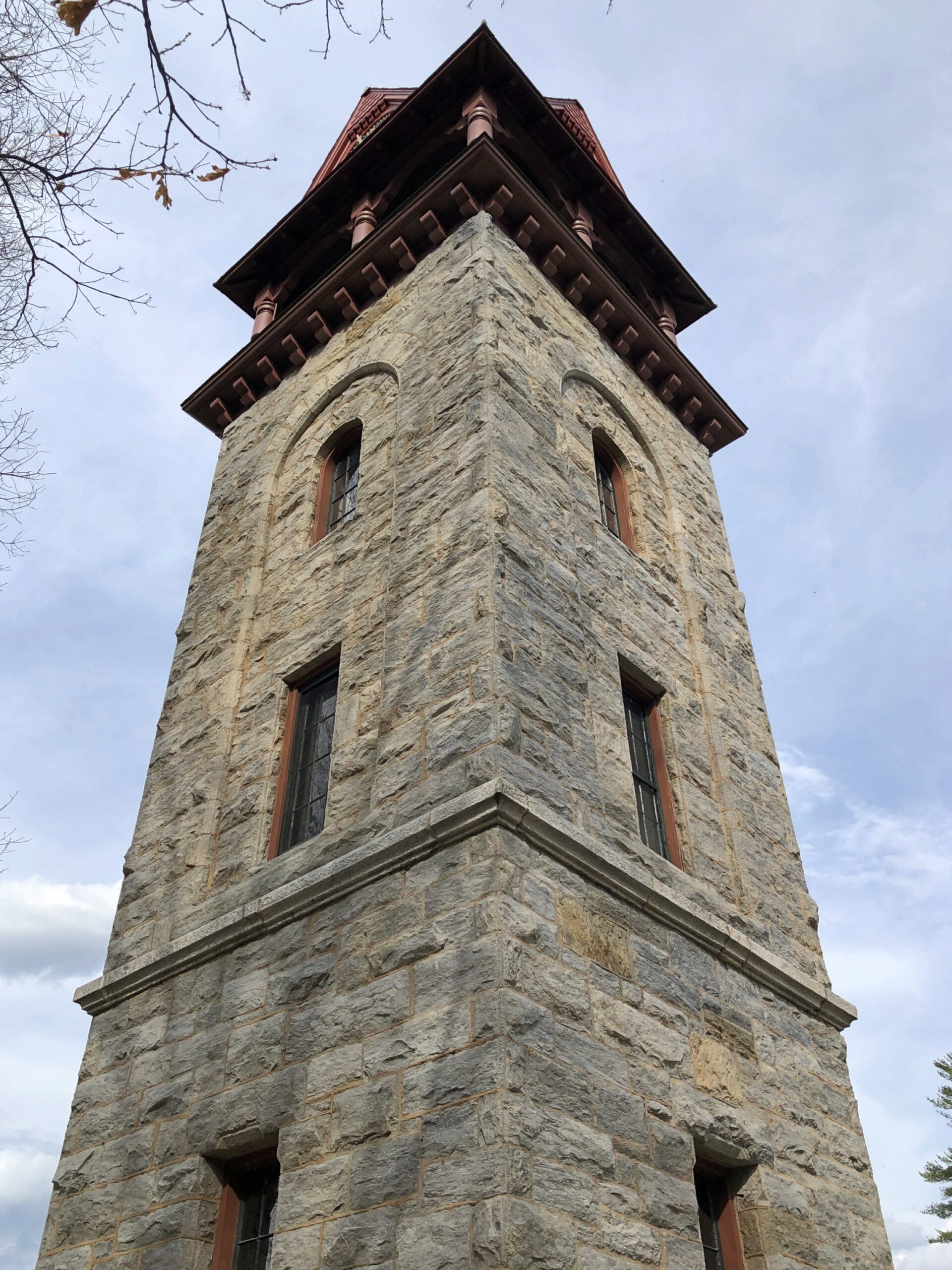
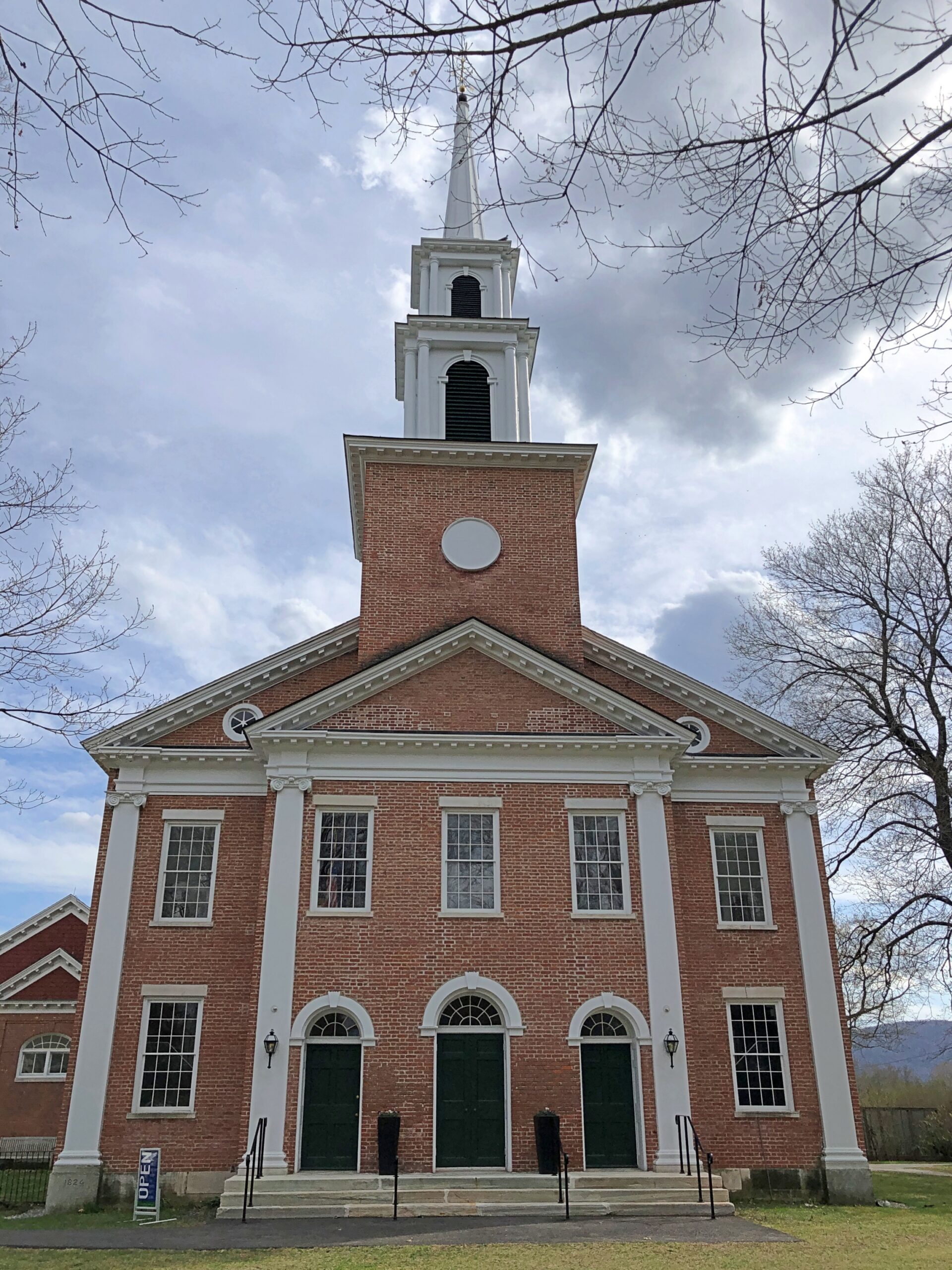
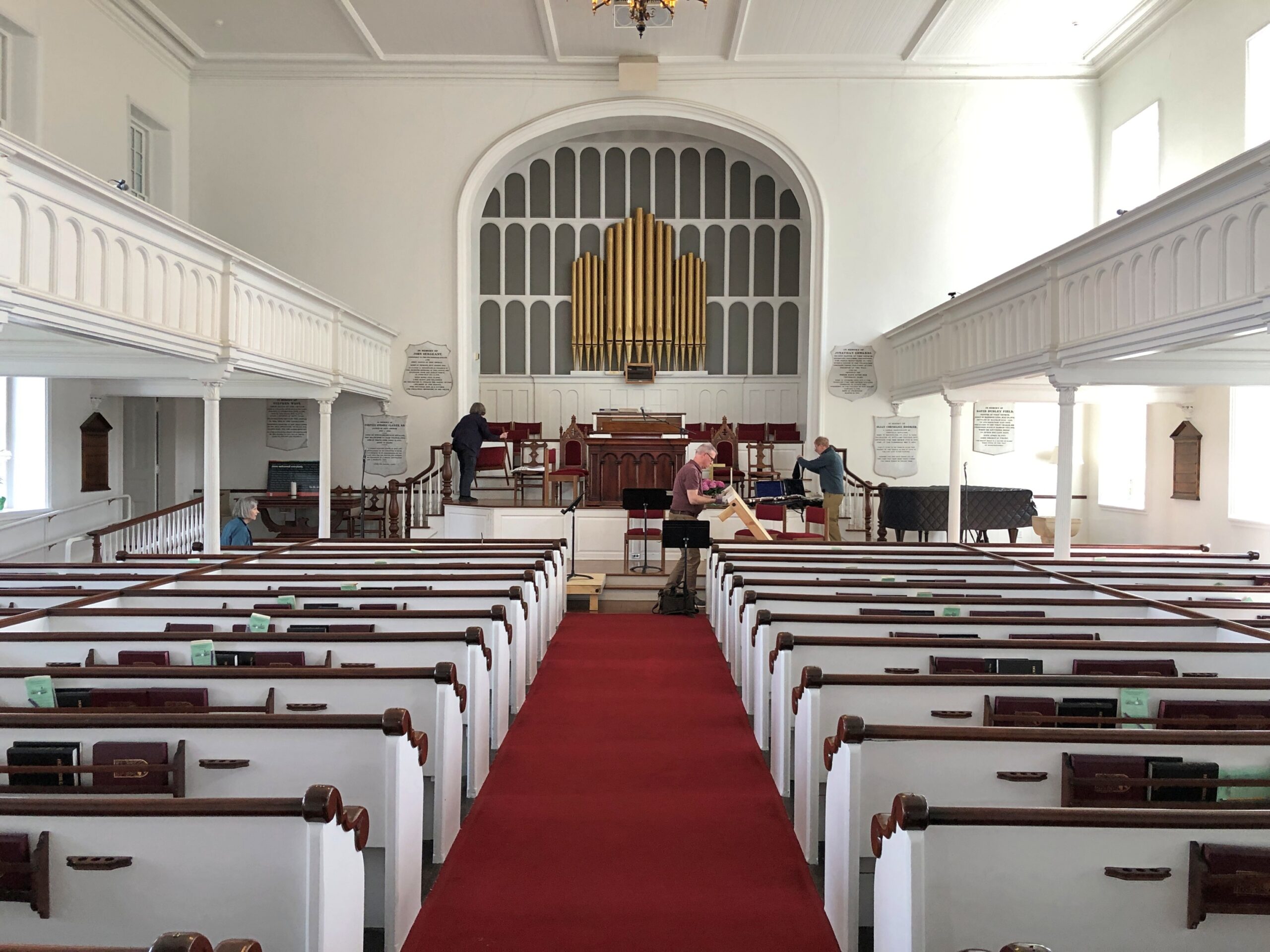
The Children’s Chimes Tower, a 19th-century bell tower built on the site of the town’s original church. A 19th-century replacement for that church stands near the bell tower, looking as New England as can be.

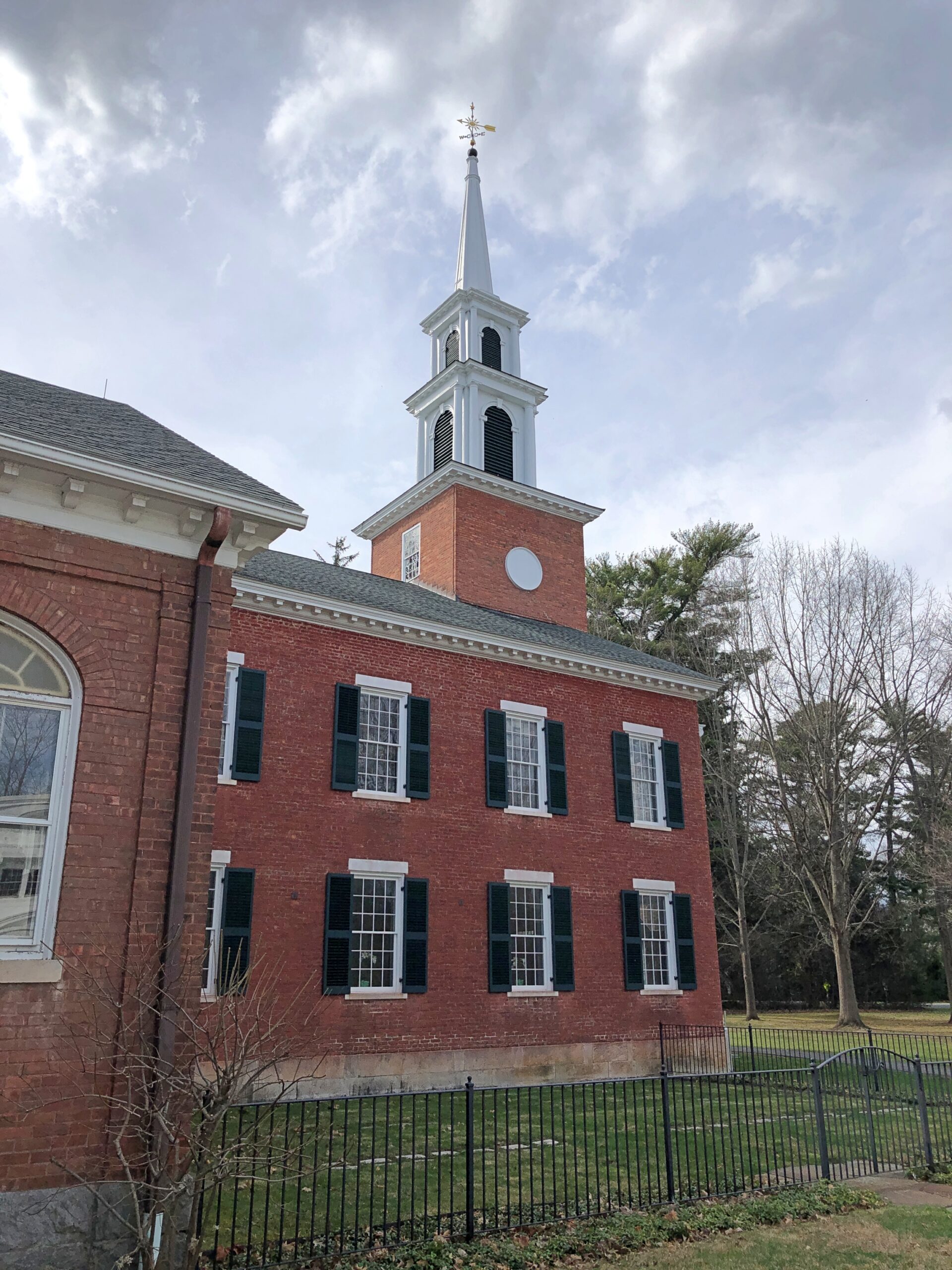
The First Congregational Church UCC. Remarkably, it was open.

Musicians were practicing, or rather seemed to be wrapping up a practice. They paid no attention to me as I looked around.

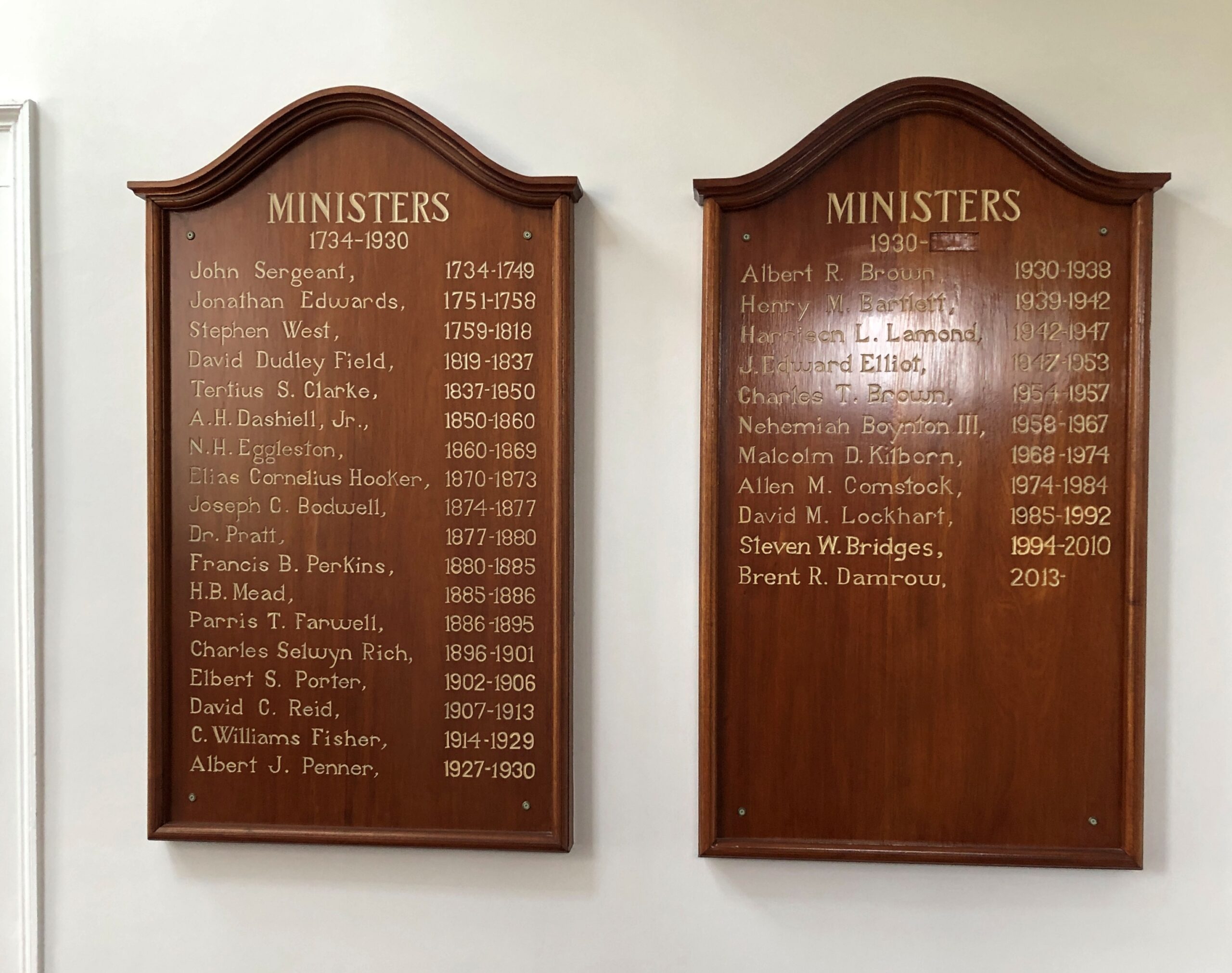
Jonathan Edwards was the church’s second pastor. “Sinners in the Hands of an Angry God” Jonathan Edwards? Yes.

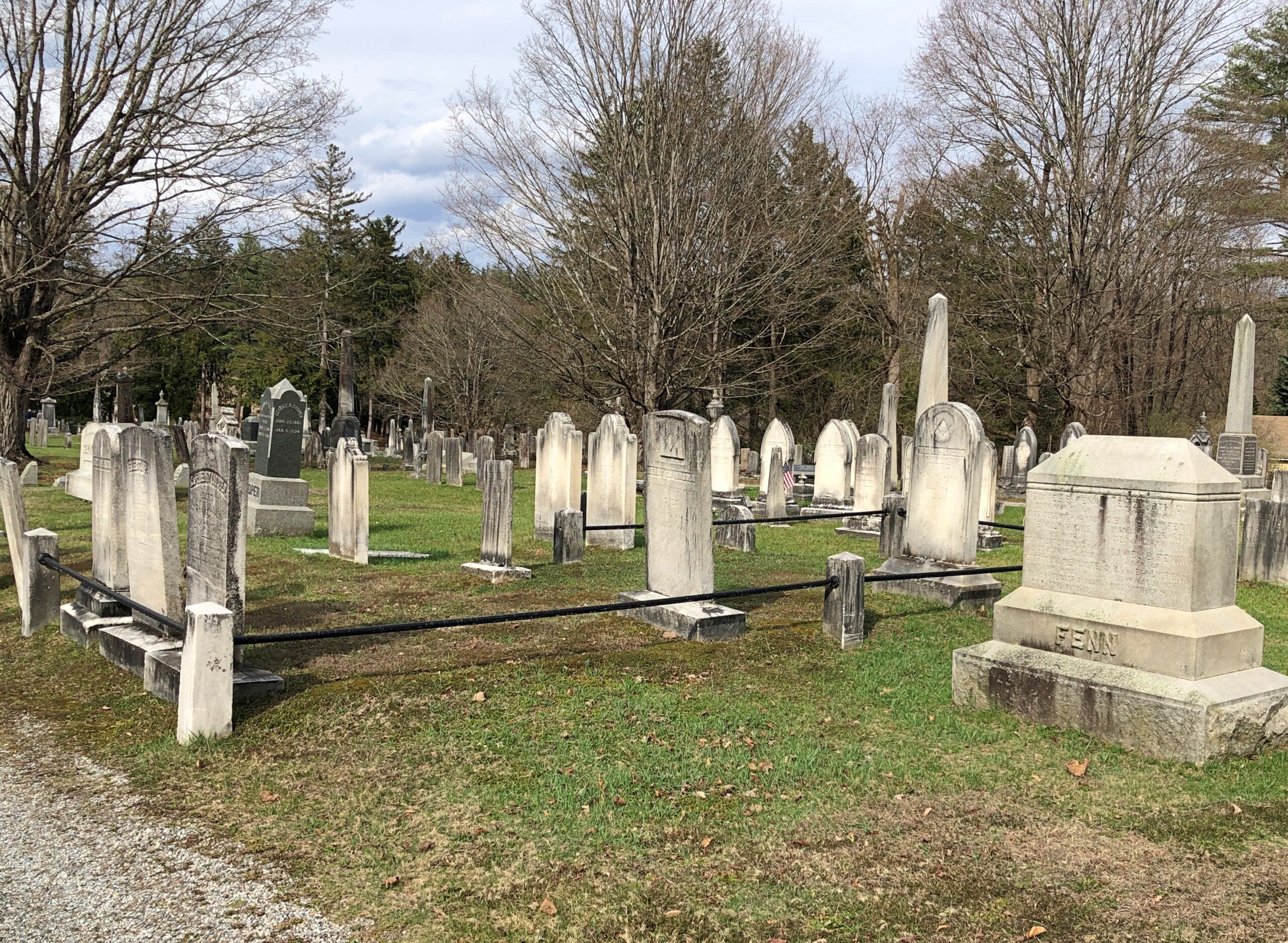
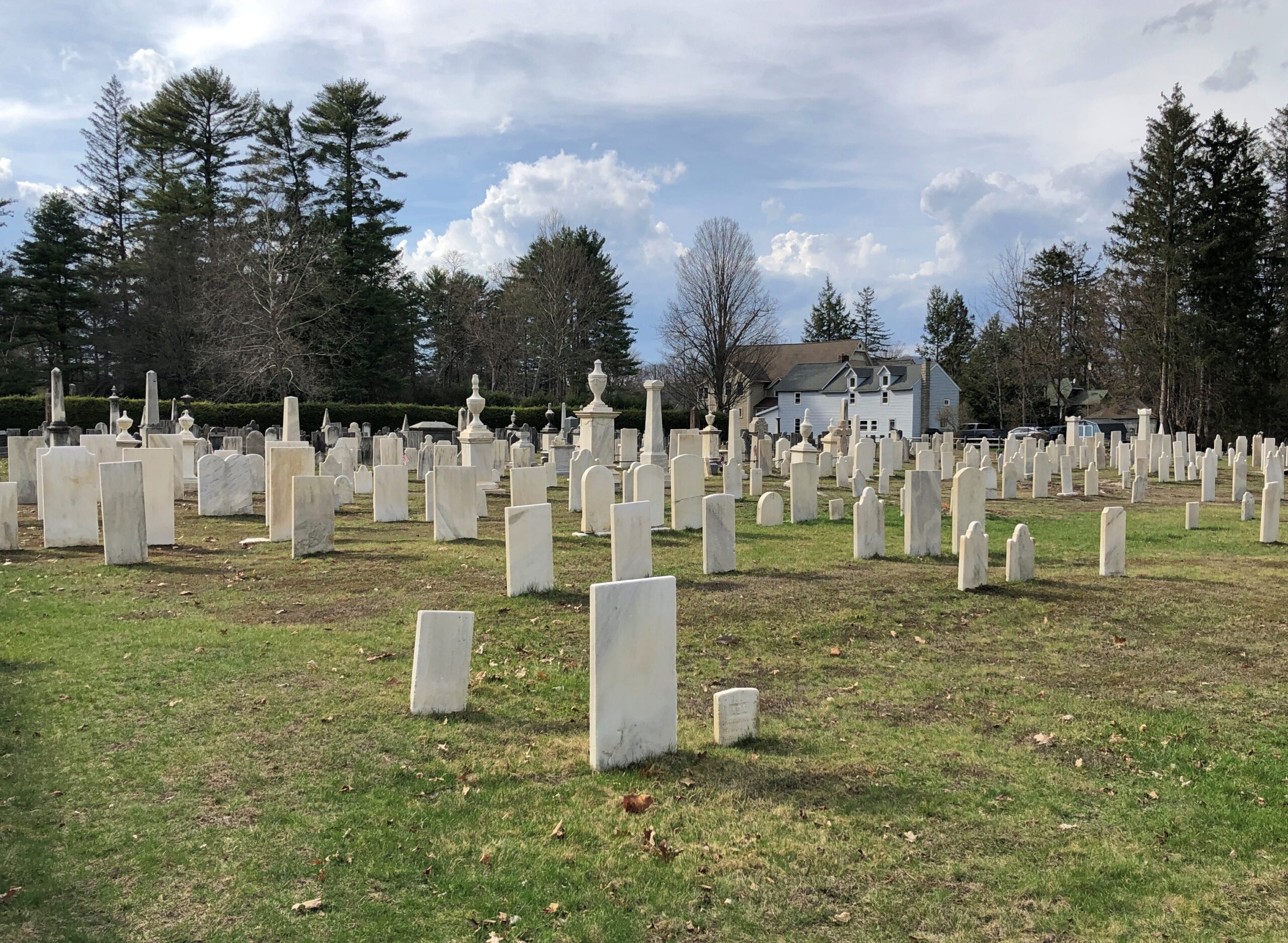
Across the road from the church and freestanding bell tower – which doesn’t chime, except in the summer – is the town cemetery.

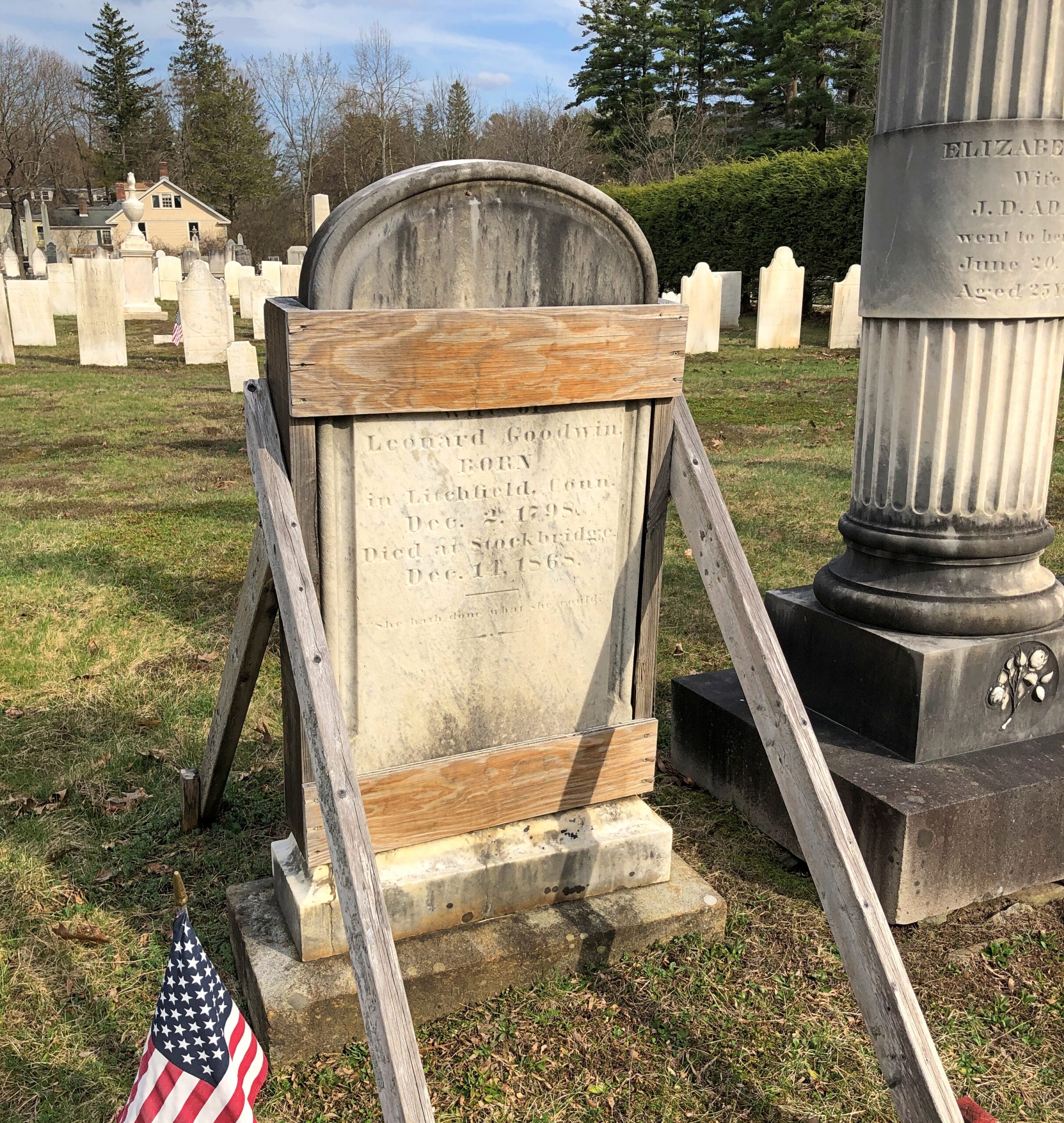
“One of the earliest burials was the first minister, John Sergeant, who died in 1749,” says the Stockbridge Library. “Members of the Mohican tribe who joined the church also were buried here. Twenty years later, discussions began about ways to enclose the burial area to keep out cattle, horses, and pigs. It wasn’t until 1853, however, that a new organization in town, the Laurel Hill Association, took on the responsibility to clean and protect the area.”

Route 102 turns into Main Street, with its shops, hotels, and other establishiments.

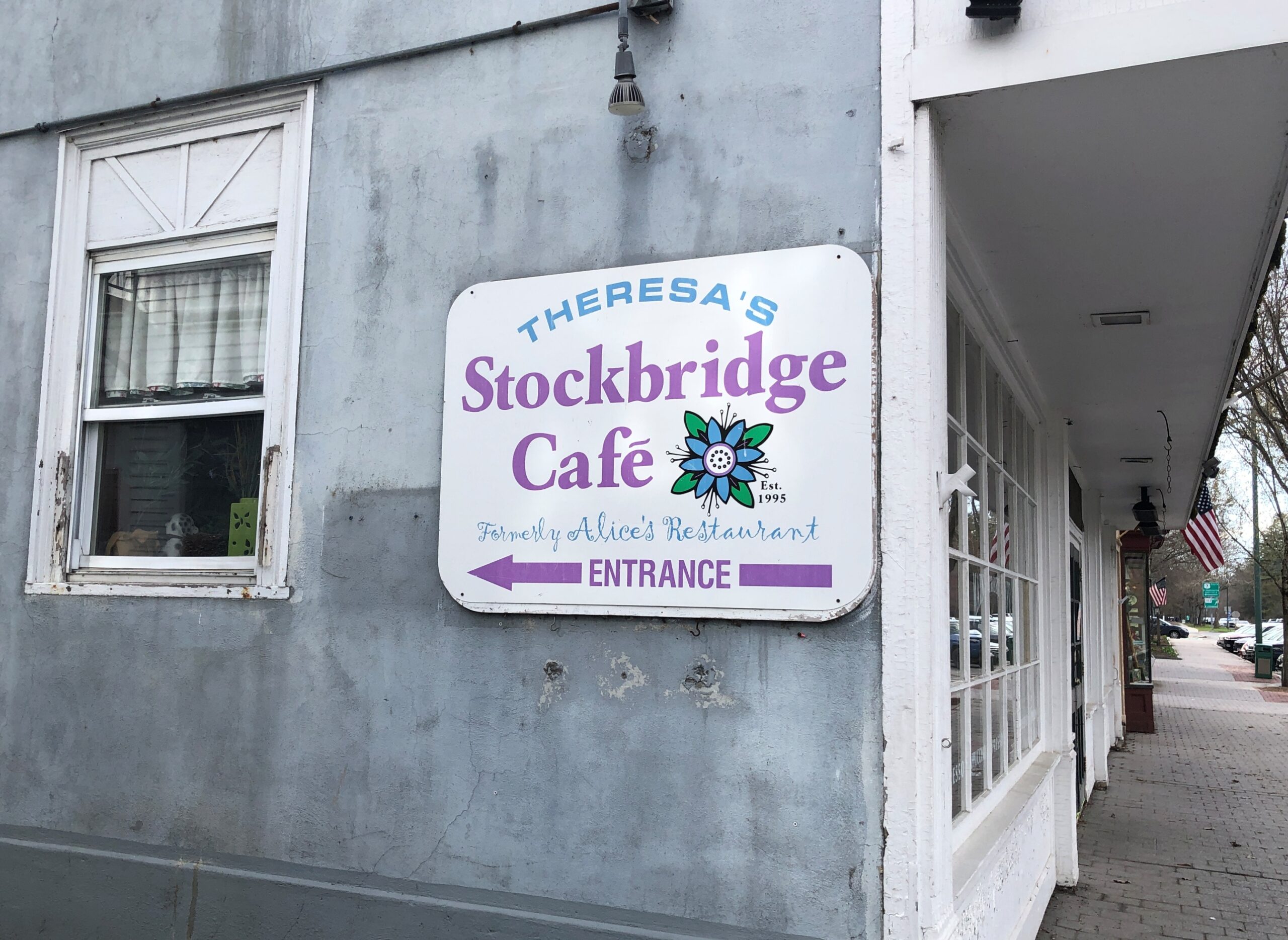
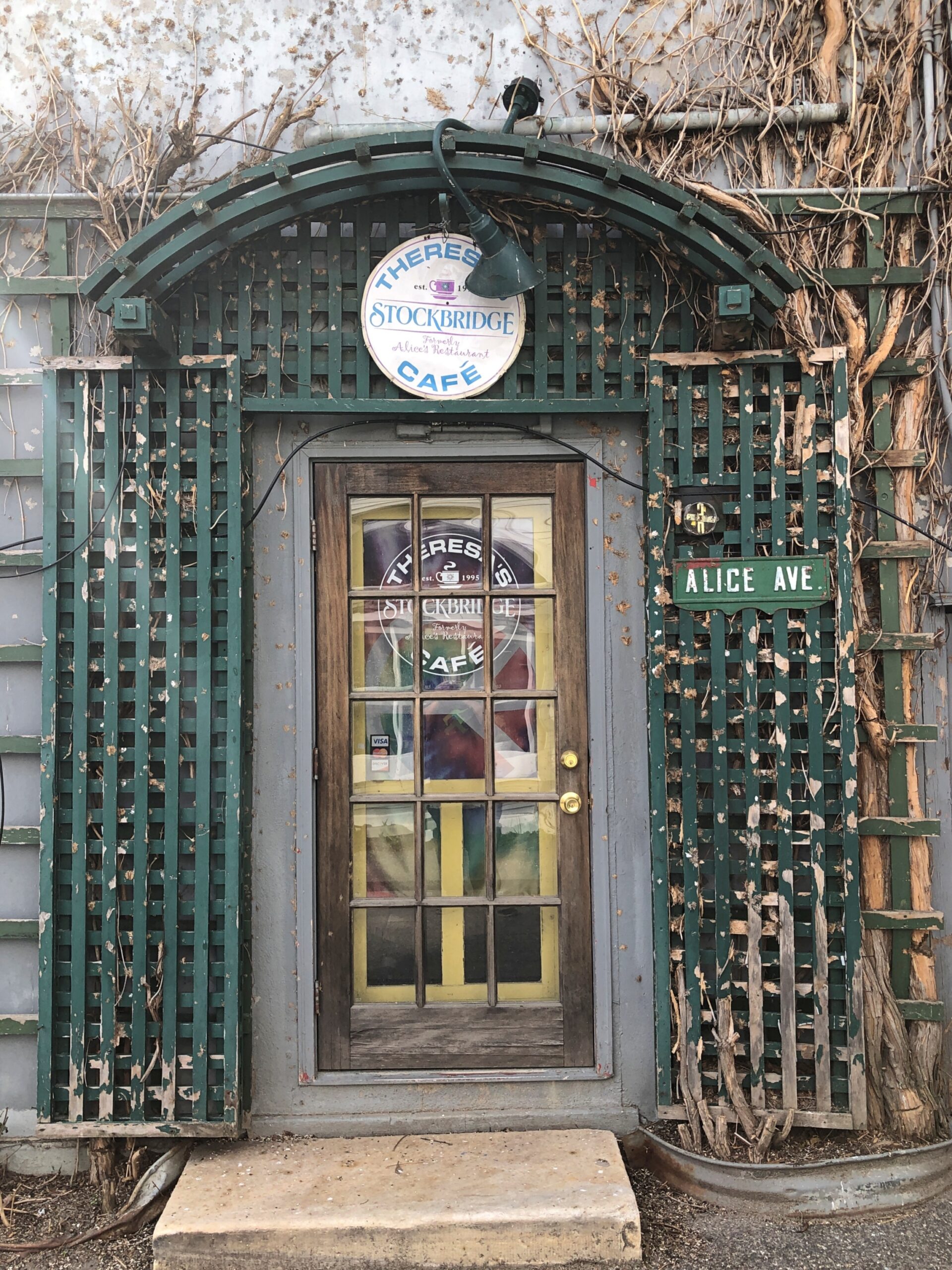
And, around the back (off Main St., that is), just a half a mile from the railroad track, is Theresa’s Stockbridge Café.

Closed for the day.

Nor’East Drive ’26

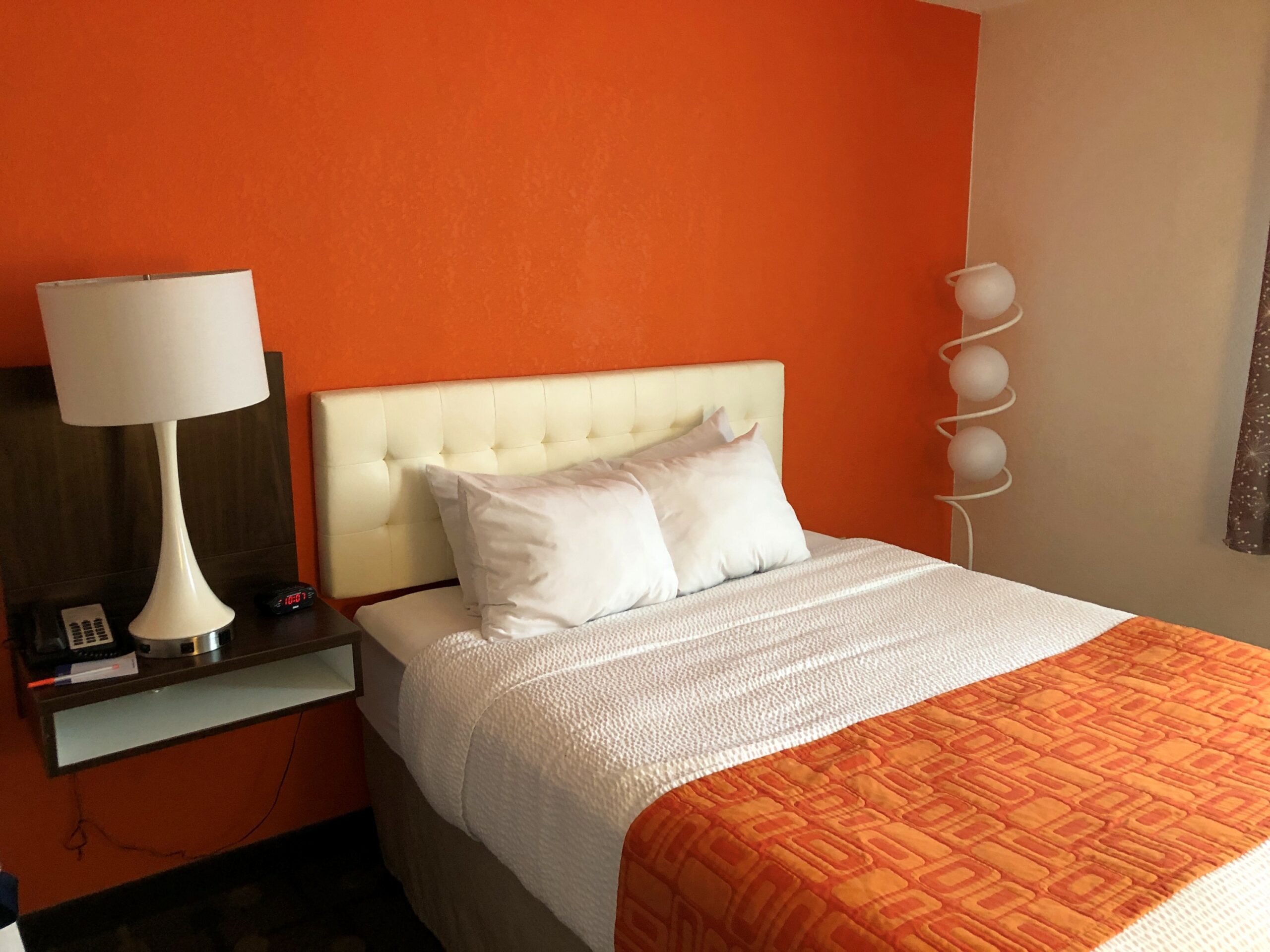
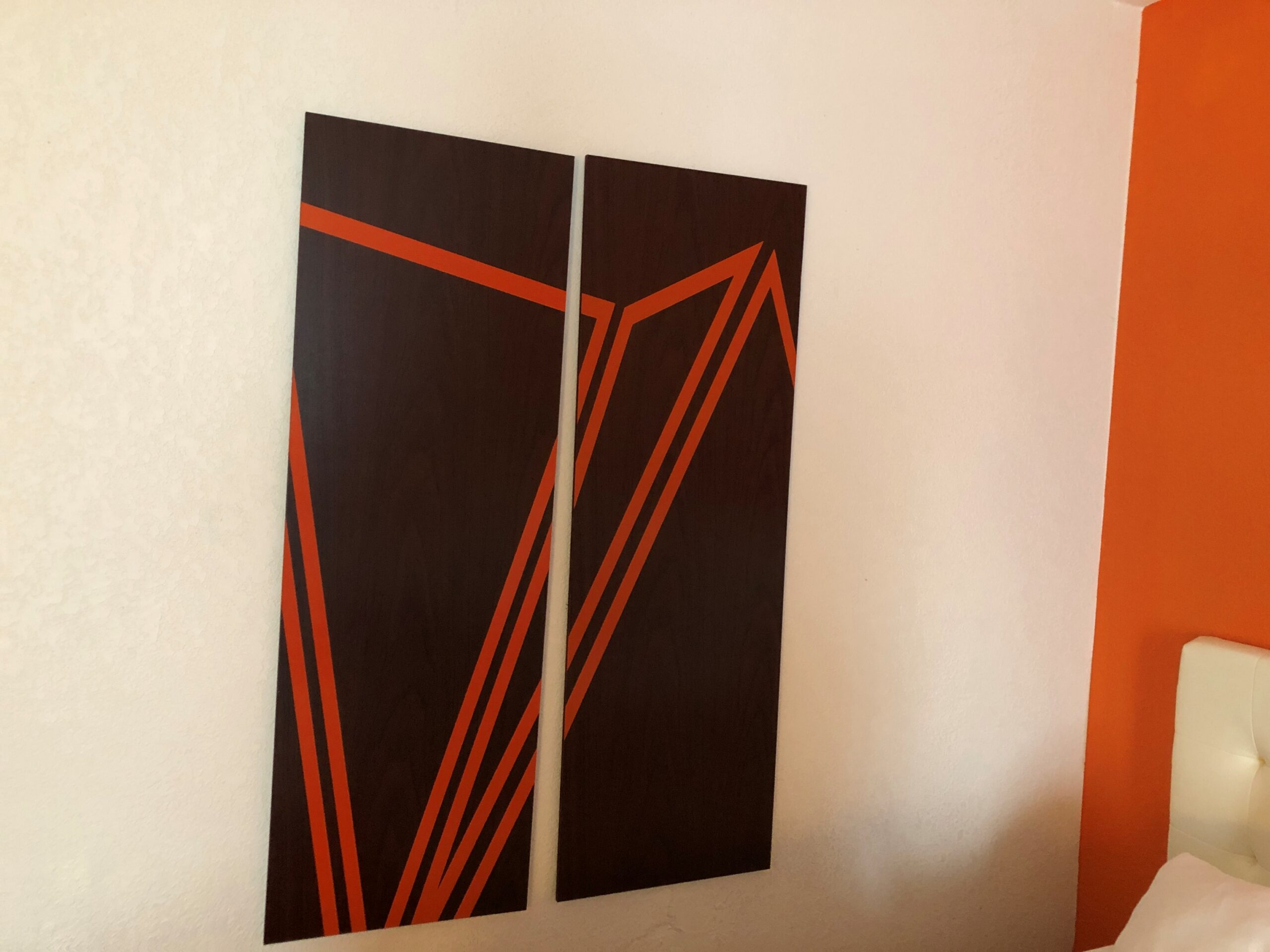
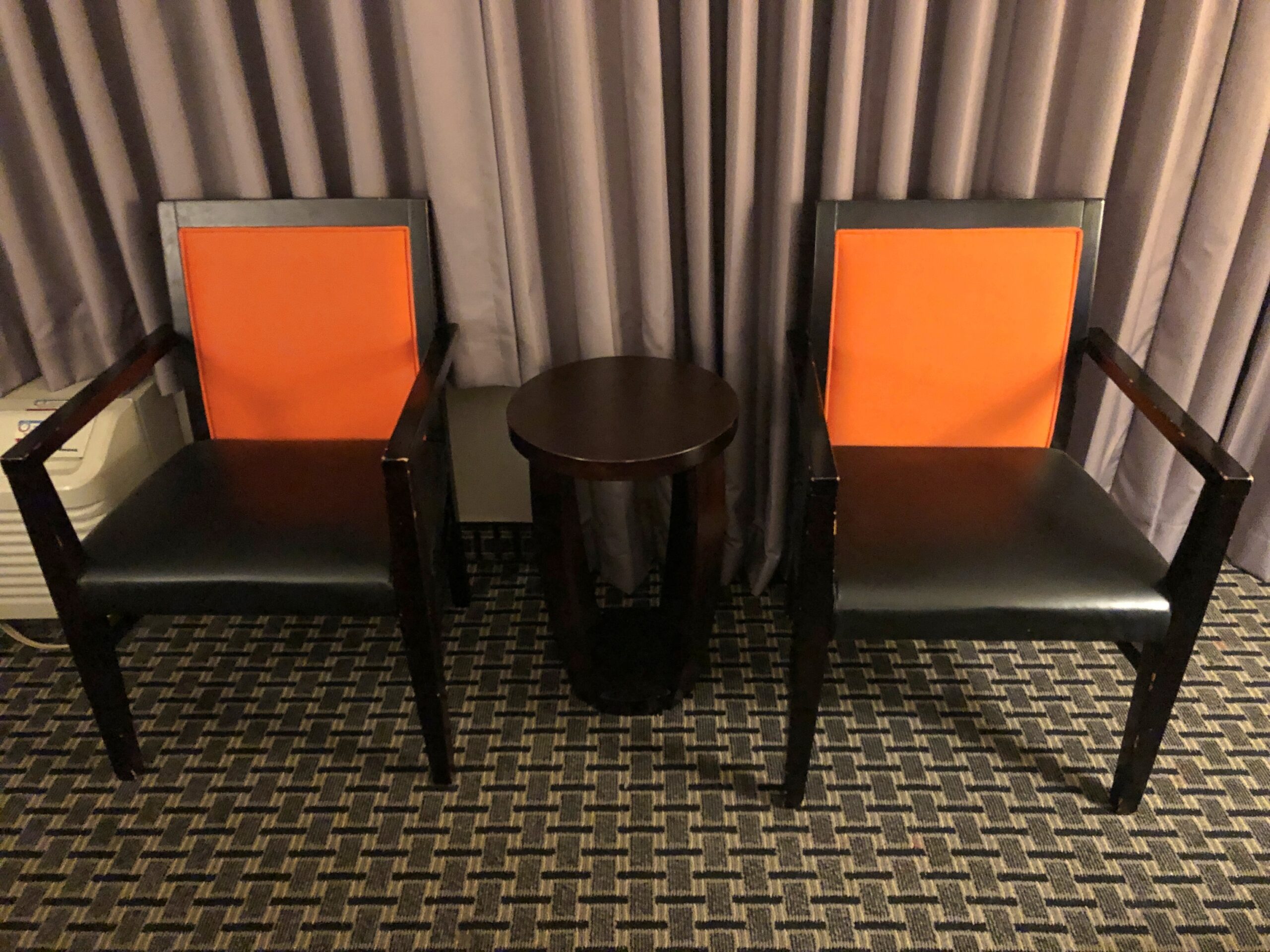
Howard Johnson, it turns out, is serious about renovating its rooms retrostyle. What says Howard Johnson midcentury, the heyday of the much-diminished chain, better than orange? – a lot of orange.

I’m just old enough to be nostalgic for midcentury motels. Maybe I’m just the right age, since as a kid, I didn’t have to concern myself with the details of getting to the motels or paying for them. I was along for the ride and the stay. I did, however, starting with the Cave Vacation of 1972 at age 11, concern myself with packing – my own stuff, but also the items everyone would need, put in the trunk of the car. To the mild amazement (I think) of my mother.

The Portsmouth, New Hampshire Howard Johnson, whose full brand name these days is Howard Johnson by Wyndham, checked a lot of the other boxes besides raw orange overload.

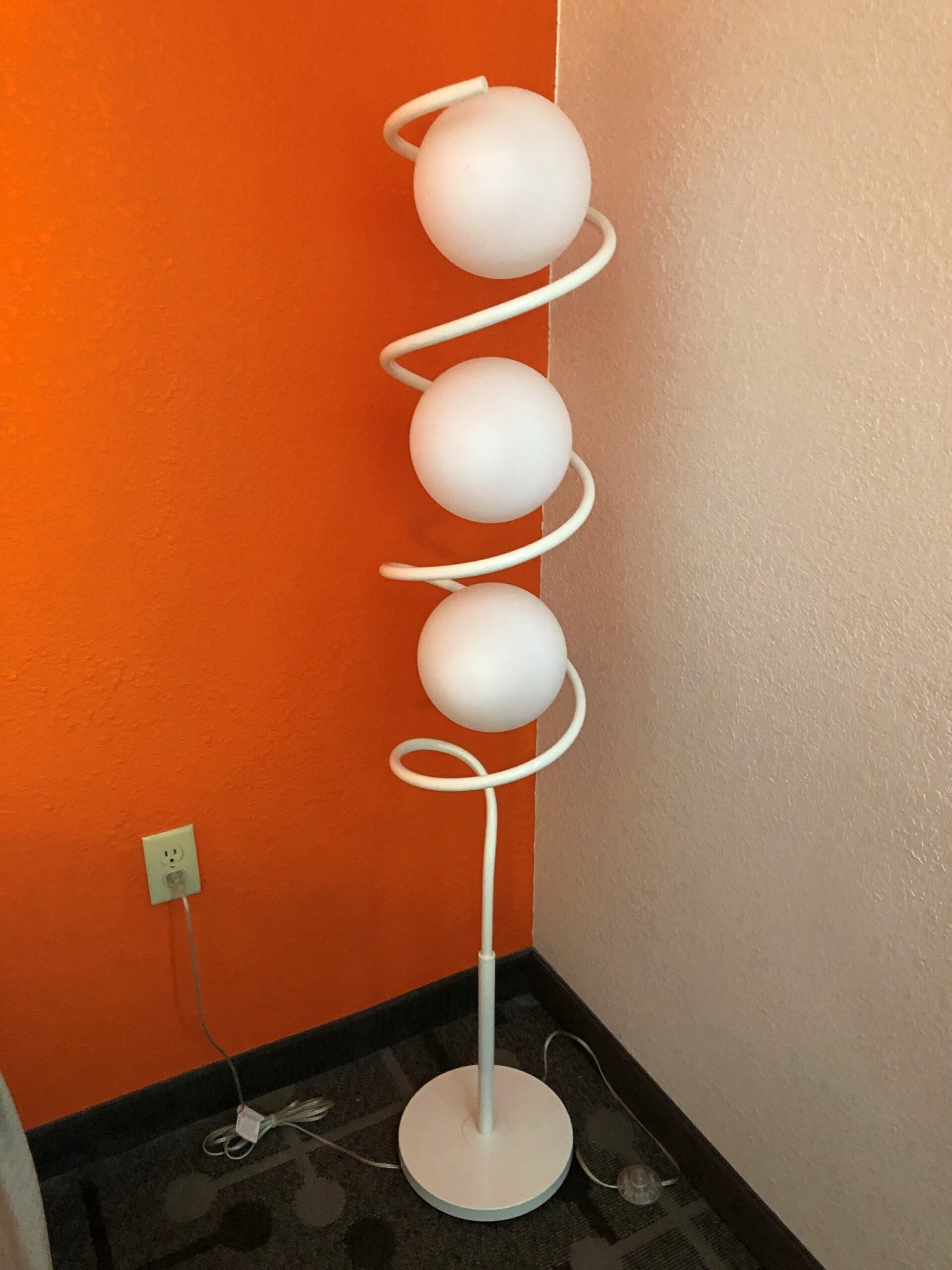
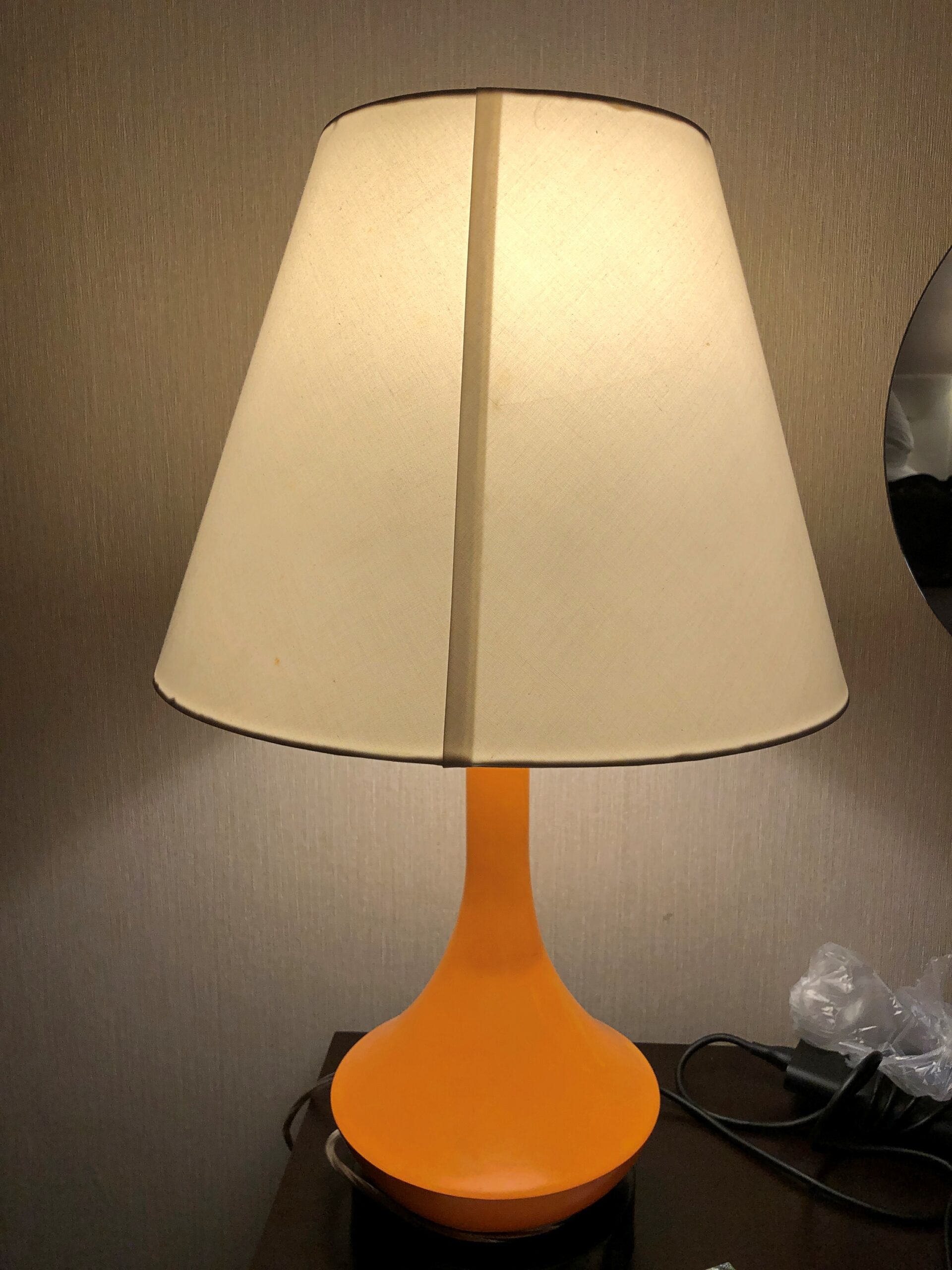
Not sure if these are precisely period lamps, but they remind me of the period.

The room had a modern TV, naturally, and as befitting our time, a lot of outlets, including USBs. Unfortunately, there was no bottle opener attached under the sink. Or a gossamer paper ribbon around the toilet announcing that it had been sanitized for my protection. Just quibbles. The room had the right feeling.

I found myself in New Hampshire in mid-April headed east to Maine. Some days earlier, on April 7, I’d left metro Chicago by car for the Northeast again. I returned on April 24 after 3,499 miles on the road. Dang, I should have gone that extra mile we’re always hearing about.

After visiting the Northeast last October, I hadn’t intended to return quite so soon. Then Lilly and Dan scheduled their engagement party for April 11, 2026, in Midtown Manhattan, which meant a return to New York City at least. The easier (and cheaper) thing to do would have been for all of us to fly there, spend a few days, and then fly home.

I wanted to go to the party, of course, but that approach to getting there didn’t appeal – so I drove by way of Indiana, Ohio, Pennsylvania and New Jersey, where I squeezed a day into my schedule to look around. Yuriko and Ann flew in the day before the event, and we attended the party in the upstairs Manhattan Manor room of Rosie O’Grady’s on 51st, between 6th Ave. and 7th Ave. I’d never heard of the place before, but eventually learned that Rosie O’Grady’s is a sentimental favorite of Lilly and Dan’s when they visit New York. That only goes to show that one’s children have, or should have, aspects of their lives you know nothing about.

We had a large time that evening, meeting members of Dan’s family and many of his friends, and seeing many of Lilly’s friends for the first time or the first time in years. My nephew Dees was able to attend from Austin and my nephew Robert and his fiancée Meredith came from Brooklyn.

That wasn’t quite it for NYC – my nth visit, Yuriko’s third and Ann’s first – since we had another day and a half to kick around. We spent time strolling in a budding springtime Central Park and at MoMA and in a couple of Greek diners and one of the locations of the delightful Angelina bakery. All in all, an enjoyable time, all too short. Yuriko and Ann flew home, but I made my trip just a little longer.

Namely, I had another large time, this one in Boston, with my friends Rich and Lisa and Steve. That was slated for a week after the party, so I had a few days to spend between NYC and Boston. Where to go? Maine. Geographically not between those major metros, but nothing is that far apart in New England, as all drivers who grew up in Texas know.

After my visit with my Boston friends on the weekend of April 18-19, I took a (fairly) slow drive home, passing through western Massachusetts and stopping in upstate New York long enough to visit historic places I couldn’t in October because the federal government shutdown. From there, I traversed Pennsylvania, Ohio and Indiana again, along a somewhat different route than I’d come. Of course.

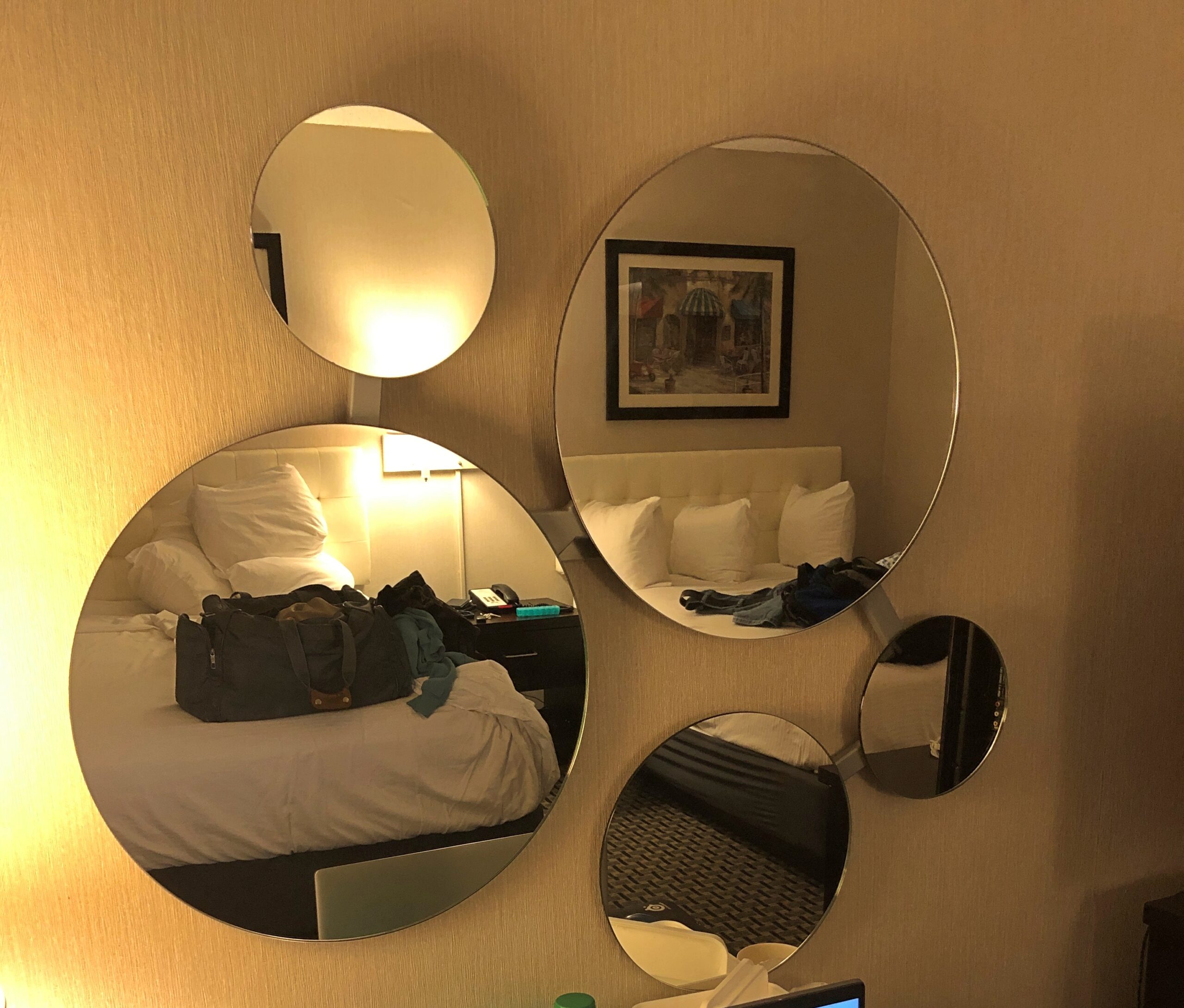
The last night of the trip, I stayed at another Howard Johnson. It had the location I wanted, in western Ohio, and the price wasn’t bad, but I was also curious how orange it was going to be. The answer: not quite as much as the Portsmouth property, but more than most places.

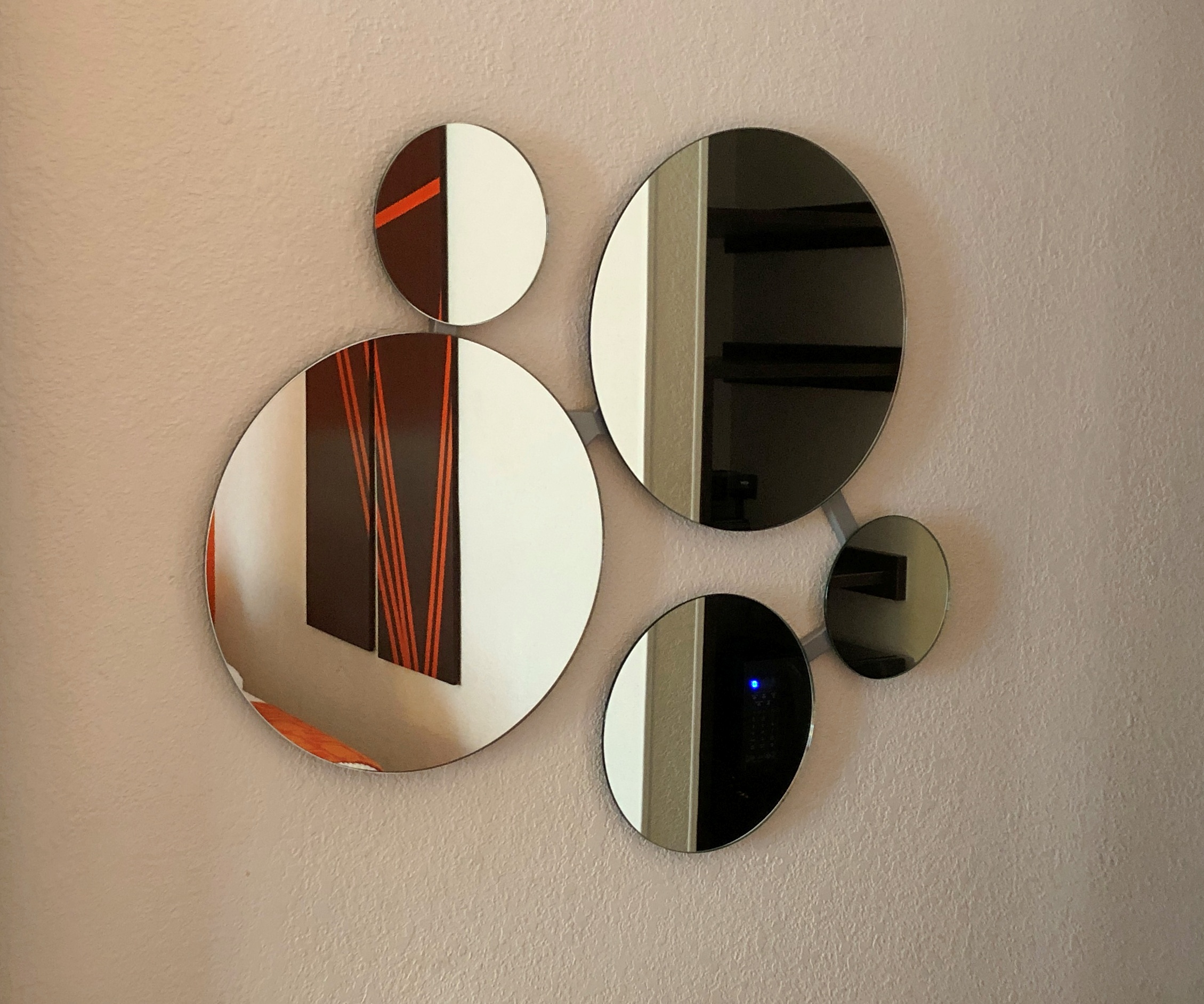
Including the same circular mirror array. Wyndham must have gotten them in bulk.

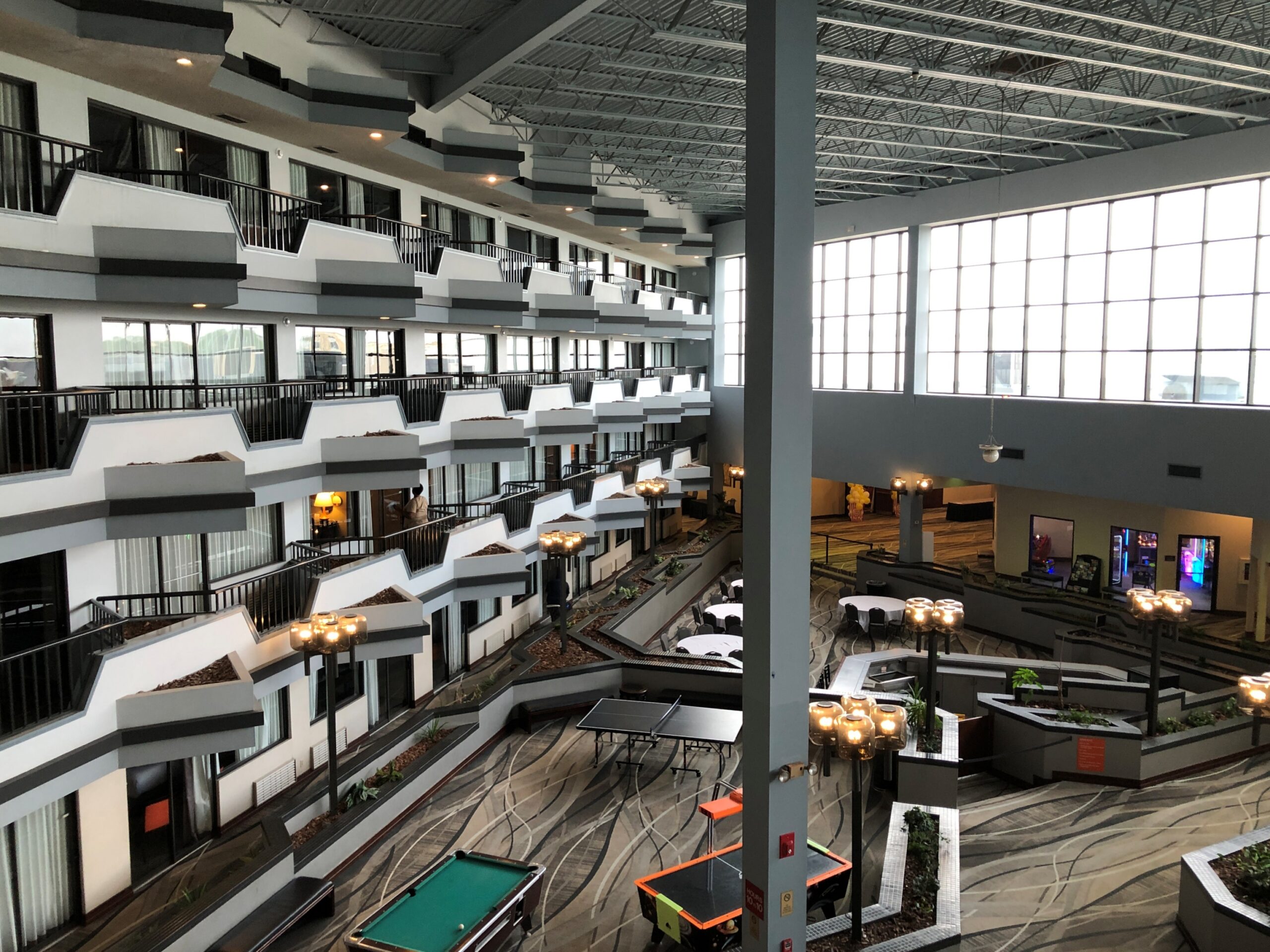
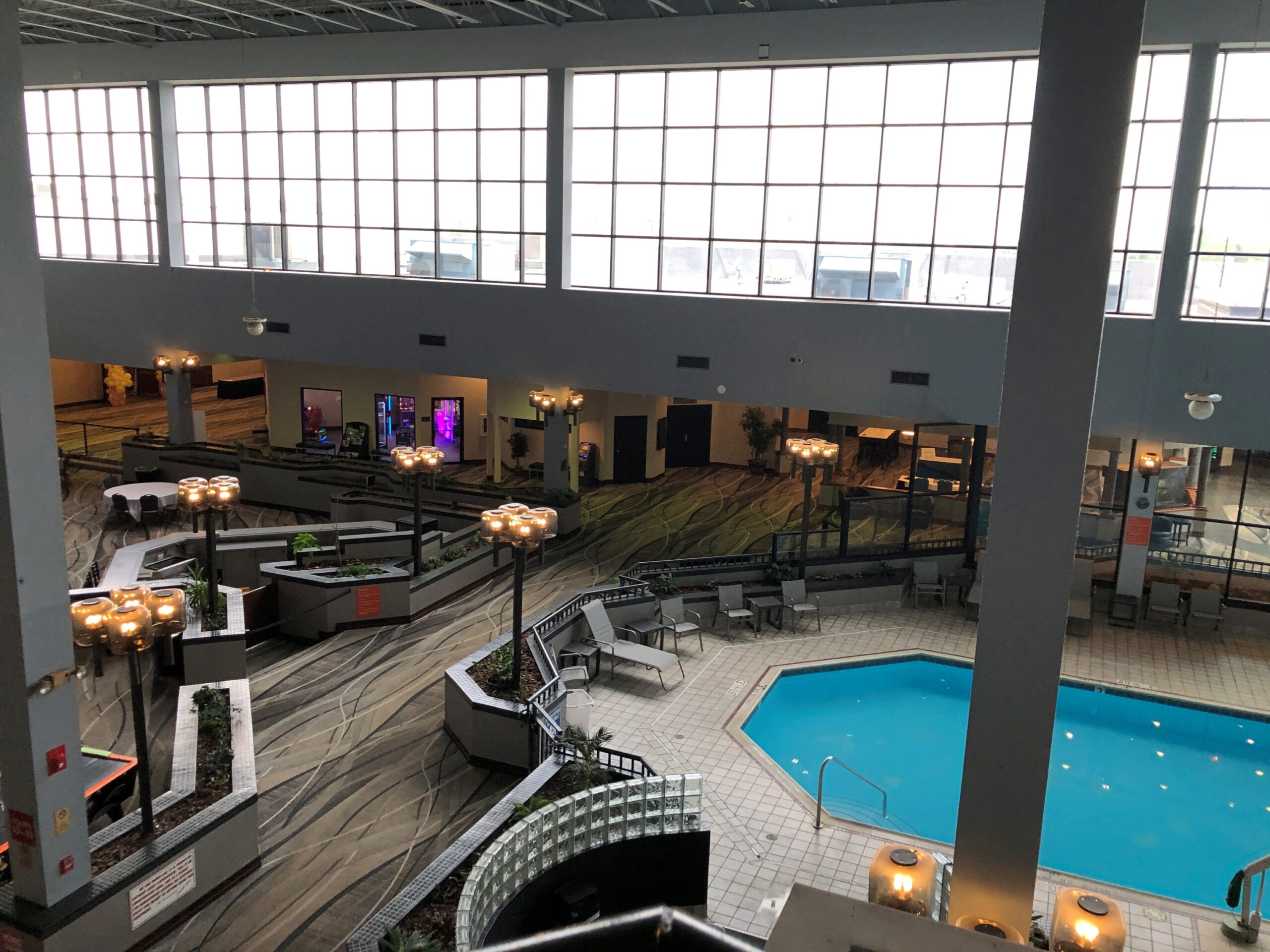
The unusual thing about the Lima, Ohio Howard Johnson is its sizable enclosed atrium — visible from my room’s balcony, also unusual in a limited-service hospitality property.

I asked the clerk if the property had been something else, once upon a time, and she said it had, offering a name I didn’t recognize and don’t remember, though I expect it might have been an independent property trying to make a go of it. Tough going in Lima, I bet.

First State, Last State

The Avalon Project, run by Yale Law School, has a remarkable trove of “documents in law, history and diplomacy,” as the site says. If you’re looking for a translation of the Code of Hammurabi or the Athenian Constitution, there are links. You can also find the annotated text of Magna Carta, the Mayflower Compact, and the many founding documents of the United States, just to mention some of the more famous ones.

If you’re after something less well known, try The Combinations of the Inhabitants Upon the Piscataqua River for Government, October 22, 1641 or Money and Trade Considered With a Proposal for Supplying the Nation with Money by John Law 1705 or Agreement Concerning Trade-Marks Between Brazil and the United States (1878).

Also within the Avalon Project is the text of the Ratification of the U.S. Constitution by the State of Delaware, December 7, 1787. To wit:

We the Deputies of the People of the Delaware State, in Convention met, having taken into our serious consideration the Federal Constitution proposed and agreed upon by the Deputies of the United States in a General Convention held at the City of Philadelphia on the seventeenth day of September in the year of our Lord one thousand seven hundred and eighty seven, Have approved, assented to, ratified, and confirmed, and by these Presents, Do, in virtue of the Power and Authority to us given for that purpose, for and in behalf of ourselves and our Constituents, fully, freely, and entirely approve of, assent to, ratify, and confirm the said Constitution.

Delaware ratified before any other state, and so claims “First State” as its nickname. I have my own private nickname for Delaware. At least I do now, since waking up on the morning of October 25 in my rented room in Dover: “Last State.” As in, the 50th state I’ve spent the night in. That isn’t an achievement of any kind, just a reflection of the fact that I’ve been fortunate enough to have the time and resources necessary to go that many places. Also, that I’m eccentric enough to keep track.

After dallying in Concord on the 23rd, and spending some time in Attleboro, Massachusetts, I arrived in East Providence, Rhode Island for the night. The point of that stop was entirely to spend the night in Rhode Island, since I’d never done that either. So RI was number 49. My hotel was just barely in that state.

I noticed the Honey Dew Donuts even closer to the border. I’d seen other locations driving in. The breakfast at my “3-star” hotel was meager, so I went to Honey Dew for a second breakfast. I wish I could say I’d discovered a great regional doughnut shop along the lines of Tim Horton’s, but it was only OK. Maybe I’ll give the brand another chance sometime.

Since I’d wanted to go from eastern Massachusetts to central Delaware, I should have broken that day’s journey somewhere in New Jersey. But that wouldn’t have involved stopping for the night in Rhode Island, which had been a short stop back in the summer of ’91 – a few hours to look around Providence, and especially the capitol – and the destination of a day trip in ’95, to Newport.

As for Delaware, my entire previous experience with the state was the Wilmington interstate bus station, a break in a bus ride from Washington DC to Boston, which was a leg of the Great Bus Loop of 1982. I’m not even sure I got off the bus, though I usually did when it stopped for long enough.

Getting to Delaware last month involved an aggravating day’s drive, mostly on I-95, spending a lot of time in traffic jams. Counting the cars on the New Jersey Turnpike, bah: more than grains of sand on a beach or stars in the sky.

Even so, there were a few worthwhile moments. I finally got to see (from the turnpike) the enormous American Dream mall, adjacent to the Meadowlands Sports Complex. Reportedly now second largest in the nation, after only the Mall of America. I’d been reading about American Dream for years, since “chronic delays” always figured in real estate reporting on the project, but now it’s more or less complete. (If the developers had asked me, they’d have kept the much cooler earlier name: Meadowlands Xanadu.)

At the Vince Lombardi Service Area on the NJ Turnpike, I parked in the very large parking lot and headed for the very large building and its very large men’s room. As I walked along, a small group of Hasidim went around me, not running but at a brisk pace, headed the same direction. By the time I got to the bathroom, they were almost done with their business, and off they went. Nothing unusual about seeing Hasidim, certainly not in New Jersey, but I have to note that October 24 was a Friday, and it was mid-afternoon. So they were racing the clock. Or, more accurately, the sun.

A digression: service areas on the New Jersey Turnpike and the Garden State Parkway are named for famed New Jerseyans. A list is here. I suppose it’s fine that musicians such as Frank Sinatra, Whitney Houston, Jon Bon Jovi and Celia Cruz are honored, but where’s Bruce Springsteen? It isn’t a matter of posthumous naming, since Bon Jovi is still alive – as is Bruce Willis, who also gets an area, and Connie Chung, who does as well, though she isn’t actually from New Jersey. The ways of the NJ Turnpike Authority are mysterious.

I arrived in Dover late on the October 24. The next morning, a Saturday, I left fairly early. First stop: the Delaware State House. It was closed for the weekend. My reaction: what kind of Mickey Mouse operation is this? I got a good look at the exterior, at least.

Delaware State House

A fairly new sculpture, in front of the capitol: The Delaware Continentals.

Delaware State House

The plaque is long on functionaries’ names, short on information about the Delaware Continentals. An historic plaque up in Wilmington says of them:

Commanded by Colonel John Haslet, the Delaware Regiment consisted of more than 500 battle-ready troops when they marched northward to join the Continental Army in August 1776. After expiration of enlistments and Haslet’s death, the Regiment was reorganized in the winter of 1776-77 under the leadership of Colonel David Hall. Participants in many of the major battles of the Revolution, their conduct earned the praise of their superiors and the respect of their enemies. Forced to endure great hardship, the Regiment was widely acclaimed for its discipline and bravery. Greatly depleted in number, they returned to Delaware victorious in January 1783.

That was hardly the end for the regiment. The 198th Signal Battalion in the Delaware Army National Guard traces itself directly to the Delaware Regiment.

Not far from the current capitol is the former state house, now a museum. It was open.

Old Delaware State House

In fact, I got a tour.

Old Delaware State House

I was happy to learn that here, in this very room, the delegates to the Constitutional ratifying convention met, and made their quick and unanimous decision.