Nor’East ’26 Scraps

The run of days from Juneteenth to July 4 at least, and even better to Nunavut Day (July 9), would be a fine time to slow down, like between Christmas and New Year’s Day, only warmer and without the mad runup to December 25. Back to posting around July 6.

Thousands of impressions flitter by on the road, most instantly forgotten when literally on the road – driving, you need to be in the moment, or else – or quickly forgotten, when “on the road” means you’re out and about somewhere that isn’t home. Still, a handful of details stick, even without photos. But photos help.

Maine

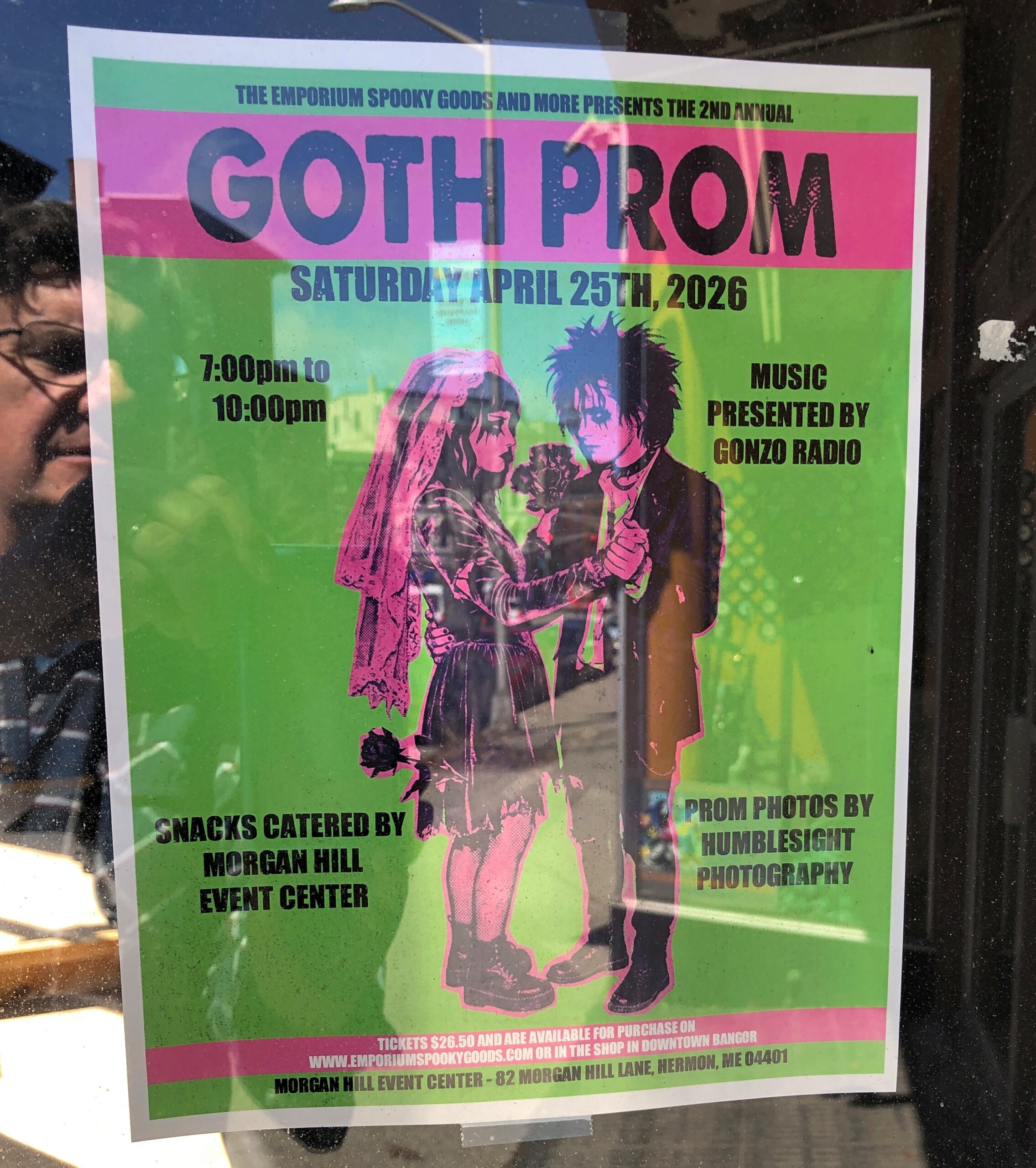
I call it “Self-portrait with Goth Prom.” Poster spotted in downtown Bangor.
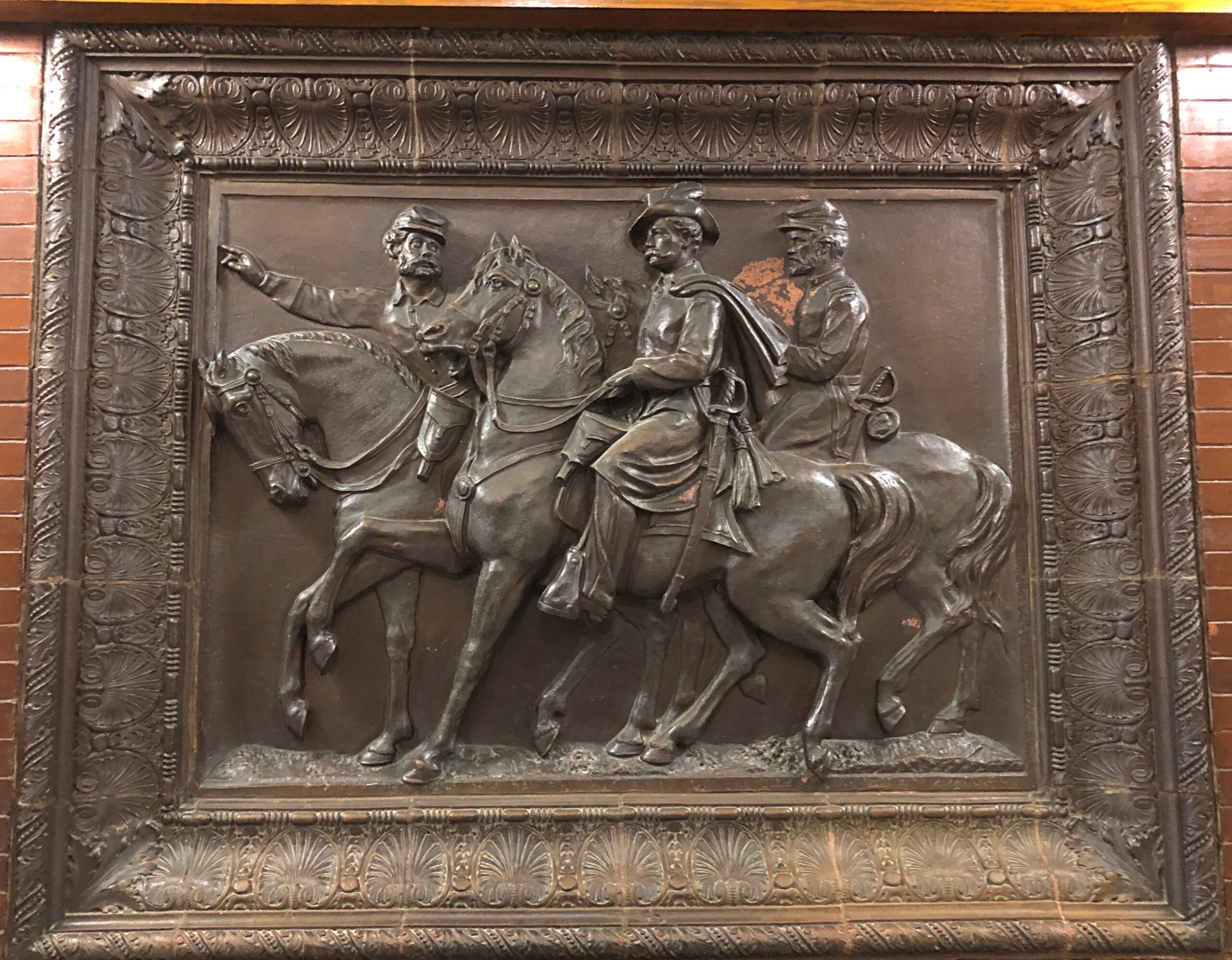
In the Maine Statehouse, a flat-ish object of a different kind.
Lincolnville, on the coast of not far from Belfast.
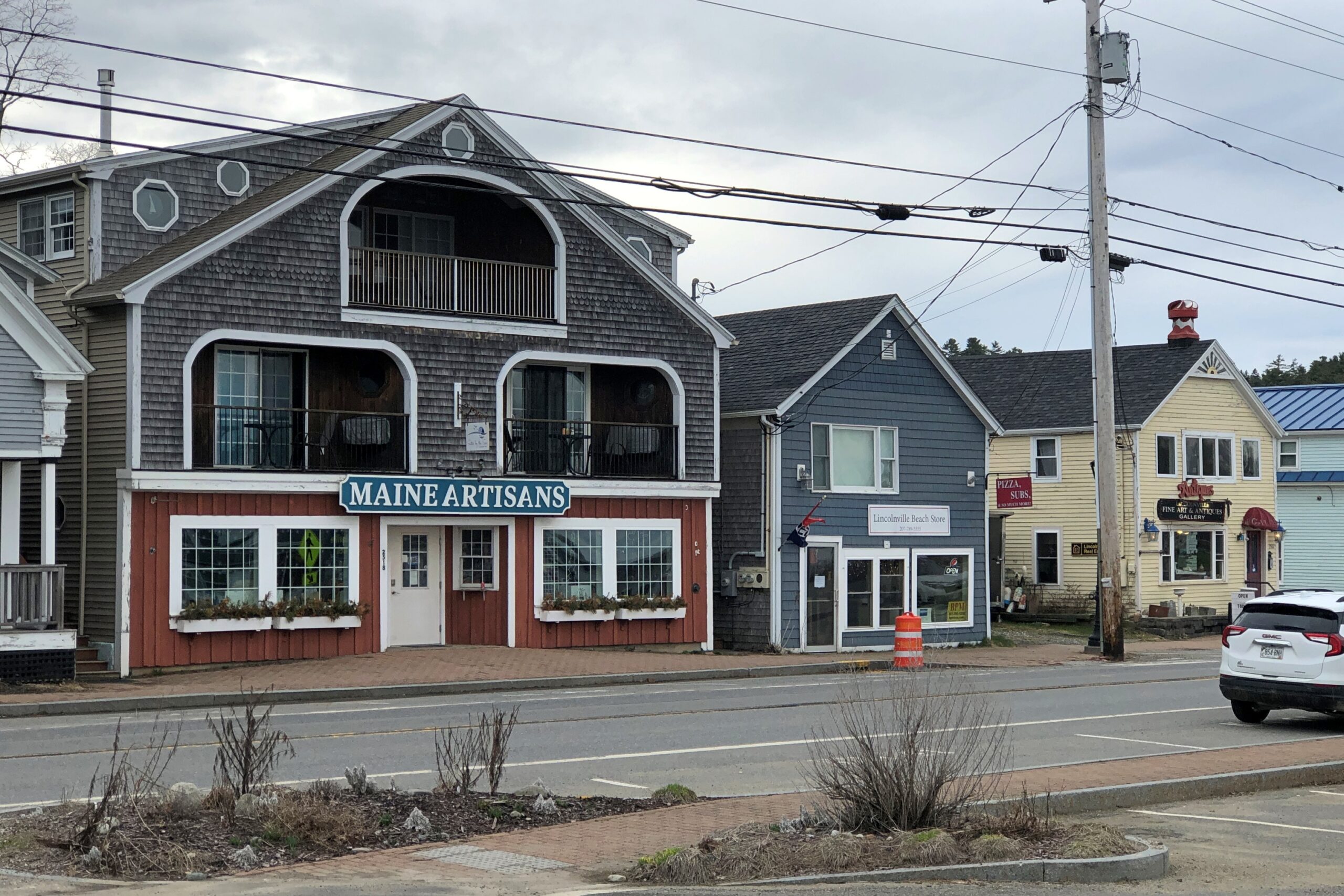
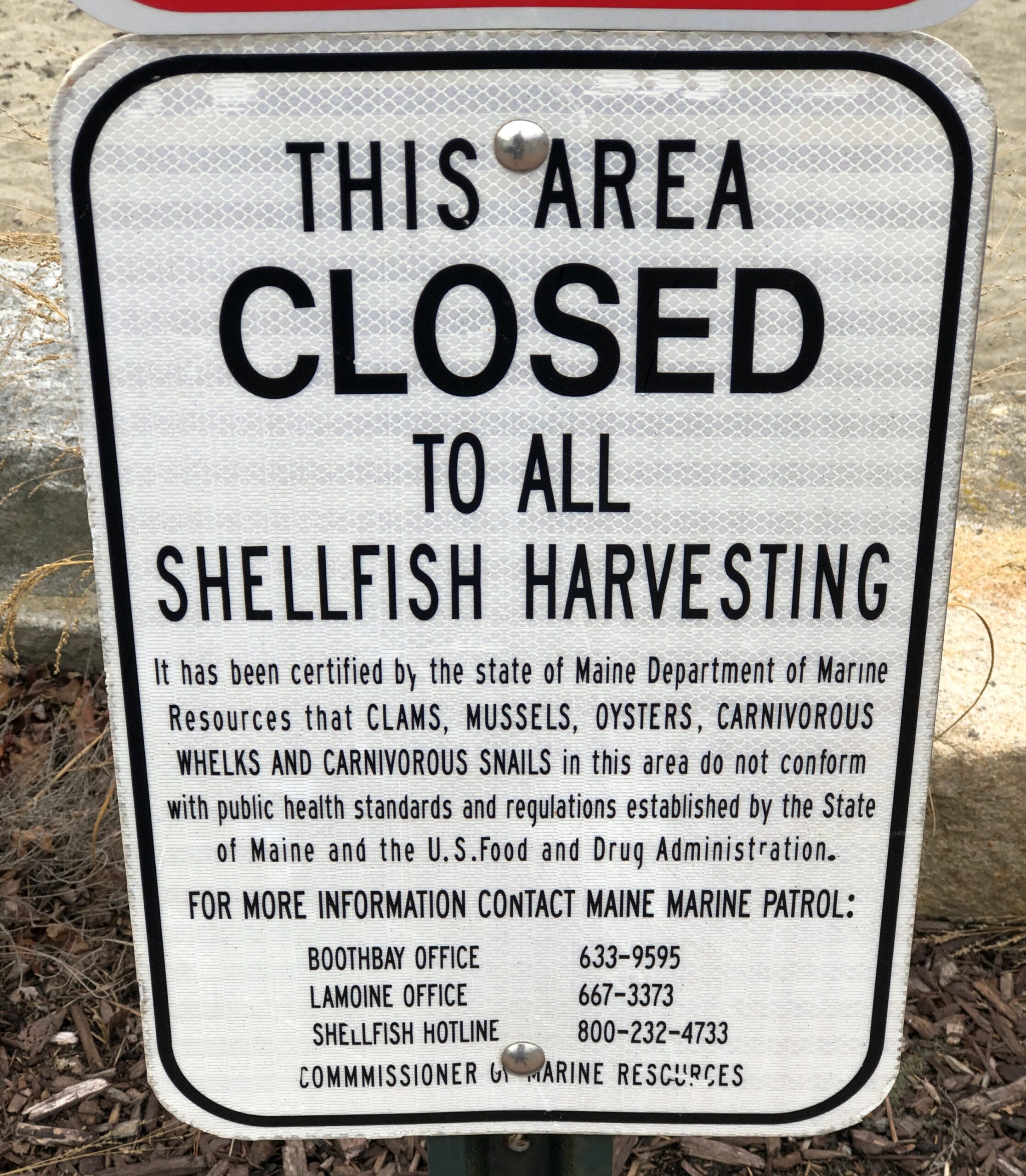
Lincolnville, Maine

Carnivorous whelks. I was frankly ignorant about carnivorous whelks, and glad to learn a little about them. Because what a great name for a snail.

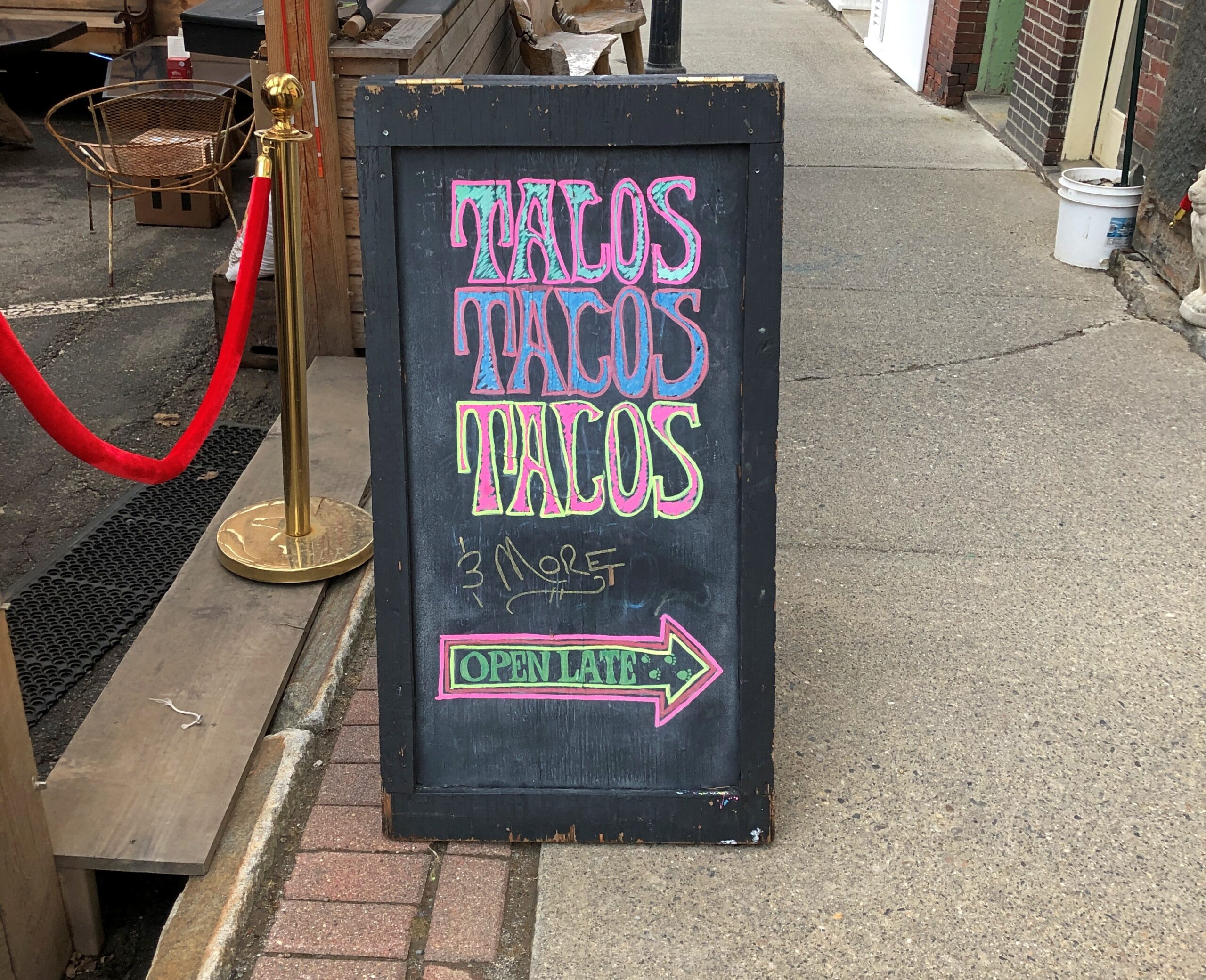
Too bad I wasn’t hungry in Belfast. I’d have had tacos.
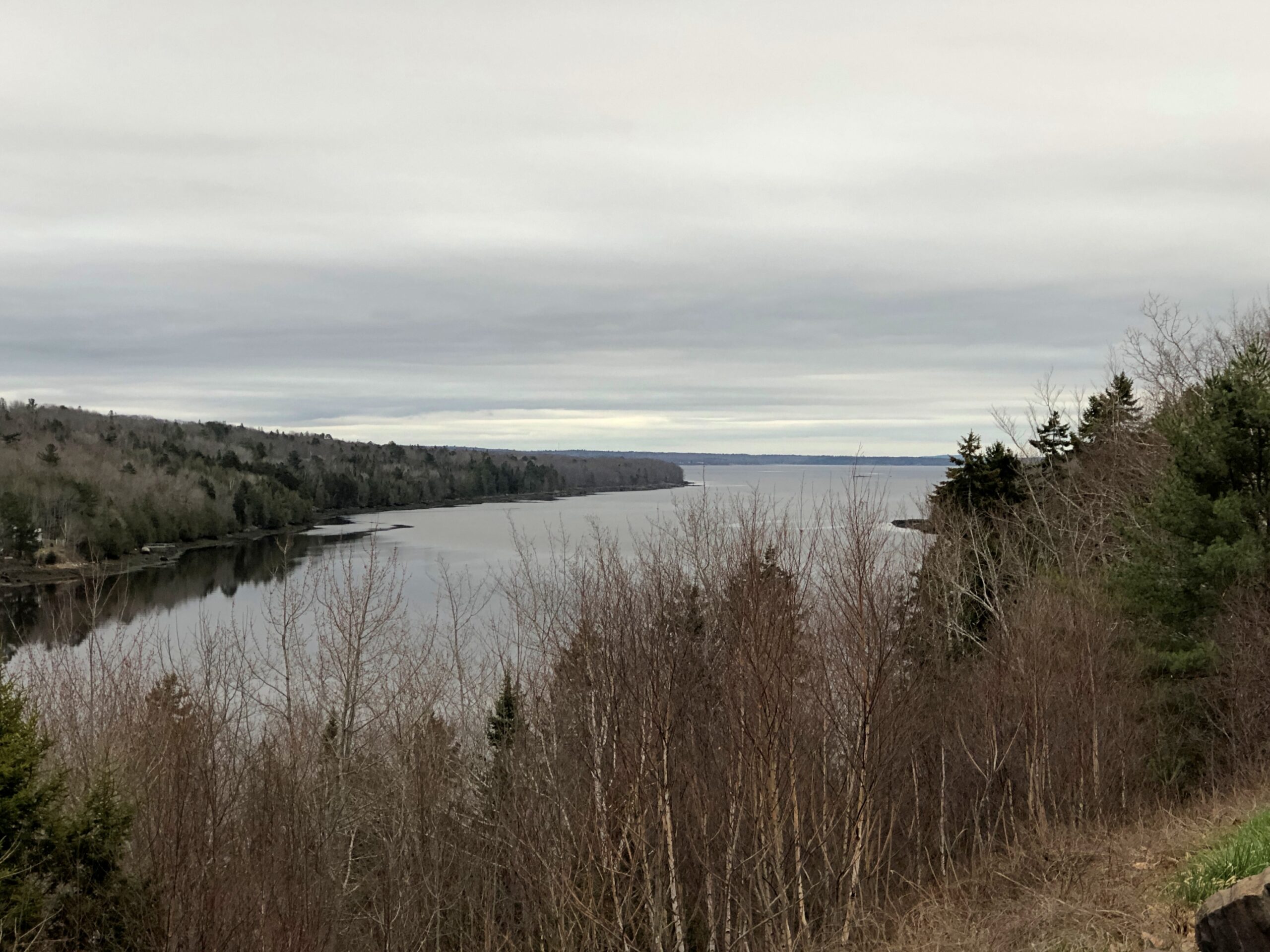
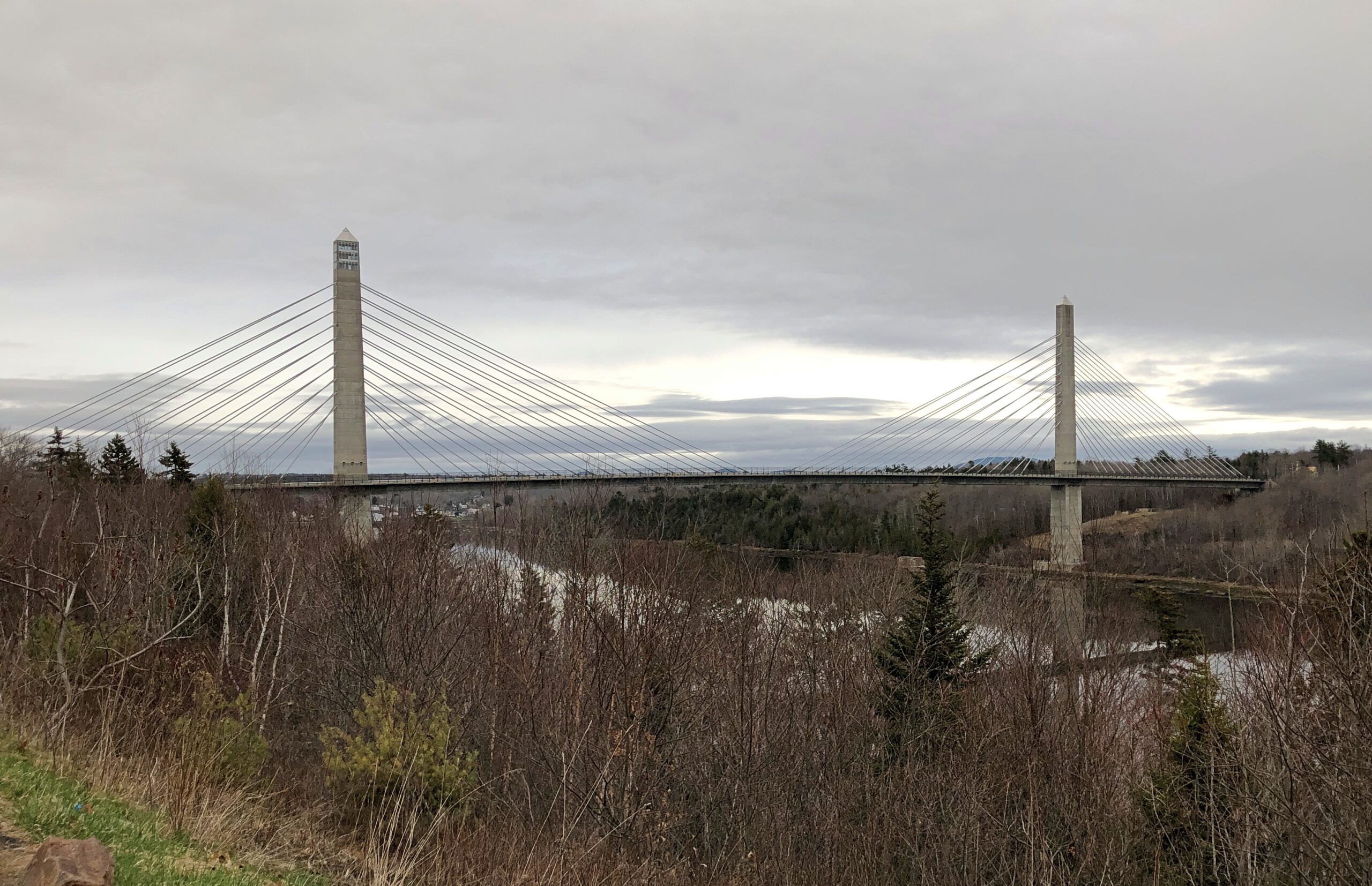
The Penobscot River and the Penobscot Narrows Bridge. A literal and scenic highpoint on that part of US 1 as it winds through near-coastal Maine. The bridge includes an observatory, unfortunately not open in April. Driving over the bridge itself was another pleasure of coastal Maine.
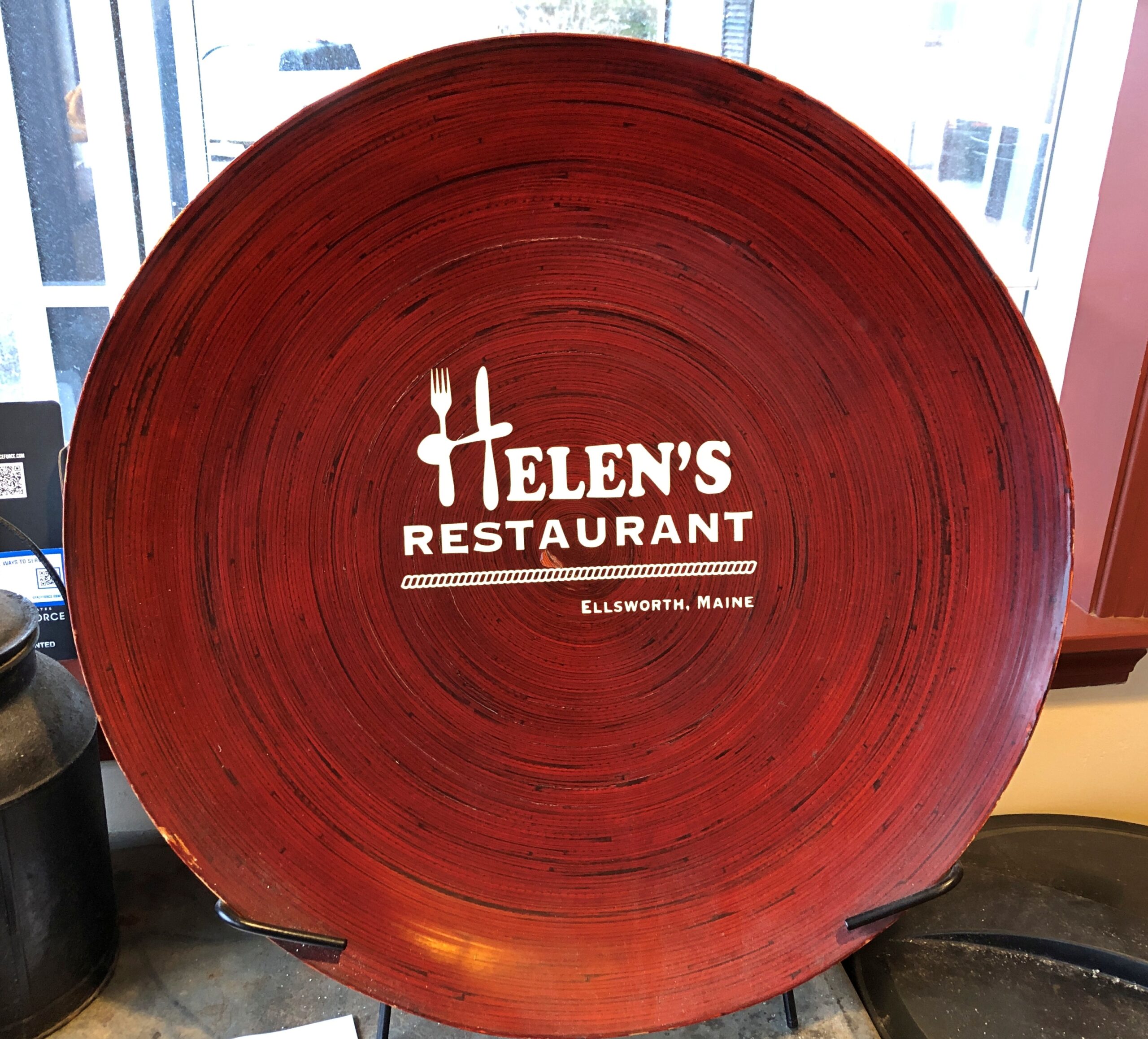
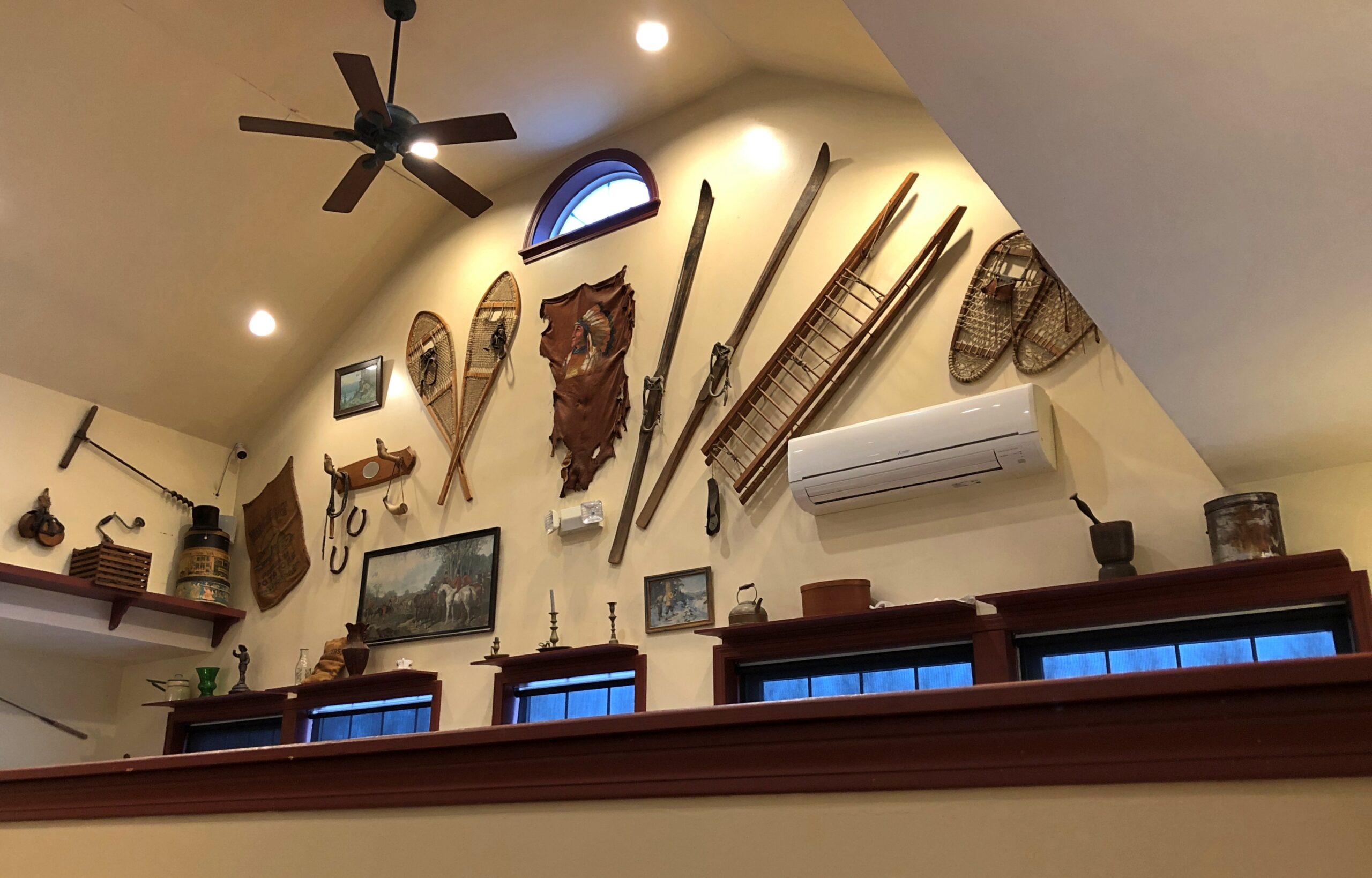
Helen’s Restaurant in Ellsworth. Tasty fish and chips. Haddock, specifically. What do you take for a haddock? “Well, sometimes I take-a aspirin, sometimes I take-a calomel.” It was some years before I learned that calomel was something I’d never take in a million years.
Massachusetts

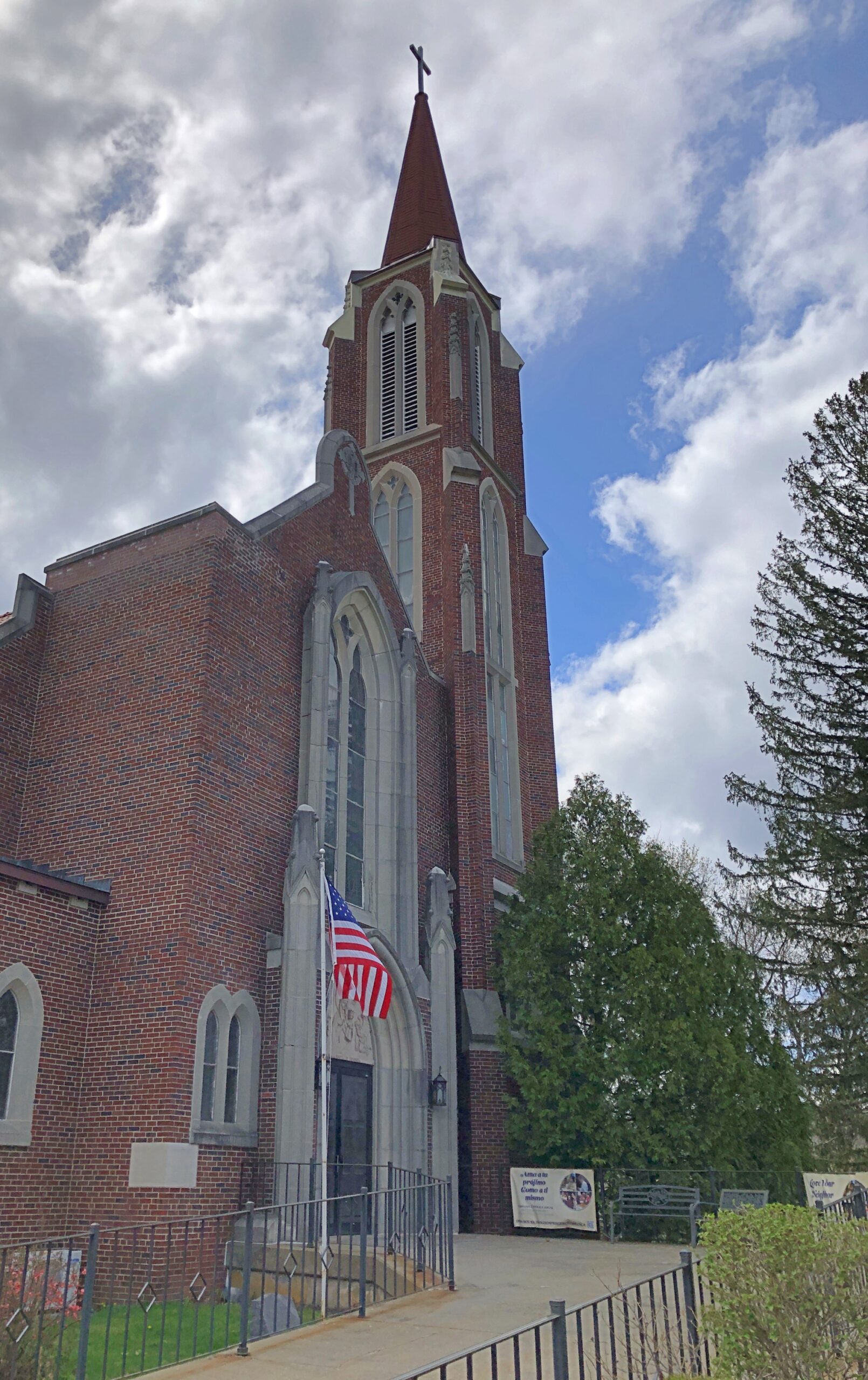
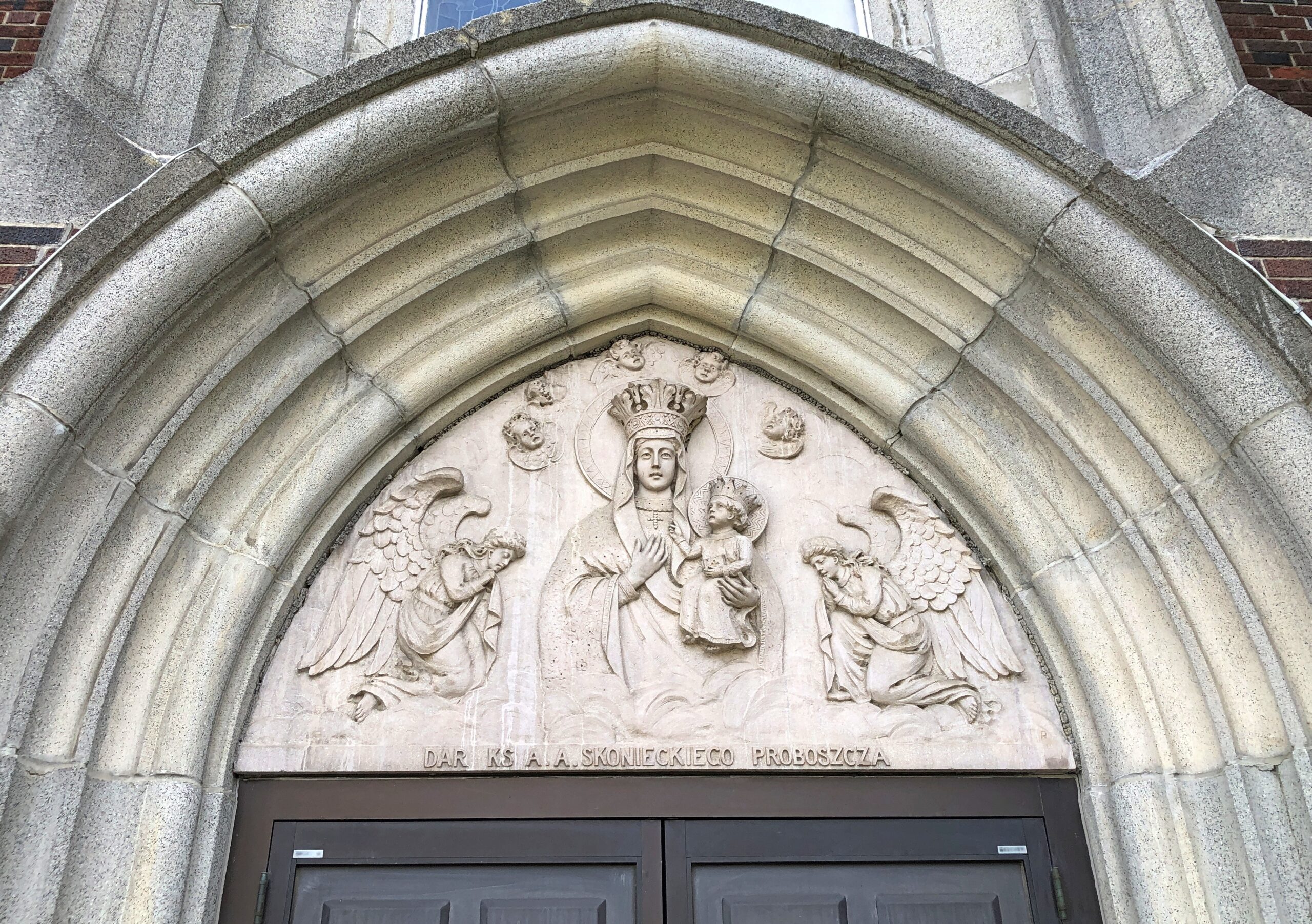
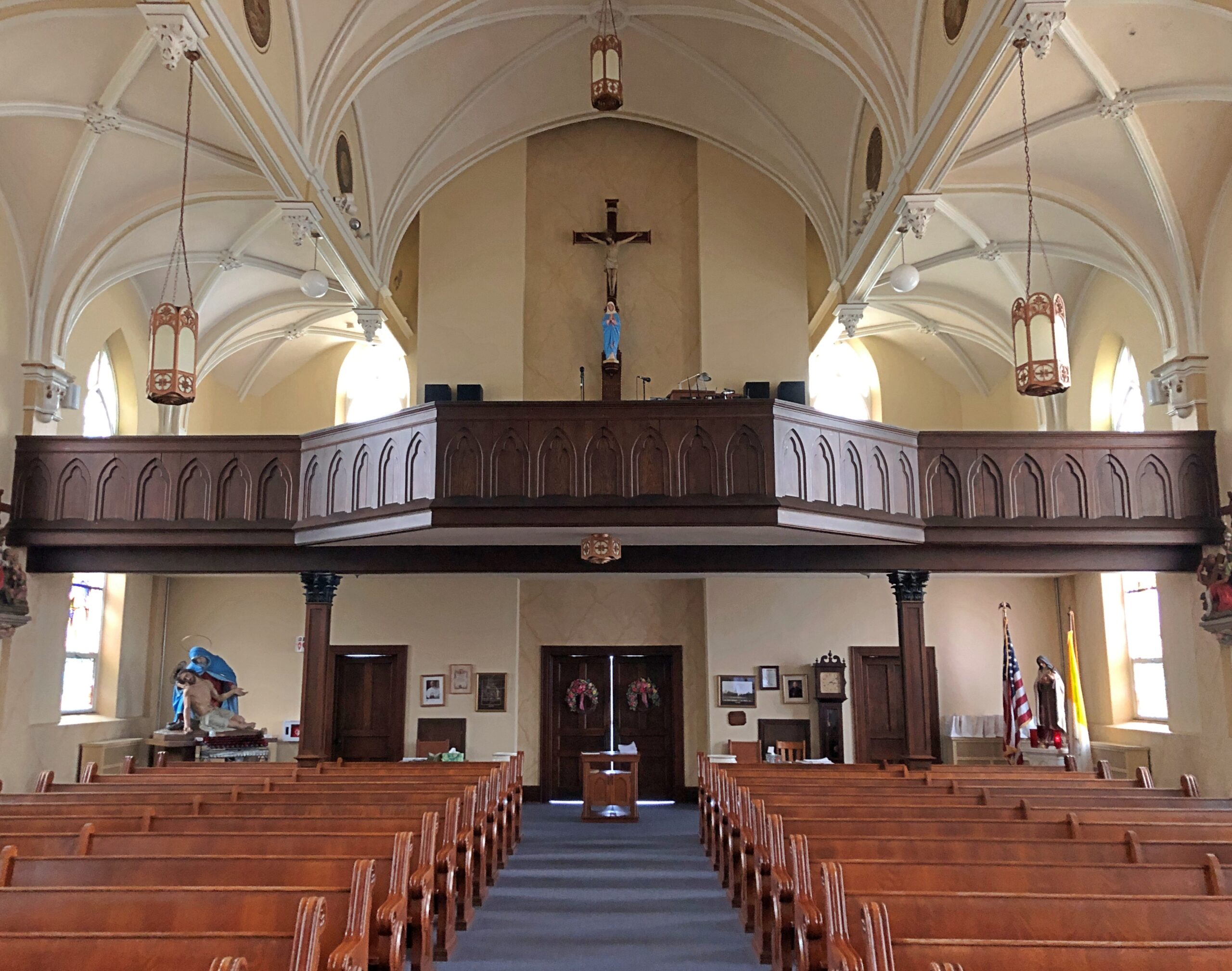
Our Lady of Czestochowa Parish, Turners Falls.
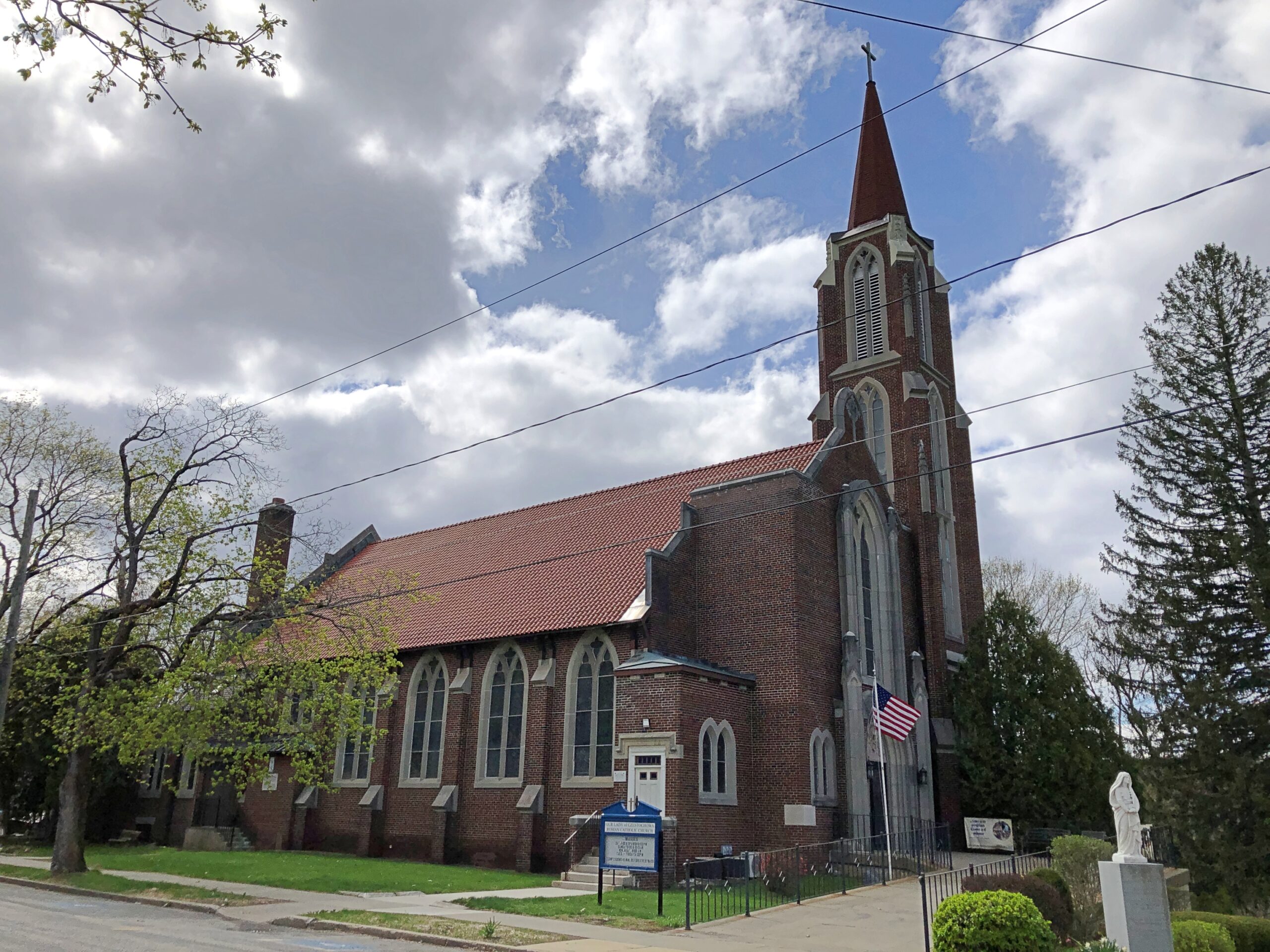
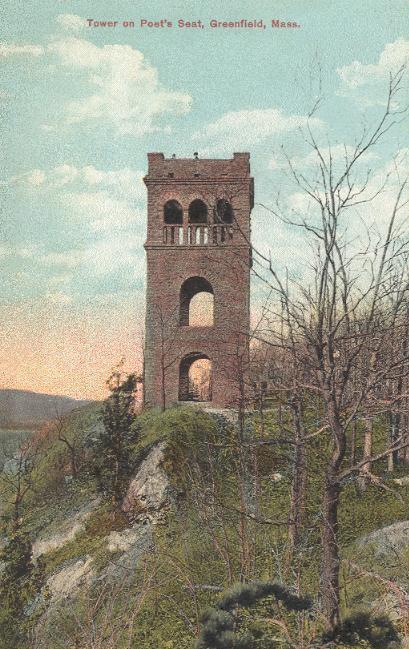
The church was closed. So was Poet’s Seat Tower.
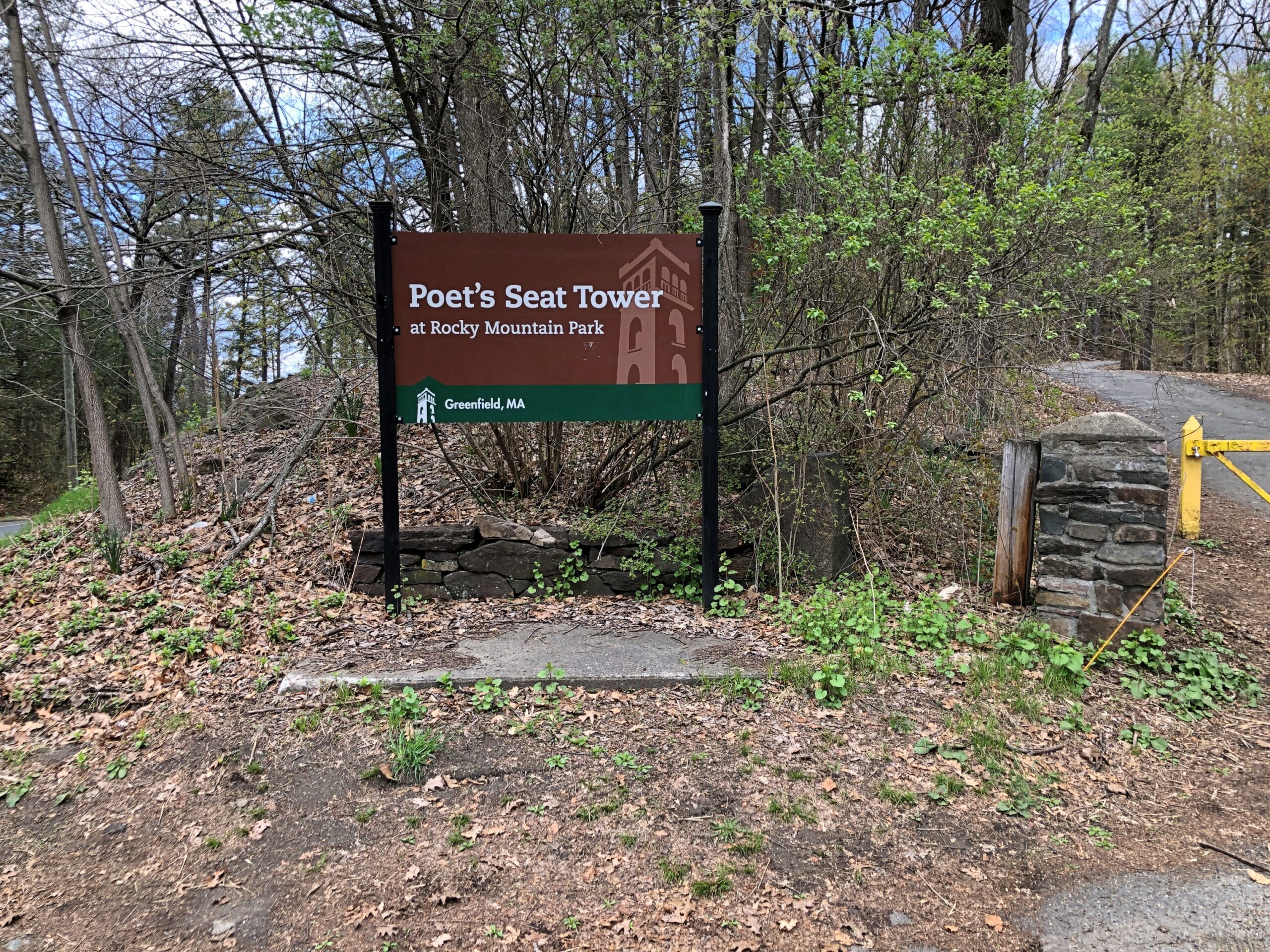
As the tower appeared more than 100 years ago.

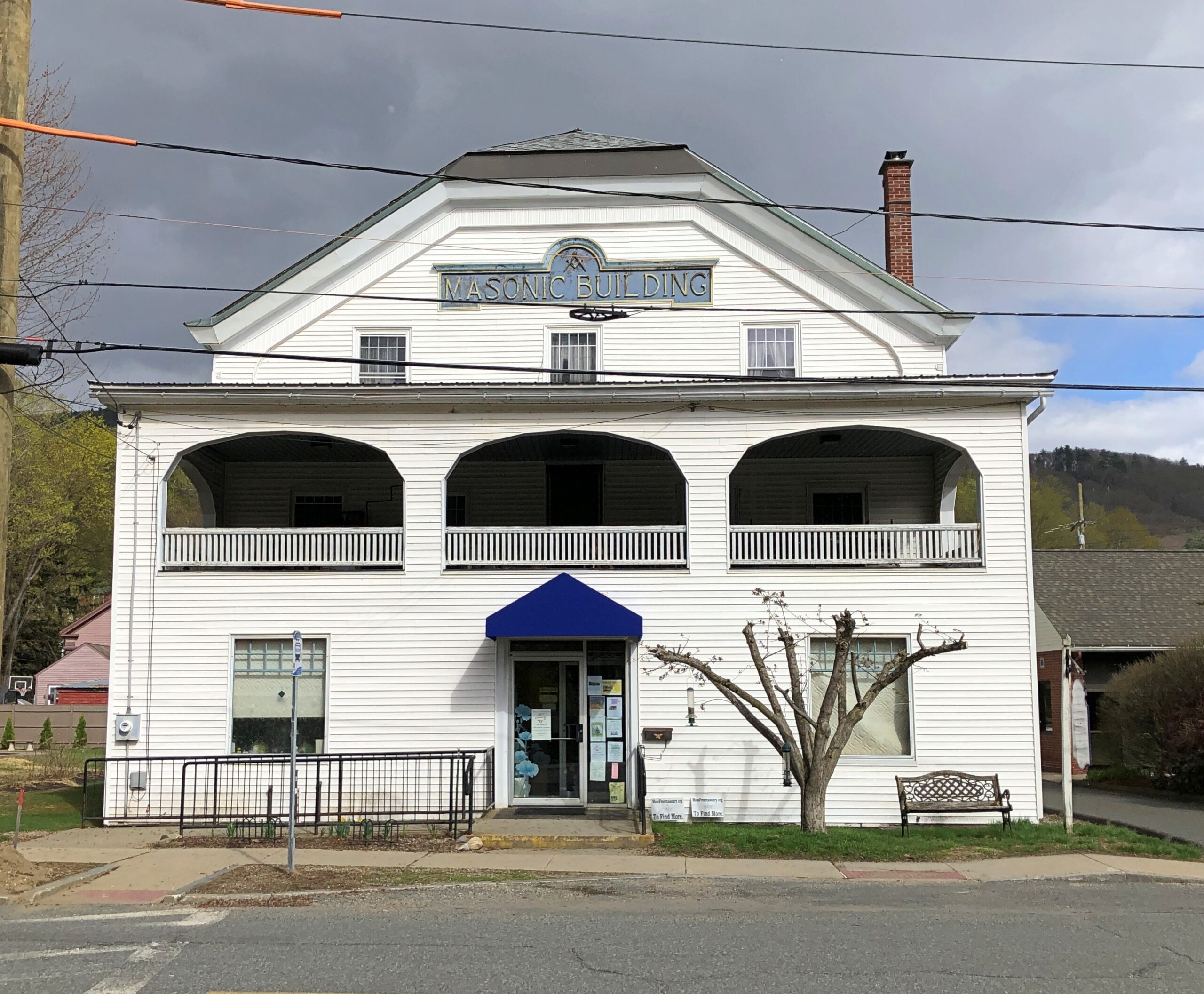
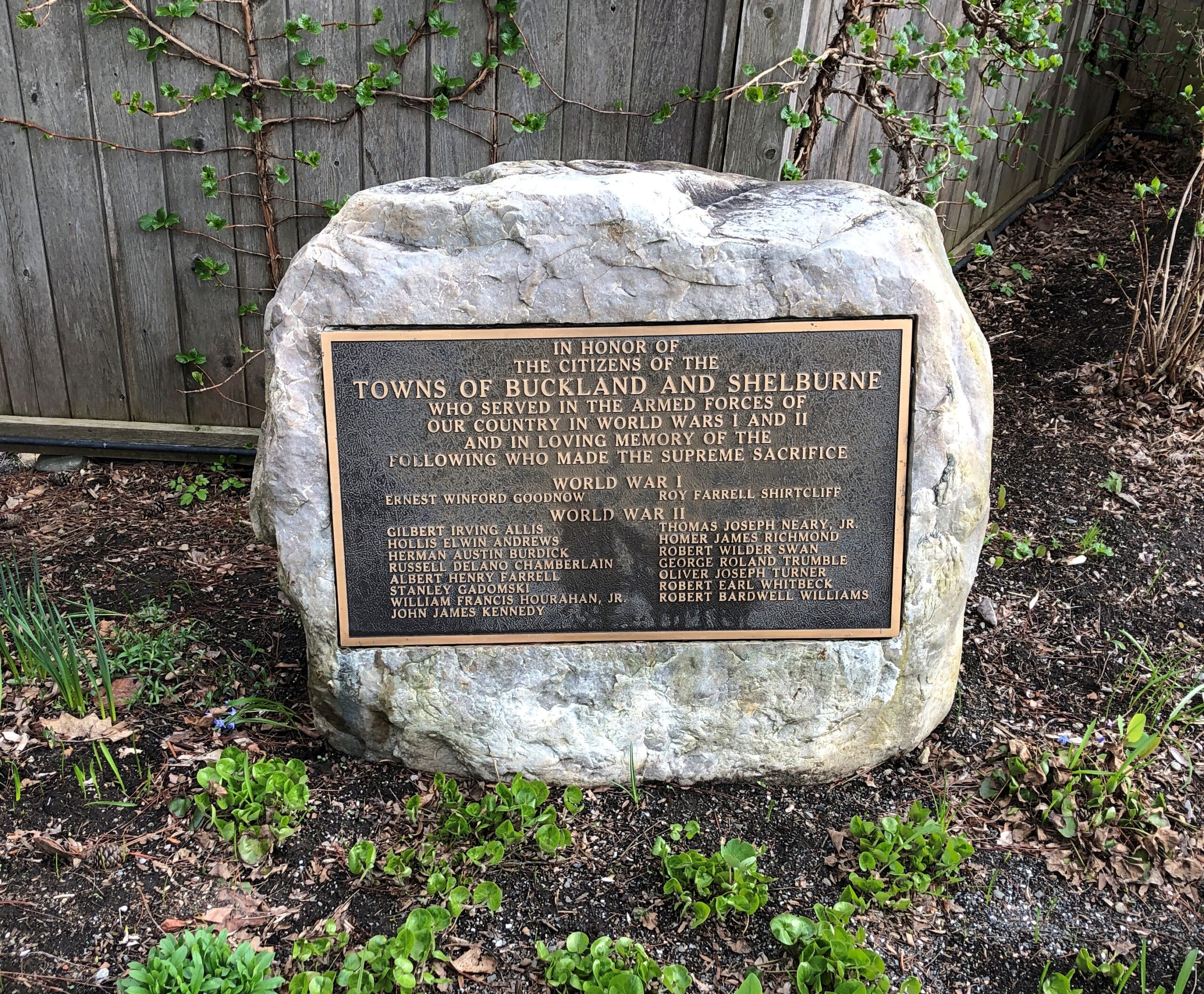
Shelburne.
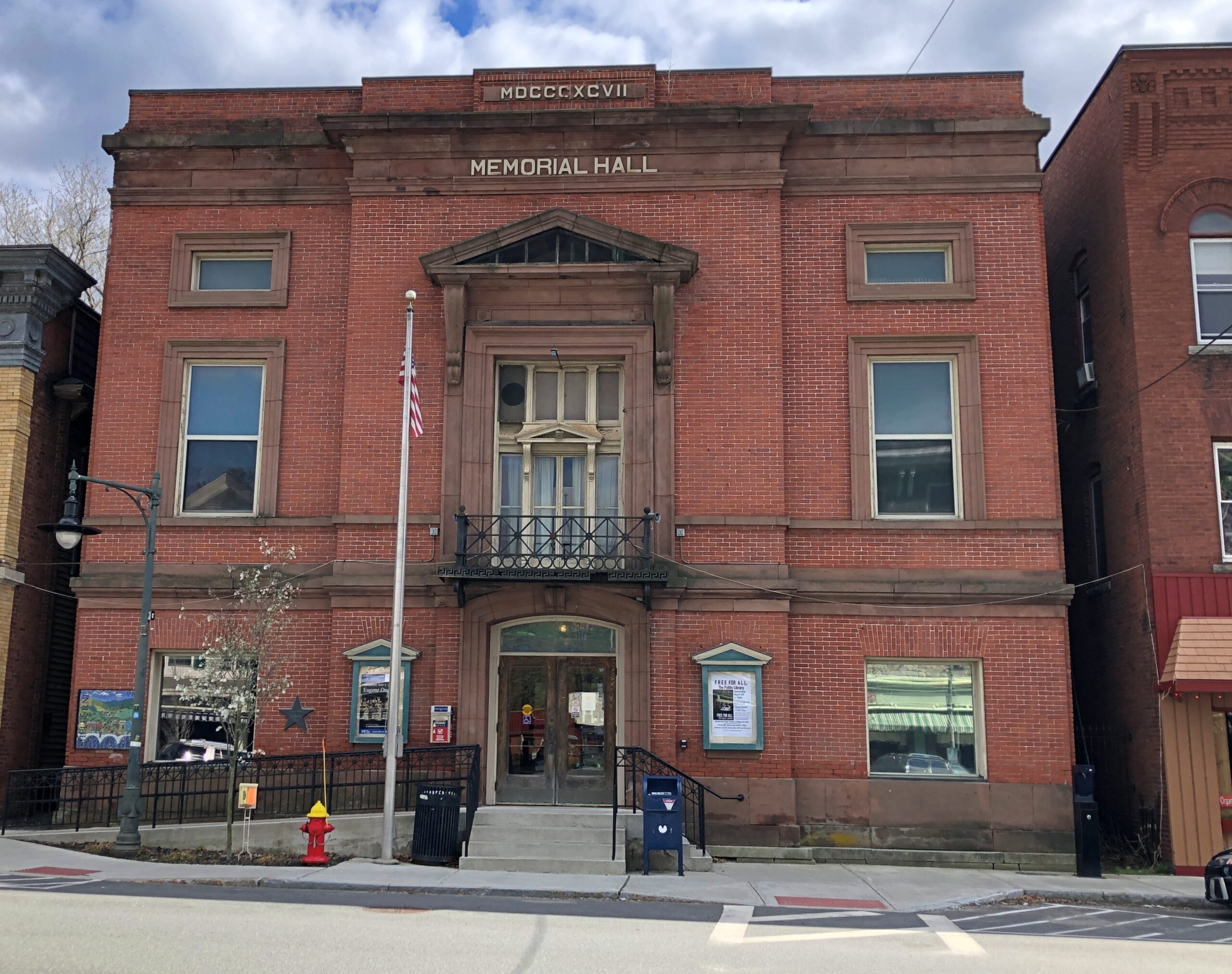
Massachusetts 112 (Route 112) in Hamilton County. Car commercial driving.
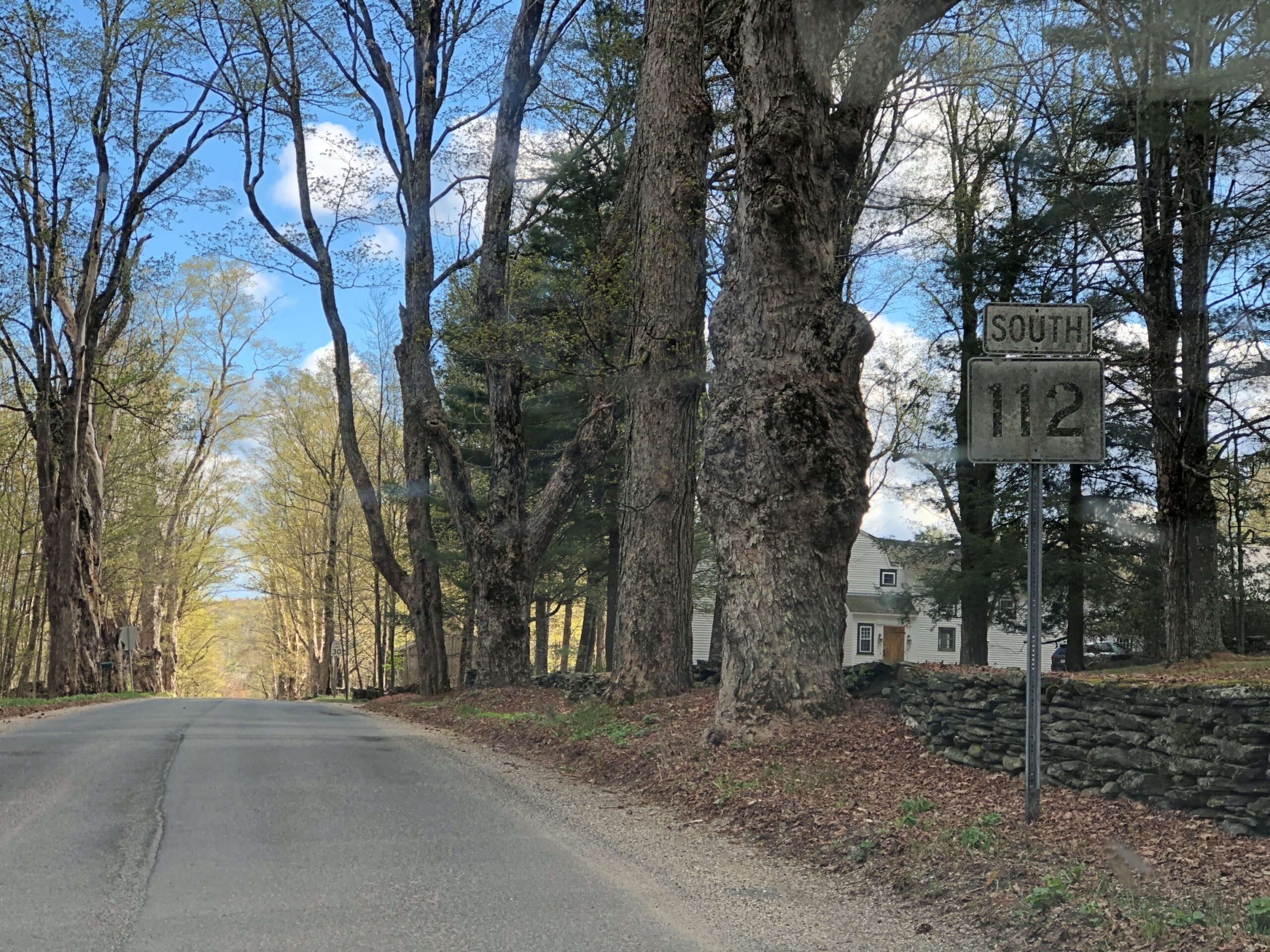
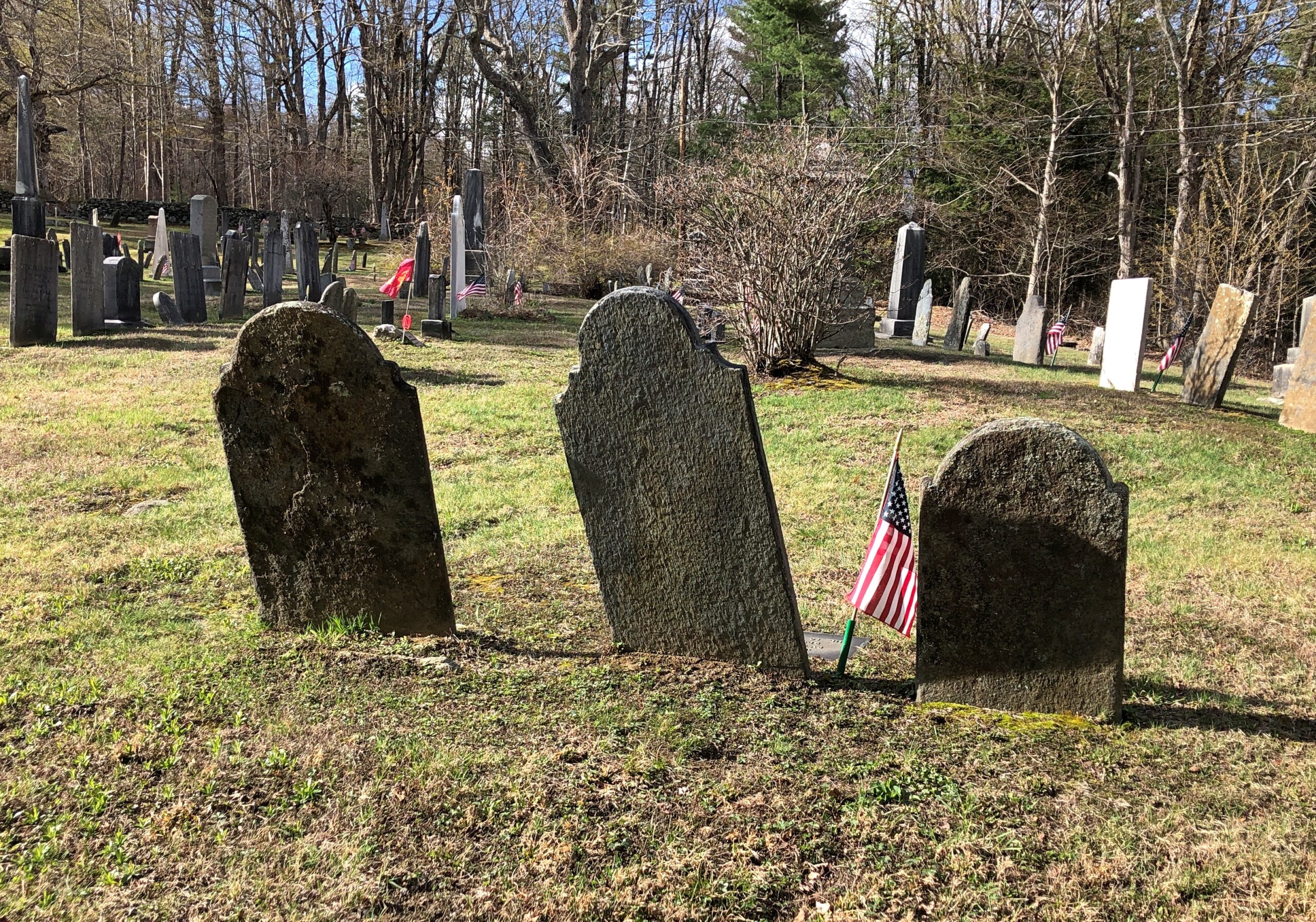
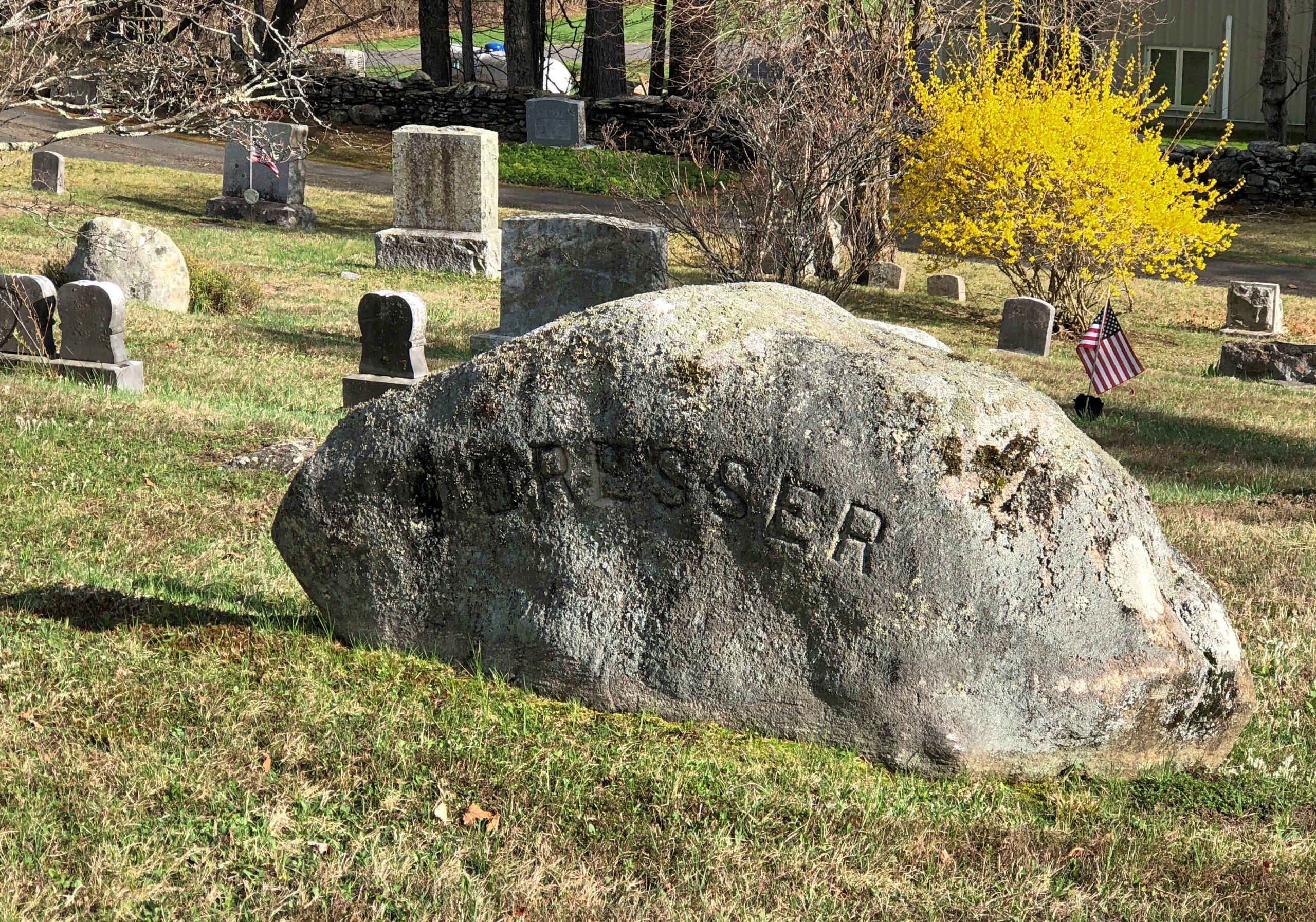
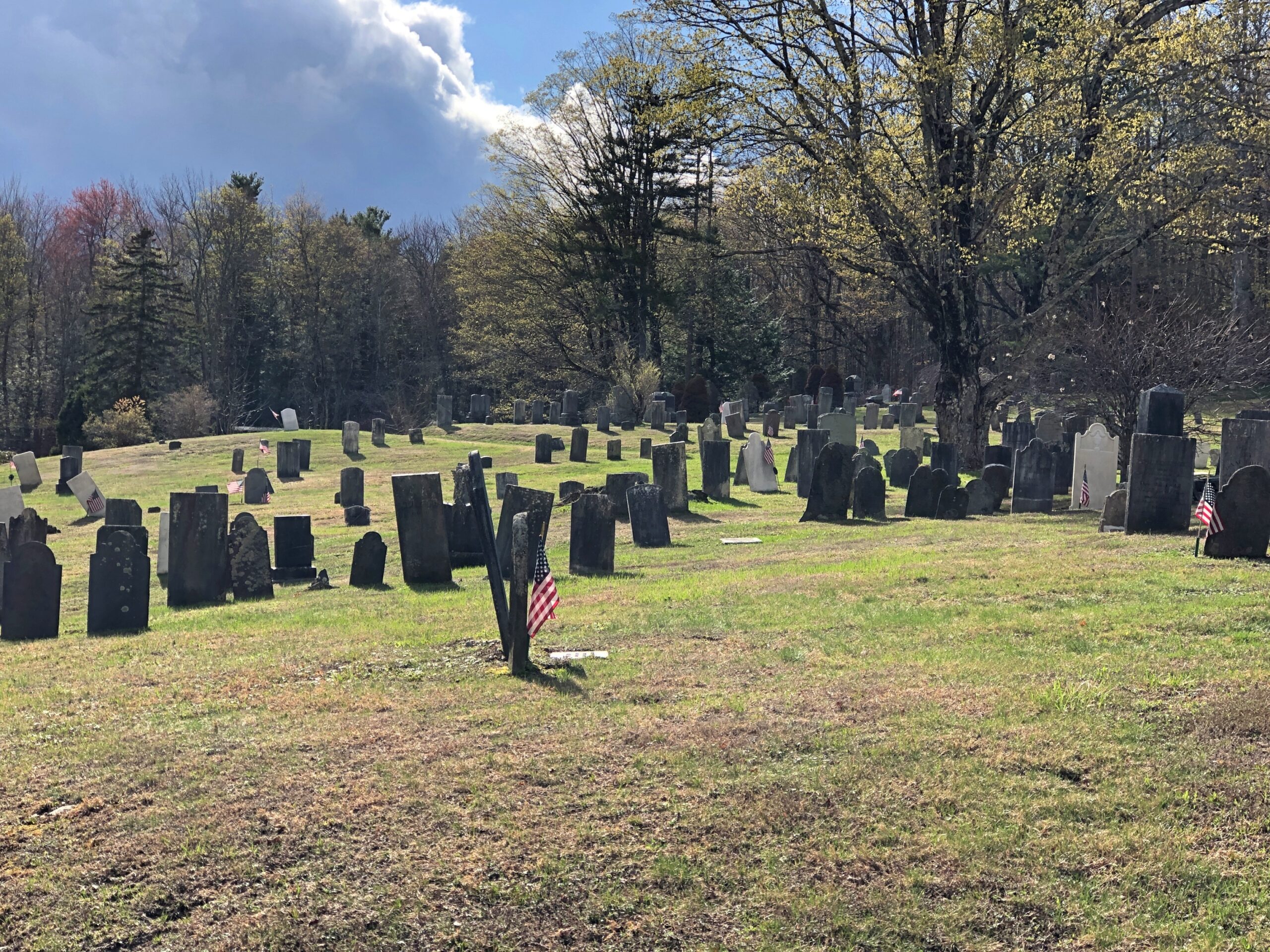
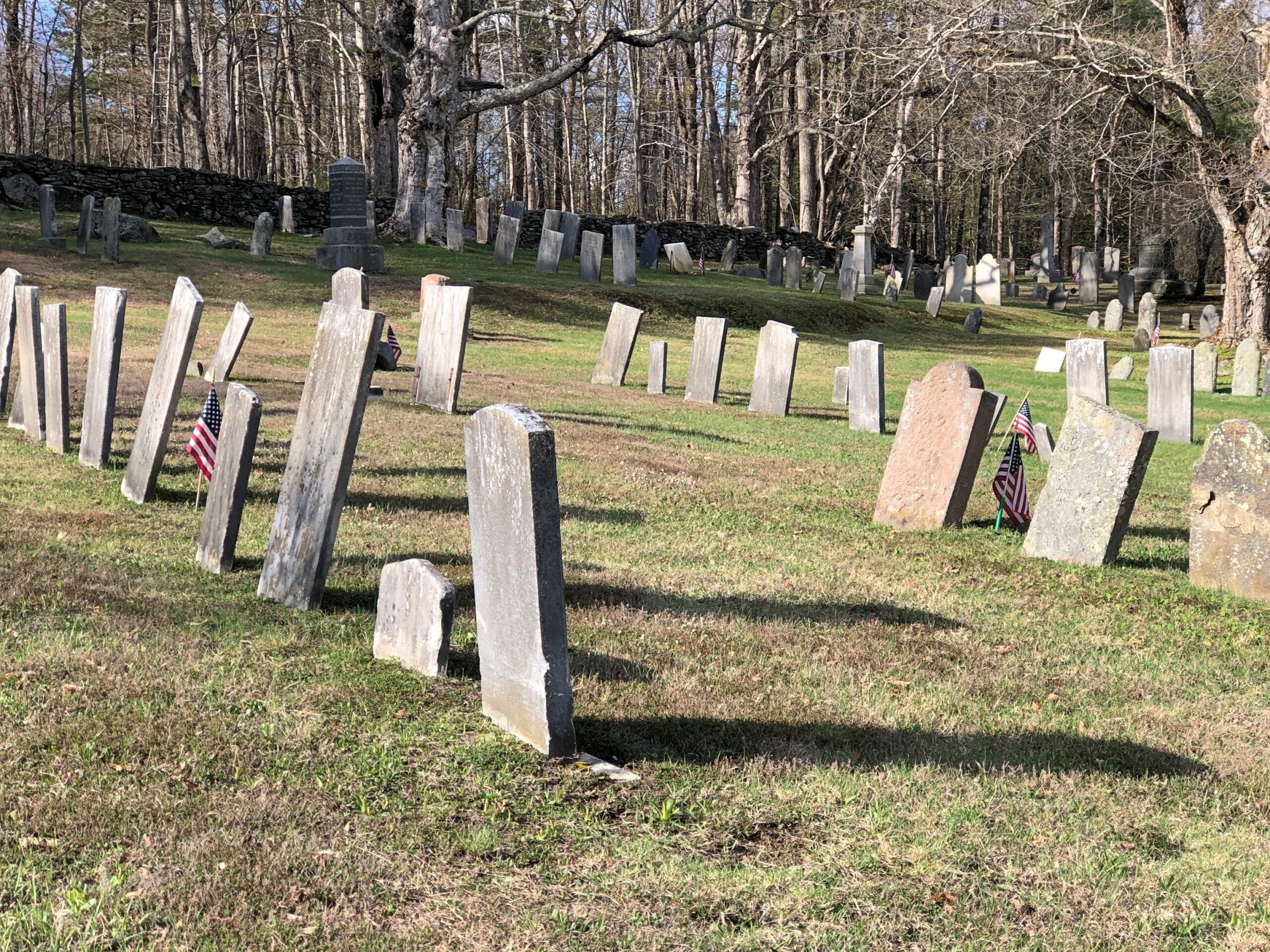
Goshen Cemetery, just off Route 112.
Ohio

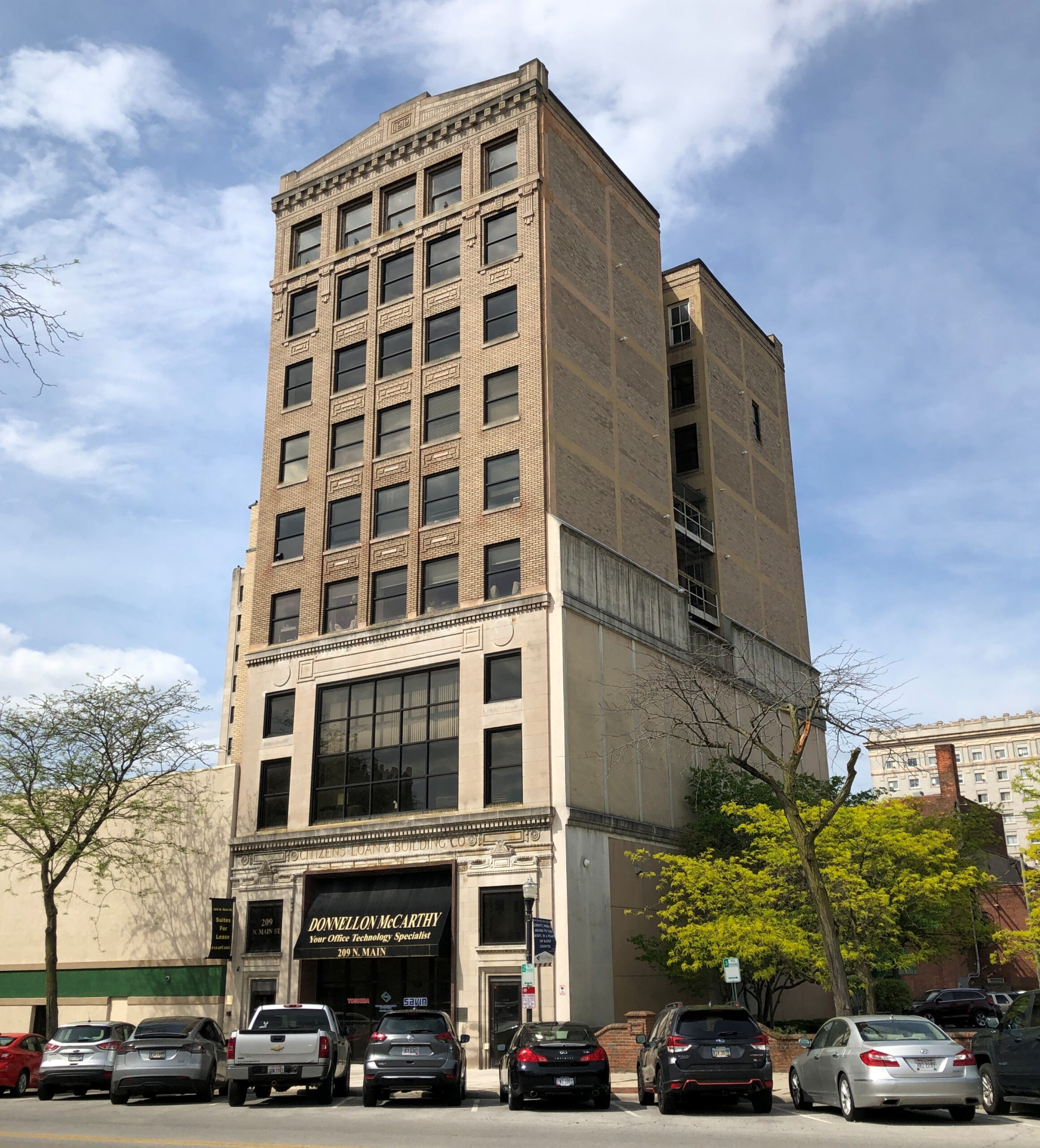
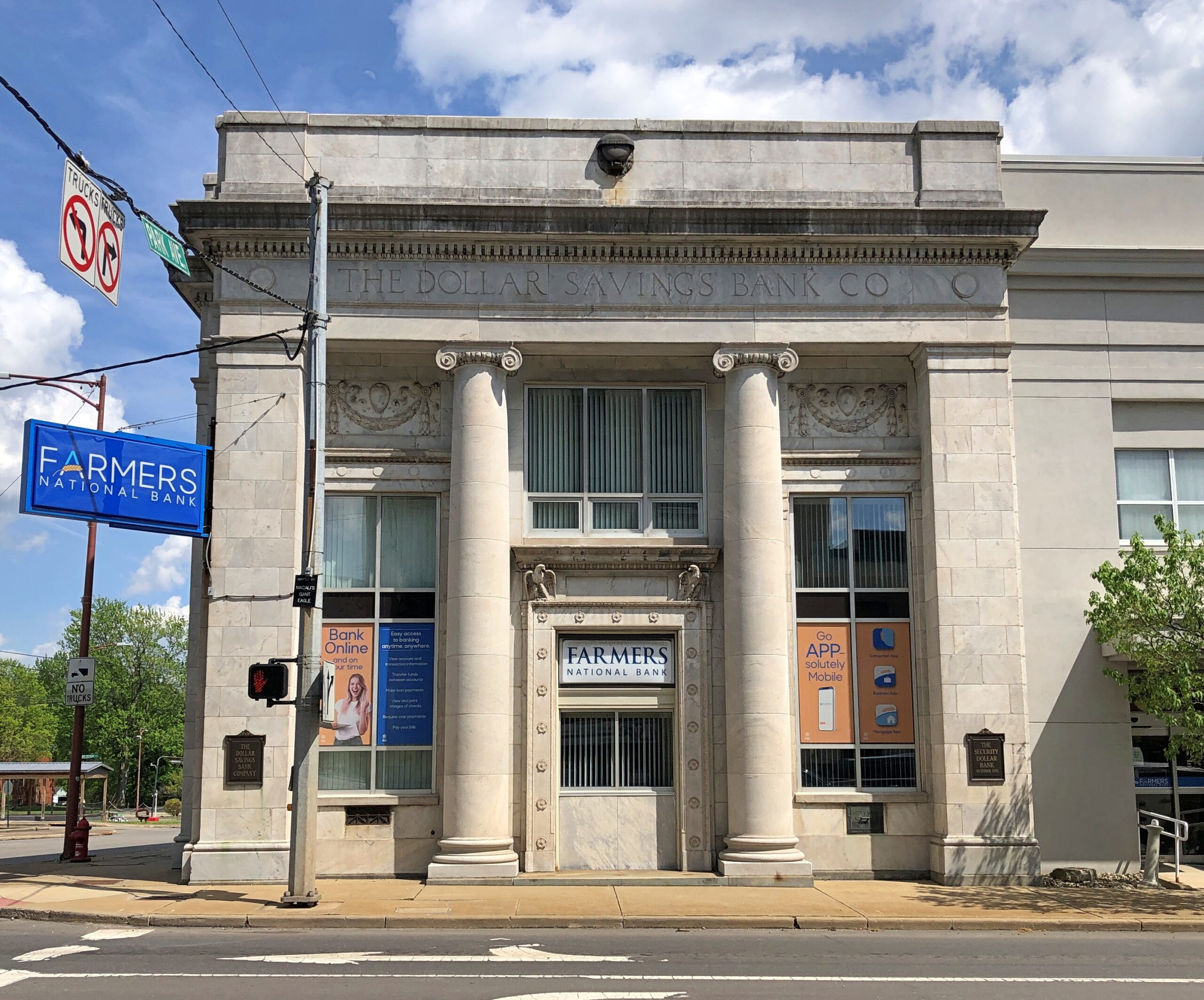
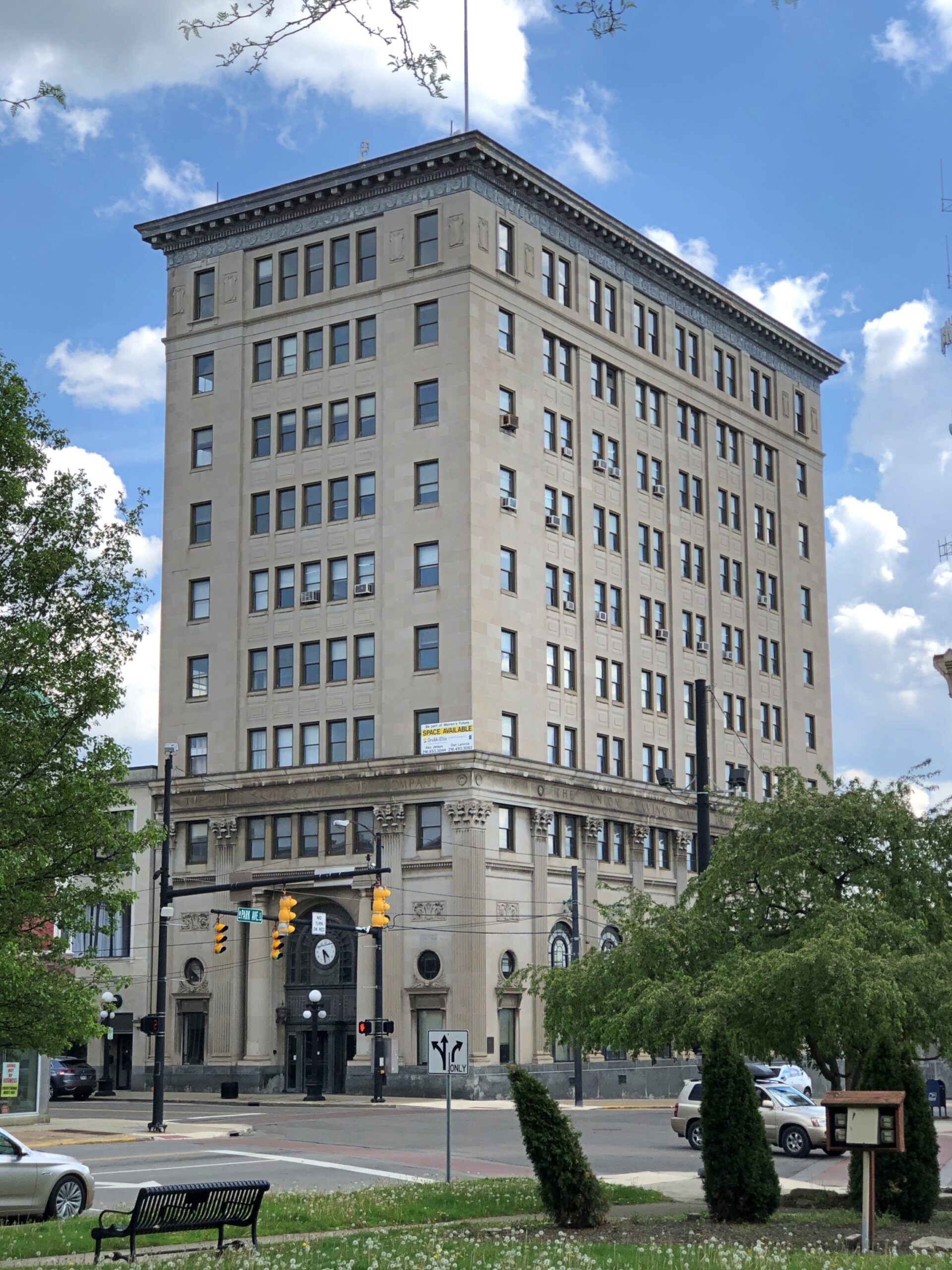
A solid bank building in Niles, across the street from where William McKinley was born. The Dollar Savings Bank Co. sounds like the kind of place that George Babbitt would mention, but distain in favor of a bank with longstanding ties to the best business men in Zenith.
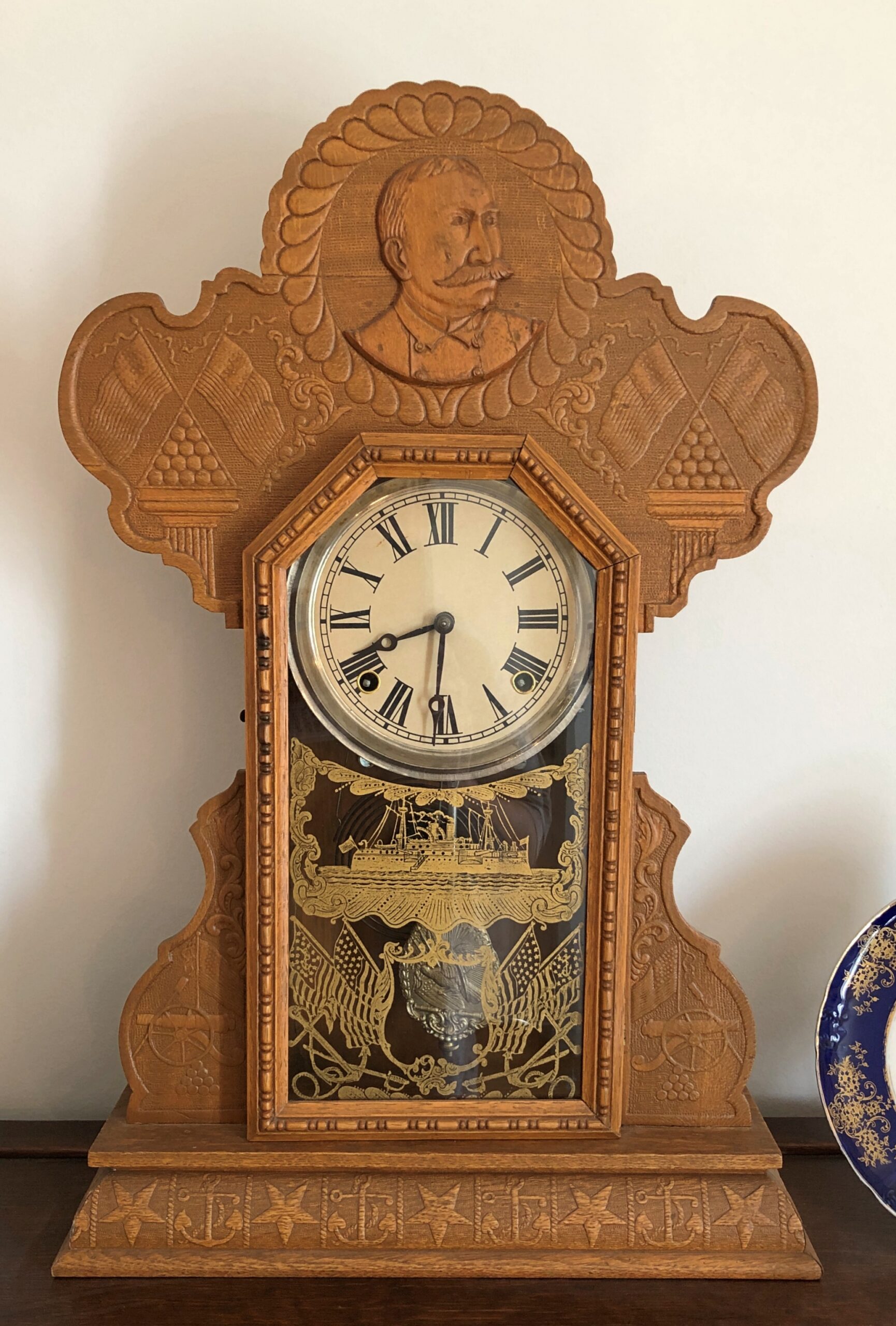
An Admiral Dewey clock at the McKinley Birthplace Museum. A textbook case, that Dewey, of how fleeting fame usually is.
Passing through northeast Ohio intrigued me greatly about that part of the state. Akron, Canton, Youngstown, Austintown — all places I can imagine going, and enjoying the visits. See ’em before the reverse migration really gets underway.

Further west, the drive on the Lincoln Highway (US 30) was a pleasure: mostly four lanes, rarely crowded. The flat farmlands don’t qualify as conventionally scenic, but the budding springtime fecundity has a lot to recommend it, even as a strictly visual pleasure: the bright greens of new leaves, the brown and grays of the fields recently plowed, small roads heading off usually at right angles to the main road, a run between Upper Sandusky and I-75 near Lima with few buildings of any kind, except distant farm structures.

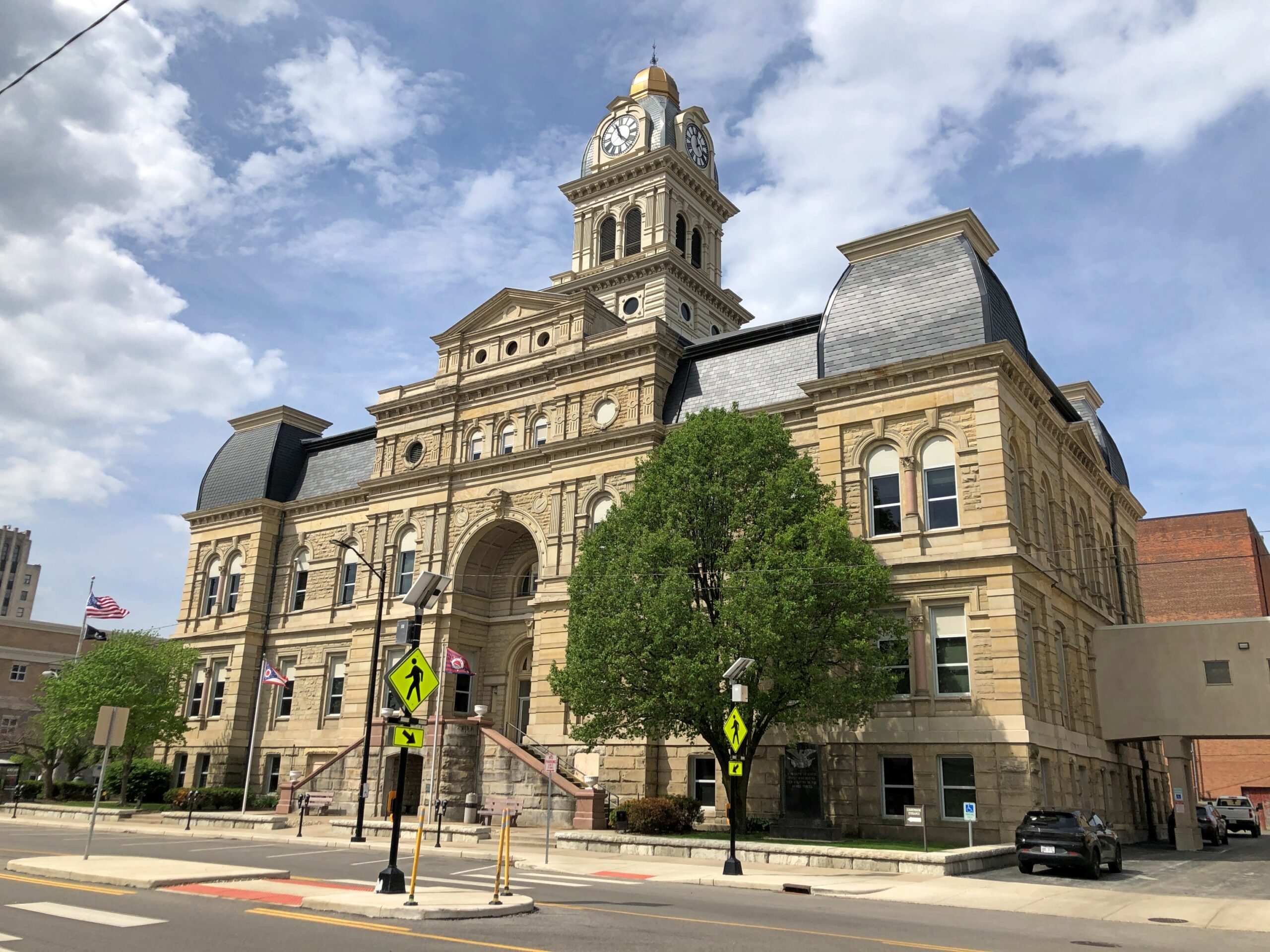
Downtown Lima: the Allen County courthouse, seen from North St.
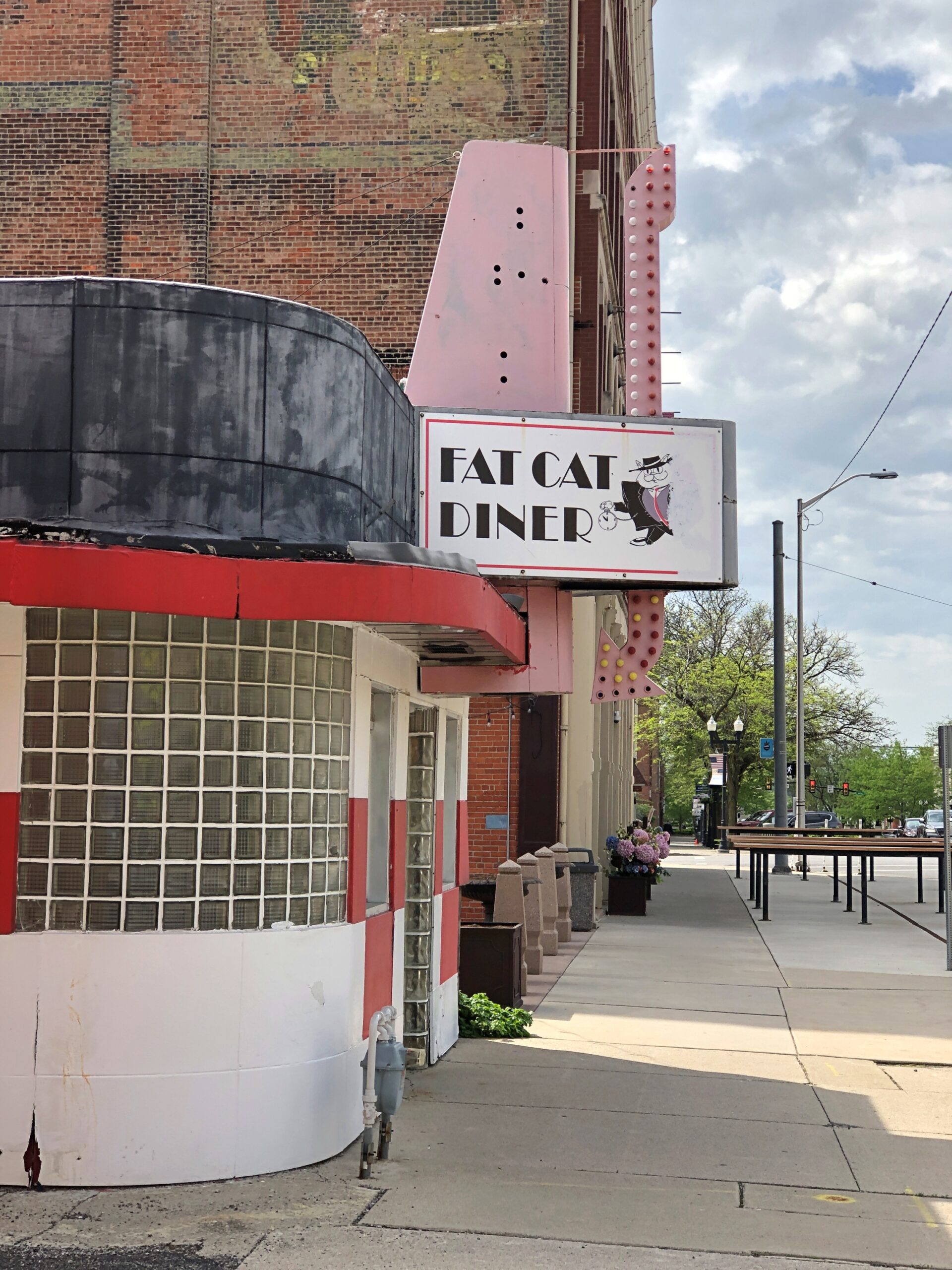
Looks like my kind of breakfast place. Closed on Sunday anyway.
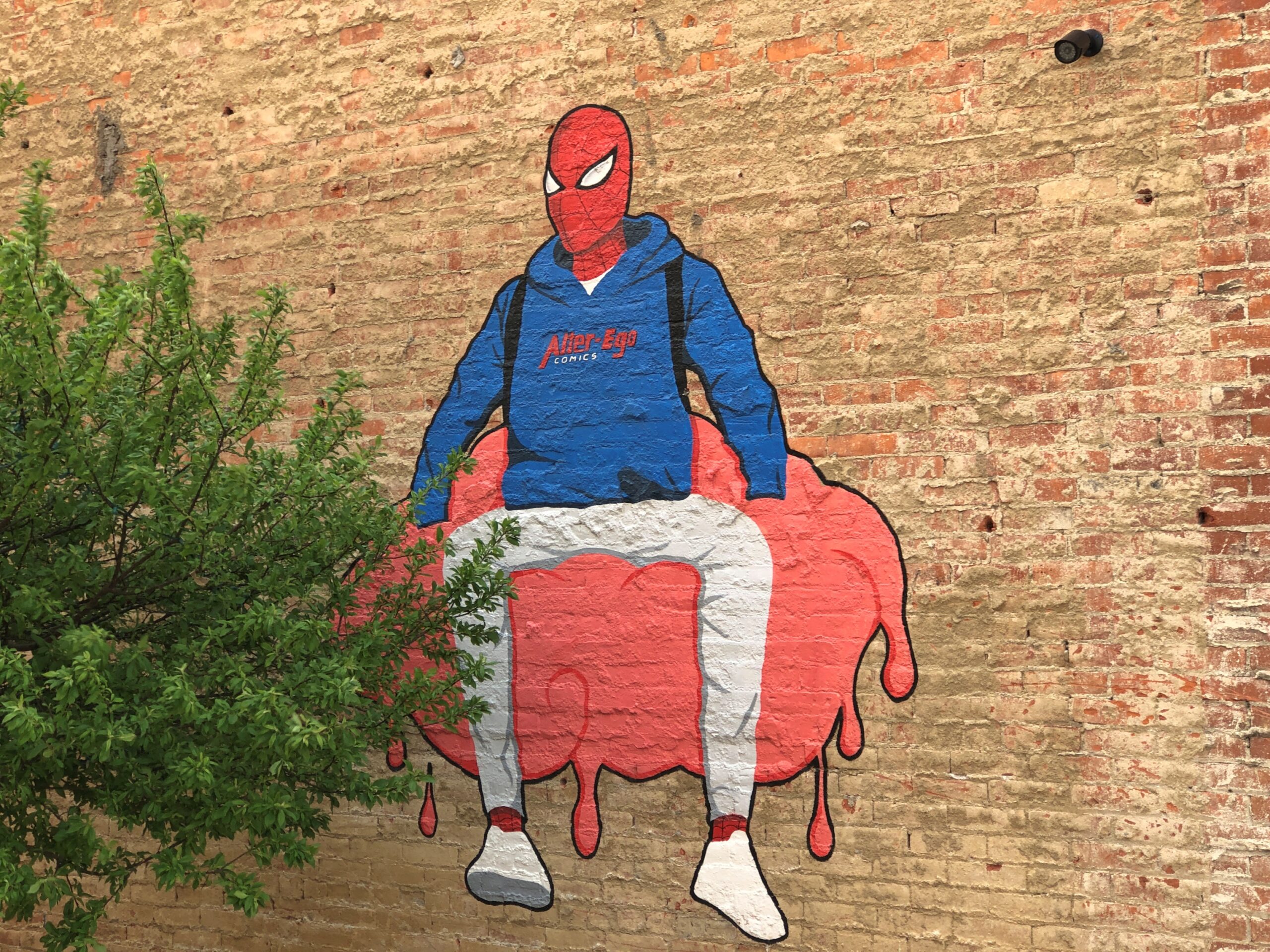
Another North St. detail. Spiderman sitting on — something. A large scoop of strawberry ice cream?
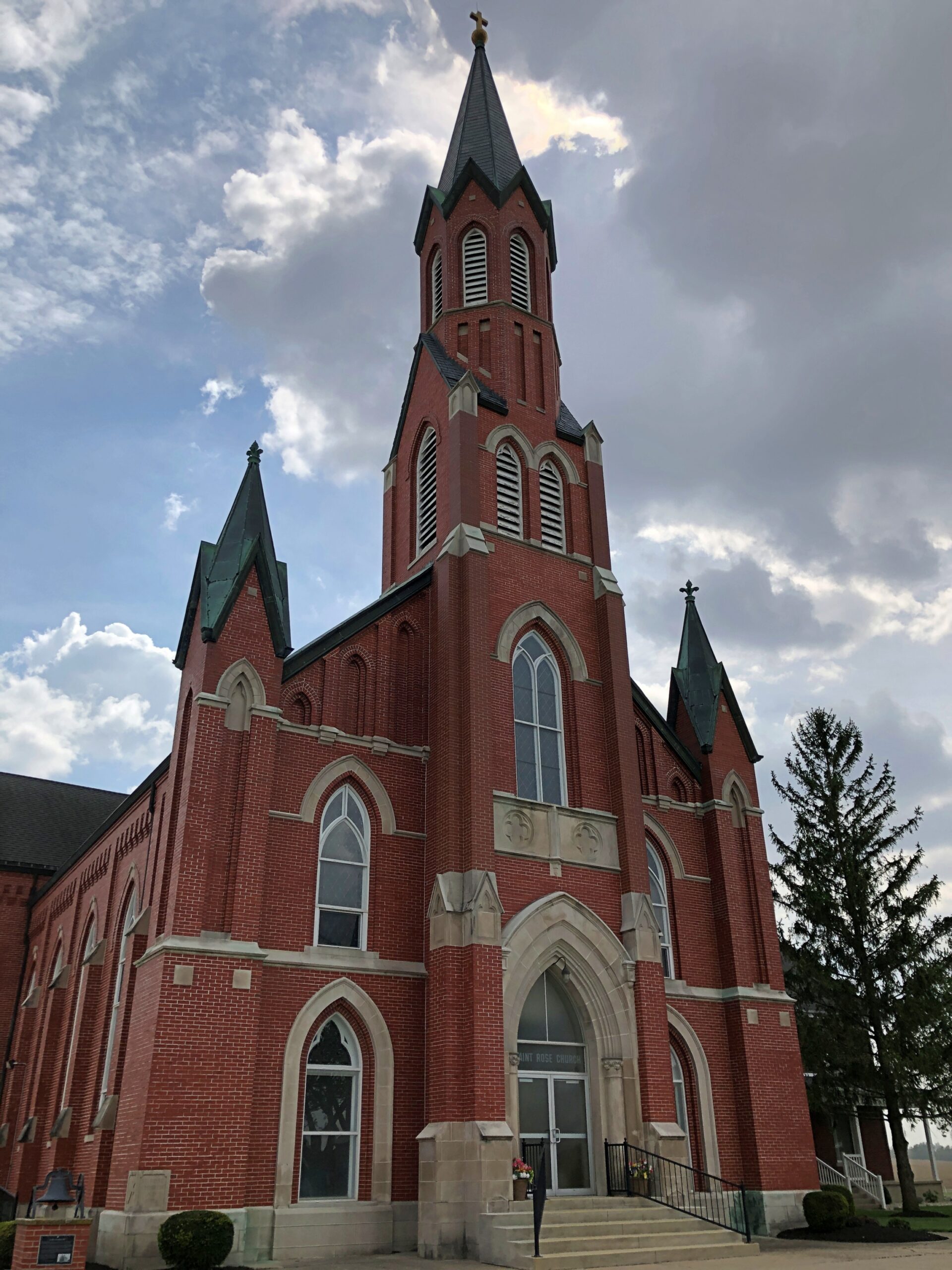
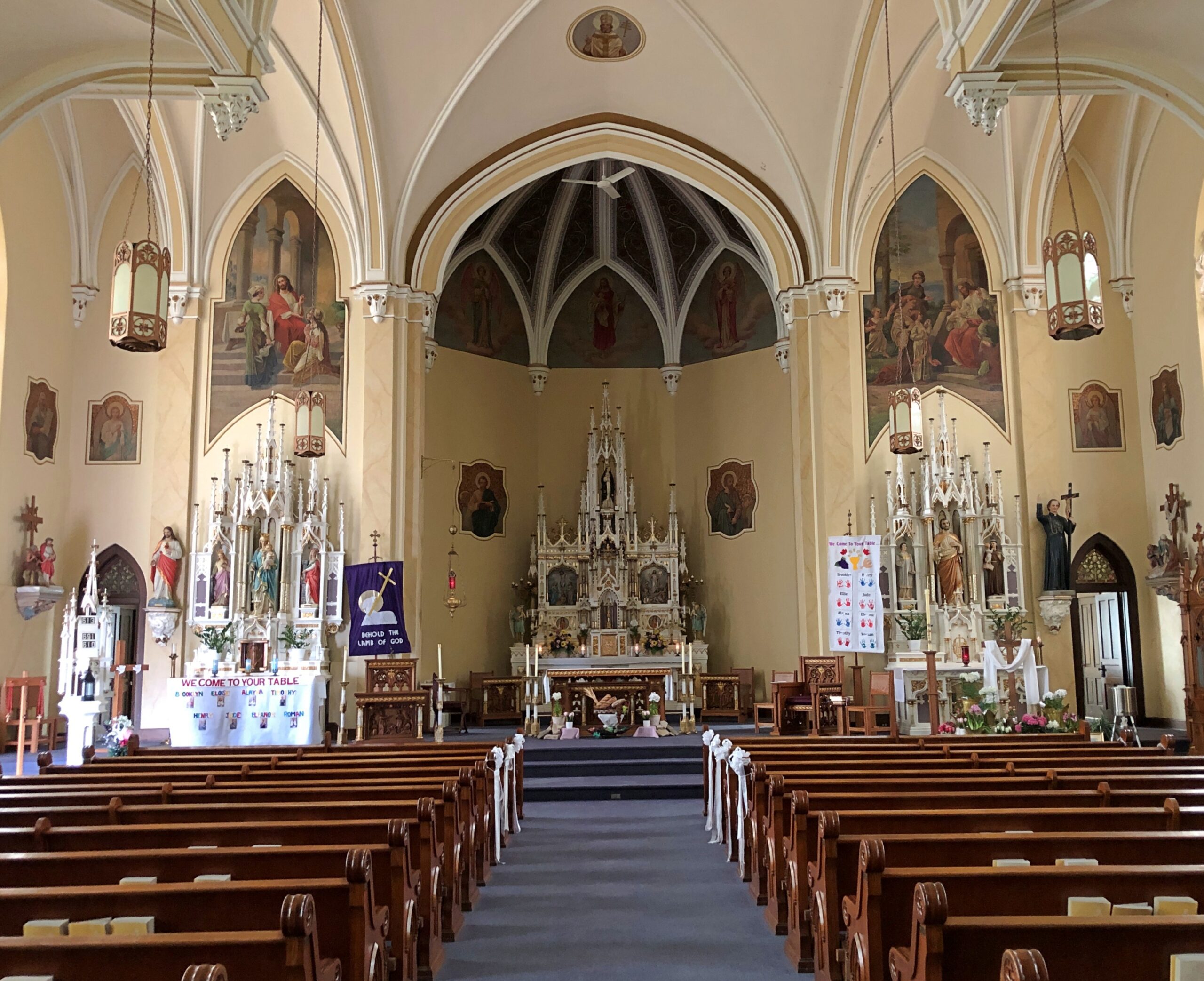
Saint Rose Church in the hamlet of Saint Rose, not far east of the Ohio-Indiana line. A Cross-Tipped Church.
Pennsylvania

The hills at the edge of Punxsutanwney.
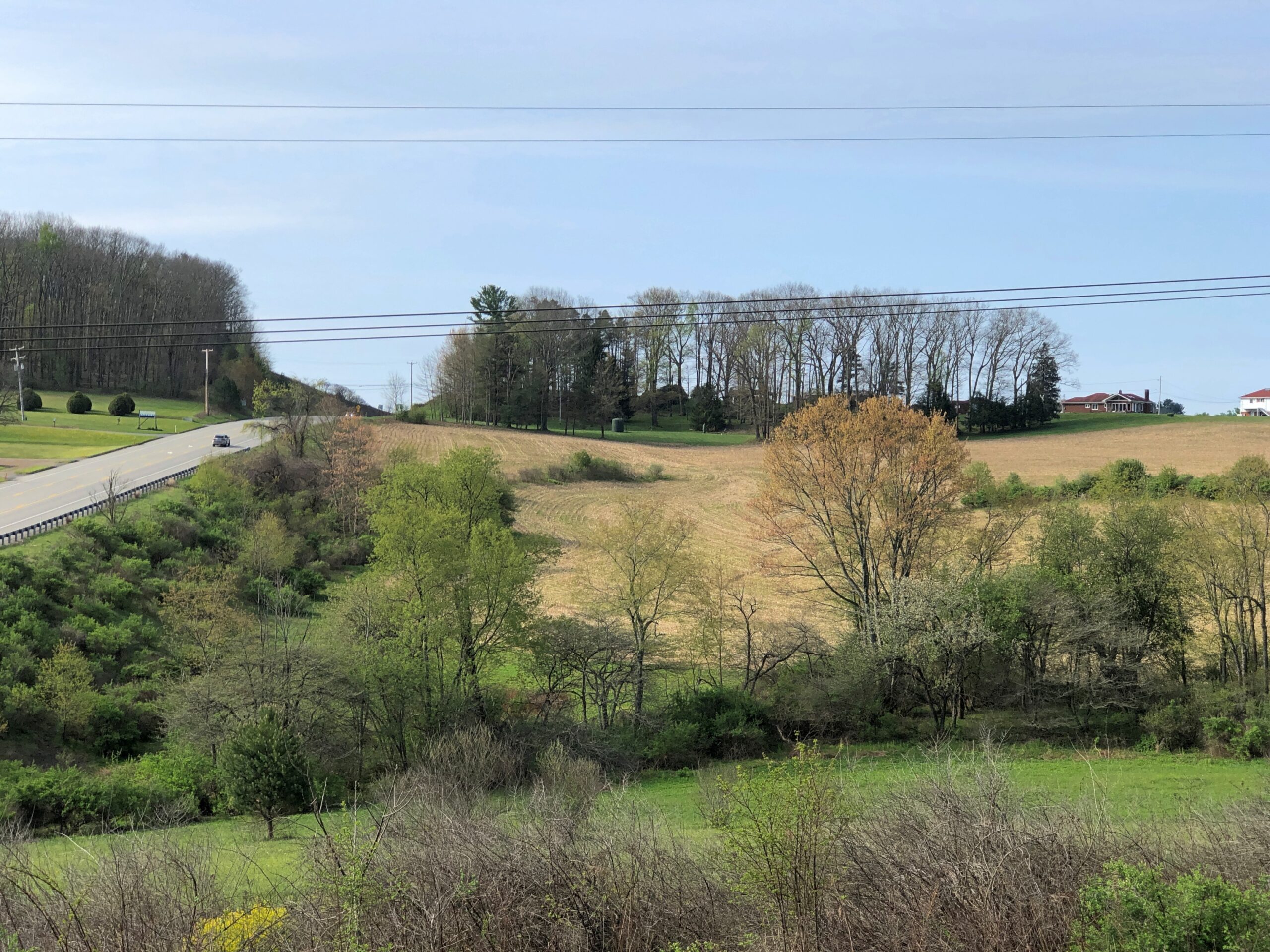
The drive west across Pennsylvania began across the Delaware River from Port Jervis, NY, taking US 209 southwest through part of Delaware Water Gap National Recreation Area. Bet the straight-ish, two-lane road is busier in peak recreation season in the Recreation Area, but in April, I booked along without encountering much in the way of traffic. Trees were still budding, but it wouldn’t be long before some stretches of the highway would pass through green tunnels. The sunlight was already casting green leaf shadows on the road.

Watch Groundhog Day, and the impression is that the festivities are held in the center of town — which they are, in the Punxsutanwney stand-in of Woodstock, Illinois. Go to Punxsutanwney itself and learn that the February 2 fest is a few miles from town in a place called Gobbler’s Knob.
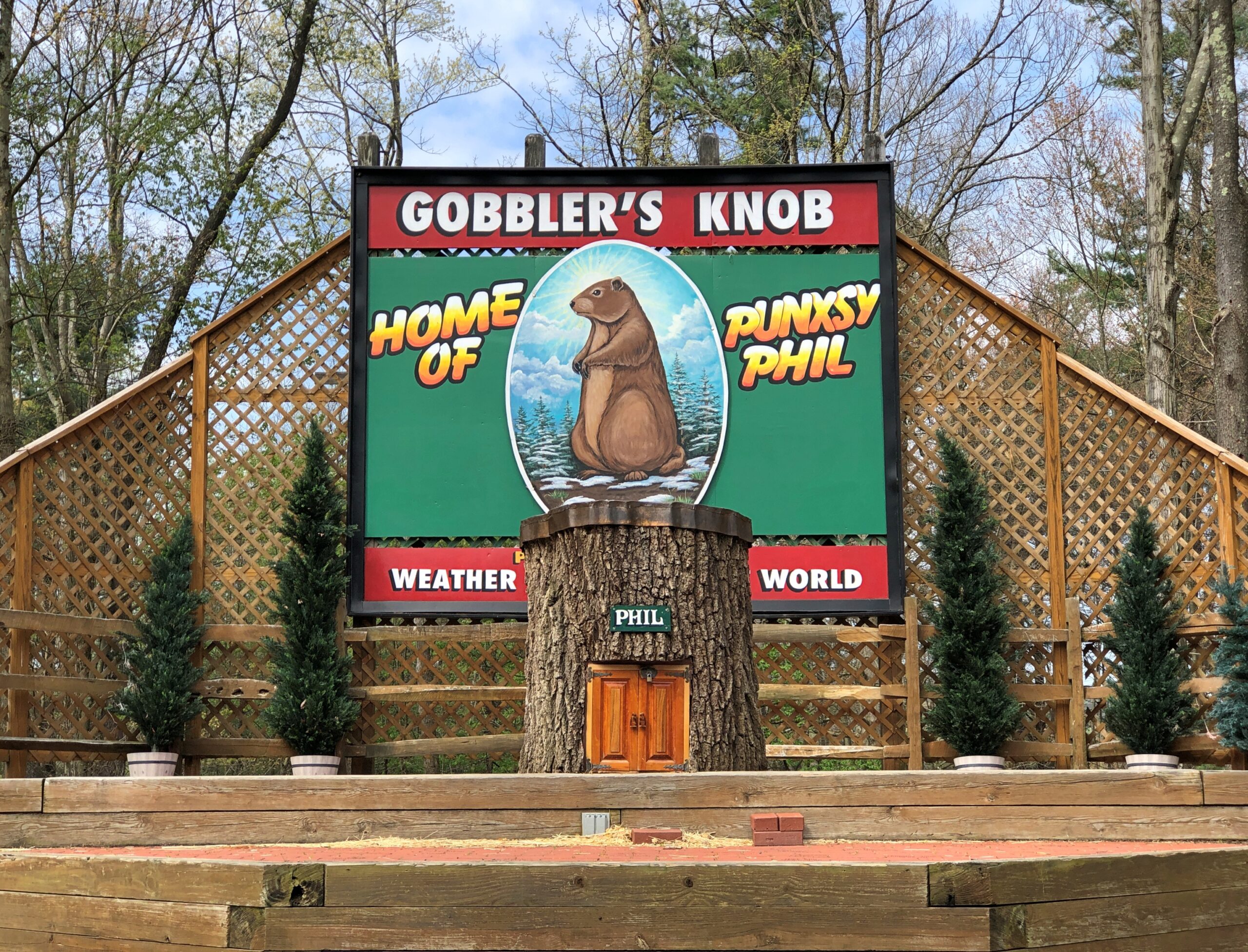
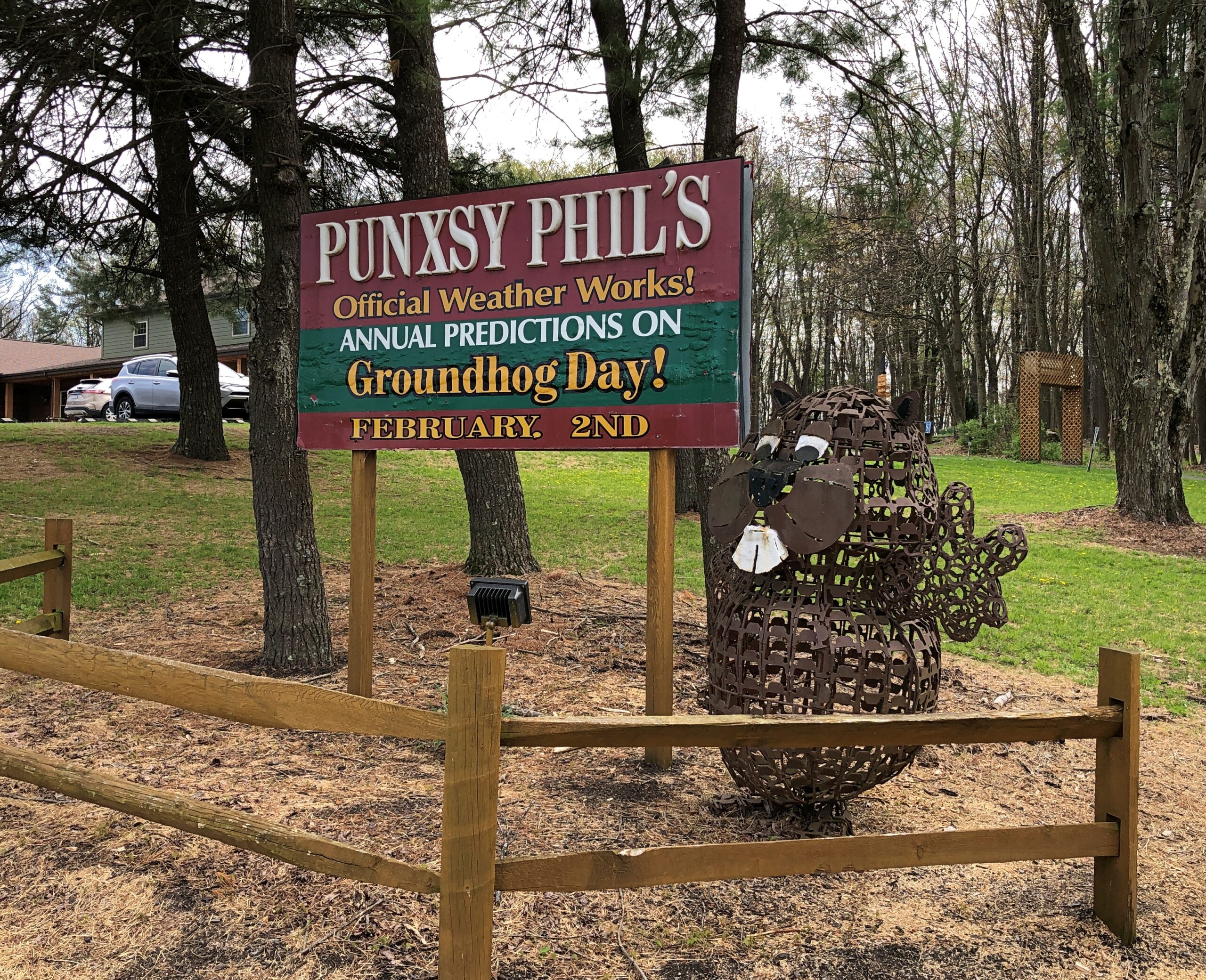
Gobbler's Knob

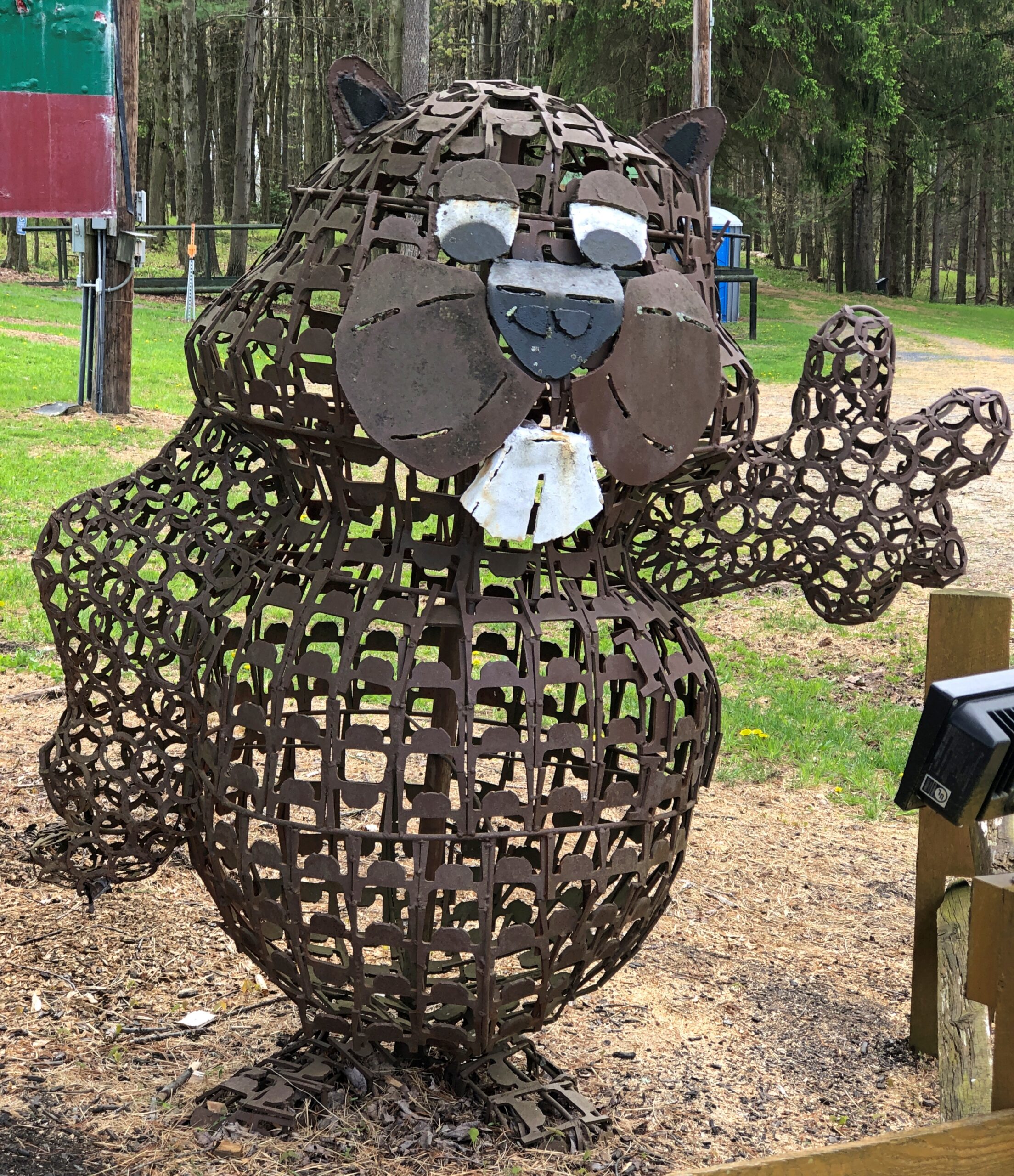
One more Phil. Iron Phil.

The clerk at the Gobbler’s Knob gift shop took pains to let me know that the site, and the festivities, were overseen by a nonprofit, not the commonwealth. Outside is the nonprofit’s bus, or at least I assume that, probably used to ferry people from town to GK and vice-versa, to help deal with the popularity of the event.
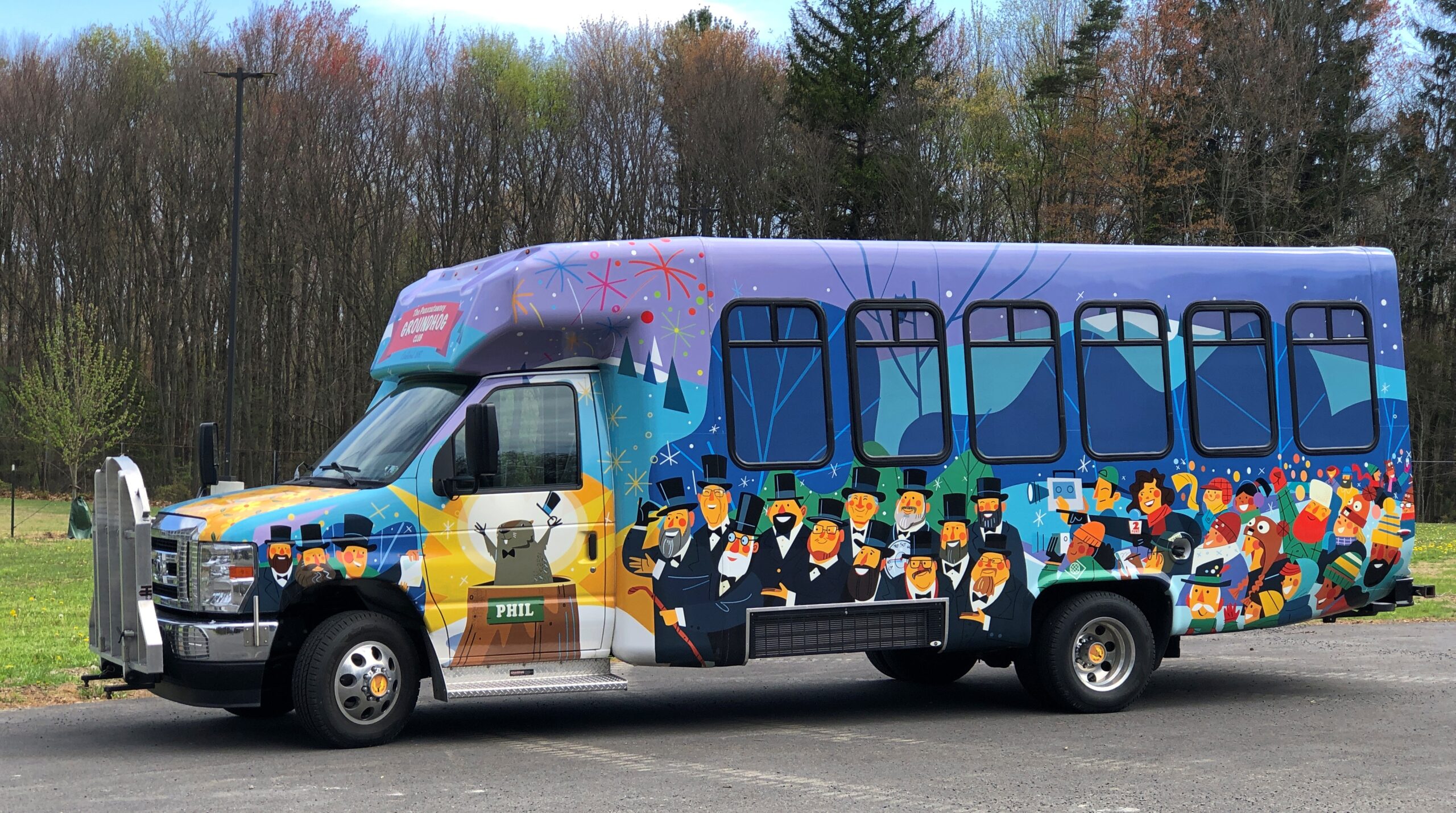
I like a good local festival as much as anyone, but February 2 is a deal-breaker. Can’t Phil come out again on August 2 to predict how much longer summer is going to last?

One More (Indiana)

Miami Chief Francois Godfroy stands at the corner of Main Street and Huntington Street/Indiana 18 in Montpelier. Well, maybe it’s supposed to remind passersby of the chief more than actually depict him.
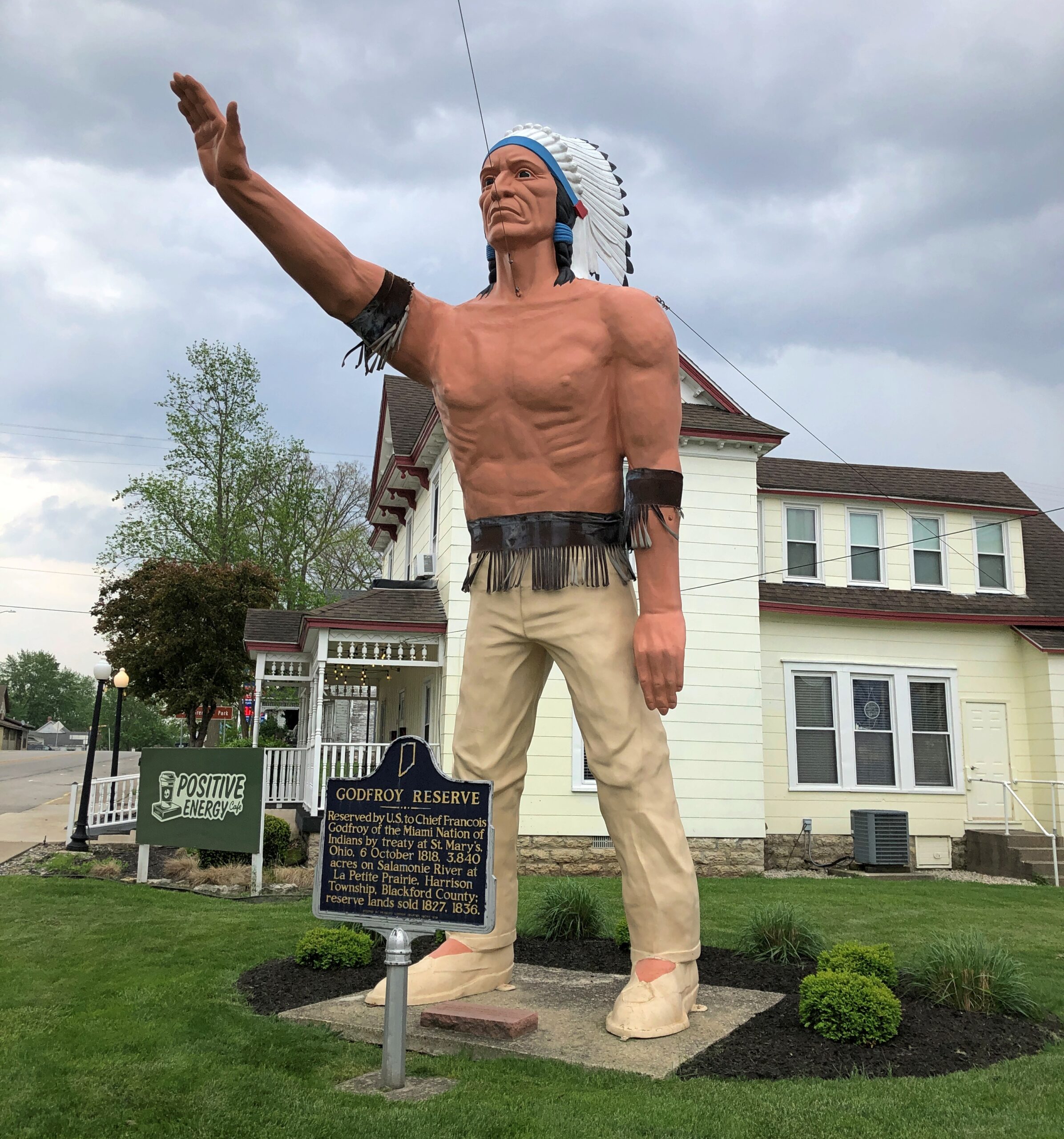
A Daughters of the American Revolution historical marker says: Reserved by U.S. to Chief Francois Godfroy of the Miami Nation of Indians by treaty at St. Mary’s, Ohio, 6 October 1818. 3,849 acres on Salamonie River at La Petite Prairie, Harrison Township, Blackford County: reserve lands sold 1827, 1836.

Waymarking says: “The statue was made in Venice, CA in 1960 for the Tom Wood Pontiac dealership in Indianapolis. Later it was in front of the Indian Museum at Eagle Creek Park In Indianapolis. After the museum closed, the statue (of more a plains Indian than a NE Indiana tribe) was obtained by Chief Larry Godfroy — a descendant who presented it to the City of Montpelier and they erected it as a monument in 1984.”
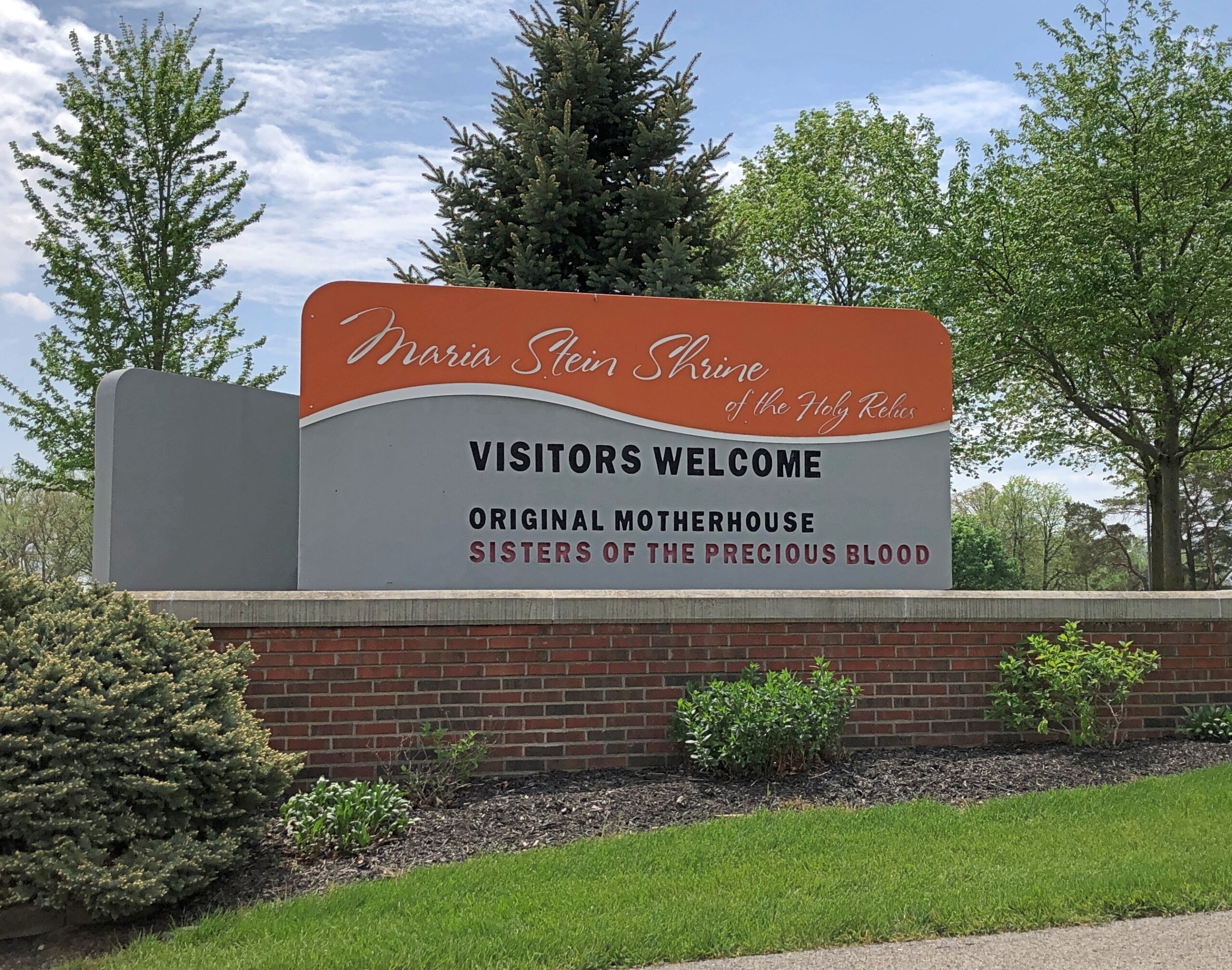
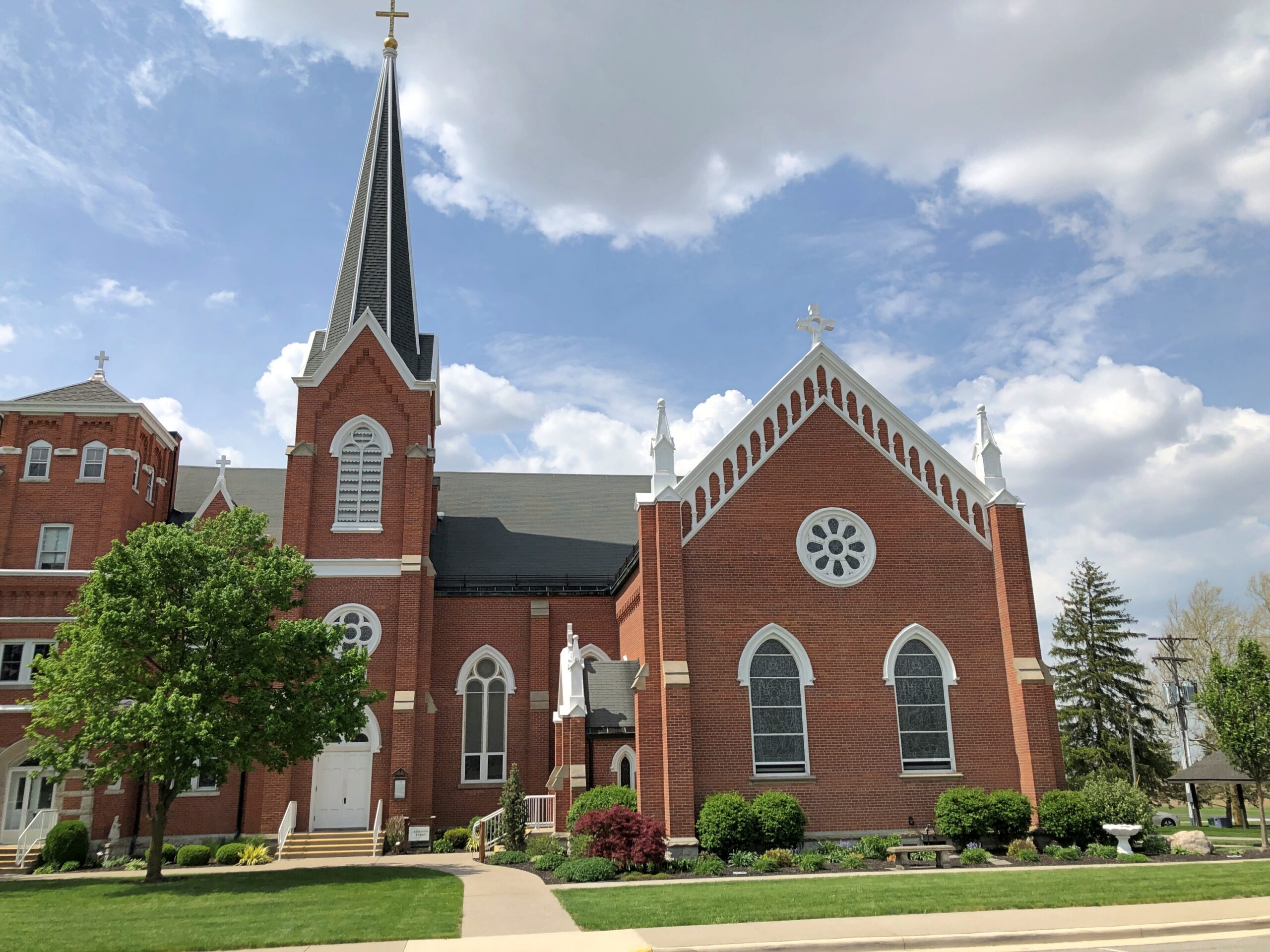
Maria Stein Shrine of the Holy Relics

It’s always good to see that visitors are welcome.

To be a visitor at the Maria Stein Shrine of the Holy Relics, however, you have to make your way to Maria Stein, Ohio, a census-designated place in Mercer County whose population is just over 1,000. As for Mercer County, its western edge is the border with Indiana and the nearest city of any size is Lima, to the northeast. The region isn’t precisely remote – this is the Midwest, after all – but it isn’t overrun with visitors.

The shrine rates a point-of-interest on my Rand McNally Road Atlas (Maria Stein Shrine, it says), and I find that kind of thing intriguing, especially when I’m going to be nearby anyway. So I visited the shrine on the last day of my trip, on the way home.

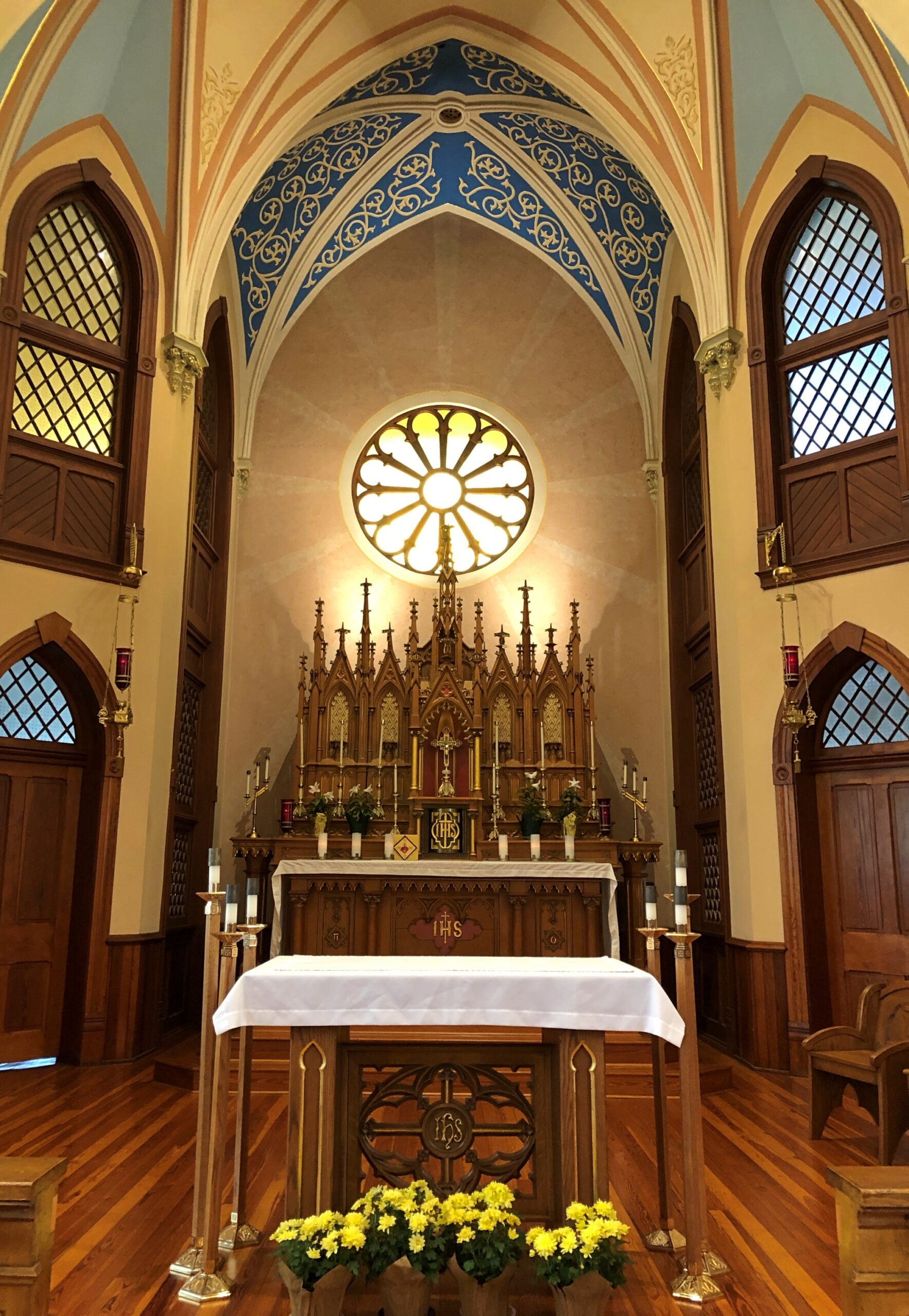
The shrine is part of the former Motherhouse of the Congregation of the Sisters of the Precious Blood (who relocated to Dayton 100+ years ago). Also part of the complex is the Adoration Chapel, where I went first.

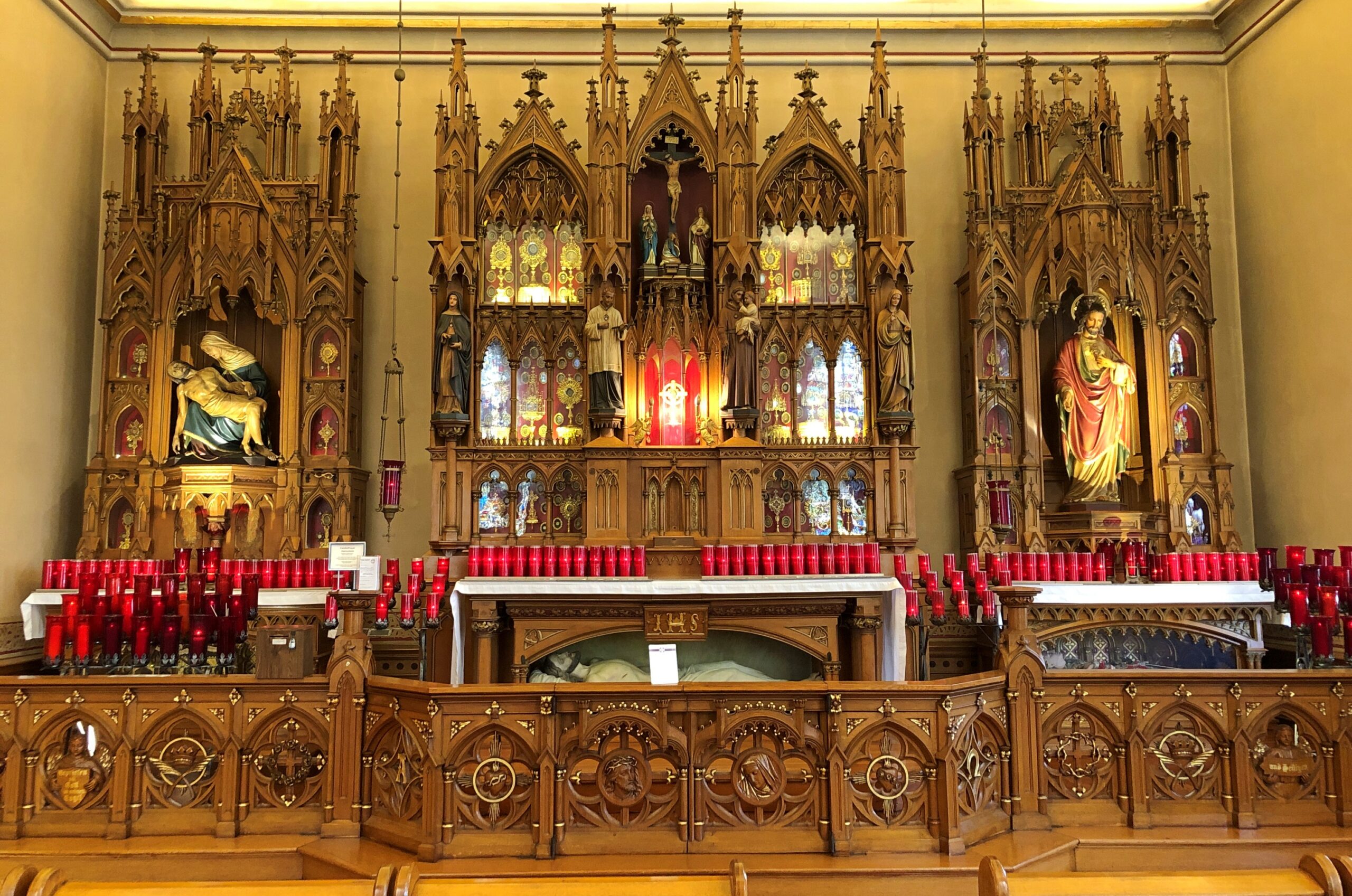
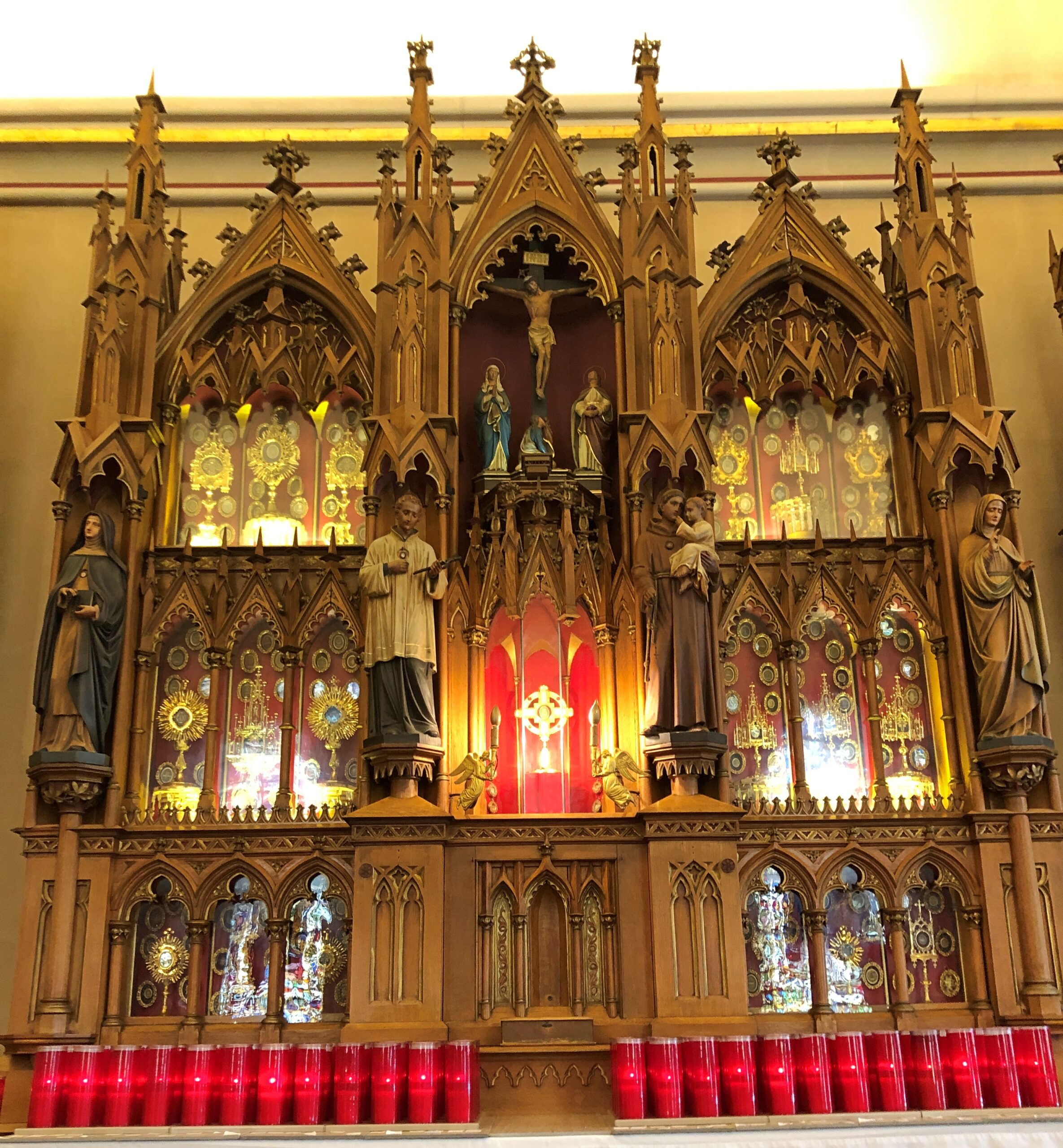
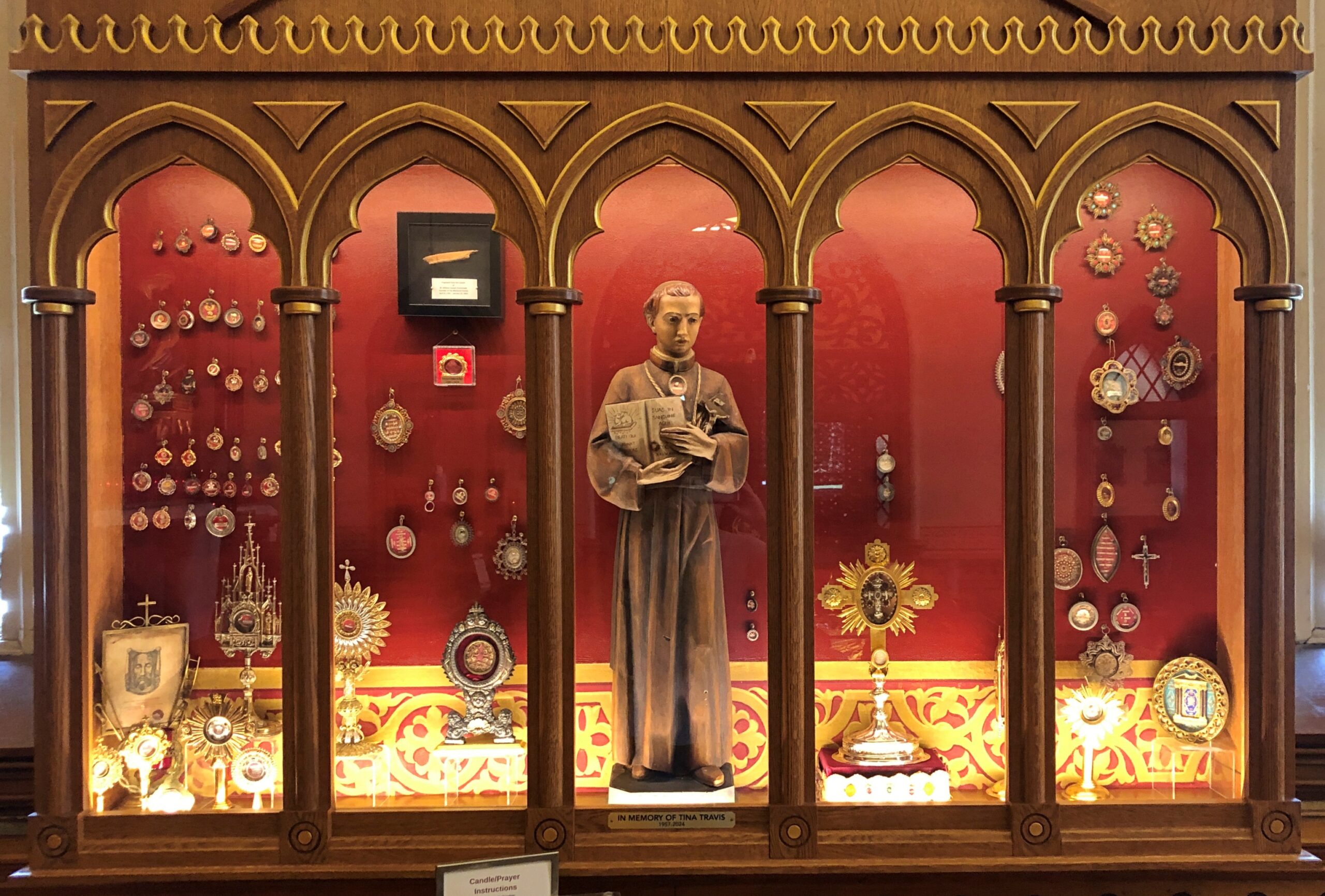
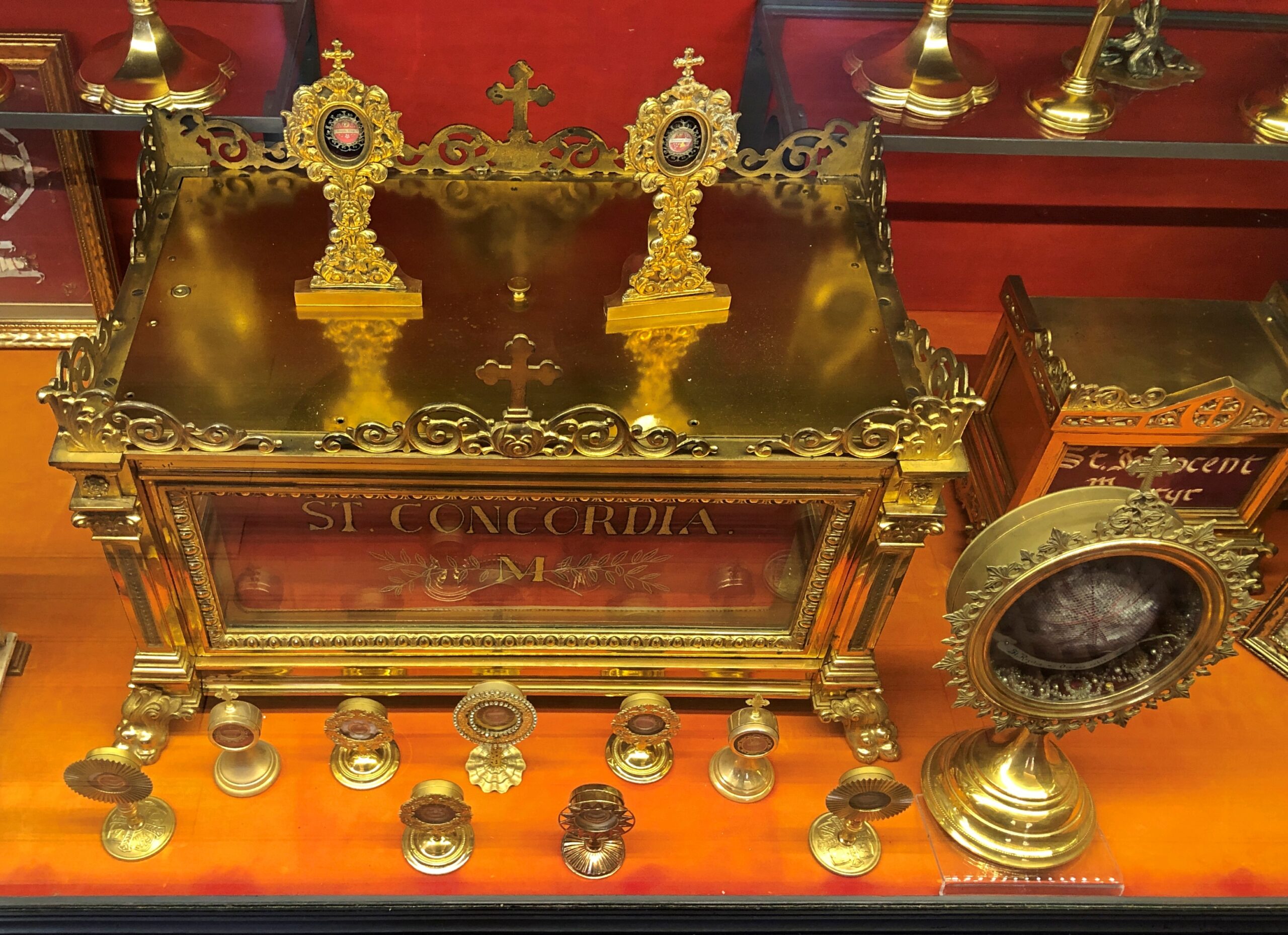
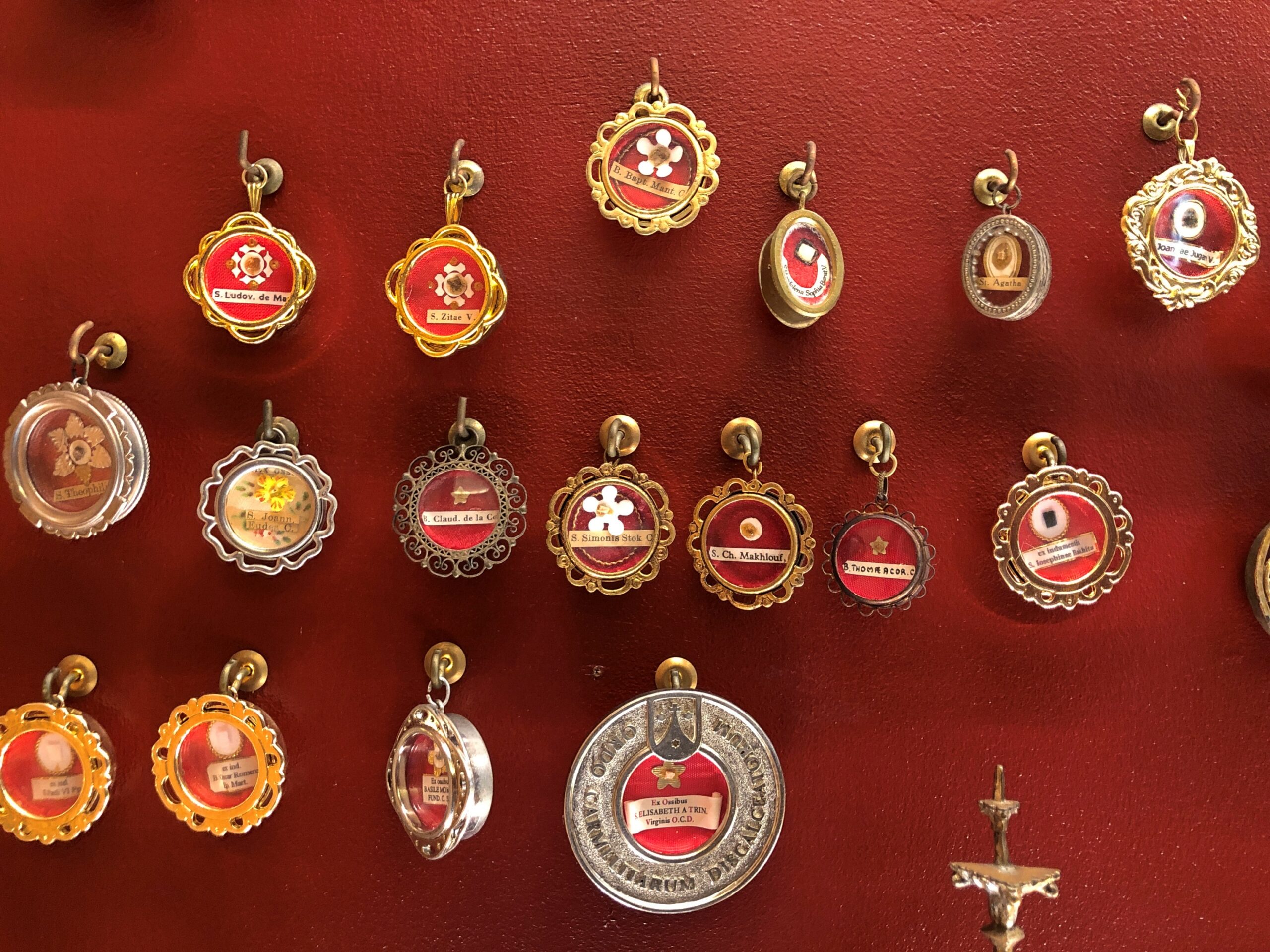
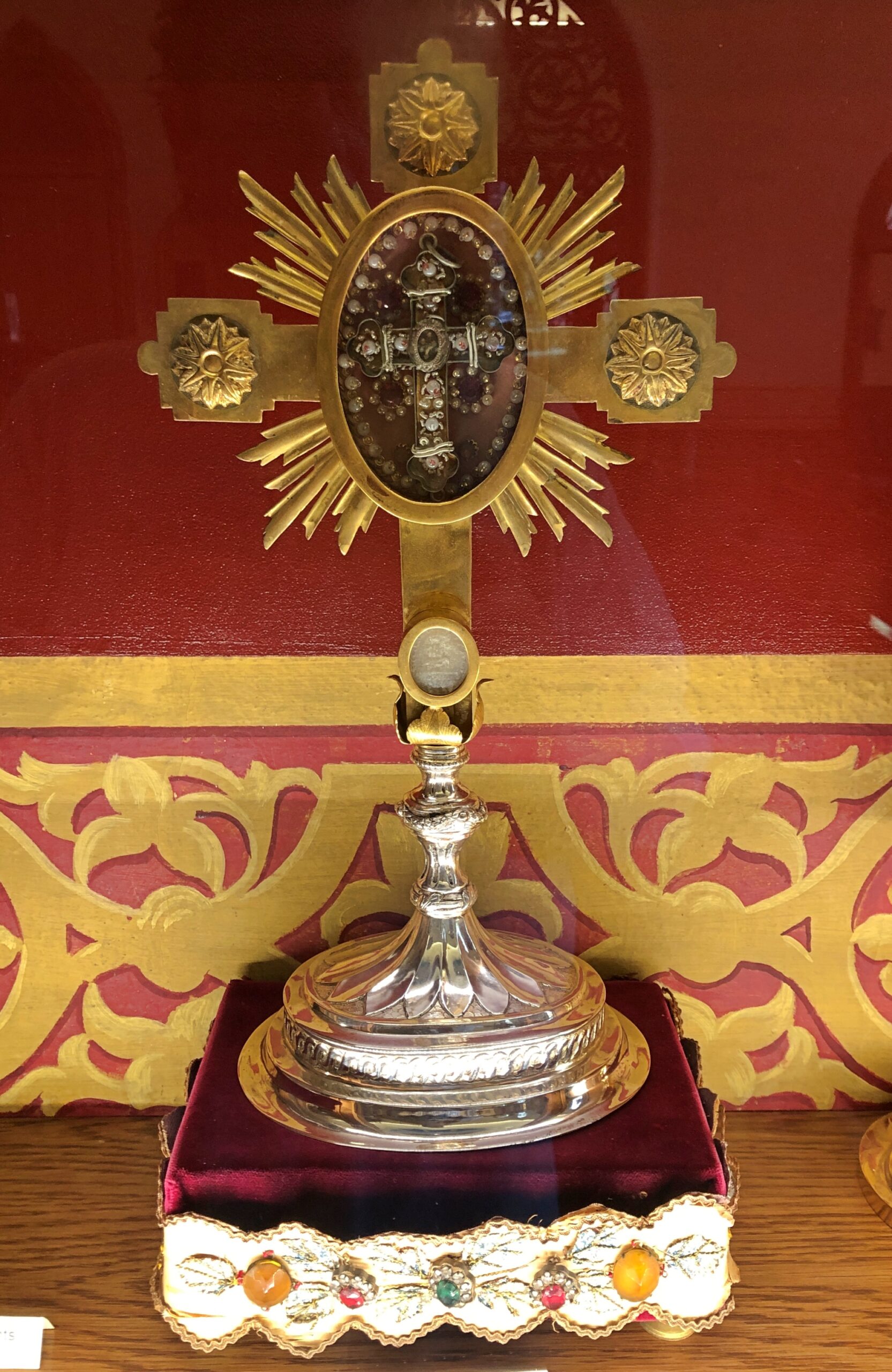
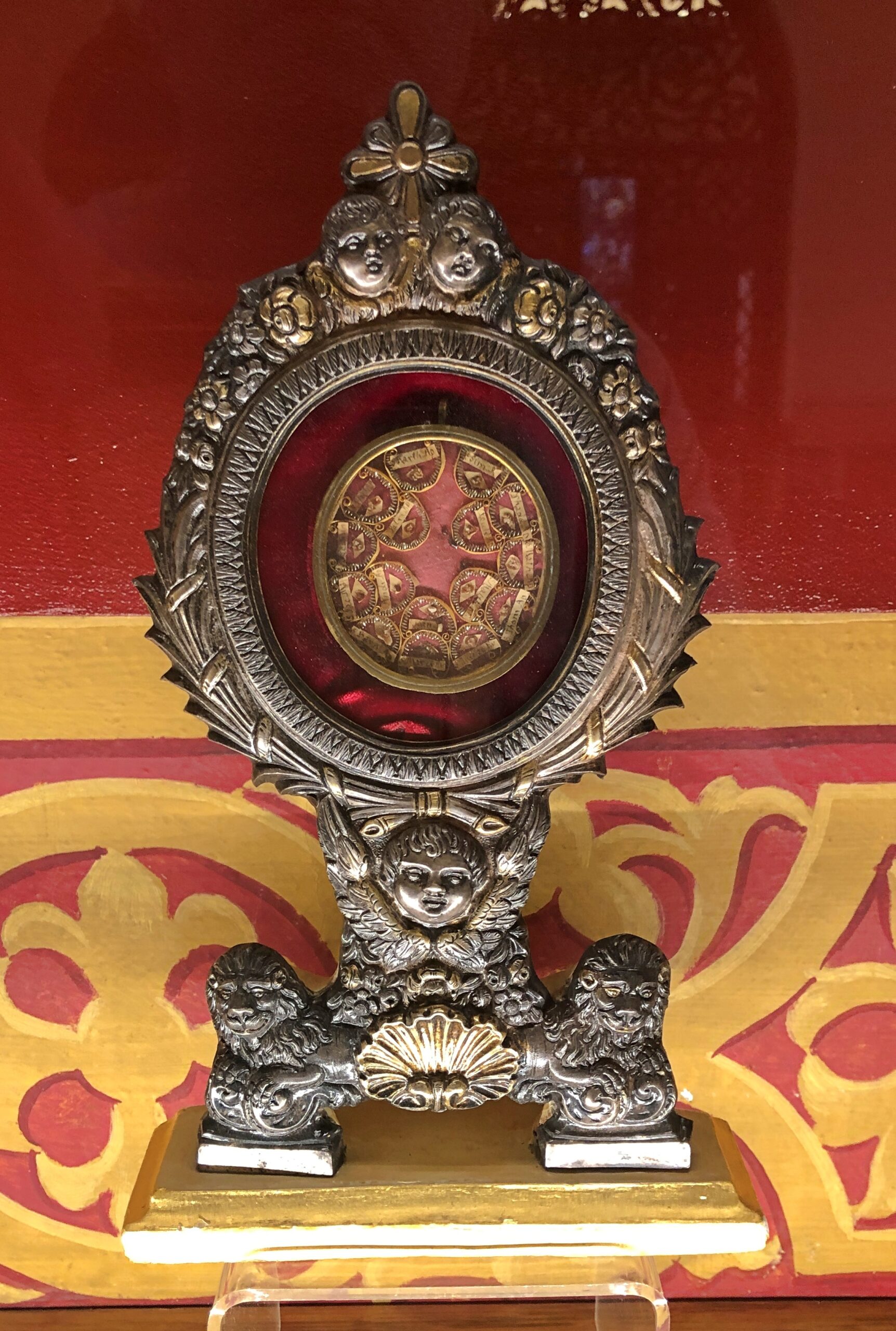
The relic shrine is adjacent to the chapel. It’s all about the relics. As it should be.

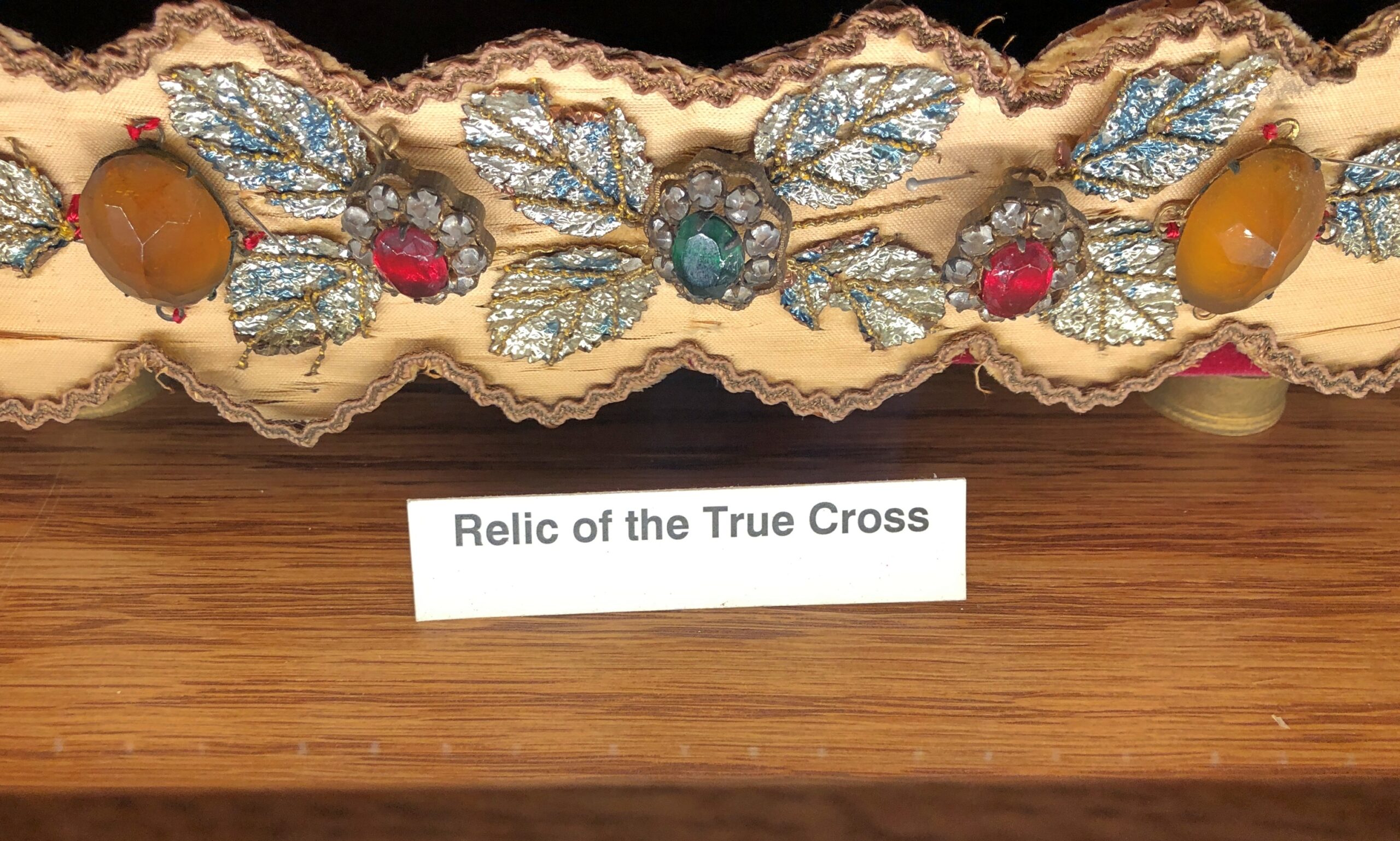
“The Maria Stein Shrine of the Holy Relics houses over 1,200 relics of the Saints and the True Cross,” says the shrine’s web site. “95% of the relics in the Maria Stein collection are First Class. The first relics were brought to the area by Fr. Francis de Sales Brunner, who founded most of the local churches and convents, bringing priests, brothers, and sisters of the Precious Blood communities to America.

“After his death, the significant collection of his relics, including a Calendar of Relics, and the bodily remains of St. Victoria, were under the care of the Sisters. In 1872, Fr. J. M. Gartner, a priest from Milwaukee, acquired 175 relics for safekeeping in the New World. When he brought them to America, his original intent was to have a kind of traveling exhibit. But the faithful wanted them kept together and suggested finding a permanent place for the collection.

“When he heard about the many relics under the care of the Sisters of the Precious Blood, he approached the Sisters, and together they gathered all of the relics into one collection, and we became the Shrine of the Holy Relics in 1875.”
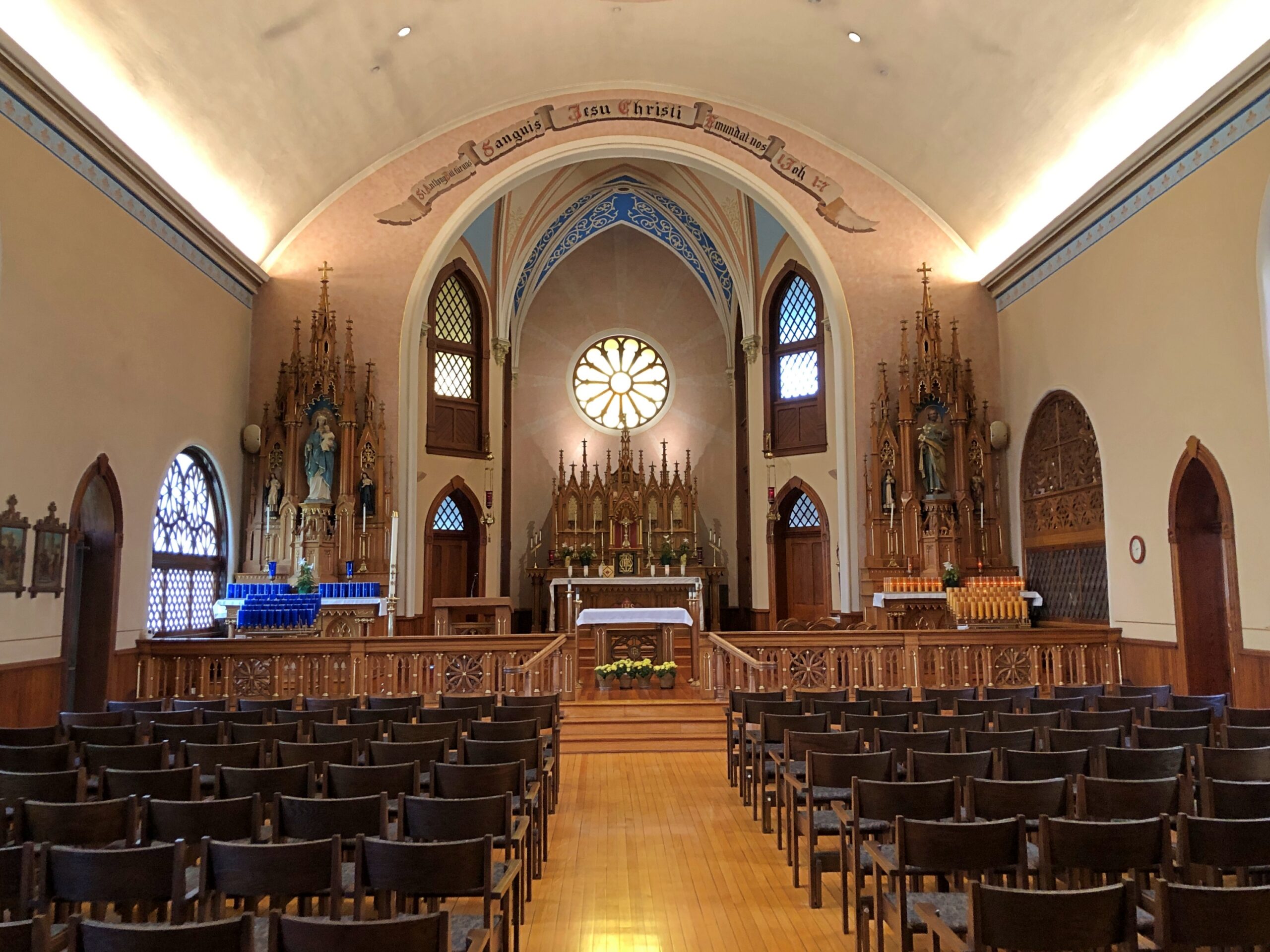
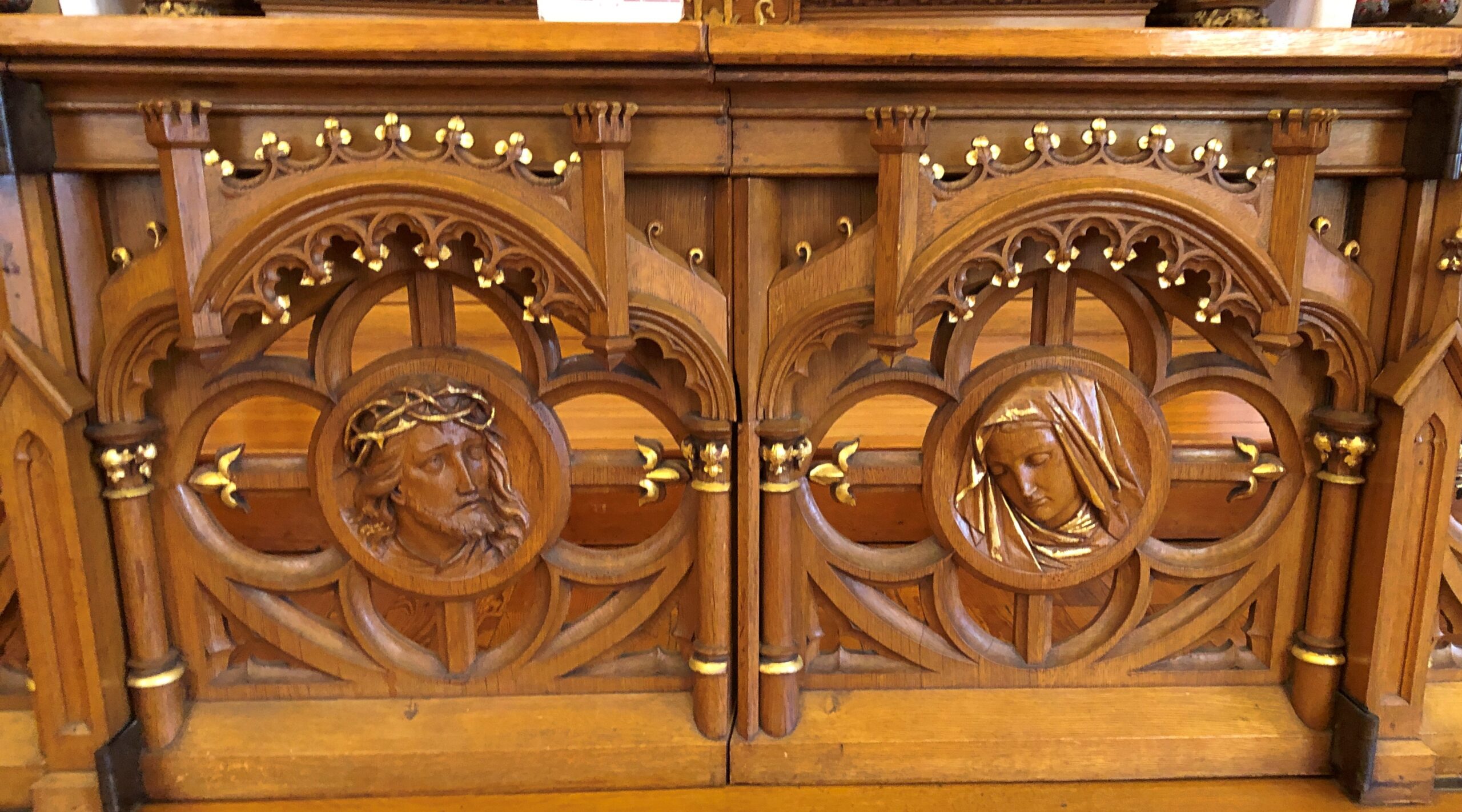
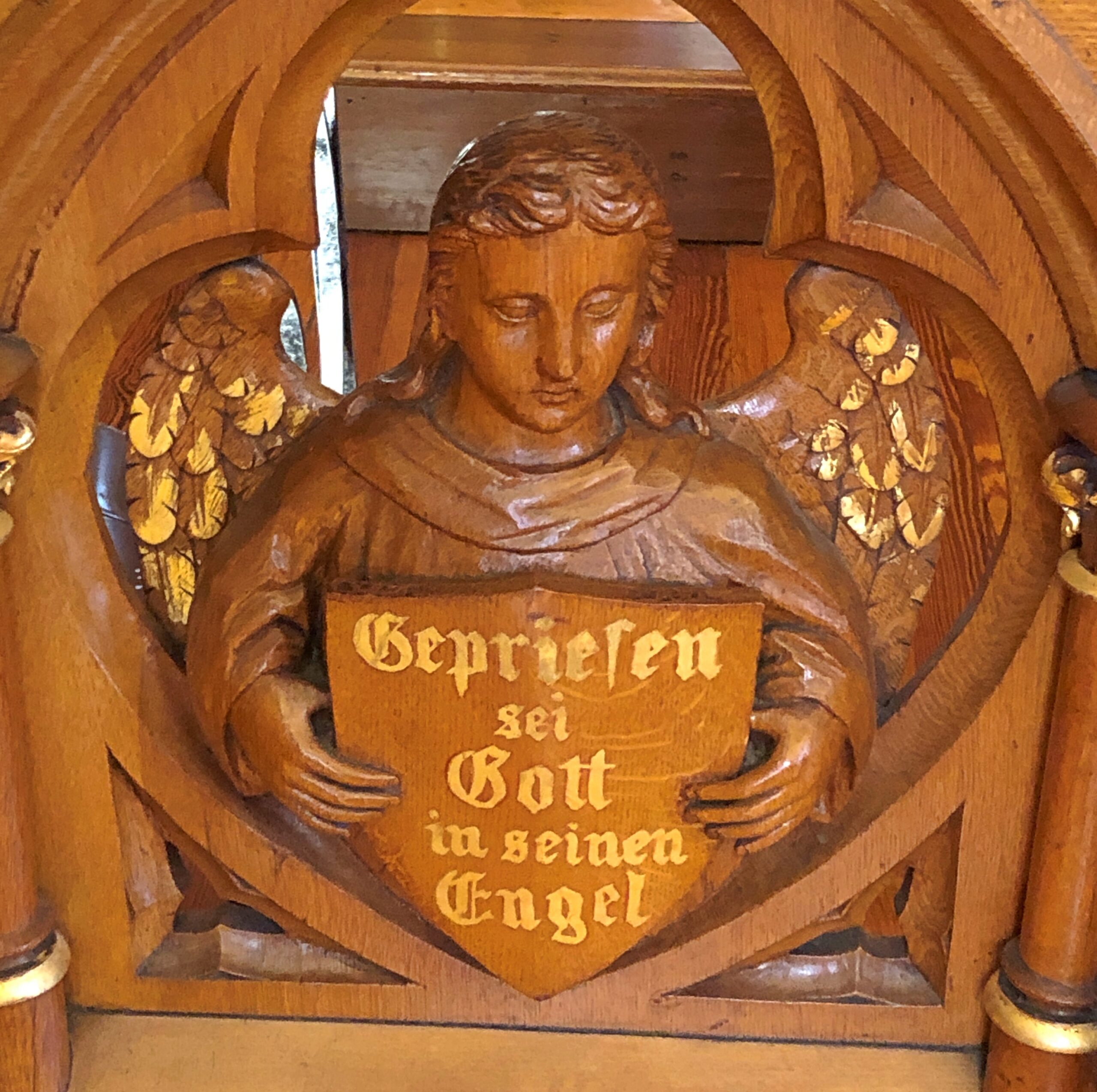
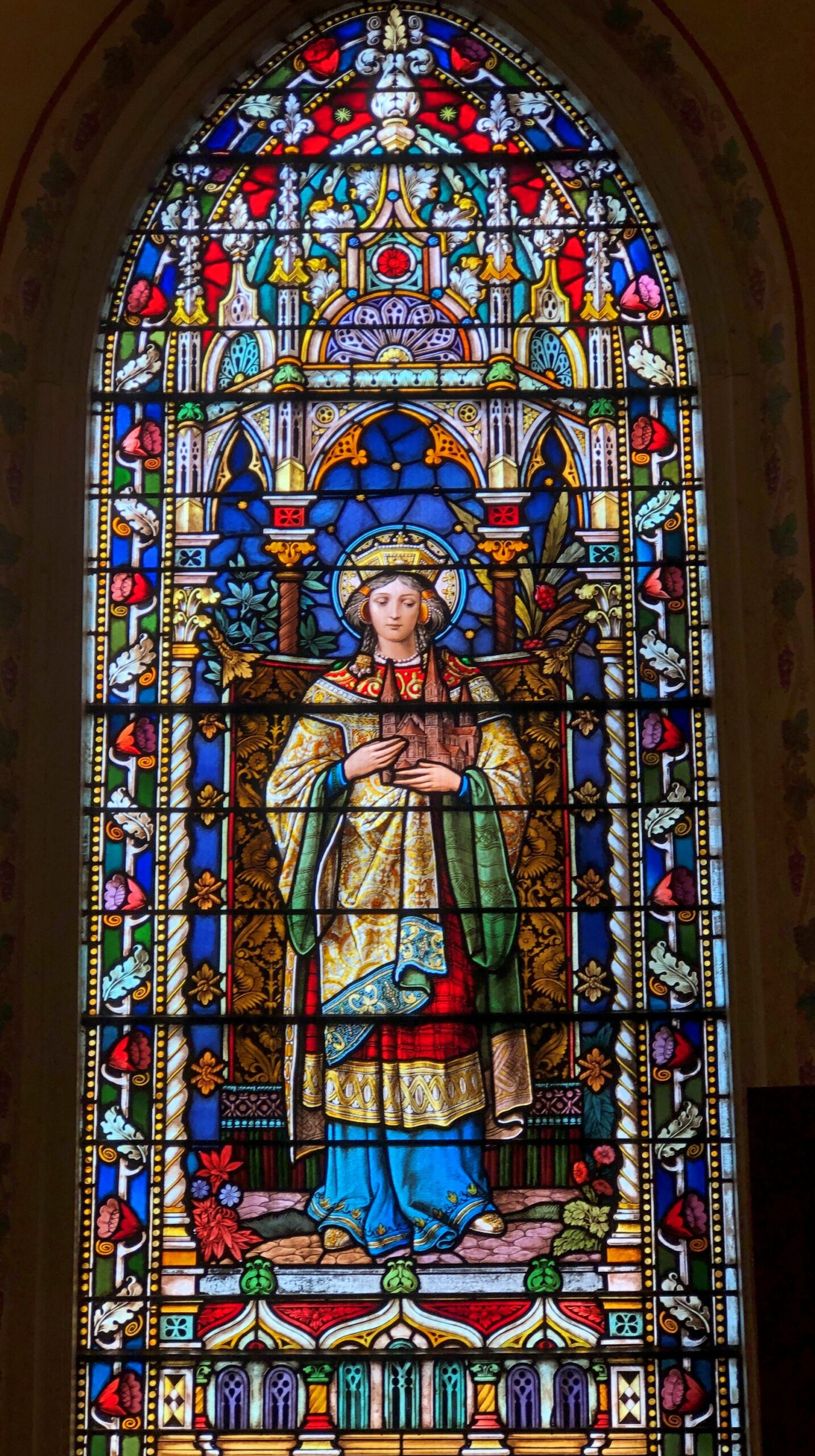
Besides reliquaries large and small, the shrine also includes some fine woodwork and stained glass.

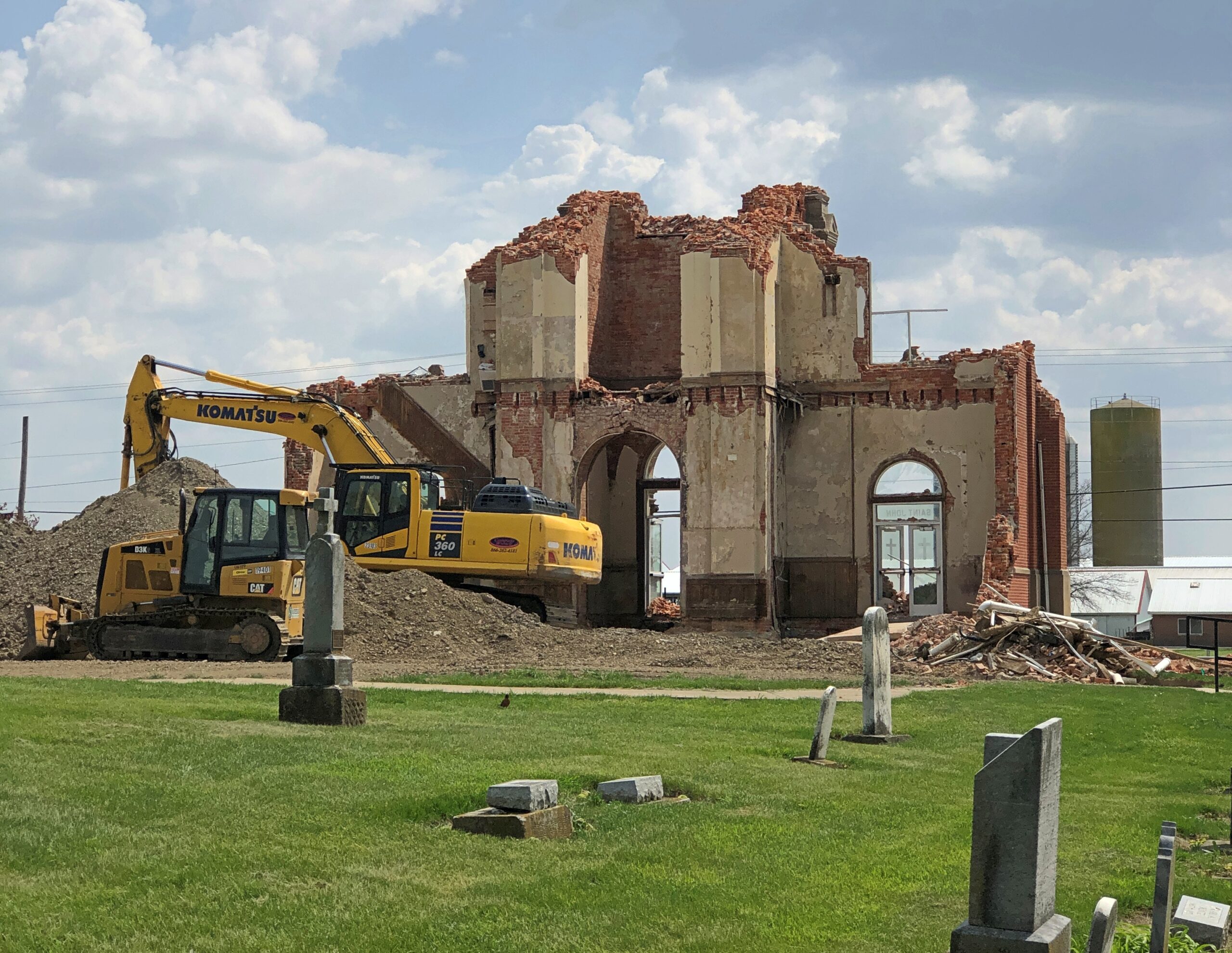
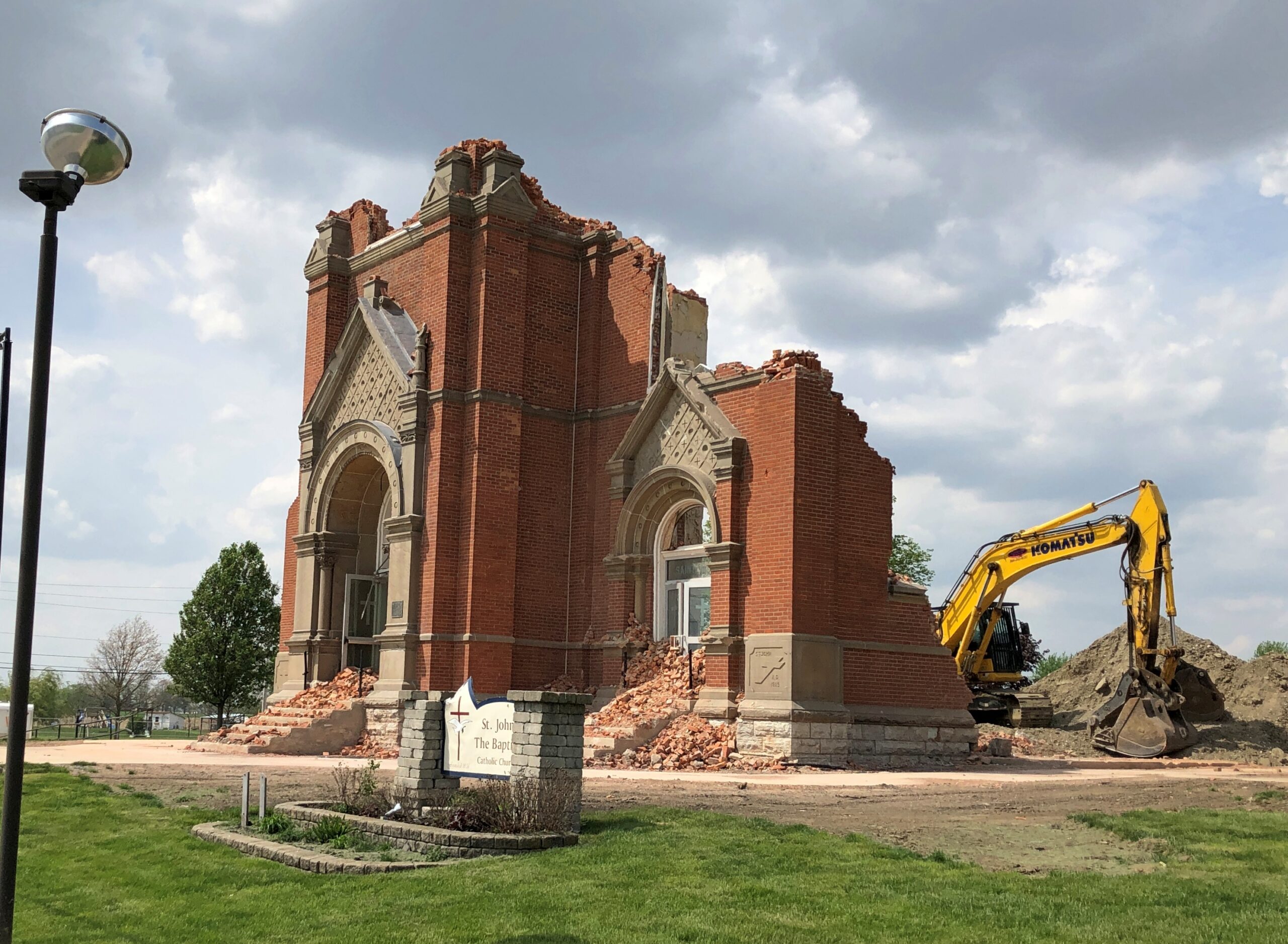
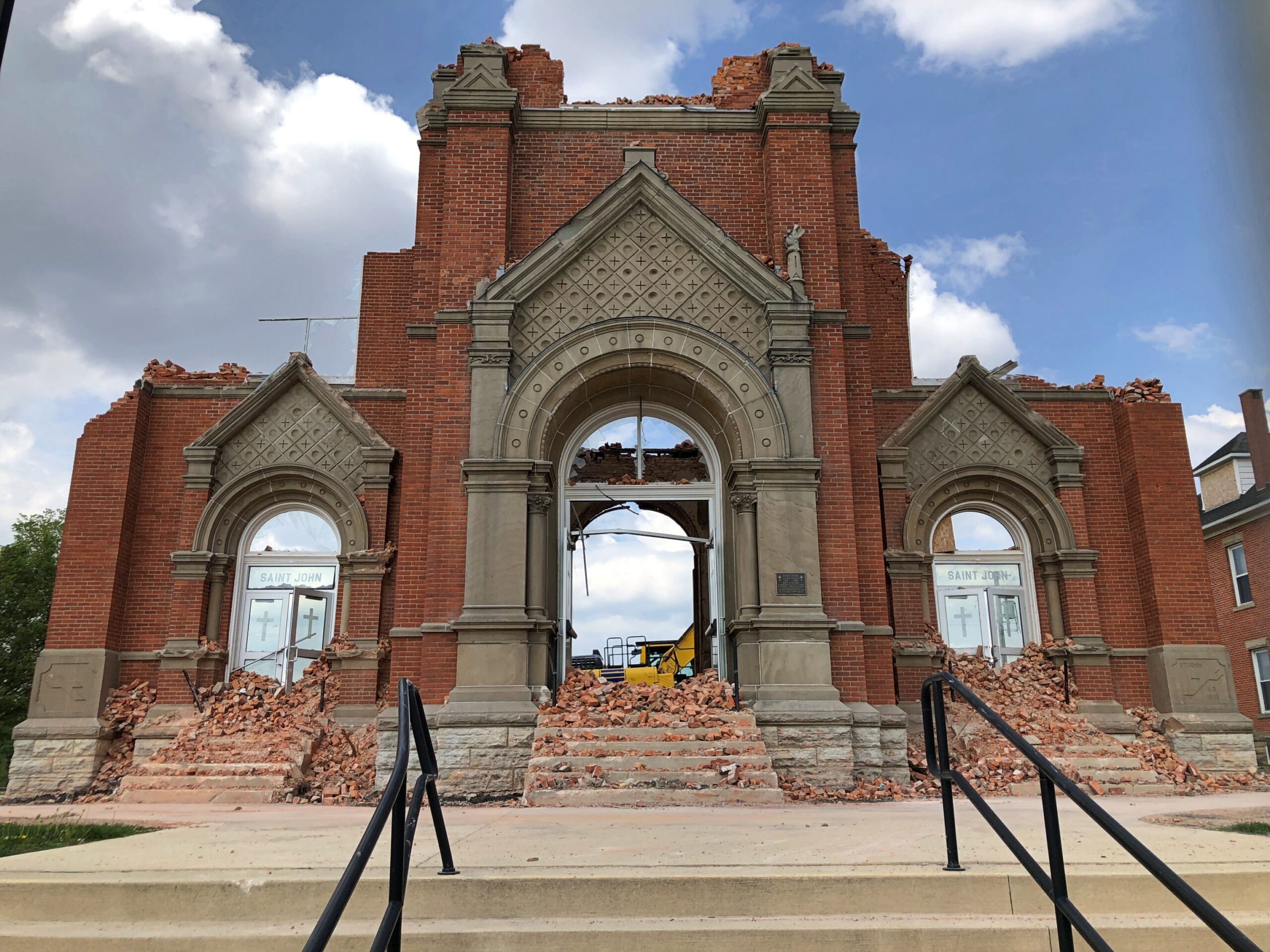
A minute’s drive from the shrine, on the two-lane highway Ohio 119, is the site of St. John the Baptist Catholic Church. Site because it is a ruin. Or was the day in April when I visited, as it’s probably gone by now. From the looks of things, demolition was in progress.

How is it that a late 19th-century brick church was being razed? I was aghast for a little while, but a posted notice told me that the church had been severely damaged by fire in May 2025.

A damn shame, but it turns out — something I didn’t know buzzing down Ohio 119, seeing church after church in otherwise tiny towns — that this part of Ohio is home to many immigrant Catholic churches, mostly tall and brick and over 100 years old. The cluster of churches even has a name: Land of the Cross-Tipped Churches. Dang, now this is another place I want to re-visit. This happens to me fairly often.

The Armstrong Air & Space Museum

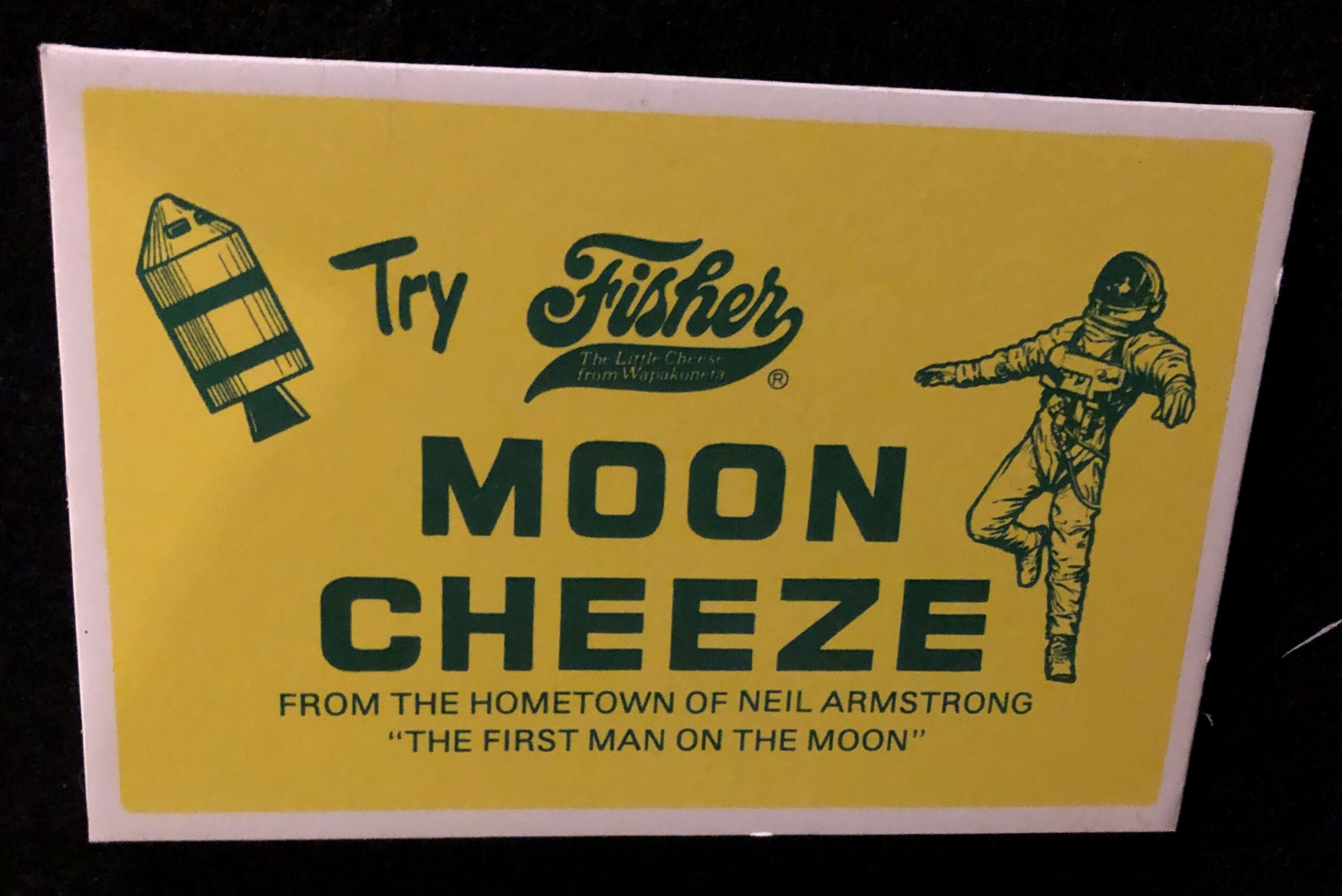
I’d never had any Moon Cheeze. Or even heard of it.

But I did eat Space Food Sticks from time to time in the days of Apollo and maybe a little after. As the ad says, Moon Cheeze was made in Wapakoneta, Ohio, hometown of Neil Armstrong.

“It seems to have been just regular American cheddar cheese,” Weird Universe says. “Only the packaging was special. It came in a container shaped like the state of Ohio.” In the ad above, it looks like an astronaut is drifting away from the safety of the Command and Service modules, like the (dead) astronaut did in 2001.
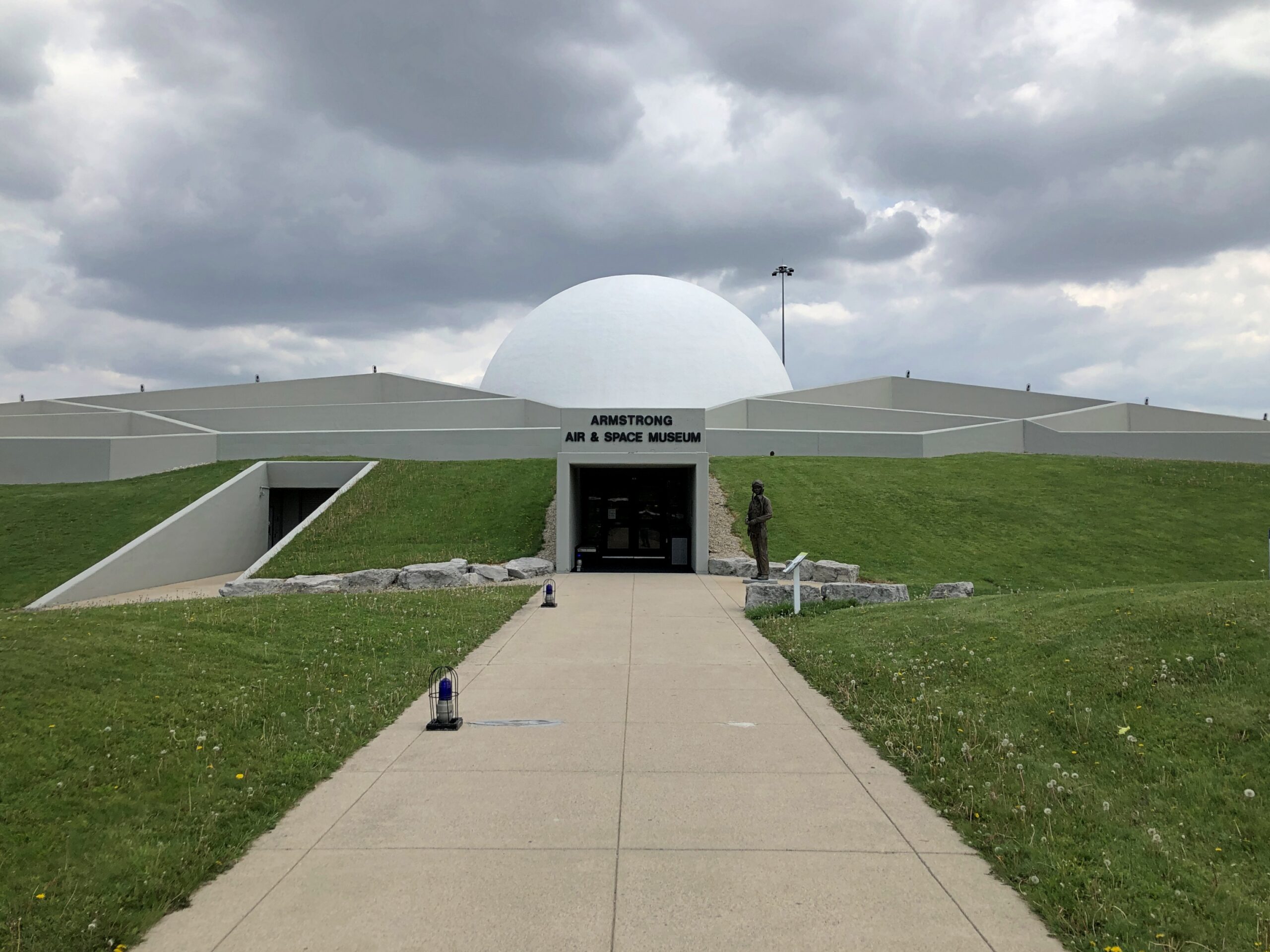
On the last day of my recent trip, I diverted a bit to Wapakoneta to visit the Armstrong Air & Space Museum, which I’d bypassed a decade earlier, and was rewarded for my effort when I saw the Moon Cheeze ad and a lot more.

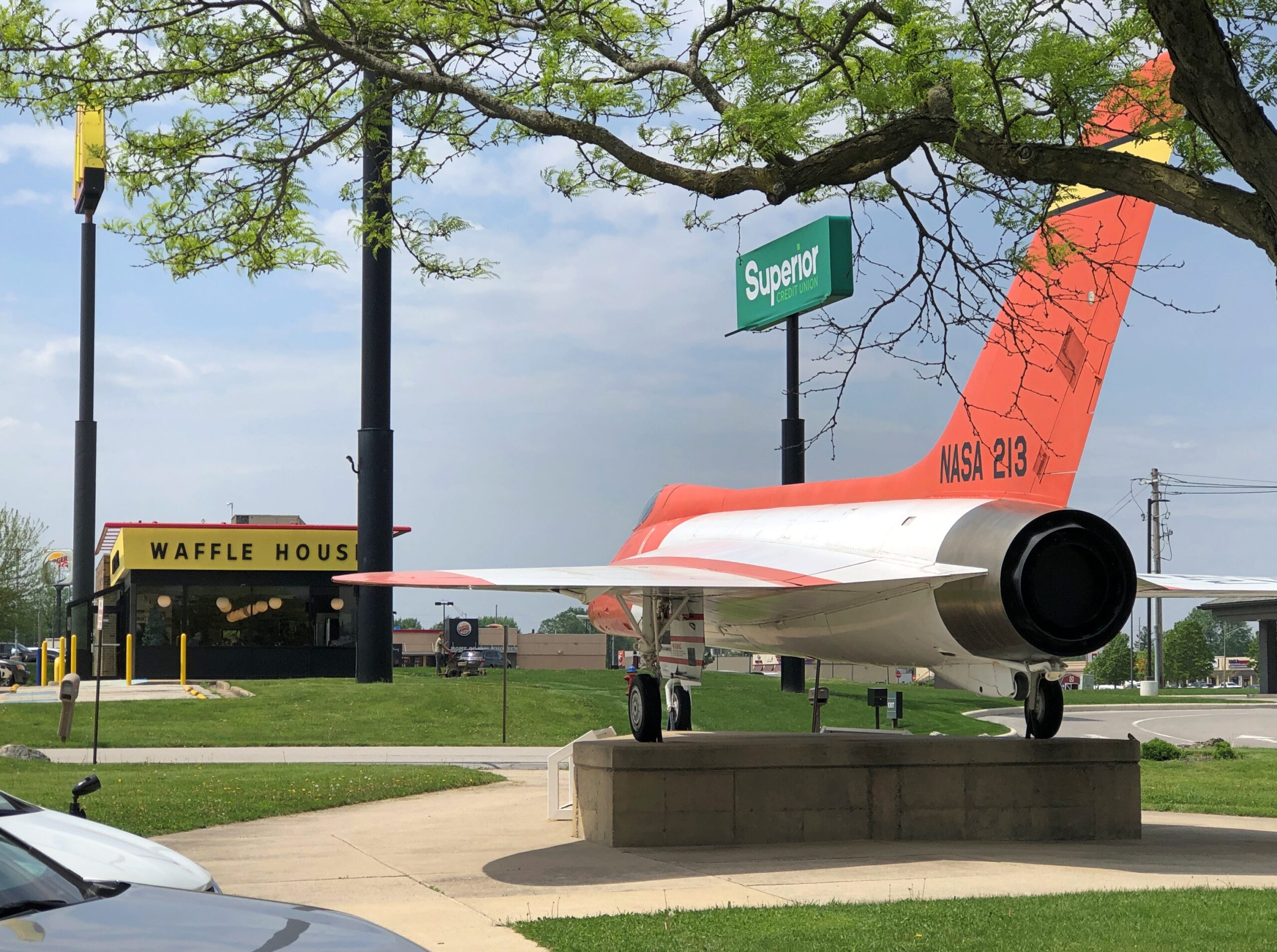
It’s conveniently located near a Waffle House.

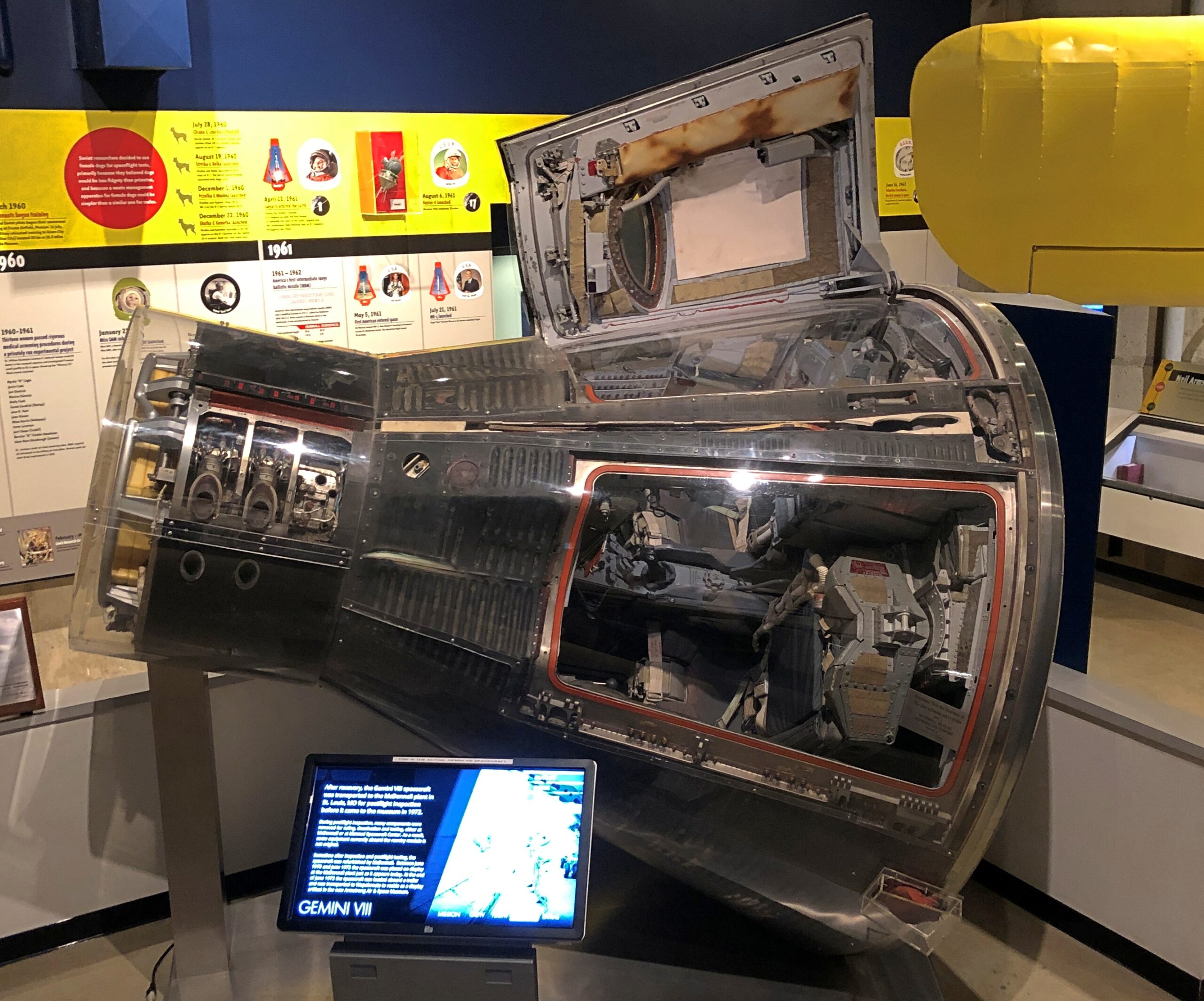
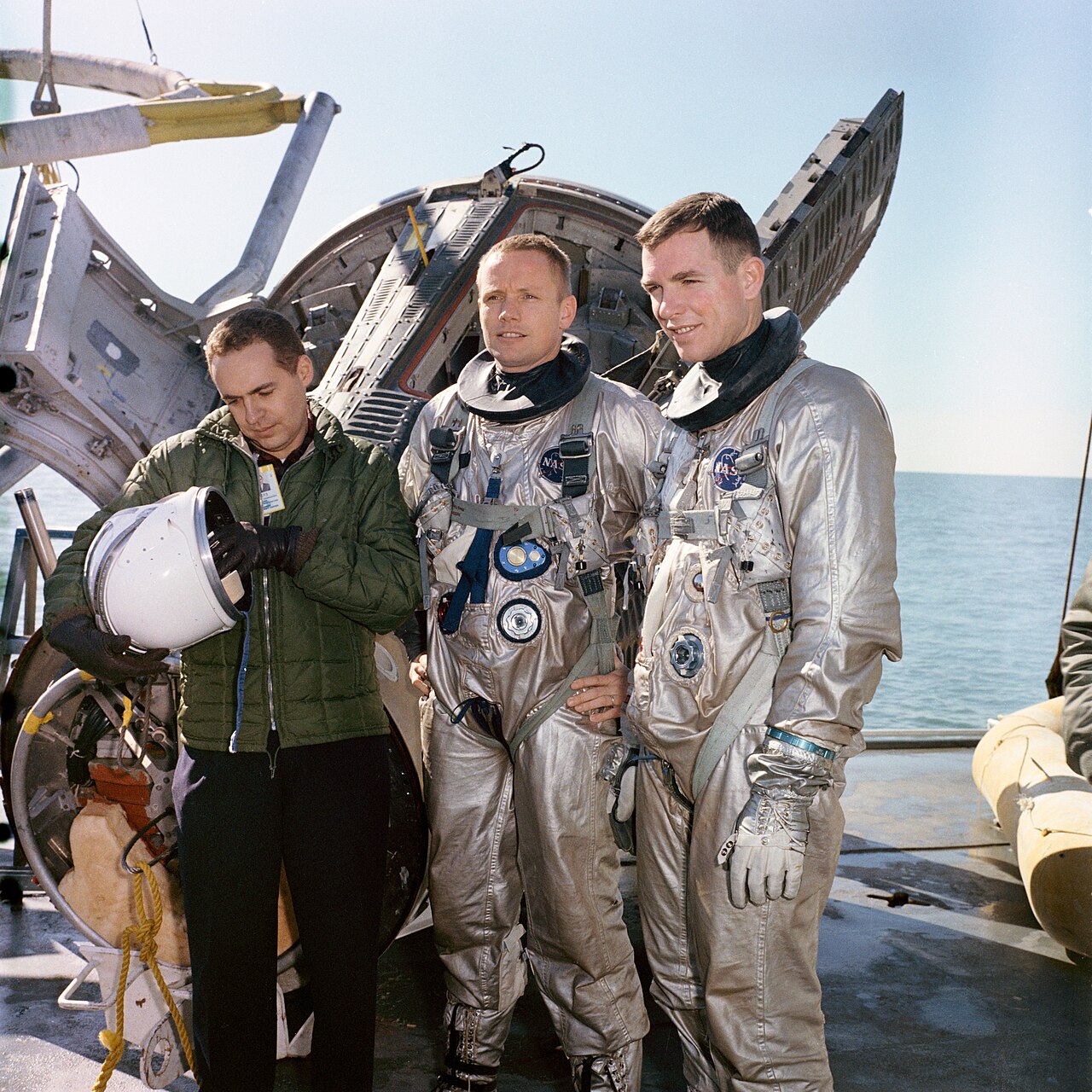
Worth the price of admission by itself: the Gemini 8 capsule, in which Neil Armstrong and David Scott nearly bought the space farm due to a malfunctioning thruster.

They survived, of course, and in fact Scott is still alive at 94. Besides Gemini 8, he flew on Apollo 9 and Apollo 15. Being seventh man to walk on the Moon doesn’t get you a museum, however; that’s reserved for being first. Fame is funny that way.

Neil Armstrong and David Scott. NASA public domain photo.

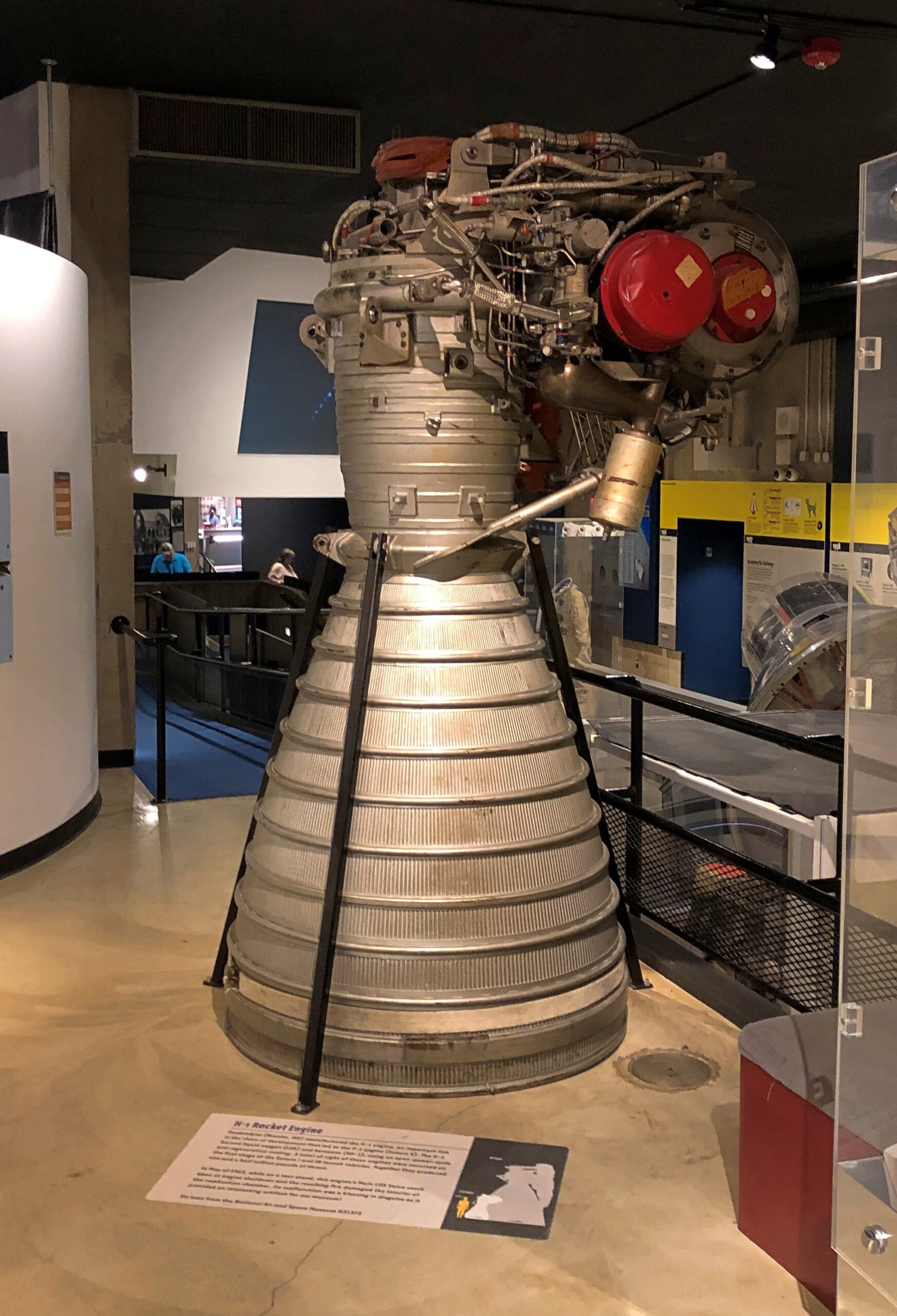
The museum isn’t large, but it does feature a number of good artifacts. The Smithsonian and the Kansas Cosmosphere shouldn’t have everything.

An H1 engine, which were used on Saturn 1 and Saturn 1B rockets.

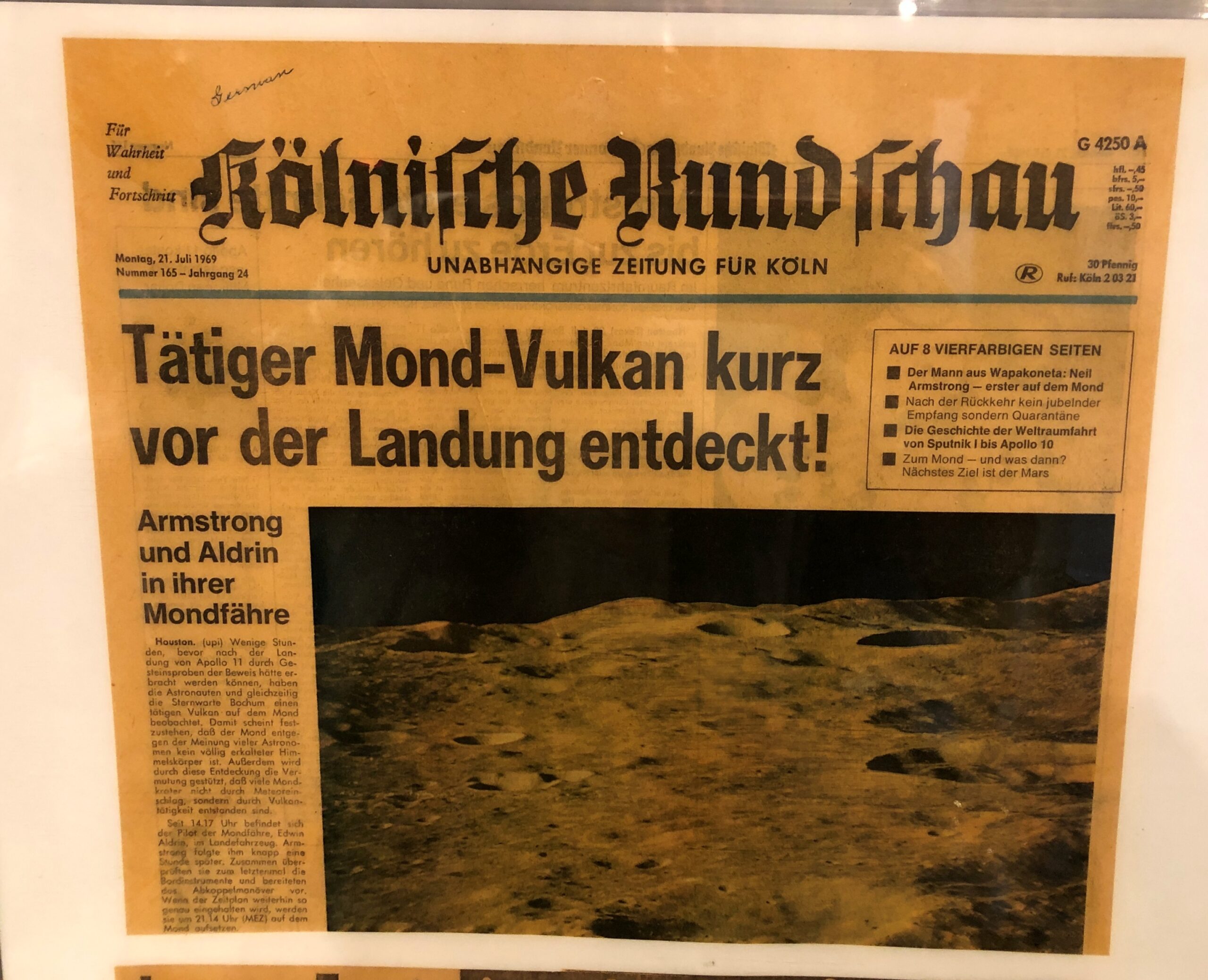
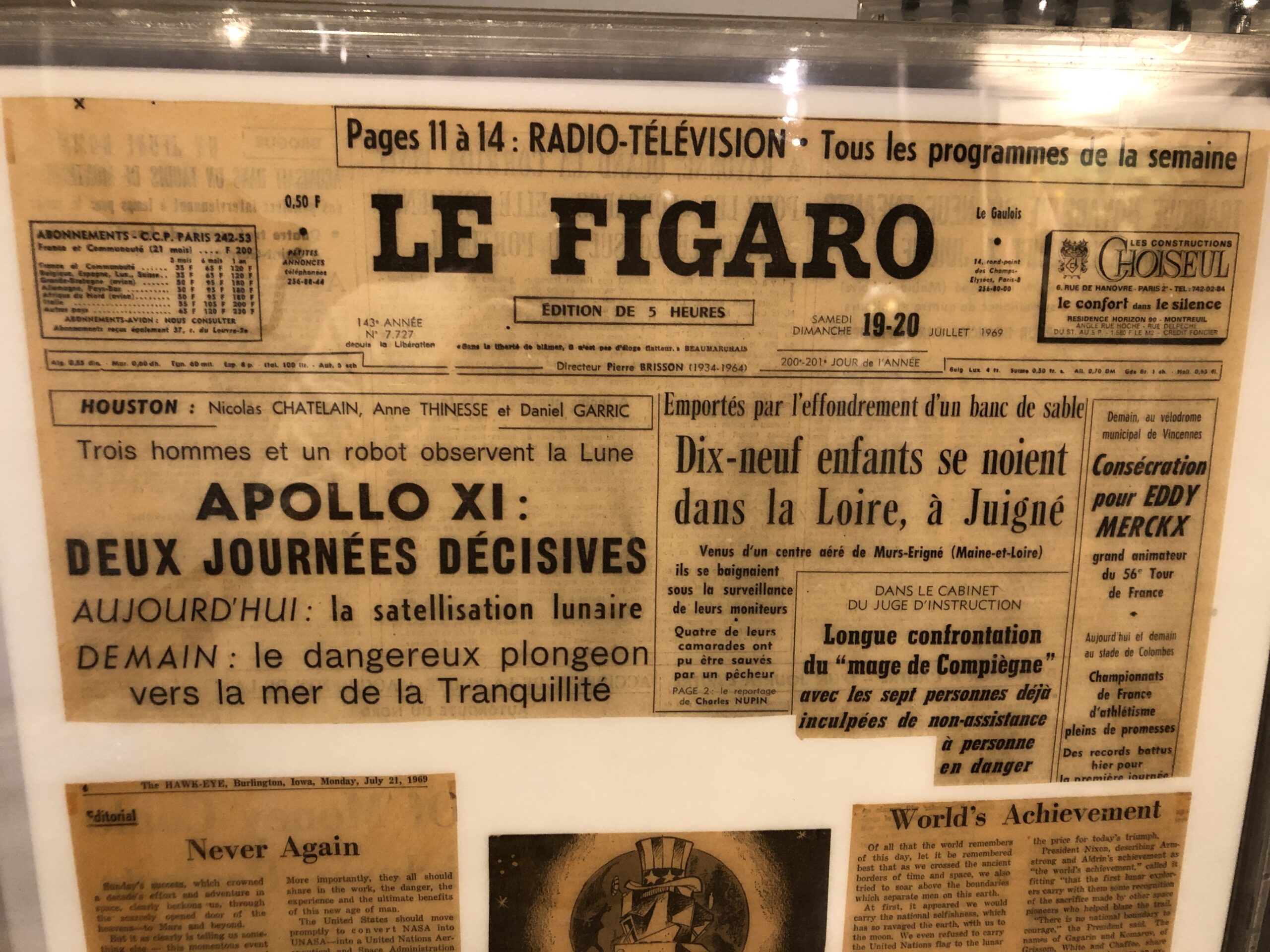
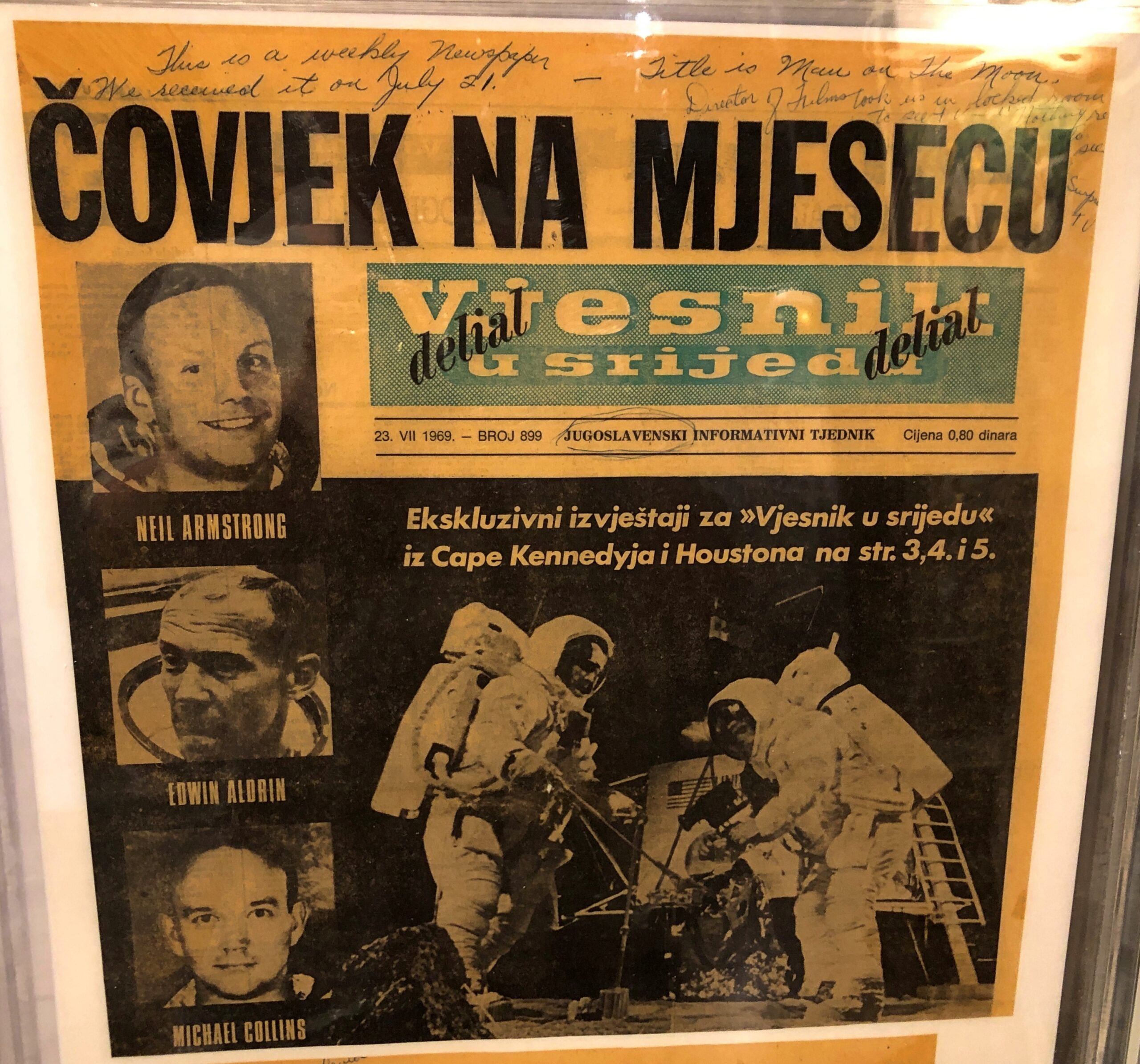
Newspapers from around the world covering the Apollo 11 landing.

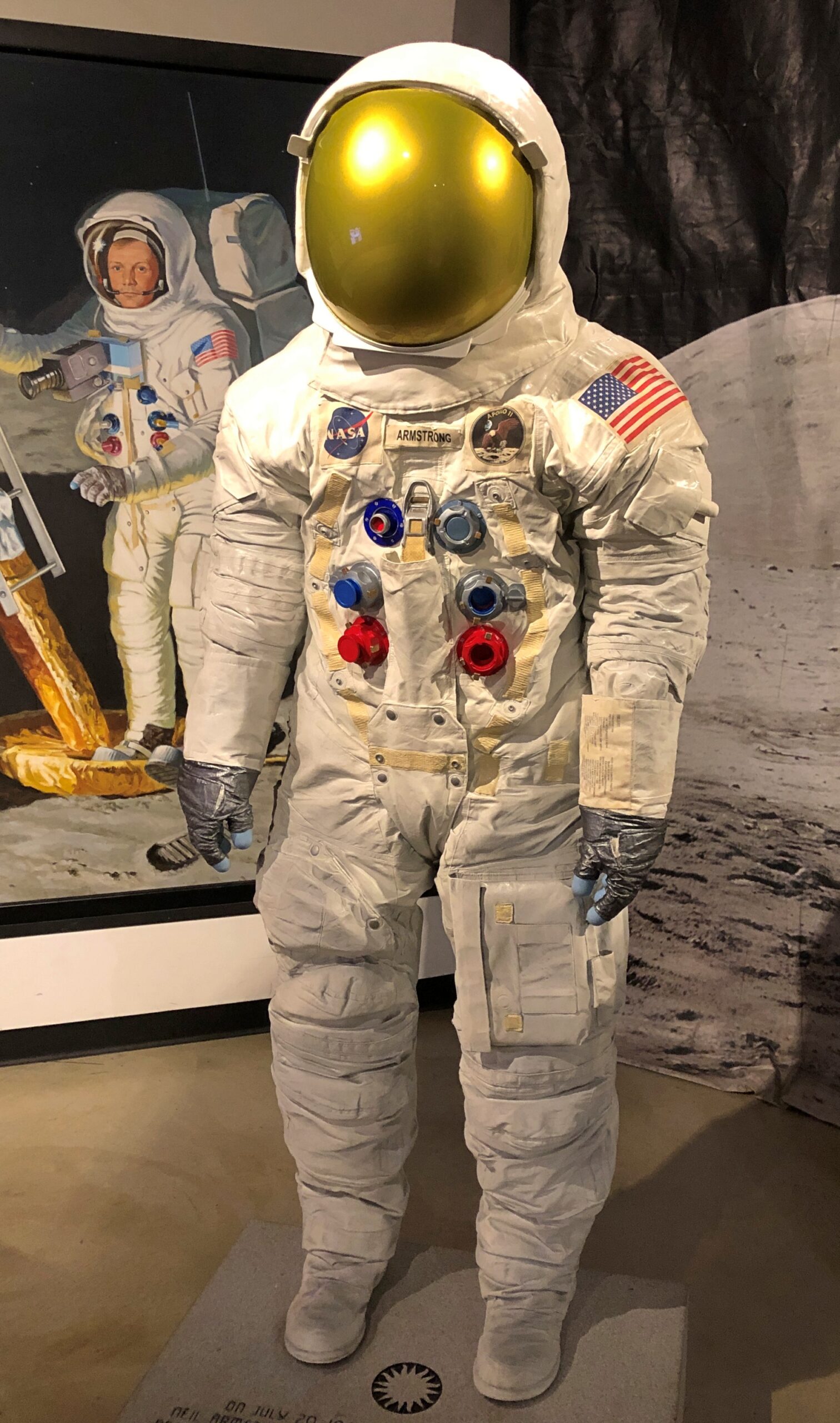
Some artwork. Looks like a spacesuit, but it’s a statue depicting Armstrong’s suit.

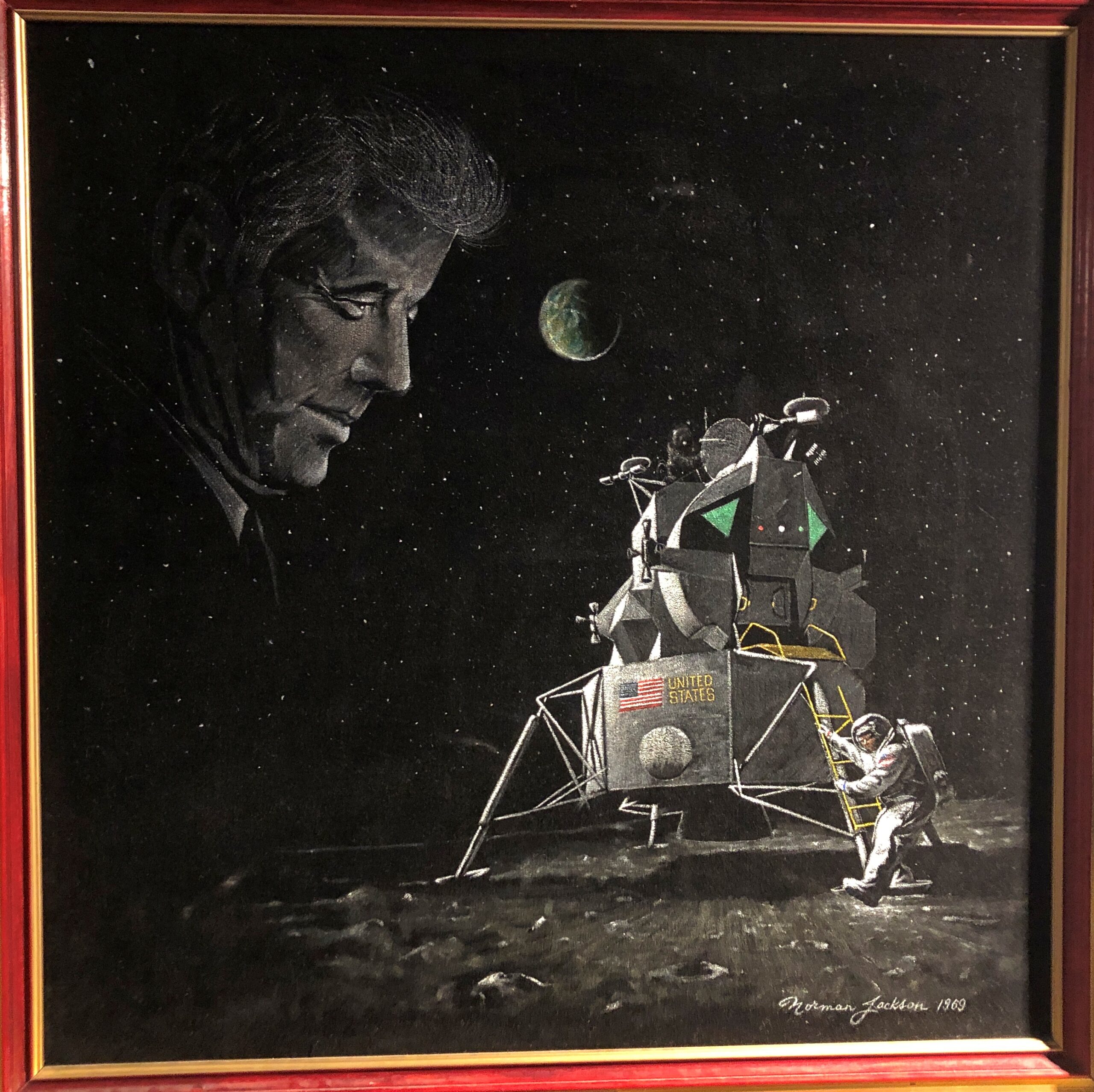
A painting from 1969.

It seems that the Armstrong and Aldrin didn’t report the alarming apparition of President Kennedy hovering over the lunar surface. Conspiracy theorists, take note.

Warren, Ohio

An example of nonlinear tourism, a term I just made up, is my visit to Warren, Ohio. Linear tourism, another term I just (logically) made up, is picking a destination and sticking to it. That isn’t a bad approach, some of the time. But at other times, one follows an urge to go that next place on the map, to see what you can see. Nonlinear tourism has an element of spontaneity, obviously, and it probably isn’t the best way to plan a long trip.

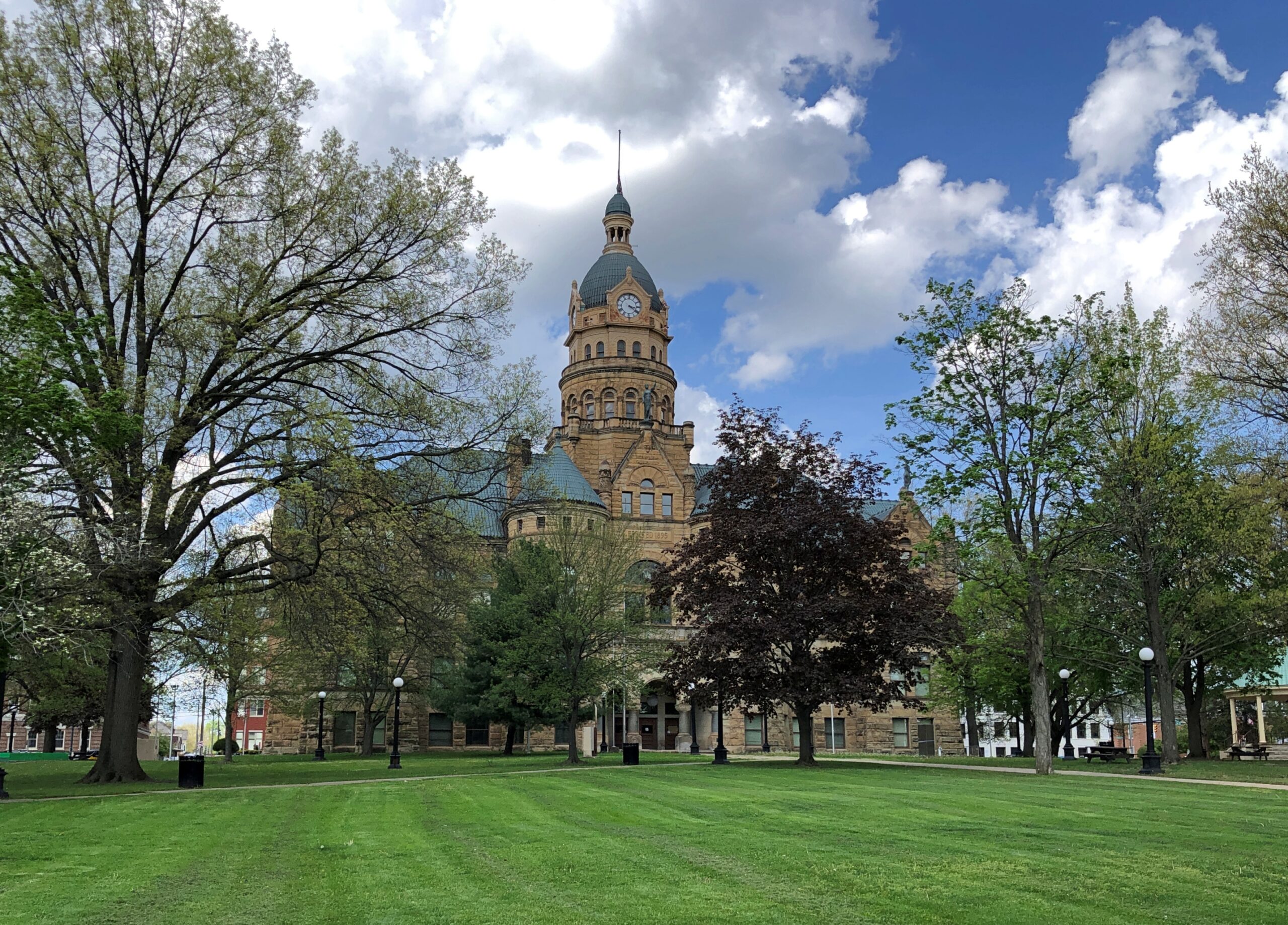
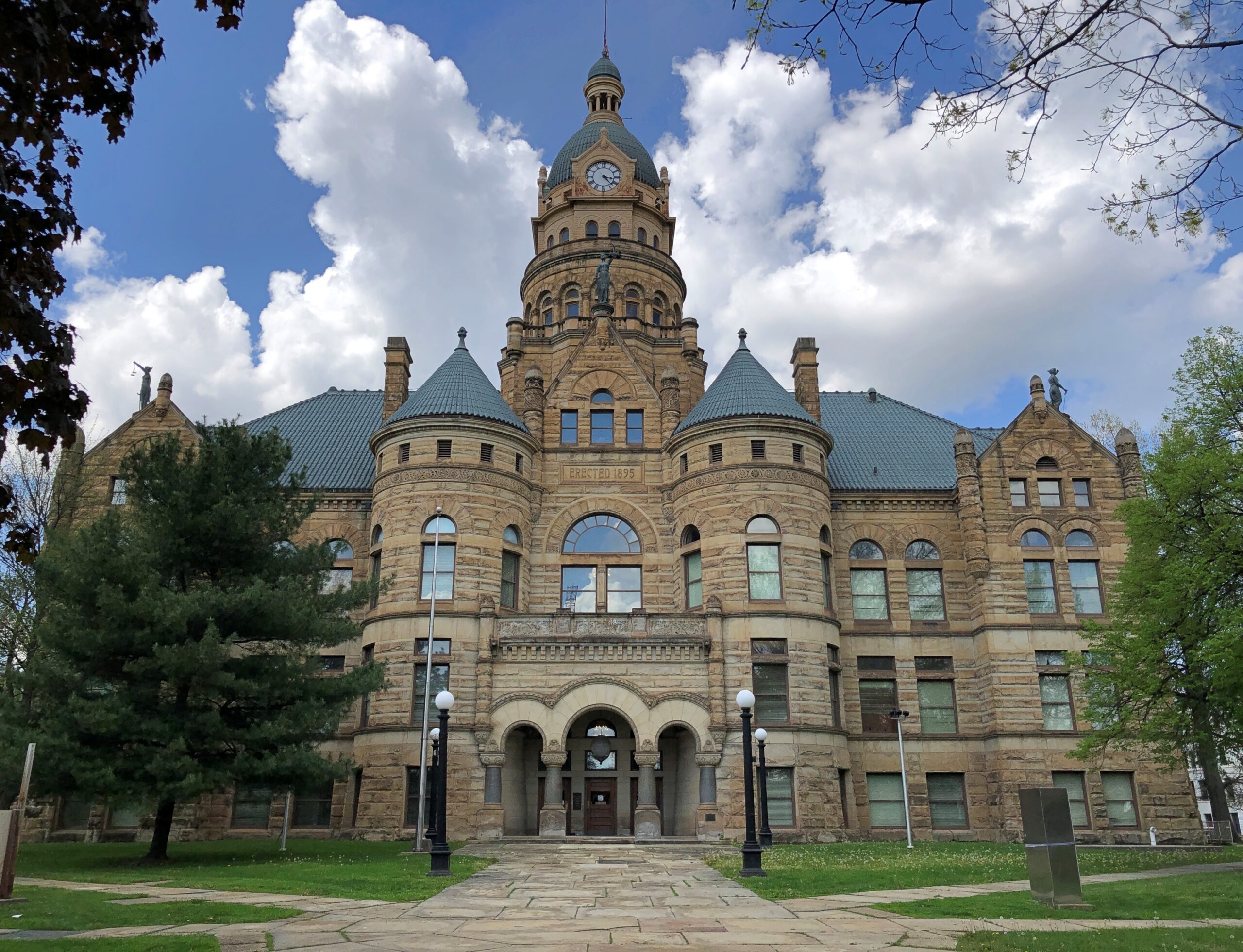
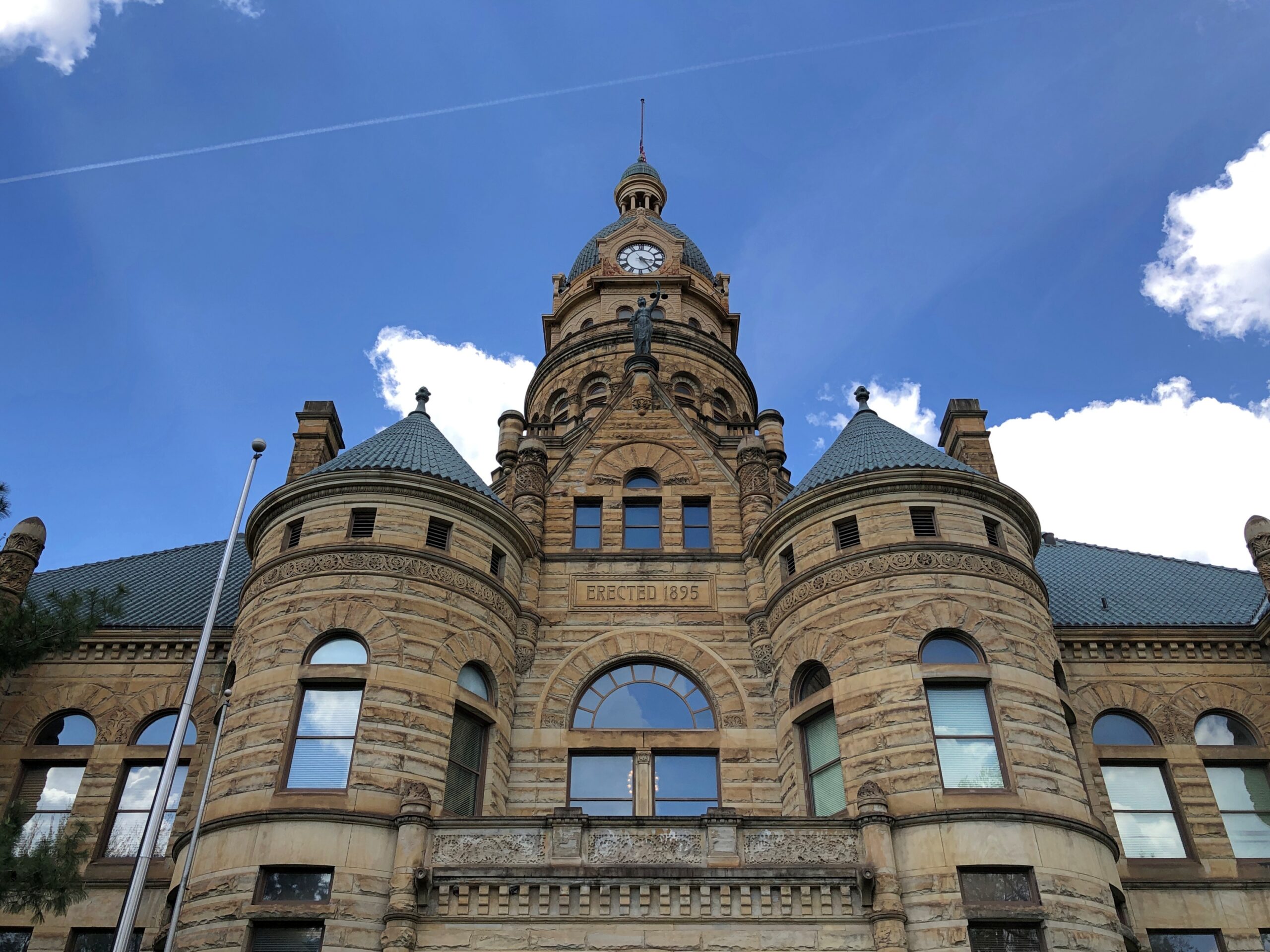
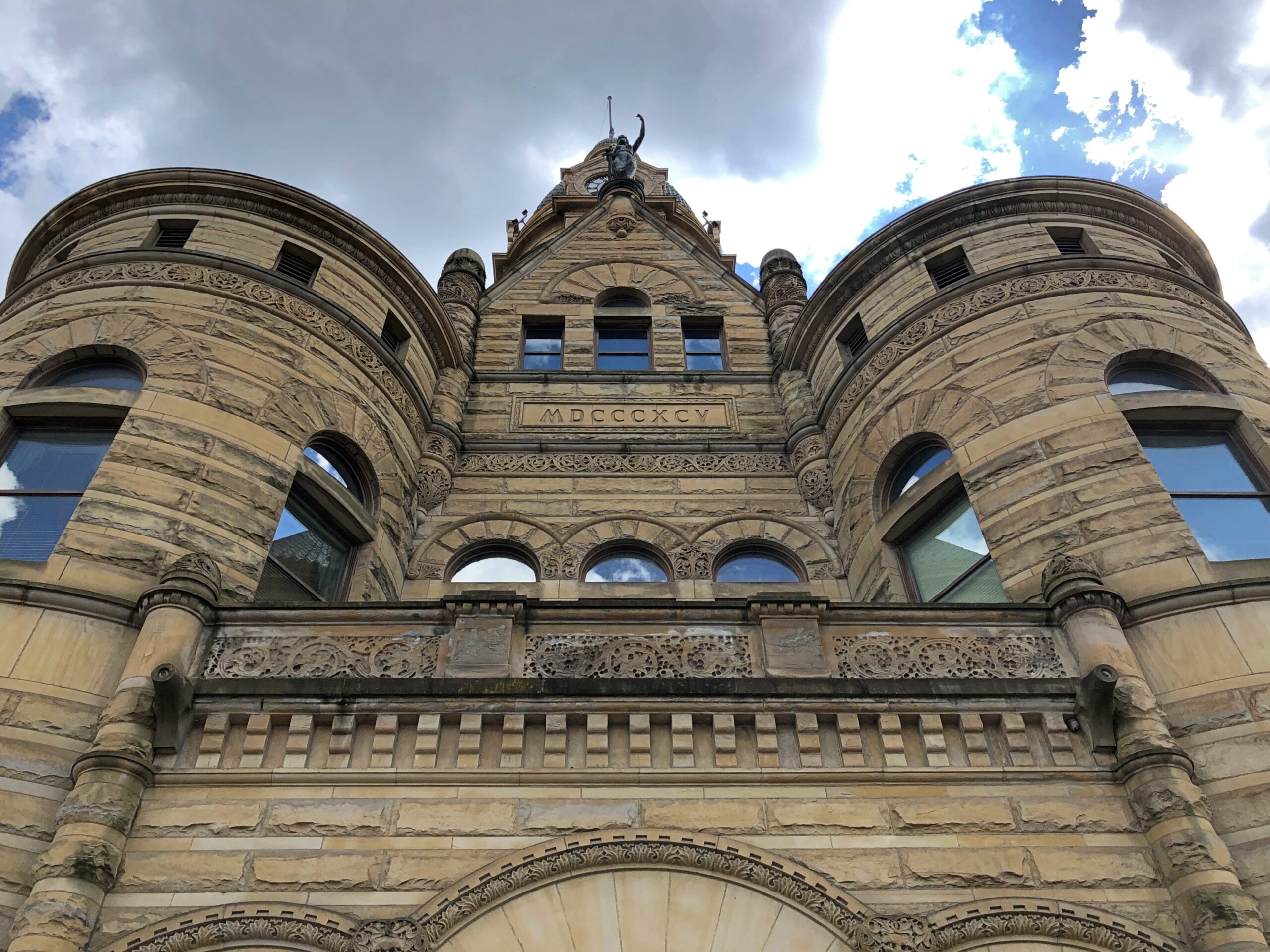
Sometimes the rewards are worth the slight meander. There I was in Niles, done with my visit to McKinley sites, and I thought: Warren’s just up the road. So I went. Warren is the seat of Trumbull County, and a prosperous place 100-plus years ago – Packard got its start there, for one thing – and so the county could afford a grand courthouse in 1895. That was worth the side trip right there.

Front and back.

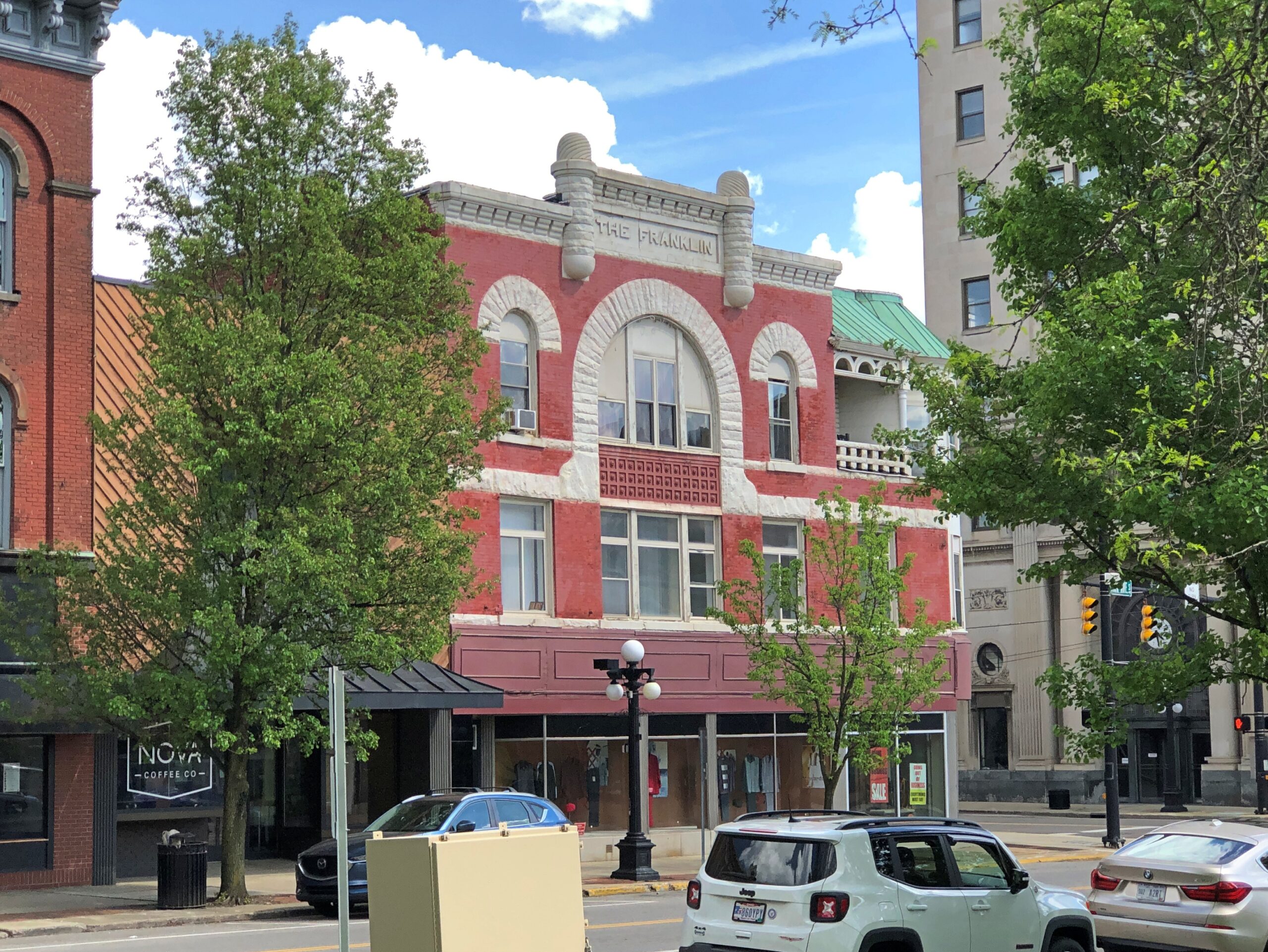
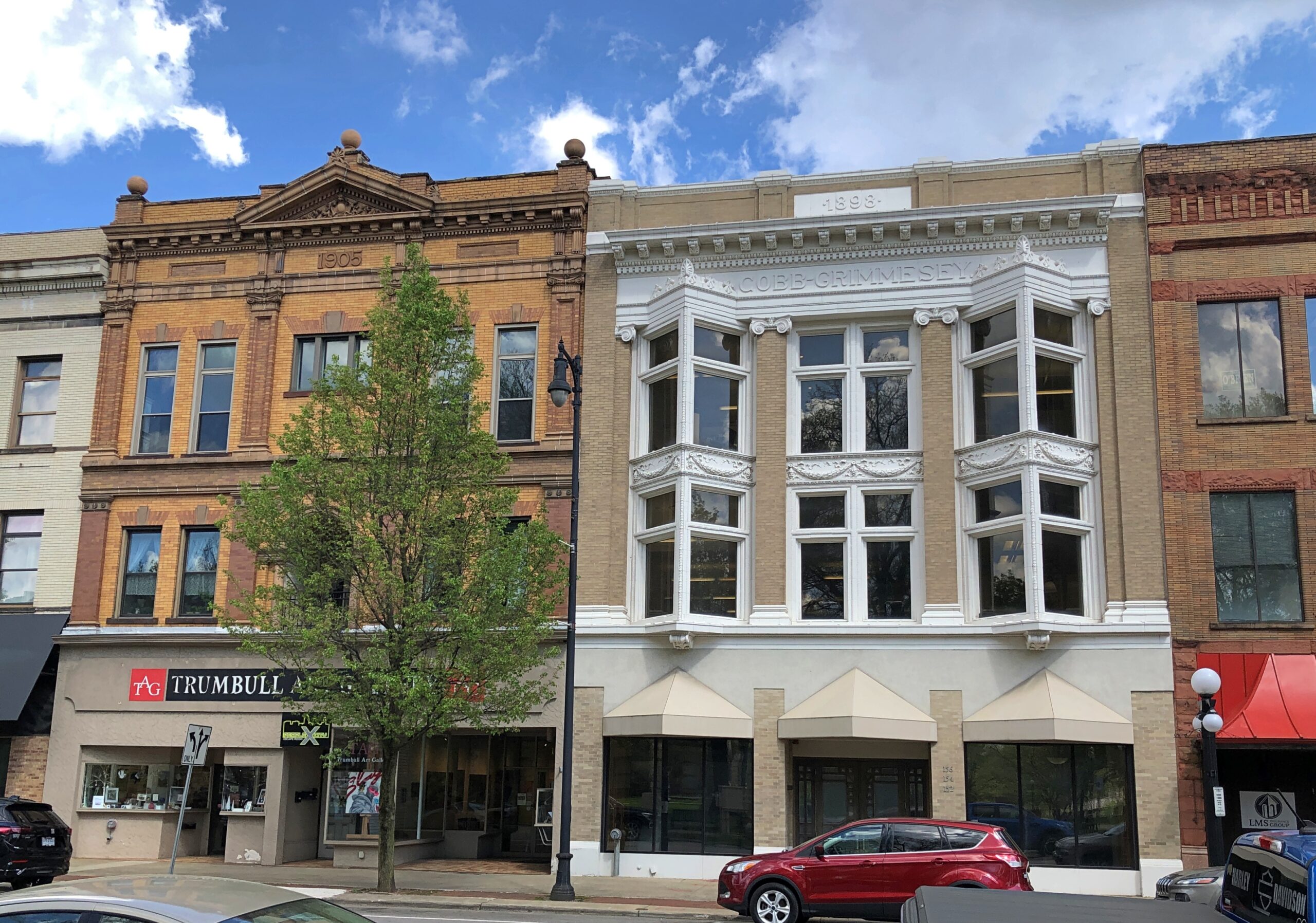
The buildings ringing the courthouse were also worth a look. Warren might not be the industrial hub it once was (though Ohio is making a comeback in that regard), but it isn’t in bad shape, from the looks of things.

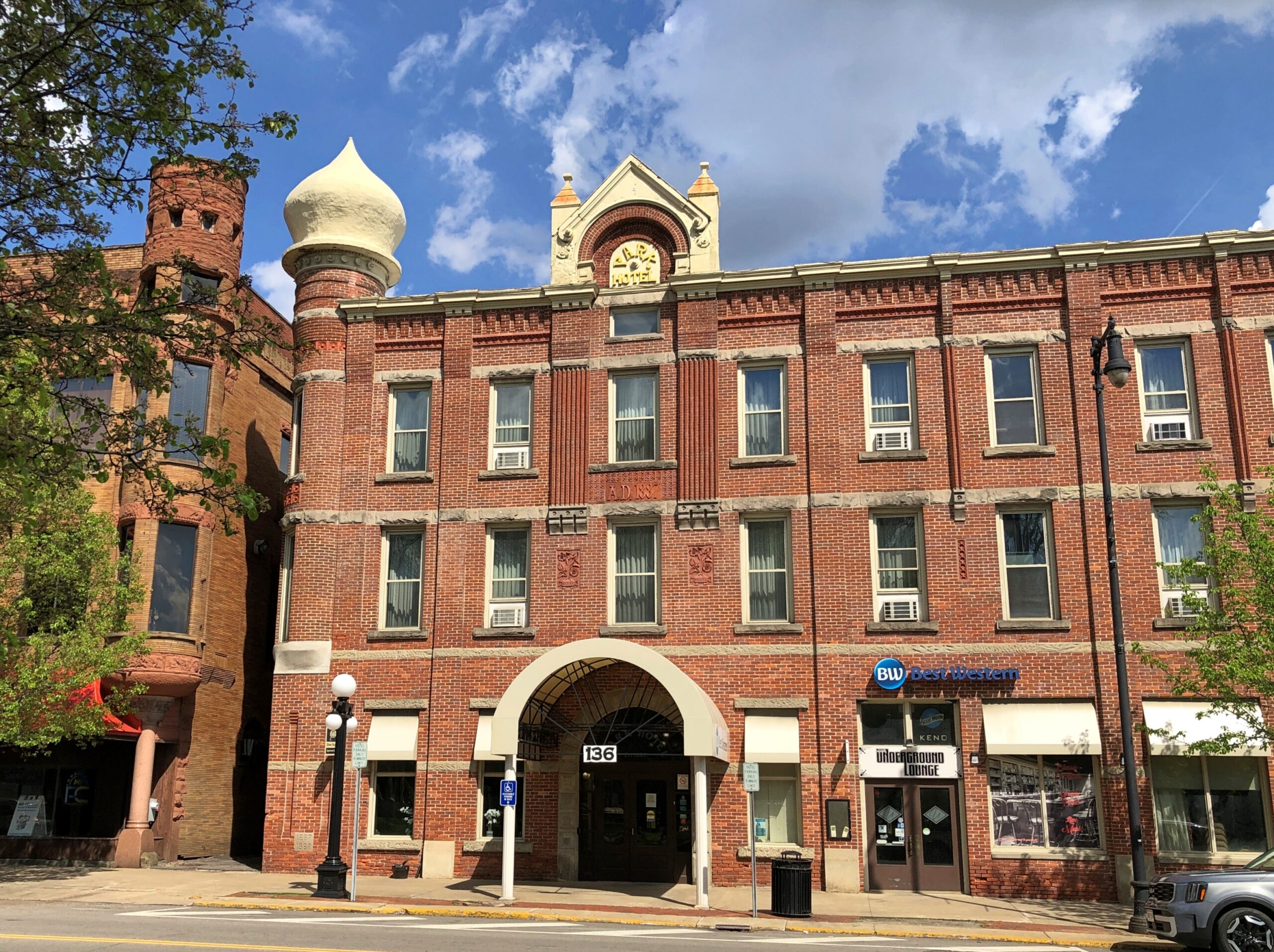
That’s what commercial buildings need more of: onion domes.

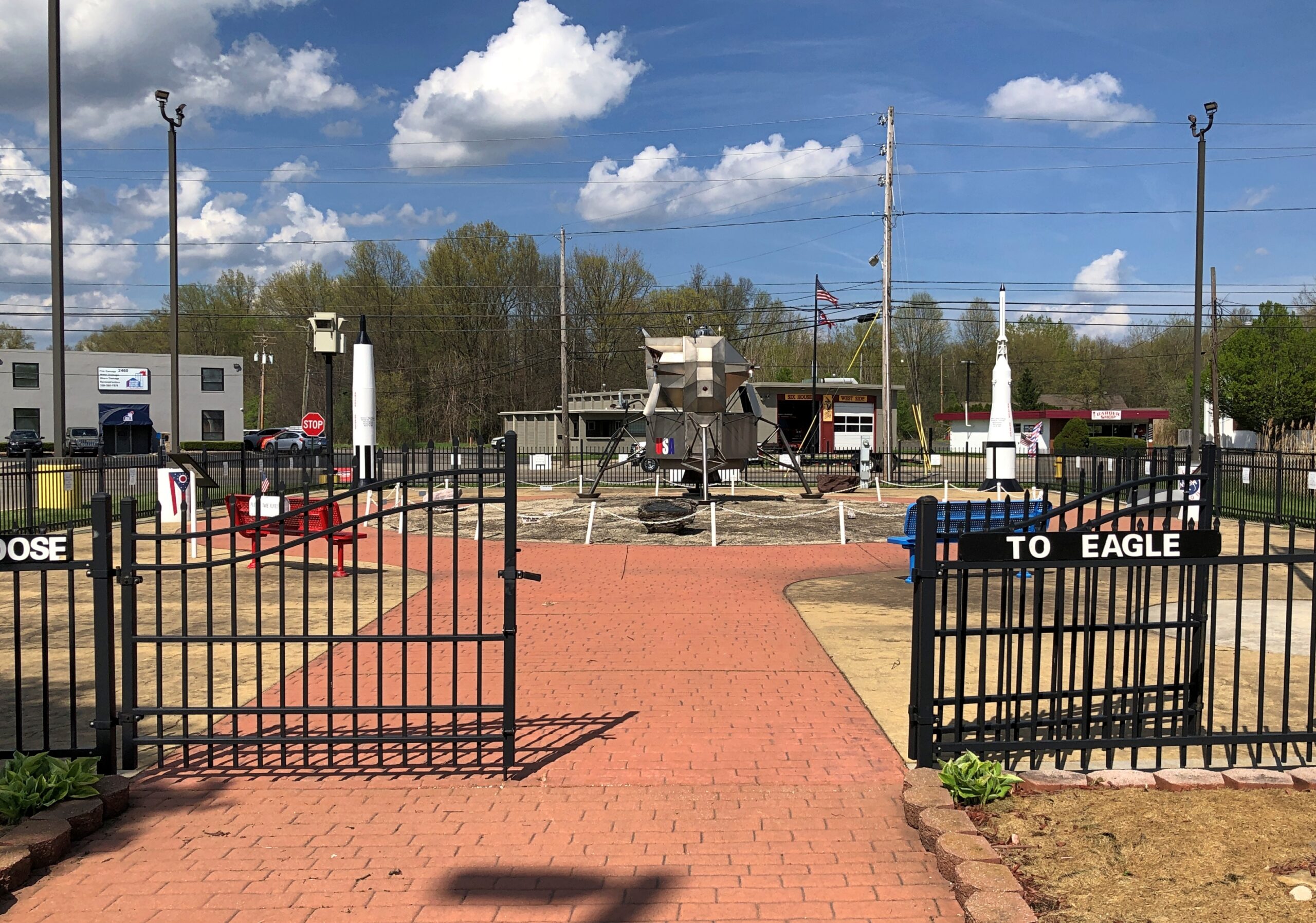
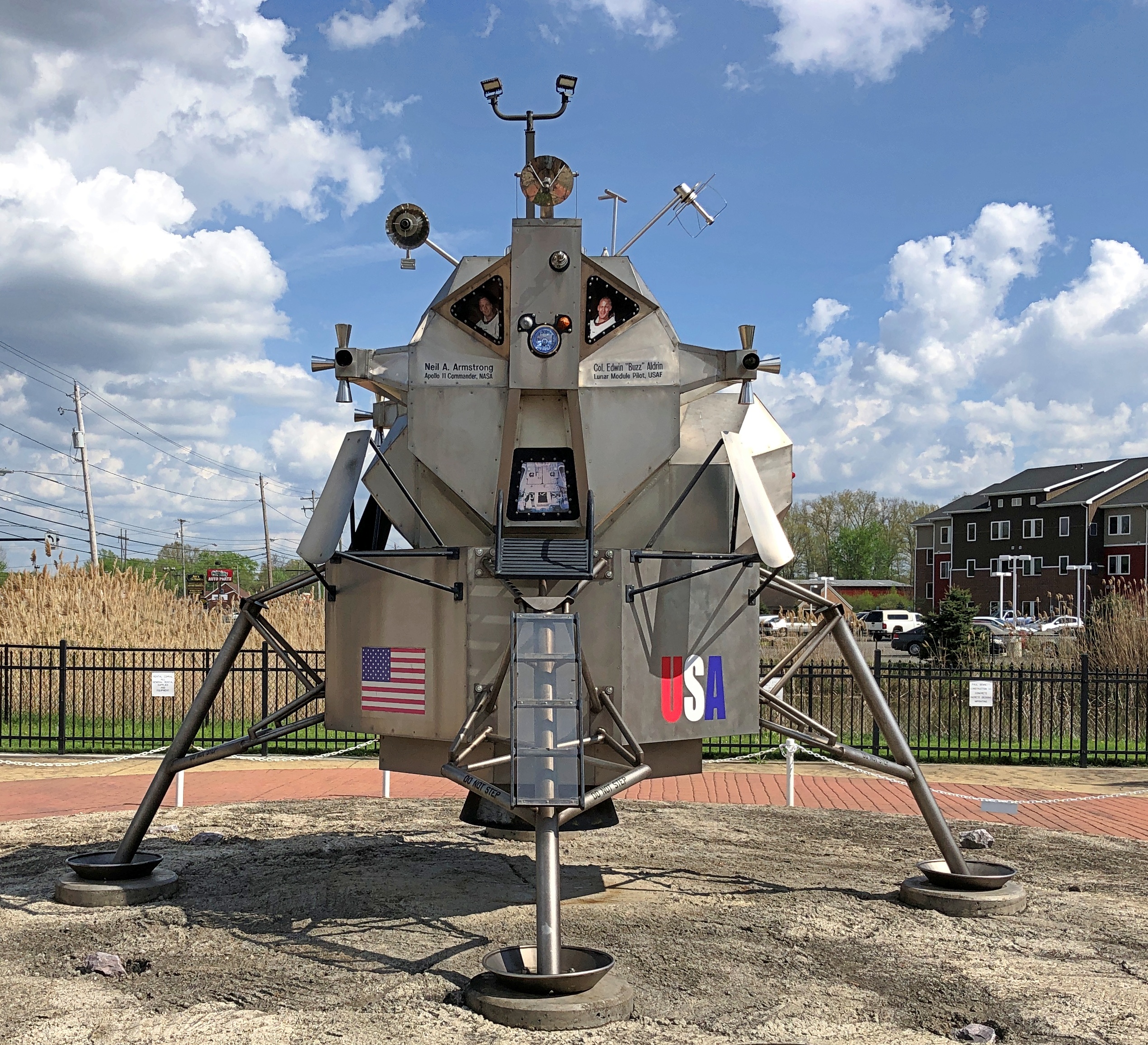
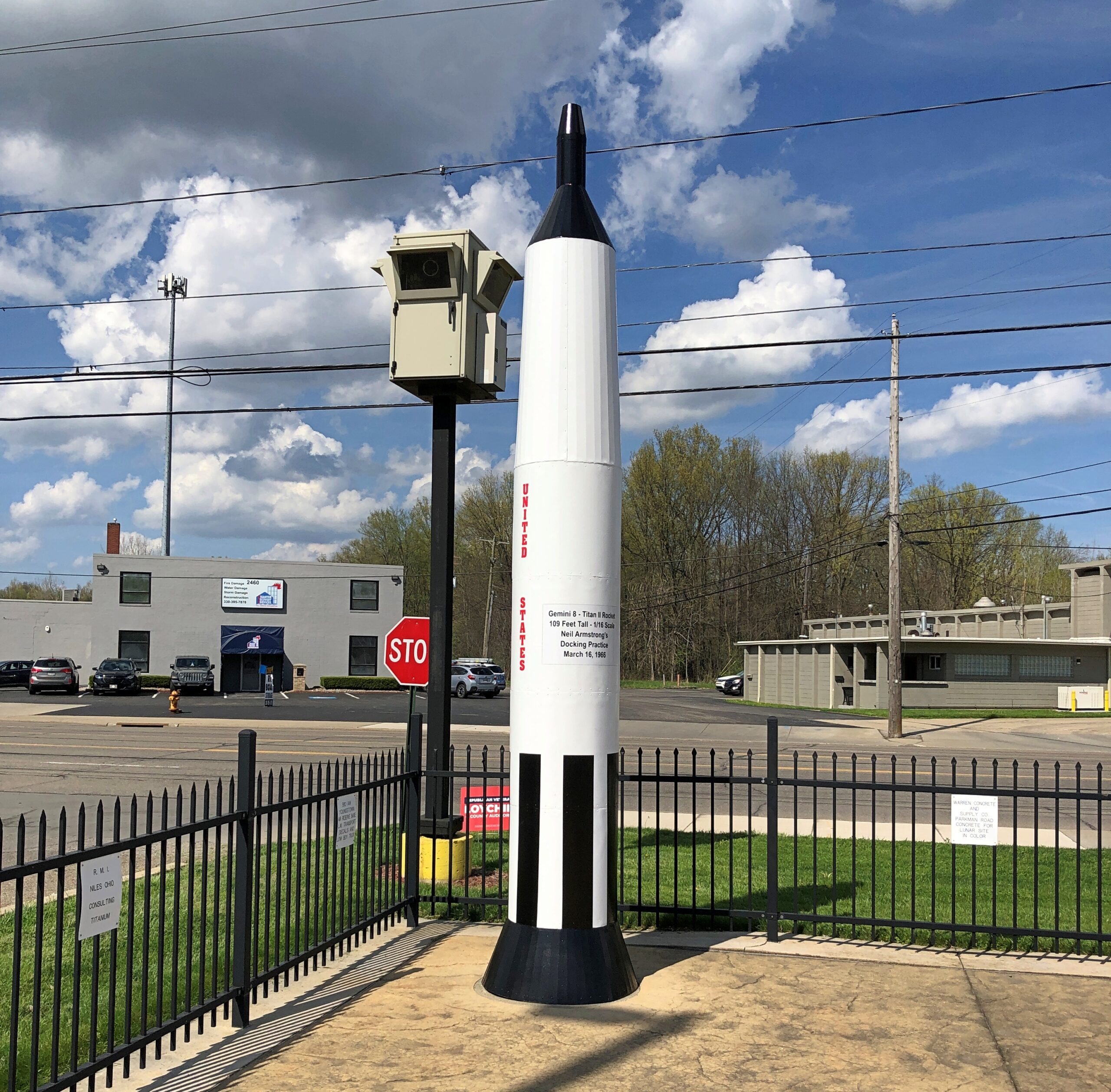
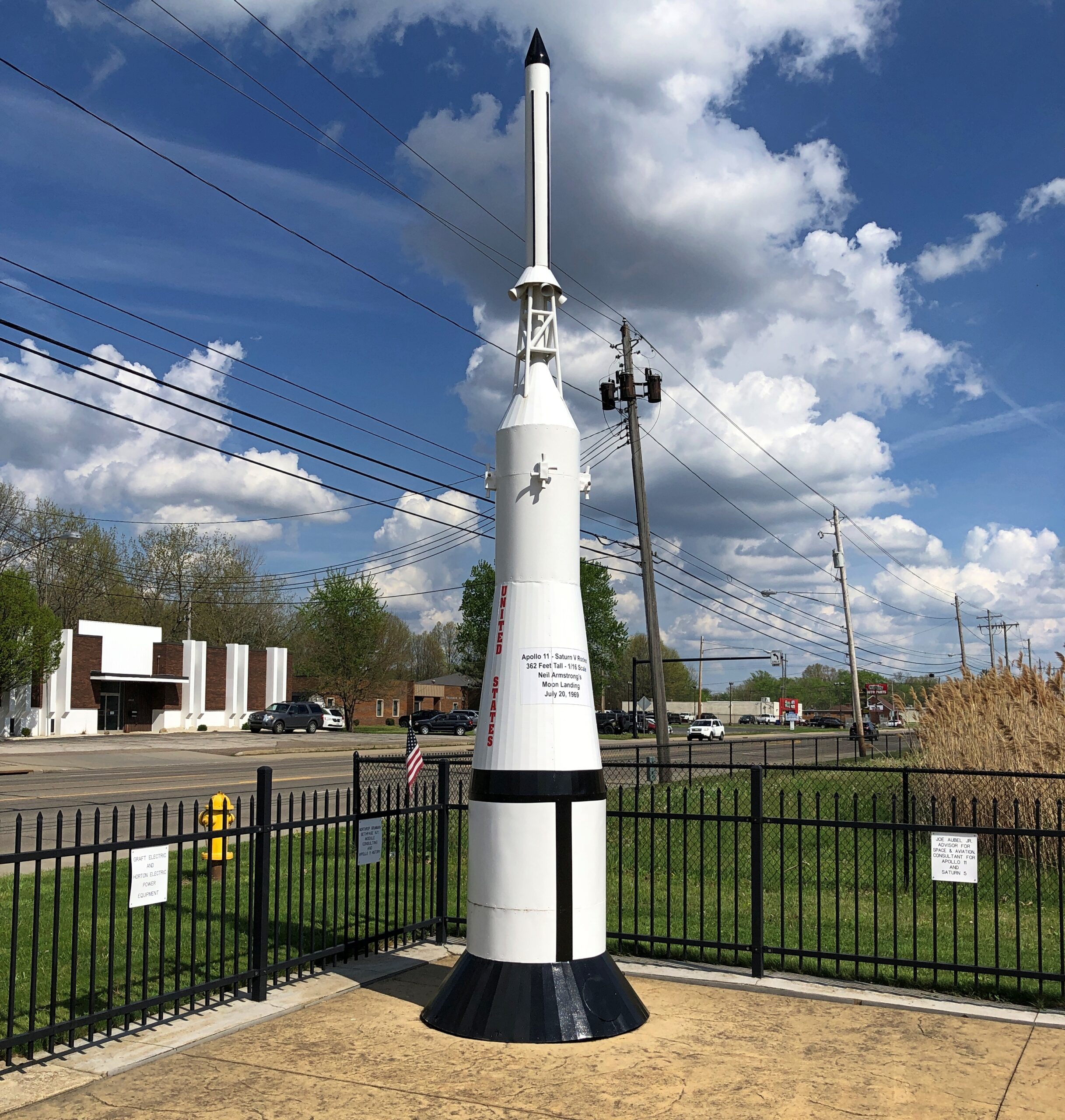
One more place in Warren before I headed west: a replica lunar module on a mock lunar surface.

It’s called “First Flight Lunar Module.” Its web site says: “Neil Armstrong and his family made their home in Warren, Ohio, for a time when he was a young boy. An interest in flying developed at an early age and on July 26, 1936, at the age of 6, young Neil and his father, Stephen, embarked on his first flight in a Ford Tri-Motor airplane – a Tin Goose – from Warren Airways on Parkman Road, now the site of the Apollo 11 First Flight Lunar Module…”

Replicas of Gemini 8 and the Apollo 11 Command/Service Module are also at hand. (And the Escape Tower and part of the third stage, too.)

“Neil’s achievements and ties to the local community inspired retired area photographer Pete Perich’s dream to create a memorial honoring Armstrong. Through the vision of Pete’s daughter, Linda Carpenter, and the technical assistance of Lisa Goetsch, the long-time dream began to become a reality in the summer of 2001.”

Cool. Another benefit of nonlinear tourism for me.

The National McKinley Birthplace Memorial

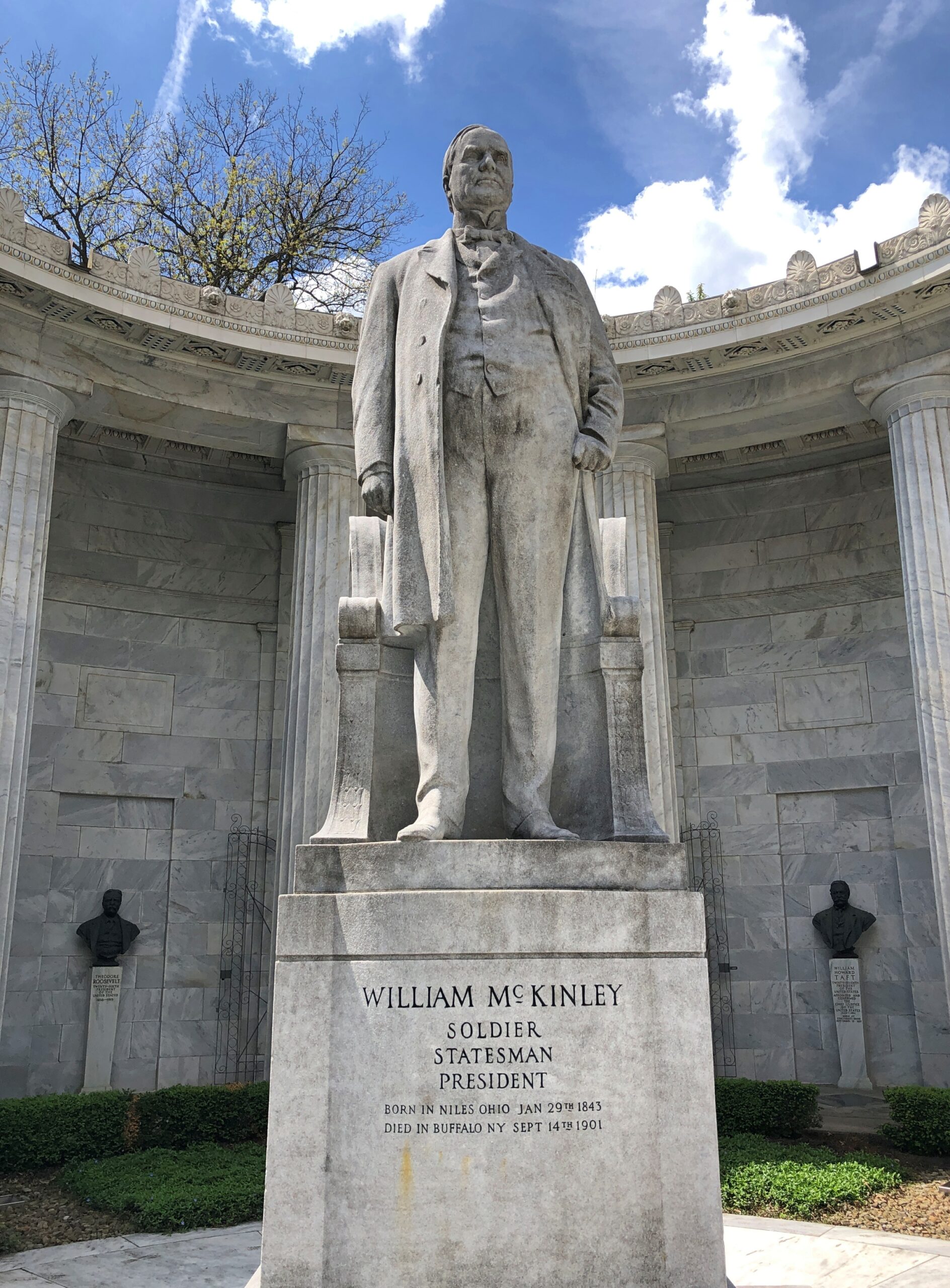
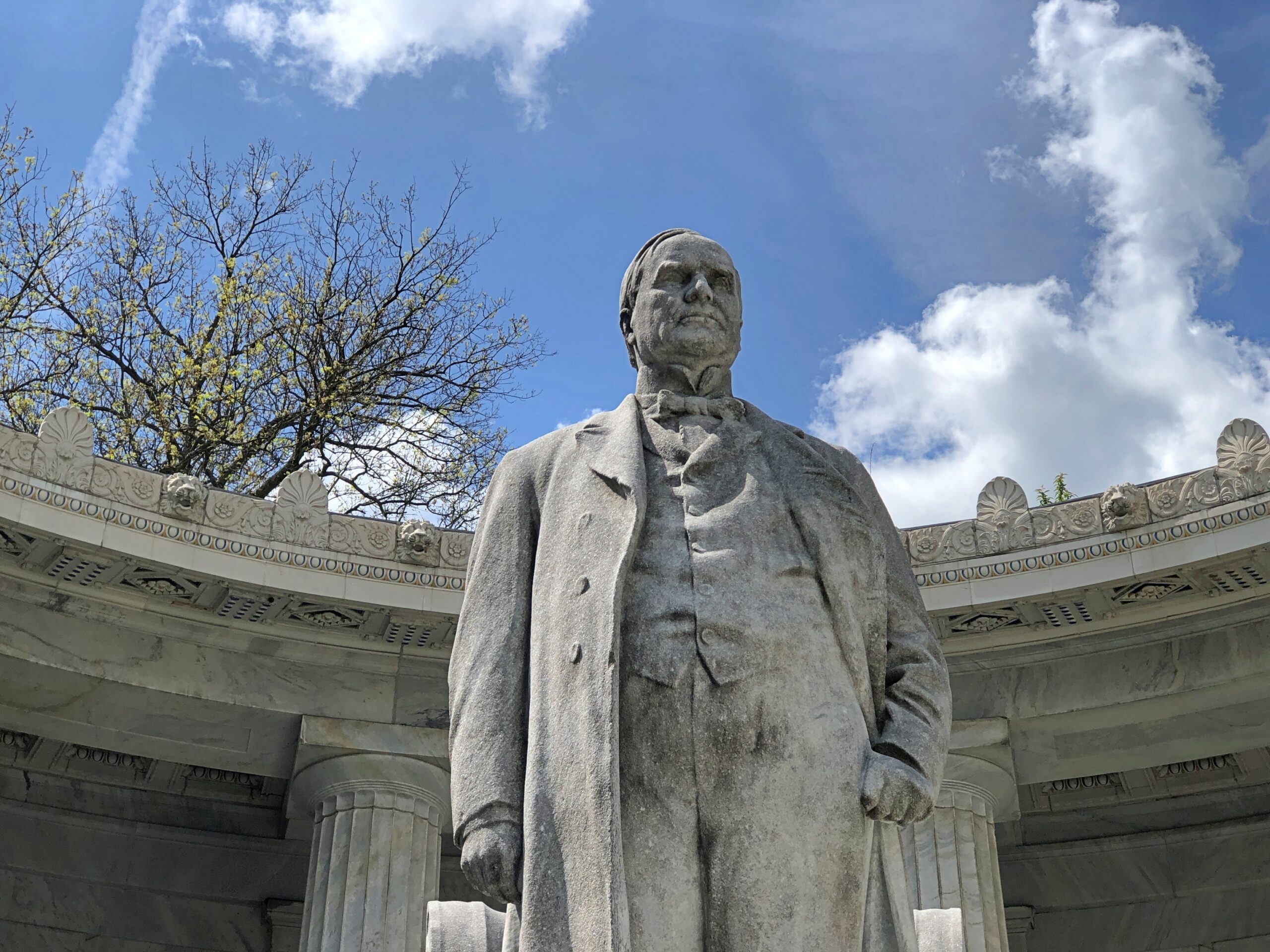
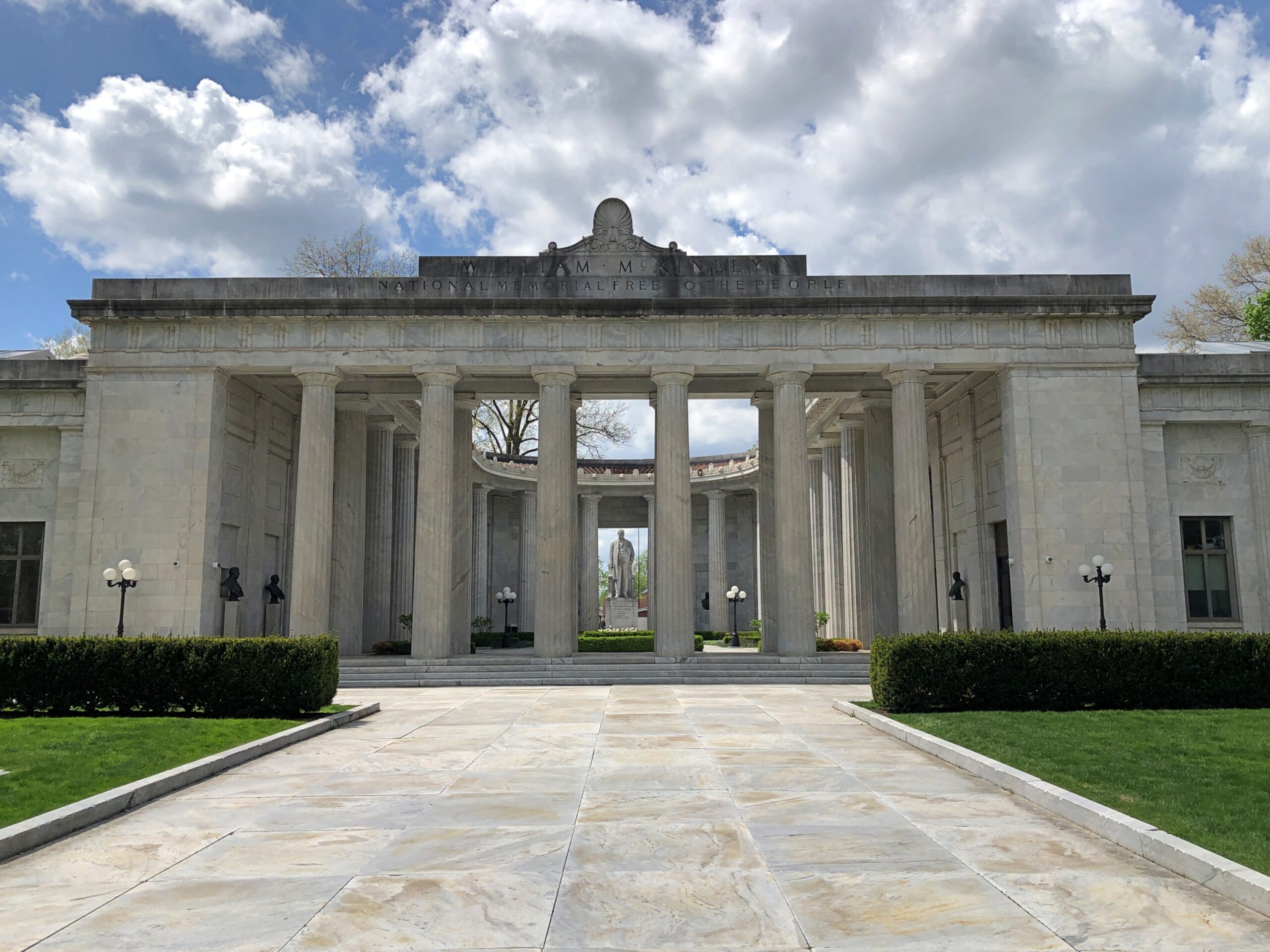
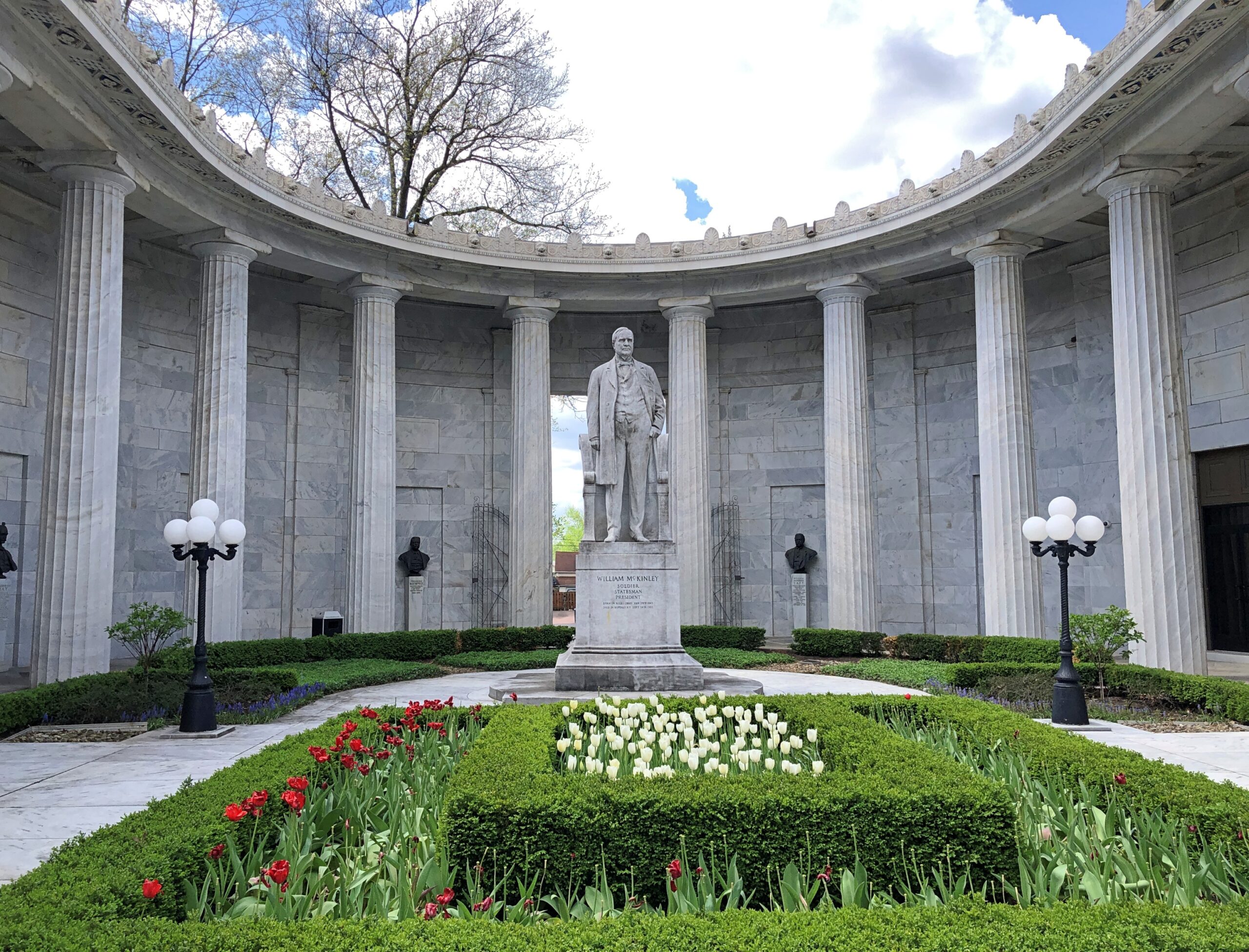
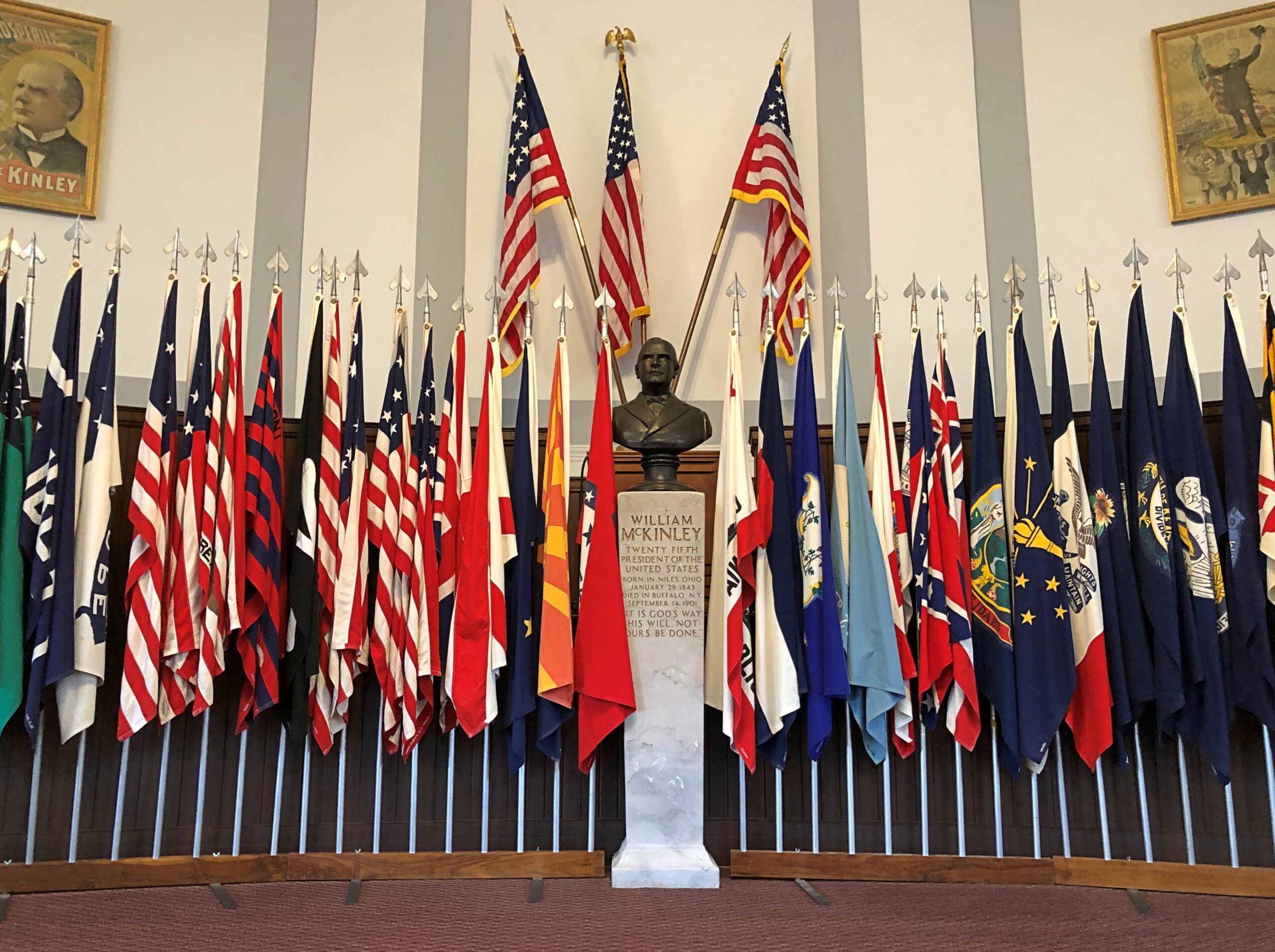
Recently in Niles, Ohio, I had an encounter with one of the four assassinated presidents. If you go to the right place in that town (pop. 18,400), you can’t miss him.

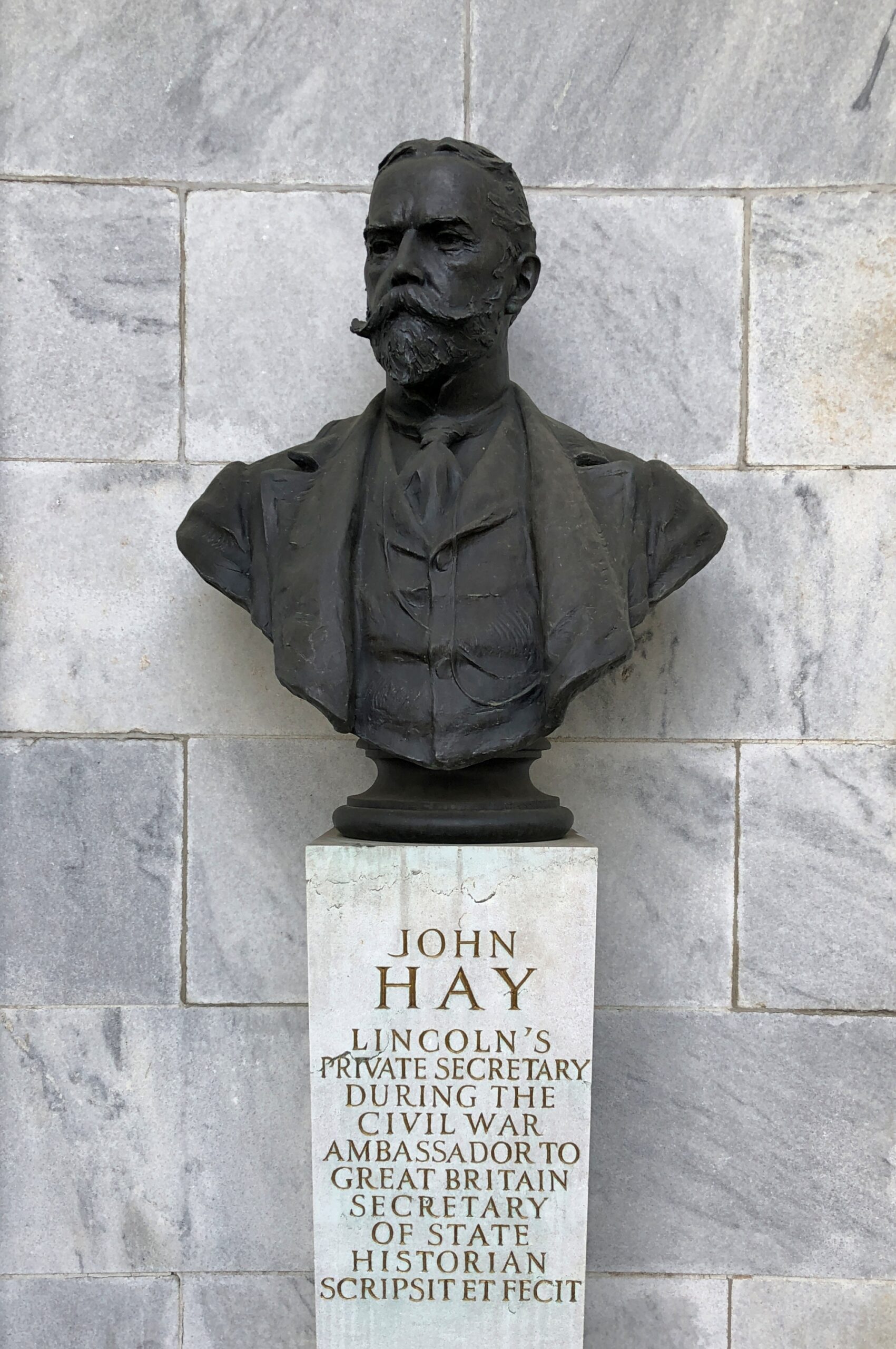
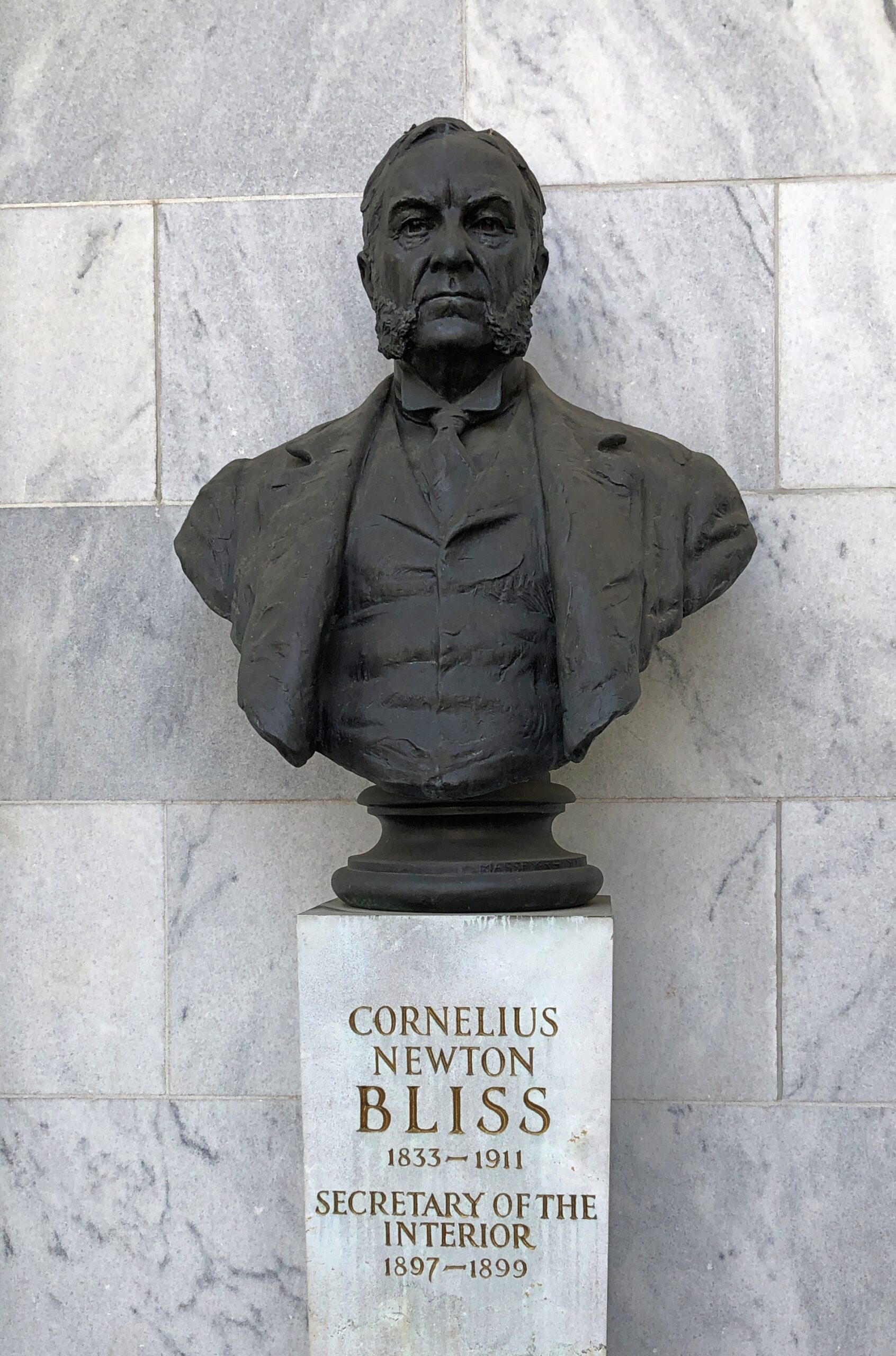
Not just him either. Note the busts surrounding President McKinley, who are men associated with him in one way or another. Hay I knew; Bliss I had to look up.

The most direct route between Punxsutawney, Pa. and Lima, Ohio, passes pretty close to Niles. I had a little extra time, by design, on the second-to-last day of my recent trip. Niles happens to be the birthplace of William McKinley, and in our time, home of the National McKinley Birthplace Memorial and the McKinley Birthplace Home and Research Center – that’s two entities, a block apart.

The Birthplace Memorial is imposing and grand, another edifice designed by McKim, Mead & White.

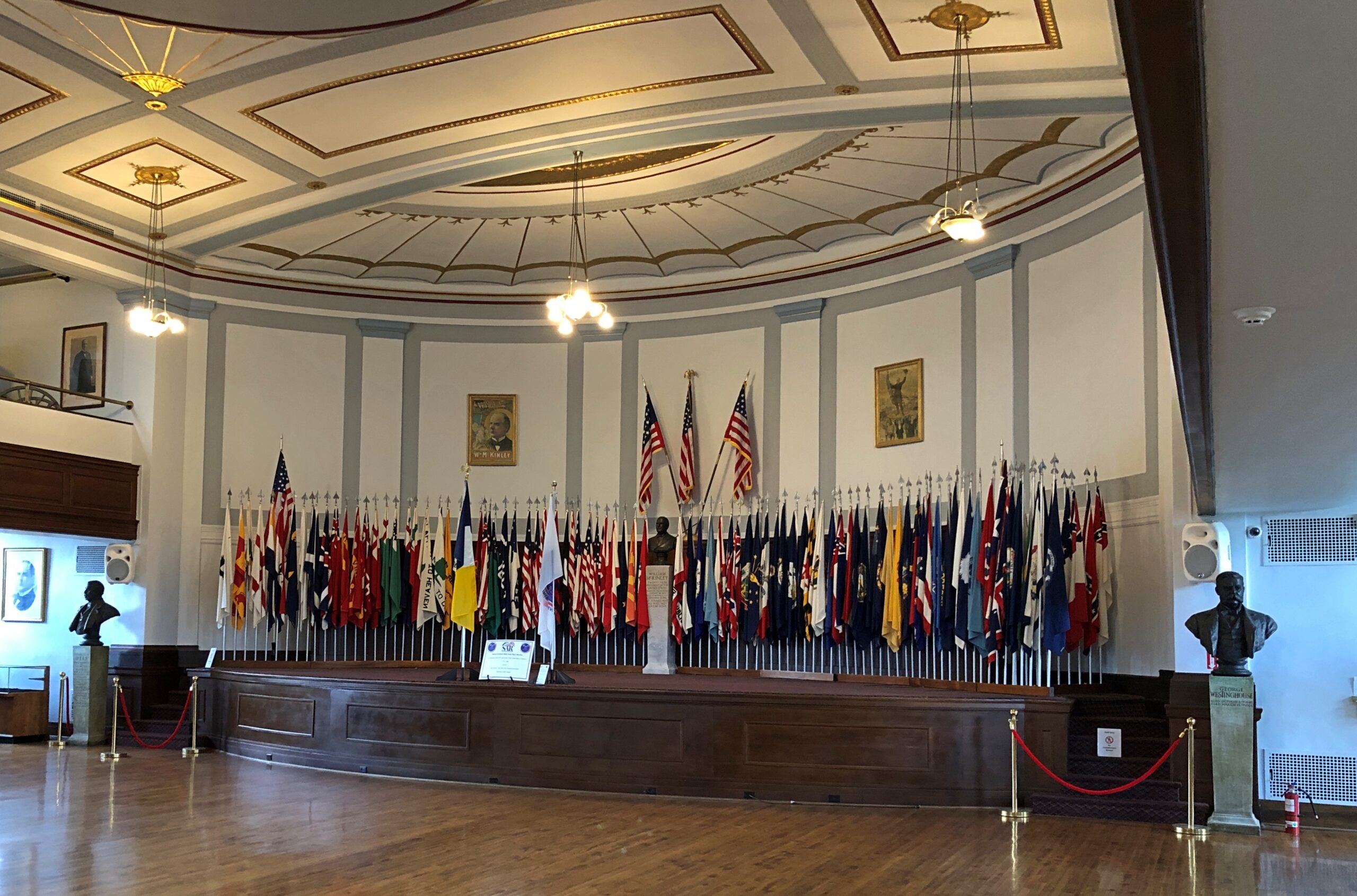
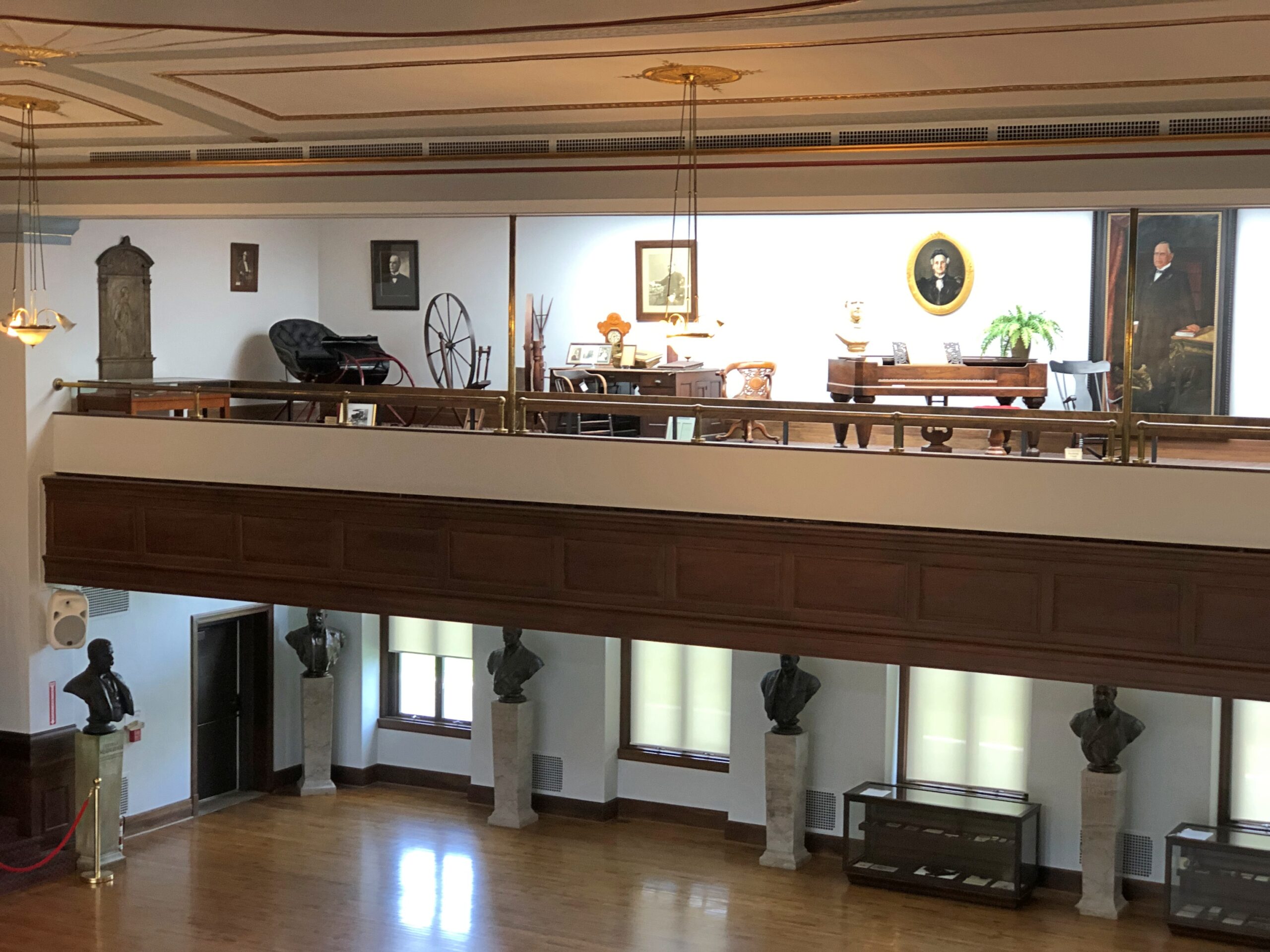
The memorial has two wings, one a public library, the other an auditorium sporting McKinley artifacts, and a collection of flags.

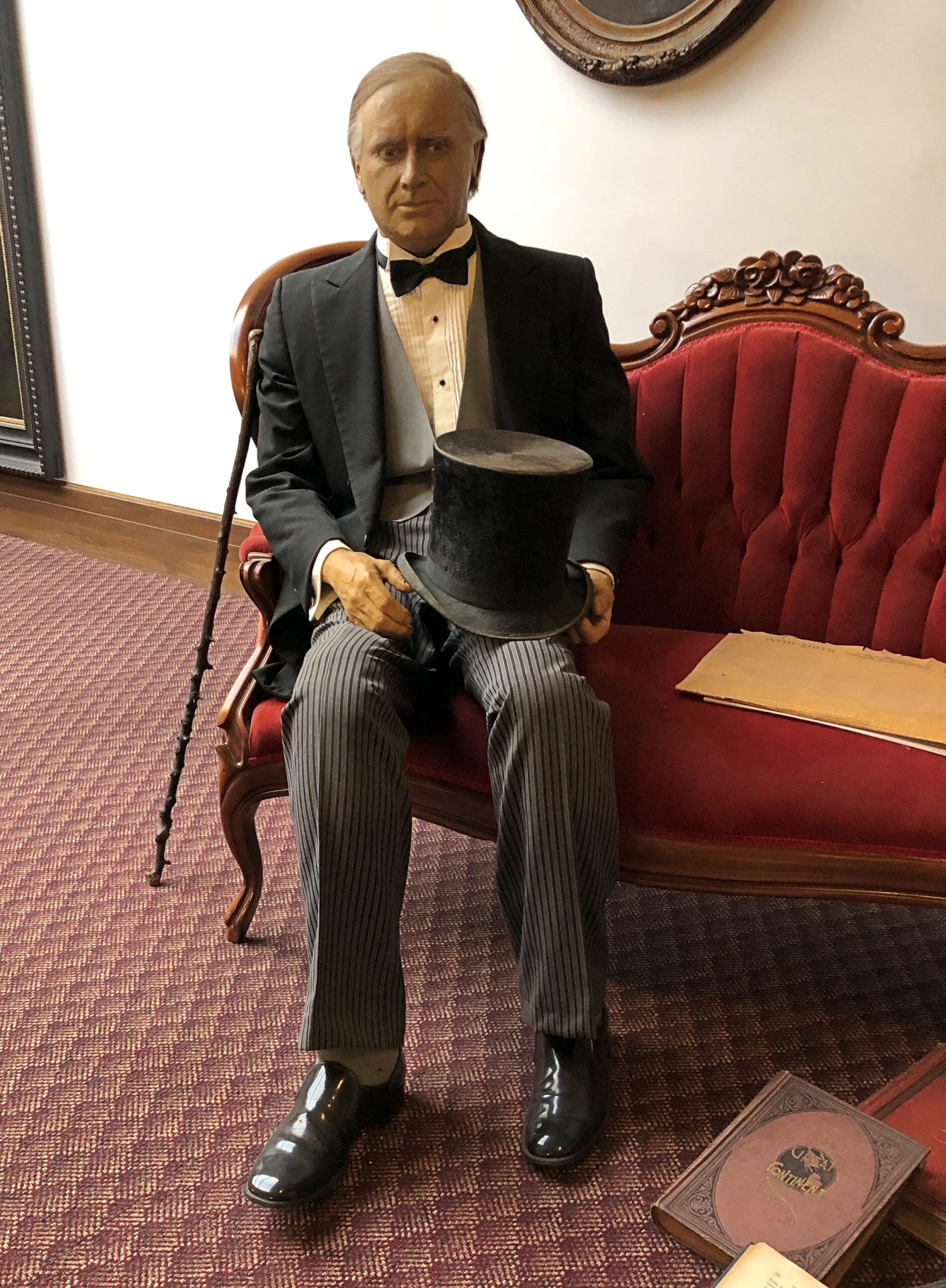
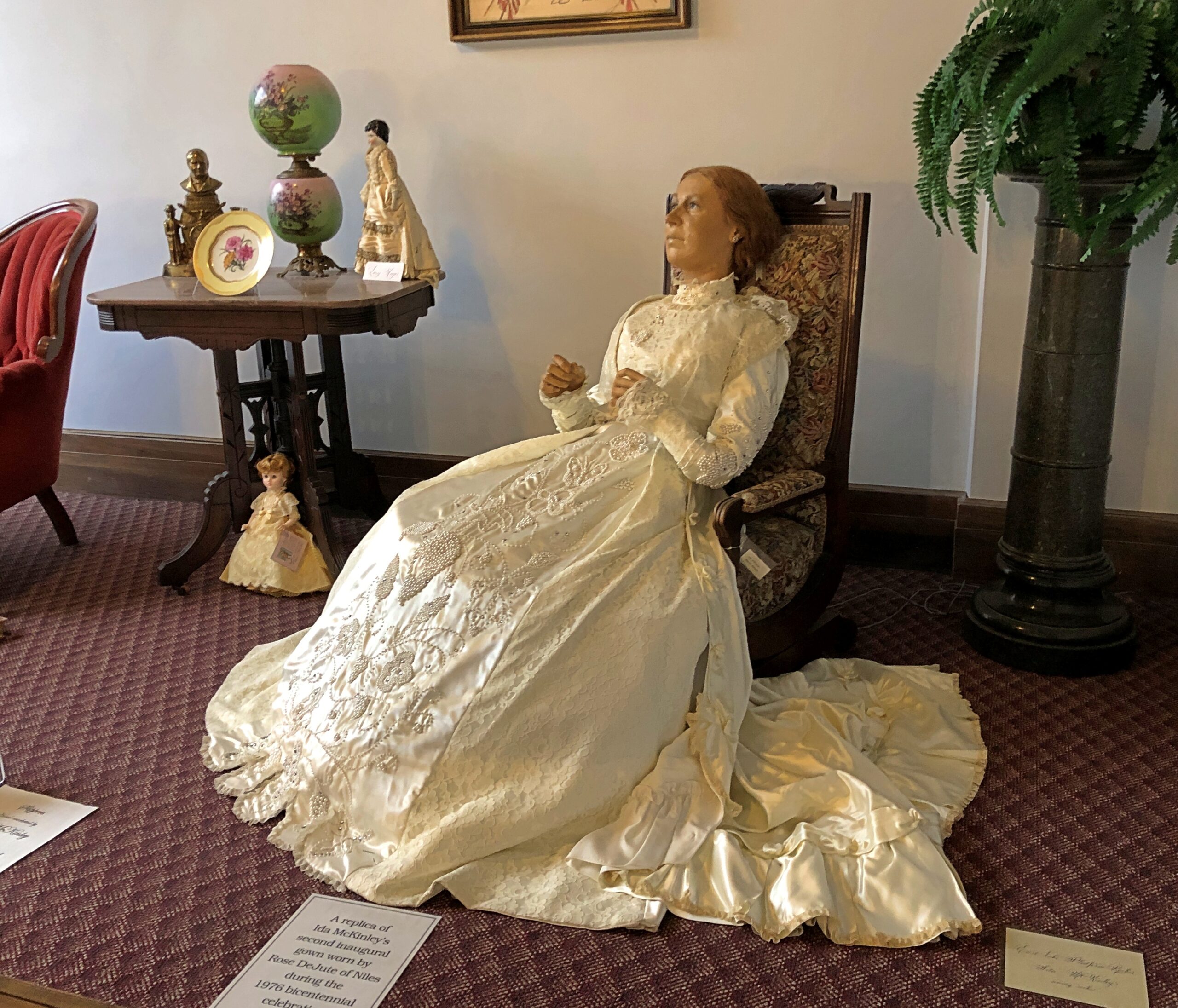
William and Ida dressed, I believe, for his second inauguration in 1901.

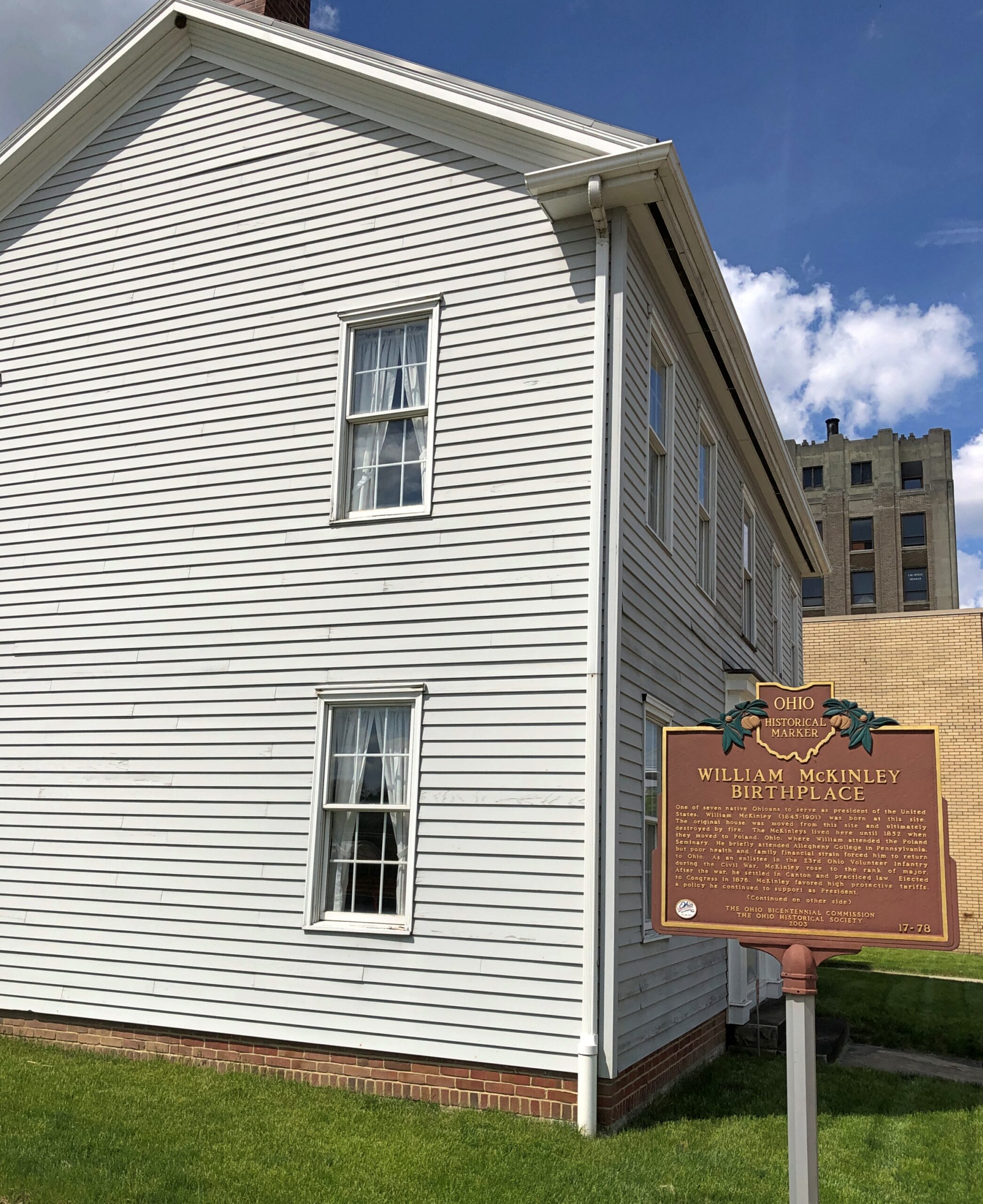
As mentioned, the McKinley Birthplace Home and Research Center is a block from the memorial. It’s considerably more modest.

It’s also a replica, and apparently not a very close one, the original house having burned down almost 90 years ago. Still, looks are free (like at the memorial), so I had a look.

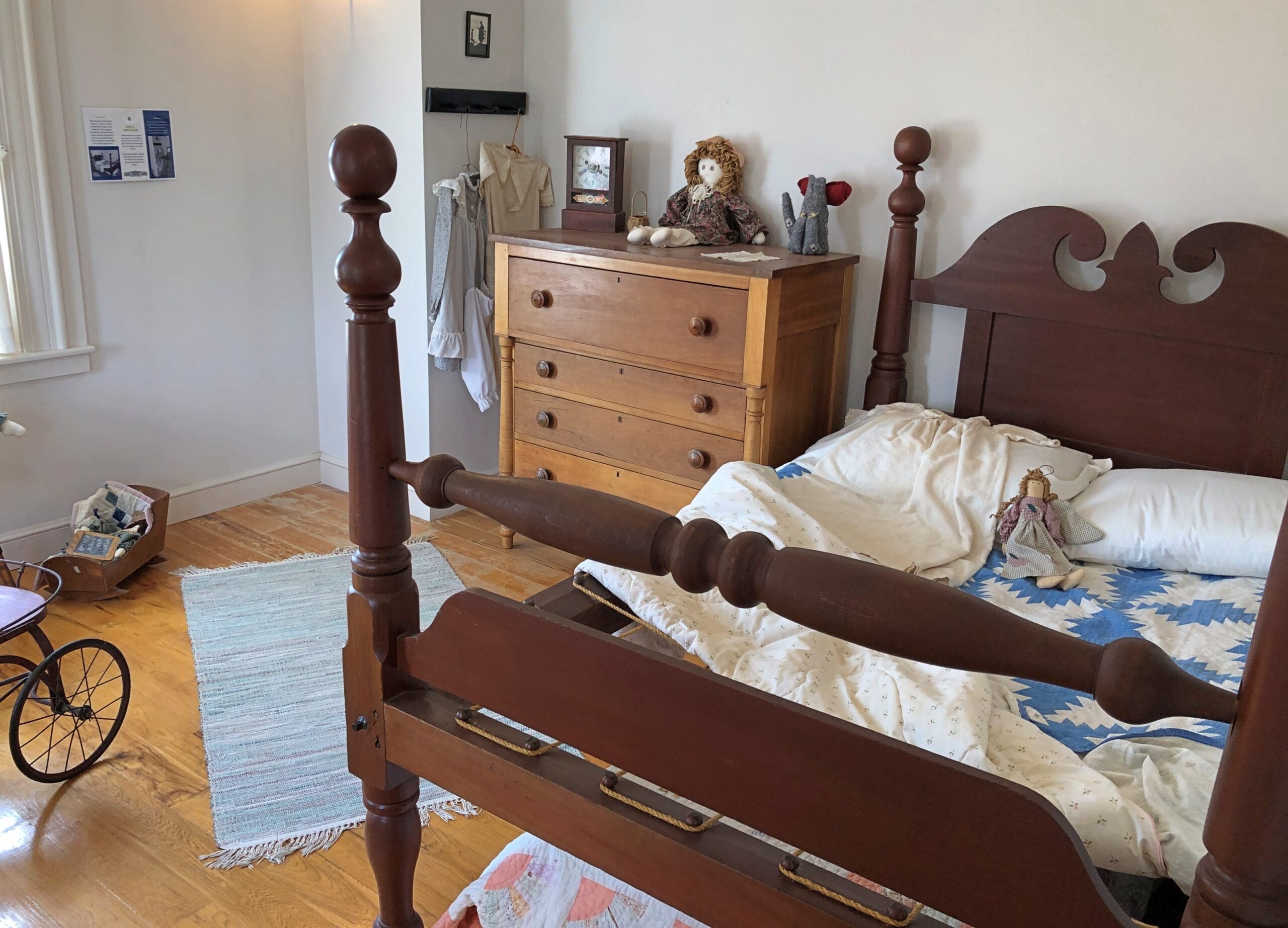
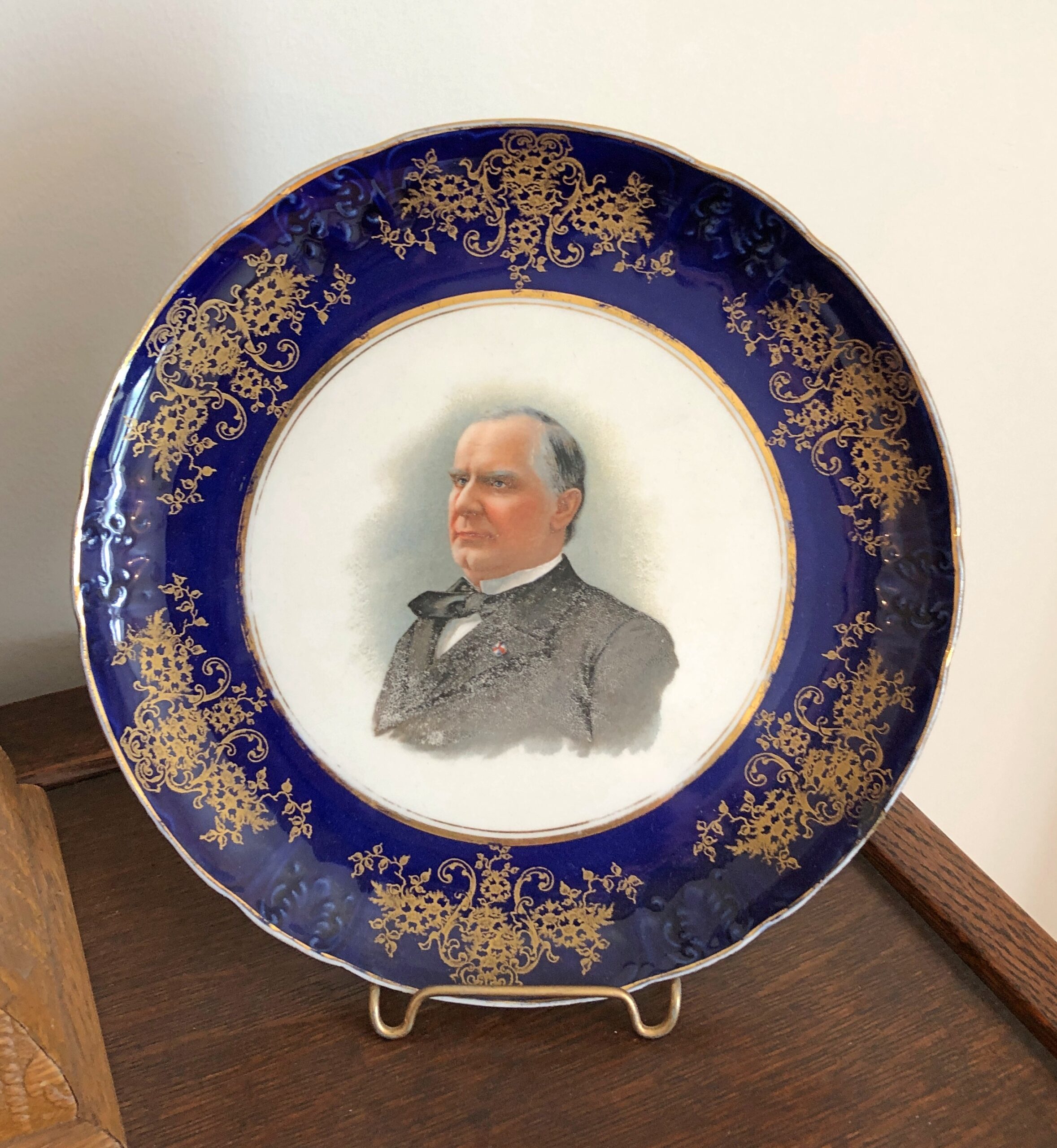
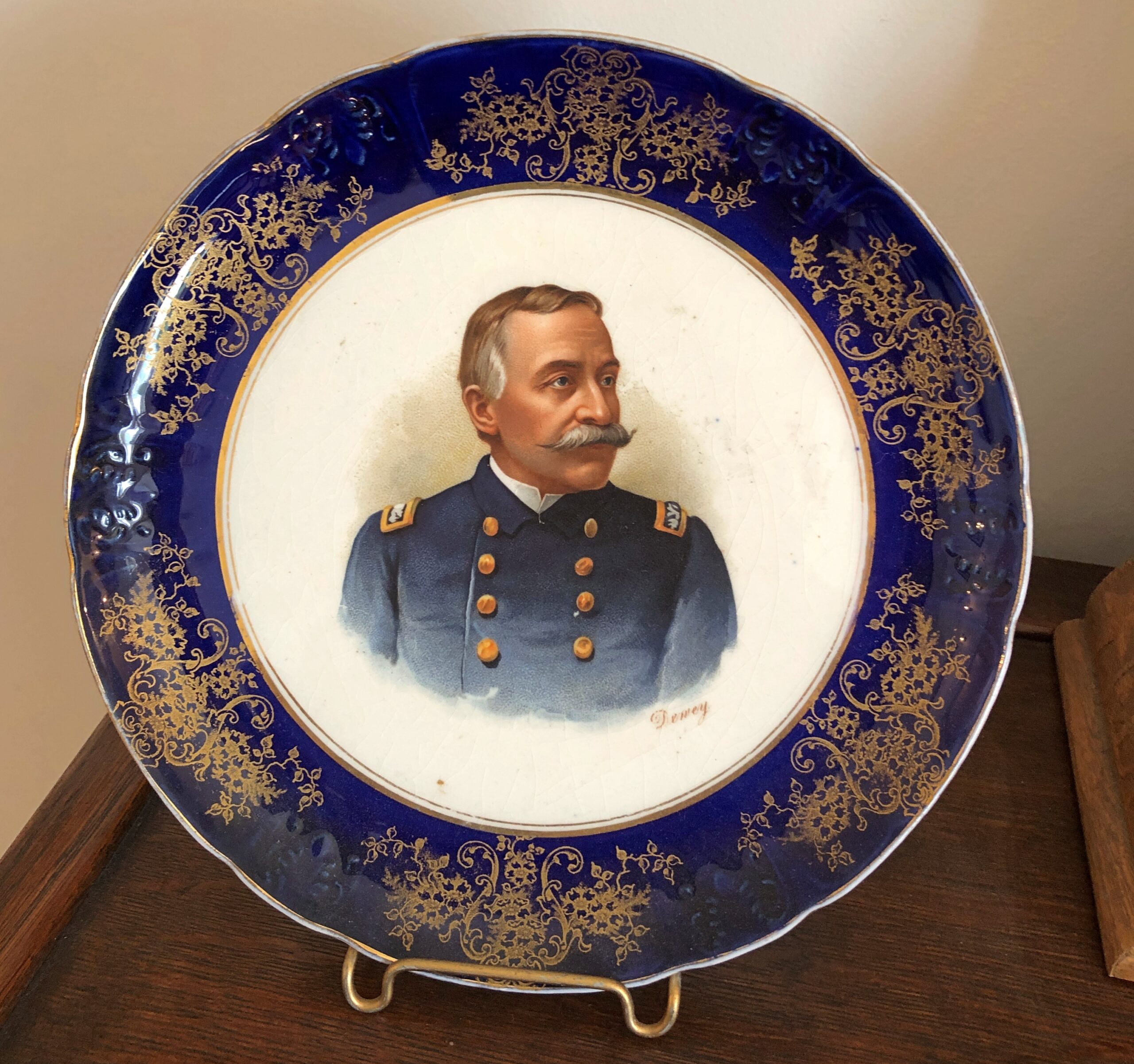
On display are a number of McKinley-adjacent artifacts. I liked the plates especially. One features the president himself.

Another features Admiral Dewey. How often do you hear about him any more? Even less than McKinley.

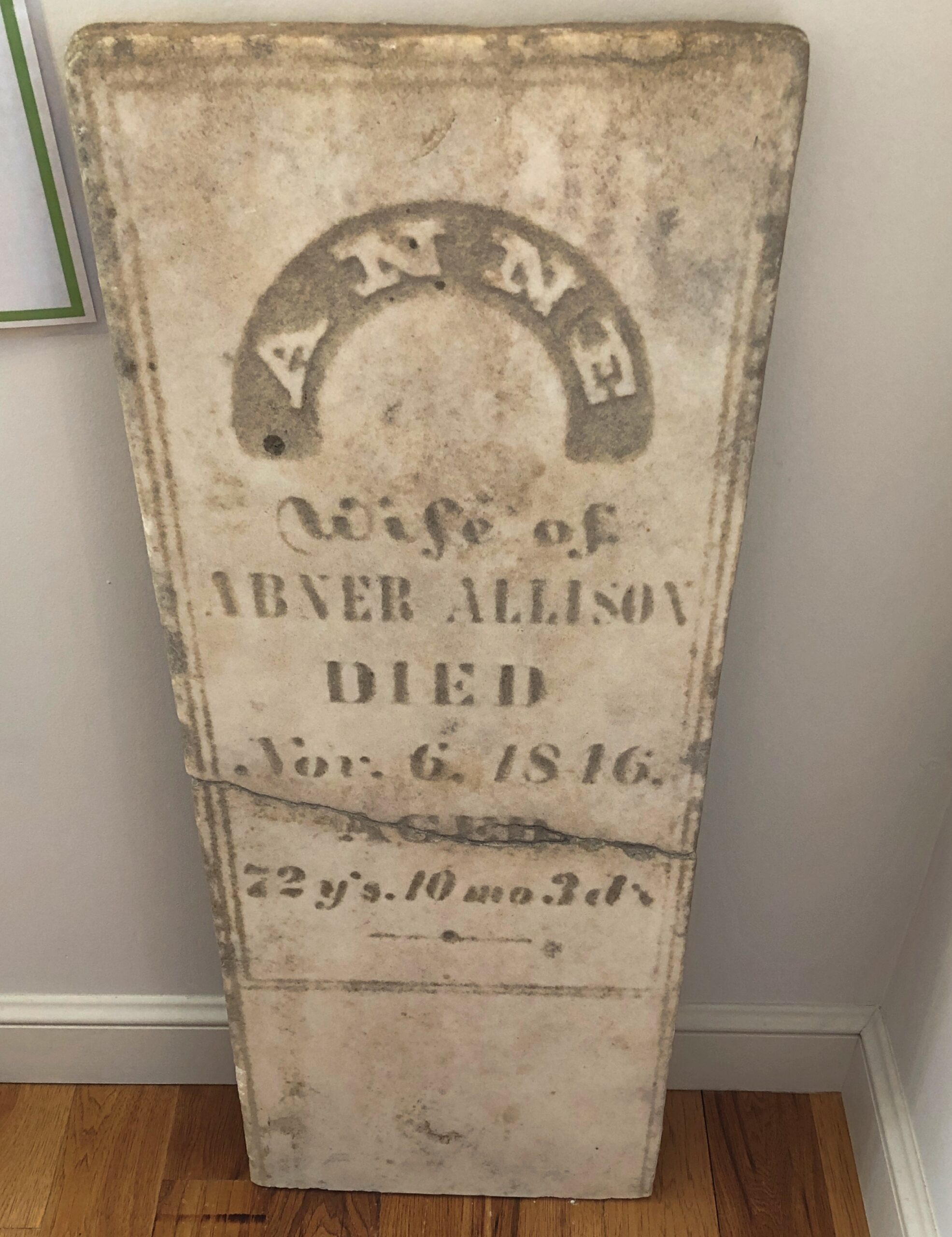
The president’s maternal grandmother’s gravestone is propped up against a wall. I suppose it was at risk of completely falling apart wherever it was, and (I hope) it was replaced in situ.

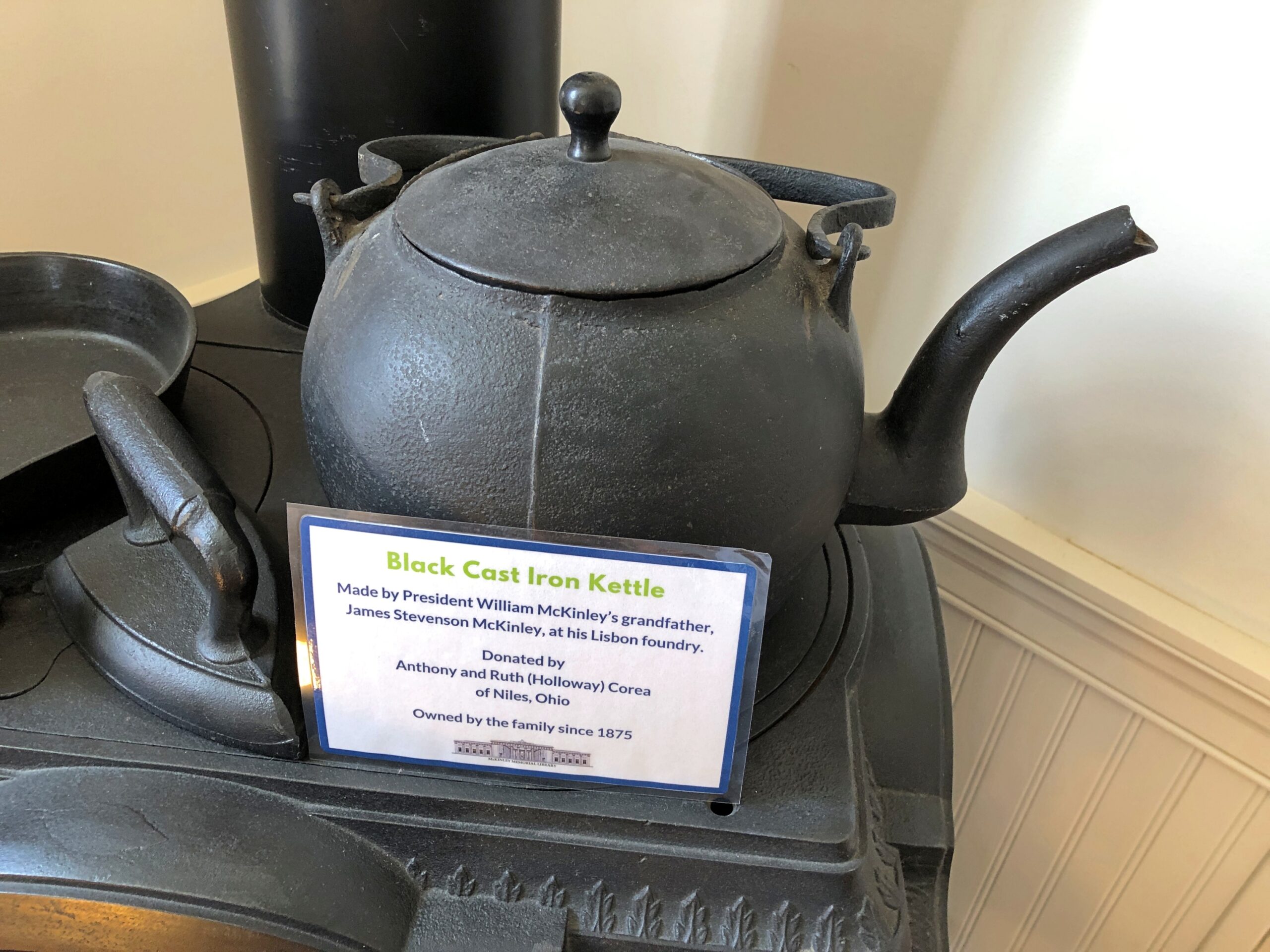
I liked this as well.


I looked up James Stevenson McKinley (d. 1847) on Find a Grave and that inspired me to look a little further into the McKinley ancestry. James’ father was David “The Patriot” McKinley (d. 1840). David’s father was John “The Wagonmaster” McKinley (d. 1779). John’s father was David “The Weaver” McKinley (d. 1760). That David’s father was James “The Trooper” MacKinlay (d. 1760), back in Ireland, at which point the nicknames peter out.

Nor’East Drive ’26

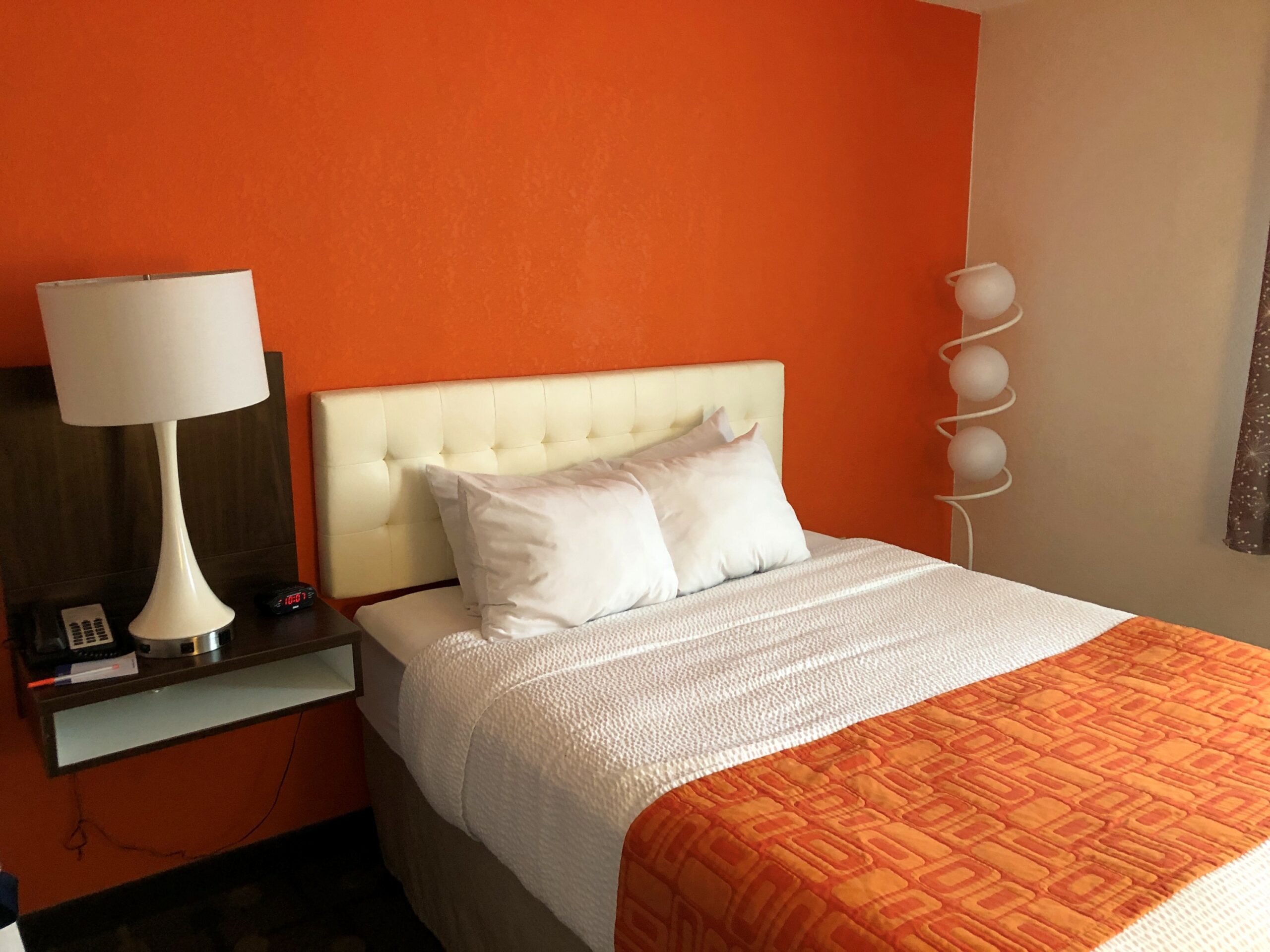
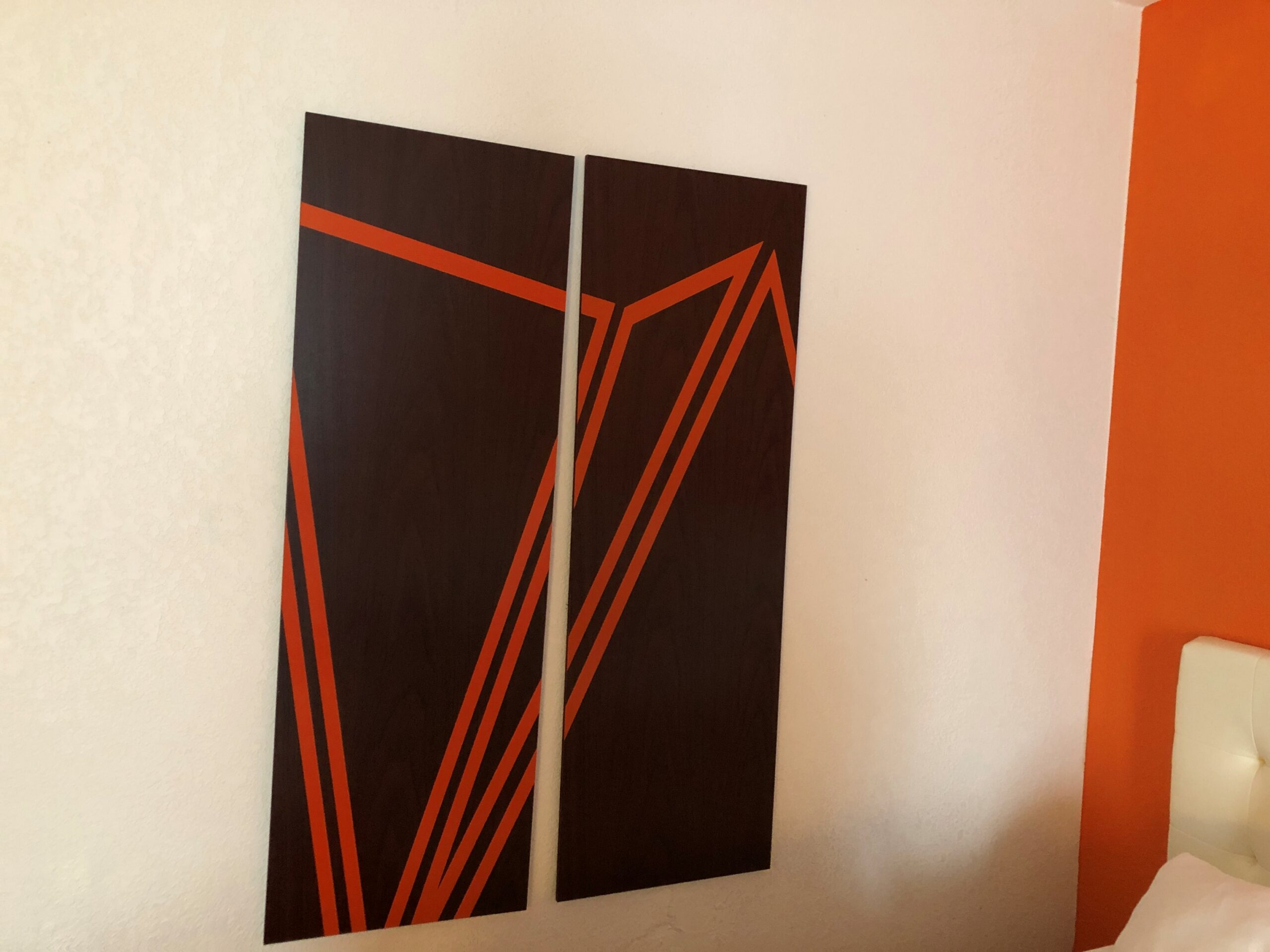
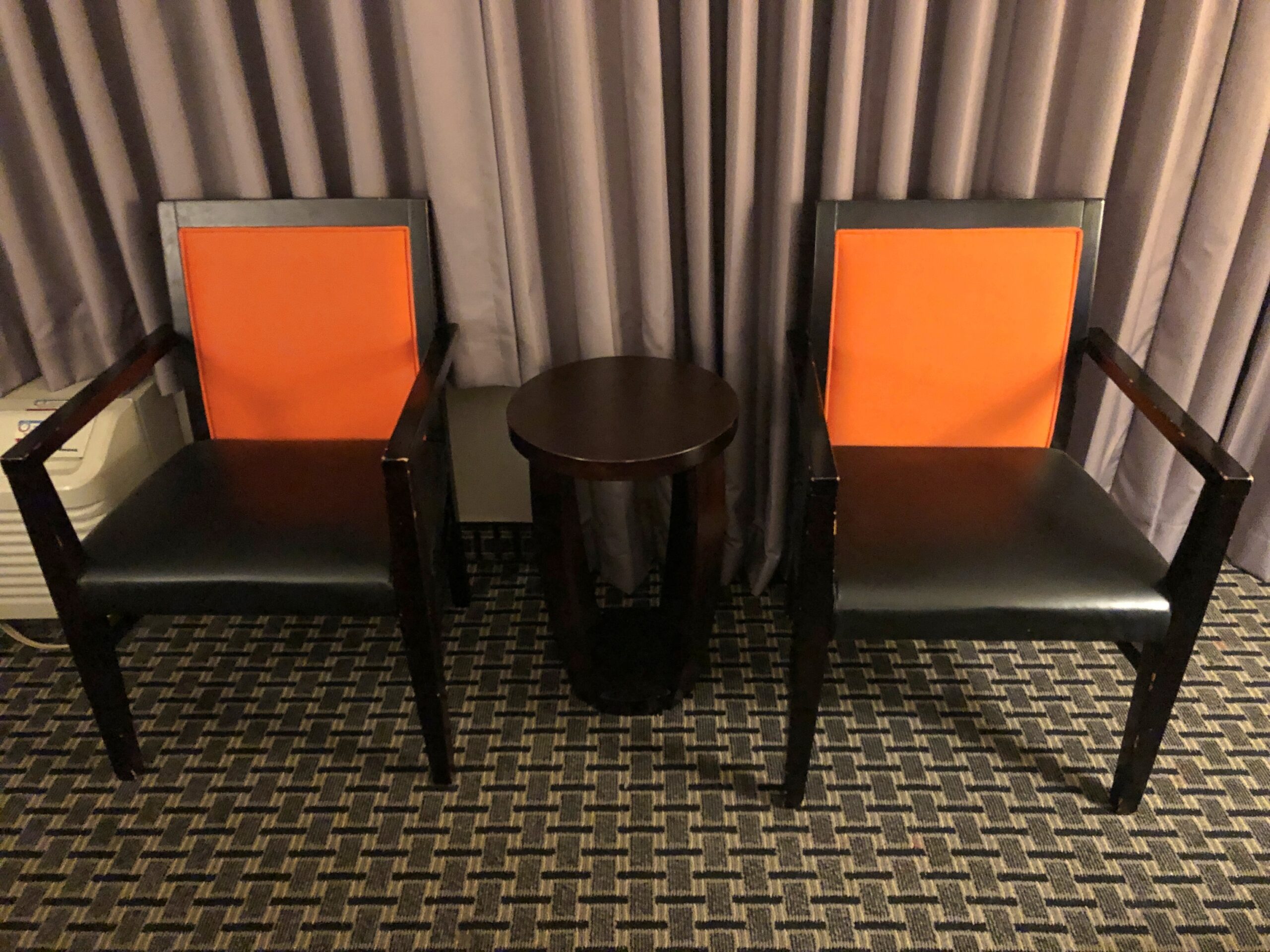
Howard Johnson, it turns out, is serious about renovating its rooms retrostyle. What says Howard Johnson midcentury, the heyday of the much-diminished chain, better than orange? – a lot of orange.

I’m just old enough to be nostalgic for midcentury motels. Maybe I’m just the right age, since as a kid, I didn’t have to concern myself with the details of getting to the motels or paying for them. I was along for the ride and the stay. I did, however, starting with the Cave Vacation of 1972 at age 11, concern myself with packing – my own stuff, but also the items everyone would need, put in the trunk of the car. To the mild amazement (I think) of my mother.

The Portsmouth, New Hampshire Howard Johnson, whose full brand name these days is Howard Johnson by Wyndham, checked a lot of the other boxes besides raw orange overload.

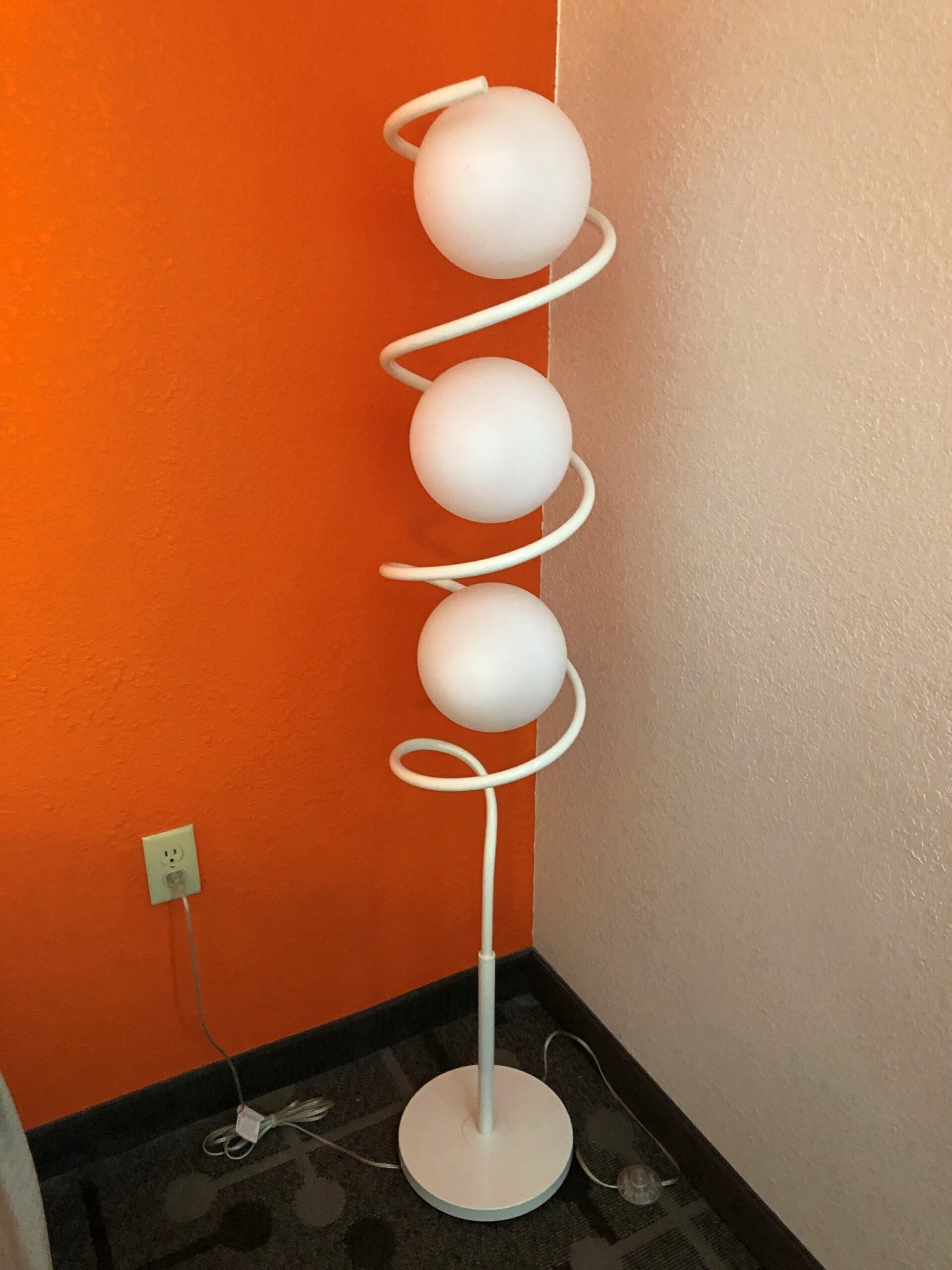
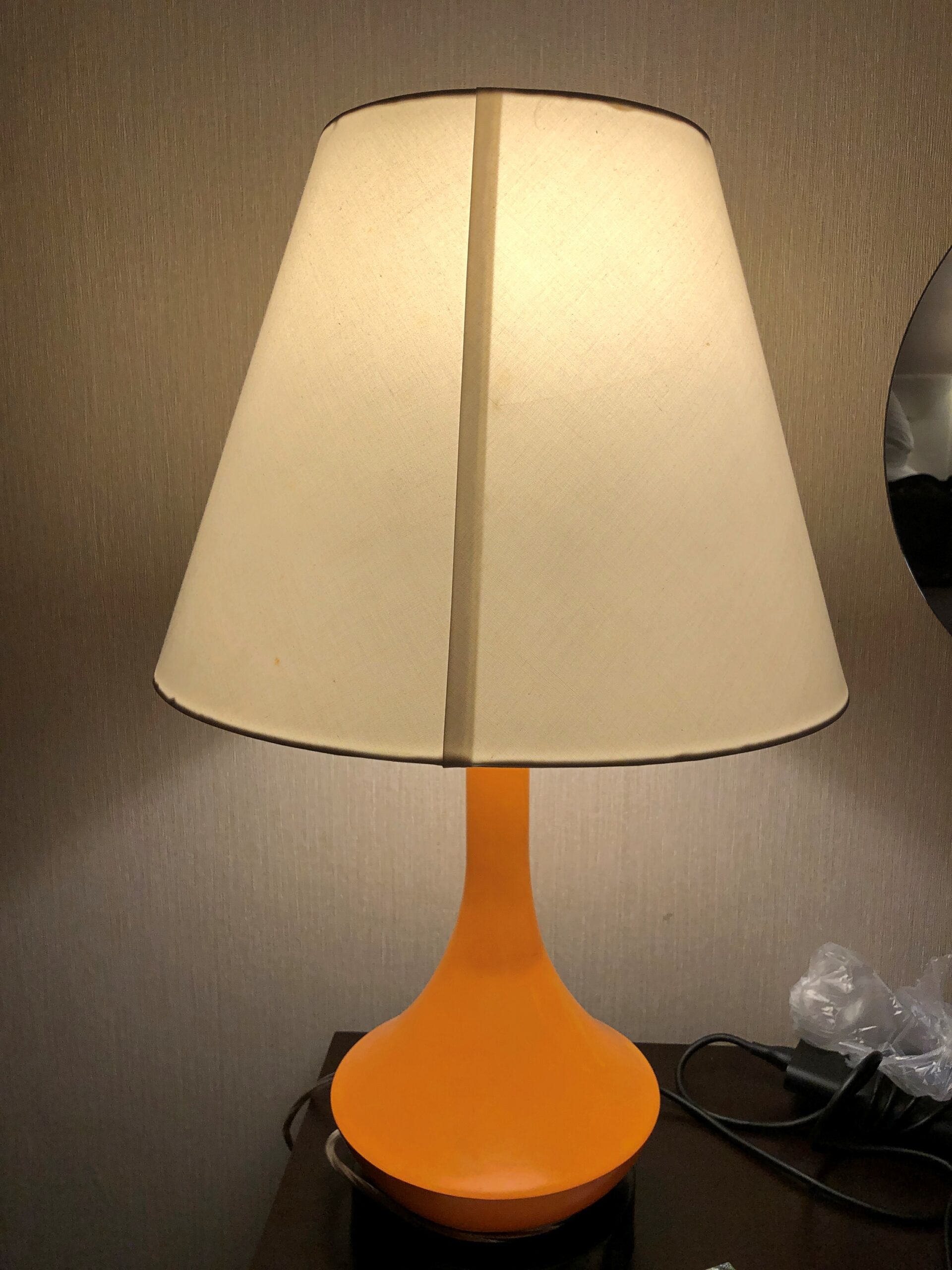
Not sure if these are precisely period lamps, but they remind me of the period.

The room had a modern TV, naturally, and as befitting our time, a lot of outlets, including USBs. Unfortunately, there was no bottle opener attached under the sink. Or a gossamer paper ribbon around the toilet announcing that it had been sanitized for my protection. Just quibbles. The room had the right feeling.

I found myself in New Hampshire in mid-April headed east to Maine. Some days earlier, on April 7, I’d left metro Chicago by car for the Northeast again. I returned on April 24 after 3,499 miles on the road. Dang, I should have gone that extra mile we’re always hearing about.

After visiting the Northeast last October, I hadn’t intended to return quite so soon. Then Lilly and Dan scheduled their engagement party for April 11, 2026, in Midtown Manhattan, which meant a return to New York City at least. The easier (and cheaper) thing to do would have been for all of us to fly there, spend a few days, and then fly home.

I wanted to go to the party, of course, but that approach to getting there didn’t appeal – so I drove by way of Indiana, Ohio, Pennsylvania and New Jersey, where I squeezed a day into my schedule to look around. Yuriko and Ann flew in the day before the event, and we attended the party in the upstairs Manhattan Manor room of Rosie O’Grady’s on 51st, between 6th Ave. and 7th Ave. I’d never heard of the place before, but eventually learned that Rosie O’Grady’s is a sentimental favorite of Lilly and Dan’s when they visit New York. That only goes to show that one’s children have, or should have, aspects of their lives you know nothing about.

We had a large time that evening, meeting members of Dan’s family and many of his friends, and seeing many of Lilly’s friends for the first time or the first time in years. My nephew Dees was able to attend from Austin and my nephew Robert and his fiancée Meredith came from Brooklyn.

That wasn’t quite it for NYC – my nth visit, Yuriko’s third and Ann’s first – since we had another day and a half to kick around. We spent time strolling in a budding springtime Central Park and at MoMA and in a couple of Greek diners and one of the locations of the delightful Angelina bakery. All in all, an enjoyable time, all too short. Yuriko and Ann flew home, but I made my trip just a little longer.

Namely, I had another large time, this one in Boston, with my friends Rich and Lisa and Steve. That was slated for a week after the party, so I had a few days to spend between NYC and Boston. Where to go? Maine. Geographically not between those major metros, but nothing is that far apart in New England, as all drivers who grew up in Texas know.

After my visit with my Boston friends on the weekend of April 18-19, I took a (fairly) slow drive home, passing through western Massachusetts and stopping in upstate New York long enough to visit historic places I couldn’t in October because the federal government shutdown. From there, I traversed Pennsylvania, Ohio and Indiana again, along a somewhat different route than I’d come. Of course.

The last night of the trip, I stayed at another Howard Johnson. It had the location I wanted, in western Ohio, and the price wasn’t bad, but I was also curious how orange it was going to be. The answer: not quite as much as the Portsmouth property, but more than most places.

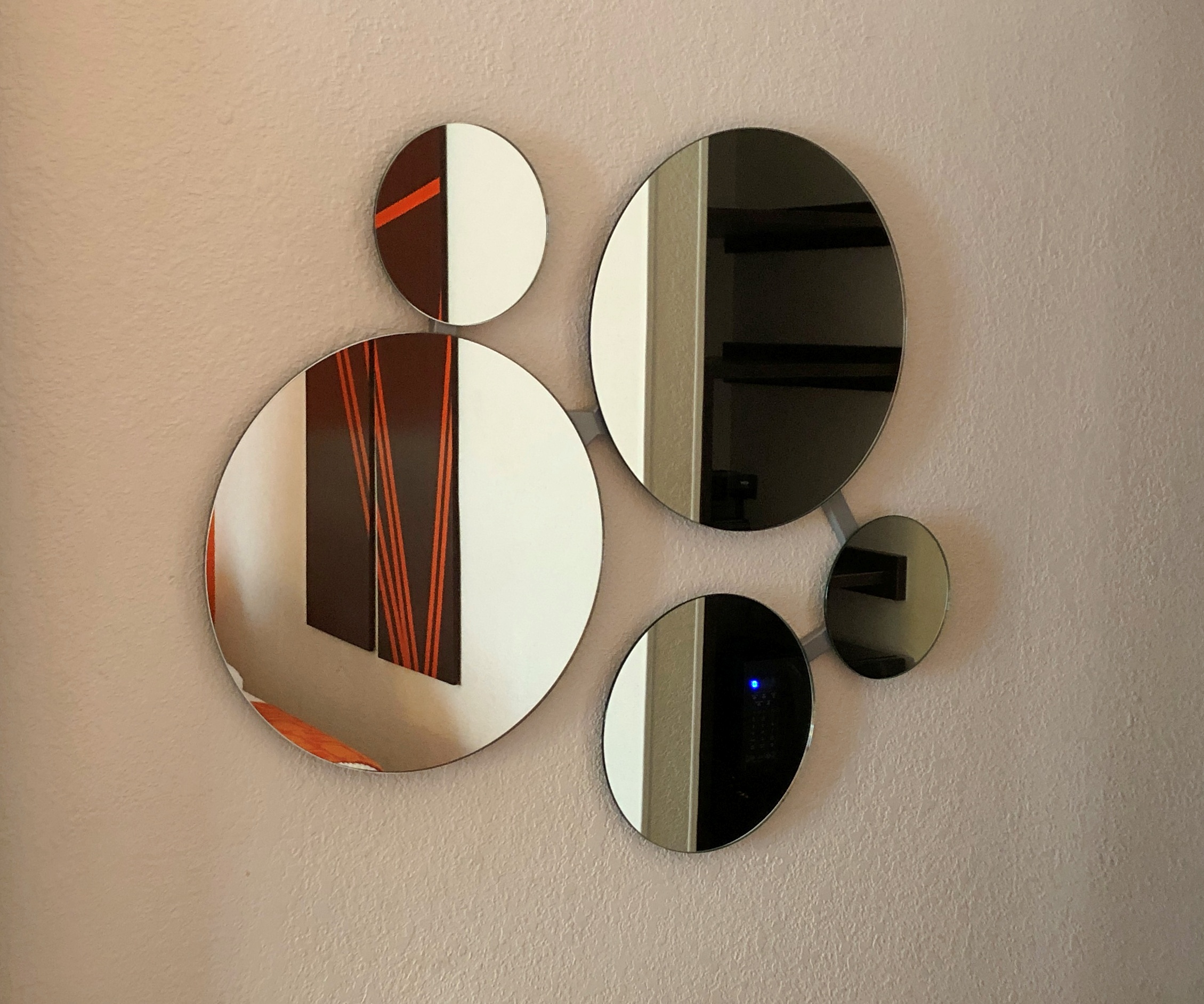
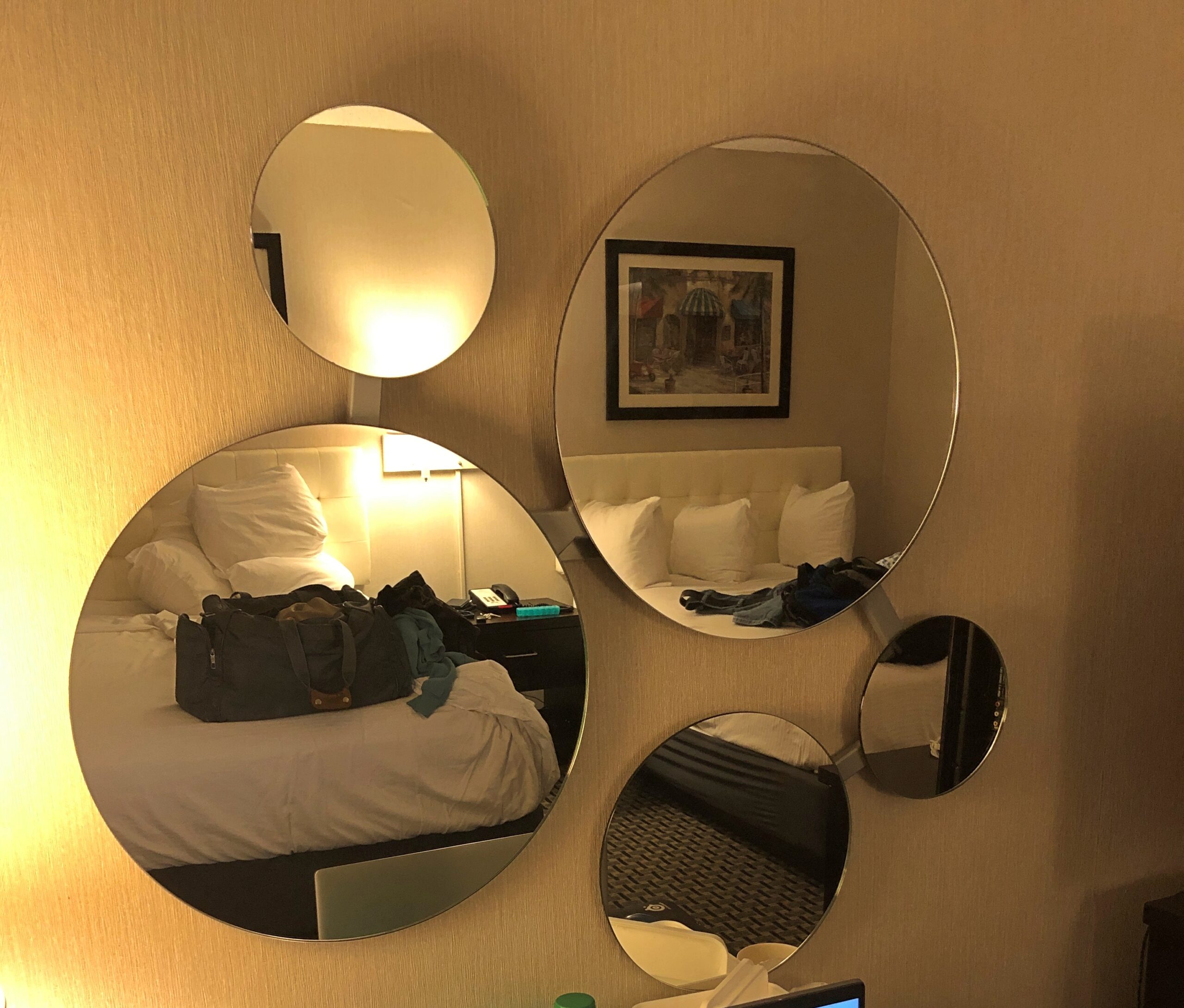
Including the same circular mirror array. Wyndham must have gotten them in bulk.

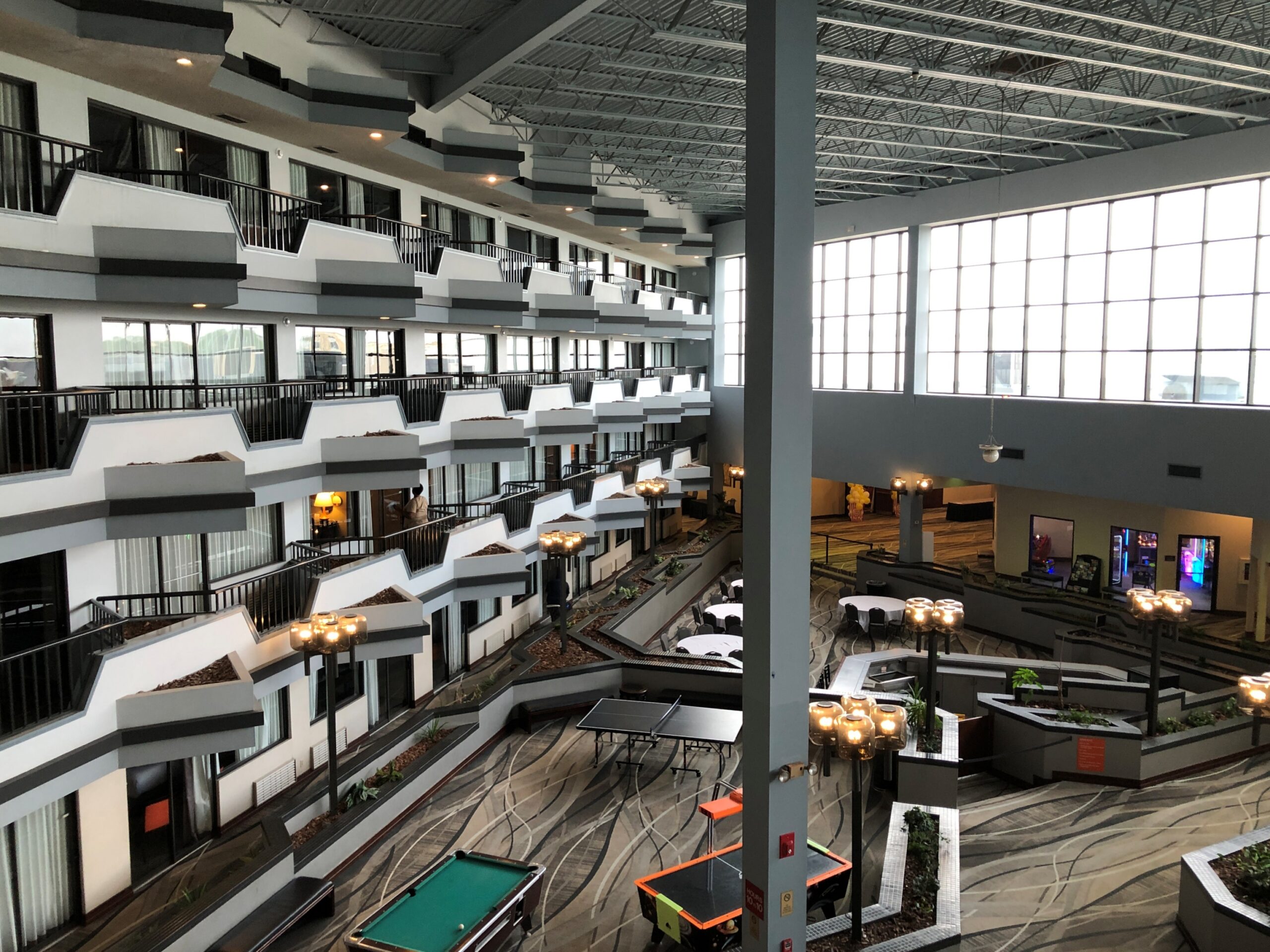
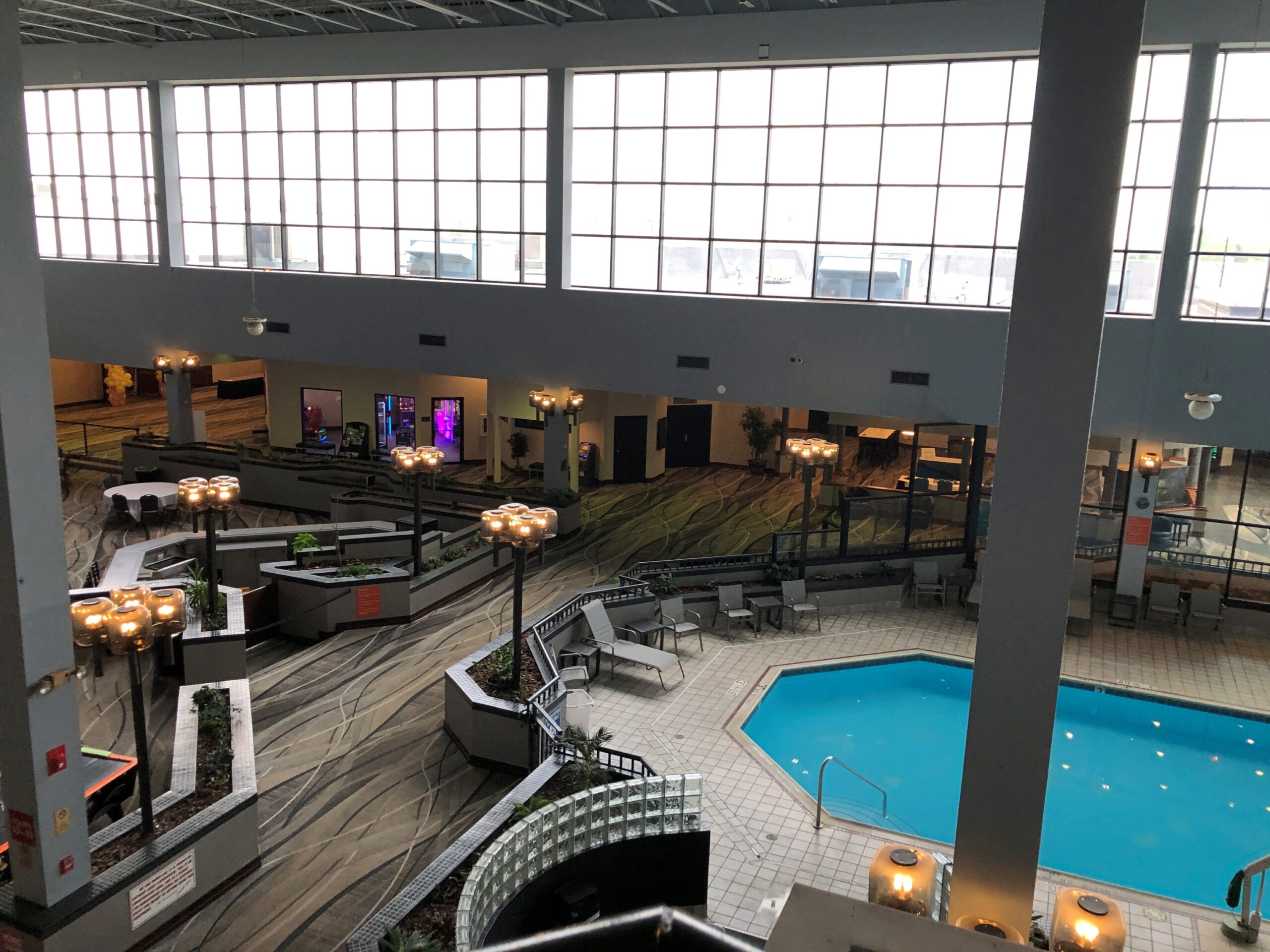
The unusual thing about the Lima, Ohio Howard Johnson is its sizable enclosed atrium — visible from my room’s balcony, also unusual in a limited-service hospitality property.

I asked the clerk if the property had been something else, once upon a time, and she said it had, offering a name I didn’t recognize and don’t remember, though I expect it might have been an independent property trying to make a go of it. Tough going in Lima, I bet.

Five-State National Road Dash

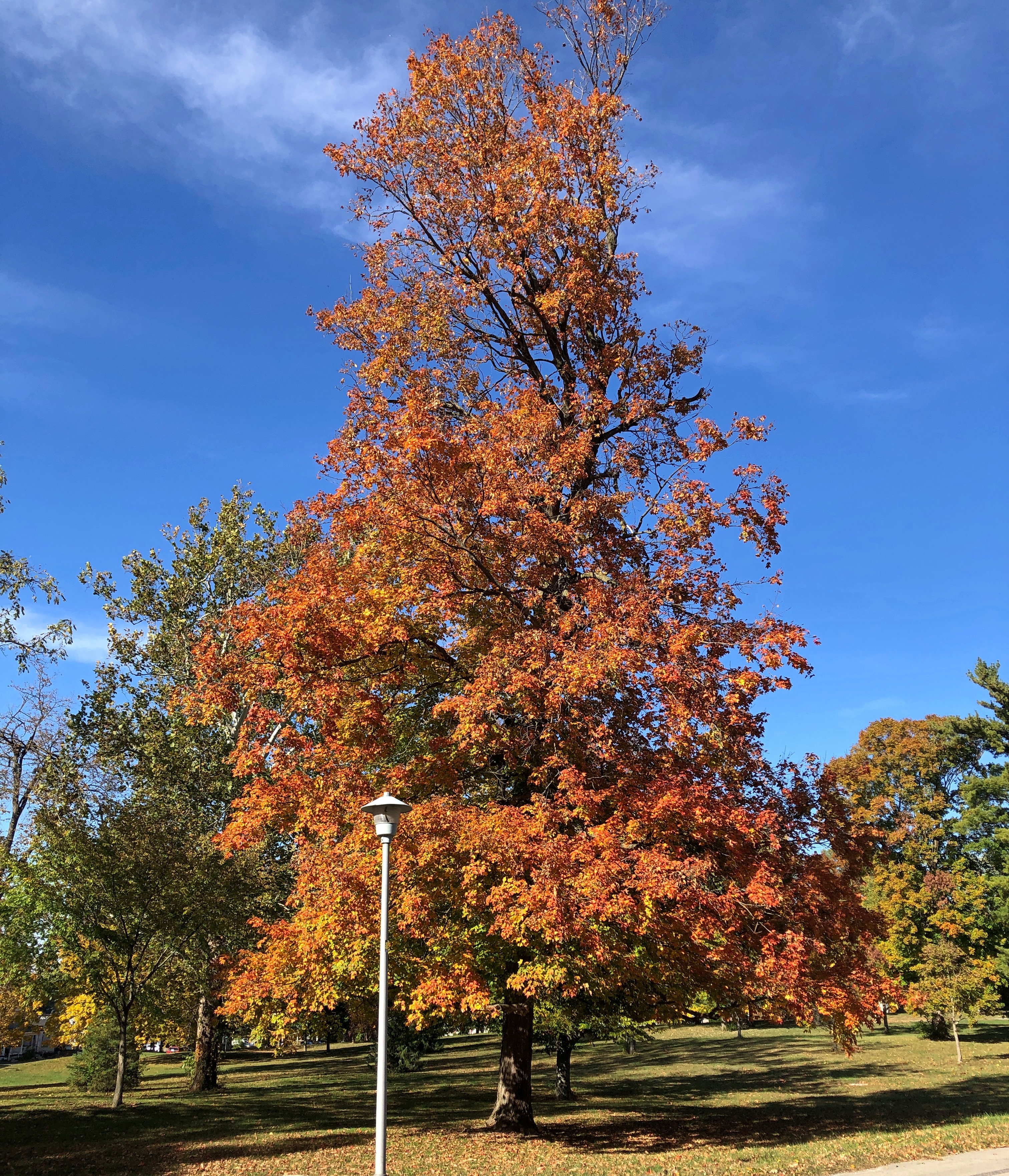
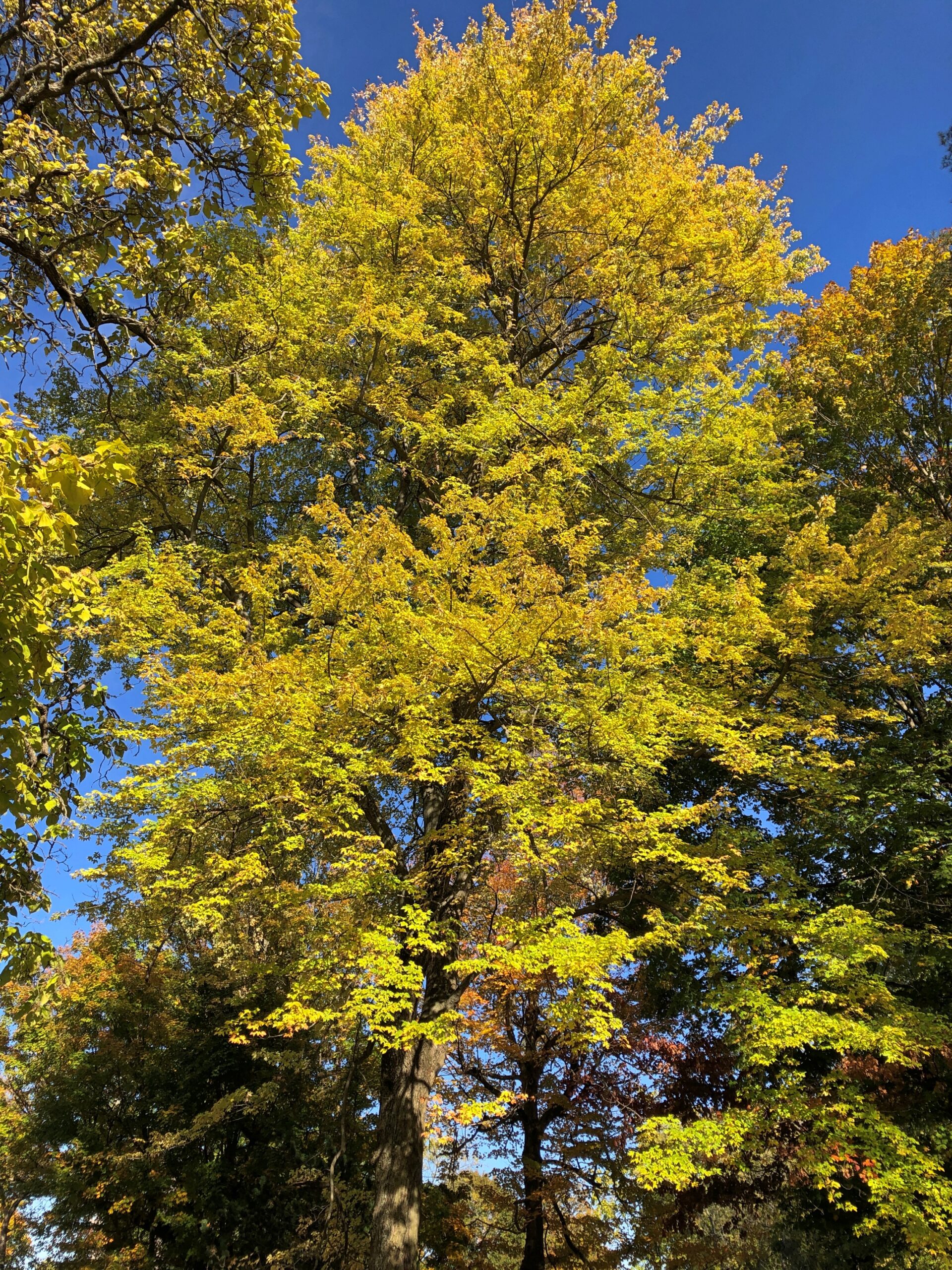
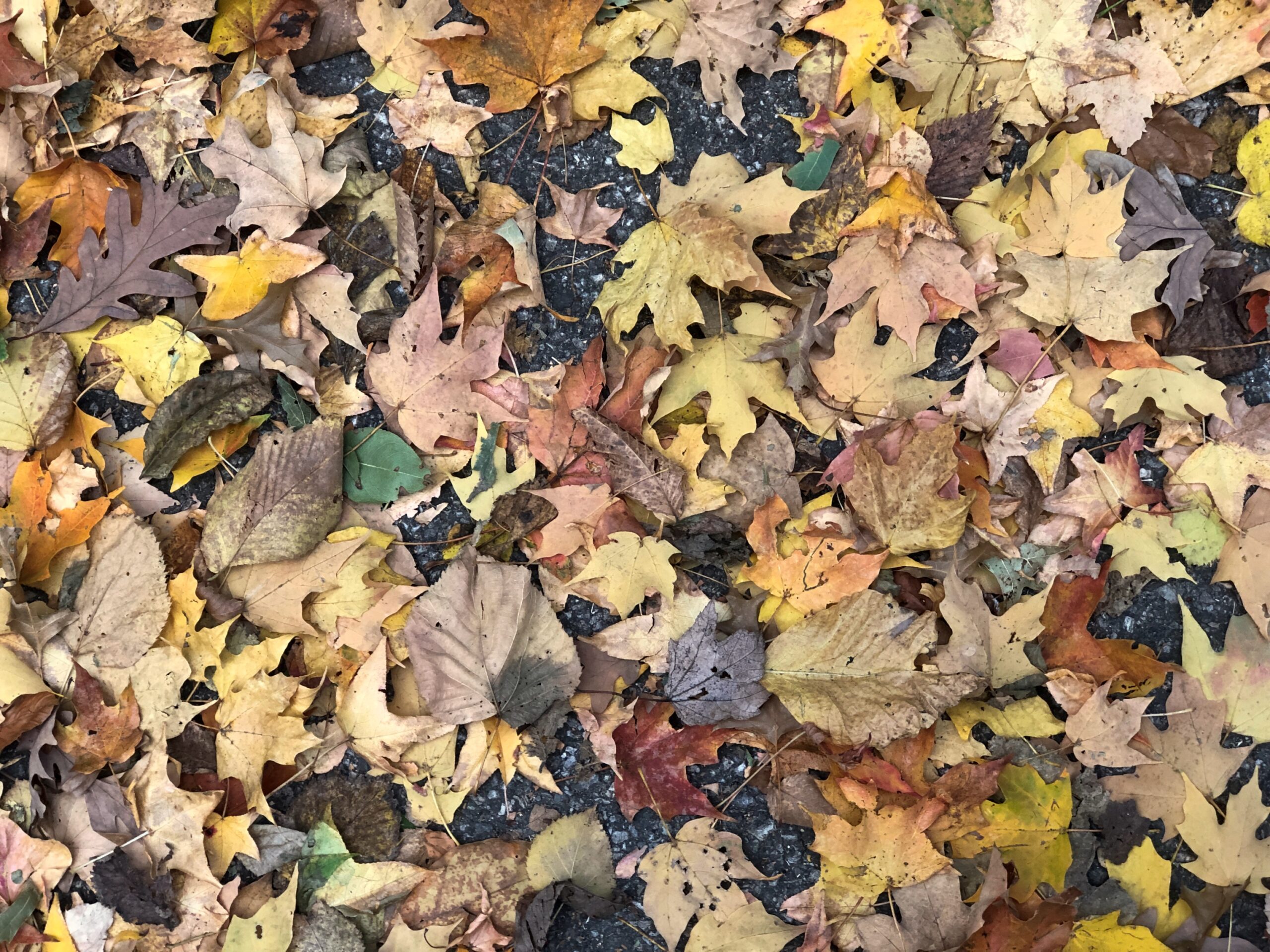
Our first winterish weather blew through early this week, but we’re back to cool days. For now. Some leaves seem to be clinging a little longer than usual, but most are accumulating on the ground, as expected for November. A scattering of Christmas decorations are already up, and I don’t mean in stores, where they’ve been for weeks. Let November be November, I say.

Much of my return from the East Coast generally followed the westward course set by the National Road, though I didn’t use much of US 40, which has that nickname. If you want to make decent time, you take I-68 through Maryland and then I-70 across Ohio and into Indiana, which pretty much parallels the National Road.

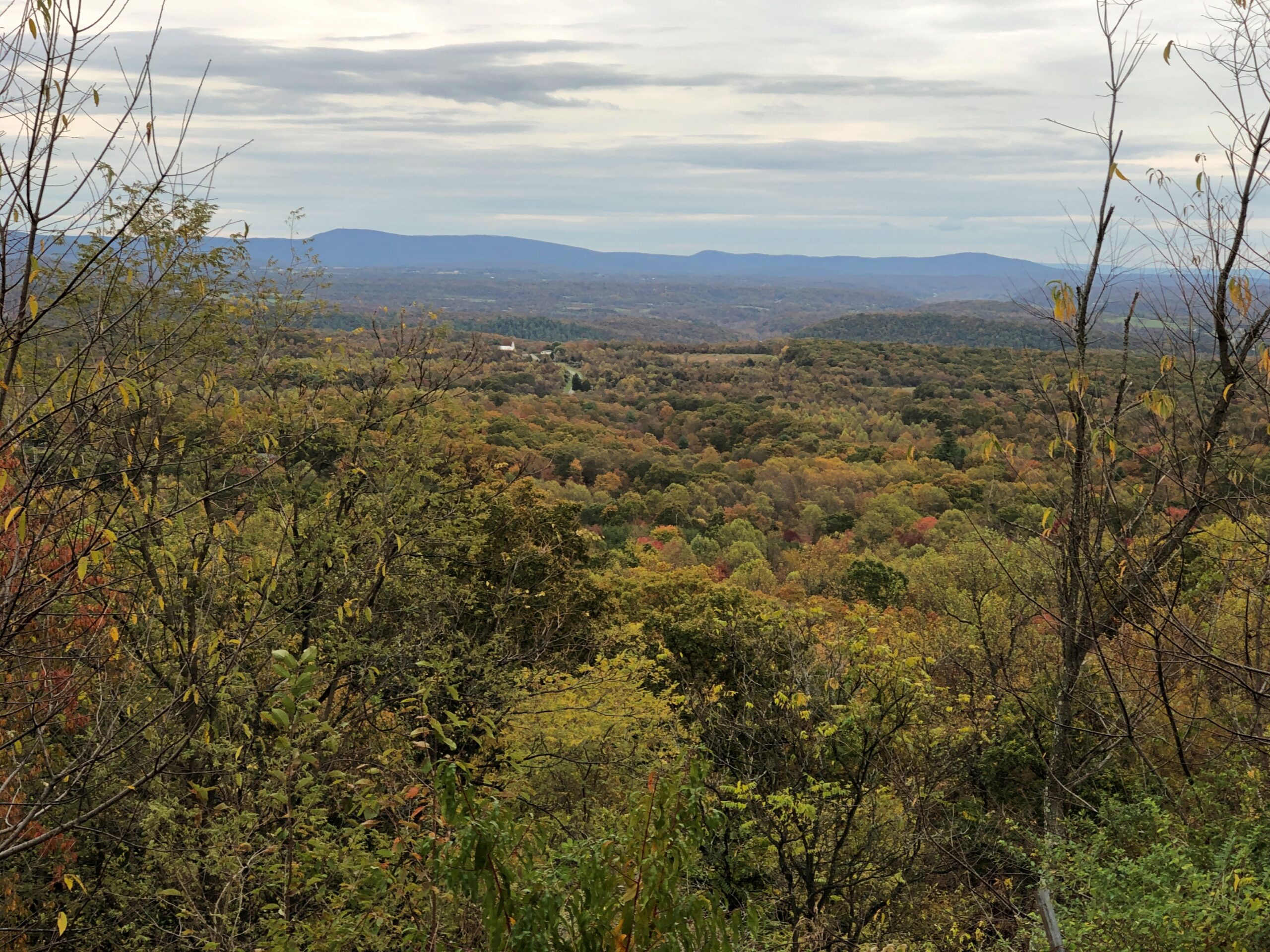
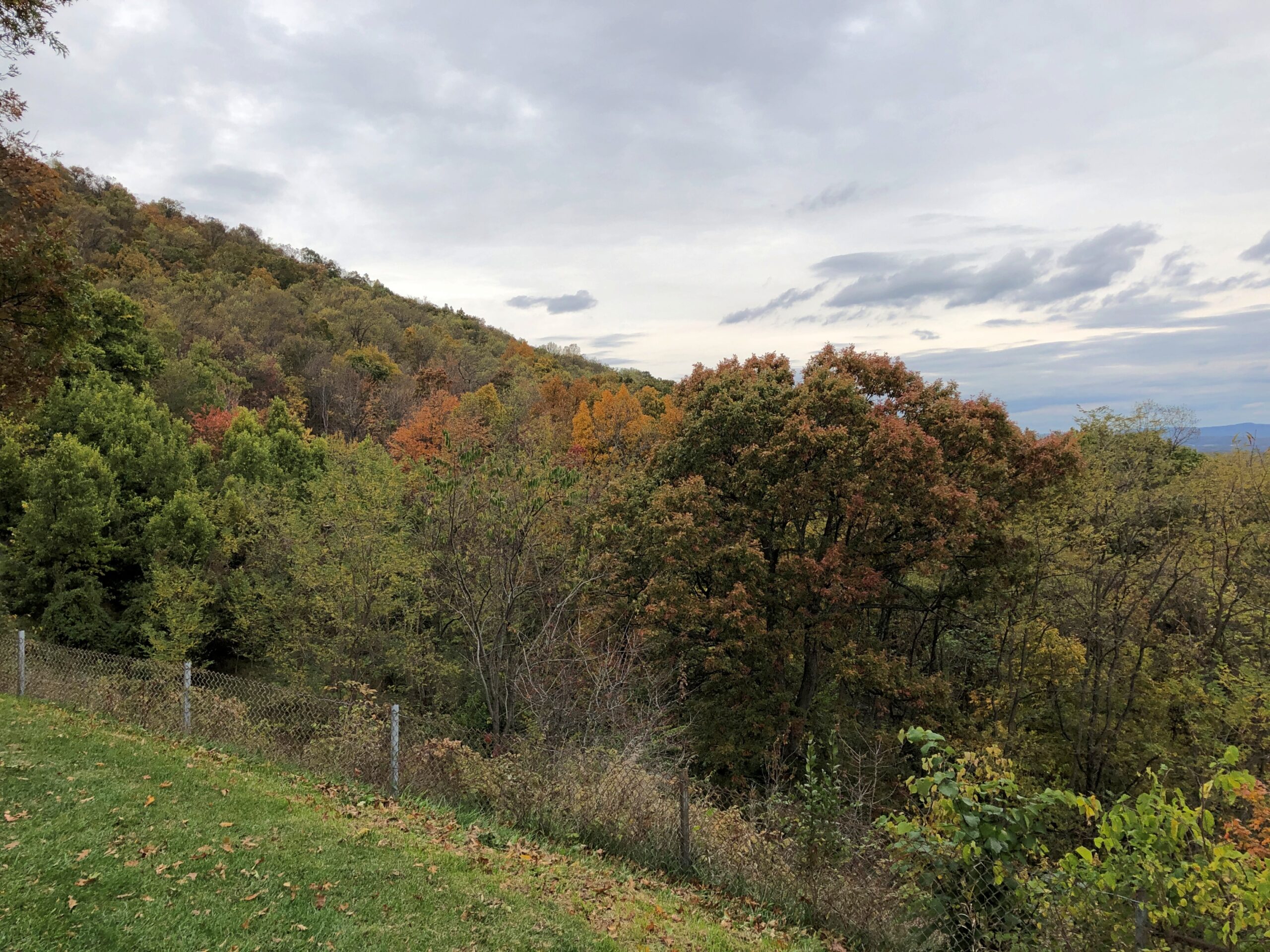
The Interstate is designed for just that kind of efficient travel. On the whole, it delivers. The four-lane highways also deliver boring drives, to hear some tell it. That’s an erroneous assumption, to hear me tell it. The Interstate has its fine stretches, such as I-68 in October, a gloriously colorful drive. Winding and hilly, too, through Maryland’s peculiar panhandle.

A rest stop near Hancock, Maryland, offers views to the north, so most of what you see is Pennsylvania.

Maryland I-68
Maryland I-68

The rest stop is at Sideling Hill, an enormous rise gouged by an enormous cut for I-68 to go through. An impressive feat of engineering, completed only in the 1980s. Then again, blowing up mountains is a thing that happens in this part of the country.

The narrowest part of the Maryland isn’t far away. At its narrowest, there is less than two miles are between the Potomac and the Mason-Dixon Line. So if you picked up Maryland by the panhandle, it would surely break at that narrowest point.

I filled my gas tank off the highway in the last town in Maryland, Friendsville (pop. 438), at a station whose enclosed retail space (between a few pumps) seemed little bigger than a walk-in closet, and yet there was a clerk manning the place on Saturday just before dark. Rotund and massively bearded, he was playing a video game when I opened the door to pre-pay. He might have been a little surprised to encounter a customer, at least one who didn’t pay at the pump.

From there, I continued into West Virginia, then took I-79 north into Pennsylvania, then headed west on I-70, which crosses West Virginia’s odd panhandle – more like a periscope – before reaching Ohio. After overnighting in Cambridge, Ohio, I bypassed Columbus but stopped in Springfield, near Dayton but with a distinct geographic identity. Alcor to Dayton’s Mizar, you might say.

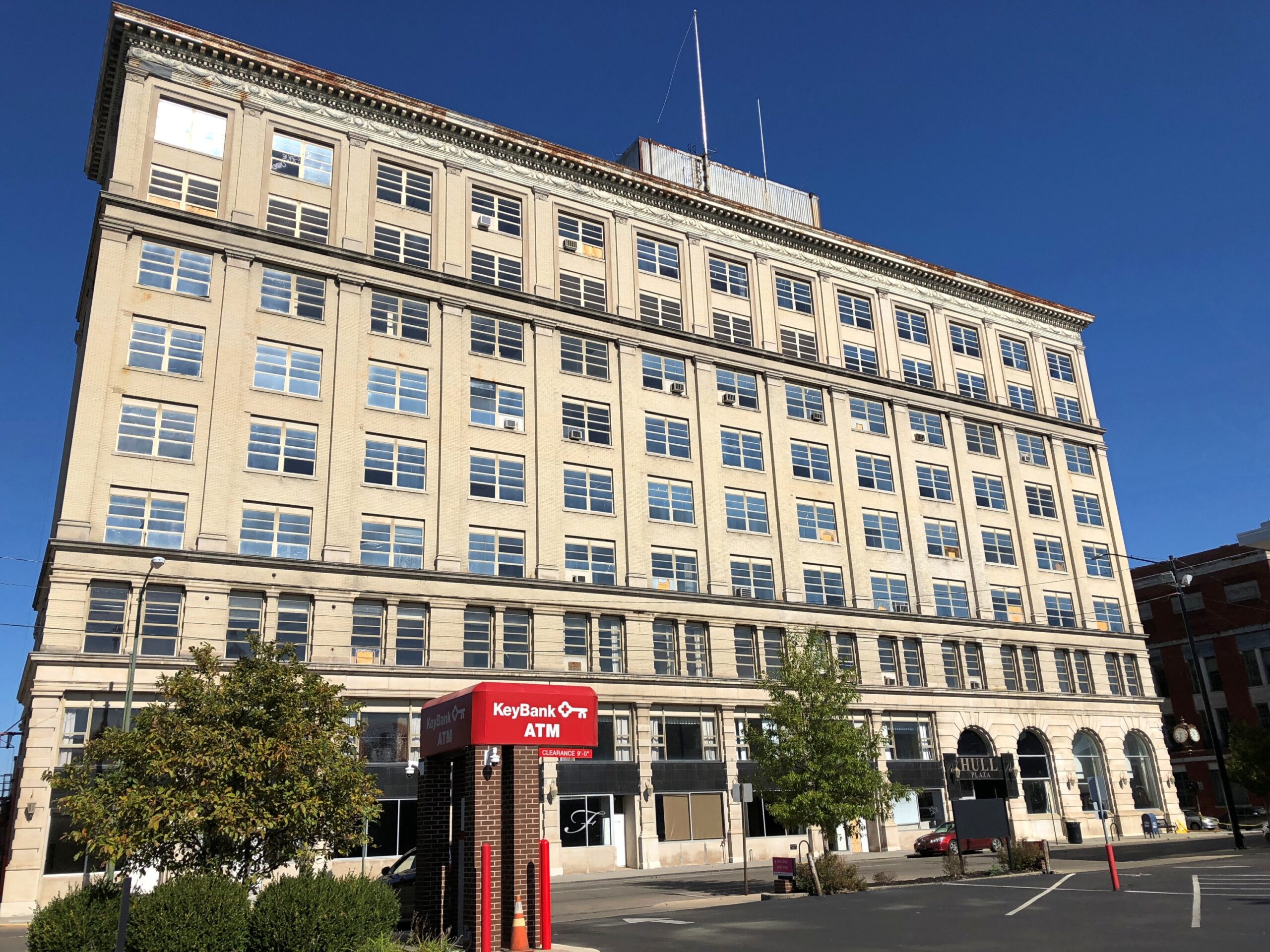
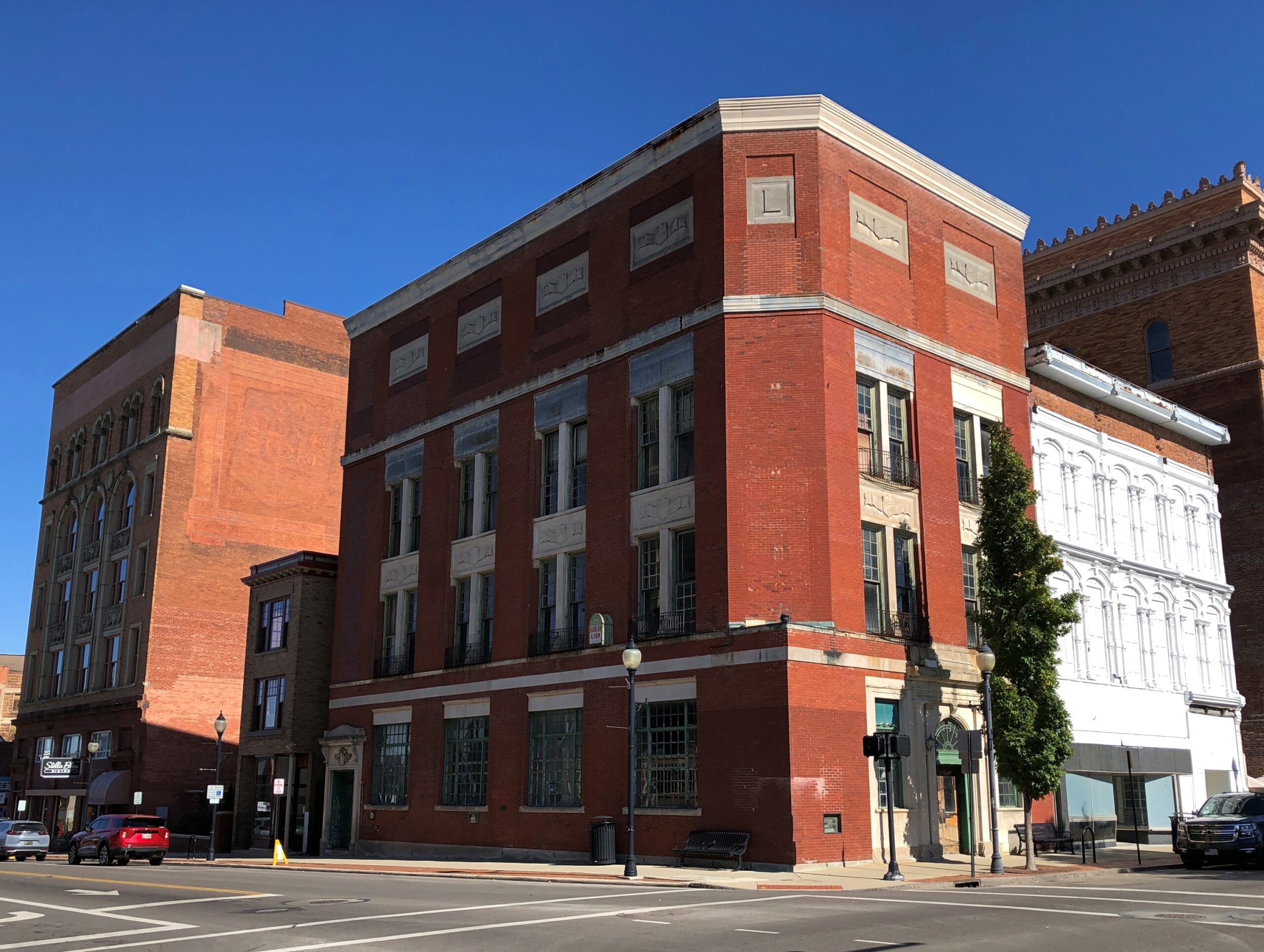
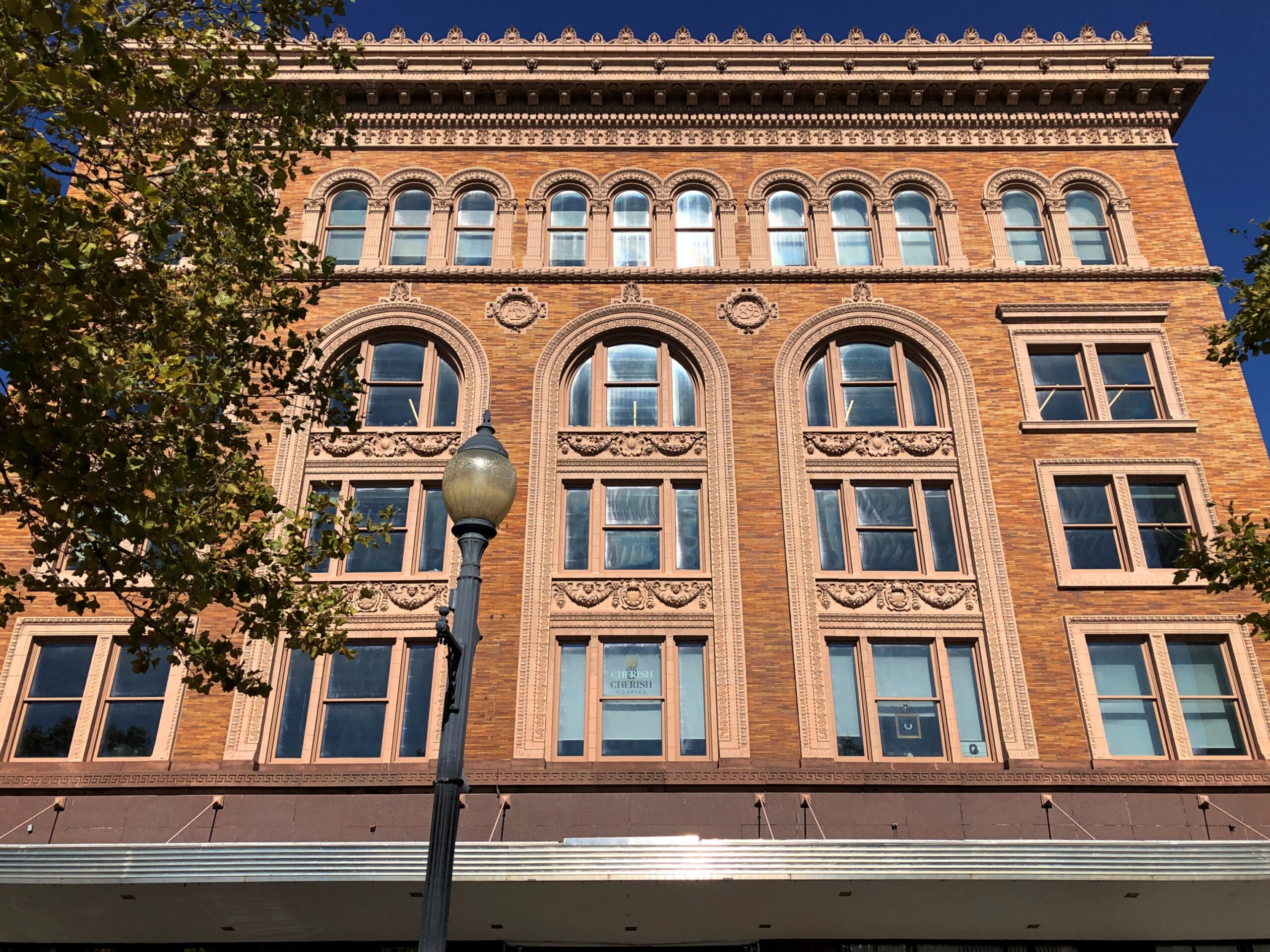
Downtown Springfield was practically devoid of pedestrians that Sunday, and not that many cars drove through either. A few buildings rise high enough to suggest a more prosperous past, but look too closely and some of them seem to be as empty as the streets, or at least underutilized.

Springfield, Ohio
Springfield, Ohio
Springfield, Ohio

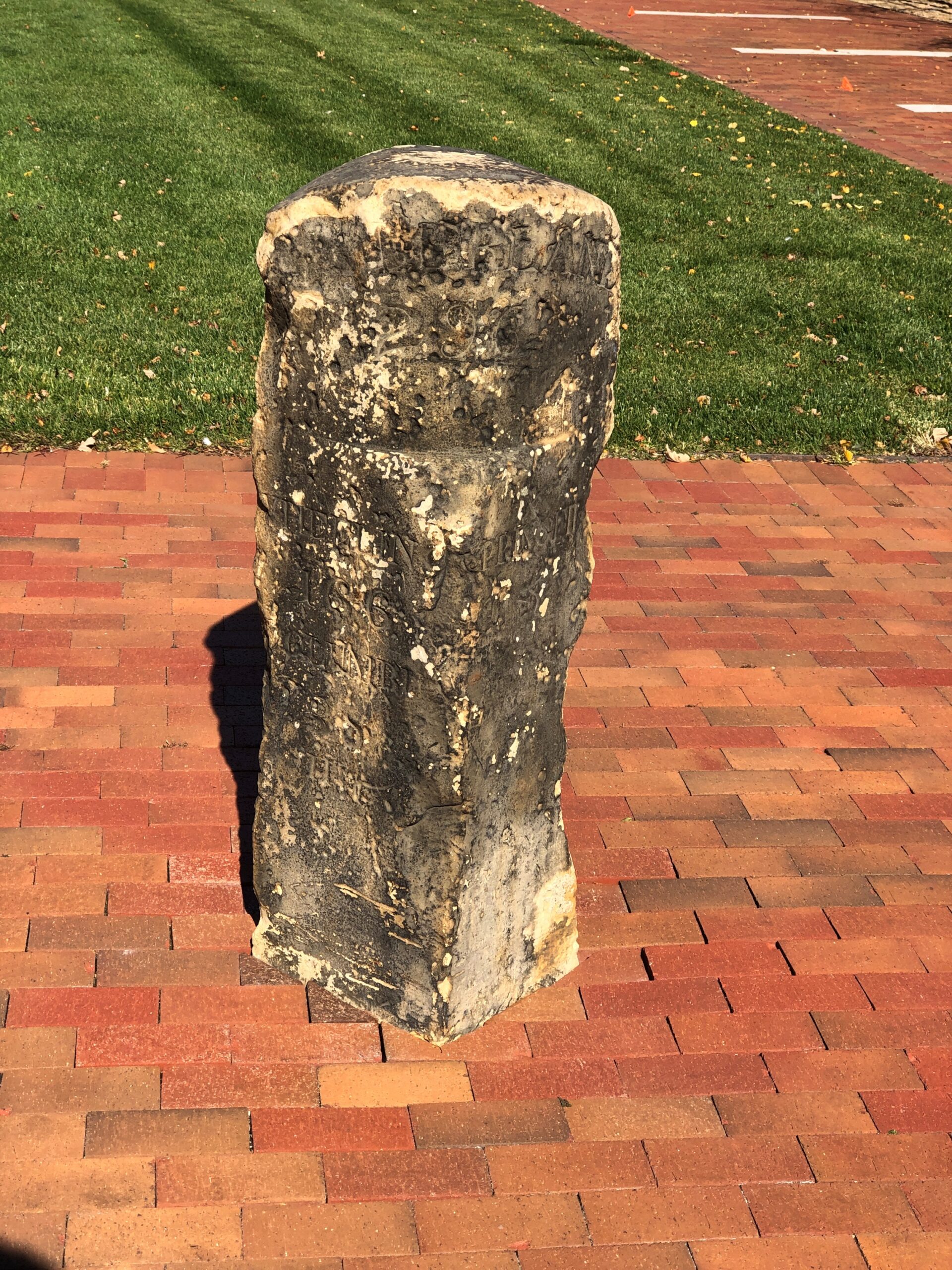
The National Road went, and still goes through Springfield, in the form of US 40. A milestone in Springfield marks the point at which the federal government quit paying for further westward expansion of the road. Anything else would be on the states, namely Ohio, Indiana and Illinois.

National Road Milestone, Springfield Ohio

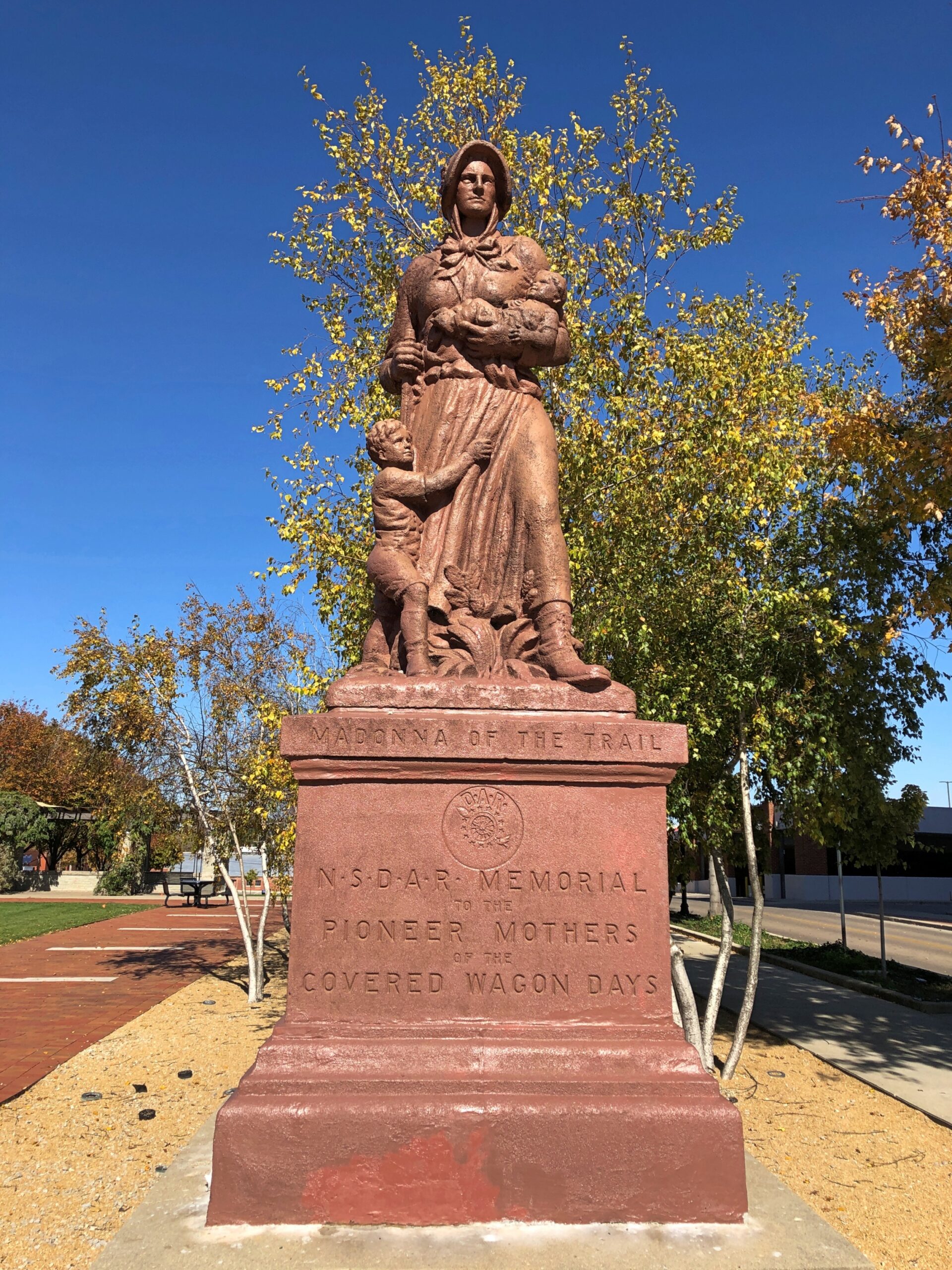
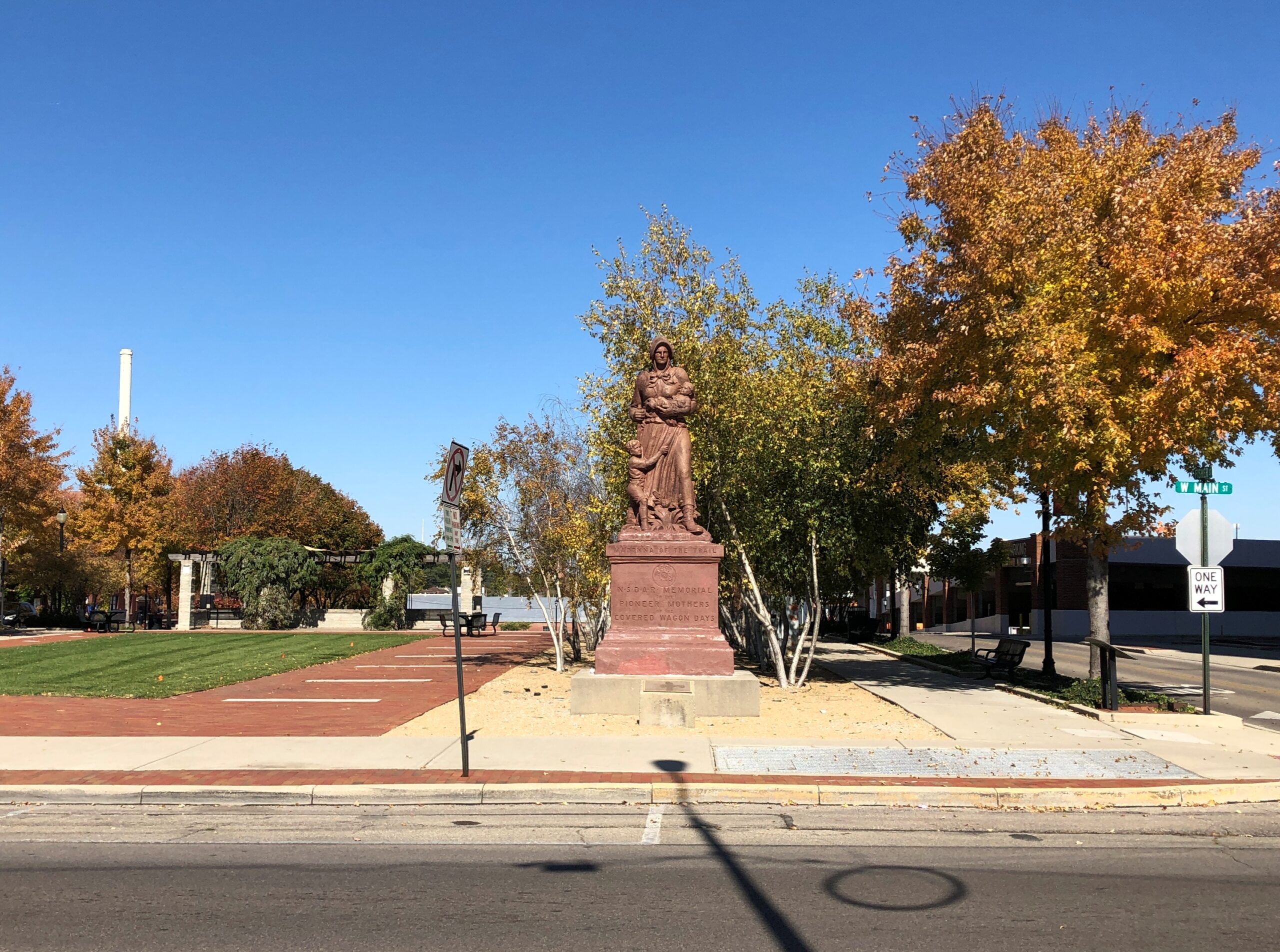
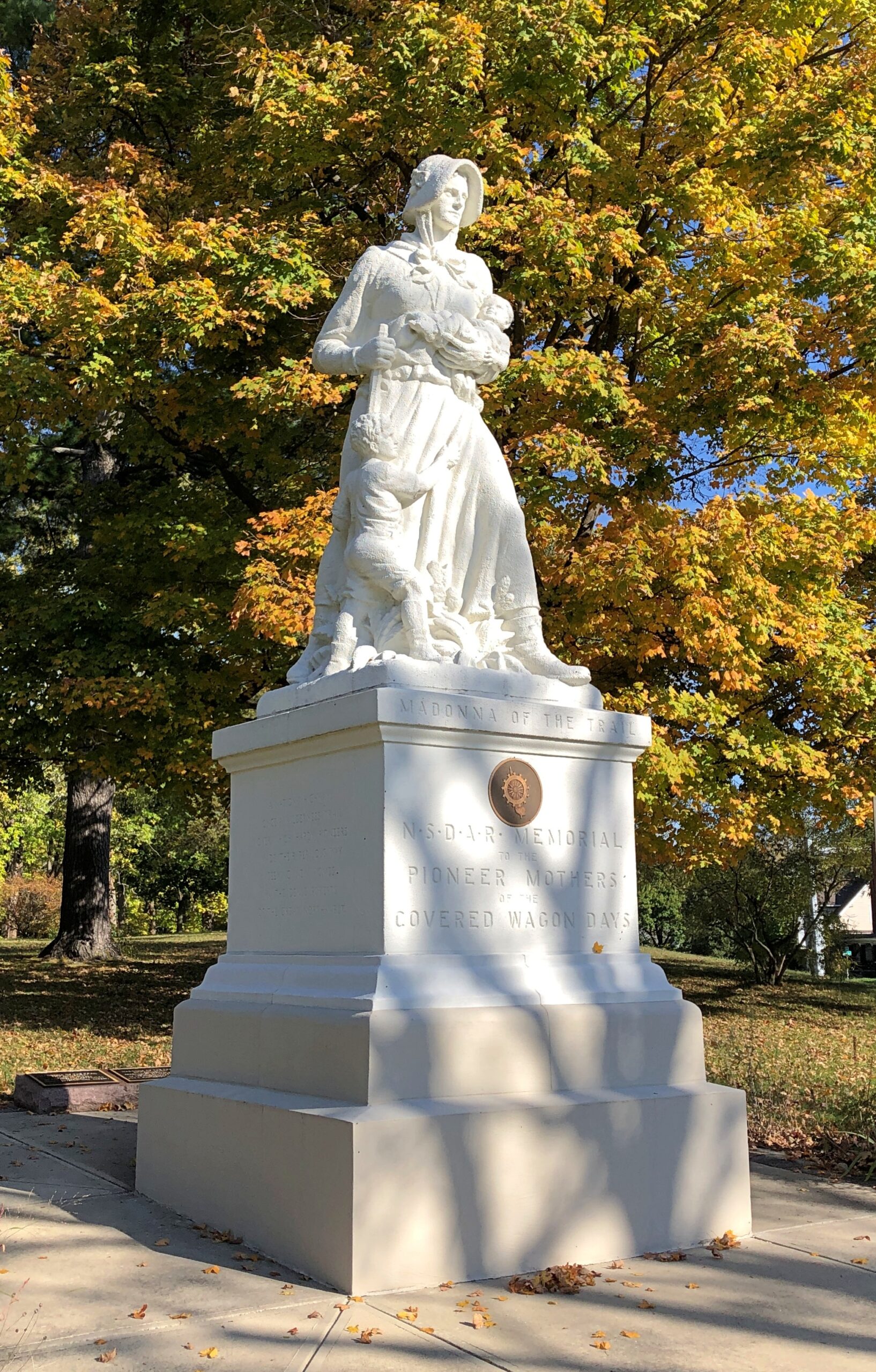
Later, after the National Road had become History, the Daughters of the American Revolution erected a series of statues along the route, and others to the west: “Madonna of the Trail.”

National Road Madonna of the Trail, Springfield Ohio

There are 12, with the easternmost of them along the National Road. Erected in the late 1920s, the Springfield one was renovated about 20 years ago.

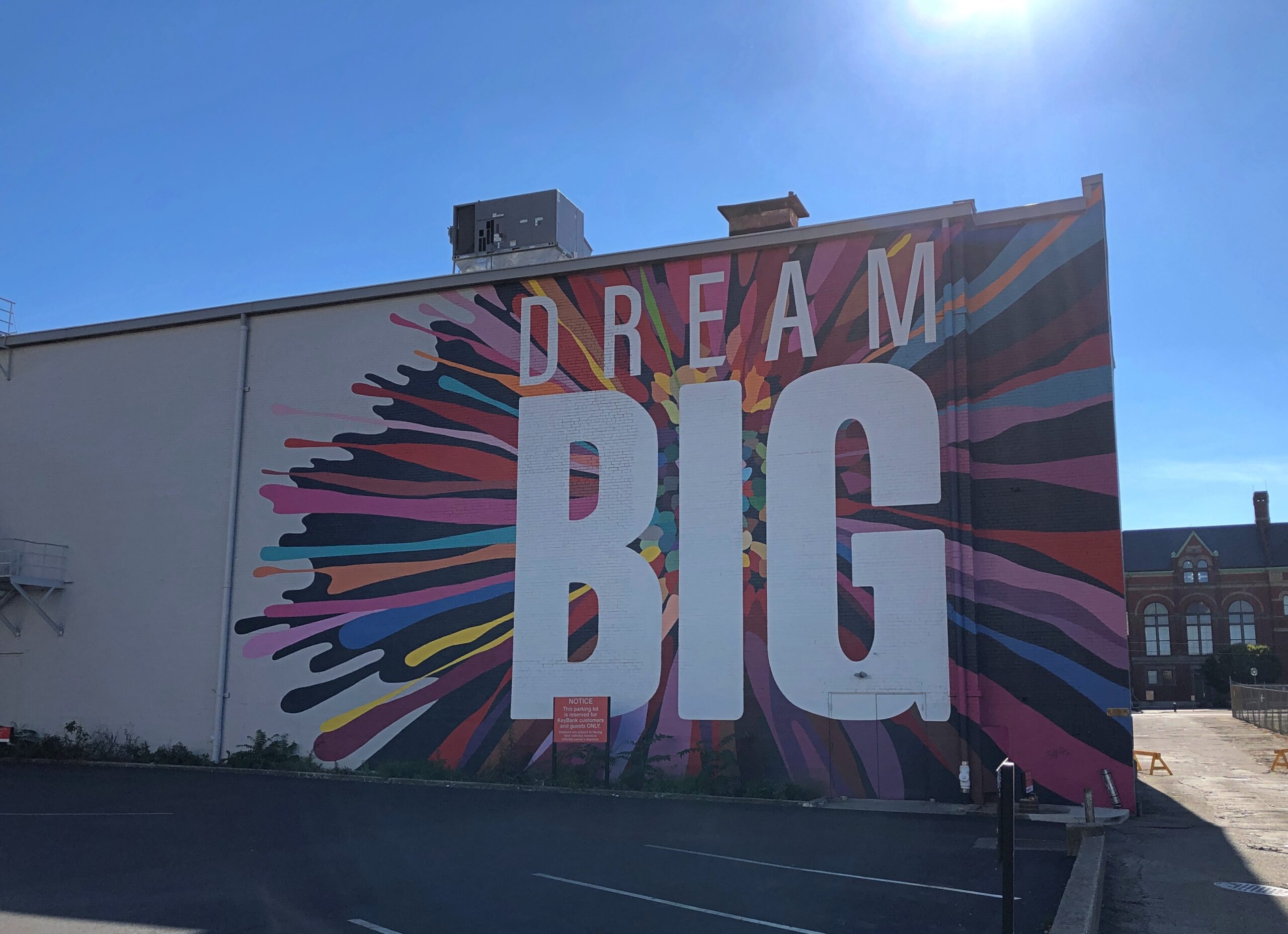
Nearby, passersby are urged to Dream Big.

Springfield Ohio

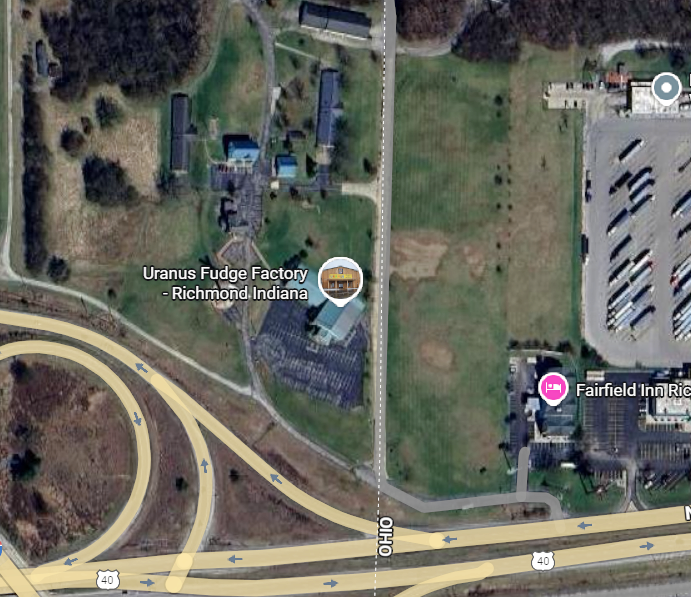
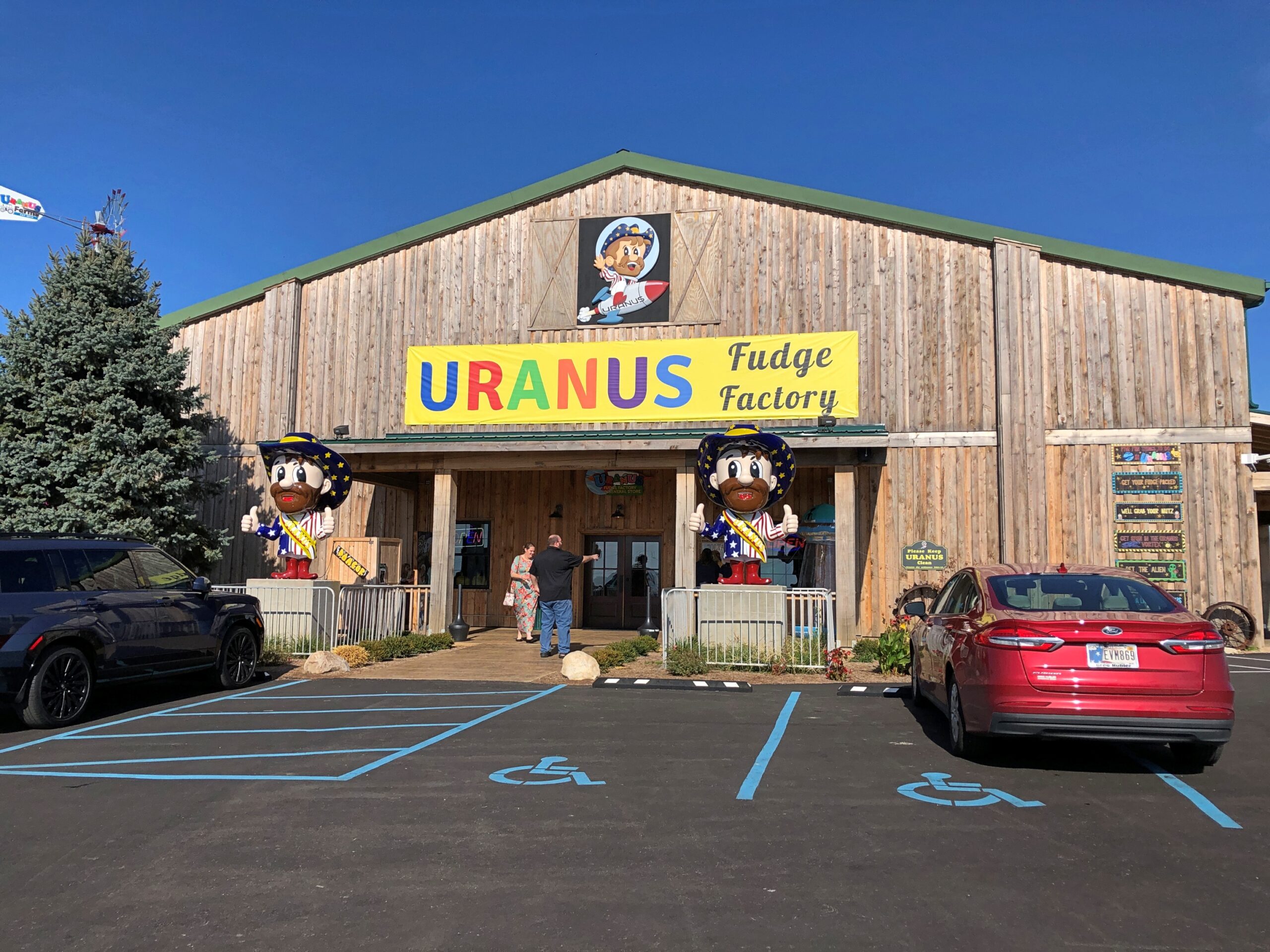
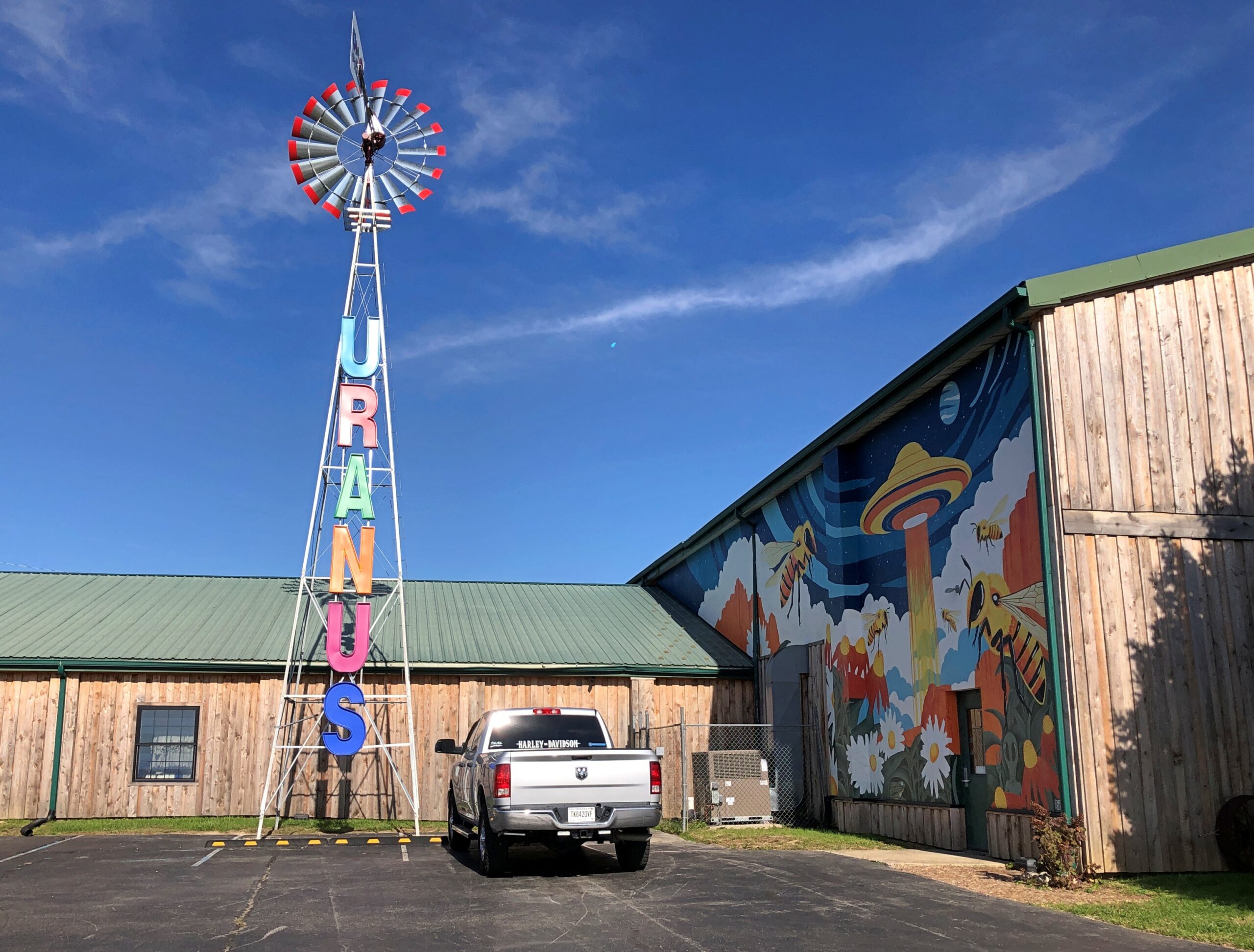
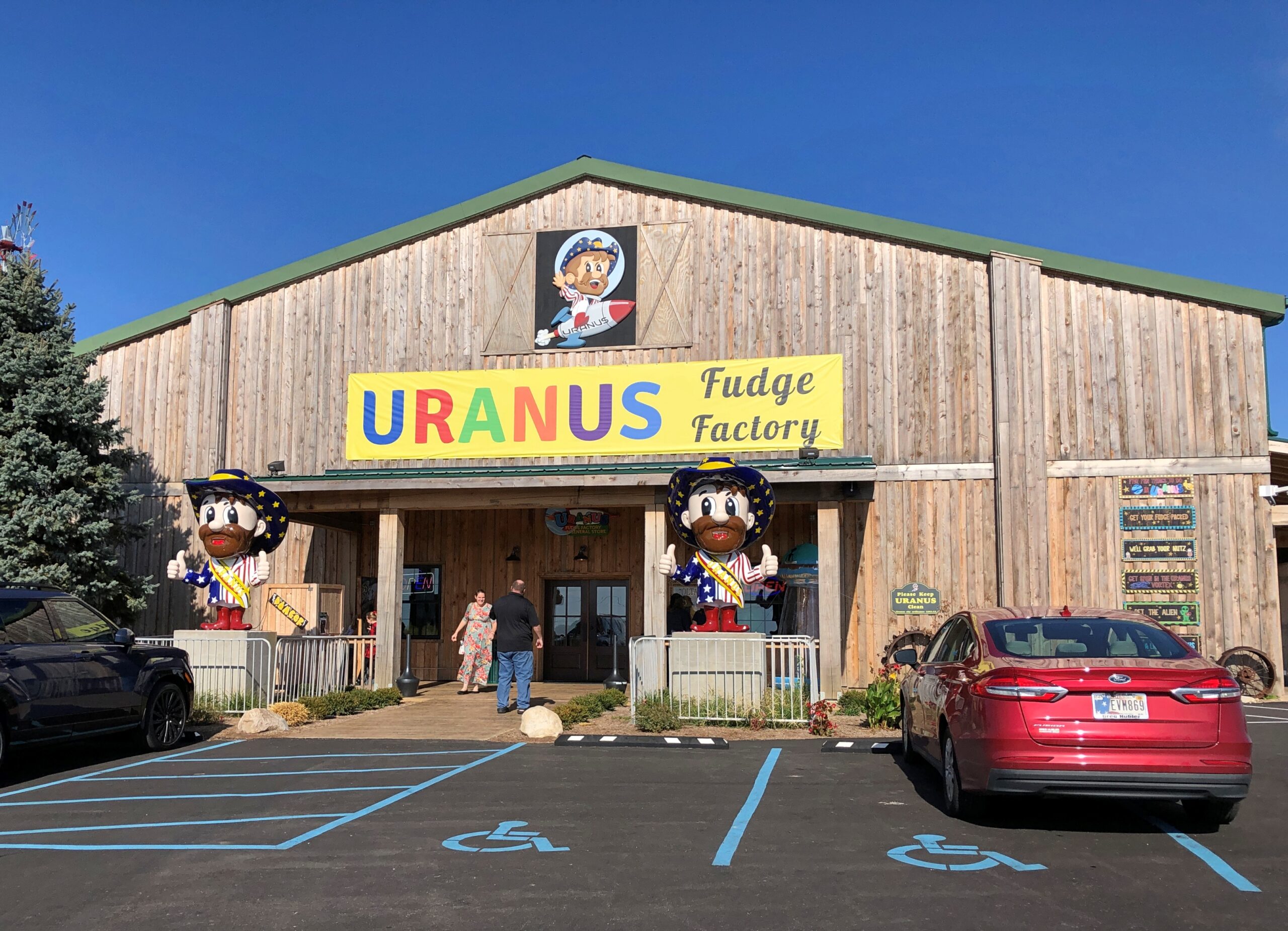
About an hour west of Springfield, at the border of Ohio and Indiana on I-70 – just barely inside Indiana – is the Uranus Fudge Factory. I had to stop for that.

Uranus Fudge
Uranus Fudge
Uranus Fudge

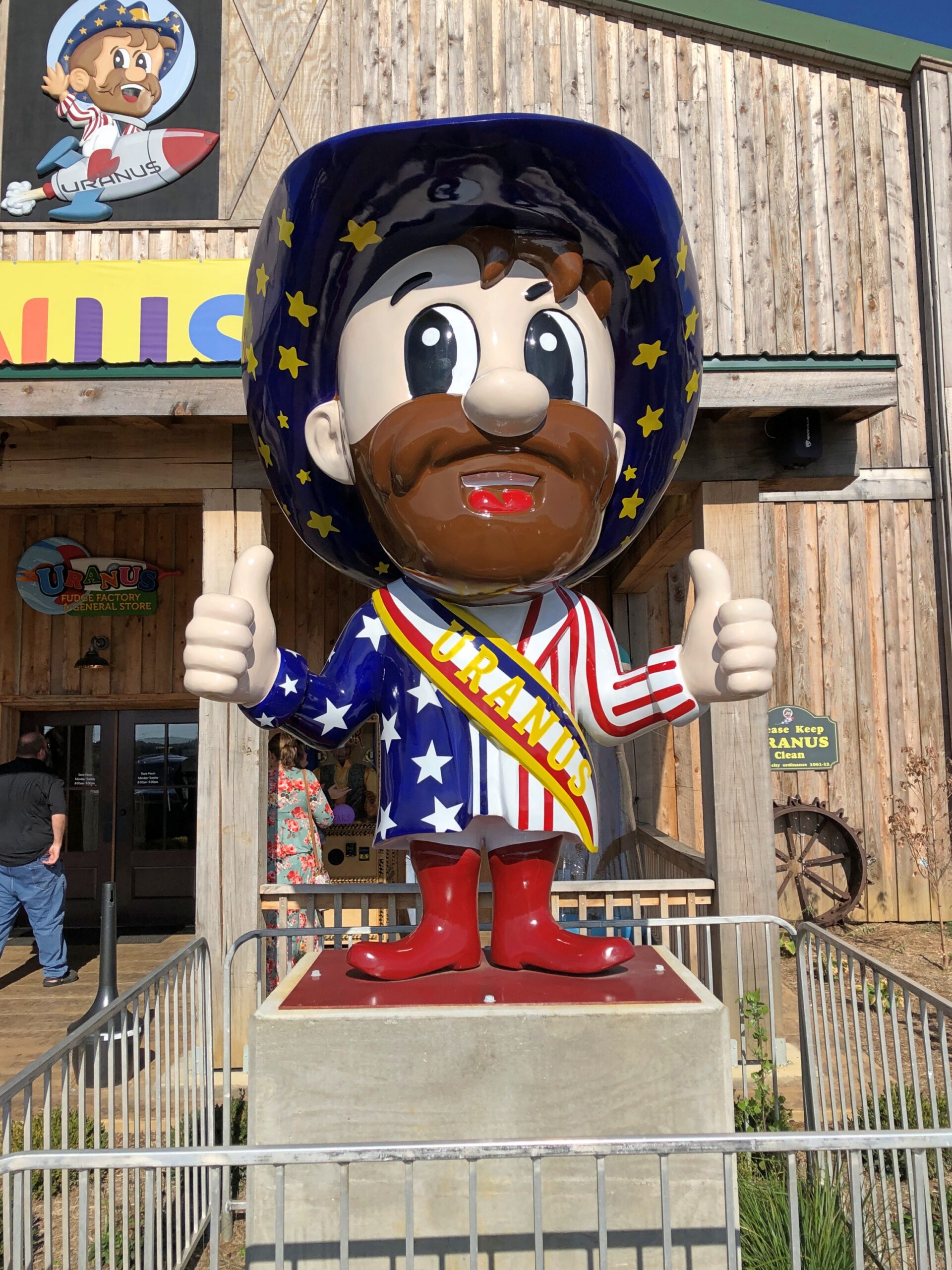
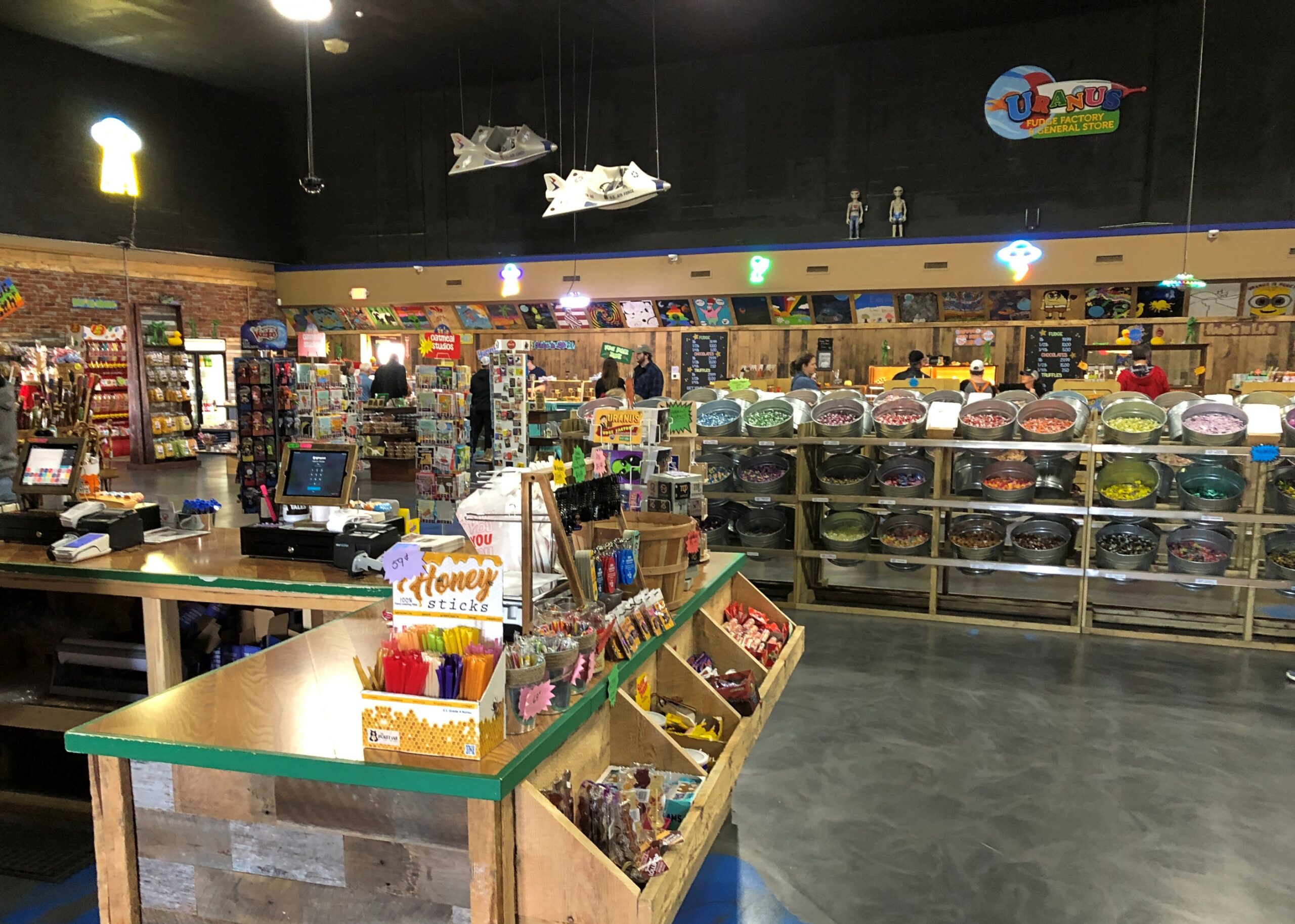
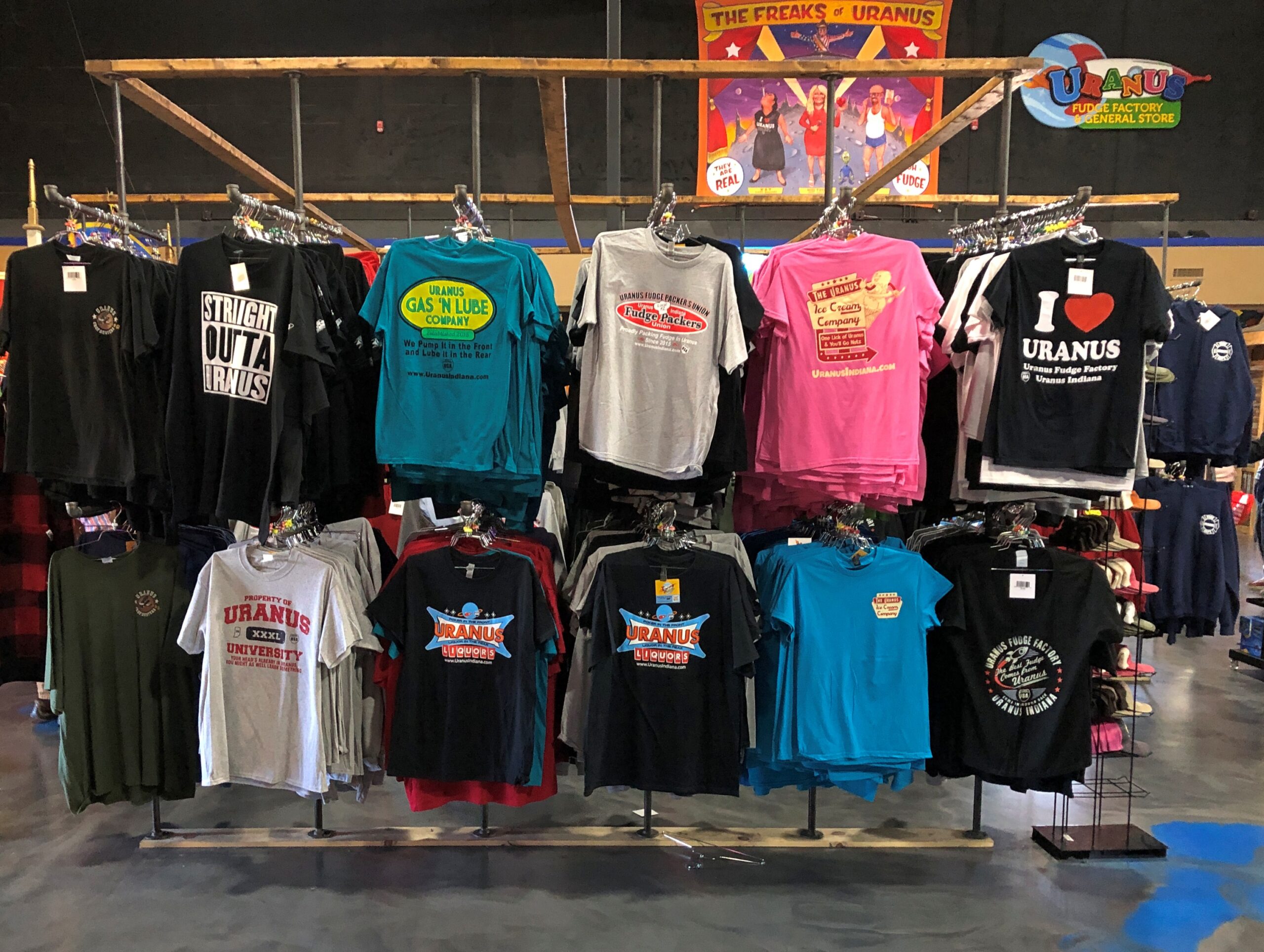
Sure, there’s fudge in there somewhere, but also a lot of gags involving the word Uranus (Your-anus). Examples can be found in the newspaper — an honest-to-God paper newspaper — that the store produces, The Uranus Examiner, and gives away. I have a copy. My kind of souvenir.

Sample front-page headlines from the Summer 2025 edition:

Breaking News: You Can Explore Uranus In Three Locations

Eating Their Way Through Uranus

Get A Lick Of Uranus

Sink Your Balls In Our Putt Holes

The second of those stories was about the 2nd Annual Eating Uranus Fudge Galactic Championship held at the Anderson, Indiana location in March. Apparently it was a Major League Eating-sanctioned event, and apparently MLE is a real thing. One Patrick Bertoletti won the 2nd championship at Uranus, putting away a bit more than nine pounds of fudge in about as many minutes.

Fudge is one thing, but mostly Uranus sells stuff. A lot of stuff.

Uranus
Uranus Fudge

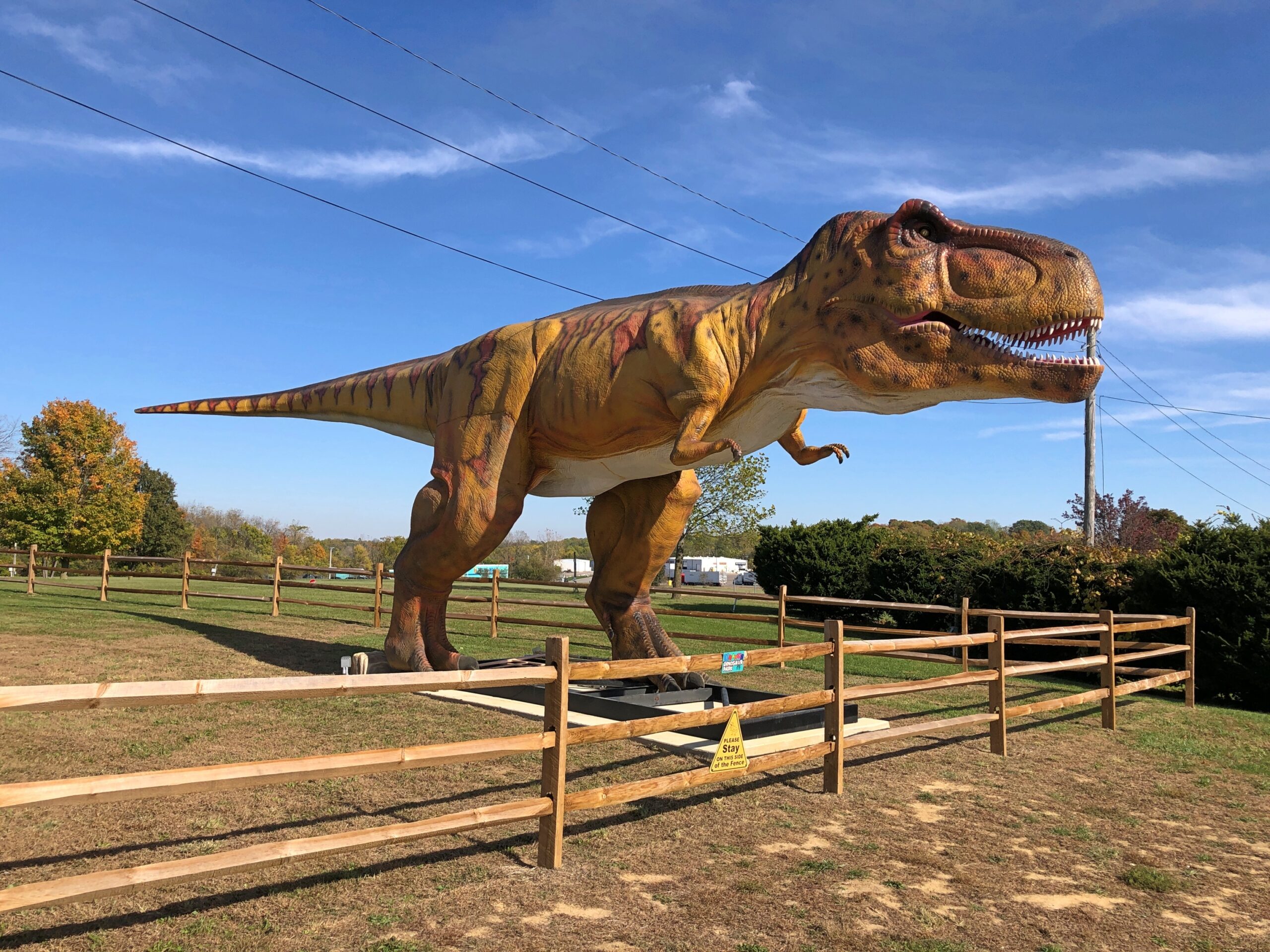
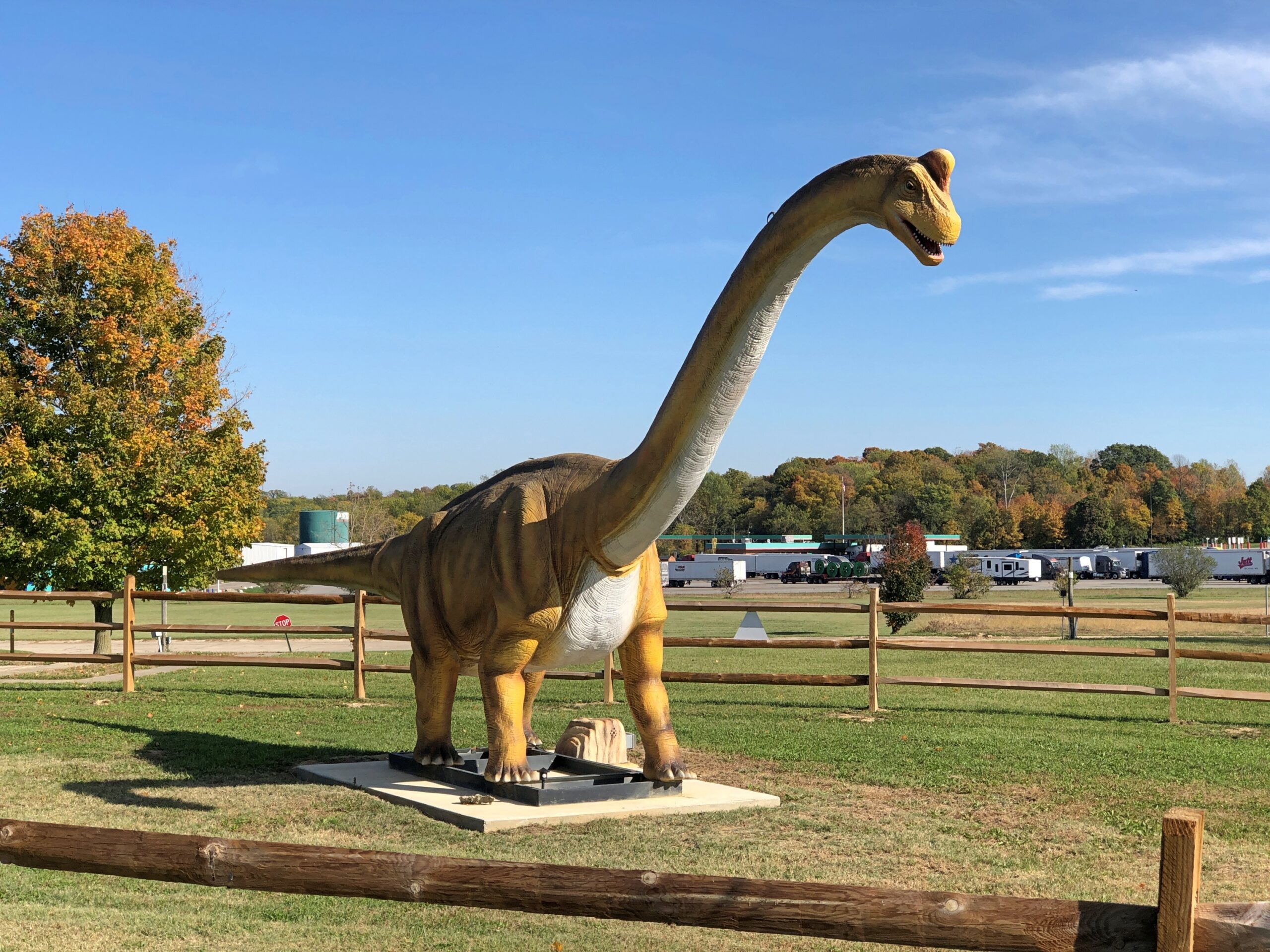
The Richmond, Indiana location is the third of three for Uranus, and I think the only one with dinosaurs —

Uranus Fudge
Uranus Fudge

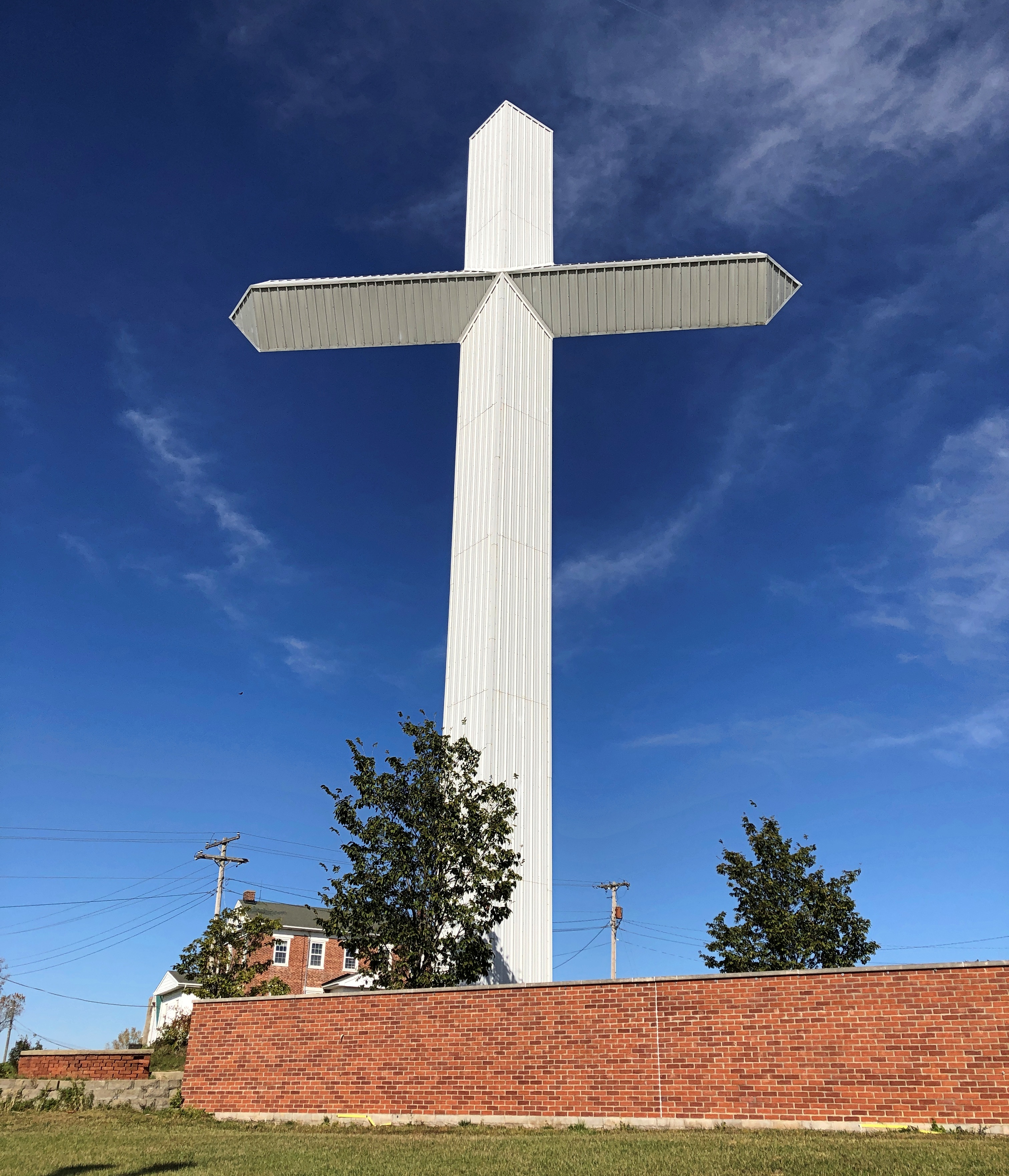
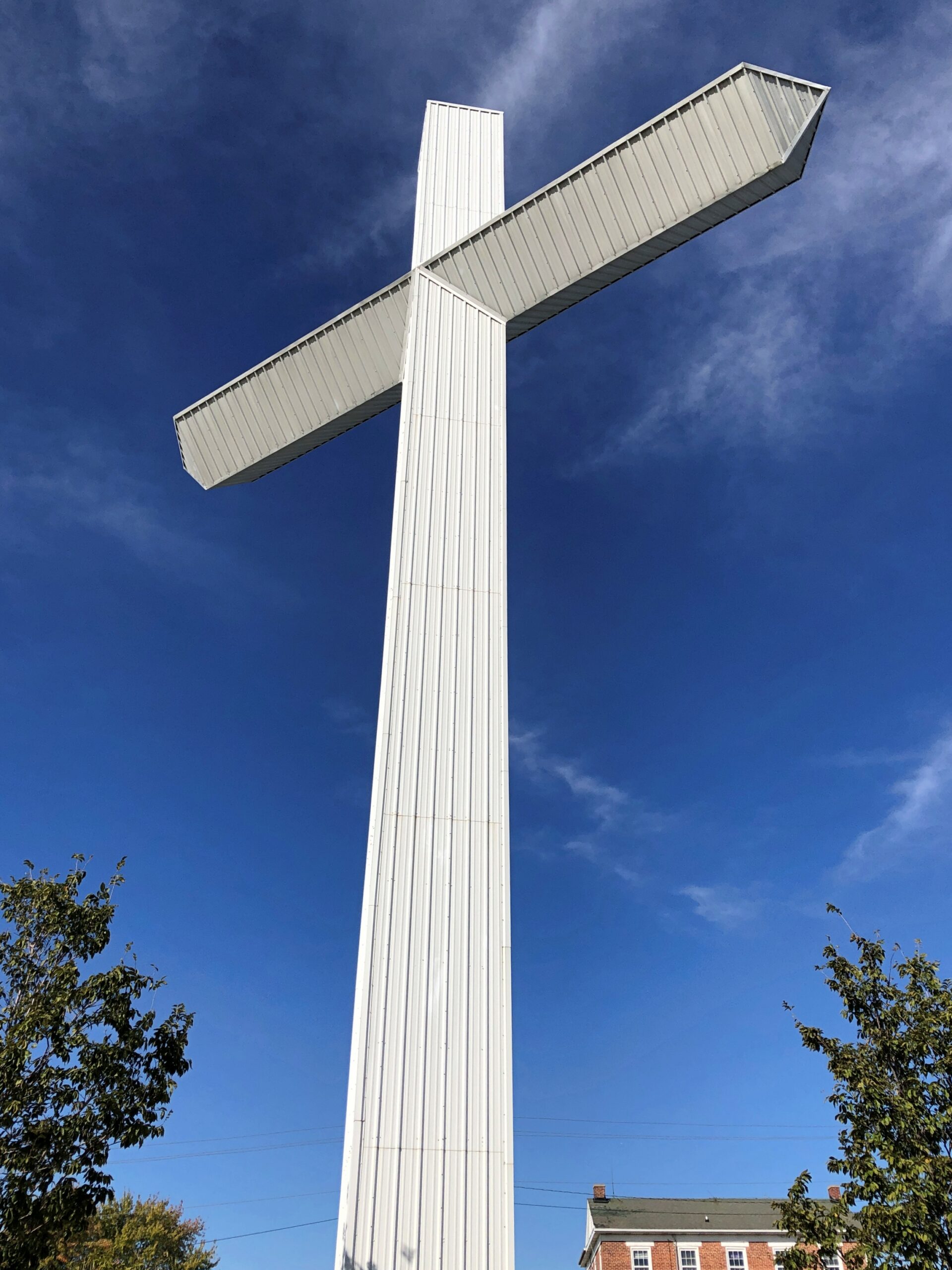
— and a 100-foot cross of corrugated steel over a metal frame.

Uranus Fudge
Uranus Fudge

Until about 10 years ago, the property belonged to New Creations Chapel, which also included a church building, boarding school for troubled teens and a Bible college. The ministry, for reasons its web site explains in some detail, sold the property to Uranus, including the cross.

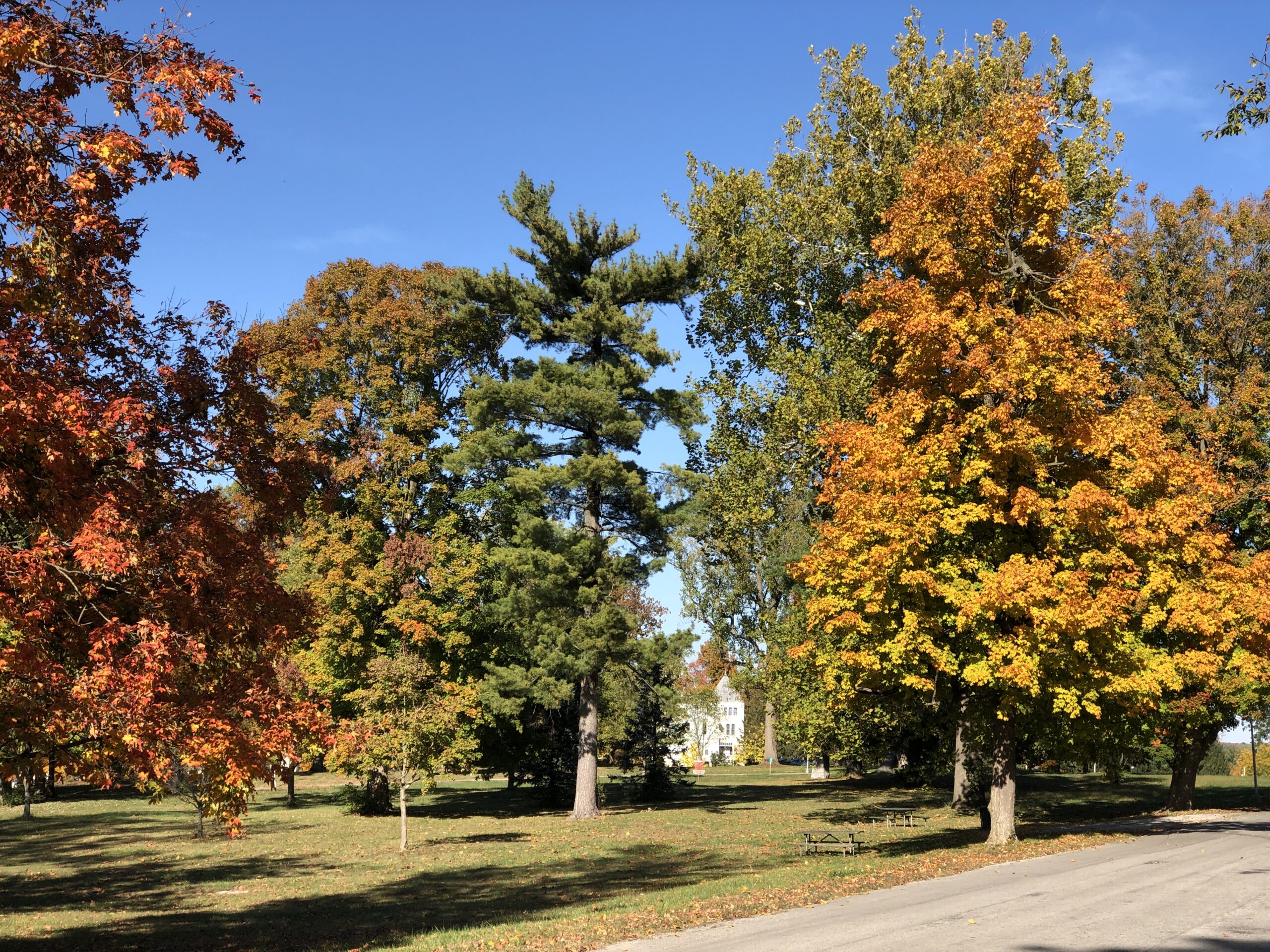
Heading through Richmond, Indiana, I stopped at an entrance to a large park to check my map. Glen Miller Park. A colorful spot in October.

Glen Miller Park, Richmond, Indiana

Not named after the bandleader, which would be Glenn Miller Park. “Glen Miller Park was established in 1885 and was named for Colonel John Ford Miller, who was a railroad executive during the late 1860s,” the city of Richmond says. “Colonel Miller bought the land from Nathaniel Hawkins in 1880, with the intention of transforming the land into a park.”

So Glen Miller as in glen, a term that evokes pleasant Scottish valleys. I was just about to be on my way when I noticed a statue.

Glen Miller Park, Richmond, Indiana

It was another of the 12 Madonna of the Trail statues, located at the edge of the park, where it meets US 40. Unlike the earlier one in Springfield, I hadn’t sought it out. It was just there. One’s travels, like life, can be strange sometimes.

Nor’East Drive ’25

I didn’t realize until last night that I’d driven through some geographic oddities over the last two weeks, on my way to the Northeast and back. Actually state border oddities, such as the Erie Triangle in Pennsylvania, the curious division of the Chesapeake Peninsula, and the panhandle of Maryland.

Except they aren’t really oddities. They just look that way when you’re a kid (or an adult) poring over U.S. maps or putting your state puzzle map together for the nth time. How is it that Pennsylvania has that small chimney? Why didn’t Delaware get more of the Chesapeake Peninsula? What’s the deal with the western extension of Maryland, which narrows to only a few miles at one point?

There are historic reasons for all the shapes, both rational and arbitrary, which are the subject of books and at least one TV show. Lands were granted and claimed, borders were surveyed and quarreled over, and deals and court cases and Congress eventually settled the shapes.

The border oddities may have local and legal significance, but they’re also there to enjoy. Regular borders aren’t nearly as much fun. Sure, it’s interesting that Colorado and Wyoming look about the same, but I always liked the fact that New Mexico has a stub and Idaho tapers to meet Canada, just to name two Western examples, because not all the fun shapes are in the East. Just most of them.

To reach these border areas, I drove 2,853 miles, starting October 14, from northern Illinois to the East Coast and back, through (in order) Indiana, Michigan, Ohio, Pennsylvania, New York state (and city), New Jersey, New York (city and state) again, Connecticut, Massachusetts, Rhode Island, Connecticut again, New York state (and city) again, New Jersey again, Delaware, Maryland, West Virginia, Pennsylvania again, West Virginia again, Ohio again and Indiana again, arriving home today. I got tired just typing all that out.

The original impetus for the trip was to visit New York City during its Open House event. Unlike a rational person, who would have flown there and back, I decided to drive, and let Yuriko fly there and back. NYC is achievable from metro Chicago in two driving days. I decided not to do that, either, and stretch things out to fill in some travel lacunae of mine.

For instance, I wanted to visit Eire, Pa., because I’ve always bypassed it, and many Americans can say the same. I wanted to look around Long Island, or at least part of it, for the same reason. I wanted to spend the night in both Rhode Island and Delaware: the last two states in which I’d never done so. I wanted to see the capitols of New Jersey, Delaware and Maryland, toying with the idea of Pennsylvania too, though I decided it was out of the way. I wanted to see historic sites associated with a number of presidents along the way, and maybe a battlefield or two.

I really wanted to visit a friend in New York, and my nephew Robert, and friends in the Boston area. I’m glad to report that I did so. This has been a year of visiting old friends and relations. I’d like every year to be that way.

I had a much longer list of places to visit, and added to it every time I looked at a map, paper or electronic, since I now use both, and when I was driving — so many possibilities. But there are only so many hours in the day and so much energy in my aging body. Still, I did much of what I set out to do, with one major exception due to forces beyond my control. National Park Service sites were off the table, for reasons all too obvious and not worth rehashing here. So the homes of FDR and TR, along with Antietam and Harper’s Ferry, went unvisited. Some other time, I hope.

No matter. I visited a good number of cities and towns, drove roads large and small, empty and insanely crowded, and enjoyed a few exceptional meals and many very good ones. I saw churches and cemeteries, some historic places not managed by the federal government, and encountered the largest of the many No Kings events. I read plaques. I chatted with strangers and clerks in stores. I took a swim in Massachusetts and long walks in New York. I hadn’t planned to walk across the Brooklyn Bridge again, but Yuriko had that idea, and across we went. I listened to a lot of terrestrial radio, good, bad and indifferent. I burned gas priced between about $2.70 and $3.30 a gallon. I paid entirely too many tolls, because the Northeast is lousy with toll roads and bridges — but driving across some of those bridges, especially the Bay Bridge in Maryland, was a grand experience, and surely worth the toll.

Something I didn’t anticipate, but which improved the trip immensely, was fall color. I should have anticipated it, but I suppose I had other things on my mind. When I got to New York state, driving west to east, it became clear that I’d accidentally designed myself a fall foliage excursion. The trees were gorgeous there, and in NYC (especially Prospect Park), Long Island, and parts of New England, and in Delaware and Maryland all the way across its panhandle. Even Ohio and Indiana had some nice color when I got there, and here at home too.

Prospect Park leaves

One more thing: unexpected oddities along the way. It’s important to watch out for those.

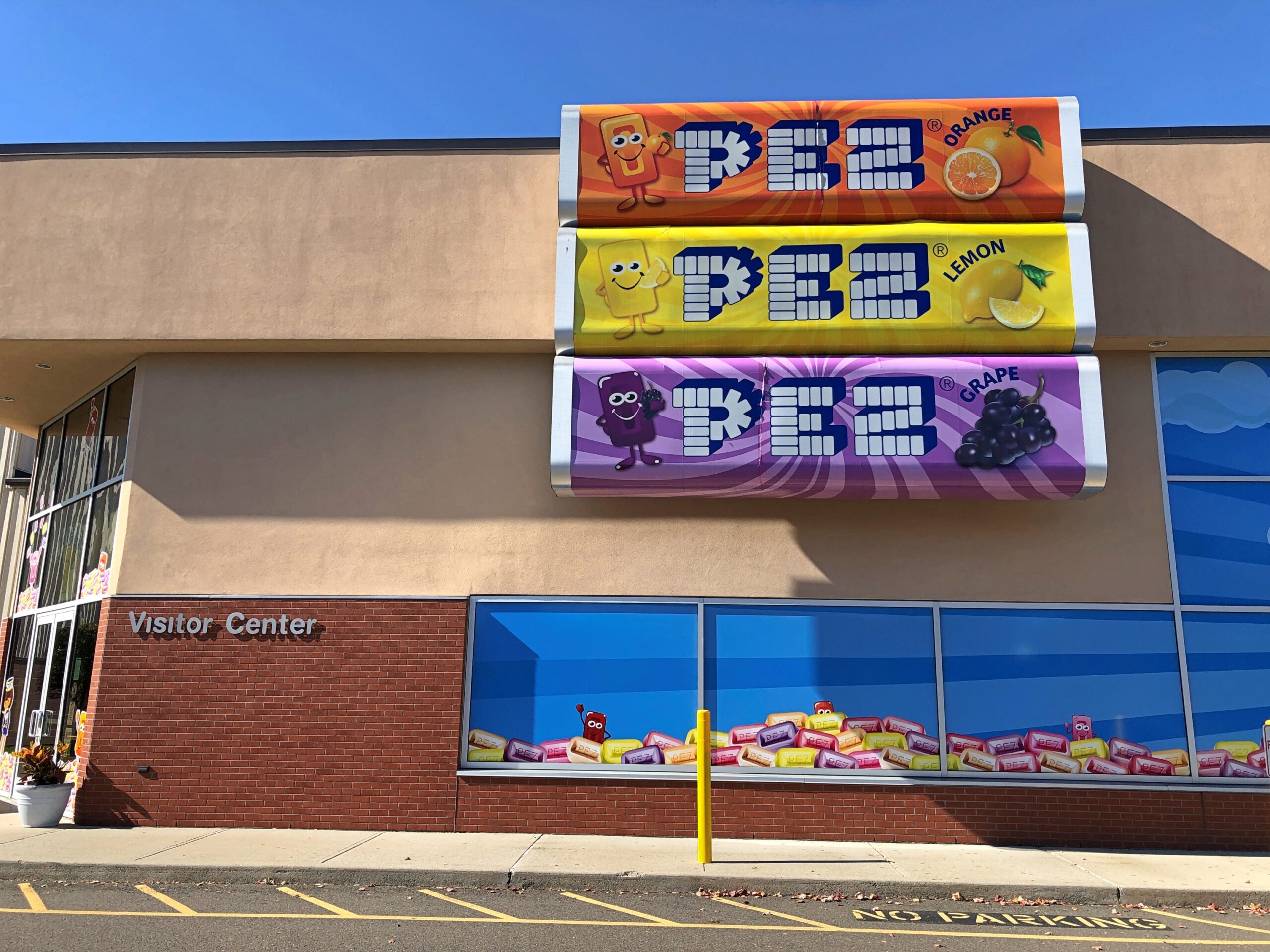
In Orange, Connecticut, I noticed a sign for the Pez Visitor Center. I had to see that.

Pez Visitors Center

Earlier today, at the border between Ohio and Indiana, I noticed Uranus. I had to stop.

Uranus

Turns out there’s more than one; I’d only ever seen the one in Missouri (the original) in passing, never stopping. But I did this time. Now I can say I’ve been to Uranus.

Gone the Way of Columbia Wearing a Phrygian Cap

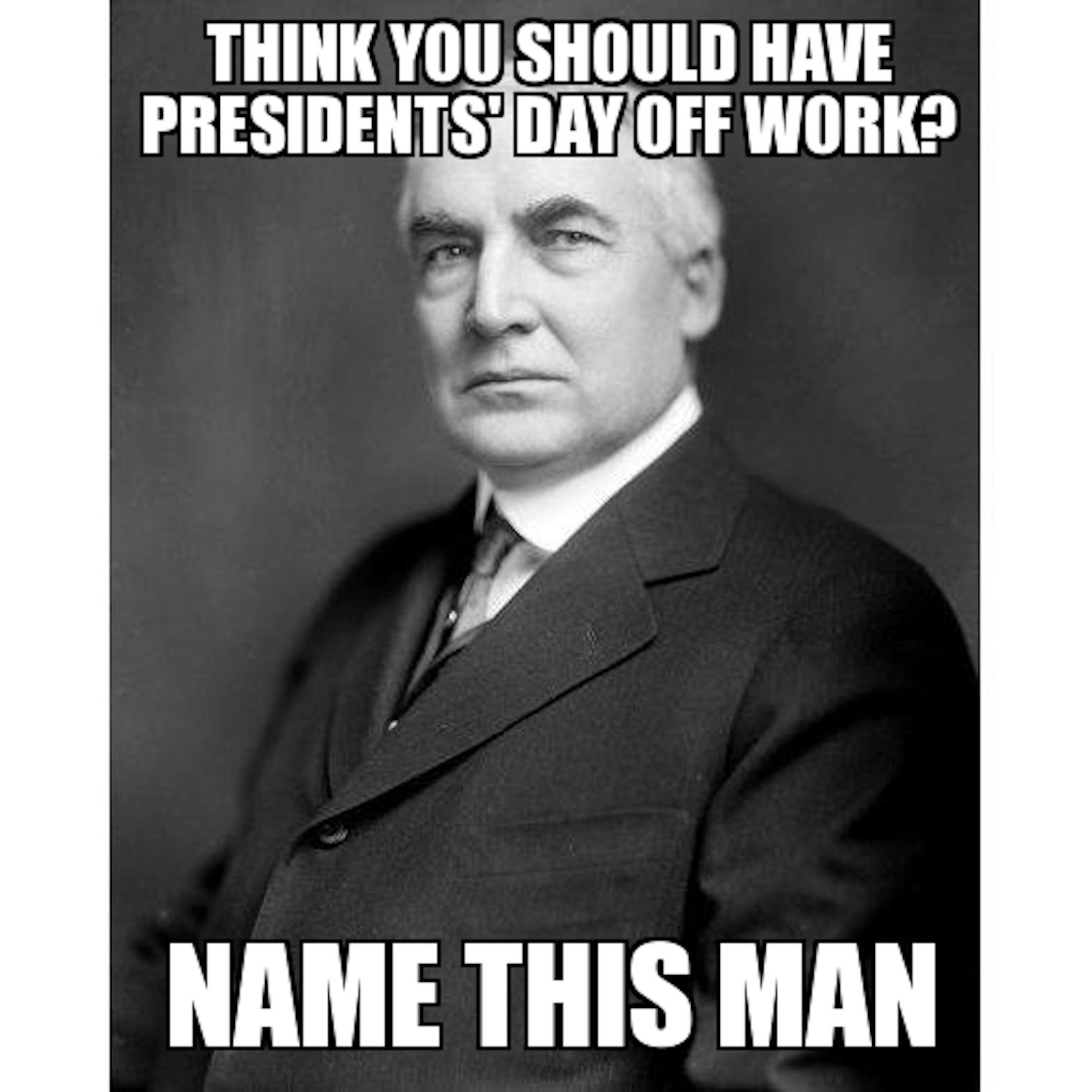
A few years ago, a meme about Presidents Day came to my attention. The text: Think you should have Presidents’ Day off work? Name this man.

The image was that of Warren Harding. For me, that was easy. Maybe not so much for a lot of people, though I suspect no survey about President Harding’s enduring fame has ever been done.

A better obscure president for the meme would have been, say, James Garfield or Rutherford B. Hayes or Benjamin Harrison, since Gilded Age chief executives tend to merge into a single hazy gray-bearded visage, except of course for the moustachio’d rotundness of Chester A. Arthur and Grover Cleveland.

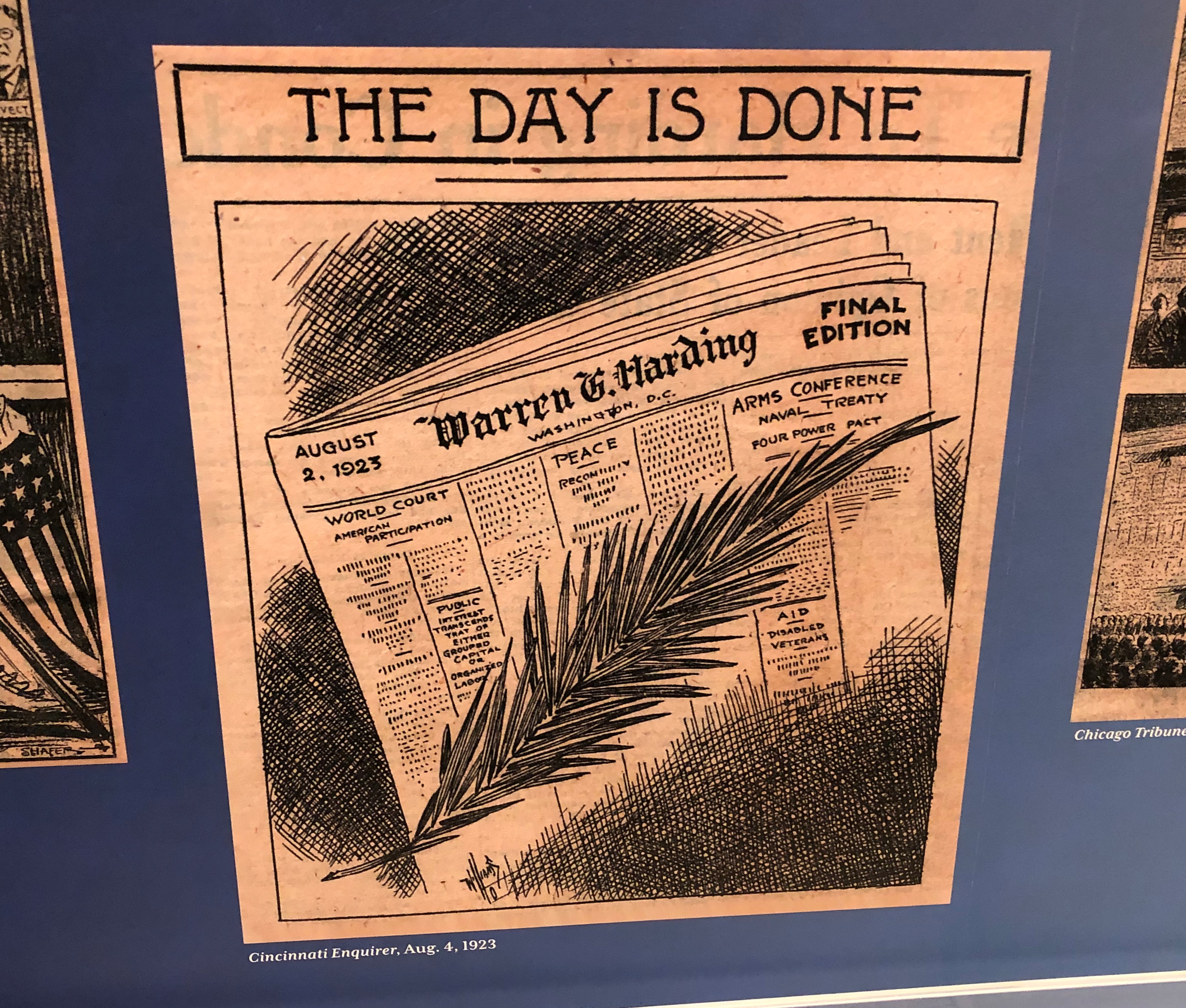
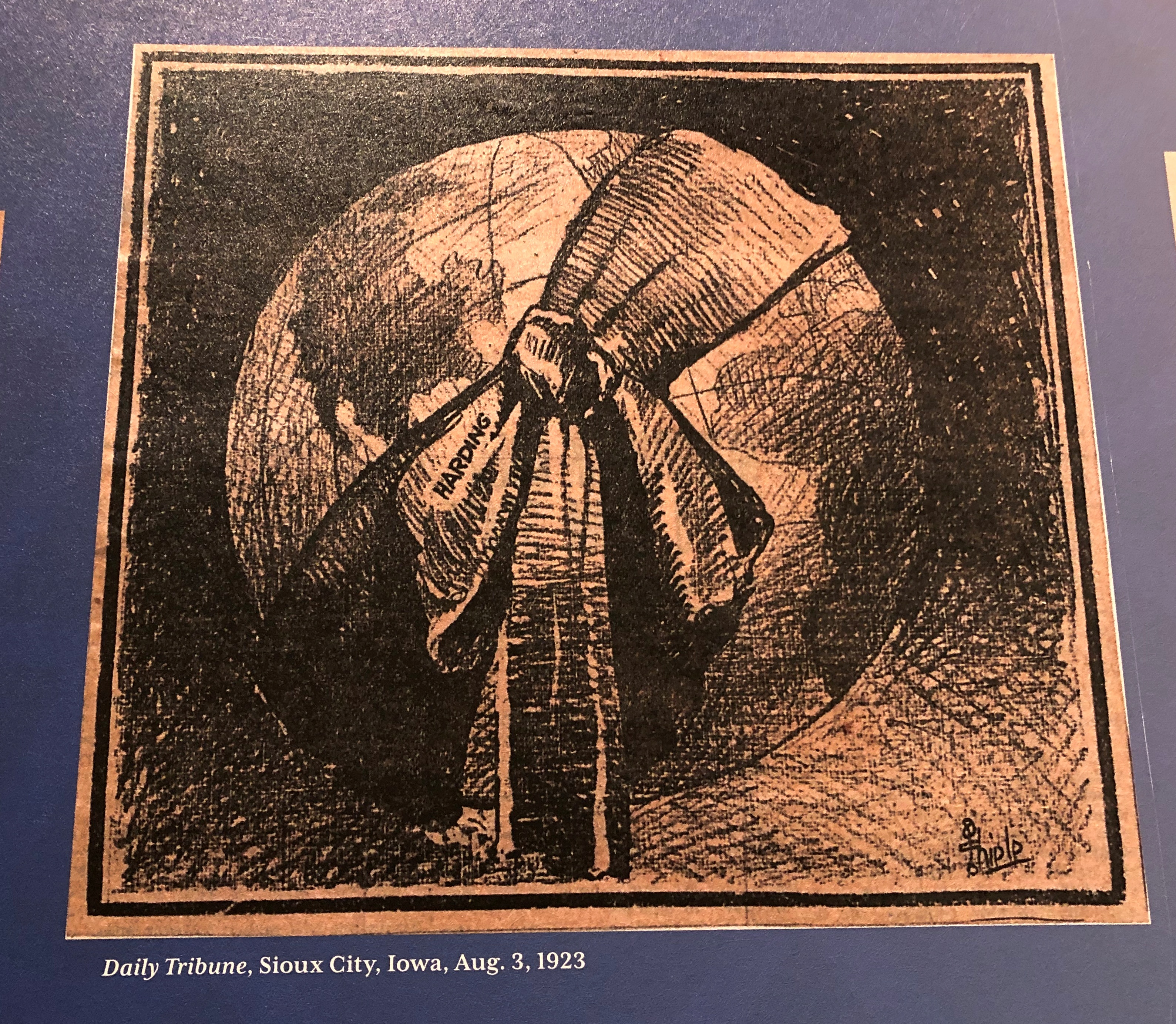
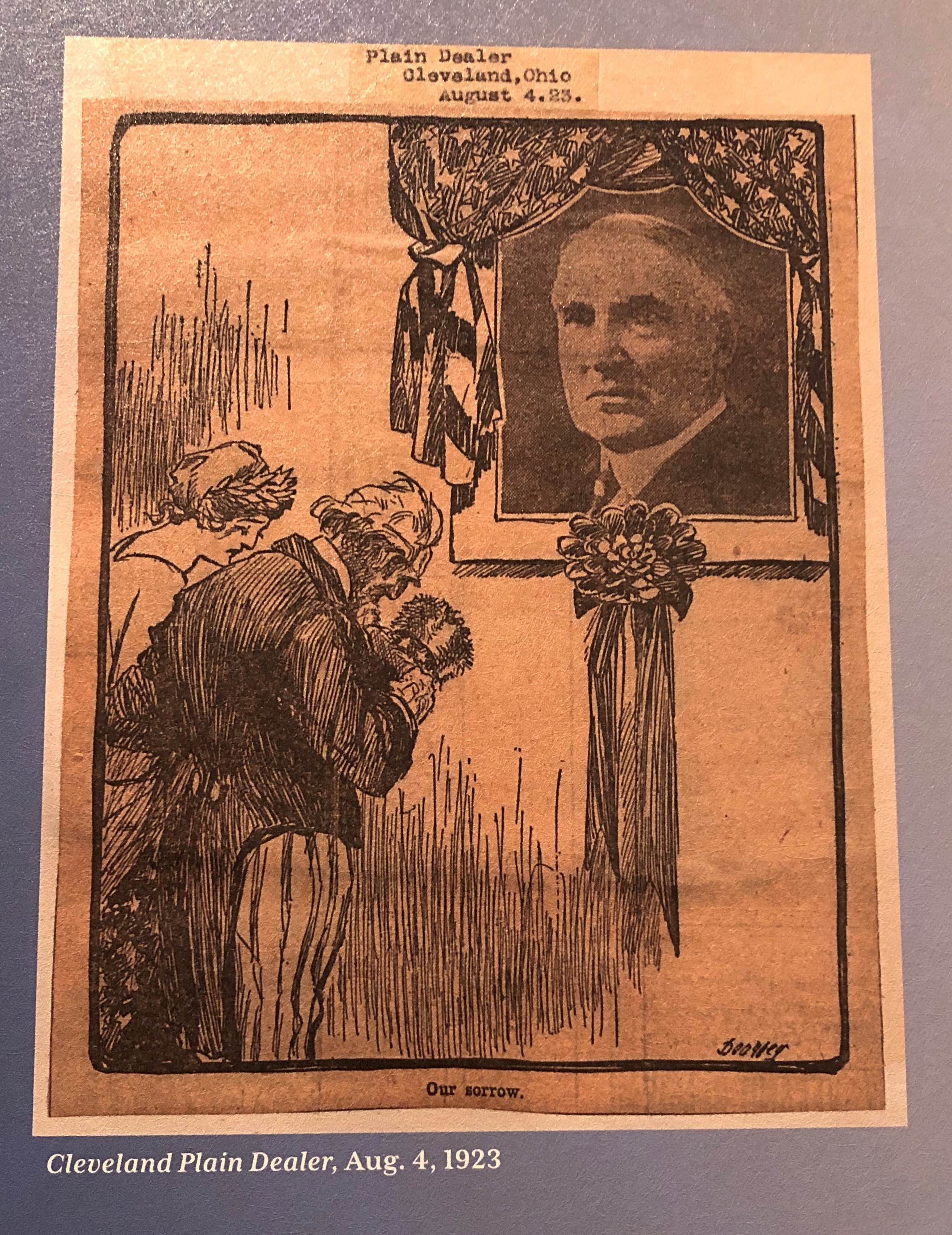
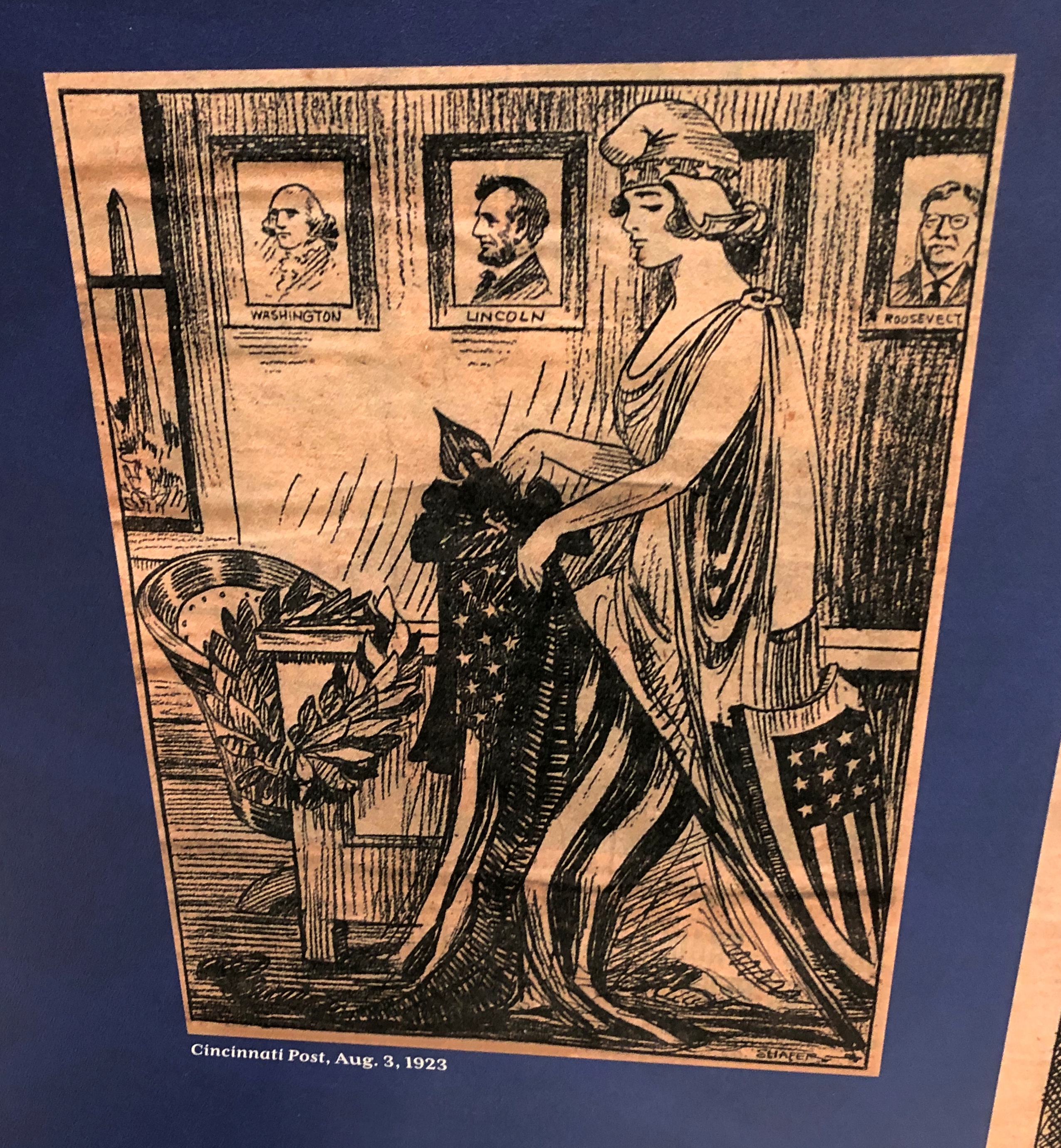
Fame wears thin. That came to mind this time last year at the Harding library and museum in Marion, Ohio. Among a number of other interesting artifacts, the museum posted newspaper reactions to the president’s unexpected death on August 2, 1923.Warren G Harding death editorial cartoons Posted in Marion, Ohiov Warren G Harding death editorial cartoons Posted in Marion, Ohio Warren G Harding death editorial cartoons Posted in Marion, Ohio Warren G Harding death editorial cartoons Posted in Marion, Ohio

Note that Columbia is wearing a Phrygian cap. Whatever happened to Phrygian caps? Whatever happened to Columbia in editorial cartoons? They just faded away. Something like the memory of Harding, so vivid once upon a time.

Newspaper editorial cartoons don’t necessarily capture public sentiment, but I understand Harding was a popular president in his lifetime. In terms of reputation, then, he got out while he still had a good one. Not long after, the scandals of his administration came to light, along with allegations of an illegitimate daughter (which were true). A hundred years later, he’s obscure enough to meme-ify, except among historians, who don’t like him.