Looks like we’ve hit the mid-July stride of chamber of commercial weather, with low 80s F for highs, high 60s for lows, for some days ahead. On the other hand, standard forecasts don’t include smoke, which could well make a comeback in the coming days.
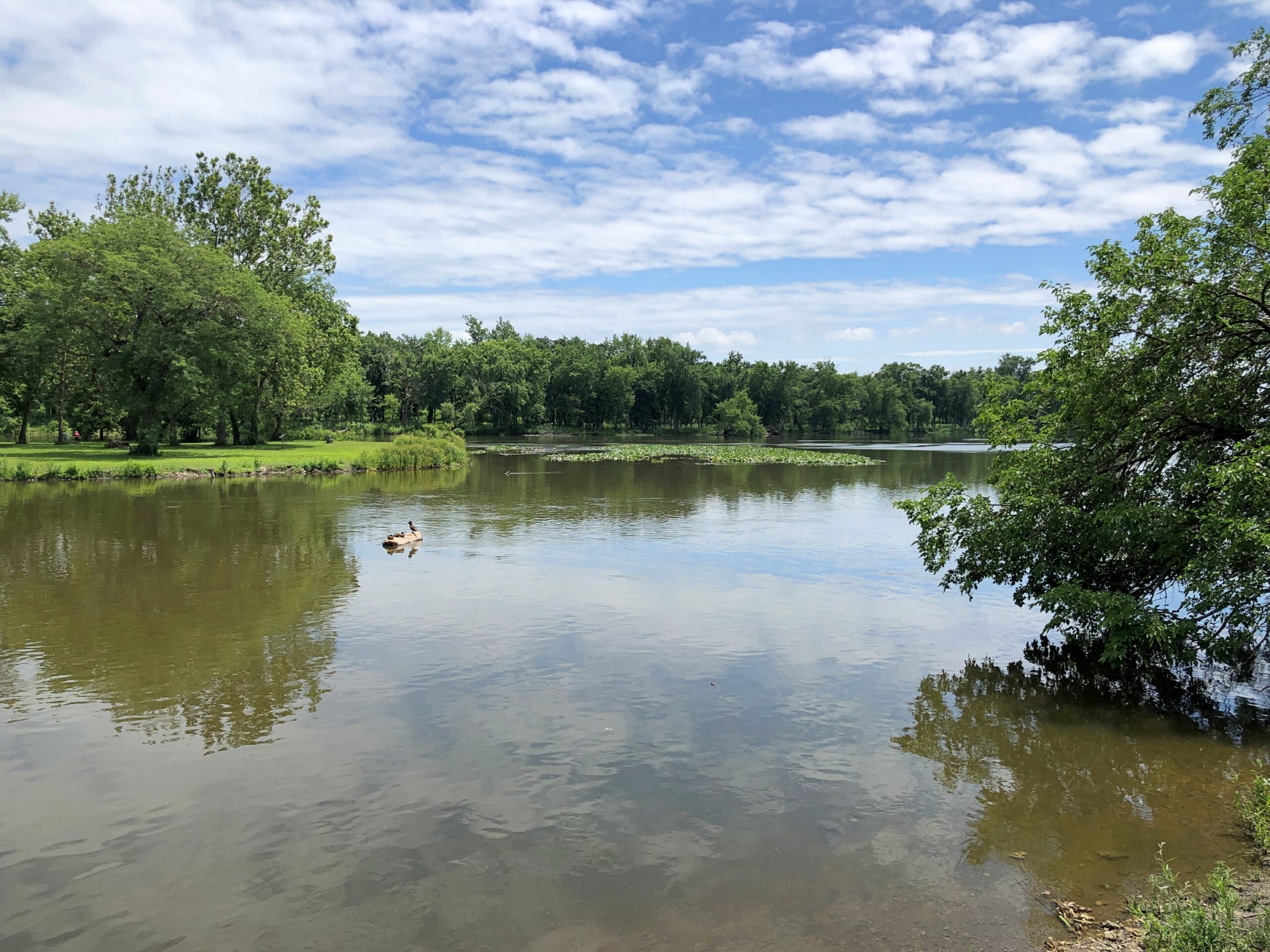
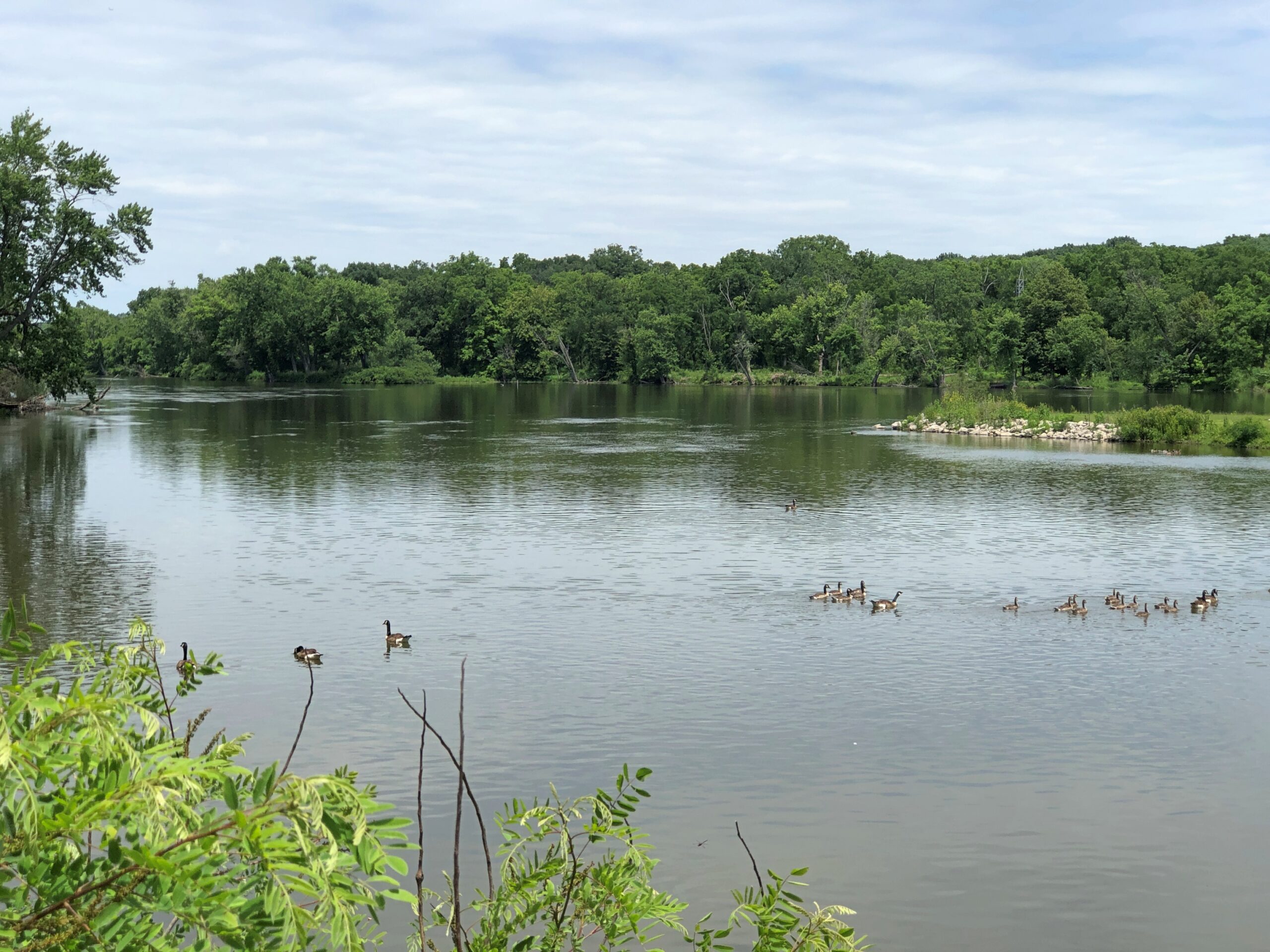
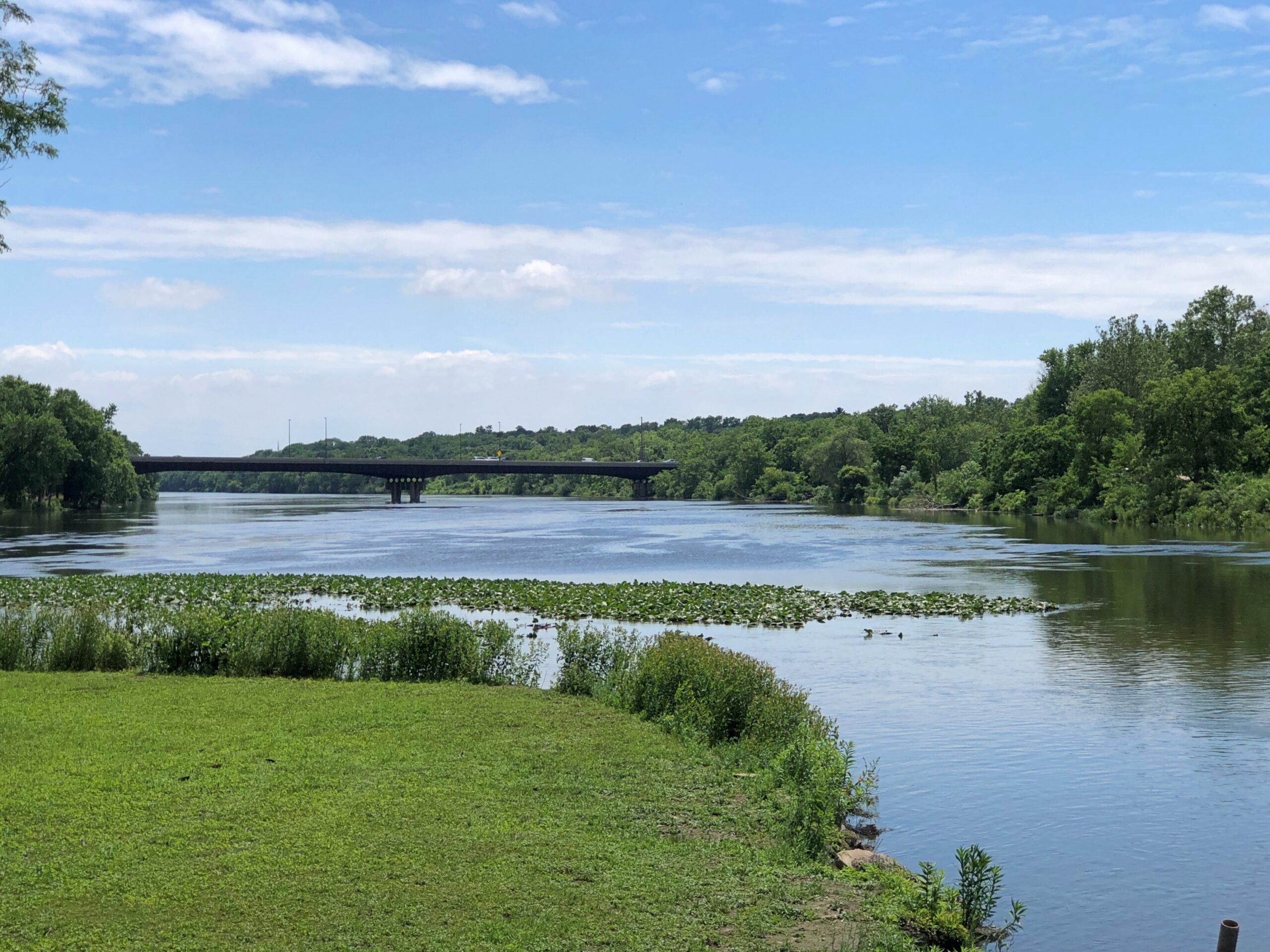
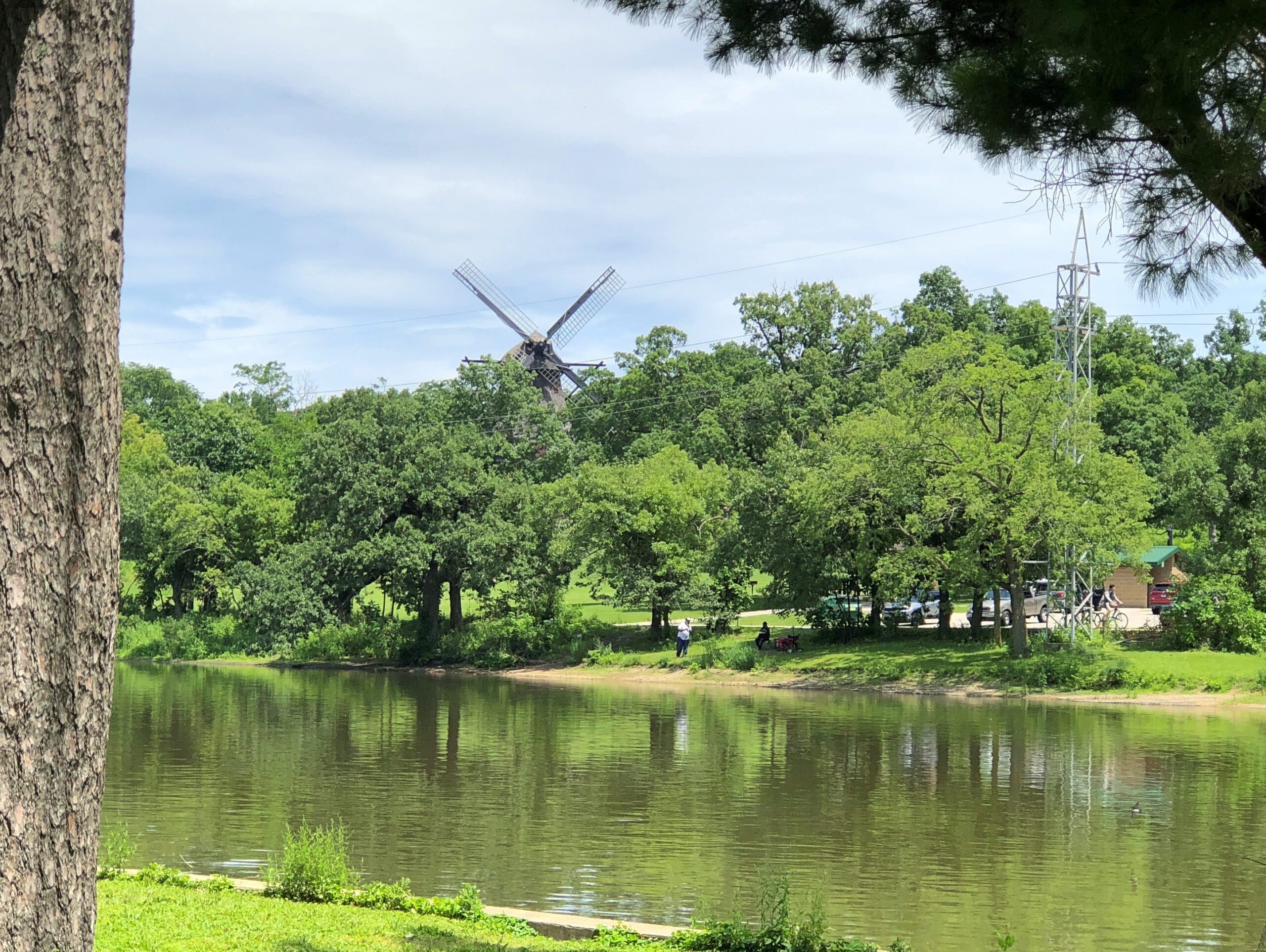
It was a rainy May and June, bringing the flow of the Fox River fairly high by the time last month that we took a short walk nearby, largely under the flush of greenery.
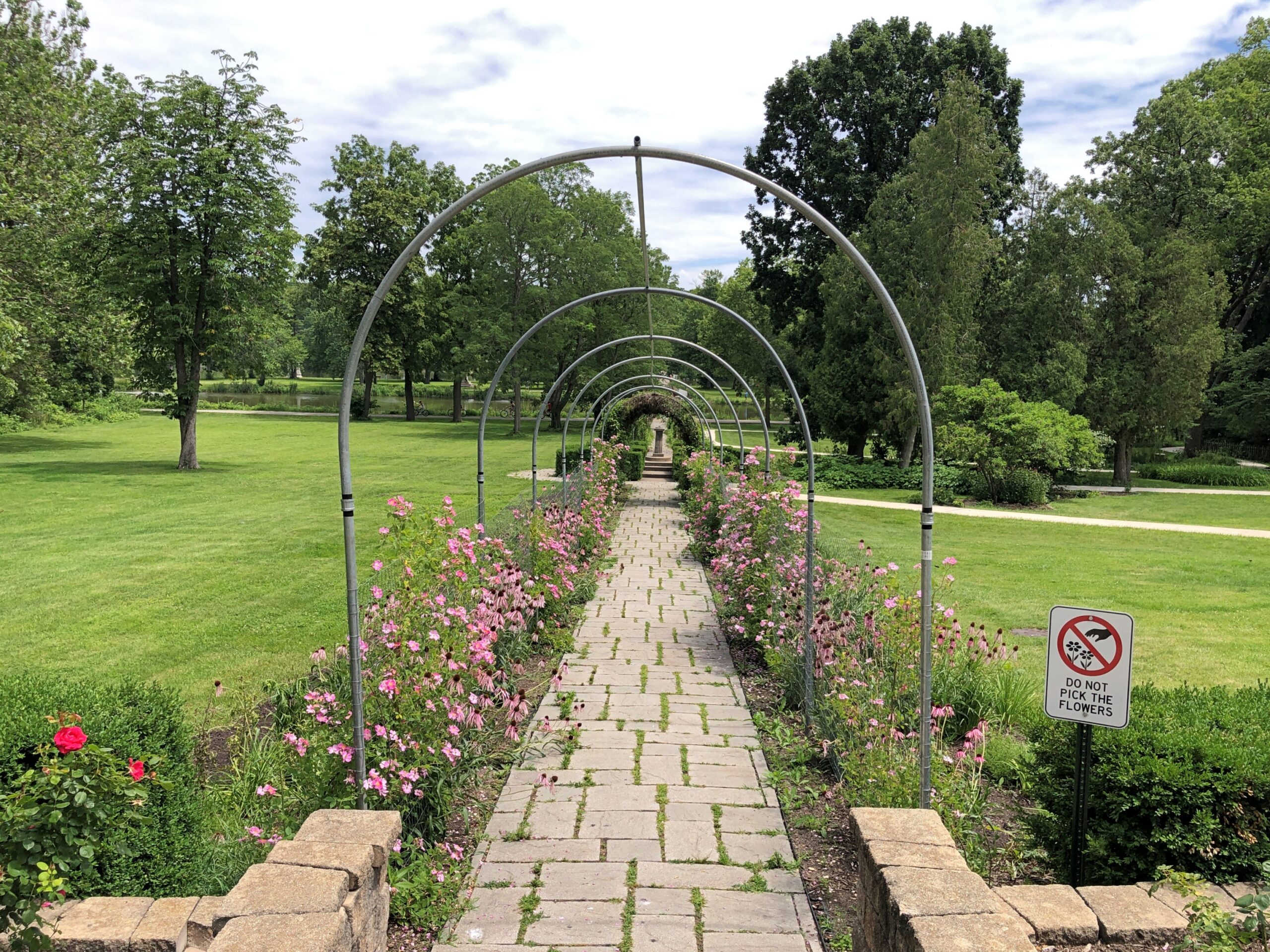
As mentioned, we visited the Fabyan Forest Preserve in Geneva, Illinois one Saturday not long ago. The holdings — formerly part of the estate of George Fabyan (d. 1936) — include land on both sides of the river, and a large island accessible on both sides by footbridges. The view from the island.
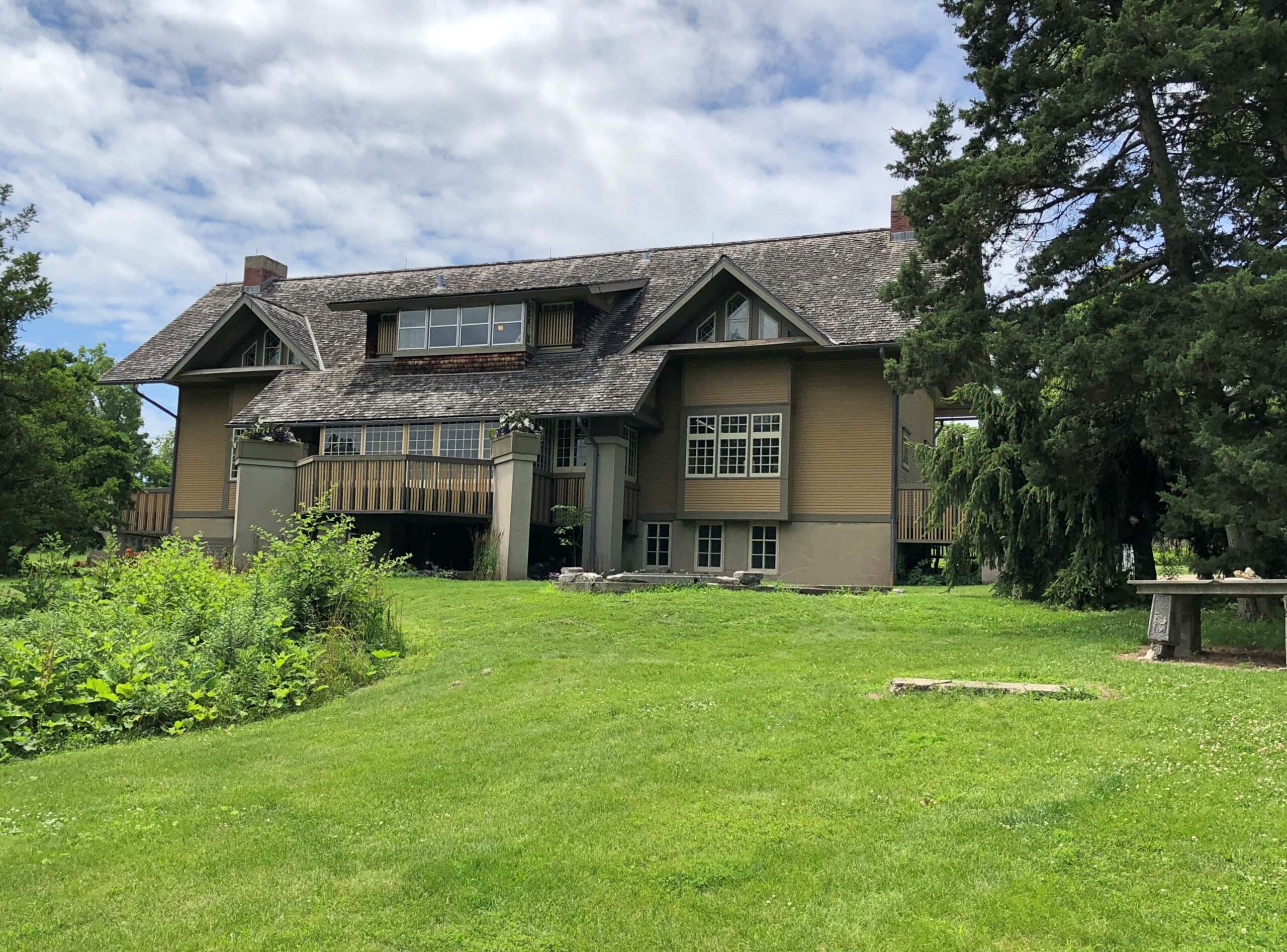
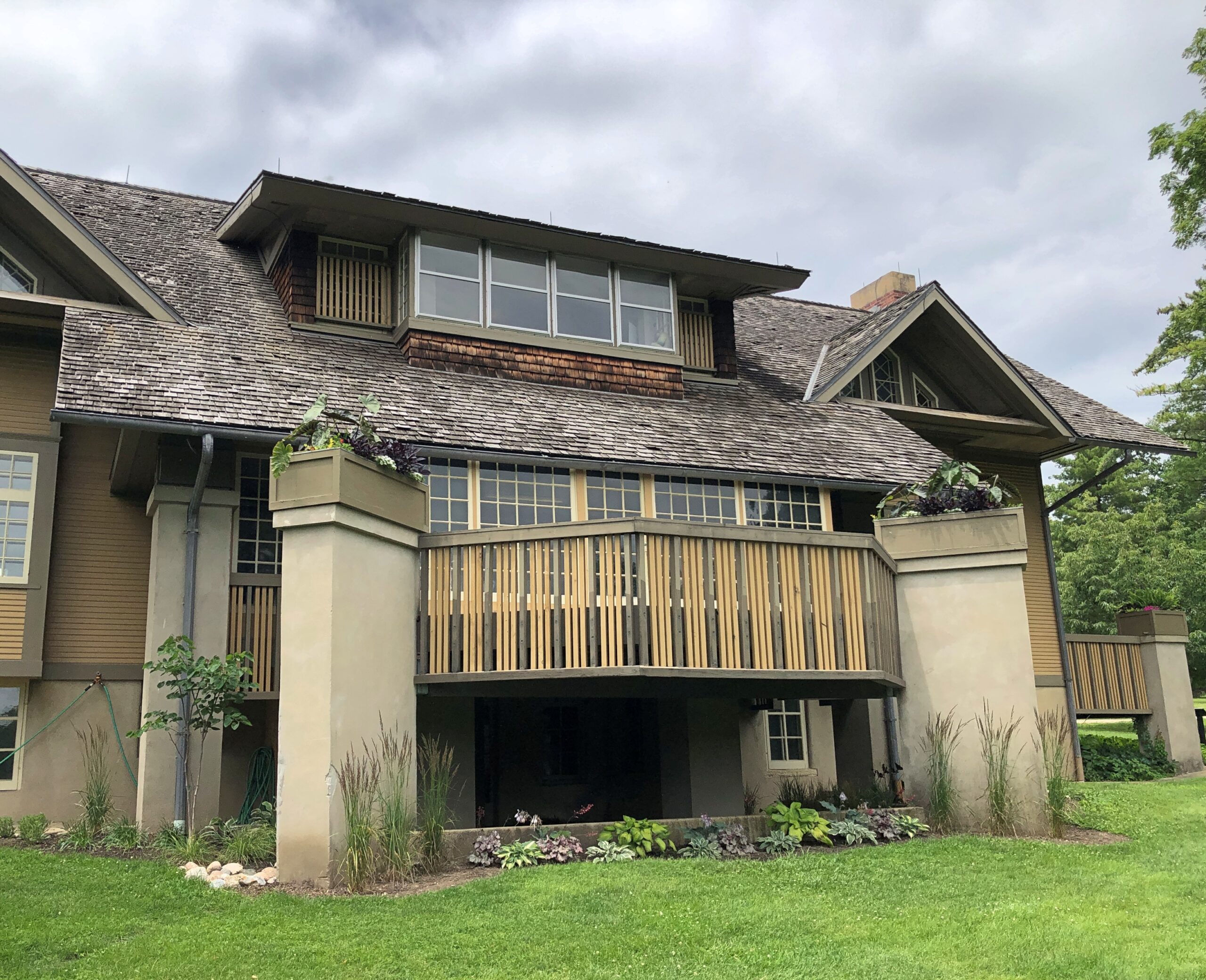
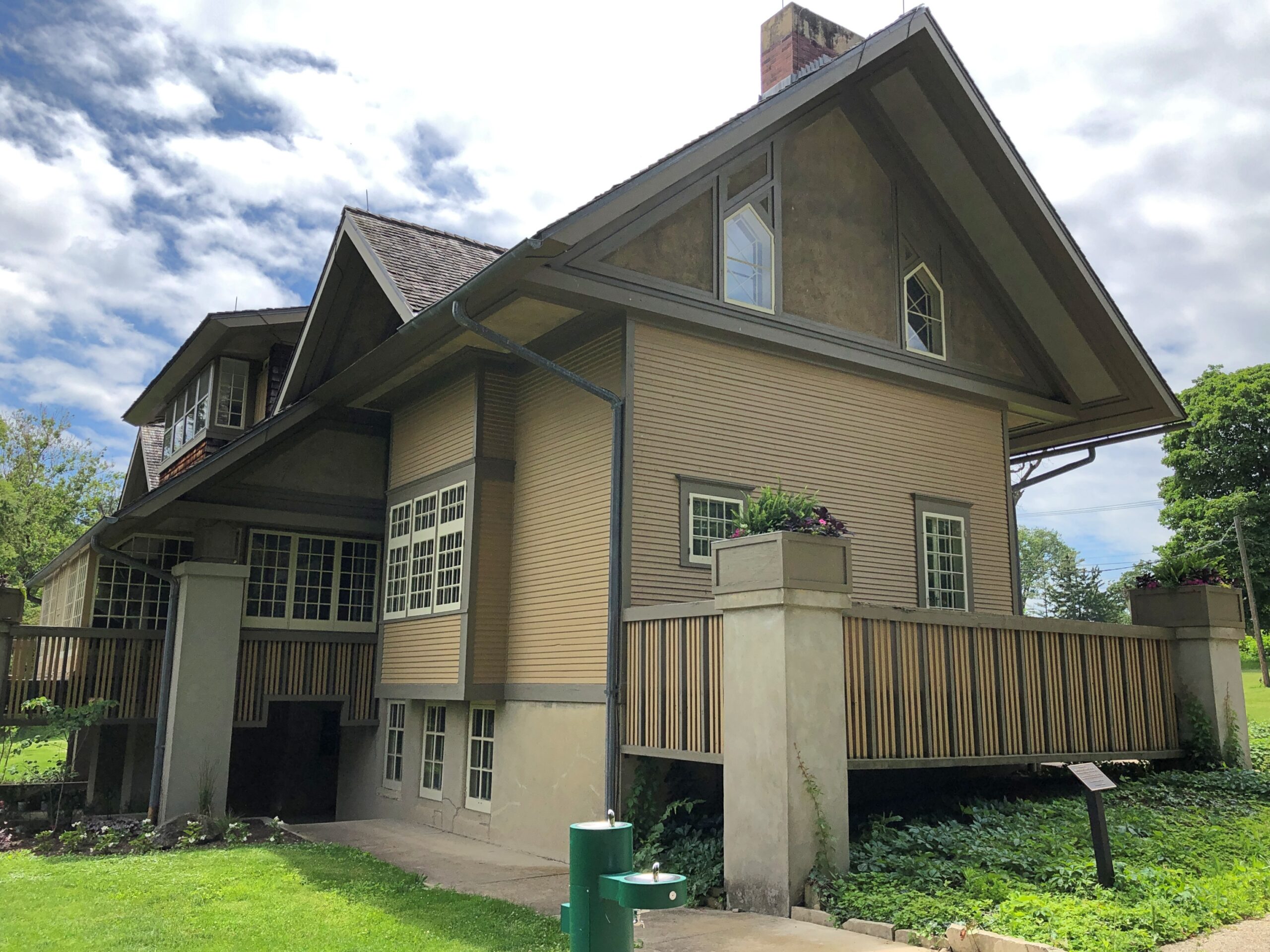
We didn’t go there this time, but rather lingered on the west bank, around the Fabyan Villa, which we toured, taking in the bogus mummy. FLW did some renovation on the property, a fact well emphasized at the museum.
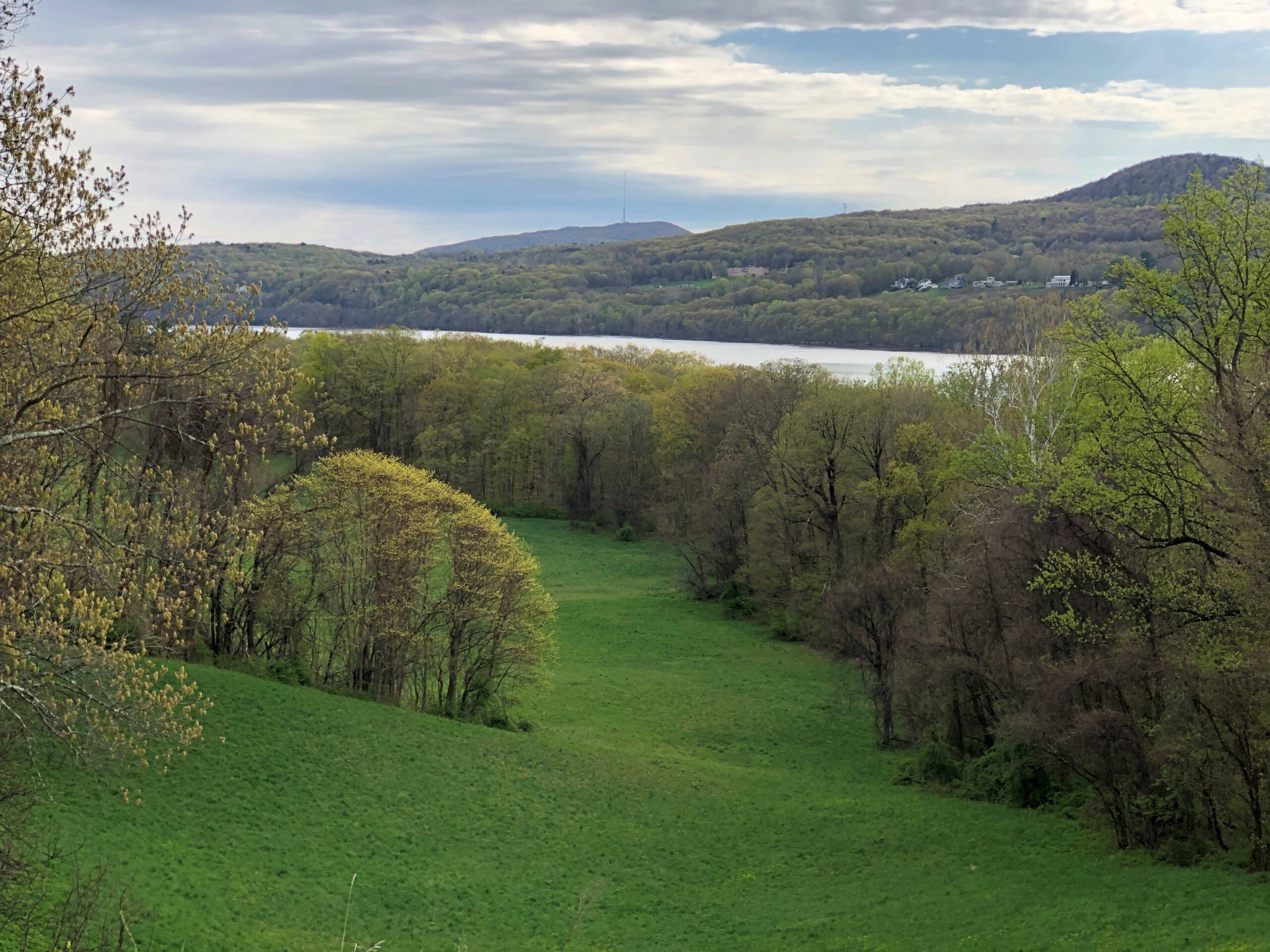
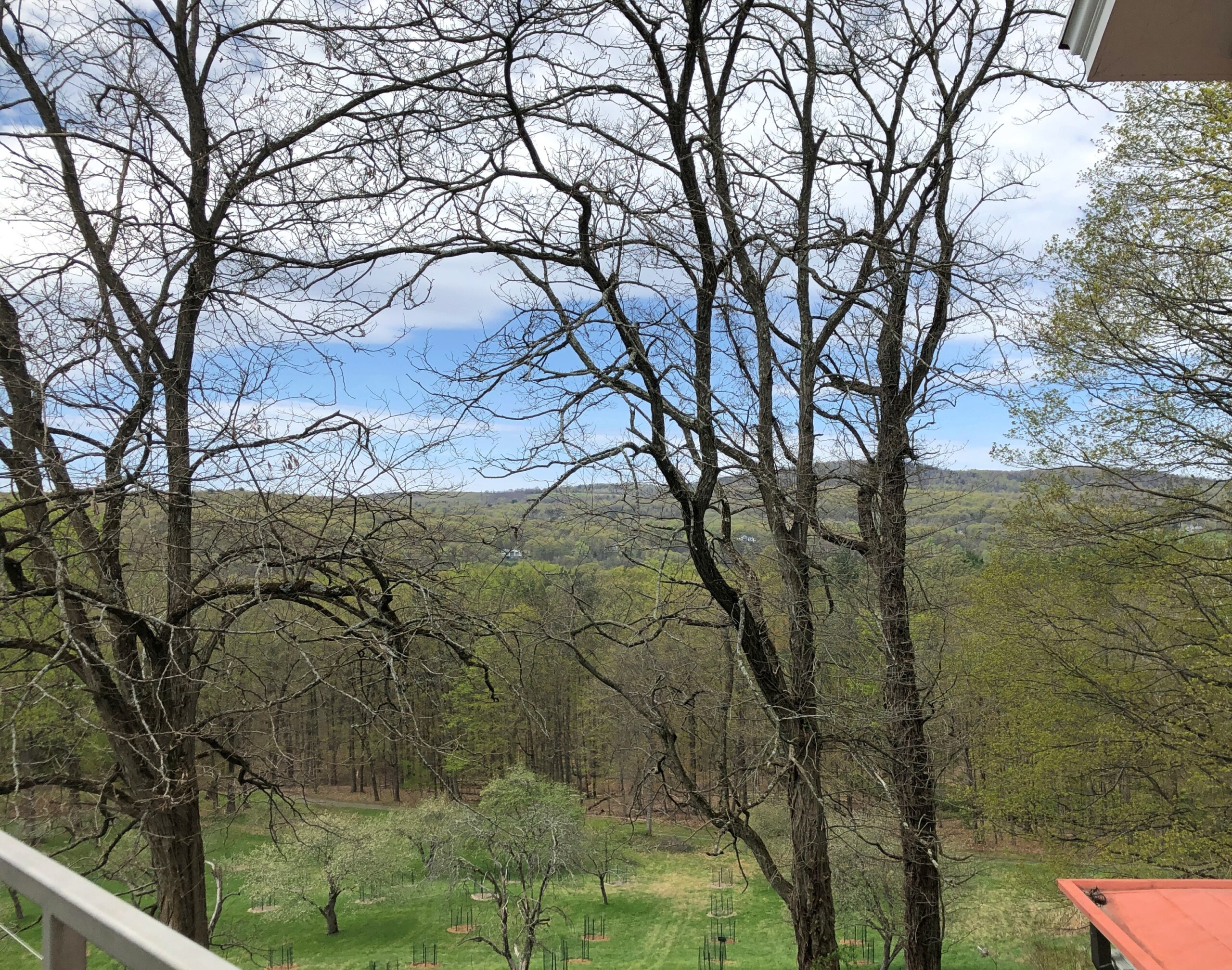
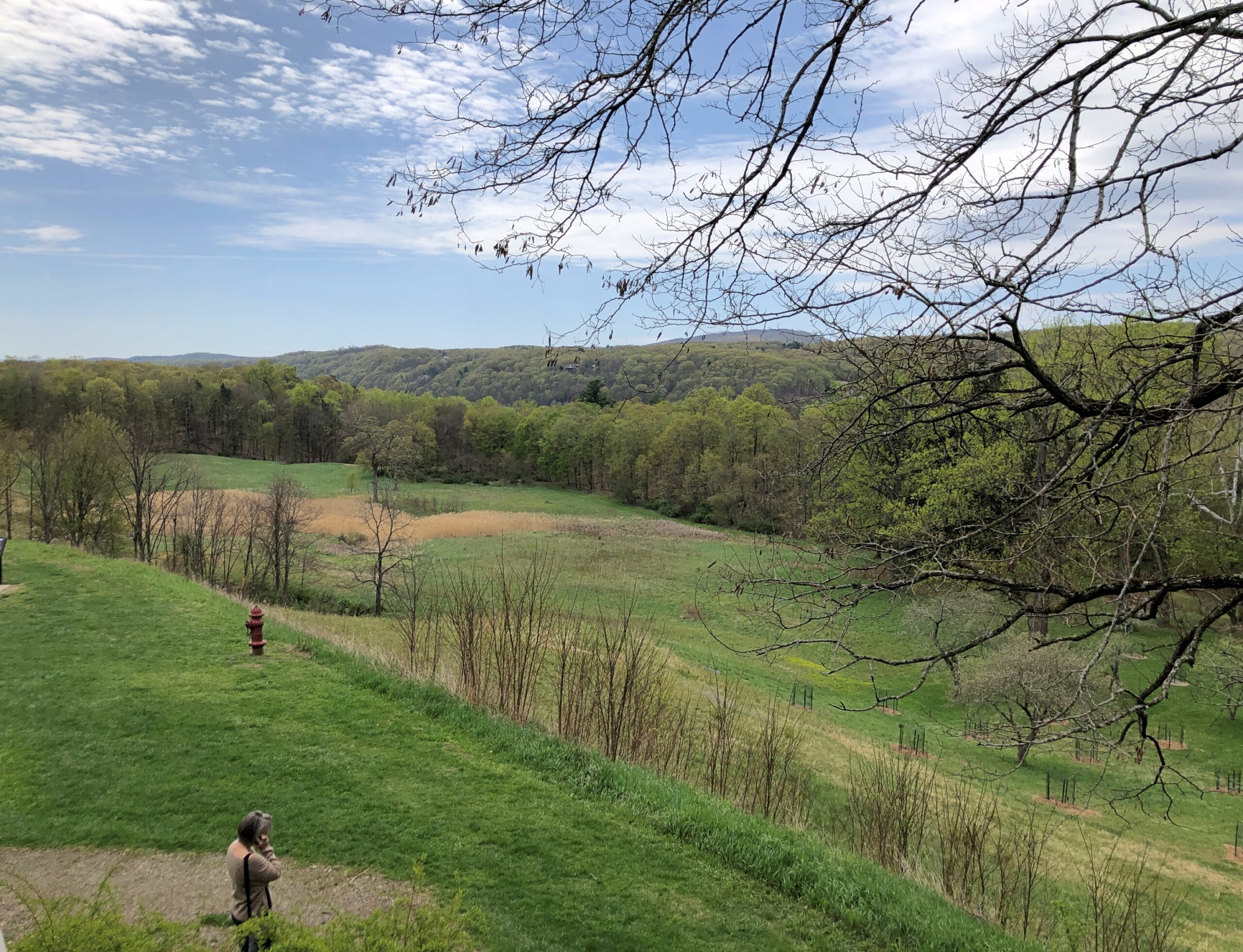
One view from the villa toward the Fox. If you’re going to build near a river — or any flowing body of water — give it some height.
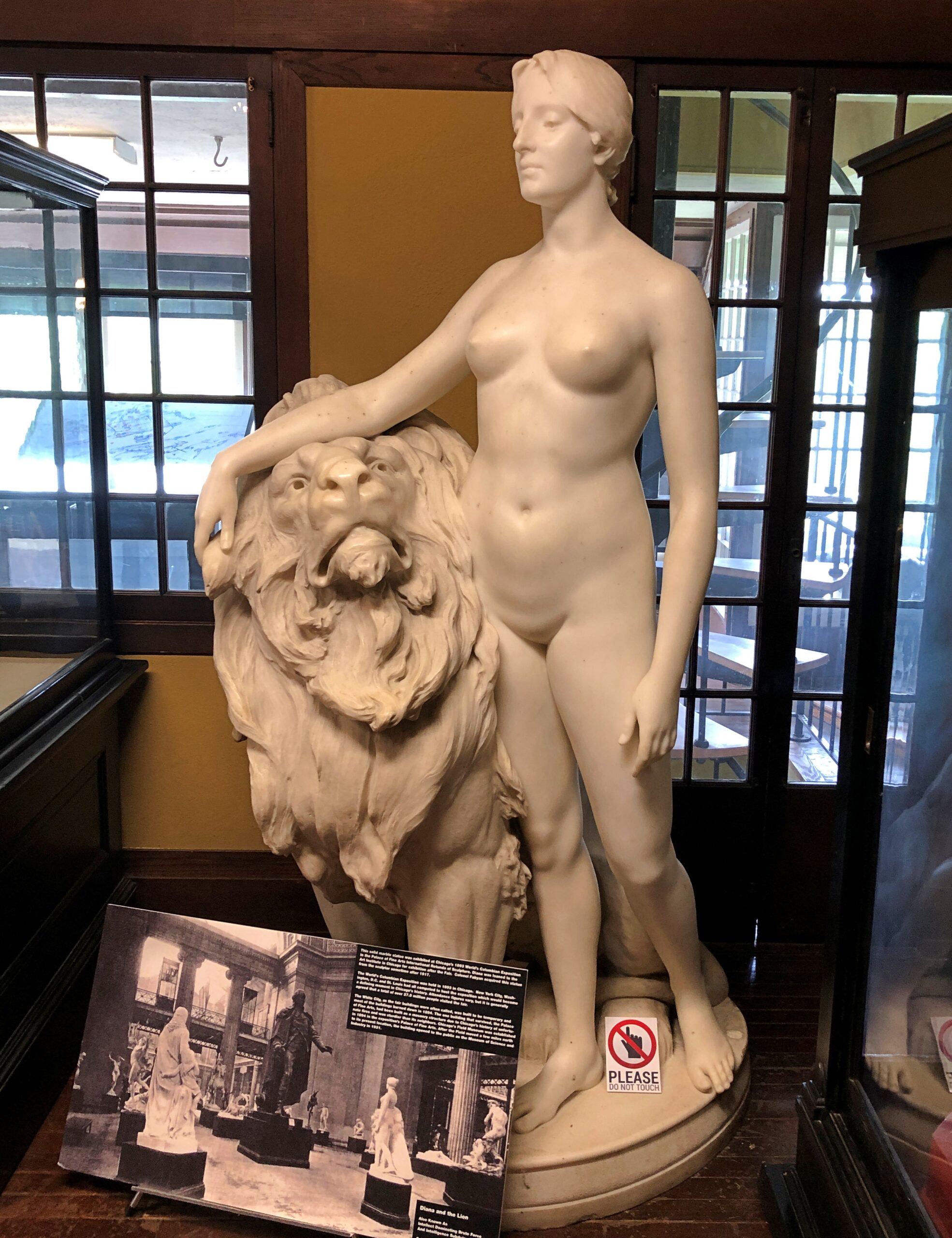
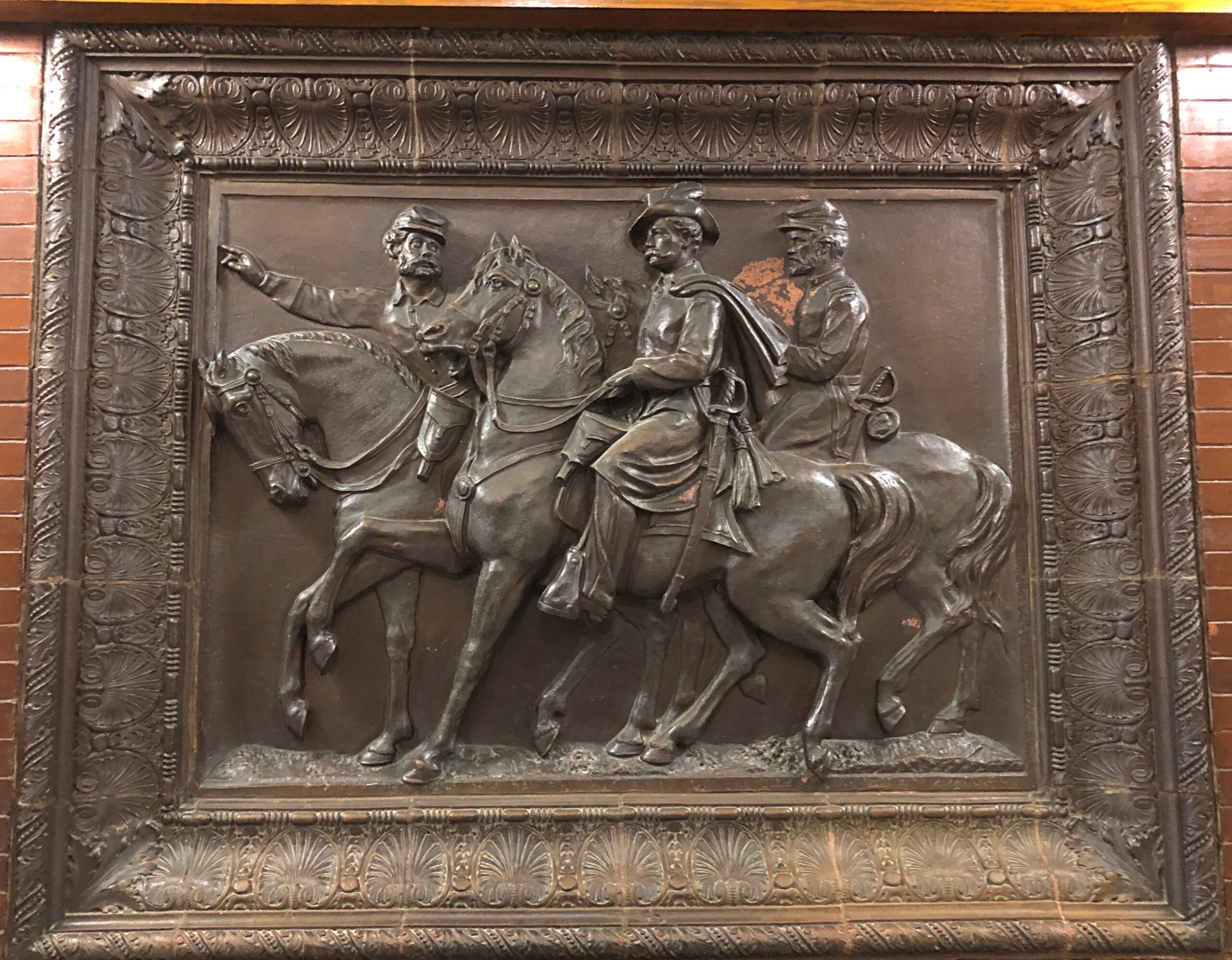
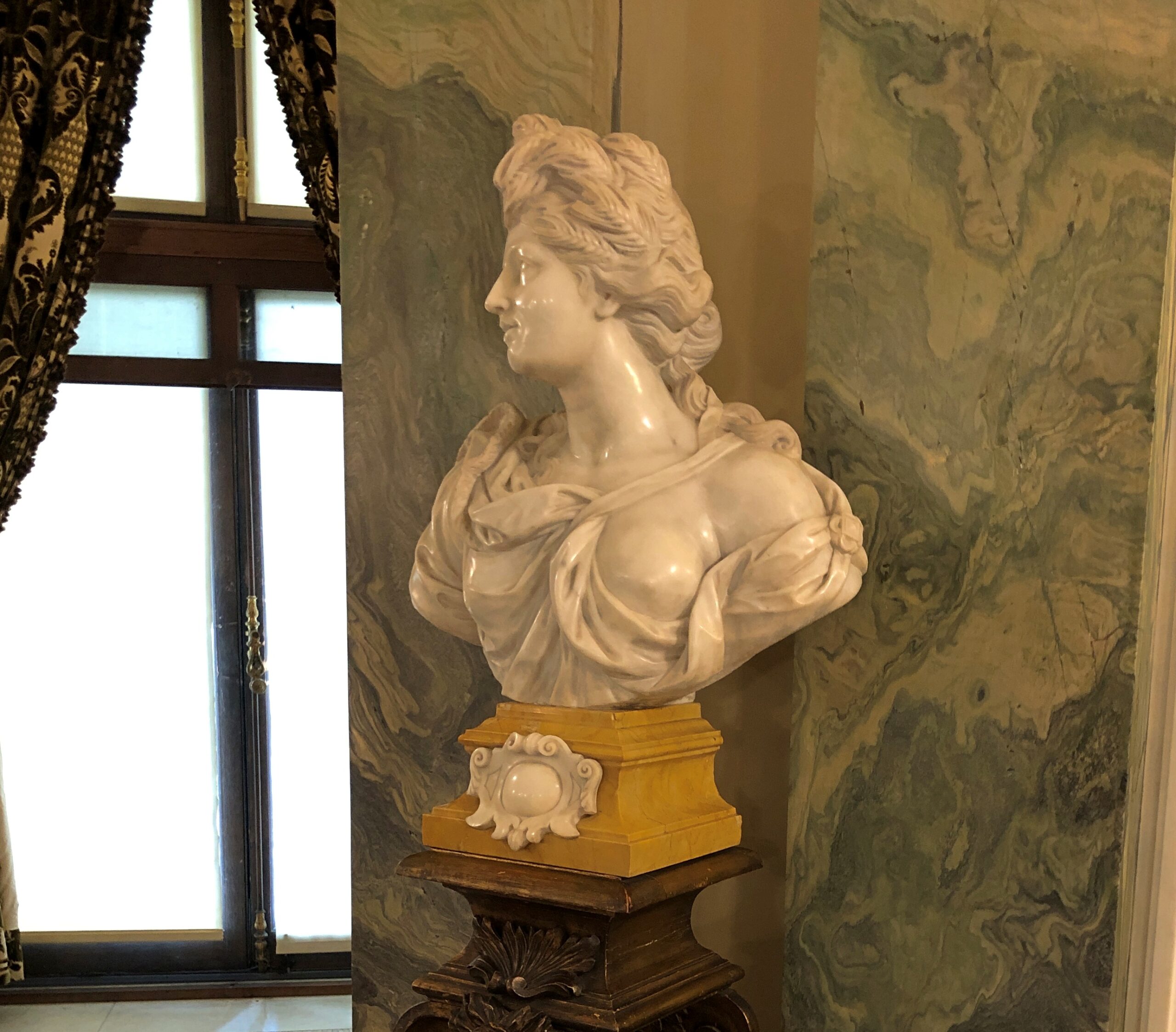
Fabyan collected a lot more, including European artwork, back when that was doable.
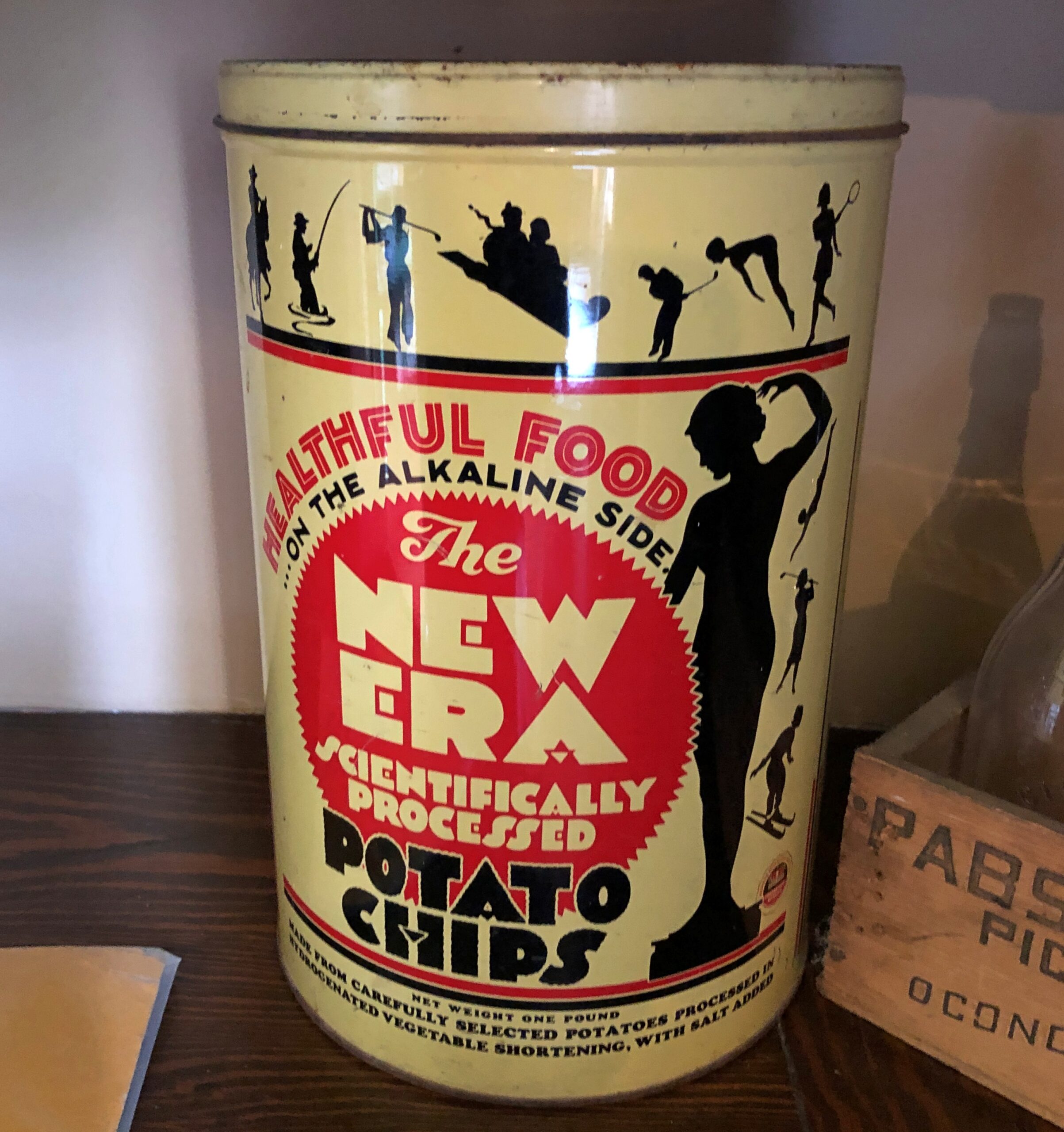
Once upon a time (probably), the Fabyan kitchen served New Era Potato Chips. Glad to see it. The memory of the same such can at the Cuneo Museum is a minor delight for me.
Back when food processors crowed about have food science on their side. These days, that might get them MAHA’d into consumer skepticism.
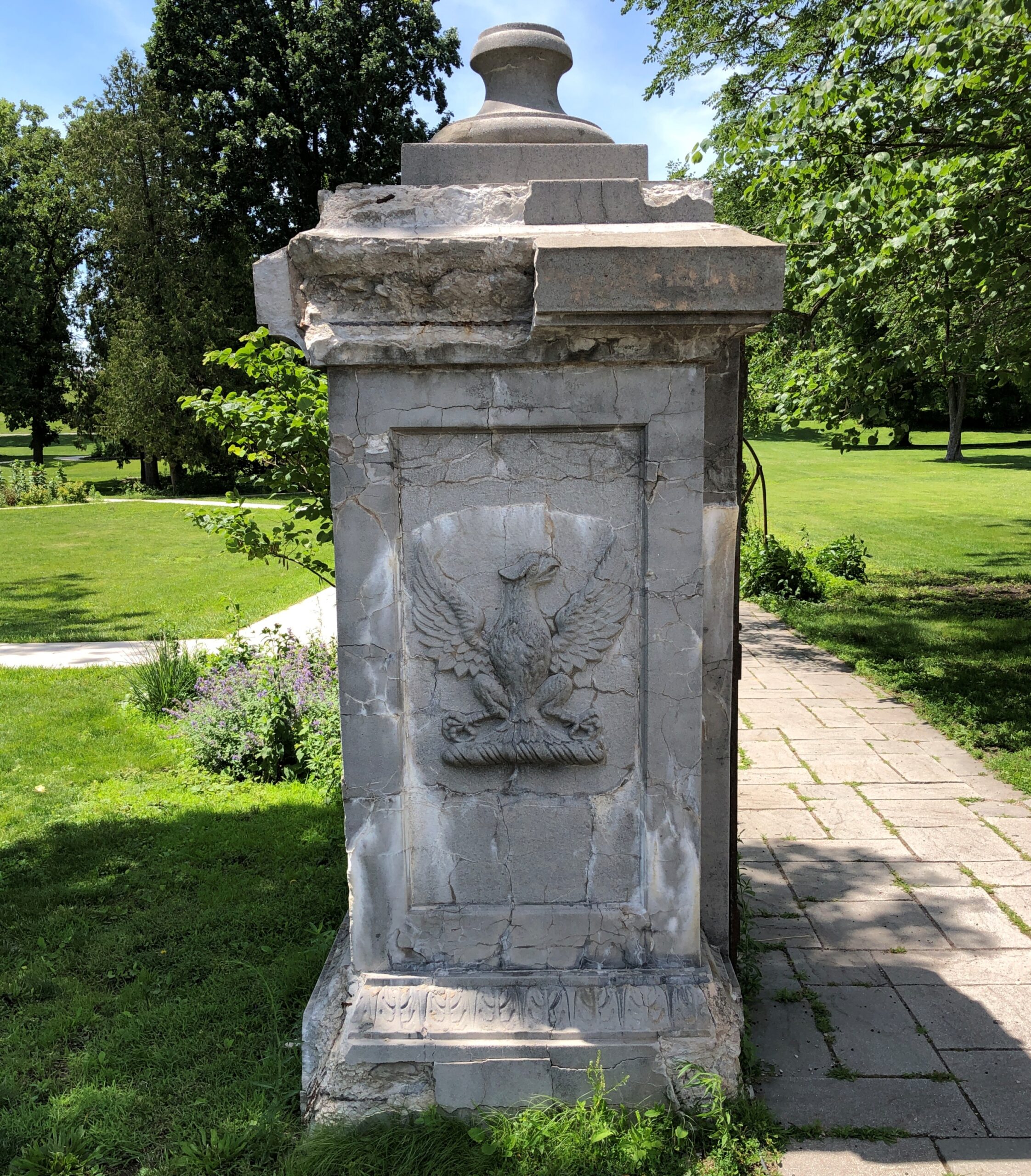
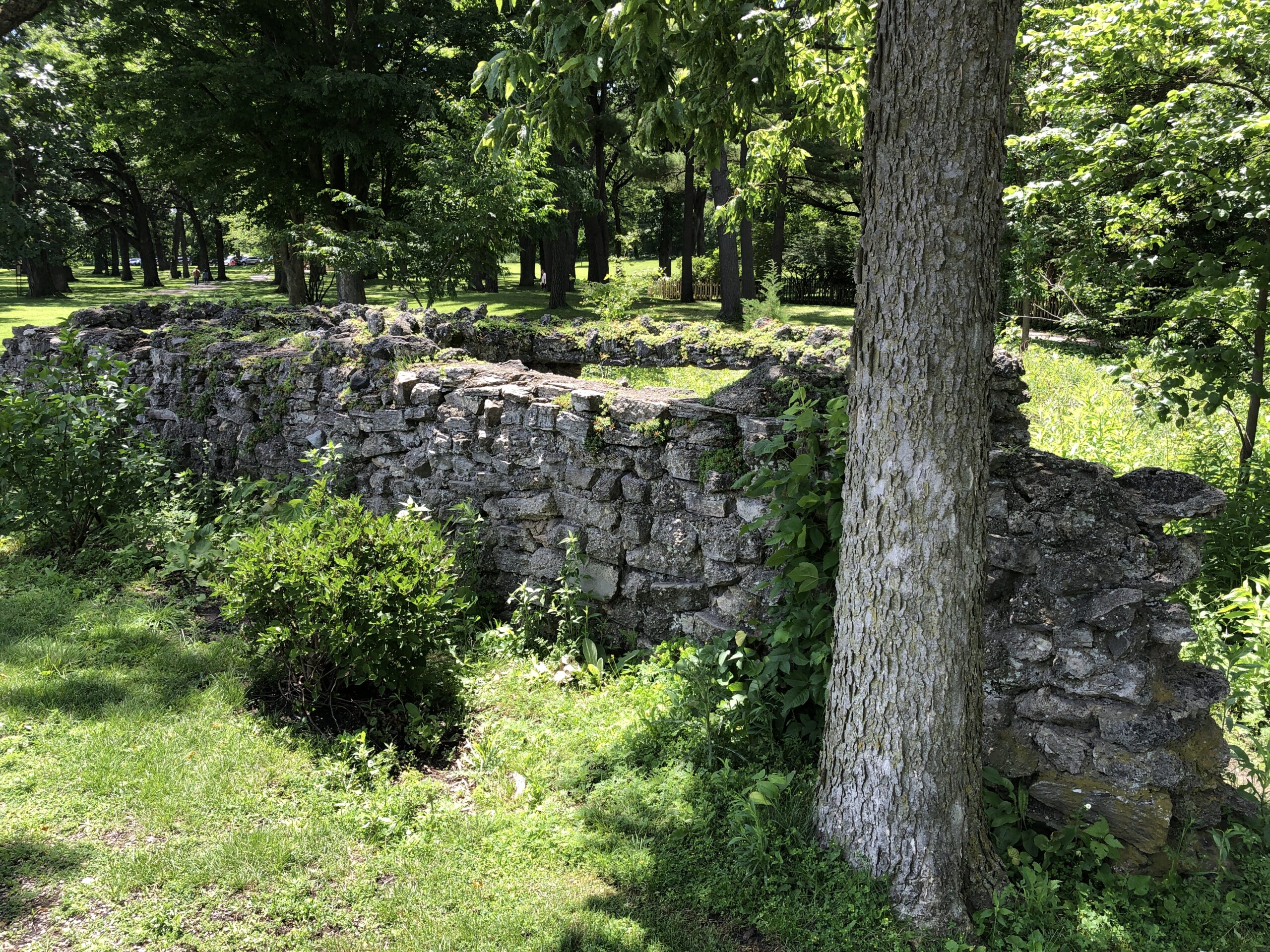
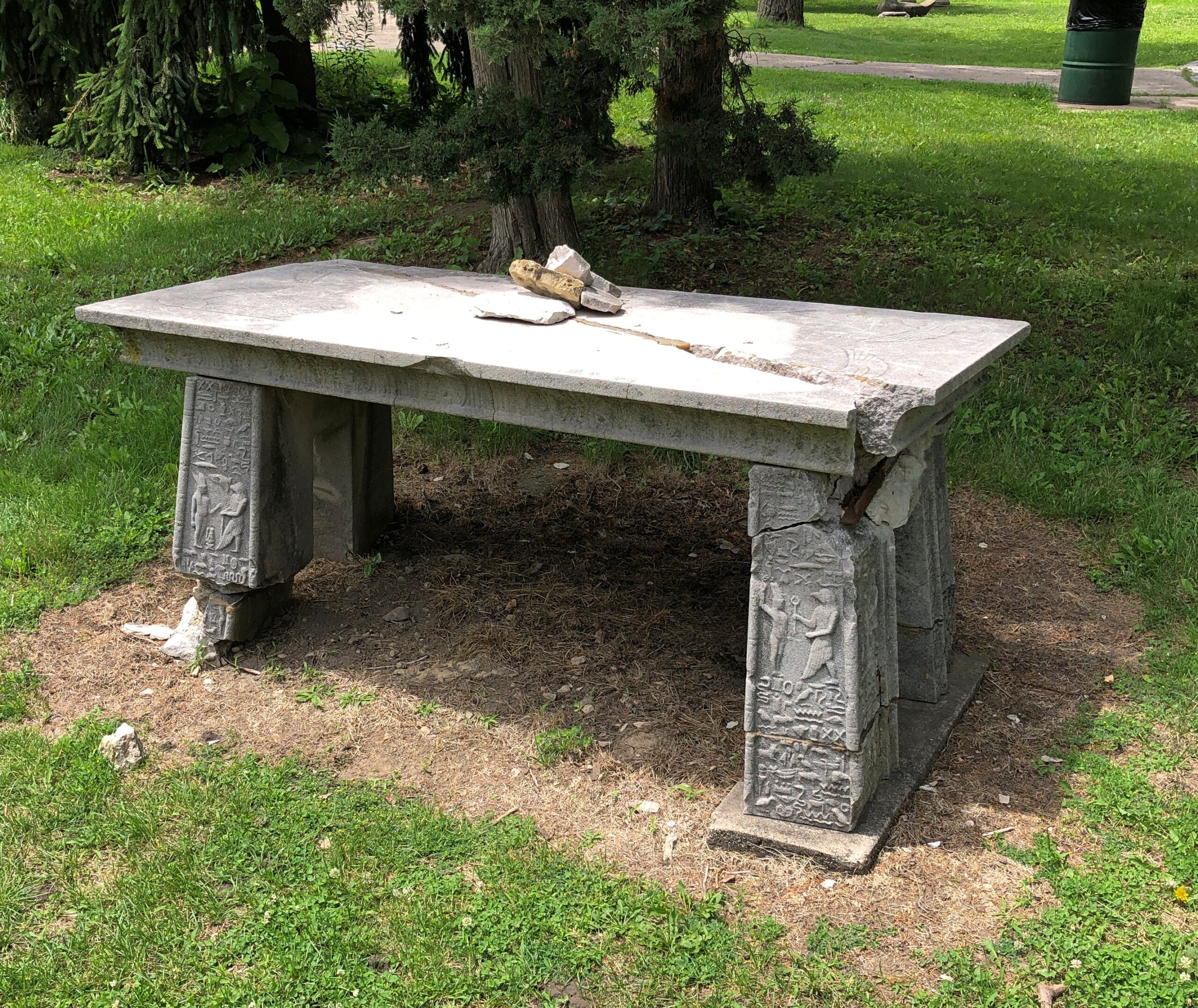
Outside, more features, including a ruin from Fabyan days. I understand that the Roman-themed pool on the island has mostly been reclaimed by the river. This wasn’t part of the pool. A out-of-place gatepost, from the looks of it.
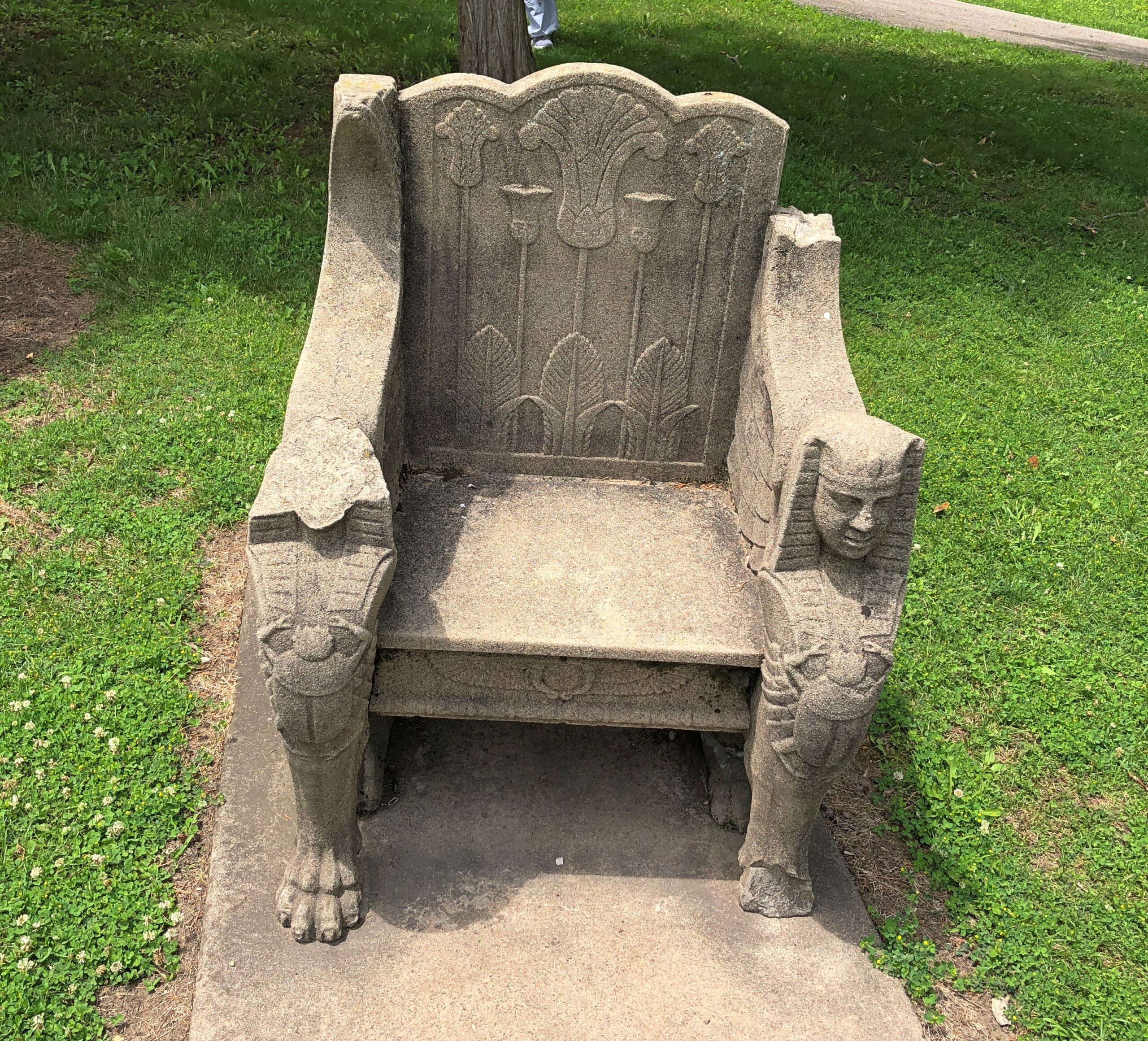
More evidence of the passing wave of Egyptomania.
Looking a little worse for roughly a century of wear.
The run of days from Juneteenth to July 4 at least, and even better to Nunavut Day (July 9), would be a fine time to slow down, like between Christmas and New Year’s Day, only warmer and without the mad runup to December 25. Back to posting around July 6.
Thousands of impressions flitter by on the road, most instantly forgotten when literally on the road – driving, you need to be in the moment, or else – or quickly forgotten, when “on the road” means you’re out and about somewhere that isn’t home. Still, a handful of details stick, even without photos. But photos help.
Maine
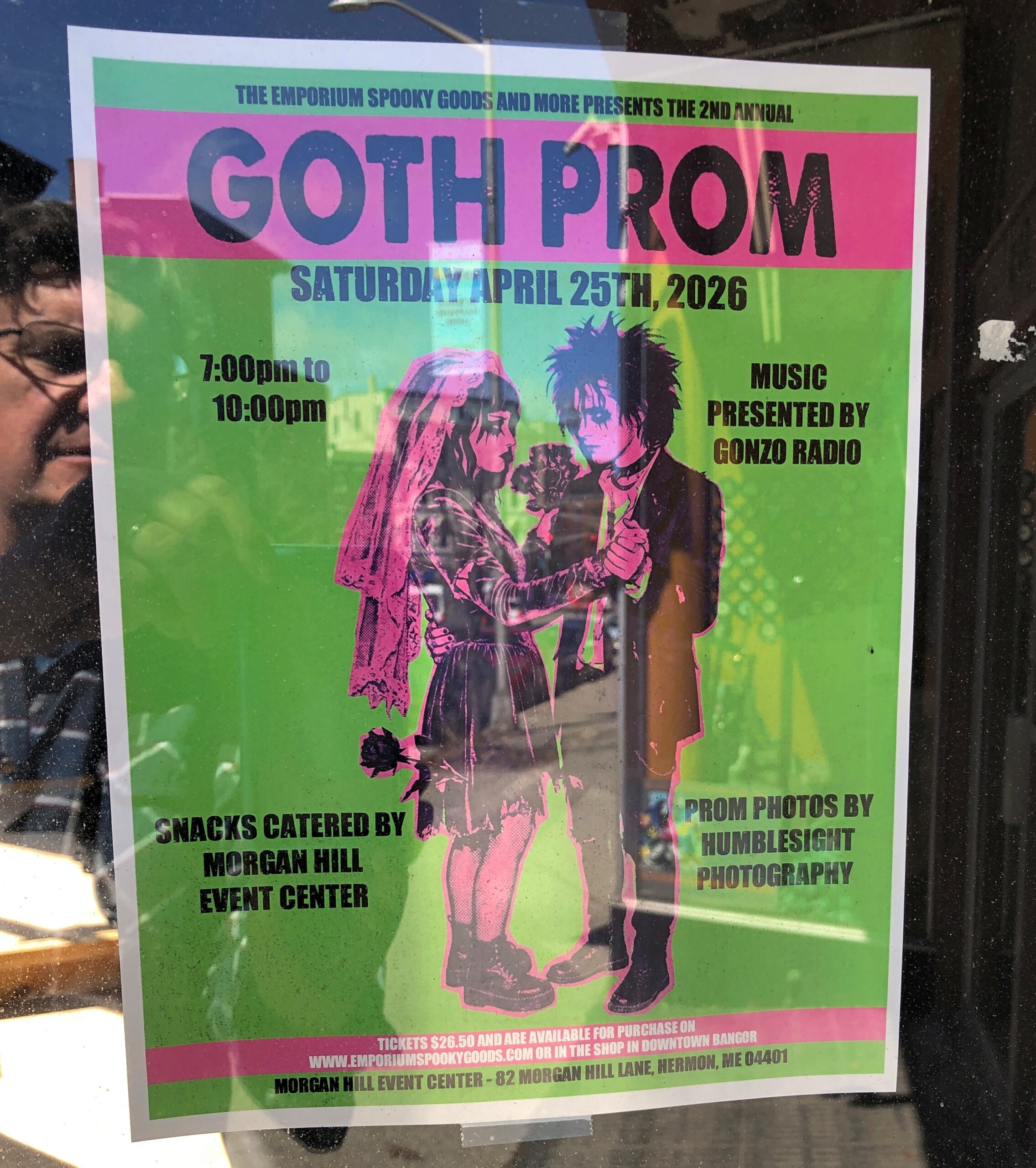
I call it “Self-portrait with Goth Prom.” Poster spotted in downtown Bangor.
In the Maine Statehouse, a flat-ish object of a different kind.
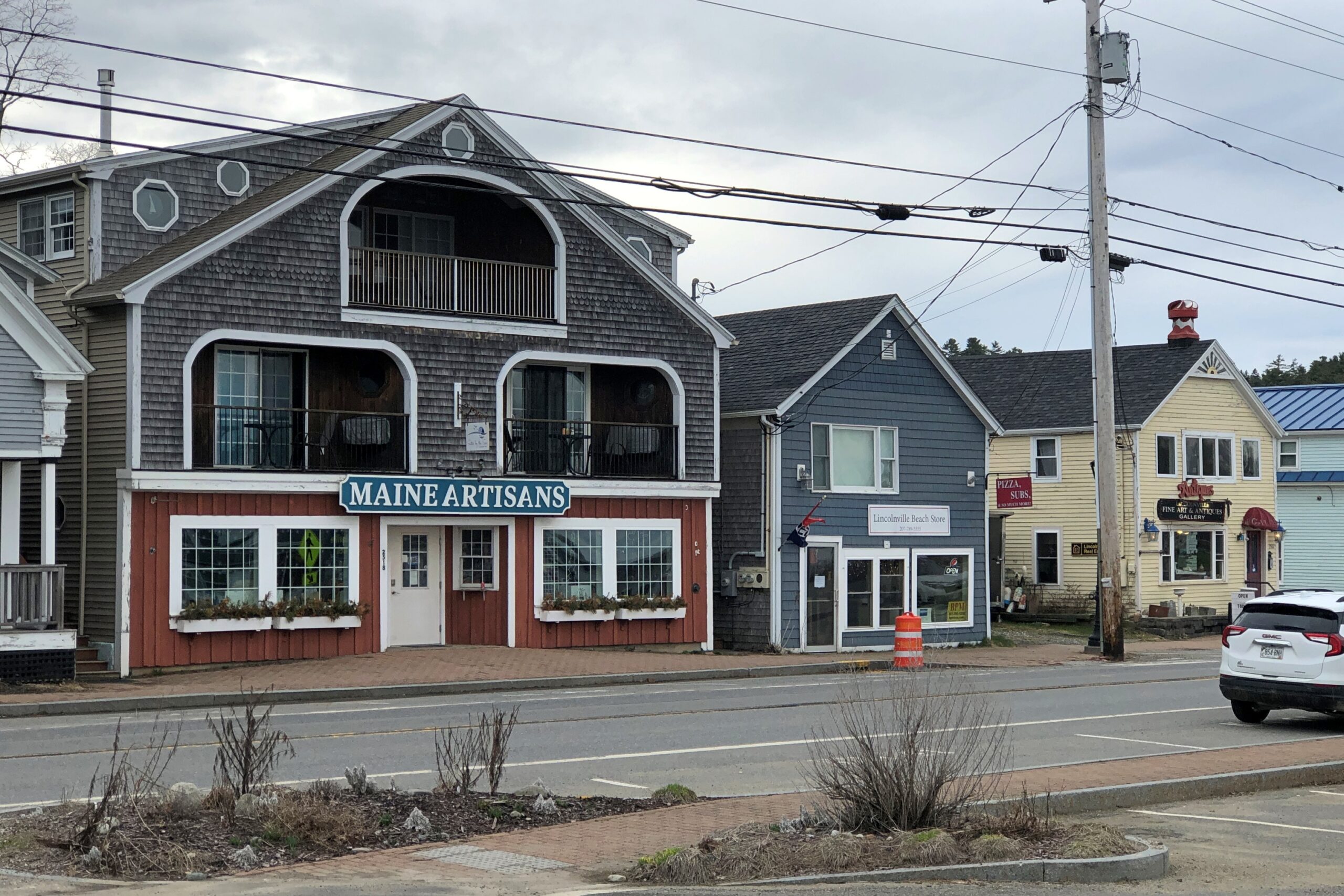
Lincolnville, on the coast of not far from Belfast.
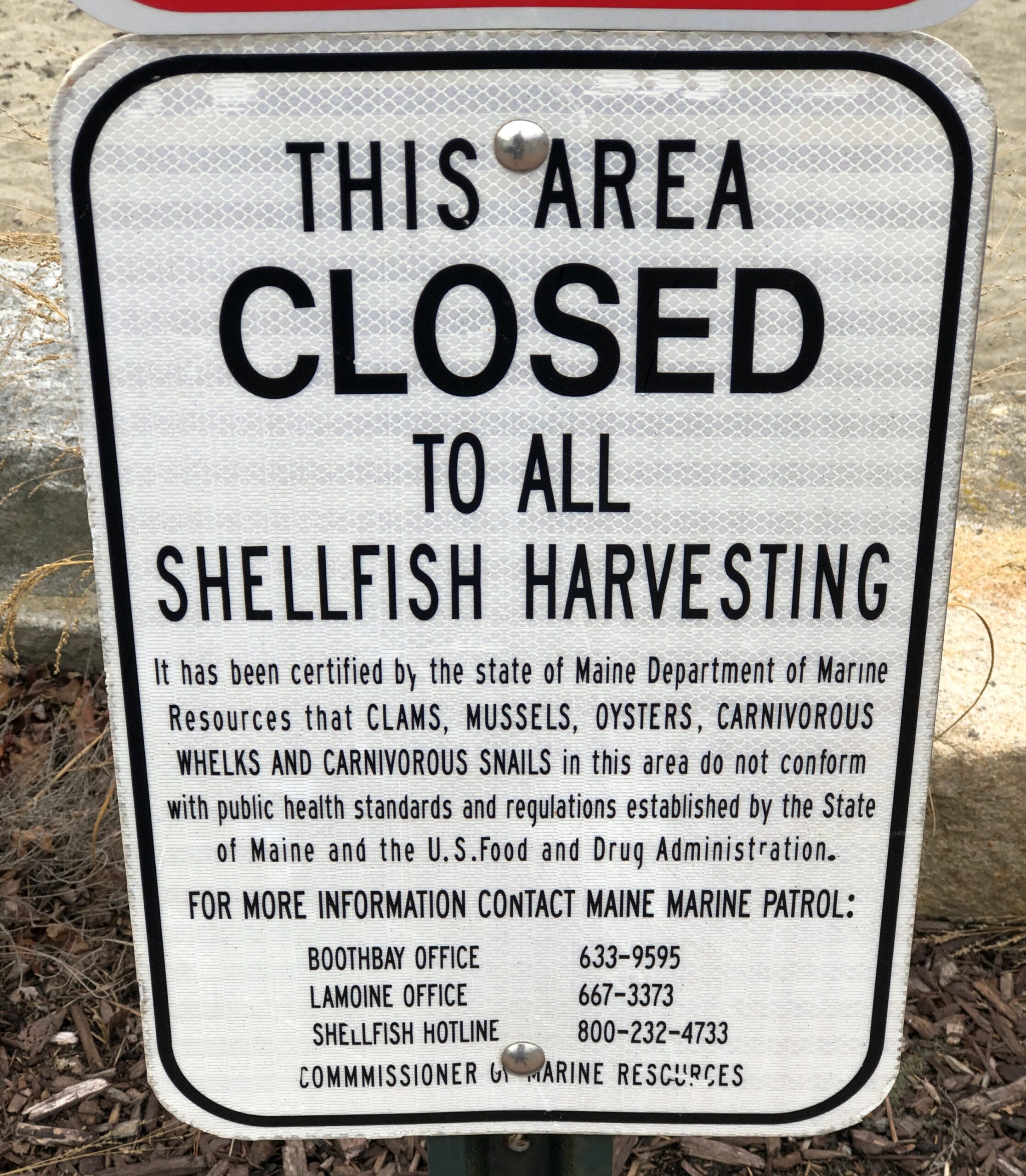
Carnivorous whelks. I was frankly ignorant about carnivorous whelks, and glad to learn a little about them. Because what a great name for a snail.
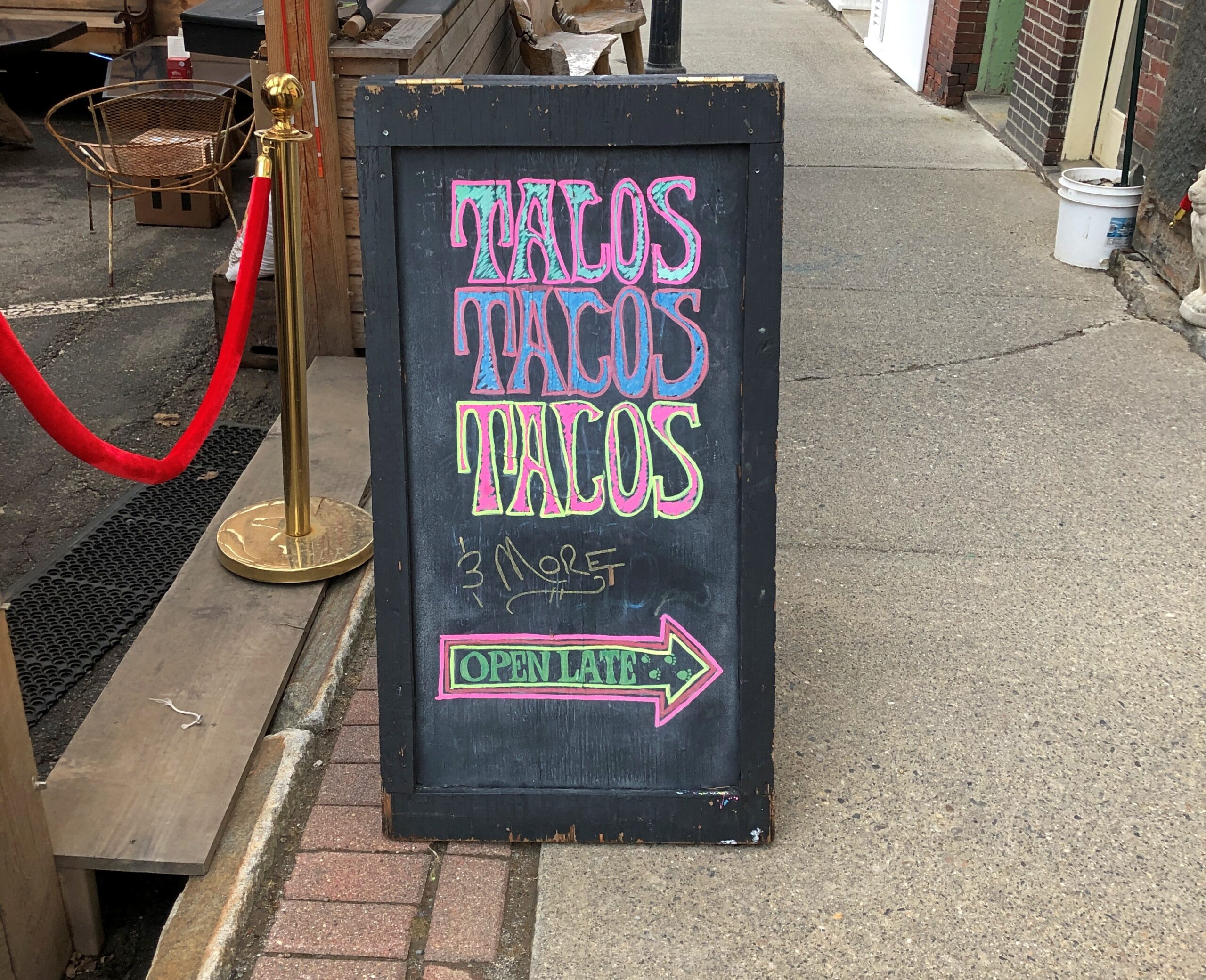
Too bad I wasn’t hungry in Belfast. I’d have had tacos.
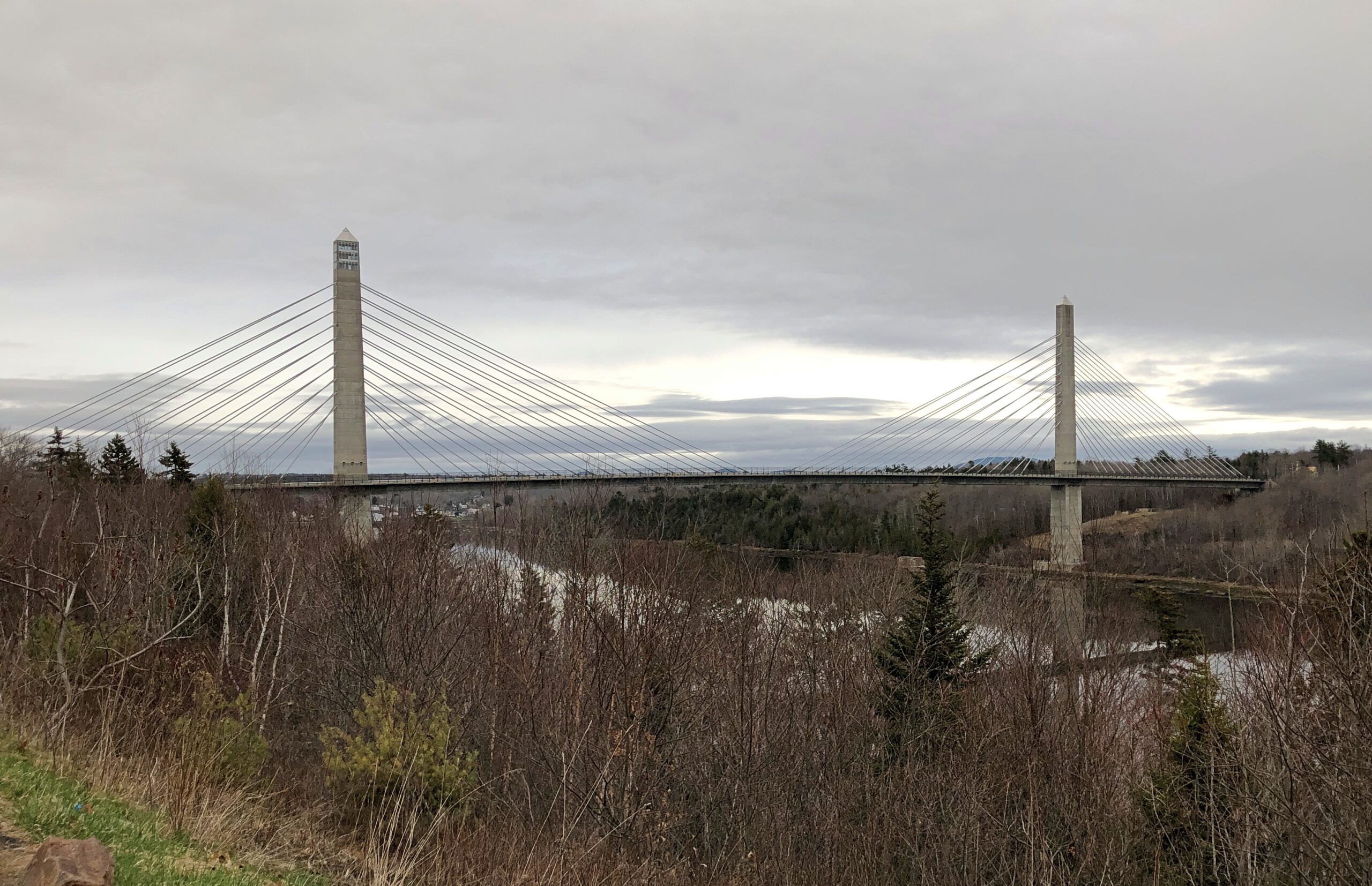
The Penobscot River and the Penobscot Narrows Bridge. A literal and scenic highpoint on that part of US 1 as it winds through near-coastal Maine. The bridge includes an observatory, unfortunately not open in April. Driving over the bridge itself was another pleasure of coastal Maine.
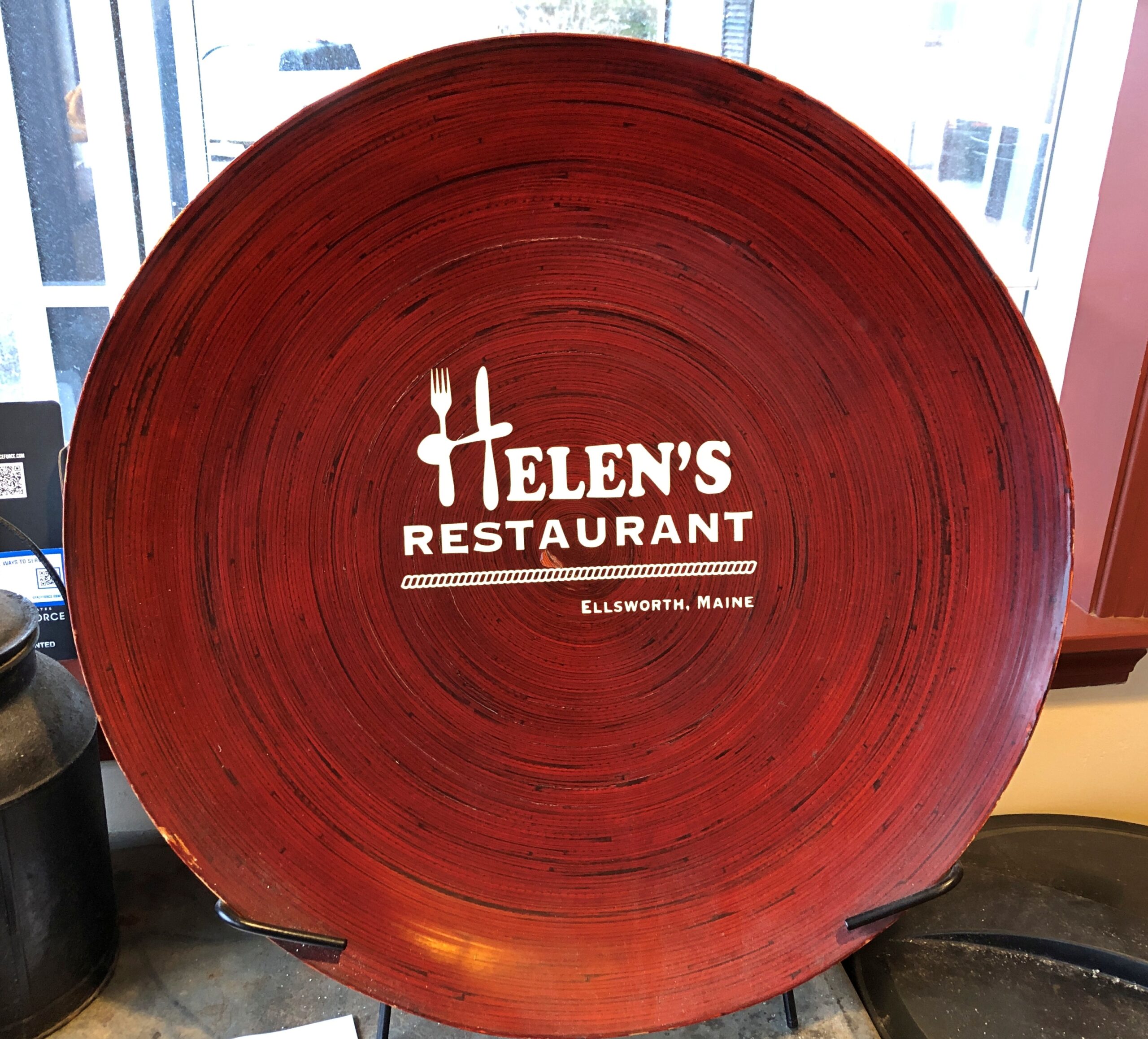
Helen’s Restaurant in Ellsworth. Tasty fish and chips. Haddock, specifically. What do you take for a haddock? “Well, sometimes I take-a aspirin, sometimes I take-a calomel.” It was some years before I learned that calomel was something I’d never take in a million years.
Massachusetts
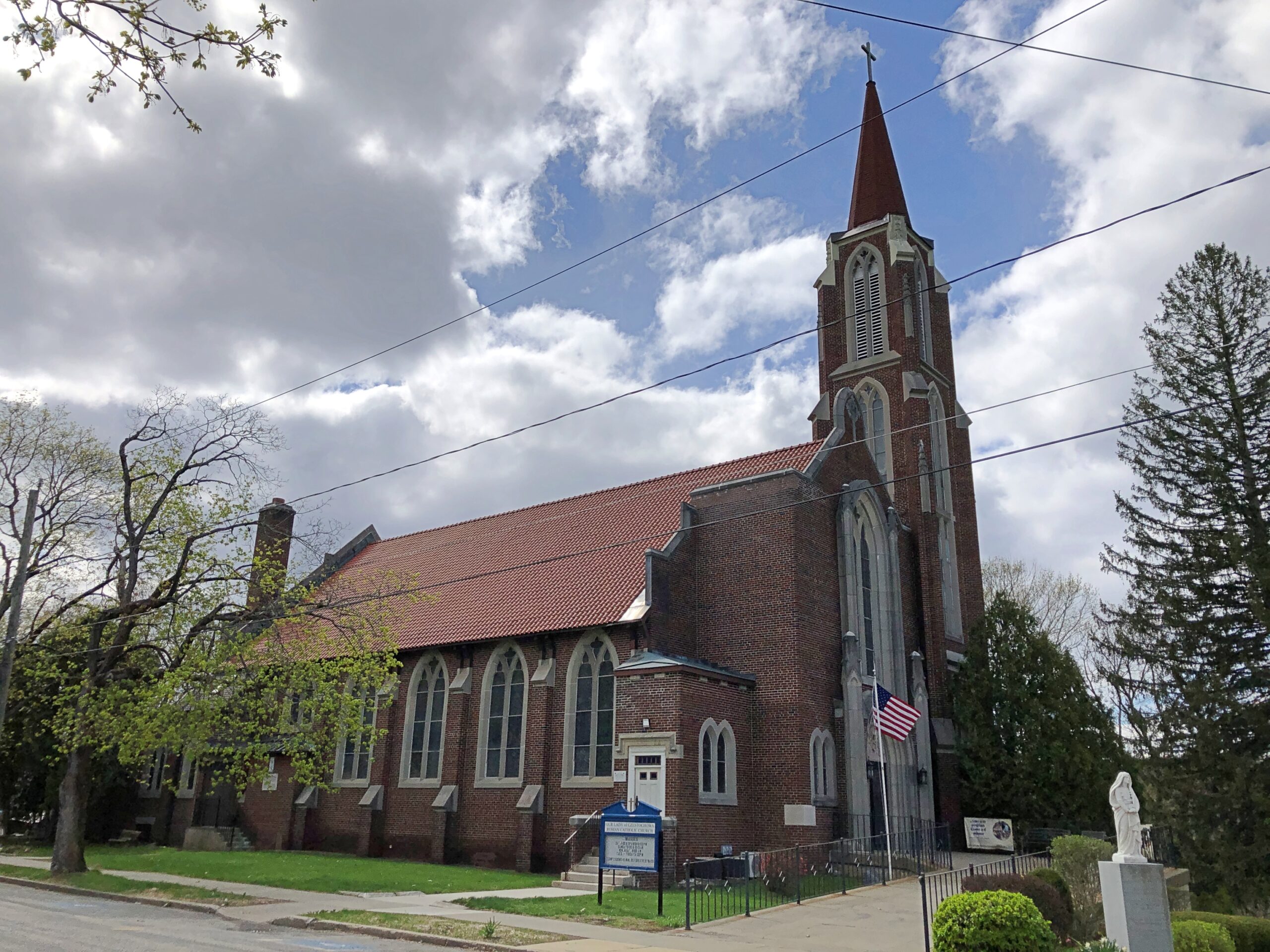
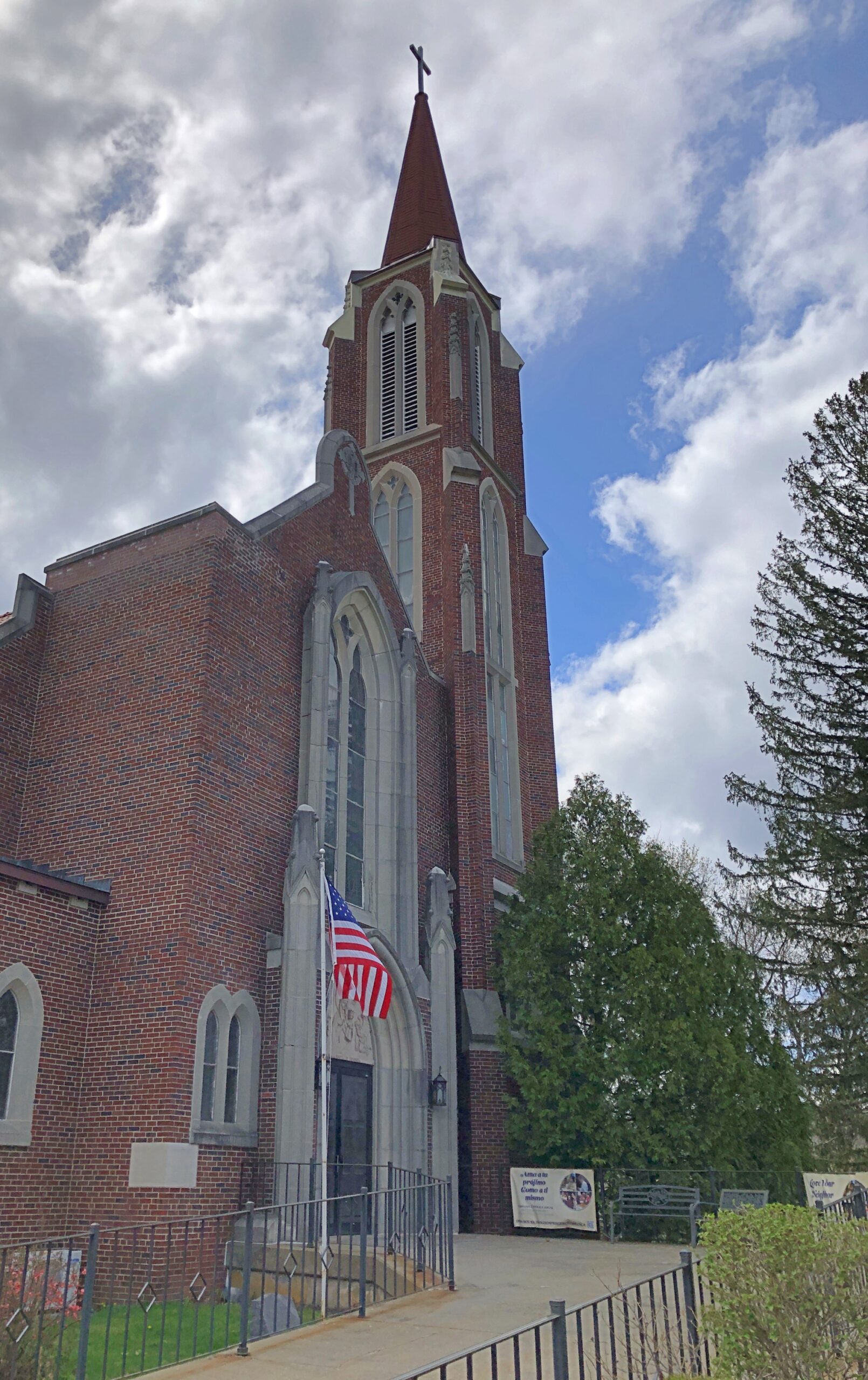
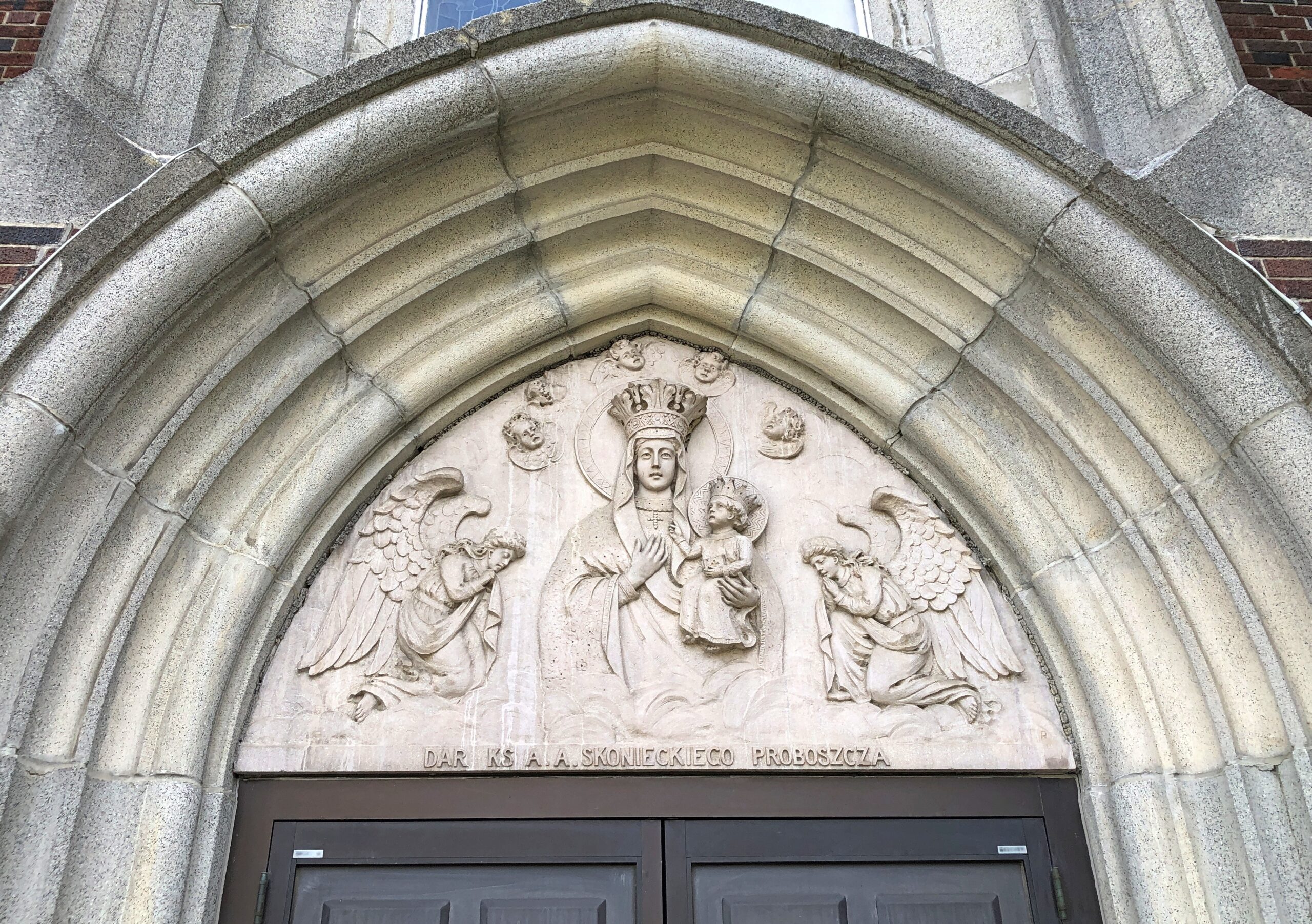
Our Lady of Czestochowa Parish, Turners Falls.
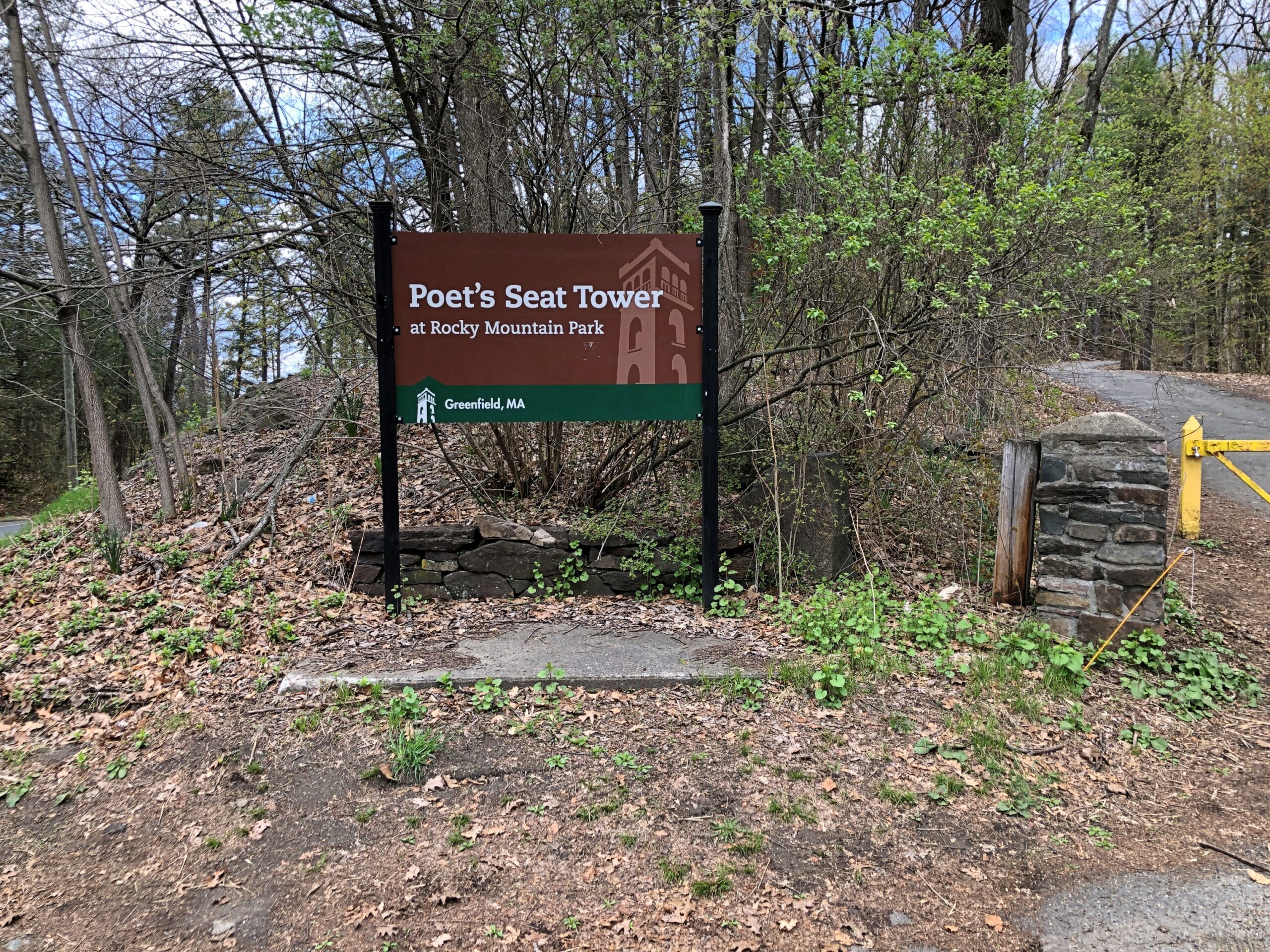
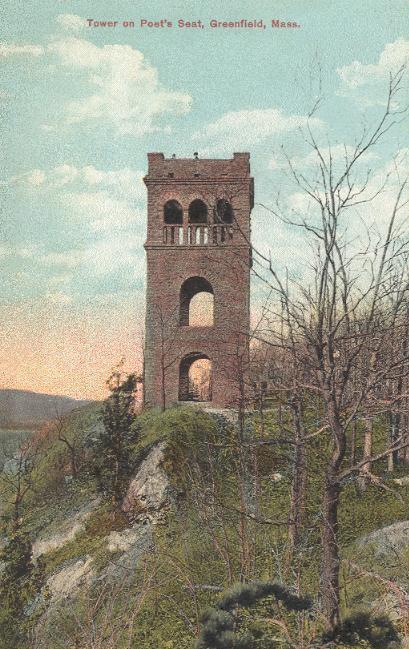
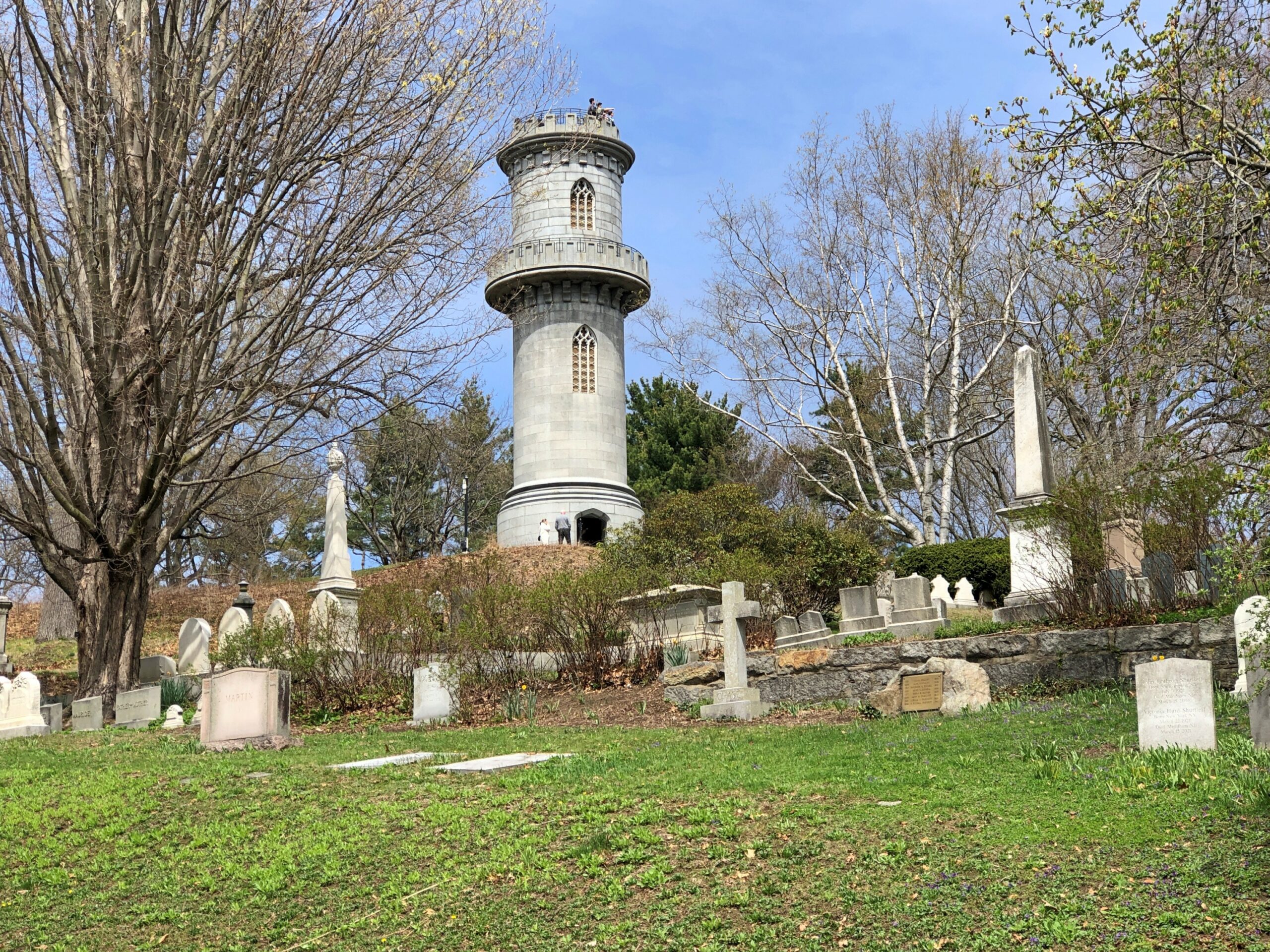
The church was closed. So was Poet’s Seat Tower.
As the tower appeared more than 100 years ago.
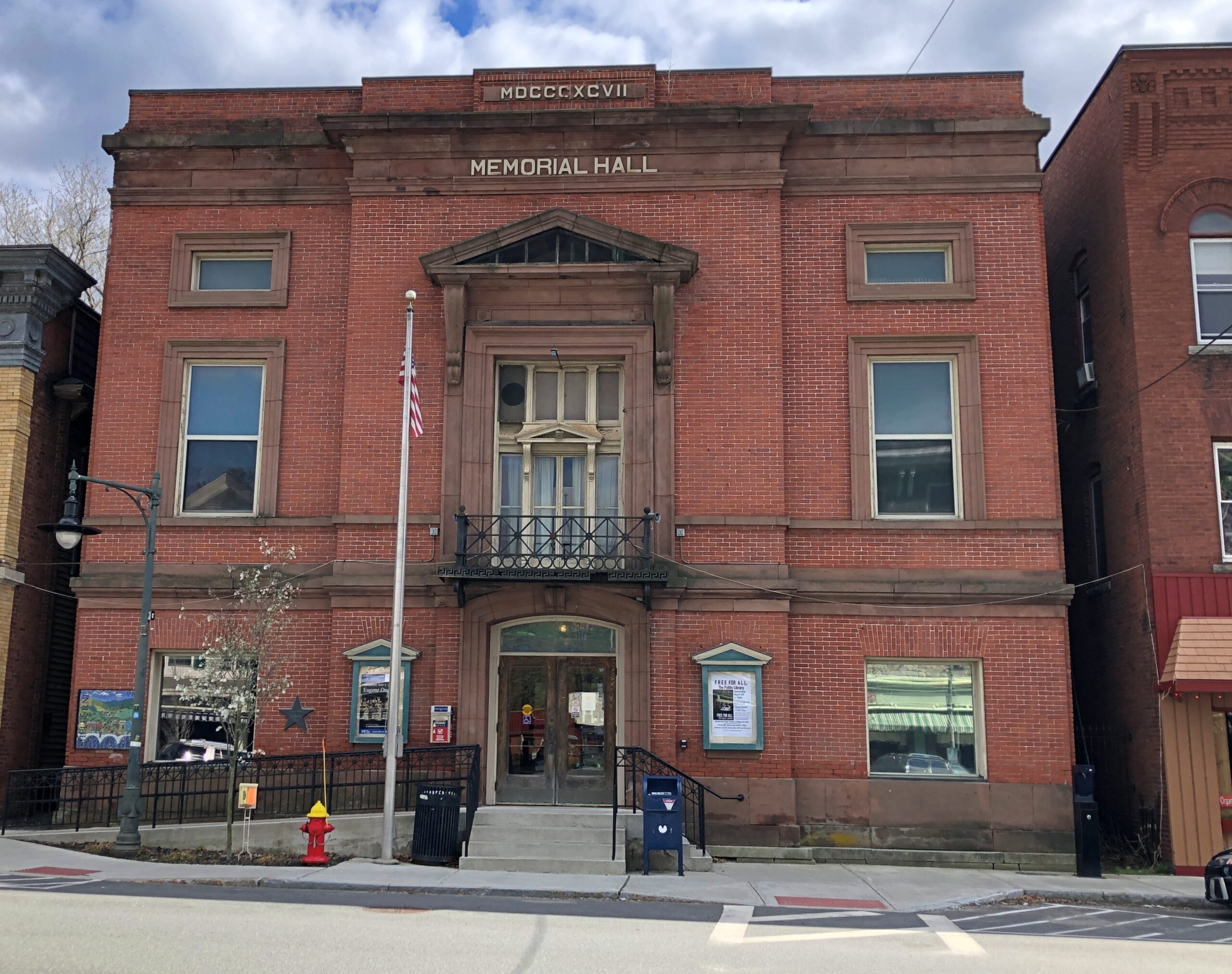
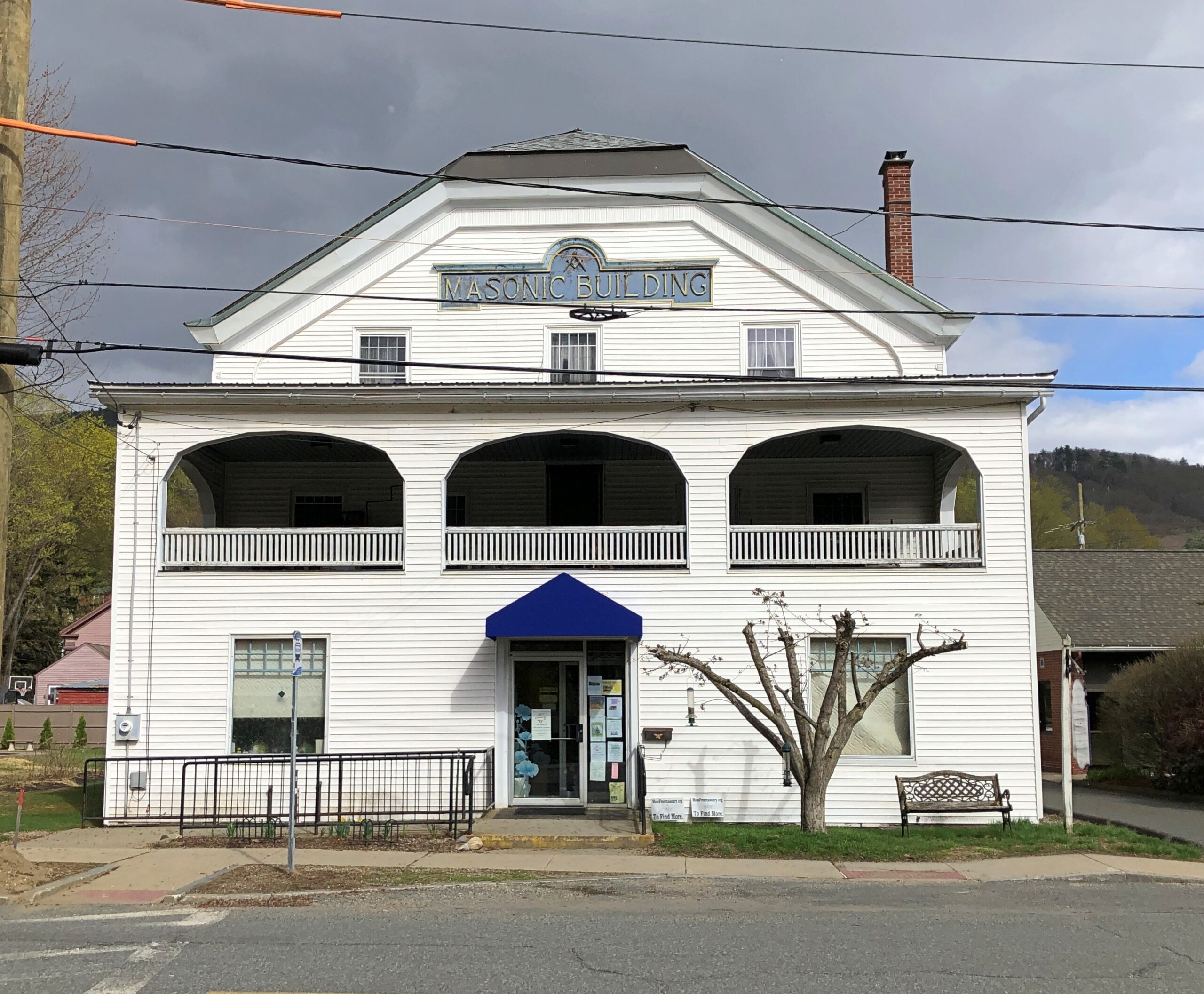
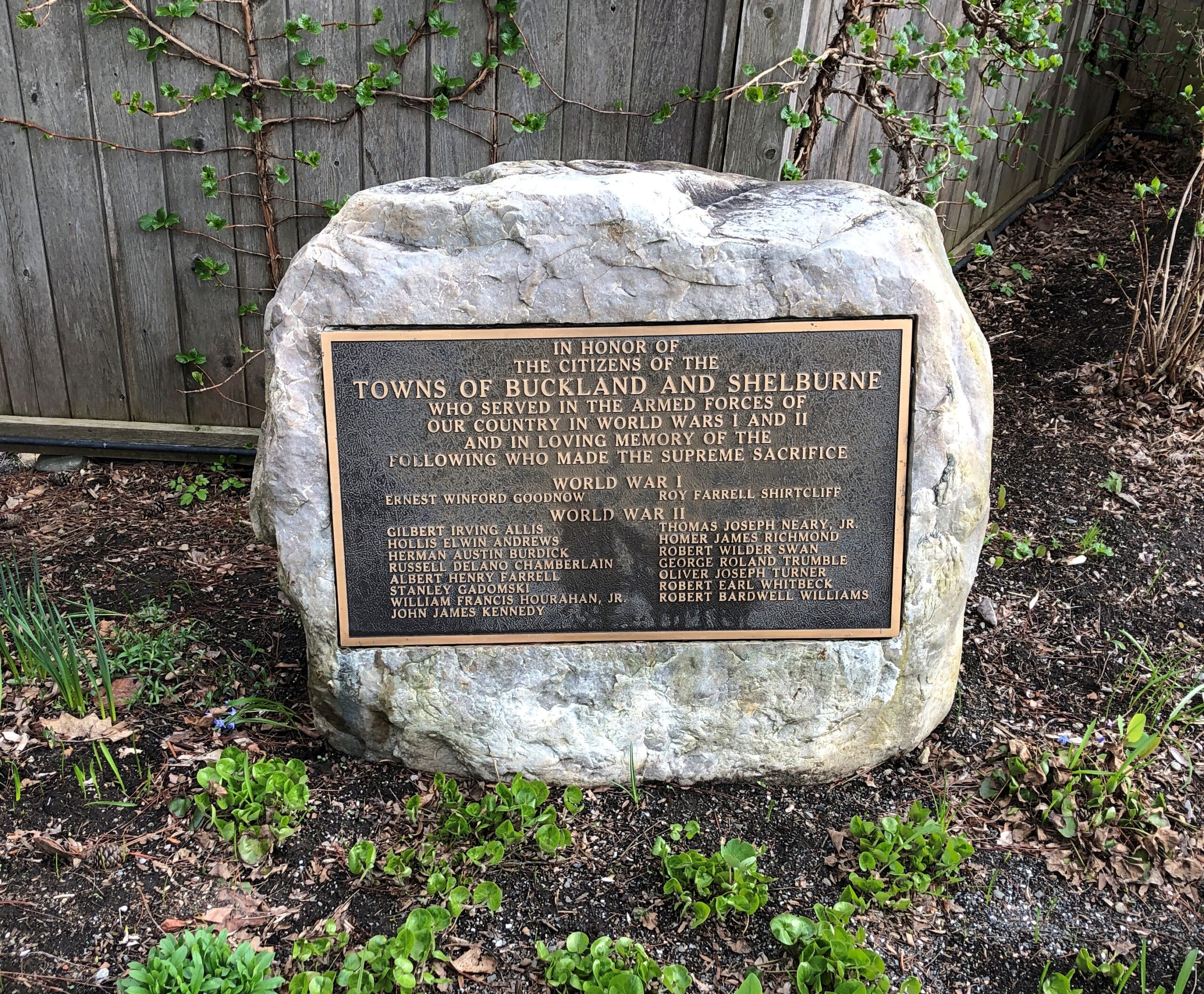
Shelburne.
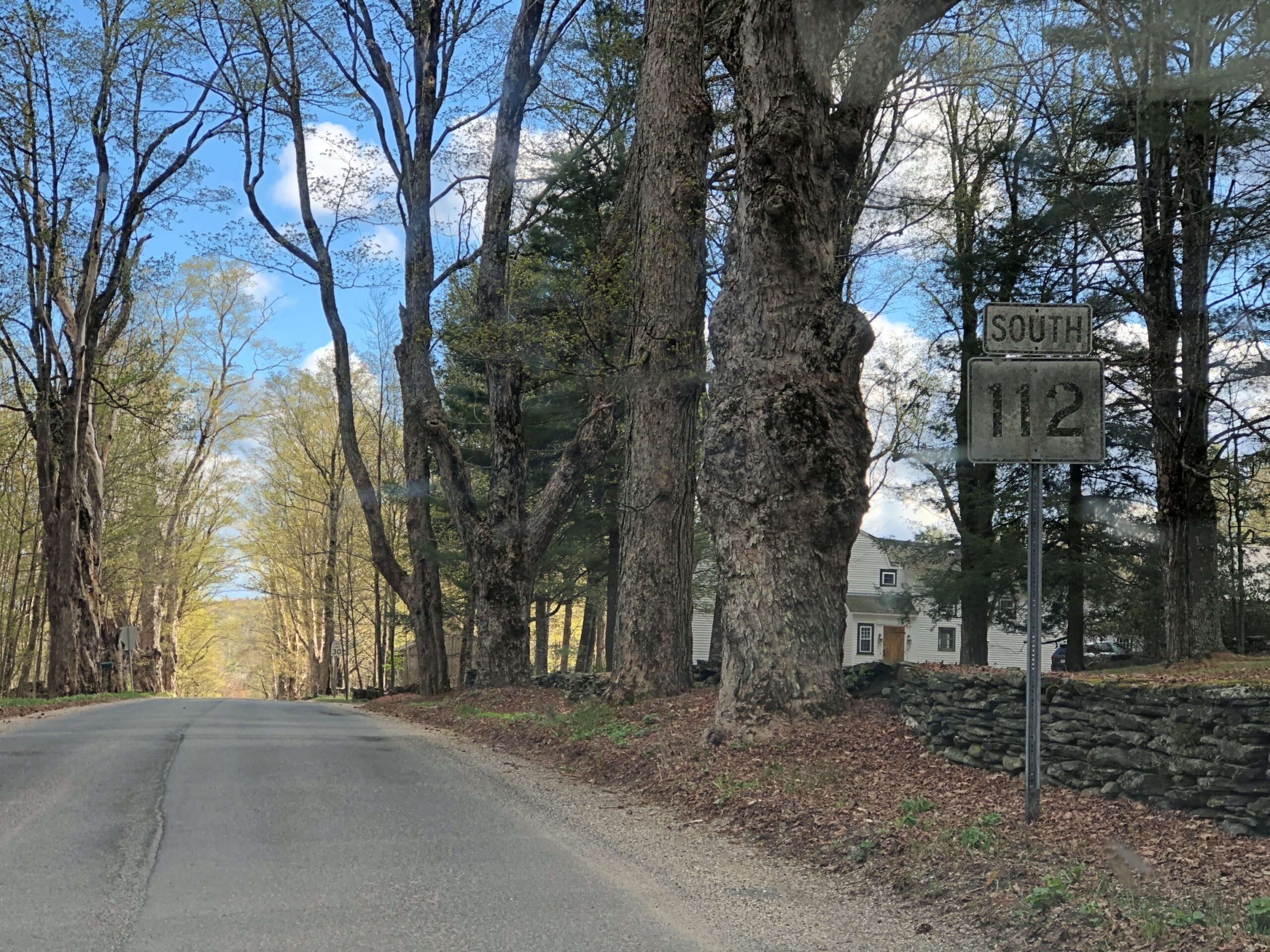
Massachusetts 112 (Route 112) in Hamilton County. Car commercial driving.
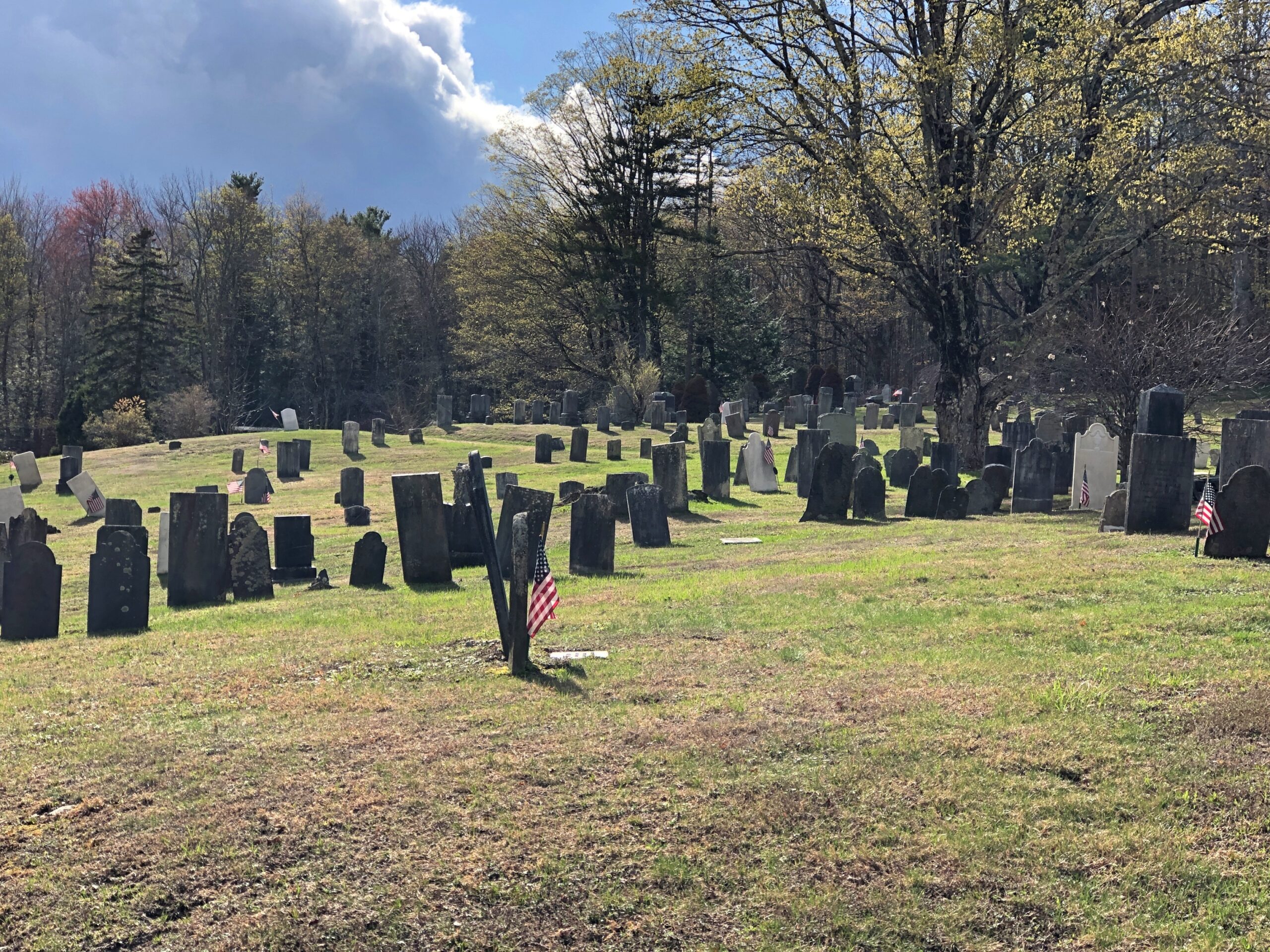
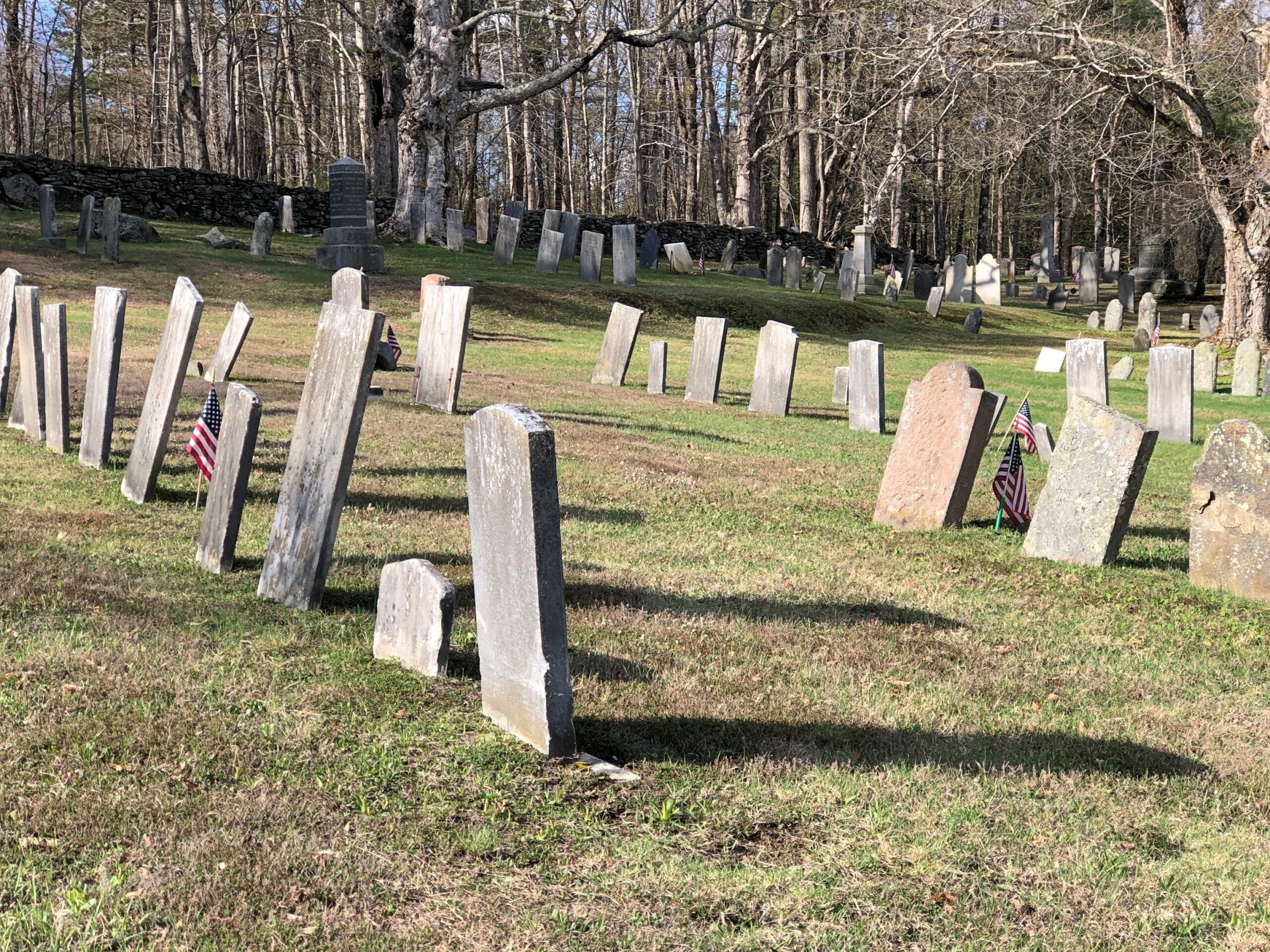
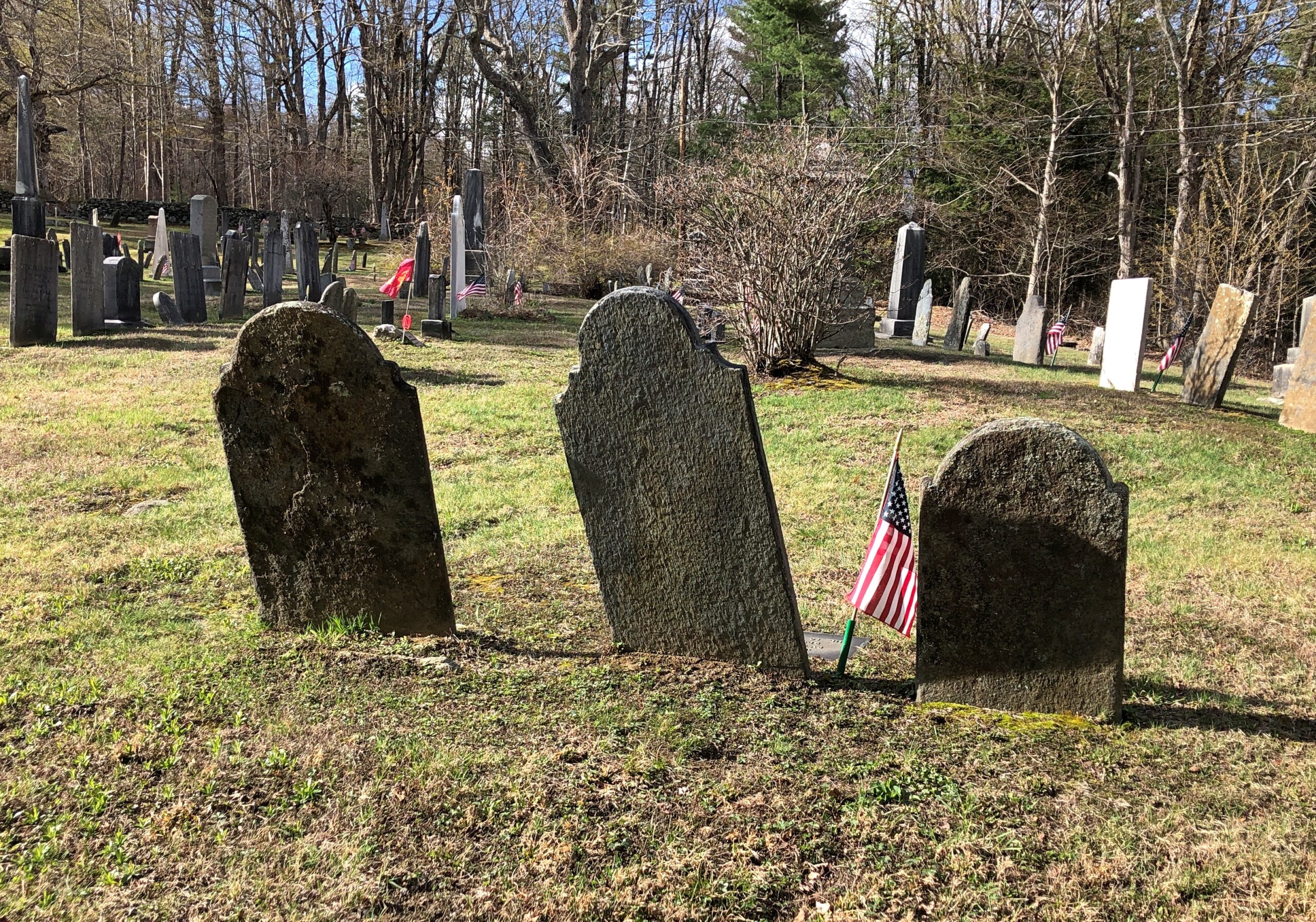
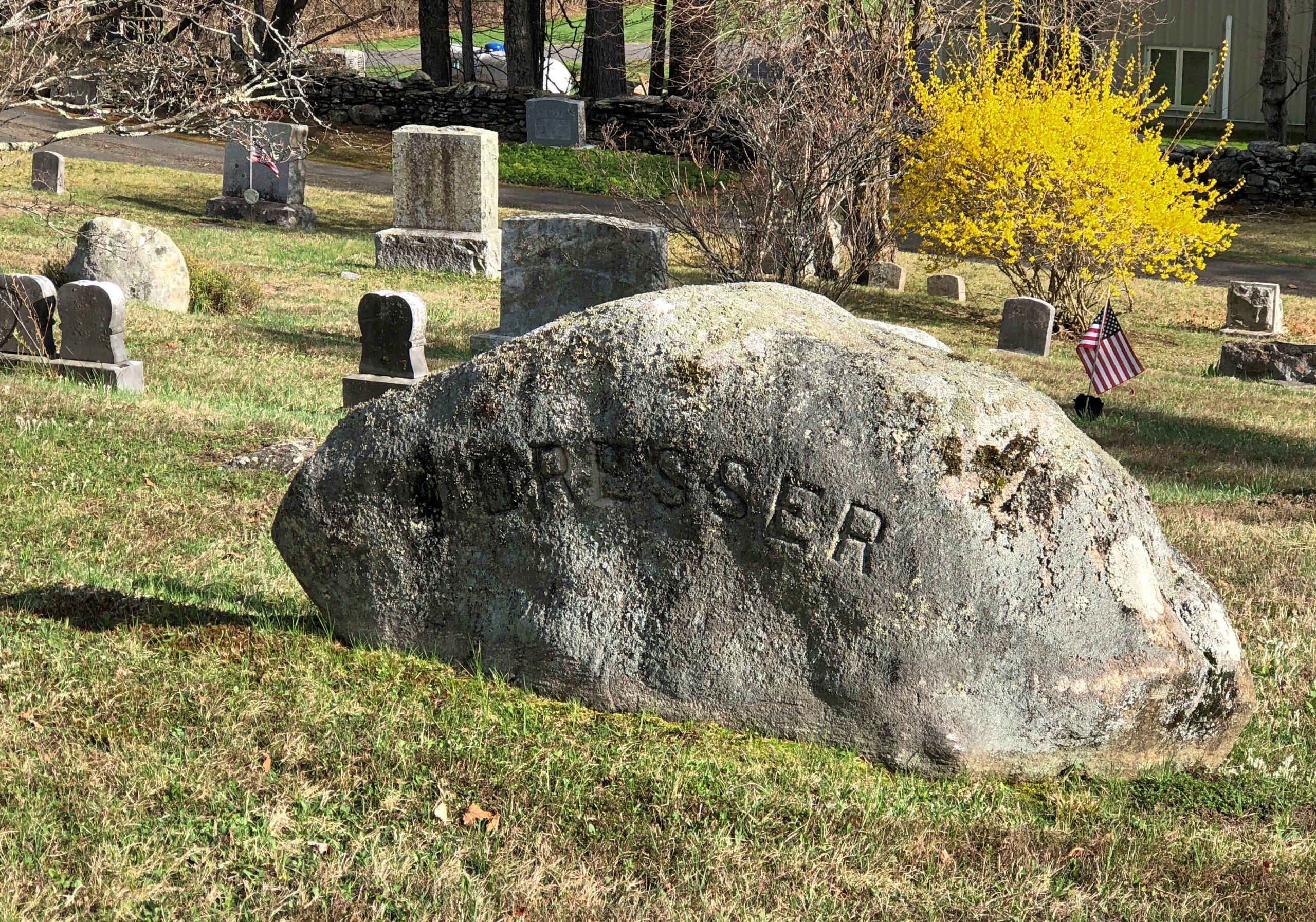
Goshen Cemetery, just off Route 112.
Ohio
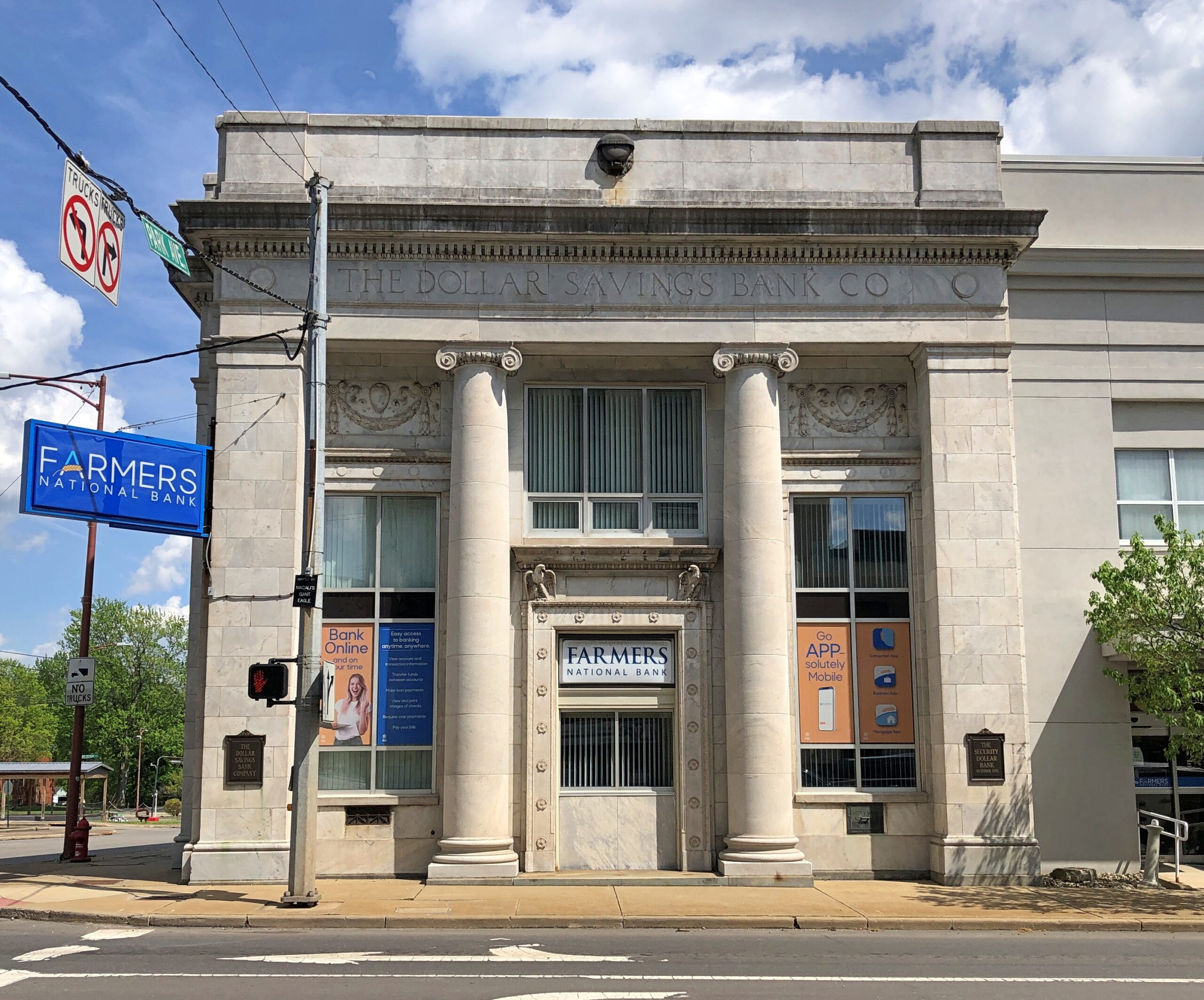
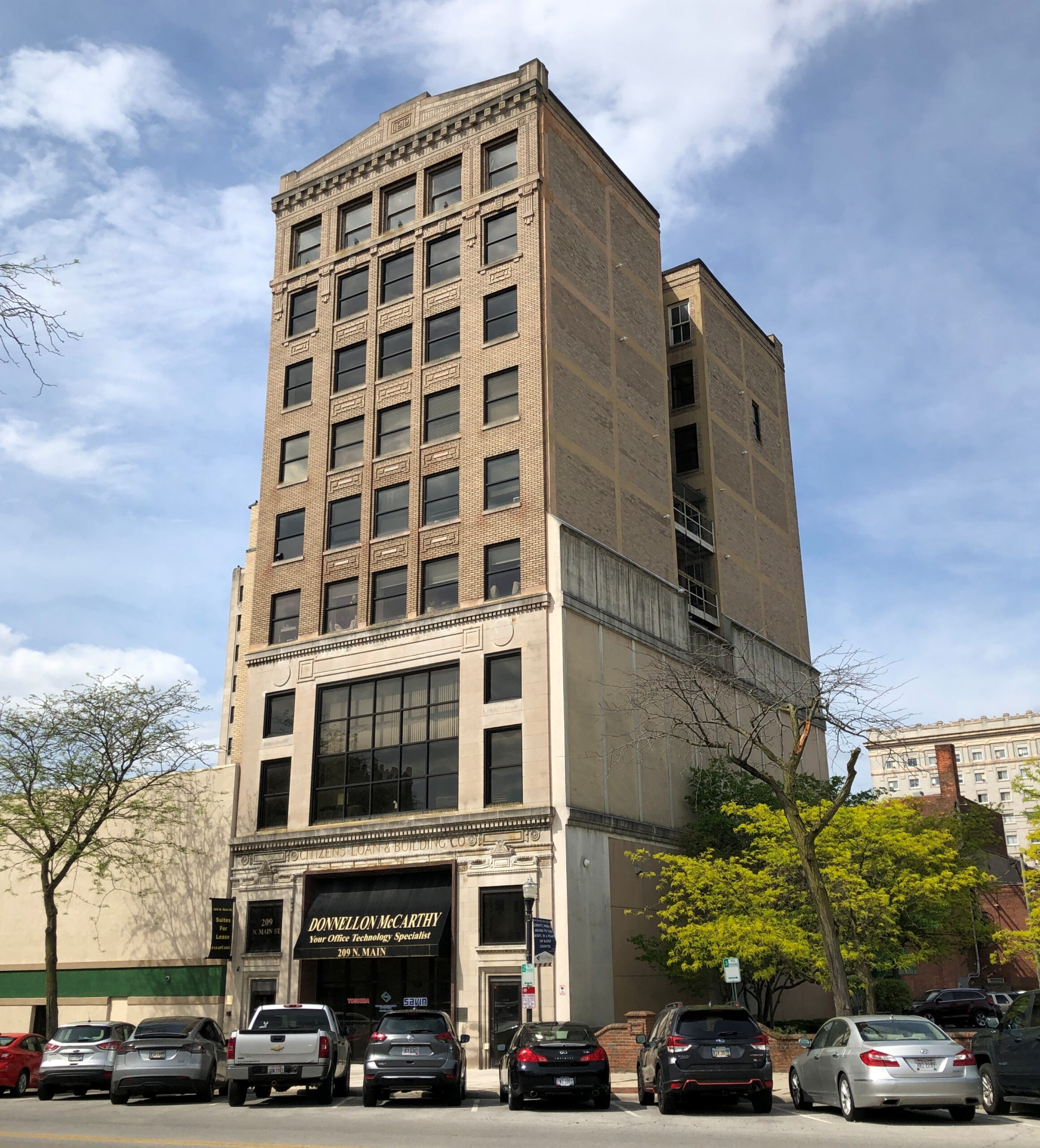
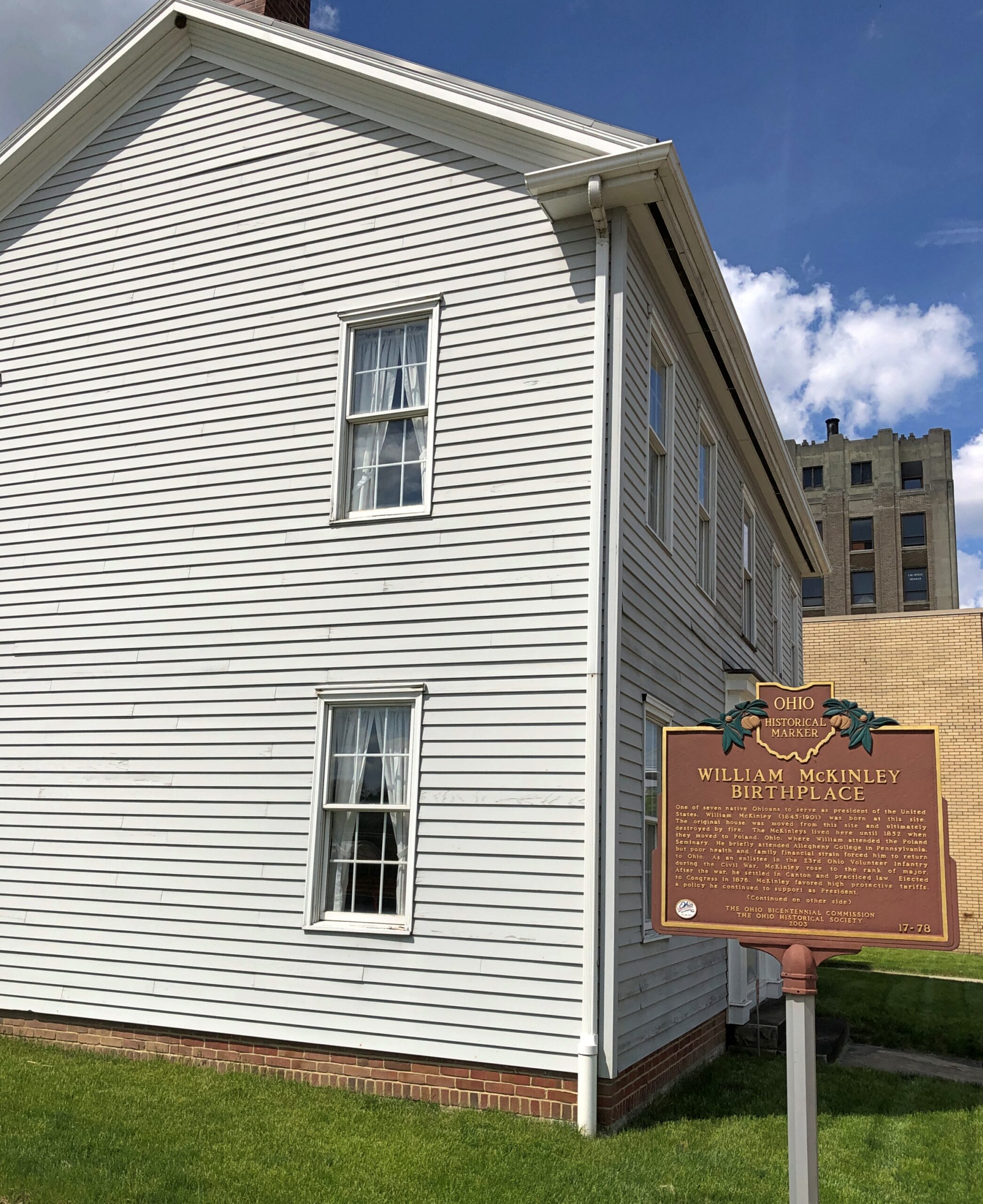
A solid bank building in Niles, across the street from where William McKinley was born. The Dollar Savings Bank Co. sounds like the kind of place that George Babbitt would mention, but distain in favor of a bank with longstanding ties to the best business men in Zenith.
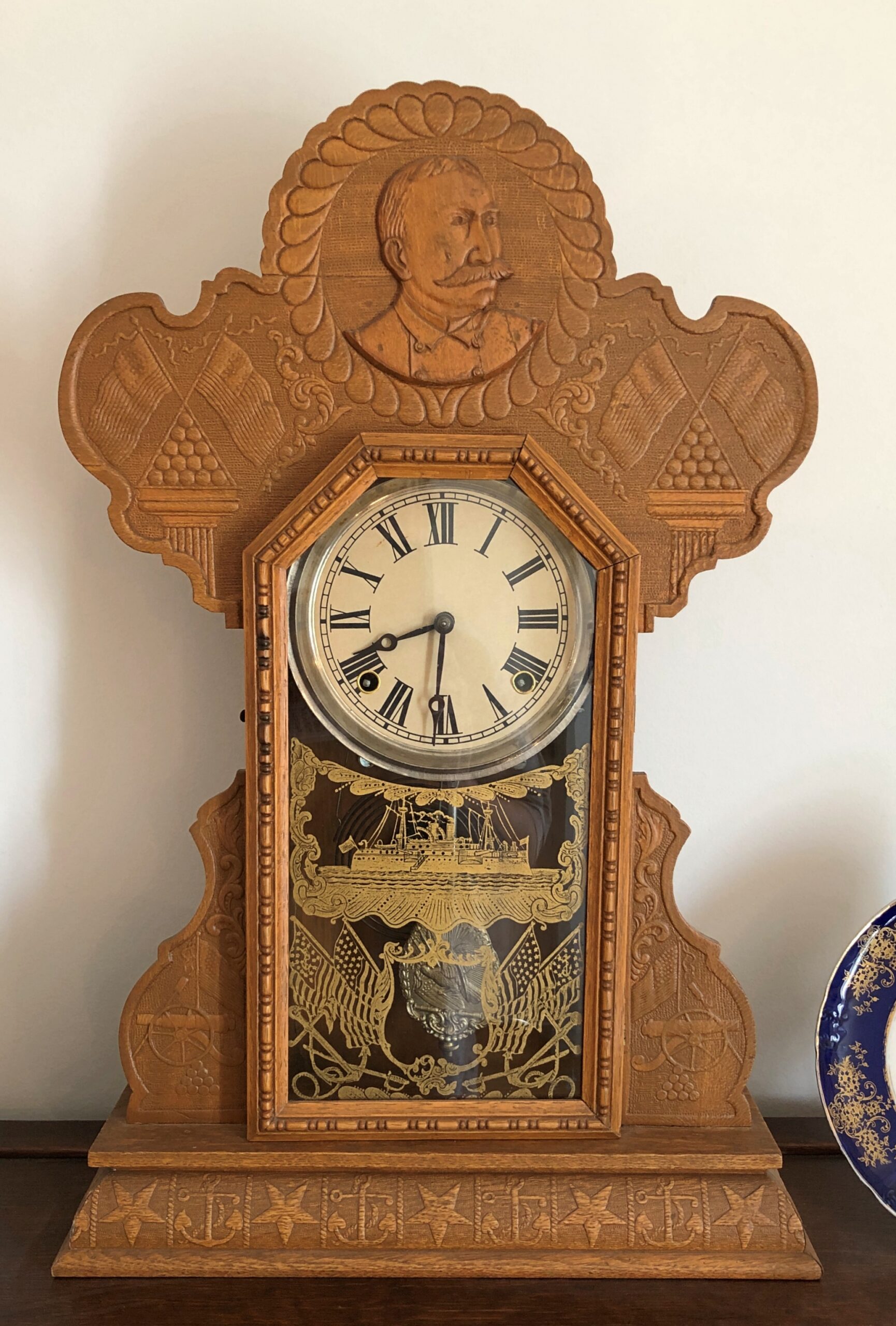
An Admiral Dewey clock at the McKinley Birthplace Museum. A textbook case, that Dewey, of how fleeting fame usually is.
Passing through northeast Ohio intrigued me greatly about that part of the state. Akron, Canton, Youngstown, Austintown — all places I can imagine going, and enjoying the visits. See ’em before the reverse migration really gets underway.
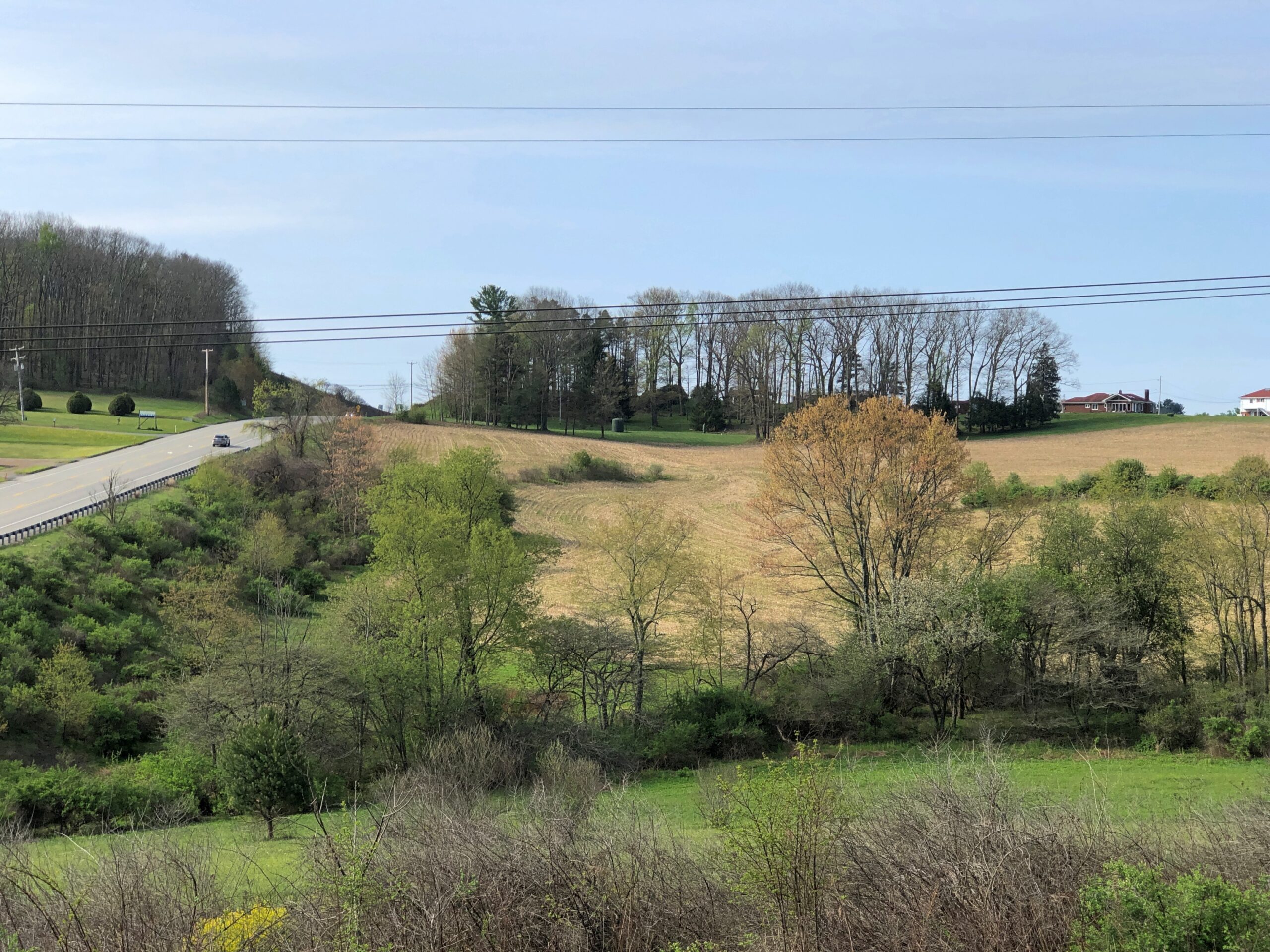
Further west, the drive on the Lincoln Highway (US 30) was a pleasure: mostly four lanes, rarely crowded. The flat farmlands don’t qualify as conventionally scenic, but the budding springtime fecundity has a lot to recommend it, even as a strictly visual pleasure: the bright greens of new leaves, the brown and grays of the fields recently plowed, small roads heading off usually at right angles to the main road, a run between Upper Sandusky and I-75 near Lima with few buildings of any kind, except distant farm structures.
Downtown Lima: the Allen County courthouse, seen from North St.
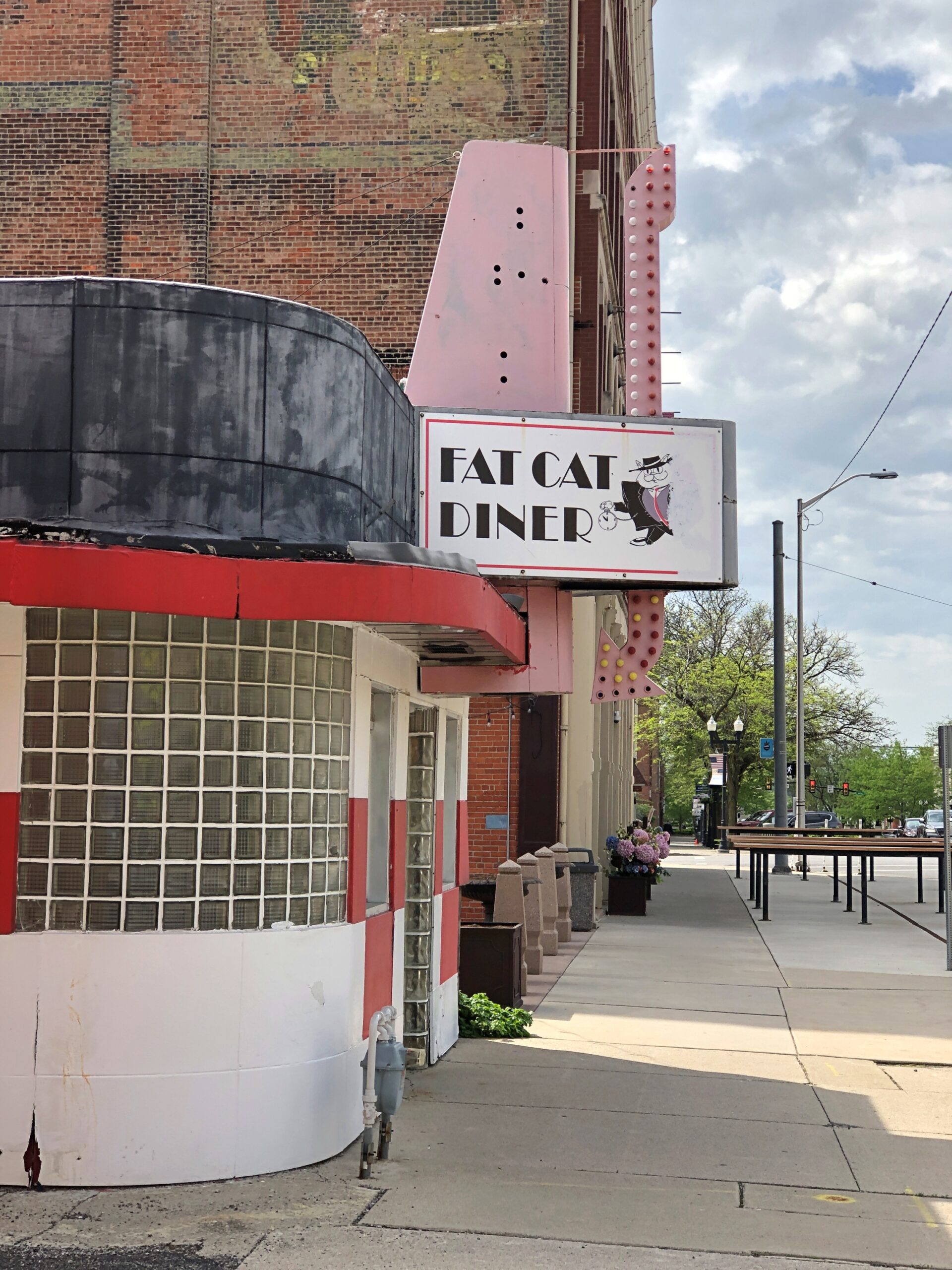
Looks like my kind of breakfast place. Closed on Sunday anyway.
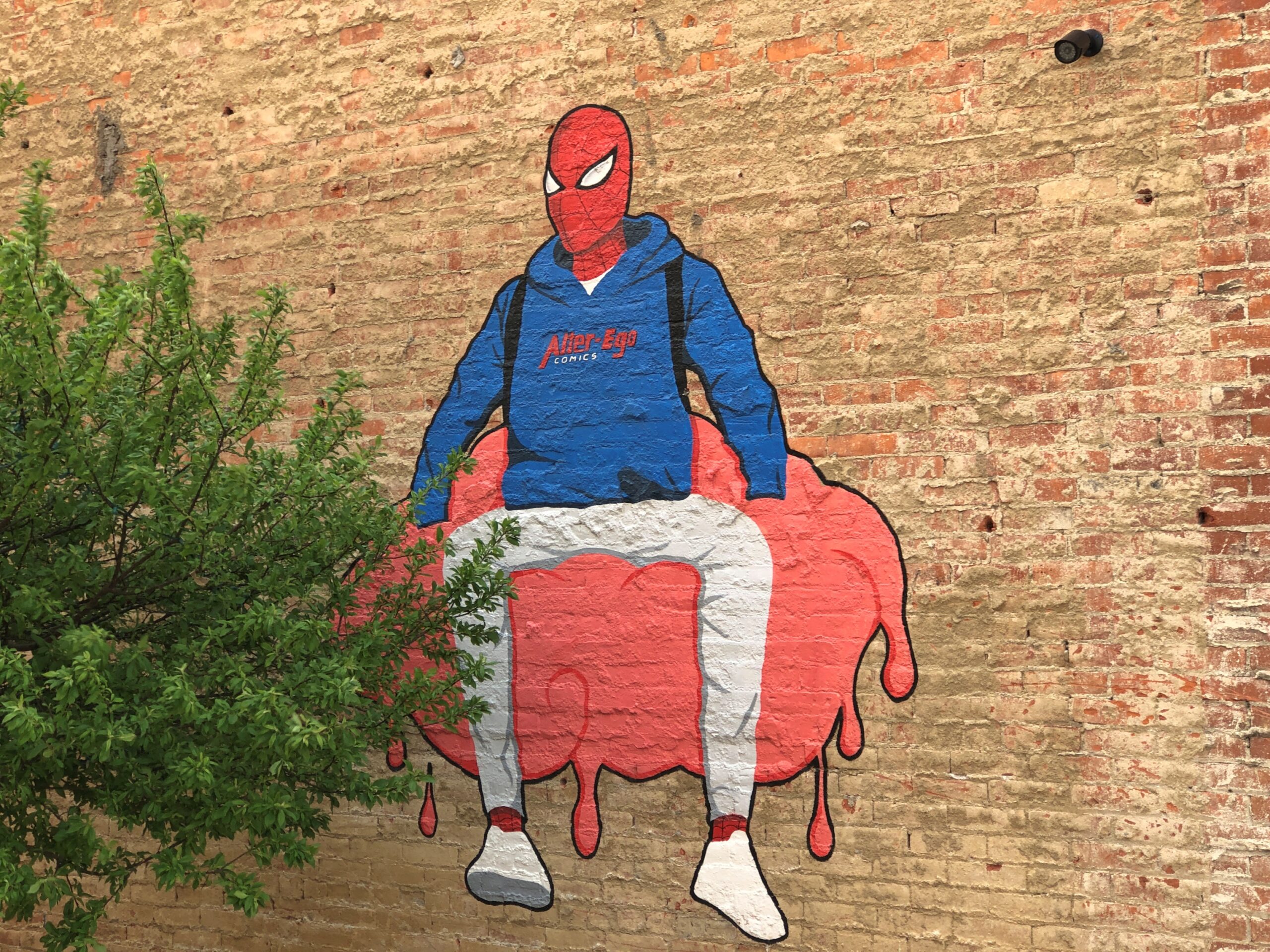
Another North St. detail. Spiderman sitting on — something. A large scoop of strawberry ice cream?
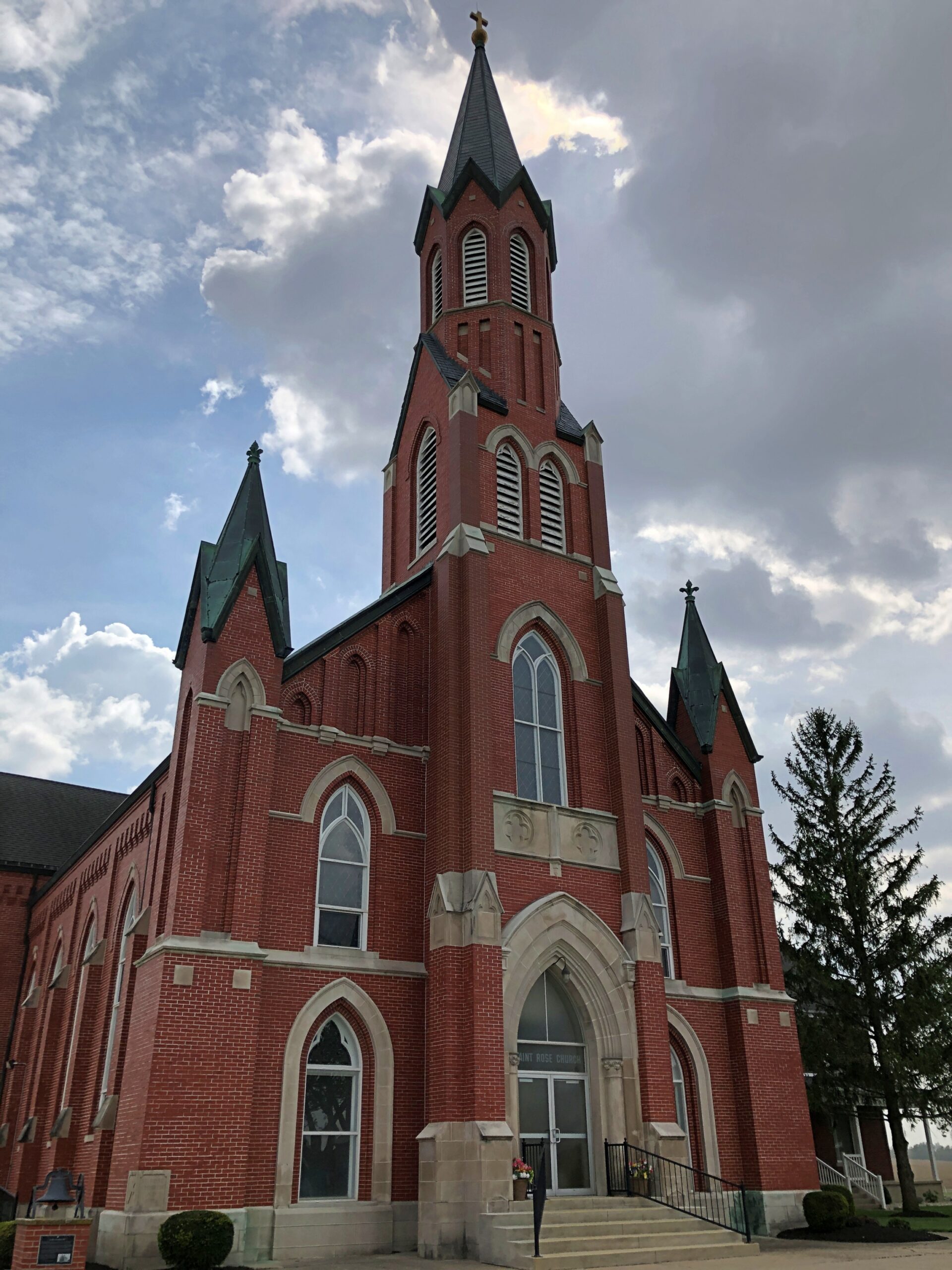
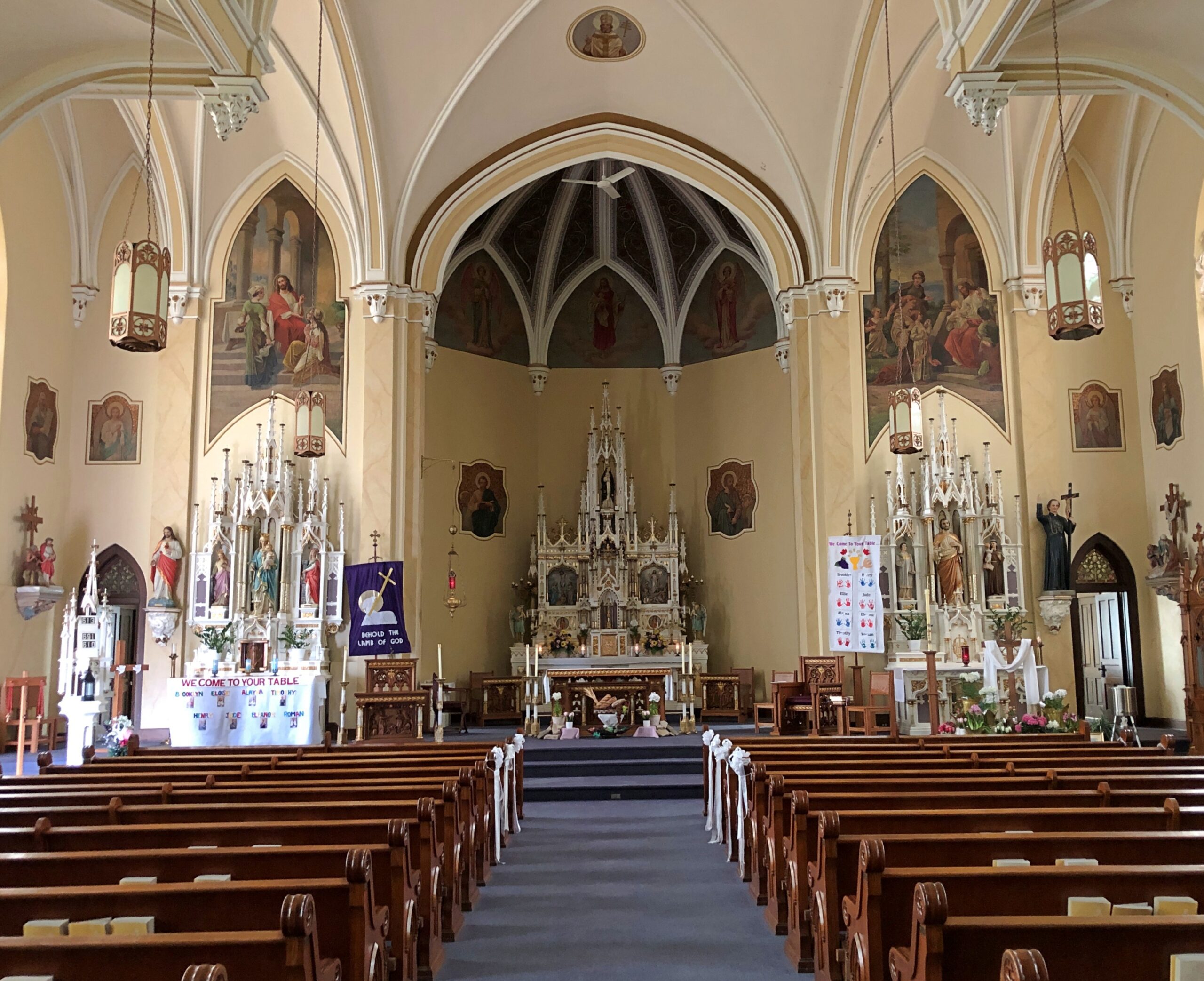
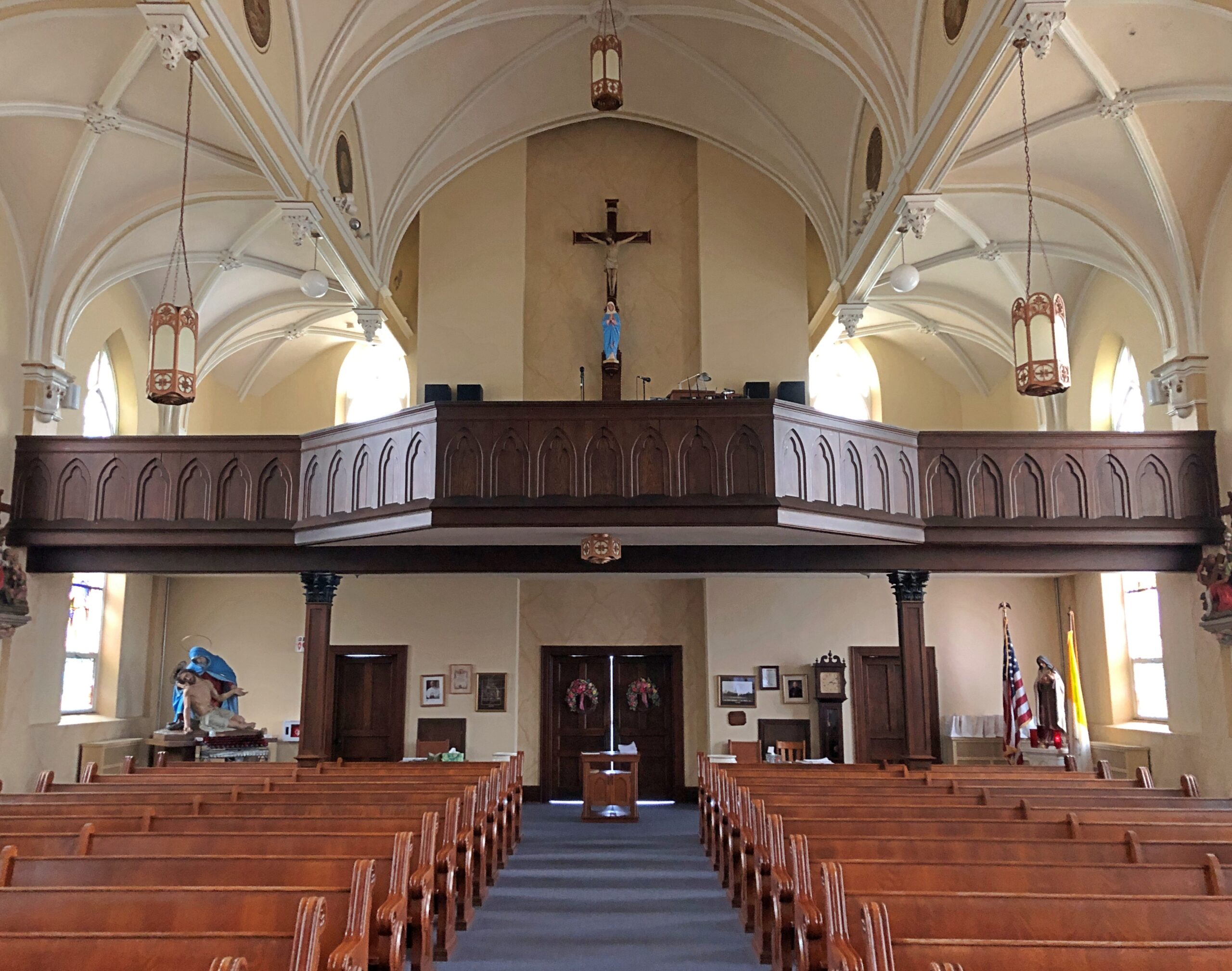
Saint Rose Church in the hamlet of Saint Rose, not far east of the Ohio-Indiana line. A Cross-Tipped Church.
Pennsylvania
The hills at the edge of Punxsutanwney.
The drive west across Pennsylvania began across the Delaware River from Port Jervis, NY, taking US 209 southwest through part of Delaware Water Gap National Recreation Area. Bet the straight-ish, two-lane road is busier in peak recreation season in the Recreation Area, but in April, I booked along without encountering much in the way of traffic. Trees were still budding, but it wouldn’t be long before some stretches of the highway would pass through green tunnels. The sunlight was already casting green leaf shadows on the road.
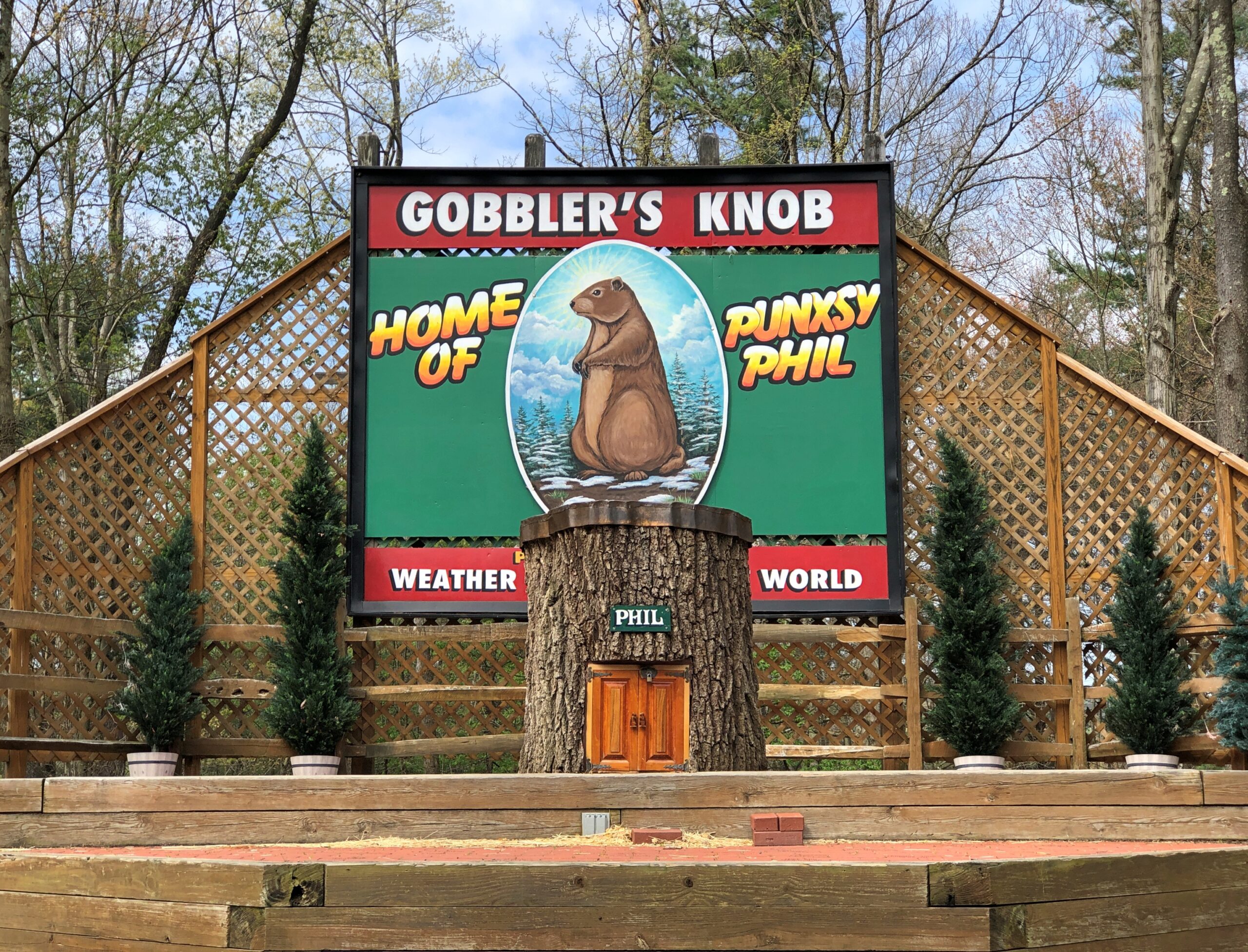
Watch Groundhog Day, and the impression is that the festivities are held in the center of town — which they are, in the Punxsutanwney stand-in of Woodstock, Illinois. Go to Punxsutanwney itself and learn that the February 2 fest is a few miles from town in a place called Gobbler’s Knob.
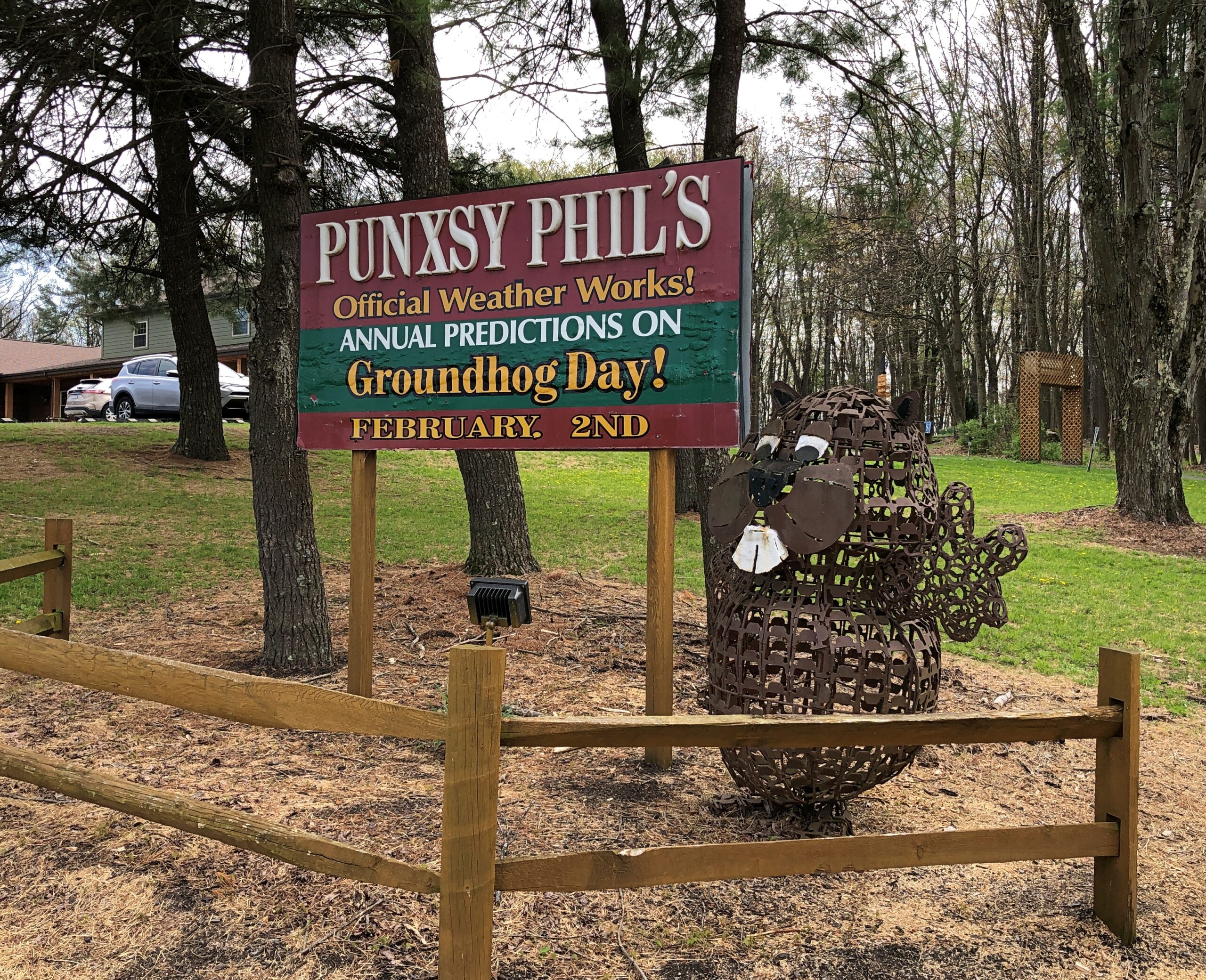
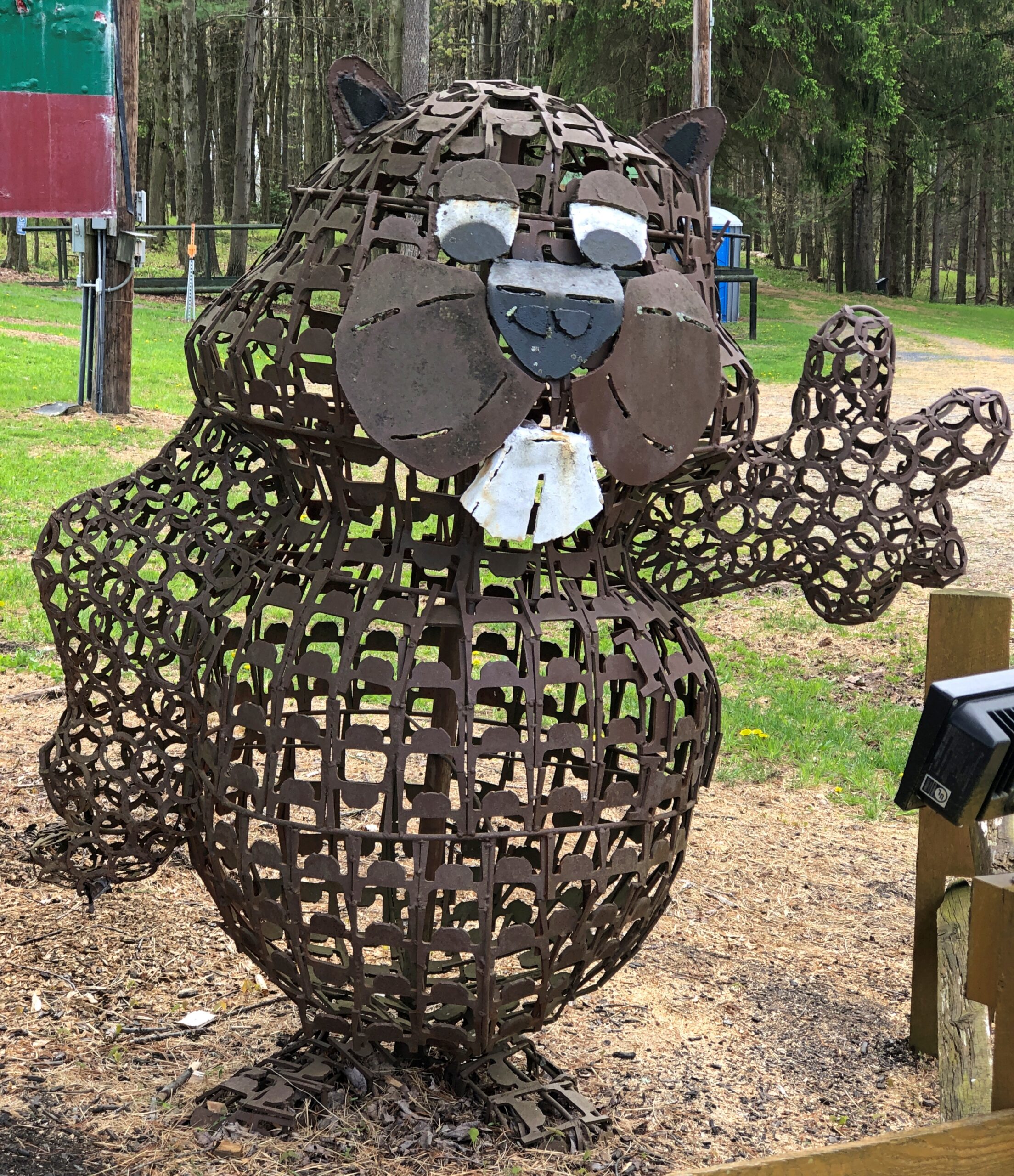
One more Phil. Iron Phil.
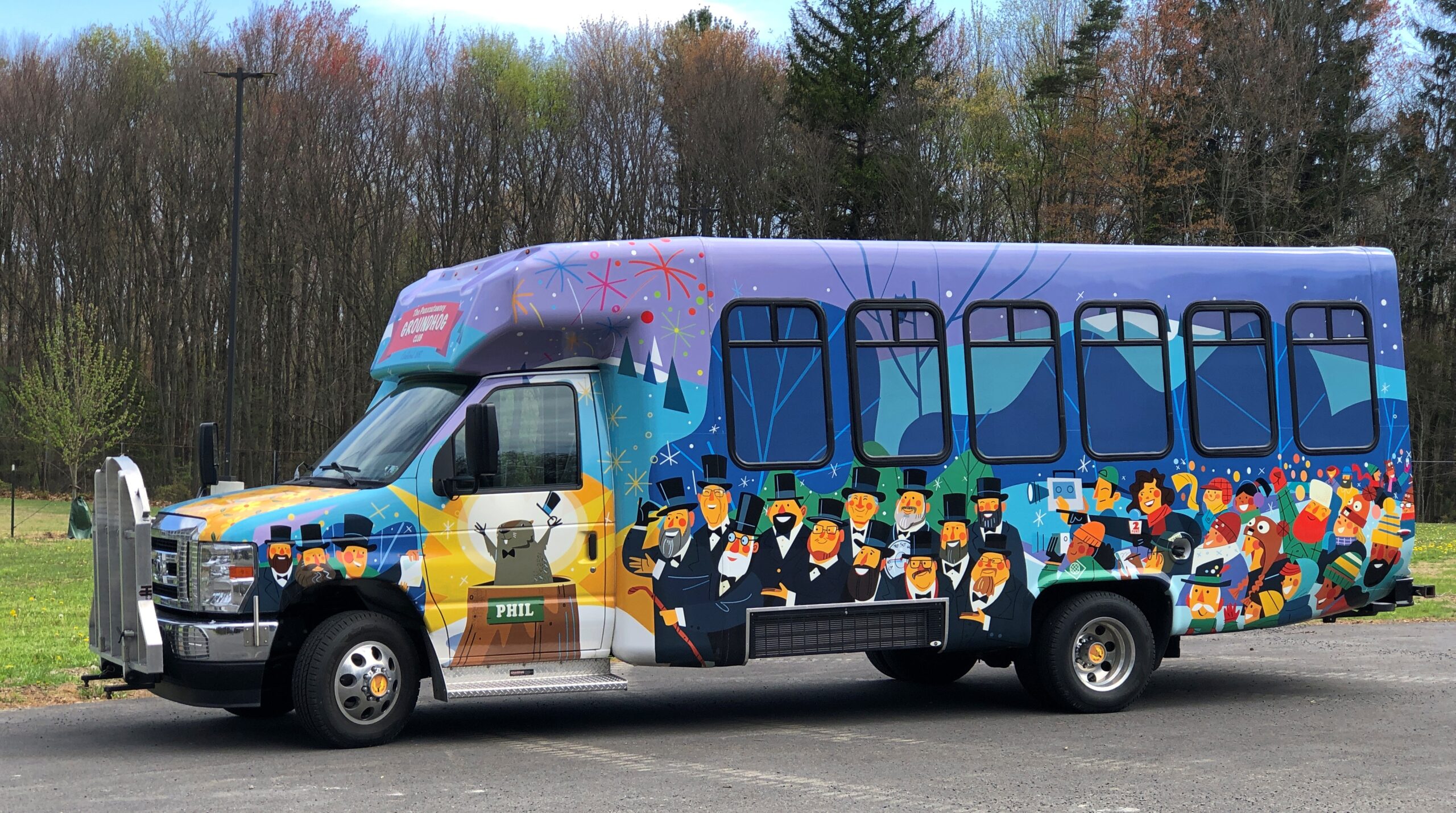
The clerk at the Gobbler’s Knob gift shop took pains to let me know that the site, and the festivities, were overseen by a nonprofit, not the commonwealth. Outside is the nonprofit’s bus, or at least I assume that, probably used to ferry people from town to GK and vice-versa, to help deal with the popularity of the event.
I like a good local festival as much as anyone, but February 2 is a deal-breaker. Can’t Phil come out again on August 2 to predict how much longer summer is going to last?
One More (Indiana)
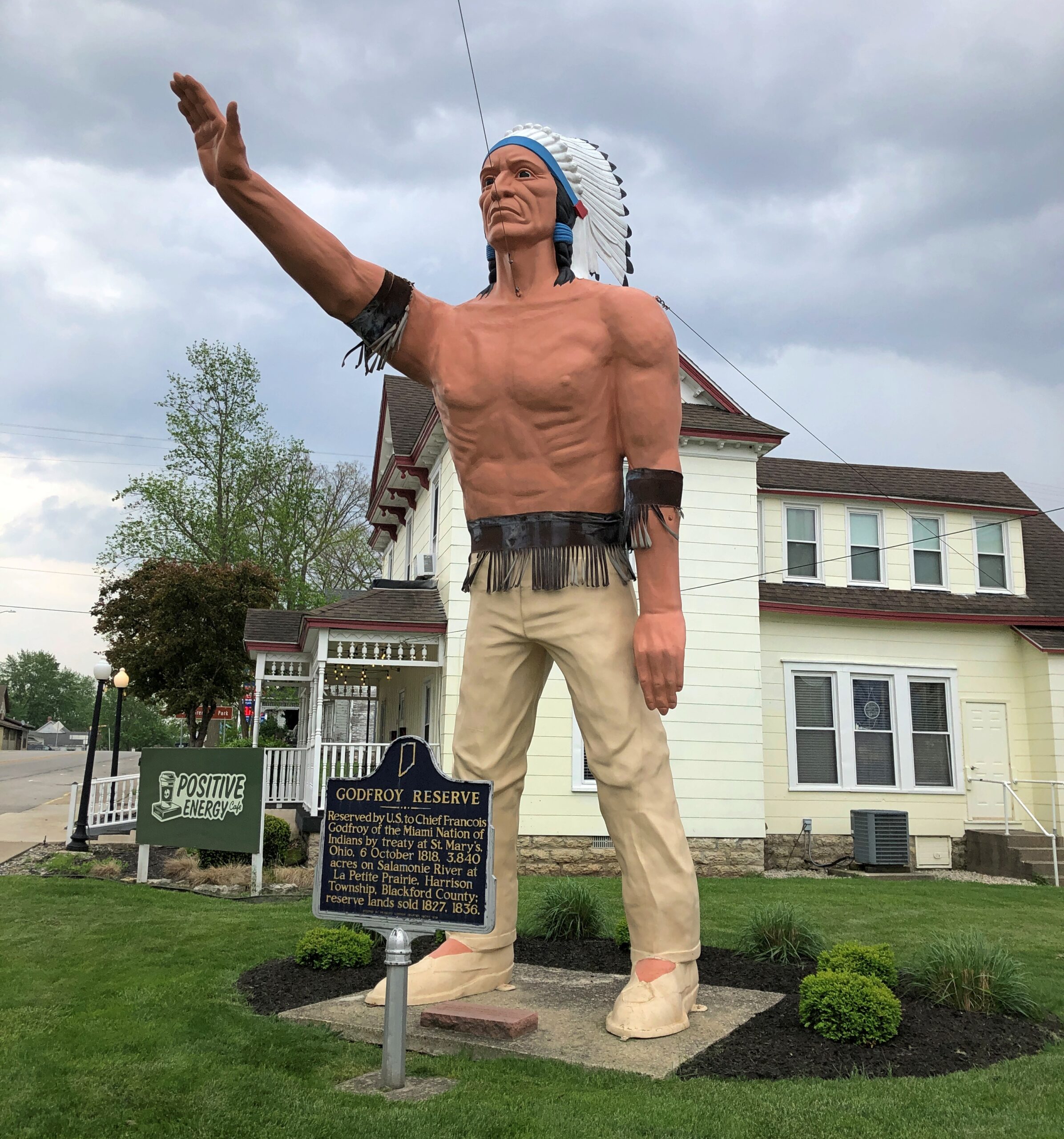
Miami Chief Francois Godfroy stands at the corner of Main Street and Huntington Street/Indiana 18 in Montpelier. Well, maybe it’s supposed to remind passersby of the chief more than actually depict him.
A Daughters of the American Revolution historical marker says: Reserved by U.S. to Chief Francois Godfroy of the Miami Nation of Indians by treaty at St. Mary’s, Ohio, 6 October 1818. 3,849 acres on Salamonie River at La Petite Prairie, Harrison Township, Blackford County: reserve lands sold 1827, 1836.
Waymarking says: “The statue was made in Venice, CA in 1960 for the Tom Wood Pontiac dealership in Indianapolis. Later it was in front of the Indian Museum at Eagle Creek Park In Indianapolis. After the museum closed, the statue (of more a plains Indian than a NE Indiana tribe) was obtained by Chief Larry Godfroy — a descendant who presented it to the City of Montpelier and they erected it as a monument in 1984.”
An example of nonlinear tourism, a term I just made up, is my visit to Warren, Ohio. Linear tourism, another term I just (logically) made up, is picking a destination and sticking to it. That isn’t a bad approach, some of the time. But at other times, one follows an urge to go that next place on the map, to see what you can see. Nonlinear tourism has an element of spontaneity, obviously, and it probably isn’t the best way to plan a long trip.
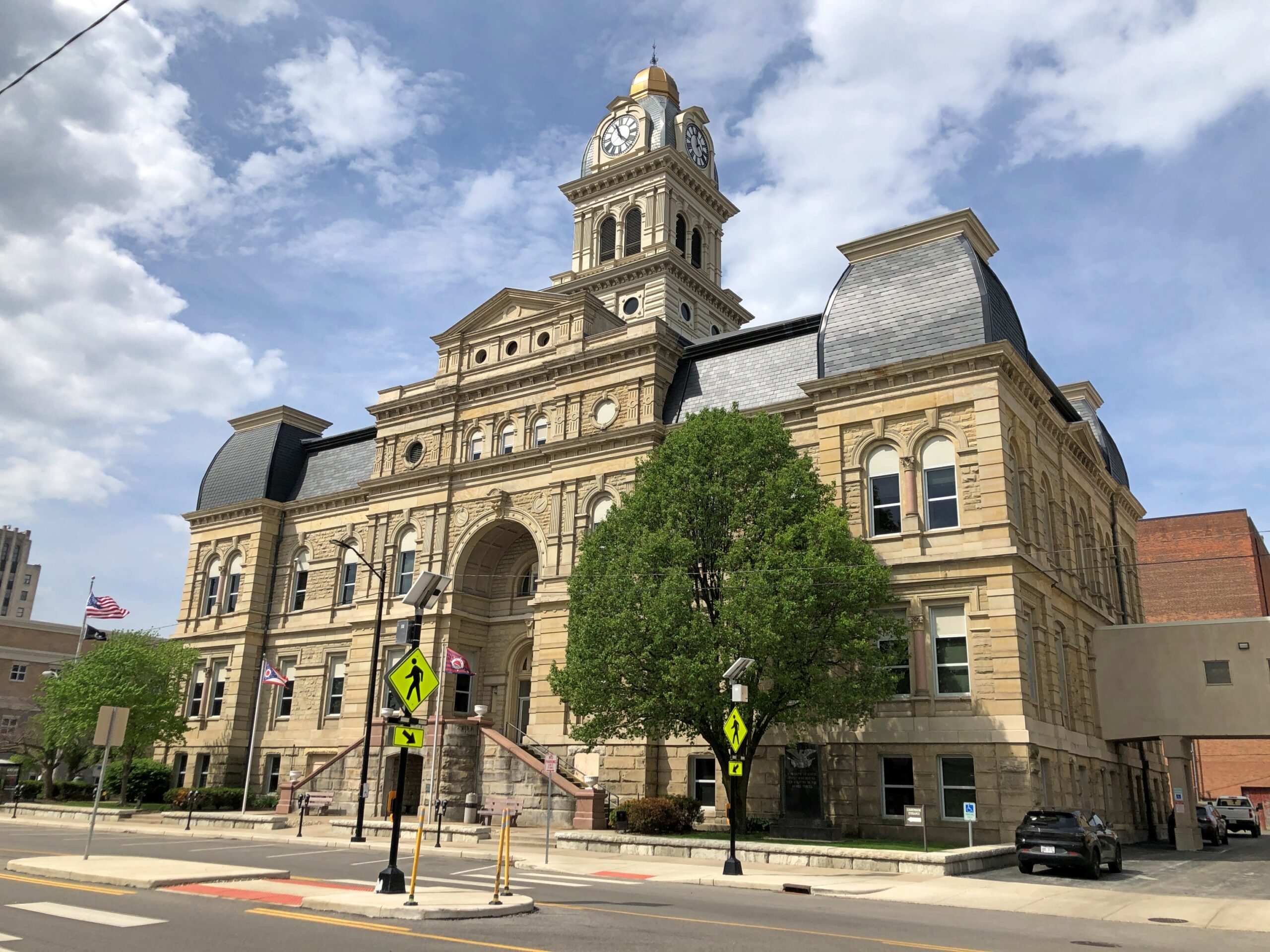
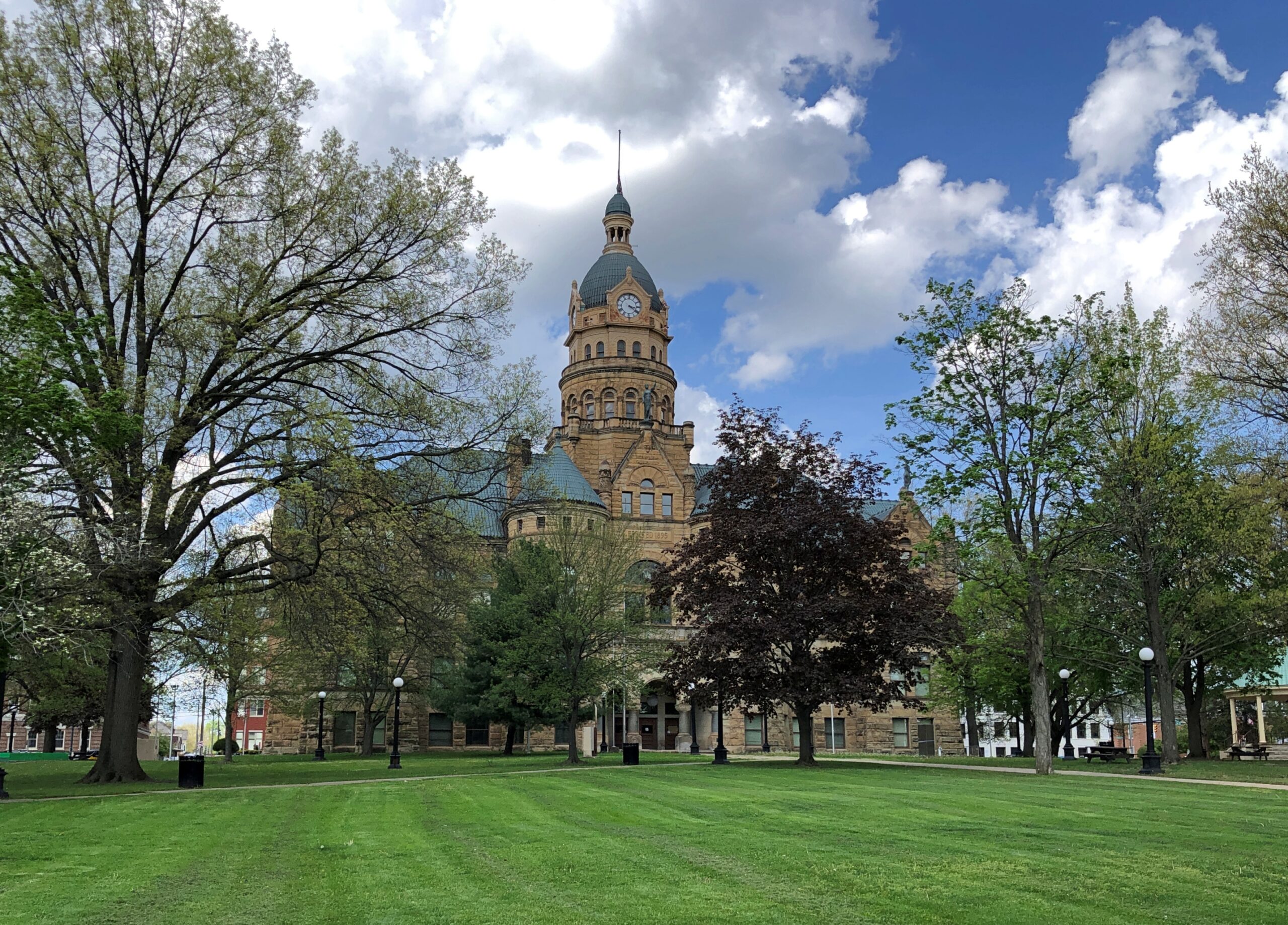
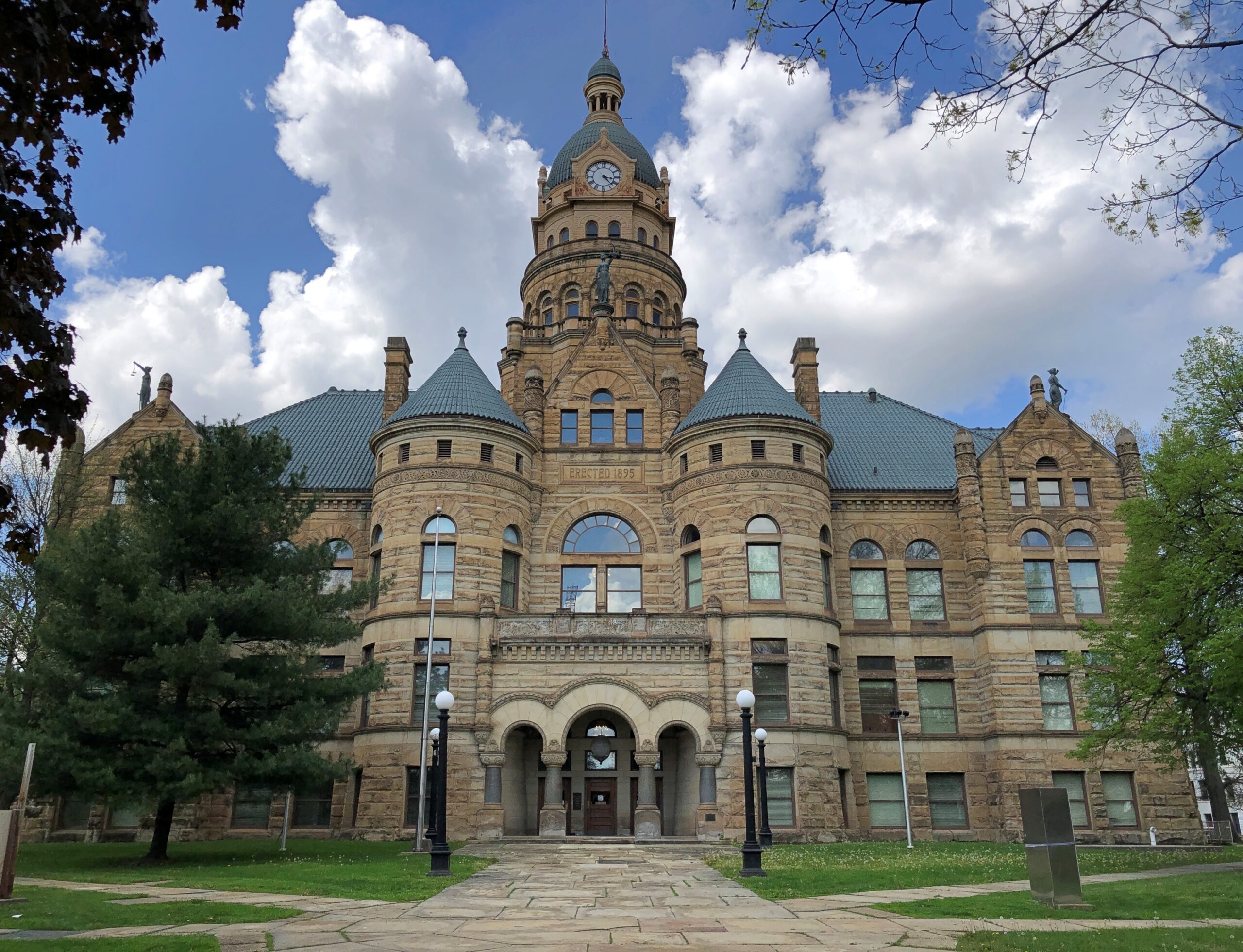
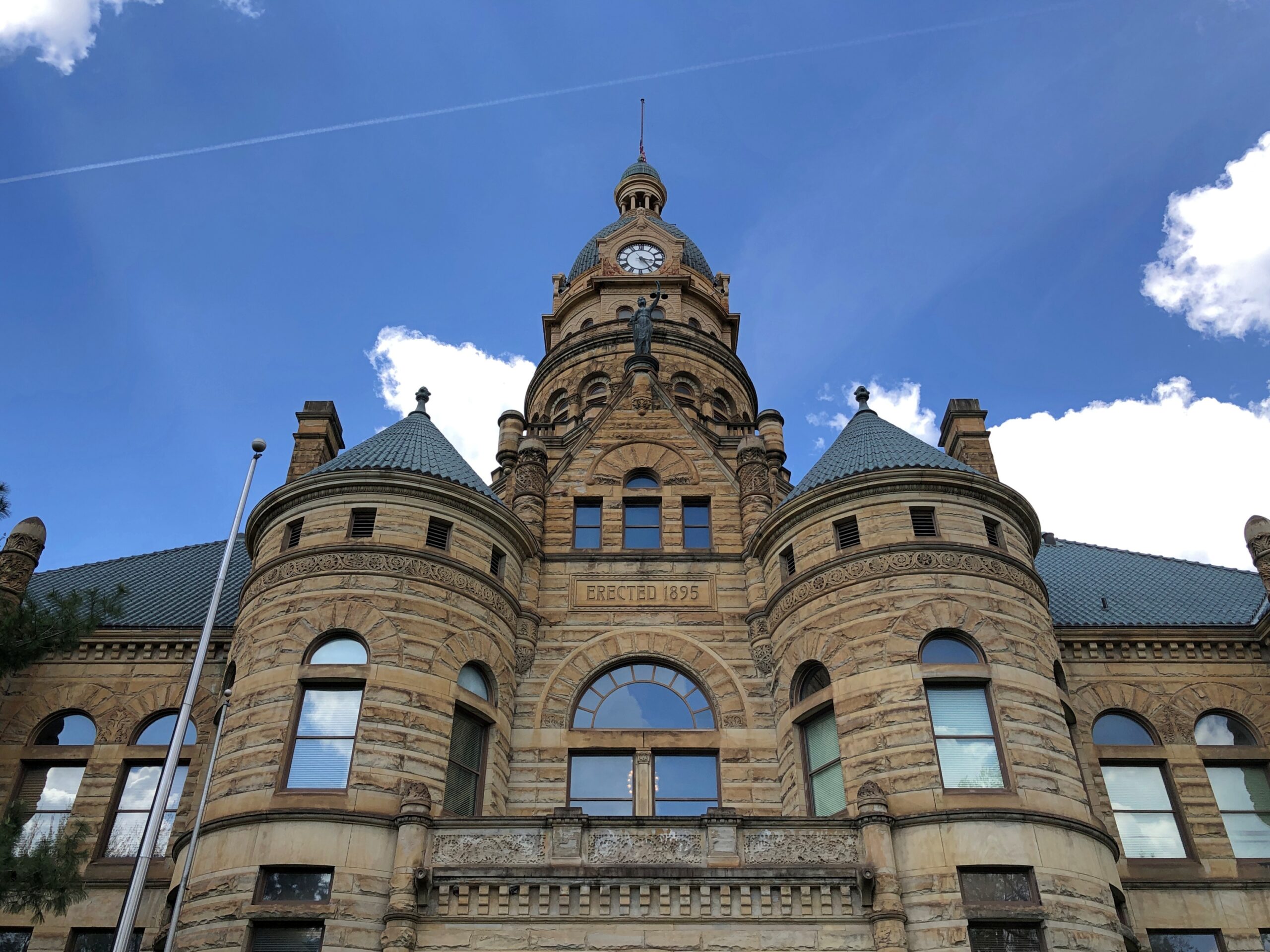
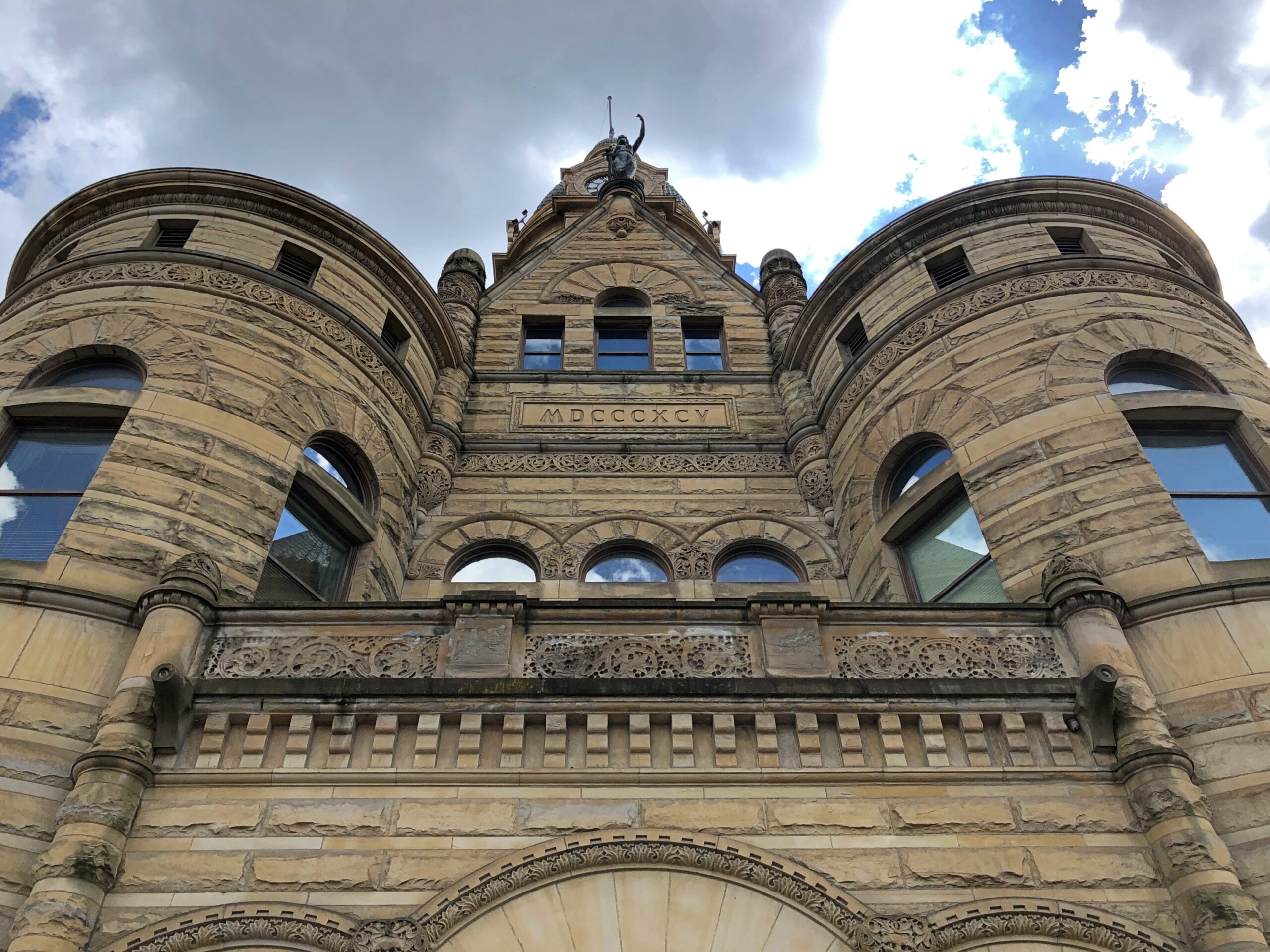
Sometimes the rewards are worth the slight meander. There I was in Niles, done with my visit to McKinley sites, and I thought: Warren’s just up the road. So I went. Warren is the seat of Trumbull County, and a prosperous place 100-plus years ago – Packard got its start there, for one thing – and so the county could afford a grand courthouse in 1895. That was worth the side trip right there.
Front and back.
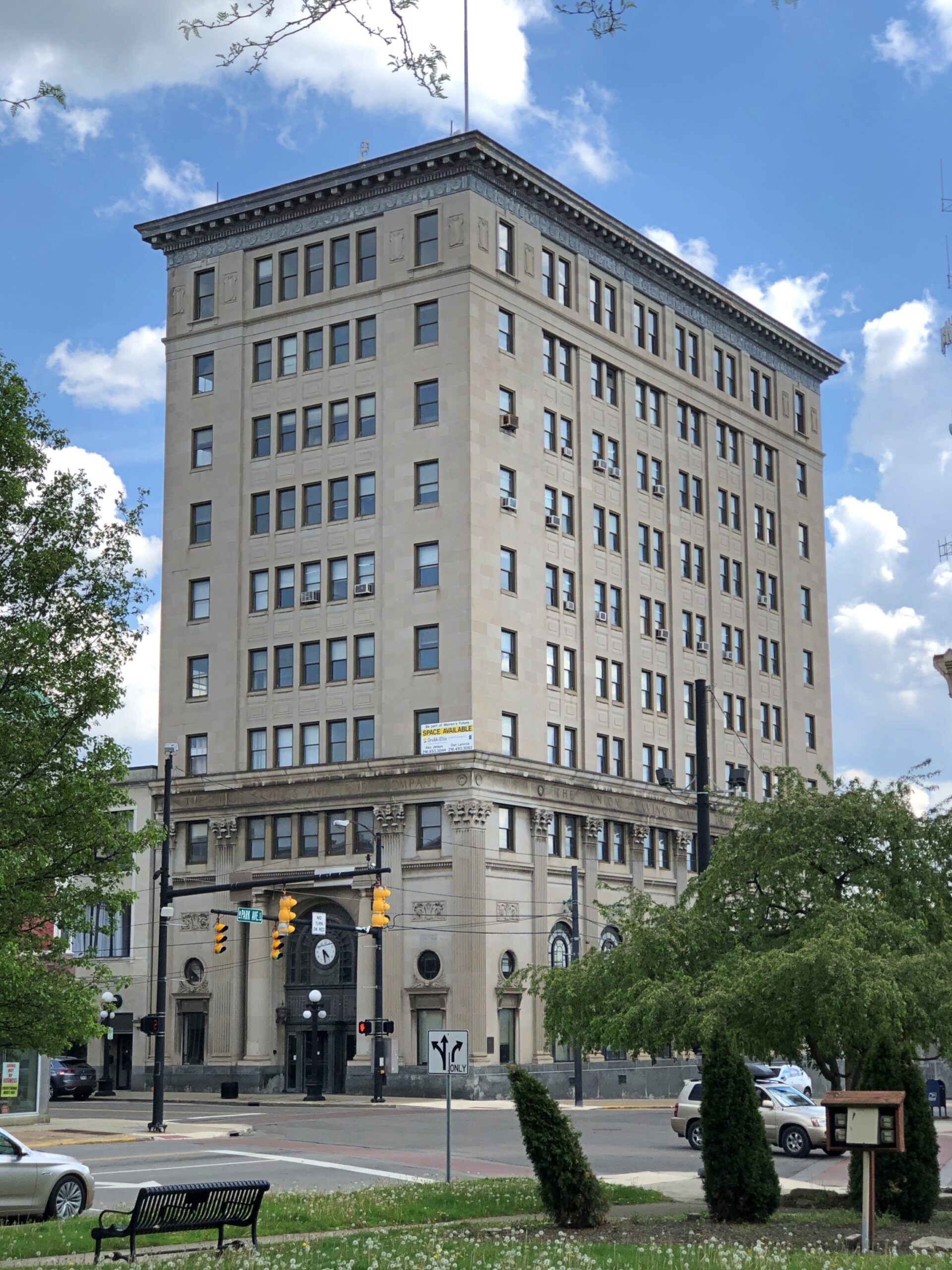
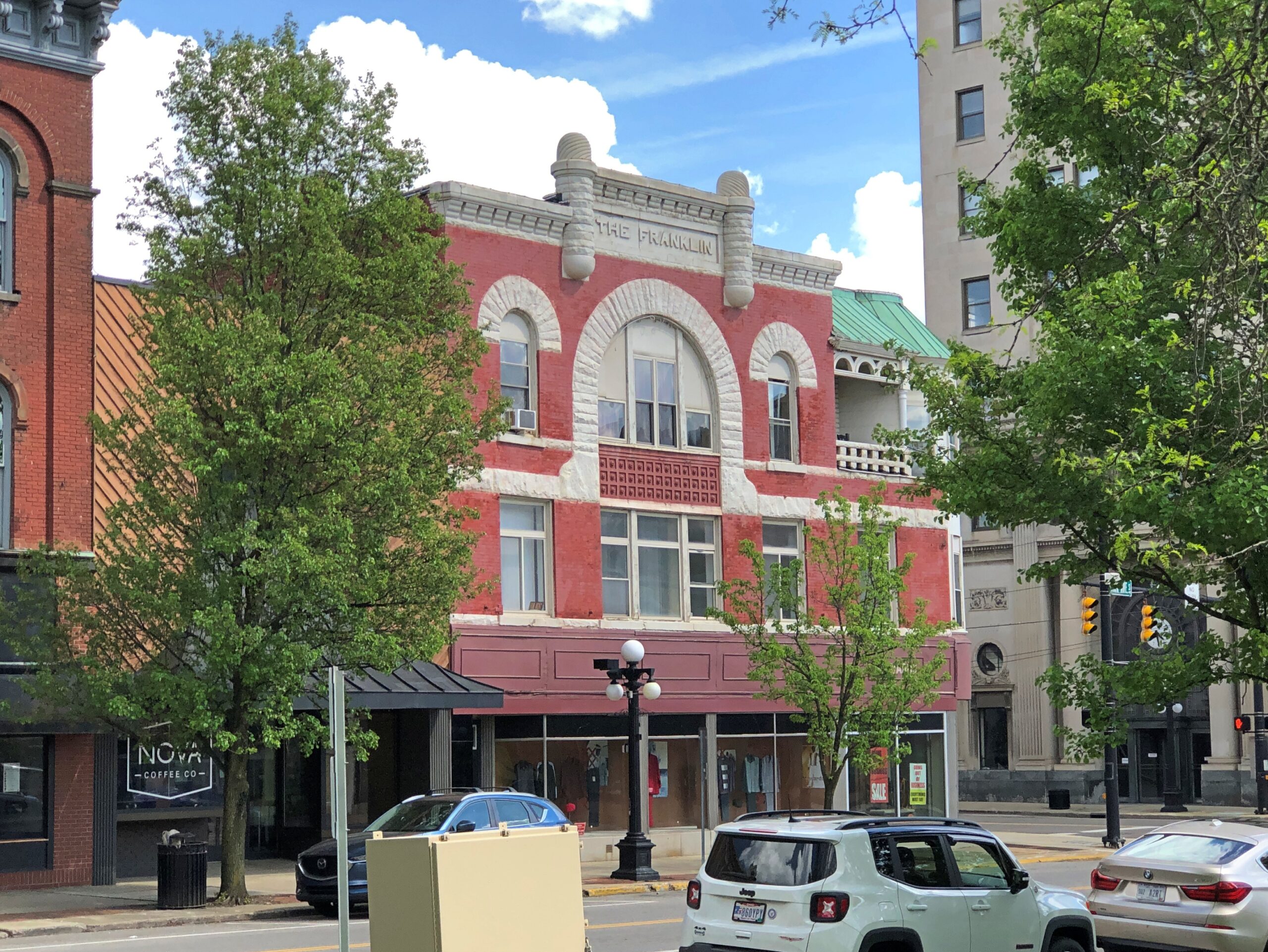
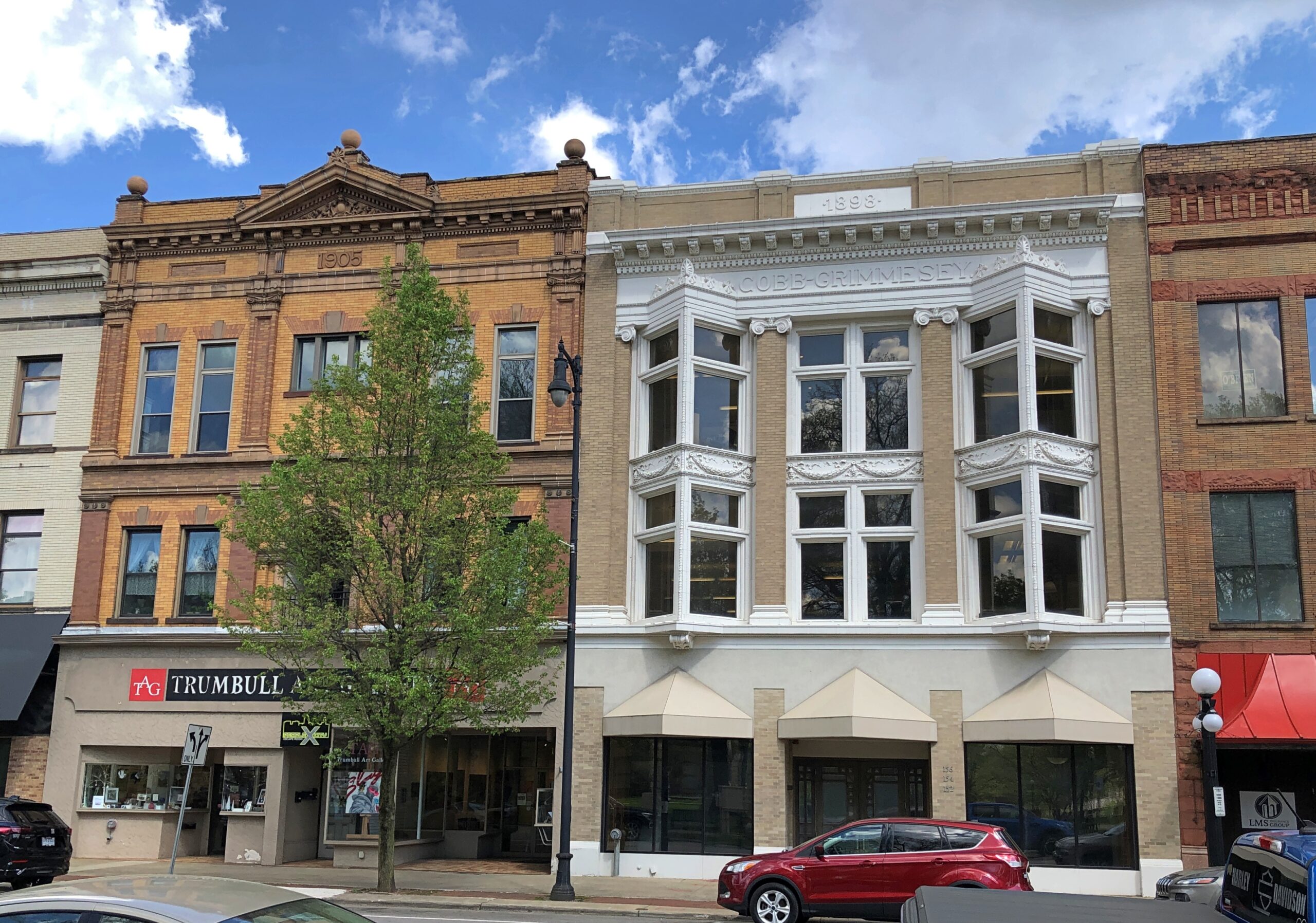
The buildings ringing the courthouse were also worth a look. Warren might not be the industrial hub it once was (though Ohio is making a comeback in that regard), but it isn’t in bad shape, from the looks of things.
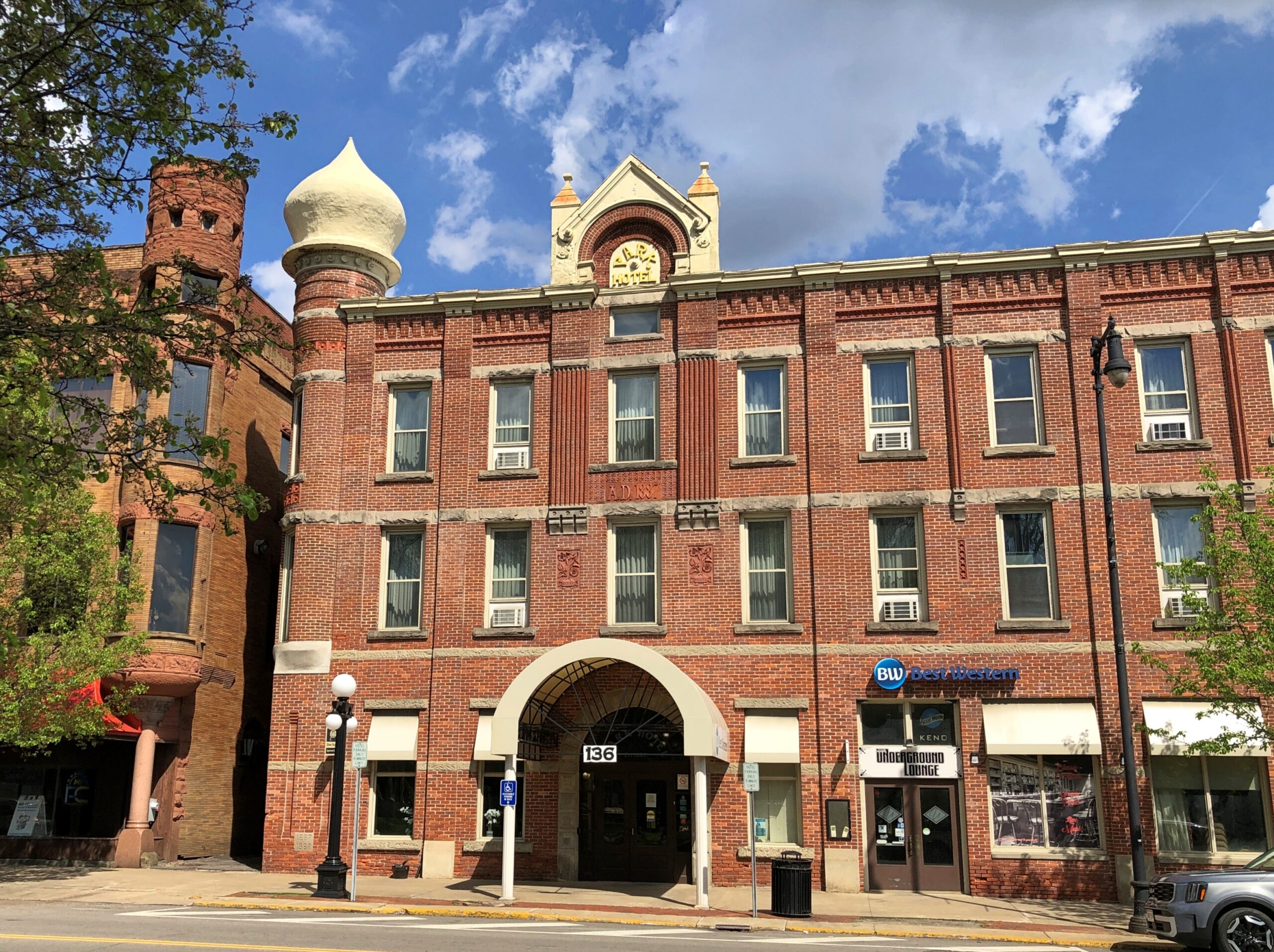
That’s what commercial buildings need more of: onion domes.
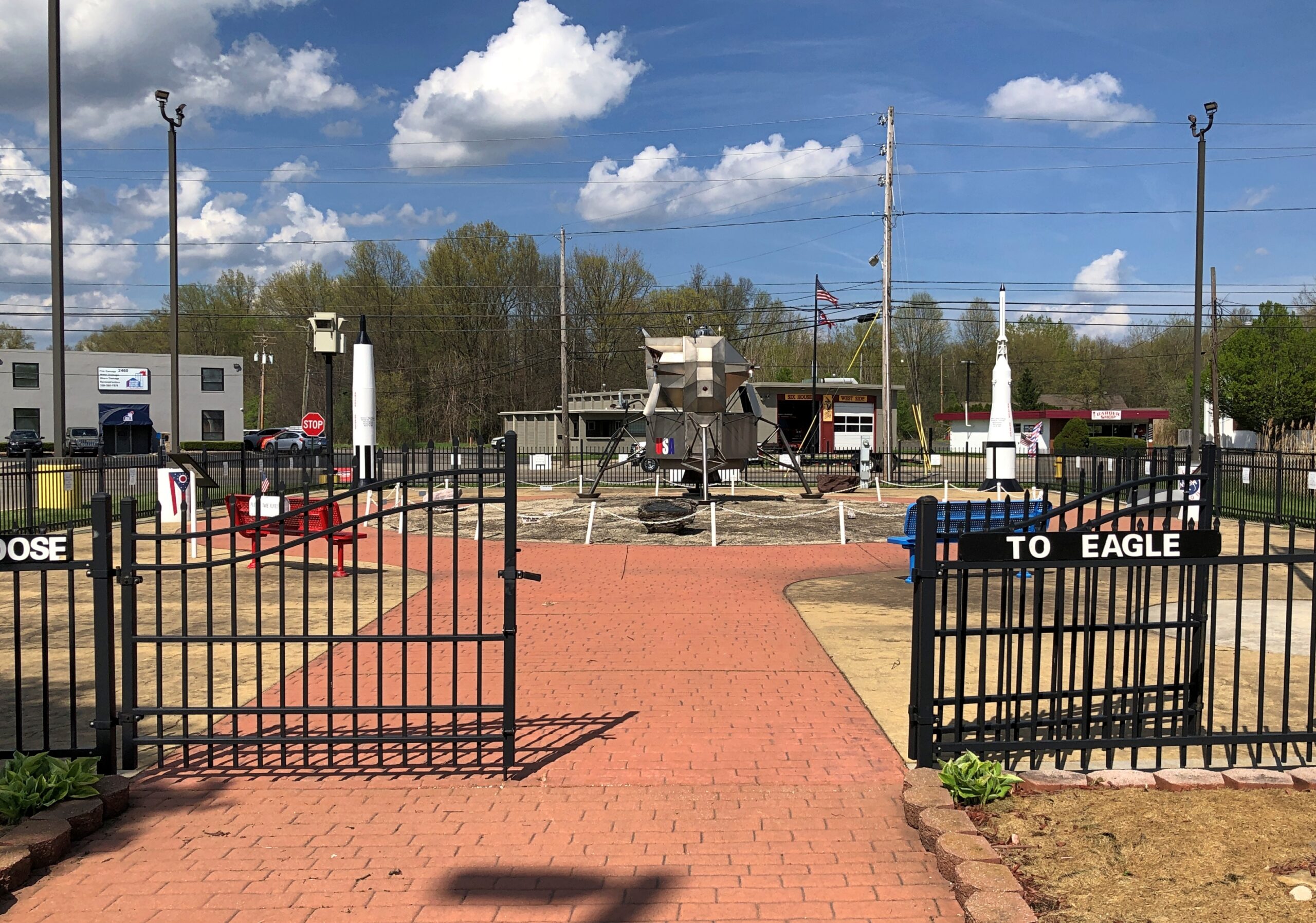
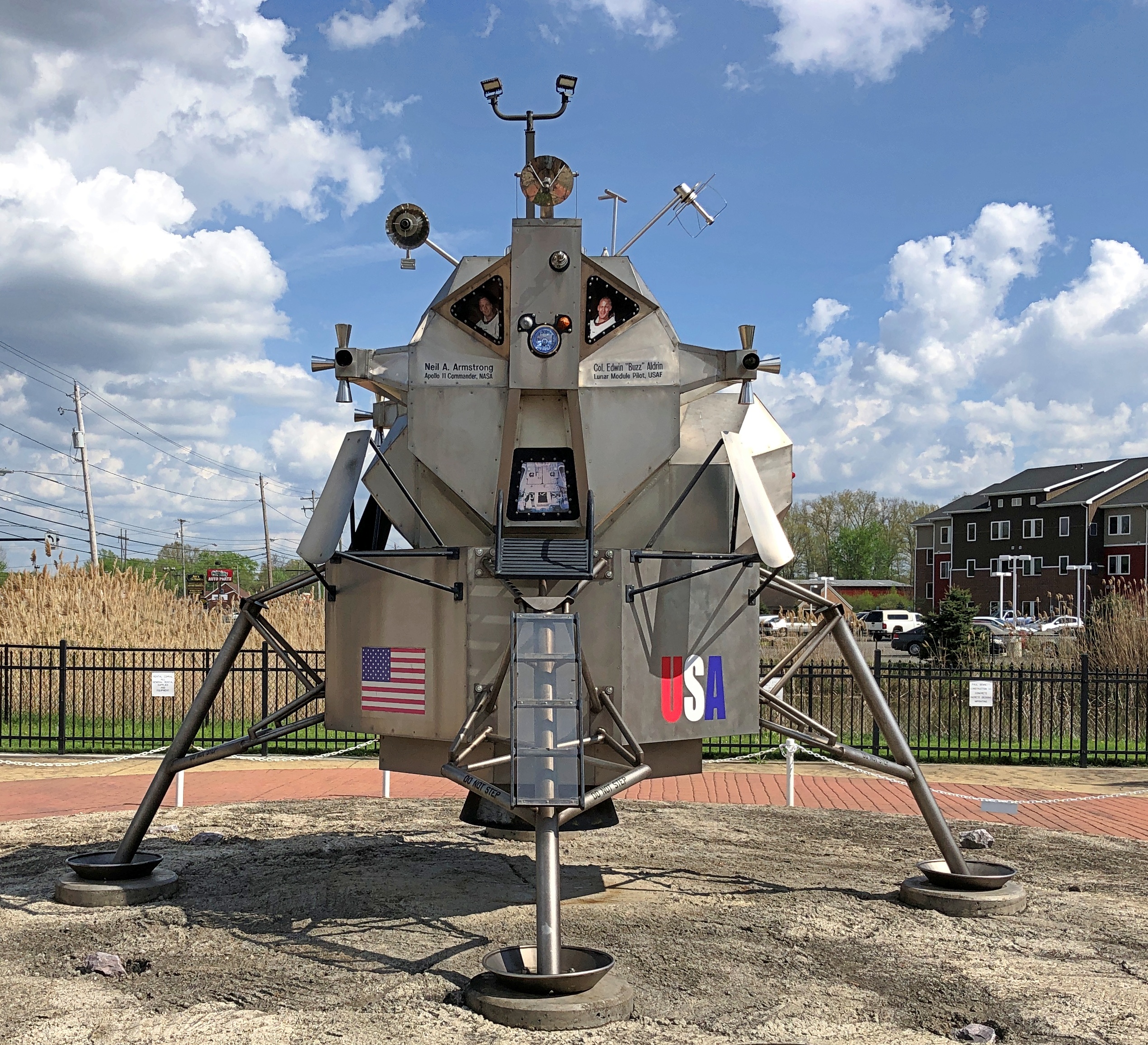
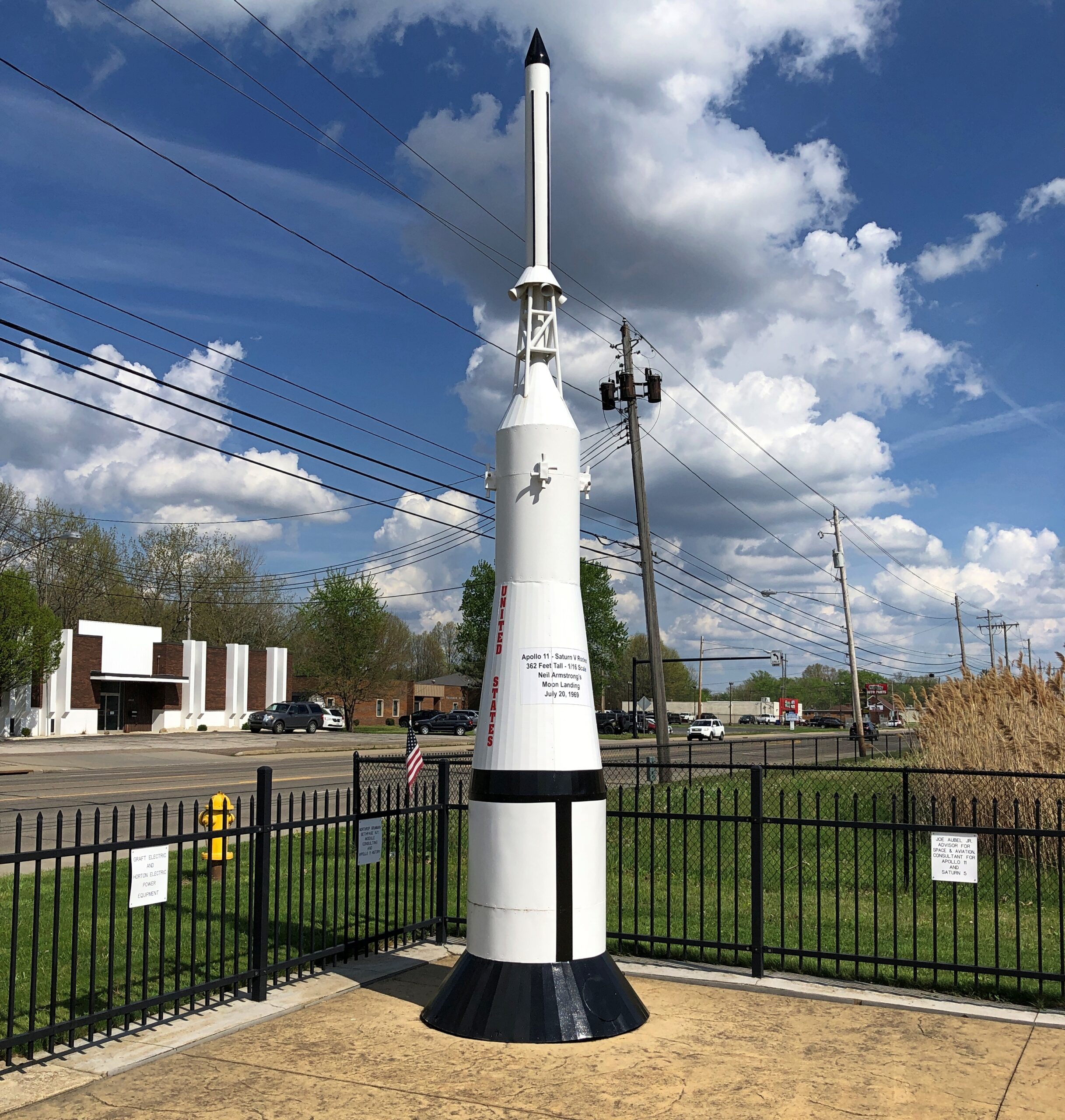
One more place in Warren before I headed west: a replica lunar module on a mock lunar surface.
It’s called “First Flight Lunar Module.” Its web site says: “Neil Armstrong and his family made their home in Warren, Ohio, for a time when he was a young boy. An interest in flying developed at an early age and on July 26, 1936, at the age of 6, young Neil and his father, Stephen, embarked on his first flight in a Ford Tri-Motor airplane – a Tin Goose – from Warren Airways on Parkman Road, now the site of the Apollo 11 First Flight Lunar Module…”
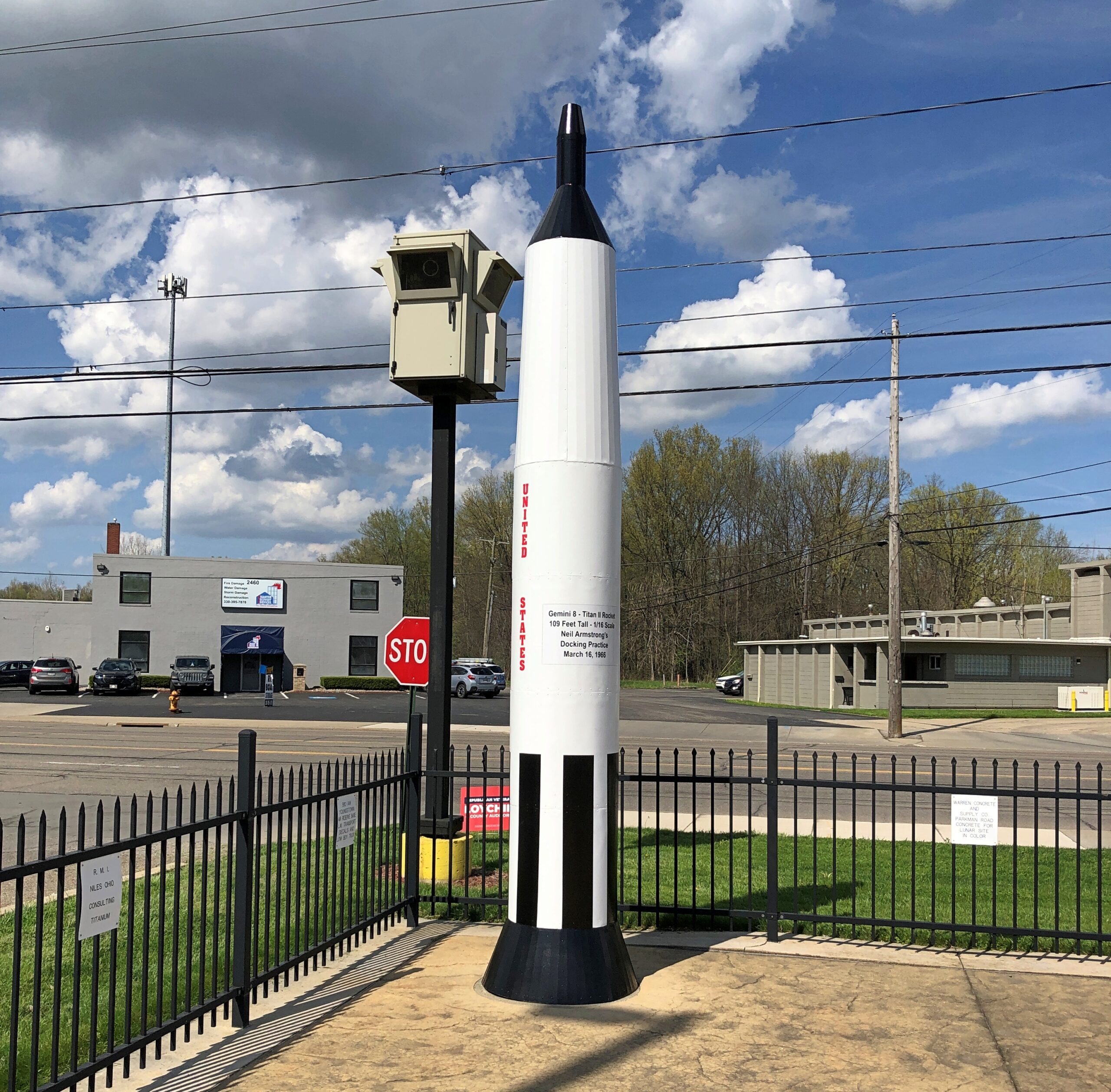
Replicas of Gemini 8 and the Apollo 11 Command/Service Module are also at hand. (And the Escape Tower and part of the third stage, too.)
“Neil’s achievements and ties to the local community inspired retired area photographer Pete Perich’s dream to create a memorial honoring Armstrong. Through the vision of Pete’s daughter, Linda Carpenter, and the technical assistance of Lisa Goetsch, the long-time dream began to become a reality in the summer of 2001.”
Cool. Another benefit of nonlinear tourism for me.
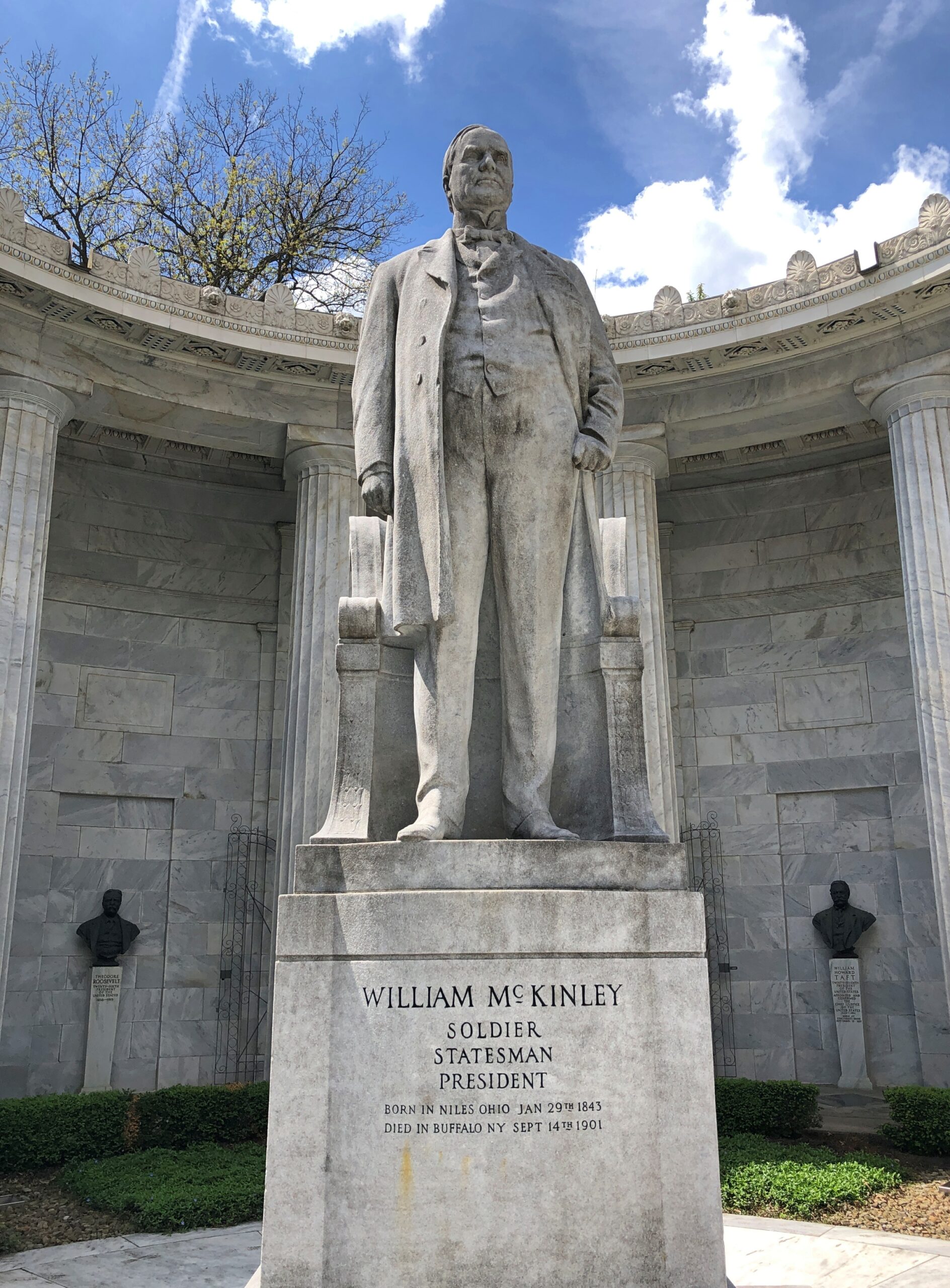
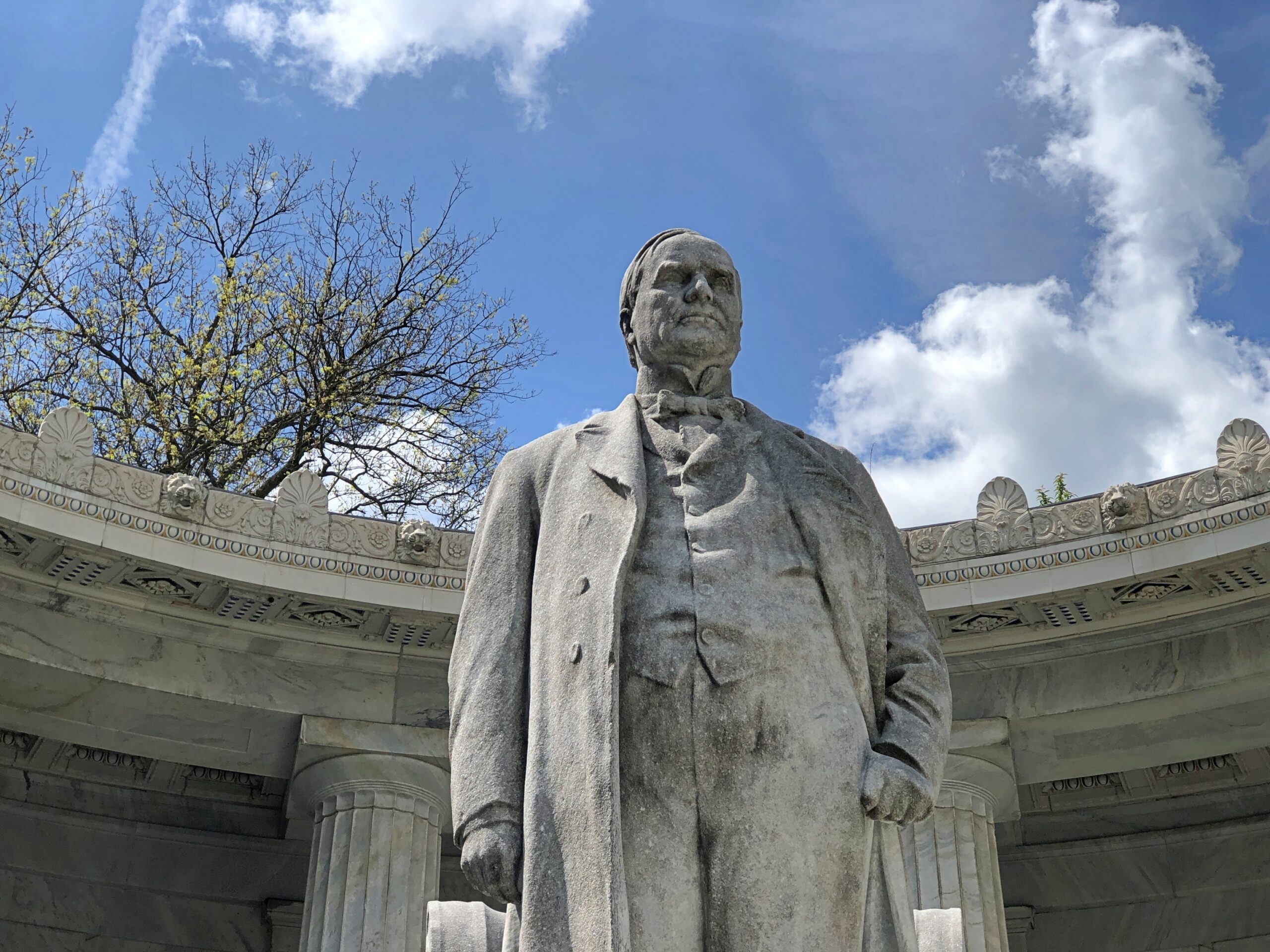
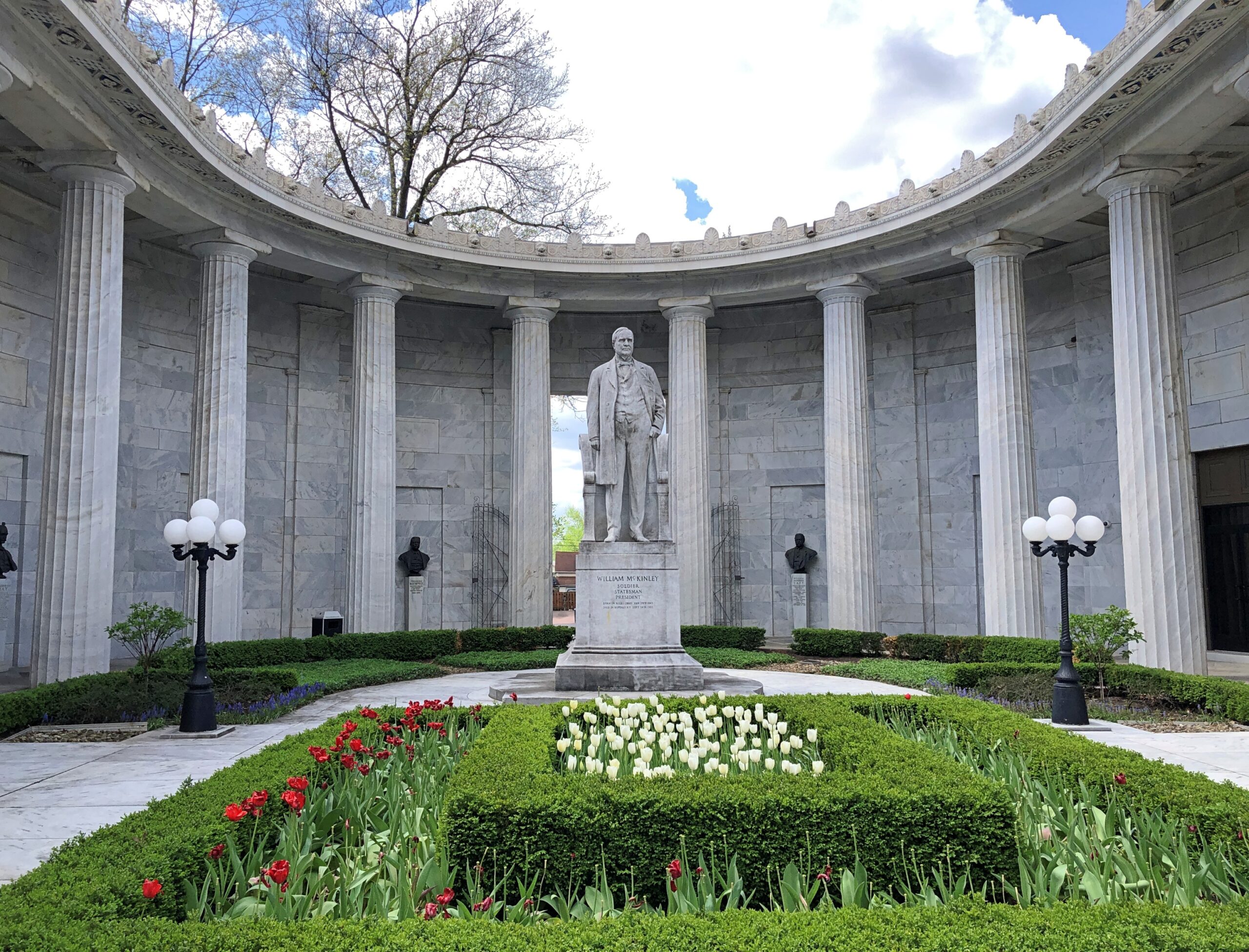
Recently in Niles, Ohio, I had an encounter with one of the four assassinated presidents. If you go to the right place in that town (pop. 18,400), you can’t miss him.
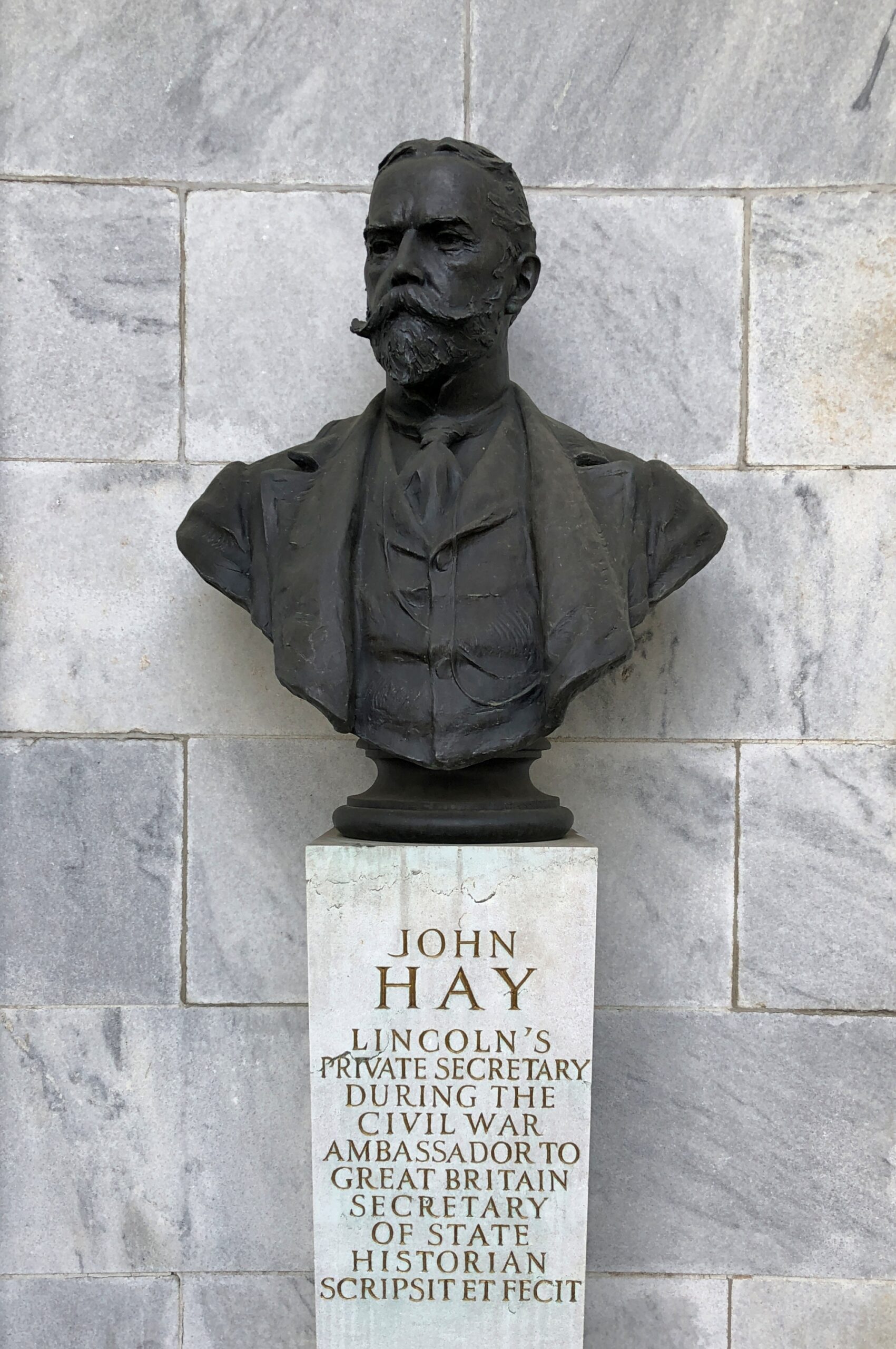
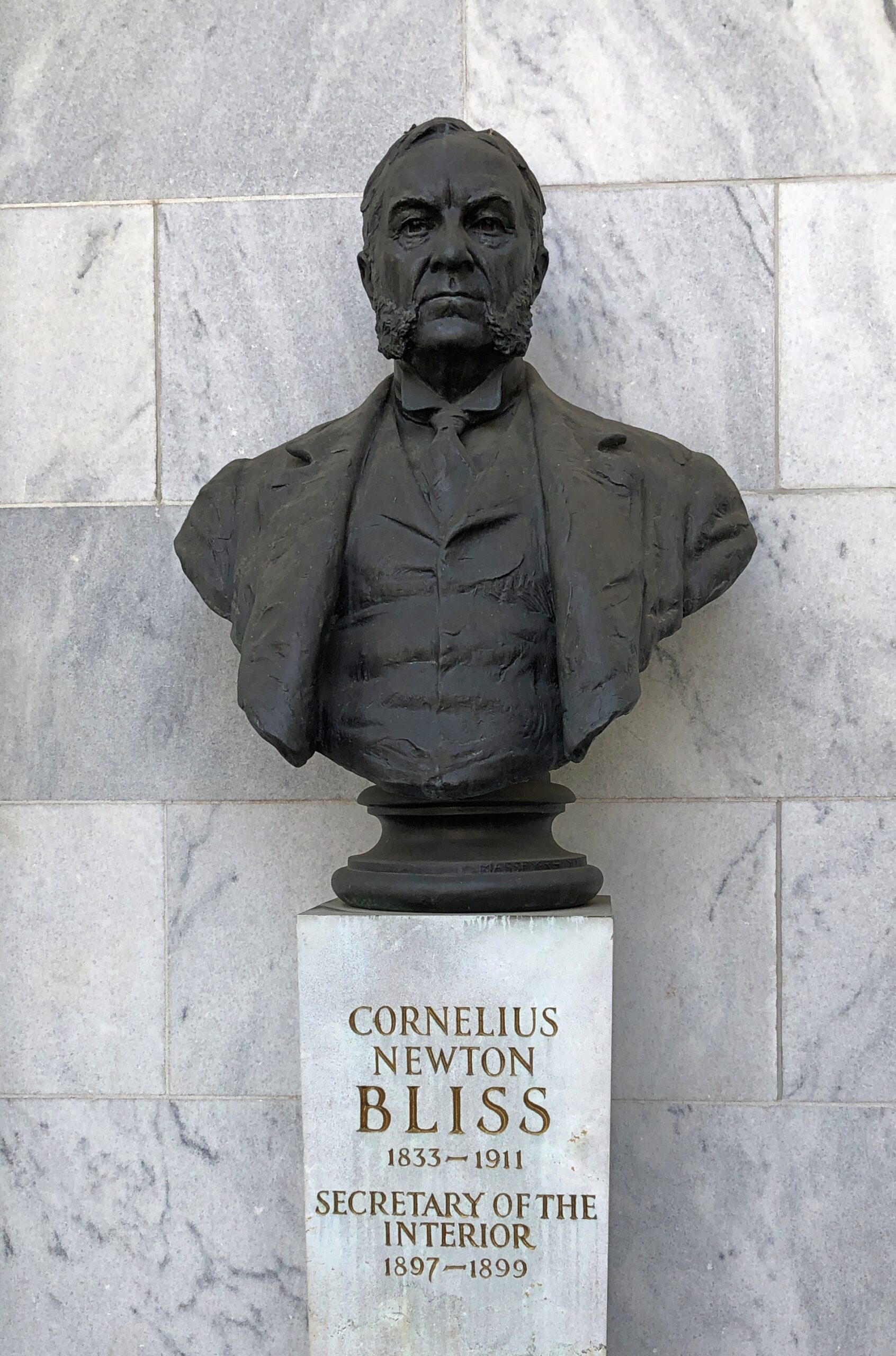
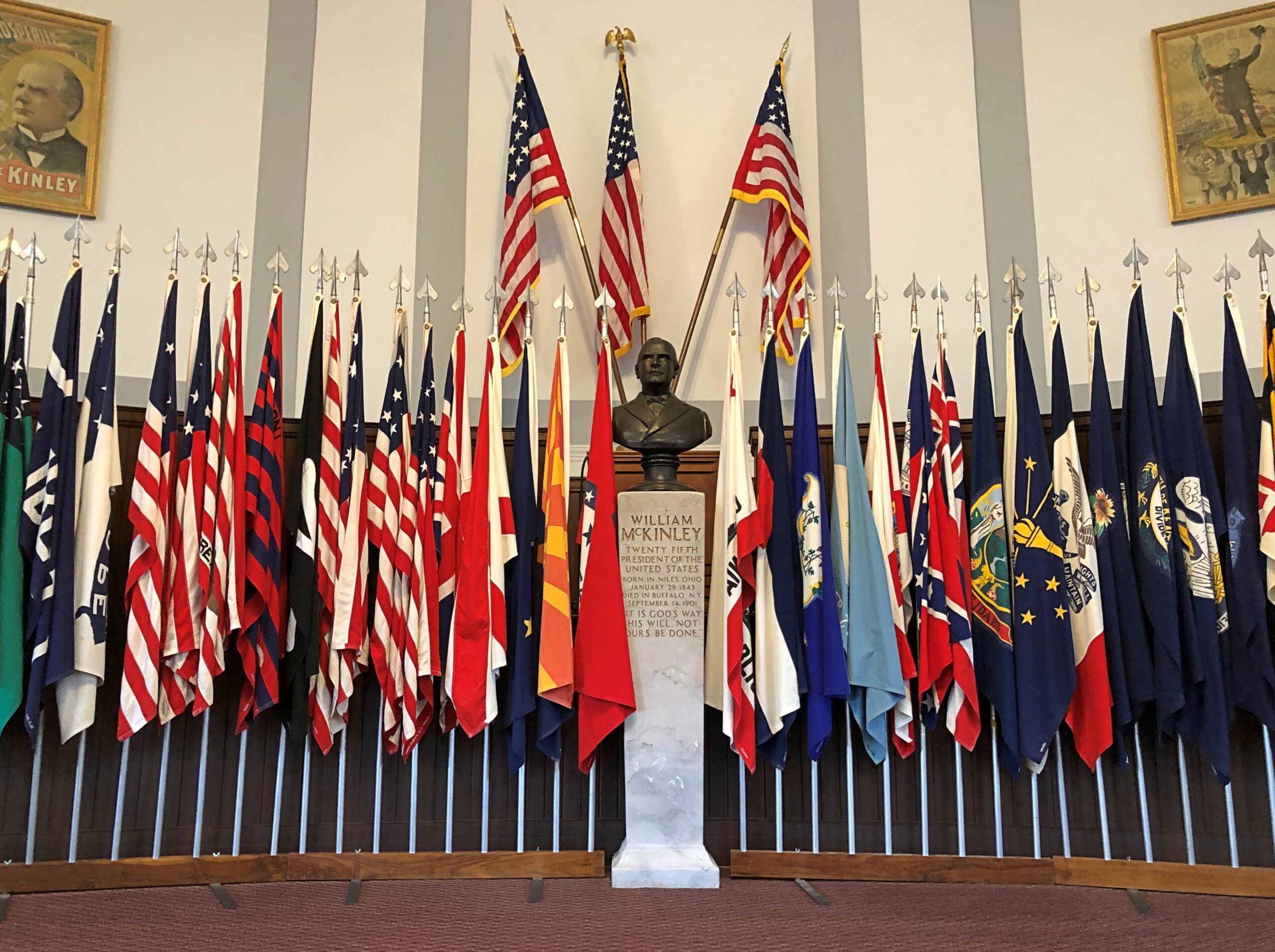
Not just him either. Note the busts surrounding President McKinley, who are men associated with him in one way or another. Hay I knew; Bliss I had to look up.
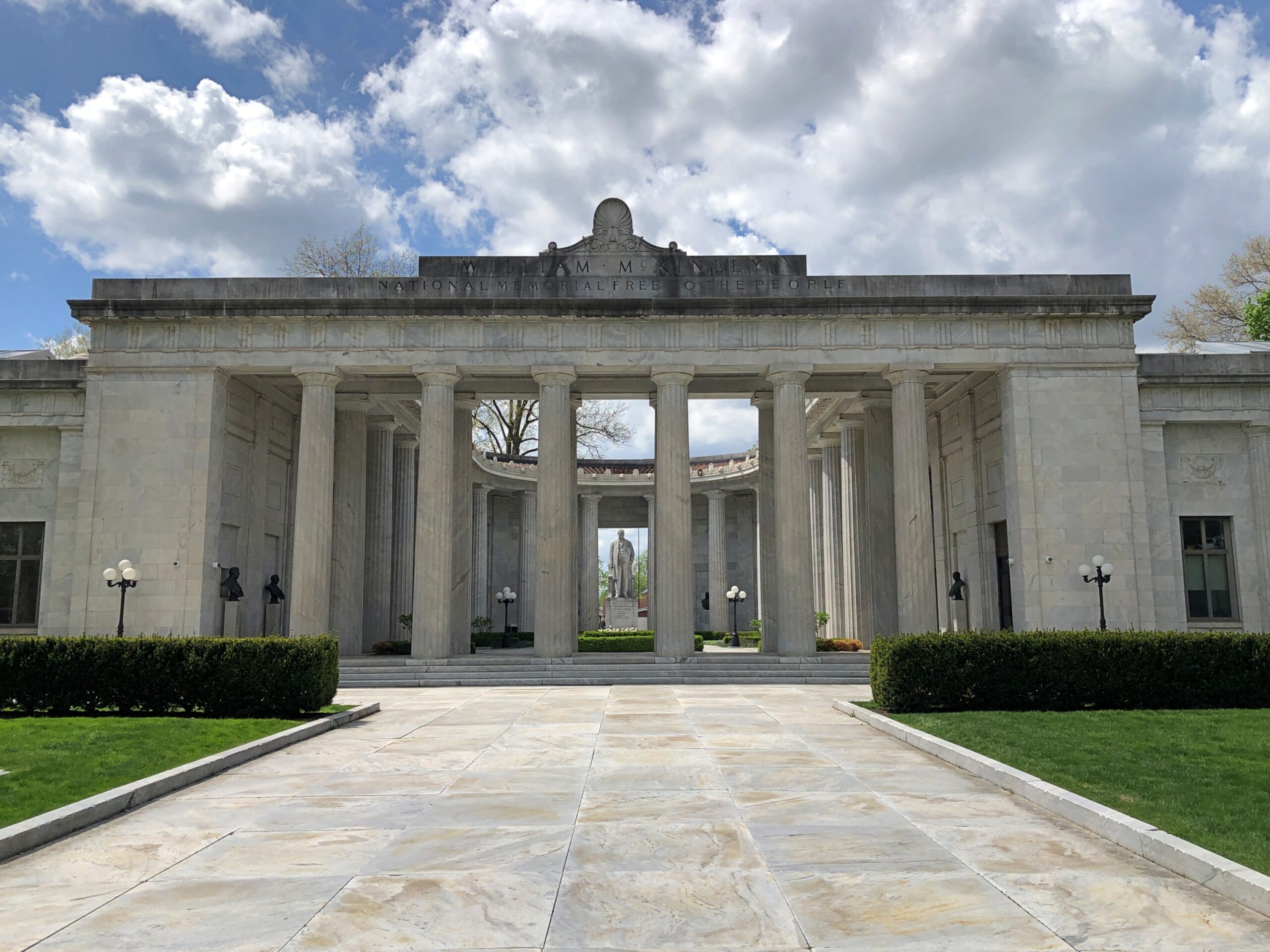
The most direct route between Punxsutawney, Pa. and Lima, Ohio, passes pretty close to Niles. I had a little extra time, by design, on the second-to-last day of my recent trip. Niles happens to be the birthplace of William McKinley, and in our time, home of the National McKinley Birthplace Memorial and the McKinley Birthplace Home and Research Center – that’s two entities, a block apart.
The Birthplace Memorial is imposing and grand, another edifice designed by McKim, Mead & White.
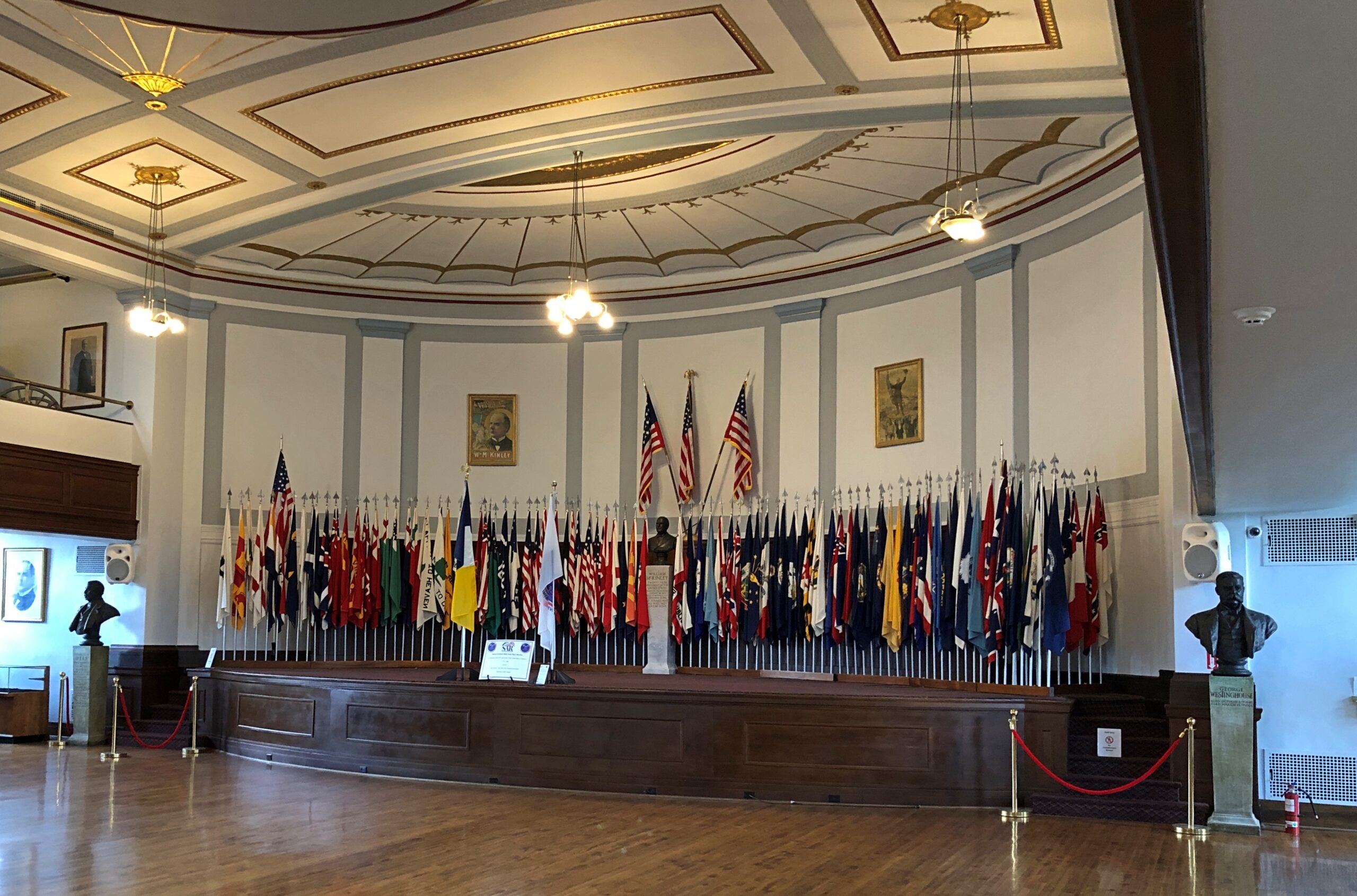
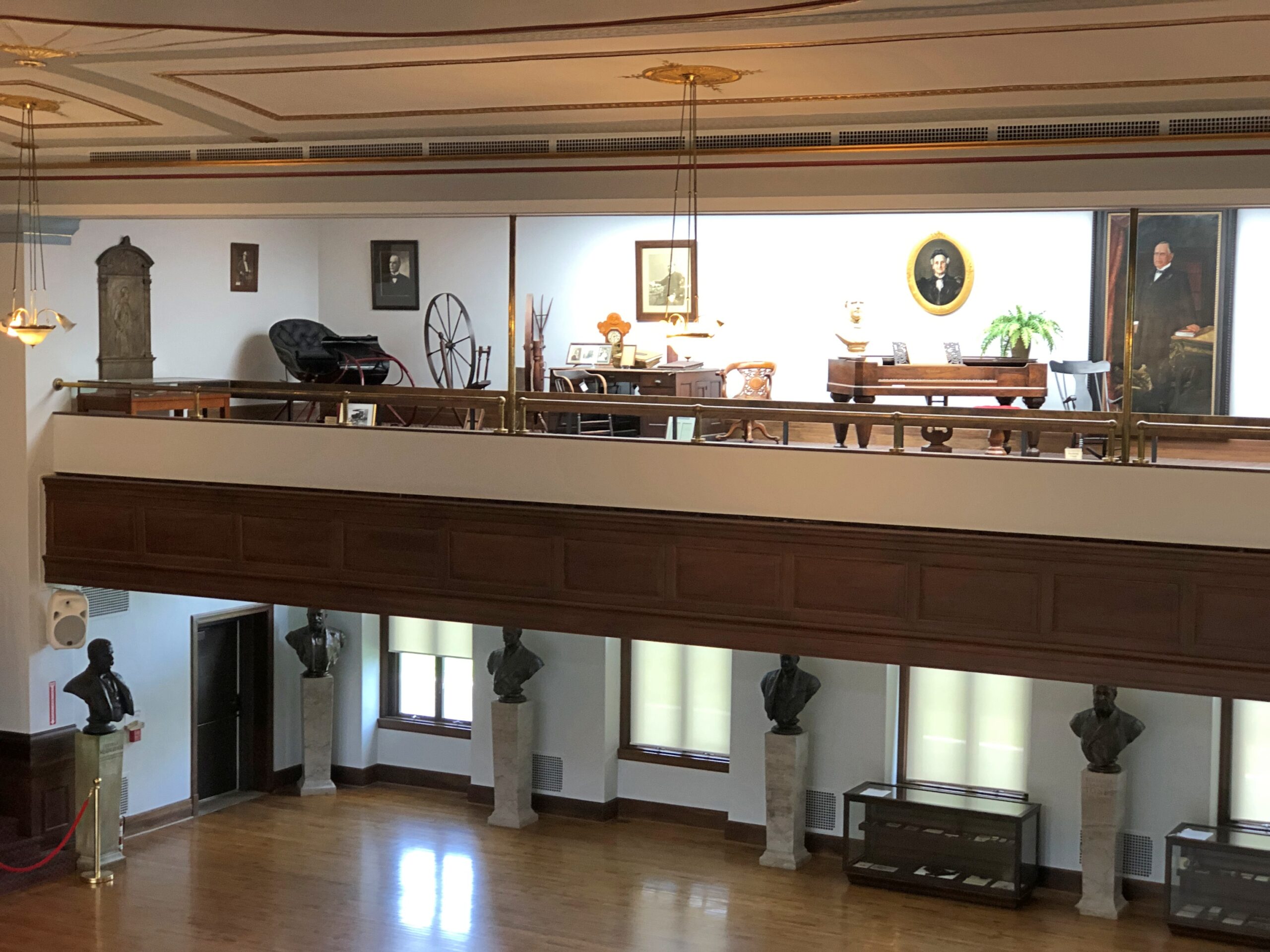
The memorial has two wings, one a public library, the other an auditorium sporting McKinley artifacts, and a collection of flags.
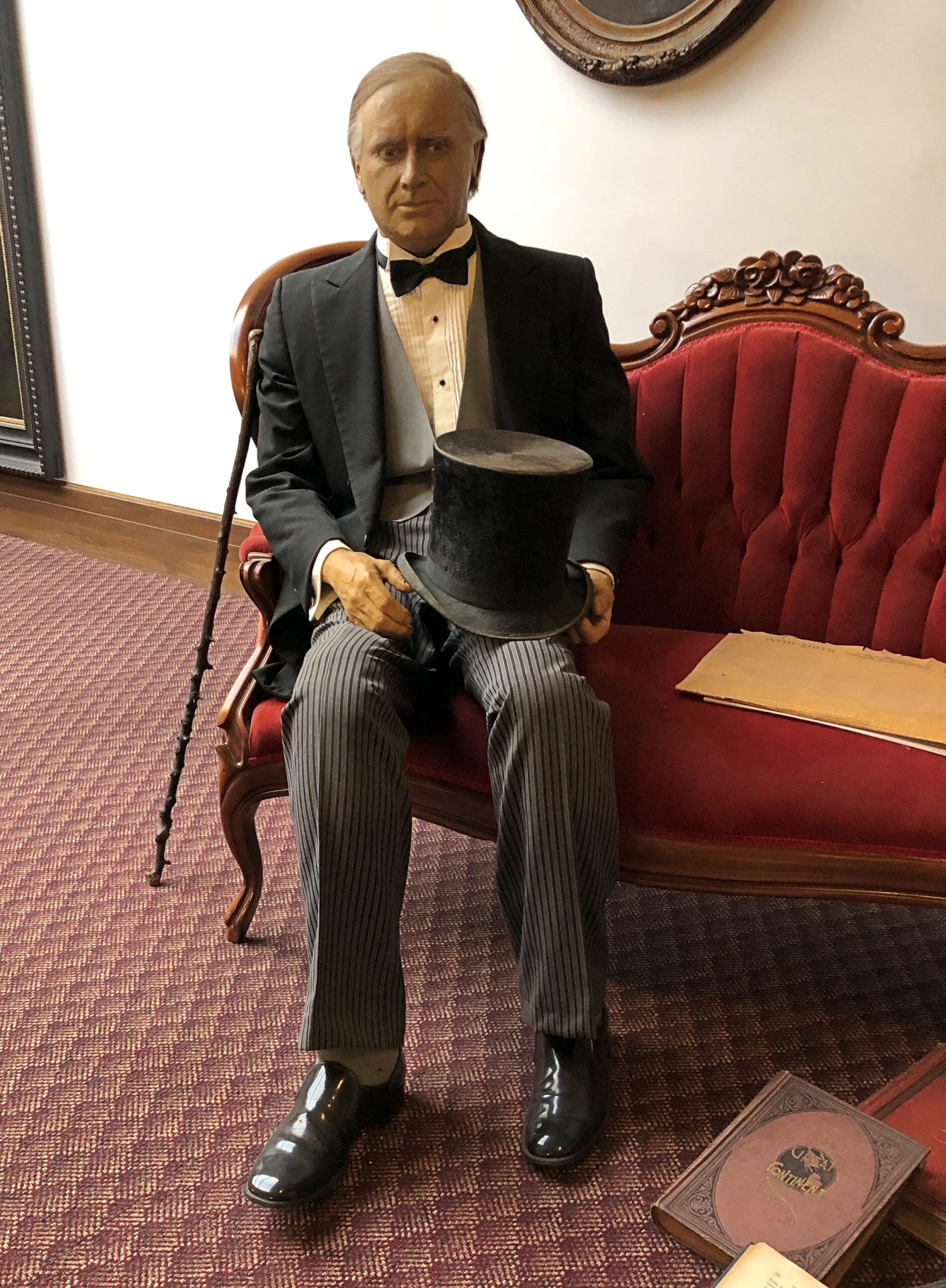
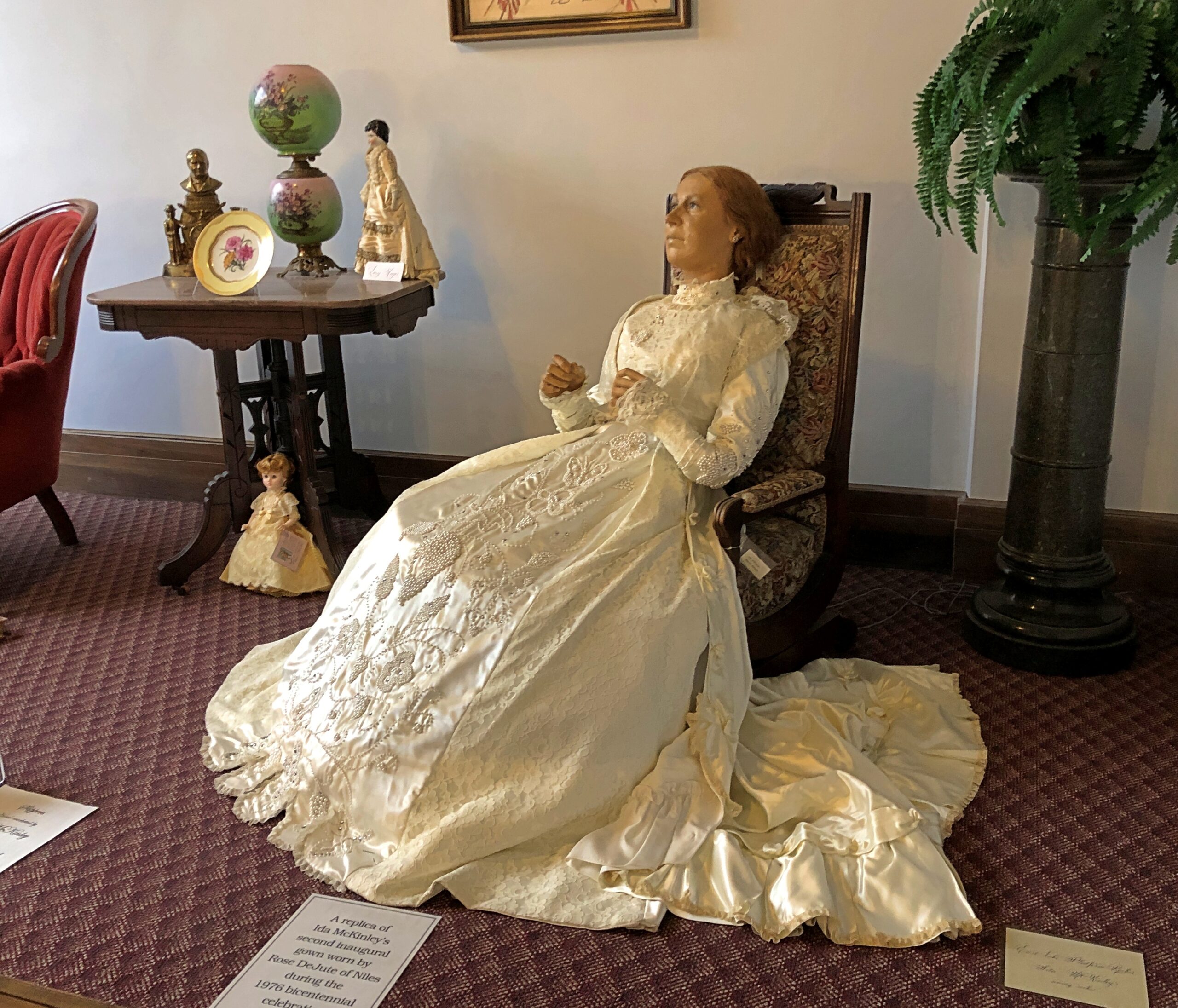
William and Ida dressed, I believe, for his second inauguration in 1901.
As mentioned, the McKinley Birthplace Home and Research Center is a block from the memorial. It’s considerably more modest.
It’s also a replica, and apparently not a very close one, the original house having burned down almost 90 years ago. Still, looks are free (like at the memorial), so I had a look.
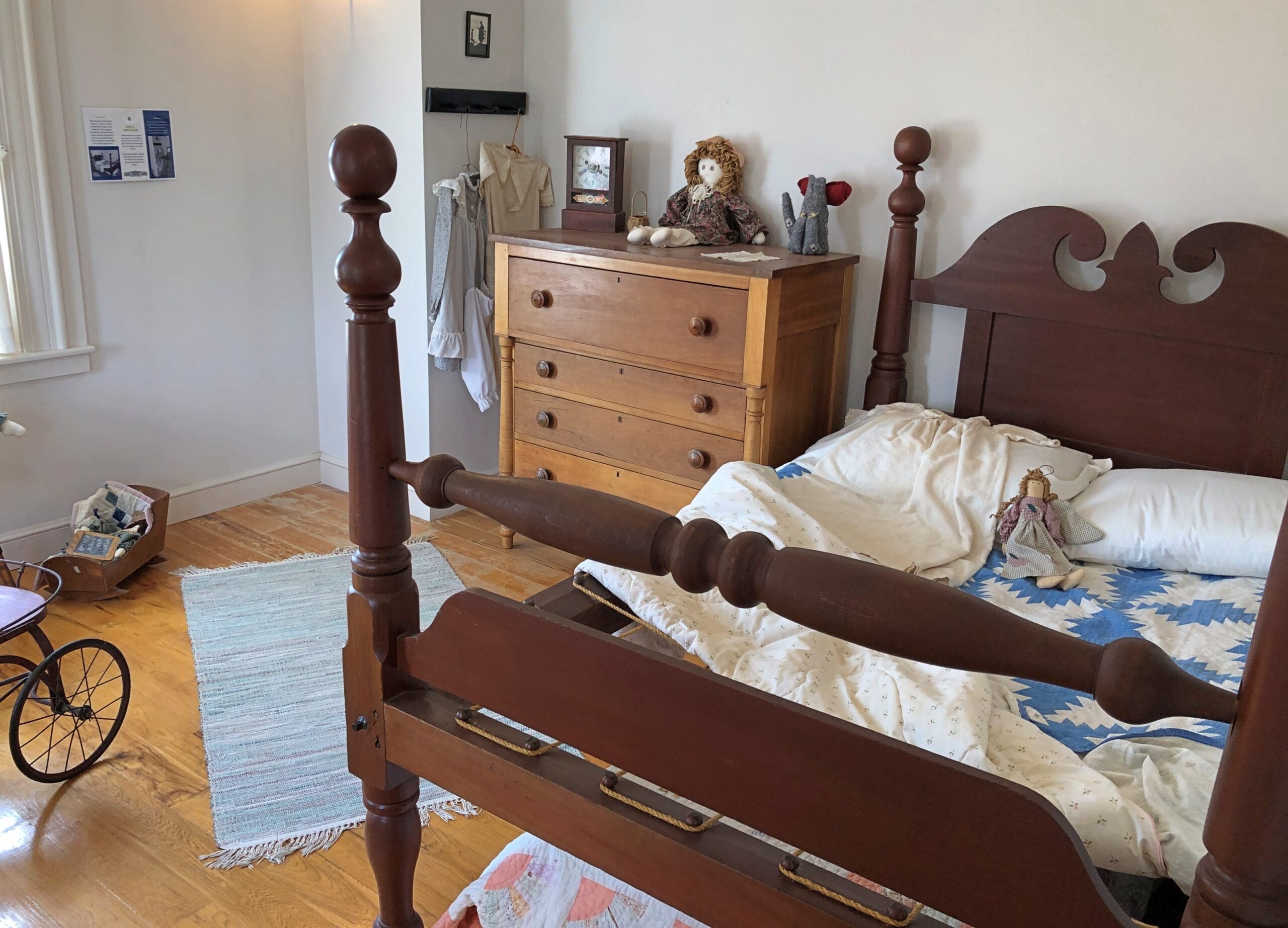
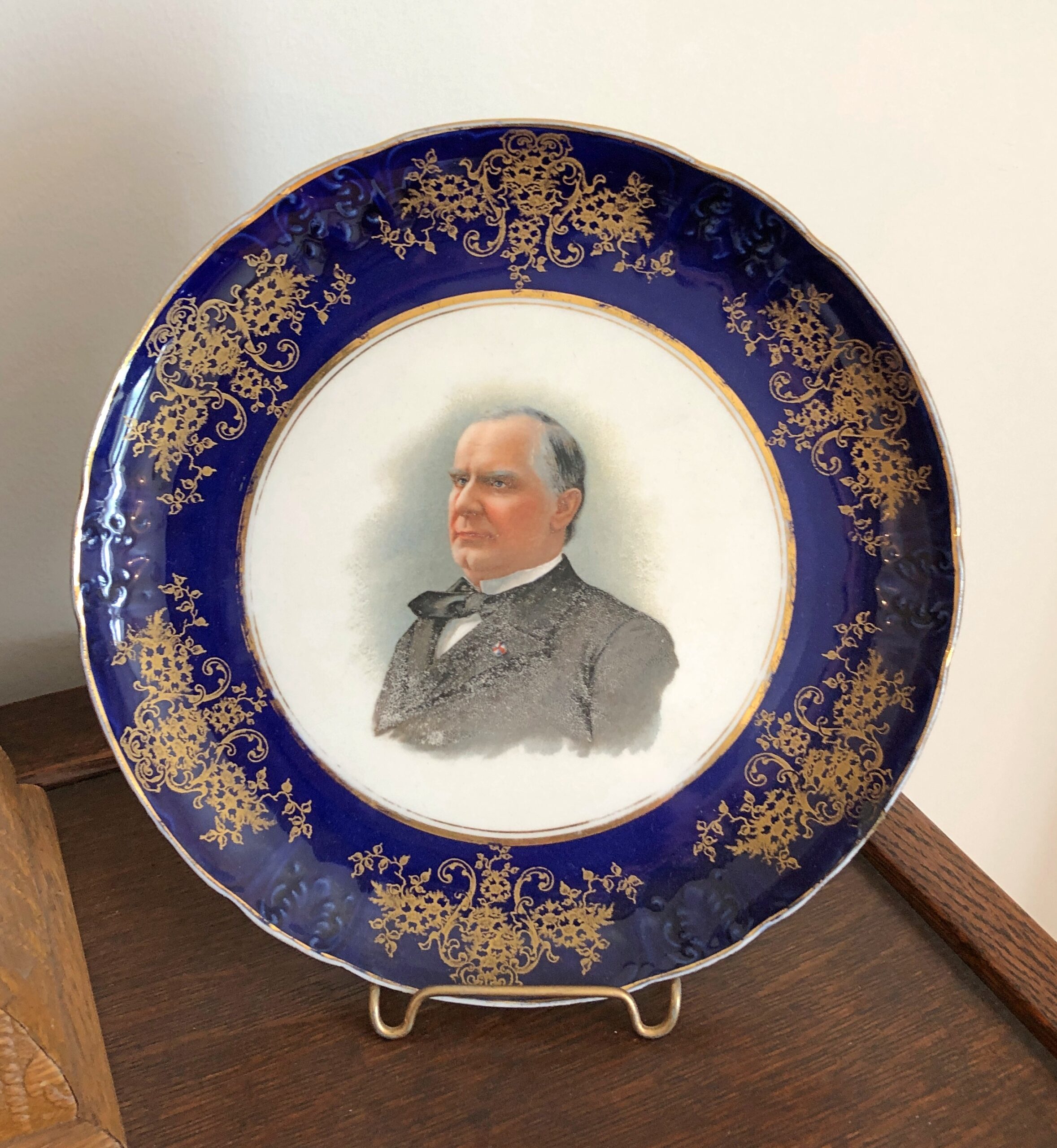
On display are a number of McKinley-adjacent artifacts. I liked the plates especially. One features the president himself.
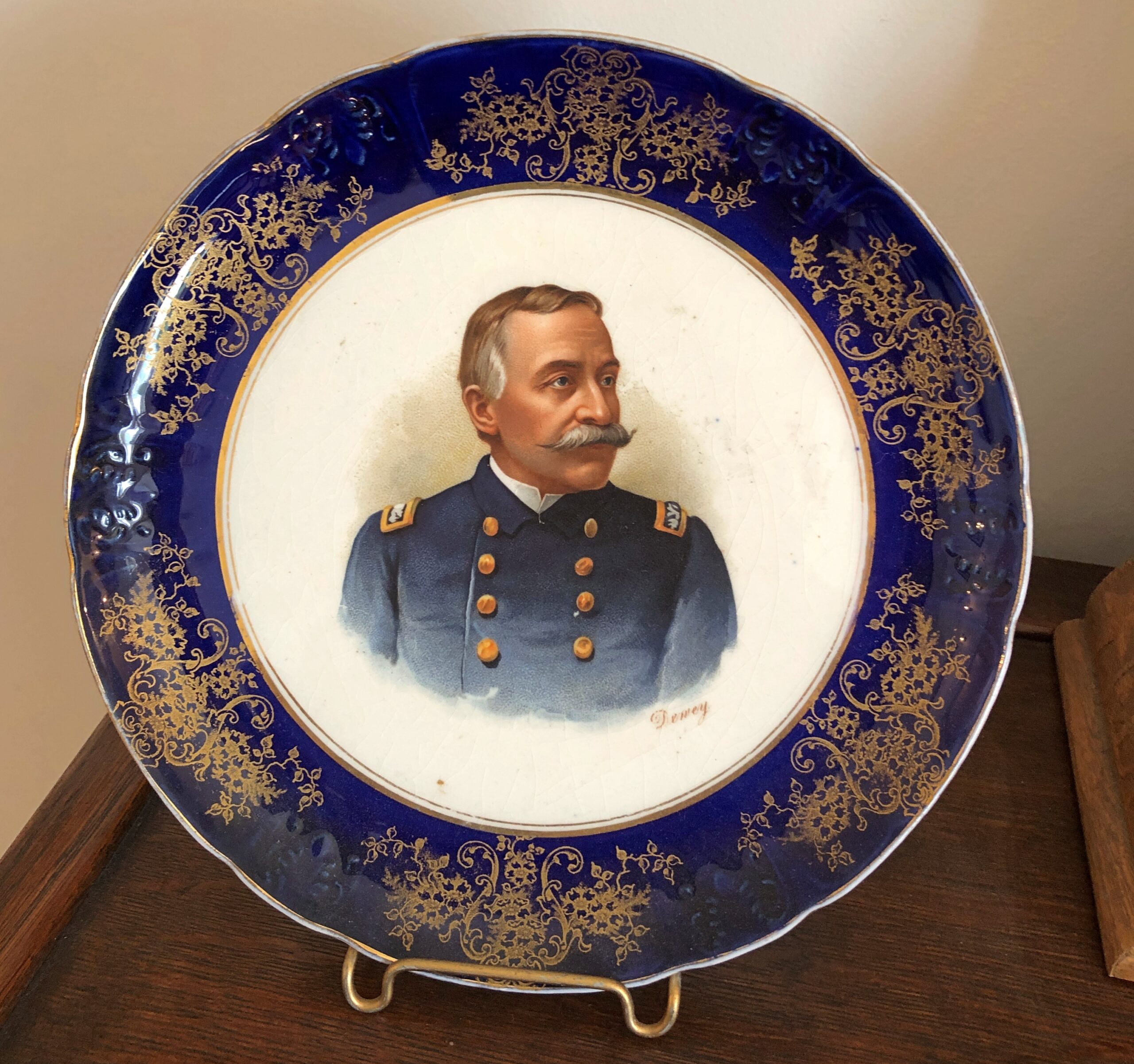
Another features Admiral Dewey. How often do you hear about him any more? Even less than McKinley.
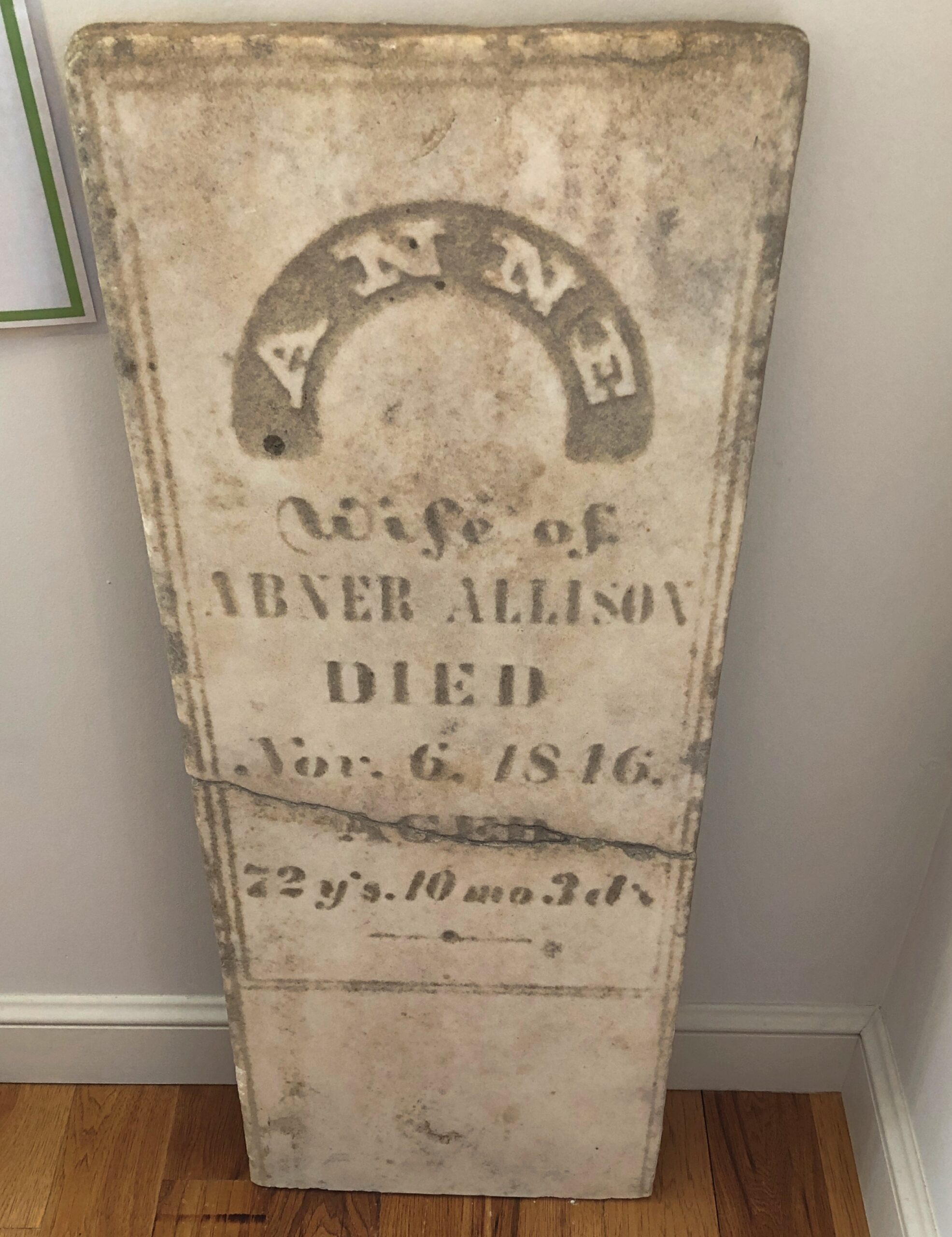
The president’s maternal grandmother’s gravestone is propped up against a wall. I suppose it was at risk of completely falling apart wherever it was, and (I hope) it was replaced in situ.
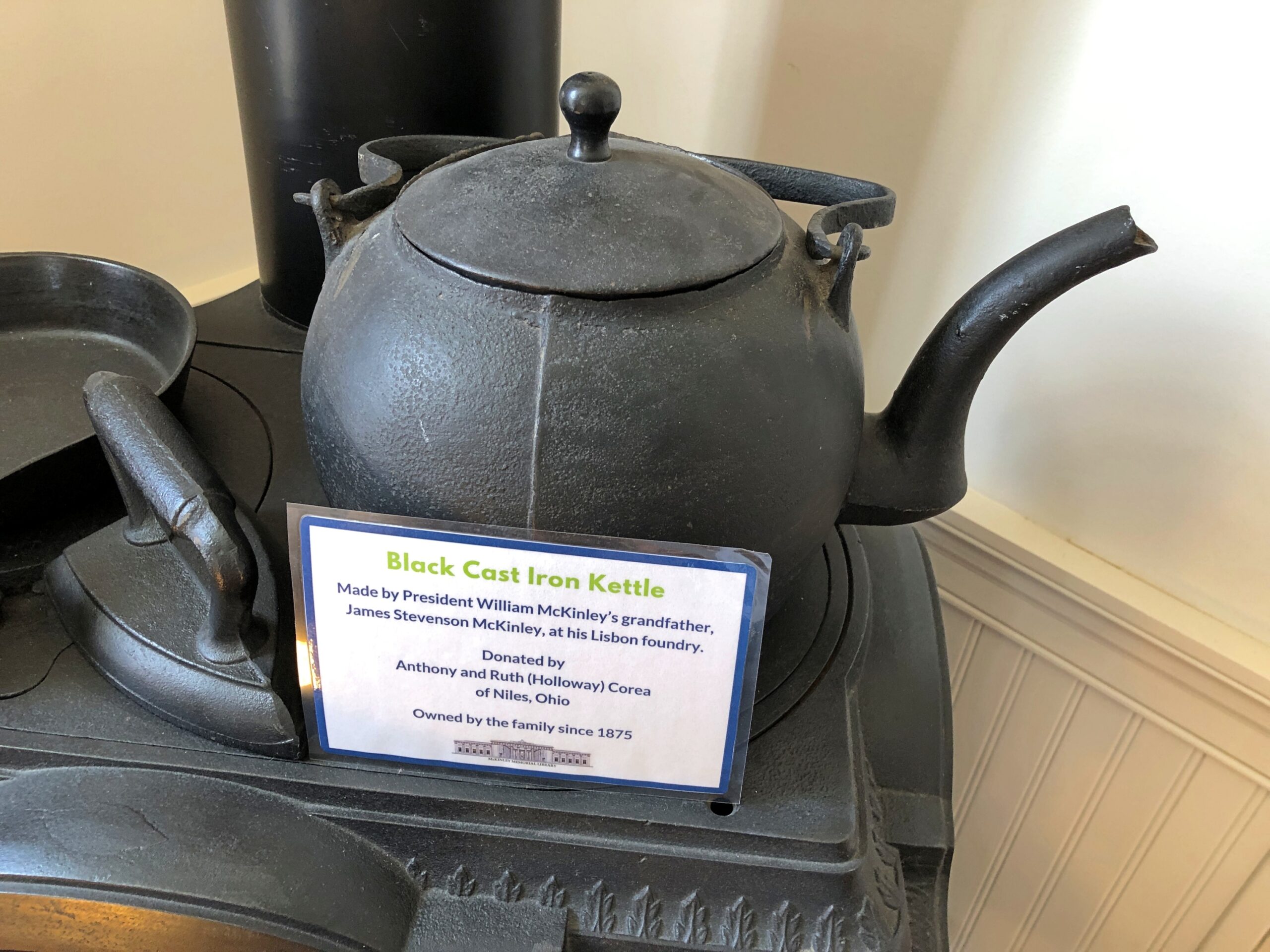
I liked this as well.
I looked up James Stevenson McKinley (d. 1847) on Find a Grave and that inspired me to look a little further into the McKinley ancestry. James’ father was David “The Patriot” McKinley (d. 1840). David’s father was John “The Wagonmaster” McKinley (d. 1779). John’s father was David “The Weaver” McKinley (d. 1760). That David’s father was James “The Trooper” MacKinlay (d. 1760), back in Ireland, at which point the nicknames peter out.
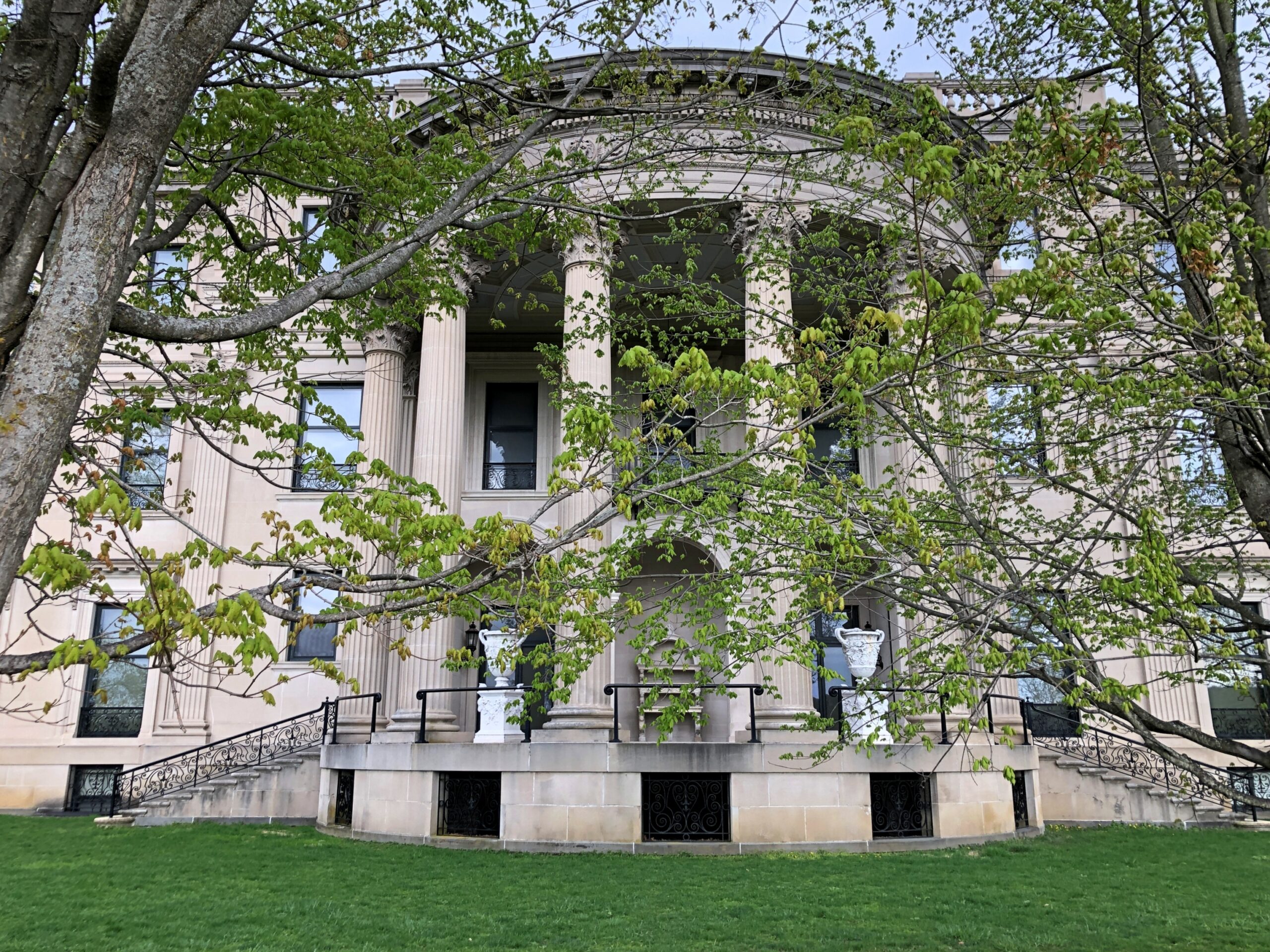
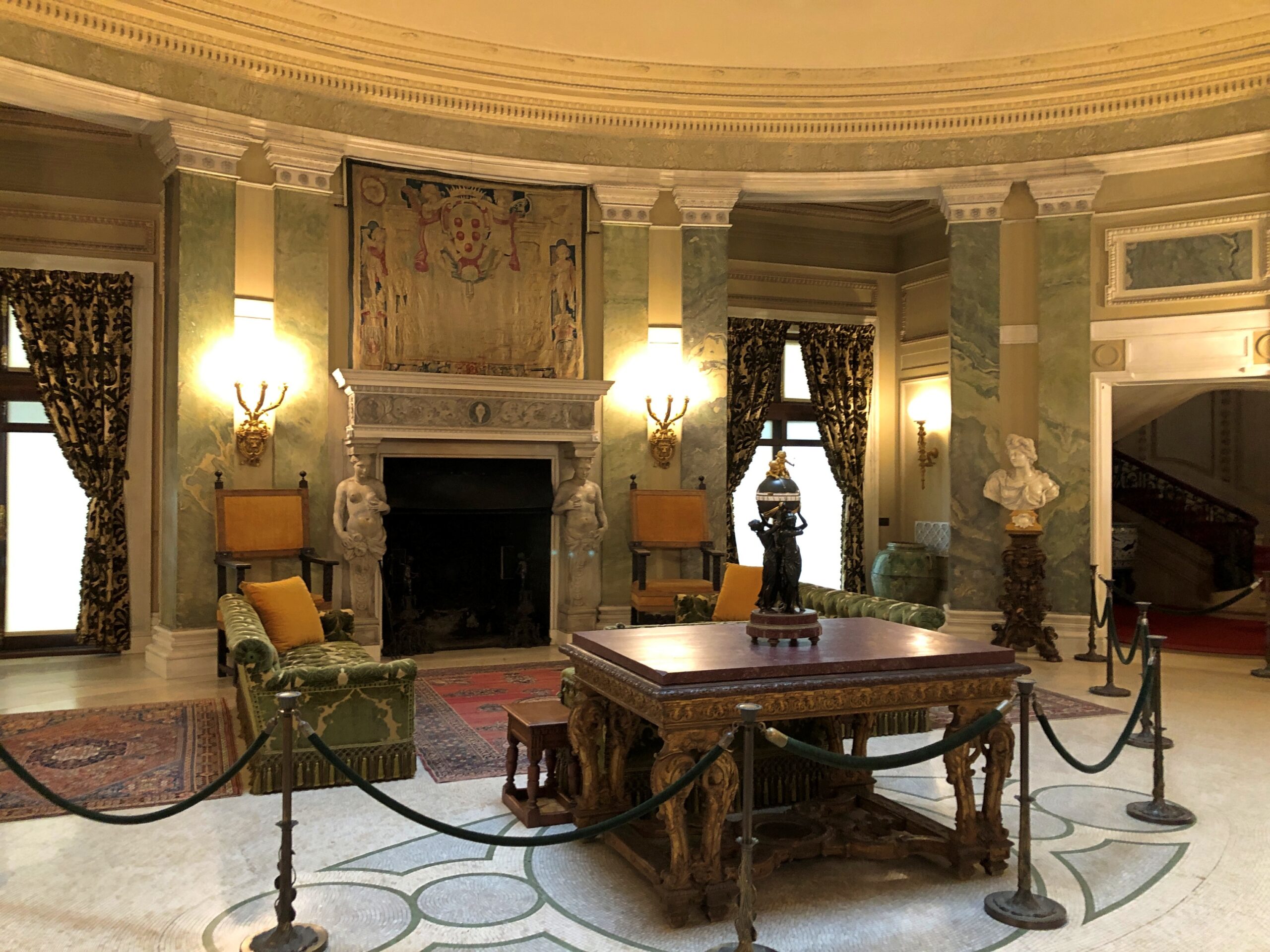
Up the road a piece from FDR’s home in Hyde Park, one of the Vanderbilts had a mansion built in the late 19th century on a gentle bluff above the Hudson. The river valley wasn’t an obscure choice by him or the elder Roosevelt or any of the other wealthy mansion-builders of the period. Pleasure travelers had started coming to the Hudson River Valley in the early 19th century, representing the first U.S. tourist boom.
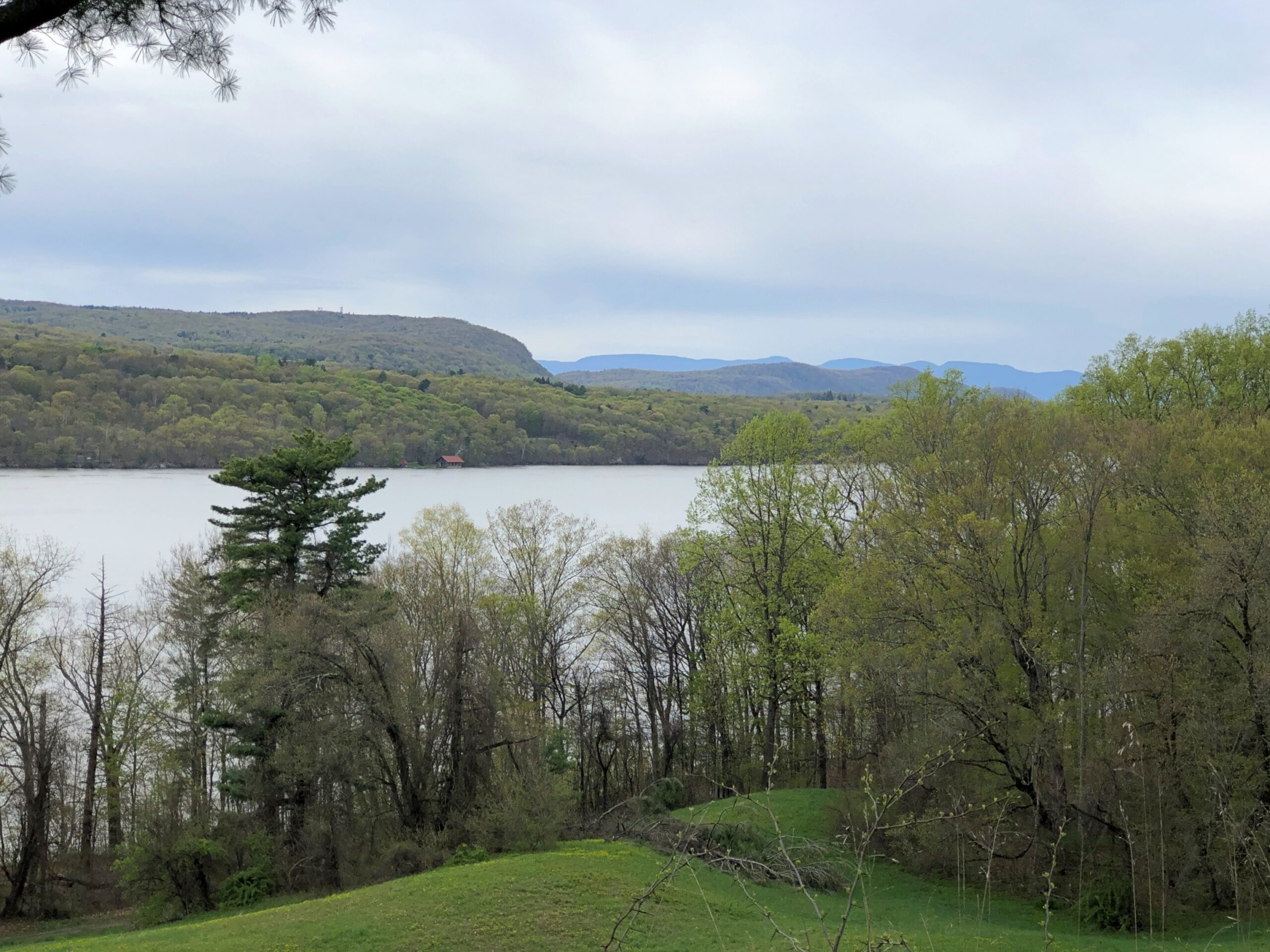
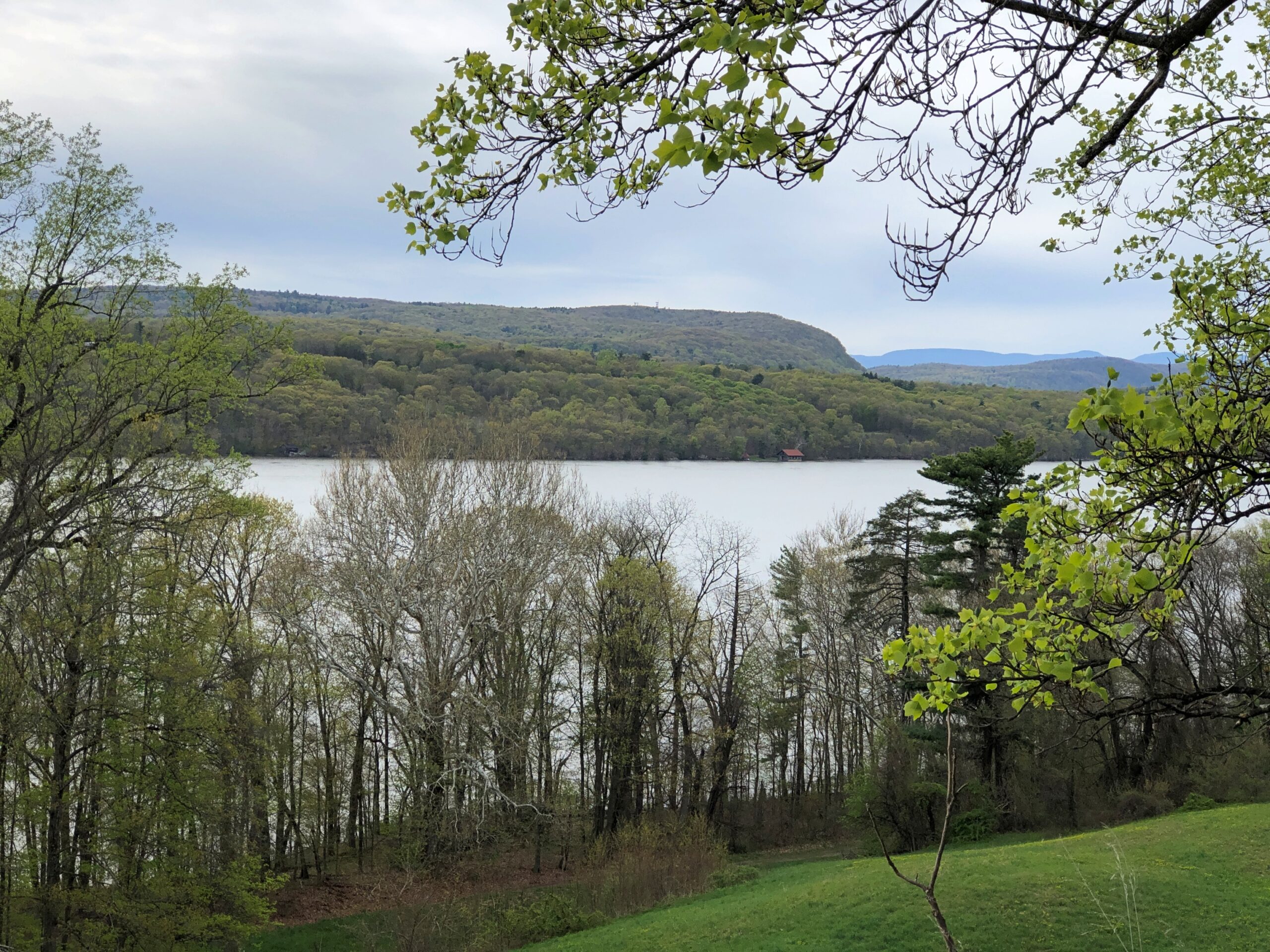
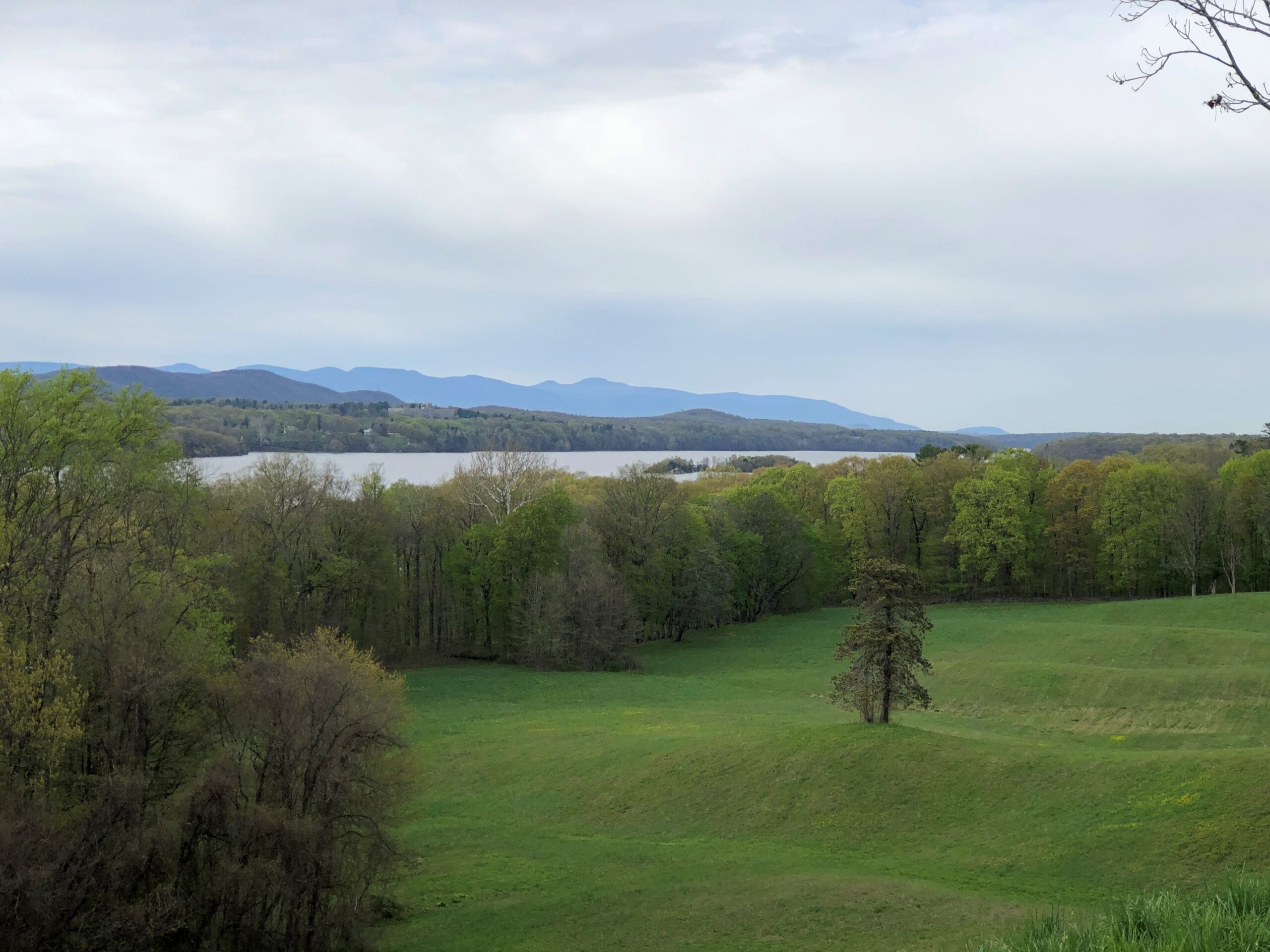
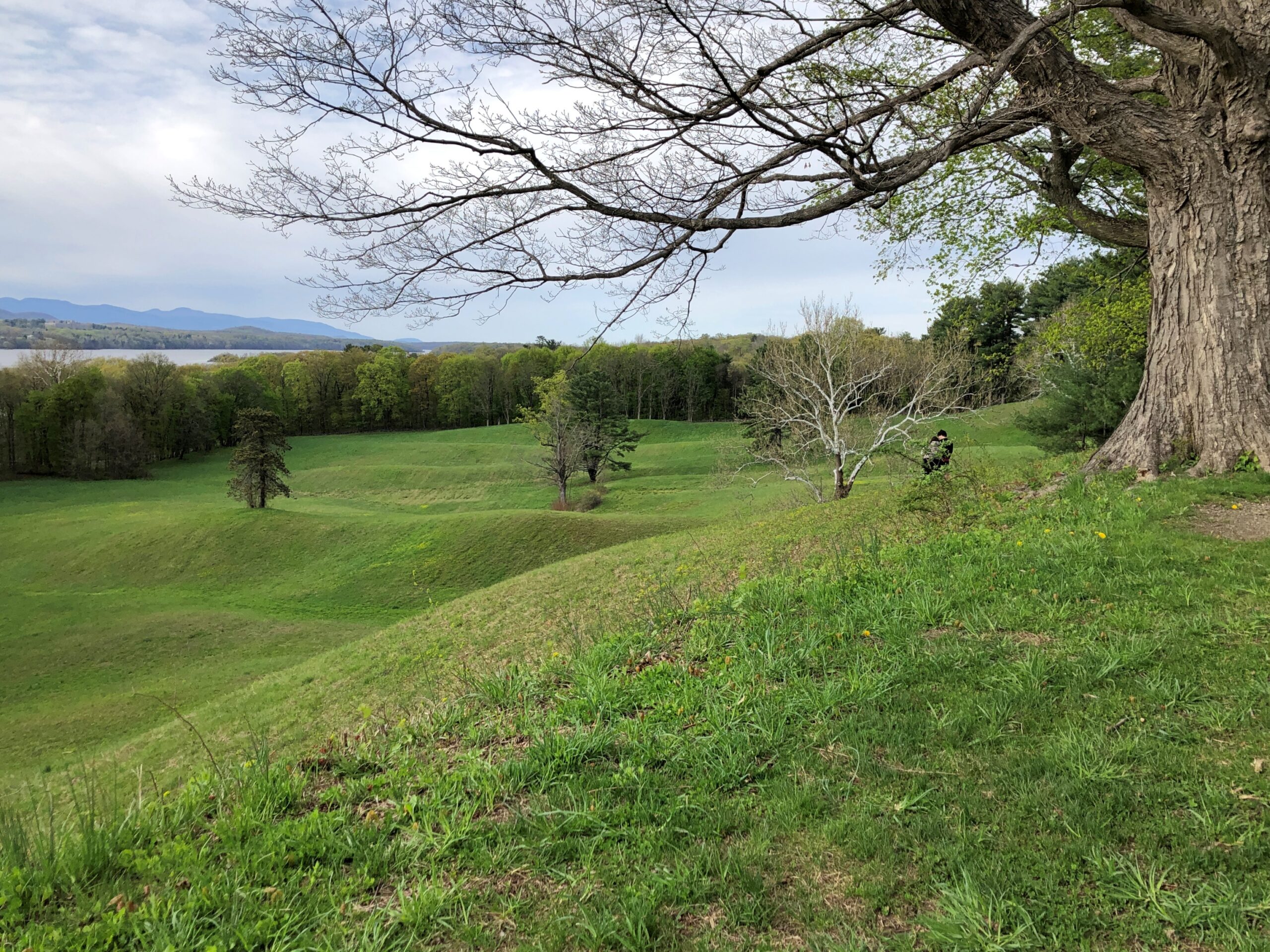
They came for good vistas, for one thing. So did I.
“In the works of Washington Irving and James Fenimore Cooper and the paintings of Thomas Cole and others of the Hudson River School, travelers in the region encountered the nation’s first literary and artistic movements,” says a summary of The Birth of American Tourism: New York, the Hudson Valley, and American Culture, 1790-1835 by Richard H. Gassan (2008).
In effect, those writers and painters were the influencers of their day, though not quite at the frenetic pace of, say, Instagram. I’ve decided not to worry about the influence of, say, Instagram on modern tourism. Overtourism is a real problem in a narrow range of places, and best dealt with locally, but most criticism of mass tourism is snobbery anyway: why, those people are going to all the wrong places for the wrong reasons and thinking and doing the wrong things when they get there! Bah.
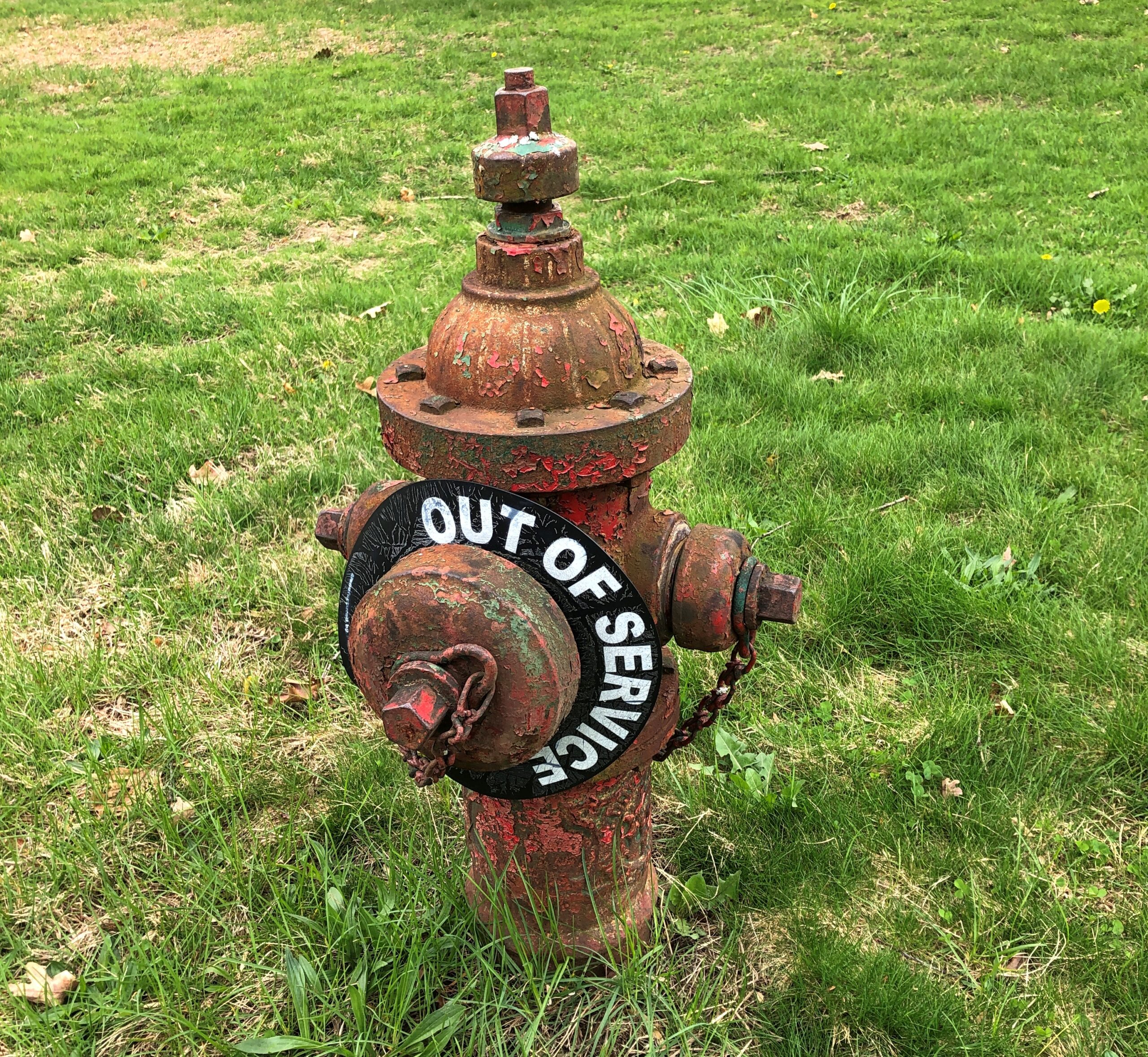
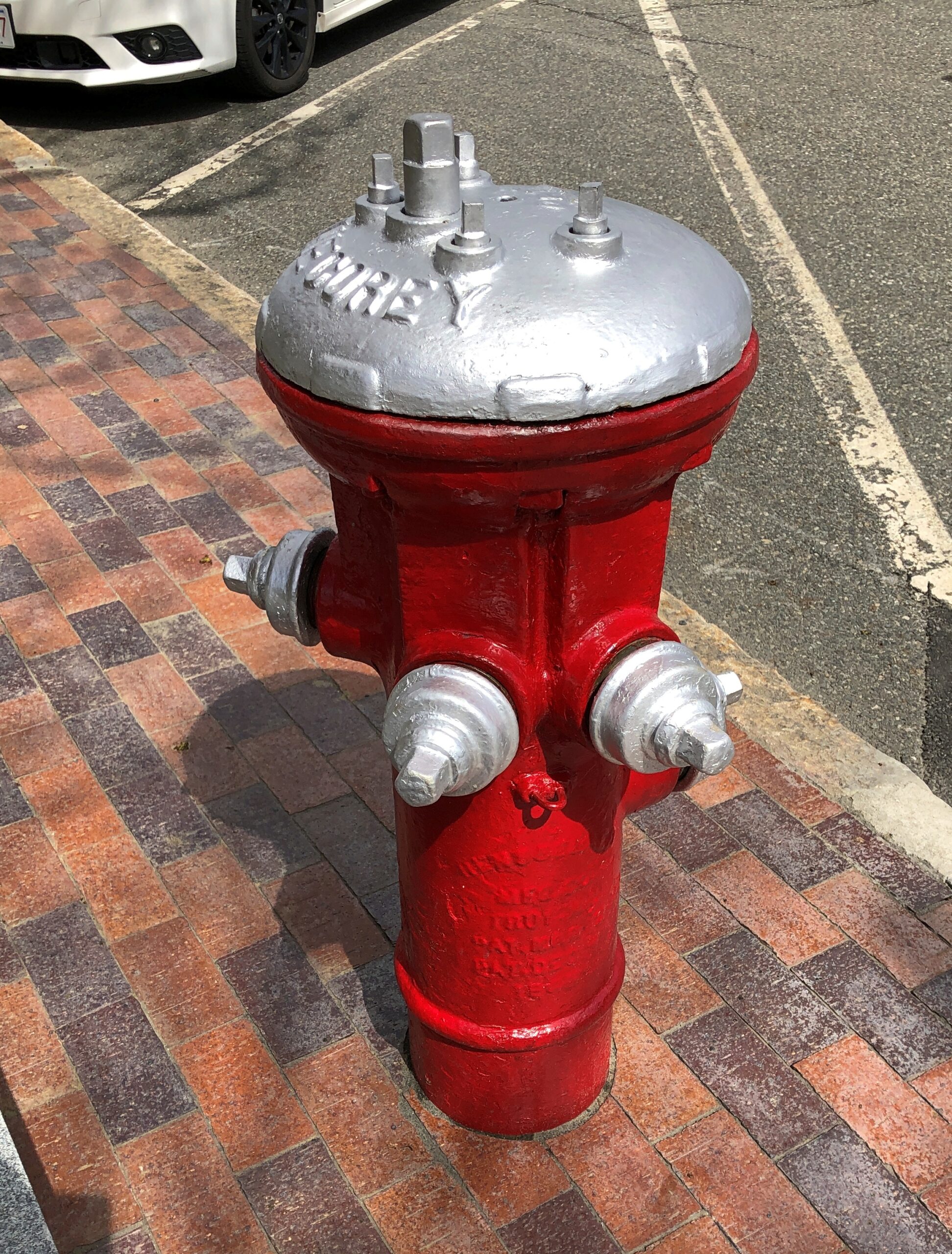
The latest in my series on NPS fire hydrants. This one, a little worse for wear, is on the Vanderbilt site.
The Vanderbilts were known for commissioning mansions, of course, so many that I suggest they be known as the mansion-building Vanderbilts, like the Lighthouse-building Stevensons. Though not, curiously, the Commodore himself. He had other things to do, like amassing a vast fortune in the first place, and founding one of the nation’s great (ahem) universities.
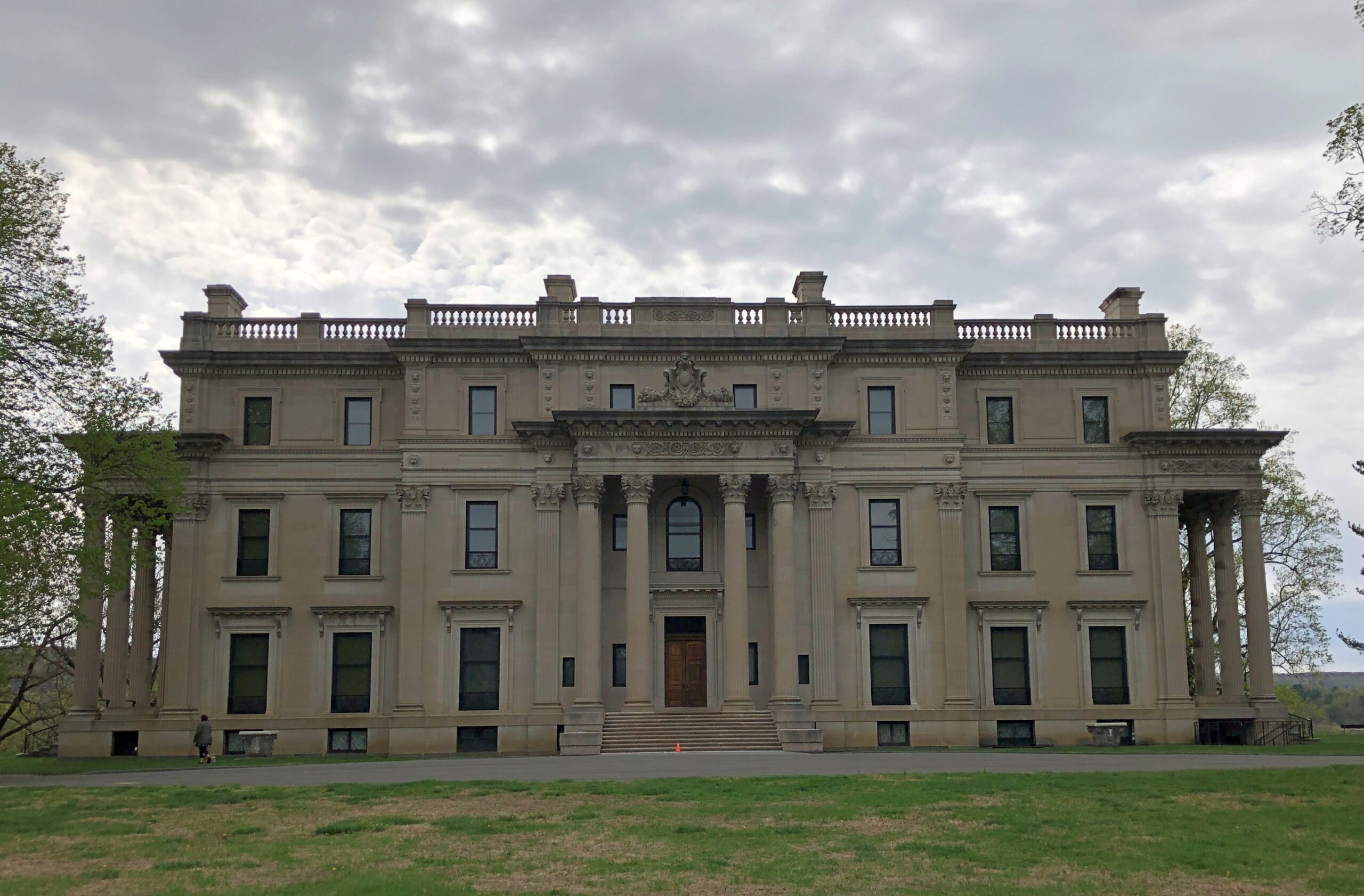
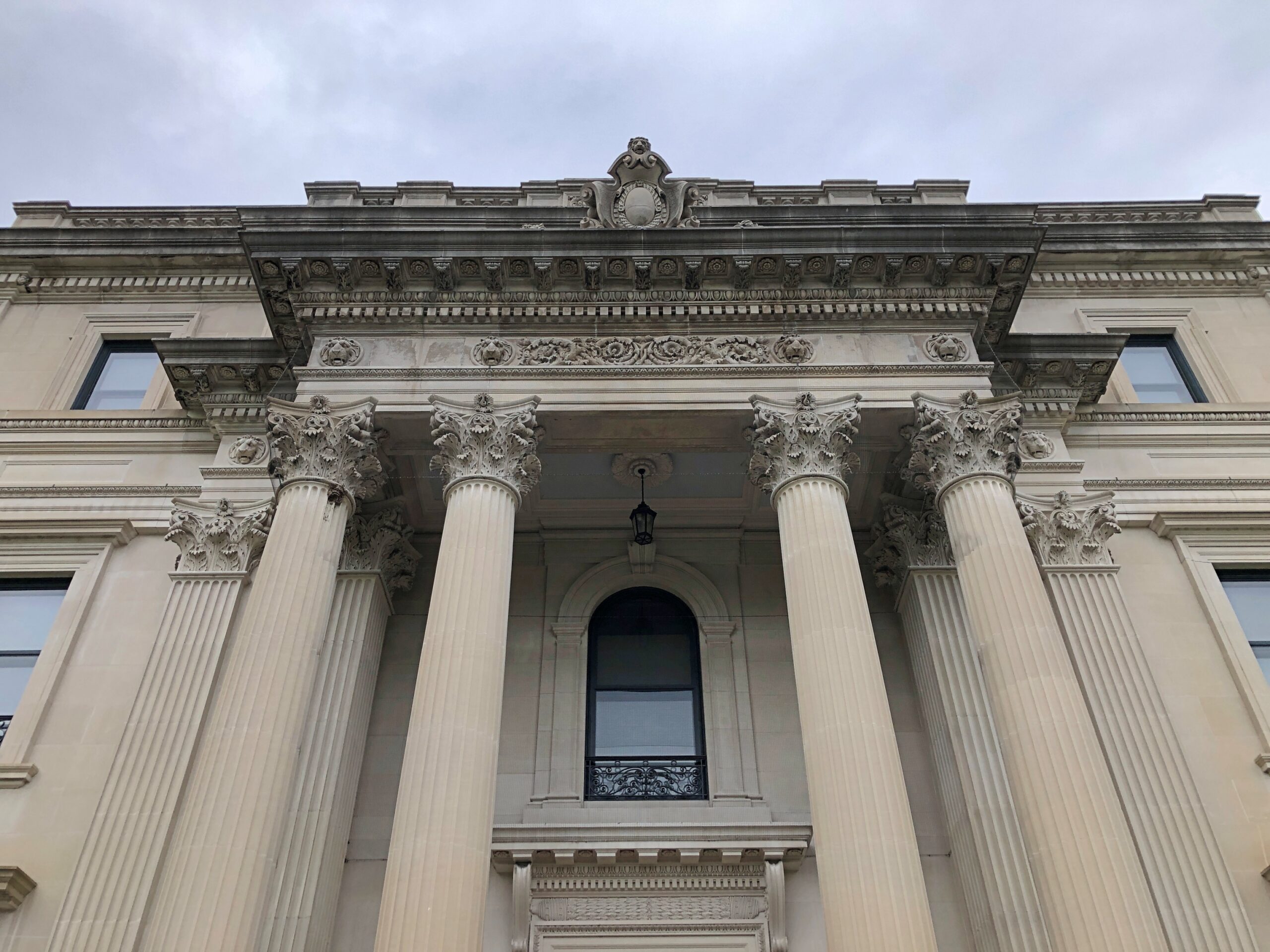
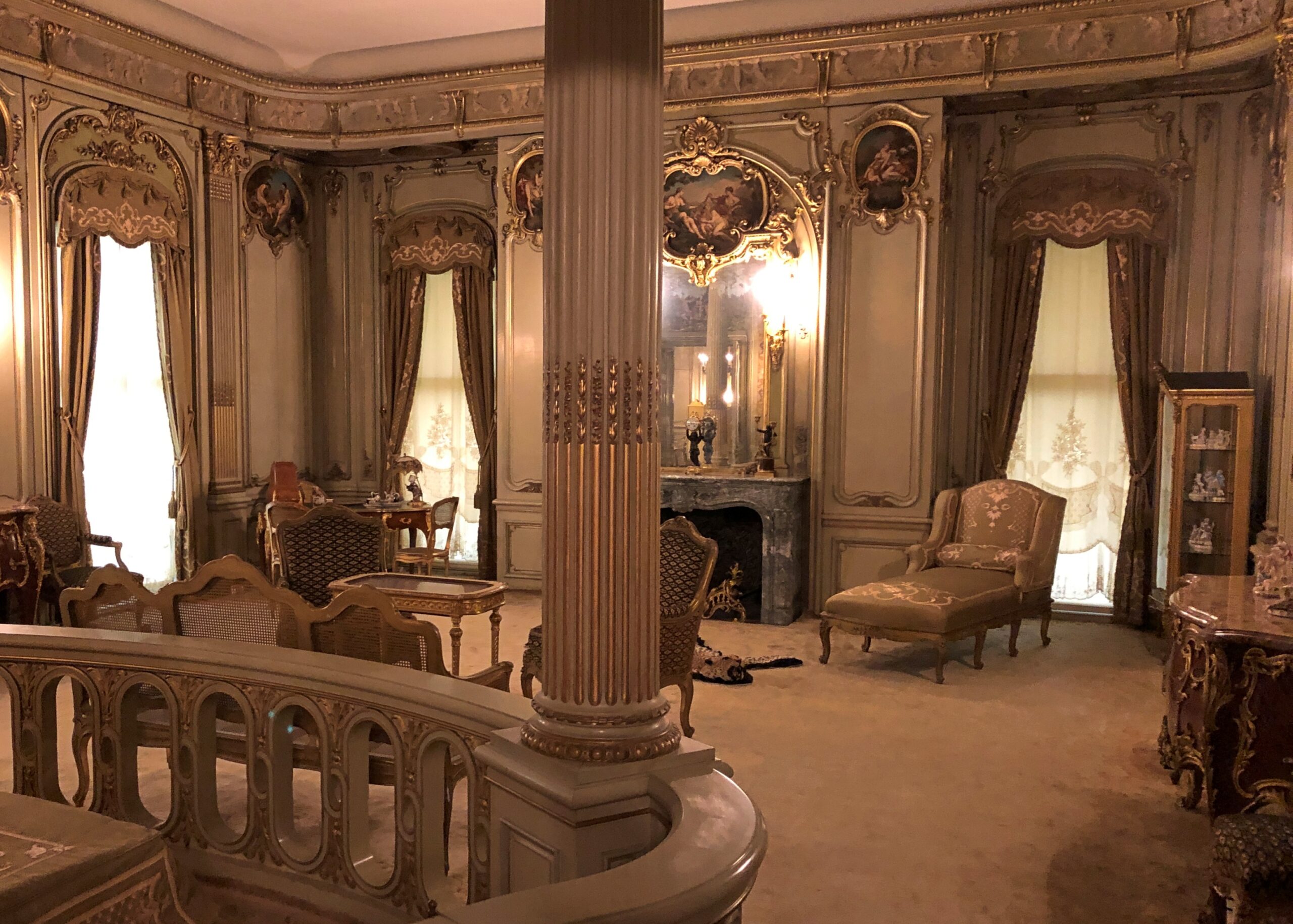
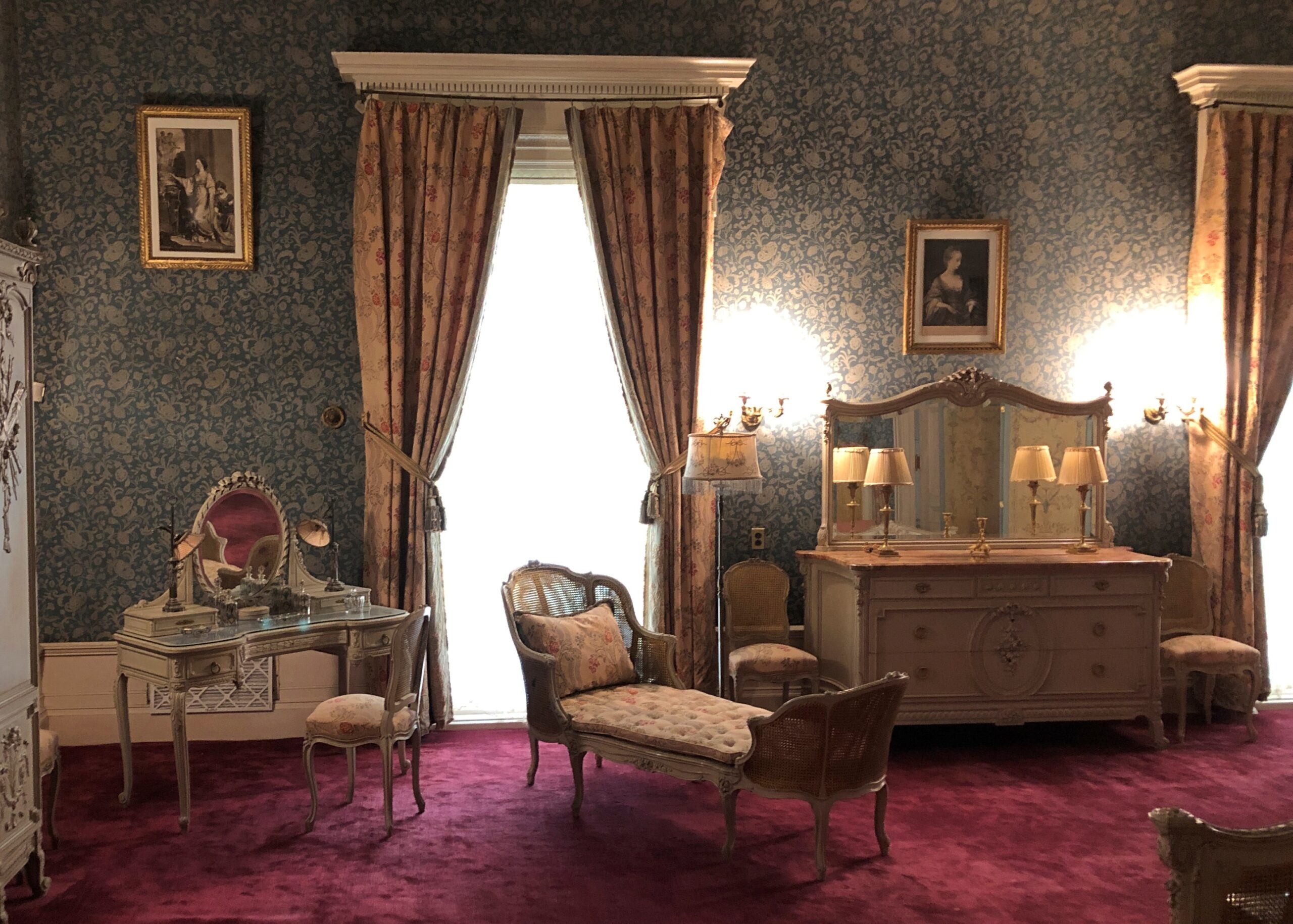
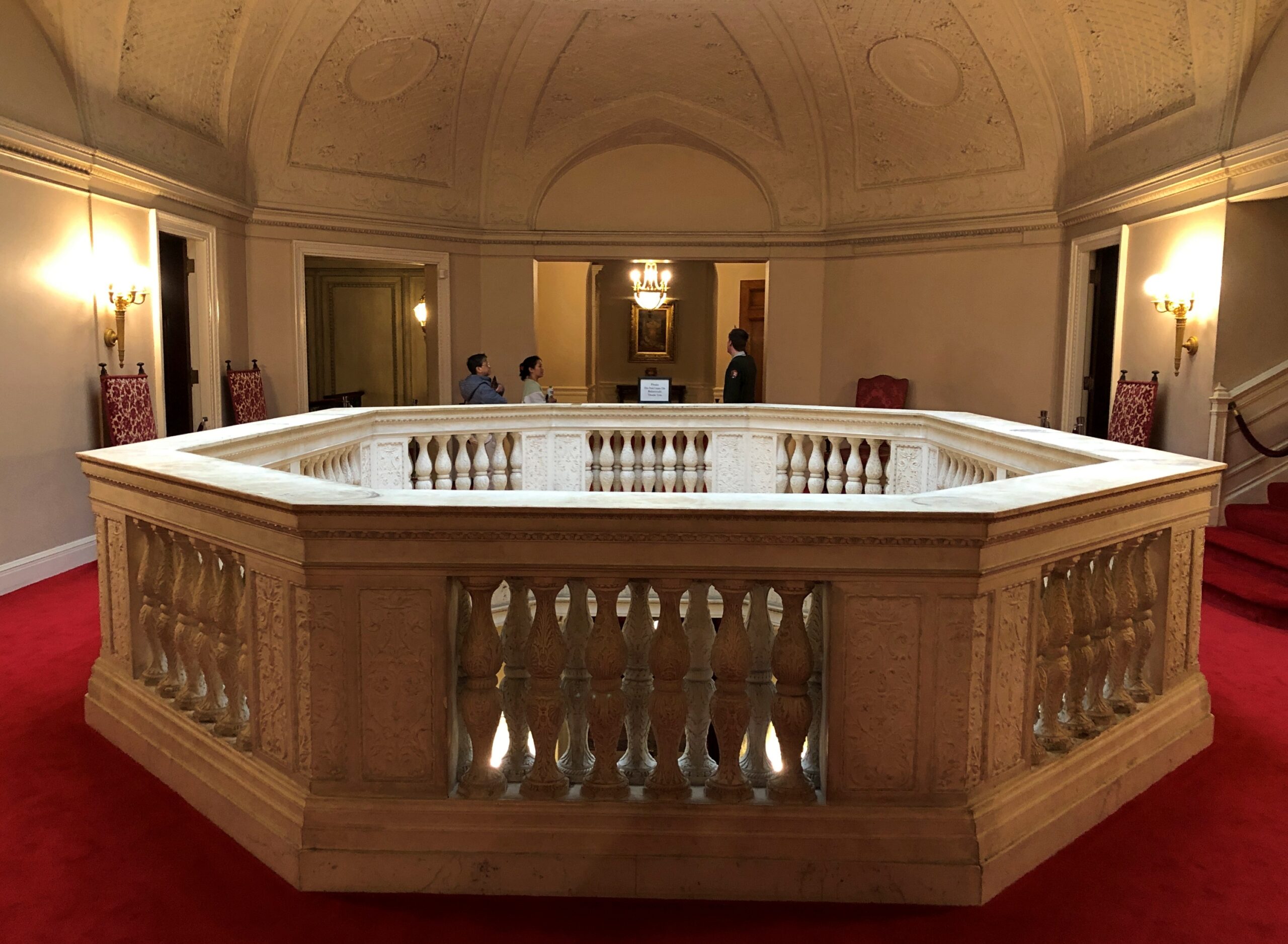
Anyway, grandson Frederick William Vanderbilt (d. 1938) thought that the Hudson River Valley was just the place for a country estate, which it is, so he tasked McKim, Mead & White, architects to robber barons and other deep-pocketed clients, to design it. Frederick and his wife Louise clearly wanted a Euro-style palace on the Hudson, and that’s what they got.
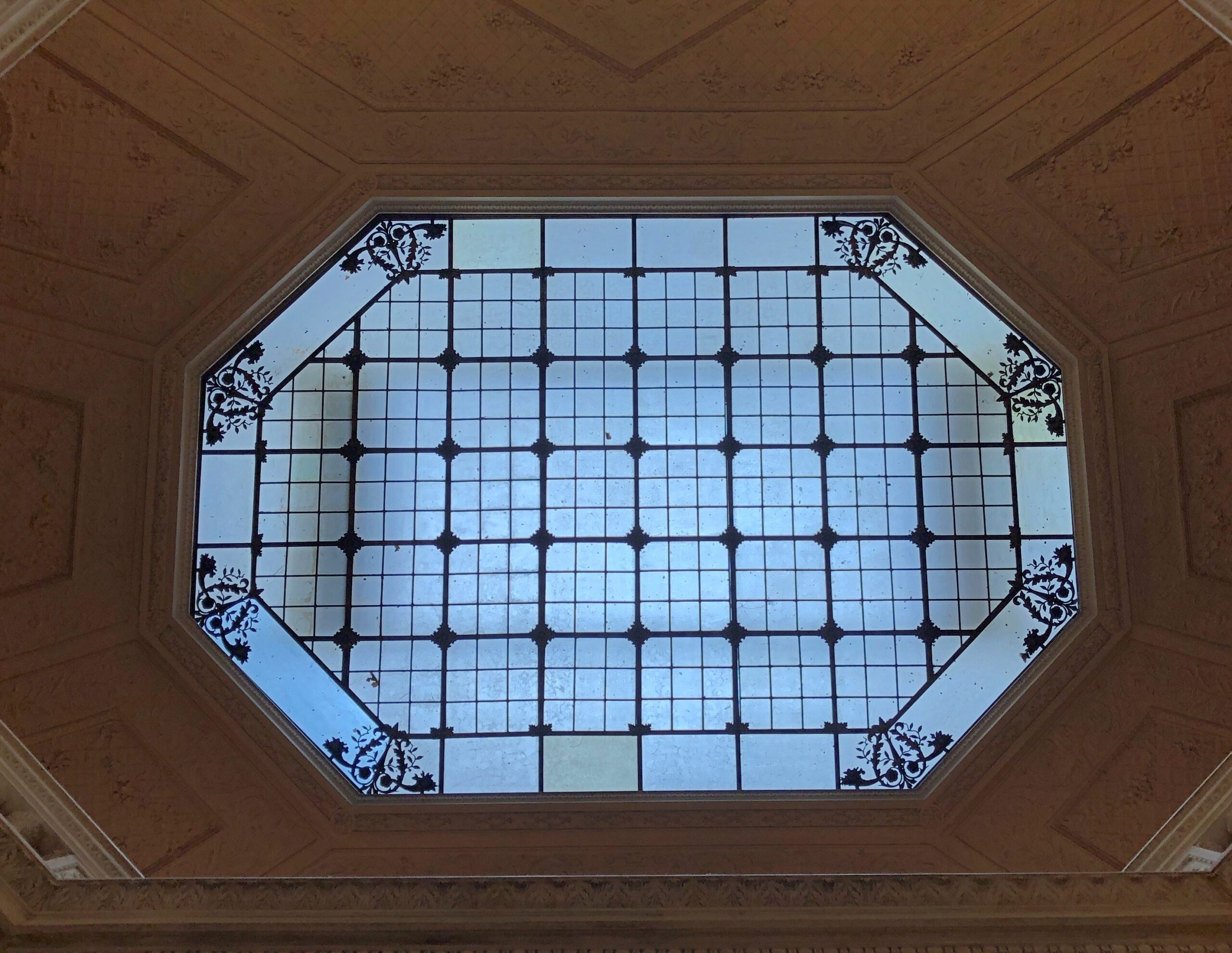
The skylight was pretty cool, bringing in light all the way to the lowest floor through this aperture.
The effort to build and decorate the place must have been considerable, and I hope it provided wages for a lot of workers for a long time, both in the development and maintenance. But it’s a little sterile, for all its architectural pedigree.
Our guide — you need a guide to visit the interior, though the grounds are essentially a public park (and what a park) — said that the Park Service didn’t mind having the mansion, but the Vanderbilt site was more about preserving a long stretch of the right bank of the Hudson River and its views. As I took in some of those views, I had to agree.
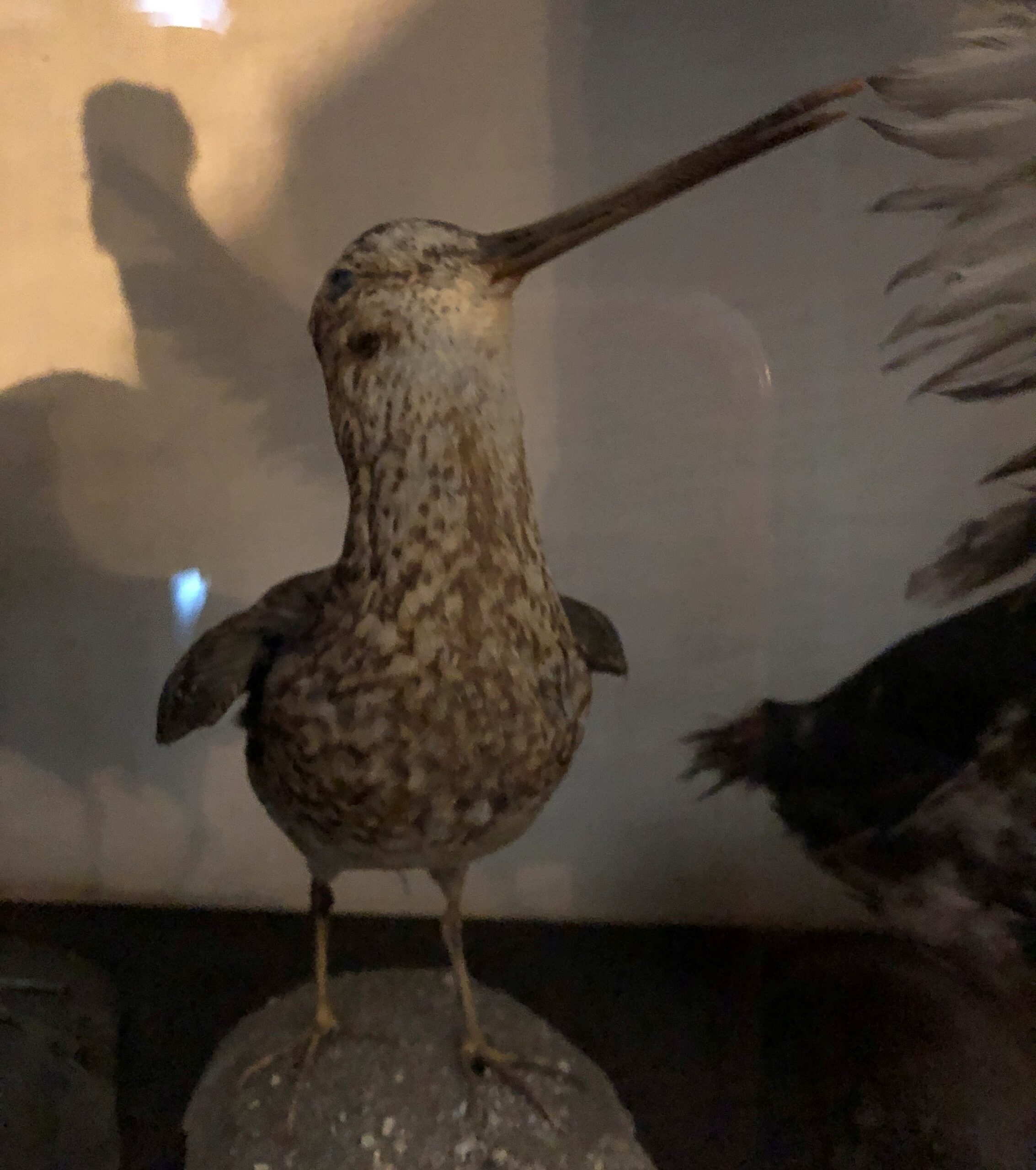
A lot of museum artifacts are behind glass. Some really old, brittle and famous items are encased in an atmosphere of nitrogen, the better to extend their existence, I understand (and nitrogen anoxia sounds like an unfortunate accidental way to die). That might have been the case with the underwhelming display of the overwhelmingly historic Book of Kells. But in any case, glass interferes with our right as iPhone-carrying tourists to take really good pictures with almost no effort.
An example: a stuffed bird I saw in April.
The picture might be lousy due to the glass, but the artifact – and some other stuffed birds in the same case – did something a history museum ought to do: teach. I learned, looking there at a bird dead more than a century, that as a boy in the early 1890s Franklin Delano Roosevelt pursued a taxidermy hobby.
I’d come to Home of Franklin D. Roosevelt National Historic Site in Hyde Park, New York, the flush of spring, on my way home from the Northeast. I made time for the site because a visit had been impossible in October.
I understand that during FDR’s boyhood, the place wasn’t quite as wooded, but even so the trees (and thus birds) must have been plentiful. One of the paths on the grounds.
Views from the second story of the mansion.
Though the greenery obscures the splendid Hudson River, even a short look around gives you some idea why James and Sara Roosevelt thought building a residence here was a good idea, and why Franklin was deeply attached to the place all his life.
Is it important to know that boy FDR shot and stuffed birds (though he later had them stuffed professionally)? In and of itself, maybe not. I’ve heard about him all my life, read books about him and seen documentary films, and visited the FDR D.C. memorial, and somehow that detail never came up. Knowing about his short-lived taxidermy hobby doesn’t help me understand the New Deal or World War II any better, in as much as I know about those big-picture events.
Still, it’s a humanizing detail, and I believe that’s good to know about figures as famed and studied and lionized as FDR. It also allows for a bit of informed speculation about Franklin, a rich only child with an overbearing mother. By the time he was old enough to tote a gun, he probably needed to get away periodically from the mansion and its familial confines. Shooting birds out on the sprawling grounds of Hyde Park on the Hudson was just the ticket.
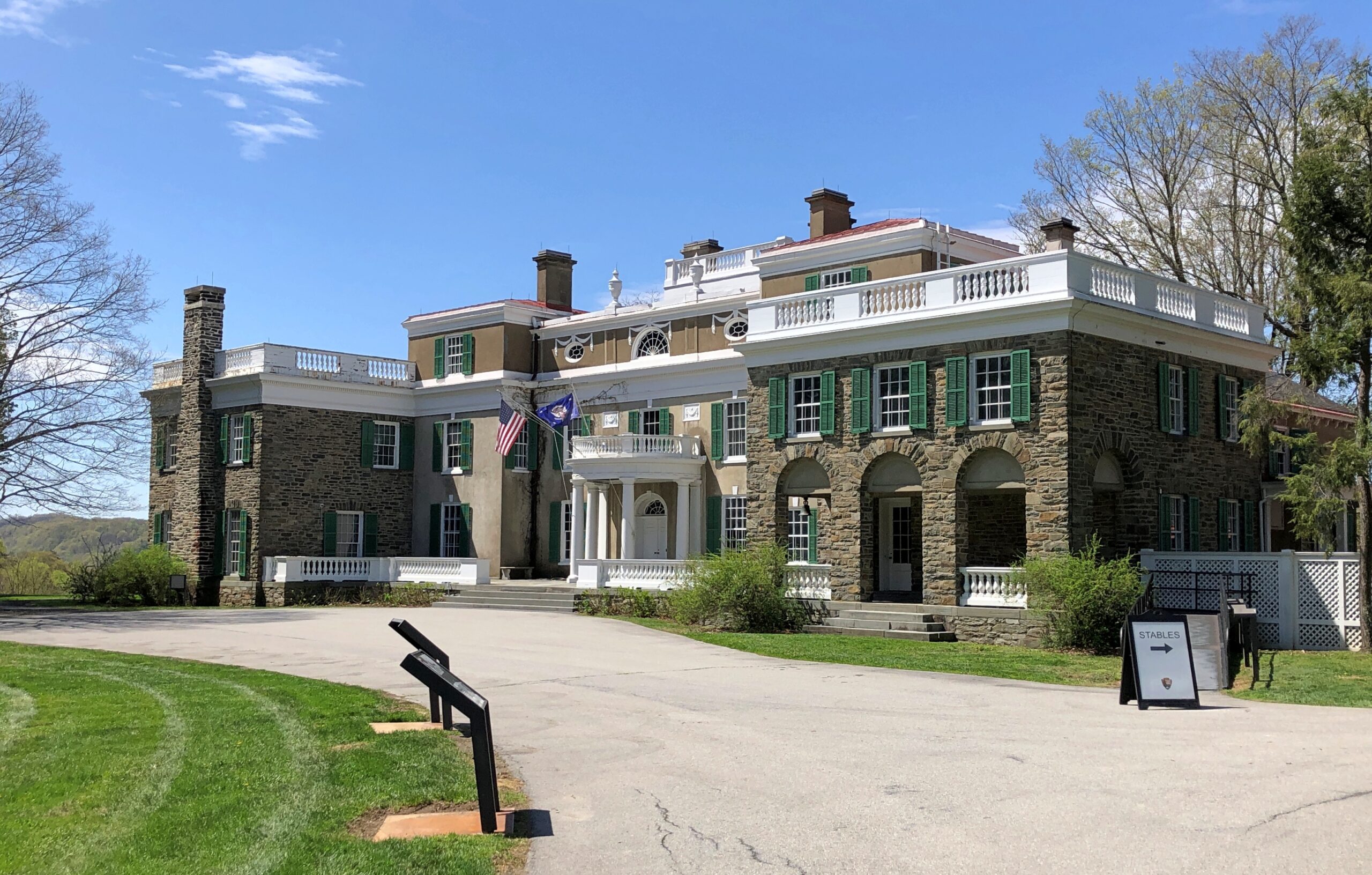
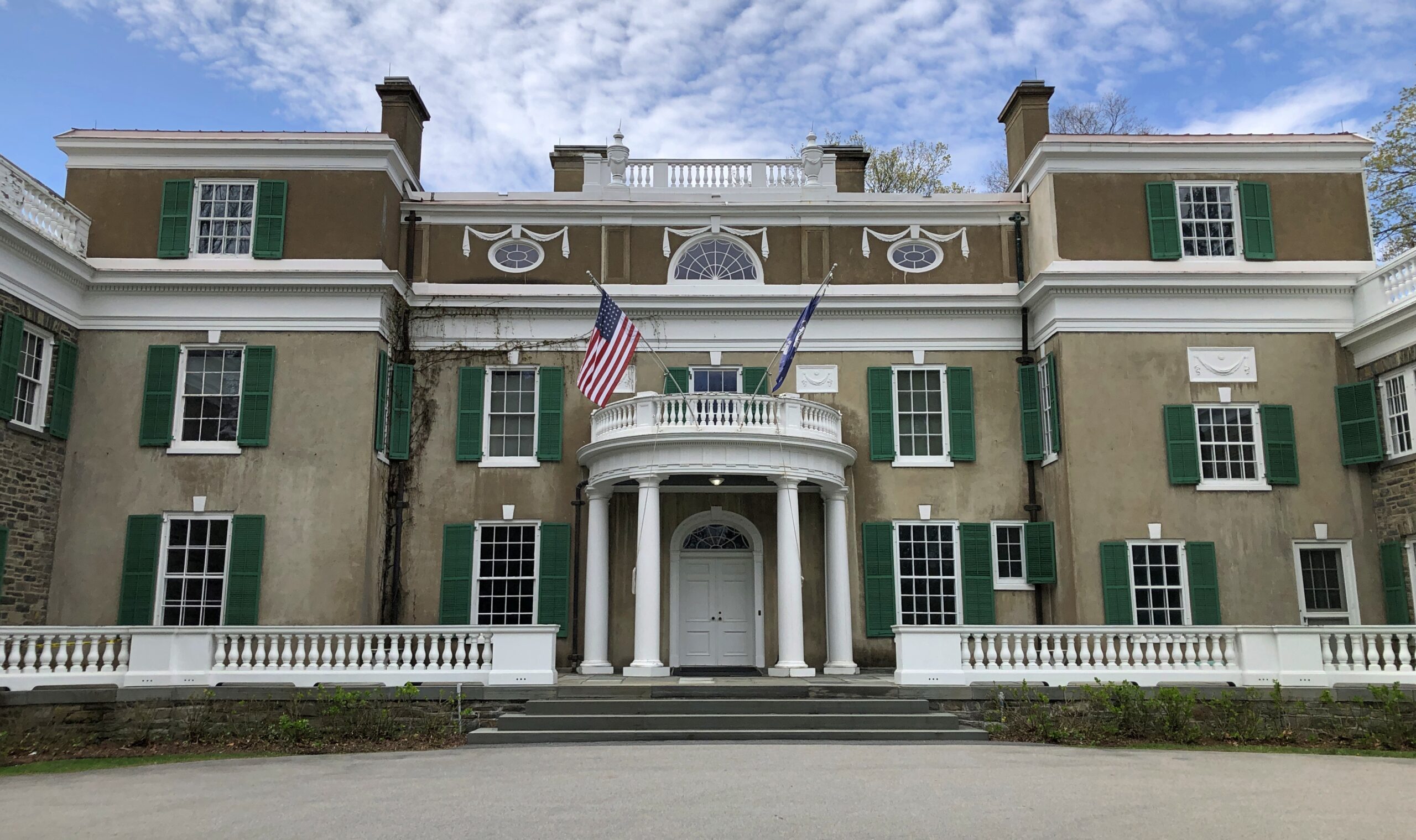
The Home of Franklin D. Roosevelt National Historic Site, which is the official National Park Service designation for the place, includes the mansion (Springwood, by name) and grounds, but also a presidential museum and library. The mansion is a mansion without being a Gilded Age exercise in ostentation.
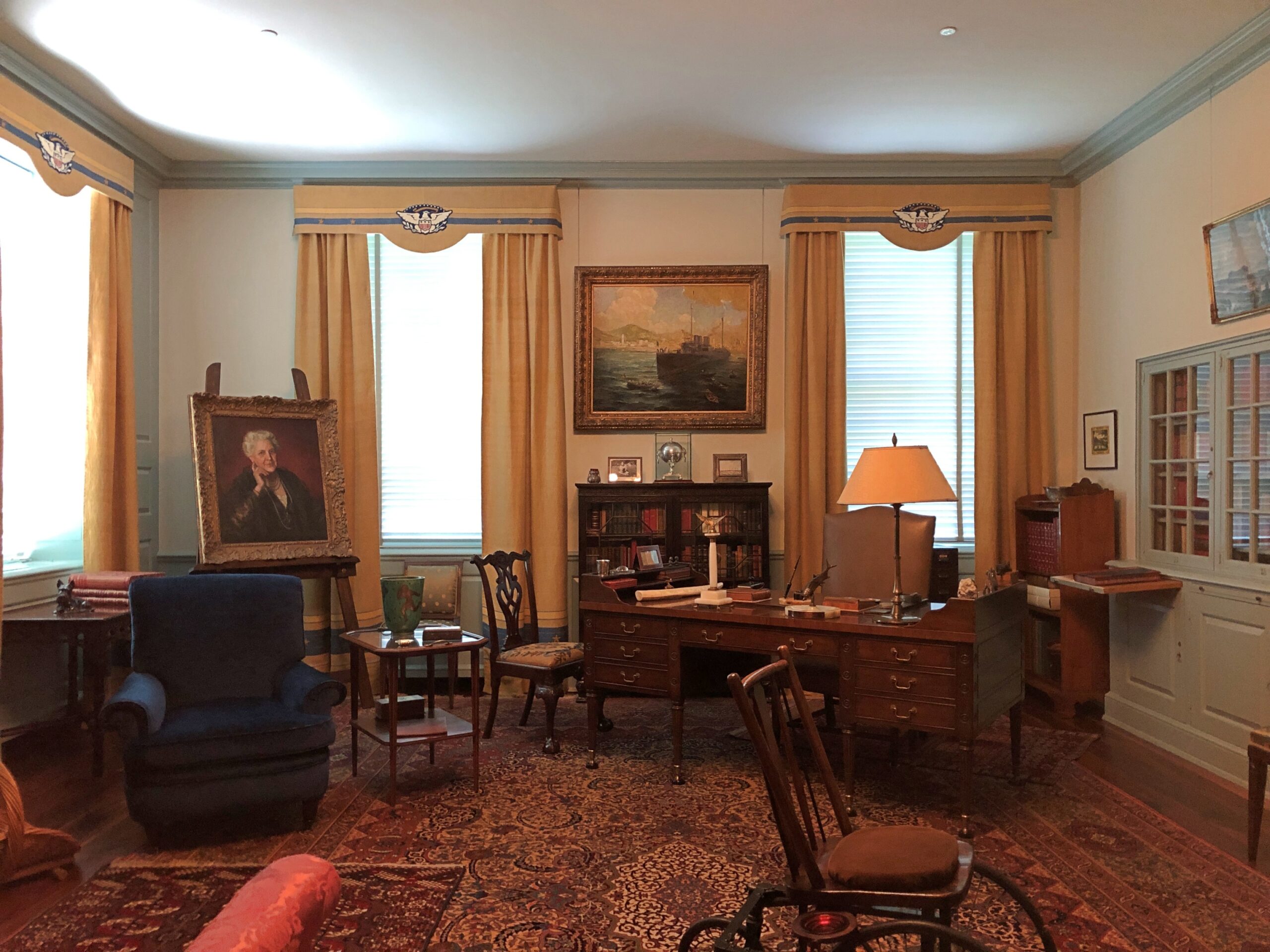
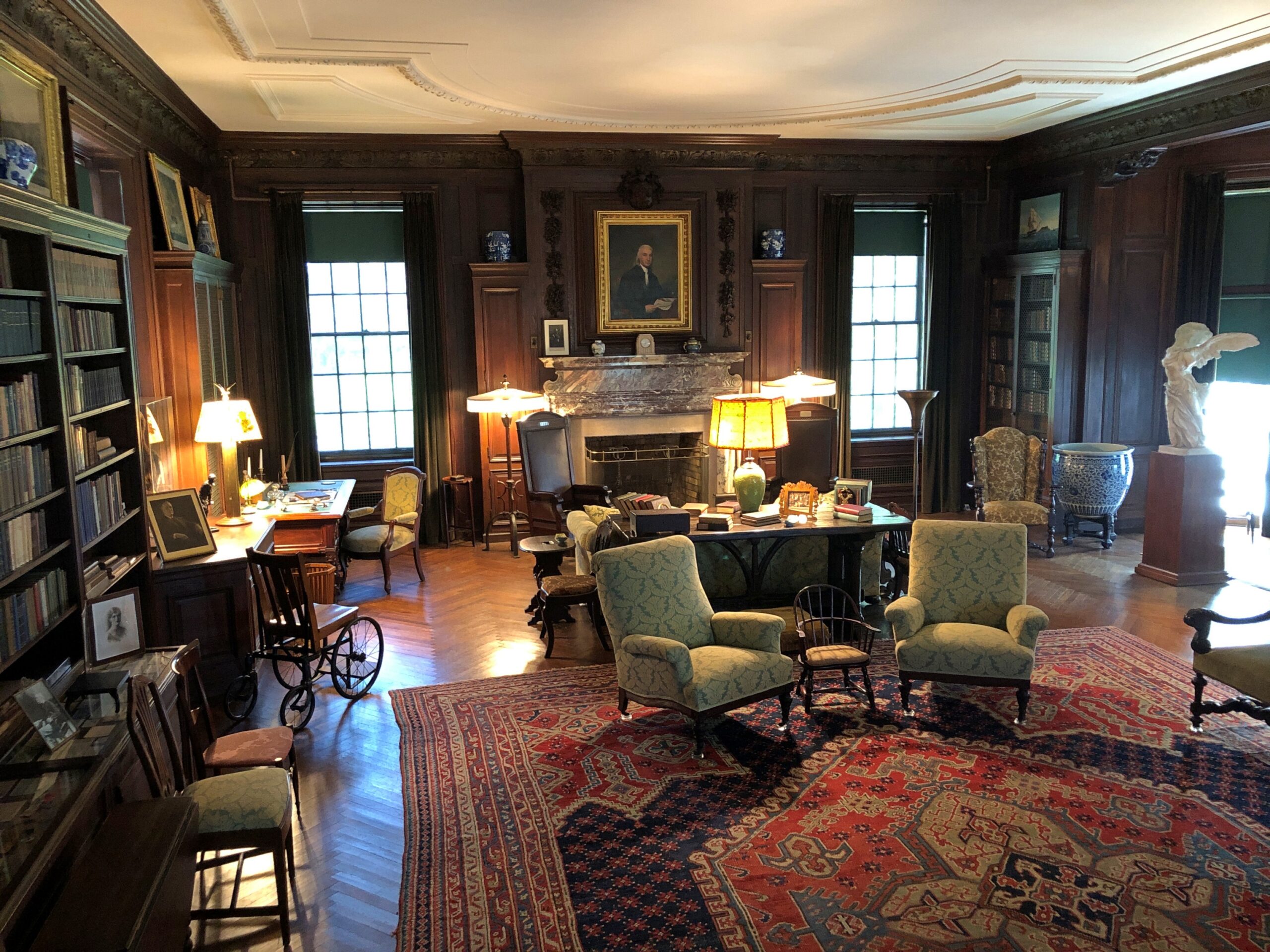
It’s a big place, lots of rooms and some elegant décor (and stuffed birds), all original artifacts, so there’s no doubt it was a wealthy household. Still, even though it’s literally a museum in our time, in FDR’s time I doubt it felt like a museum at all, unlike some Gilded Age exercises in ostentation – and I’m thinking of the Vanderbilt mansion nearby, more about which later.
Best not to jump to too many conclusions based on the vibe of the mansion, but it does dovetail with the generally understood notion that FDR was self-assured and at ease in the upper class. No need for him to show off, any more than James and Sara did.
Speaking of James and Sara.
Note: the tour guide – you need to be on a tour to see the inside of Springwood – was perfectly forthcoming about the well-known fact (to historians) that the Delano fortune was built on opium.
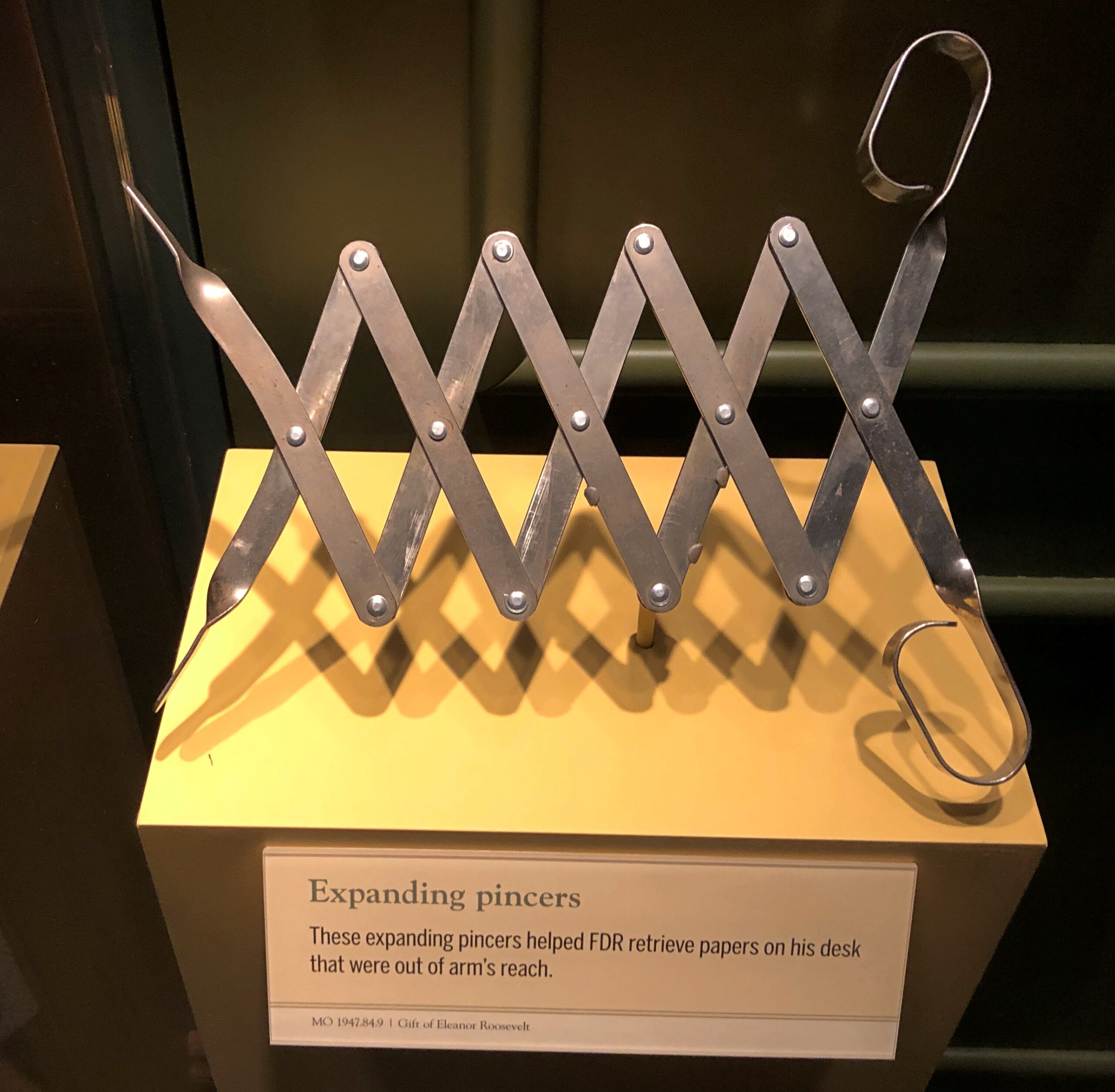
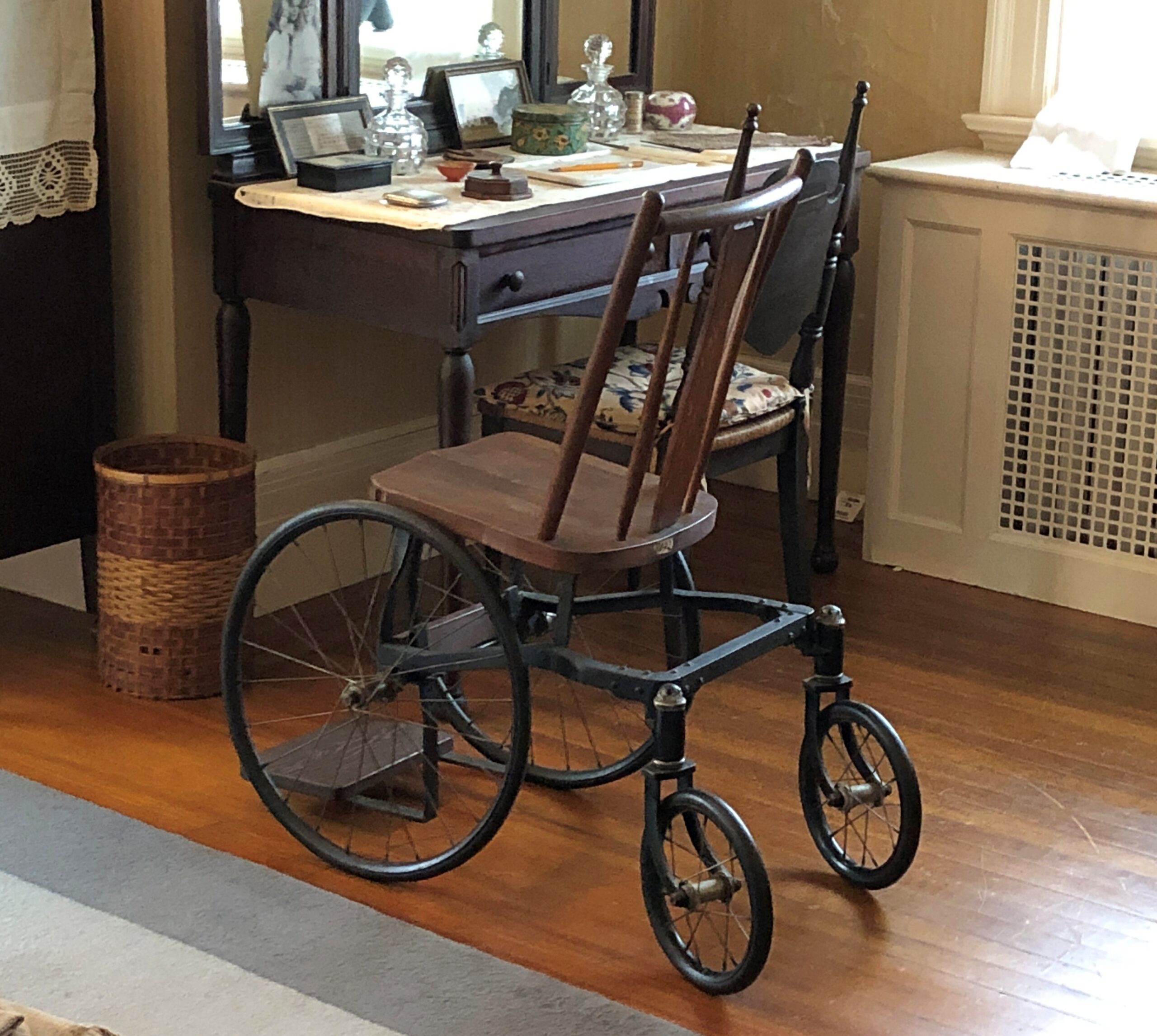
Other artifacts of note included some of the president’s coping mechanisms — literal mechanisms — for his handicap.
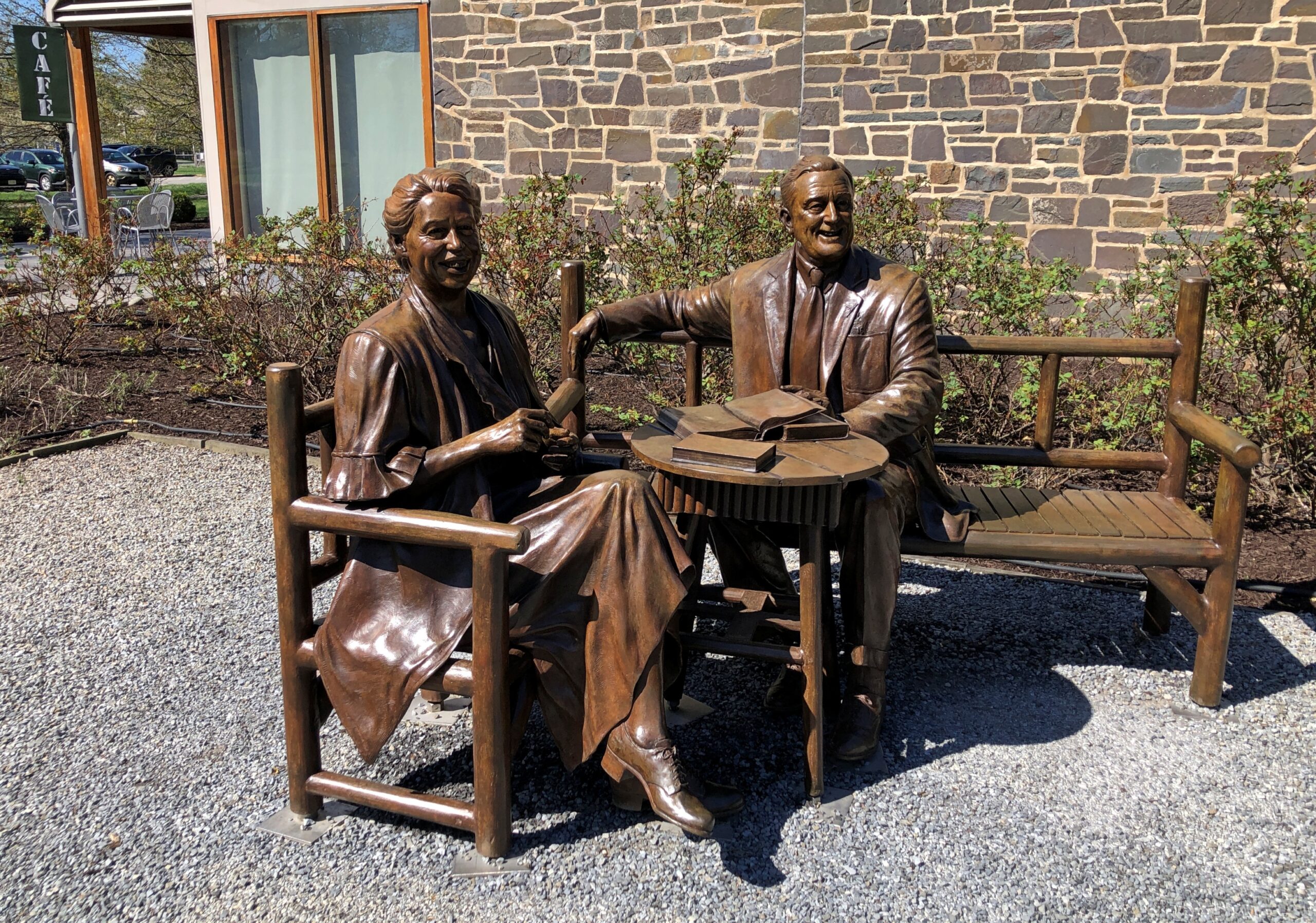
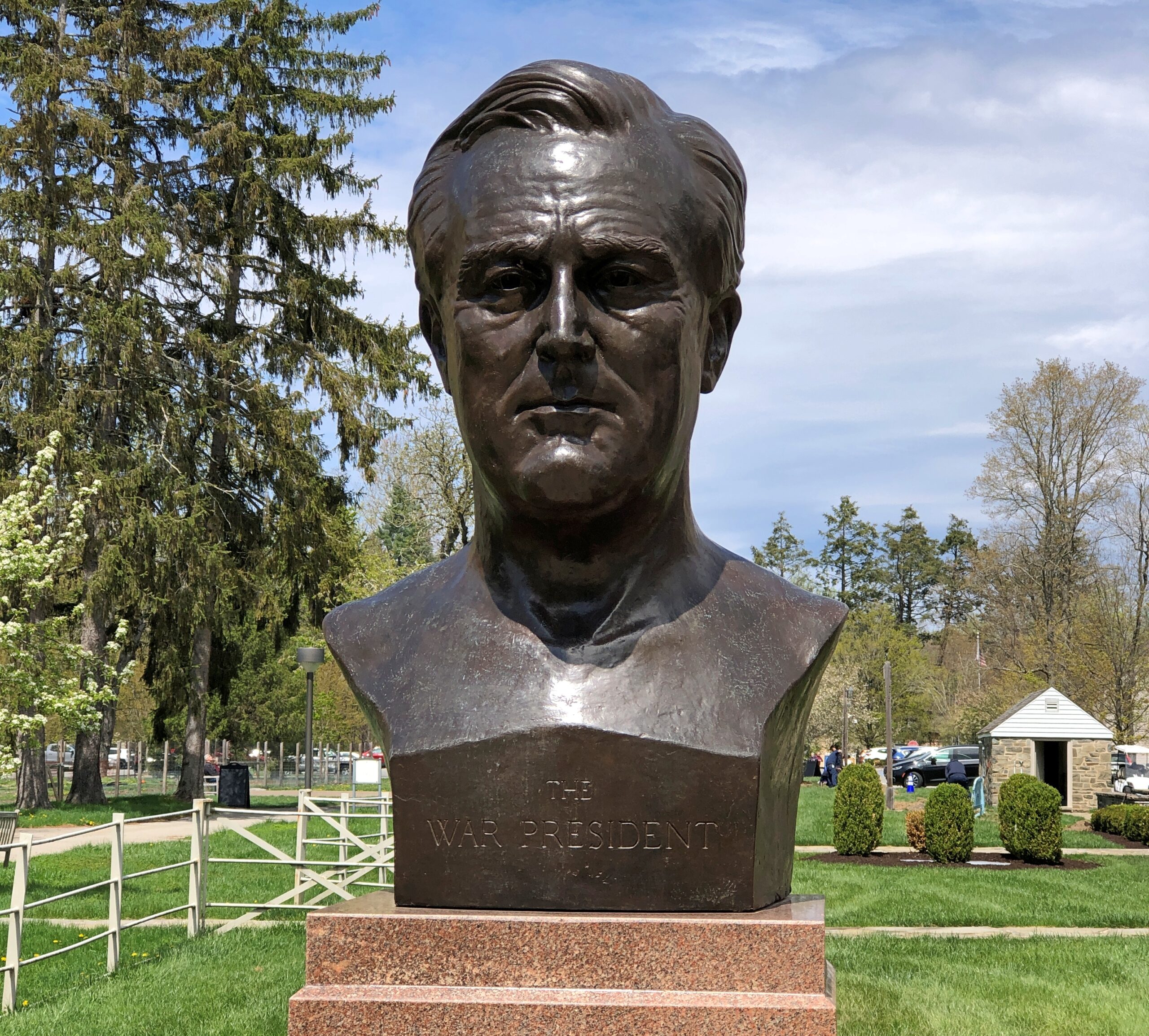
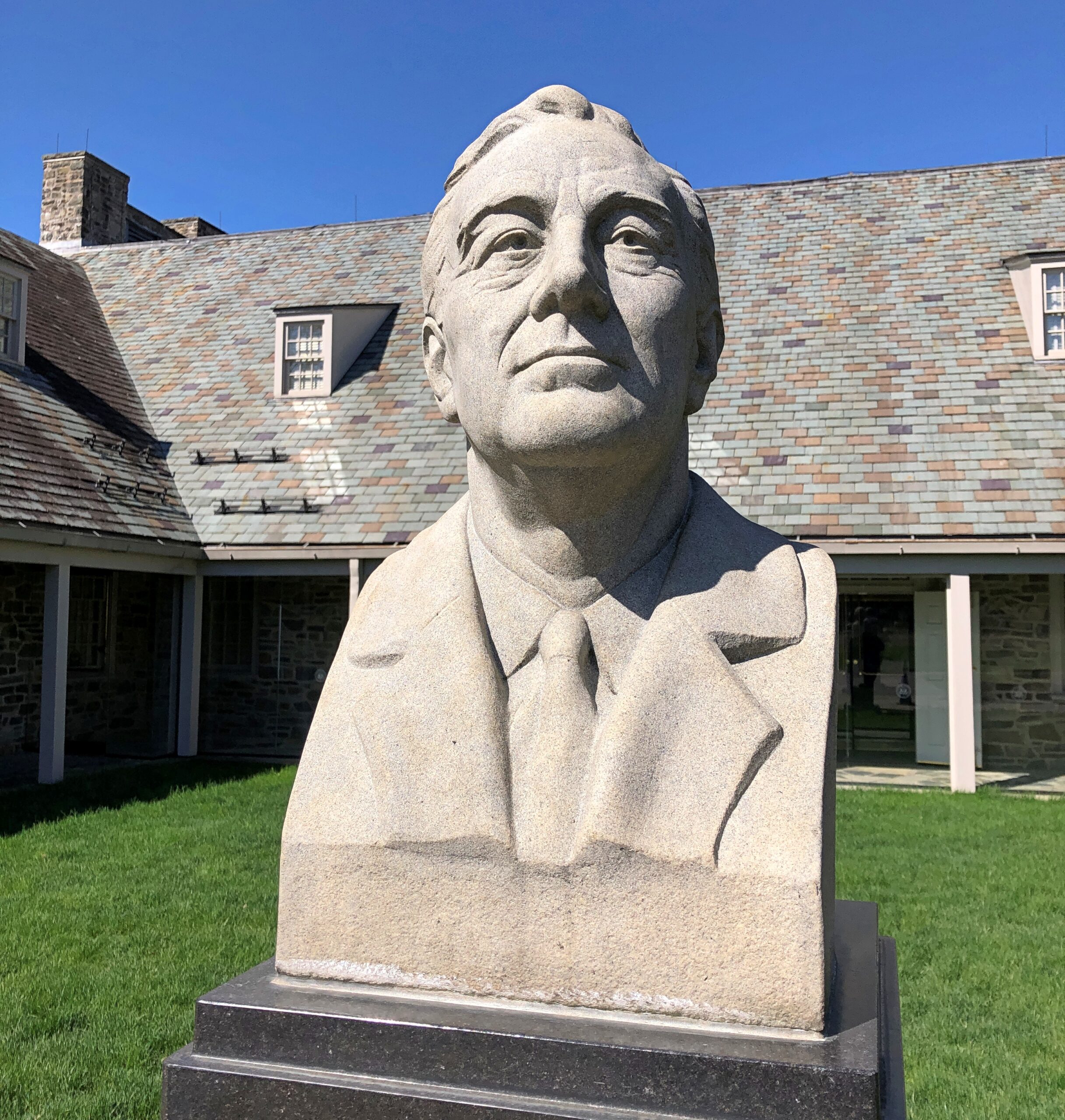
The historic site also includes many, many depictions of FDR, as one would expect. Such as Franklin and Eleanor in bronze. Or just Franklin in bronze, or other materials.
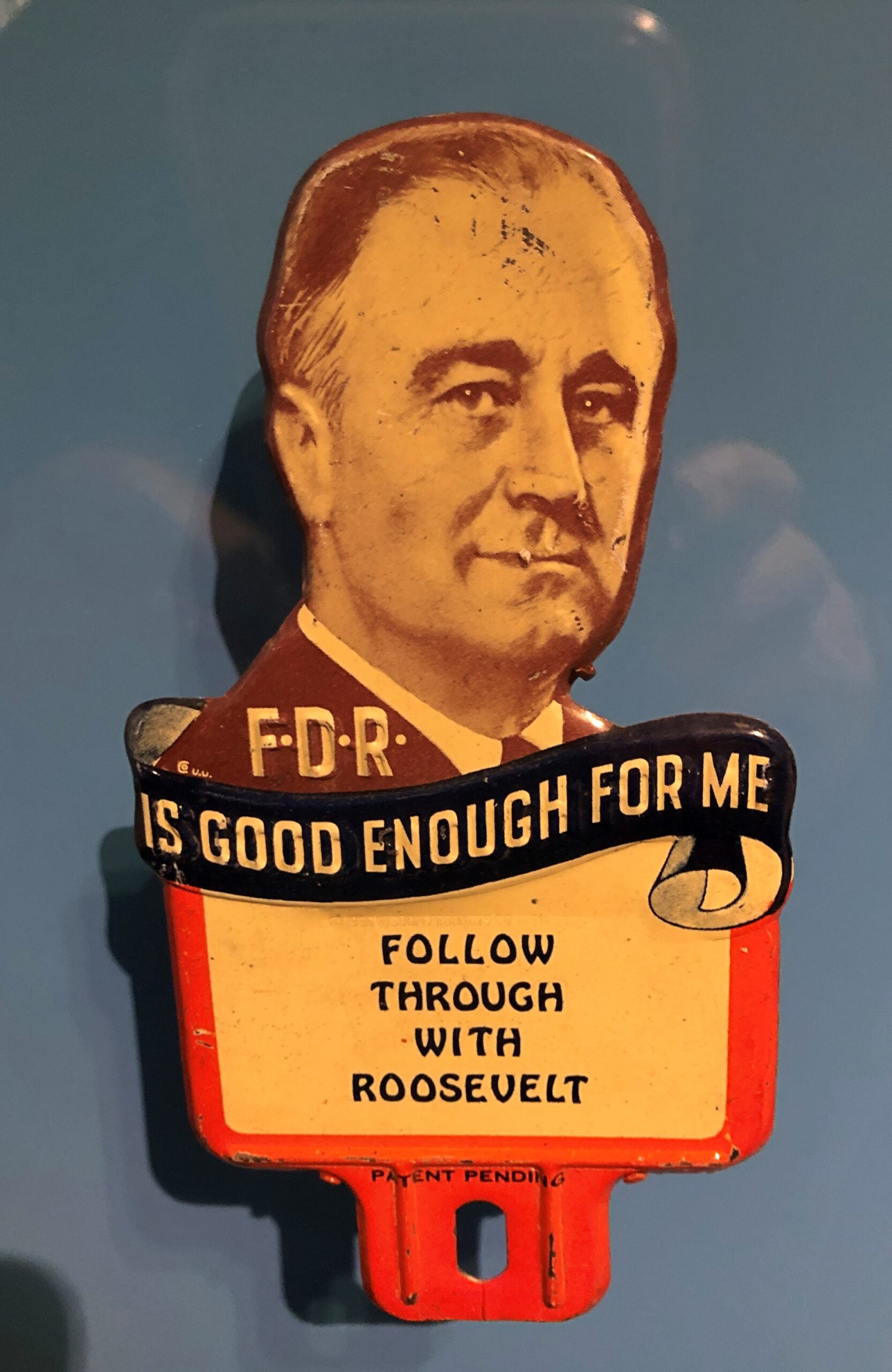
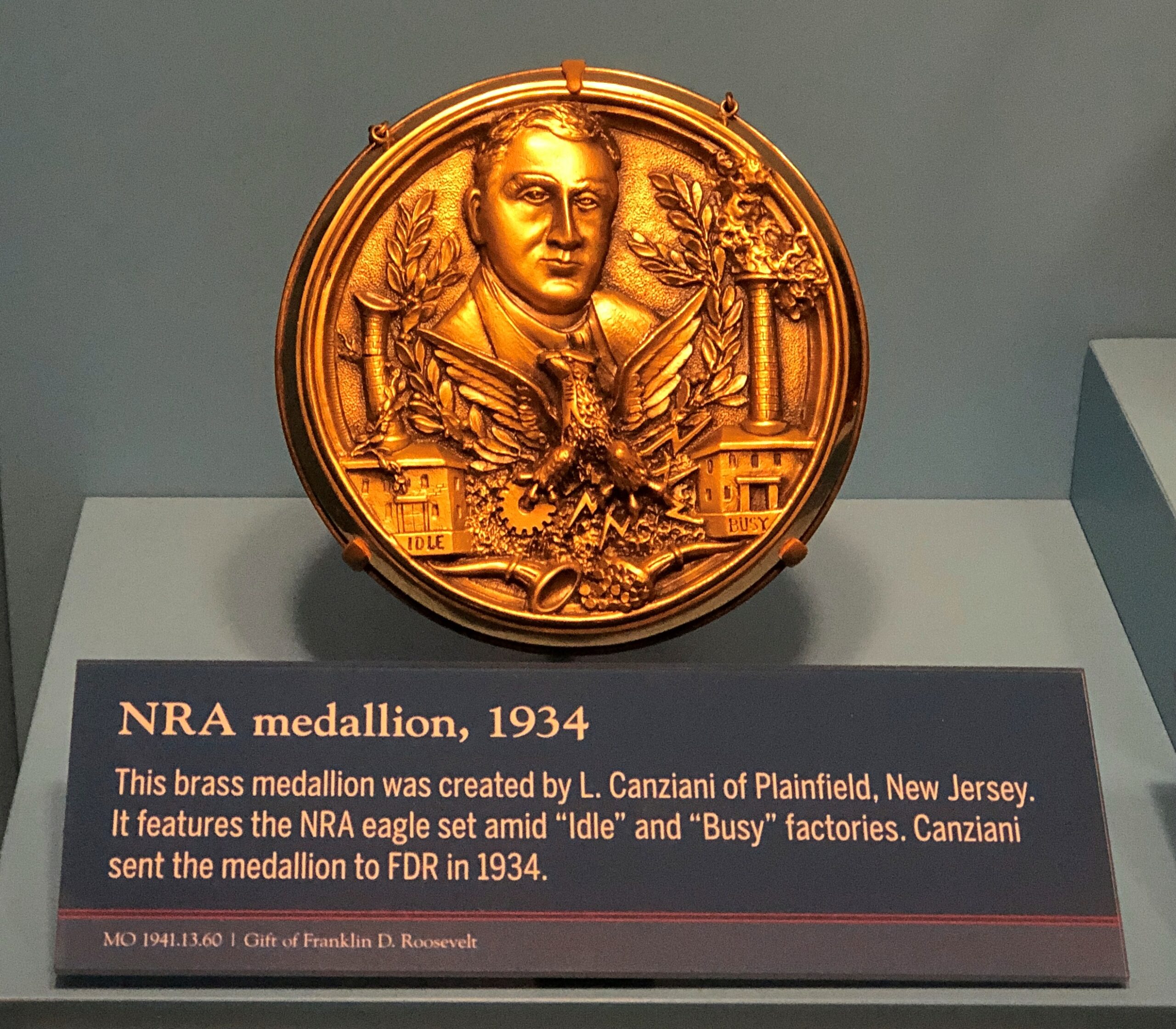
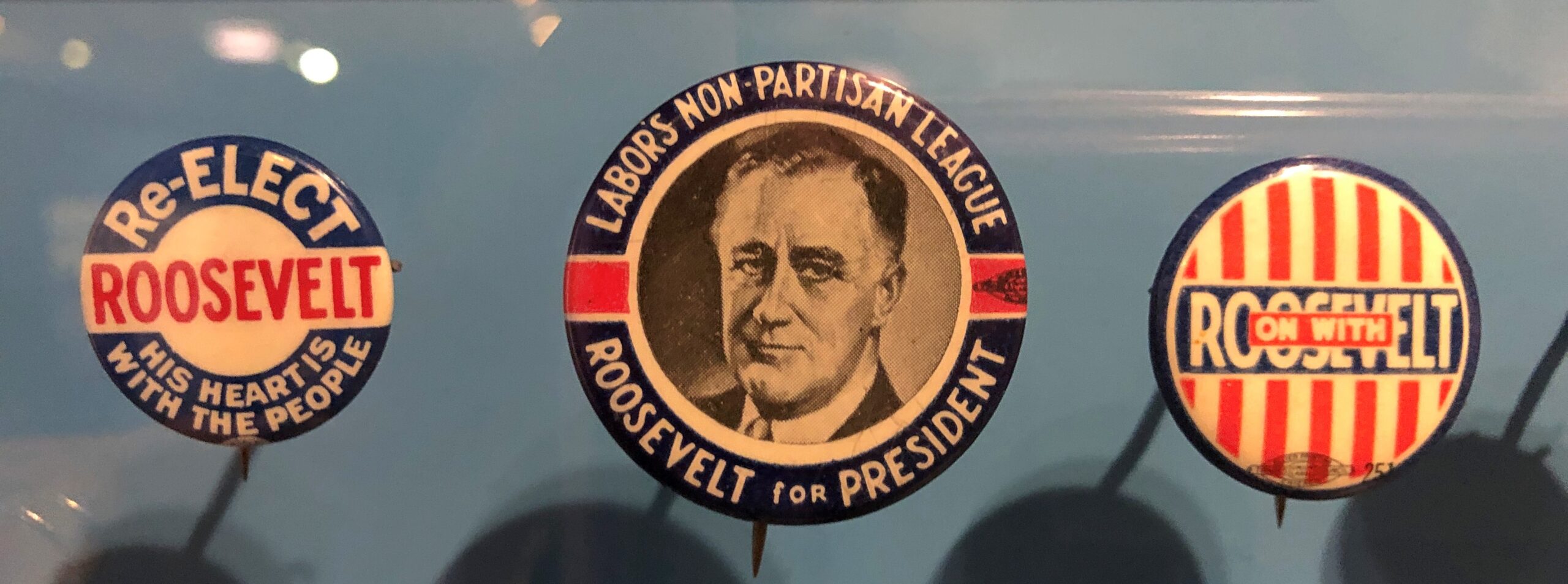
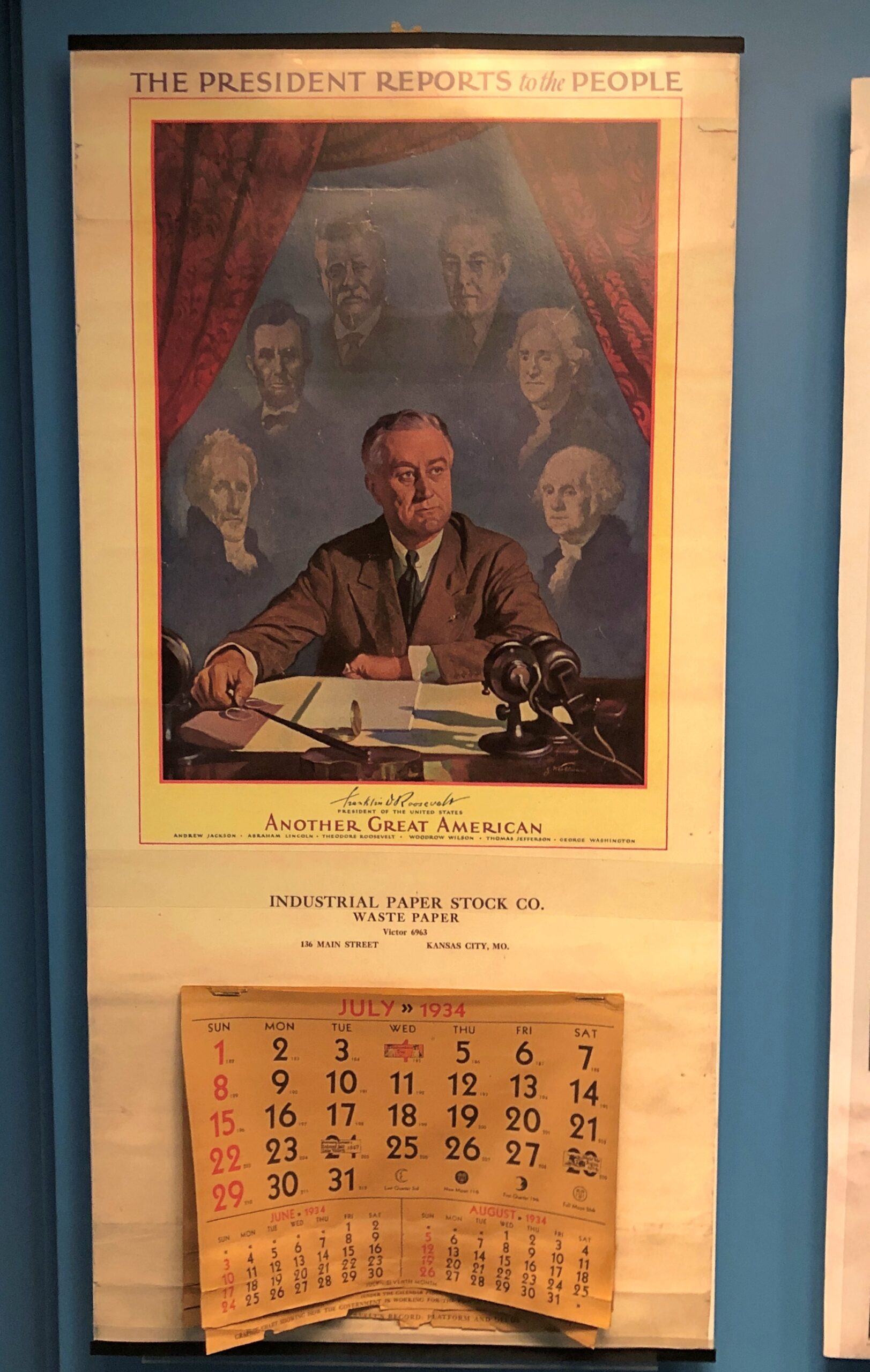
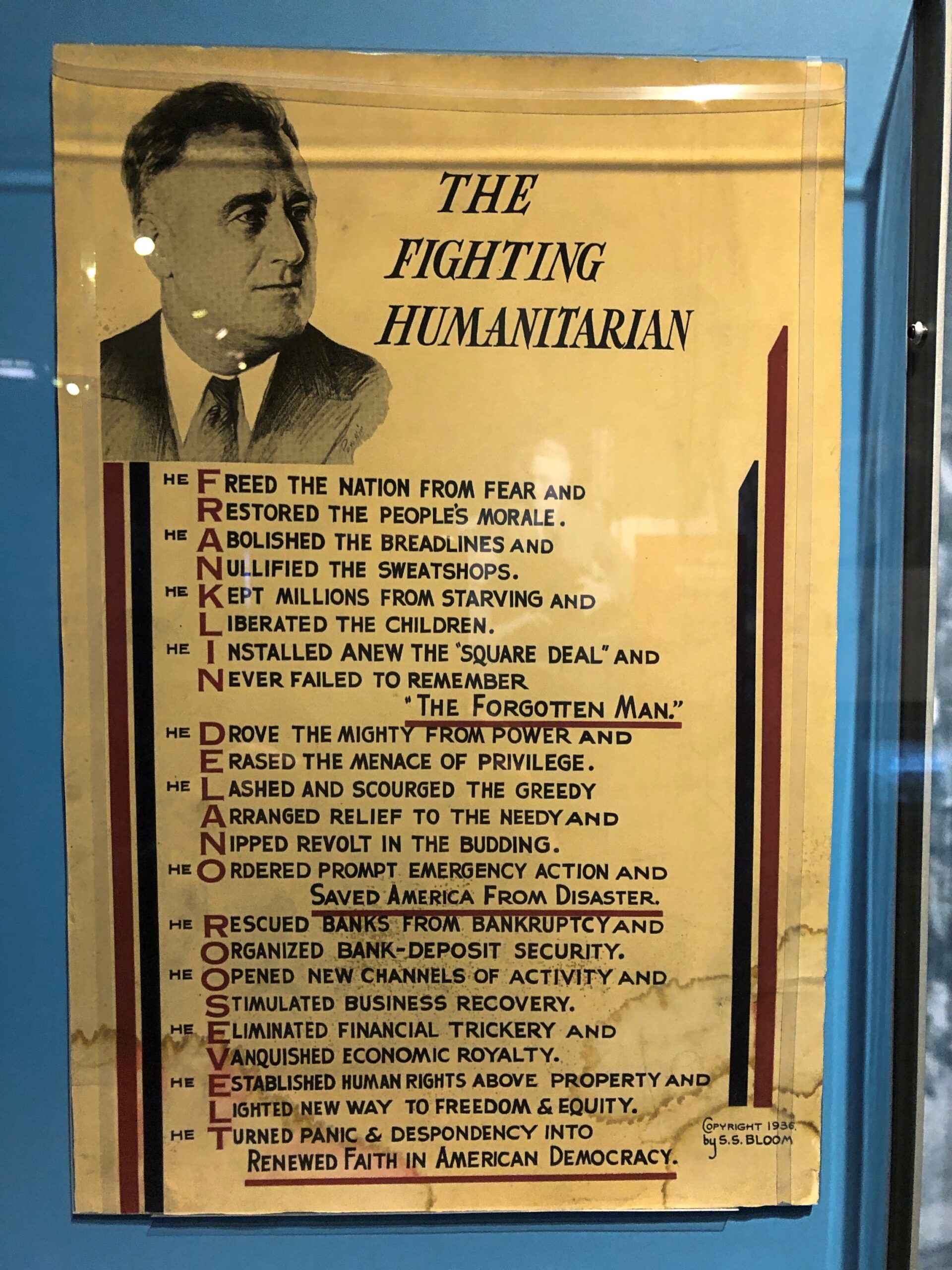
Campaign material and other laudatory items are well represented in the museum.
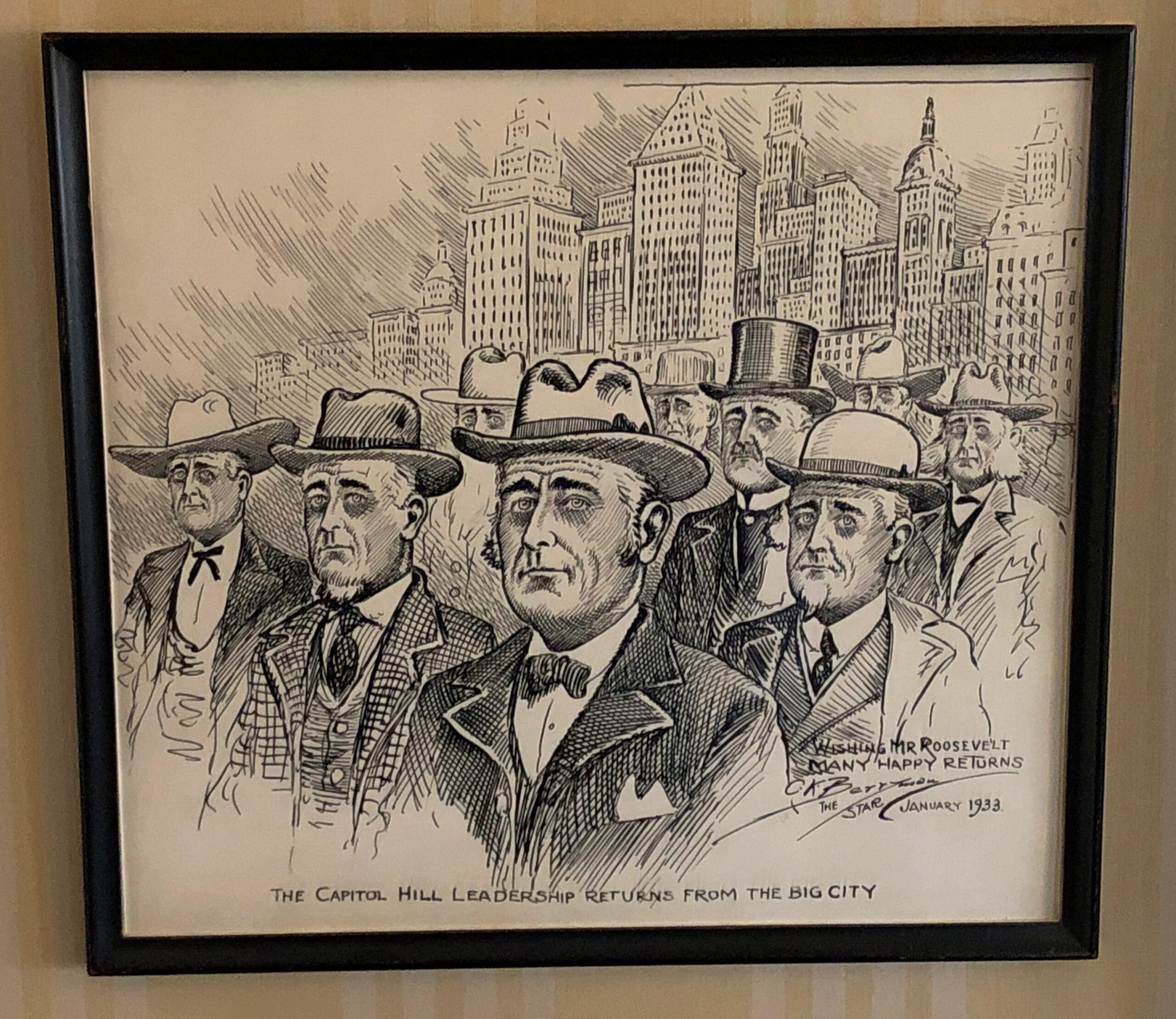
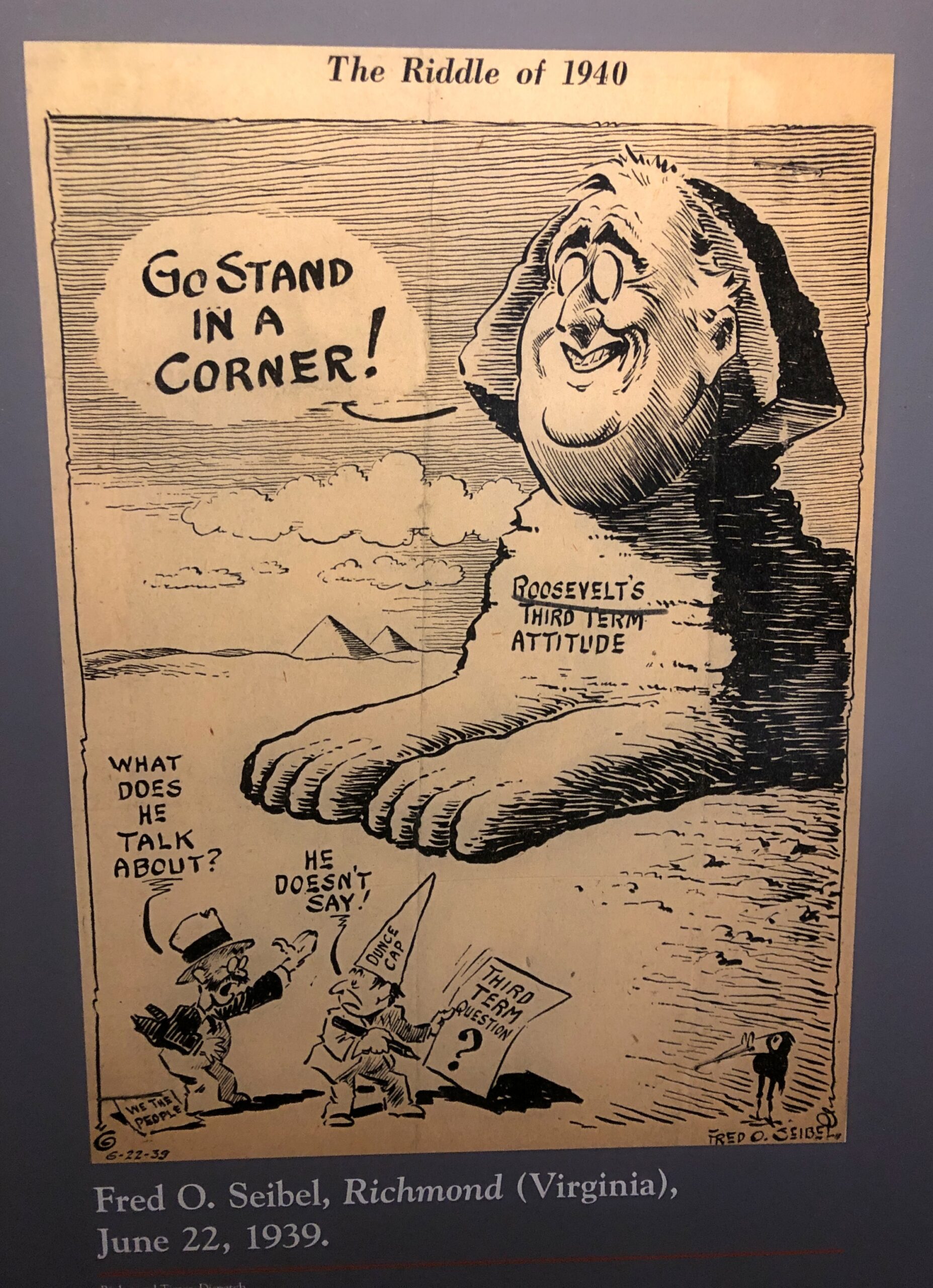
Editorial cartoons. The president as a sphinx was especially amusing.
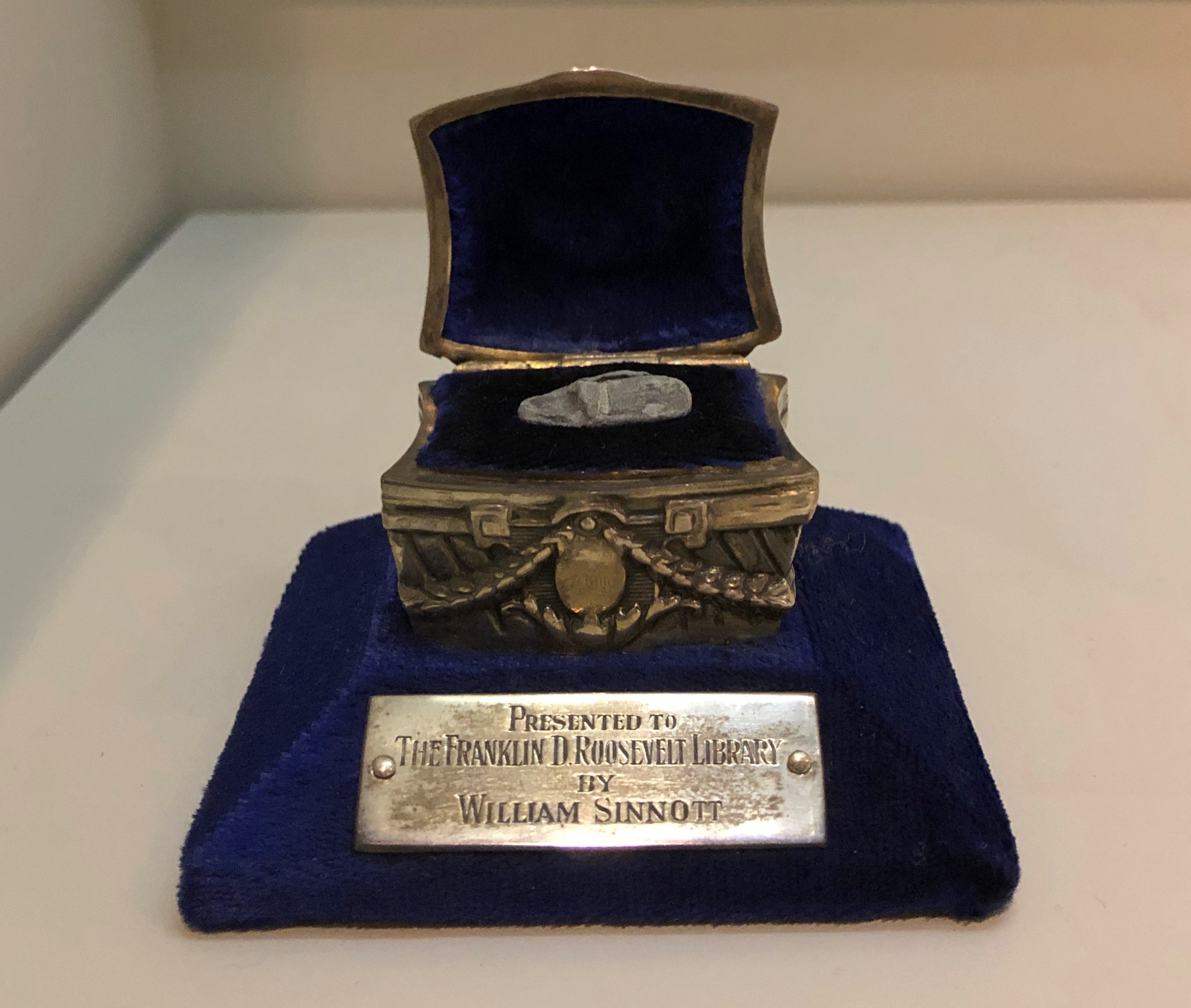
A chilling artifact: a fragment of a slug meant for FDR, fired at him on February 15, 1933 by Guiseppe Zangara.
“One of the wounded was William Sinnott, a detective who had frequently acted as Roosevelt’s bodyguard in New York City,” says In Roosevelt History. “Sinnott had just moved to Miami earlier that week when he was called to assist FDR’s security staff.
“The bullet fragment pictured above was removed from Mr. Sinnott’s wounded head. Ten other fragments from the bullet that struck him remained in his body. When visiting Sinnott in the hospital, FDR said, ‘You couldn’t hurt him, bullets just bounced off his skull.’ Mr. Sinnott was awarded the Congressional Gold Medal in 1940 in recognition of his service that day. In 1946, Mr. and Mrs. Sinnott donated the bullet fragment in this specially designed presentation case made by Lambert Brothers Jewelers to the FDR Library.”
Historians don’t generally adhere to the Great Man school of history any more, but it’s nevertheless a fertile source of speculation to imagine how different things might be for the nation and the world had it been Roosevelt and not Anton Cermak who died in 1933.
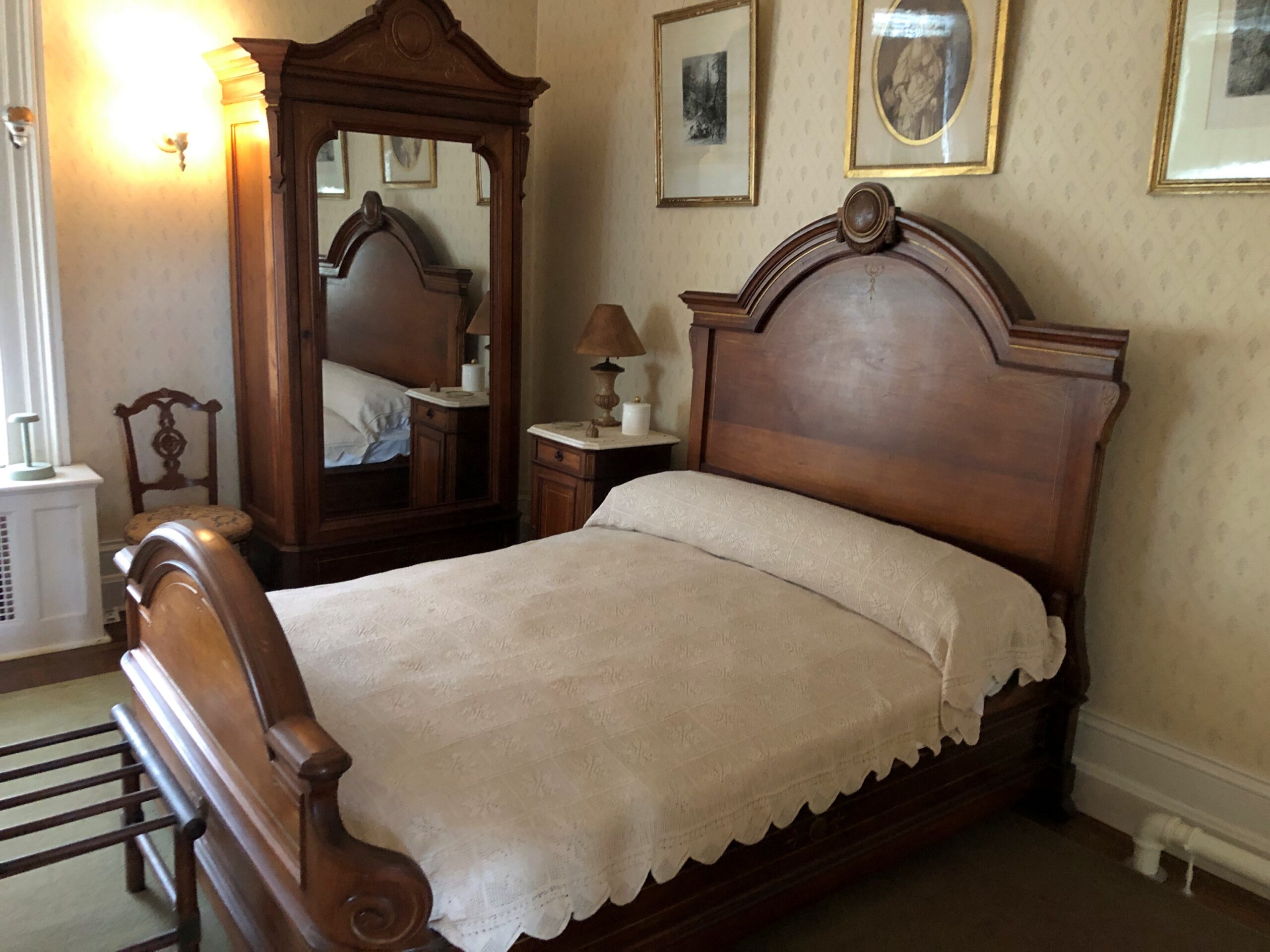
Though he eventually died away from home, in Georgia — ah, another presidential site I must see — FDR came full circle to Hyde Park. First, the bed in which he was born.
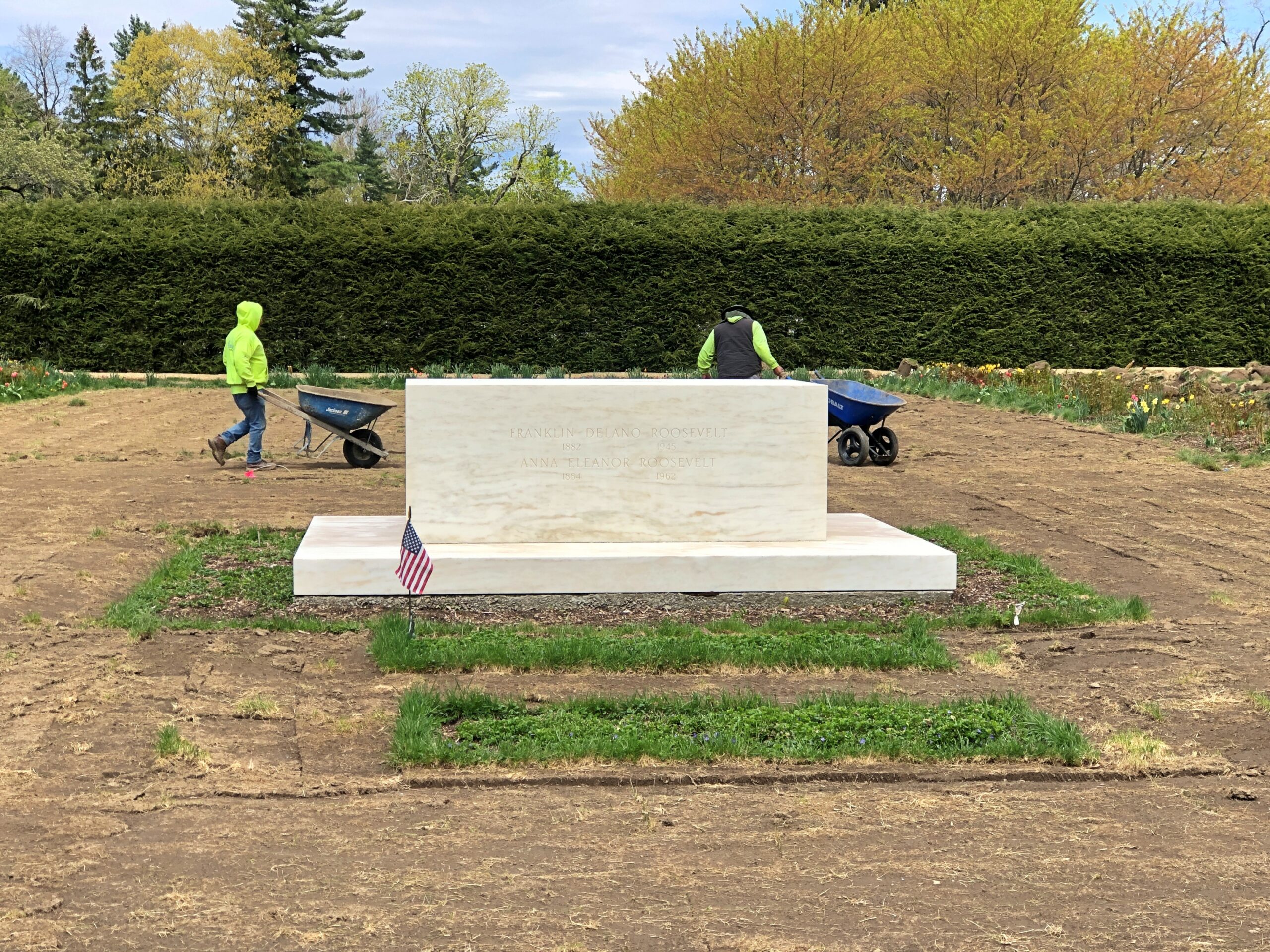
Ultimately, his final resting place is on the grounds, along with Eleanor. Gardening had just begun when I paid my respects.
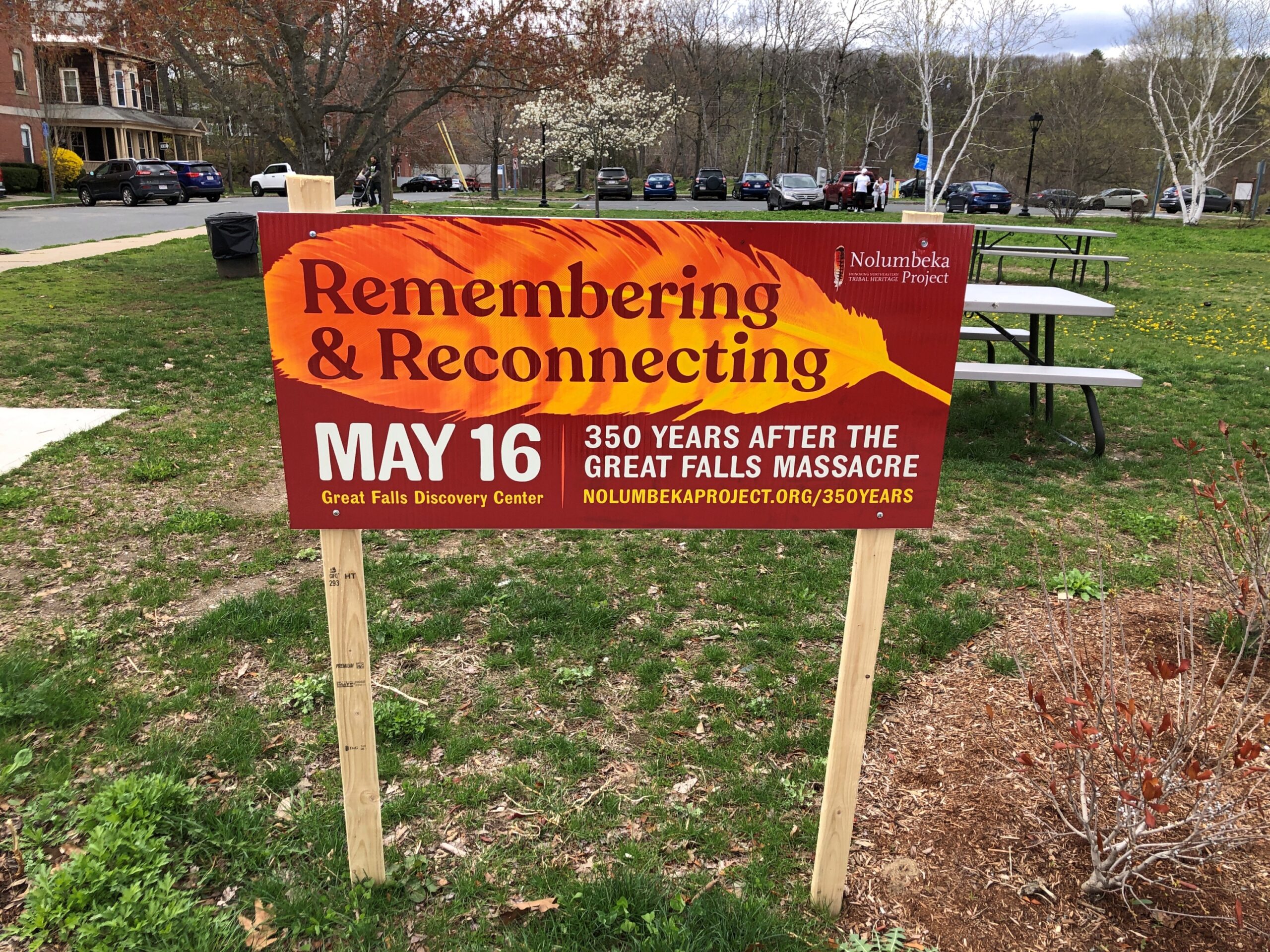
The first thing I saw on Avenue A in Turners Falls, Massachusetts, in mid-April was this sign. A small reminder of a bloody incident in a bloody war, all but forgotten – and I mean the incident and the war – outside of regional historians and eccentrics like me and, unsurprisingly, the descendants of the Algonquian tribes who were on the receiving end of a surprise attack by men under the command of Capt. William Turner in 1676 during King Philip’s War. Most of the Indians slain, mainly Nipmuc, were non-combatants, as neither side tended to make that distinction in that vicious war. Turner’s attack did not, however, go unanswered in real time: as he and his men were pulling back, they were beset by counterattacking warriors, who managed to turn the retreat into a rout, killing Turner, among many others.
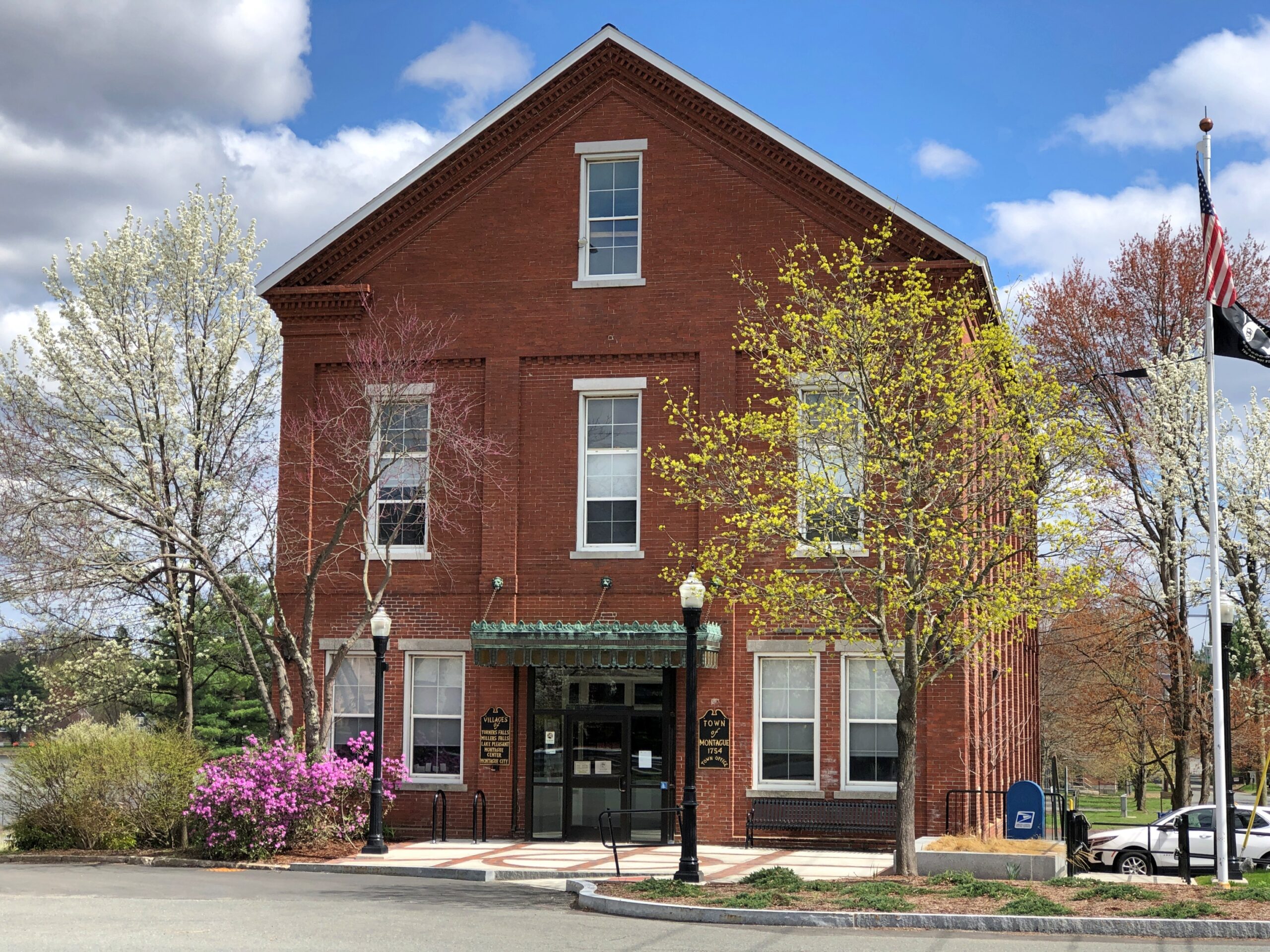
All that I looked up later. In the moment I took a stroll on down the avenue, which is the main street of Turners Falls, an unincorporated village in the town of Montague. So it’s actually a neighborhood? Peculiar nomenclature, these New Englanders have, since I think of a village as a village and a town as a town, and one doesn’t get to be in the other.
According to the sign on the town office (above), the other villages in Montague are Millers Falls, Lake Pleasant, Montague Center and Montague City. So – Montague City is within the town of Montague? Massachusetts is just a little strange with its names, but never mind.
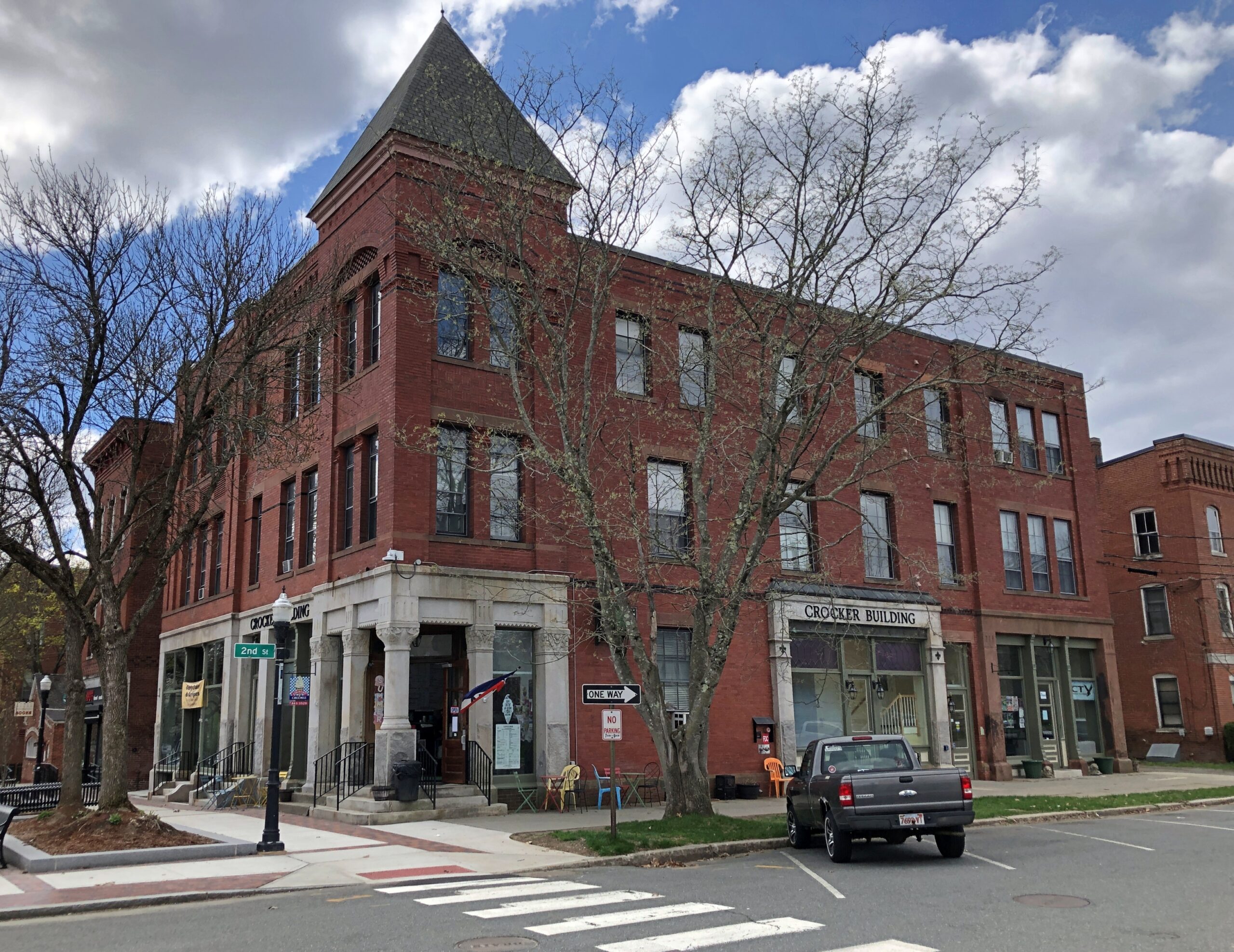
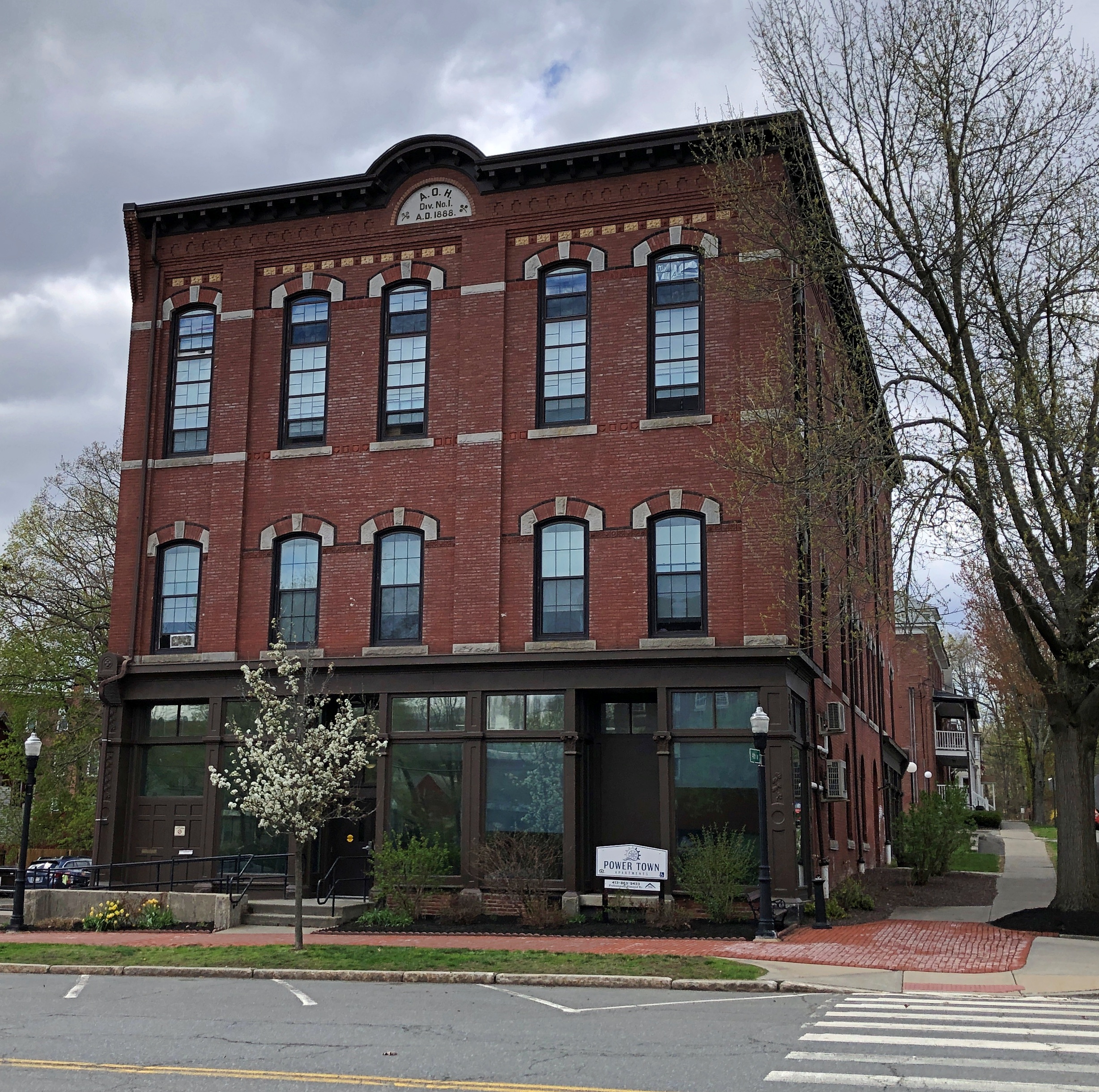
As a main street, Avenue A is lined with some handsome older buildings.
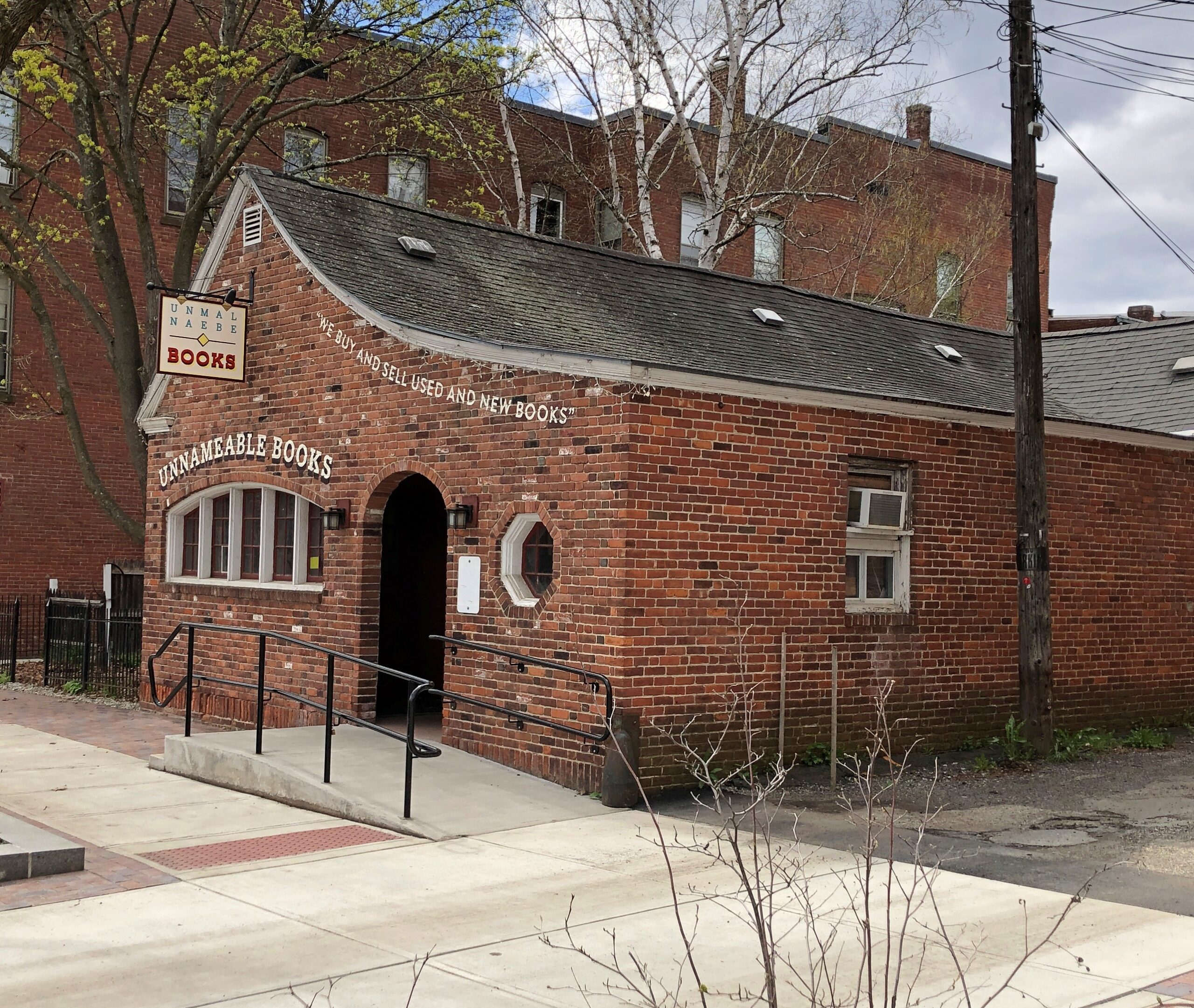
Good to see a small bookshop.
Other nearby retail includes Ed’s Barber Shop, the Country Creemee (ice cream), Ce Ce’s Chinese Restaurant, Kharma Salon, Booska’s Flooring, Waterway Arts, Mystic Pinball and the Upper Bend Cafe. Not exactly a day-trip retail selection, but elements of it are there.
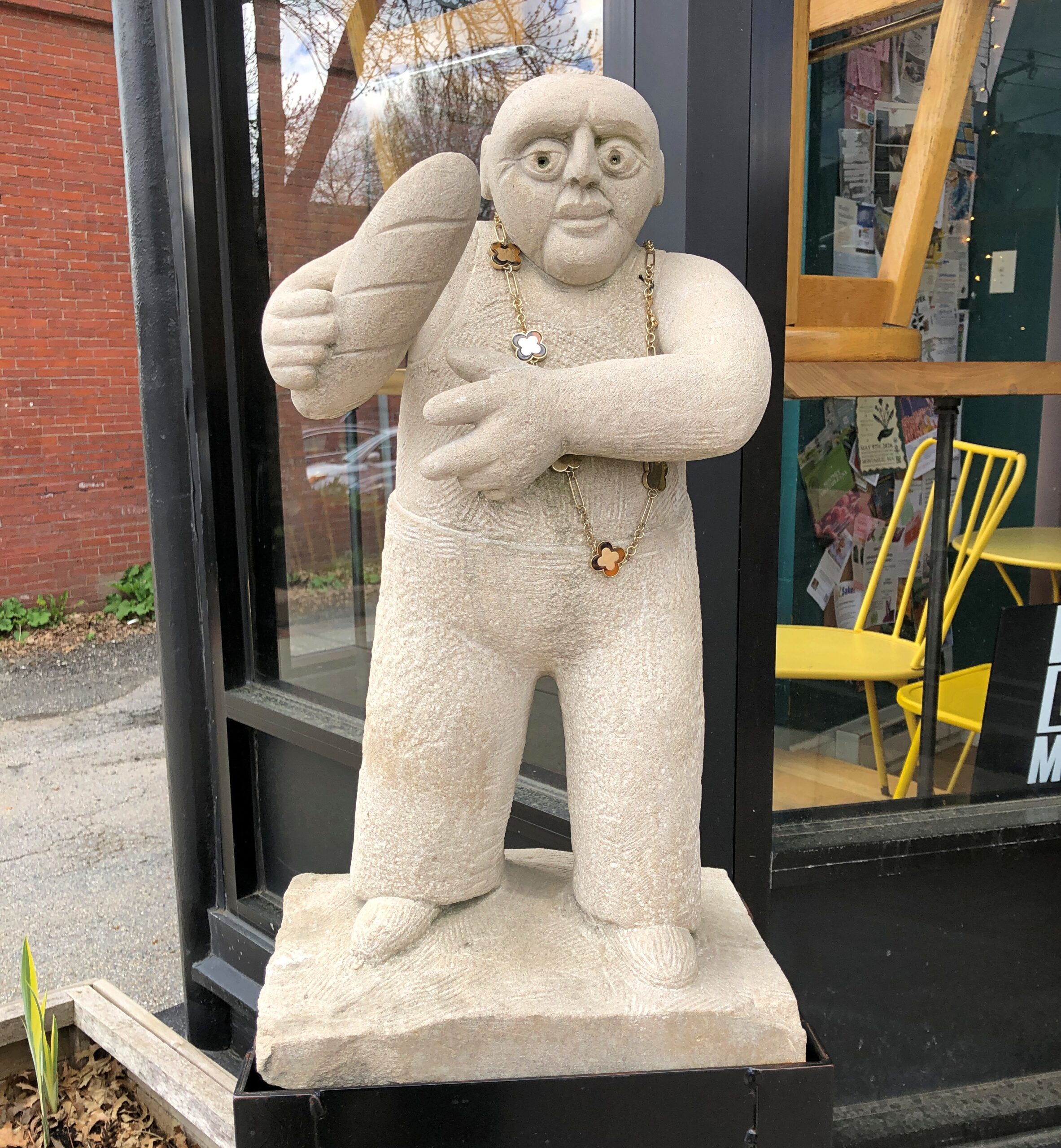
Commercial artwork.
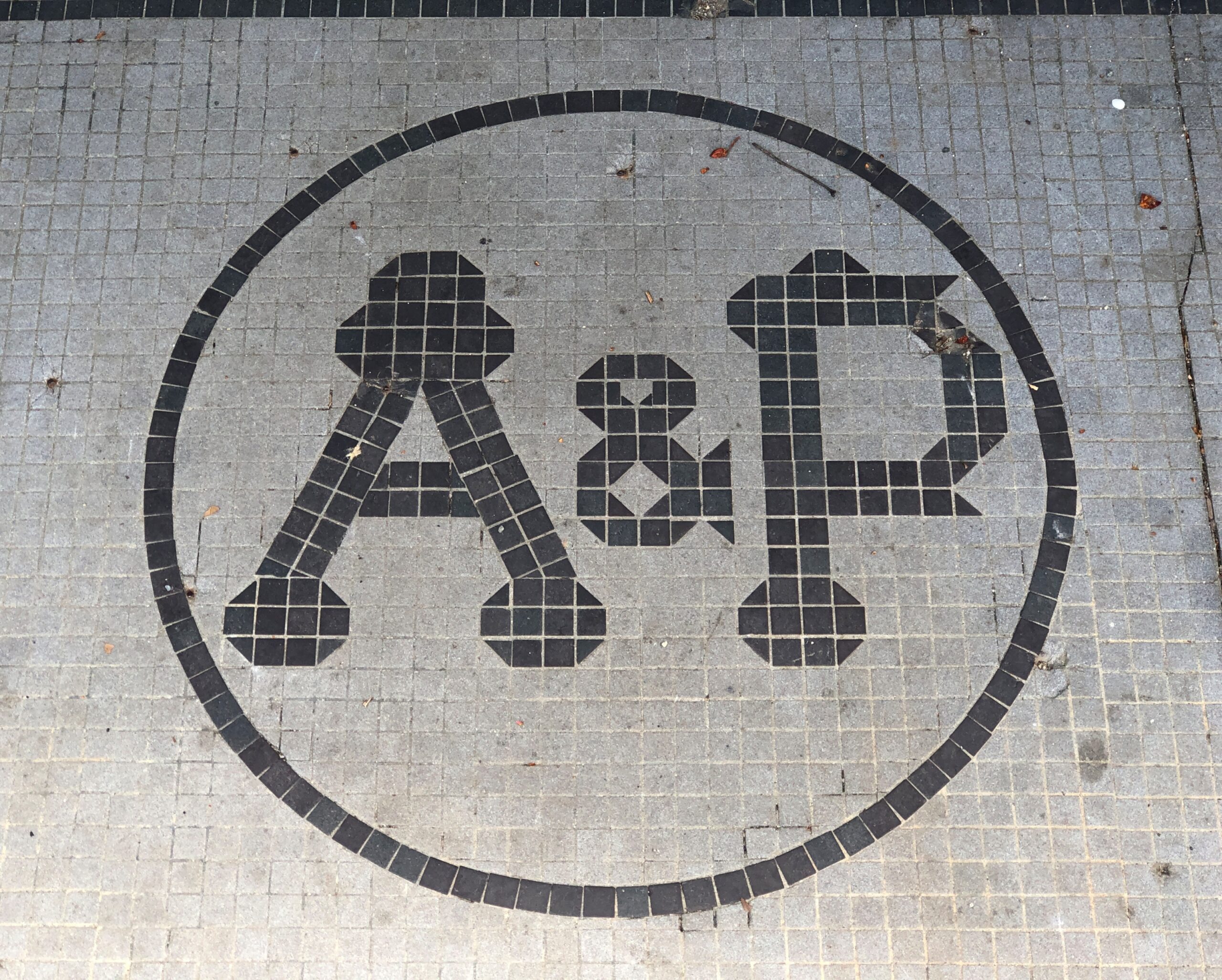
A relic of a commercial establishment long gone. About 100 years ago, A&P operated about 15,000 locations, including presumably one in Turners Falls.
Which only goes to show that retail empires rise and fall as surely as political empires, and are as little remembered as most of them. Keep that in mind next time you’re in a Walmart.
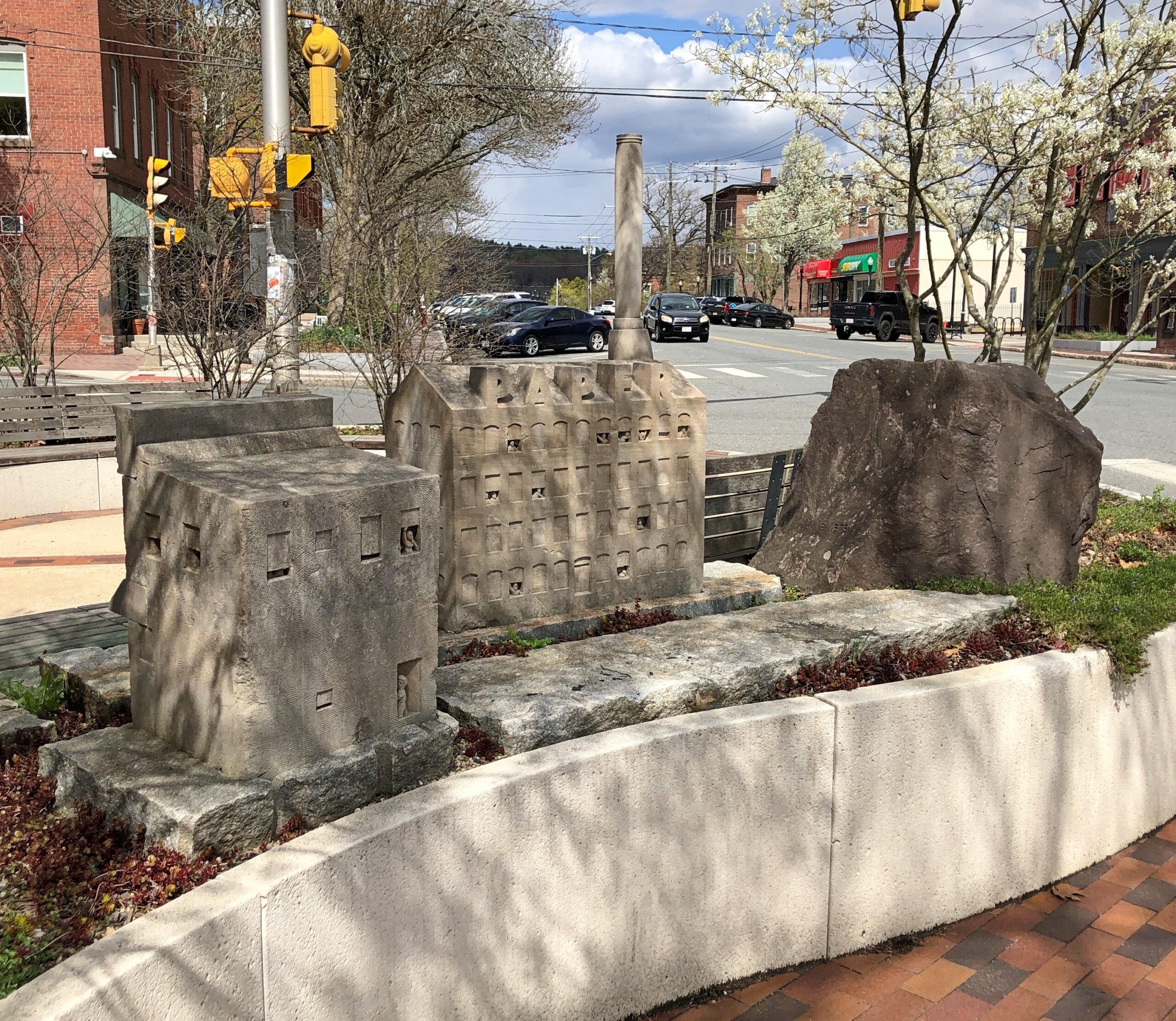
Public art: “Rock, Paper, Scissors” (2017). by Tim de Christopher, who used local red sandstone for the rock and Indiana limestone for the paper mill and barber shop — paper and scissors — evoking the town’s industrial and social history. (The barber shop is on the right, the mill in the middle, and the rock on the left.)
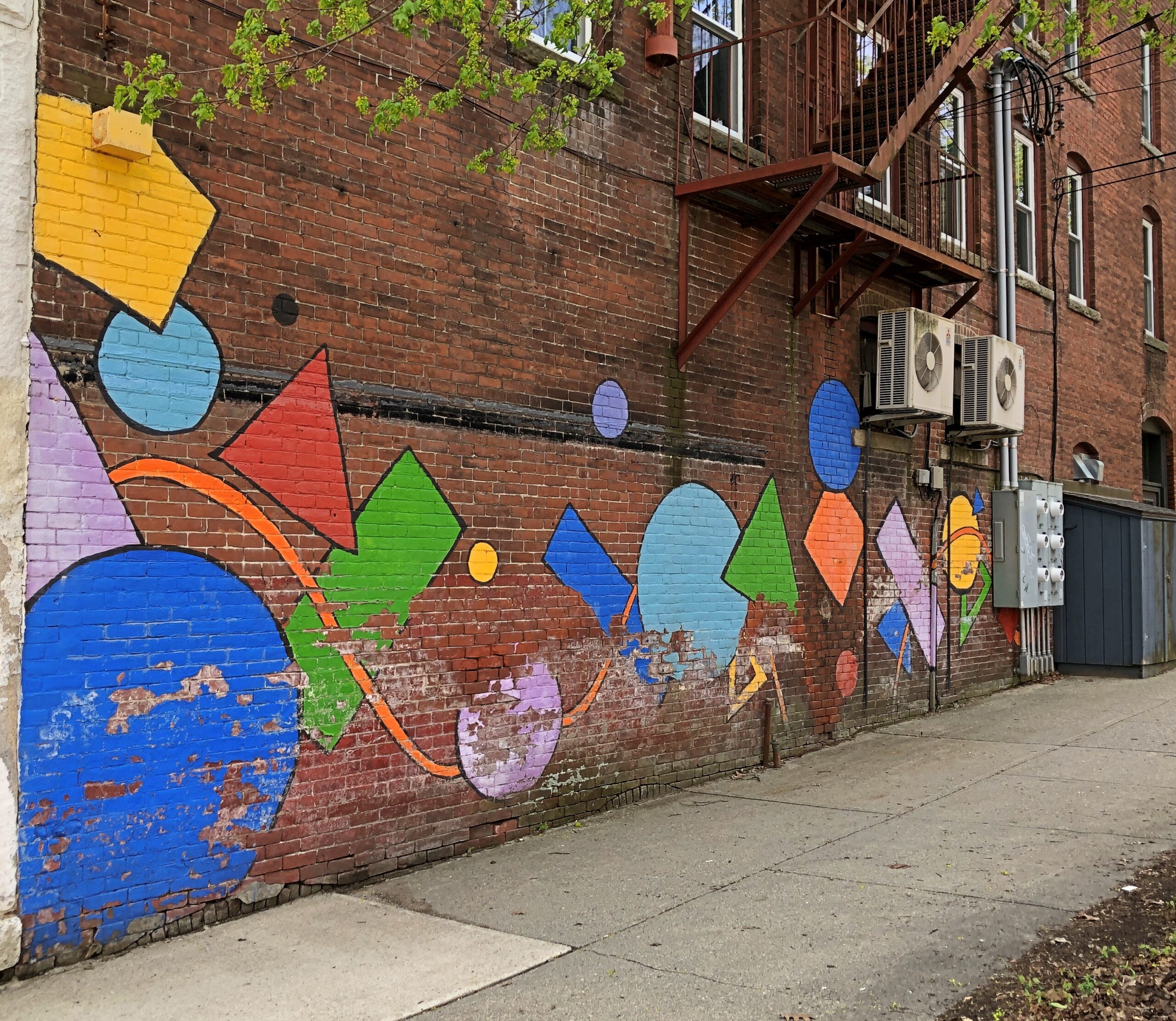
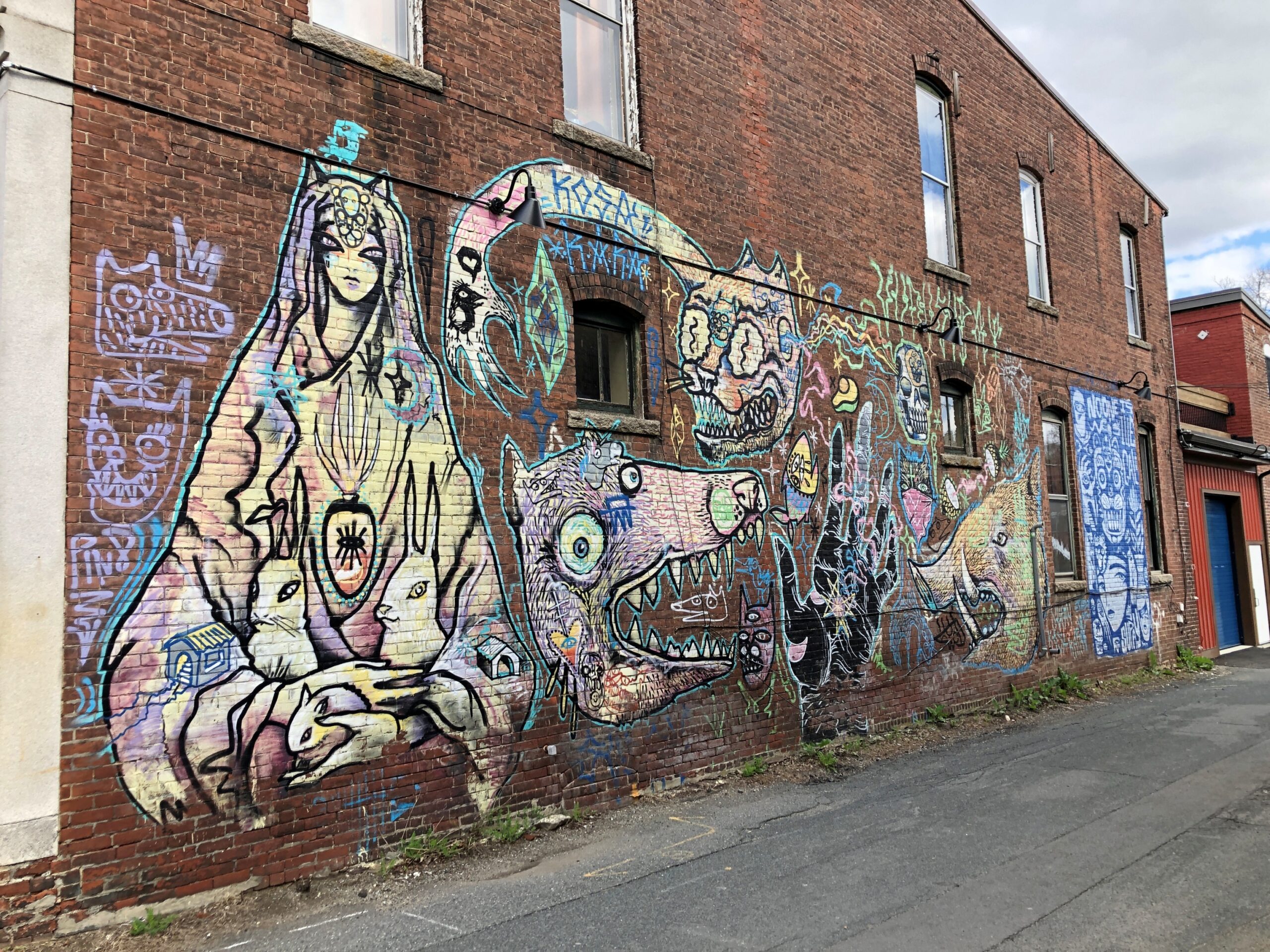
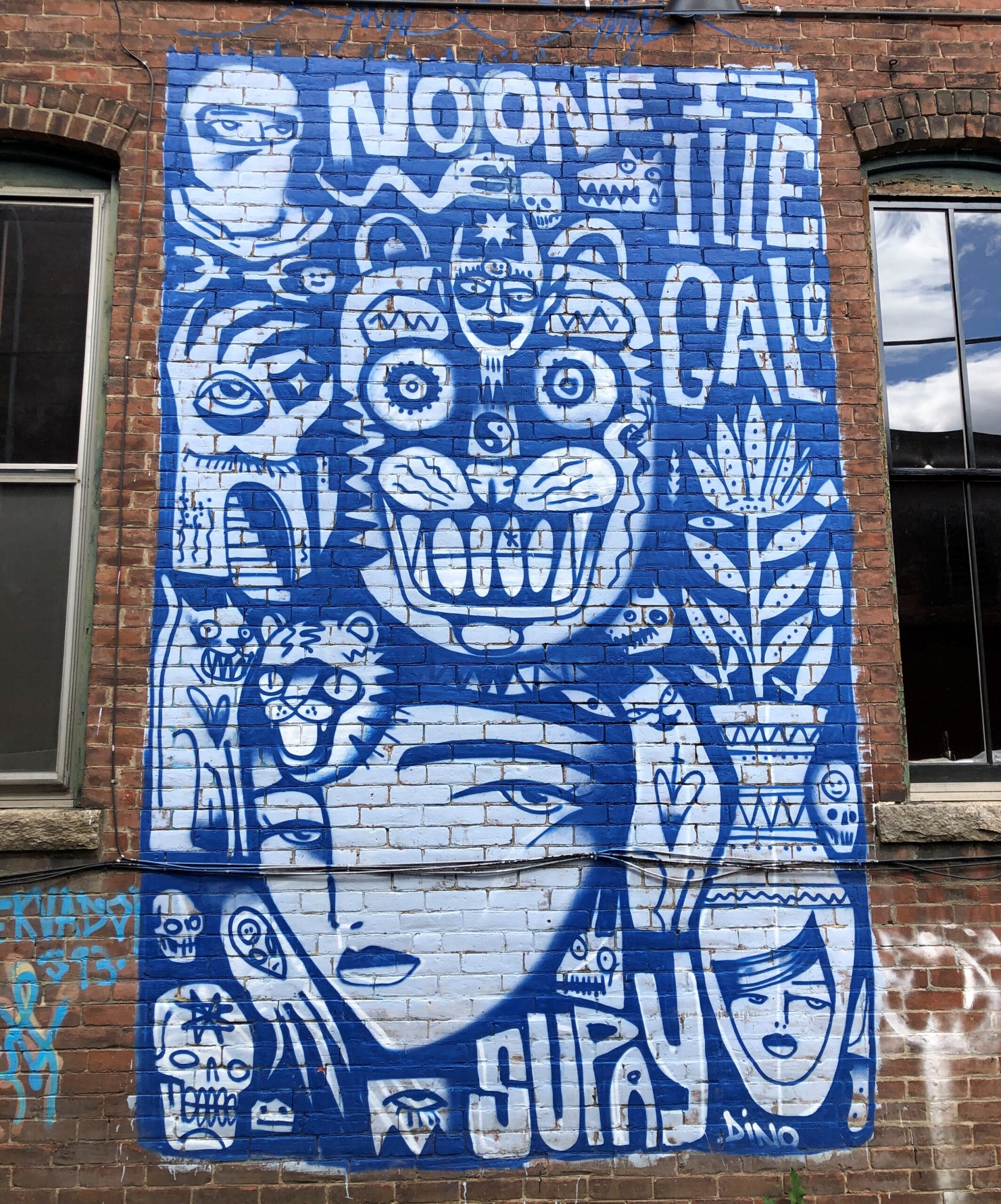
A geometric mural.
An elaborate graffiti-style mural.
Or maybe actual graffiti. Details.
And a fire hydrant.
As peculiar as the local nomenclature. A metal udder.
The highway Massachusetts 2 – locally called Route 2 – traverses the northern reaches of the commonwealth, from the Boston Common to the border with New York more than 140 miles away, or vice versa. I went west, fortunately not starting in Boston itself, but still slightly inside Route 128.
Once you leave the thickest of metro Boston headed westward, the route becomes more casually picturesque, mildly winding through mildly hilly territory, providing access to Massachusetts towns more and less pleasant, depending I suppose on the vagaries of their economic history. Not an epic drive of the kind you encounter high in some mountains or across wide bodies of water, but a satisfying one all the same.
Eventually you come to the western part of the state, as mountainous as it gets, and the road acquires appropriate twists and vistas. My favorite moment on the road was when I first drove it in 1989. I took one of those twists, and saw a suddenly appearing sign that said Entering Florida. Of course someone has posted a picture.
Florida, Massachusetts, that is, a town (pop. 671) in the Berkshires.
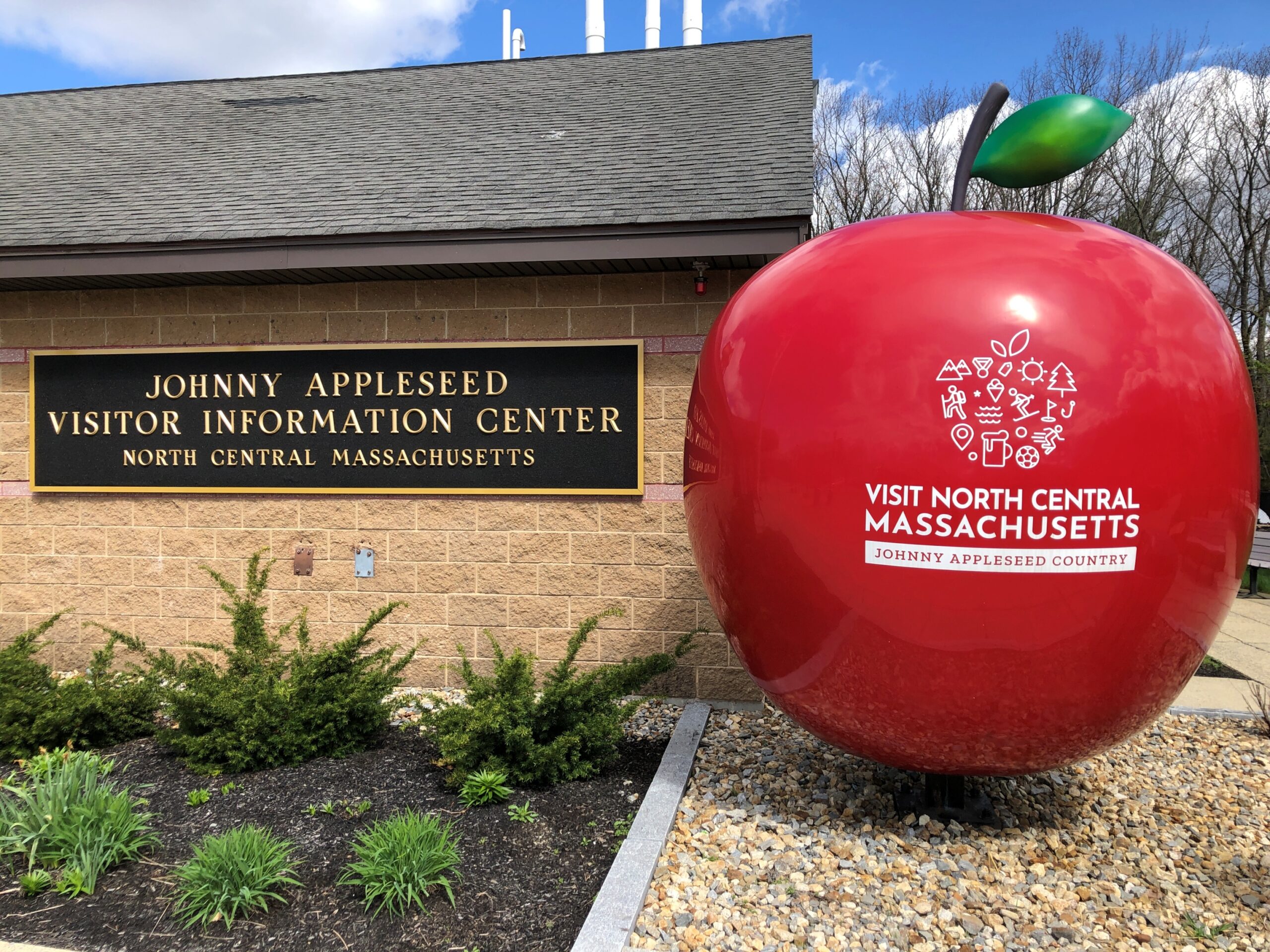
That was another drive. In April I traveled on Route 2 as far west as Shelburne Falls, but I’m getting ahead of myself. First I stopped at a rest stop on the way that reminds us that Johnny Appleseed hailed from these parts.
Indeed, John Chapman was born in Leominster, Massachusetts before the Revolution, though he came to fame in the wild-and-woolly Northwest Territory (and its spanking-new states) and now reposes in Fort Wayne, Indiana under some apple trees.
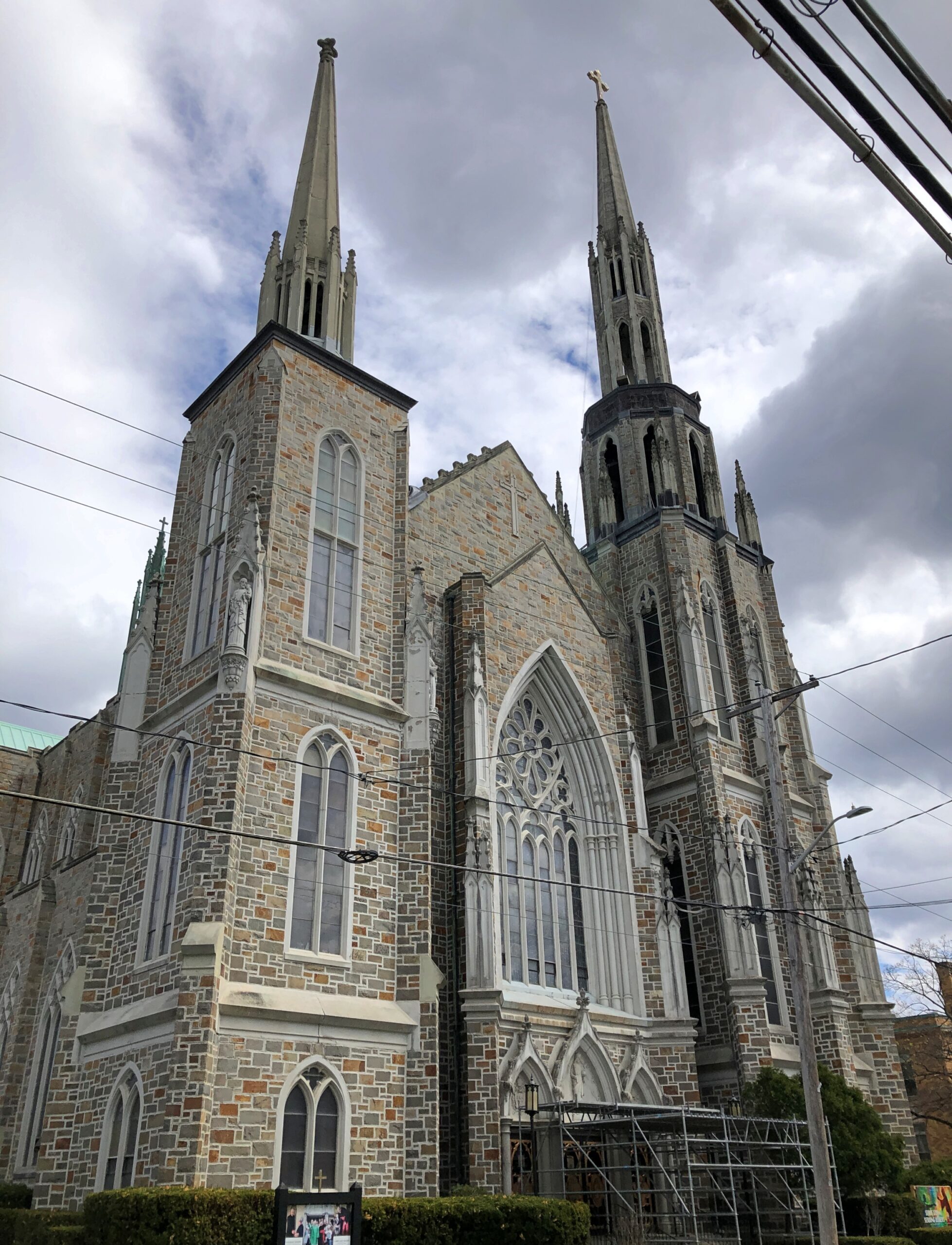
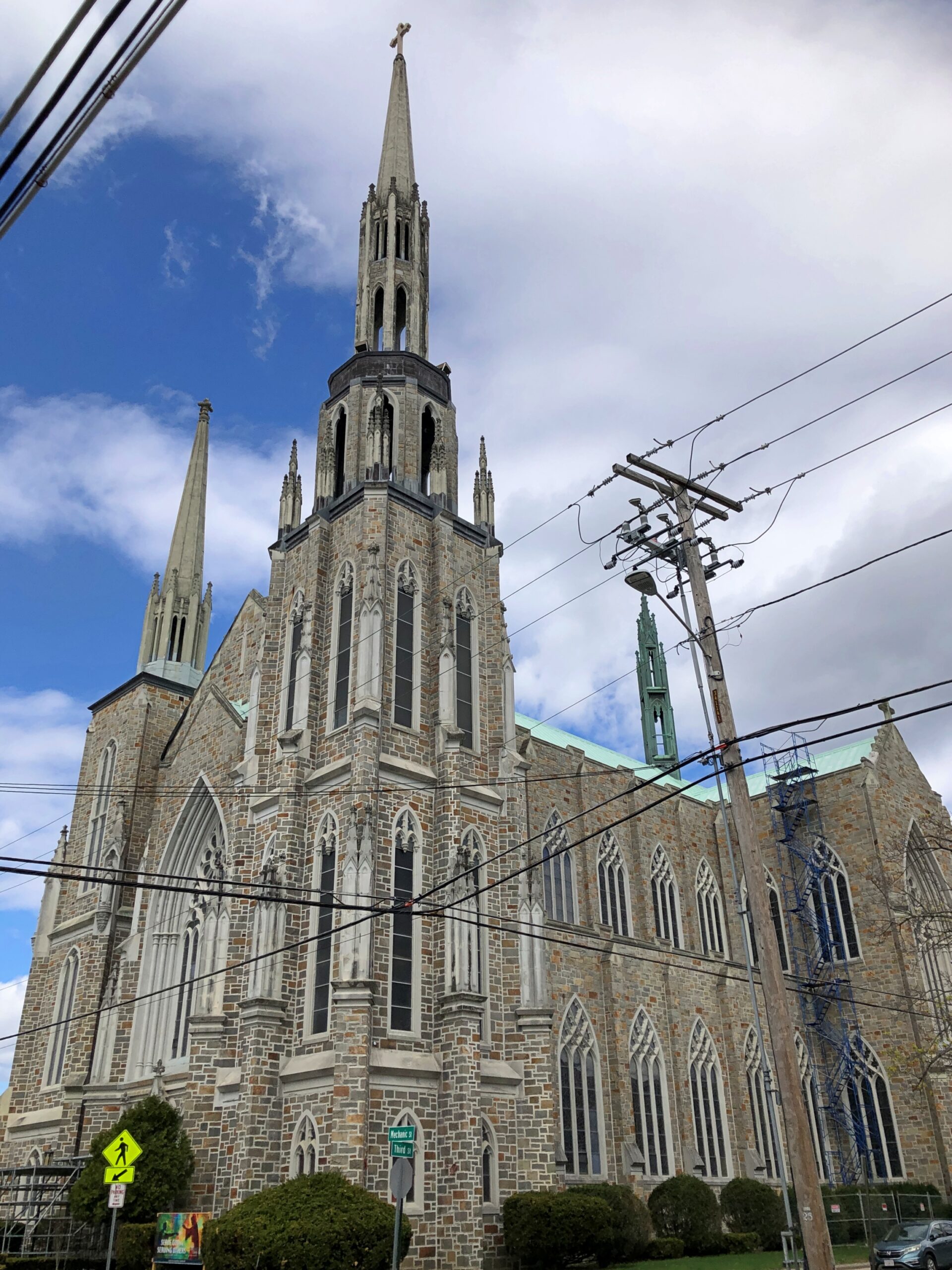
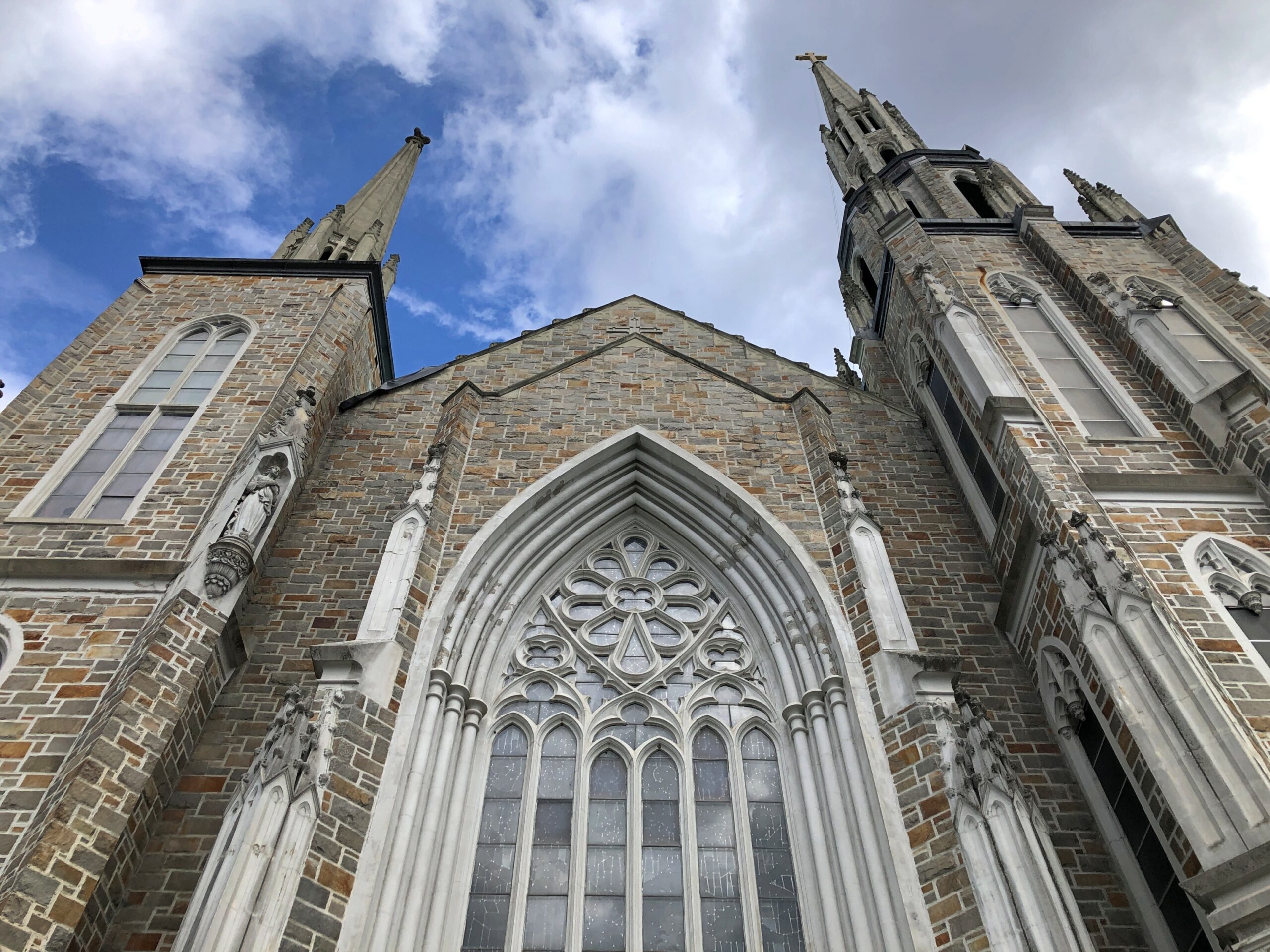
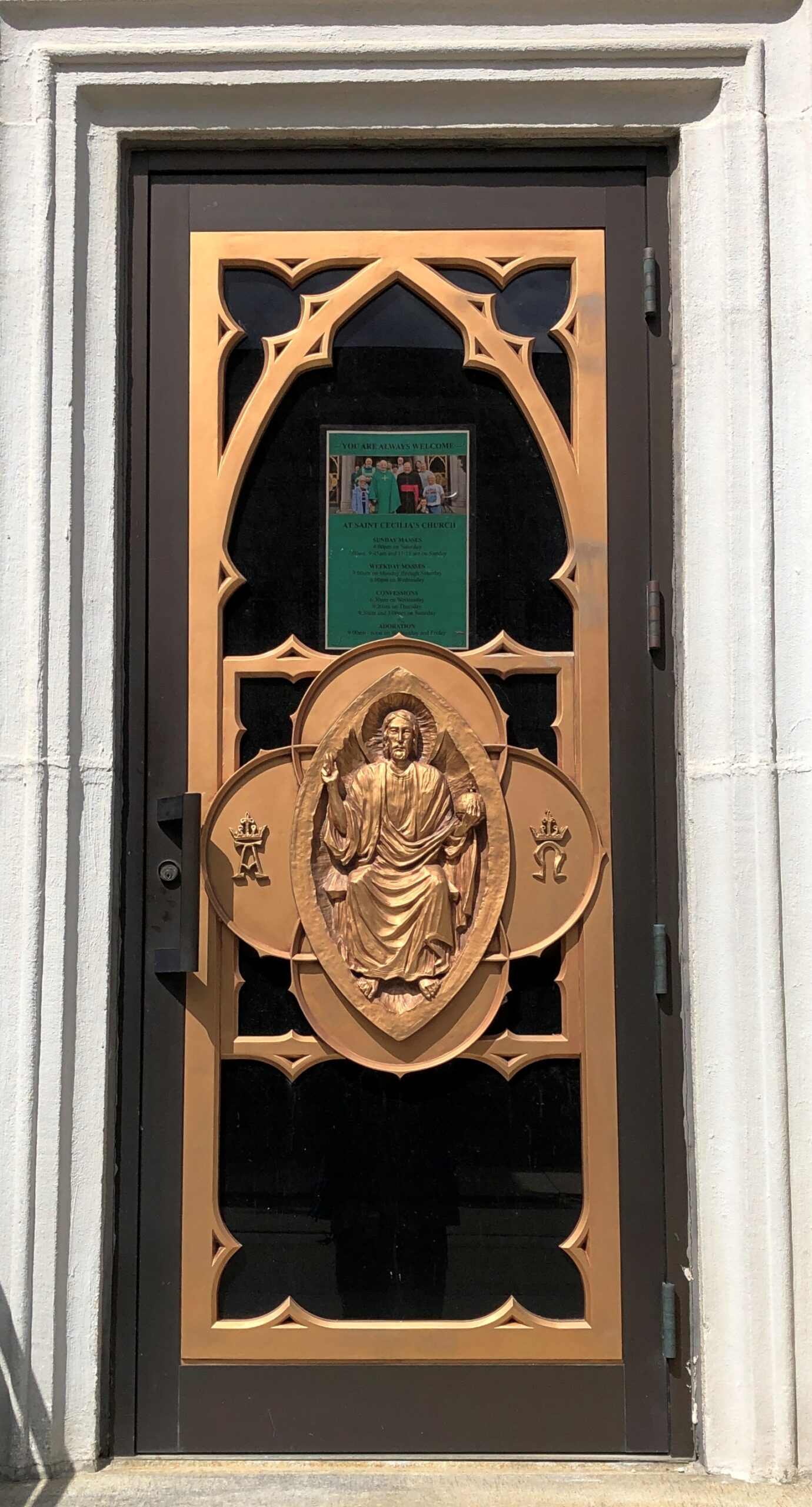
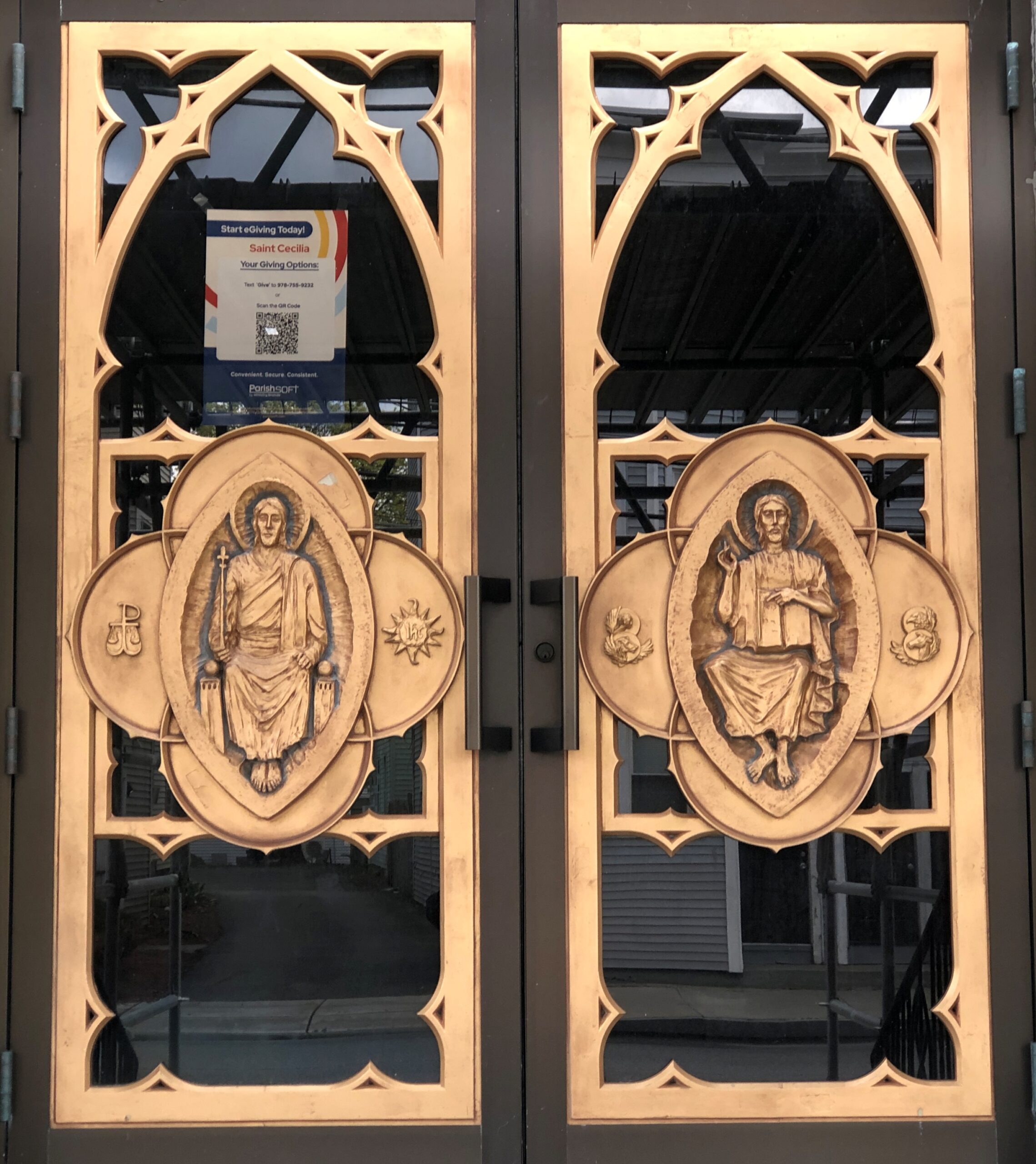
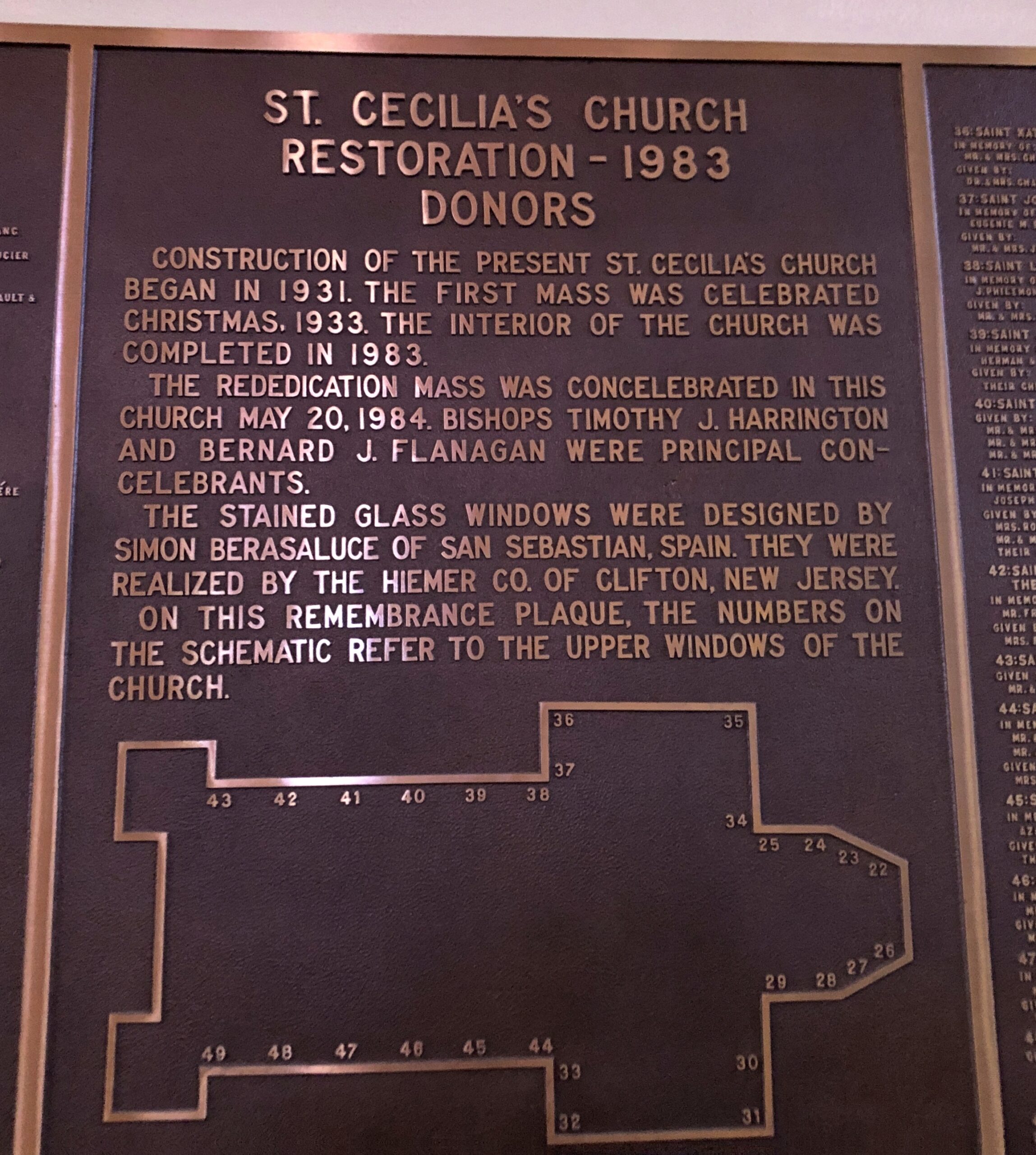
I was inspired to stop in Leominster (pop. 43,800). First stop, St. Cecelia’s Church, whose construction began in 1931 and which was restored in 1983.
Good to see a church of that name; reminds me of Santa Cecilia in Trastevere, a favorite part of Rome for me (40+ years ago), though the Massachusetts church itself is rather different.
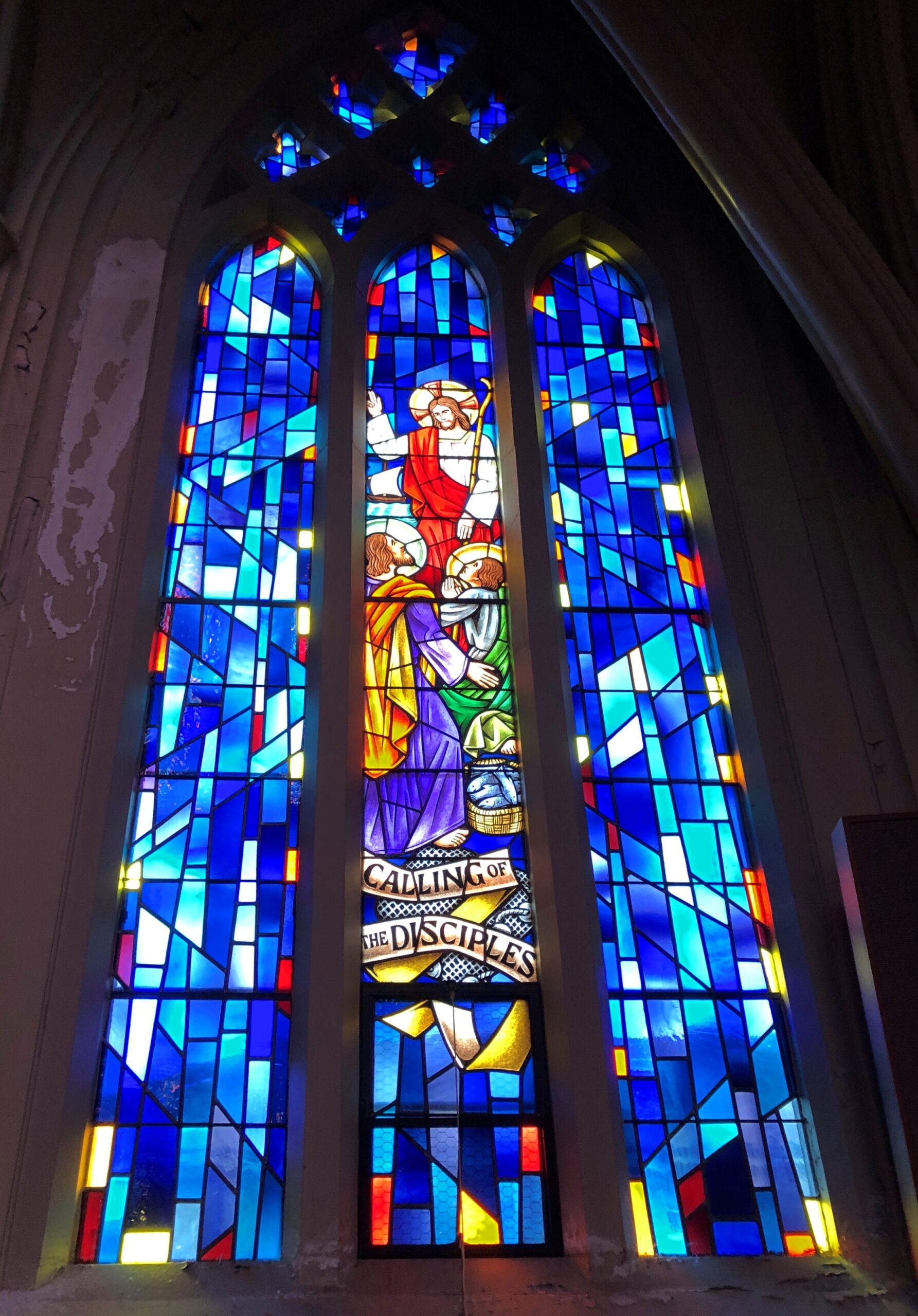
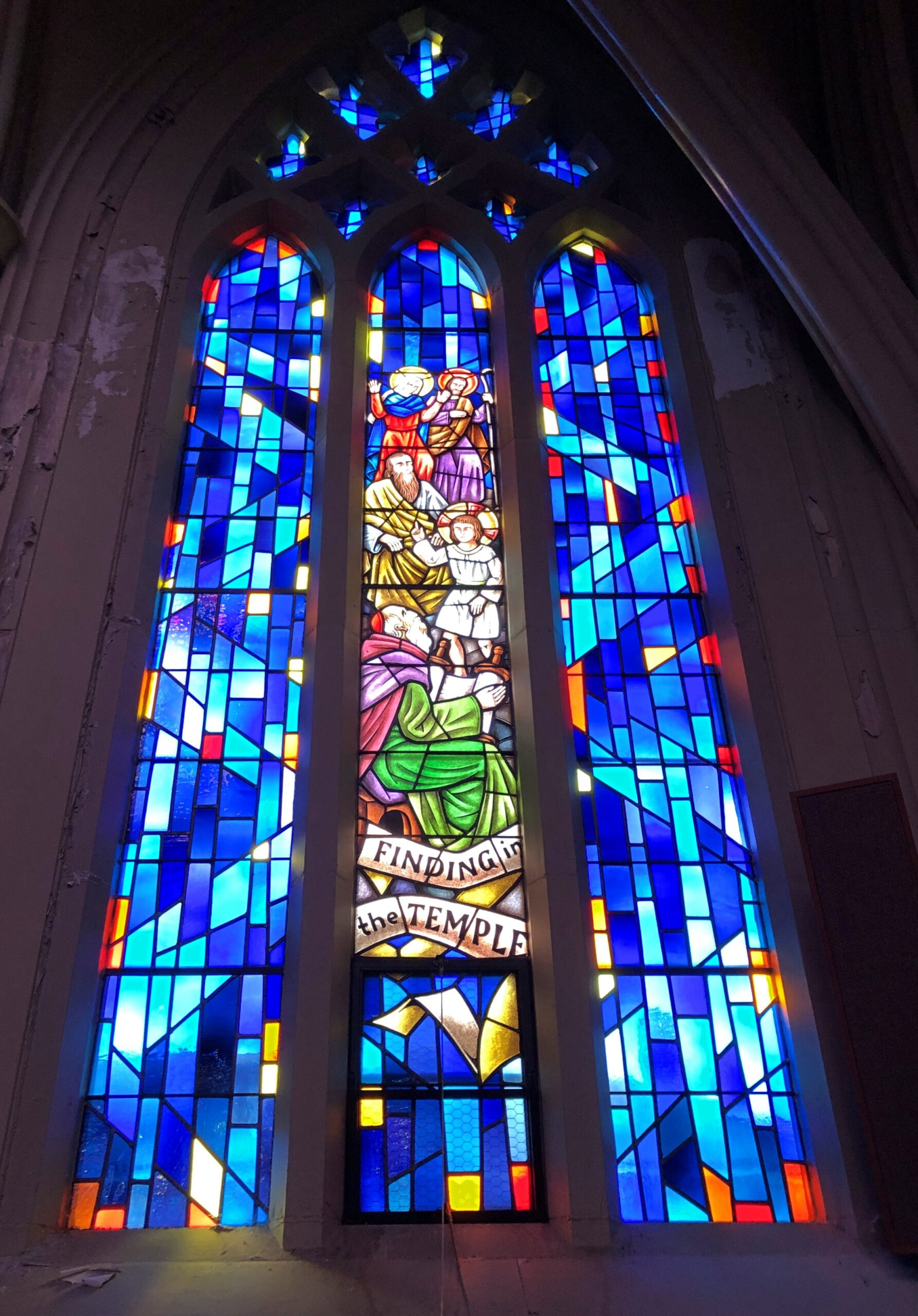
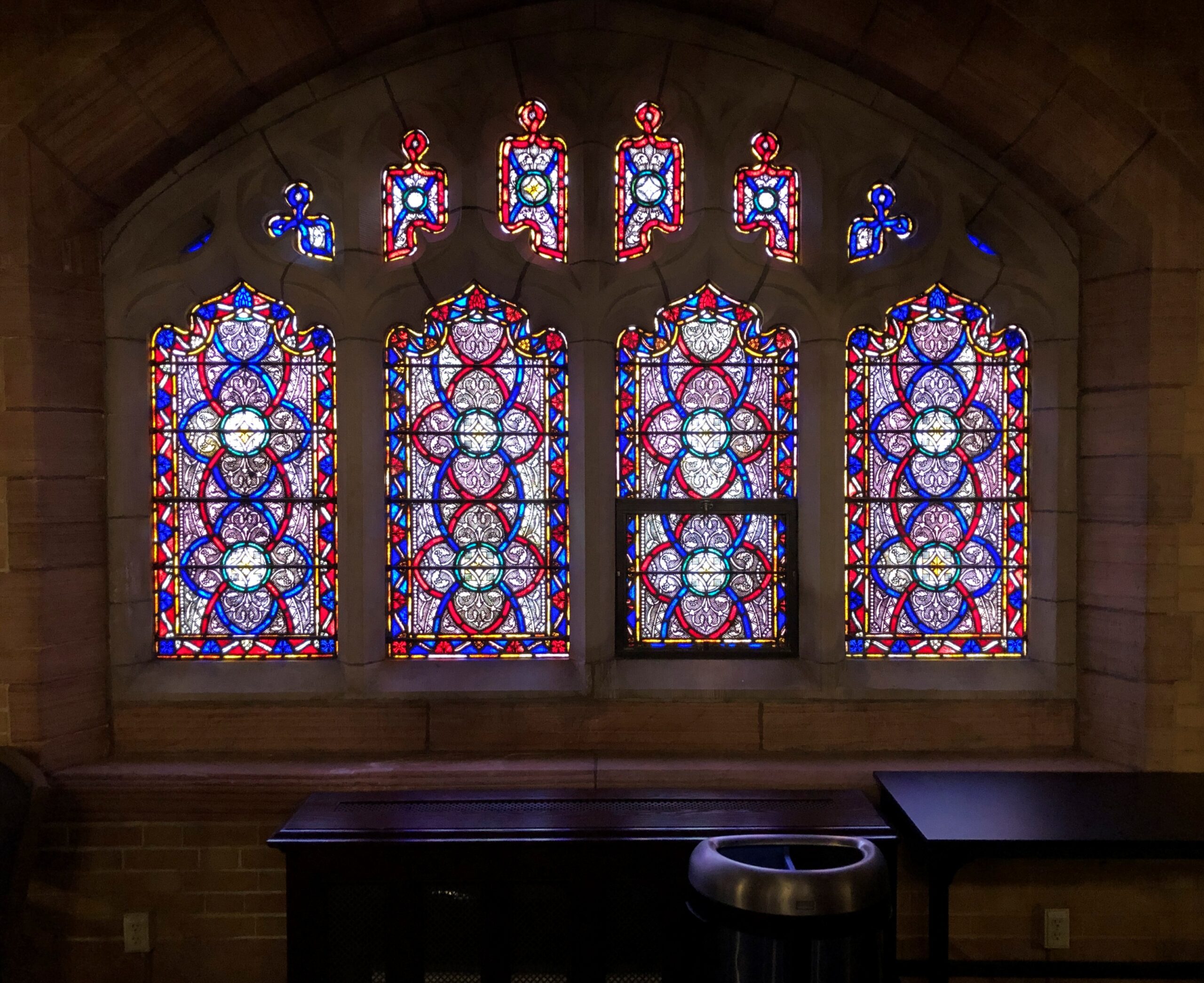
Some fine stained glass, designed in Spain, created in New Jersey.
Leominster has the sort of long economic arc (for America) one finds in the Northeast: agriculture to manufacturing to services, though those first two economic activities are to some degree ongoing even now. The town is prosperous enough to support well-kept and still-used downtown buildings.
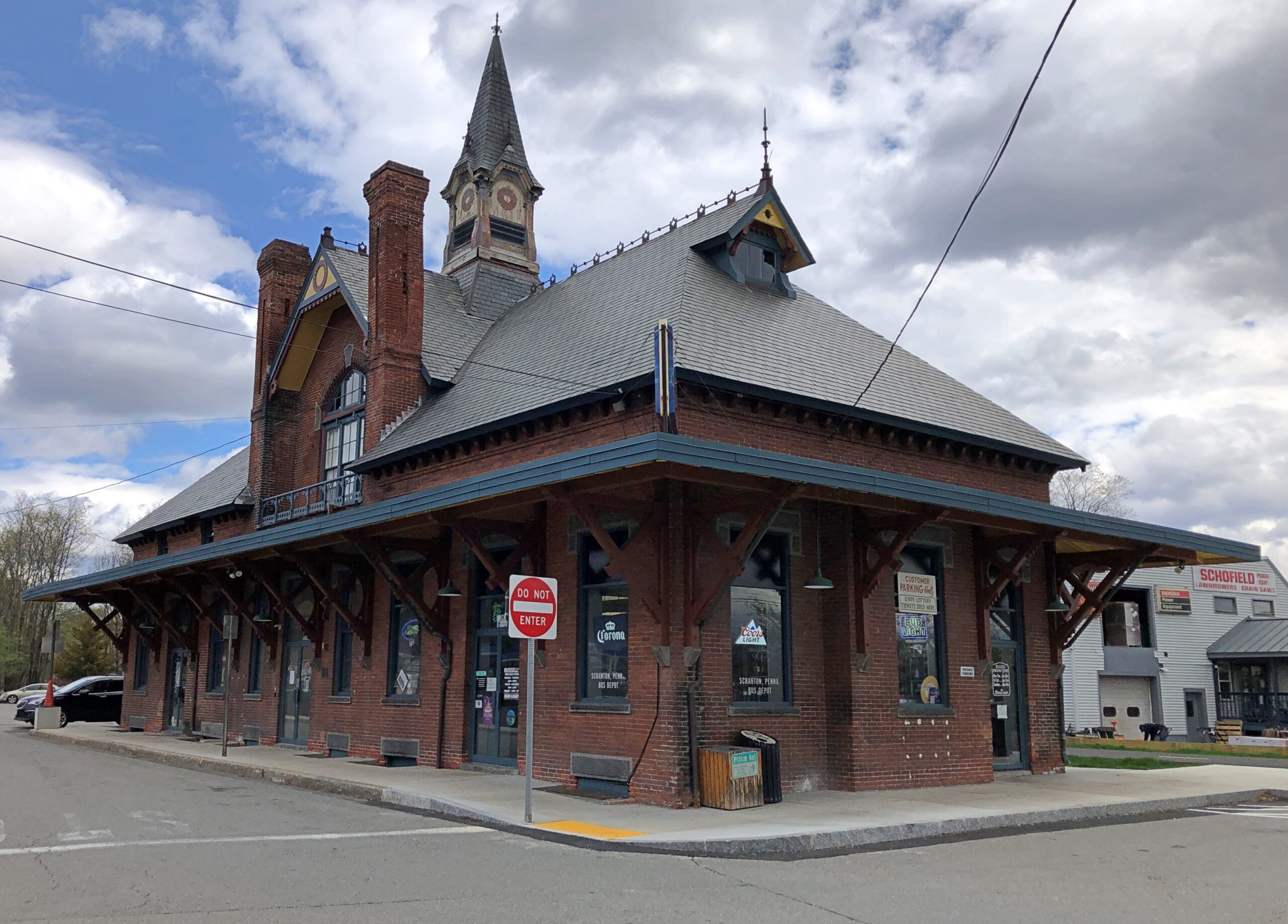
I liked the handsome former train station, now retail.
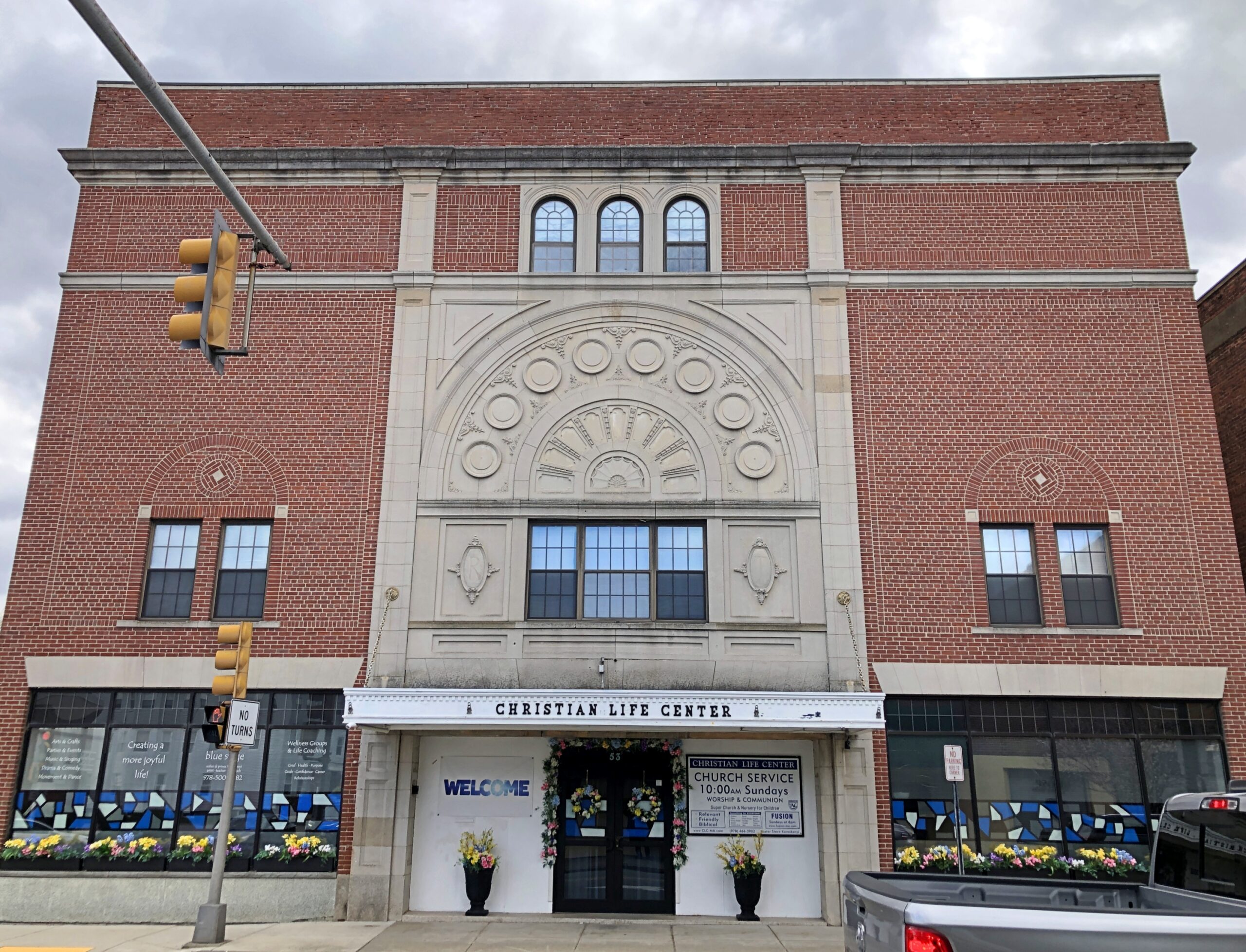
Another church.
Not as vaulting as the Catholic church down the road, but still a handsome brick structure. I had to look into it: this church is affiliated with the Assemblies of God, the largest Pentecostal association in the U.S.
Manufacturing in the case of Leominster meant a remarkable specialty in the 19th century and into the 20th: combs. Even more remarkable, a history of American comb making, published in 1925, is posted online, namely Comb Making in America, “An Account of the Origin and Development of the Industry for which Leominster has Become Famous to which are added Pictures of Many of the Early Comb Makers and Views of the Old Time Comb Shops.”
That publication date puts it in the public domain. Ah, there’s another setting for a streaming service limited series costume drama — among the cutthroat world of comb making in 19th-century Leominster. I don’t know that “cutthroat” is accurate at all, but who cares. Maybe two brothers fighting for control of their dying father’s comb empire, and their love for the same upper-class woman (who is anachronistically feisty), amid a backdrop of bitter labor agitation, with two labor leaders pushing for unionization, and their love for the same woman (a different woman, that is, one of the comb makers, but also feisty.). See, that wasn’t hard at all. Who needs AI to come up with ridiculous ideas?
The Forward of Comb Making in America calls Leominster the “present seat” of the industry in America: “The industry has changed this thriving town, which is about fifteen miles from Worchester and forty-five miles from Boston, from a small agricultural hamlet into an industrial center of more than twenty thousand people whose products are known throughout the world.”
In the early days, of course, making combs from animal horn and the like was a labor-intensive effort. A more modern industry arose with the invention of celluloid. Later came more sophisticated plastics and molding tech, and the expansion of the industry into other molded items. Such as Foster Grants and Tupperware, both of which originated in Leominster. A simple Google search reveals that there is still a plastics industry in Leominster.
I didn’t spend a lot of time in Leominster, so maybe I missed it. But where’s the giant comb or Foster Grant or Tupperware container in a prominent public place? Leominster officials and private boosters, get on it. Or at least invite the Wall Dogs to town to whip up some local history murals.
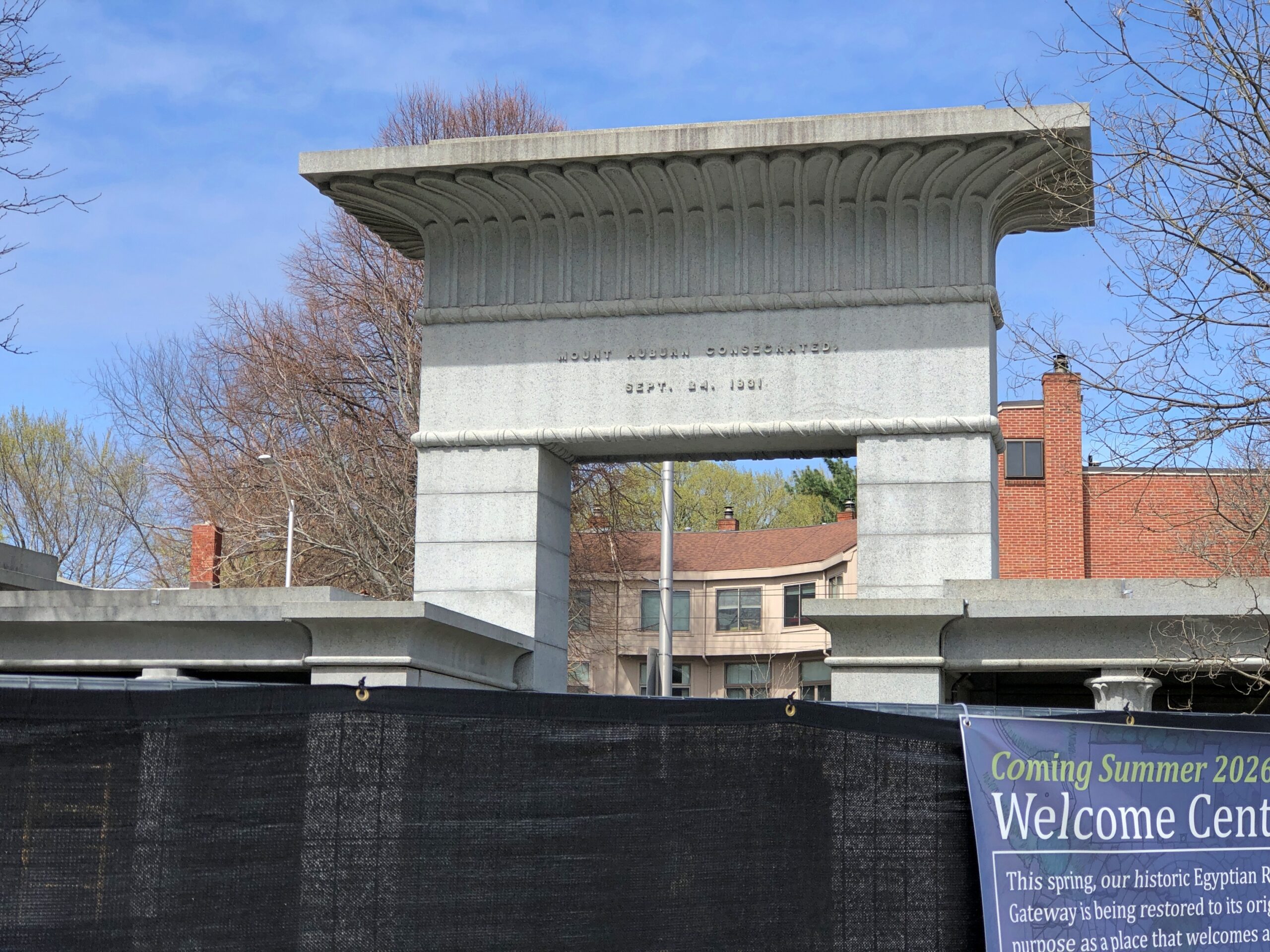
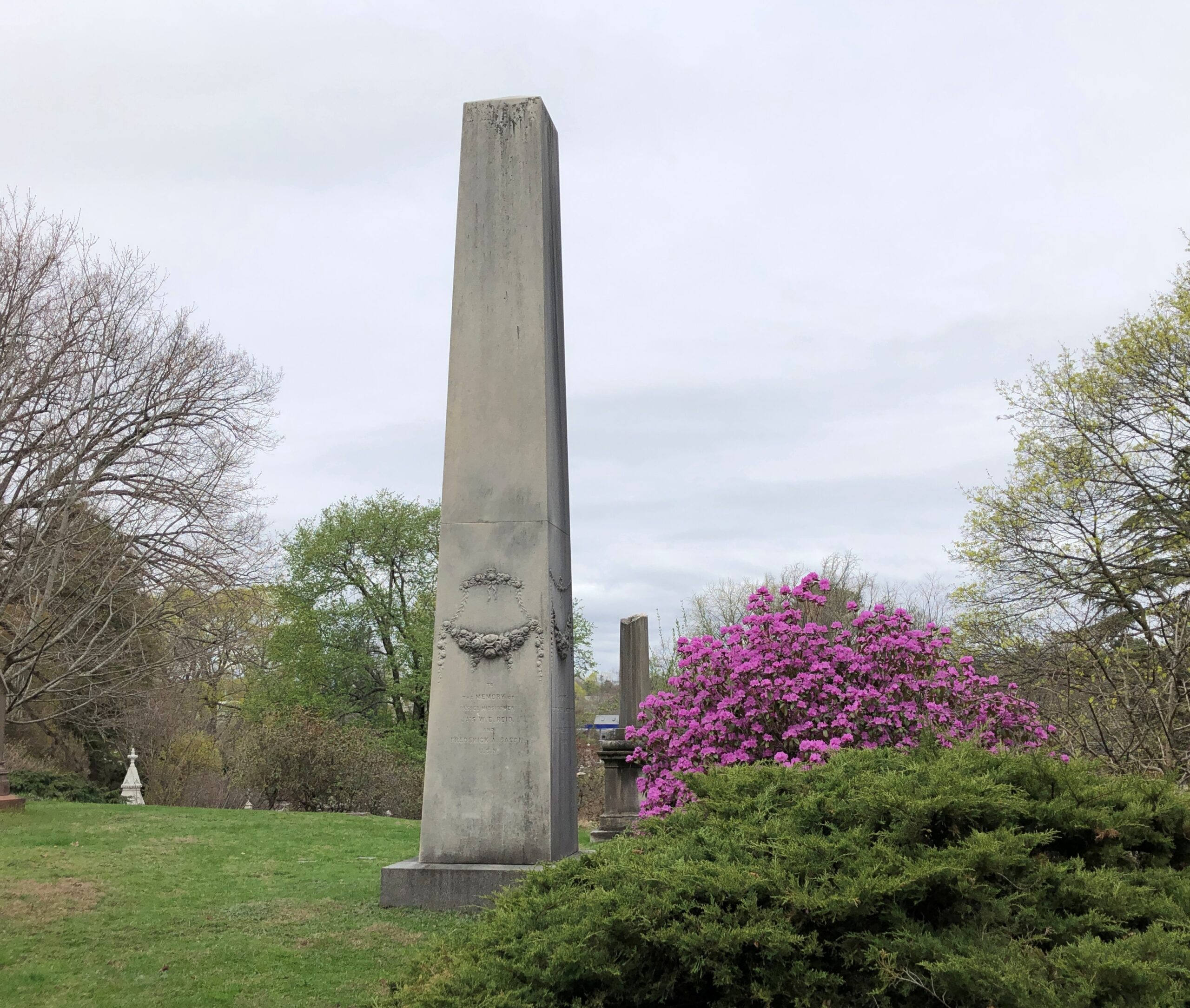
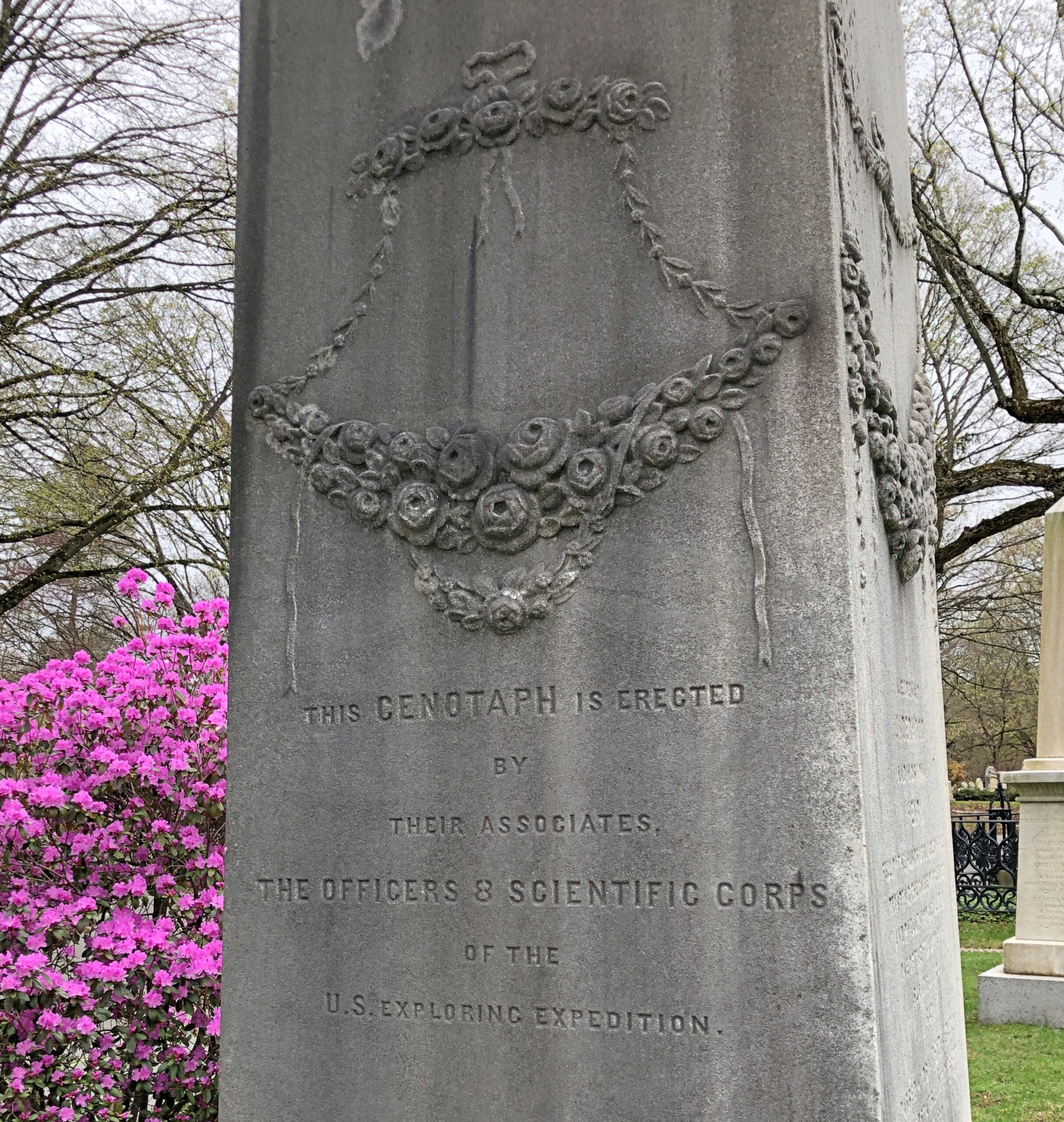
The main gate of Mount Auburn Cemetery, an Egyptian Revival structure, was behind a temporary fence the day I dropped by. That’s only reasonable, as an object that needs periodic renovation.
I took a paper souvenir from the cemetery, one that’s given away: a detailed map and guide. An exceptionally detailed map and guide, I should add, including not only the vehicular roads that twist around the grounds (something like the roads in greater Boston), but all of the many, many footpaths, all of which seem to have names. Also noted are special features, including chapels, ponds, named knolls, the sites of 62 notable people buried on the grounds, plus the sites more than 20 notable memorials or works of funerary art. It’s more than anyone could take in during a short visit, or even a lot of longer visits.
That’s never deterred me. I parked near the entrance and set out, picking up the map at the visitors center and spending a moment at Story Chapel.
The chapel is named for Joseph Story (d. 1845), associate justice of the Supreme Court, colleague of John Marshall and, in as much as I know about the subject (not much), a titan of early U.S. jurisprudence. He was also first president of Mount Auburn and, when his time came, he was buried there, though that was among the many memorials I didn’t happen to see.
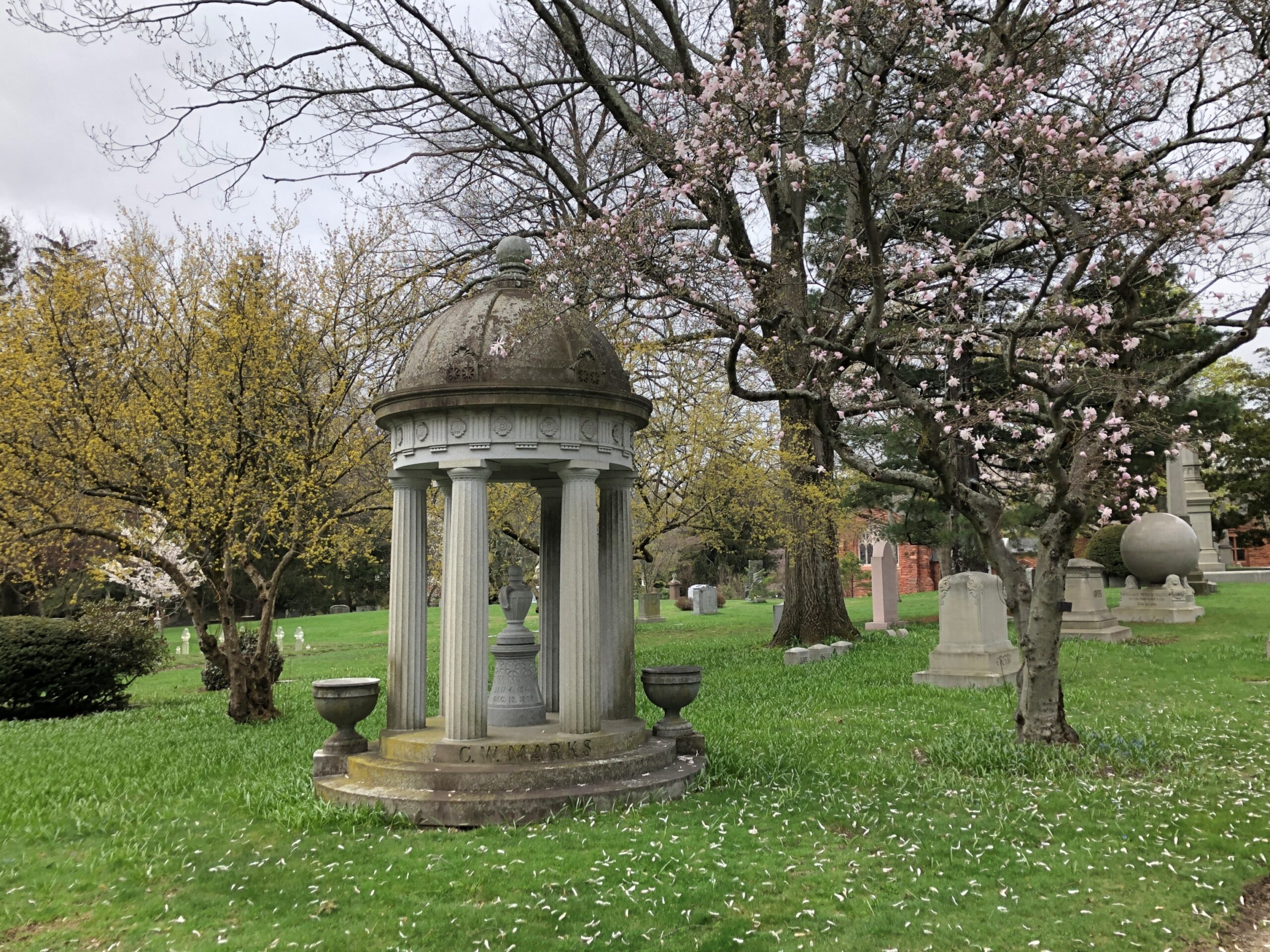
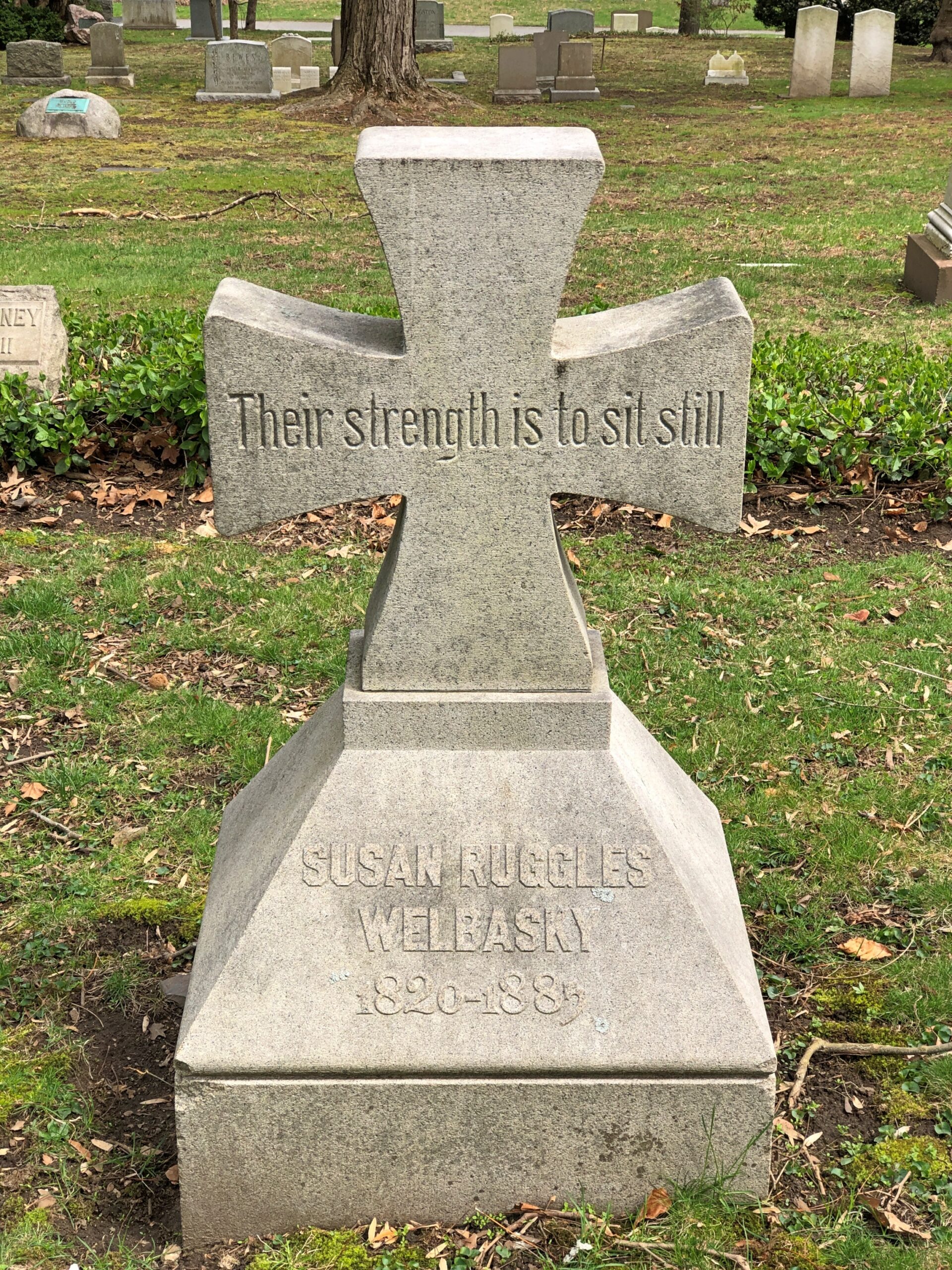
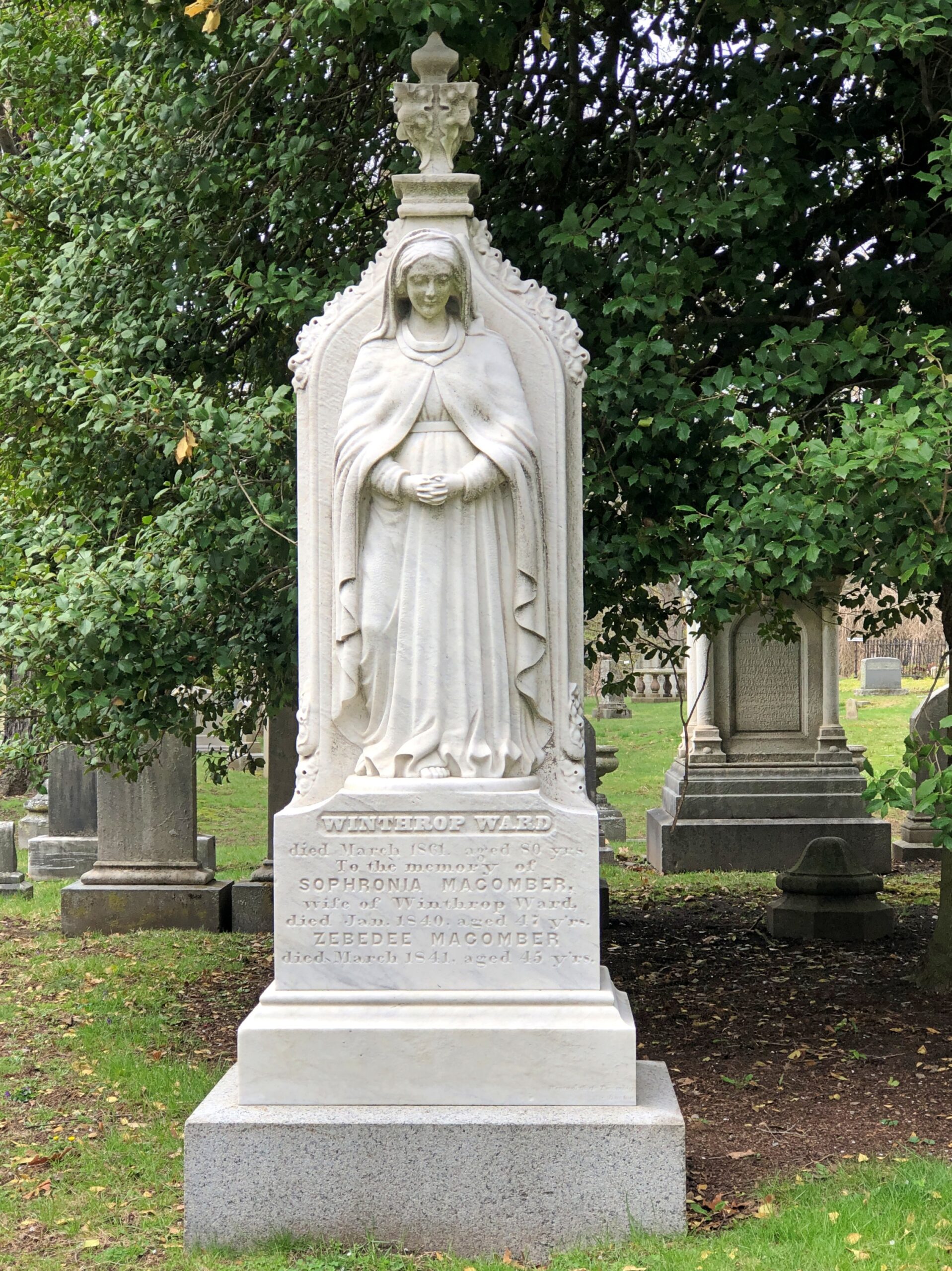
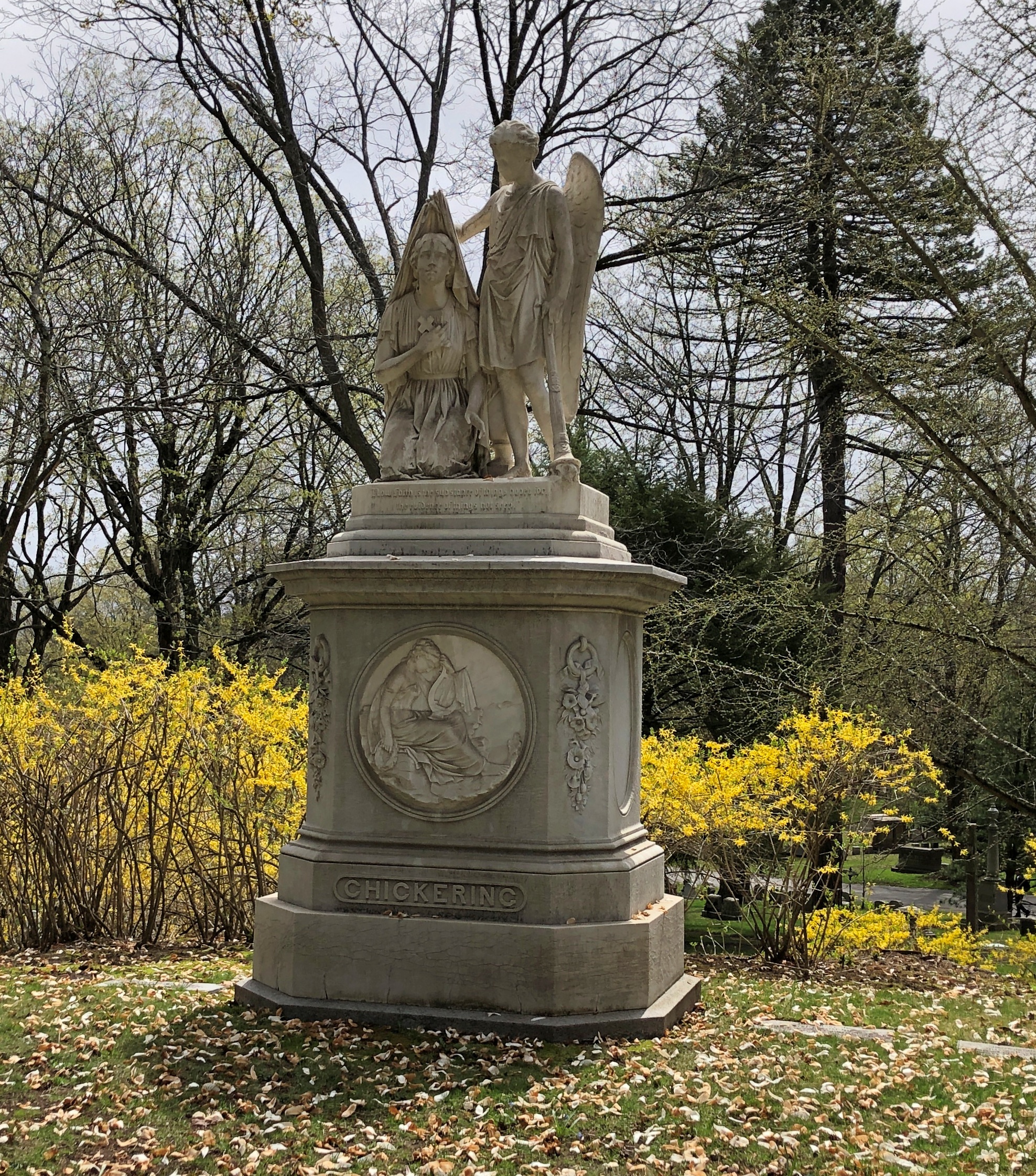
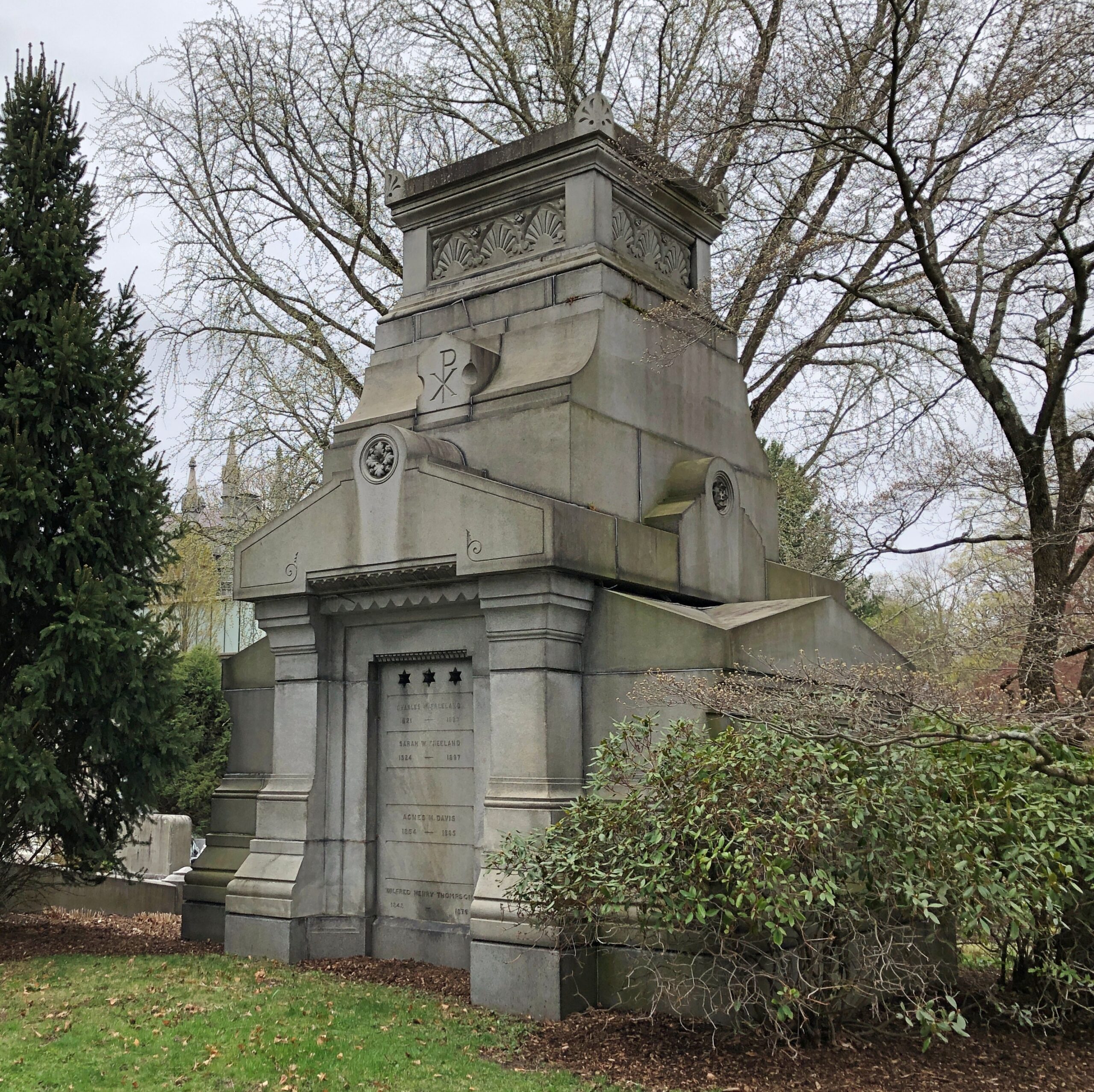
So many memorials. Some more conventional, but no less beautiful or impressive for it.
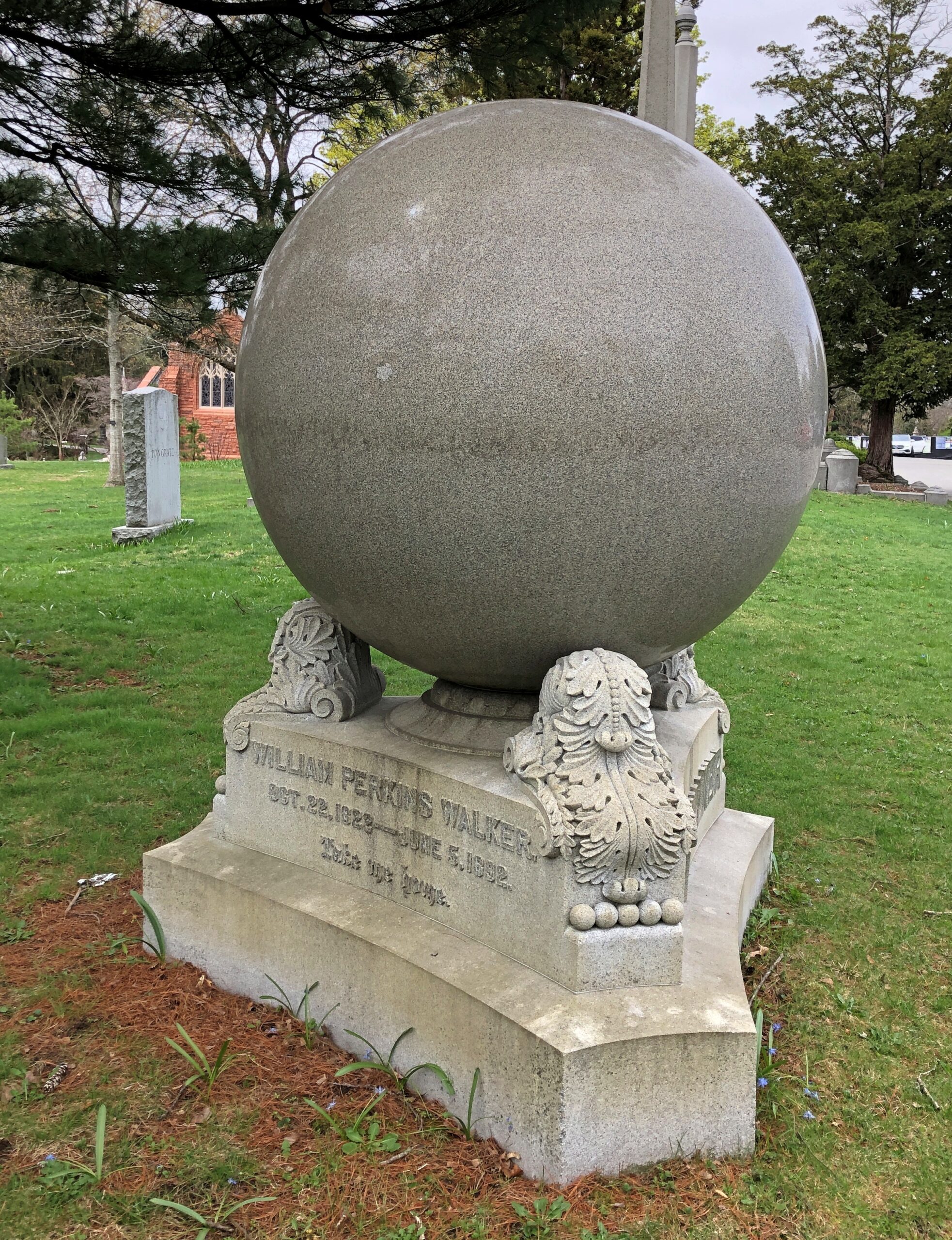
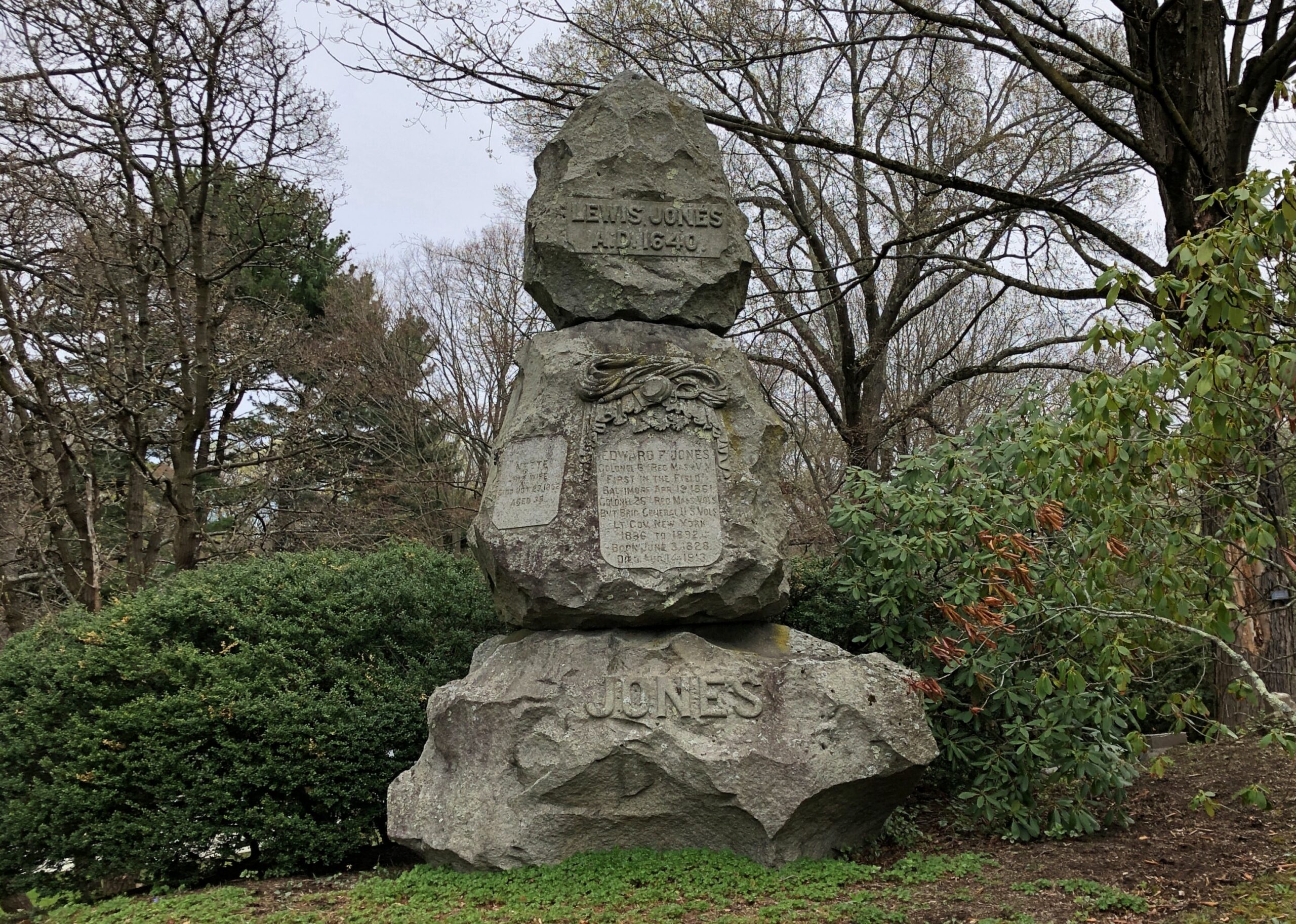
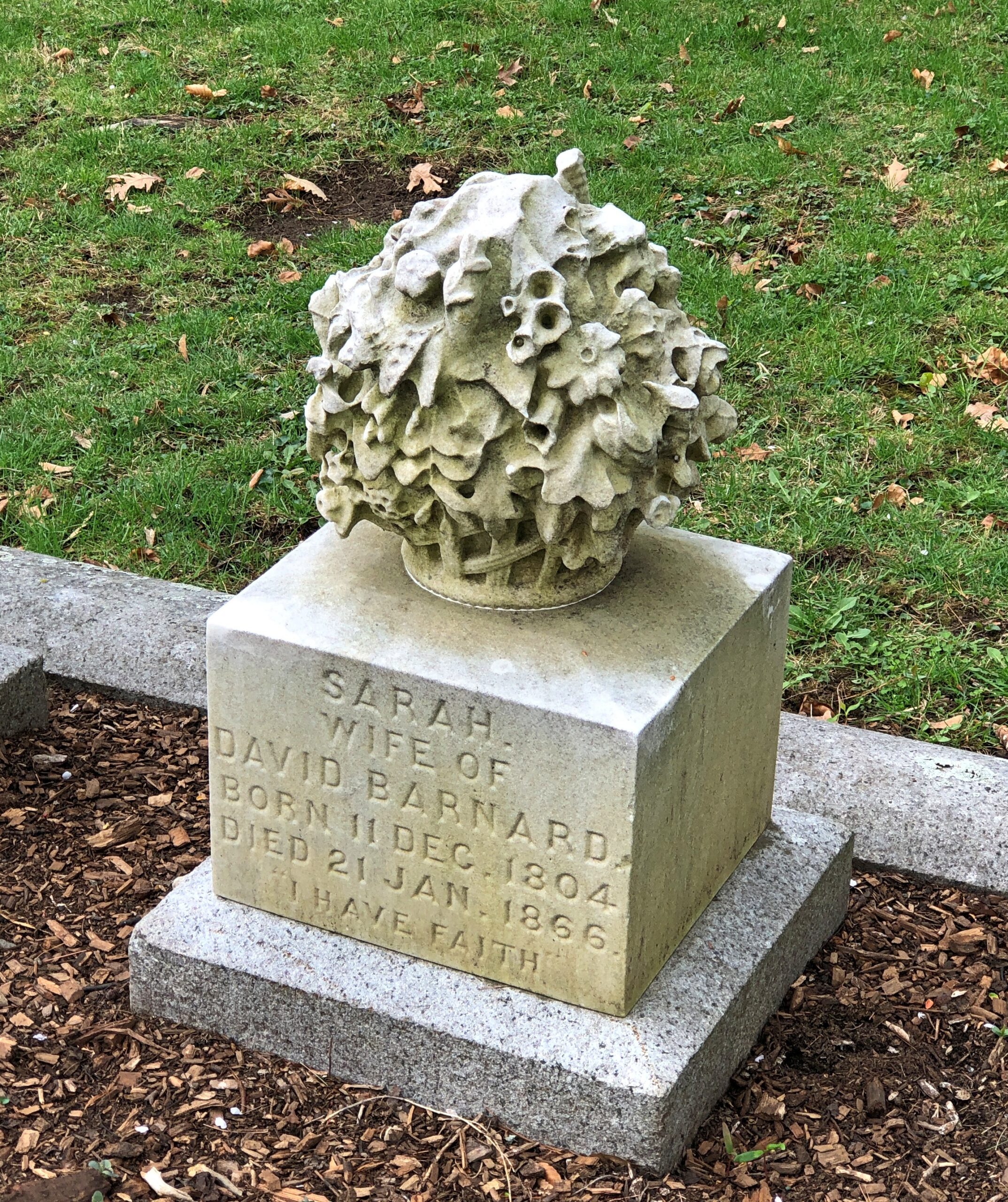
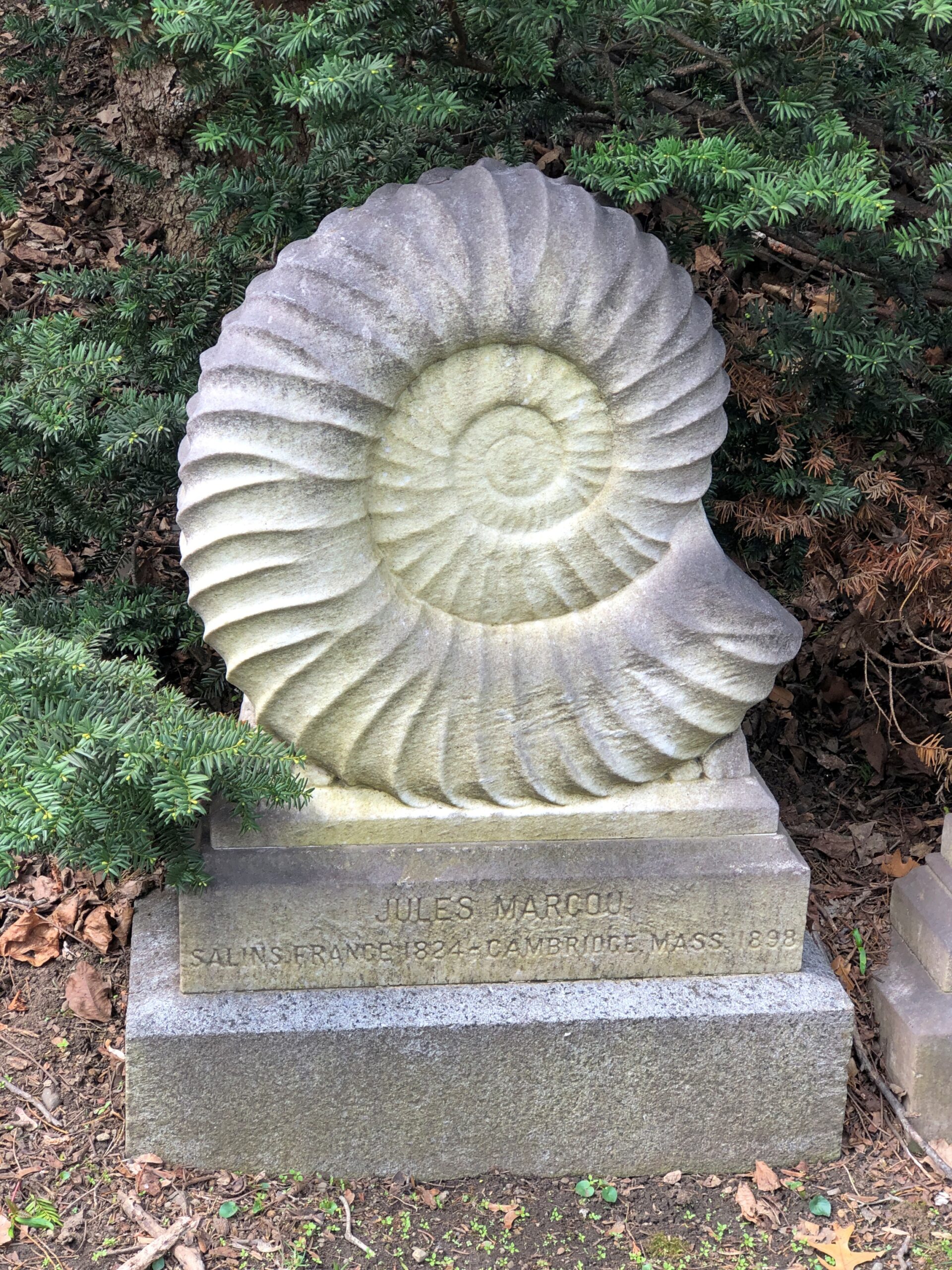
Some less conventional. Any grand cemetery needs a component of the unusual or odd.
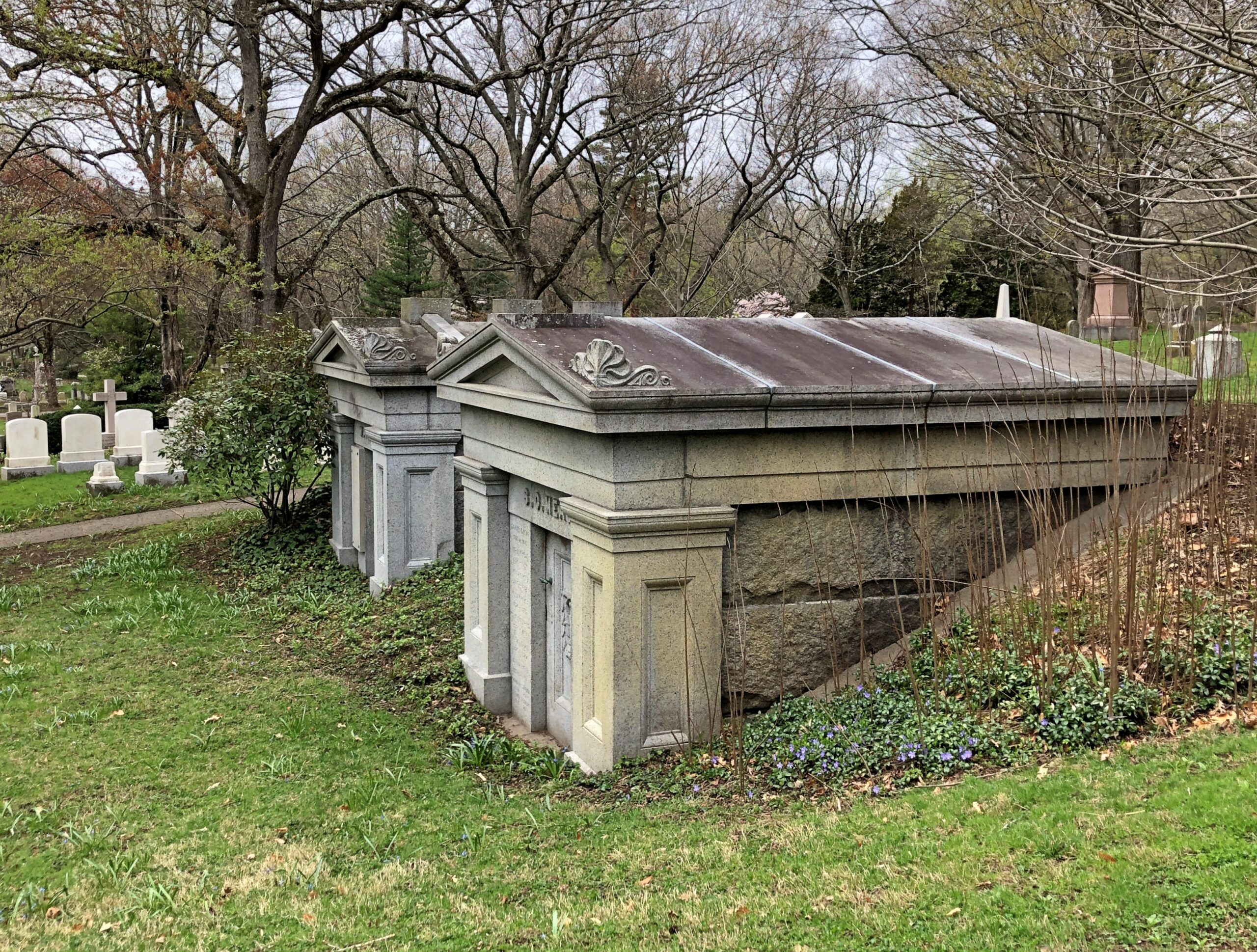
A number of mausoleums, though perhaps not as many as you’ll see at Green-Wood or Woodlawn in the Bronx.
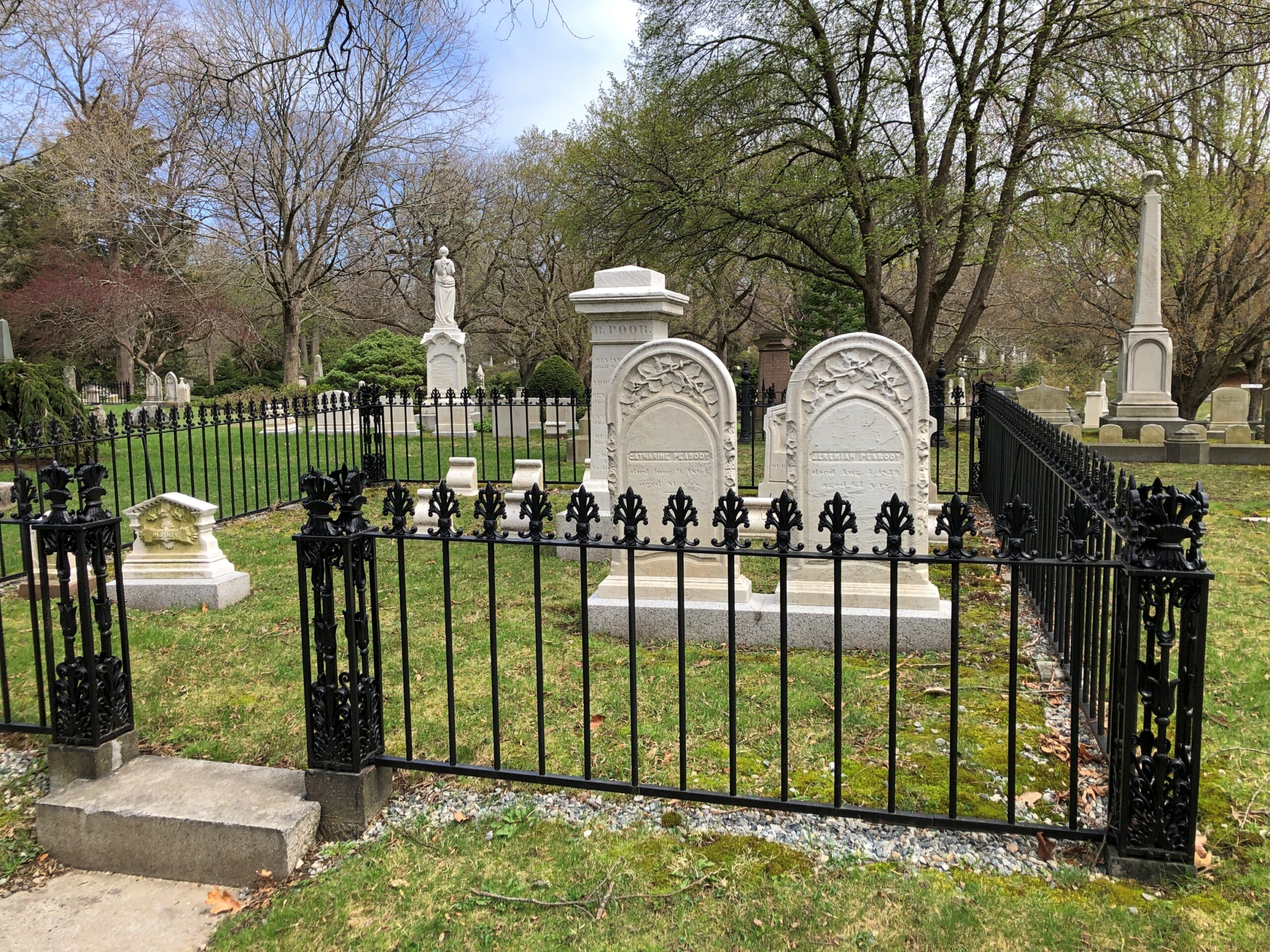
More modest stones.
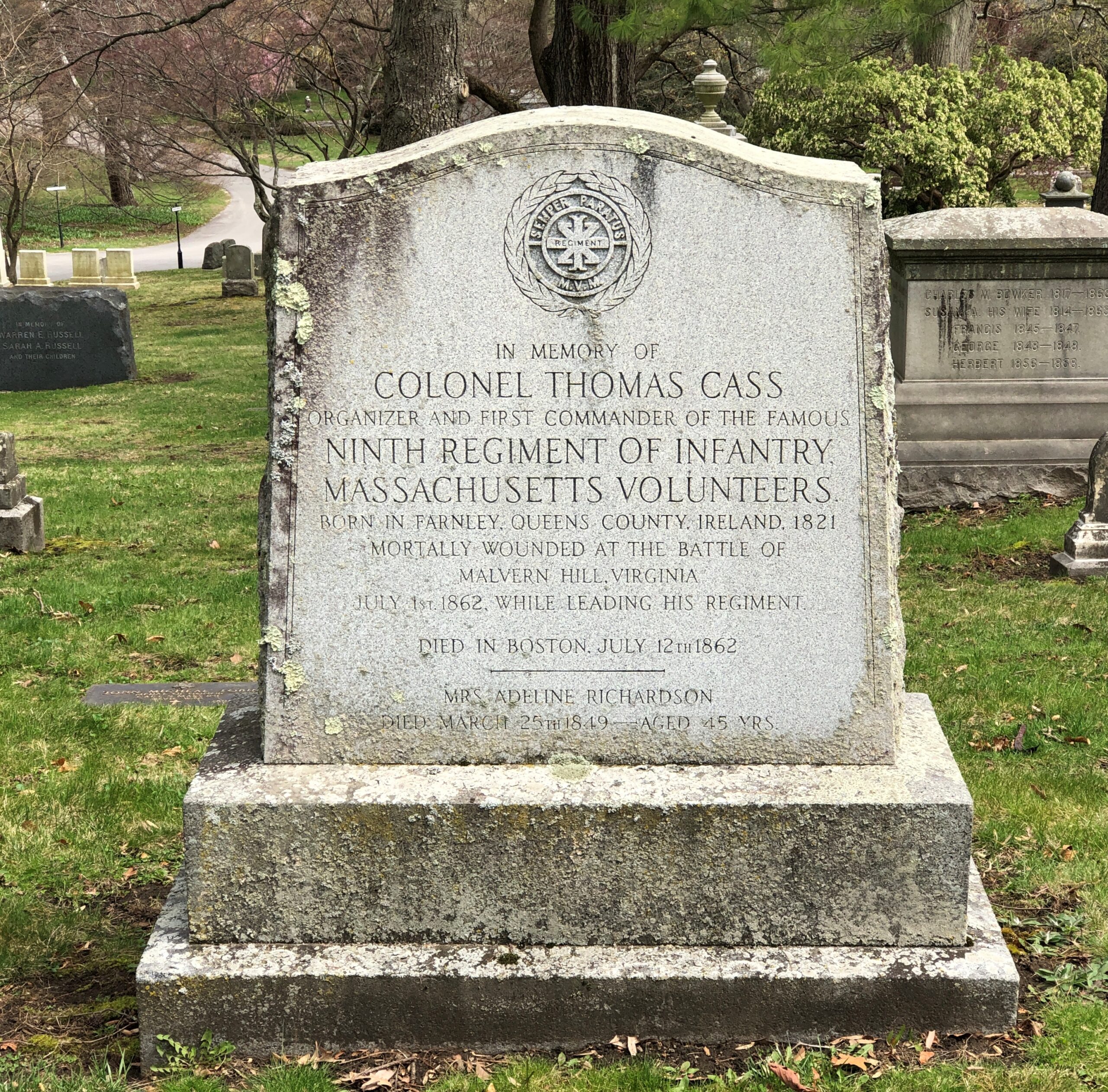
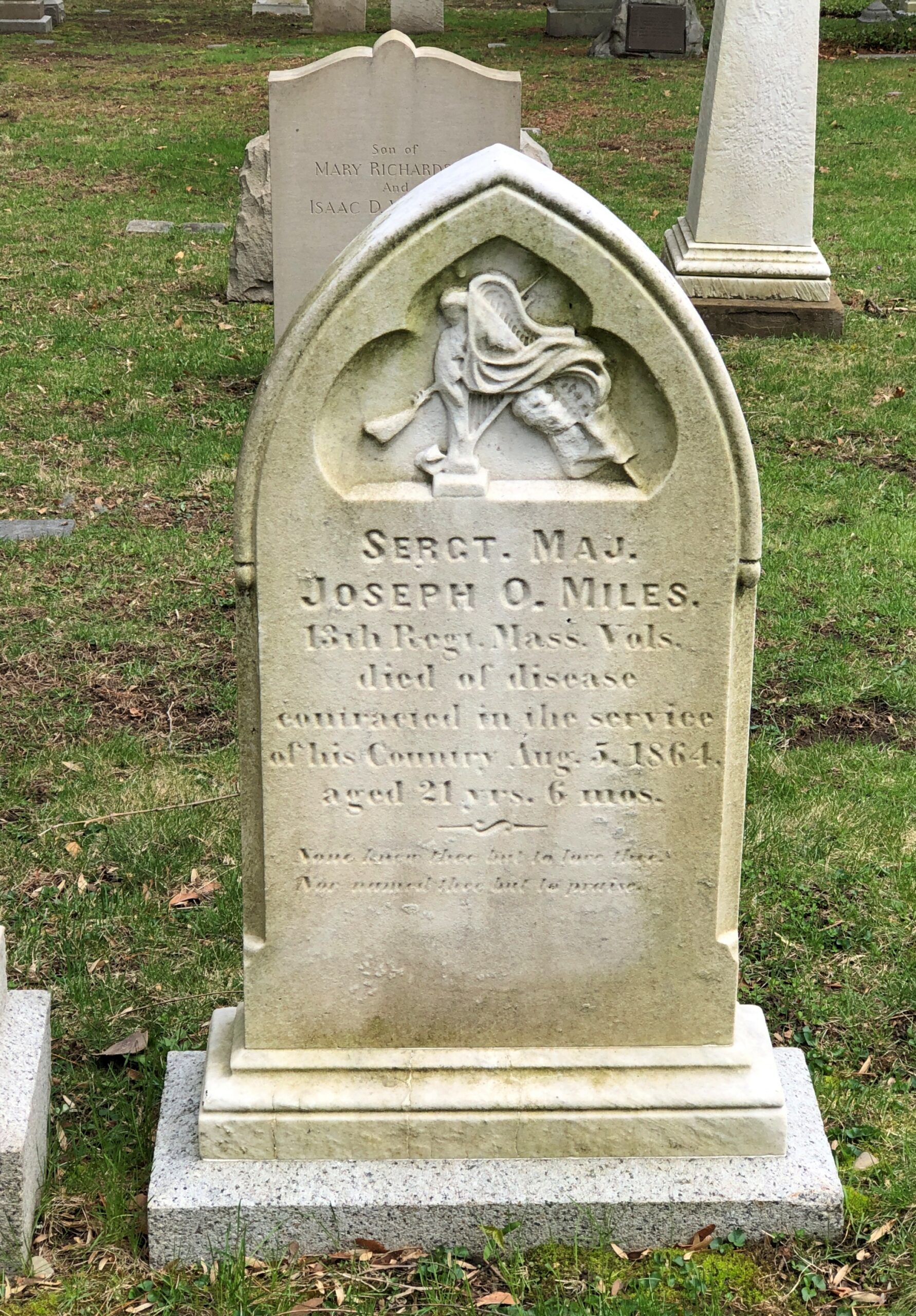
Men who died for the Union.
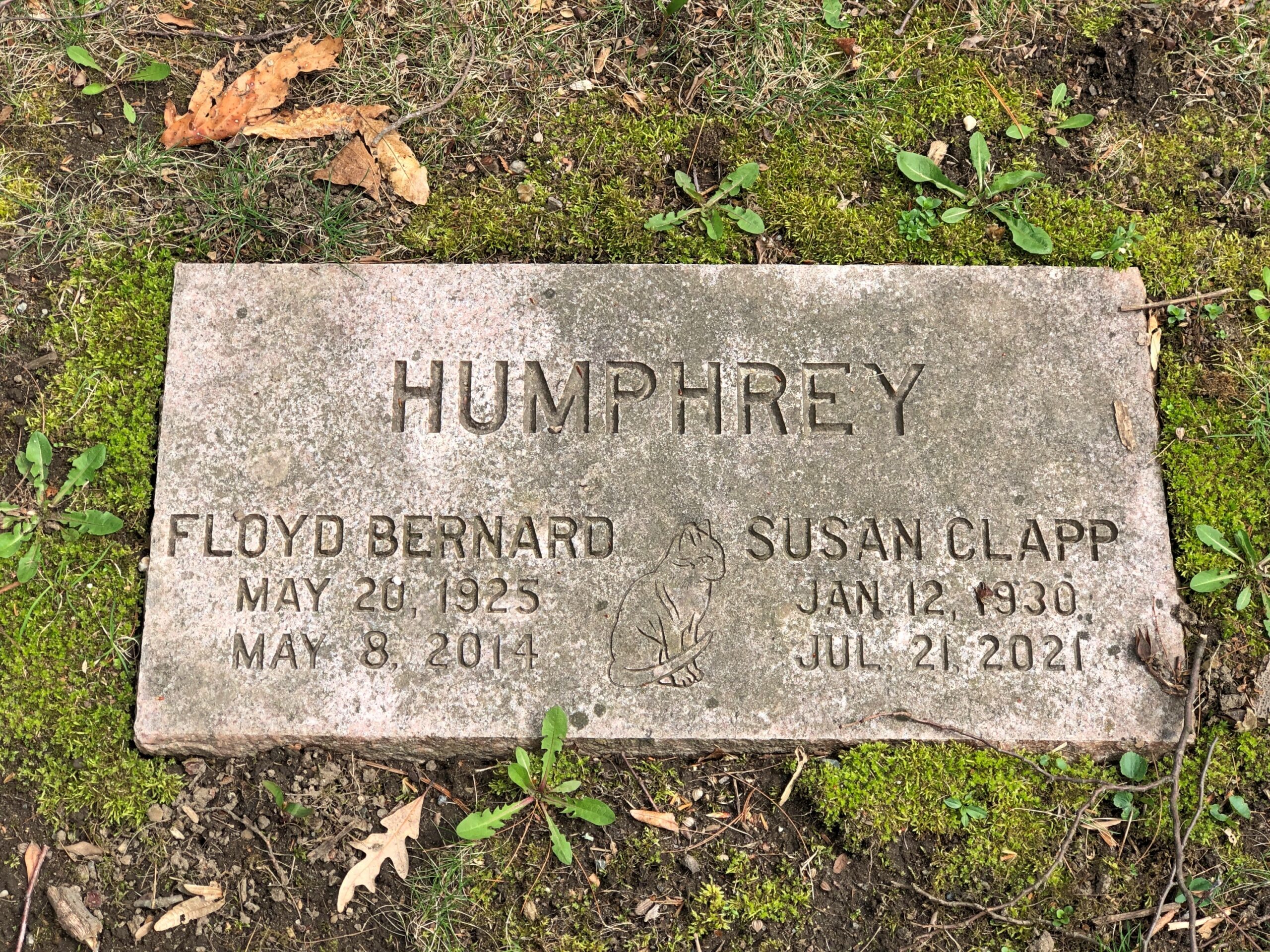
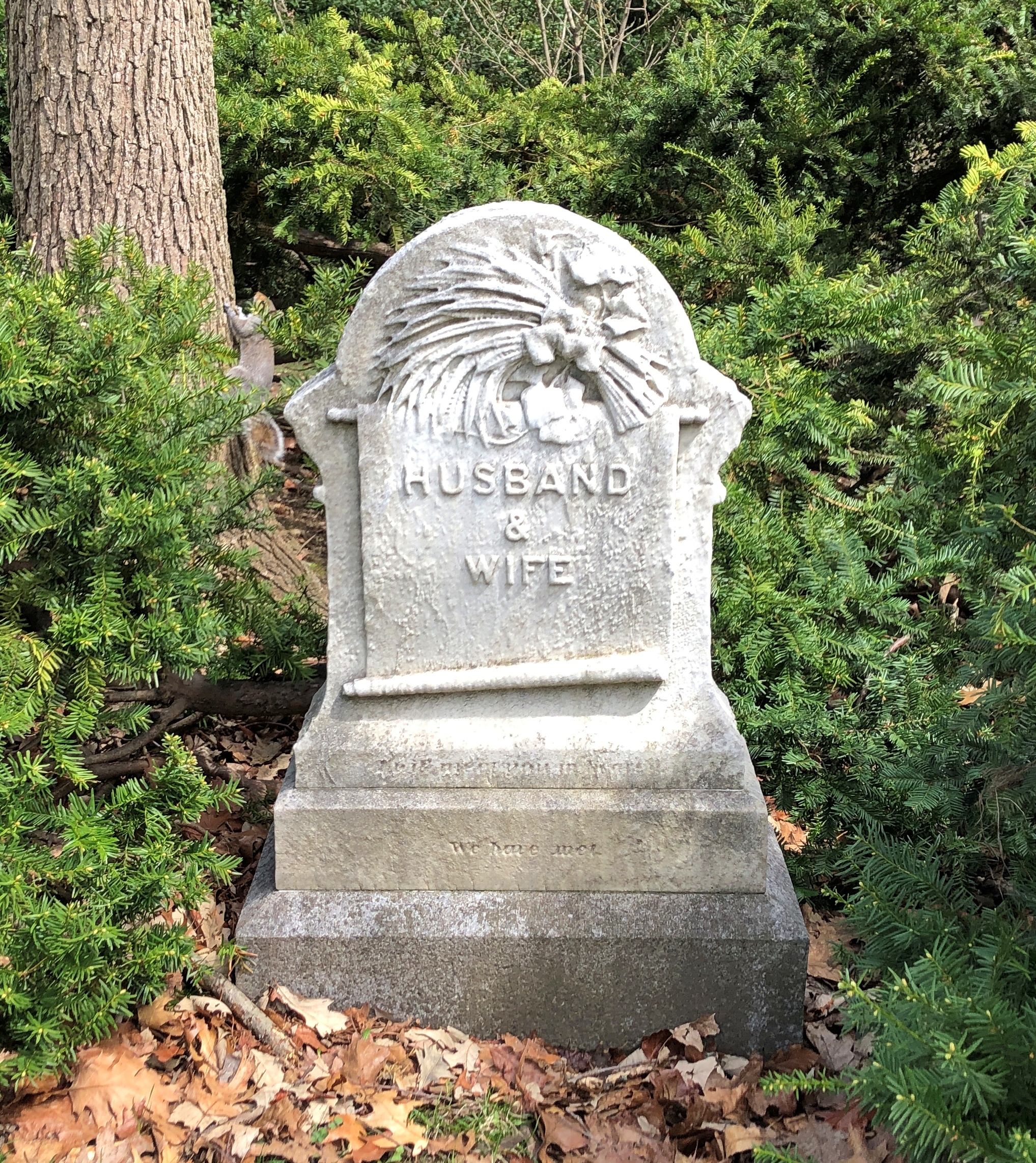
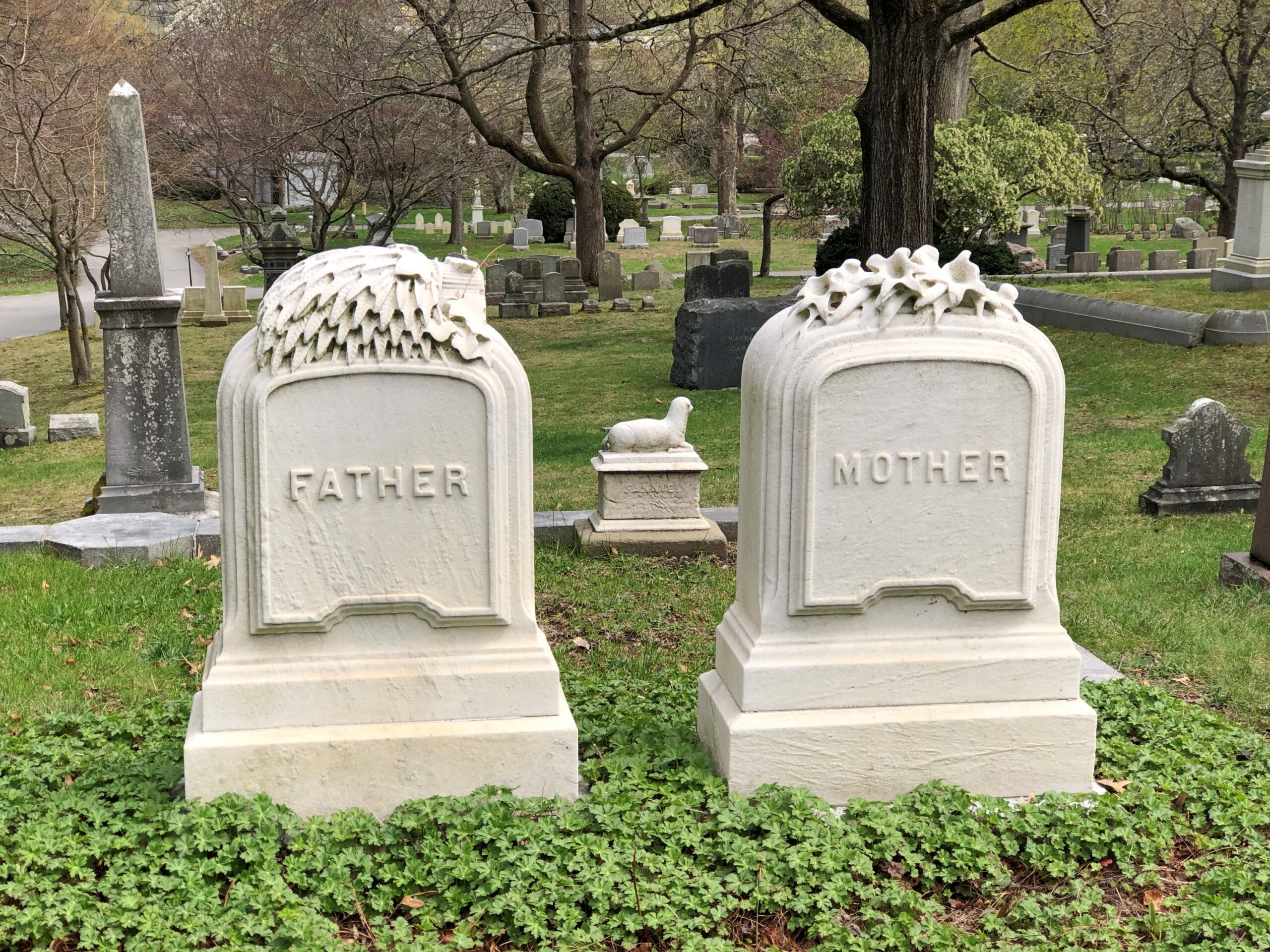
A good many couples.
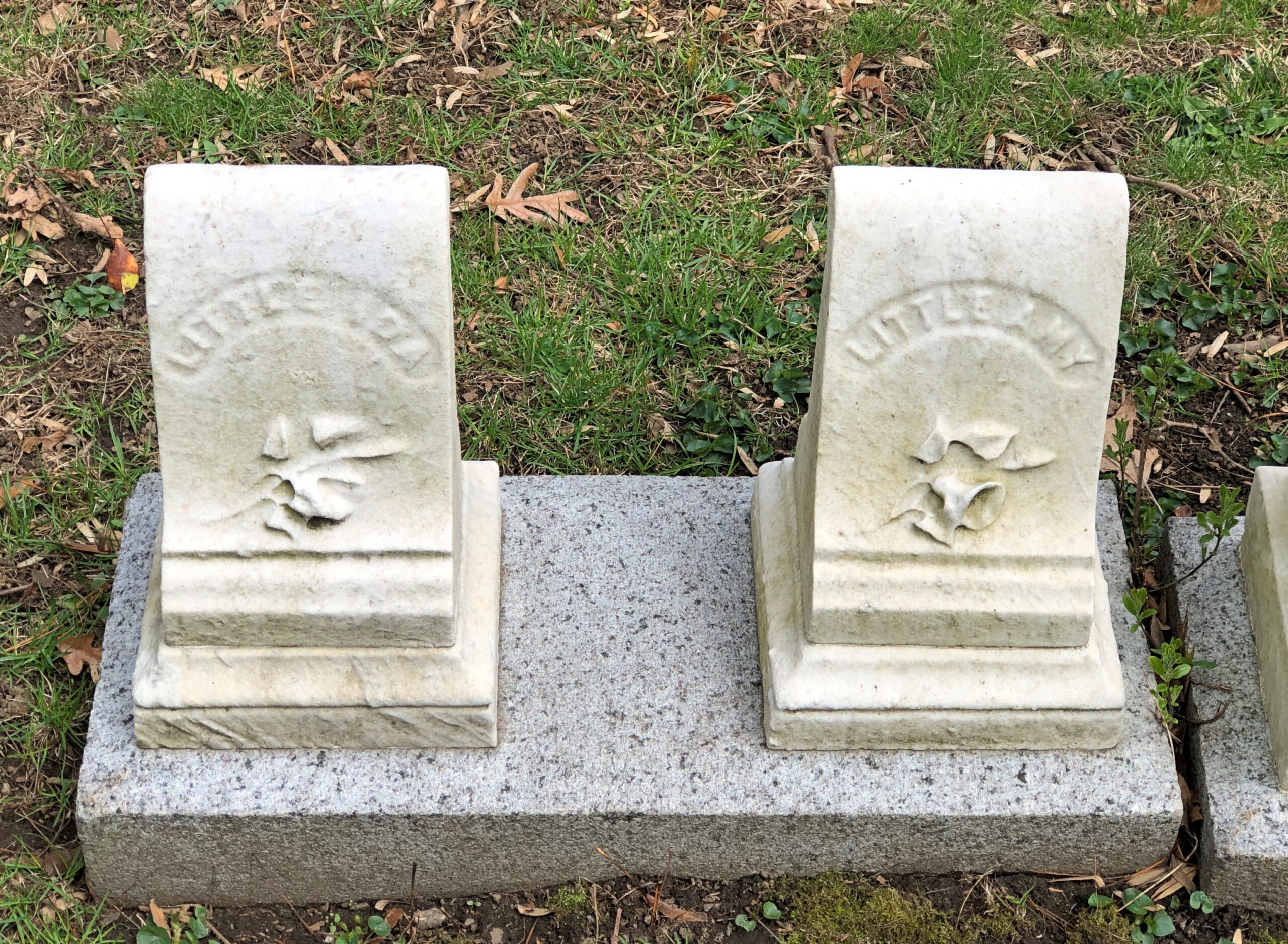
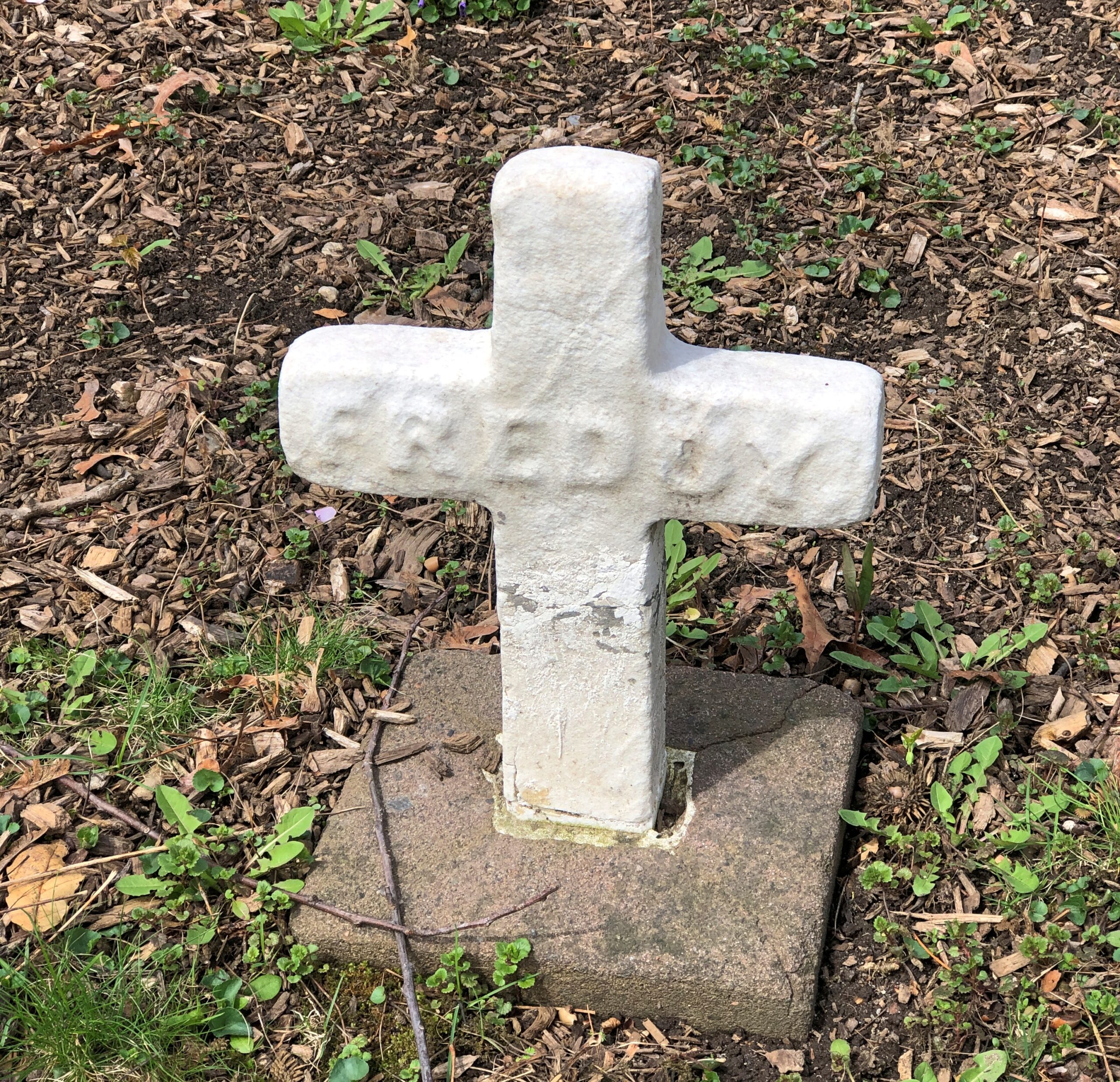
A sad story, one of many.
Maybe a sad story. A little enigmatic, anyway.
Looking at the map’s list of famous permanent residents, one thinks: “Right, I know him. And him. And him. And her. There’s another person I’ve heard of. And another. And I think I know that one – I do…”
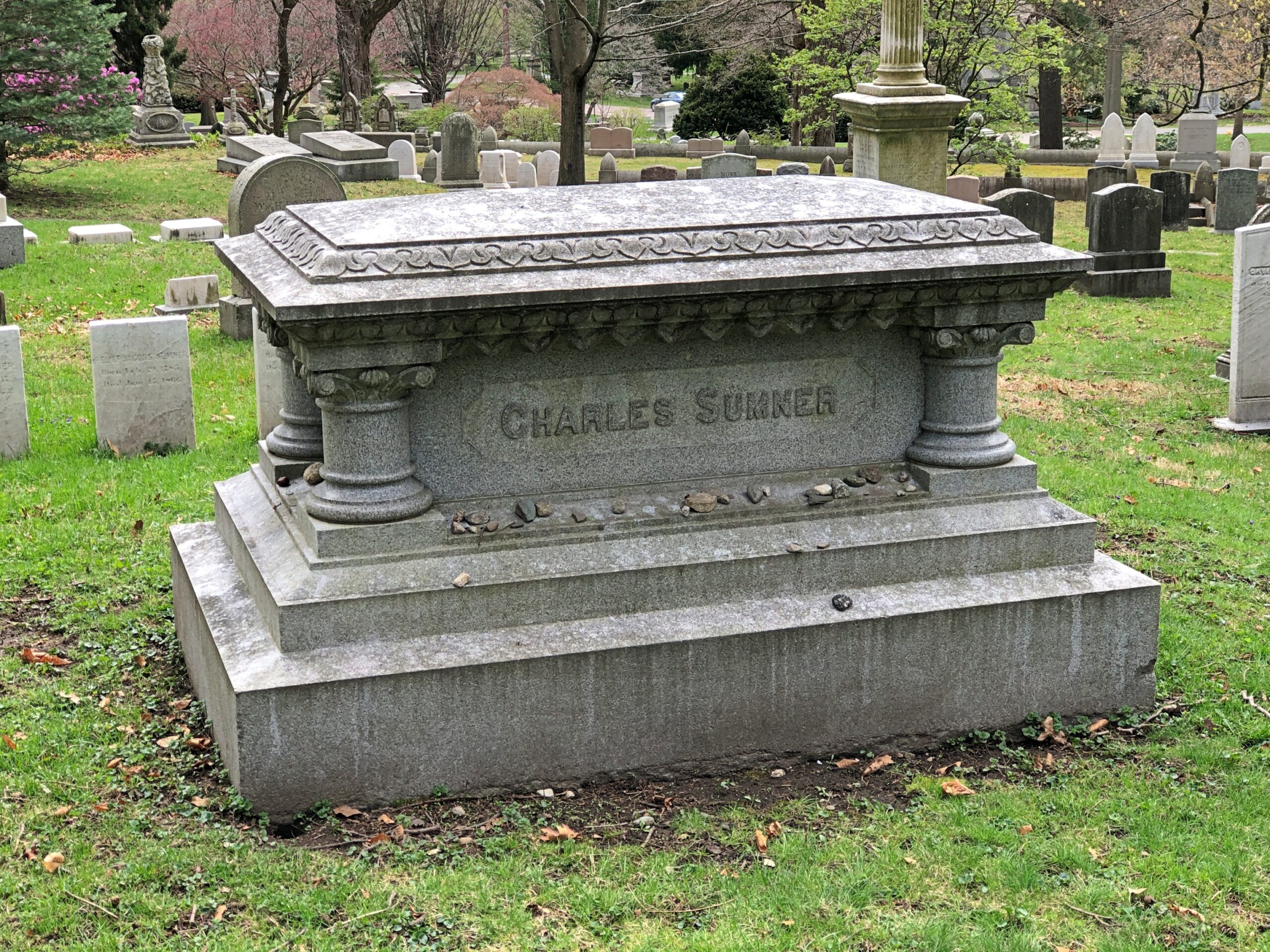
On it goes. A short selection of those I didn’t have to look up: Louis Agassiz, John Bartlett (of Quotations fame), Edwin Booth, Charles Bulfinch, Dorothea Dix, Mary Baker Eddy (“discoverer” of Christian Science, the map says), Edward Everett (spoke at Gettysburg, was upstaged), Fannie Farmer, Felix Frankfurter, Buckminster Fuller, Charles Dana Gibson, Curt Gowdy, Oliver Wendell Holmes Sr., Julia Ward Howe, Henry Cabot Lodge, Henry Wadsworth Longfellow, Bernard Malamud, Arthur Schlesinger Jr., B.F. Skinner, I.F. Stone, and Charles Sumner.
I could have spent all day looking for them, but mostly I didn’t. I did see Charles Sumner’s stone. People leave smaller stones. I found one and did too.
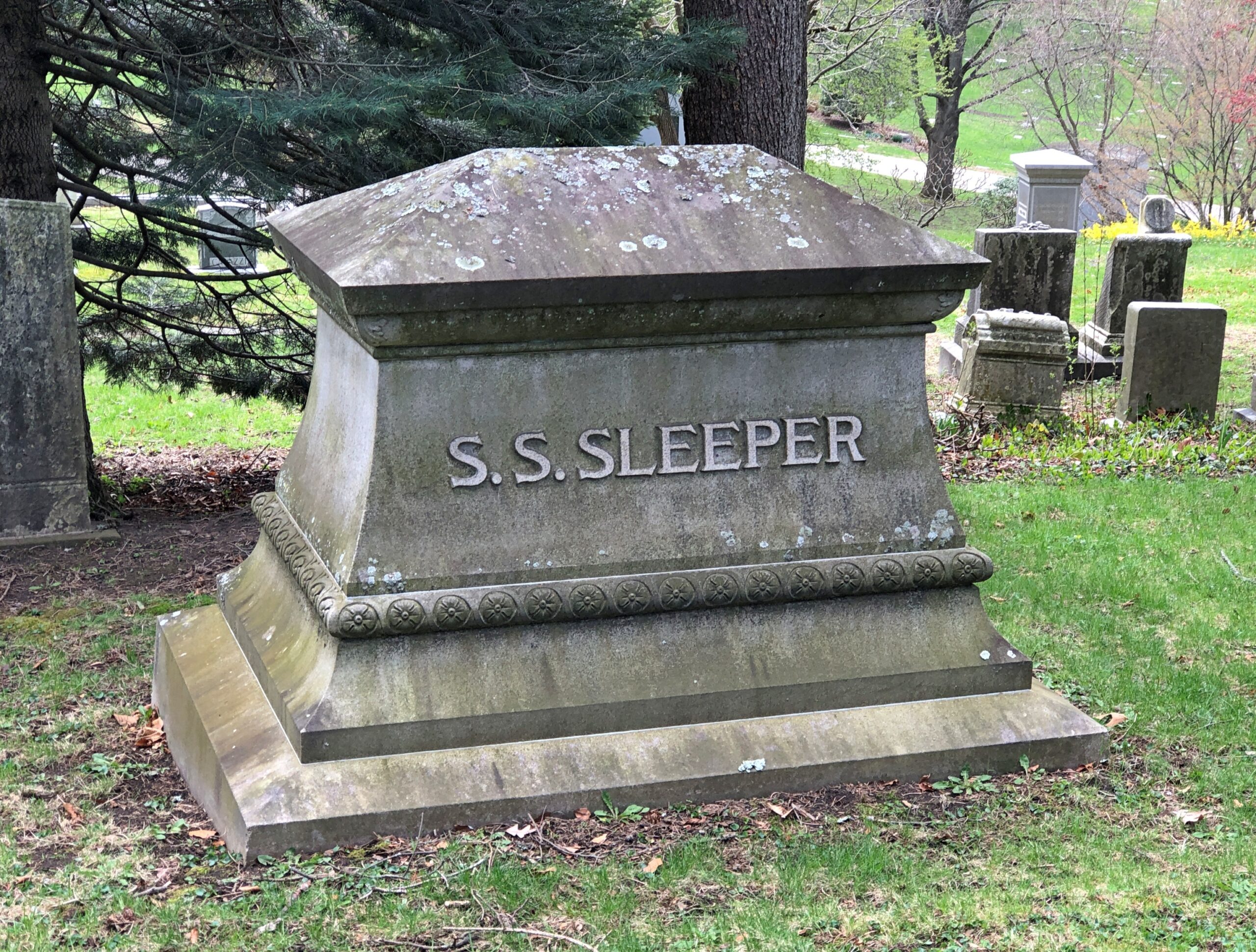
Near Sumner. I’d never heard of him, but I like that name.
Solomon Sias Sleeper (d. 1895), successful Cambridge merchant and local politico and philanthropist.
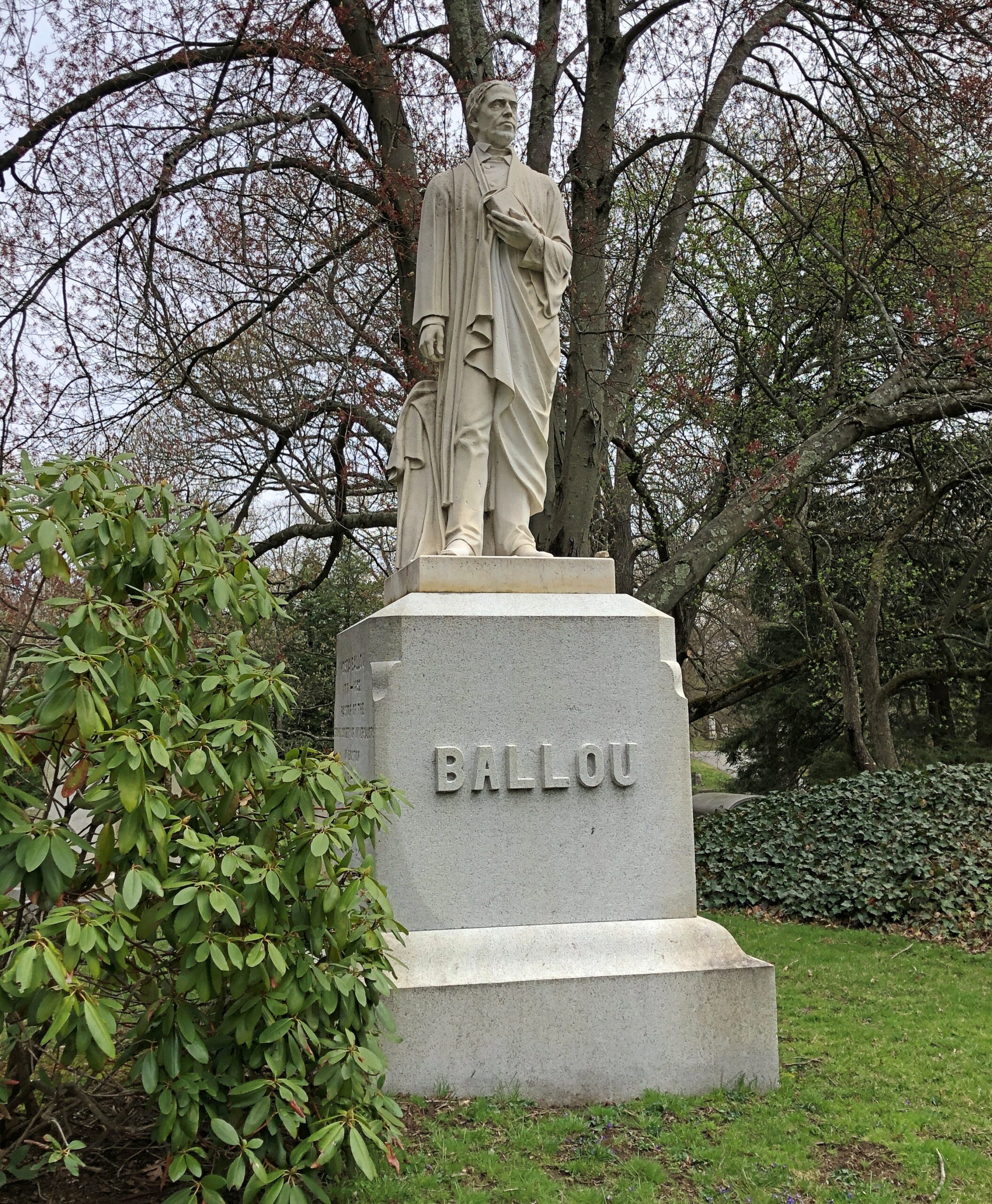
The map also lists impressive memorials. I found a number of those. Such as the Rev. Hosea Ballou Monument, honoring a Universalist clergyman (d. 1852).
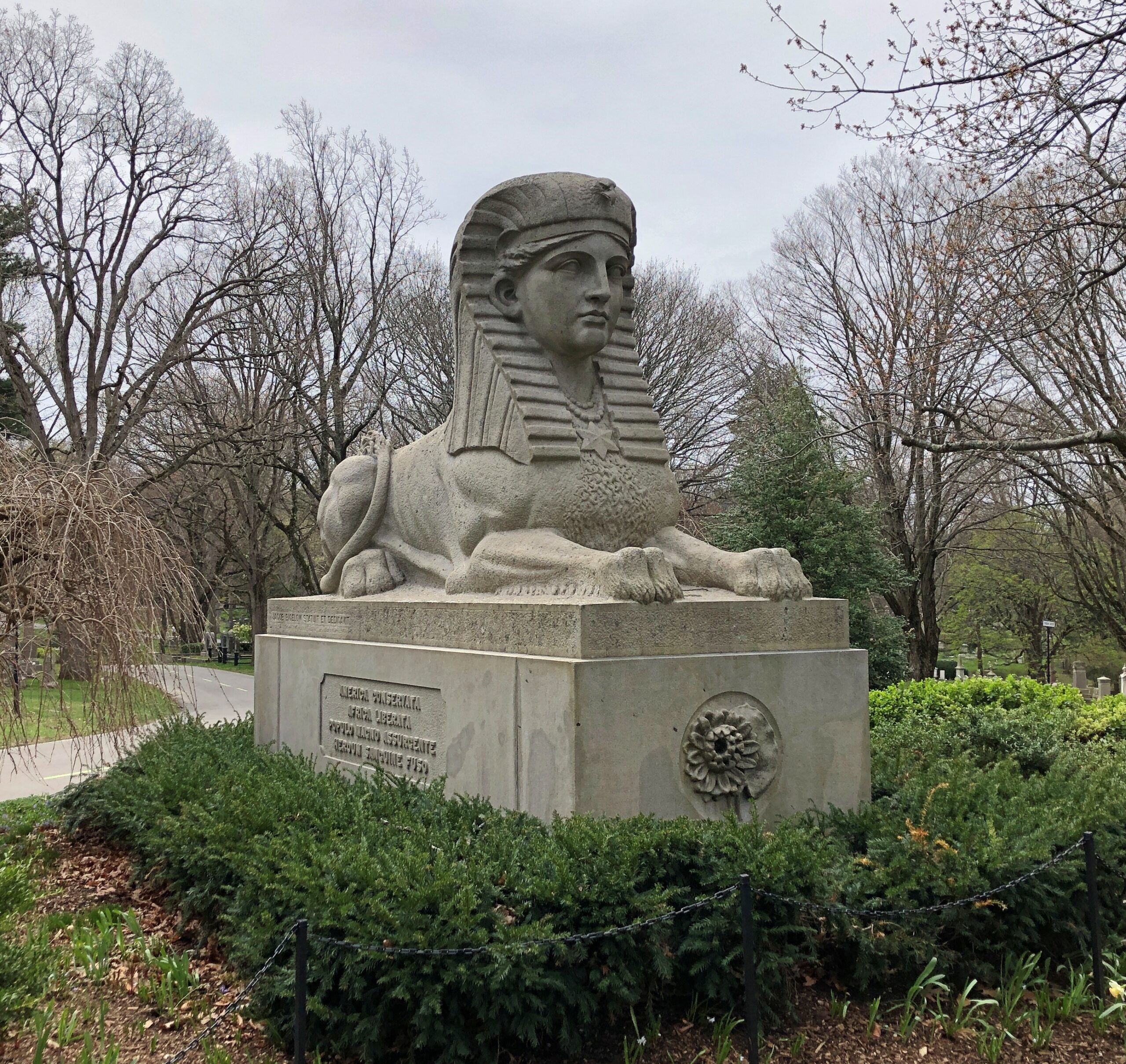
A Civil War memorial, erected in 1872 — the only time I’ve seen a sphinx used for that purpose.
“The sphinx was chosen because of its ideal personification of intellect and physical force and its representation of the combined ideas of beauty and strength,” the notes on the map say. I know the sphinx has a very long history and comes with a lot of encrusted lore, but that sounds like a peculiar Victorian interpretation that didn’t really stick.
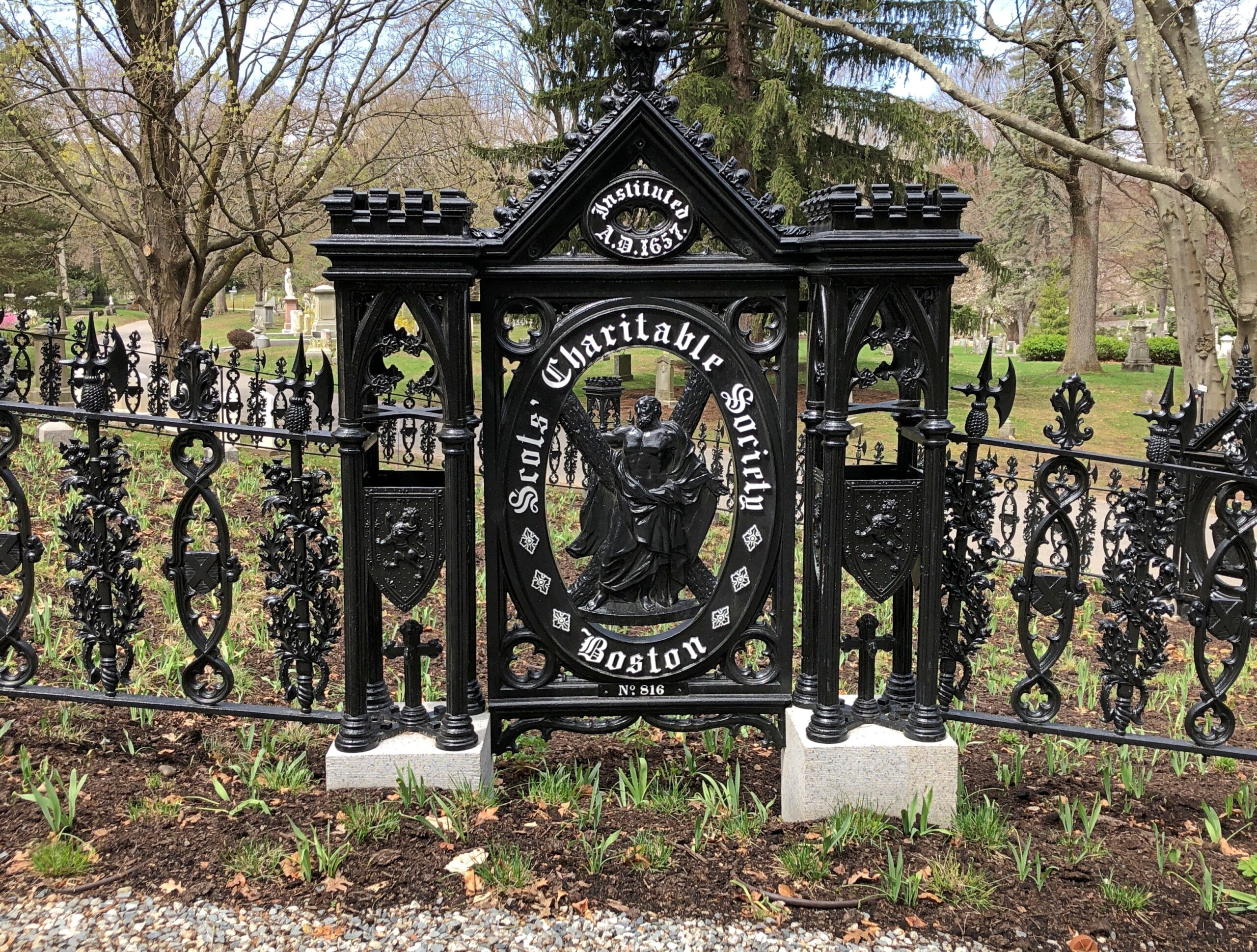
The Scots’ Charitable Society Lot.
An organization founded in 1657 in Massachusetts. It “aims to help people of Scottish heritage by providing relief to Scottish-American individuals and families in need, and by granting undergraduate scholarships to the Scottish-American community,” says its web site because it is still around.
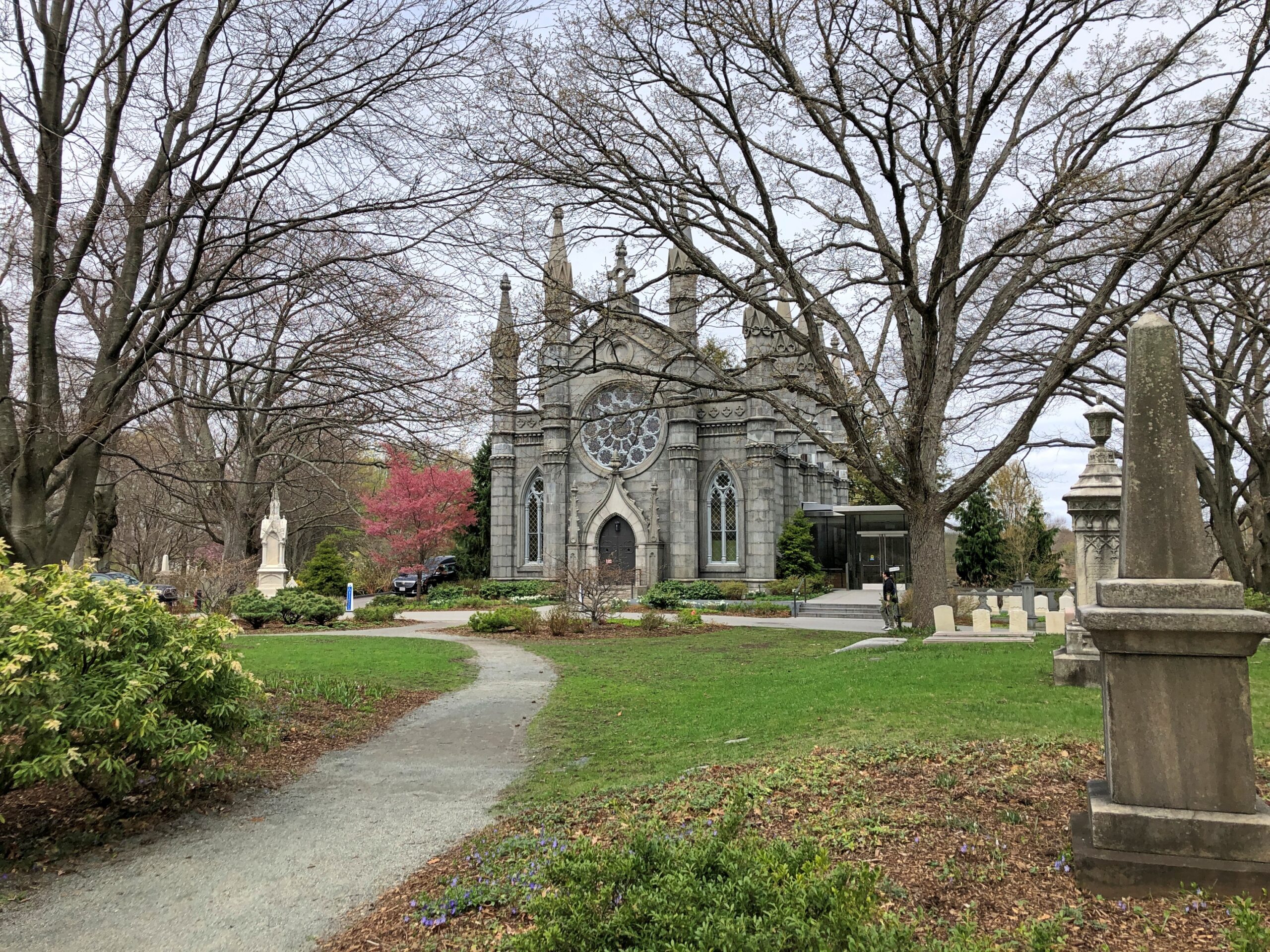
Bigelow Chapel.
Named for Jacob Bigelow (d. 1879), second president of Mount Auburn.
Washington Tower. The highest point on the grounds, honoring George Washington. Designed by Bigelow in collaboration with architect Gridley J. F. Bryant. I didn’t have the energy to climb the hill and then the tower at that moment. Too bad. I understand the view of the Boston skyline from there is terrific.
I was delighted to see it. In its way, as important as Lewis and Clark’s journey, and something I’m certain 99-point-more percent of Americans have never heard of.
Back to Joseph Story. He gave the dedication speech at the cemetery on September 24, 1831. It’s a long one, per custom of the time. Per custom of my time, a short quote:
Here, let the brave repose, who have died in the cause of their country. Here, let the statesman rest, who has achieved the victories of peace, not less renowned than war. Here, let genius find a home, that has sung immortal strains, or has instructed with still diviner eloquence. Here let learning and science, the votaries of inventive art, and the teacher of the philosophy of nature come. Here let youth and beauty, blighted by premature decay, drop, like tender blossoms into the virgin earth; and here let age retire, ripened for the harvest. Above all, here let the benefactors of mankind, the good, the merciful, the meek, the pure in heart be congregated, for to them belongs an undying praise.
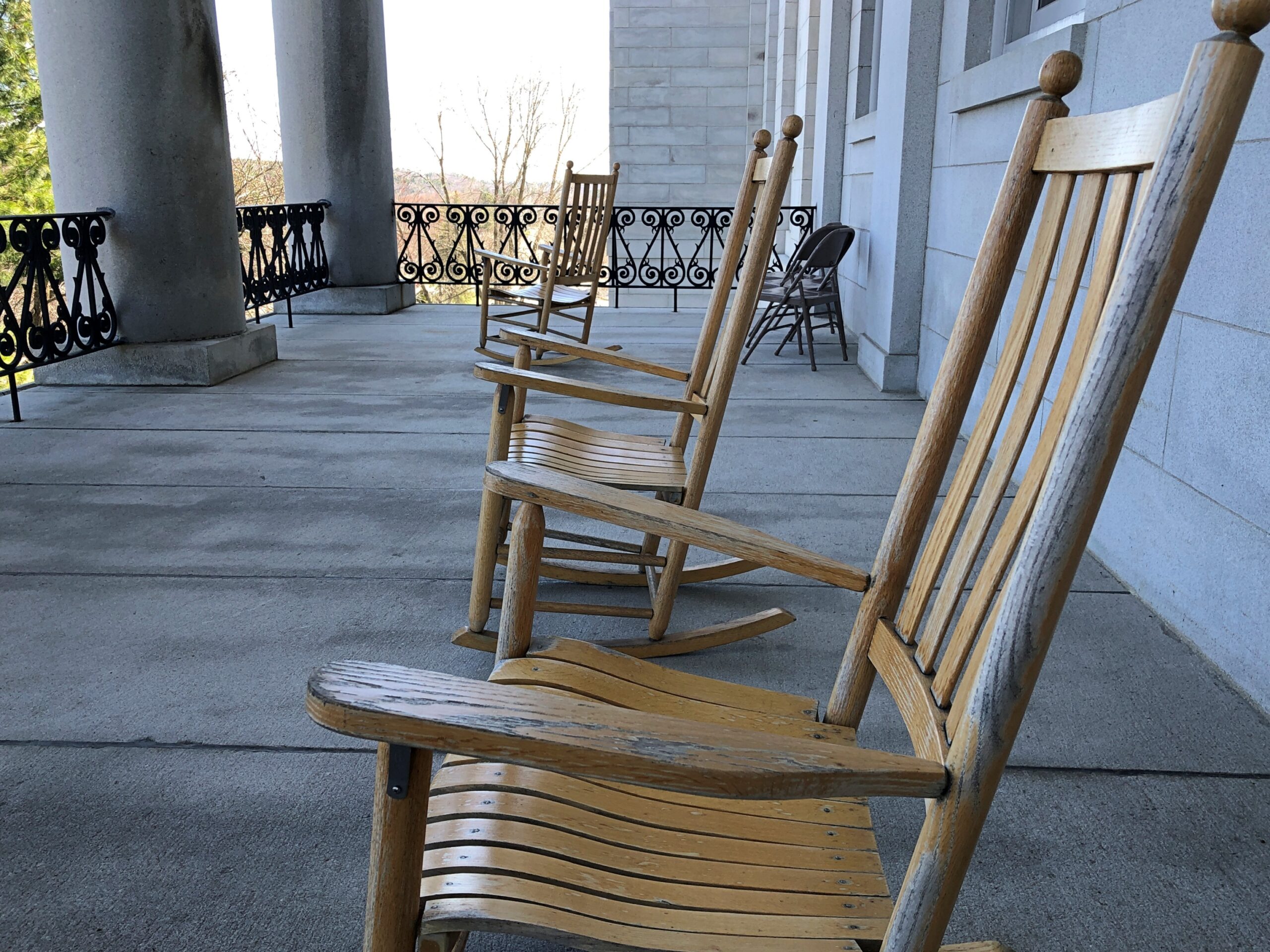
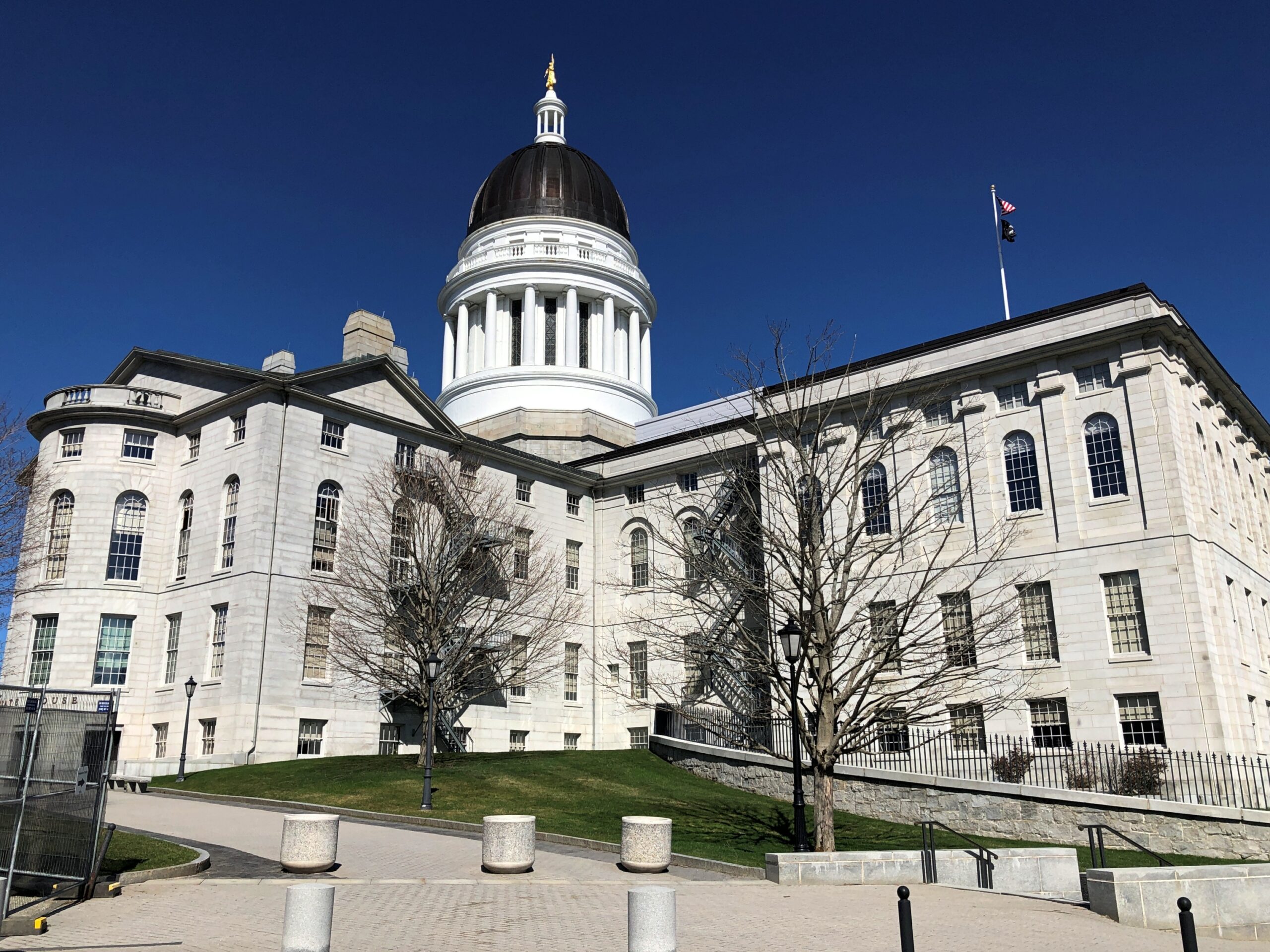
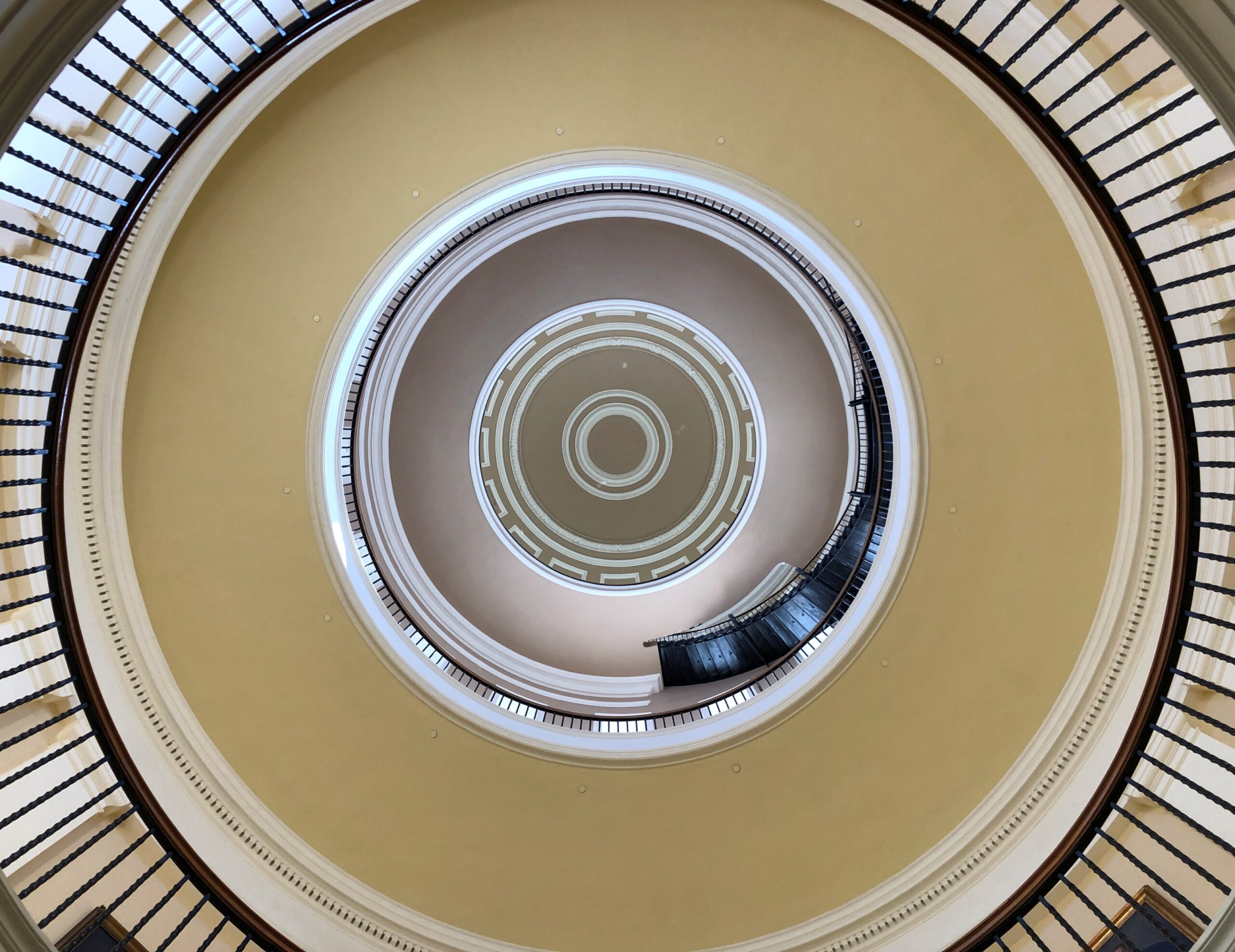
Though state capitols tend to be grand buildings with opulent fixtures and decorous memorials, small surprises outside the official scheme sometimes await casual visitors. Such as rocking chairs at the Maine State House.
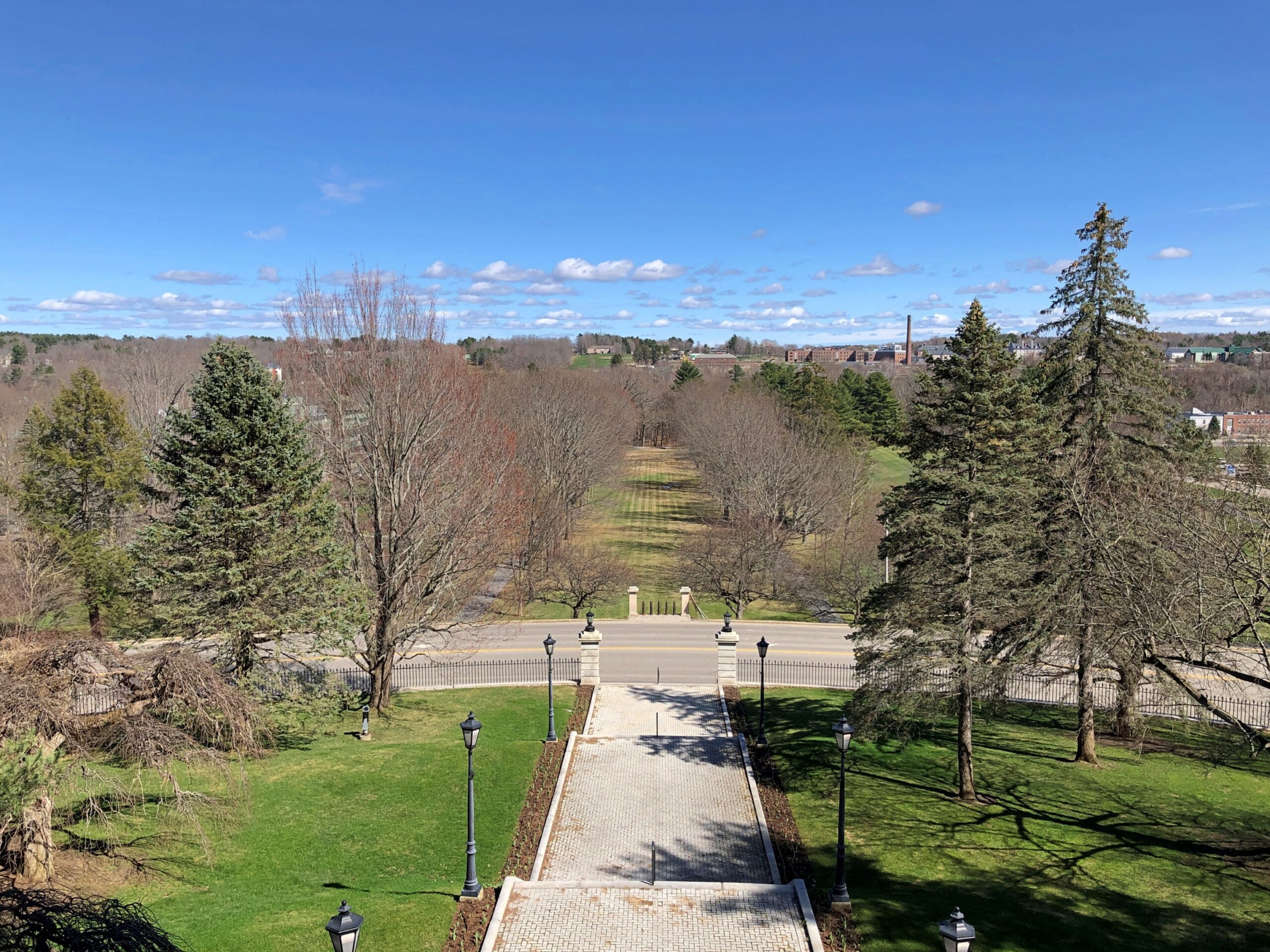
The building is perched on a hill, as capitols sometimes are, with a sizable porch with a long view. Obscured off in the distance is the Kennebec River.
That porch is a good place for rocking chairs, someone thought at some point; someone associated with the capitol in some way that made it a reality, so I suppose in that sense, the chairs are as official as memorial busts or portraits. I had a seat. I couldn’t very well ignore the obvious thing to do in a place where rocking chairs aren’t an obvious thing to have. Also, I get tired more easily than I used to. I took in the view.
Augusta was the last place I visited in Maine last month. I could hardly miss it on my way out of the state. For one thing, I’d been to Augusta, Ga. less than a year earlier. Mostly, I had a new state capitol to visit. A box to check. Thinking of it that way might perturb travel purists who insist that travel is about “expanding your horizons,” or “living like the locals” or some other vague nonsense. There’s nothing wrong with a few lists to consult along the way. Think of them as “goals.” Gives a little structure to an interest, and I’ve long had an interest in state capitols.
In this case, I was committed to meeting my friends that evening in suburban Boston, so as interesting as Augusta looked – especially the busy State St. on the way to the capitol – I only had time for one thing. The Maine State House was it.
Maine statehood was a process that “took 28 years… six referendums and a war before the District of Maine escaped the rapacious grasp (to some) of Massachusetts,” according to the New England Historical Society. But once the doughy Mainers had broken away, they needed a capital and a capitol. The more-or-less central Augusta for the former, and a design by Charles Bulfinch (d. 1844) for the latter. Bulfinch, who also designed the Massachusetts State House, was an architect of the early Republic, maybe the architect of the early Republic, as the starting point of Federal style.
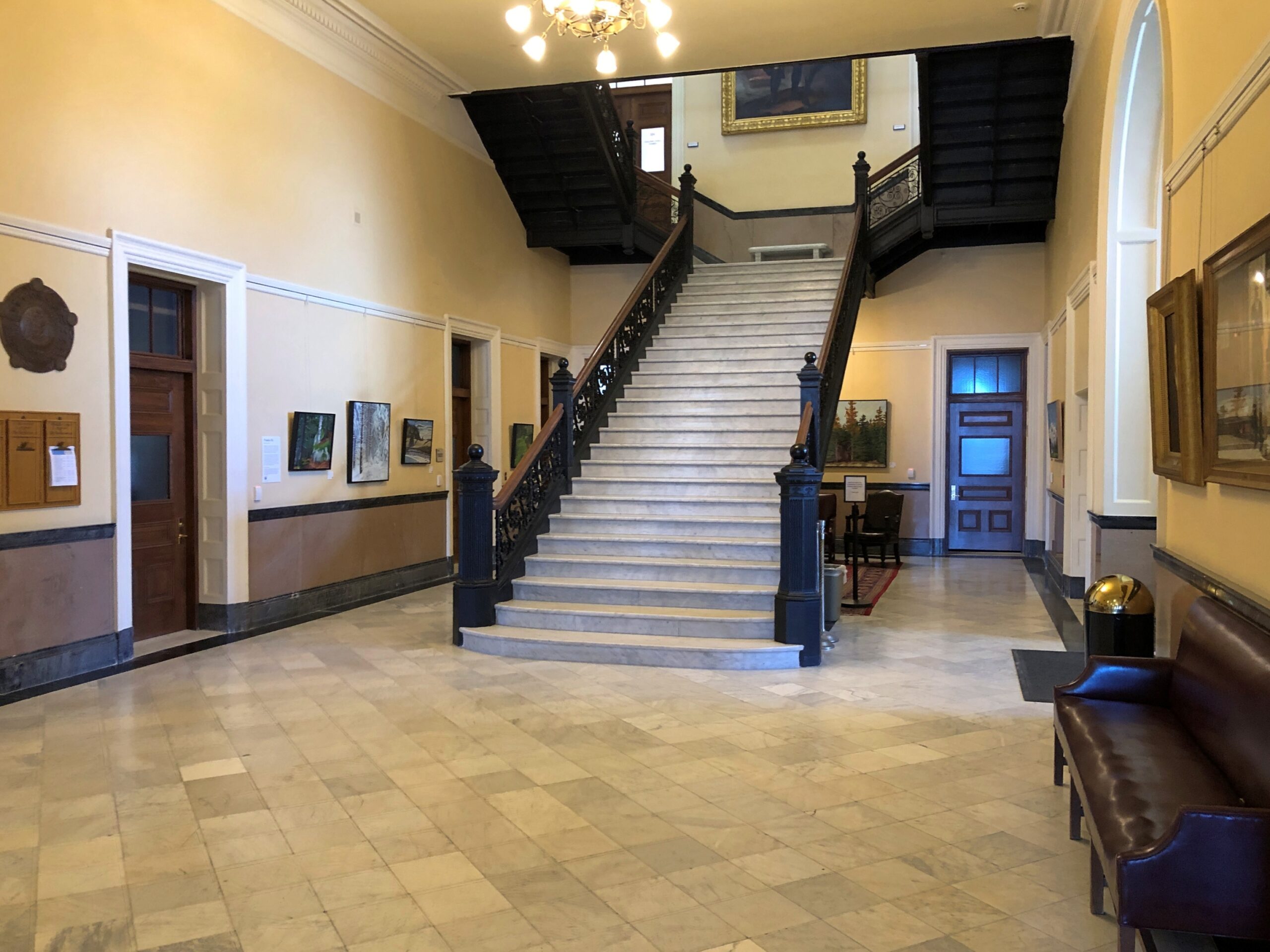
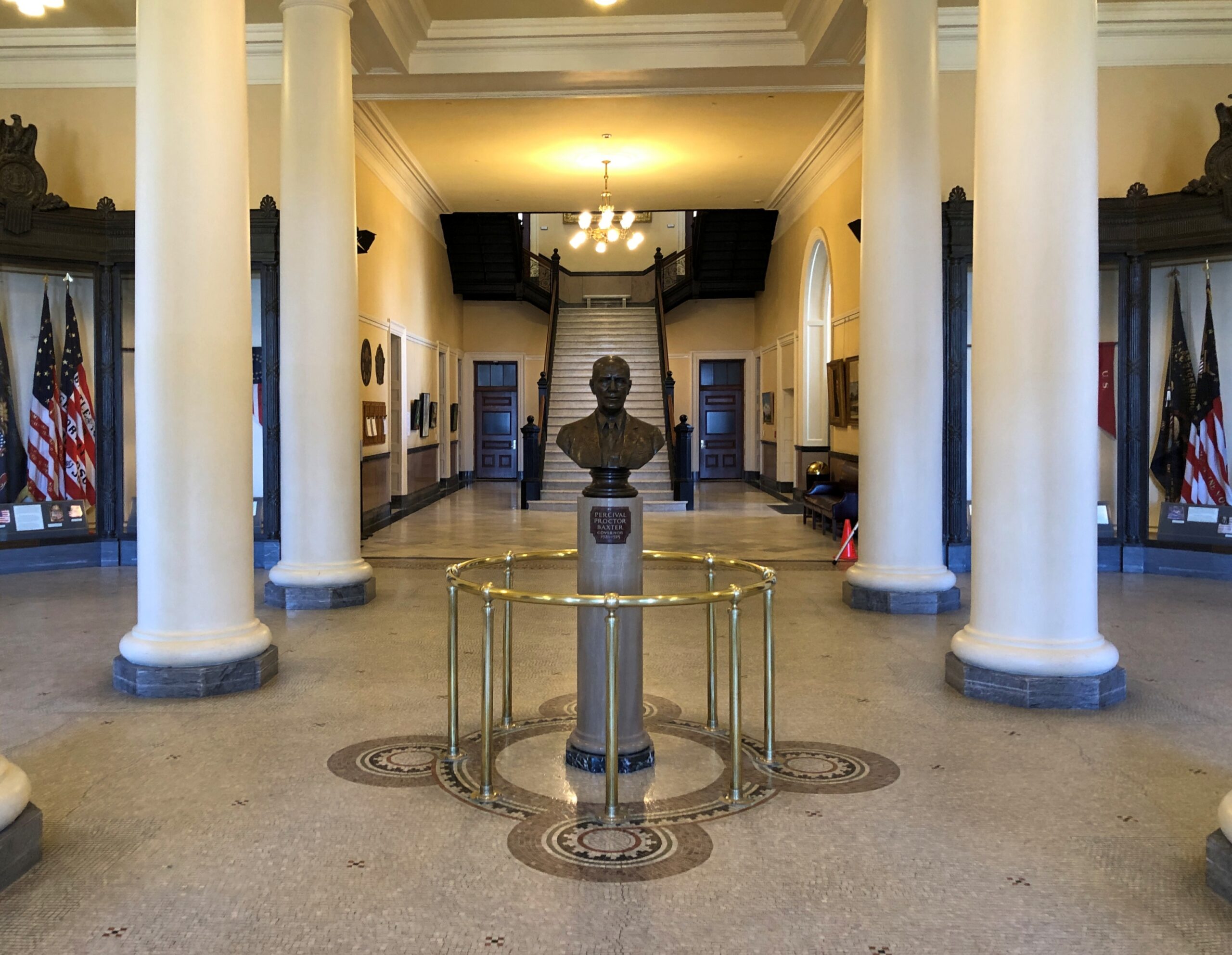
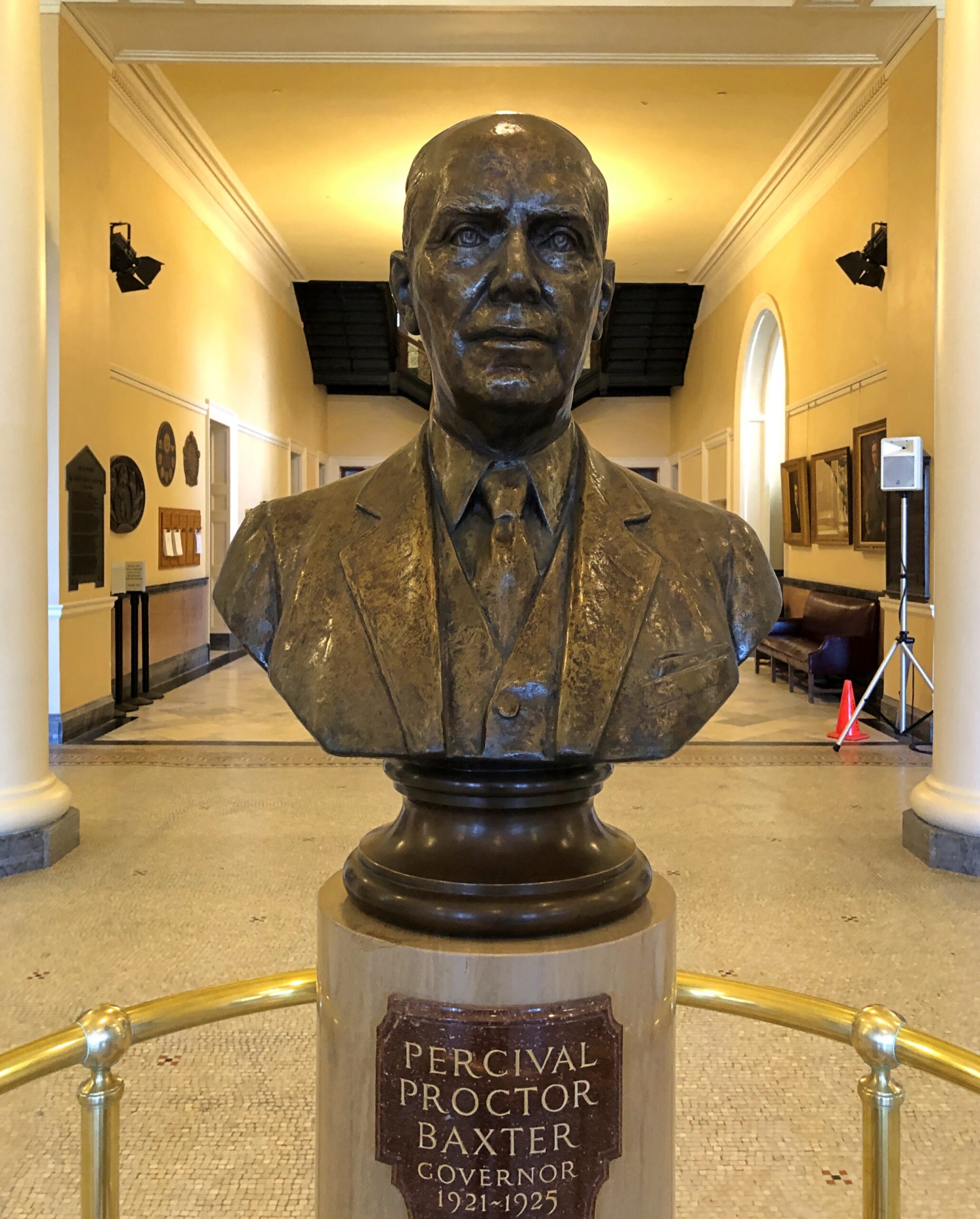
Not the most ornate of capitols, but a pleasant design. Mainers of yore are honored in various spots, but a special place of honor is for Gov. Percival Baxter (d. 1969), who sounds like an all-around swell fellow. Baxter State Park way up in the northern wilderness is named for him, and for good reason: being personally wealthy, he was able to acquire the land for the park himself, which he gave to the state.
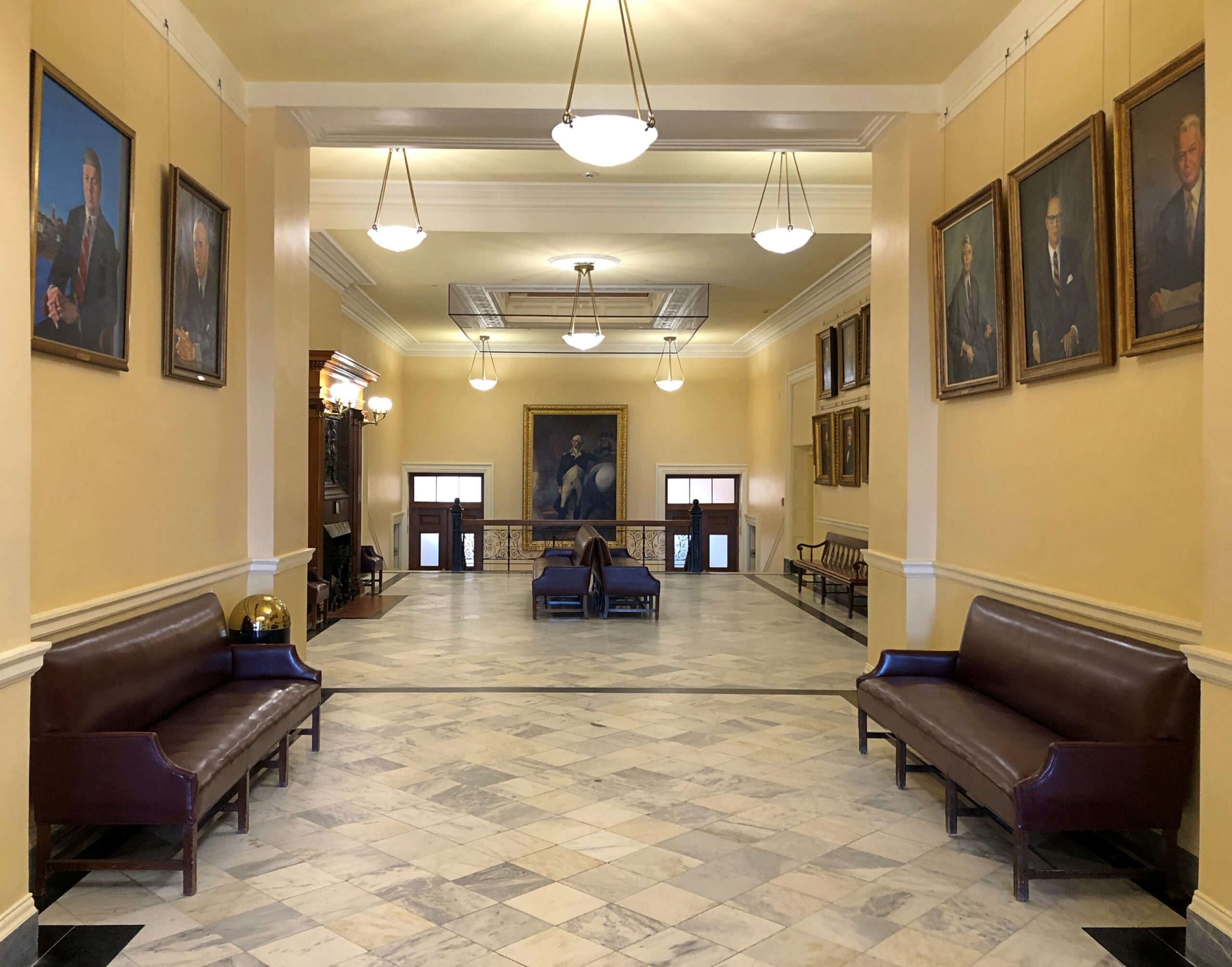
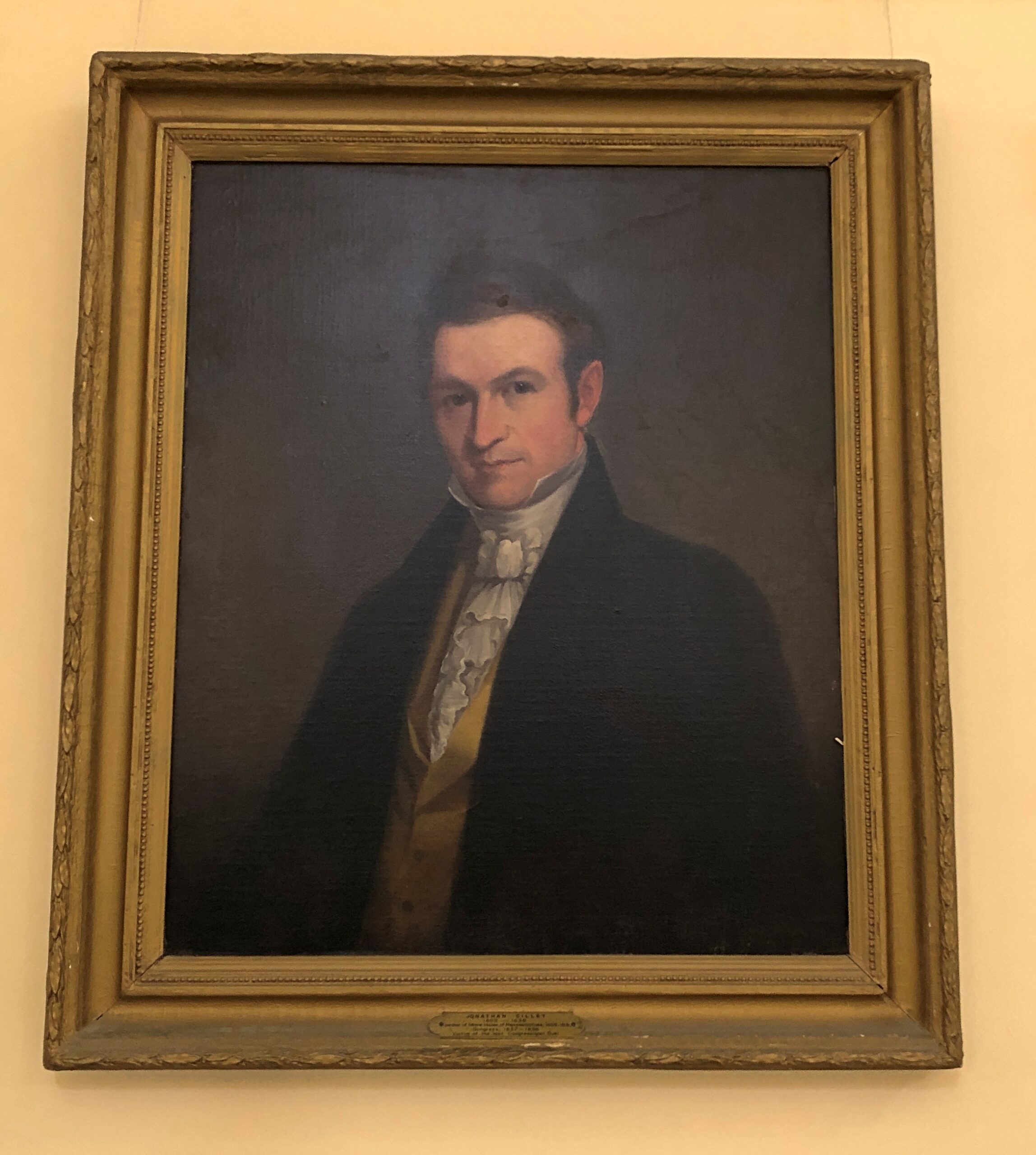
A number of portraits hang on the wall, also as usual for a capitol. One intriguing one: Jonathan Cilley (d. 1838). A Congressman from Maine who, as the sign under the painting says, was “victim of the last Congressional duel.” Shot by fellow Congressman William Graves over some arcane point of honor, he was. Quite the story.
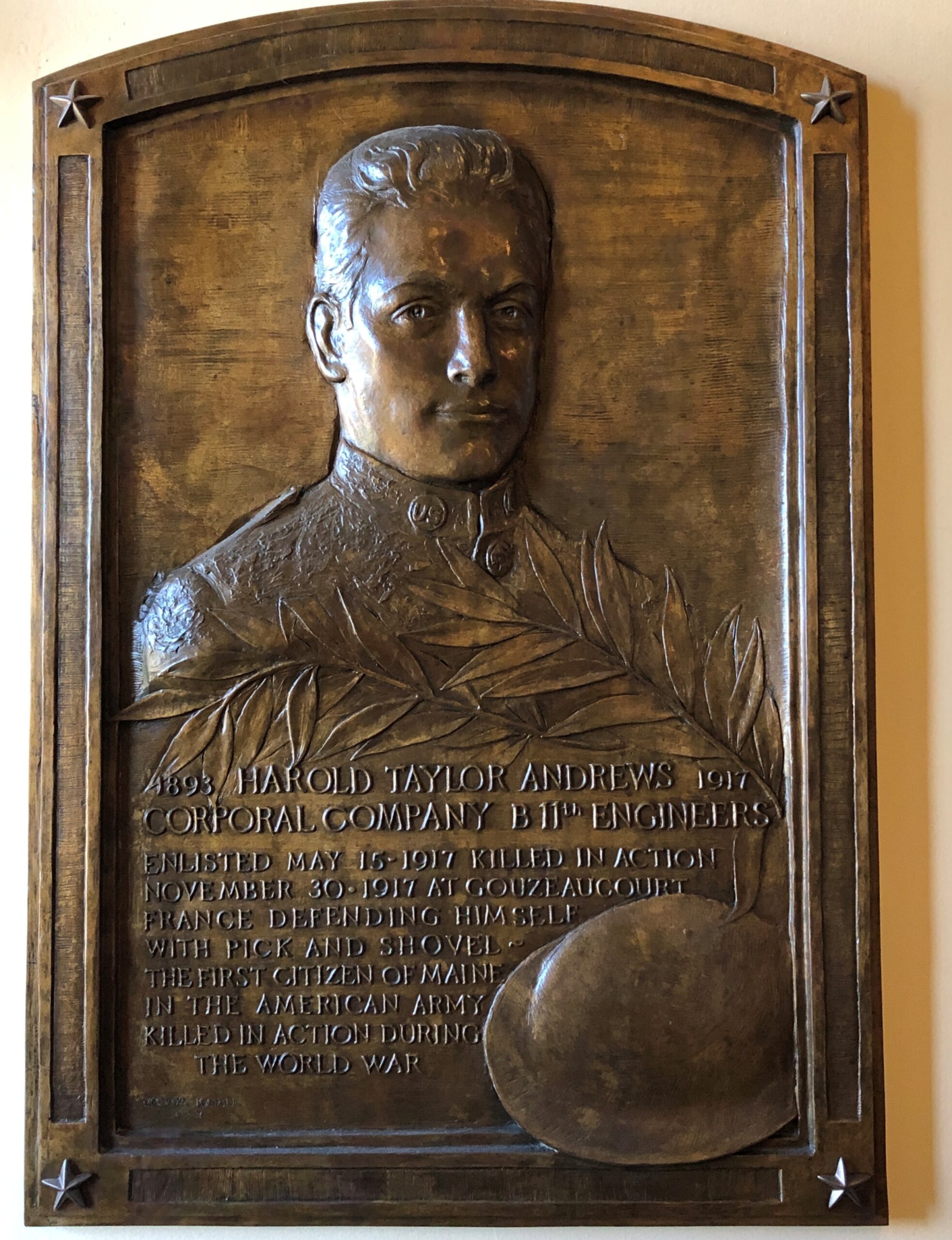
Another story on the wall: Sgt. Harold Andrews, the first U.S. soldier from Maine to die in the Great War (November 30, 1917). An exact contemporary of my grandfather, and an engineer as well. Grandpa returned from France to have descendants, Andrews did not.
If for no other reason than to make the acquaintances of Gov. Baxter and Rep. Cilley and Sgt. Andrews, the Maine State House was a good box to check.
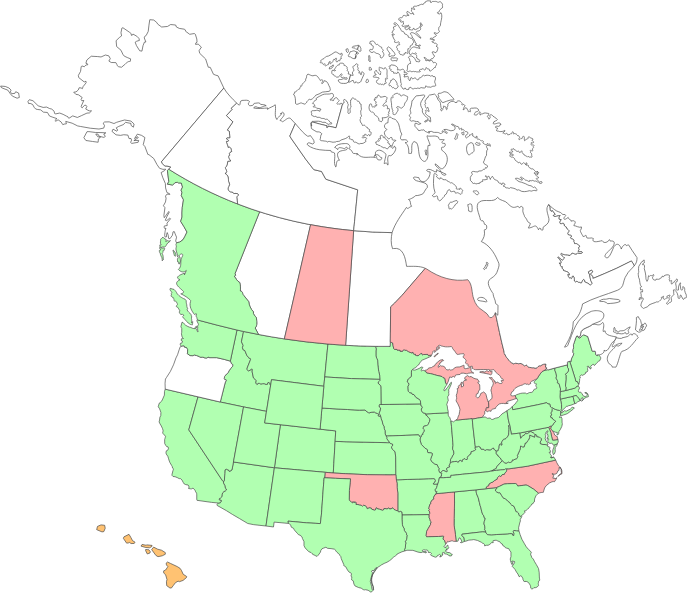
The thing about state capitols, though, is there aren’t many new ones left for me to visit. Got a few more provincial capitols — parliament buildings — however.
Green: interior visits. Orange: exterior visit only. Gold: uncertain. White: more boxes to check.