This evening, Ann said she was going to see Coyote vs. Acme. I will ask her about it later. Good idea — and I understand its inspiration is the hilarious Ian Frazier piece — but it could be awful in execution. Happens a lot.
Could Road Runner cartoons be a Buddhist parable? The Coyote seeks satisfaction in the world, in pursuing goals, but is rewarded with constant frustration, since in a world of impermanence, simple peace of mind is impossible, much less nirvana. Acme, that is to say society, provides the Coyote tools for pursuing his goals that he inevitably believes will work, but which inevitably do not. He learns nothing from the experience.
* * *
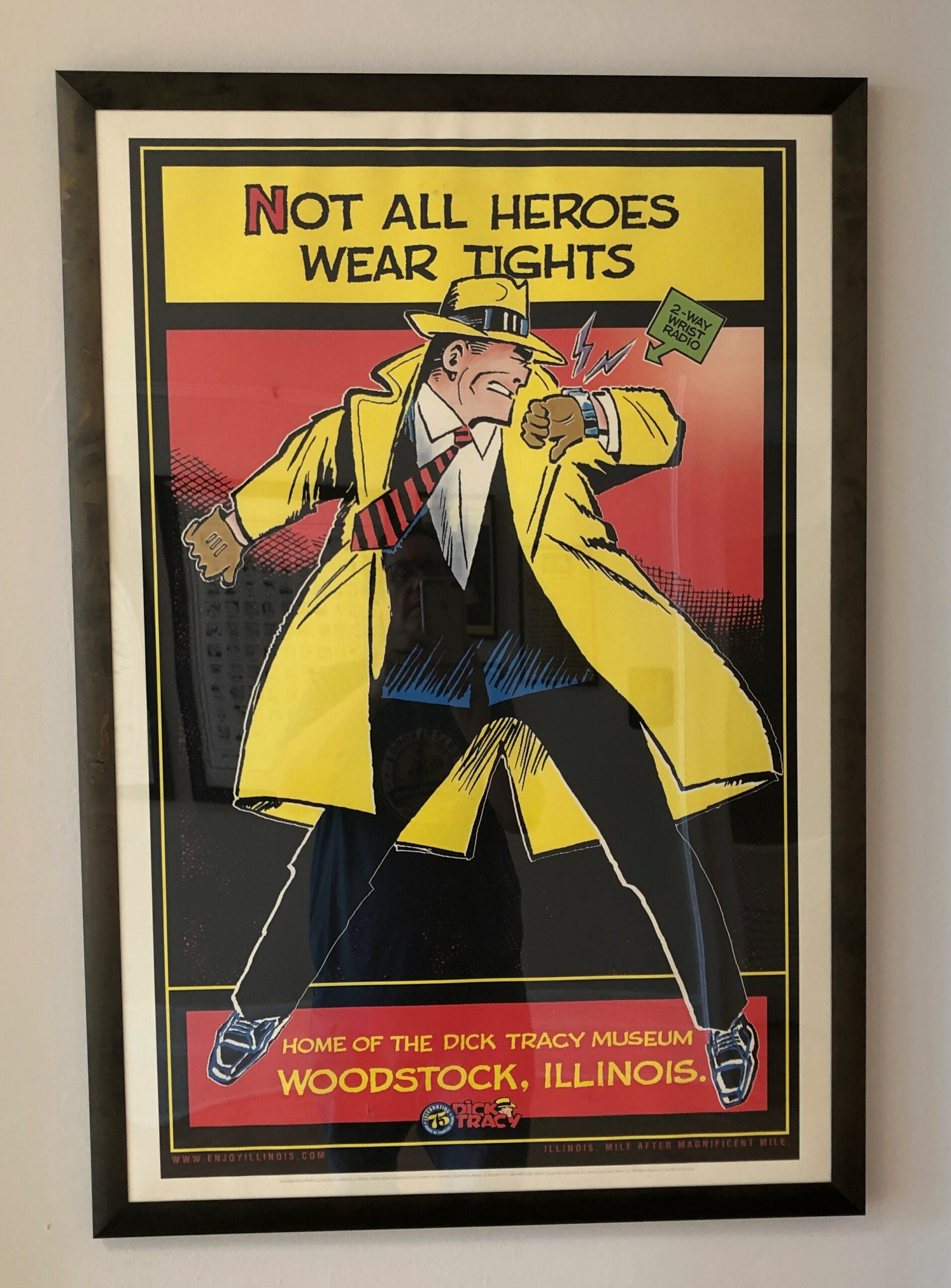
You could say that Dick Tracy considers Groundhog Day an upstart when it comes to Woodstock. The comic strip detective has a distinct place in Woodstock history, since DT creator Chester Gould drew all of them from 1931 to 1977 at his home in the town, where he also stayed until his death in 1985.
Previously, there was a small museum devoted to Dick Tracy in Woodstock. On September 26, 2005, I wrote: “It’s a handsomely restored 19th-century brick building, now housing an art gallery, a restaurant (in the former jail) and the Chester Gould-Dick Tracy Museum. Only $2 to get in that museum, but the family was waiting in the car during my inspection of the inside of the former courthouse, so I merely looked in. Even when I was a kid, Dick Tracy seemed like a comic in amber, so I didn’t feel a great urge to go in. Someday I’ll go, maybe, just for curiosity’s sake.”
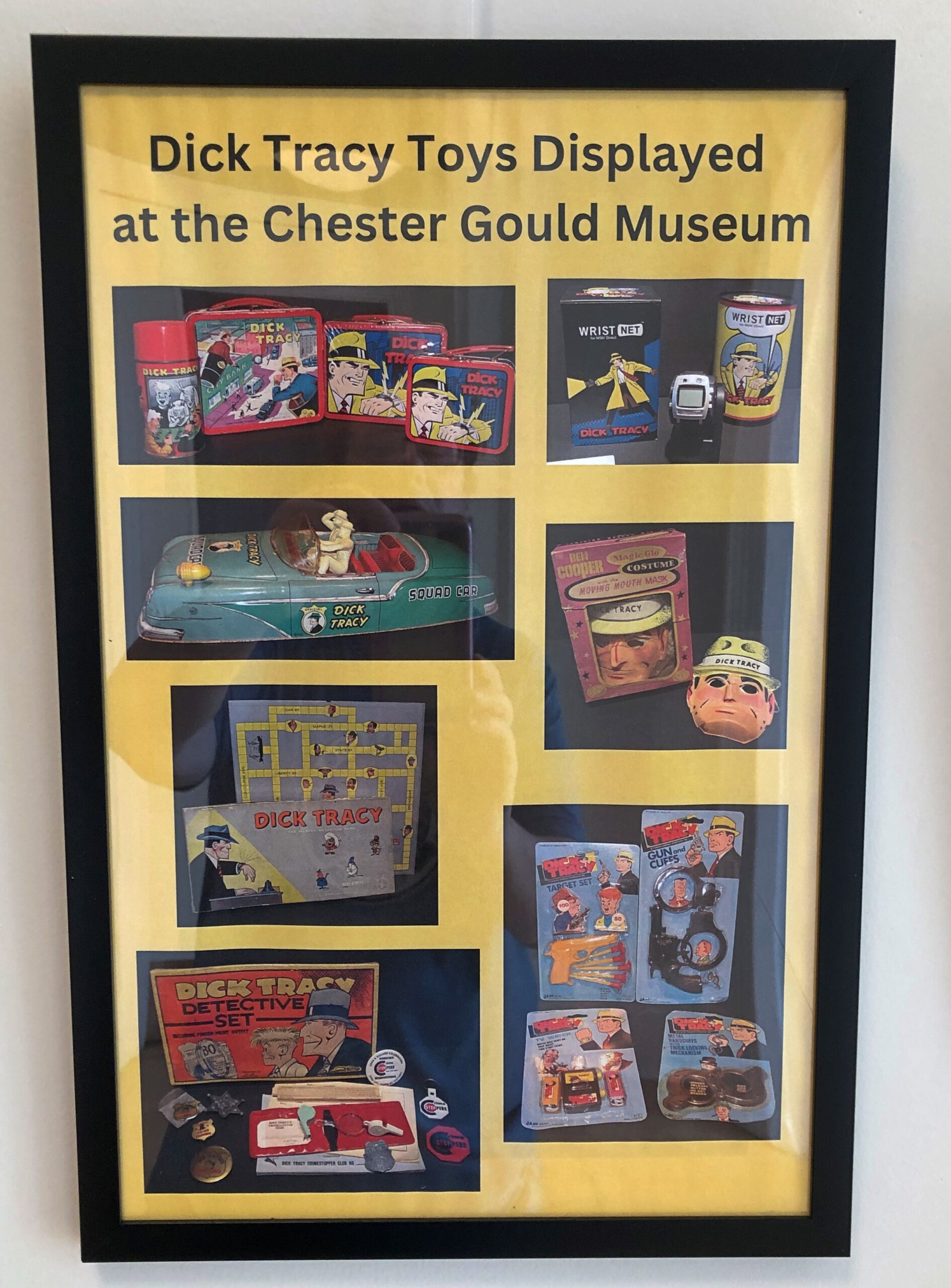
That day never arrived, and I believe the demise of the museum was around the time of the economic disruptions of 2008 and ’09. On the other hand, the day did arrive for a visit, sort of, when we went into the old McHenry County courthouse on Saturday. Dick Tracy is even more of a bug in amber than ever, though it is still being published, with a small exhibit on the first floor given over to the comic and the former museum.
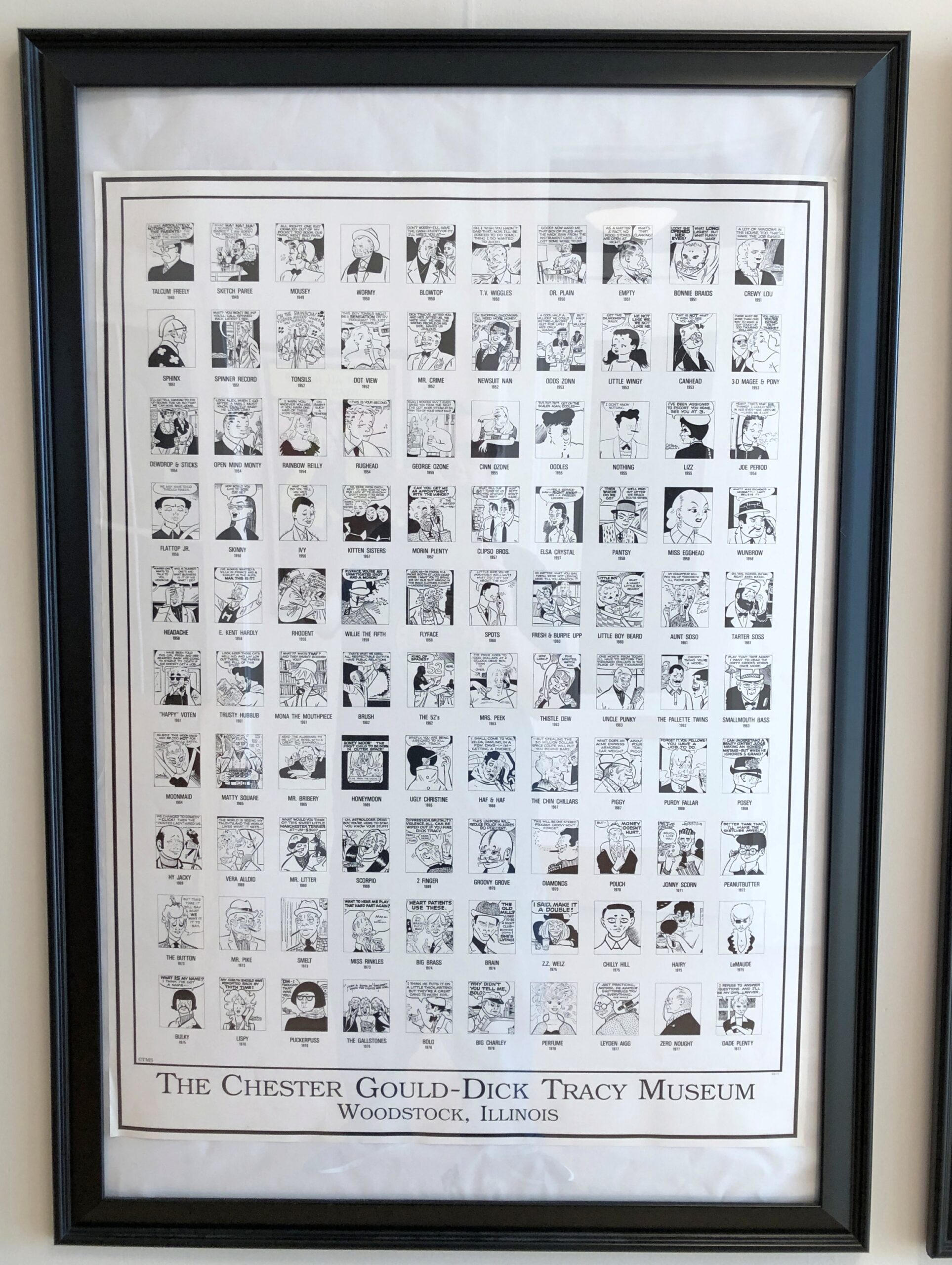
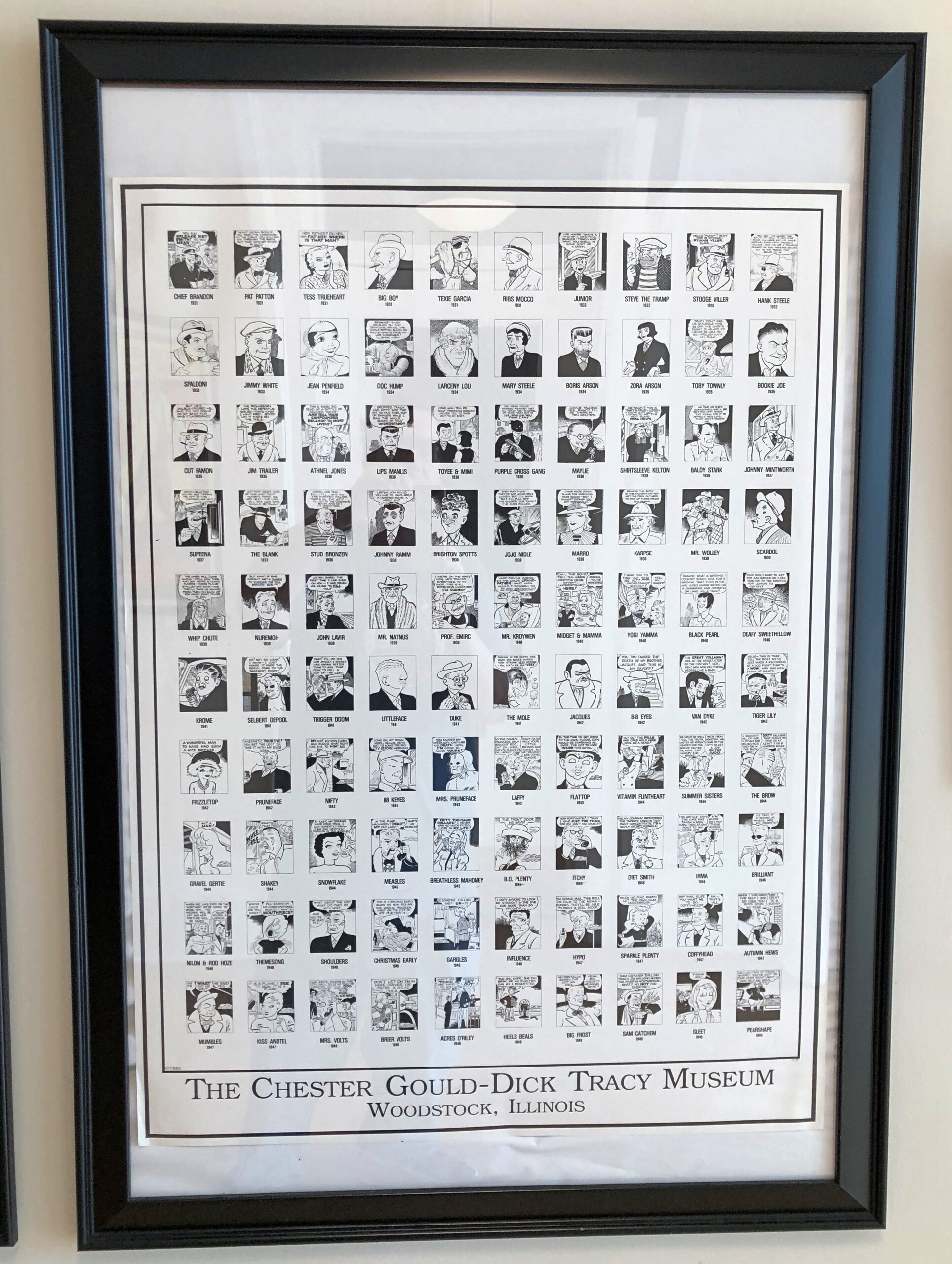
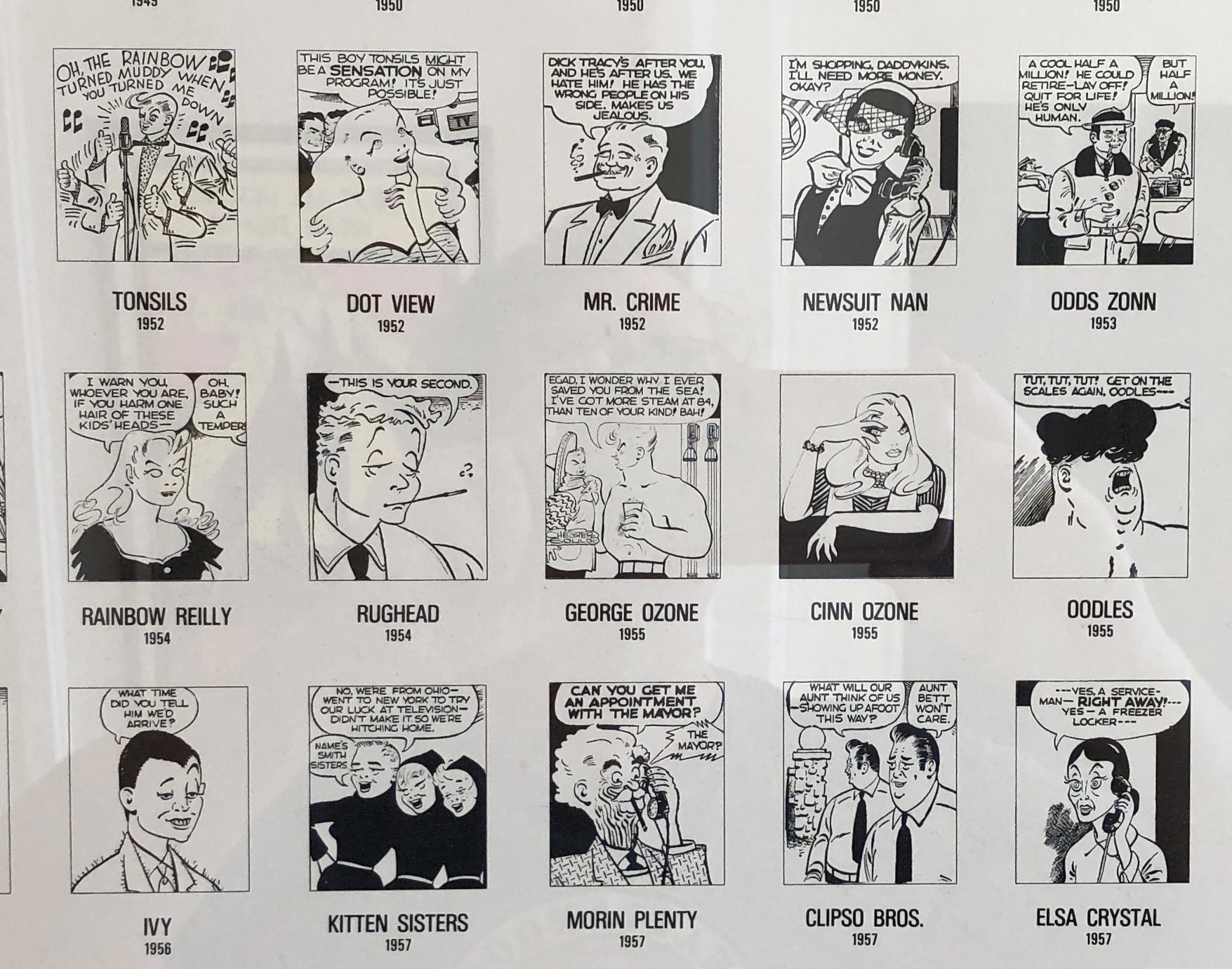
Including posters that detail character introductions through the run of the Gould strip from 1931 to 1977. I have to say that my knowledge of Dick Tracy characters is meager.
A detail.
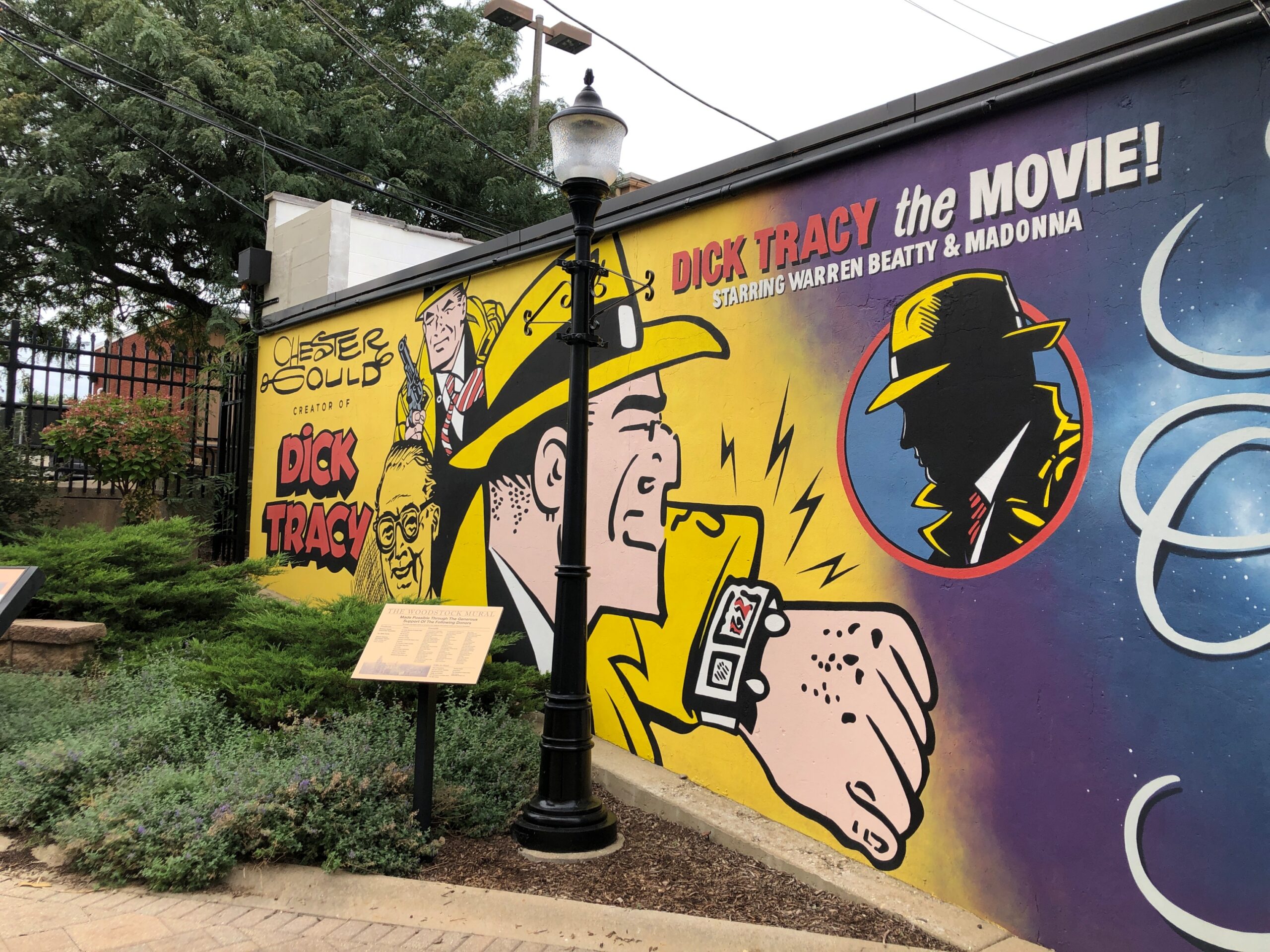
Tracy also gets his Woodstock due on the same wall as the Groundhog Day mural.
Hey, there was a Dick Tracy movie too! Of course I remember it. Saw it on a transcontinental bus ride in ’91. A long-distance bus that had video. A novelty. That was in Australia. Madonna turned out to be the villain? The movie didn’t make much of an impression.
Quincy Adams Wagstaff Elementary has started classes for the year. I know that because I saw a mass of students and parents waiting outside the school this morning just before classes begin, as has been the first-day practice for many years. I went there myself, with daughters, from 2003 to 2014.
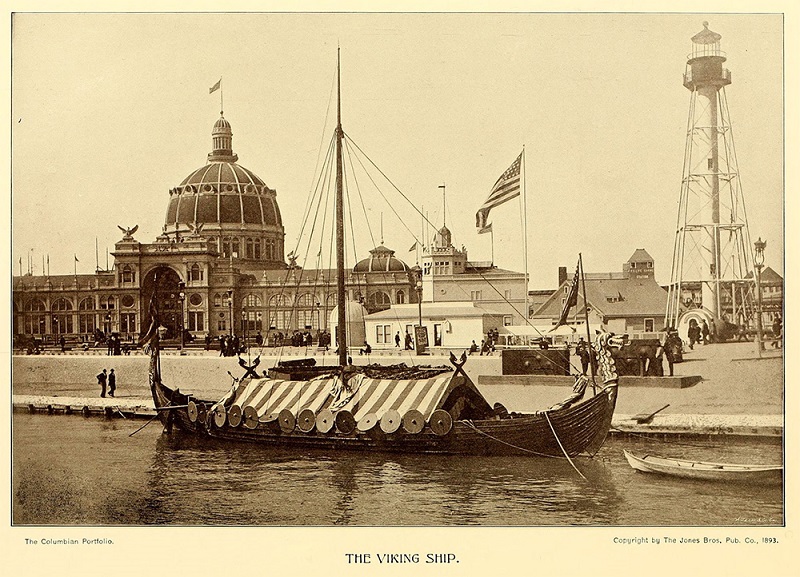
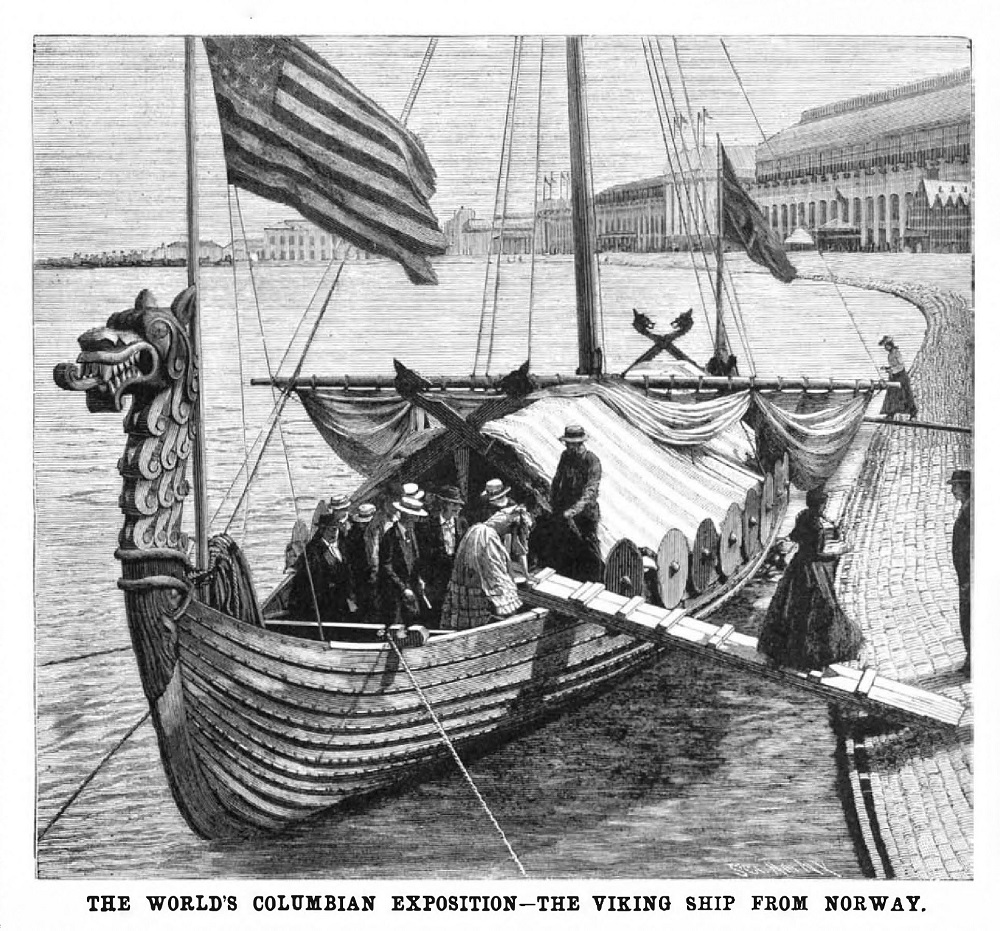
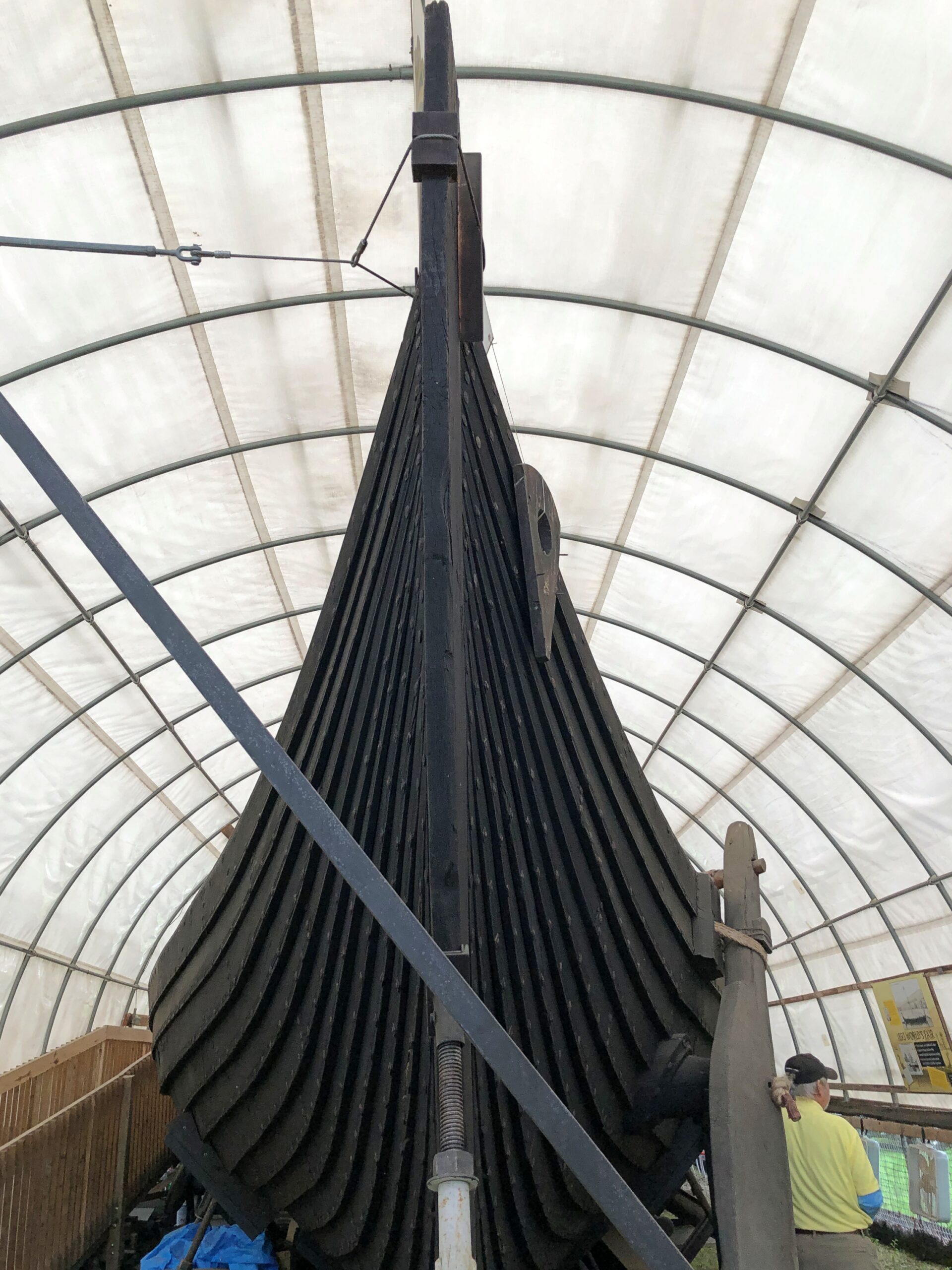
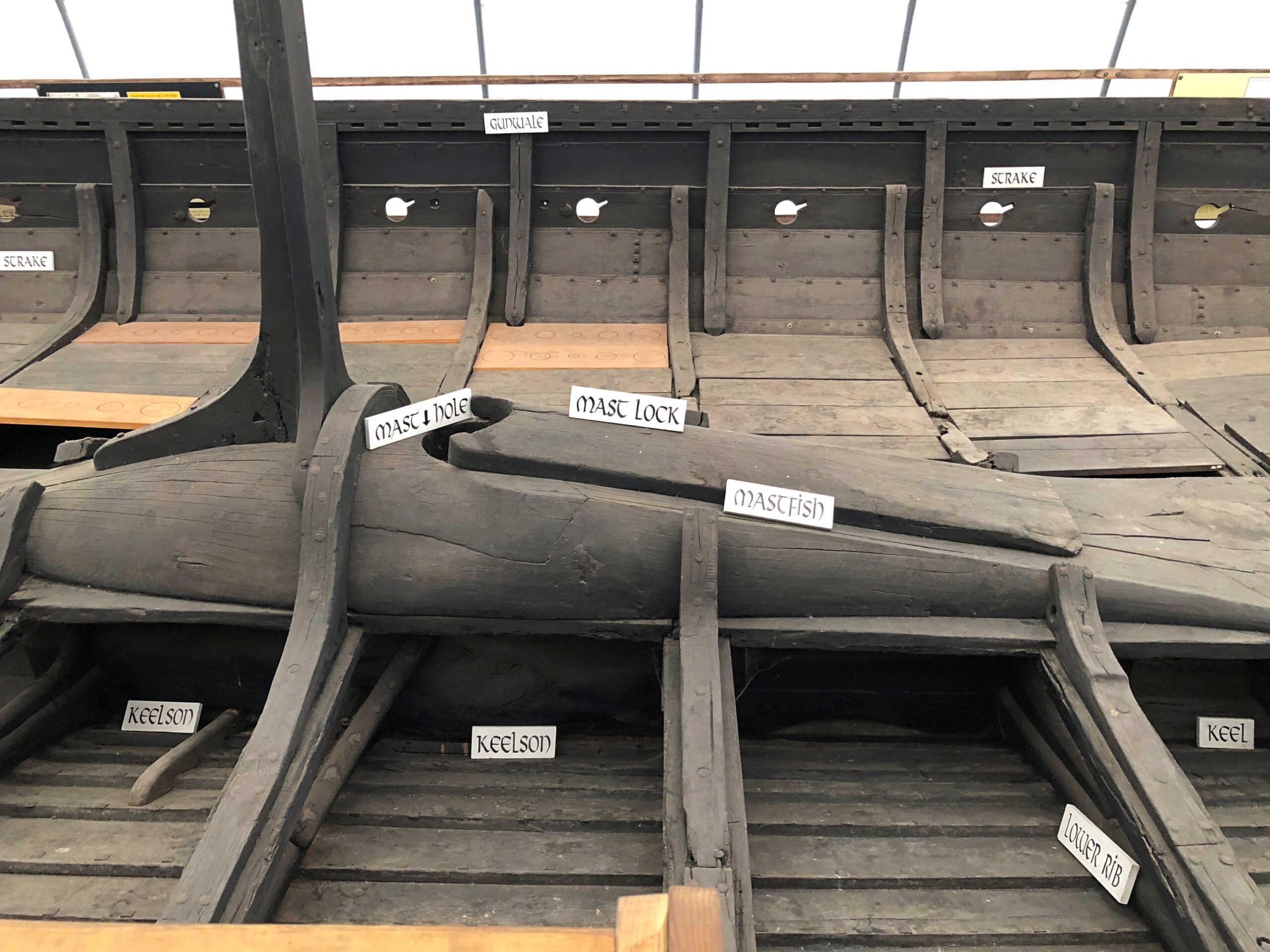
In 1893, a curious ship arrived in Chicago during the World’s Columbian Exposition.
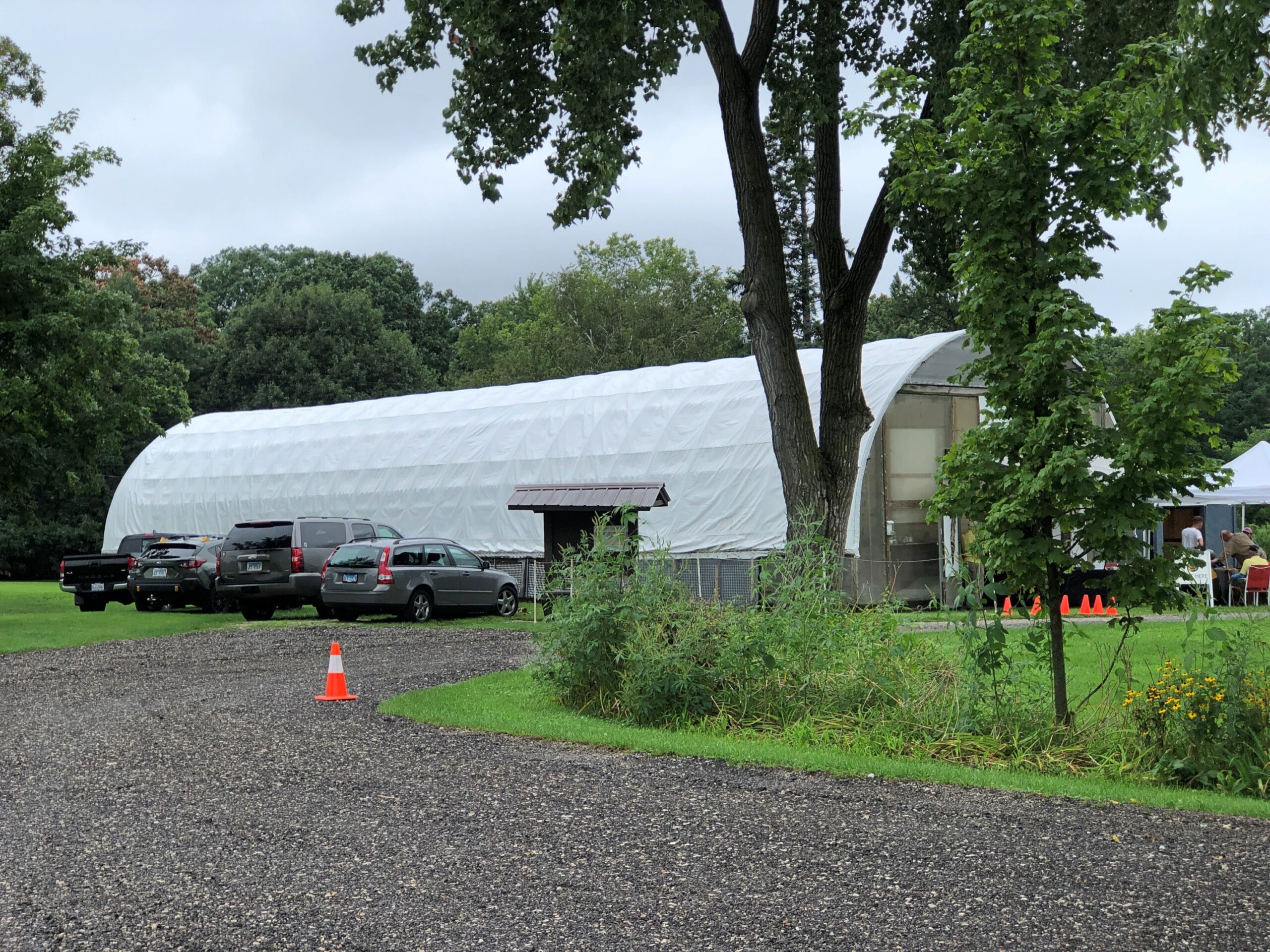
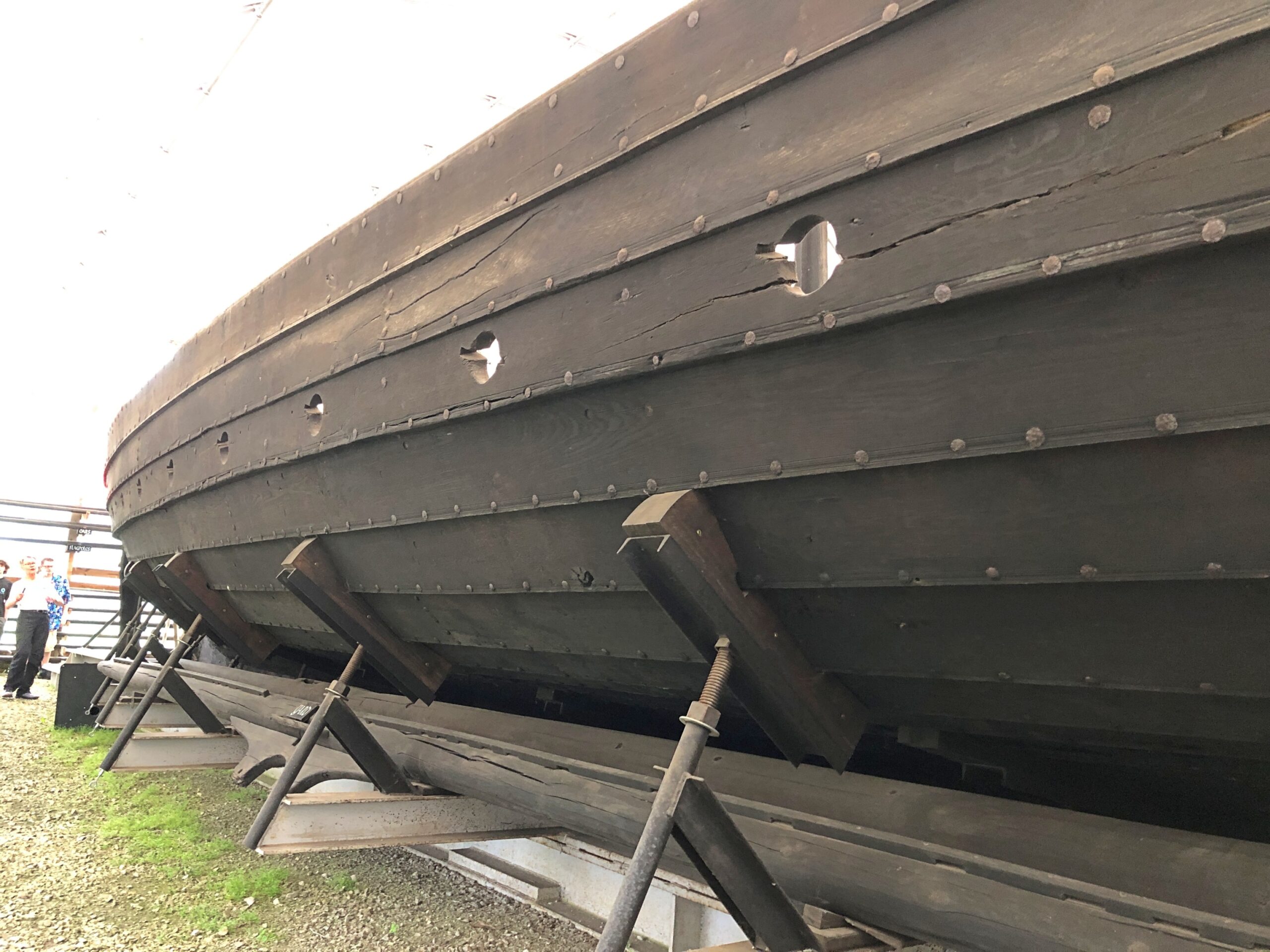
That same ship, in 2026, can be found under a temporary, Quonset-like structure in a field in Geneva, Illinois, not far from the Fox River.
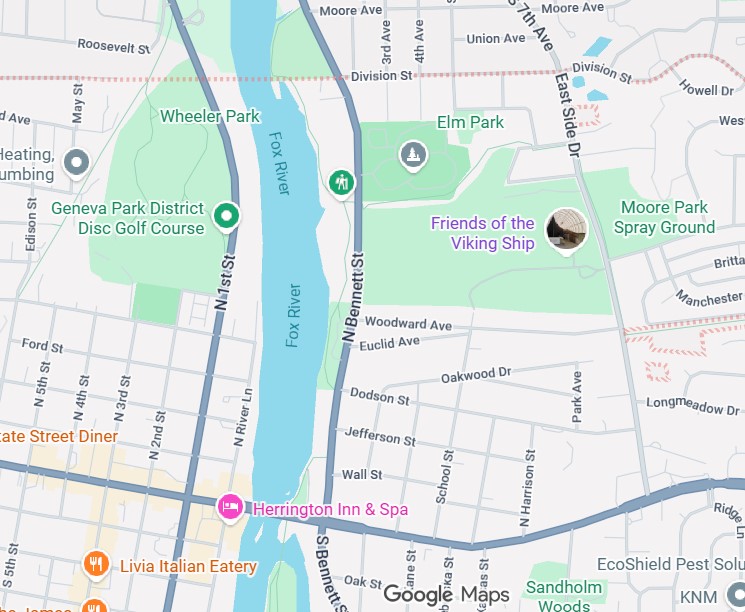
Once a month during the warm part of the year, the ship is open for tours, and we arrived on Saturday in the warm drizzle to take one. I knew about it because, examining Google Maps one day recently, I saw Friends of the Viking Ship.
Say what? It is a storied ship, and has good friends these days, since one of the first things the guide told us was that the nonprofit Friends of the Viking Ship recently acquired a site on which a permanent museum will be built to house the ship, whose formal name is the Viking.
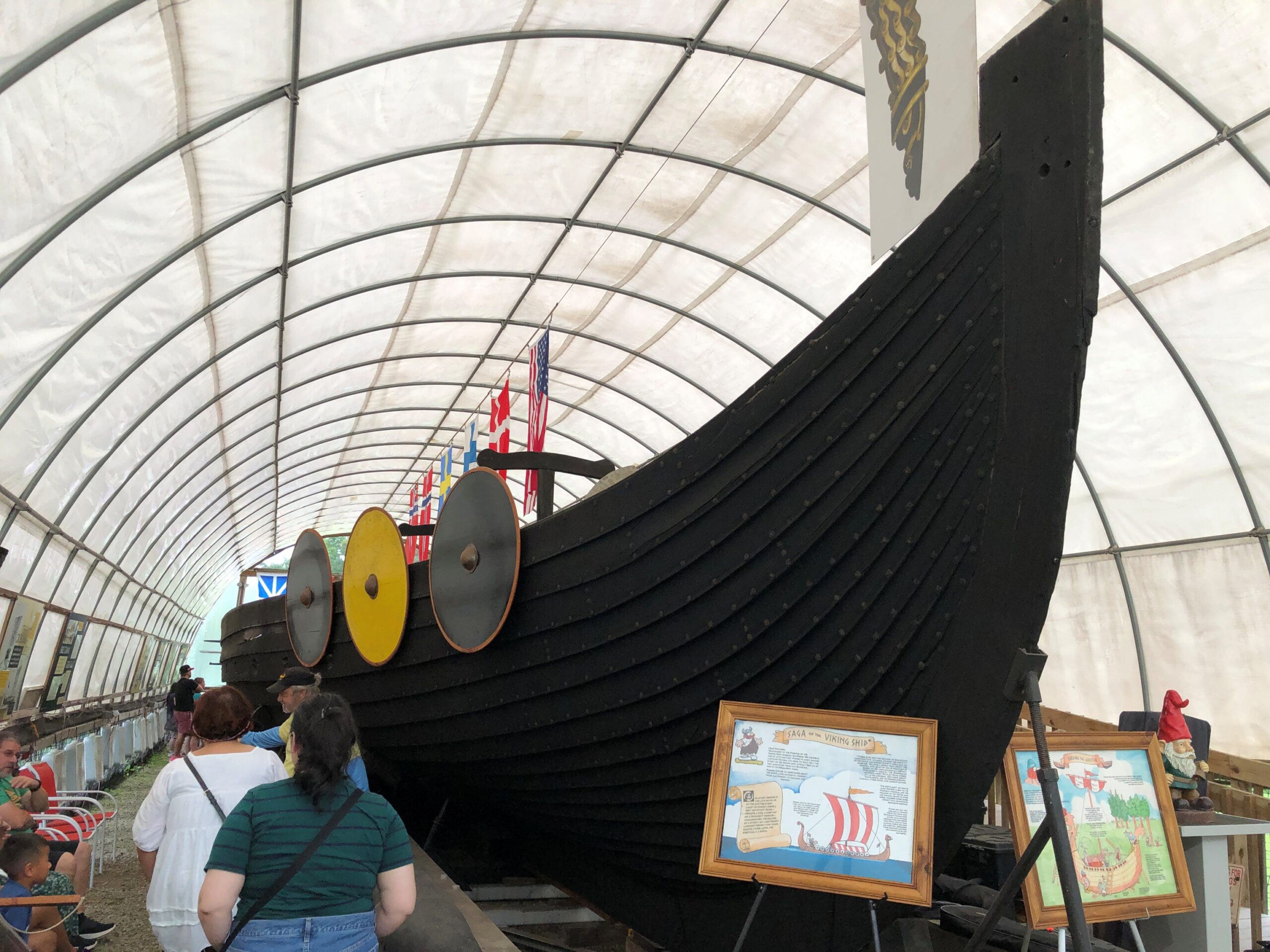
“Christen Christens’s Frames Shipyard in Sandefjord, Norway built the Viking in 1892-1893 after the ancient Viking ship Gokstad,” notes the web site of the park that is currently home to the ship. “In 1893 the Viking sailed from Norway to Chicago, via the Erie Canal and the Great Lakes, to the World’s Columbian Exposition and now displayed at Good Templar Park.”
Good Templar Park in Geneva is a whole other kettle of fish: a park owned by a temperance society. But for now, more about the ship. How did it happen that a replica of a 9th-century Viking ship sailed across the wild North Atlantic in the days before wireless communication, ice patrols or weather reports? Apparently they did have 1890s navigation equipment – a compass, quadrant and barometer, for instance – so it wasn’t quite like the voyages of historic Vikings. Close enough, though, as it was undertaken in an open ship (with a tent) powered by sail and, sometimes, a dozen men pulling oars.
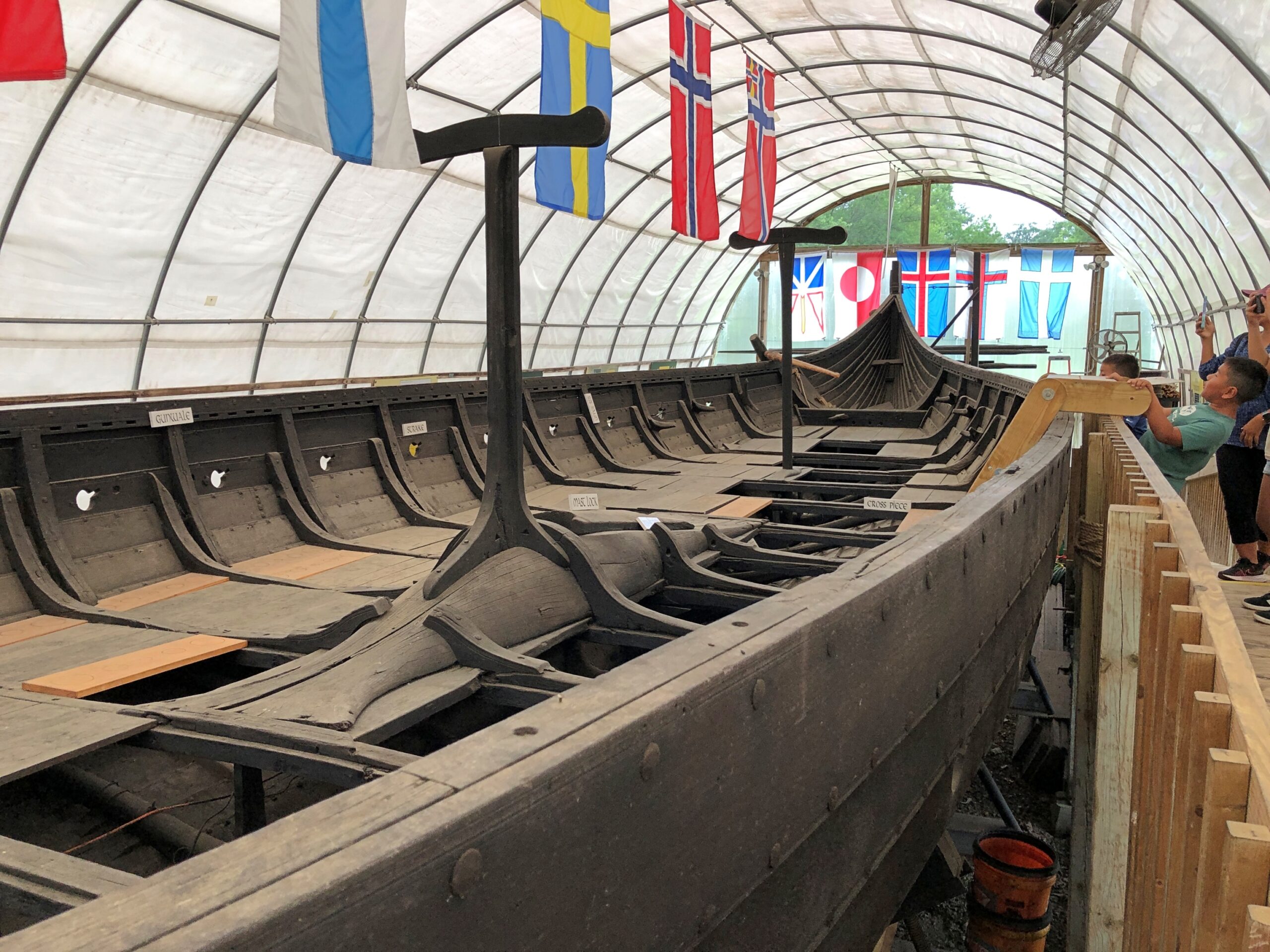
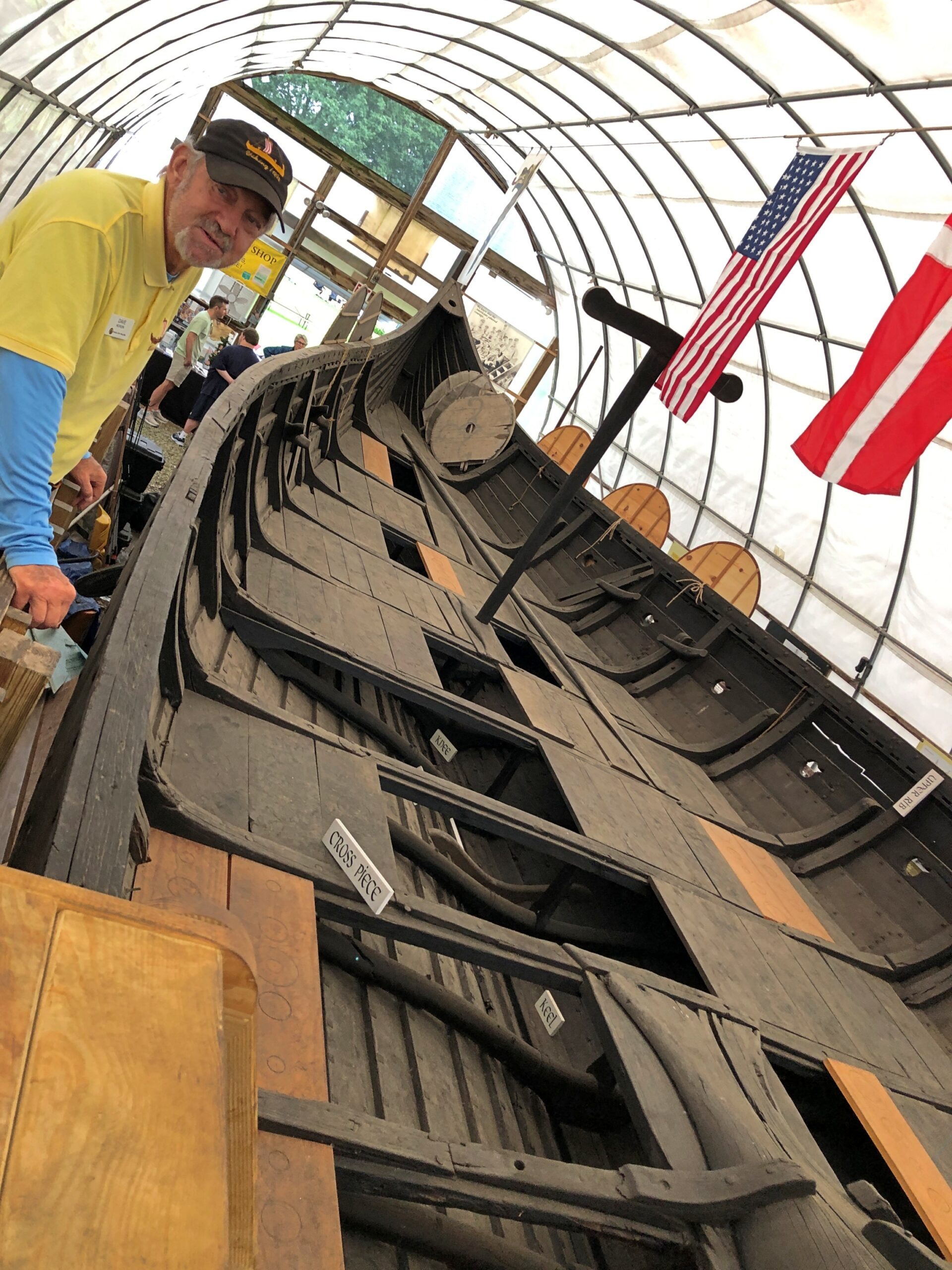
The tour involved a volunteer (let’s call him Bob) leading visitors all the way around the ship on a platform that allows you to look into, but not go onto, the vessel. Still, it’s a close look.
The why of it seems to be nascent nationalism on the part of Norwegians in the late 19th century, though that isn’t quite how Bob put it. Replicas of the famed (by 1893) Nina, Pinta and Santa Maria were due to visit Chicago – towed across the Atlantic from Spain – for the world’s fair. Who arrived in the New World long before Columbus? Plucky Vikings, of course, so a replica of a recently discovered Viking ship was built to sail to the fair under its own power. Norwegian pride, yes; and to upstage the johnny-come-lately Spaniards, too.
“The assertion had been frequently made that the Norsemen in their frail, lightly built galley could never have crossed the stormy Atlantic,” one Professor Hjalmar Hjorth Boyesen of Columbia College wrote in The Chautauquan in 1894.
“It so happened that an old Viking ship was unearthed at Gokstad, near Sandefjord, twelve years ago, in the grave or tumulus of an ancient chieftain. The idea occurred to Captain Magnus Anderson, the editor of the Norwegian Seaman Gazette, that if an exact reproduction of this ship were made, he would undertake to sail her across the Atlantic and thus give an incontrovertible demonstration that the Norsemen, at least, could have discovered America…
“An invitation was issued for a national subscription and the required amount [to build the ship] was procured, mostly in the small sums of ten, twenty-five, and fifty cents. The undertaking, I am told, was not popular with the upper classes, while it appealed strongly to the imagination of the seafaring population which readily kindles at an enterprise with a touch of heroism. It was first proposed to christen the ship Leif Ericson; but for some reason the name The Viking was preferred. In every particular, even to the minutest detail, she was made to conform to her ancient model.
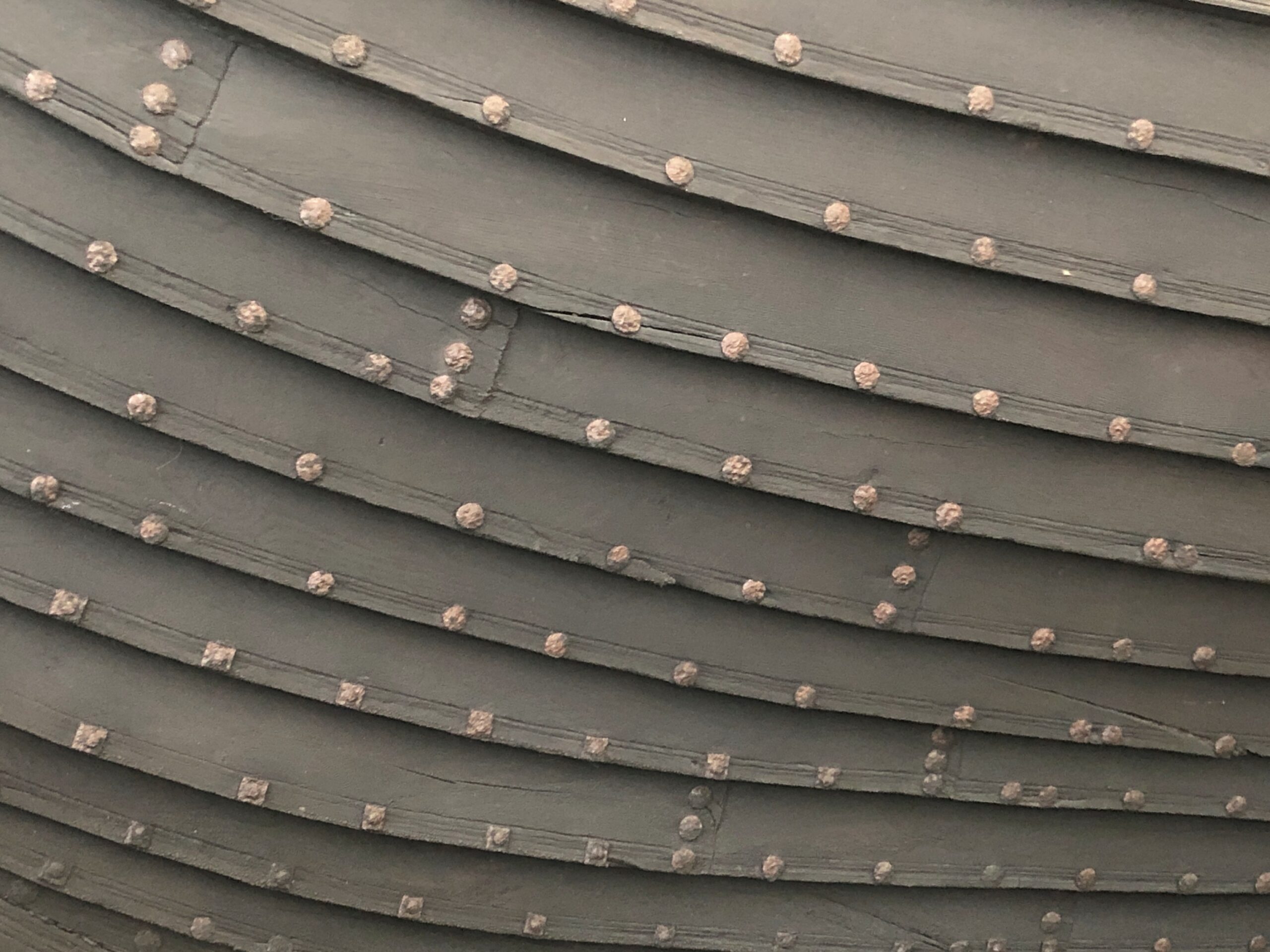
“She is clinker-built, of solid oak planks, is 78 feet long, 16 feet beam, draws 4 feet of water, and carries 200 yards of canvas. She has no real deck, but a loose bottom, which tends to give her that elasticity when striking the waves.”
The ship sailed for Chicago on April 30, 1893. “On May 10, when north of the Orkneys, she was caught in a heavy gale… That stanch little craft kept bravely ahead, though she shipped several seas, and the crew was kept busy bailing, until their horny hands were sore and the blood oozed forth under their finger nails. But not once did they think of turning tail; for they were all buoyed up by the thought that they had the honor of Norway in their keeping, and that, in a measure, they were to prove her claim to the glory of having first discovered the New World.”
When the Viking did reach the New World, its crew were feted on the Eastern Seaboard and elsewhere, and of course in Chicago. Ah, but fame is fleeting, etc. In the early 20th century, the ship was on display at the Field Museum but later suffered the indignity of being basically forgotten and in storage, owned by the Chicago Park District. The marvel is that she survived at all. Stabilization and restoration have been underway since the 1990s.
I was happy to do my little part – admission to the tour, and buying a few postcards – to put the ship in a proper museum, for its remarkable story, and the fact that it is probably the largest existing artifact of the World’s Columbian Exposition.
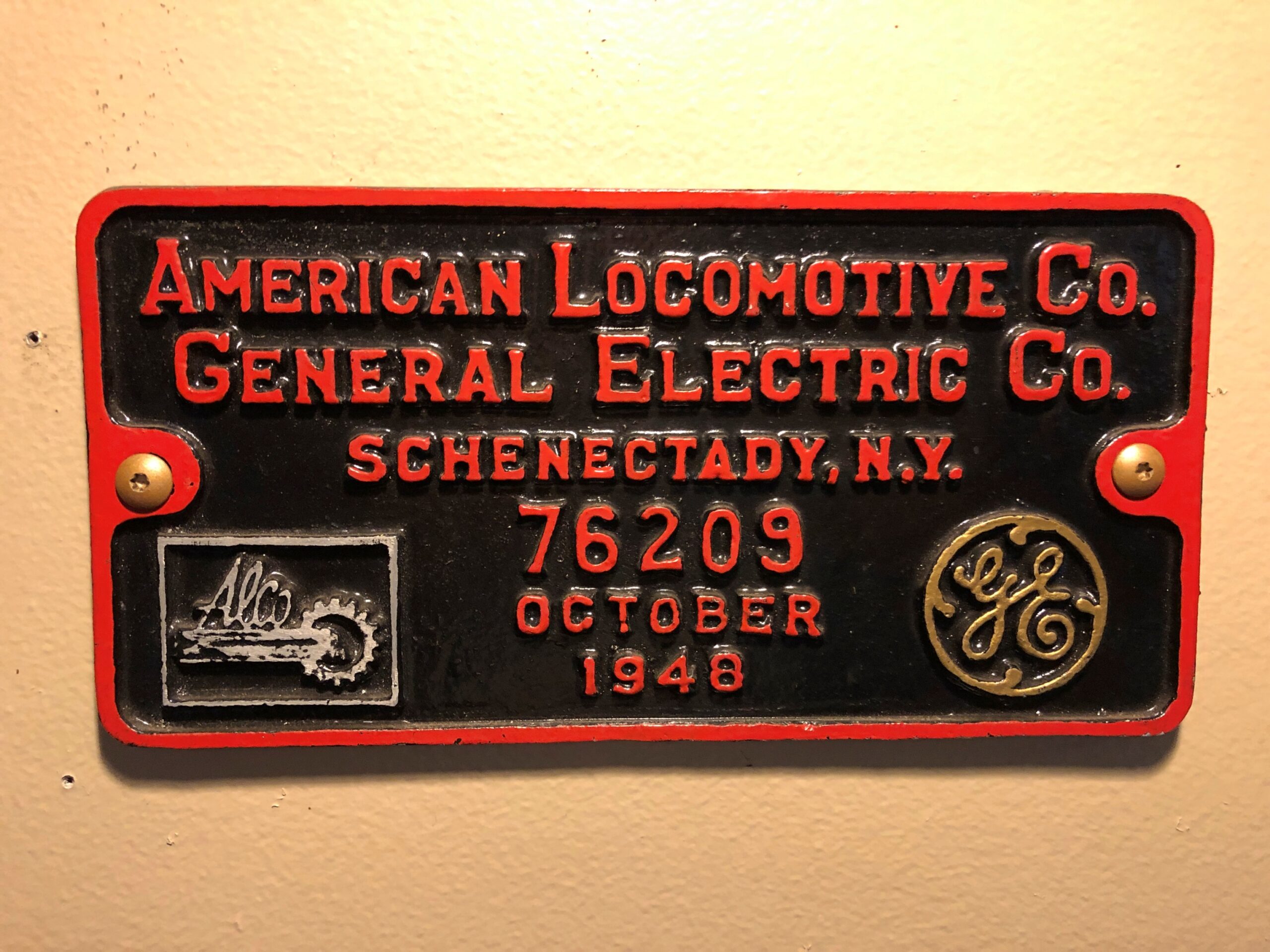
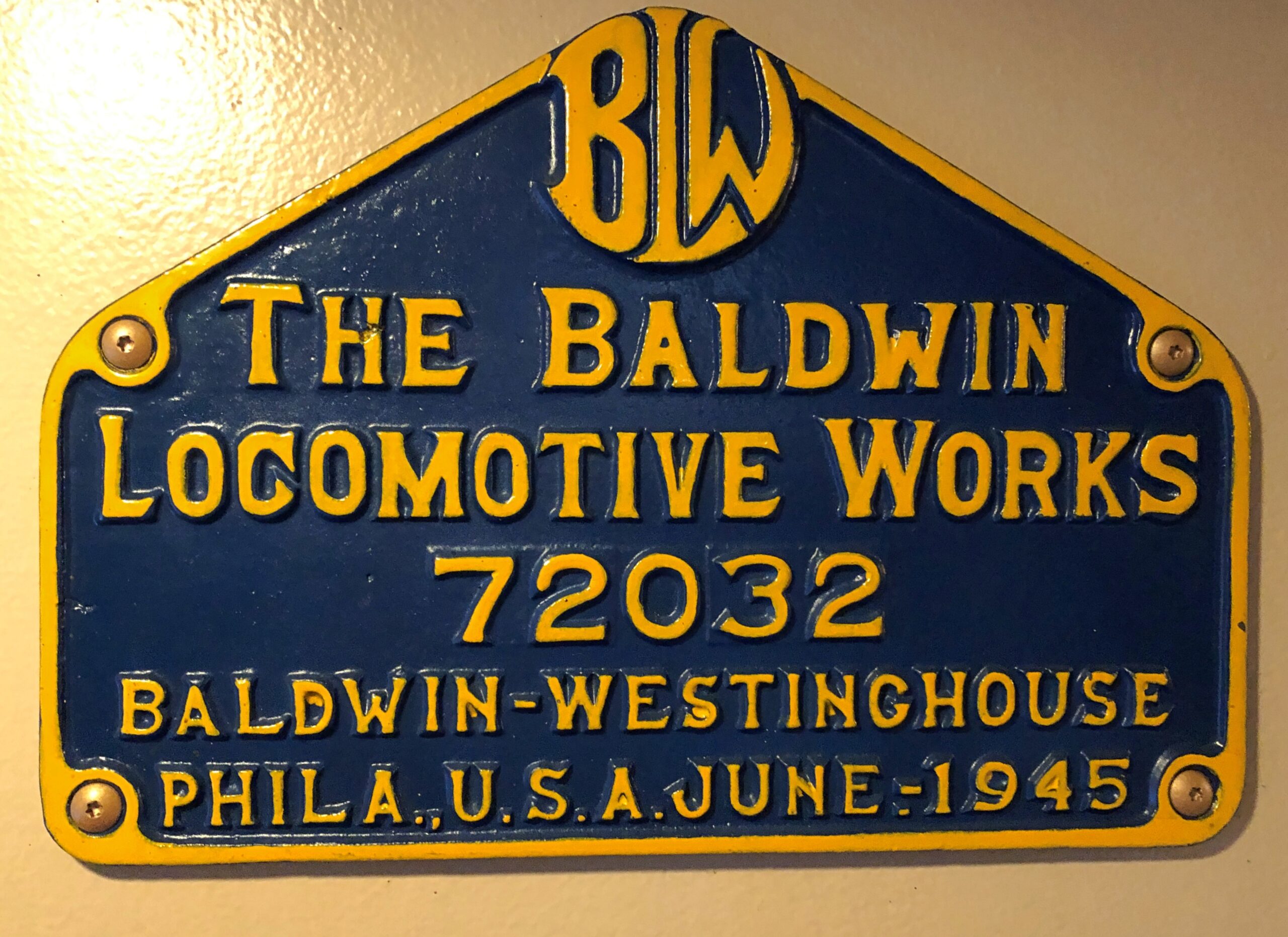
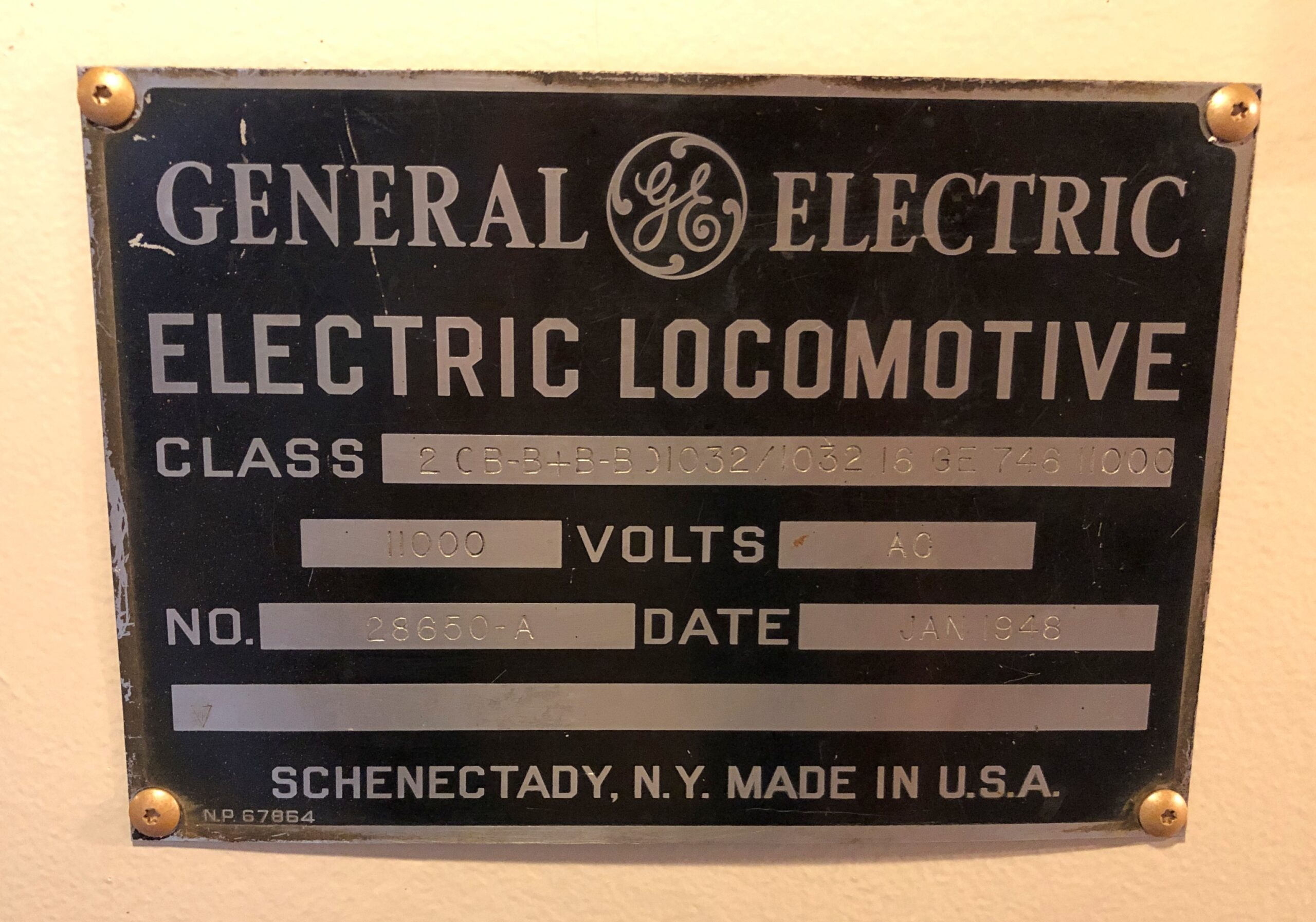
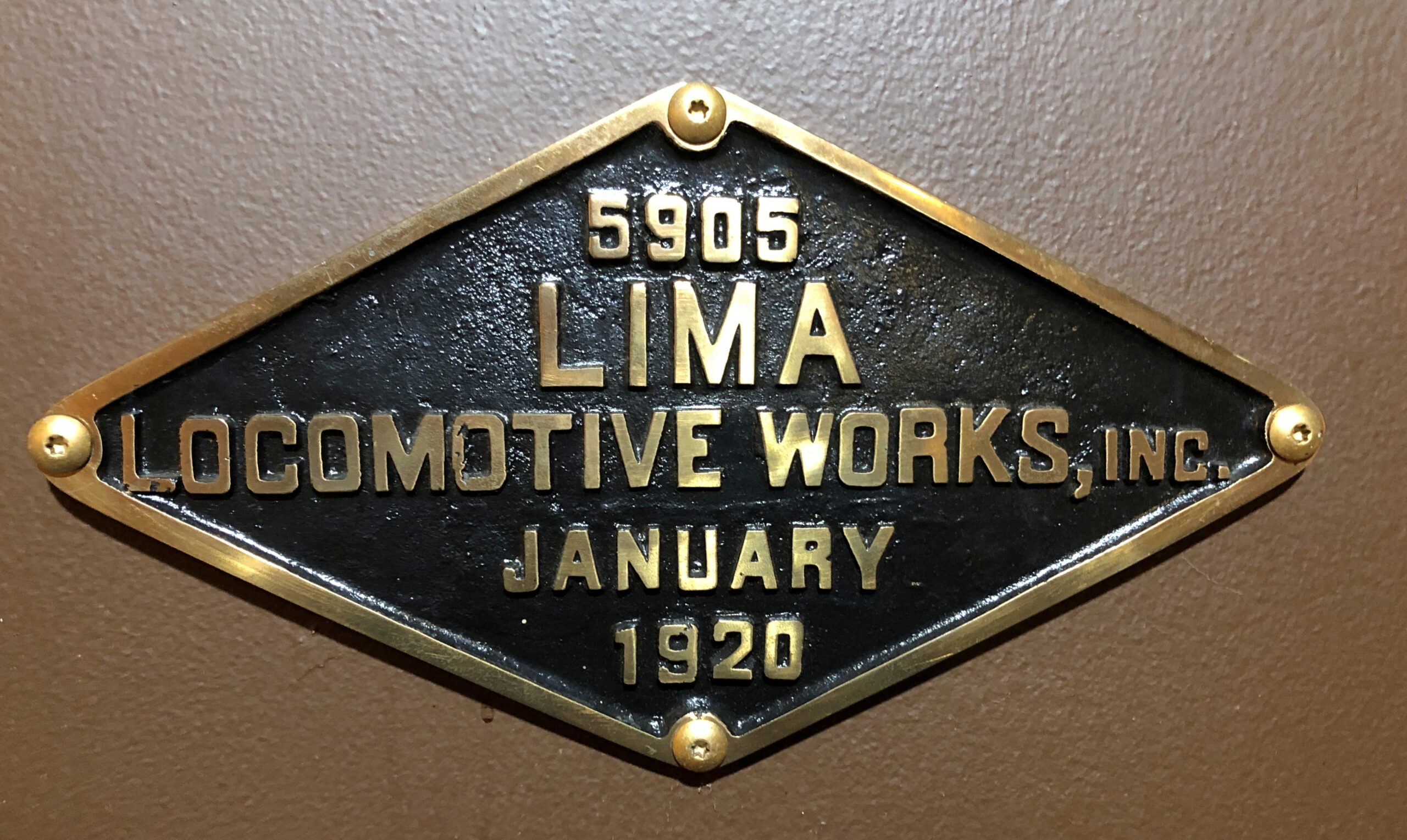
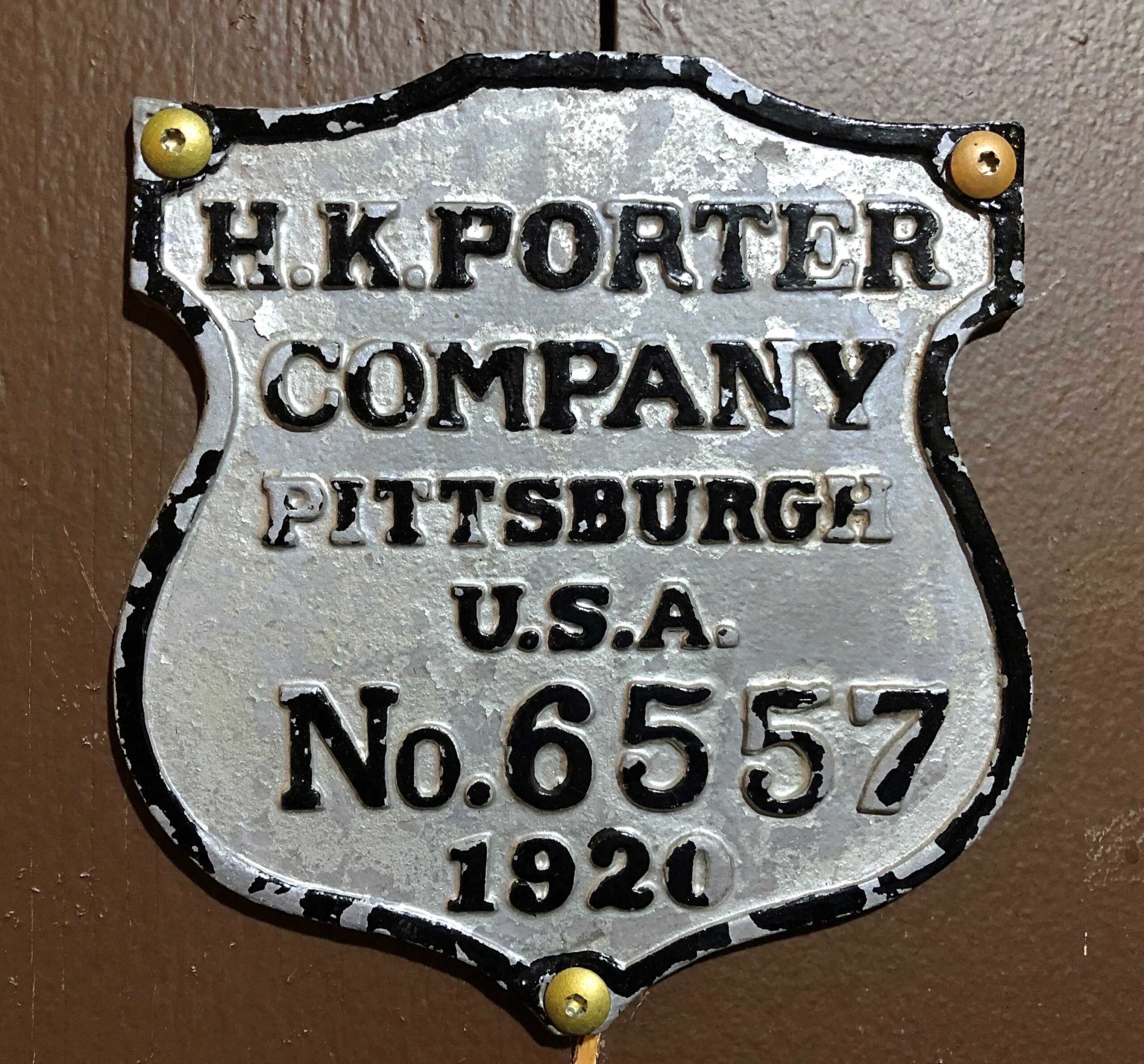
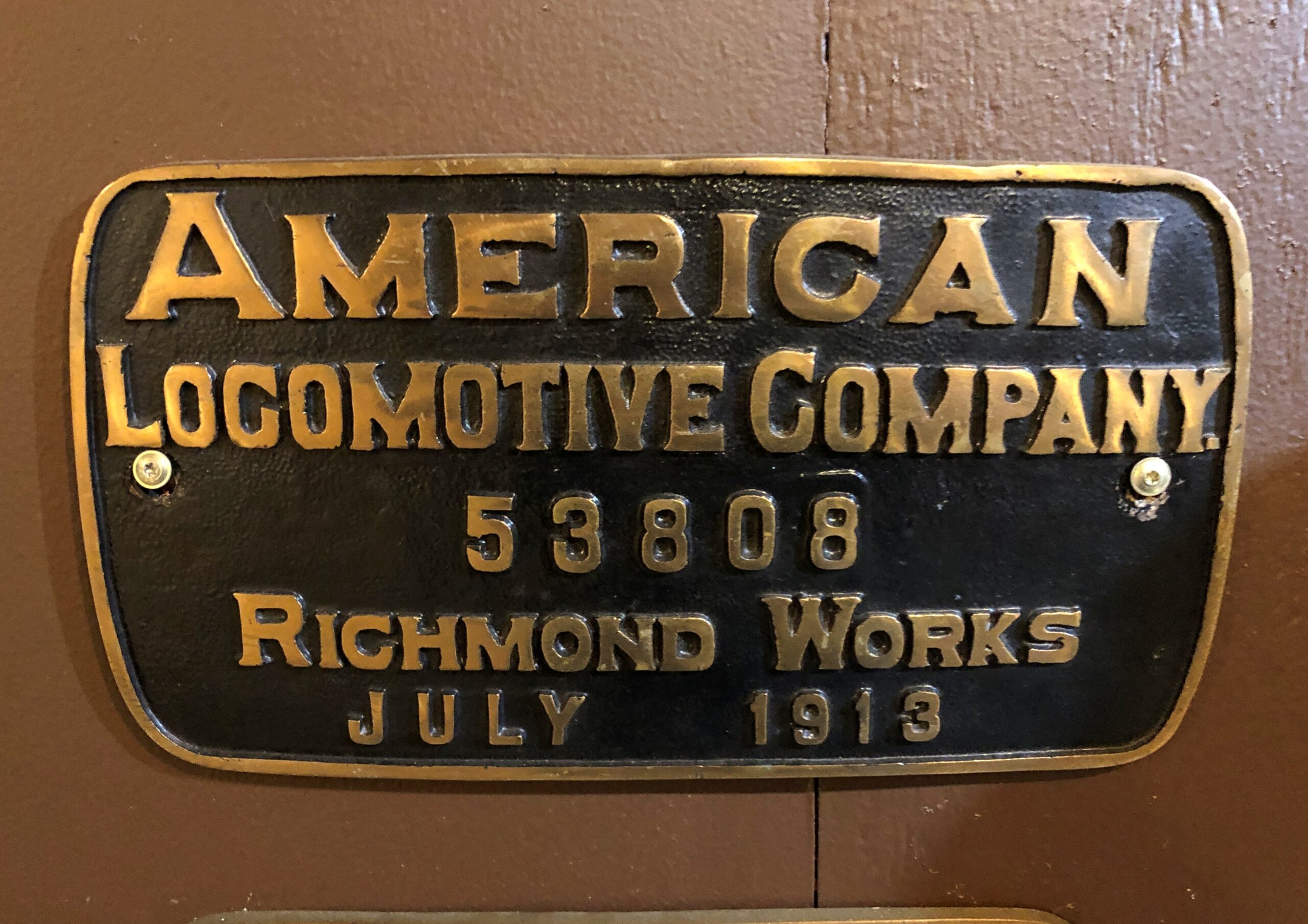
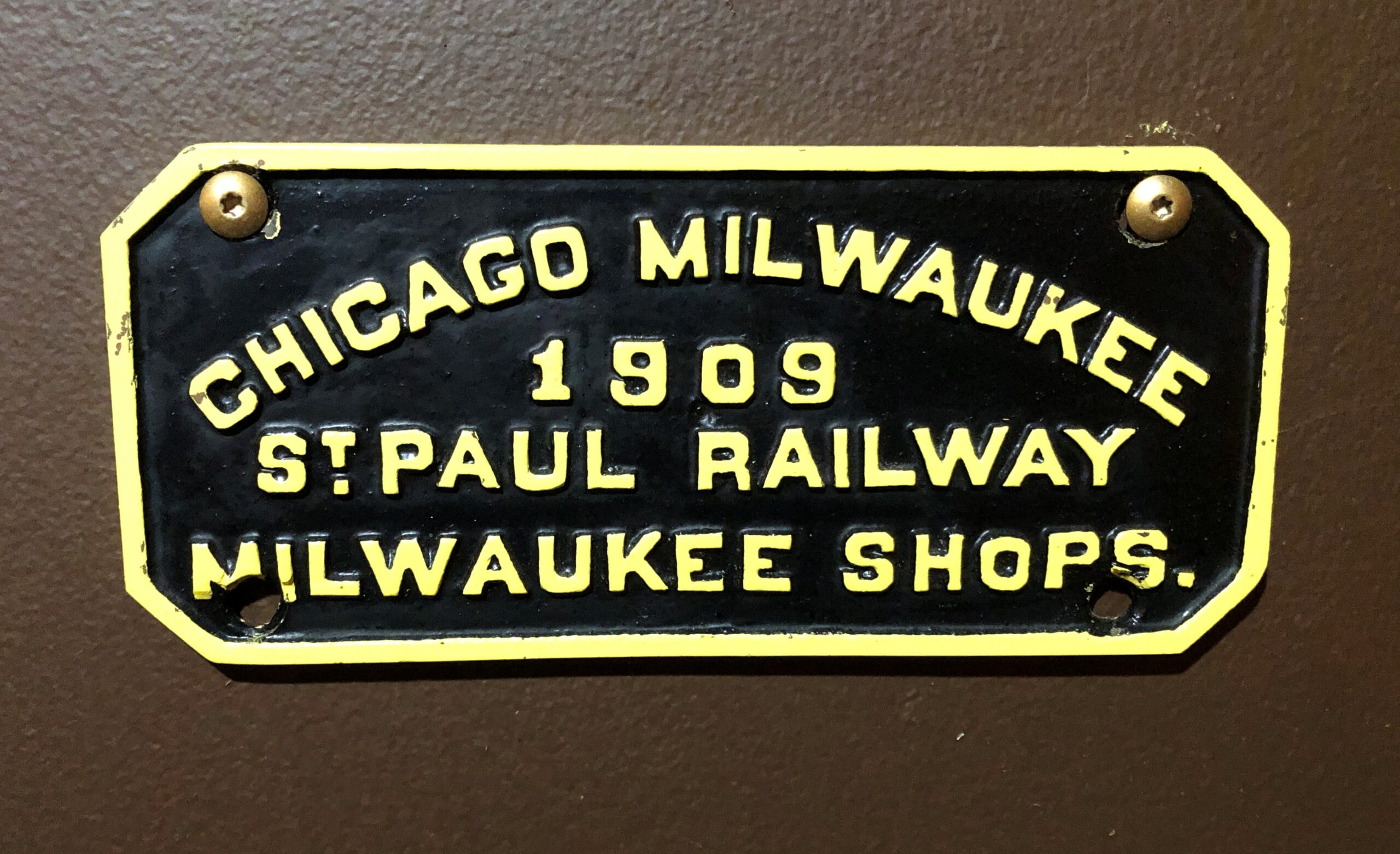
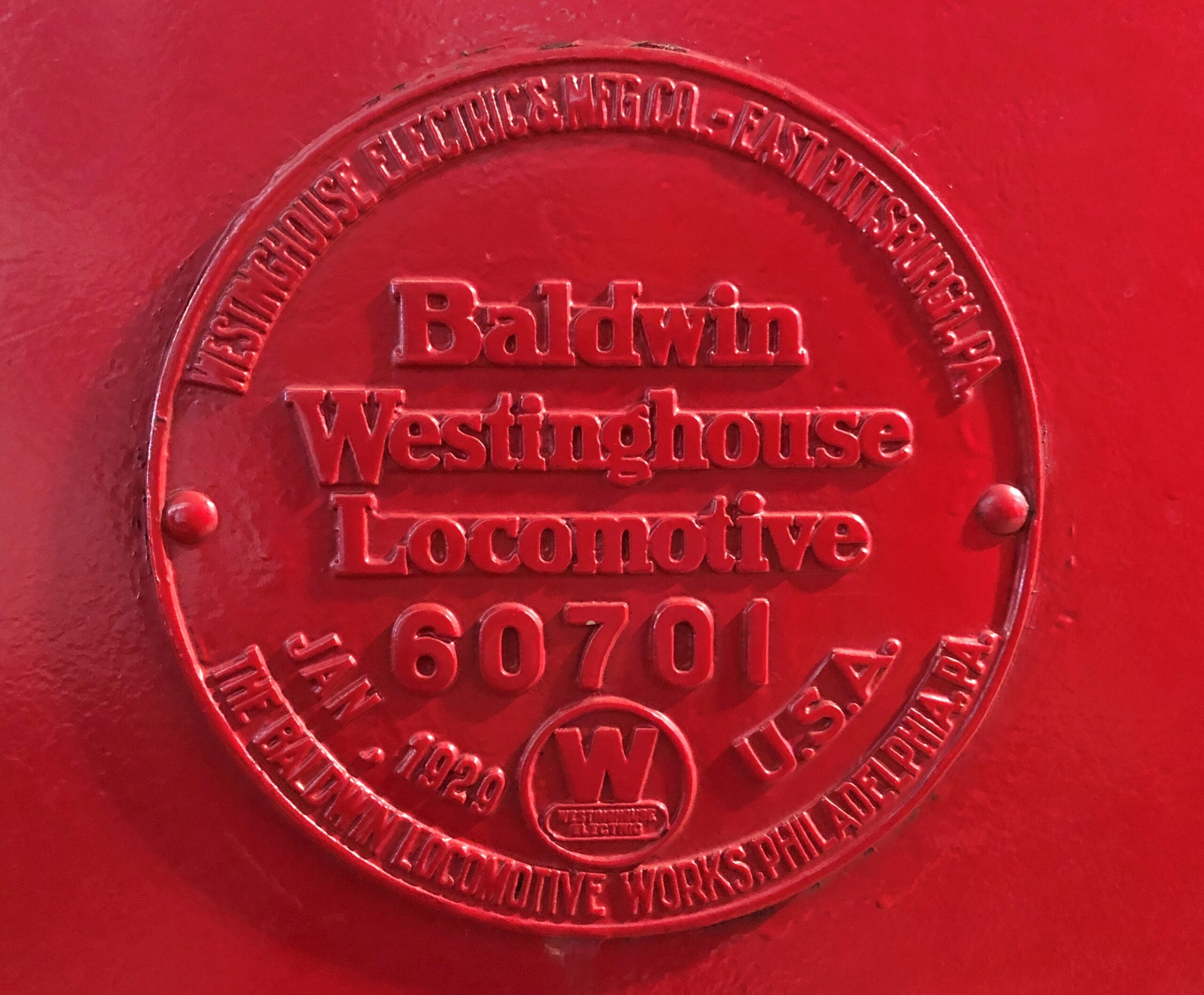
The Illinois RR Museum, as mentioned, has plenty of impressive rolling stock, some of which actually rolls. But like any good museum, the showpieces aren’t the only pieces. The small items have their own stories to tell, or at least to suggest. At one point I went into a repurposed car — I forget what kind of car it was — and found myself in the Builder Plate Hall.
Builder Plate? “In this hall are the builder plates from the builders of steam, electric, diesel, interurban, streetcars and passenger cars,” said a sign in the car. “A builders plate is like the VIN plate on a car. It gives the car a serial number that is unique to that car. A builder plate can service [sic] the same purpose. It is used to identify a locomotive.”
Evocative, these plates.
Evoking the rumble of finished locomotives on tracks, but also the din and heat of the factory floors where working men put together these machine-age power marvels to specs that began on drafting tables by gas light and then early electric bulbs.
I don’t want to romanticize such hard jobs too much, but it’s hard not to.
Are all locomotives made in China in our time? No. According to this Wiki list, there are many more defunct U.S. locomotive makers than not, but there are still active ones, including major repair facilities. Good to know.
And damn it, every time I look into a subject like that, I uncover a new destination. In this case, the Altoona Works.
At the Illinois RR Museum, the cars themselves offer detail. Sometimes builder plates.
Or branding.
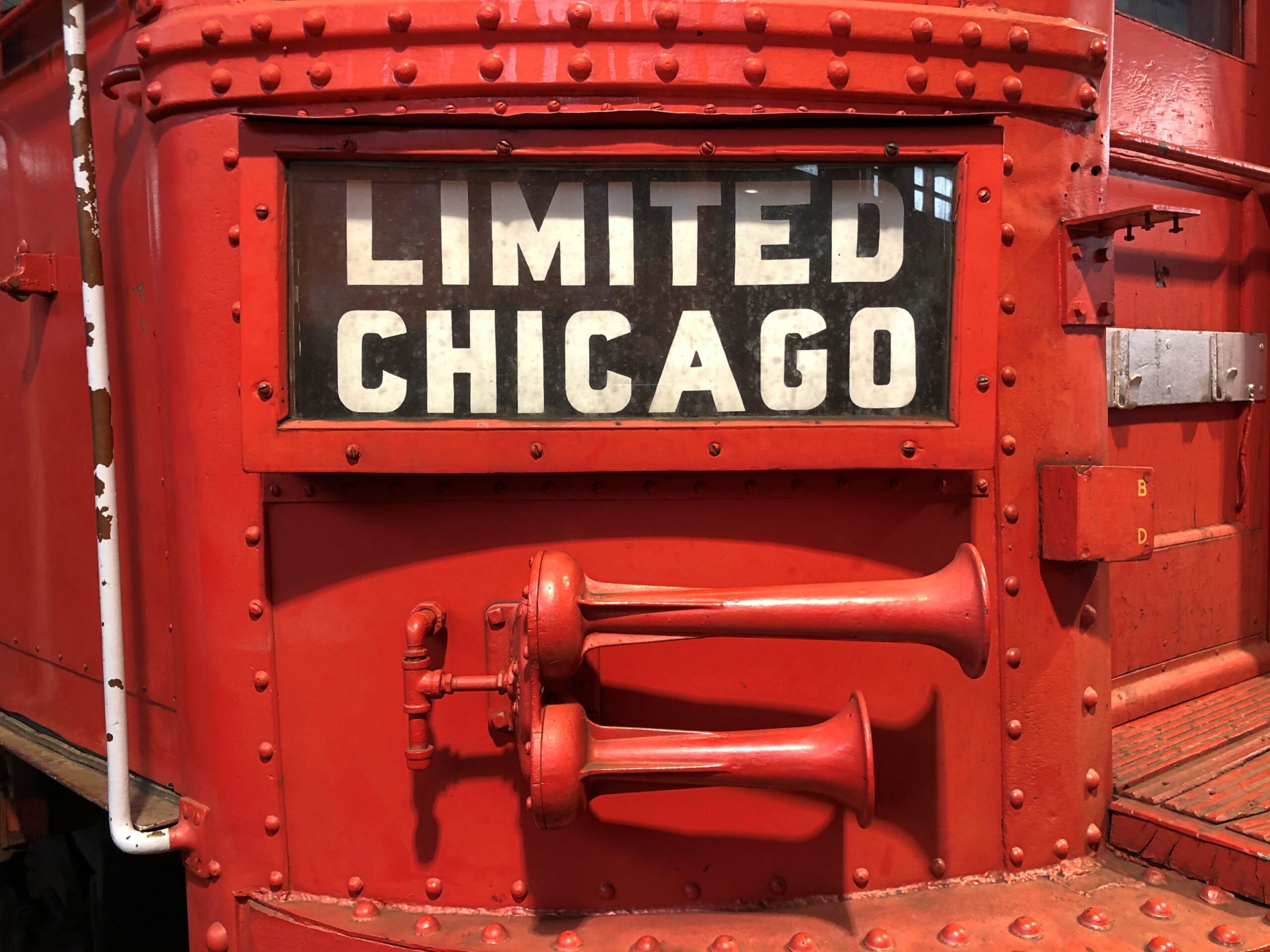
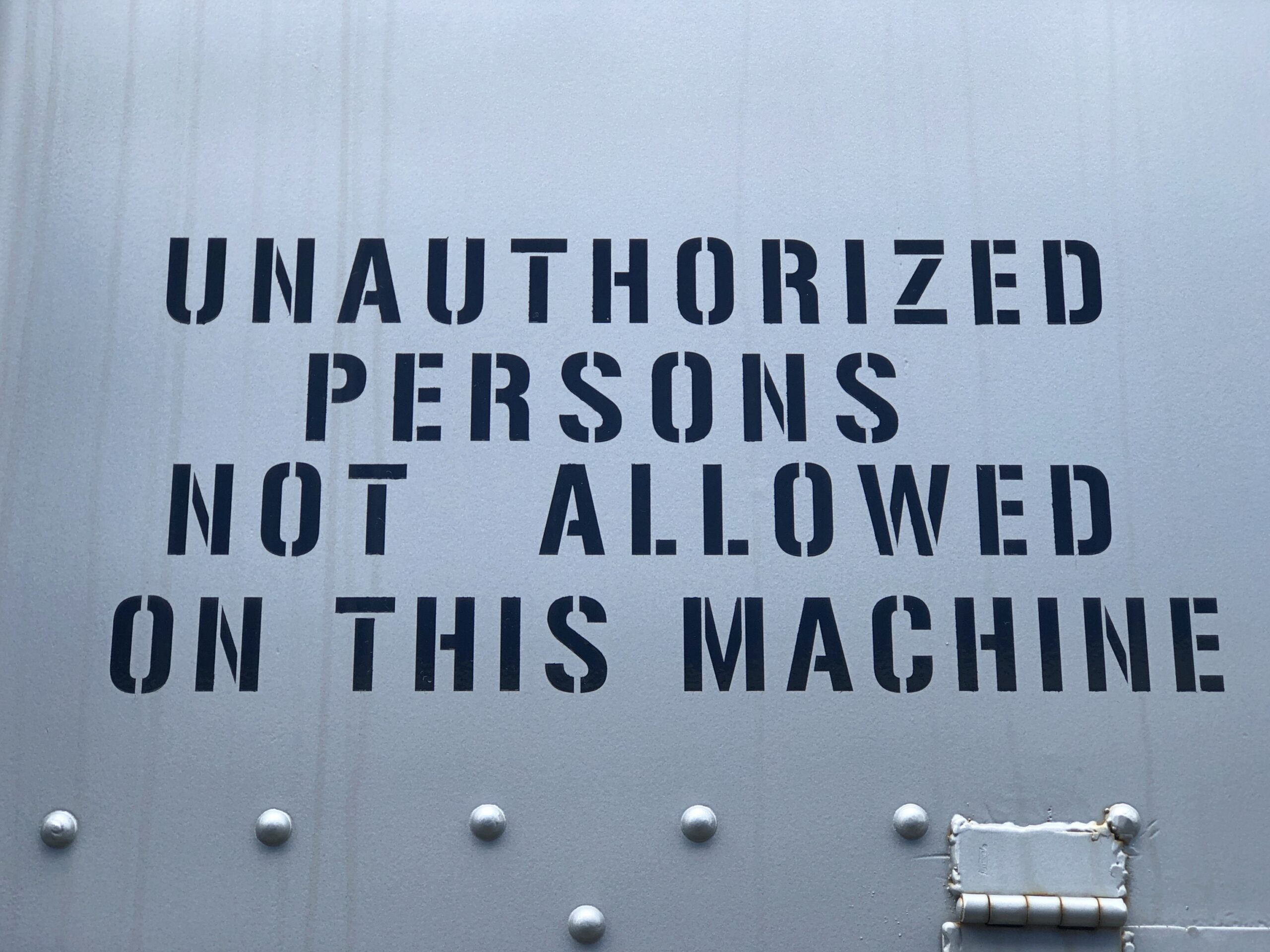
Or warnings.
A curious thing to put on your train, but there’s a story.
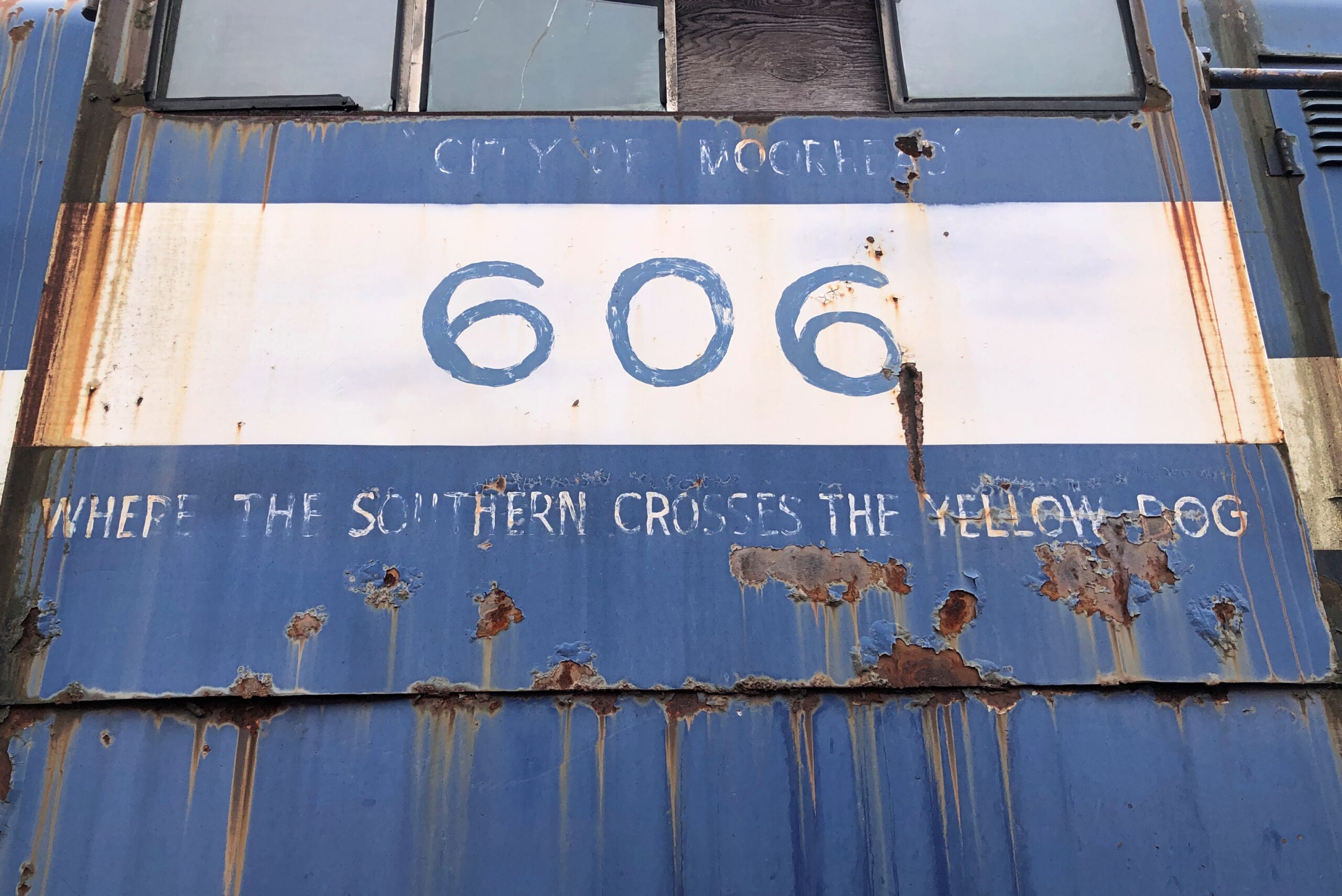
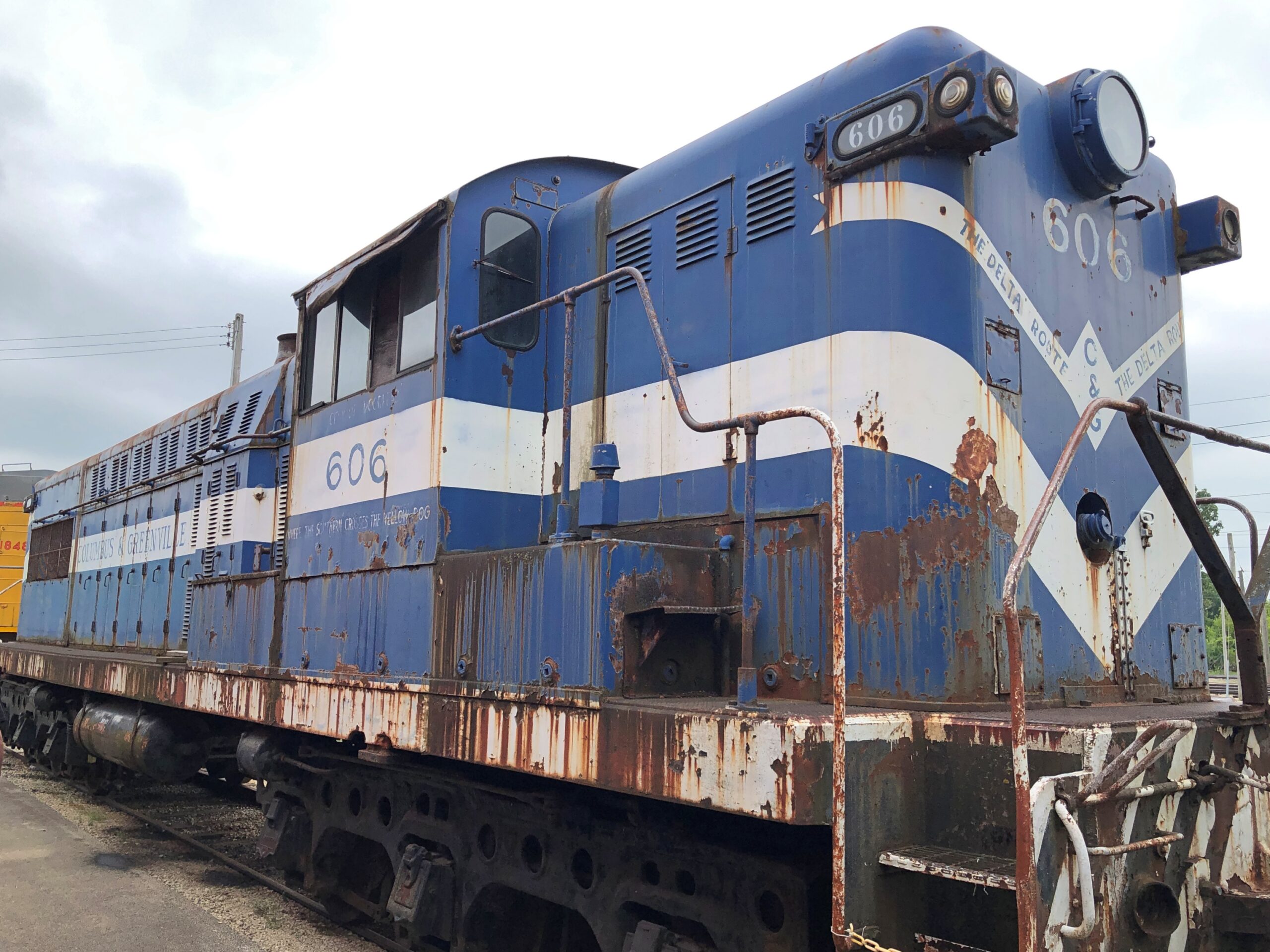
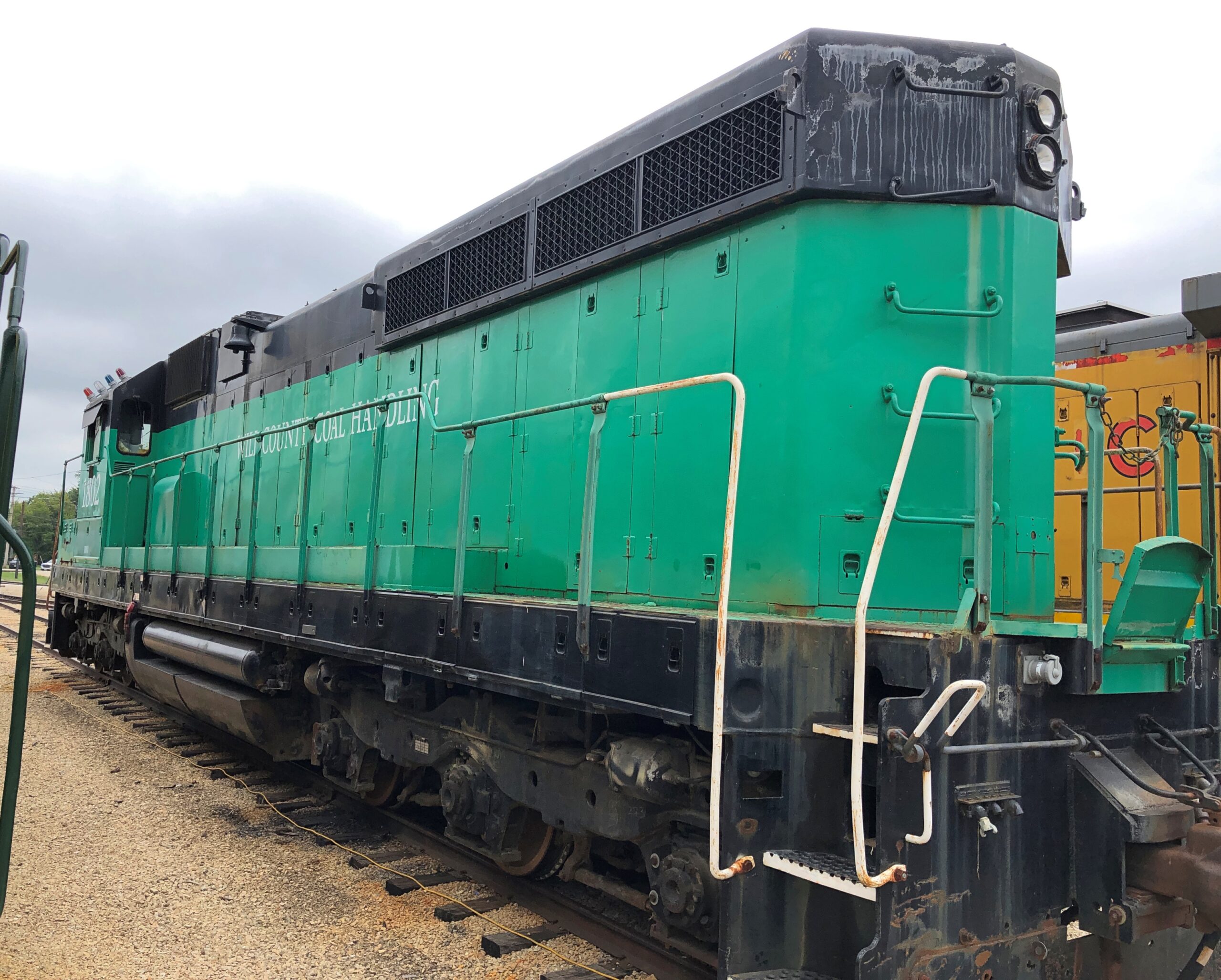
The train, or at least the locomotive, looks to have a name: The City of Moorhead. Where the Southern Crosses the Yellow Dog.
“W. C. Handy, ‘The Father of the Blues,’ immortalized the crossing of the Southern Railway and the Yazoo Delta (‘Yellow Dog’) Railroad at Moorhead in his 1914 song ‘Yellow Dog Rag,’ better known under its later title, ‘Yellow Dog Blues,’ ” notes Mississippi Blues Trail. “Handy wrote that he first heard the line ‘Goin’ where the Southern cross the Dog’ sung by a guitarist at the Tutwiler train station (c. 1903). Moorhead became a hub not only of rail transportation but of blues activity in local juke joints.”
A more recent interpretation of the song is, of course, on YouTube.
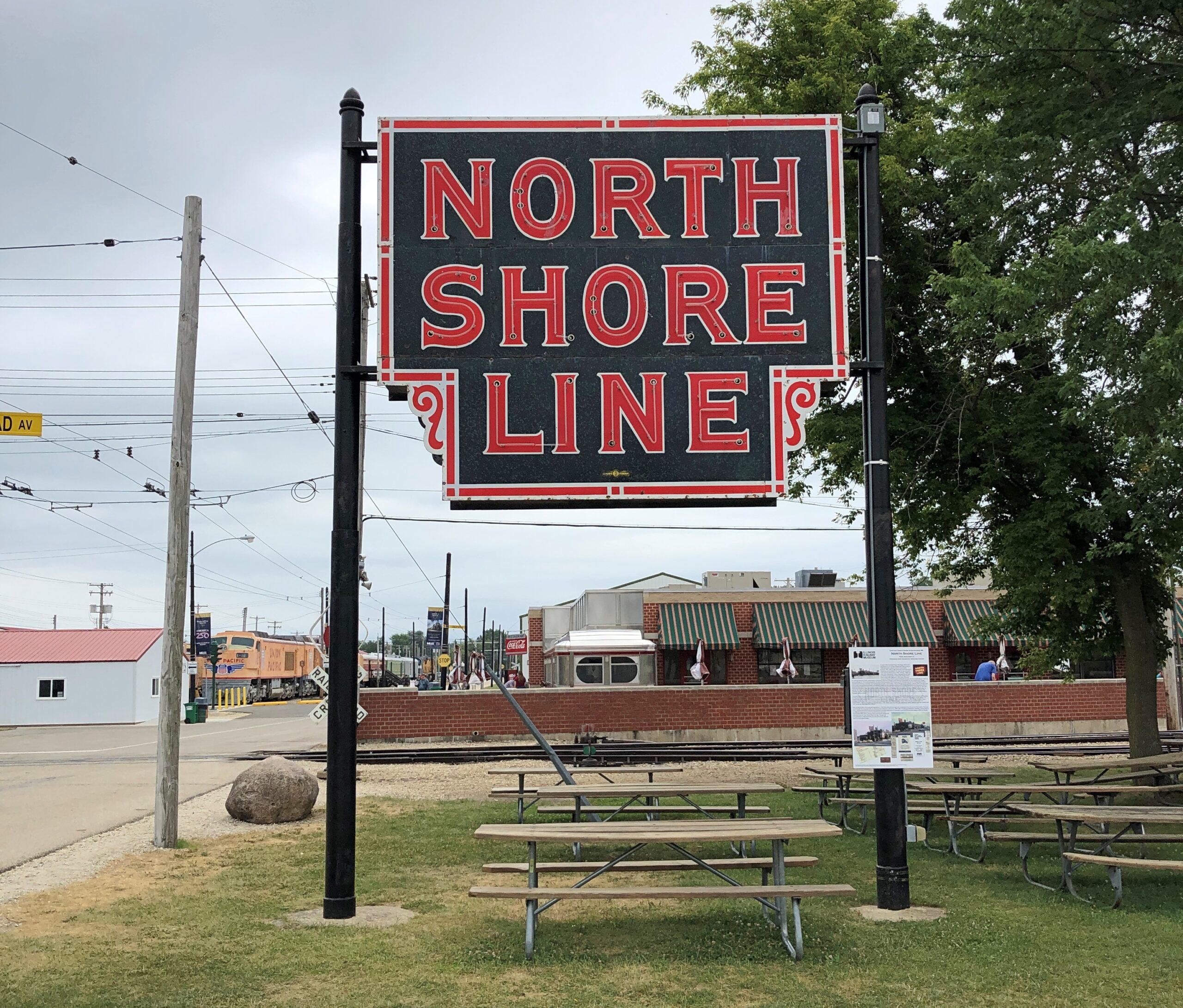
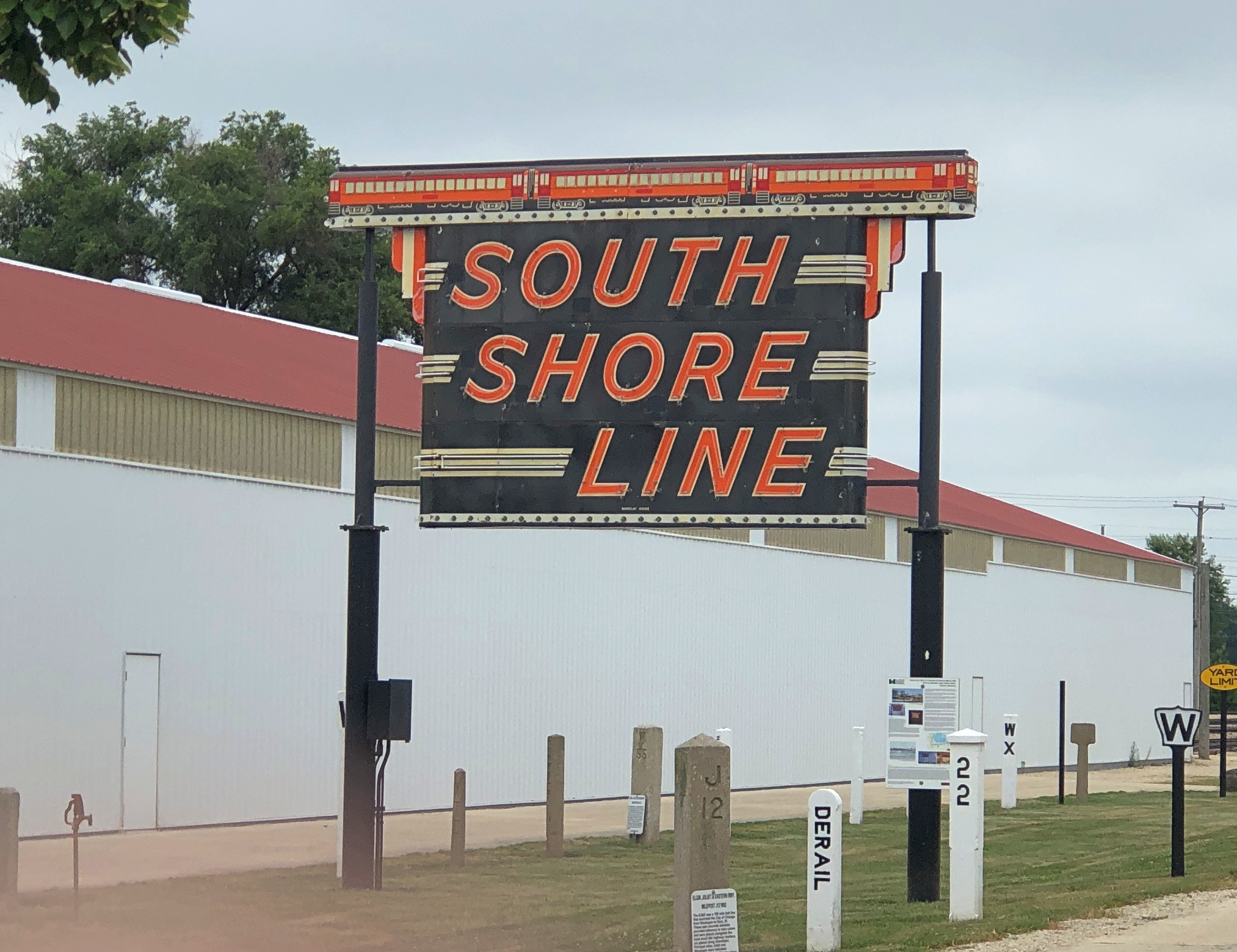
Larger signs. Where there’s a north, there’s a south.
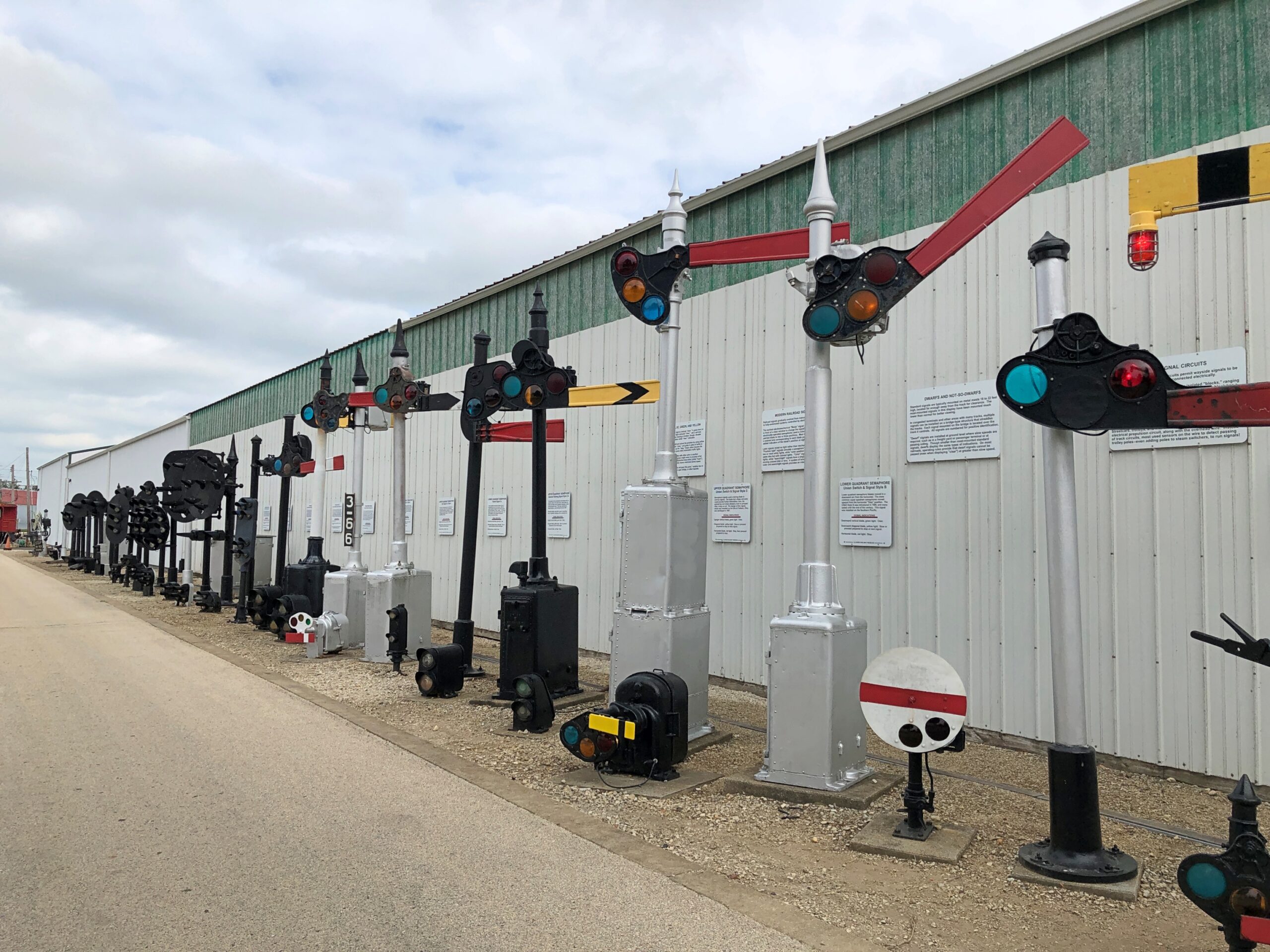
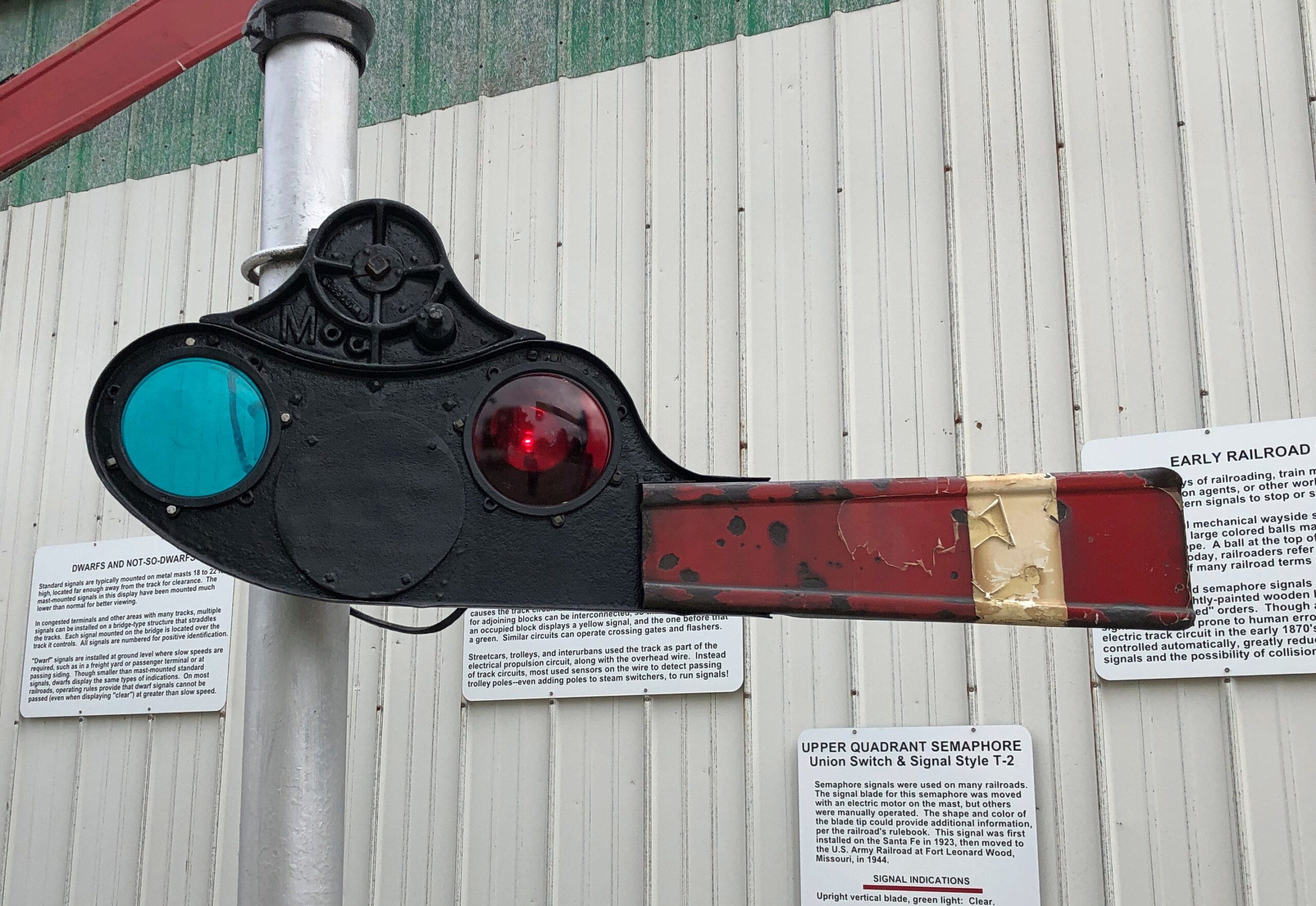
Signals.
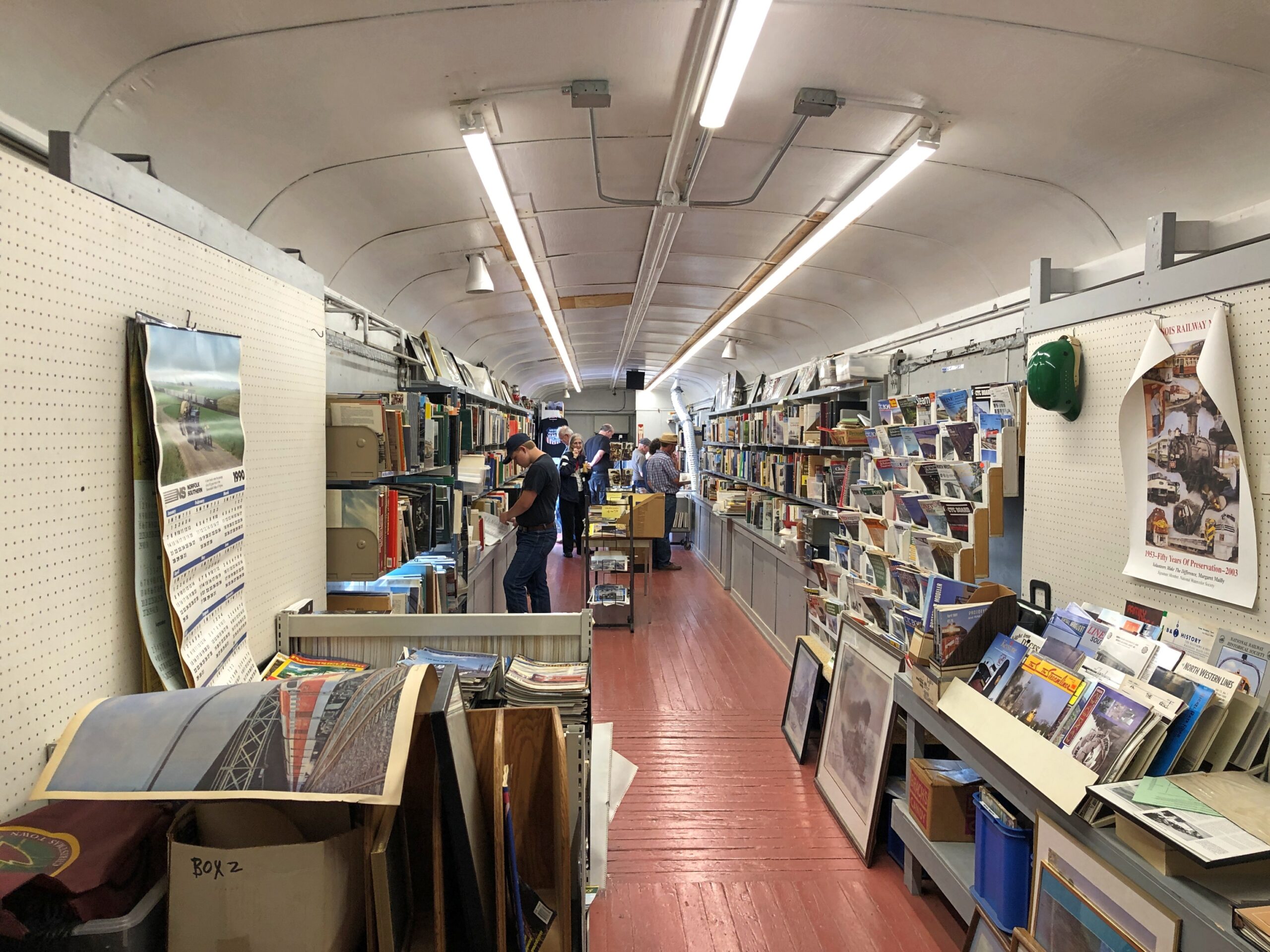
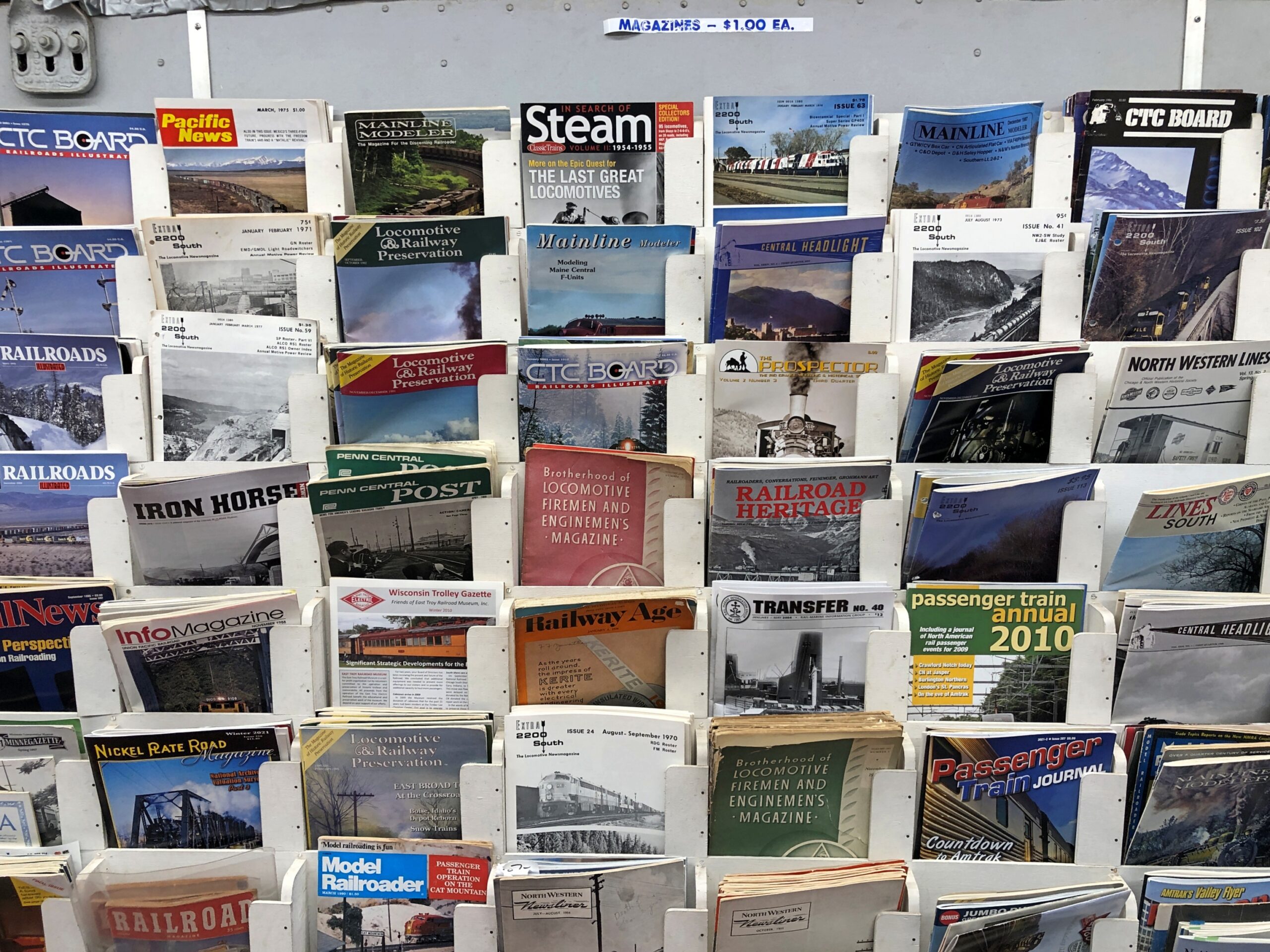
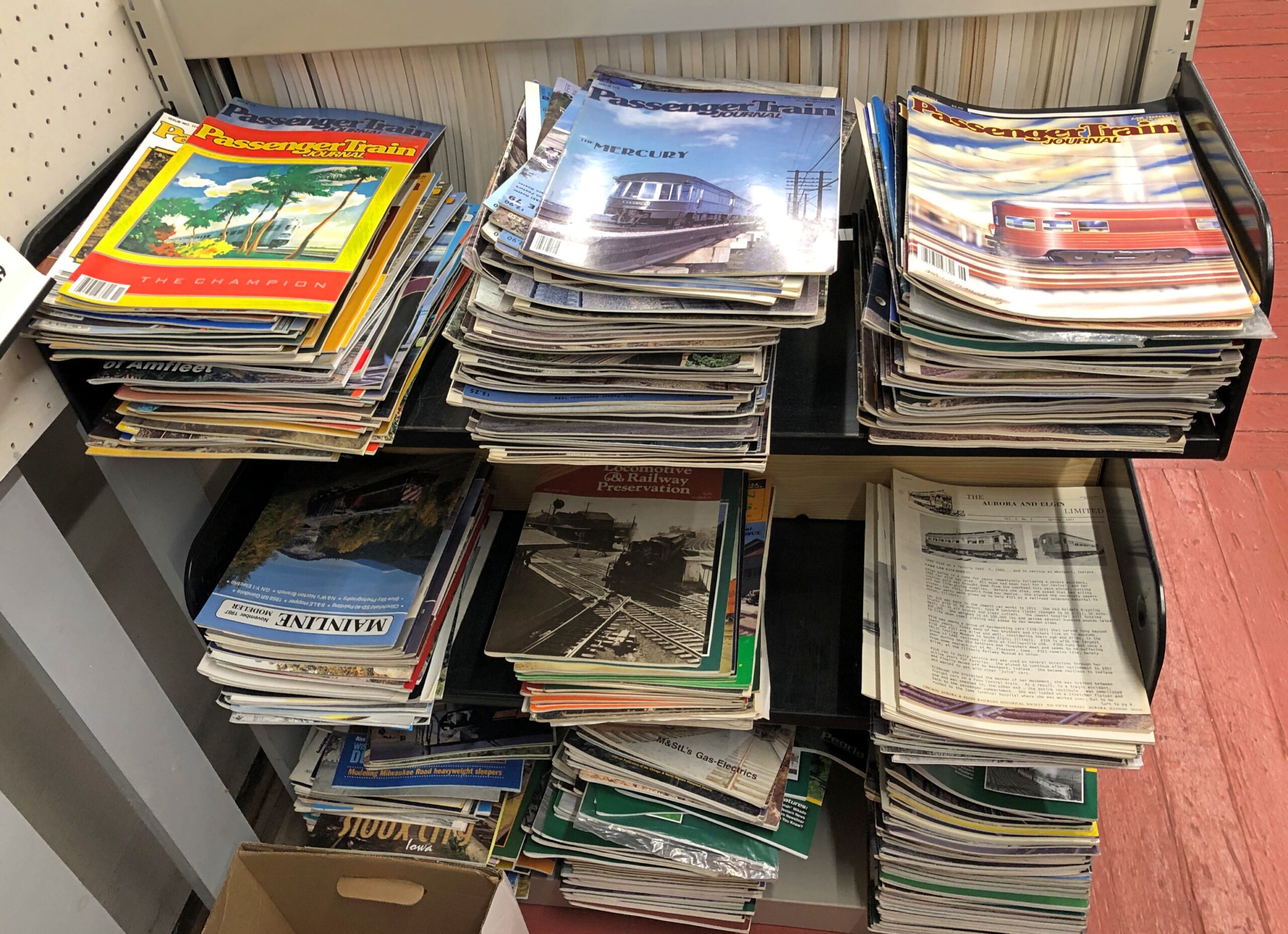
The museum has a railroad-oriented book store in another repurposed car.
Lots of material for the enthusiast.
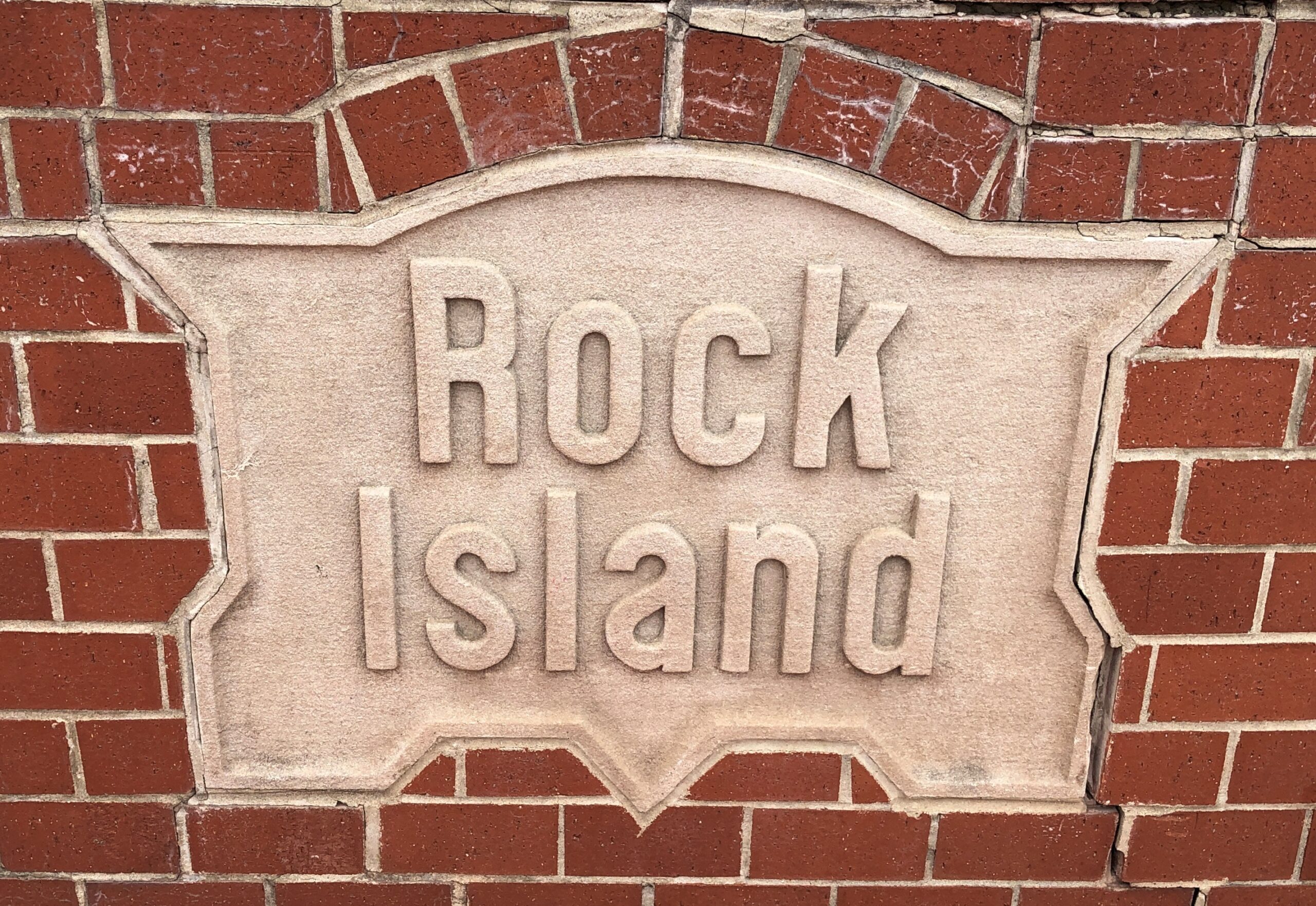
One more item: a bit of re-embedded signage from the Chicago, Rock Island and Pacific Railroad, which traversed Illinois not far from here.
Good to see it. Because, as we all should know, the Rock Island Line is a mighty good road, the Rock Island Line is the road to ride.
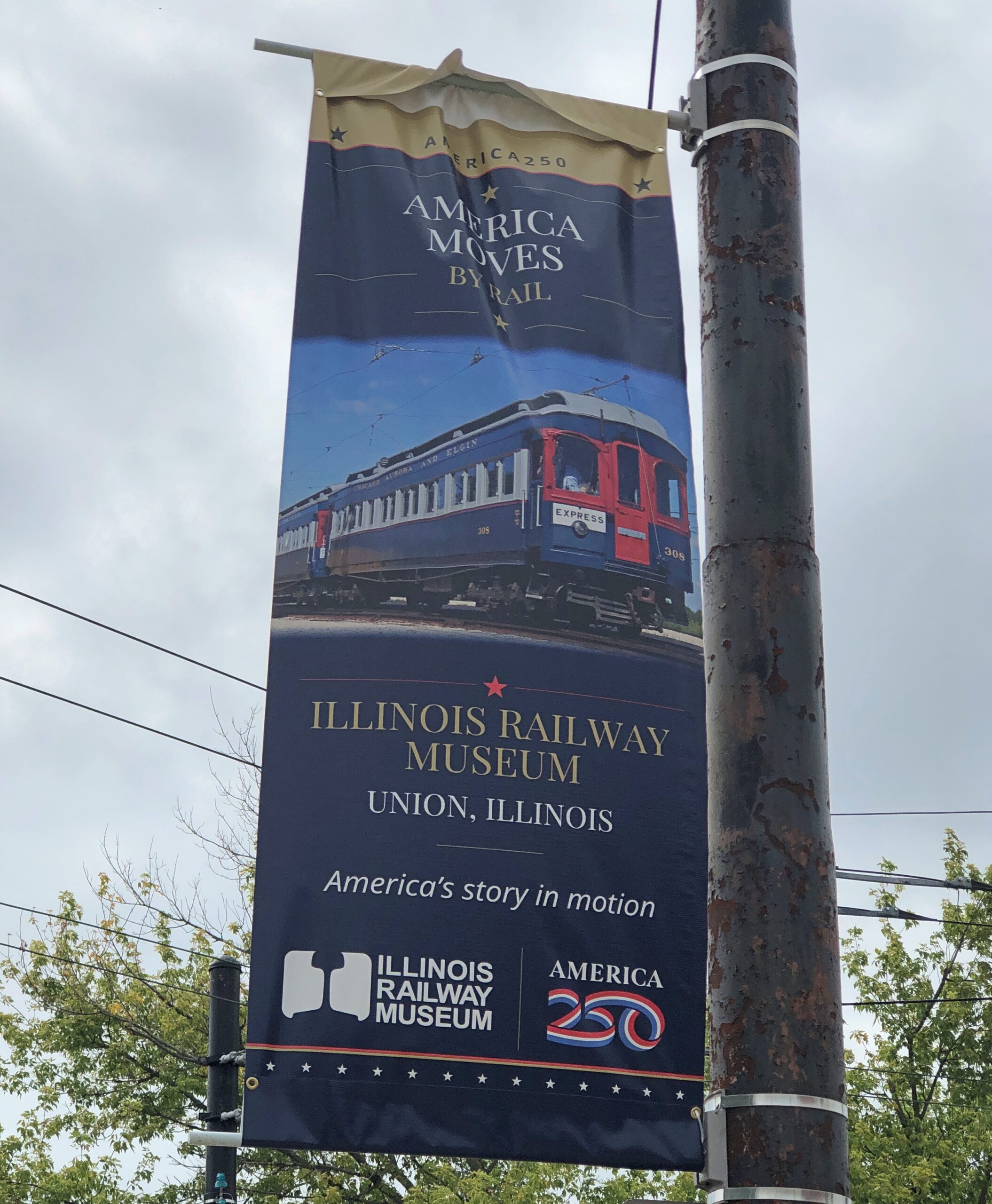
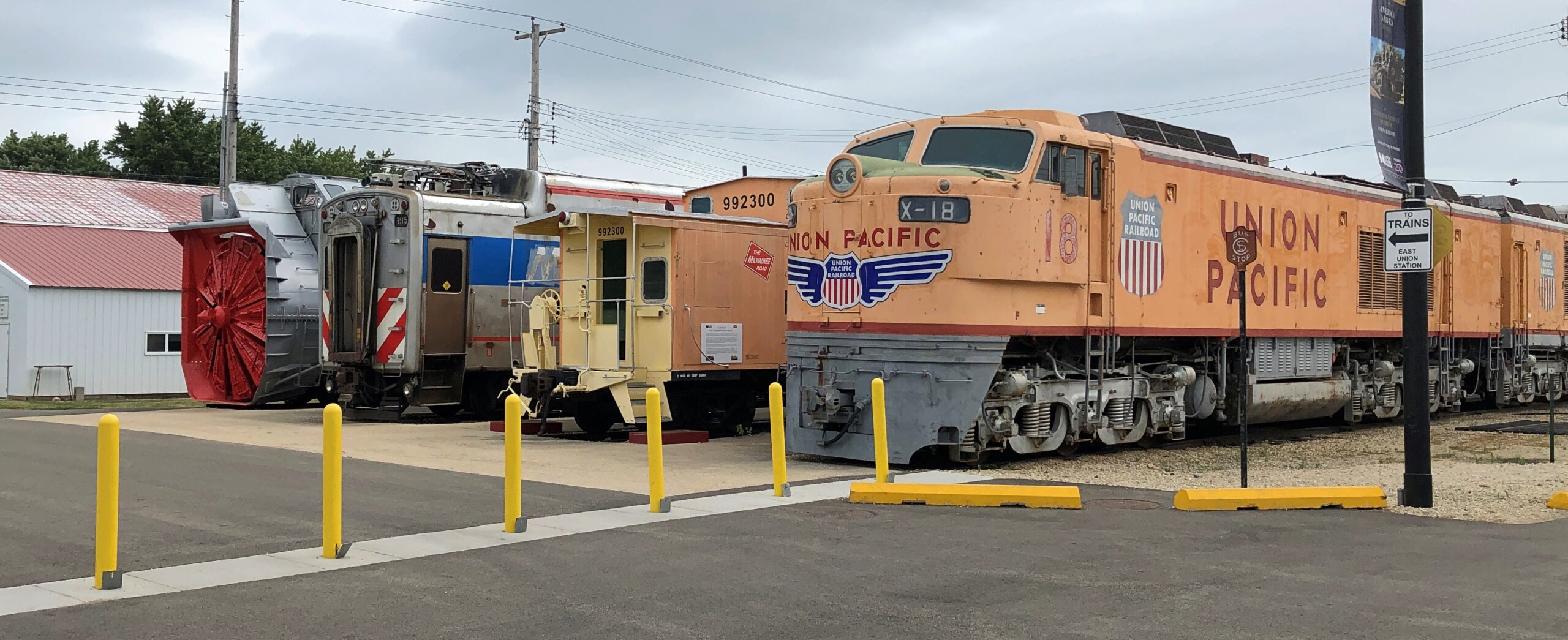
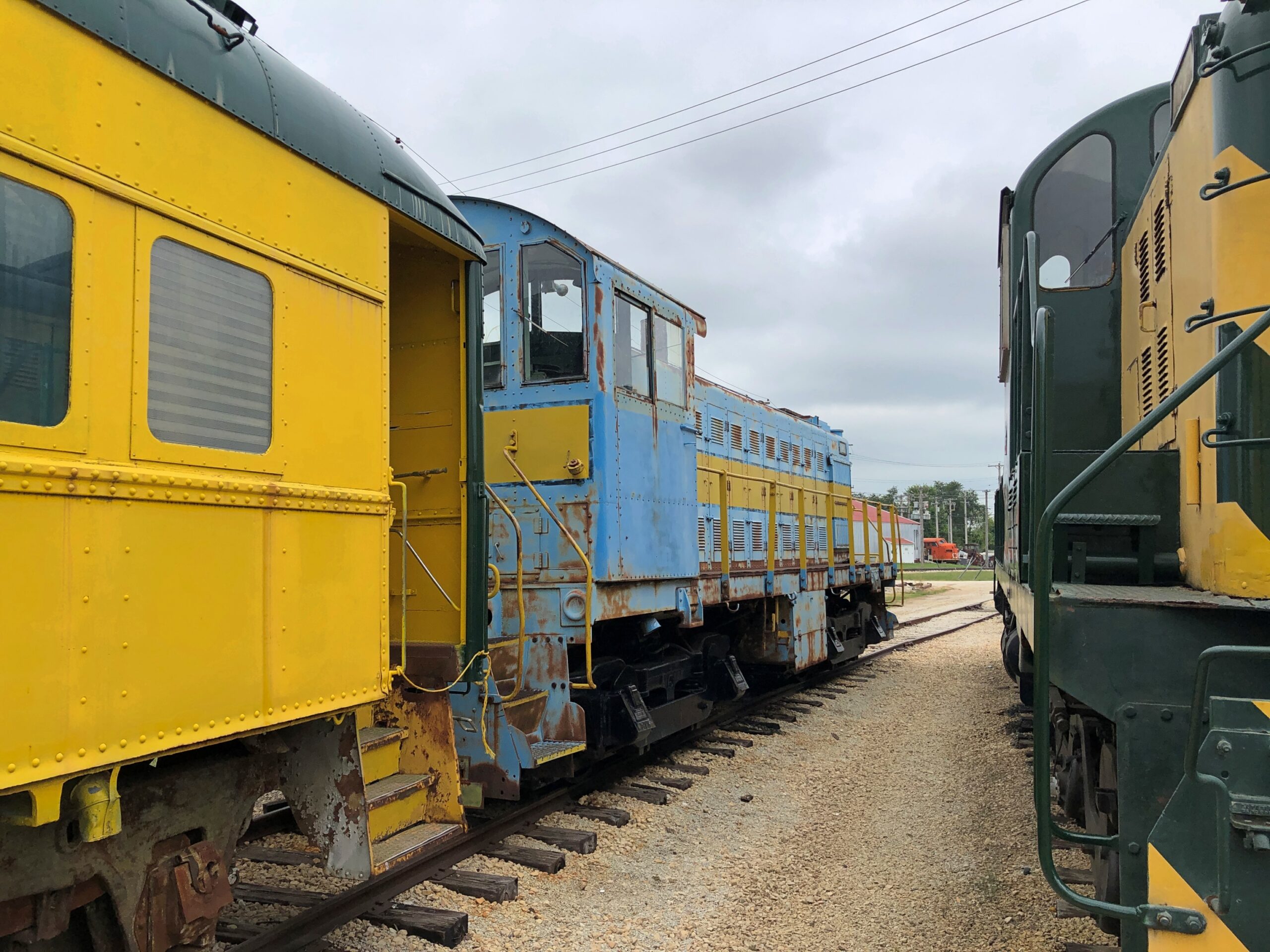
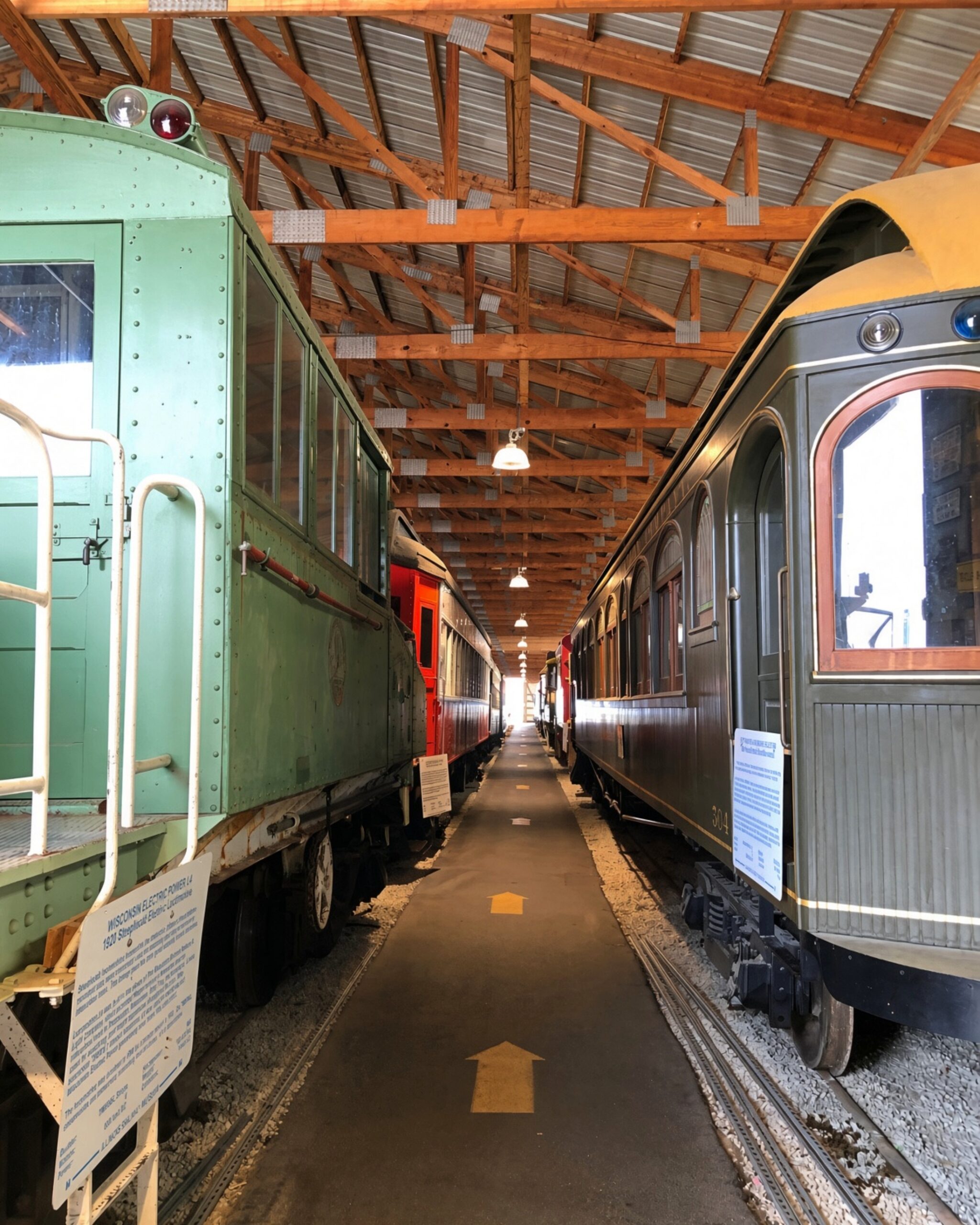
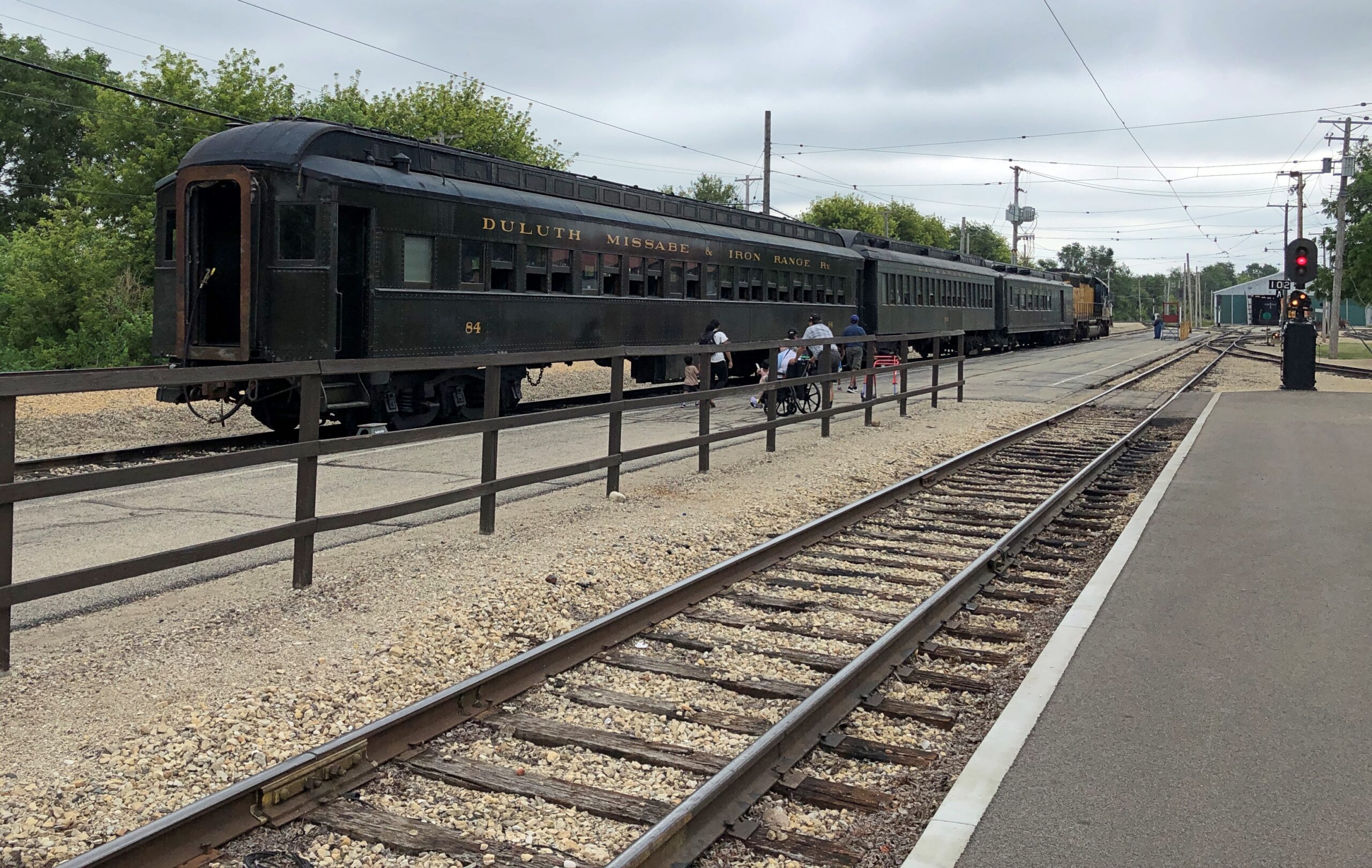
Not long ago my friend Kevin and I were kicking around ideas for a day trip from our homes in Chicagoland, and we happened on a place he’d hadn’t been since he was a child nearly 60 years ago, and I hadn’t been in years, perhaps as long ago as 2005: the Illinois Railroad Museum, near the town of Union in McHenry County, in the northwestern exurbs. About an hour drive from my house. Definitely worth the trip.
Another example of a place people take their kids, but might not otherwise consider. Not how I think. Good for kids, good for everyone else whose admiration for and curiosity about trains hasn’t gone away. During our visit, on the last Saturday in July, the place was busy but not packed, with small children and their elders well represented, but they weren’t the entirety of visitor demographics. The Illinois RR Museum draws old men (old people) as well, sometimes without grandchildren in tow. In that, Kevin and I fit right in.
Not only that, the museum also seems to attract former railroad employees and railroad aficionados, enthusiasts and nerds of all ages and walks of life. Toward the end of our visit, near a display of dispatcher equipment, a visitor struck up a conversation with a museum volunteer that I was near enough to overhear. Old men both, older even than me, and both former dispatchers for lines long ago absorbed into the handful of U.S. railroads that still exist. They had a lot to talk about – with an intensity of jargon that was nearly opaque to us non-professionals.
But you don’t need to know every technical detail to appreciate the collection.
It’s massive, including locomotives and steam engines, freight cars, interurban cars, long-haul passenger and baggage cars, subway cars, streetcars, trolley buses, railroad work equipment, signals, signs and much more, either open to the elements or in several sizable train barns. Some of the rolling stock is still rolling, and visitors can take short rides out into the countryside along a few miles of right-of-way that the museum owns, with volunteers running the show.
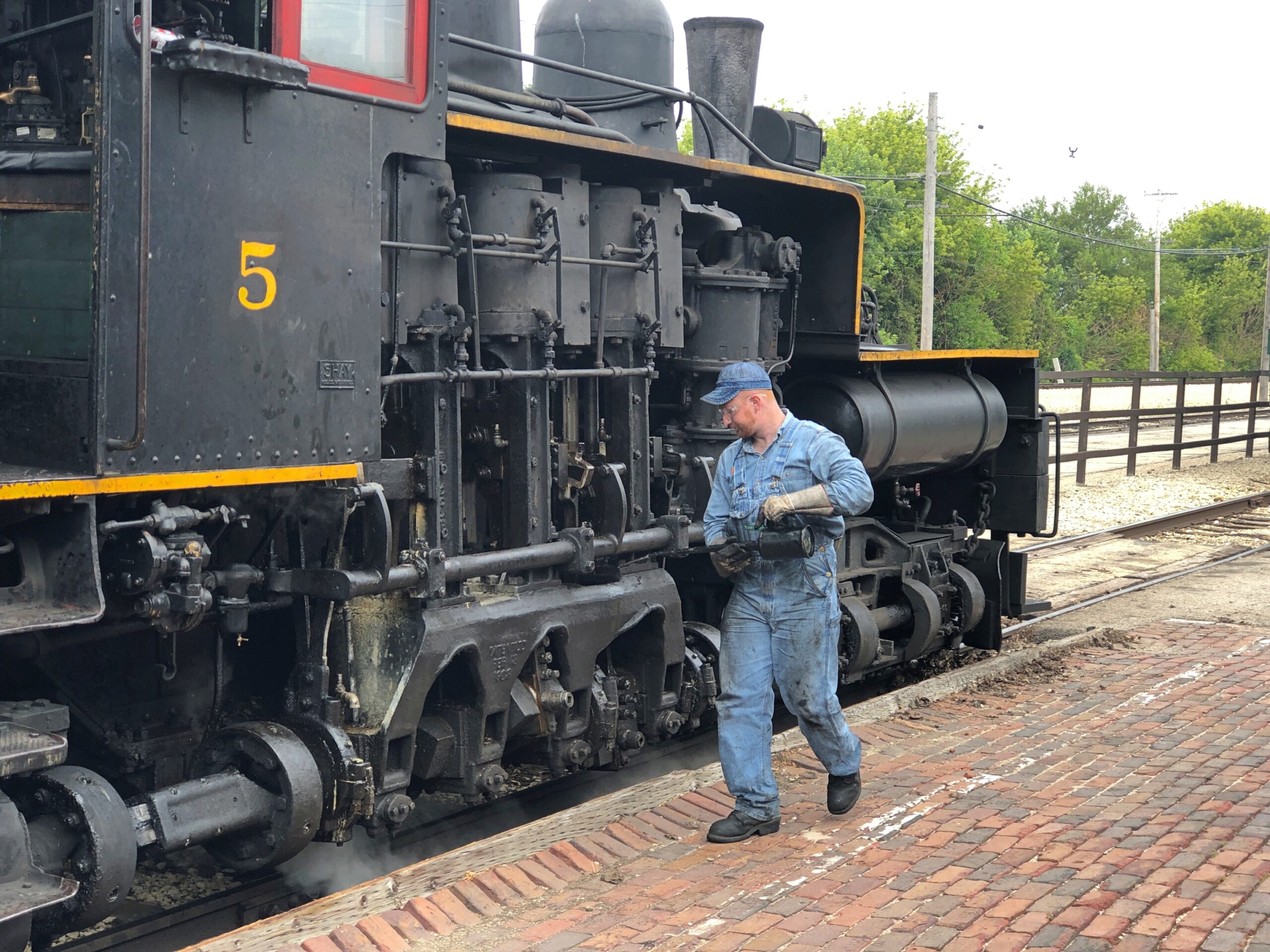
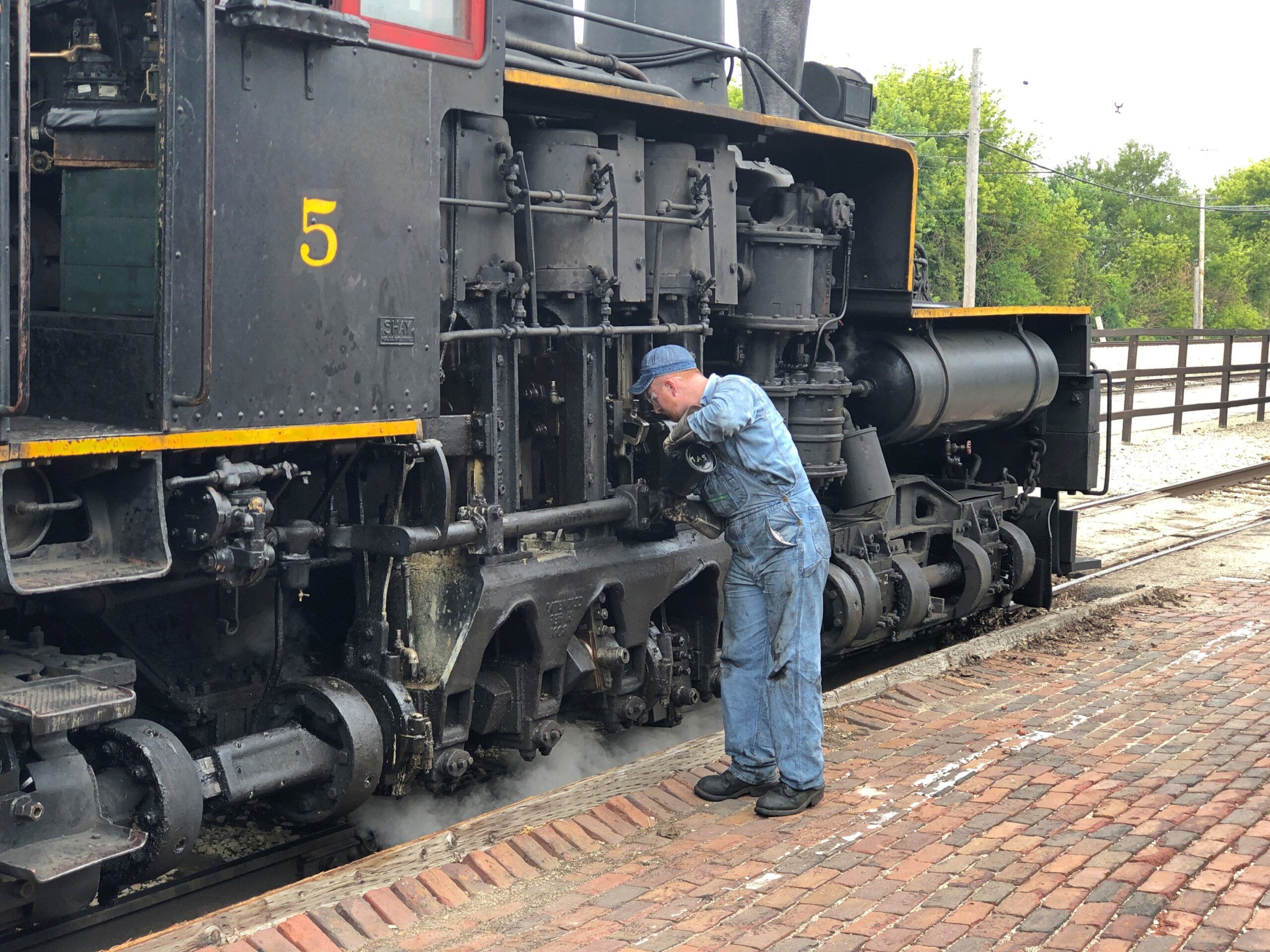
And doing the maintenance: I don’t think I’d ever seen anyone in railroad garb oiling the machinery with a long-spout oil can, as you see (saw) in illustrations.
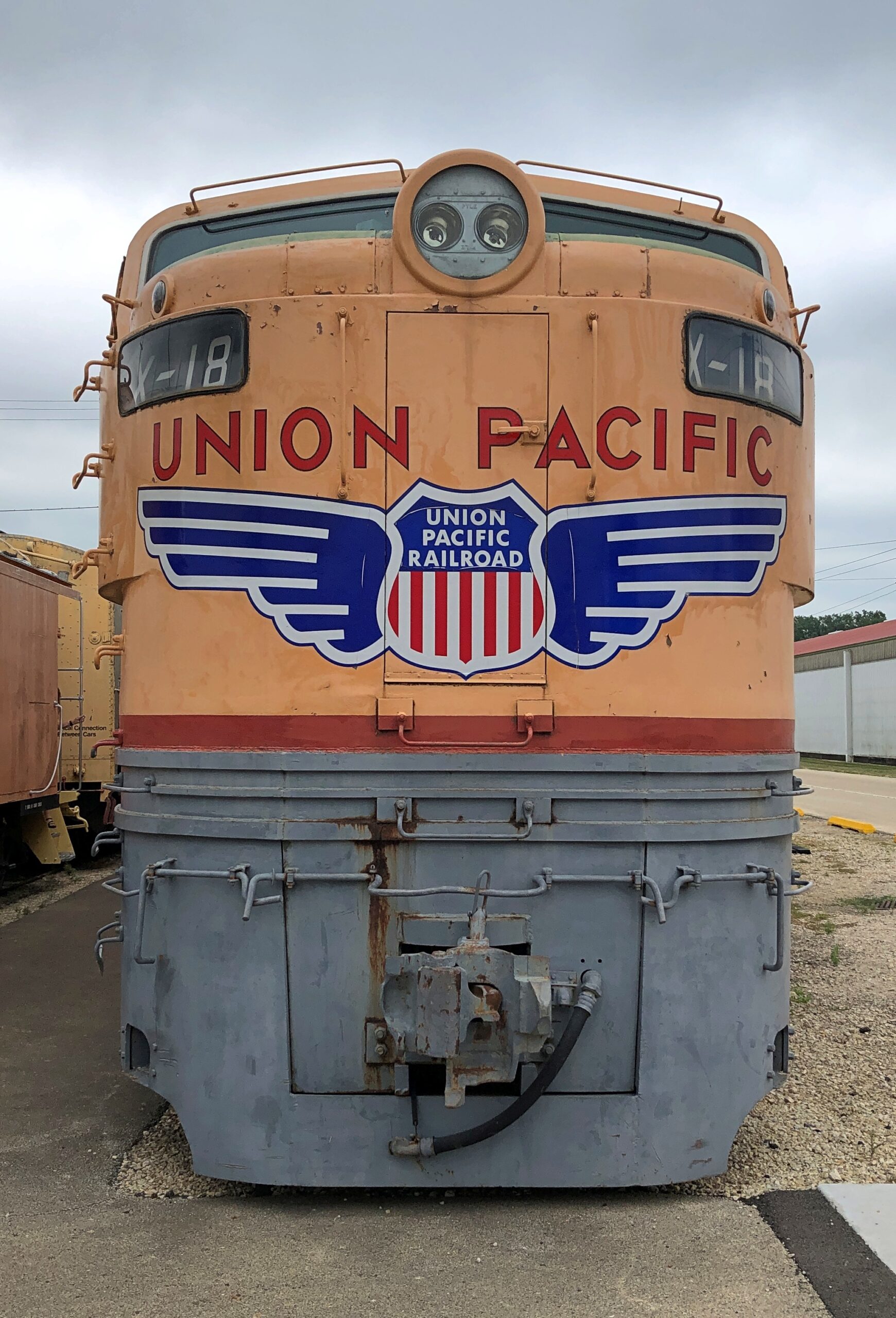
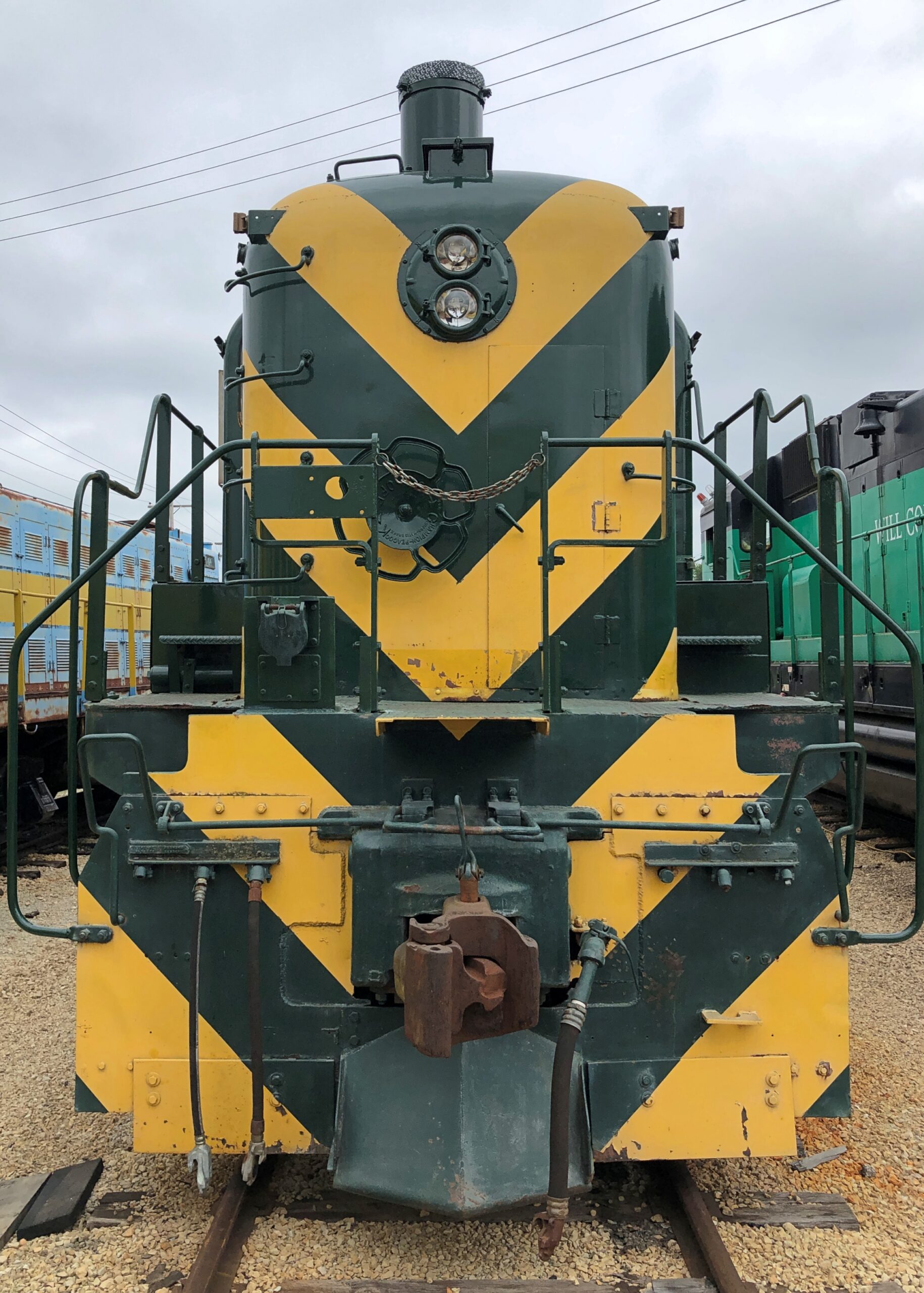
Mighty locomotives of various kinds.
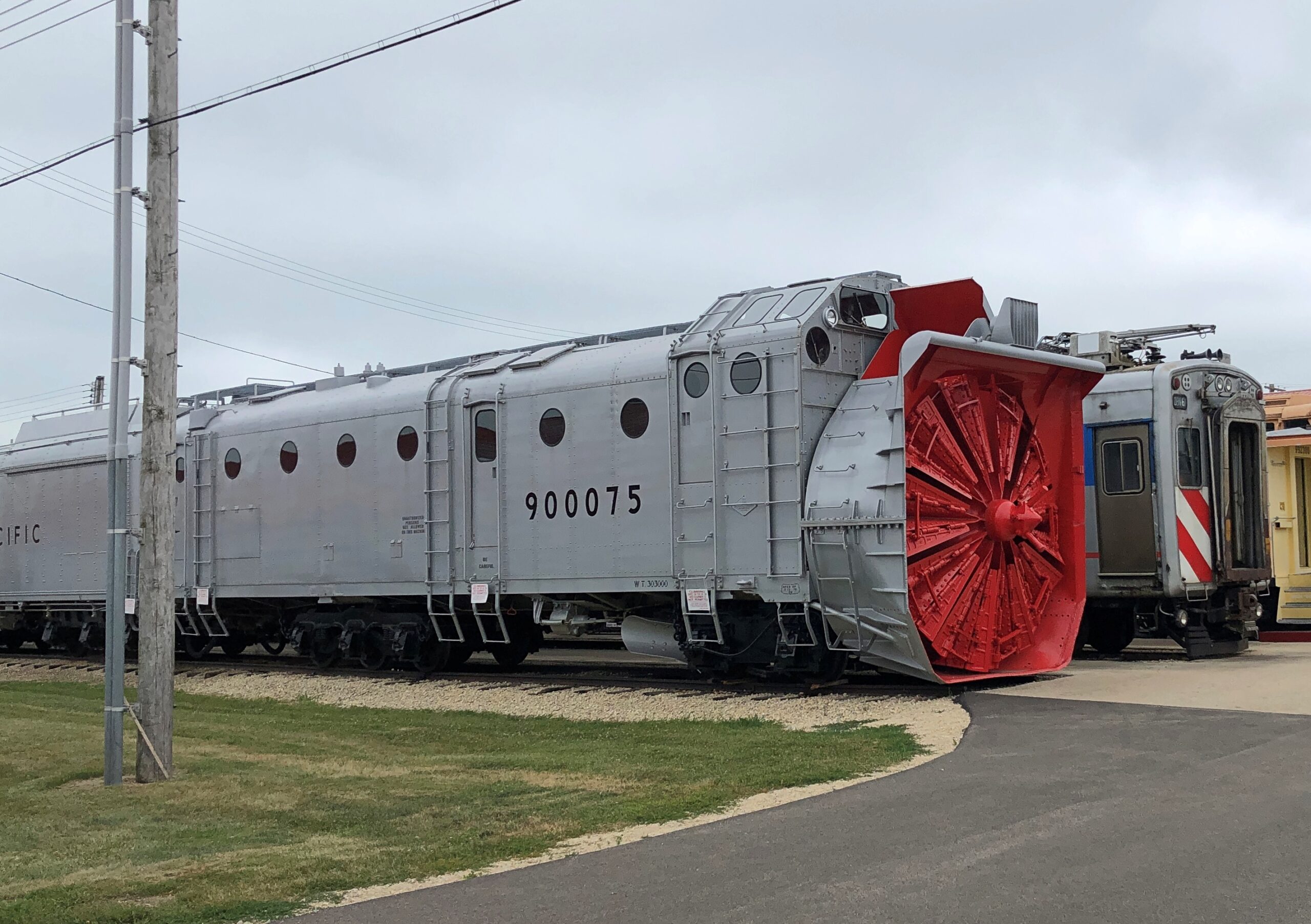
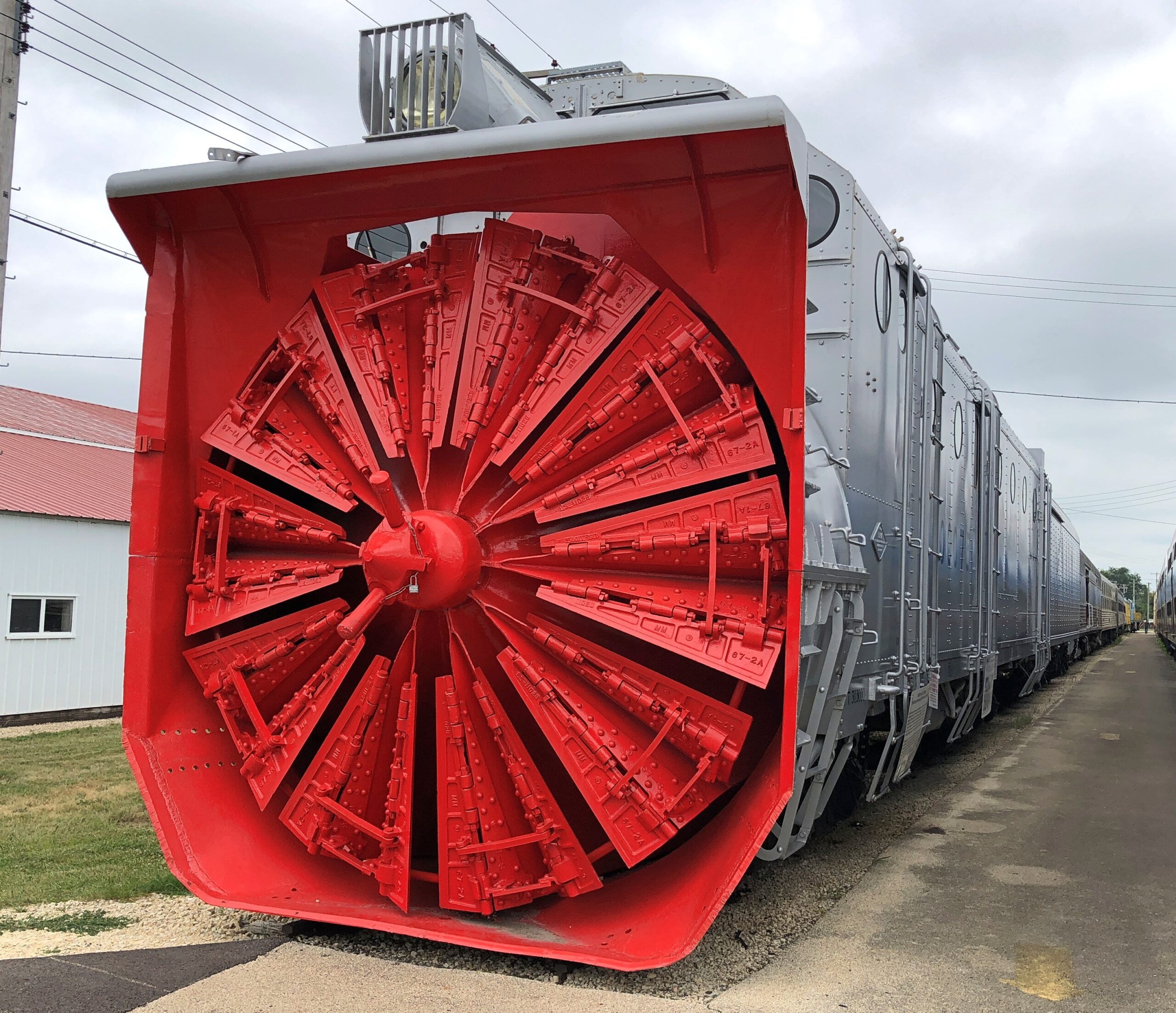
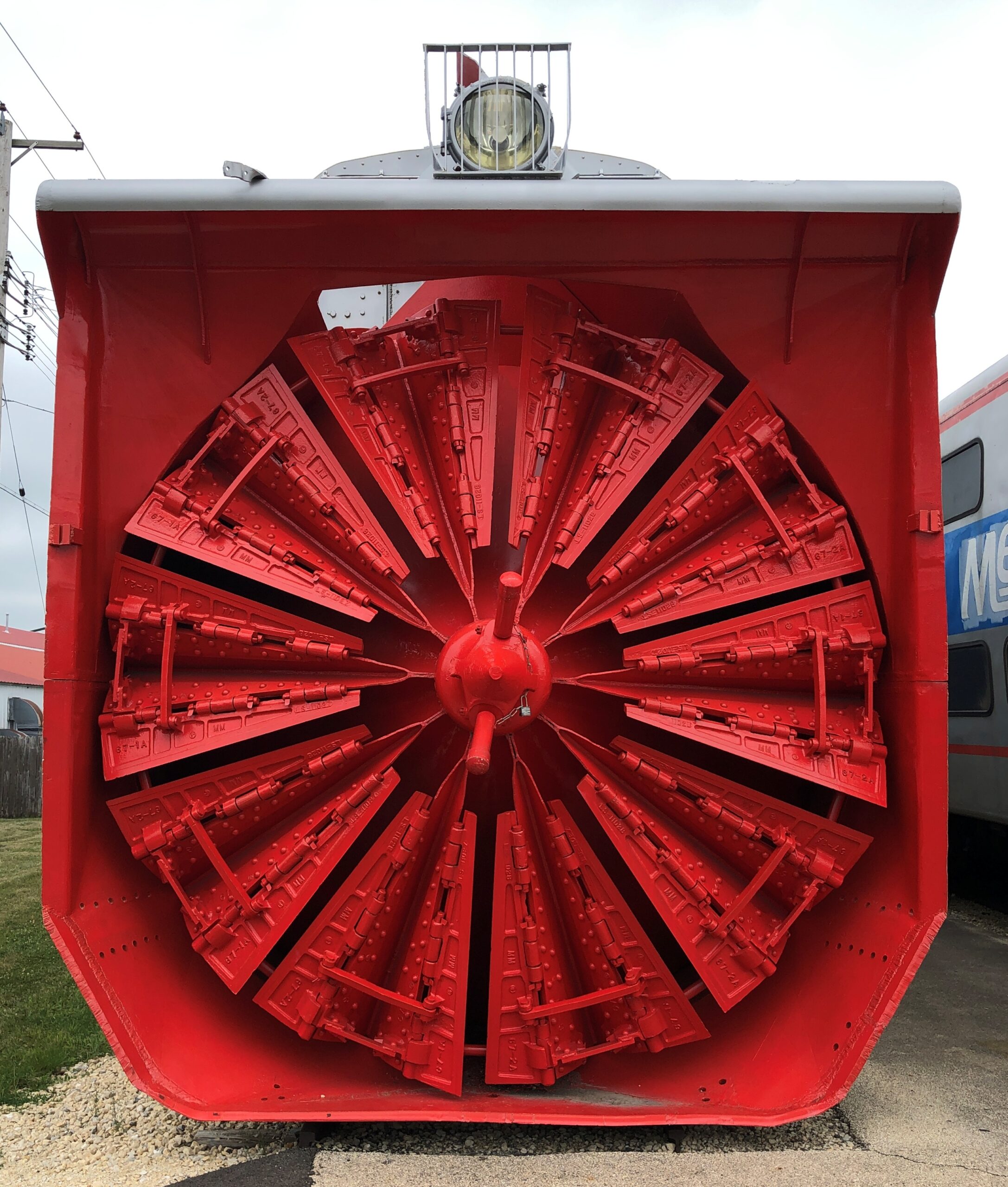
The collection includes some rolling stock you don’t see that much, such as a 1949 steam-powered Leslie rotary snowplow designed to clear tracks of ice and snow, and one of the last ever made, as these too converted to diesel. To do its job, the blade at the front rotated at 150 rpm.
A wicked red maw, ready to grind its way forward. Just the thing for a fistfight, on the top of the car, between Bond and a nameless henchman; resulting in the henchman tumbling into the blade; think of your own Roger Moore bon mot for that situation (something about a grinding headache, maybe).
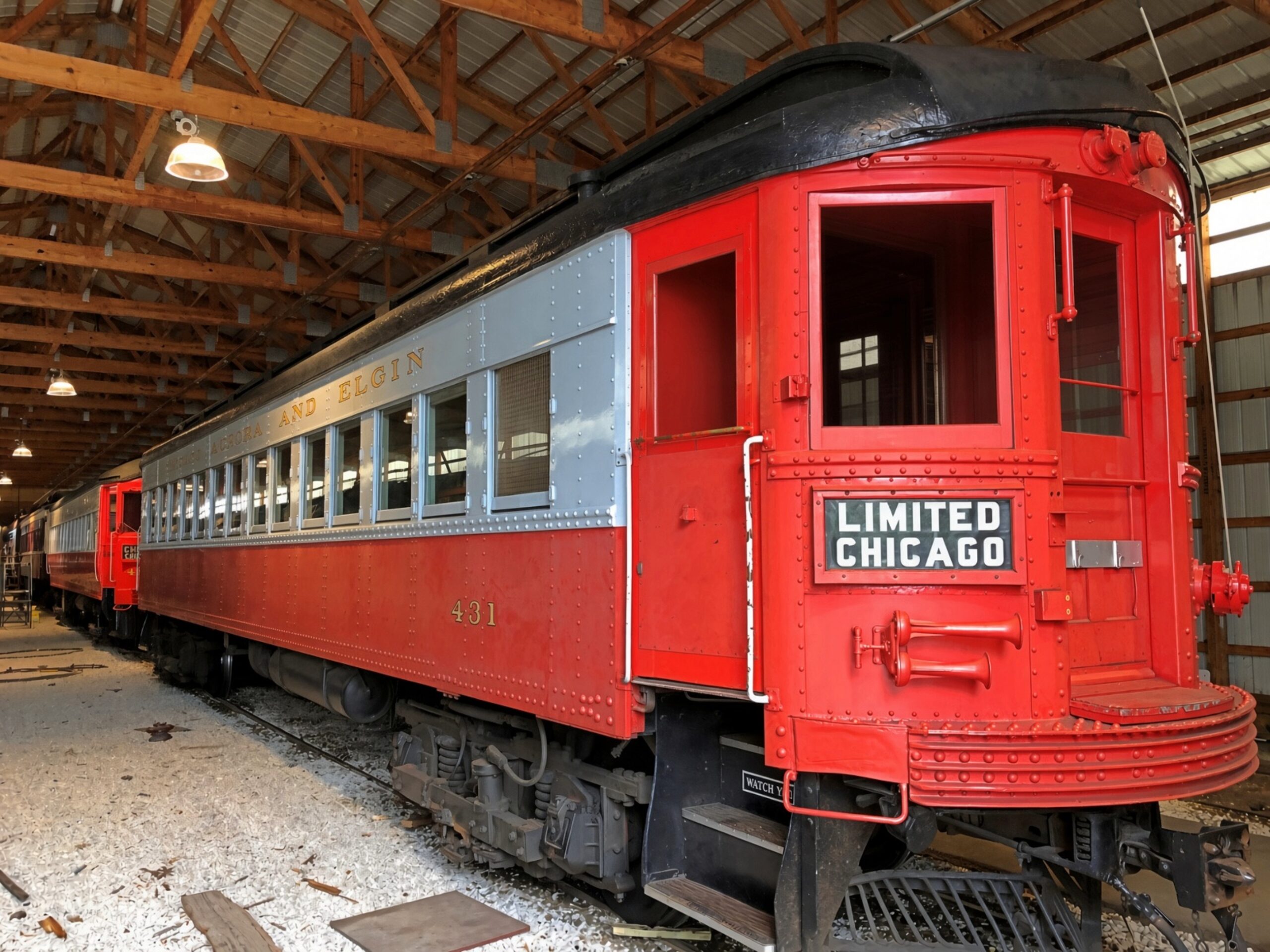
Interurban cars. Including this one, in which we rode out into the Illinois cornfields.
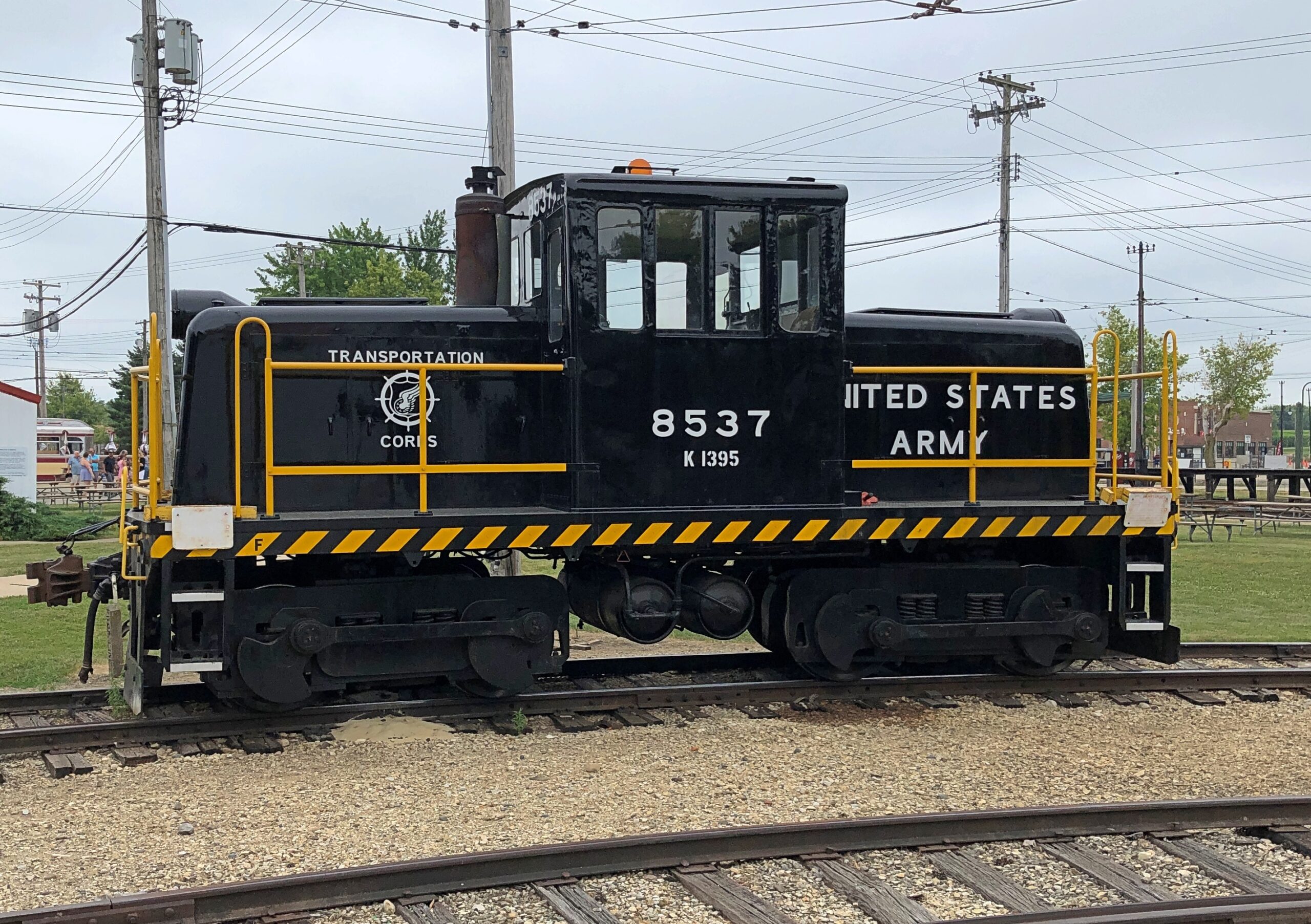
A few military cars.
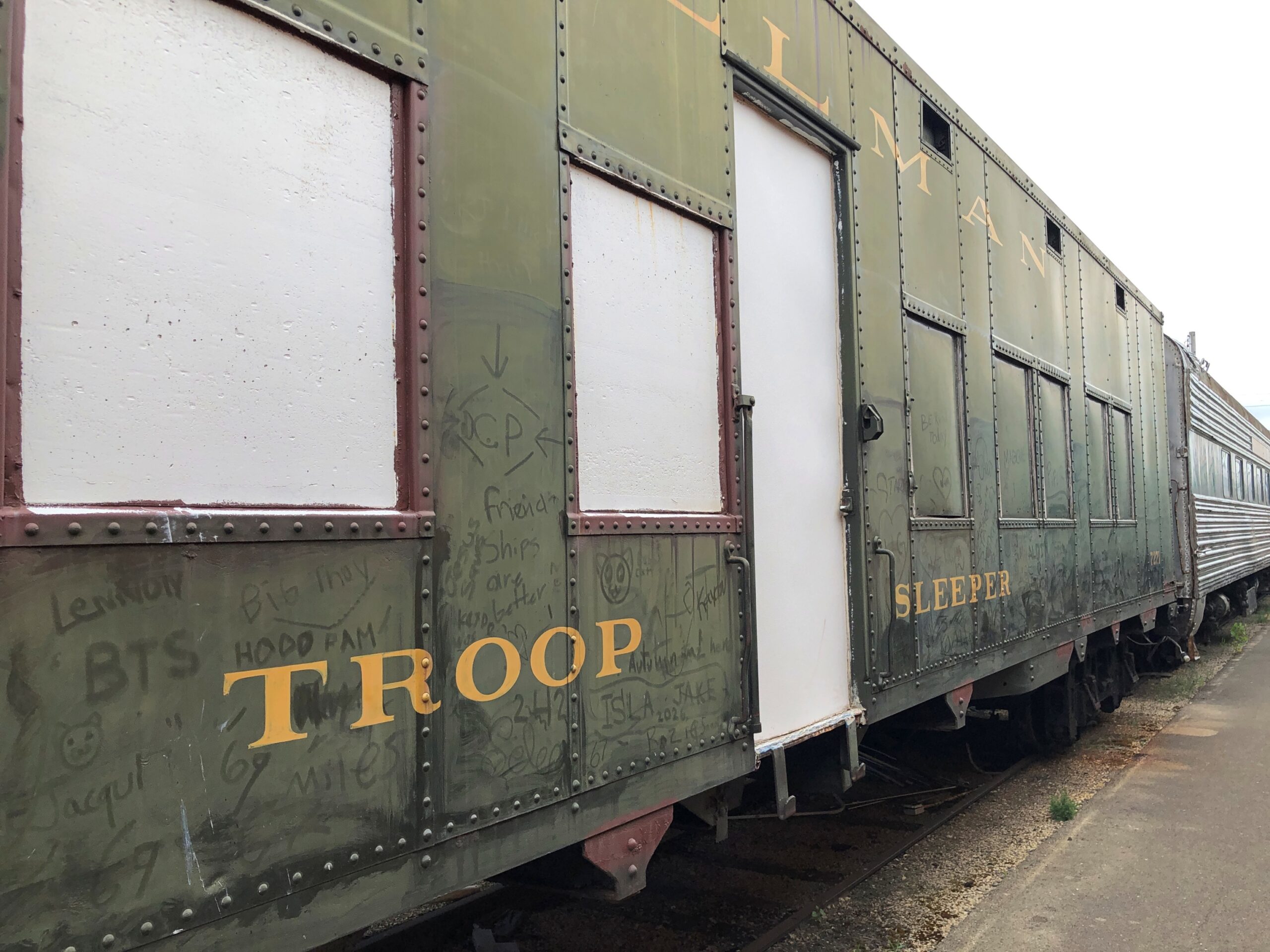
The latter is a troop sleeping car, built by Pullman, doing its part for the war effort in the early 1940s.
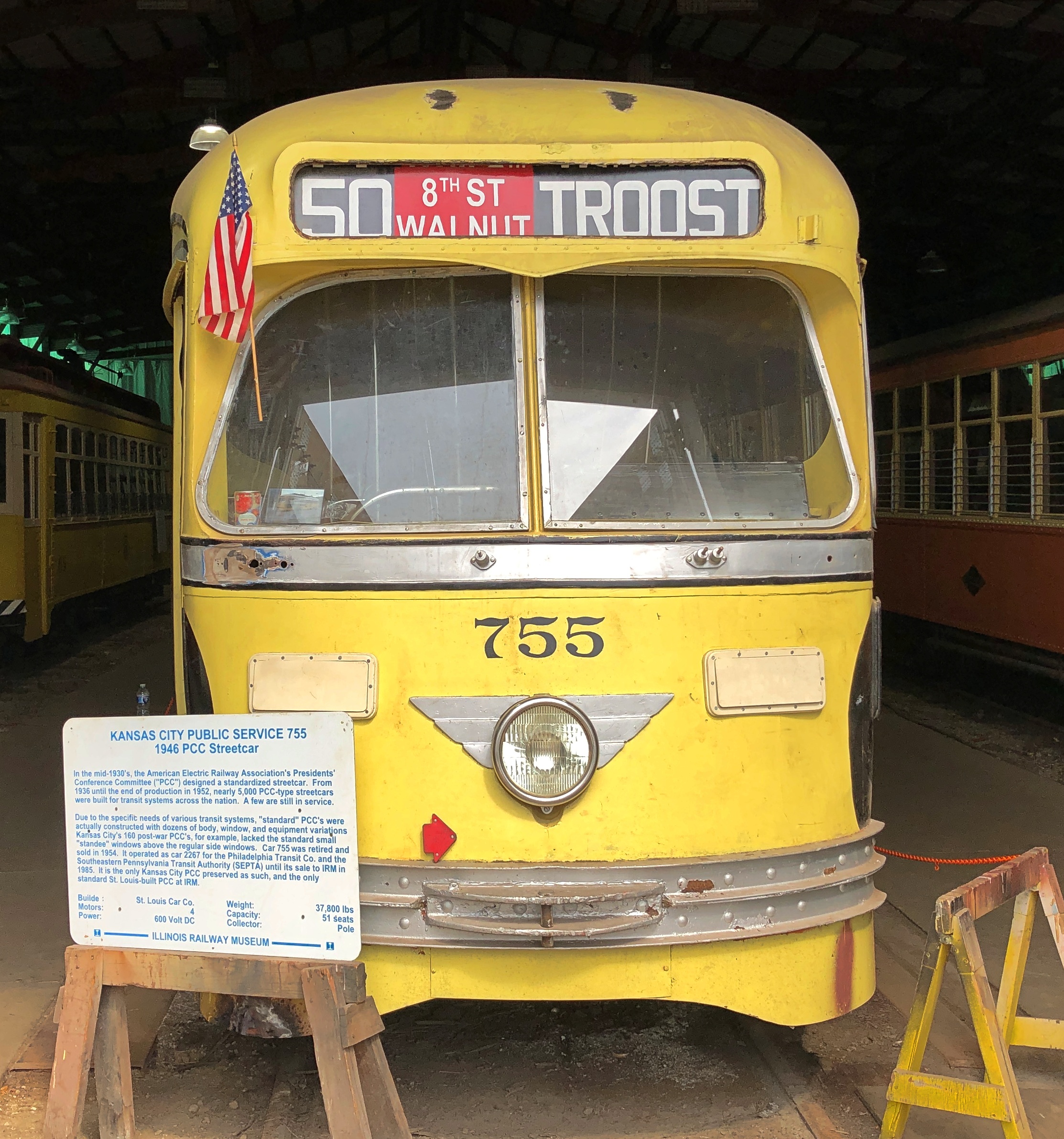
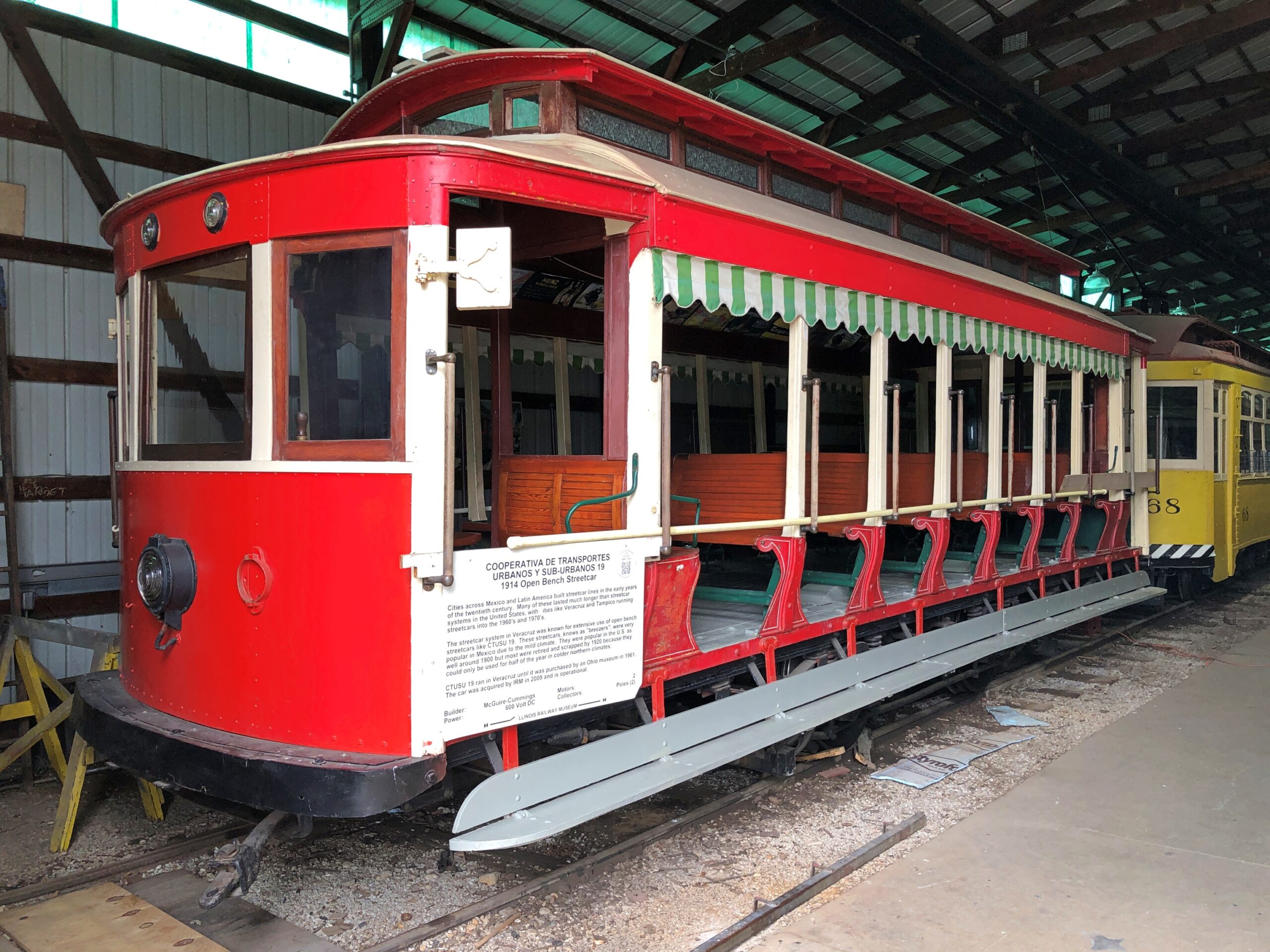
Examples of the many streetcars and trolley cars in the collection.
The latter built in 1914, so it’s a little anachronistic, but I thought of it as a Meet Me in St. Louis streetcar.
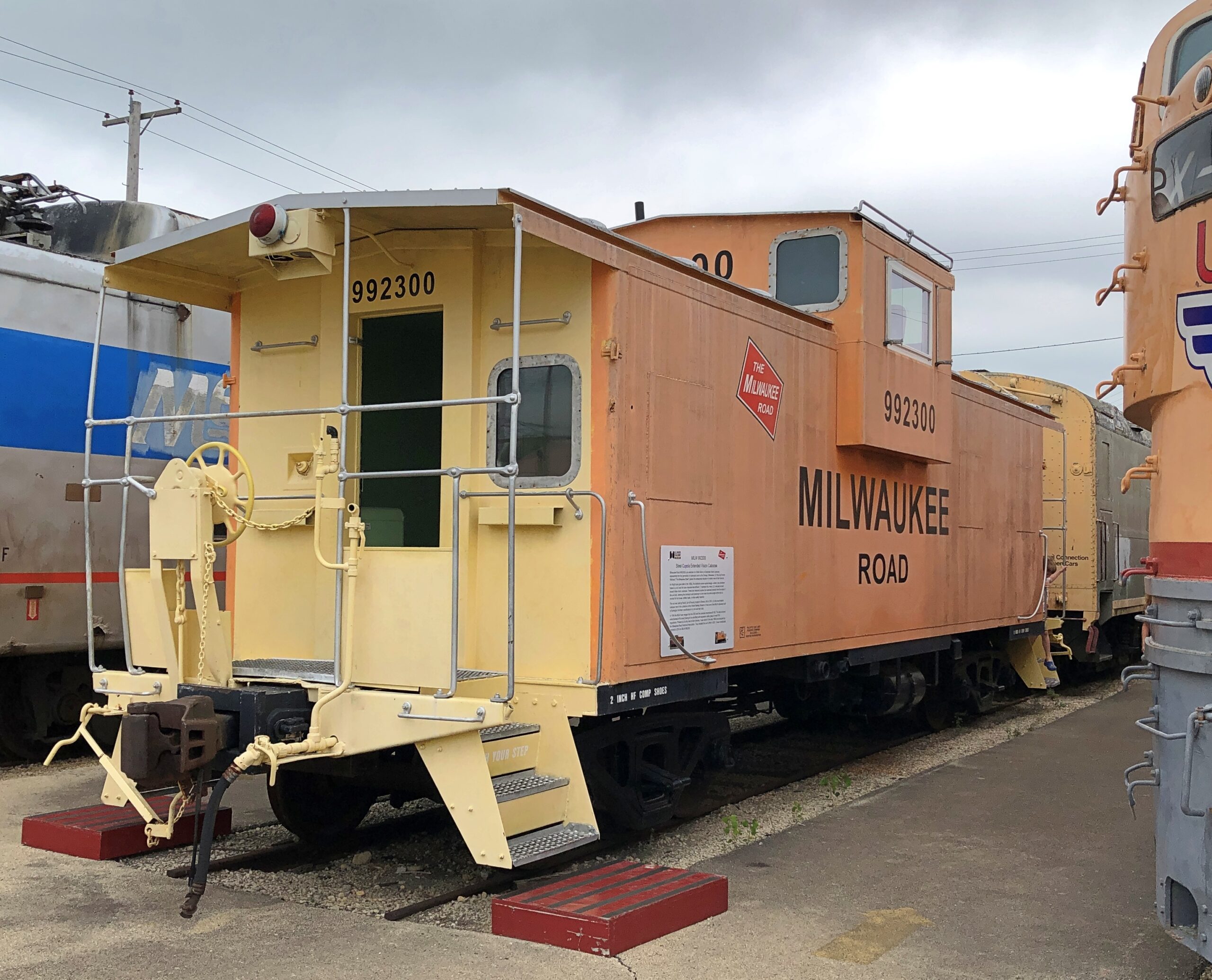
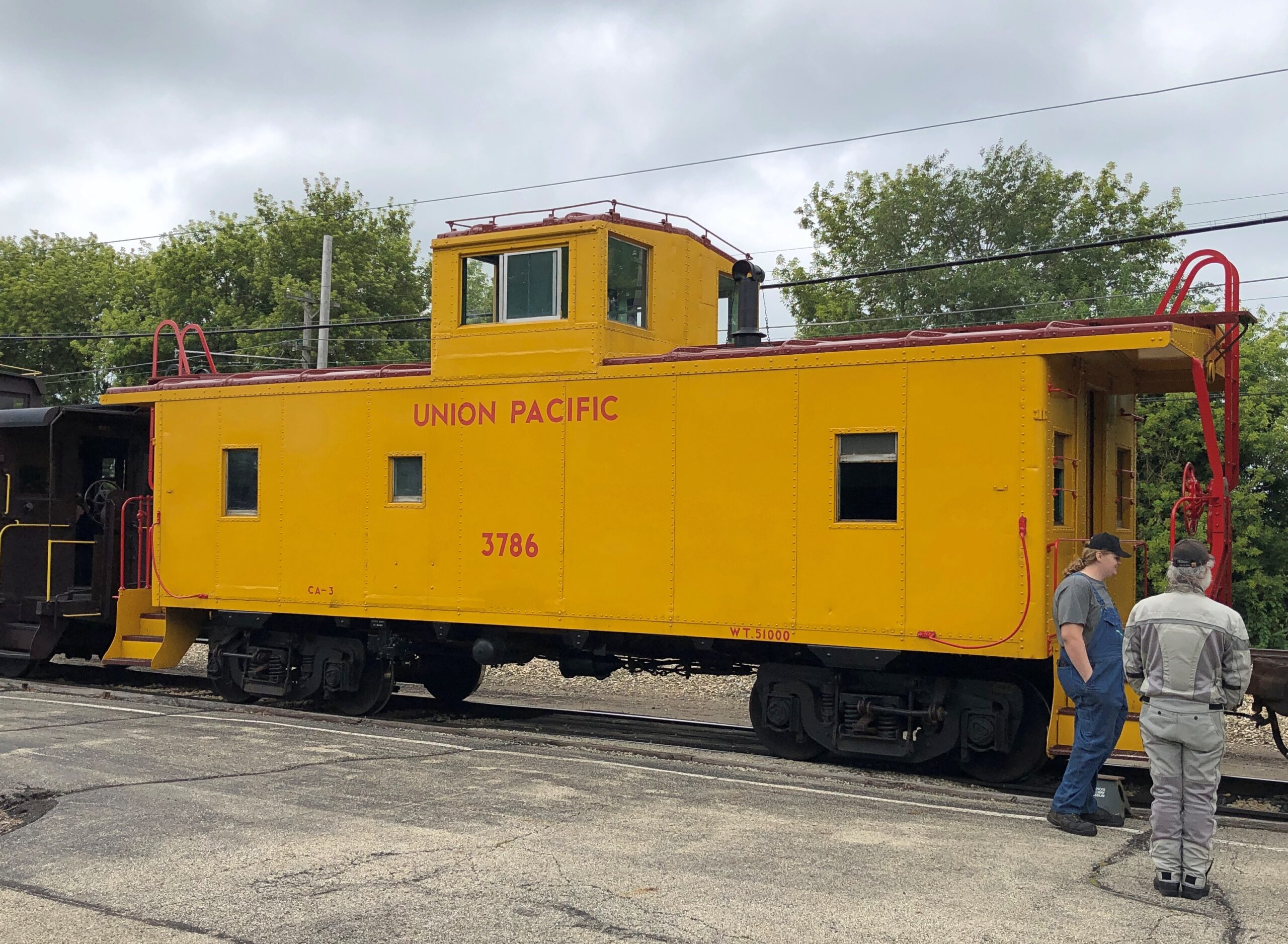
And — of course it should be last — cabooses.
If you asked me, railroads should still be using cabooses. For aesthetic reasons. No railroad is going to do that, naturally, but that’s my opinion.
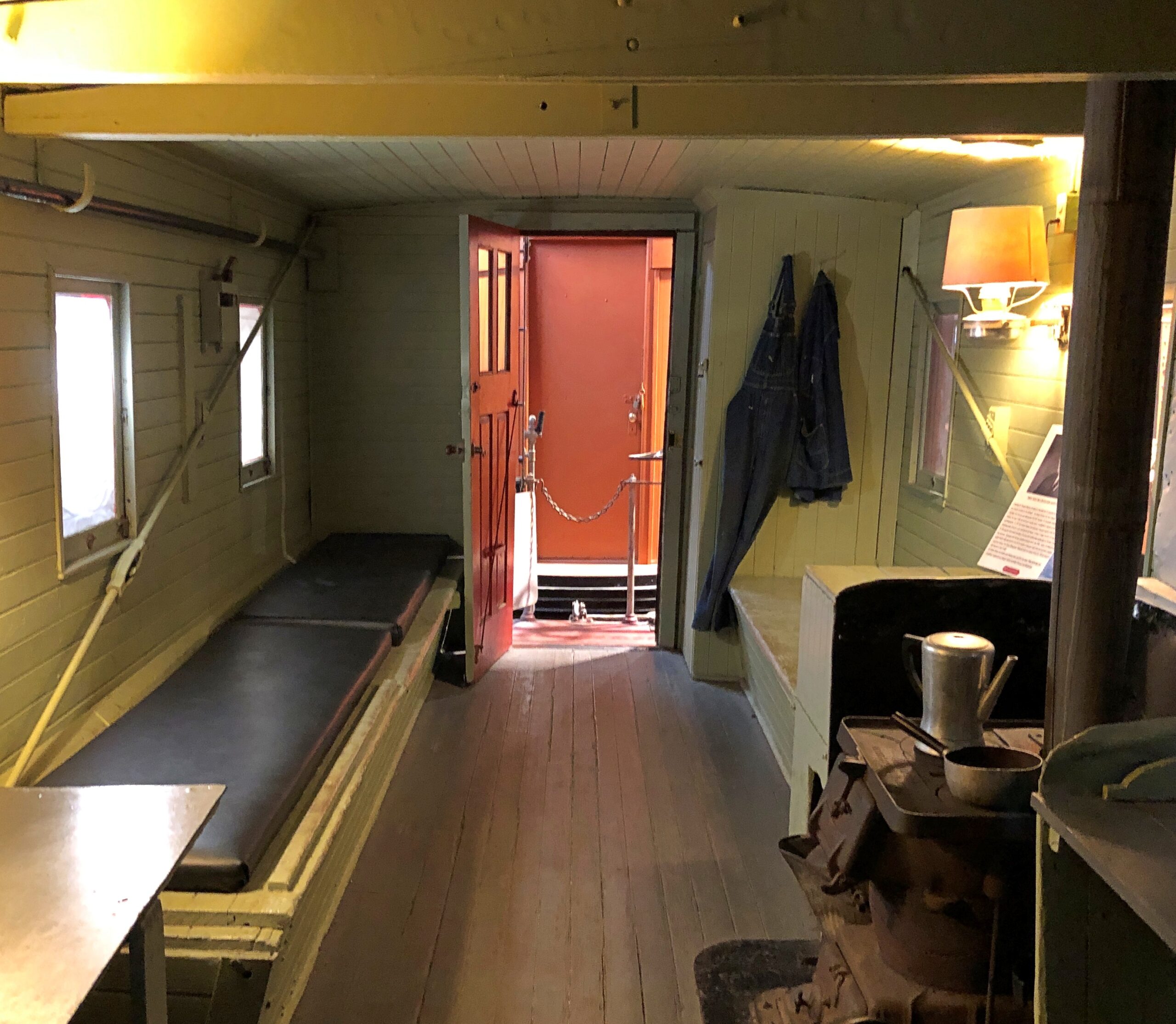
The interior of one of the cabooses. A good many of the cars at the museum are open, provided you’re willing to climb into them, and we certainly were in this case.
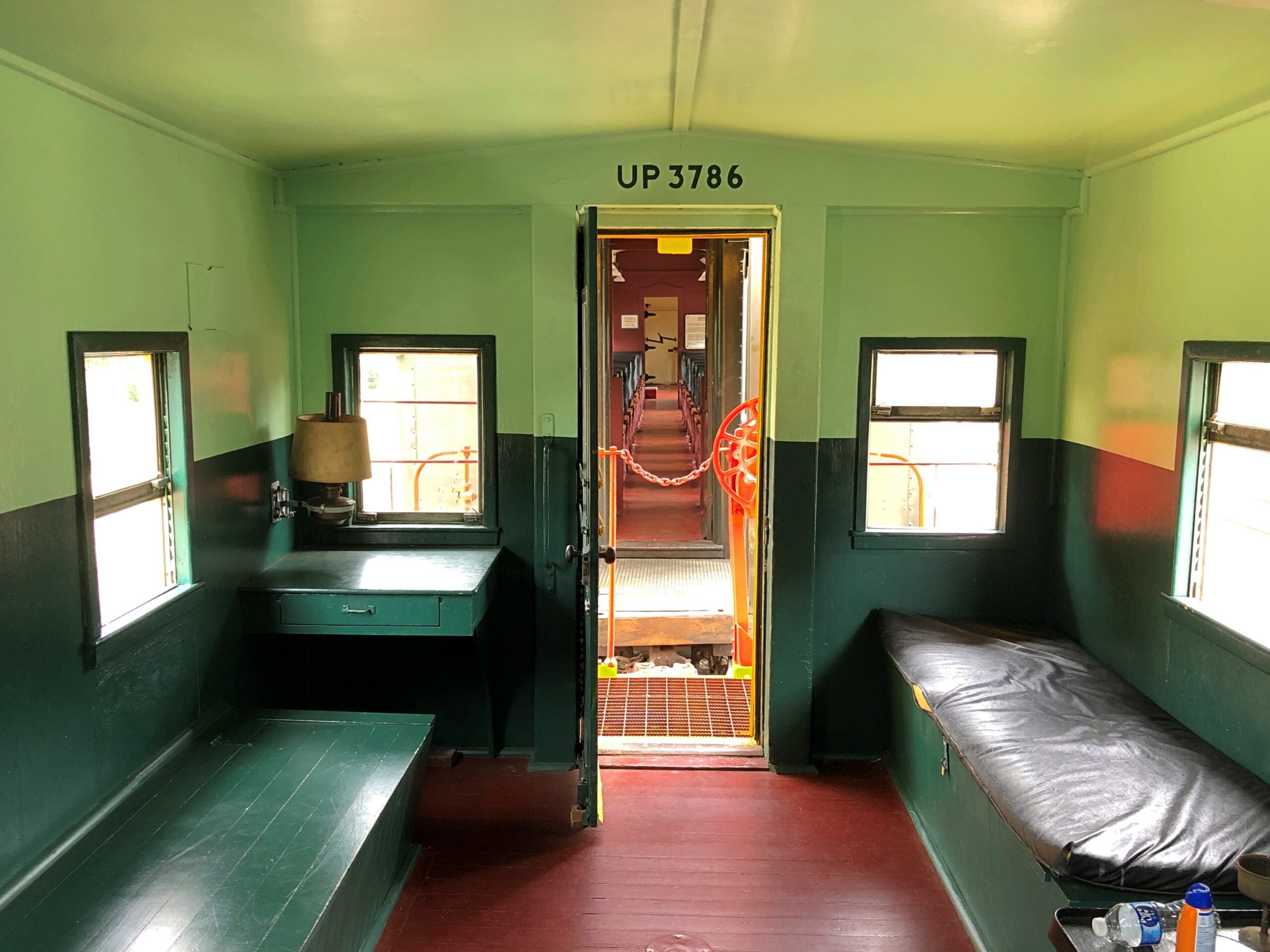
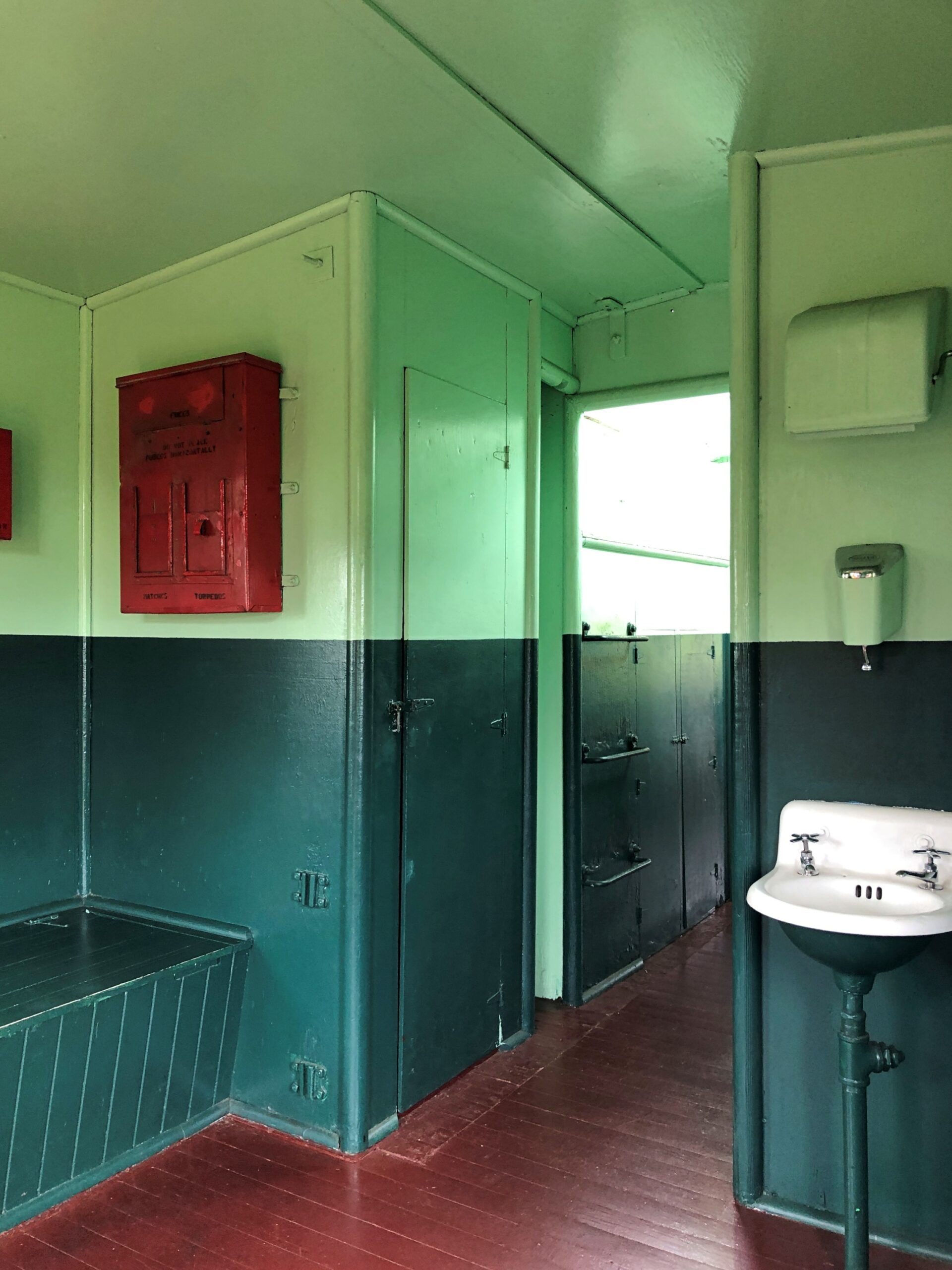
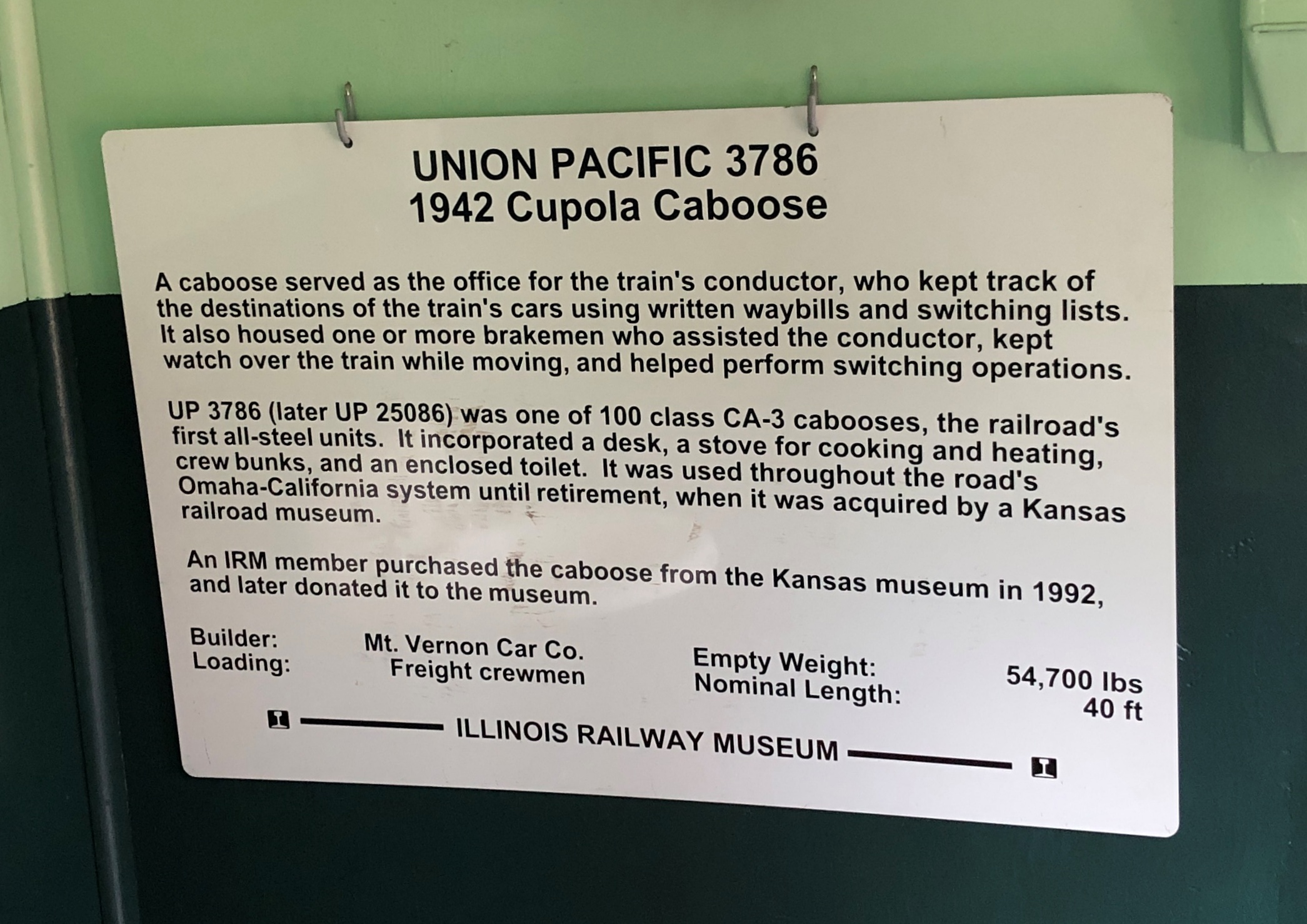
A somewhat newer caboose. We went in there, too.
This caboose was attached to another caboose and an engine, and you could take rides. We did. I couldn’t ever remember riding in a moving caboose before, but now I have.
As usual for a Northern summer – the best thing about it, really – the heat has been on and off even in July. Last week we had highs only in the 80s, and sometimes lows in the 60s at night. Those days gave way to hotter temps today, with the promise of more heat to come. For a few days.
Back on July 3, a fairly hot day itself, we buzzed out to Rockford, the furthest I’ve been for months now. After a hearty lunch at the Stockholm Inn, we visited the handsome and distinctive Tinker Swiss Cottage Museum & Gardens, which is just south of downtown Rockford. Known about the place for years, finally made time for it.
Another legacy of an American who traveled to Europe long ago. Apparently he was besotted with the Swiss design of the time. That American would be Robert Tinker (d. 1924), though his story is more convoluted than most. During the boom early days of mechanical reapers in the 1850s, one John Manny ran a reaper works in Rockford as one of the more nimble competitors of Cyrus McCormick (who sued Manny for patent infringement and lost). John Manny died suddenly in 1856, as even wealthy people sometimes did in those days, leaving his widow Mary in control of the company.
Young Robert Tinker (younger than Mary) worked in a management position at the company. He had not, himself, come from a wealthy family, but apparently was a man of sideways ambition. In 1862, Mary paid for Robert to spend an extended period in Europe, while still drawing a salary from the company. So not only was he able to take a sort of sabbatical from factory operations, and skip out on risking his life for the Union, he got to take a Grand Tour.
The docent was clear on all this as we toured the interior of the house – and I later discussed it with the museum’s director of education and collections, who affirmed the gist. Less clear is exactly how that happened. Mary and Robert were obviously close, very close, though their exact relationship is obscured from prying minds of the 21st century by a screen of Victorian propriety. Eventually (1870) the two married, and lived a long time as prominent Rockford citizens.
Robert was already at work on the Swiss Cottage before that, starting construction in 1865 on a limestone bluff overlooking Kent Creek, near when it meets the Rock River, finishing it around the time he got married. (Germanicus Kent being one of the founders of Rockford.)
I understand the gardens in the name used to be more extensive, but much remains.
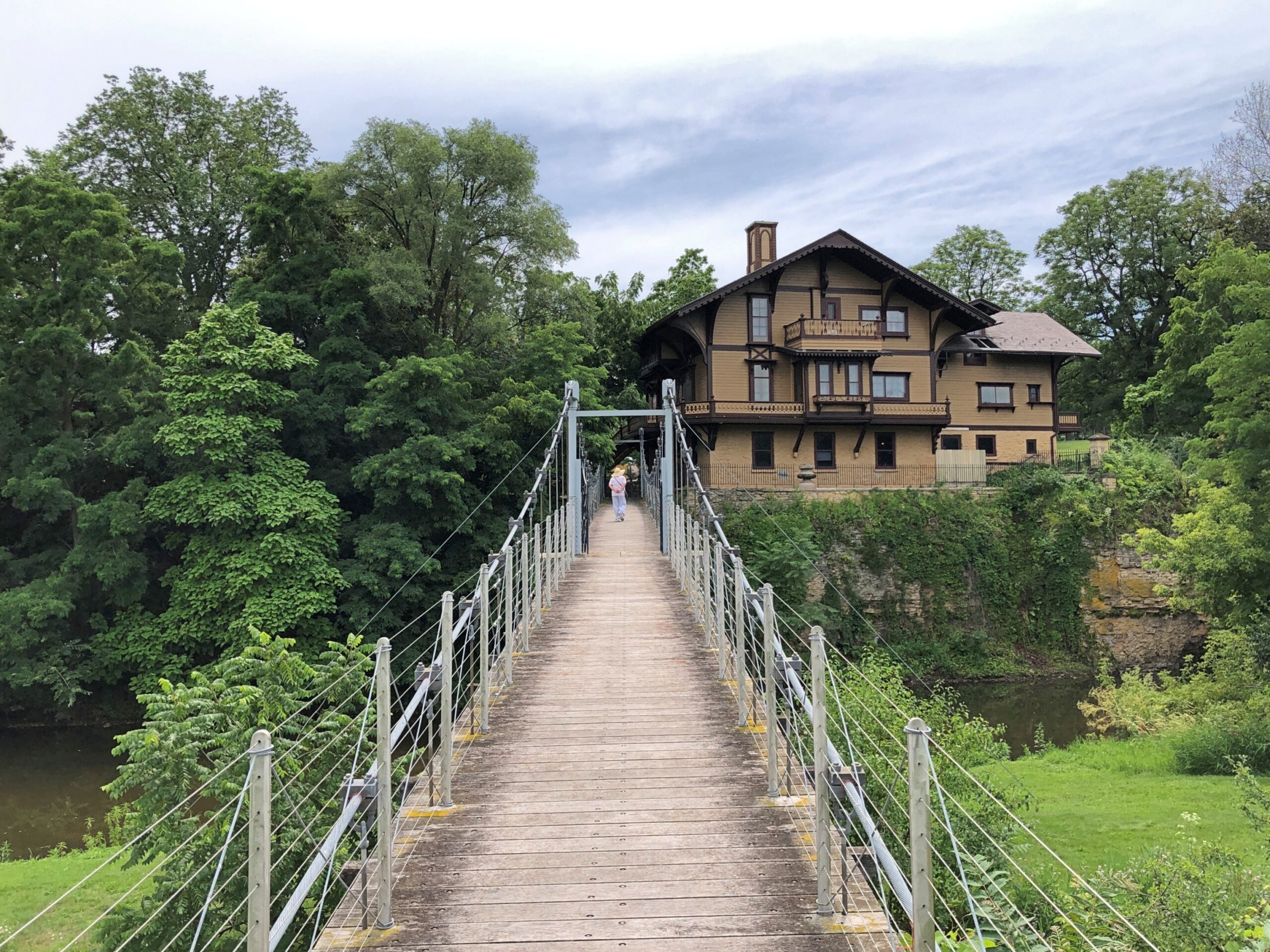
Behind the house is a bridge across the creek, leading to an undeveloped patch of land, formerly part of the gardens, along a rail line.
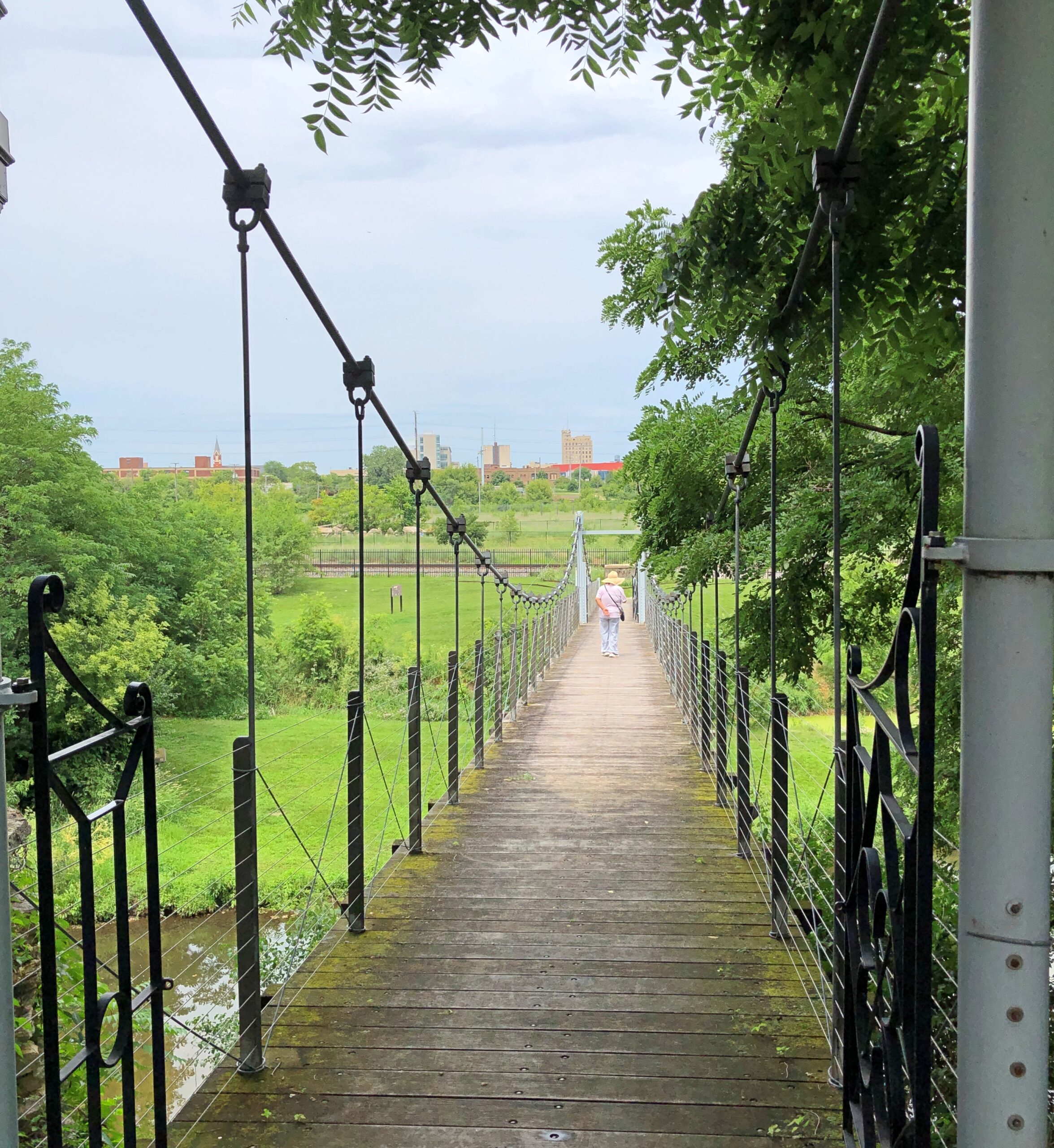
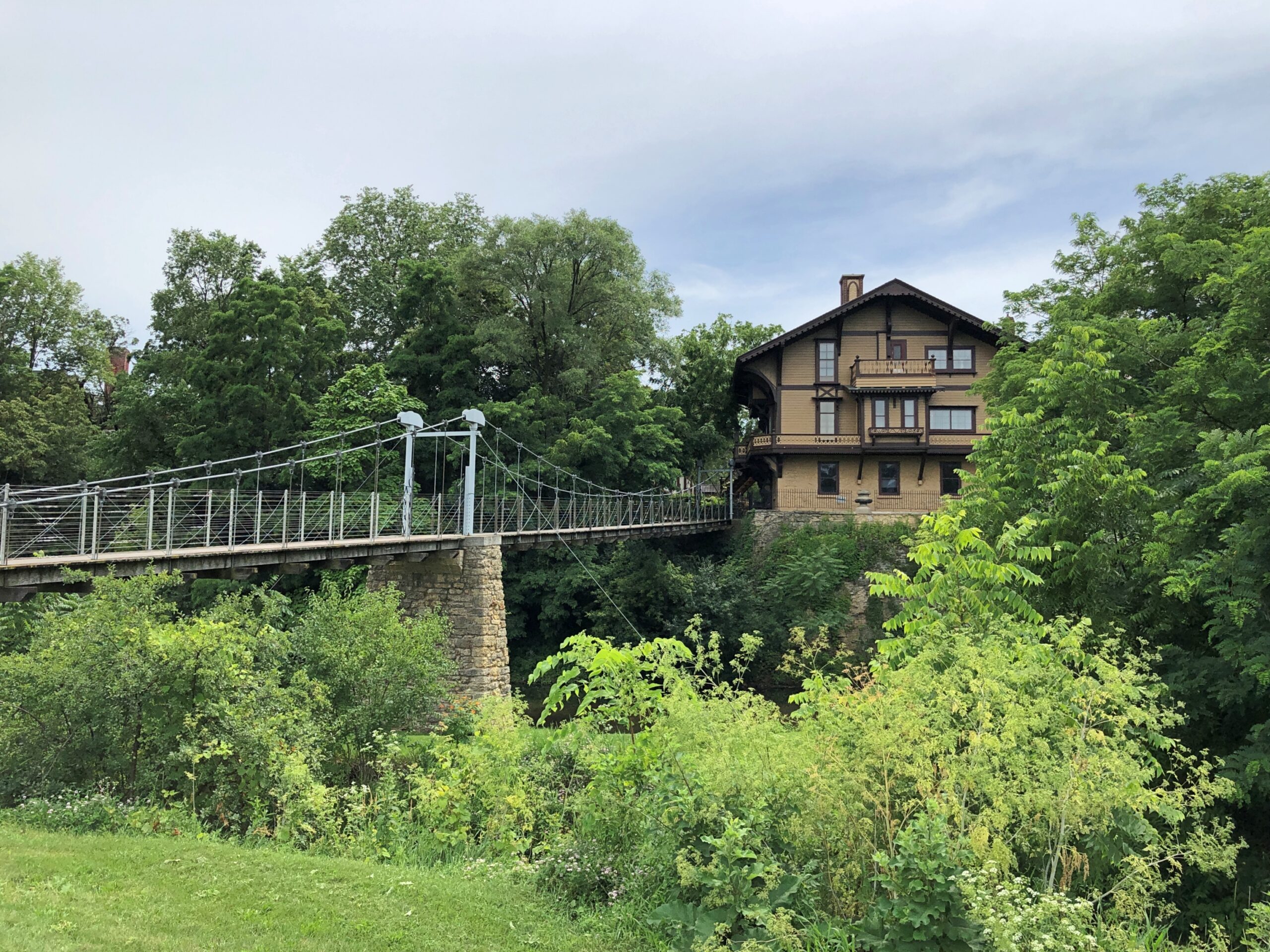
Of course we had to cross the bridge, despite the heat. It’s a personal motto of mine: cross that bridge if possible. In this case, you’re rewarded by a view of the back of the Swiss Cottage, perched above the creek.
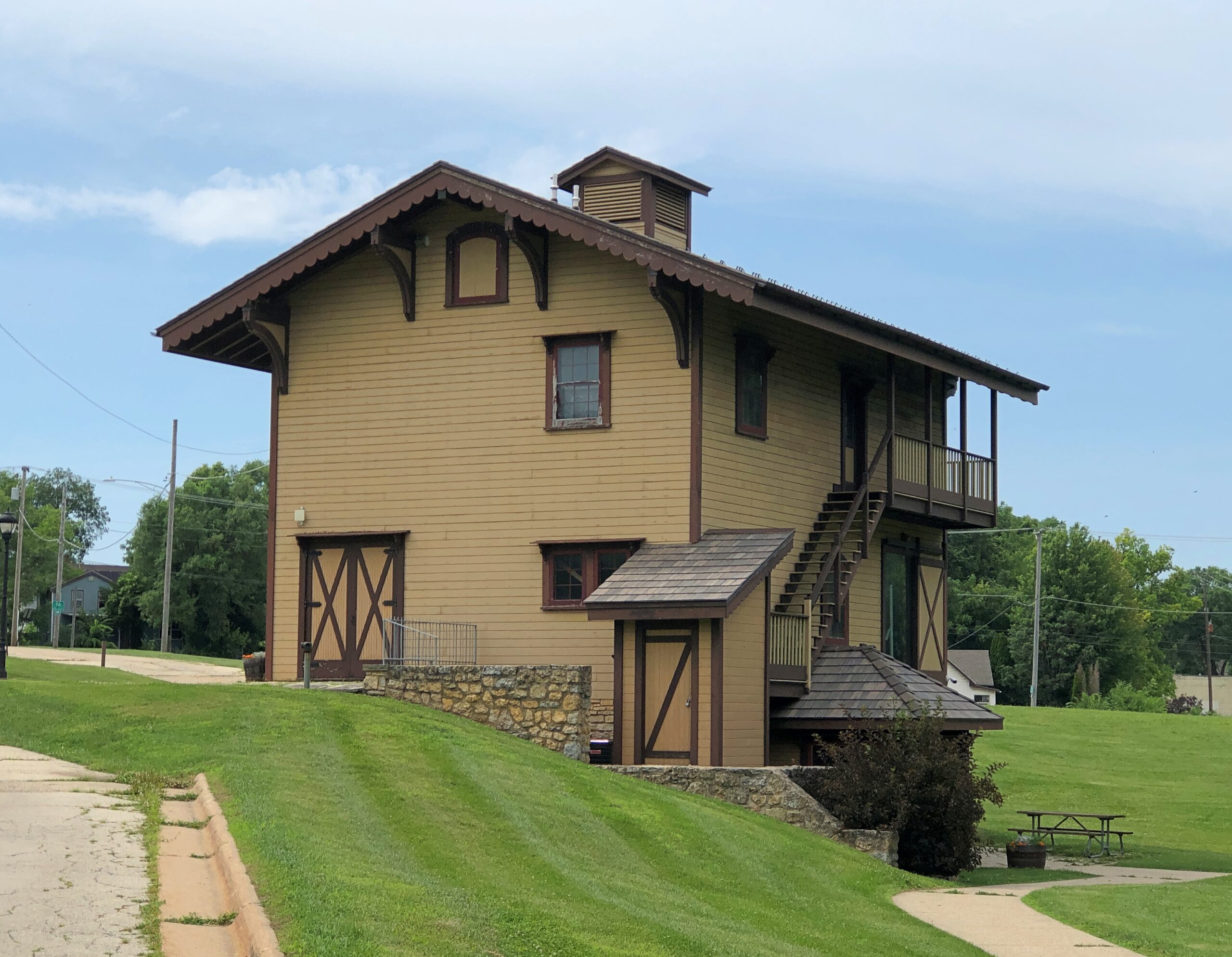
The property, now belonging to the Rockford Part District, also includes a three-story Swiss inspired barn. Formerly home to cows and horses and such, these days it’s a shop and visitors center and such. An unusual sort of barn, I’d say.
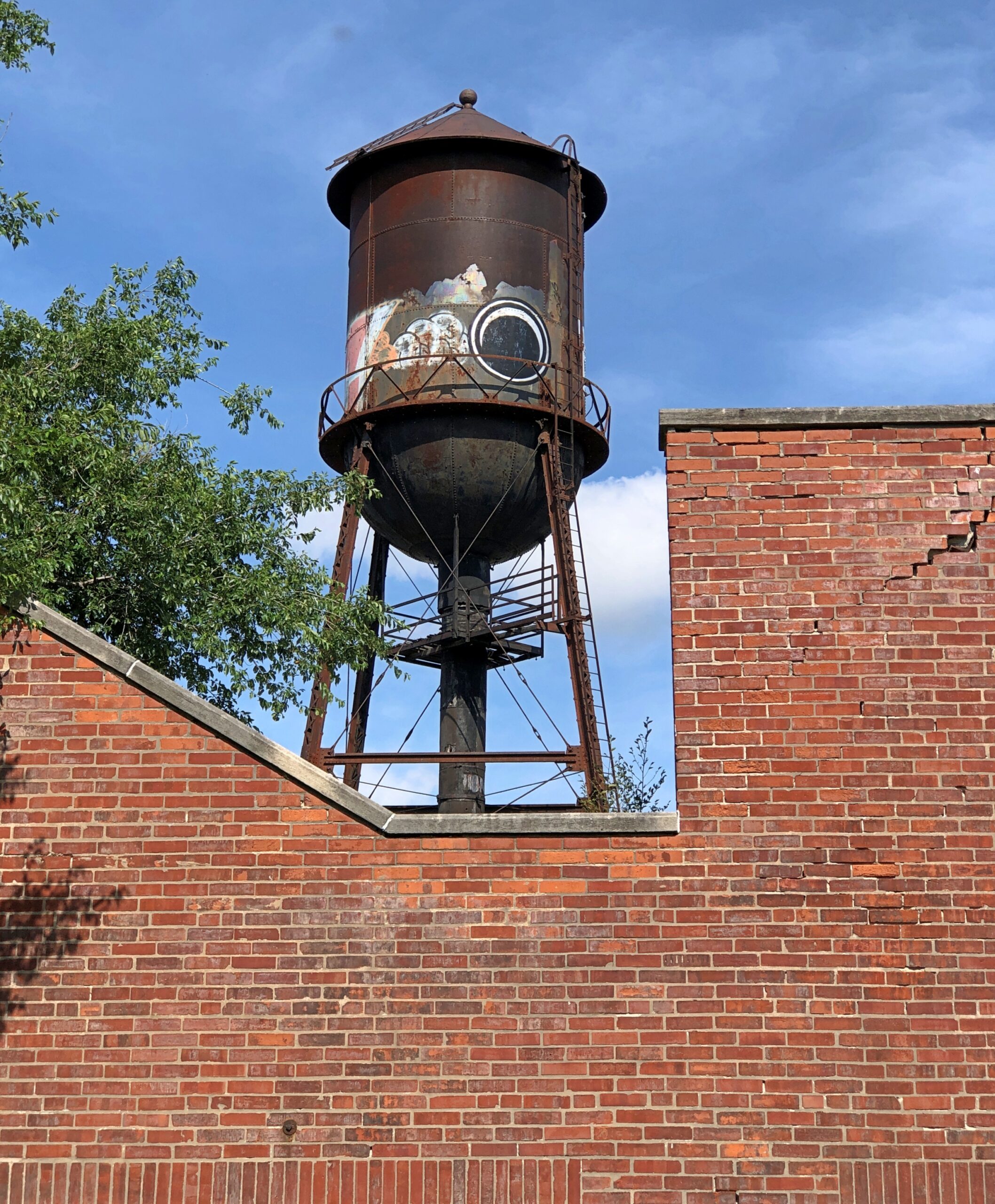
After Robert Tinker’s time, a factory was developed near the house. Nothing to do with reapers or the Tinkers. Just an opportune spot near the Rock River. Its hulk remains behind sturdy brick, lorded over by a rusty water tower.
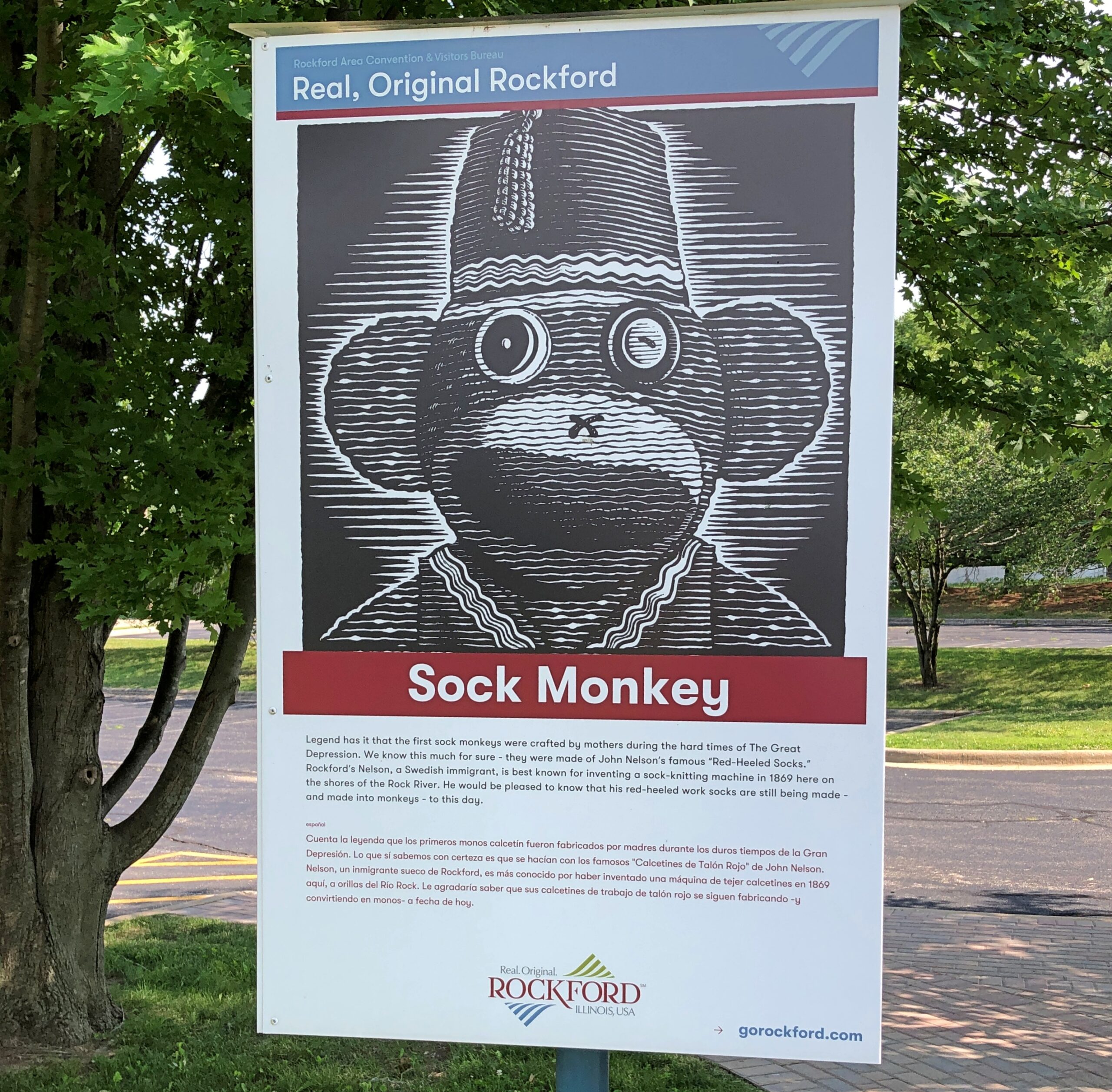
The factory has been abandoned for some years. But I understand that socks, and indeed sock monkeys, used to be made there.
Looks like we’ve hit the mid-July stride of chamber-of-commerce weather, with low 80s F for highs, high 60s for lows, for some days ahead. On the other hand, standard forecasts don’t include smoke, which could well make a comeback in the coming days.
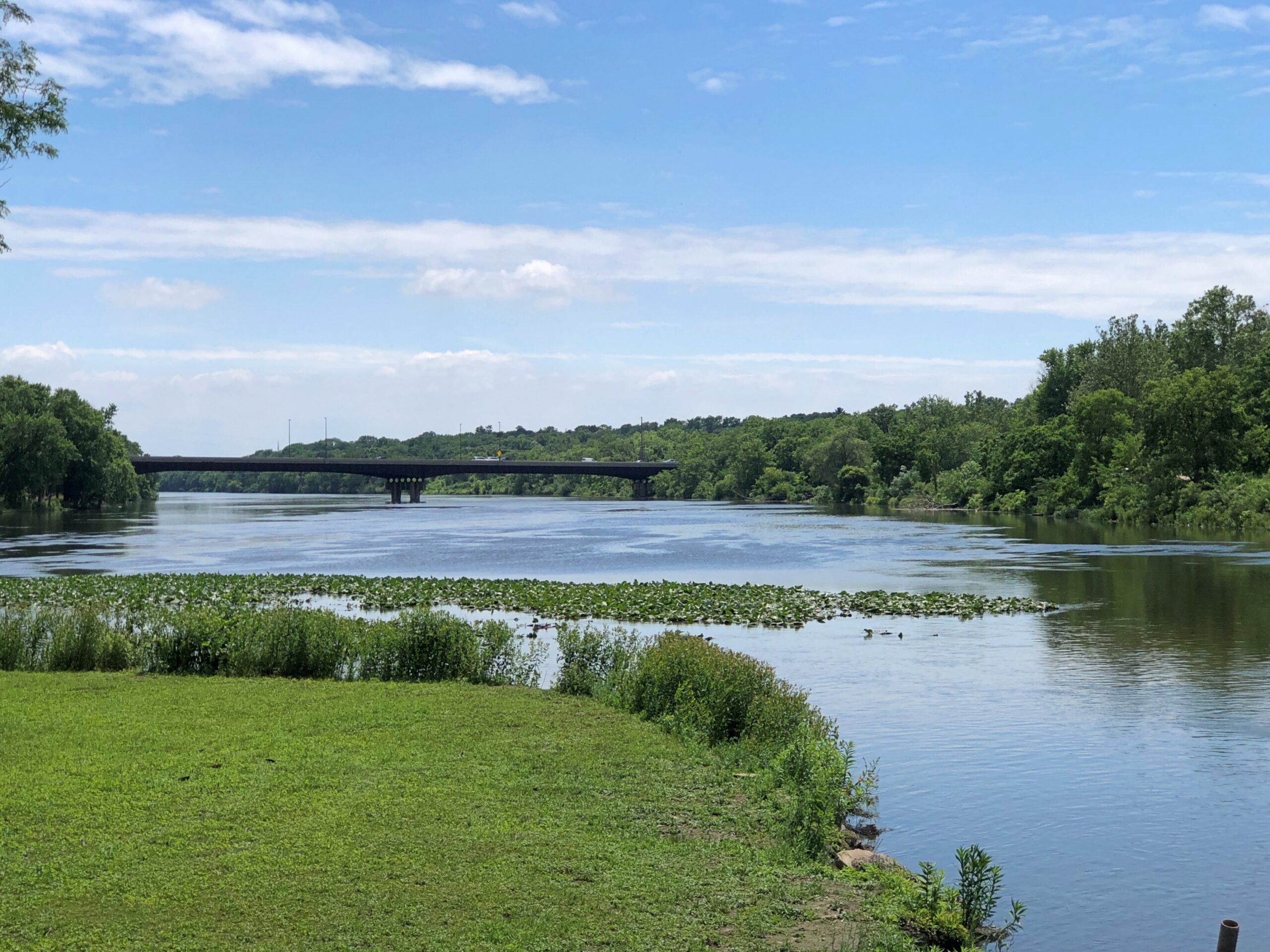
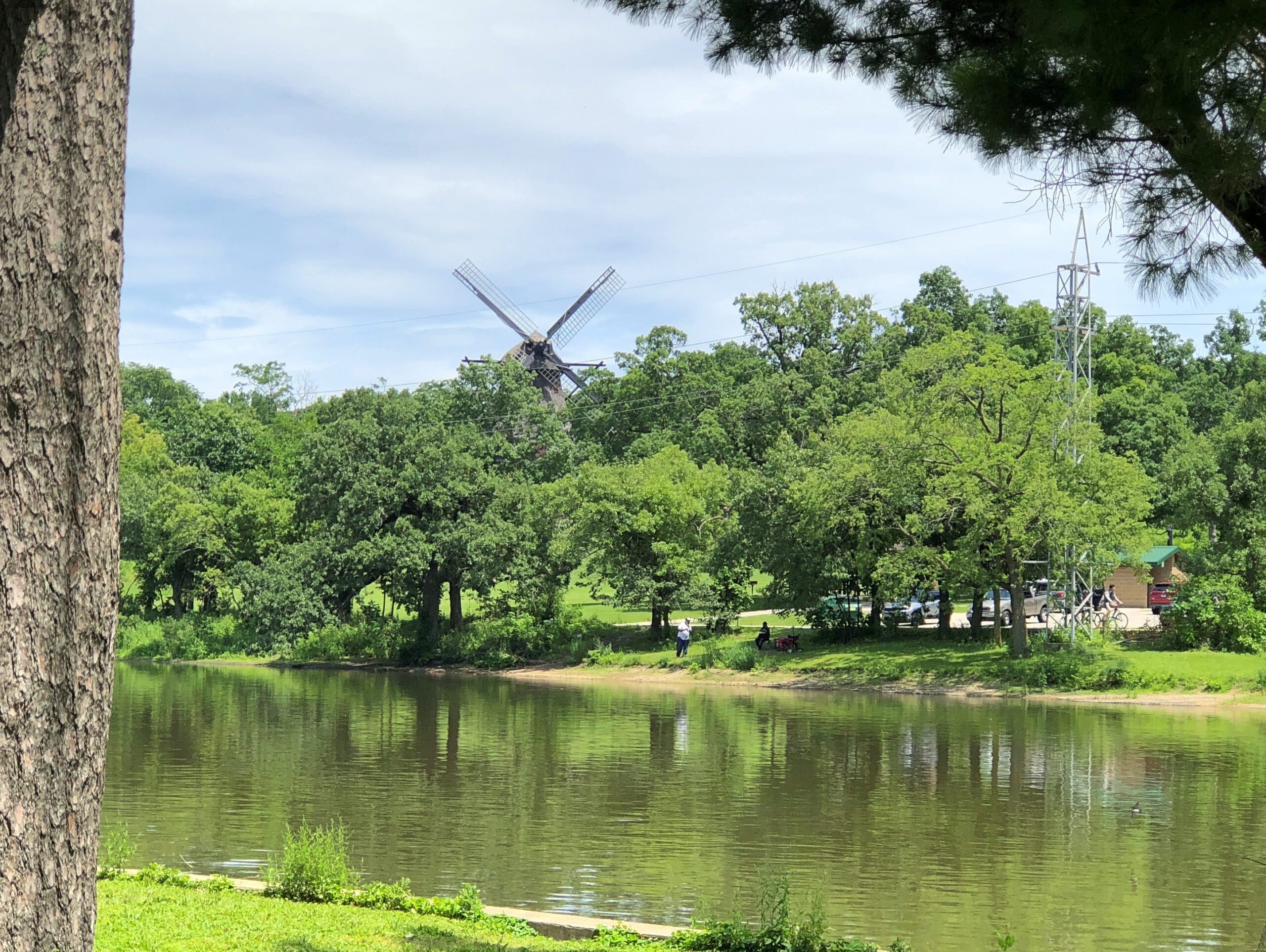
It was a rainy May and June, bringing the flow of the Fox River fairly high by the time last month that we took a short walk nearby, largely under the flush of greenery.
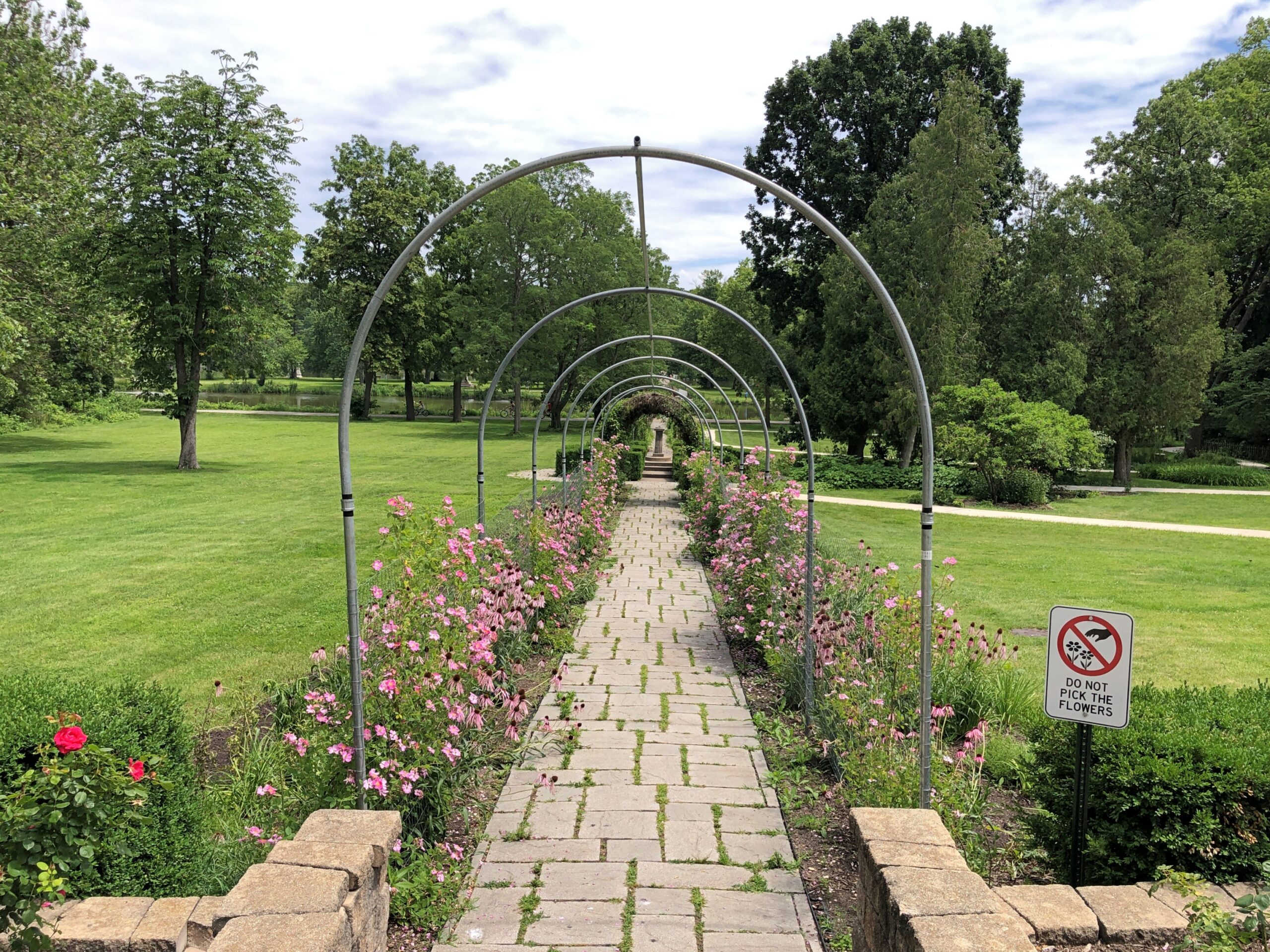
As mentioned, we visited the Fabyan Forest Preserve in Geneva, Illinois one Saturday not long ago. The holdings — formerly part of the estate of George Fabyan (d. 1936) — include land on both sides of the river, and a large island accessible on both sides by footbridges. The view from the island.
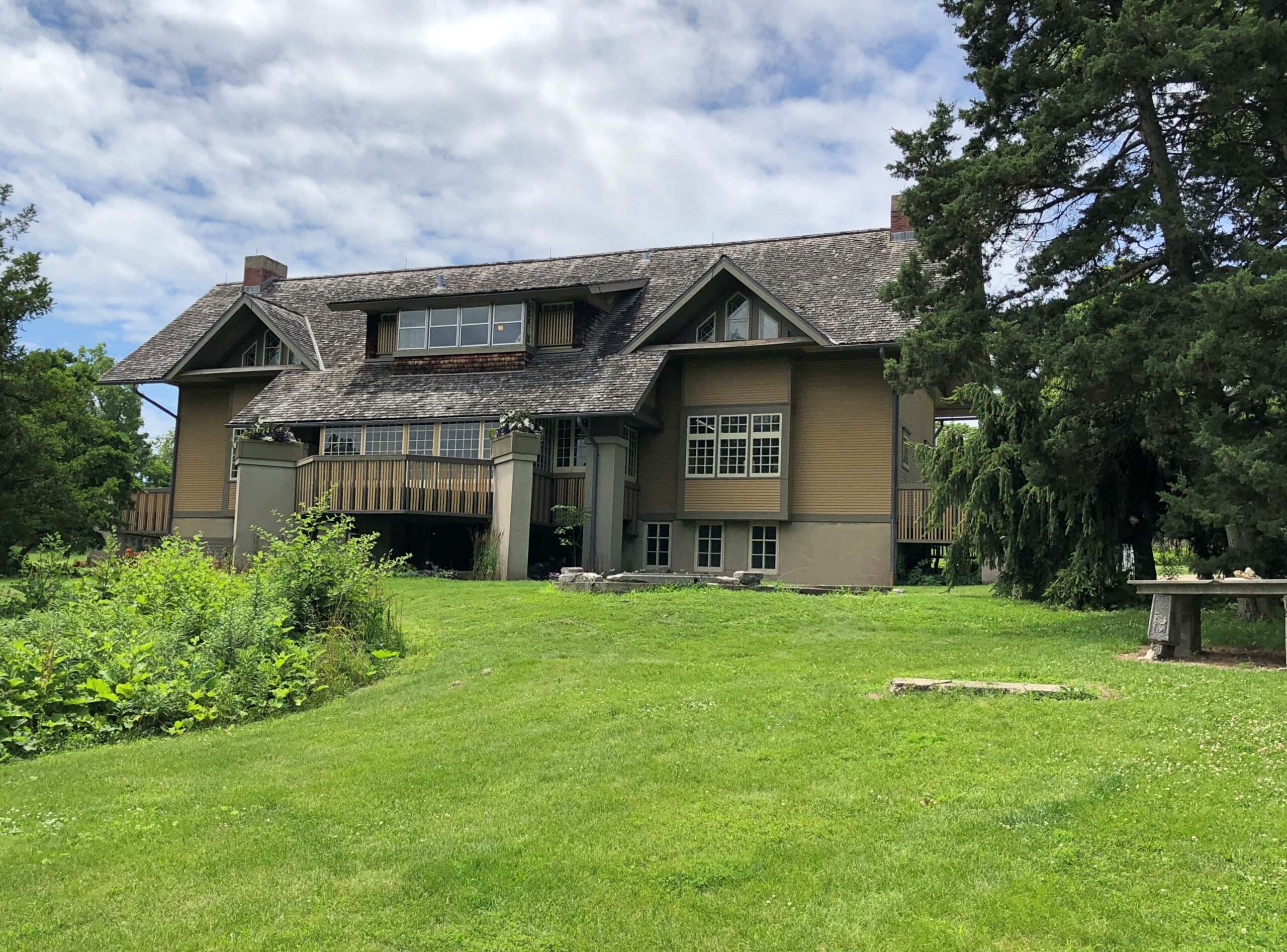
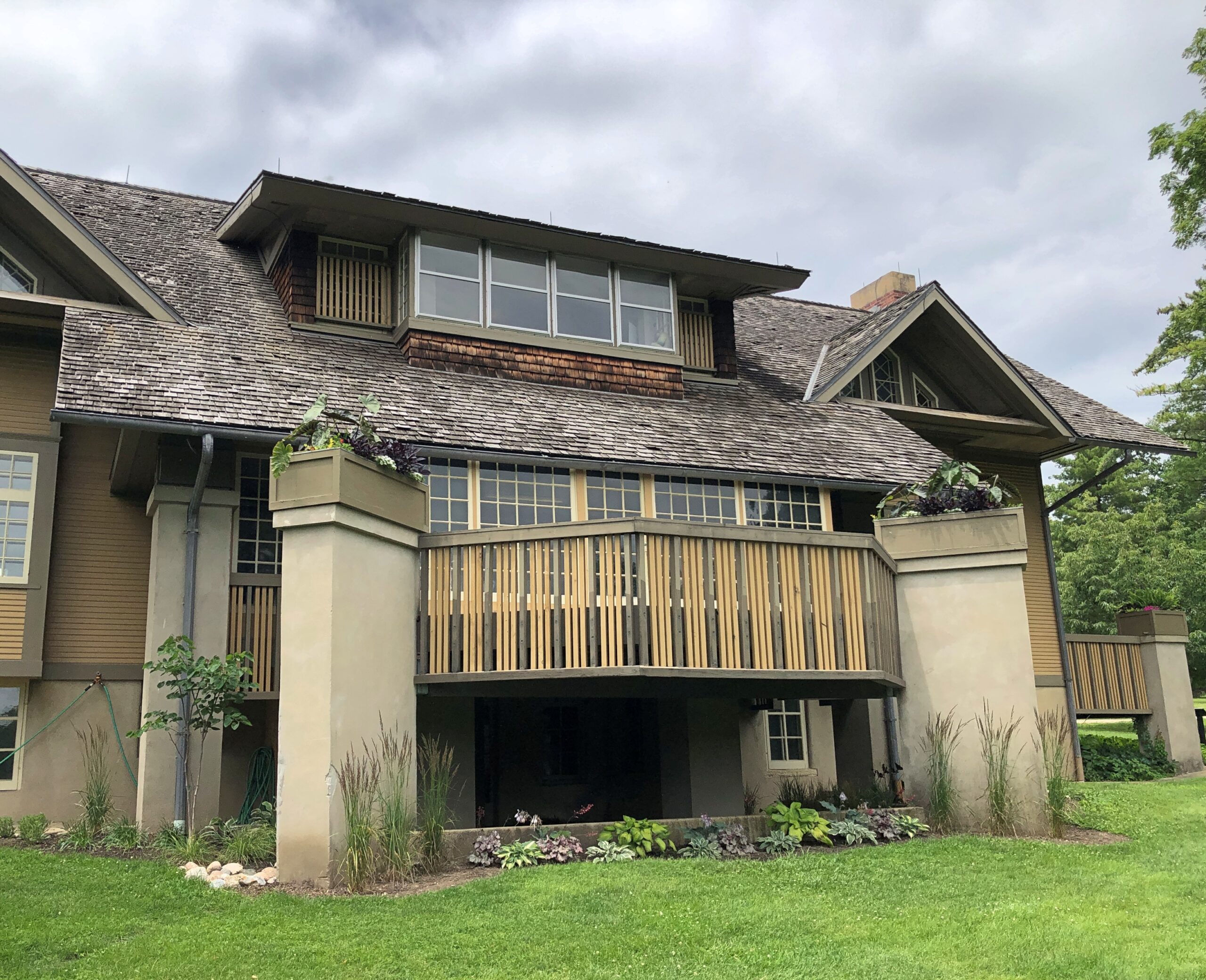
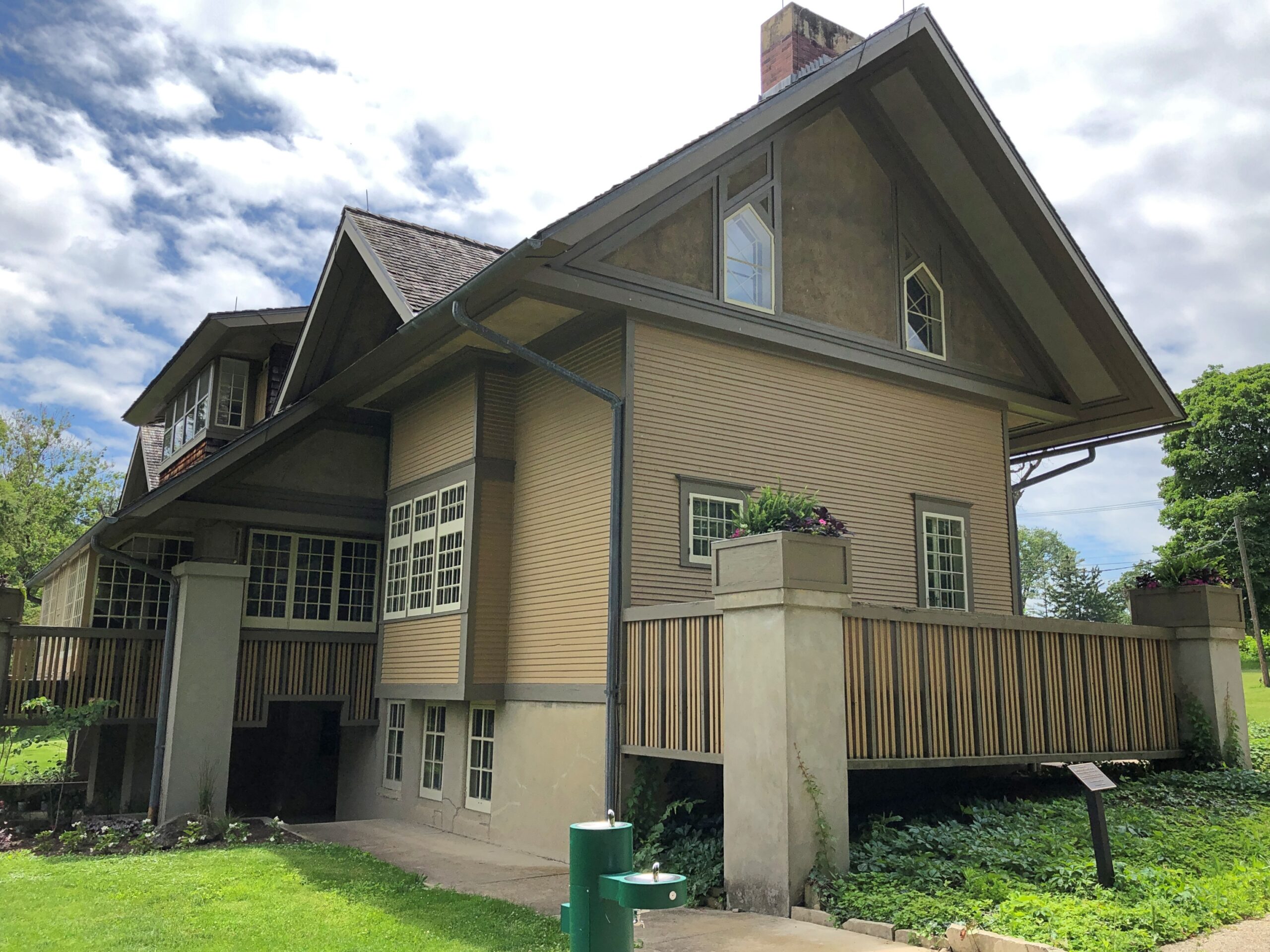
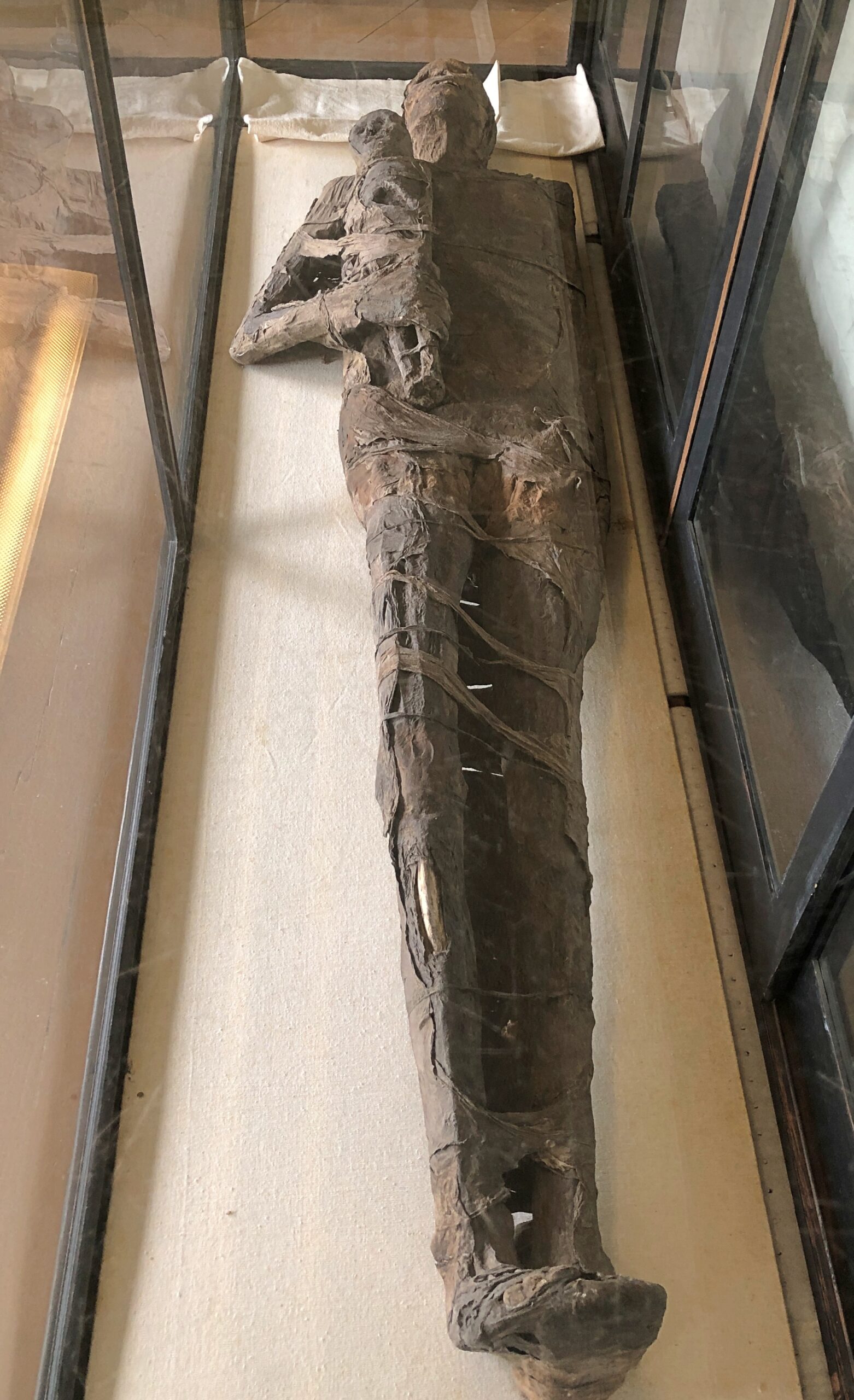
We didn’t go there this time, but rather lingered on the west bank, around the Fabyan Villa, which we toured, taking in the bogus mummy. FLW did some renovation on the property, a fact well emphasized at the museum.
One view from the villa toward the Fox. If you’re going to build near a river — or any flowing body of water — give it some height.
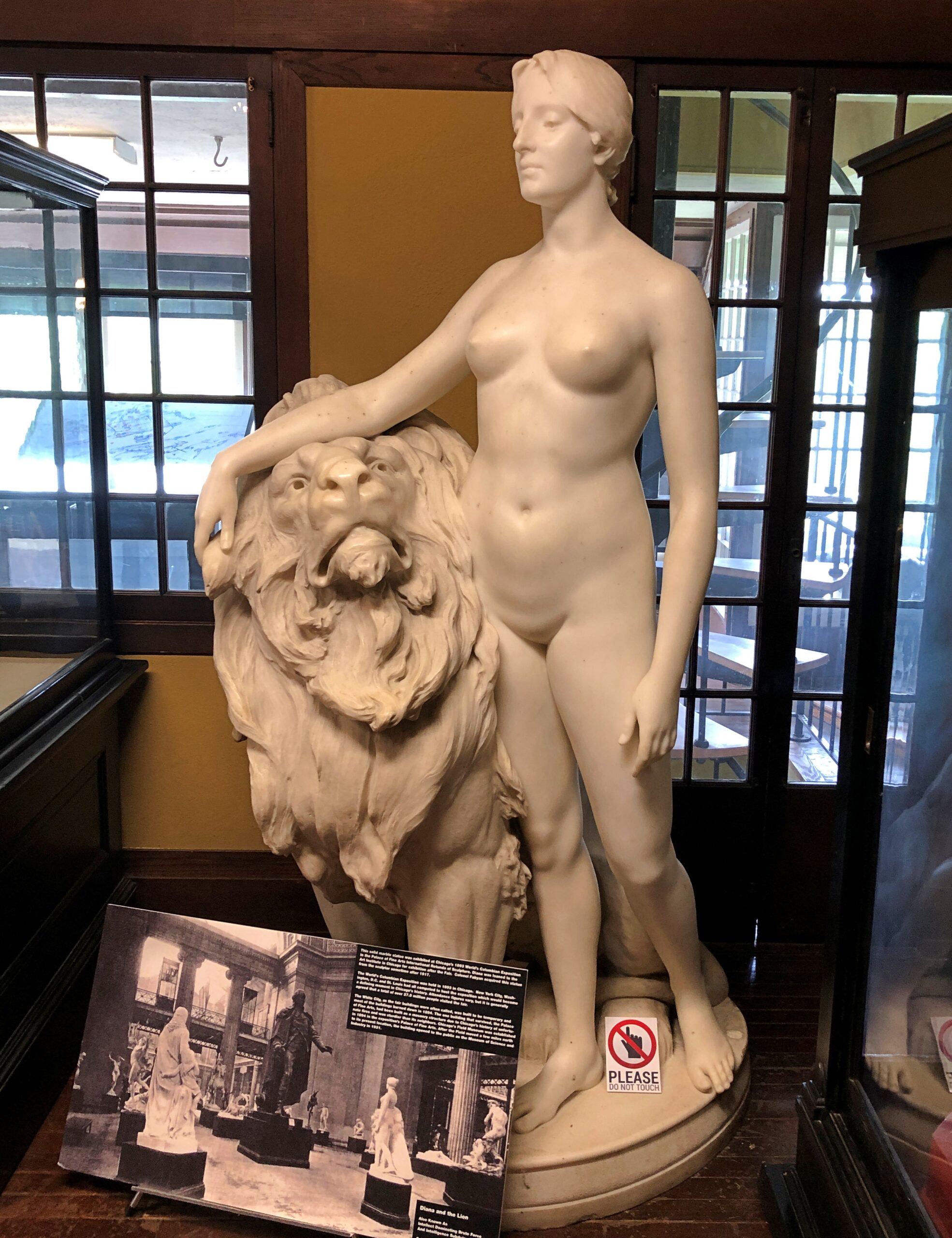
Fabyan collected a lot more, including European artwork, back when that was doable.
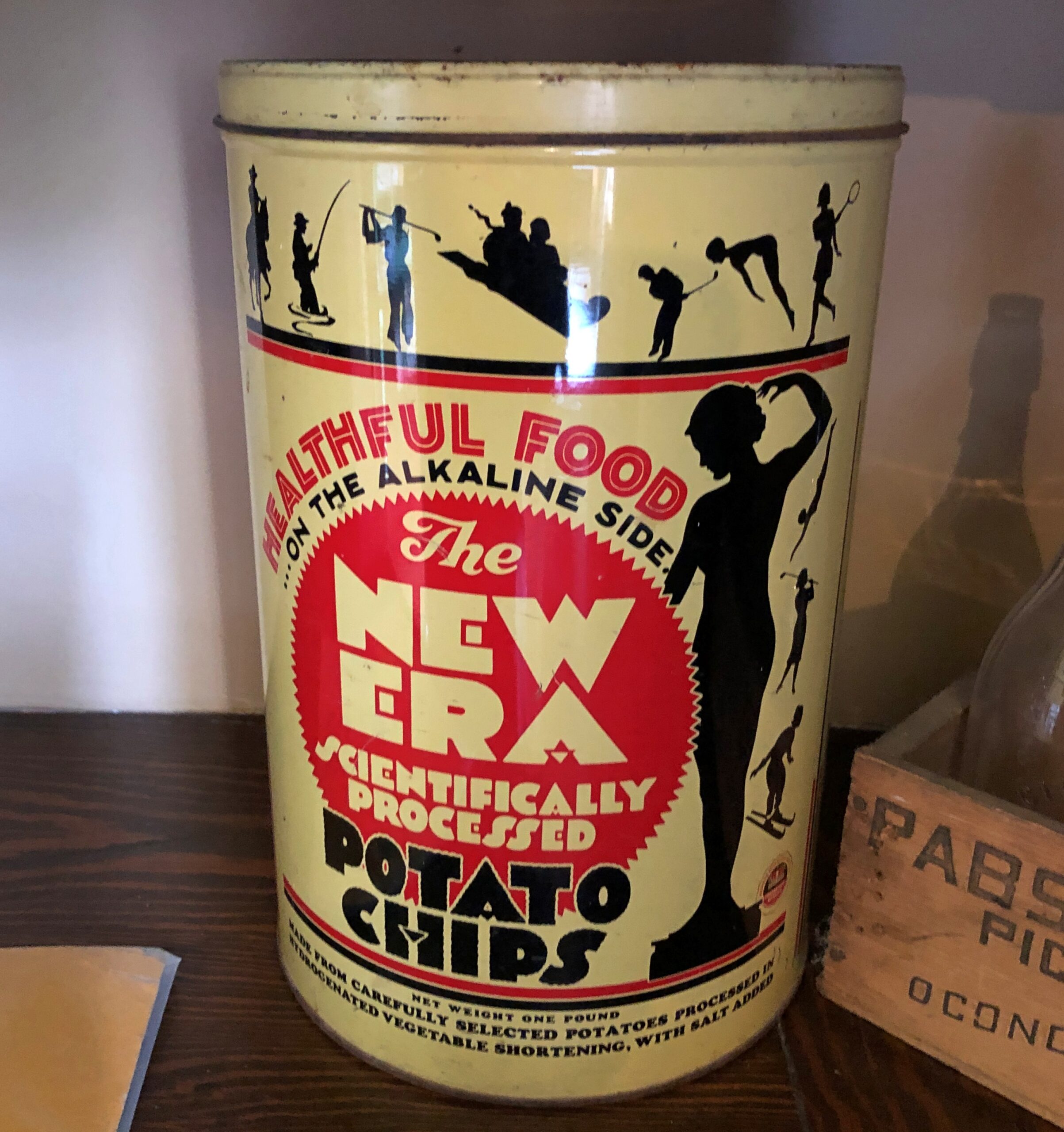
Once upon a time (probably), the Fabyan kitchen served New Era Potato Chips. Glad to see it. The memory of the same such can at the Cuneo Museum is a minor delight for me.
Back when food processors crowed about have food science on their side. These days, that might get them MAHA’d into consumer skepticism.
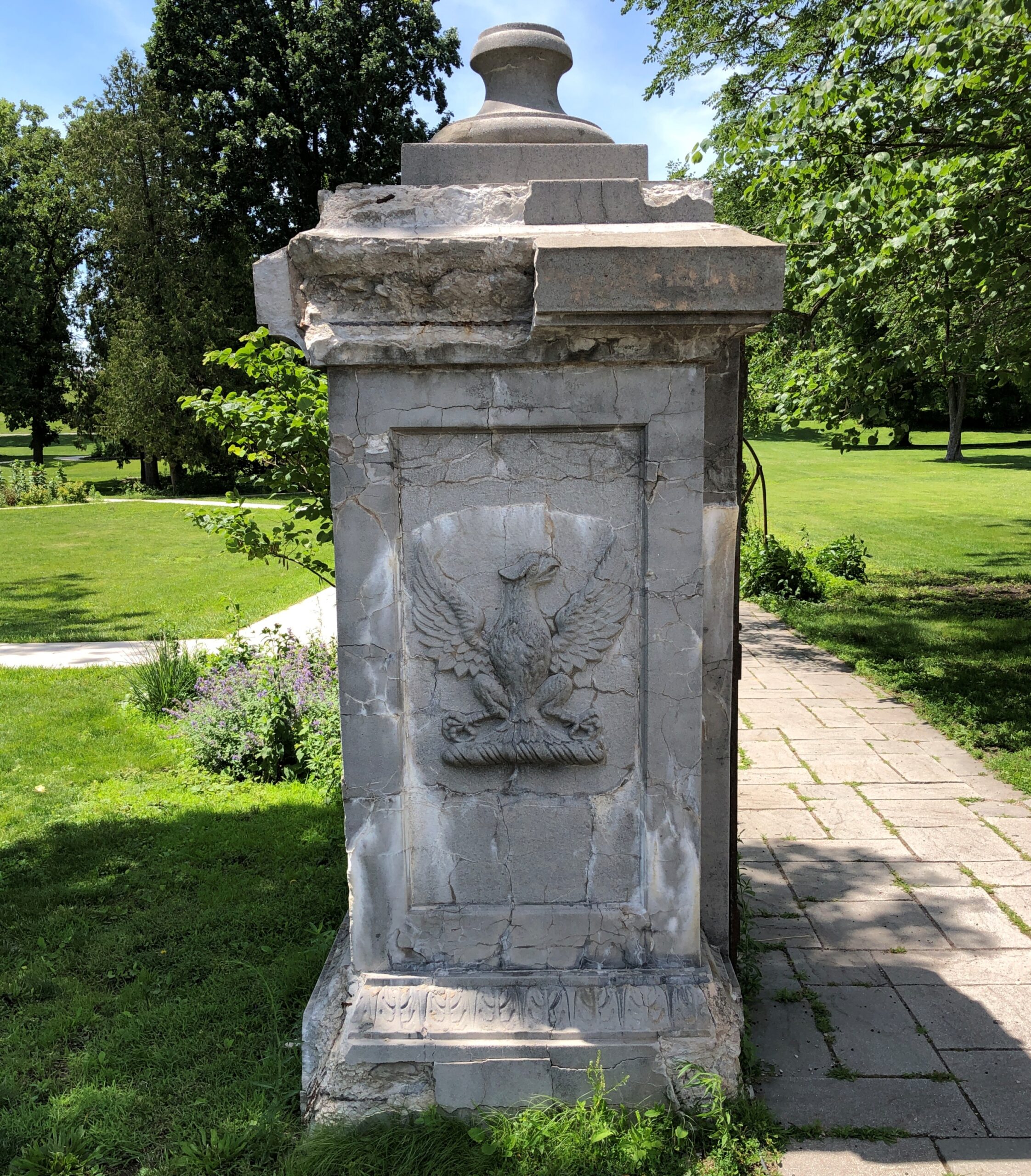
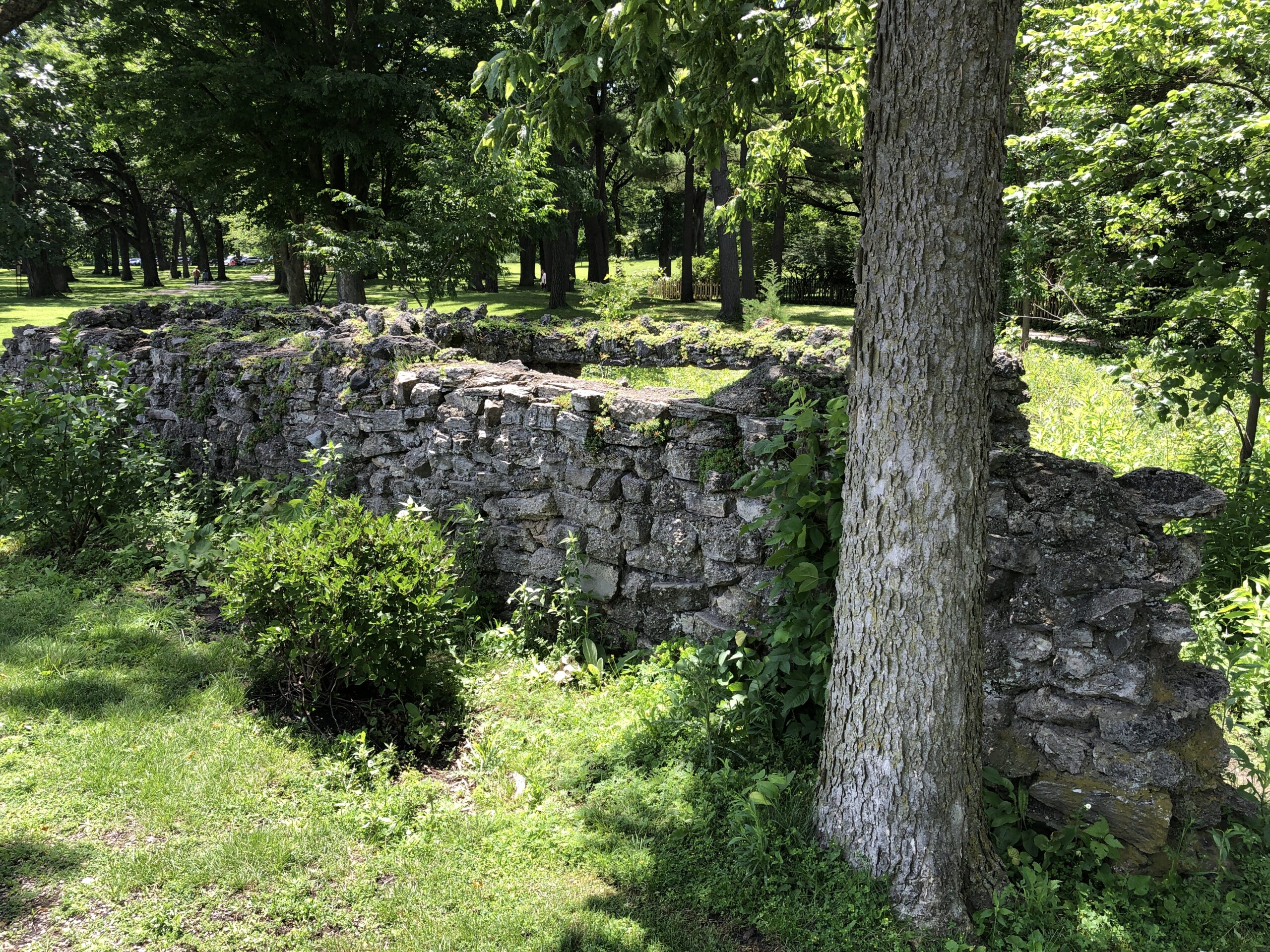
Outside, more features, including a ruin from Fabyan days. I understand that the Roman-themed pool on the island has mostly been reclaimed by the river. This wasn’t part of the pool. A out-of-place gatepost, from the looks of it.
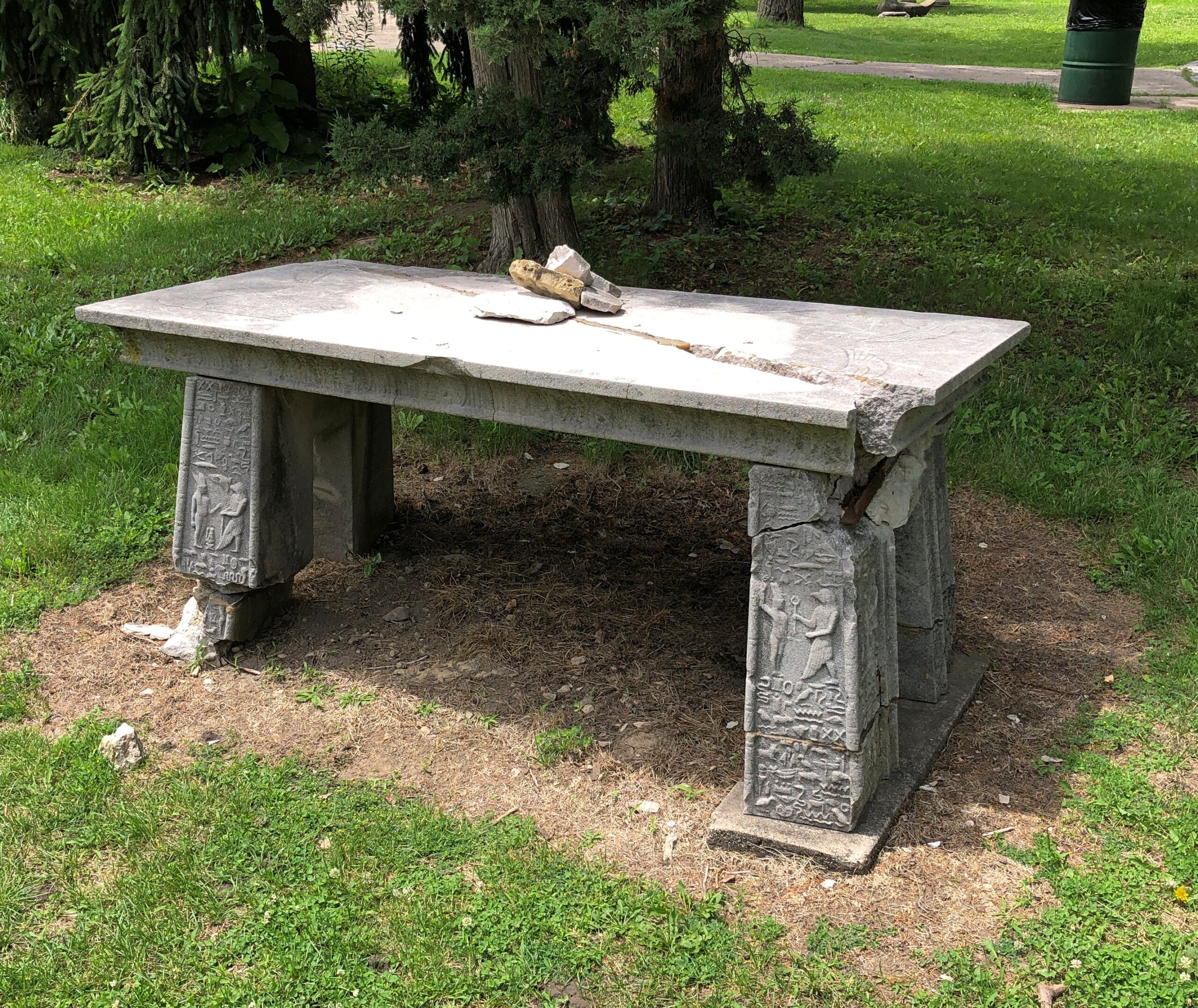
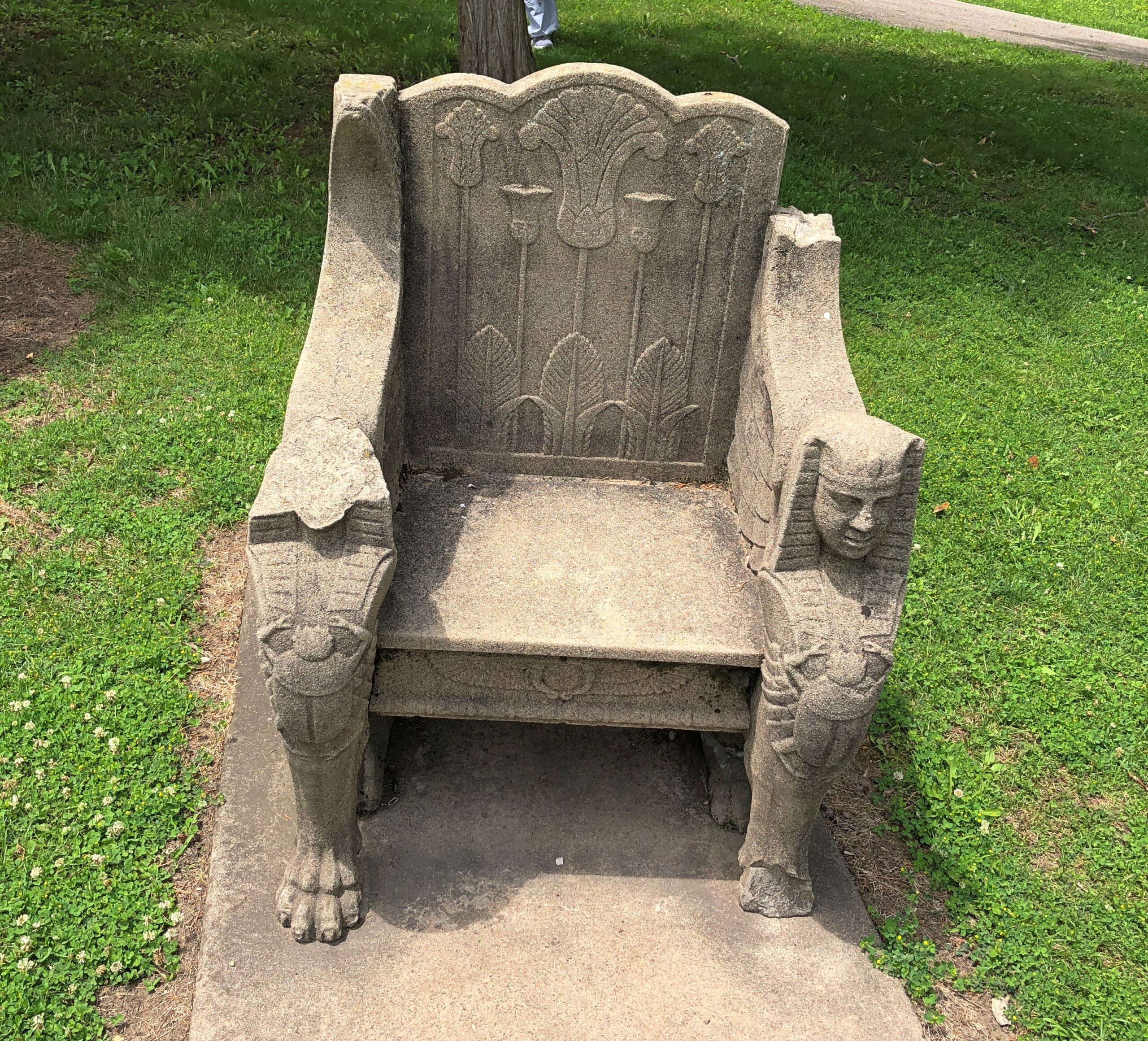
More evidence of the passing wave of Egyptomania.
Looking a little worse for roughly a century of wear.
The Internet might be more vast a wasteland than the worried Newton Minow could ever imagine, but its oases of information – actual information, to judge by internal consistencies, linkable references and good writing – continue to amaze. For example, Mummies.com, which has lists of Egyptian mummies in the United States.
I went looking for such a site because of a recent encounter with a mummy. Or rather, a “mummy,” but we’ll get to that later.
This figure is on display at the Fabyan Villa, which is part of the Fabyan Forest Preserve on the west bank of the Fox River, in Geneva, Illinois. We visited a few weeks ago. Both the villa and the “mummy” are legacies of George Fabyan (d. 1936), who has been fated to go down in history – in a small way, but more than most people – as a wealthy eccentric. One of his eccentricities, like William Randolph Hearst writ small, was collecting eccentric artifacts.
A sign near the mummy-shaped artifact says that modern examination has proven it to be a fake. Whether George Fabyan knew this or not is an open question.
Remarkable thought, that there was once a market for mummies so brisk that counterfeiters made bank. It wasn’t called Egyptomania for nothing.
An anecdote from Mummies.com about a real mummy (Harwa) in possession of the Field Museum, which has 33 mummies, tells quite the tale:
Harwa’s adventurous afterlife is one example of how things have changed. In 1939, he became the first mummified person to fly on an airplane, and he was taken to a Broadway show upon his arrival in New York City. On display at the New York World’s Fair for two years, he then returned to the Field Museum after getting lost in the luggage and being sent to San Francisco.
There’s streaming service comedy gold in that, say 10 episodes: the misadventures of the promoter hired in 1939 to take care of the mummy, and his oddball assistant, who also happens to be a bombshell of a woman. High jinx ensue. The mummy is misplaced, more than once. There are various shenanigans on the airplane, and on Broadway. A rival promoter tries to steal the mummy. Weird things happen at the World’s Fair. Nothing supernatural, though one or another of the characters might worry about the Curse of Harwa — which a publicist make up. Maybe even a guest appearance by Col. Fabyan, who wants to buy the mummy. Of course, the actual Fabyan was already dead by then, but this is TV we’re talking about. You know, the outclassed wasteland.
At Cantigny in late May, I wasn’t feeling that photo urge. Yuriko was, at least when it came to flowers in arrays.
And as singles.
We go to Cantigny every few years, usually in late spring or early summer, a time of exuberant greenery and, of course, vivid flowers. Not a flowerbed is idle.
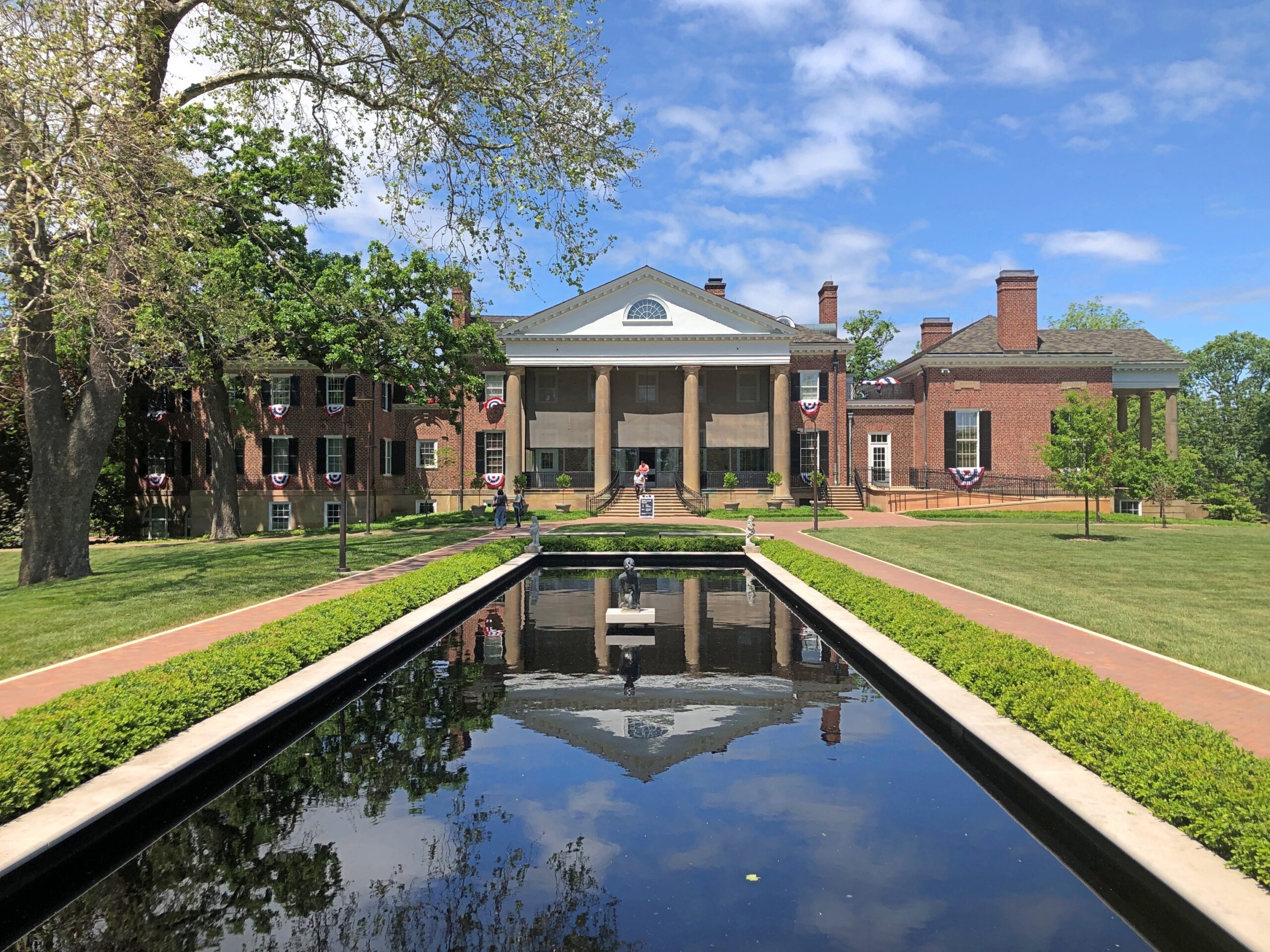
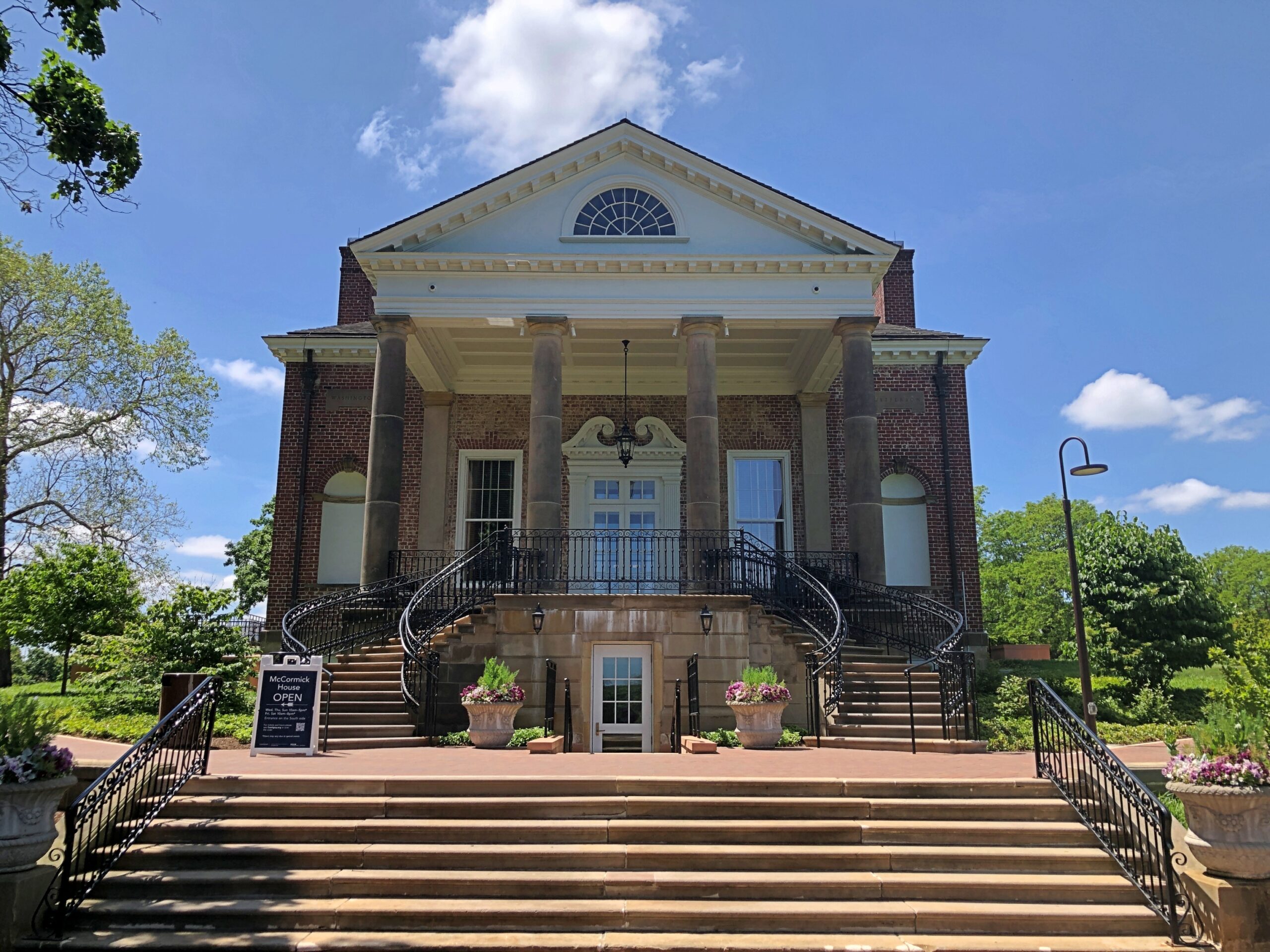
This time, I did take a few snaps of some of the Cantigny buildings and landscapes. Such as the former McCormick manse.
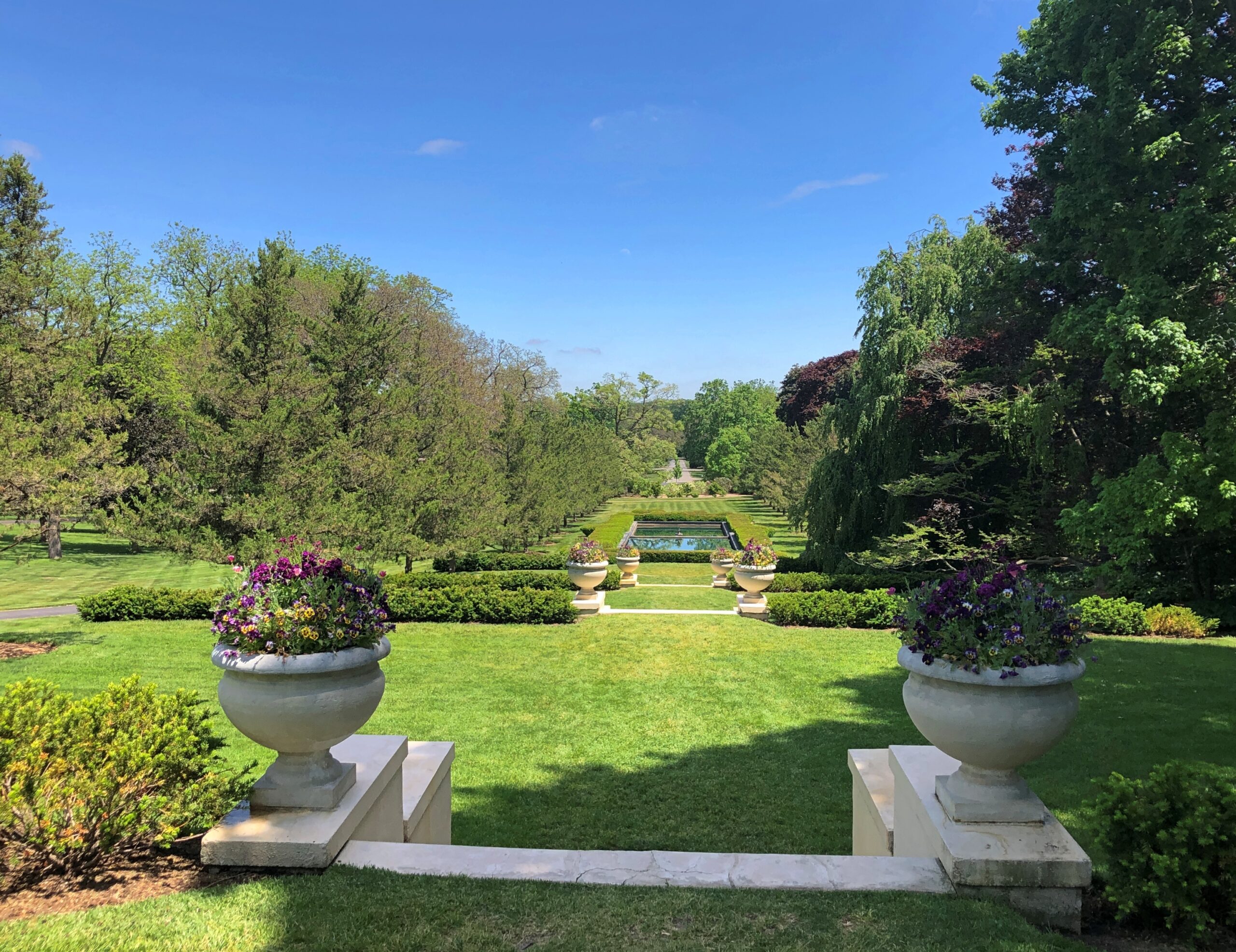
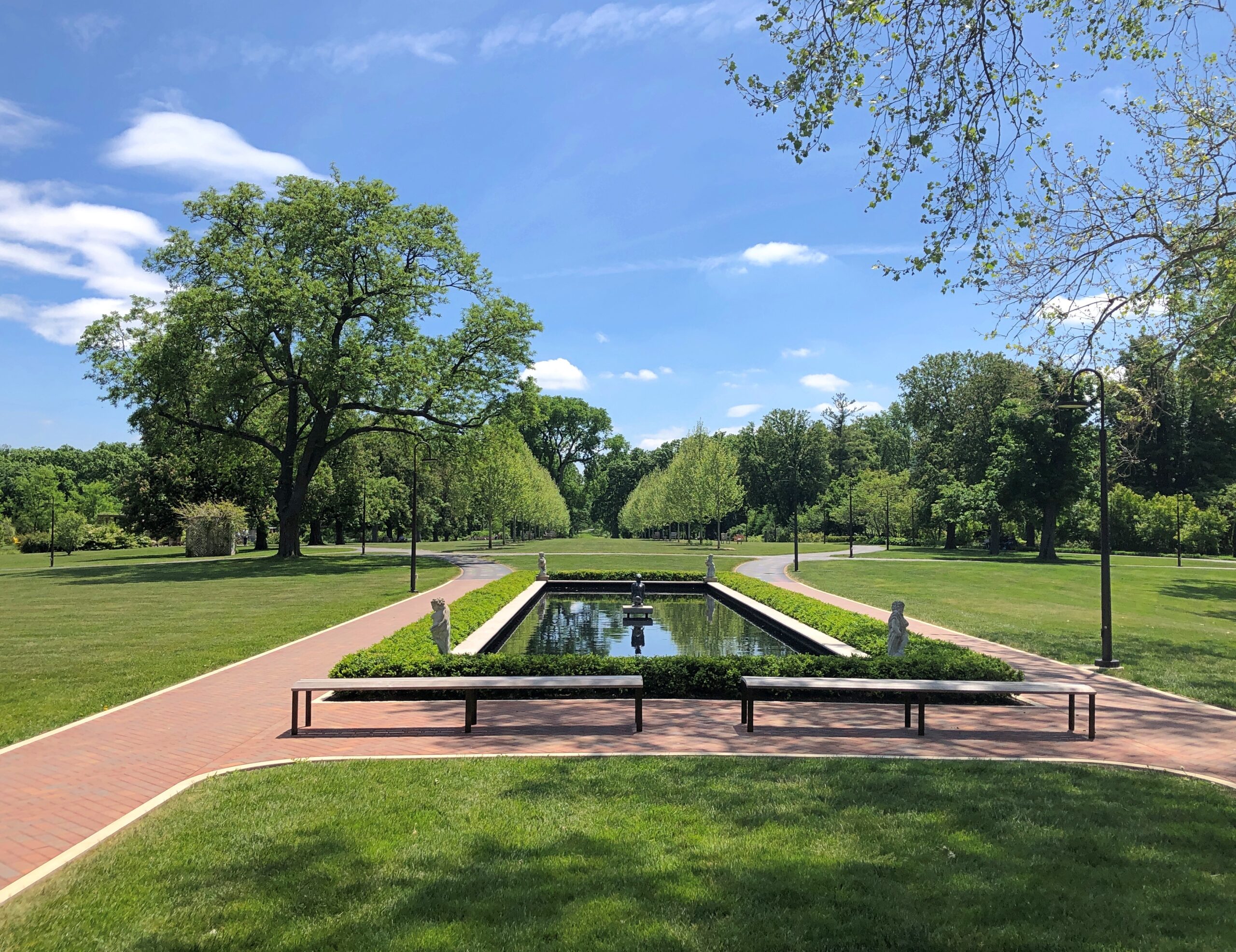
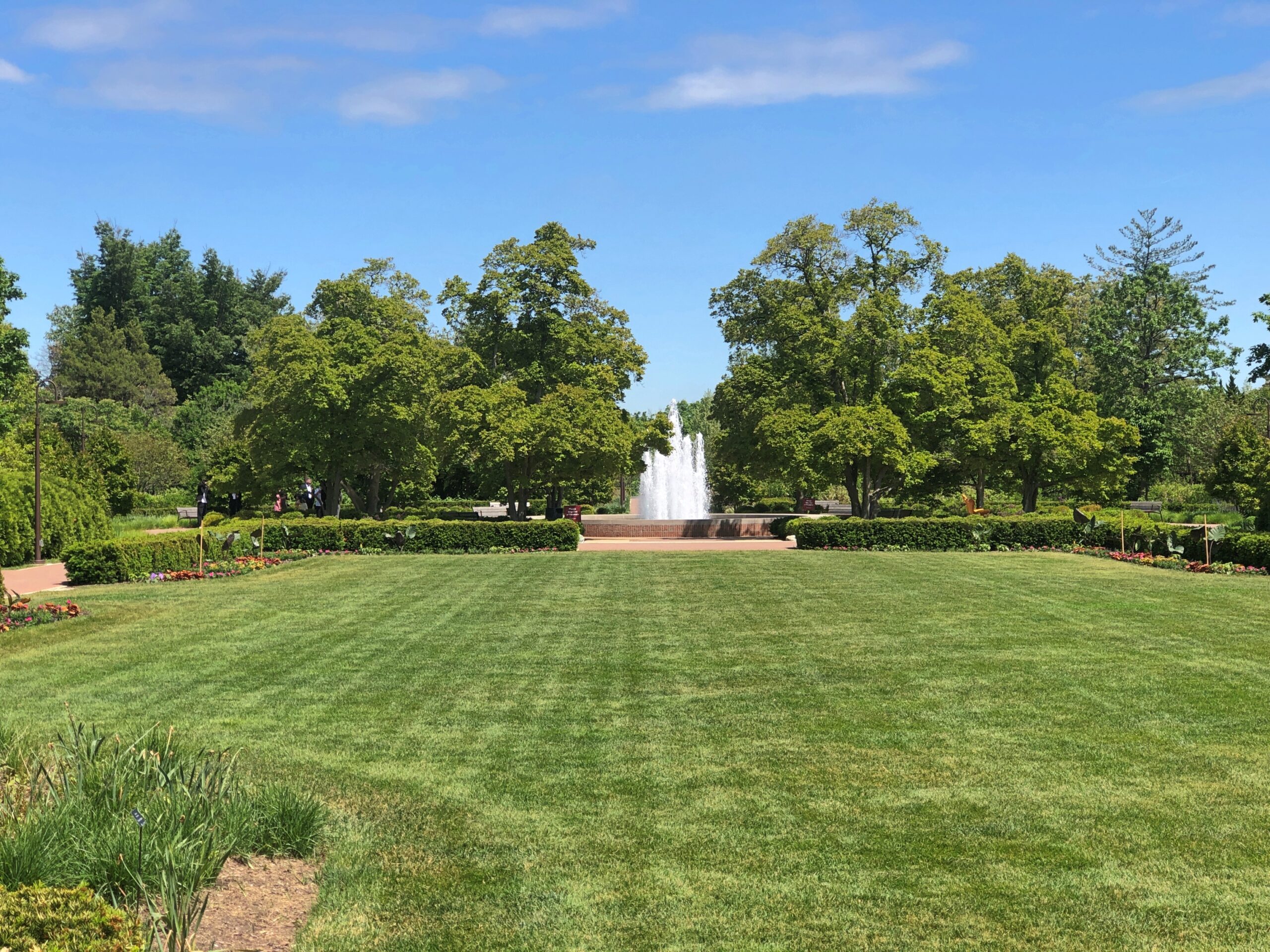
Some long views of the grounds.
As the publisher of a great metropolitan newspaper, back when there were such things, Col. McCormick had the scratch to keep the place running. What are tech barons doing these days with their lucre? Nothing so fine.
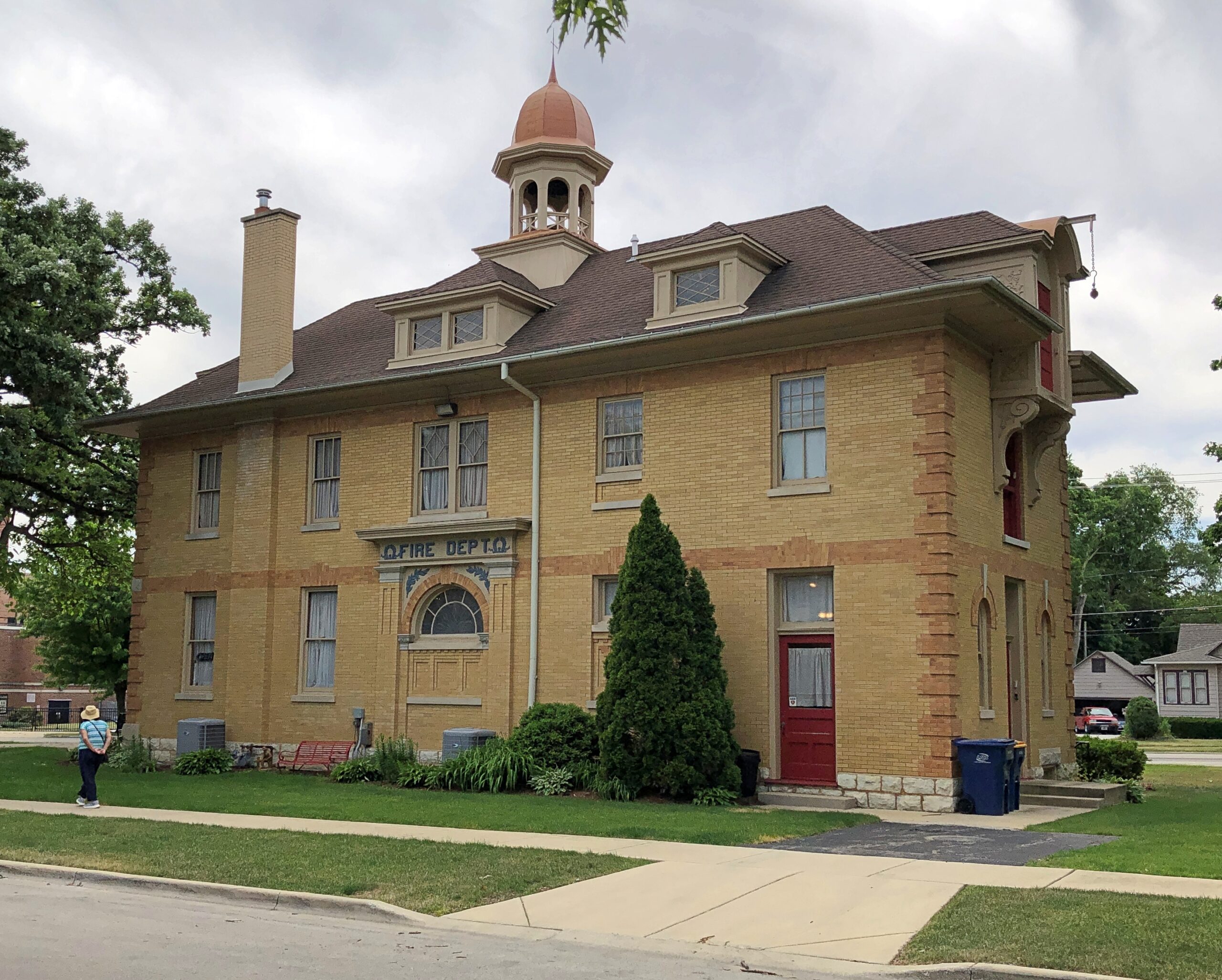
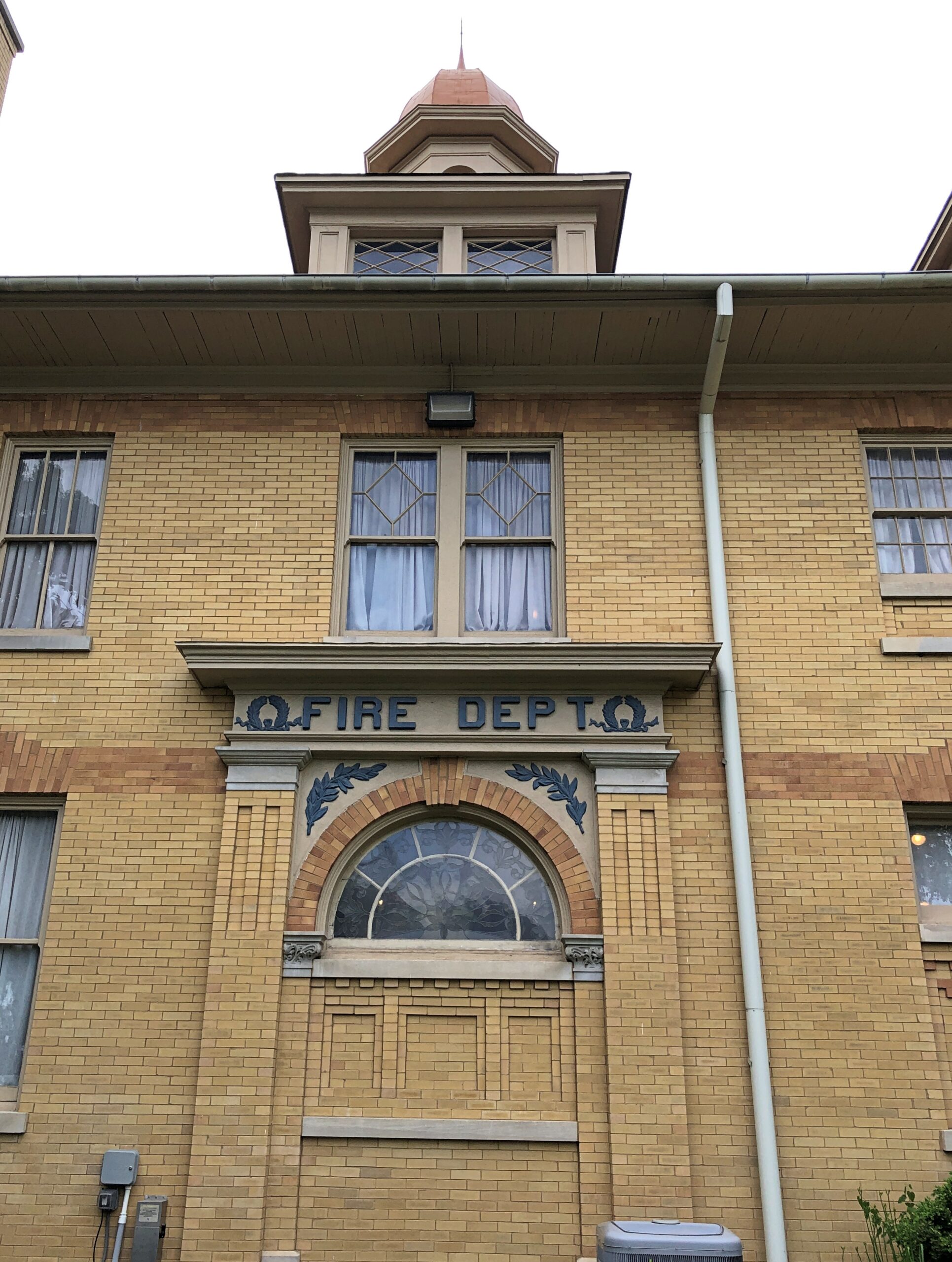
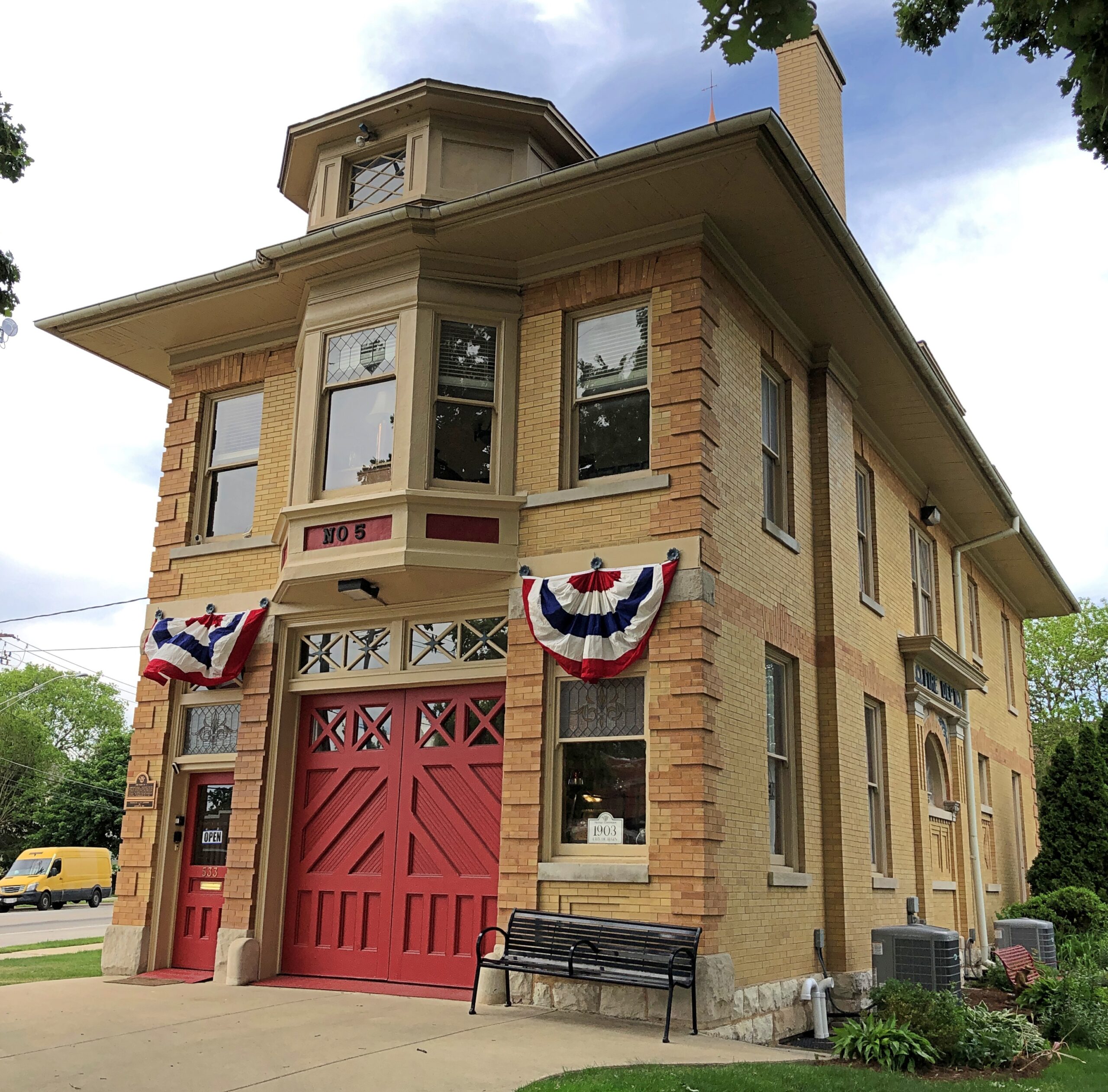
It was a small puzzle. The building in front of me was called a “fire barn.” Not something you hear very often, and in fact I wondered whether I’d ever heard of the term before. The standard term is, of course, fire station. But it didn’t take long to work it out: horses are known to be kept in barns; the fire engines in Elgin, Illinois, used to be horse-drawn; so a barn to keep fire-department horses – and naturally other equipment – would be a fire barn, even after fire engines became horseless.
So at Elgin Fire Barn No. 5 Museum not long ago that I took an instant liking to fire barn. Even though they don’t house horses anymore, we’d do well to call our fire stations fire barns instead. A touch of poetry to an otherwise dry municipal designation.
Elgin No. 5 Fire Barn is a legacy of progressive ideas about fire suppression in the late 19th and early 20th centuries, built in 1903 as a solid edifice showing how serious the city was about deploying the cutting edge of fire-control technologies of the time. The building was in service for almost all of the 20th century and, as often for these things, narrowly escaped demolition after 1990. But the citizens of Elgin ultimately didn’t want to part with it. Good for them. The barn is owned by a nonprofit these days.
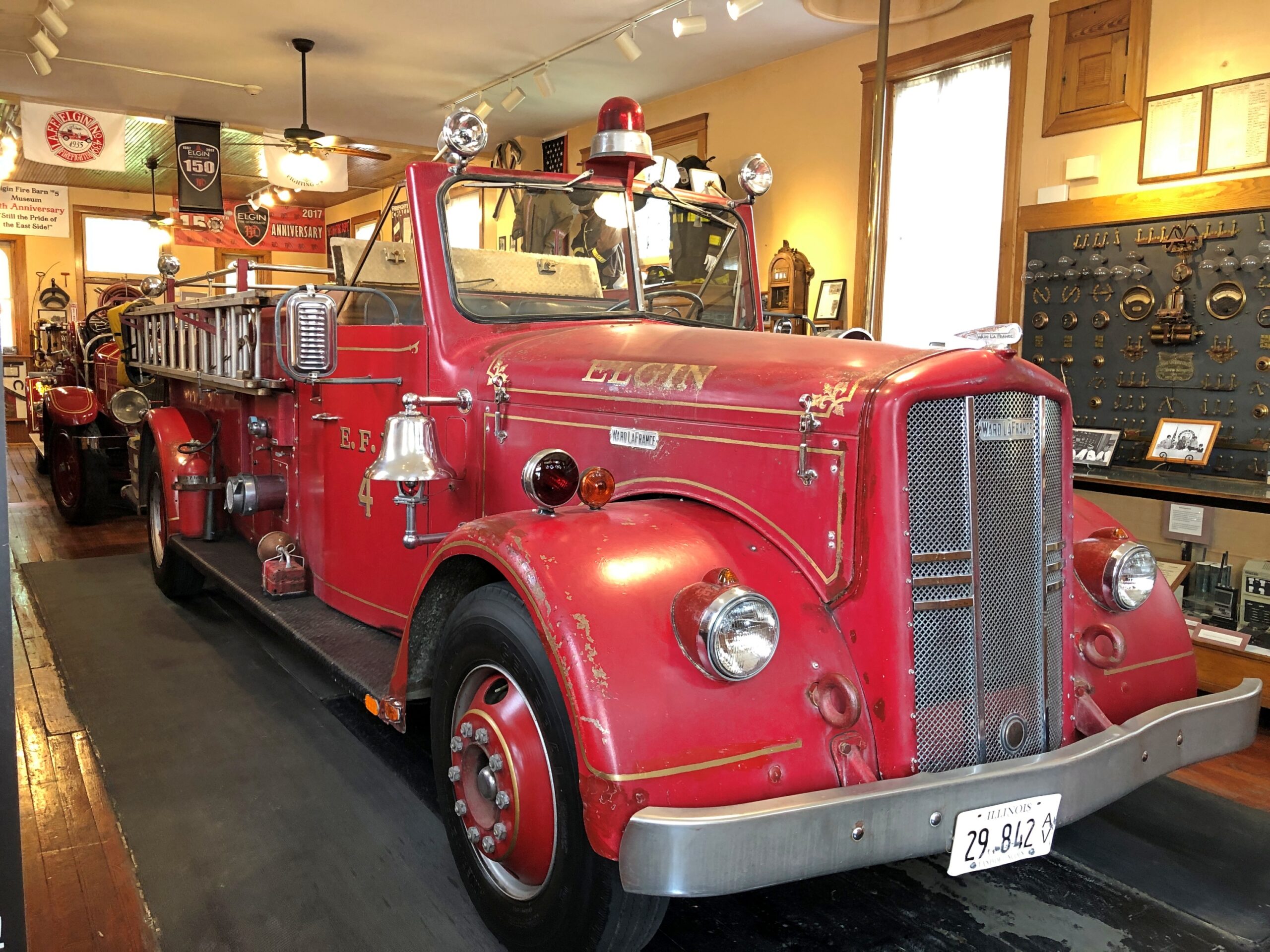
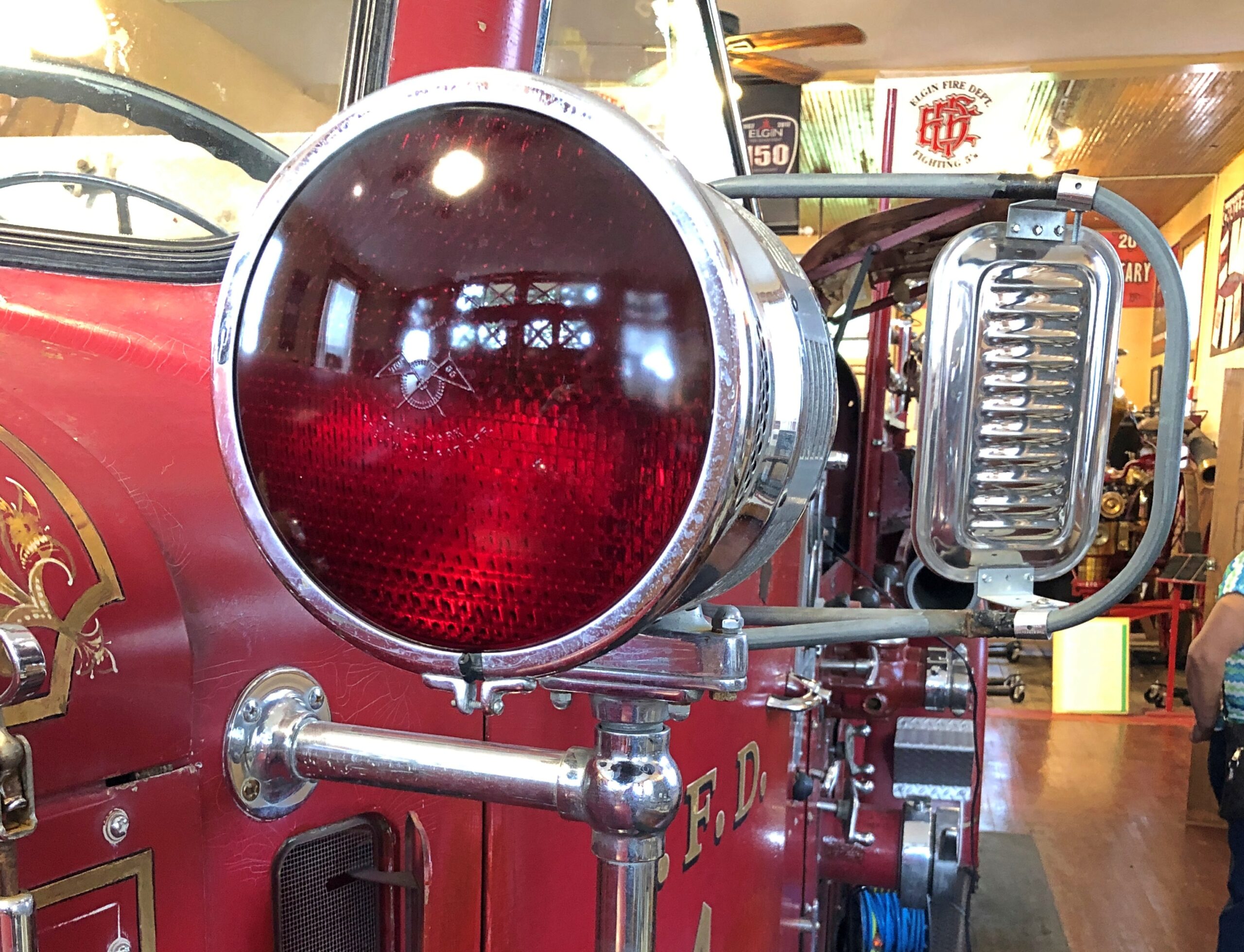
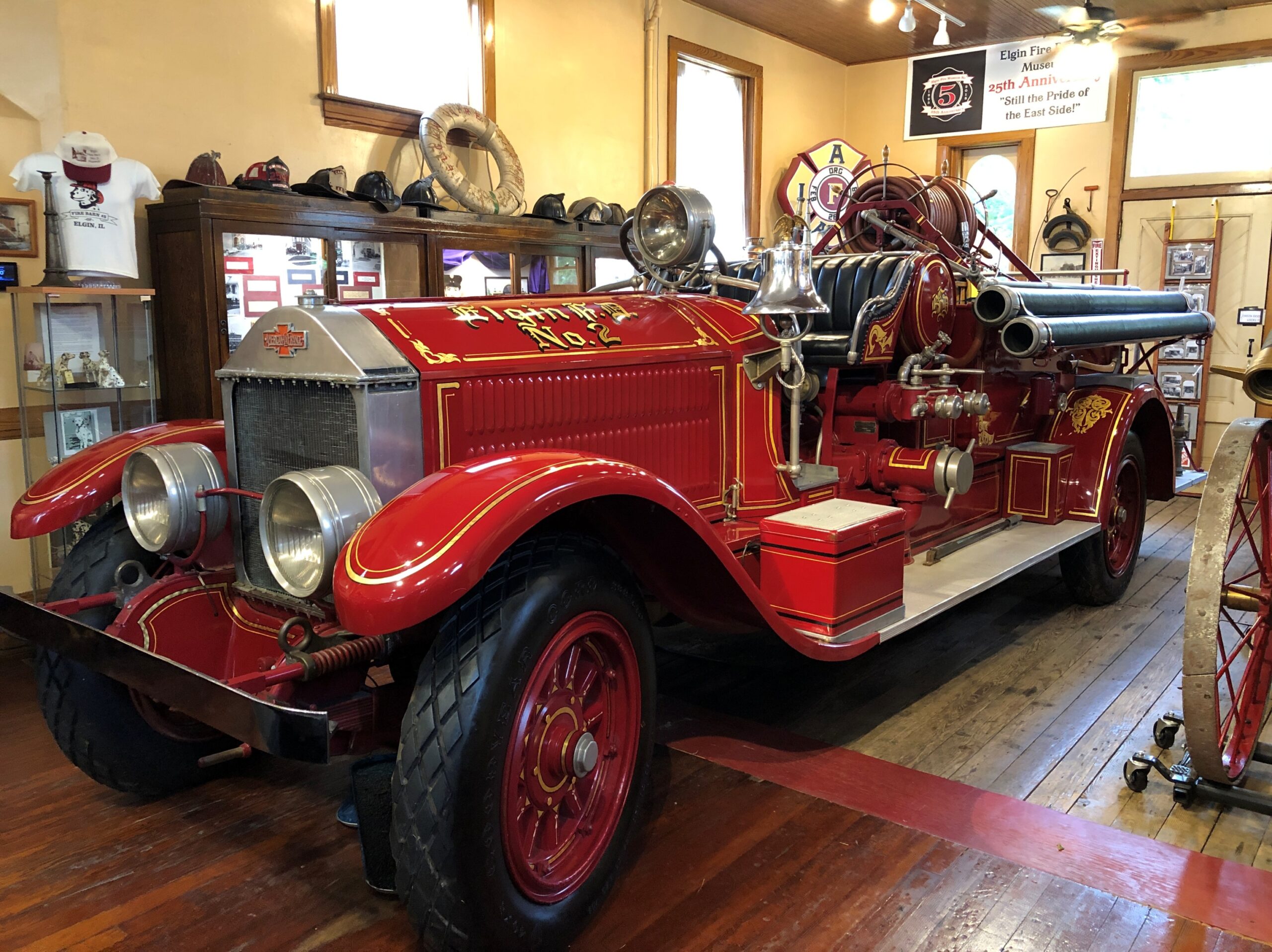
Much space in the museum is for fire engines that once called the barn home.
Good old open-cab engines. The only other place you see them regularly are stylized versions on yellow signs warning motorists that a fire station is nearby. Otherwise, they are museum pieces. I remember editing an article for Fire Chief magazine 30 years ago in which the executive of a fire engine manufacturer said that even a special commission by a fire department for an open-cab engine — and he didn’t think it likely — would be declined.
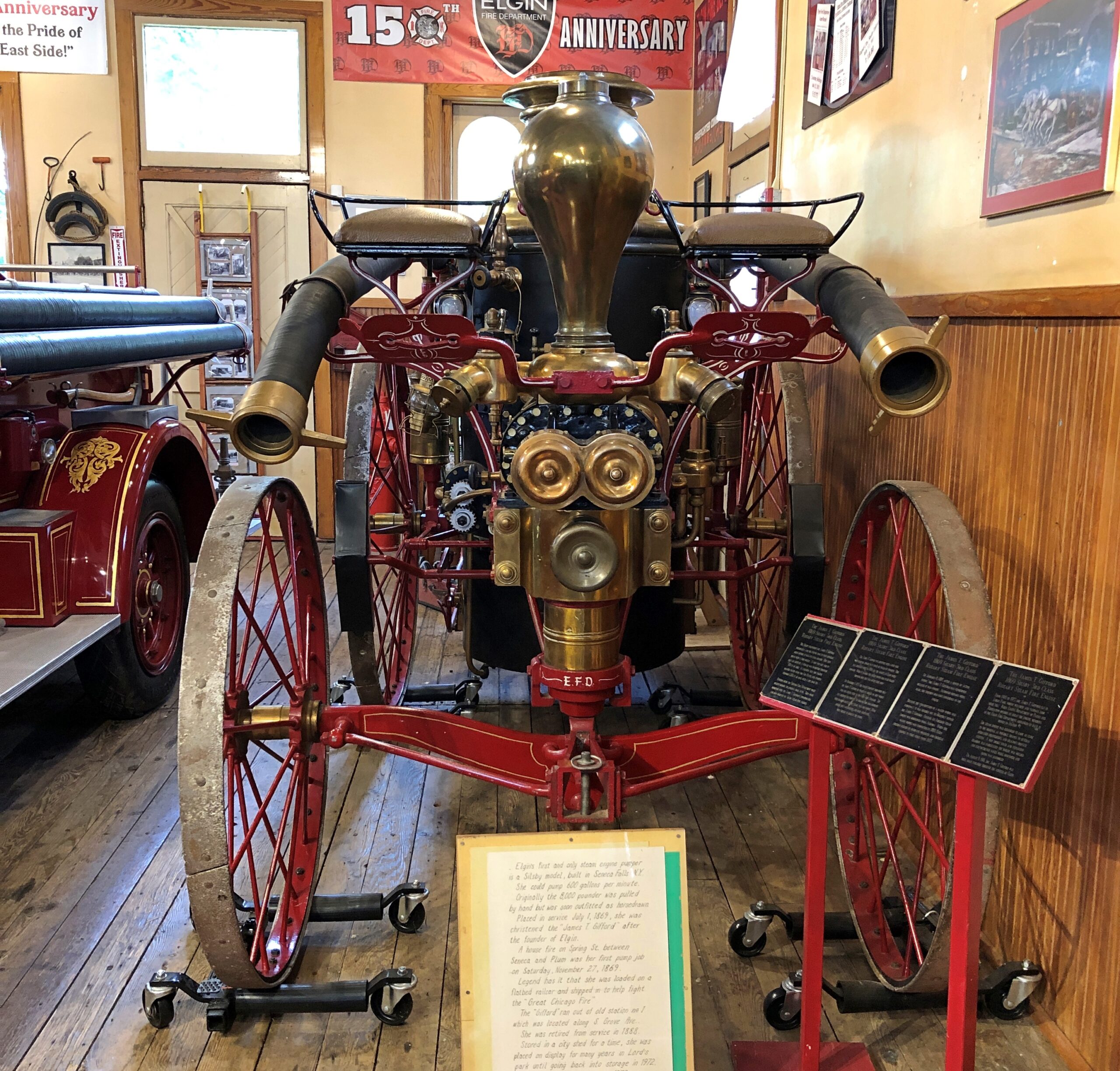
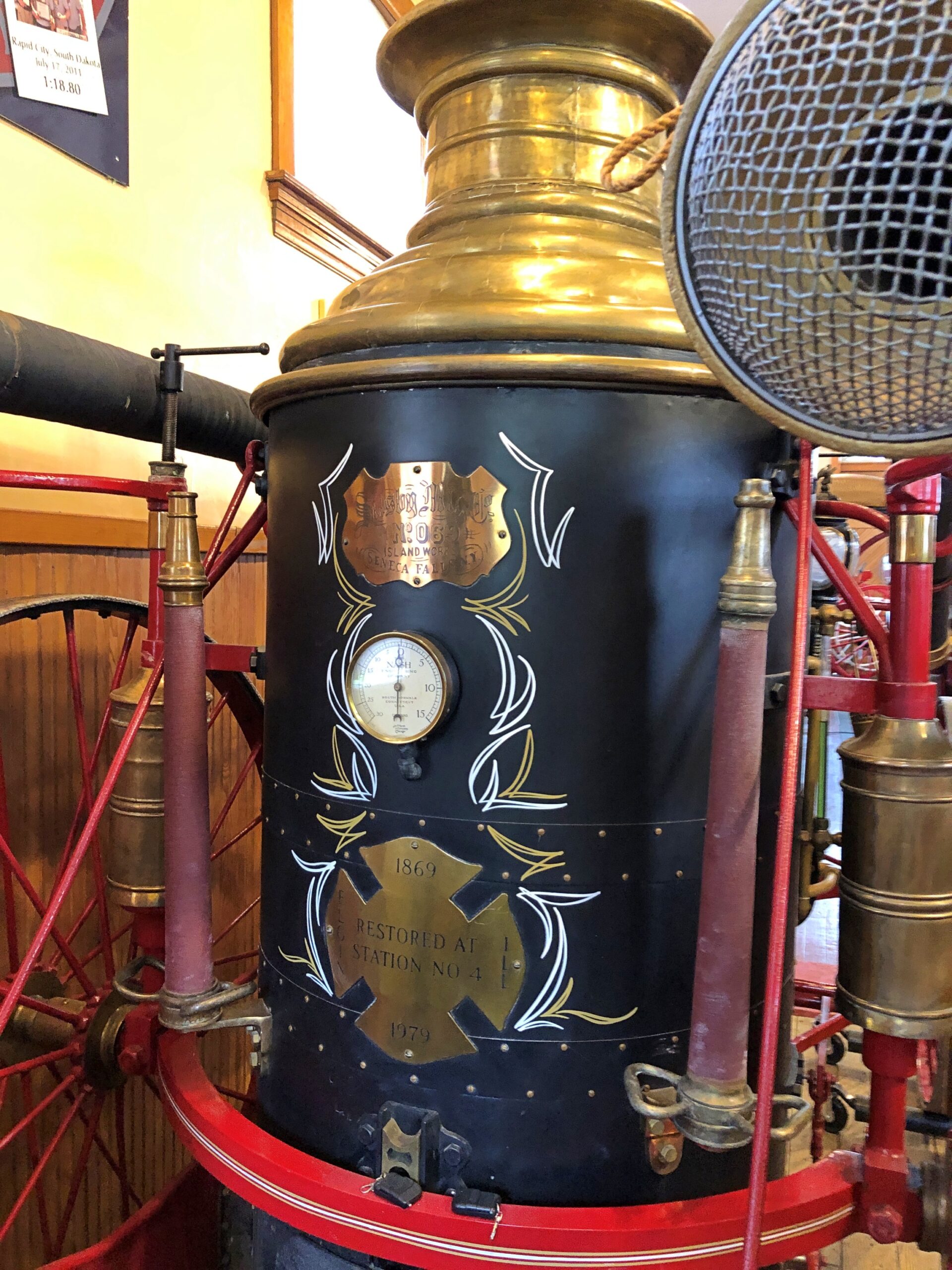
The museum also holds an Elgin apparatus that had been retired before the building of Fire Barn No. 5, though in its mid-19th century heyday, this steam powered pumper was Star Trek tech, compared to able-bodies citizens trying to put out building fires with bucket brigades.
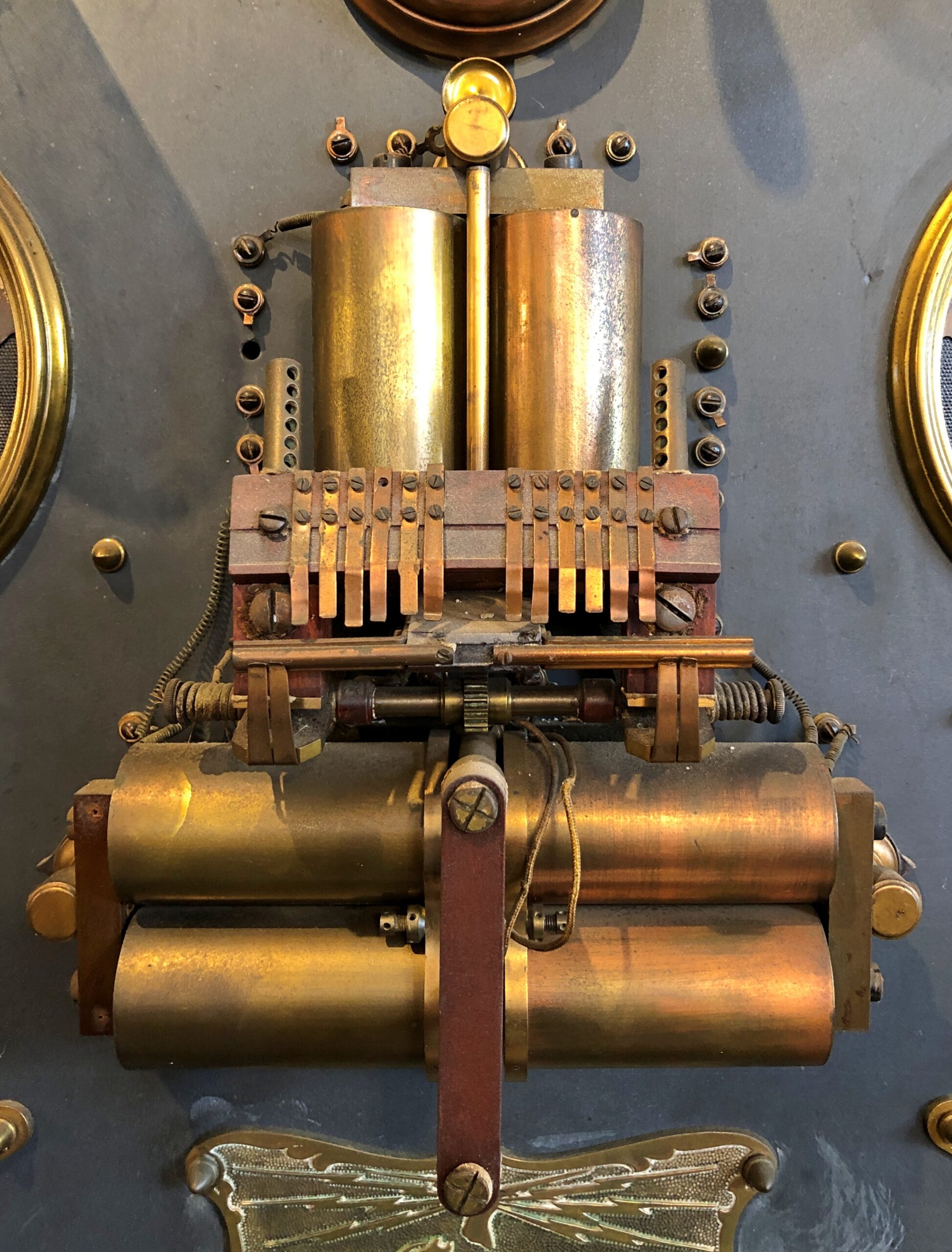
Speaking of advanced Victorian fire tech: the brass shapes of an alarm system based on telegraphy.
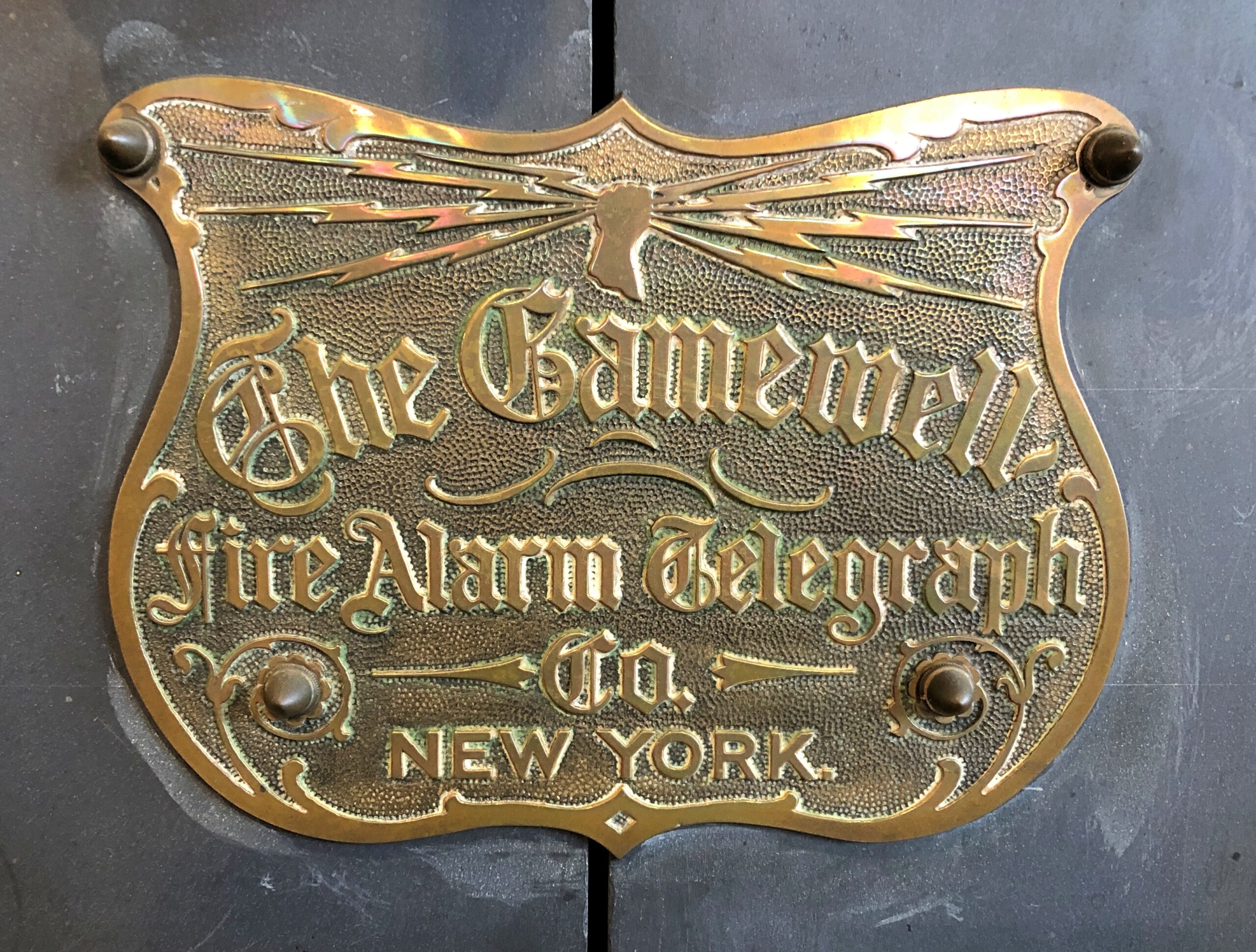
For a time in the 19th century, if you wanted a fire alarm telegraph system, you went to Gamewell. The name exists even yet as a unit of Honeywell.
We met Bob on the second floor. Well, “Bob” since my memory for names, never that good, isn’t improving with the years. A retired Elgin firefighter, Bob volunteered at the museum with a clear enthusiasm for the artifacts: the trucks, but also axes, ladders, a collection of helmets and turnout coats, department badges, photos of old-time firemen, documents and items and utensils used at the fire barn, considering that much time spent was there, between emergencies. Bob showed us around, since no one else was visiting the museum at that moment, and we had a good talk about the way things used to be, fire suppression-wise.
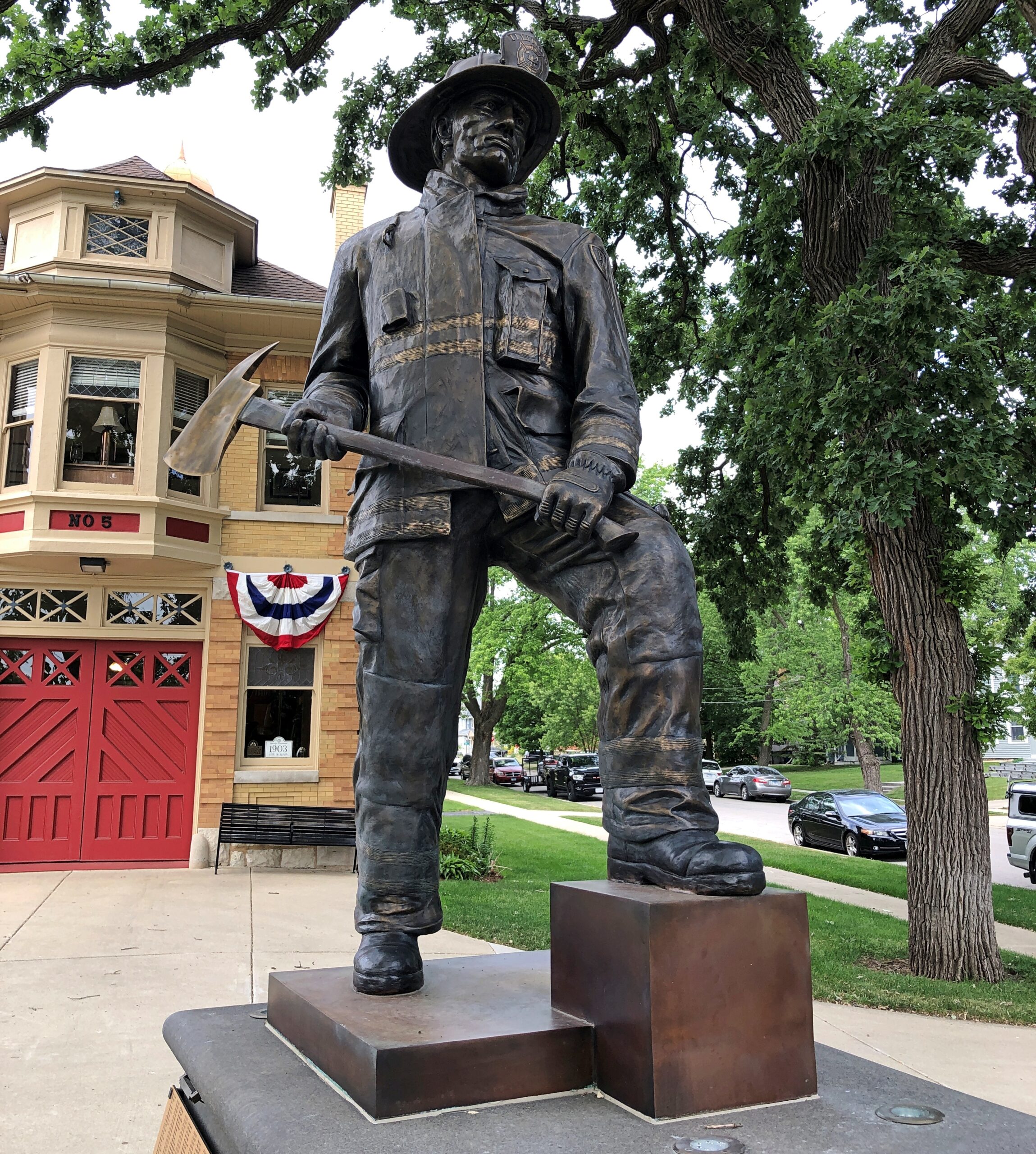
In front of the museum is a memorial to Illinois firefighters.
Part of the doughty school of bronzes, often depicting pioneers and soldiers and members of the CCC — and firemen ready to take on an emergency (though in this case, pre-SCBA, looks like). Doughty was definitely part of the job description.
The run of days from Juneteenth to July 4 at least, and even better to Nunavut Day (July 9), would be a fine time to slow down, like between Christmas and New Year’s Day, only warmer and without the mad runup to December 25. Back to posting around July 6.
Thousands of impressions flitter by on the road, most instantly forgotten when literally on the road – driving, you need to be in the moment, or else – or quickly forgotten, when “on the road” means you’re out and about somewhere that isn’t home. Still, a handful of details stick, even without photos. But photos help.
Maine
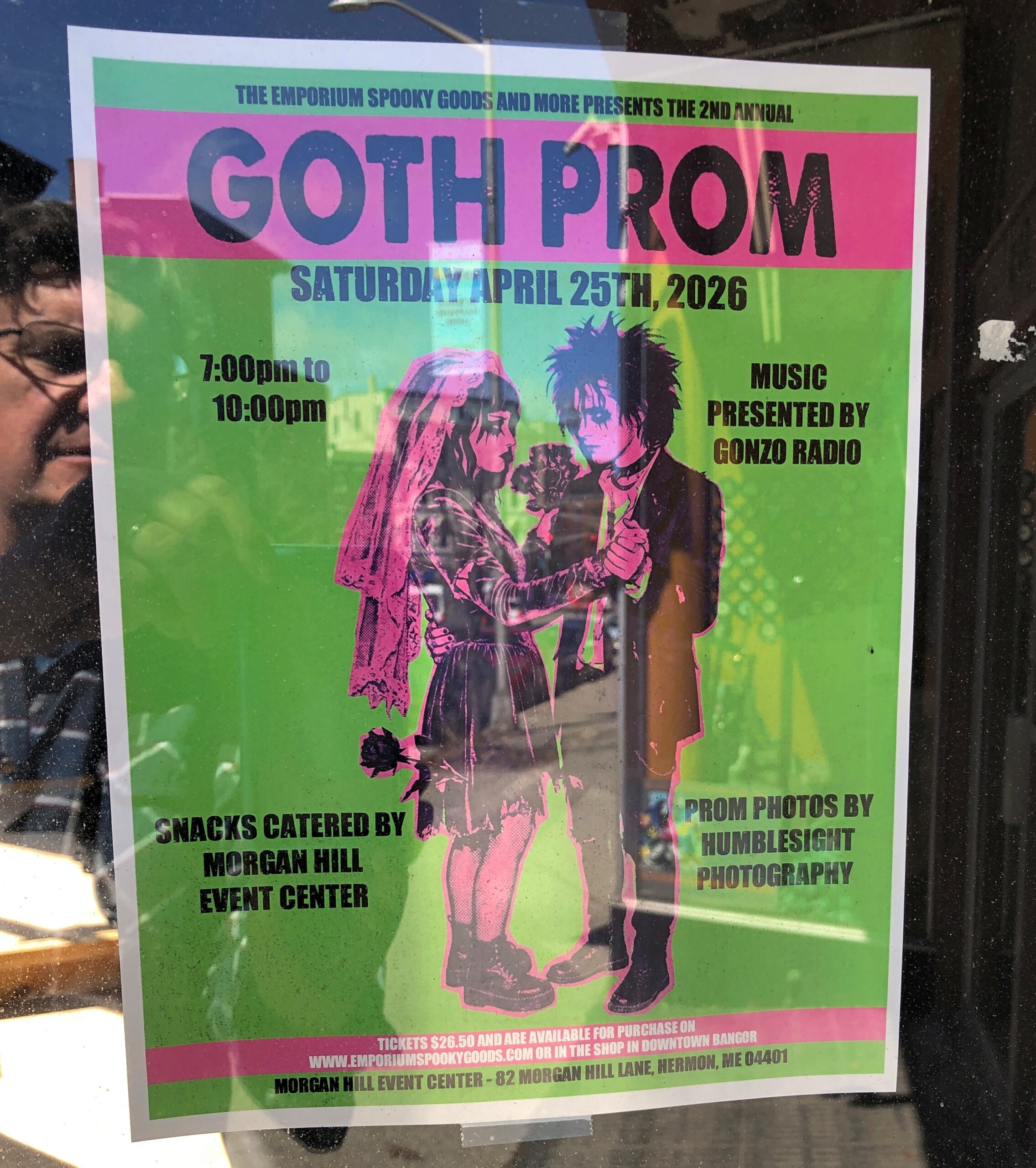
I call it “Self-portrait with Goth Prom.” Poster spotted in downtown Bangor.
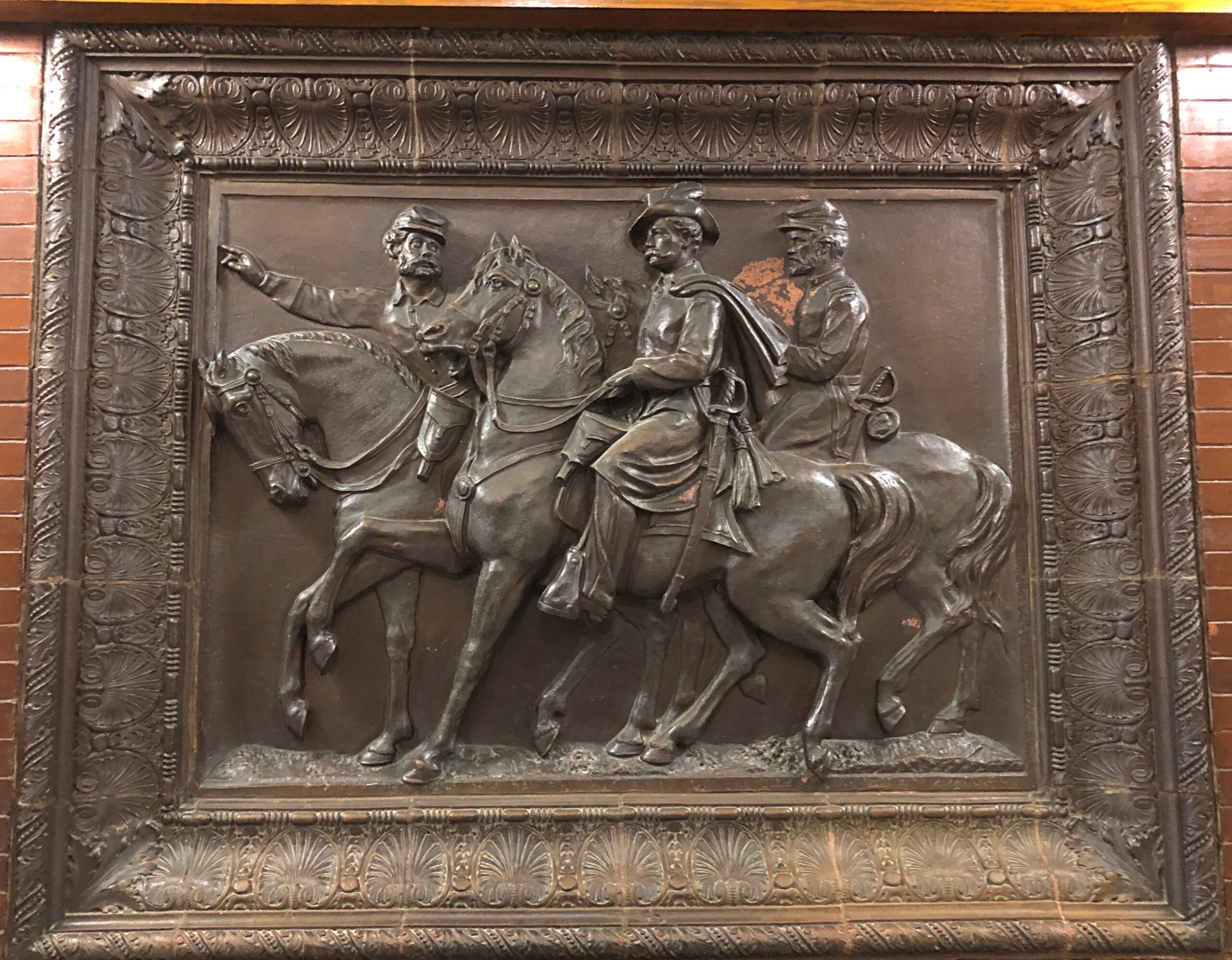
In the Maine Statehouse, a flat-ish object of a different kind.
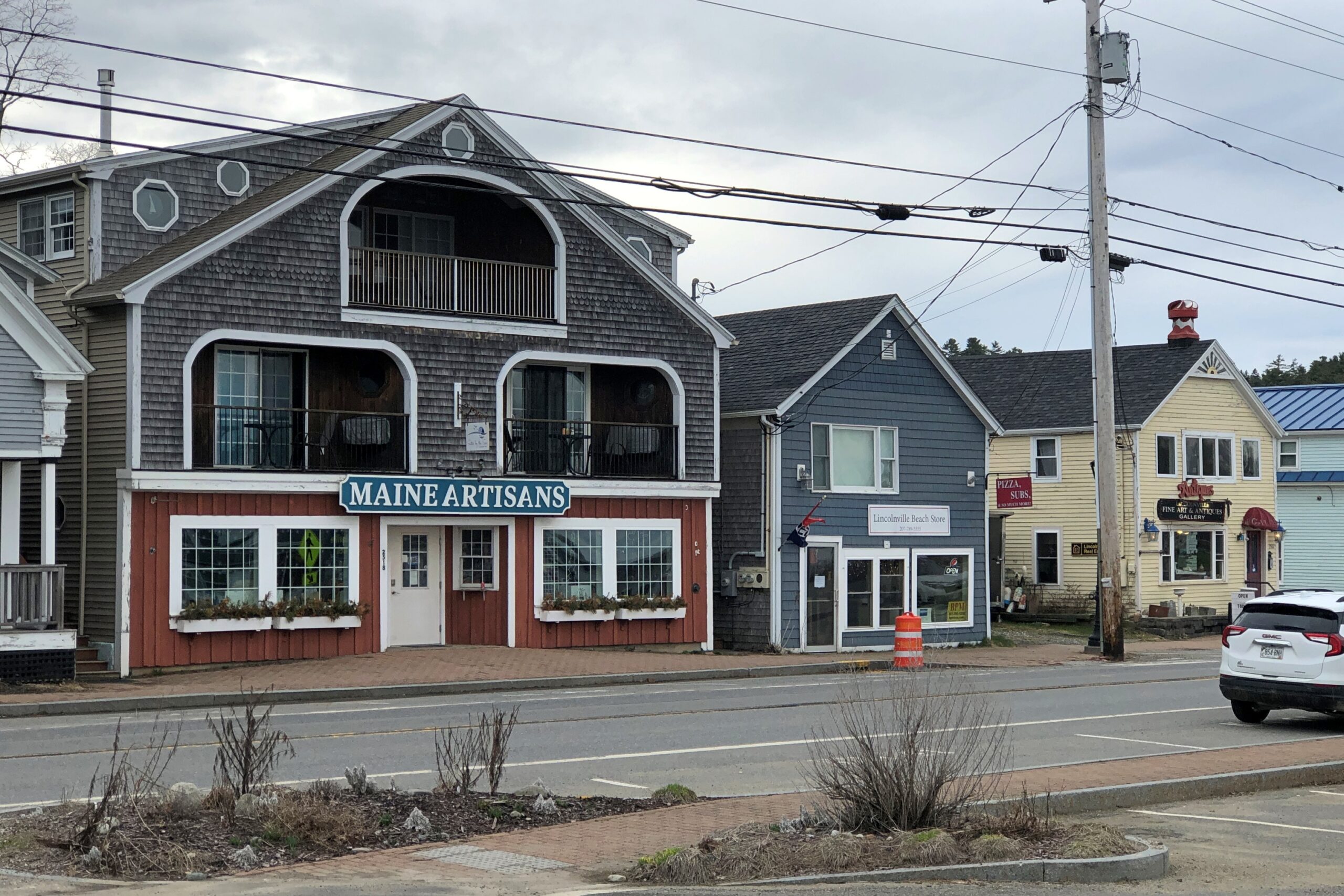
Lincolnville, on the coast of not far from Belfast.
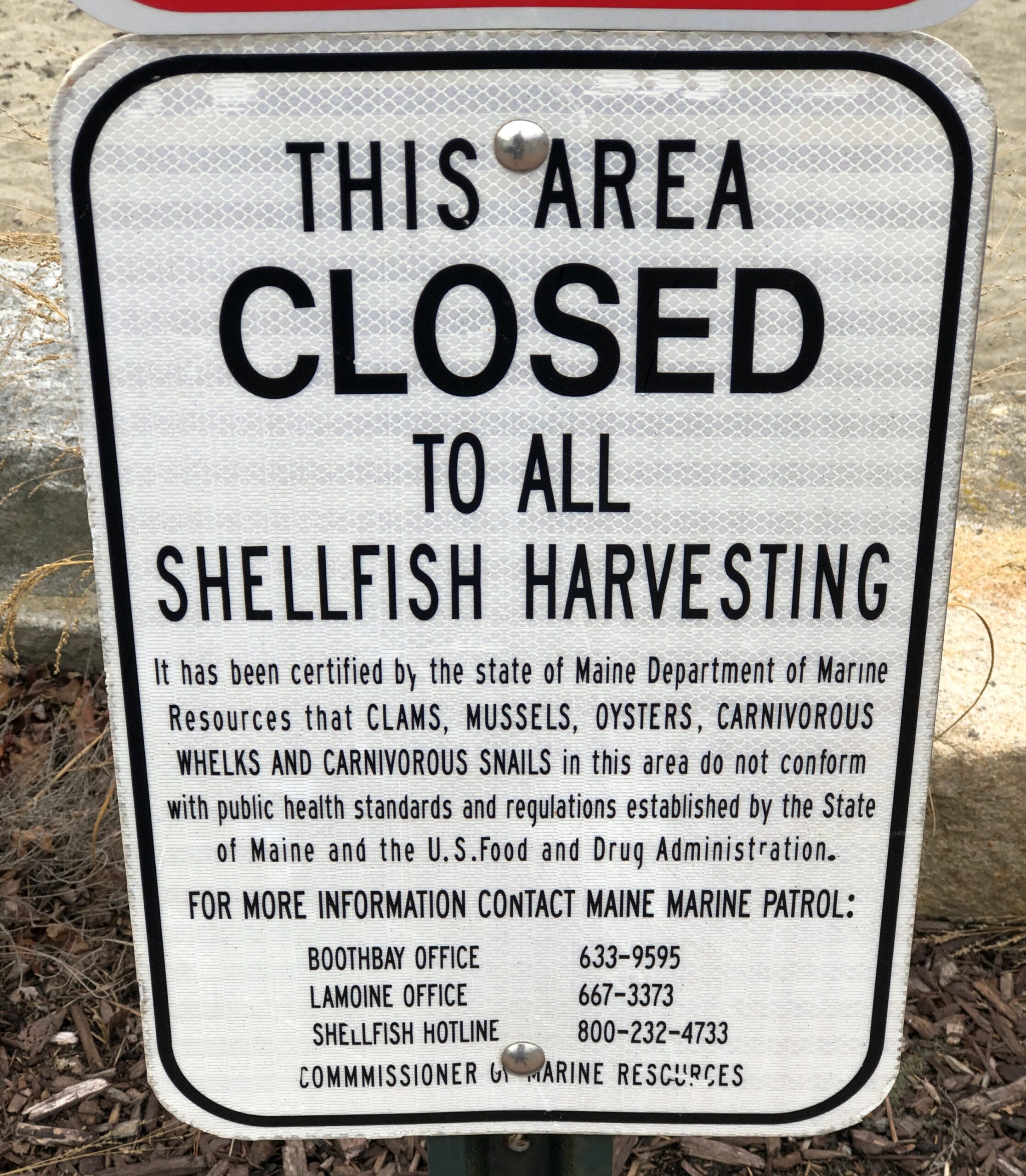
Carnivorous whelks. I was frankly ignorant about carnivorous whelks, and glad to learn a little about them. Because what a great name for a snail.
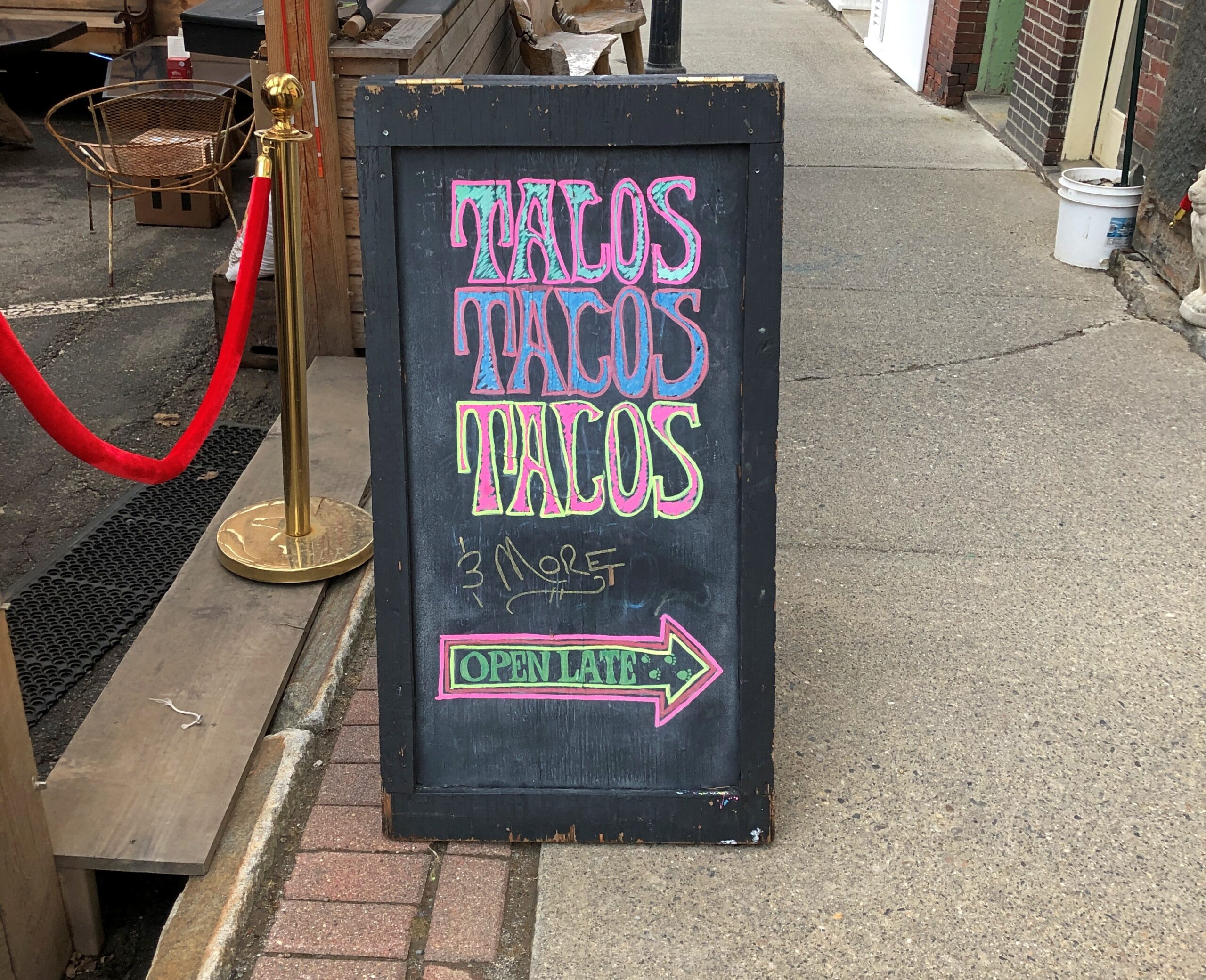
Too bad I wasn’t hungry in Belfast. I’d have had tacos.
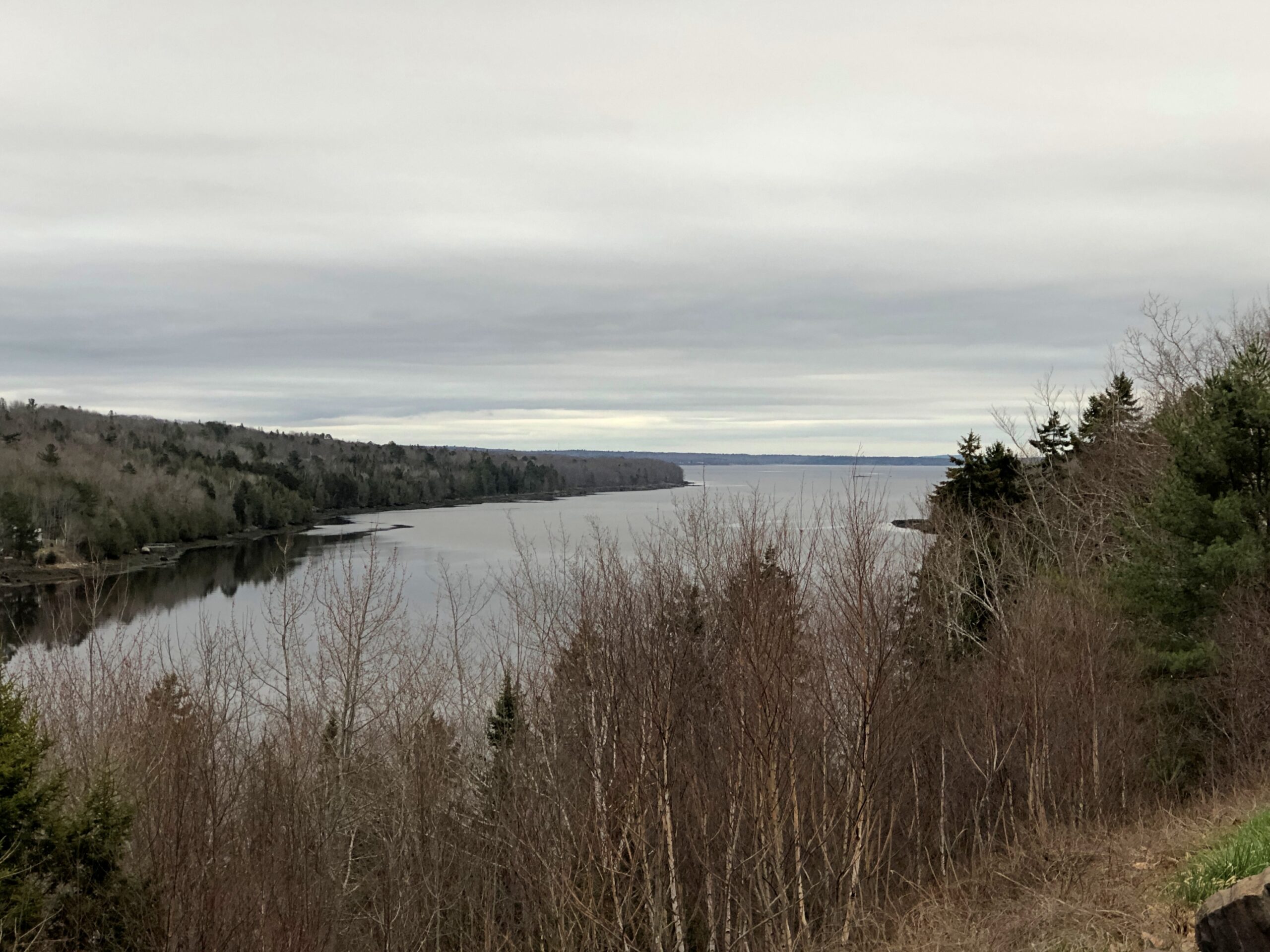
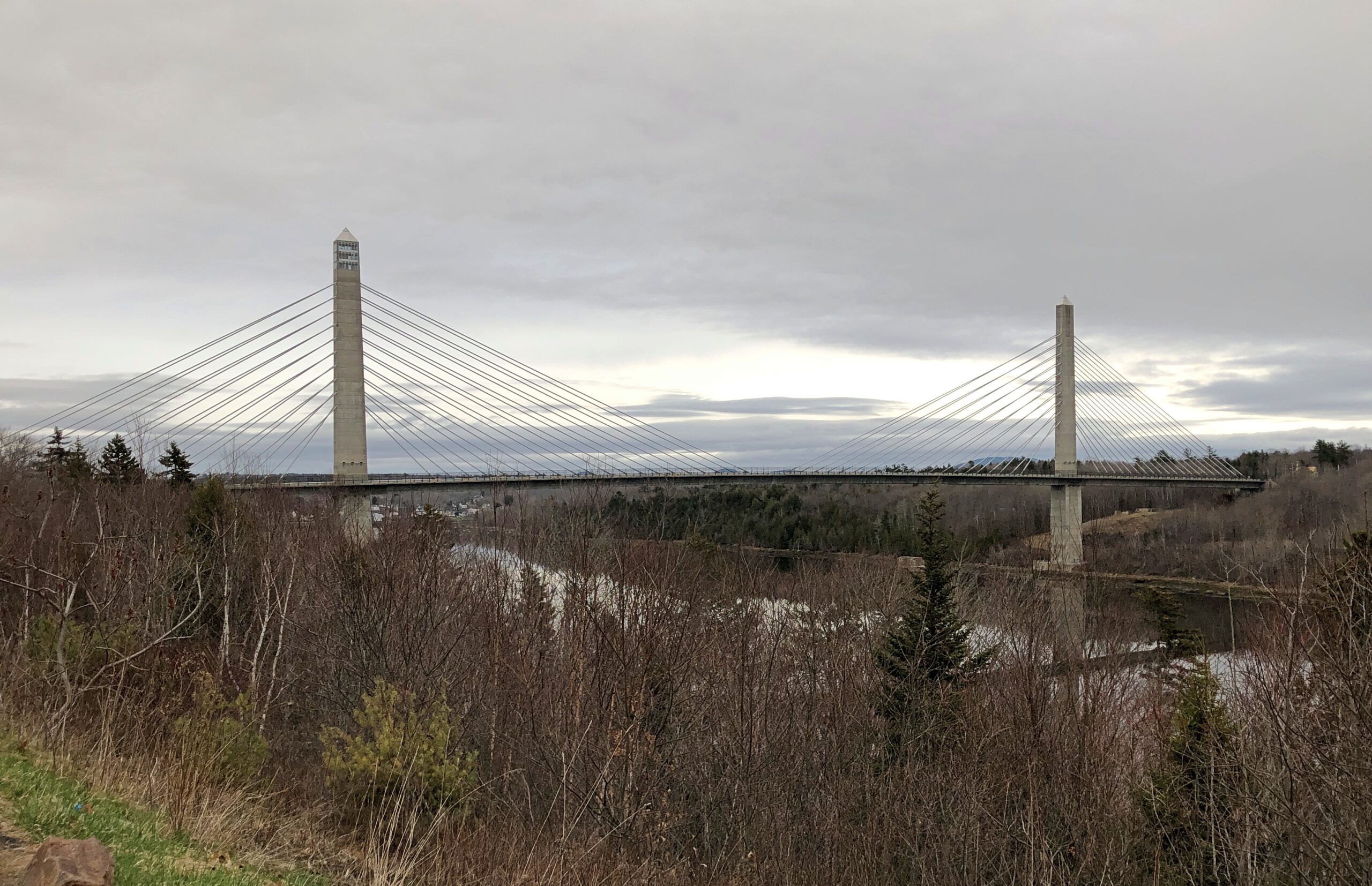
The Penobscot River and the Penobscot Narrows Bridge. A literal and scenic highpoint on that part of US 1 as it winds through near-coastal Maine. The bridge includes an observatory, unfortunately not open in April. Driving over the bridge itself was another pleasure of coastal Maine.
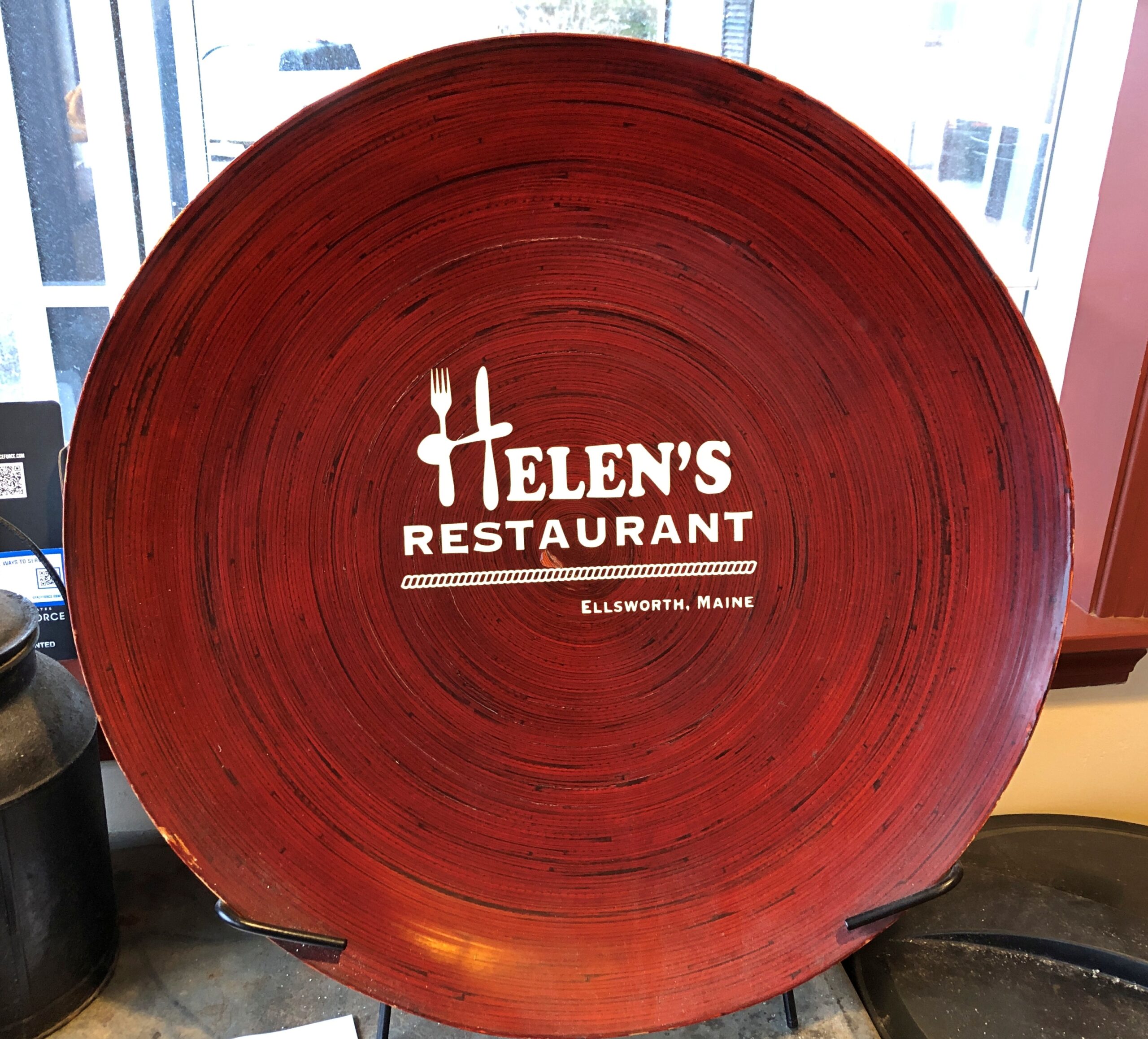
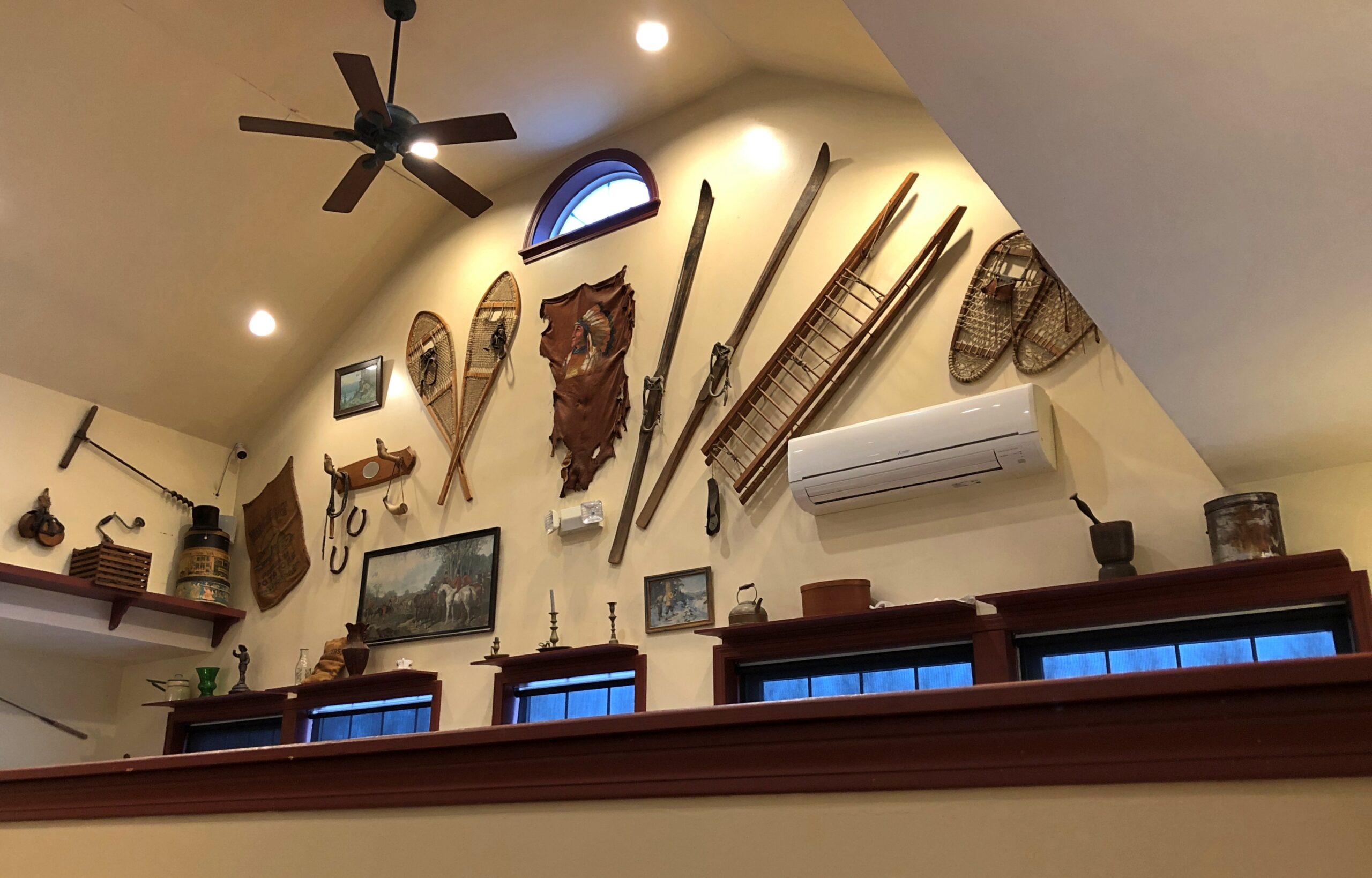
Helen’s Restaurant in Ellsworth. Tasty fish and chips. Haddock, specifically. What do you take for a haddock? “Well, sometimes I take-a aspirin, sometimes I take-a calomel.” It was some years before I learned that calomel was something I’d never take in a million years.
Massachusetts
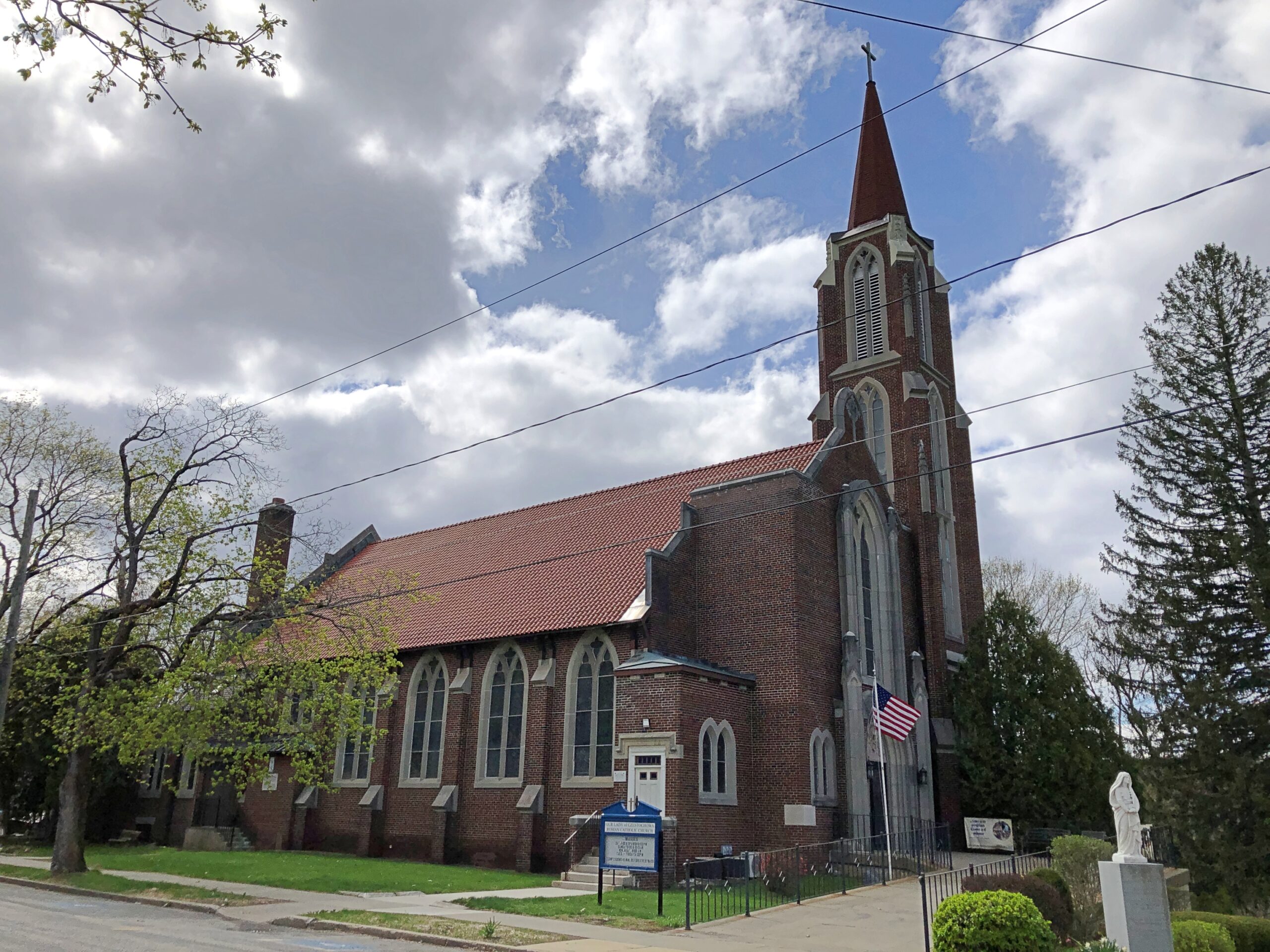
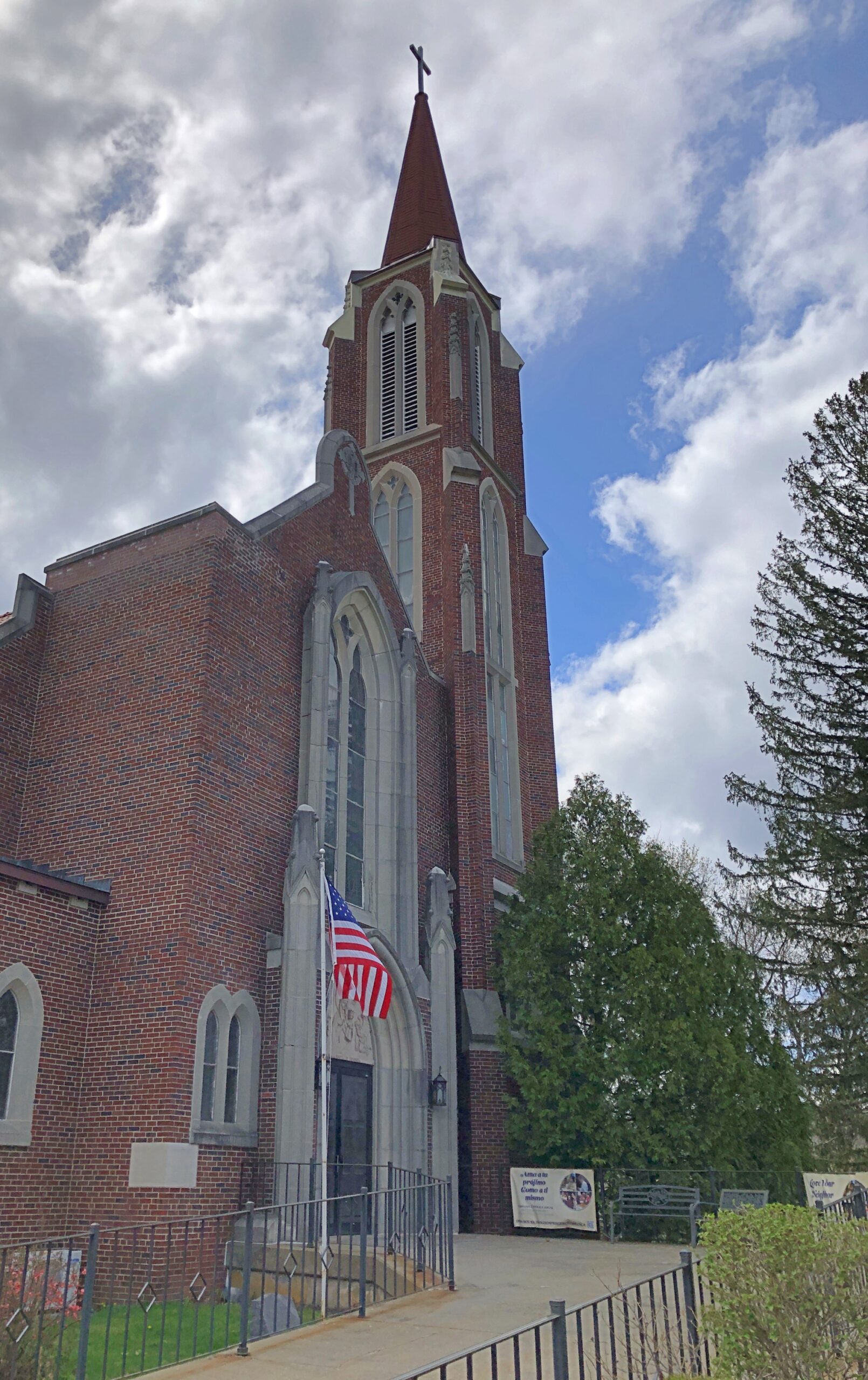
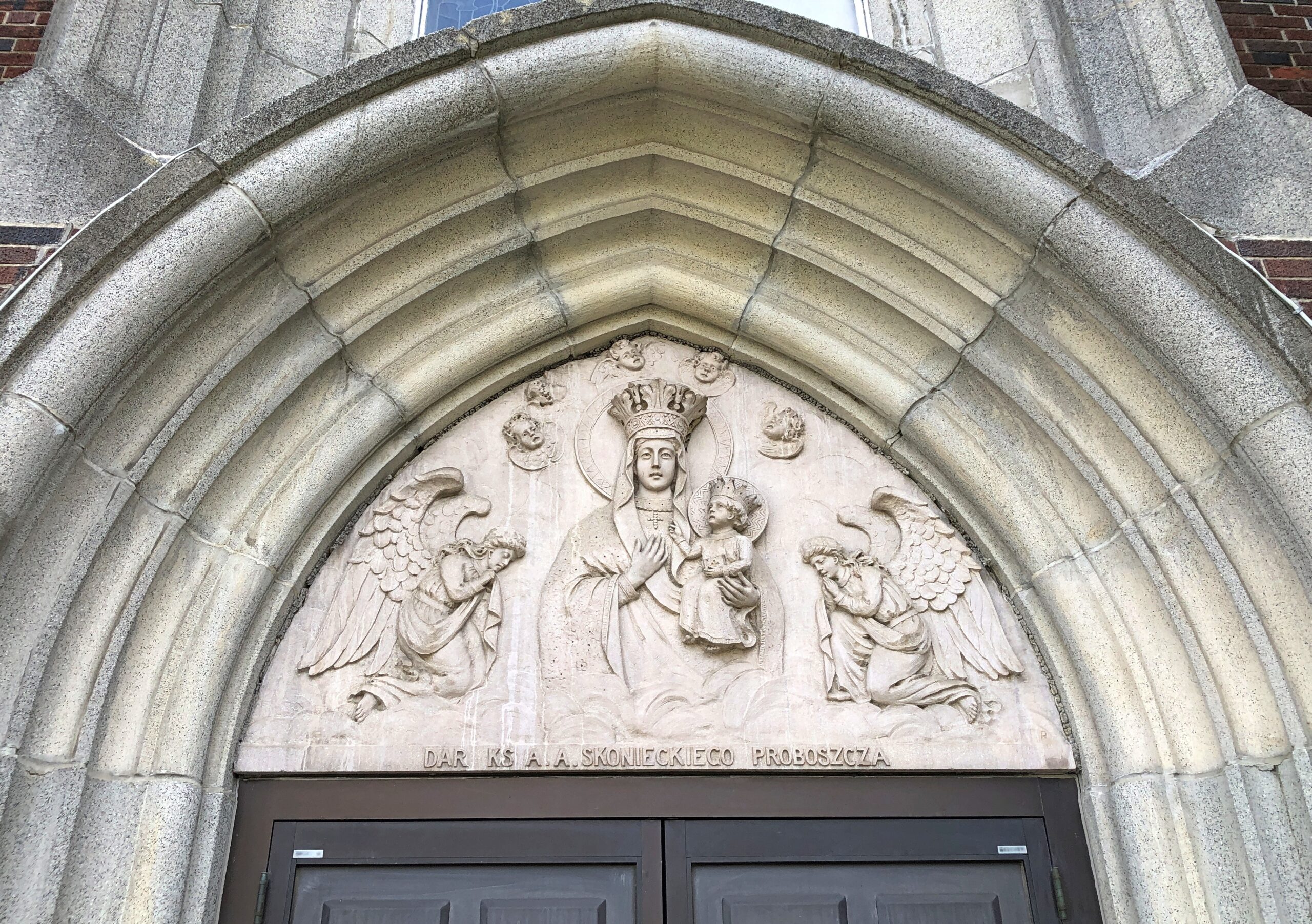
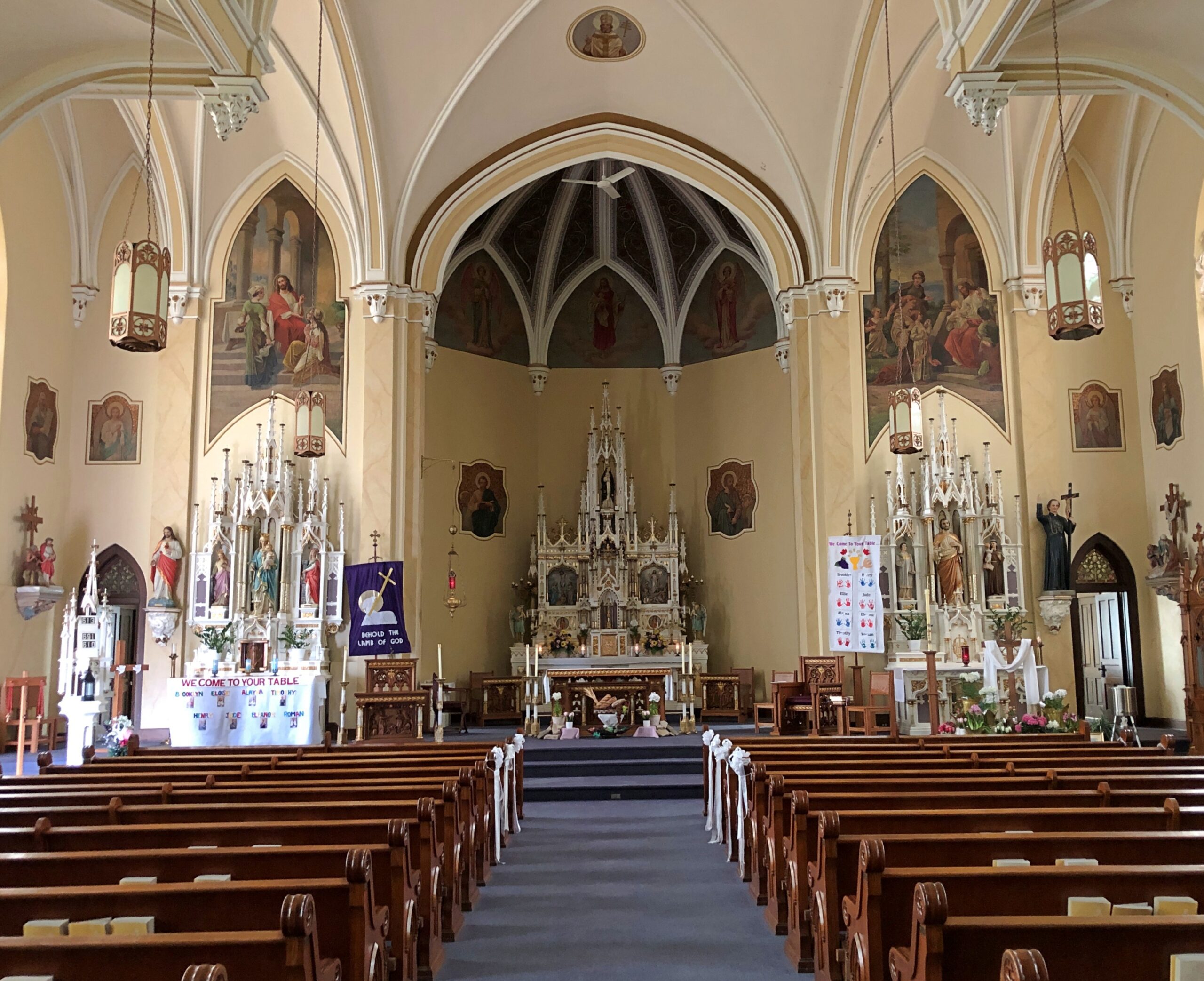
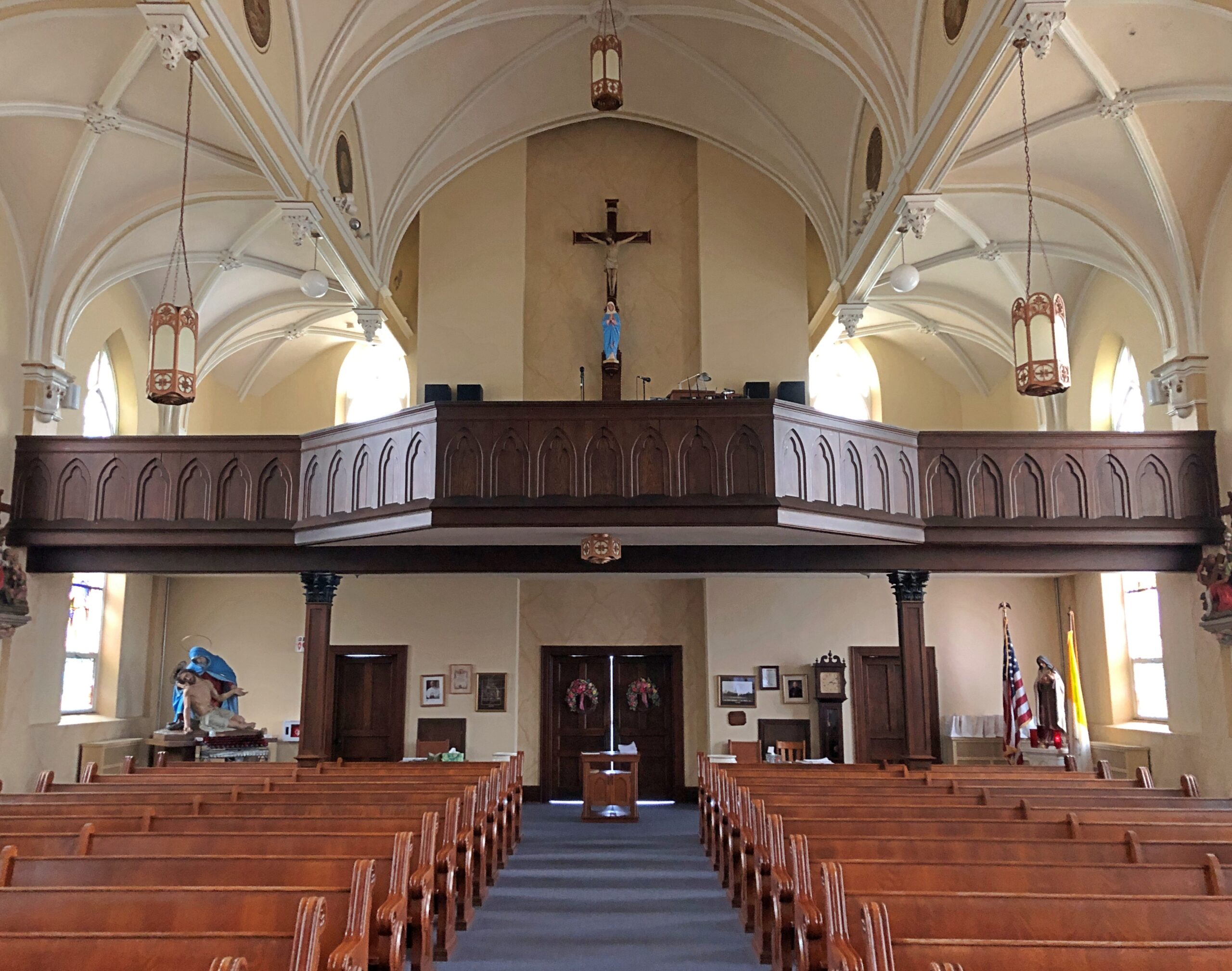
Our Lady of Czestochowa Parish, Turners Falls.
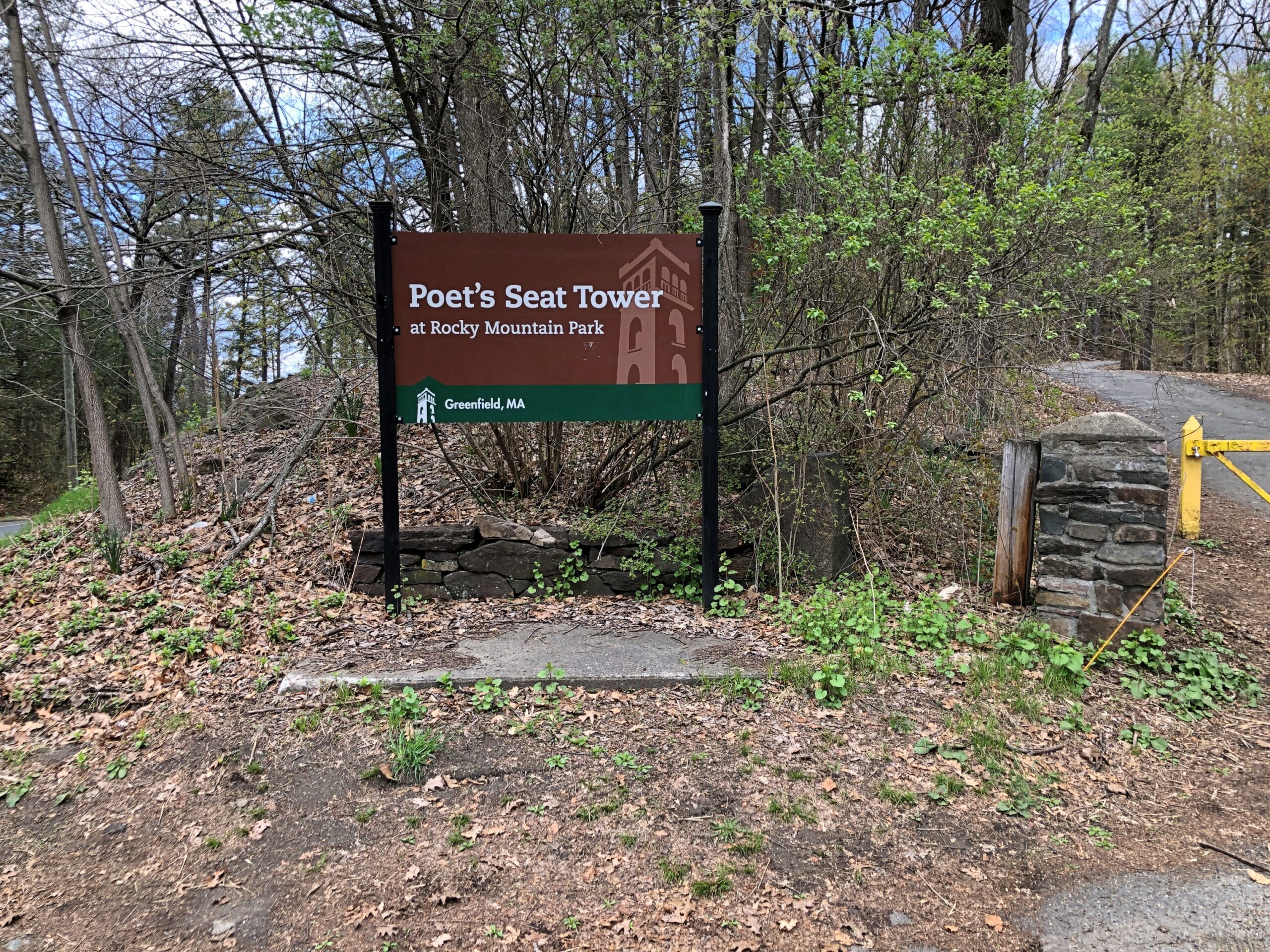
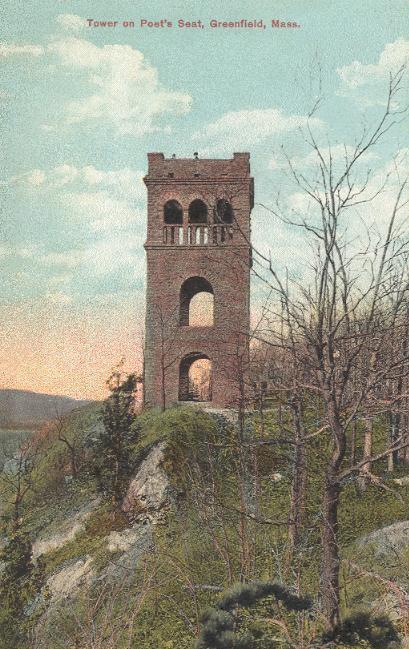
The church was closed. So was Poet’s Seat Tower.
As the tower appeared more than 100 years ago.
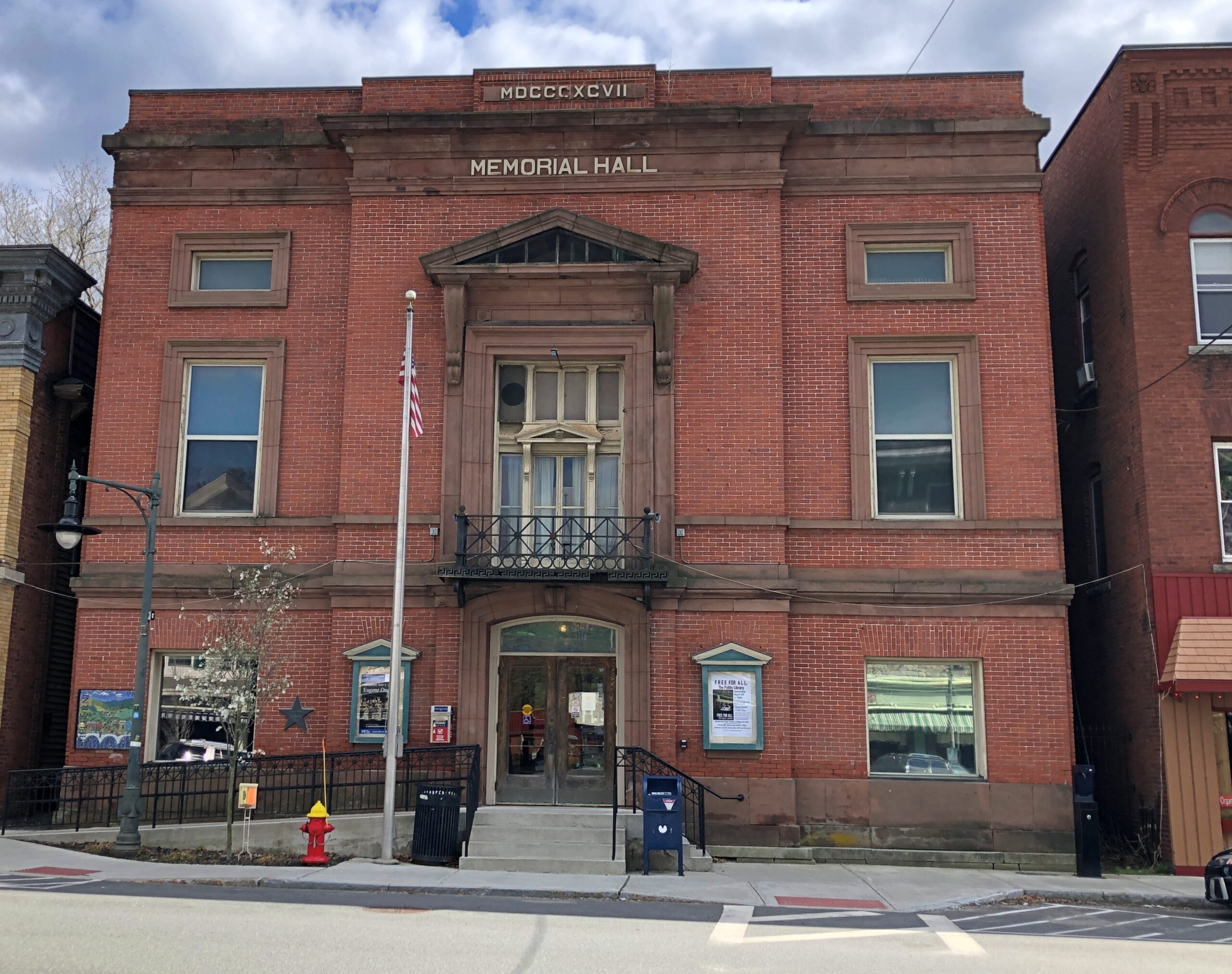
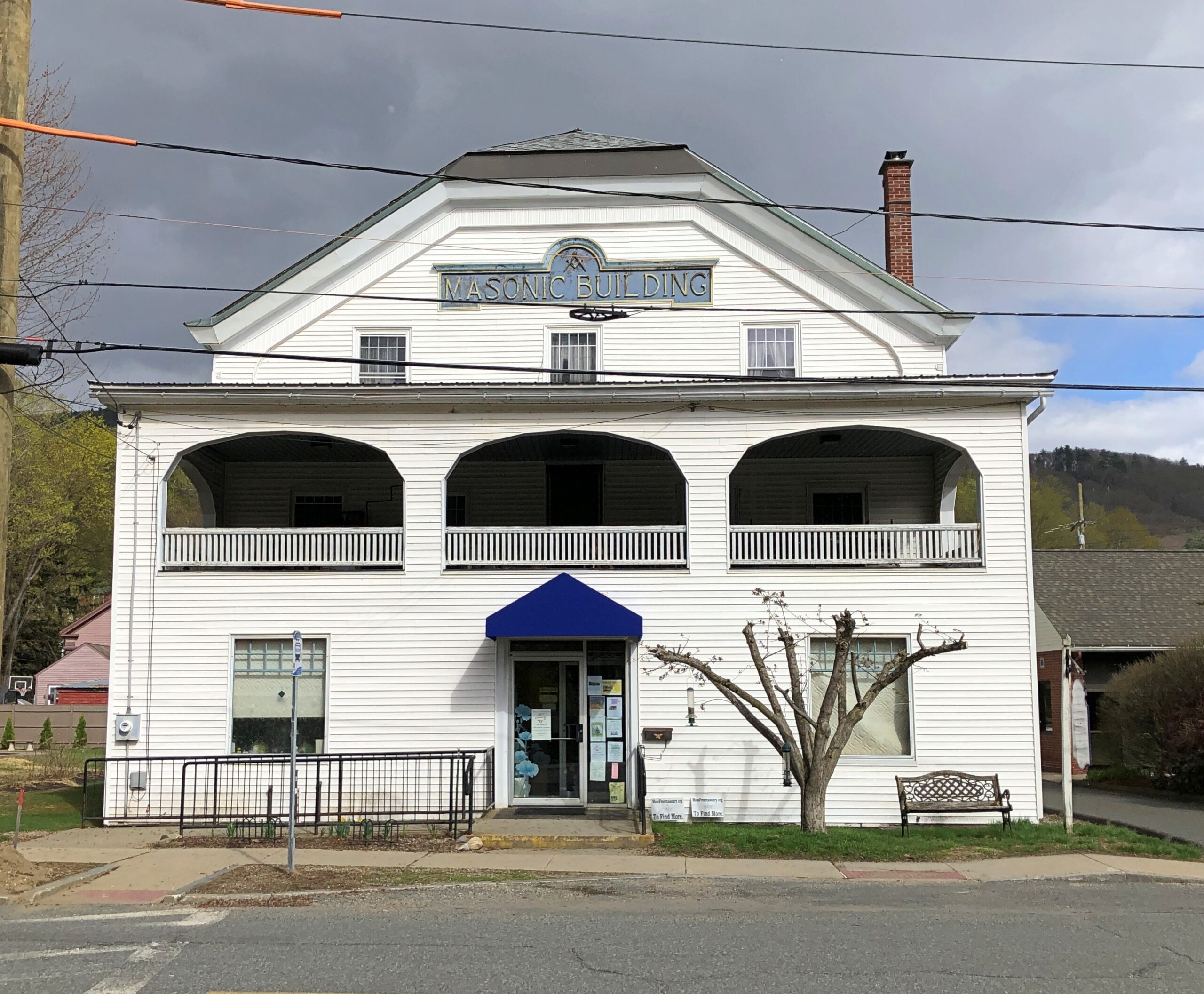
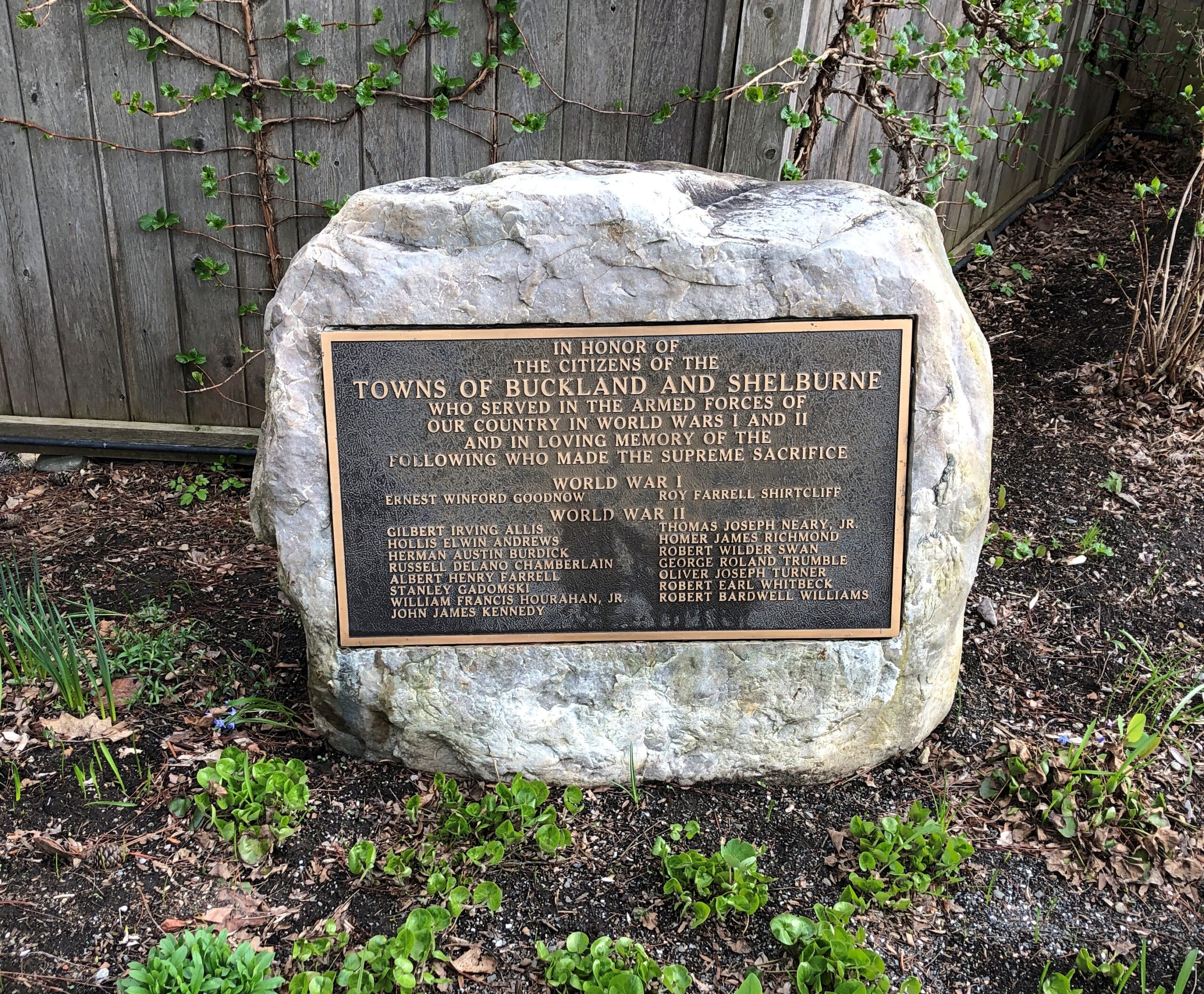
Shelburne.
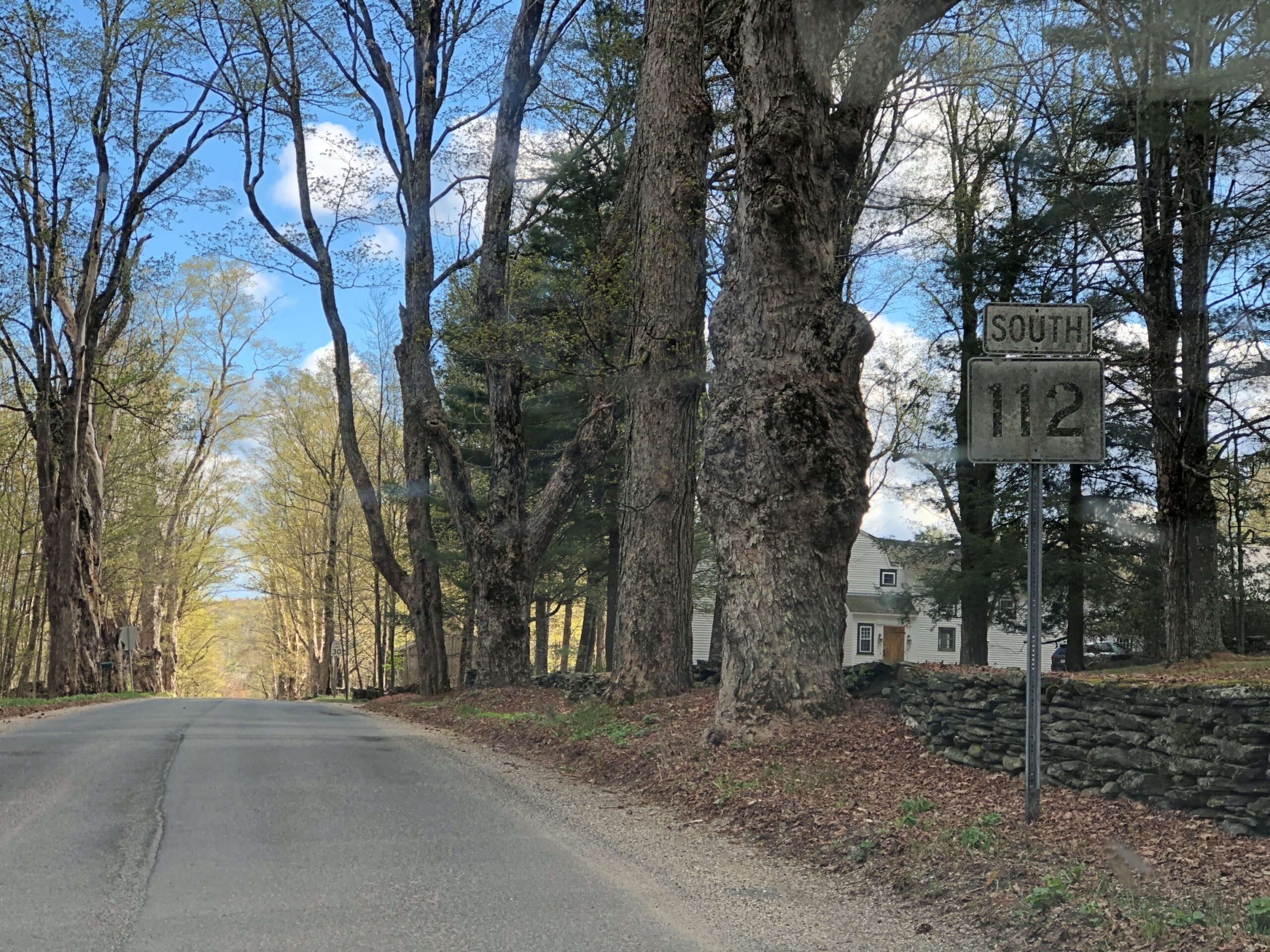
Massachusetts 112 (Route 112) in Hamilton County. Car commercial driving.
Goshen Cemetery, just off Route 112.
Ohio
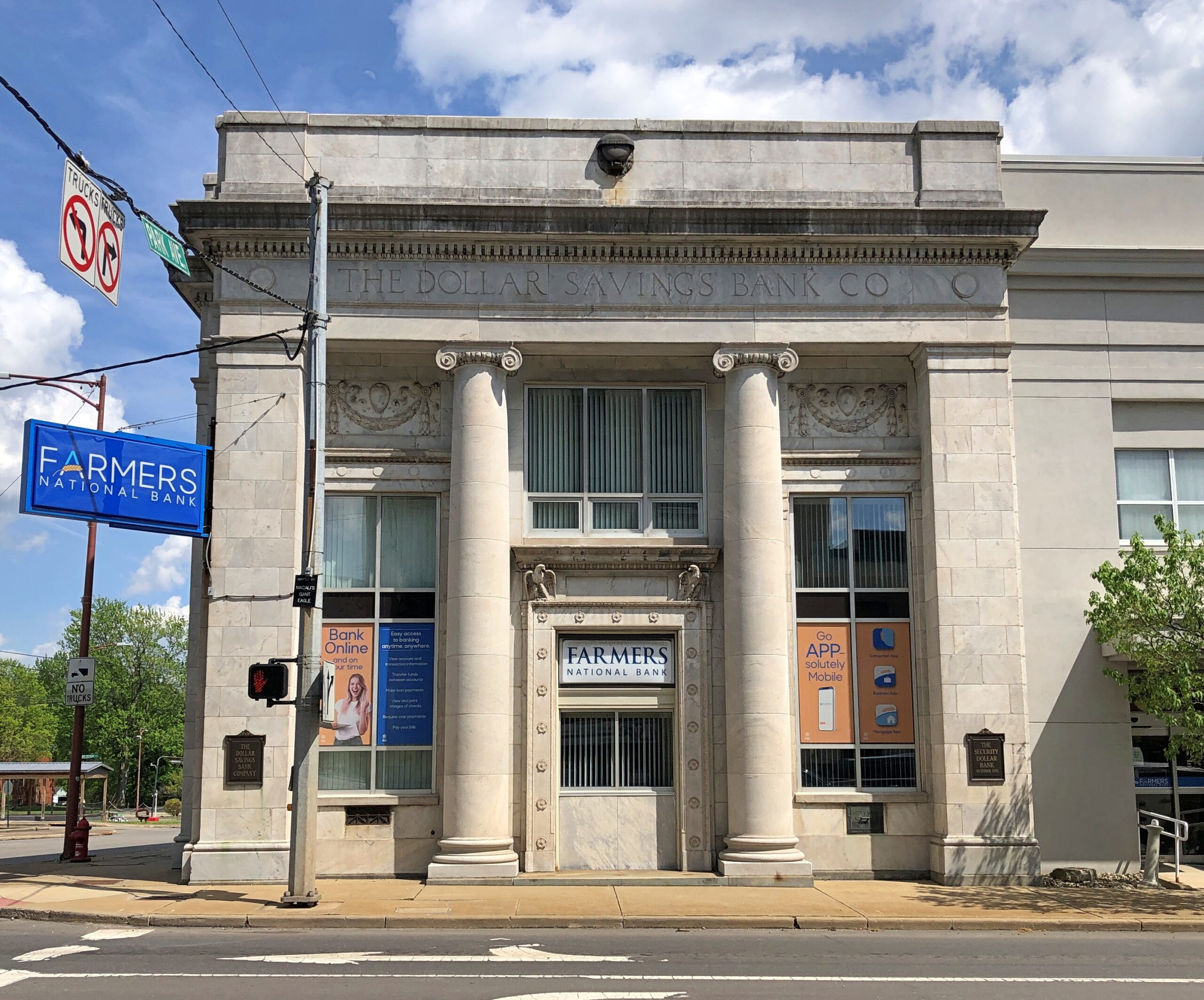
A solid bank building in Niles, across the street from where William McKinley was born. The Dollar Savings Bank Co. sounds like the kind of place that George Babbitt would mention, but distain in favor of a bank with longstanding ties to the best business men in Zenith.
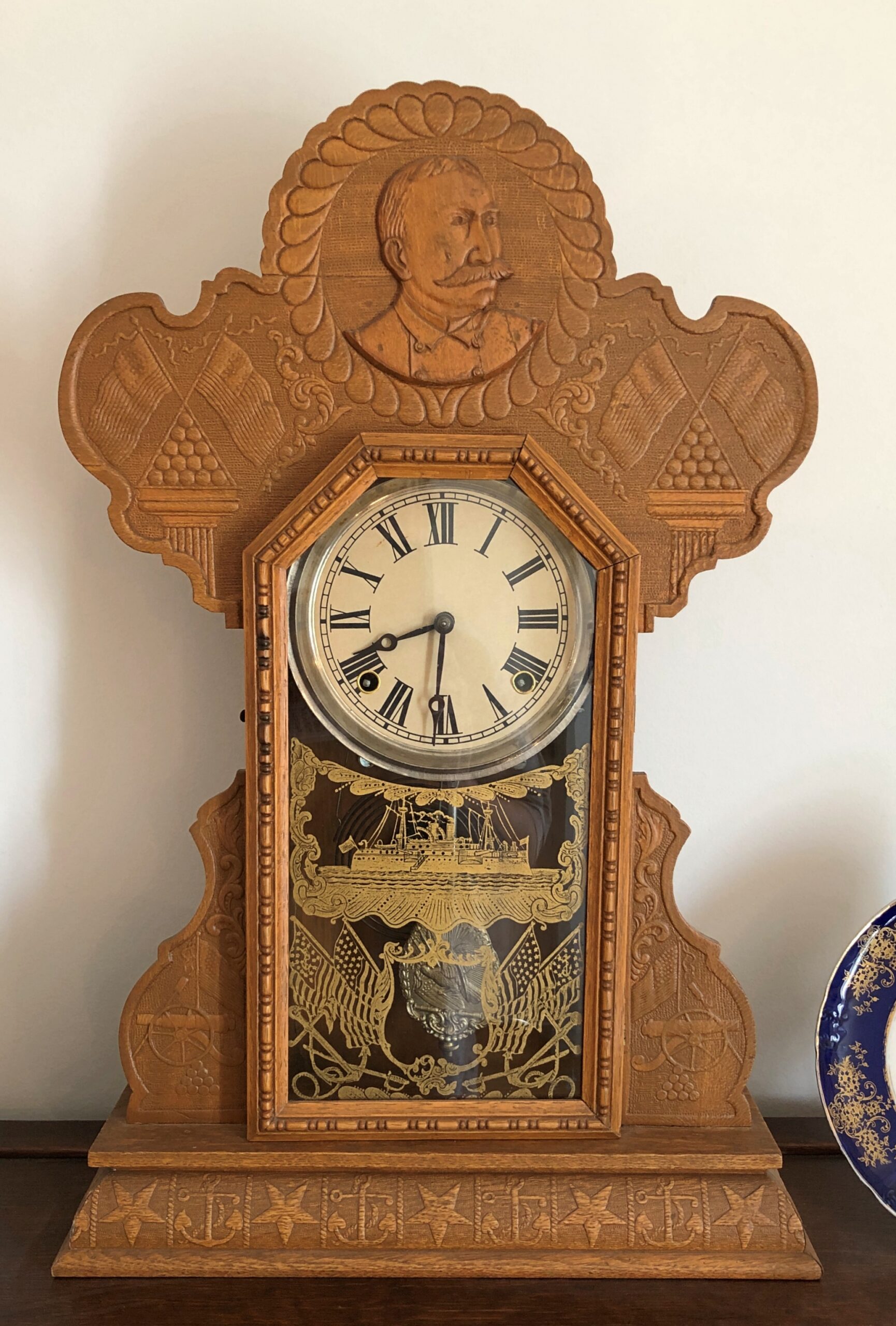
An Admiral Dewey clock at the McKinley Birthplace Museum. A textbook case, that Dewey, of how fleeting fame usually is.
Passing through northeast Ohio intrigued me greatly about that part of the state. Akron, Canton, Youngstown, Austintown — all places I can imagine going, and enjoying the visits. See ’em before the reverse migration really gets underway.
Further west, the drive on the Lincoln Highway (US 30) was a pleasure: mostly four lanes, rarely crowded. The flat farmlands don’t qualify as conventionally scenic, but the budding springtime fecundity has a lot to recommend it, even as a strictly visual pleasure: the bright greens of new leaves, the brown and grays of the fields recently plowed, small roads heading off usually at right angles to the main road, a run between Upper Sandusky and I-75 near Lima with few buildings of any kind, except distant farm structures.
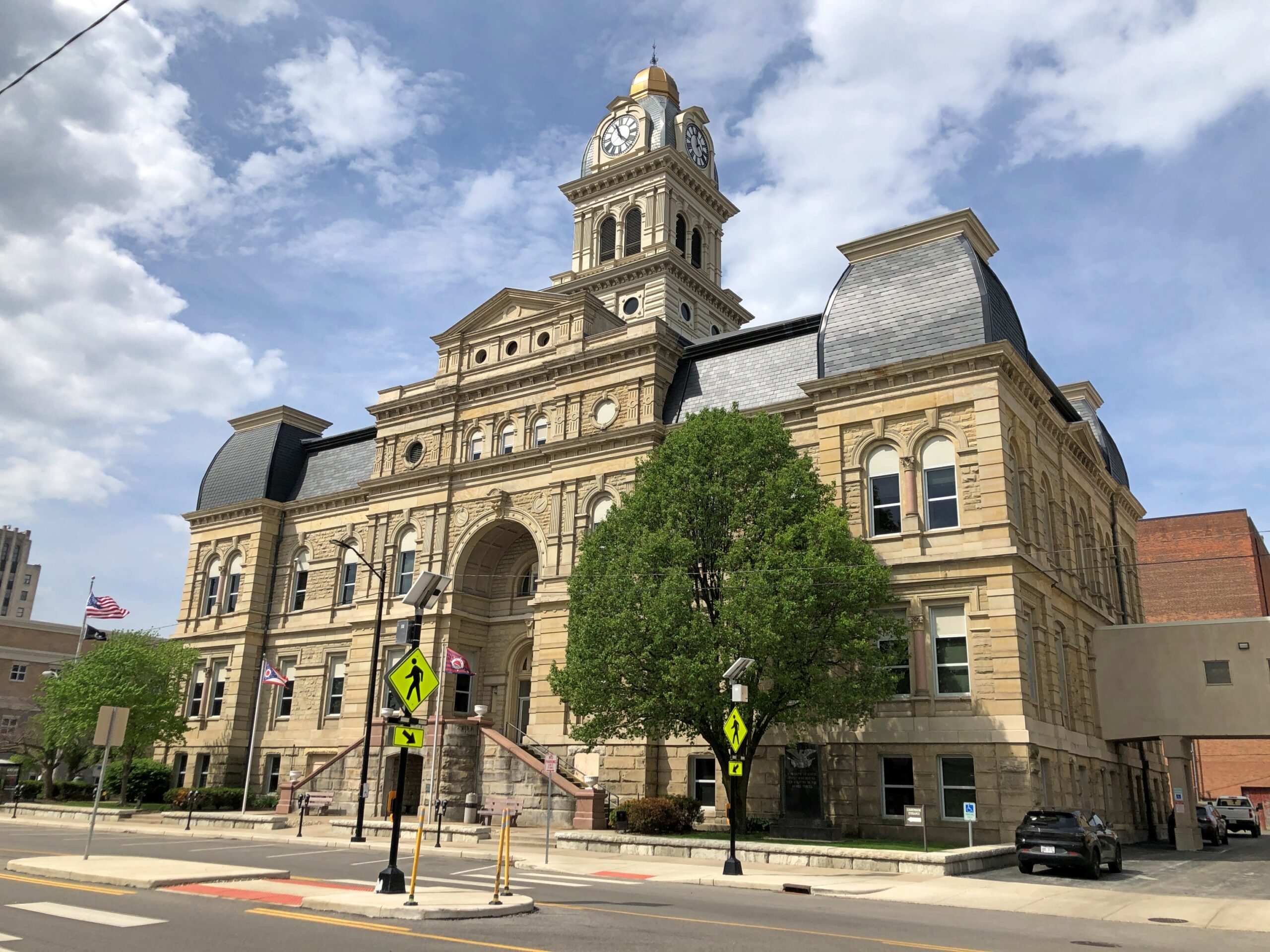
Downtown Lima: the Allen County courthouse, seen from North St.
Looks like my kind of breakfast place. Closed on Sunday anyway.
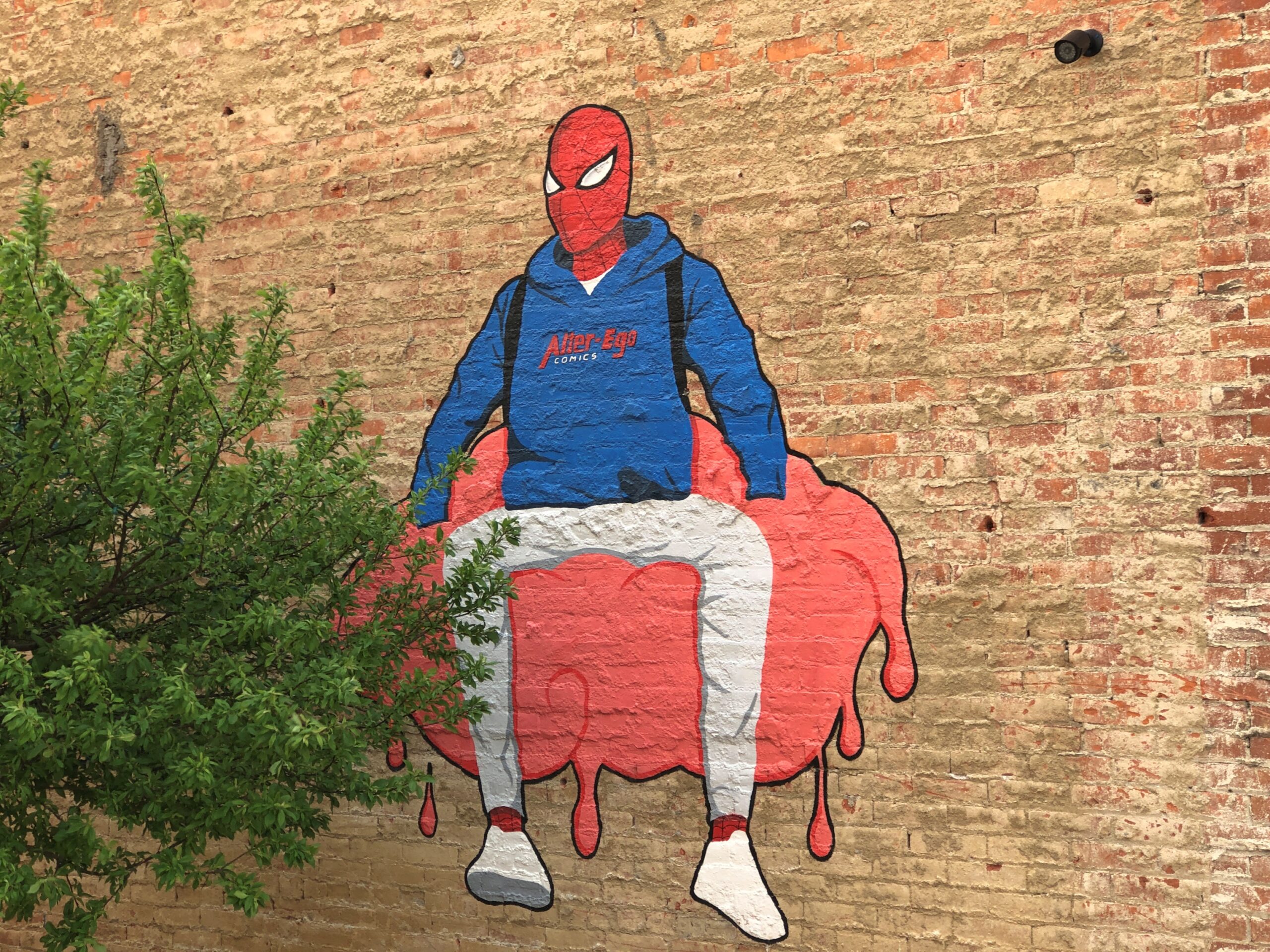
Another North St. detail. Spiderman sitting on — something. A large scoop of strawberry ice cream?
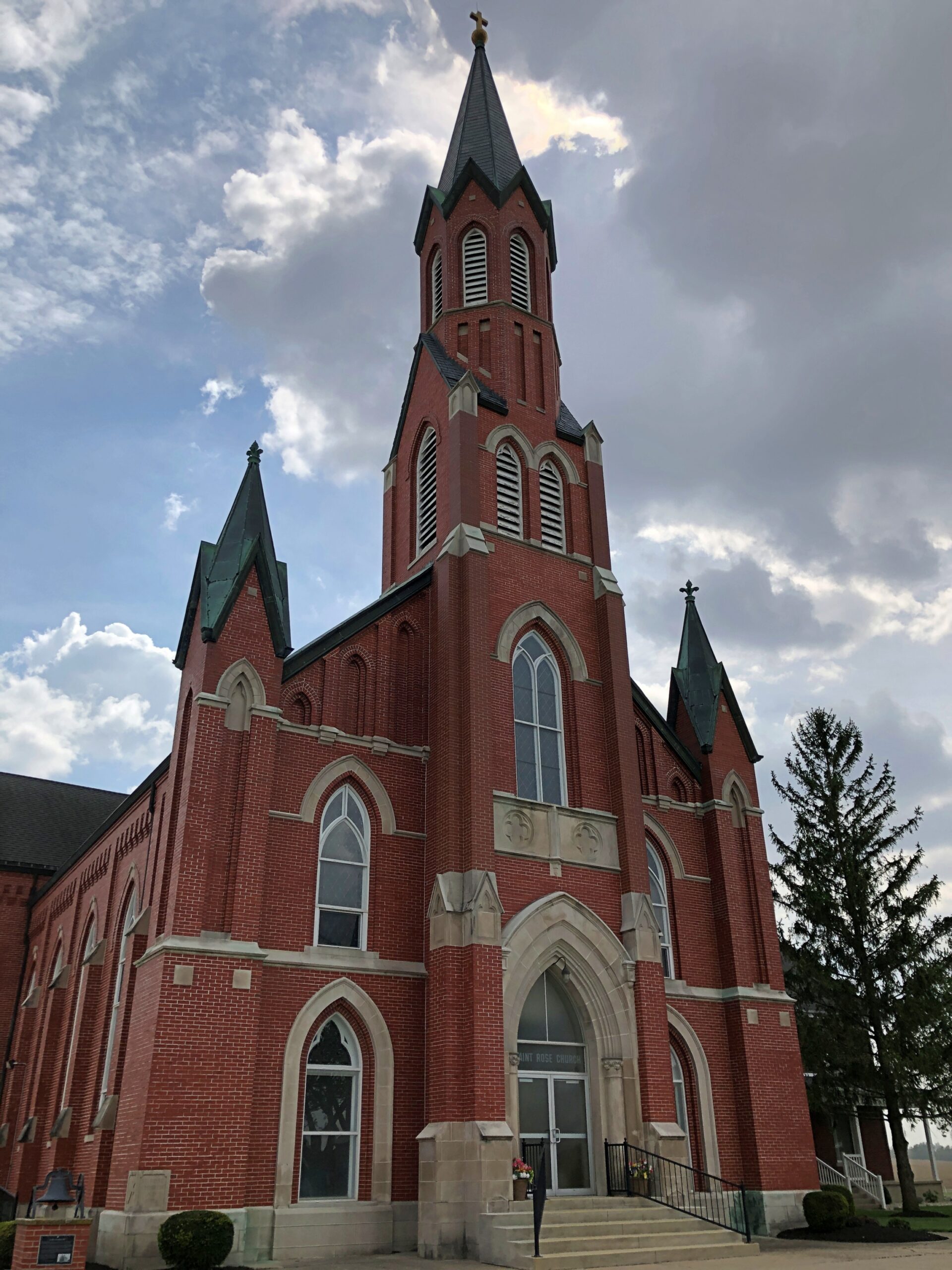
Saint Rose Church in the hamlet of Saint Rose, not far east of the Ohio-Indiana line. A Cross-Tipped Church.
Pennsylvania
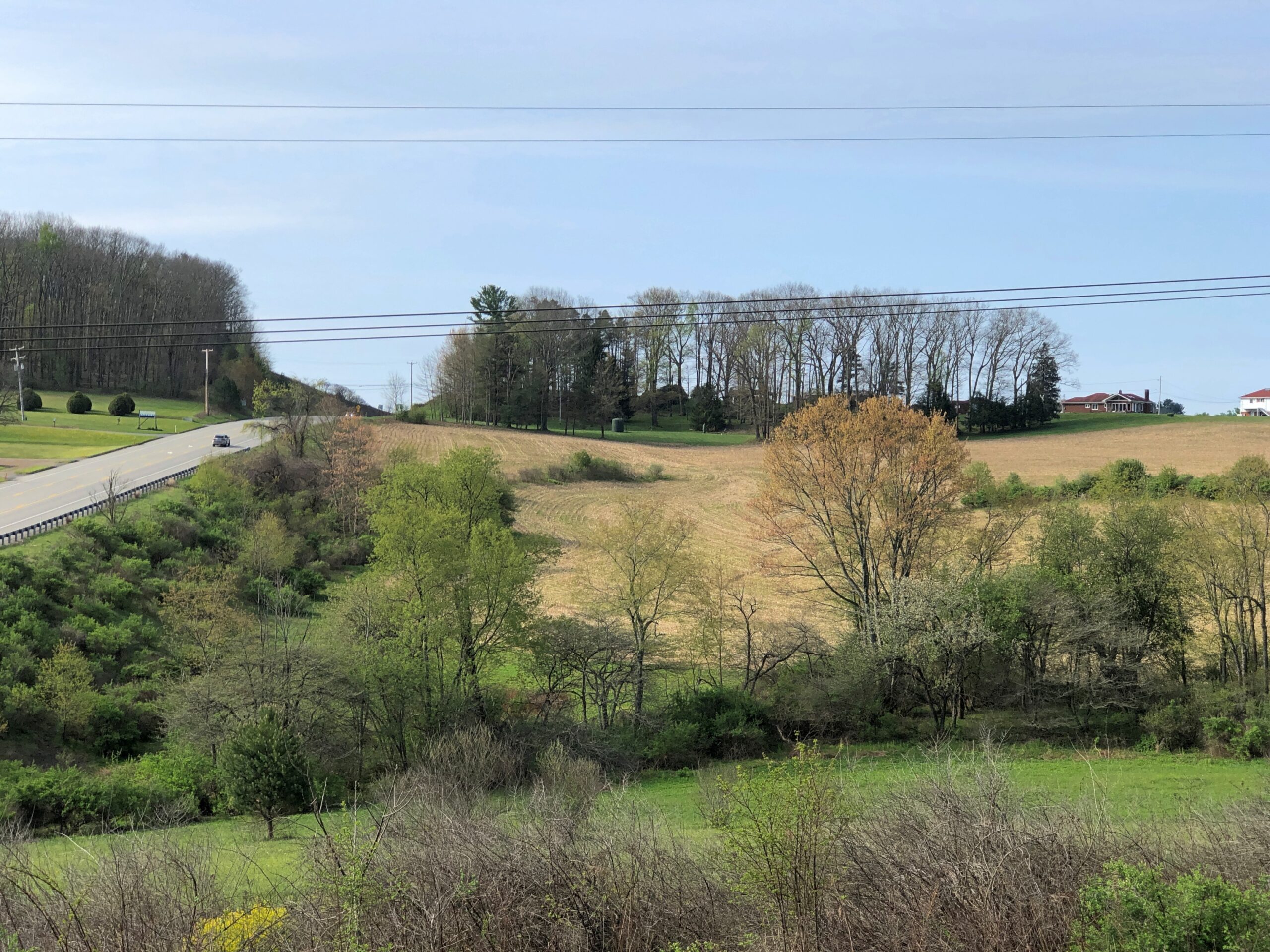
The hills at the edge of Punxsutanwney.
The drive west across Pennsylvania began across the Delaware River from Port Jervis, NY, taking US 209 southwest through part of Delaware Water Gap National Recreation Area. Bet the straight-ish, two-lane road is busier in peak recreation season in the Recreation Area, but in April, I booked along without encountering much in the way of traffic. Trees were still budding, but it wouldn’t be long before some stretches of the highway would pass through green tunnels. The sunlight was already casting green leaf shadows on the road.
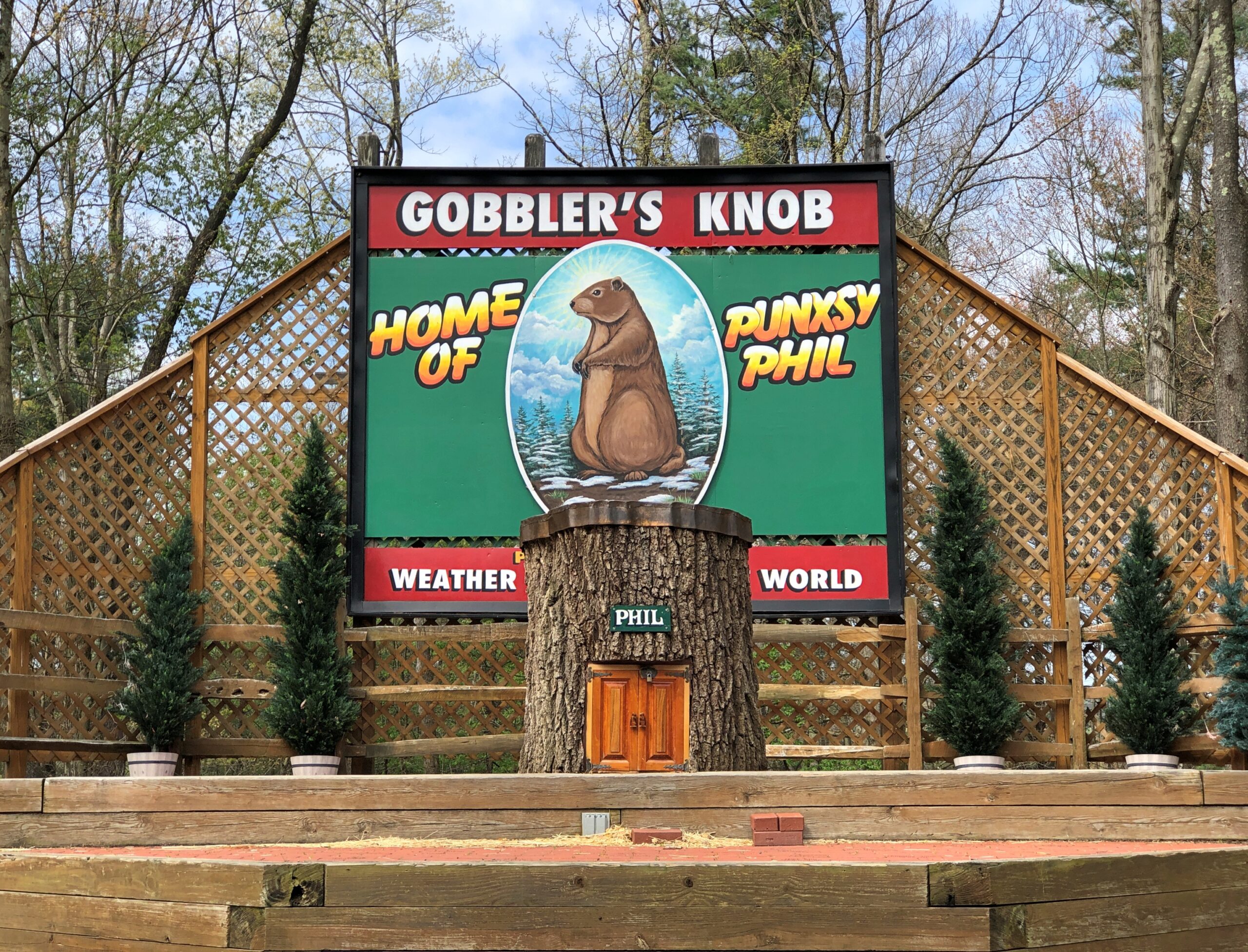
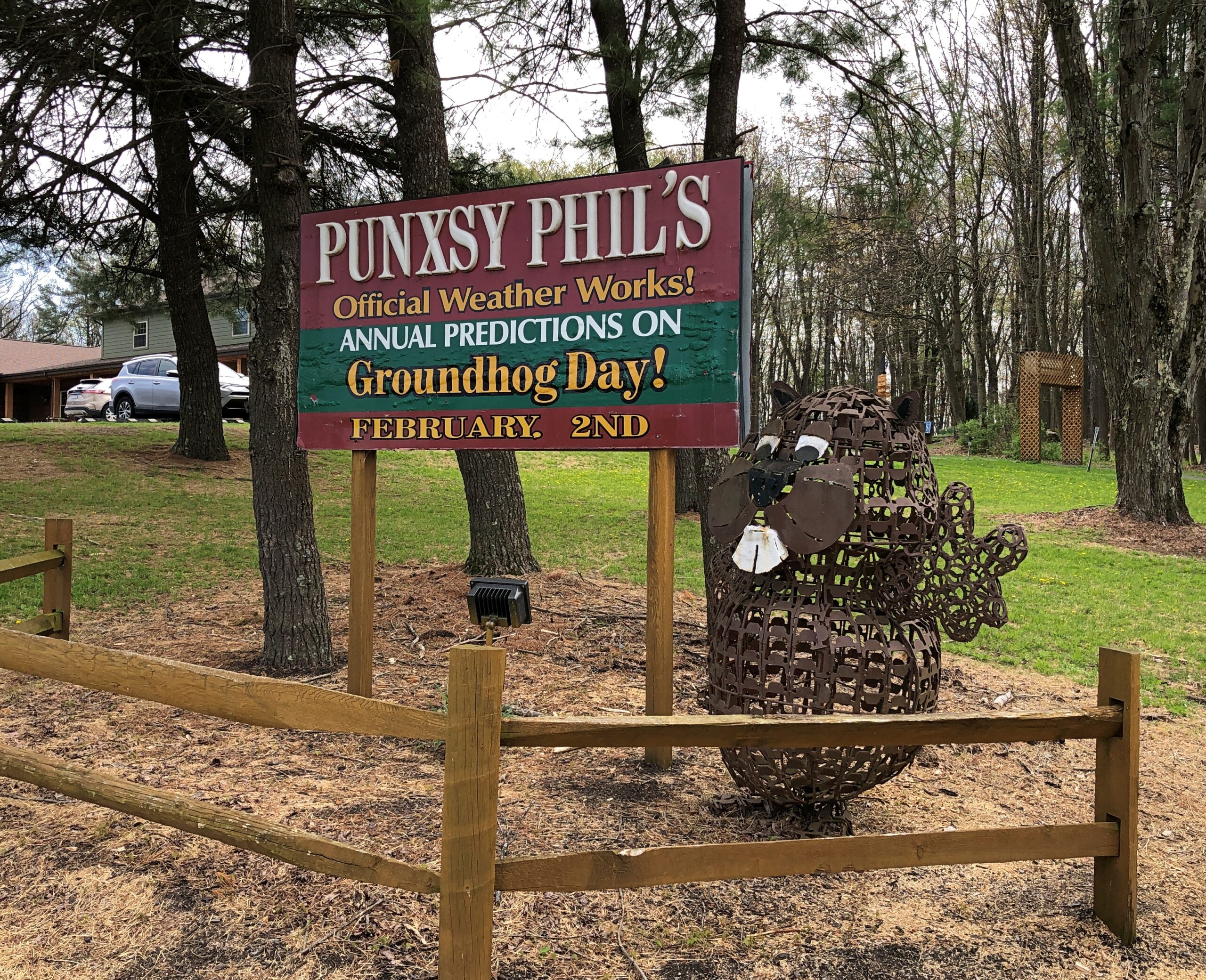
Watch Groundhog Day, and the impression is that the festivities are held in the center of town — which they are, in the Punxsutanwney stand-in of Woodstock, Illinois. Go to Punxsutanwney itself and learn that the February 2 fest is a few miles from town in a place called Gobbler’s Knob.
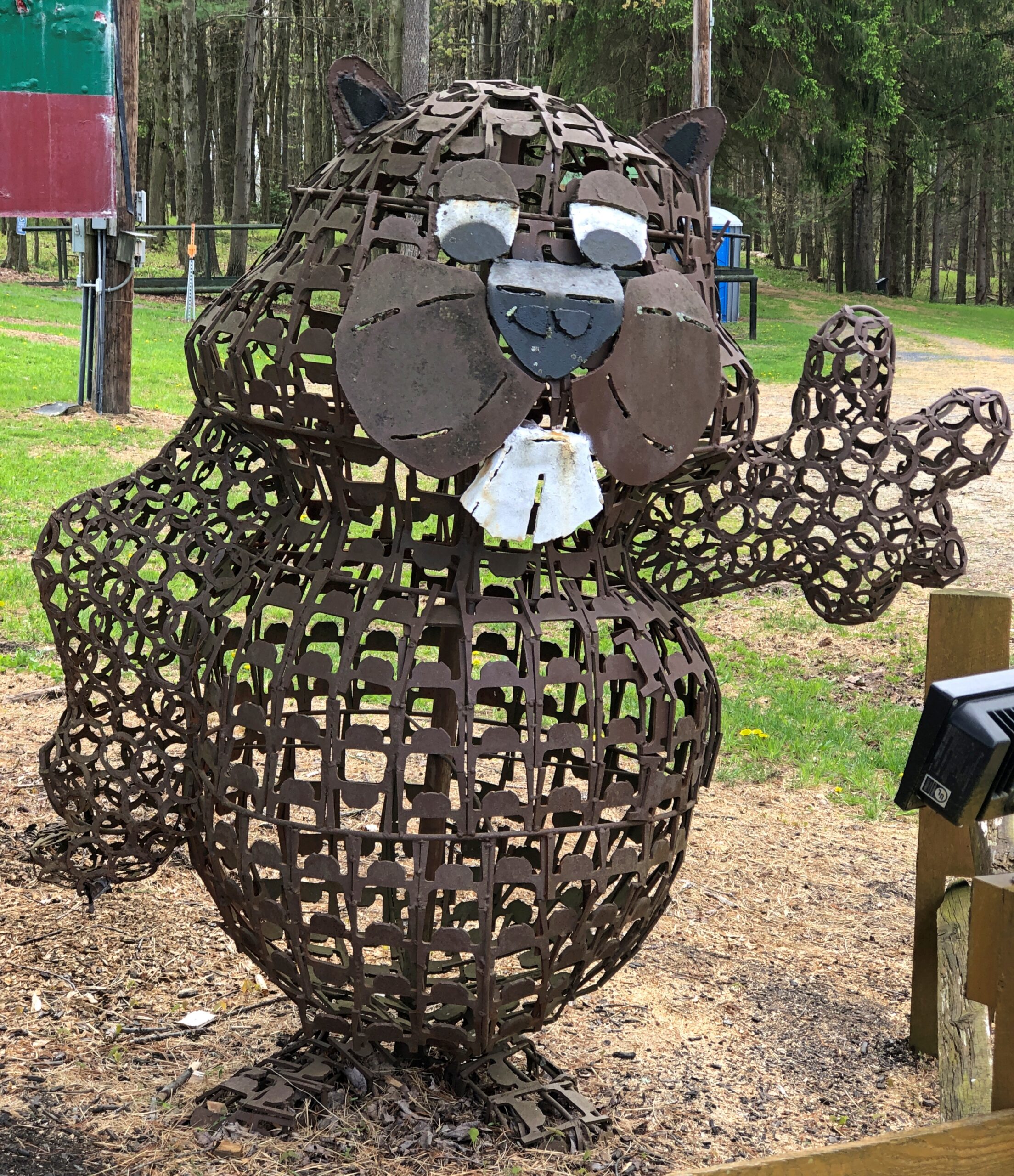
One more Phil. Iron Phil.
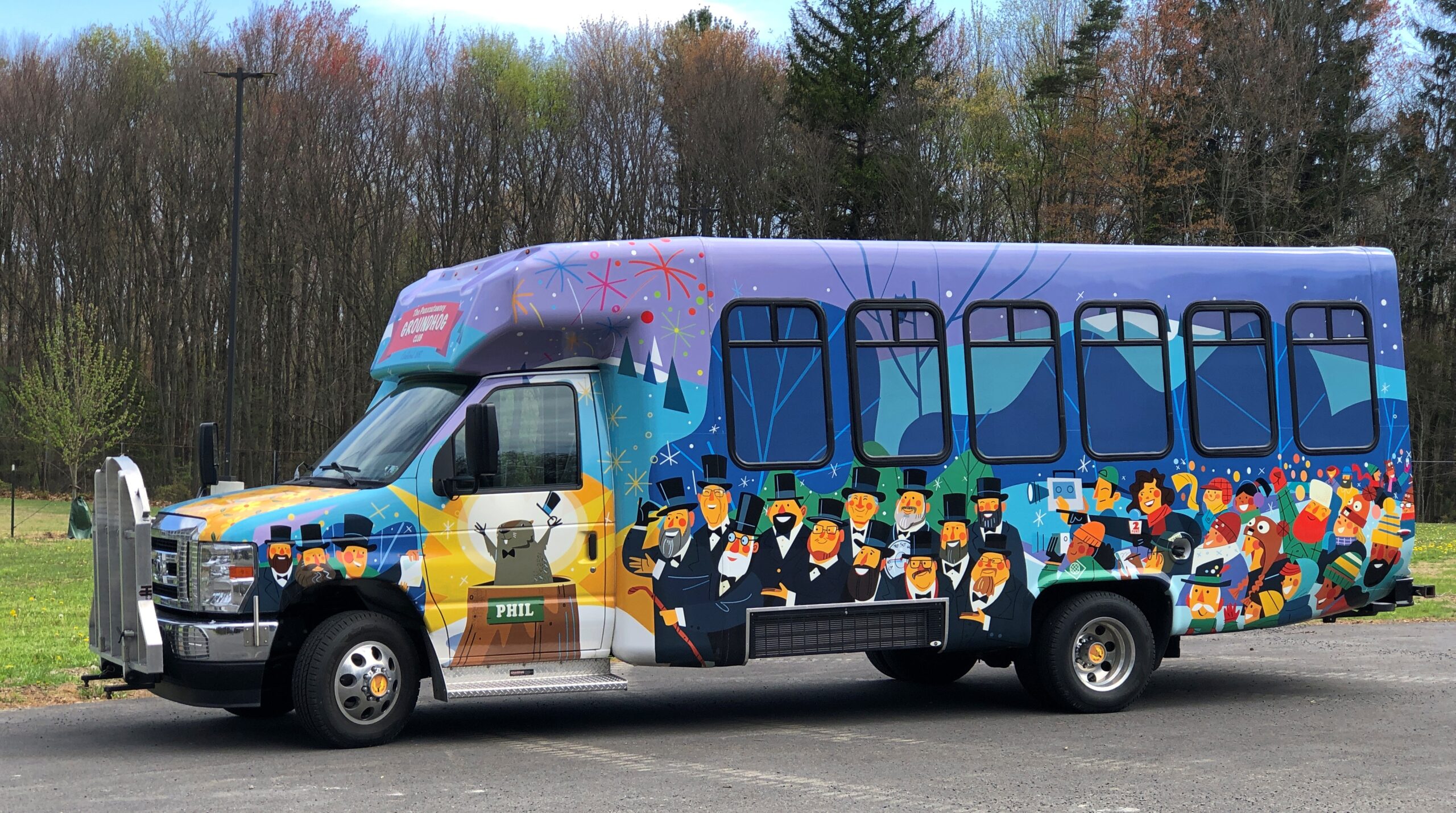
The clerk at the Gobbler’s Knob gift shop took pains to let me know that the site, and the festivities, were overseen by a nonprofit, not the commonwealth. Outside is the nonprofit’s bus, or at least I assume that, probably used to ferry people from town to GK and vice-versa, to help deal with the popularity of the event.
I like a good local festival as much as anyone, but February 2 is a deal-breaker. Can’t Phil come out again on August 2 to predict how much longer summer is going to last?
One More (Indiana)
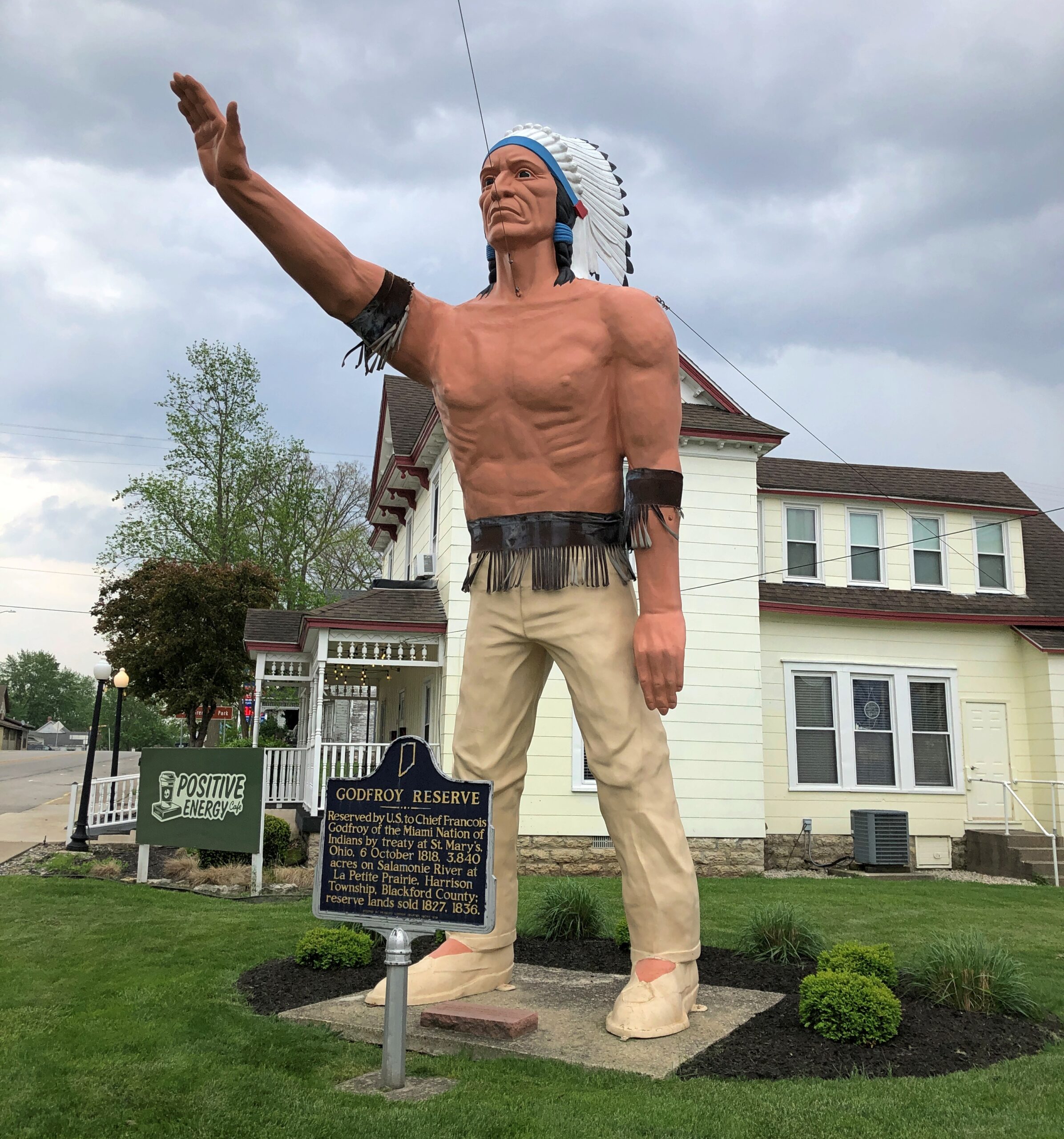
Miami Chief Francois Godfroy stands at the corner of Main Street and Huntington Street/Indiana 18 in Montpelier. Well, maybe it’s supposed to remind passersby of the chief more than actually depict him.
A Daughters of the American Revolution historical marker says: Reserved by U.S. to Chief Francois Godfroy of the Miami Nation of Indians by treaty at St. Mary’s, Ohio, 6 October 1818. 3,849 acres on Salamonie River at La Petite Prairie, Harrison Township, Blackford County: reserve lands sold 1827, 1836.
Waymarking says: “The statue was made in Venice, CA in 1960 for the Tom Wood Pontiac dealership in Indianapolis. Later it was in front of the Indian Museum at Eagle Creek Park In Indianapolis. After the museum closed, the statue (of more a plains Indian than a NE Indiana tribe) was obtained by Chief Larry Godfroy — a descendant who presented it to the City of Montpelier and they erected it as a monument in 1984.”