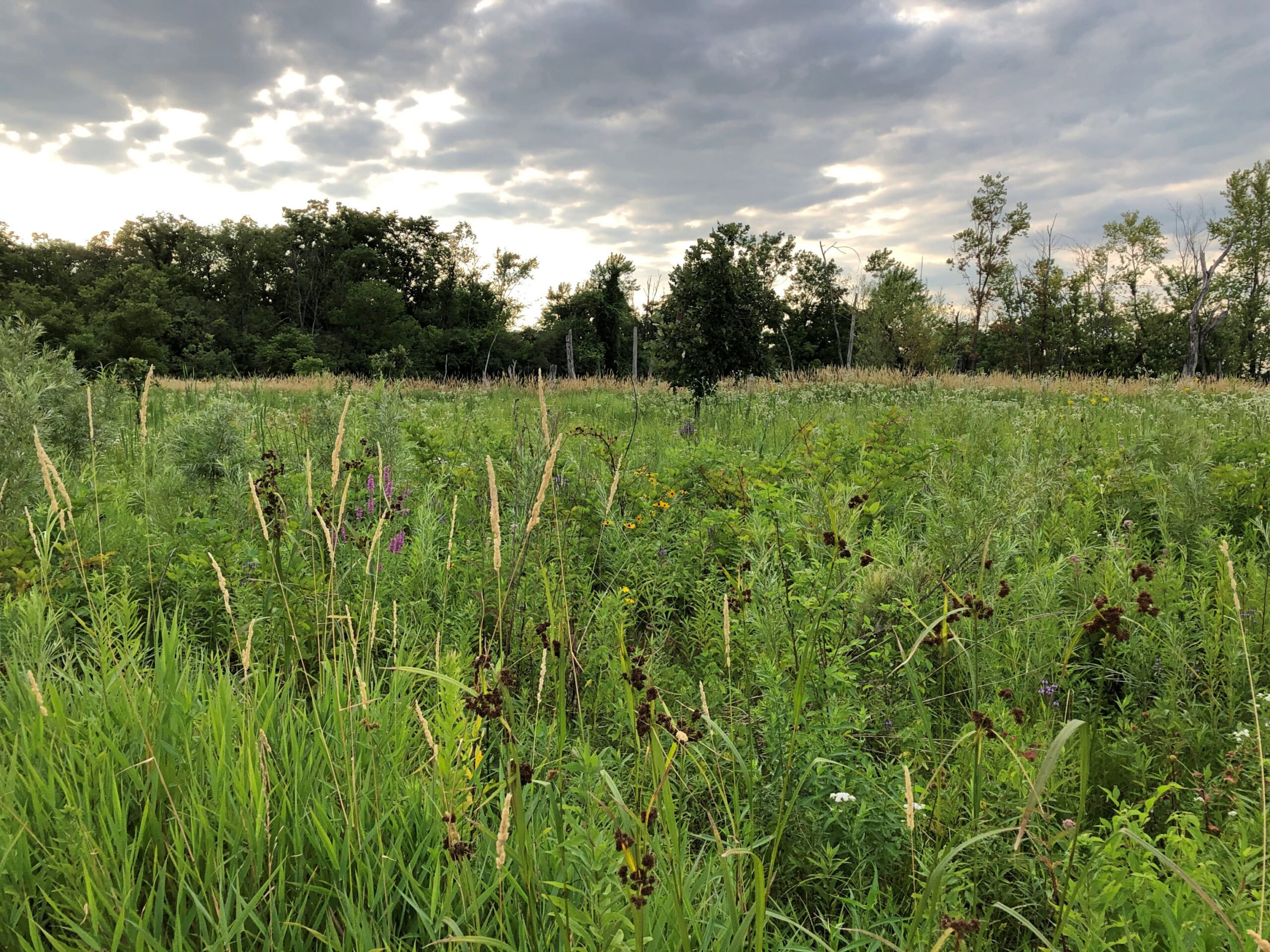
Rain to end September and begin October. Generally not heavy, just persistent for two days. As if on cue for the first of the month, a handful of trees here and there suddenly displayed streaks of yellow. Every day there will be more of that, until there isn’t any.
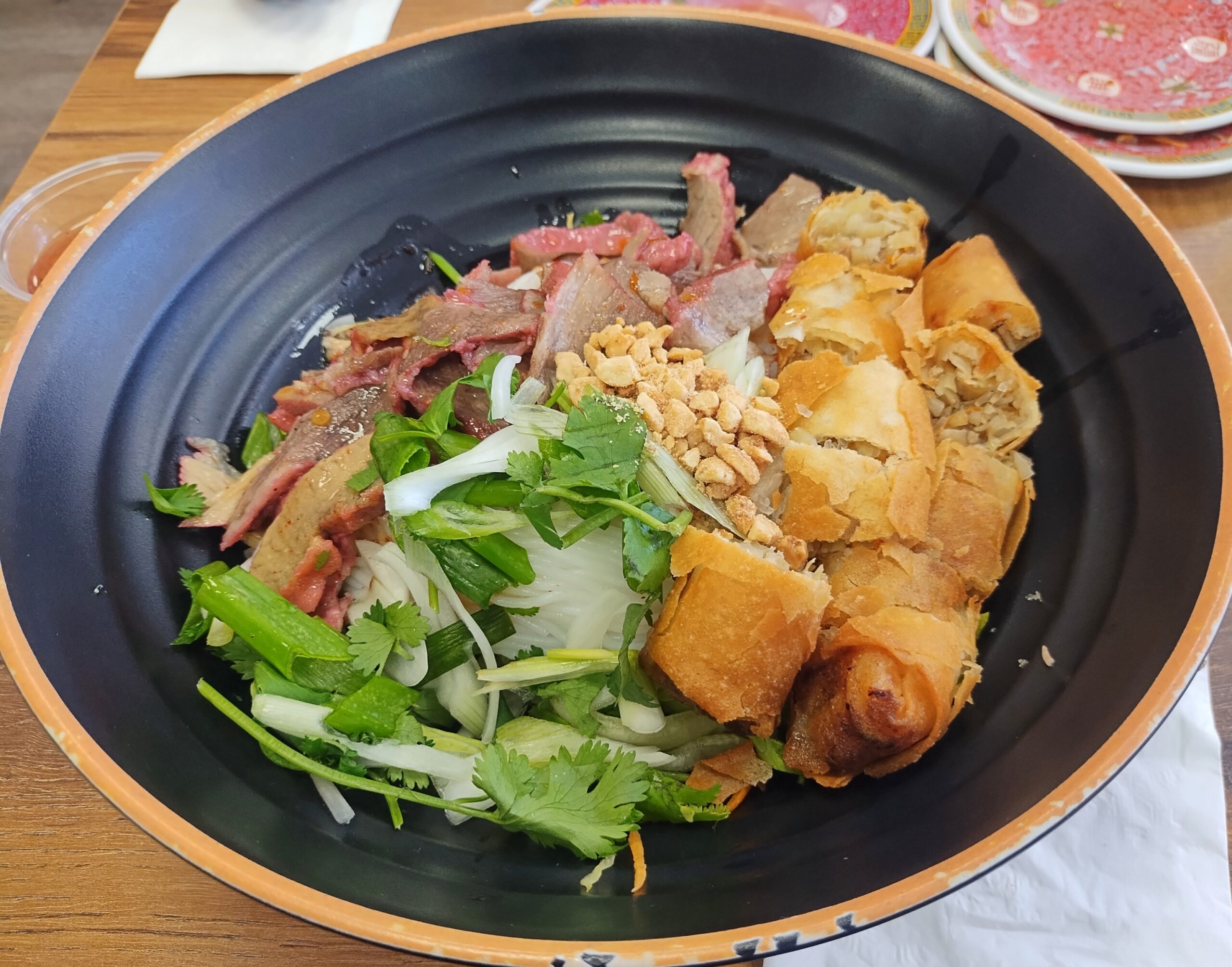
After visiting a run of Milwaukee churches last Saturday morning under a warm early fall sky, we were inspired to find a Laotian restaurant. The place, Vientiane Noodle Shop, calls itself Laotian-Thai on its menu, probably because everyone knows about Thailand, while far fewer about Laos, such being the dismal state of geographic knowledge. A lot of the menu was also Thai, but it included Laotian specialties. Such as this.
Bee Boun. Also transliterated Bie Boun, apparently, but anyway a rice vermicelli-based dish that’s majorly delicious.
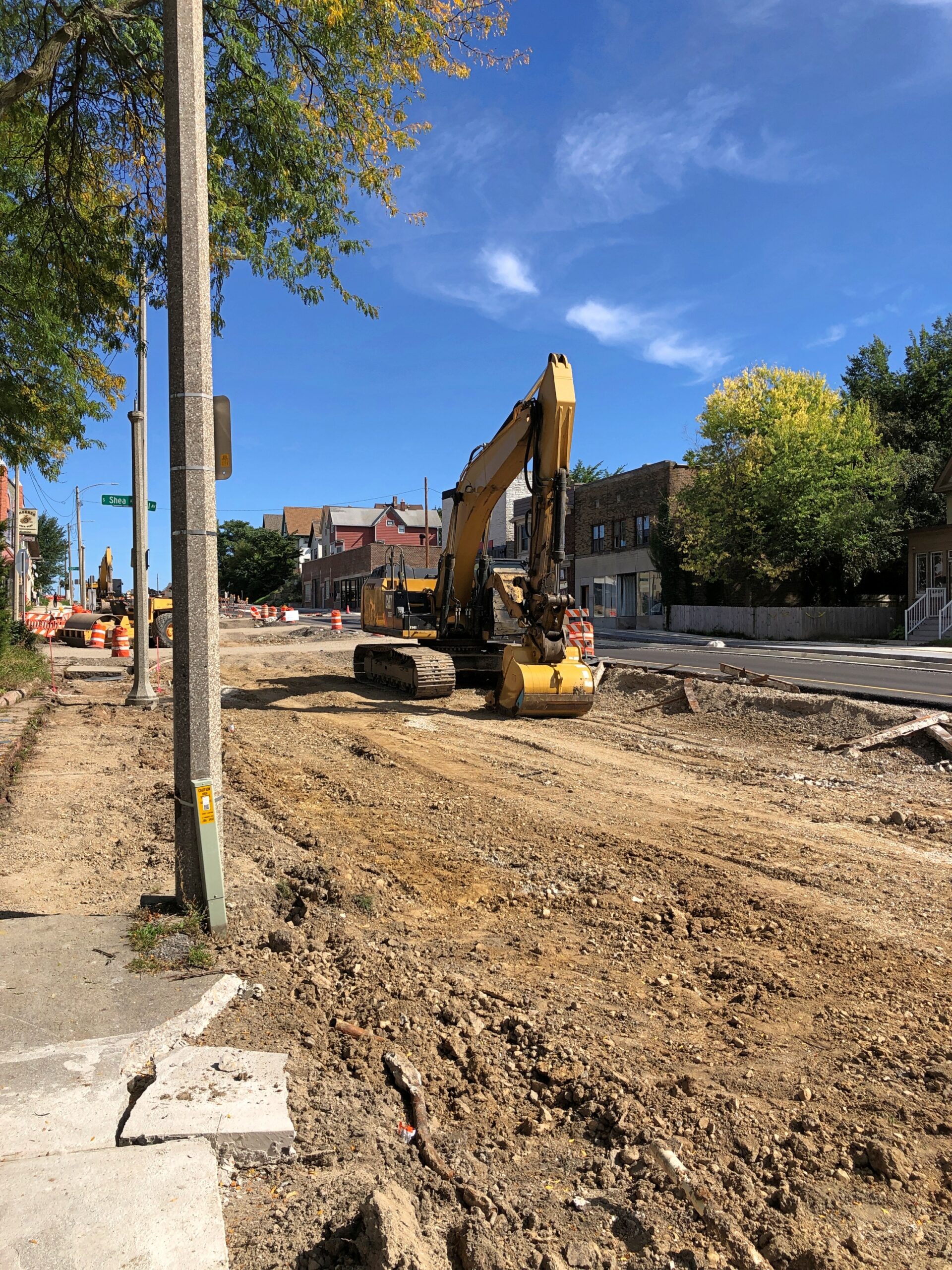
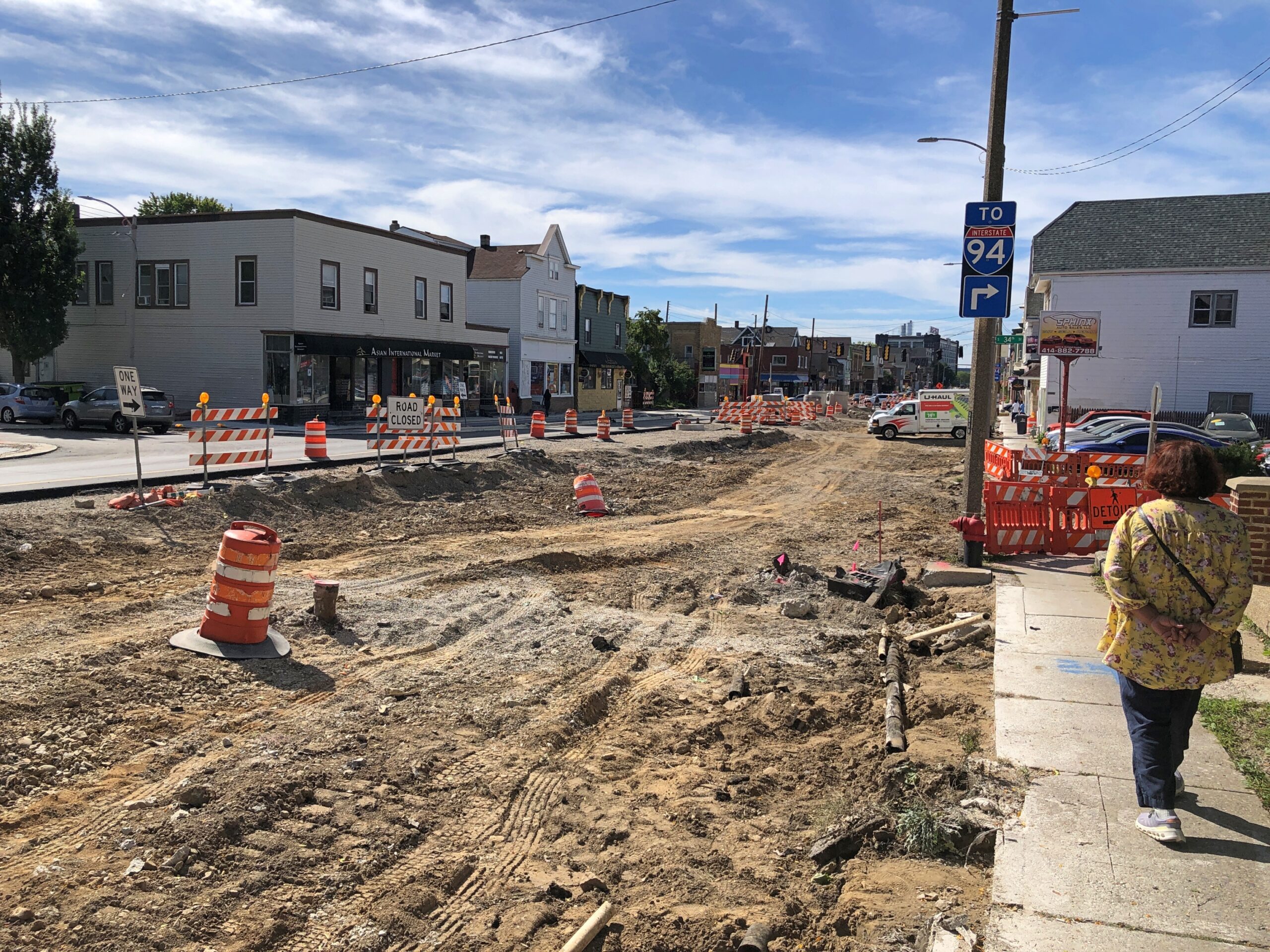
It was good to support the restaurant in general, but also because there is major construction on its street, National Avenue, that might be interfering with its trade volume.
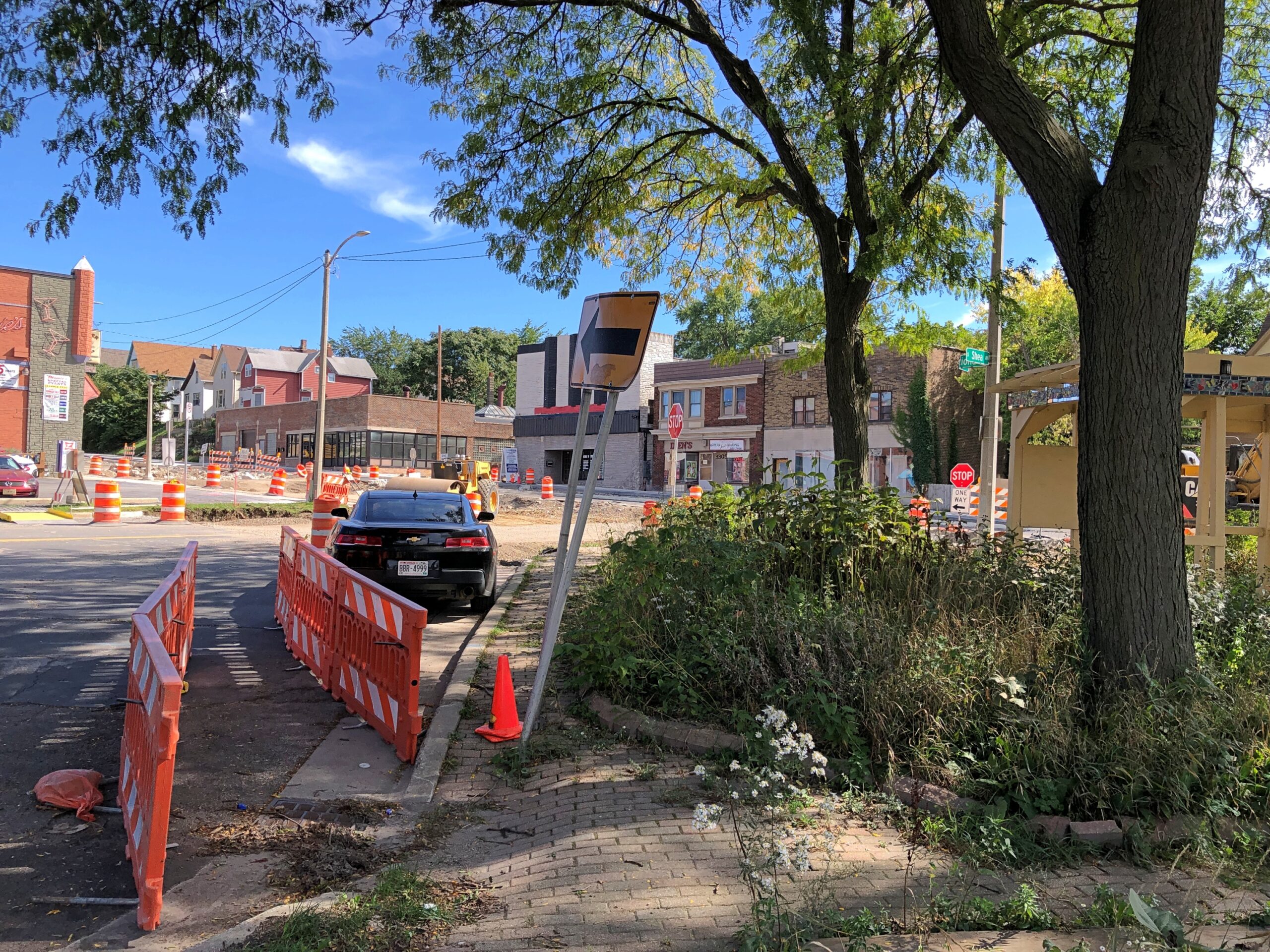
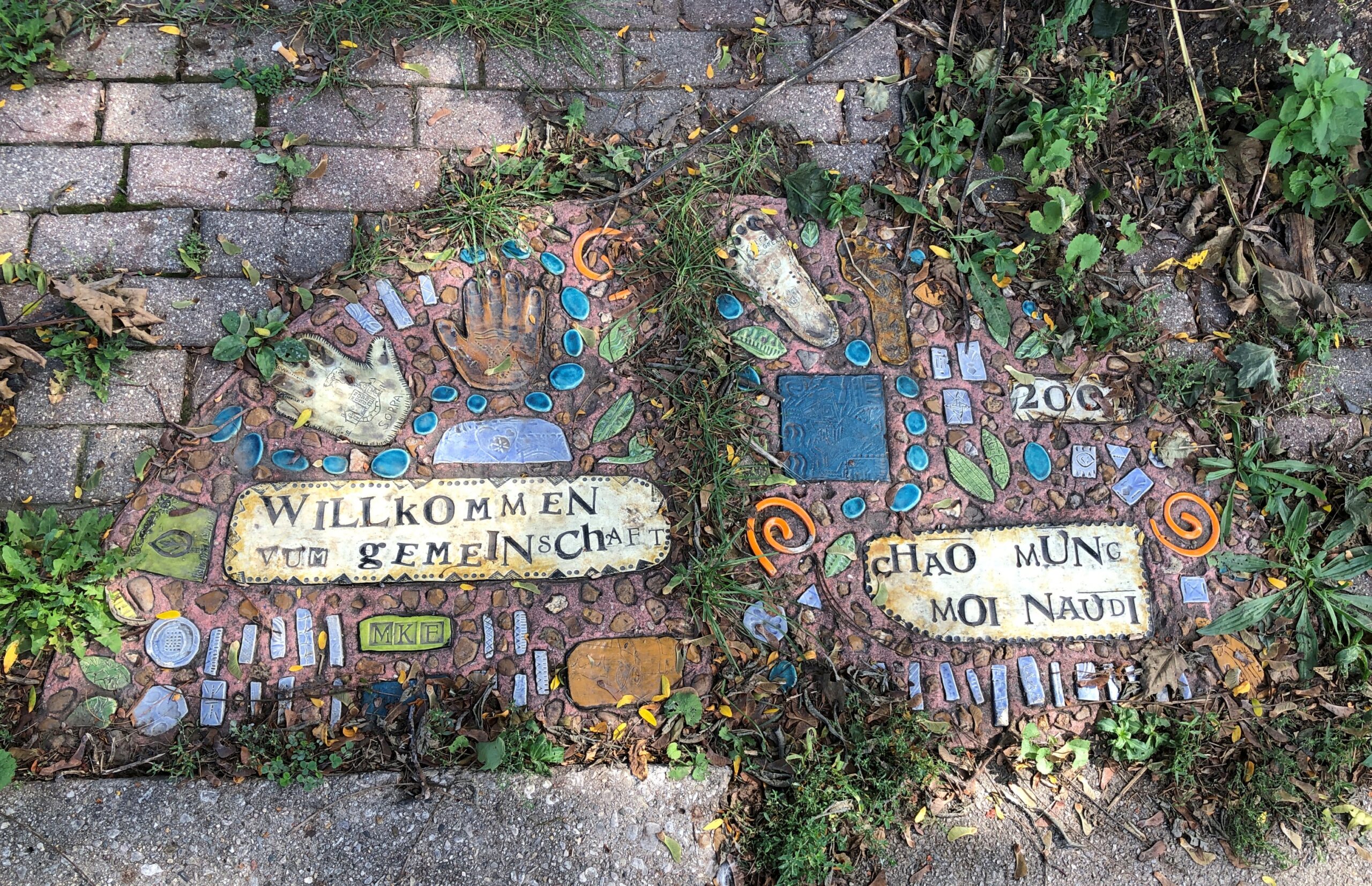
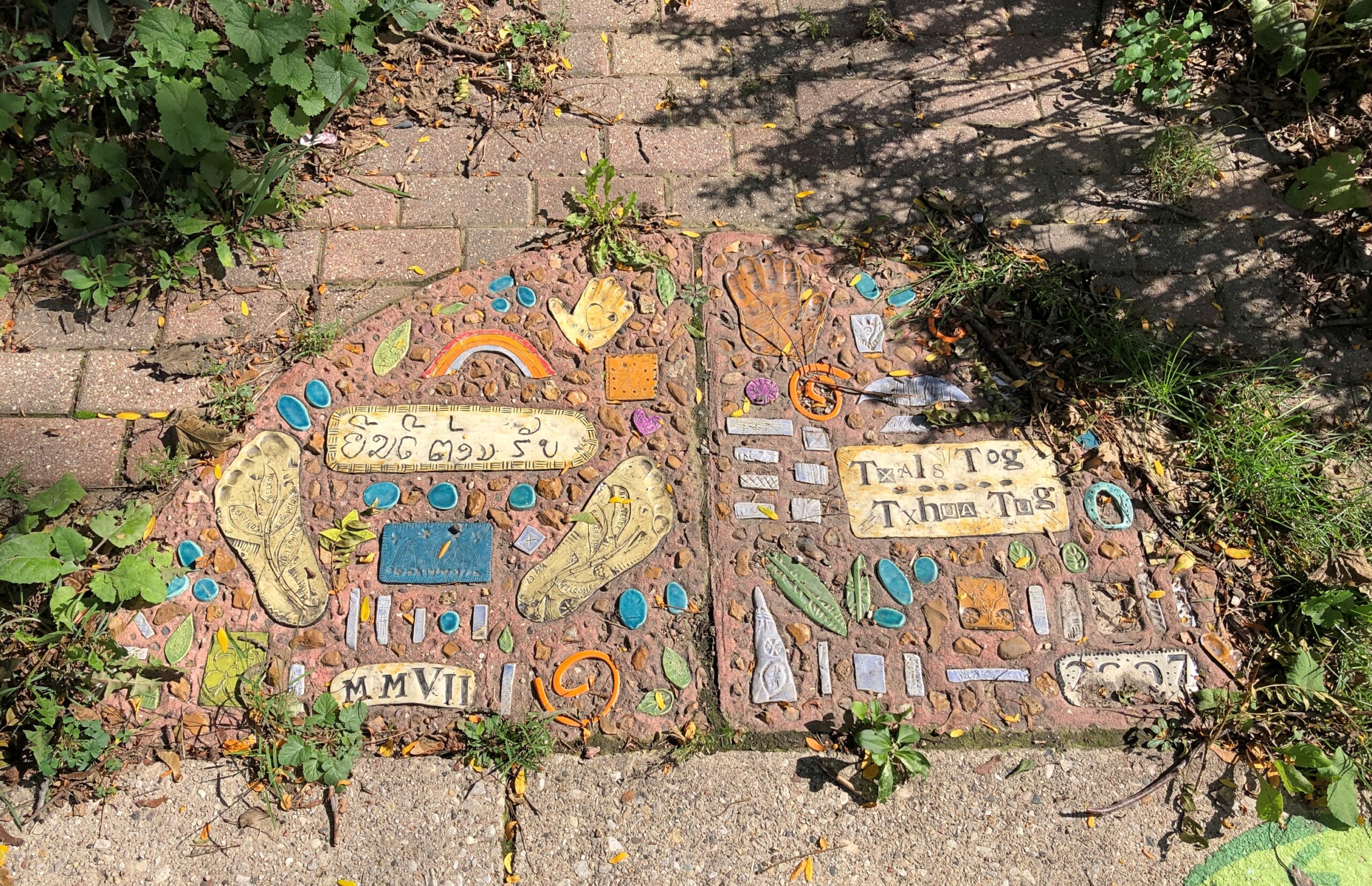
Naturally we’d parked on a side street (Shea Avenue) and walked to Vientiane Noodle Shop. At the intersection of National and Shea – which meet at a 45-degree angle – is a triangular pocket park featuring plantings and a bench, along with some artwork fixed in the ground, dated 2007, and seeming to reflect the neighborhood population during its history through “welcome to our community” in various languages, if the German is any indication.
The neighborhood is known as Silver City. As many times as I’ve visited Milwaukee, that was a new one to me. It’s largely Hispanic these days, with Hmong and other groups also living there, and seems to have followed a common evolution in that regard, beginning with various European ethnic groups more than 150 years ago giving way to other groups as the decades passed.
Why Silver City? A site called Neighborhoods in Milwaukee (and others) offers an explanation. Sounds like folk etymology to me, but never mind:
Silver City got its name in the mid-1890s when area laborers working in the developing Menomonee Valley factories were paid in silver coin. When the workers circulated the silver among the area’s 24 taverns, the name “Silver City” began to appear in Milwaukee newspapers.
Silver was circulated everywhere in the 1890s, so that doesn’t really cut it. Old newspapers using the name might hint at a nickname for the area created by anonymous newspapermen for some lost reason – who can say? That kind of uncertainty adds interest to a neighborhood, if you ask me.
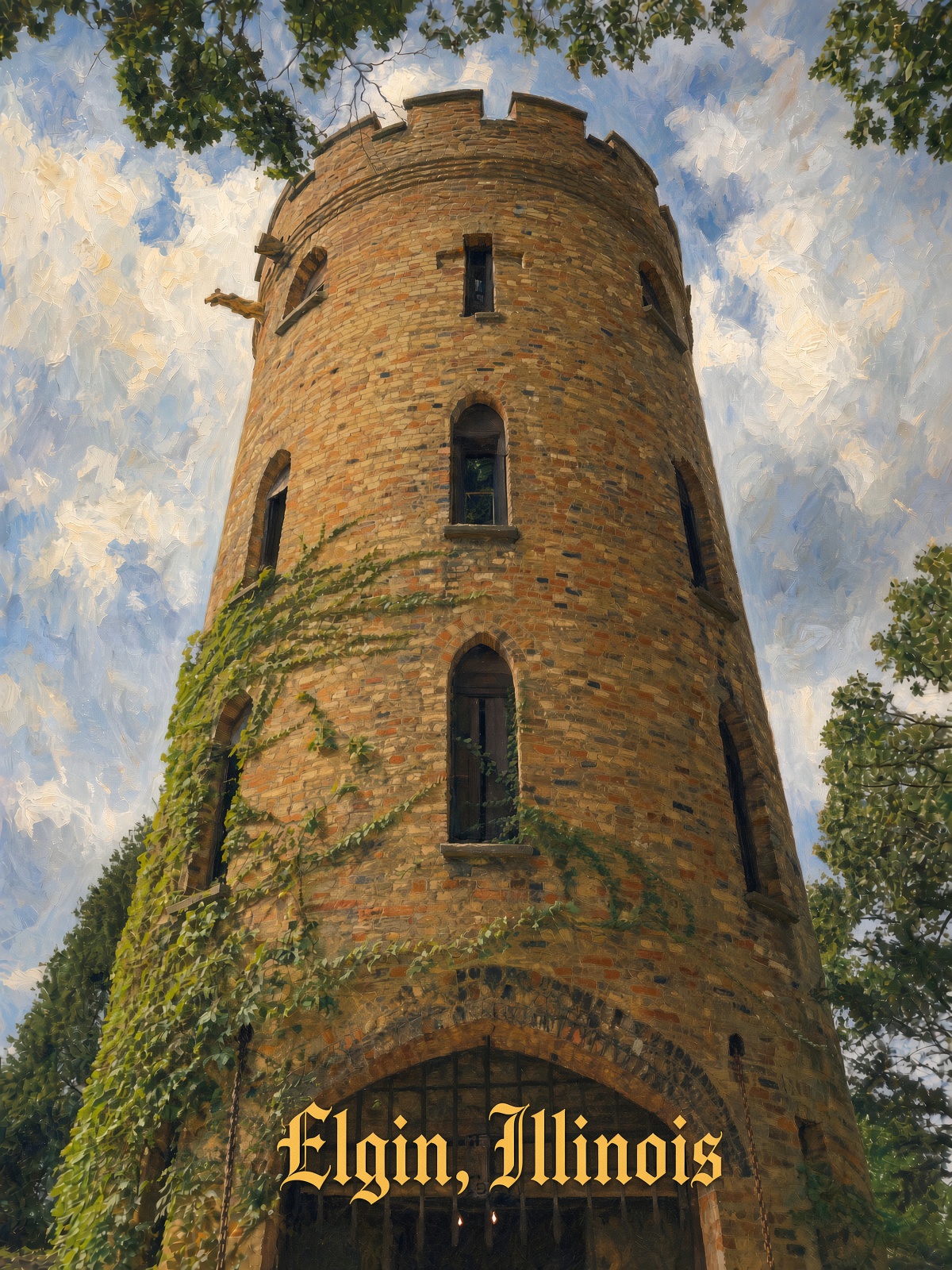
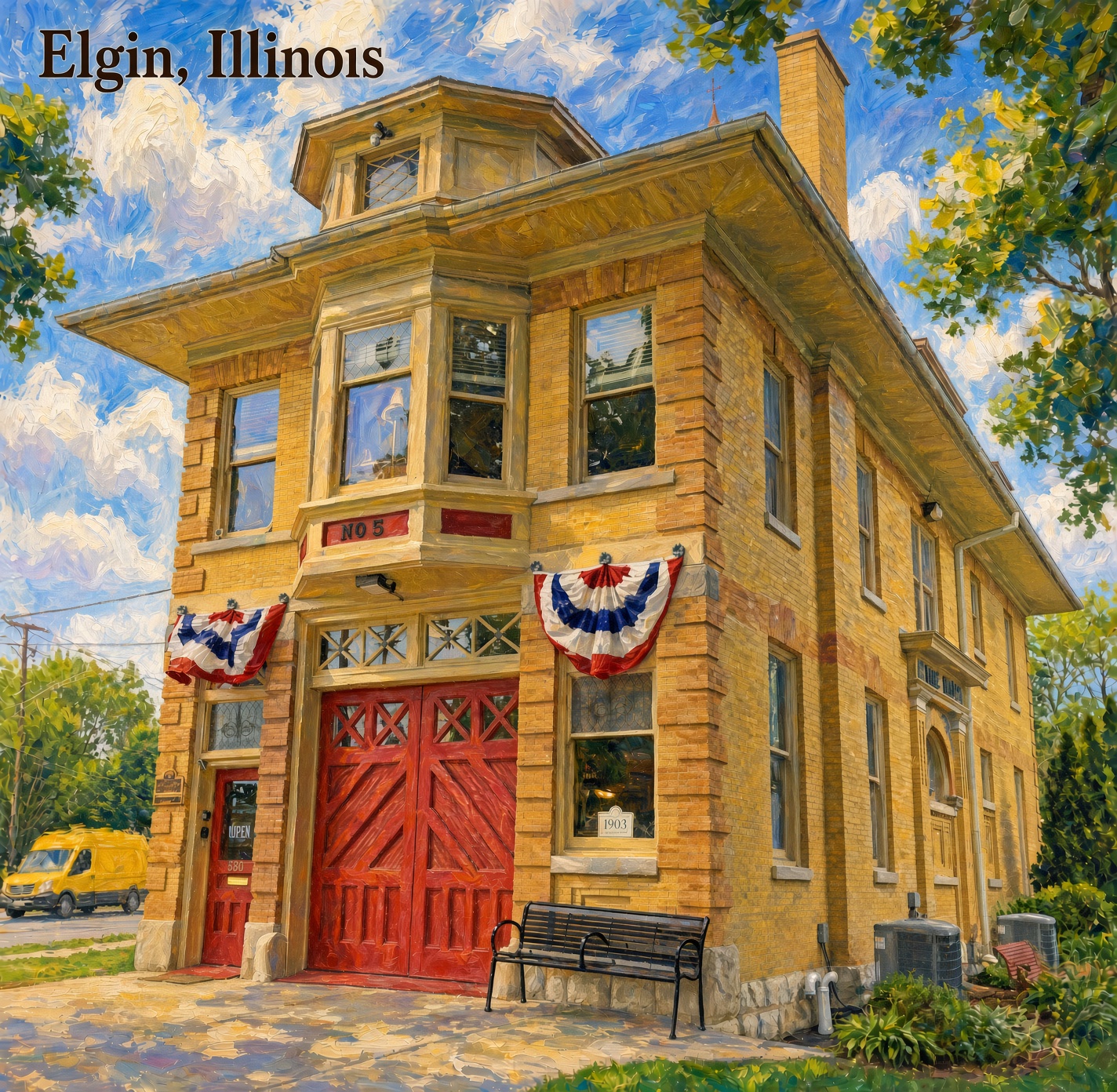
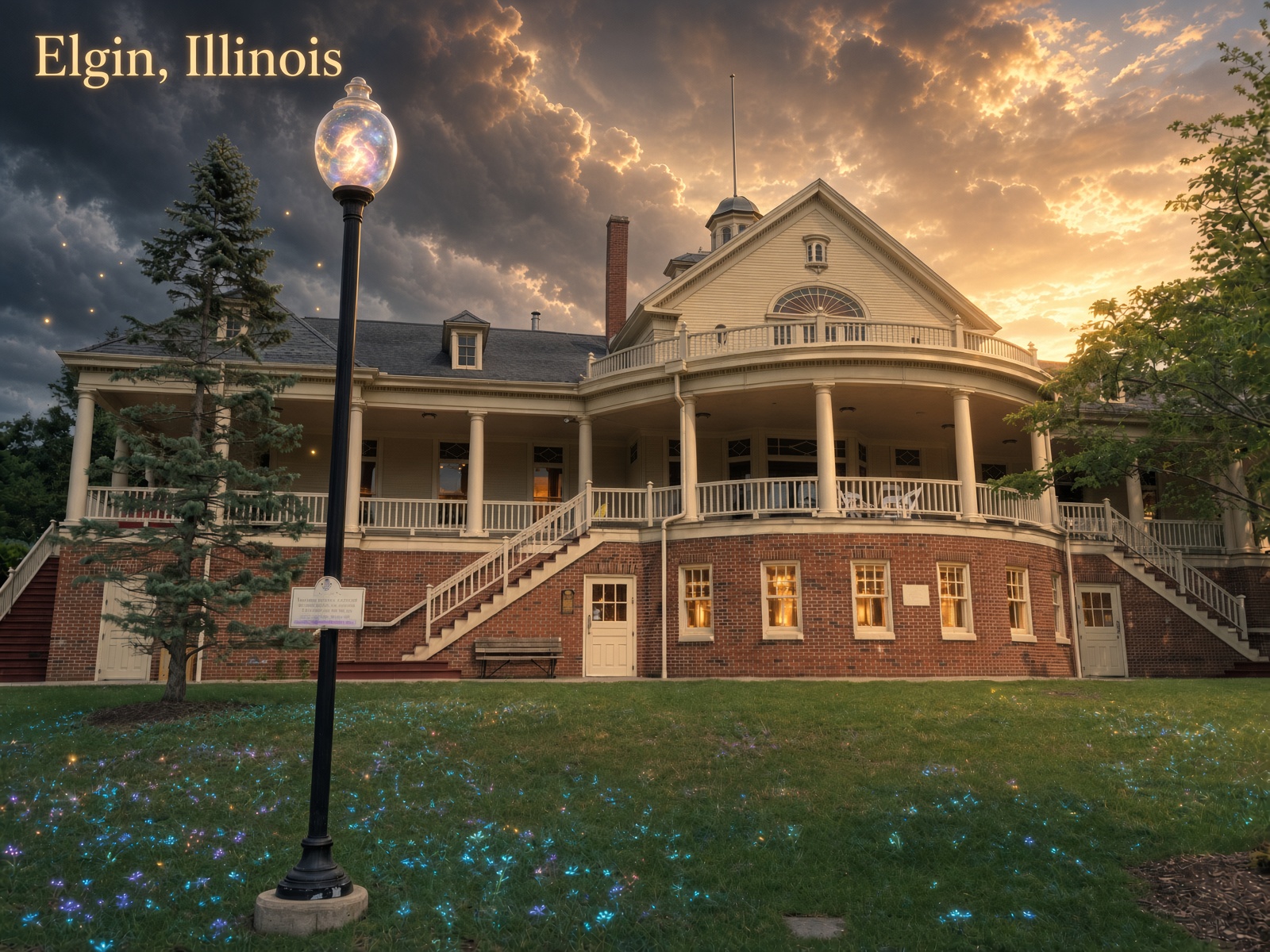
The backlash against AI is underway – or is it? – but when I think of images created like this, I think of them as illustrations. Both original and derivative at the same time, since the underlying image is photographic (original) while the AI adjustment only consults a body of existing images. I’d argue that it’s as valid as any other art form, just a difference in tools and a curious democratization of graphic design, but I’m not fluent enough in art-speak to make the case.
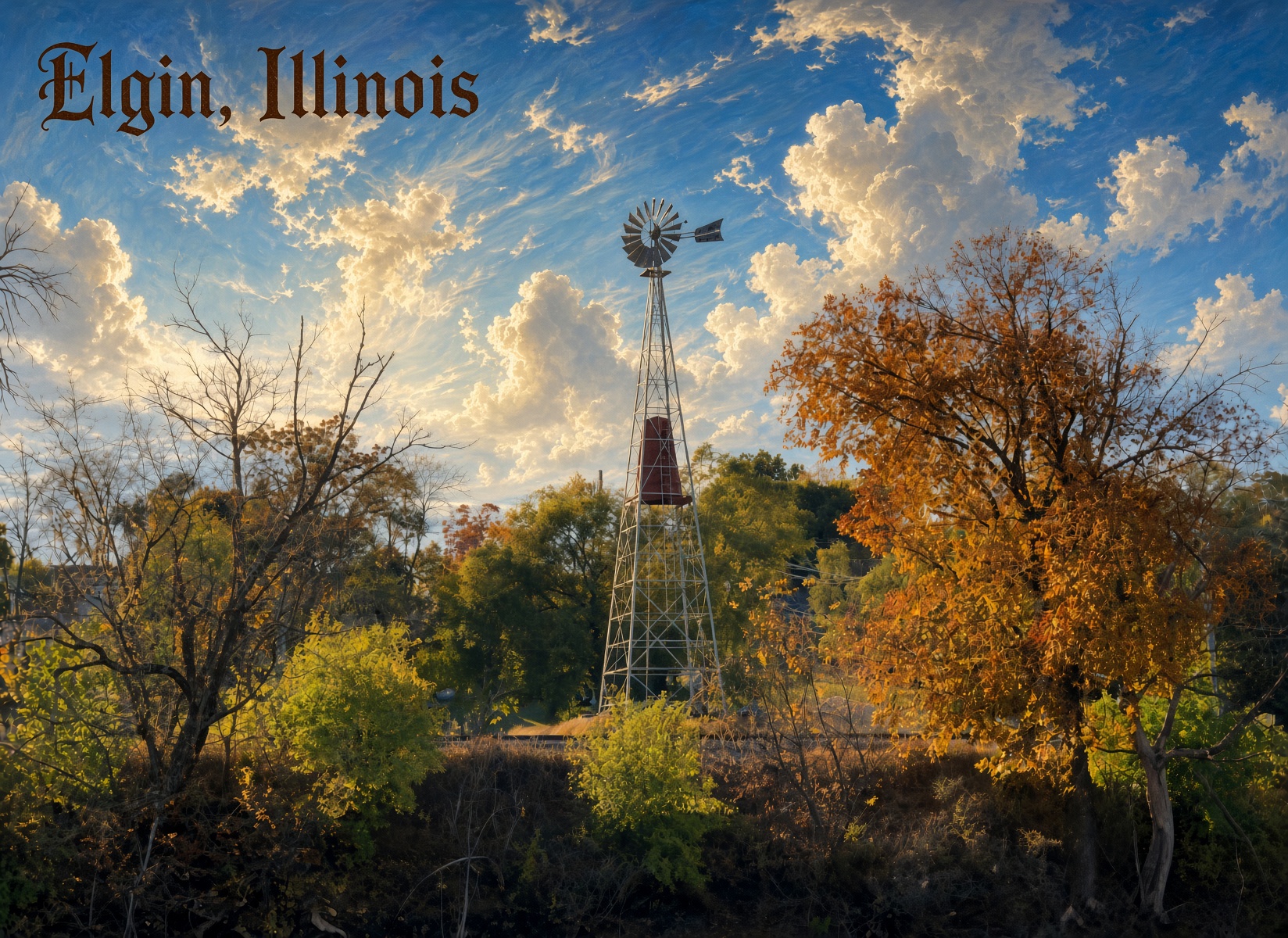
Somehow I feel that a series of place-images should be four, so here are three more. Like the first one, these are all based on photos, all in this case taken in Elgin by me within the last year or so.
That last image was taken near downtown, looking toward the bluff overlooking the west bank of the Fox. The windmill is not an AI hallucination.
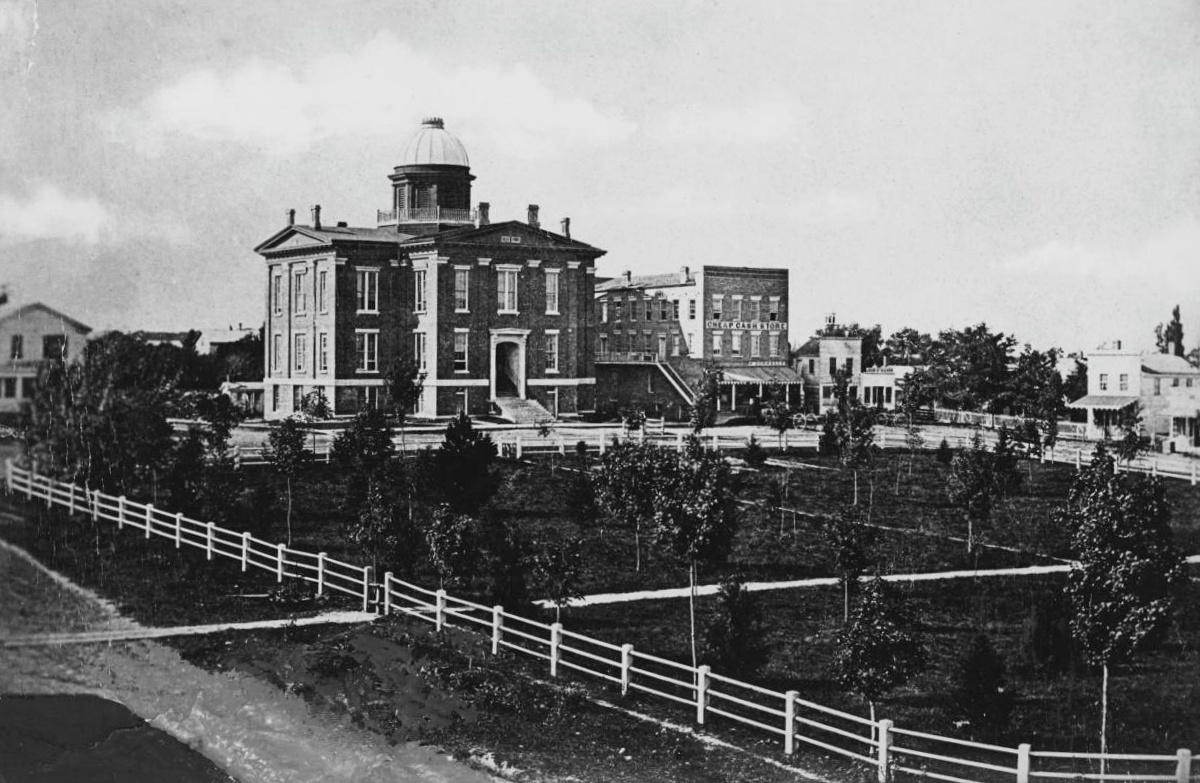
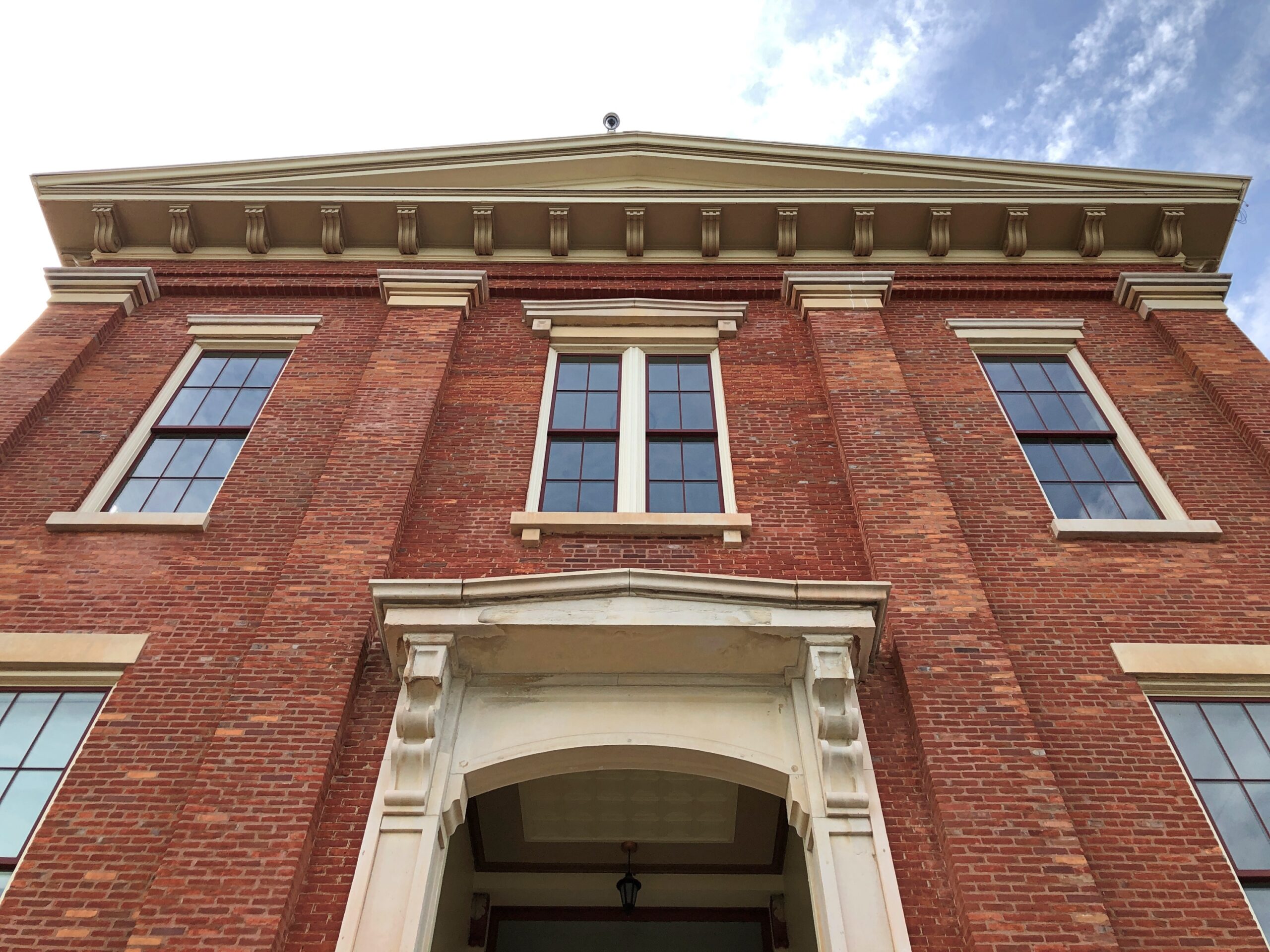
Back in 1858, someone bothered to take a photograph of the spanking-new McHenry County, Illinois, courthouse – and what a bother it must have been, considering the state of camera tech at the time. Then again, it wasn’t like the photographer had to tell the building to be still.
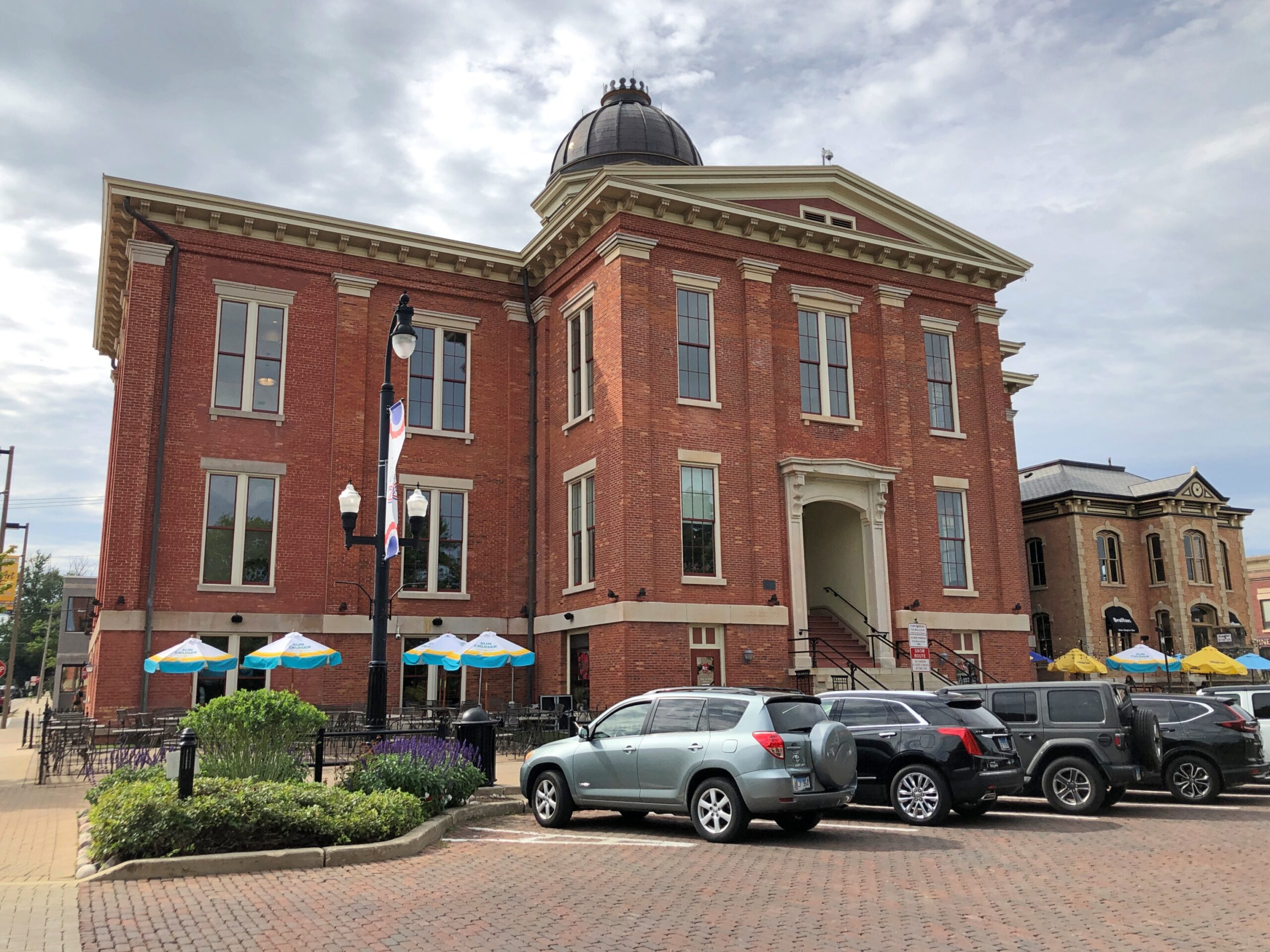
Here in 2026, point and shoot.
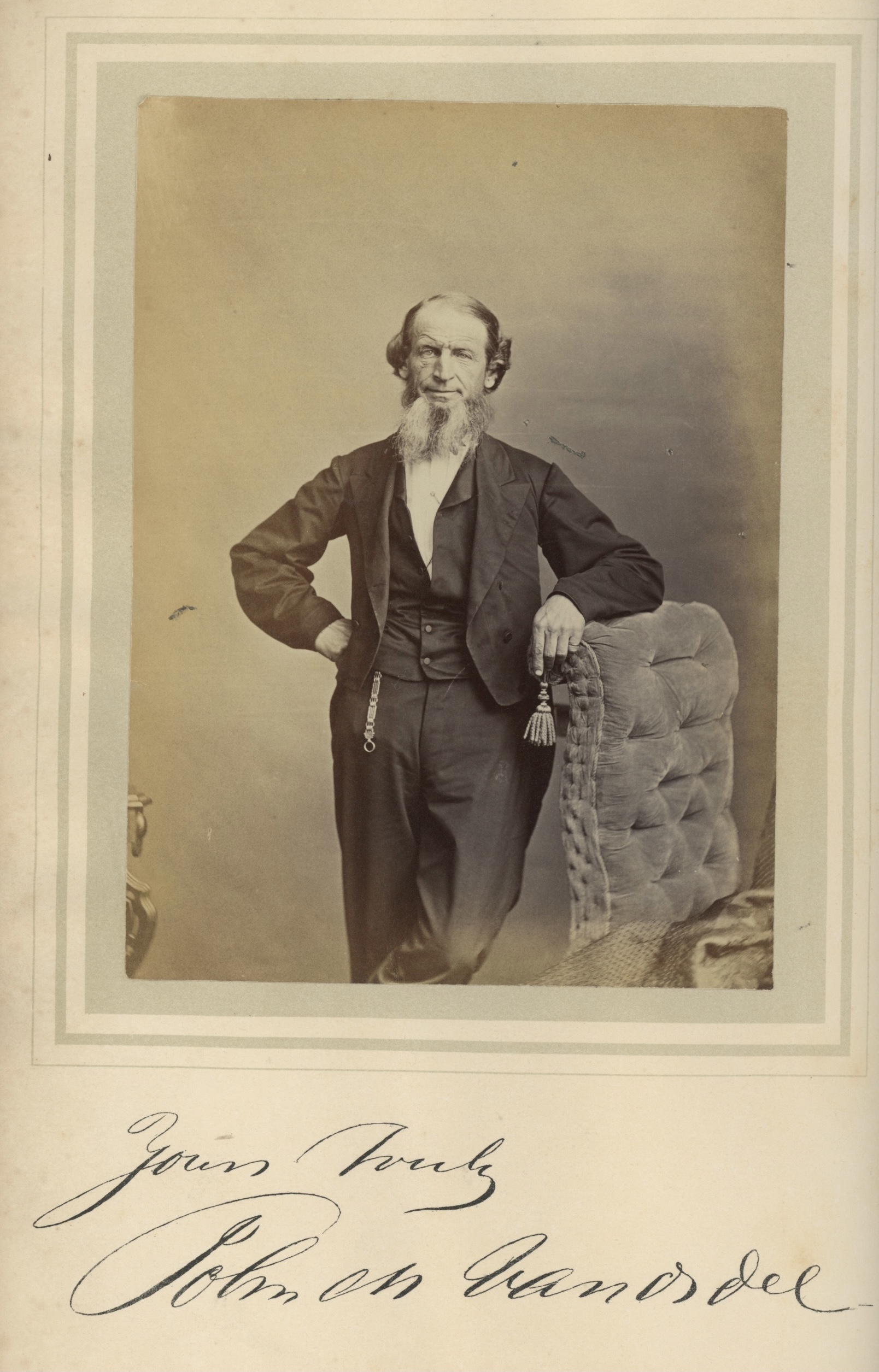
The design of John Mills Van Osdel (d. 1891), described by Wiki as the first Chicago architect. Is that so, I wondered? Whatever I’d read about him – and I did a fair amount of reading about Chicago history when I lived in the city for the first time – had long since evaporated. Biographical Sketches of the Leading Men in Chicago, Photographically Illustrated by John Carbutt (1868) tells the Van Osdel story, and quite a story it is.
The first mayor of Chicago, William Ogden, hired him to build structures in the infant metropolis, and soon Van Osdel was designing them, too. This was back in the days when someone could learn to build buildings from a builder father and later reinvent himself as an autodidact architect, with all sorts of 19th-century ups and downs along the way.
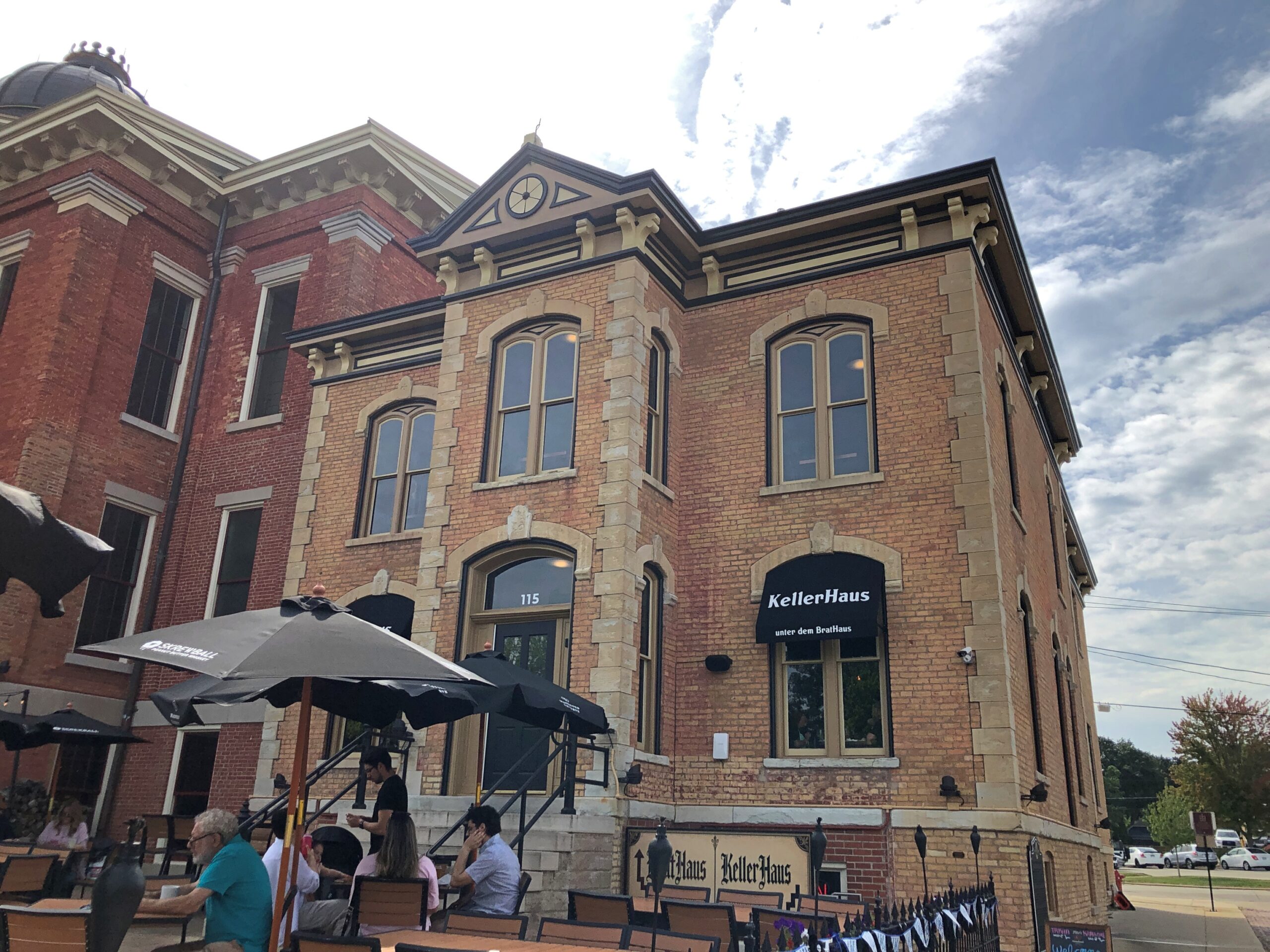
Next door, a smaller building, but also handsome.
Formerly where the McHenry County sheriff lived, with a jail in the basement. Now home to KellerHaus, a local brewery and restaurant.
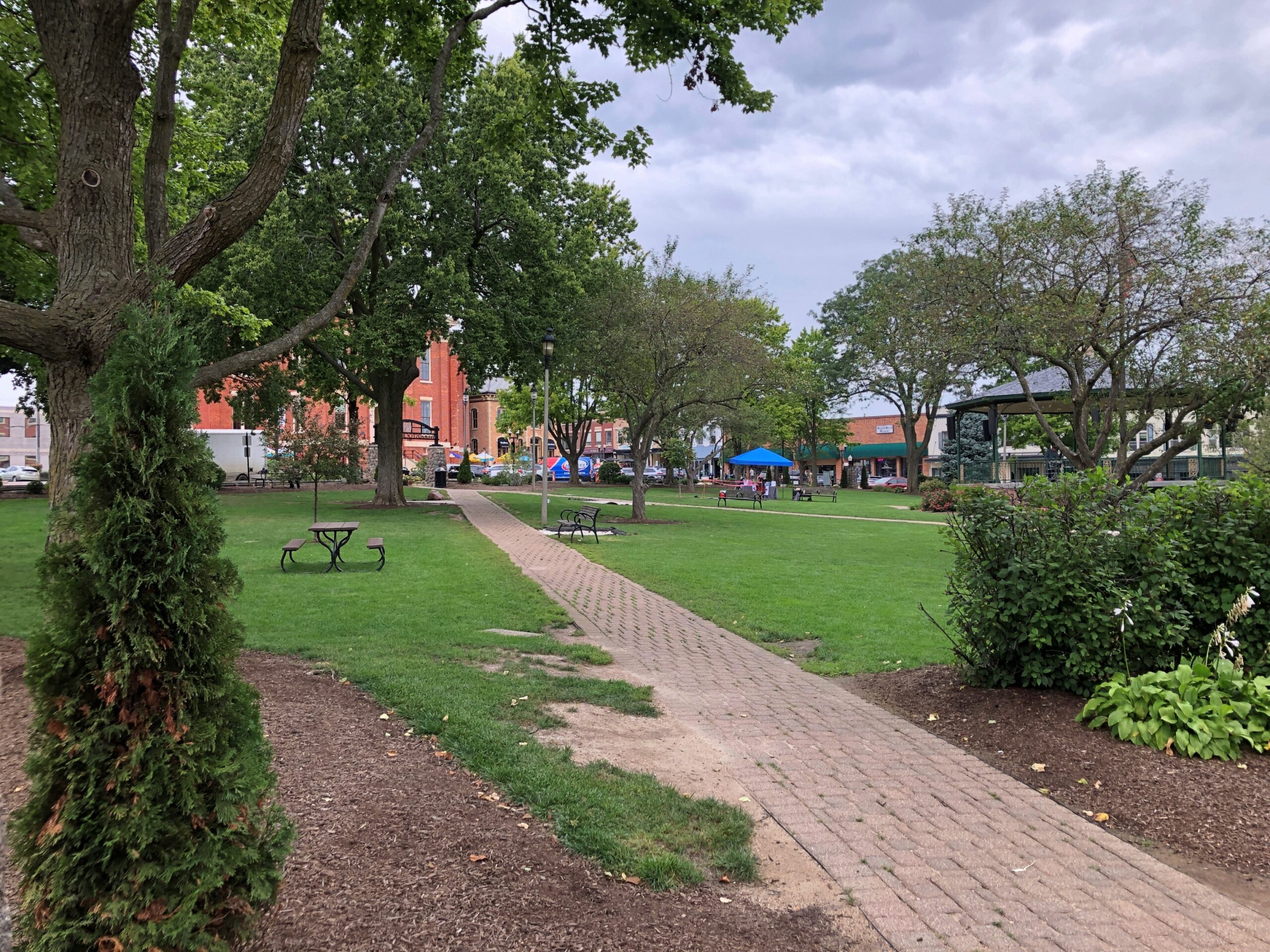
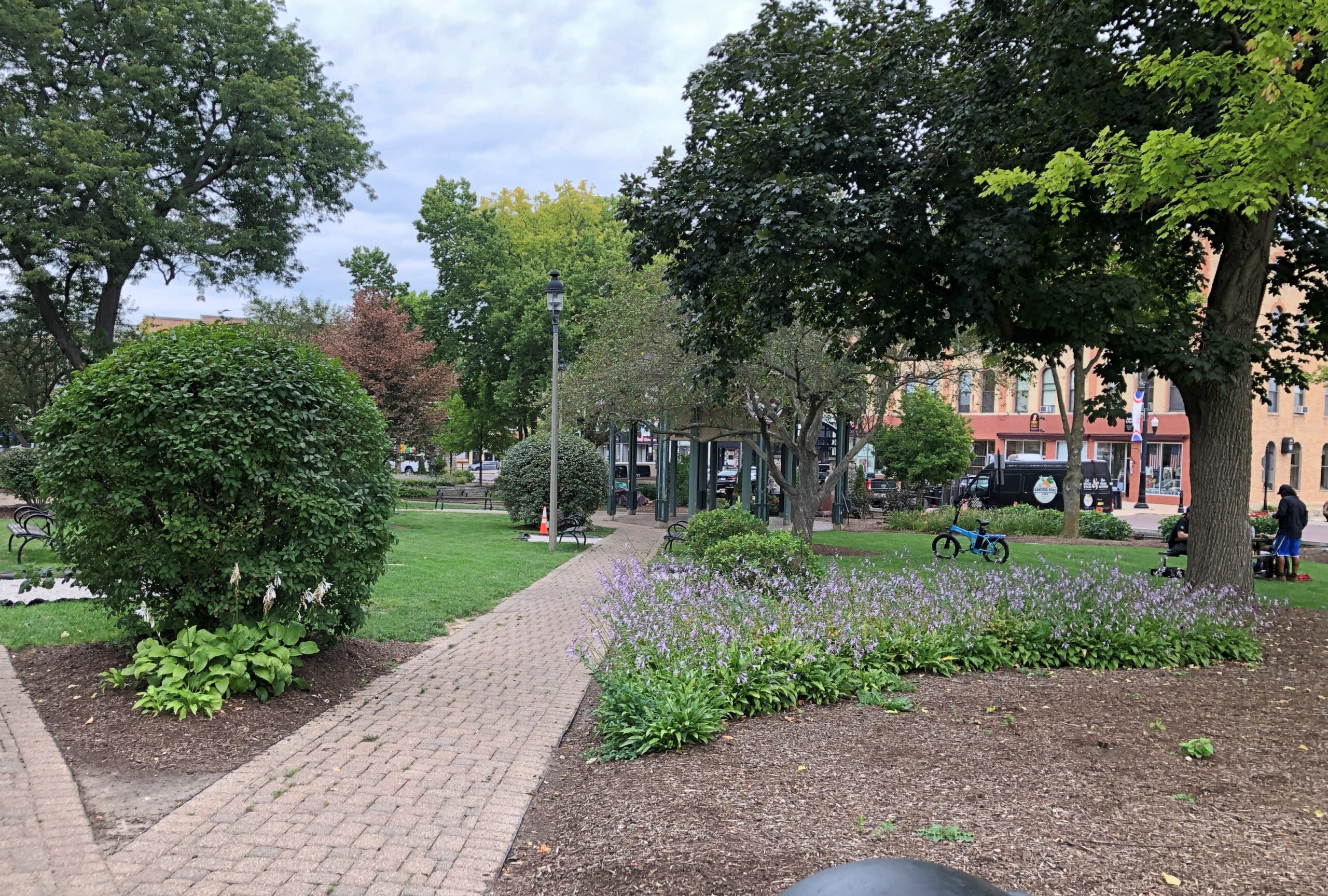
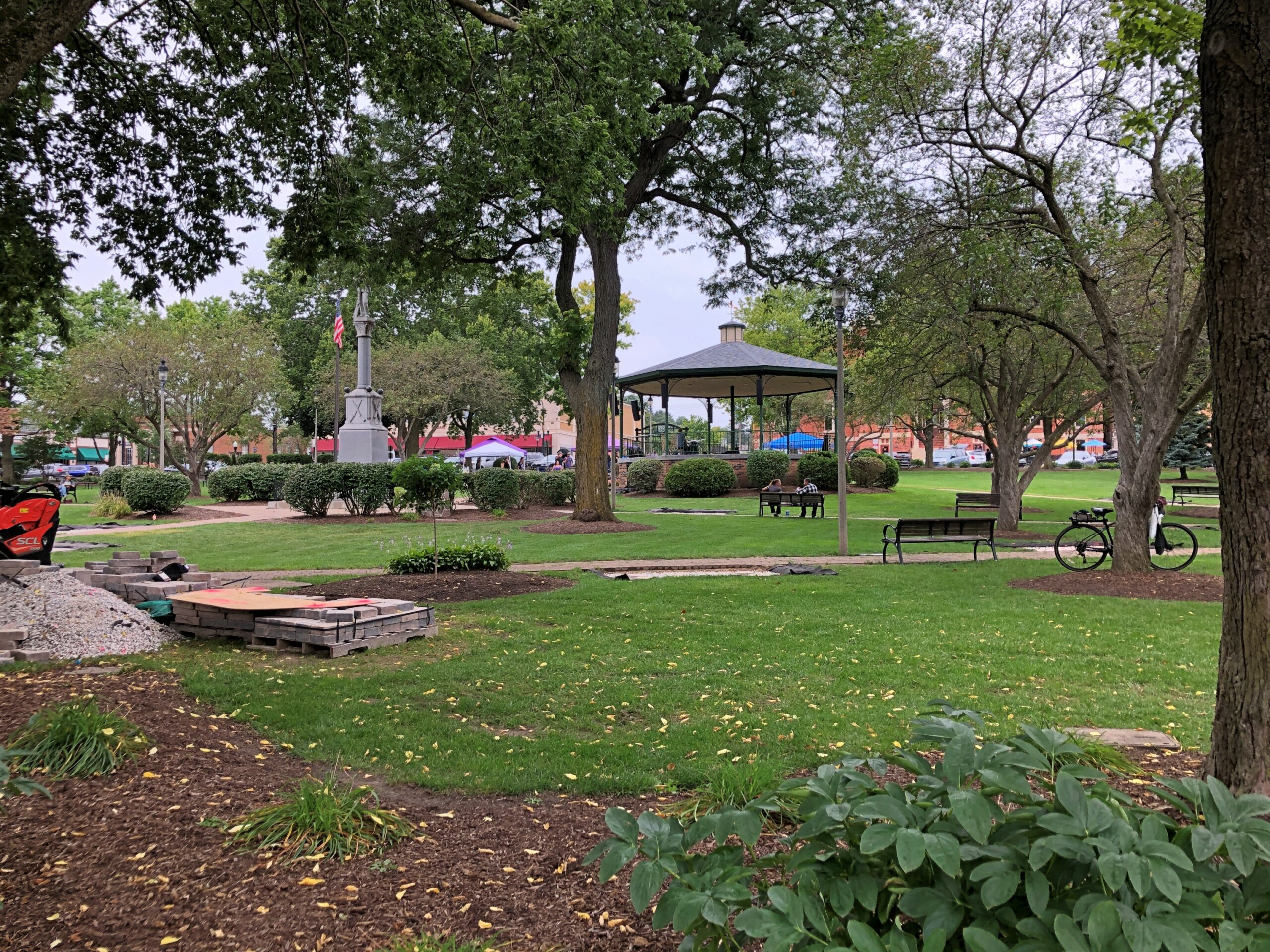
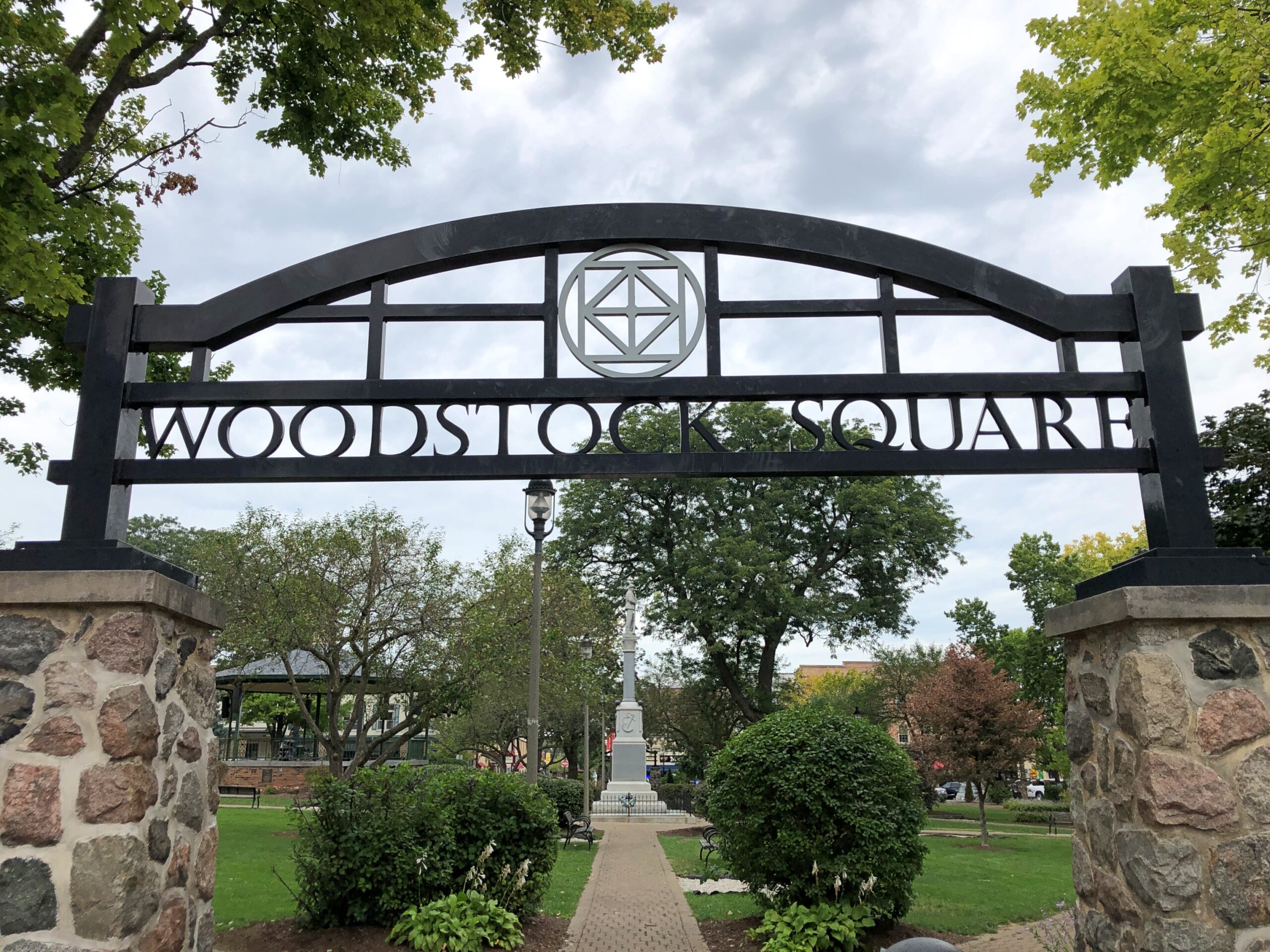
County government moved out of the building more than 50 years ago, to someplace less aesthetic but not too bad. Later, Woodstock Square (my guess would be late 19th century) took its present form, a green crossed by sidewalks.
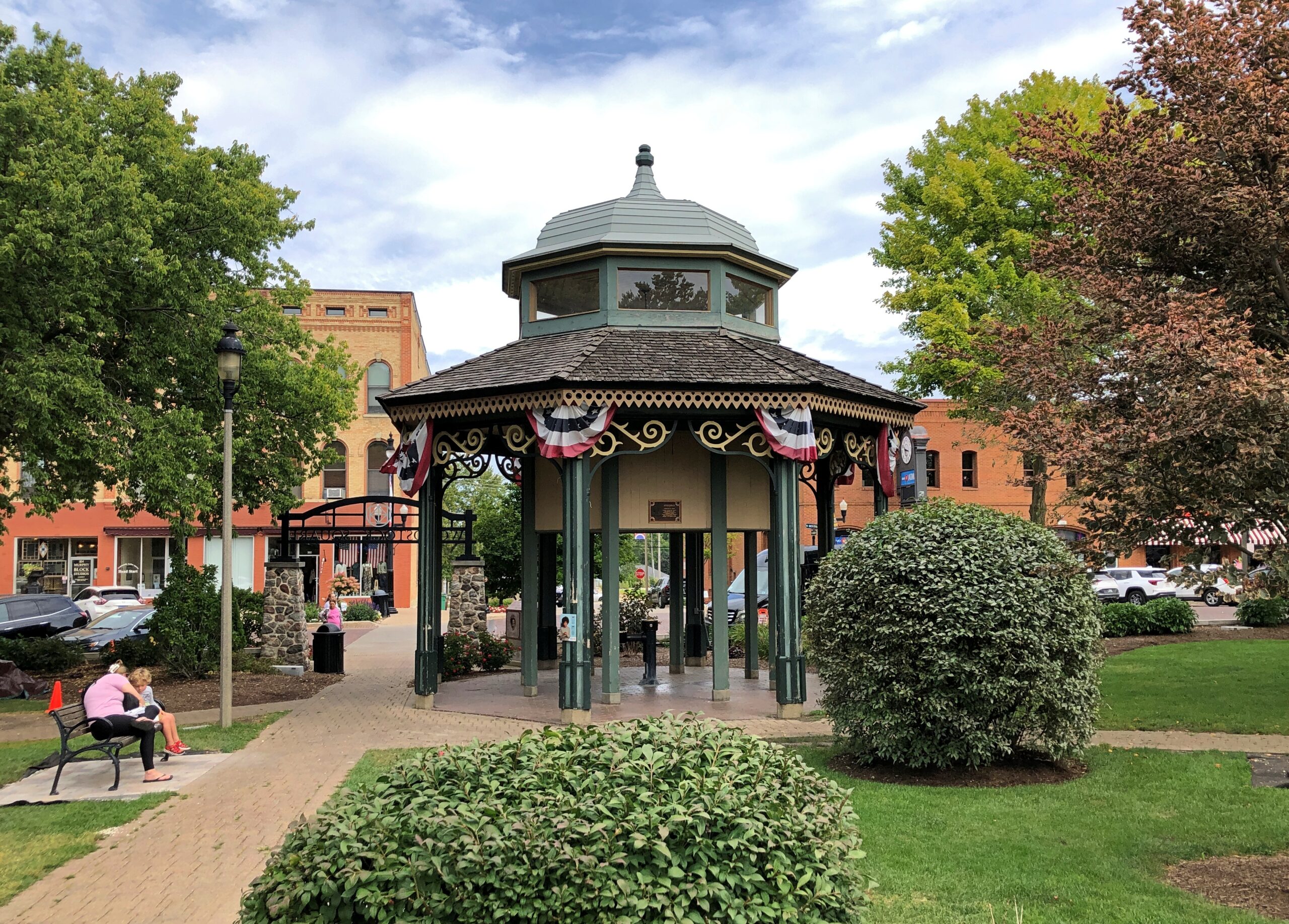
The park is home to a gazebo. And a bandstand. Or two gazebos or two bandstands. Authorities disagree about which is which, and entire academic careers have been staked on determining the difference. Or not, I made that up.
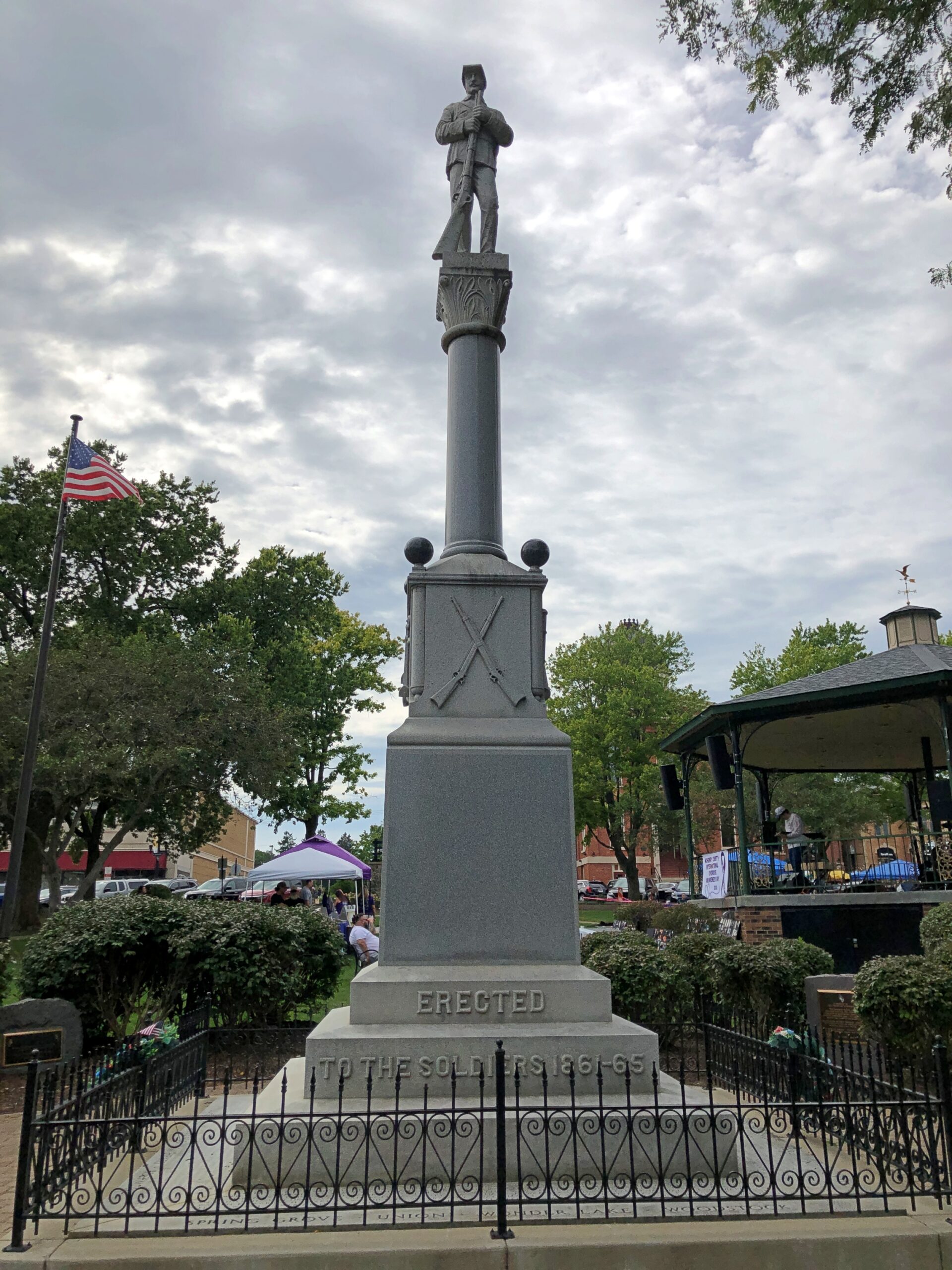
A memorial to the men in blue from McHenry County, erected in the “We’d better get moving on this” year of 1911.
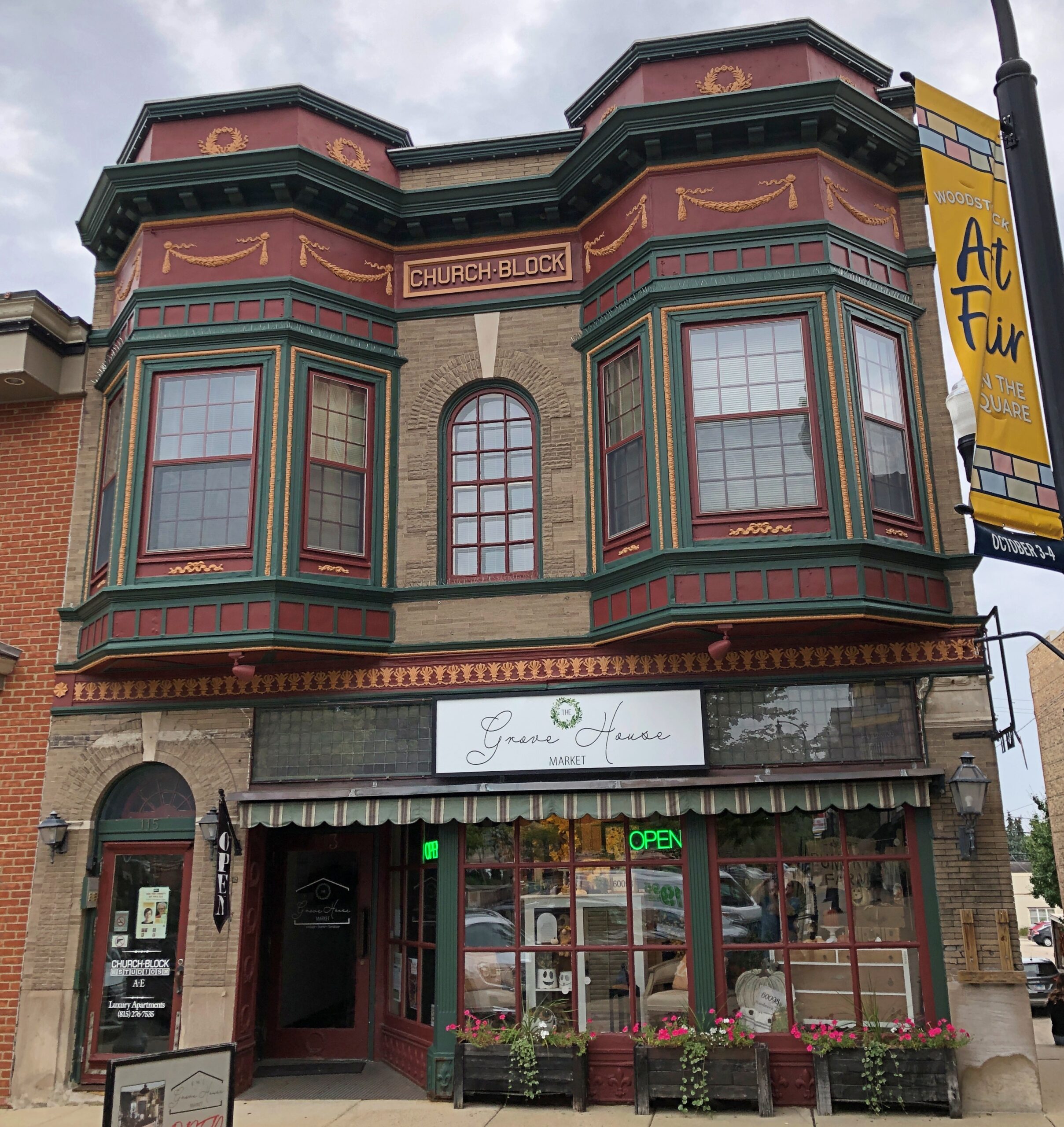
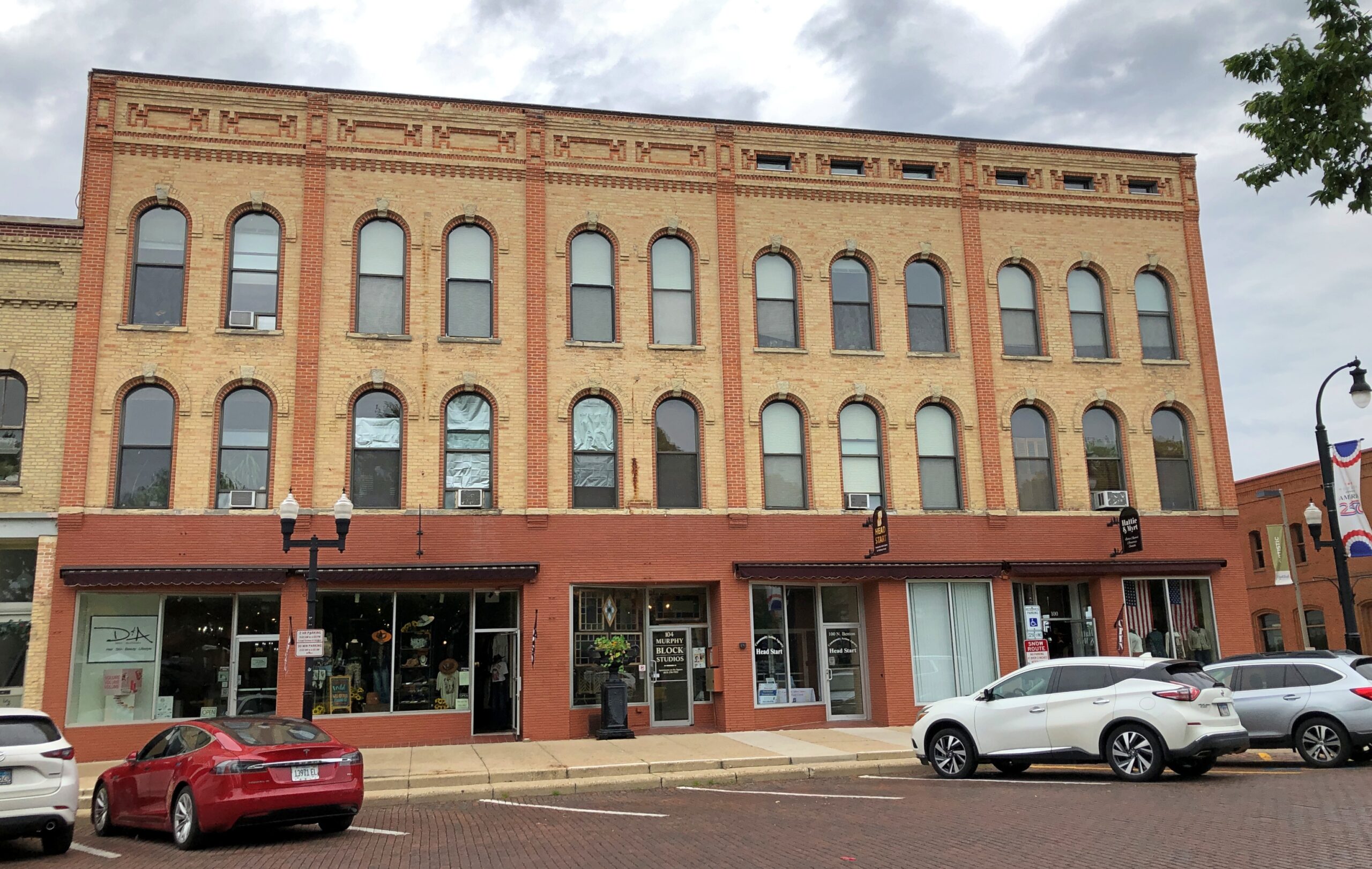
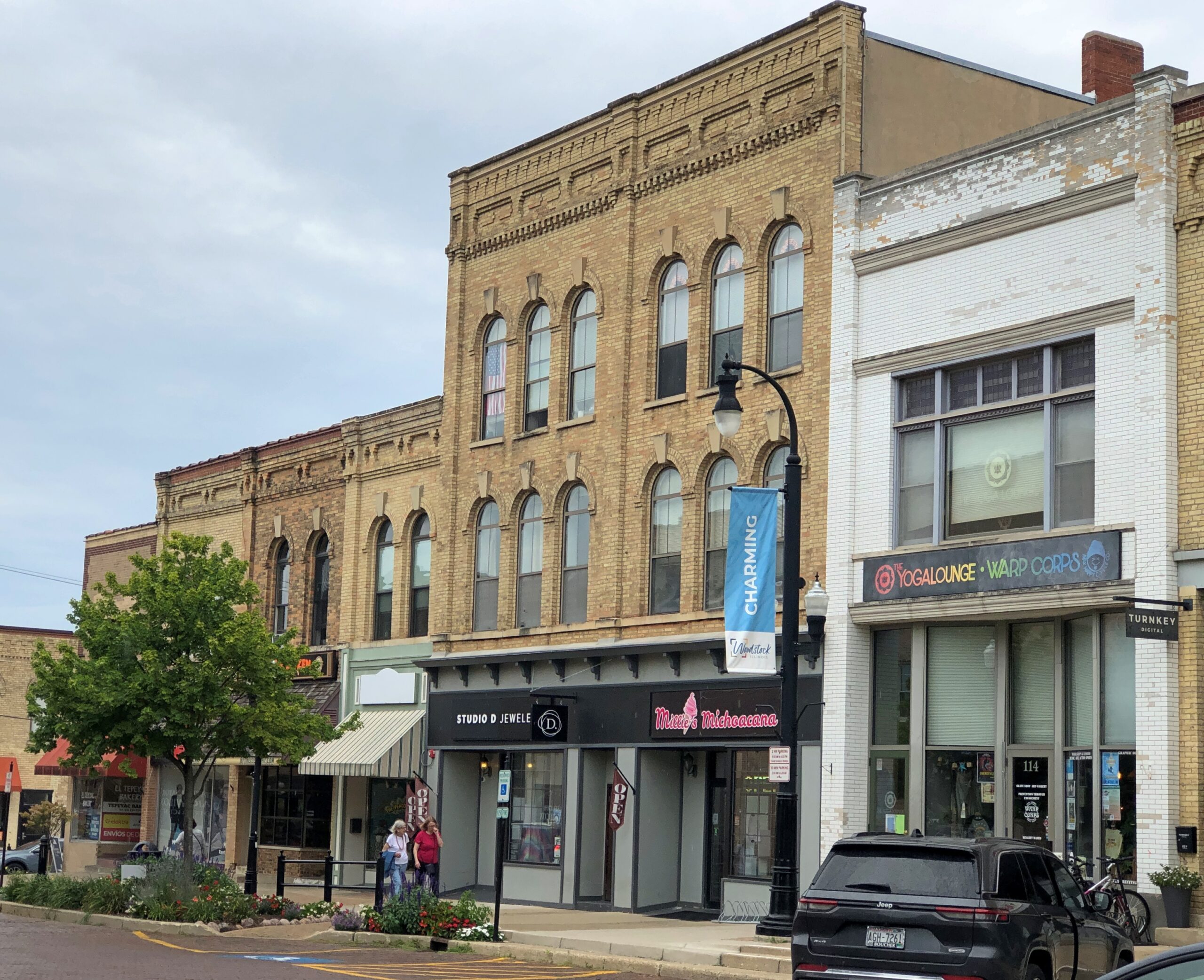
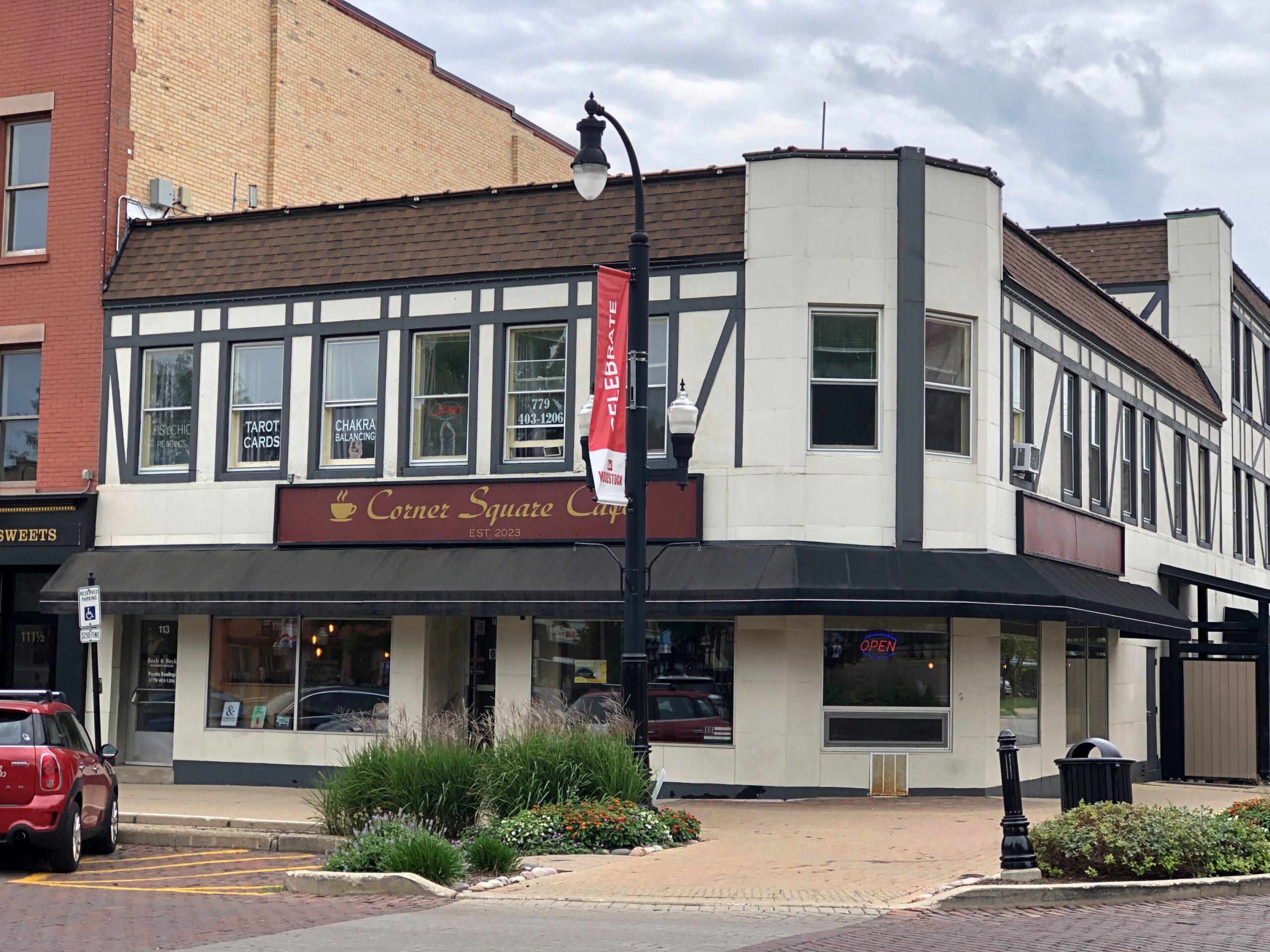
Woodstock Square is ringed – squared – by some handsome commercial structures of pre-Great War vintage, mostly.
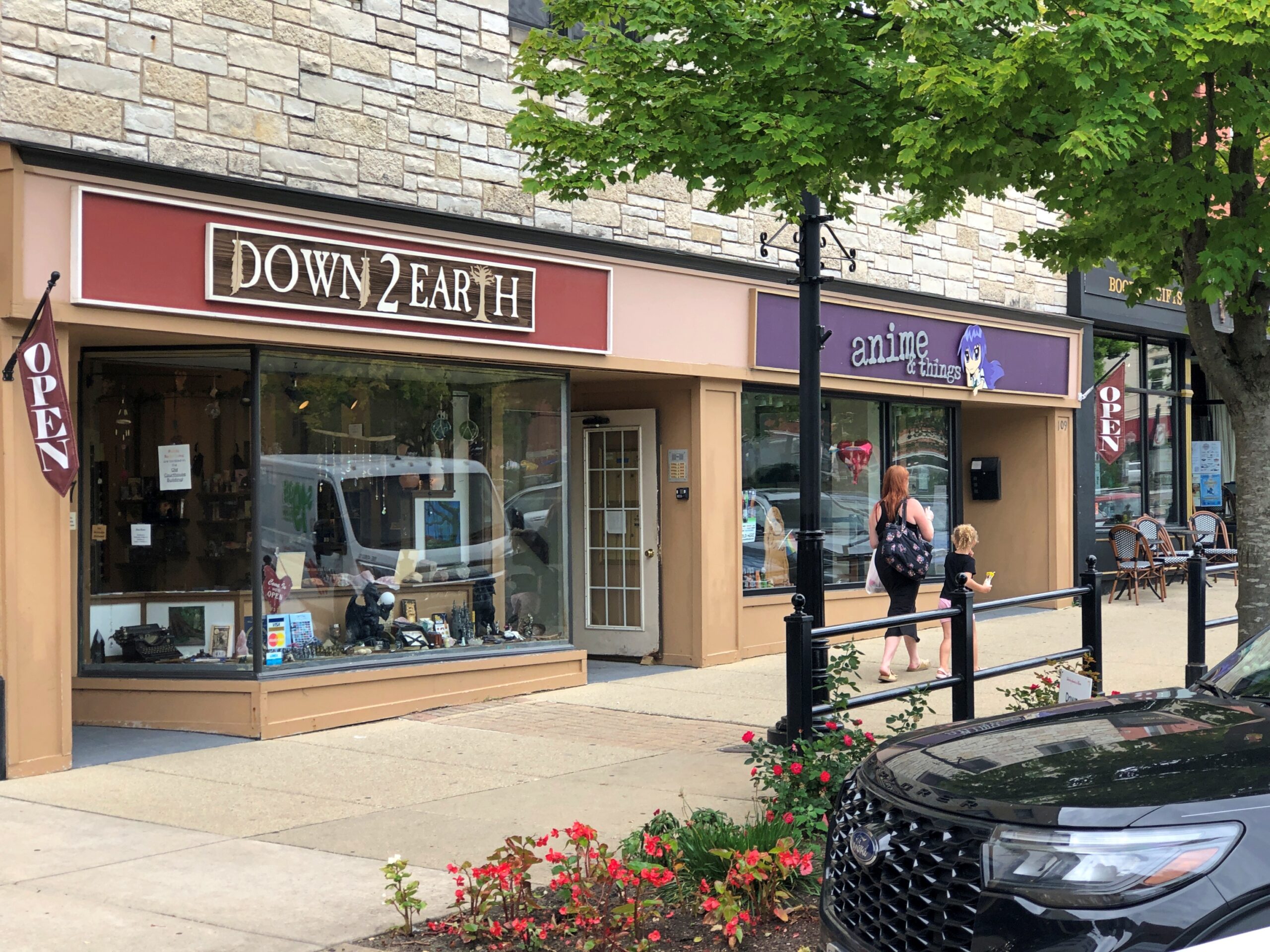
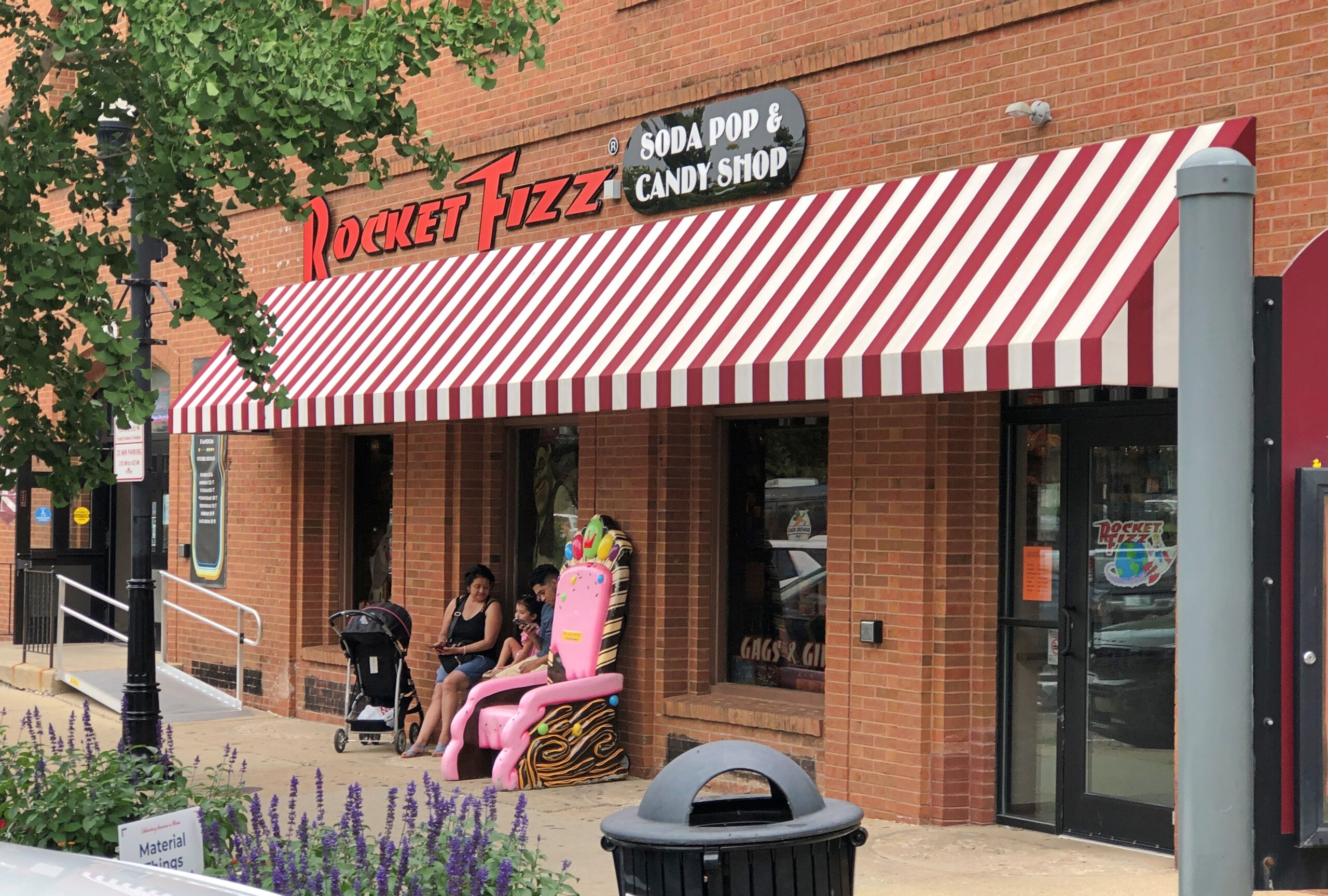
Including a fair amount of boutique-ification.
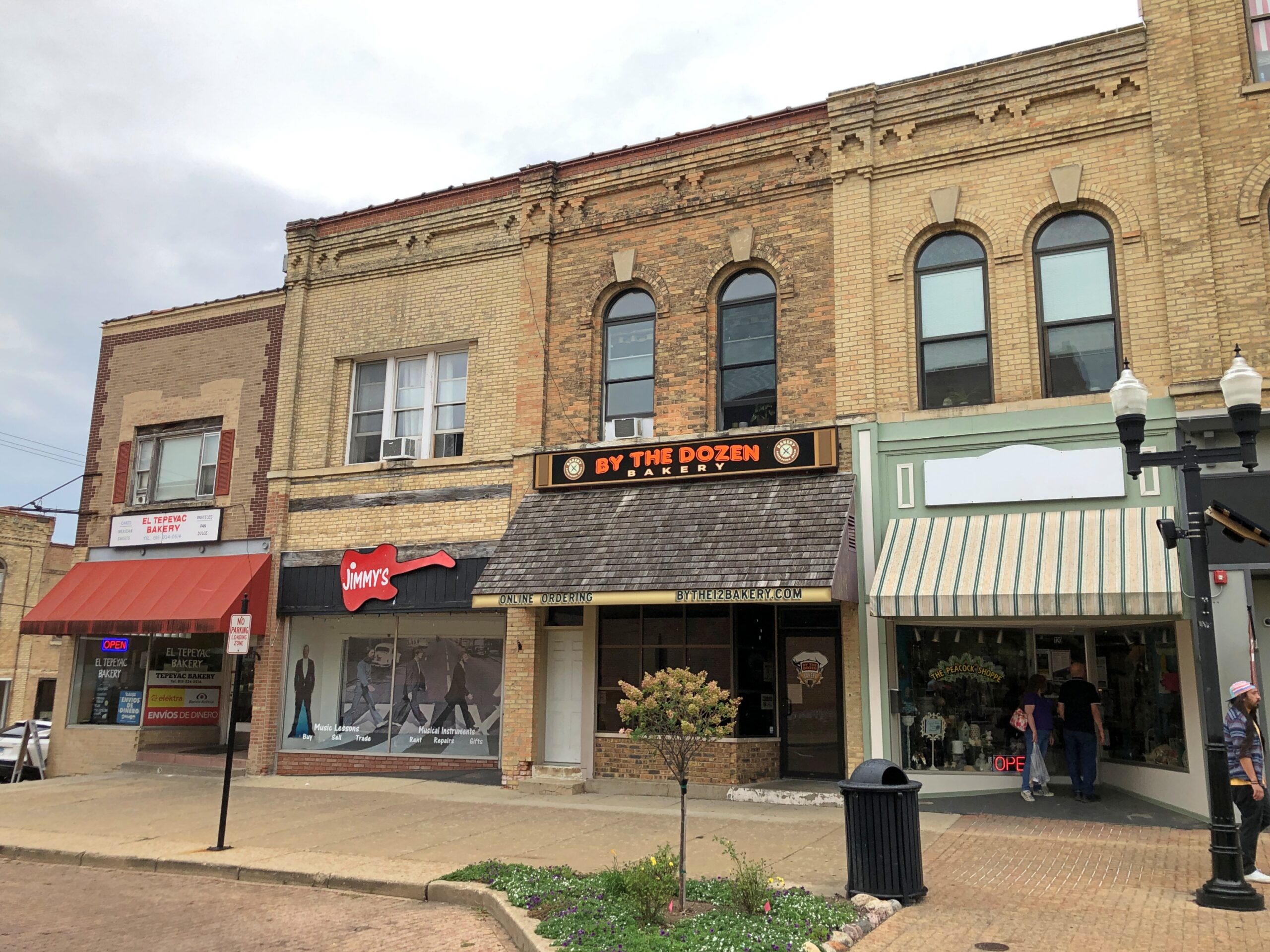
Which makes for some colorful spots.
Smaller, but adding just as much to the character of the square.
We had lunch on the square. At a diner along traditional lines, and tastier for it.
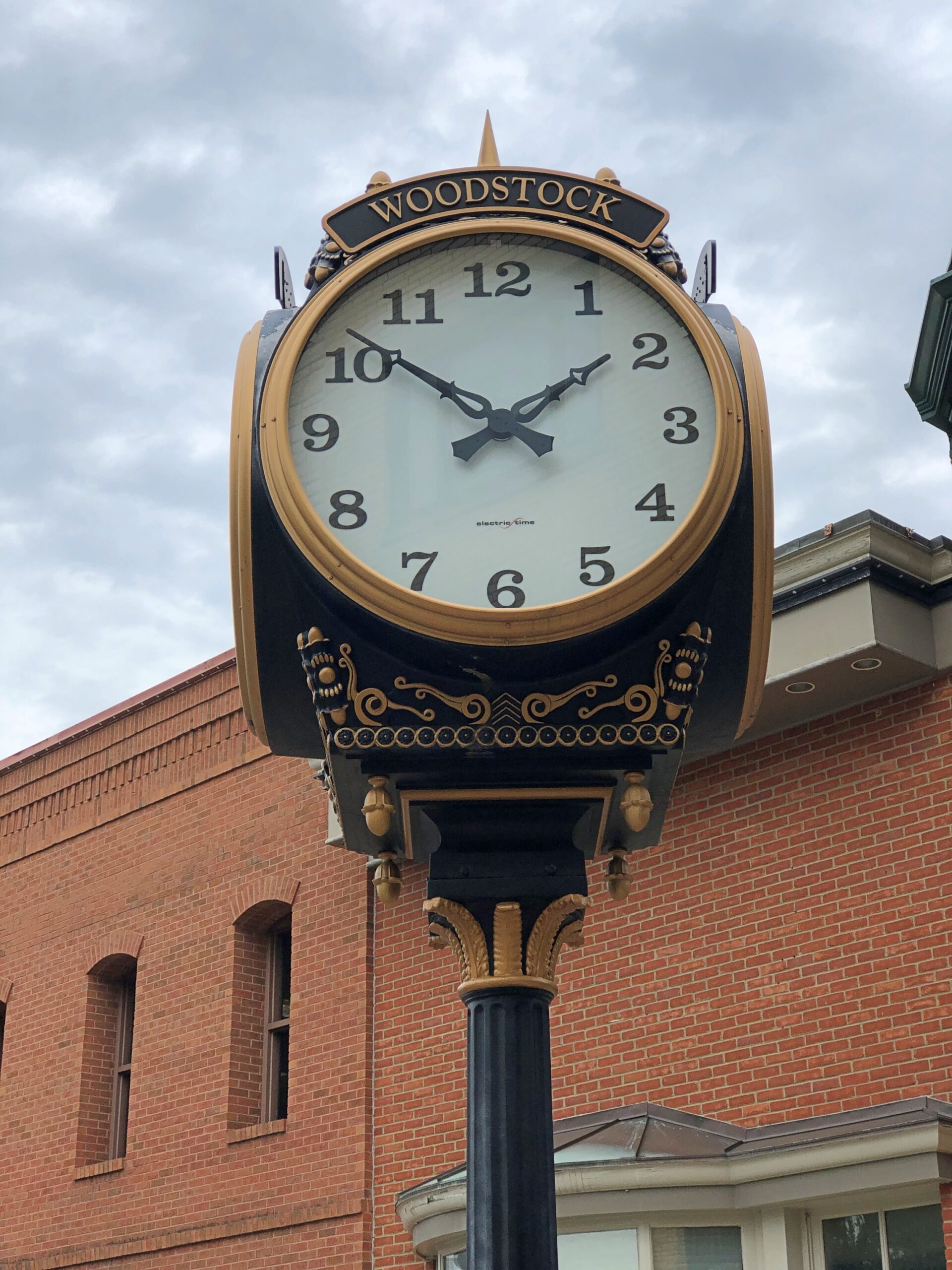
Afterward, the square told us the time.
Note that Bill Murray isn’t trapped in this clock face. Tying in with the movie is only going to go so far.
As mentioned before, Punxsutanwney, Pennsylvania, has gone a long way to let the world know about its groundhog and its celebration of things groundhoggish. Of course, that town isn’t the only place to do so, just the best known. I’ll bet few people south of the U.S.-Canada line know about Wiarton Willie. I didn’t know myself until I passed through Wiarton, Ontario, a couple of years ago, because travel is broadening, you know.
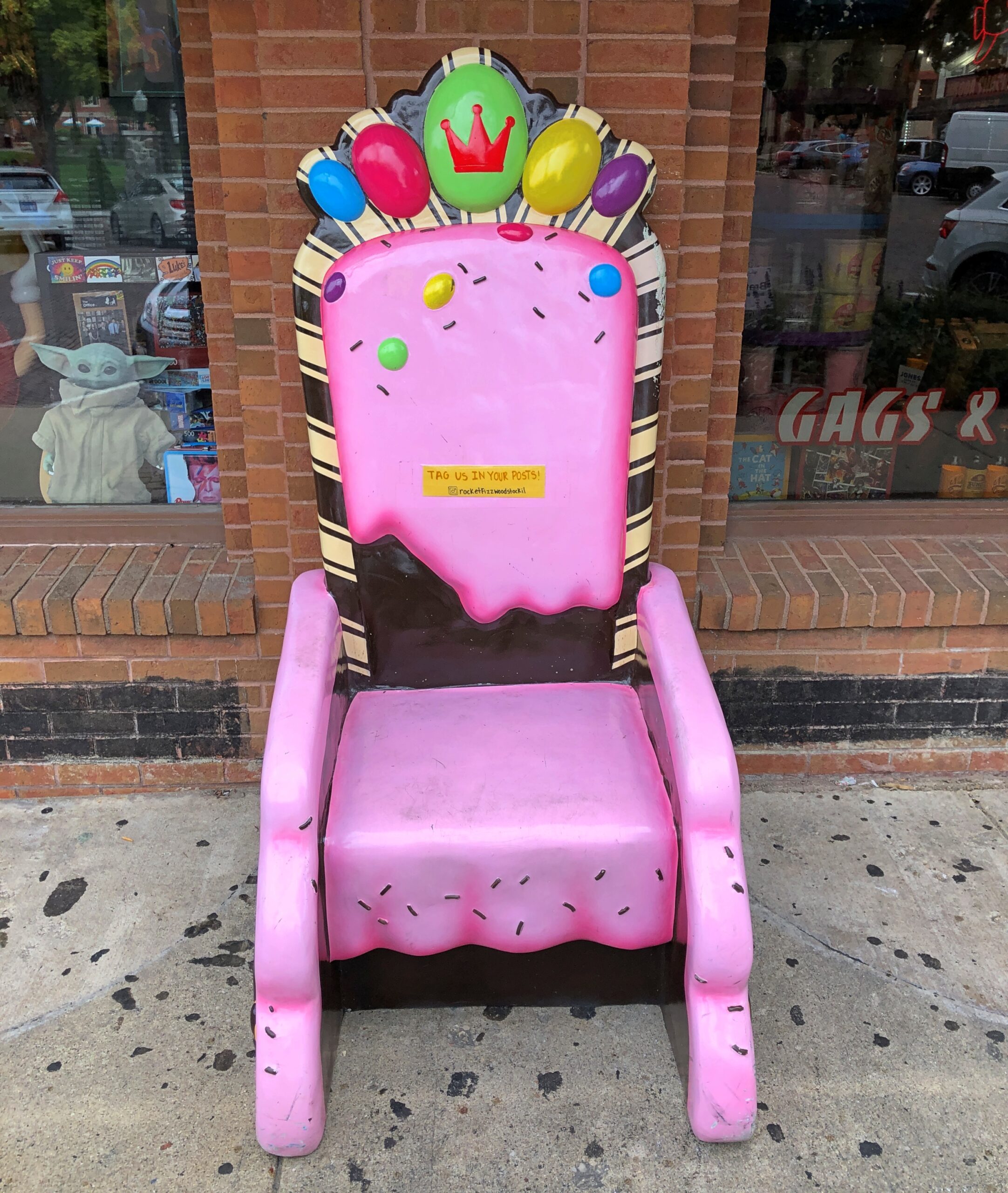
Back in the U.S., there is an up-and-coming town for celebrating groundhogs, and it’s less than an hour’s drive from where I live: Woodstock, Illinois. Yuriko and I made that drive on Saturday and spent a few hours in Woodstock’s pleasant downtown. The town has no history of imported northern European folk customs associated with rodents, but of course director Harold Ramis’ decision to film the many Groundhog Day exteriors in Woodstock did the trick.
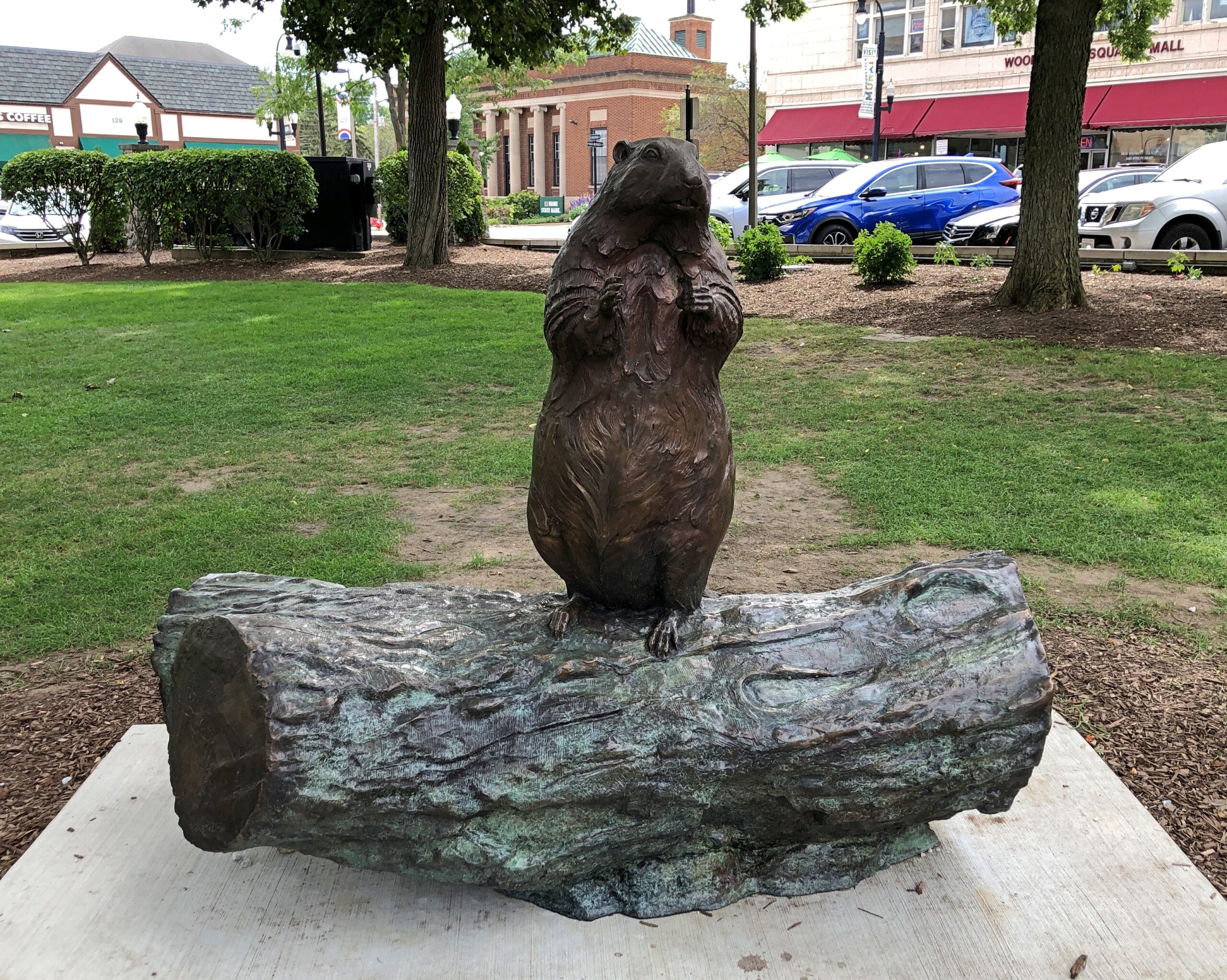
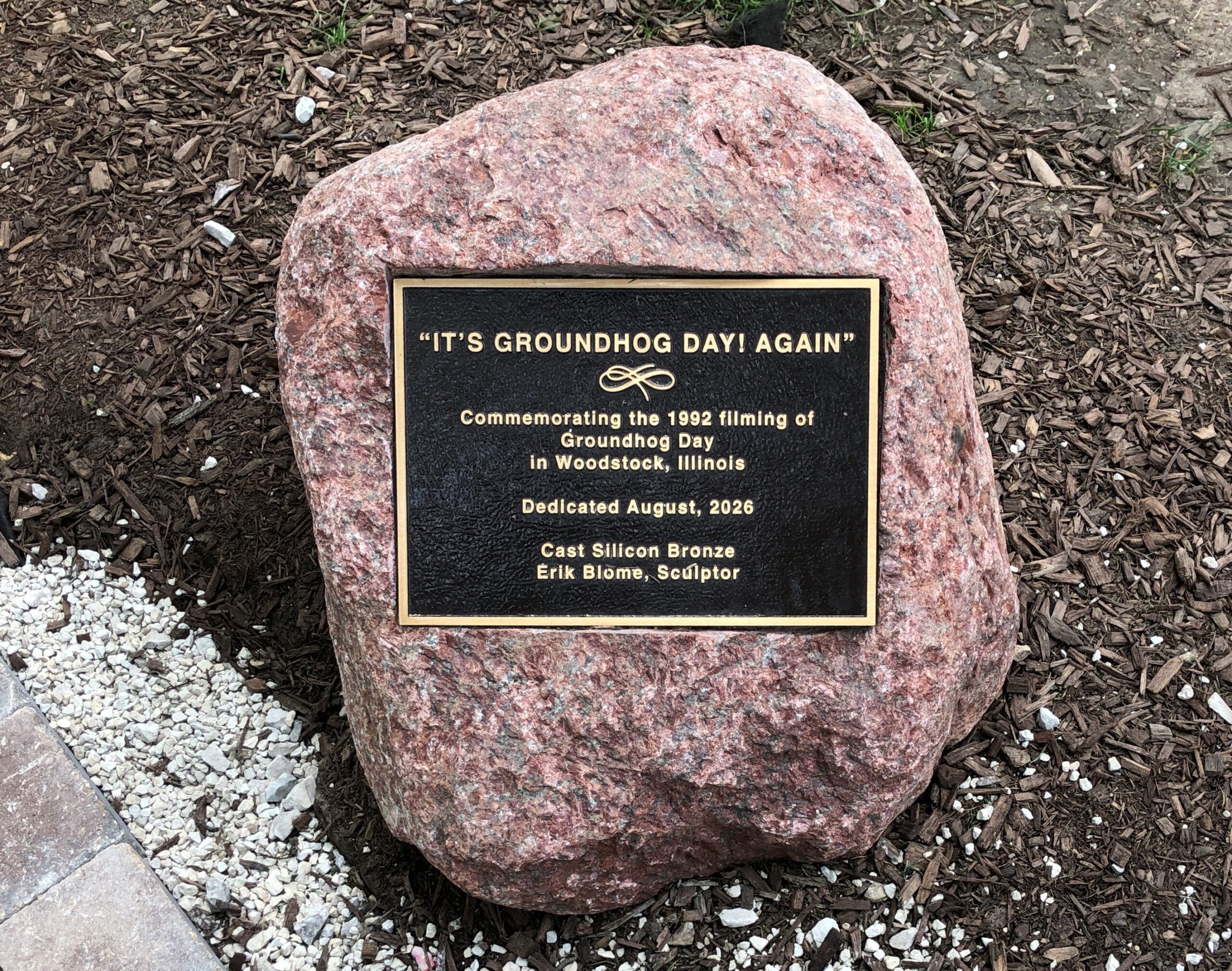
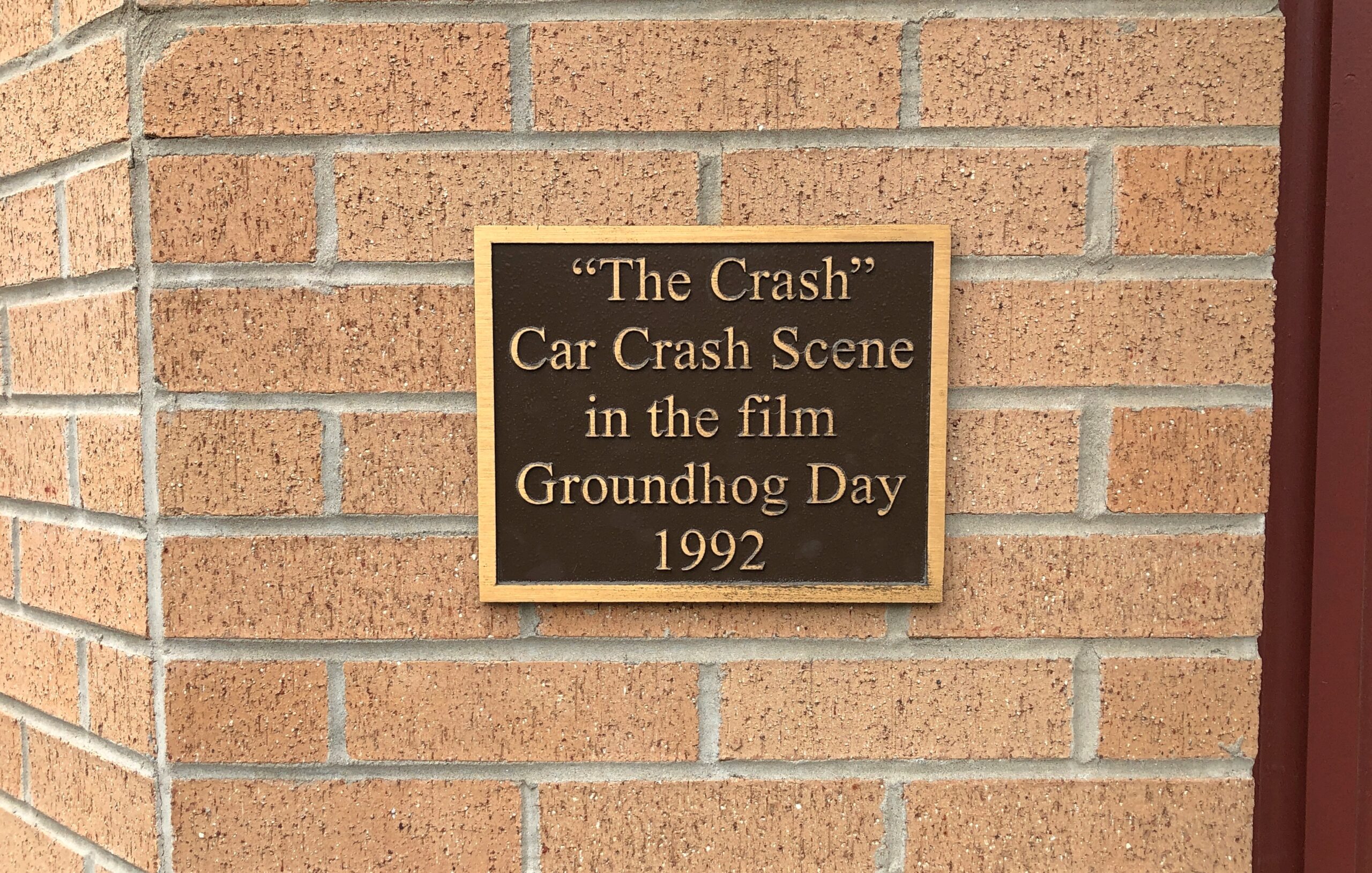
Since I was there last, a new acknowledgment of the movie has been added in Woodstock Square, which is the hub of the historic downtown.
Very new, as in added earlier this month. In fact, on August 2 – six months ahead or behind February 2.
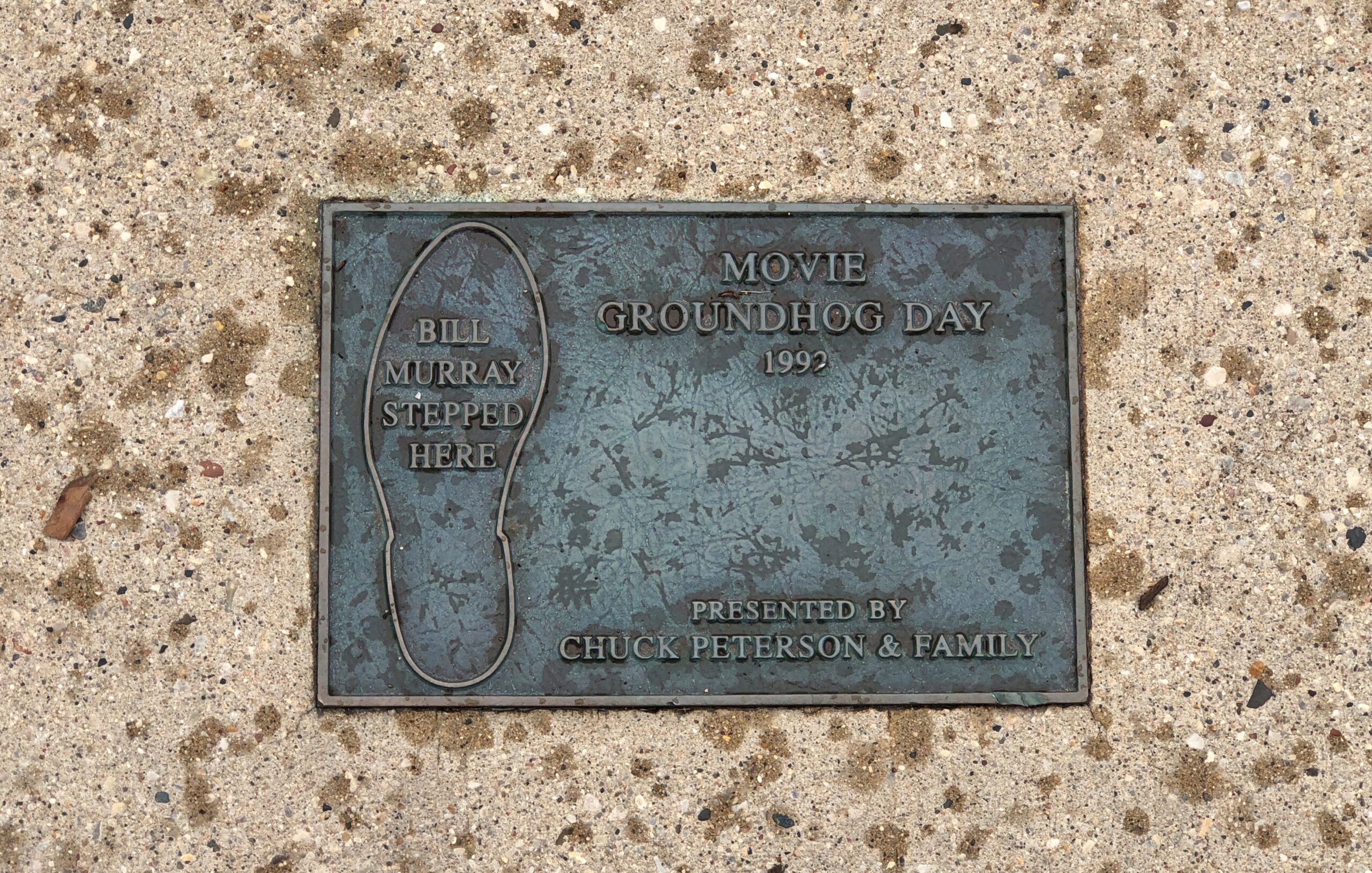
There is a newer plaque, and an older one, near the latest Woodstock Willie statue.
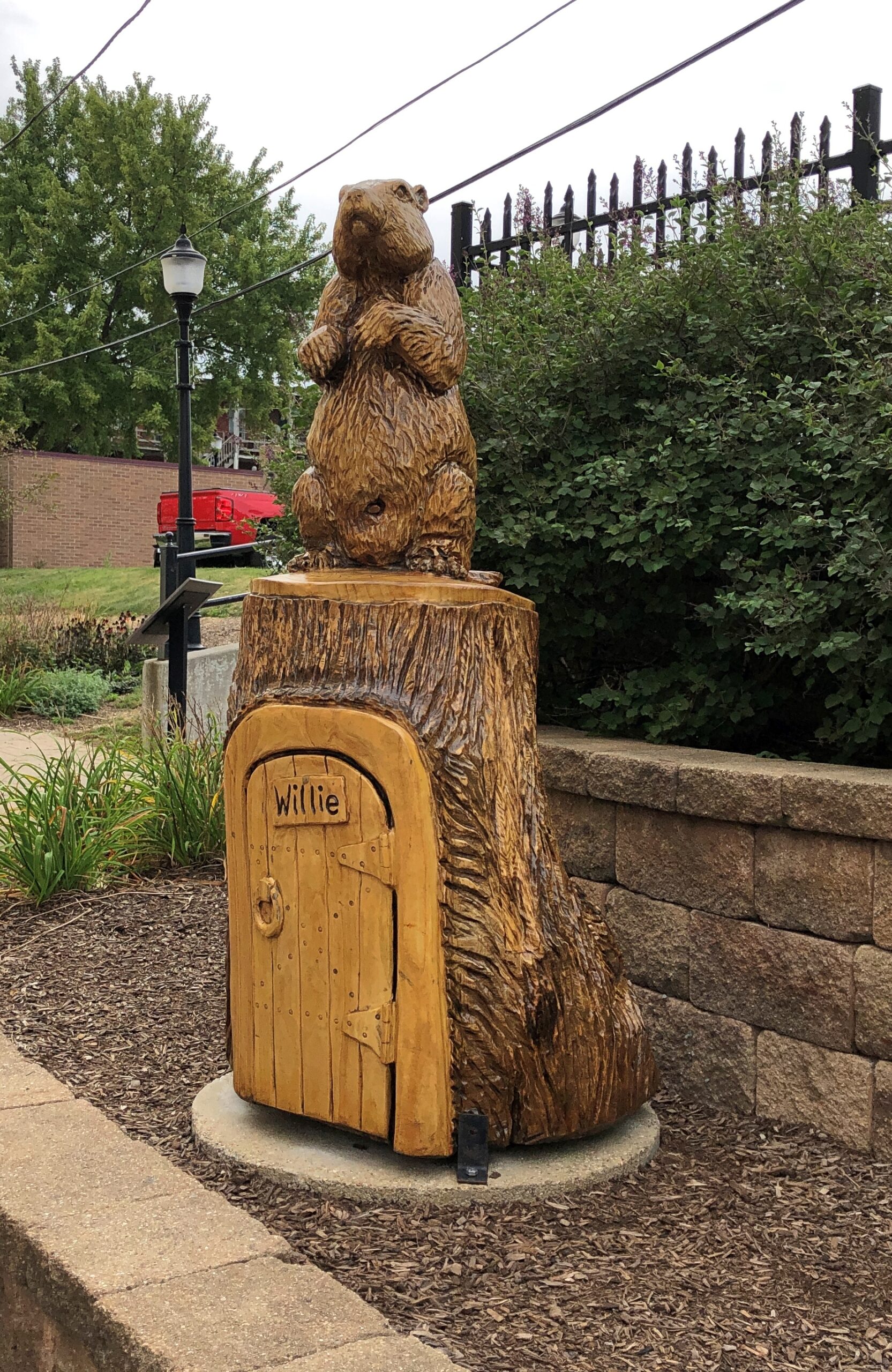
Not far from the square, behind the town movie theater, is an older Willie.
Woodstock has its own groundhog fest, and this is the place from which Willie emerges. I assume that it – cage isn’t the word, maybe temporary pen – is moved to Woodstock Square for the February 2 event, though it’s unlikely I will be at that event to see for myself.
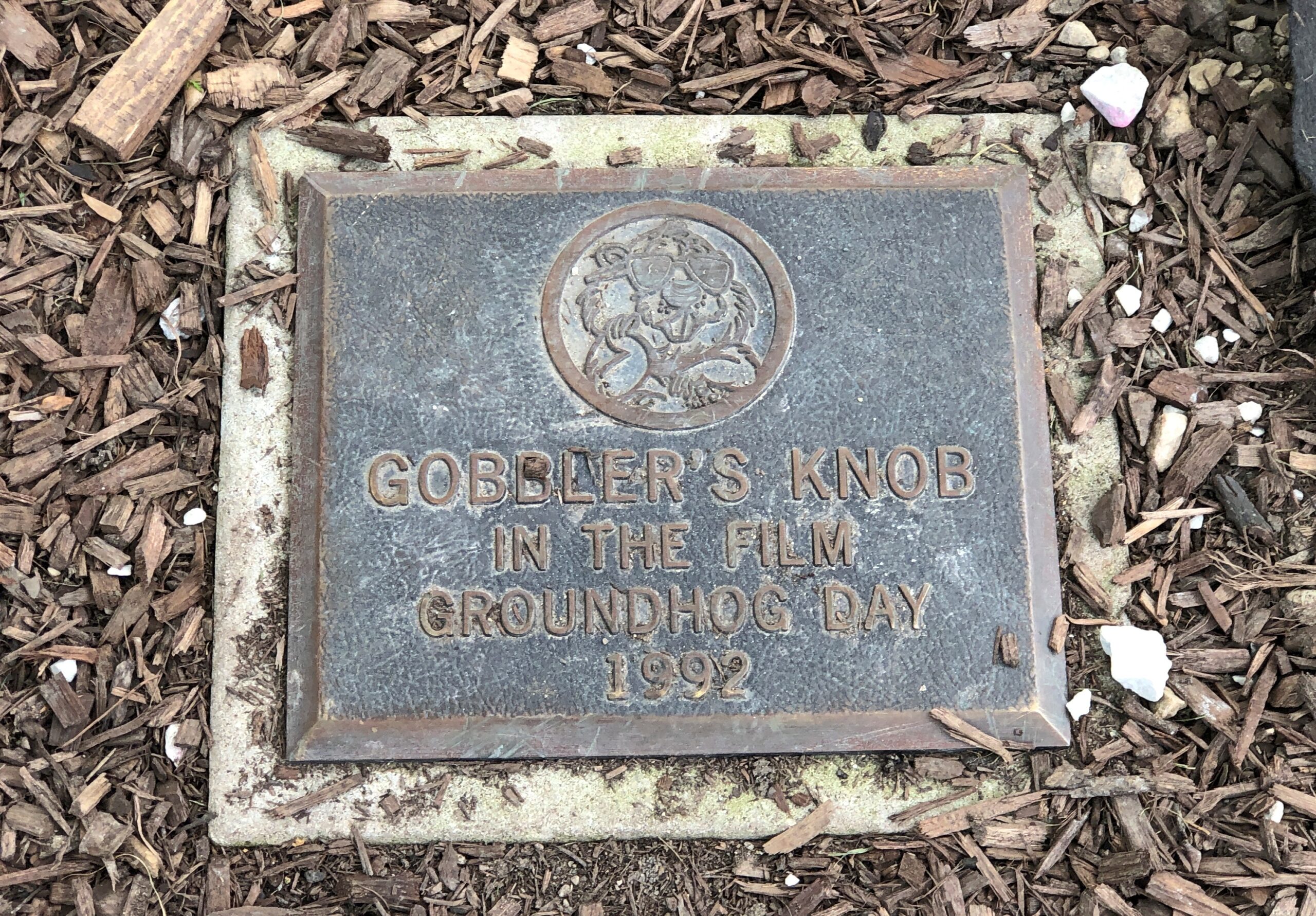
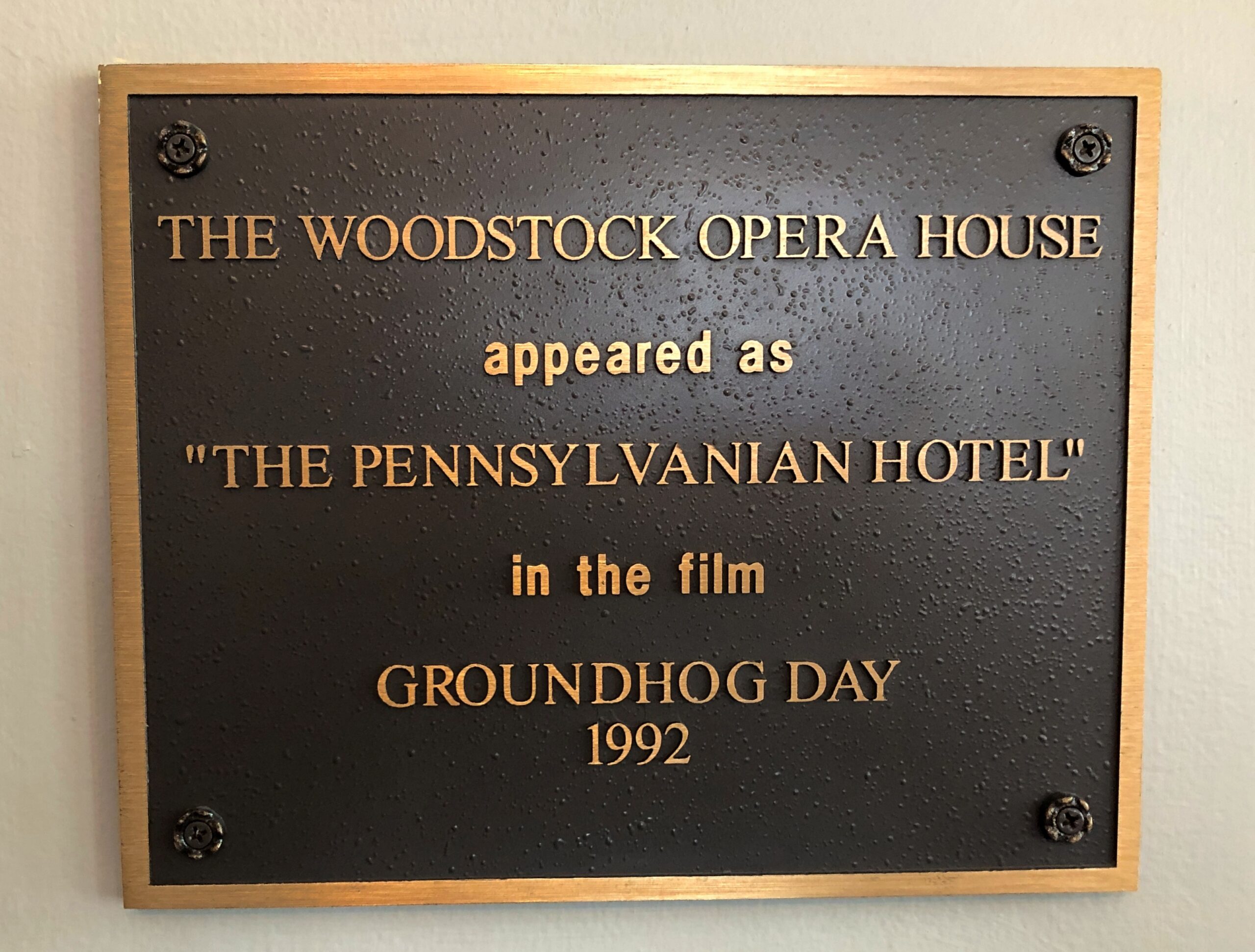
Other local plaques refer to the movie. This one has been in place for quite a while.
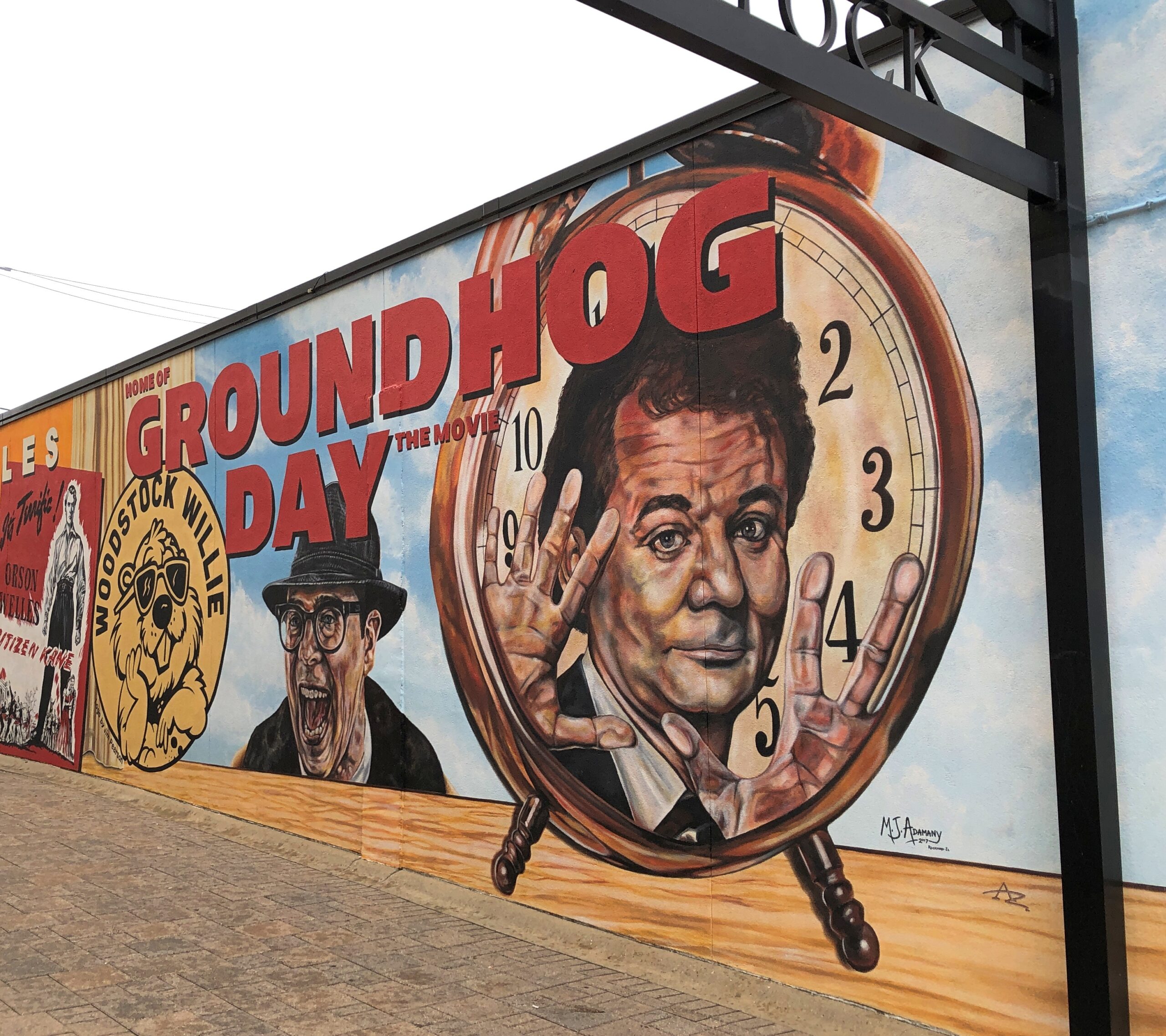
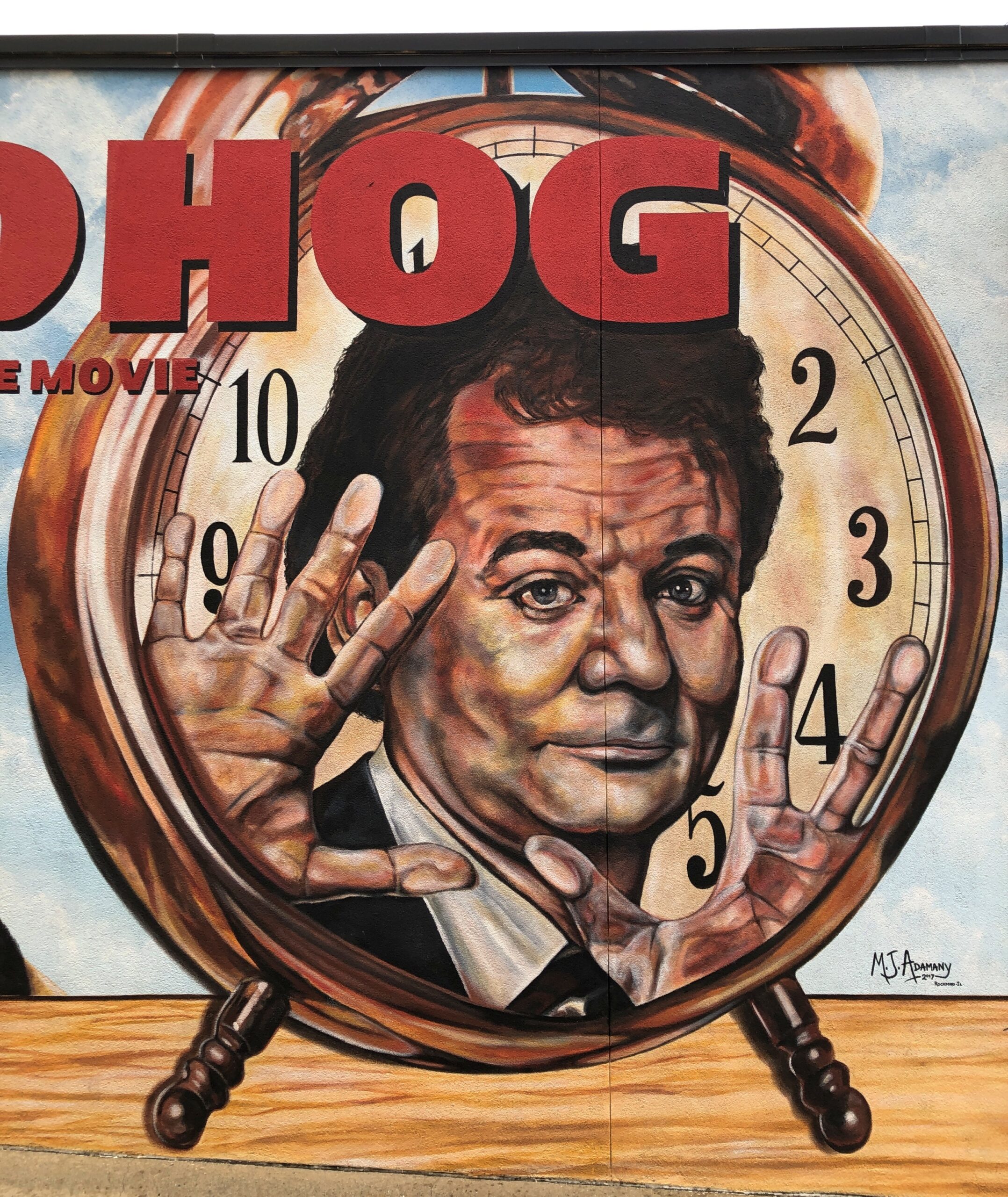
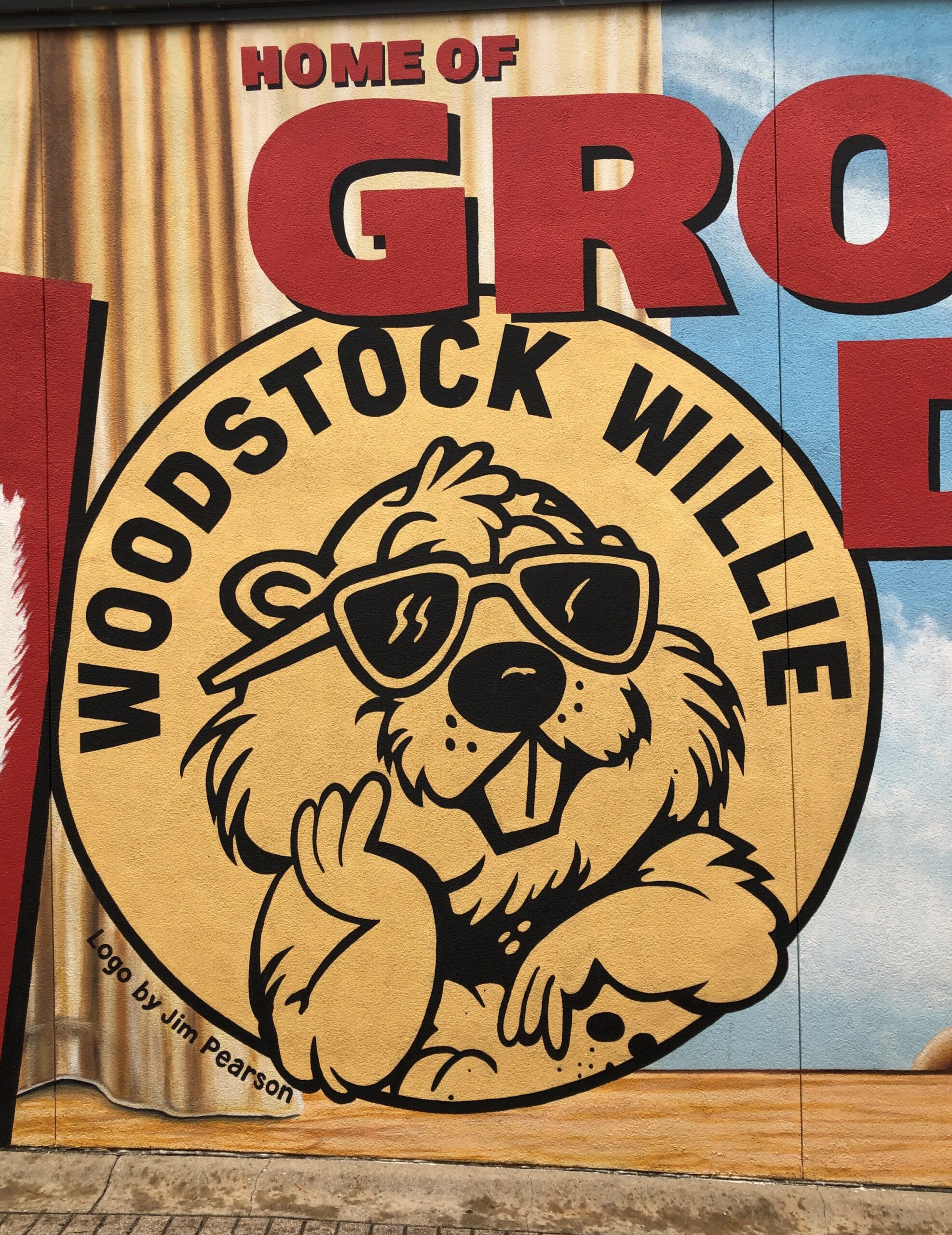
Also near the local movie theater is a Groundhog Day mural, evoking the movie’s promotional materials, and adding Woodstock Willie retroactively.
A good mural, but how is it Ned Ryerson (Stephen Tobolowsky) rates a spot? It is a funny bit and all, but I’d much rather see the fetching Rita Hanson (Andie MacDowell) there.
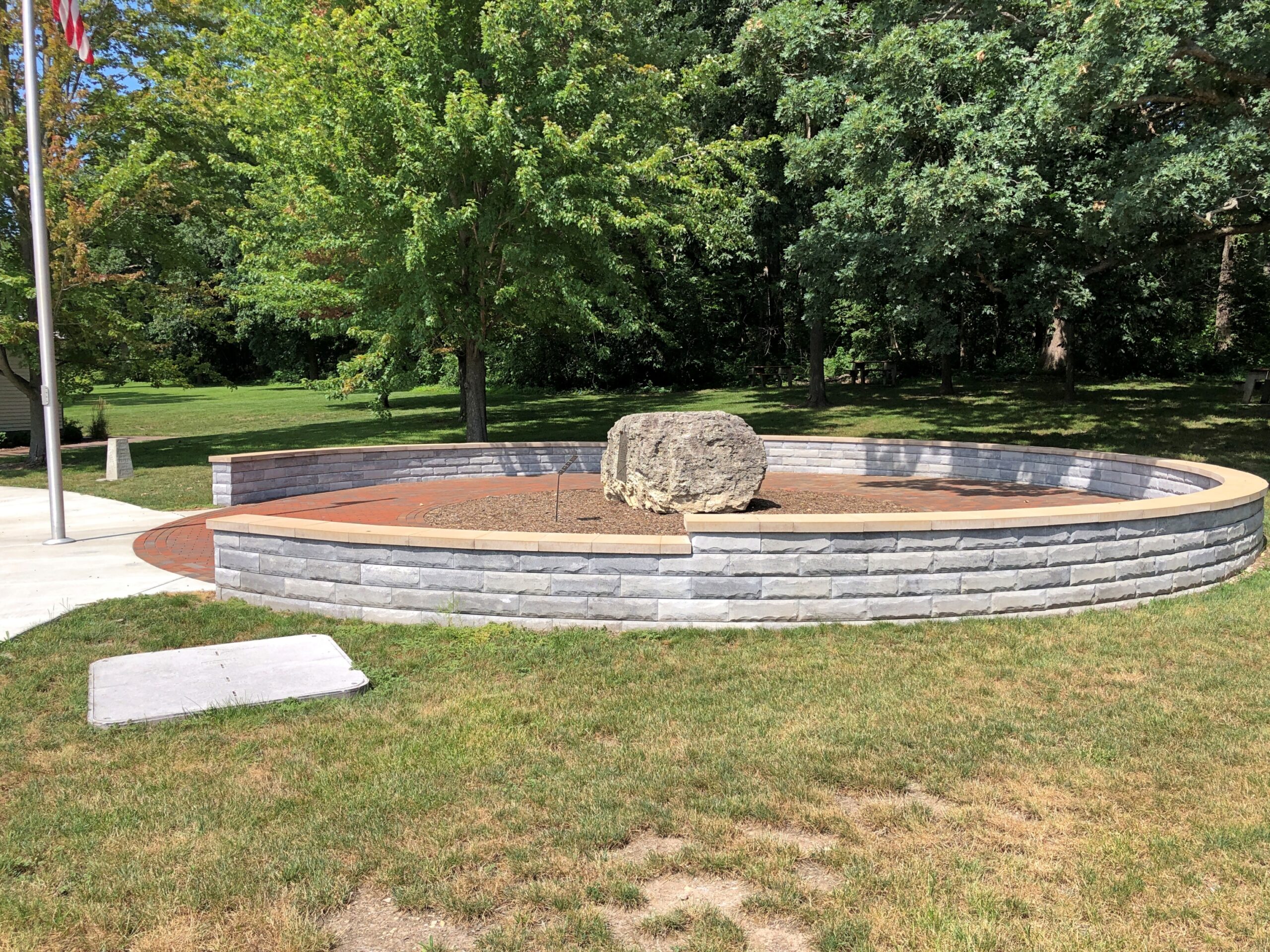
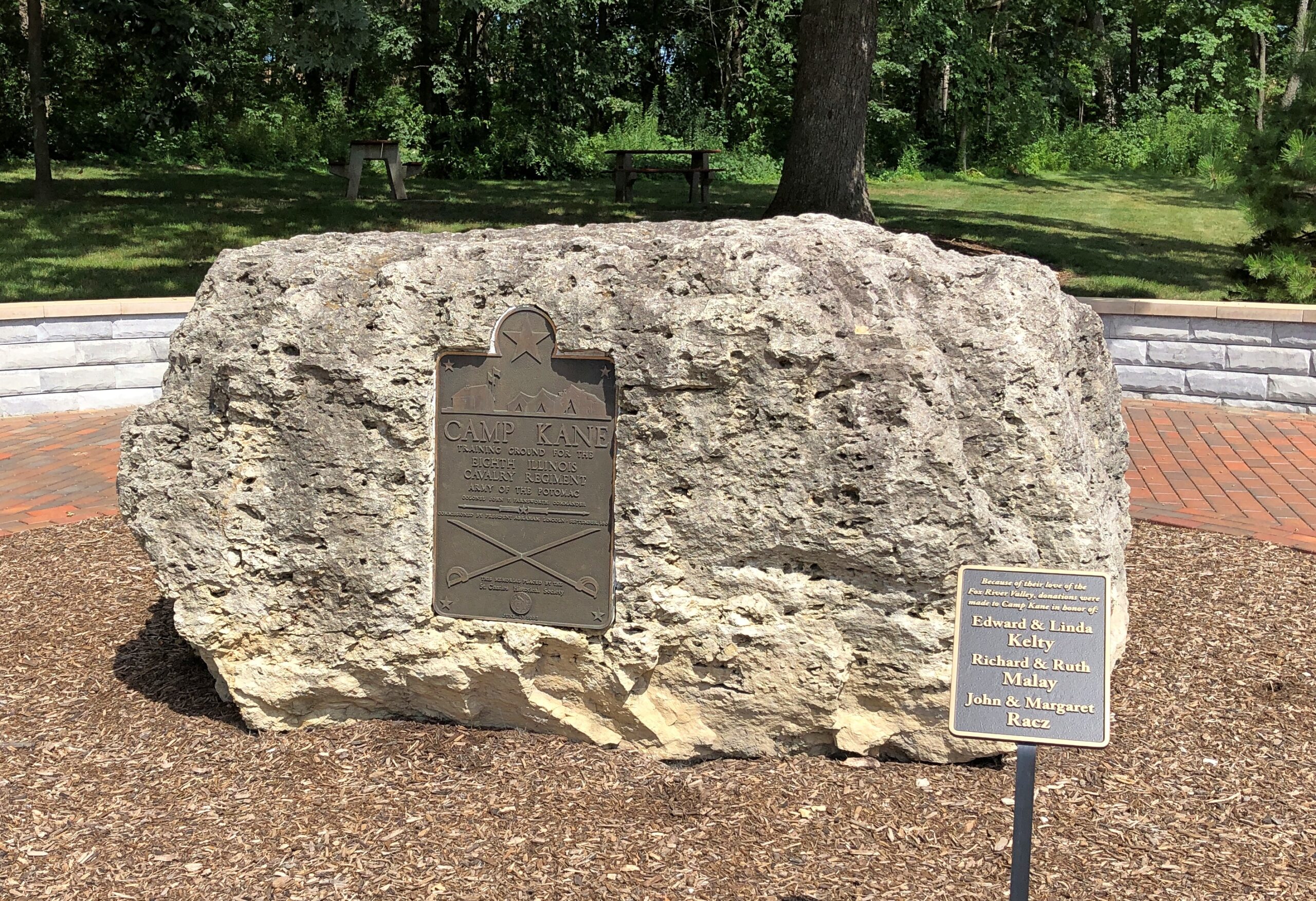
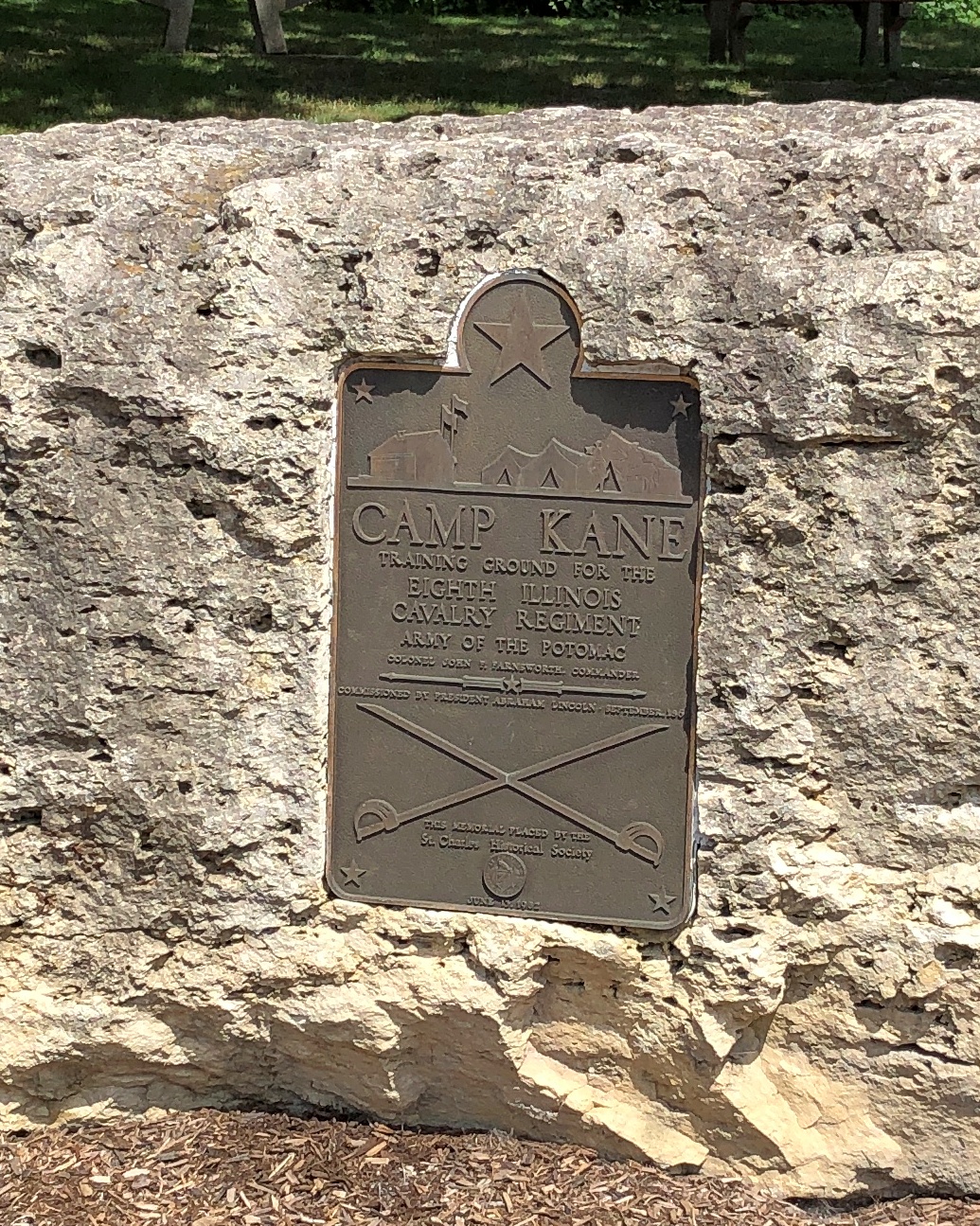
Along the highway Illinois 25 near the Fox River – within sight of the river – is Camp Kane. Or rather, the site of Camp Kane, since it was never intended to be anything but temporary, and in our time, the green space is known as Langum Park in St. Charles. A memorial to the men who gathered at the camp during the Civil War is inside a small stone ring.
In 1861, prominent Kane County resident John Farnsworth (d. 1897) – attorney, Congressman, politico on the ground floor of the Republican Party, ardent abolitionist and friend of Abraham Lincoln – organized the 8th Illinois Cavalry, which trained on land he owned along the Fox River. Camp Kane, it was called.
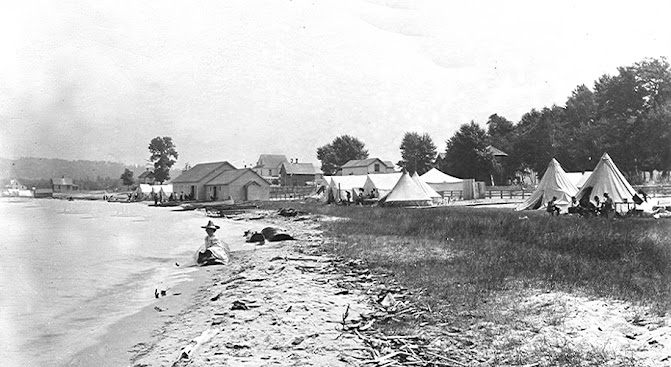
Below, Camp Kane in the day, a public domain image borrowed from the Digital Research Library of Illinois History. The 17th Illinois Cavalry also organized there, fairly late in the war.
For a time, Col. Farnsworth led the 8th, which served through the entire war in the Army of the Potomac. Most notably at Gettysburg, a little after Farnsworth’s command.
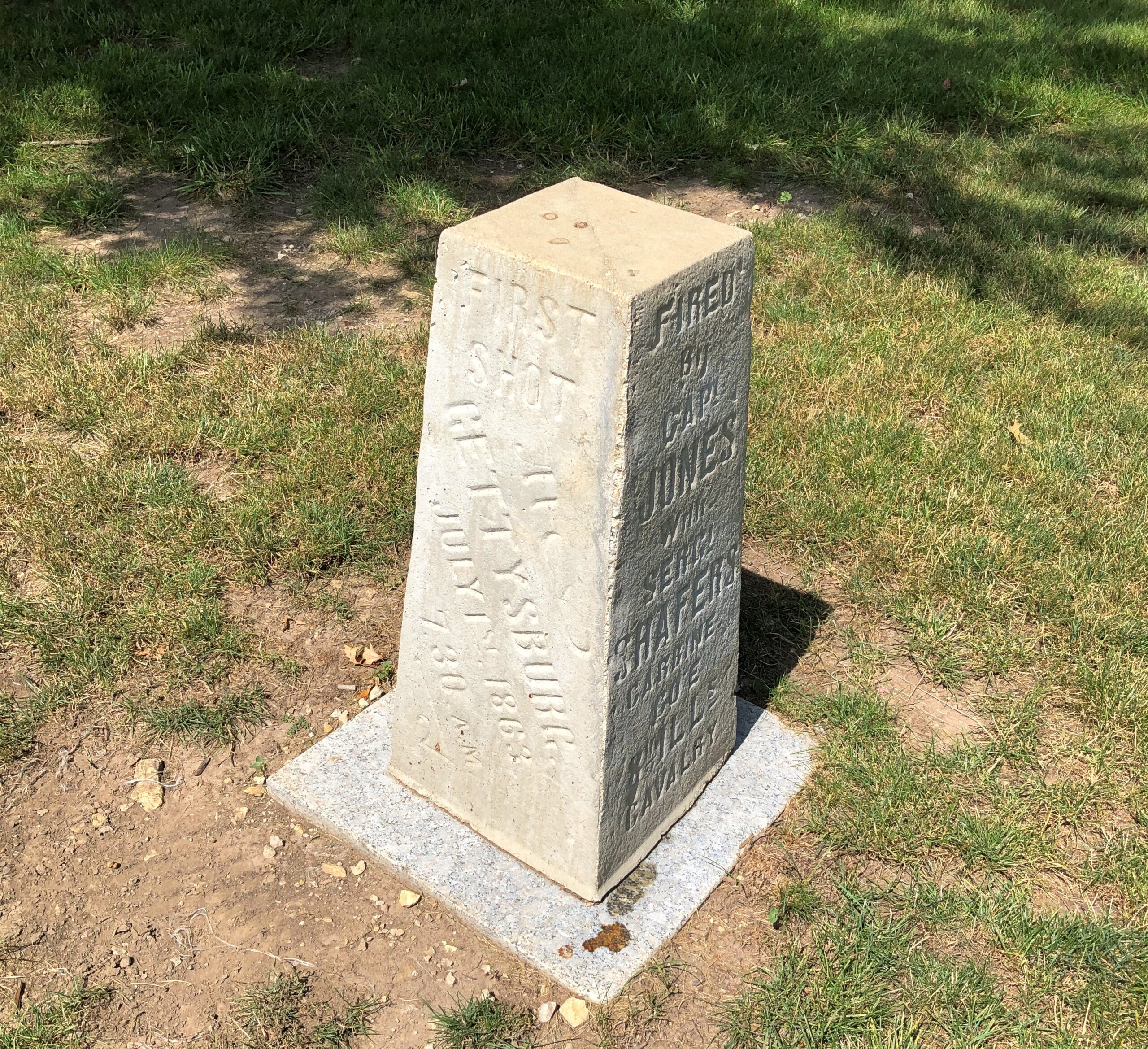
“It was the 8th Illinois Cavalry’s Lt. Marcellus Jones who fired the first shot of the famous battle [Gettysburg],” says the Digital Research Library of Illinois History. “Confederate Colonel John S. Mosby (The Grey Ghost) called the 8th Illinois Cavalry ‘The best cavalry regiment in the Army of the Potomac.’ On a more sorrowful note, the 8th Illinois Cavalry also had the disheartening yet distinguished honor of being the honor guards for Lincoln’s funeral train.”
A stone memorizes that first shot at Gettysburg.
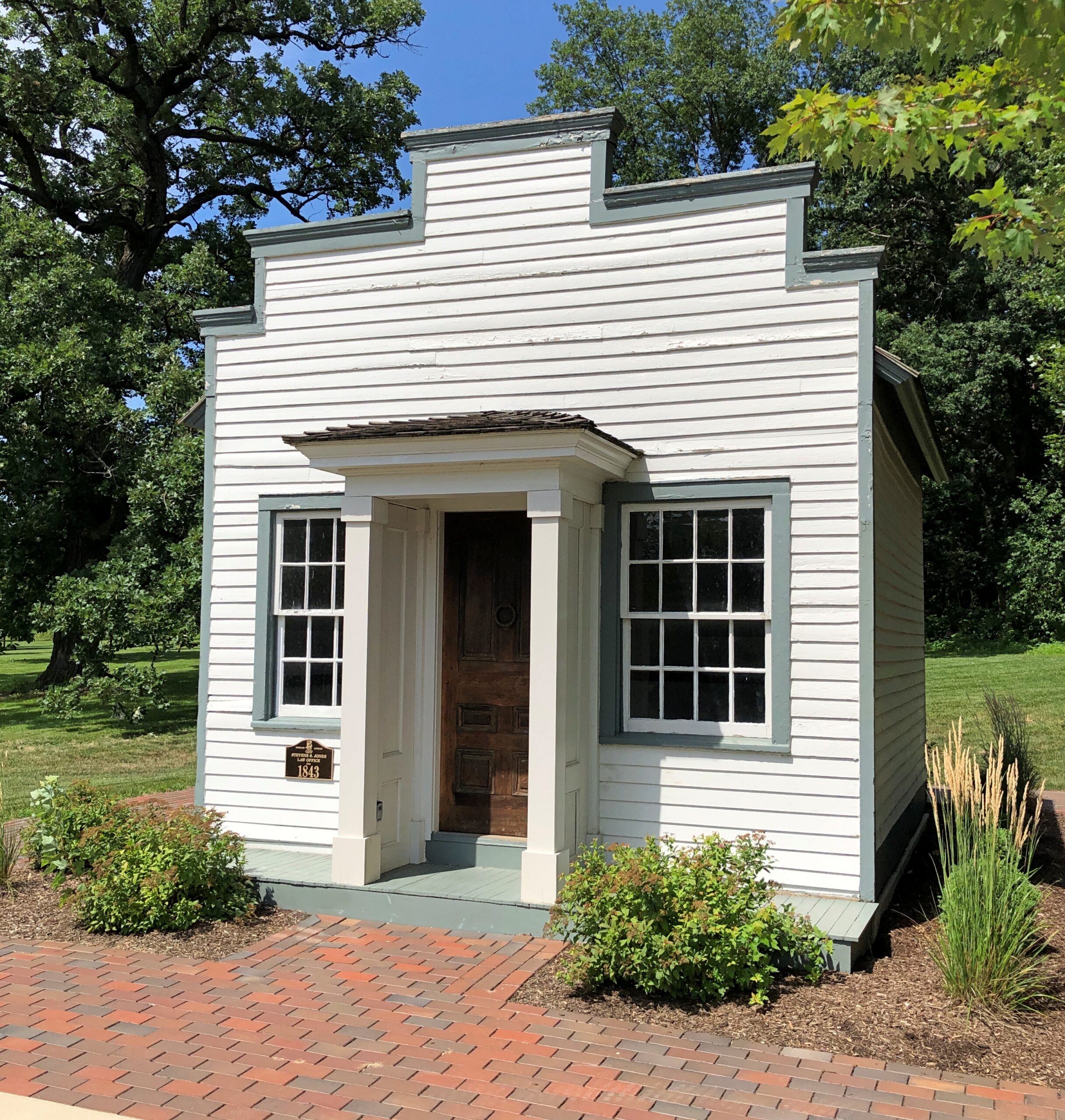
Moved from elsewhere in St. Charles: the law office of Steven S. Jones (d. 1877), built in 1843. But it did have a wartime use: a holding area for deserters.
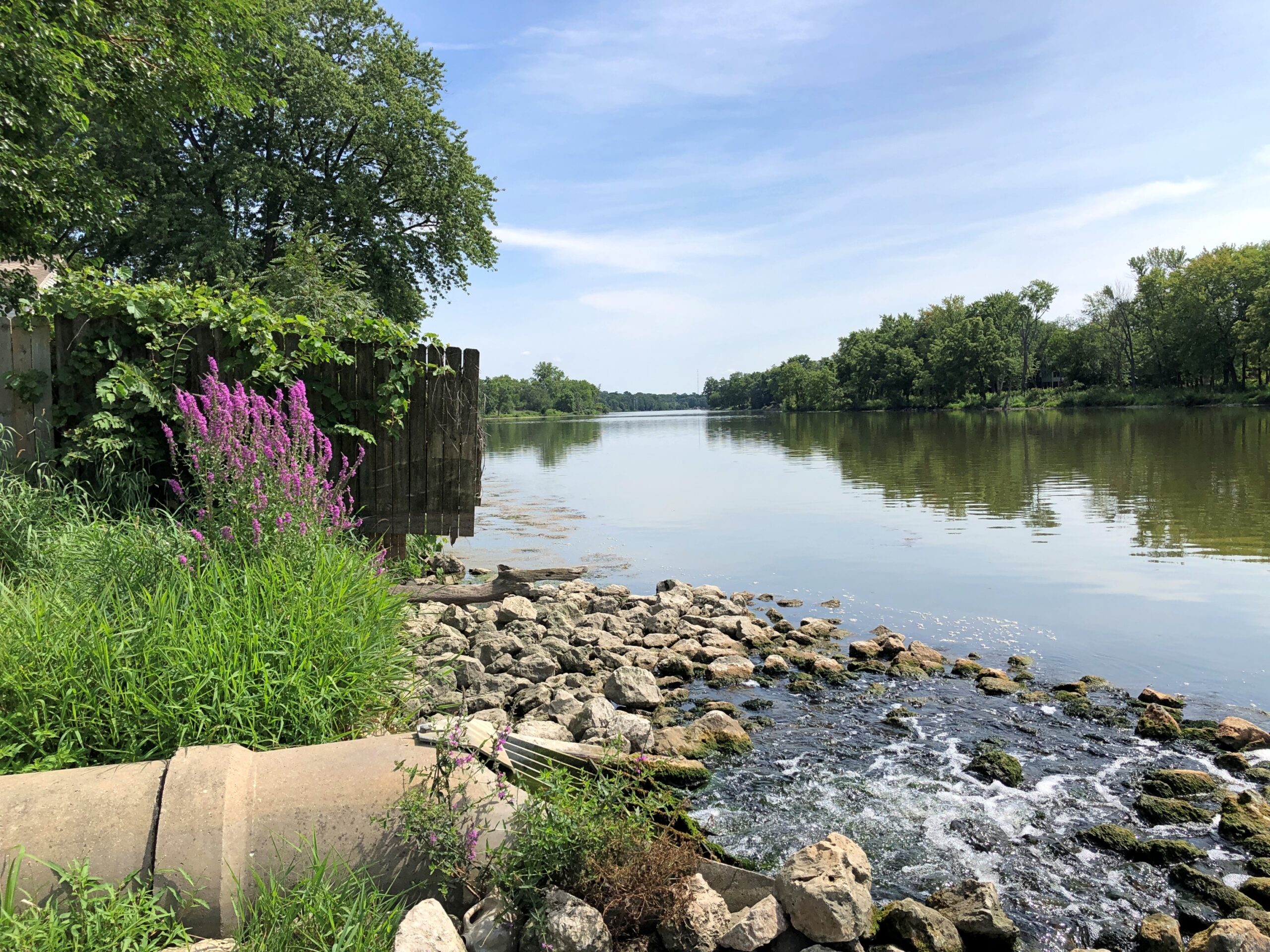
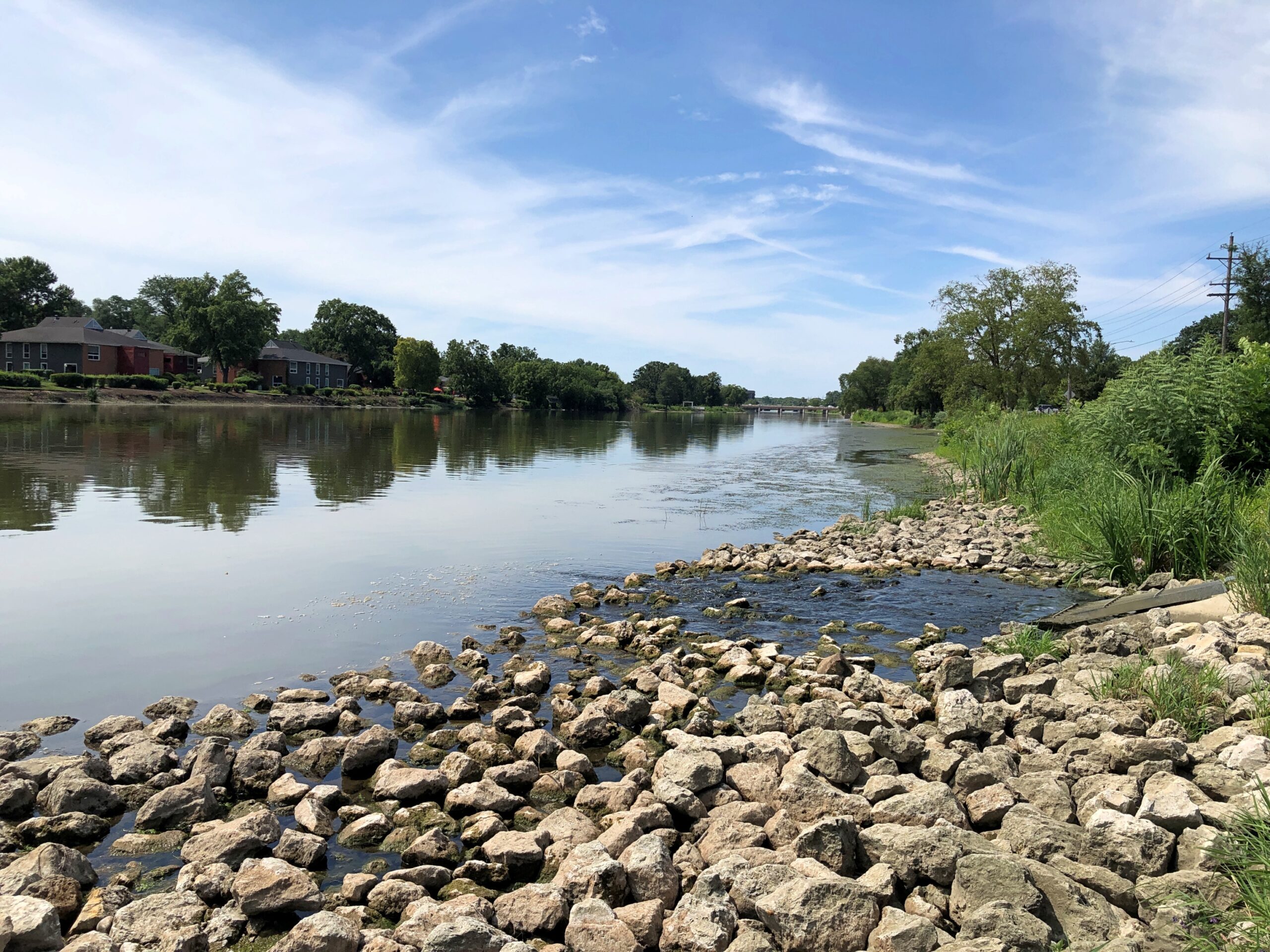
The site, as mentioned, isn’t far from the wide Fox. Cross the road, and you’re there. That pipe, I believe, is a channelized creek, nothing to do with wastewater.
One more thing. This.
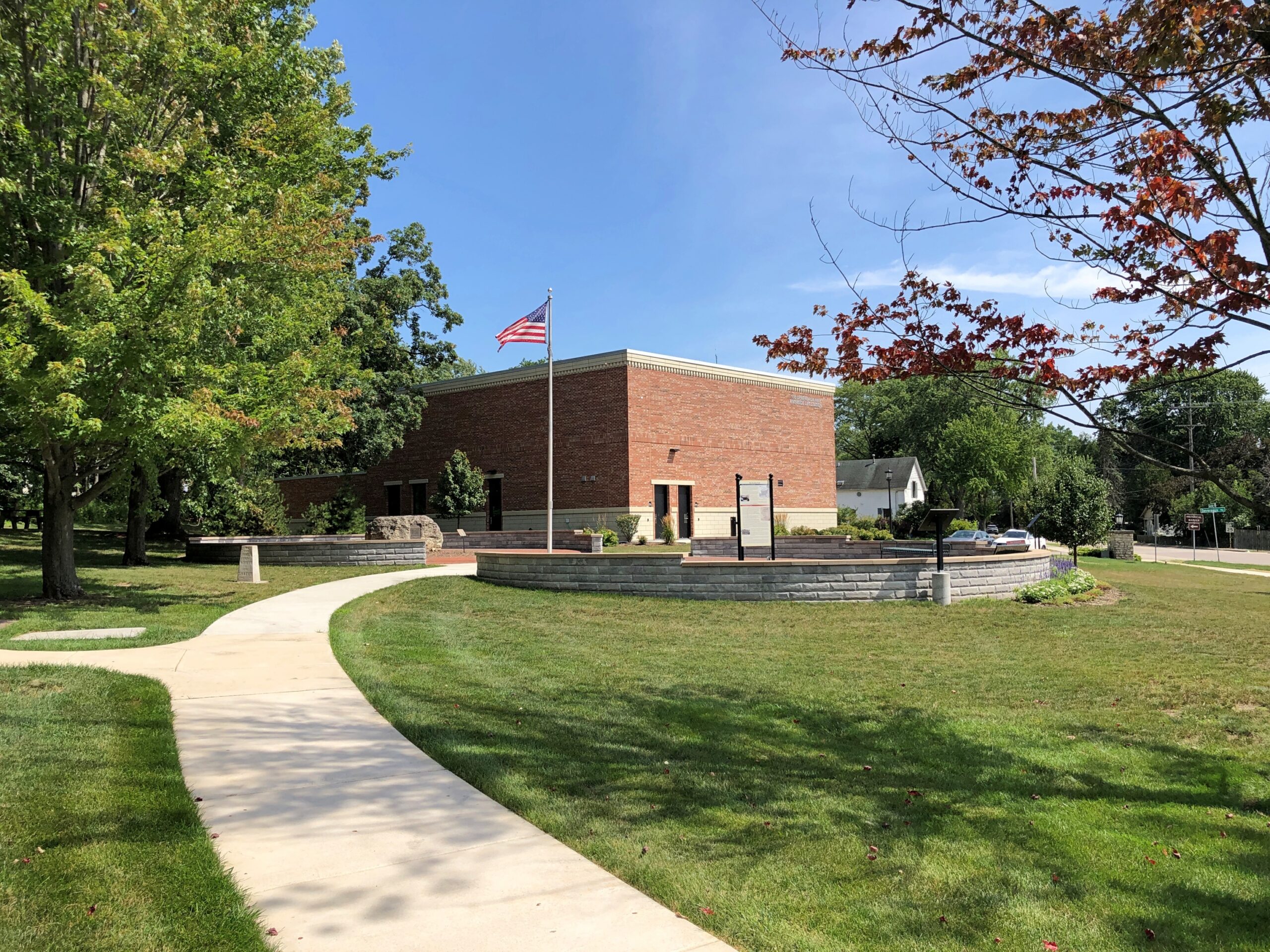
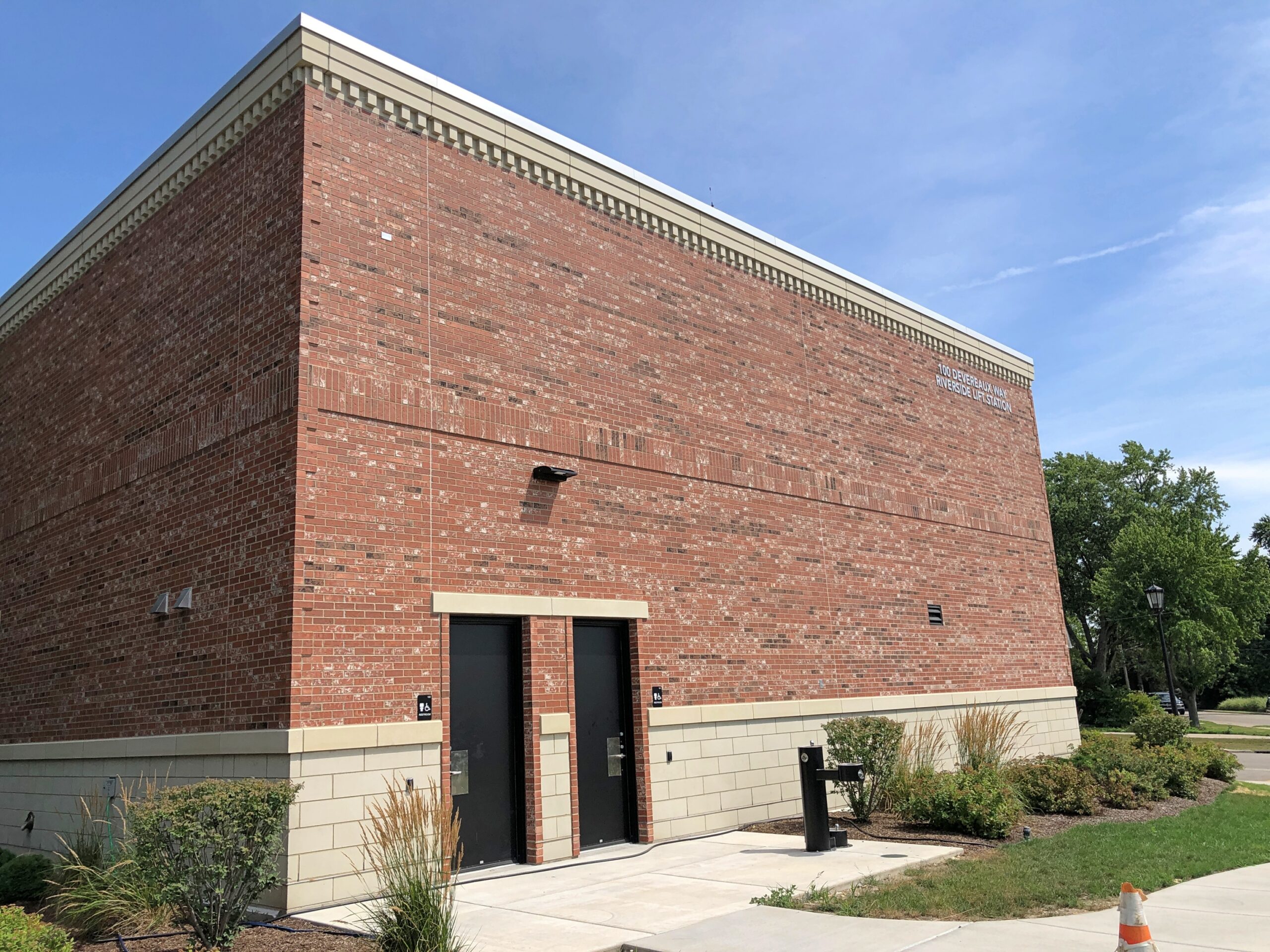
The Riverside Lift Station.
Just the facts:
The lift station, completed in 2024, serves more than half of St. Charles households. It pumps wastewater from the lower reaches of the town slightly uphill to a water reclamation plant.
The $14.8 million project was funded by the IEPA Low-Interest Loan Program.
The new lift station has the capacity to pump 35 million gallons per day. This is an increase of 15.3 million gallons per day compared with the older station it replaced.
Designed by Trotter Associates, with construction by Whittaker Construction & Excavating.
I looked up Trotter. Municipal infrastructure is its specialty, and the company does a lot of it.
There are actual design elements at play in the expanse of brick. What could have been a hulking brick wall, hulking with sameness, instead has some texture for the eye. Nice work. Also, note the two doors in the front wall. Those are public restrooms, so you can add your little bit to the wastewater stream if need be.
***
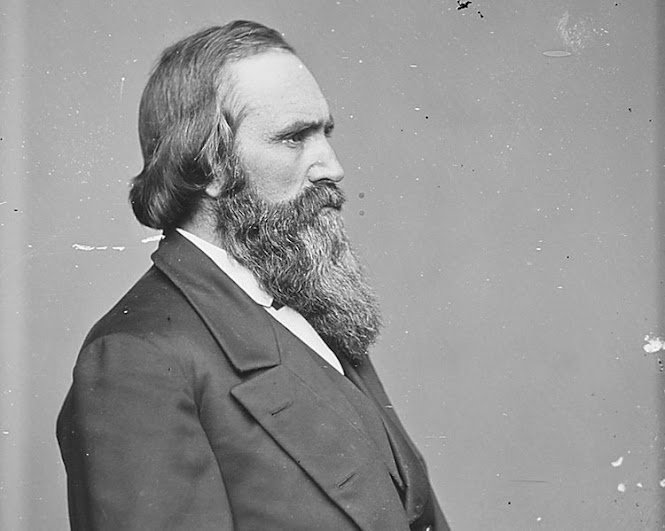
This is John Farnsworth, looking about as 1860s as one graybeard can.
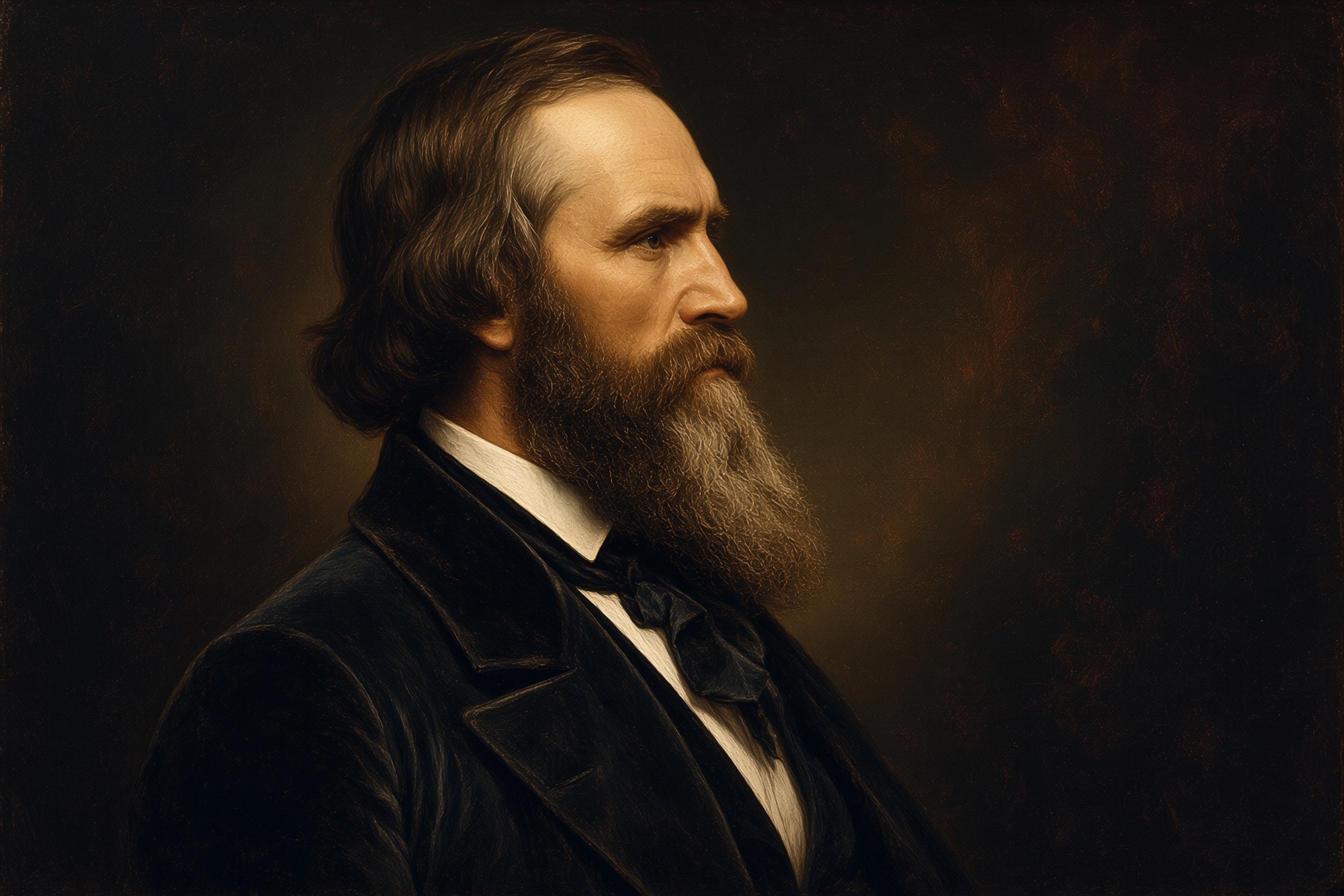
My AI prompt: Dutch Masters Style. Retain the look of the coat and beard.
Striking. Still looking 1860s, but with an enhanced presence, somehow. Maybe it’s the somewhat less gray beard.
Quincy Adams Wagstaff Elementary has started classes for the year. I know that because I saw a mass of students and parents waiting outside the school this morning just before classes begin, as has been the first-day practice for many years. I went there myself, with daughters, from 2003 to 2014.
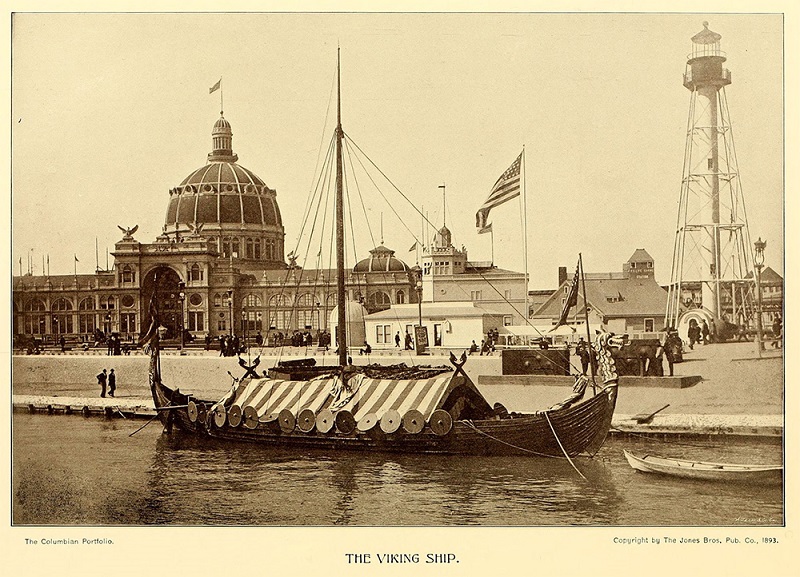
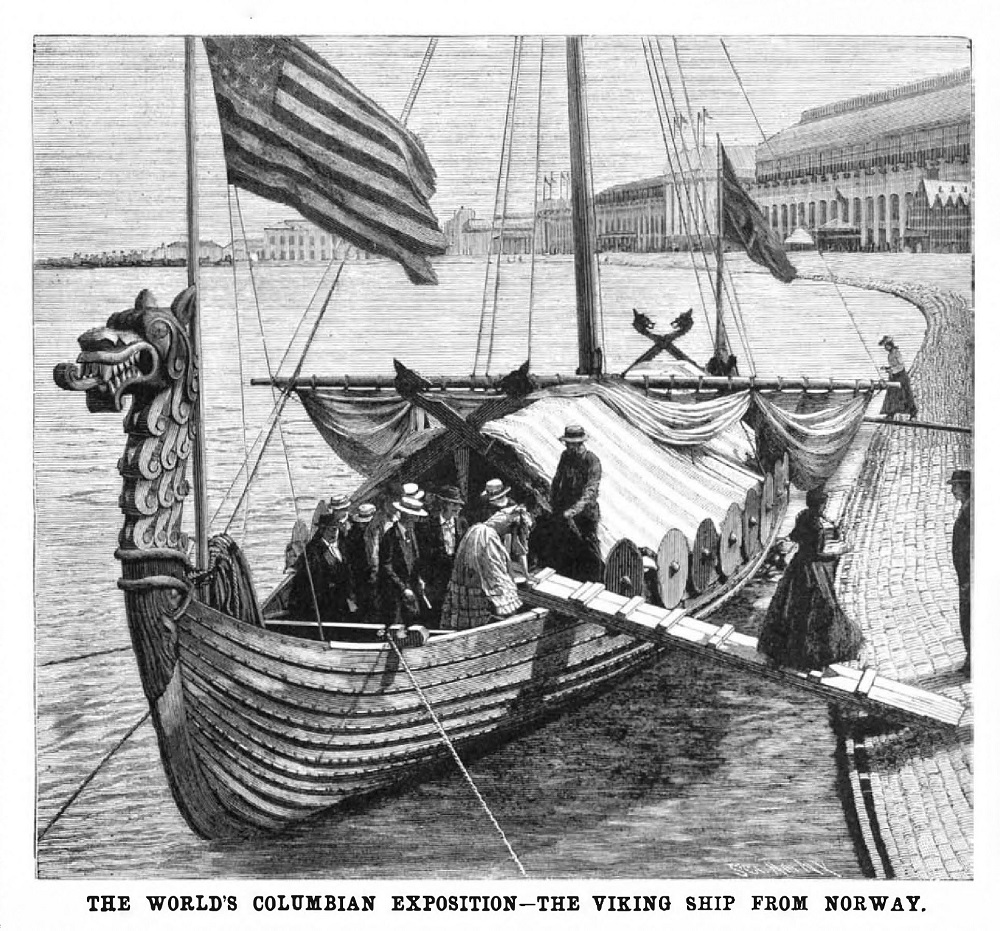
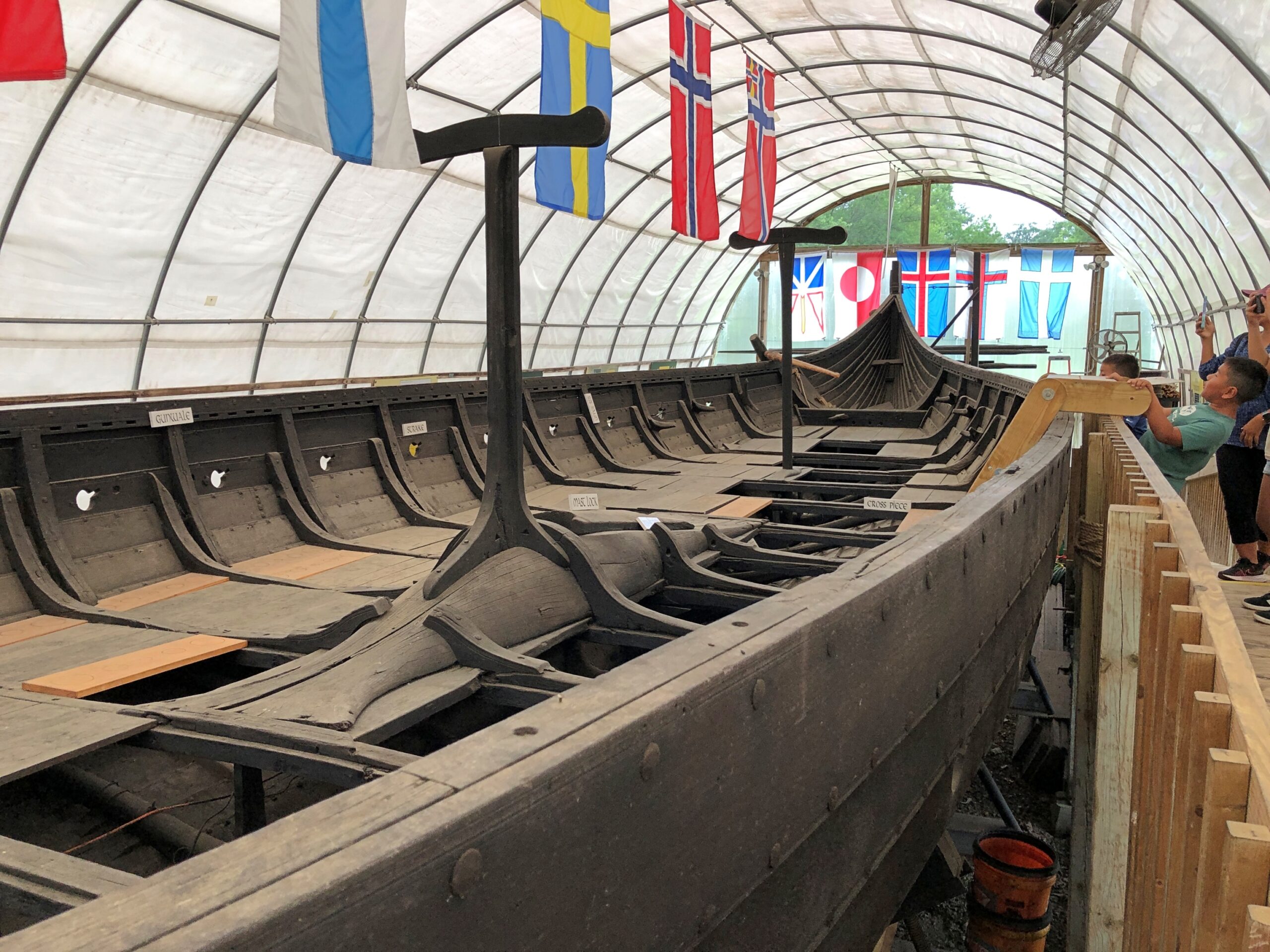
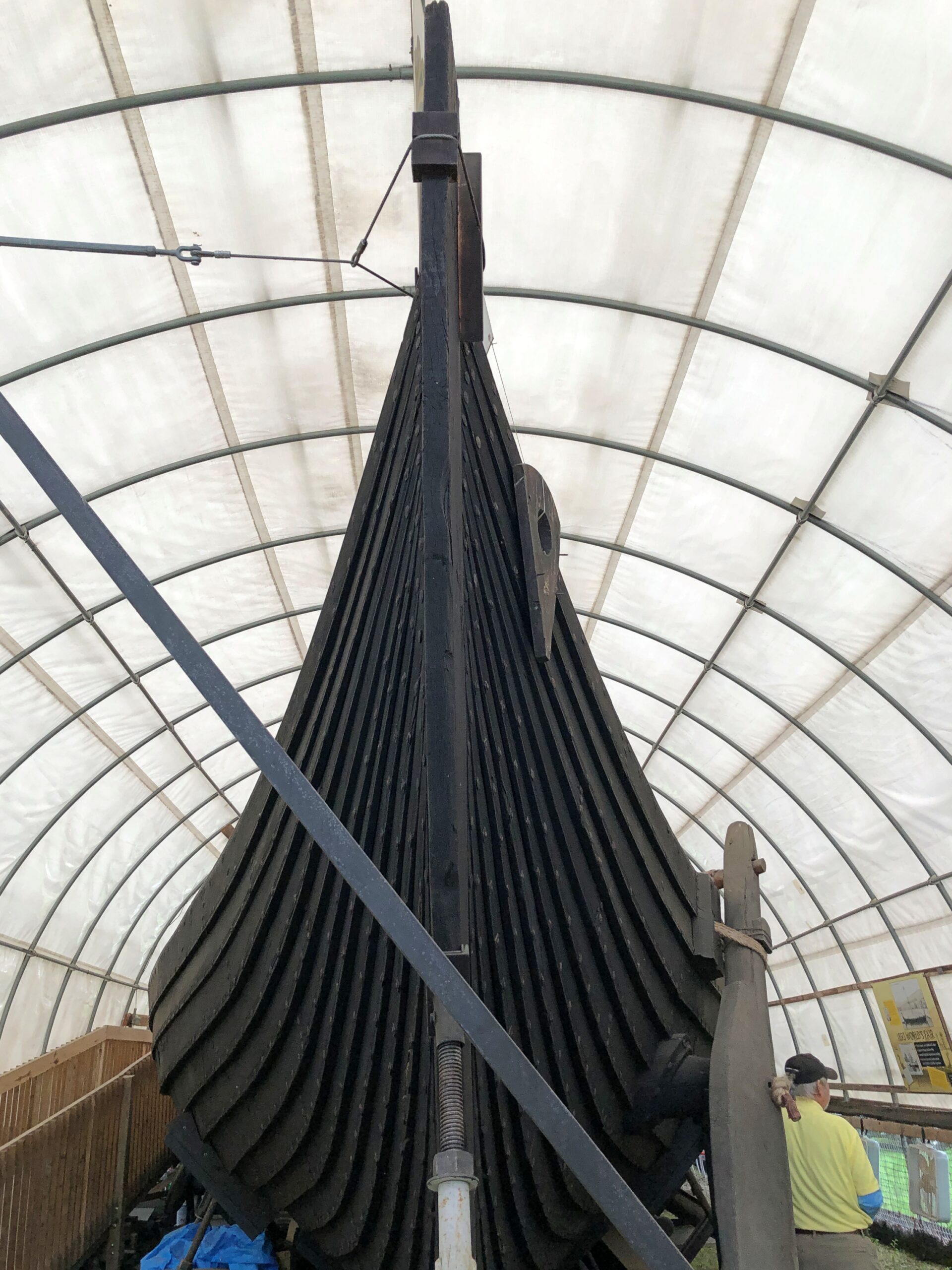
In 1893, a curious ship arrived in Chicago during the World’s Columbian Exposition.
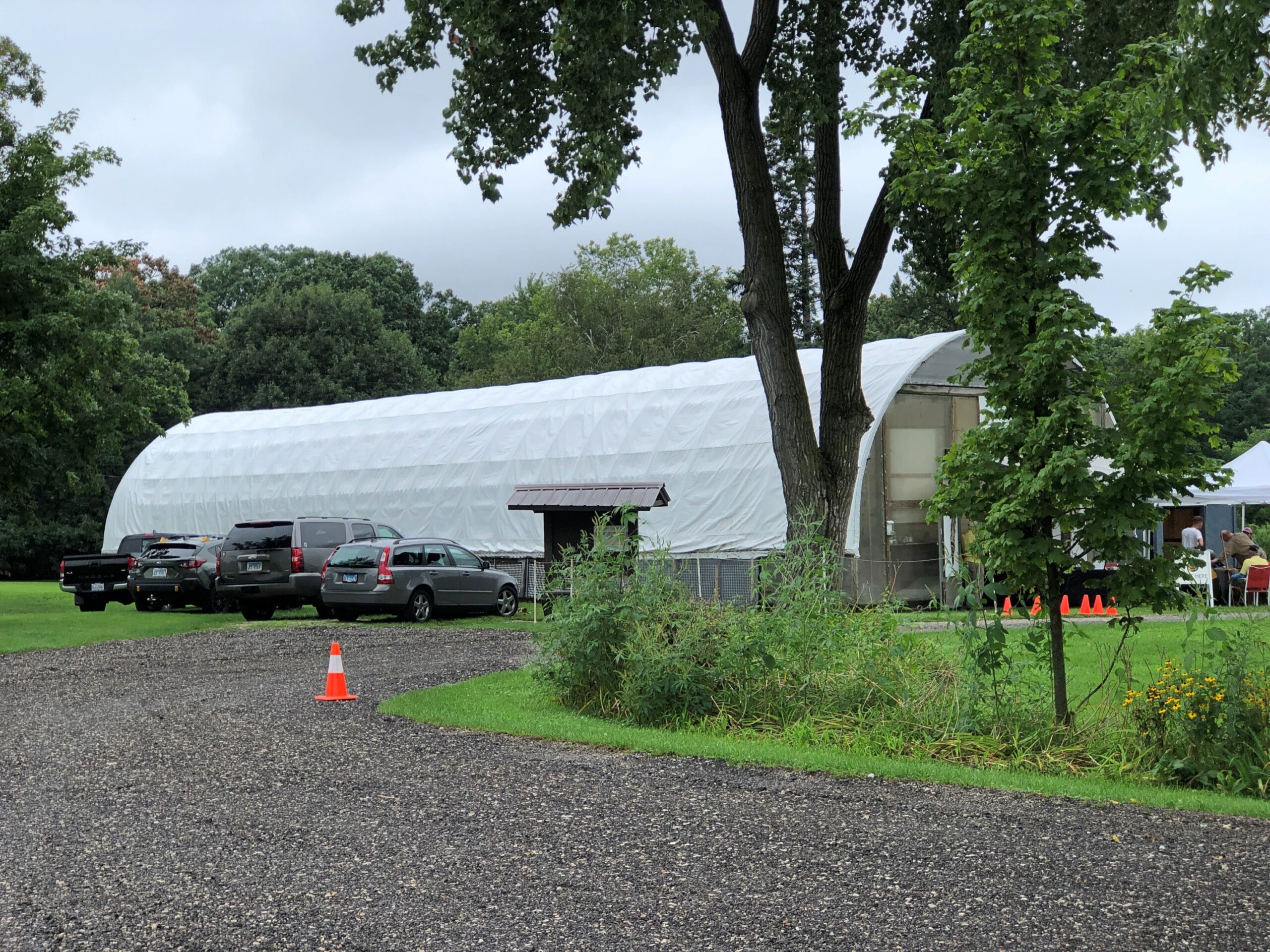
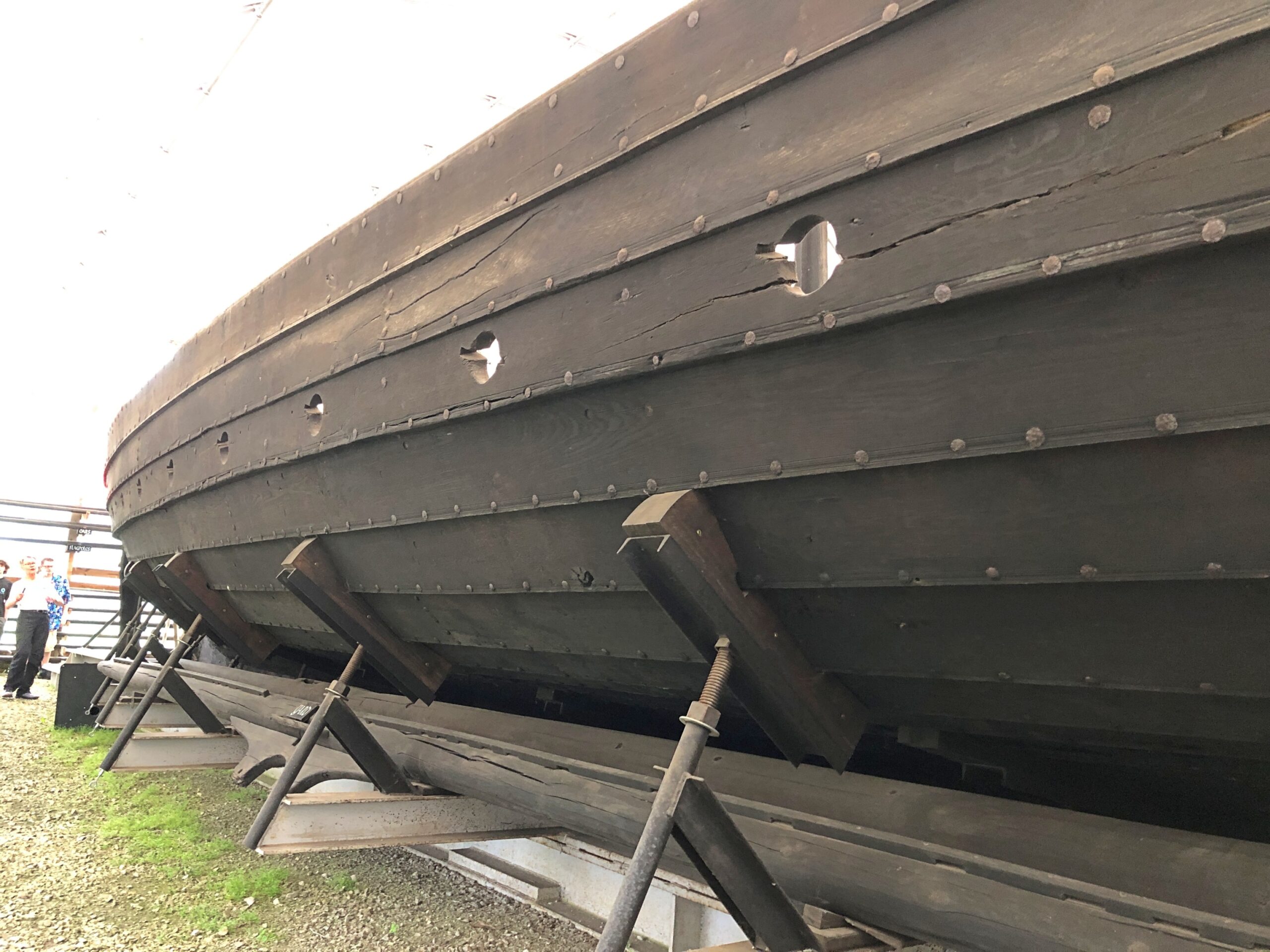
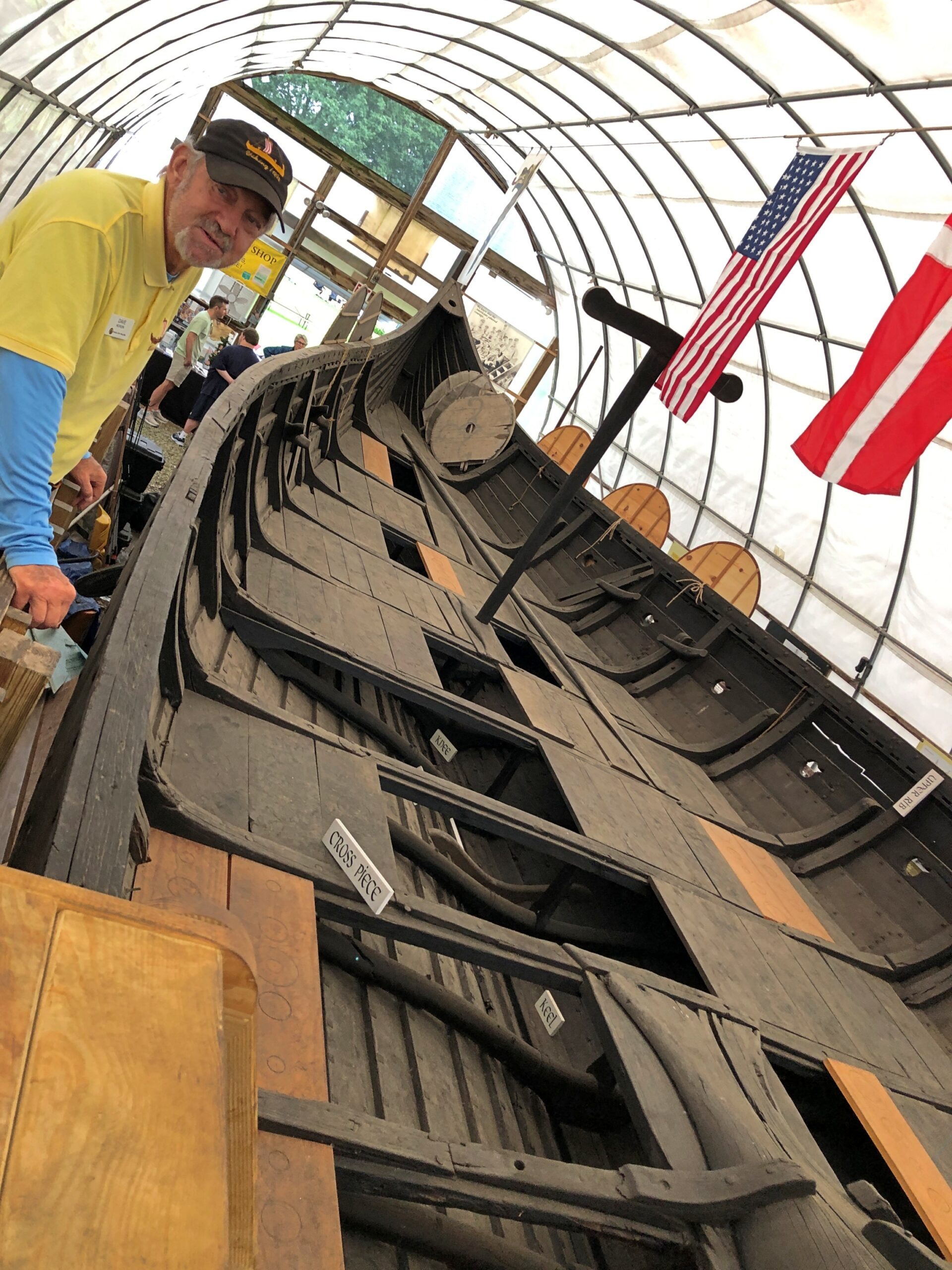
That same ship, in 2026, can be found under a temporary, Quonset-like structure in a field in Geneva, Illinois, not far from the Fox River.
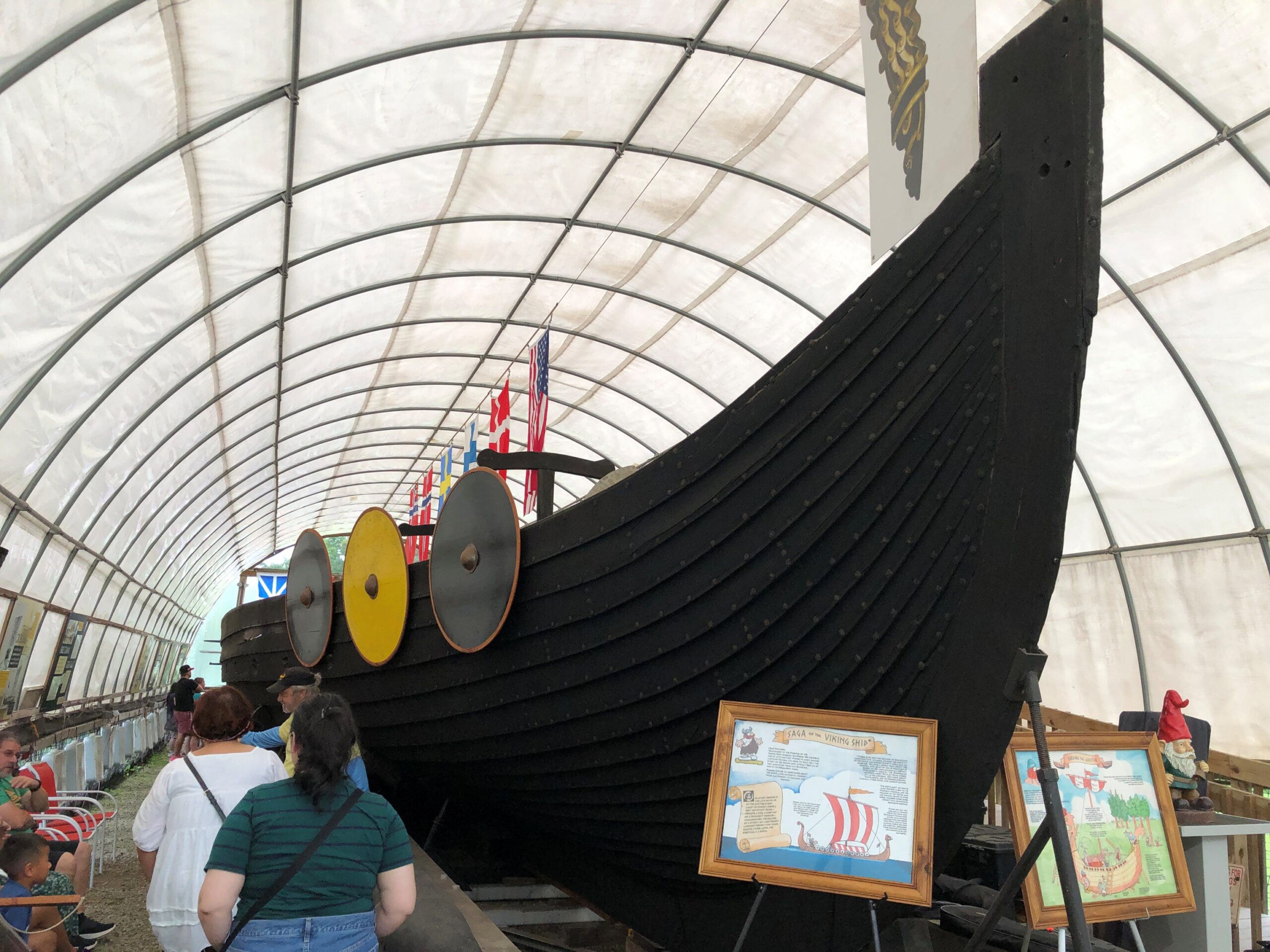
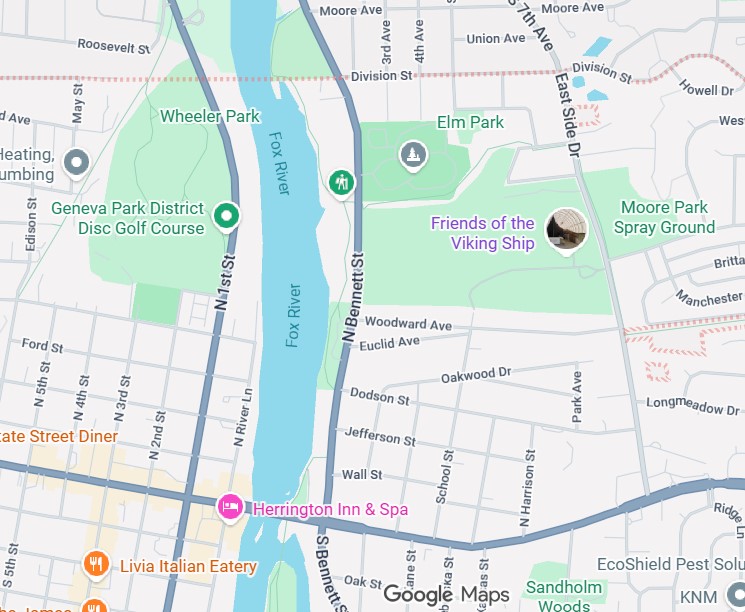
Once a month during the warm part of the year, the ship is open for tours, and we arrived on Saturday in the warm drizzle to take one. I knew about it because, examining Google Maps one day recently, I saw Friends of the Viking Ship.
Say what? It is a storied ship, and has good friends these days, since one of the first things the guide told us was that the nonprofit Friends of the Viking Ship recently acquired a site on which a permanent museum will be built to house the ship, whose formal name is the Viking.
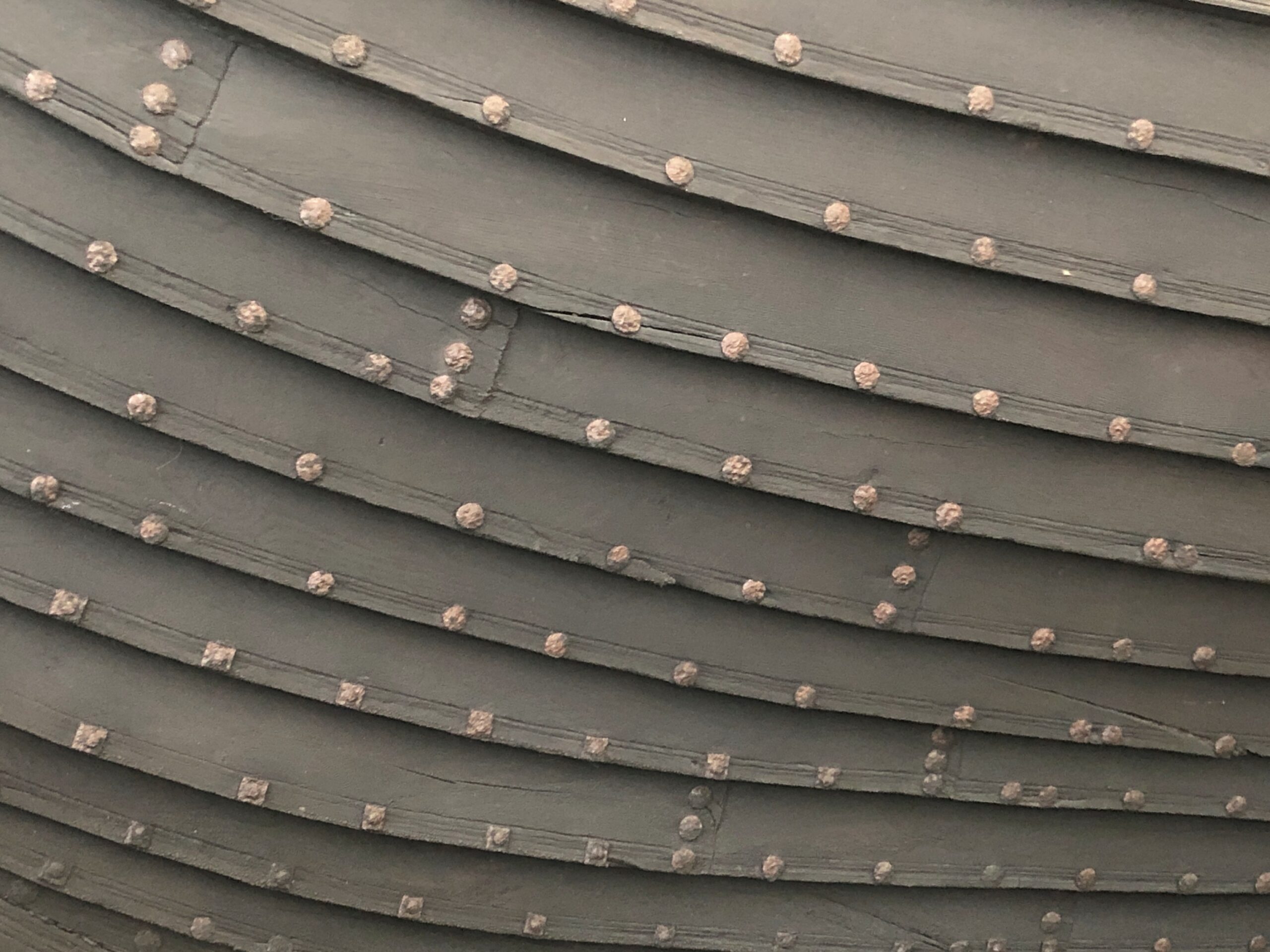
“Christen Christens’s Frames Shipyard in Sandefjord, Norway built the Viking in 1892-1893 after the ancient Viking ship Gokstad,” notes the web site of the park that is currently home to the ship. “In 1893 the Viking sailed from Norway to Chicago, via the Erie Canal and the Great Lakes, to the World’s Columbian Exposition and now displayed at Good Templar Park.”
Good Templar Park in Geneva is a whole other kettle of fish: a park owned by a temperance society. But for now, more about the ship. How did it happen that a replica of a 9th-century Viking ship sailed across the wild North Atlantic in the days before wireless communication, ice patrols or weather reports? Apparently they did have 1890s navigation equipment – a compass, quadrant and barometer, for instance – so it wasn’t quite like the voyages of historic Vikings. Close enough, though, as it was undertaken in an open ship (with a tent) powered by sail and, sometimes, a dozen men pulling oars.
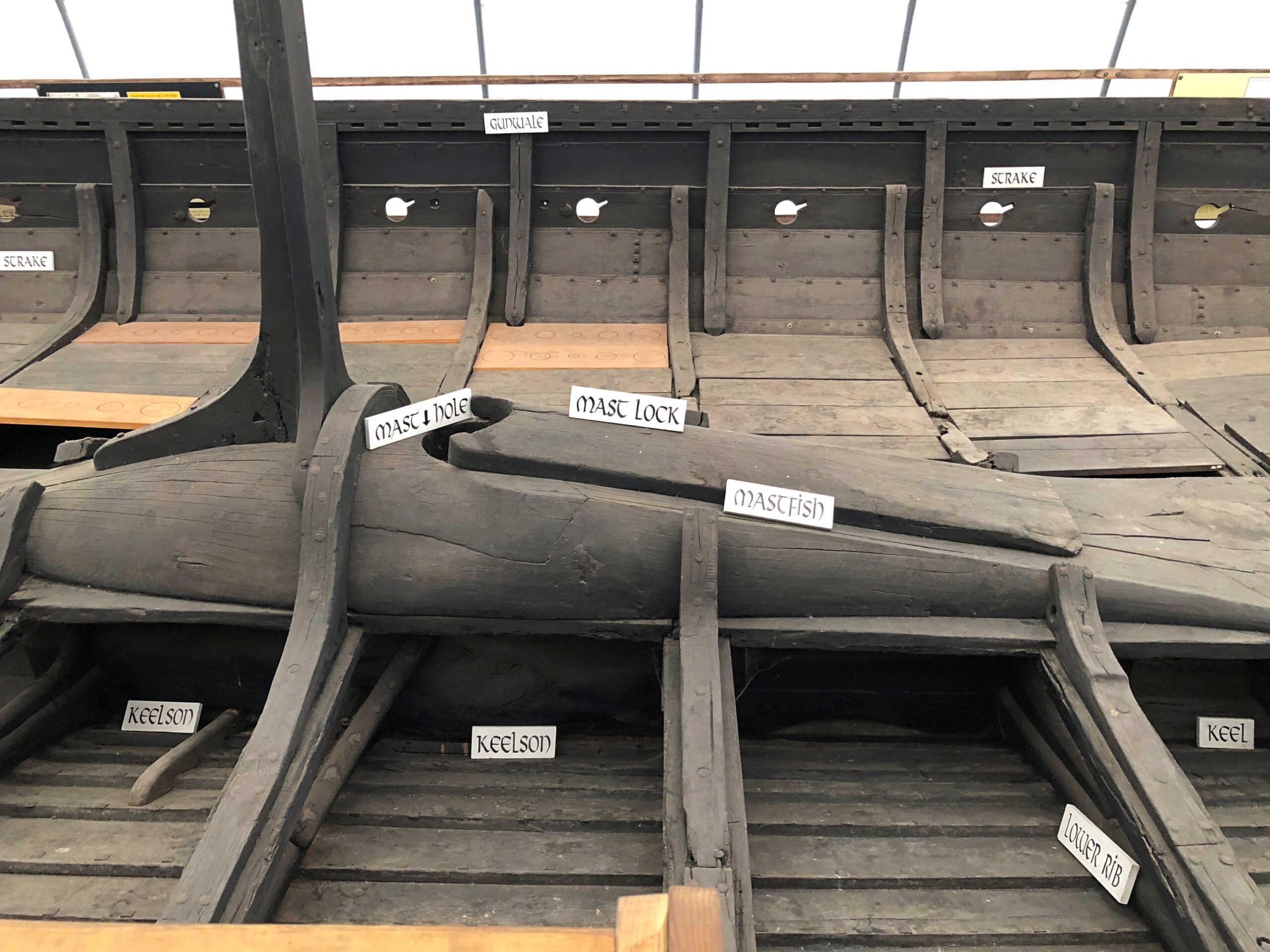
The tour involved a volunteer (let’s call him Bob) leading visitors all the way around the ship on a platform that allows you to look into, but not go onto, the vessel. Still, it’s a close look.
The why of it seems to be nascent nationalism on the part of Norwegians in the late 19th century, though that isn’t quite how Bob put it. Replicas of the famed (by 1893) Nina, Pinta and Santa Maria were due to visit Chicago – towed across the Atlantic from Spain – for the world’s fair. Who arrived in the New World long before Columbus? Plucky Vikings, of course, so a replica of a recently discovered Viking ship was built to sail to the fair under its own power. Norwegian pride, yes; and to upstage the johnny-come-lately Spaniards, too.
“The assertion had been frequently made that the Norsemen in their frail, lightly built galley could never have crossed the stormy Atlantic,” one Professor Hjalmar Hjorth Boyesen of Columbia College wrote in The Chautauquan in 1894.
“It so happened that an old Viking ship was unearthed at Gokstad, near Sandefjord, twelve years ago, in the grave or tumulus of an ancient chieftain. The idea occurred to Captain Magnus Anderson, the editor of the Norwegian Seaman Gazette, that if an exact reproduction of this ship were made, he would undertake to sail her across the Atlantic and thus give an incontrovertible demonstration that the Norsemen, at least, could have discovered America…
“An invitation was issued for a national subscription and the required amount [to build the ship] was procured, mostly in the small sums of ten, twenty-five, and fifty cents. The undertaking, I am told, was not popular with the upper classes, while it appealed strongly to the imagination of the seafaring population which readily kindles at an enterprise with a touch of heroism. It was first proposed to christen the ship Leif Ericson; but for some reason the name The Viking was preferred. In every particular, even to the minutest detail, she was made to conform to her ancient model.
“She is clinker-built, of solid oak planks, is 78 feet long, 16 feet beam, draws 4 feet of water, and carries 200 yards of canvas. She has no real deck, but a loose bottom, which tends to give her that elasticity when striking the waves.”
The ship sailed for Chicago on April 30, 1893. “On May 10, when north of the Orkneys, she was caught in a heavy gale… That stanch little craft kept bravely ahead, though she shipped several seas, and the crew was kept busy bailing, until their horny hands were sore and the blood oozed forth under their finger nails. But not once did they think of turning tail; for they were all buoyed up by the thought that they had the honor of Norway in their keeping, and that, in a measure, they were to prove her claim to the glory of having first discovered the New World.”
When the Viking did reach the New World, its crew were feted on the Eastern Seaboard and elsewhere, and of course in Chicago. Ah, but fame is fleeting, etc. In the early 20th century, the ship was on display at the Field Museum but later suffered the indignity of being basically forgotten and in storage, owned by the Chicago Park District. The marvel is that she survived at all. Stabilization and restoration have been underway since the 1990s.
I was happy to do my little part – admission to the tour, and buying a few postcards – to put the ship in a proper museum, for its remarkable story, and the fact that it is probably the largest existing artifact of the World’s Columbian Exposition.
This morning I woke from a dream briefly persuaded that there had been a crossover TV show combining Star Trek and Gilligan’s Island. This is the kind of idea that evaporates immediately after your conscious mind snaps back in place with the thought: no, that never happened. Sometimes, emerging from a nightmare, the feeling is relief. Other times, emerging from a good dream, the feeling is that you want more. I’m not sure what this particularly odd dream counted as.
Still, the idea isn’t quite as ridiculous as it sounds (just mostly), since those shows aired roughly during the same period. For a uncharted place in the Pacific, visitors seemed to show up with regularity on the Island, for all the good it did the castaways. Also, the Enterprise was known to travel in time somehow, especially to the 20th century, though if I were putting such a crossover together, I think it would be one of the shuttles landing on the Island.
All this only goes to show what Jung said about the unconscious. Like Camelot, it is a silly place.
***
Another fine local place to visit in the summer, or really most of the year, is Spring Valley. At Spring Valley, according to the Schaumburg Park District, “the following activities are encouraged: Walking, birdwatching, sketching and painting, photography, reading and writing, relaxing, and learning.”
We don’t do all of those, but walking is a fine thing to do, as is photography. Summer is a lush time.
Complete with its own array of flora.
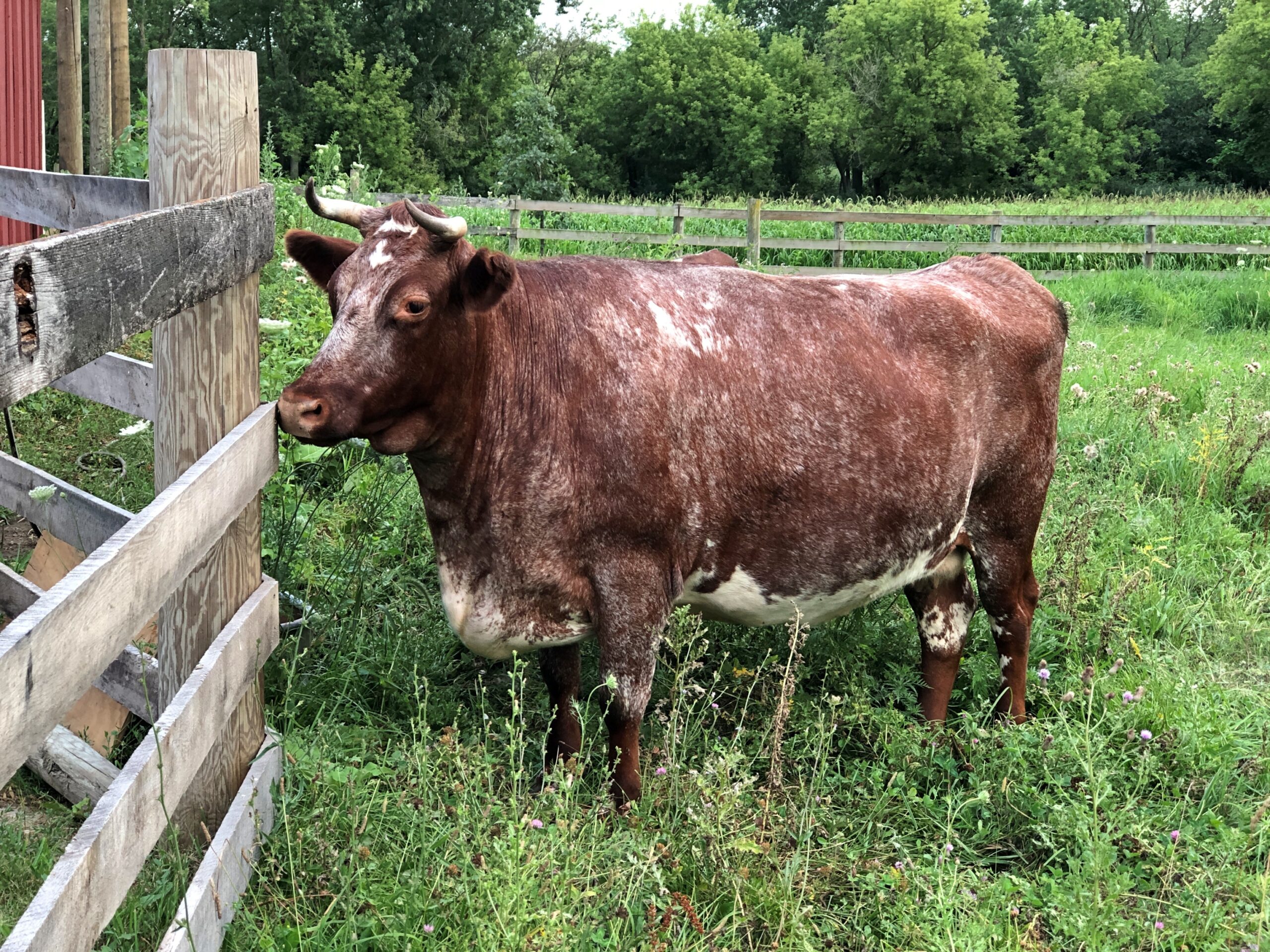
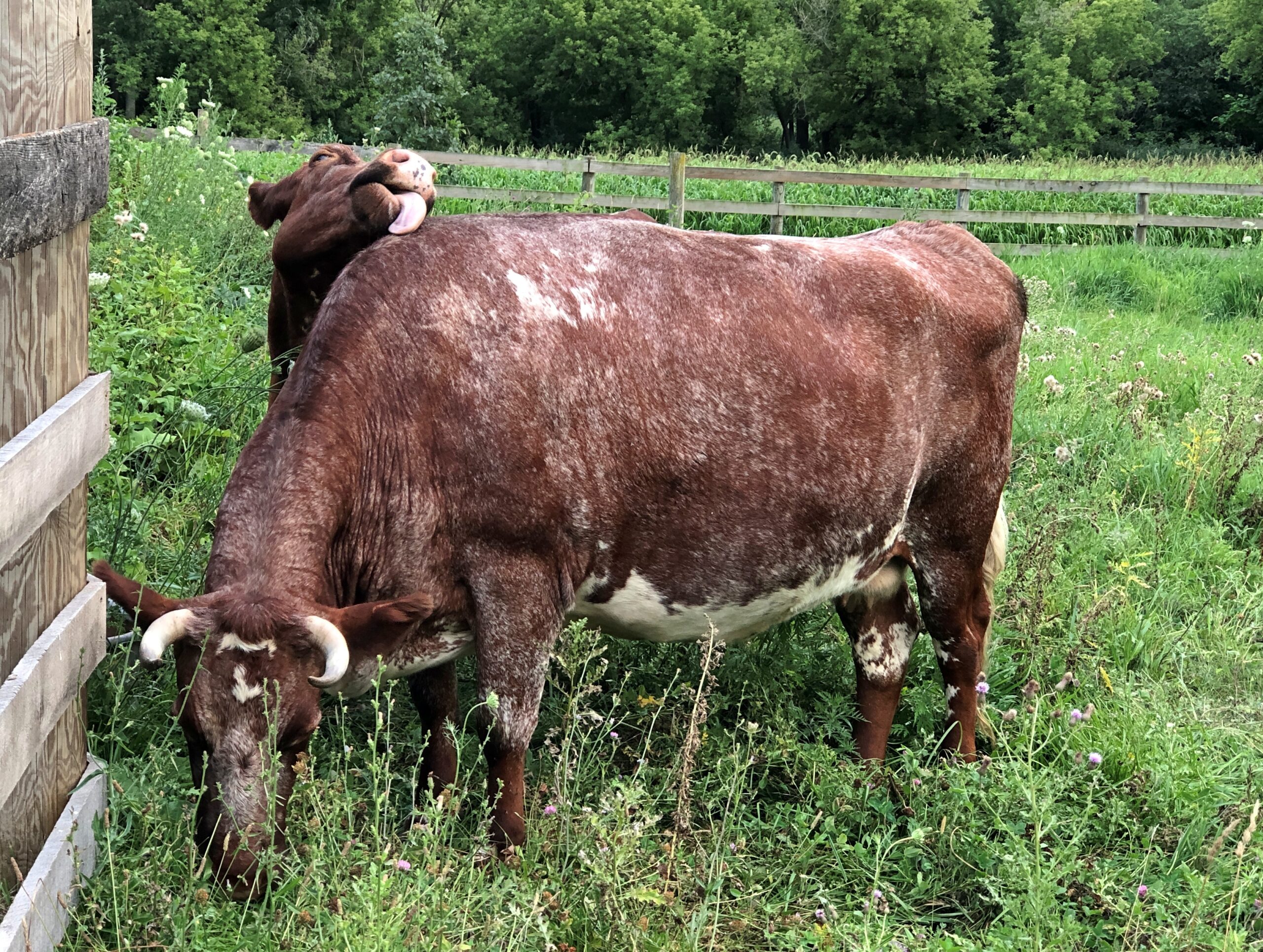
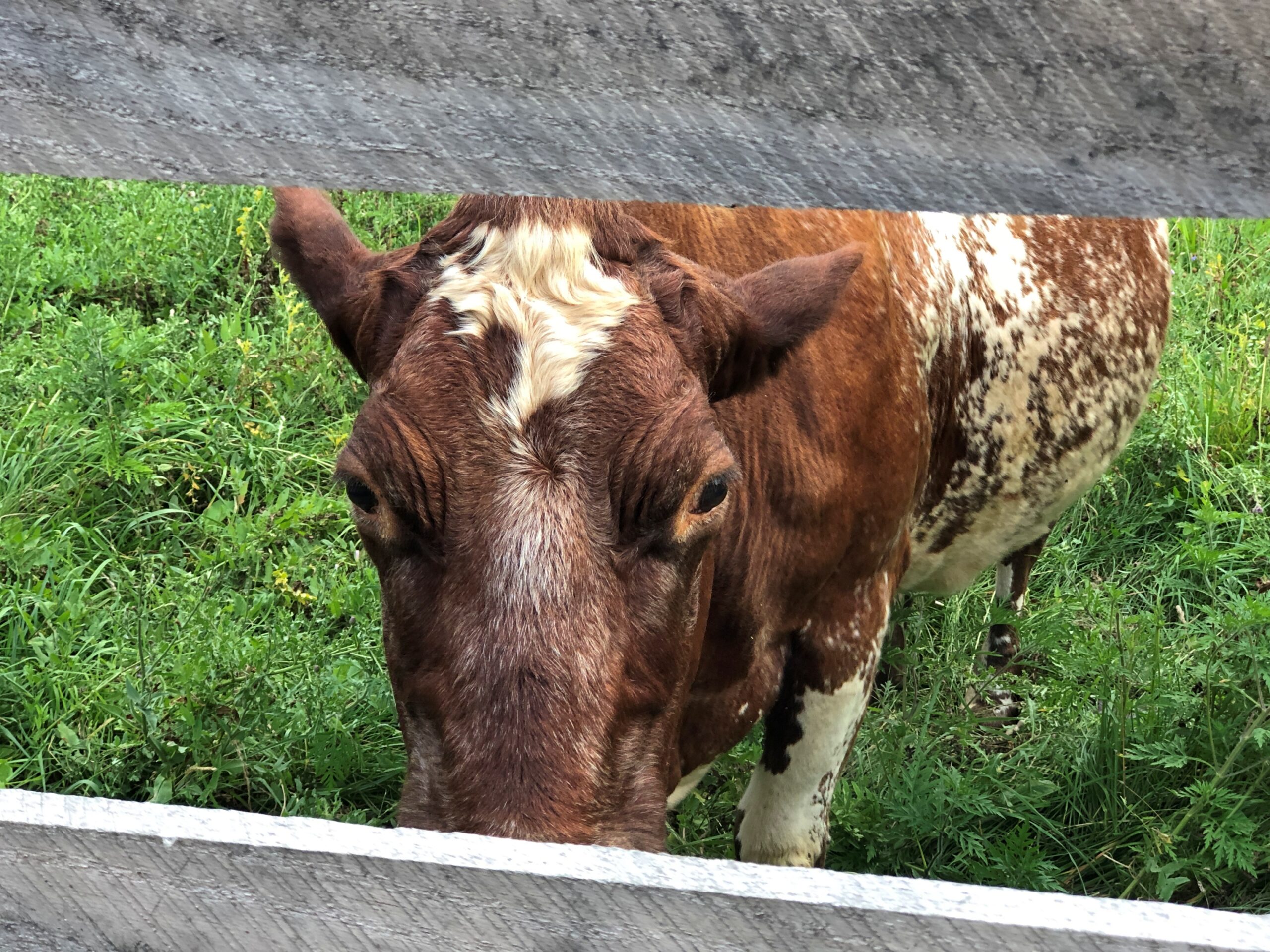
The preserve also includes a open-air farm museum, which I’ve noted before, and recently. But the time we were there in May, the animals were on vacation, or at least tucked away somewhere. In July, we got a look at the cows.
Behind fences, and a good thing too. Those beasts are massive.
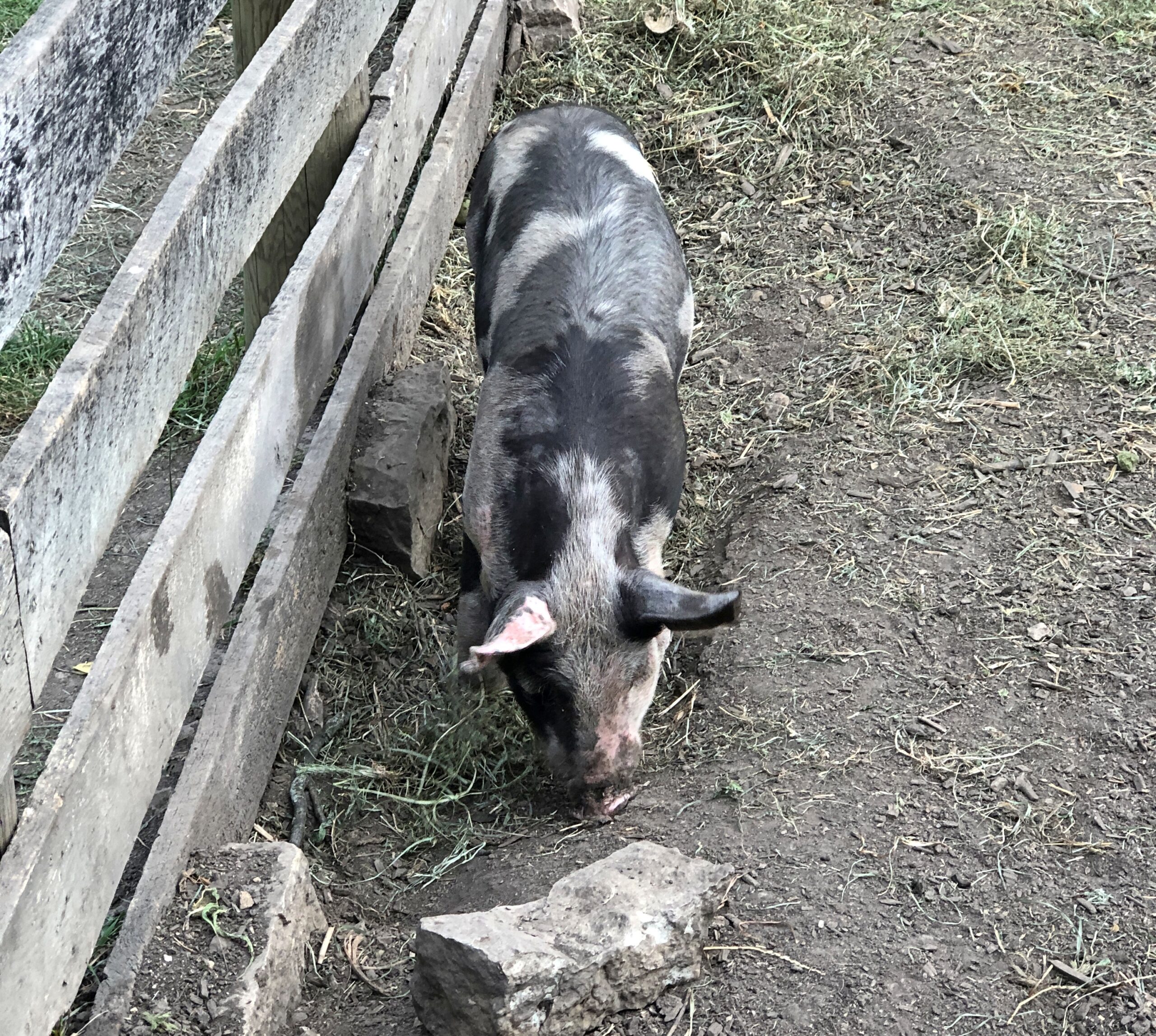
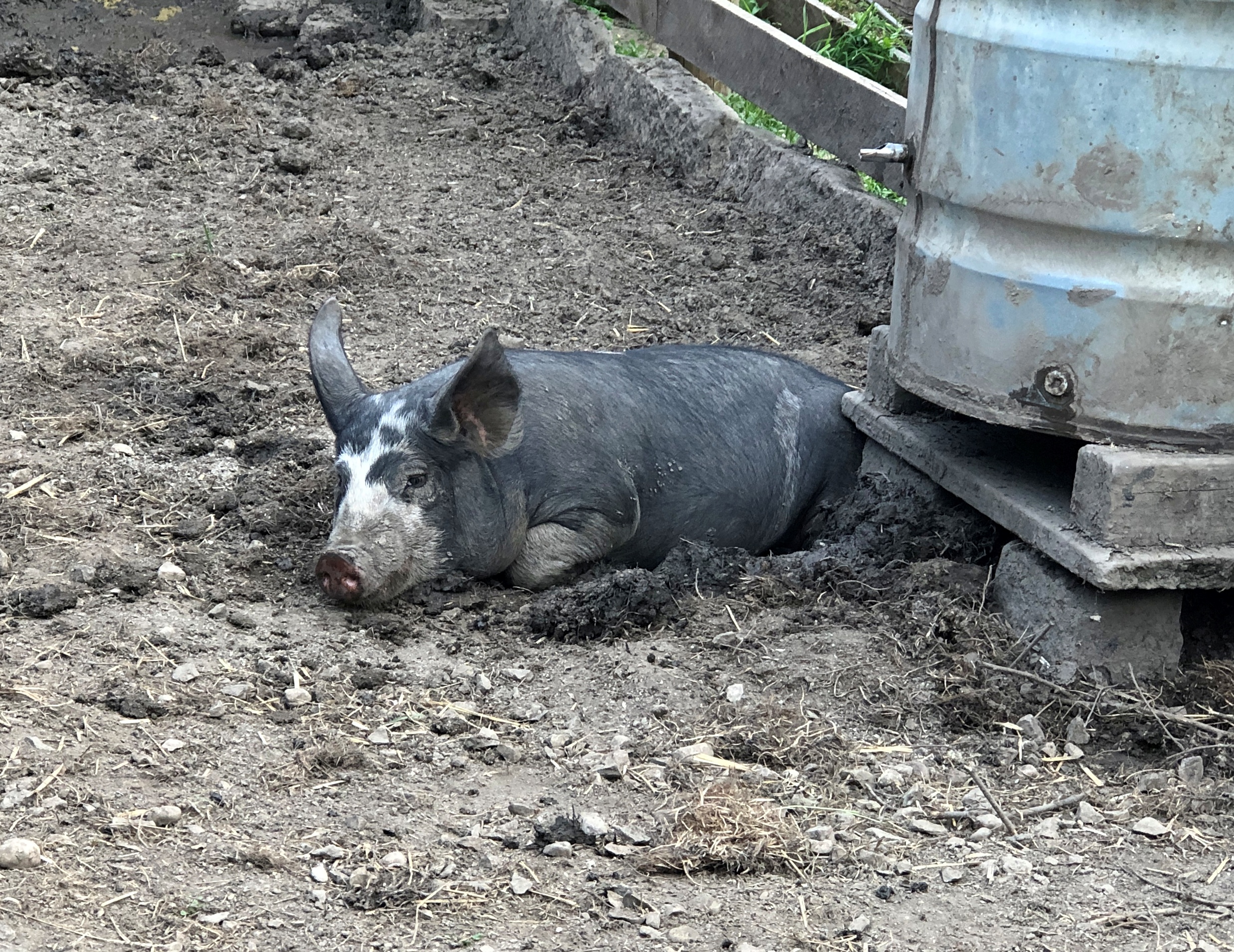
Pigs.
Also behind fences, and a good thing. Those beasts are smelly.
Yet another example of something not just for kids, though people often think that. Sure, the kiddie-winkies enjoy visiting a pseudo-farm. I can attest to that personally, having taken small children to this very place, once upon a time. But also enjoyable for us adults. If nothing else, seeing such animals up close reminds us of where our burgers and bacon come from.
How is it that, in stereotypical gendered thinking, men are supposed to have little interest in flowers? Or, put another way, how is it women are supposed to have so much?
There might be scholarly tomes on this very question, but I’m going with my usual reductionism and point to the usual suspects: Victorians, who encouraged upper- and middle-class women practice floral arrangement and paint botanical still lifes, as activities considered suitable for the fair sex, with florists and their ad men partners in the 20th century taking up the task of selling the products of a burgeoning flower-growing industry to women. So here we are.
Yet all sorts of flowers appear in heraldry, which evolved from designs on shields, helmets and crests – elements of armed combat, in other words, and what could be more manly than that? It was the Tudor rose, not the Tudor quince.
On the other hand, I’m not particularly interested in receiving a bouquet as a gift. Gender norms are pretty sticky.
Some of us have been known to name girl children after flowers. Except that her mother is also named “lily,” since the Japanese for that flower is ユリ(yuri). And I insisted that the name Lilly be distinct from the flower Lily, but of course the latter spelling is actually more common these days in the English-speaking world as a name. Ain’t language fun?
Never mind. I enjoy looking at flowers. Also, taking their pictures, since they don’t move much (except in a high wind), you don’t need their permission, and they can make highly aesthetic images. Not long ago we visited Volkening Lake in Schaumburg, as we often do, and July is an especially good time and place for flowers there. Such as along the shore.
Through the marvel of Google Images — something I didn’t really appreciate until recently — I can look up which flower is which, including common and scientific names.
Such as Oakleaf Hydrangea (Hydrangea quercifolia).
Smooth Oxeye (Heliopsis helianthoides), also known as the False Sunflower. I can see that.
Bergamot or — and this is a fine alternate common name — bee balm (Monarda fistulosa).
Ironweed flower (genus Vernonia).
I liked this one so much I played around with the image. Reminds me of something you might see in the distant reaches of space. AI Prompt: Refashion into a nebula. So you have it: The Ironweed Nebula.
One I knew: Queen Anne’s Lace. But not the scientific name (Daucus carota). I didn’t know it’s the wild carrot. One of the most common flowers of summer around here, though not originally native to North America. Our back yard is lousy with them.
Near the lake are some flower beds. I knew this one, too: Marigolds (Tagetes erecta).
But not New Guinea Impatiens (Impatiens hawkeri), though if I remember right, my mother was fond of them.
Or the Globe Amaranth or Button Flower (Gomphrena globosa).
AI Prompt: Refashion as stars being born in a nebula.
The Button Flower Nebula. Not especially celestial, but nice to look at.
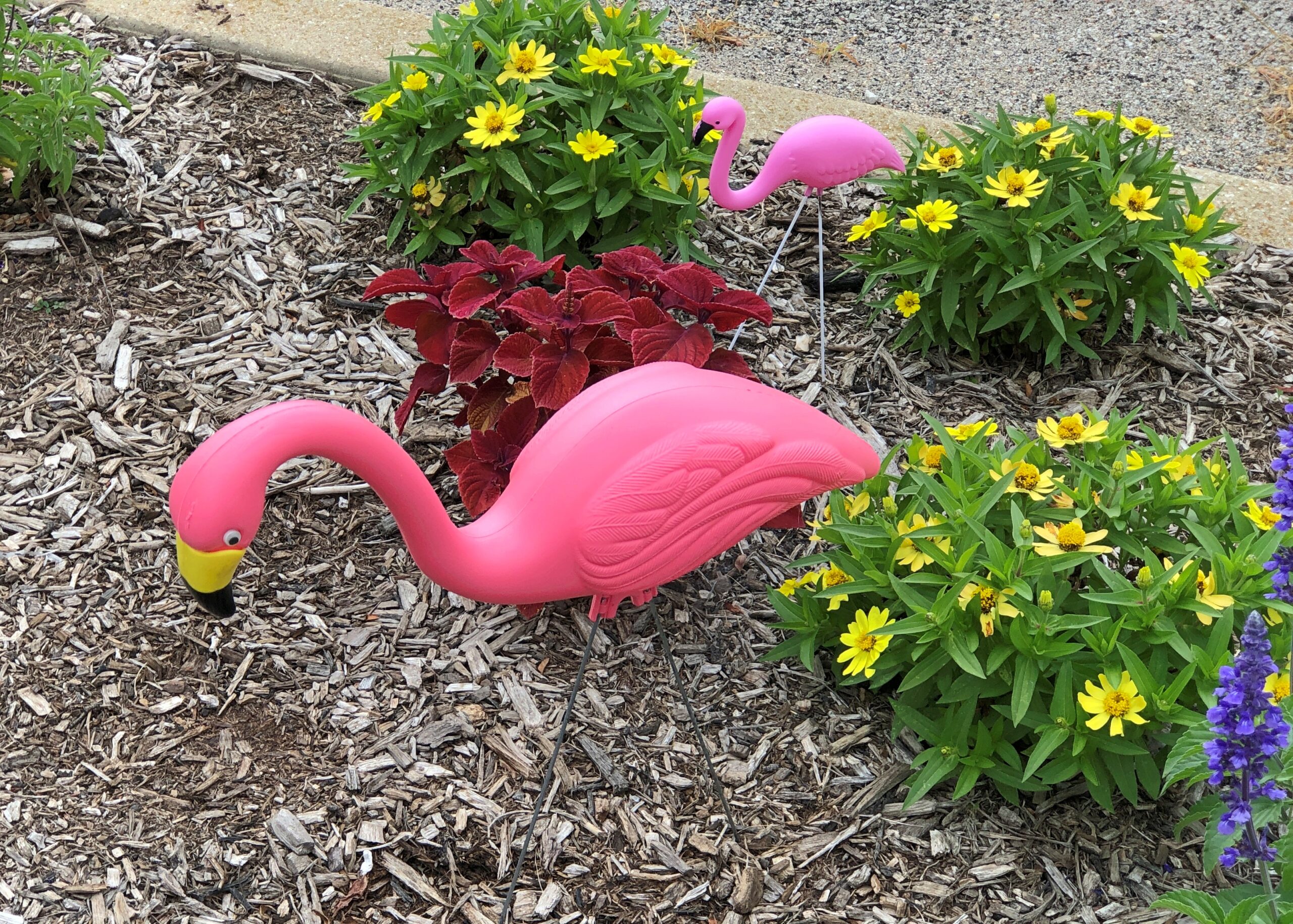
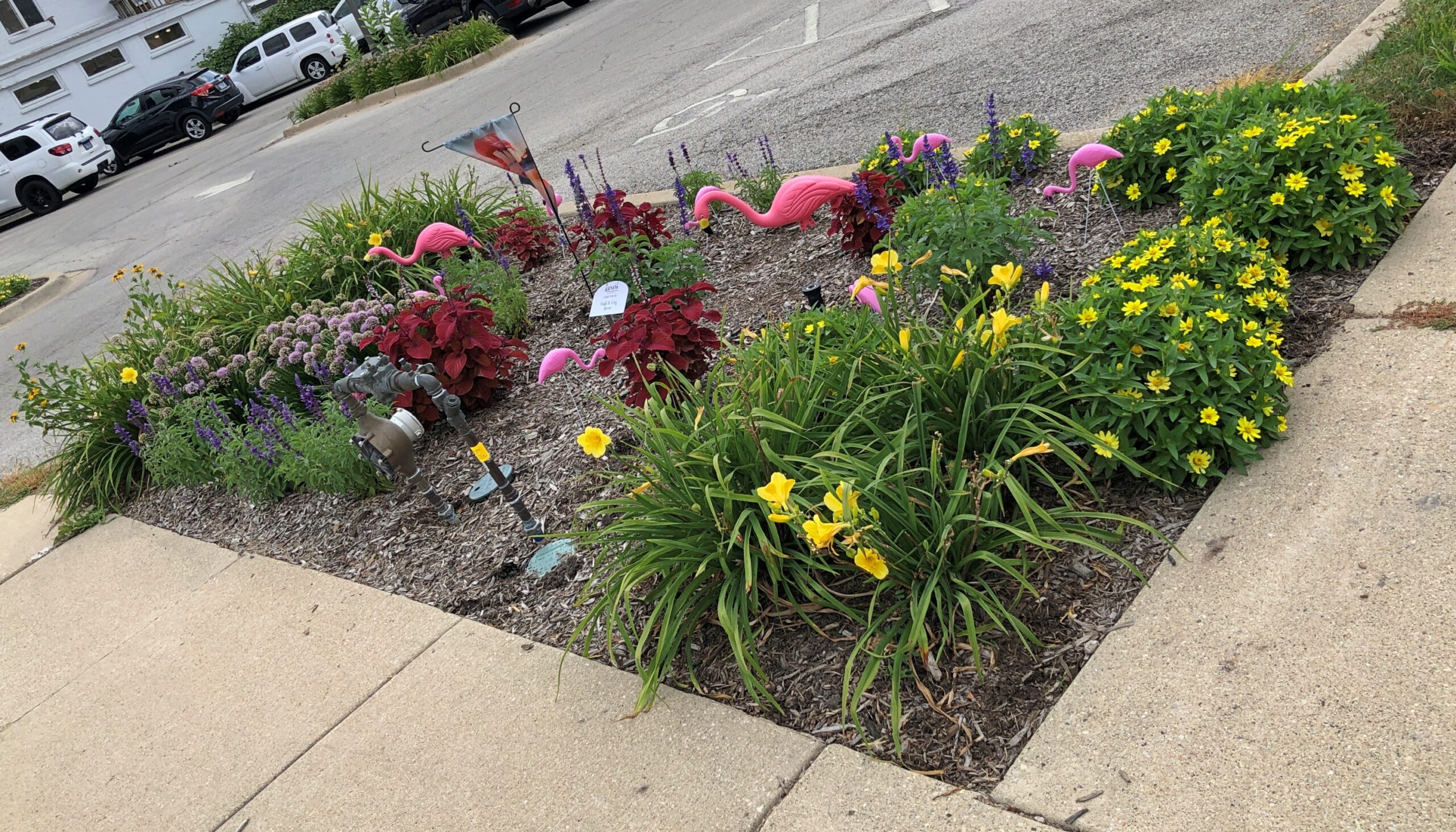
Not long ago, I was reminded that I need to acquire at least one pink flamingo for the deck, since the previous one — a dollar-store purchase when $1 was still the usual price — had fallen to pieces after repeated summers and winters. I was reminded because I saw some out in the wild.
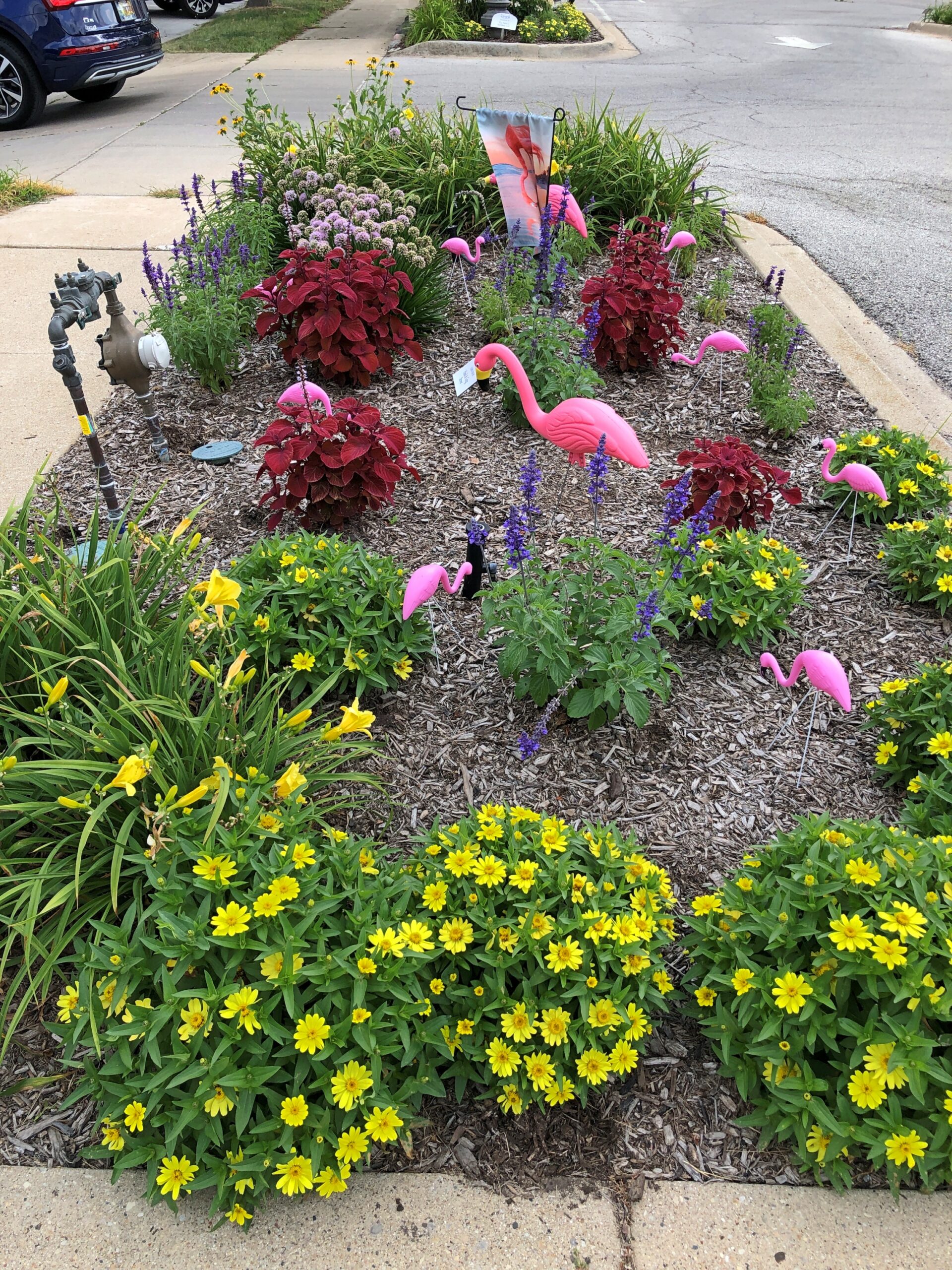
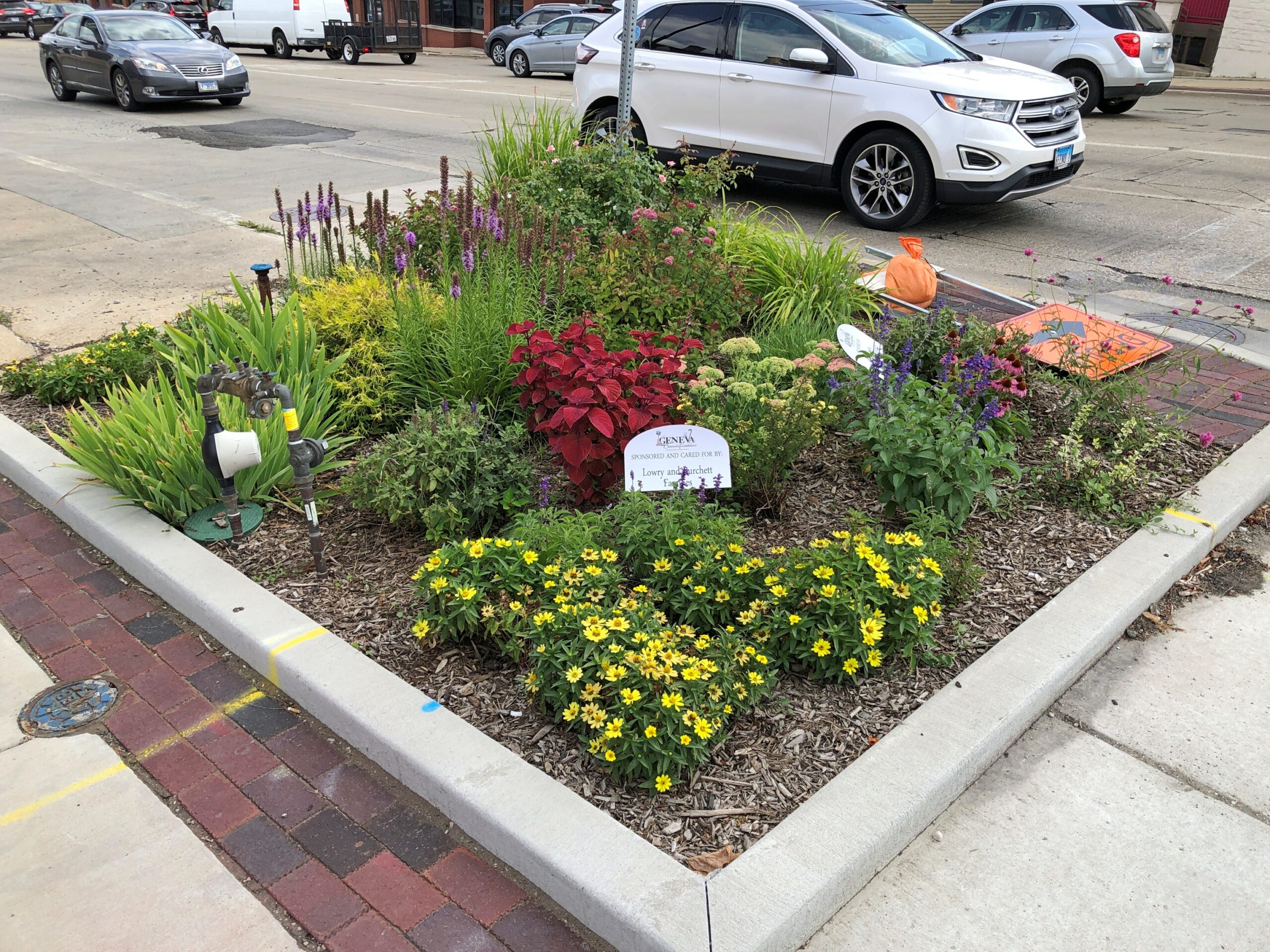
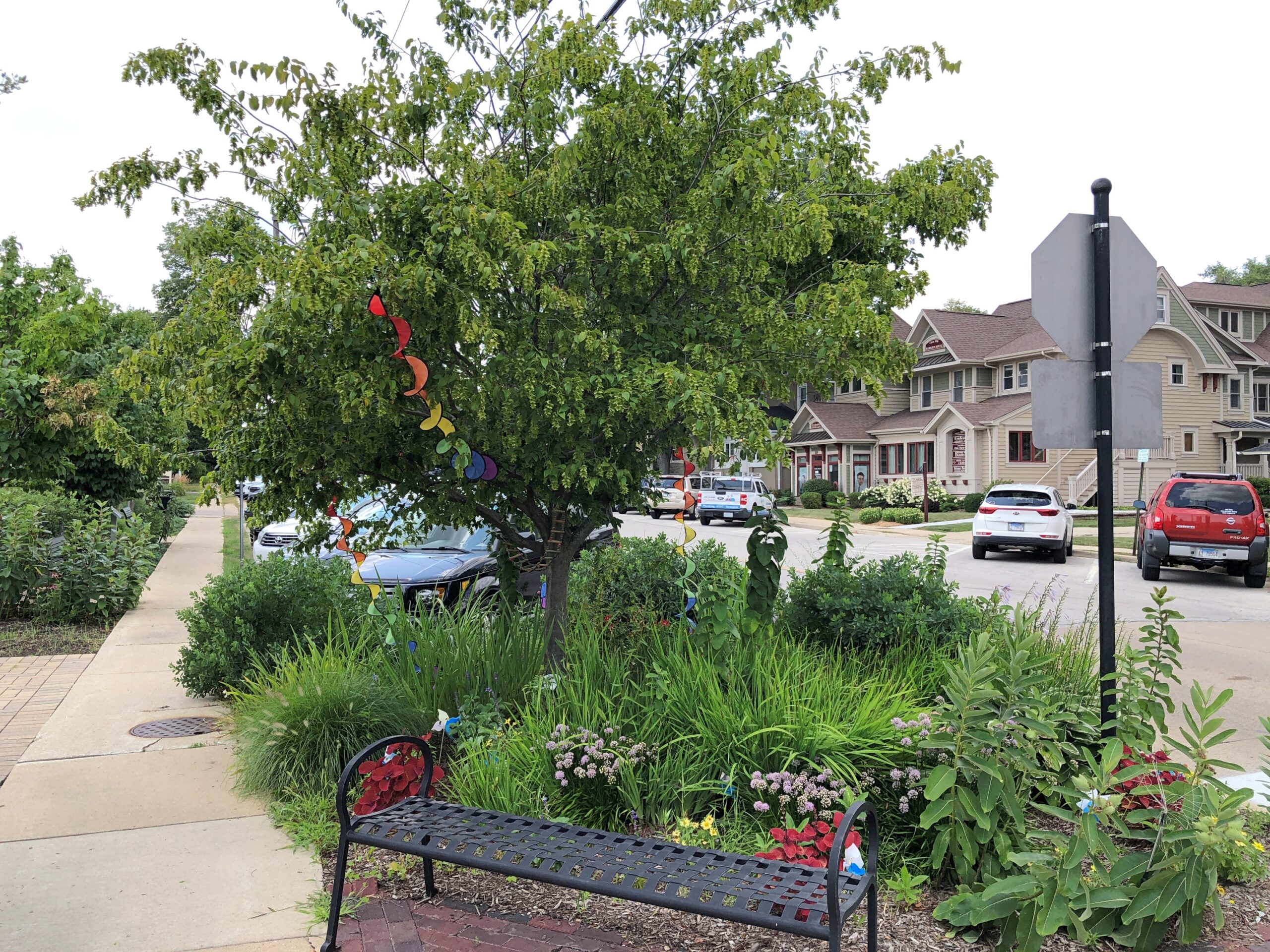
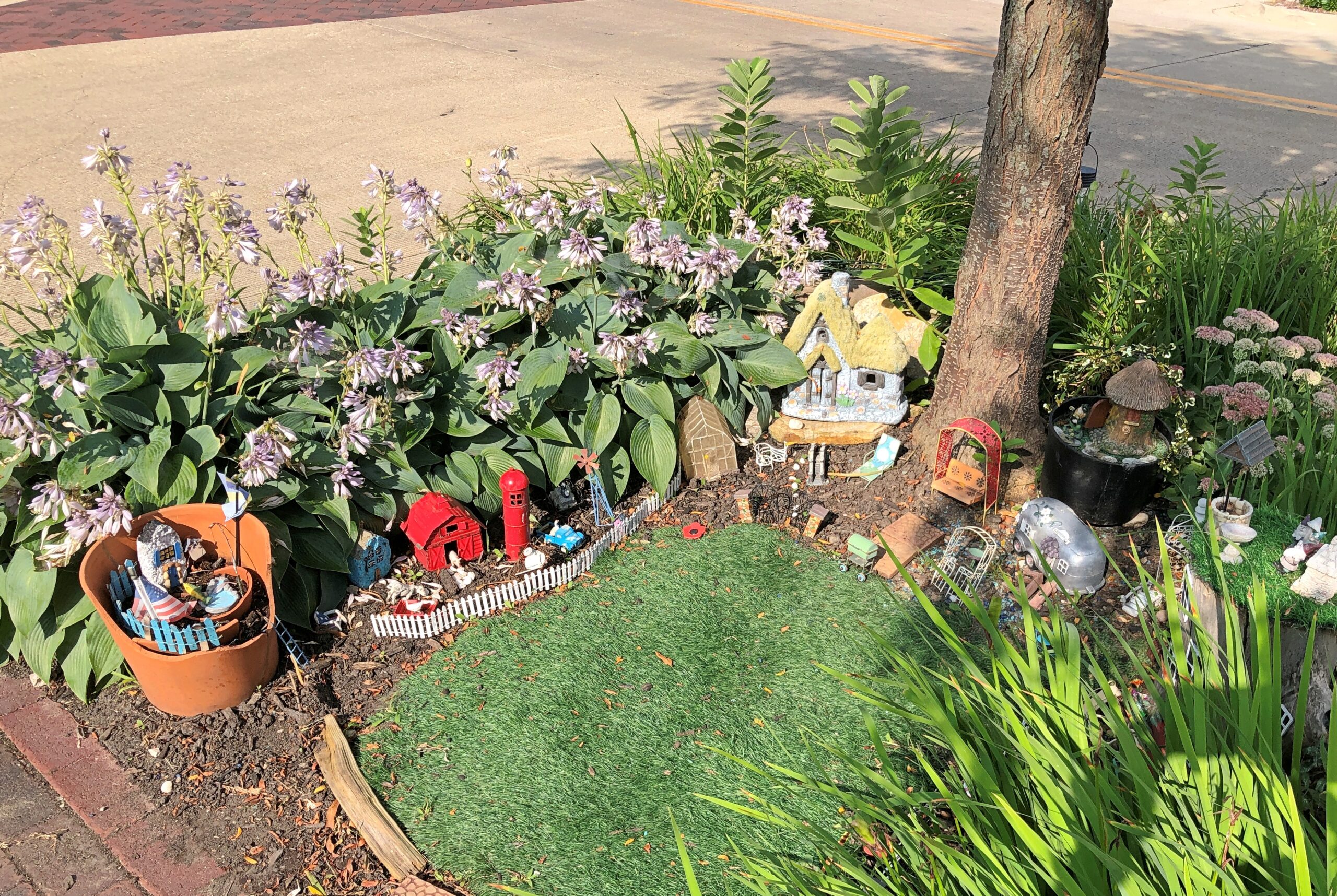
We’d parked on Hamilton St. in Geneva, Illinois, a street distinctive for its plantings on the odd land shapes created by the various angled meetings of streets, parking lots and sidewalks.
Other examples, among a number on the street.
Nice. I suspect volunteer planting and maintenance, but that’s only a hunch. A nice scattering of greenery in a hard-surface context regardless.
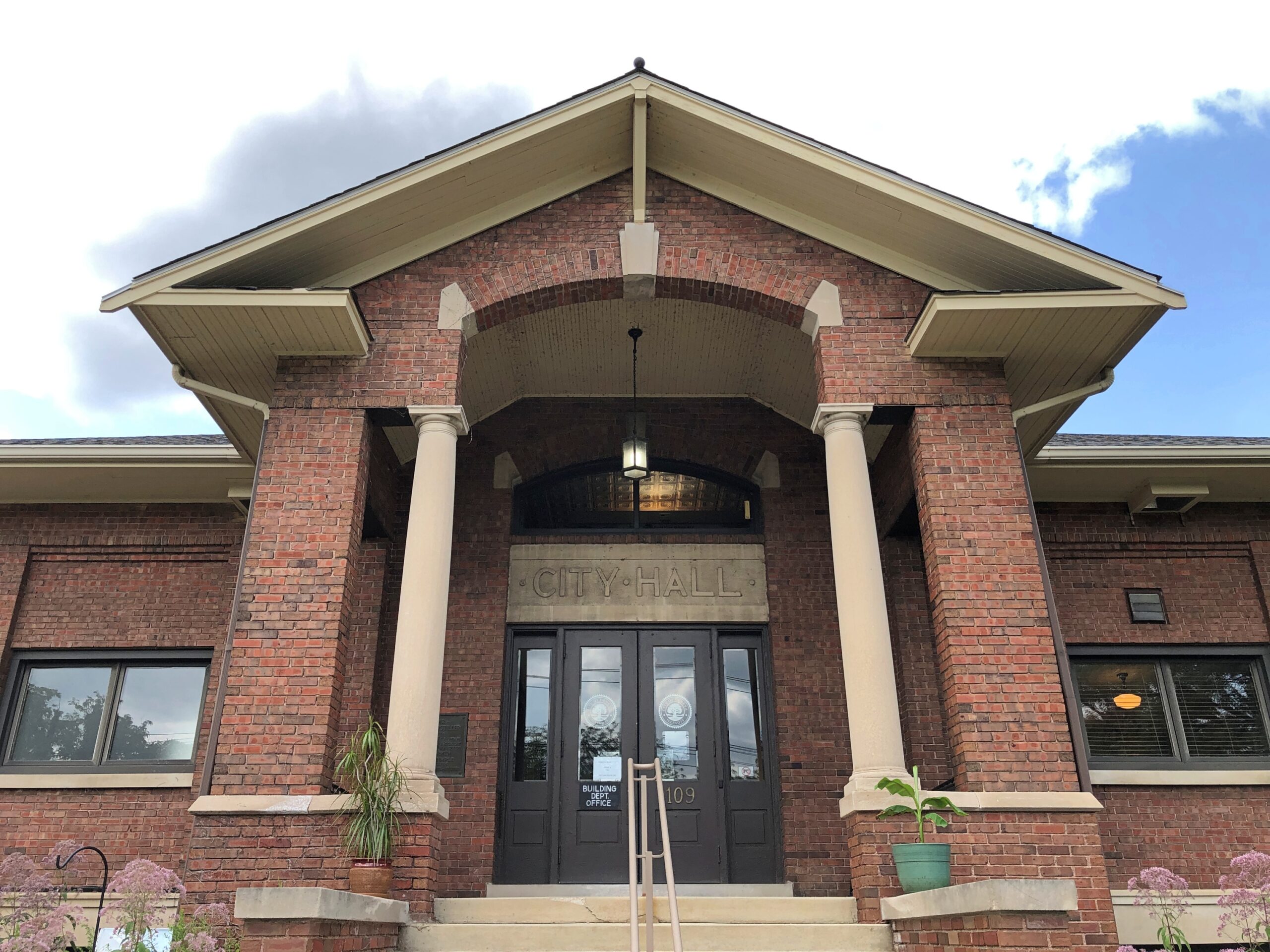
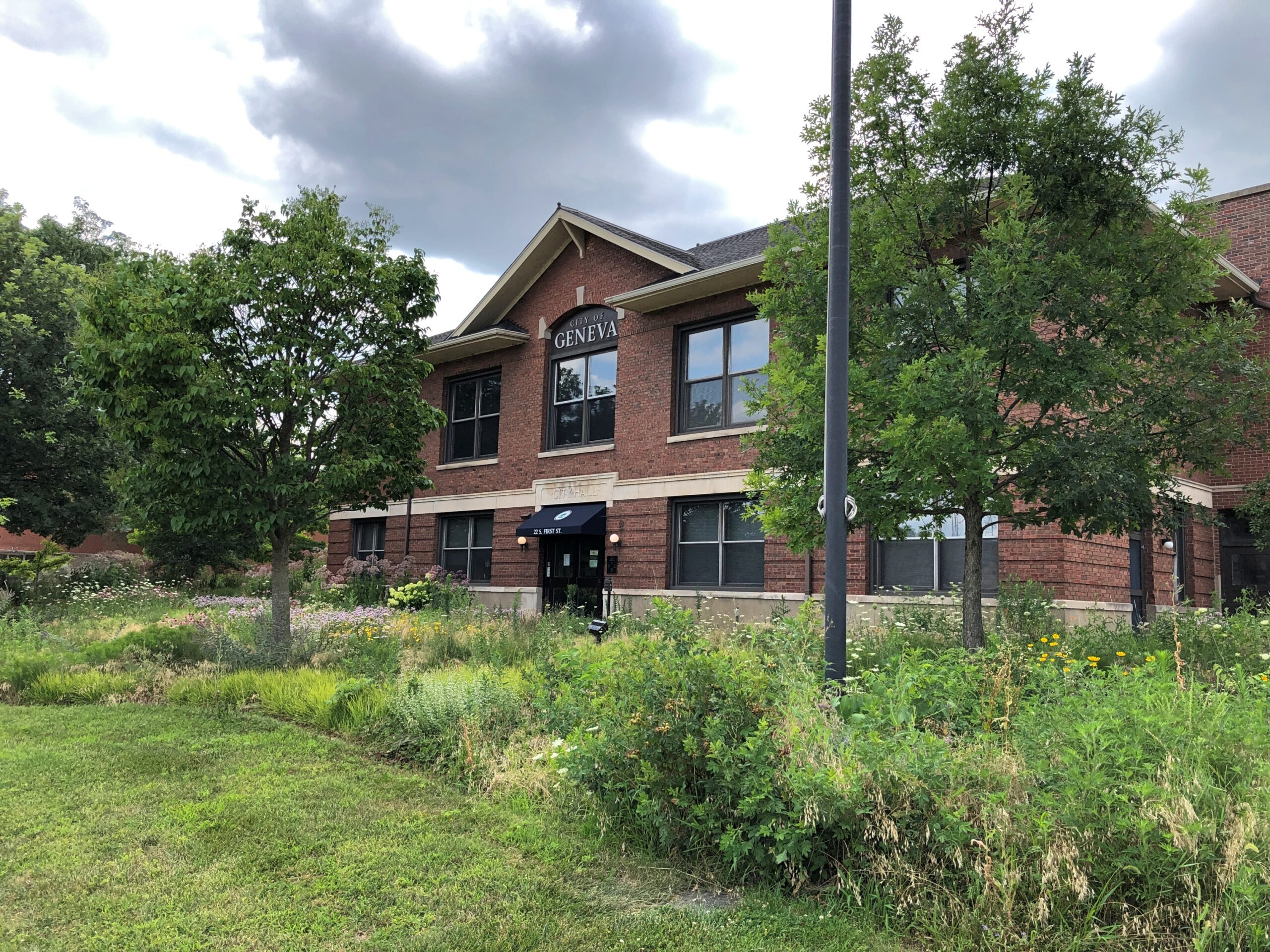
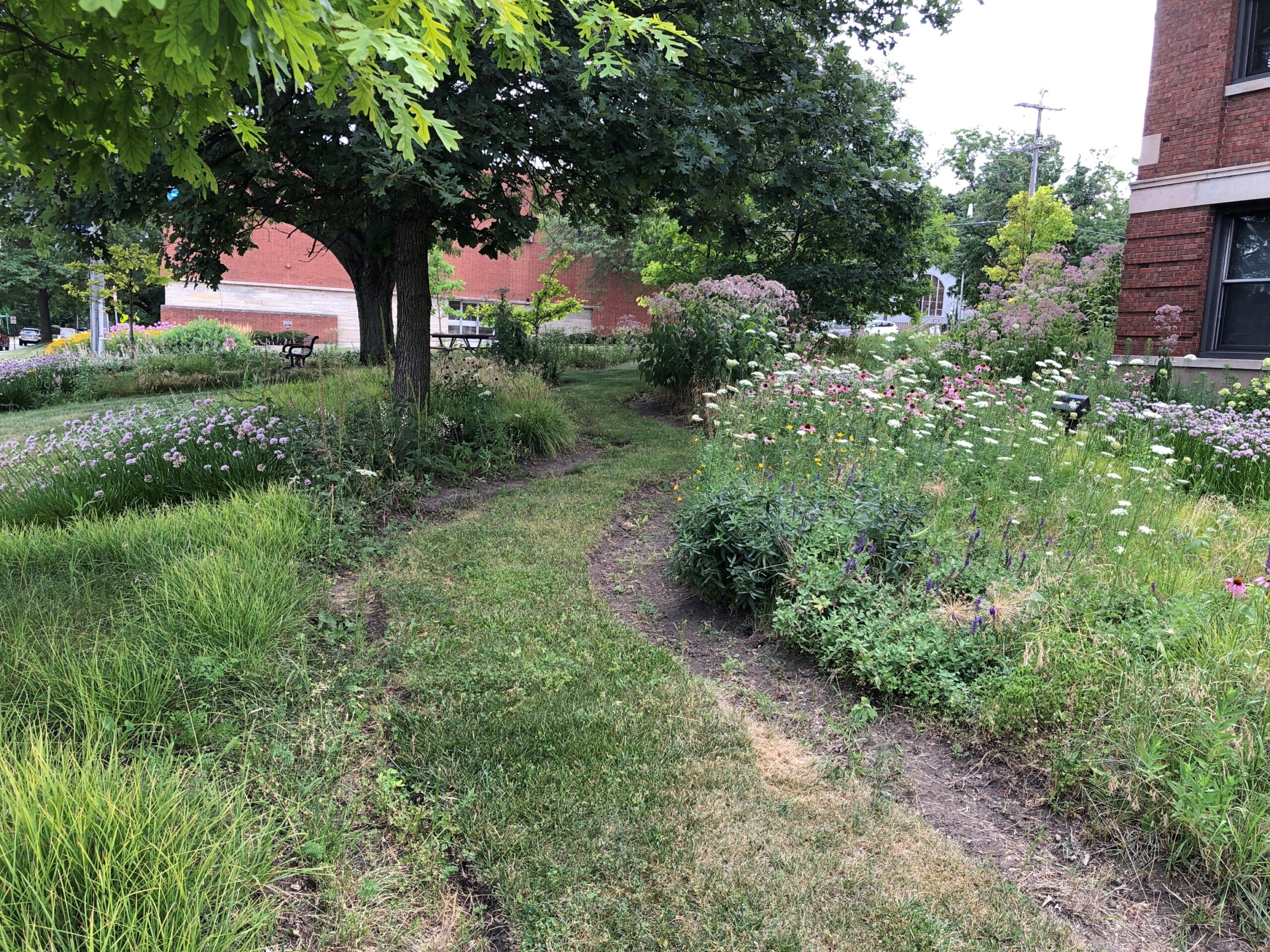
Or they might represent a city-sponsored activity, since greenery is an important aspect of the grounds around the 1913-vintage Geneva City Hall.
Going for that prairie look, and not the kind attributed to FLW, but actual grass prairie.
A little more municipal whimsy.
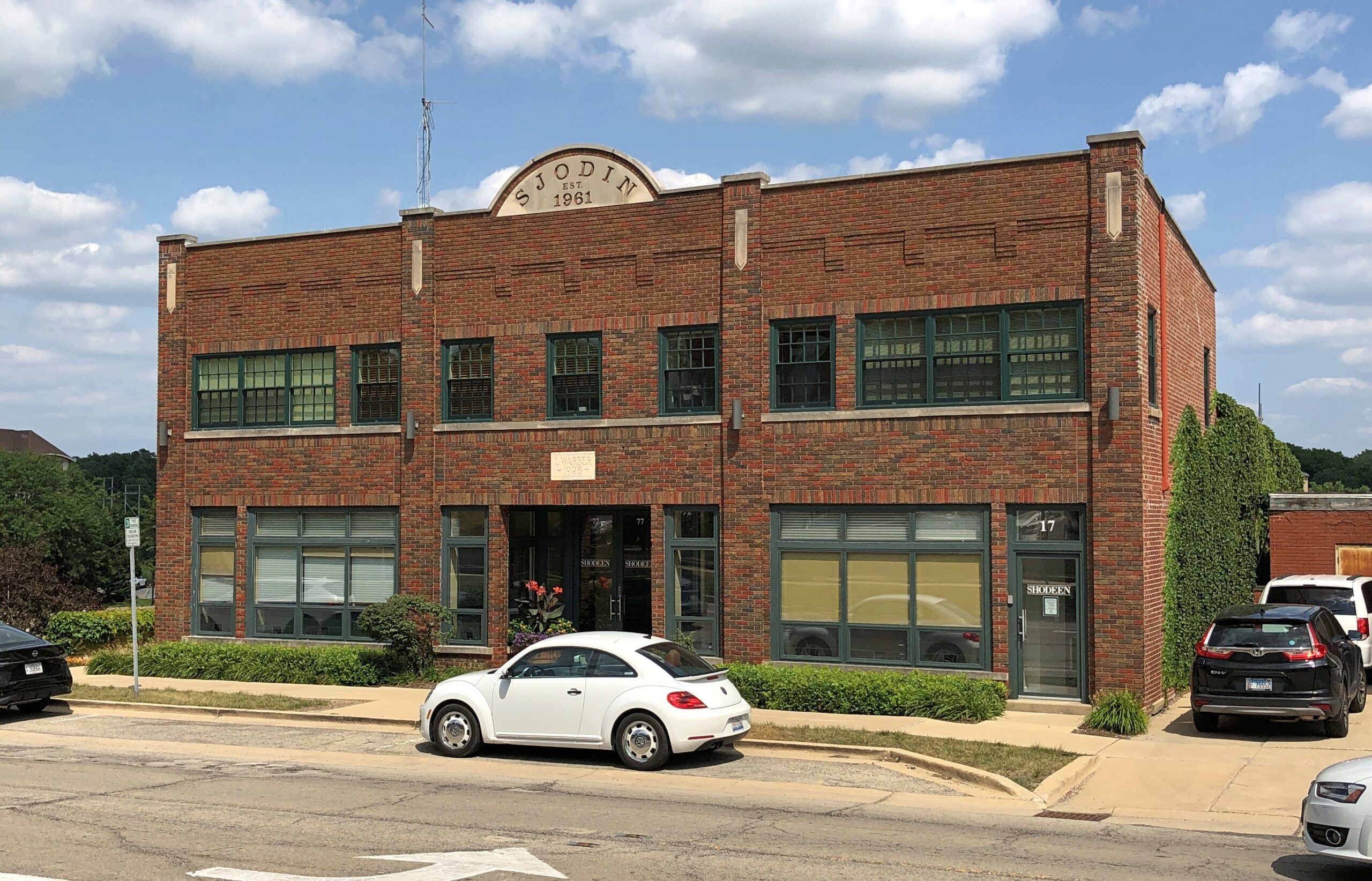
Not far from City Hall is a handsome brick building with “Sjodin Est 1961” on a lunette on top and a smaller stone plaque over the door that says “L. Warber 1928.” Sjodin must be an early version of Shodeen, the residential developer that occupies the building.
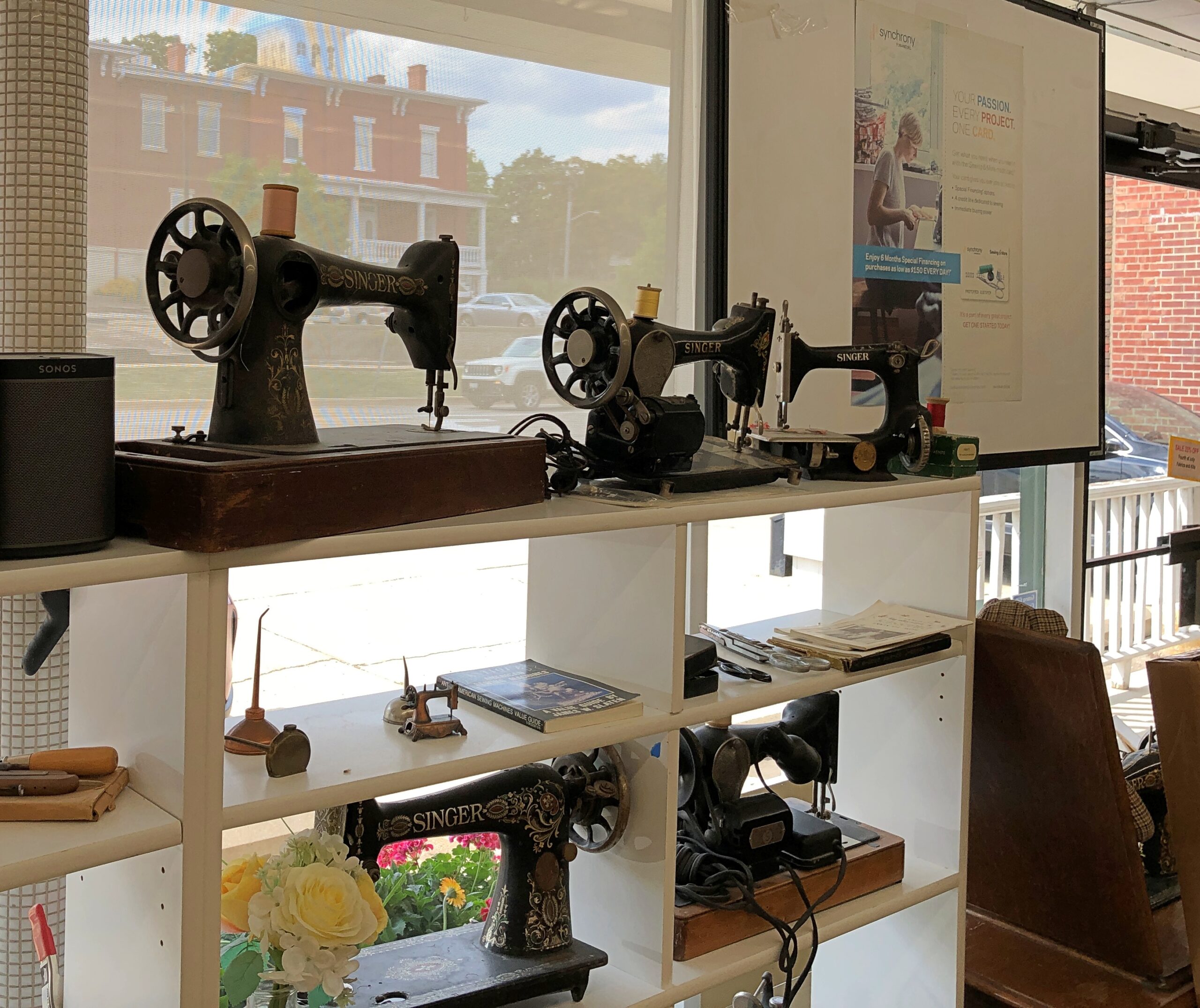
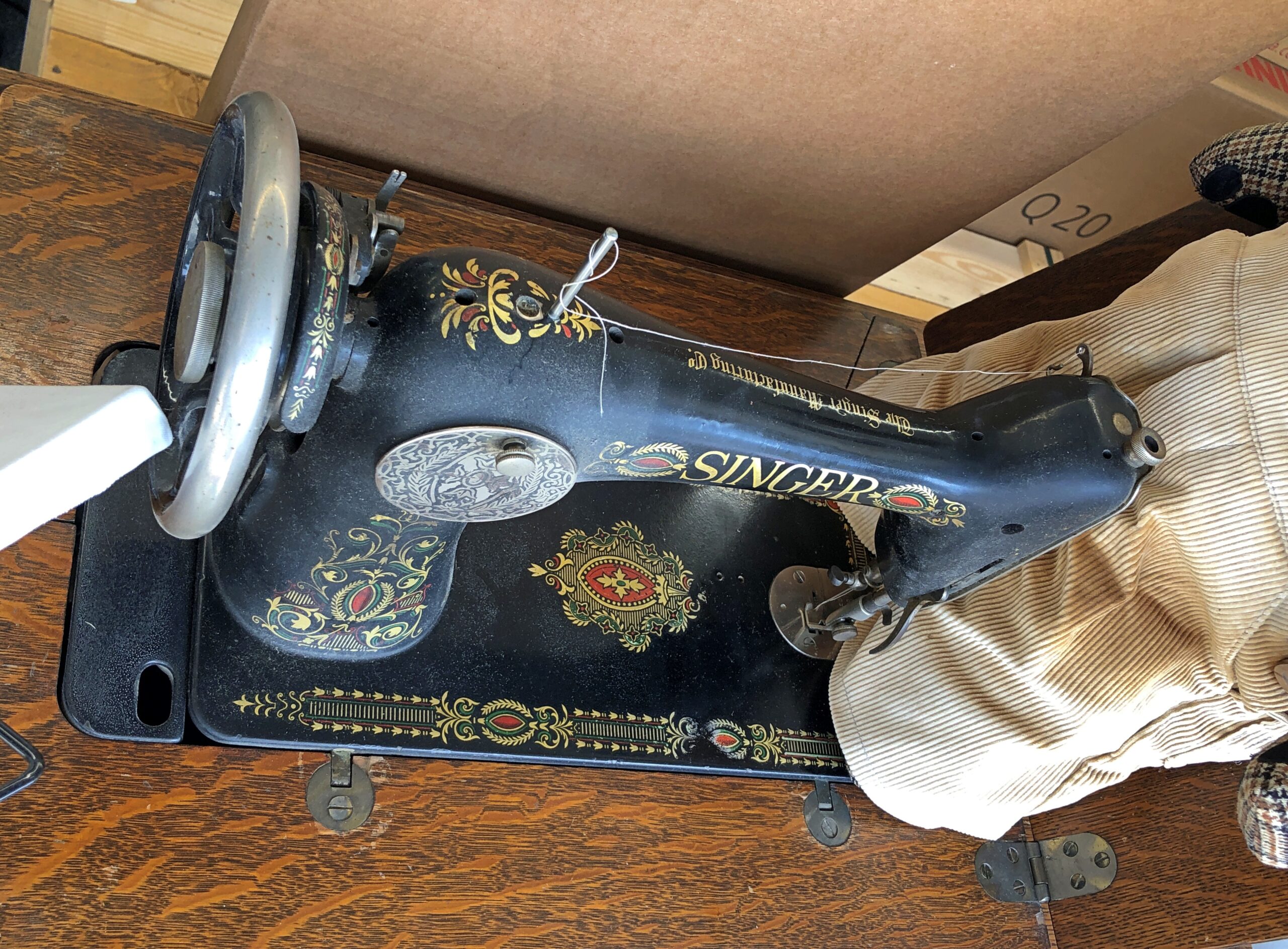
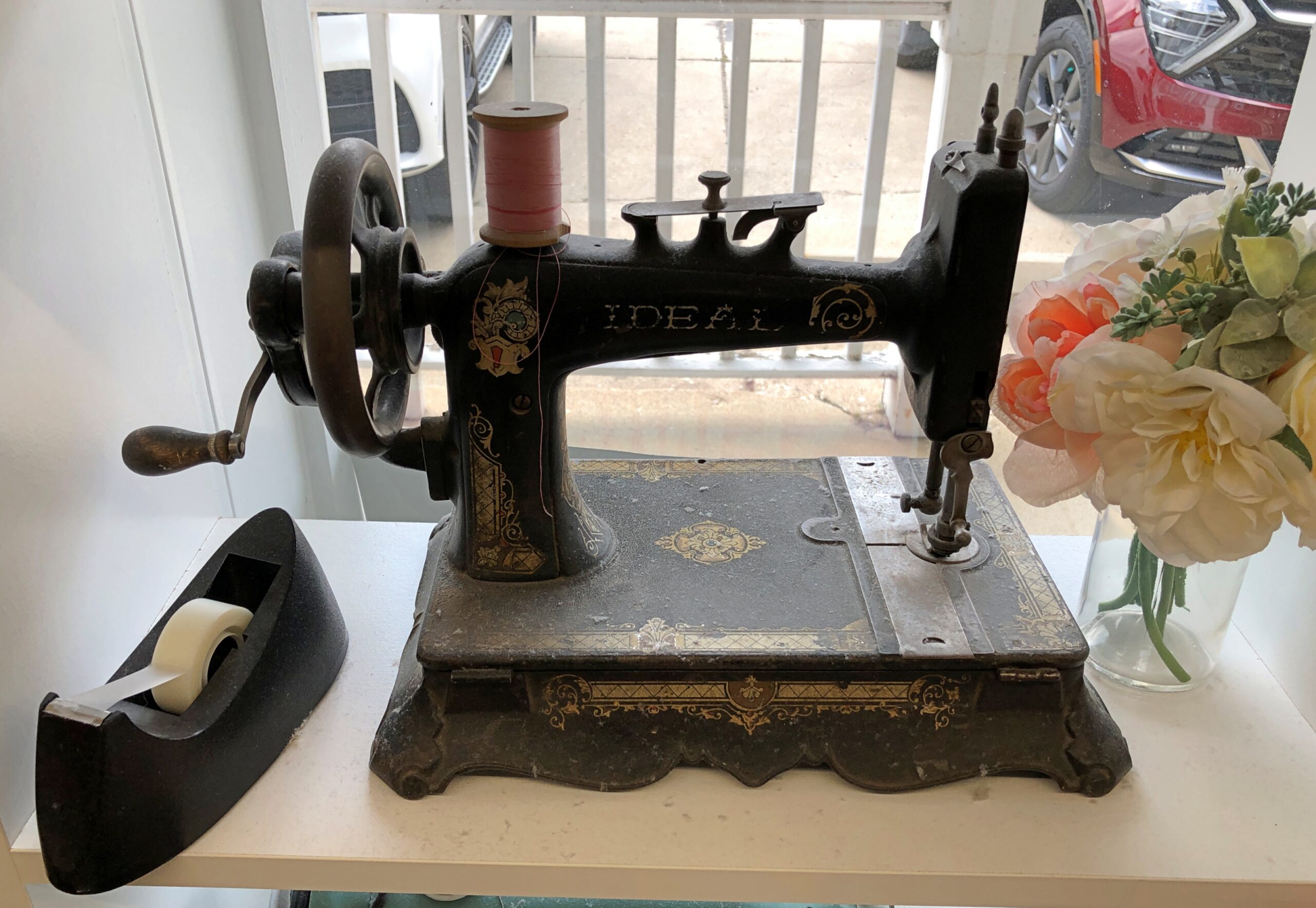
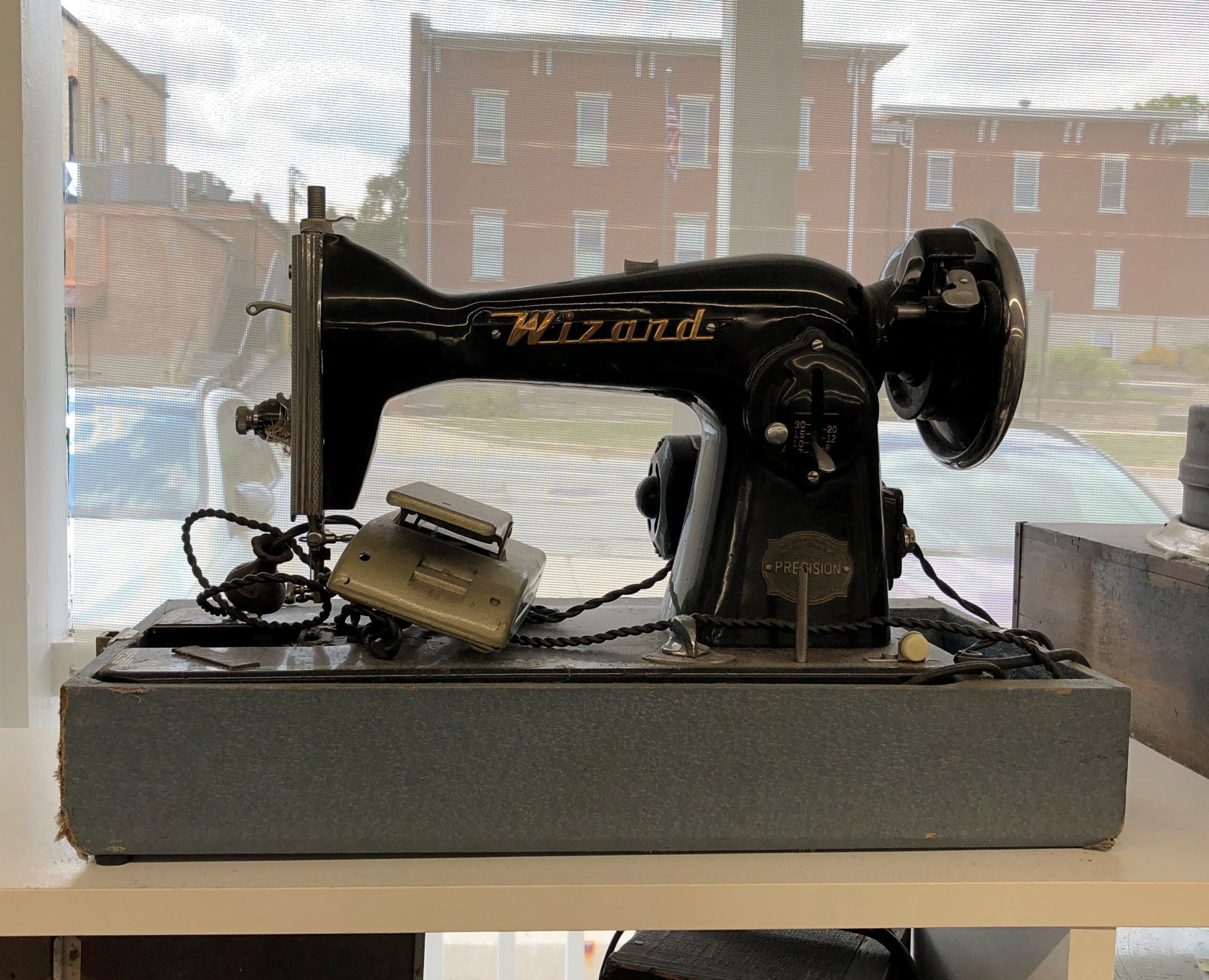
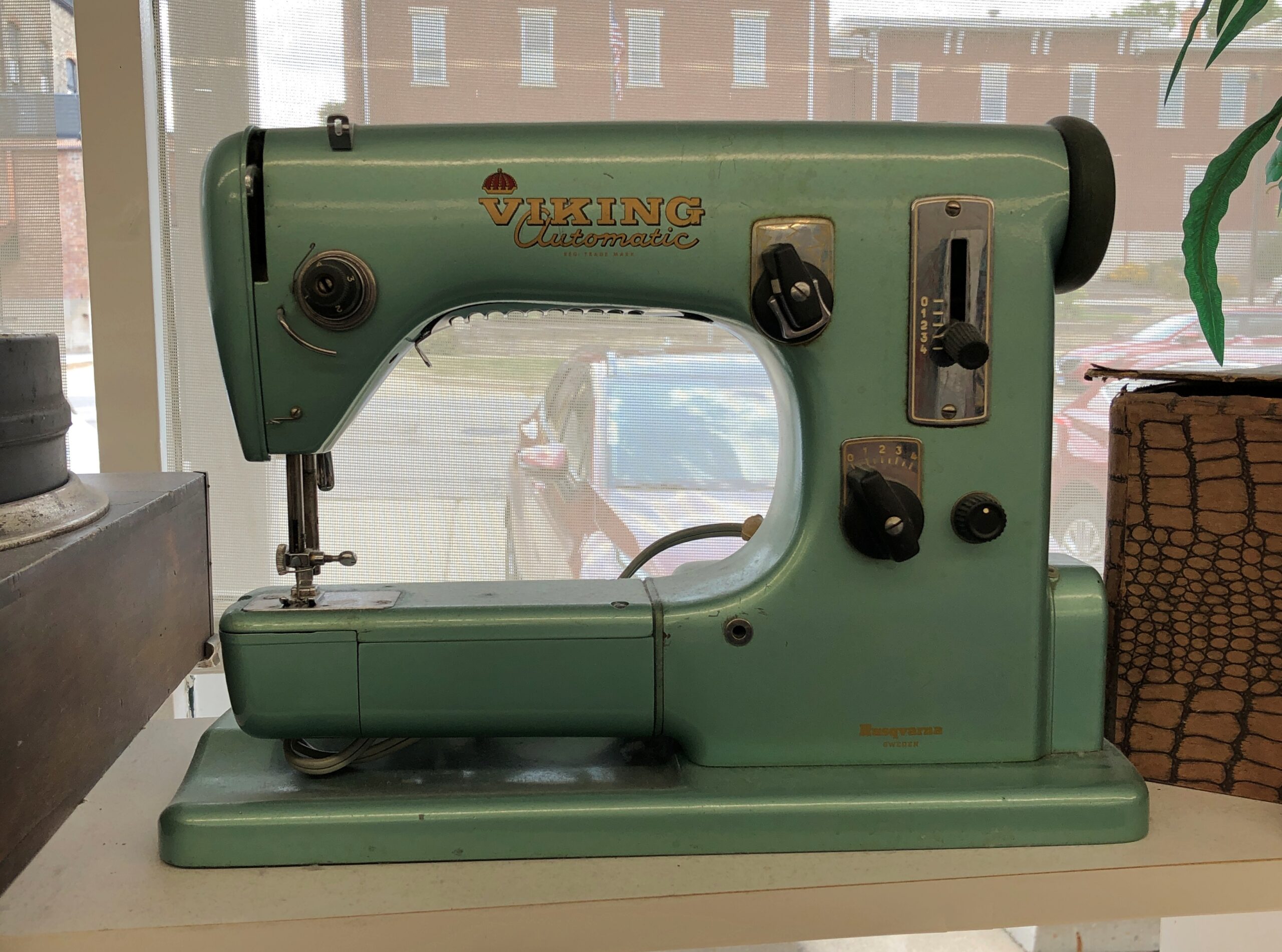
On the same street is Creative Sewing & Quilting, a sizable shop devoted to the sewing arts. Yuriko was keen to spend a while there, and as I prepared to continue my stroll, I noticed the shop’s collection of antique sewing machines.
Everyone knows Singer, but there were also other brands.
All news to me, since it’s an industry I know little about. But I know this: without sewing machines, in the days of hand-stitched clothes, I’d probably only have one set of workday clothes and one of Sunday clothes, which would be the case for most people.
As usual for a Northern summer – the best thing about it, really – the heat has been on and off even in July. Last week we had highs only in the 80s, and sometimes lows in the 60s at night. Those days gave way to hotter temps today, with the promise of more heat to come. For a few days.
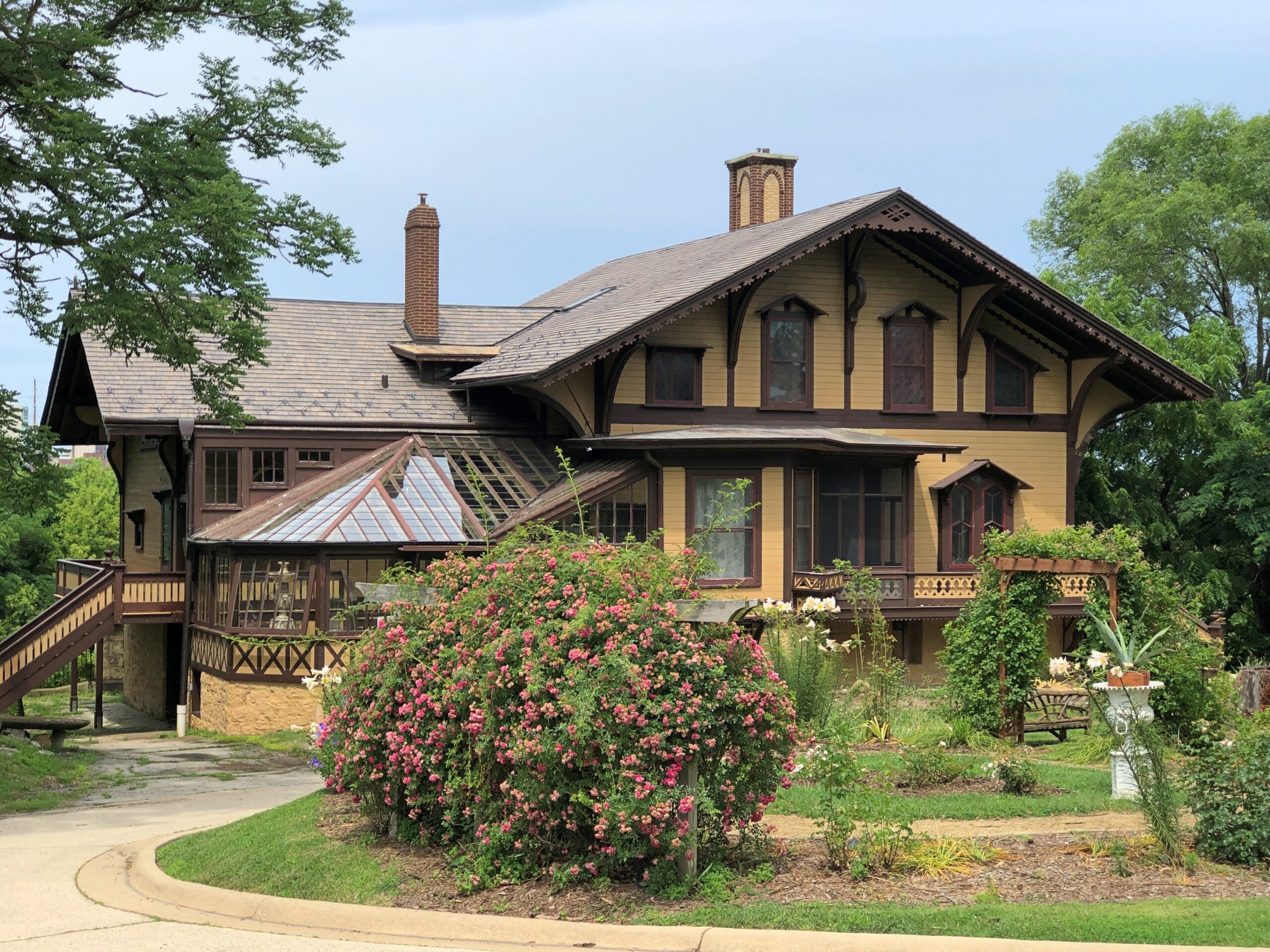
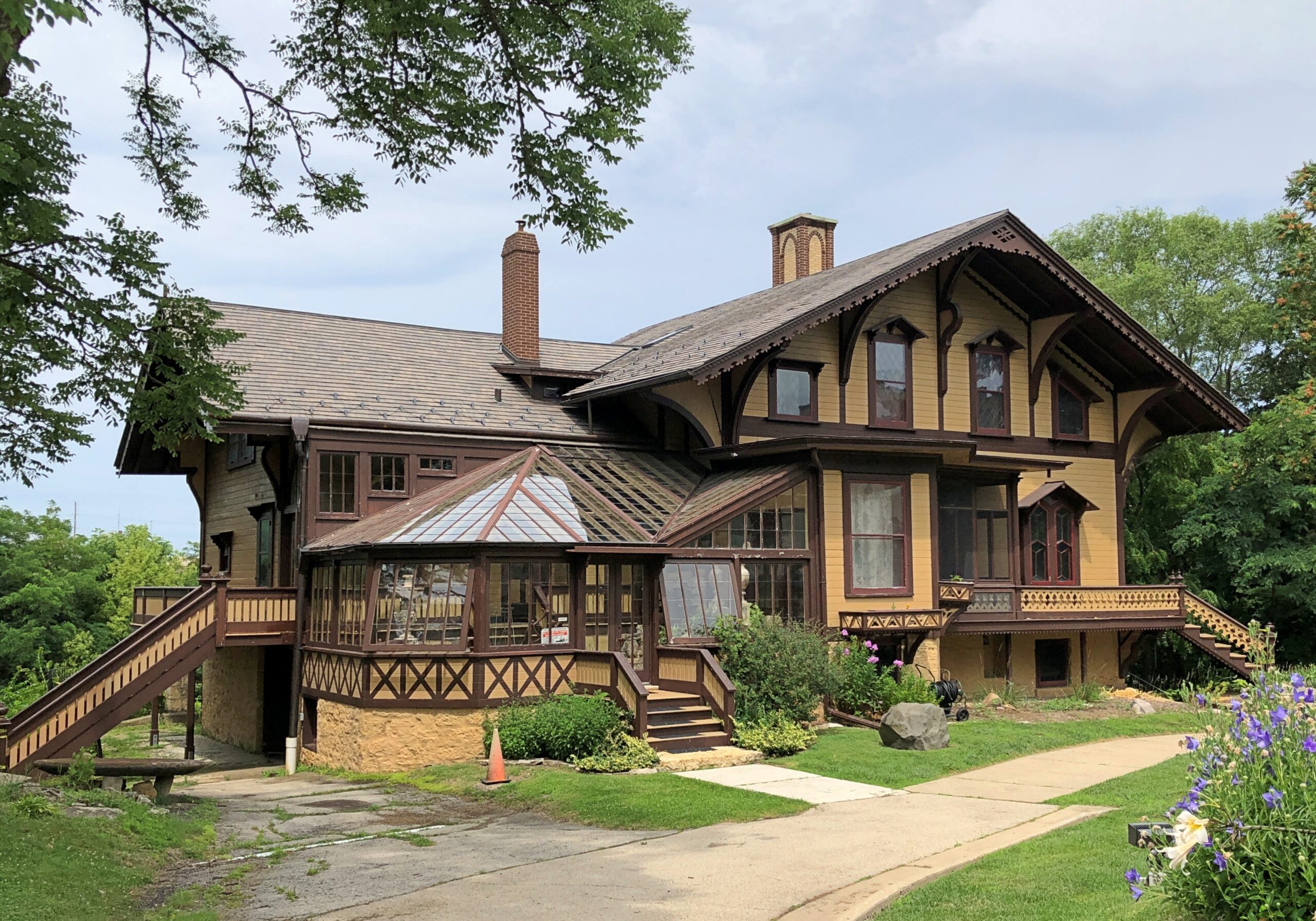
Back on July 3, a fairly hot day itself, we buzzed out to Rockford, the furthest I’ve been for months now. After a hearty lunch at the Stockholm Inn, we visited the handsome and distinctive Tinker Swiss Cottage Museum & Gardens, which is just south of downtown Rockford. Known about the place for years, finally made time for it.
Another legacy of an American who traveled to Europe long ago. Apparently he was besotted with the Swiss design of the time. That American would be Robert Tinker (d. 1924), though his story is more convoluted than most. During the boom early days of mechanical reapers in the 1850s, one John Manny ran a reaper works in Rockford as one of the more nimble competitors of Cyrus McCormick (who sued Manny for patent infringement and lost). John Manny died suddenly in 1856, as even wealthy people sometimes did in those days, leaving his widow Mary in control of the company.
Young Robert Tinker (younger than Mary) worked in a management position at the company. He had not, himself, come from a wealthy family, but apparently was a man of sideways ambition. In 1862, Mary paid for Robert to spend an extended period in Europe, while still drawing a salary from the company. So not only was he able to take a sort of sabbatical from factory operations, and skip out on risking his life for the Union, he got to take a Grand Tour.
The docent was clear on all this as we toured the interior of the house – and I later discussed it with the museum’s director of education and collections, who affirmed the gist. Less clear is exactly how that happened. Mary and Robert were obviously close, very close, though their exact relationship is obscured from prying minds of the 21st century by a screen of Victorian propriety. Eventually (1870) the two married, and lived a long time as prominent Rockford citizens.
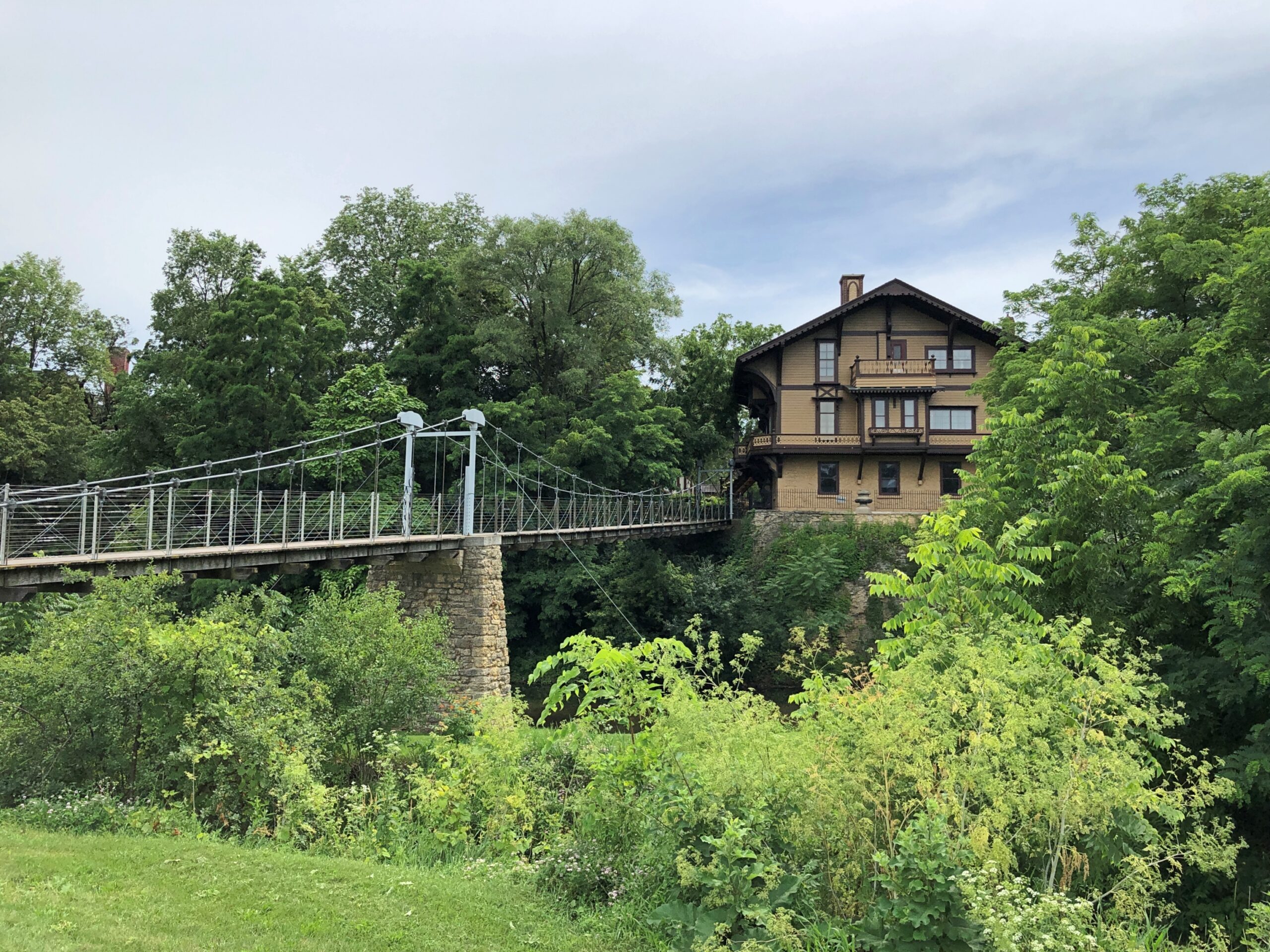
Robert was already at work on the Swiss Cottage before that, starting construction in 1865 on a limestone bluff overlooking Kent Creek, near when it meets the Rock River, finishing it around the time he got married. (Germanicus Kent being one of the founders of Rockford.)
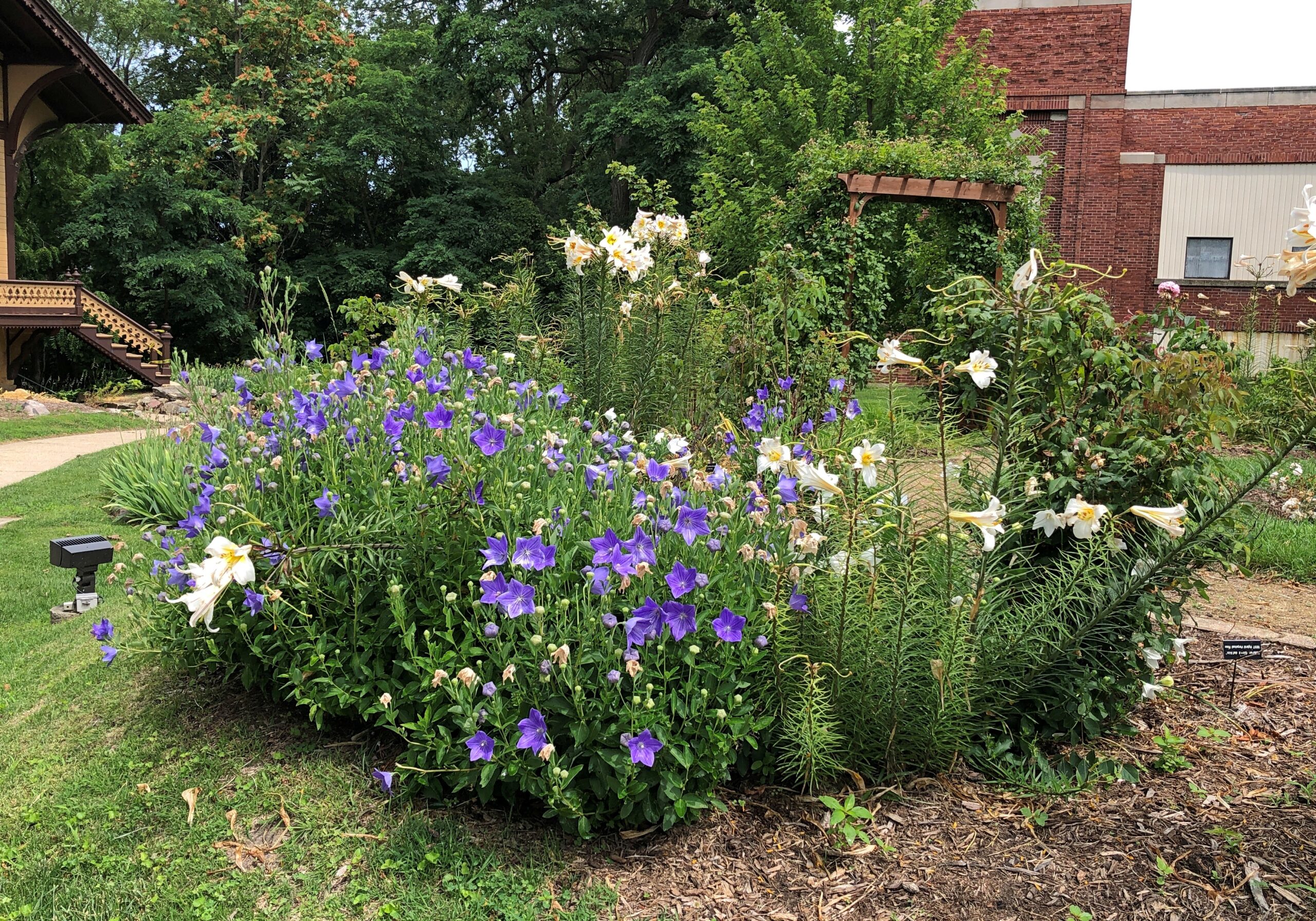
I understand the gardens in the name used to be more extensive, but much remains.
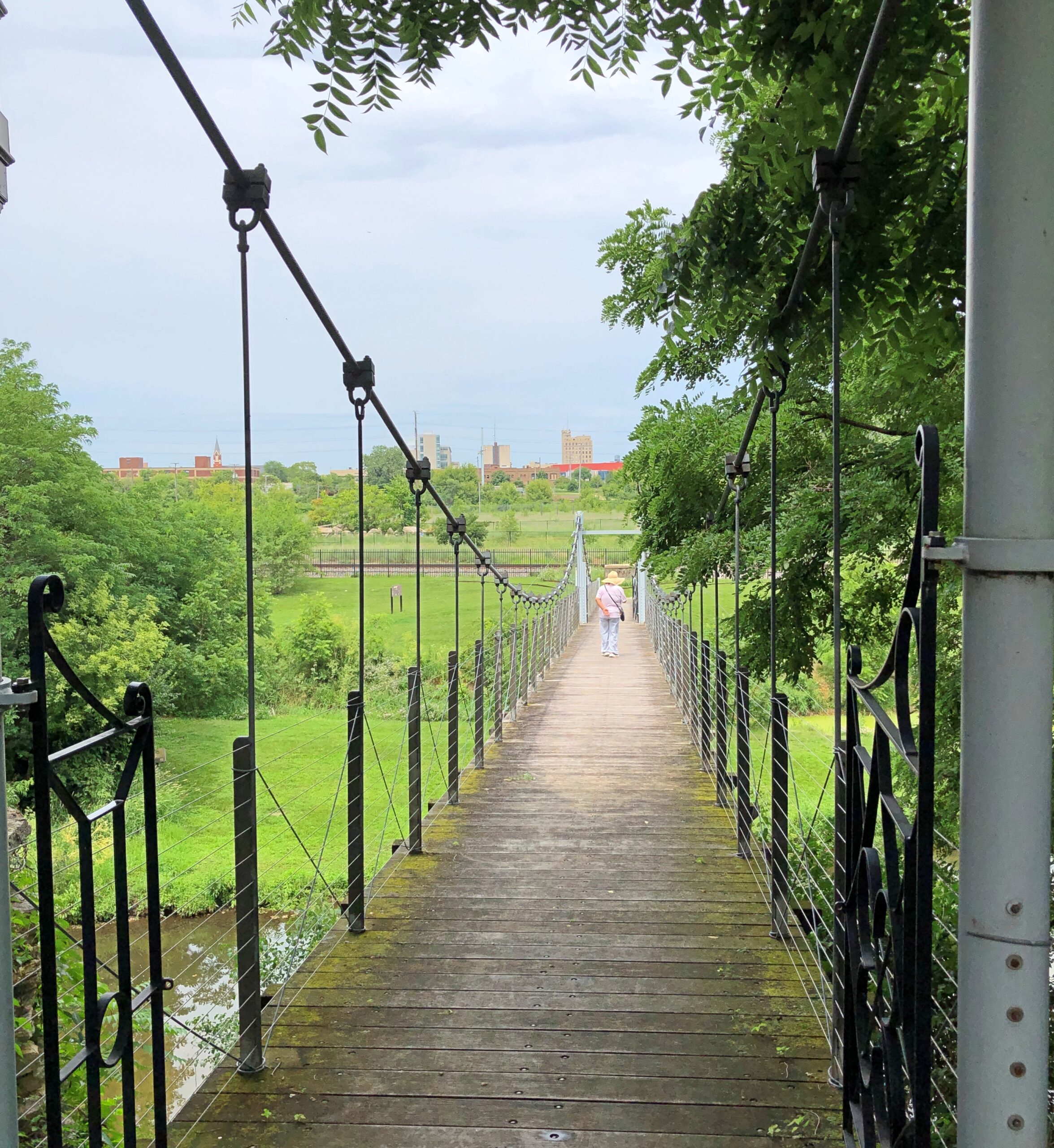
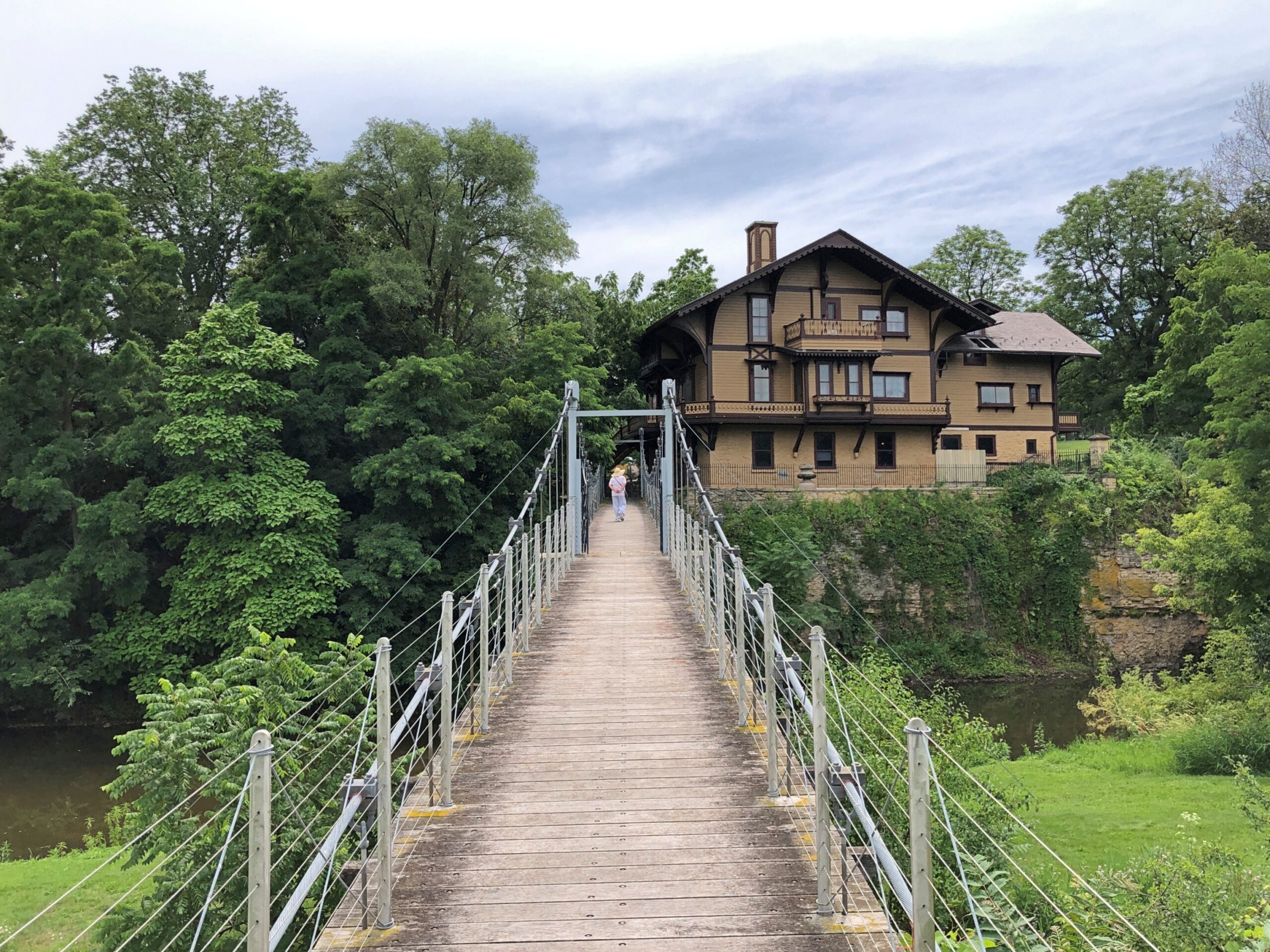
Behind the house is a bridge across the creek, leading to an undeveloped patch of land, formerly part of the gardens, along a rail line.
Of course we had to cross the bridge, despite the heat. It’s a personal motto of mine: cross that bridge if possible. In this case, you’re rewarded by a view of the back of the Swiss Cottage, perched above the creek.
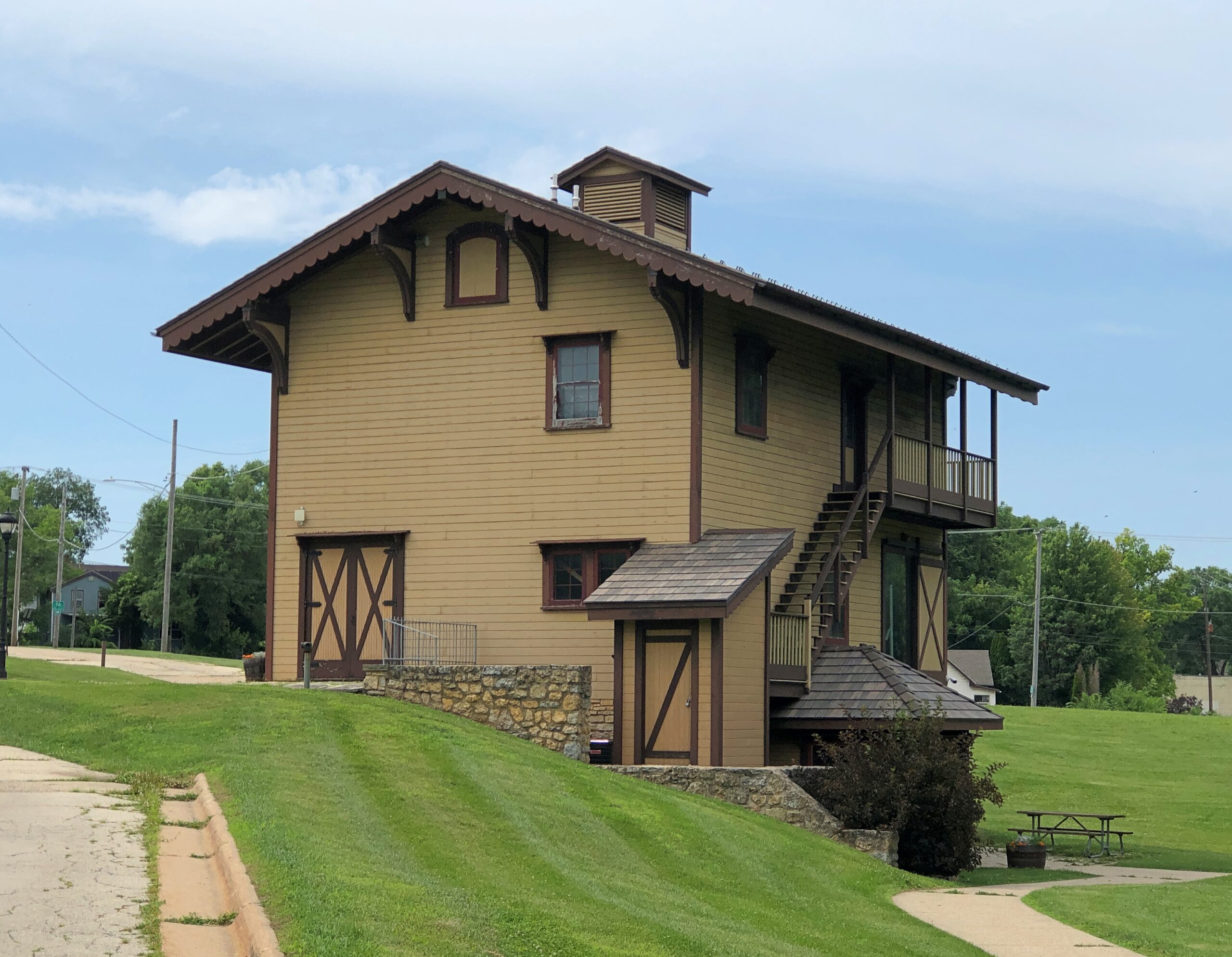
The property, now belonging to the Rockford Part District, also includes a three-story Swiss inspired barn. Formerly home to cows and horses and such, these days it’s a shop and visitors center and such. An unusual sort of barn, I’d say.
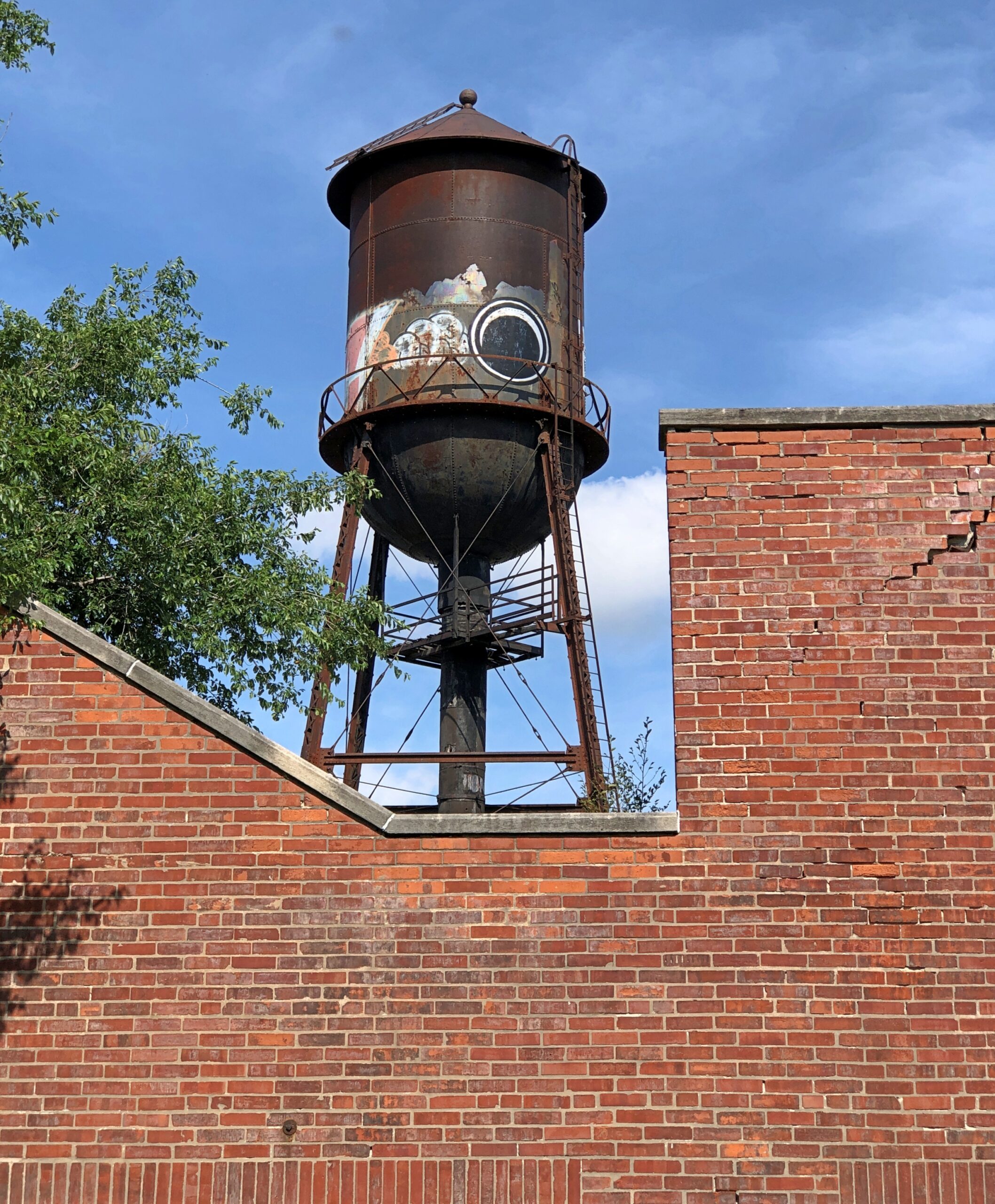
After Robert Tinker’s time, a factory was developed near the house. Nothing to do with reapers or the Tinkers. Just an opportune spot near the Rock River. Its hulk remains behind sturdy brick, lorded over by a rusty water tower.
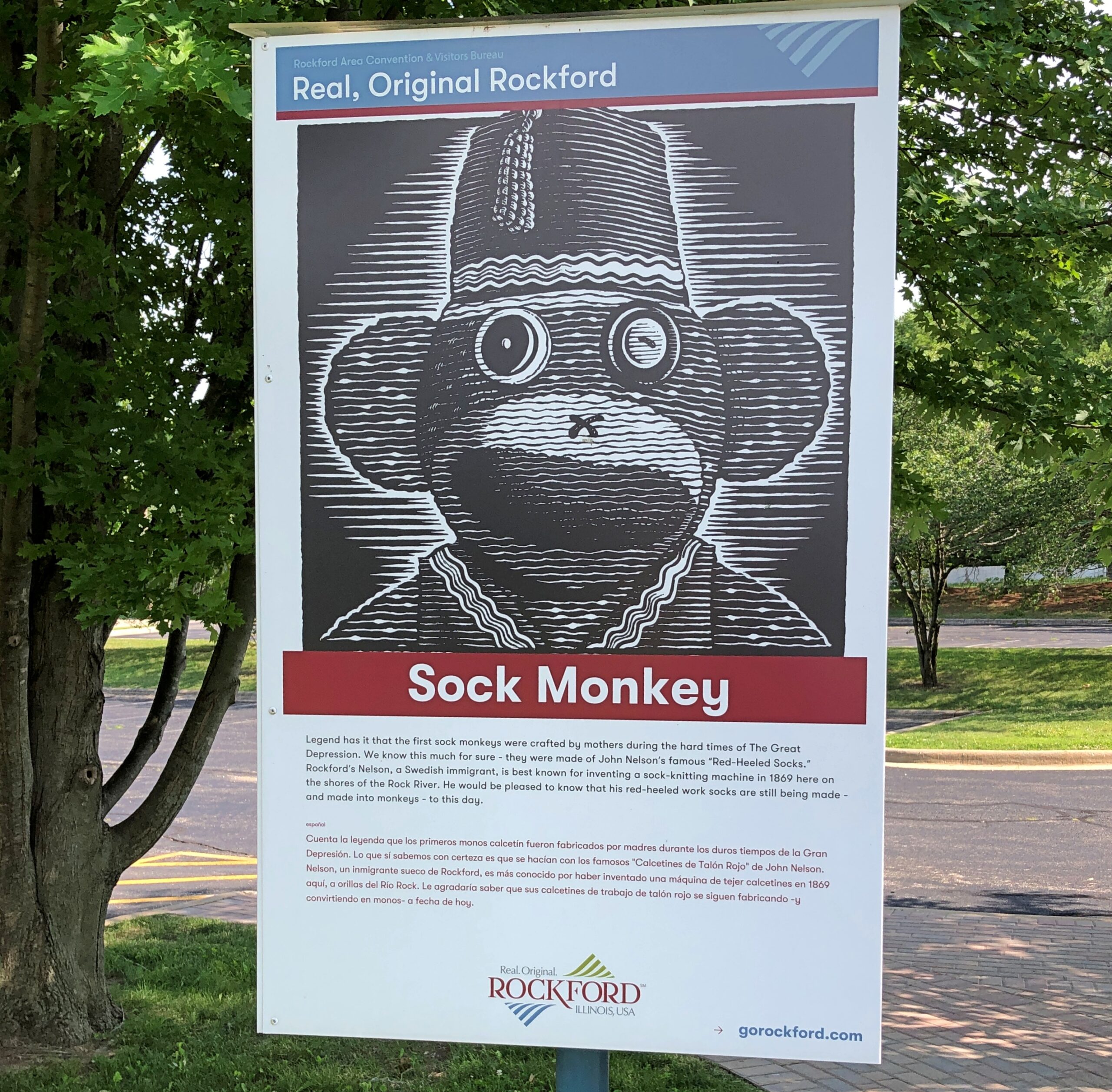
The factory has been abandoned for some years. But I understand that socks, and indeed sock monkeys, used to be made there.