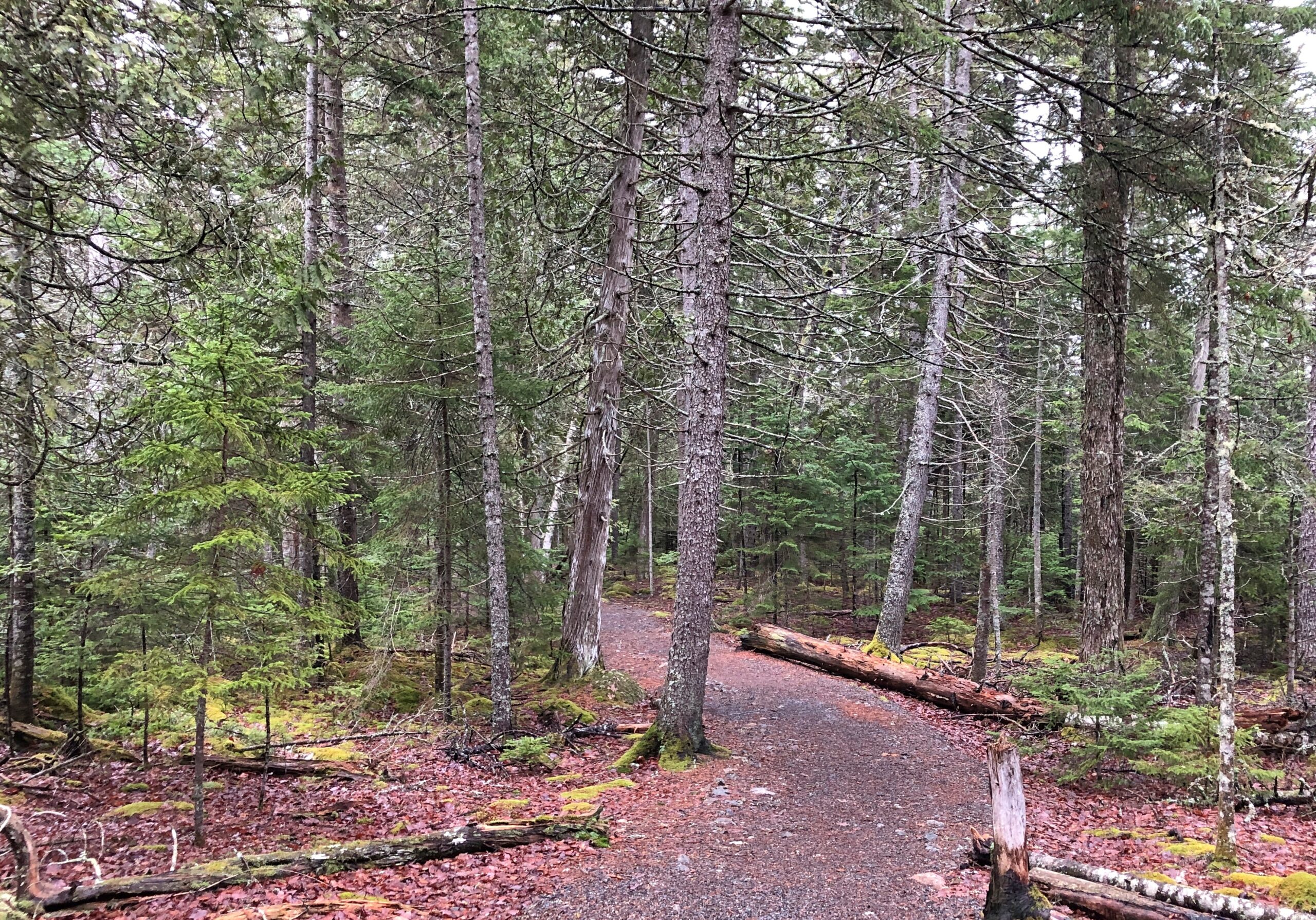
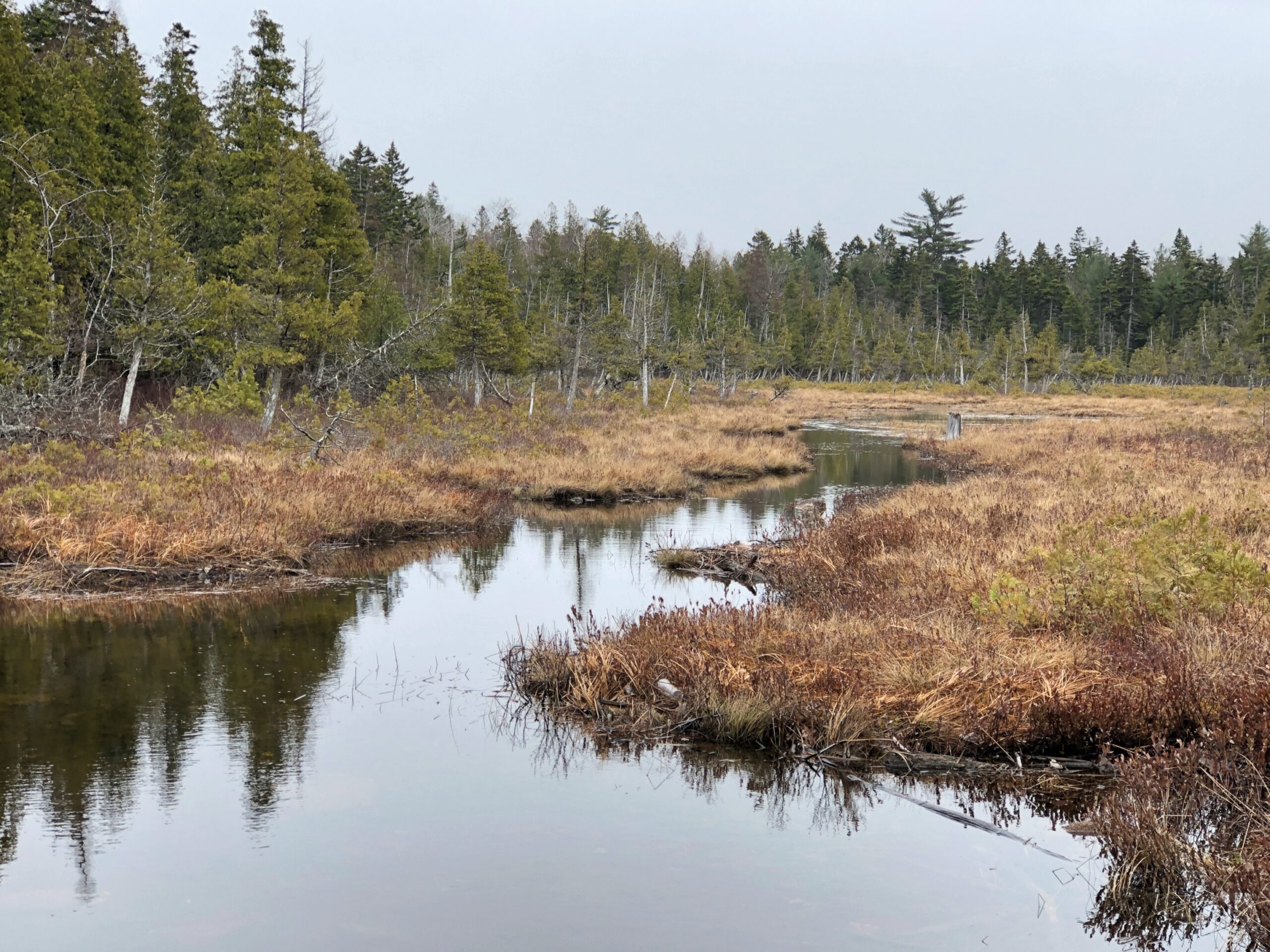
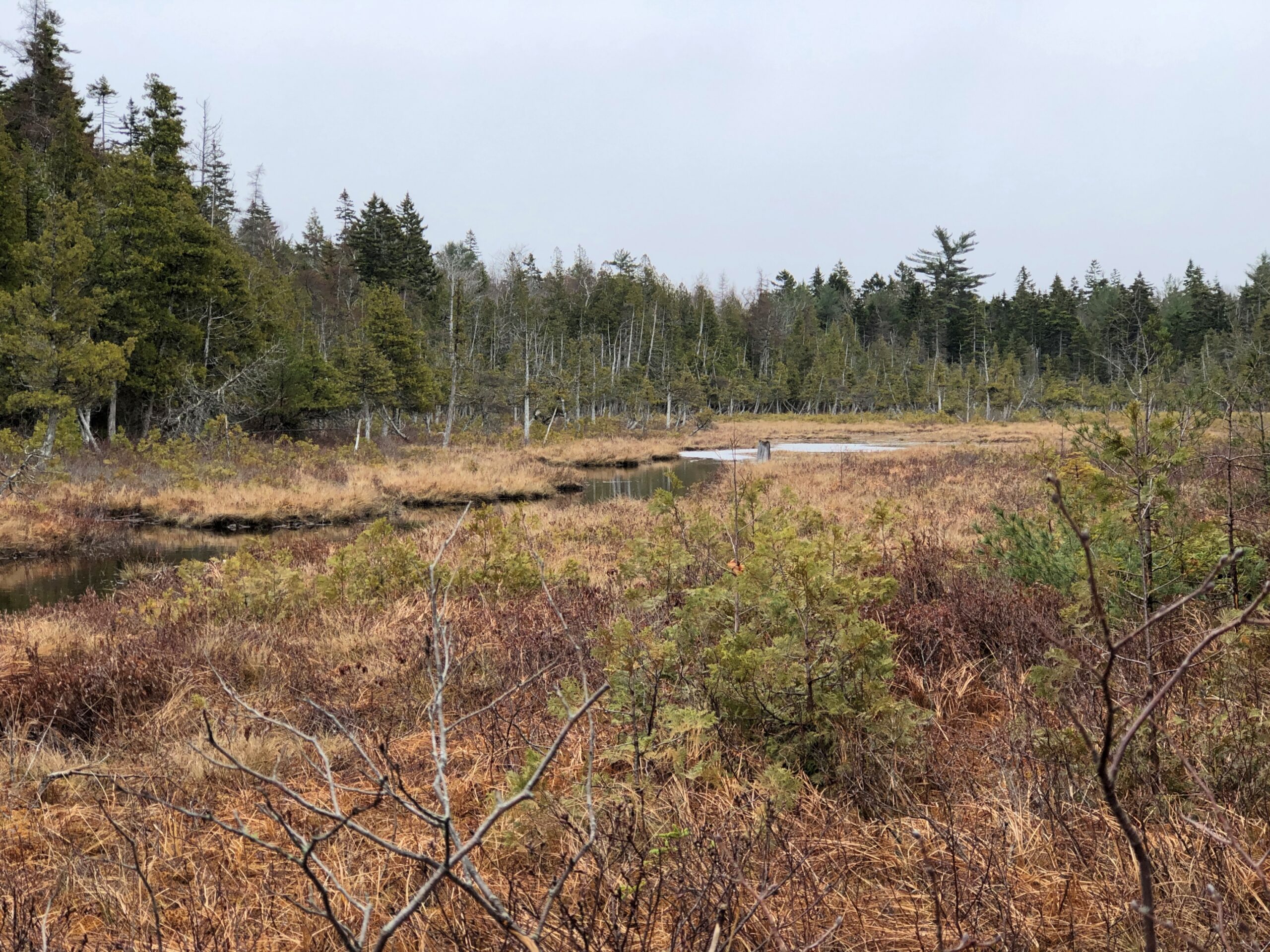
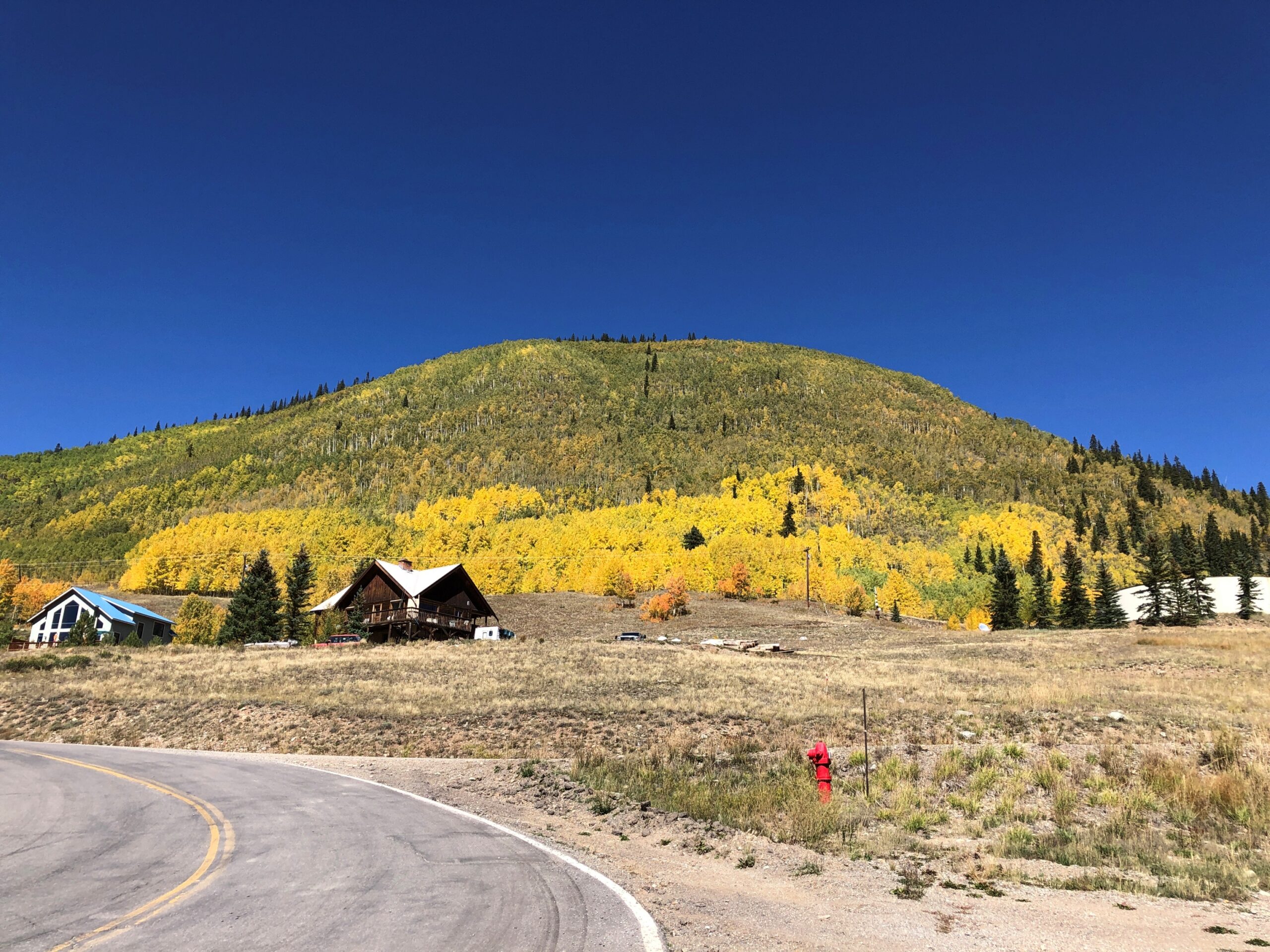
Rain to end September and begin October. Generally not heavy, just persistent for two days. As if on cue for the first of the month, a handful of trees here and there suddenly displayed streaks of yellow. Every day there will be more of that, until there isn’t any.
After visiting a run of Milwaukee churches last Saturday morning under a warm early fall sky, we were inspired to find a Laotian restaurant. The place, Vientiane Noodle Shop, calls itself Laotian-Thai on its menu, probably because everyone knows about Thailand, while far fewer about Laos, such being the dismal state of geographic knowledge. A lot of the menu was also Thai, but it included Laotian specialties. Such as this.
Bee Boun. Also transliterated Bie Boun, apparently, but anyway a rice vermicelli-based dish that’s majorly delicious.
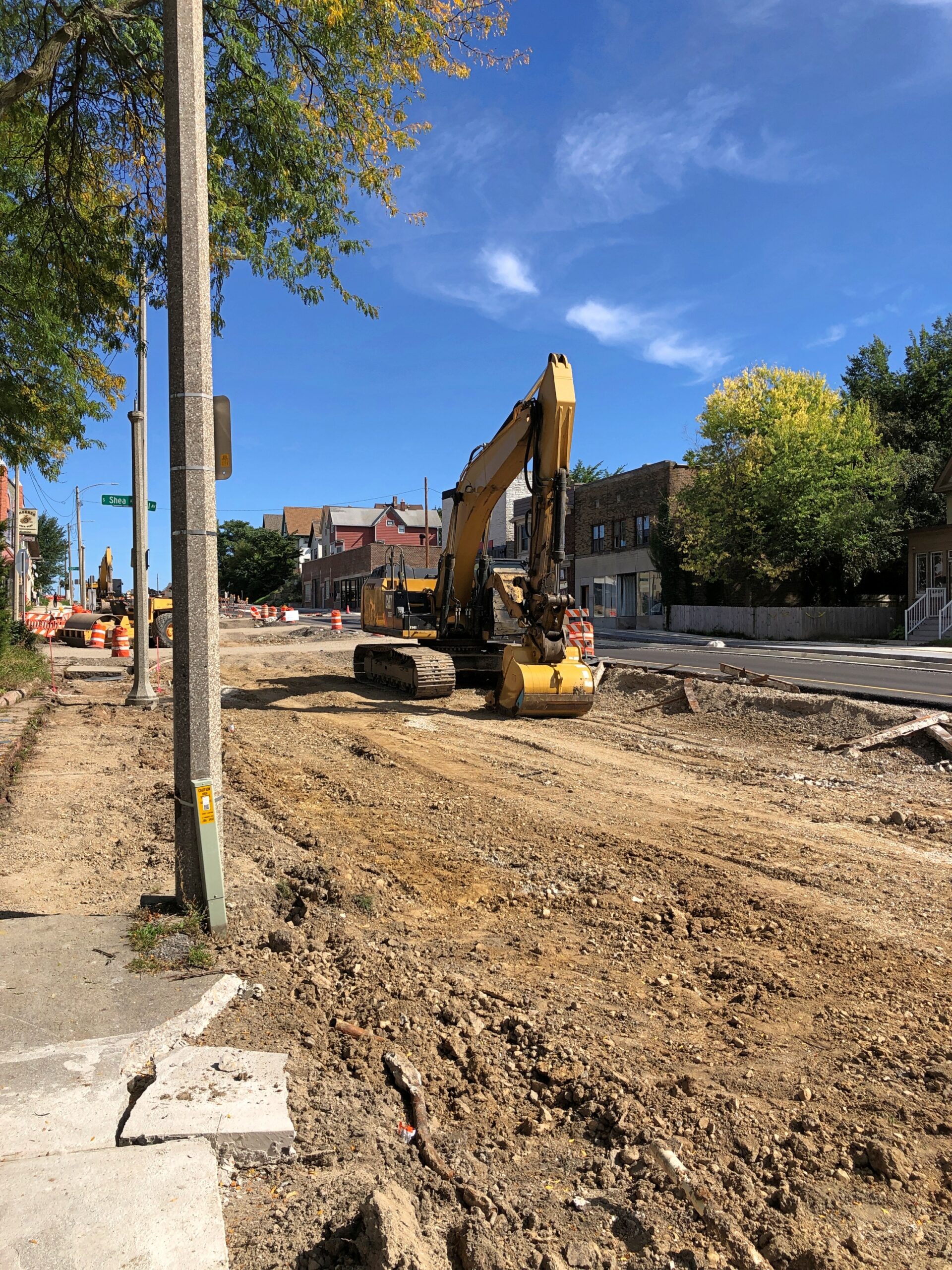
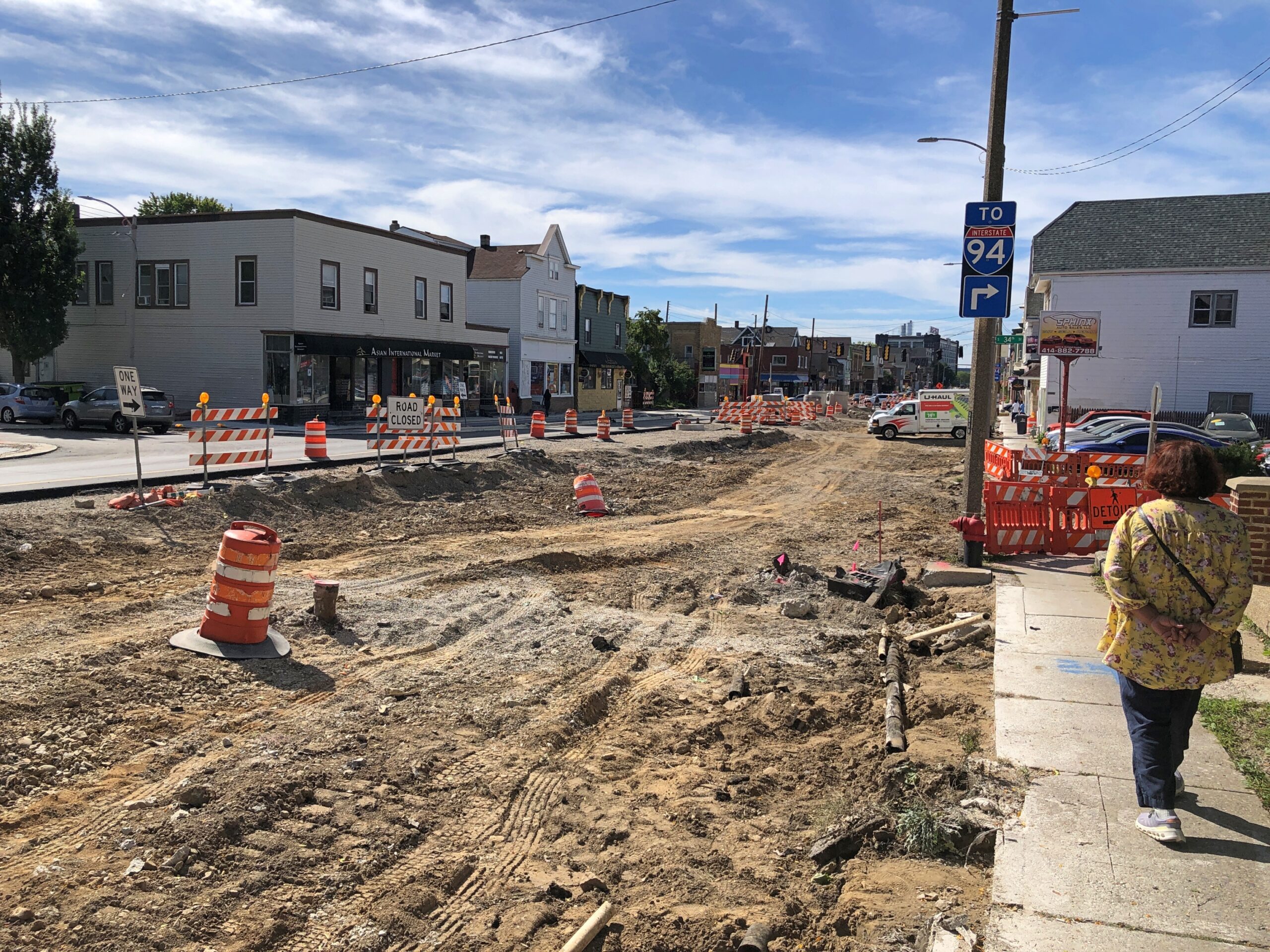
It was good to support the restaurant in general, but also because there is major construction on its street, National Avenue, that might be interfering with its trade volume.
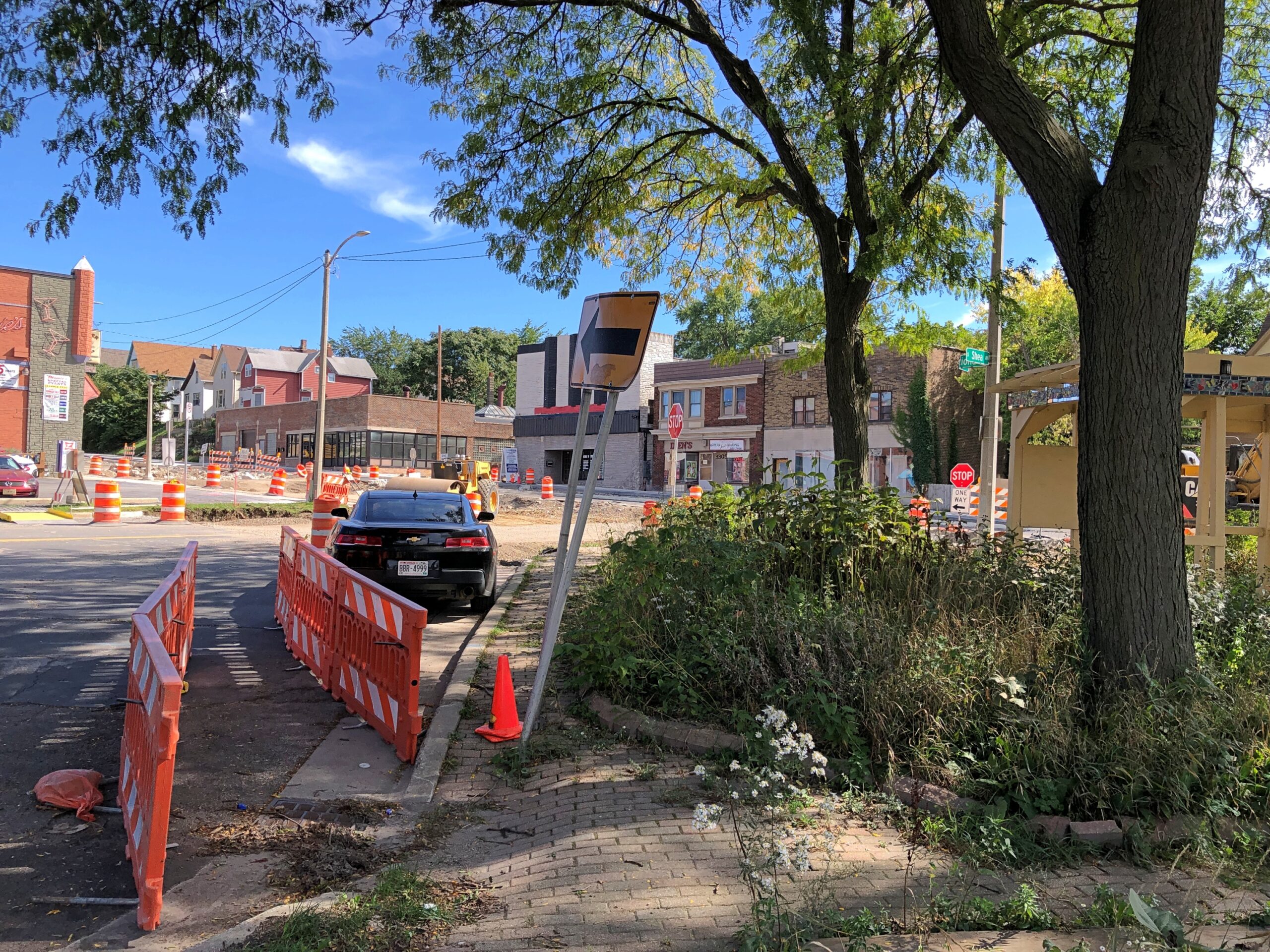
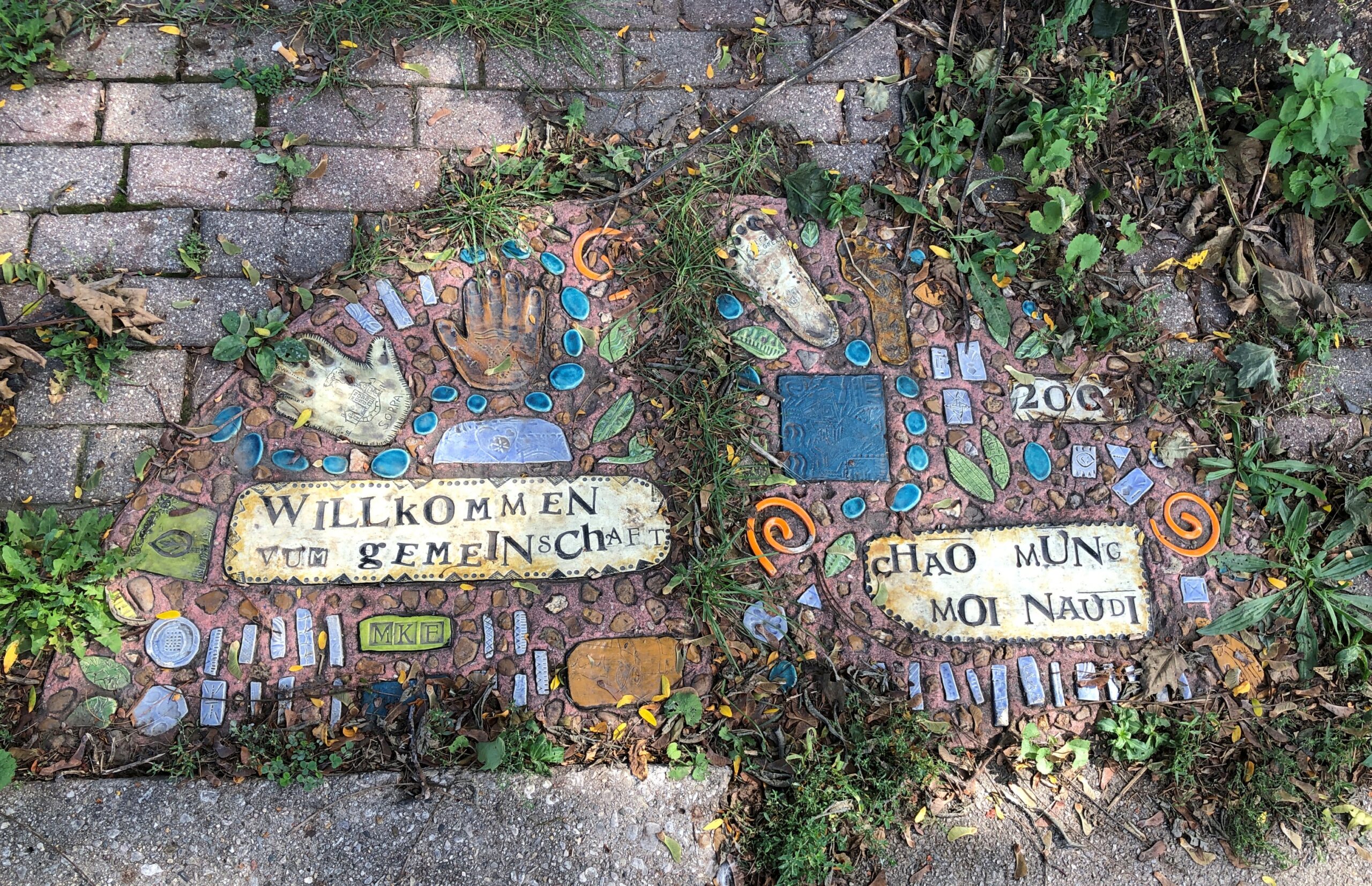
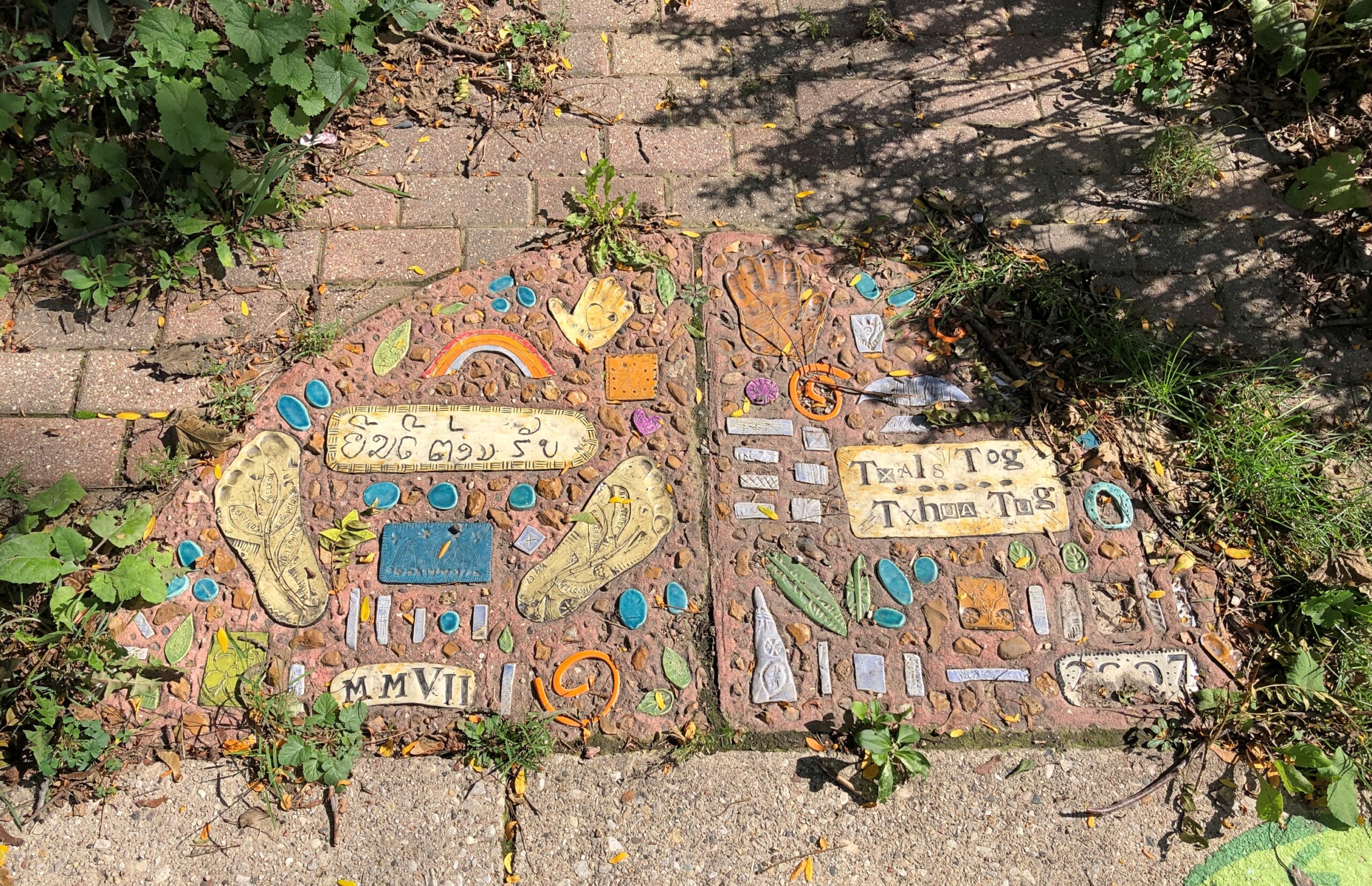
Naturally we’d parked on a side street (Shea Avenue) and walked to Vientiane Noodle Shop. At the intersection of National and Shea – which meet at a 45-degree angle – is a triangular pocket park featuring plantings and a bench, along with some artwork fixed in the ground, dated 2007, and seeming to reflect the neighborhood population during its history through “welcome to our community” in various languages, if the German is any indication.
The neighborhood is known as Silver City. As many times as I’ve visited Milwaukee, that was a new one to me. It’s largely Hispanic these days, with Hmong and other groups also living there, and seems to have followed a common evolution in that regard, beginning with various European ethnic groups more than 150 years ago giving way to other groups as the decades passed.
Why Silver City? A site called Neighborhoods in Milwaukee (and others) offers an explanation. Sounds like folk etymology to me, but never mind:
Silver City got its name in the mid-1890s when area laborers working in the developing Menomonee Valley factories were paid in silver coin. When the workers circulated the silver among the area’s 24 taverns, the name “Silver City” began to appear in Milwaukee newspapers.
Silver was circulated everywhere in the 1890s, so that doesn’t really cut it. Old newspapers using the name might hint at a nickname for the area created by anonymous newspapermen for some lost reason – who can say? That kind of uncertainty adds interest to a neighborhood, if you ask me.
Just before noon yesterday, the clouds opened up and dumped rain and small bits of hail on my part of the world. One of those short, sudden downpours of summer. By this morning, the deck had dried out enough for me to do what I often do there, have breakfast and engage in some loafing.
Another summer note: in the evenings, crickets have received their chirping orders. For a few nights, only one or two bothered, on and off as the cicadas faded for the day. Now strong cricket choruses sound off by night. An excellent sound to fall asleep to.
Doesn’t this sound grand: a few weeks ago I attended a social event on the North Shore. But it wasn’t grand, not in the sense of a palatial setting. But it was at one of the many pleasant middle-class neighborhoods of the area whose real estate valuations lifted stratospherically in recent decades.
Driving all the way to the shore of Lake Michigan means passing through some thick traffic, so to my way of thinking, that also means you should go a few hours early for a look around parts of the North Shore, that narrow but long strip from Evanston to some point in Lake County to the north.
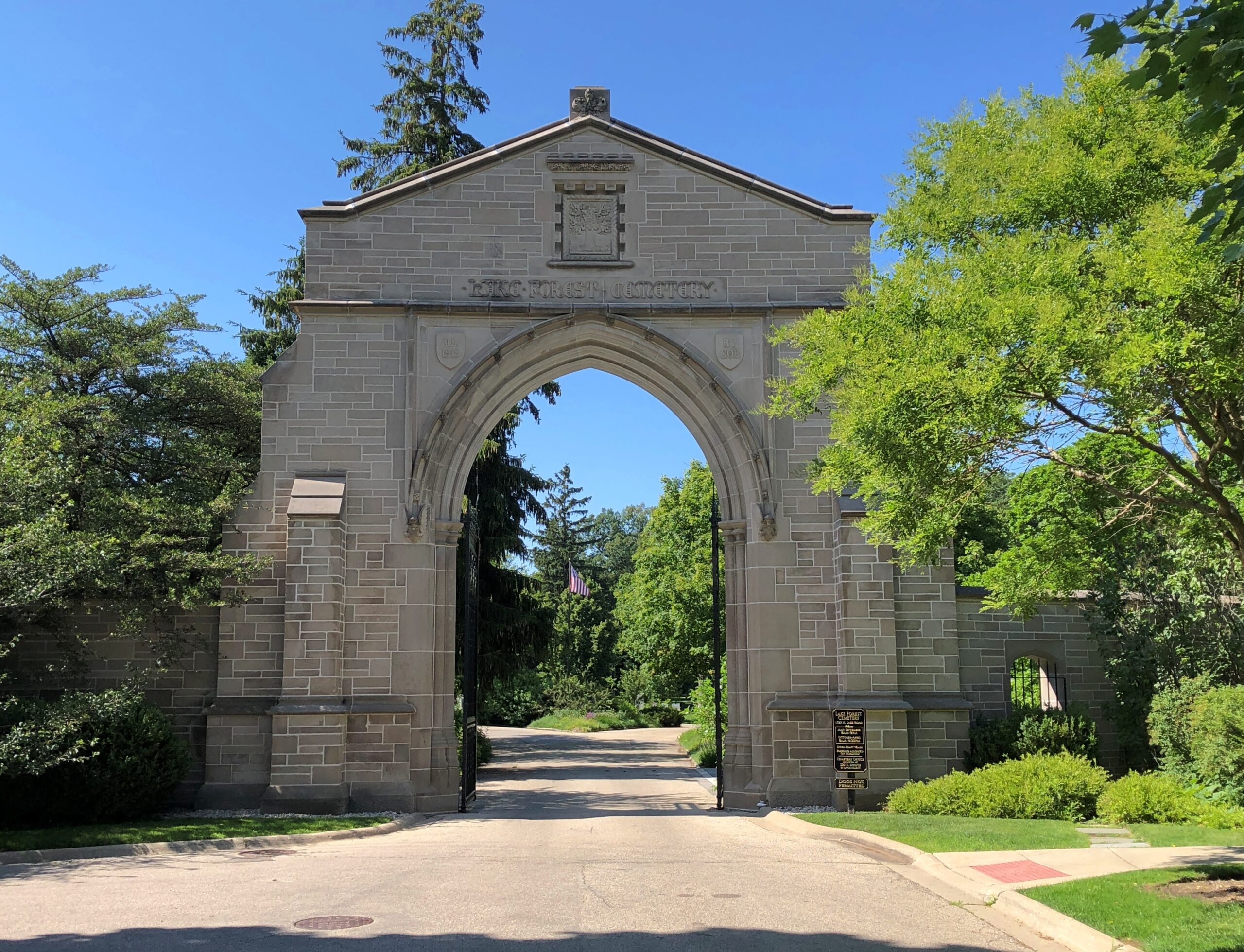
Drive up that way and you might find yourself at Lake Forest Cemetery. At the entrance gate.
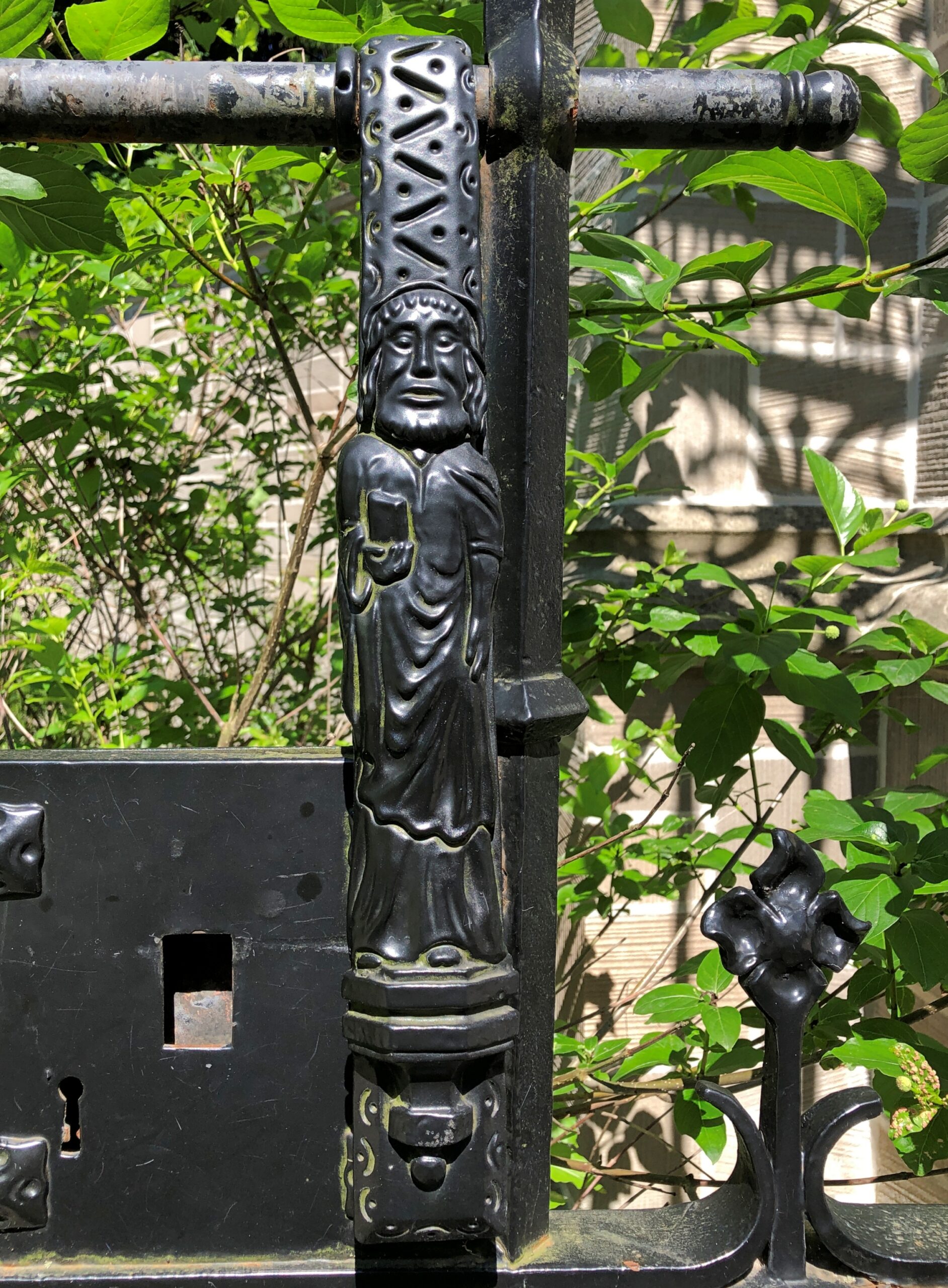
Who’s waiting there, as part of the iron gate? St. Peter. Usually he has keys, but I suppose he’s holding the book he consults at the Pearly Gates.
Among the grand old rural cemeteries of metro Chicago, Lake Forest is one of the smaller ones, at 15 acres. Due to its lush landscaping, however, it seems bigger.
It too has a rural cemetery pedigree, selected as a cemetery site in 1857, coinciding with the founding of the town of Lake Forest.
“The site… selected contained the characteristics appropriate for a design in the naturalistic style,” according to a detailed history of the property at the National Registry of Historic Places. “It had topography with gently rolling changes in grade, ravines that added a rugged dimension, and a vista toward the lake.”
But some decades passed before its roads and landscaping were in place. William Le Baron Jenney (d. 1907), who designed the first fully metal-framed building – the Home Insurance Building in Chicago, the first skyscraper – did the roads and some other features in 1882 (not long before Home Insurance).
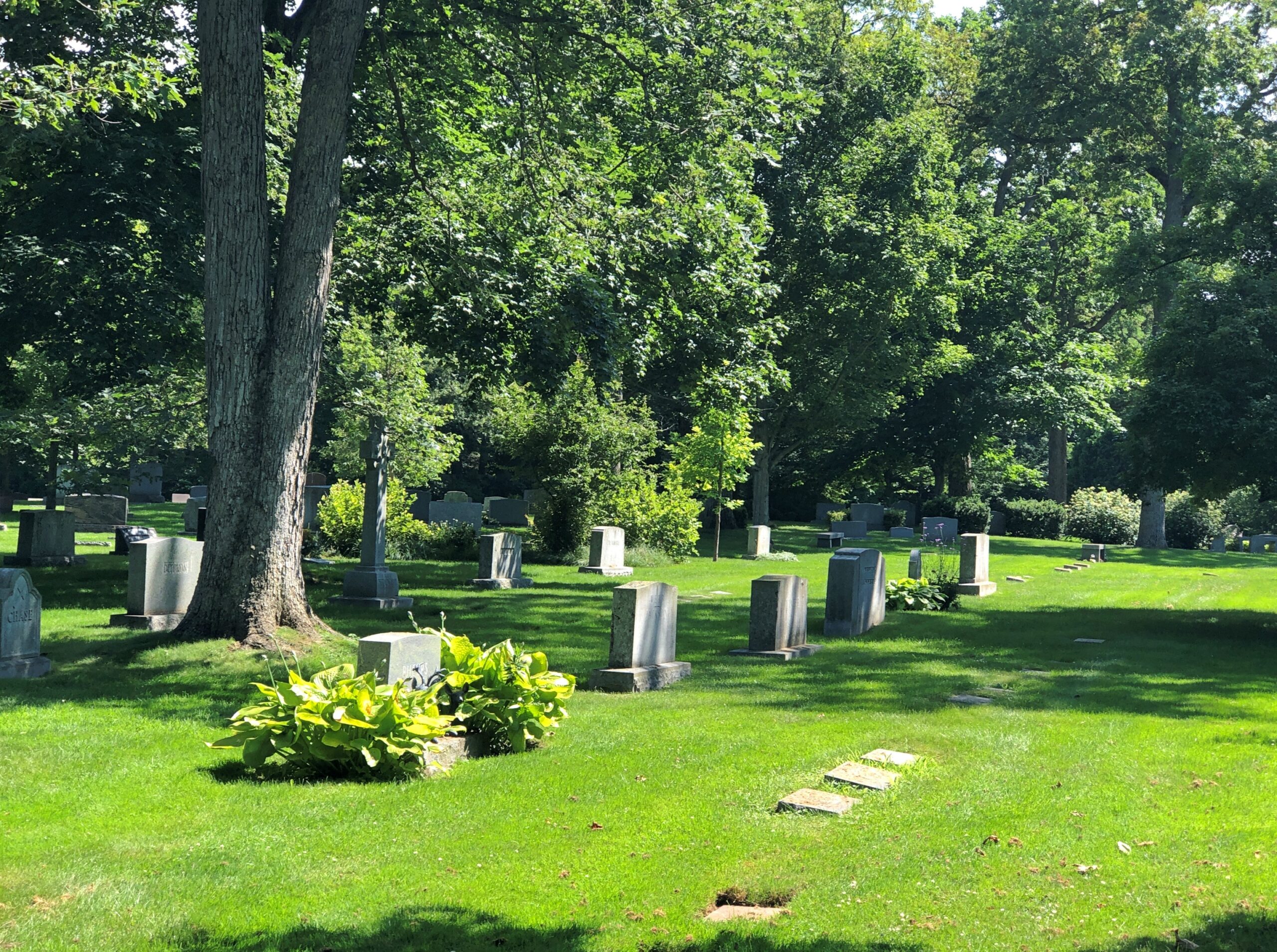
“In 1900, Ossian Cole Simonds [d. 1931] was selected to develop the site further and is responsible for its design in the Prairie Style. He perfected its beautiful graded surface, its broad open spaces, and its simple groups of trees, often with branches sweeping to the ground…
“Whereas the site had previously been open like a park, he enclosed the property with plantings, providing a feeling of privacy for the bereaved. The location of the cemetery on the bluff above the lake and surrounded by ravines provided a natural setting for quiet meditation that he emphasized through plantings. Unlike other cemetery sites that have been overtaken by urbanization, Lake Forest Cemetery still retains the character that Simonds emphasized through his plantings.”
I’ve happened across some of Simonds’ other work — Lincoln Park, but also Library Park in Kenosha.
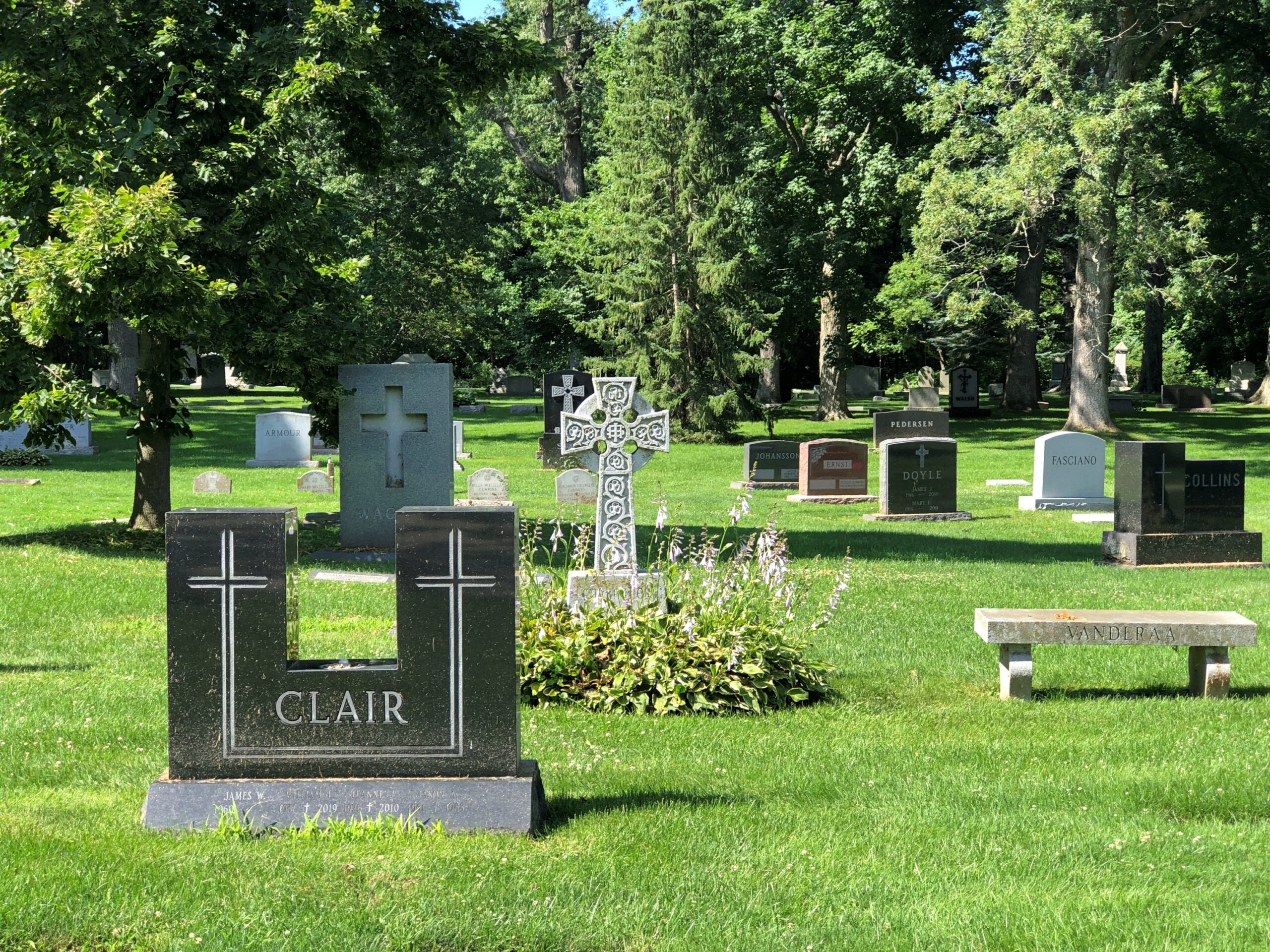
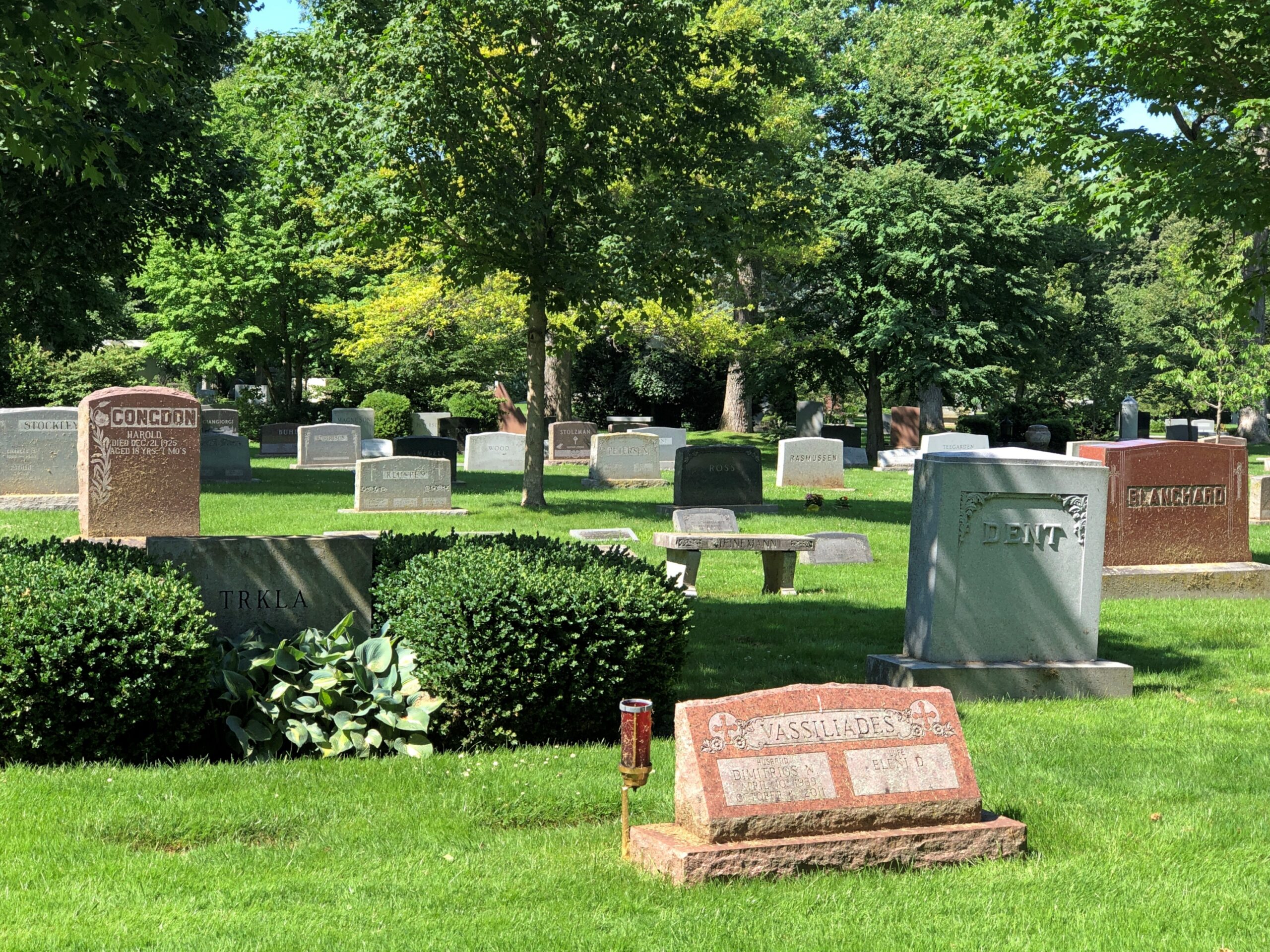
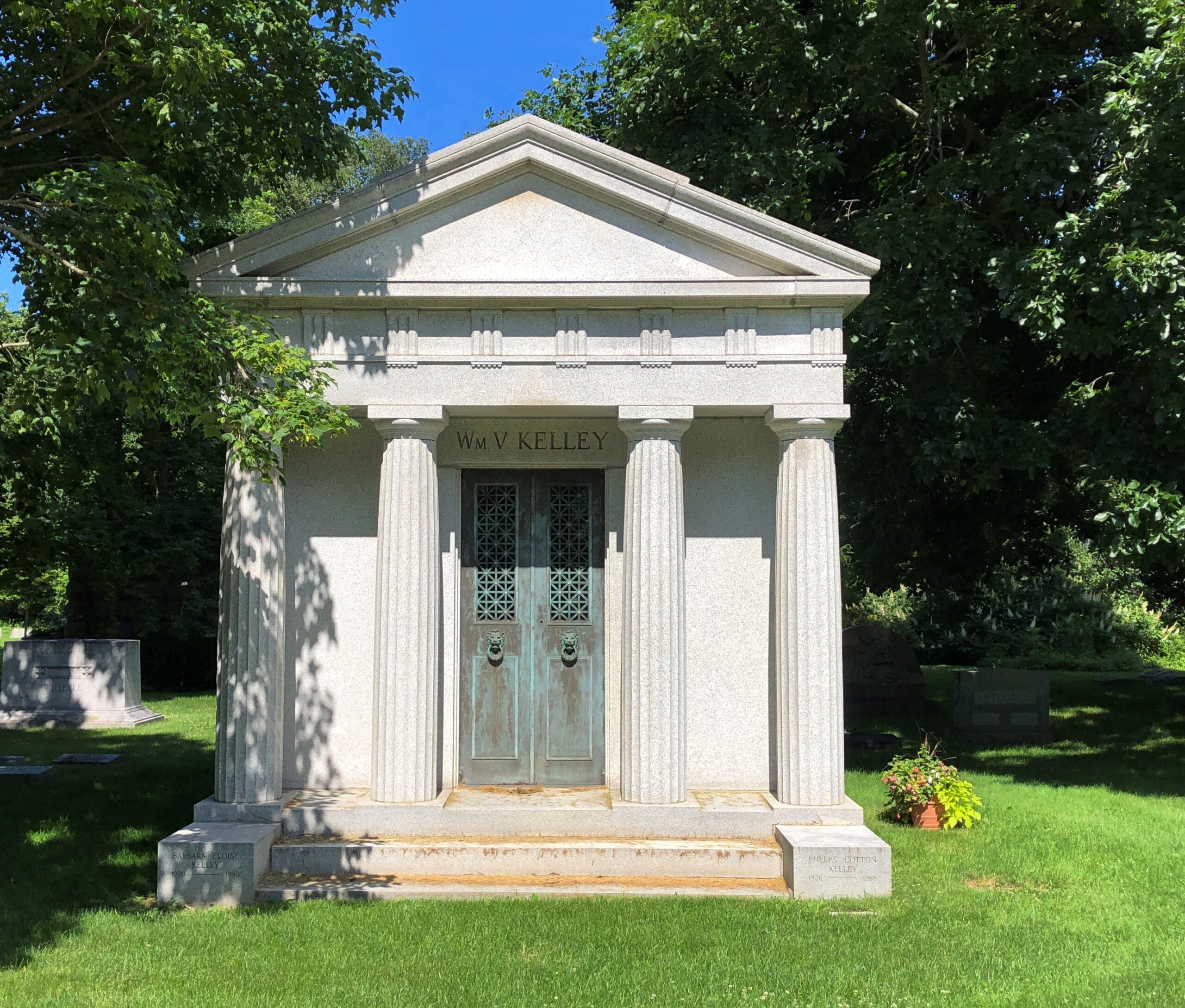
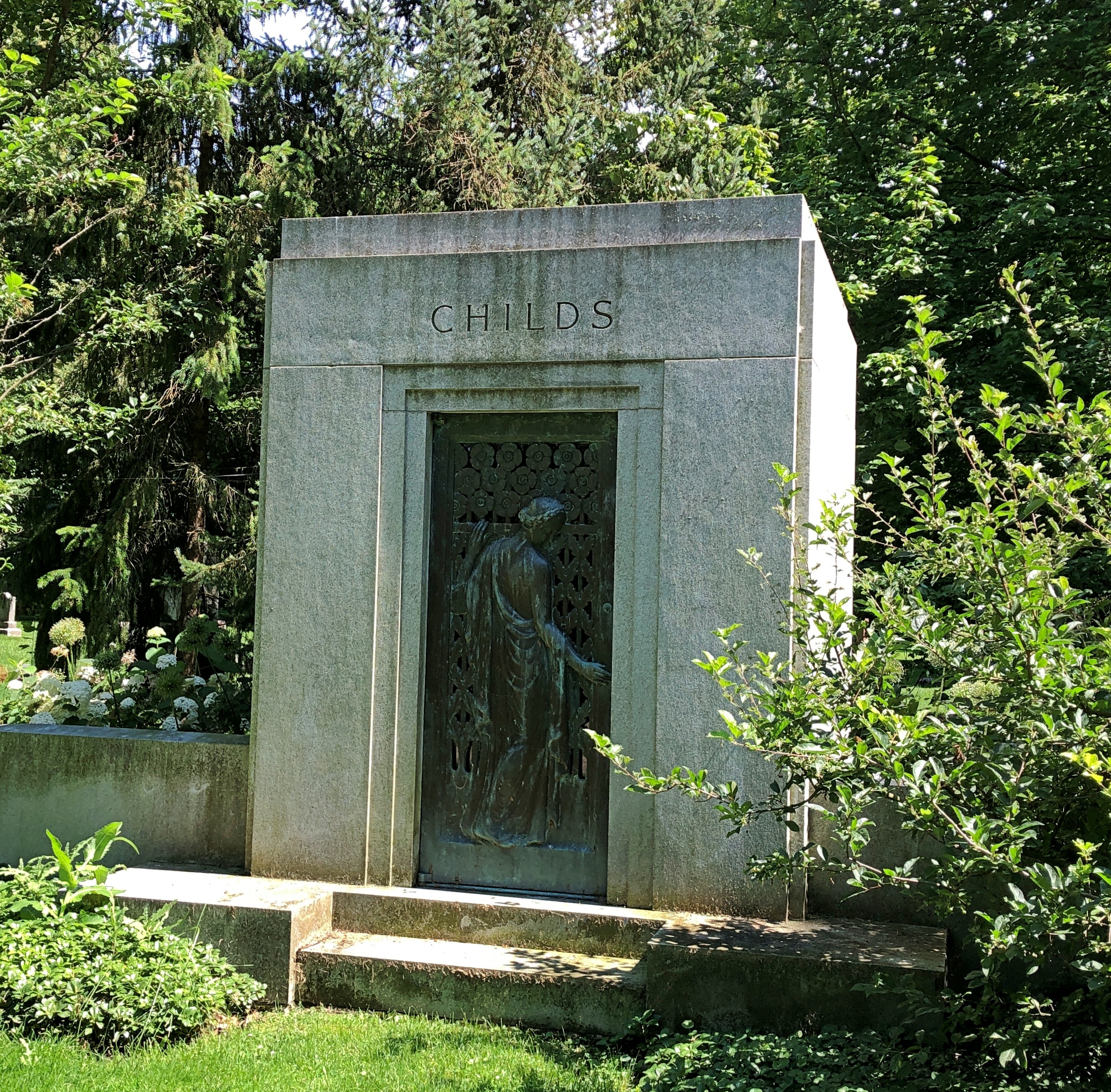
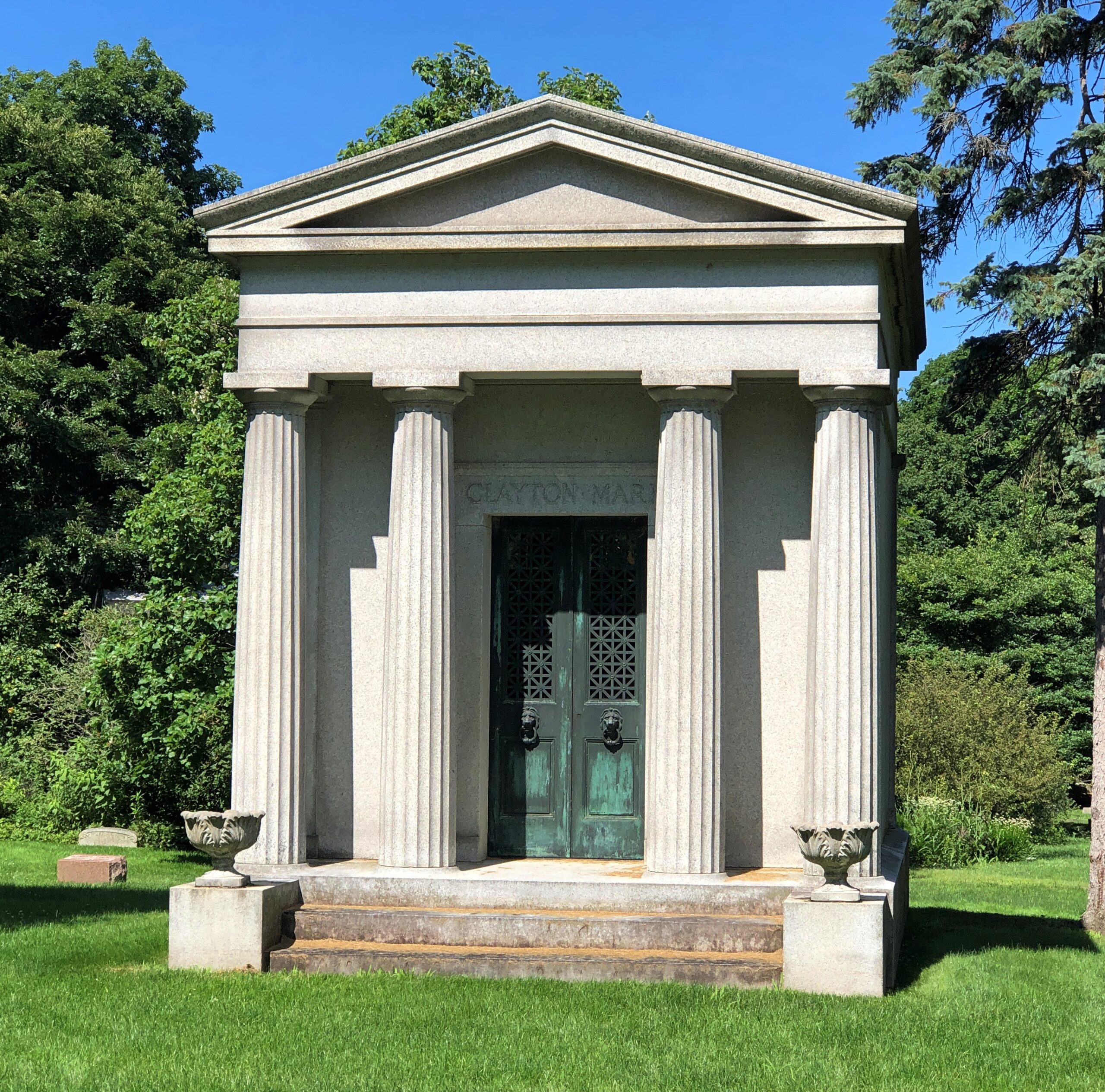
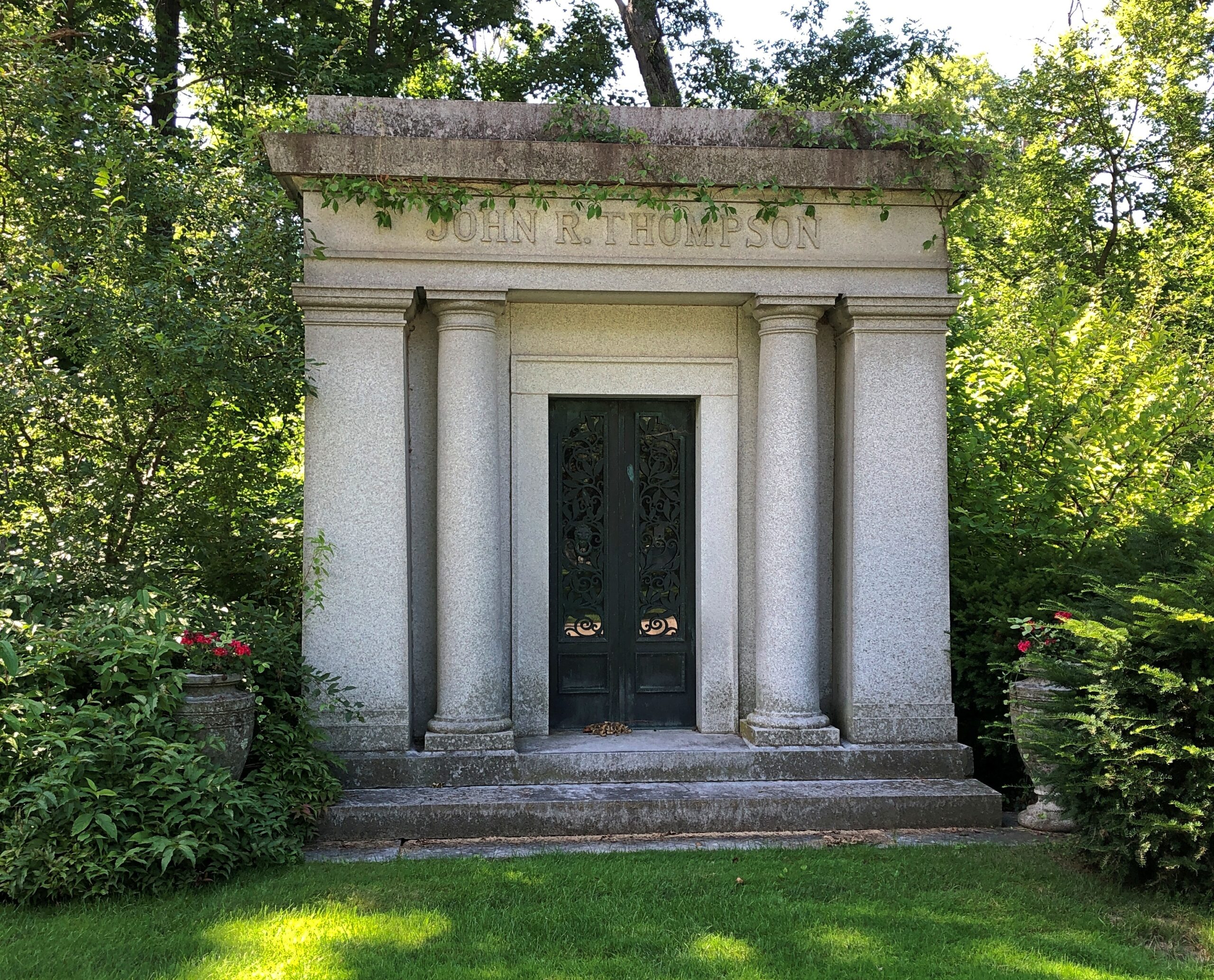
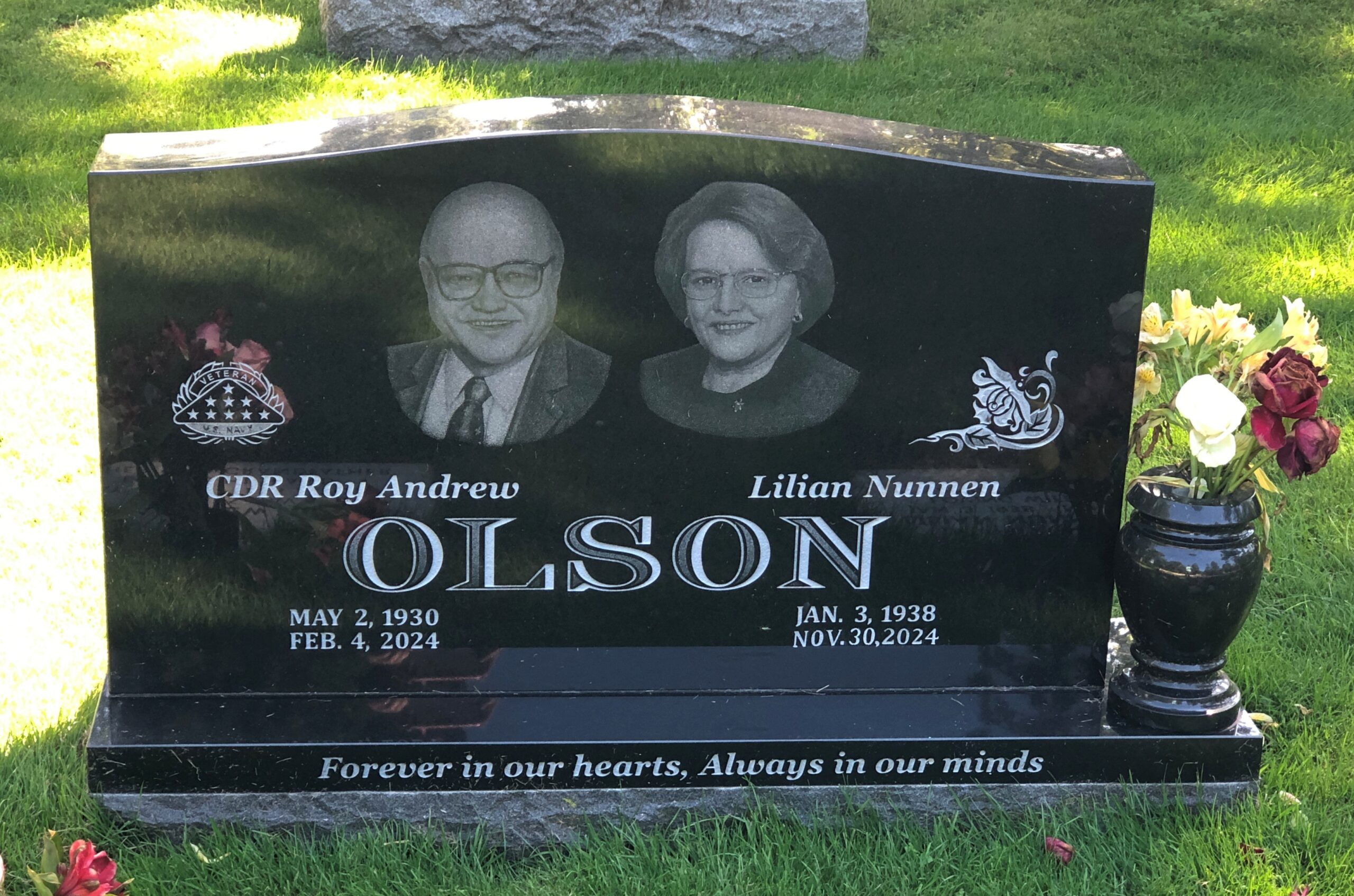
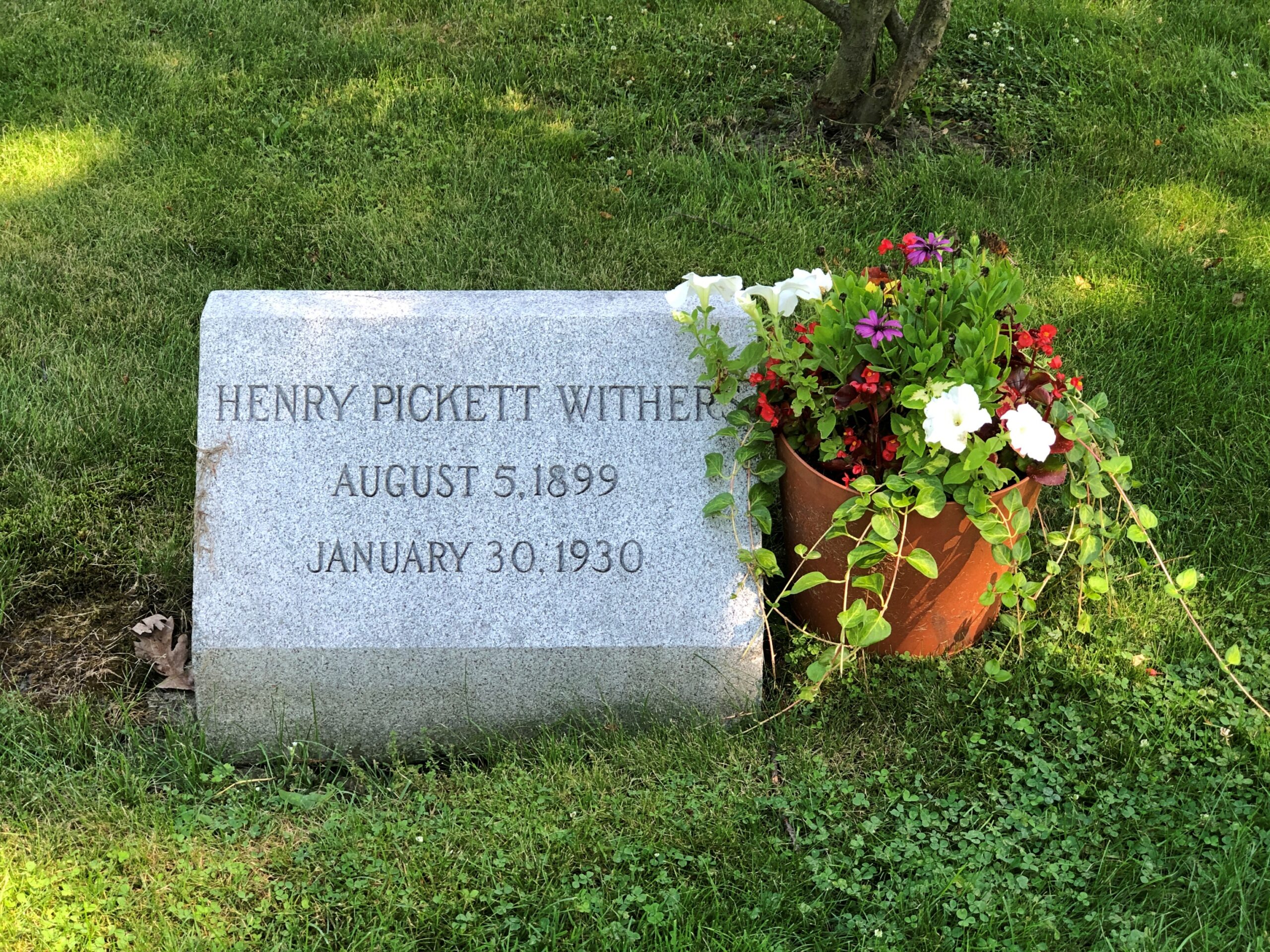
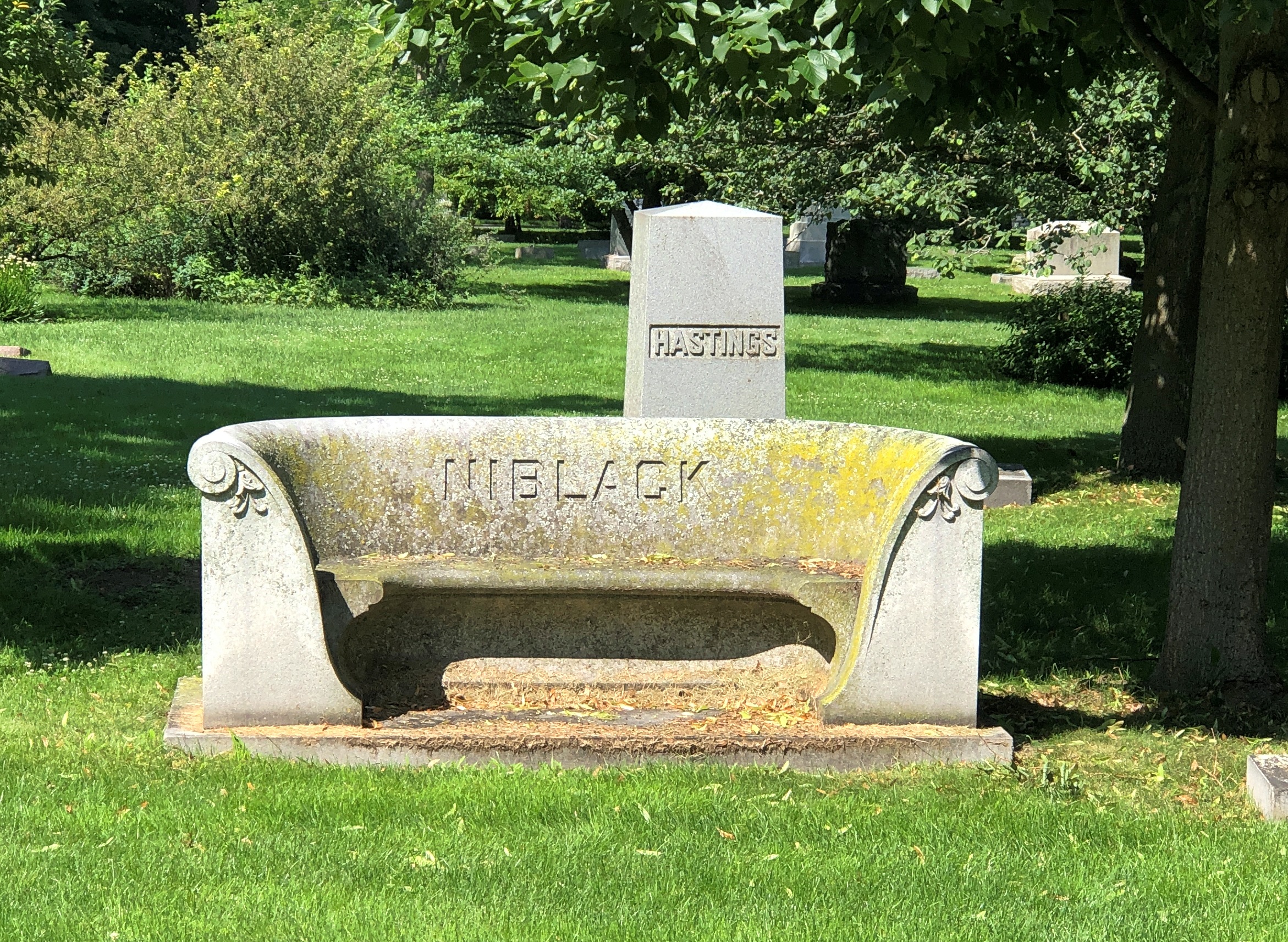
Like any good cemetery, there’s a mix of memorials. Considering the decades of affluence on the North Shore, no shortage of sizable mausoleums.
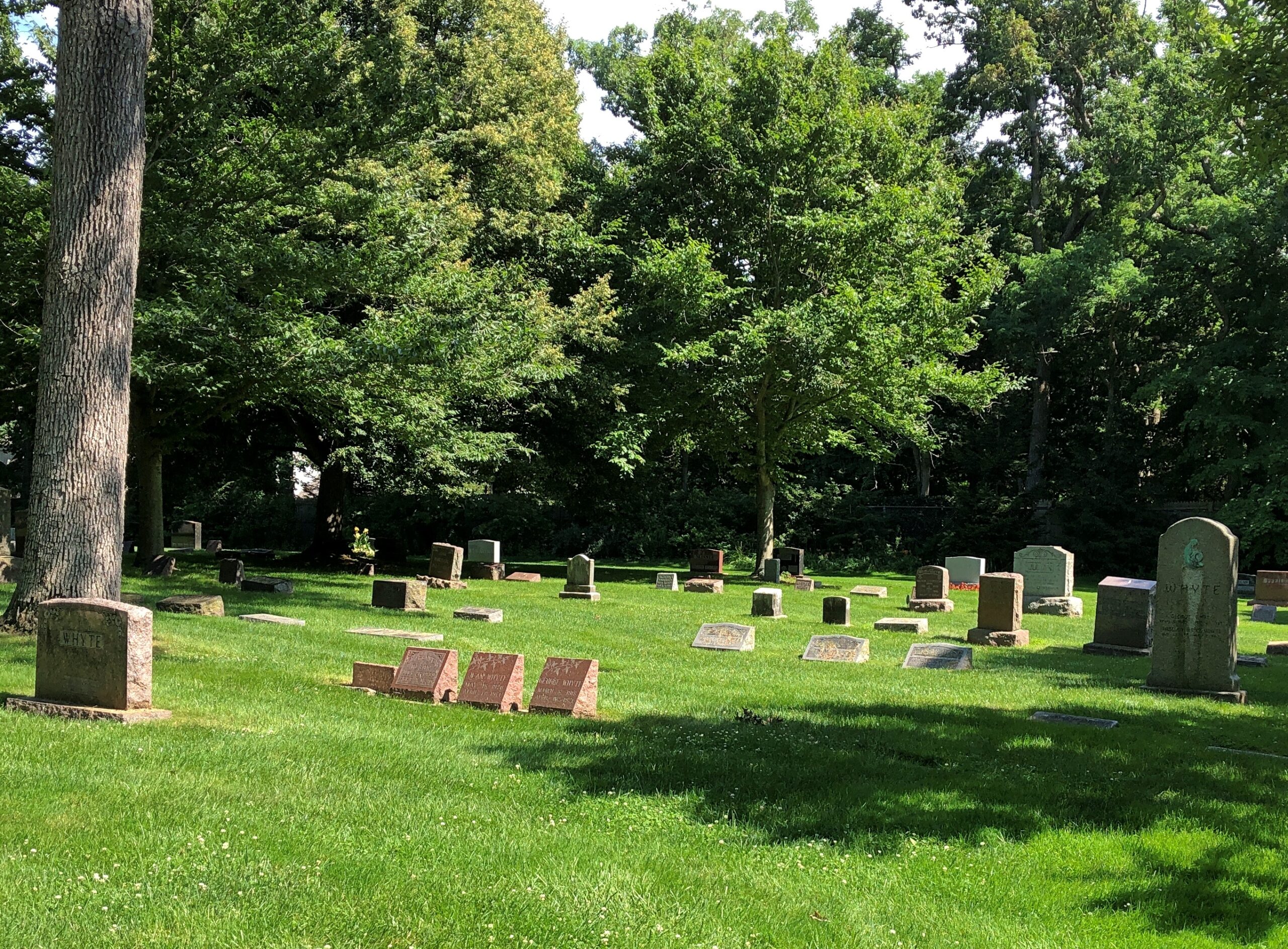
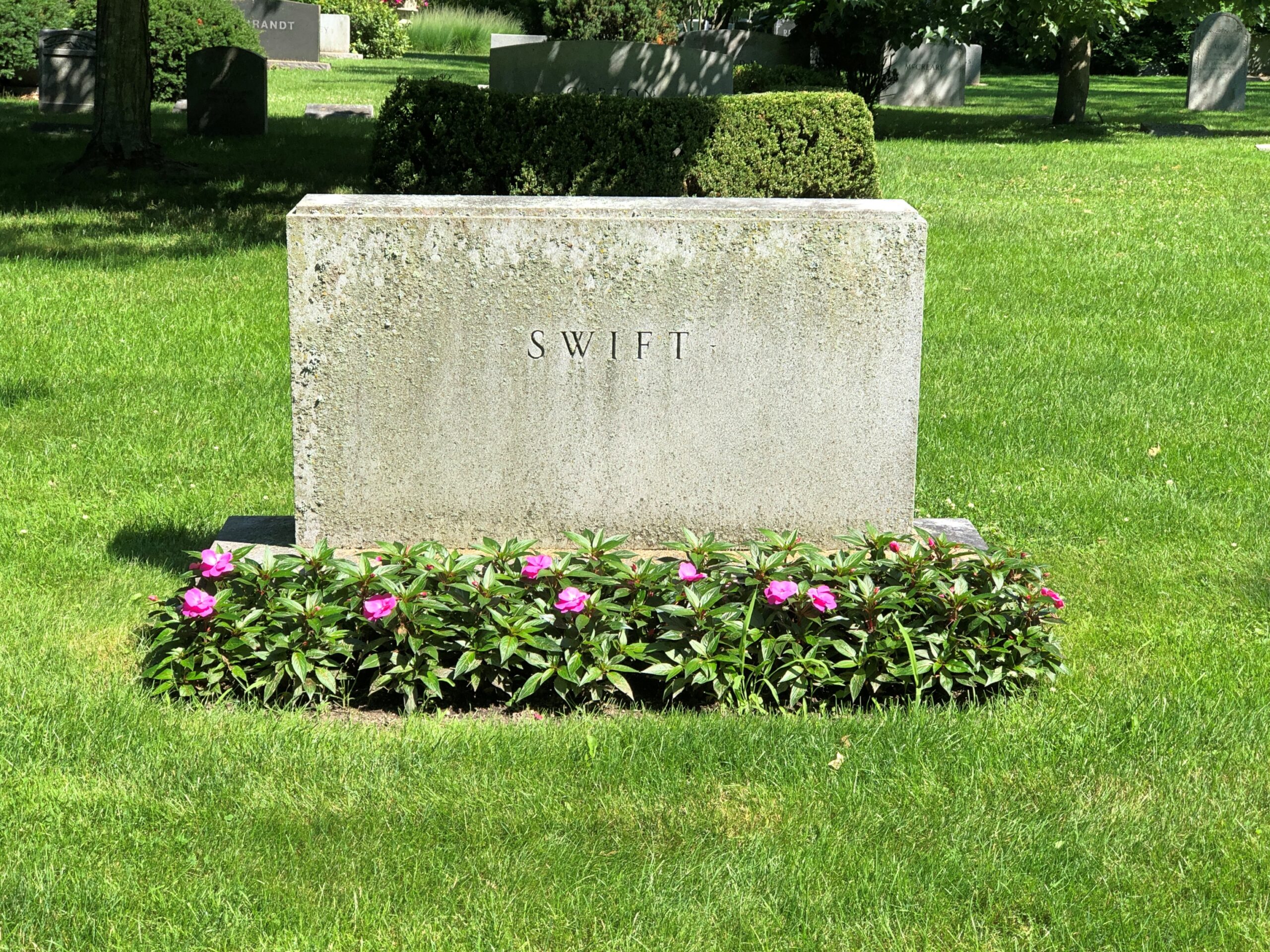
More modest stones, but certainly weighty. Physically, but also emotionally for the bereaved.
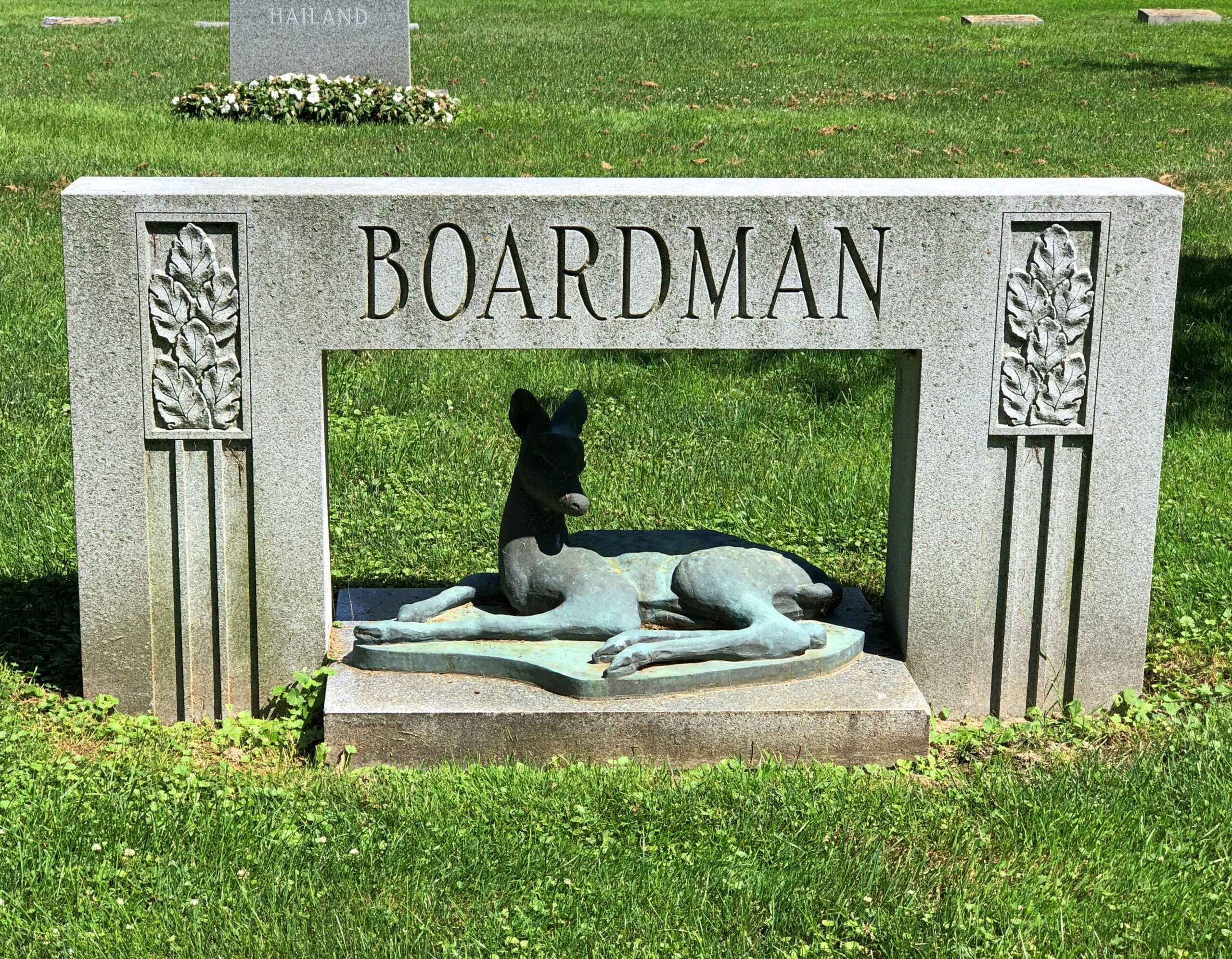
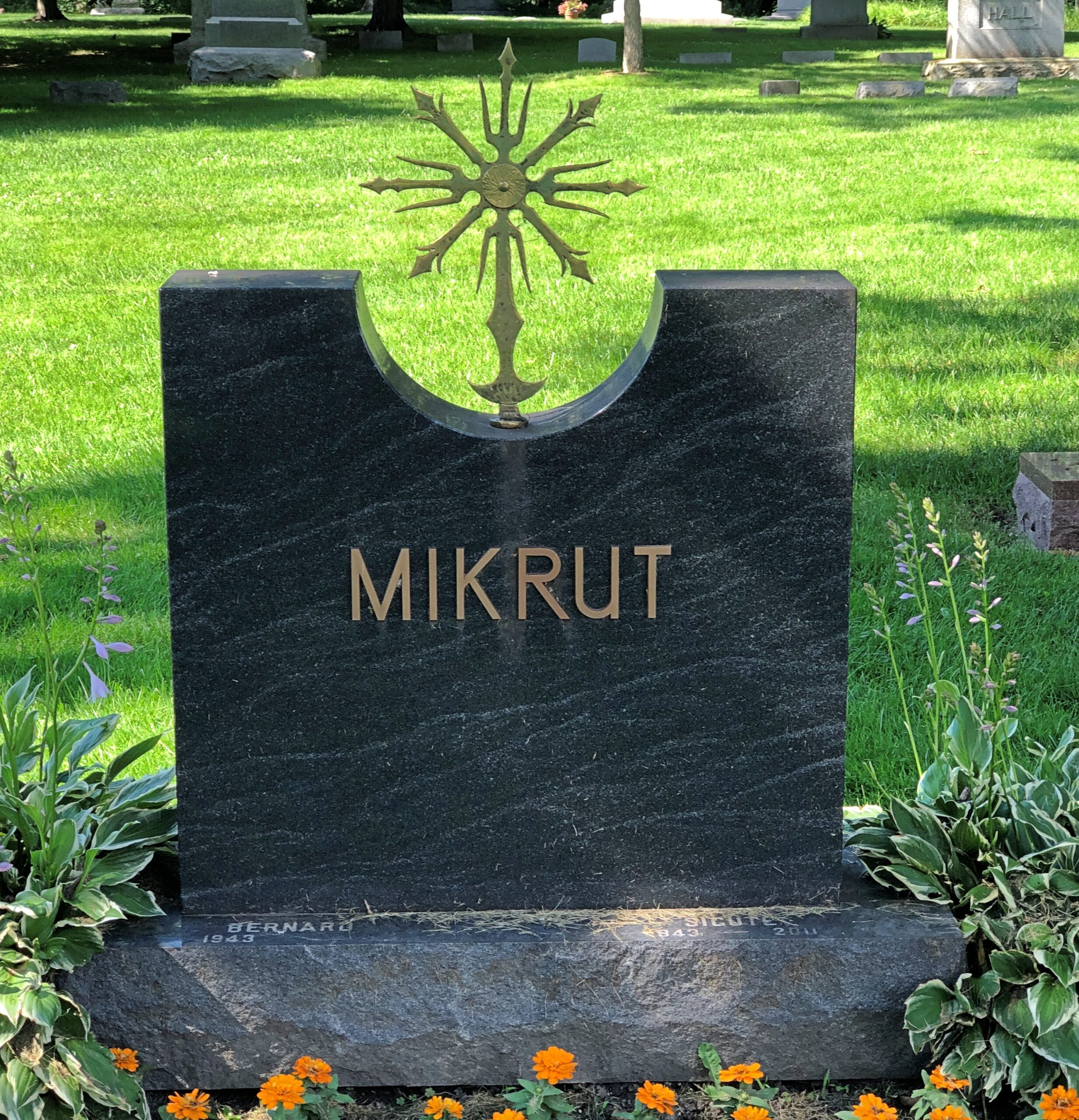
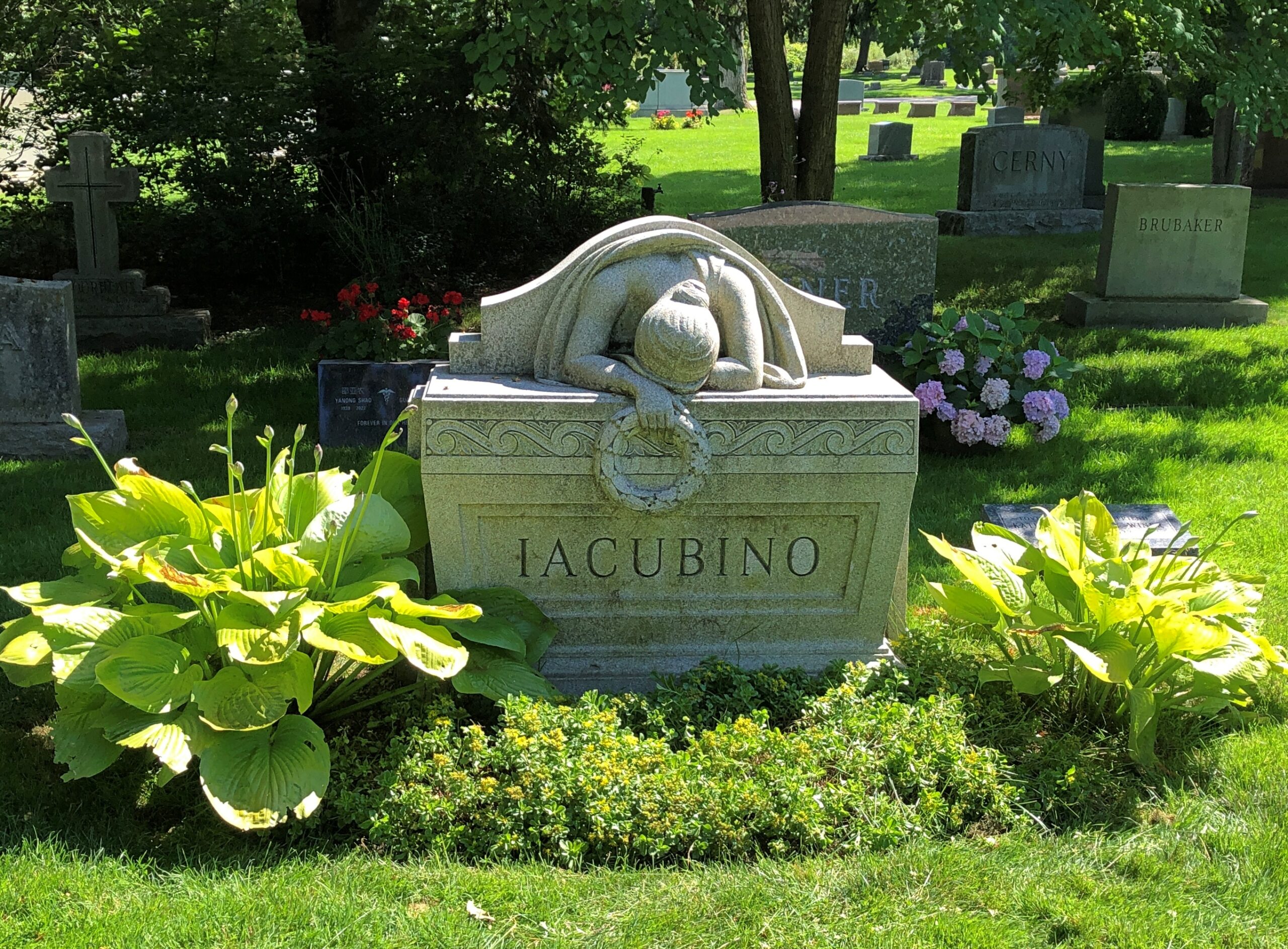
More artful stones.
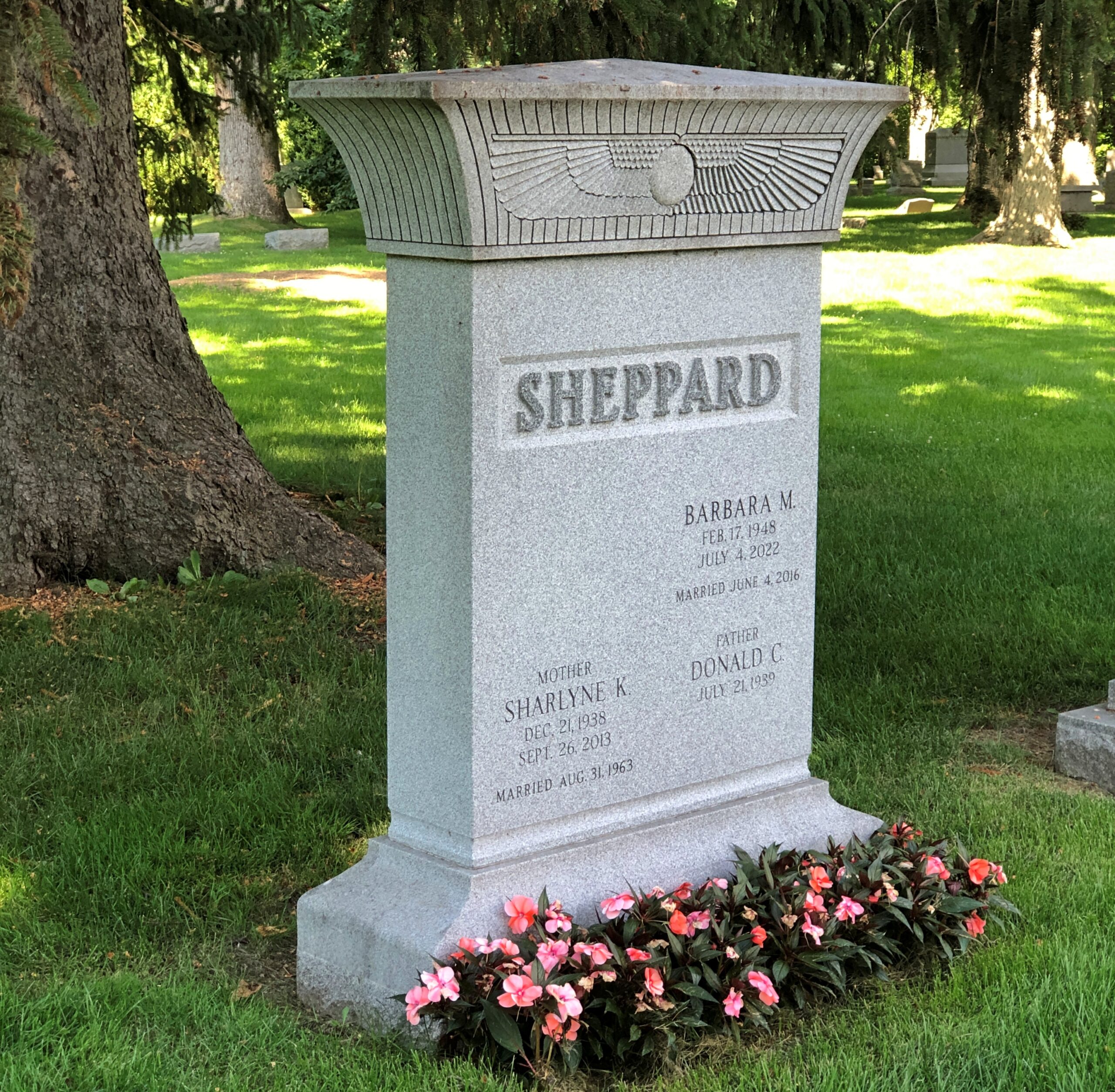
Not much Egyptian Revival that I saw, but there was a little.
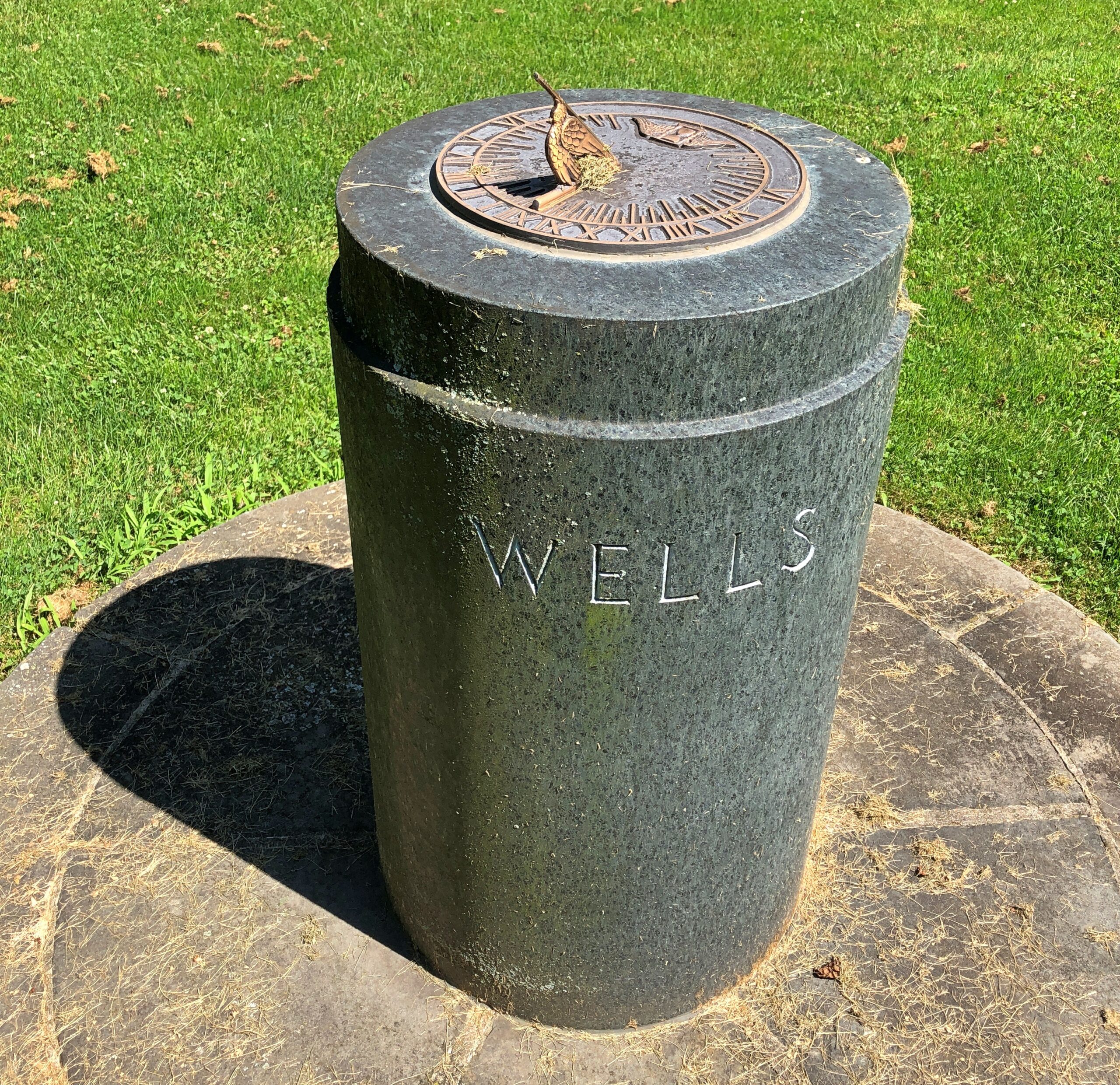
The aforementioned sun dial memorial.
I liked this small section: unkempt on purpose, I think.
Lake Forest’s landscaping is meticulous otherwise, so that seems more reasonable that an omission by the groundskeepers.
Looks like we’ve hit the mid-July stride of chamber-of-commerce weather, with low 80s F for highs, high 60s for lows, for some days ahead. On the other hand, standard forecasts don’t include smoke, which could well make a comeback in the coming days.
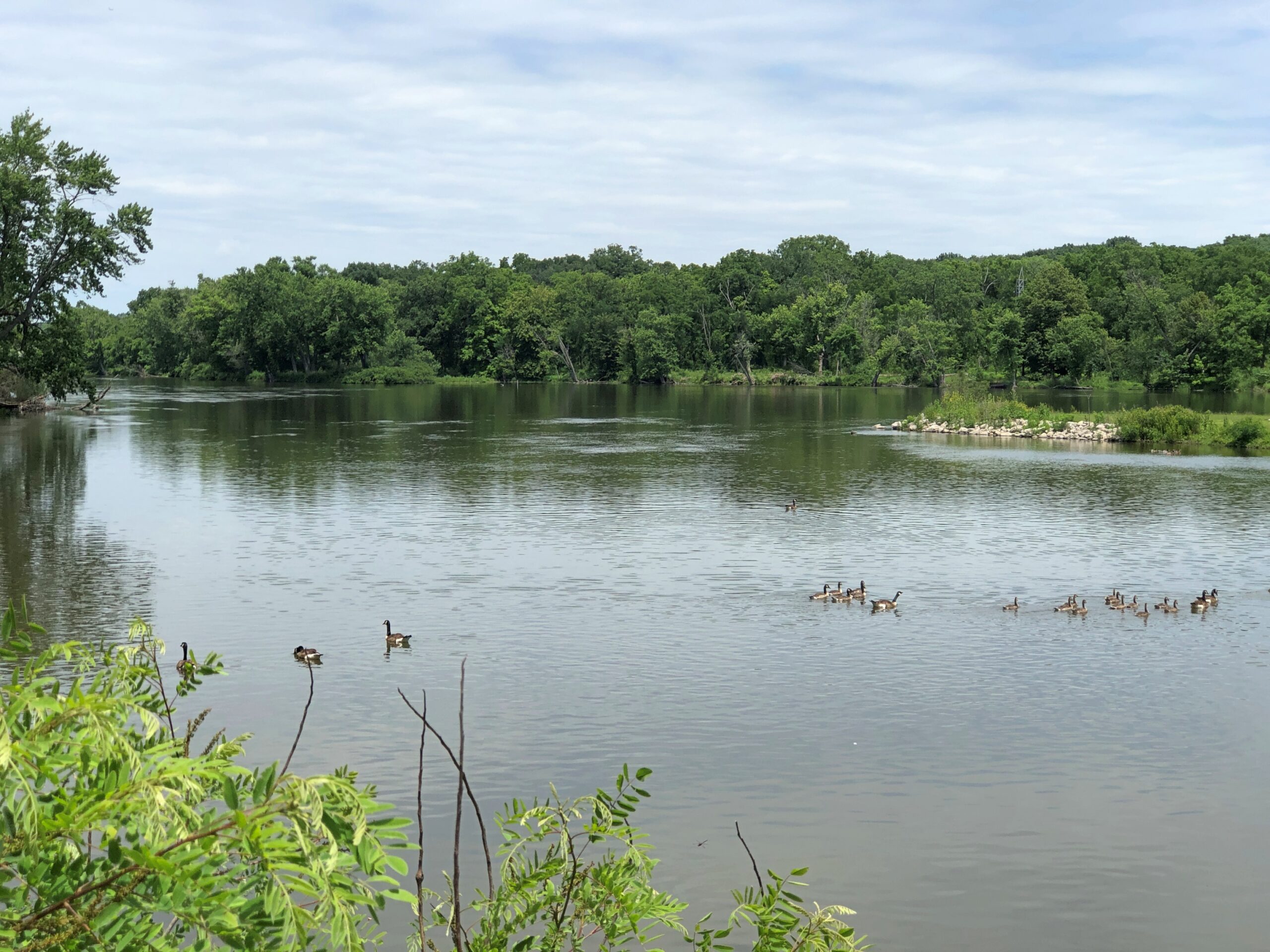
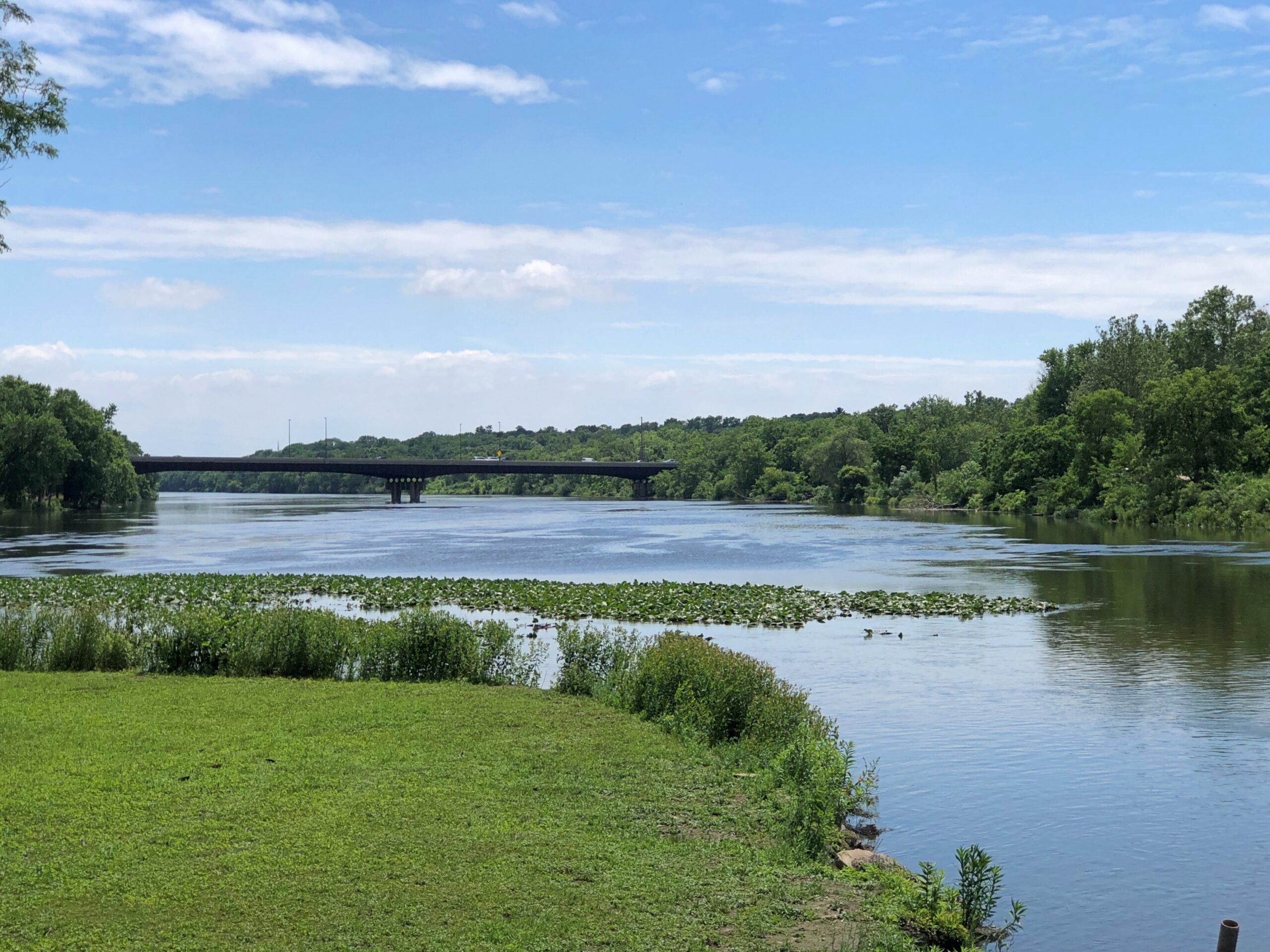
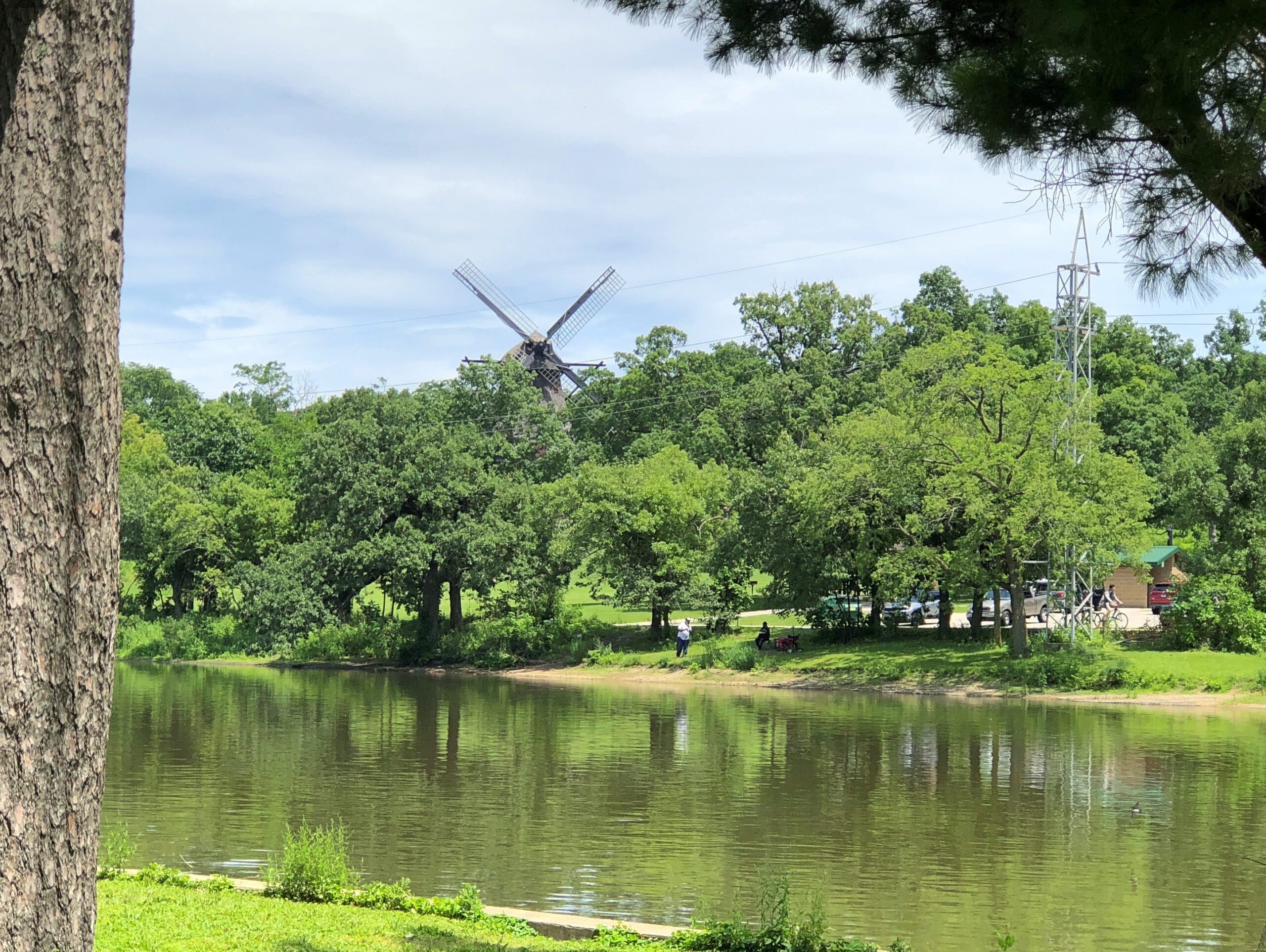
It was a rainy May and June, bringing the flow of the Fox River fairly high by the time last month that we took a short walk nearby, largely under the flush of greenery.
As mentioned, we visited the Fabyan Forest Preserve in Geneva, Illinois one Saturday not long ago. The holdings — formerly part of the estate of George Fabyan (d. 1936) — include land on both sides of the river, and a large island accessible on both sides by footbridges. The view from the island.
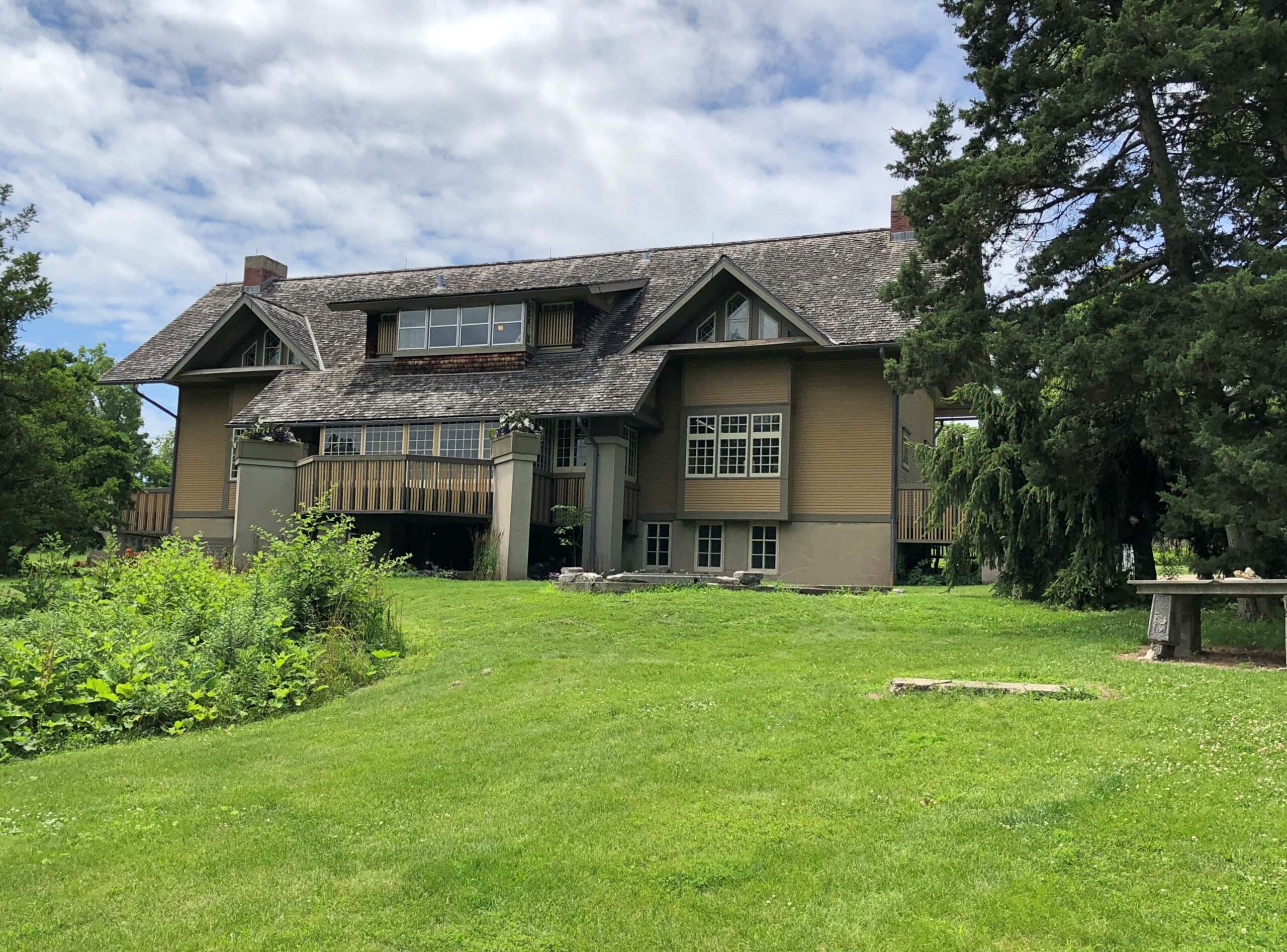
We didn’t go there this time, but rather lingered on the west bank, around the Fabyan Villa, which we toured, taking in the bogus mummy. FLW did some renovation on the property, a fact well emphasized at the museum.
One view from the villa toward the Fox. If you’re going to build near a river — or any flowing body of water — give it some height.
Fabyan collected a lot more, including European artwork, back when that was doable.
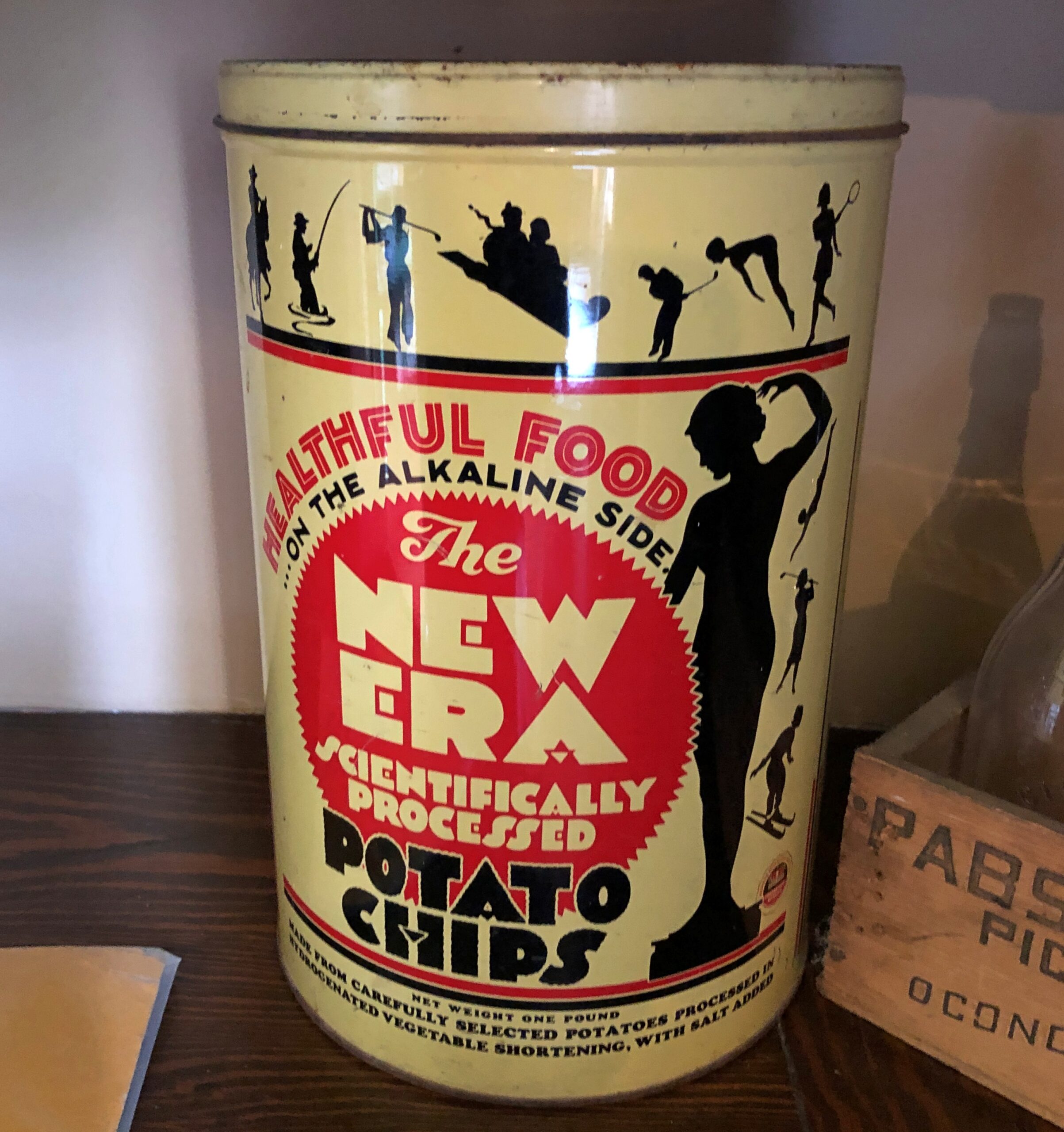
Once upon a time (probably), the Fabyan kitchen served New Era Potato Chips. Glad to see it. The memory of the same such can at the Cuneo Museum is a minor delight for me.
Back when food processors crowed about have food science on their side. These days, that might get them MAHA’d into consumer skepticism.
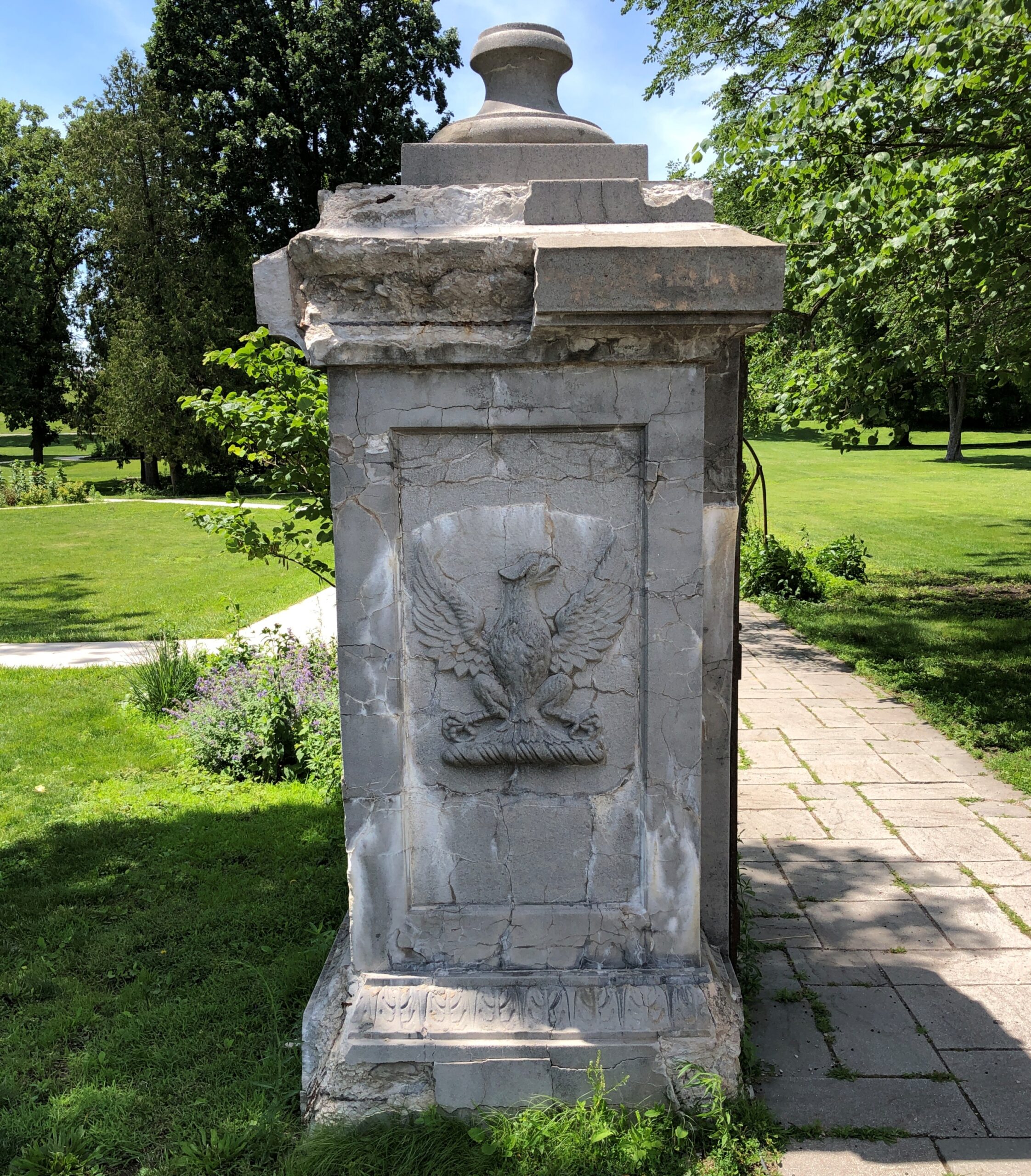
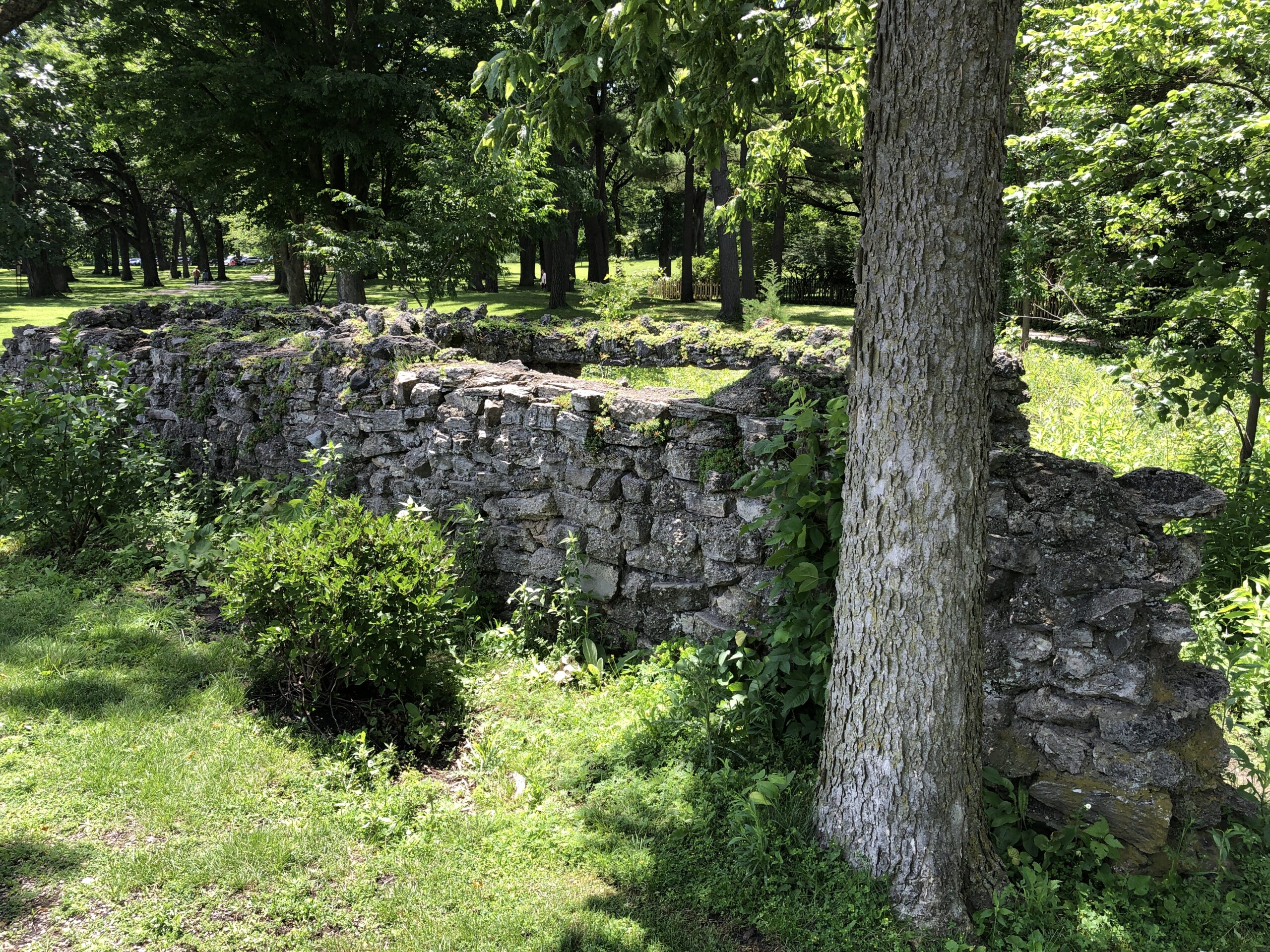
Outside, more features, including a ruin from Fabyan days. I understand that the Roman-themed pool on the island has mostly been reclaimed by the river. This wasn’t part of the pool. A out-of-place gatepost, from the looks of it.
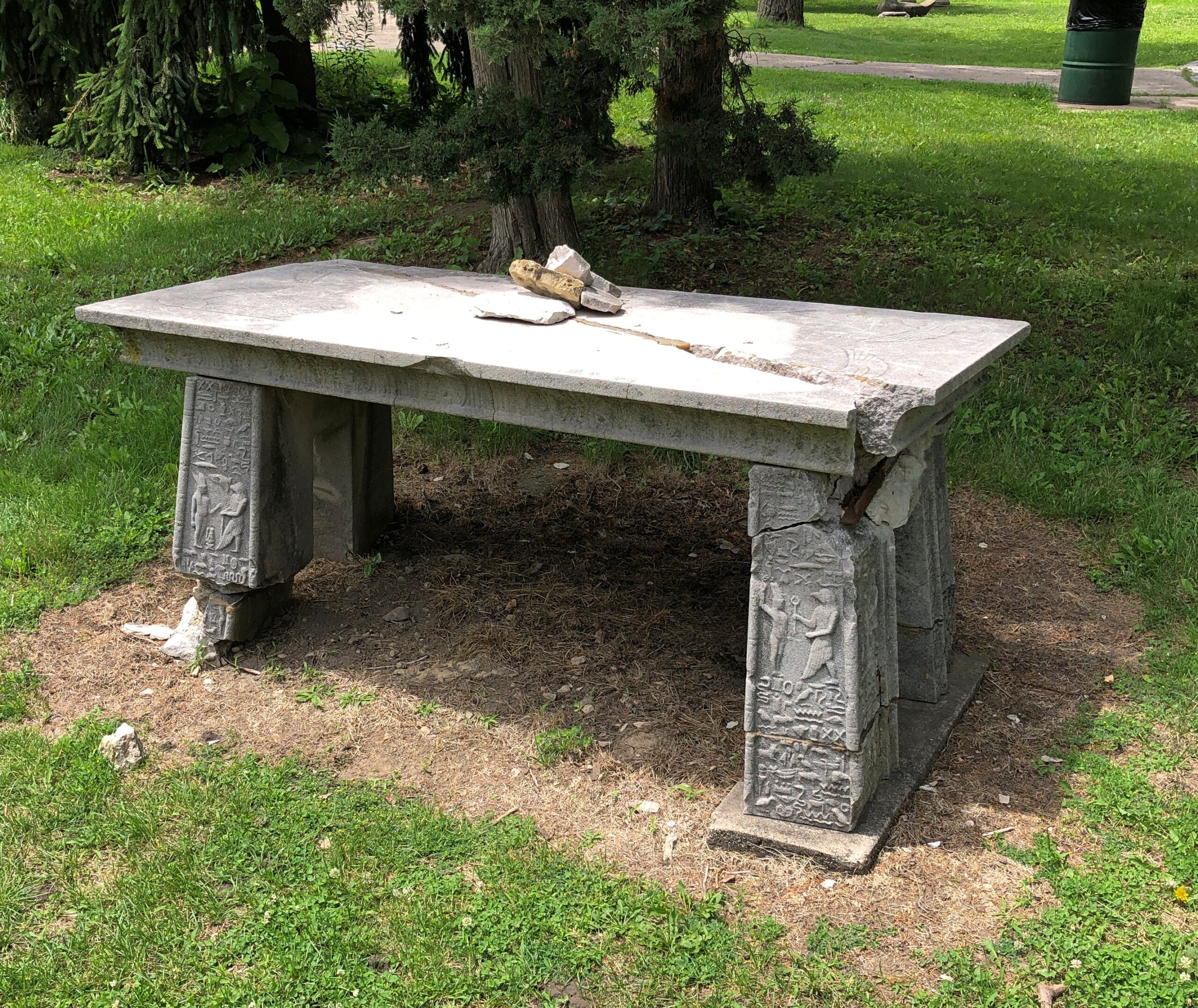
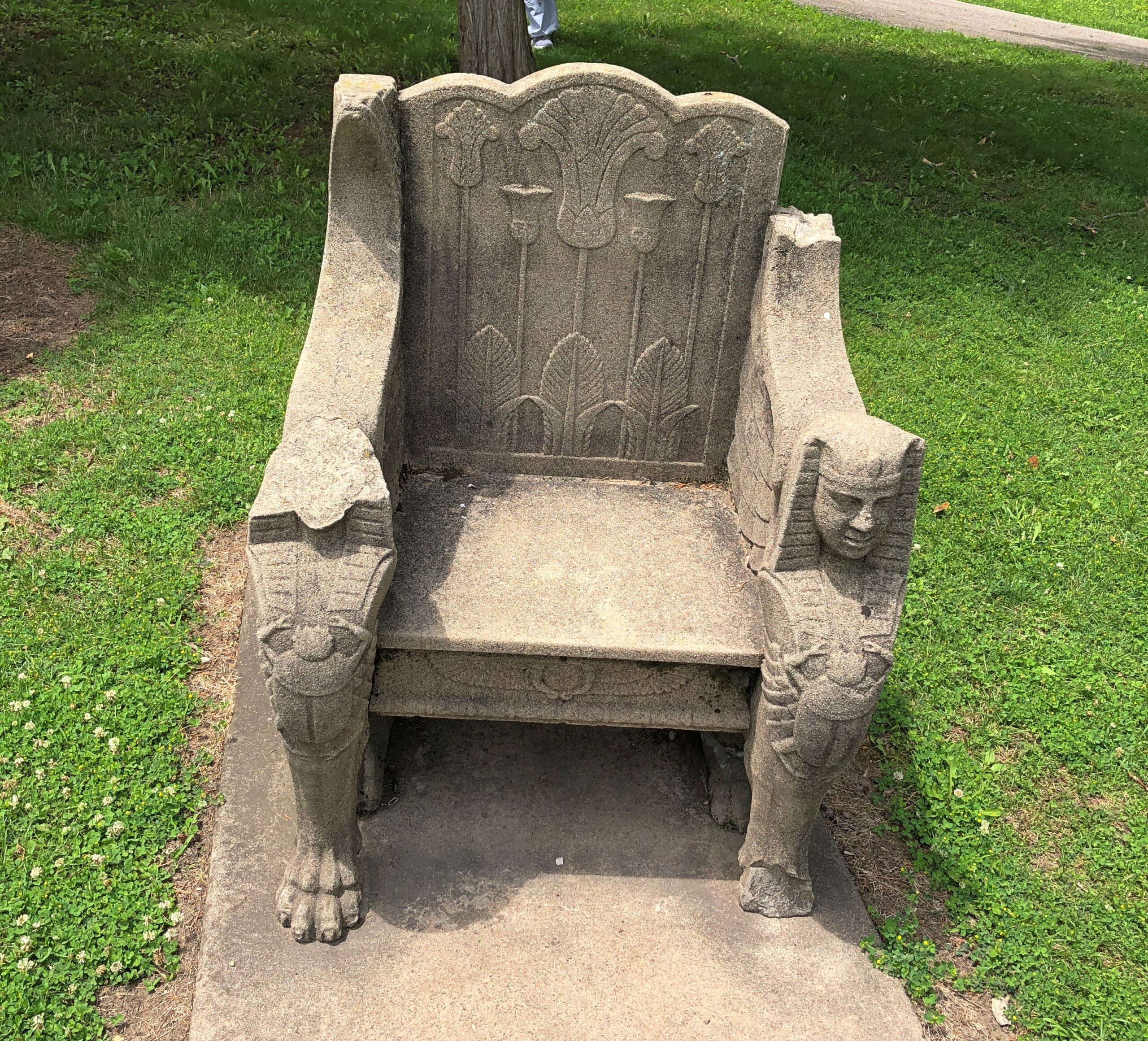
More evidence of the passing wave of Egyptomania.
Looking a little worse for roughly a century of wear.
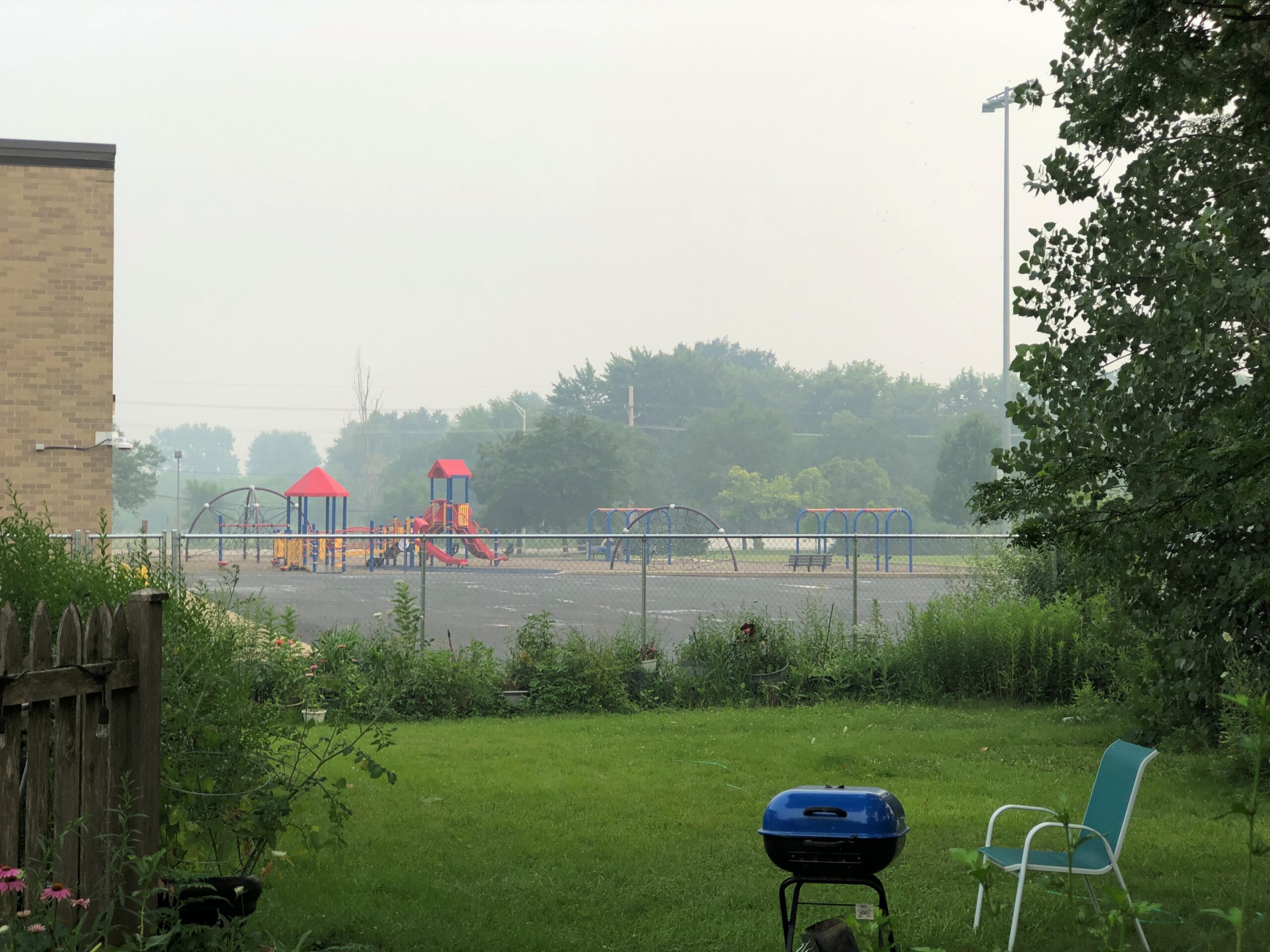
It did seem a little smoky out there today. Actually, a lot. More than I can remember, at least since I spent a smoky day in downtown Portland, Oregon some years ago. Or come to think of it, a very hazy day in Illinois only about three years ago.
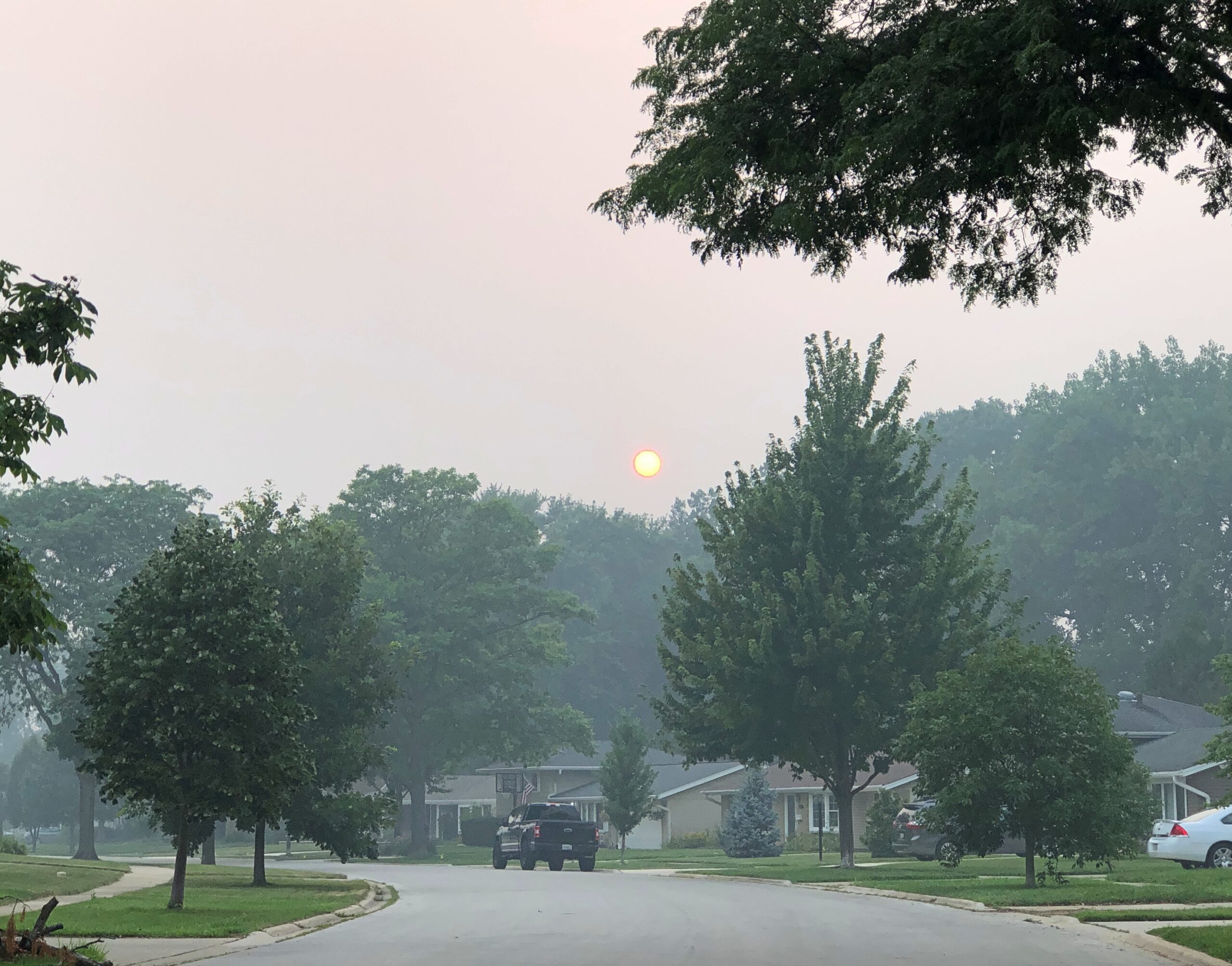
The view from my deck this afternoon.
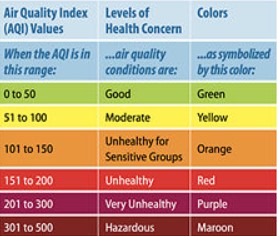
Official notice for today and tomorrow: The Illinois Environmental Protection Agency has issued a Red Forecast Air Pollution Action Day for Friday July 17th for the AirNow AQI forecast sectors of Rockford and all 6 Chicago area forecast sectors. This is in addition to downgrade of the ongoing action day to a Purple Forecast Air Pollution Action Day in effect today.
So today we had Purple Haze, “Very Unhealthy.” Shouldn’t Red be the worst? Maybe the committee of weathermen and atmospheric scientists who invented the AQI considered the matter, and decided that Purple is worse. And worst of all? Maroon. True, I would alarmed if I stepped out into maroon-colored air, but we know things aren’t quite so literal.
Today’s air would have looked foggy, except it doesn’t get thicker at a distance. The smoke is evenly distributed, at least outside my back door. A smell of barbecue comes with the gray mist, except without any hint of the better, and sometimes wonderful smell of grilled meat.
Sunset on Tuesday, though of course my camera didn’t really capture it.
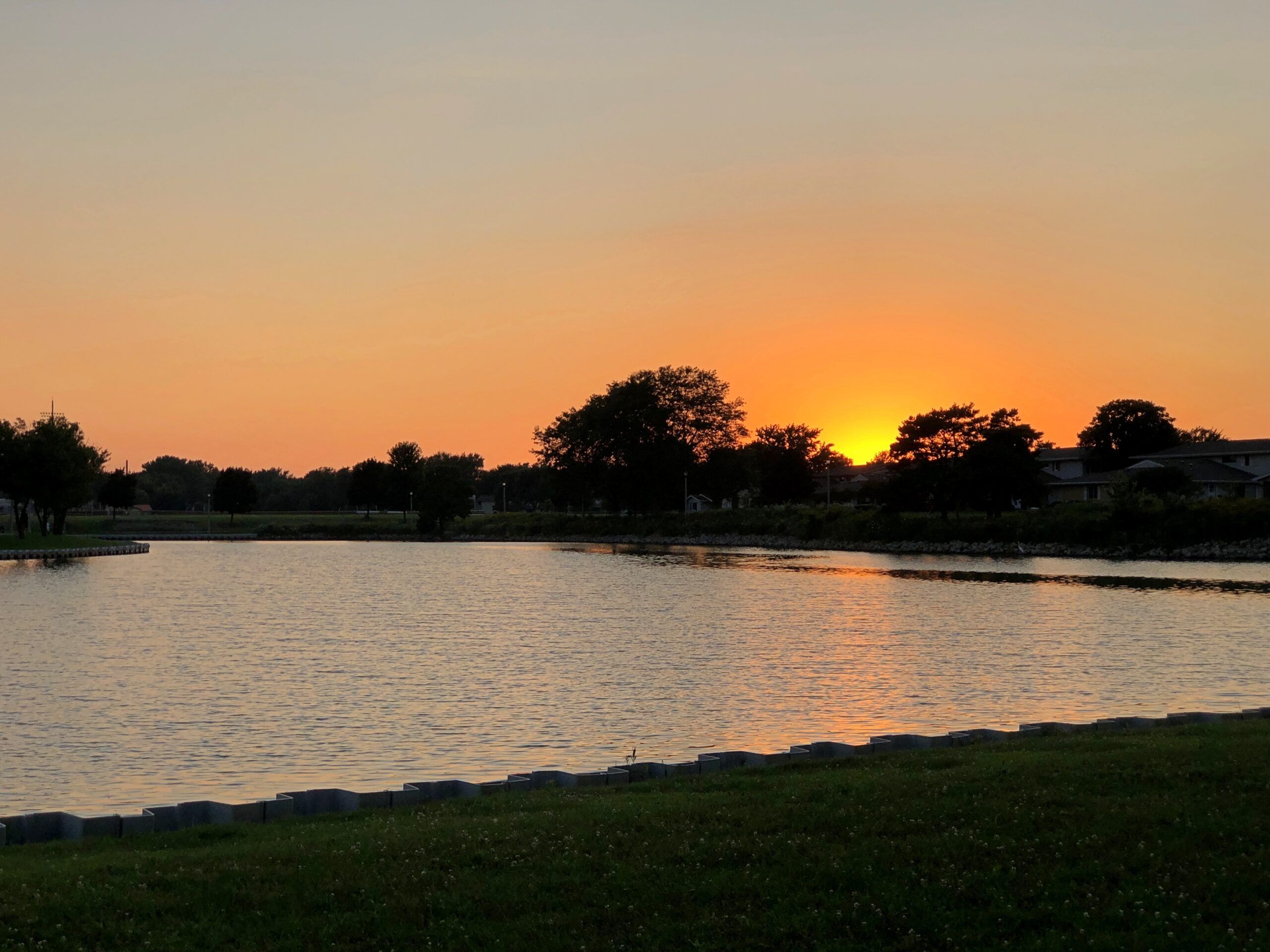
Sunset today, same caveat. Also, a different place, but we weren’t about to talk a walk around the same lake on a Purple Forecast Air Pollution Action Day.
The color looks ordinary, but the sun’s disk, embedded in the gray mist, was a rarely seen red-yellow-orange.
It occurred to me over the Independence Day weekend that I’ve experienced roughly a quarter – 25% – of the entire history of the United States, accepting the commonly held age for the nation of 250 years. Anyone my age or older has, that is. One-quarter of a 250-year span is 62.5 years. At the age of 65, I can’t really claim to remember those first two and a half years, but the furthest reaches of my memory run back to the mid-1960s, so close enough.
And I have to add that if you’re Mel Brooks, you’ve lived 40% of the nation’s history.
Fifty years ago, on the much ballyhooed Bicentennial, it rained in San Antonio, where I was. We stayed home. On Saturday, on the much less ballyhooed 250th, it rained in metro Chicago, where I was. We stayed home. Coincidence? Well, yes.
Been home for a few months now, witnessing a wet and cool spring edge into a wet and warm summer in northern Illinois, and temps finally popped up into the 90s ahead of July 3. The heat was ended by rain and more rain. A pretty typical Northern summertime pattern.
Fireflies have made their appearance, though a meager number, and just today, this afternoon, I heard cicadas bleating ahead of dusk, though no cricketsong came afterward. Could be the Brotherhood of Orthopteran Insects is still negotiating a new contract for this year, and I won’t pretend I didn’t have to look up orthopteran. Mosquitoes are out looking for mammal blood, though considering the temporary wetlands that are our suburban lawns, not as many as you’d expect. Lit up the mosquito coils on my deck table this evening, and it seemed to work.
Old friends Neal and Michele visited from Chicago for the Fourth – a smaller version of the Gabfest, and indoors because of the rain. A delight all the same. They left before dark, after the rain had stopped. A little wet ground wasn’t going to keep the suburban populace from flouting Illinois’ nanny-state fireworks ban, one of the two nights of the year when the pop-pop-BOOM-pop-boom-fssst goes on for a few hours (the other is New Year’s Eve). In recent years I’ve repaired to the garage to listen to the July 4 explosions. The explosion acoustics are good in that cluttered enclosure.
I’ll be home for a few more months. 2026: Summer of Here. People pay money – I’ve paid money – to enjoy warm weather like this, but we’re getting it no extra charge. Also, even I’ve gotten a little tired of the pace of my driving lately.
No long drives this summer. But that doesn’t mean no drives. Back during the pandemic, my thinking was, if you can’t go far, go near, and that kind of thinking took us to new parts of Wisconsin and Illinois. No pandemic this year, fortunately, but the idea is a good one anyway.
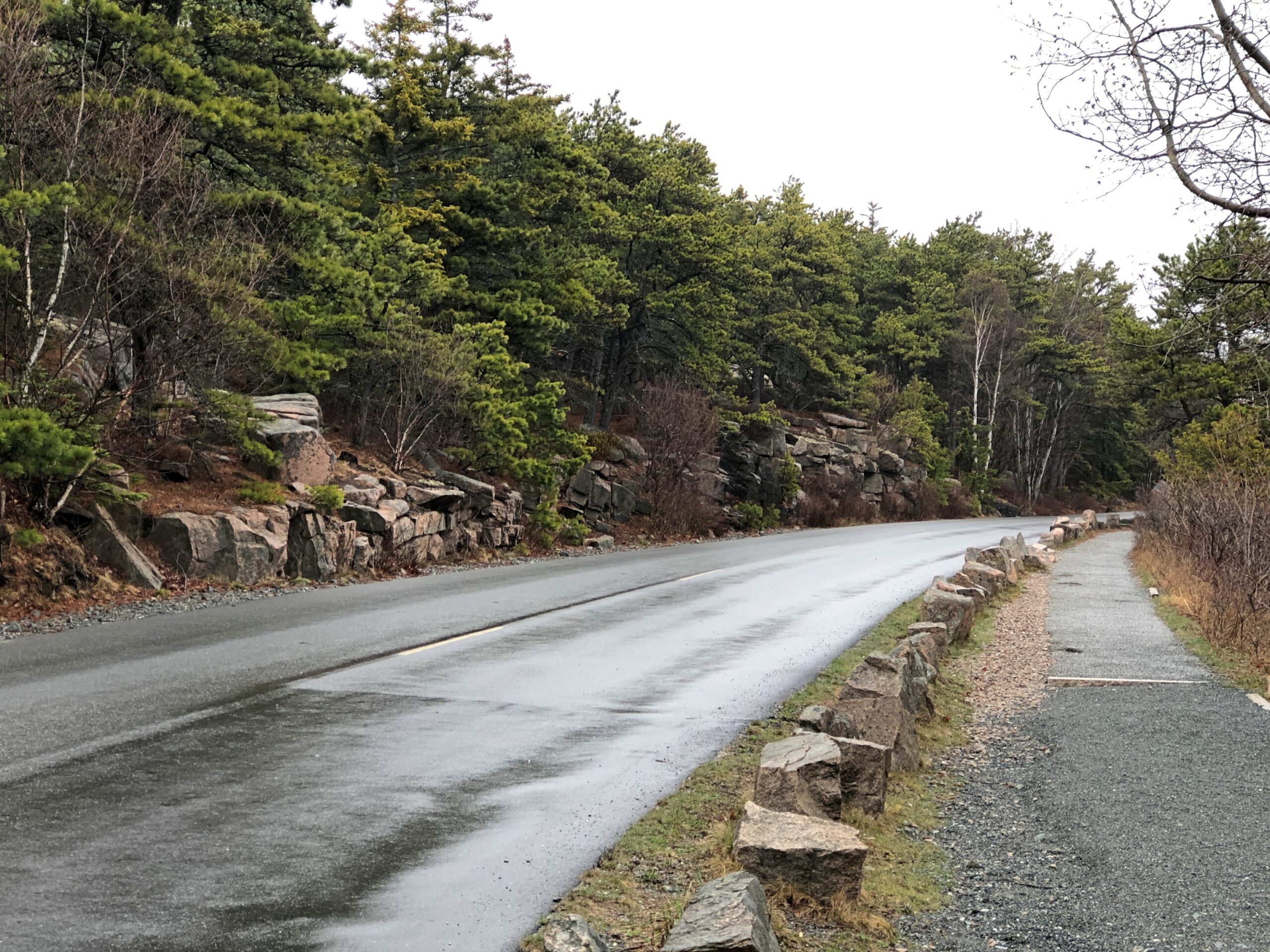
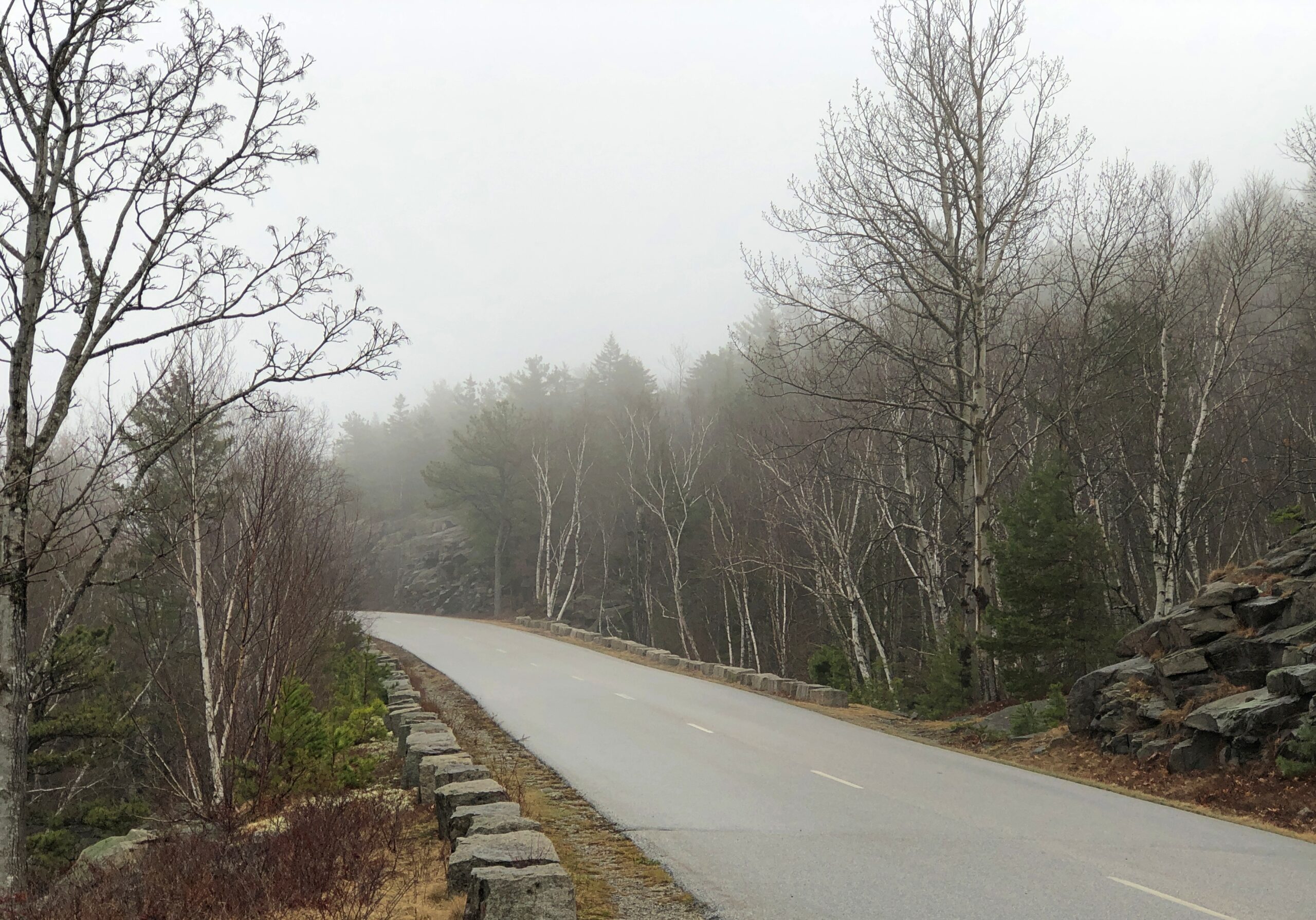
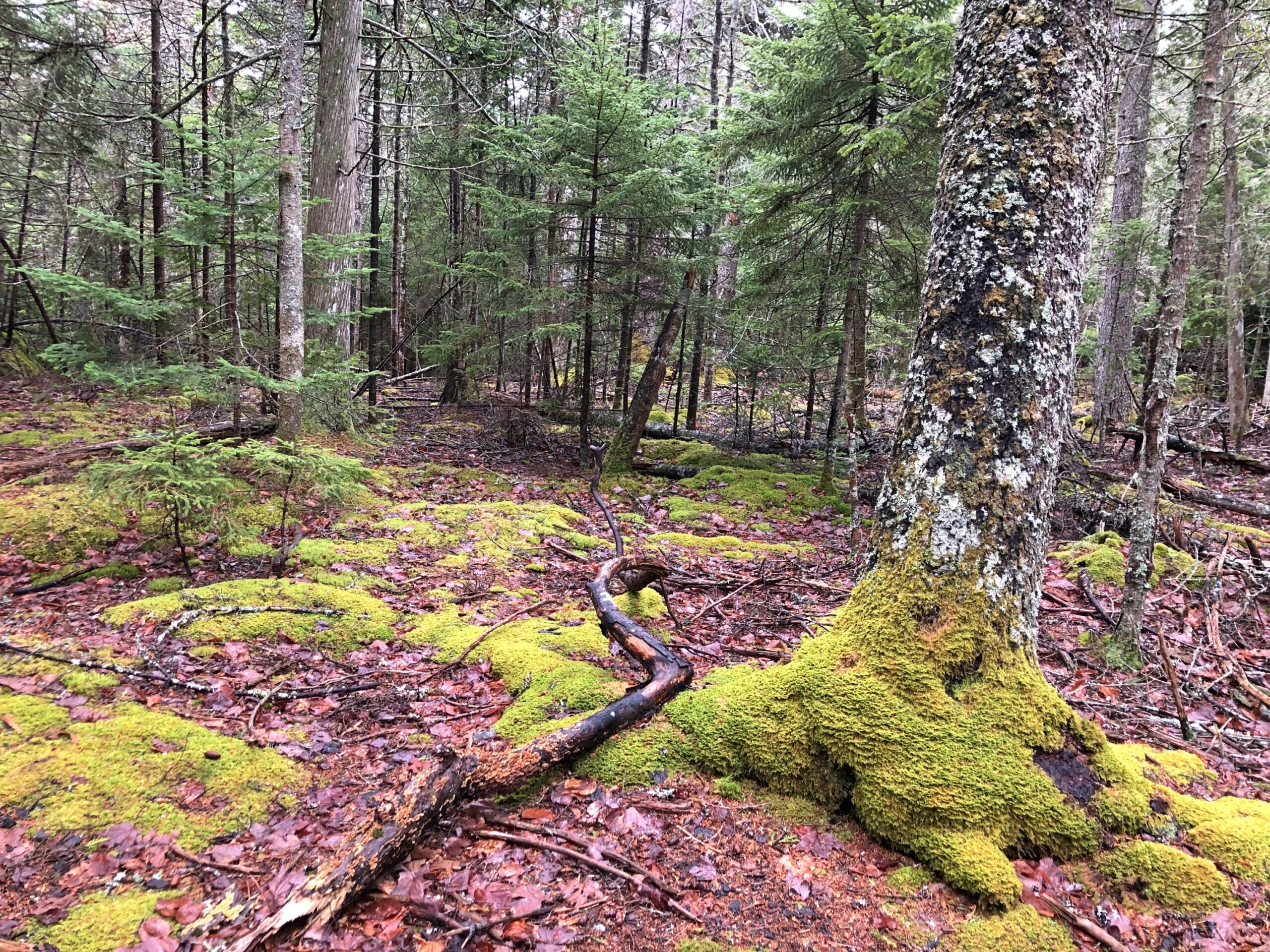
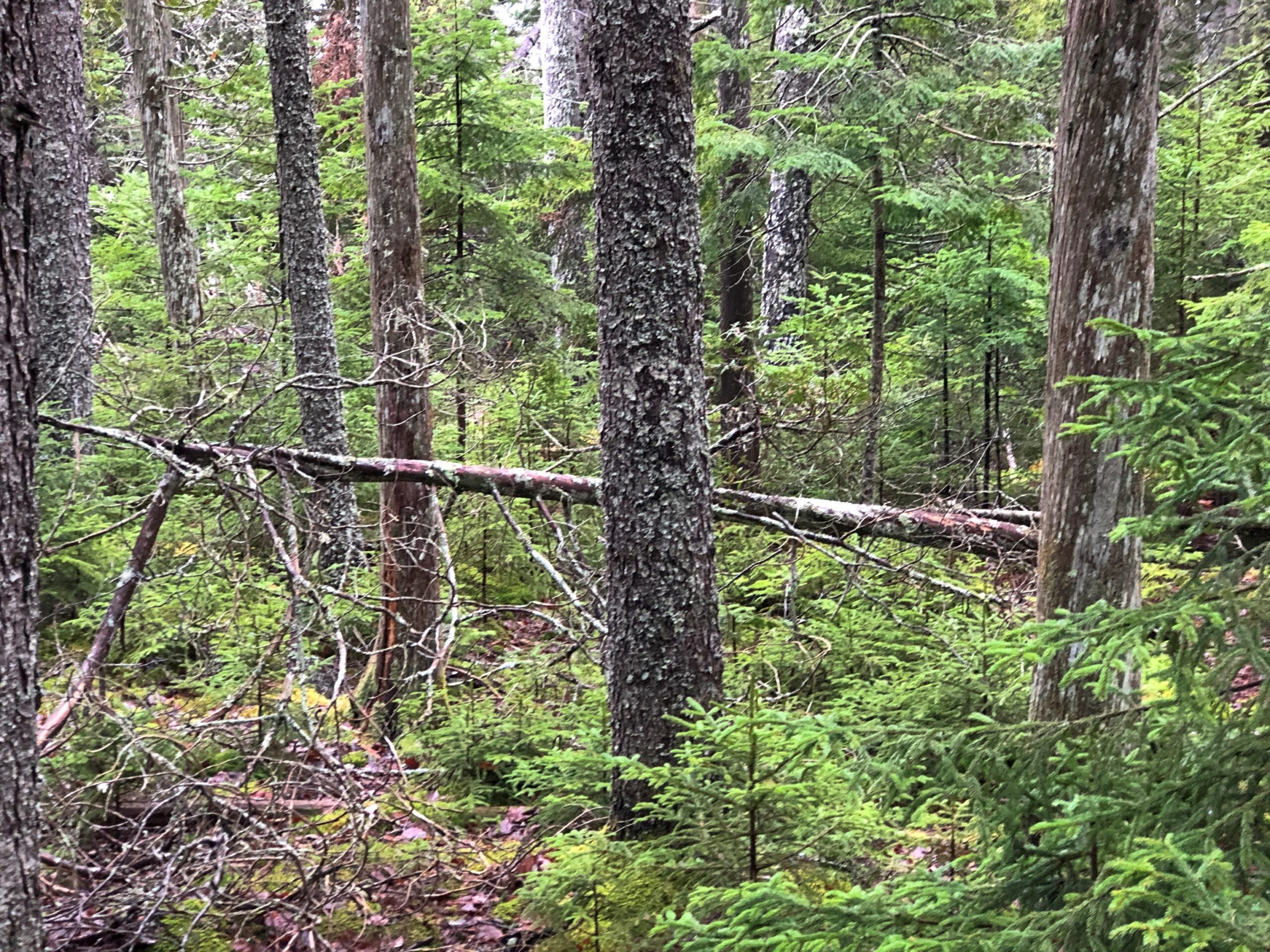
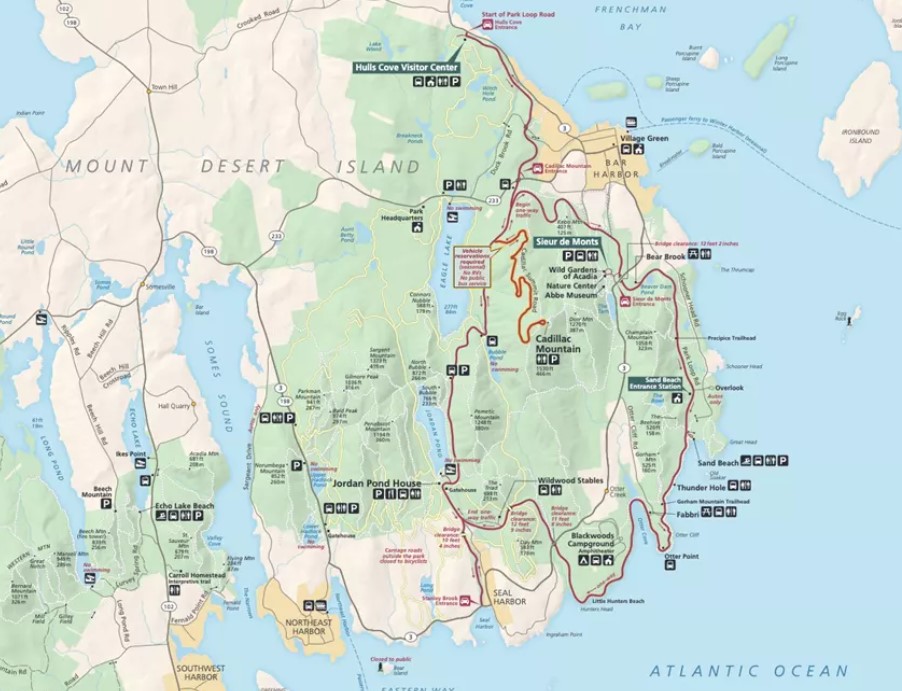
The Park Loop Road in Acadia NP is a fine drive (1) if there aren’t many other cars and (2) you take it easy around those curves. In that, it’s no different than a lot of rural roads. But there’s also the bonus of passing through thick Maine woods. There are brief views of the ocean from the road, but mostly you’re tooling through evergreens.
Through patches of deciduous trees as well.
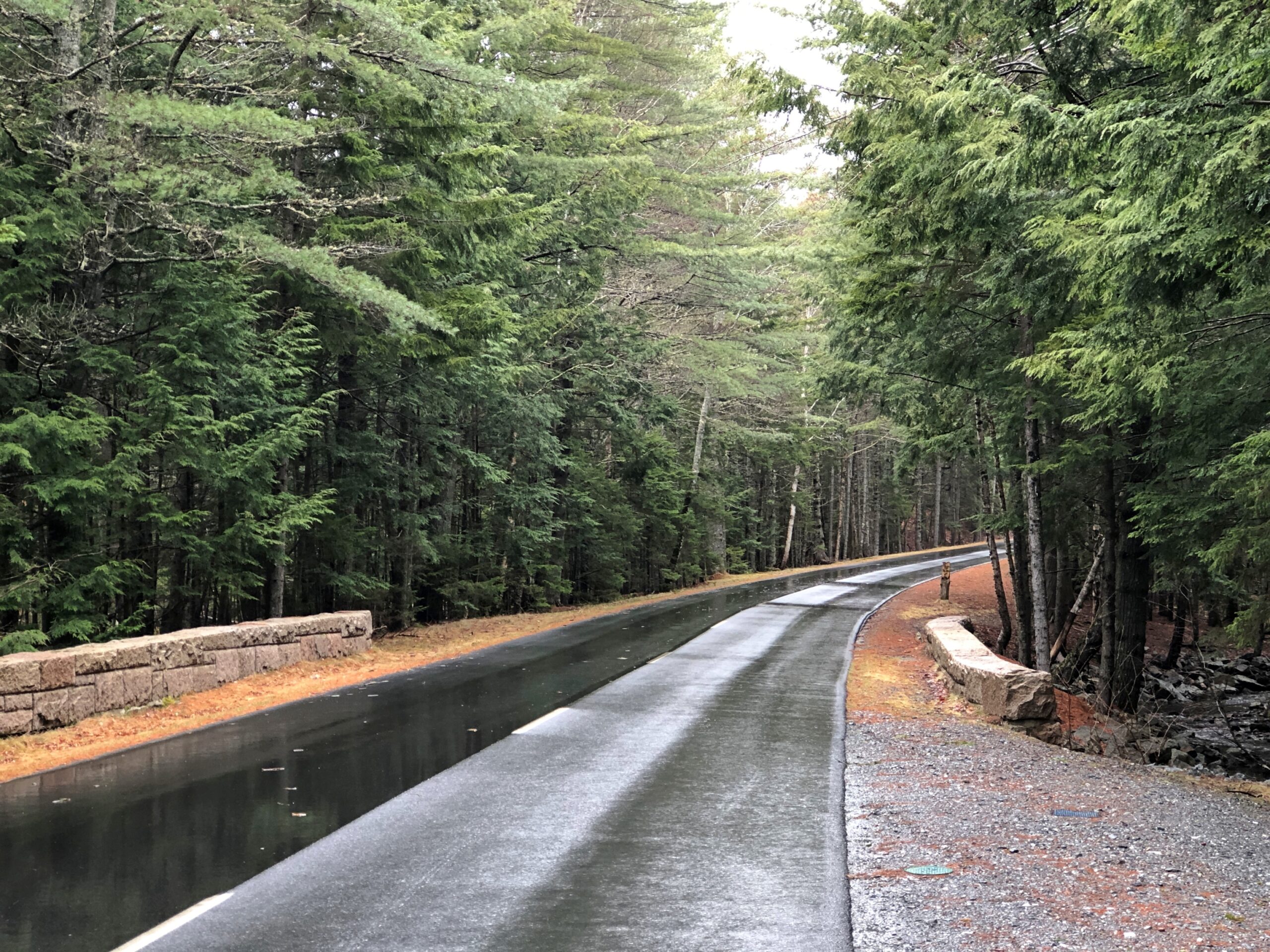
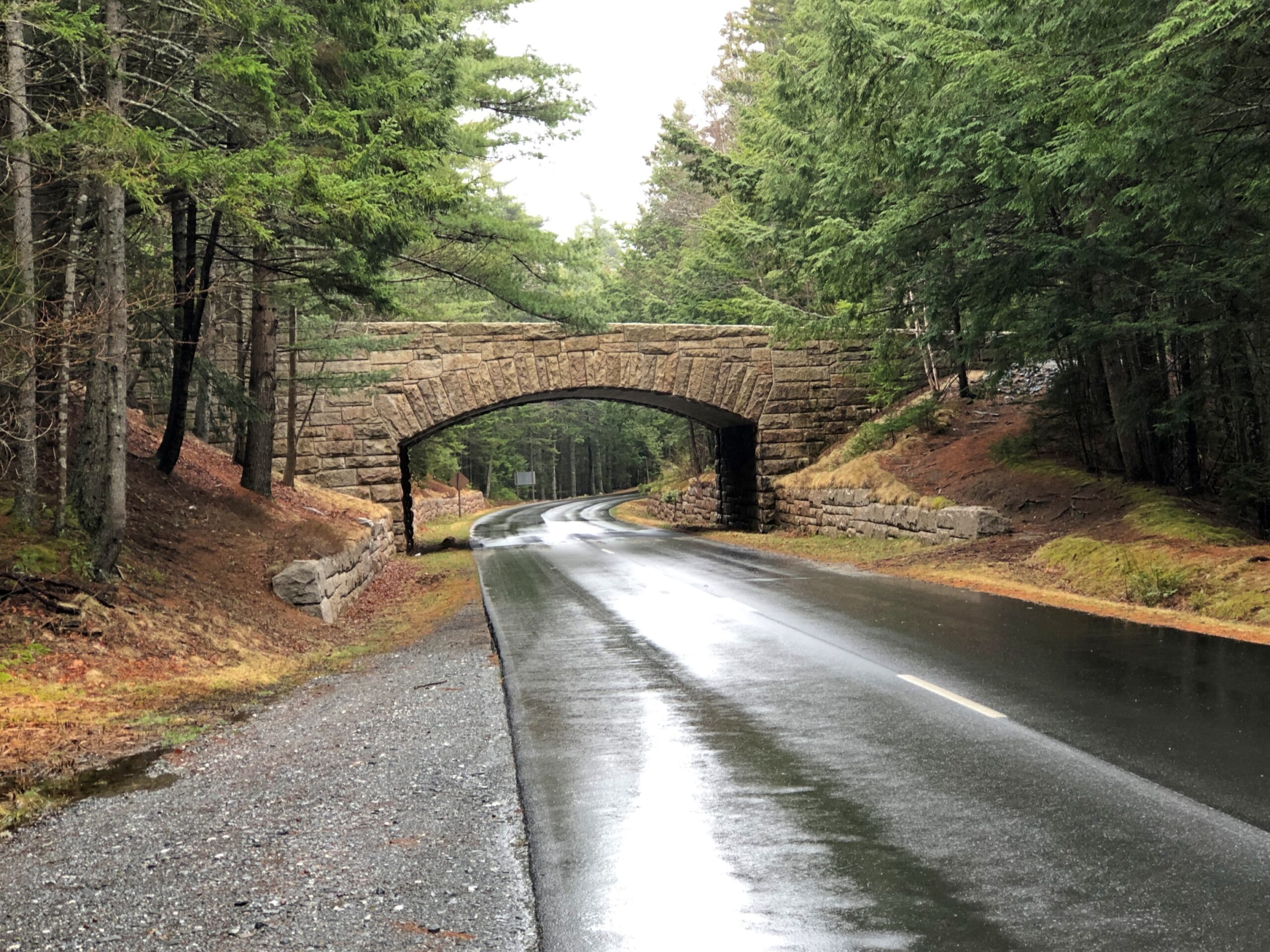
Periodically, the road crosses under handsome bridges.
This made me wonder: bridges for what? Soon I learned that the park not only has a hard-surface road snaking through, but also a network of carriage trails. A lot of them. The bridges are for them.
“Forty-five miles of rustic carriage roads, the gift of philanthropist John D. Rockefeller Jr. and family, weave around the mountains and valleys of Acadia National Park,” says the NPS. “Rockefeller, a skilled horseman, wanted to travel on motor-free byways via horse and carriage into the heart of Mount Desert Island. His construction efforts from 1913 to 1940 resulted in roads with sweeping vistas and close-up views of the landscape.”
It was barely the season for the paved road, and I suspect few visitors were on the carriage roads either. I noticed that the entrance to the Wildwood Stables, a facility that supports carriage riding, and which can be glimpsed from the road, was still closed. A carriage ride through Arcadia NP might be an grand experience, but maybe not in April.
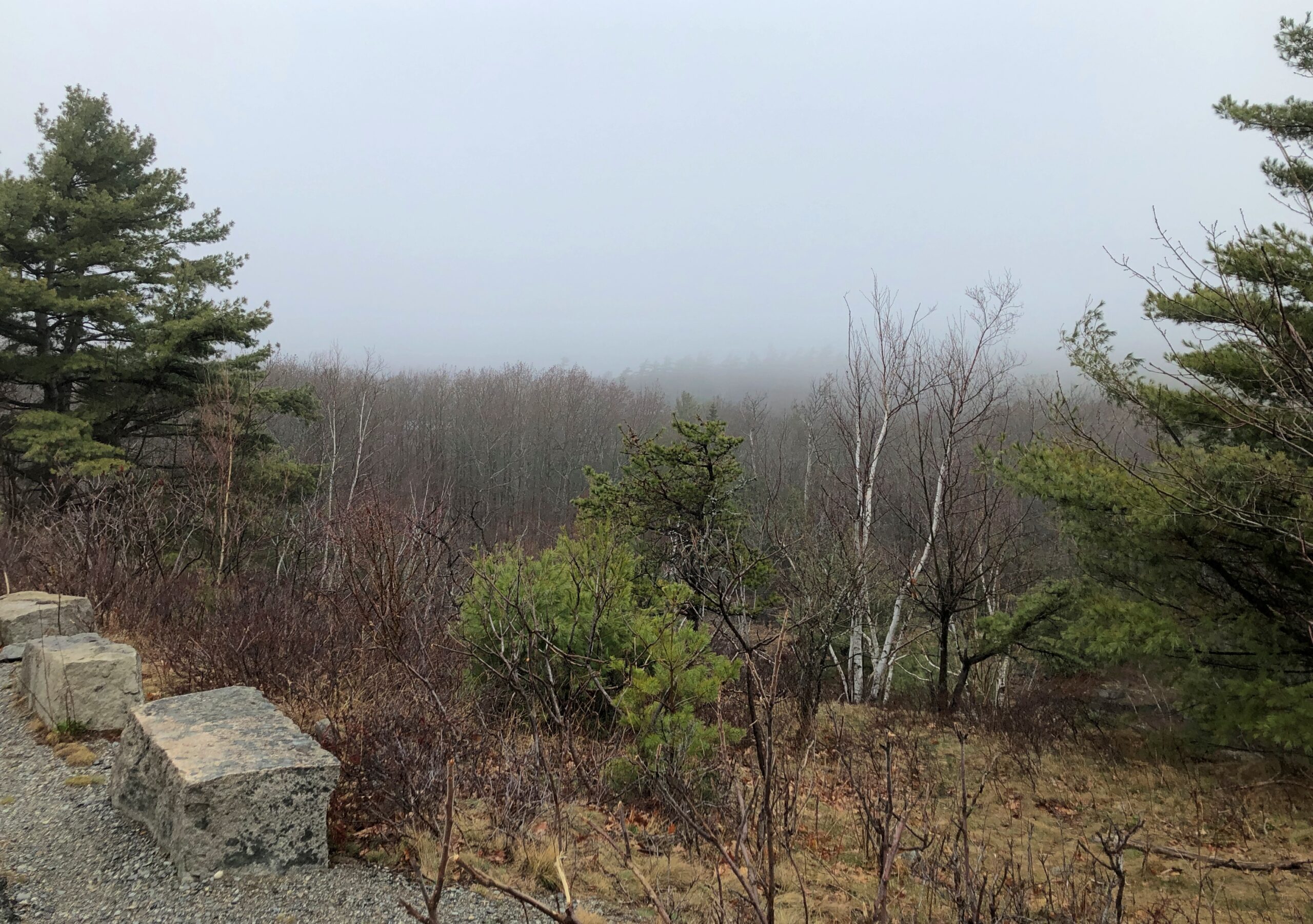
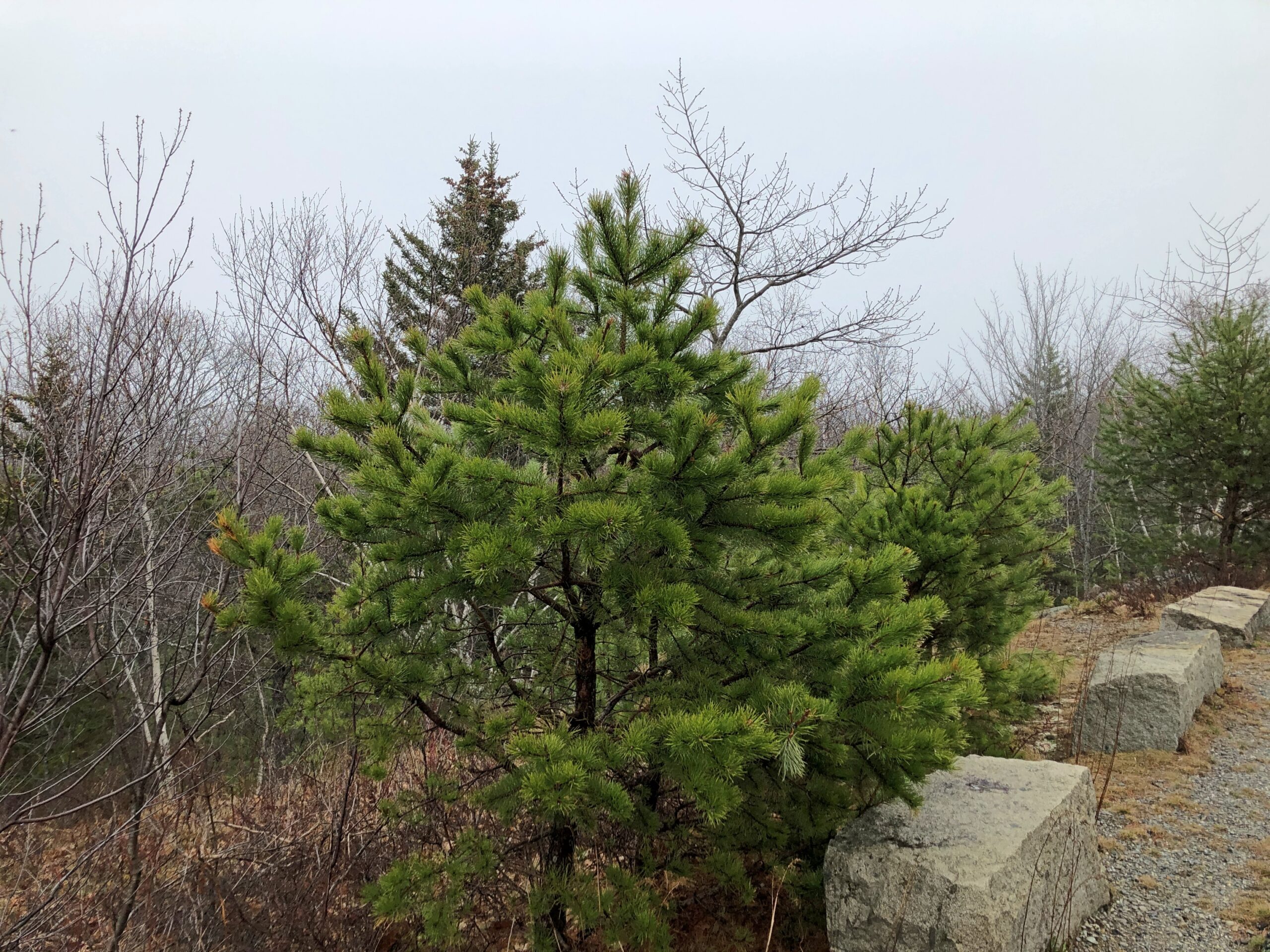
The woods alongside the road.
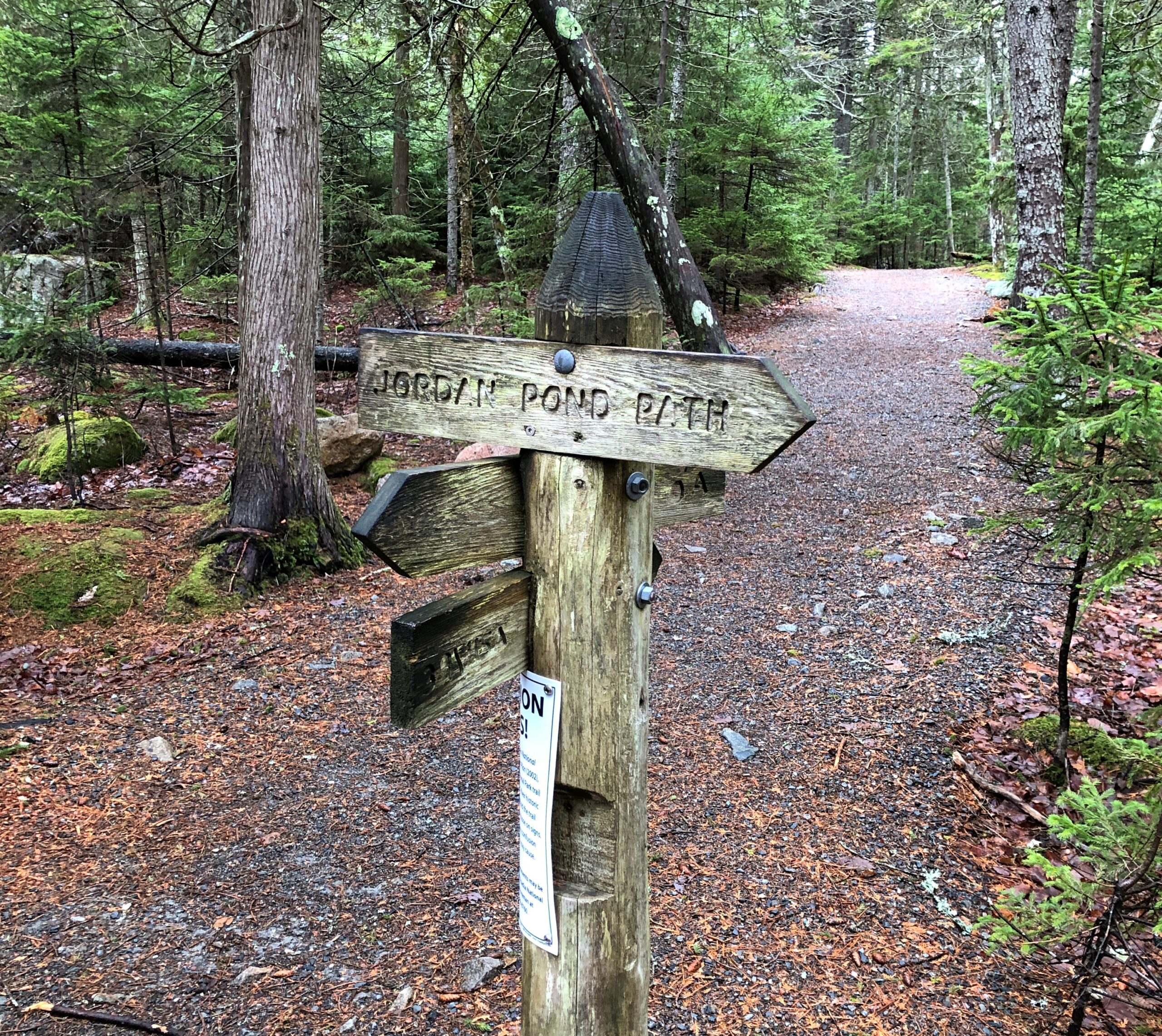
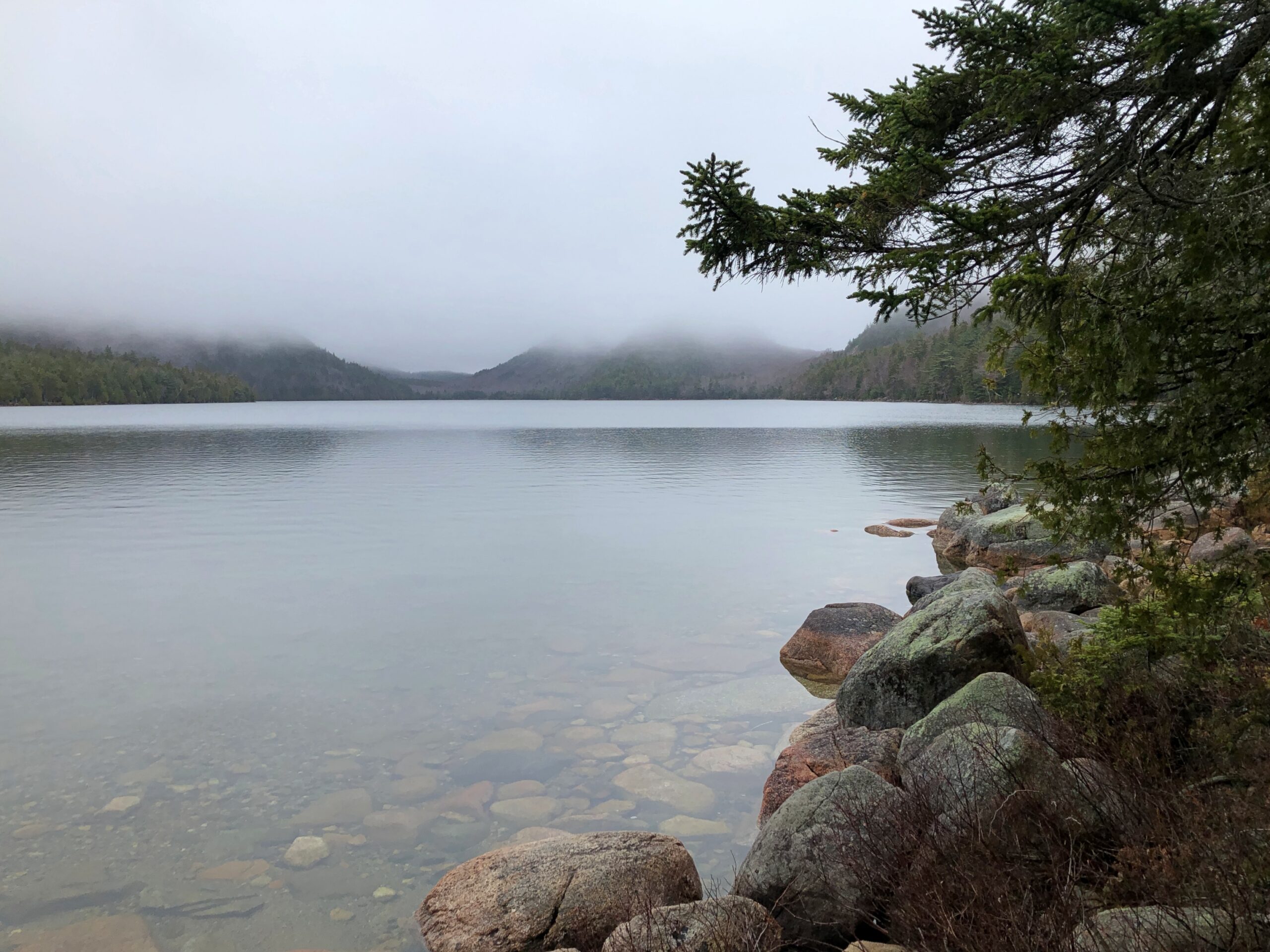
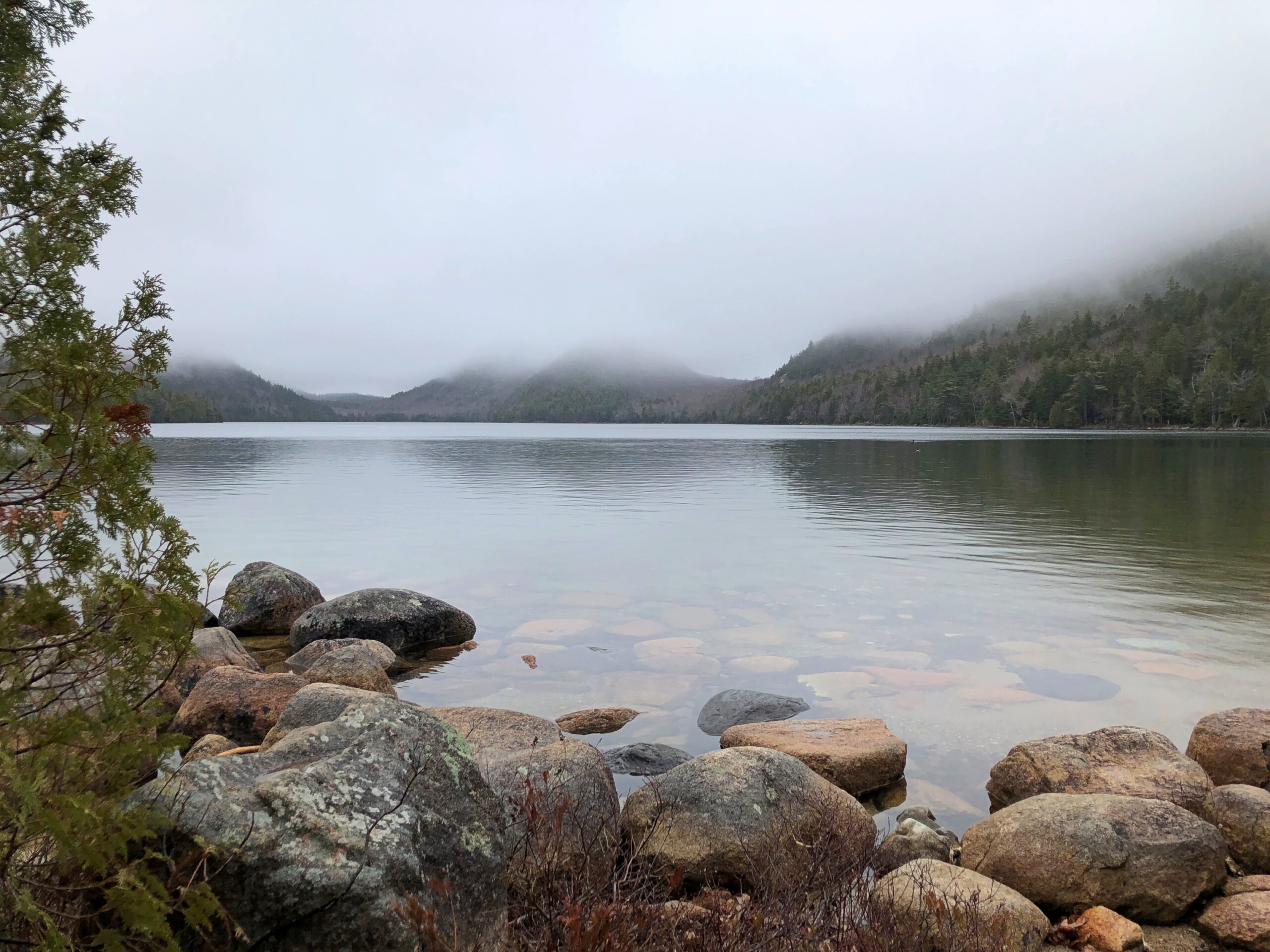
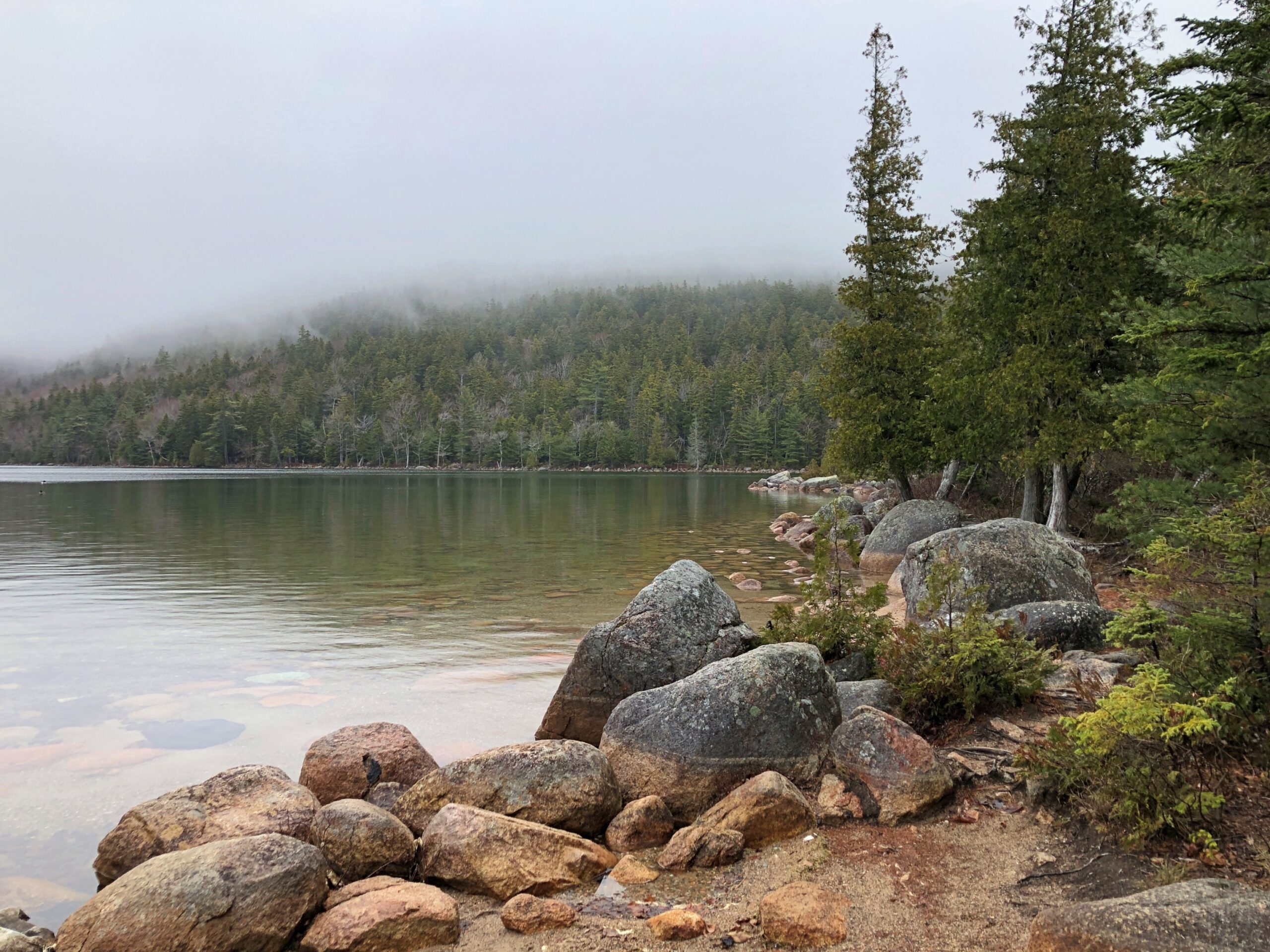
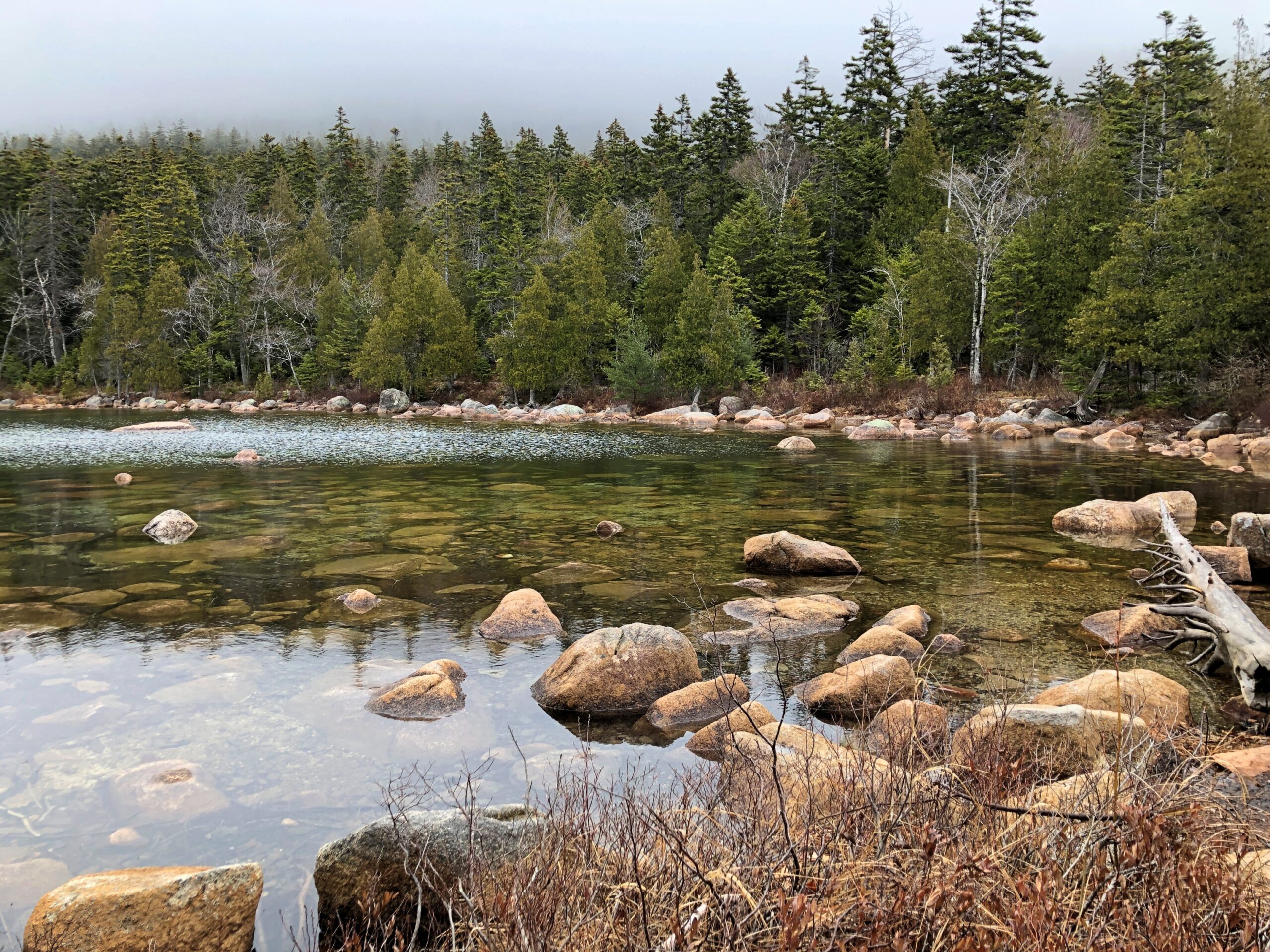
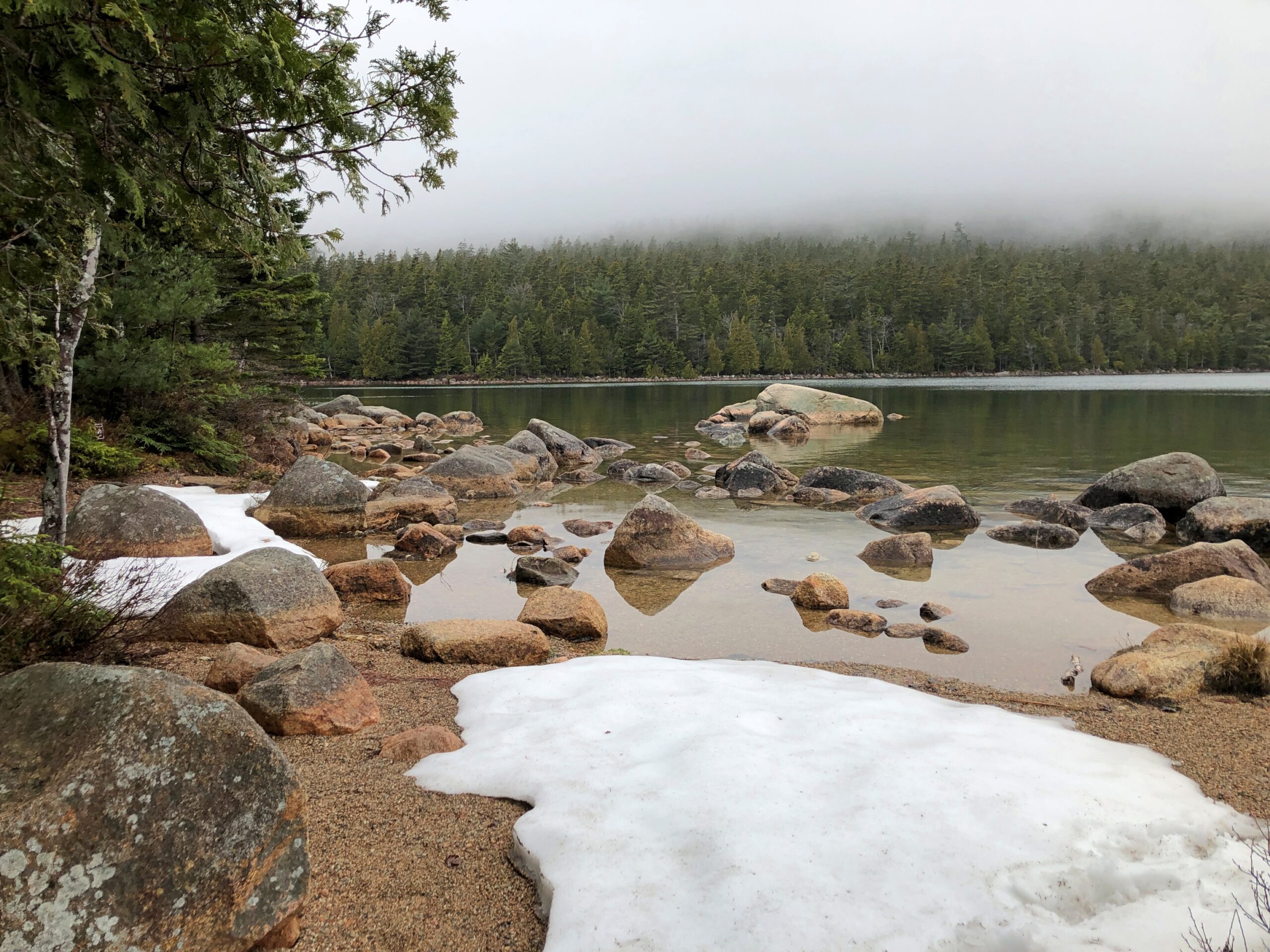
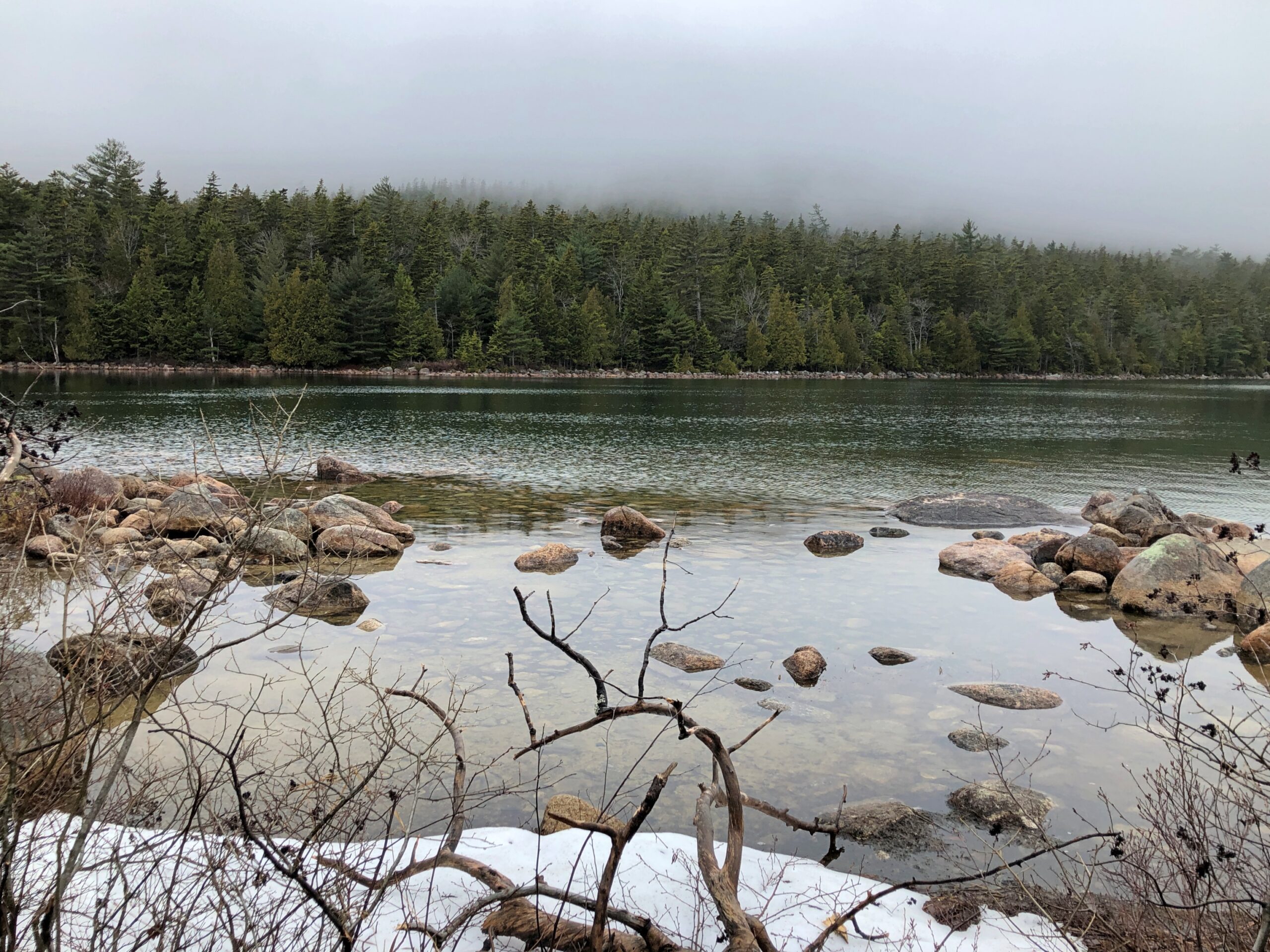
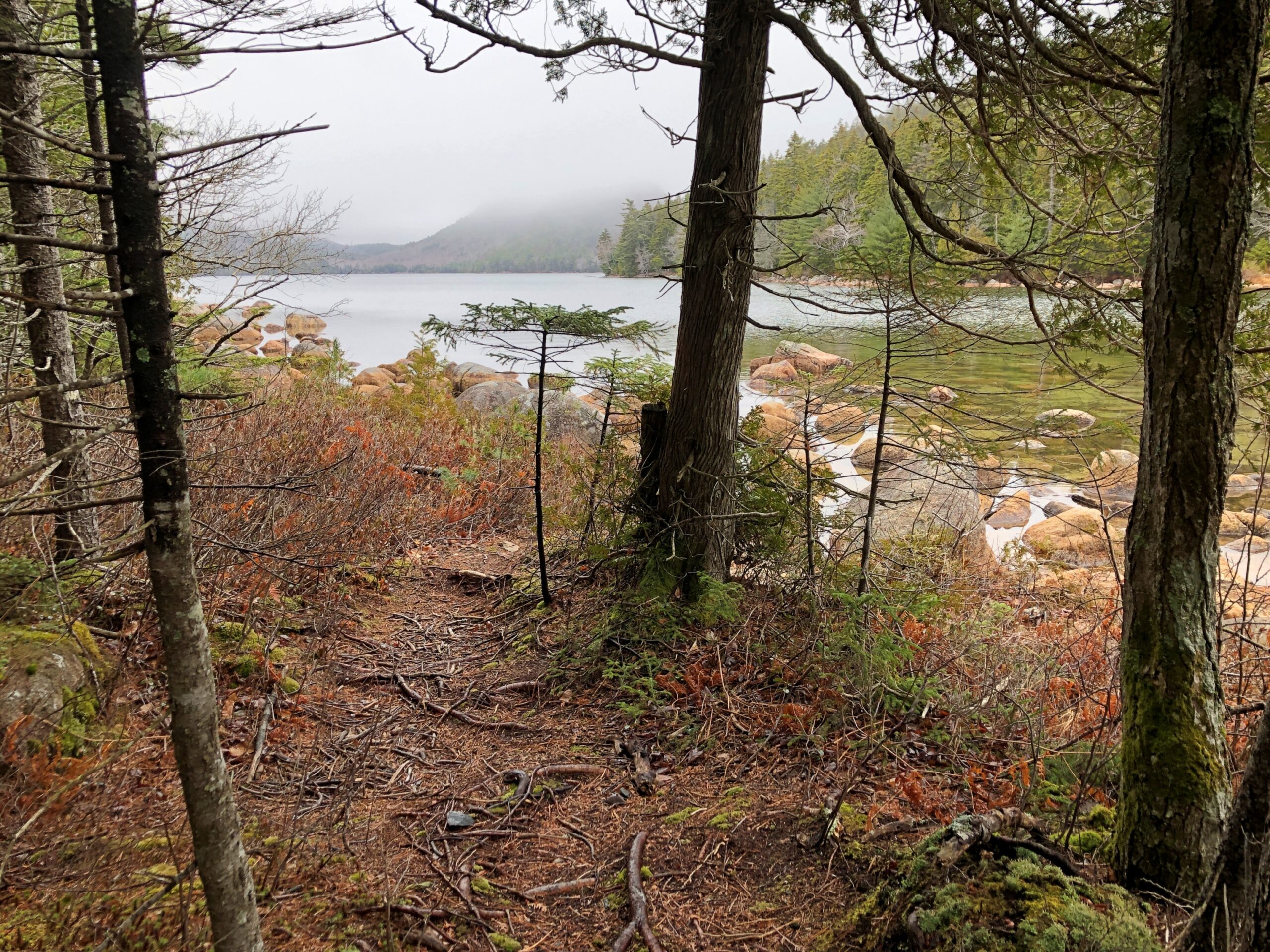
Driving is one thing, but I also wanted to walk. I found my way to Jordan Pond for that purpose.
“Oligotrophic lakes are most common in cold, sparsely developed regions that are underlain by crystalline igneous, granitic bedrock,” the entry says. “Due to their low algal production, these lakes consequently have very clear waters, with high drinking-water quality.”
No giardia in that lake? I didn’t want to find out. I carried my own drinking water as I walked the trails near the pond.
An easy trail. At one point, it crossed a creek feeding into the pond.
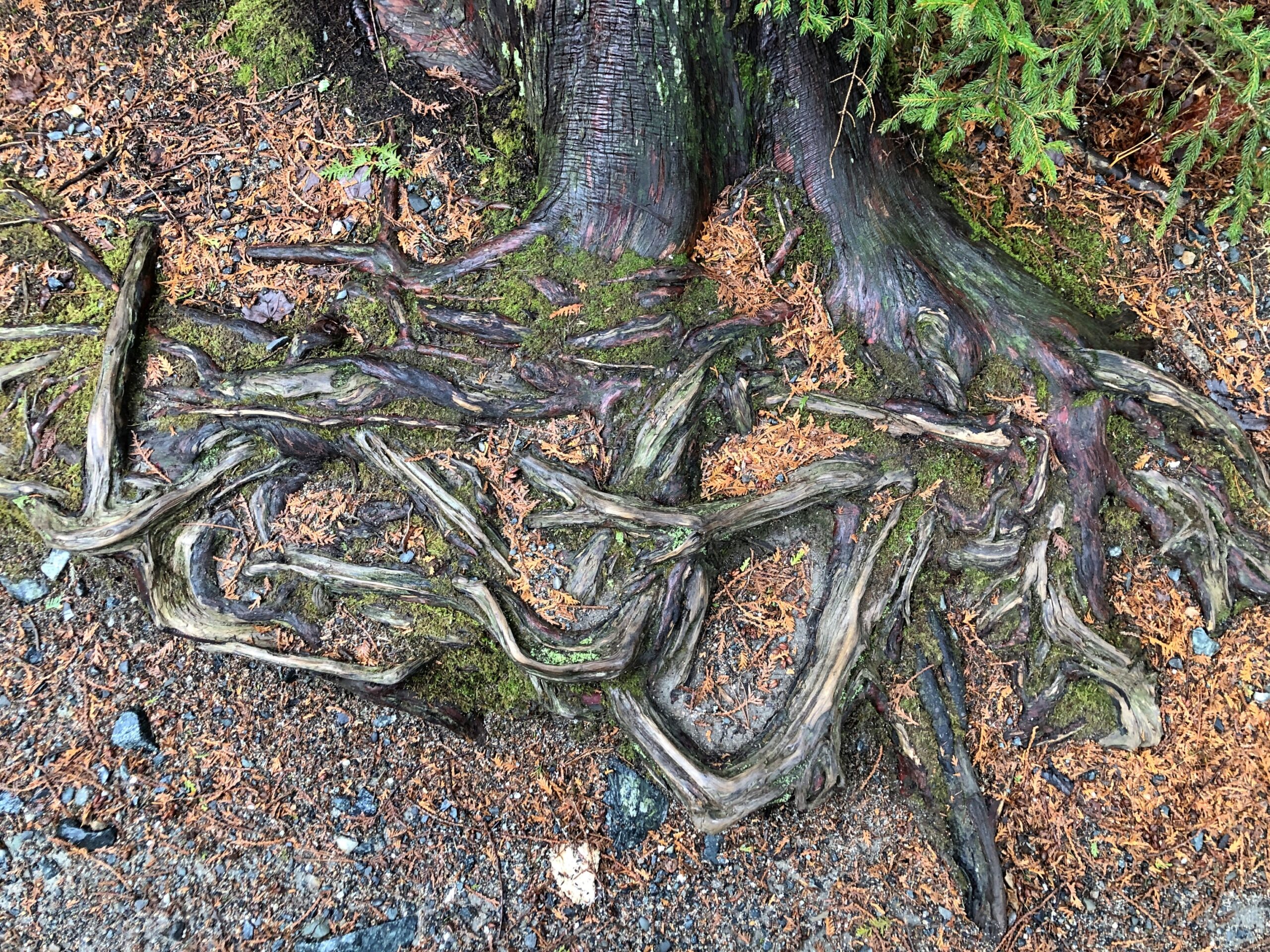
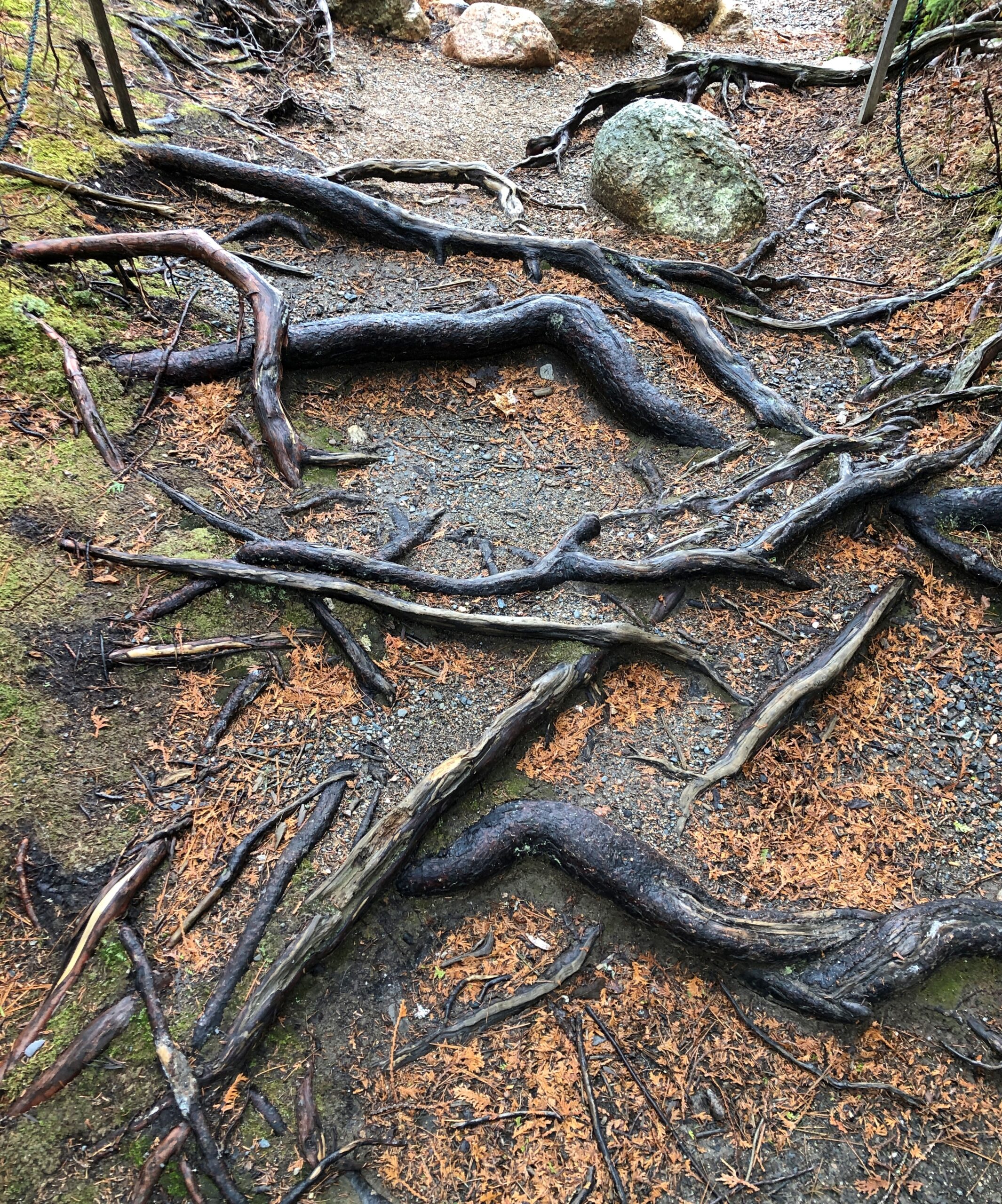
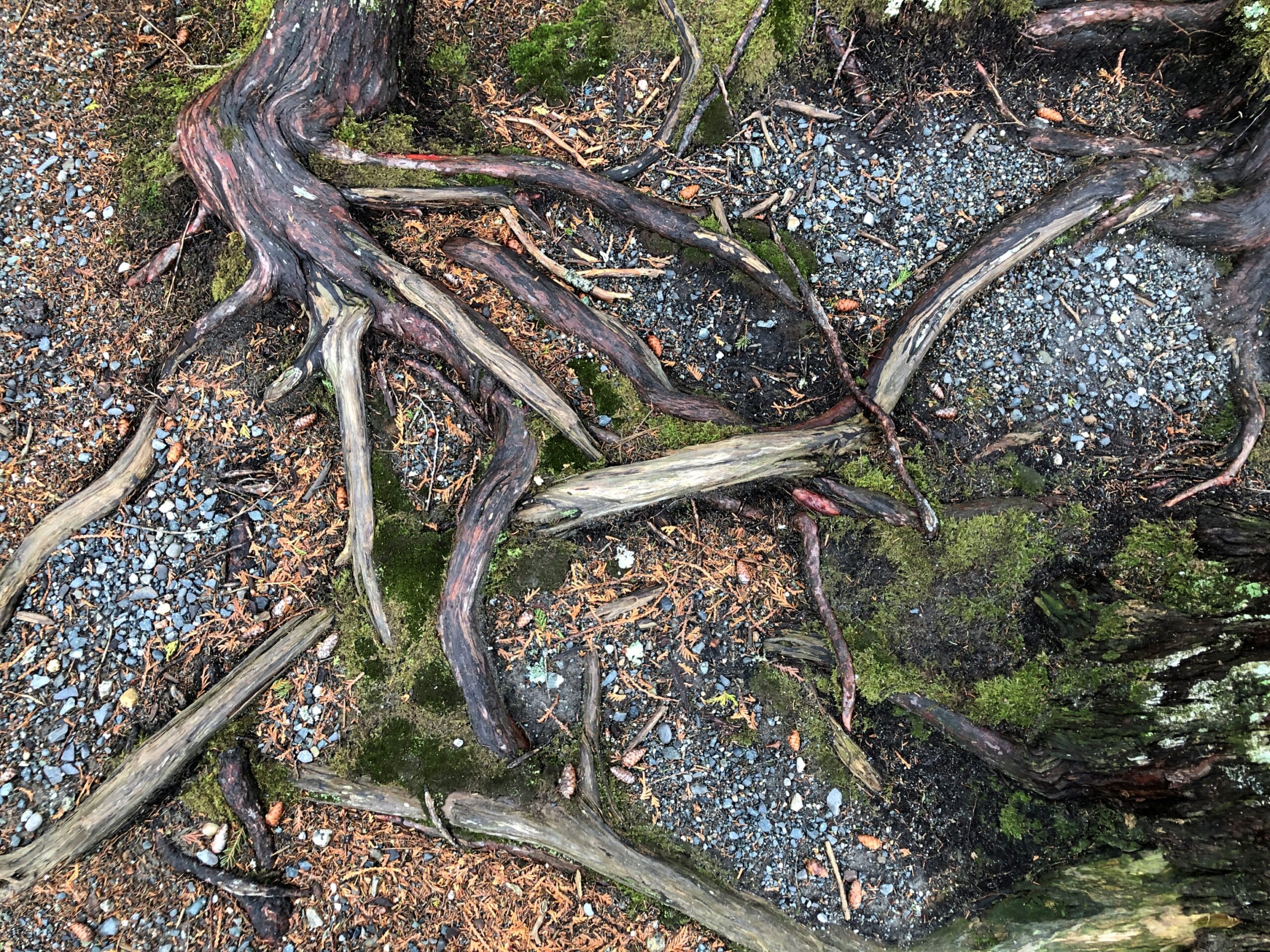
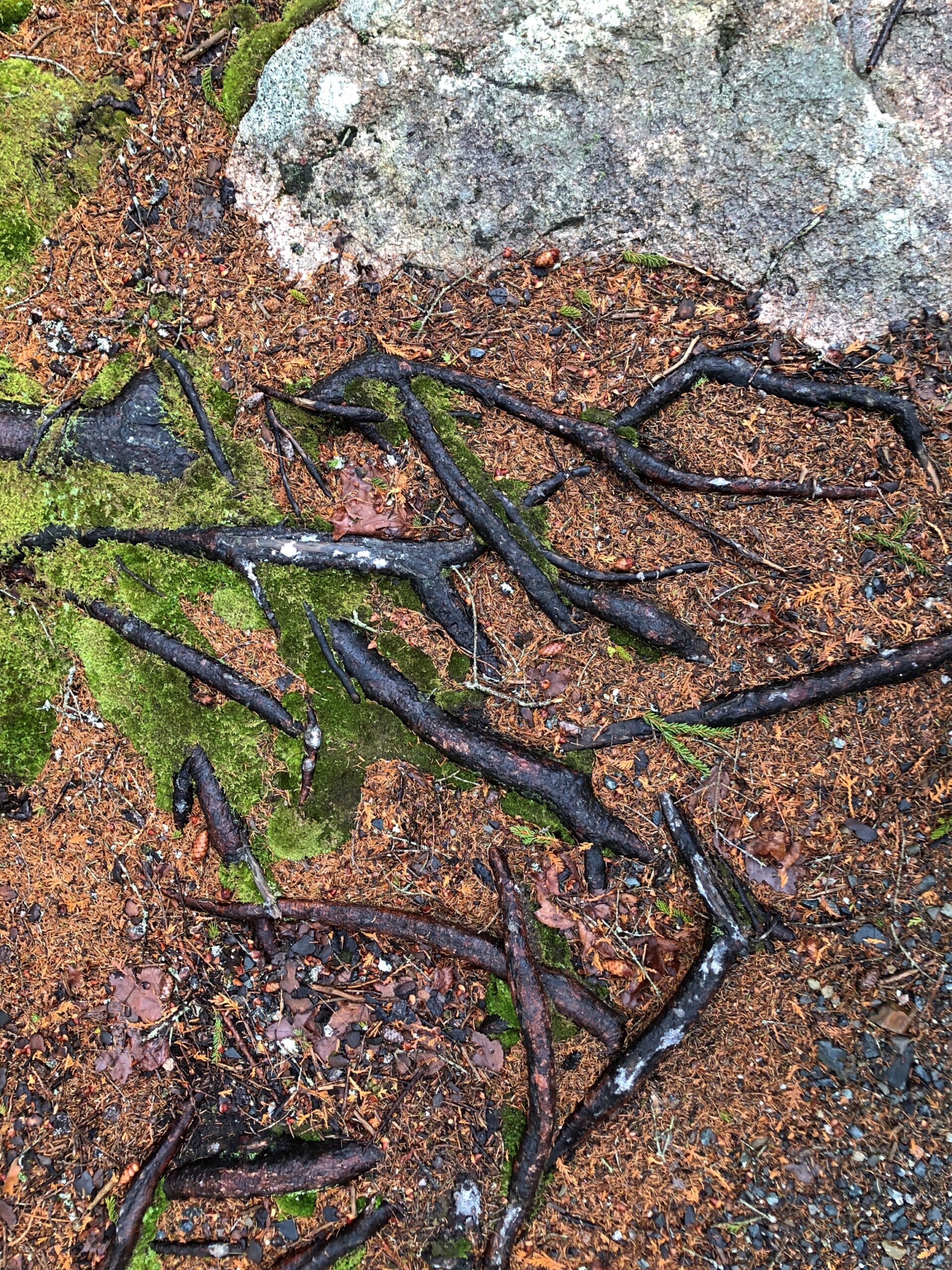
There were too many interesting tree roots to ignore them.
“Roots are typically at least half of a plant’s biomass, but you wouldn’t know it given how little scientific research has been devoted to these critical tendrils,” says the Smithsonian magazine. “Only recently have scientists given plant roots their day in the sun — in fields like collections research, climate science and microbiology.”
Or, in the case of the hardy trees of coastal Maine, their day in the fog.
We live on the crust of the Earth, and what do crusts do? Crumble. Especially when moving water has anything to do with it, as it does along the coast of Maine. Famously so.
I arrived at the crumbly coastline of Acadia National Park on the morning of April 16. The date is important for only one reason: Park Loop Road, the main scenic drive through the park, opens for the season every year on April 15.
Acadia NP occupies about half of Mount Desert Island and some other nearby peninsula acreage and small islands. The morning of the 16th broke damp and foggy and chilly. From my lodging in the sizable town of Ellsworth, Maine, which is on the mainland near Mount Desert Island, I made my way to the island, then Bar Harbor, then the entrance to Park Loop Road, stopping only for a wonderful breakfast sandwich at one of the few places along the way that was open, Farmstand Coffee House.
The visitors center at the park entrance wasn’t open either. The NPS missed making a sale of post cards to me. By the time I got to the park, the weather was better: slightly less damp and slightly less foggy and slightly less chilly.
Such is Maine in spring. I didn’t mind. In fact, the damp chill meant few other people had come that day. Chilly but no ice underfoot. I like to think that it all melted by April 15. Or maybe on April 15.
I sent a few pictures to Tom in Austin taken while I visiting Acadia NP.
He answered: “Wow. Fabulous. Choosing to visit that national park before May is a bold decision. Looks like you got good weather, though.”
Bold? Maybe. To boldly go where many vacationers have gone before. And will again, real soon.
I didn’t drive particularly fast along Park Loop Road. Little traffic for one thing, too much of a risk of a car-on-tree encounter for another thing, so curvy is it. Gnarly, you could say. The drive, whose construction John D. Rockefeller Jr. facilitated, winds but does not climb much as it follows the curves of the shore. The scenic stops are close to each other, since in national park terms, Acadia is a touch on the small side. Despite that it hardly lacks variety.
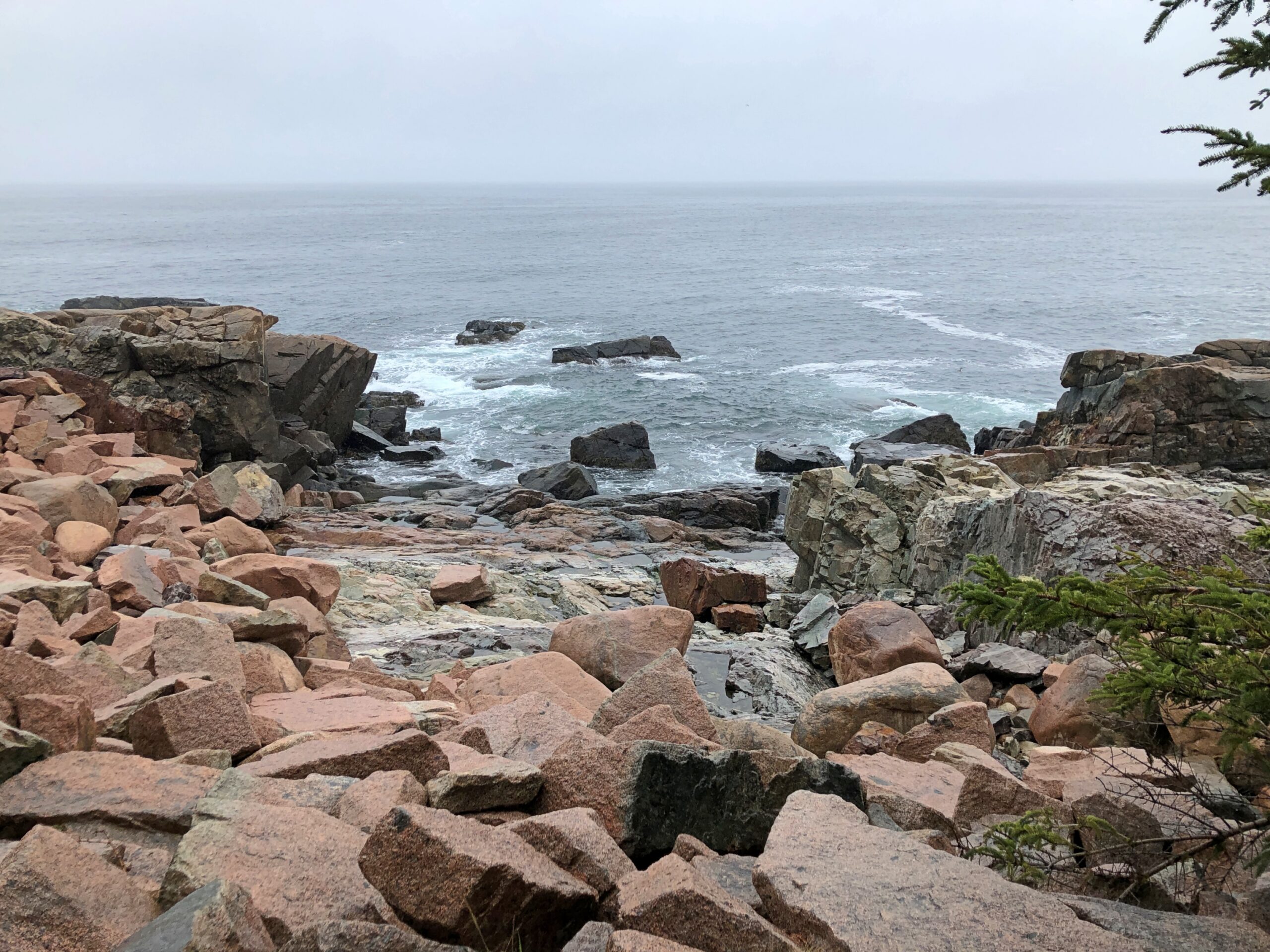
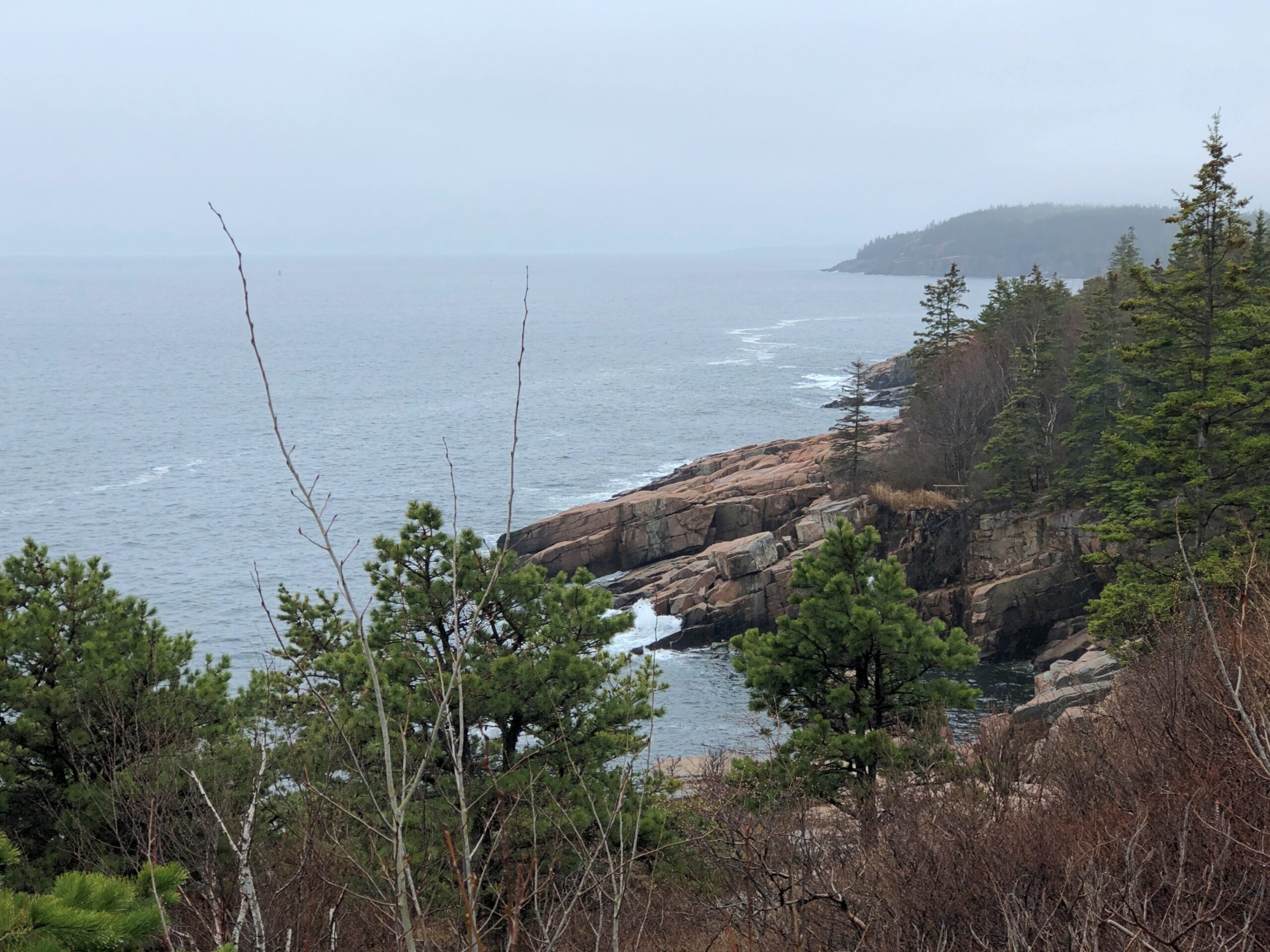
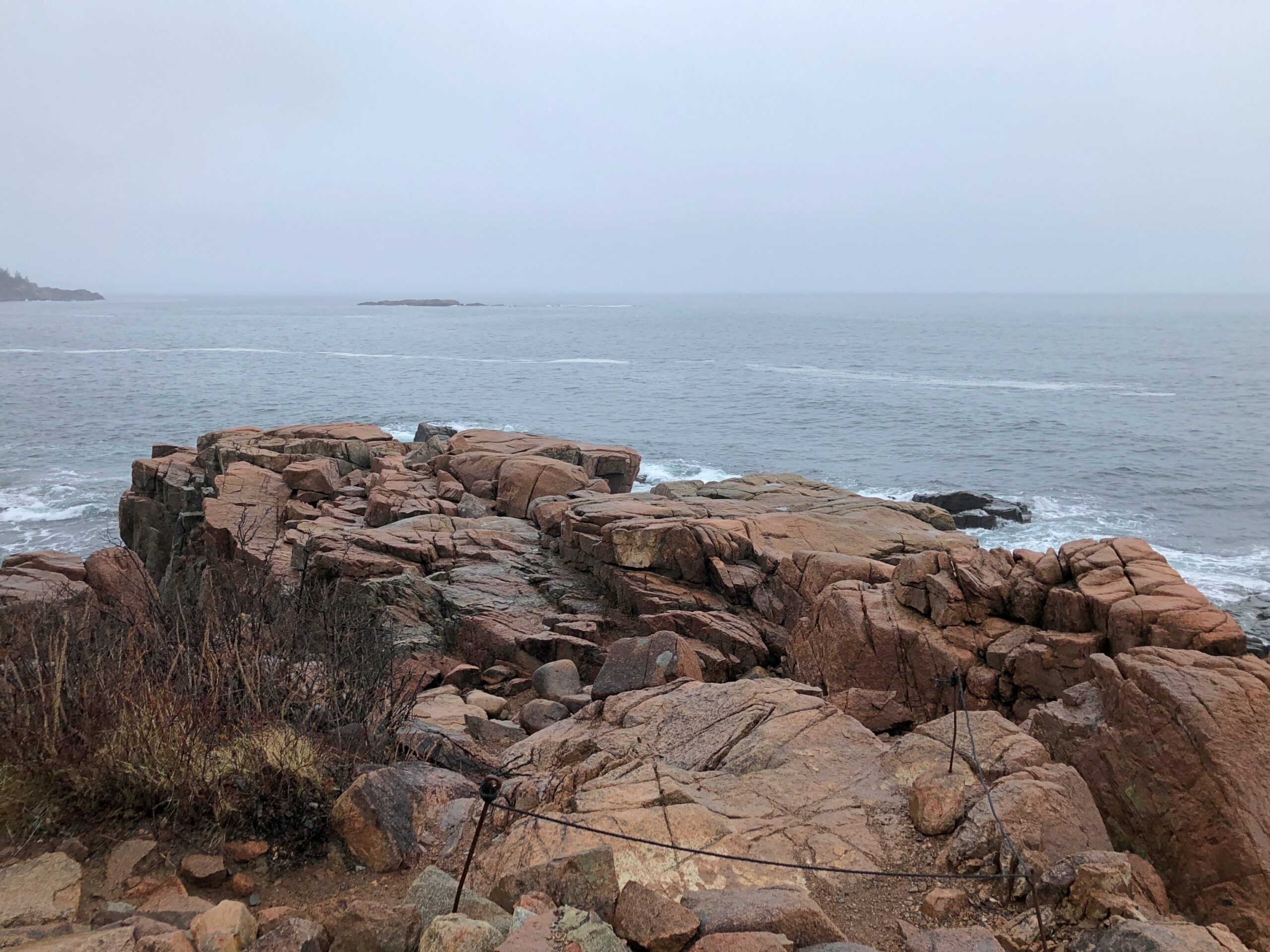
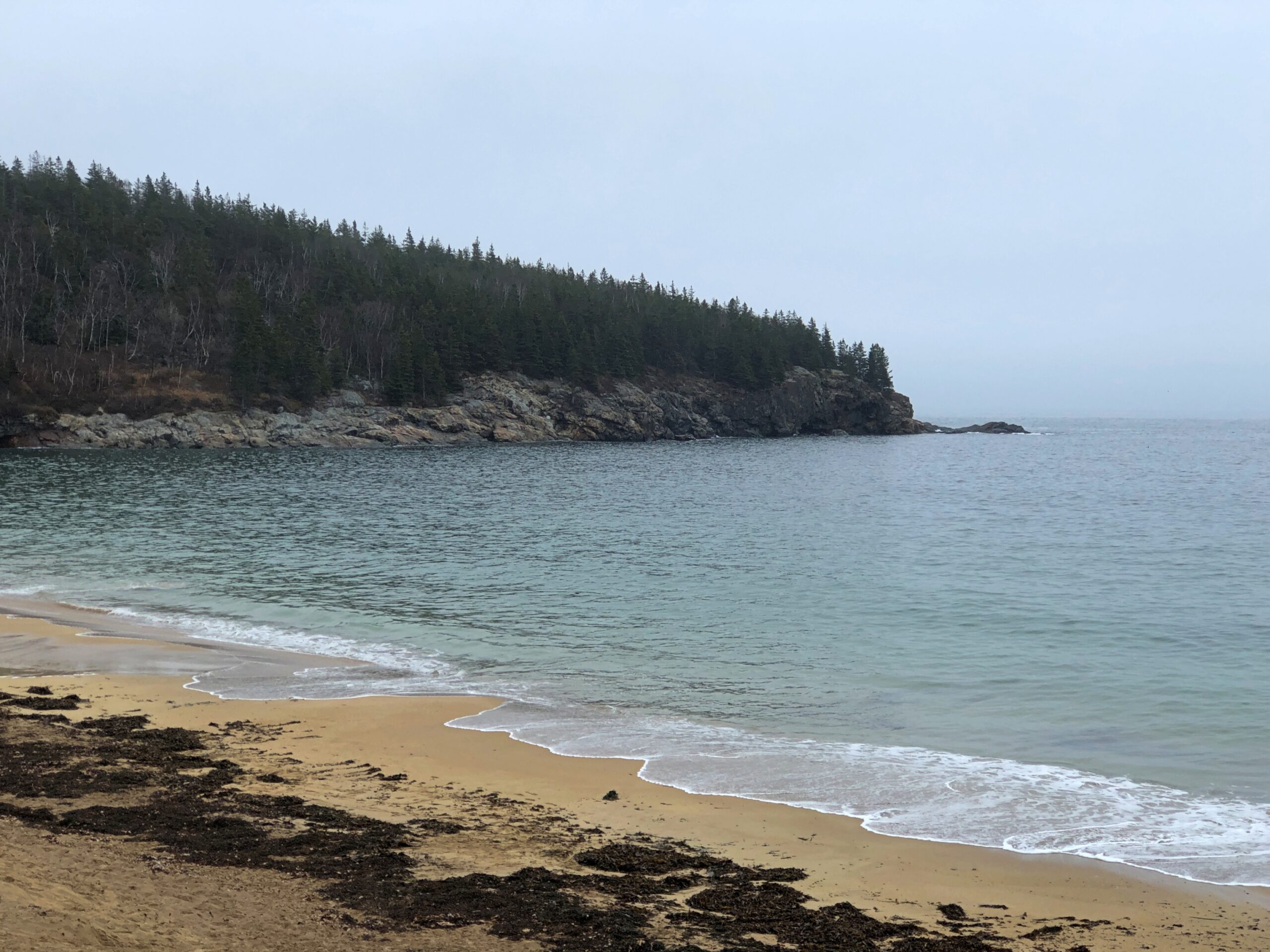
Beginning with the rocky shores you’d expect. The fog that day was a nice Maine touch. The foggy shores of Maine. There’s a song title for an AI song writing program: “The Foggy Shores of Maine.” Sad song about a solider dreaming of home on these shores? It worked for “Galveston.”
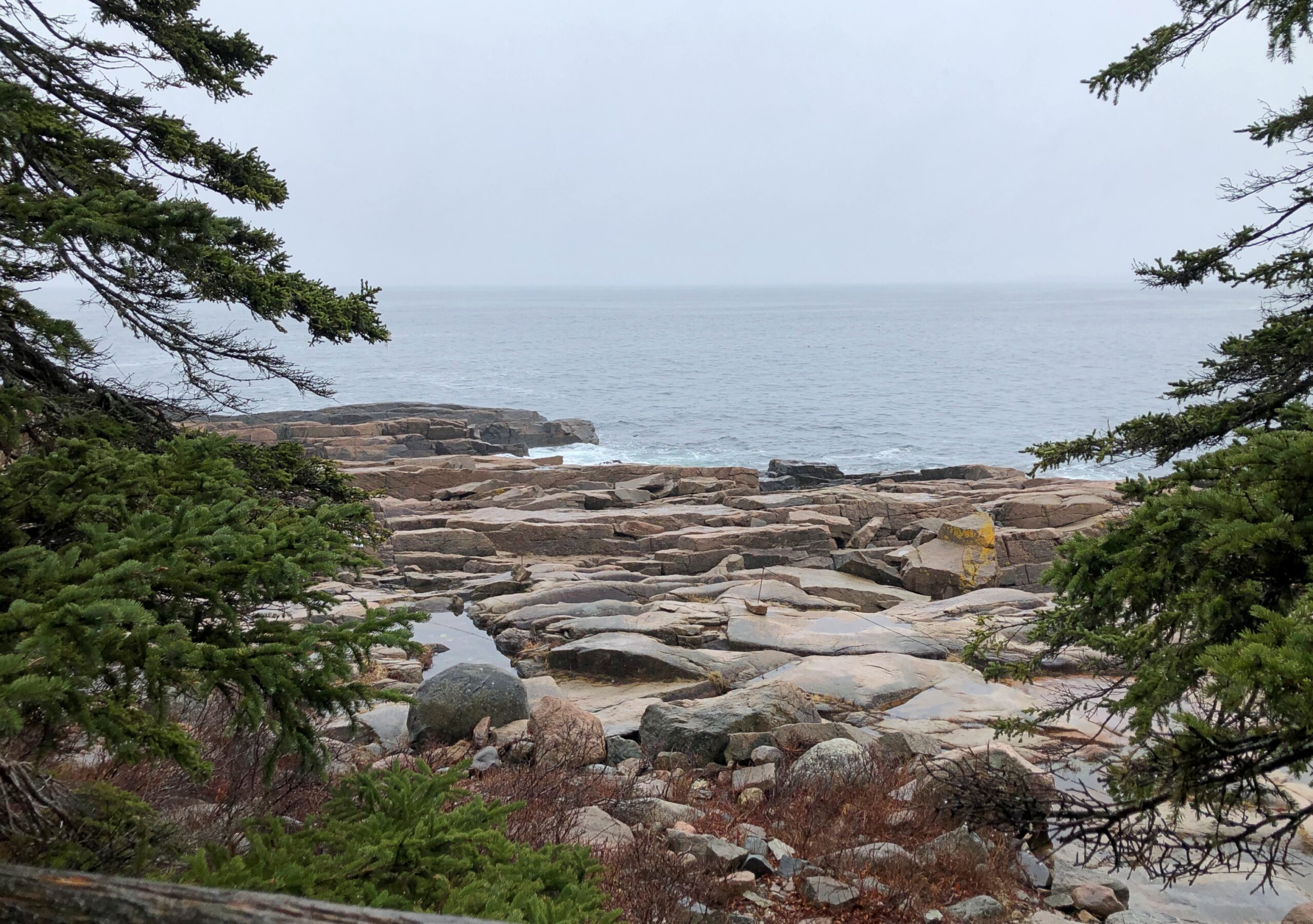
Boulders and sizable slabs, on their way to being pebbles and sand.
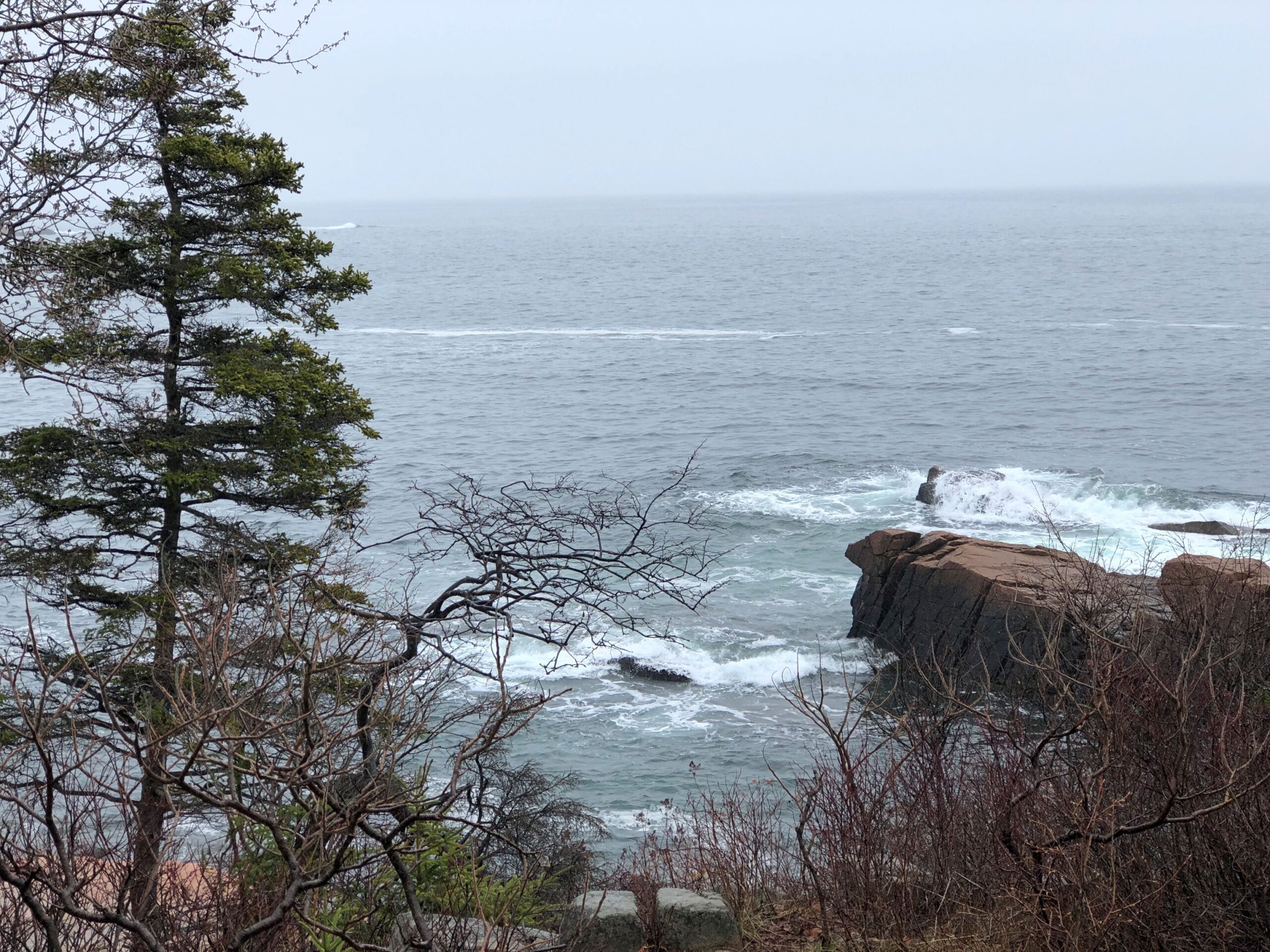
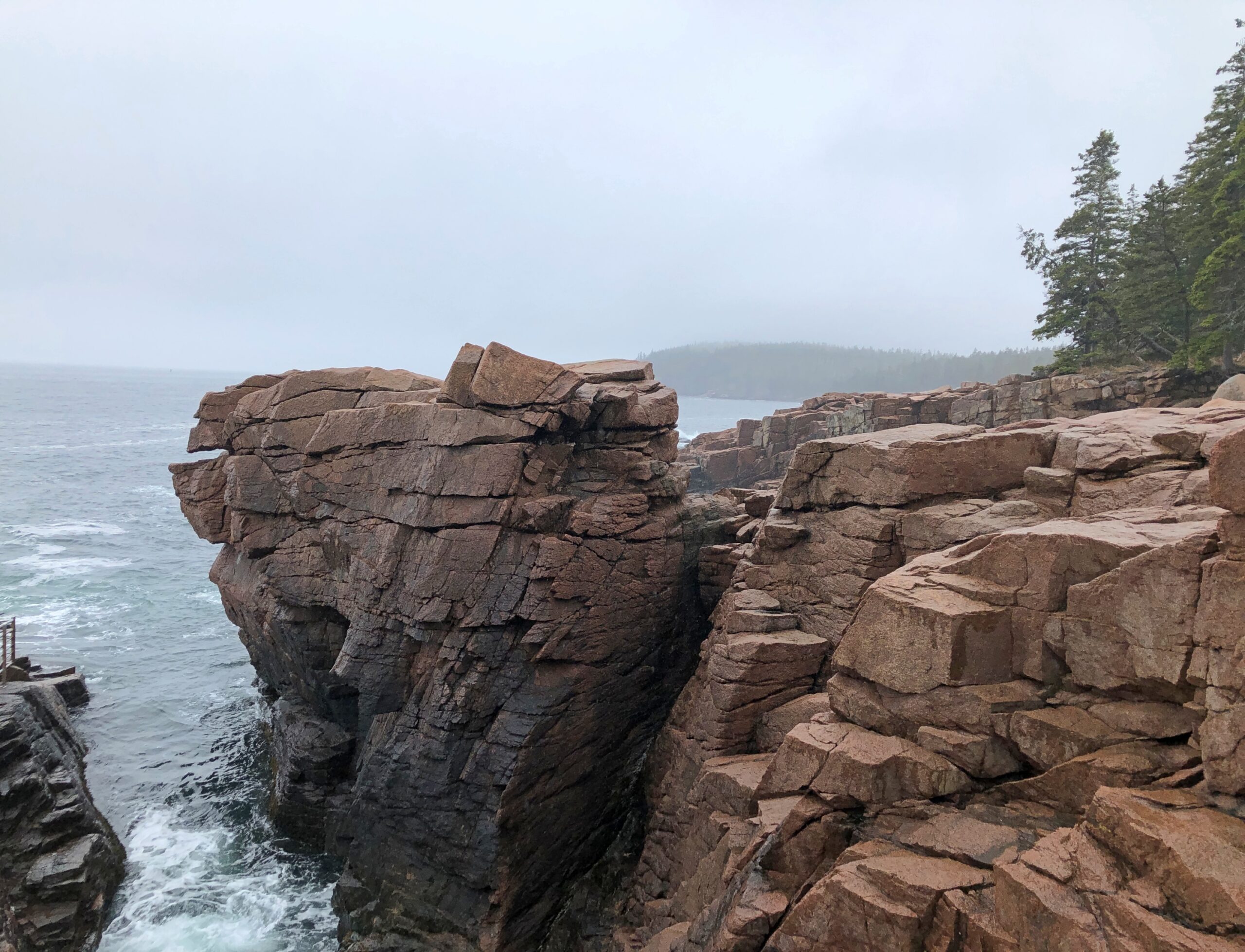
A feature that wears its name well: Thunder Hole.
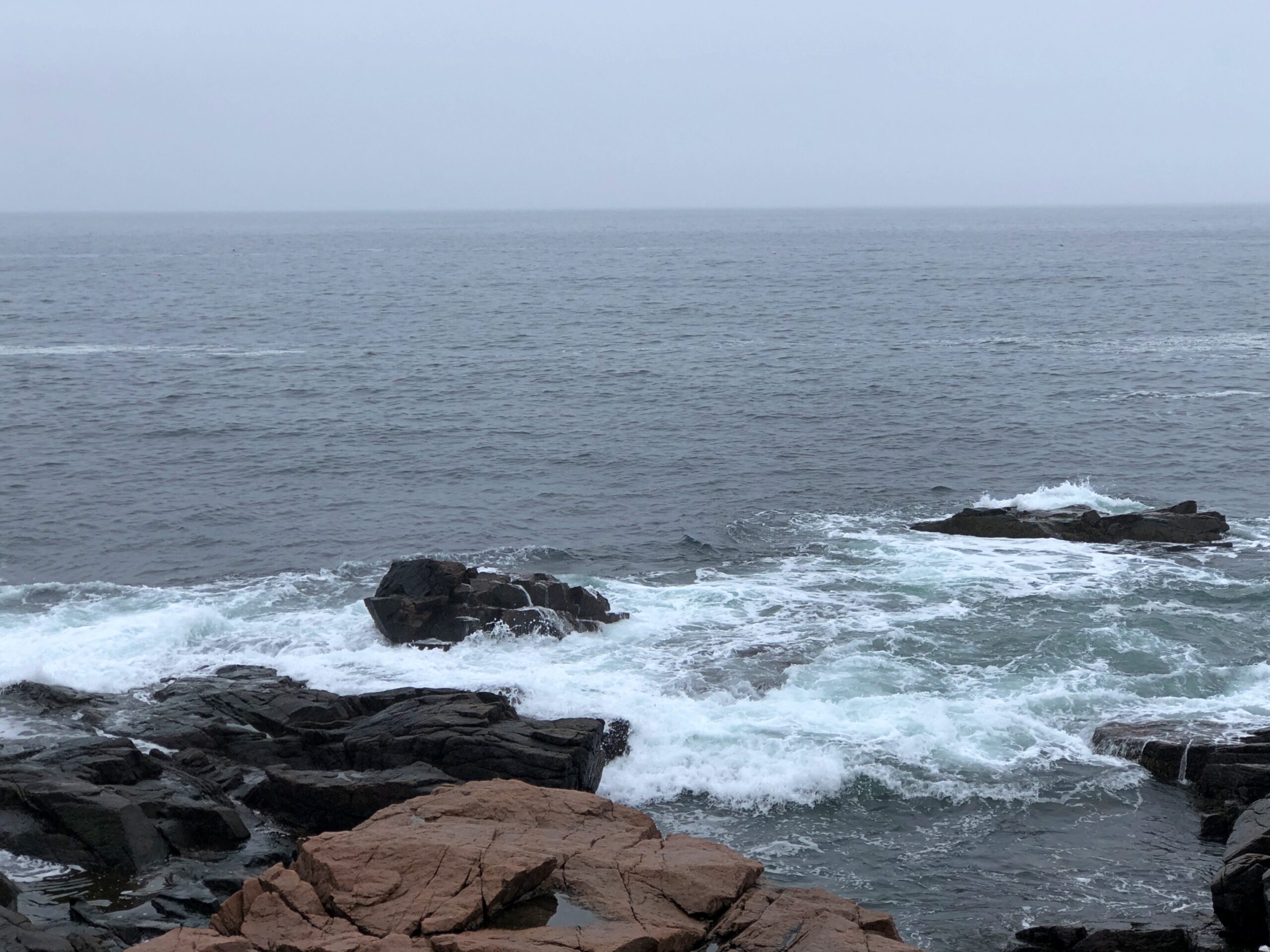
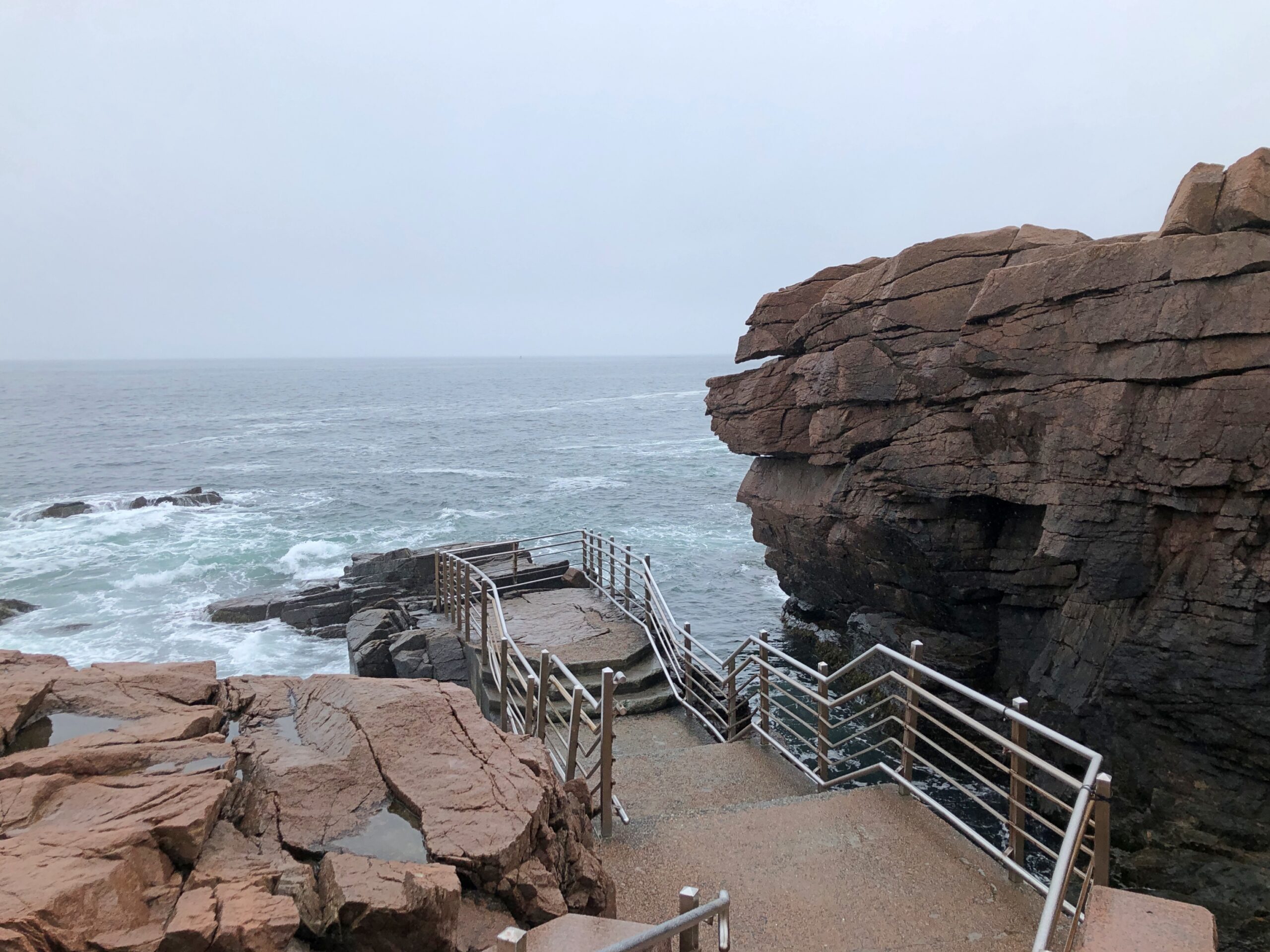
A loud place, Thunder Hole, the waves bashing the rocks in crash-splashes, followed by the whistling, sucking whoosh as water pulls away from the rocks, followed by another bash against the rocks, all before you can count to three.
You can get closer to Thunder Hole behind the (relative) safety of rails, but that won’t keep you from a good drenching. Not that day, anyway. I kept my distance, and let the sound come to me in its noisy fury.
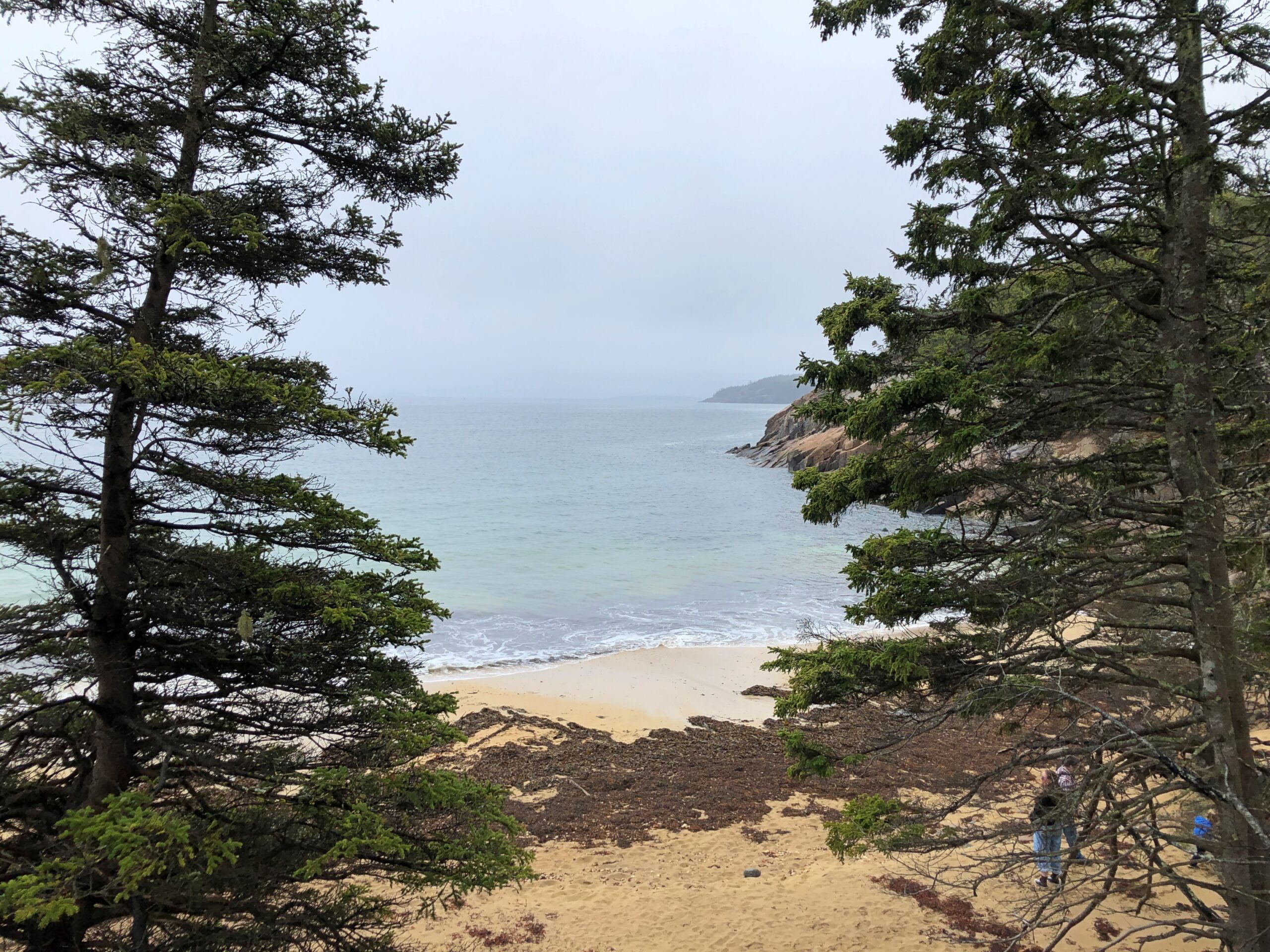
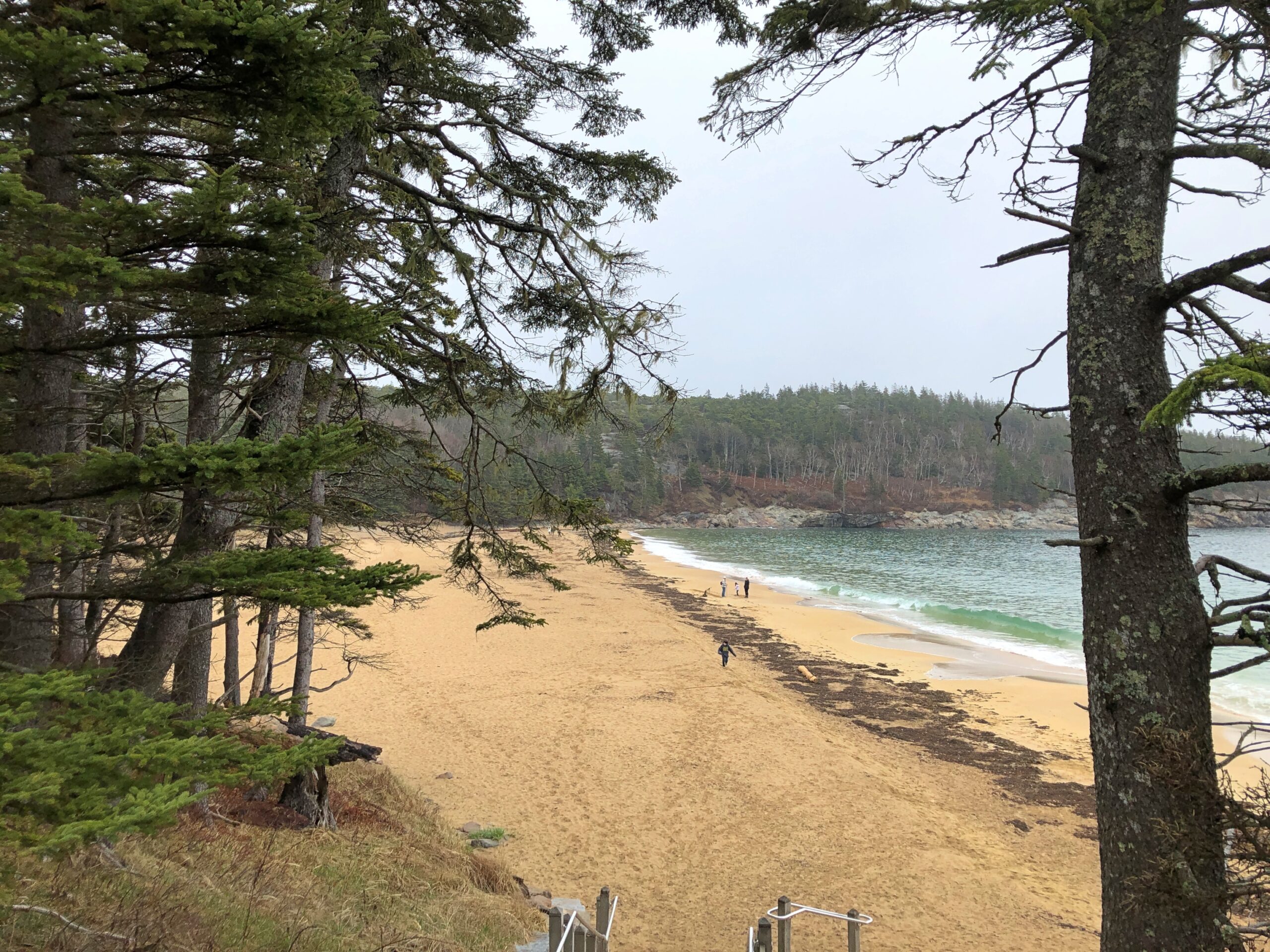
The park has a sand beach, called on the maps, Sand Beach.
I take that as an indication that most of the shore in these parts is topsy-turvy with boulders. I believe it.
Terrific lightning storm rolled by to the south last night at about 11. Little rain but a prodigious amount of cloud-to-cloud lightning, unlike anything I’ve seen in years. The last time might have been when we were under such a near-rainless storm in North Dakota nearly 20 years ago. After watching in fascination from the back door, I got my phone and recorded about 30 seconds of the spectacle.
As usual, video only conveys a fraction of the visual power of the moment. But, in spite of the channel it’s on, it isn’t AI.
I was curious today which volume of the Encyclopedia Brown books — whose protagonist is a sharp grade-school boy who solves crimes and mysteries — mentioned the town of Palestine, Texas. Even though I grew up in Texas, I’d never heard of the place until I read an EB story in the early ’70s that mentioned a string of places that some international jewel thief was traveling to: Moscow, Odessa, London, Paris, Palestine and Athens. The boy detective determined that the criminal would be in Texas, since those are all places in that state, and especially because “Palestine” is called “Israel” now, as he said.
You might wonder (I do now, anyway) what business an international jewel thief would have in a place like Moscow, Texas (pop. 170) or London, Texas (pop. 180), but never mind. It didn’t take long for me to find a YouTube review of Encyclopedia Brown Keeps the Peace (Book 6, originally published 1969), including the case that mentions the Texas towns. The reviewer takes the book to task, asking “can grade-schoolers be expected to know this information?” No, of course not. They can be expected to learn it, however.
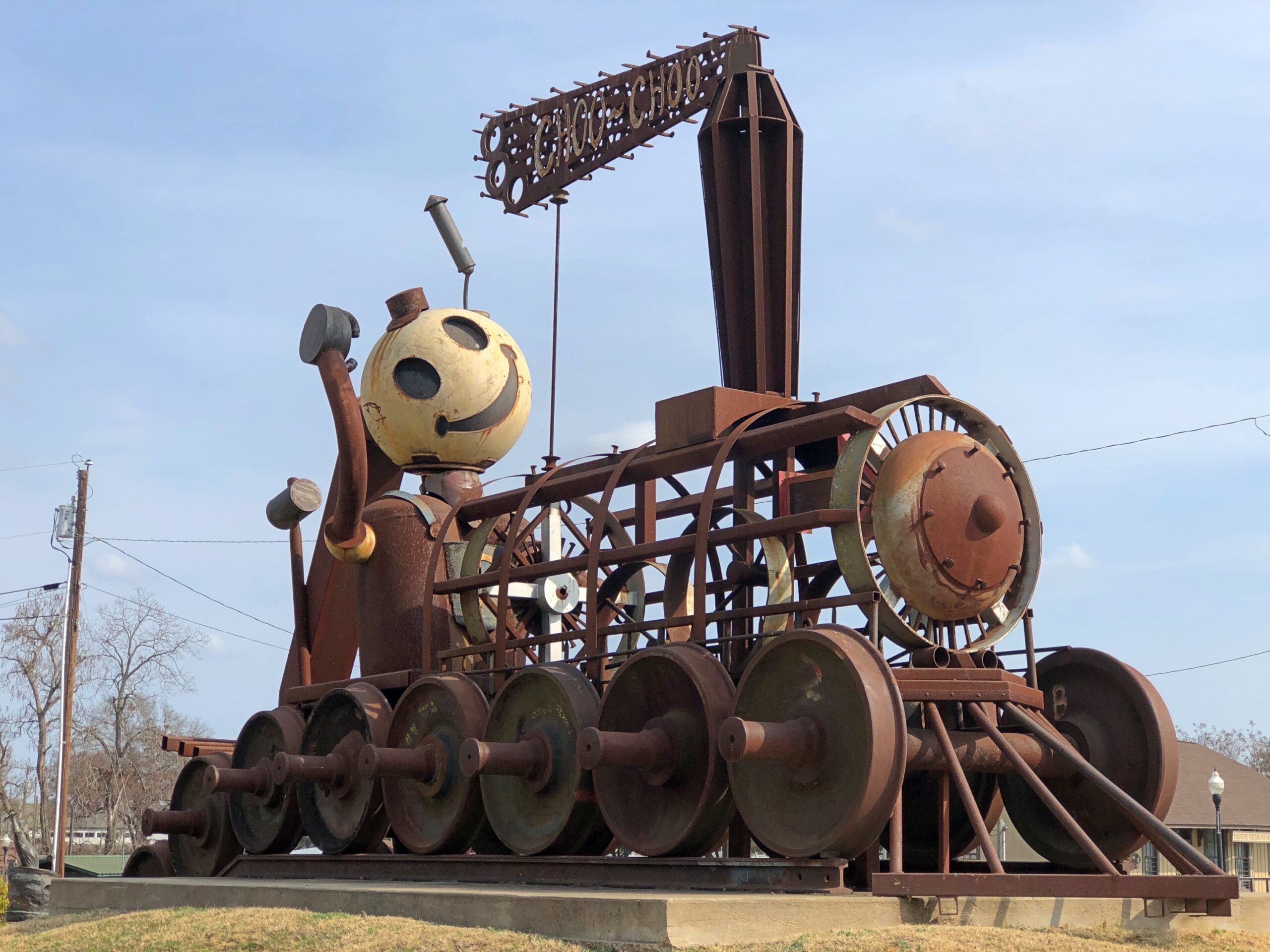
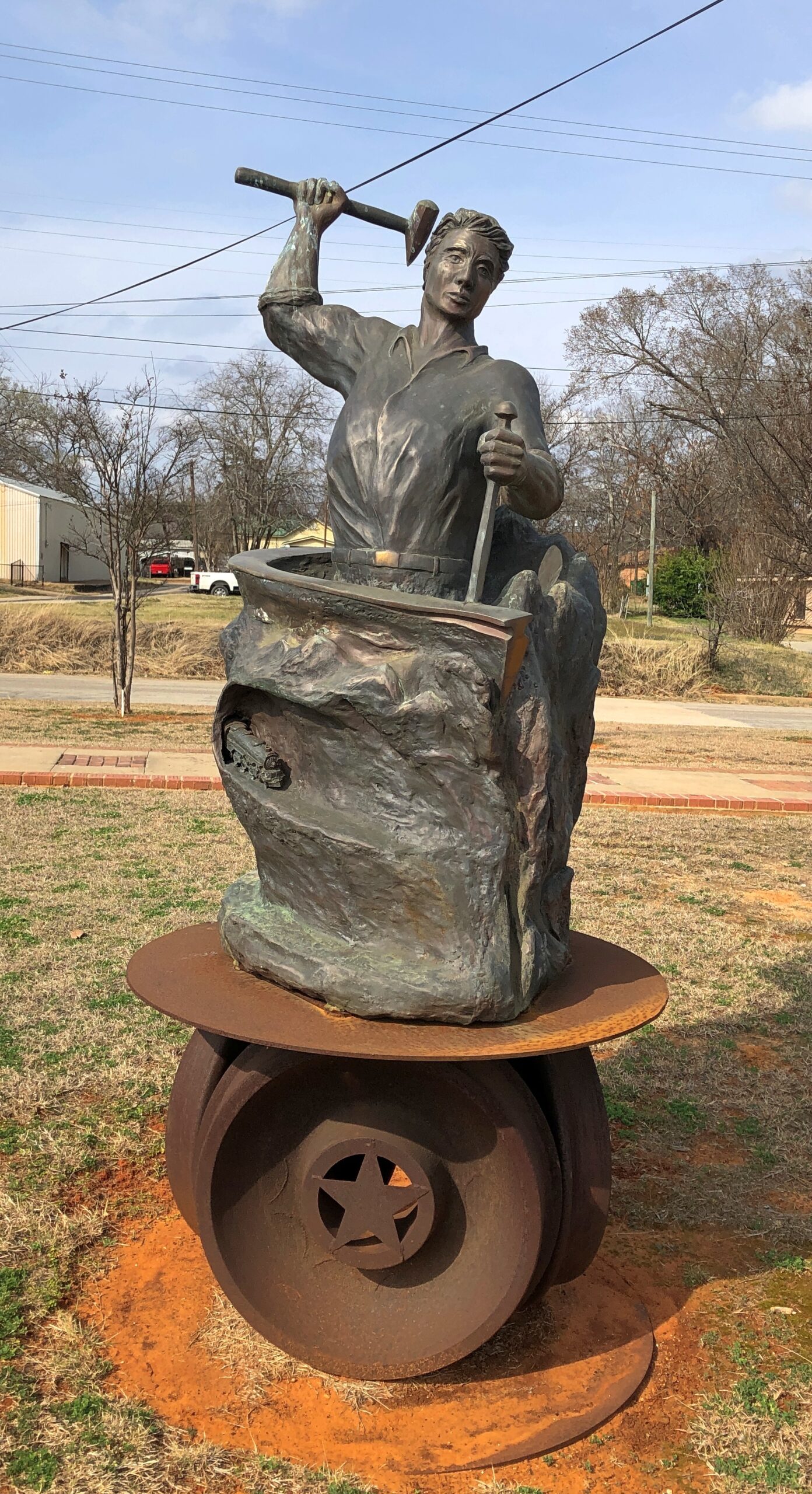
Now I know exactly where I learned about Palestine (Pal-es-TEEN) more than 50 years ago. I didn’t arrive in Palestine in person until this February, on my way to Dallas from Nacogdoches. During my visit, I made the acquaintance of this fellow.
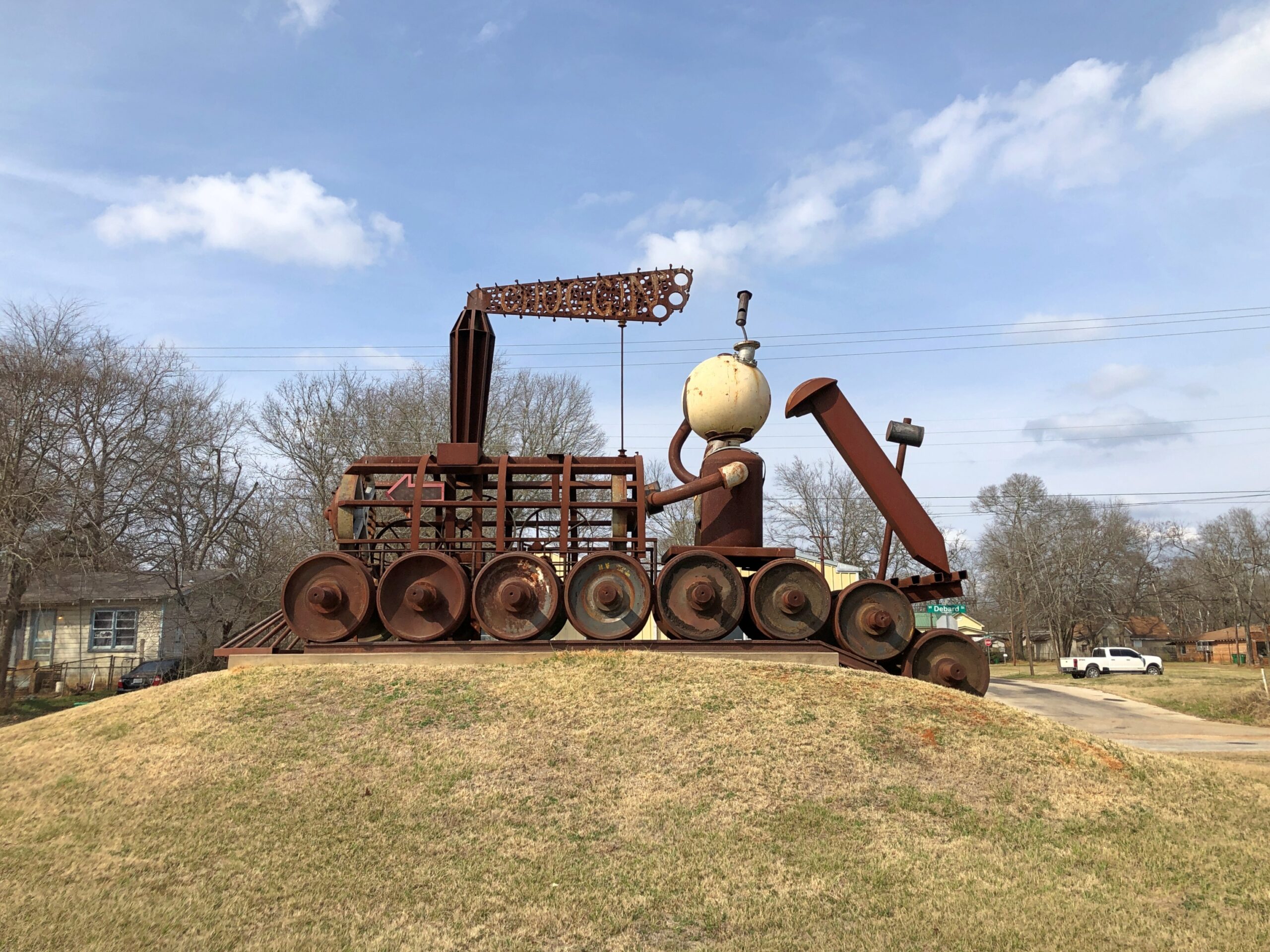
The sculpture is called “Chuggin’ ” (2020), created by Dewane Hughes, a sculpture professor at the University of Texas in Tyler. Railroads are important in the history of Palestine, so much so that one terminus of the Texas State Railroad – a linear state park along a former short line RR – is in the town. The other terminus is in Rusk, about 25 miles away. Not running in February, unfortunately.
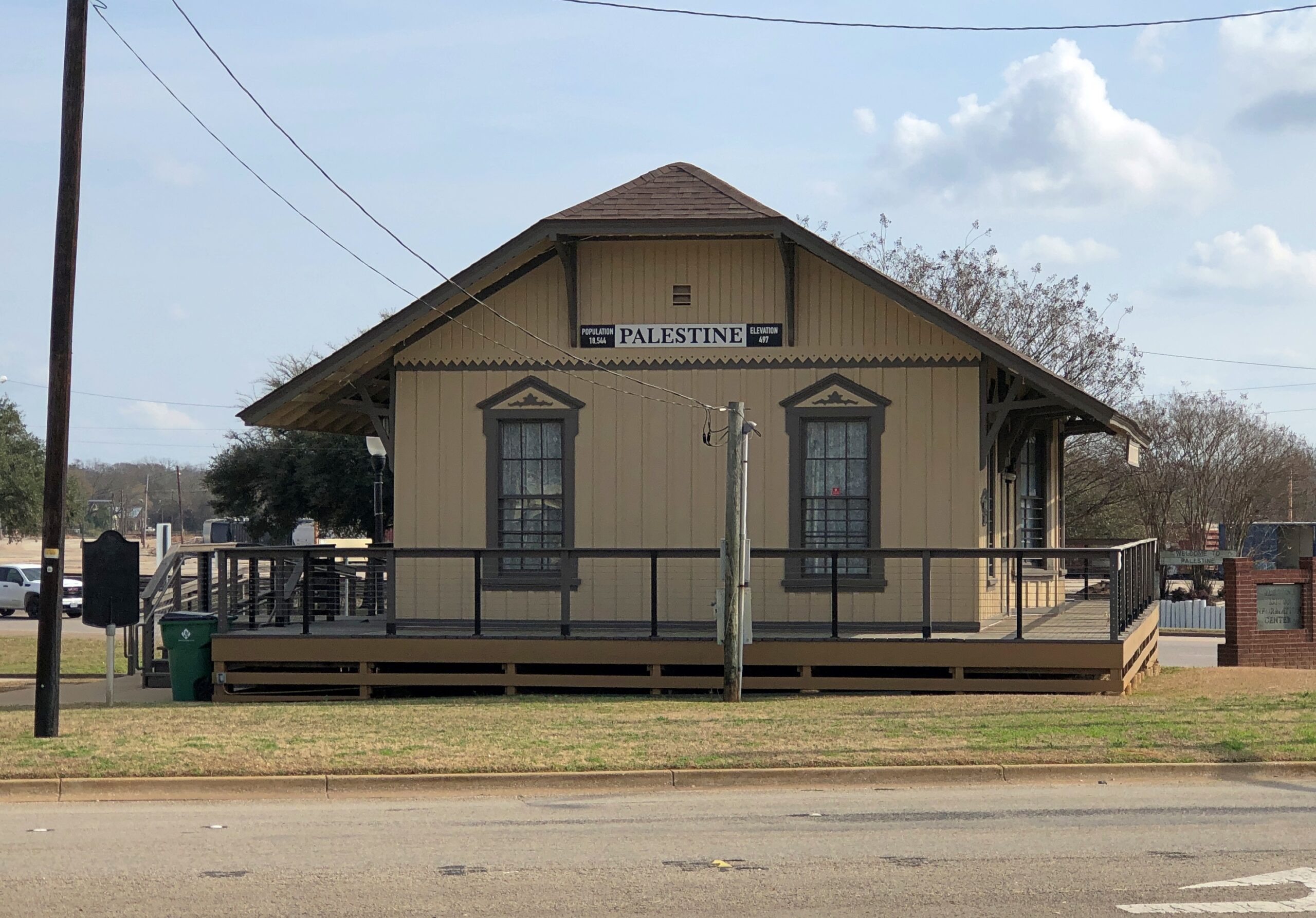
“Chuggin’ is near the town’s visitor center, a former RR depot.
Also nearby is “Forging History” (2014) by Dale Montagne, with the base made of three actual rail car wheels.
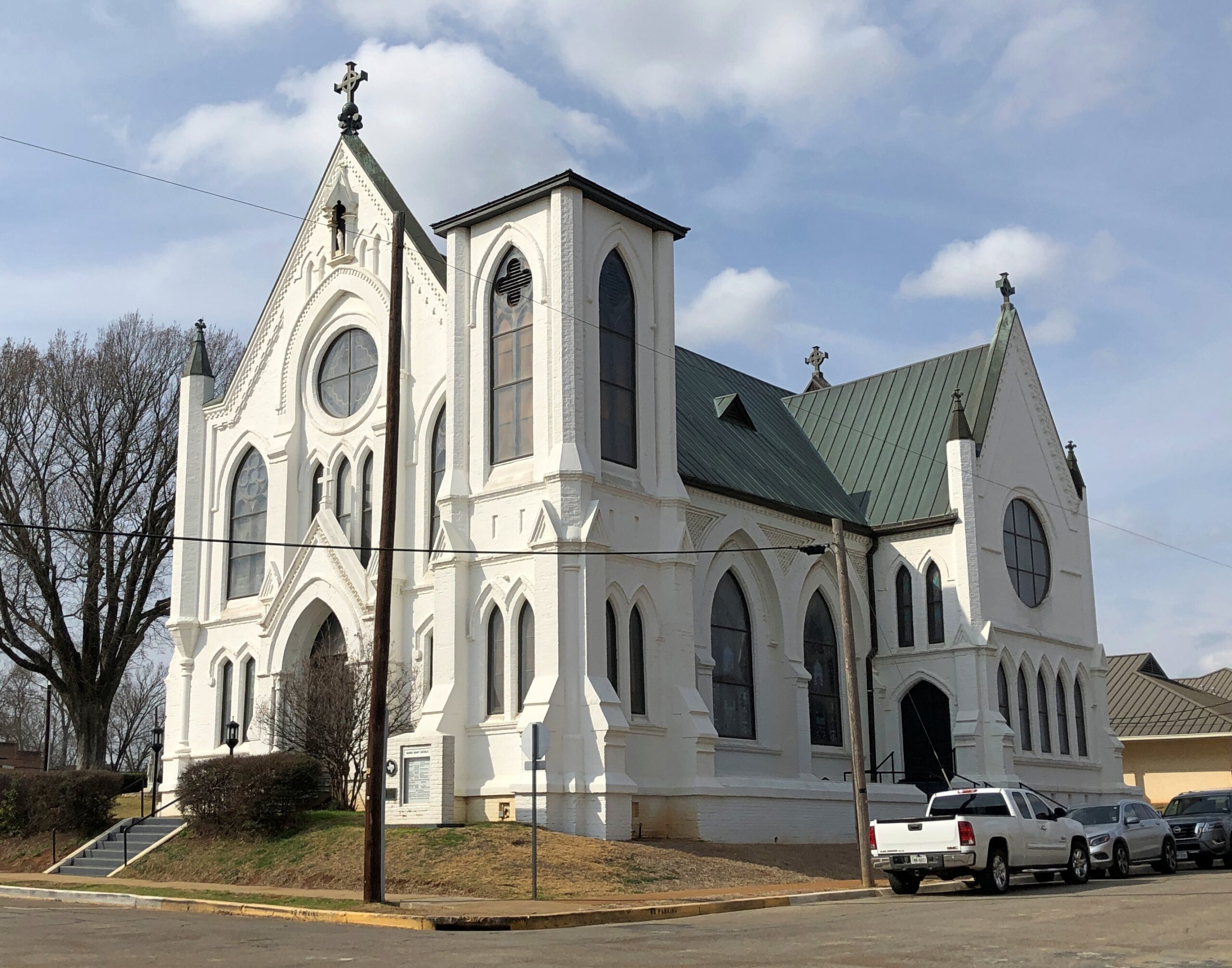
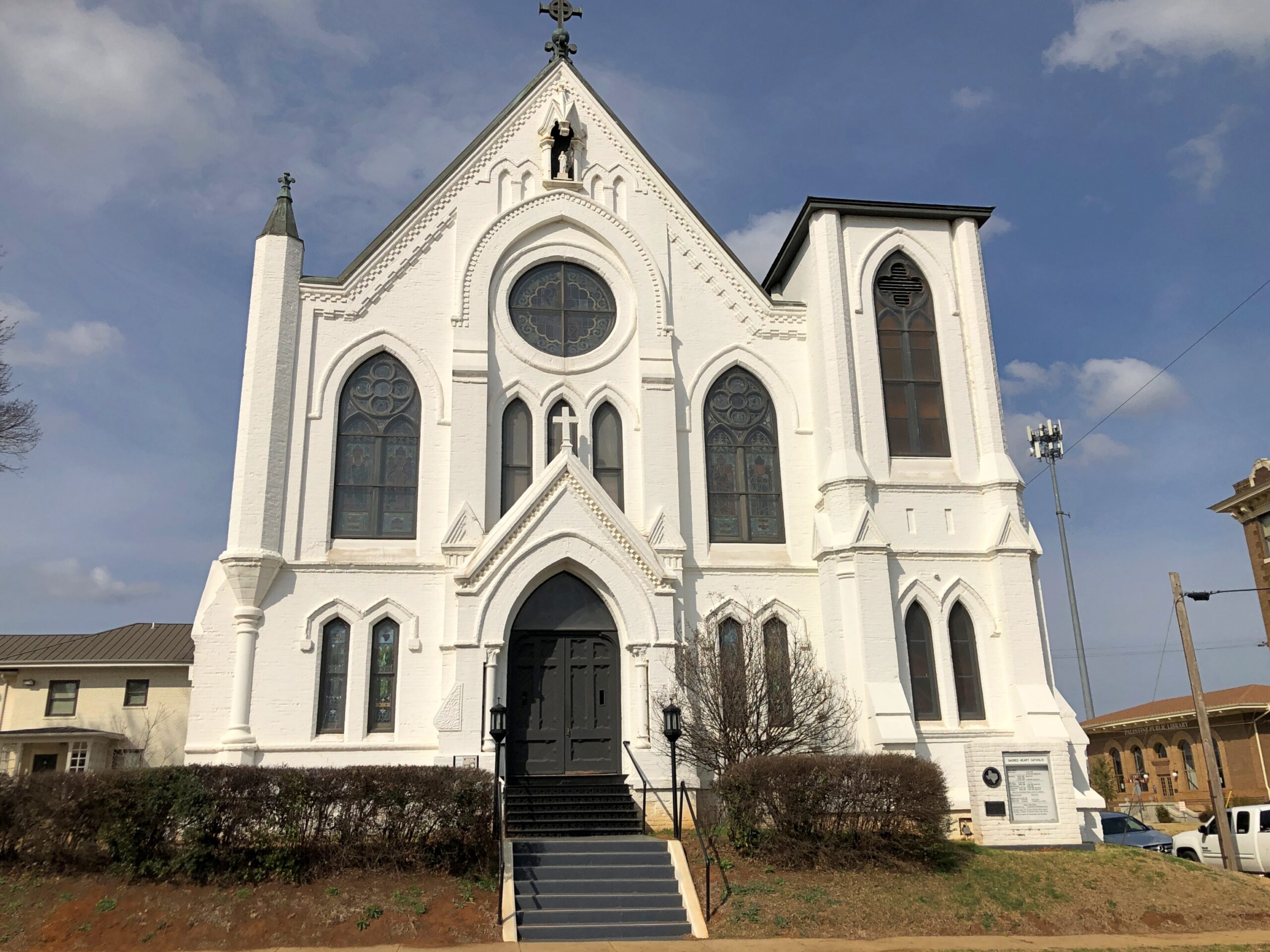
Parking was easy to find in downtown Palestine, traffic light. Parallel parking was available right across from the splendid Sacred Heart Catholic Church, as it happened, an 1890s creation by Nicholas Clayton, who was most active in Galveston before the hurricane. Originally many of the congregation were workers on the International-Great Northern Railroad Co., which had a major presence in Palestine.
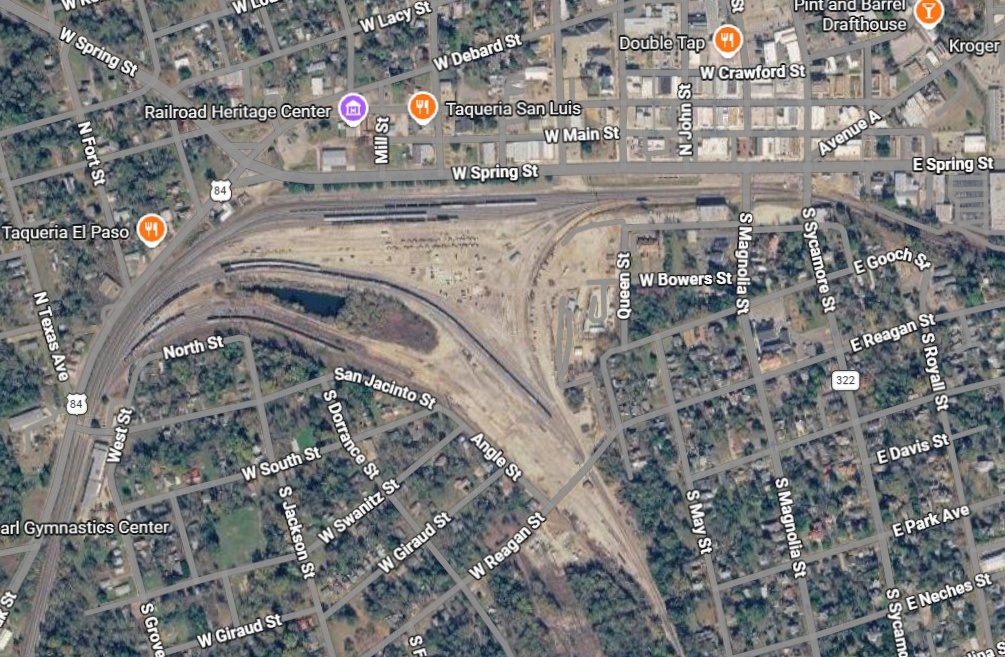
Palestine still has a sizable rail yard south of downtown.
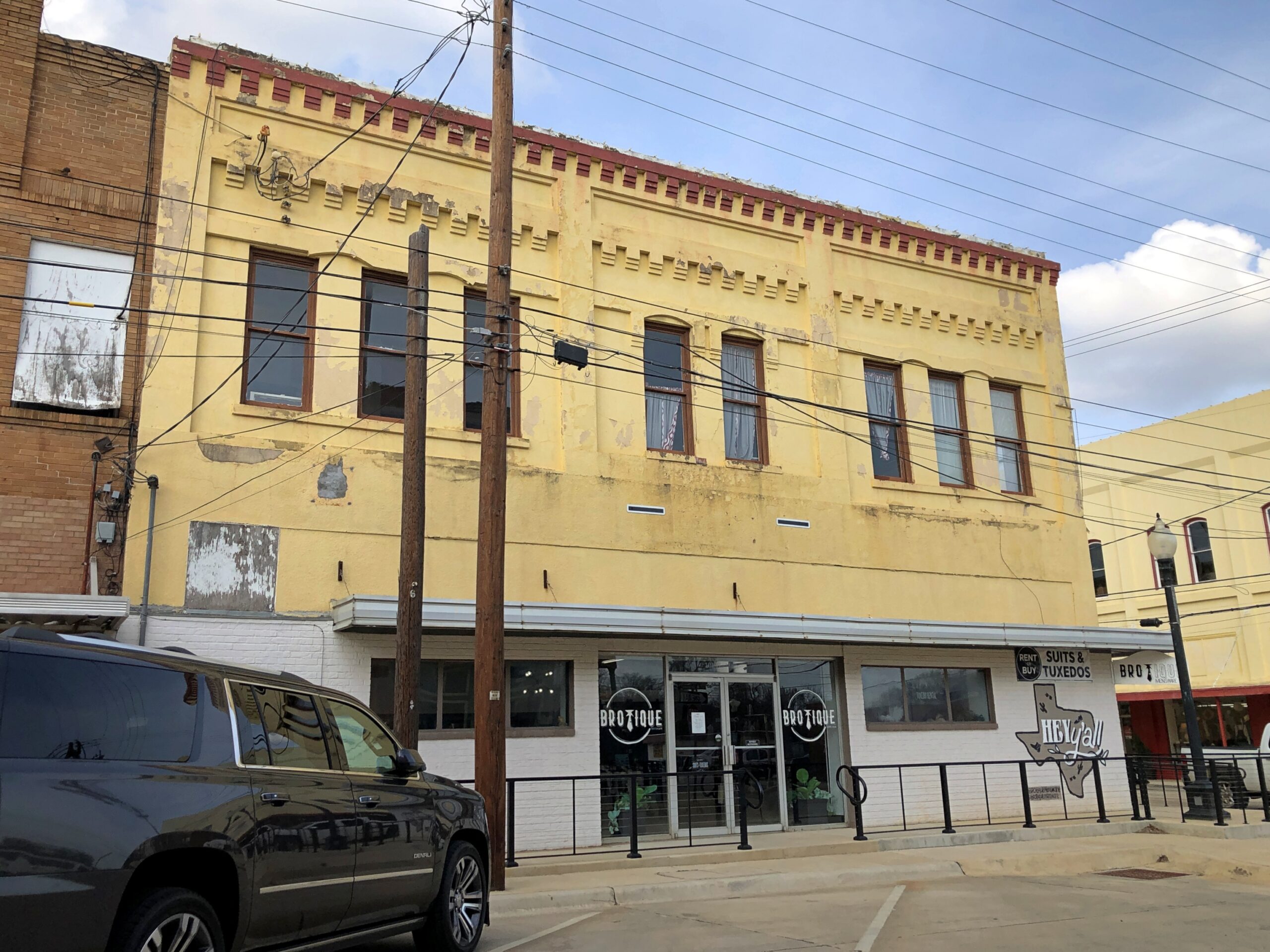
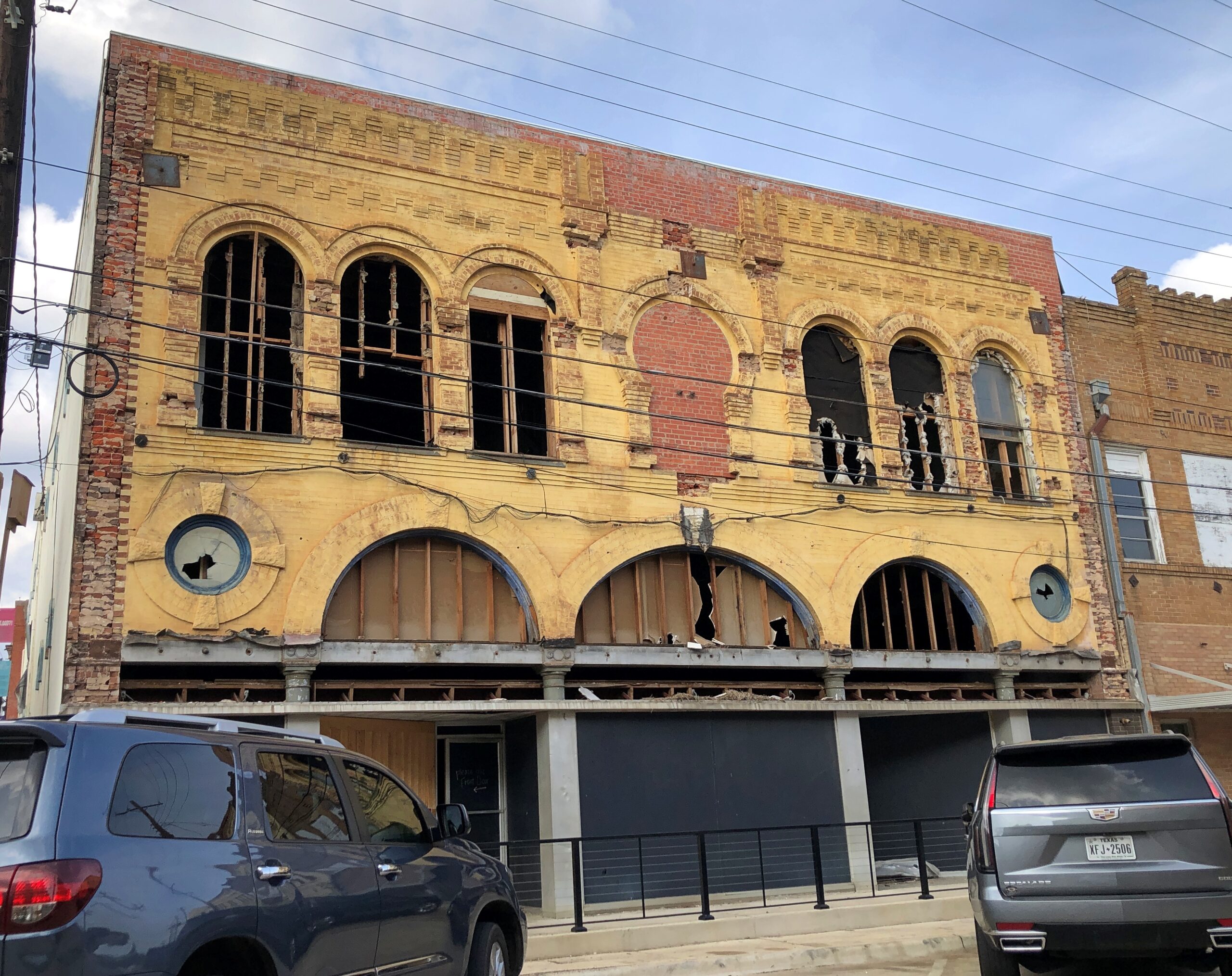
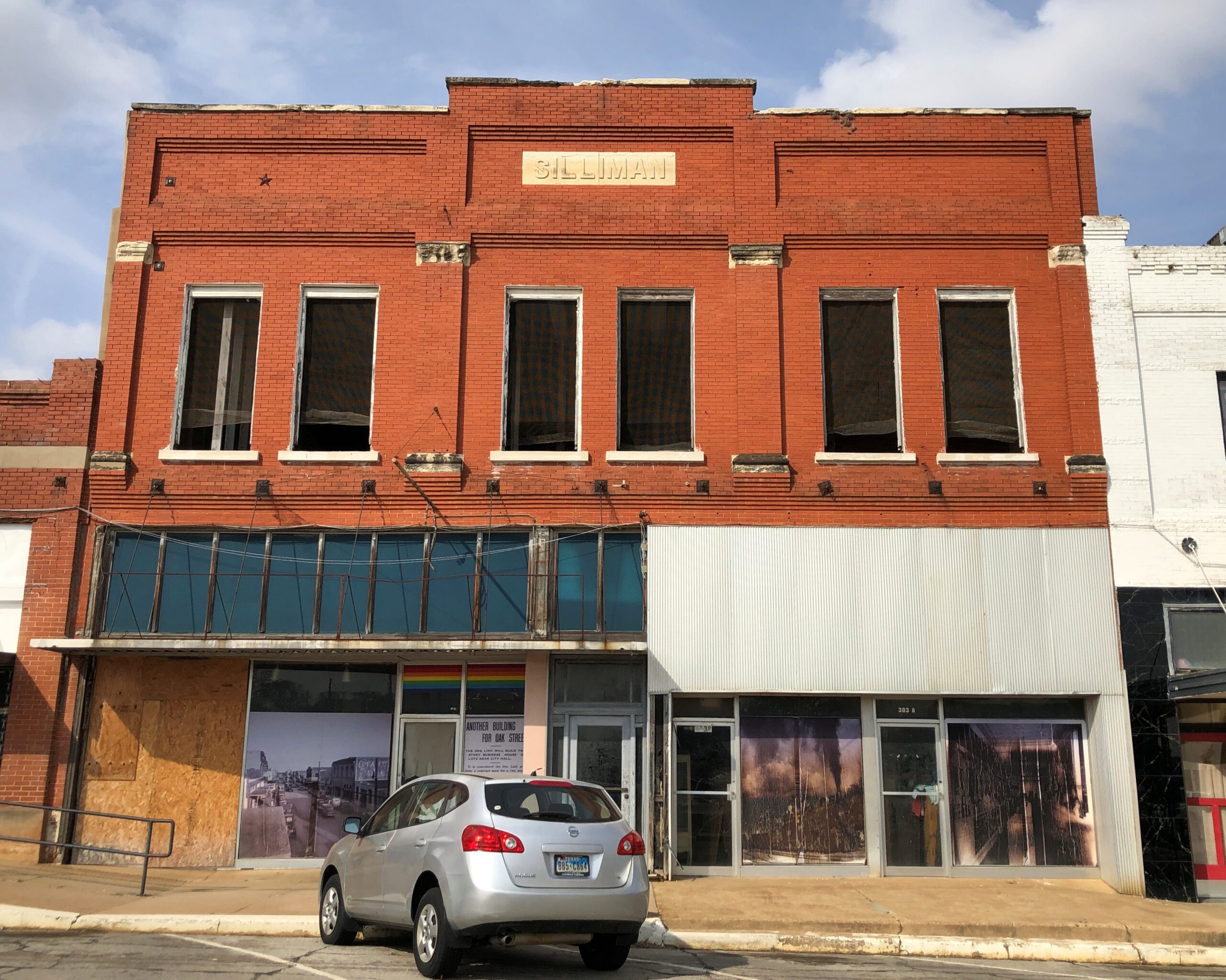
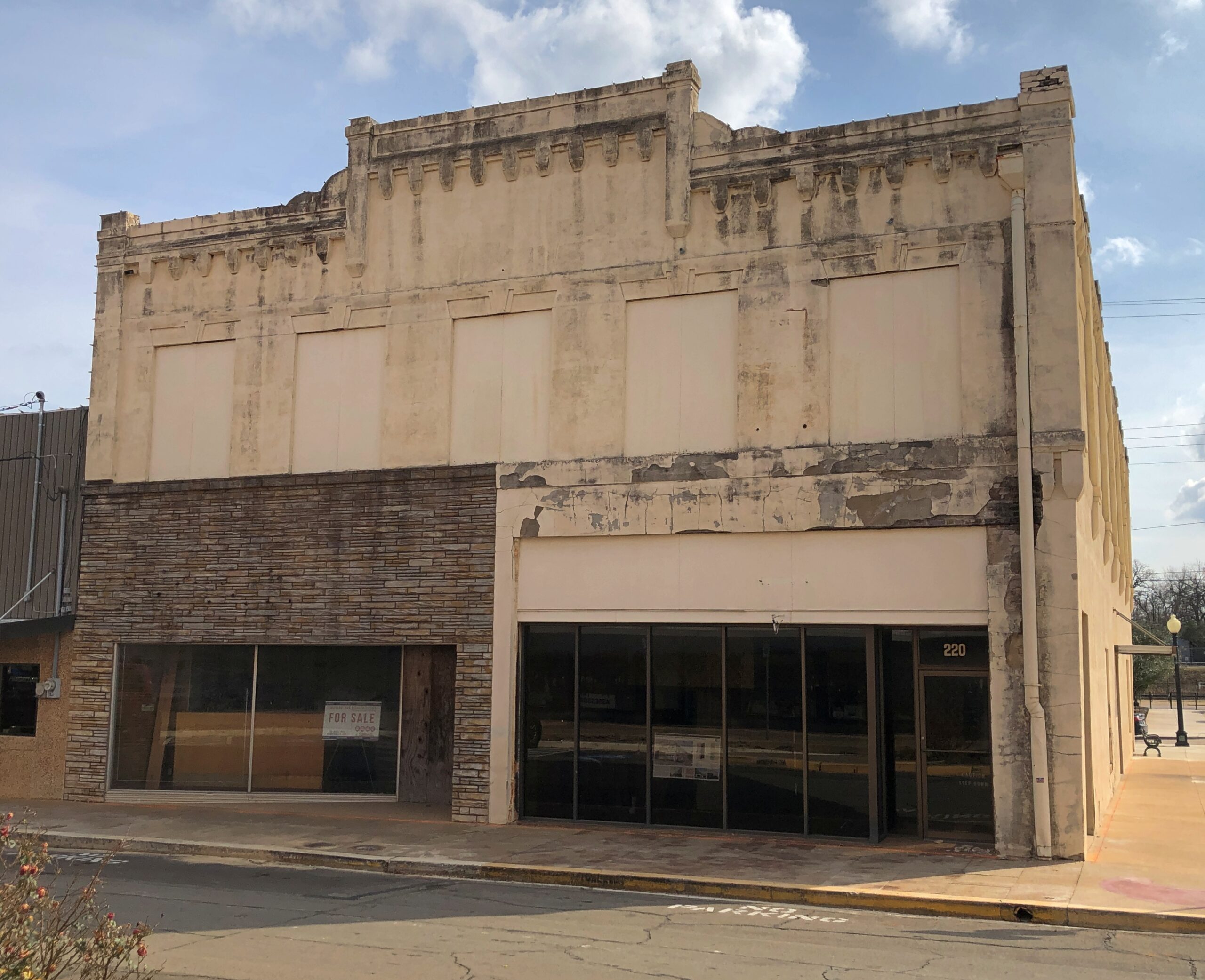
Took a walk around downtown. Like most large towns, or small cities, there is a mixture of ongoing businesses –
— with vacancies.
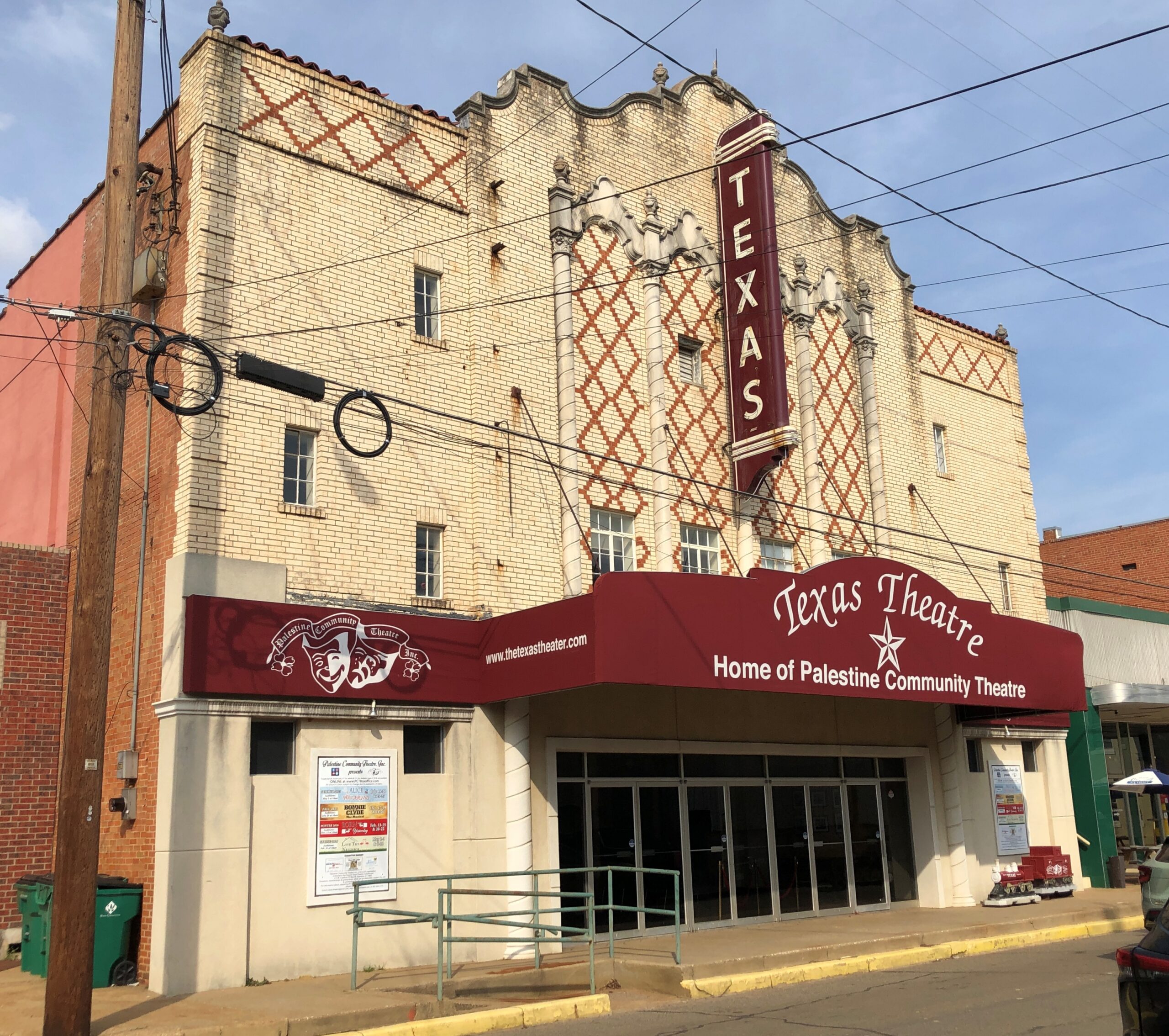
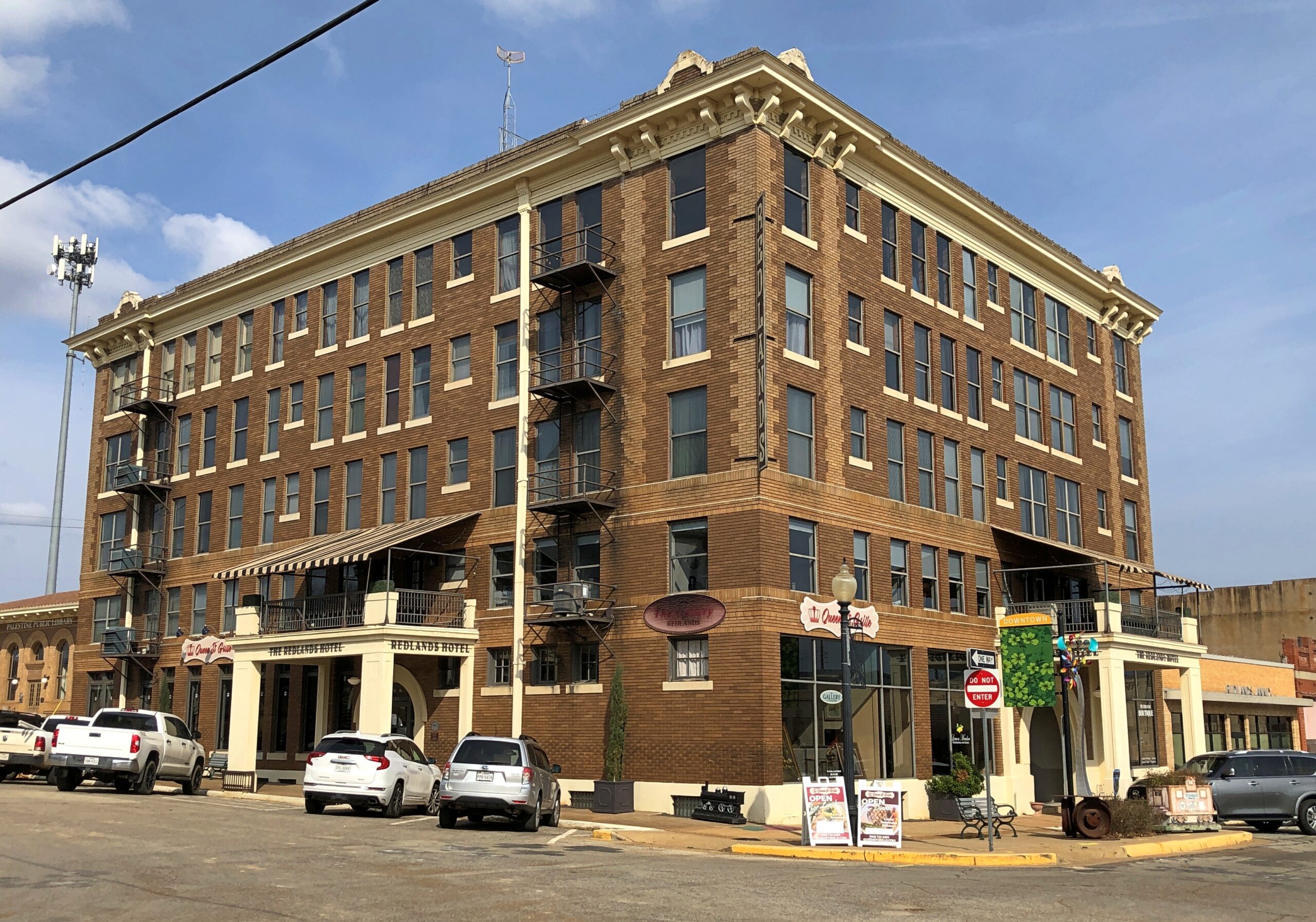
Got some buildings with really good bones, as it’s been said in the real estate biz.
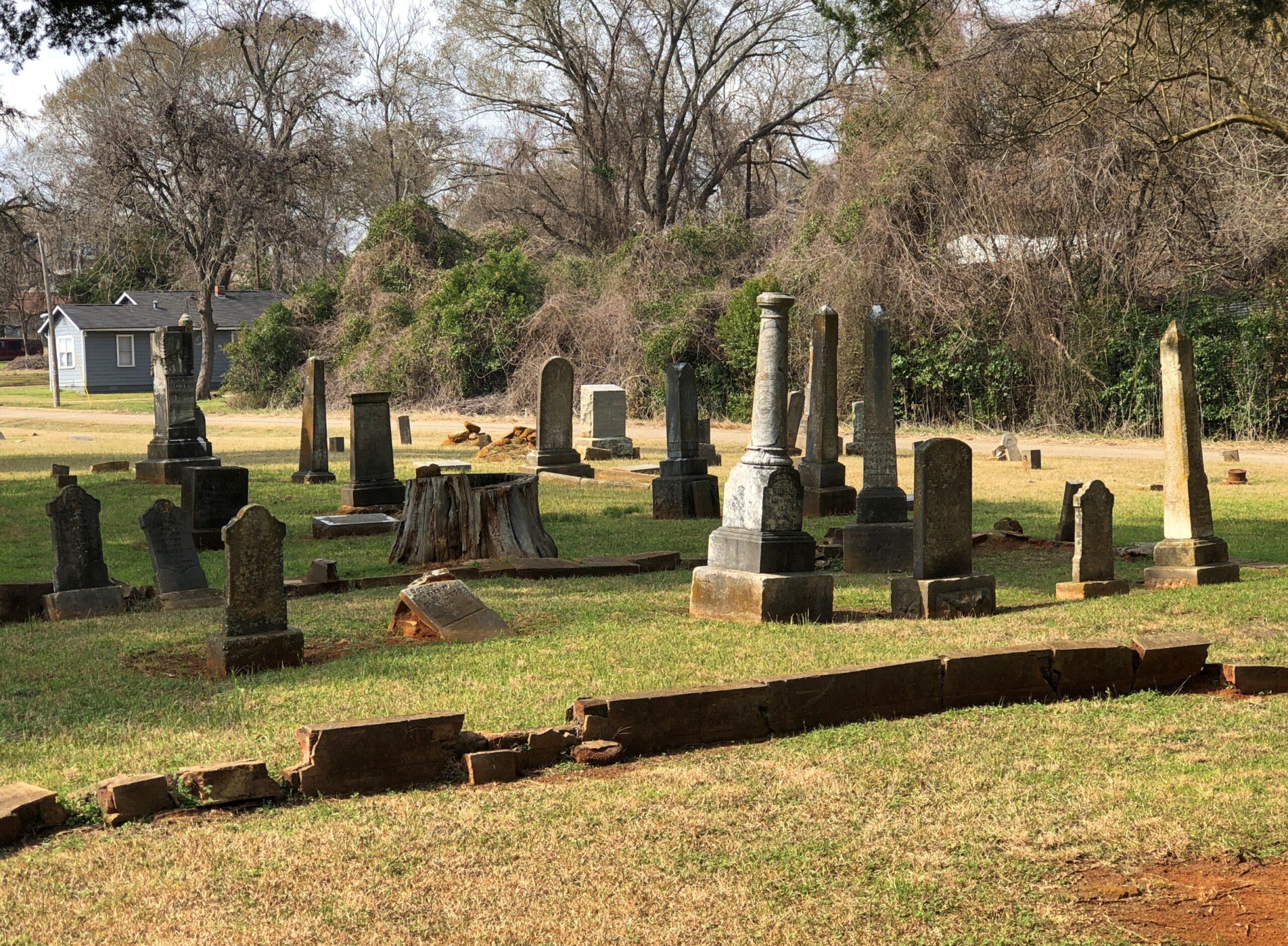
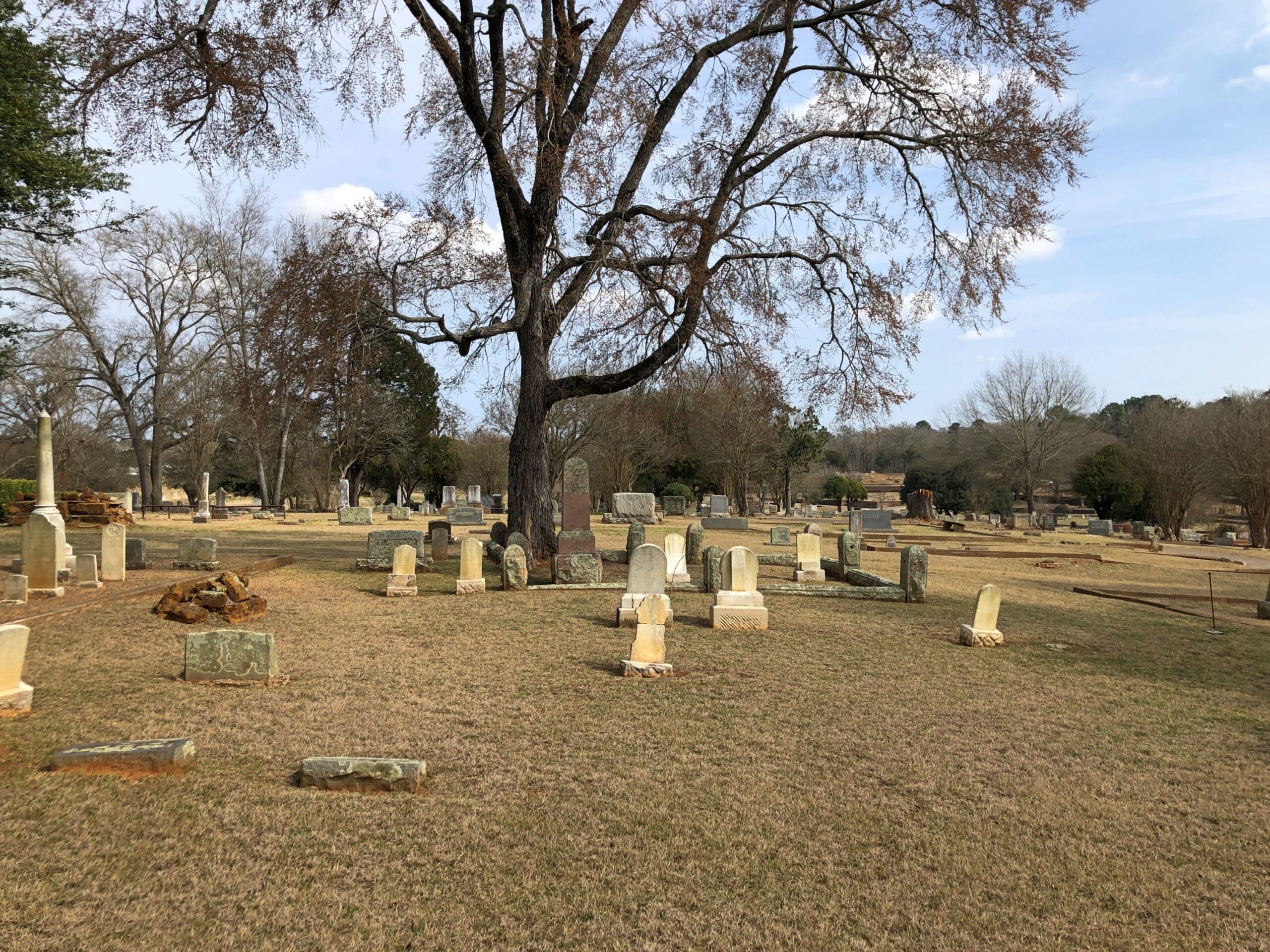
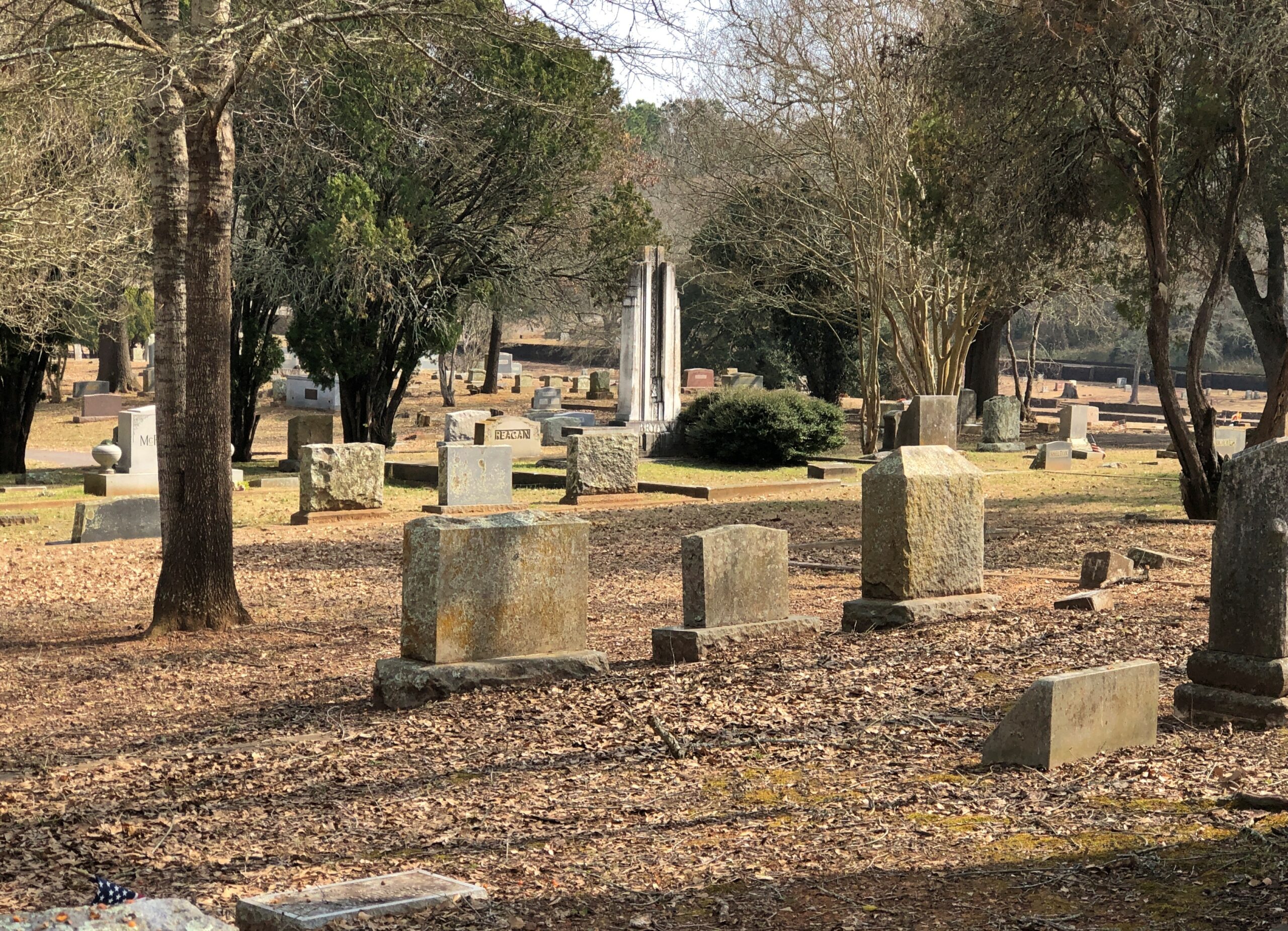
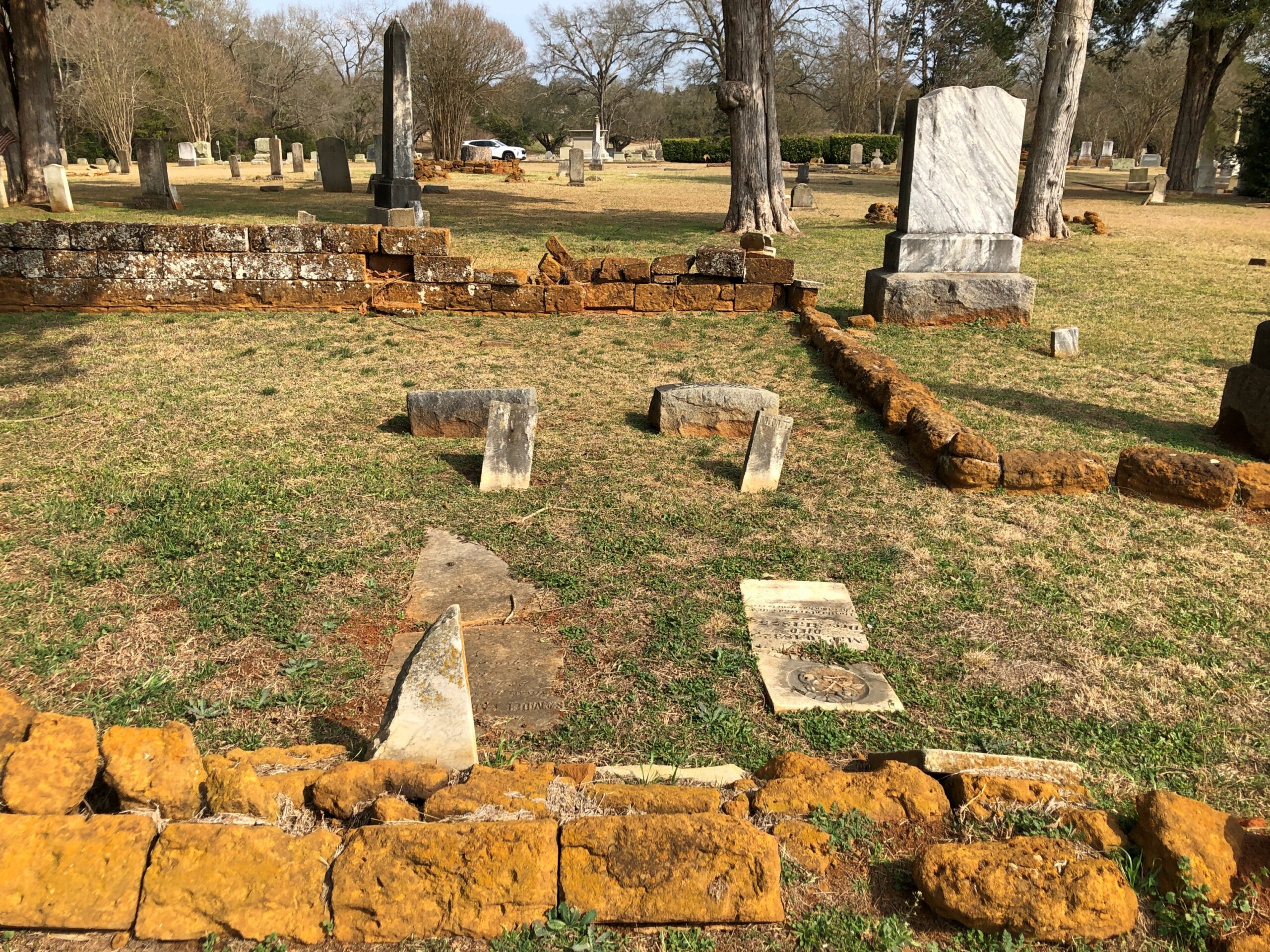
The Palestine City Cemetery is to the east of downtown, but not very far. Nowhere is that far in town.
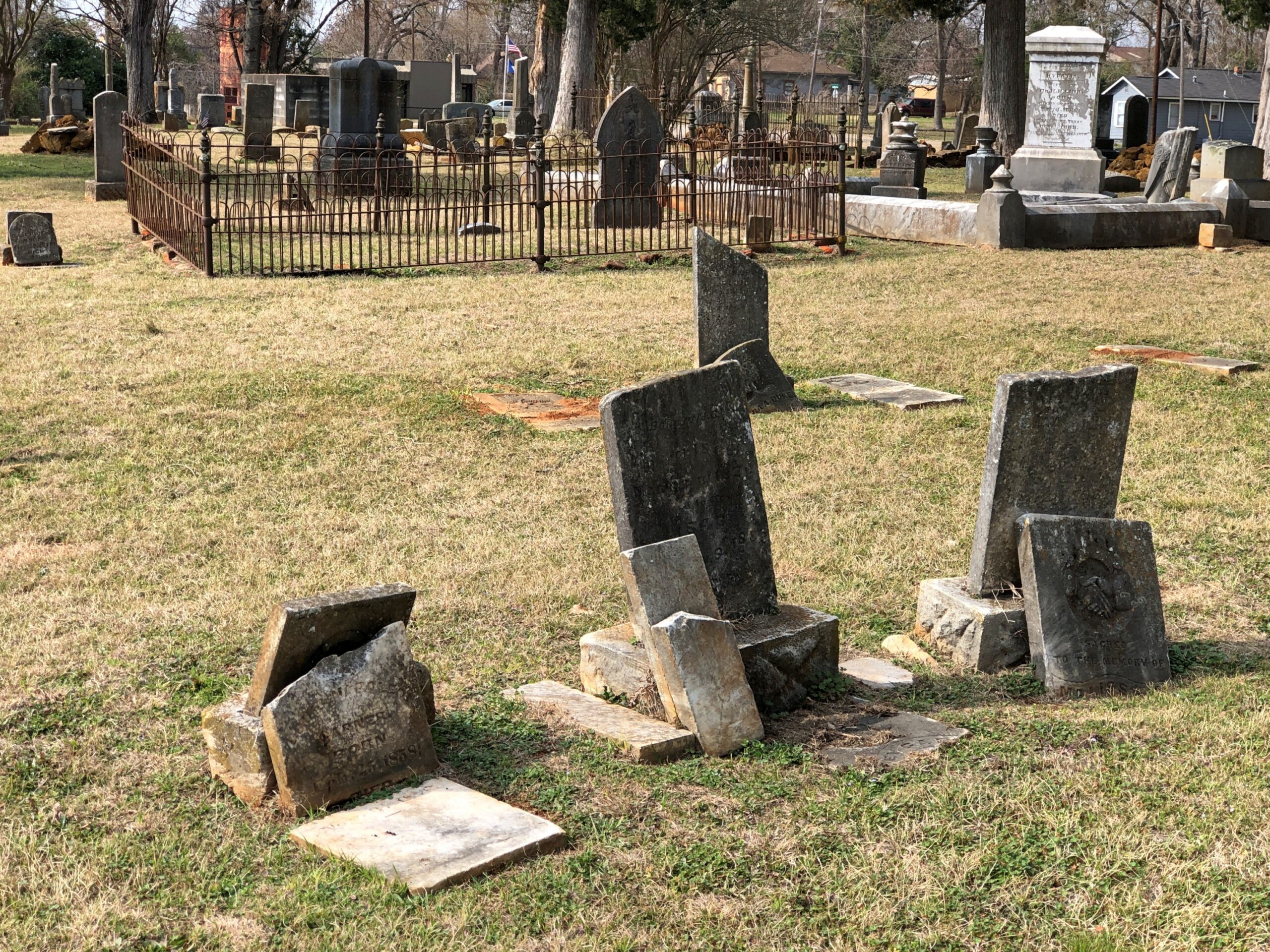
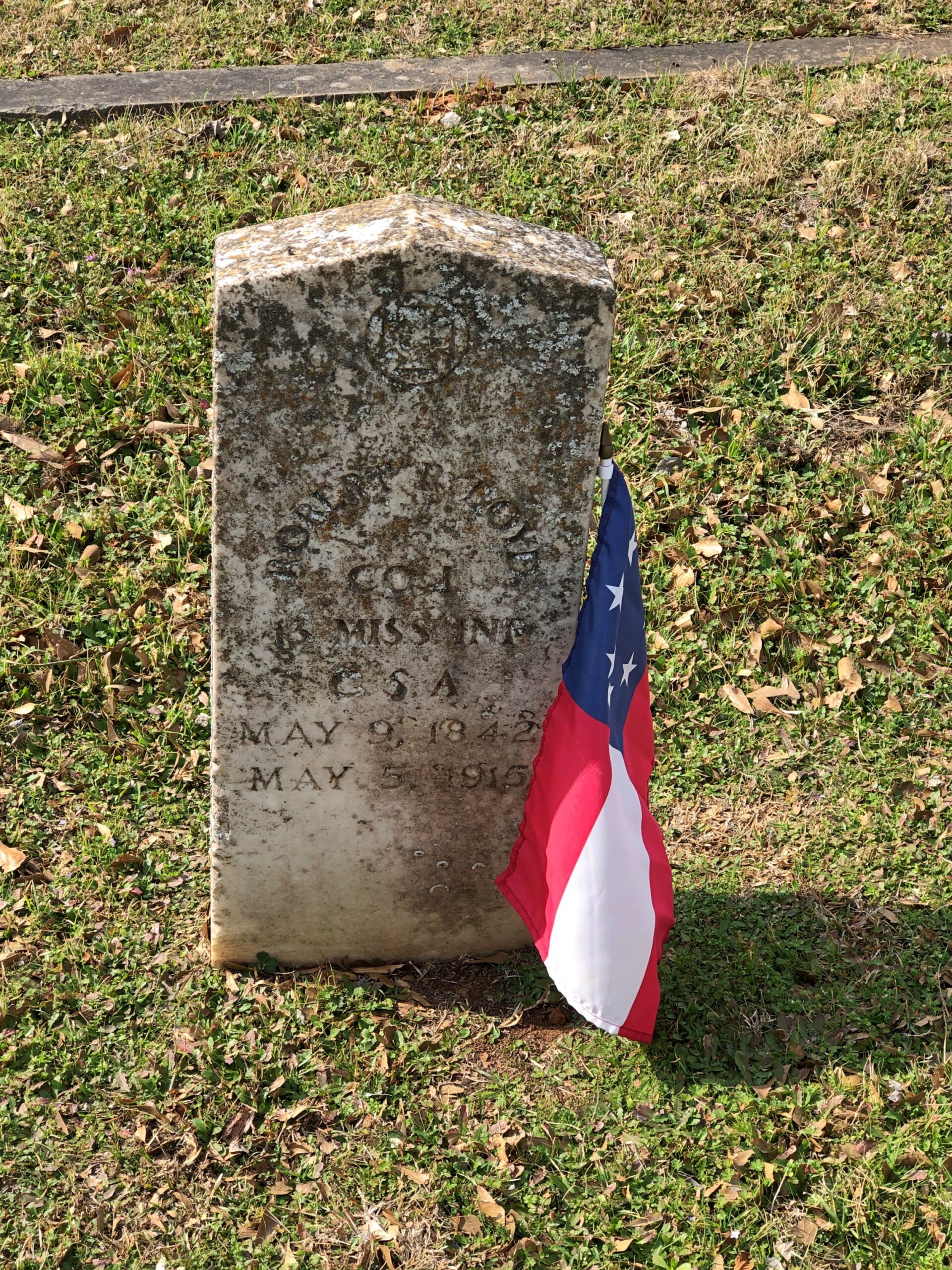
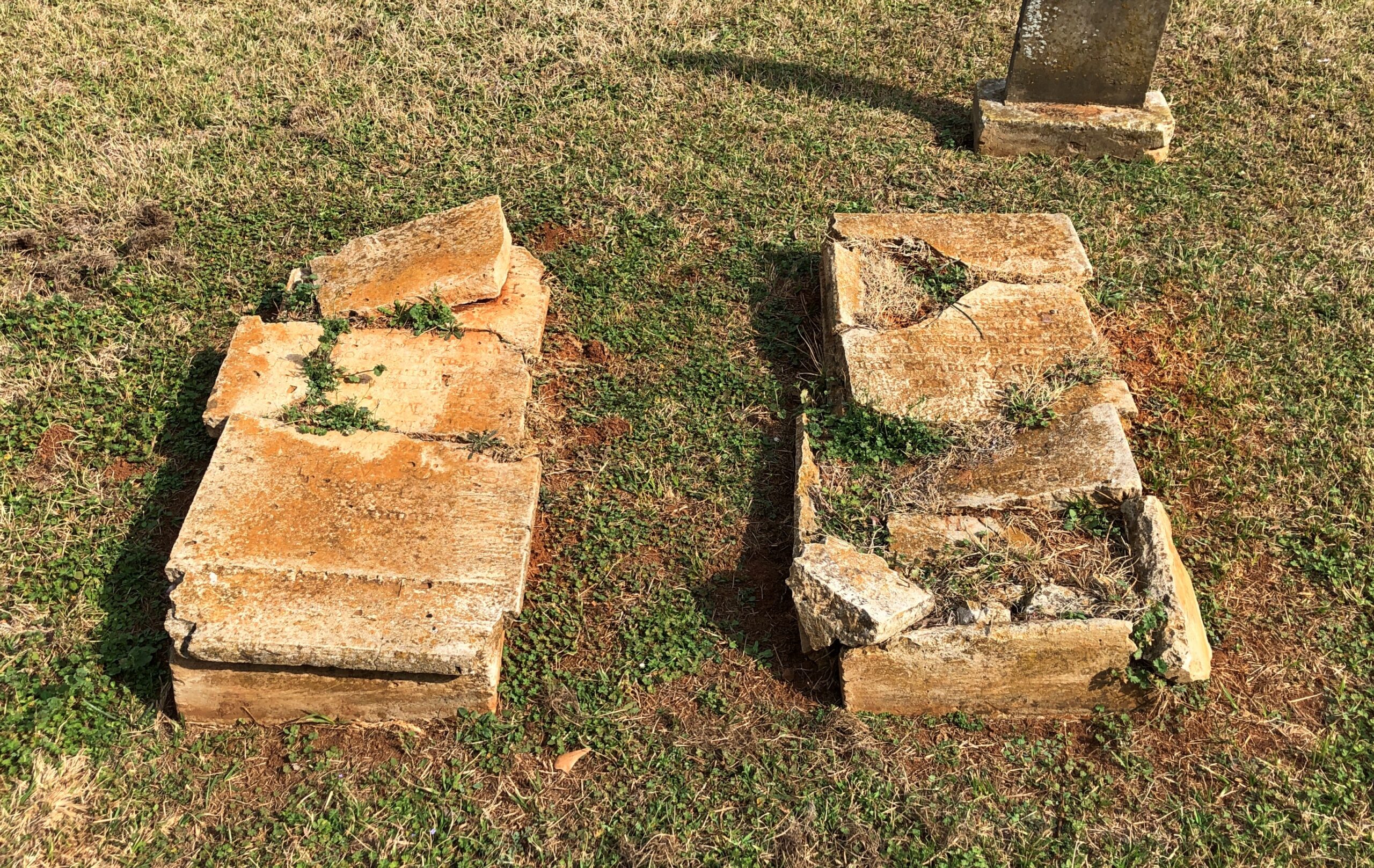
The crumble is on.
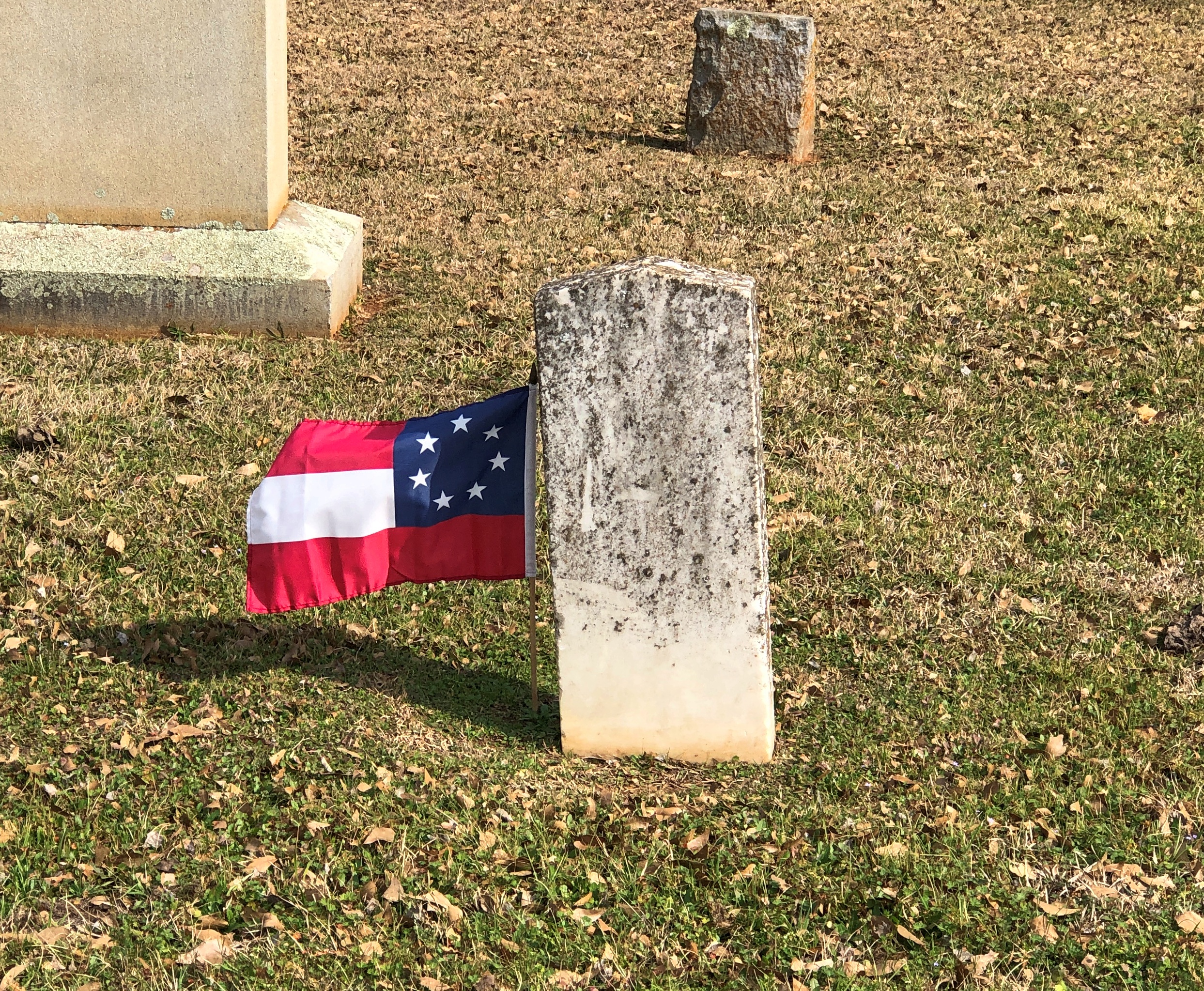
Something you don’t see that often. Not just the Stars and Bars, but the very first version with seven stars. In the fullness of not much time, six more stars were added.
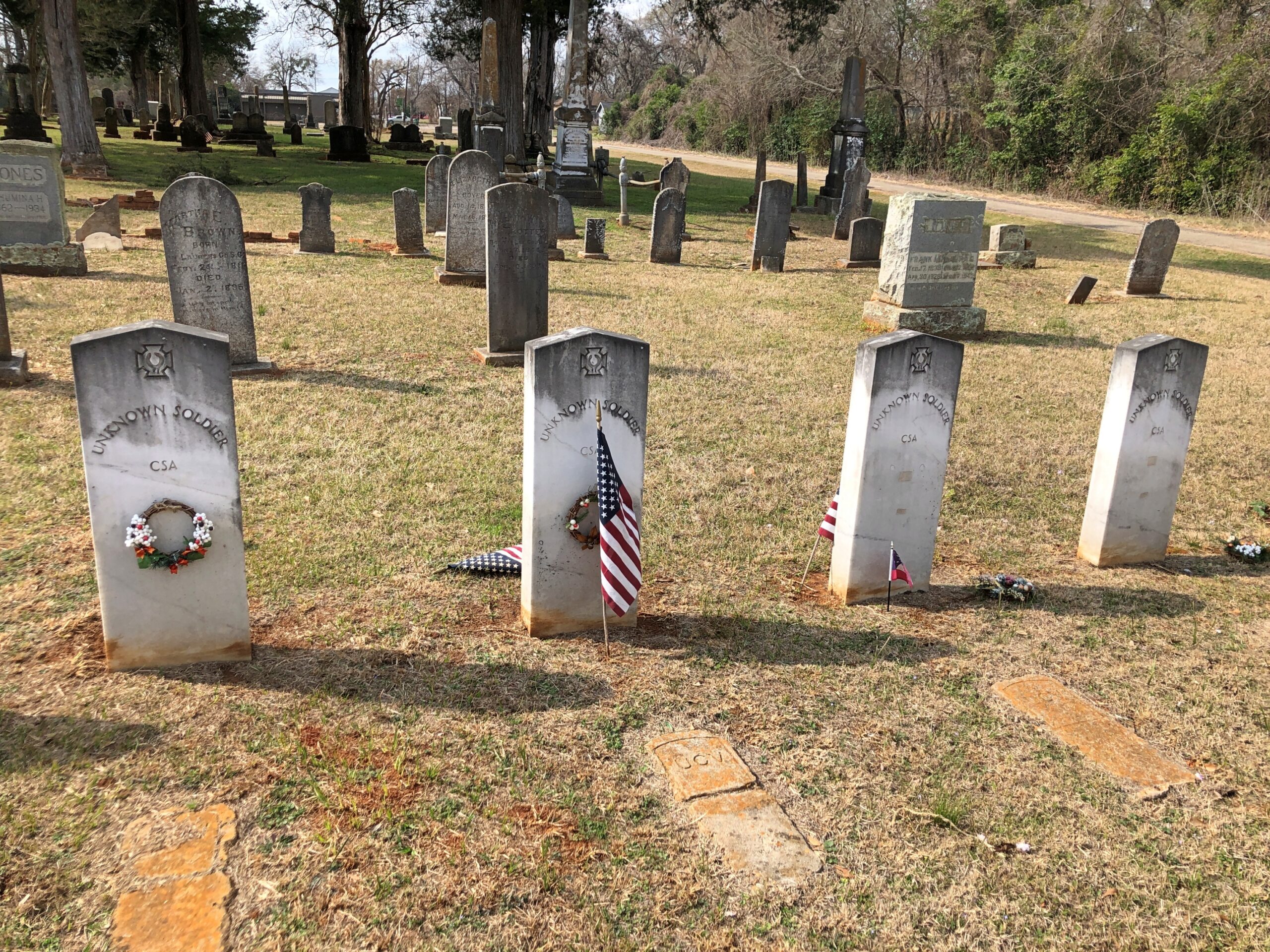
Unknown CSA soldiers.
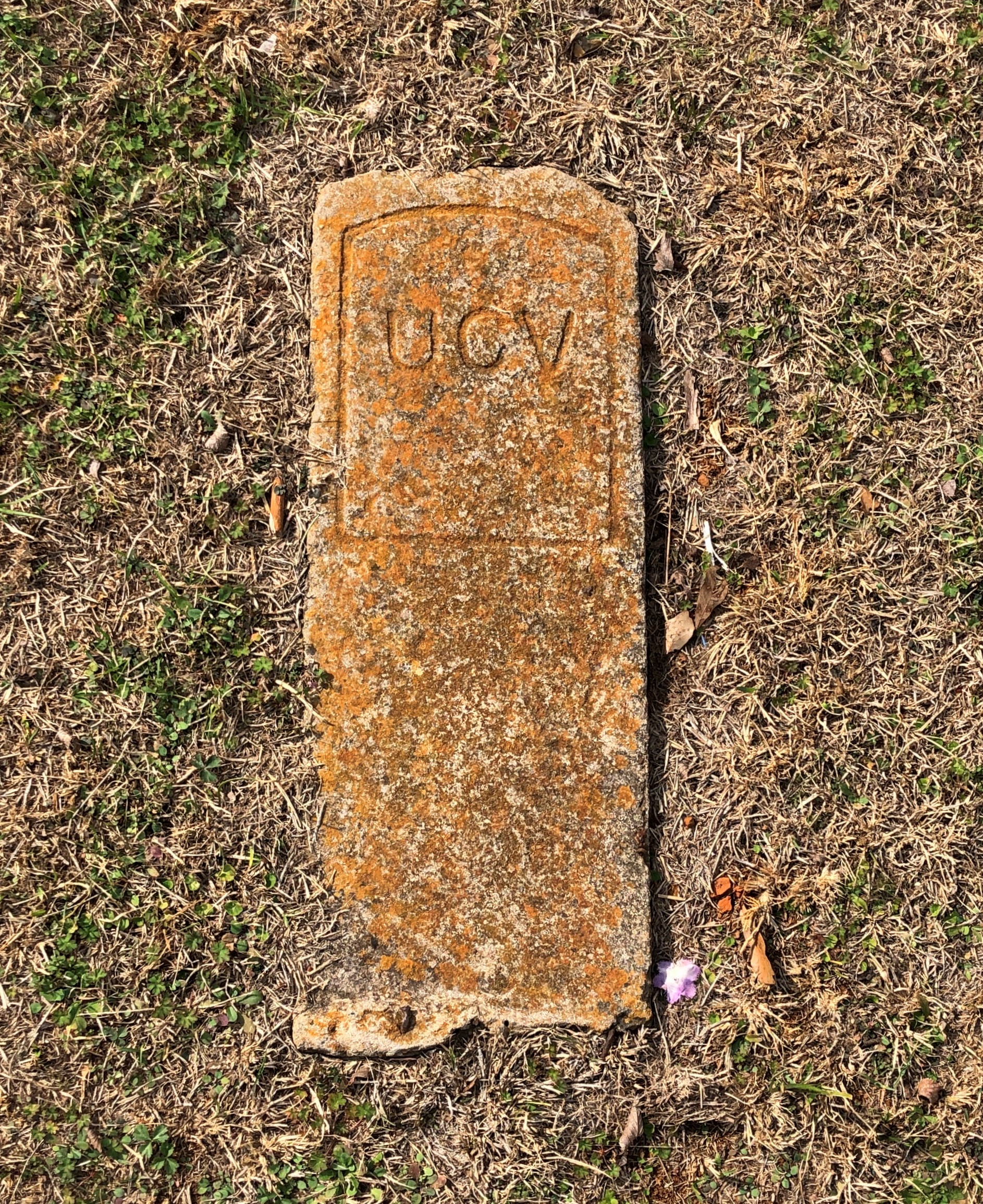
I assume United Confederate Veterans, the Southern equivalent of the GAR, placed this stone and those like it.
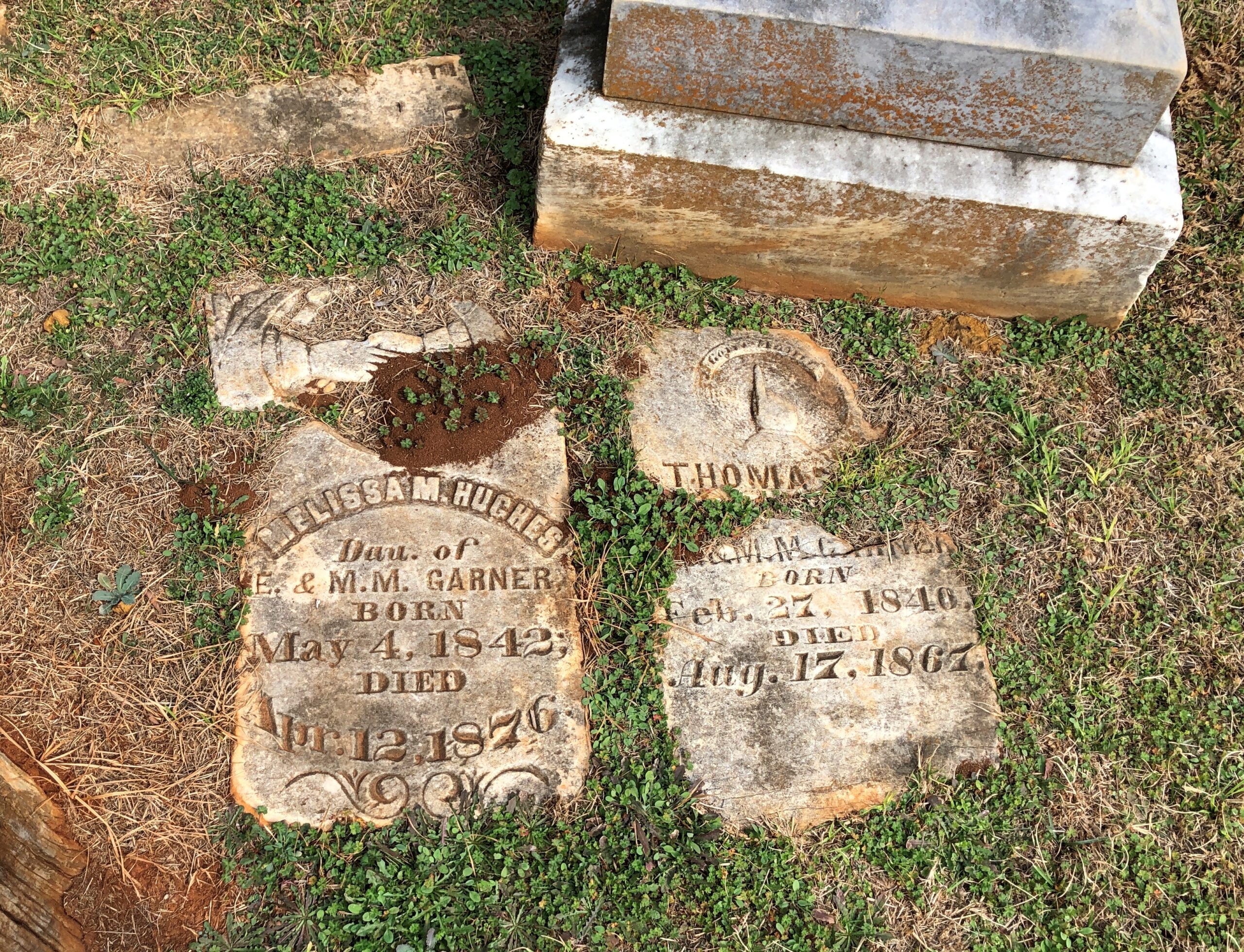
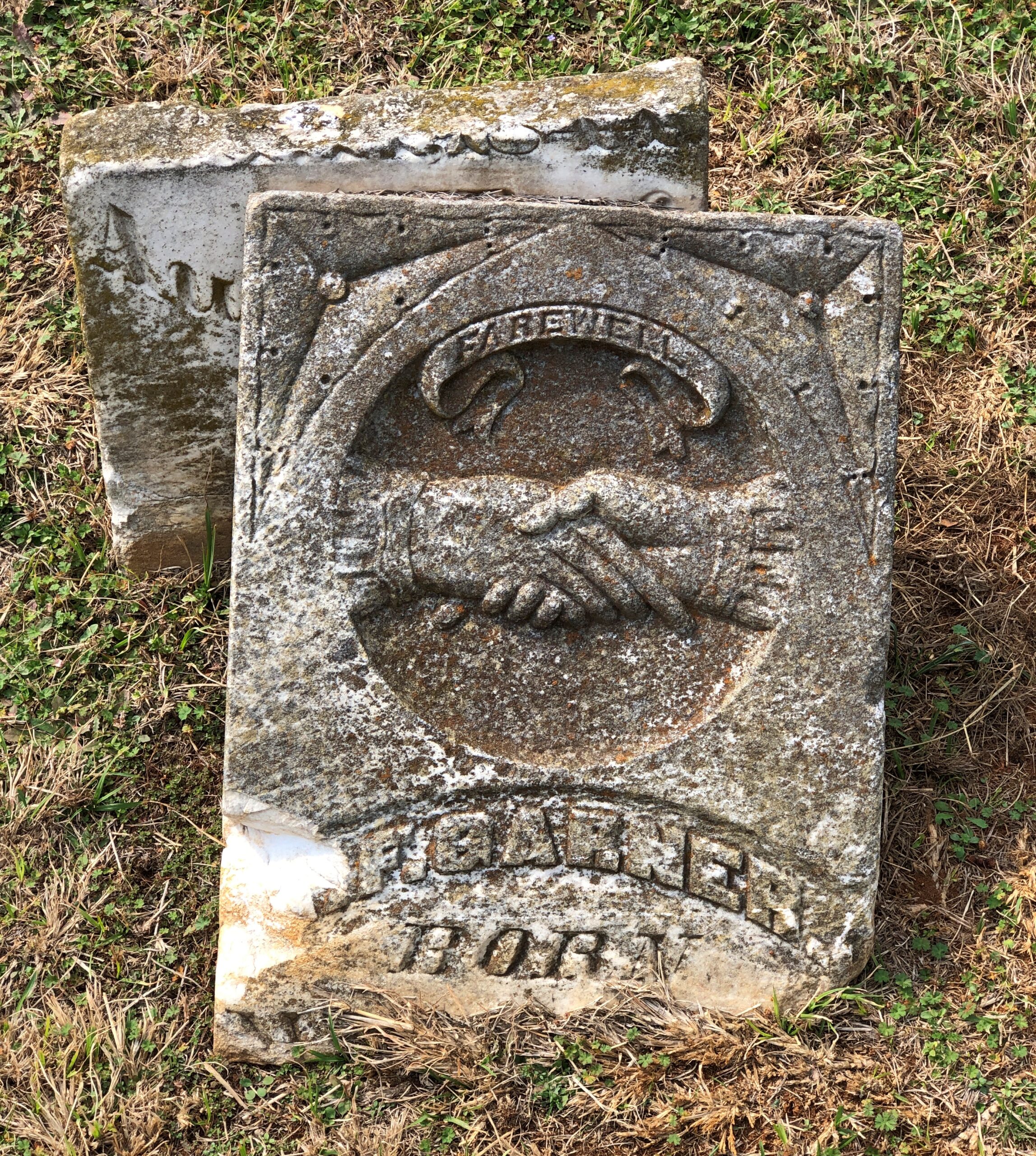
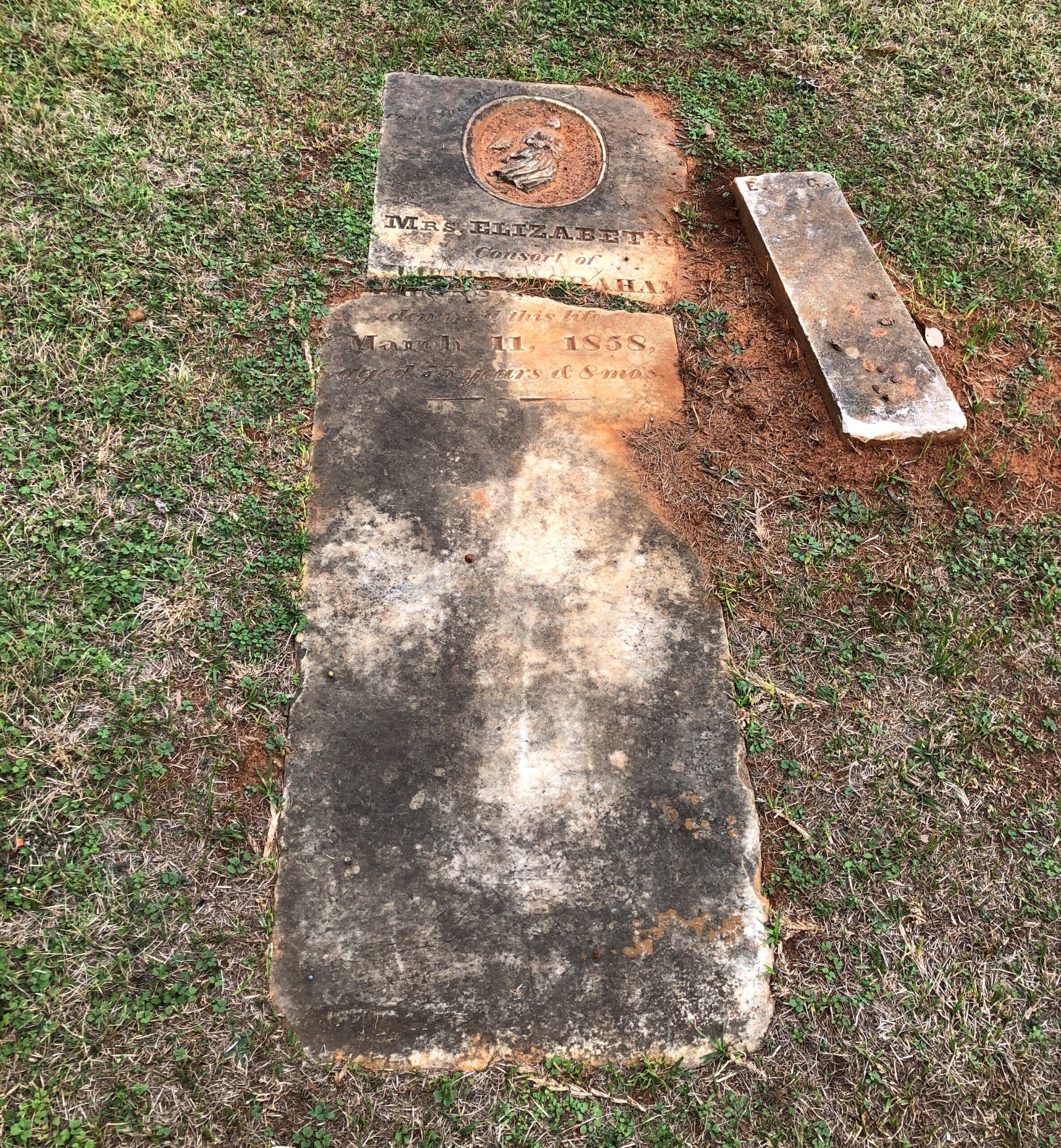
The cemetery has an impressive number of worn, broken stones, soldiering on through the elements.
Victorian sentiment in stone, said with due respect.
Would that kind of soft decay, the romanticism of stones worn by time and the elements, have appealed to Victorian sensibilities? Could be.
Never cared much for the term snowbird, with its connotations of getting up every morning to play golf during winter in some arid place, or spending the evenings with members of your cohort in some gated community, maybe drinking but definitely grousing about the state of the world. Still, considering that in the winter of 25/26, I’ve spent two out of the last three months – the hard winter months, up Illinois way – in warmer places, it would be churlish to cast shade on fellow old people who happen to enjoy golf or grousing.
On the other hand, I’m not about to claim snowbird as descriptive for myself. I just happen to be able to take long trips during the cold months (along with my laptop, for work). In December, Florida. In February, Texas.
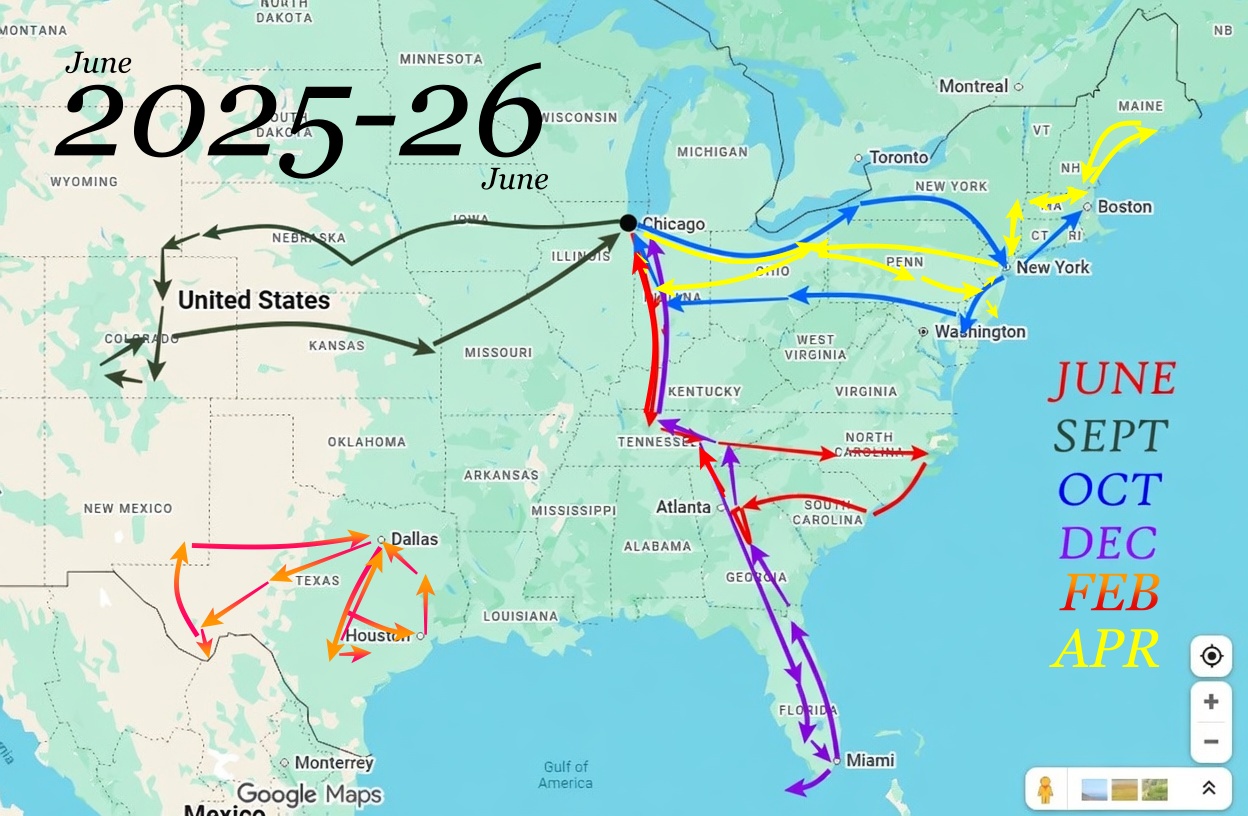
Back on February 3, I got on a plane and flew to Austin. I flew home from Dallas on March 3. In between, I spent time – and Yuriko joined me for a while – traversing the state of Texas, going so far west at one point that we ended up in New Mexico. By traversing, I mean long drives, in a rental car part of the time, and in my brother Jay’s car as well, a blue Subaru known as the Blubaru.
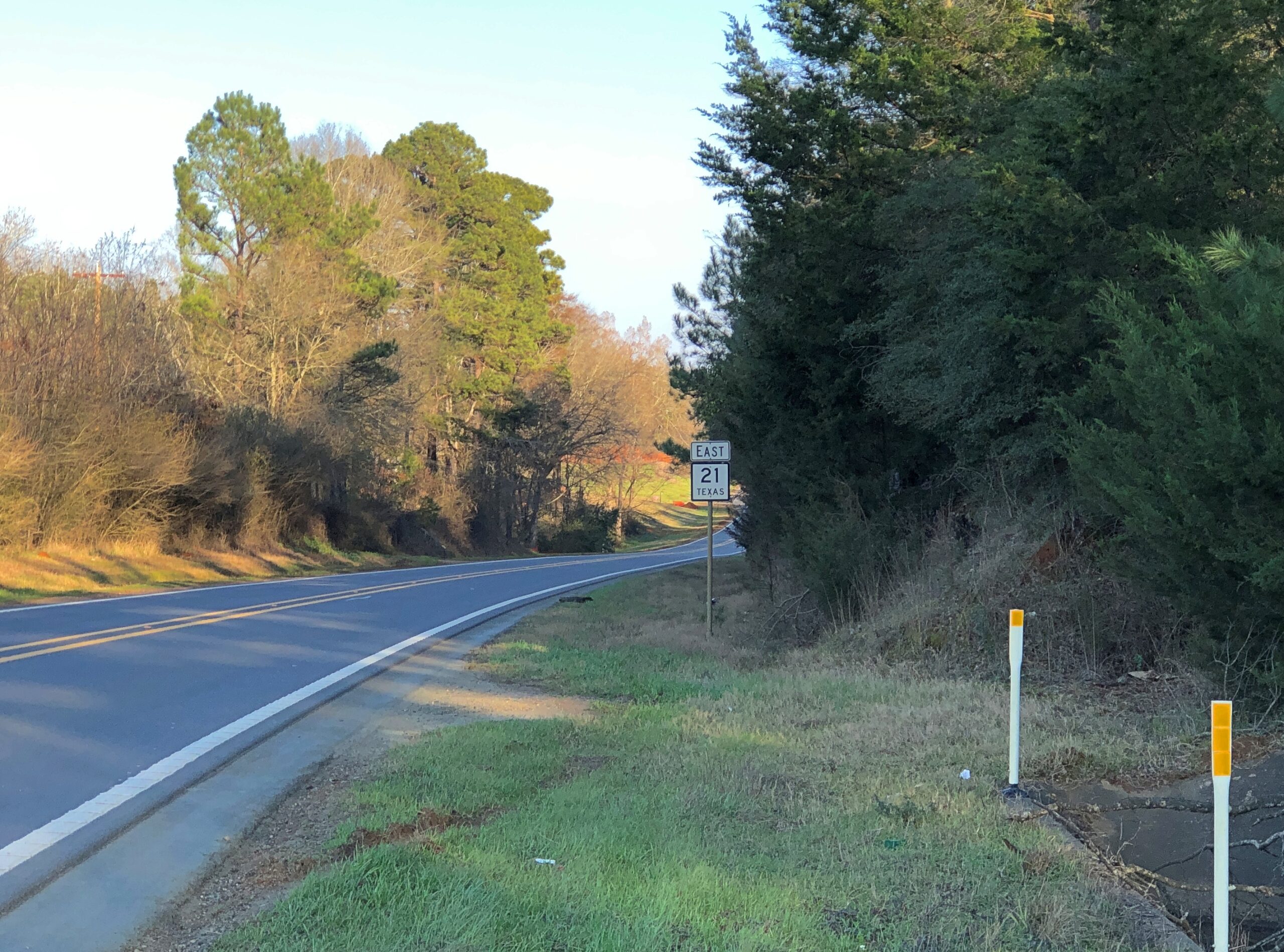
I drove from Austin east to Houston, mostly on US 290; from Houston to Nacogdoches, mostly on US 59; then to Dallas on various state highways, such as Texas 21 and 19; and from Dallas to San Angelo to Marathon, Texas, on US 67 and on the grandly remote US 385, which will also take you to the desert reaches of the Big Bend.
From Marathon, Texas, across to Carlsbad, NM, our route took us along US 90, then Texas 56, then US 62/180. Later, US 62/180 took us from Carlsbad part way back to Dallas — to Sweetwater, Texas — but mostly we went on the faster but less interesting I-20. Dallas to San Antonio was partly I-35, but also US 281, which takes you around the perma-gridlock that is Austin.
Of all those, the road between Nacogdoches and San Augustine on a day trip, Texas 21 heading east, winding through greenish (for February) rolling hills, was a favorite.
The towns listed above were just the places I spent the night, alone or with Yuriko or with my brothers. In between were such places as Bastrop, these days a day-trip from Austin, with the requisite boutiques and restaurants; Huntsville, home of Sam Houston and memorials to the first president of Texas; San Augustine, rival with Nacogdoches in claiming to be the oldest town in Texas; Stephenville and Ballinger, geographically about as deep in the heart of Texas as you can be; the West Texas art town of Marfa and the way station of Van Horn; a string of oil patch towns such as Hobbs, NM, and Seminole, Lamesa, Snyder, and Sweetwater, back in Texas. Later, traversing north to south and back again, I stopped in Hillsboro and Belton, along the I-35 axis; and Lockhart, which has claimed for itself barbecue capital of the state.
Along the way, oddities were encountered. Otherwise, why drive on smaller roads?
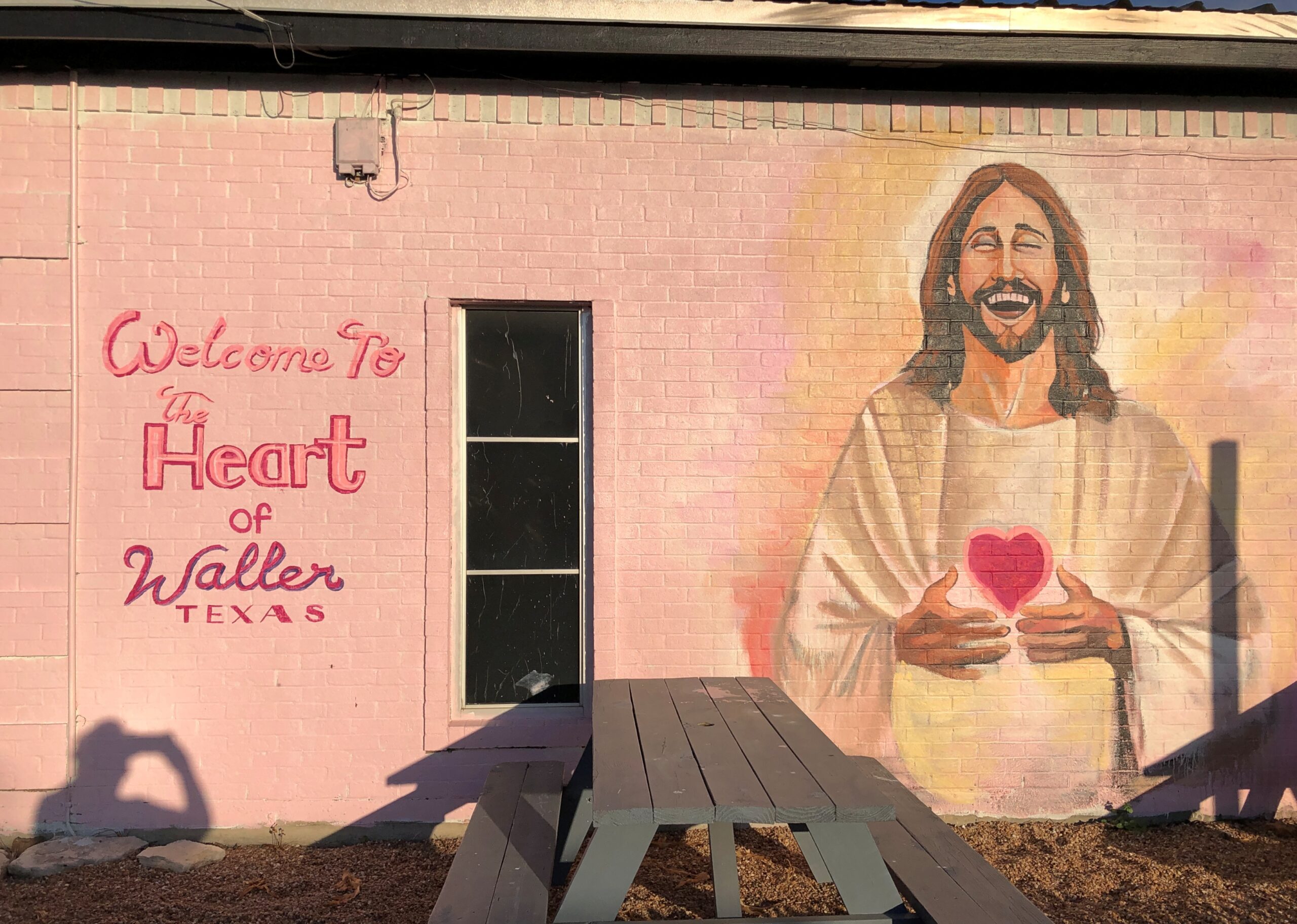
Such as an ice cream shop in Waller, Texas.
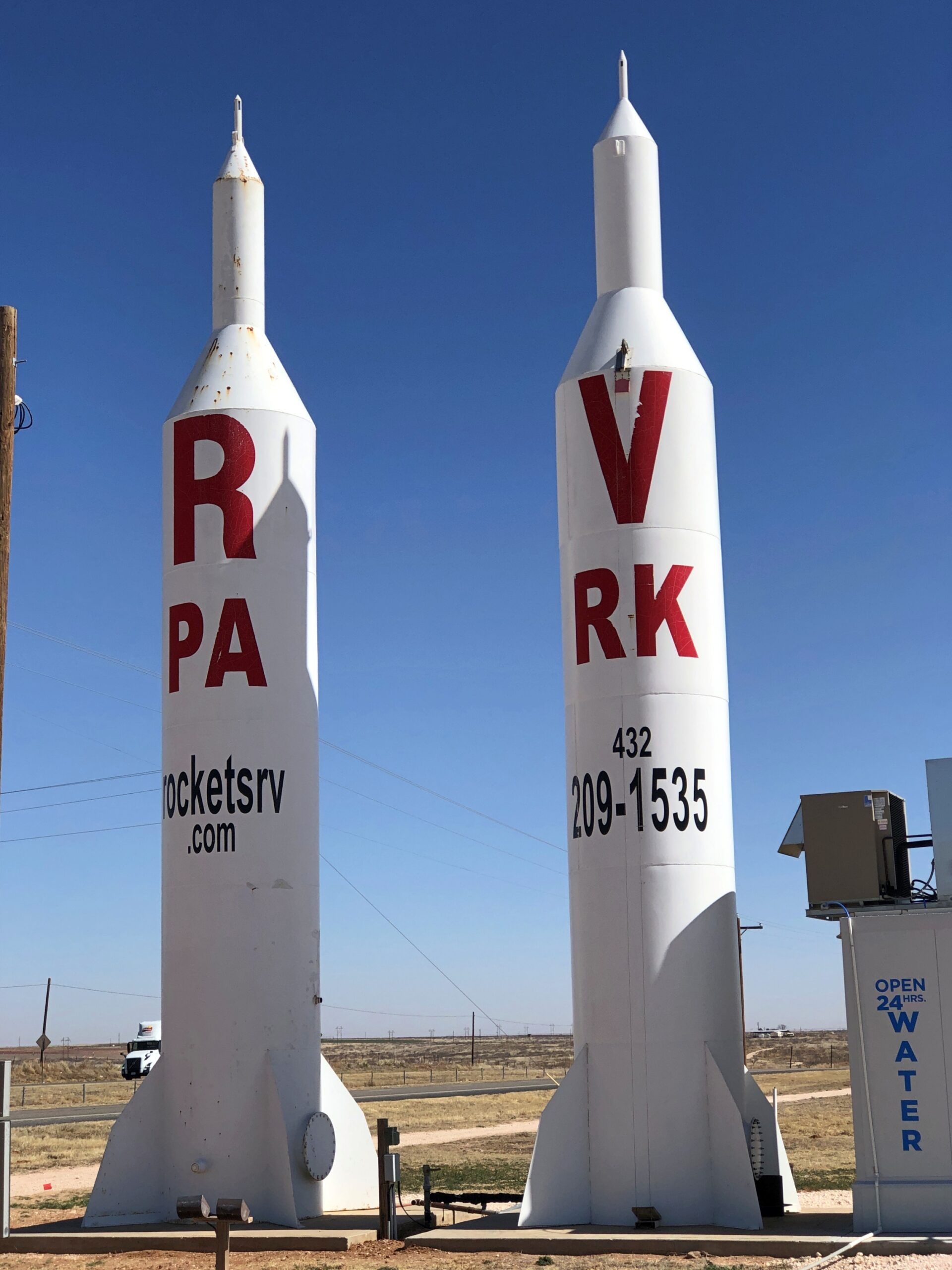
Or a highly visible ad for Rockets RV Park in Gaines County, Texas, not far east of the border with New Mexico.
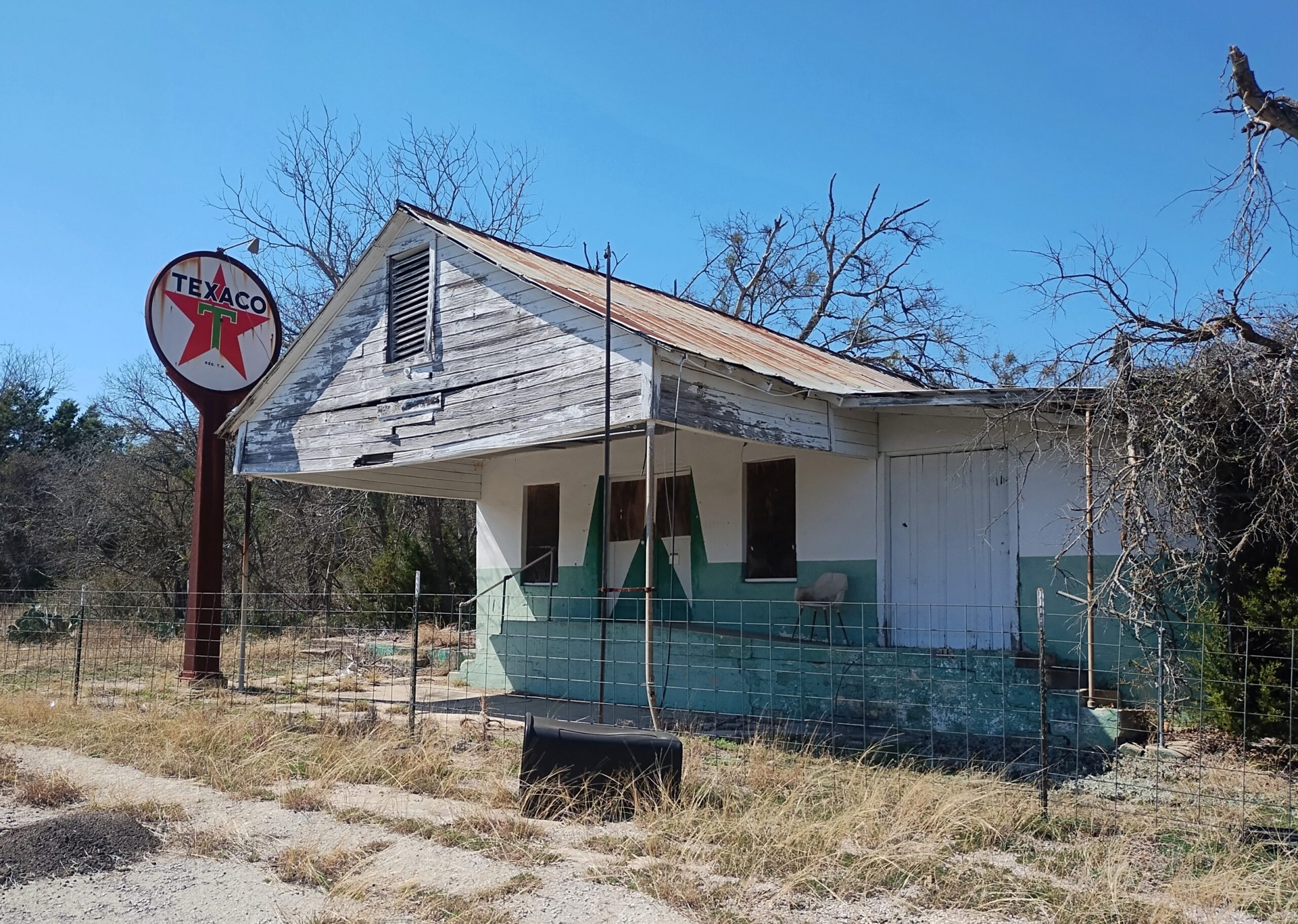
A former Texaco station on an obscure Texas highway (Farm-to-Market 1690).
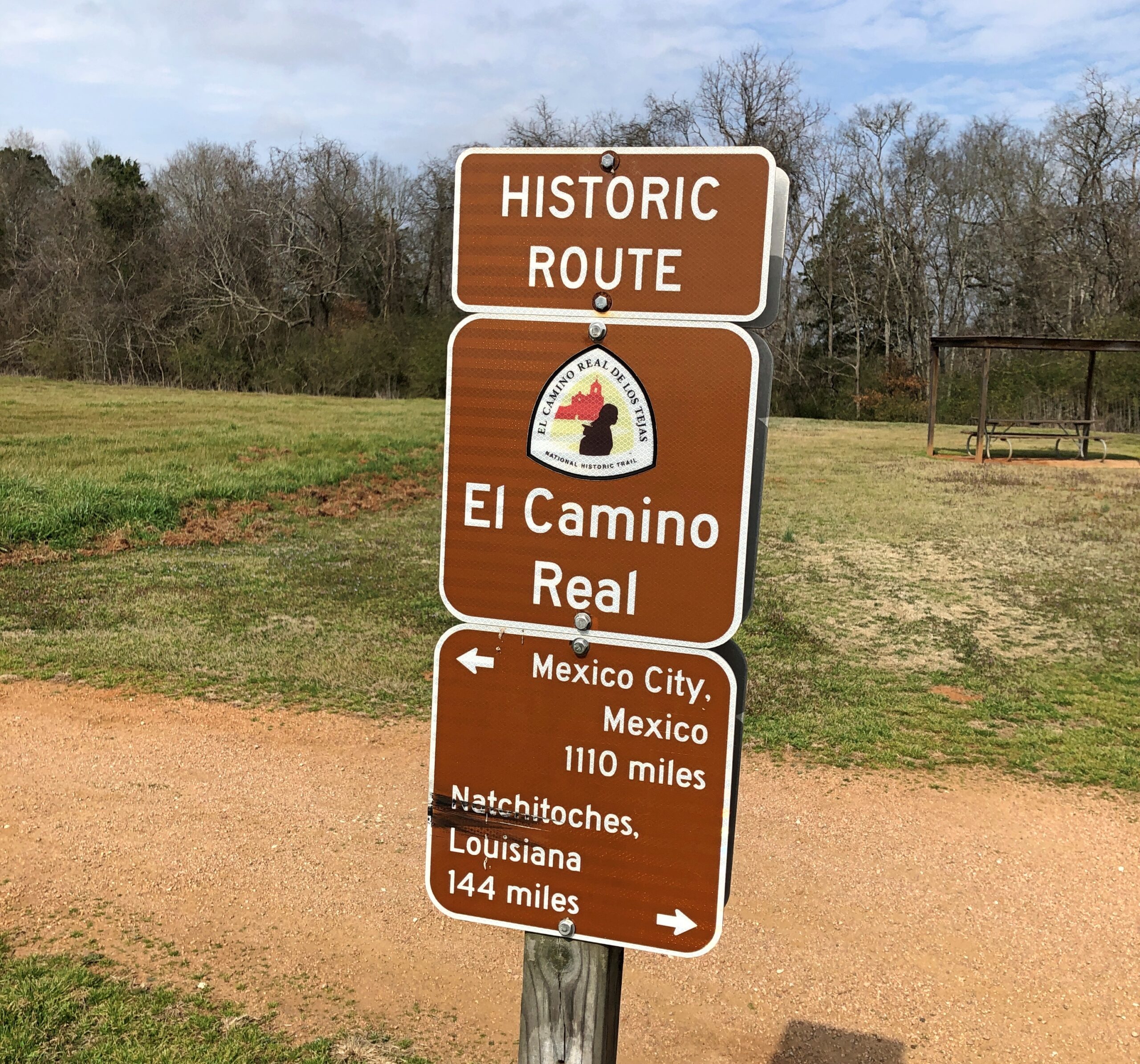
Had various encounters with the historic El Camino Real, whose various tendrils crossed a large slice of the future state of Texas, once upon a time.
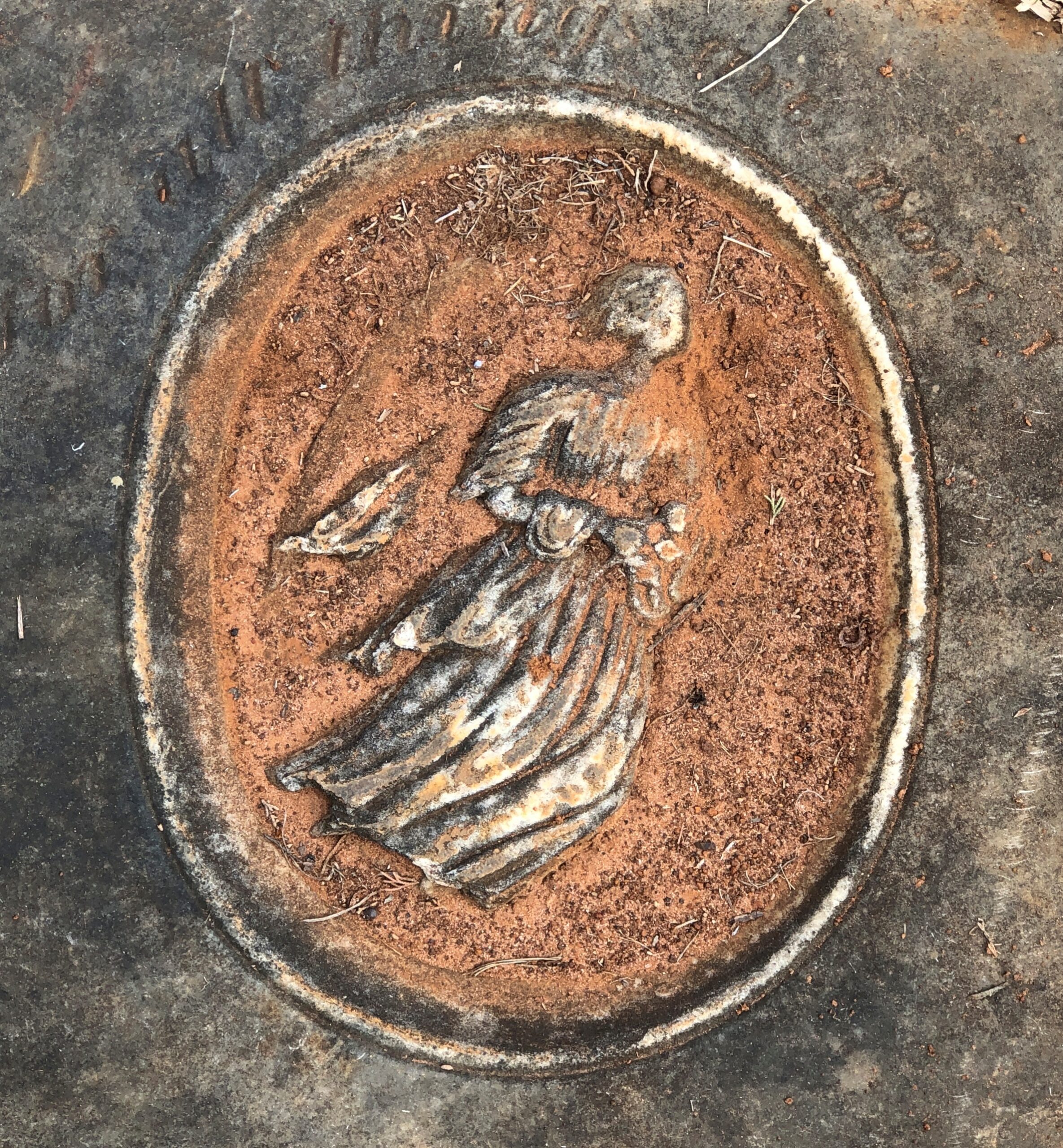
Yuriko and I visited Big Bend National Park, Guadalupe Mountains National Park and Carlsbad Caverns National Park. I saw the National Museum of Funeral History in the city of Houston and the museum devoted to Houston (the man) in Huntsville. Also, Roadside America in Hillsboro, an eccentric collection of American commercial art, complete with a personal tour by the proprietor, and the outdoor art at the Chinati Foundation in Marfa, that is, brutalist concrete structures in the brutal desert environment. I became acquainted with the splendid Glenwood Cemetery in Houston and the smaller and more ragged, but no less interesting city cemeteries in Huntsville and Nacogdoches and Palestine. I stopped and looked at about a dozen county courthouses, of which Texas has many.
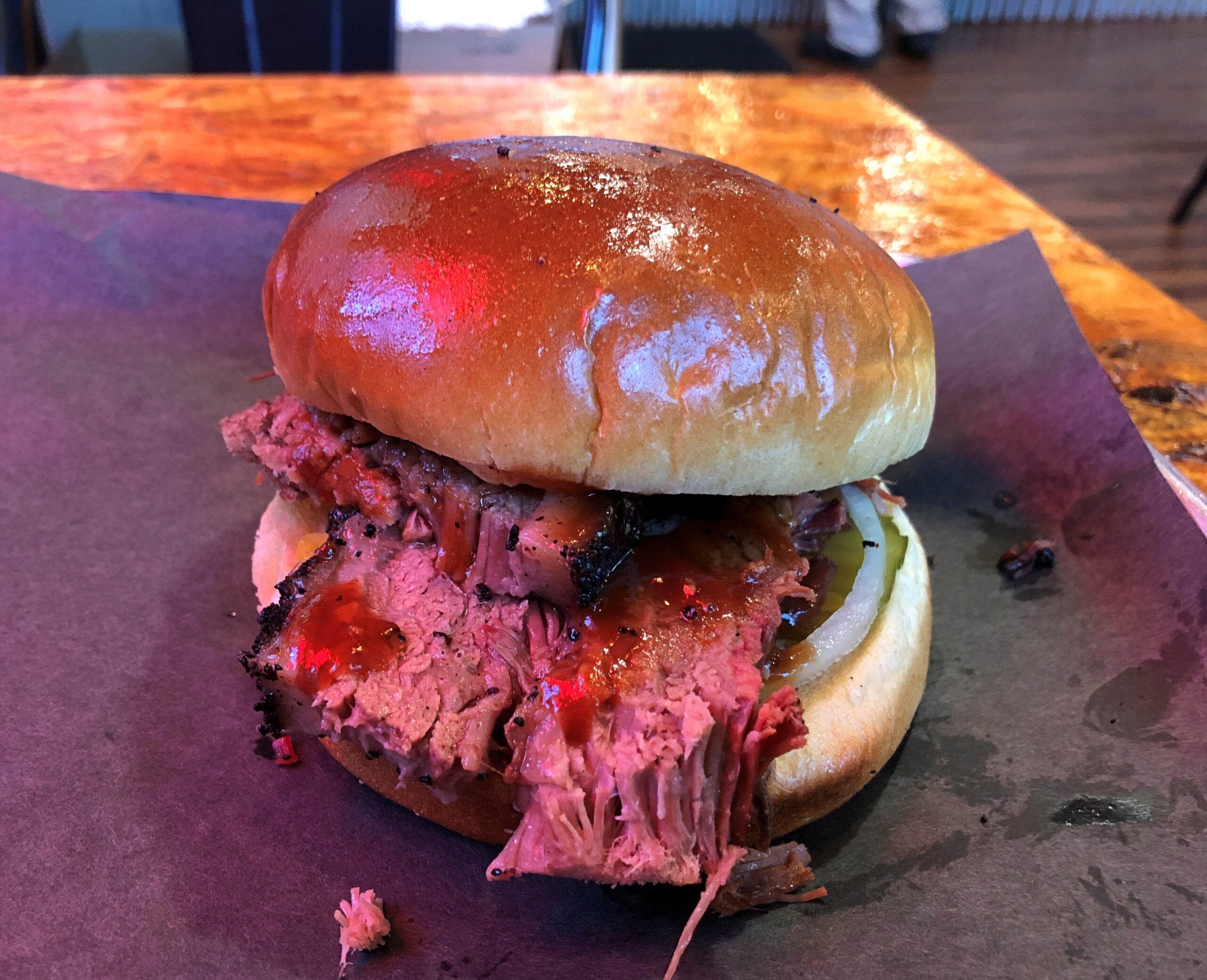
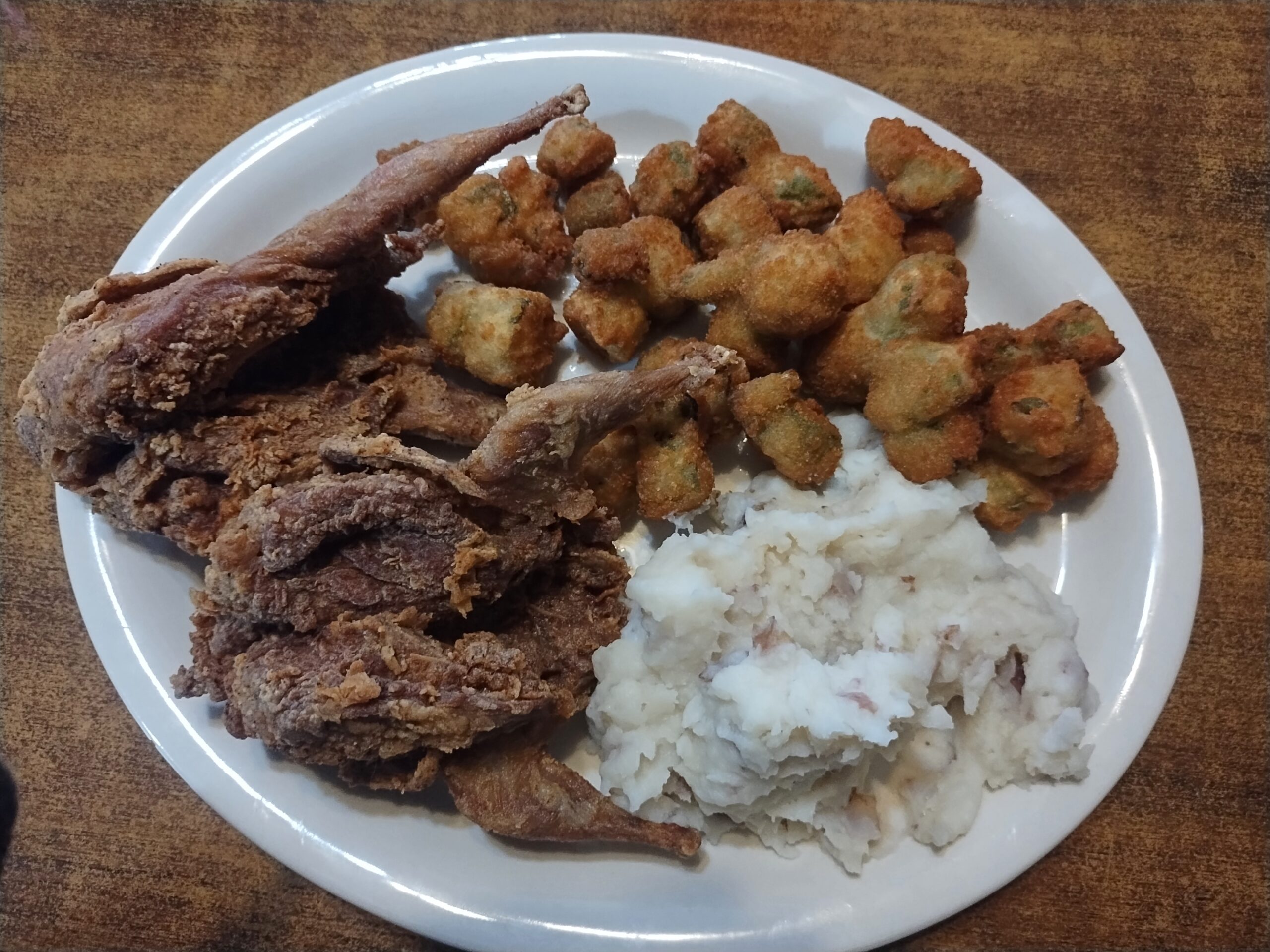
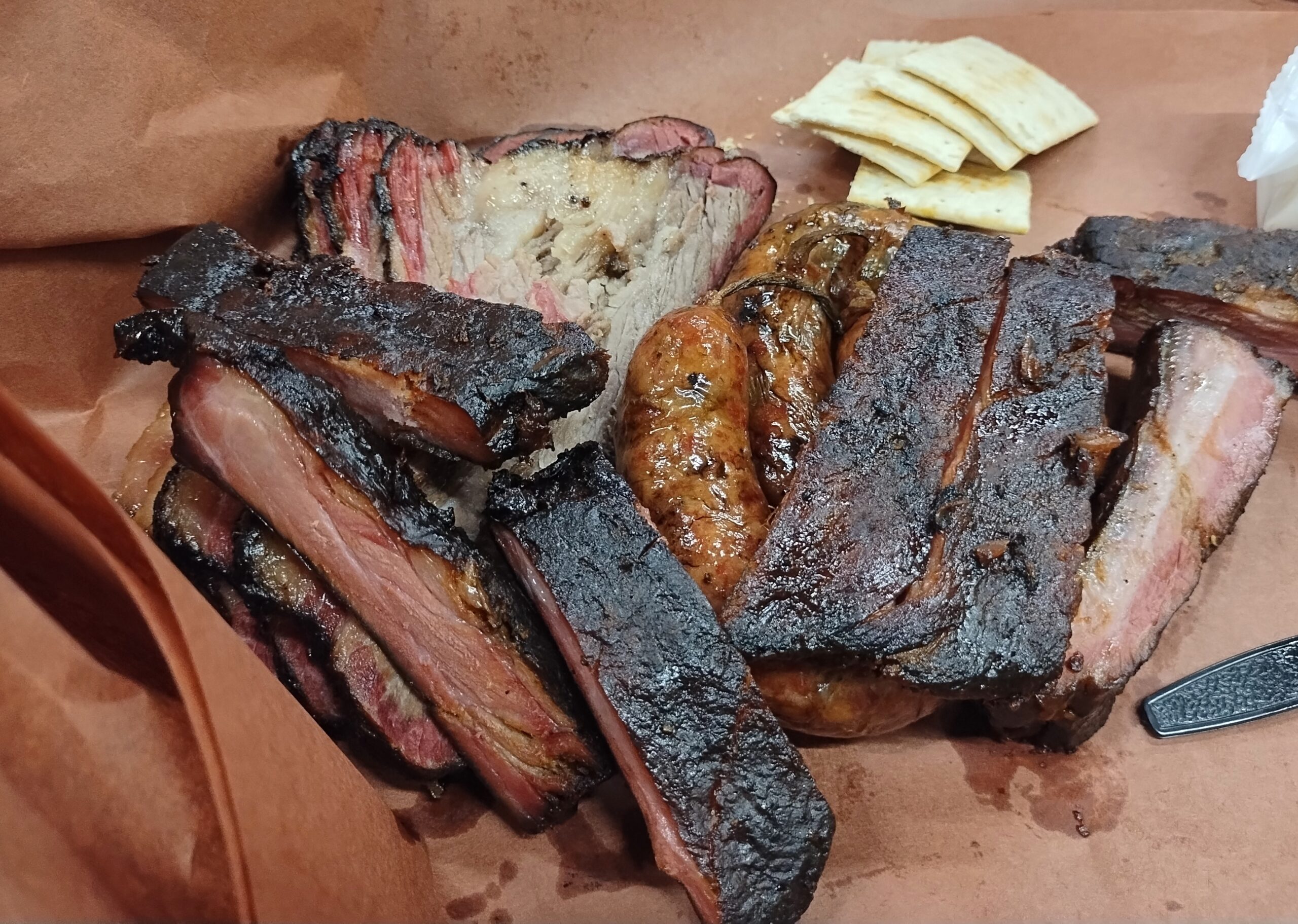
We ate a lot of meat along the way. As one does in Texas.
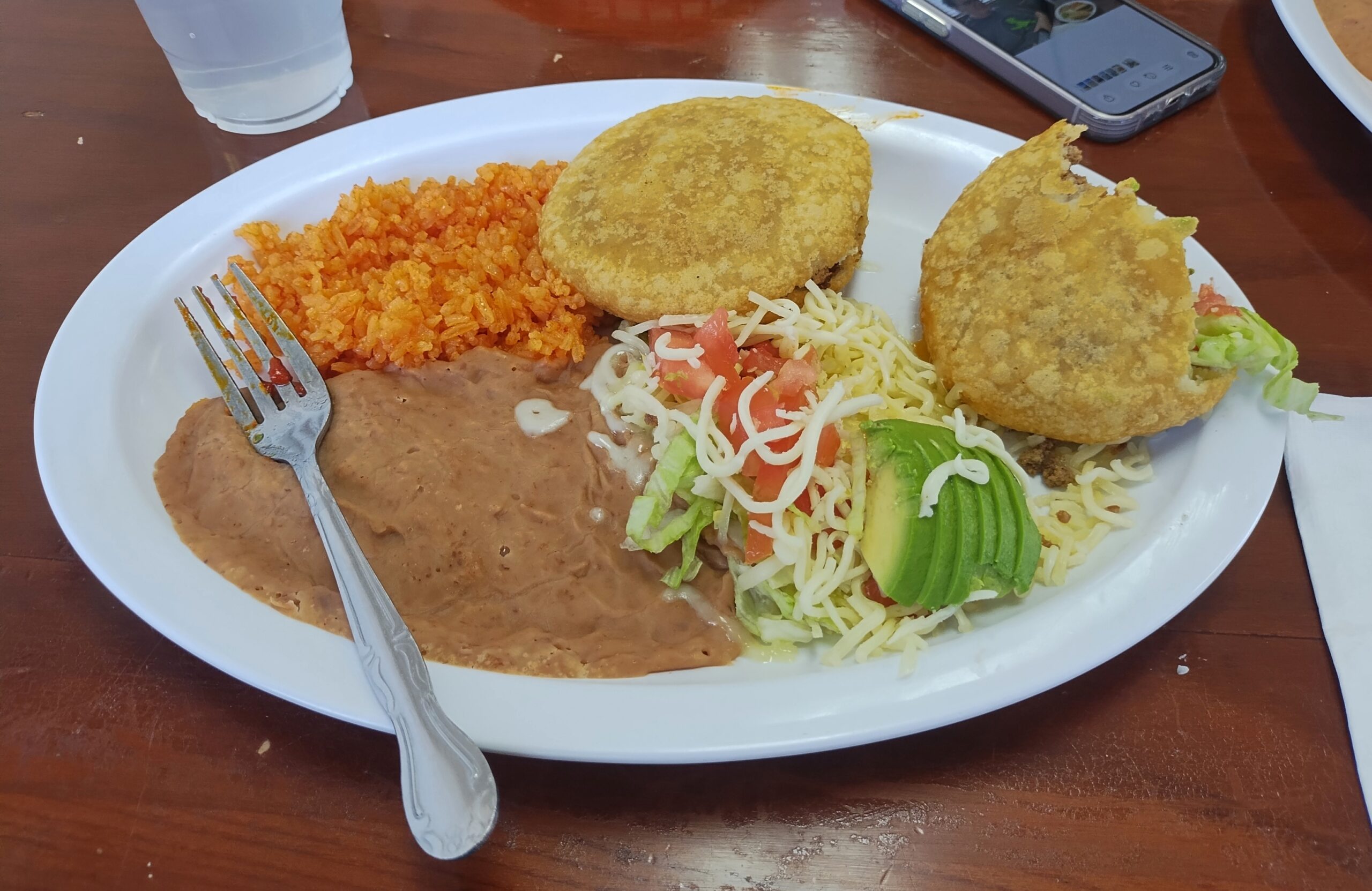
Also, Mexican food.
Eat like that and you’d better do some walking, and I did: various places in Austin and Houston and Dallas, in all three national parks, around downtowns and courthouse squares in a number of small towns, and a handful of local parks.
All that was good, but of course best of all, I had time to visit friends and relatives, of whom there are many in Texas: Tom and Nancy in Austin, Kirk and Lisa in Nacogdoches, another Tom and Steve and Ron and Greg and Judith in San Antonio, to list the friends; both brothers, two out of three nephews and their wives and all four of their children, to list relatives, along with the mother of one nephew’s wife (niece-in-law sounds peculiar, but that fits too). Also, I met for the first time two good friends of Tom’s in Austin, and one of Kirk and Lisa’s granddaughters.
I’d set out to do four long drives when I was 64, but this makes five. Guess I’m an overachiever about driving, anyway.
Cold winds rolled through northern Illinois today. Seven inches of snow are forecast for Saturday. What? Right, it’s winter. The winter solstice is just the shortest day of the year.
Back to posting on Sunday. Regards for Thanksgiving.
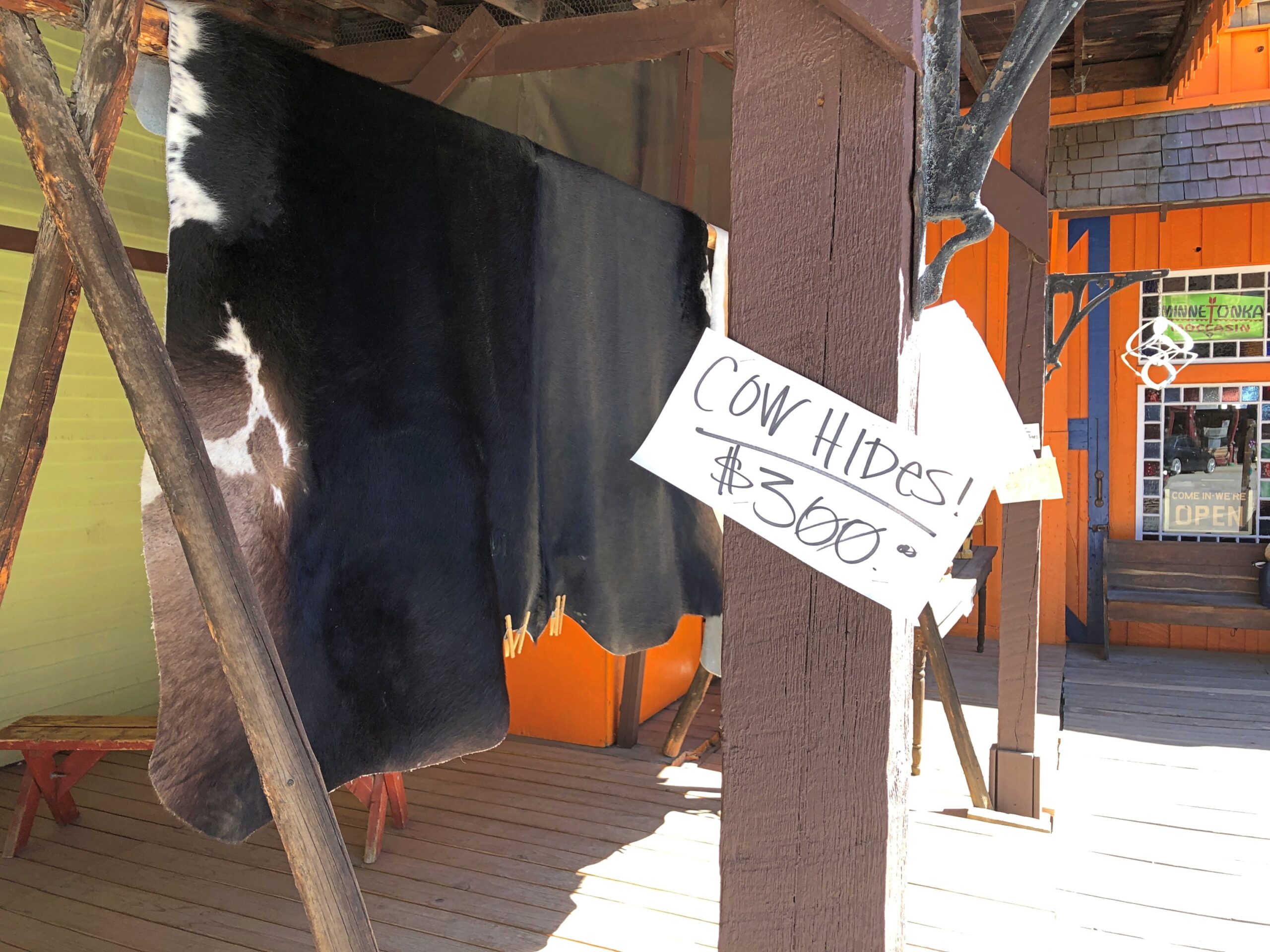
Something to upset PETA sympathizers.
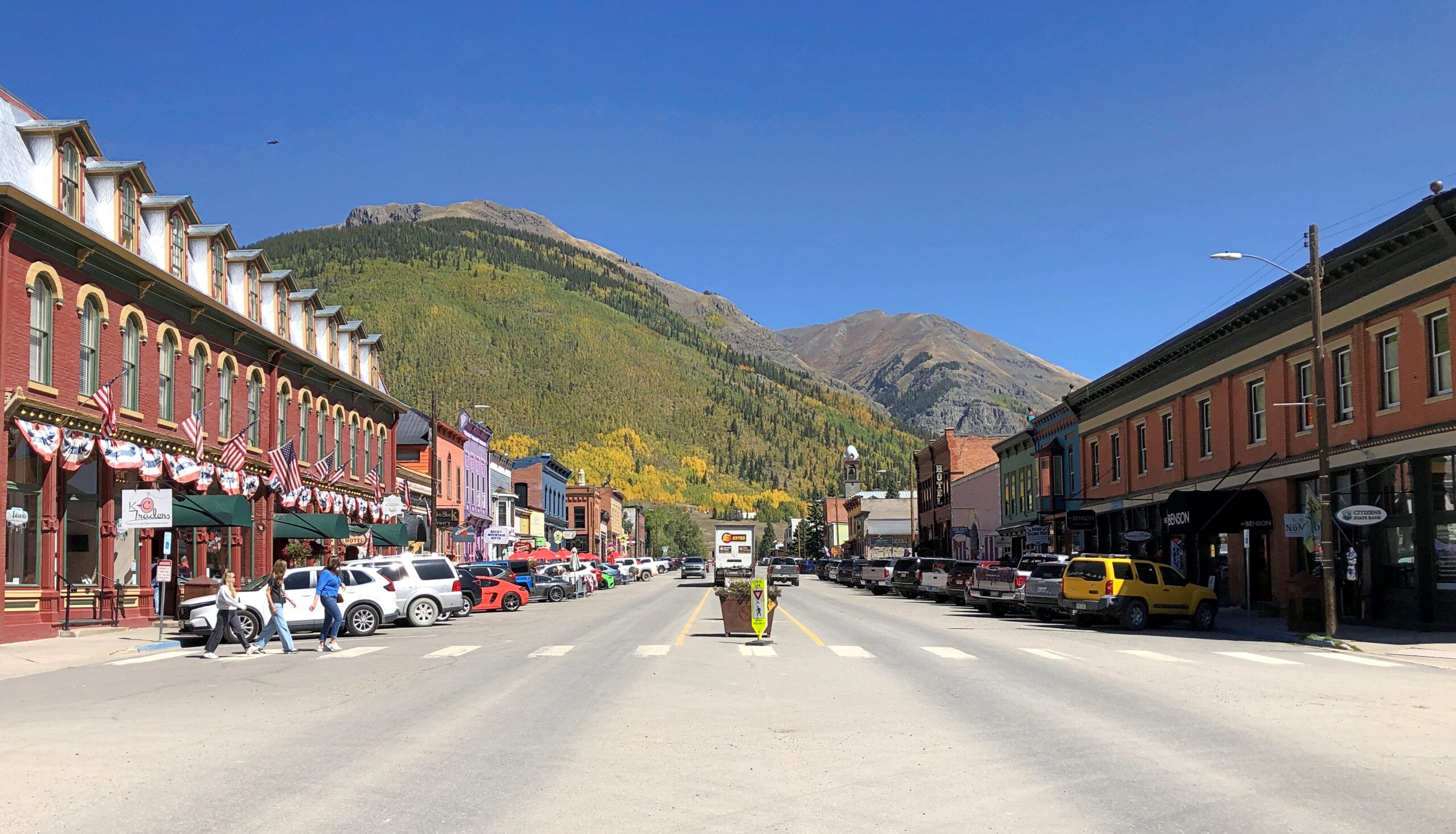
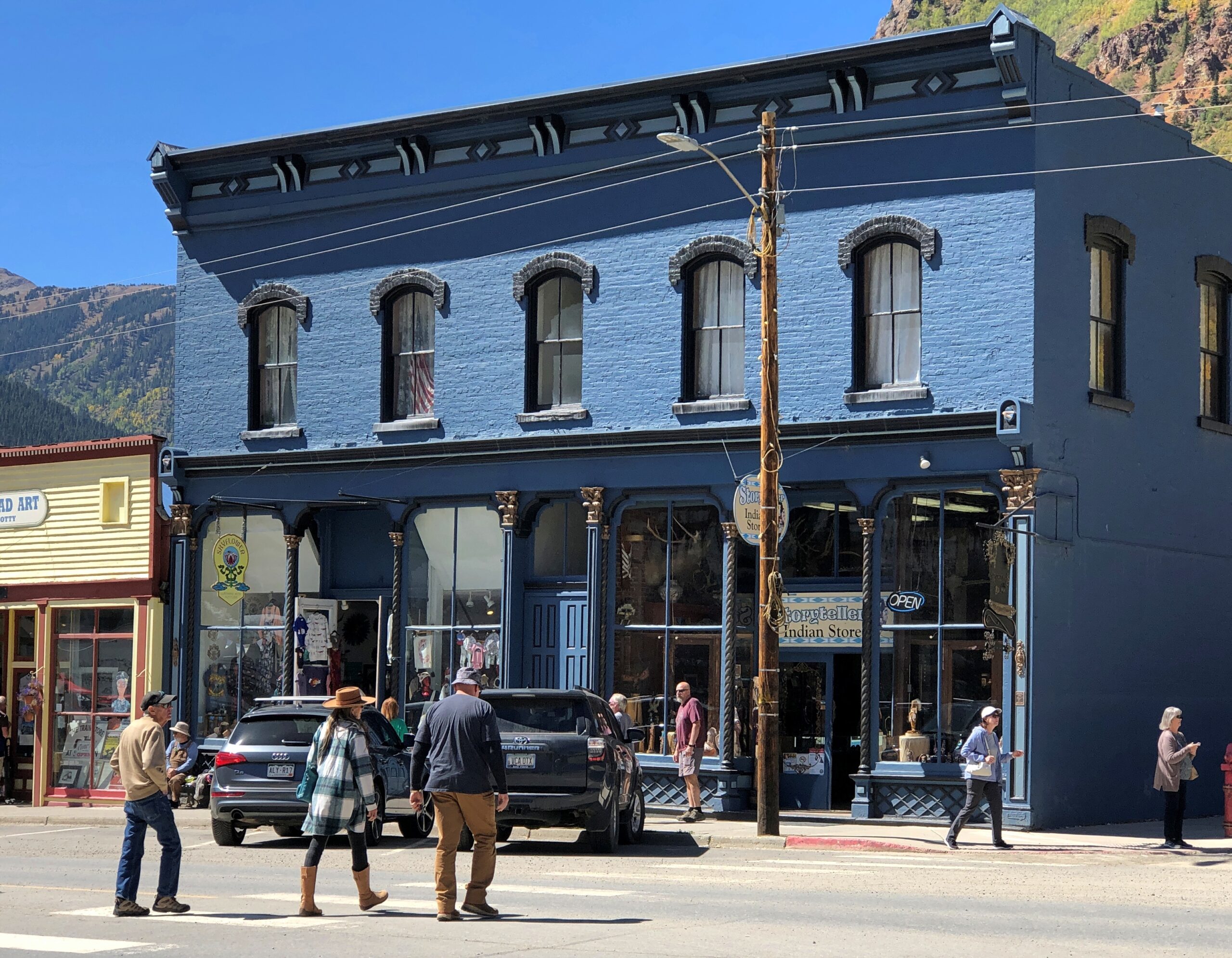
Stroll down Greene St. in the mountain town of Silverton, Colorado, at least in mid-September this year, and you’d have had the opportunity to buy a hide for $300. We did, but declined. Still, it wasn’t just a Colorado detail, but a Western one. The West, where men are men and cow hides hang in the sun. As far as I could tell, you couldn’t buy a hide with Bitcoin, but I suppose you’d have to ask the seller to be sure.
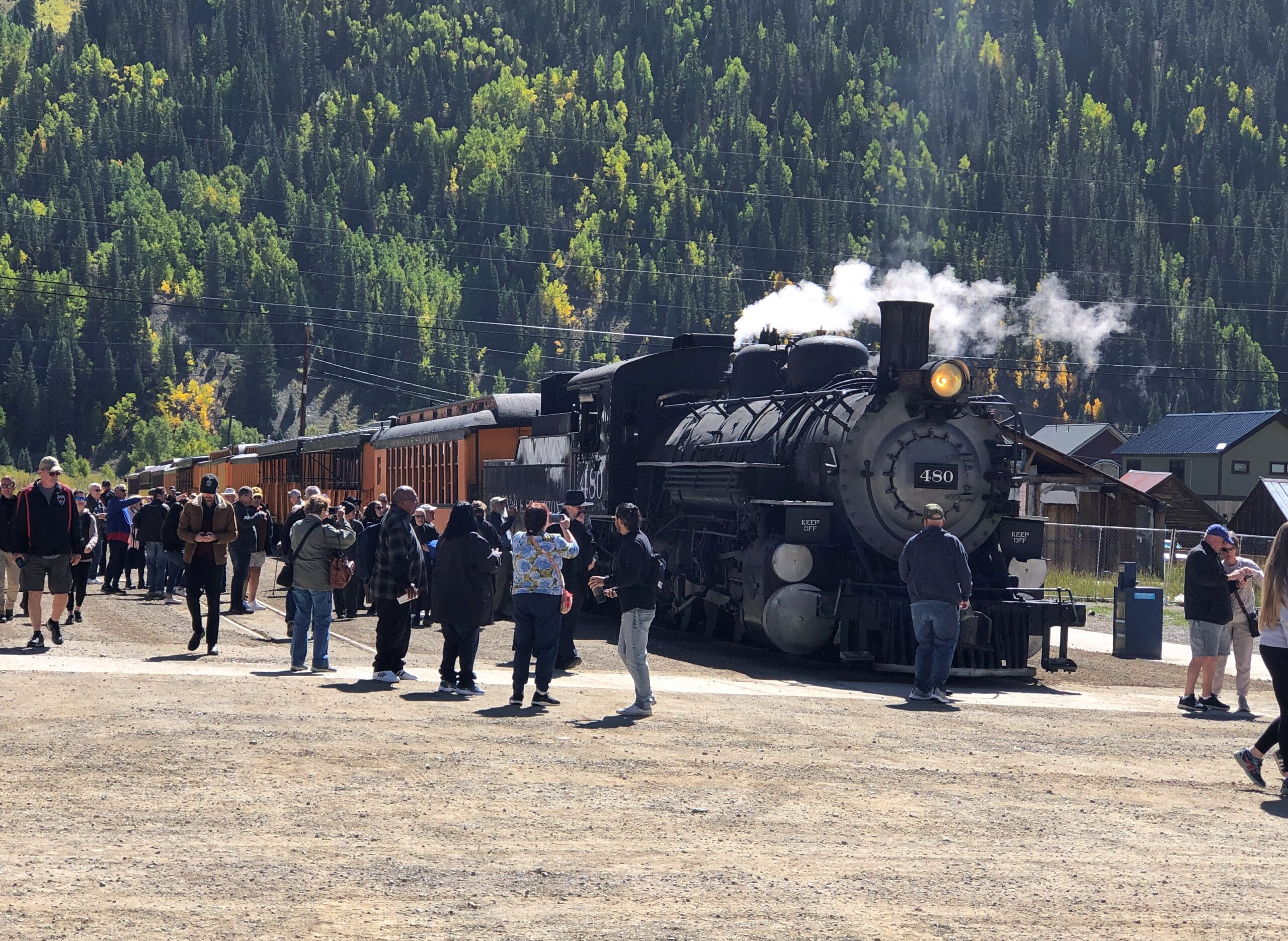
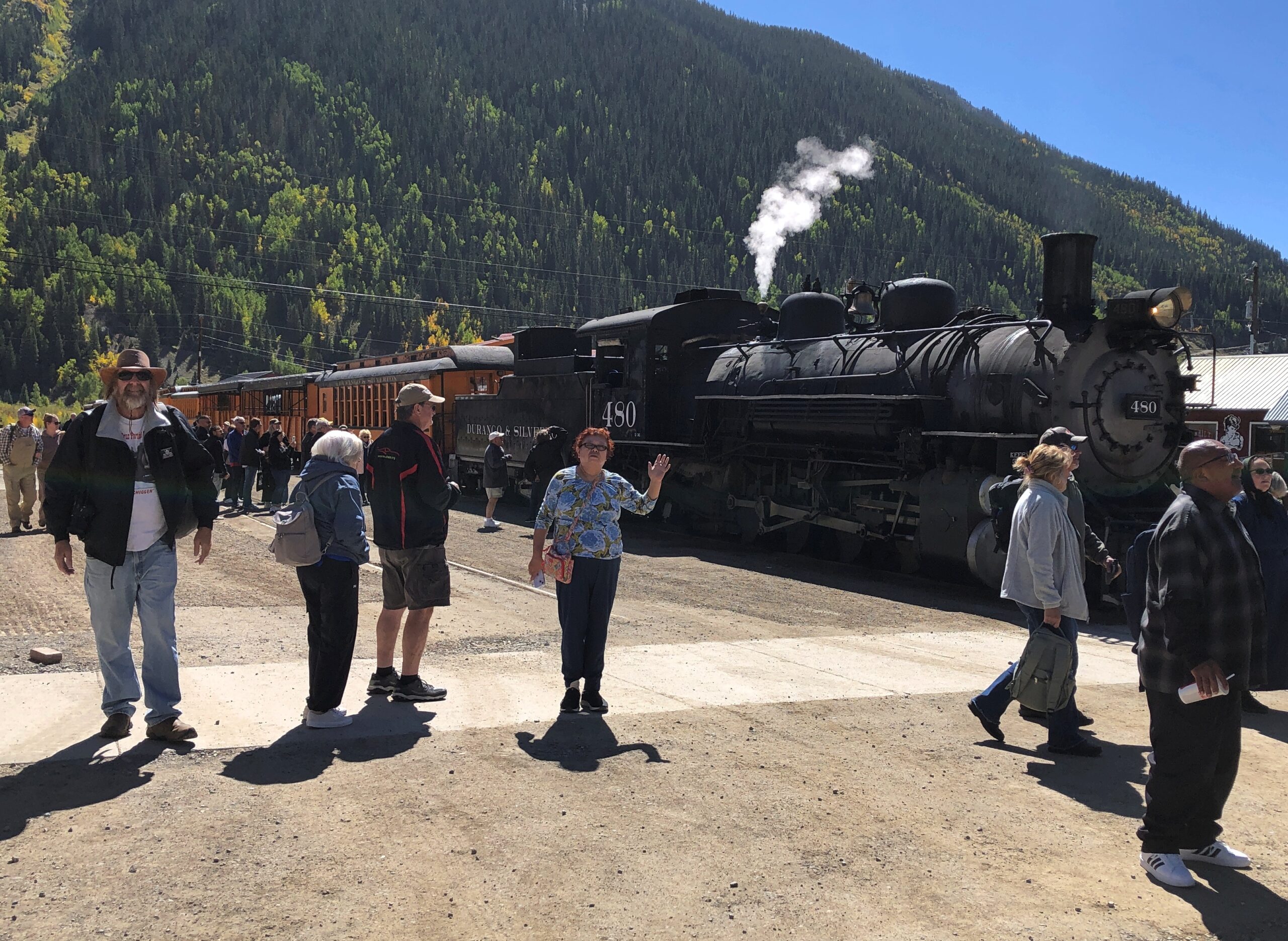
Not five minutes after we’d parked off the main thoroughfare of Greene Street in Silverton, on a large side street, a steam locomotive hauling a valuable cargo — tourists — pulled into town, a block from where we parked. The Durango & Silverton Narrow Gauge RR train from Durango had arrived. Instantly the streets around the train were thick with those same tourists who had paid roughly $100 a head for the scenic ride, though I suppose many, the majority maybe, had gotten a slight discount as seniors.
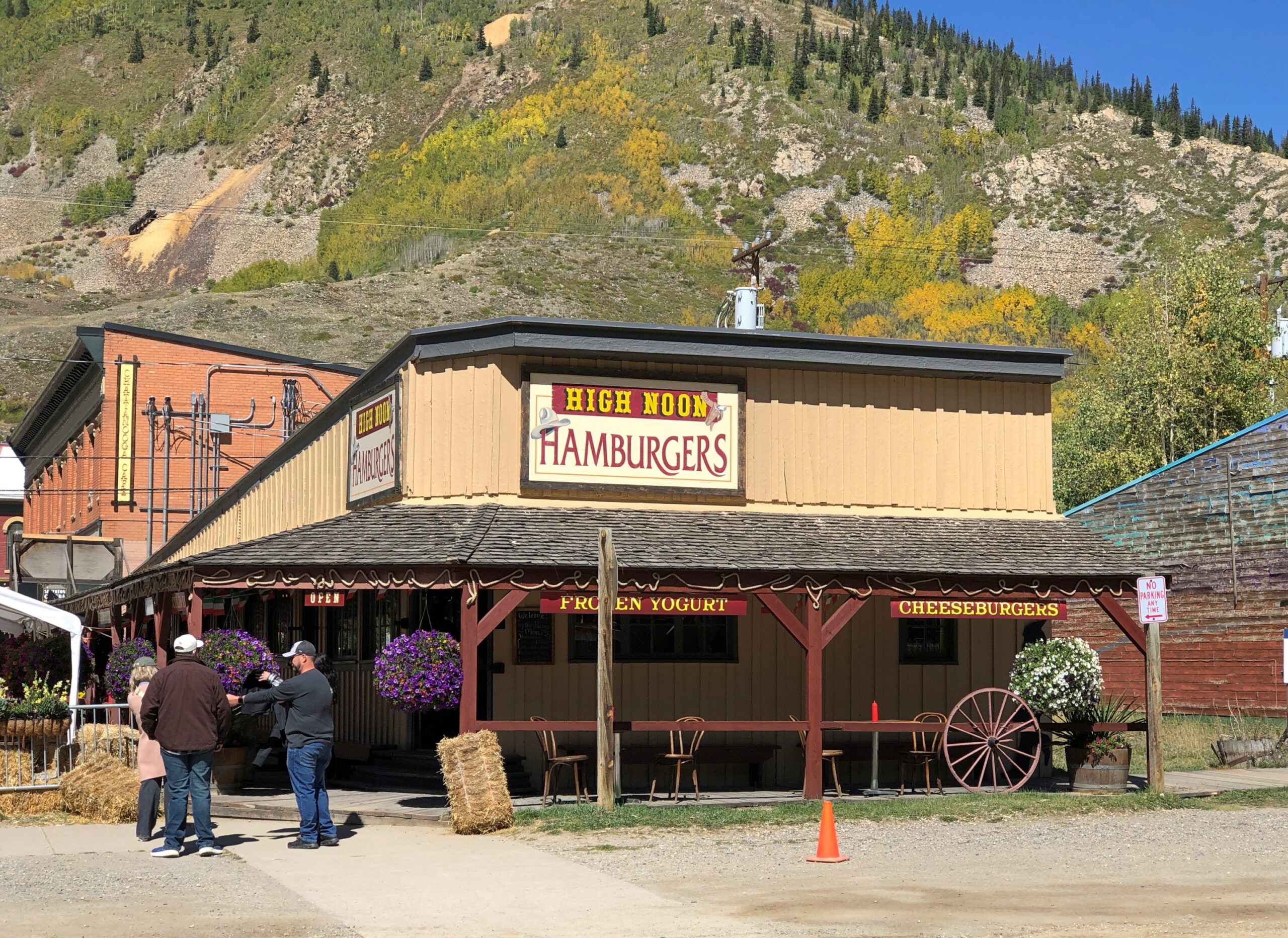
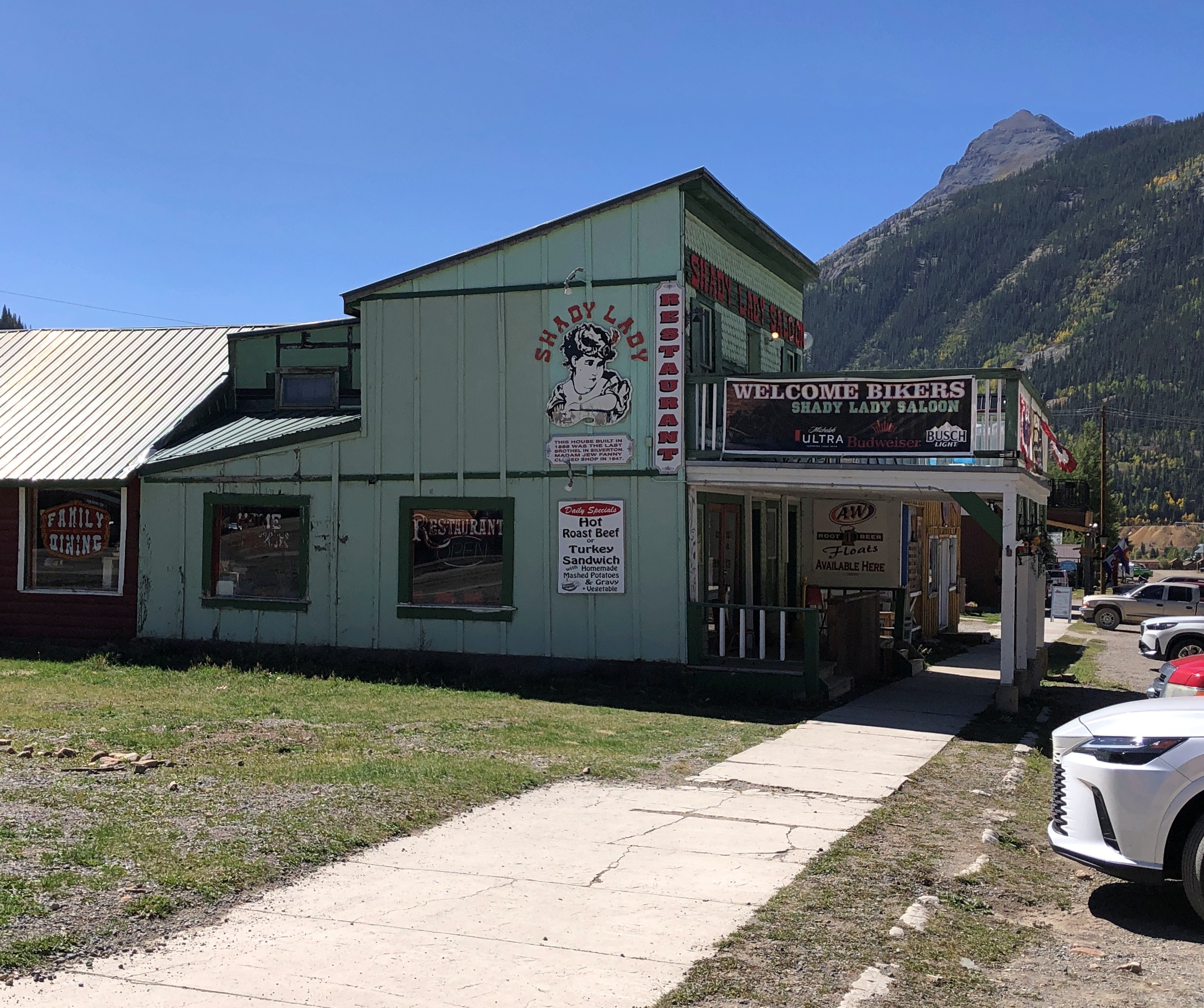
I assume the economy of 21st-century Silverton depends pretty heavily on these arrivals, at least in the warm months, as day after day the line disgorges its many passengers for their layover. No doubt the likes of High Noon Hamburgers or the Shady Lady or a lot of the other businesses in town wouldn’t be viable otherwise.
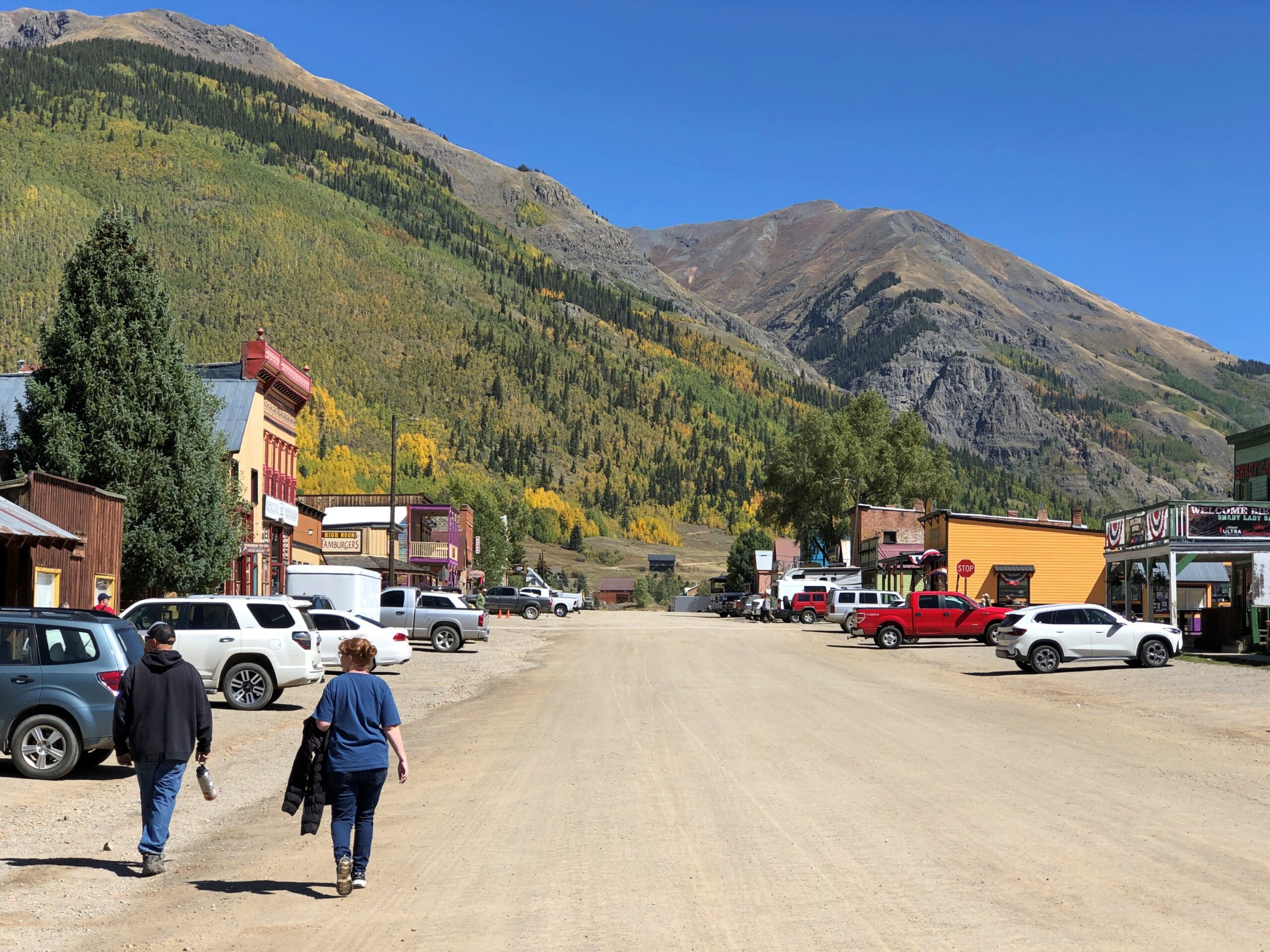
Blair St., paralleling Greene St. a block away. No need for pavement.
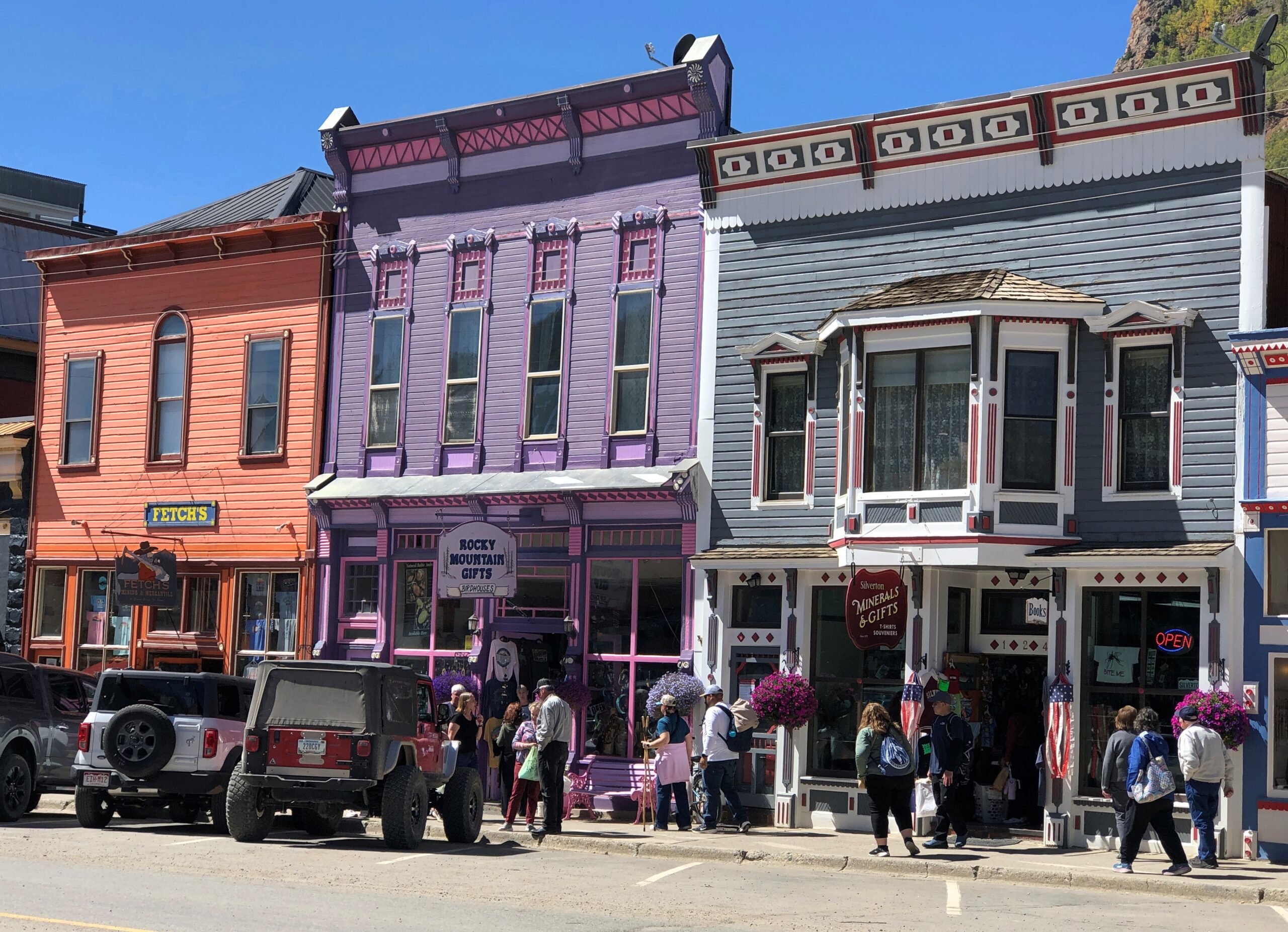
Greene St.
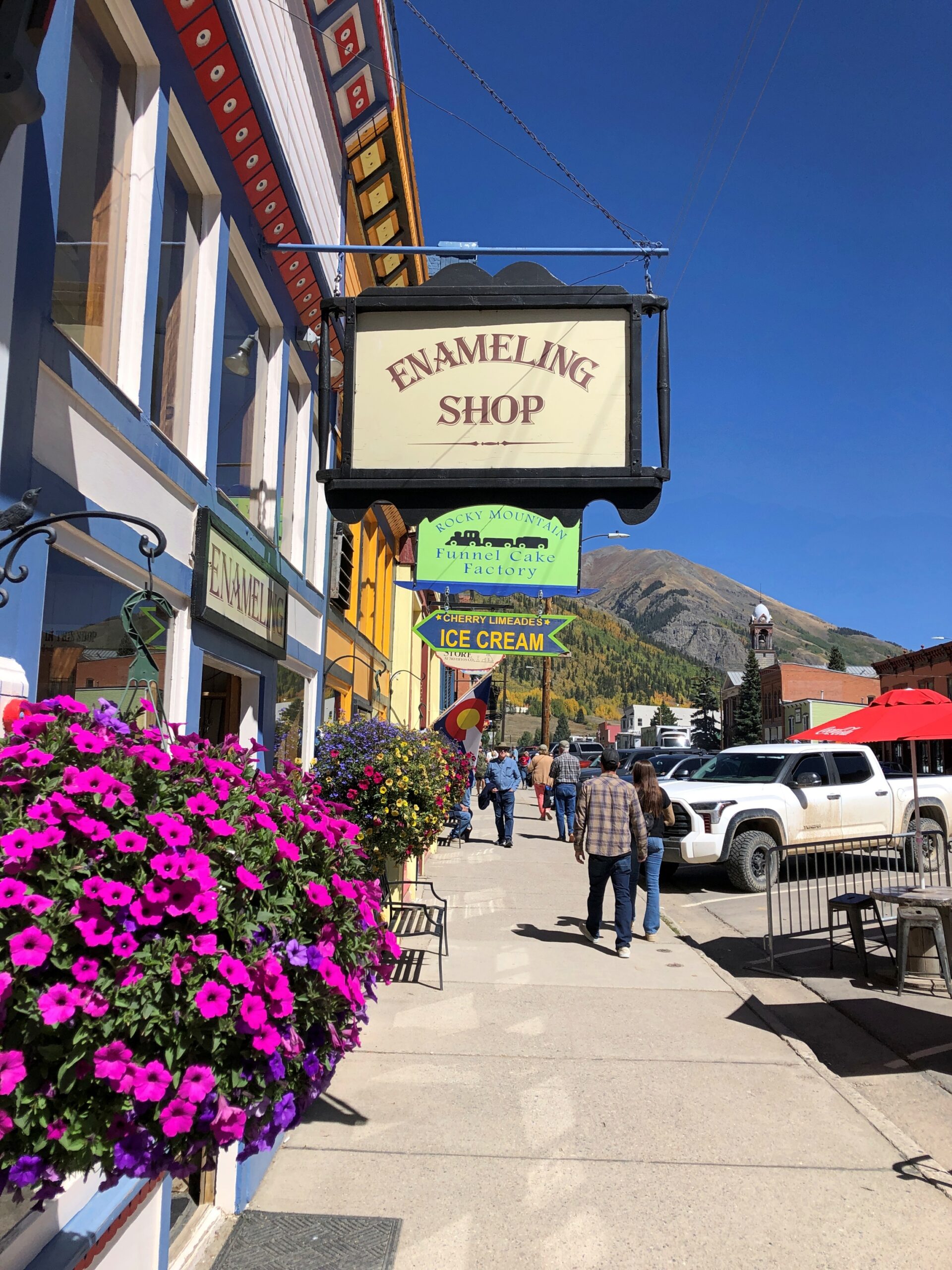
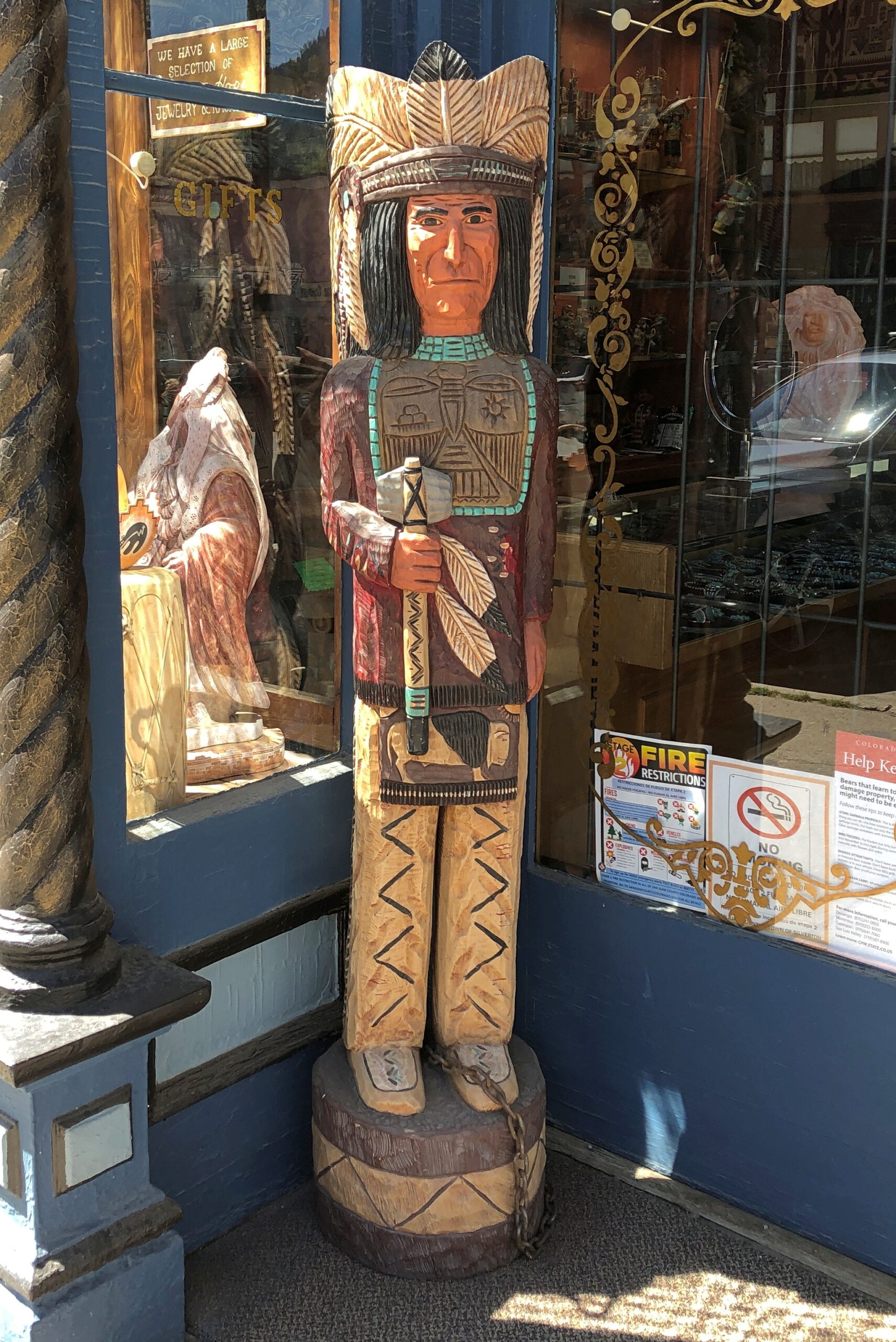
Lots to see on Greene.
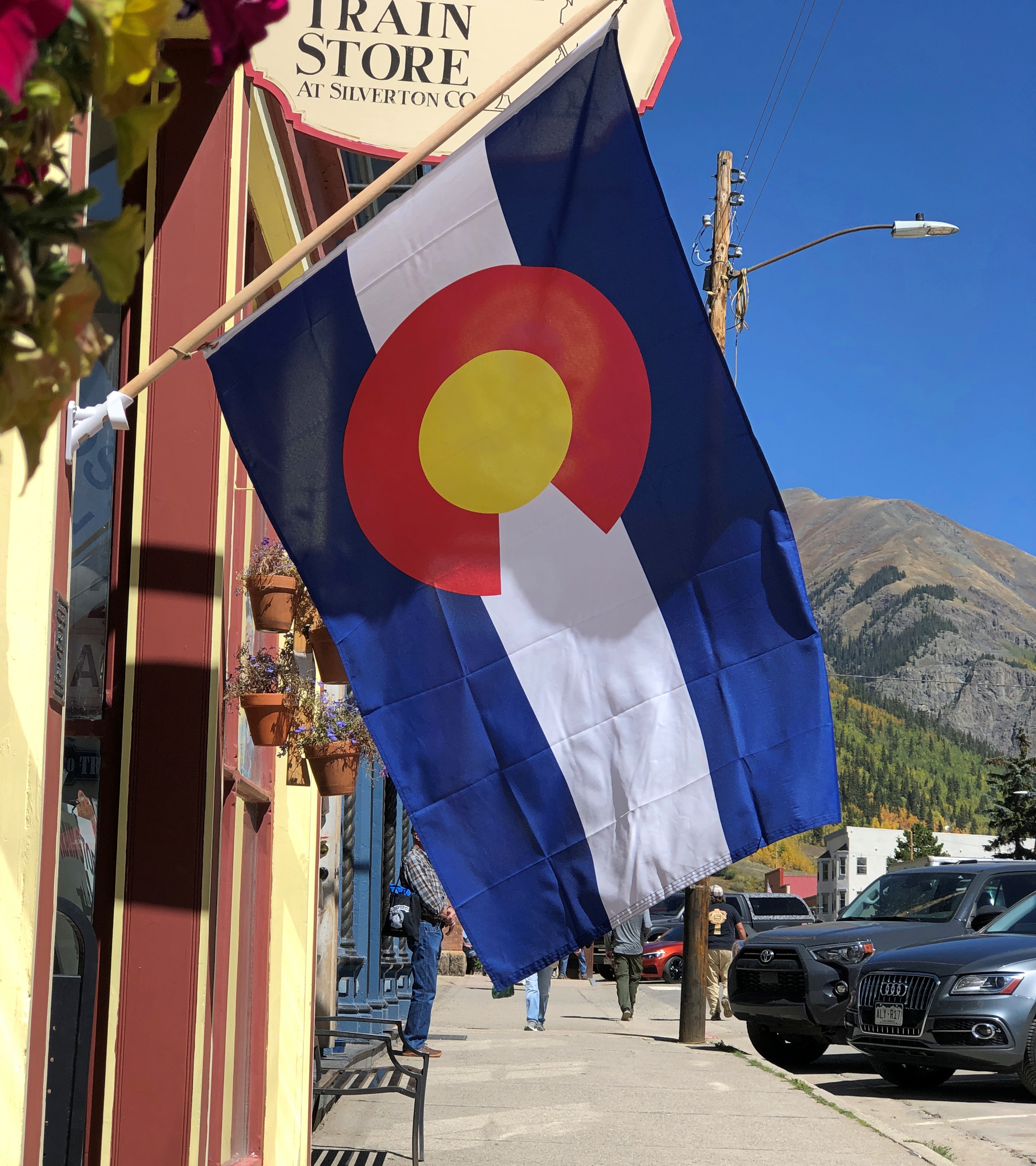
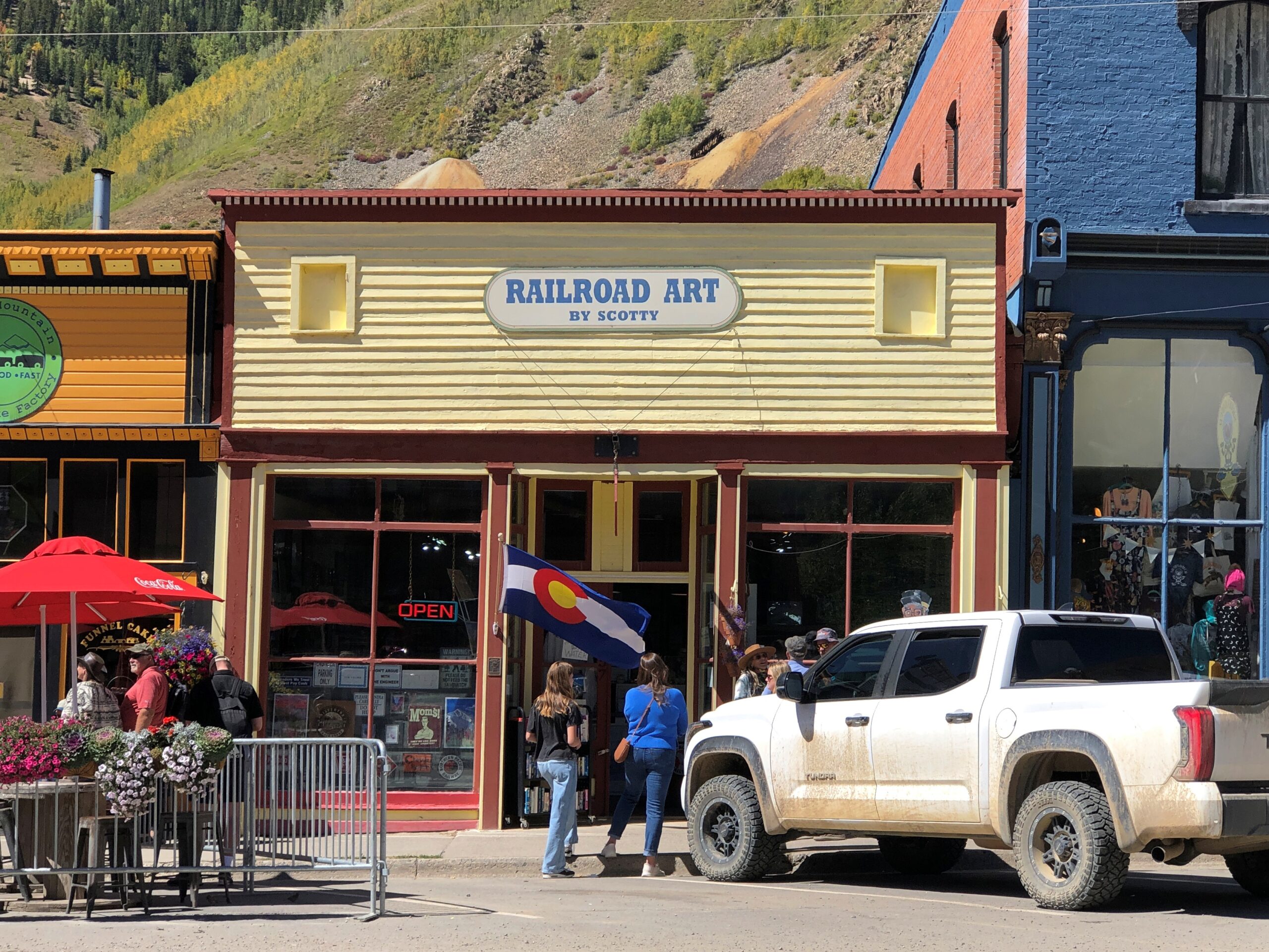
Including the fine Colorado flag, flying at Railroad Art by Scotty, a seriously cool gallery.
“Railroad Art by Scotty presents the custom matted and framed collector Railroad Art Prints by renowned railroad artist H.L. Scott, III,” its web site says. “These are not photographs and they are not created on the computer. These are pen & ink drawings created by Scott using the technique known as STIPPELING or pointillism.”
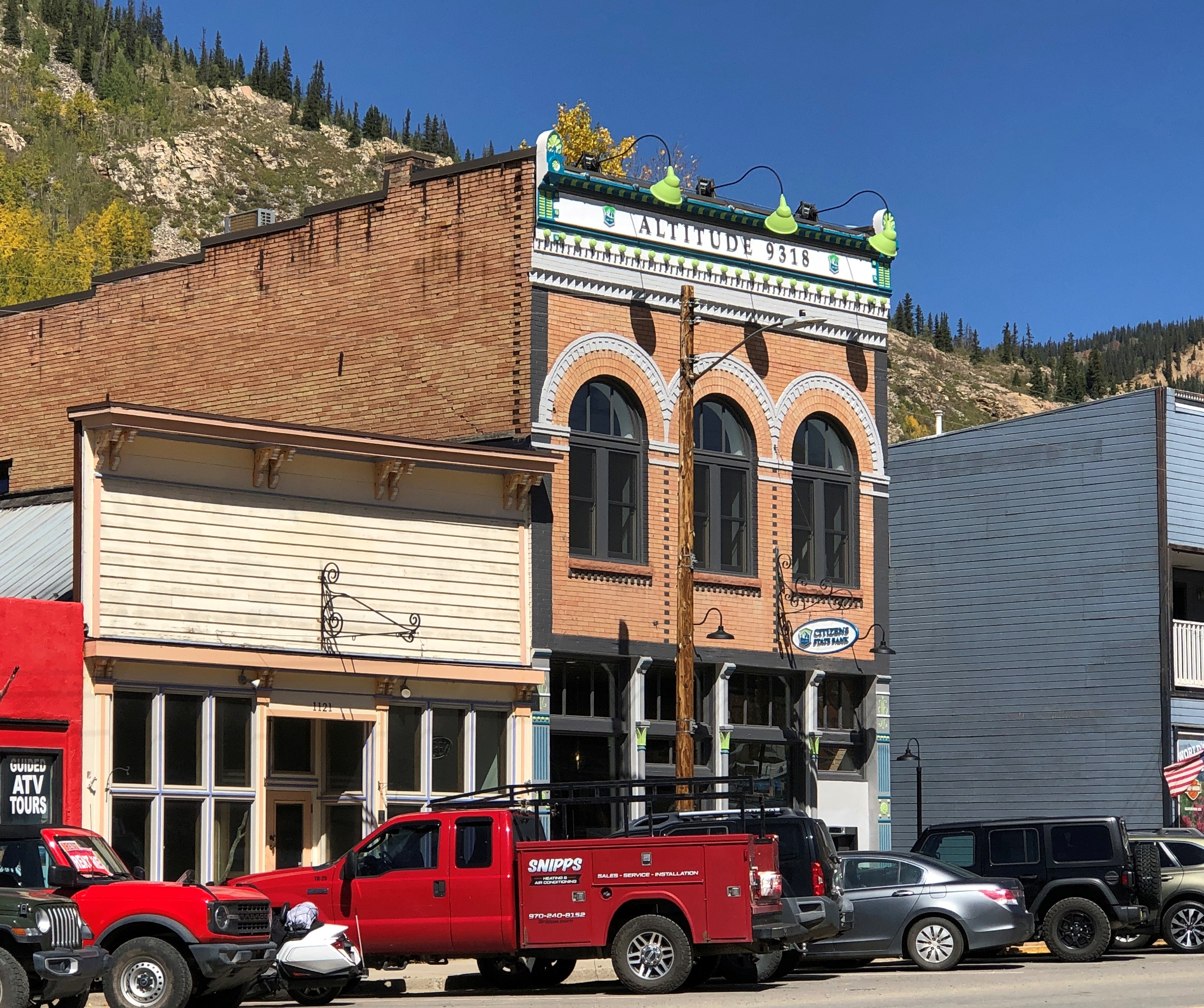
One of the few buildings I’ve seen that clearly states its elevation.
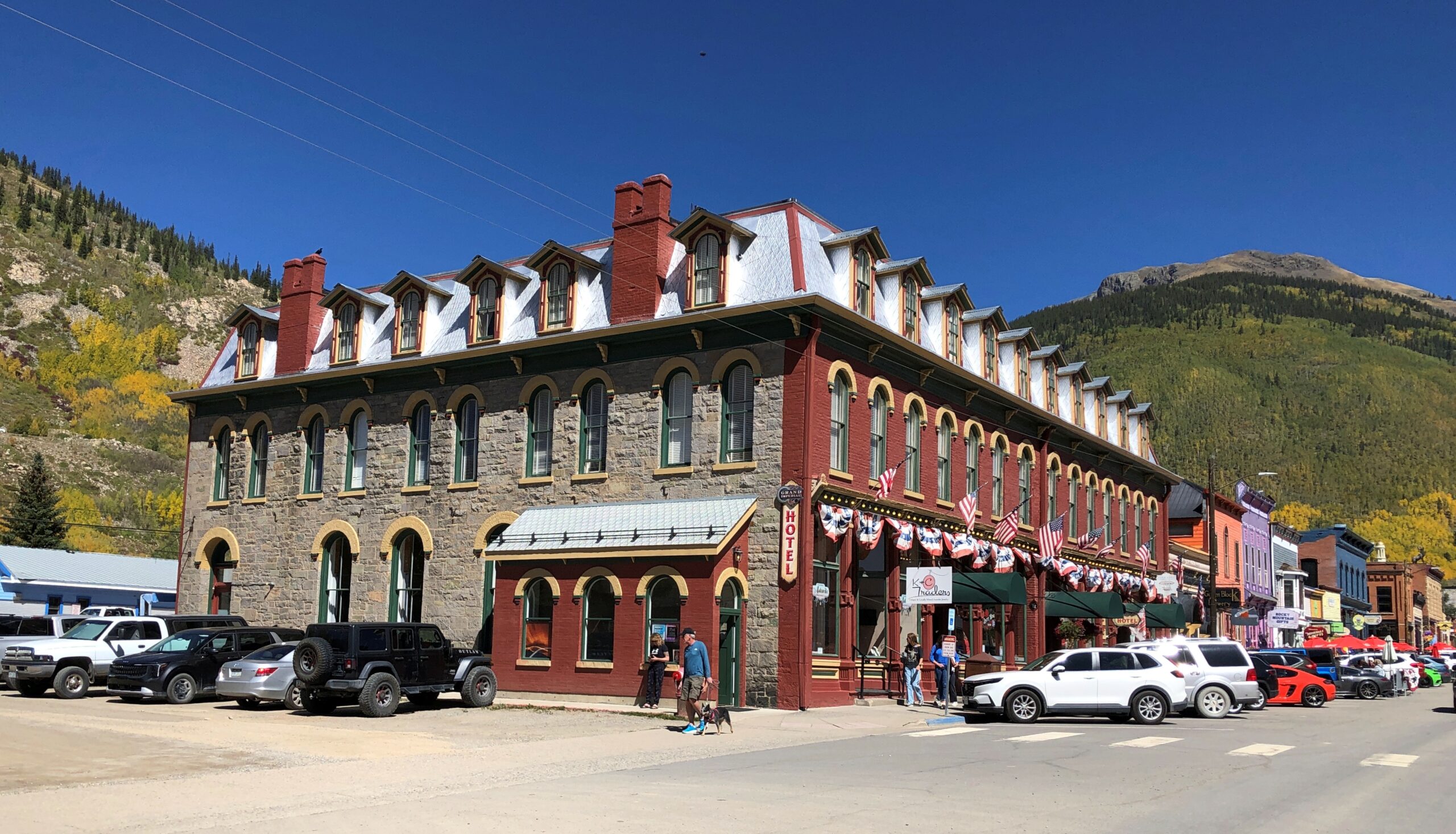
The Grand Imperial Hotel. A lofty name to live up to, but probably posh enough to do so.
Restored to its 1880s appearance in the 2010s, no doubt at considerable expense.
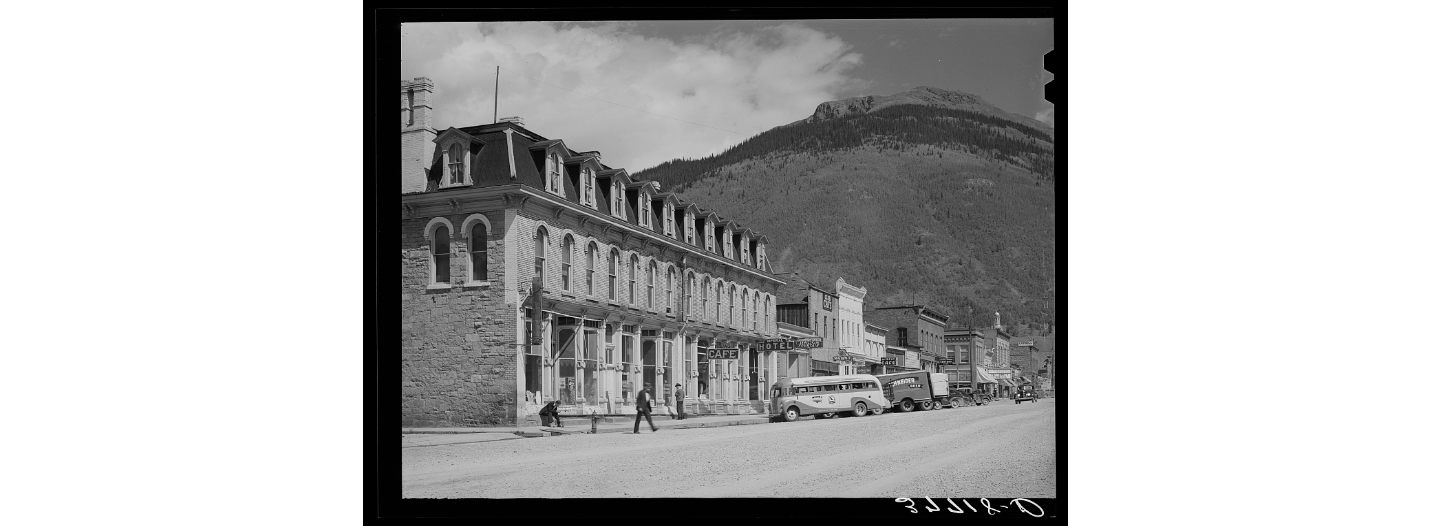
As it looked in 1940, a photo from the Library of Congress, Farm Security Administration-Office of War Information Photograph Collection.
More Greene St.
Greene is short, because Silverton isn’t very large, and so the street, now a road, soon heads for the hills.
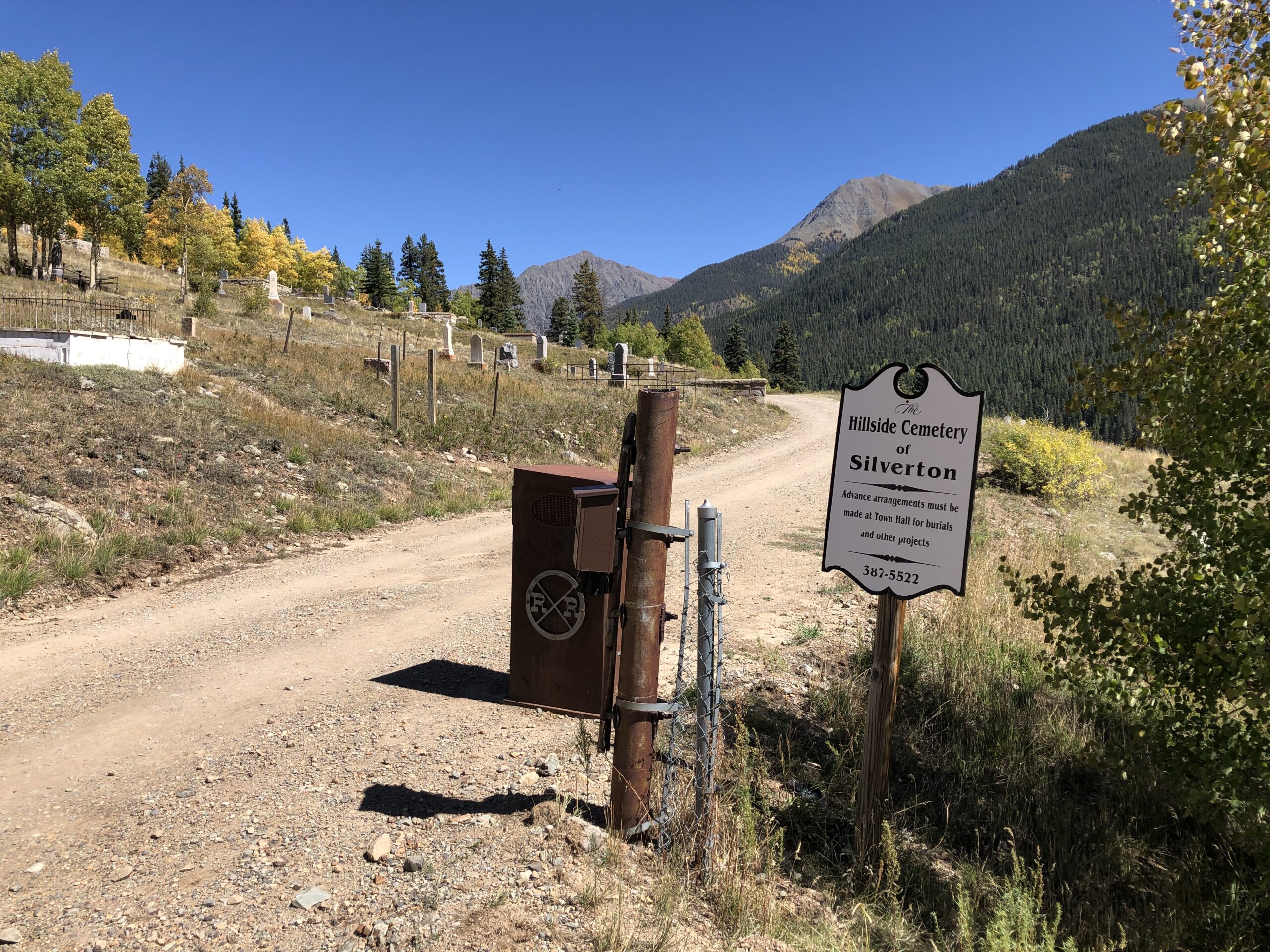
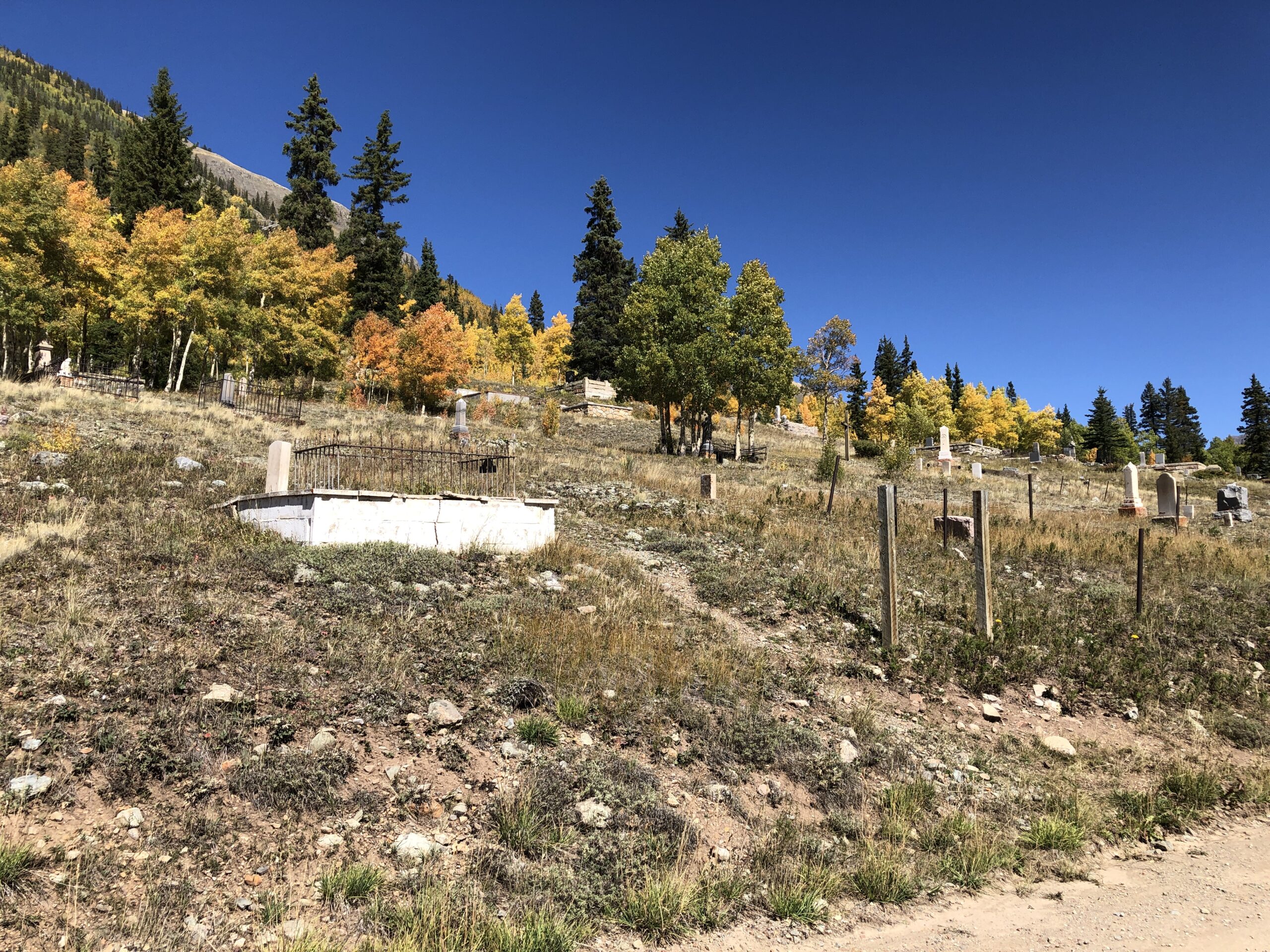
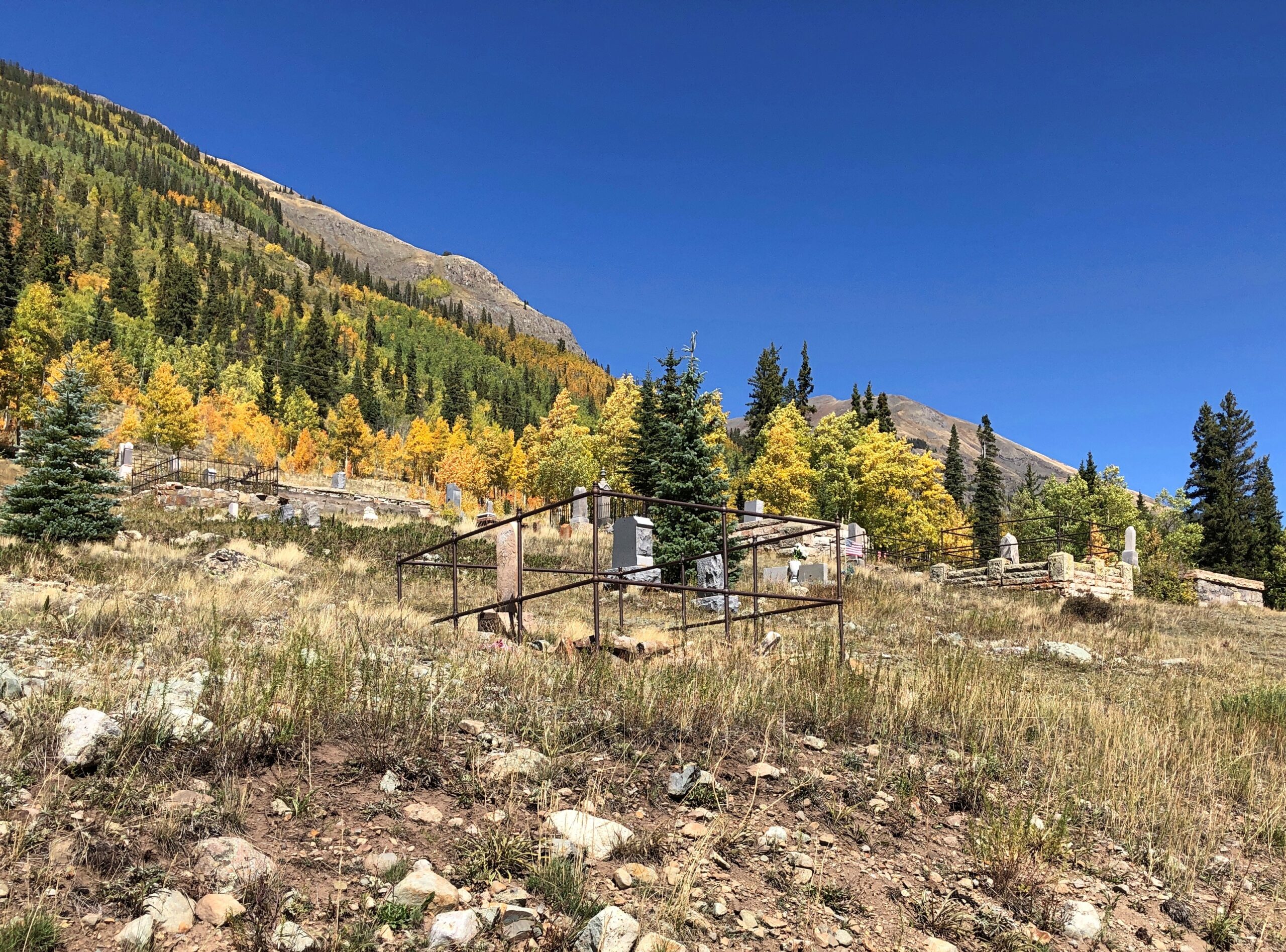
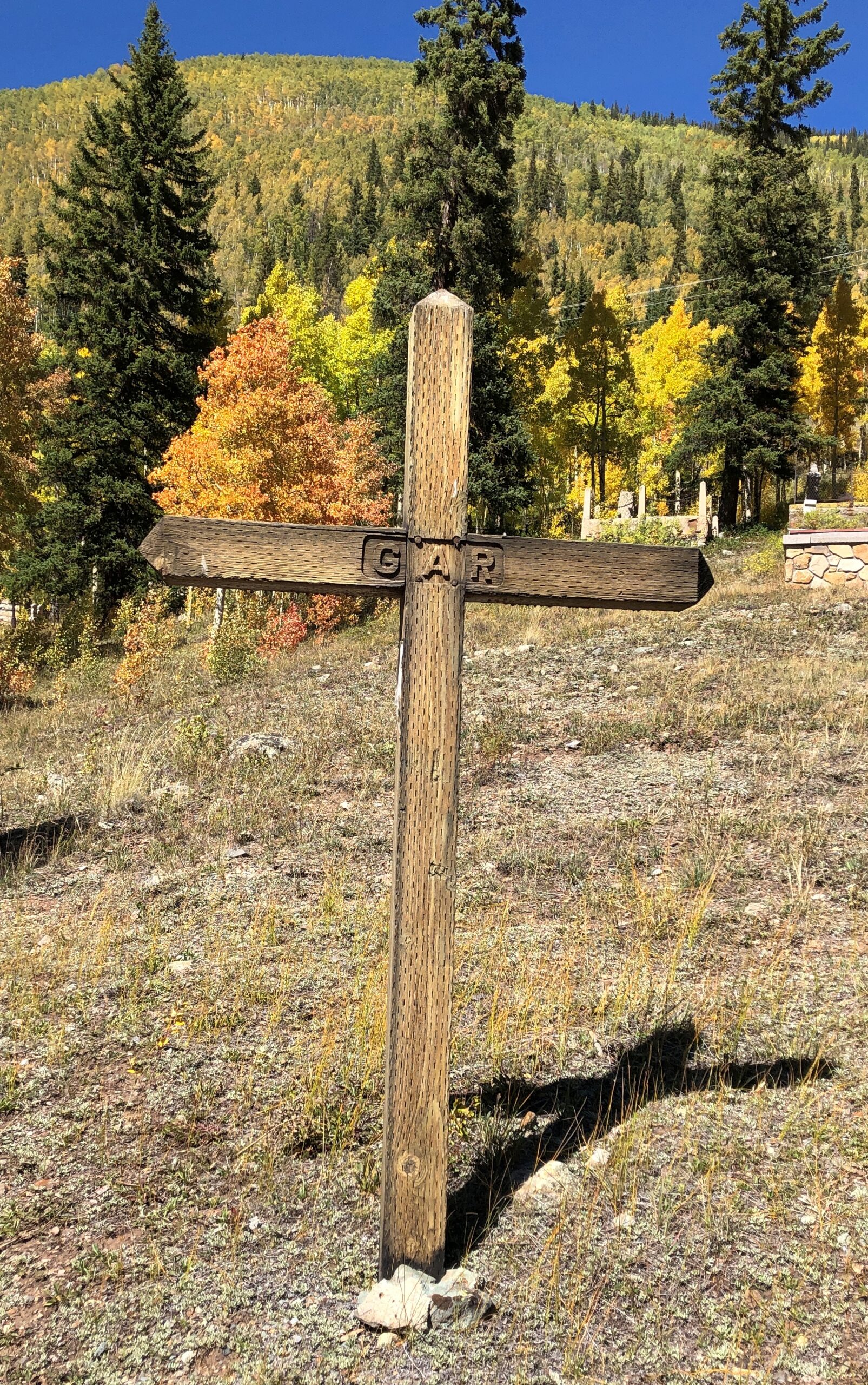
The Hillside Cemetery of Silverton.
An apt name.
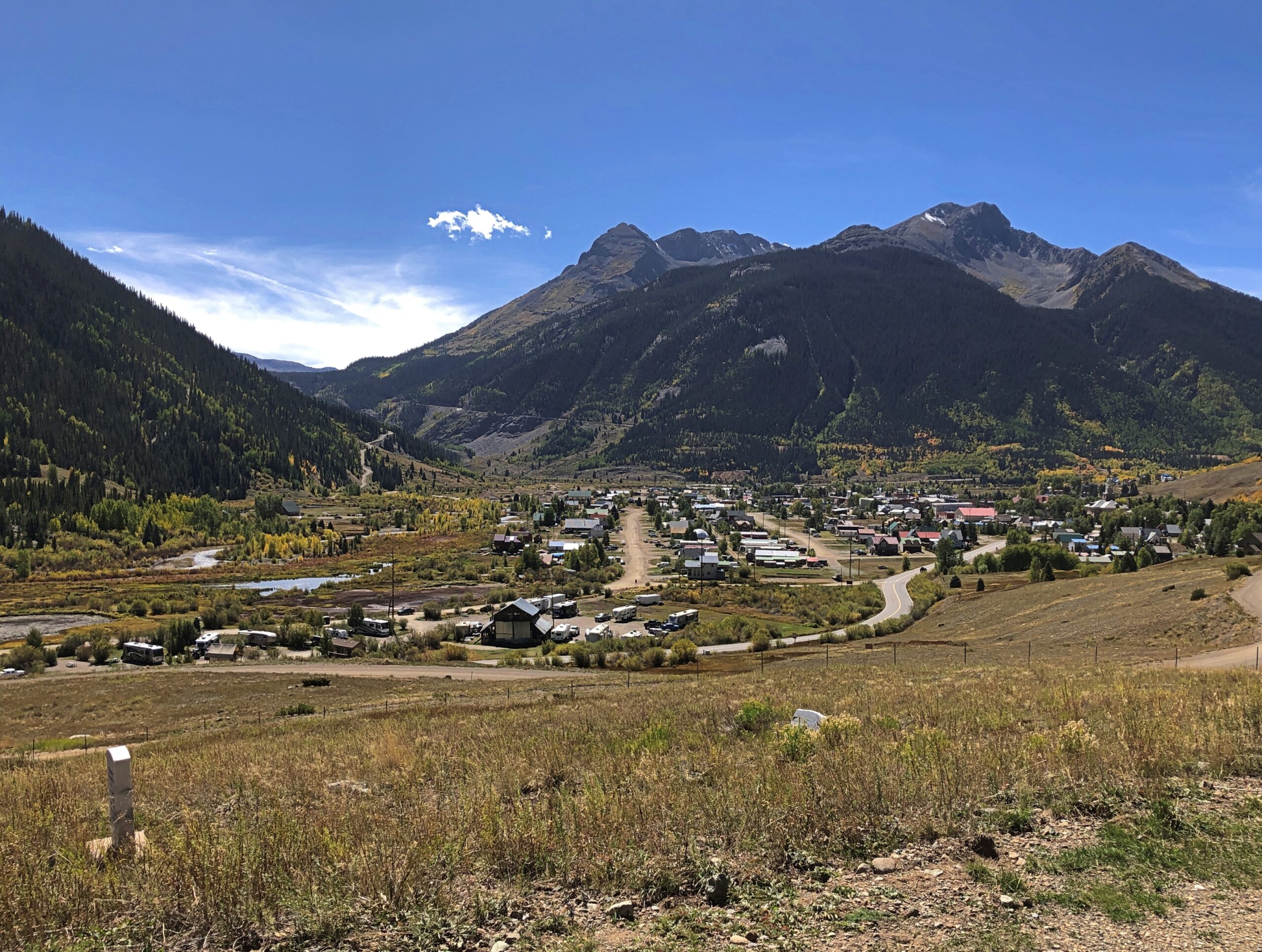
With a good view of the town.
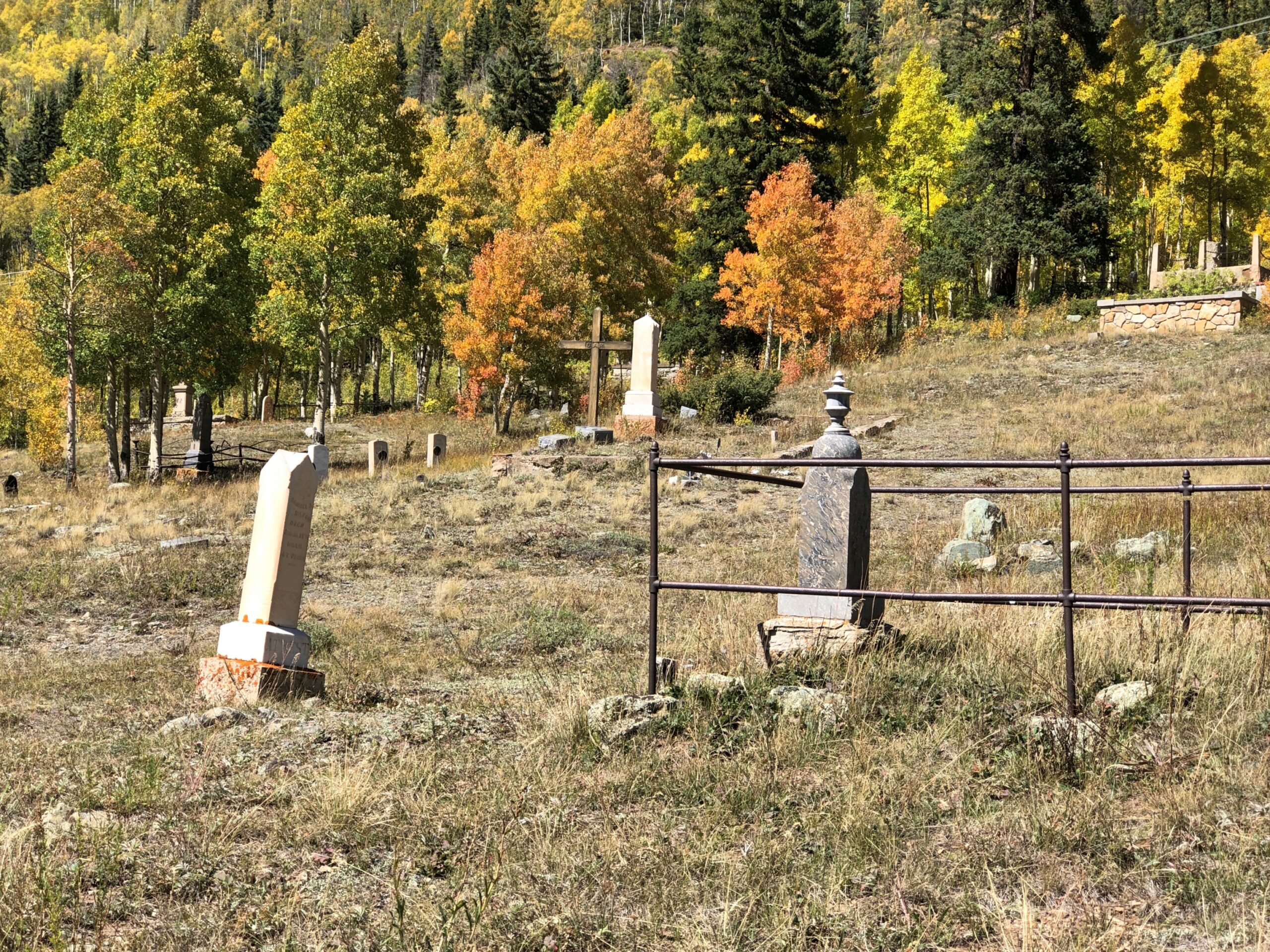
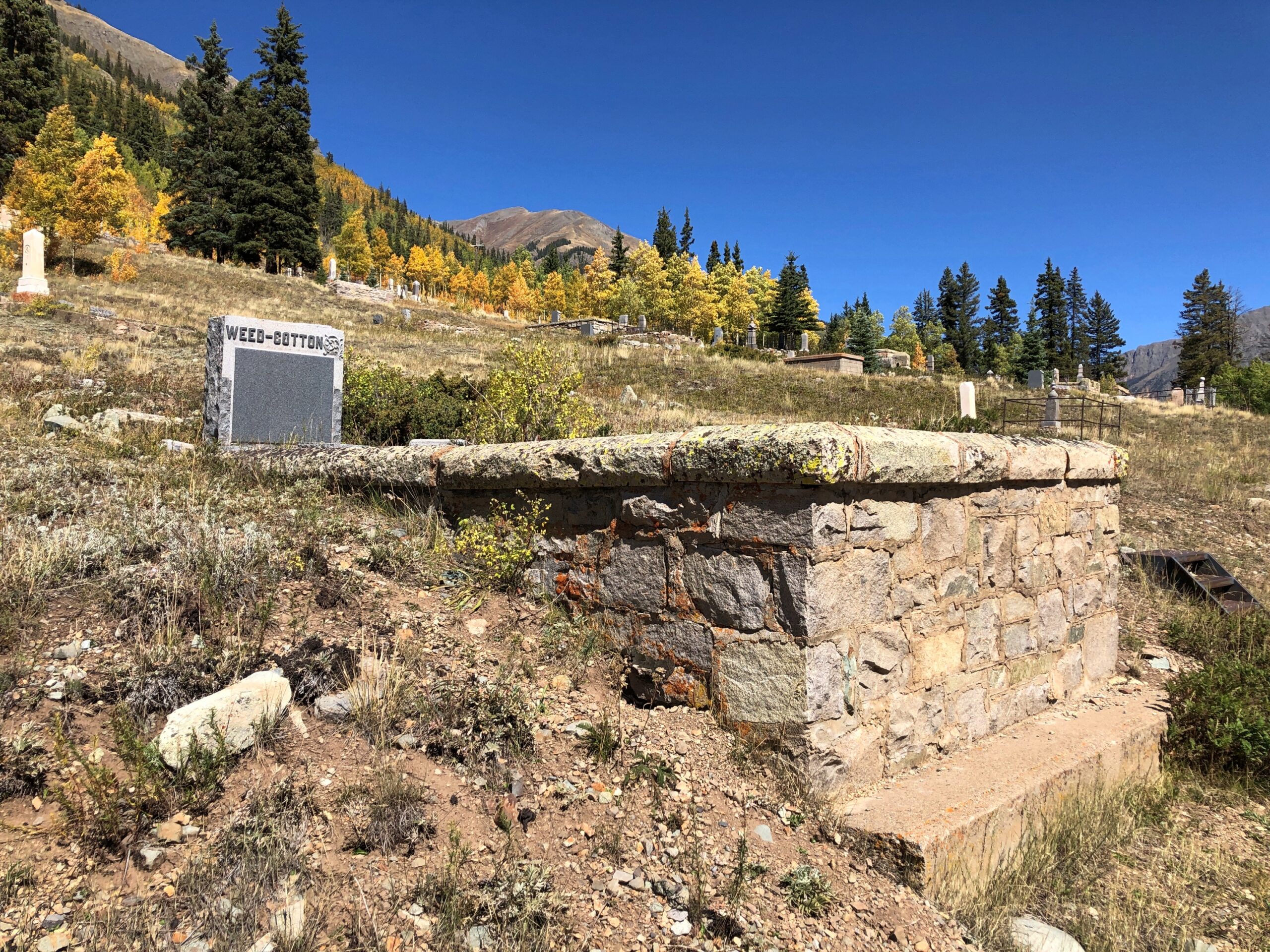
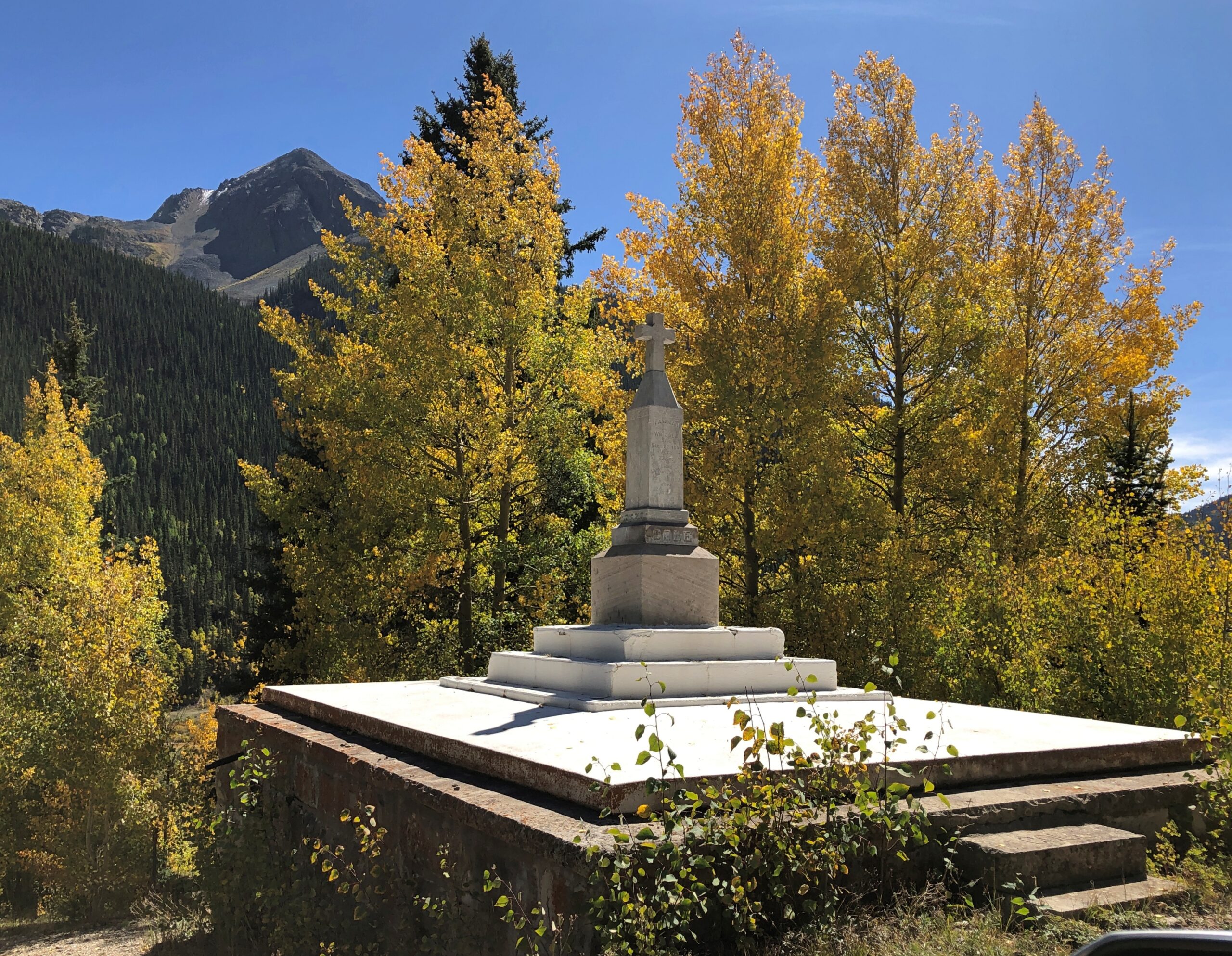
Some sizable memorials.
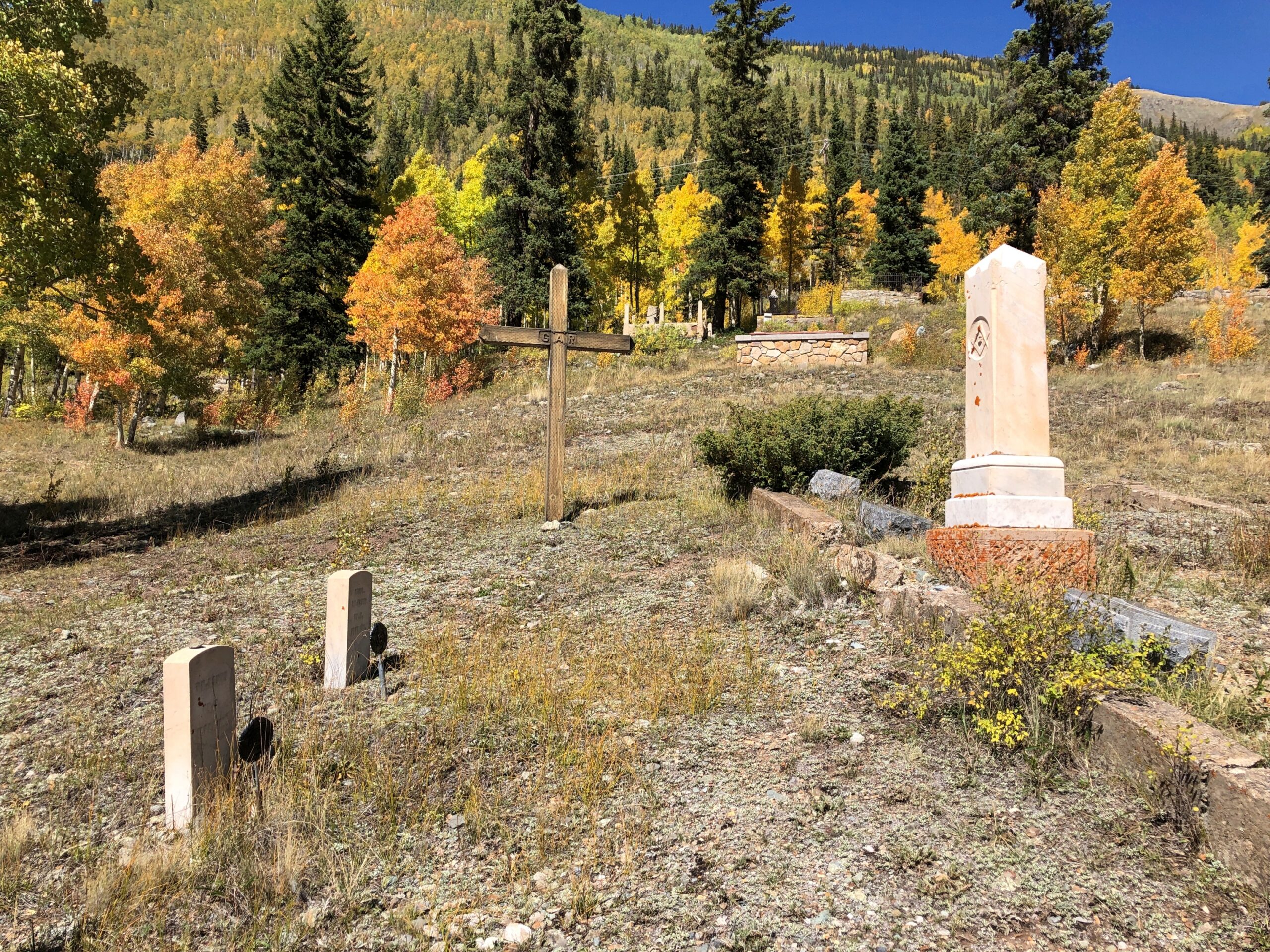
More modest ones.
Echoes of lost men from another time. Beyond the outstanding beauty of a hillside cemetery in the flush of autumn, reason enough to visit the cemetery.