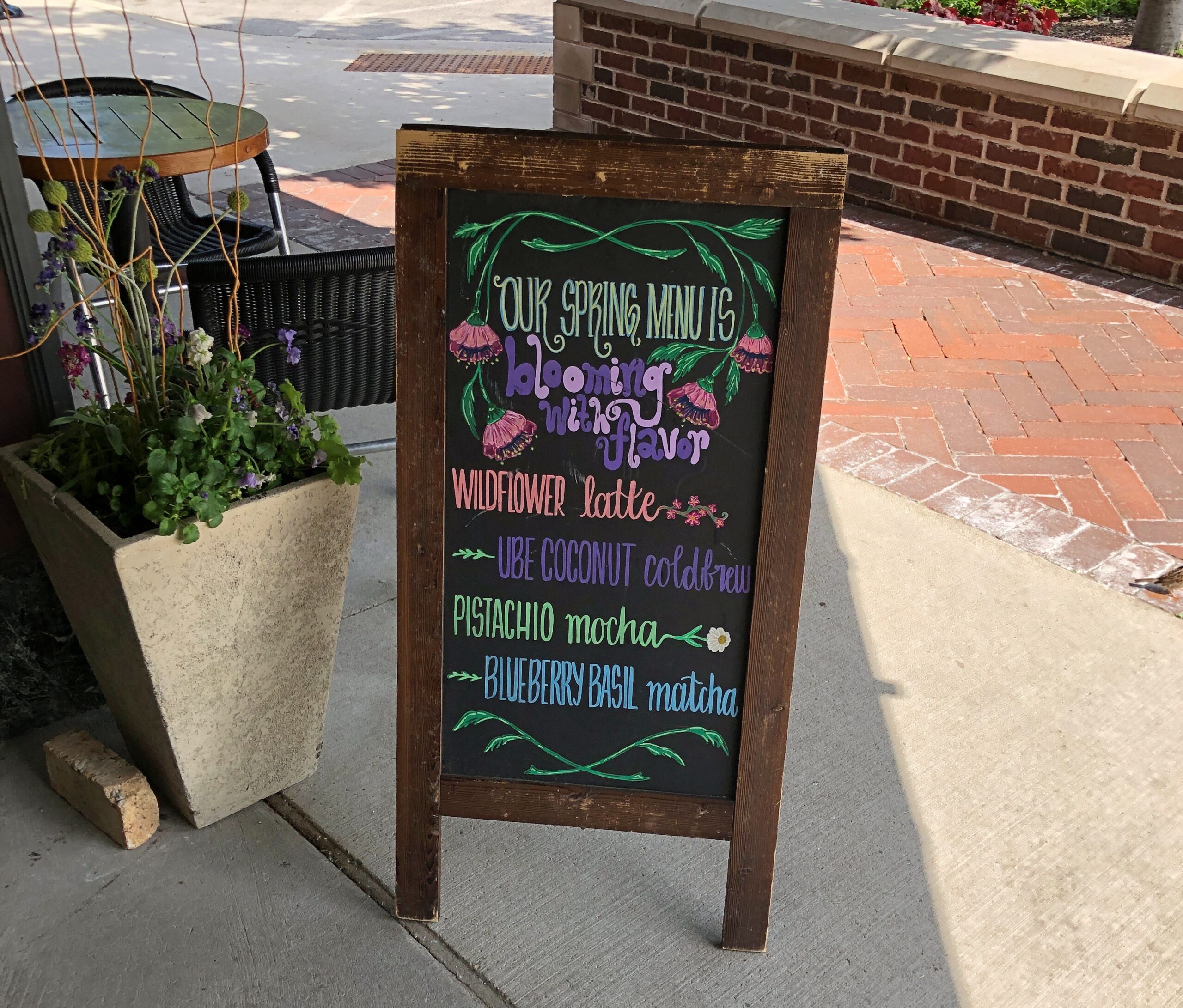
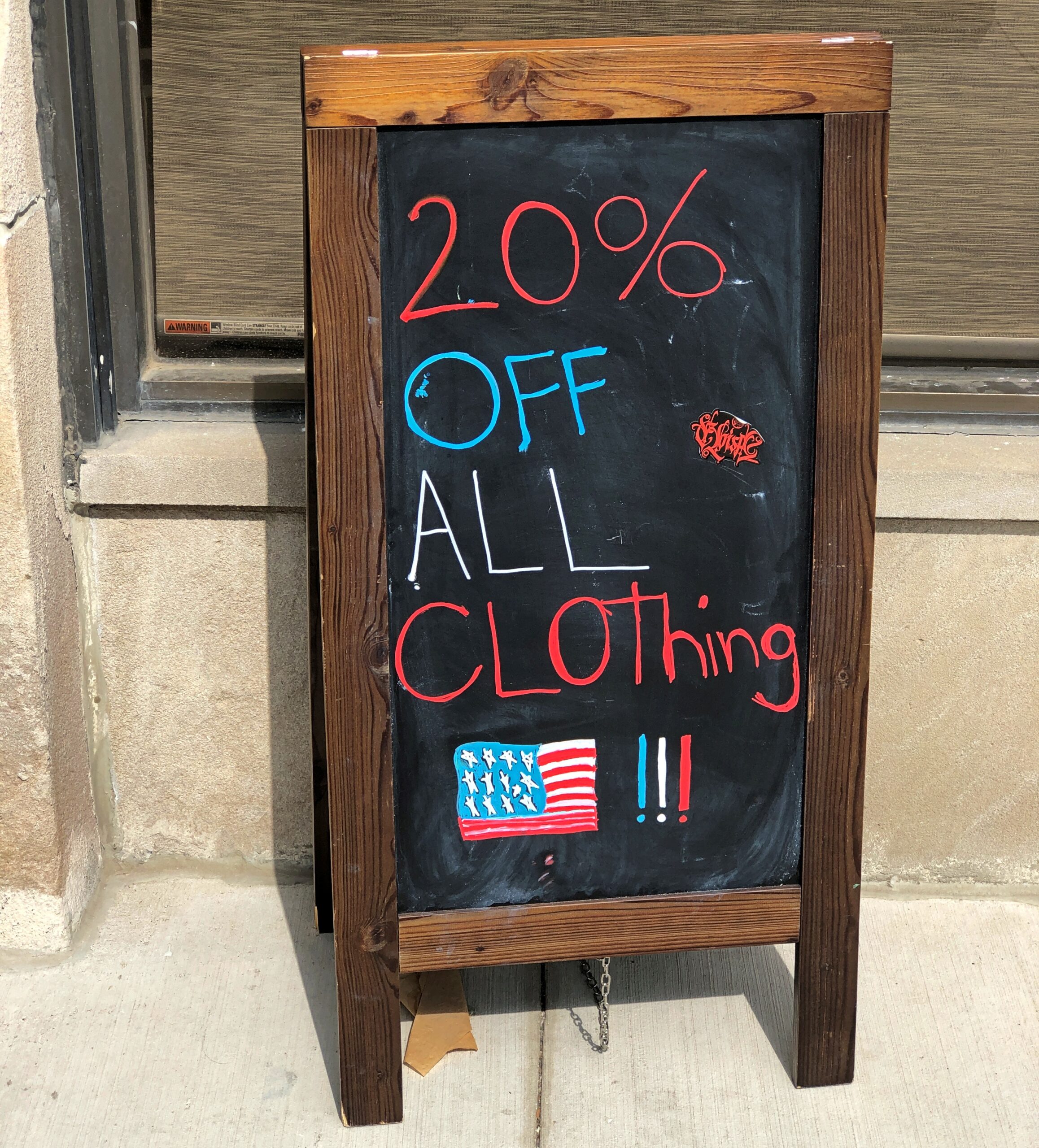
Rain to end September and begin October. Generally not heavy, just persistent for two days. As if on cue for the first of the month, a handful of trees here and there suddenly displayed streaks of yellow. Every day there will be more of that, until there isn’t any.
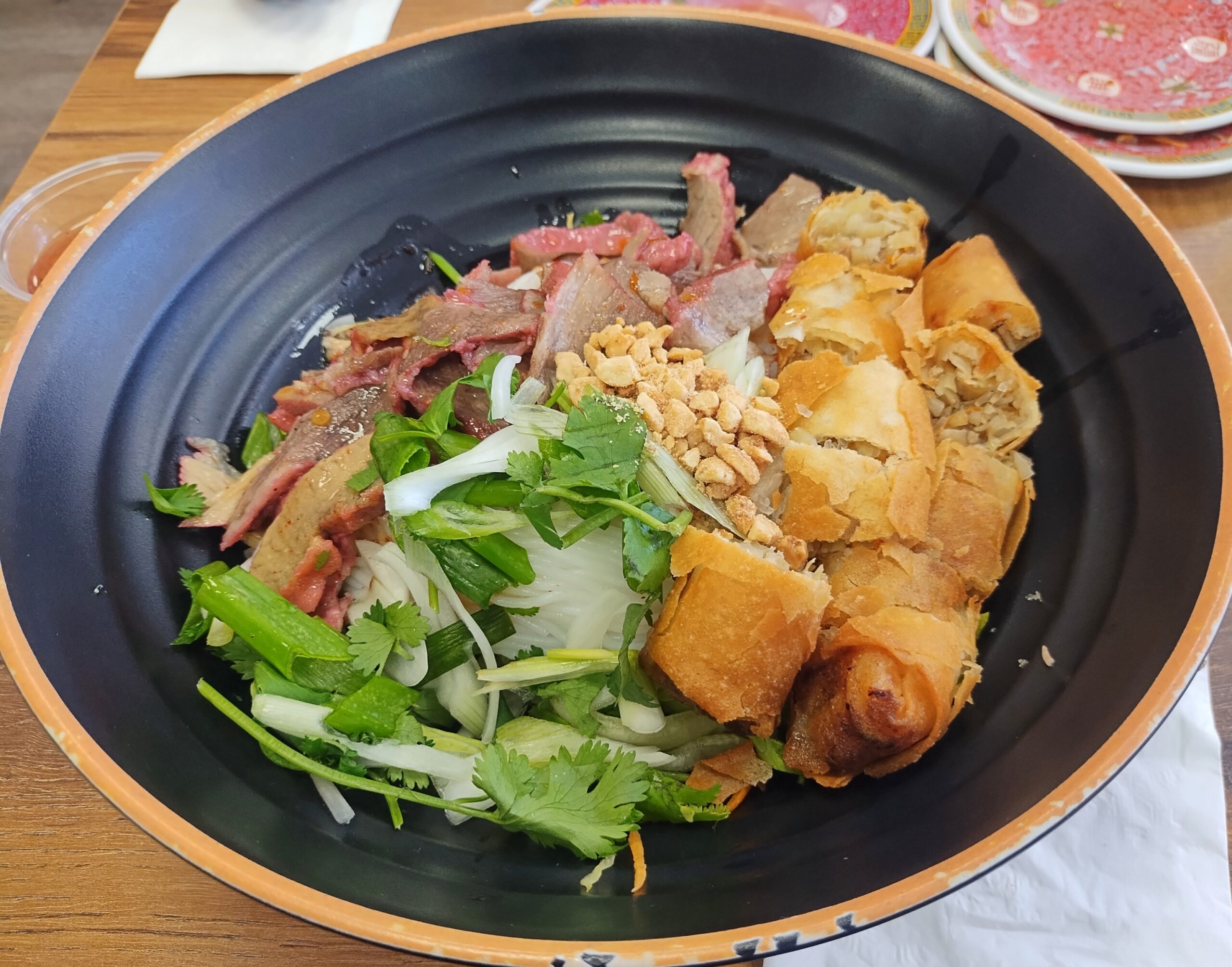
After visiting a run of Milwaukee churches last Saturday morning under a warm early fall sky, we were inspired to find a Laotian restaurant. The place, Vientiane Noodle Shop, calls itself Laotian-Thai on its menu, probably because everyone knows about Thailand, while far fewer about Laos, such being the dismal state of geographic knowledge. A lot of the menu was also Thai, but it included Laotian specialties. Such as this.
Bee Boun. Also transliterated Bie Boun, apparently, but anyway a rice vermicelli-based dish that’s majorly delicious.
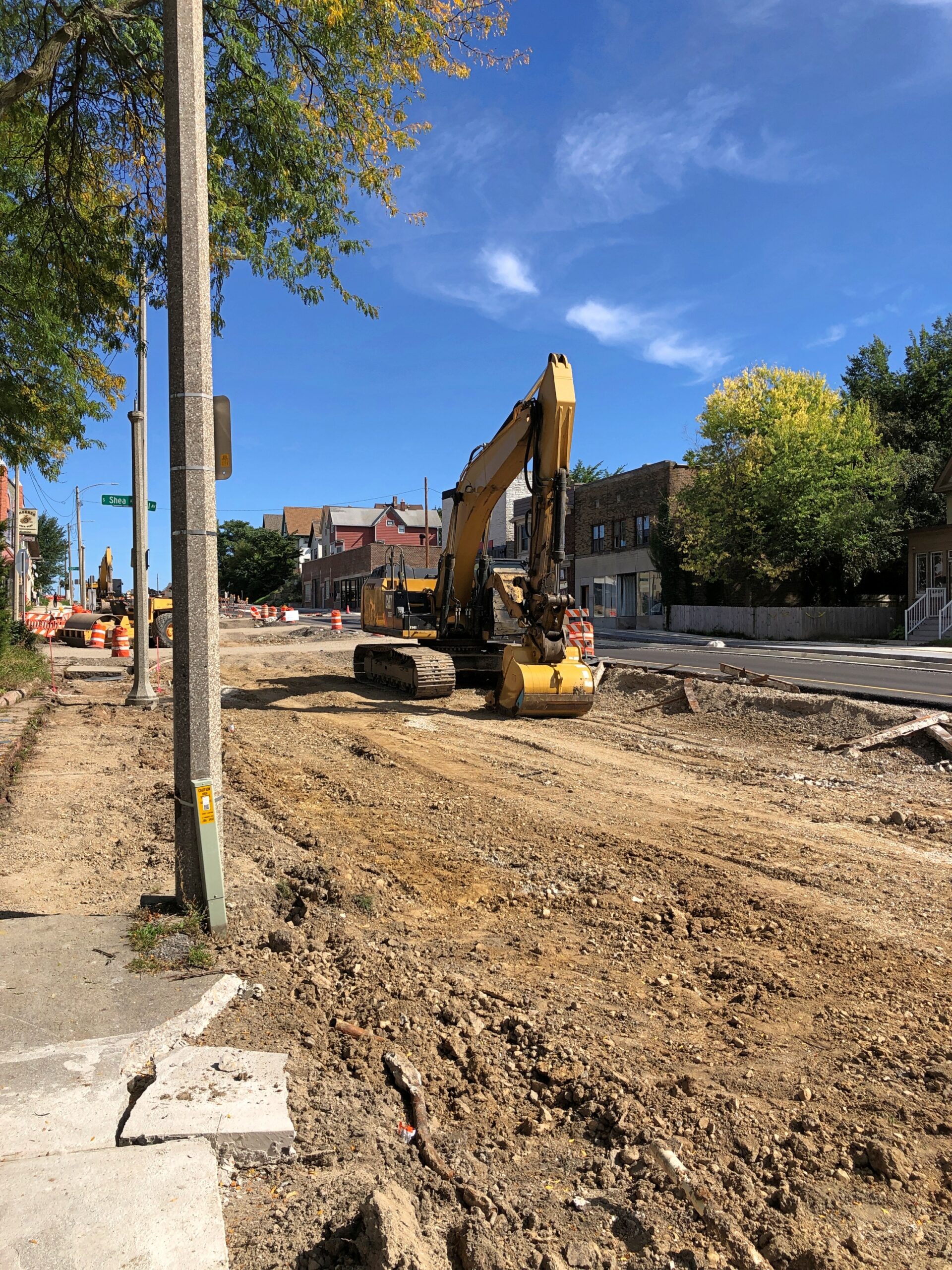
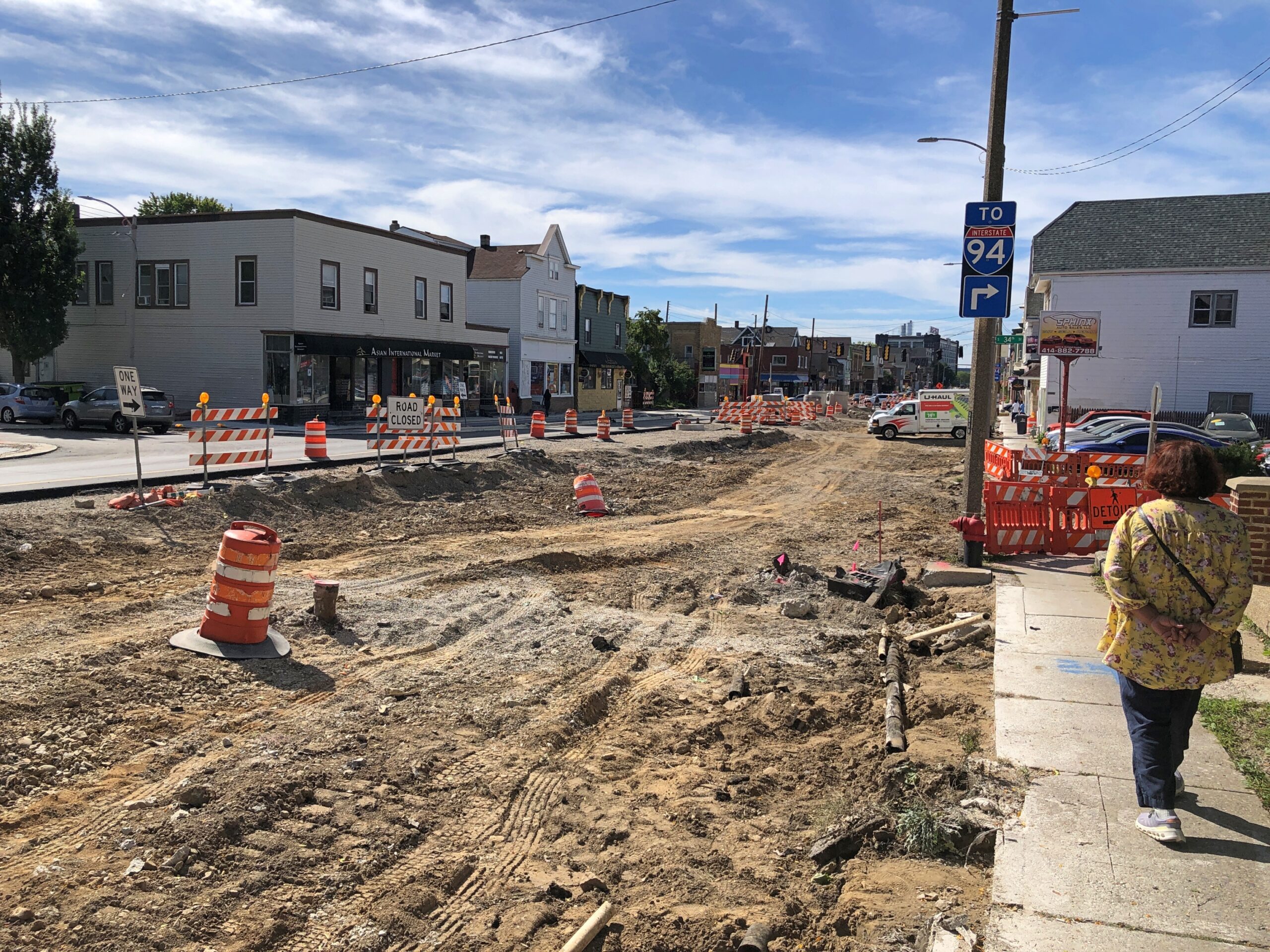
It was good to support the restaurant in general, but also because there is major construction on its street, National Avenue, that might be interfering with its trade volume.
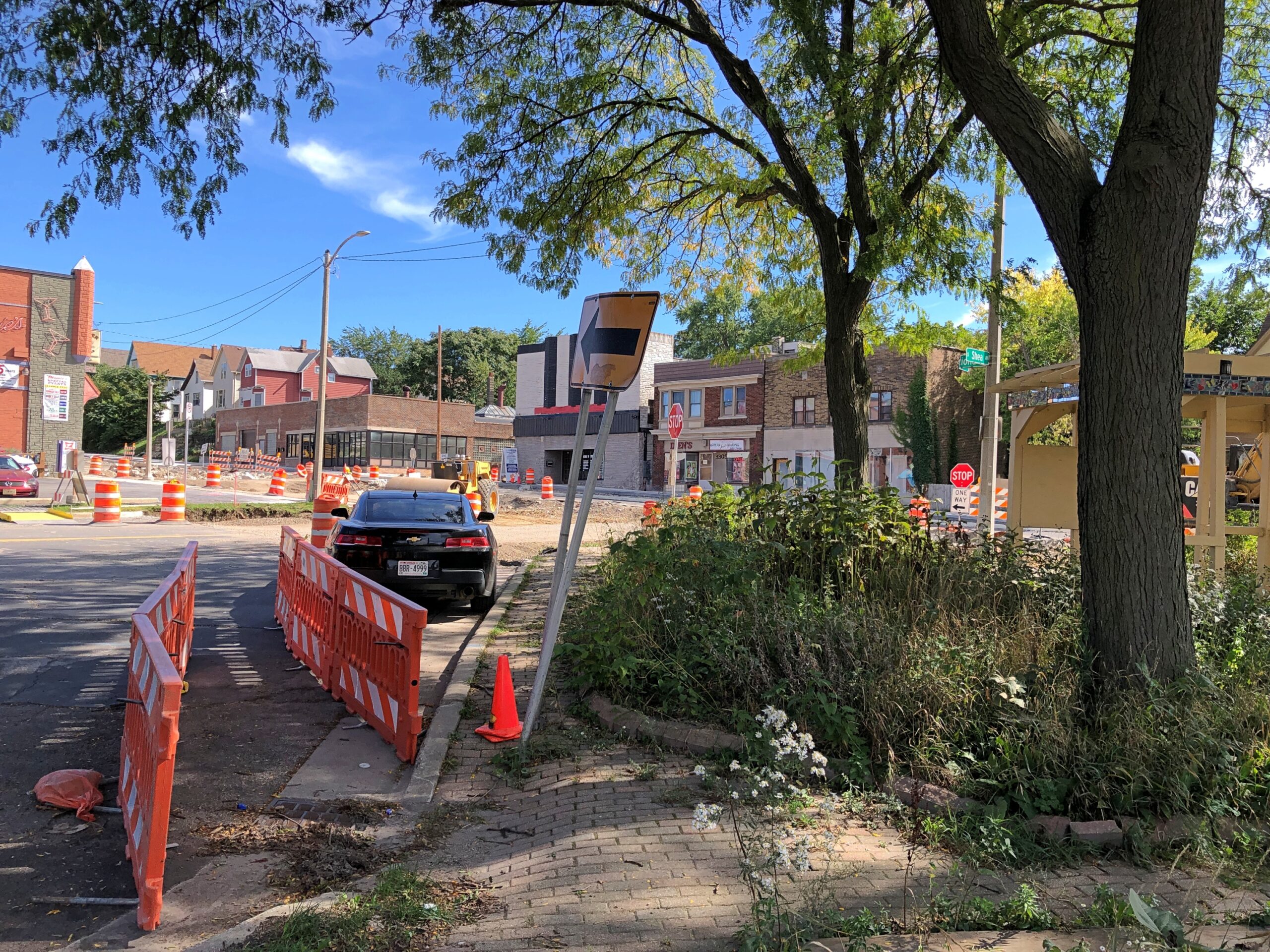
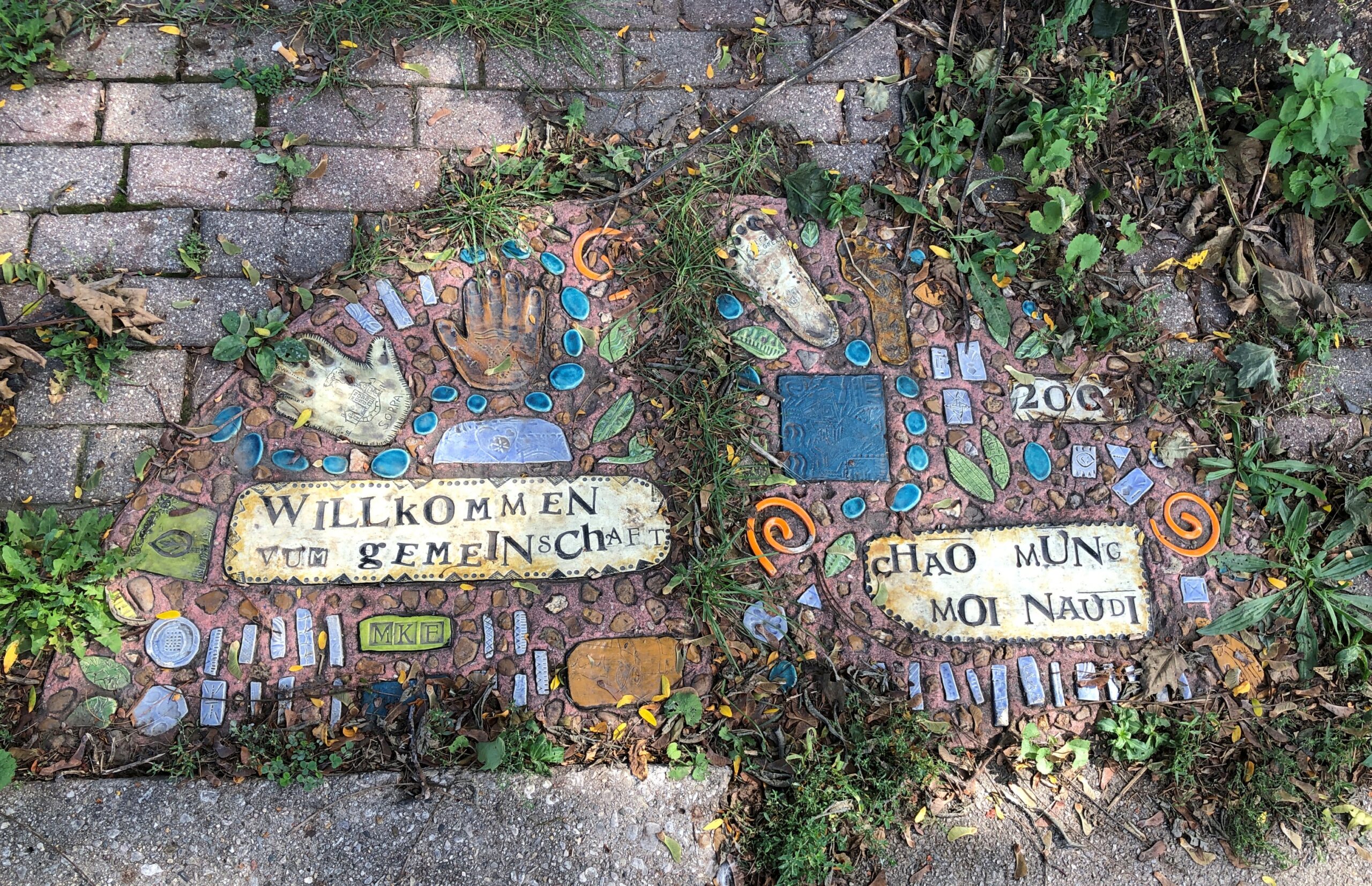
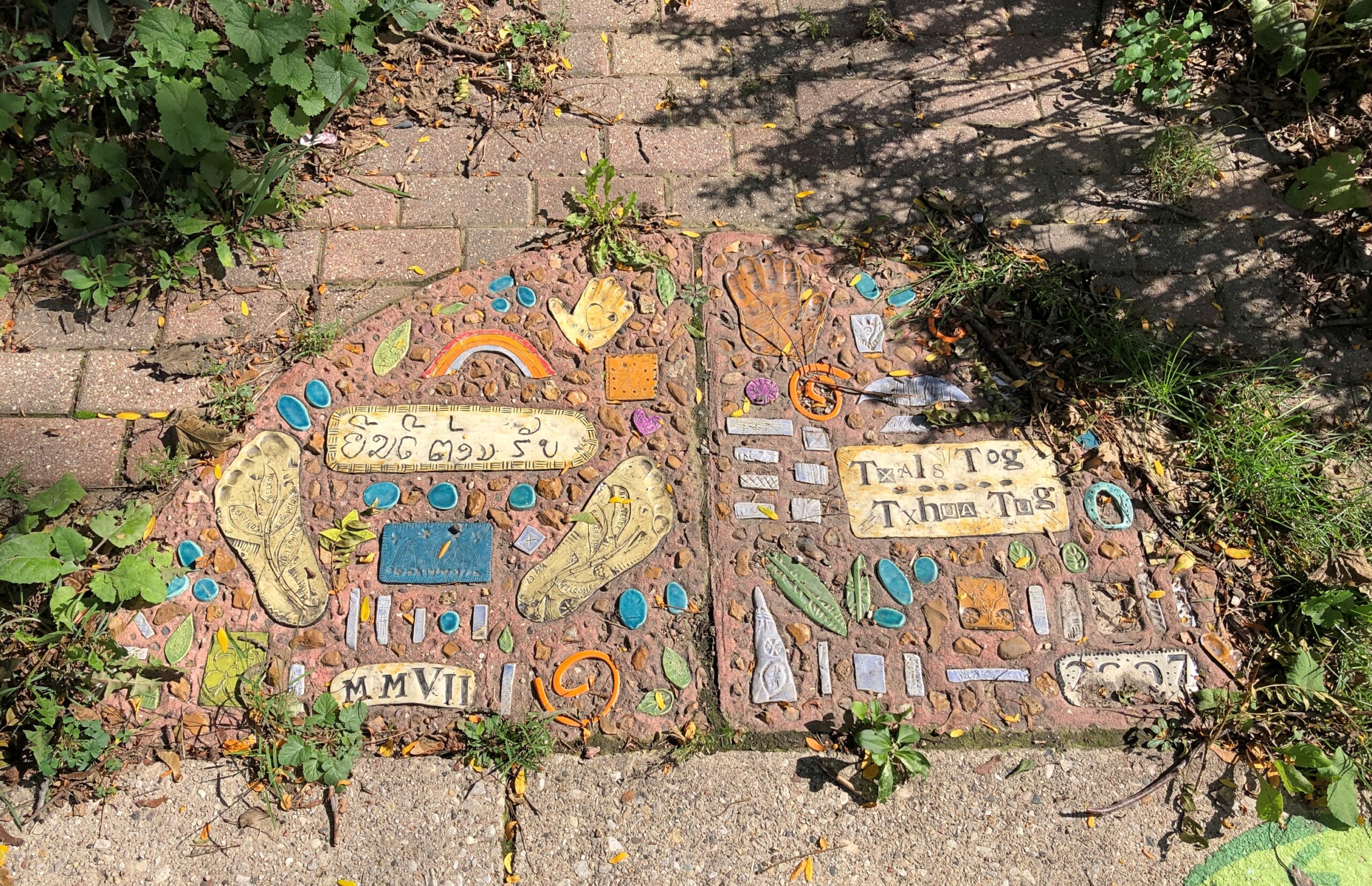
Naturally we’d parked on a side street (Shea Avenue) and walked to Vientiane Noodle Shop. At the intersection of National and Shea – which meet at a 45-degree angle – is a triangular pocket park featuring plantings and a bench, along with some artwork fixed in the ground, dated 2007, and seeming to reflect the neighborhood population during its history through “welcome to our community” in various languages, if the German is any indication.
The neighborhood is known as Silver City. As many times as I’ve visited Milwaukee, that was a new one to me. It’s largely Hispanic these days, with Hmong and other groups also living there, and seems to have followed a common evolution in that regard, beginning with various European ethnic groups more than 150 years ago giving way to other groups as the decades passed.
Why Silver City? A site called Neighborhoods in Milwaukee (and others) offers an explanation. Sounds like folk etymology to me, but never mind:
Silver City got its name in the mid-1890s when area laborers working in the developing Menomonee Valley factories were paid in silver coin. When the workers circulated the silver among the area’s 24 taverns, the name “Silver City” began to appear in Milwaukee newspapers.
Silver was circulated everywhere in the 1890s, so that doesn’t really cut it. Old newspapers using the name might hint at a nickname for the area created by anonymous newspapermen for some lost reason – who can say? That kind of uncertainty adds interest to a neighborhood, if you ask me.
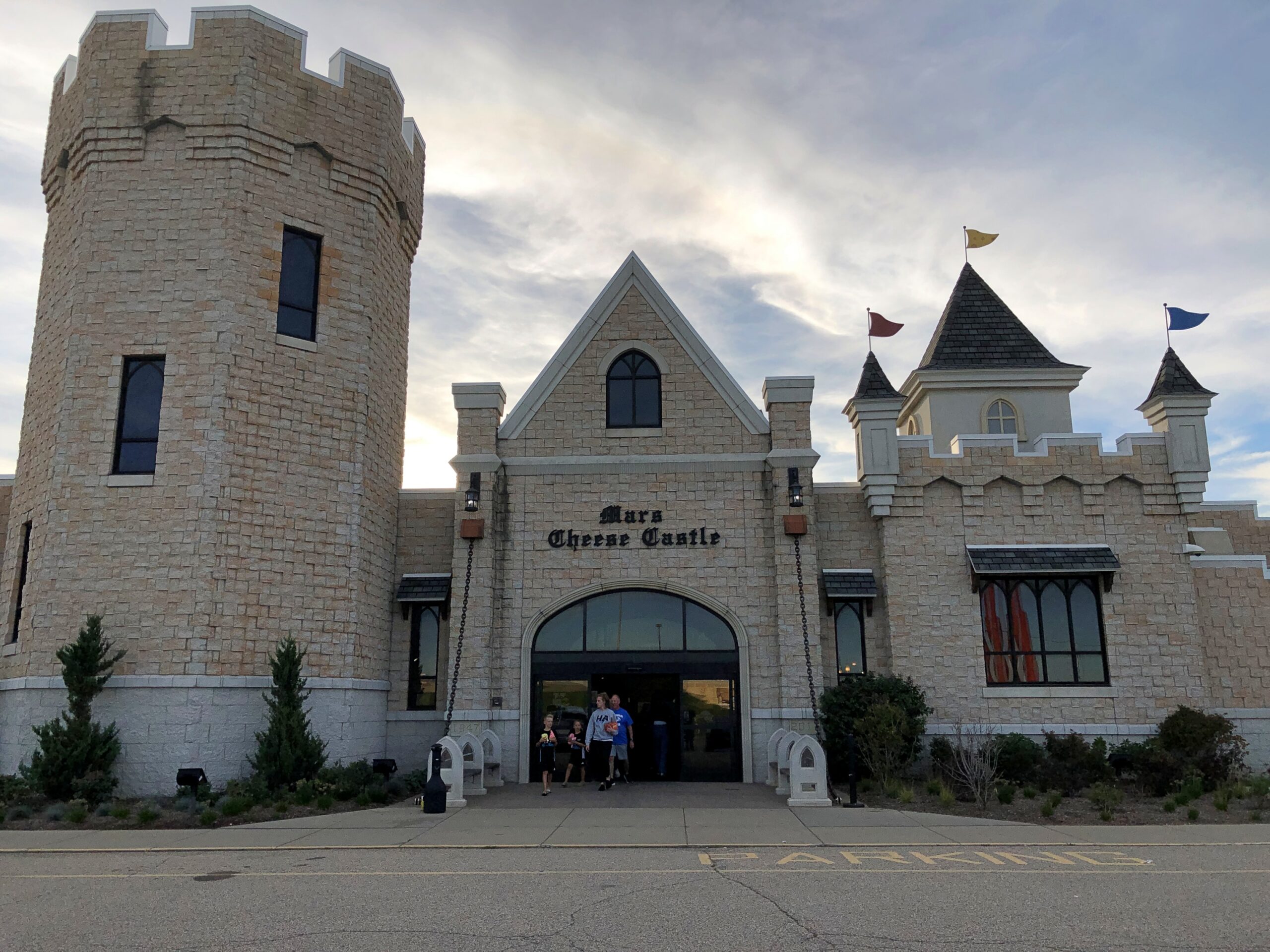
I’ve now been to Mars Cheese Castle about n times. I pass its way often, and while I don’t always stop there, visits over 40 years have added up to n. Like Wisconsin itself, or Milwaukee, or a healthy number of other places.
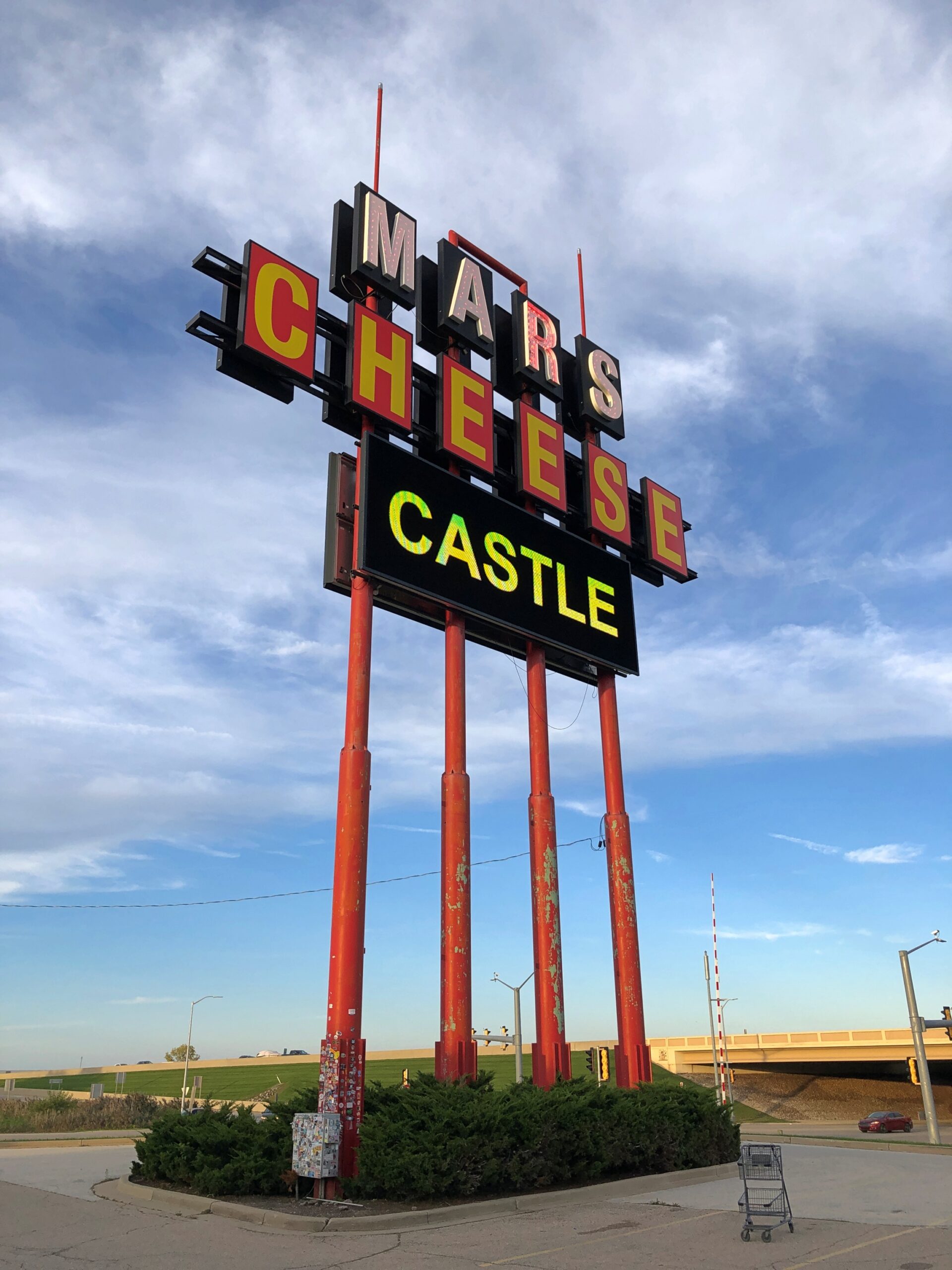
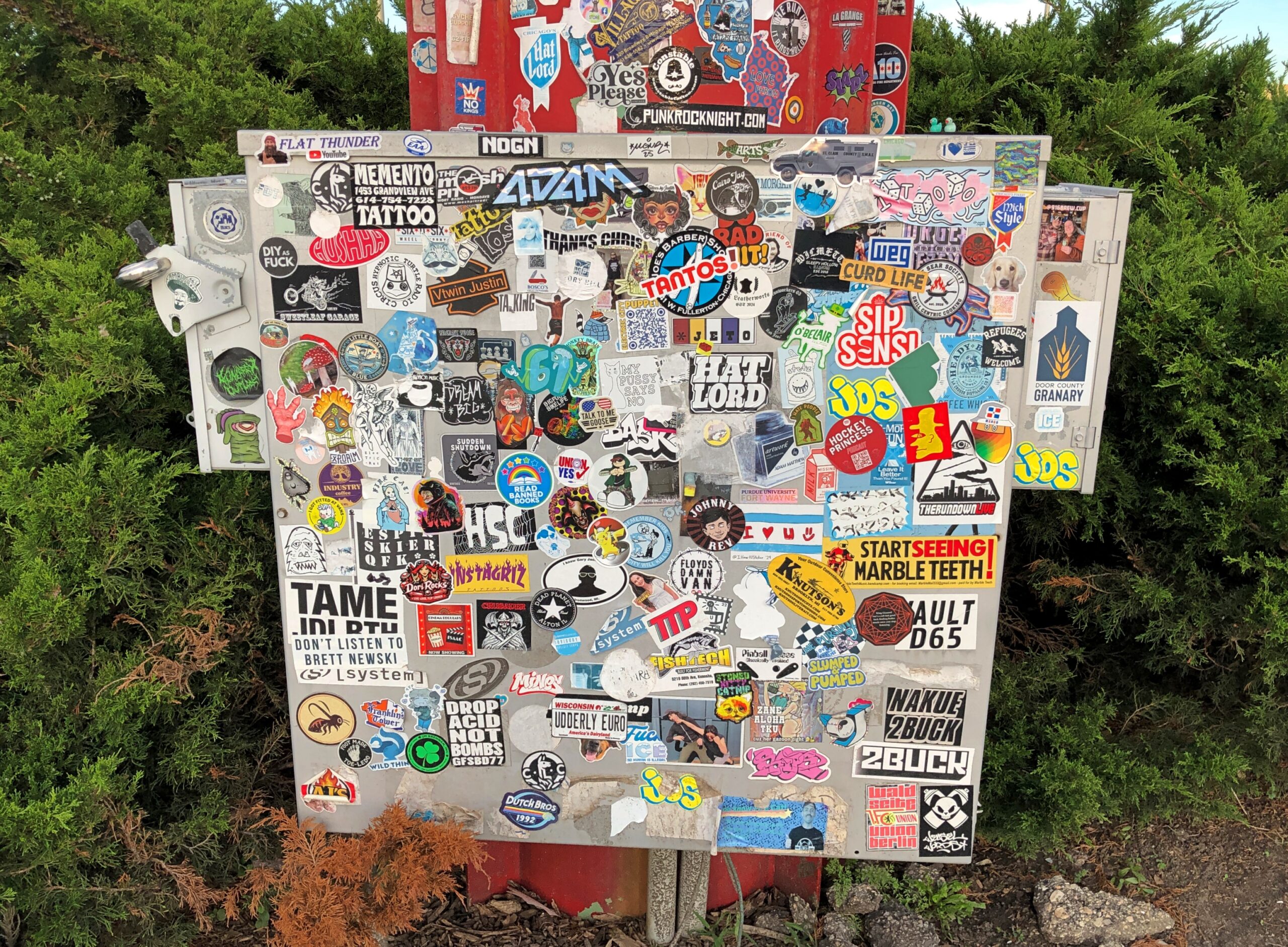
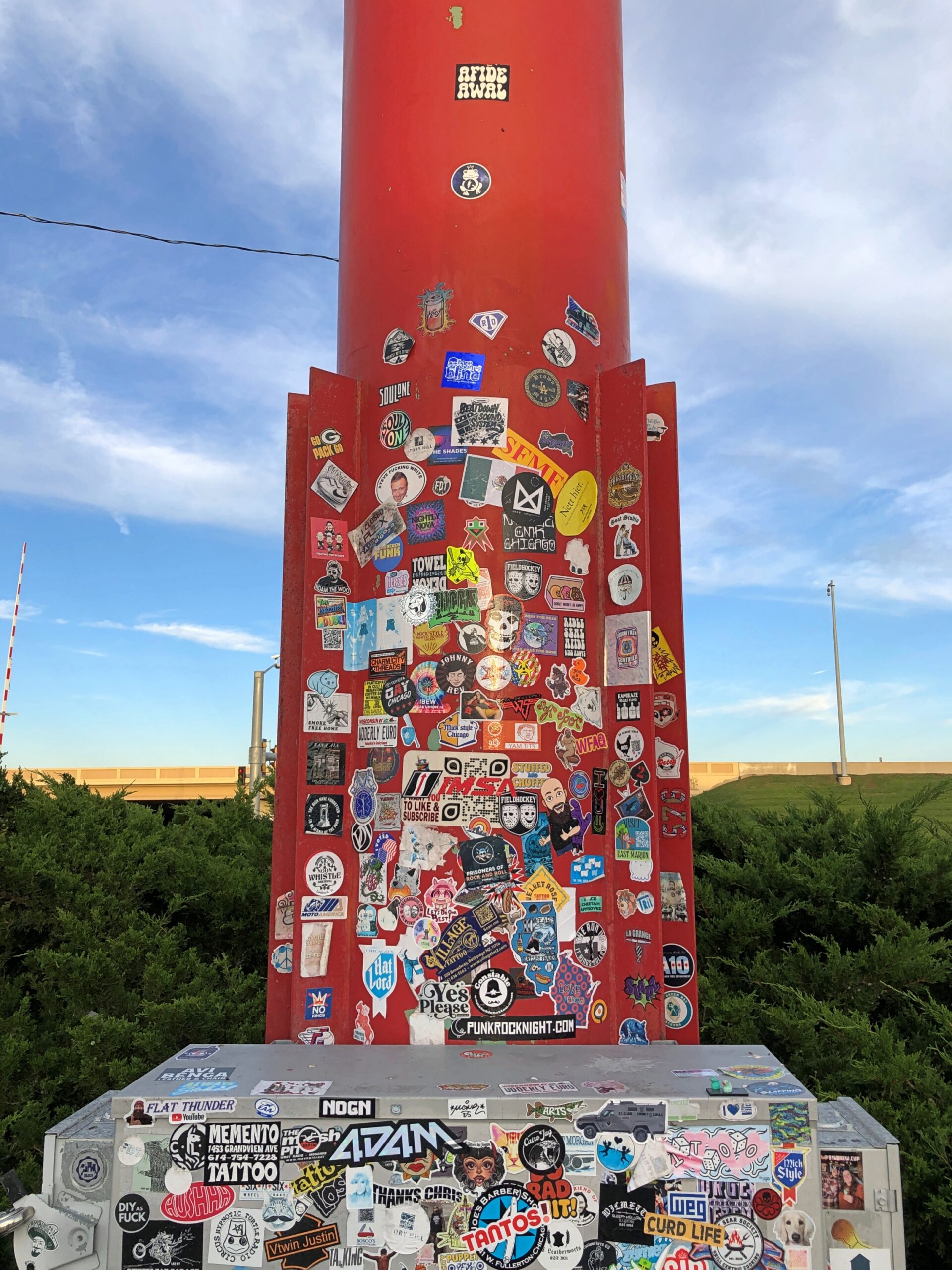
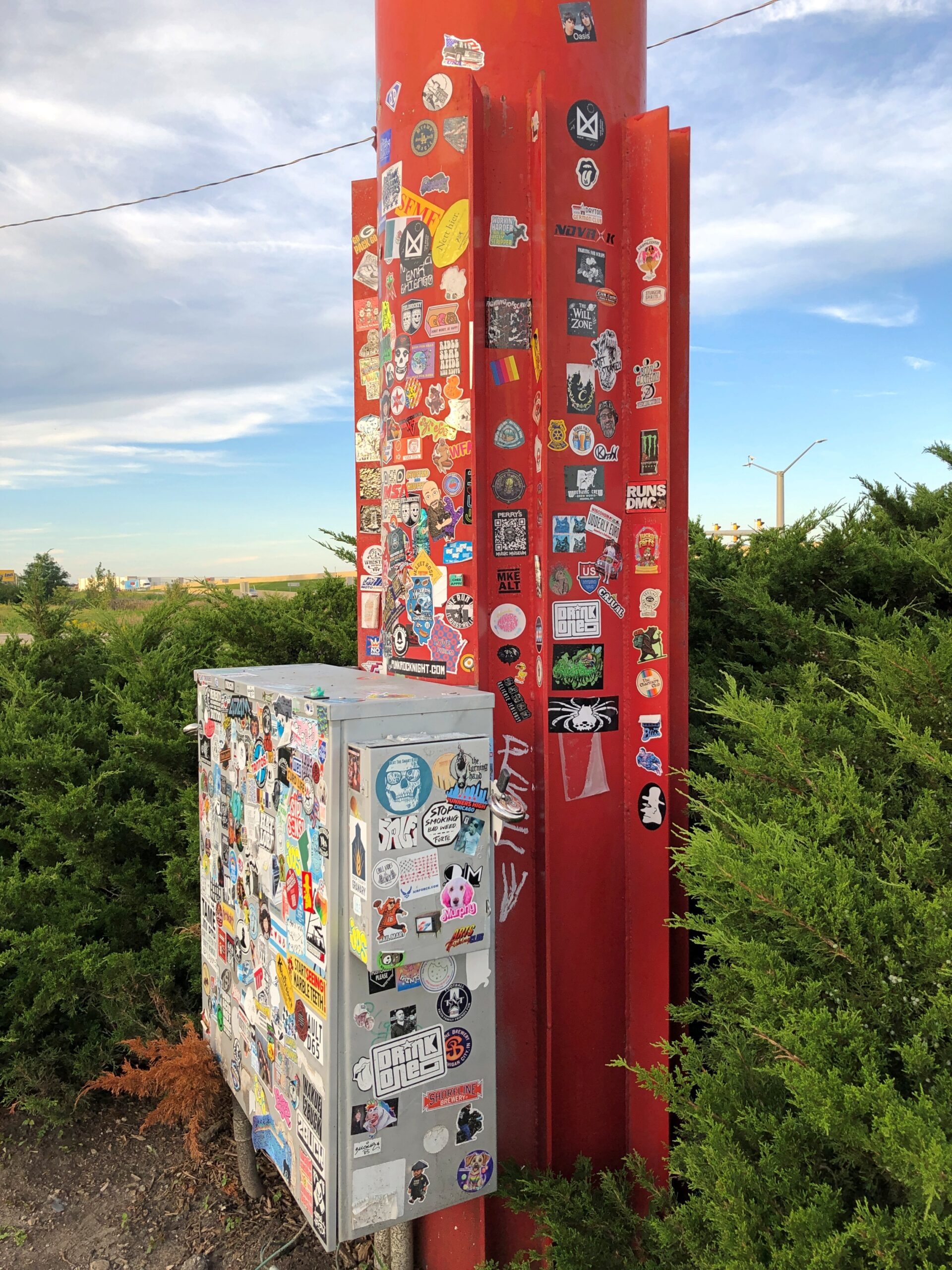
After much of a day in Milwaukee, for the latest Doors Open Milwaukee event, we stopped at Mars, mere miles north of the Wisconsin-Illinois line on I-94. First thing, I decided to document the sticker situation at the base of the highway sign.
I don’t see you-know-who from a much larger chain of retail establishments whose mascot is known to dam streams and sue alleged lookalikes. There are no locations yet in Wisconsin, but he is waiting, biding his time.
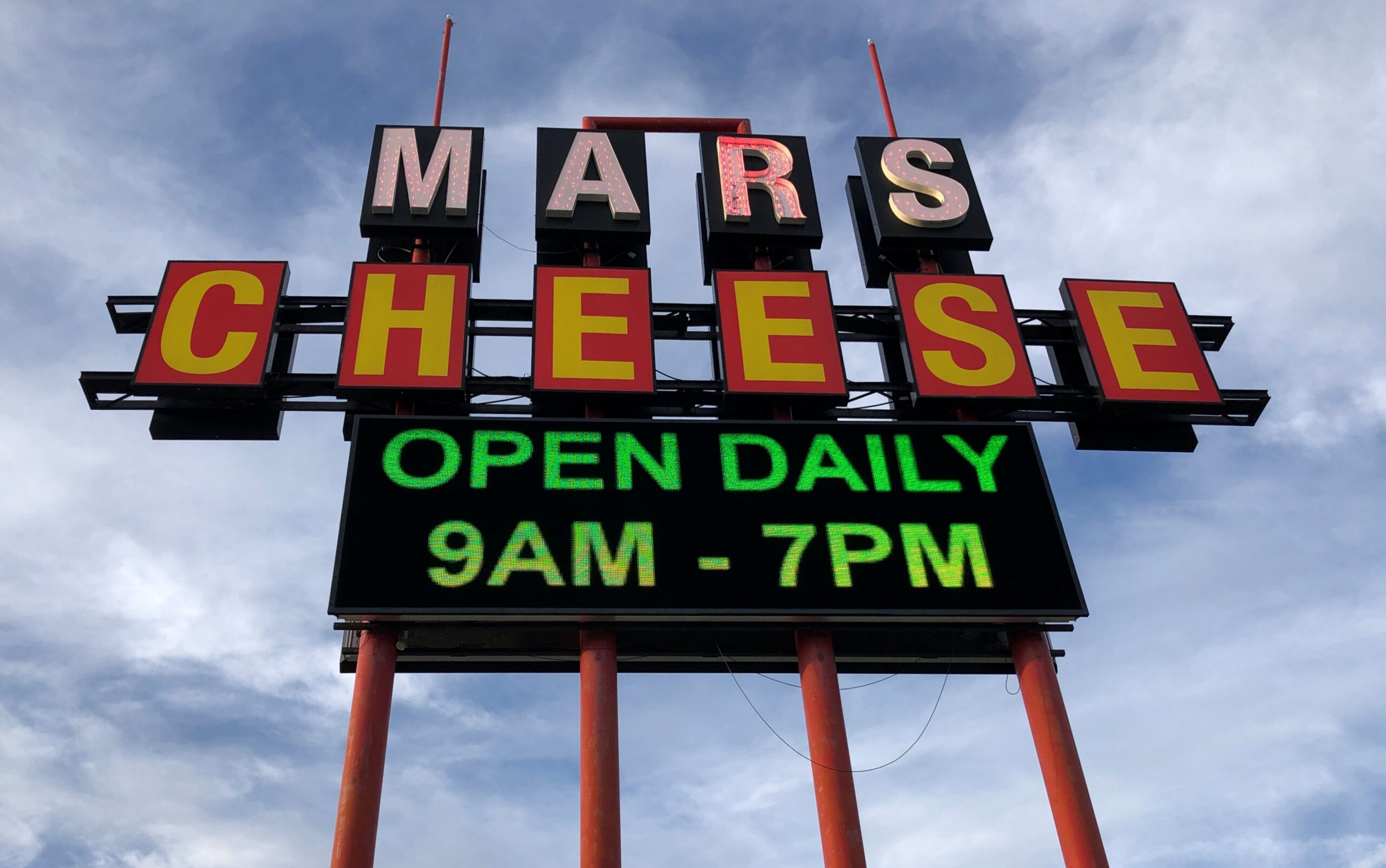
At 80 feet, the sign is a story unto itself, with the Wisconsin legislature specially allowing the store to keep it when the whole complex had to be moved in 2011 to accommodate the expansion of the highway. By that time, 80 feet was too tall for a modern roadside sign, but Mars was grandfathered in. Could be that Wisconsin respects its ’50s roadside heritage.
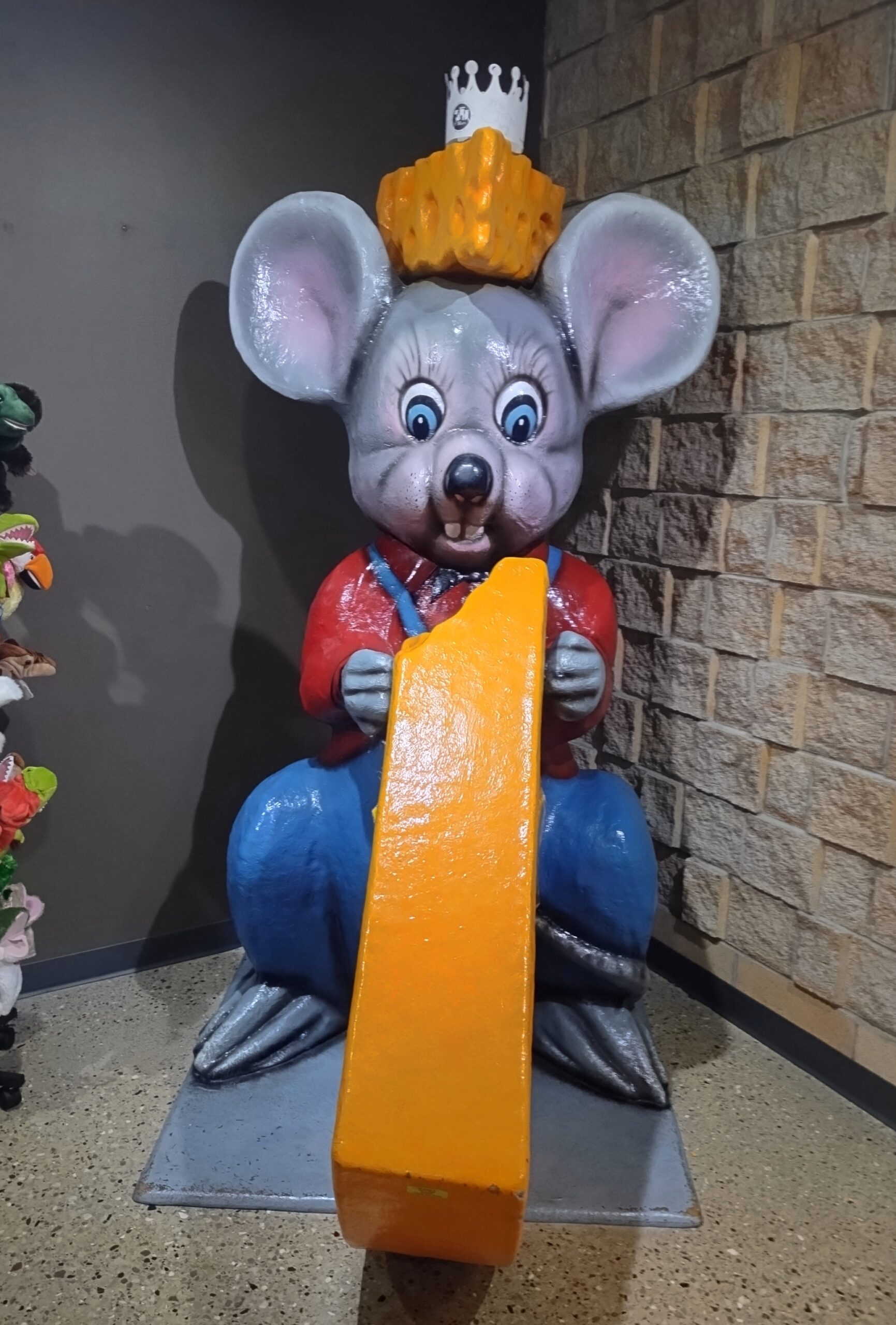
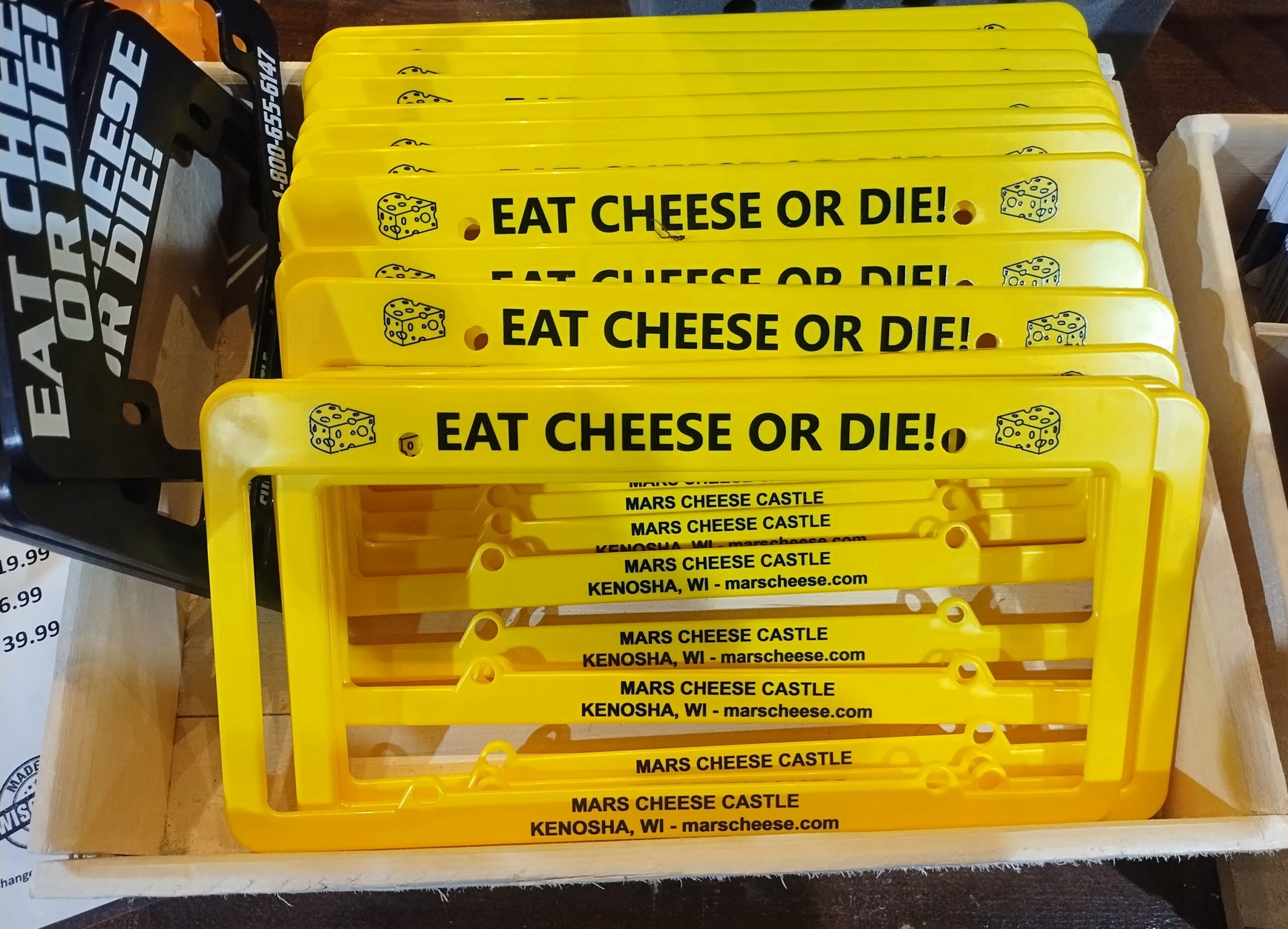
Inside, the mouse is still around. I don’t know that he has a name. Maybe Mario Mouse, after the original owner of Mars Cheese Castle, one Mario Ventura Sr., a gas station owner who pivoted into cheese in 1957 after his gas station burned down. Pivoting into cheese is a thing you can do in Wisconsin. Eat Cheese or Die.
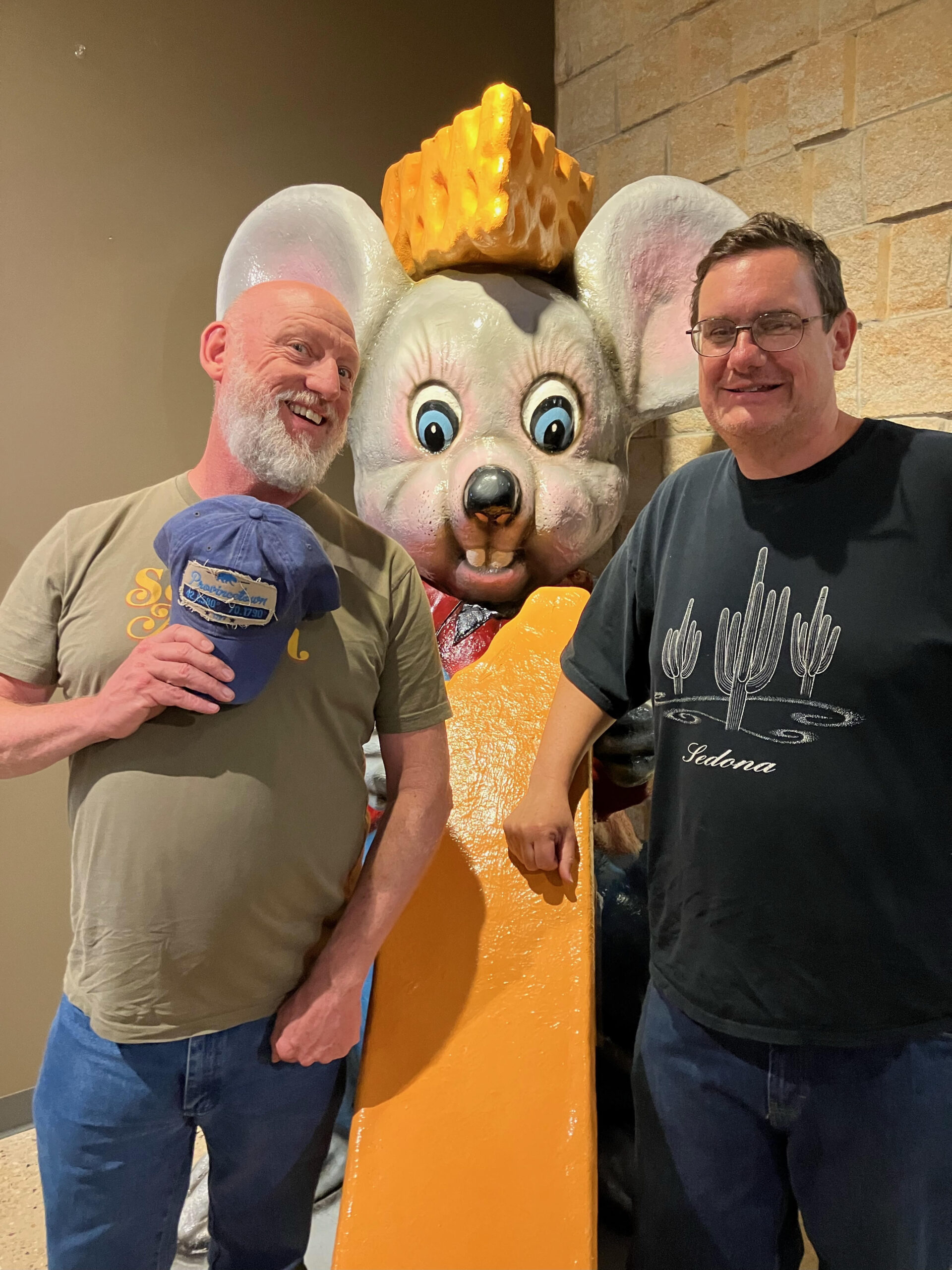
Tom recently sent me by email — out of the blue, coincidence or synchronicity? — a picture of us with the mouse from our ’22 trip around Lake Michigan. A favorite photo of us, he explained, and it is a good one.
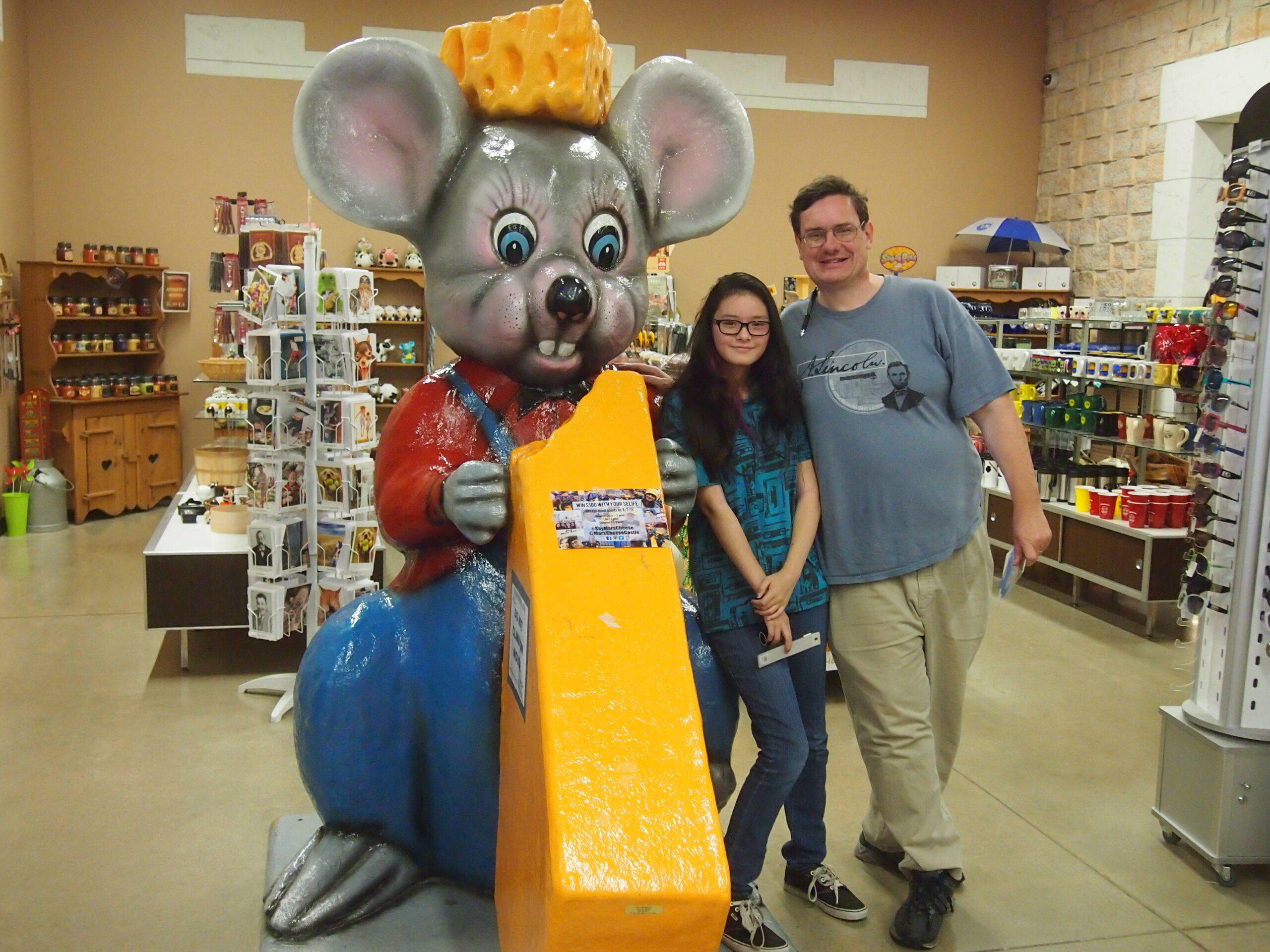
Of course, I’d been there before, such as in ’15. The mouse seems to have moved since then.
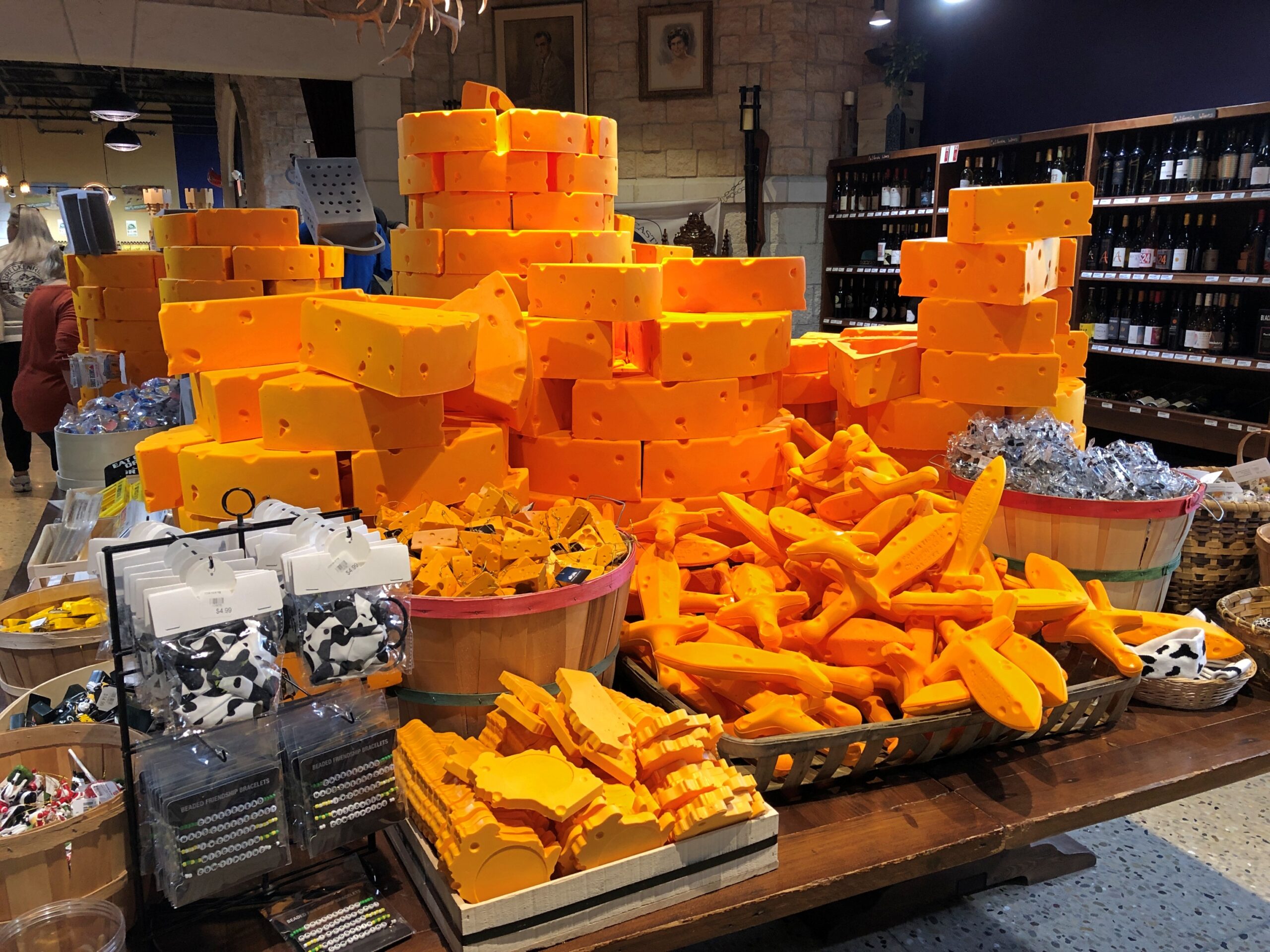
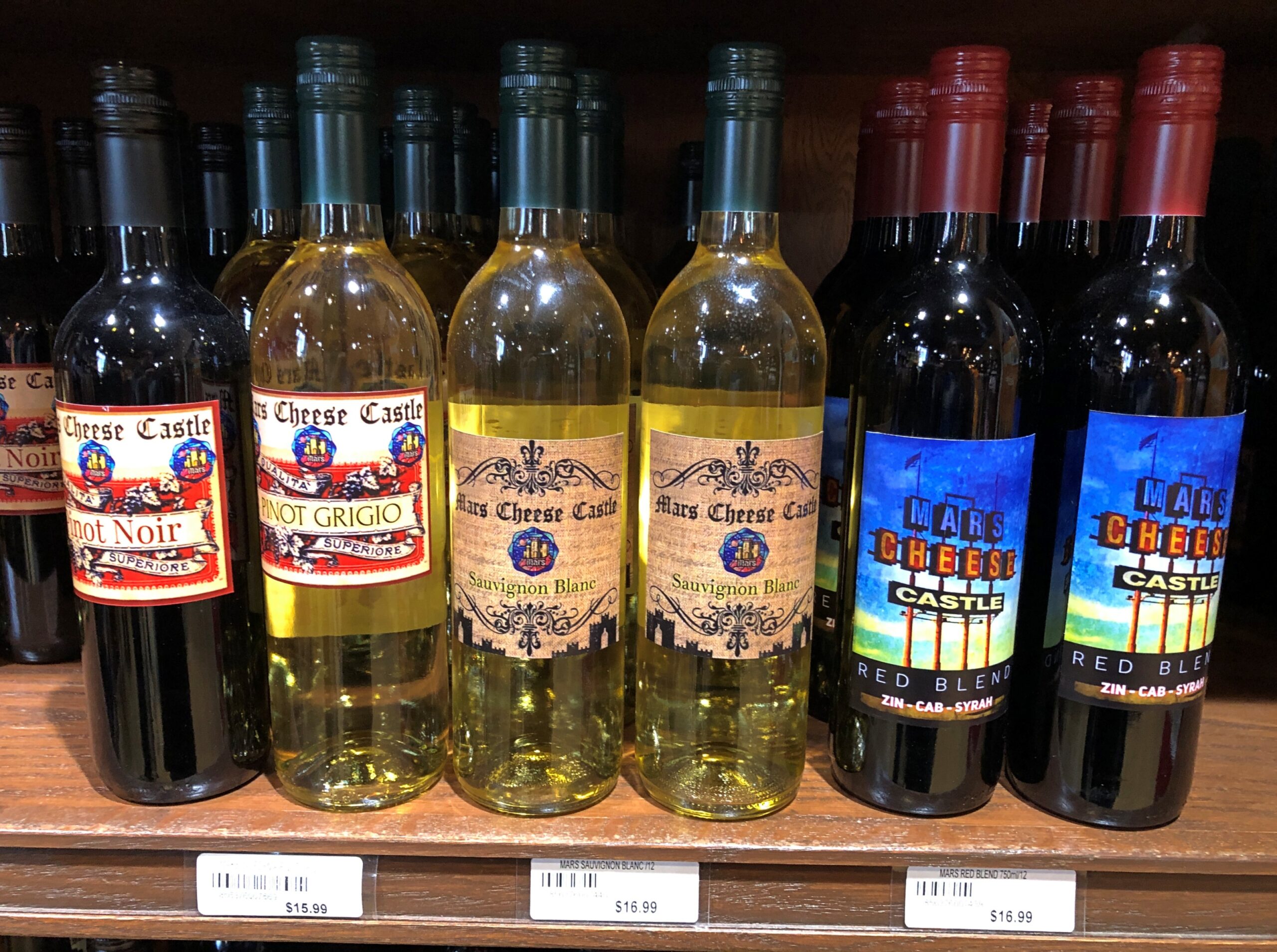
Cheese hats and other extruded yellow shapes are for sale, along with edible cheese, sausage and other meat, candy, beer and many other comestibles, plus knickknacks, gimcracks and gewgaws galore.
The tropics have temporarily set up camp here a few degrees south of 45 degrees North, with a run of wet, humid days. Not quite as hot as the actual tropics might be during the intermissions between rain, but warm enough.
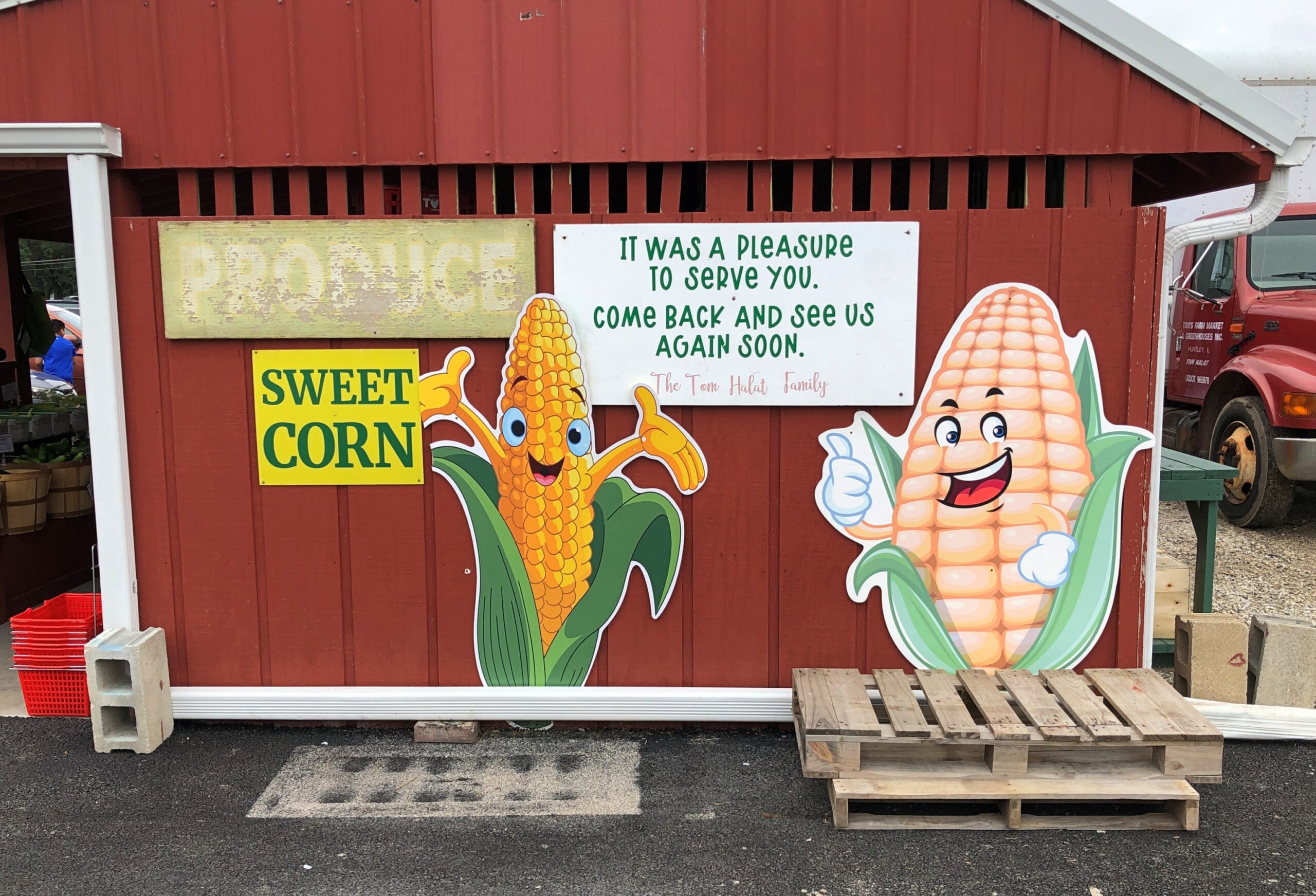
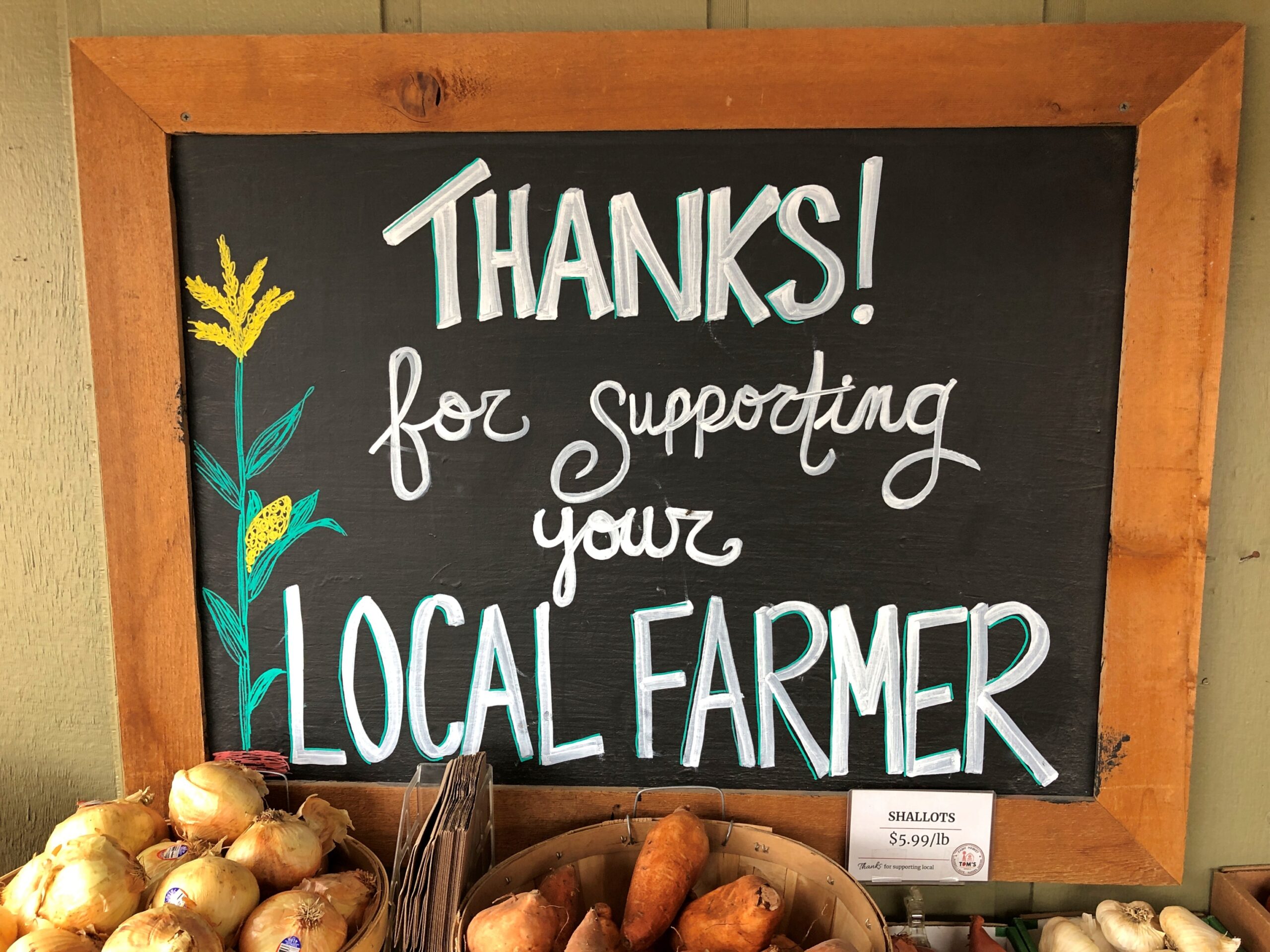
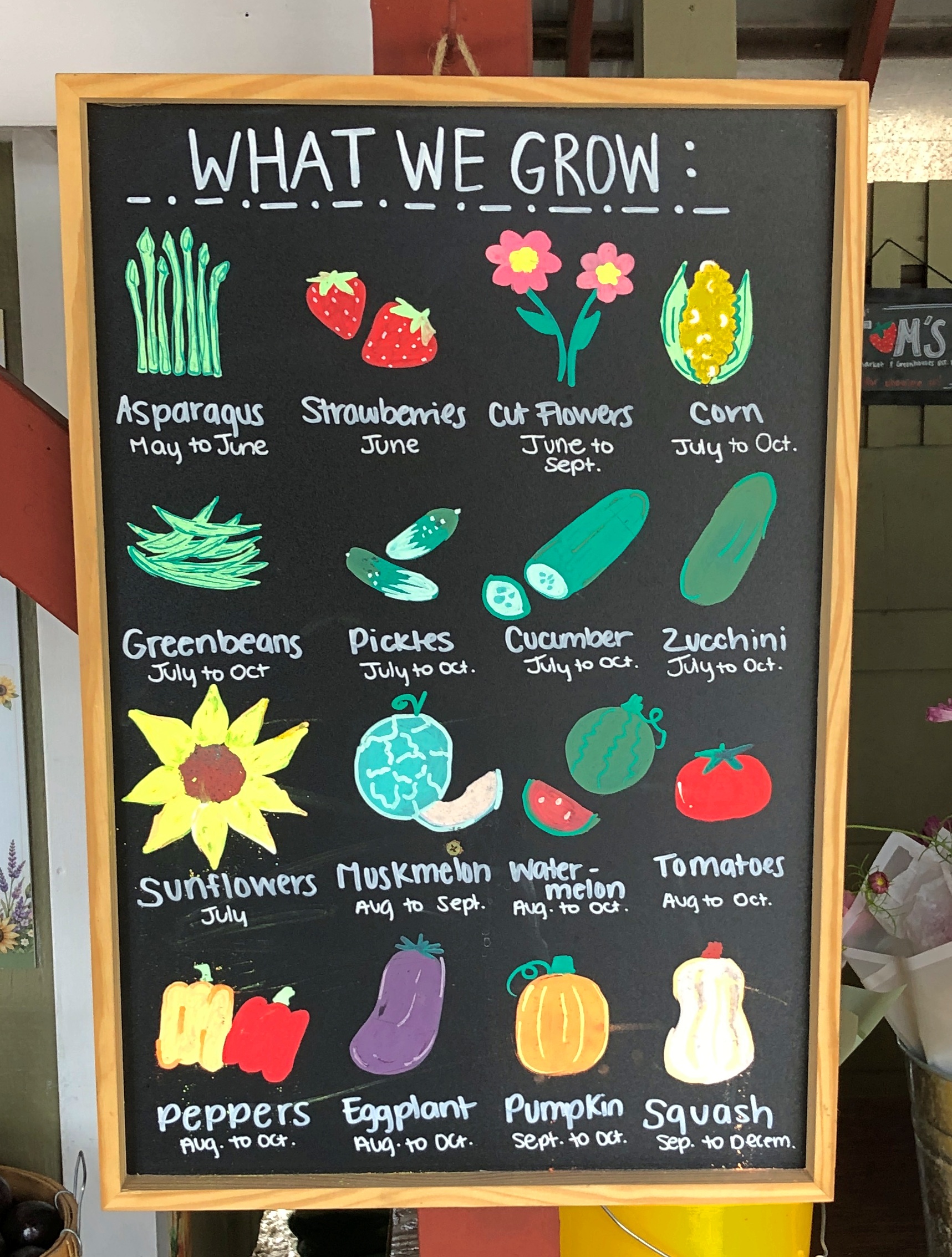
That didn’t keep us at home this weekend, and on Saturday while tooling along US 20 in Bartlett, Illinois (Lake Street, locally), we noticed that Tom’s Farm Stand was open for the season. The sight of the stand inspired in Yuriko a sudden hankering for corn on the cob, so we stopped.
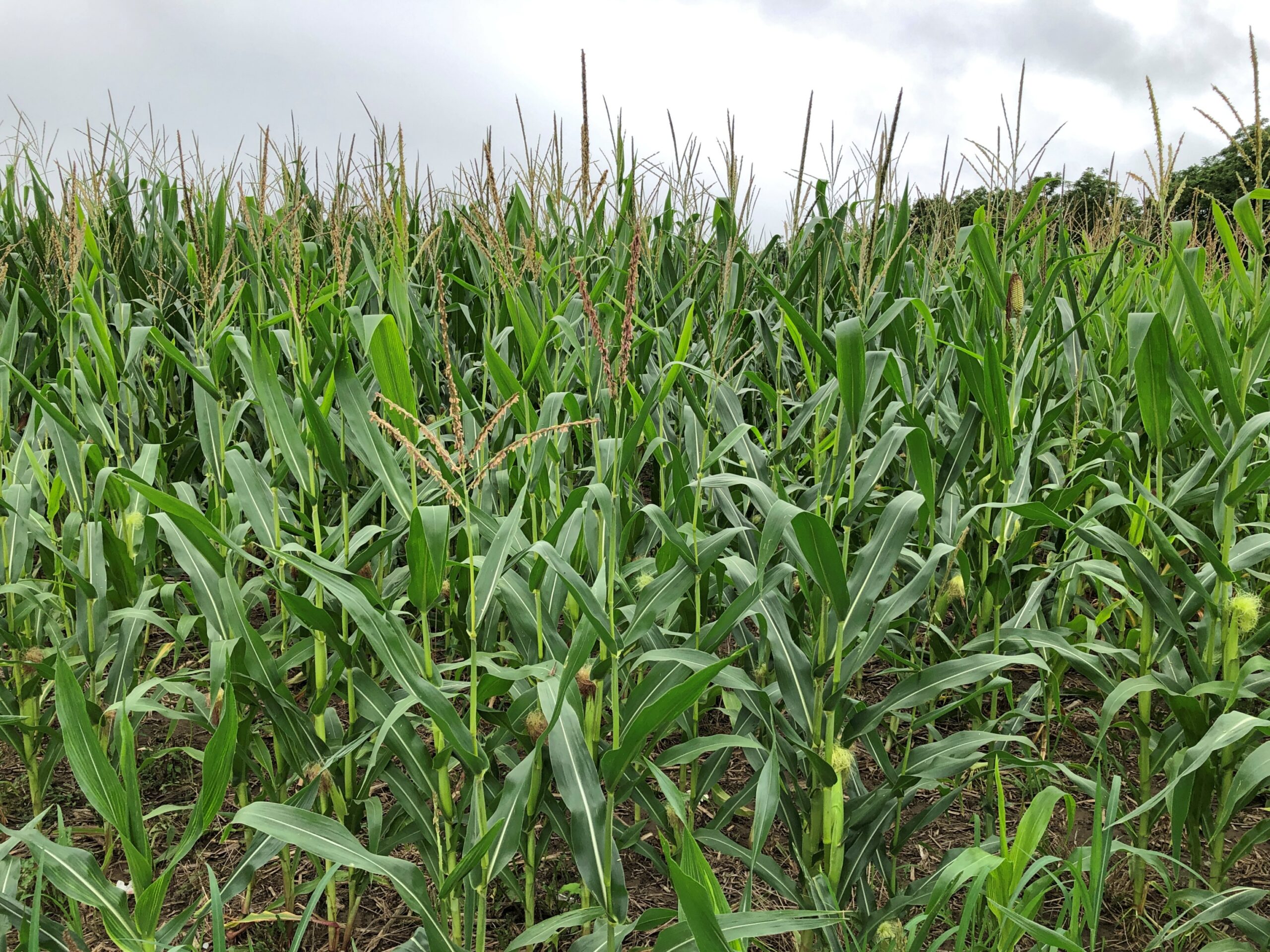
Tom’s is between the road and a wall of corn.
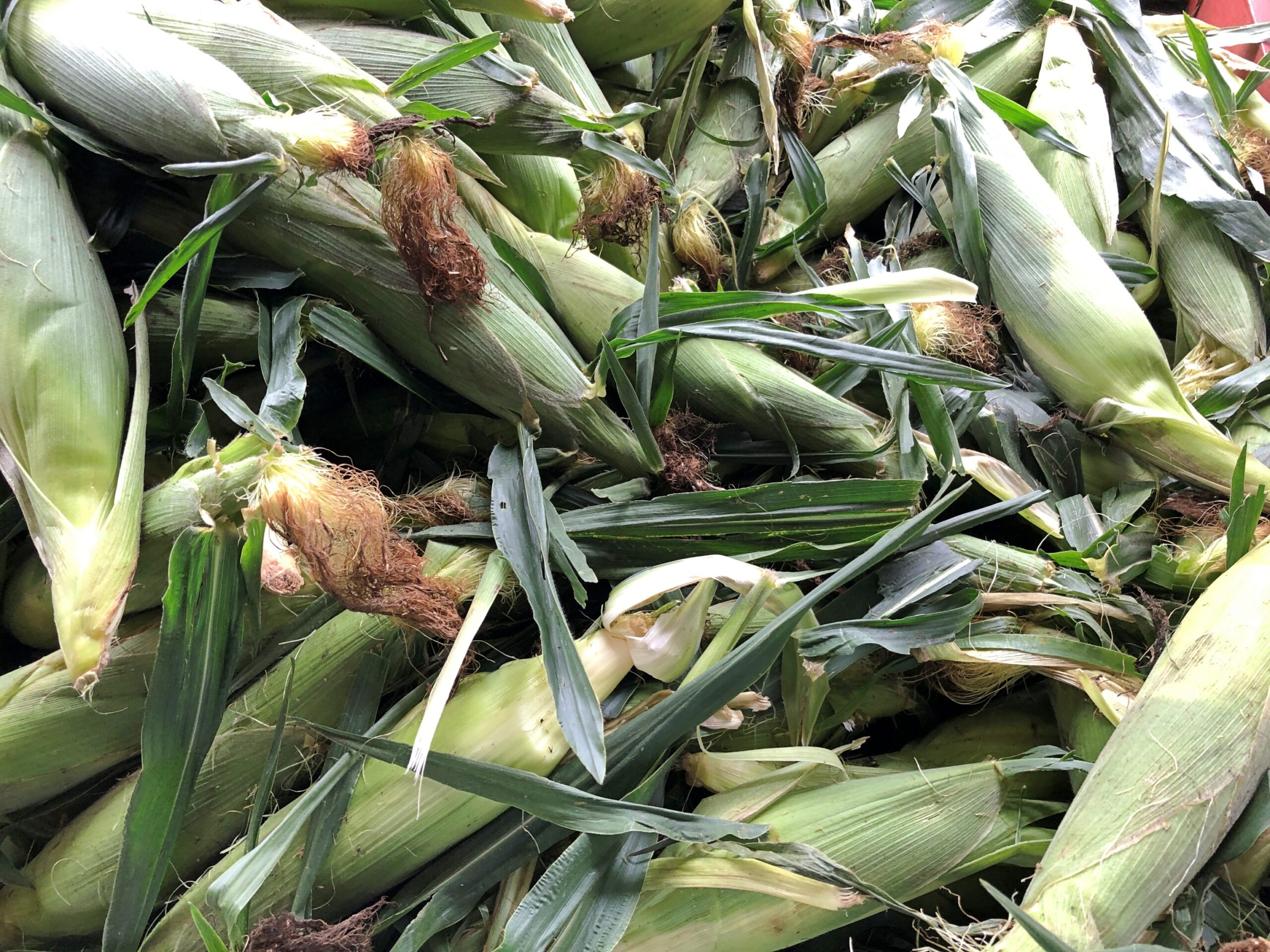
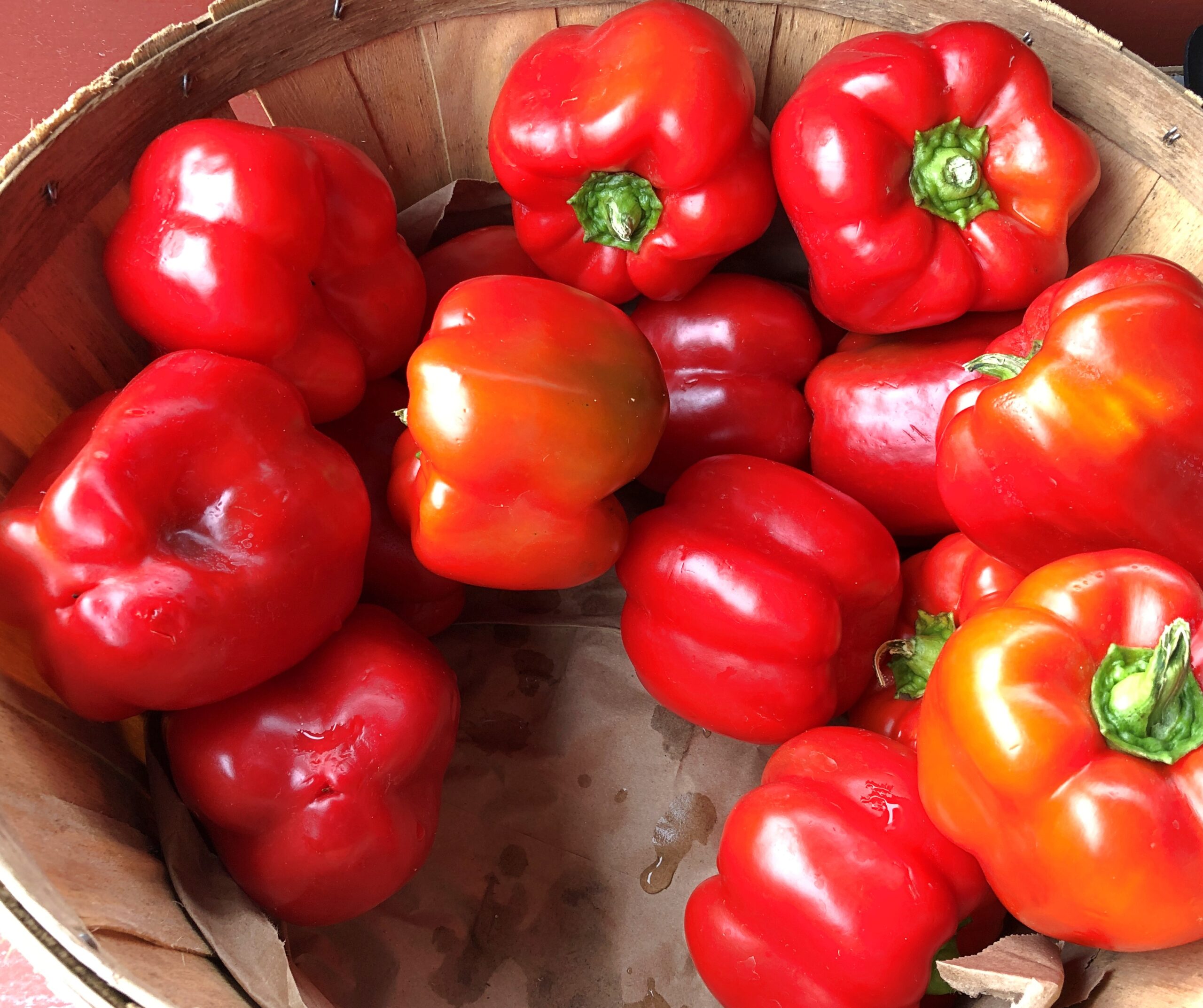
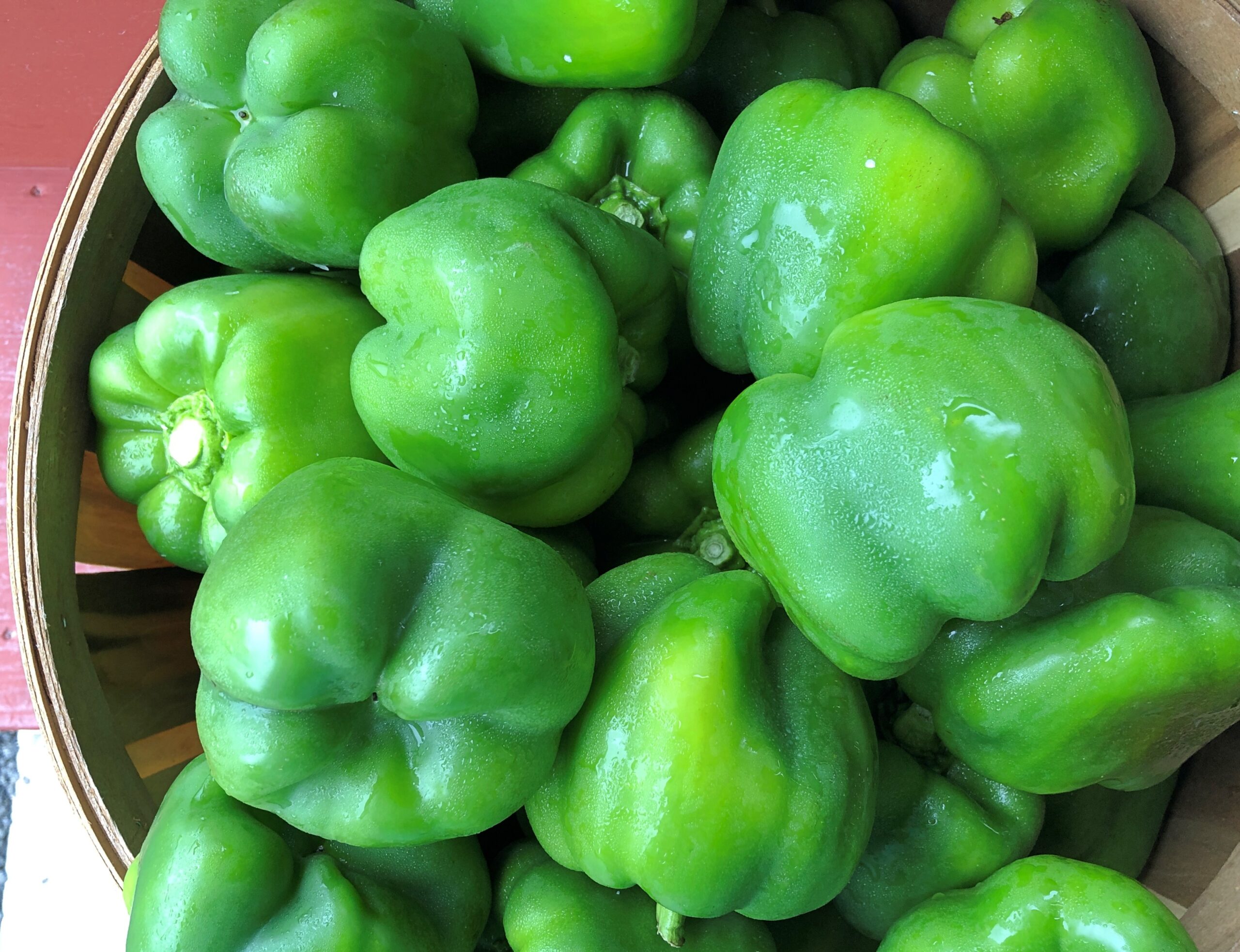
I don’t know whether that cornfield is part of the farm. That would certainly be convenient for Tom or his heirs, but anyway we found corn for sale, along with other opportunities to take still life photography.
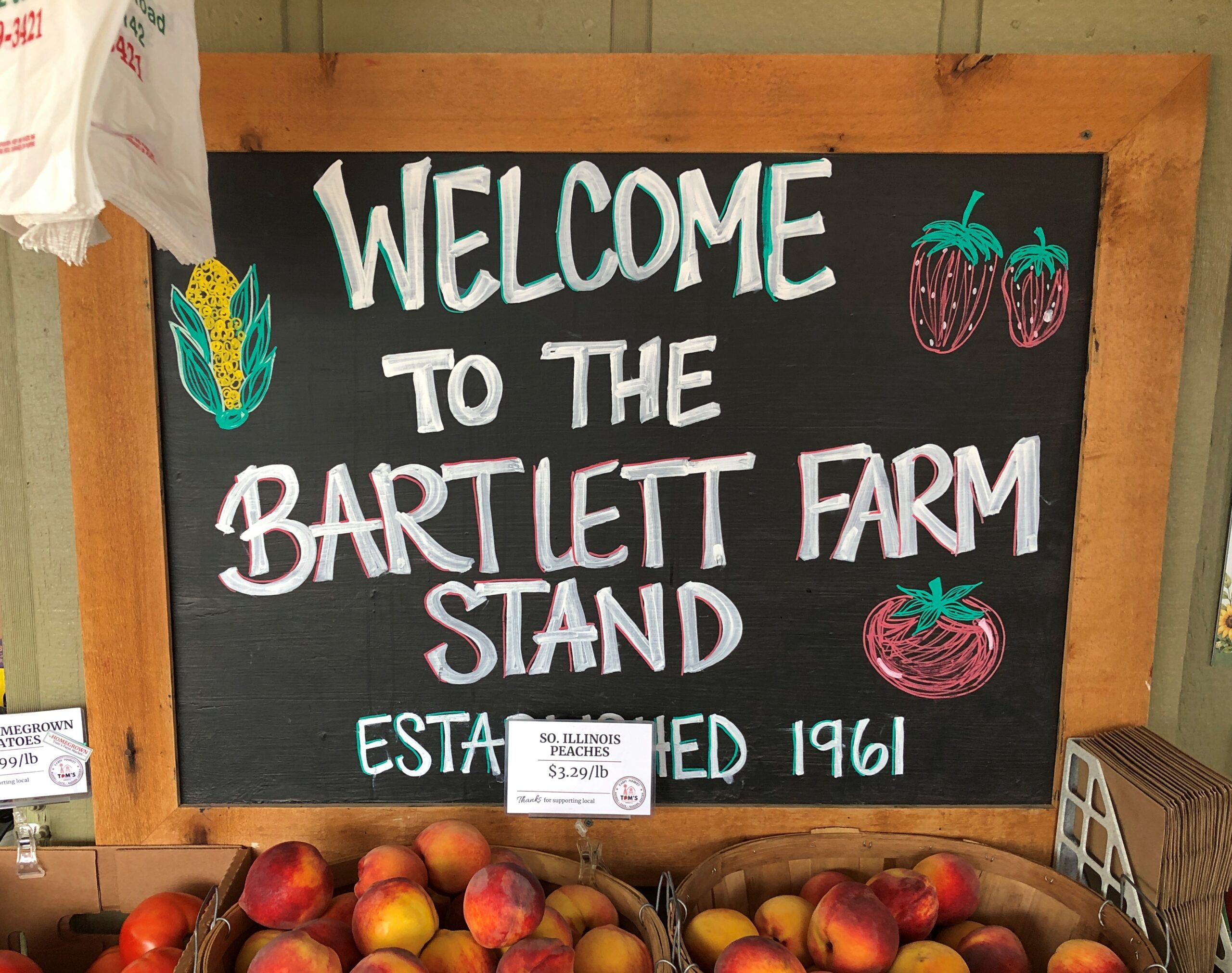
Also known as the Bartlett Farm Stand, it seems.
Other chalkboard signs.
My images didn’t capture it, but the place was fairly busy. I don’t know whether you can call the stand a Bartlett institution or not, but it does have staying power: founded in 1961, just like me, and maybe going to outlast me.
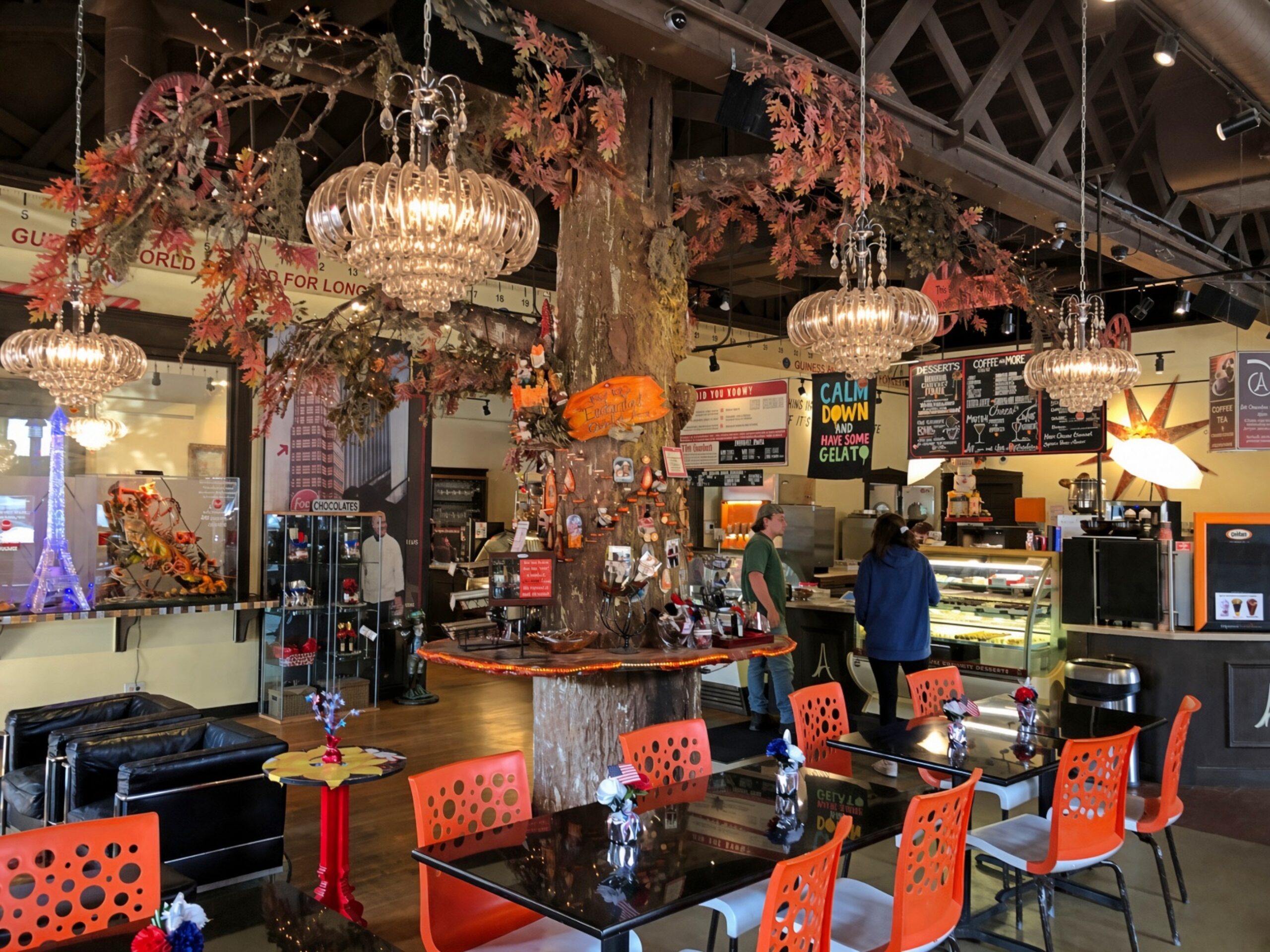
On Third Street in Geneva, Illinois, a few weeks ago, we went looking for something cold to drink, since it was a warm day. A place called Coffee, Cones & Cabernet looked like it might provide something refreshing, and it did: iced coffee for Yuriko and lemonade – really good lemonade – for me. We weren’t in the market for the cone or cabernet part of the equation at that moment, but I’m sure everything else there is good, or better, certainly to judge by the racks of chocolates behind glass or the aroma produced by a coffee maker.
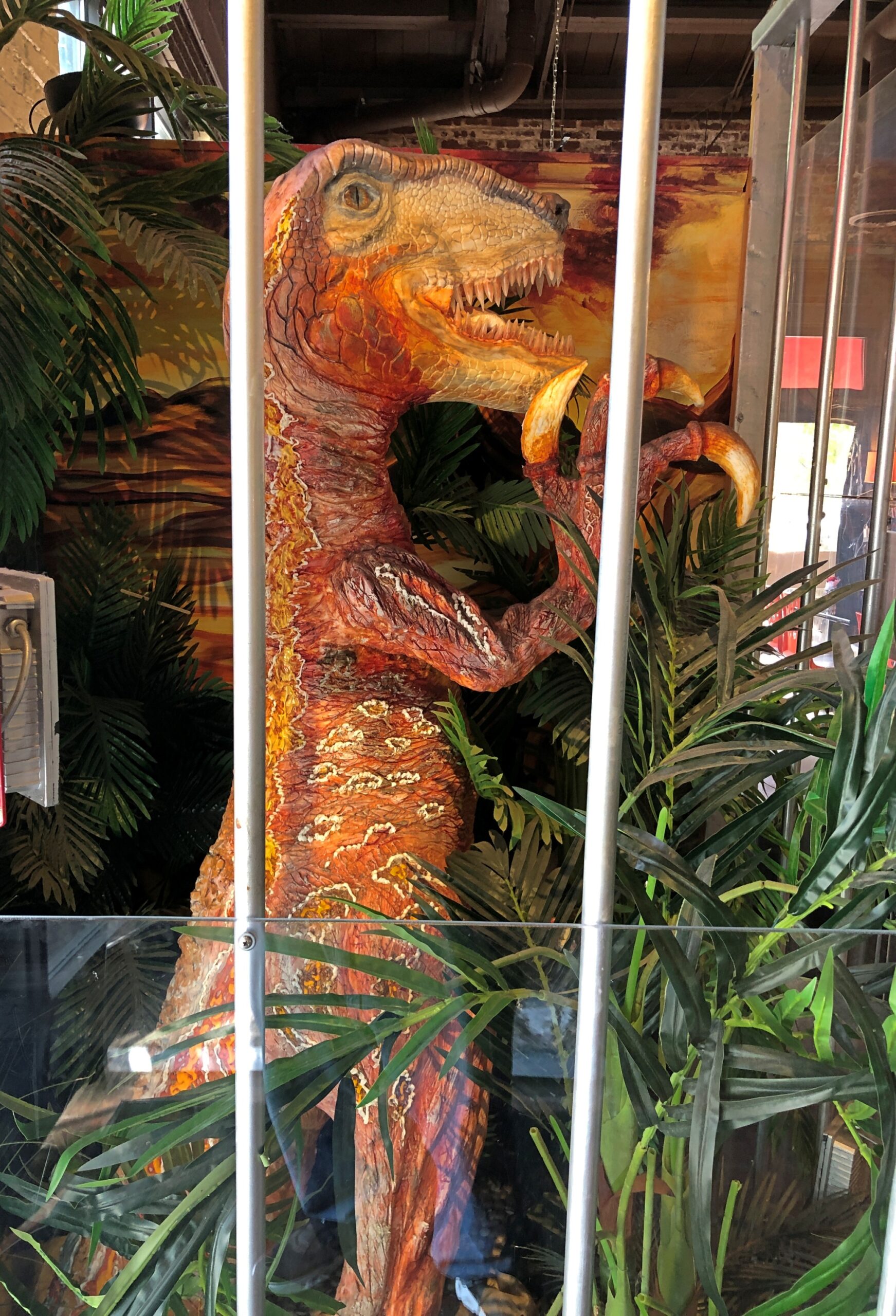
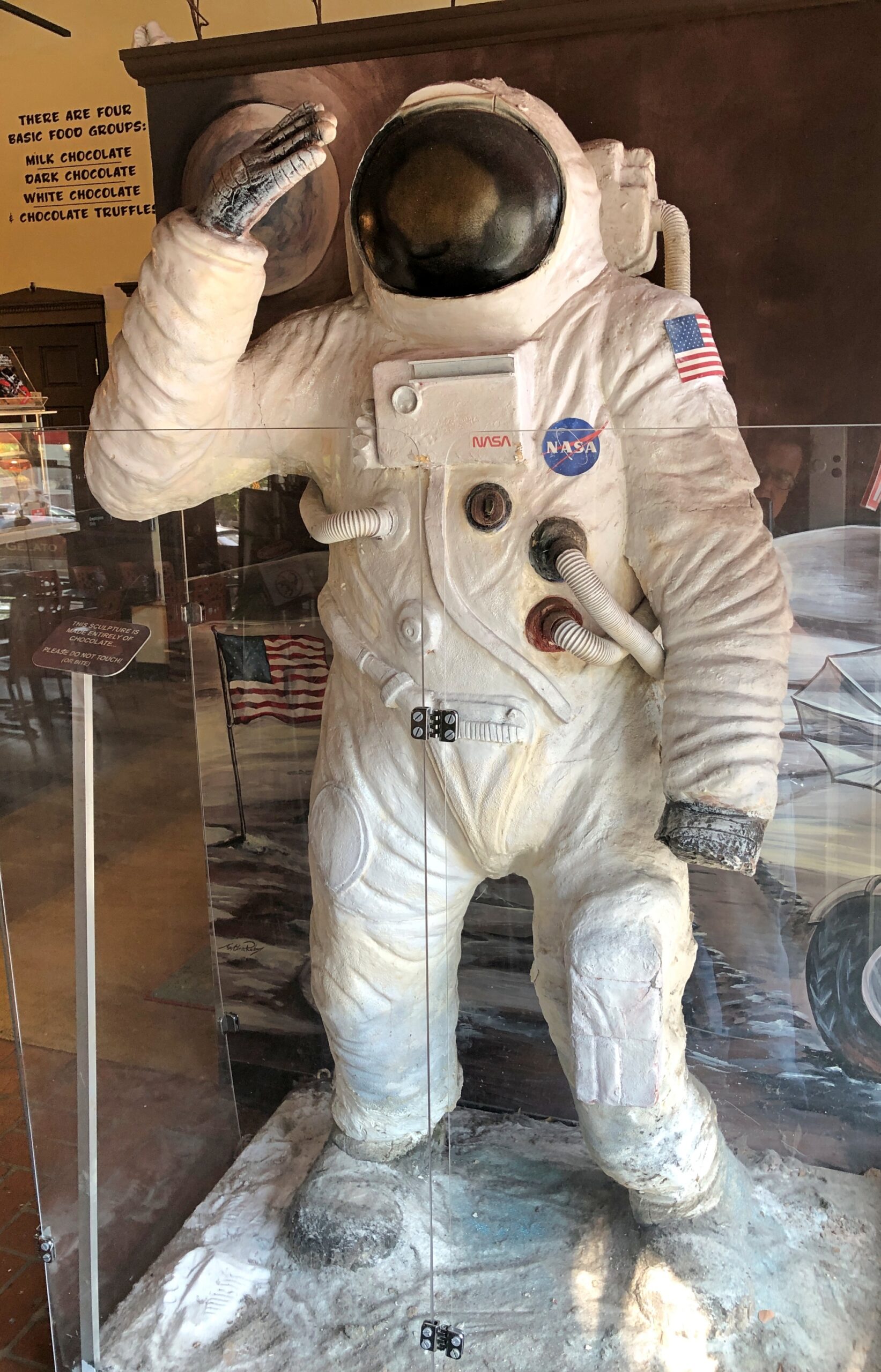
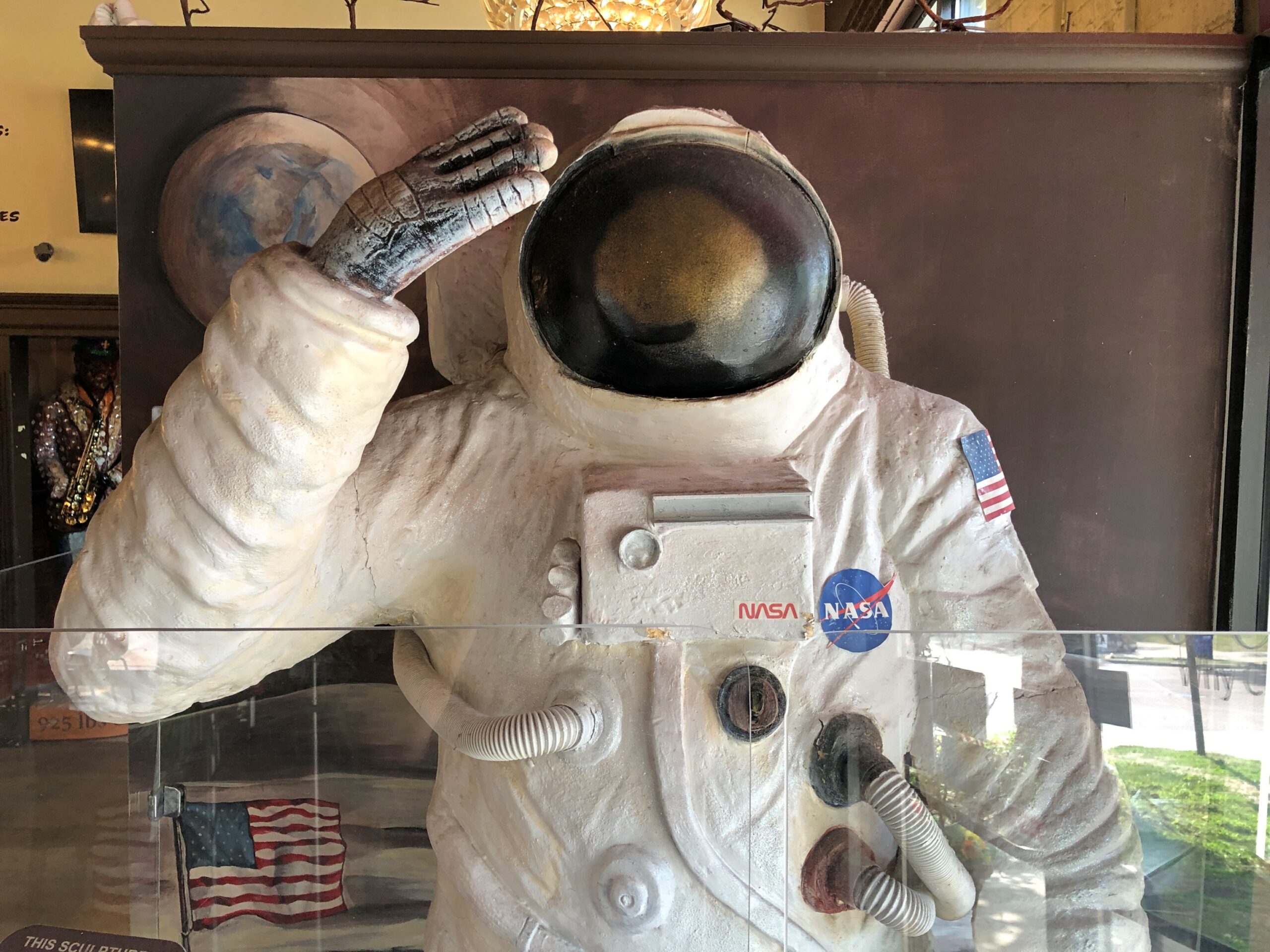
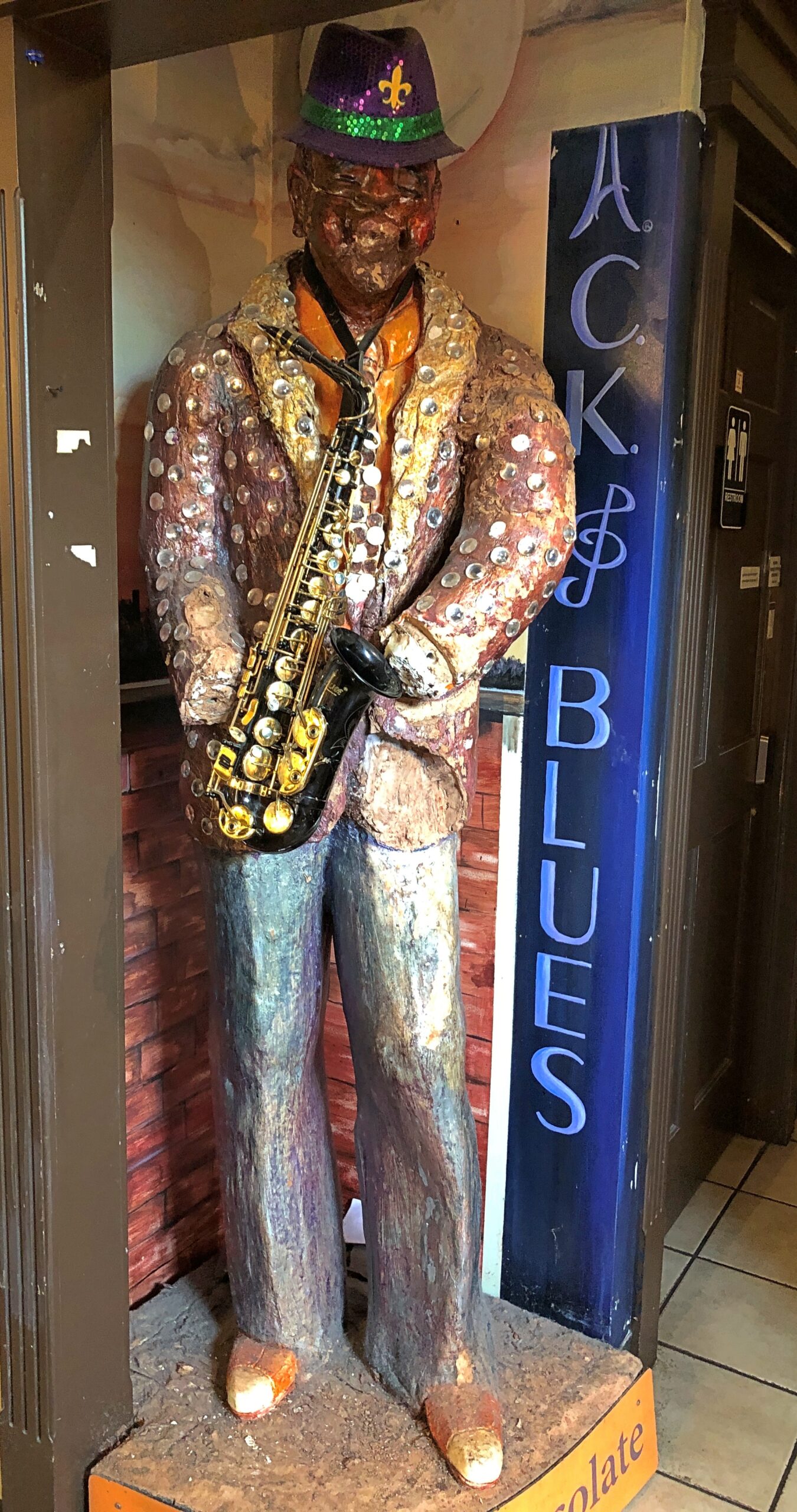
When selling luxury comestibles, retailers are at risk of a posh sameness, but there was absolutely no risk of that here. We’d stepped into the former All Chocolate Kitchen, whose legacy includes a display of sculptures around the shop: a life-sized depiction of Neil Armstrong in his moon suit, a dinosaur, a peacock, a New Orleans jazz man, and more, all made of chocolate and sugar.
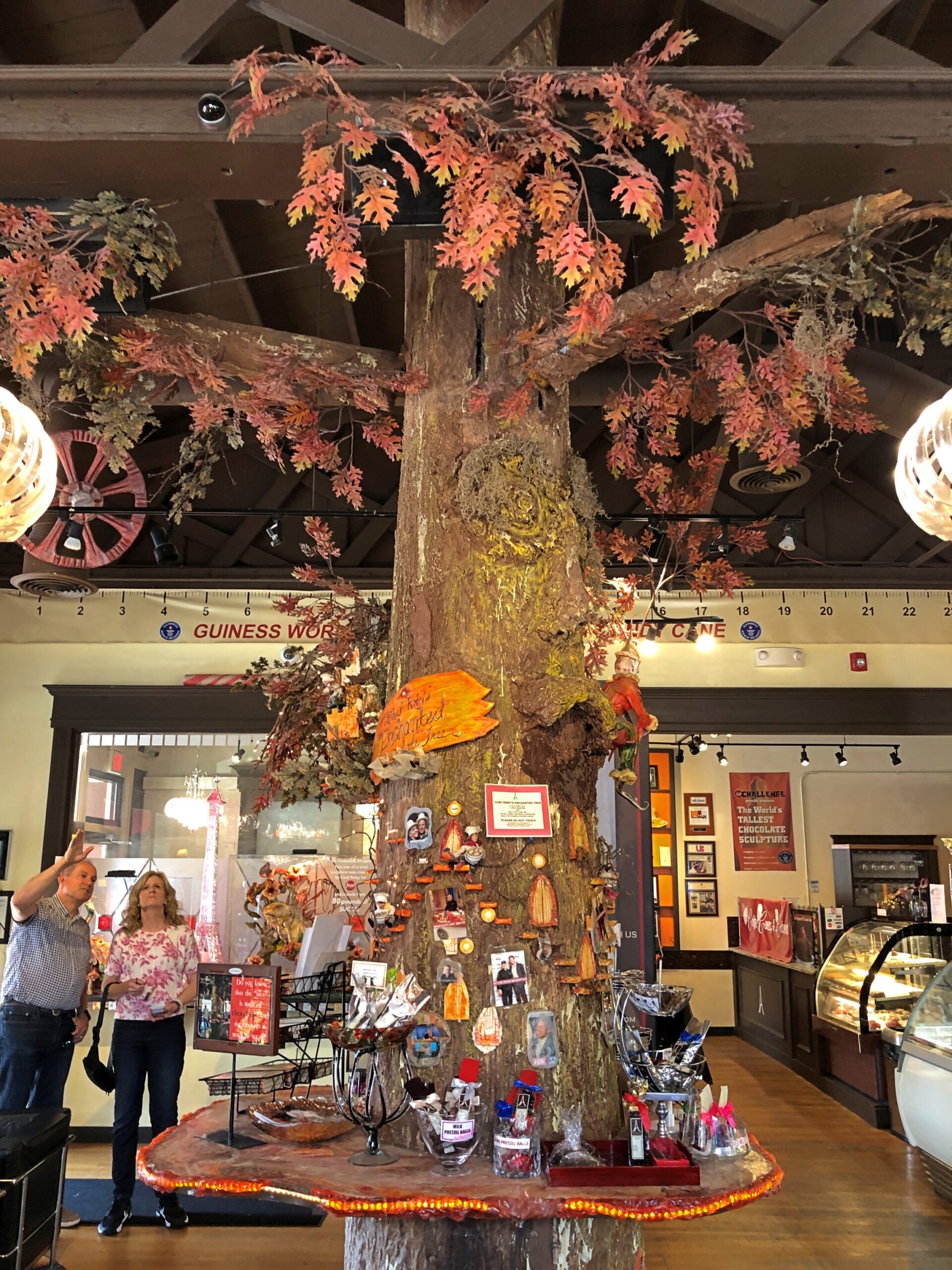
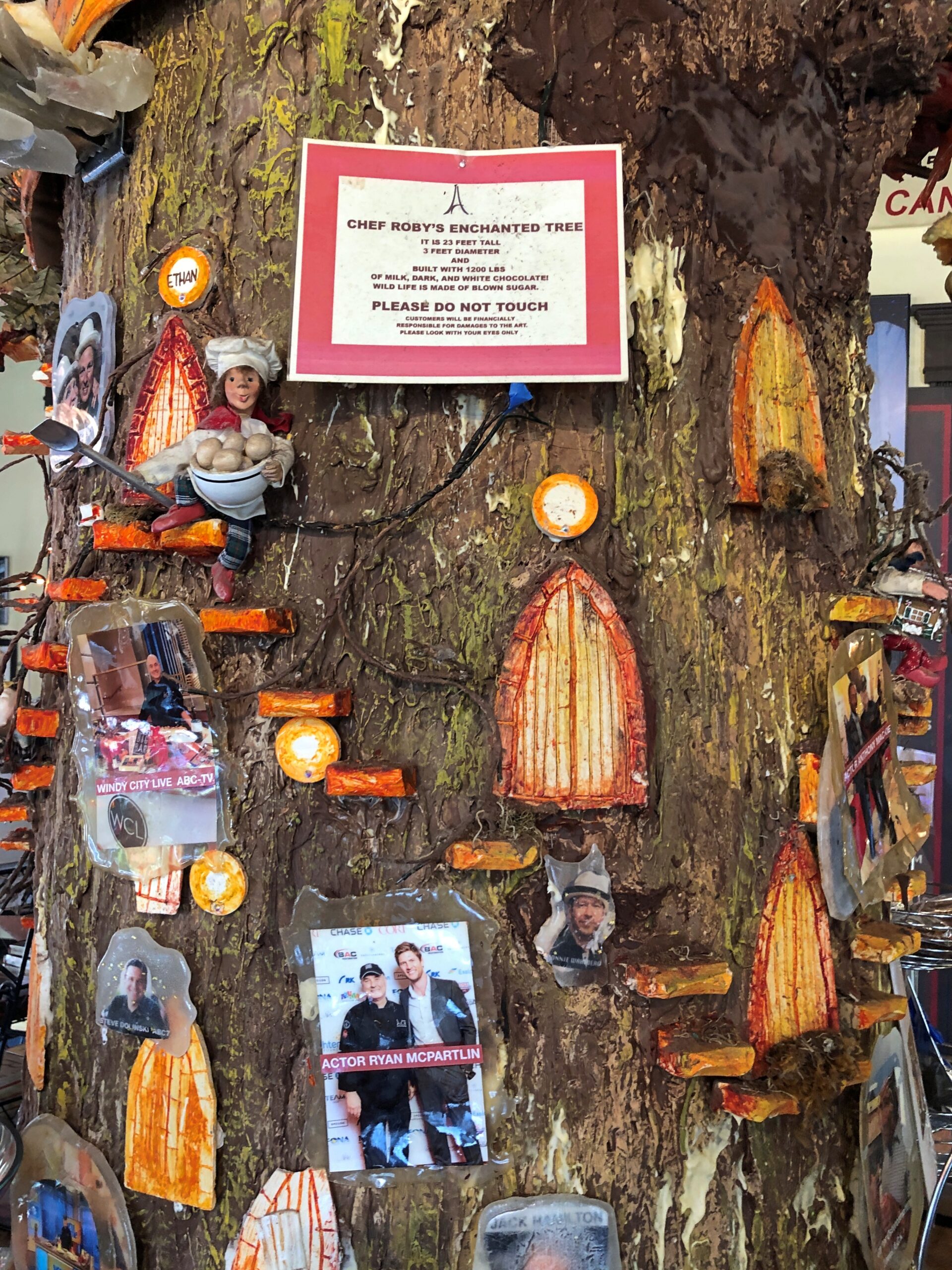
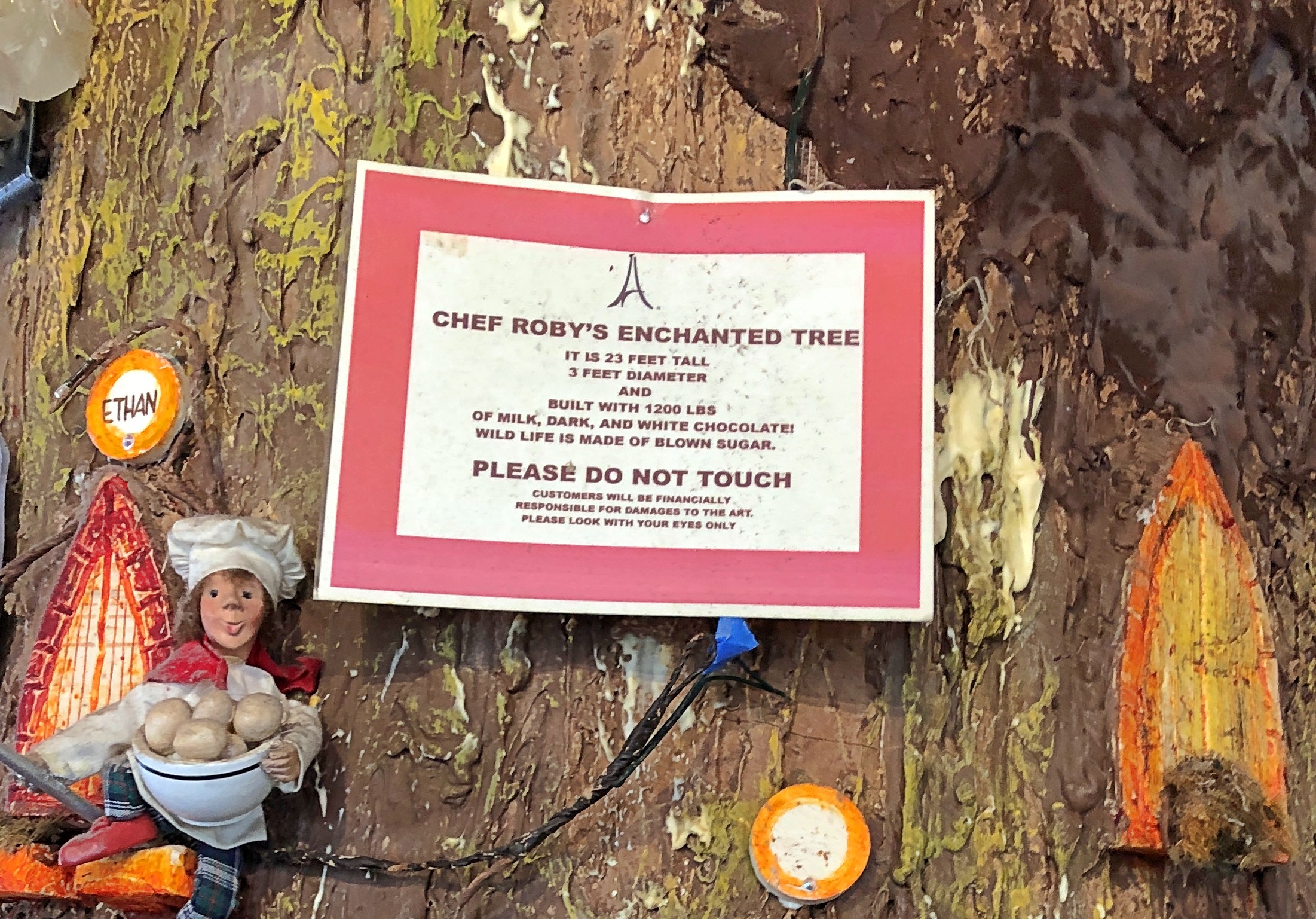
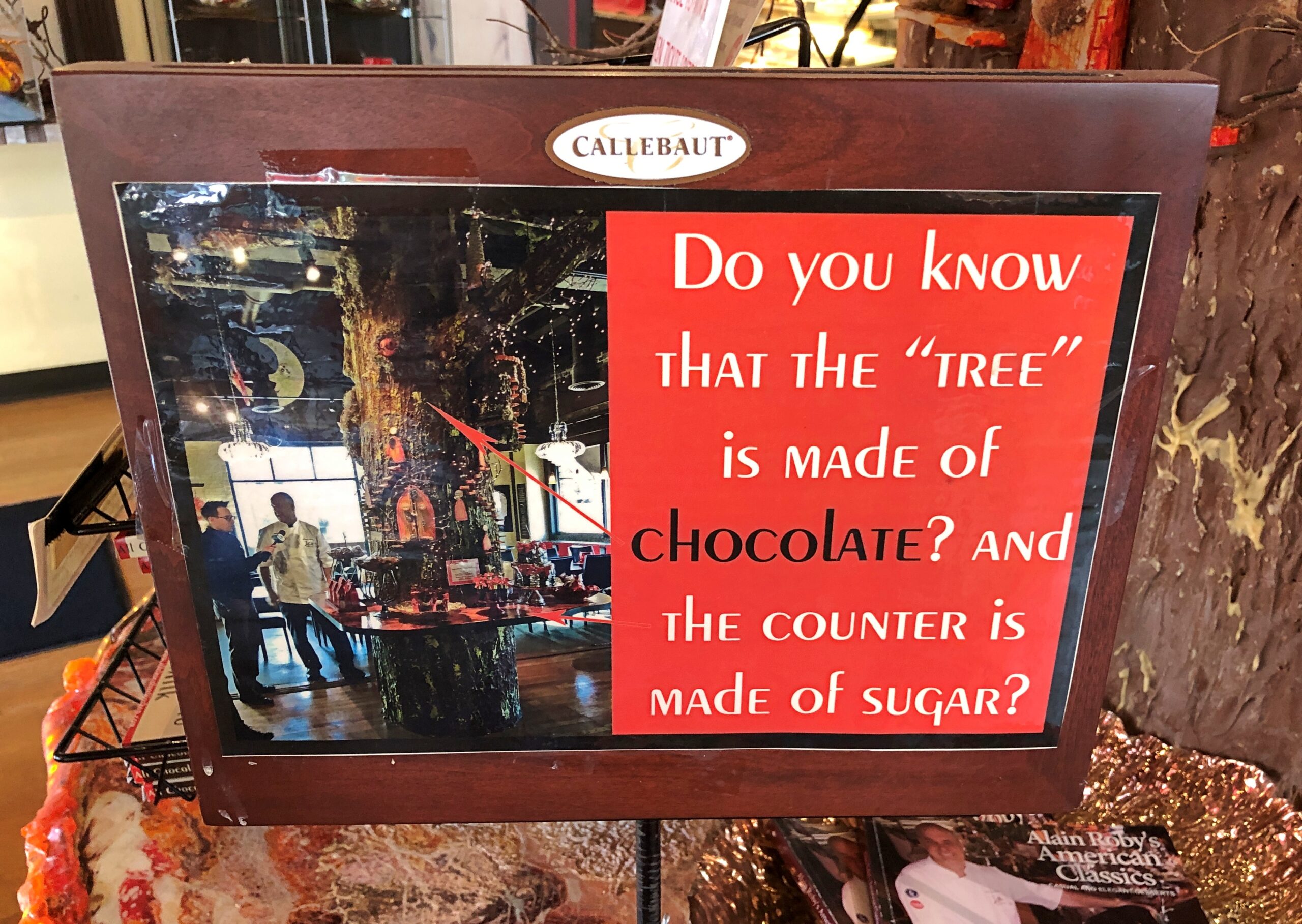
The centerpiece chocolate sculpture is an enormous tree, “Chef Roby’s Enchanted Tree, ” lording over the customer seating area at center of the shop.
A thing of awe: 1,200 pounds of dark, milk and white chocolate, 23 feet tall and three feet in diameter. You know, as big as an actual tree. Chocolate isn’t usually accorded such permanence. I know I don’t think of it that way.
No samples, please.
Sugar is also a medium at this unusual gallery.
The shop changed hands only in November, when an employee, Marissa Kirch, bought the business from Chef Alain Roby and his wife Esther Roby when they retired.
Apparently we’d happened onto the work of Chef Roby, as famed a pastry chef as that profession has, at least to judge by his fairly long list of accomplishments and the fact that I don’t know much about that particular world. If for some reason he isn’t as famed in that world as I think he is, he should be.
“Coffee, Cones, & Cabernet continues to adhere to the recipes of Chef Alain Roby and the previous business and employees of All Chocolate Kitchen,” the shop web site says. “Chef Alain Roby is a three-time Guinness World Record holder, a world-renowned pastry chef, and an author who has made multiple appearances on the Food Network and The Martha Stewart Show.”
Being on the Food Network or rating an entry (or three! including world’s longest candy cane) in GuinnessWorld Records is all well and good, but I’d say the grand scope of Roby’s talent is nowhere more apparent than the shop itself. We can start small – which isn’t small at all, considering the effort that must have gone into it – and work up from there.
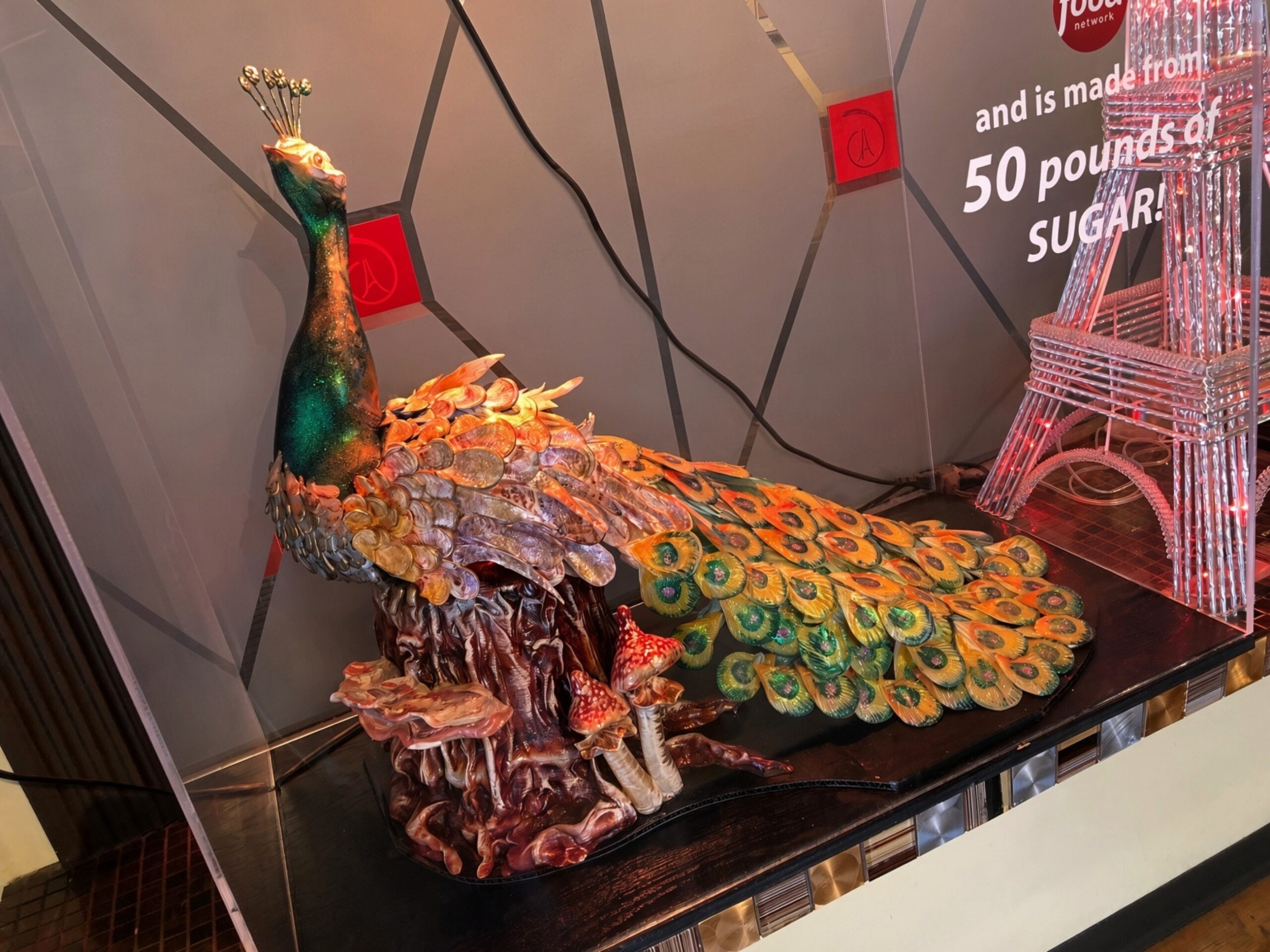
A 50-lb. sugar peacock.
A chocolate dinosaur behind electrified bars. I’m sure you’d get an unpleasant but mild shock, but even so that’s a first at a chocolate shop. Or any kind of shop. I didn’t test it.
Neil Armstrong, bold explorer, done in white chocolate. Looking a little unnerving close up, to be honest, but still, quite the work.
Says blues in the background, but I’m reminded of jazz.
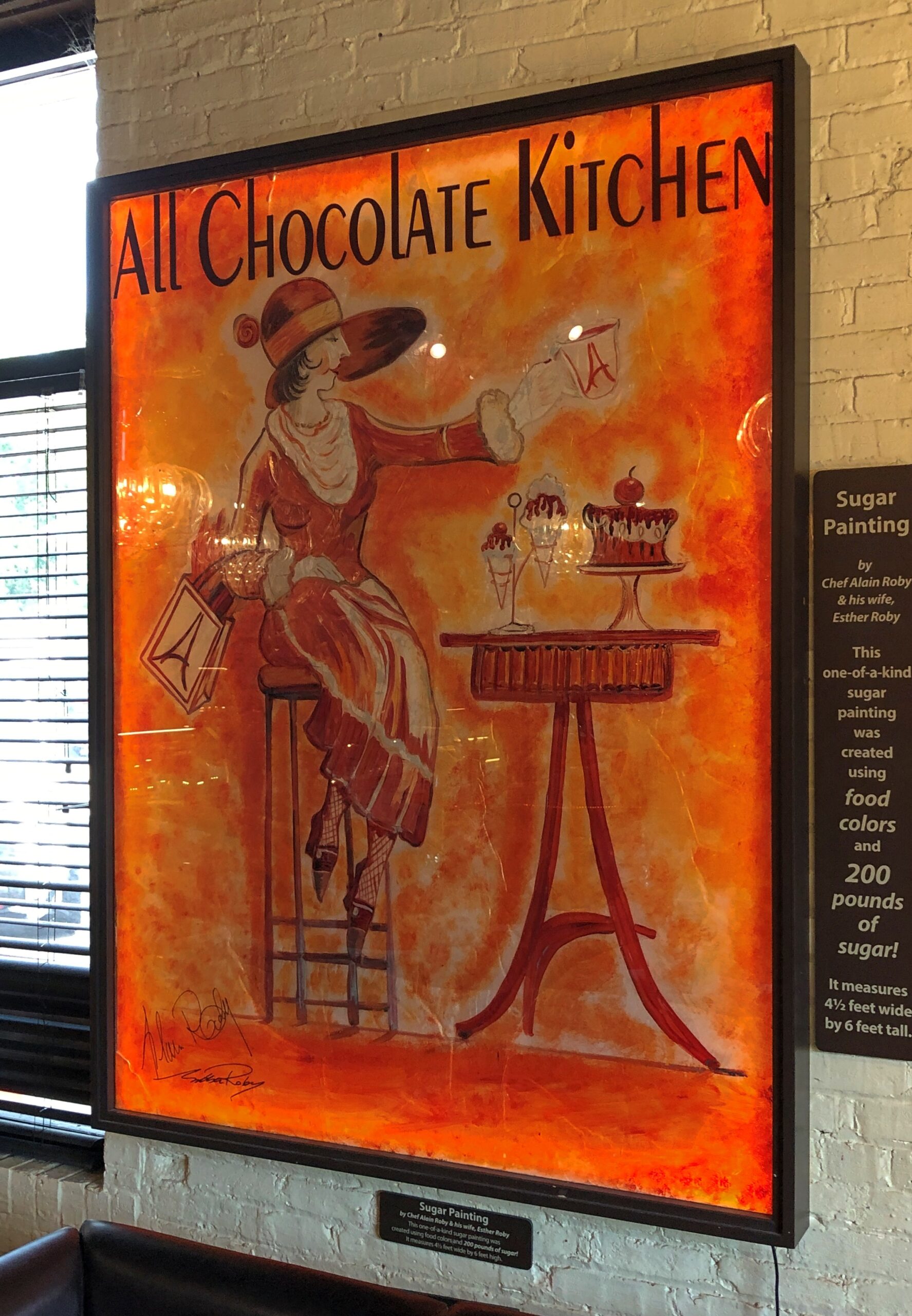
An homage to the shop itself, in sugar and food coloring.
We lounged around a little while, savoring our respective beverages, and enjoying the fact that the shop was about 15 degrees F. cooler than the outside. It occurred to me that the HVAC system has to work flawlessly during the summer. I hope it continues to do so for many summers to come.
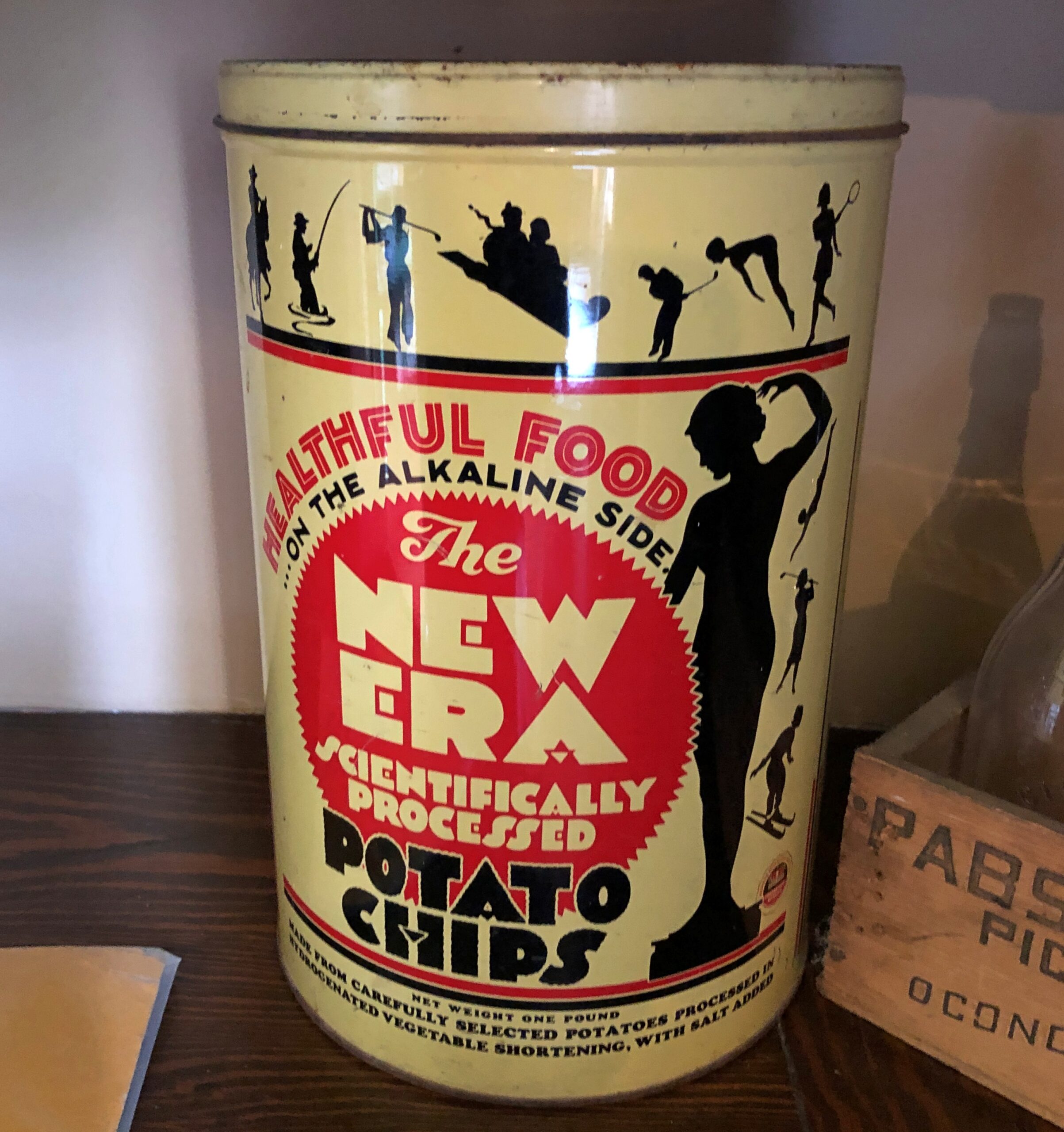
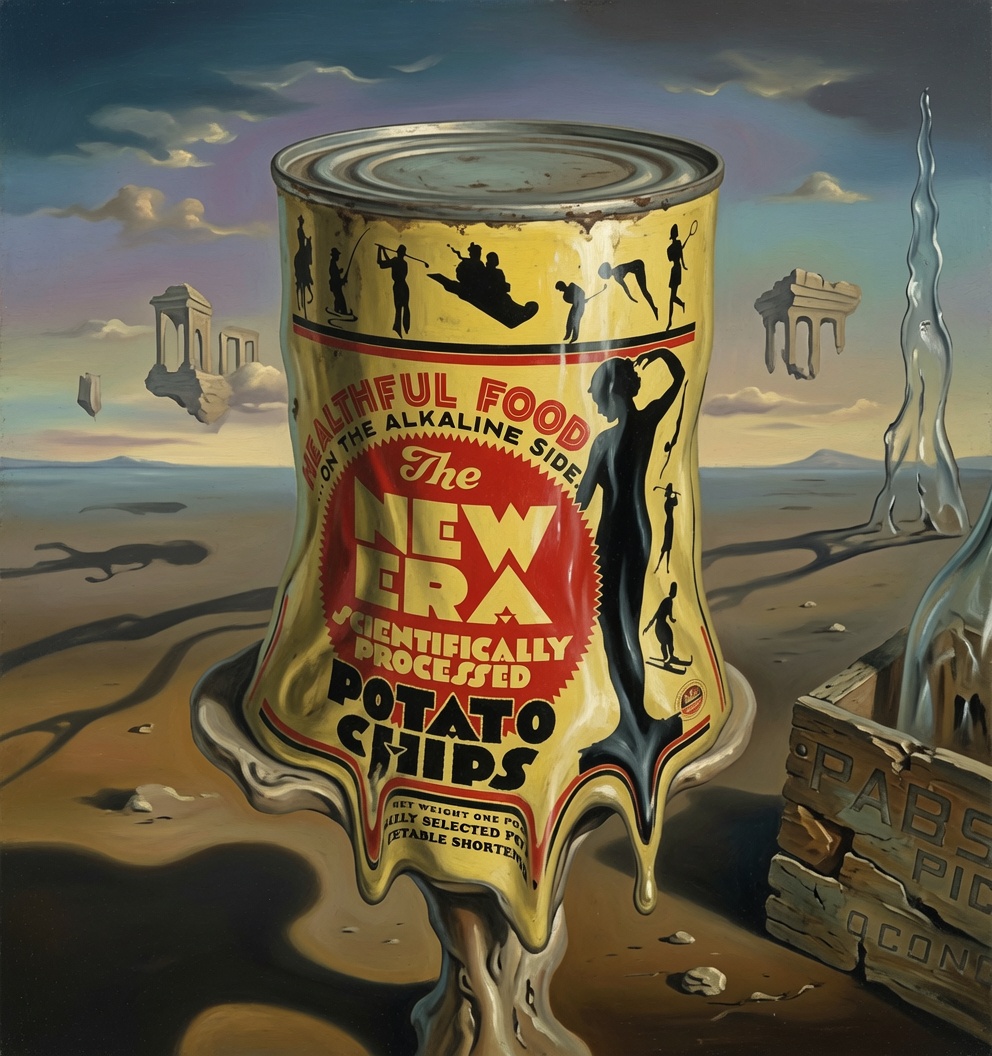
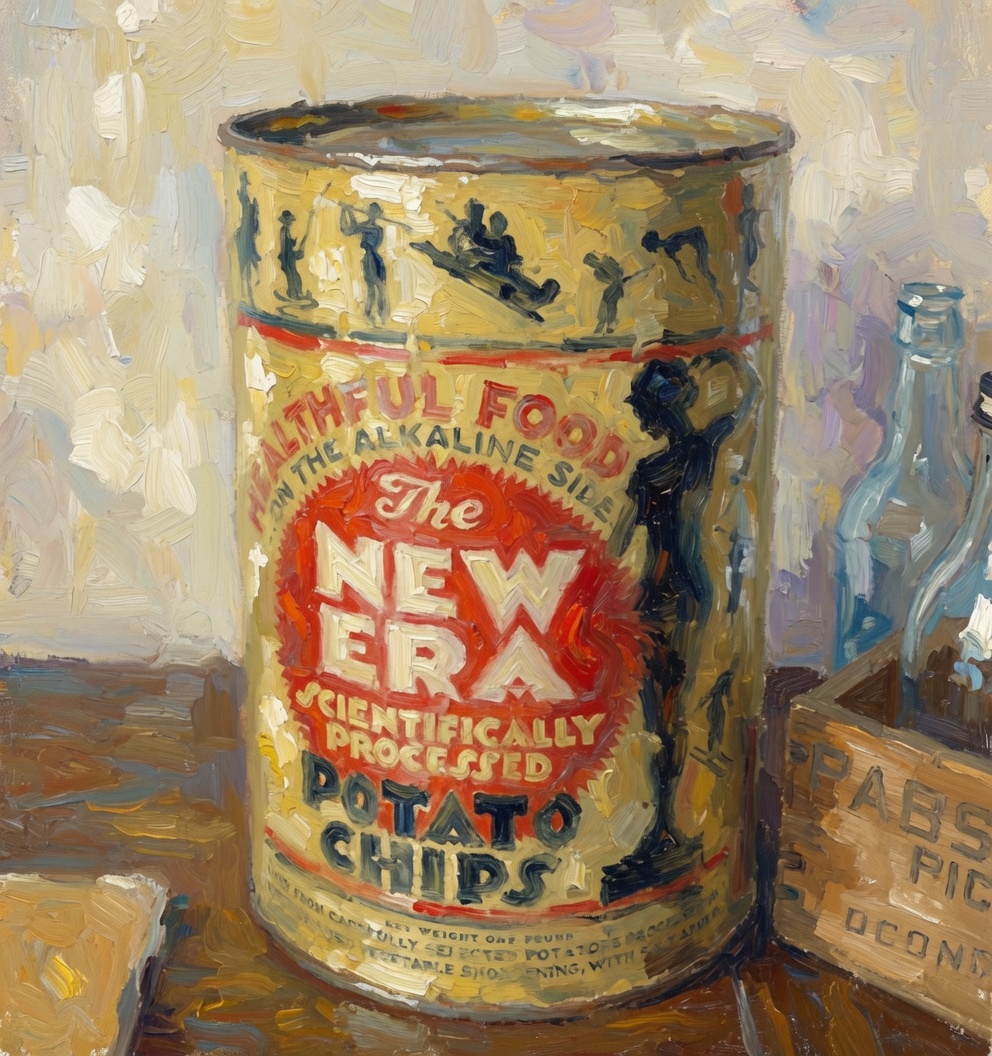
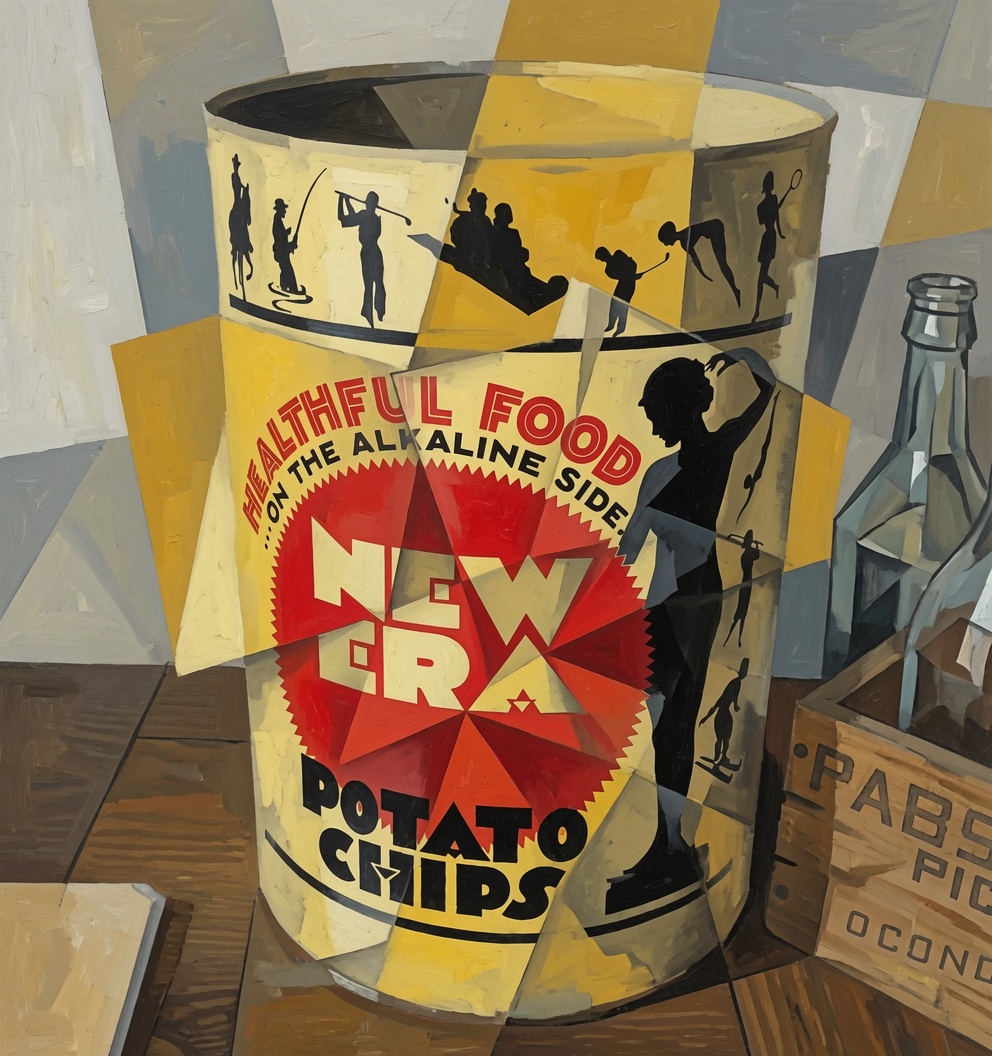
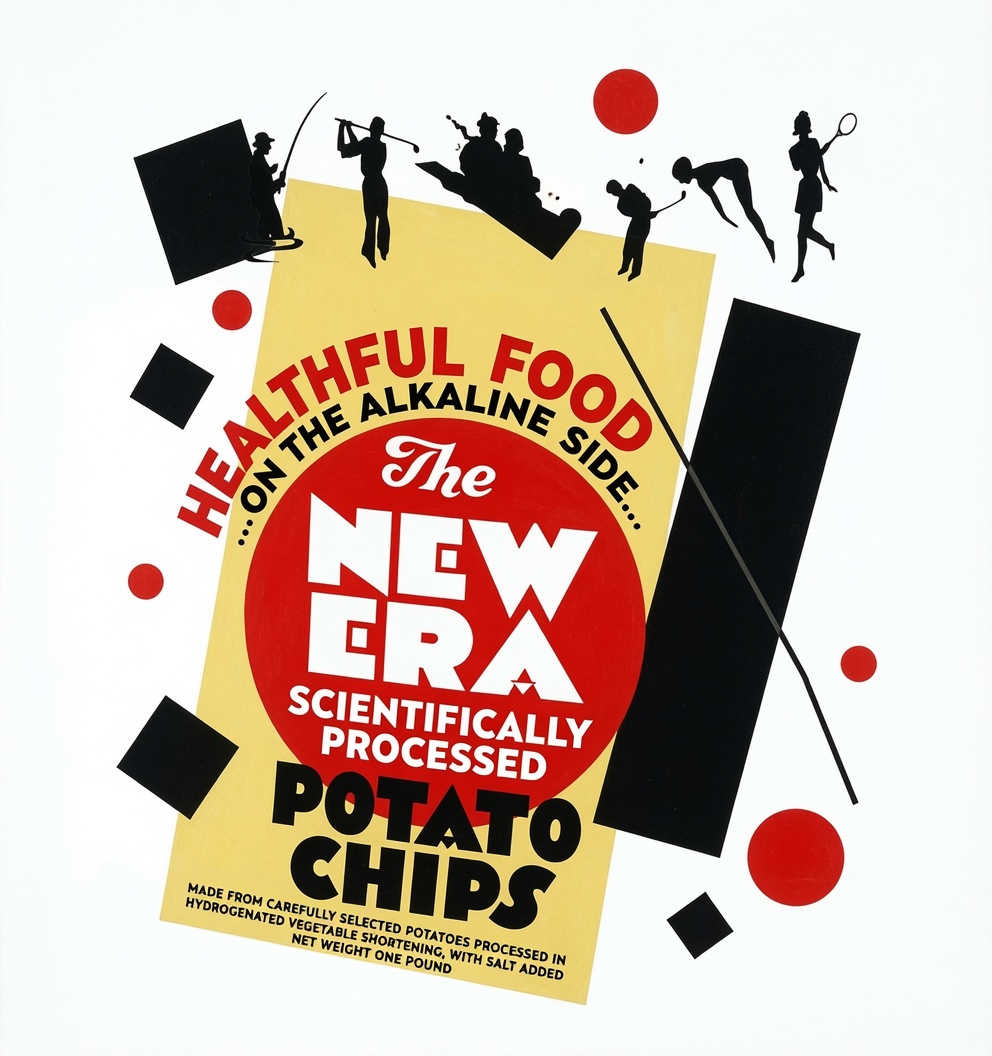
On my way to writing some regular number of words, my attention was shanghaied by an AI image generating service. What, I wondered, could the New Era Potato Chip can become, in the hands of an LLM, or I suppose Large Image Model? This can, also posted yesterday.
I’m glad for a lot of reasons that I lived in Japan in the early ’90s and not later. One reason: pre-Google and (more importantly) pre-Google Maps, you navigated by your own wits, aided by not-always-detailed paper maps, wayfaring signs in Japanese and sometimes English, directions from other foreigners – part of the mass of gaijin lore we all tapped into – and helpful Osakans.
It was doable. One time I bought a used bicycle from a colleague who lived in a fairly far corner of metro Osaka, far from me anyway, on the condition that I come take it away. Meaning about a 20-mile ride through the heart of greater Osaka, a ride I broke into two segments by locking the bike after the first day’s pedaling at a subway station and going home that way. Good thing Japanese streets are more or less suitable for bicycling, but less so for wayfinding, since the urban texture tended to be a rinse-and-repeat cycle of narrows streets, concrete apartment blocks, and small shops shoehorned into even narrower lanes.
Six- or eight-lane boulevards crisscrossed the region, and so did small and larger rivers. One time a helpful Osakan directed me to an elevator door tucked away in a grey wall of odd shapes and angles – a door that had been accidentally camouflaged by its utilitarian surroundings. The unmarked elevator took pedestrians and bicyclists down to the entrance of a spare, well-lit underground tunnel under a major river at a spot that had no bridge.
But I need to say that the rinse-and-repeat was only superficial. Like other places, most other places I’d say, with a little time and observation, details come into focus. In the case of Osaka, a shrine tucked into wall or a weedy embankment near a canalized creek that was home to a couple of gnarled, flowering trees, or sometime as incongruous as a speedboat parked in a spot for a car. Or an unusual handmade retail sign, clearly made by pop for the front of a mom-and-pop (or maybe by mom, who wouldn’t be accorded credit for it, and maybe not inclined to take credit).
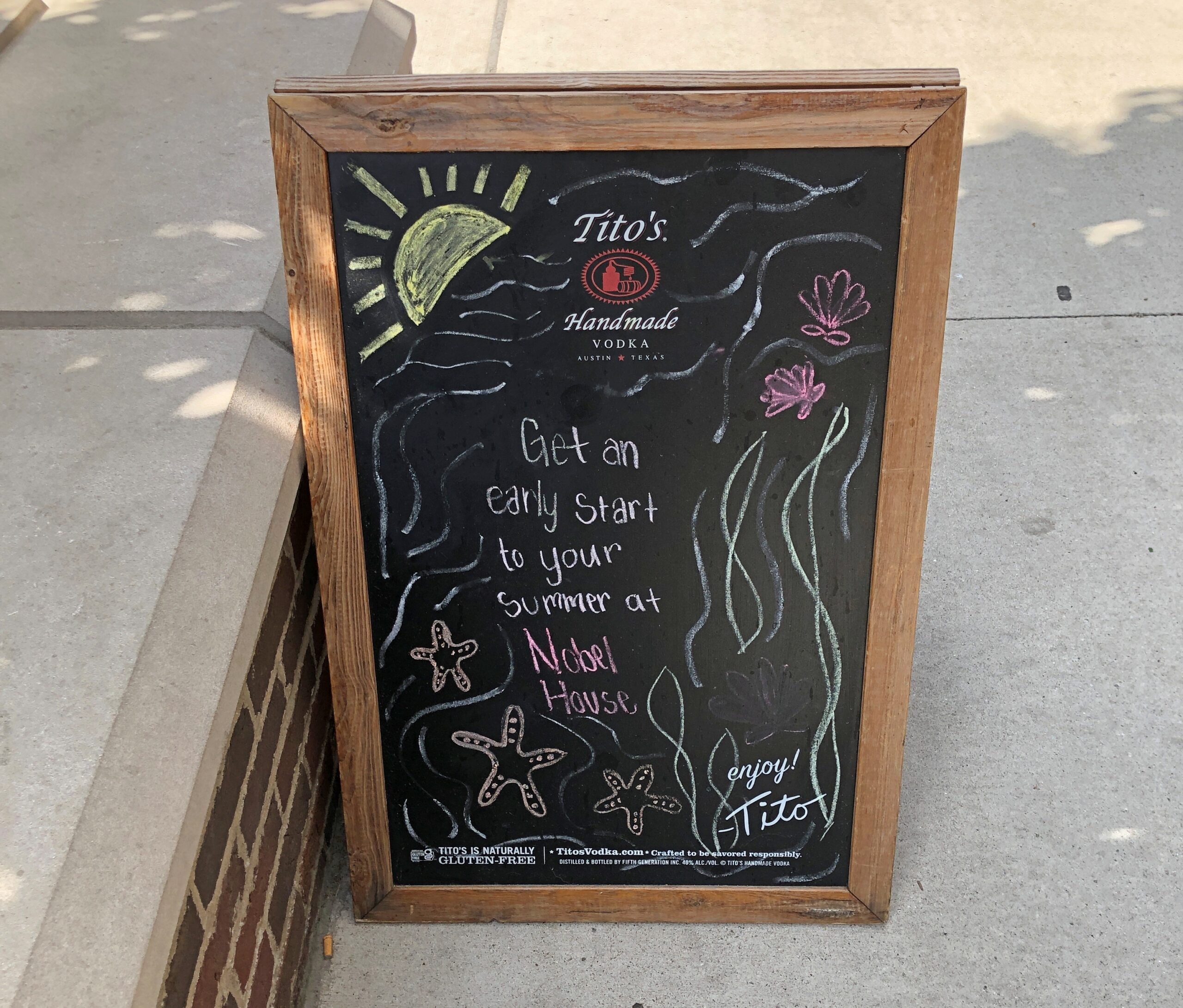
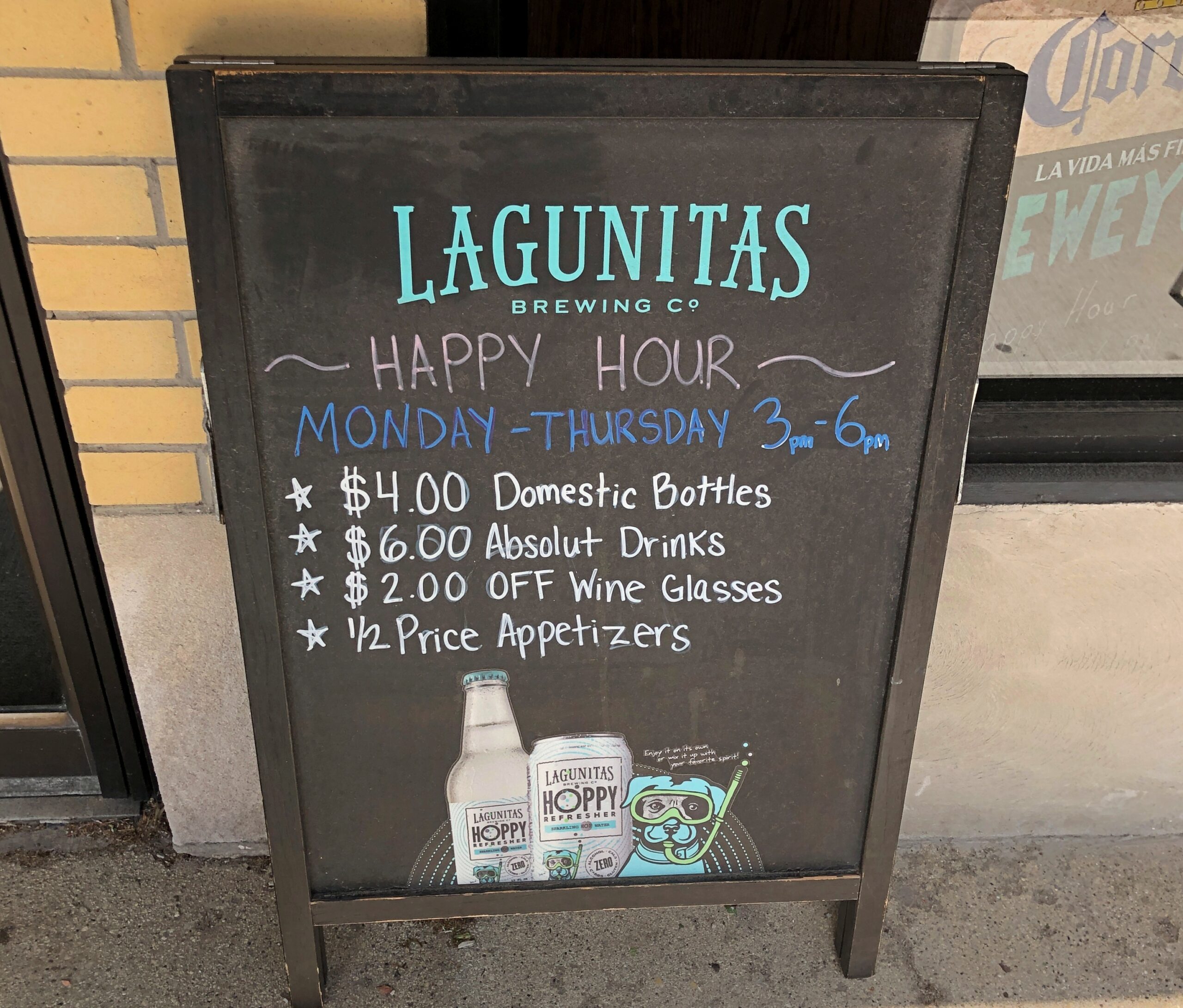
There’s a Flickr collection, or even a coffee table book, in the unlimited variety of limited-edition retail signs, handmade or made by advertisers. A worldwide selection. They’re more sporadic in the Chicago suburbs, generally clustering on main shopping streets – of which there are a fair number, tucked away and locally focused. So far this summer we’ve made our way to a handful of suburban shopping streets.
Starting with the imprimatur of Tito, Alamo Heights High School Class of ’79.
Straightforward, gets the signing job done.
For those who aren’t into that whole neurotoxin thing.
“We need something out there now, we’re about to open.”
How could this not be a favorite?
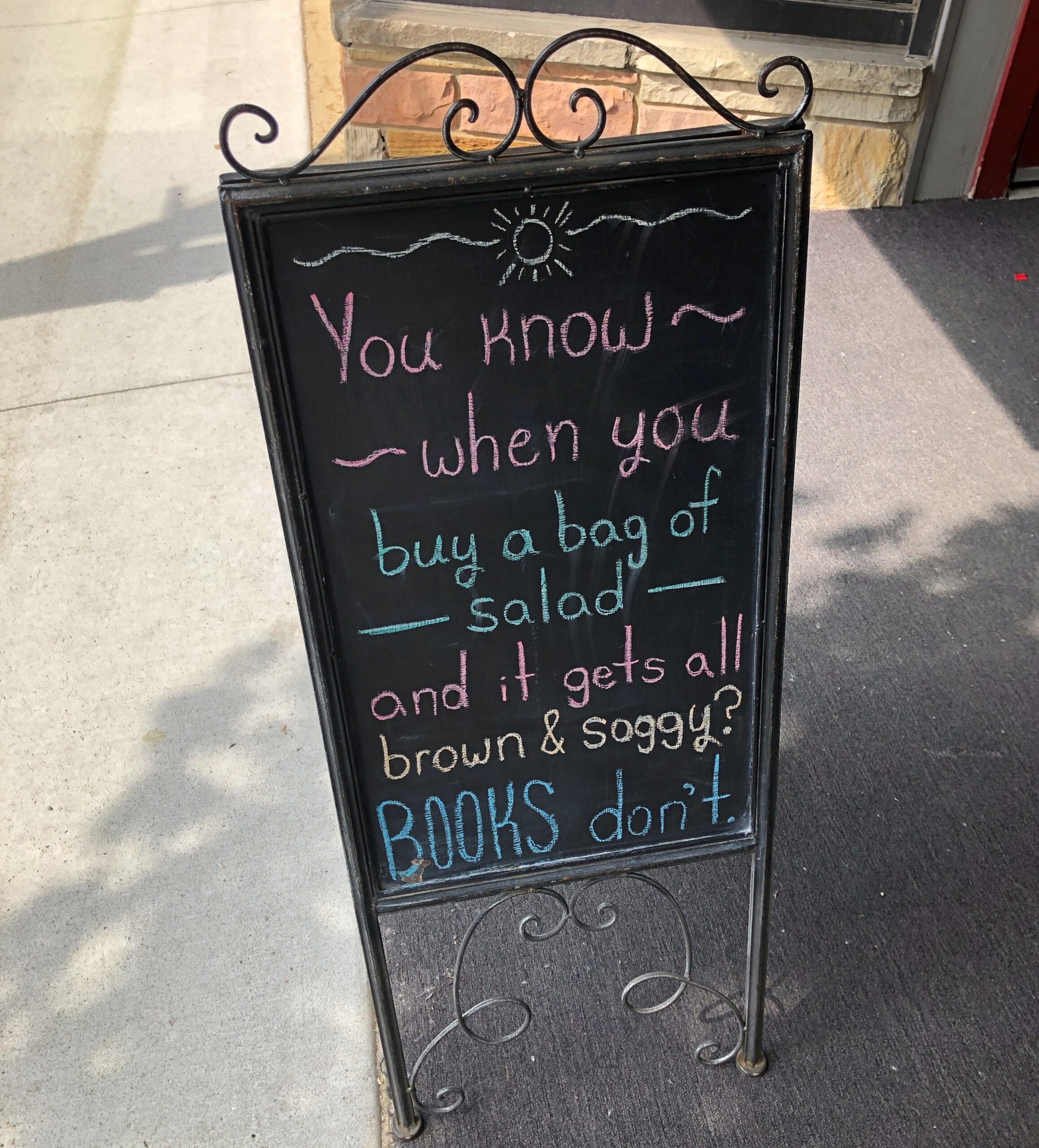
True, not brown and soggy. Brown and crumbly, with enough time.
The run of days from Juneteenth to July 4 at least, and even better to Nunavut Day (July 9), would be a fine time to slow down, like between Christmas and New Year’s Day, only warmer and without the mad runup to December 25. Back to posting around July 6.
Thousands of impressions flitter by on the road, most instantly forgotten when literally on the road – driving, you need to be in the moment, or else – or quickly forgotten, when “on the road” means you’re out and about somewhere that isn’t home. Still, a handful of details stick, even without photos. But photos help.
Maine
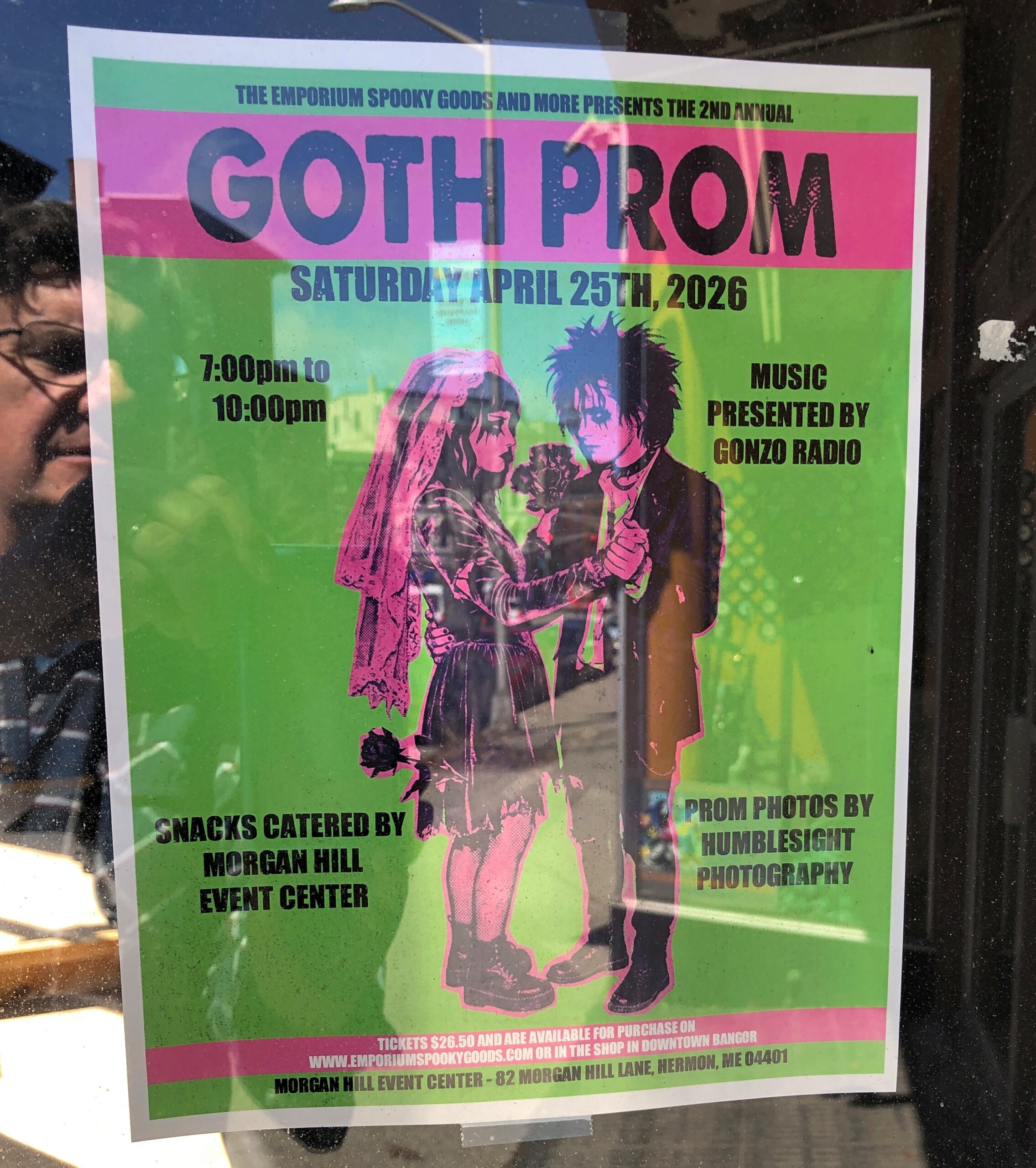
I call it “Self-portrait with Goth Prom.” Poster spotted in downtown Bangor.
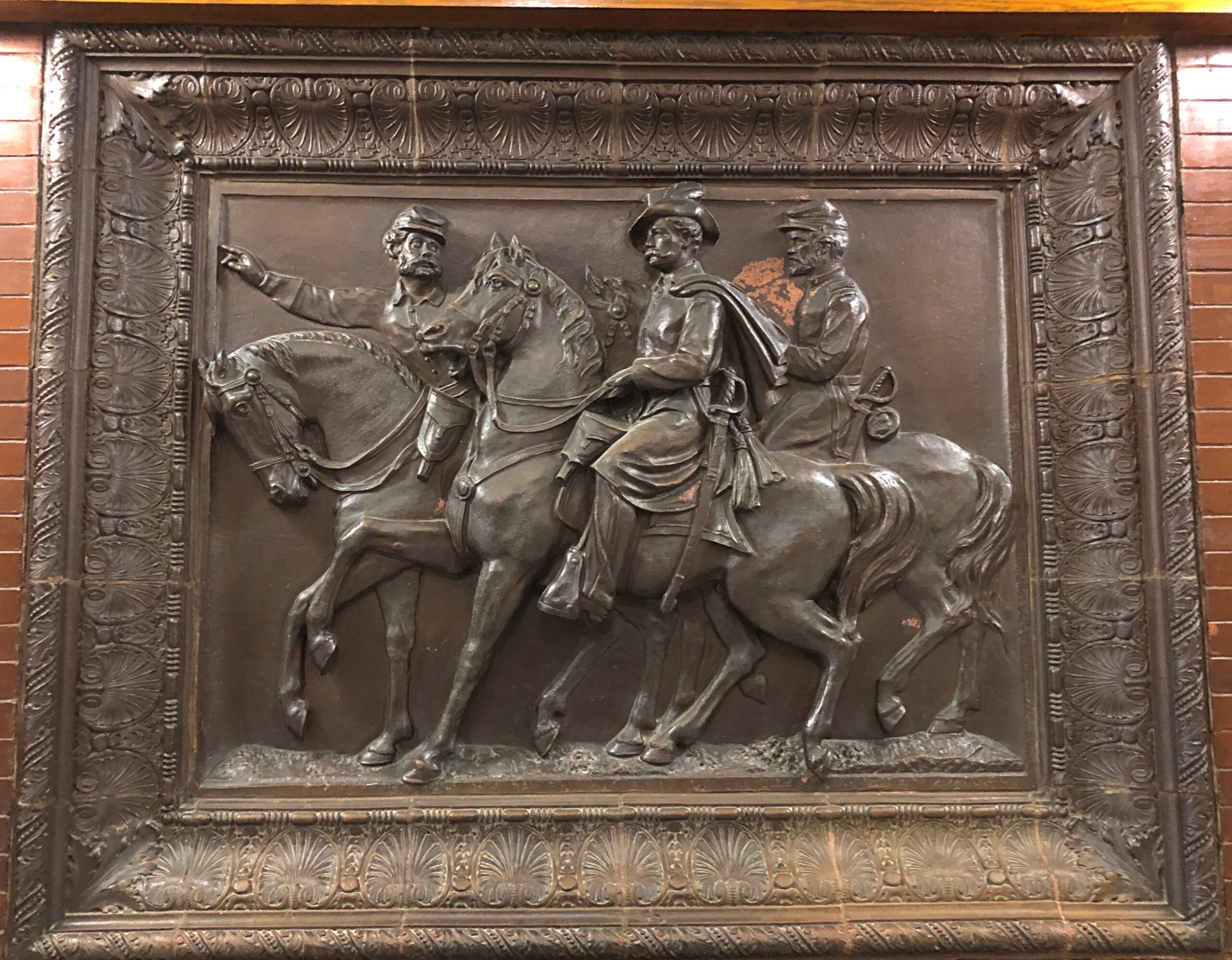
In the Maine Statehouse, a flat-ish object of a different kind.
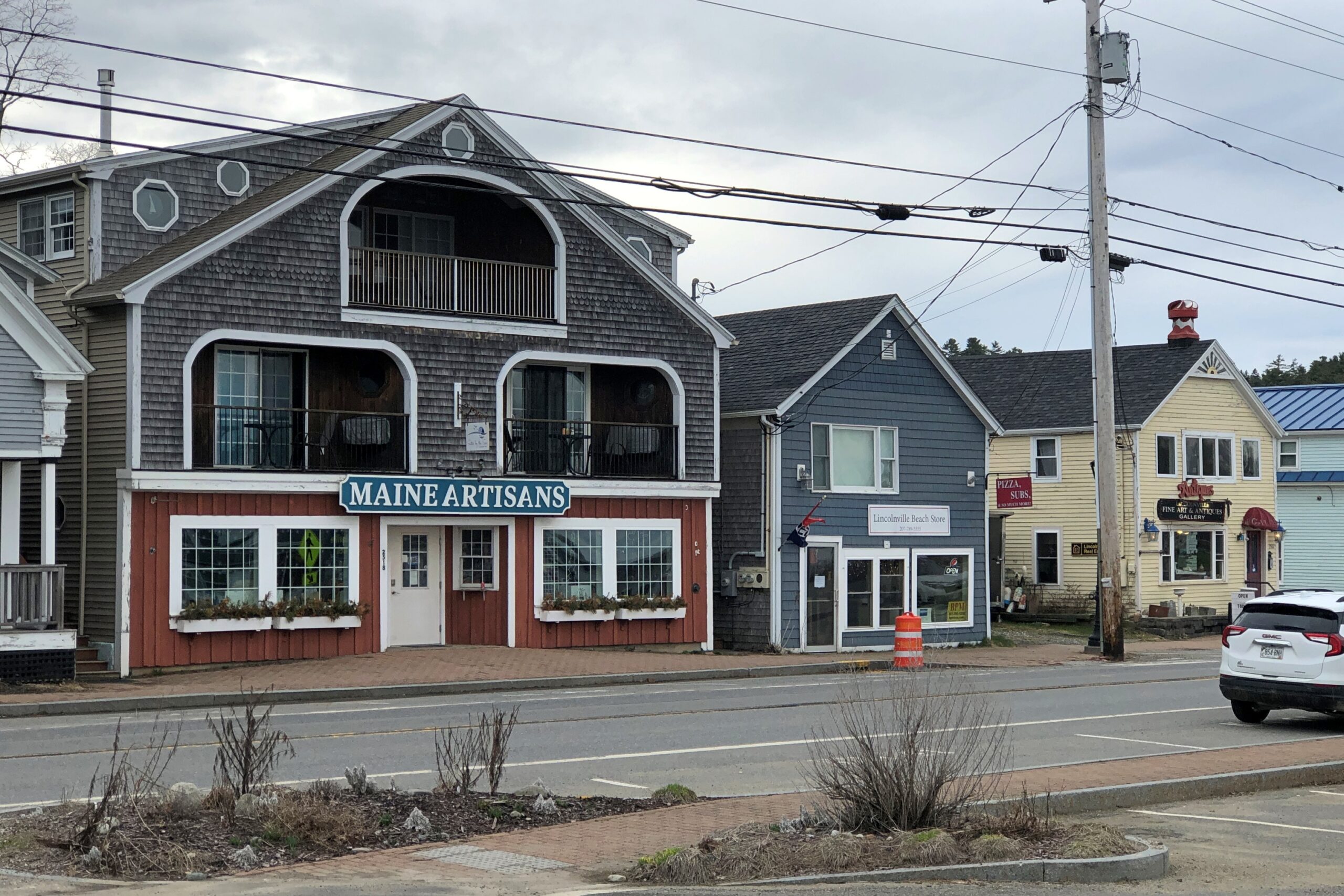
Lincolnville, on the coast of not far from Belfast.
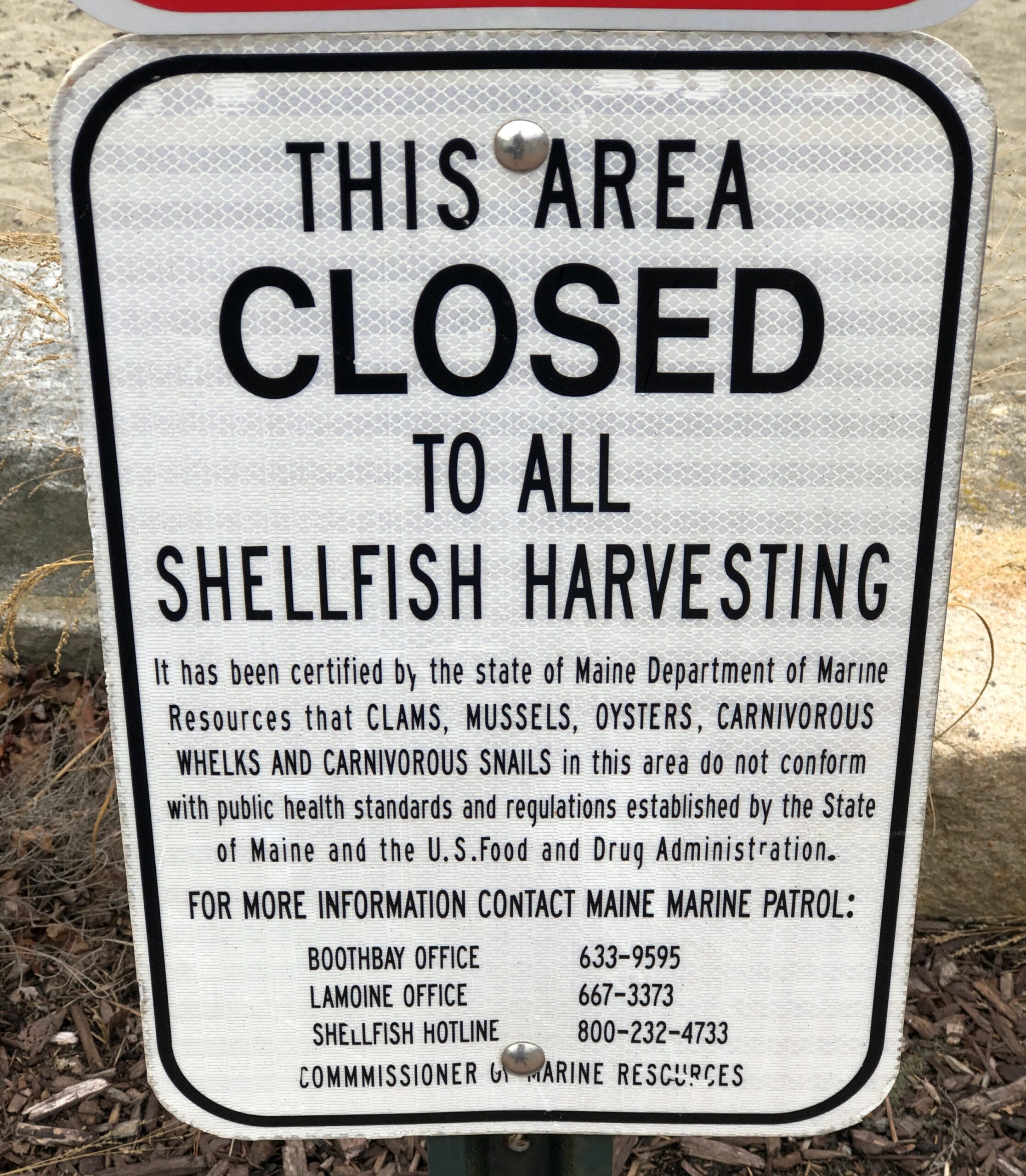
Carnivorous whelks. I was frankly ignorant about carnivorous whelks, and glad to learn a little about them. Because what a great name for a snail.
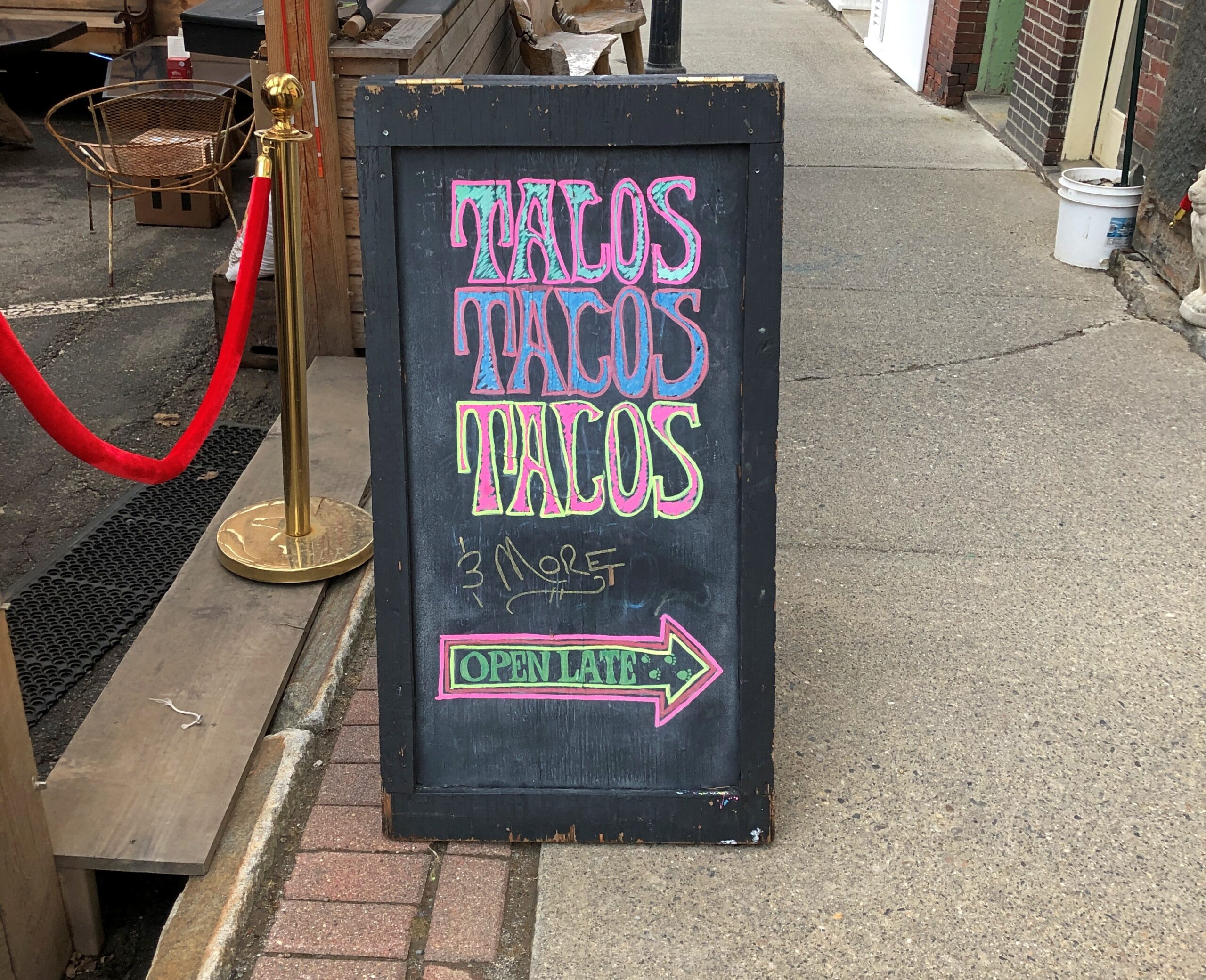
Too bad I wasn’t hungry in Belfast. I’d have had tacos.
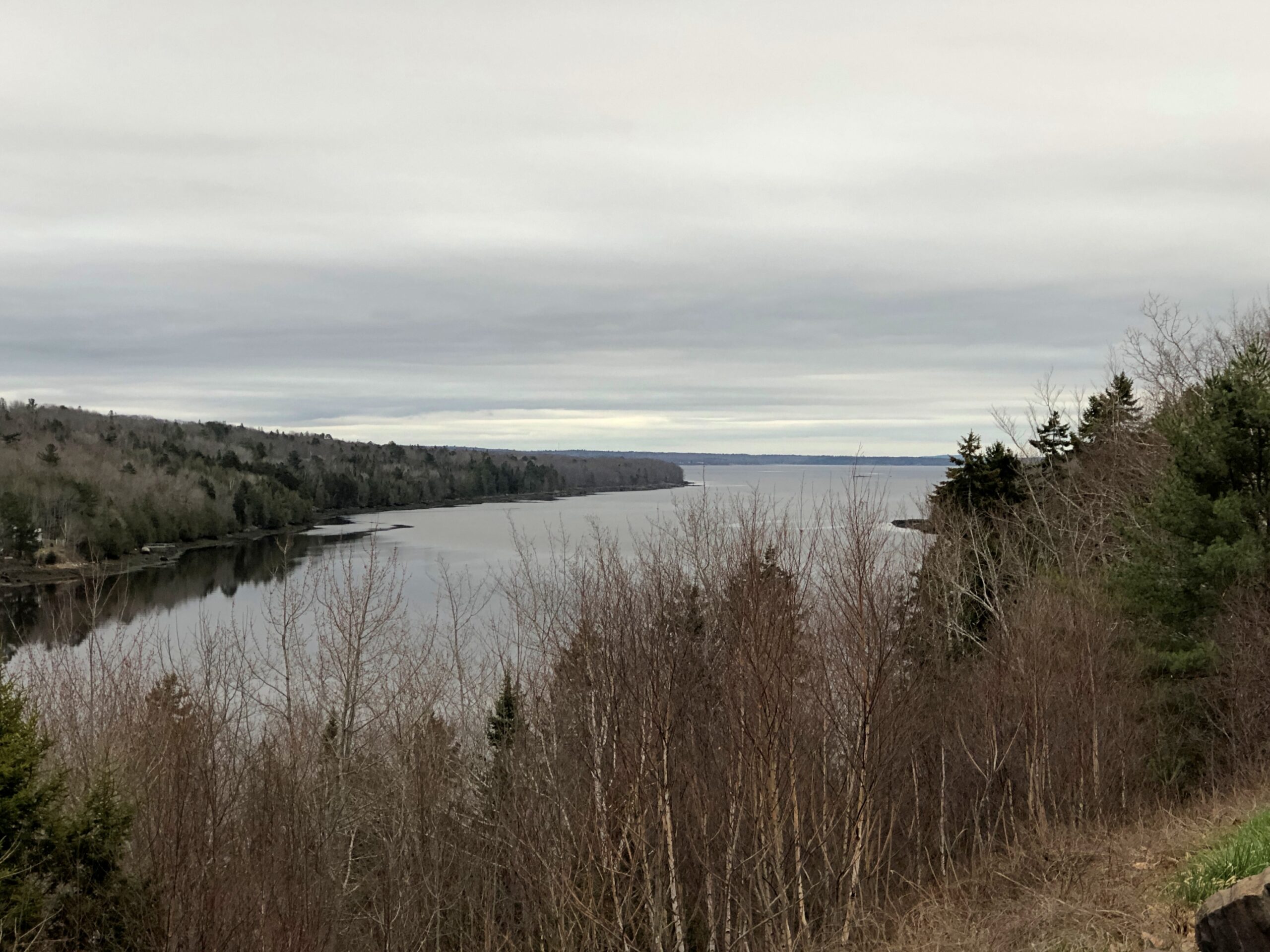
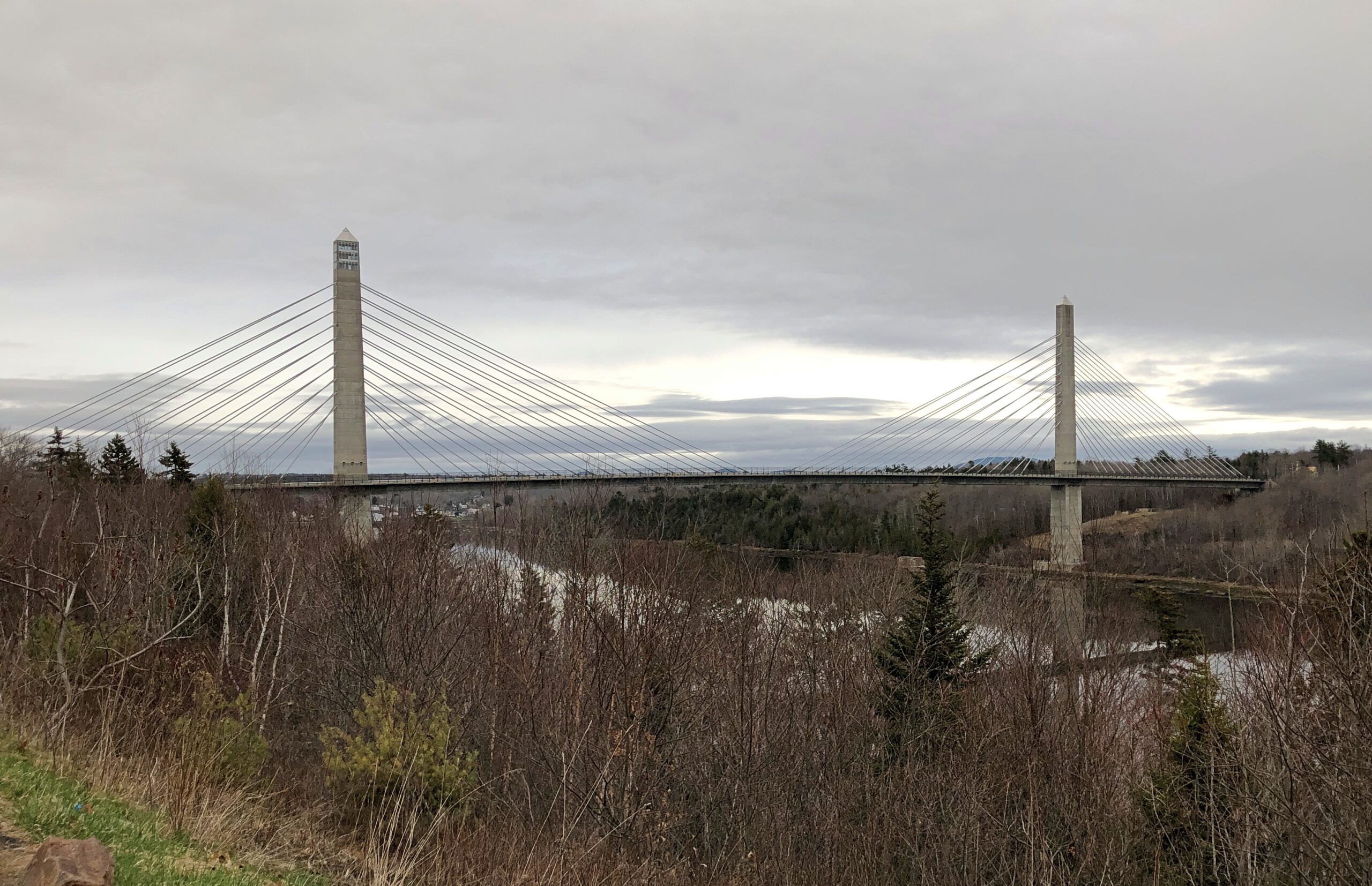
The Penobscot River and the Penobscot Narrows Bridge. A literal and scenic highpoint on that part of US 1 as it winds through near-coastal Maine. The bridge includes an observatory, unfortunately not open in April. Driving over the bridge itself was another pleasure of coastal Maine.
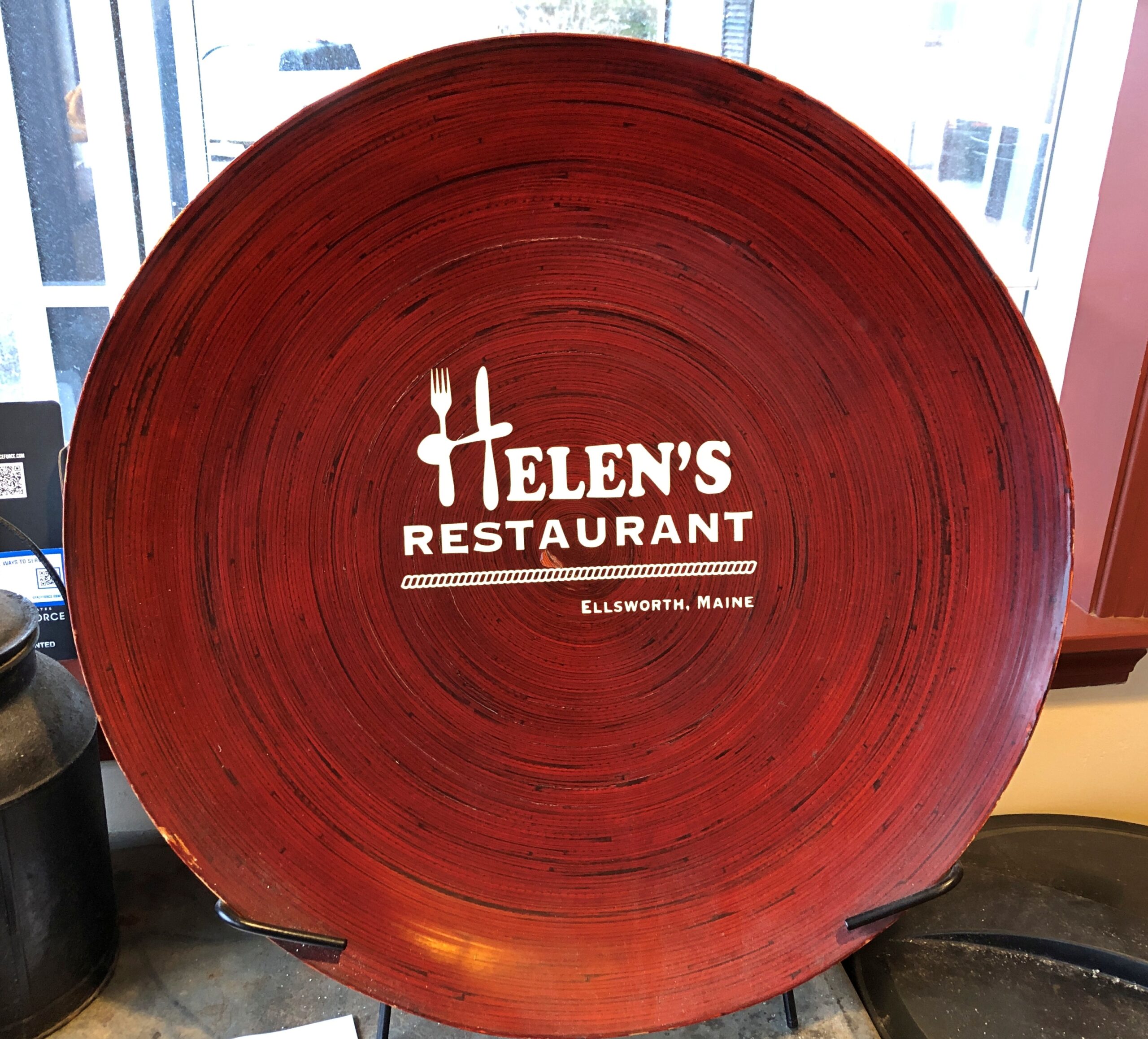
Helen’s Restaurant in Ellsworth. Tasty fish and chips. Haddock, specifically. What do you take for a haddock? “Well, sometimes I take-a aspirin, sometimes I take-a calomel.” It was some years before I learned that calomel was something I’d never take in a million years.
Massachusetts
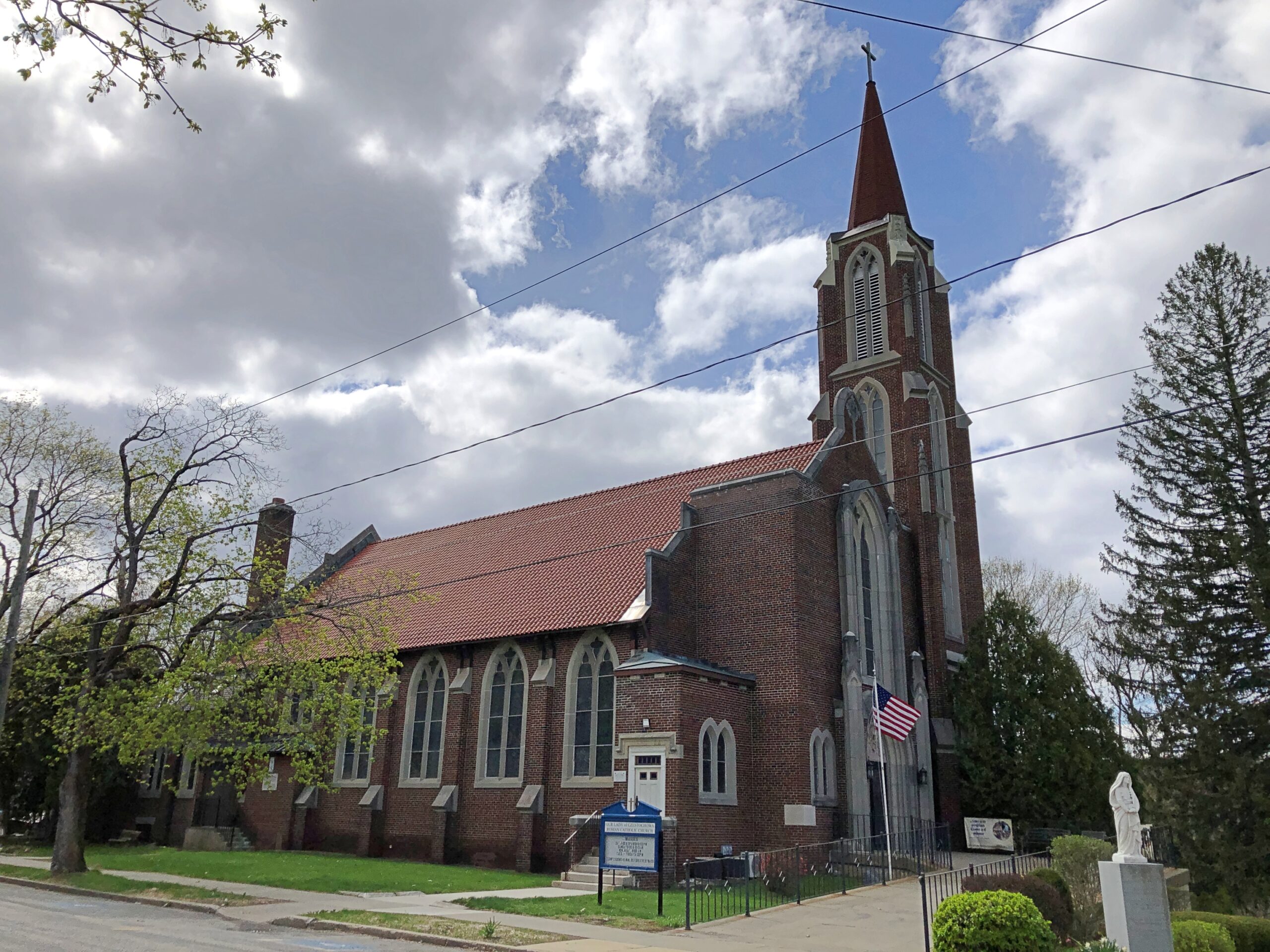
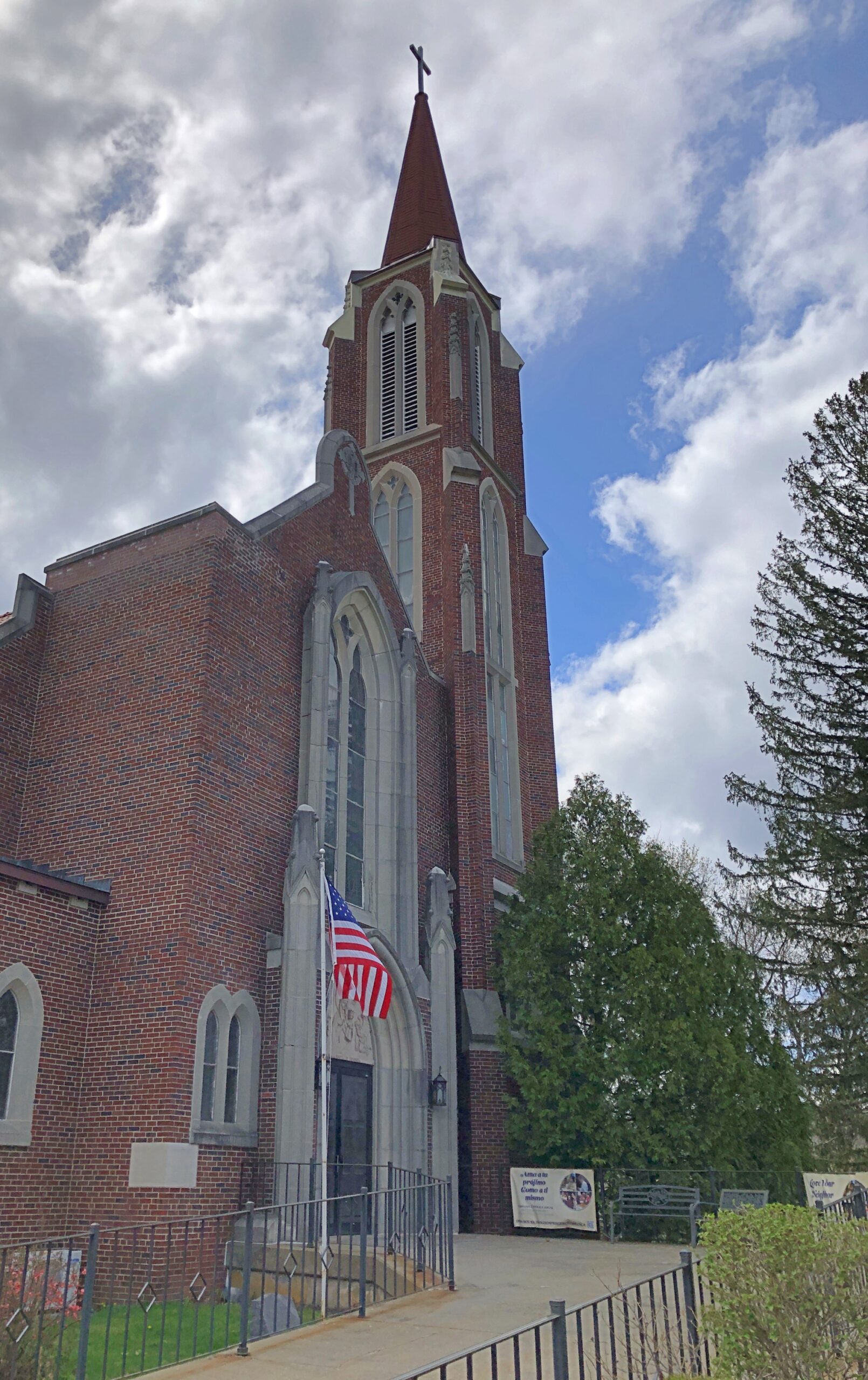
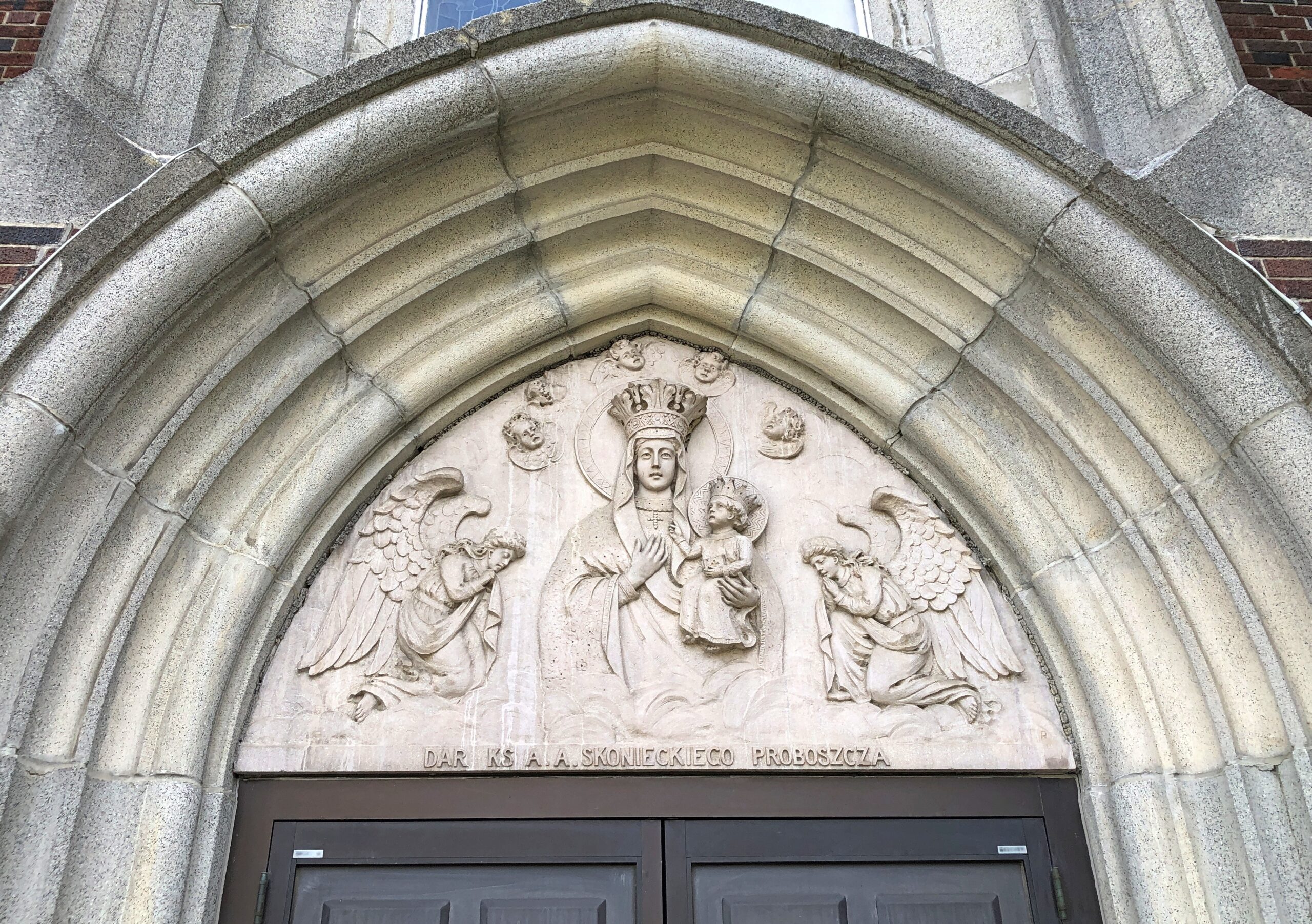
Our Lady of Czestochowa Parish, Turners Falls.
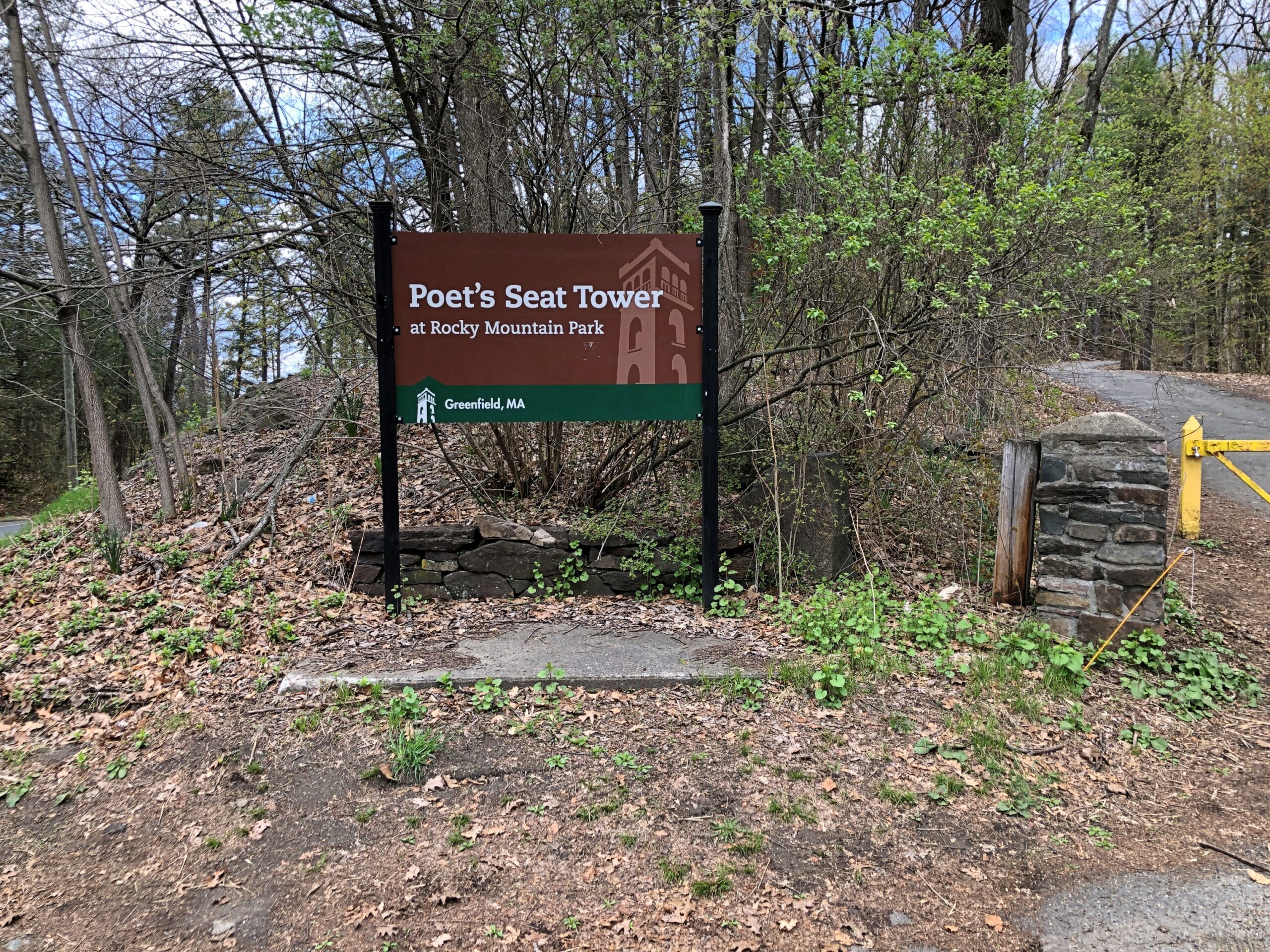
The church was closed. So was Poet’s Seat Tower.
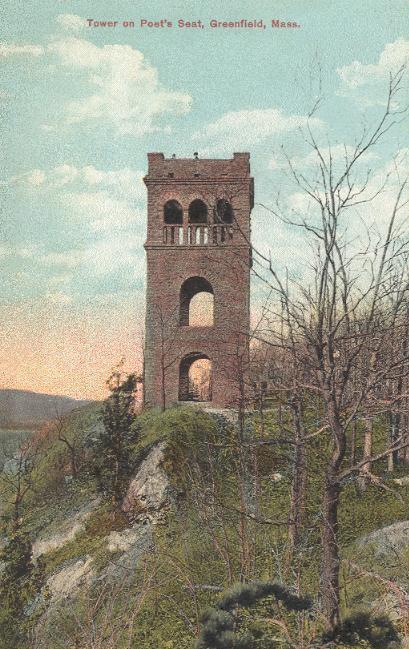
As the tower appeared more than 100 years ago.
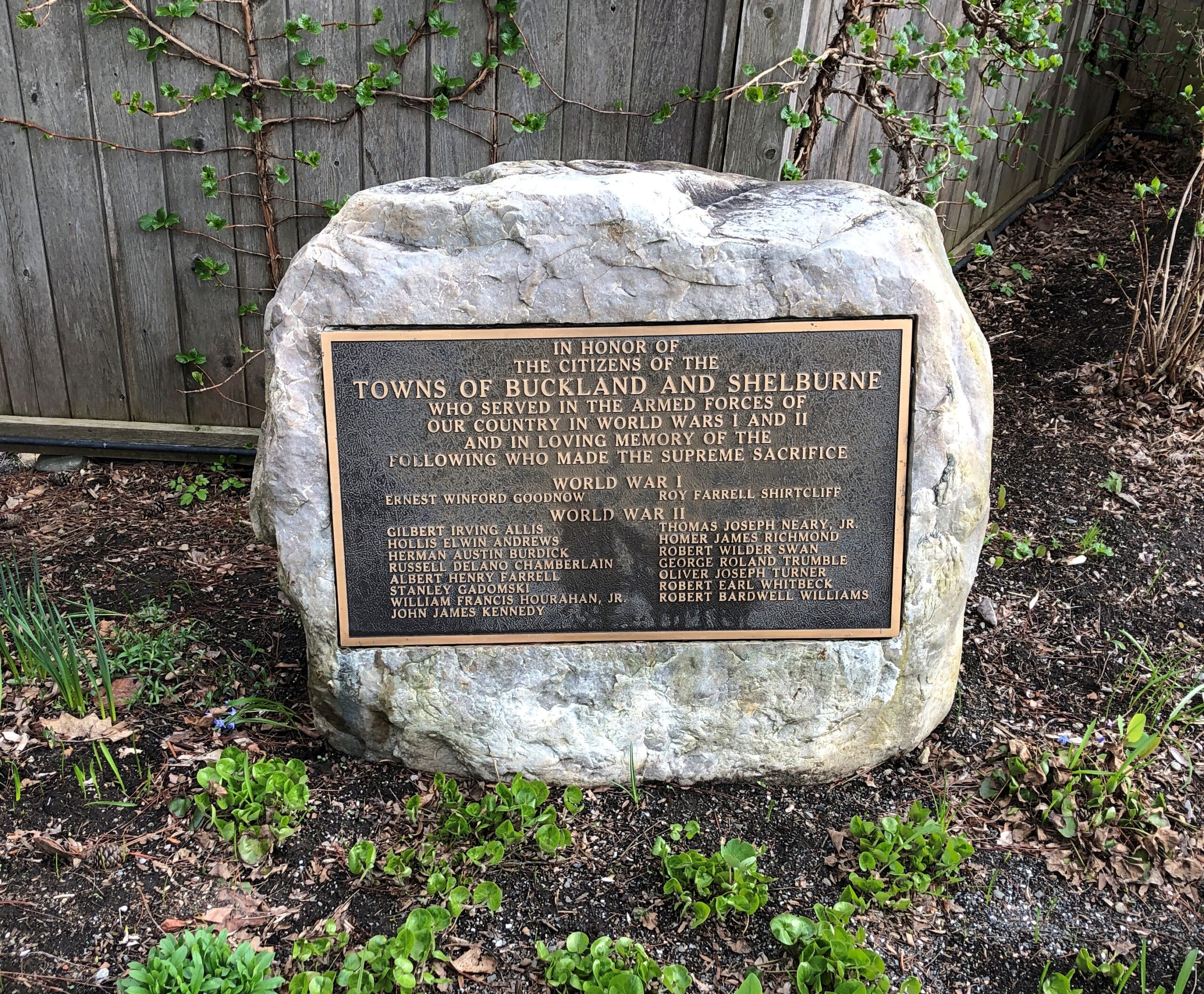
Shelburne.
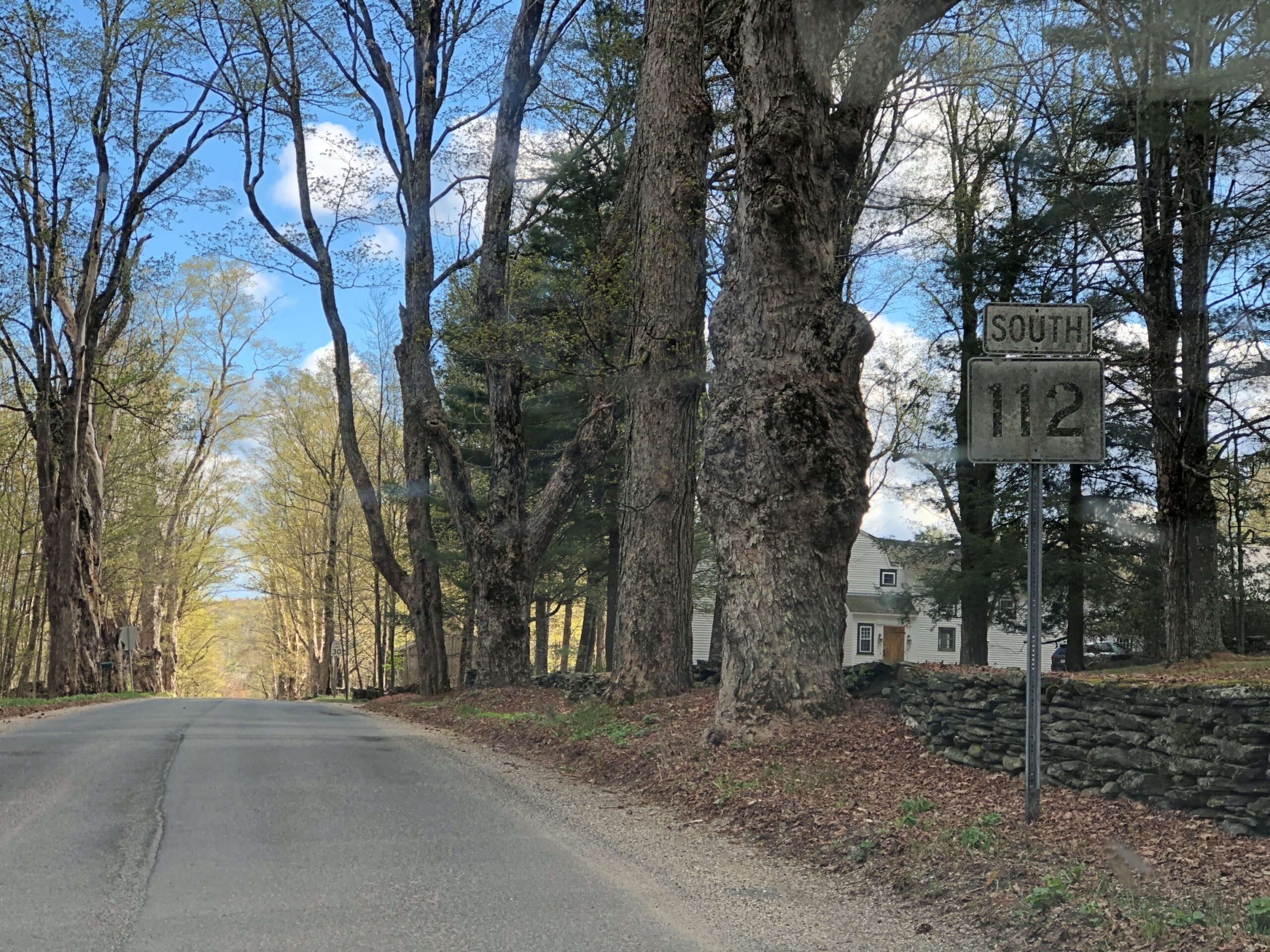
Massachusetts 112 (Route 112) in Hamilton County. Car commercial driving.
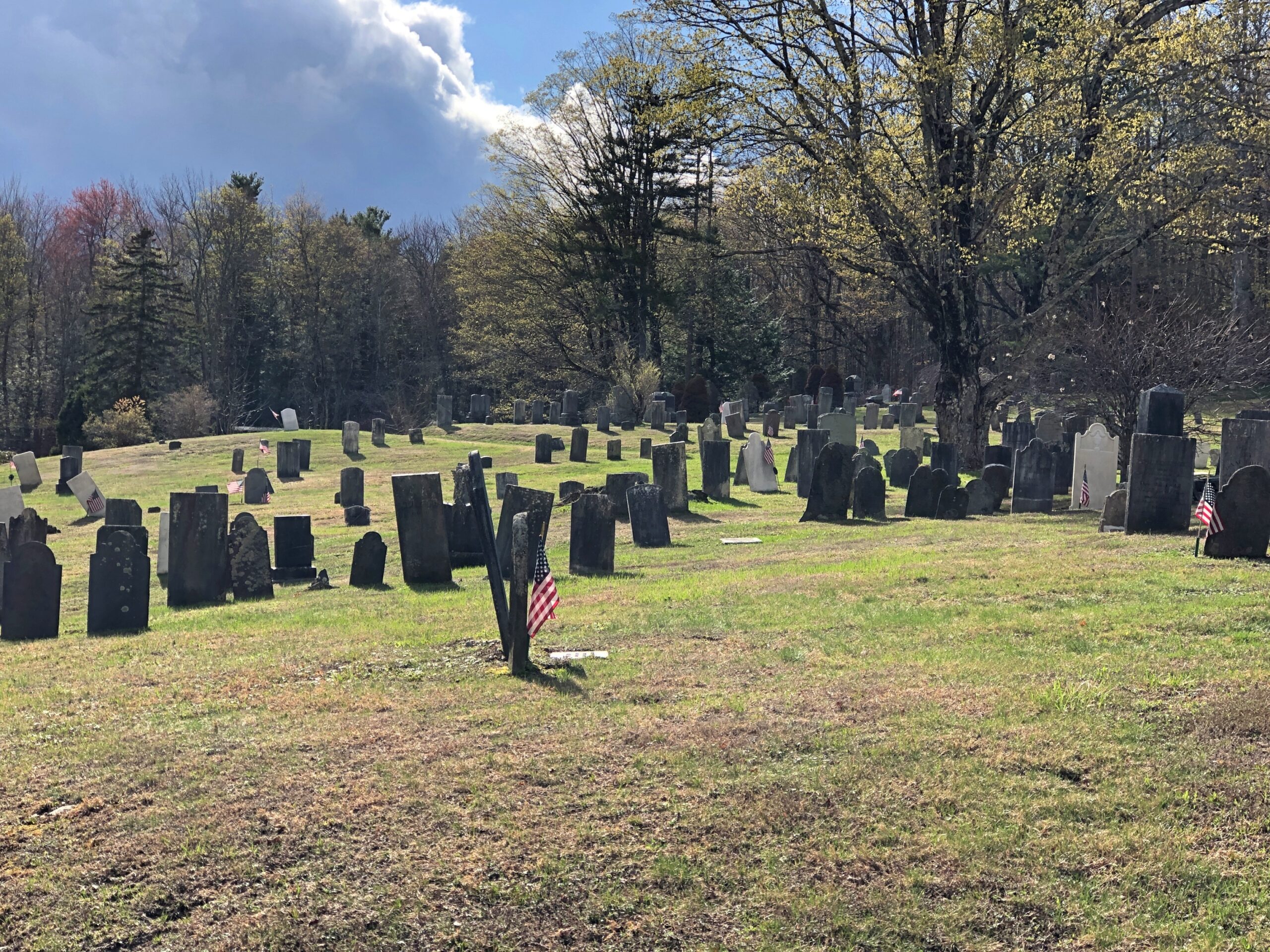
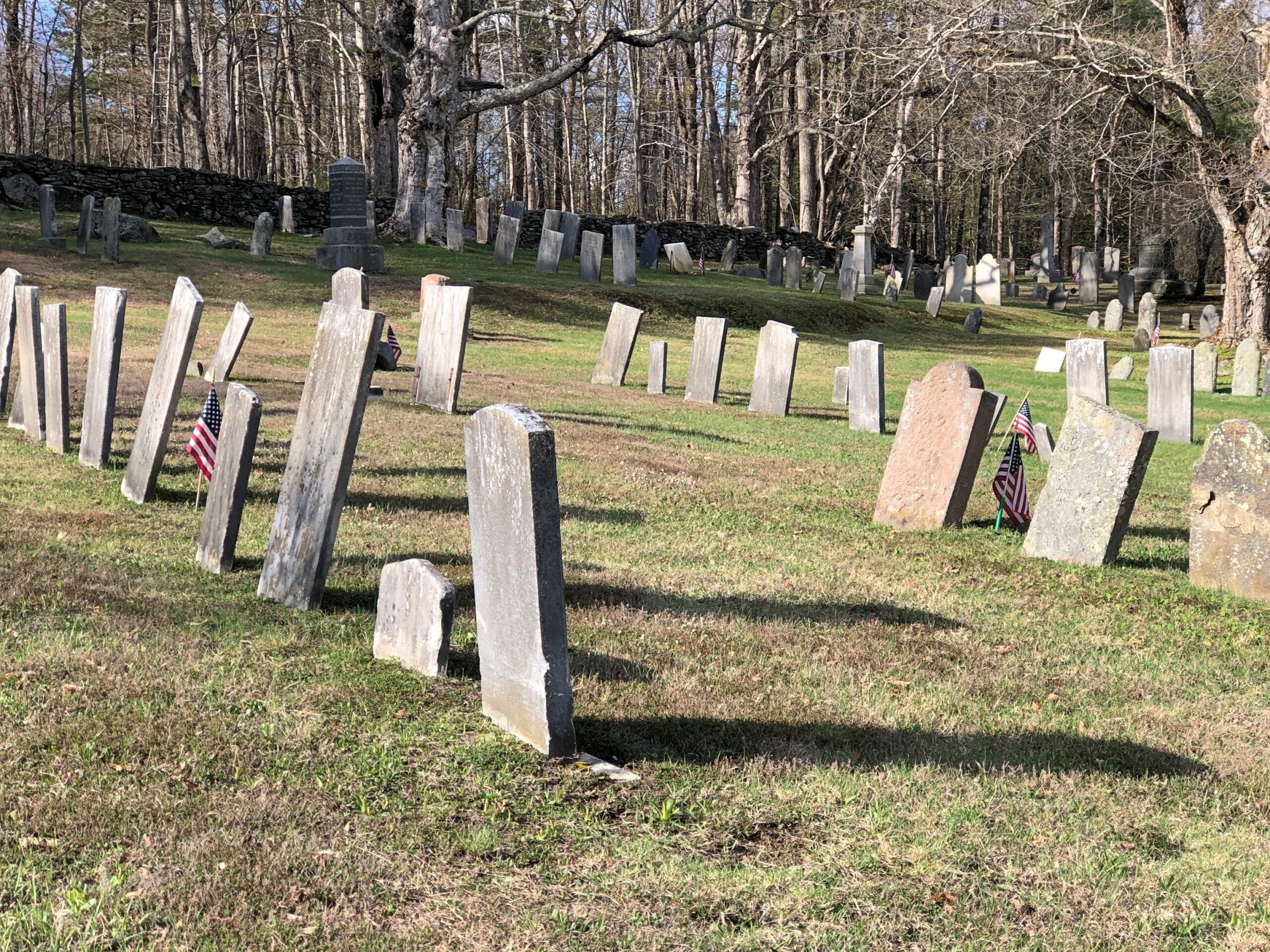
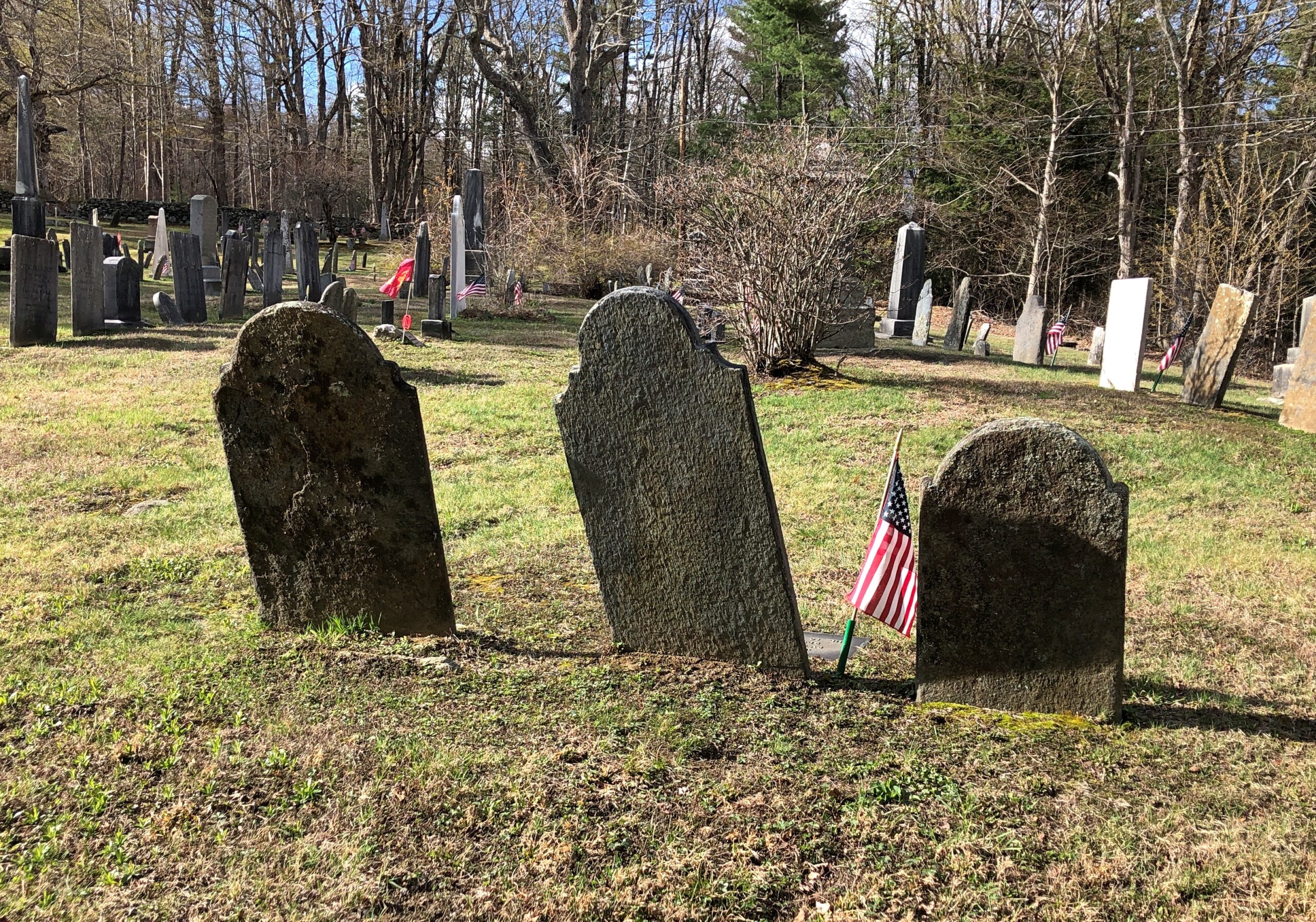
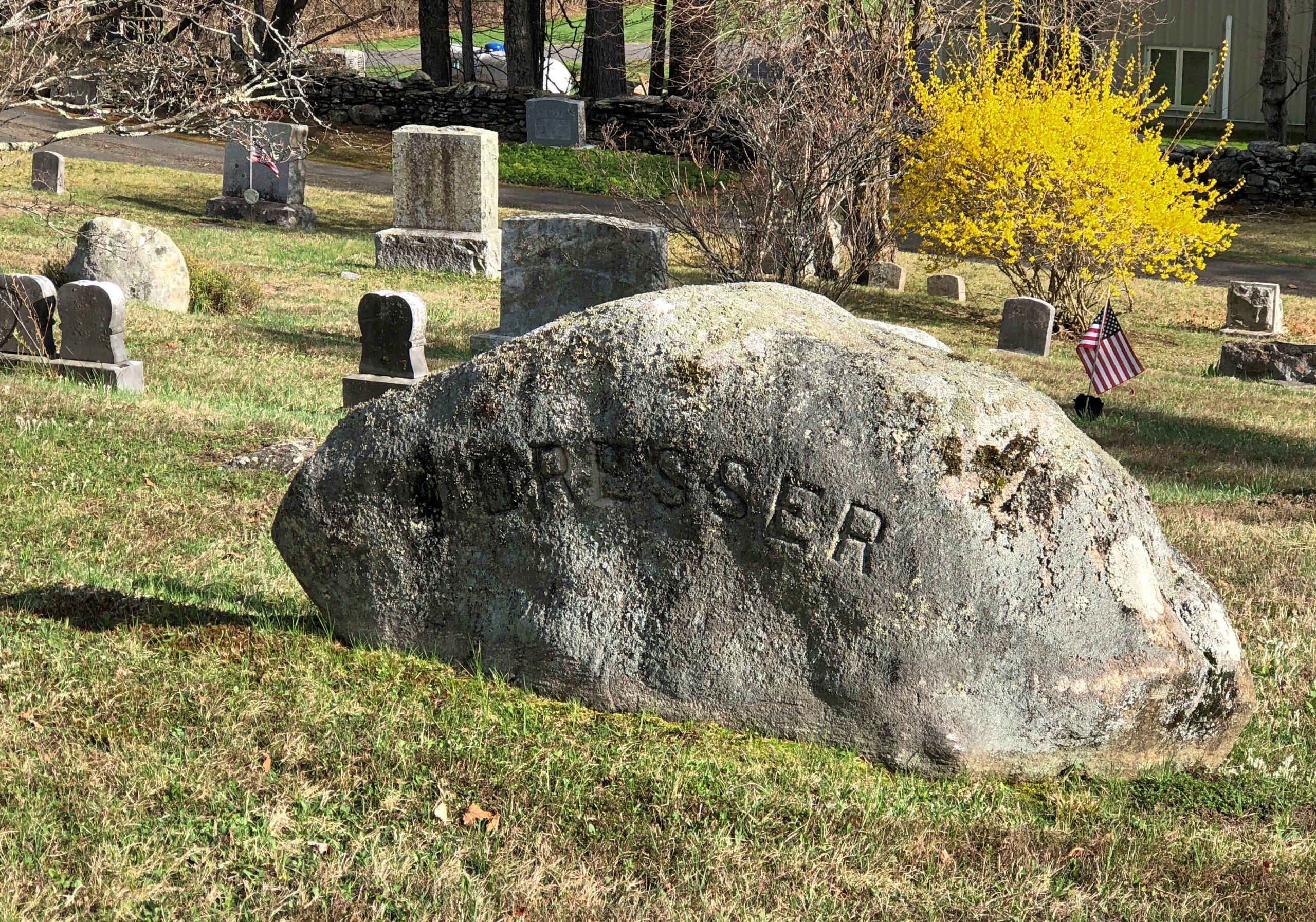
Goshen Cemetery, just off Route 112.
Ohio
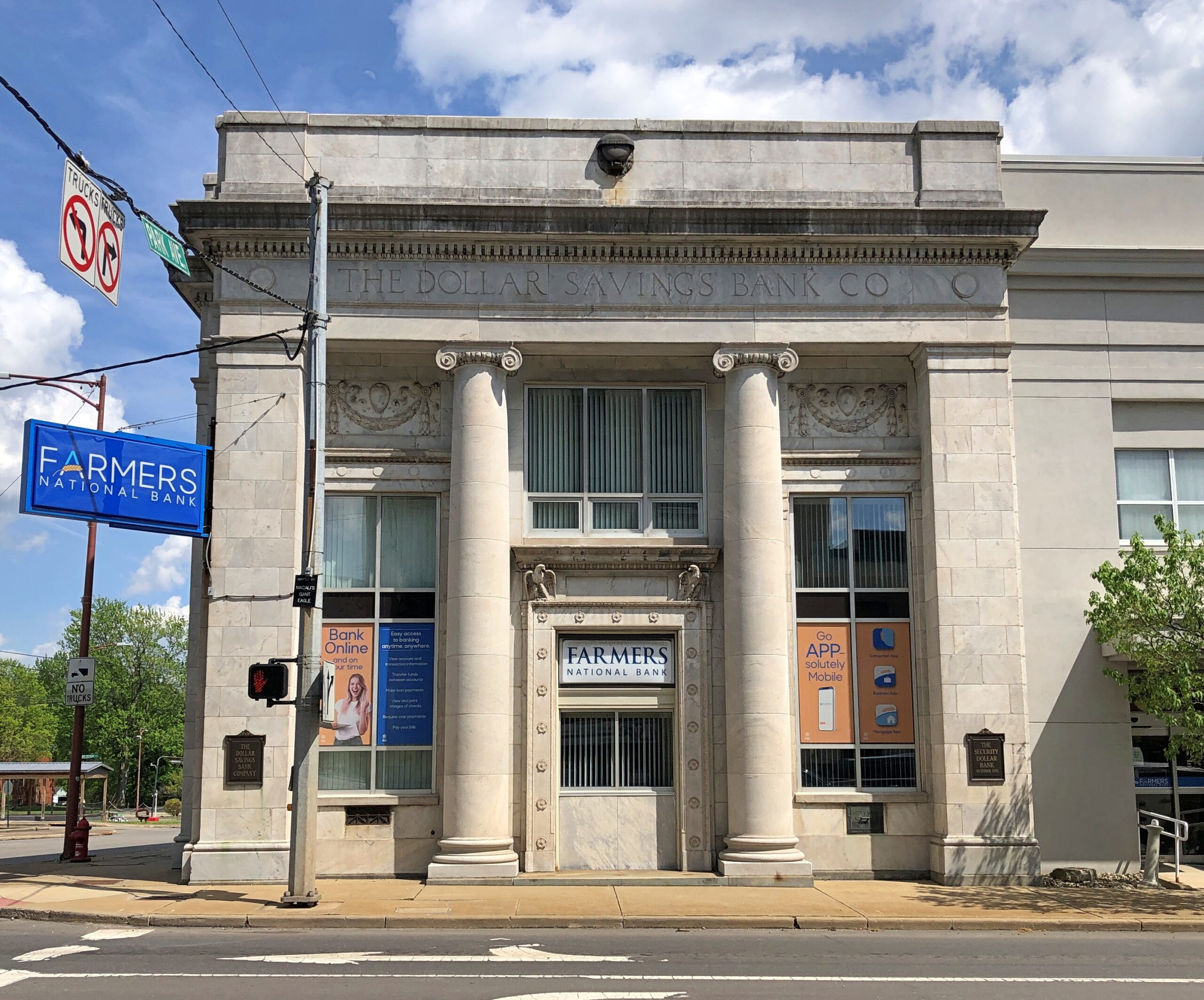
A solid bank building in Niles, across the street from where William McKinley was born. The Dollar Savings Bank Co. sounds like the kind of place that George Babbitt would mention, but distain in favor of a bank with longstanding ties to the best business men in Zenith.
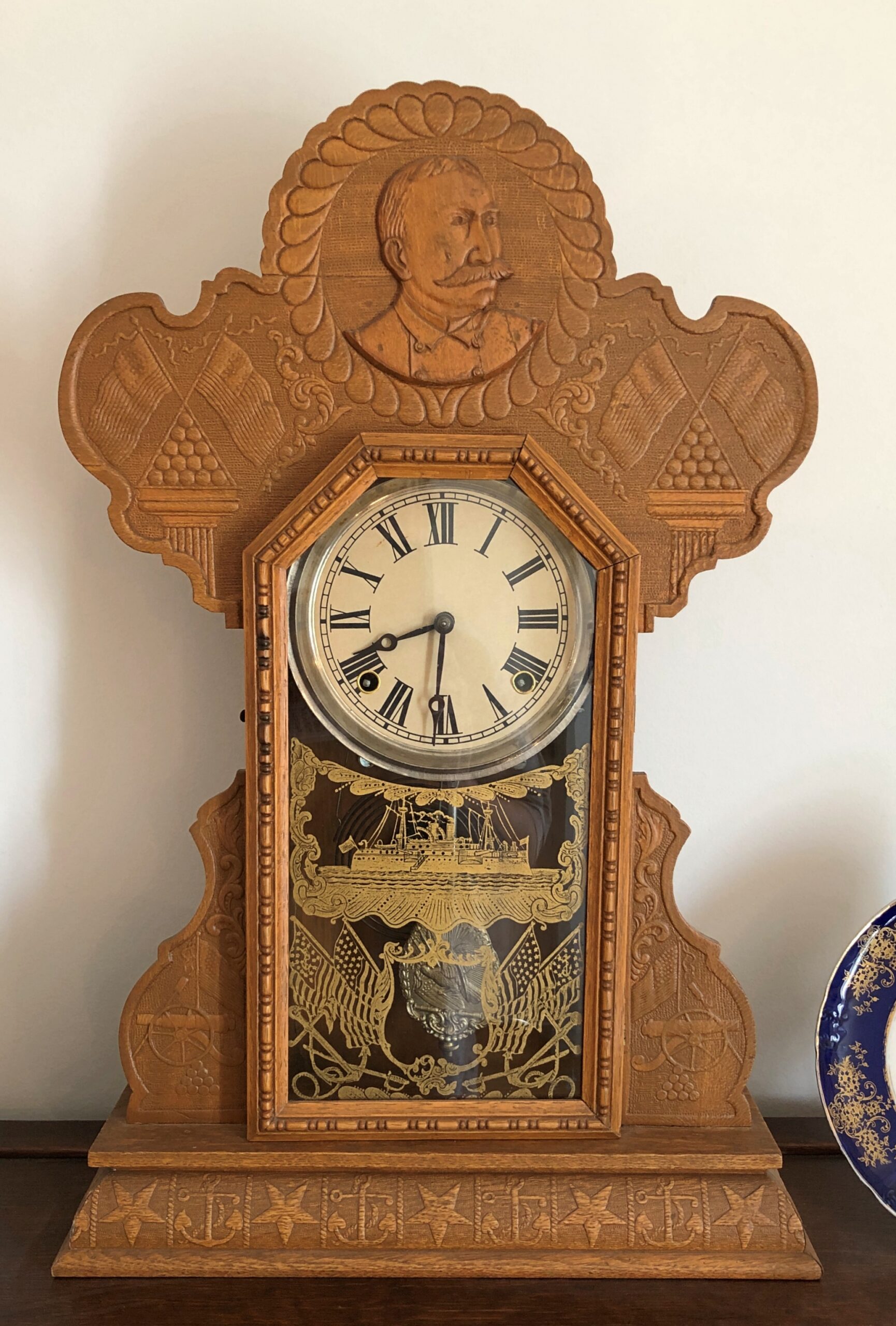
An Admiral Dewey clock at the McKinley Birthplace Museum. A textbook case, that Dewey, of how fleeting fame usually is.
Passing through northeast Ohio intrigued me greatly about that part of the state. Akron, Canton, Youngstown, Austintown — all places I can imagine going, and enjoying the visits. See ’em before the reverse migration really gets underway.
Further west, the drive on the Lincoln Highway (US 30) was a pleasure: mostly four lanes, rarely crowded. The flat farmlands don’t qualify as conventionally scenic, but the budding springtime fecundity has a lot to recommend it, even as a strictly visual pleasure: the bright greens of new leaves, the brown and grays of the fields recently plowed, small roads heading off usually at right angles to the main road, a run between Upper Sandusky and I-75 near Lima with few buildings of any kind, except distant farm structures.
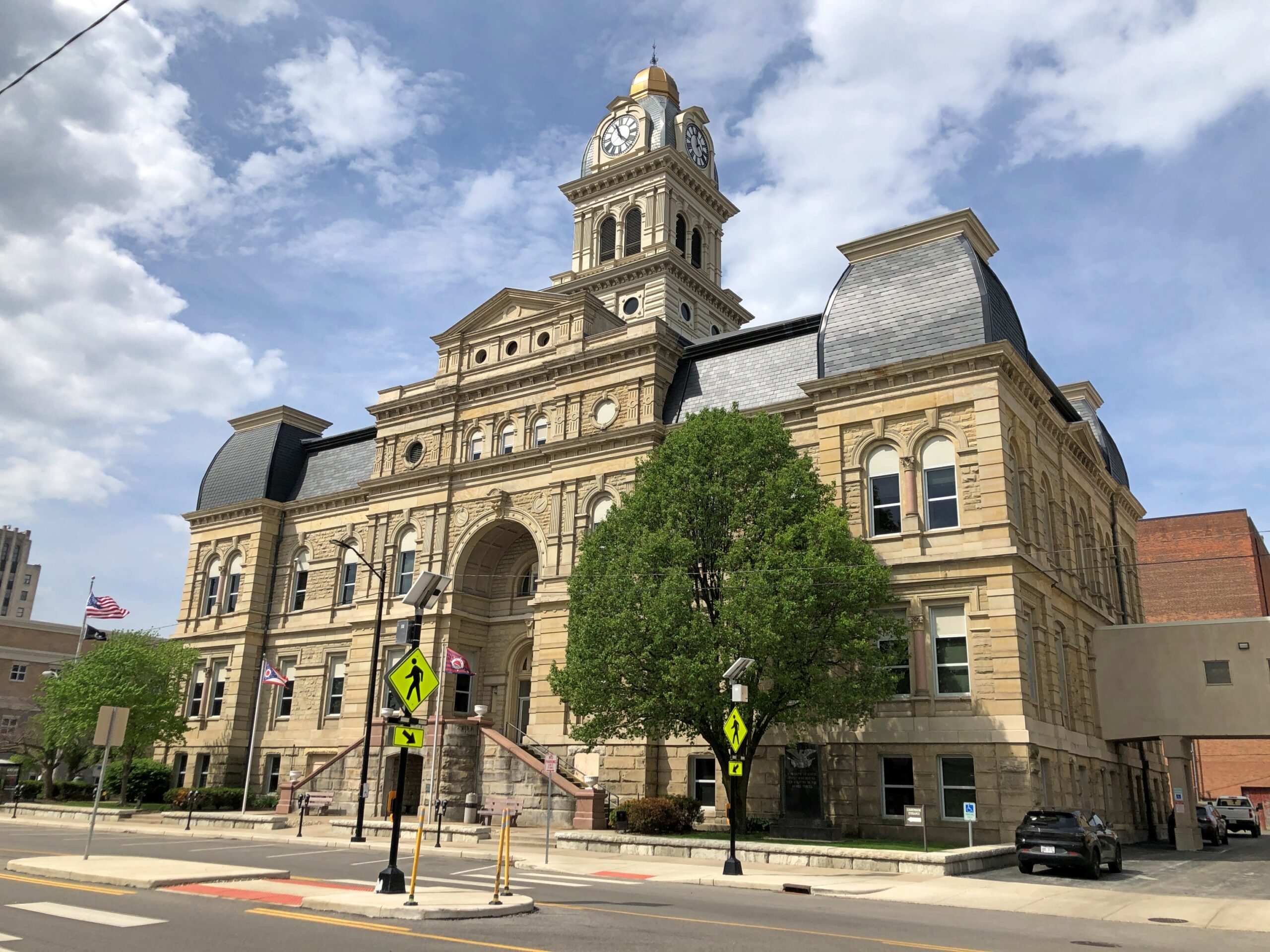
Downtown Lima: the Allen County courthouse, seen from North St.
Looks like my kind of breakfast place. Closed on Sunday anyway.
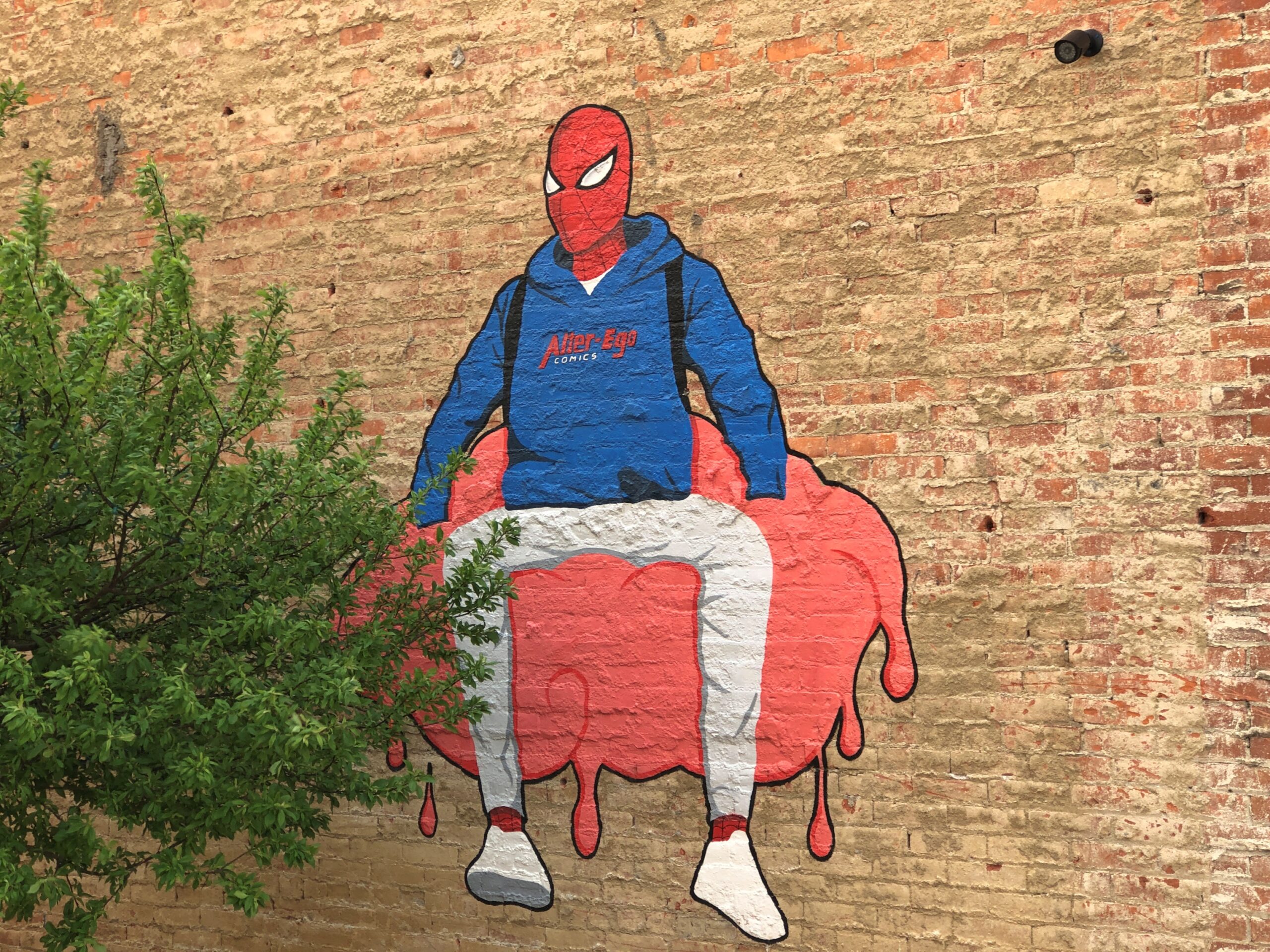
Another North St. detail. Spiderman sitting on — something. A large scoop of strawberry ice cream?
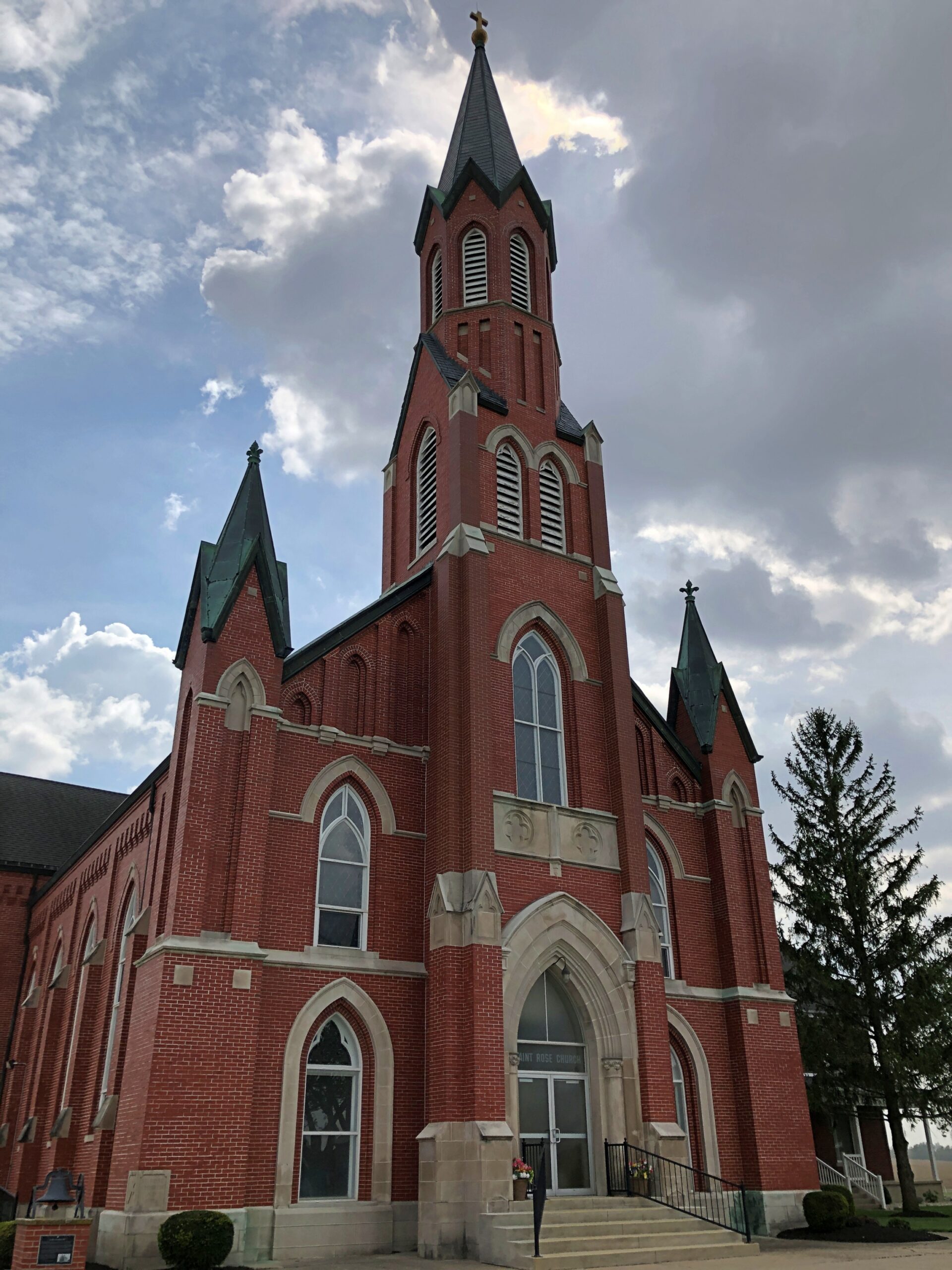
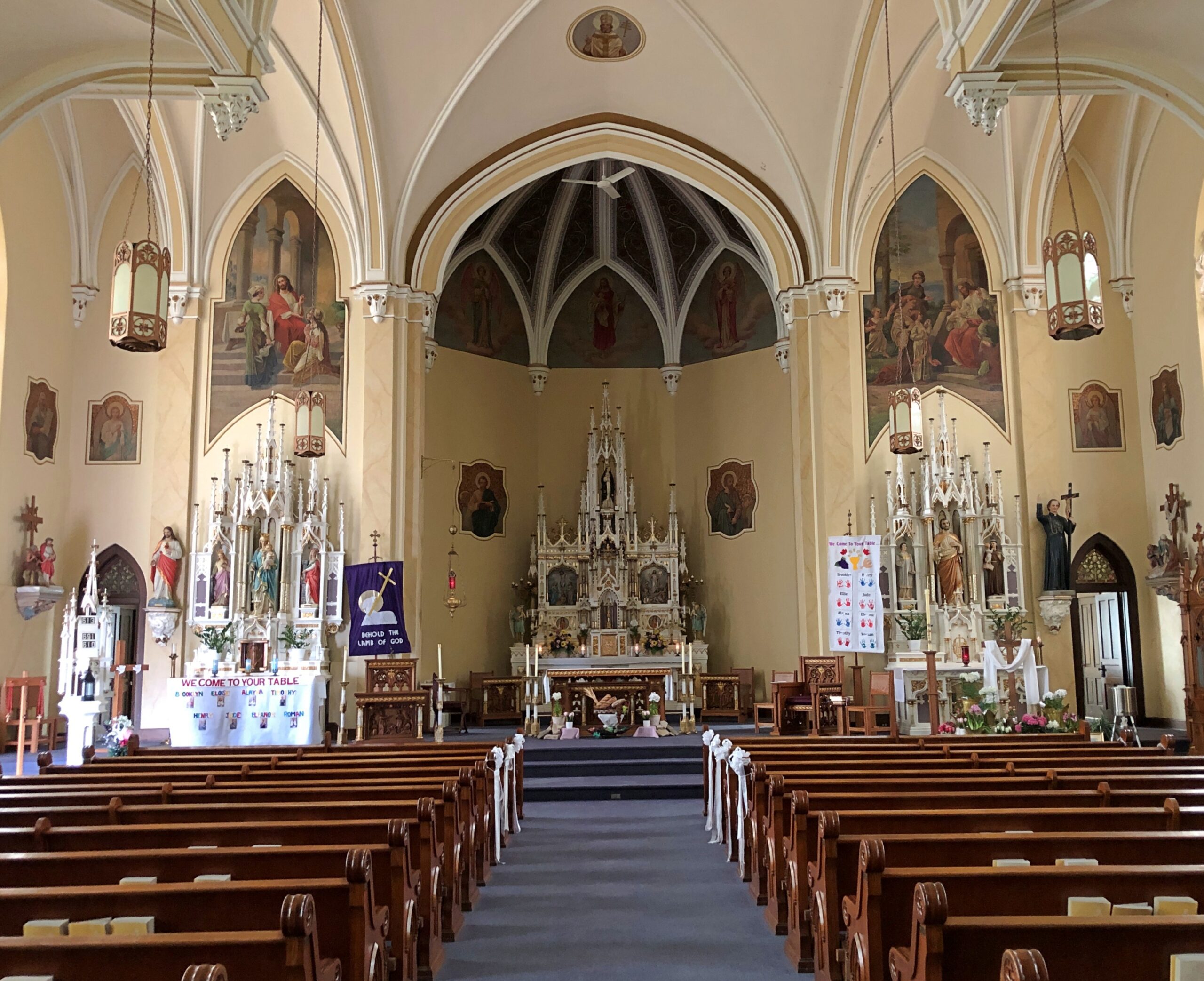
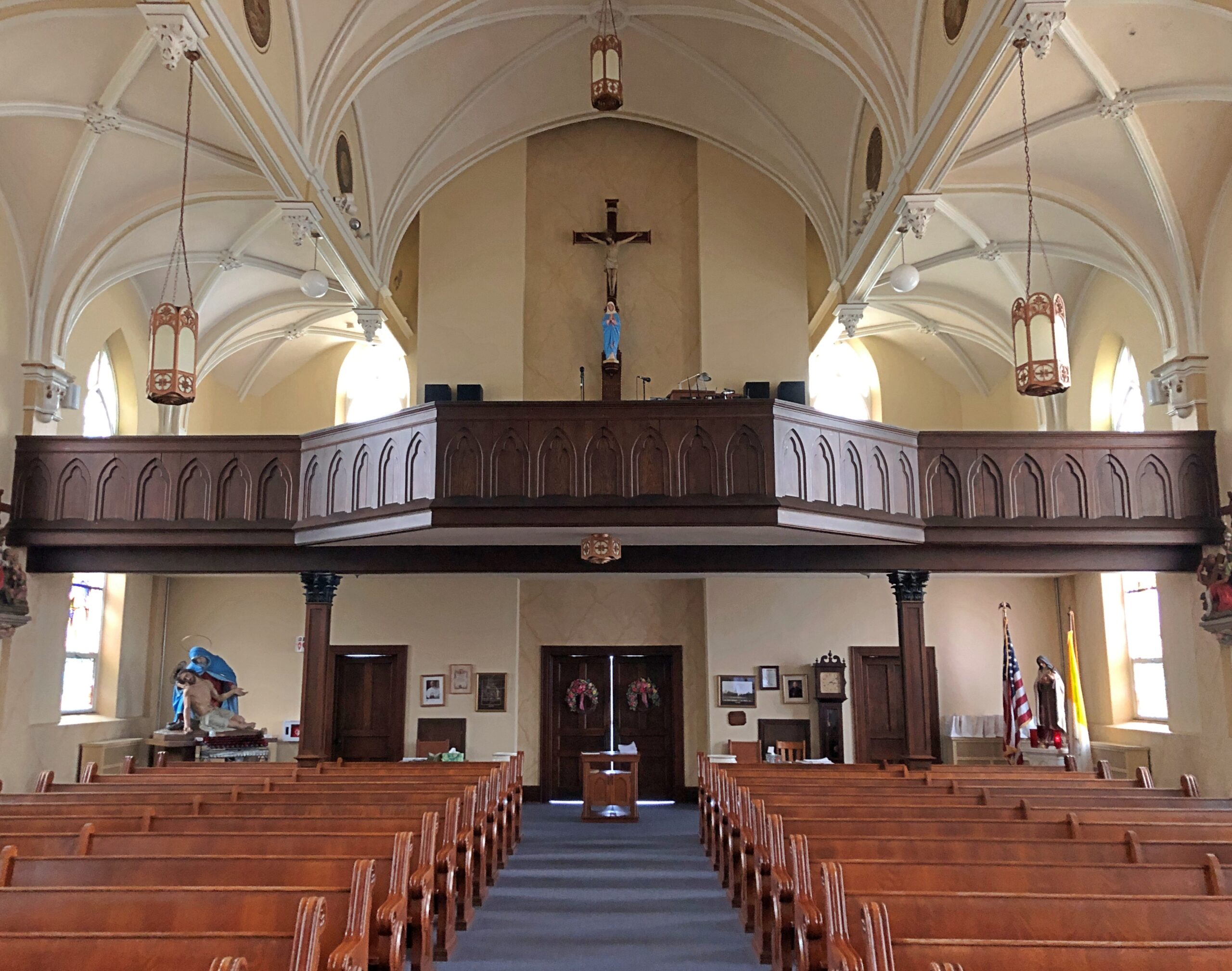
Saint Rose Church in the hamlet of Saint Rose, not far east of the Ohio-Indiana line. A Cross-Tipped Church.
Pennsylvania
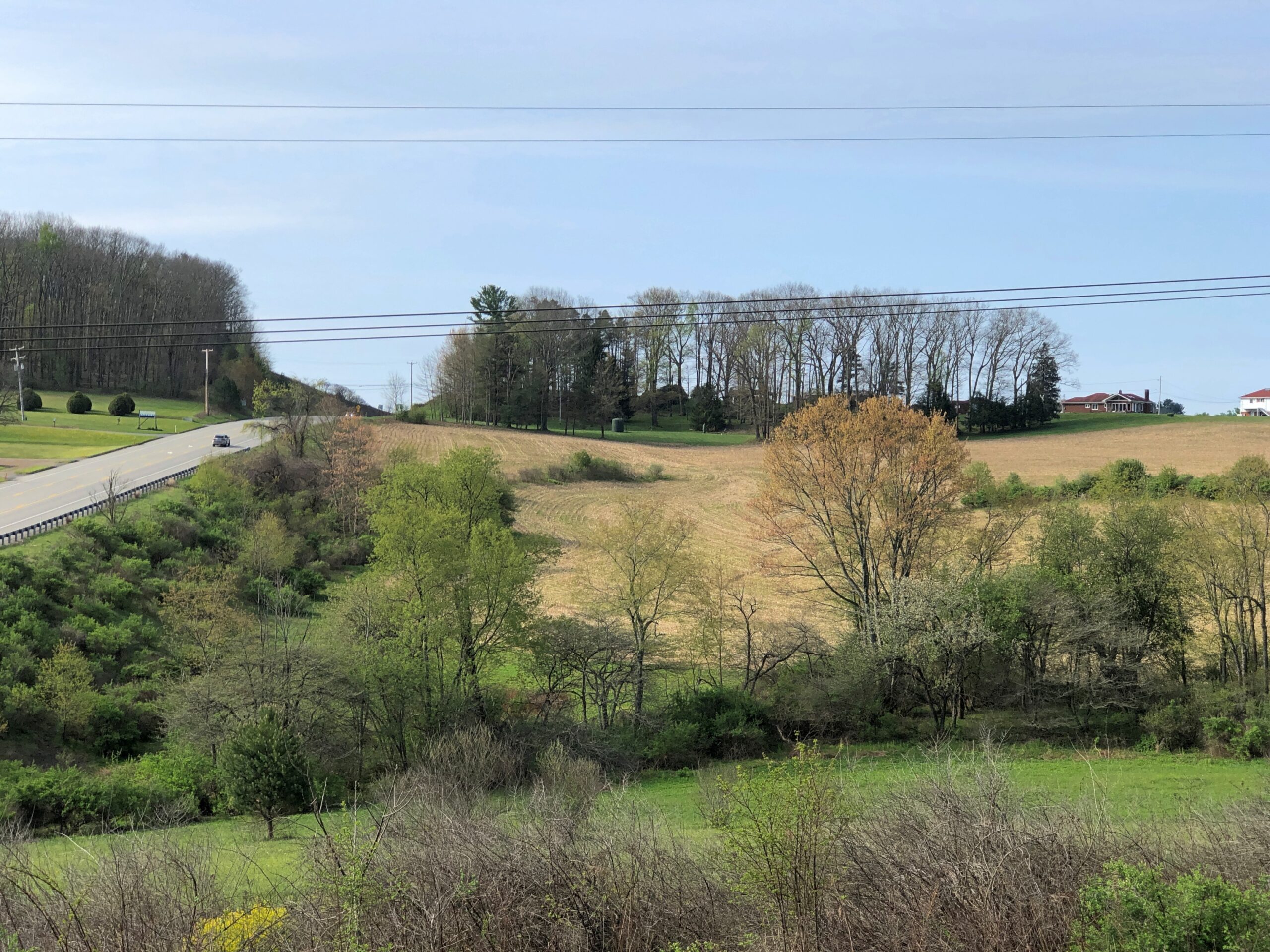
The hills at the edge of Punxsutanwney.
The drive west across Pennsylvania began across the Delaware River from Port Jervis, NY, taking US 209 southwest through part of Delaware Water Gap National Recreation Area. Bet the straight-ish, two-lane road is busier in peak recreation season in the Recreation Area, but in April, I booked along without encountering much in the way of traffic. Trees were still budding, but it wouldn’t be long before some stretches of the highway would pass through green tunnels. The sunlight was already casting green leaf shadows on the road.
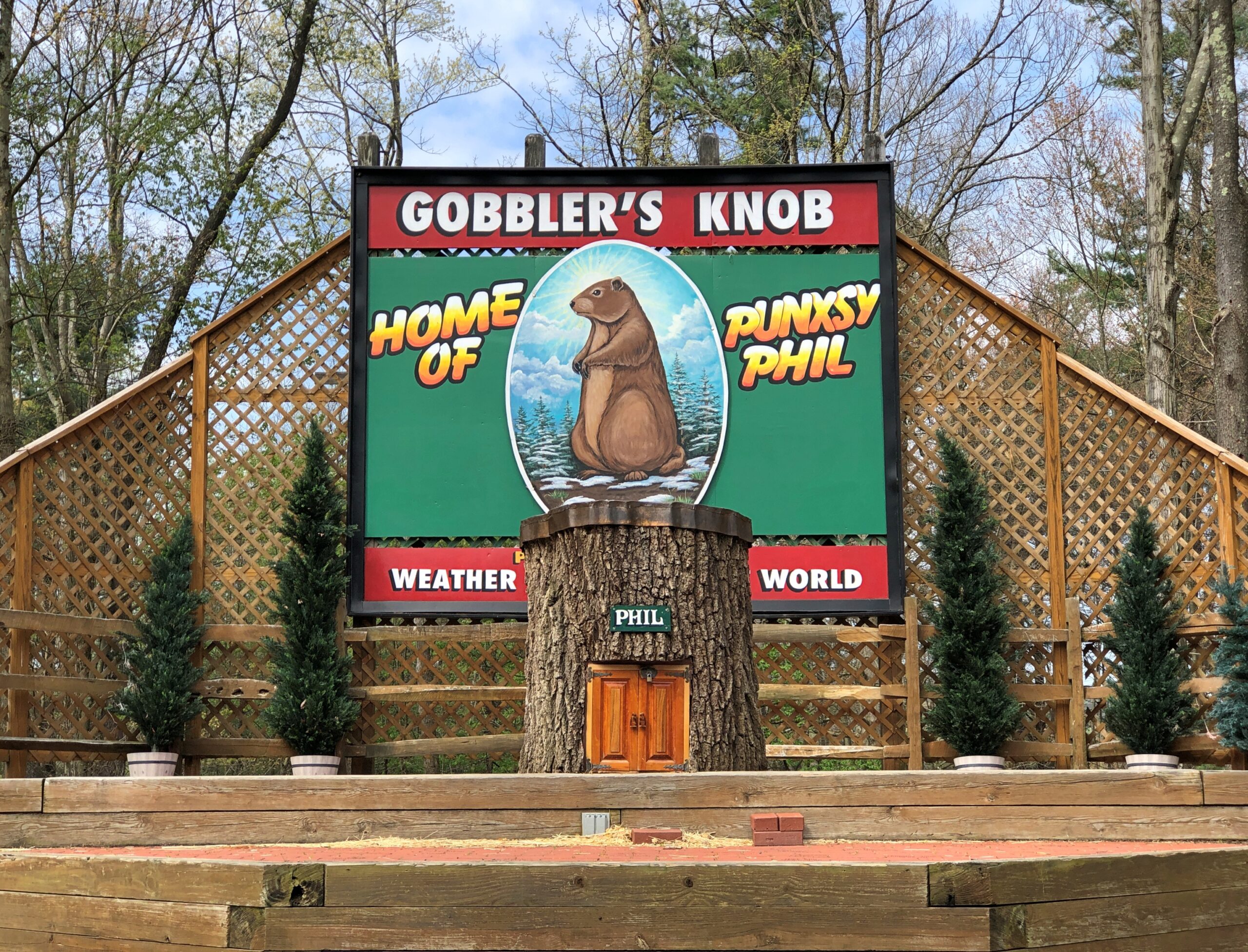
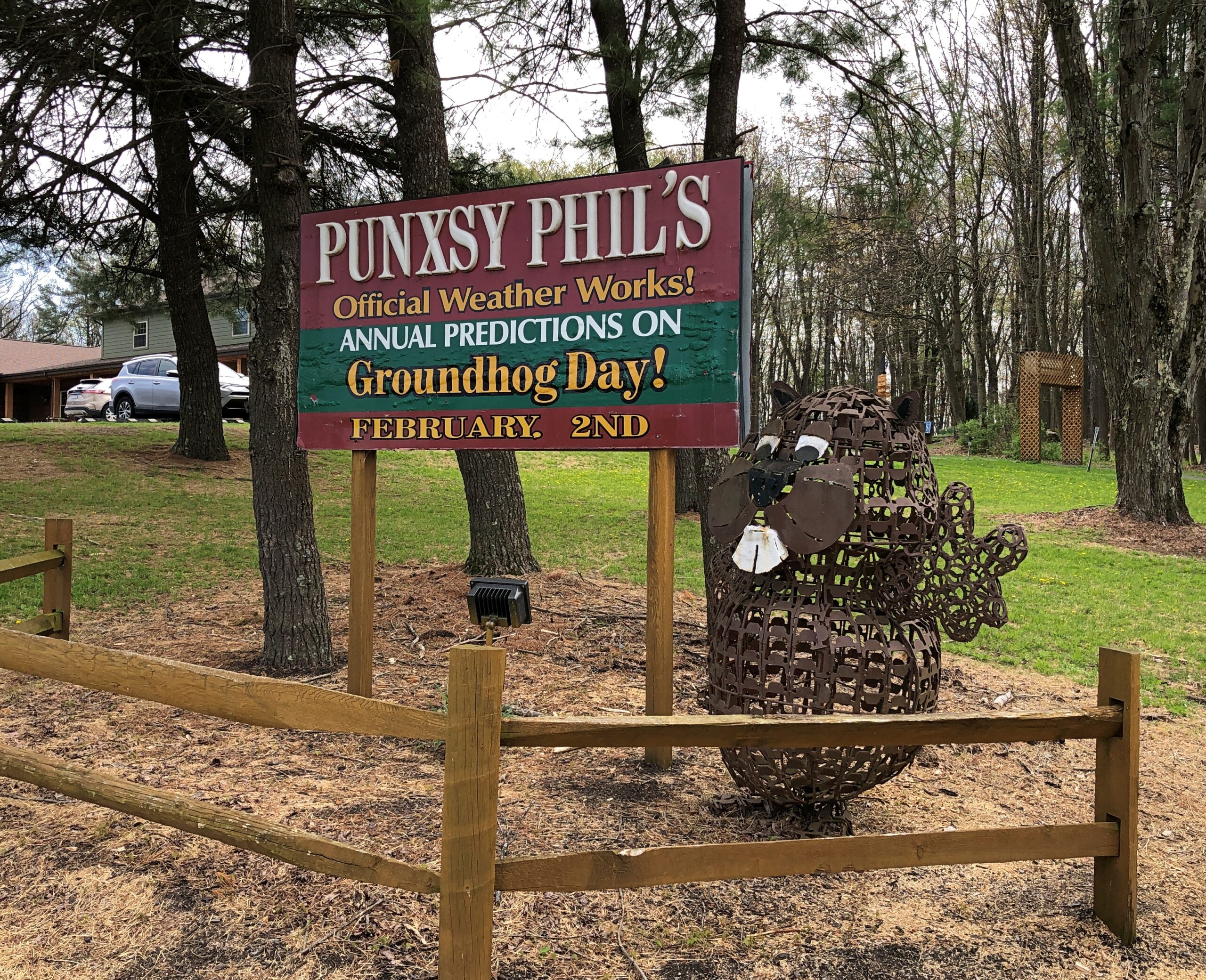
Watch Groundhog Day, and the impression is that the festivities are held in the center of town — which they are, in the Punxsutanwney stand-in of Woodstock, Illinois. Go to Punxsutanwney itself and learn that the February 2 fest is a few miles from town in a place called Gobbler’s Knob.
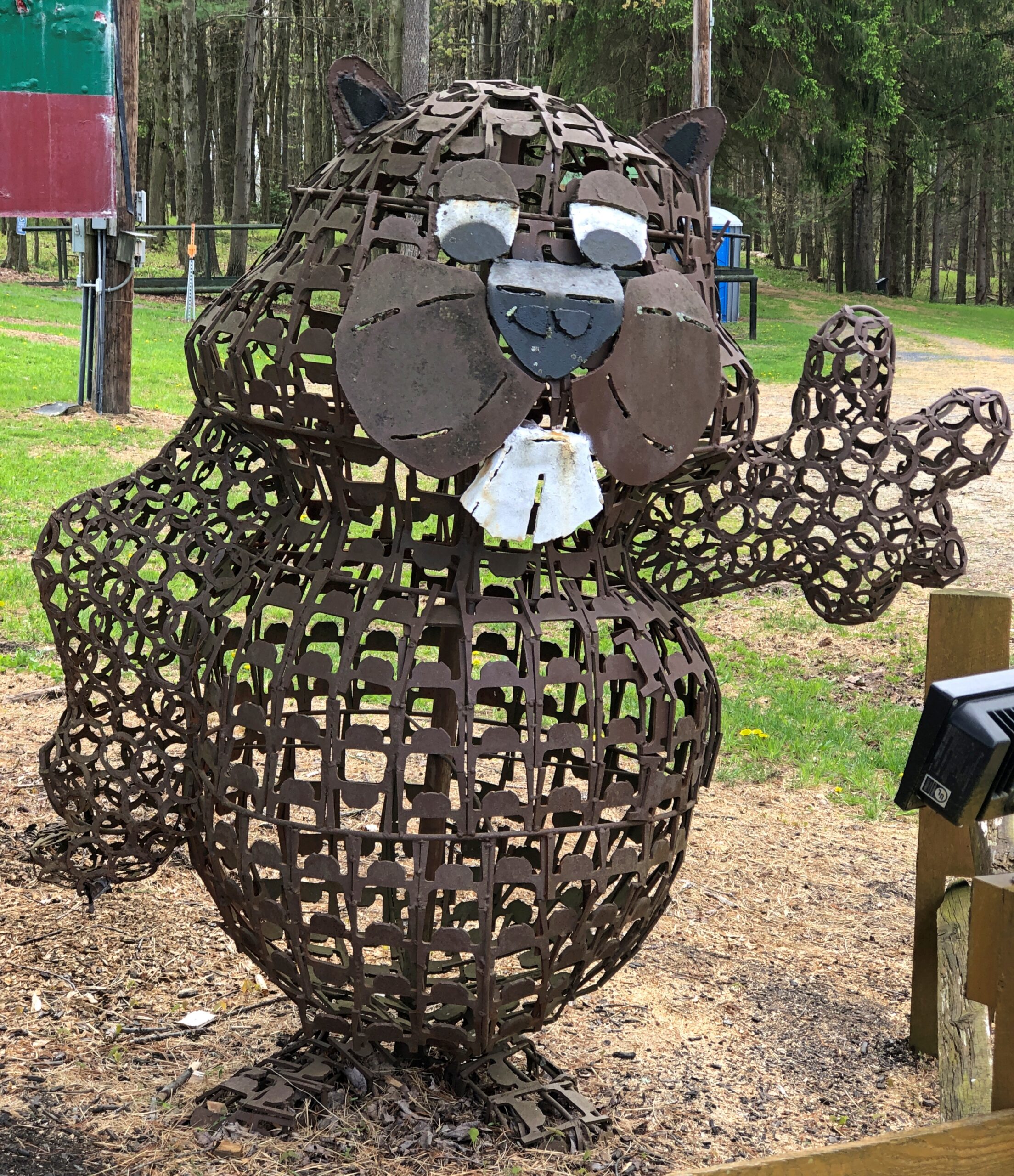
One more Phil. Iron Phil.
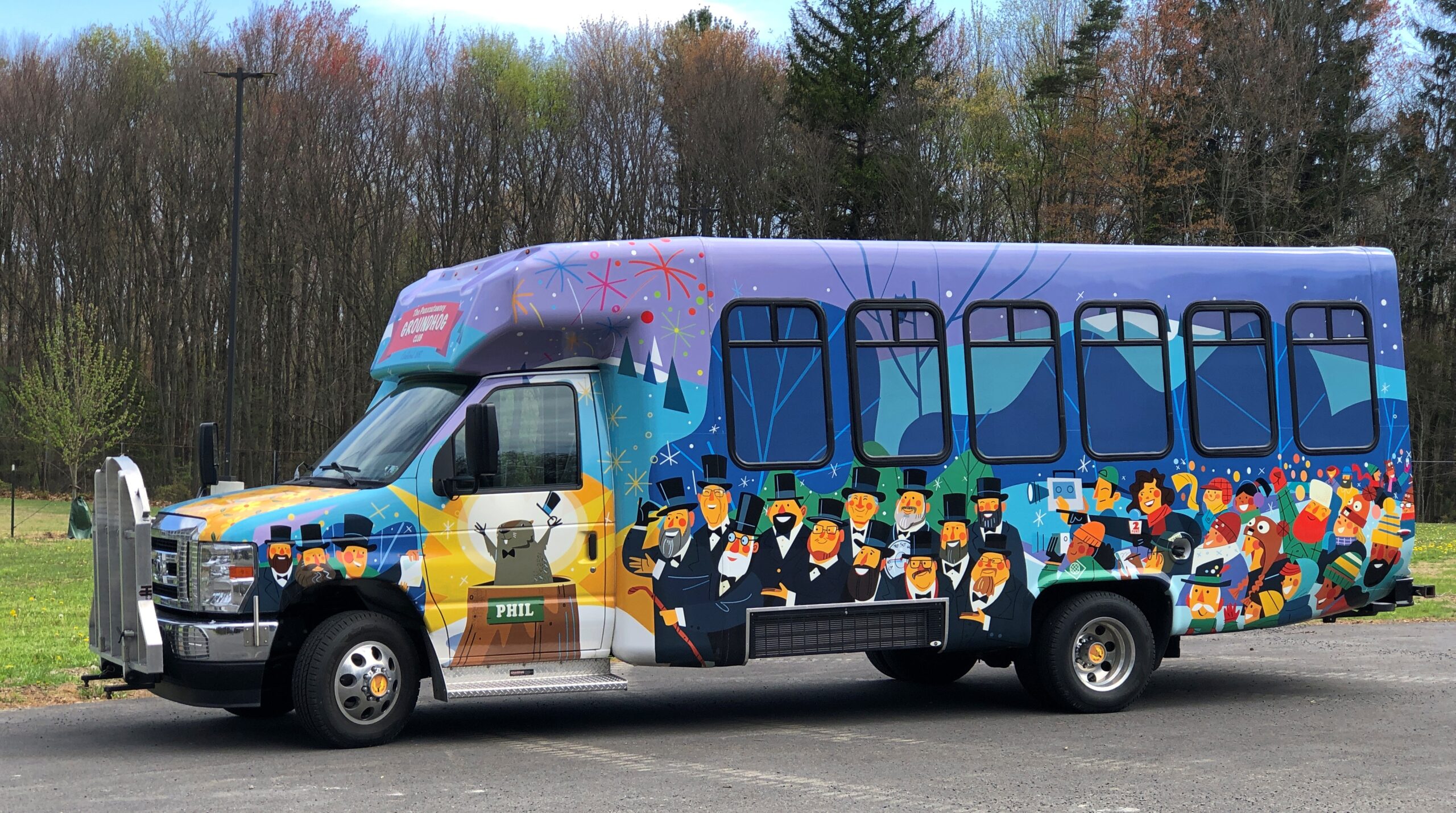
The clerk at the Gobbler’s Knob gift shop took pains to let me know that the site, and the festivities, were overseen by a nonprofit, not the commonwealth. Outside is the nonprofit’s bus, or at least I assume that, probably used to ferry people from town to GK and vice-versa, to help deal with the popularity of the event.
I like a good local festival as much as anyone, but February 2 is a deal-breaker. Can’t Phil come out again on August 2 to predict how much longer summer is going to last?
One More (Indiana)
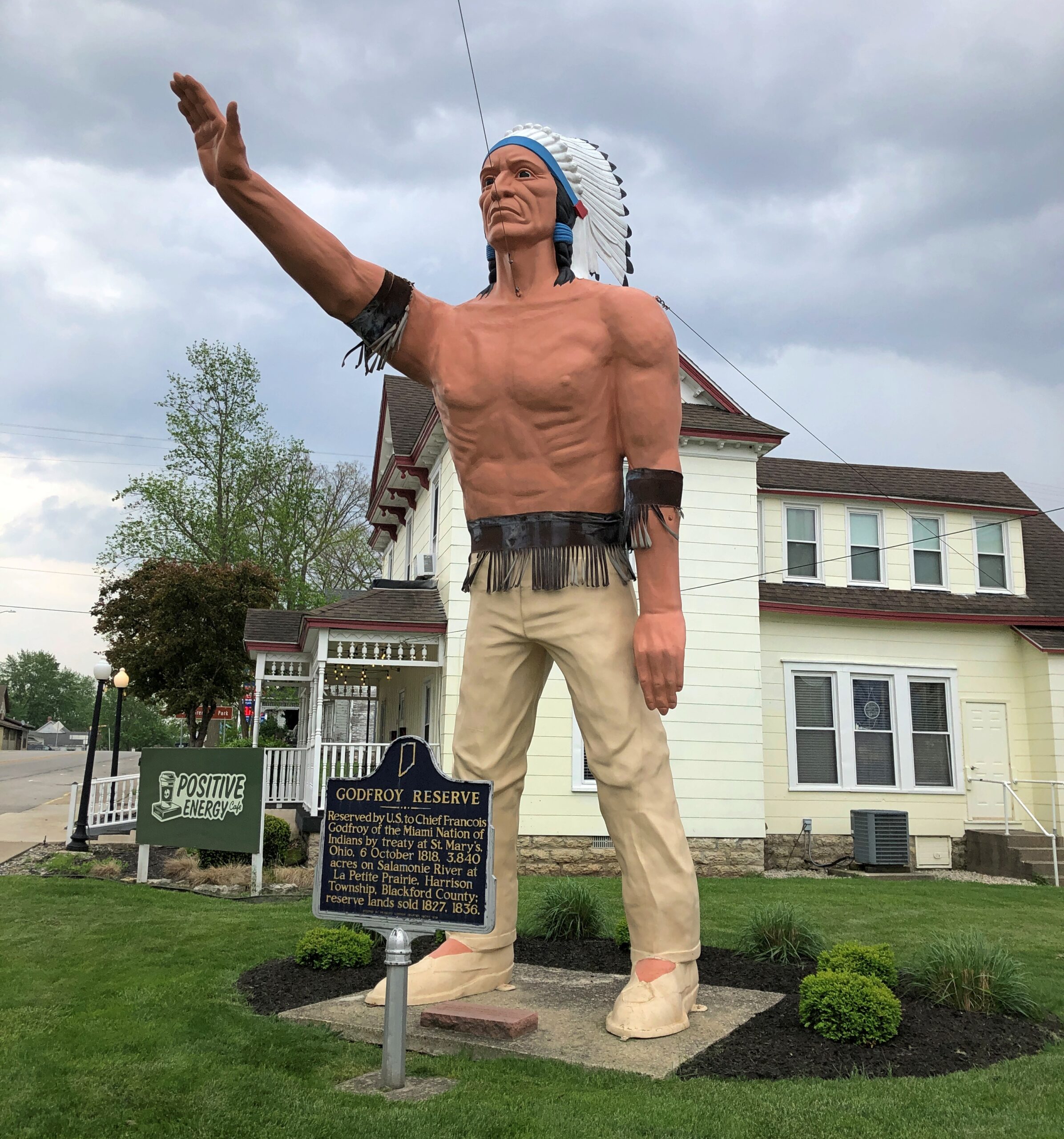
Miami Chief Francois Godfroy stands at the corner of Main Street and Huntington Street/Indiana 18 in Montpelier. Well, maybe it’s supposed to remind passersby of the chief more than actually depict him.
A Daughters of the American Revolution historical marker says: Reserved by U.S. to Chief Francois Godfroy of the Miami Nation of Indians by treaty at St. Mary’s, Ohio, 6 October 1818. 3,849 acres on Salamonie River at La Petite Prairie, Harrison Township, Blackford County: reserve lands sold 1827, 1836.
Waymarking says: “The statue was made in Venice, CA in 1960 for the Tom Wood Pontiac dealership in Indianapolis. Later it was in front of the Indian Museum at Eagle Creek Park In Indianapolis. After the museum closed, the statue (of more a plains Indian than a NE Indiana tribe) was obtained by Chief Larry Godfroy — a descendant who presented it to the City of Montpelier and they erected it as a monument in 1984.”
Time for spring break. Back to posting around April 26, when it might actually be spring in northern Illinois. There have been a few days recently when I’ve been able to sit out on my deck comfortably, which is my idea of spring, but not that many.
The recent trip to Texas seems like a while ago now. As usual, though, there were many details. A lot more than I can convey, but here are a few more.
Faces
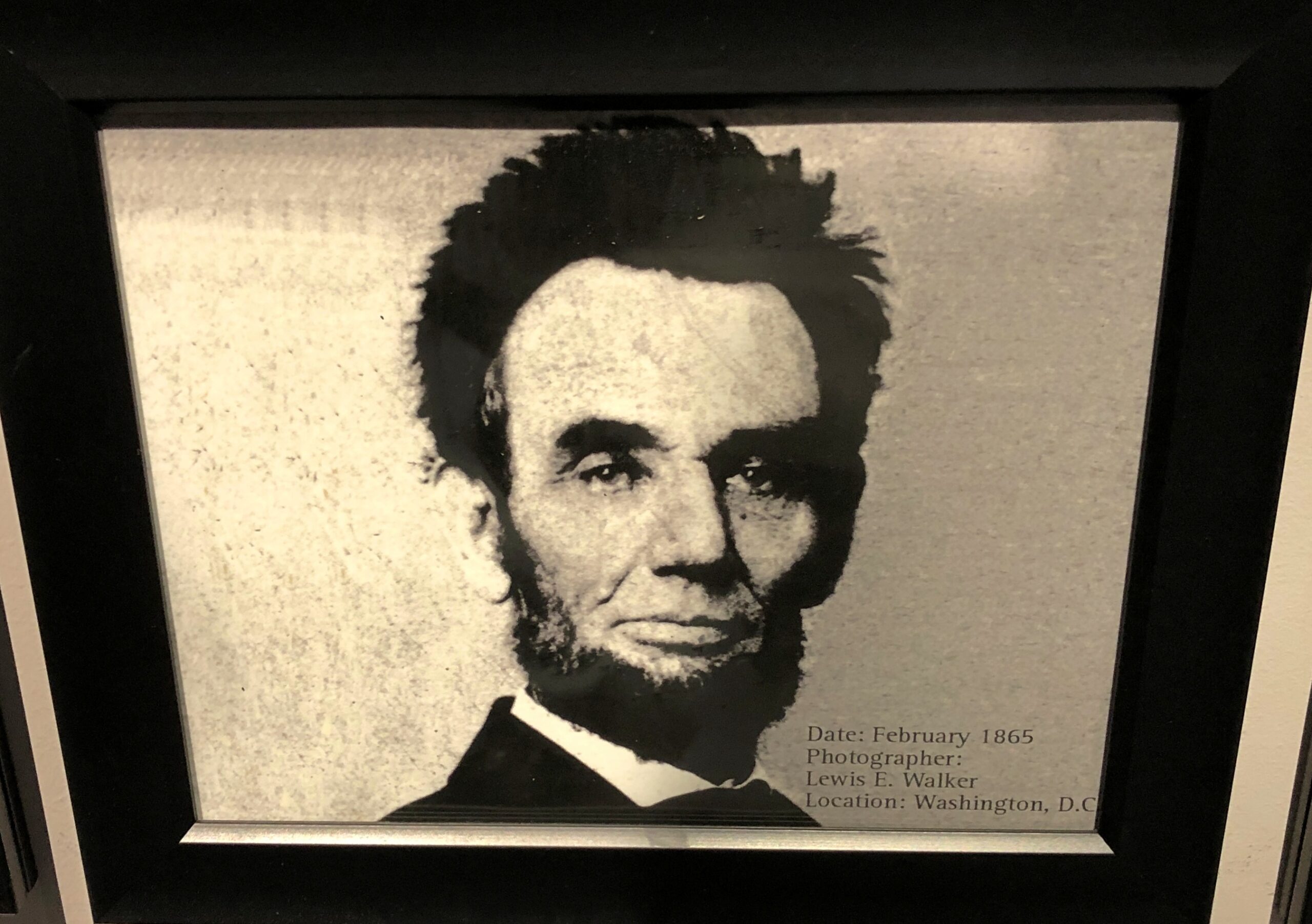
At the National Funeral Museum in Houston, one display featured, chronologically, 20 photographs of Abraham Lincoln. The third to last one, from February 1865, is one you don’t see much.
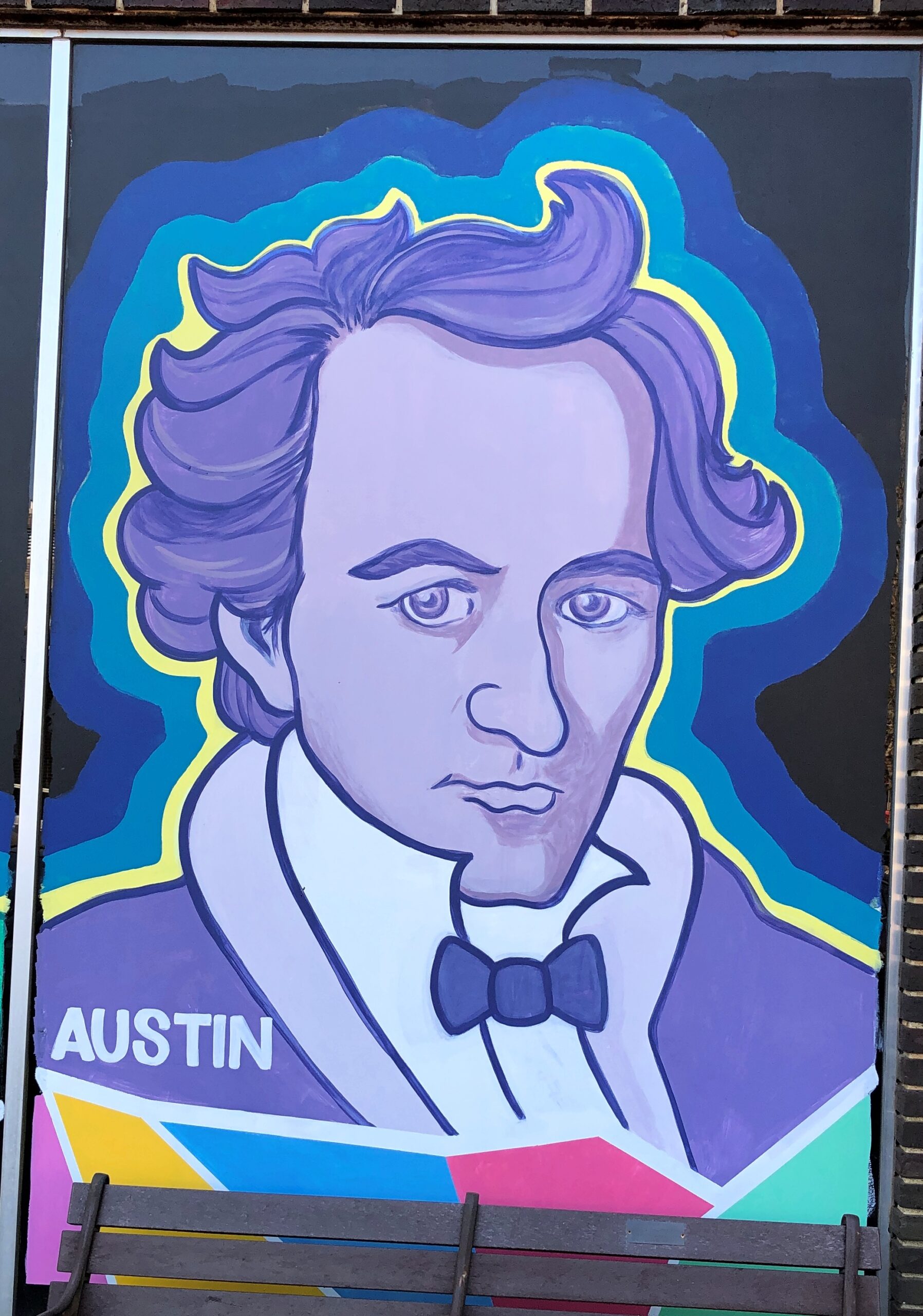
On a wall in downtown Nacogdoches, familiar figures from Texas.
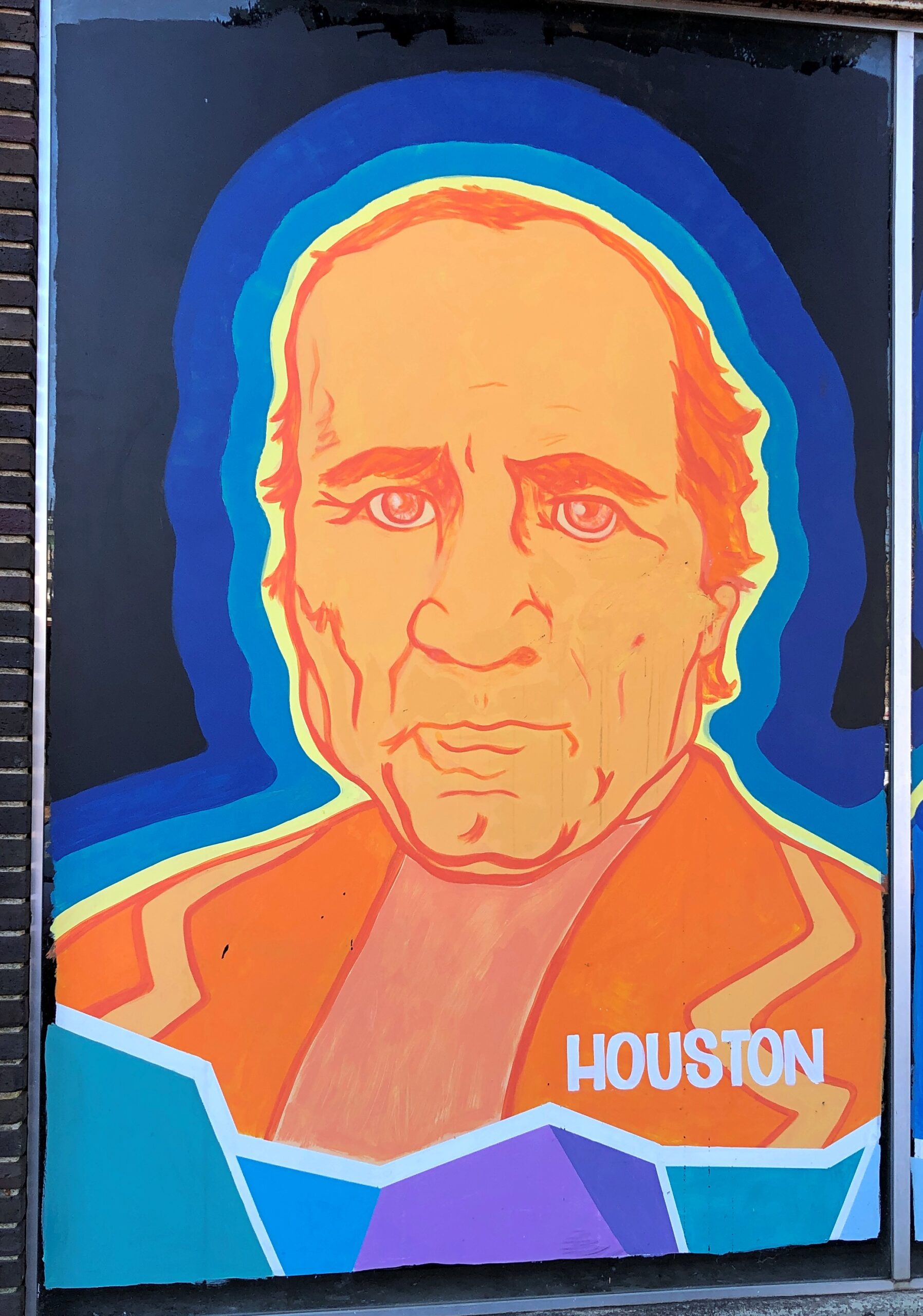
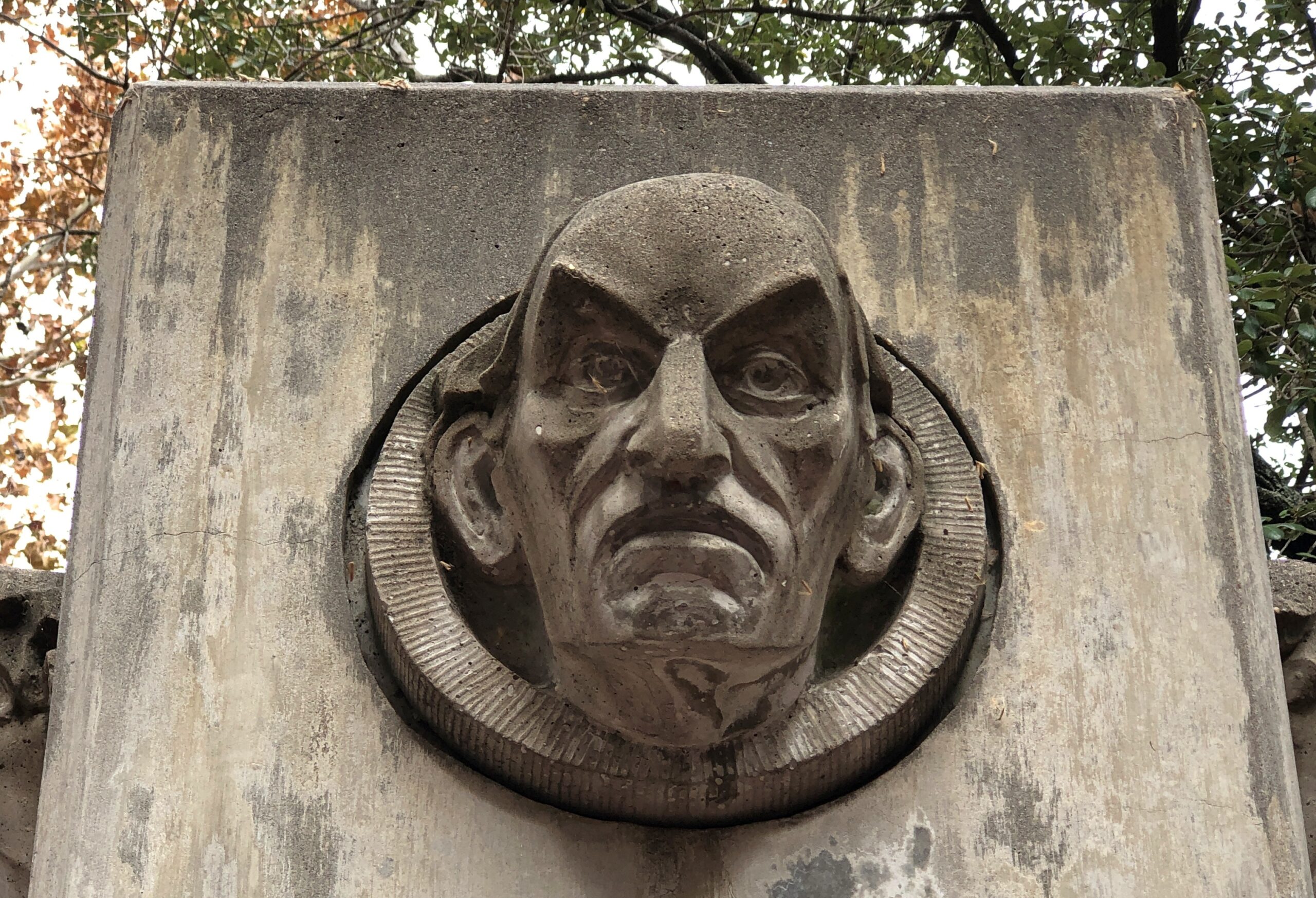
I didn’t work out who this was supposed to be, in downtown Houston. Better that way, I think.
Signs
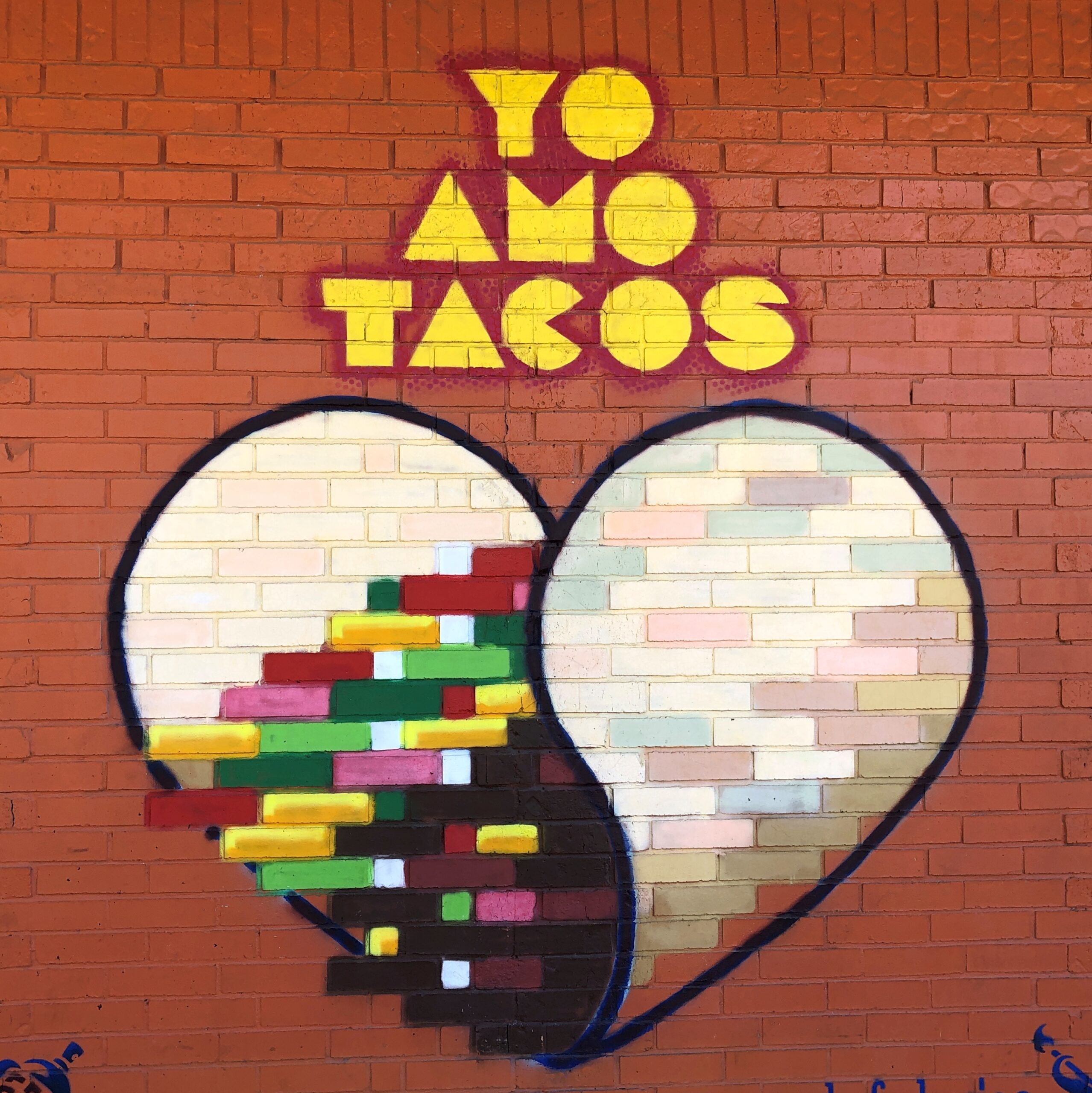
This place in Austin, well known to Tom, serves most delicious tacos.
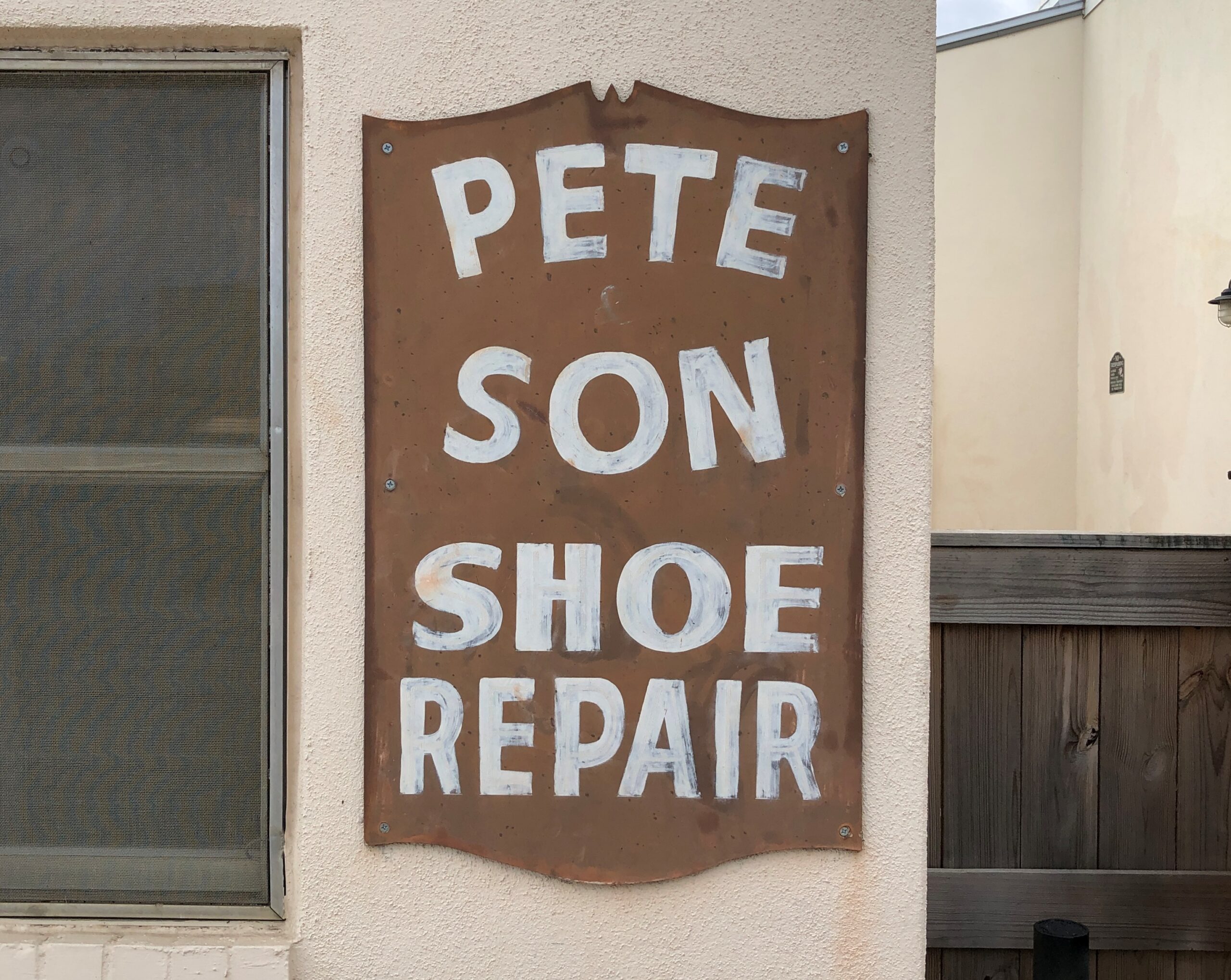
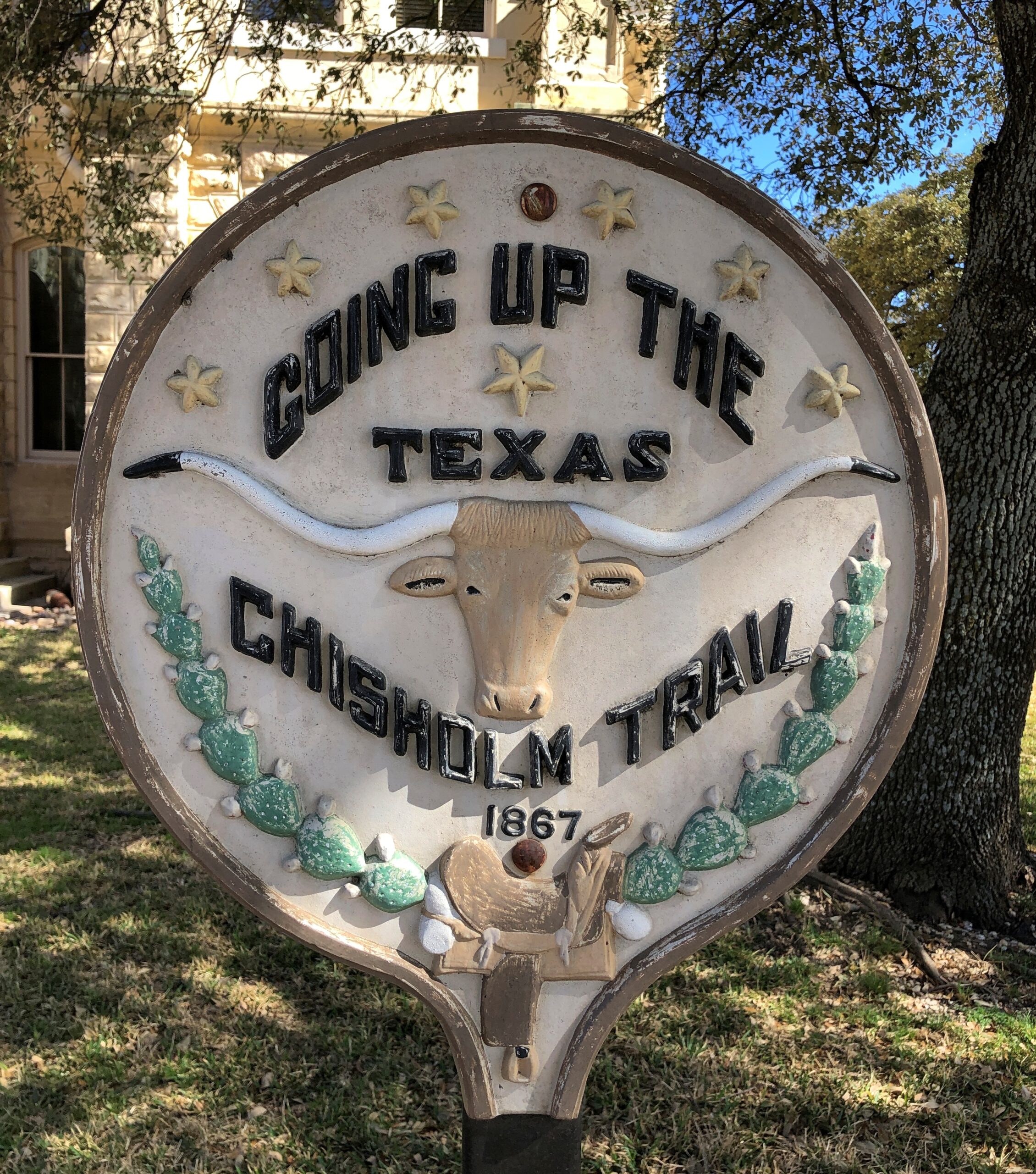
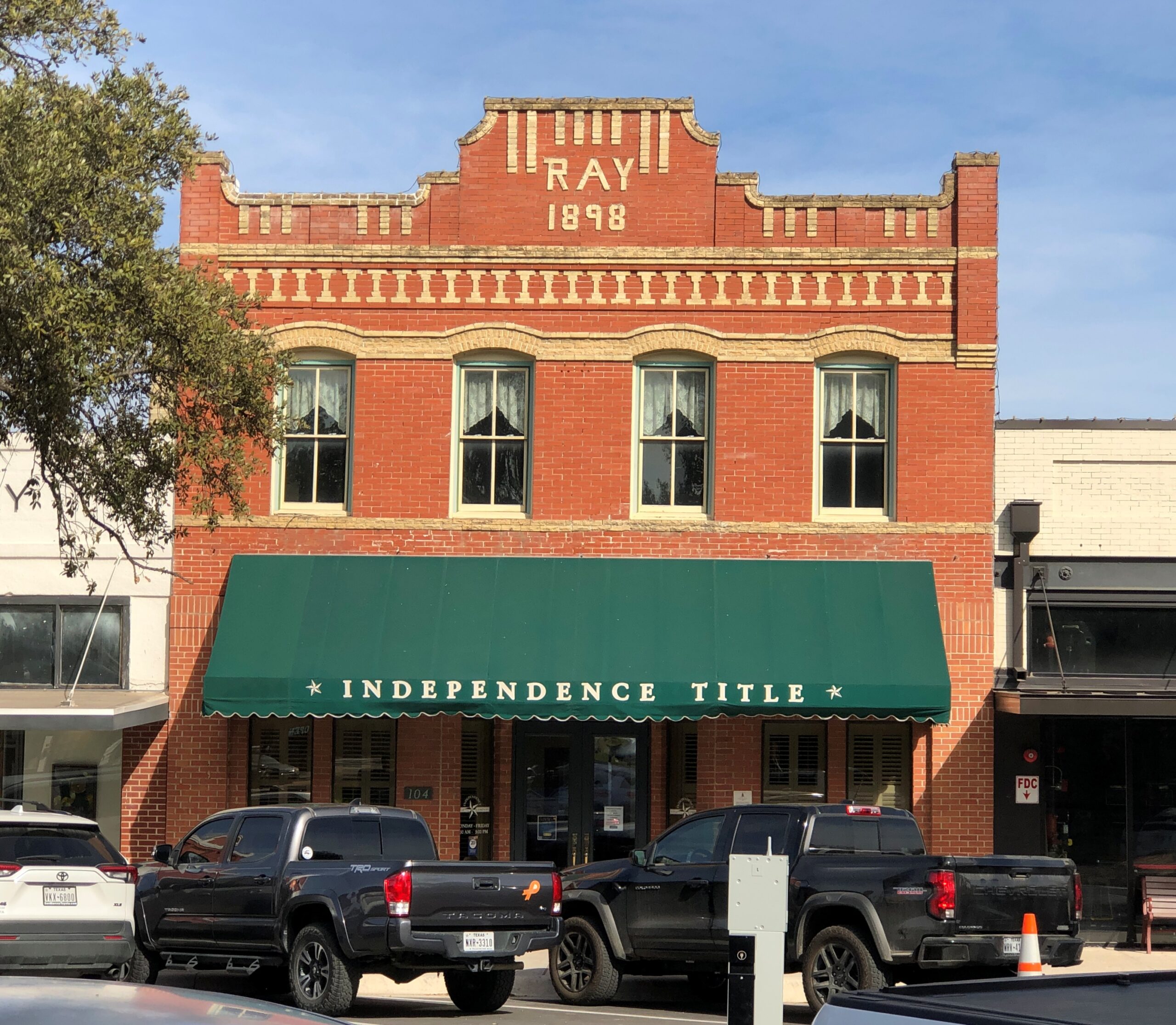
Bastrop: Cobbling runs in the family.
Belton.
Structures
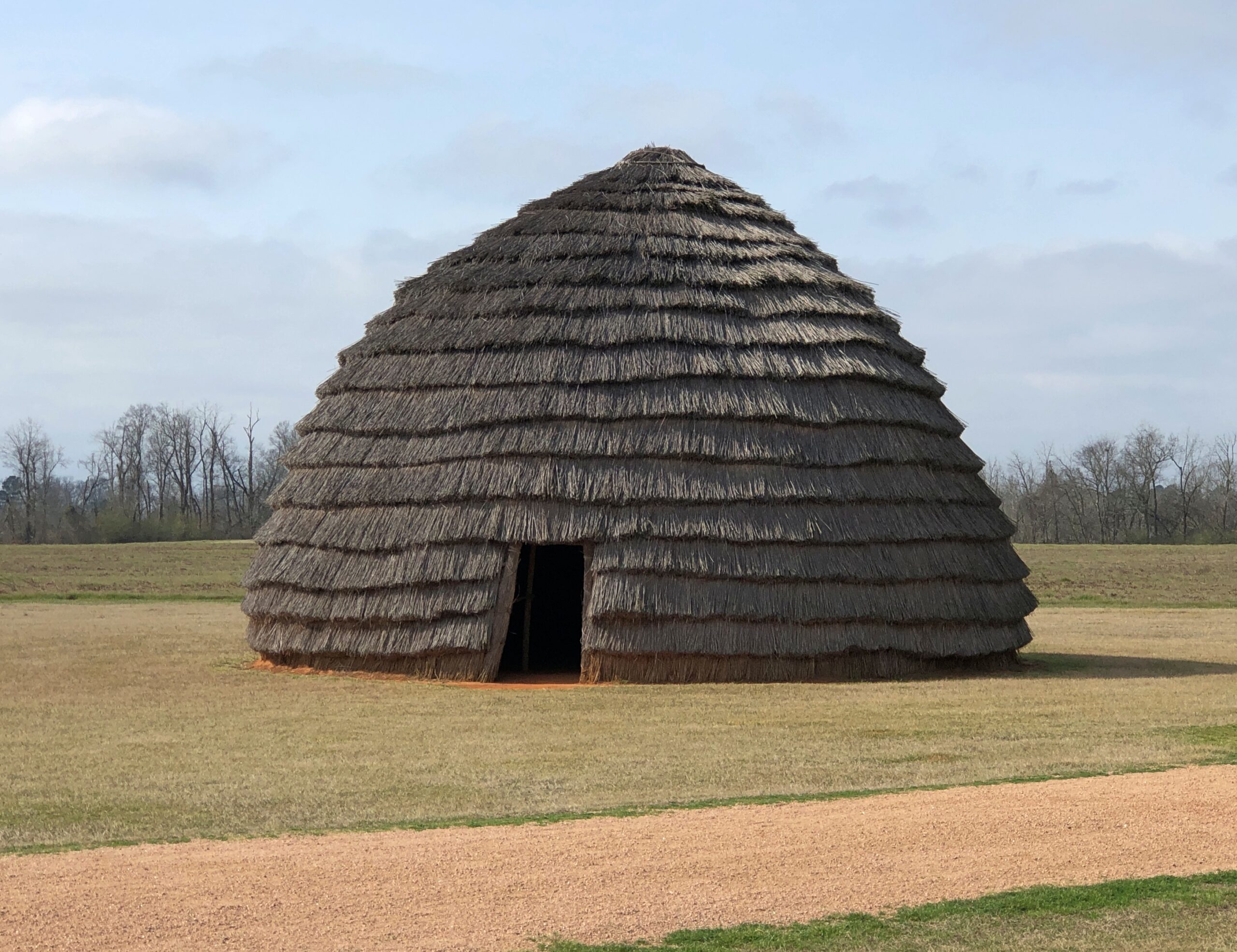
A re-creation of an ancient Caddo home.
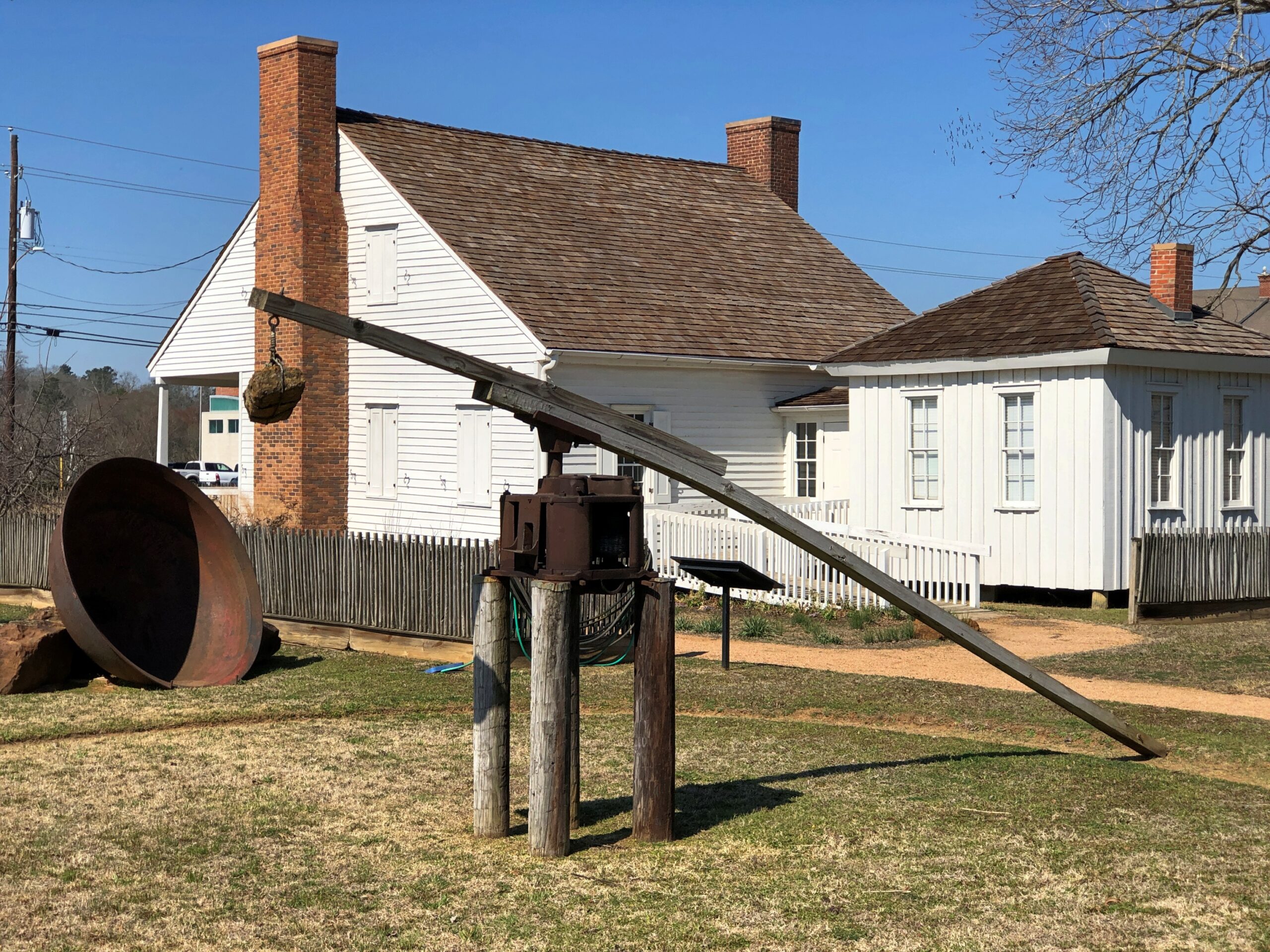
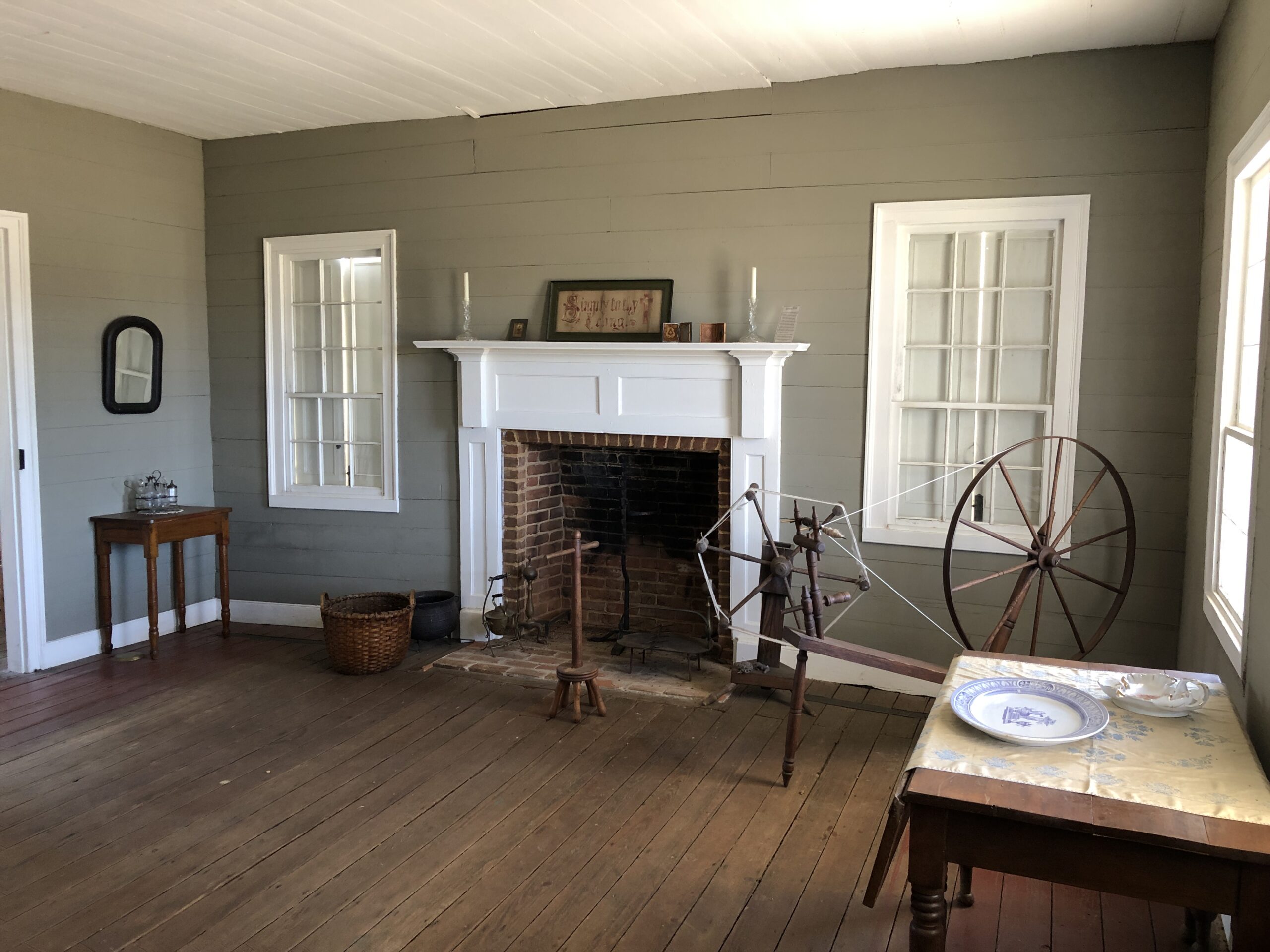
Durst-Taylor Historic House & Garden in Nacogdoches.
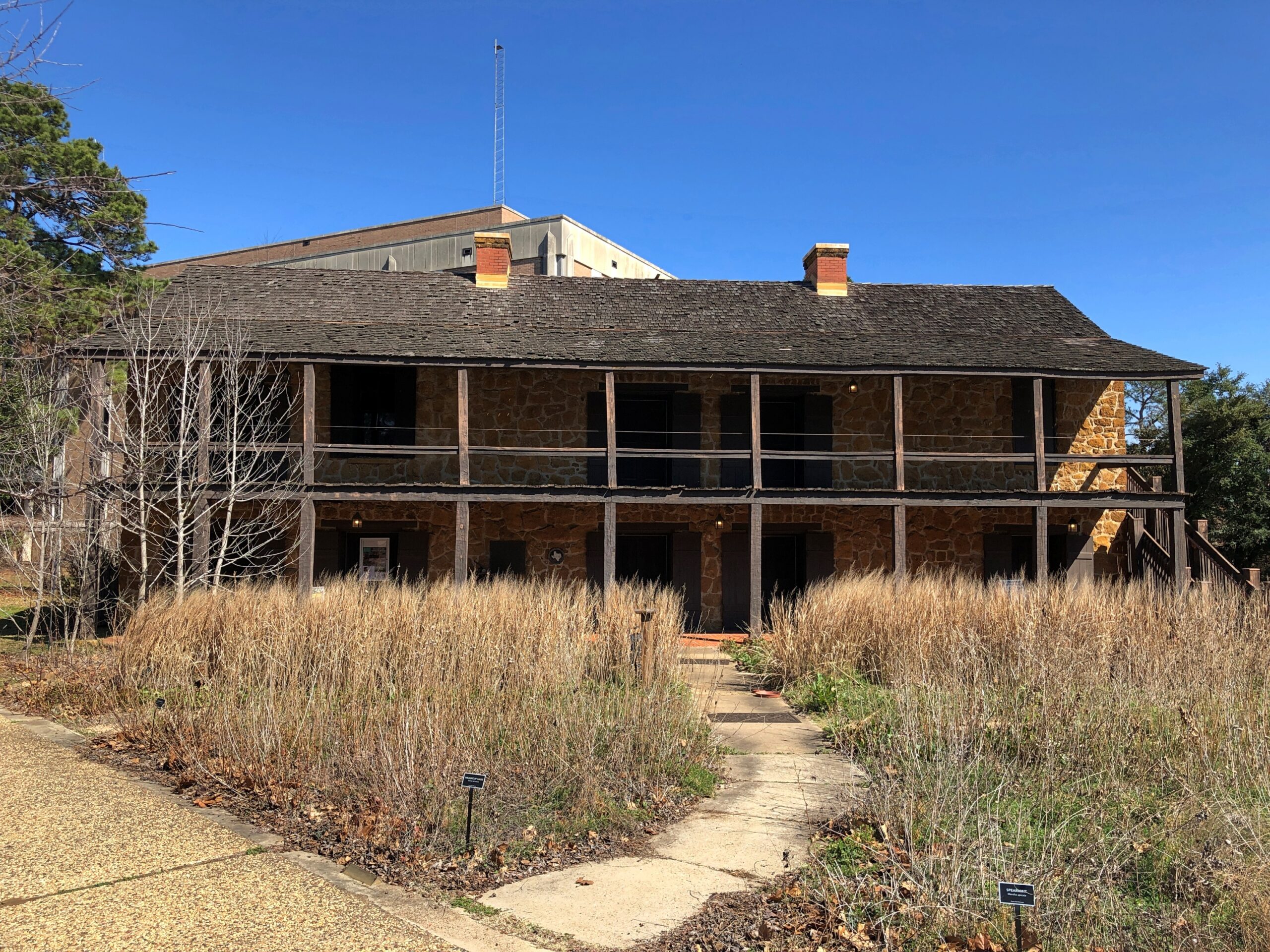
The Old Stone Fort Museum in the same town, which is made of stone, but was never a fort. On the campus of Stephen F. Austin State University. Recommendation to the university: if you want people to visit the place, provide just a little unrestricted parking. A little visitor parking anywhere on campus would be good.
Then again, the university seems determined to move the structure anyway — which might mean taking it apart, and then not putting it anywhere where because such a move would cost too much.
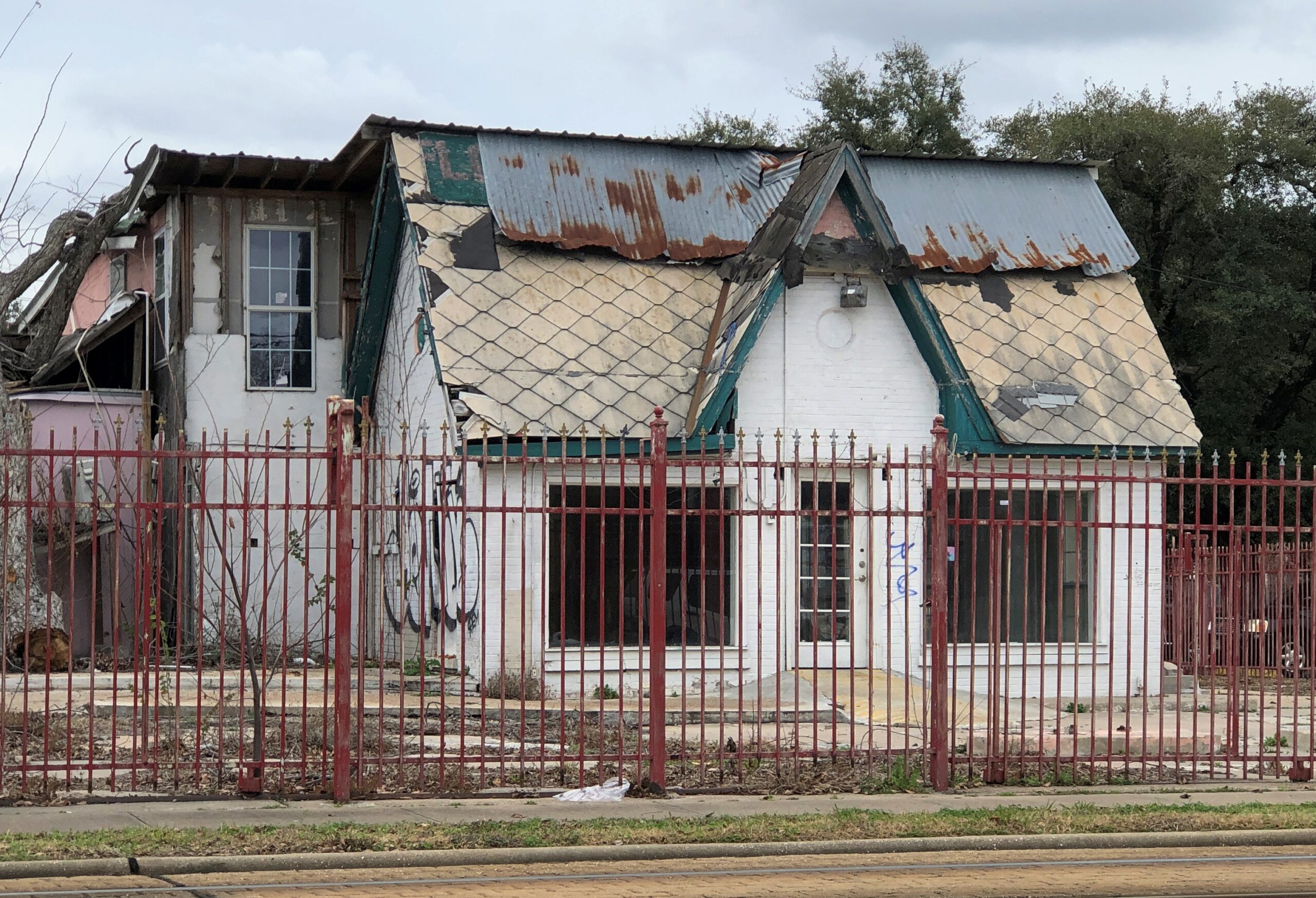
A place that has seen better days in Houston.
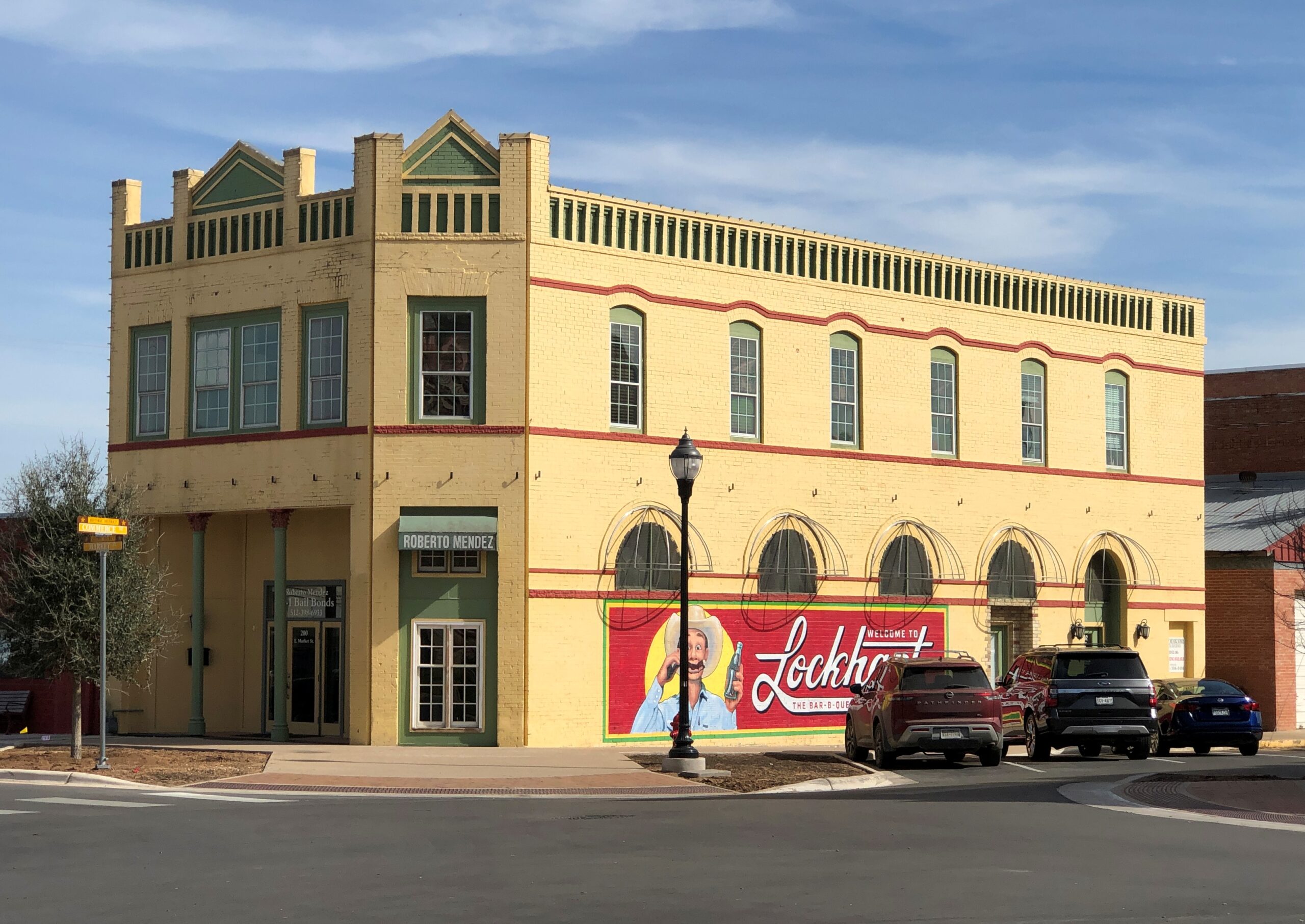
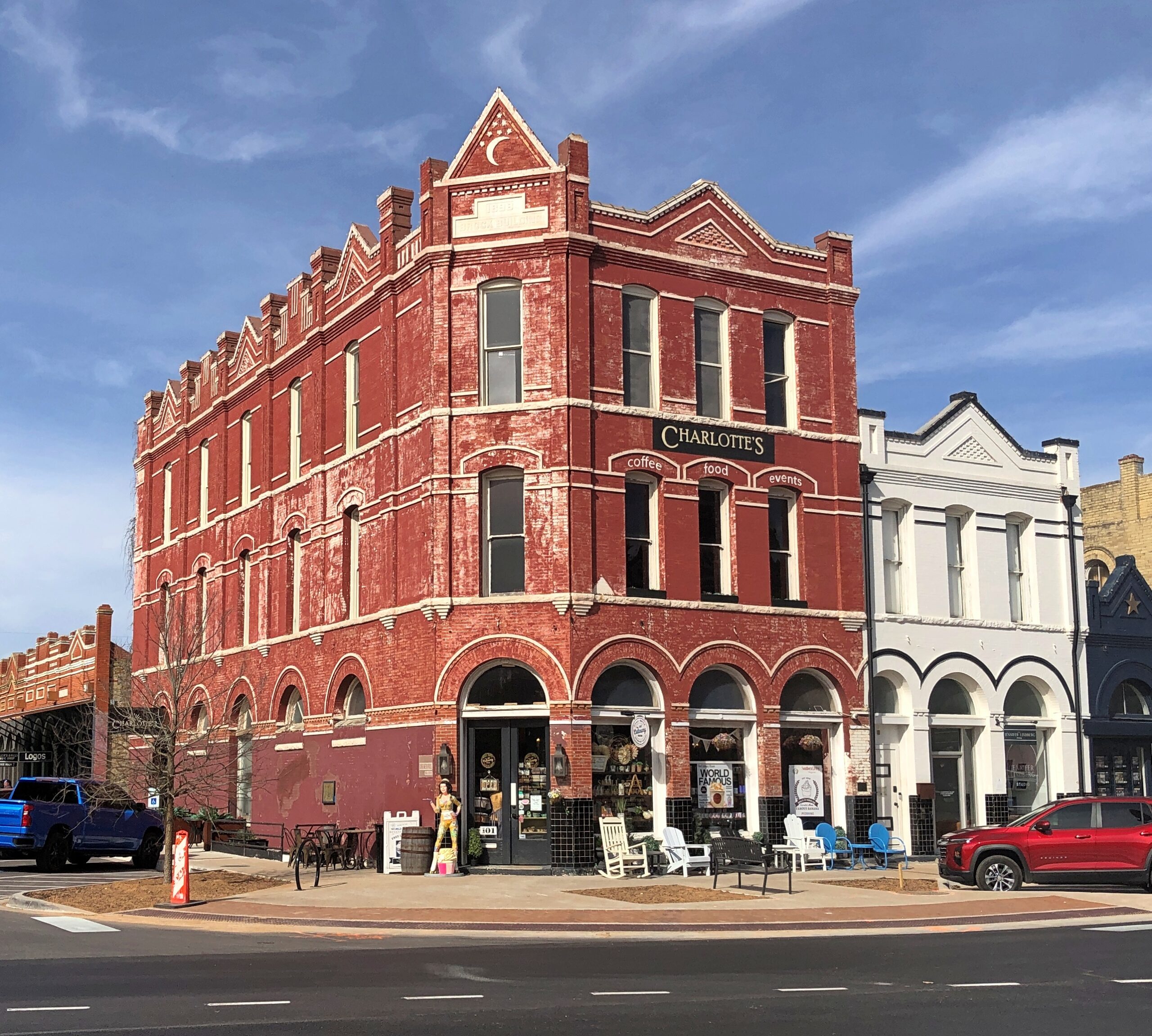
Downtown Lockhart.
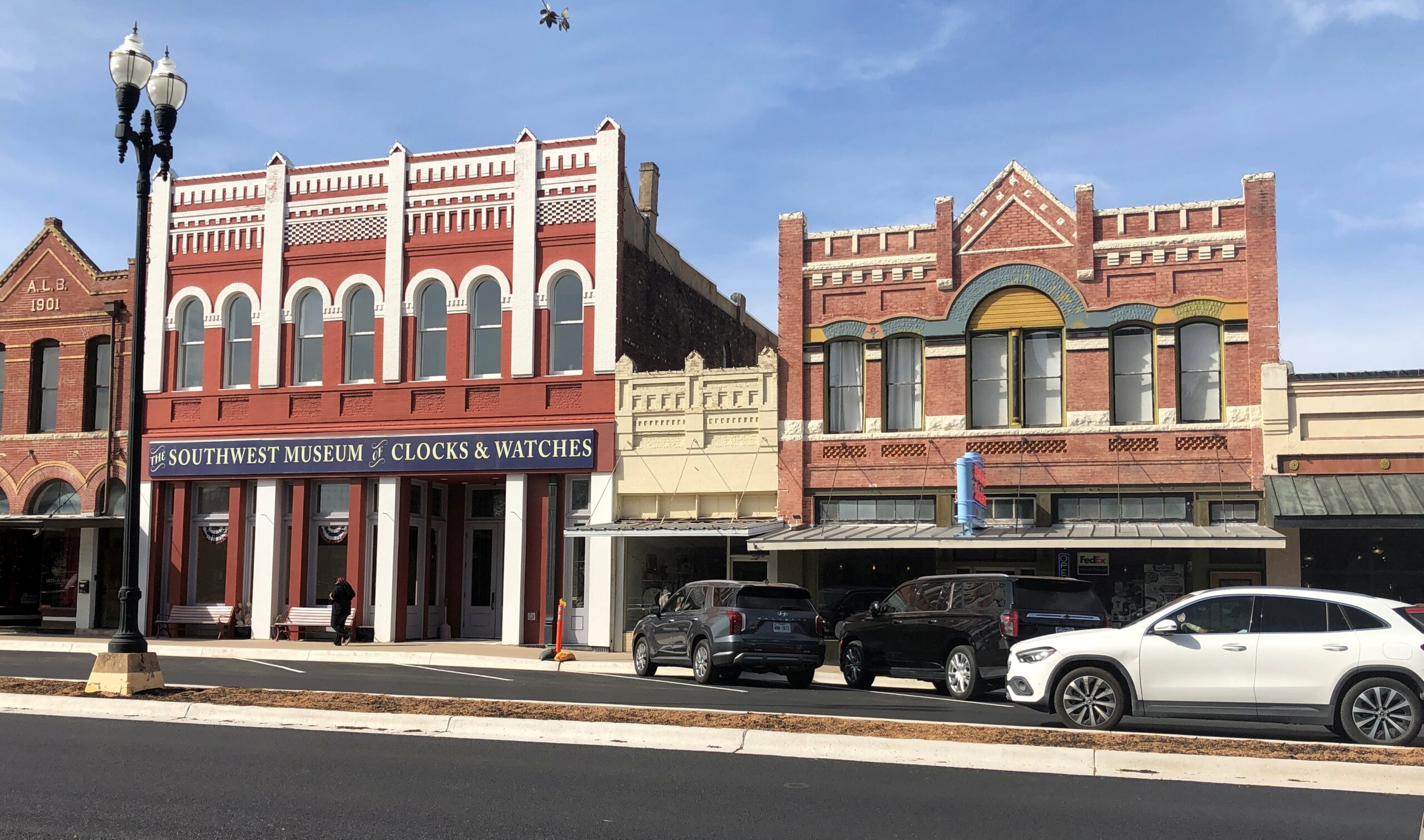
The Southwest Museum of Clocks & Watches is permanently closed, alas.
Items
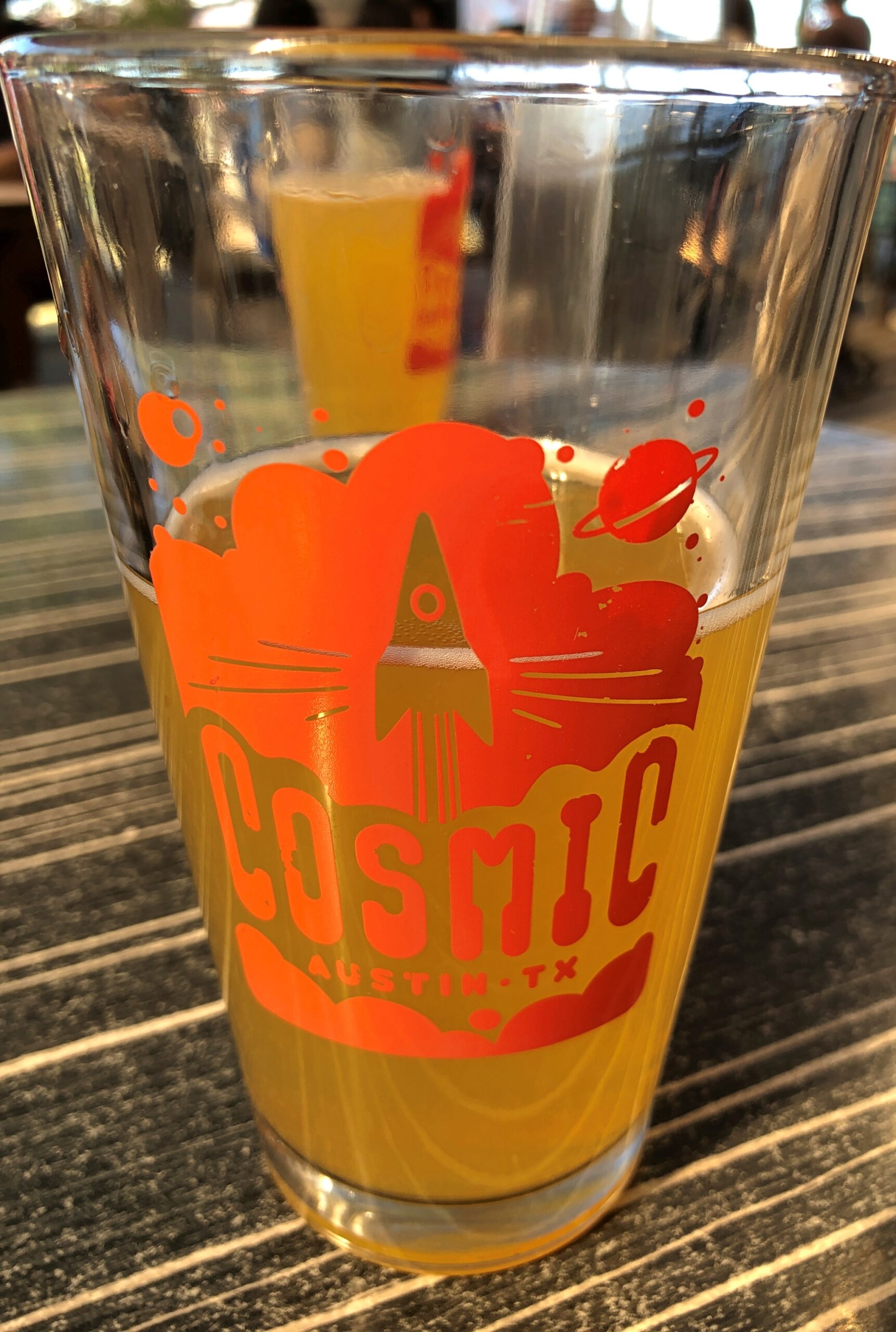
Cosmic in Austin is a bar and a collection of food trucks that surround an informal plaza with a lot of tables and chairs and shade. It’s a very pleasant place, and within walking distance of Tom’s home.
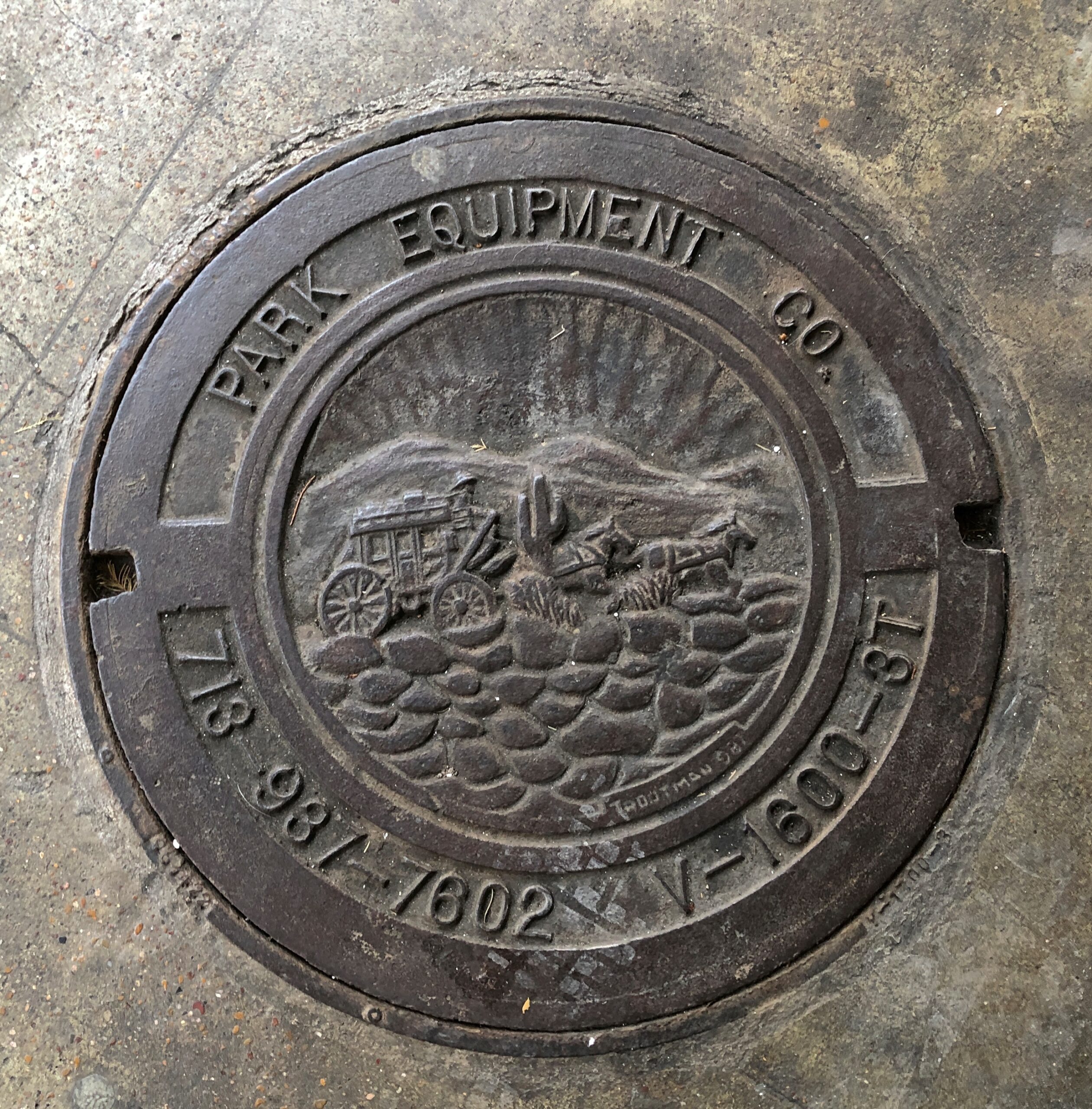
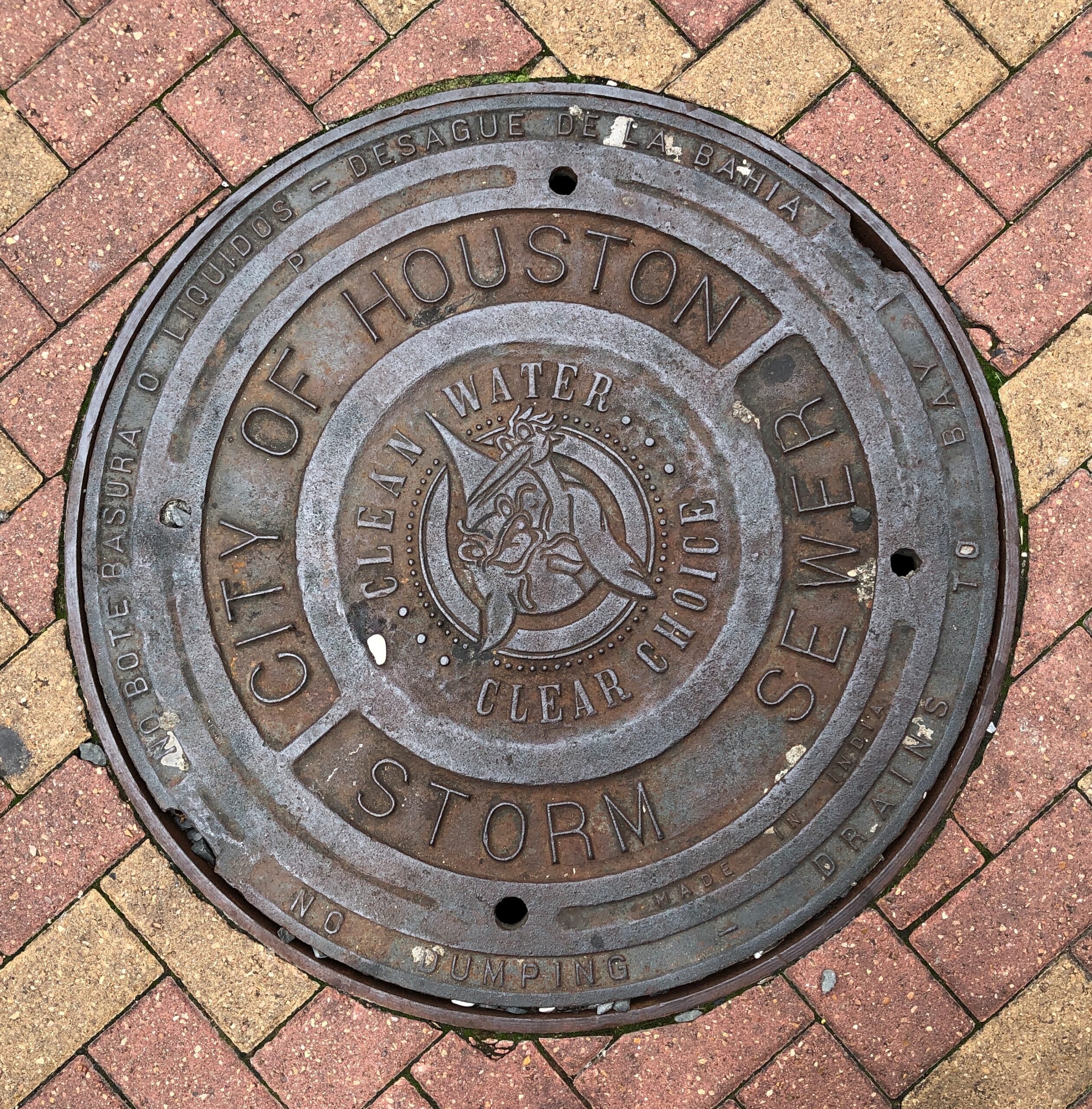
Houston manhole covers.
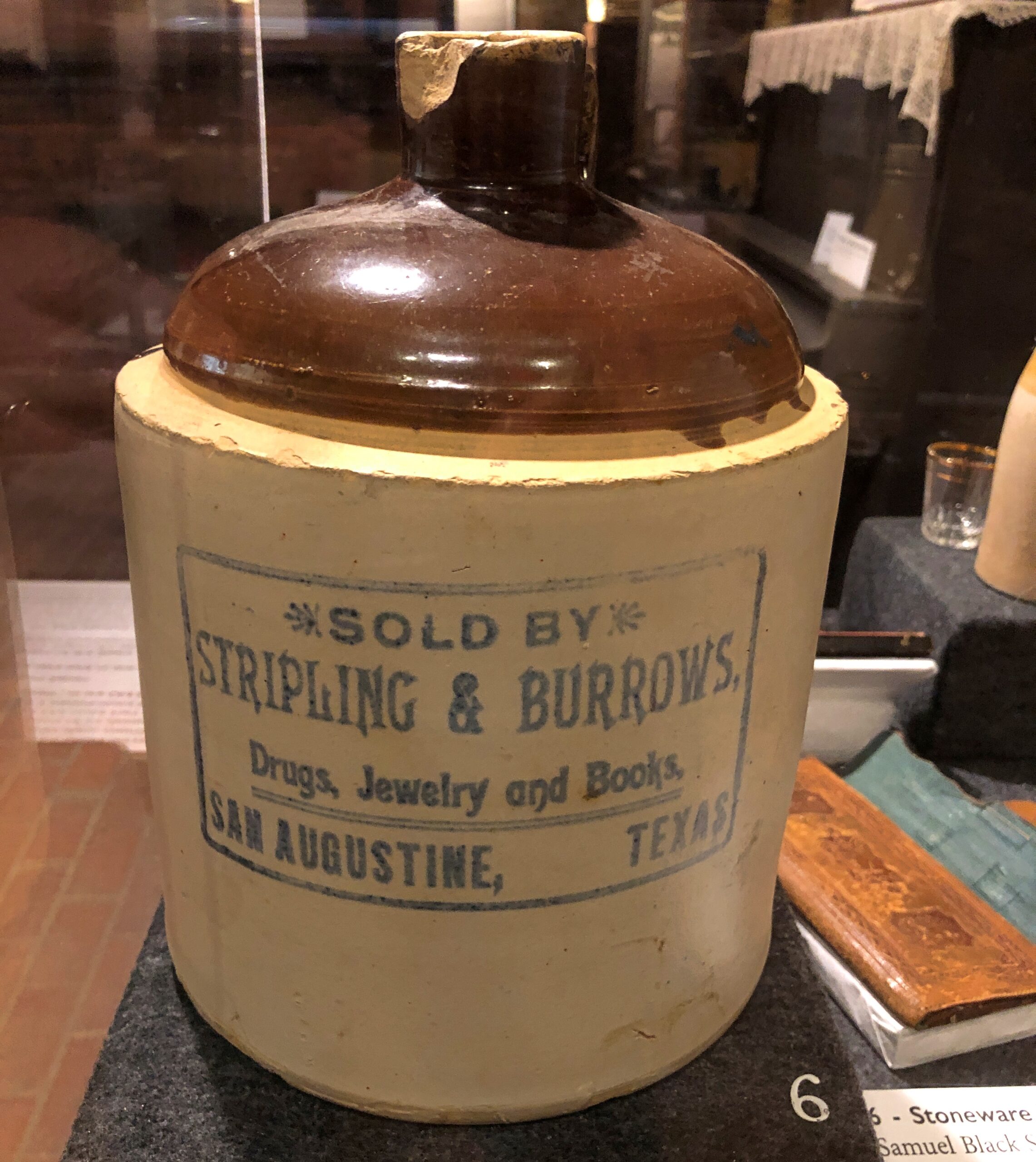
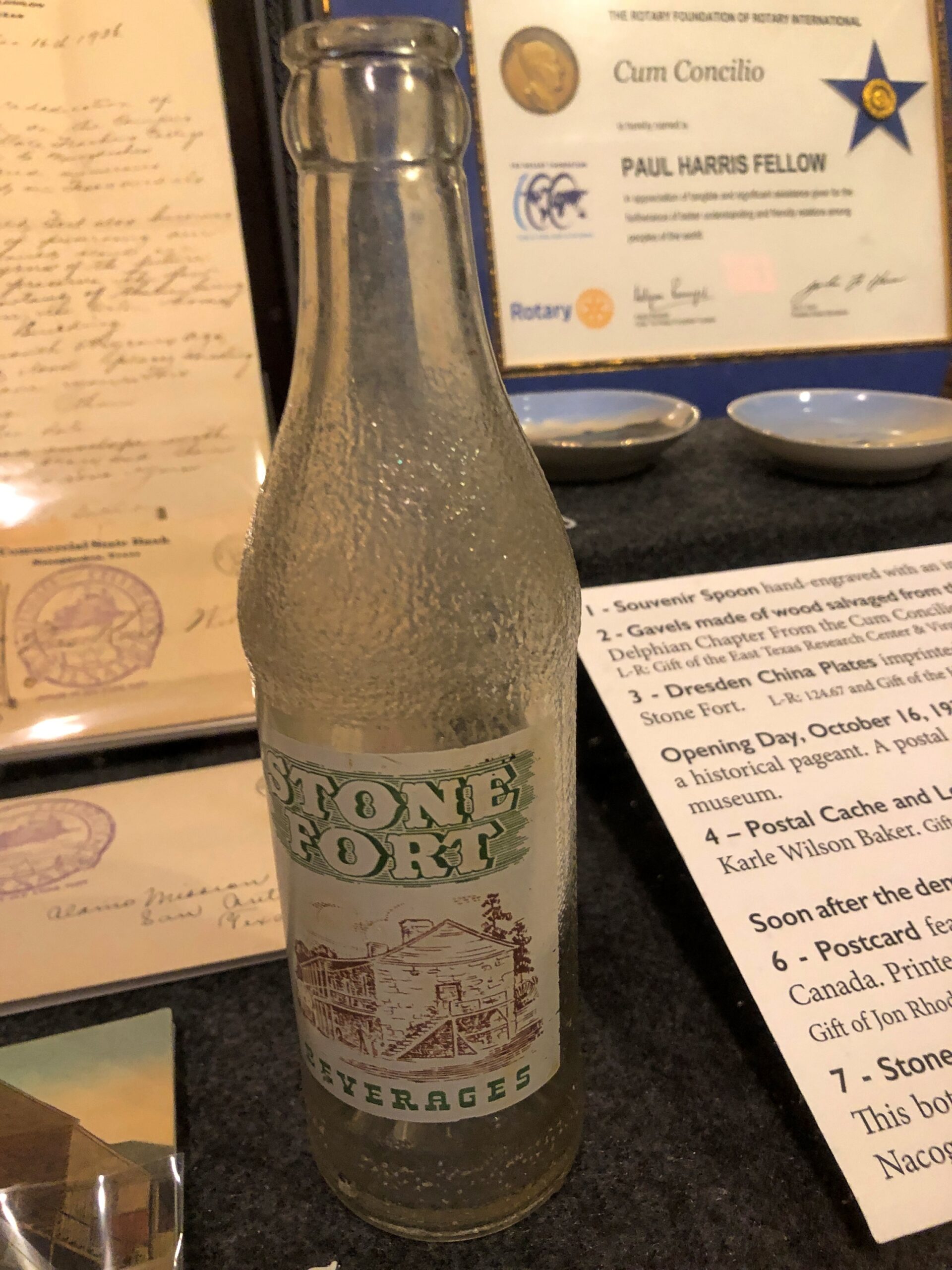
An artifact at the Old Stone Fort, but from San Augustine, and a hyperlocal soda bottle.
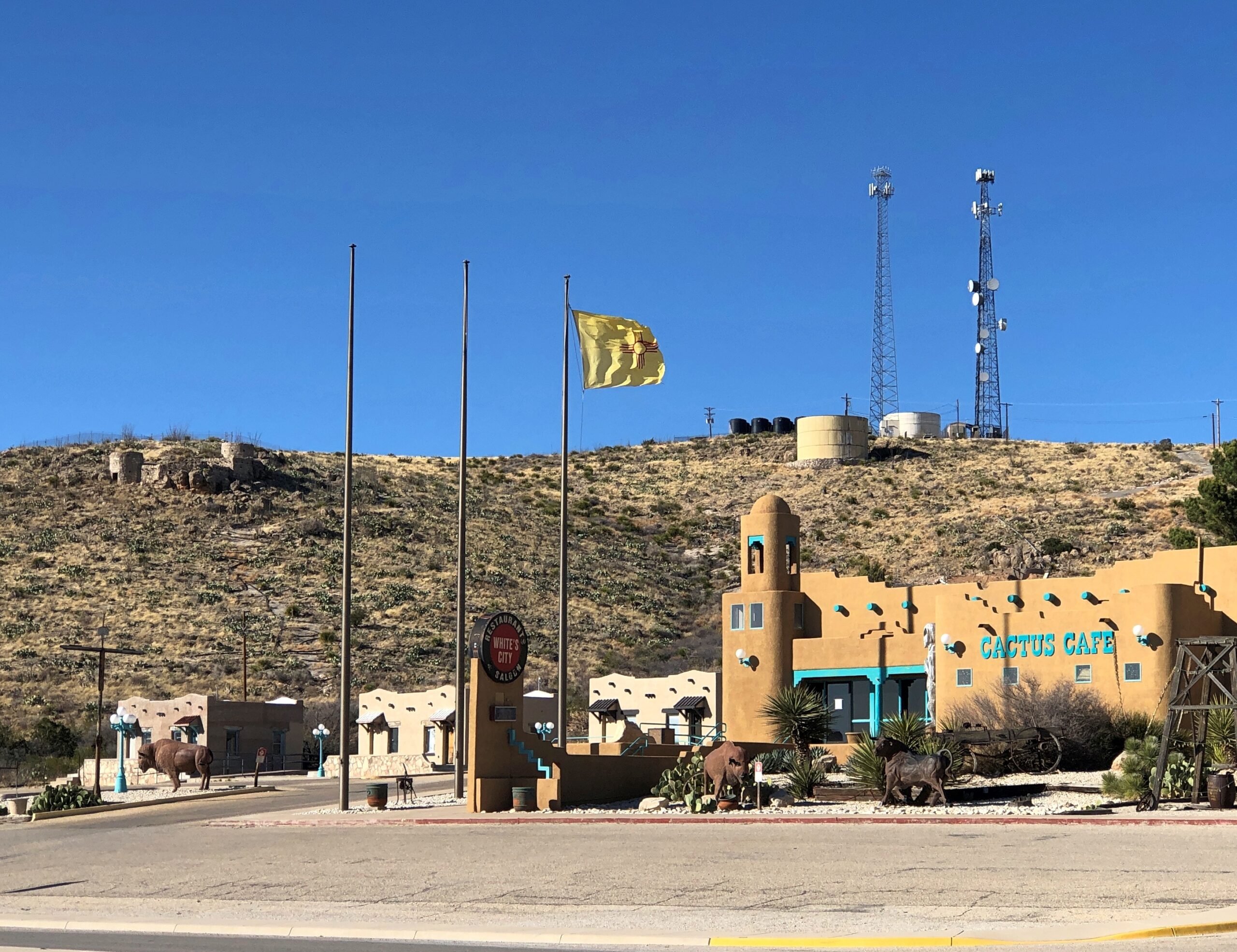
The New Mexico flag near Carlsbad NP.
Landscapes
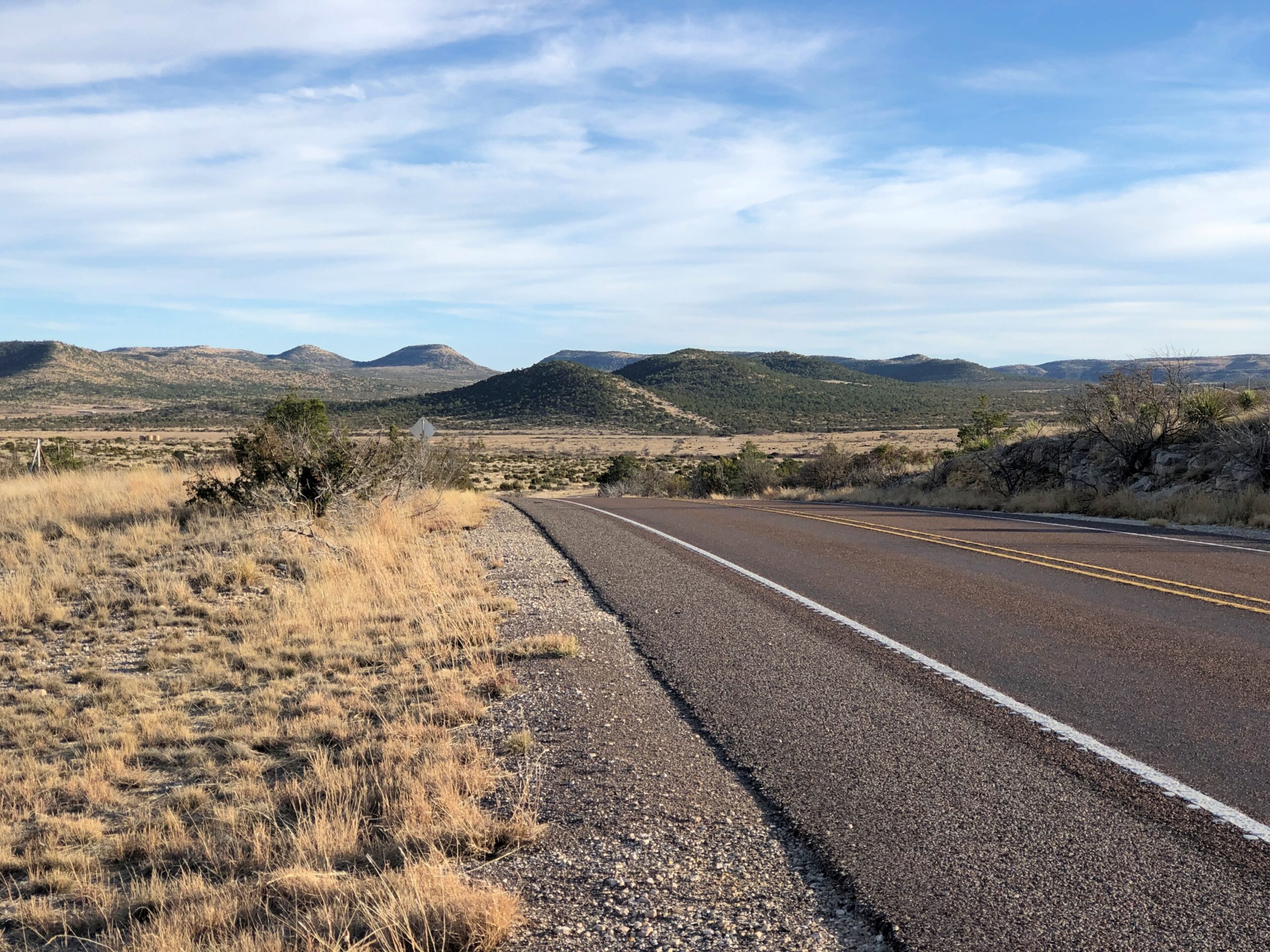
Not just any landscapes, but within the Sierra Madera Astrobleme in West Texas. US 385 cuts right through the ancient crater for about eight miles, on the way to Marathon. You’d never know but for signs telling you that you’re entering the astrobleme, and one telling you that you are leaving it.
Memorials
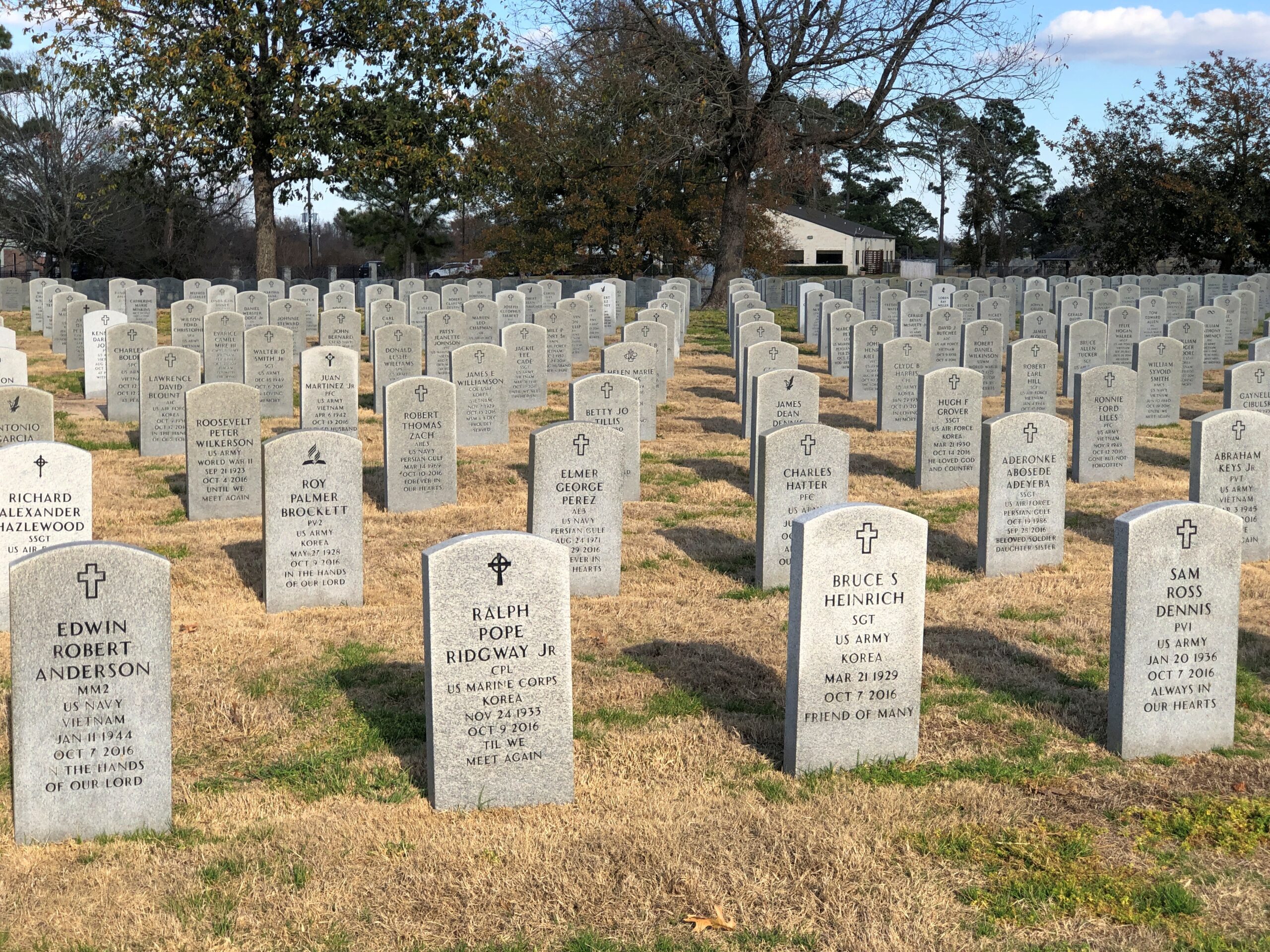
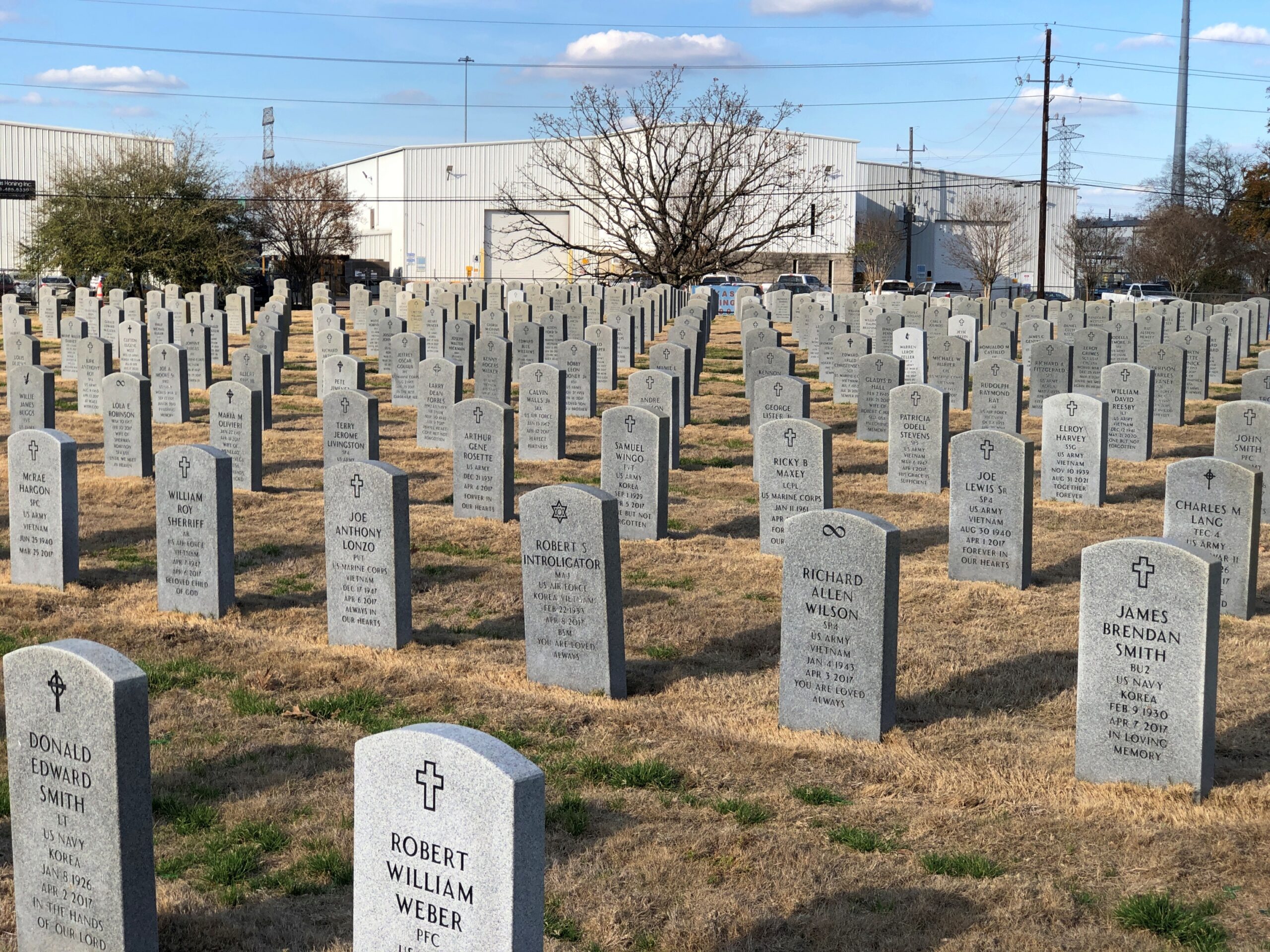
The Houston National Cemetery.
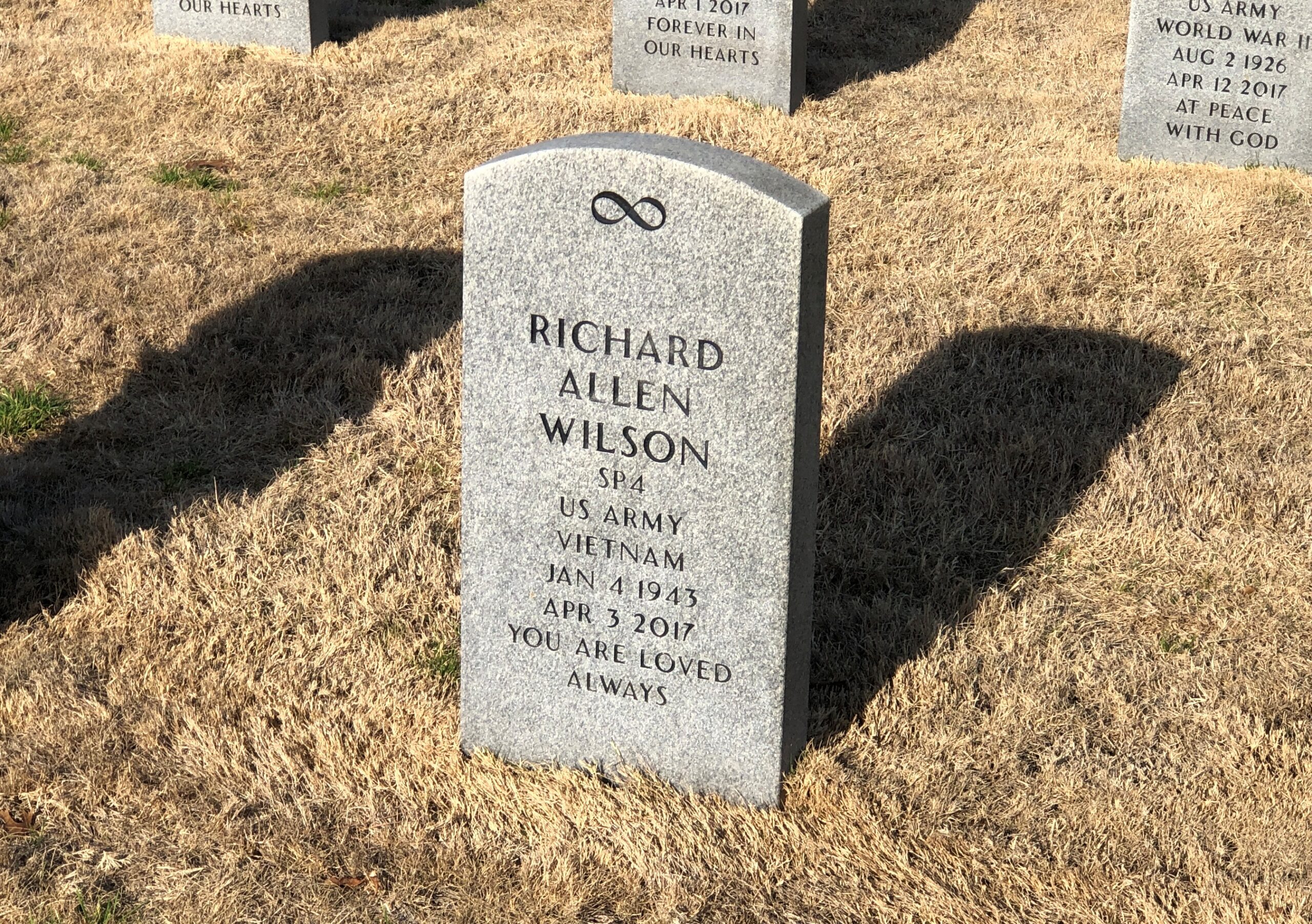
RIP, Richard Allen Wilson. I don’t think that I’d ever seen an infinity symbol on a national cemetery stone. That, of course, made me curious, and I checked: it is one of the 98 various symbols that the National Cemetery Administration allows. The list is here.
I’m familiar with most of them, but not quite all of them, such as the Church of World Messianity, which is a Japanese new religion – it’s hard to keep track of all of those – and the Aaronic Order Church, which may or may not be part of the LDS movement, but in any case is an American sect. Hard to keep track of all those, too.
The NCA says: “No graphics (logos, symbols, etc.) are permitted on Government-furnished headstones or markers other than the available emblems of belief, the Civil War Union Shield, the Civil War Confederate Southern Cross of Honor, and the Medal of Honor insignias… Emblems of belief for inscription on Government headstones and markers do not include social, cultural, ethnic, civic, fraternal, trade, commercial, political, professional or military emblems.”
So (for example) symbols for the Loyal Order of Moose or some odd emoji or maybe a grawlix will not be considered, though as a comment about the Army, the latter would be funny.
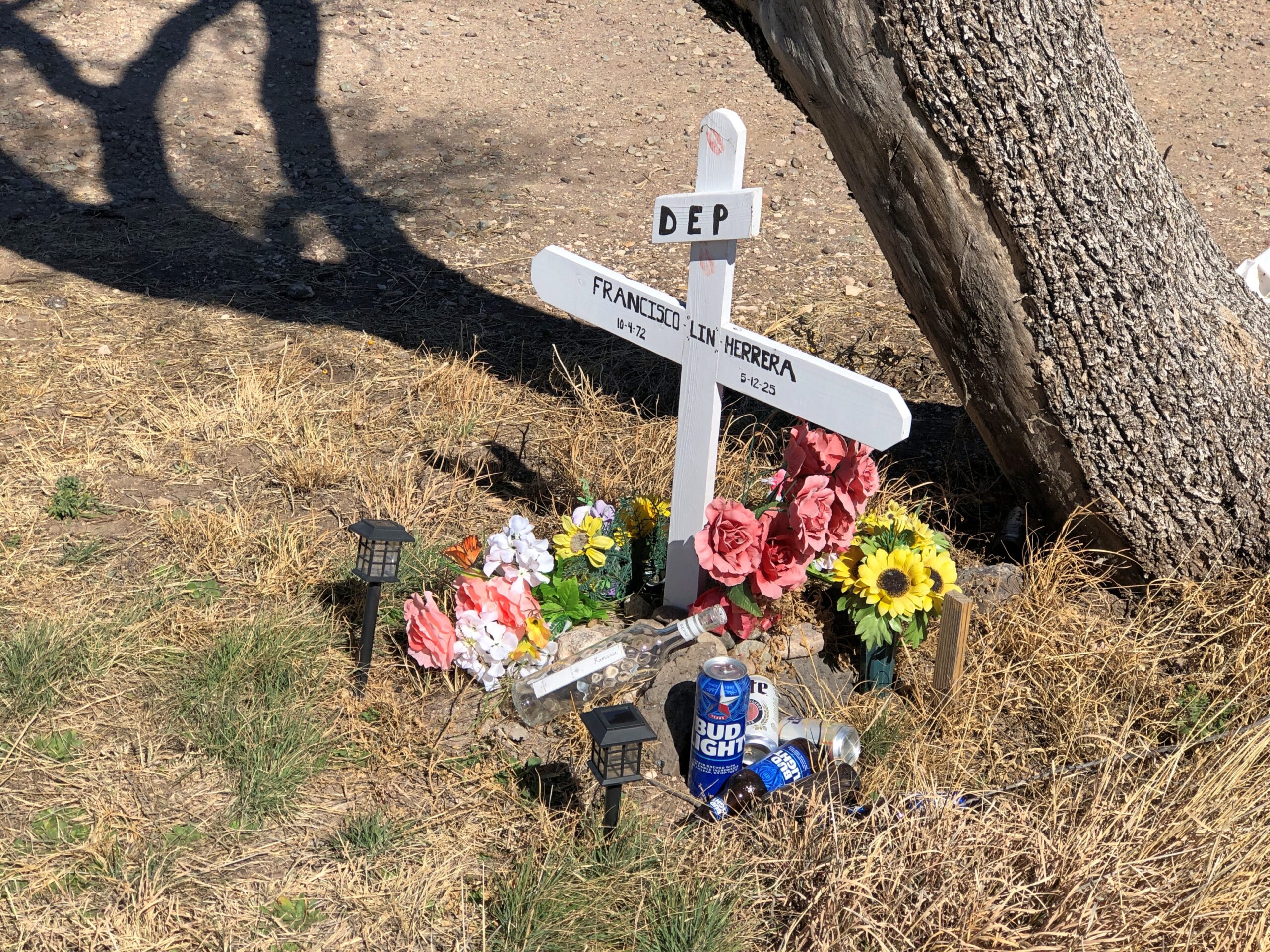
Finally, a less formal memorial, but I’m sure just as heartfelt.
A memorial for Francisco Lin Herrera happens to be near the Giant paintings outside of Marfa. He died in an accident along that stretch of US 90. RIP, Francisco.
Saw an ad today about paleovalley beef sticks (no caps on the package). Not only is that the funniest thing I saw all day, that brand name is genius. Also, Paleovalley could be the title of a gritty reboot, as there are no other kinds, of the incredibly obscure Korg: 70,000 BC.
Into the rabbit hole: that made me wonder whether Cro-Magnon is even a scientific term anymore. Has it been replaced by some newer and more precise, or more politic, term?
No. It’s still Cro-Magnon. Most definitely. Who has the first Cro-Magnon skull discovered? The Smithsonian.
The Smithsonian notes about its Cro-Magnon: “Cro-Magnon 1 was among the first fossils to be recognized as belonging to our own species — Homo sapiens. This famous fossil skull is from one of several modern human skeletons found at the famous rock shelter site at Cro-Magnon, near the village of Les Eyzies, France.”
So the Cro-Magnon were actually early Frenchmen? Never mind the gritty reboot, this is comedy: cavemen with goofy French accents (and I know about Gaul and the arrival of the Franks in historic times, but this is TV we’re talking about). It probably would be bad comedy, for sure. As It’s About Time and Cavemen tell us, it’s hard to wring good comedy out of Paleolithic material.
Then again, consider this from the Wiki entry about Cavemen (2007): In the series, cavemen were never really fully supplanted by modern humans, but integrated into Homo sapiens civilization as a separate species sub-group. Cavemen are a small but widespread minority group that have been present in every global civilization since the dawn of recorded history… Effectively, Cavemen form another ethnic minority in the modern world, which faces several prejudices from Homo sapiens... Although these cavemen self-identify as Cro-Magnon, their facial appearance and physical anatomy is reminiscent of the Neanderthal.
I’d guess that the writers of the show, and the original GEICO commercials, didn’t invent that idea. But what a good idea for fiction, comedy or drama. I didn’t see any episodes of Cavemen, but by all accounts the show was very stupid indeed, so as often the case, it’s an example of a terrific idea badly executed. Too bad.
The San Angelo Riverwalk
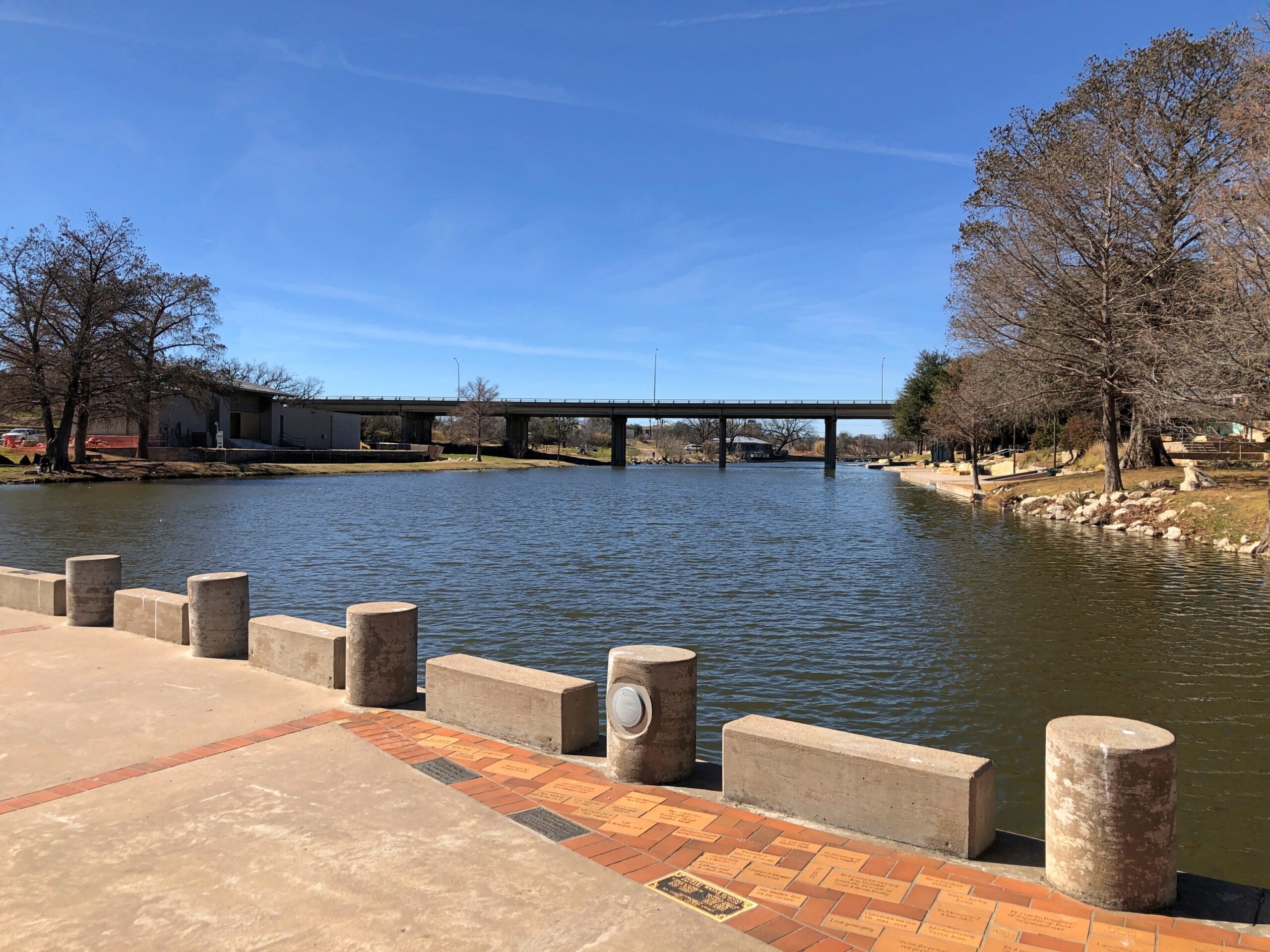
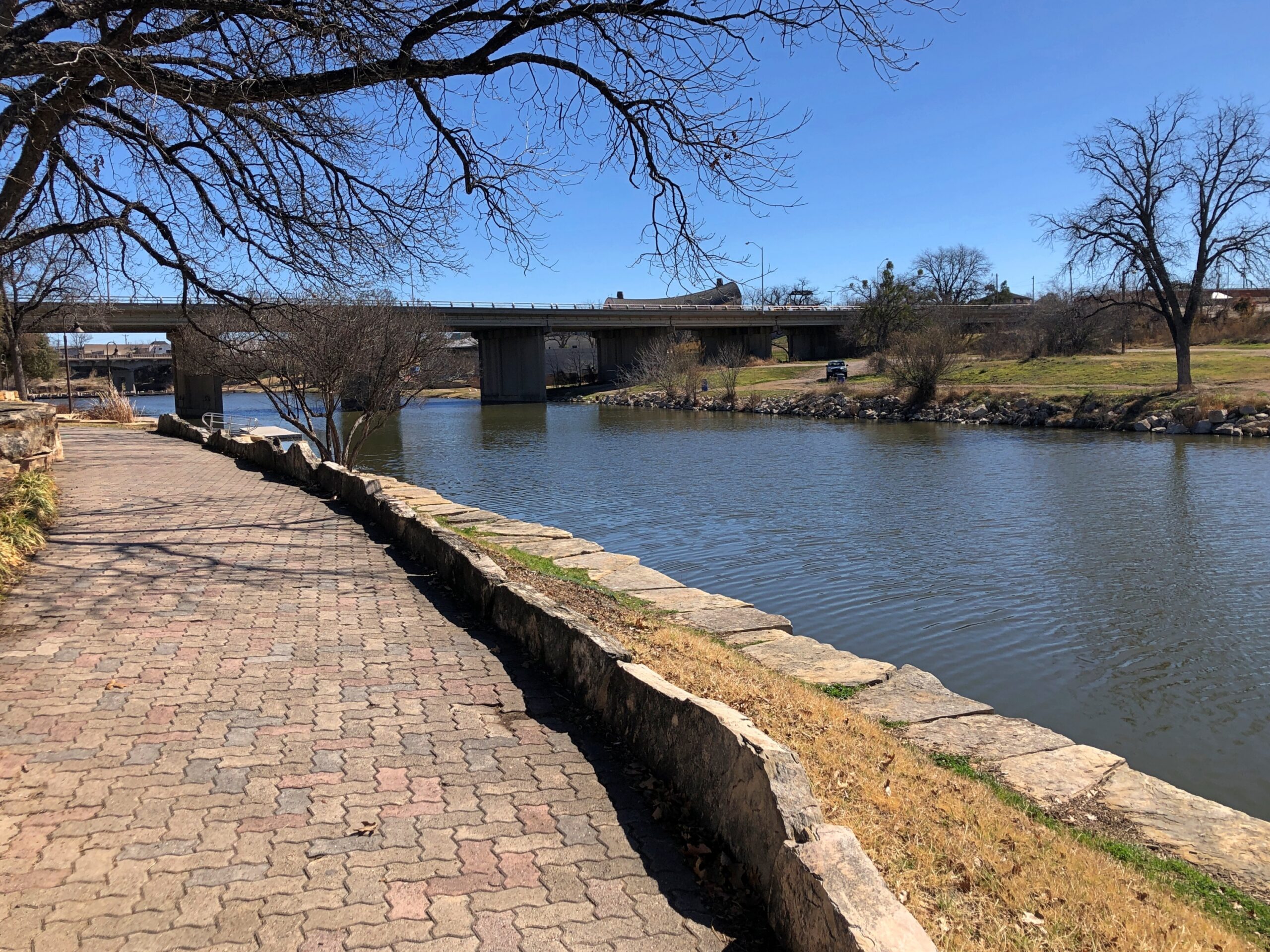
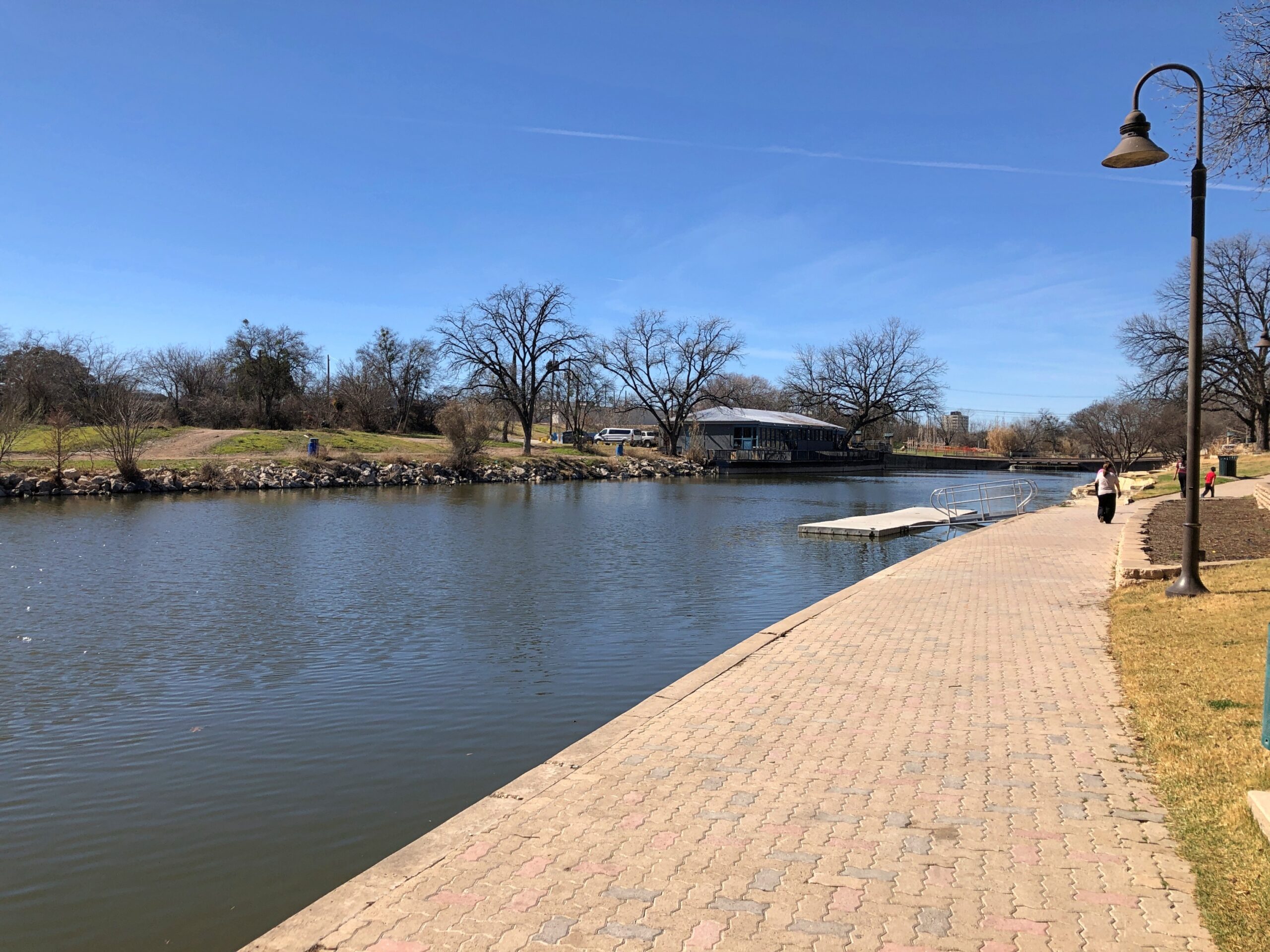
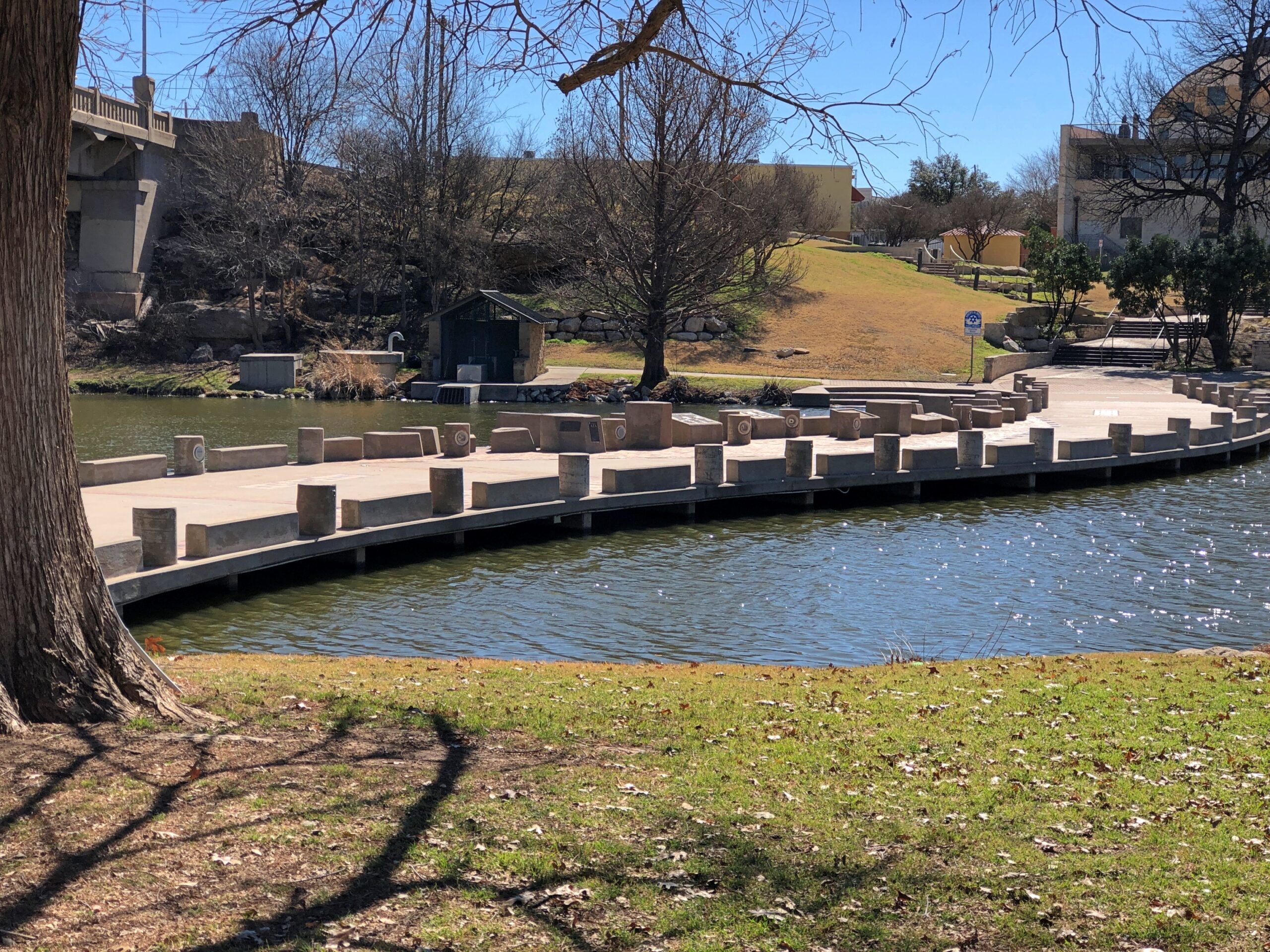
San Antonio has a great riverwalk. Everyone should know that. Not as great, but still a pleasant place for a stroll on a warm day, is the riverwalk along the Concho River in San Angelo, Texas. Technically the North Concho River, since it joins the South Concho not far downriver, on its way to the Colorado. It has everything a riverwalk needs: a river, sidewalks and park lands next to it.
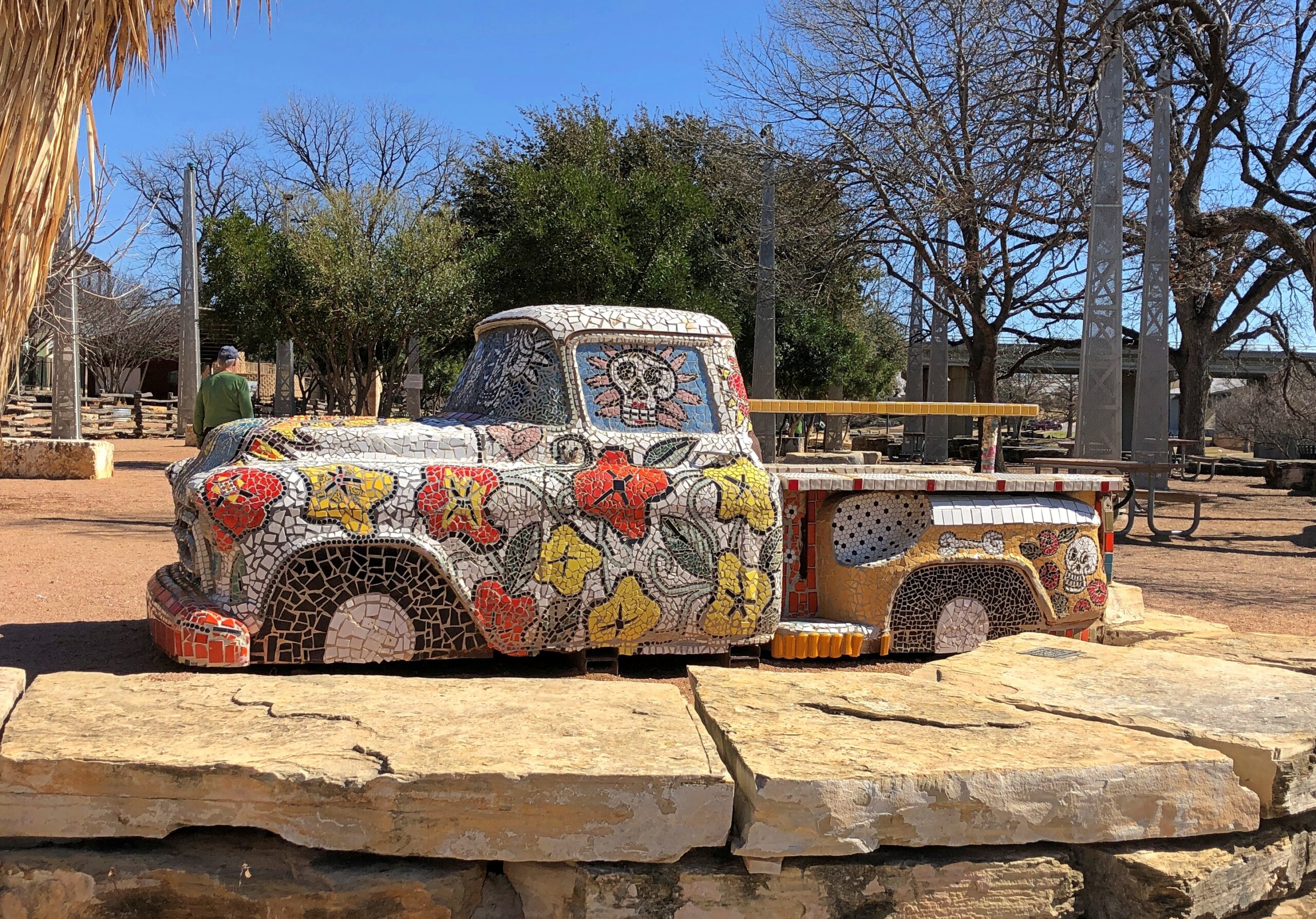
Artwork along the way.
A foot bridge.
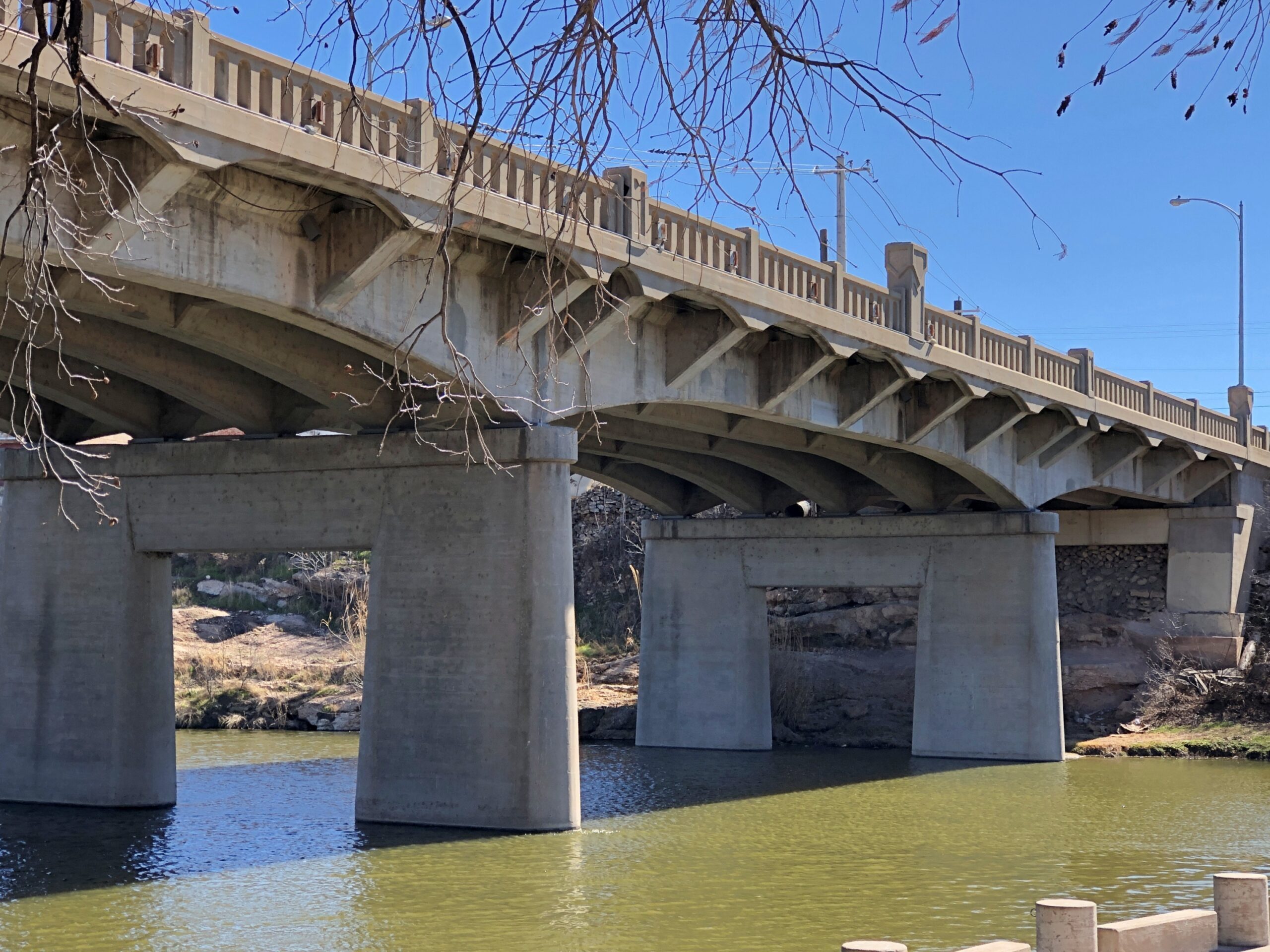
The Abe St. bridge.
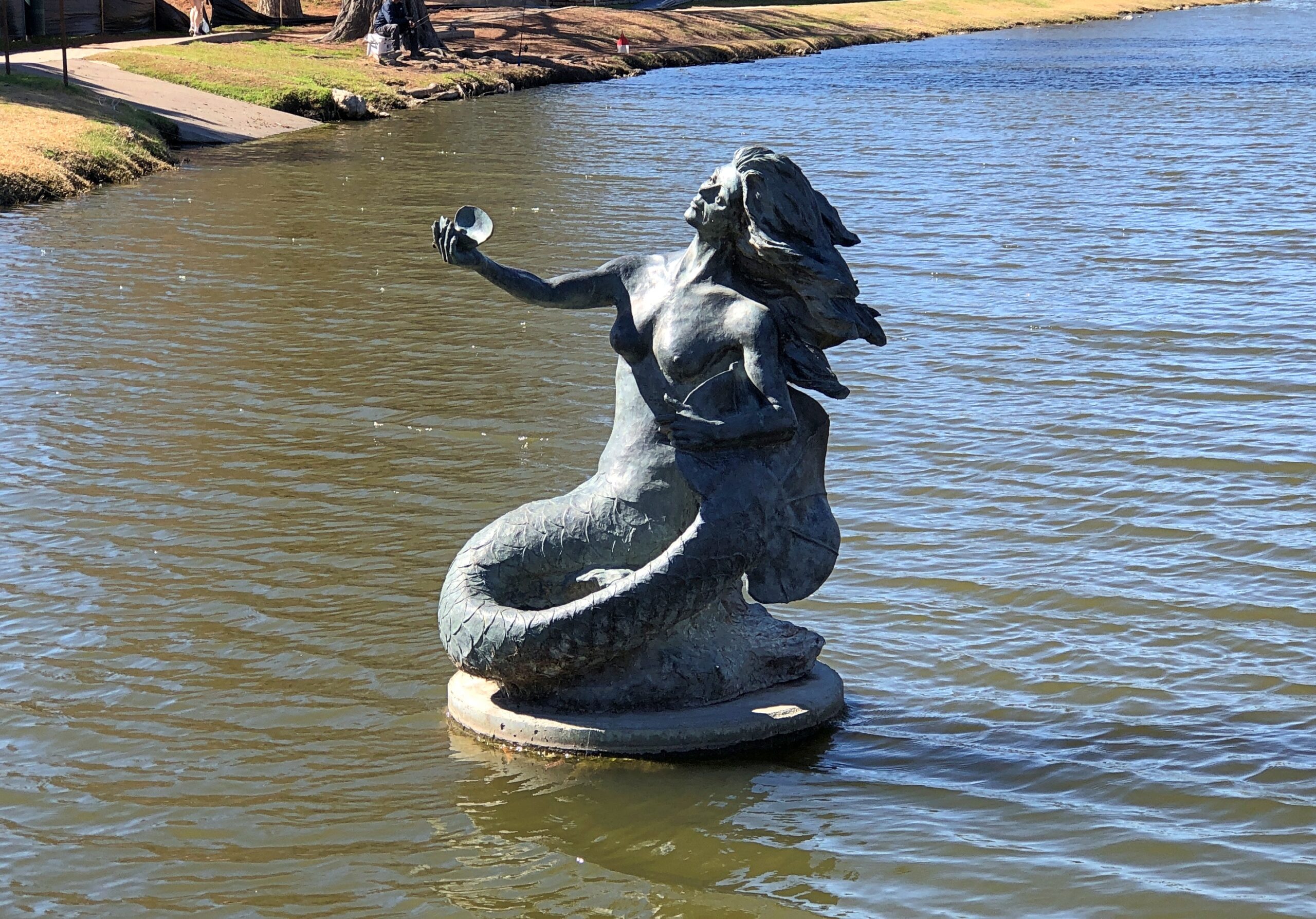
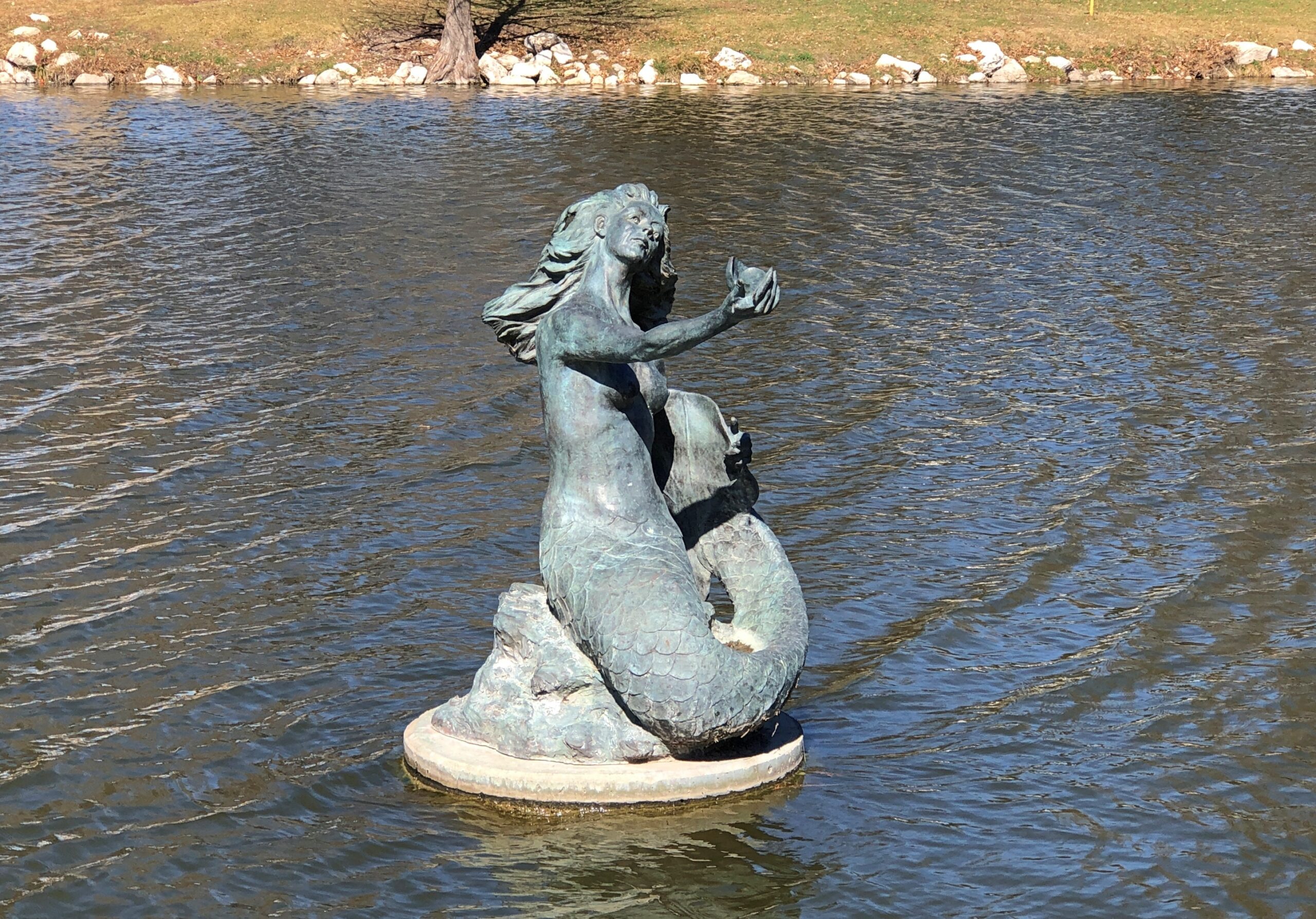
And a mermaid.
“Pearl of the Conchos,” it’s called.
“The bronze statue is an enlargement of Jayne Charless Beck’s original mermaid sculpture,” says Mermaids of the Earth. “Jayne was a San Angelo resident artist, who passed away in 1993. In 1994 this bronze casting was donated by friends of Jayne Beck to the City of San Angelo, and was placed next to a pedestrian bridge close to the San Angelo Museum of Fine Art.
“In this area, a freshwater mussel species produces lustrous pearls in many colors, famous since the time of the Spanish conquistadors.”
Regards for Easter. And Maundy Thursday and Good Friday and Easter Saturday. Back posting on Easter Monday.
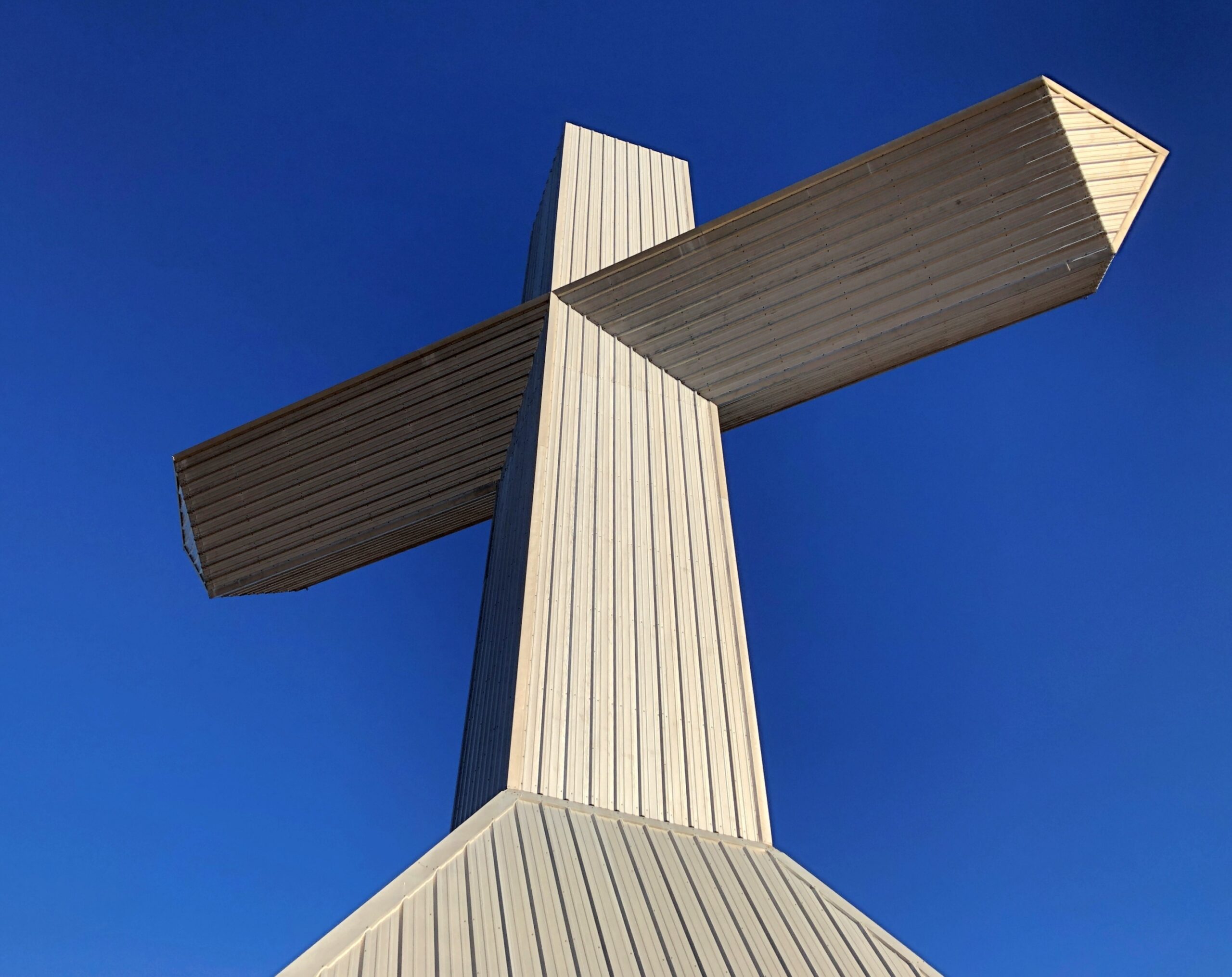
This seemed like a fitting set of images for the occasion.
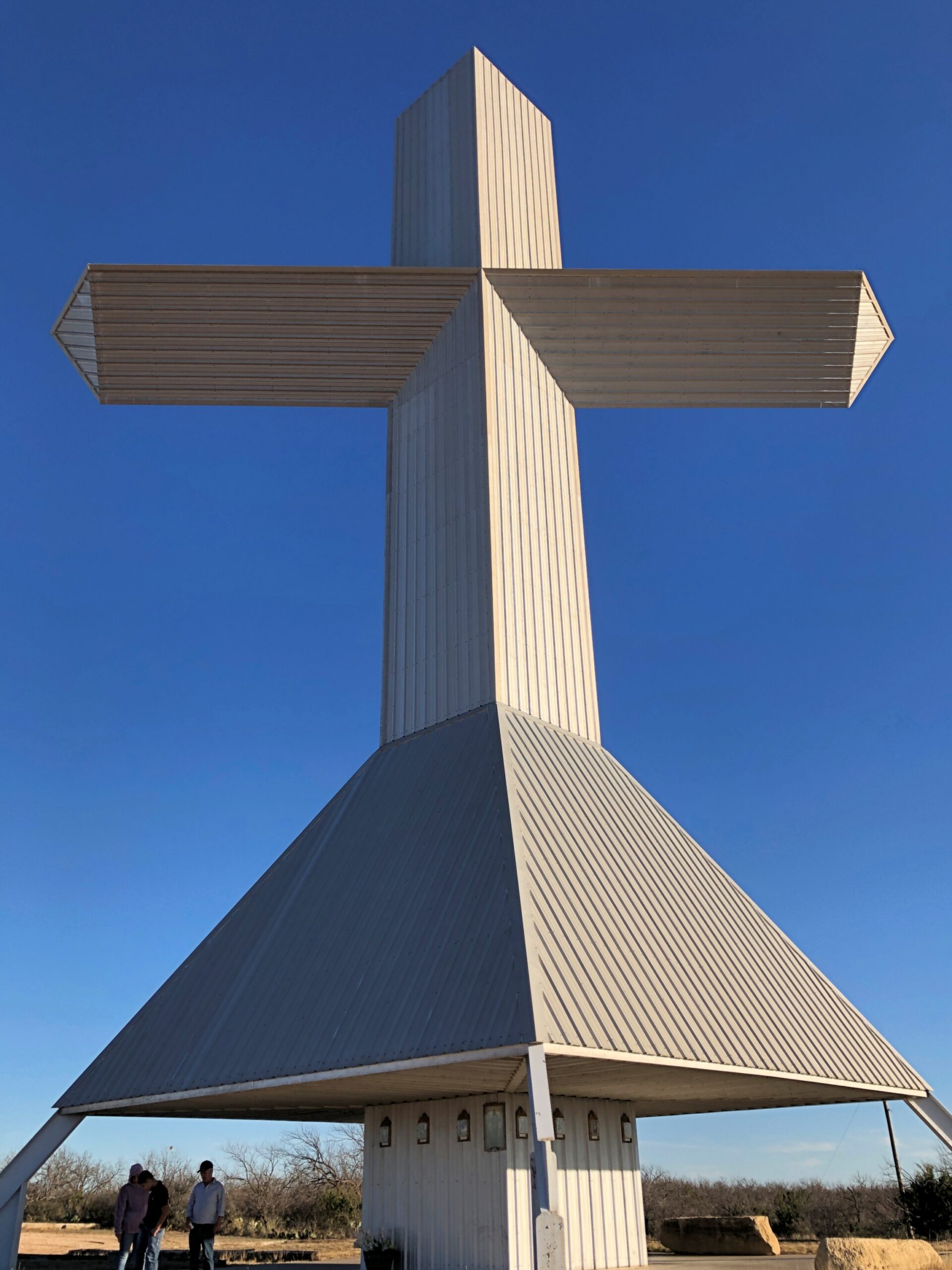
A 100-foot steel cross rises on a small hill a few miles south of Ballinger, Texas, seat of Runnels County. Couldn’t very well pass that up, considering that we were passing through Ballinger (pop. about 3,600) anyway, toward the end of our drive that day from metro DFW to San Angelo, Texas.
“The Ballinger cross was built by a local construction company and commissioned by Jim and Doris Studer, owners of Buddy’s Plant Plus,” notes the Austin Chronicle. “The company is the only U.S. factory making water-soluble fertilizer for Miracle-Gro. After 20 years of making fertilizers in Florida, the Studers went looking for a drier climate. In 1988, they moved the company to Ballinger, where it quickly became one of the largest employers in the county.”
Jim Studer reportedly had been considering the construction of a cross about half that height, as a token of gratitude for a successful business. Then, during a visit to Florida, he was nearly electrocuted in what could easily have been a fatal accident – and decided to roughly double the size of the structure. A thanks to the Lord for not being offed at that moment, perhaps, but no doubt sincere gratitude regardless, for his thriving business. The cross went up in 1993.
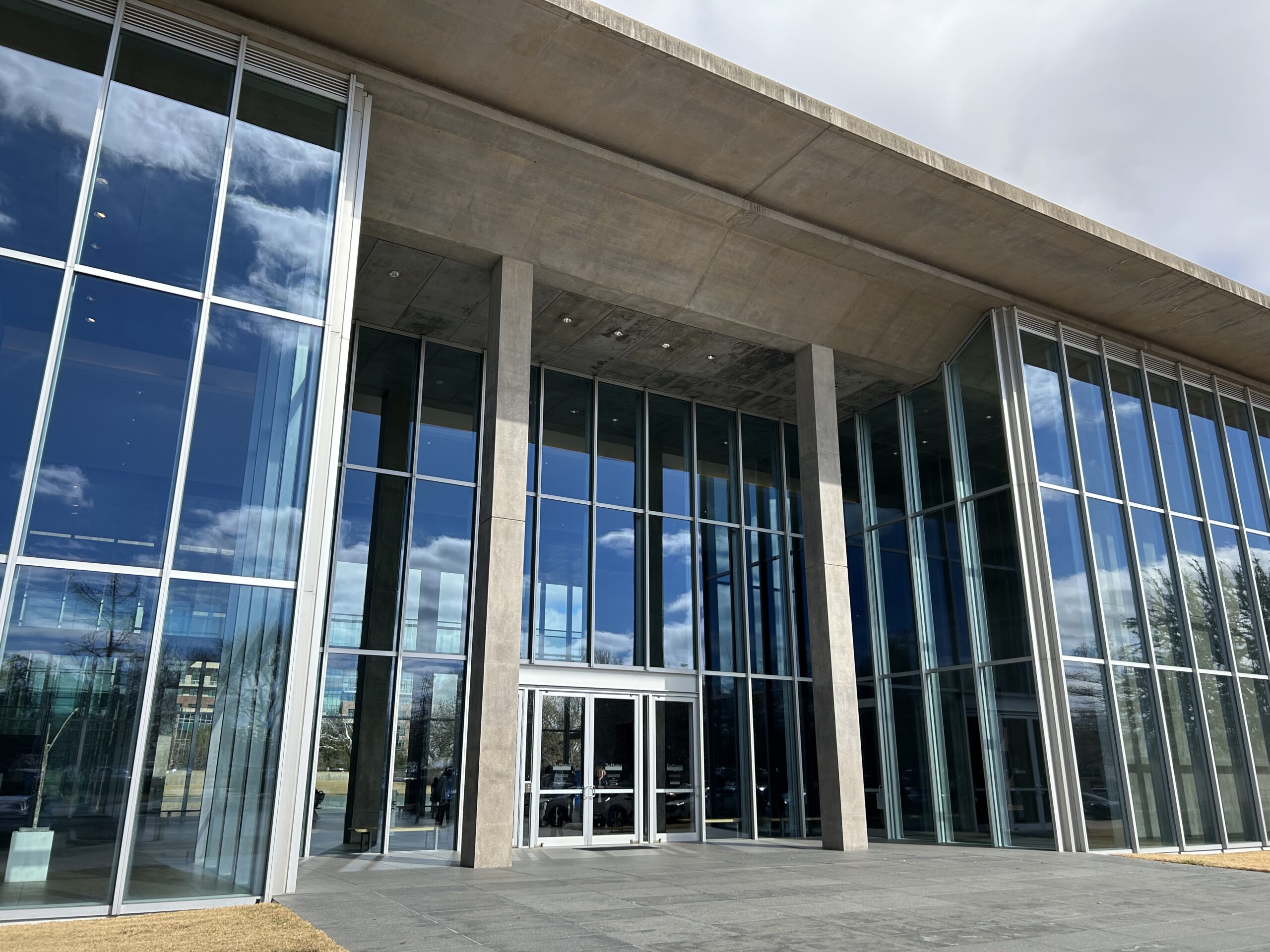
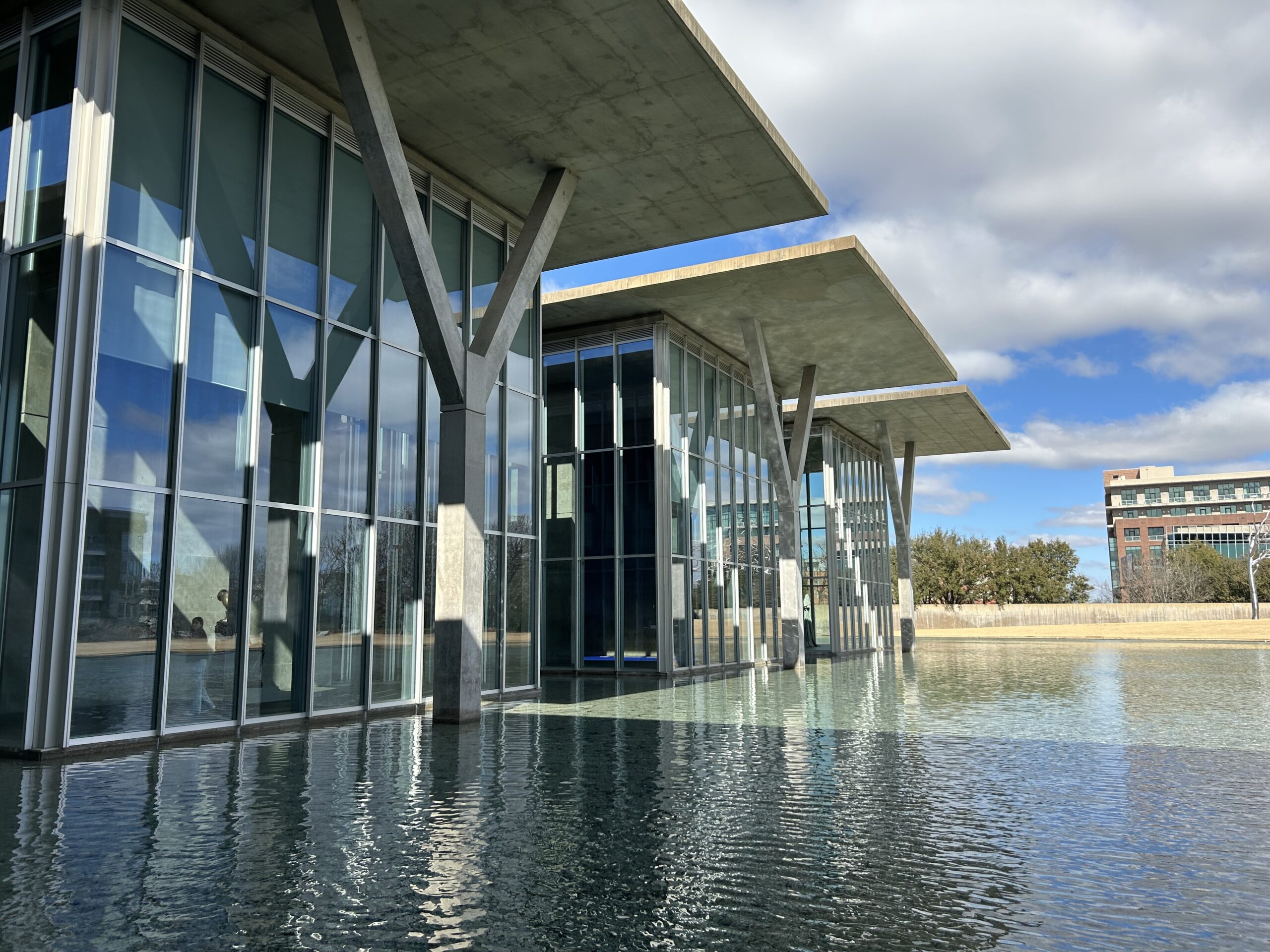
We’d left Dallas that morning in mid-February, skirting the cities on I-20 West, except for a brief stop in the Fort Worth museum district. Specifically, at the Modern Art Museum of Fort Worth. Yuriko had heard about my visit in 2019 and been slightly miffed, since she too wanted to see the Tadao Ando-designed structure. So we shoehorned a visit for a look at the structure on the day’s itinerary, though not the museum collection. It loses nothing on a second viewing. Gets better.
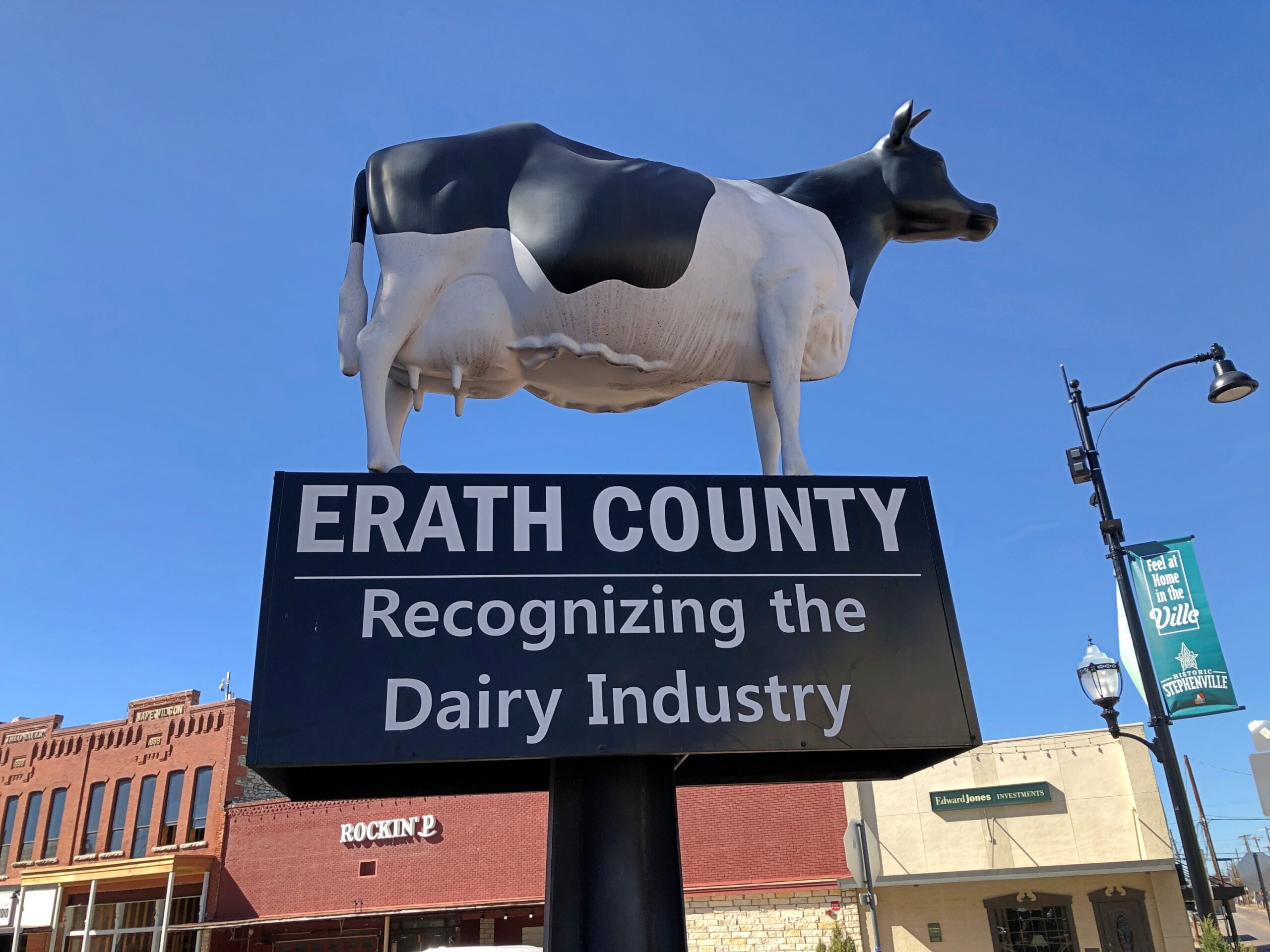
Go southwest from Fort Worth on US 377 and soon enough you’ll arrive in Stephenville (pop. 20,800 or so), seat of Erath County.
A dairy industry in Erath County? Yes, indeed: sales of $350.9 million in 2022, according to the USDA, by far the largest ag product in the county, and third highest for milk sales among all the 254 counties in Texas, and 24th in the nation. Meat cattle in Erath County are a distant second at $82.7 million that year, so a milk cow standing in the shadow on the Erath County courthouse is just about right.
I had to look it up: number one county in nation for milk production by dollar volume is not in Wisconsin, but rather Tulare County, California, at more than $2.8 billion in 2022. First out of 1,770 counties nationwide producing milk. Now there’s a Jeopardy answer to stump everyone.
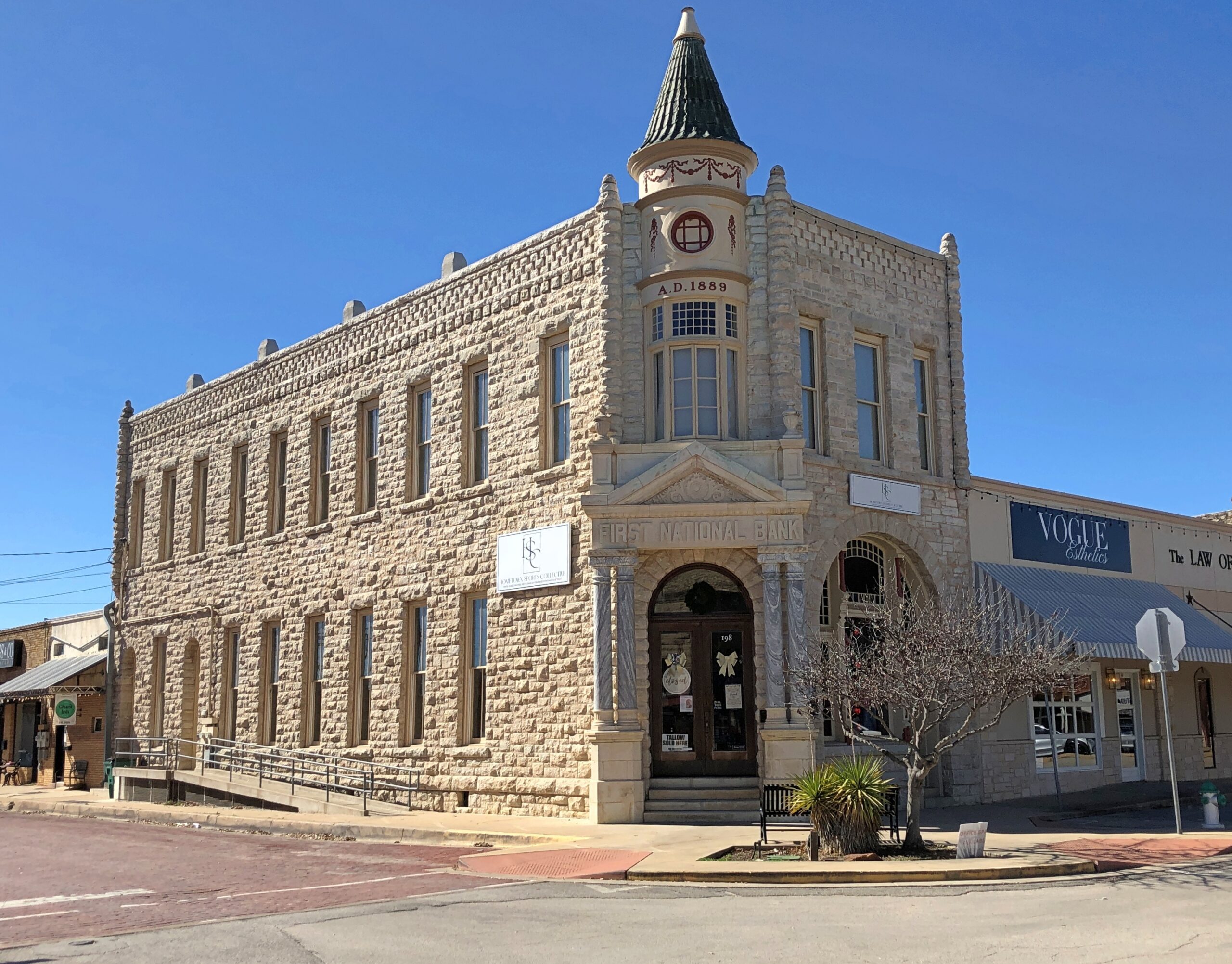
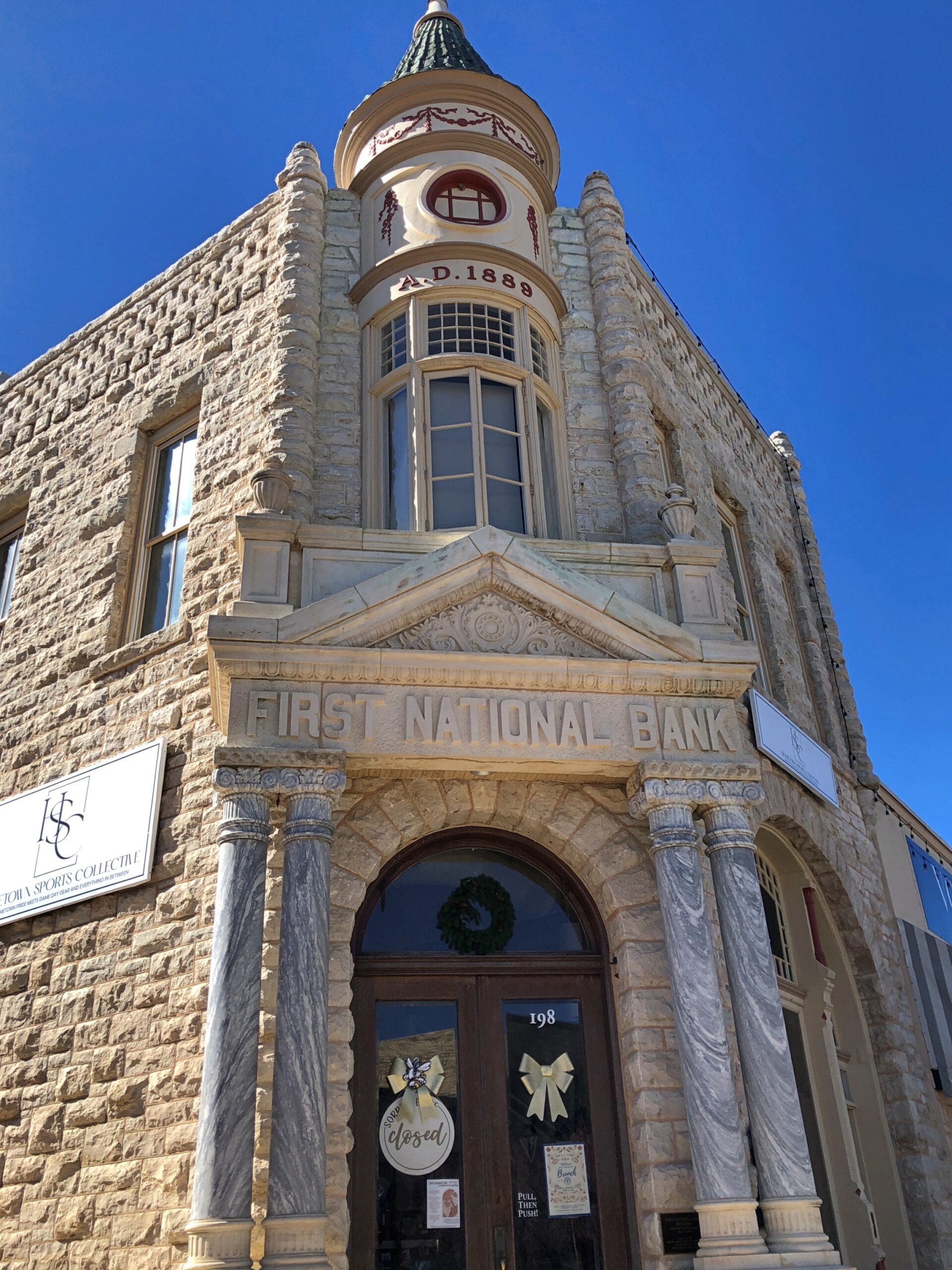
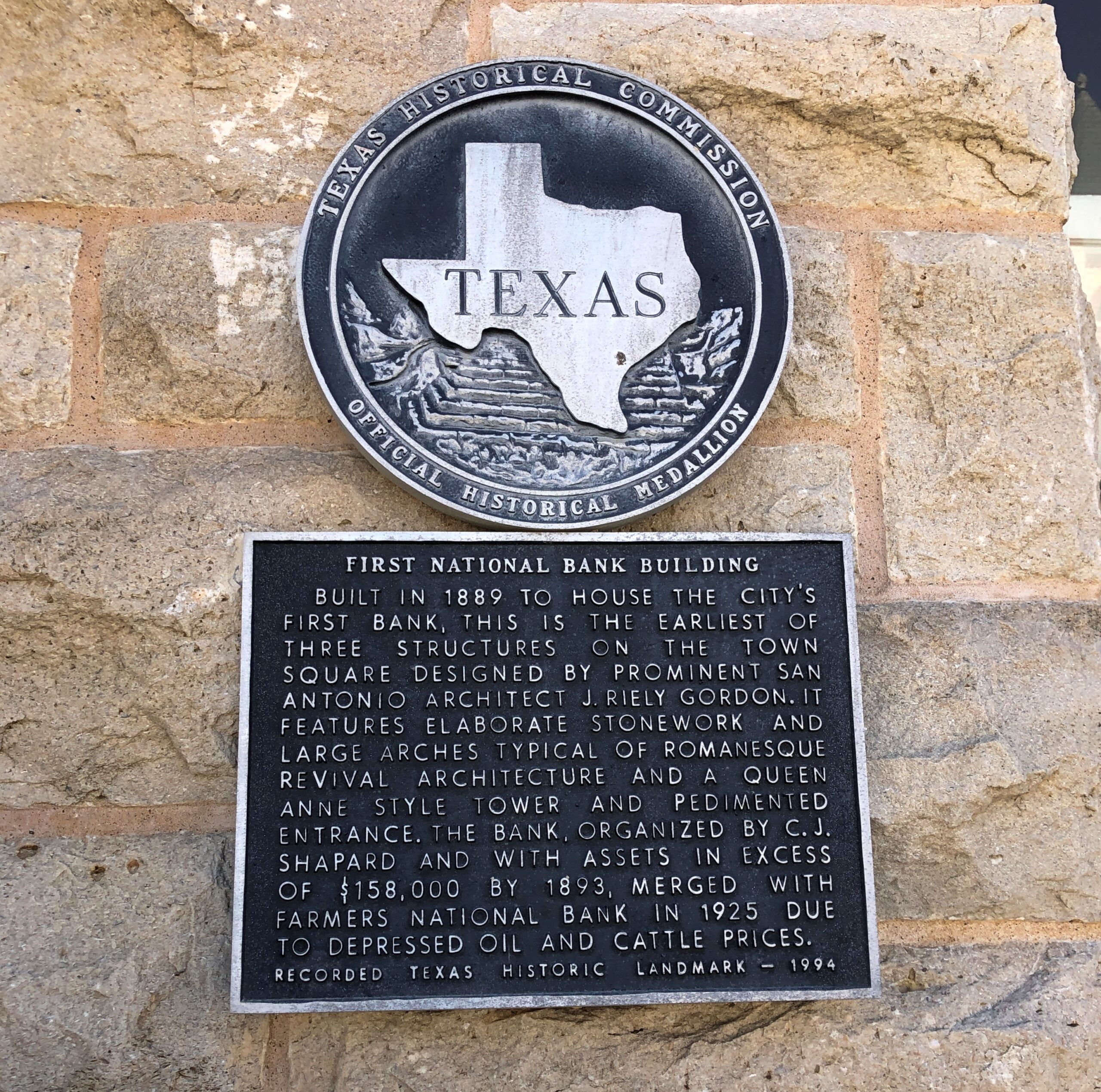
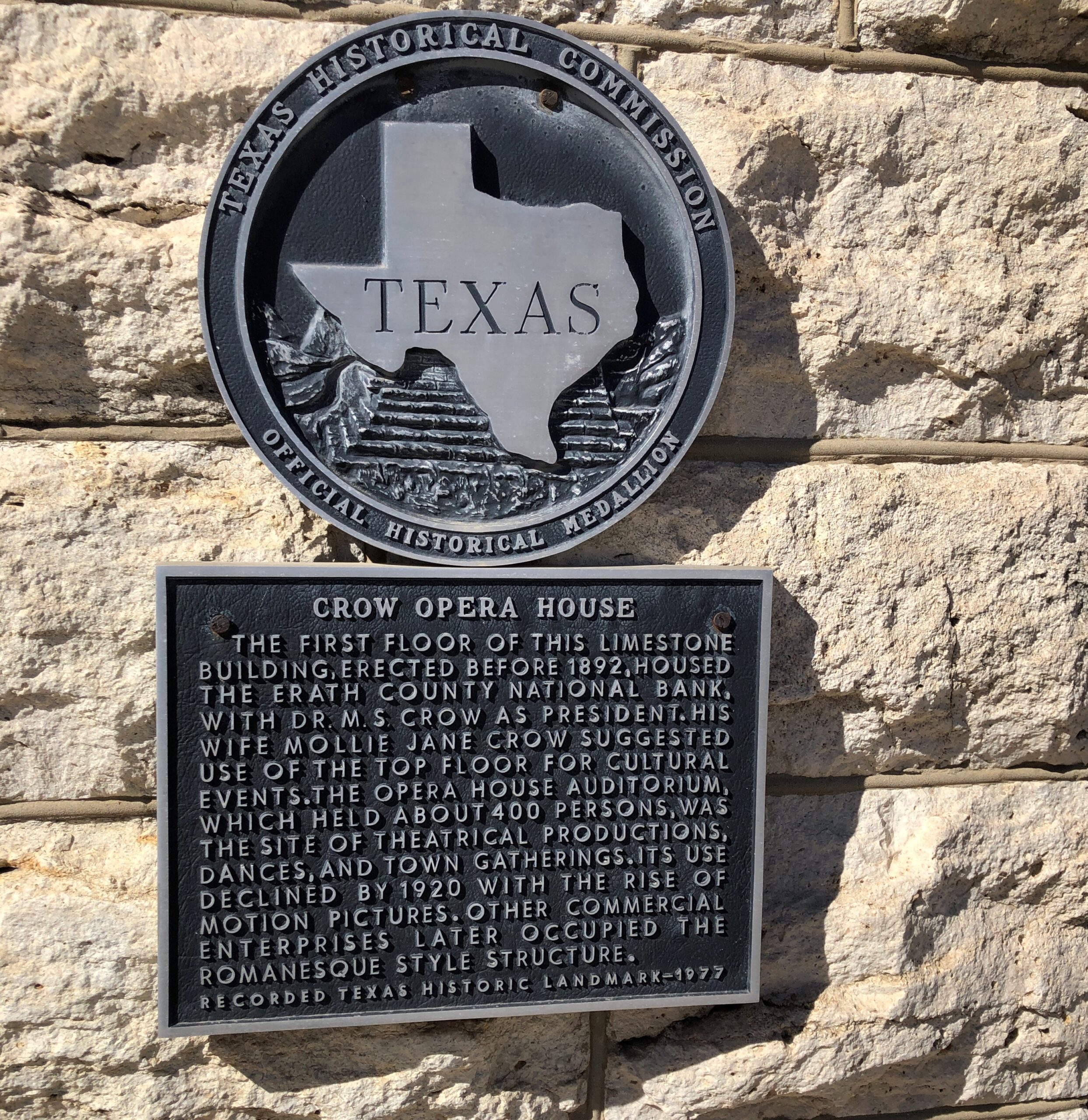
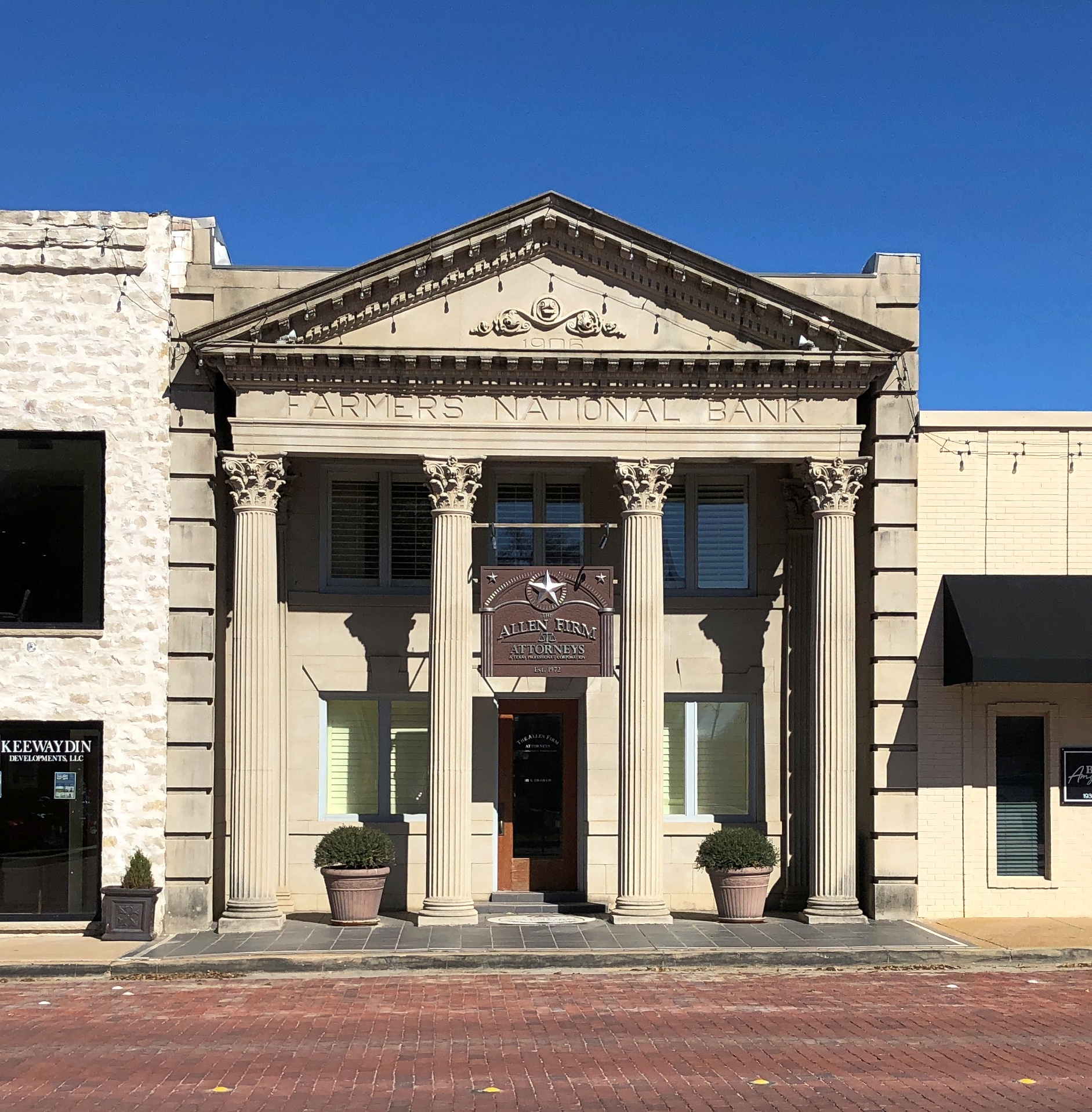
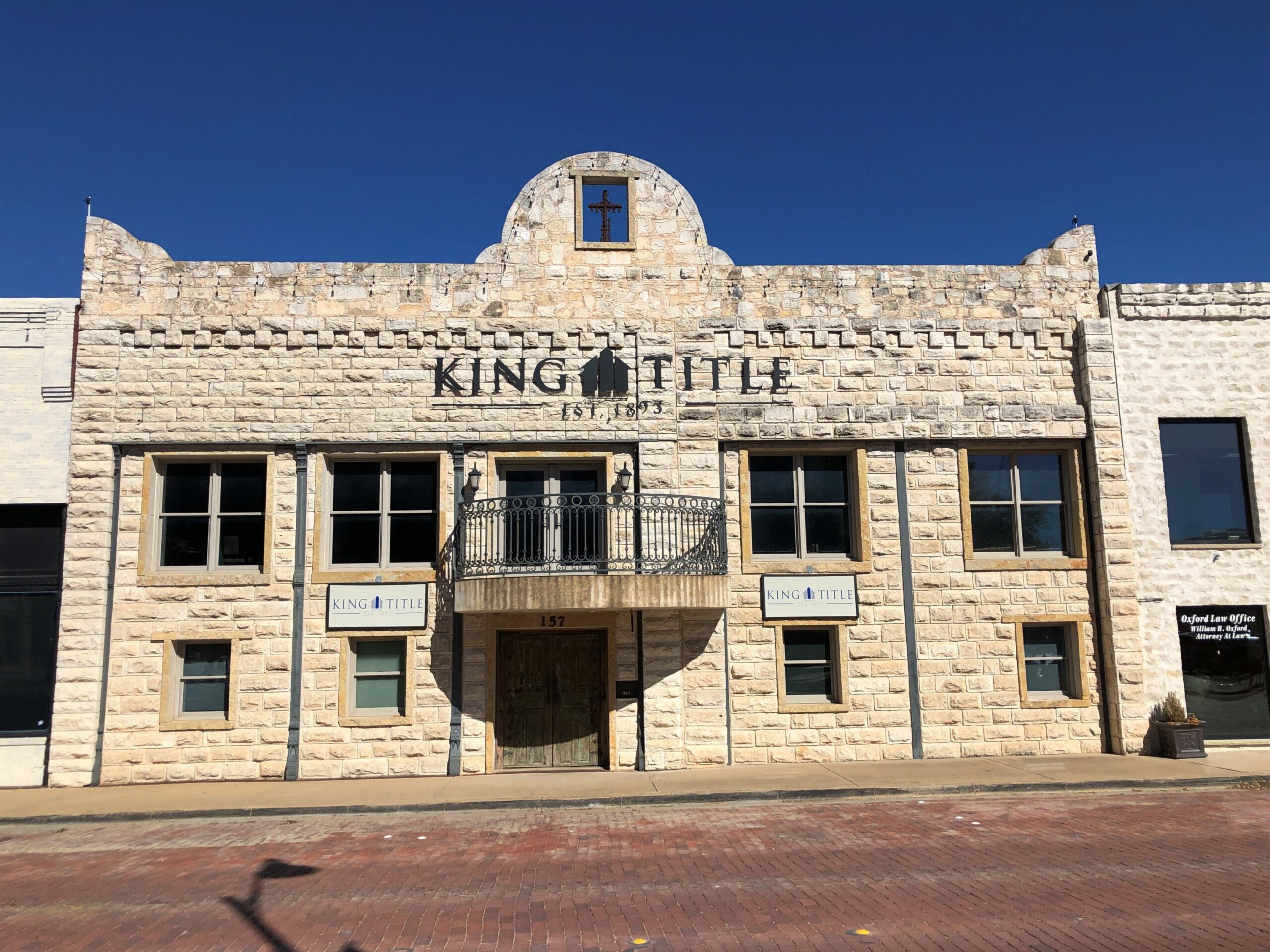
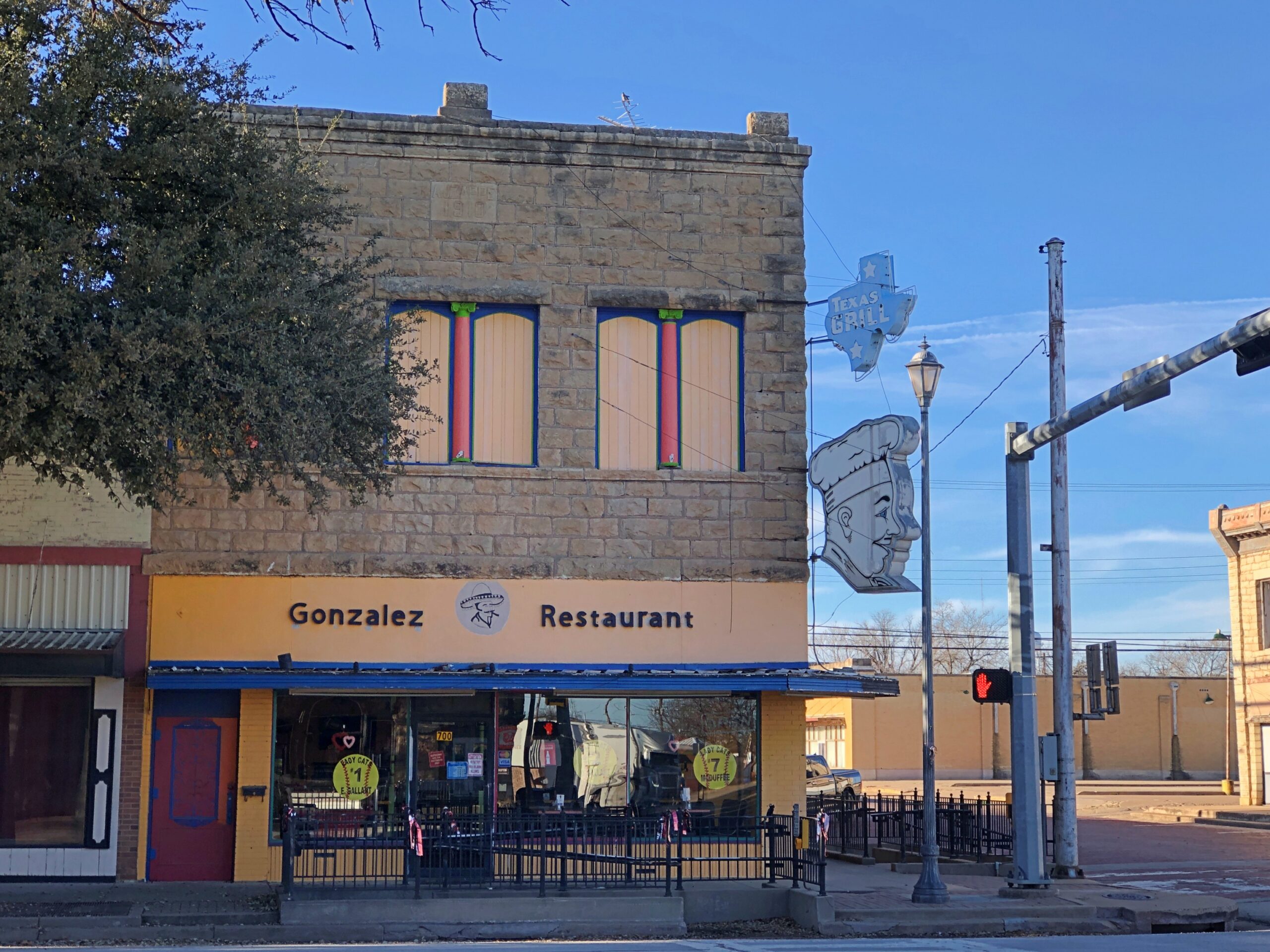
We ate lunch in Stephenville at Greer’s, which served a chicken-fried steak to beat all, then took a constitutional around the Erath County courthouse. Starting with one hefty former bank building, vintage 1889.
For Texas county courthouses, James Riely Gordon (d. 1937) is a starchitect, but of course that wasn’t all he did. When he designed this bank, he was 26.
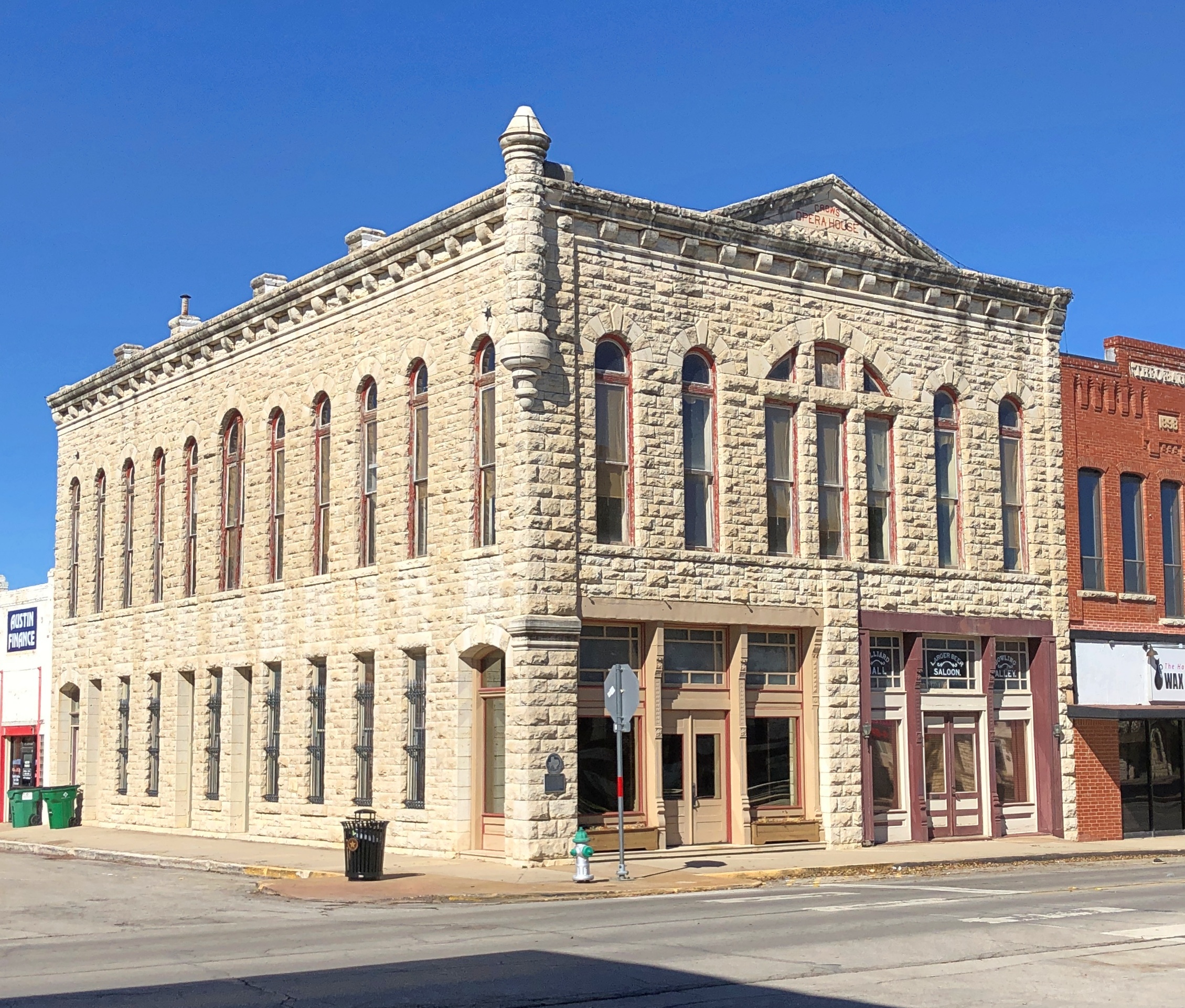
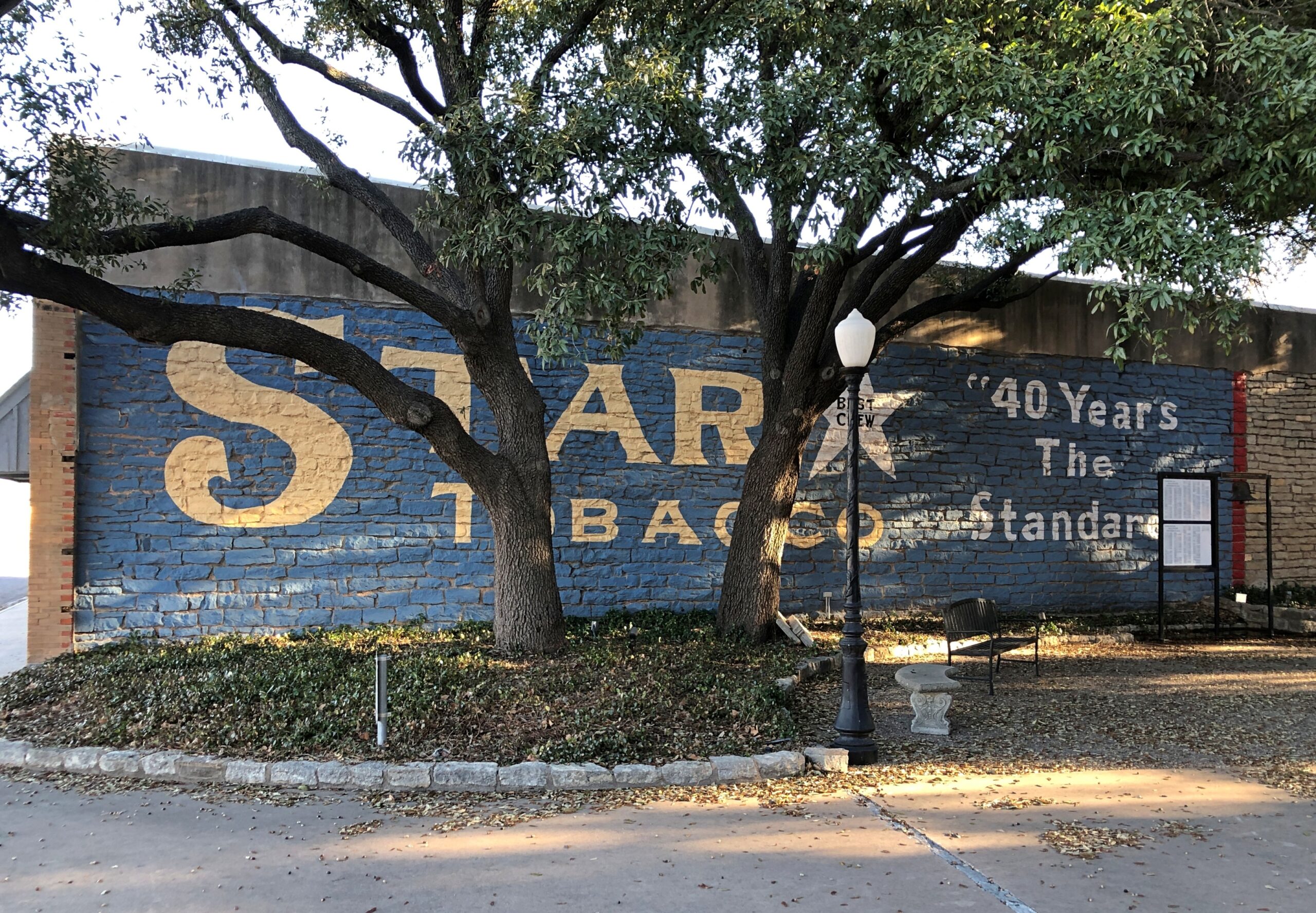
Every town worth its late 19th-century salt has to have an opera house.
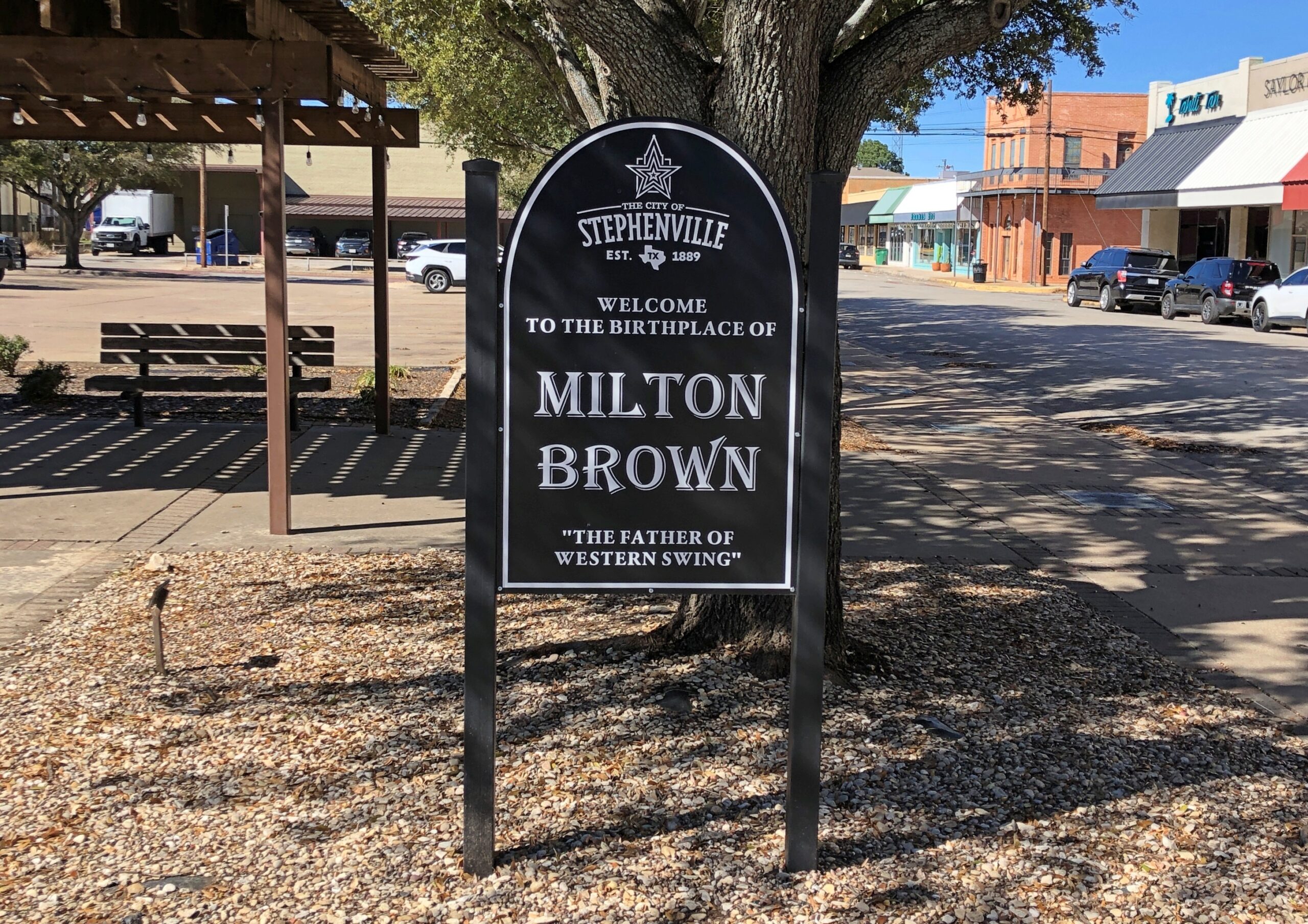
Wiki: “Brown began his musical career in 1930, when he met Bob Wills and guitarist Herman Arnspiger. They were performing at a local Fort Worth dance and Brown joined the duo on a chorus of ‘St. Louis Blues.’ The trio decided to team up to play medicine shows around Texas and Brown landed a regular radio spot on WBAP for the group, where they played a show sponsored by Aladdin Lamp Company, which had the band change its name to the Aladdin Laddies.”
Man, there’s another streaming platform limited series for you: the founding of western swing. Add a fictional love triangle between Bob Wills and Milton Brown and a fictional fetching woman, and some fictional tension between Bob and Milton, who nevertheless produce terrific music to enthusiastic audiences early in the Depression, until Milton dies suddenly in the last episode in a car wreck, as the real musician did in 1936 at age 32. Bob is left to carry on.
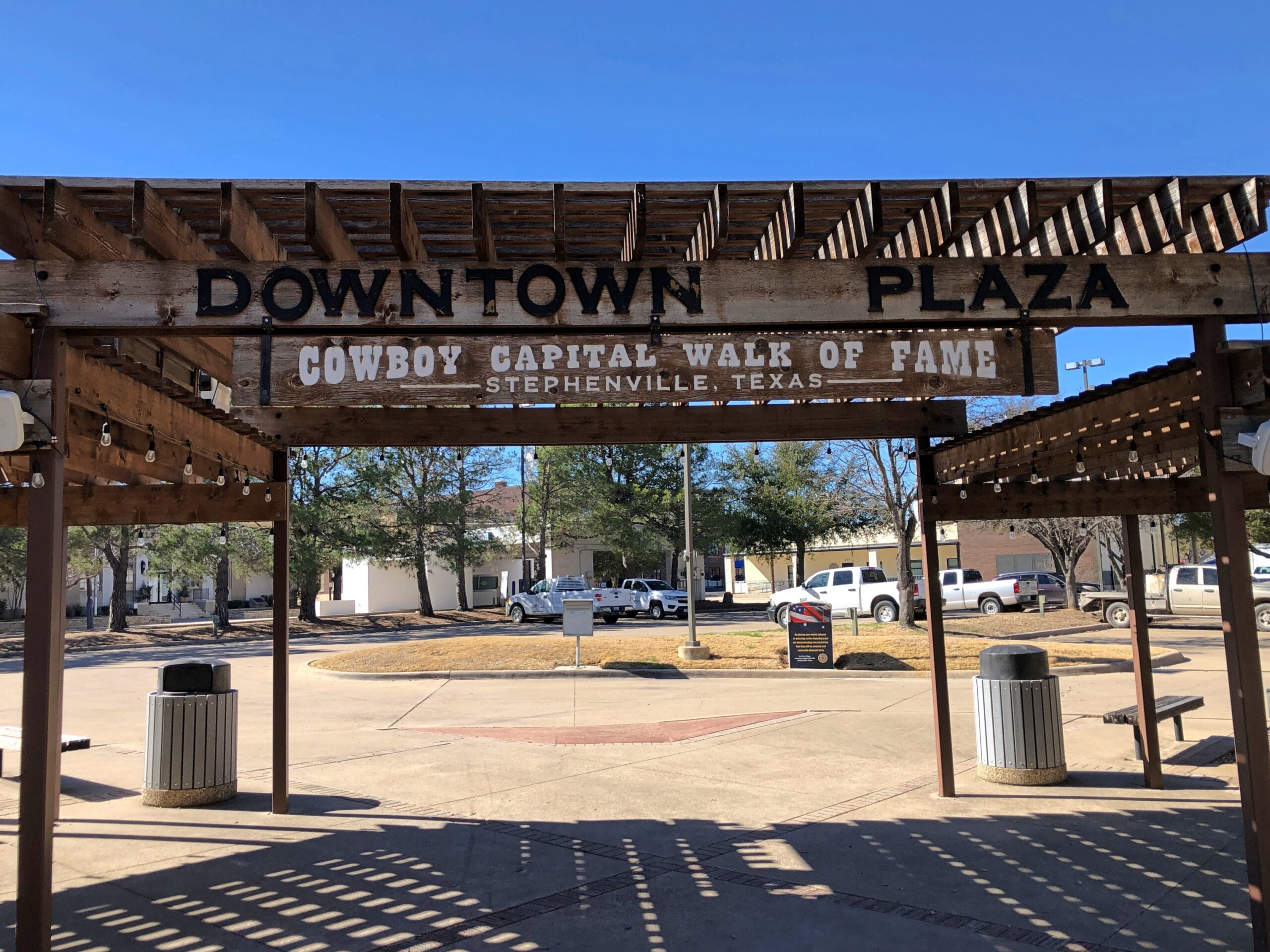
Milton’s not the only one honored near the Erath County courthouse.
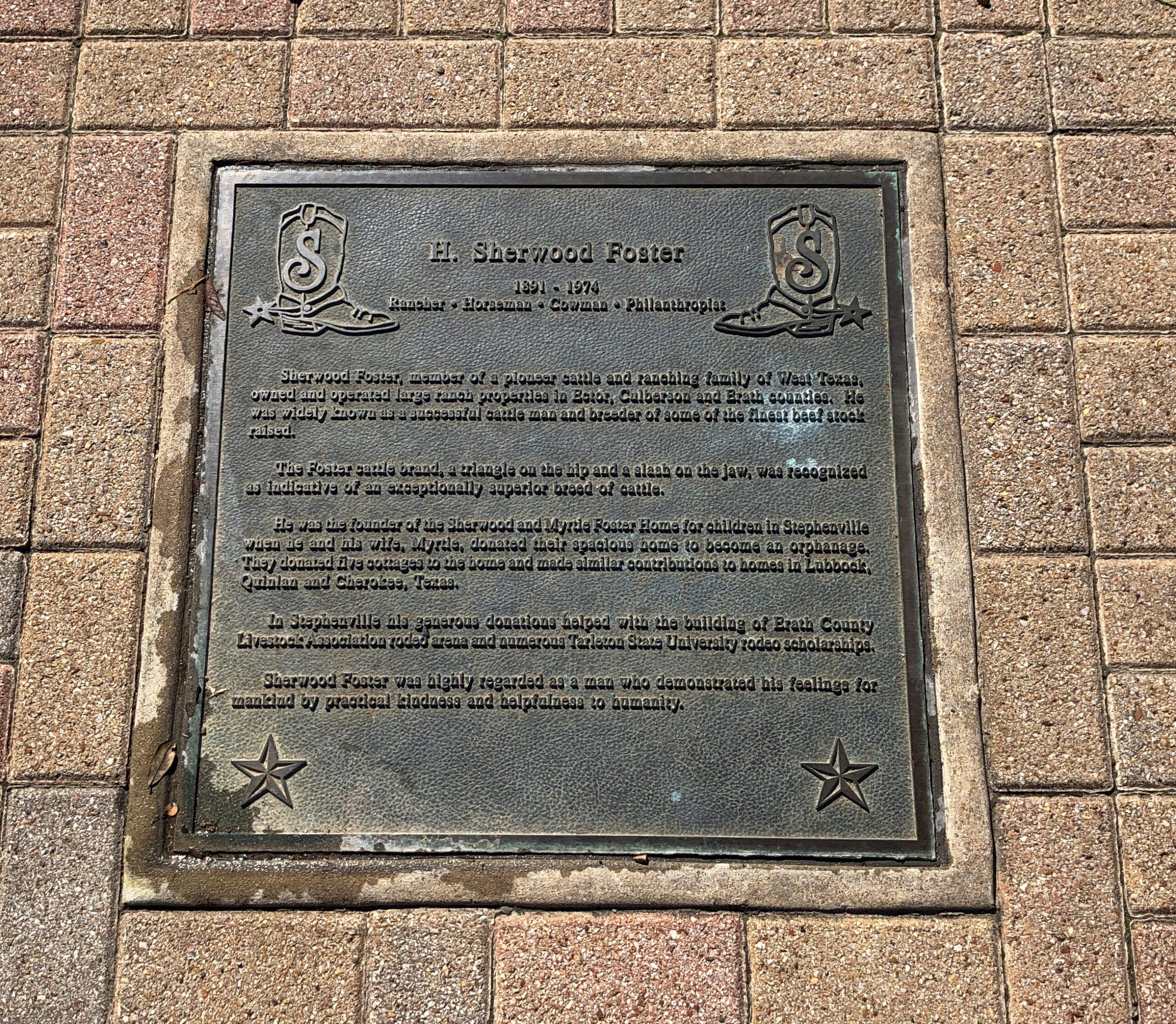
There were a fair number of plaques like this, too many to read, so I picked one.
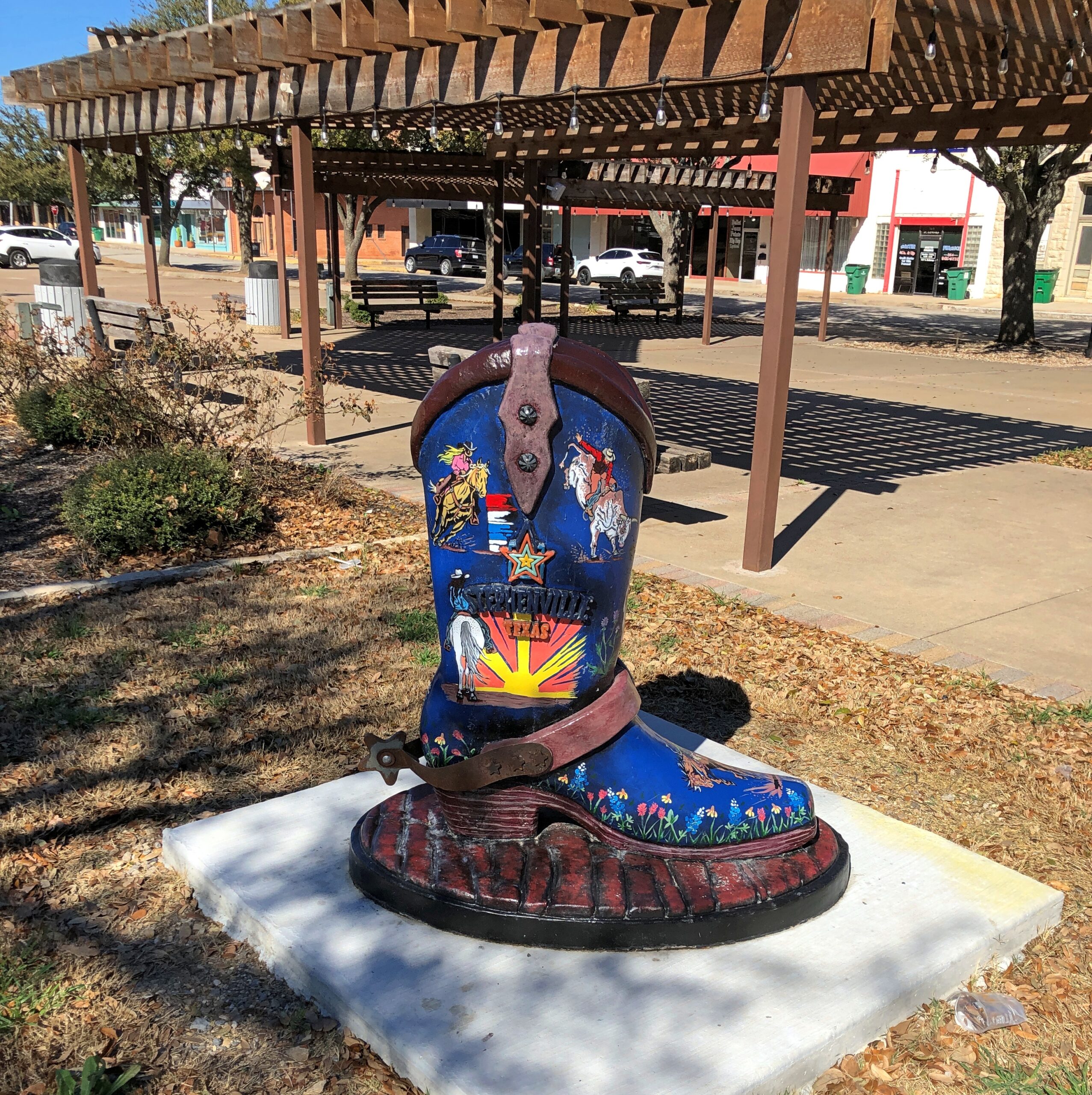
Chicago had its art cows (that was in 1999?!?) and Sturgeon Bay, Wisconsin, has its sturgeons, so Stephenville had boots?
You’d think maybe, considering the importance of dairy locally, there would also be — do dairy workers wear special boots? If so, there should be one of those on display too.
More Stephenville.
US 67 joins US 377 for a run southwest of Stephenville, through such burgs as Dublin, Comanche and Brownwood. Then US 377 peels away to the south; but we followed US 67 west to Ballinger. That town was mostly a stop to get our bearings, really, but I also did a short walkabout while Yuriko napped in the car.
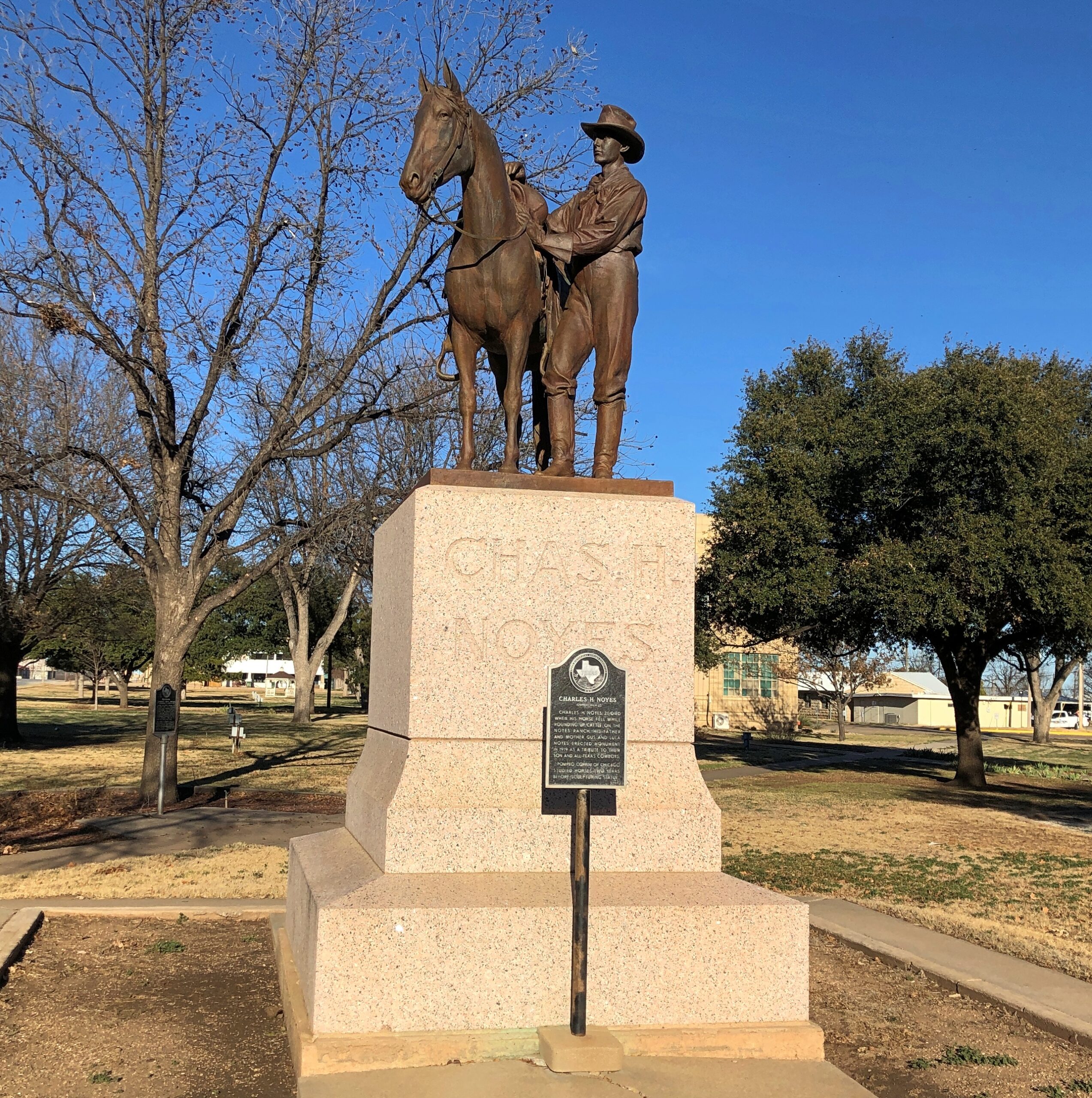
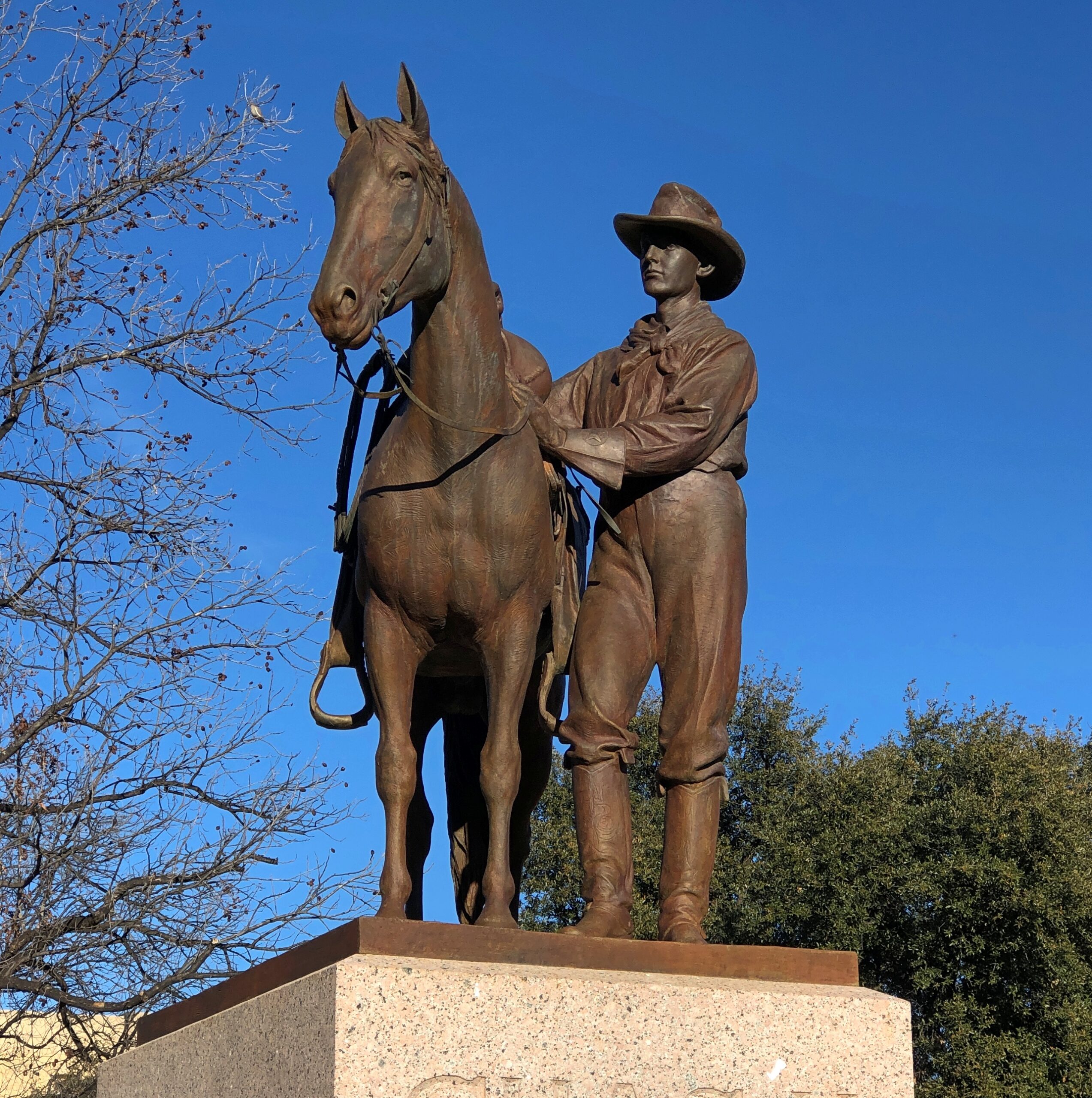
I made the acquaintance of Charles H. Noyes (d. 1917).
Charles was a young Runnels County man who died by being thrown from his horse while minding cattle. His parents tasked no less than Pompeo Coppin to do the sculpture honoring his memory. Nice work, Pompeo. RIP, Charles.