As mentioned before, Punxsutanwney, Pennsylvania, has gone a long way to let the world know about its groundhog and its celebration of things groundhoggish. Of course, that town isn’t the only place to do so, just the best known. I’ll bet few people south of the U.S.-Canada line know about Wiarton Willie. I didn’t know myself until I passed through Wiarton, Ontario, a couple of years ago, because travel is broadening, you know.
Back in the U.S., there is an up-and-coming town for celebrating groundhogs, and it’s less than an hour’s drive from where I live: Woodstock, Illinois. Yuriko and I made that drive on Saturday and spent a few hours in Woodstock’s pleasant downtown. The town has no history of imported northern European folk customs associated with rodents, but of course director Harold Ramis’ decision to film the many Groundhog Day exteriors in Woodstock did the trick.
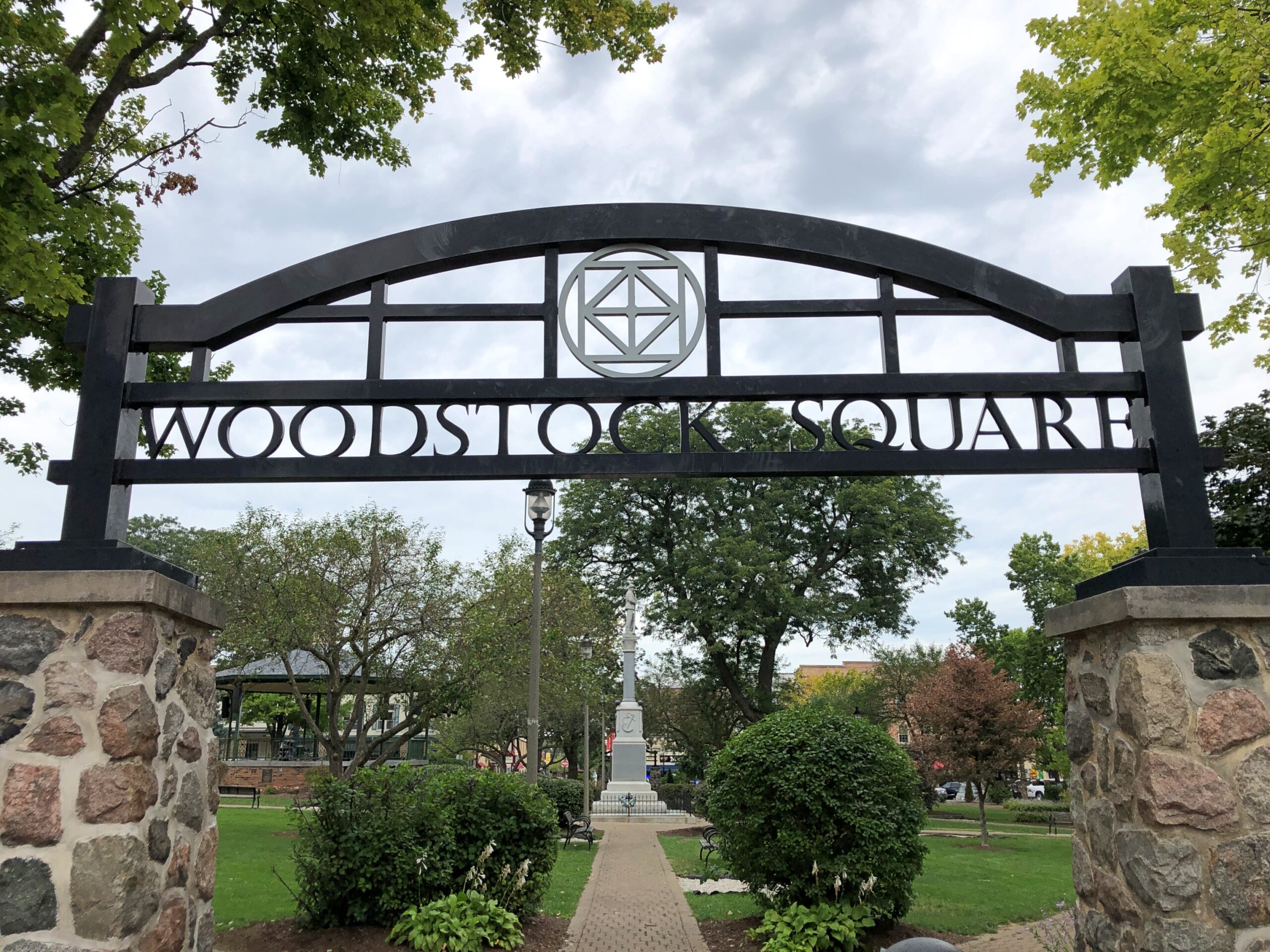
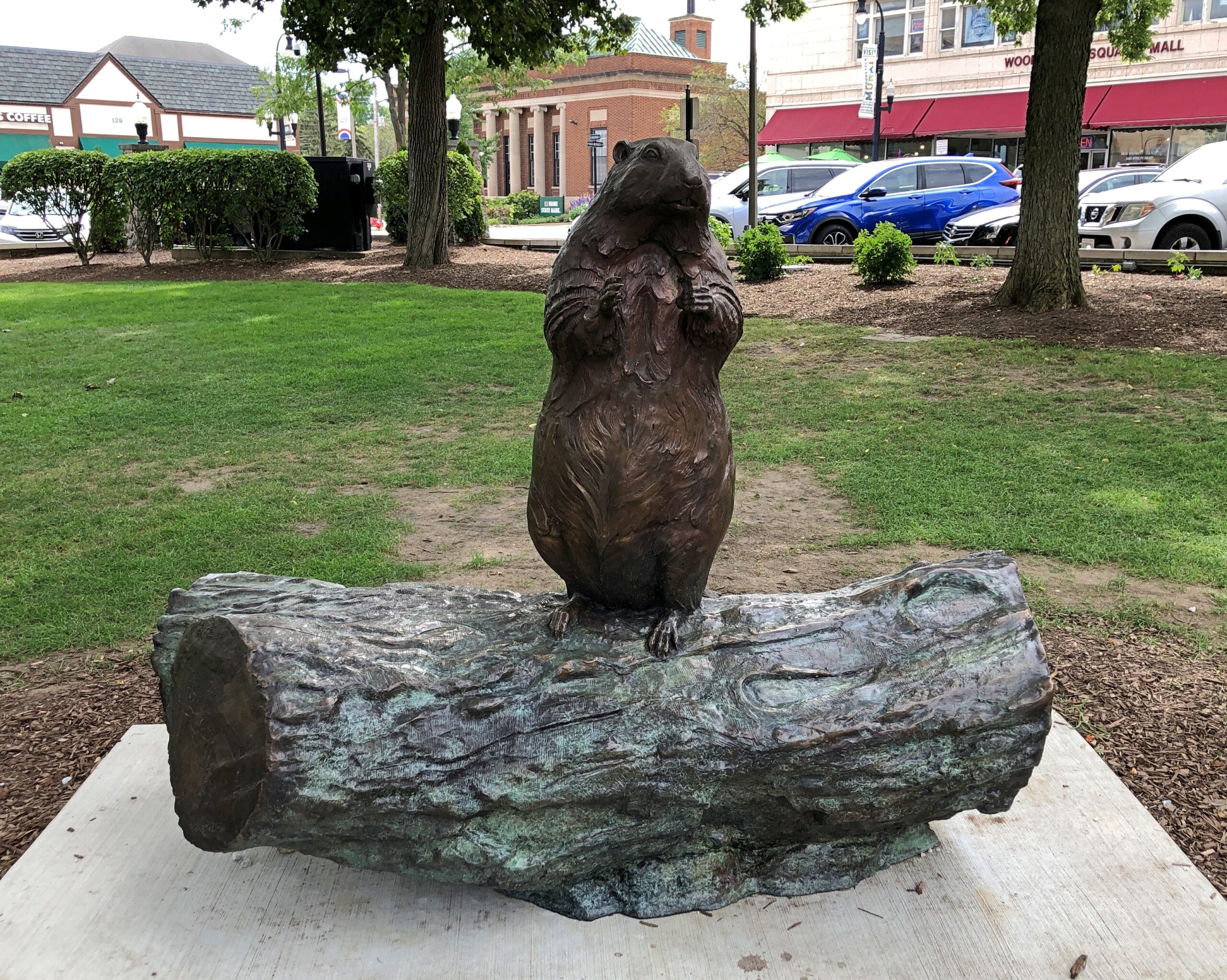
Since I was there last, a new acknowledgment of the movie has been added in Woodstock Square, which is the hub of the historic downtown.
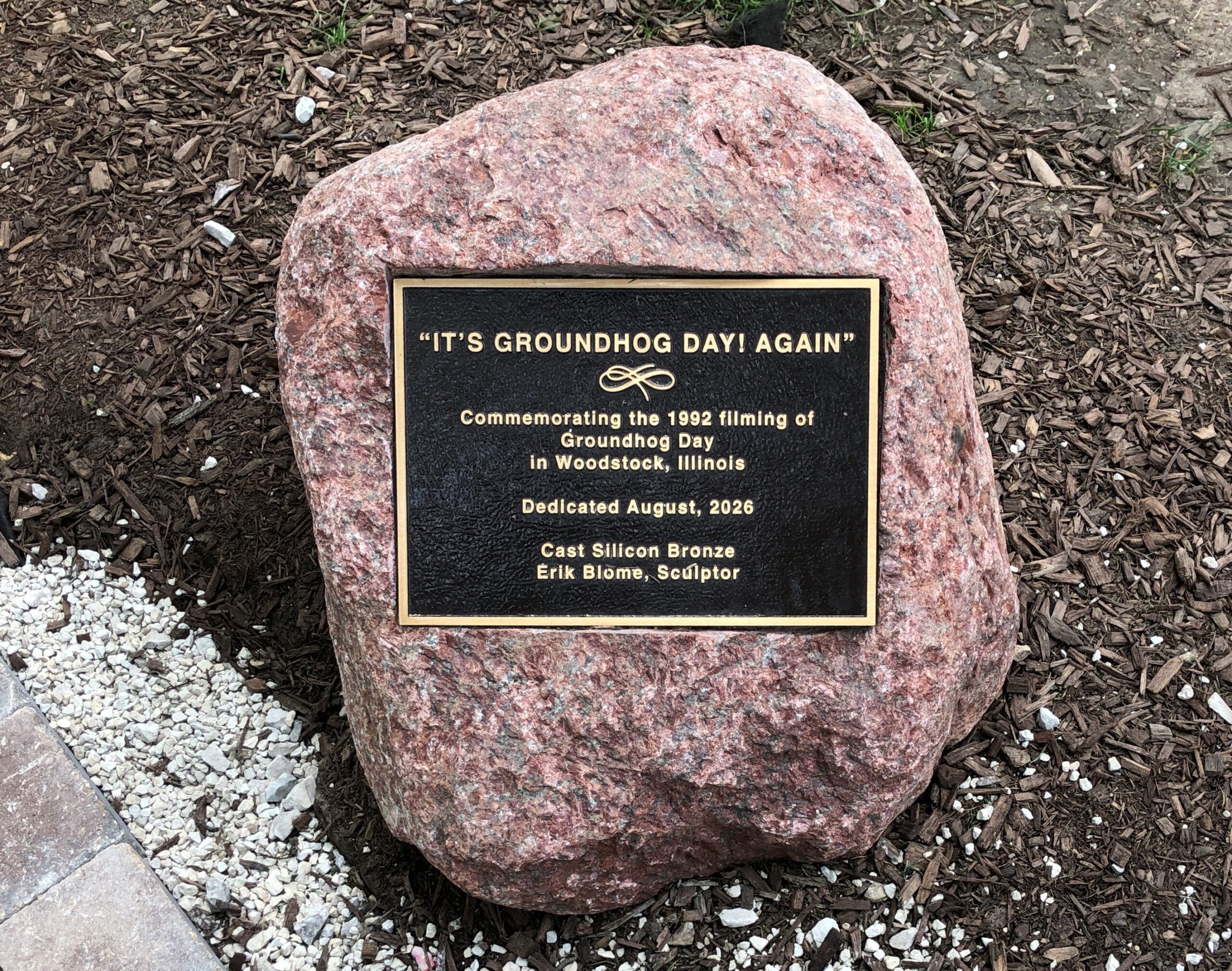
Very new, as in added earlier this month. In fact, on August 2 – six months ahead or behind February 2.
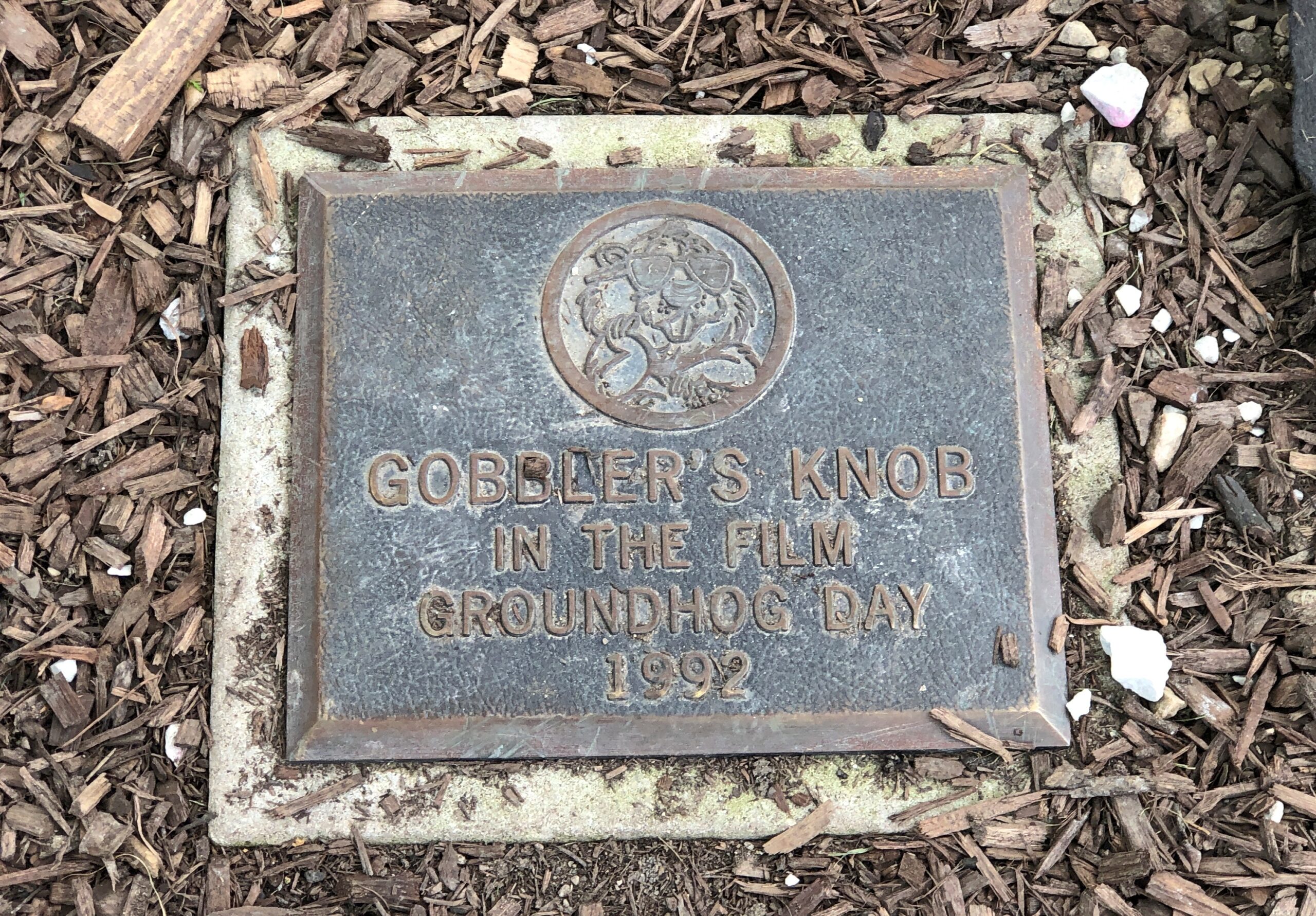
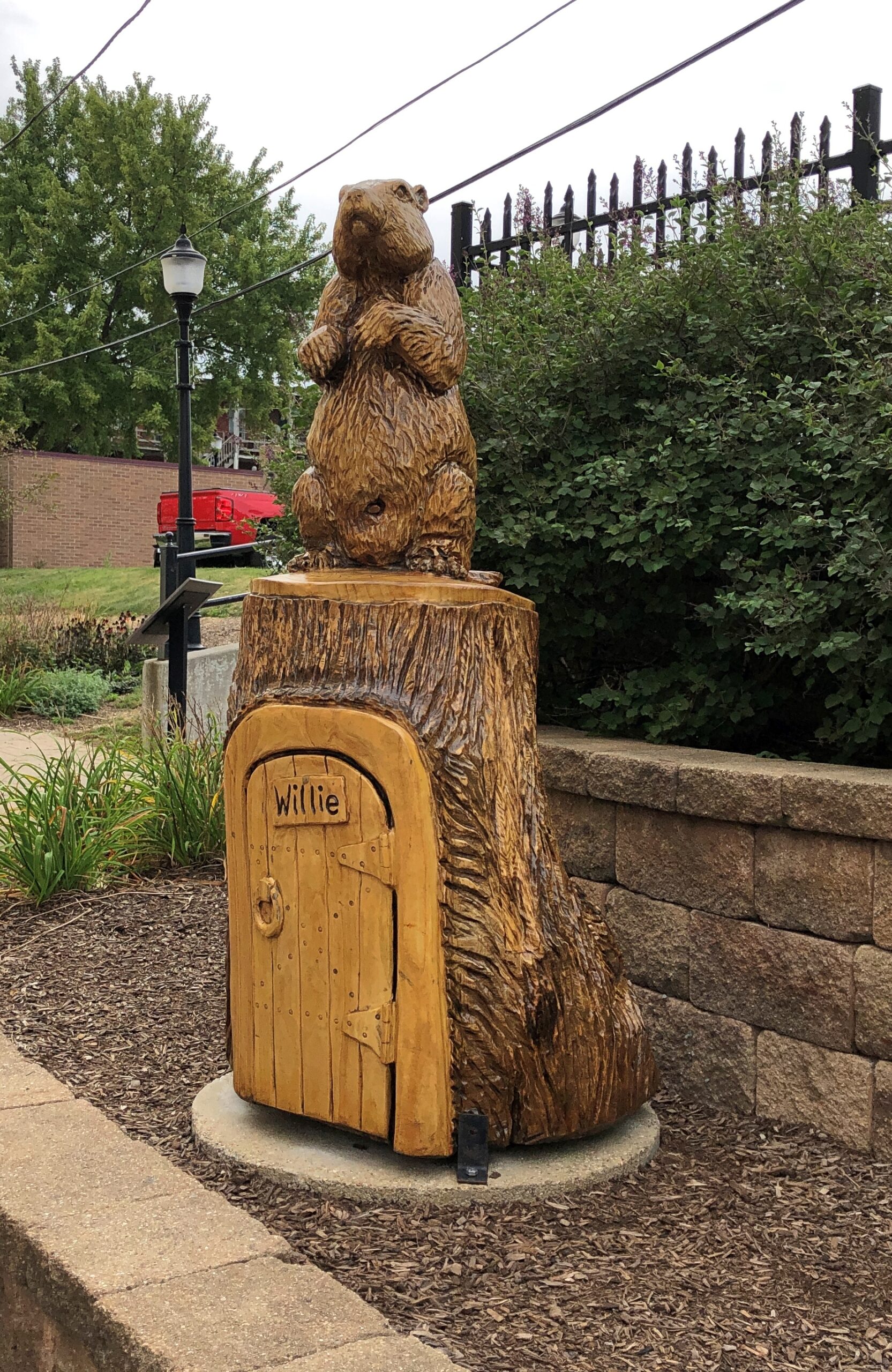
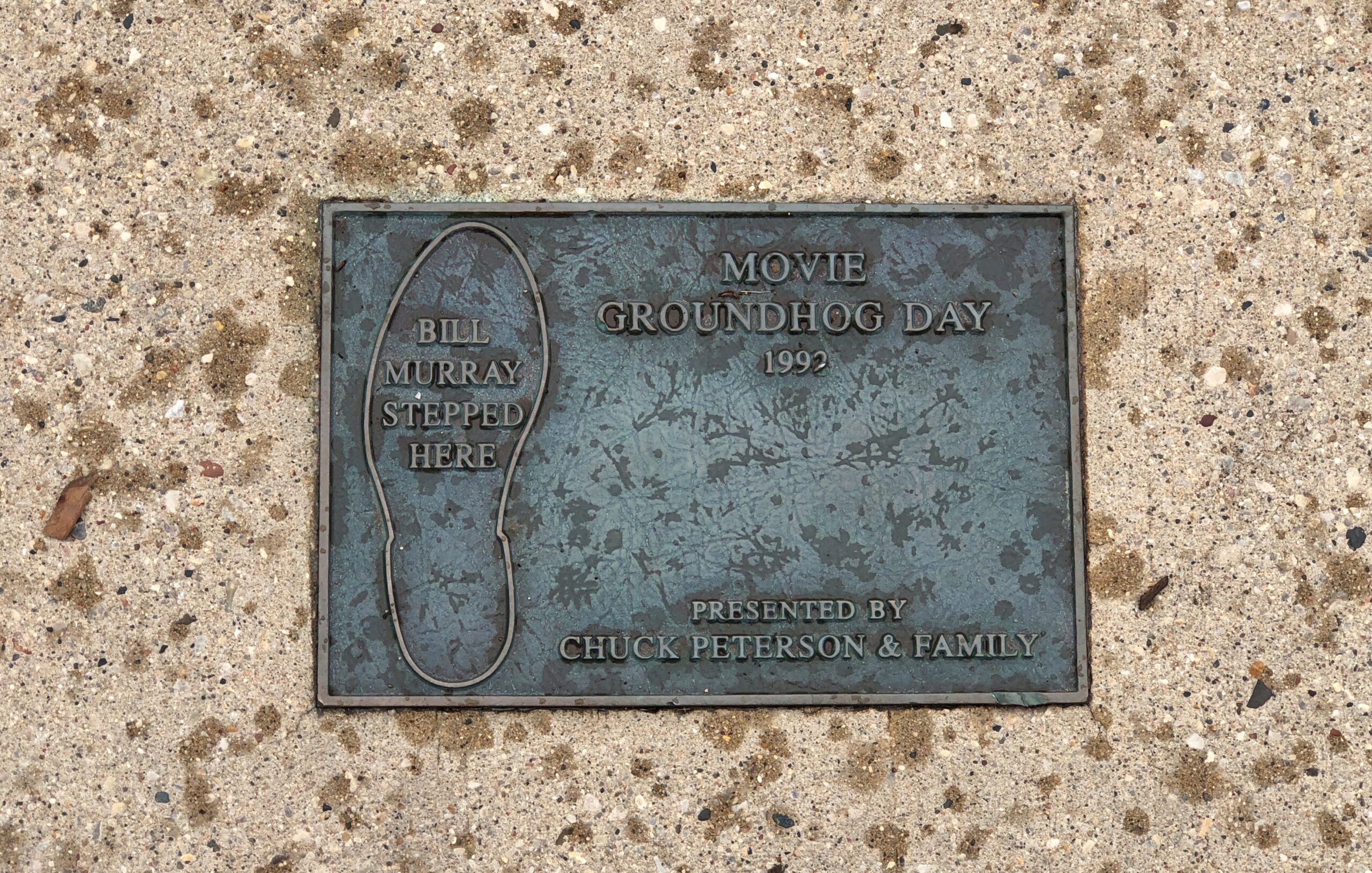
There is a newer plaque, and an older one, near the latest Woodstock Willie statue.
Not far from the square, behind the town movie theater, is an older Willie.
Woodstock has its own groundhog fest, and this is the place from which Willie emerges. I assume that it – cage isn’t the word, maybe temporary pen – is moved to Woodstock Square for the February 2 event, though it’s unlikely I will be at that event to see for myself.
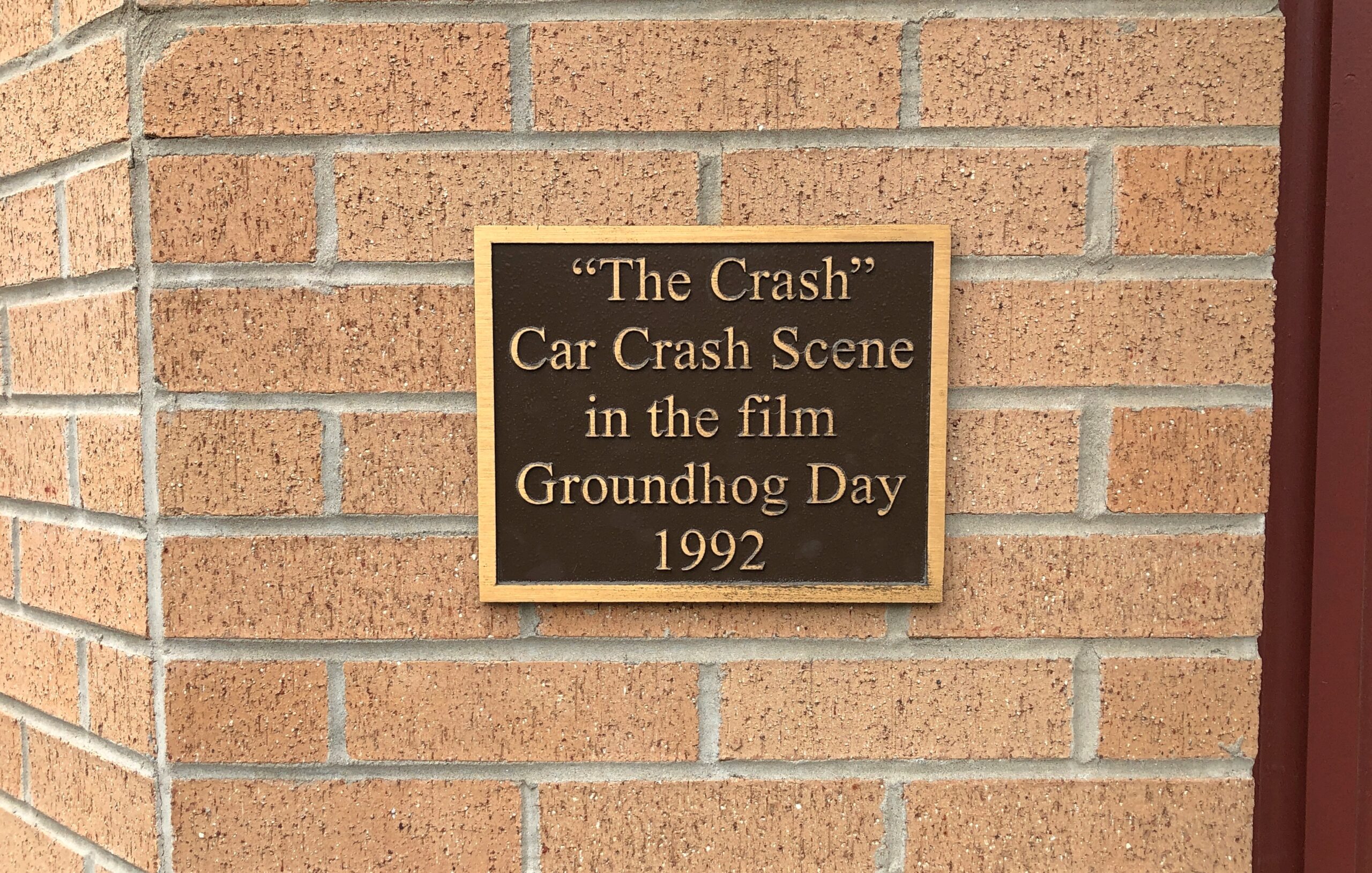
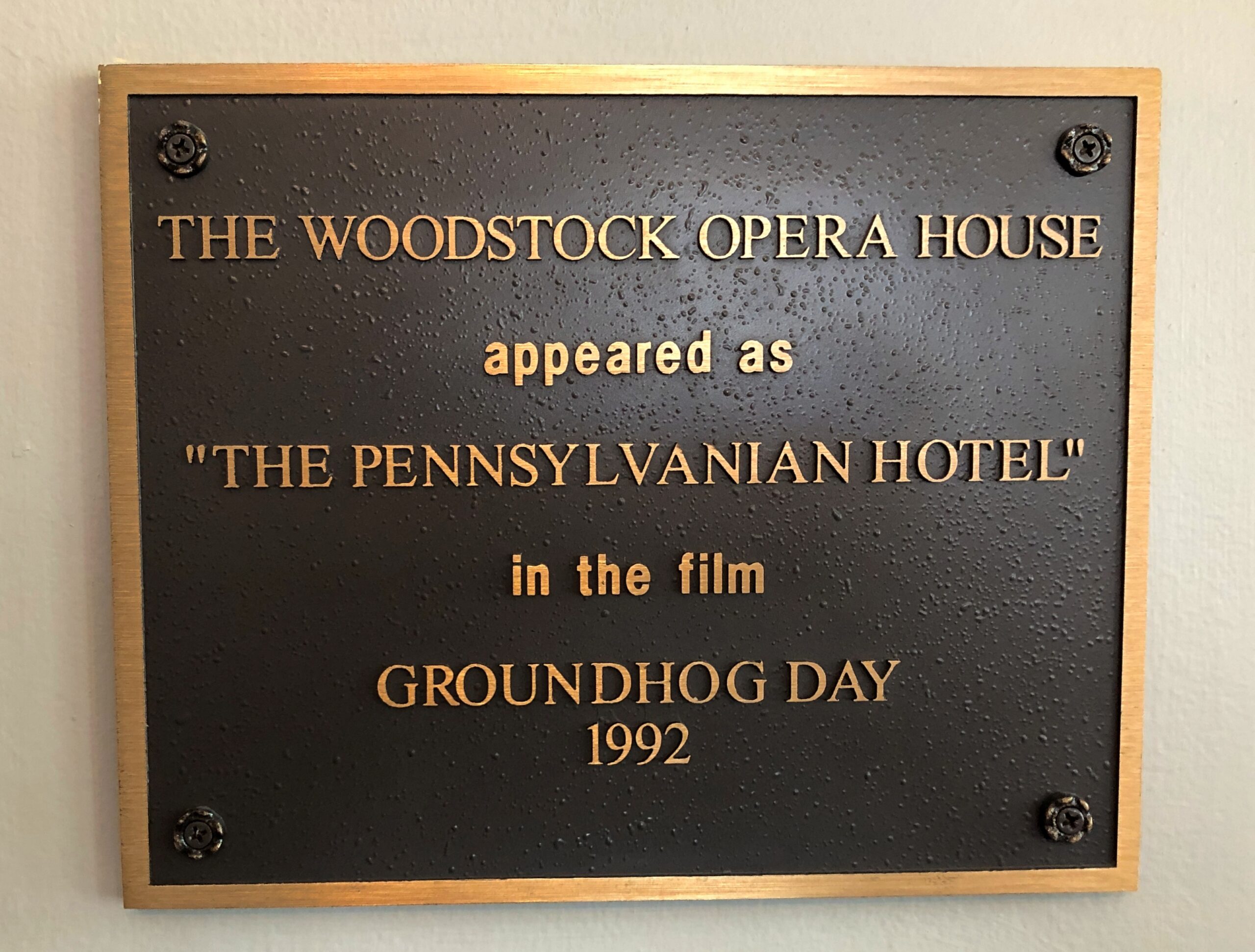
Other local plaques refer to the movie. This one has been in place for quite a while.
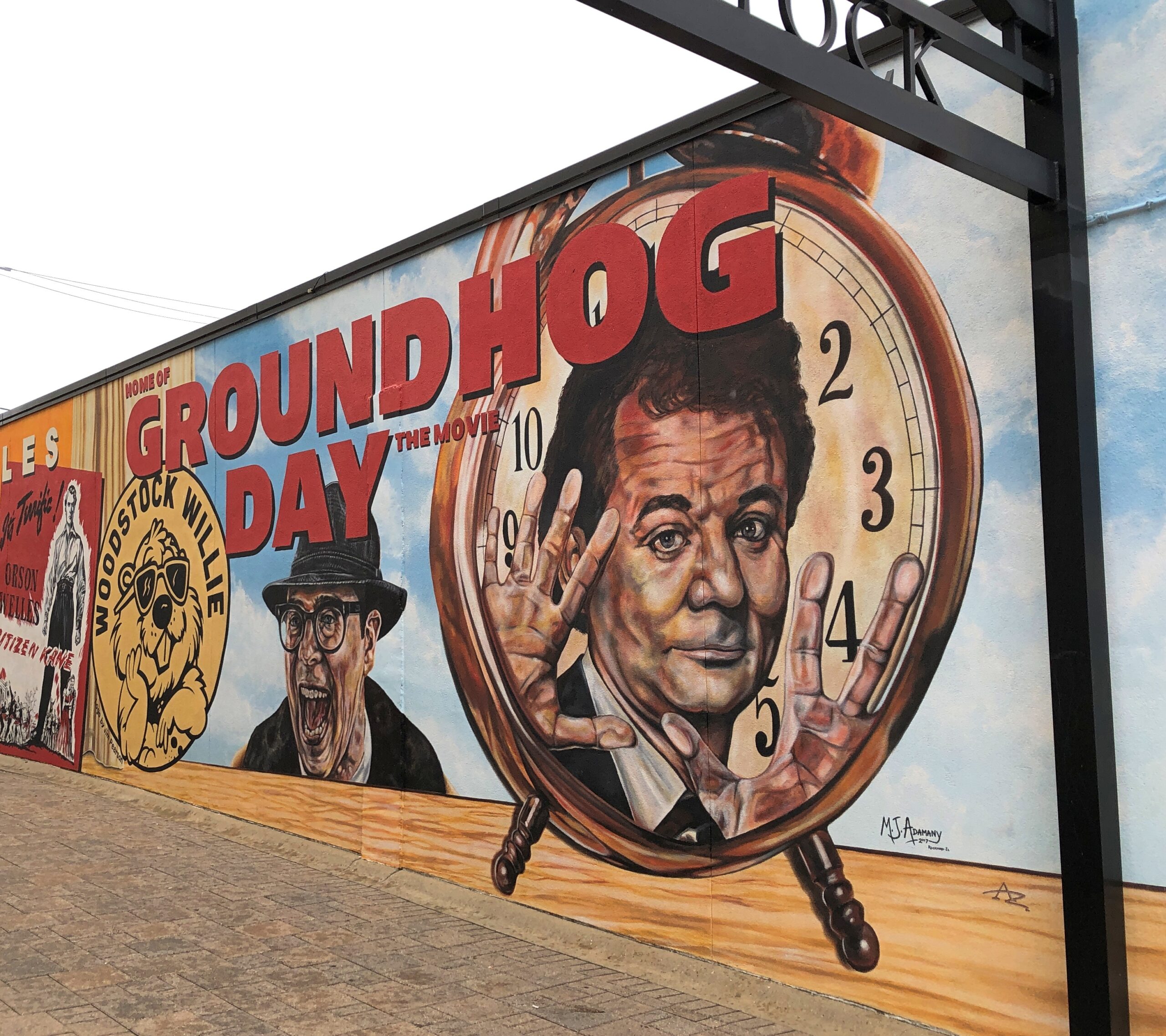
Also near the local movie theater is a Groundhog Day mural, evoking the movie’s promotional materials, and adding Woodstock Willie retroactively.
A good mural, but how is it Ned Ryerson (Stephen Tobolowsky) rates a spot? It is a funny bit and all, but I’d much rather see the fetching Rita Hanson (Andie MacDowell) there.
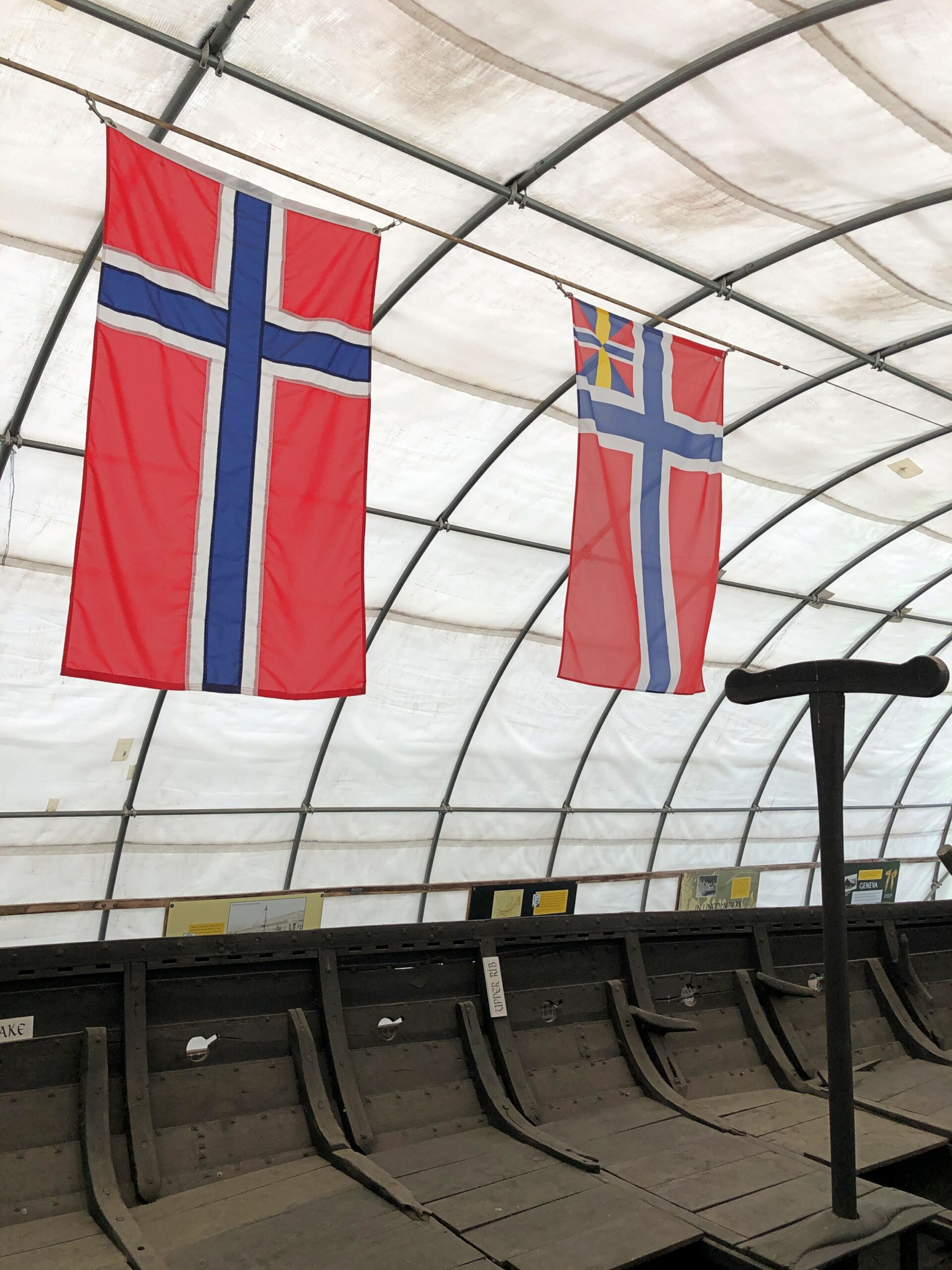
A number of flags hang near the Viking under its protective structure in Geneva, Illinois. As “Bob” our guide told us, they represent flags associated with the ship and its voyage. Its ultimate destination is represented by the modern Stars and Stripes near the bow. Not to be nitpicky — sometimes I want to be, though — a 44-star flag would have been more appropriate, being current in 1893.
There are also a couple of Norwegian flags.
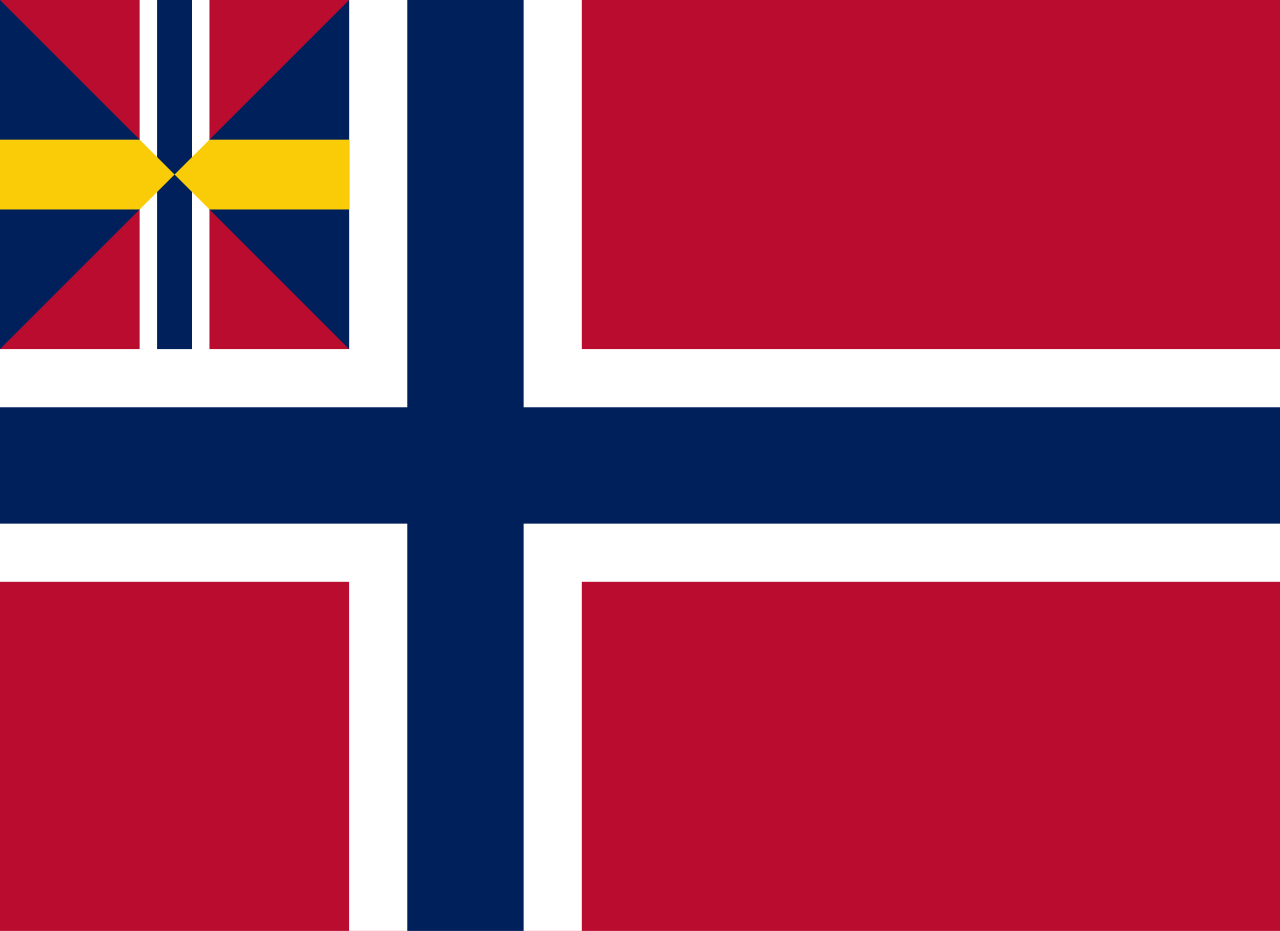
The current flag is to the left, of course. To the right, the flag that the ship actually flew, is the Norwegian flag bearing the union mark of Norway and Sweden. I don’t believe I’d ever seen that one before, and for good reason: the union mark was removed toward the end of the 19th century at insistence of the Norwegians, even before the union itself was dissolved in 1905.
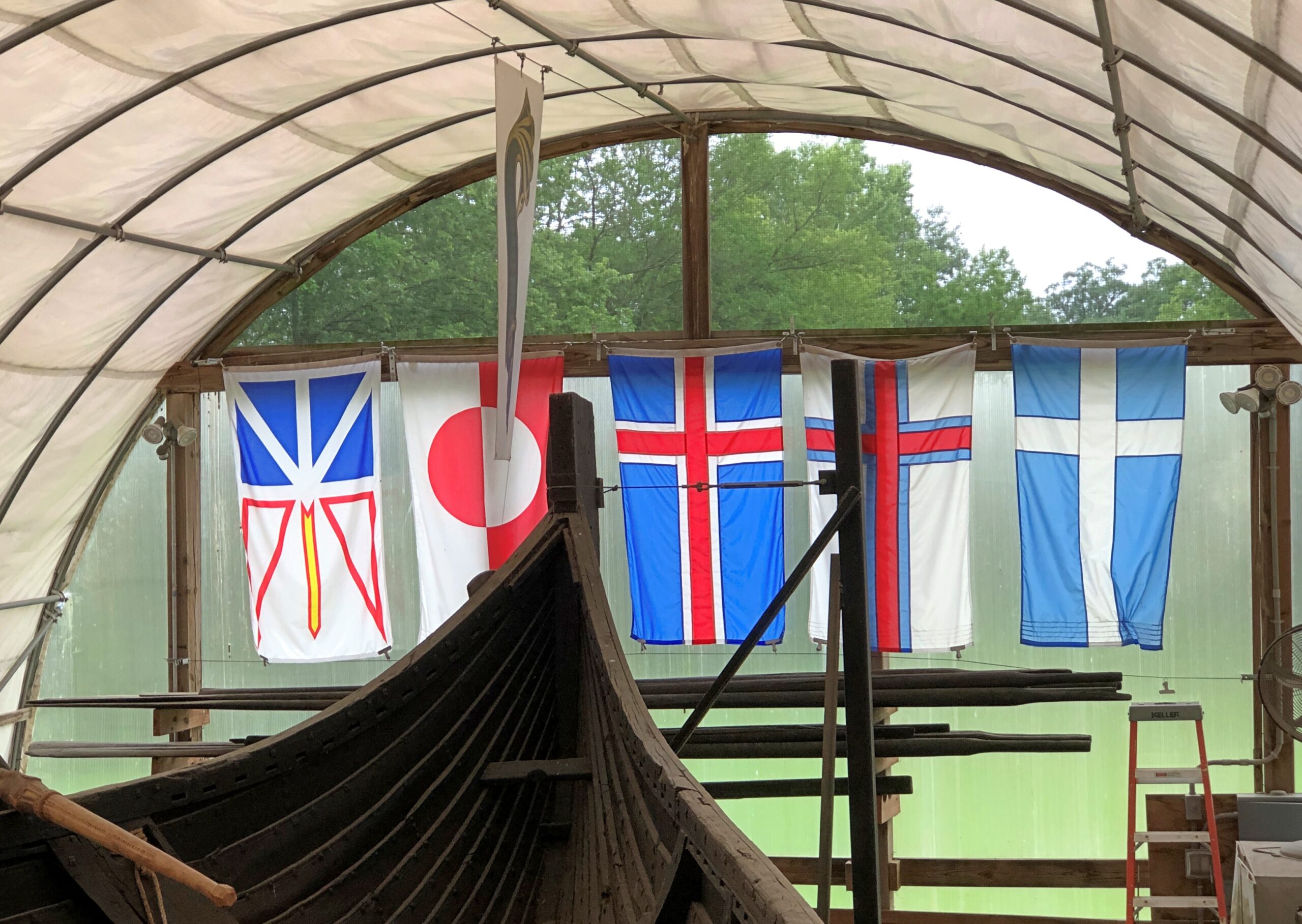
Other flags associated with the ship (some retroactively) are behind the stern.
Left to right: The flag of Newfoundland and Labrador – really retroactive, considering it was adopted in 1980 – Greenland (even more retroactive, 1985), Iceland, the Faroe Islands and the Shetland Islands.
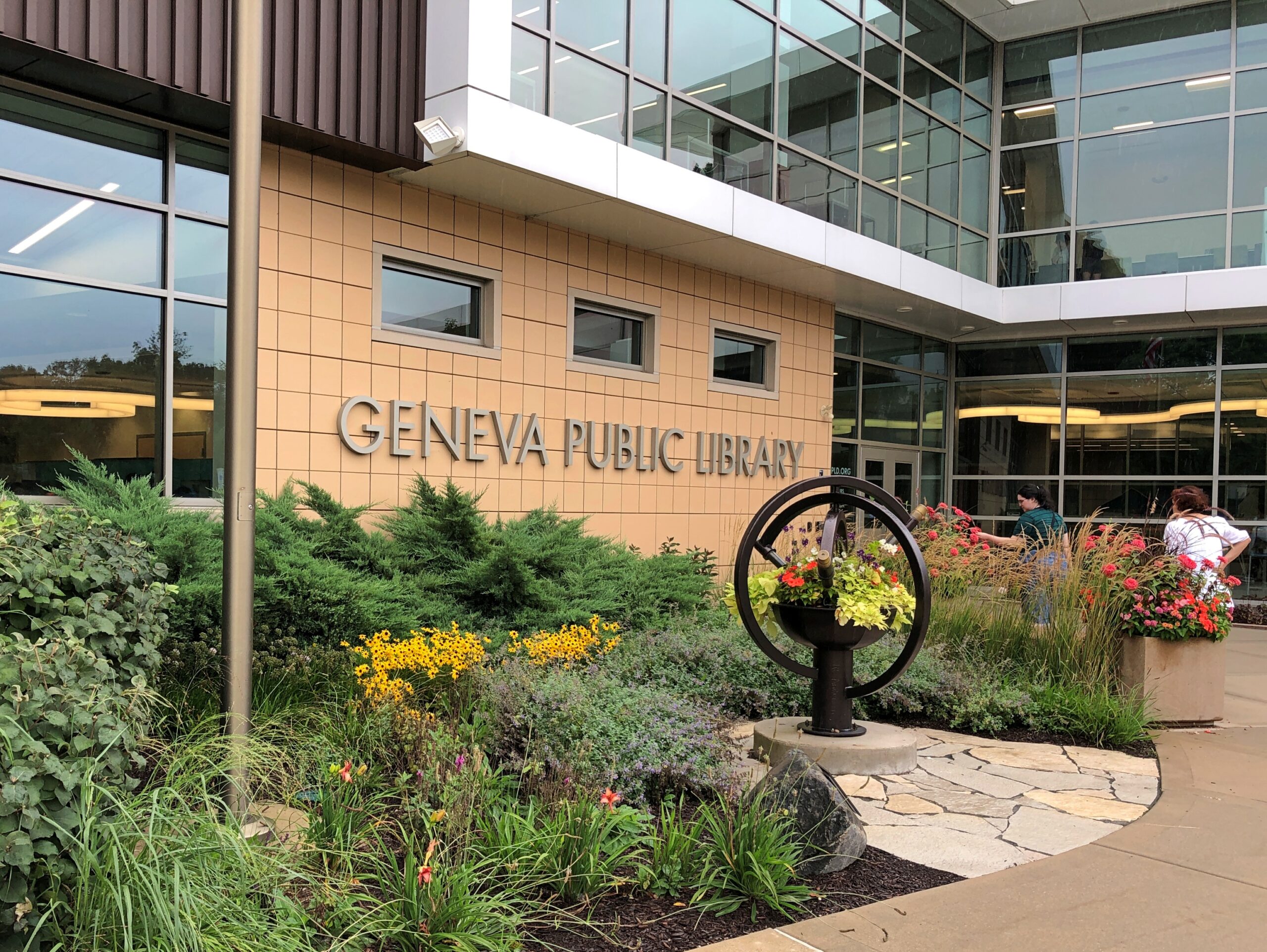
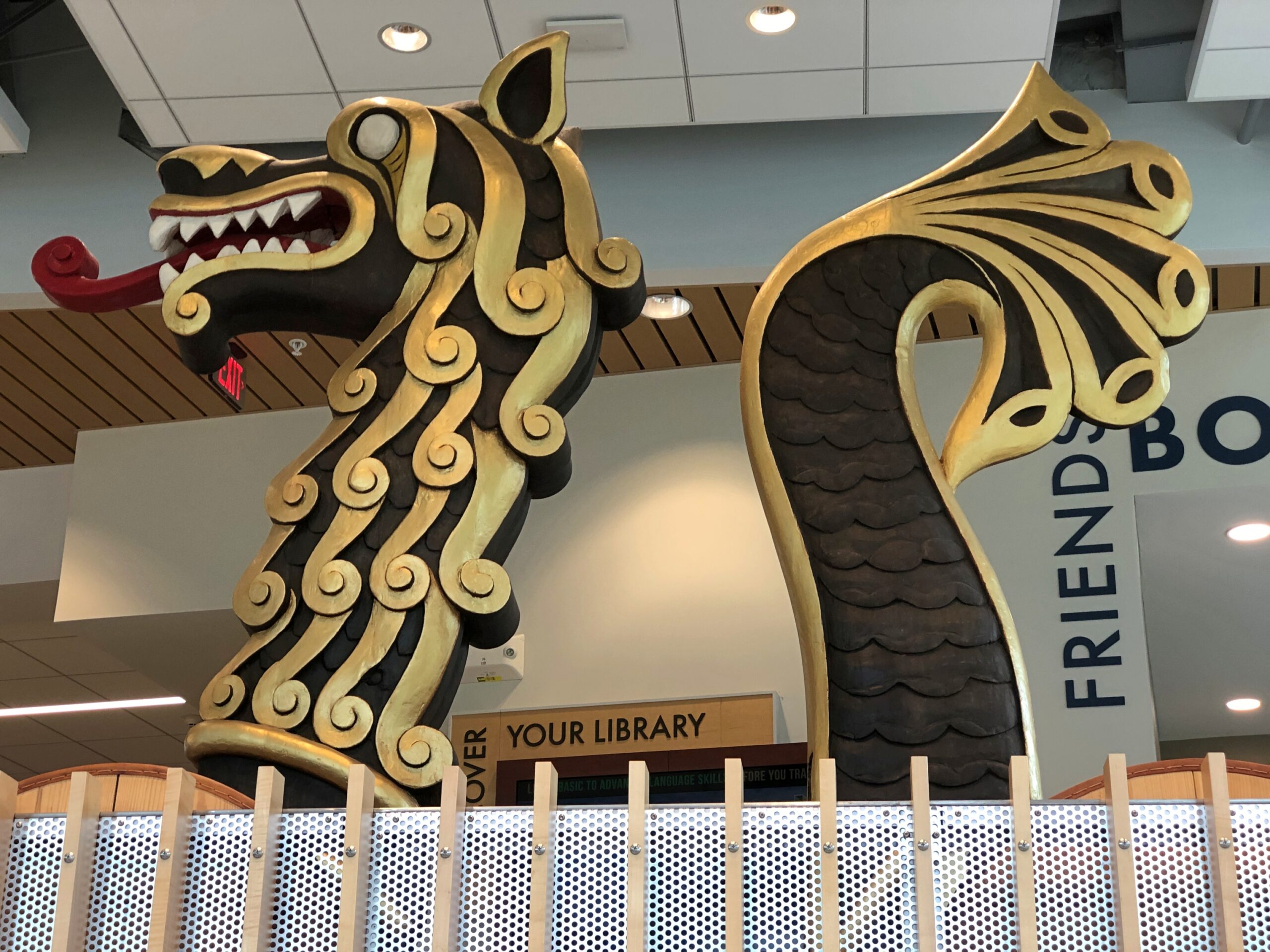
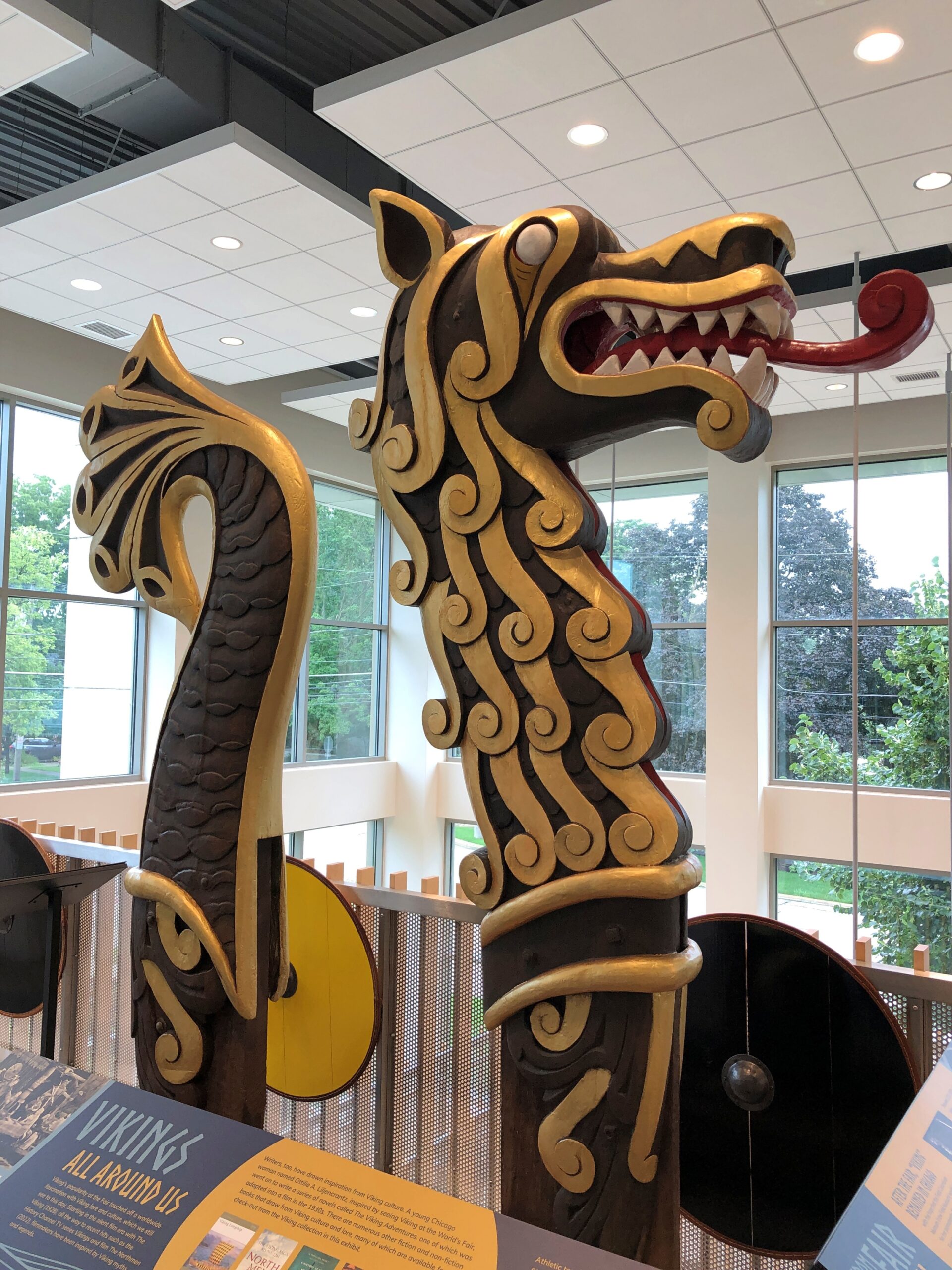
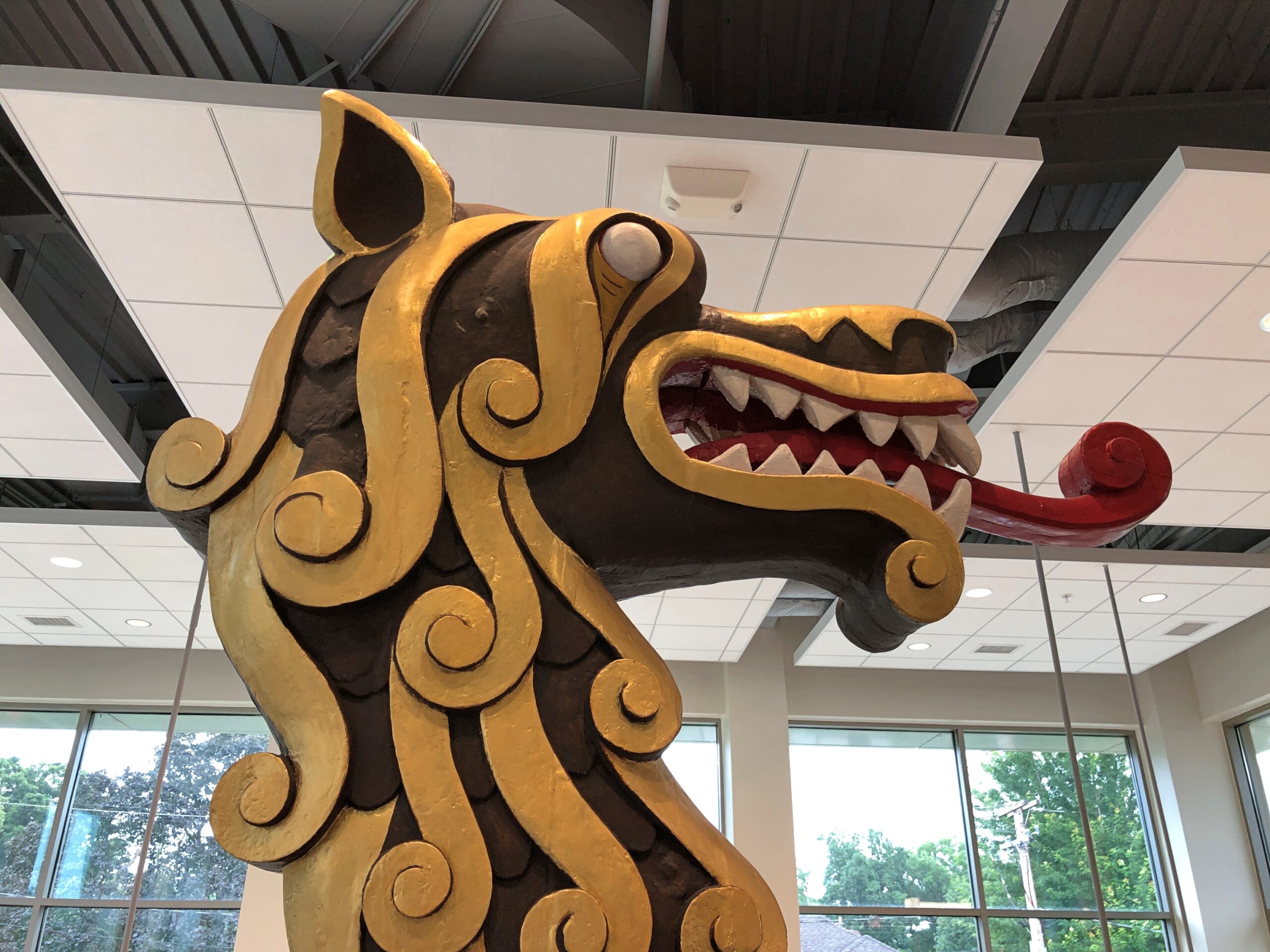
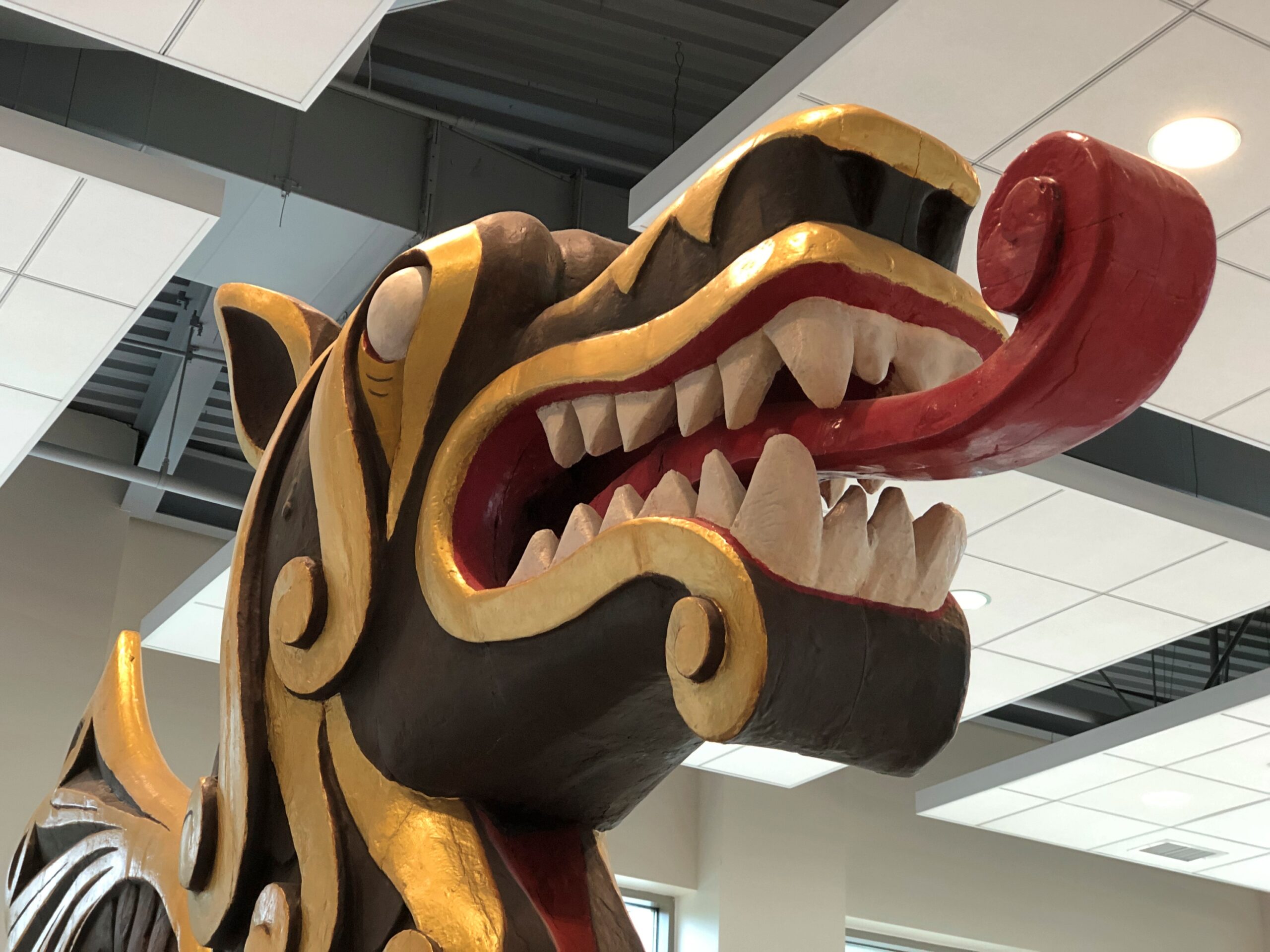
When we left the ship-shed, we weren’t quite done with the Viking. Turns out the ship’s figurehead, depicting the goddess Freya, isn’t attached to the ship, even though the same nonprofit owns it. For now, Freya is on display at the Geneva Public Library. We had to go see that.
The figurehead has been restored to its 1893 painting scheme. Freya, it seems, had acquired a number of coats in the decades after the fair. Currently, she stands on the second floor of the library, along with the — figuretail? — which attaches to the stern, anyway.
An impressive bit of work.
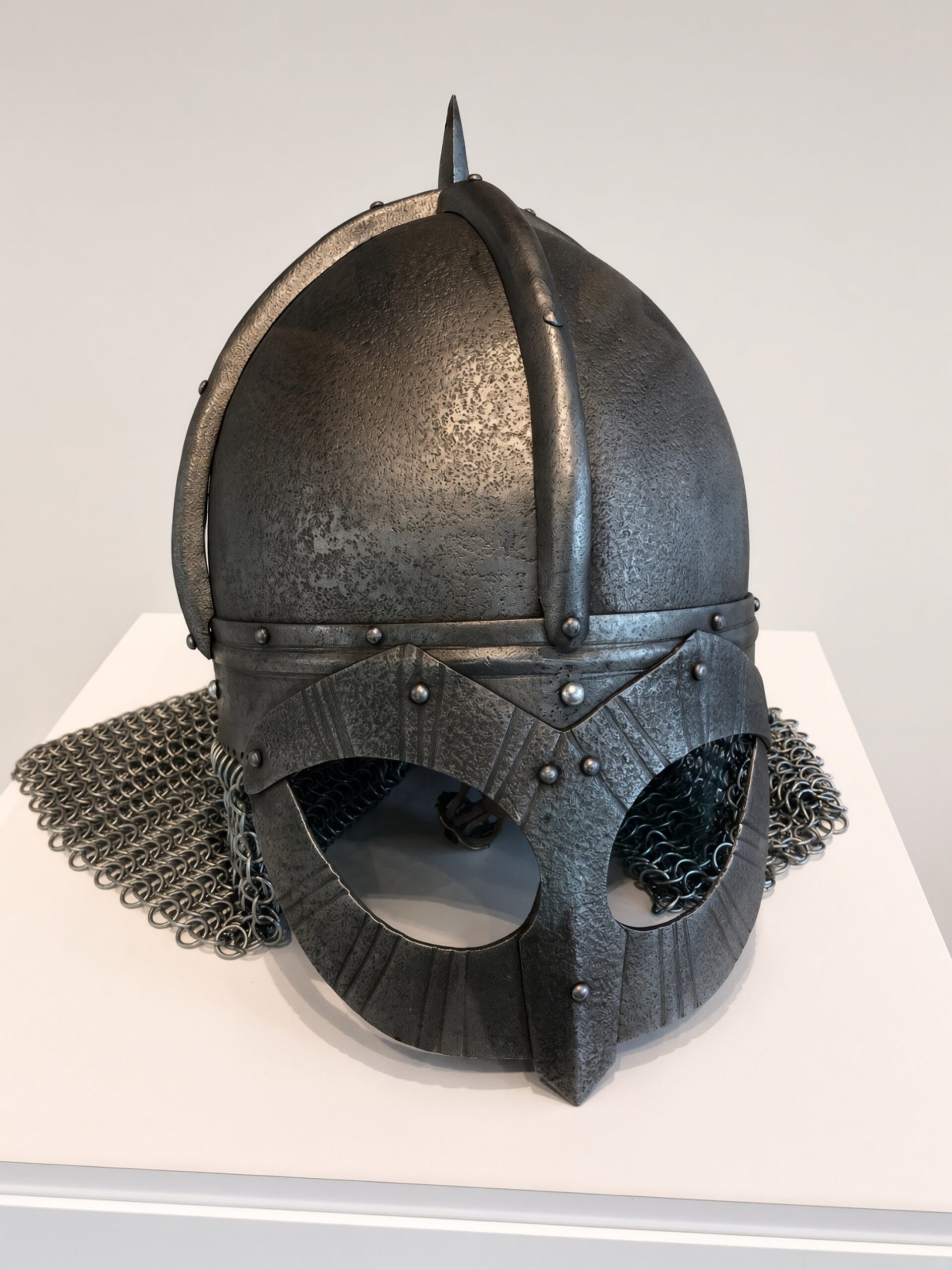
Nearby are a few Viking-related items behind glass. For my purposes, I had an AI image program remove the glass and its glare, but I left the artifacts looking the same. Such as the helmet. No horns, of course.
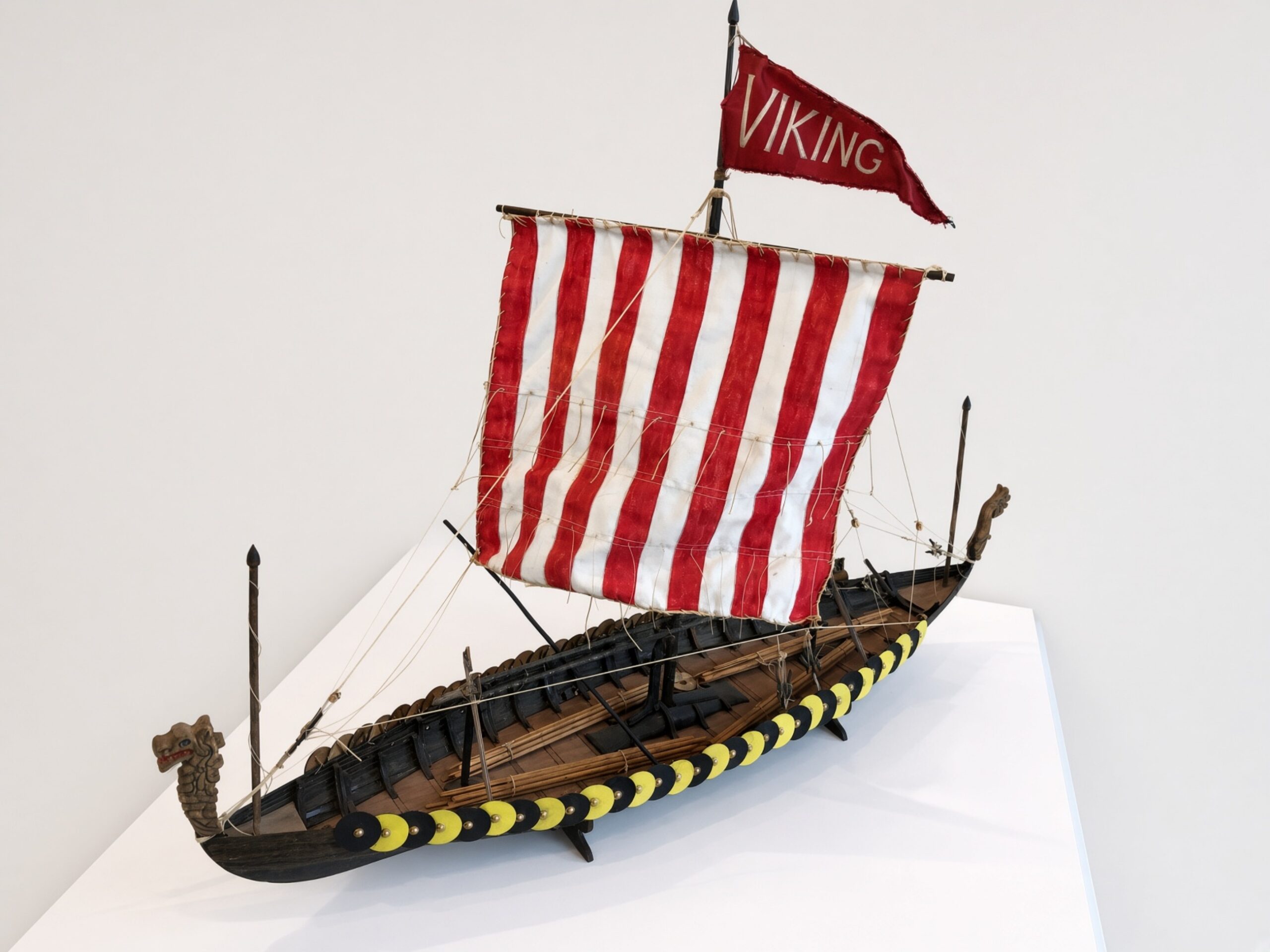
A model of the ship.
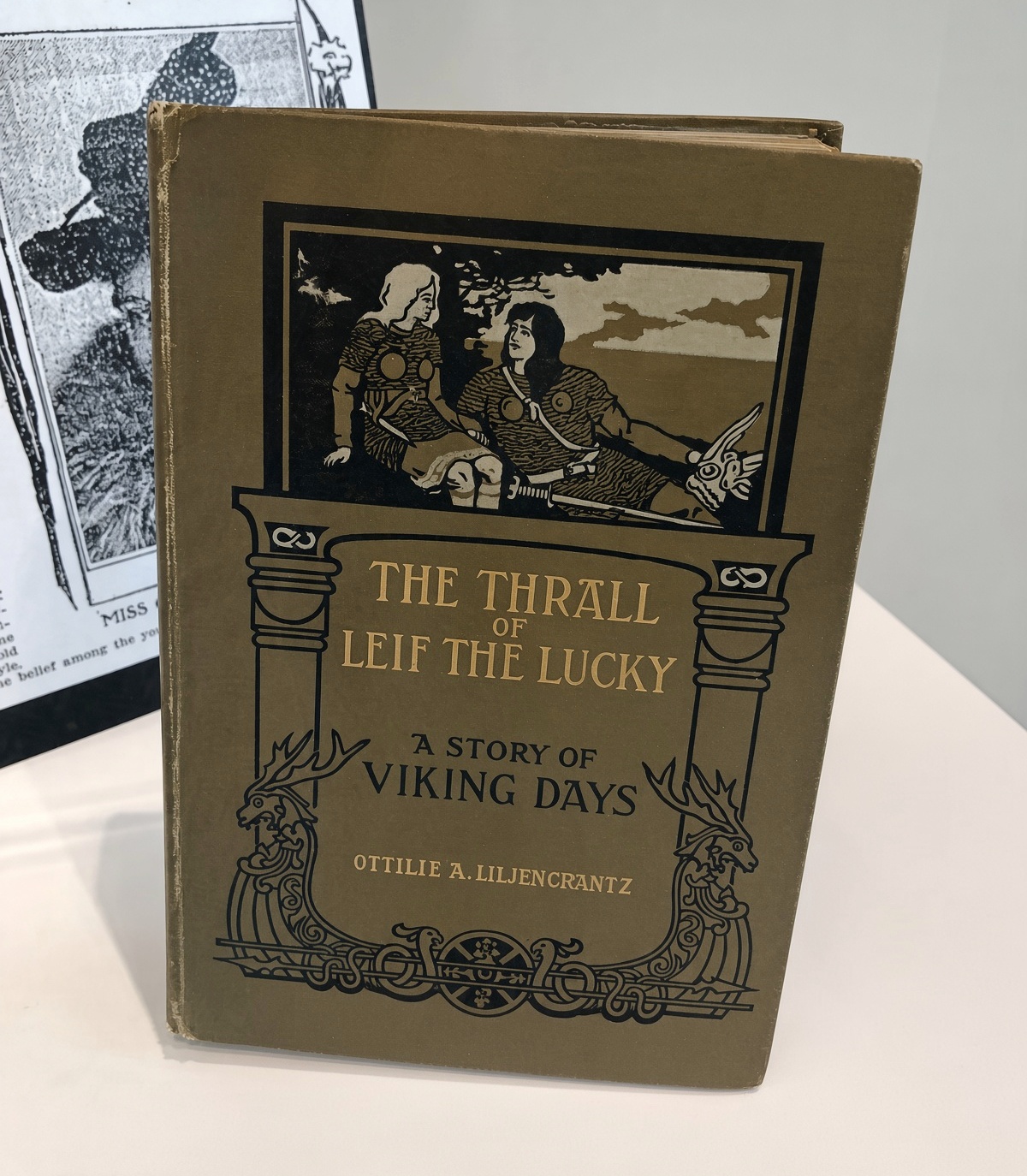
A copy of The Thrall of Lief the Lucky: A Story of Viking Days (1902) by Chicagoan Ottilie A. Liljencrantz (d. 1910). There’s an AI animation doable for the cover of this book, but I don’t feel like spending any credits on it. This is the script: The thrall, whom I assume is the dark-haired fellow, says, “In the final chapter, I die of typhus.”
Naturally, I’d never heard of Liljencrantz (who has?), but she wrote a number really popular of Norse-themed historical novels in the early 20th century, taking inspiration from her own Swedish heritage but also from visiting the Viking in 1893 as a teenager. She did much to popularize Viking stories in modern America, as did the visit of the ship itself – just another instance of the World’s Columbian Exposition being one of the founts of the modern world. I believe we have the fair to thank for Ernest Borgnine, among others, being a Viking (briefly), for the inanity of Hägar the Horrible, and for Donald Duck going to look for the Golden Helmet and the deed to North and South America.
For its part, The Thrall of Lief the Lucky was made into The Viking (1928), a Technicolor silent. Since the book is now well in the public domain – and available at Project Gutenberg – time for a gritty film reboot. If TheOdyssey can do well at the box office, so can Lief; tough men in wooden ships are tough men in wooden ships, eh?
Just for fun, I took a dive into the Project Gutenberg posting of The Thrall of Lief the Lucky. File it under they for sure don’t write ’em like that anymore (unless AI does). Three more-or-less random samples:
Egil laughed, a hateful gloating laugh, and settled himself against a tree to see the finish. As Helga’s arm was flung up the second time, the thrall leaped upon her and tore the whip from her grasp and broke it in pieces. He would that he might have broken her as well; he thirsted to,—when he caught sight of the laughing Egil, and everything else was blotted out of his vision. Without a sound, but with the animal passion for killing upon his white face, he wheeled and leaped upon the Black One, crushing him, pinioning him against the tree, strangling him with the grip of his hands.
The attraction proved to be a chattering brown ape that some sailor had brought home from the East. Part of the spectators regarded it as a strange pagan god; part believed it to be an unfortunate being deformed by witchcraft; and the rest took it for a devil in his own proper person,—so there was great shrieking and scattering, whichever way it turned its ugly face. It happened that Sigurd was better informed, having seen a similar specimen kept as a pet at the court of the Norman Duke; so the terror of the others amused him and his companion mightily. They stayed until the creature put an end to the show by breaking away from its captor and taking refuge in the rigging.
Then both became silent, for Leif had faced about and was awaiting their full attention before announcing the next move. “I dislike to see brave men disgrace their beards with bondmaids’ gabble,” he said sternly. “Fix in your minds the shame that was spoken of Biorn Herjulfsson because of his lack of enterprise. The same shall not be said of us. Rolf Erlingsson and Ottar the Red and three others shall follow me; and we will walk inland until the light has entirely faded from the highest mountain peak yonder, and the next point below is yellow as a golden fir-cone. The others of you shall follow Valbrand for the same length of time, but walk southward along the shore, since it may be that something of interest is hidden behind these points—”
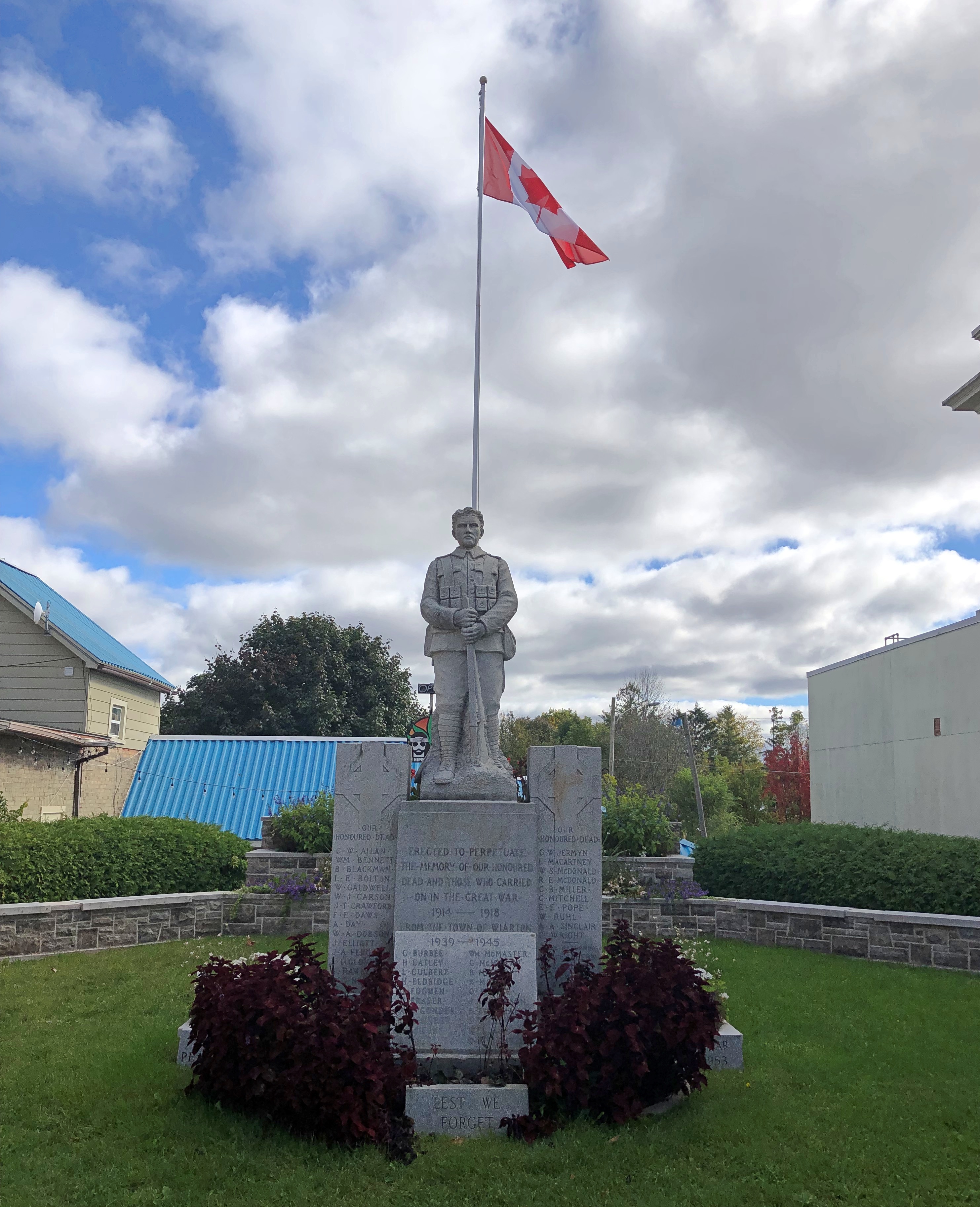
Memorial in Wiarton, Ontario, listing the honored dead from the area in the Great War. Later, Second World War dead were honored with an additional plaque.
We would do well to remember our Canadian brethren. Some 67,000 perished in combat in the First World War and 173,000 were wounded.
Things you can do in London: walk along the Thames; visit Covent Garden; and see St. Paul’s Cathedral. We did all of those things in the original London, once upon a time.
Earlier this month, we managed two out of three in London, Ontario. The cathedral was closed. Some other time, maybe, since you can drive from metro Chicago to the Canadian London in about six hours, provided traffic snarls on the highways just south of Lake Michigan aren’t any worse than usual and you don’t encounter a testy Canadian border guard, as I did on Canada Day all those years ago, for the most thorough border-crossing inspection I ever received, before or since.
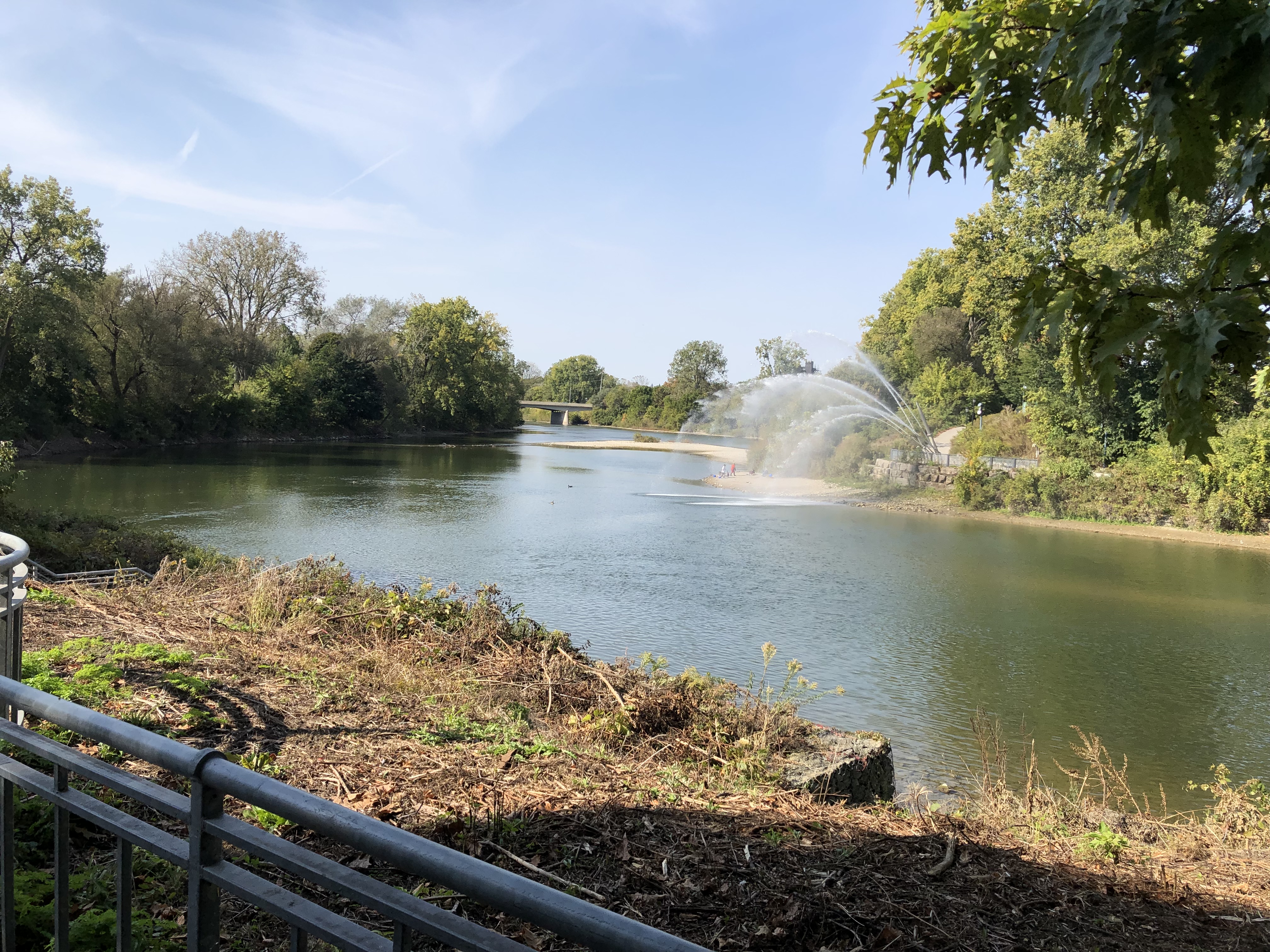
The Thames as it passes through downtown London. The banks are mostly parkland.
Actually, that point is the meeting of the North Thames and the Thames, locally known as the Folks. The river is called as La Tranche in French and Deshkaan-ziibi in Ojibwe, Antler River.
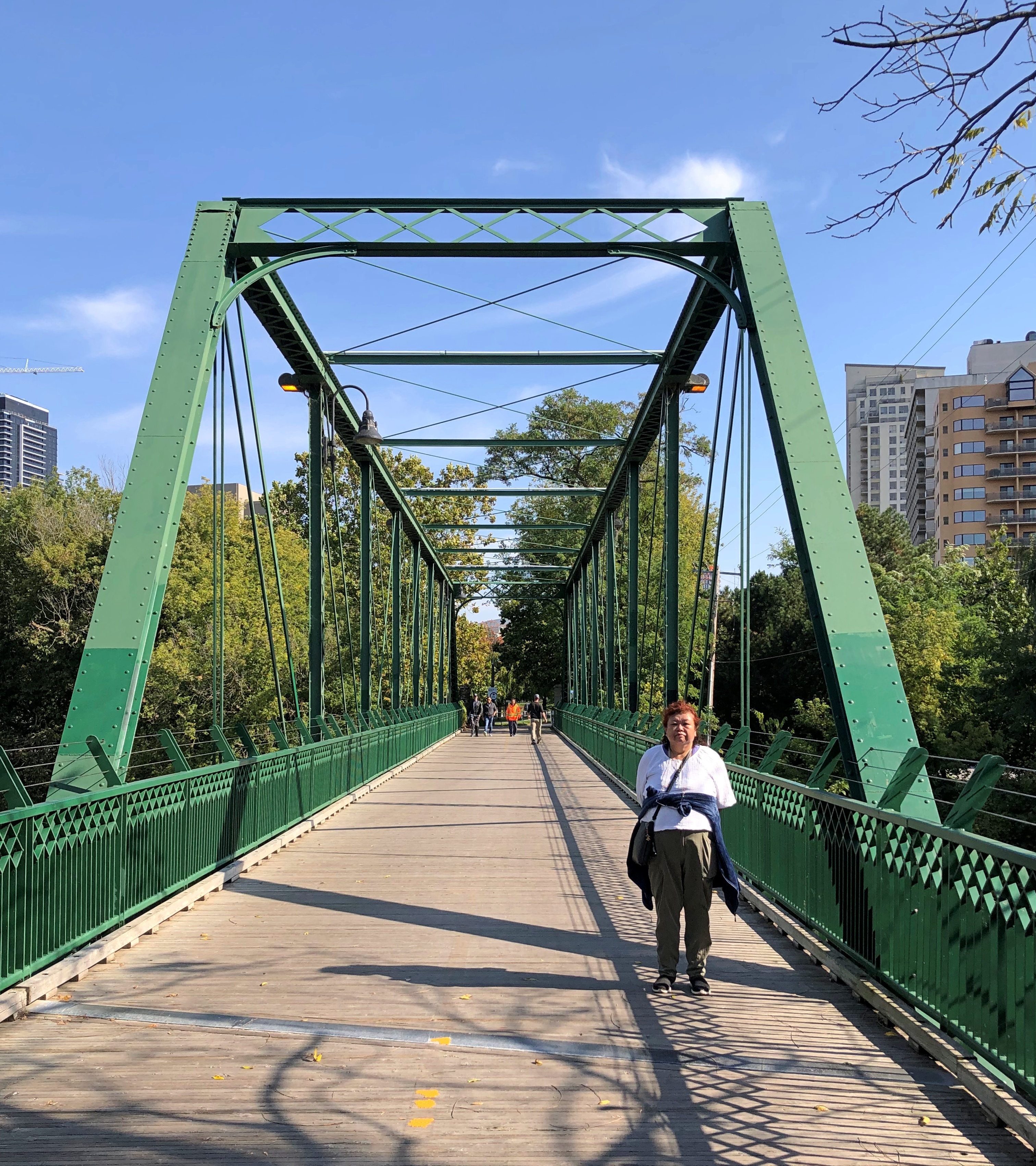
The King Street pedestrian bridge connecting the banks.
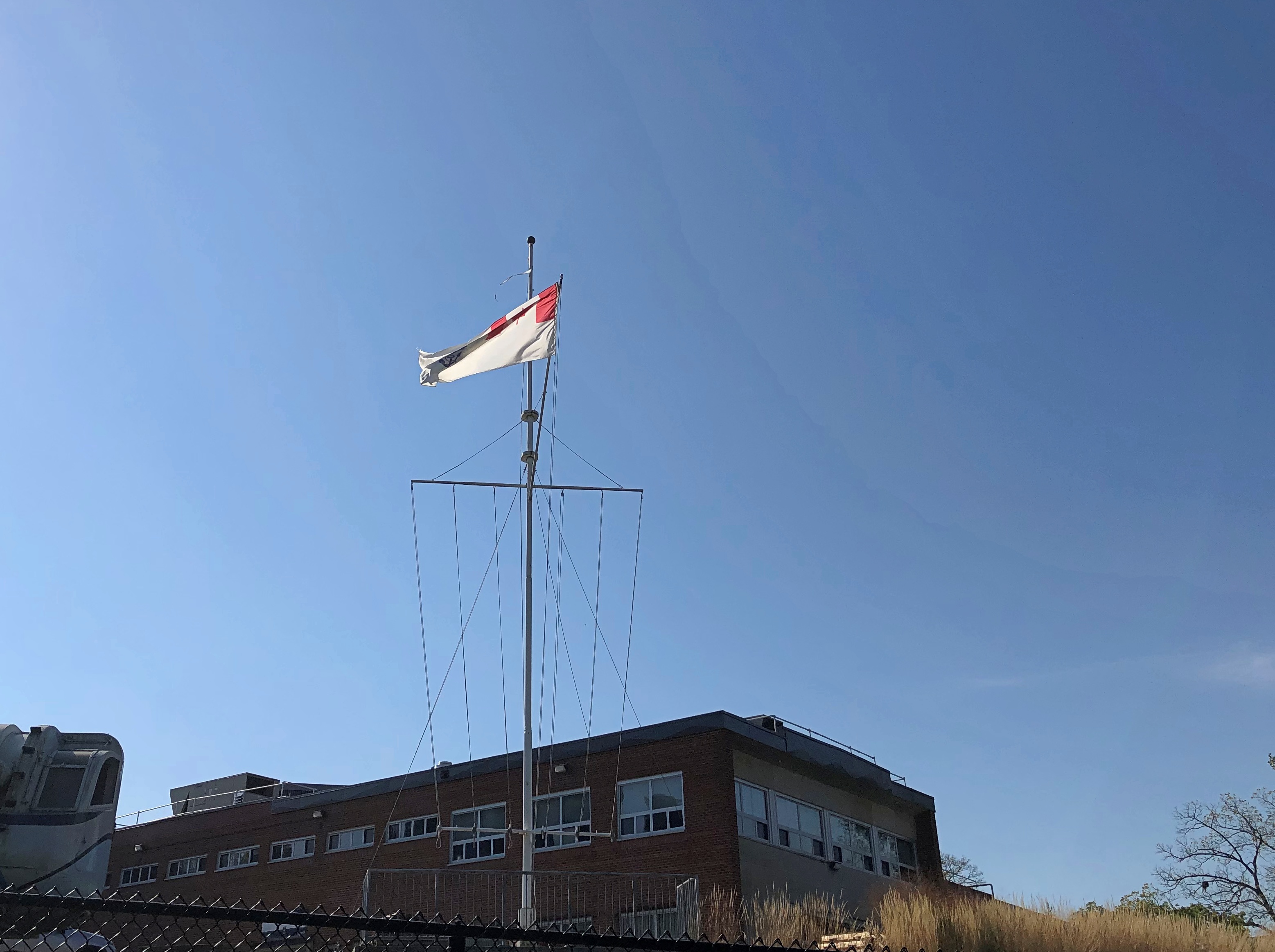
Near the Folks is the HMCS-NCSM Prevost, flying these colors – the Canadian Naval Ensign, if I understand correctly.
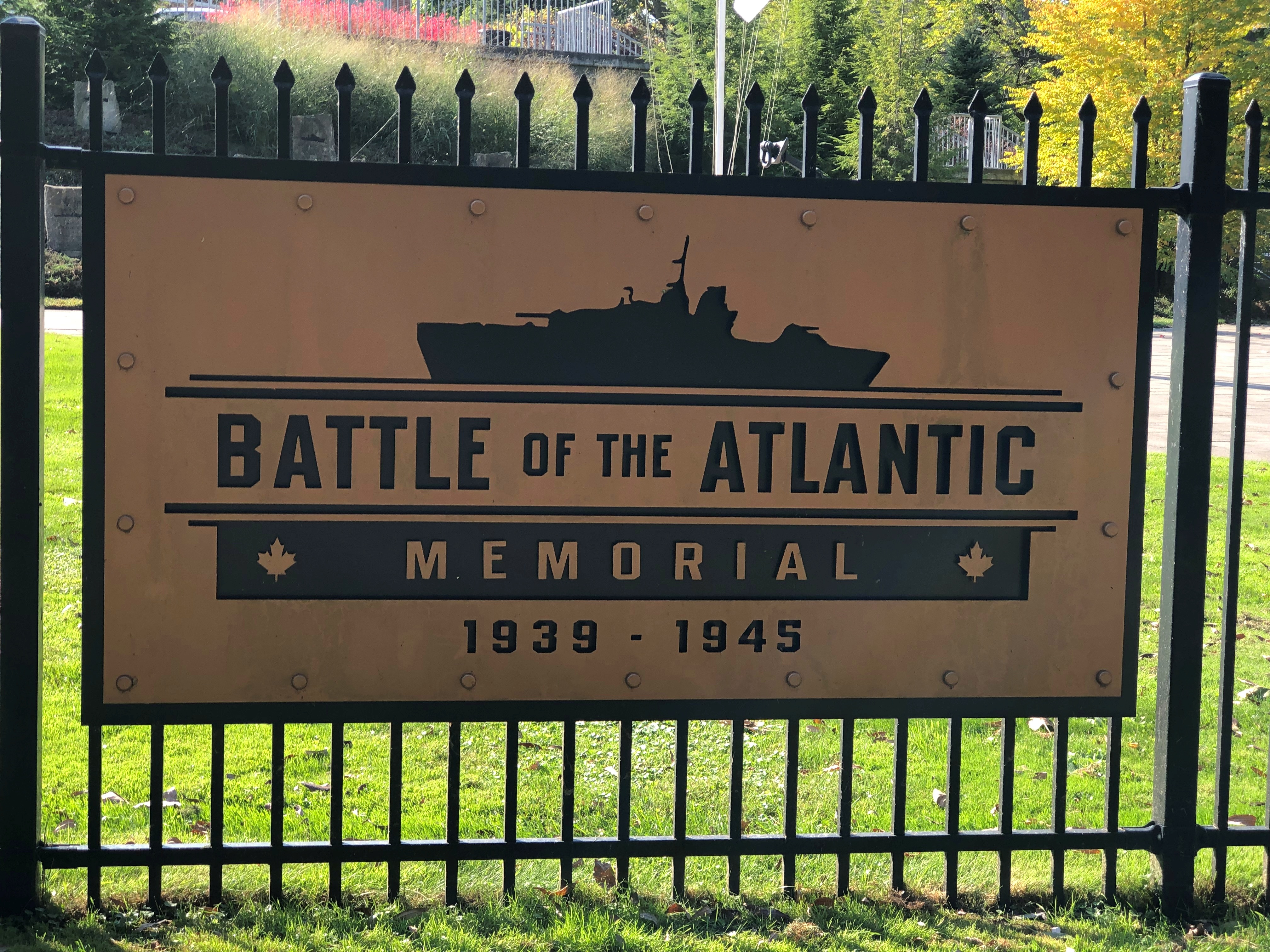
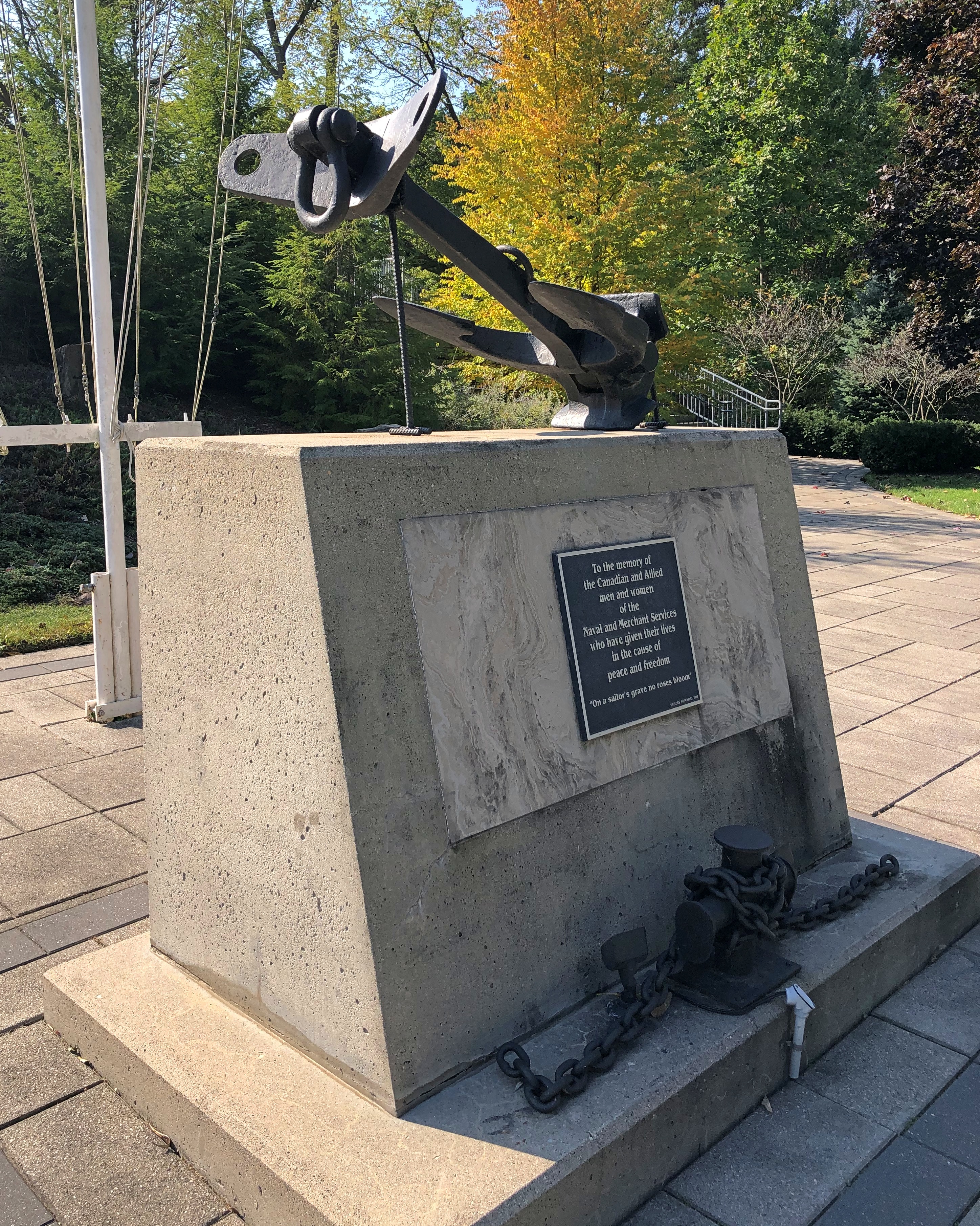
All that is a fair amount to unpack: the ensign is flying on land because the Prevost is a stone frigate, a naval facility on land. HMCS is His Majesty’s Canadian Ship, of course, but this being Canada, it is also NCSM, Navire canadien de Sa Majesté. The site is a training and recruiting center for the Canadian Navy, and also home to the Battle of the Atlantic Memorial. Another sign is in French, but I only made a picture of the English.
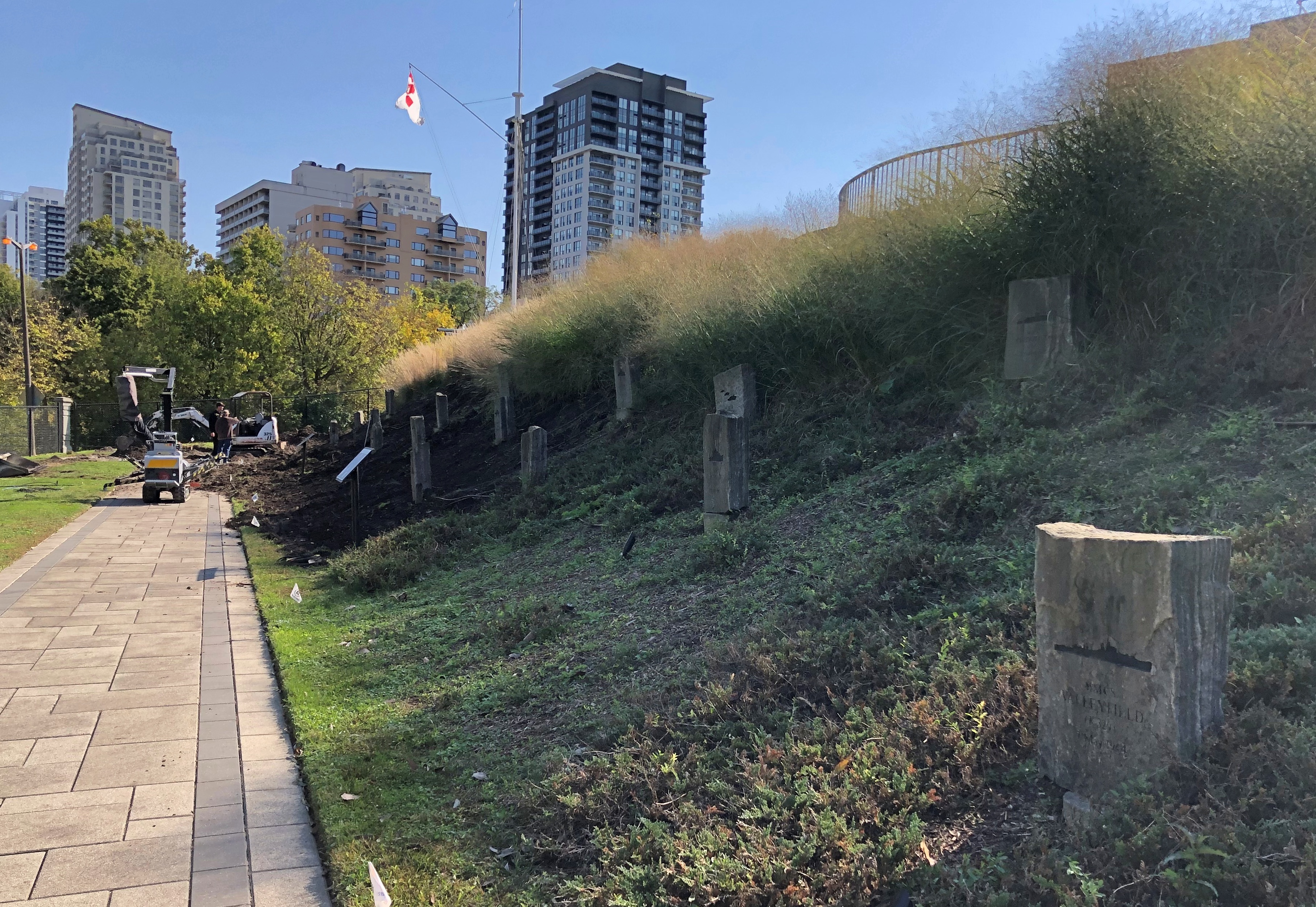
The memorial is still under construction, according to the London Free Press, and it looked like it, with memorial stones being put into place on a small slope. Dedication will be next May, on the 80th anniversary of the end of that battle, which lasted until the Germans surrendered.
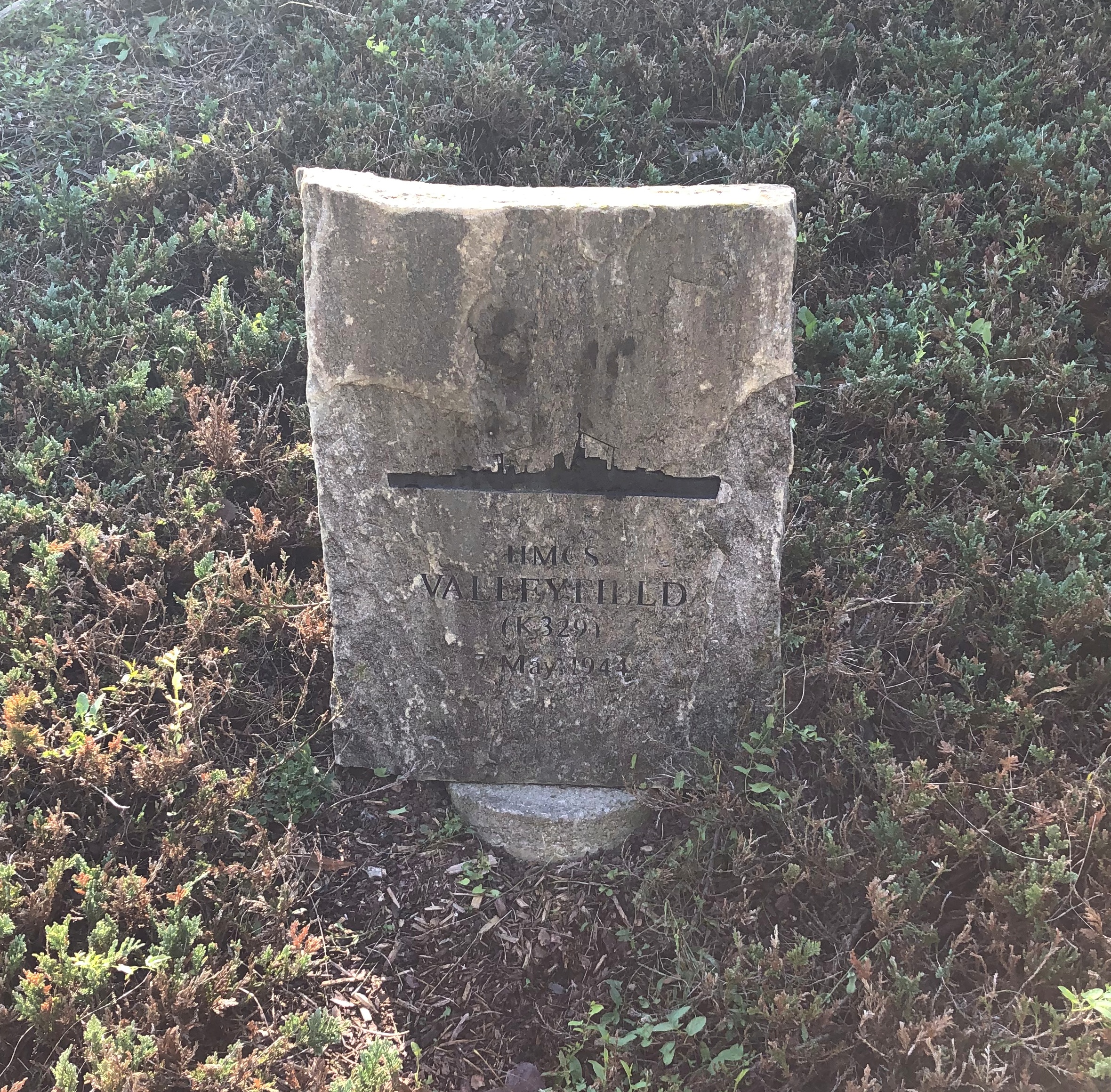
I decided to look up one of the ships memorialized: the HMCS Valleyfield.
Commissioned in December 1943. Torpedoed and sunk May 7, 1944, with the loss of 125 Canadian sailors in the gelid North Atlantic.
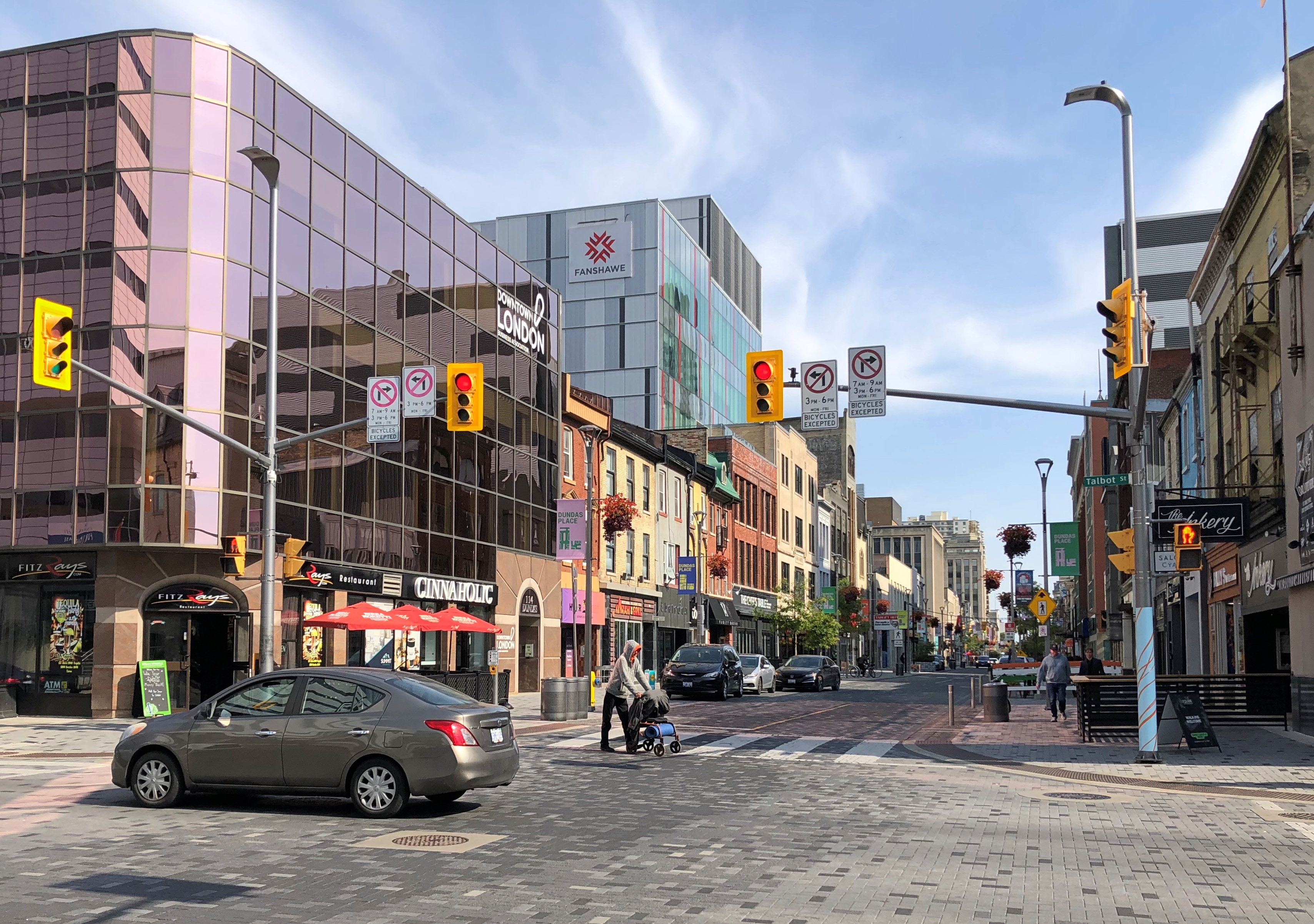
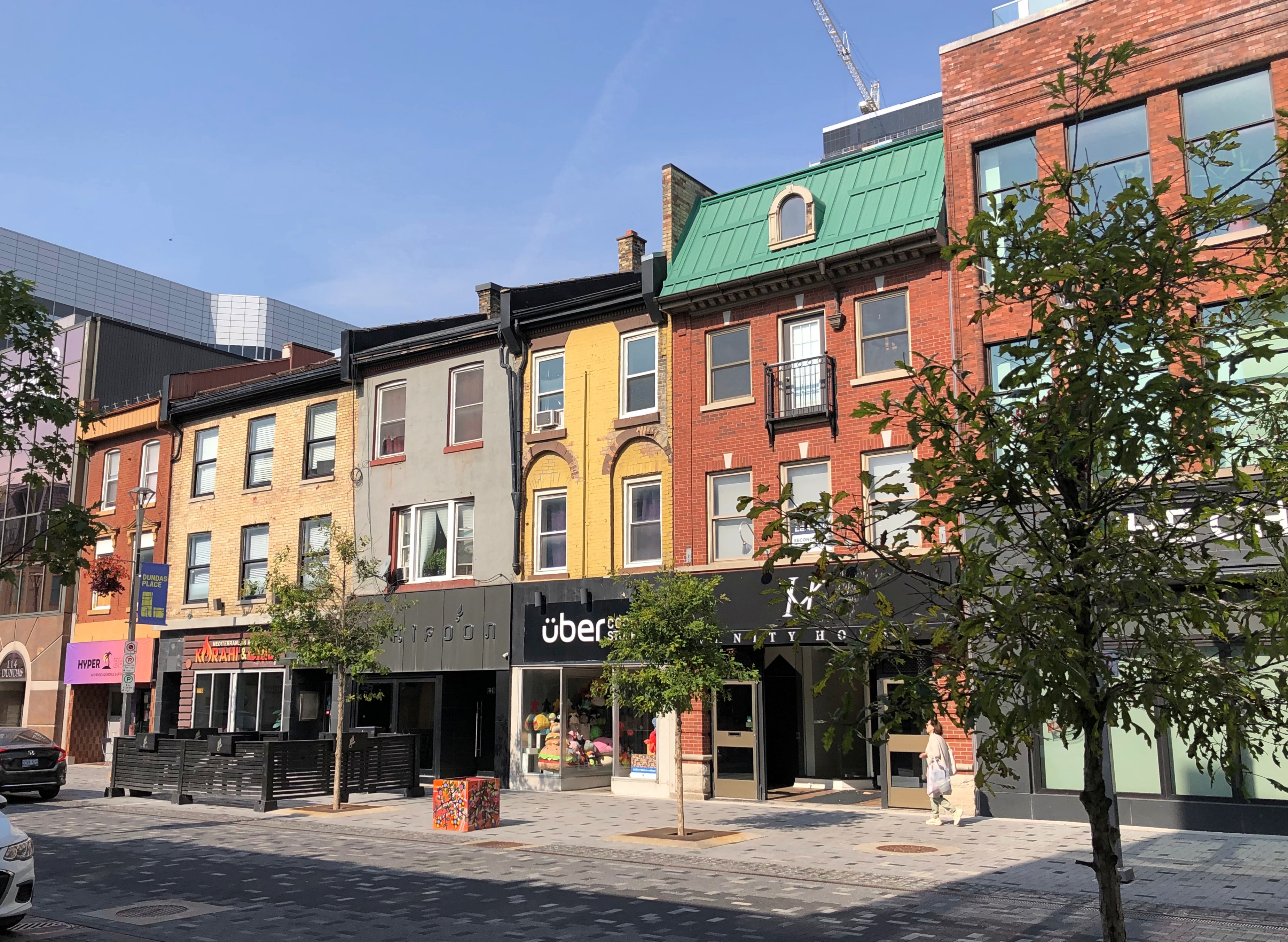
After the riverside, we took a short walk through downtown, especially Dundas St.
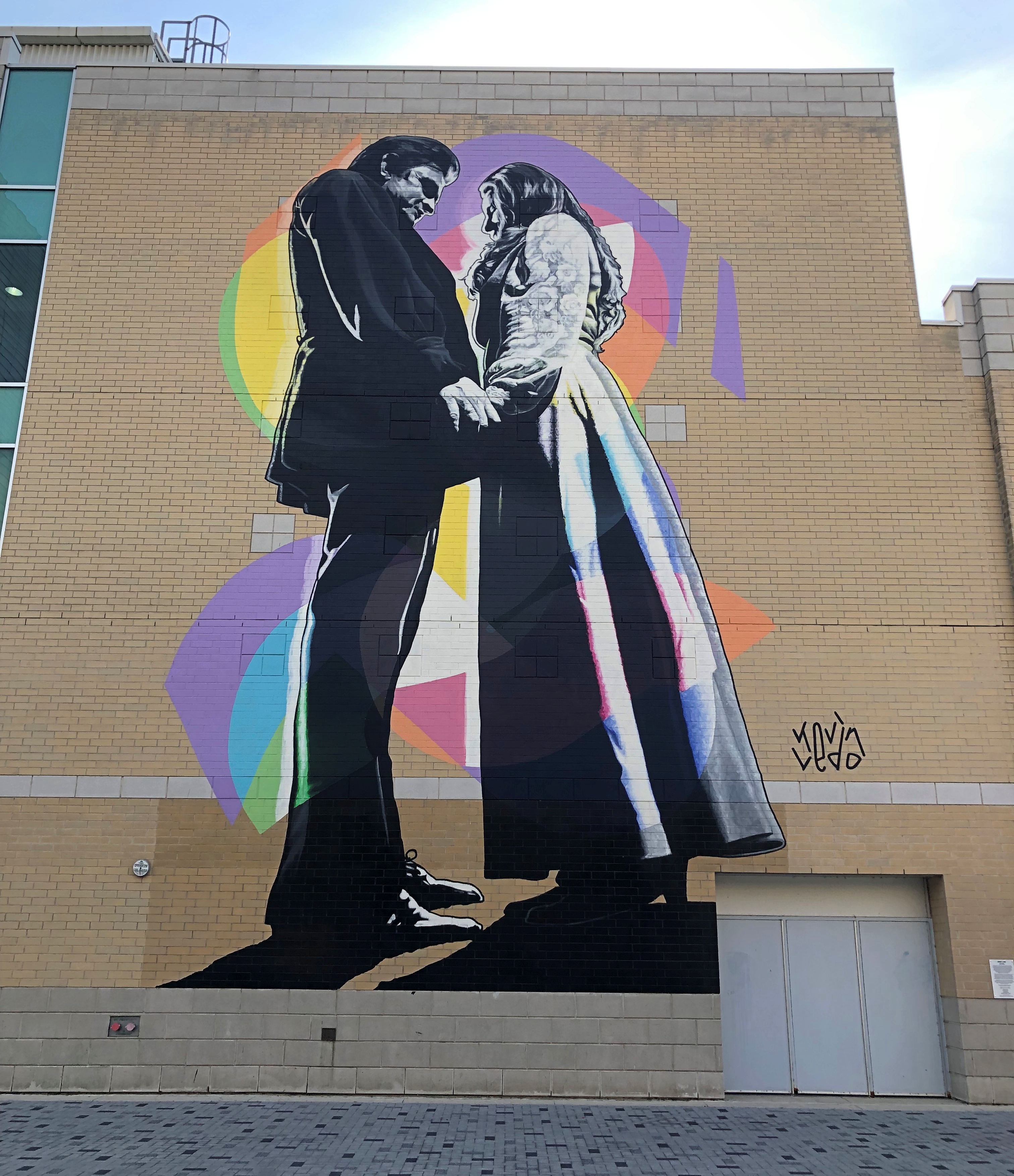
An unexpected mural on that street.
“Johnny and June” by Kevin Ledo, a Montreal artist, and completed only in 2023. (If you want to see a large Ledo mural depicting a young Alex Trebec, go to Sudbury, Ontario.)
The mural, on the side of London’s Budweiser Gardens sports-event venue, is impressively large, at 45 feet tall and 20 feet wide. Larger than life, certainly. A nearby sign says it commemorates the moment on February 22, 1968, when Johnny Cash proposed to June Carter on stage during a concert in London.
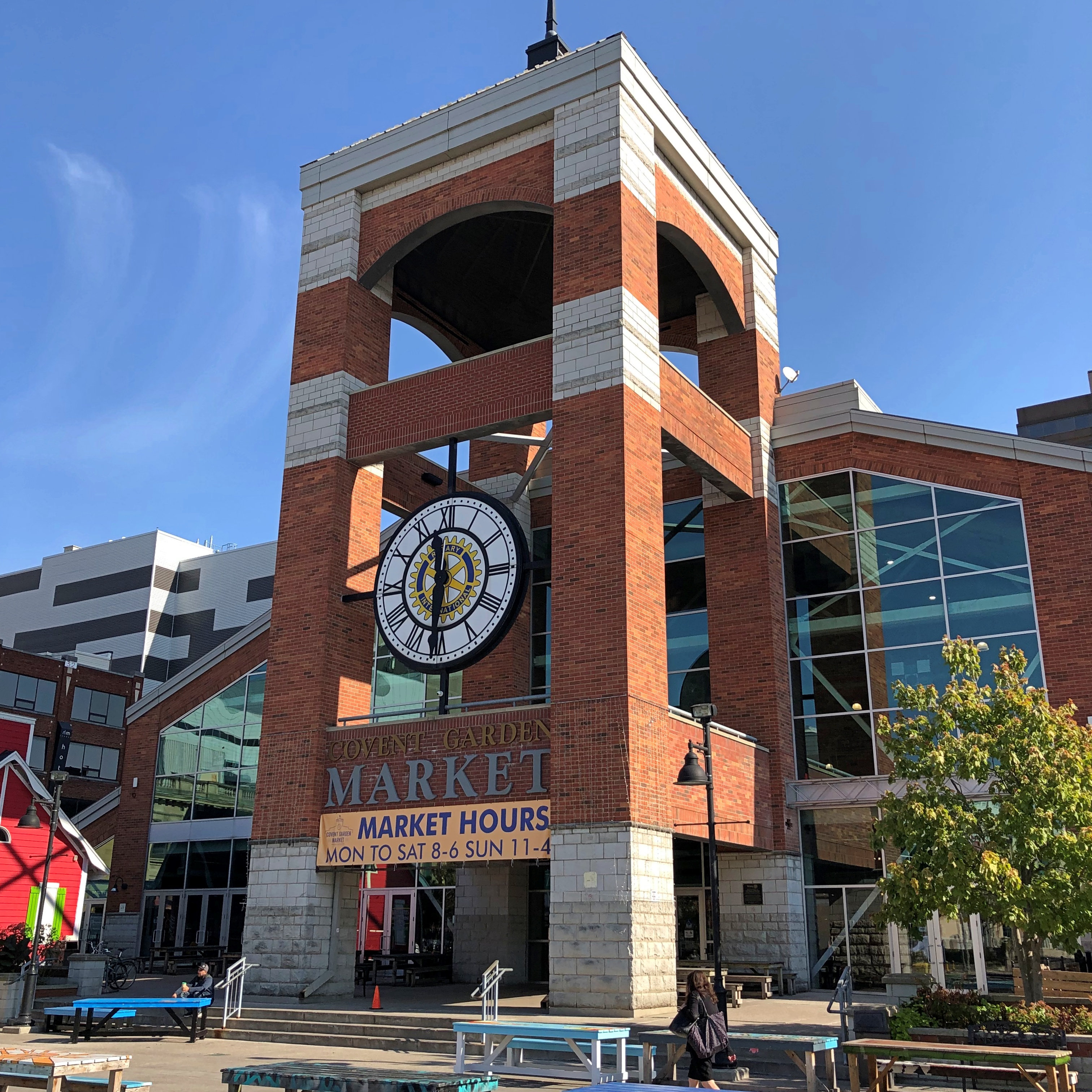
As for Covent Garden, that’s where we had lunch. Site of a public market since 1845, though I expect things have been cleaned up some since then.
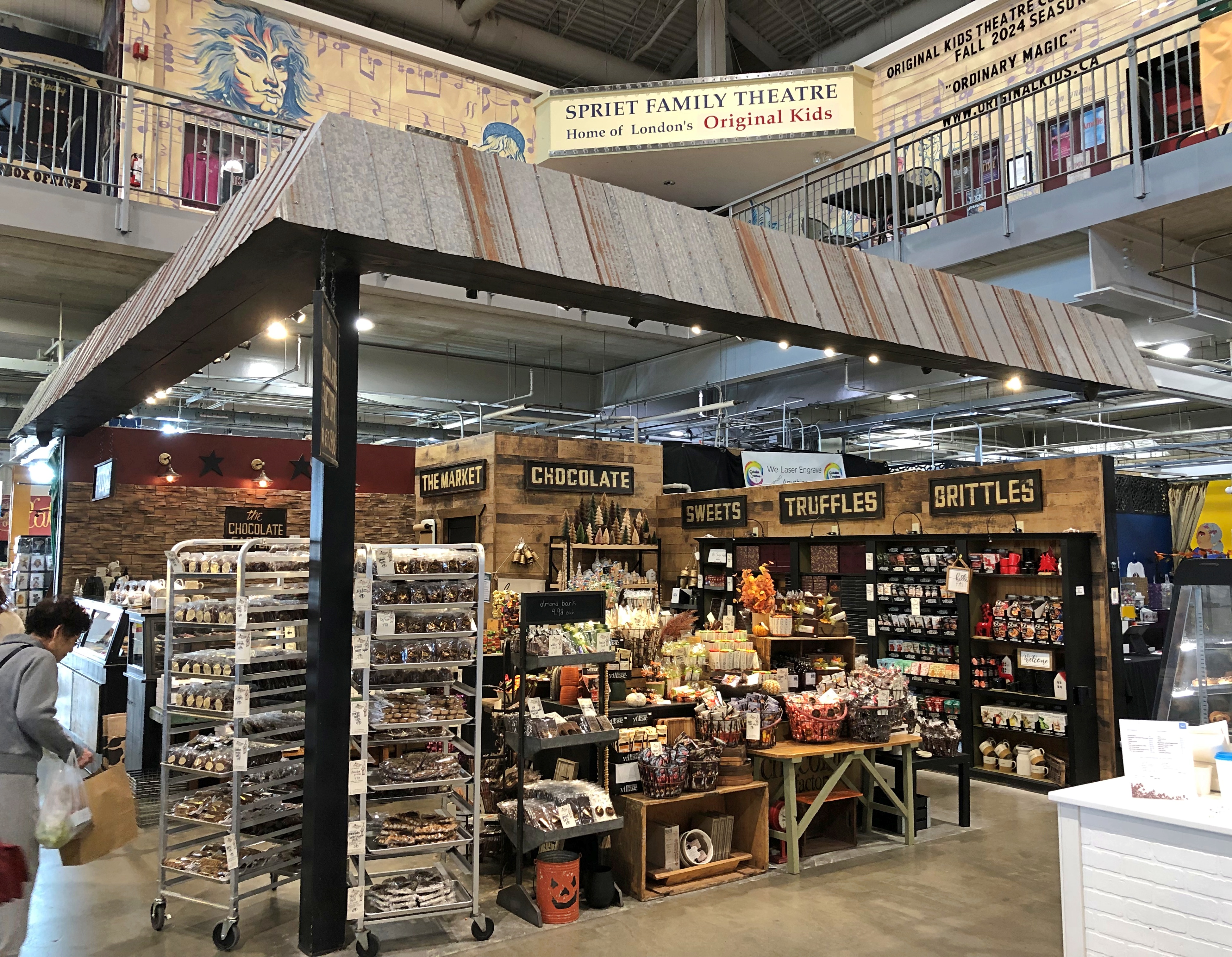
Not quite as grand as the one in the larger London, but well worth the stroll to look at the shops, and find an eatery. We ate at a Brazilian place. Don’t see too many of those in food halls. Most satisfying.
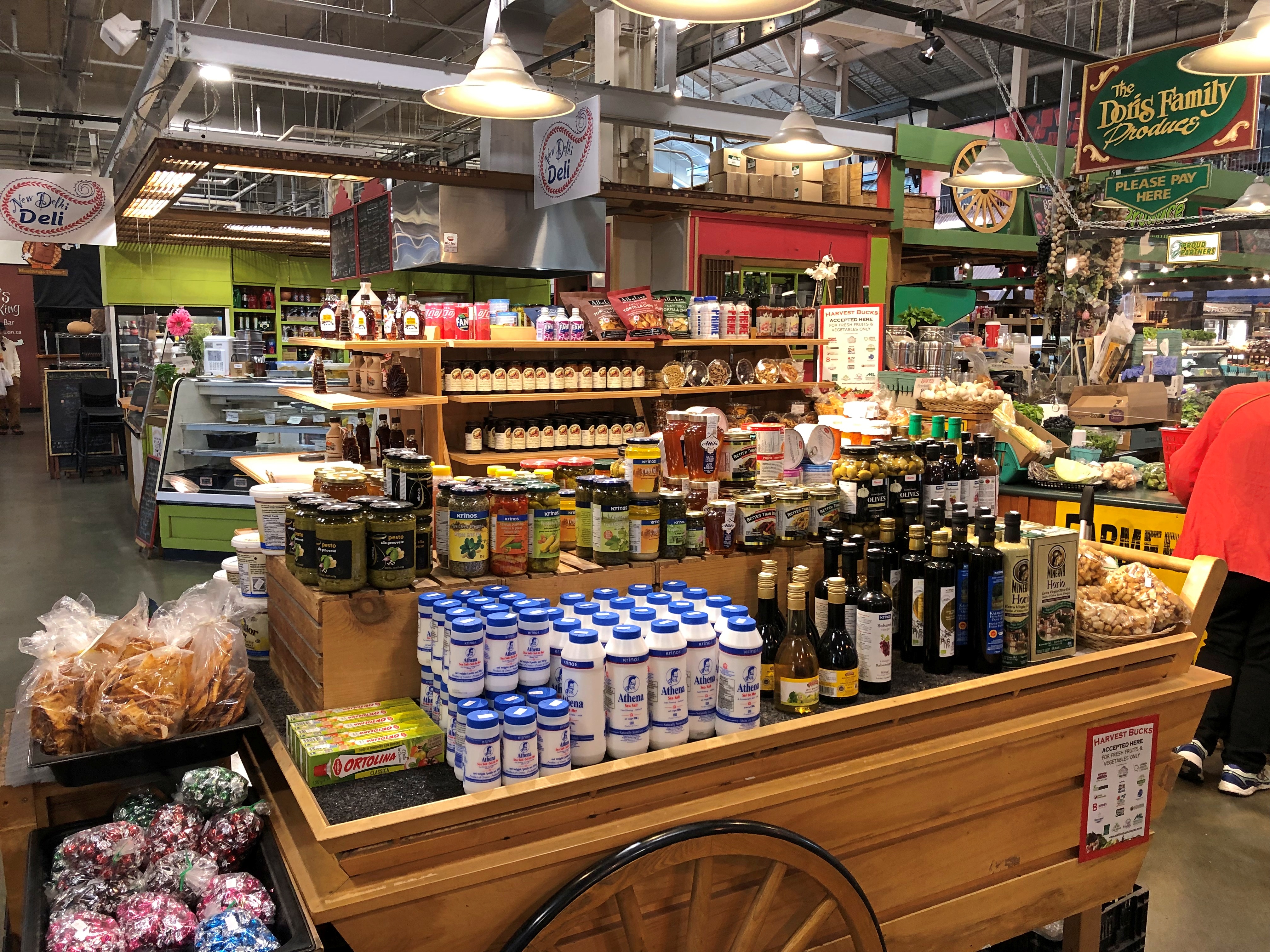
Lots of goods. Is there a Canadian content requirement?
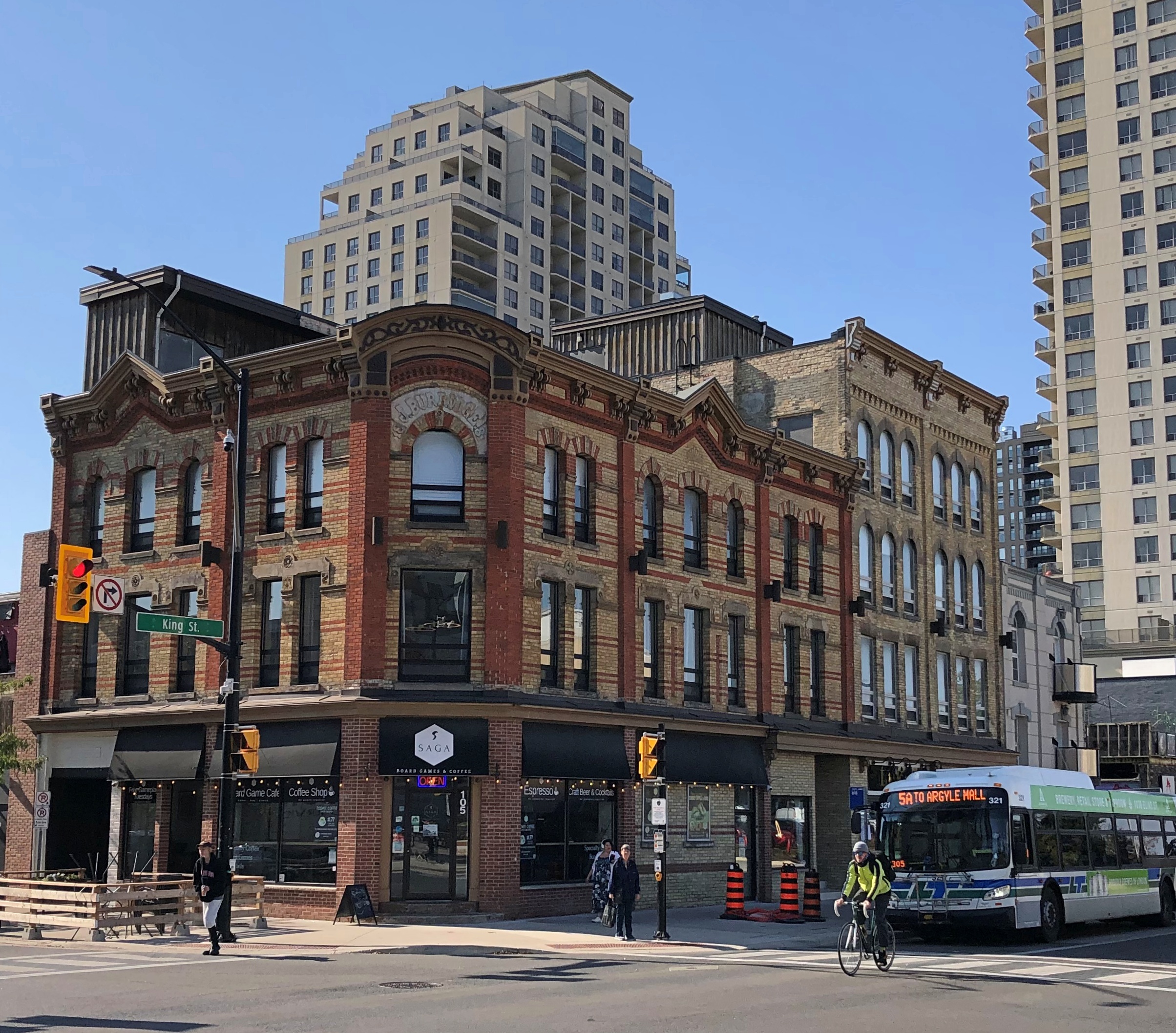
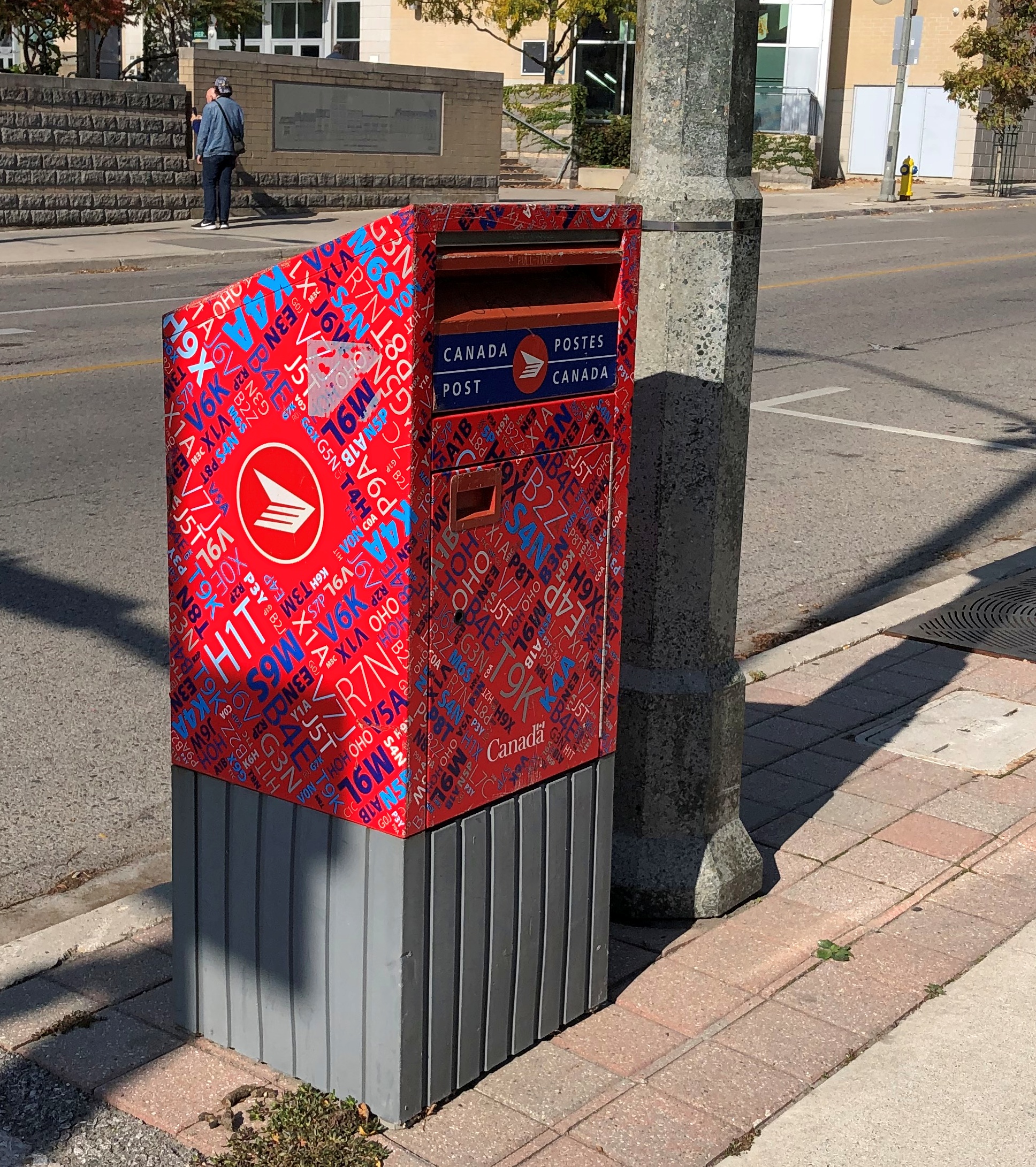
A few more London details, near Covent Garden. We didn’t see on foot the part of town I found more intriguing, which we drove through: the area around Western University (a.k.a., University of Western Ontario, enrollment more than 40,000). Might be a good place to look around if we ever take that trip to the Stratford Festival, which is practically down the road from London.
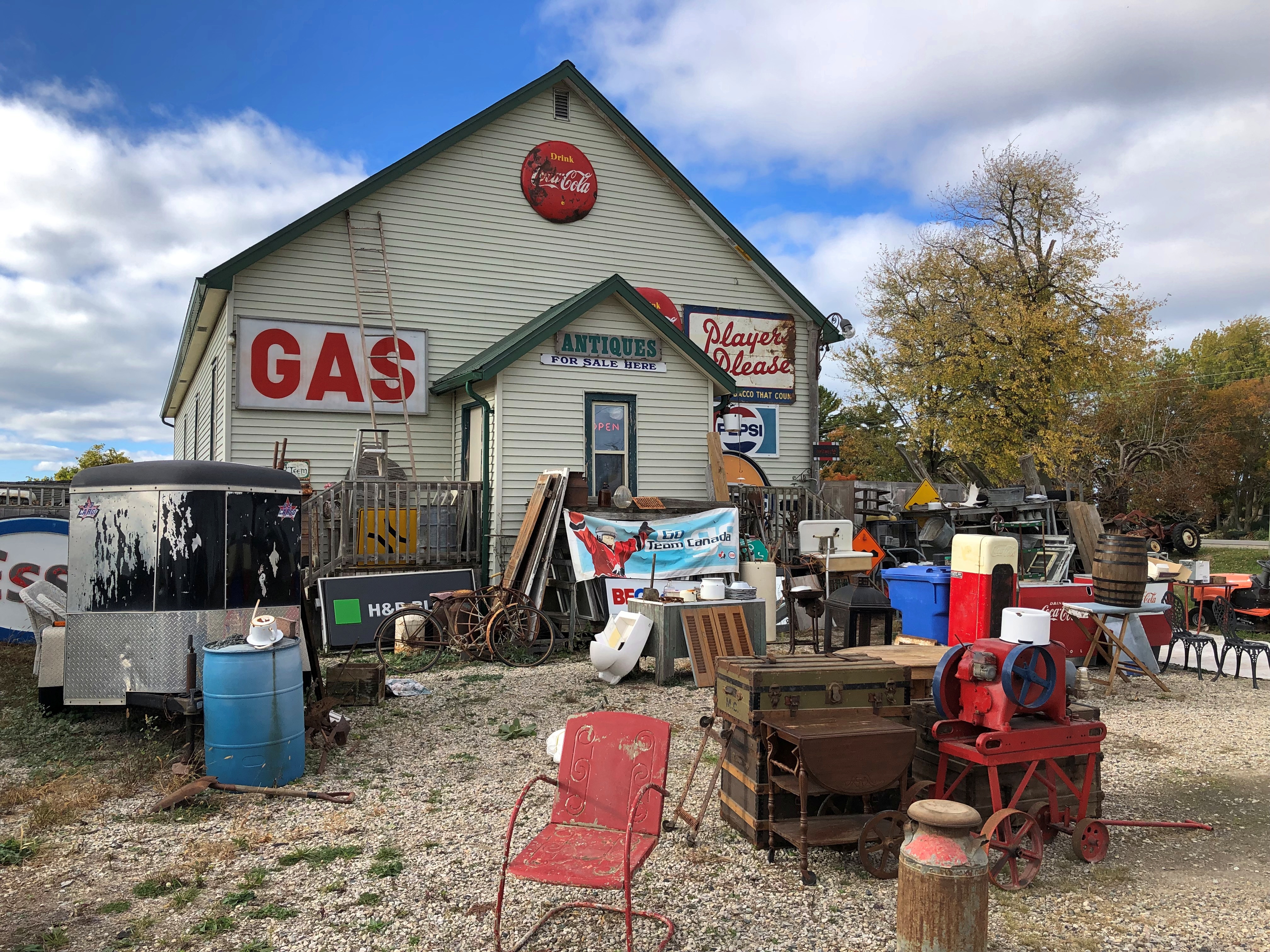
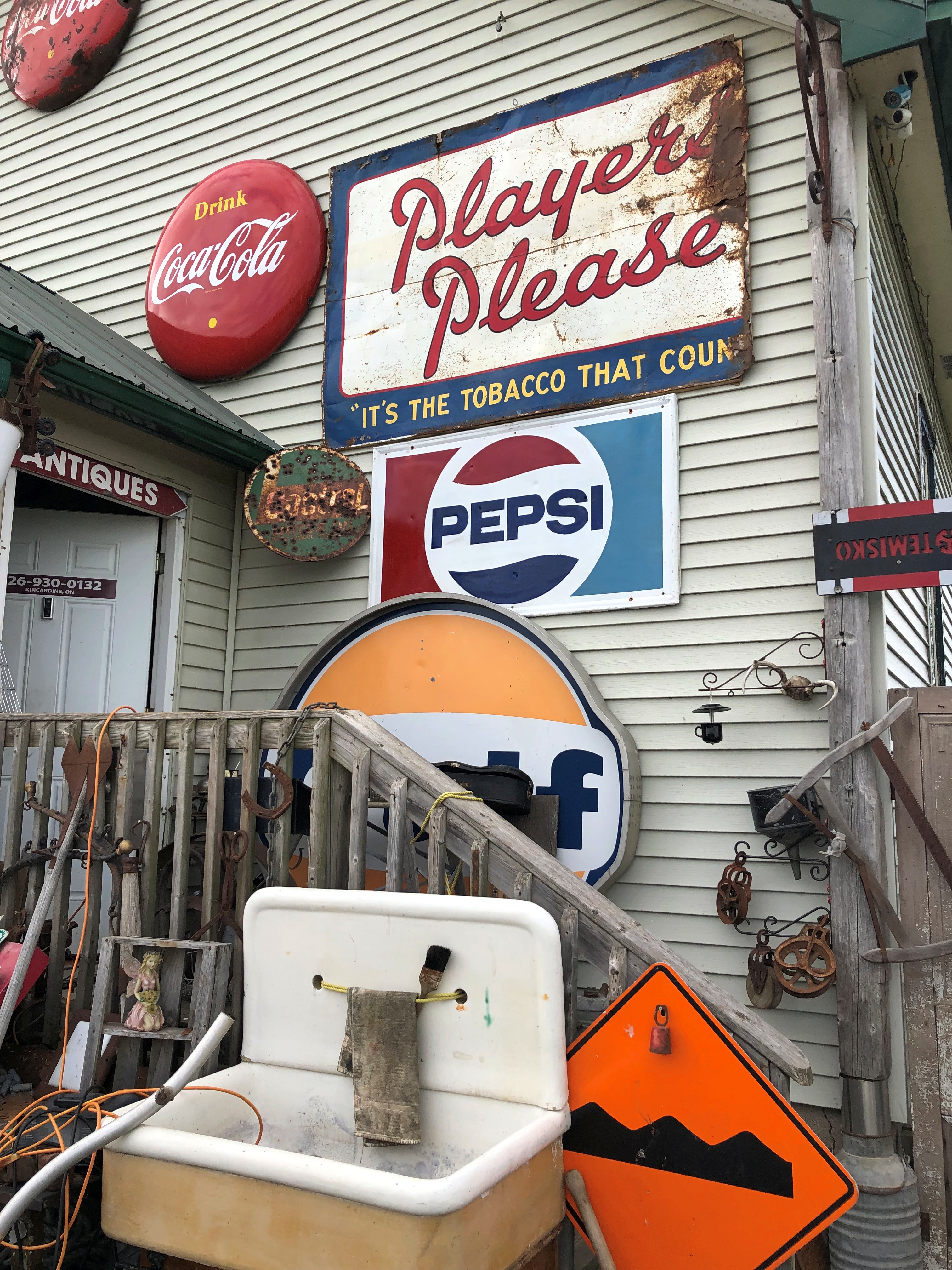
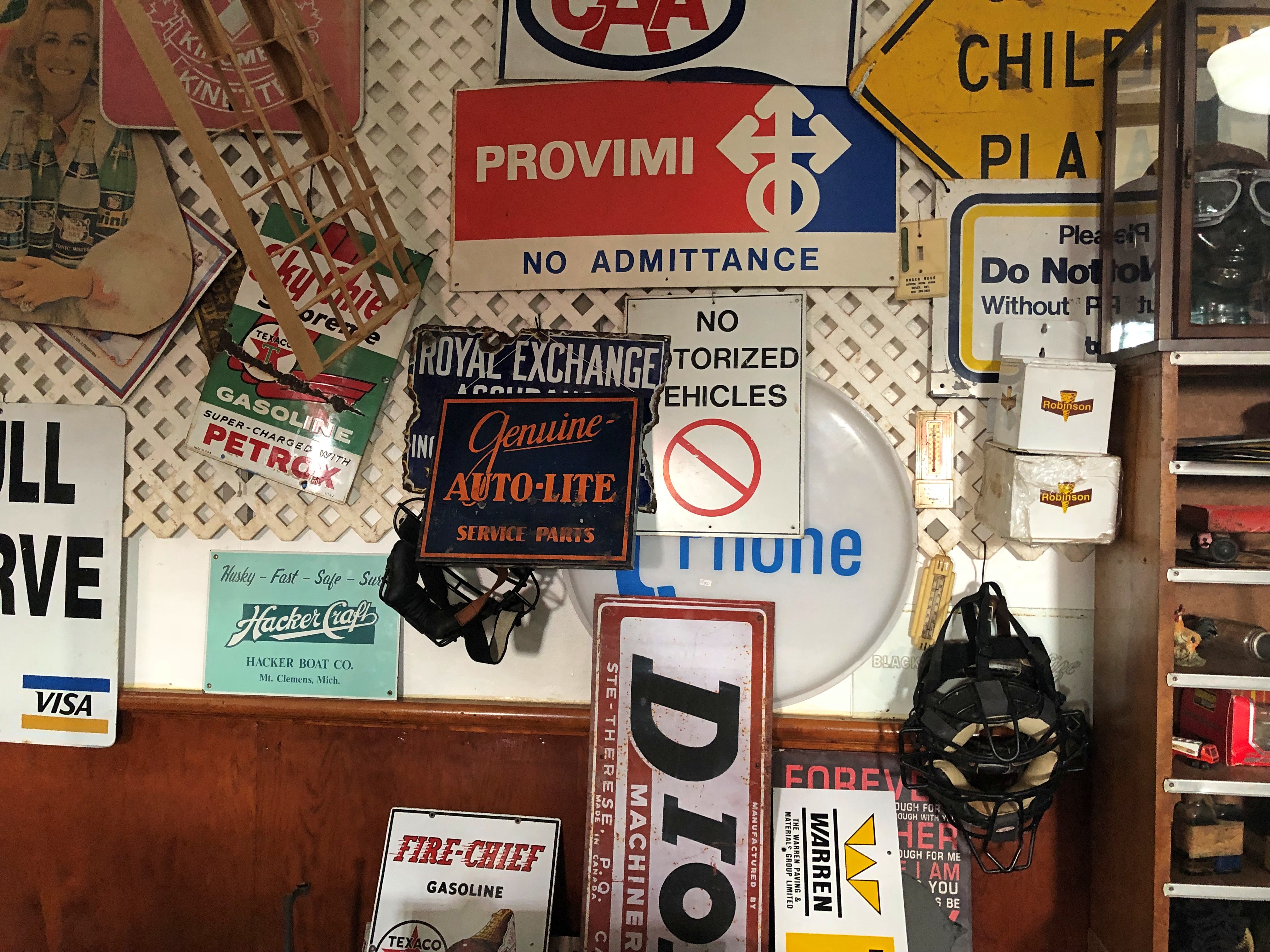
A few miles (hard measuring habit to break, and why should I?) south of Kincardine, Ontario, is Reid’s Corner Antiques. Now this is my kind of antique shop: not an ounce of froufrou.
I think Reid himself waived us into the building, which had no one else inside. He was a strong-looking fellow in the middle of middle age, and he had a noisy machine on a truck to attend in some way. So we went in.
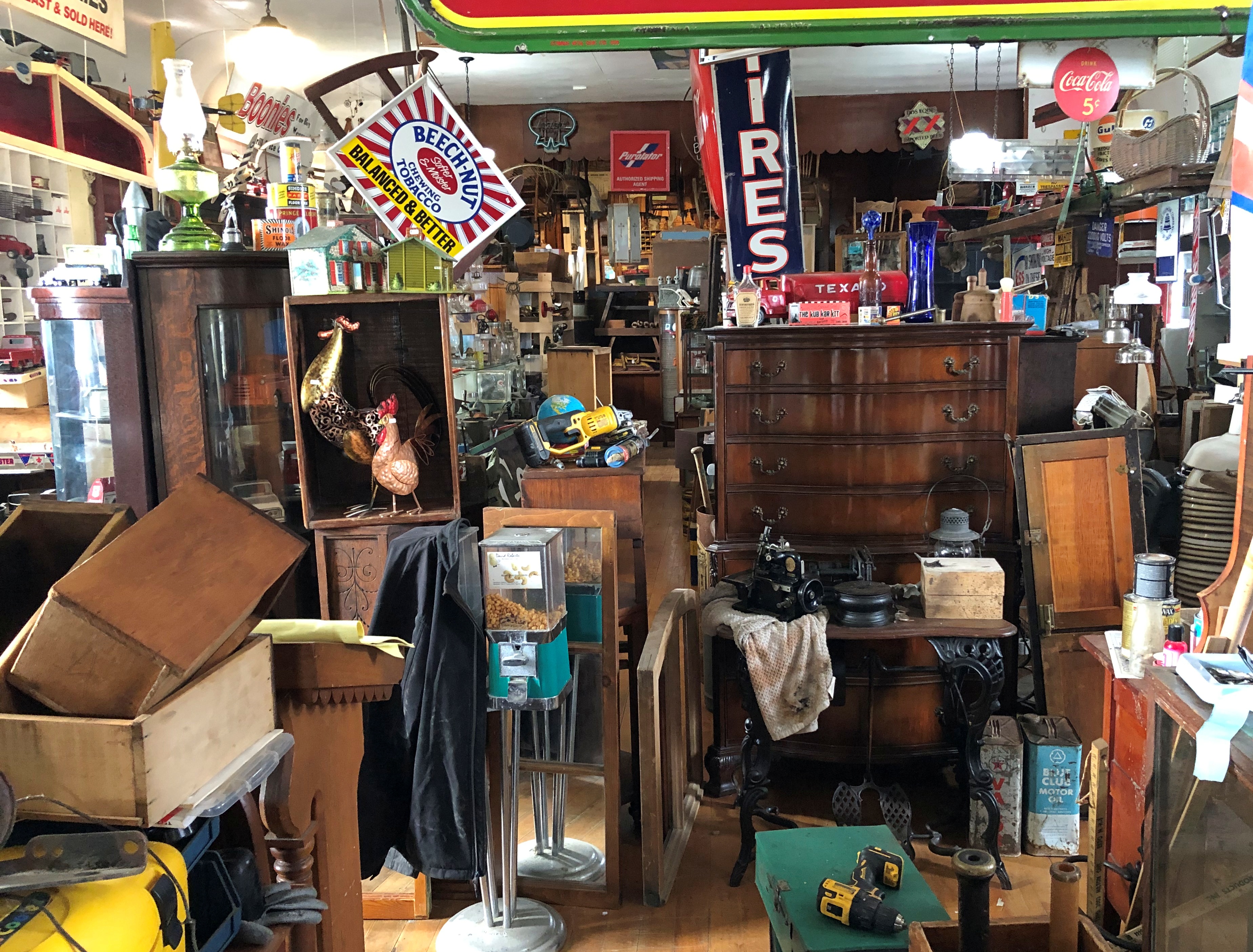
It’s easy to feel at home in clutter. I know not everyone feels that way, but I also don’t care. All the many Reid’s Corners in the world are a place to revel in the quantity and quality, but especially the quantity, of the vast amount of stuff produced by people.
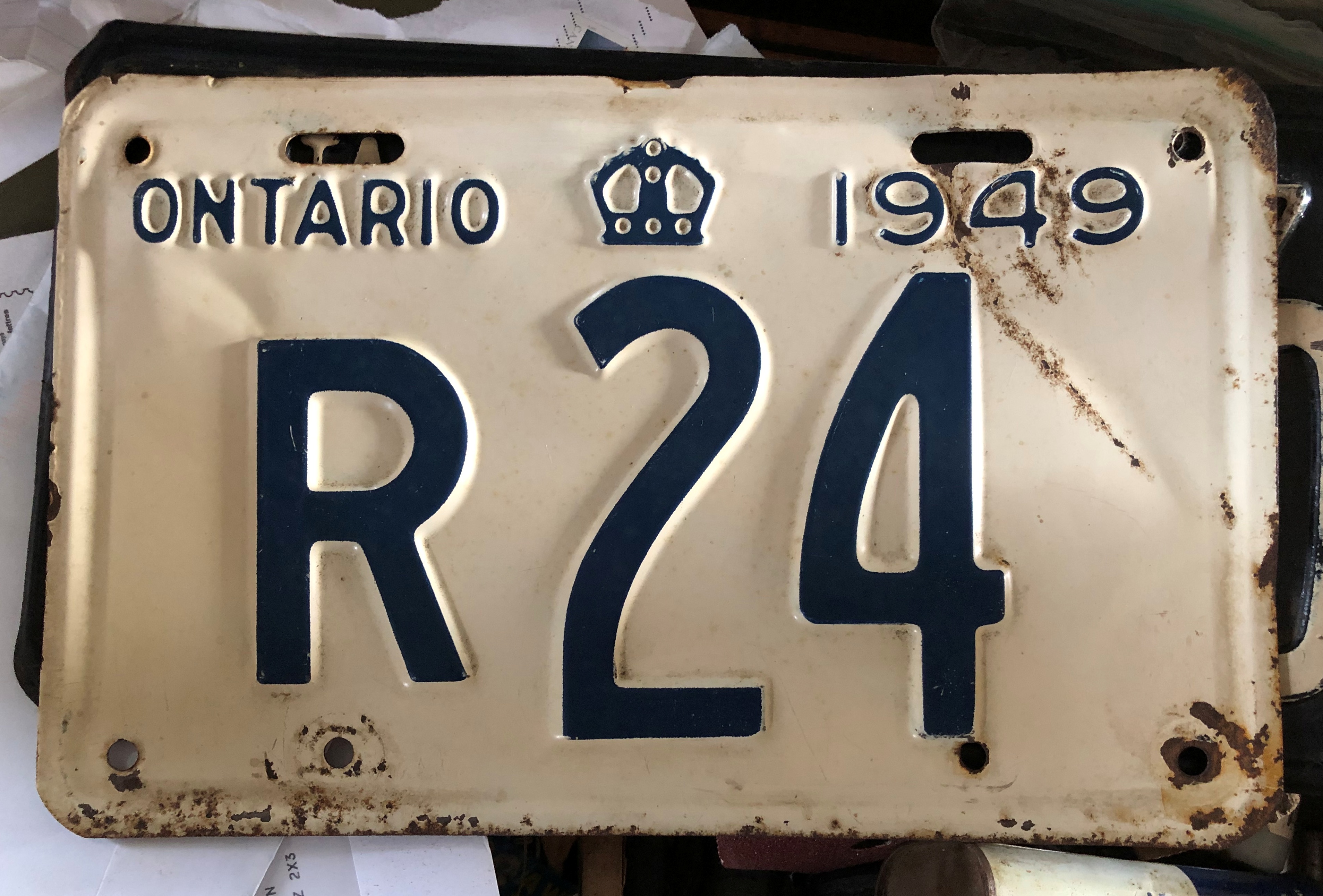
A place like this ought to be supported by a little cash money, at least. This was under consideration for purchase.
In the end I went with a newer plate, one not quite as old as I am, which joins plates from Texas, Tennessee, Illinois and a Washington state BIGFOOT gag plate in the garage.
Reid’s Corner happens to be on Ontario 21, the two lanes that parallel the Lake Huron shore. If you’re on the way to London, you head southeast from Goderich on Ontario 8 briefly, and then a slightly different direction on Ontario 4. The place where highways 8 and 4 meet is Clinton, Ontario, pop. 3,200.
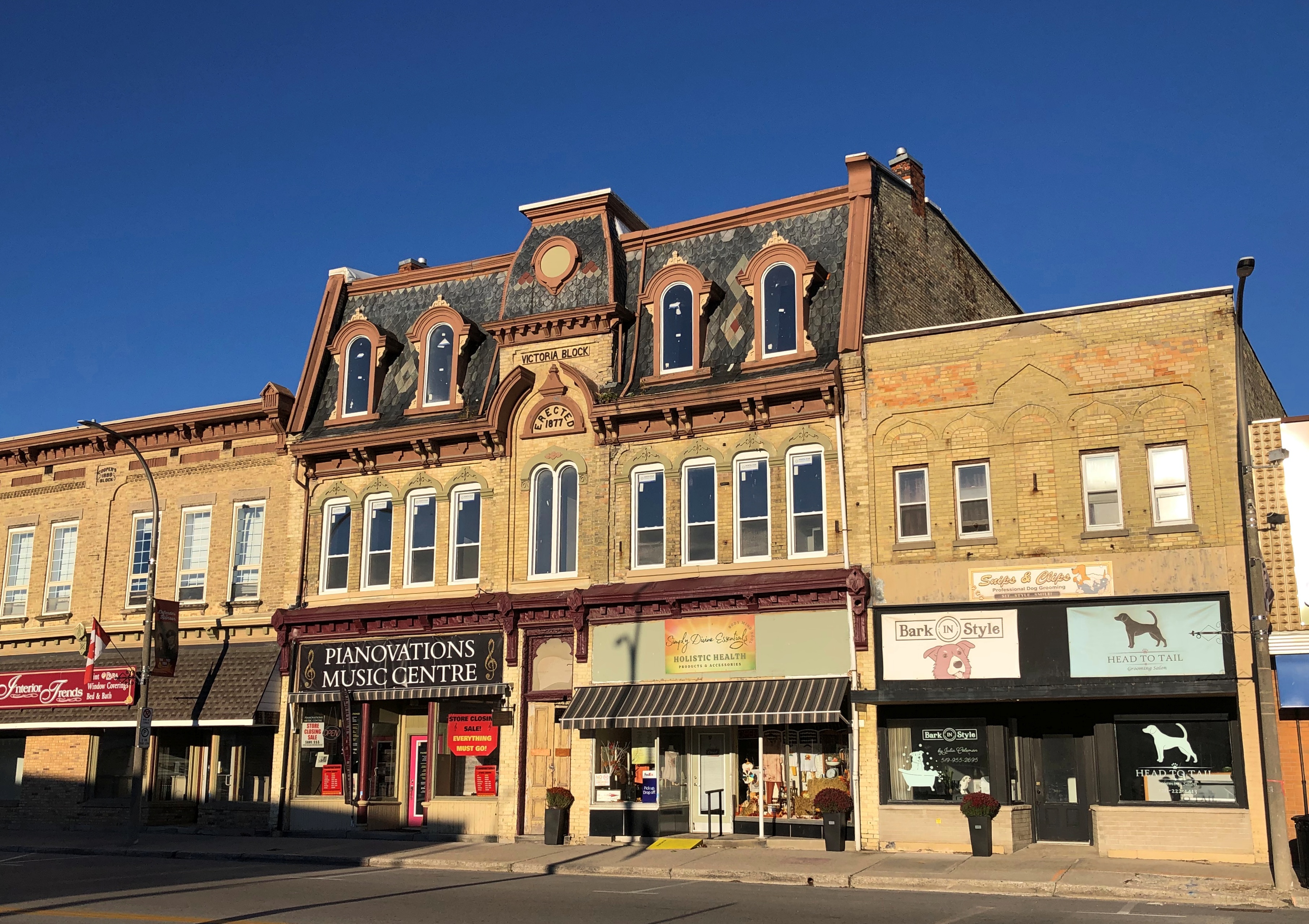
Near the juncture I caught sight of a fine block of buildings – the Victoria Block (see no. 53), erected 1877. Erected by genuine Victorians, by gar.
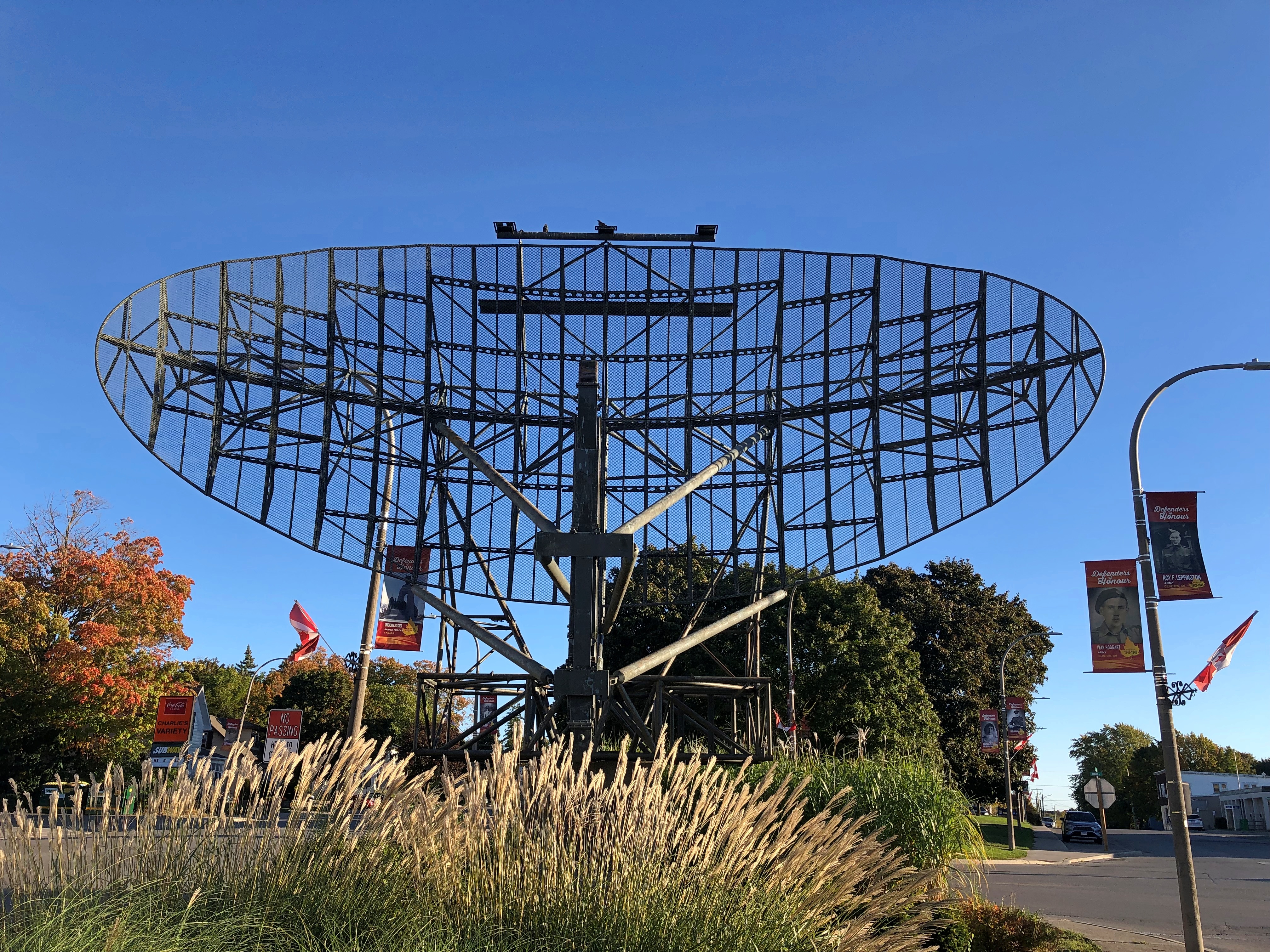
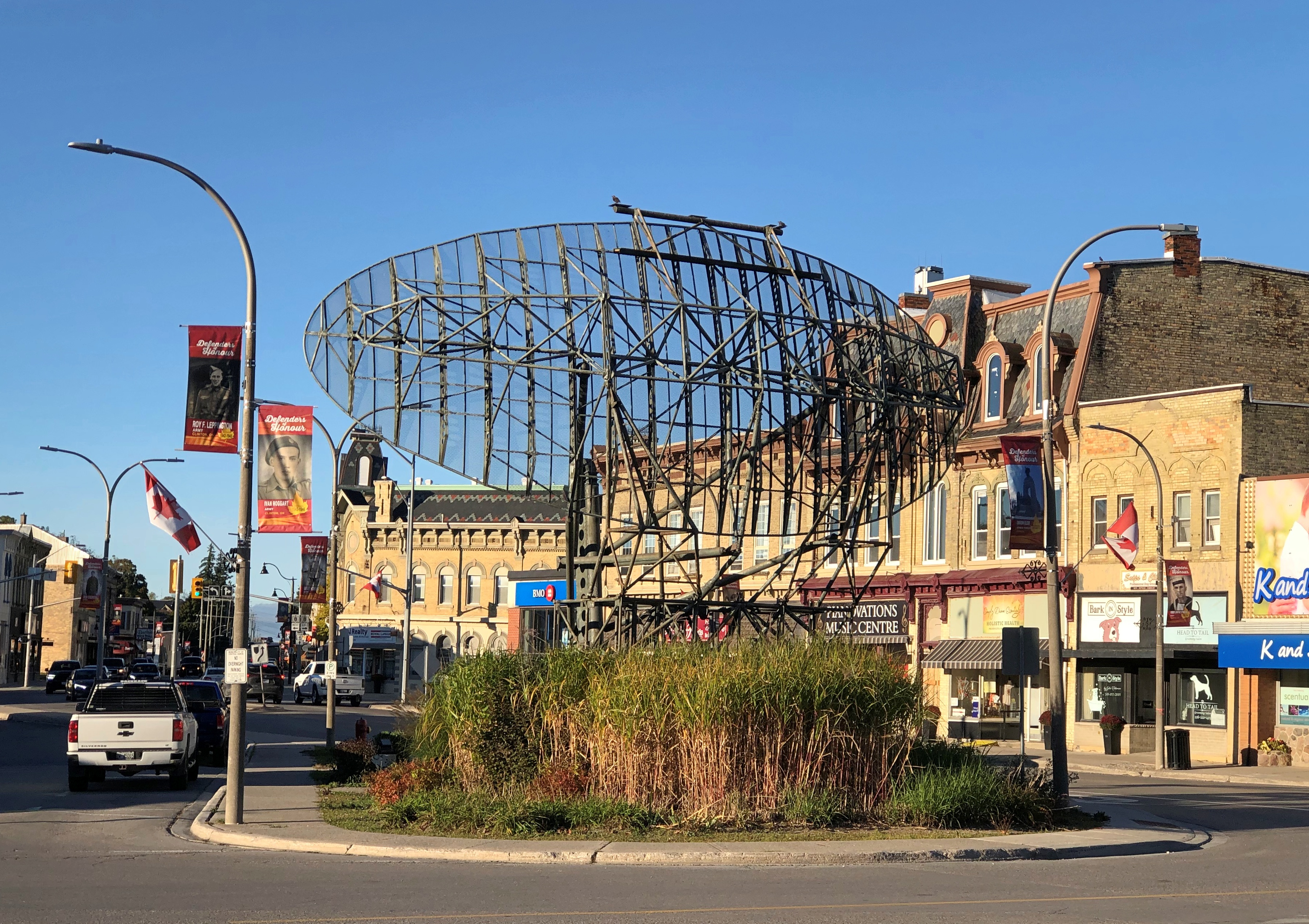
Nice. Then there was a large radar antenna perched in a traffic island.
Double take. I have to see that, I told Yuriko as I parked the car on the side of the road. Traffic was fairly light in Clinton, so it was no complicated thing to take a closer look on foot.
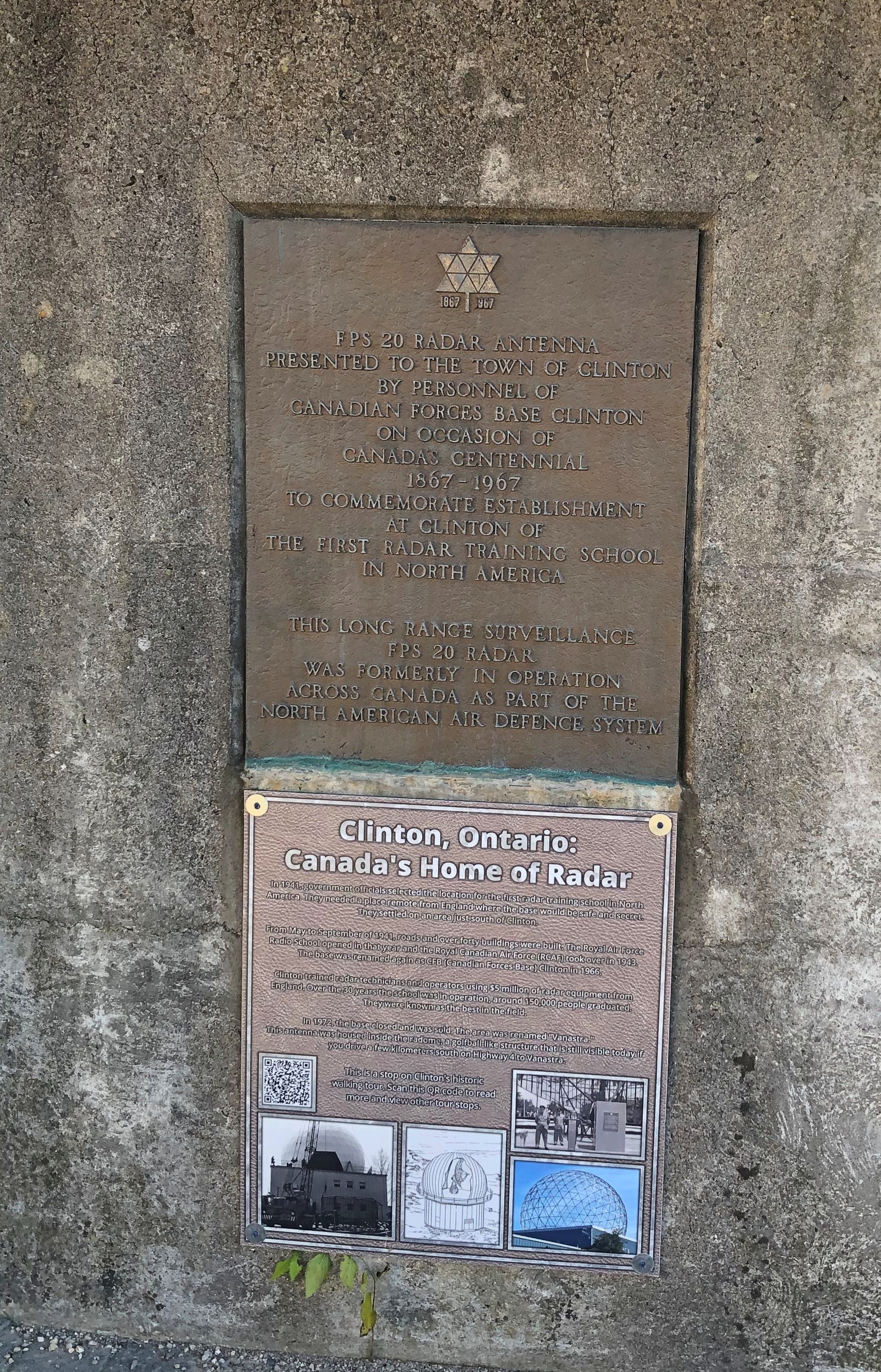
Like Reid’s shop, the wider world has human clutter. Not just objects, but stories. Early in WWII, a secret site near Clinton became the first radar training school in North America, the plaques relate, set up by the Royal Air Force as a safe location. The Canadian armed forces kept the facility open long after the end of the war and wartime secrecy, through the mid-Cold War, but eventually closed it. The town got a really big memento on the occasion of the country’s centennial in 1967.
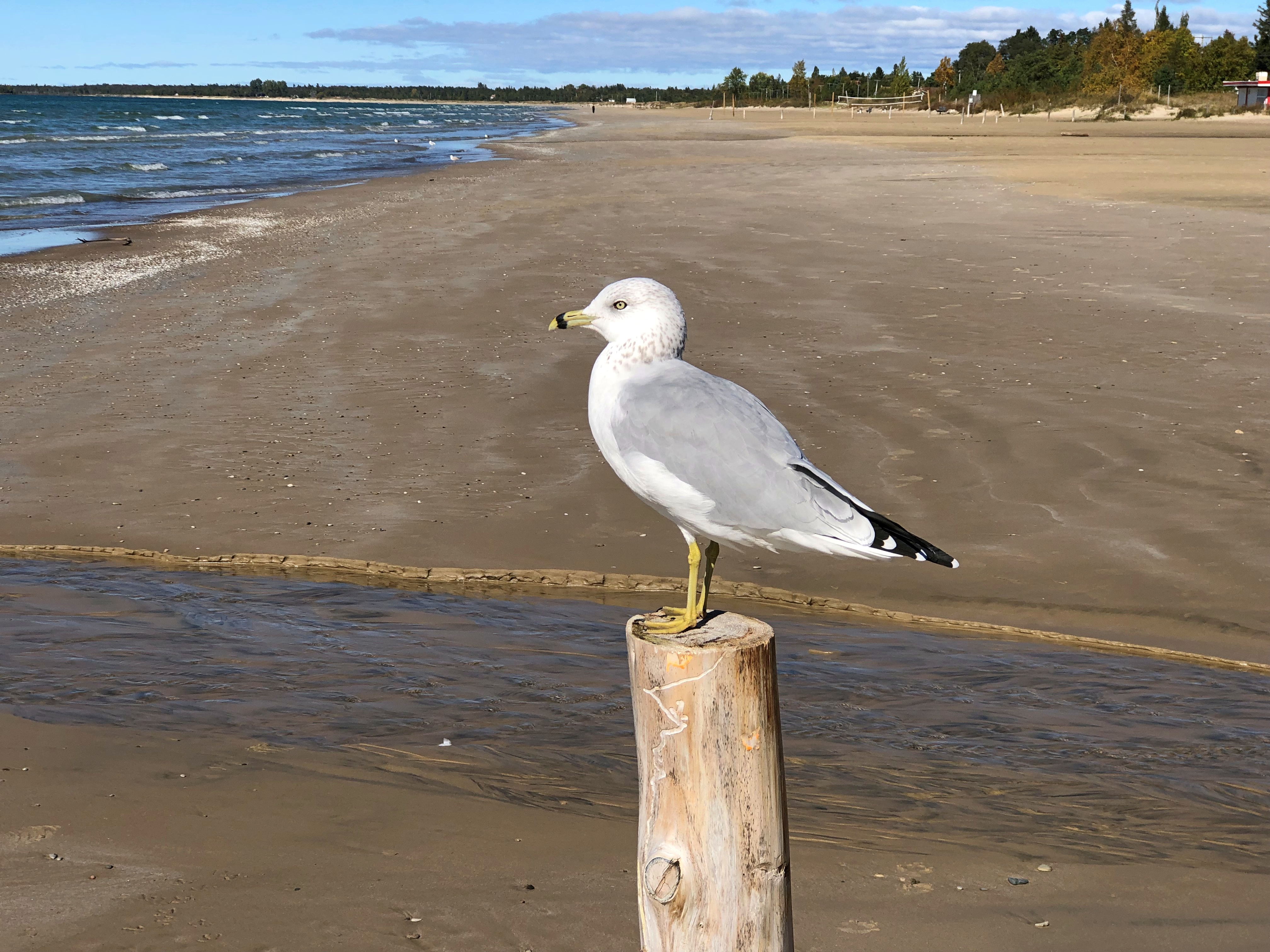
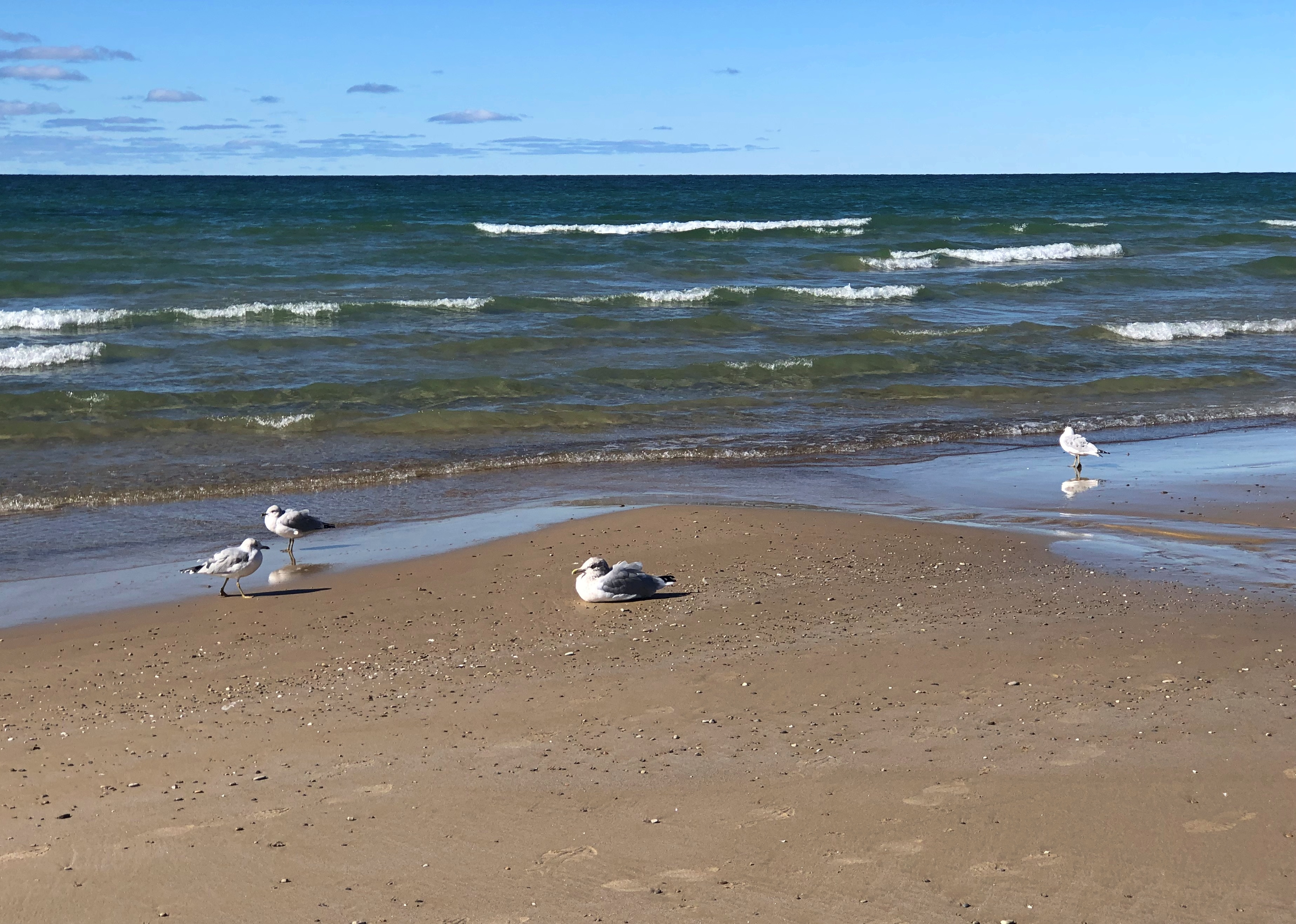
I was a little surprised the seagull allowed me to get this close.
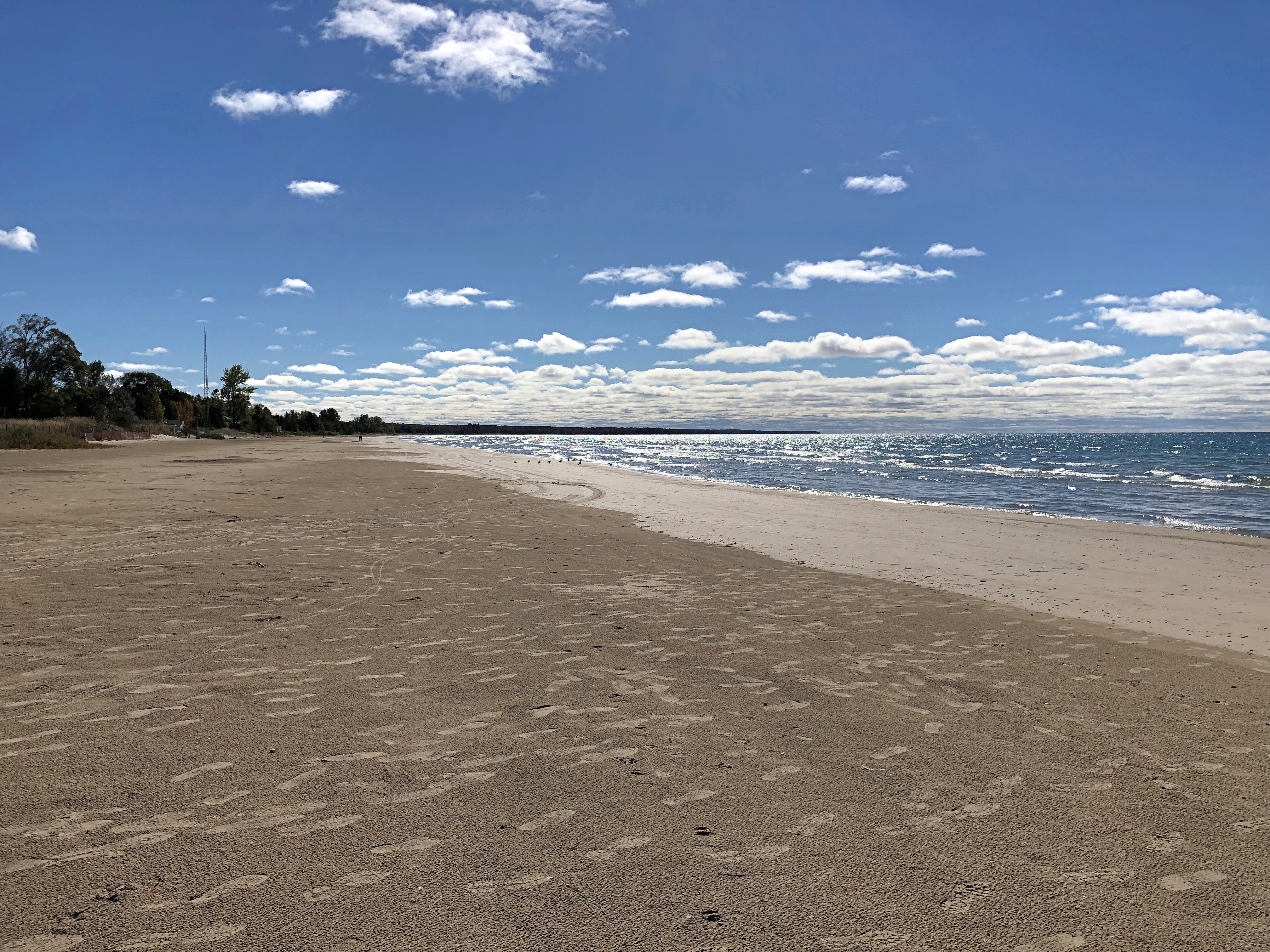
On the other hand, he’s a resident, at least sometimes, of Sauble Beach on Lake Huron. He’s used to people, because people show up in large numbers at Sauble Beach when the sun is hot, and that birdbrain of his is enough of a brain to know that the beach apes are usually harmless. Even better, food always seems to be around them, and they’re pretty careless about dropping some of it.
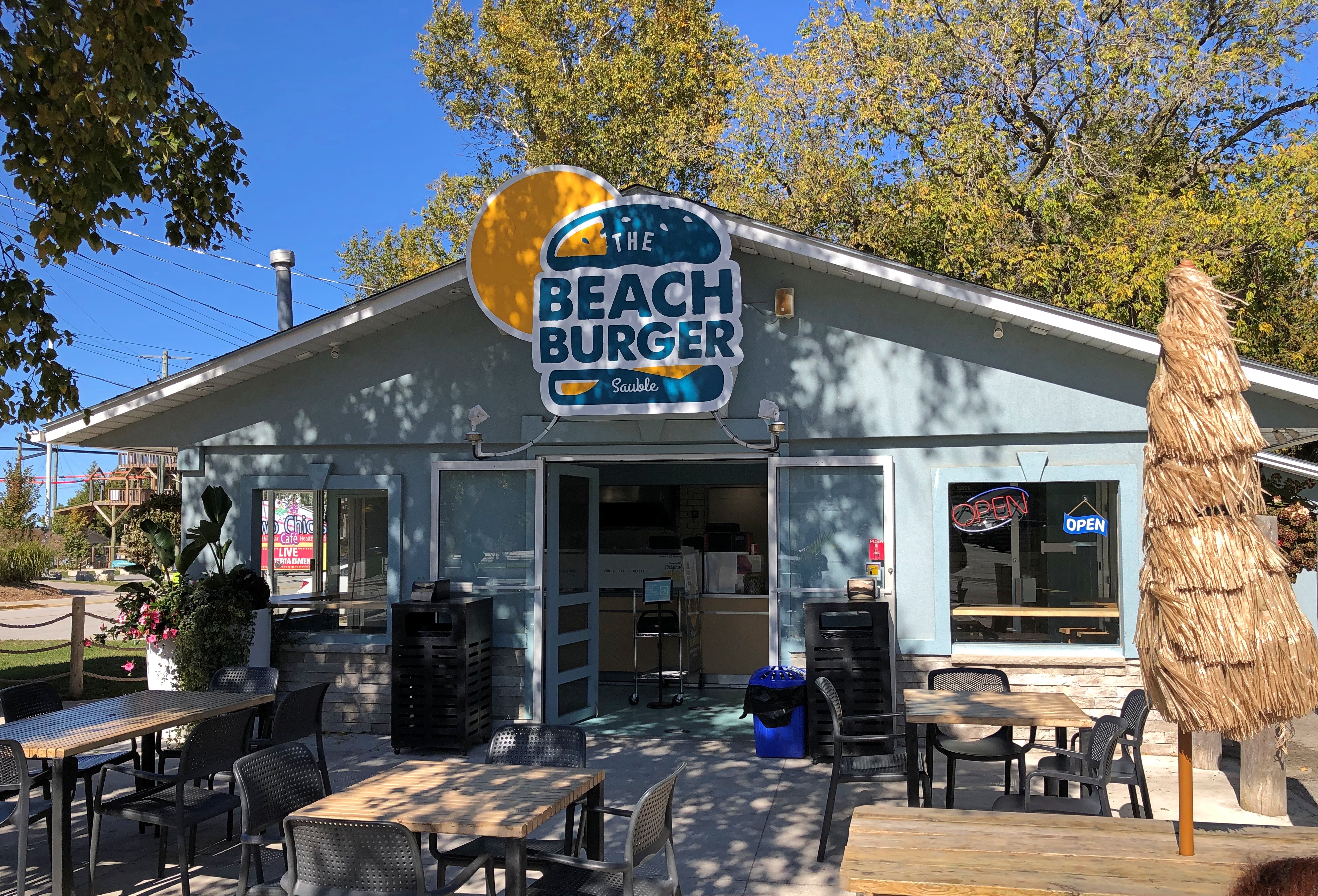
We’d come to Sauble Beach – the unincorporated town of that name and the beach of that name in Ontario – after our easy walk around Sauble Falls PP a few miles (ah, km) to the north. We were looking for lunch. And there it was.
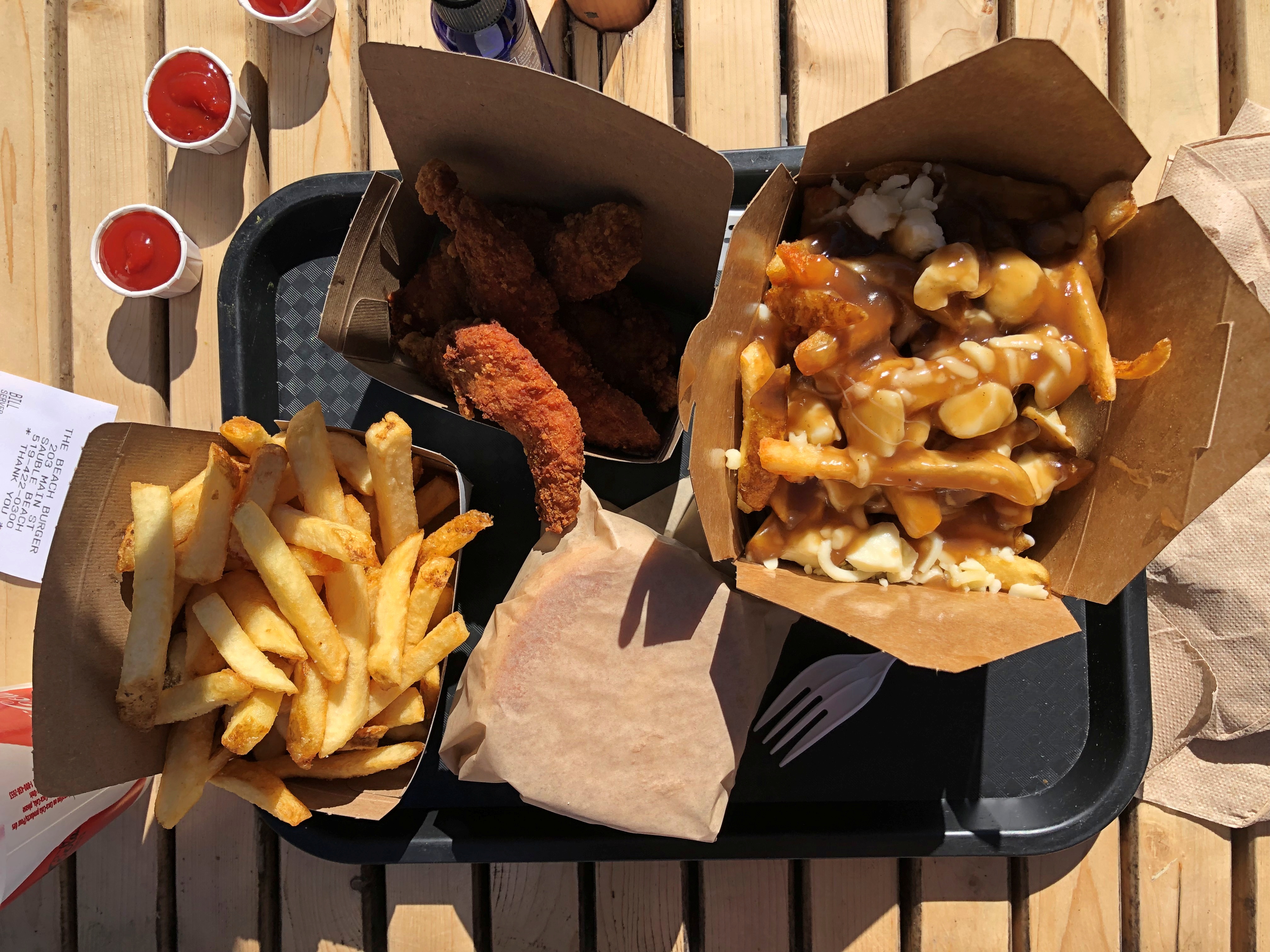
Note the distinct lack of a crowd. Out of frame are two high school boys eating, and they were all the other customers at that moment, toward the end of (2 pm) conventional lunchtime on the Thursday ahead of Canadian Thanksgiving weekend. Other places were already closed for the season, but Beach Burger soldiered on for the trickle of customers still around.
A beach feast.
The concoction on the right, of course, is poutine. It’s not just for Québécois any more. Nor even just for Canadians.
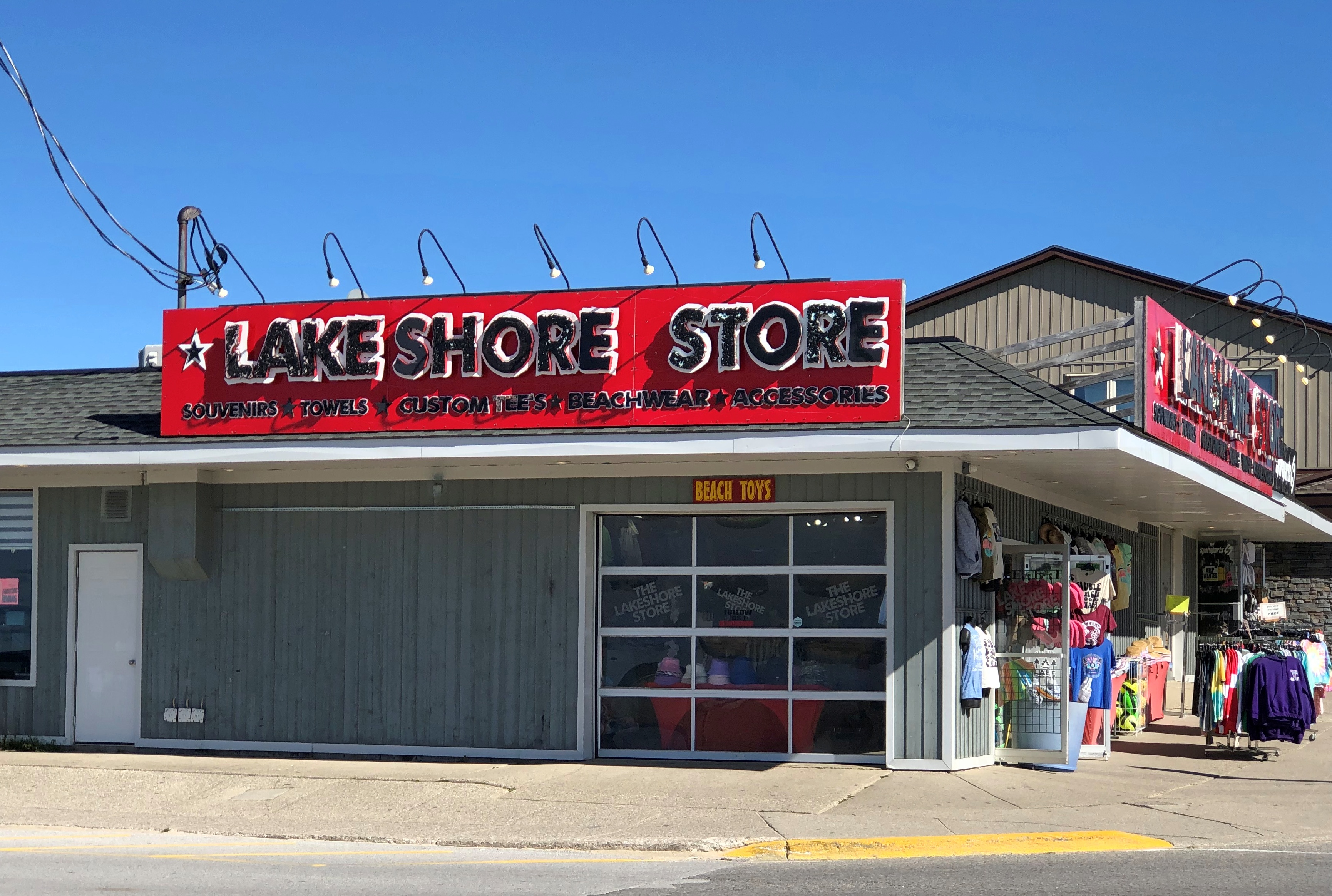
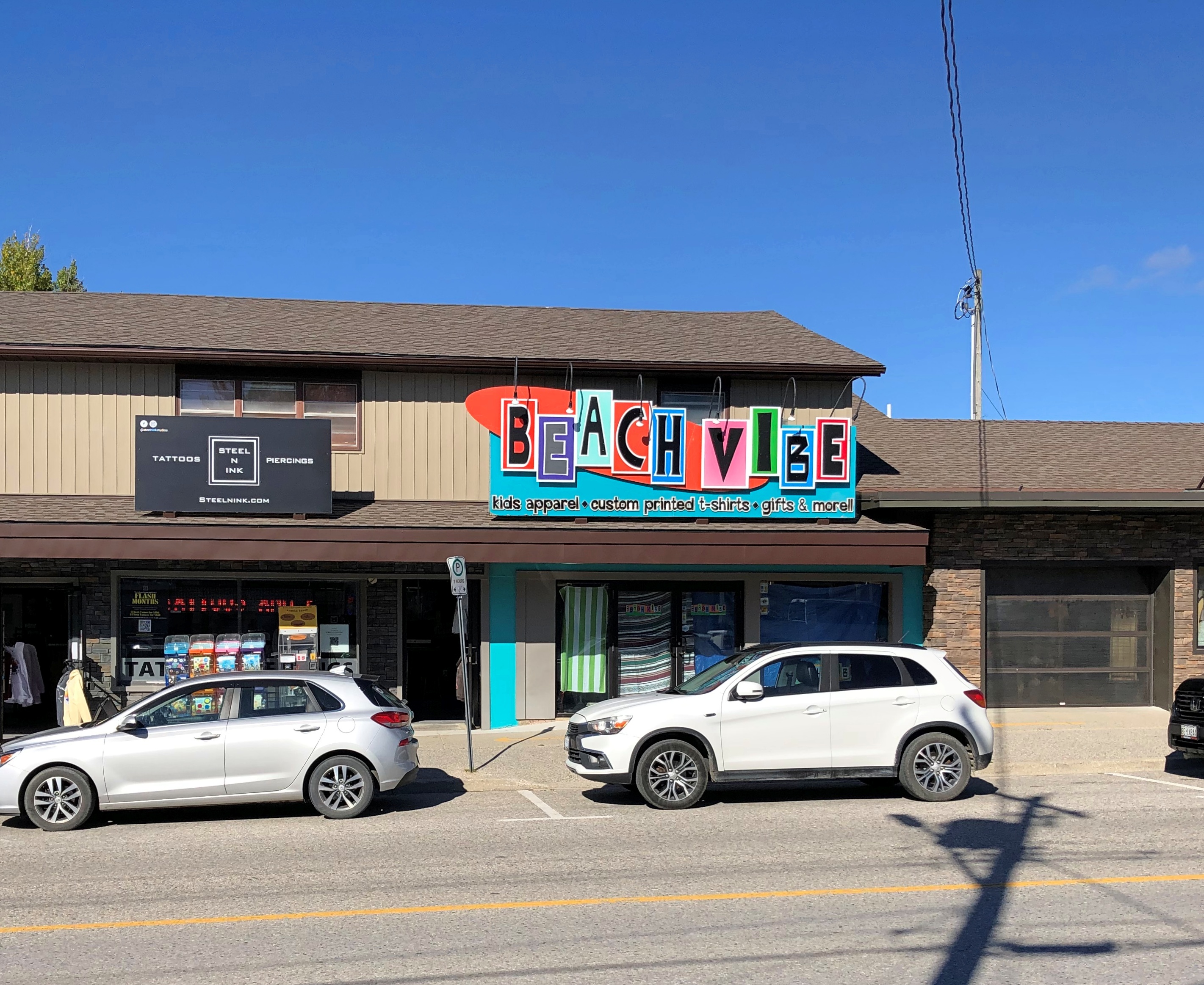
Beach towns have beach businesses.
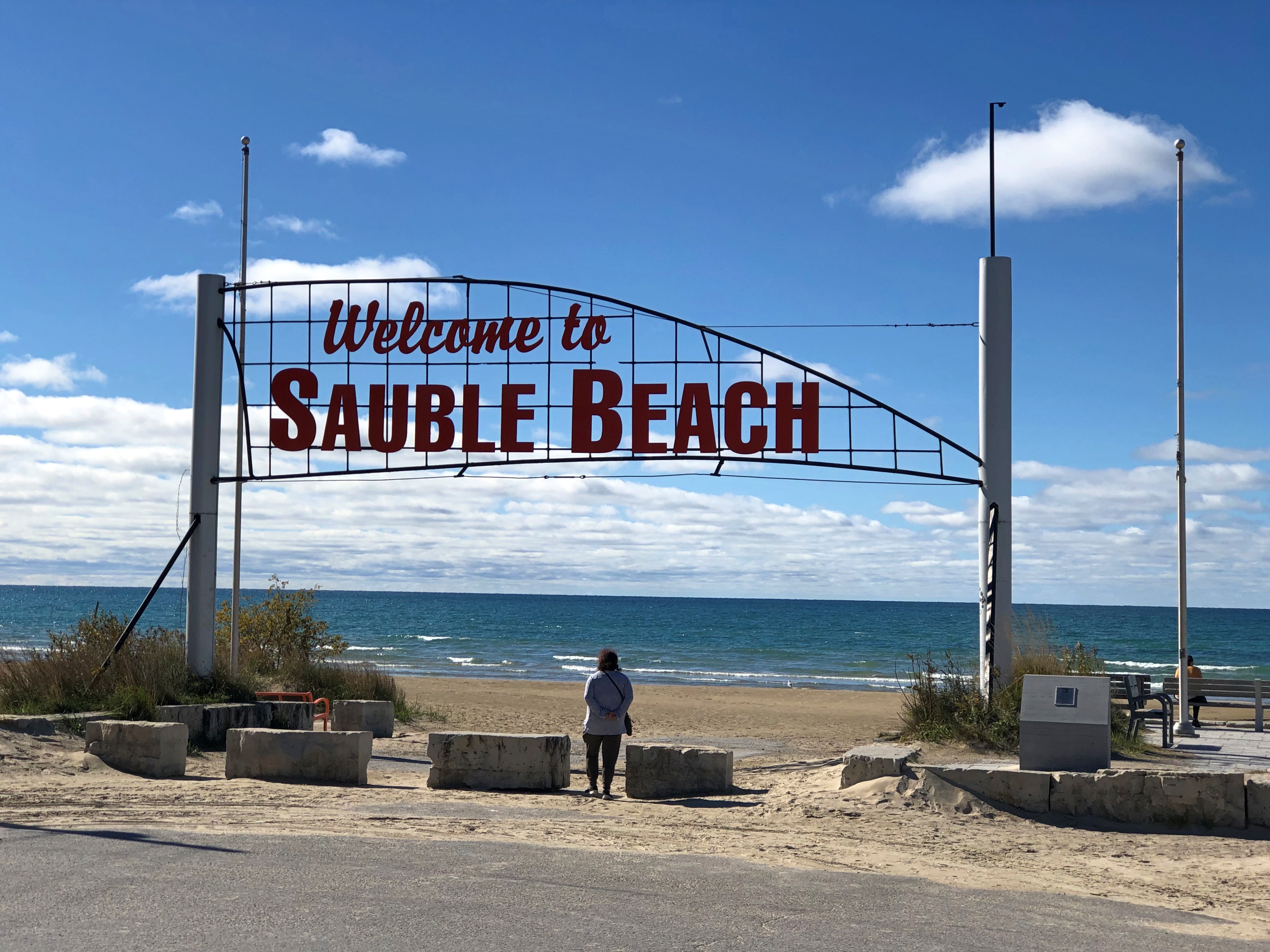
Which would be pointless without the beach.
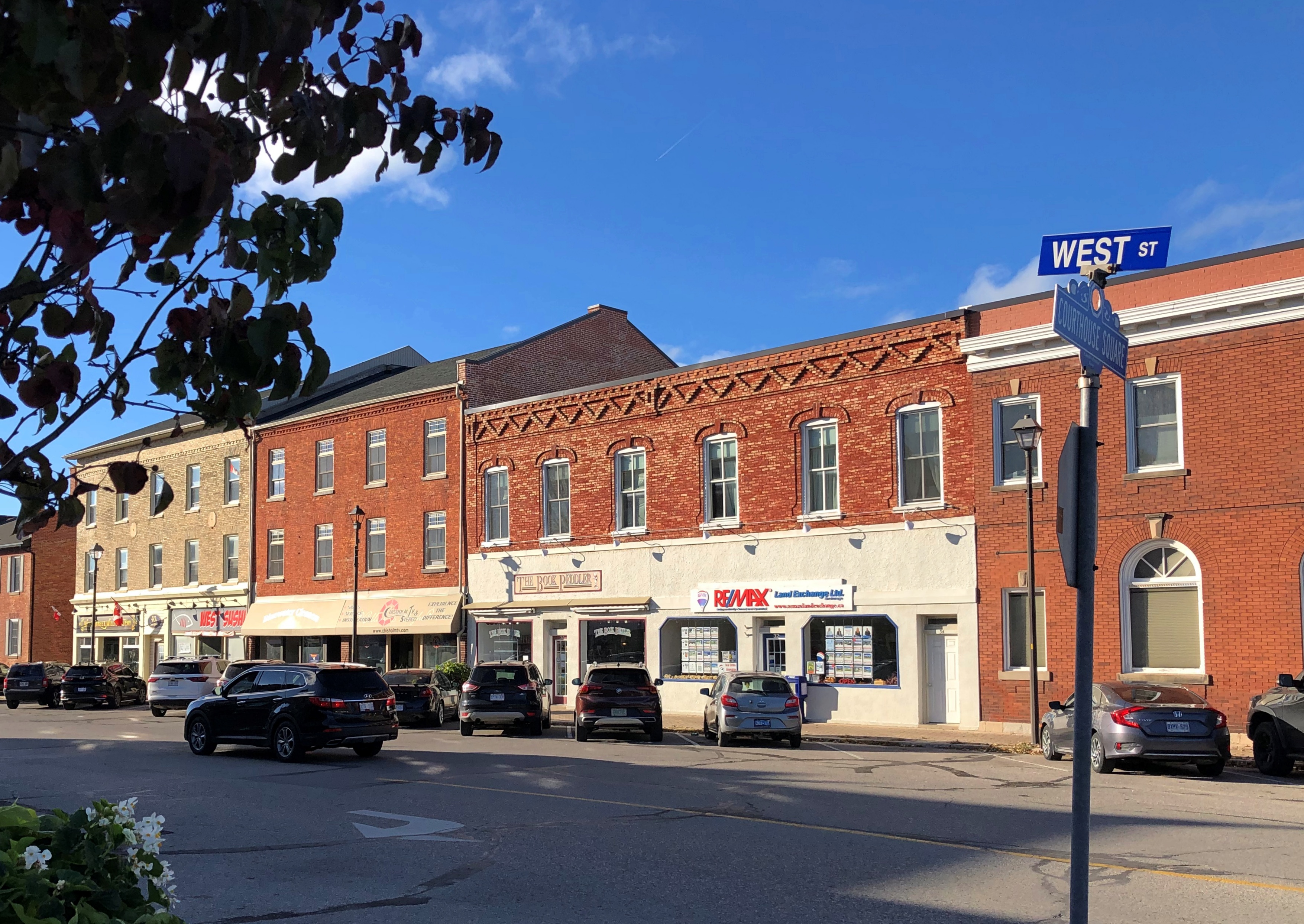
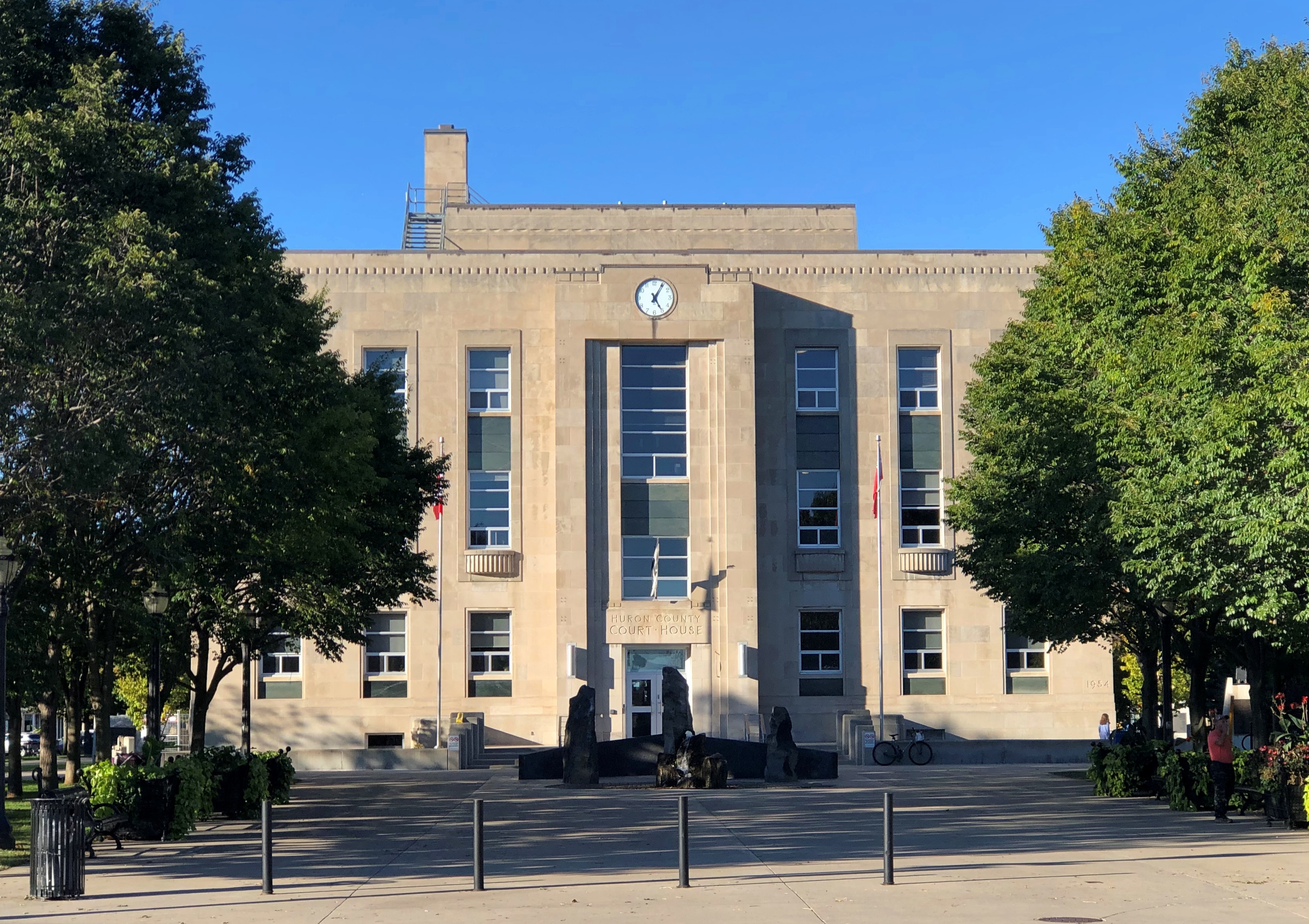
Further down the coast, Goderich bills itself as the Prettiest Town in Canada, at least on the postcards I bought there. I will say that the courthouse square has some fine vintage buildings.
The severe Huron County Courthouse itself, a 1950s replacement for a building that burned down.
Nicely placed color on the square.
We walked around the square, which was pretty much our entire experience with Goderich that day, except for popping into the just-off-the-square Goderich Branch of the Huron County Library to (1) admire the building and (2) find a restroom. Waiting for Yuriko, I had a short talk with one of the staff, and found out that the building was originally a Carnegie library. The robber baron financed libraries in Canada too. Who knew?
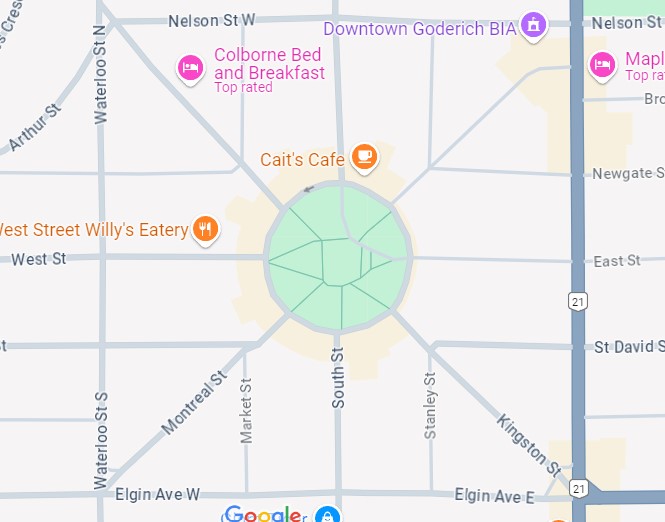
The square isn’t actually a square, but octagonal, with eight commercial blocks and roads radiating out in alignment with the eight points of a compass, according to Paul Ciufo, who wrote an audio guide to the square, as confirmed by Google Maps. Ciufo calls the design “unique in Canada.”
“The plan was chosen by John Galt, Superintendent of the Canada Company, and co-founder of Goderich in 1829,” Ciufo says. “Galt was a polymath — a businessman, world traveler, and friend of the Romantic poets. Galt wrote a biography of Lord Byron, and authored novels second in popularity only to Sir Walter Scott’s. Town planning fascinated Galt, and he yearned for more creative designs than the grid pattern favoured by the Royal Engineers.”
William “Tiger” Dunlop
Another founder of the town was an even more colorful Scotsman, William “Tiger” Dunlop (d. 1848). The 19th century was quite the time for ambitious men looking to be colorful.
After serving with distinction as a doctor in the War of 1812, “[Dunlop] went… to India where, as a journalist and editor in Calcutta, he took a hand in forcing the relaxation of press censorship,” the Dictionary of Canadian Biography tells us. “His unsuccessful attempt to clear tigers from Sagar Island in the Bay of Bengal, in an effort to turn the place into a tourist resort, provided him with his famous nickname…”
Eventually Dunlop went to Upper Canada, involving himself heavily in efforts to settle the area as an official with the Canada Company.
“The year 1832 saw publication of his guide for emigrants, Statistical sketches of Upper Canada, an event that… helped put him back on public view,” the dictionary continues. “This engaging book, written under the pseudonym A Backwoodsman, mixes some (small) practical advice with much tomfoolery and fully exploits the author’s humorous persona. In his chapter on climate, for example, Dunlop says that Upper Canada ‘may be pronounced the most healthy country under the sun, considering that whisky can be procured for about one shilling sterling per gallon…’
“During the rebellion in Upper Canada in 1837-38, Dunlop raised a militia unit, whose nickname, The Bloody Useless, gives a clue to the important role it played…
“Dunlop is said to have done everything on a grand scale, and this is nowhere more evident than in his drinking. He kept his liquor in a wheeled, wooden cabinet called “The Twelve Apostles.” One bottle he kept full of water: he called it, naturally, ‘Judas.’ His reputation as a maker of punch ‘and other antifogmaticks’ was legendary with the Blackwoodians.”
Antifogmatic. I knew I got out of bed this morning for something; to learn such a fine word.
Look at that point-of-interest spot on the map, I said to no one in particular. I think Yuriko was in the bathroom right then. Wiarton Willie, I said. And that is?
I didn’t look it up. But I knew we were going that way, south from the tip of the Bruce Peninsula at Tobermory on the two-lane Ontario 6, so we could find out. The town of Wiarton, Ontario was our first stop, late on the crisp and clear morning of October 10.
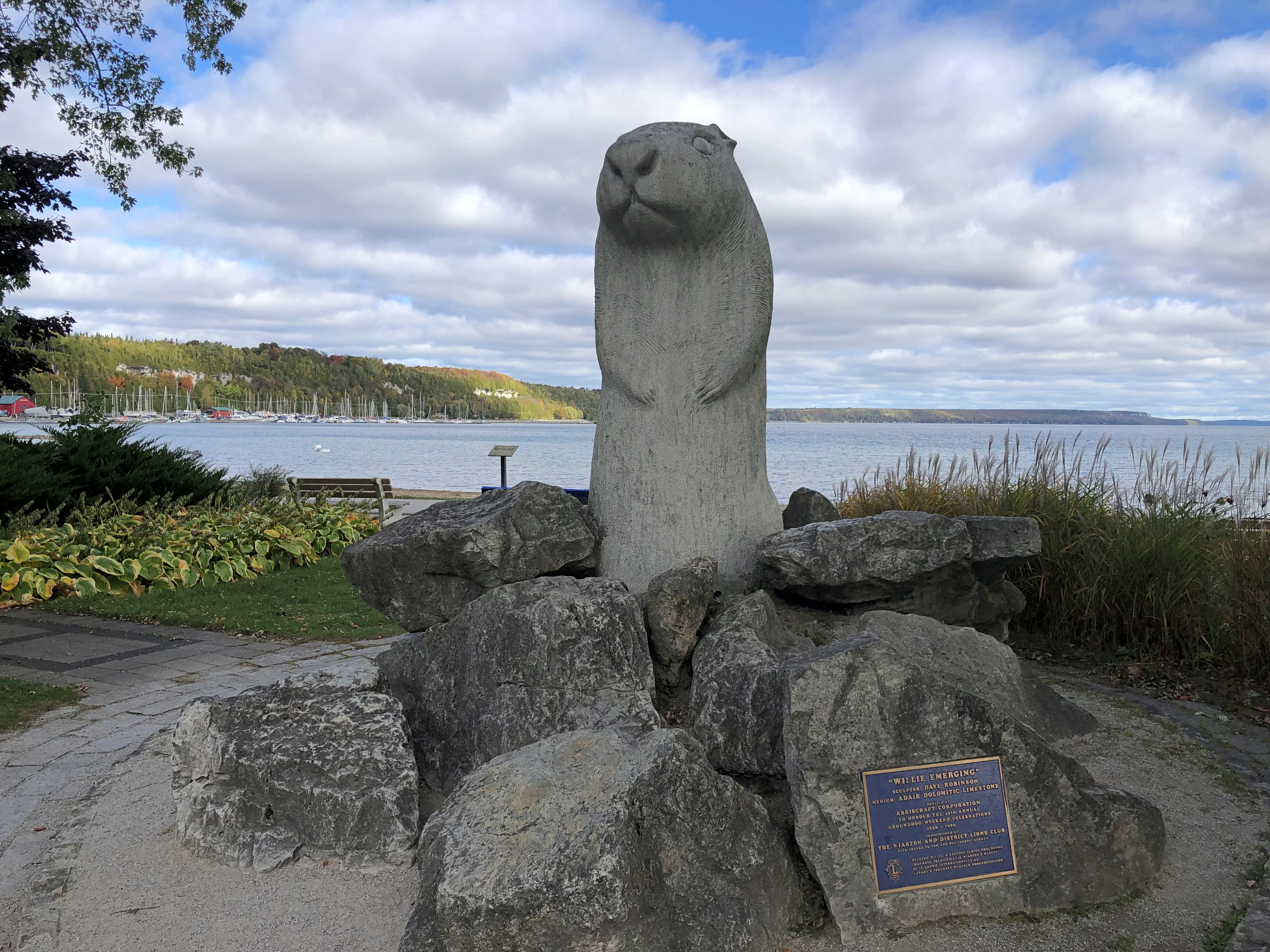
Wiarton’s on the Georgian Bay side. Willie has a lake view in a municipal park, but he is positioned looking away.
The plaque says that Willie was carved from Adair Dolomtic Limestone by Dave Robinson, and erected in 1996 on the occasion of the 40th anniversary of Groundhog Weekend celebrations in Wiarton, Ontario, pop. about 2,000. He honors the live groundhogs used in the annual ceremonies. “Willie Rising” is the formal name of the work.
Punxsutawney might have the best-known Groundhog Day celebrations — and certainly be depicted (by Woodstock, Illinois) in the best movie ever likely to be made about the holiday — but it isn’t the only place that touts the predictive talents of a series of marmots during a wintertime festival. Wiarton does, too. At one time an albino groundhog served as the living centerpiece of the fest, though more standard groundhogs seem to be tasked with forecasting these days.
One year, the Willie of the time died just before the festival, so the organizers held a public funeral instead, putting a lookalike stuffed rodent in a tiny casket, since the recently passed Willie reportedly smelled too bad for the role. Apparently some of the festivalgoers were miffed, but if you asked me that shows some imagination on the part of somebody — an urge to do something just a little out of the ordinary. In the hands of a competent scriptwriter, there’s probably a pretty good Groundhog Day comedy in that story.
Here’s a rabbit hole: or rather, a groundhog burrow: The Adair in Adair Dolomtic Limestone is a trademark held by Arriscraft, which is a unit of the stone products group of General Shale, the North American subsidiary of the expansion-minded Wienerberger AG, a leading multinational manufacturer of brick, headquartered in Vienna. The stone itself was quarried locally, since there are quarries near Wiarton. But the ultimate bosses are shadowy German-speaking billionaires.
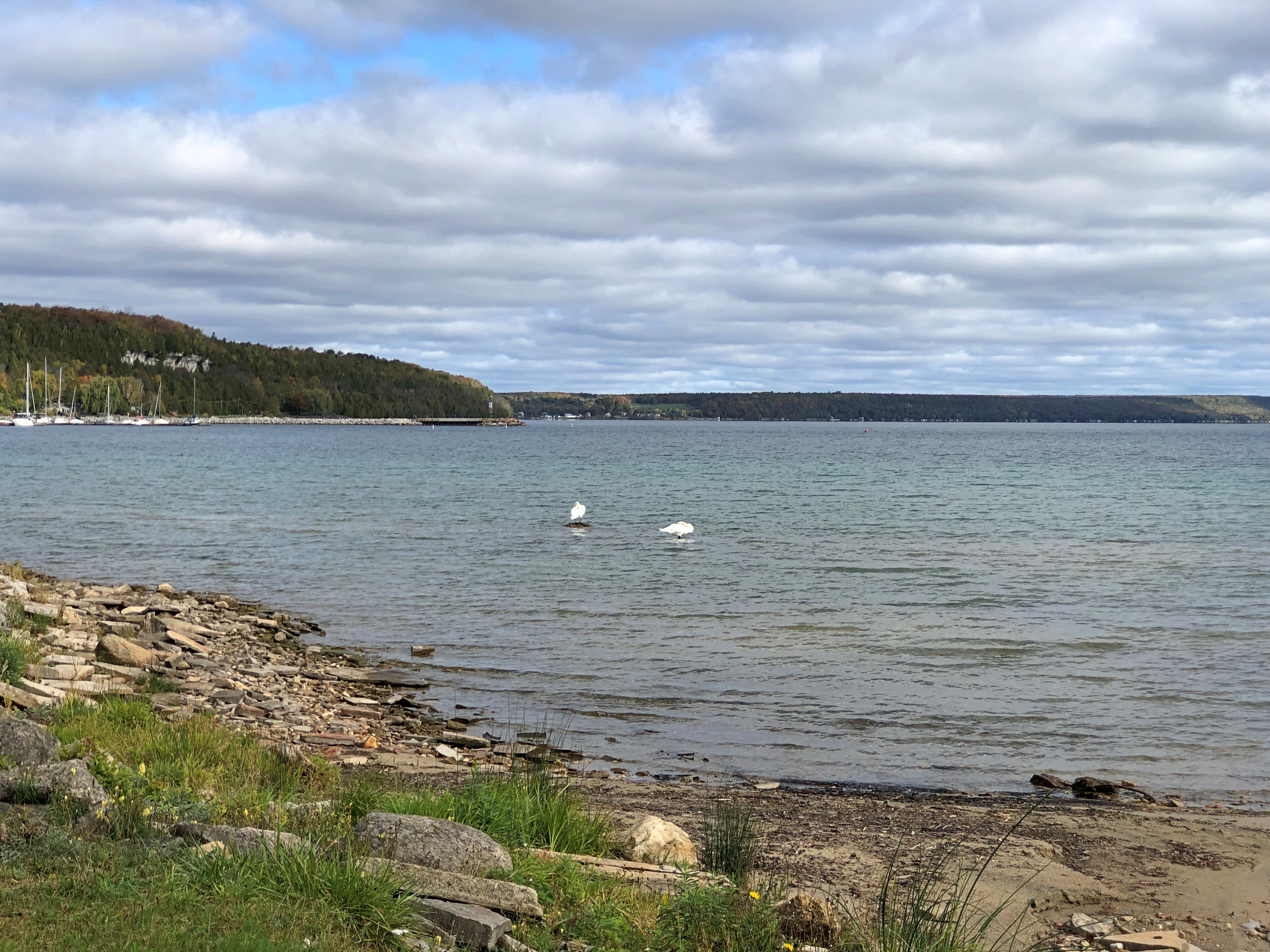
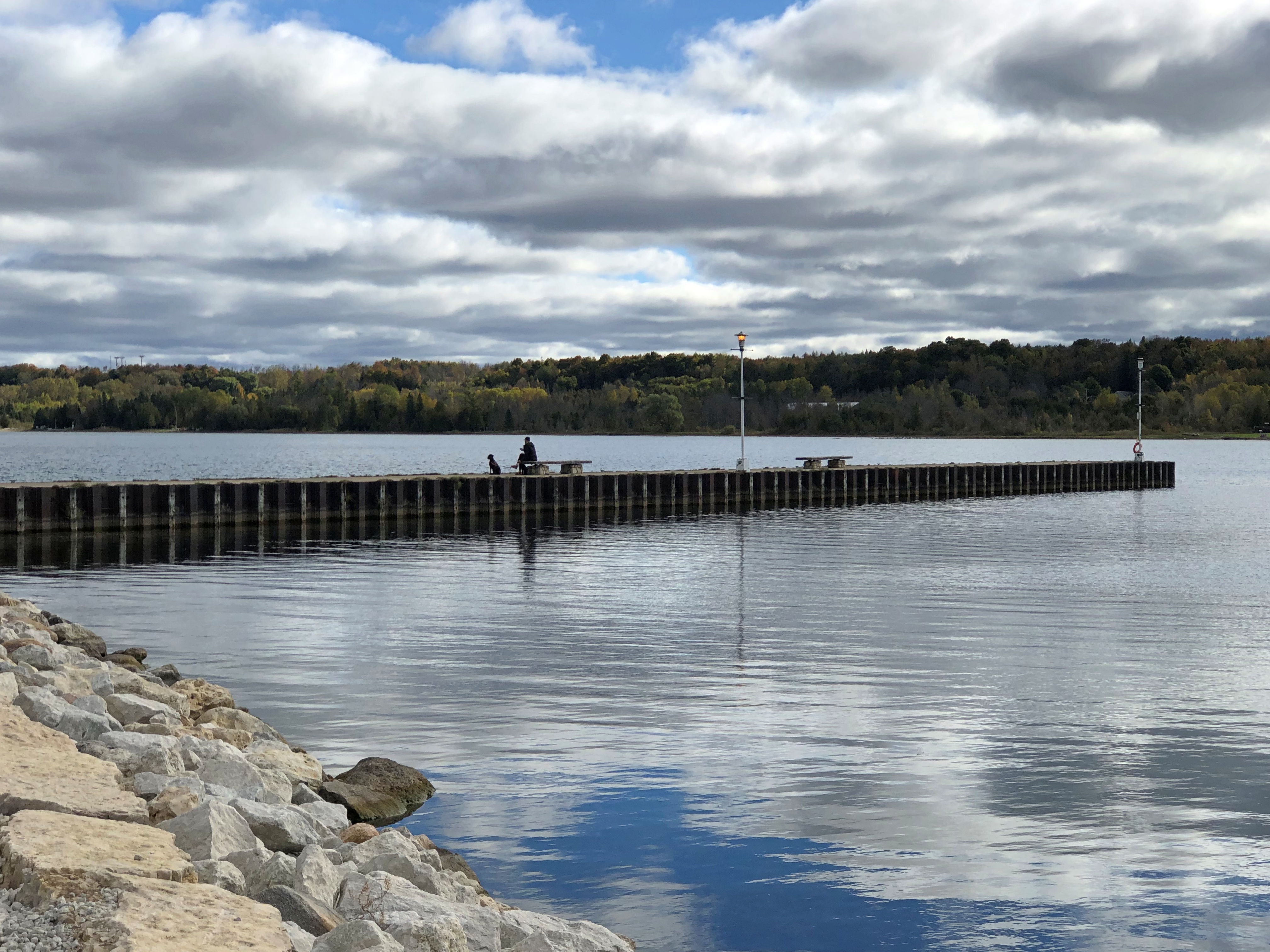
The shore at Wiarton.
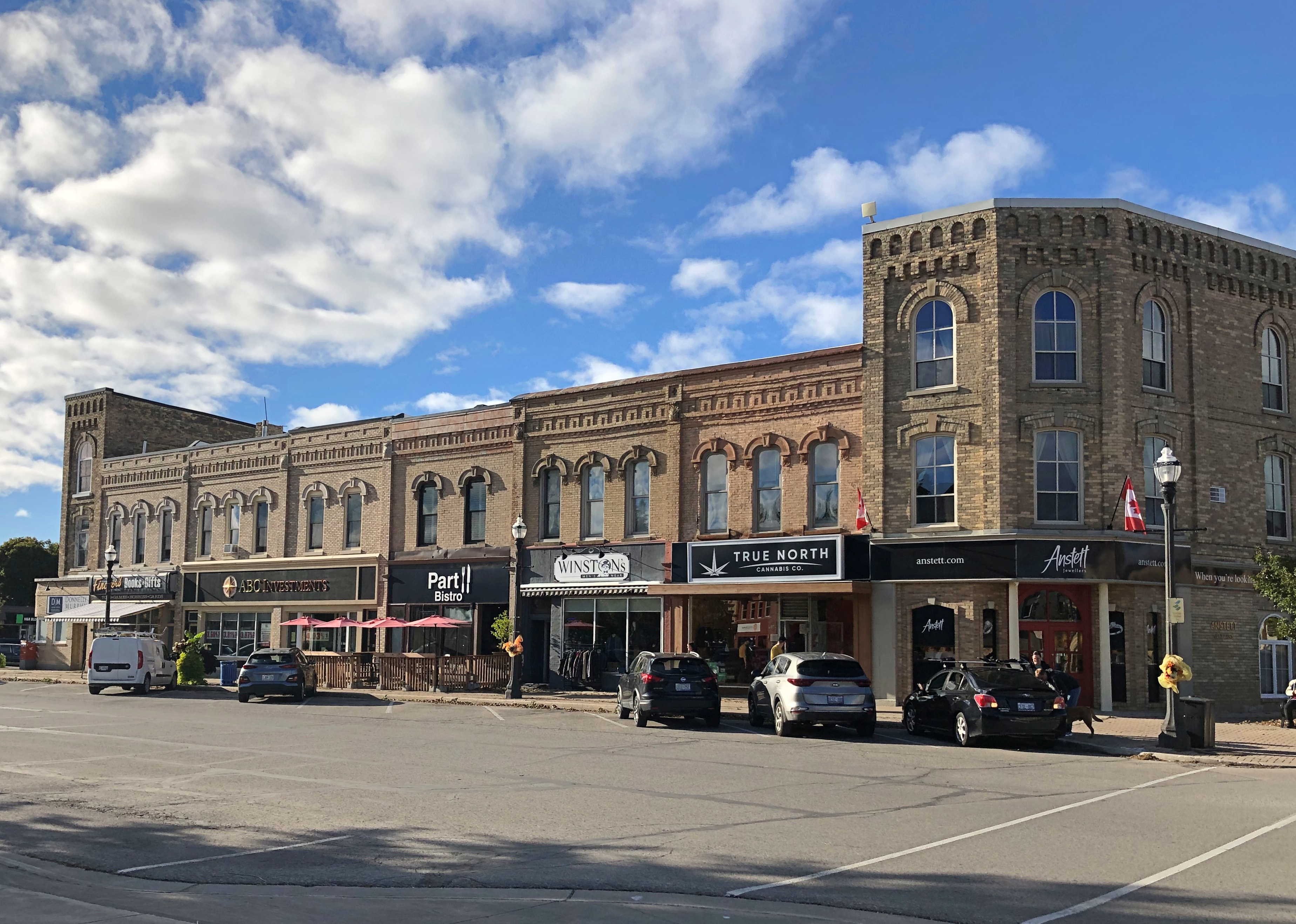
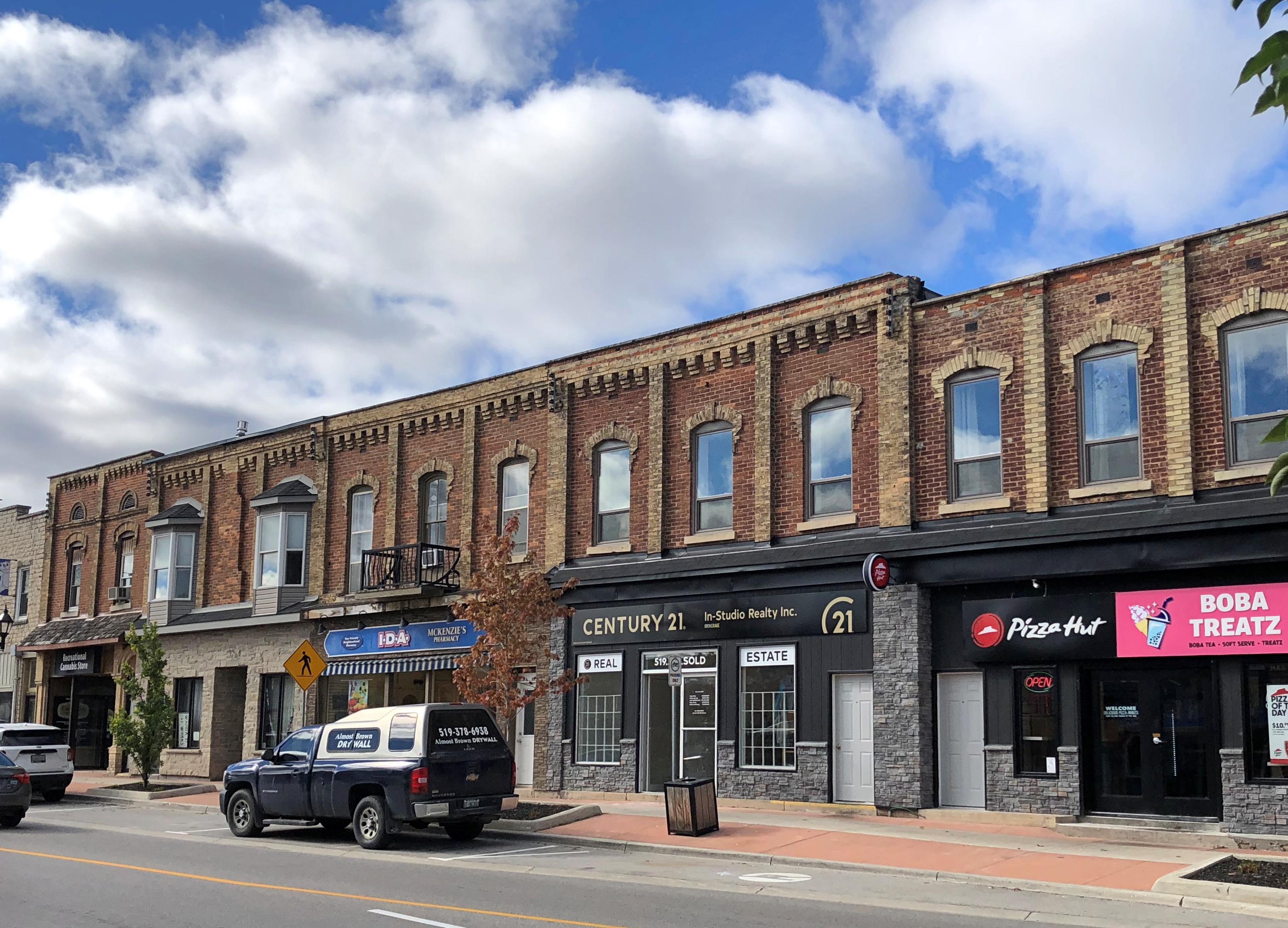
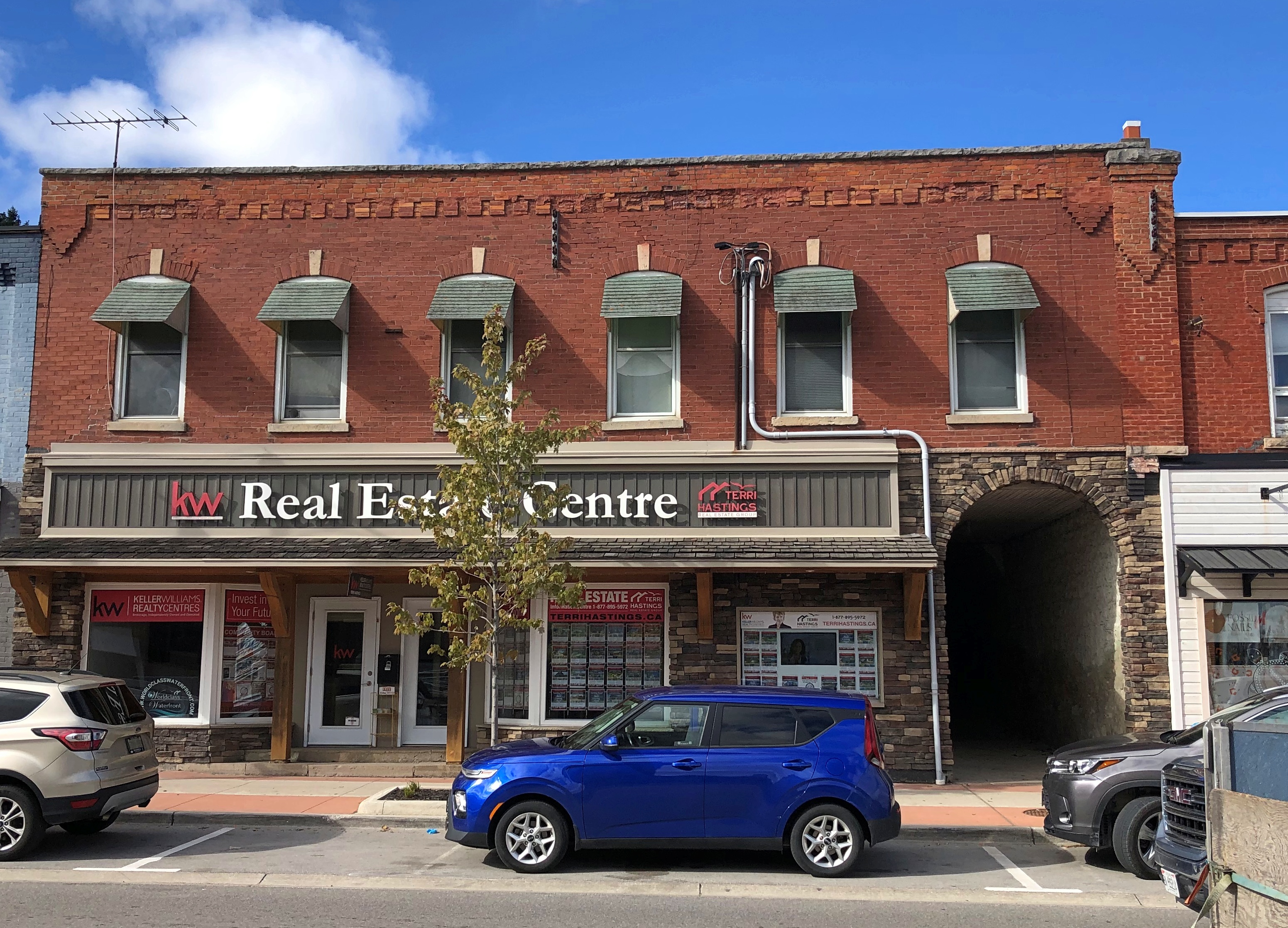
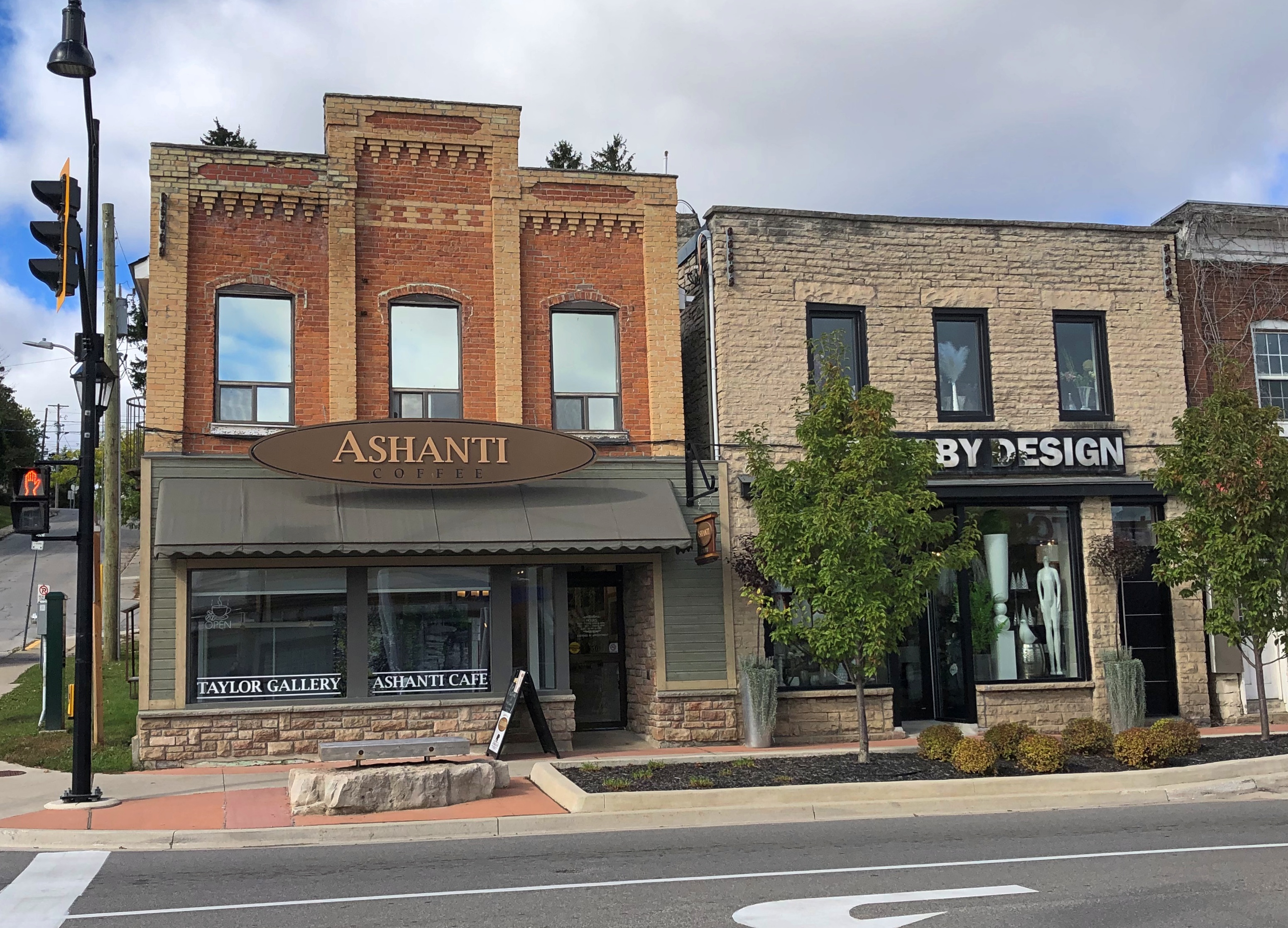
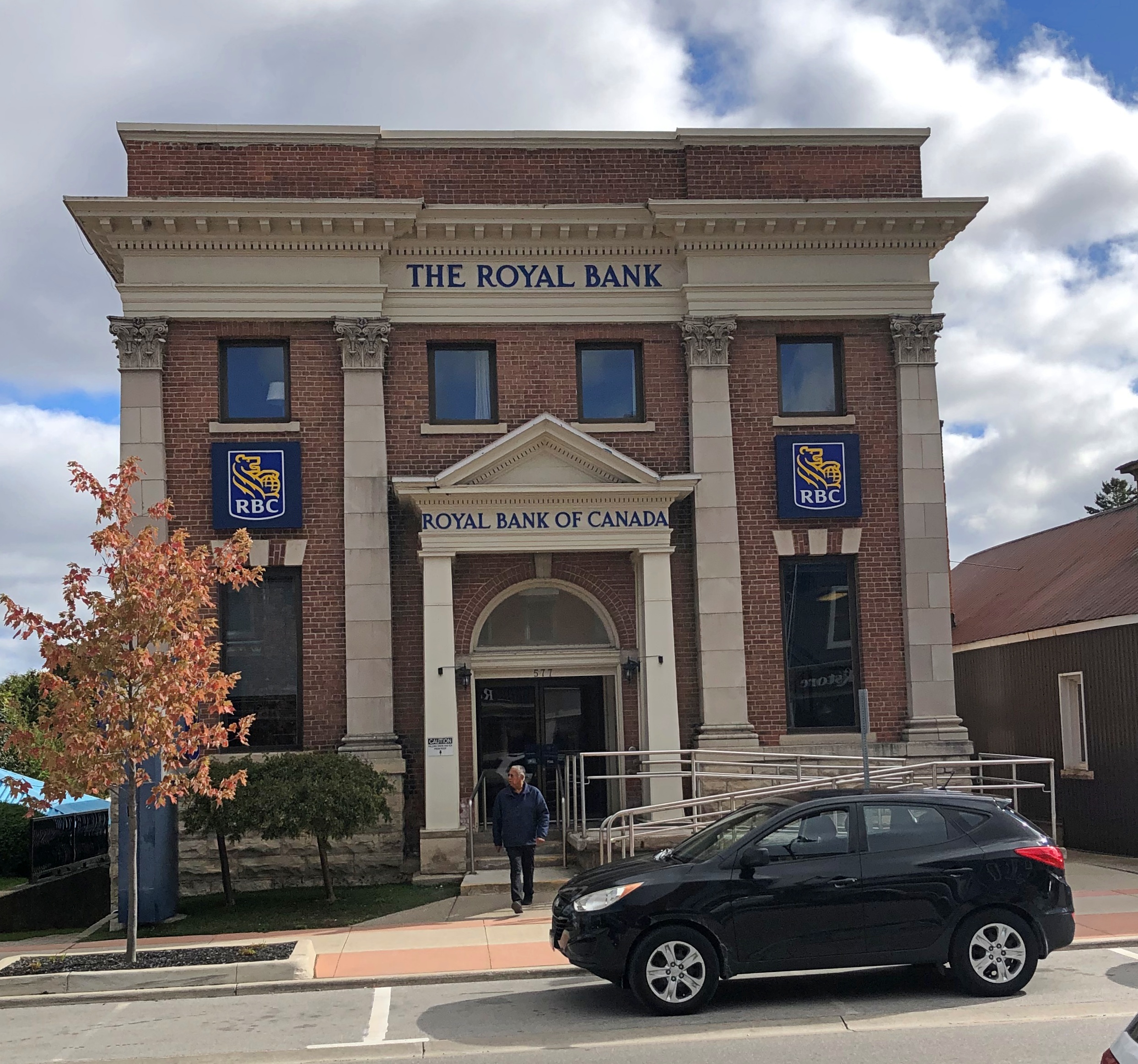
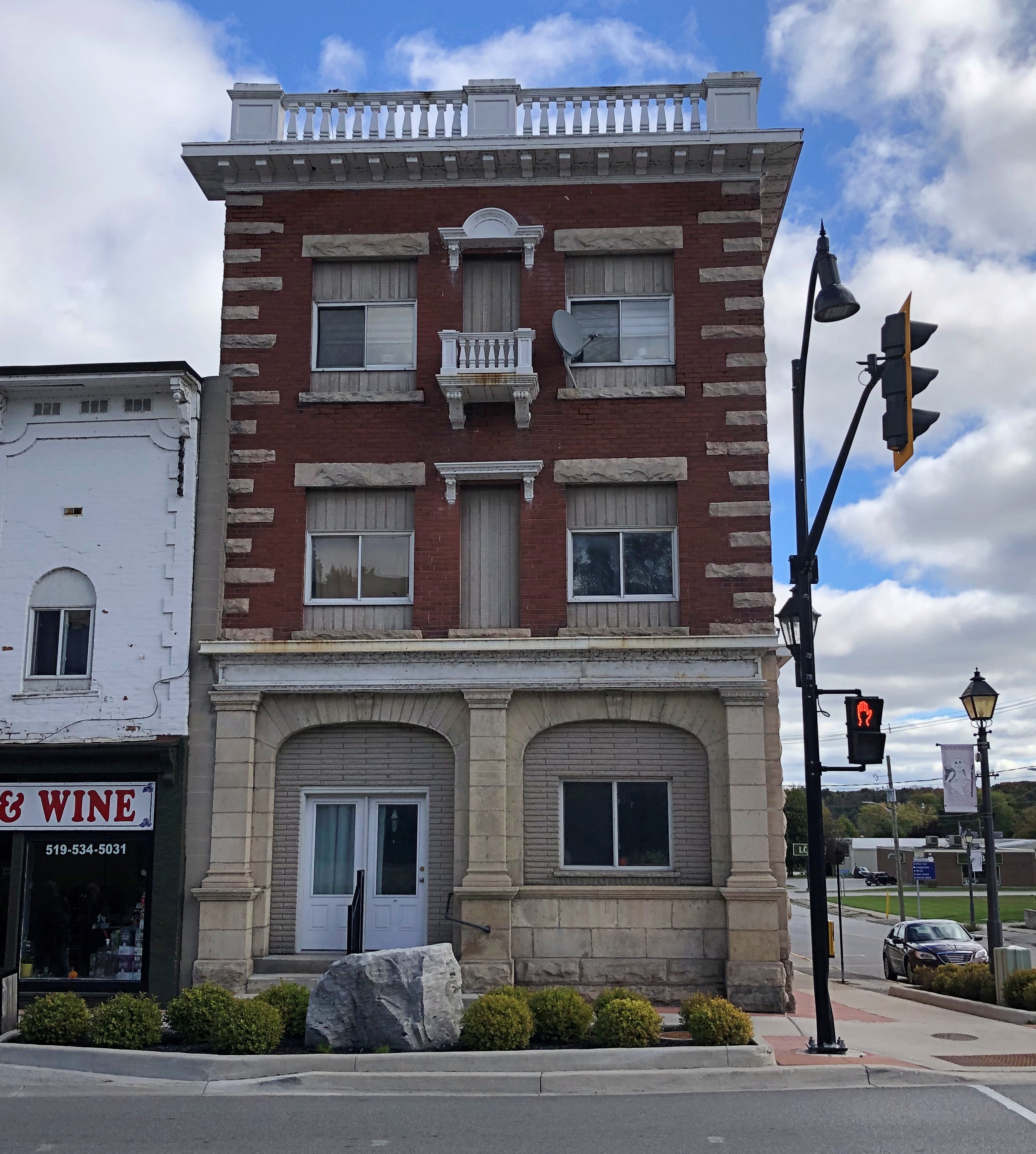
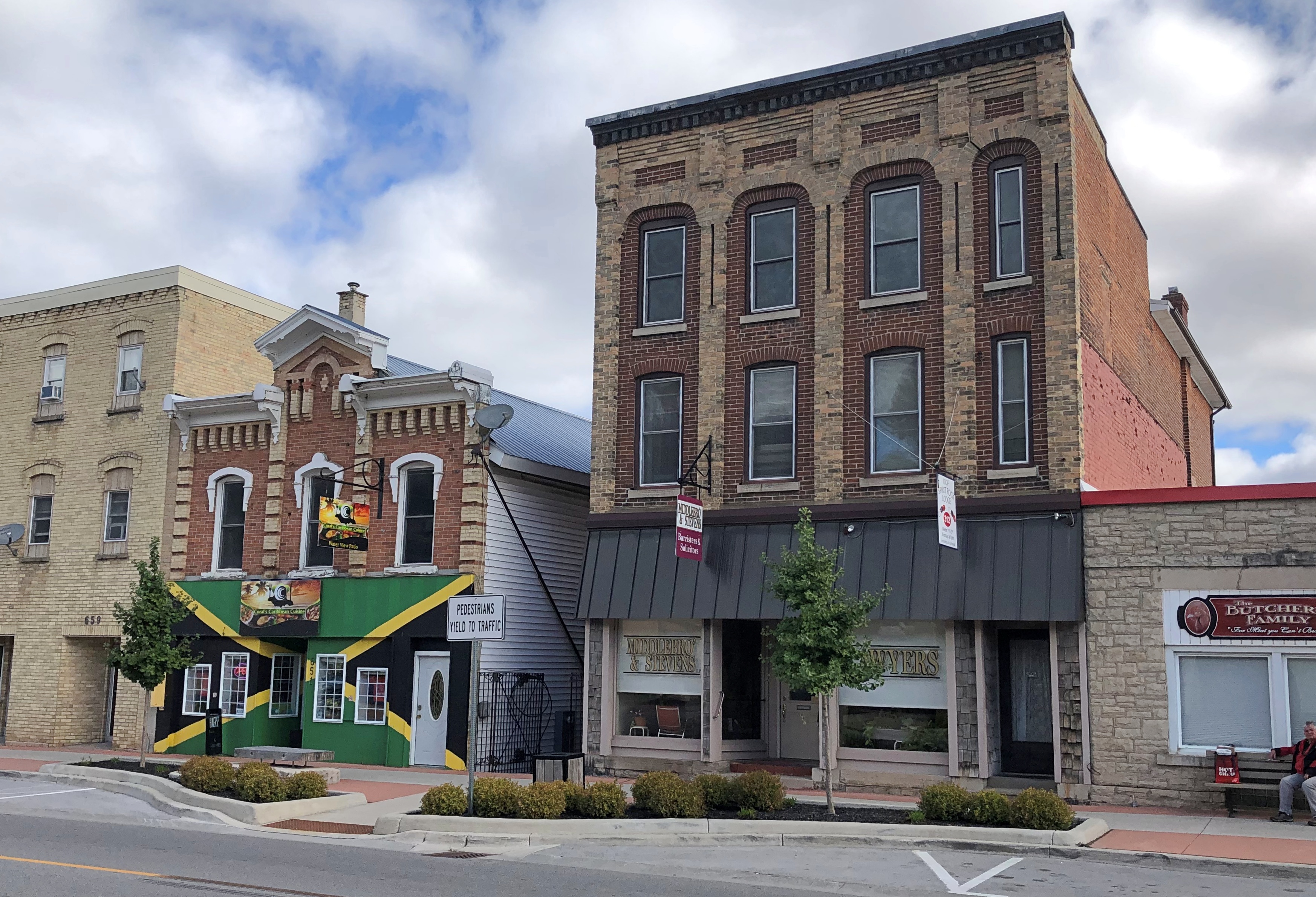
Not far away is the main street, Berford Street (Ontario 6), and its collection of handsome buildings of a certain age.
The taller buildings came in at no more than three stories.
Most had stores on their first floors, and people were out and about on the sidewalks, going about their business at such places as Beer Store, Peninsula Imprint, Bluewater Dental, Sullivan’s Butcher Shop, Coral’s Caribbean Cuisine, KW Real Estate Centre, Lost Art Espresso, Sunshine Drugs, Wiarton Emporium (thrift store), Cannabis Grey, Royal Bank of Canada, Ashanti Cafe, and more – a mix of ordinary retail and some that probably depend more on day-trippers from larger cities.
An active, walkable town, in other words, the kind planners dream about, but which are hard to conjure up from a set of plans.
Canadian Thanksgiving weekend was about to start.
From what I saw and heard, mostly on the radio, turkey feasts and family gatherings are common aspects of the holiday. That’s all very well, but I think we have a better deal: three holidays, plus a de facto holiday thrown in to make four days, on the leading edge of Christmas. Thanksgiving is a three-day weekend in Canada, and that’s that.
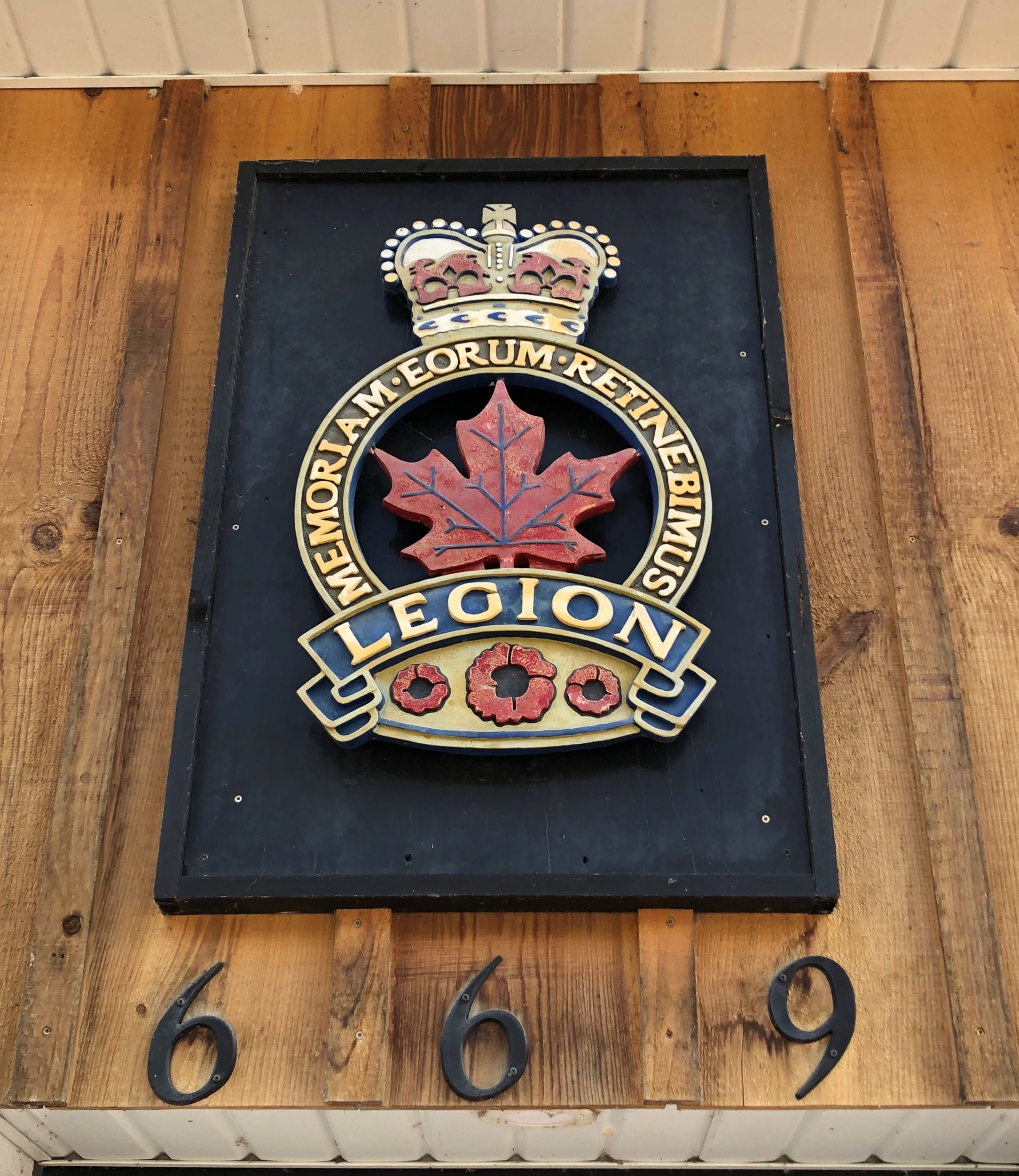
Over the door of the Royal Canadian Legion in Wiarton. Memoriam eorum retinebimus, we will remember them.
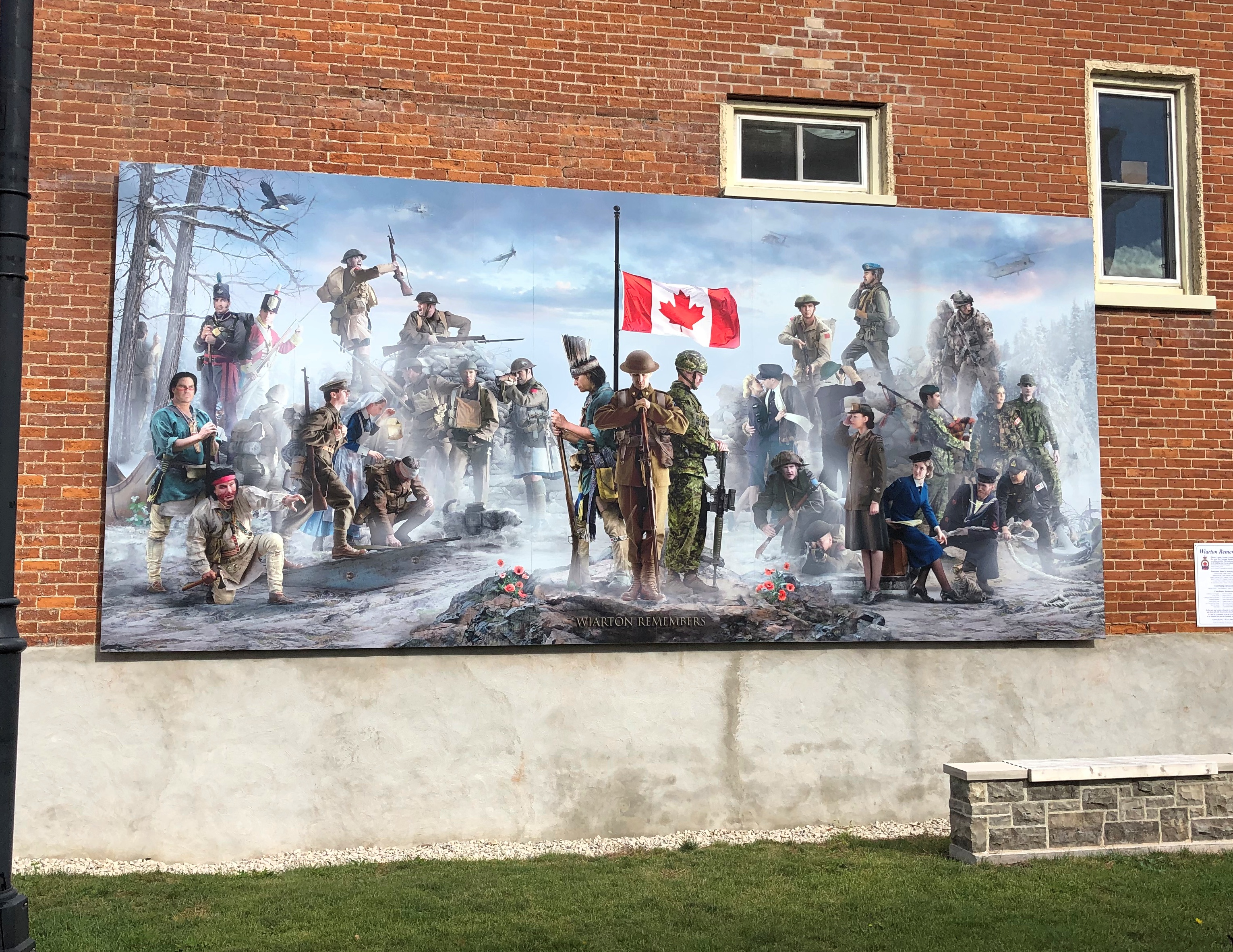
Nearby artwork in the town with the same message.
We should remember them, too. We, as in Americans. Not only have there been no hostilities along the border since the War of 1812 (not counting fishing spats), we and the Canadians have been comrades in arms ever since, when the times call for it.
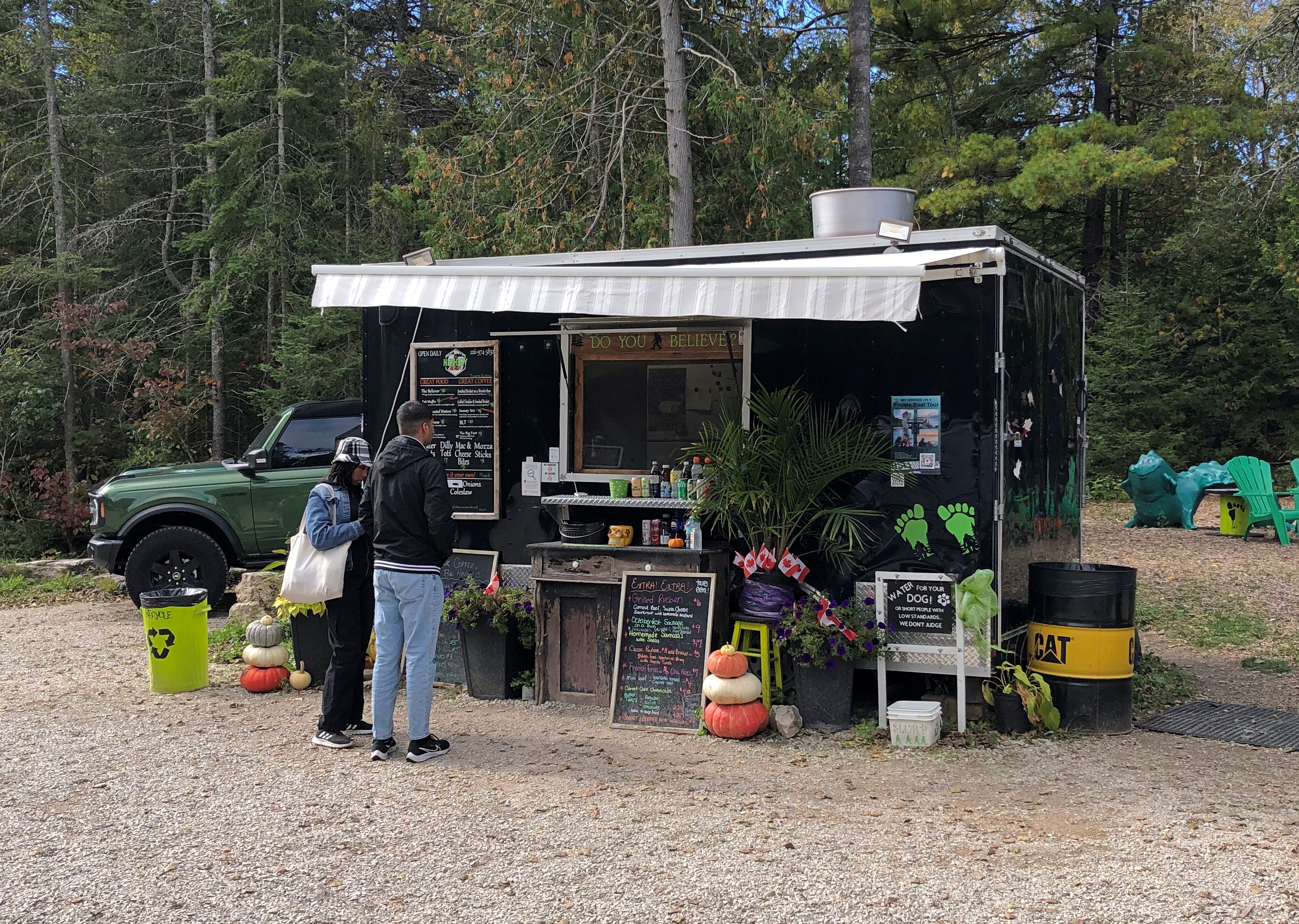
Clambering around on rocks, even the kind that don’t require any technical skills, takes energy, so lunch was the next order of business after our hike along the shore of Georgian Bay last Wednesday. We spotted a food truck outside the park, on Ontario 6, called the Hungry Hiker. That seemed fitting.
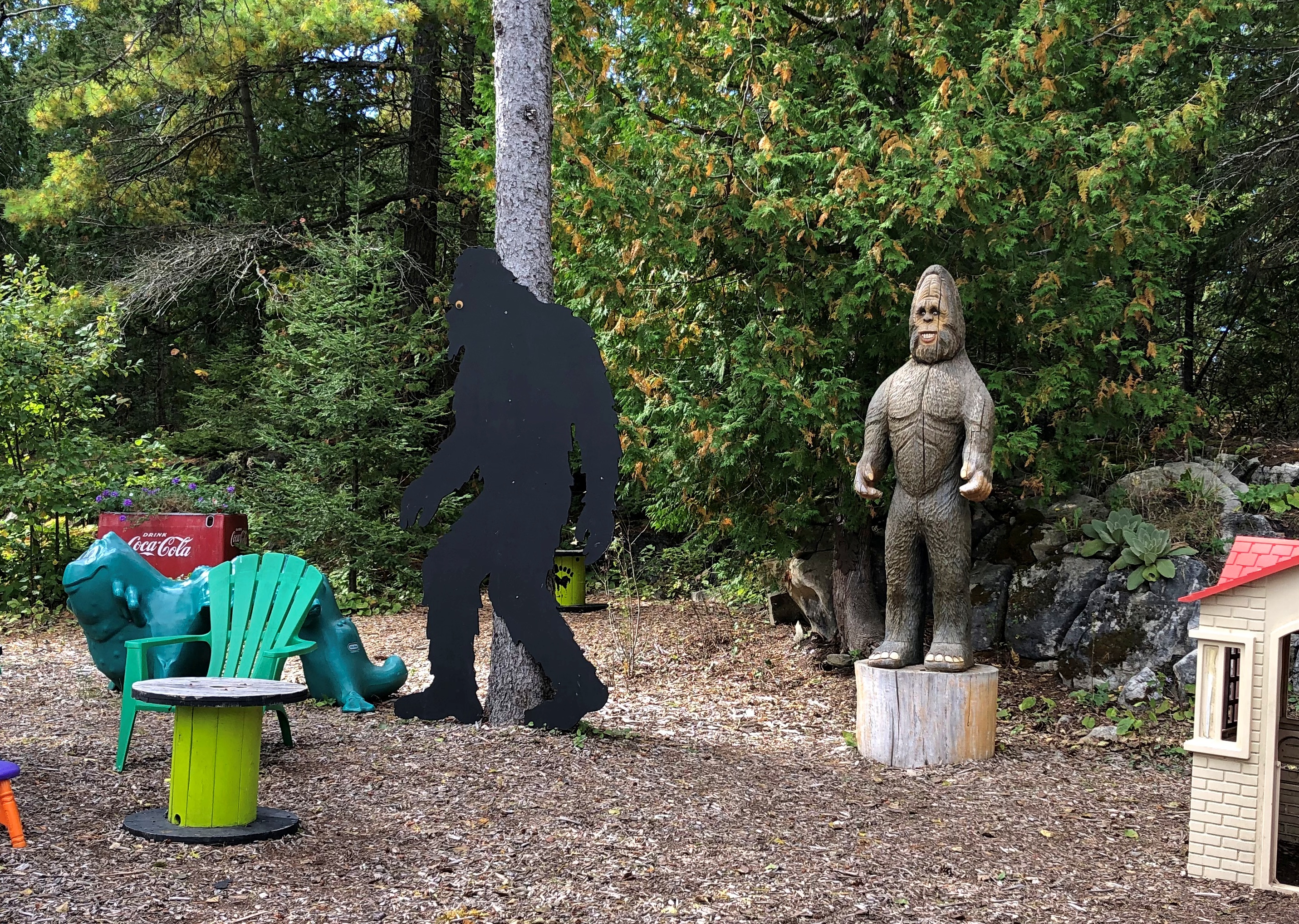
It had a Bigfoot theme. That seemed odd.
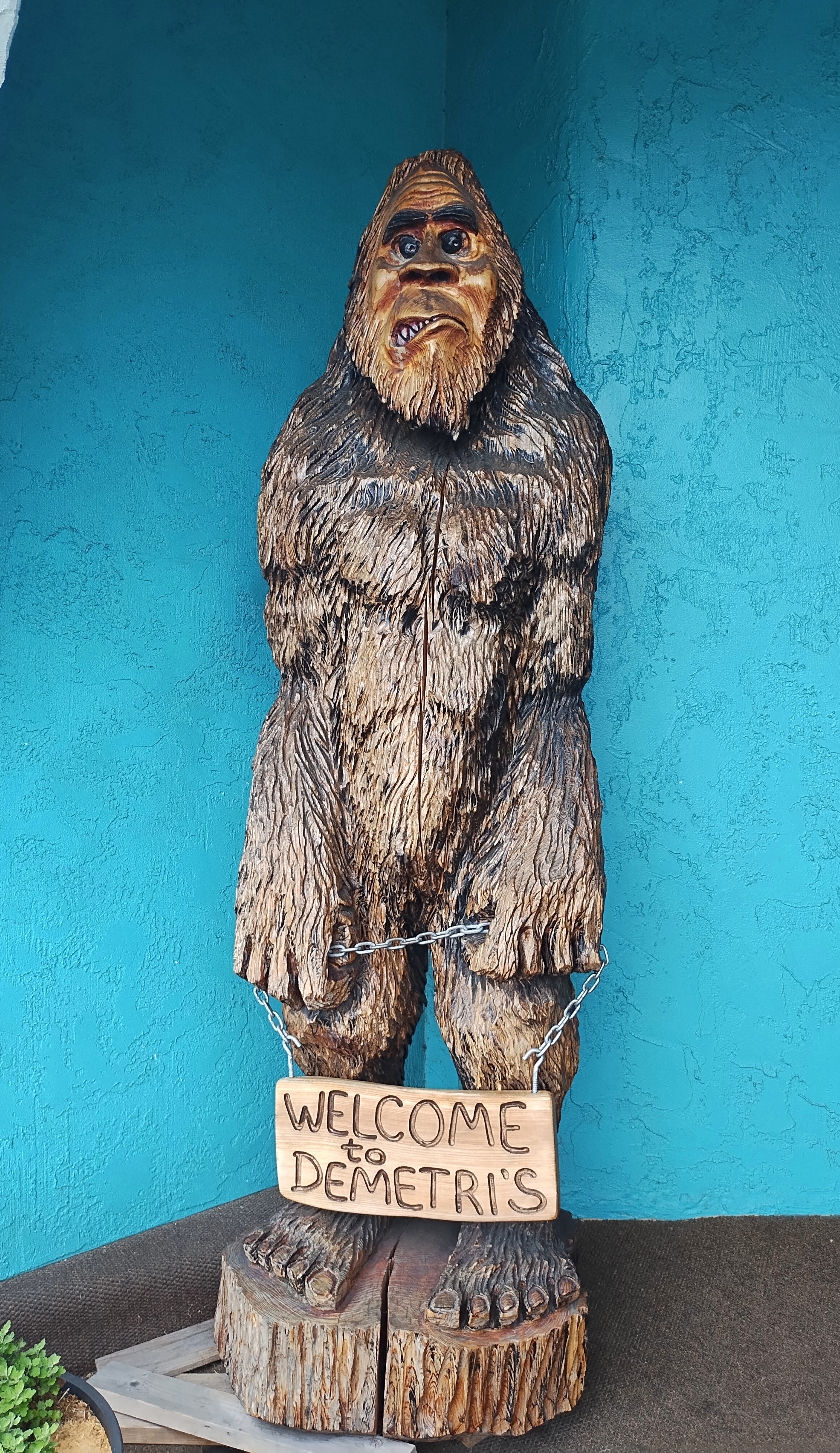
During our travels in the U.S. West, especially Montana-Idaho-Washington state, we noticed many roadside Bigfoot depictions, including this one in metro Seattle, in front of a place in Edmonds where we had lunch one day.
The Hungry Hiker Bigfoot was the only one we saw in Canada. Whimsy on the part of the owner, maybe, which also included some of the menu items, such as the Sweaty Yeti, a chicken sandwich with a sweet glaze. We ordered one, but not The Big Foot, which was a foot-long hot dog. Sasquatch theme or not, the Hungry Hiker’s food was satisfying.
Next stop: Singing Sands Beach at Bruce Peninsula NP. The park includes more than one section, with the beach on the other side of the peninsula, facing Lake Huron proper.
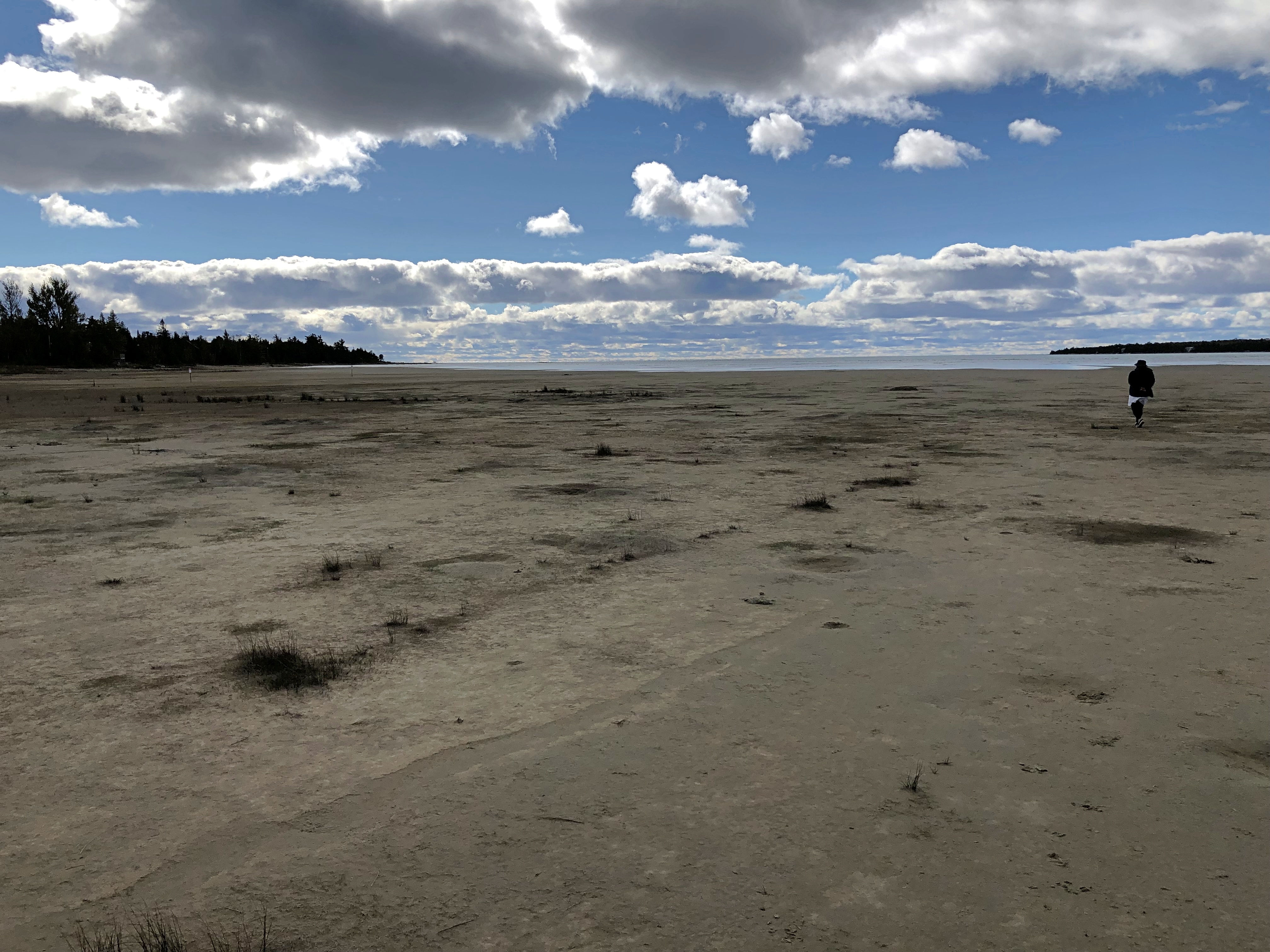
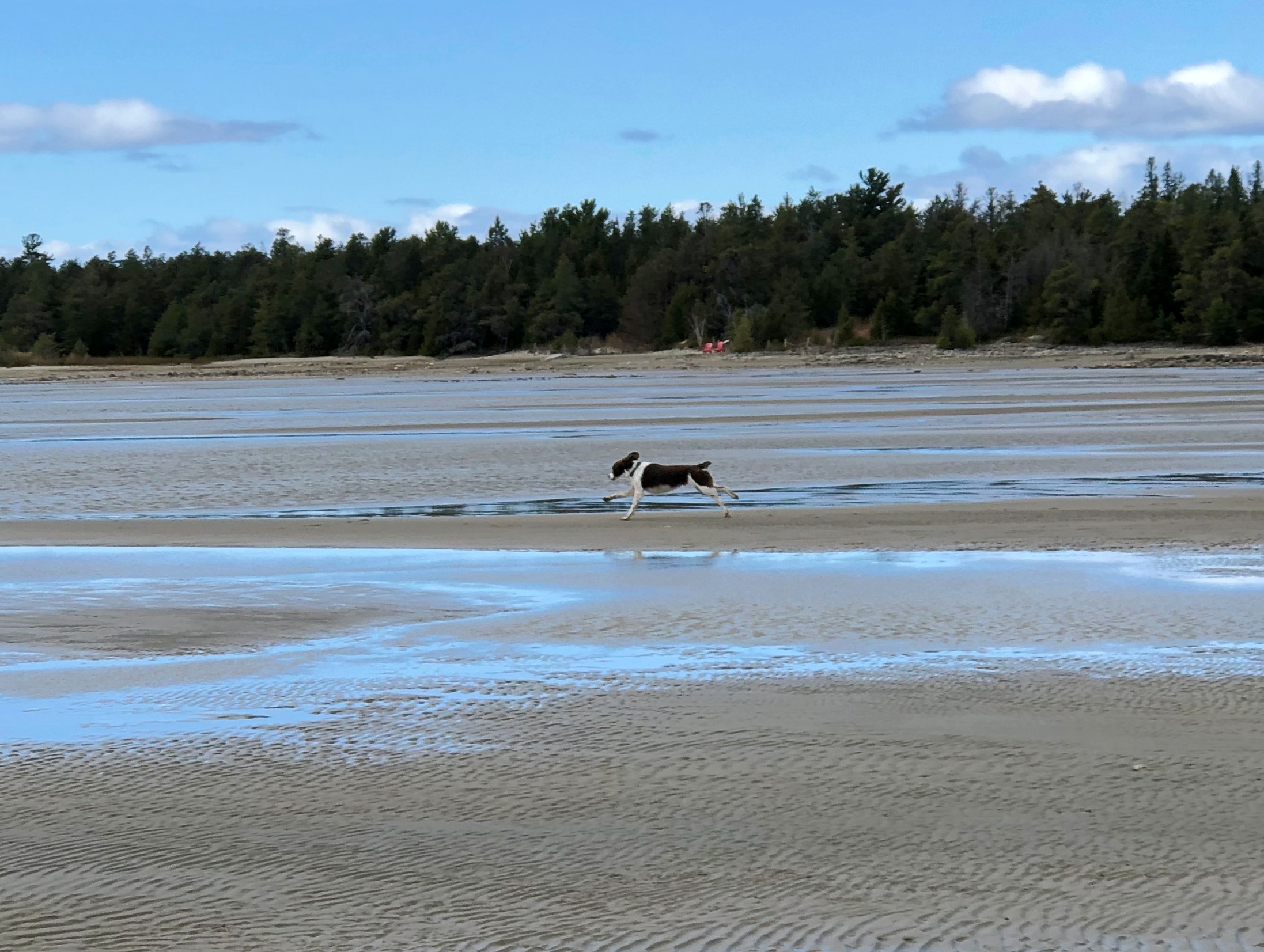
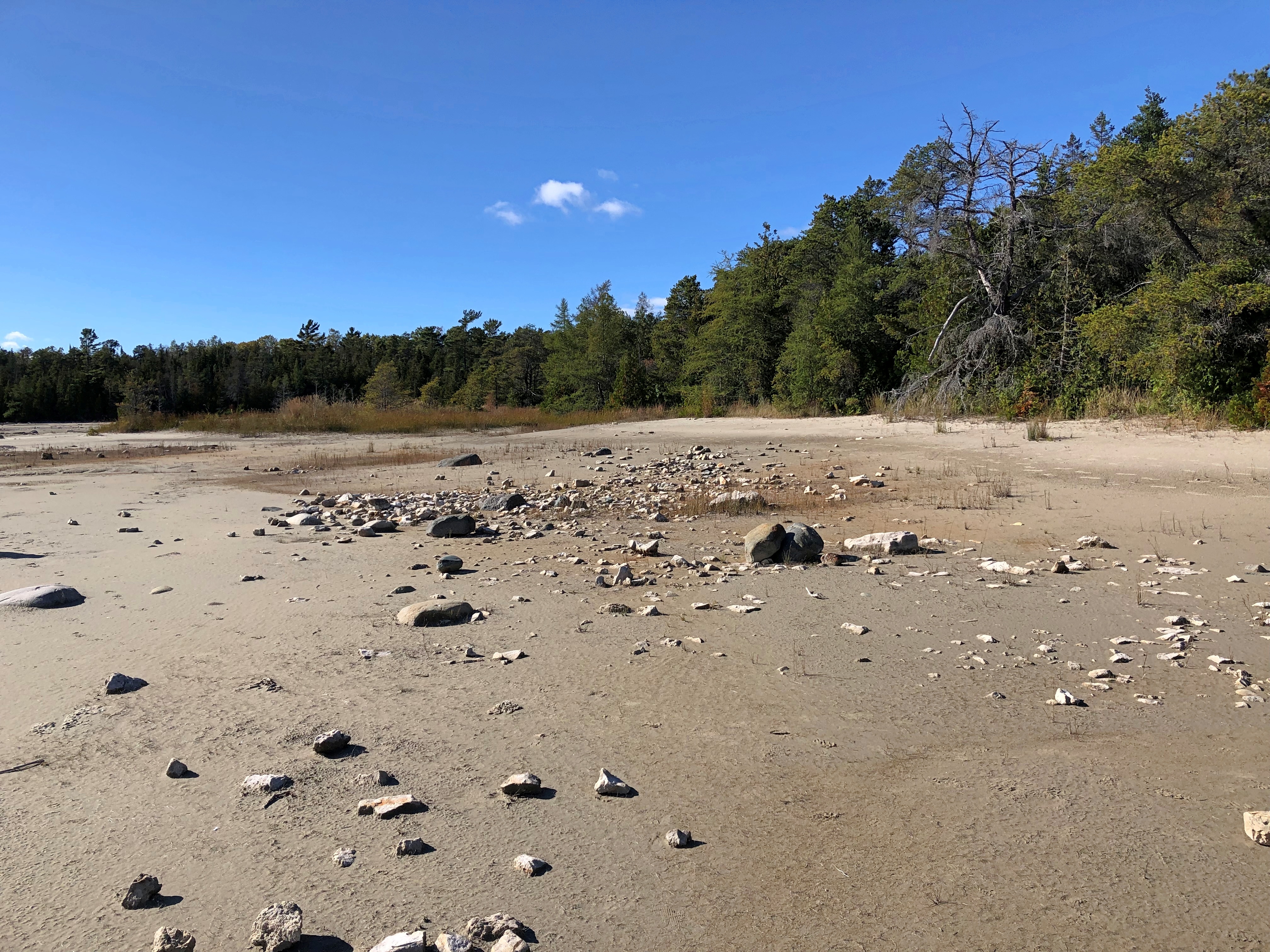
Nice. A big, almost empty beach. In mid-summer, it’s probably overrun. In October, there were only a few people and a frolicking dog.
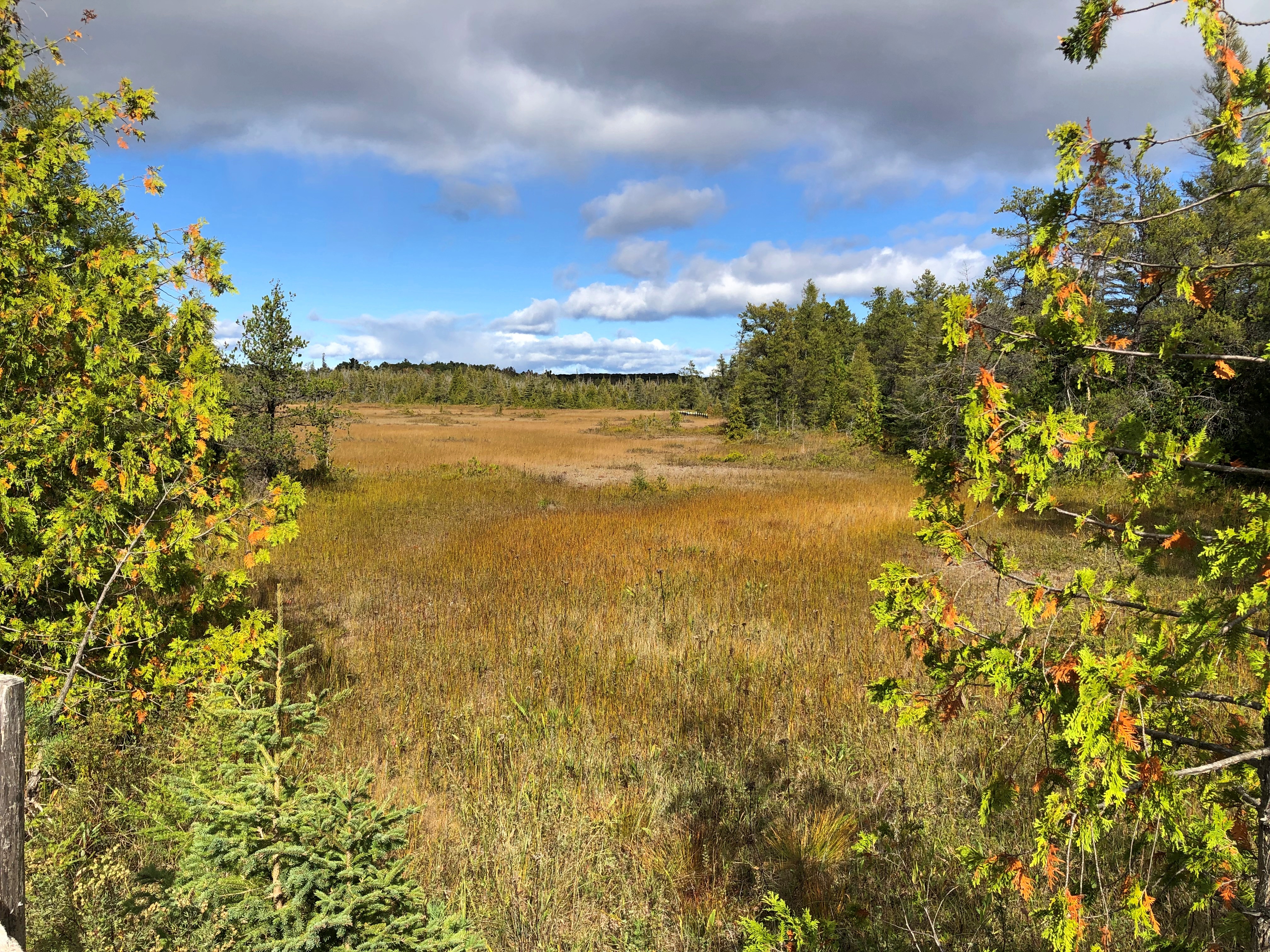
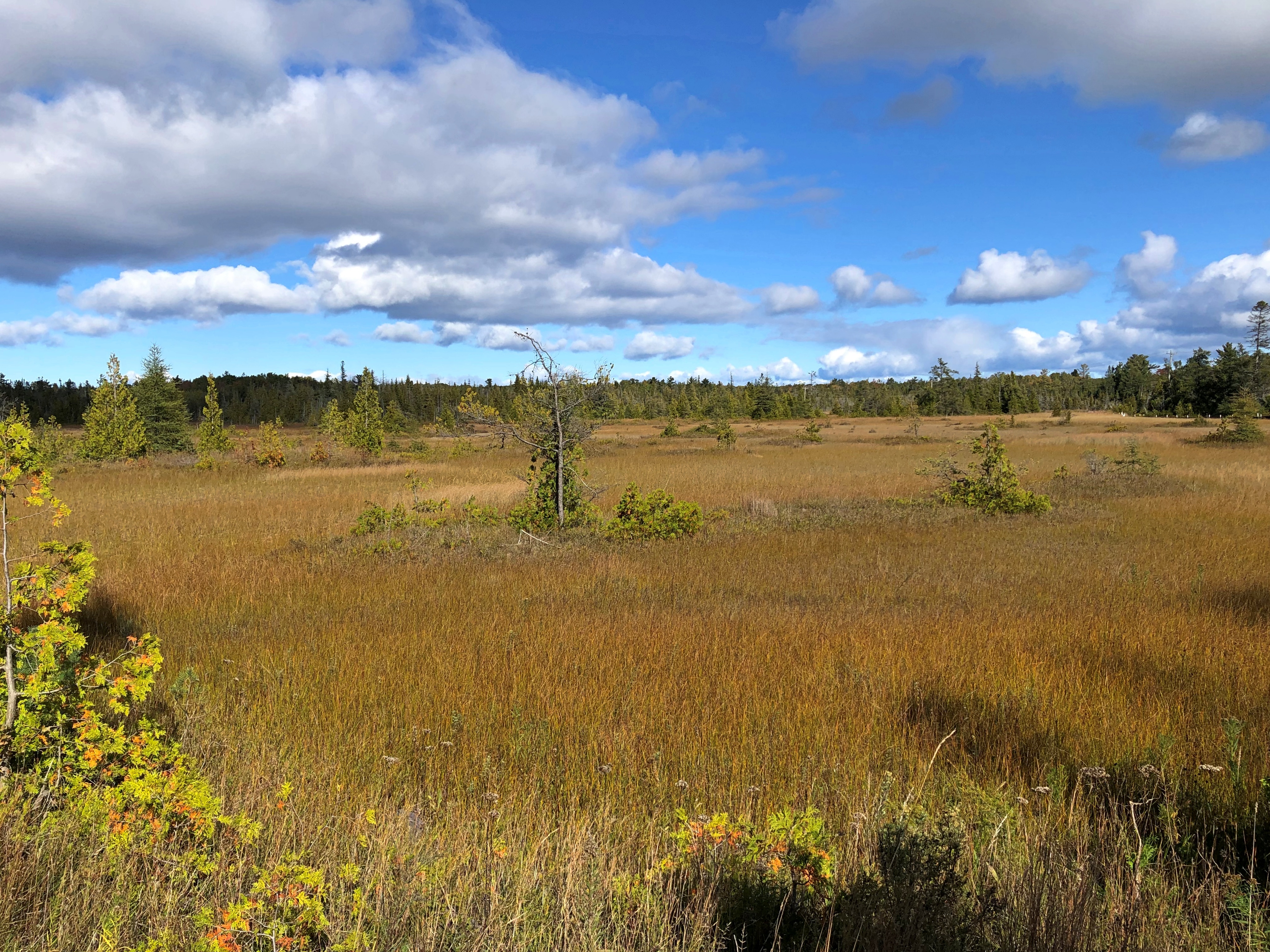
Behind the beach, a fen.
I don’t know a fen from a bog or a marsh, even though I’ve seen a fen, but that’s what the sign said. It also informed us that resident in the area is the Massasauga rattlesnake (Sistrurus catenatus), “Ontario’s only venomous snake.”
I didn’t know Ontario had any venomous snakes either, much less a rattler. We were further assured that they are small (not a good thing) and shy (better), so they are likely to avoid you. Also, they are endangered, so gardeners in, say, suburban Toronto aren’t at much risk. Canada ≠ Australia, despite some historic similarities. As we tromped along, none were to be heard.
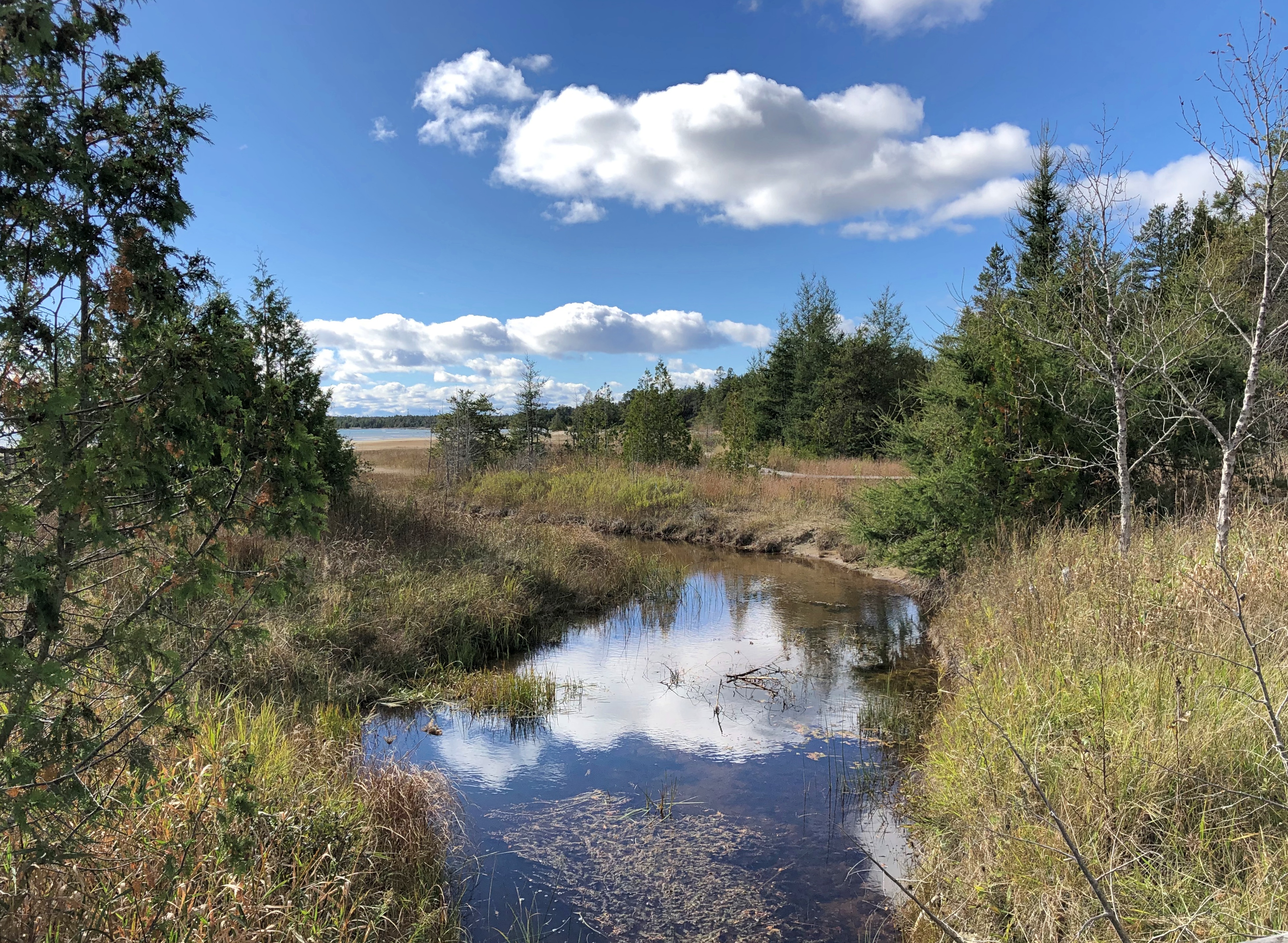
A short trail wandered into the trees near the beach, past a couple of creeks meeting Lake Huron.
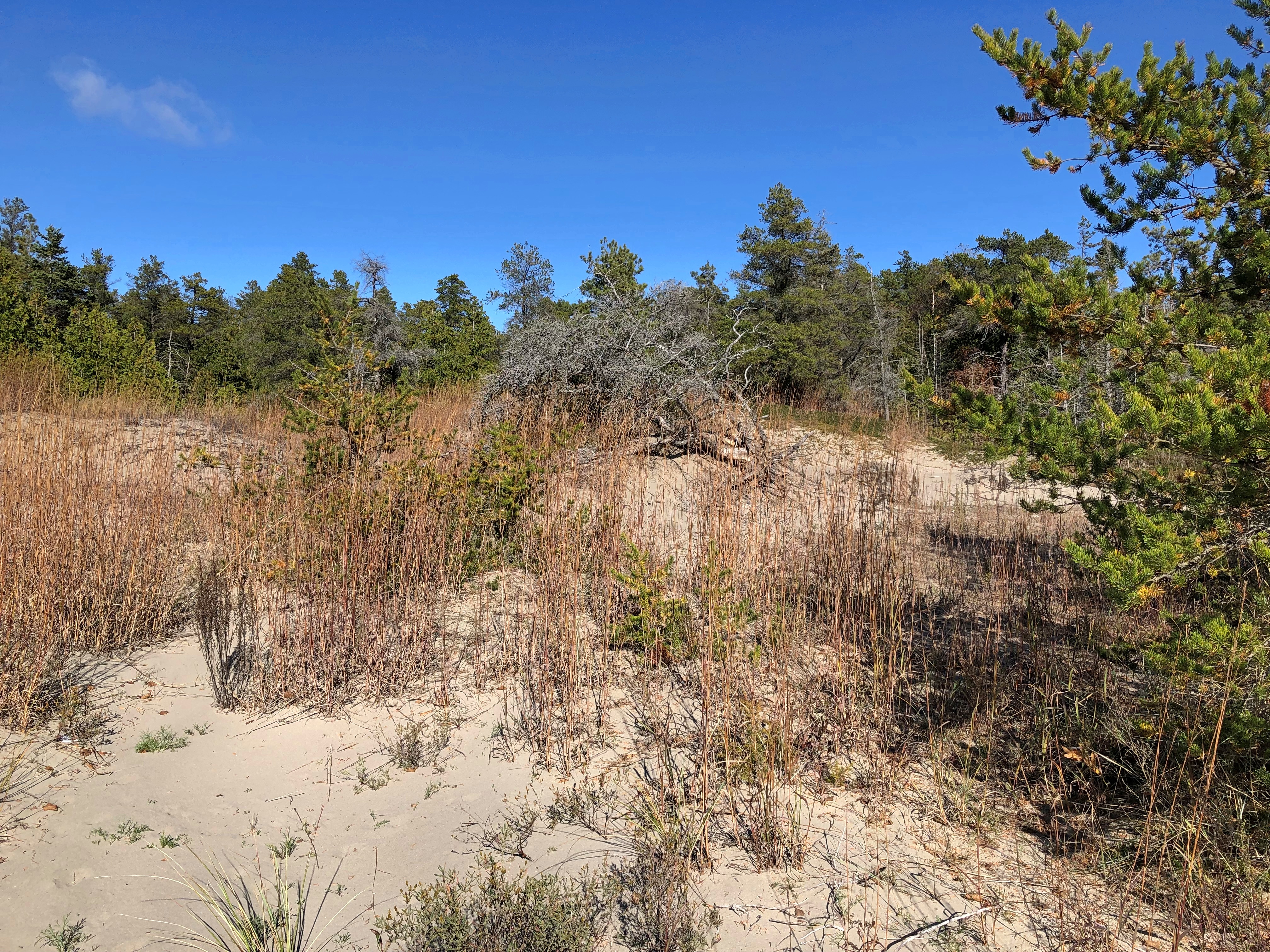
The trail was a loop, returning by way of grasslands and more beach, which was a little rocky at that point.
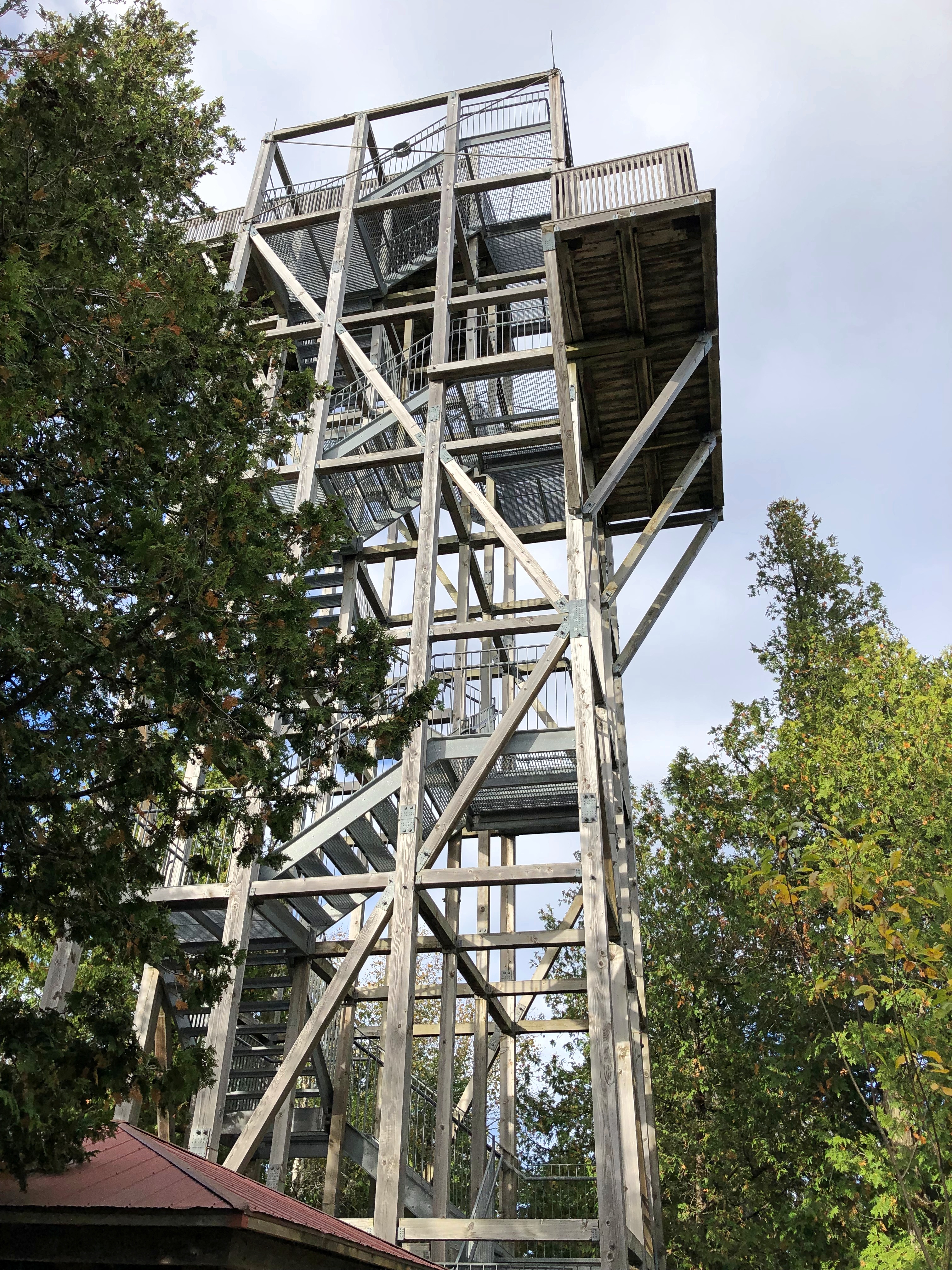
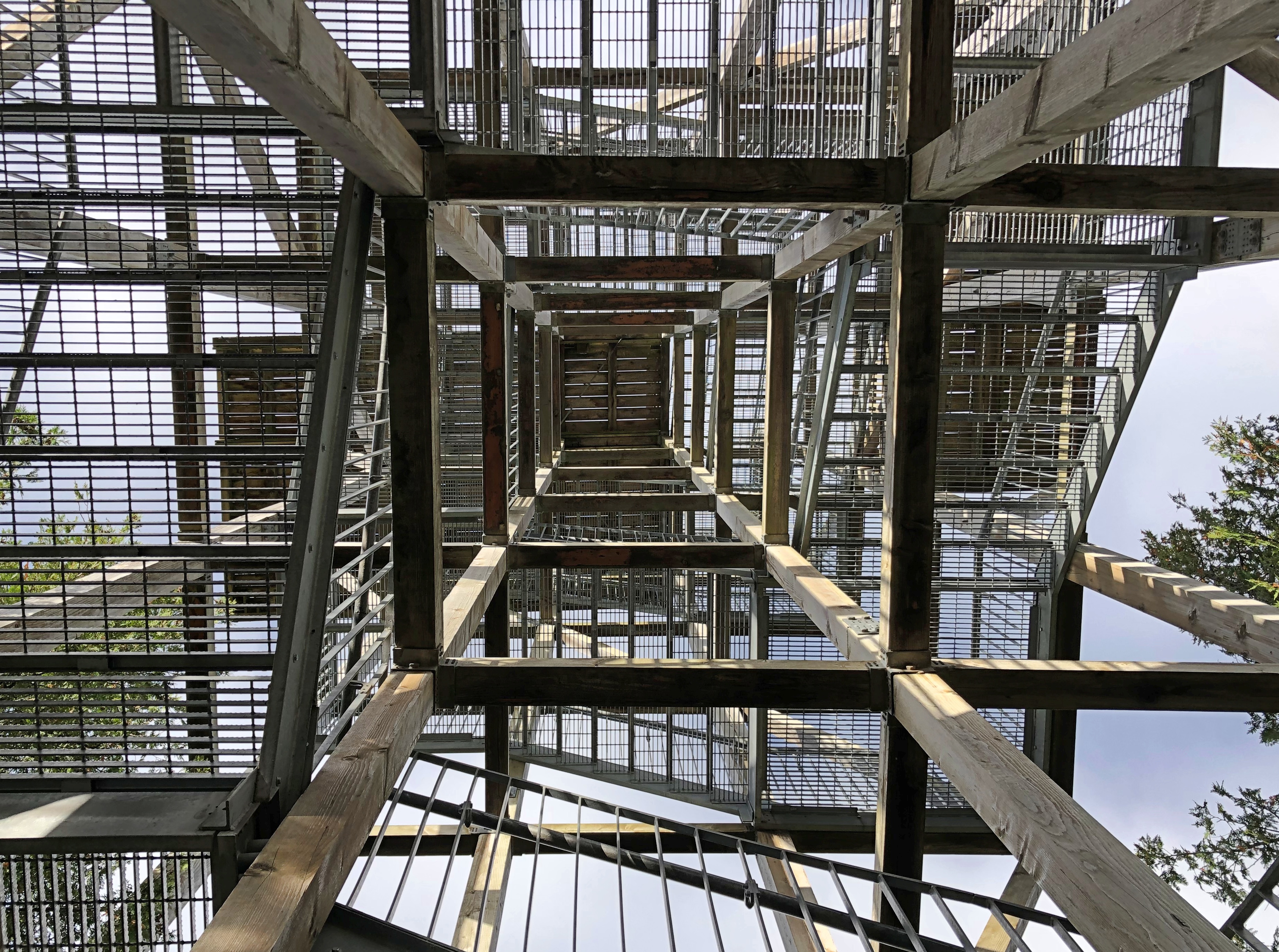
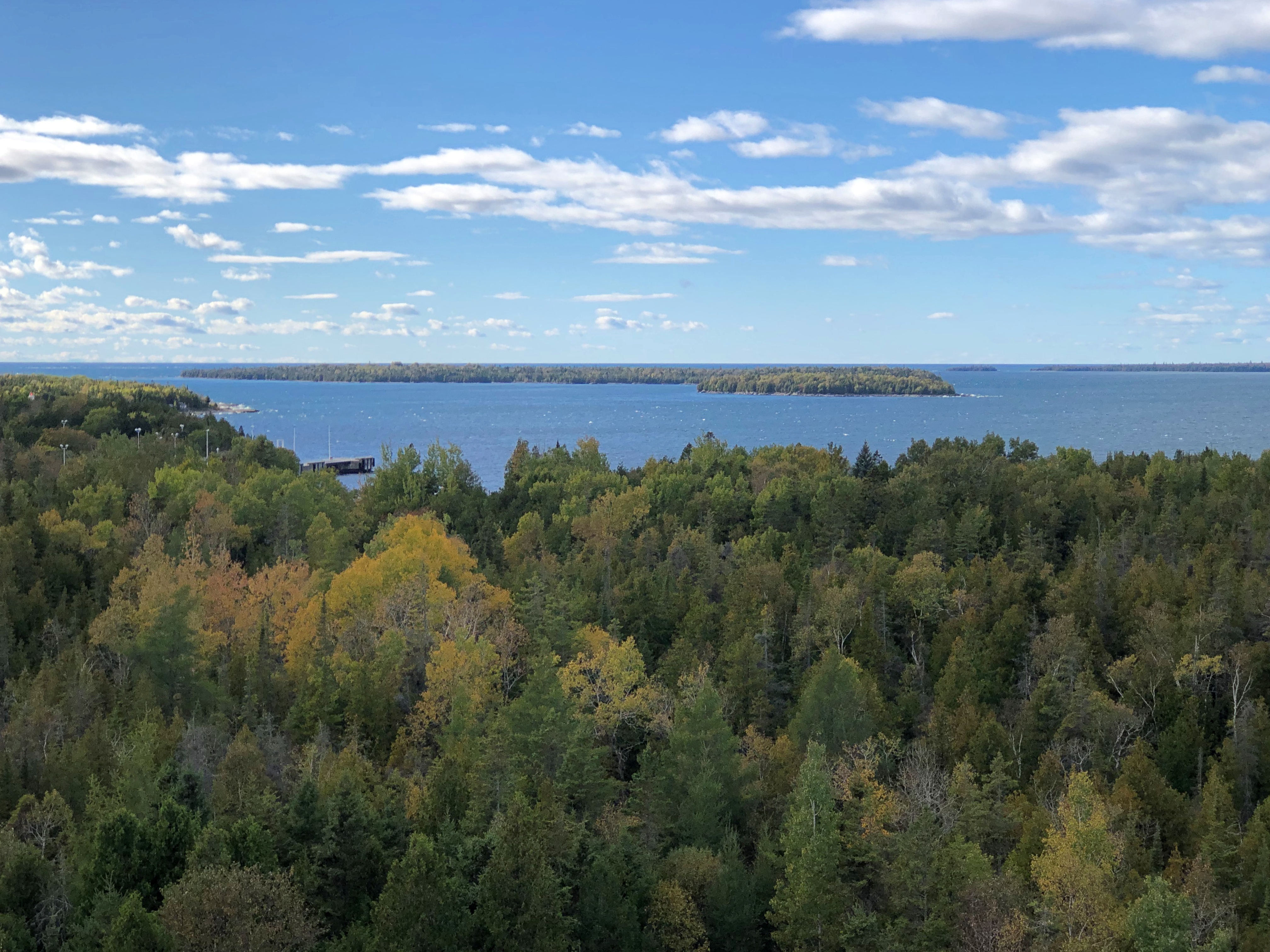
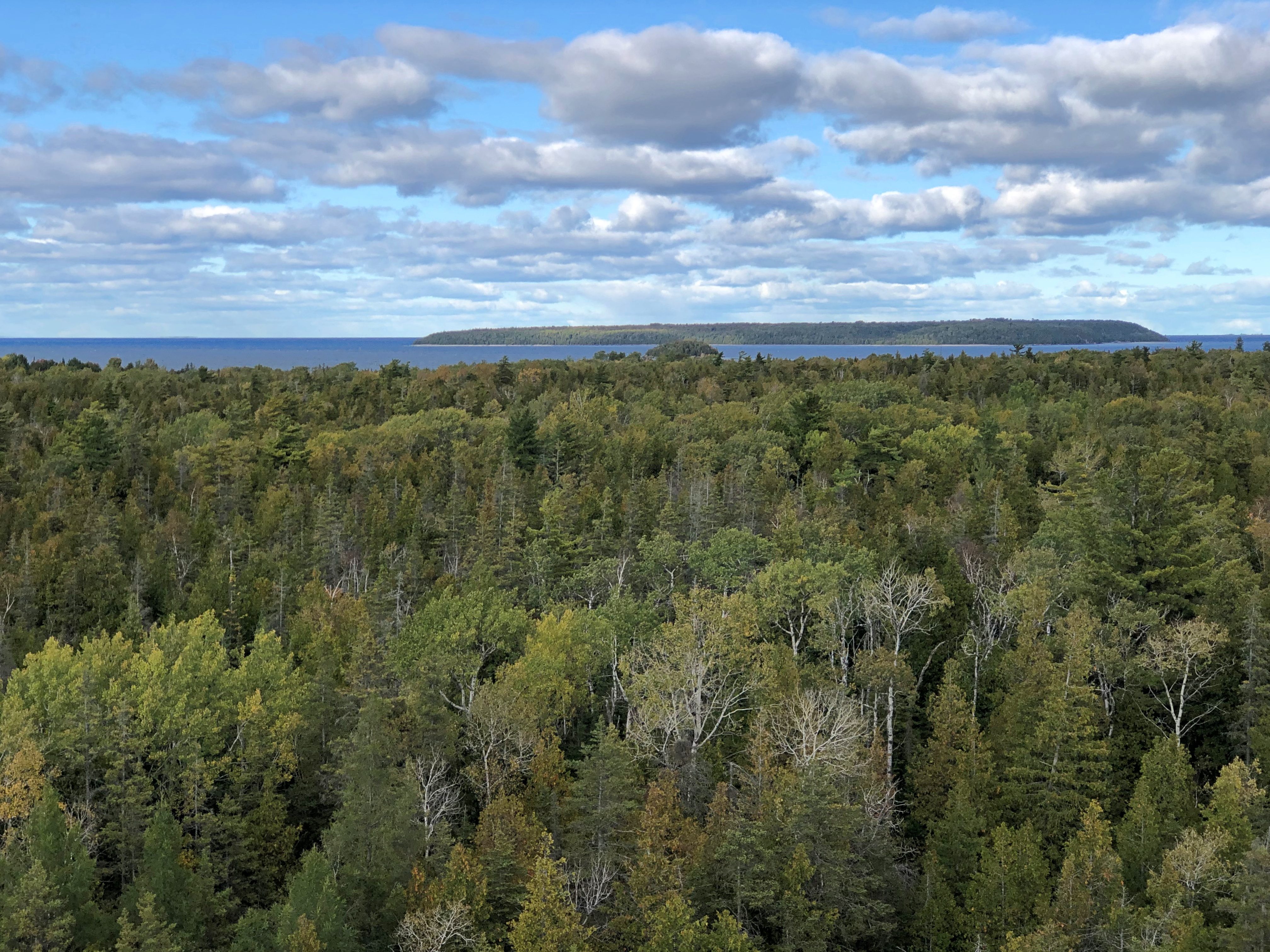
We still had some afternoon left – a warmish day in October isn’t to be wasted – so we went to the BPNP visitor center, back on the Georgian Bay side, to climb the observation tower.
Nice views, though not as much fall color as we’d expected. I could feel the tower shake just a little in the wind, which wasn’t a pleasant sensation. I’m still up for climbing towers for the vistas, but find myself a bit more unnerved by the experience than I used to be.
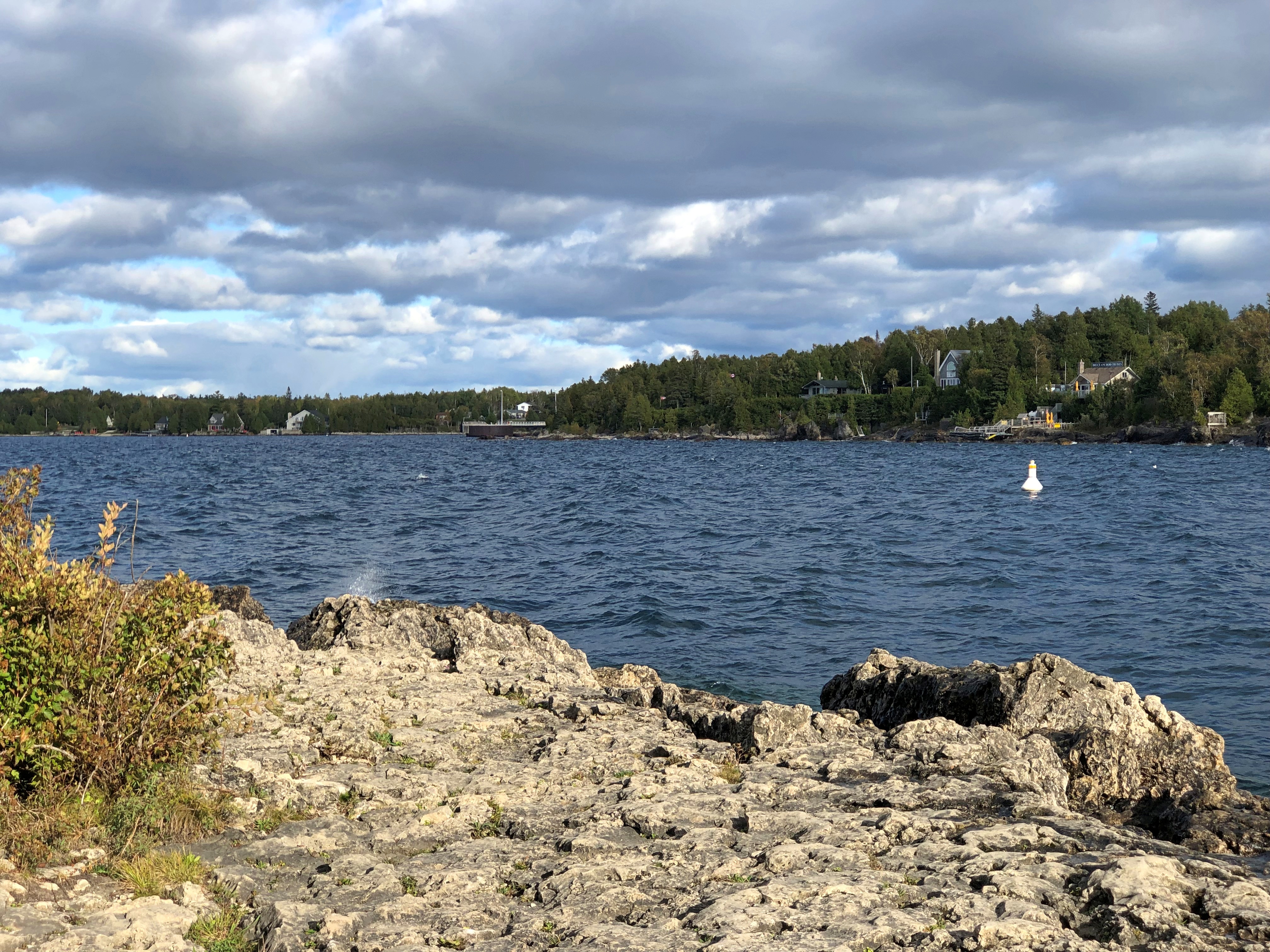
We still weren’t quite done. We drove the short way to Big TubHarbour, which isn’t part of the national park, but rather part of the town of Tobermory.
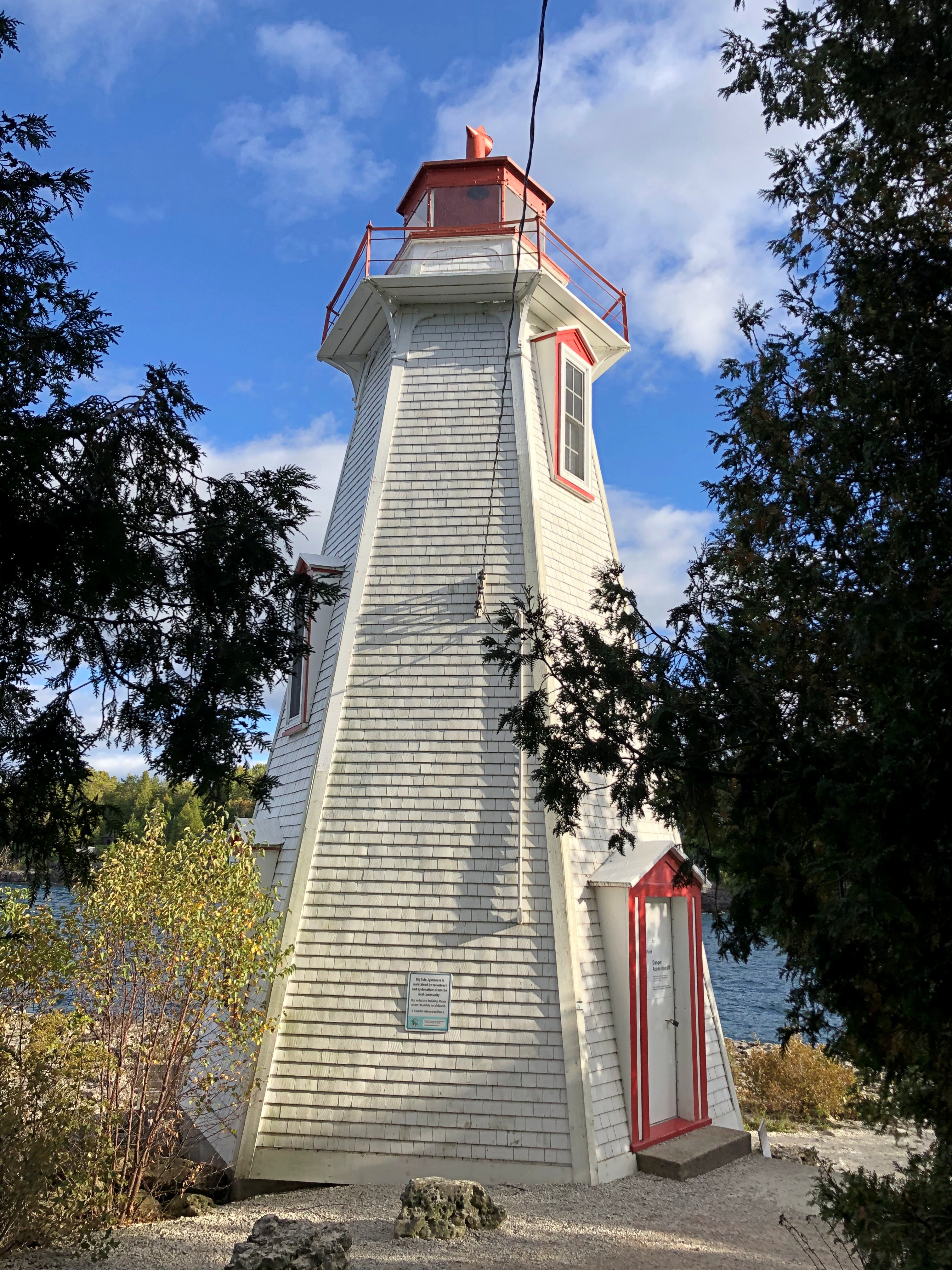
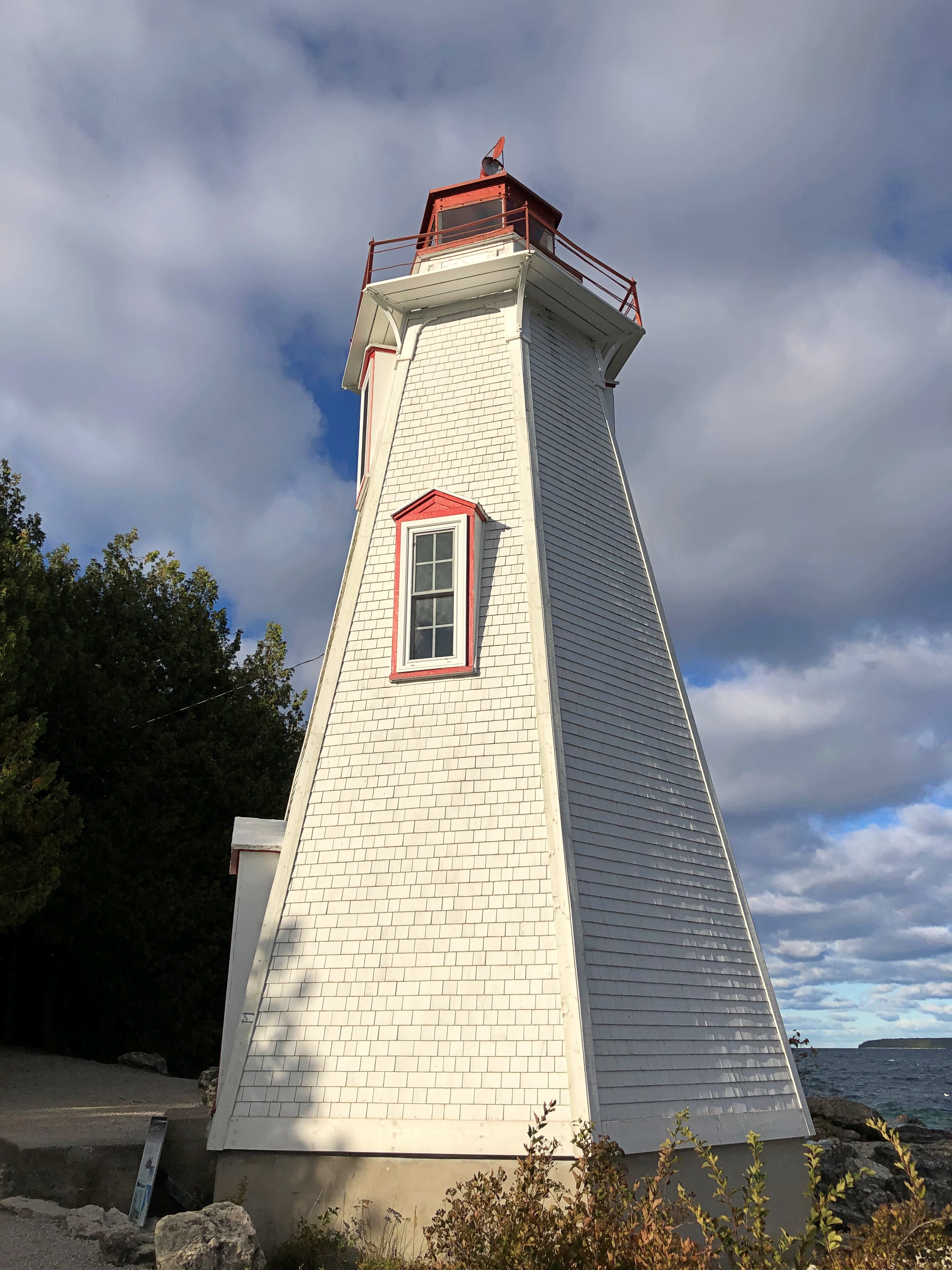
The thing to see there is the lighthouse.
Still a working light, so no climbing, unlike others. Not as storied as the Lighthouse of Alexandria or even the Eddystone Light, but good enough on a windy afternoon in Ontario.
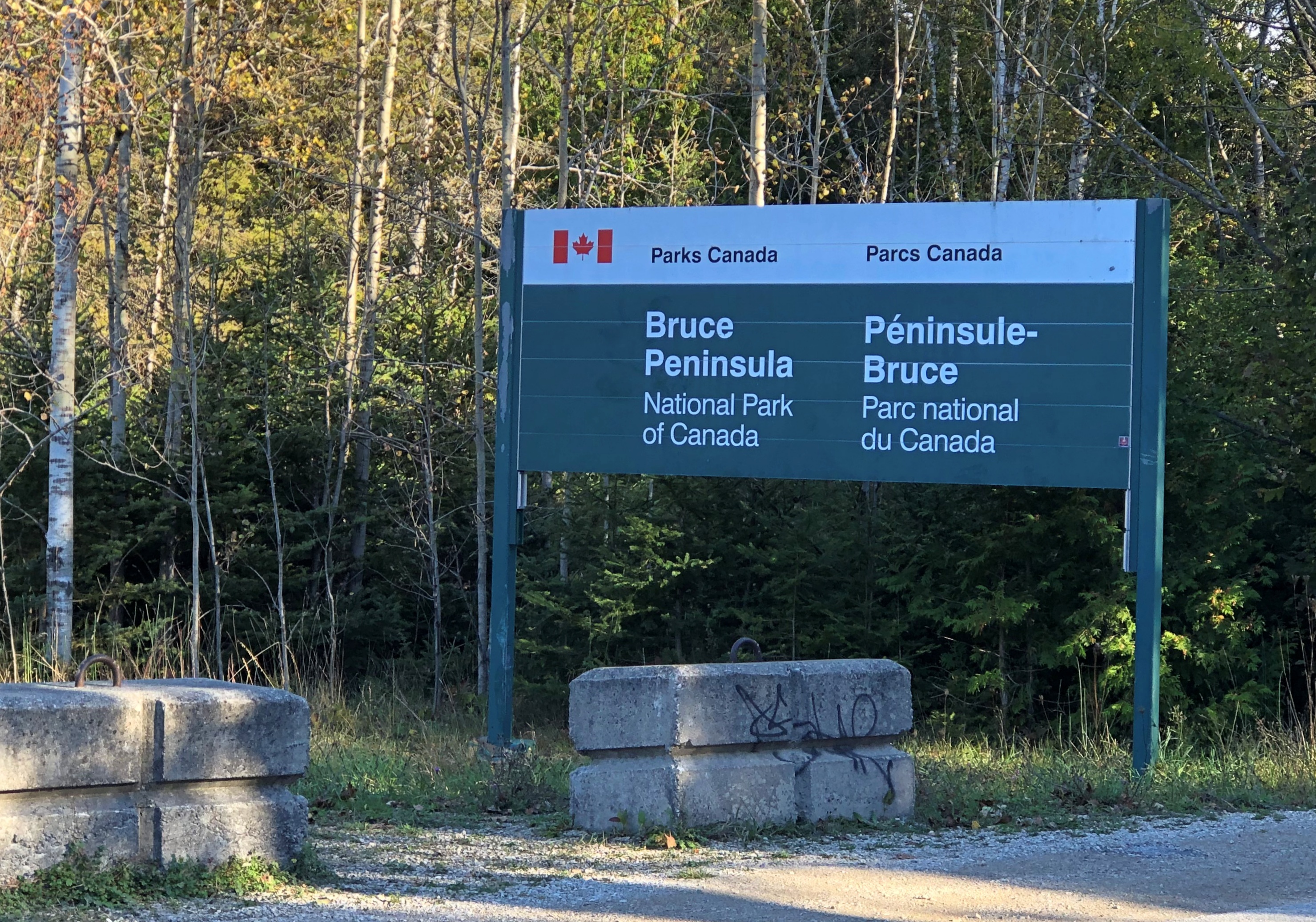
A few years ago, Parks Canada, which oversees Bruce Peninsula National Park in Ontario, made noises about changing the name of the park to Saugeen Peninsula NP, after the place name used by the Saugeen Ojibway Nation for the peninsula. The agency started calling the peninsula that, at least internally, and promised a review about the park name. I’d think an actual change would require an act of parliament, but the ways of Canada are mysterious, so I can’t say for sure.
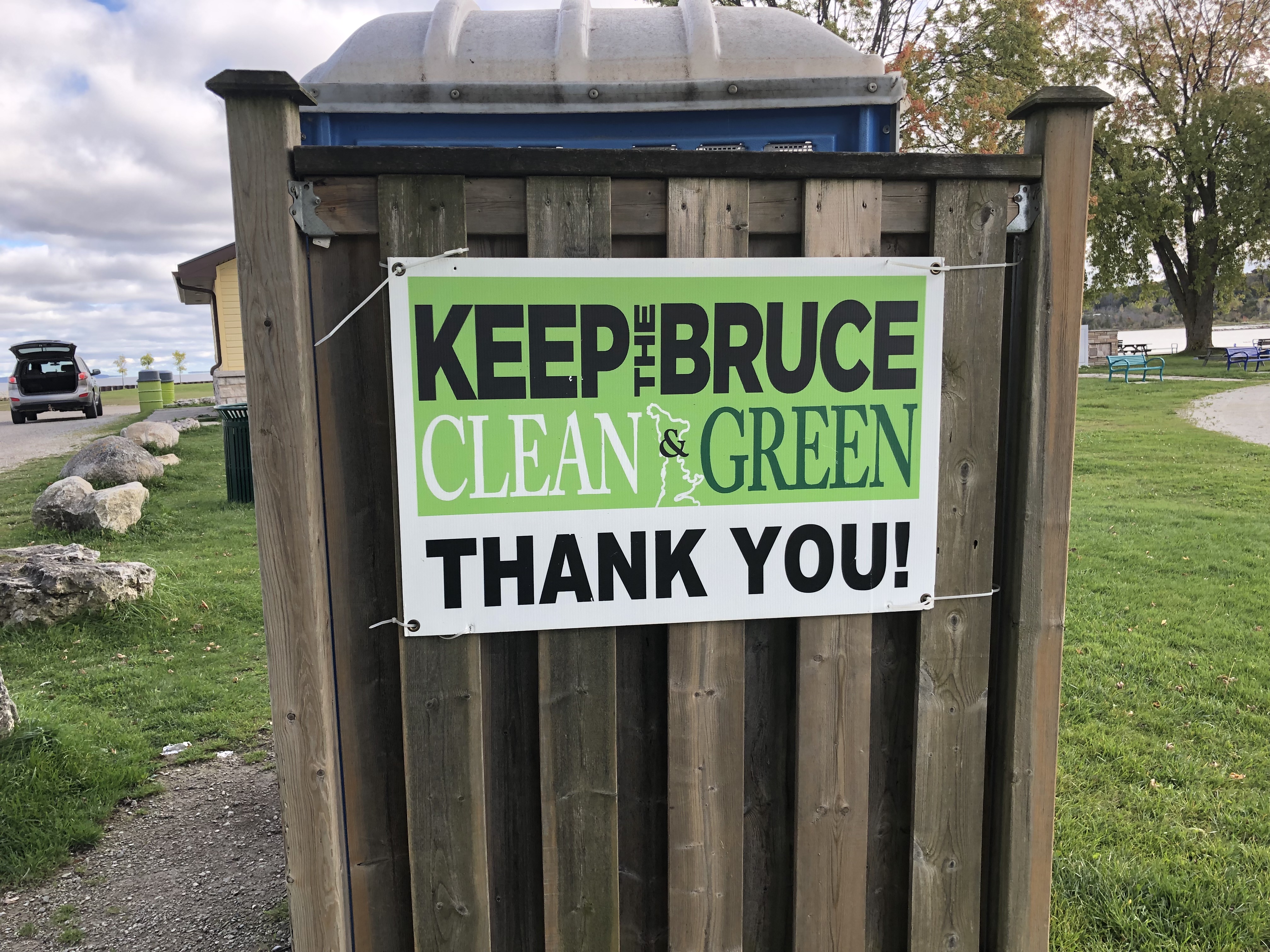
We were merely passing through, but I have a hunch that residents might be attached to “Bruce,” at least for the peninsula itself, so the idea of a name change hasn’t moved forward. Or maybe the process is slow by design. But anyway this was a common sign on the Bruce.
Also, one of the few radio stations receivable on the peninsula is 97.9 FM, The Bruce. If you drive through Port Elgin, as we did twice, you’ll pass the station’s well-marked HQ. If your listen enough, you’ll hear the slogan: Respect the Rock.
In any case, the name remains for now.
In his time – the 19th century – James Bruce, Eighth Earl of Elgin (d. 1863), was a governor of Jamaica, governor general of the province of Canada, and viceroy of India, among other things. Safe to say, then, that he was an imperialist. Pretty much a textbook example. Also, at another point in his career, he ordered the destruction of the Old Summer Palace in Beijing. Oops.
On the other hand, Bruce is a pretty solid name. Maybe the relevant board or committee can declare the peninsula to be named in honor of the entire Clan Bruce, who were so important in the history of Scotland, and whose doughty descendants can be found throughout Canada. That’s a pretty good example of lateral thinking, if I say so myself.
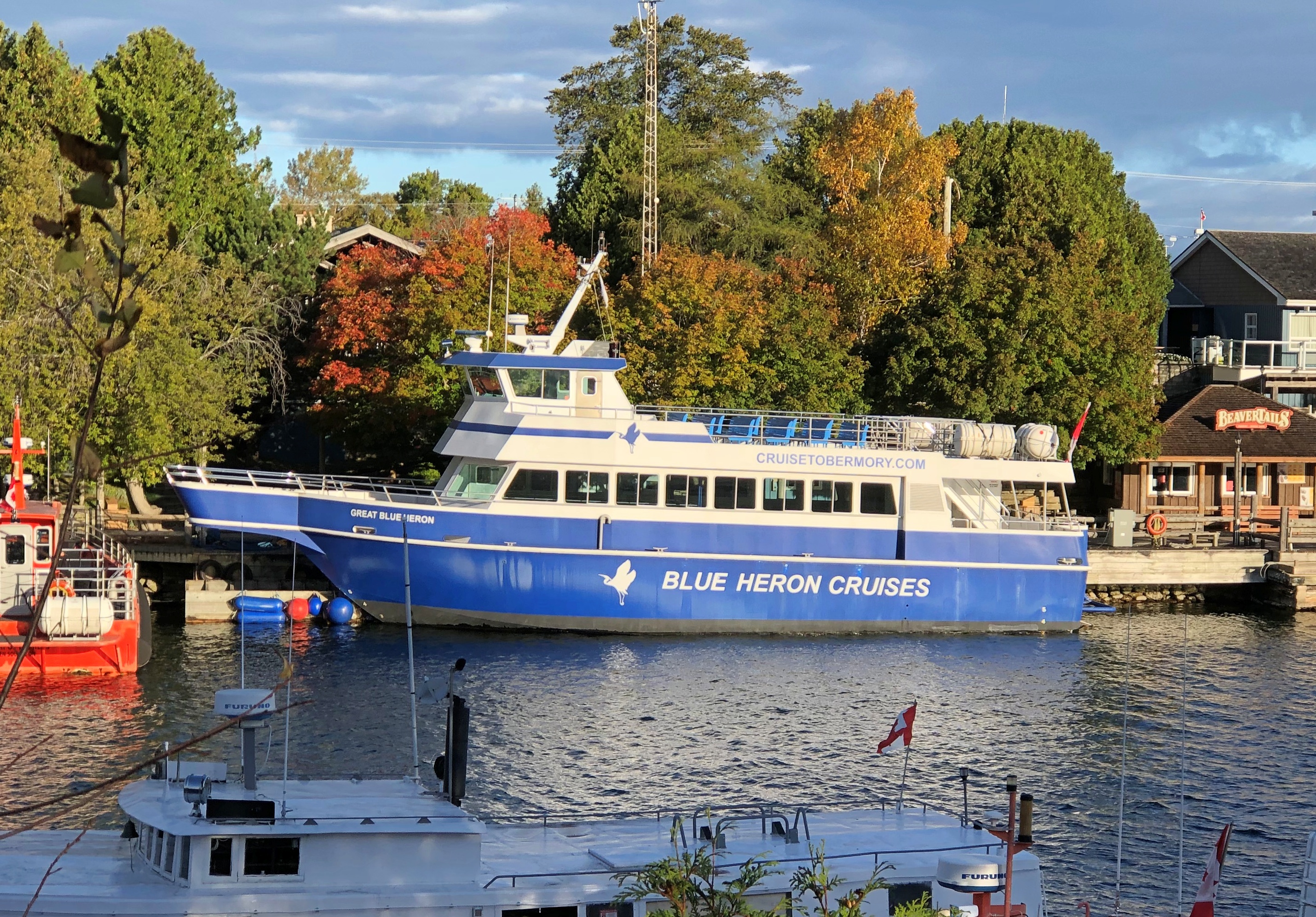
We came to BPNP last week on Wednesday morning (October 9), because this ship wasn’t sailing.
We’d booked round-trip passage to a place called Flowerpot Island, one of the peninsula’s picturesque offshore islands and part of Fathom Five National Marine Park, intending to stay much of the day. But the wind was up, and early that morning, the tour company sent a cancellation notice via email (and we got a refund).
Then we went through a minor amount of rigmarole to change our parking permit at BPNP, because while admission to the park isn’t timed, parking at the park is. We’d planned on visiting the next morning (October 10), before leaving for London. As it turned out, hiking around the Bruce took a fair amount of energy, so best to do it the day before a longish drive, not the same day as a longish drive. Sometimes adjustments on the road work out better.
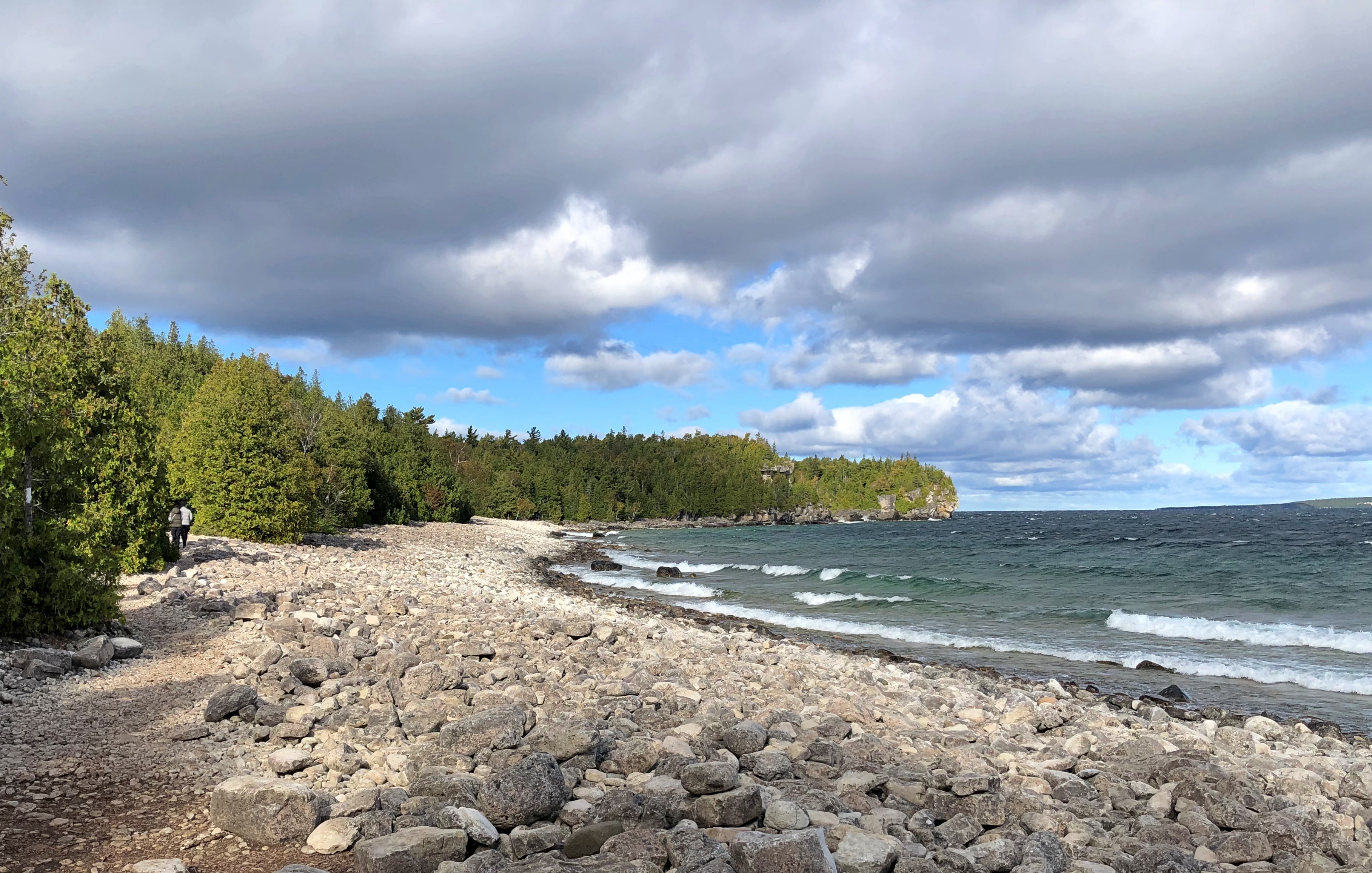
Our first hike in the national park was simple enough, in theory – out to Georgian Bay, along the edge of Georgian Bay, back from Georgian Bay to the parking lot we’d finagled an early spot in.
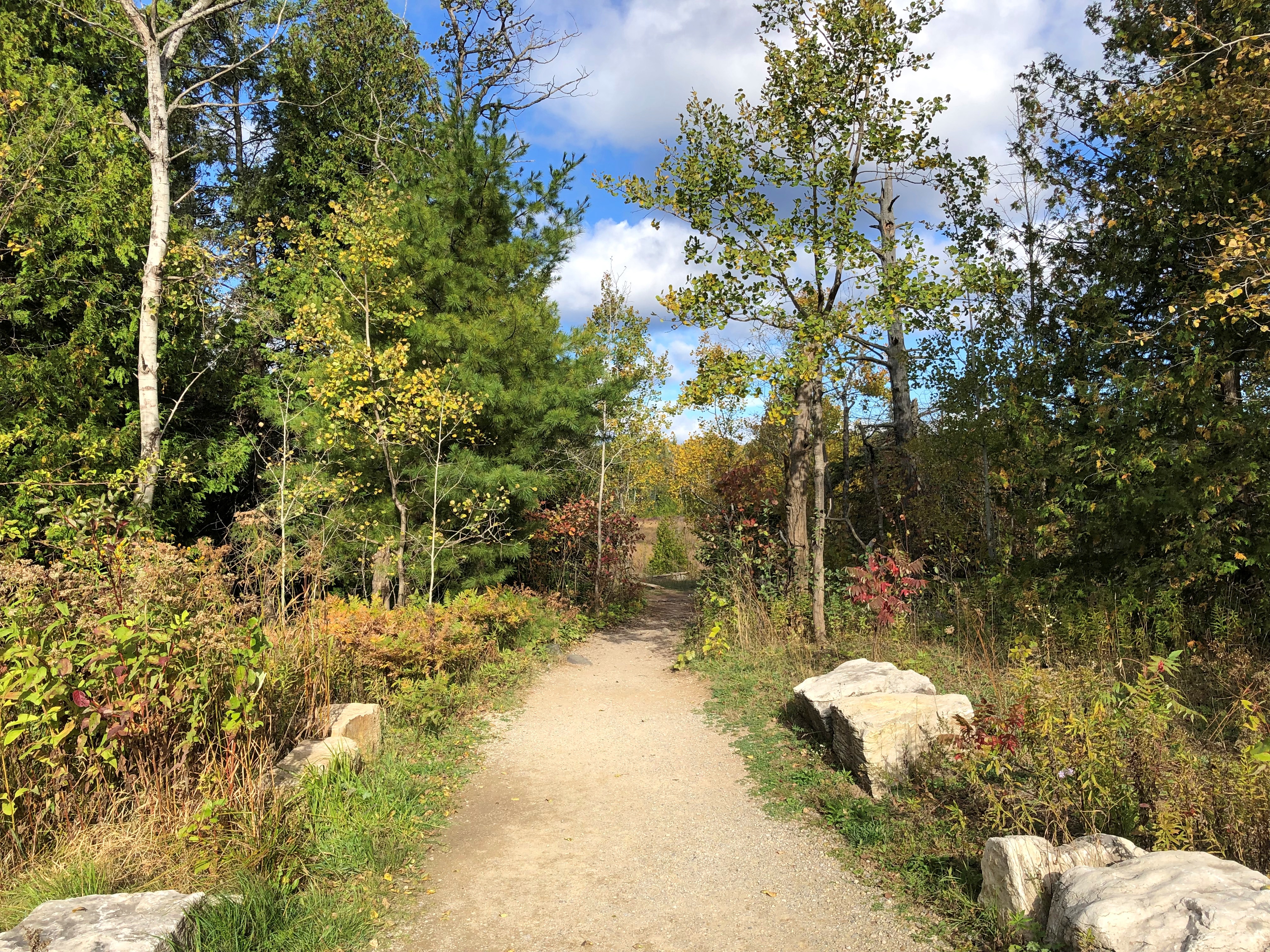
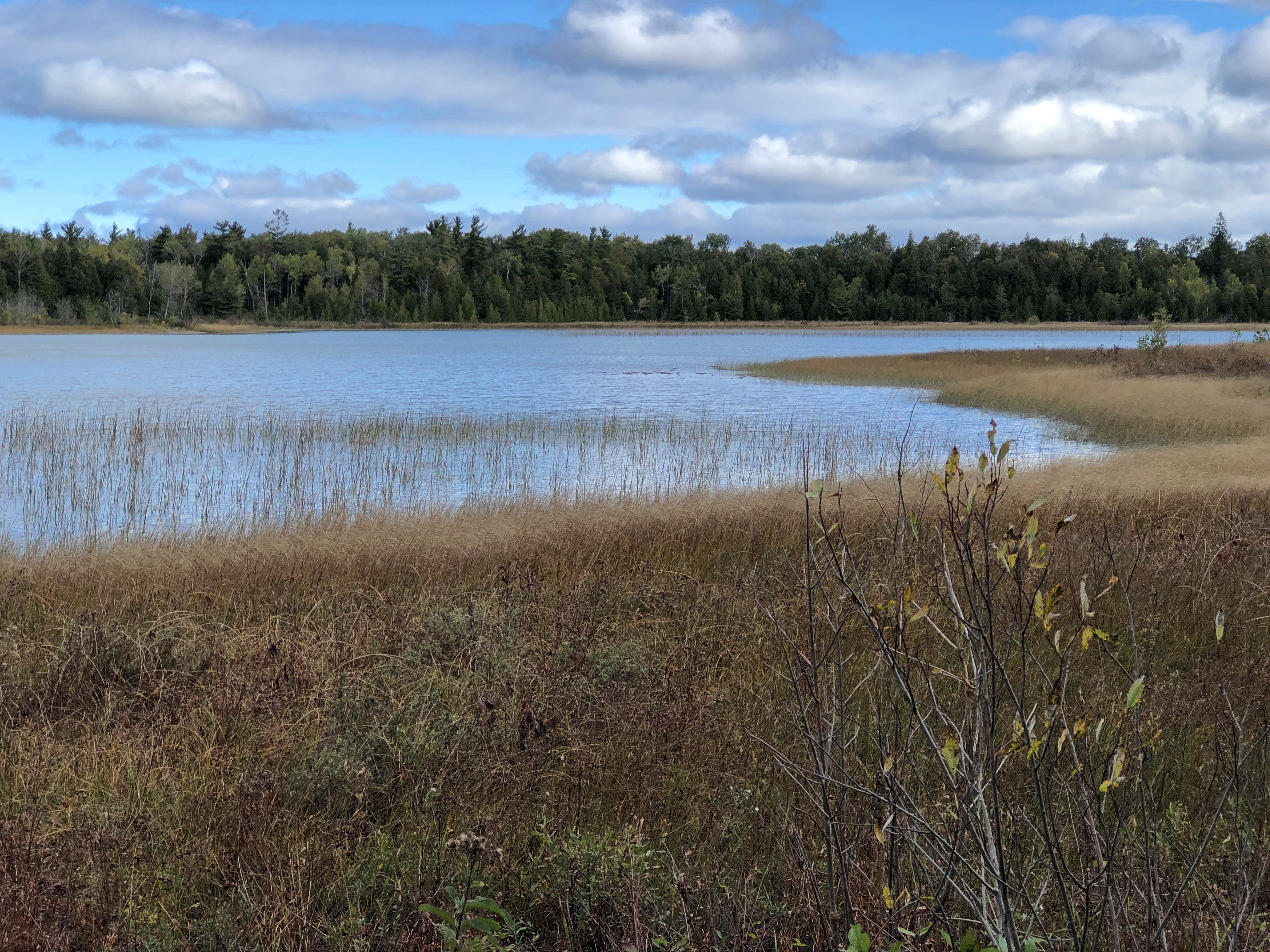
The path to Georgian Bay, most of the way along a shallow lake.
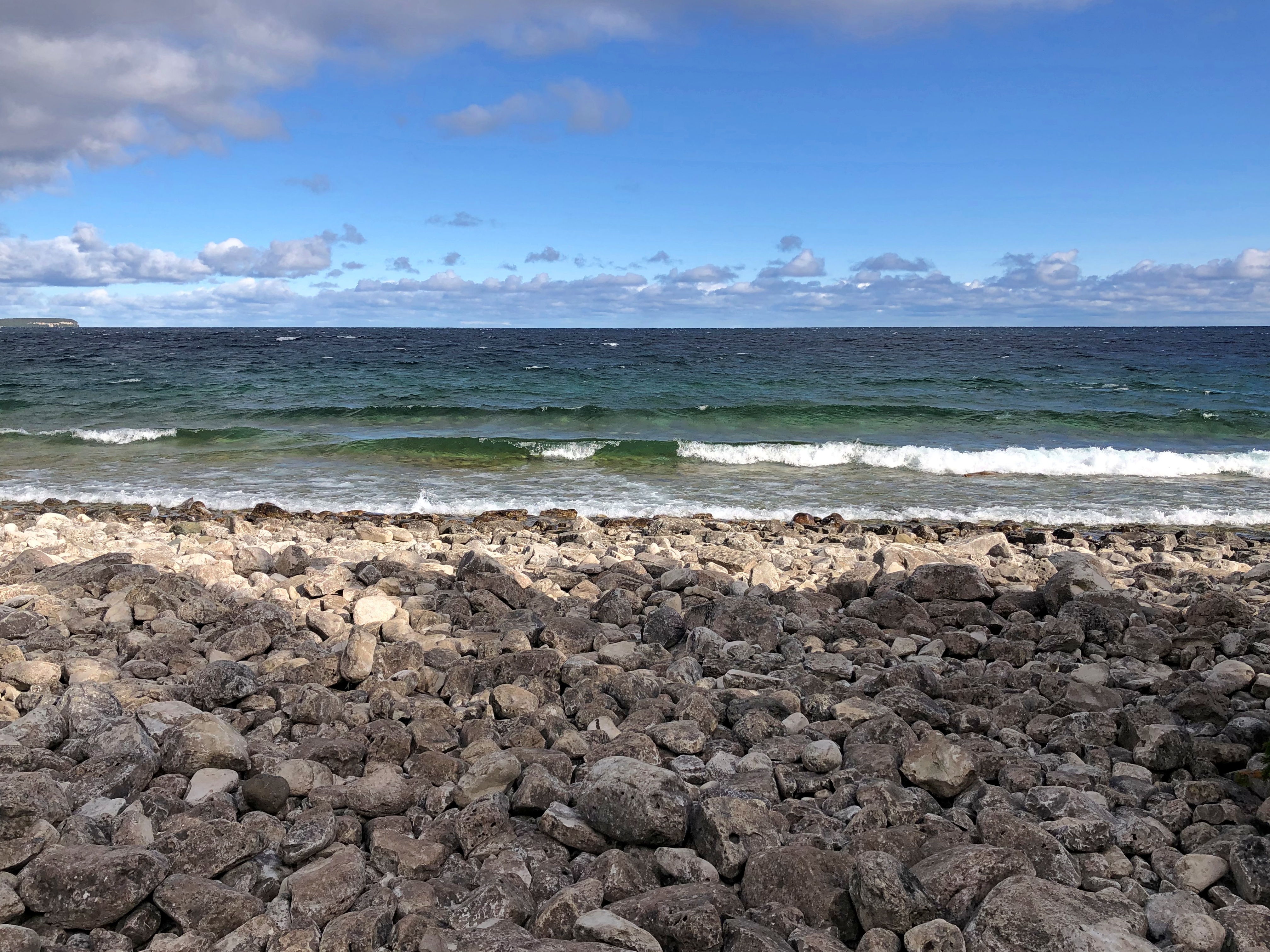
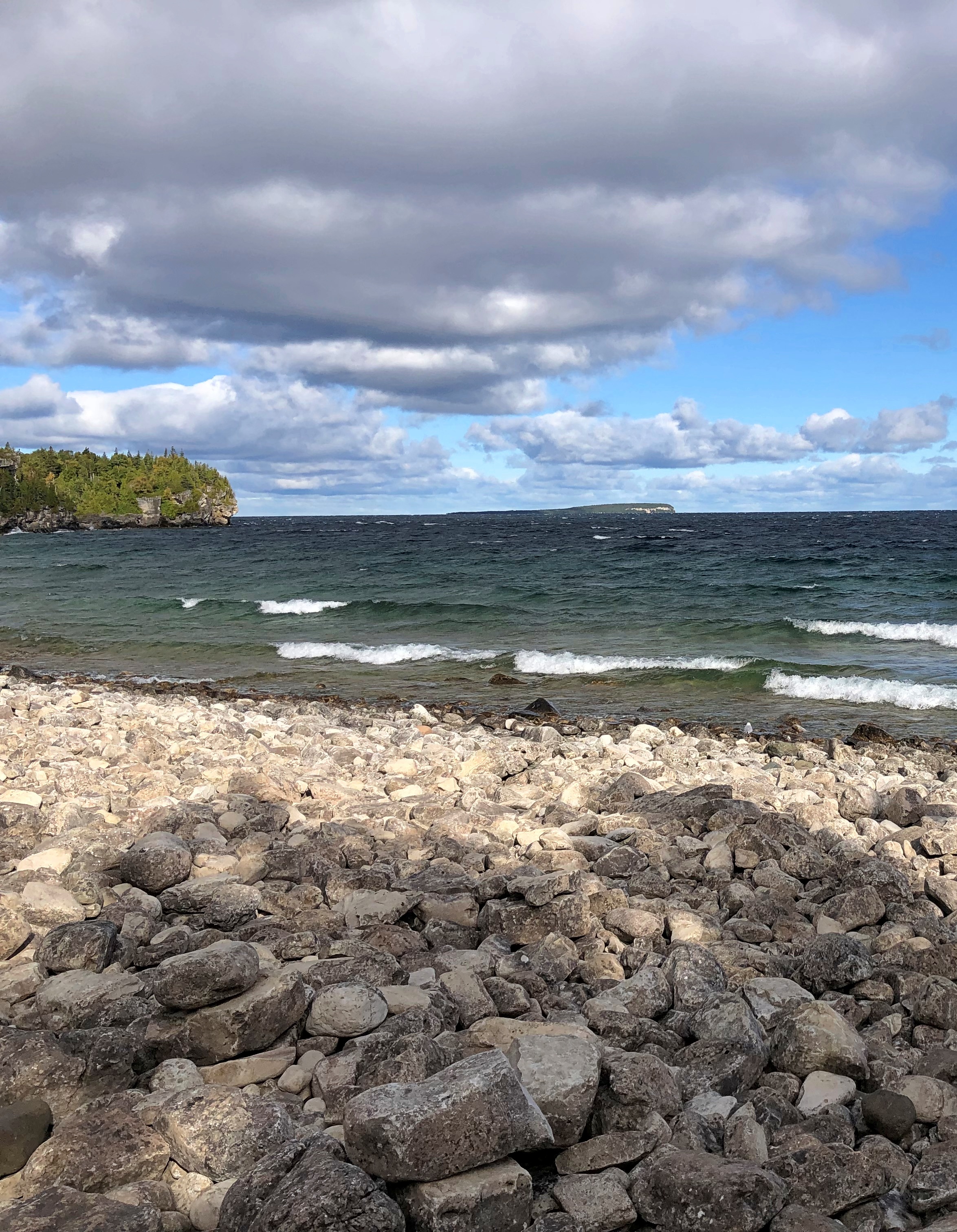
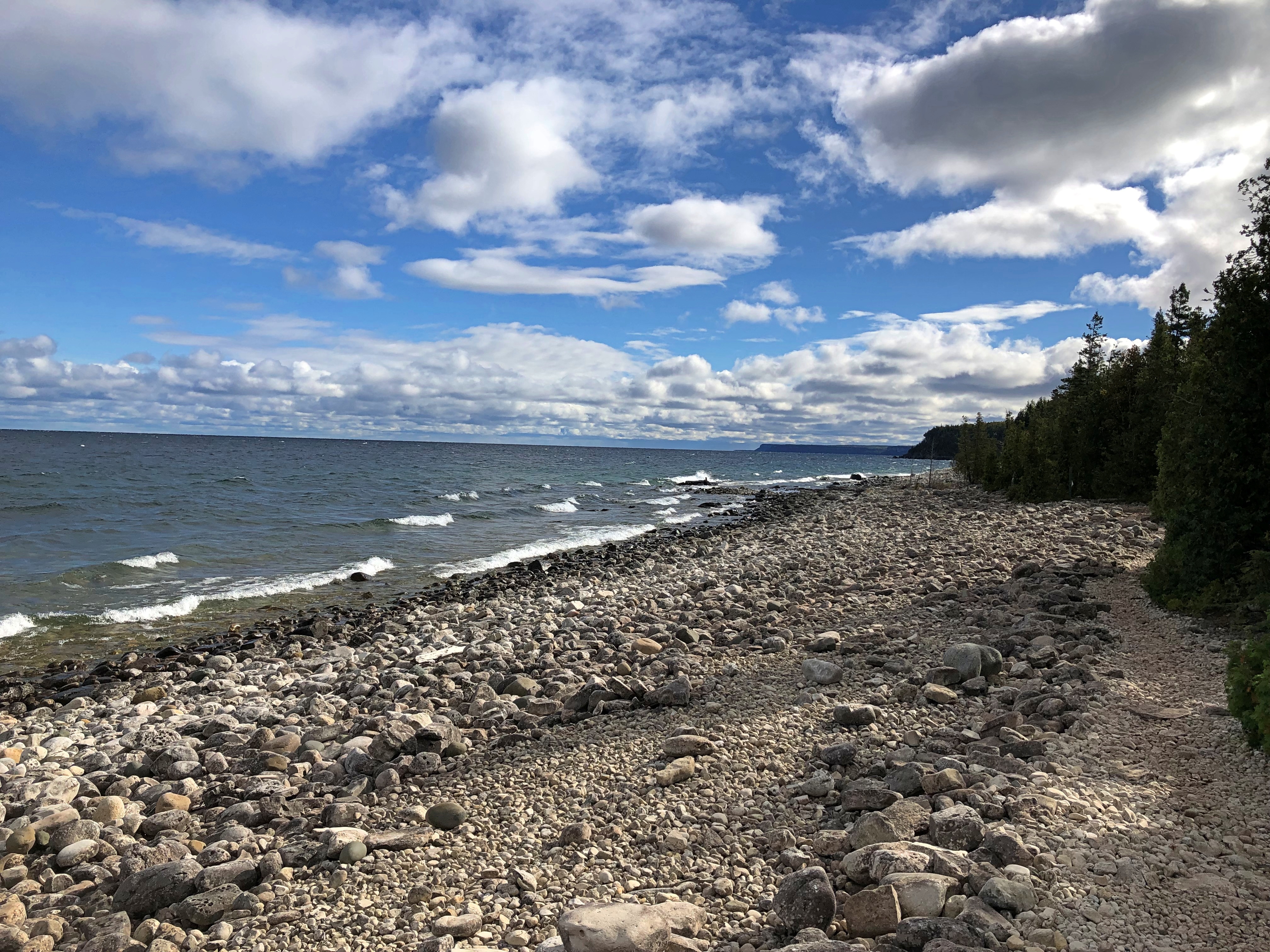
Soon you come to the rocky shores of the bay. This place has some centuries (millennia?) to go before it’s a sandy beach. For our part, we’d never seen Georgian Bay before. But for a low place in the Niagara Escarpment, it could have been an entire other great lake, so large is it — 5,800 square miles, or only somewhat smaller than Lake Ontario.
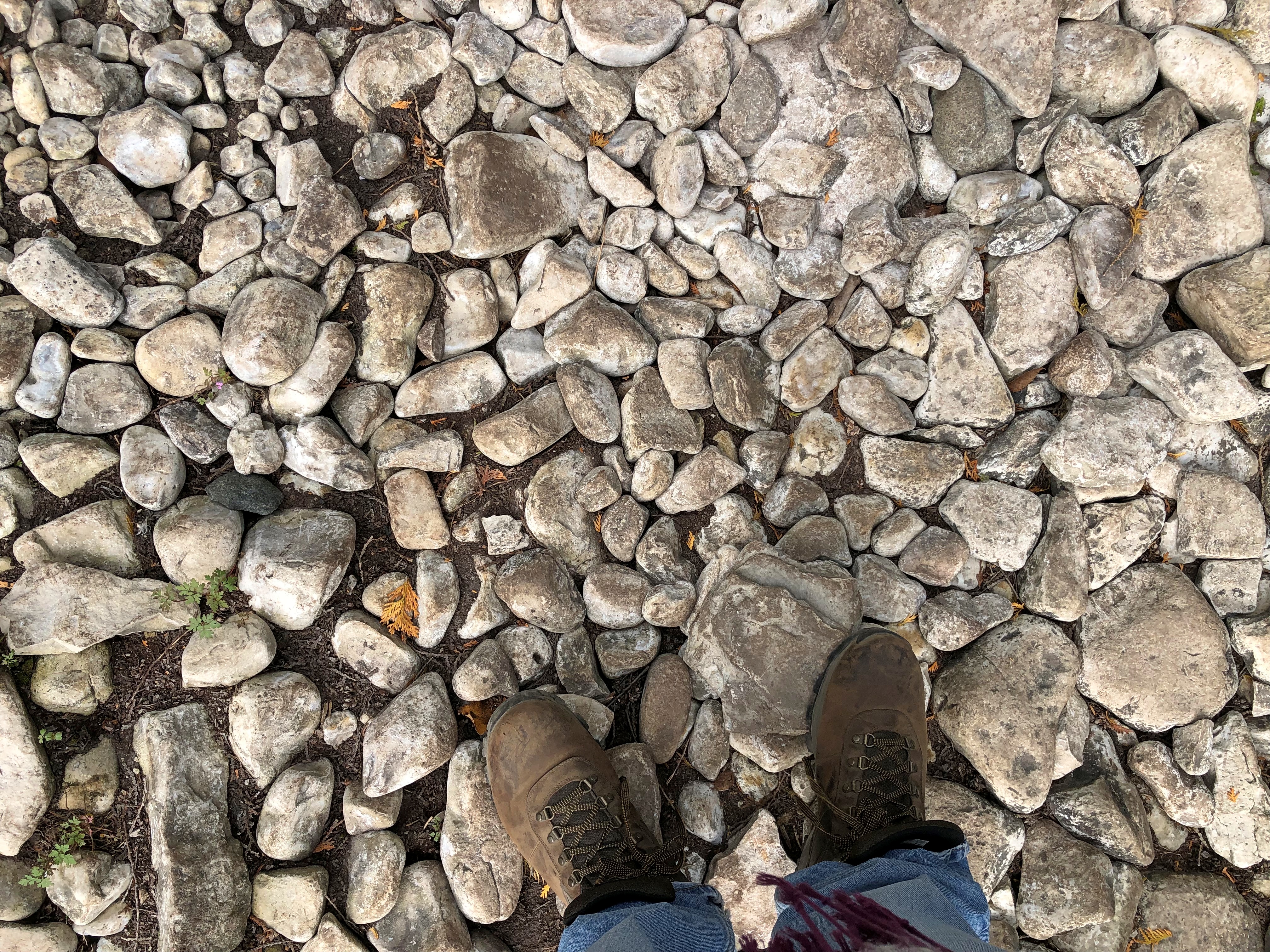
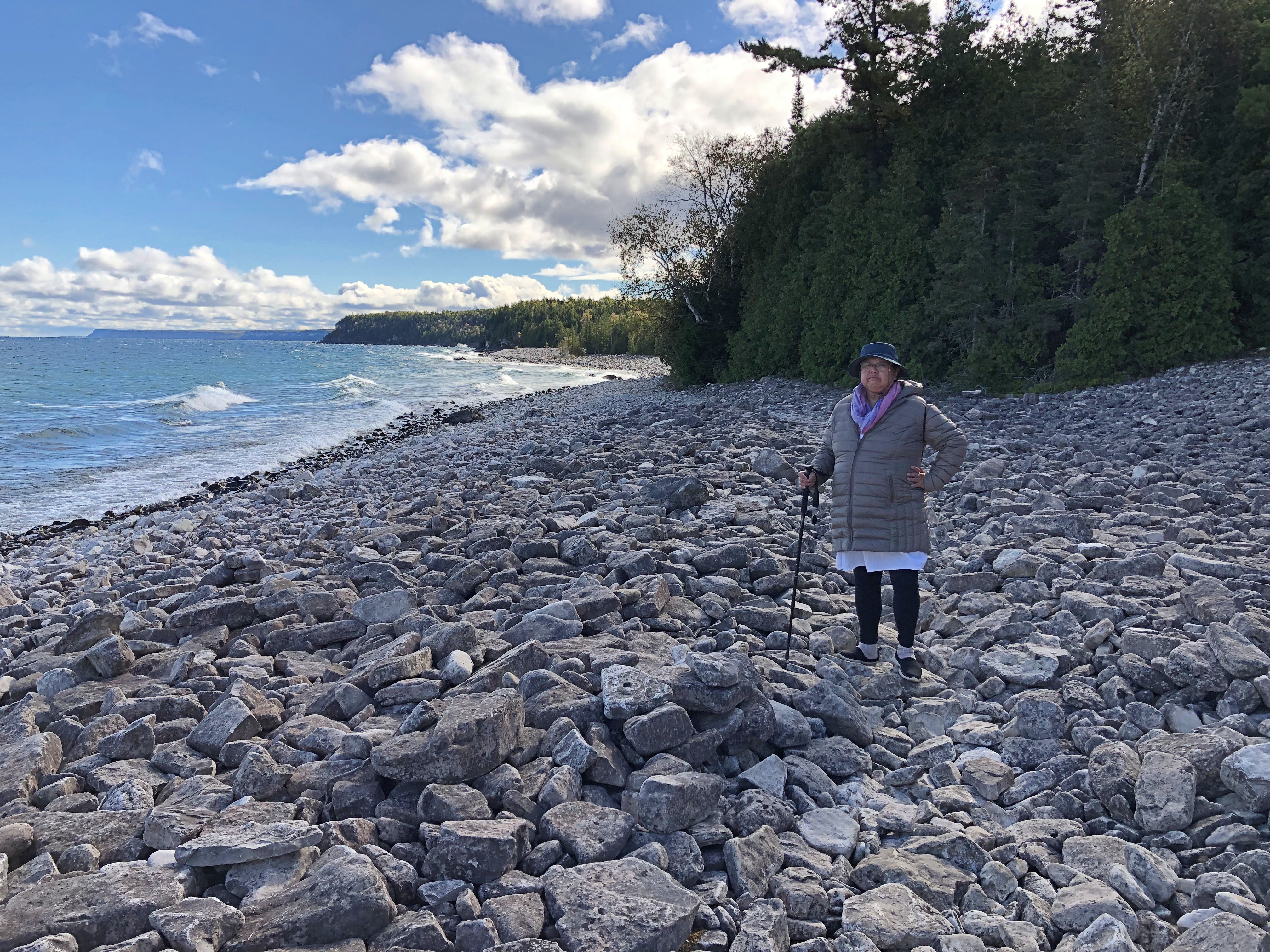
More rocks than you can shake a stick at. And we had our sticks – poles, anyway – and good thing, because the trail crossed the lakeside rock field. It took a little while to eye the course of the trail across the rocks.
I’m not suggesting it was a technically difficult hike. Tricky is more like it, and at my partly advanced age, slow going. But after a few minutes you get the knack for it, or at least enough to position your steps to avoid a tumble.
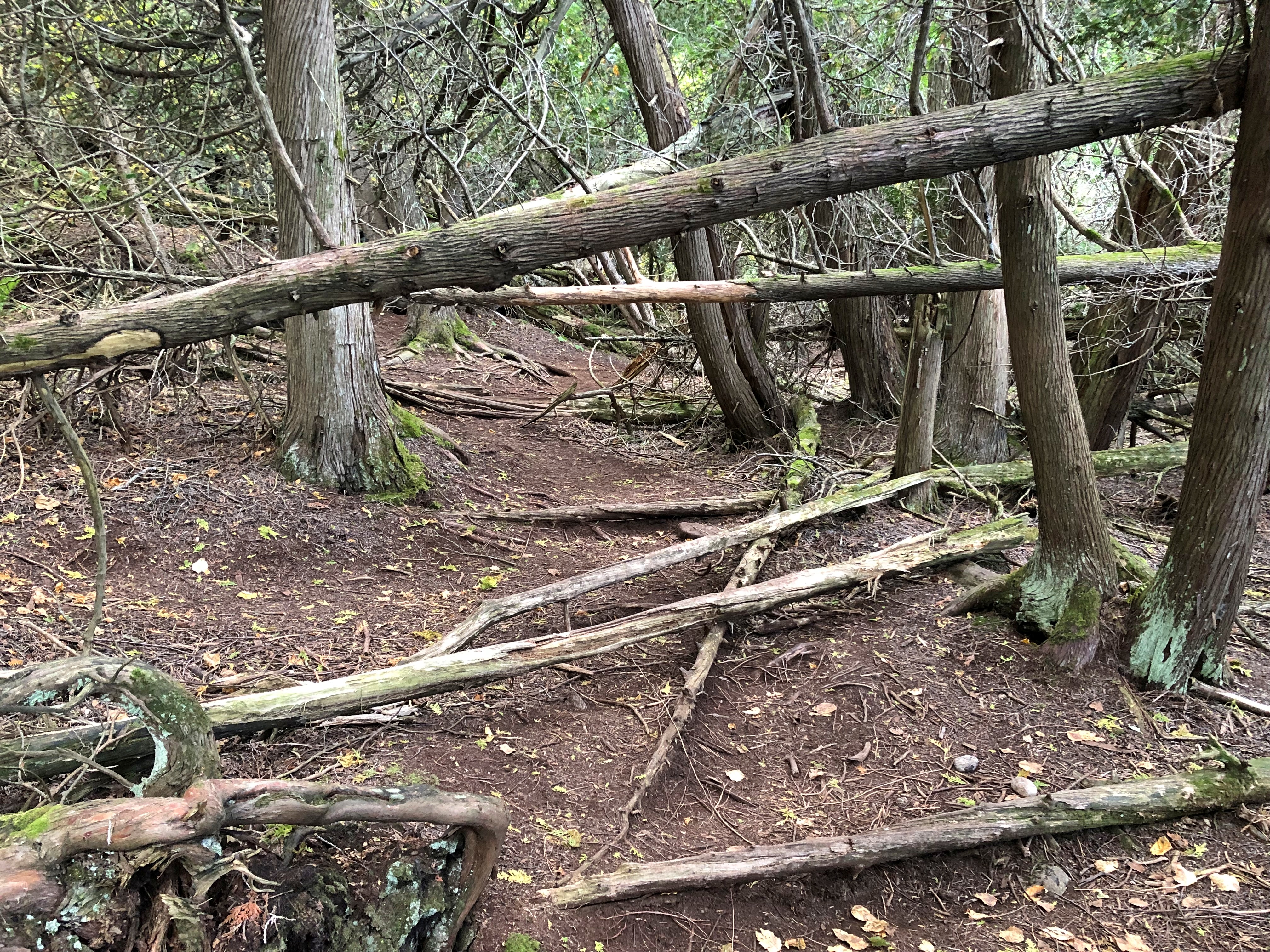
The trail eventually led back into the woods, which was just as slow.
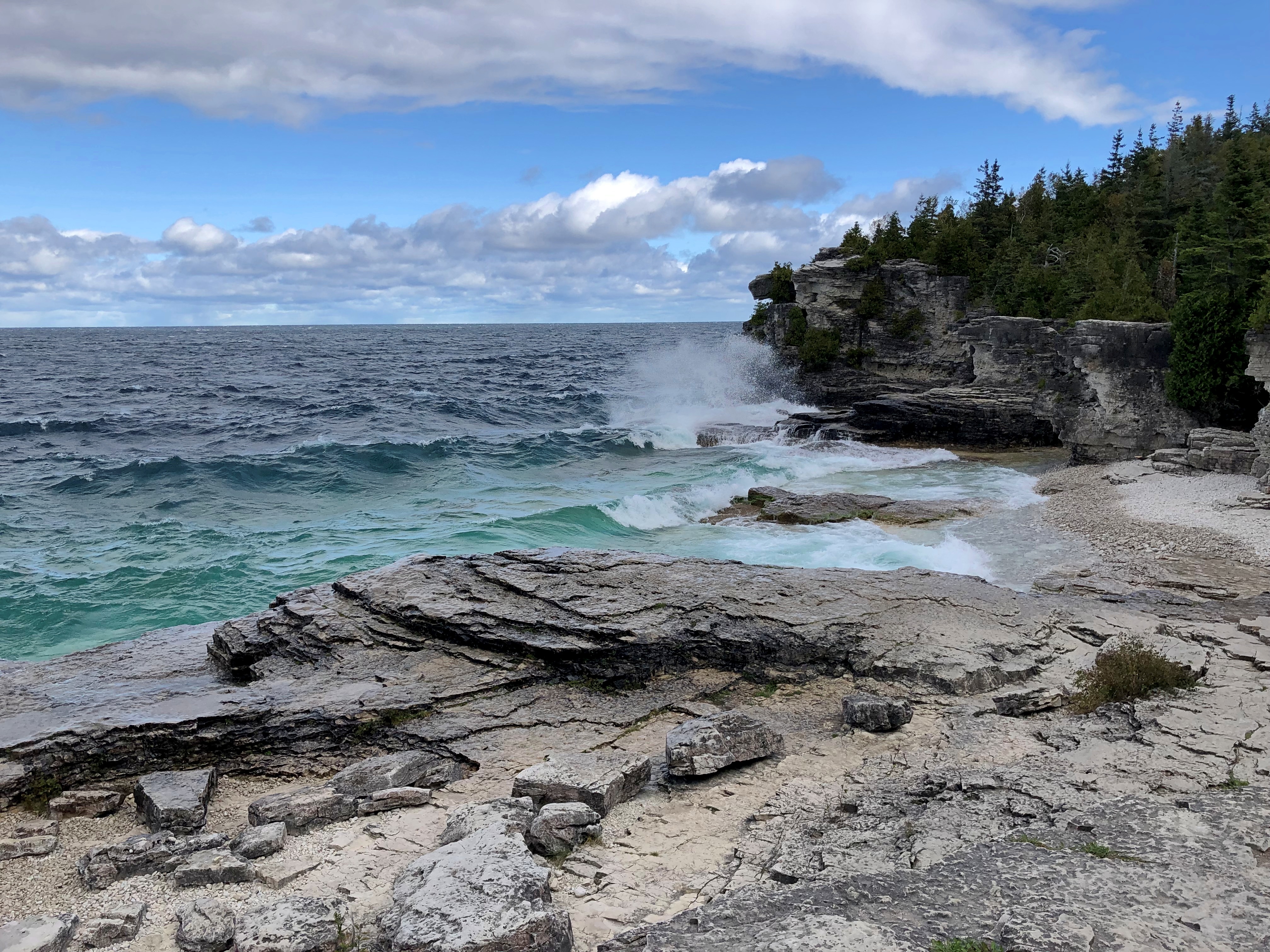
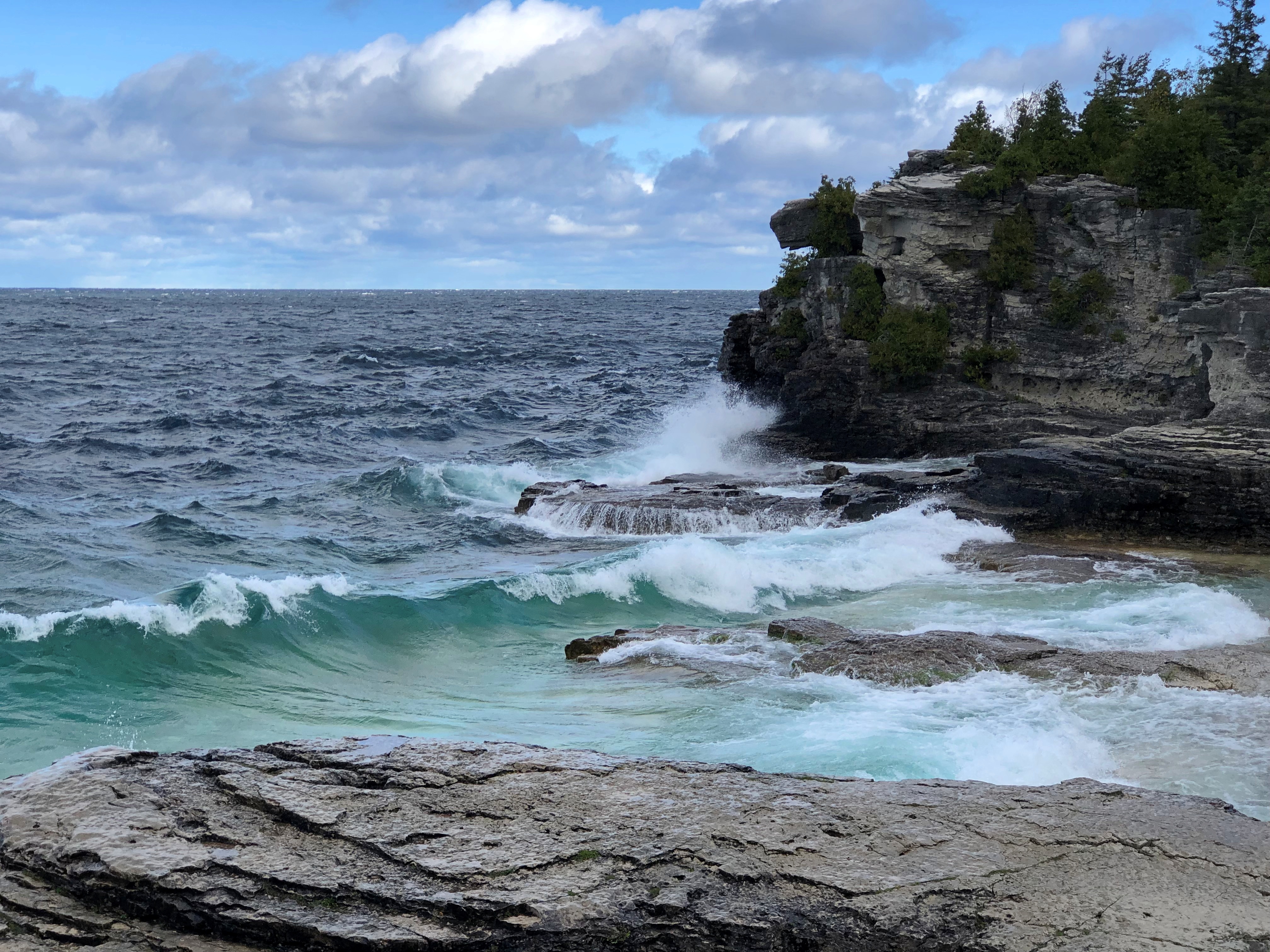
But worth it, as the trail soon to us back to the wind-swept coast.
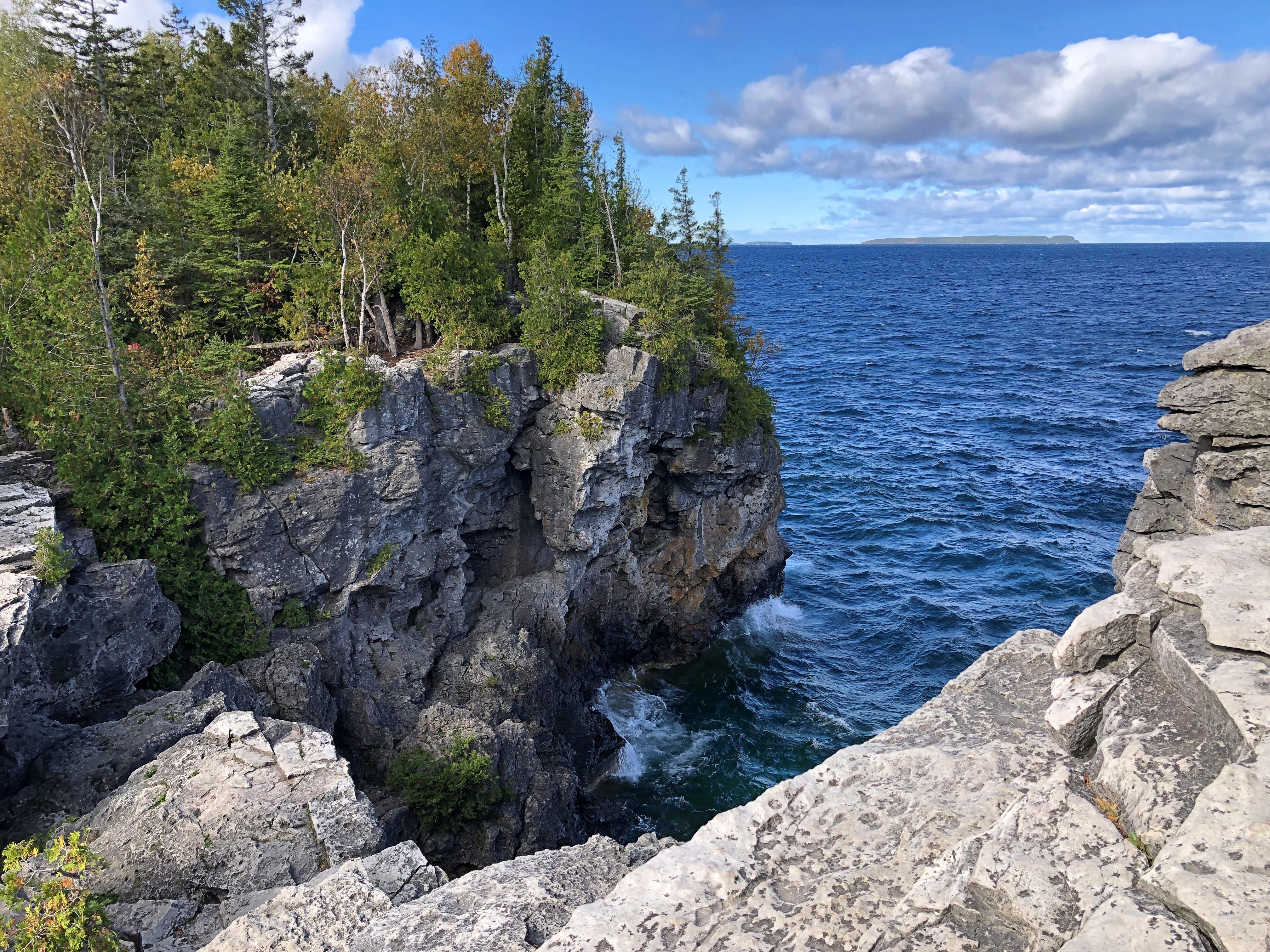
With its cliffs.
Winds would have made a bad day on a boat. On the shore, it was a fortuitous ingredient of a good day.
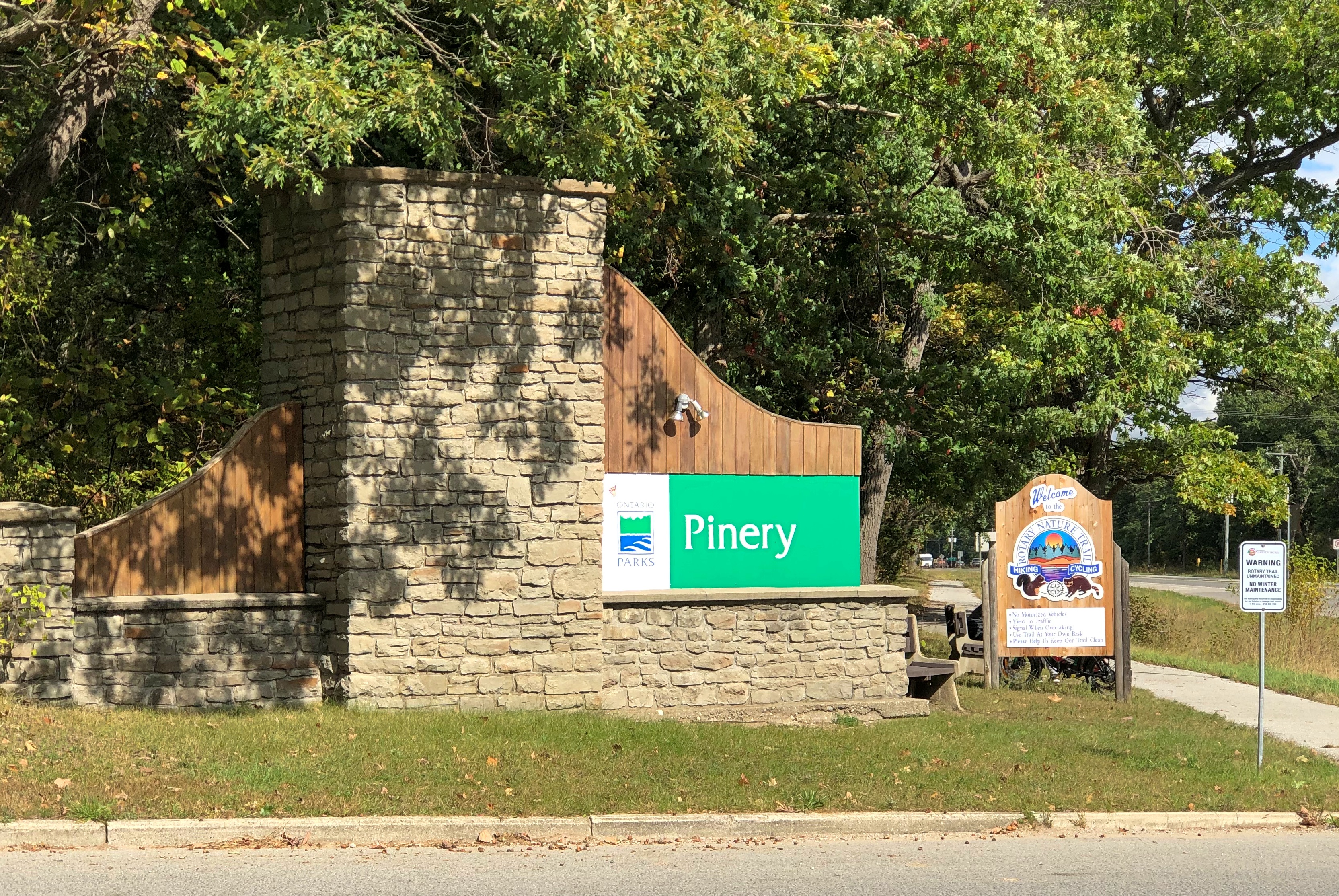
One provincial park on the way north last Tuesday, one more on the way south a two days later: Pinery and Sauble Falls, respectively.
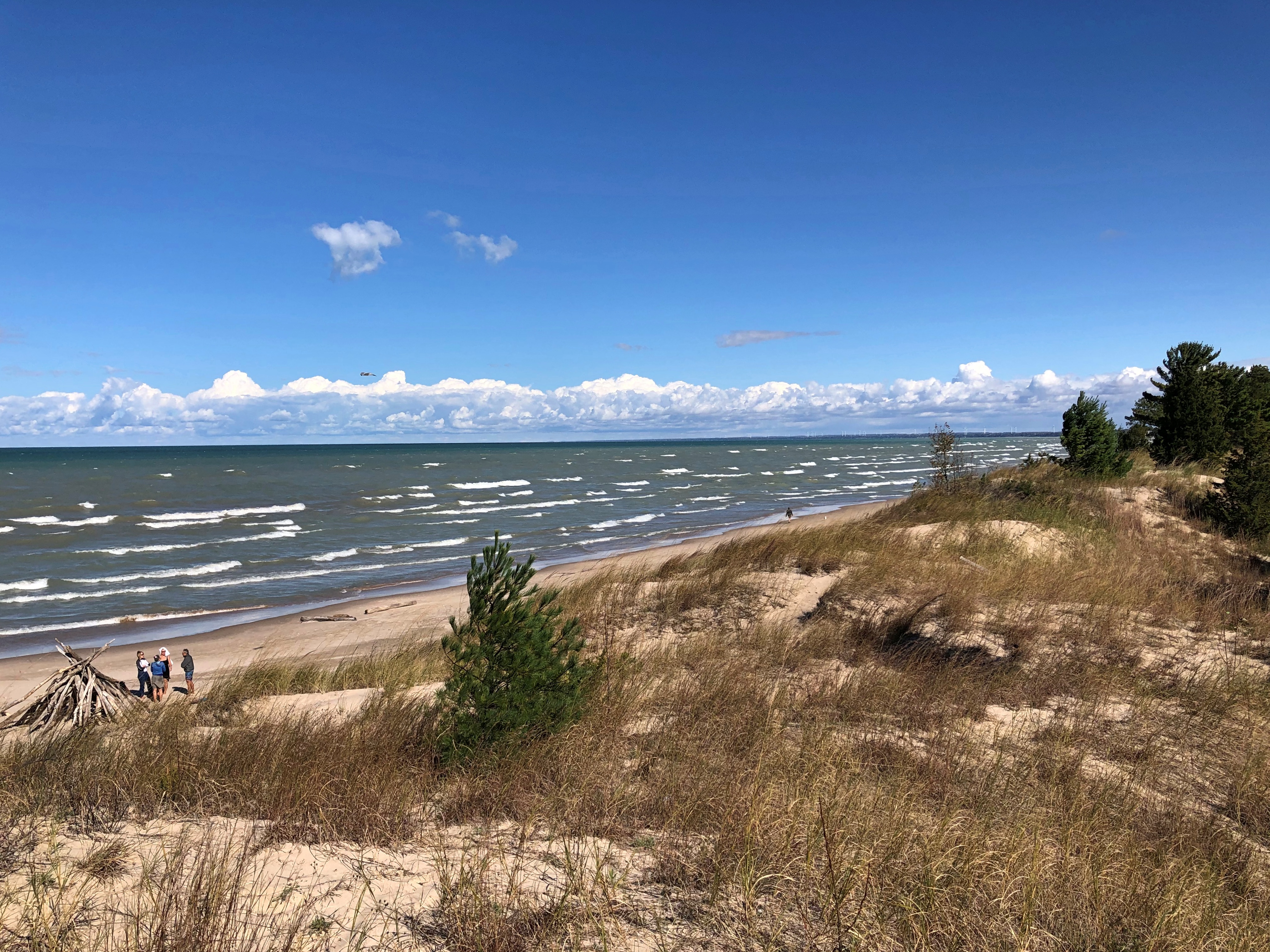
Pinery Provincial Park hugs the shore of Lake Huron far south of the Bruce Peninsula and includes wooded areas with trails and a wide beach.
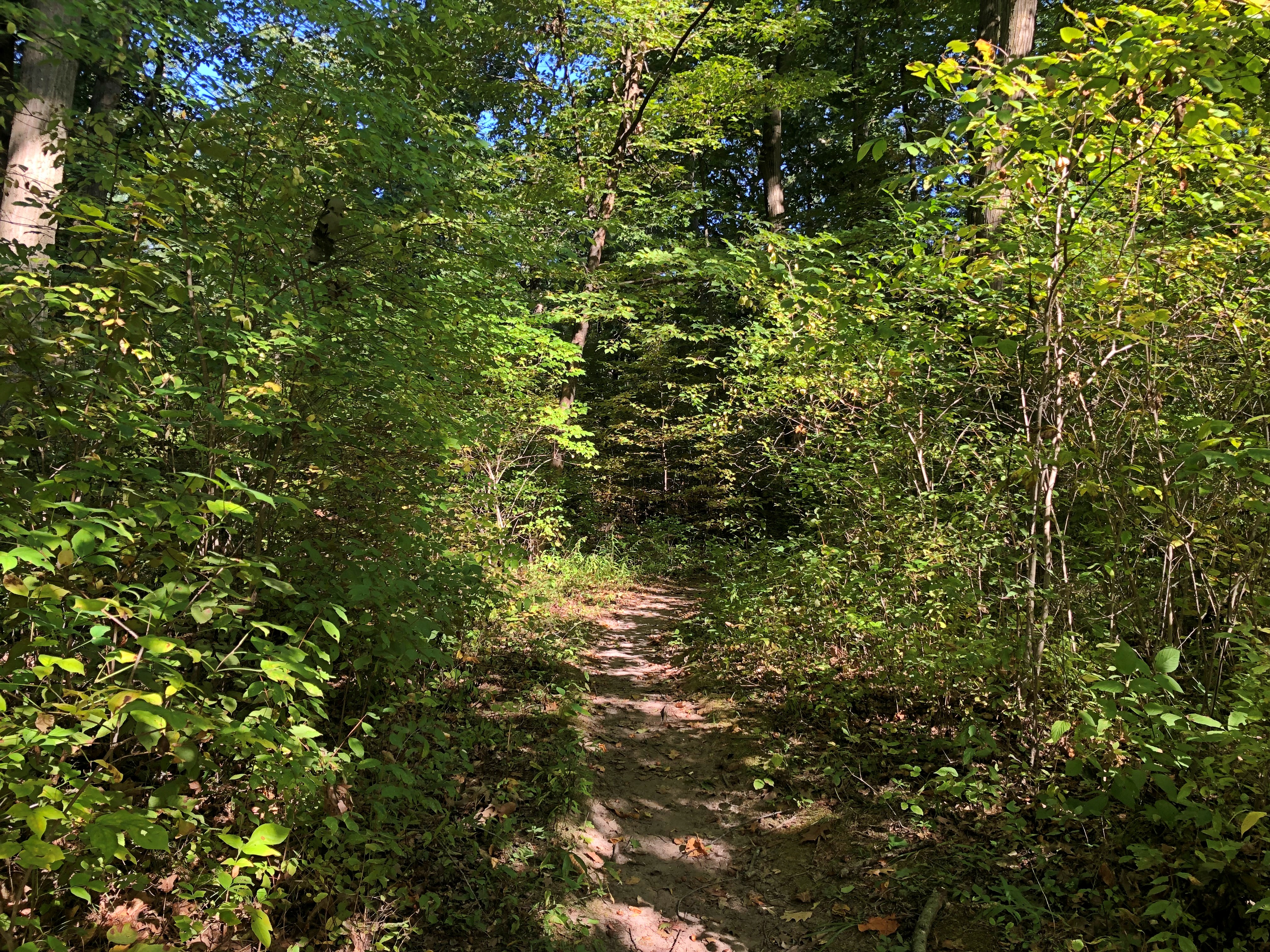
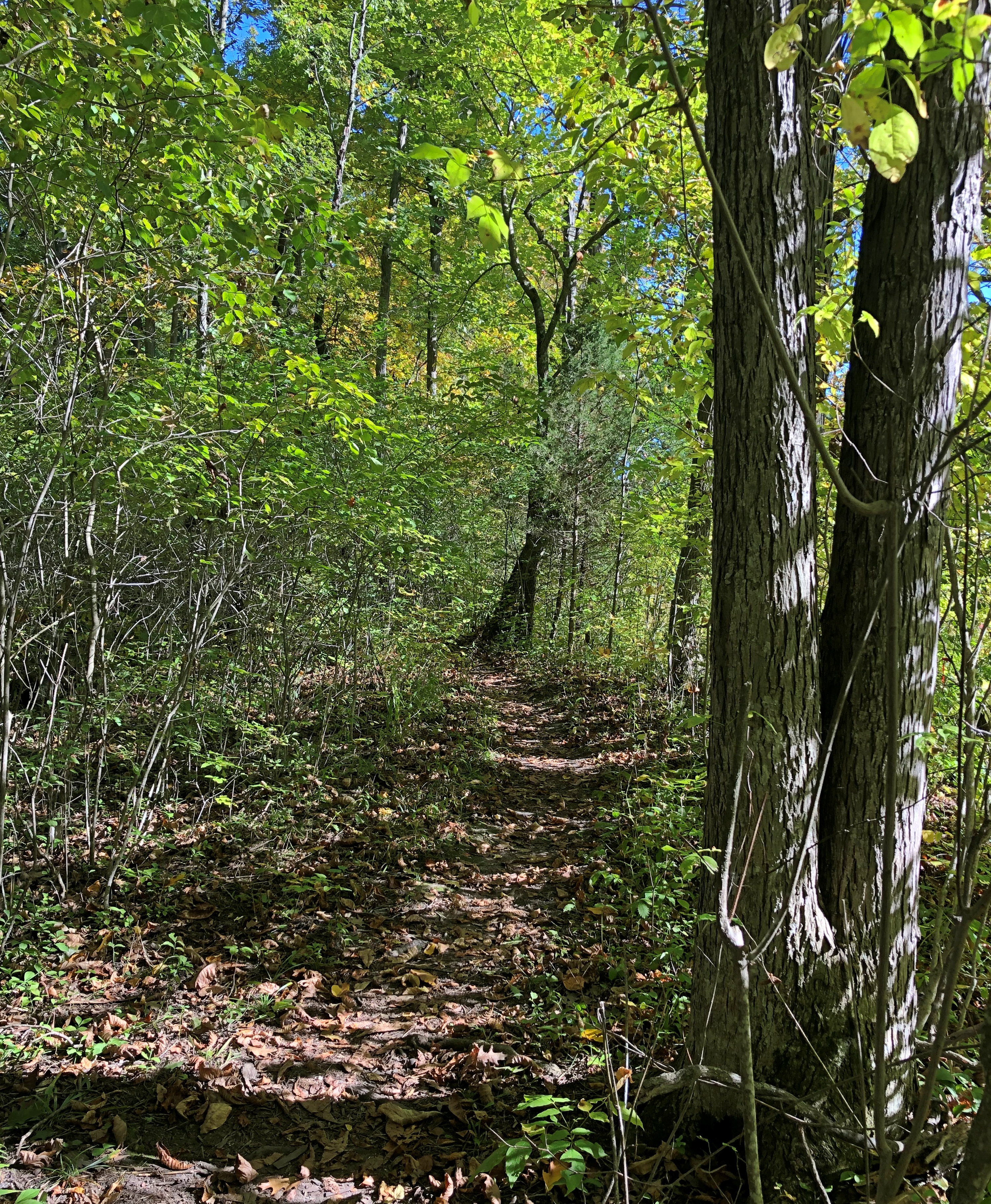
Park literature says the woodlands are an oak savanna, the largest remaining patch in Ontario. Still mostly green when we passed thorough, with touches of fall.
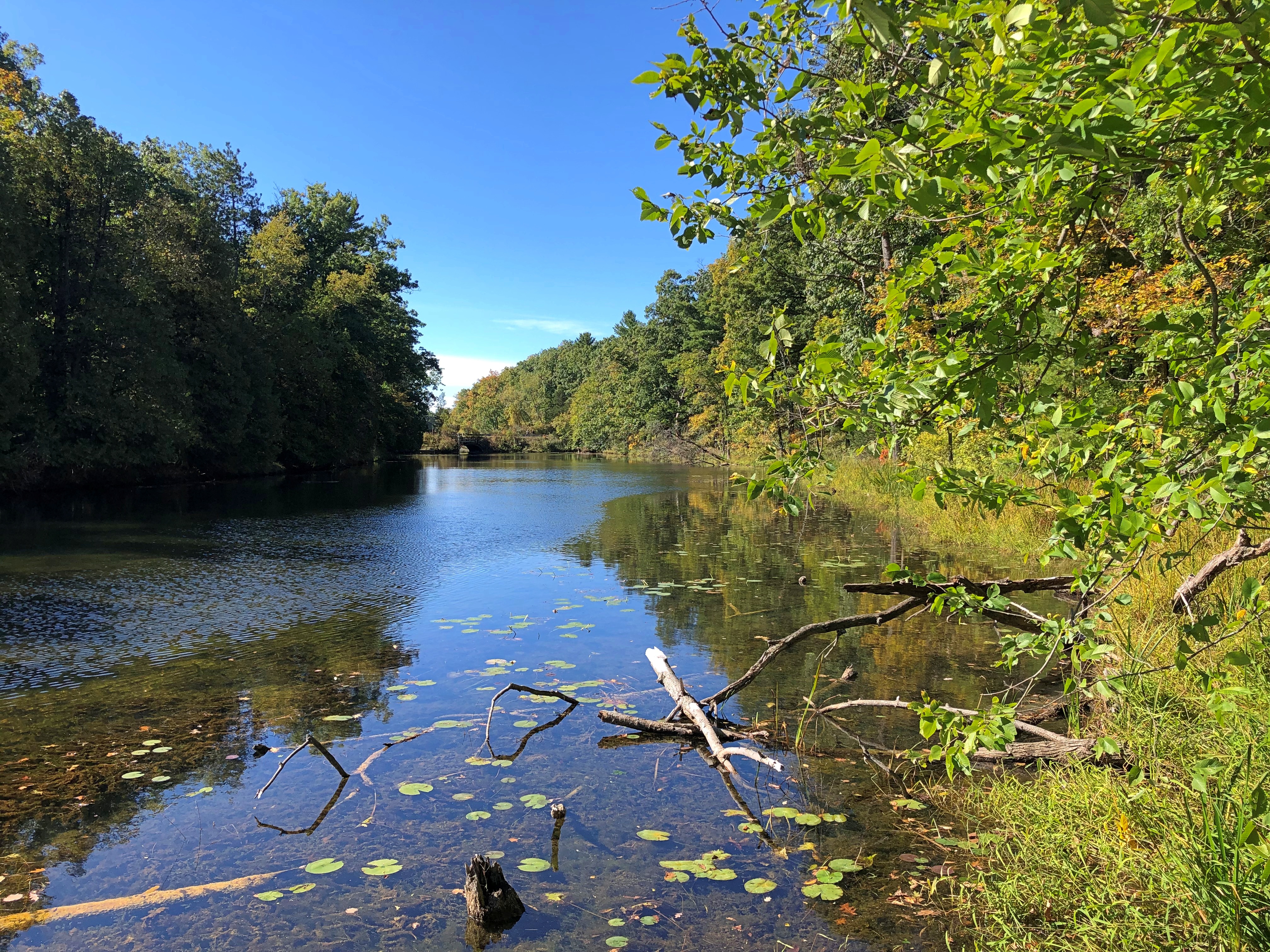
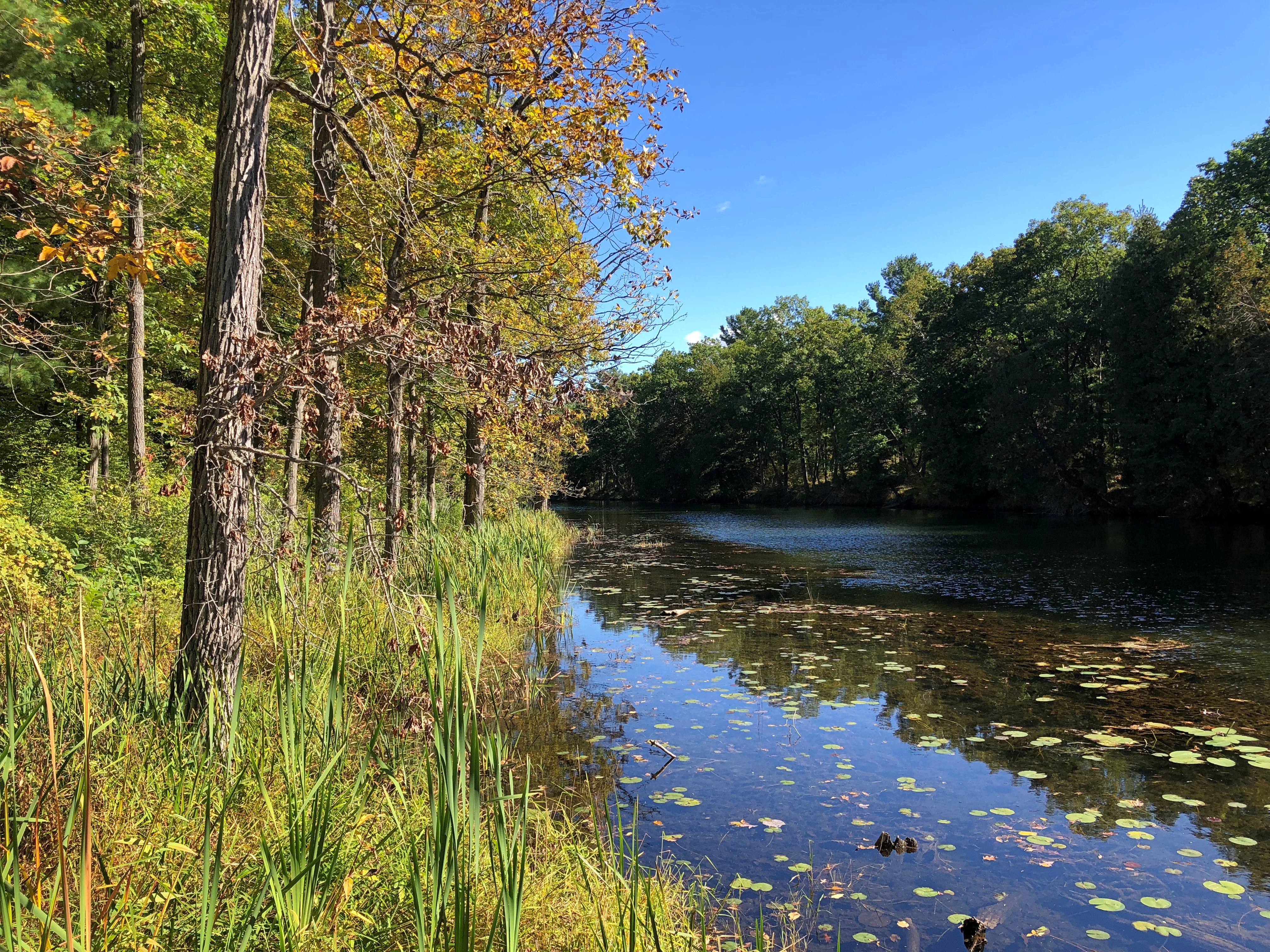
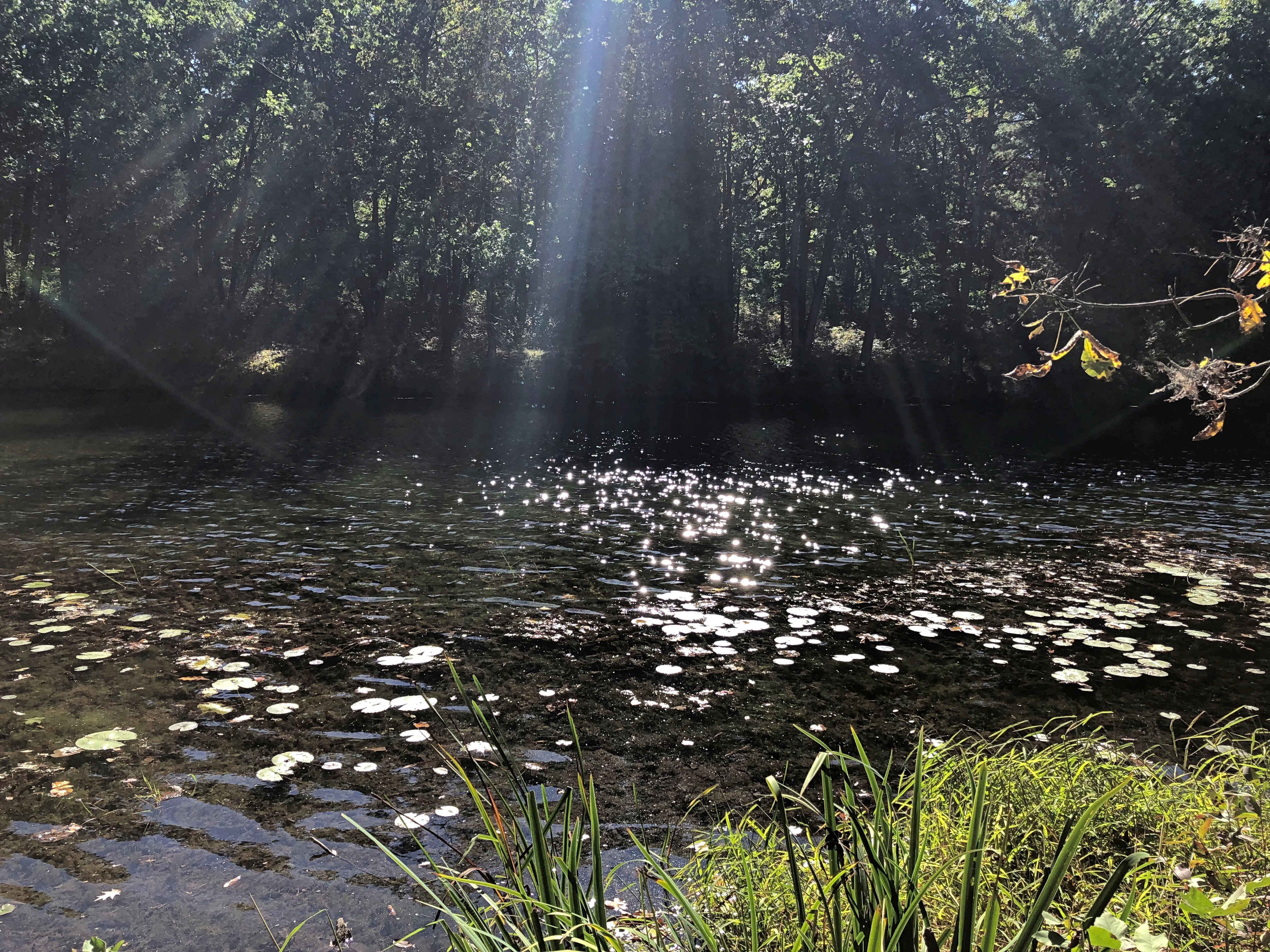
The woodland trails pass by the Old Ausable Channel. Still and punctuated by lily pads and green algae.
The Ausable River once ran here, and then on into Lake Huron, but irrigation and other civil engineering projects, back when this part of Canada was being developed for agriculture, changed the course of the river, isolating this stretch. As its recreational value became apparent by the time the park was created in the 1950s, further engineering adjustments were made to ensure it doesn’t dry up all together.
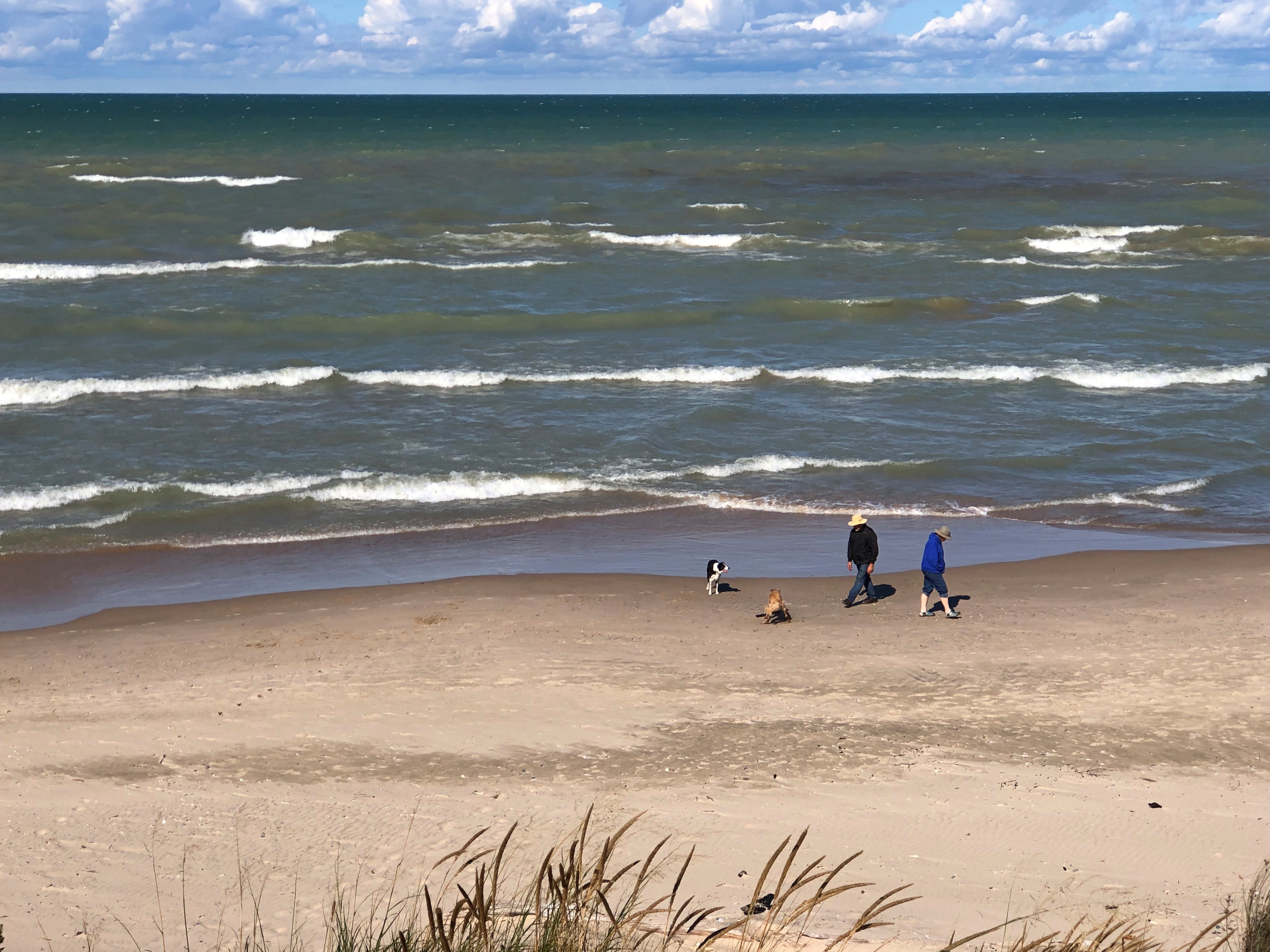
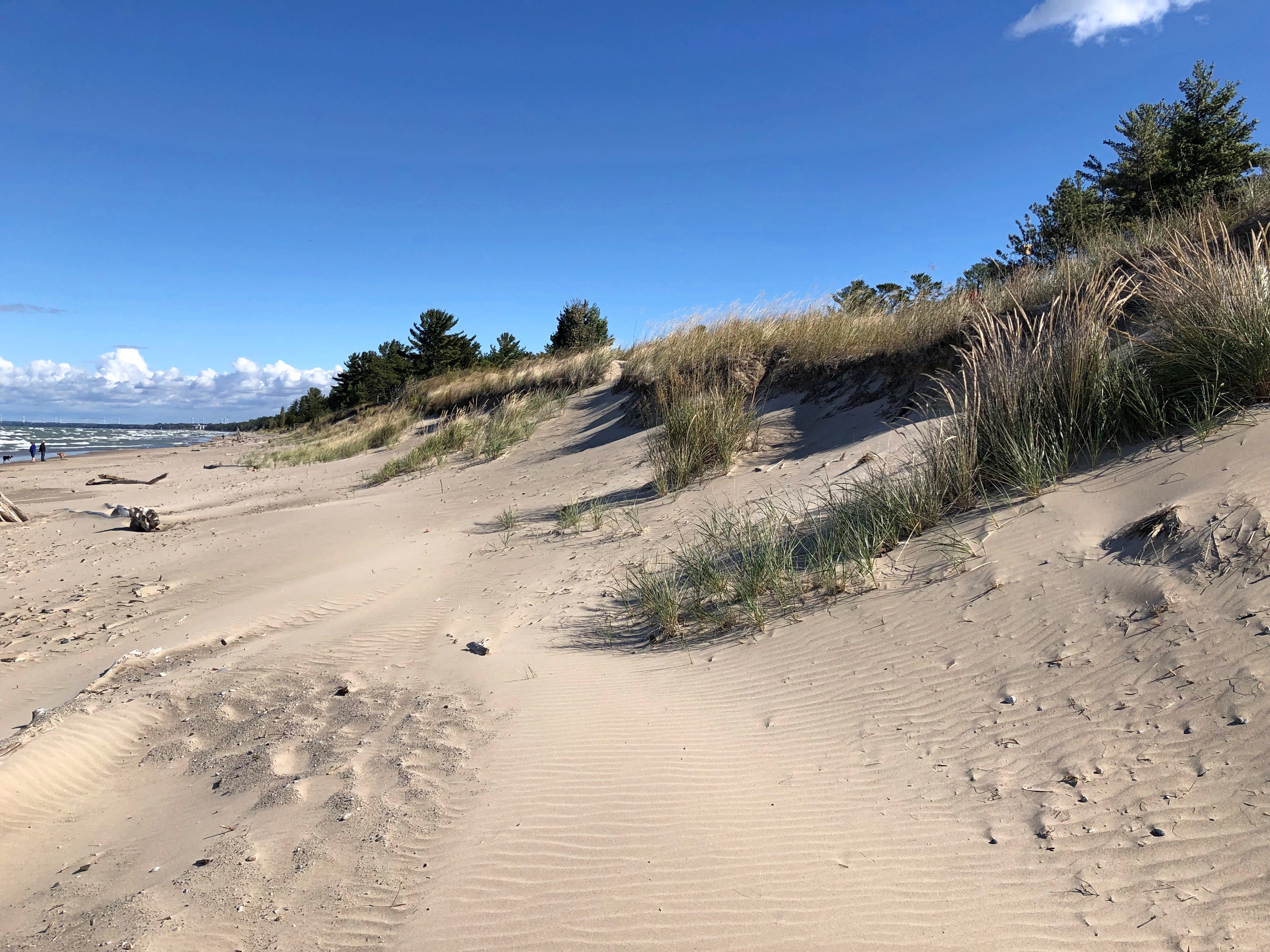
The beach was easy to reach and nearly (but not quite) empty. That’s October for you, but if you asked me, that’s a good time to visit a beach.
Ah.
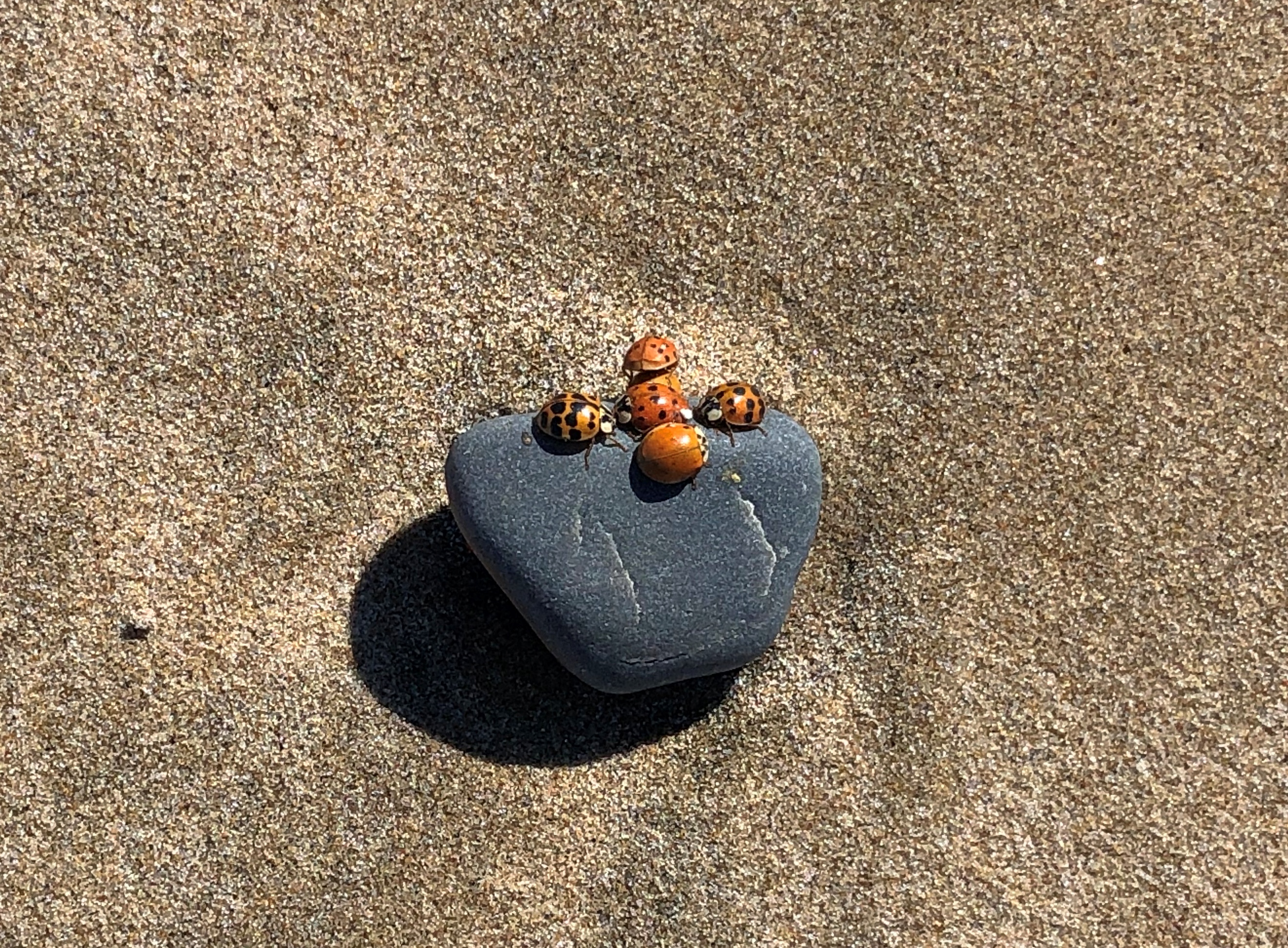
Soon we notice ladybugs everywhere on the beach.
As insect hordes go, that’s a pretty agreeable one. Still, I’ve been on a lot of beaches and never encountered that. Though not cold, it wasn’t exactly warm, and the bugs barely moved, preferring to cluster together. Later, at the visitor center, I mentioned the bug horde (not using that word) to one of the workers, who had never heard of such a thing either. So maybe it’s just a freak at Pinery, not the beginning of a movement of coccinellidae famed among entomologists, or something.
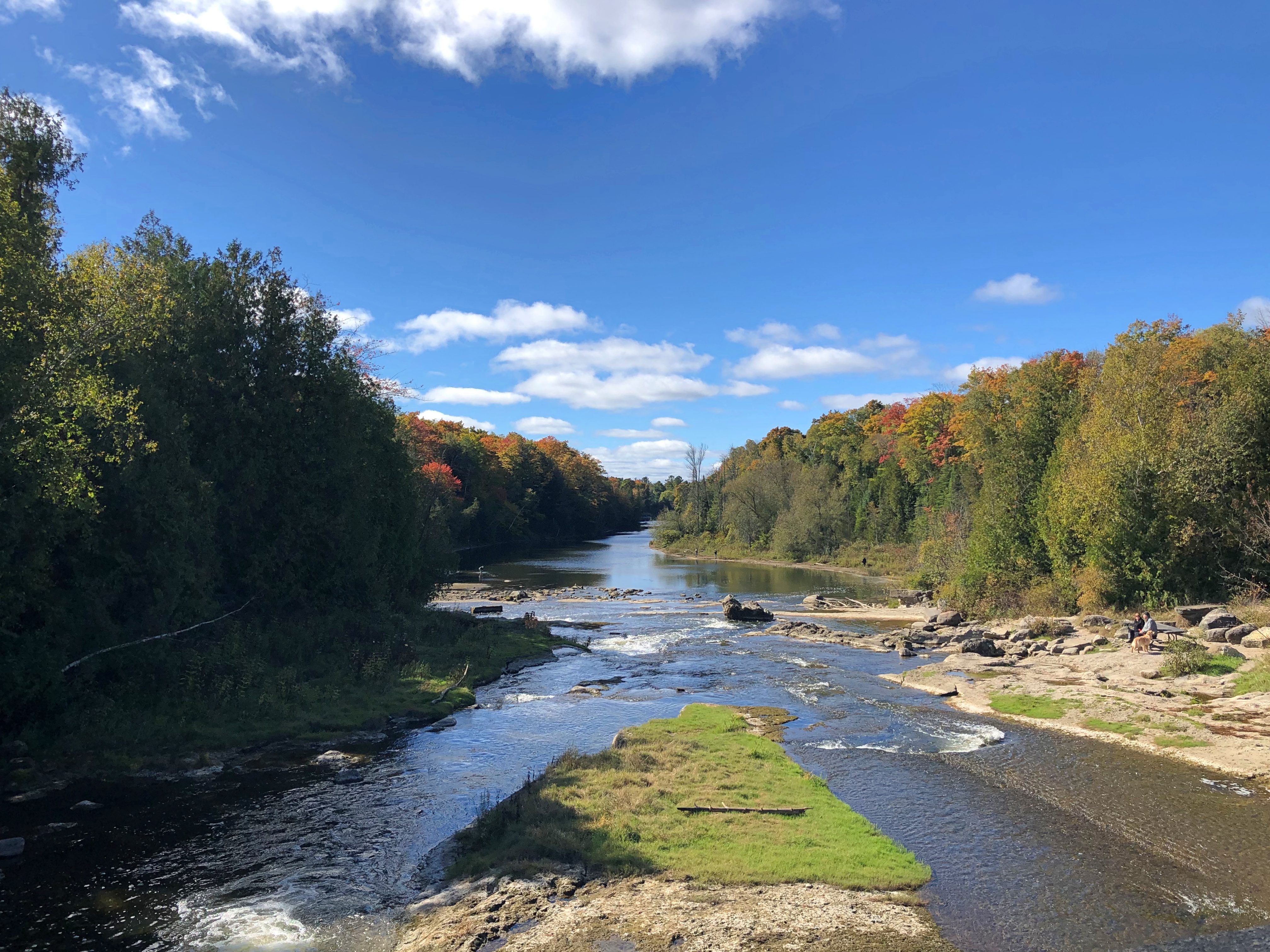
Much further north, in fact at the southern edge of the Bruce Peninsula, is Sauble Falls Provincial Park.
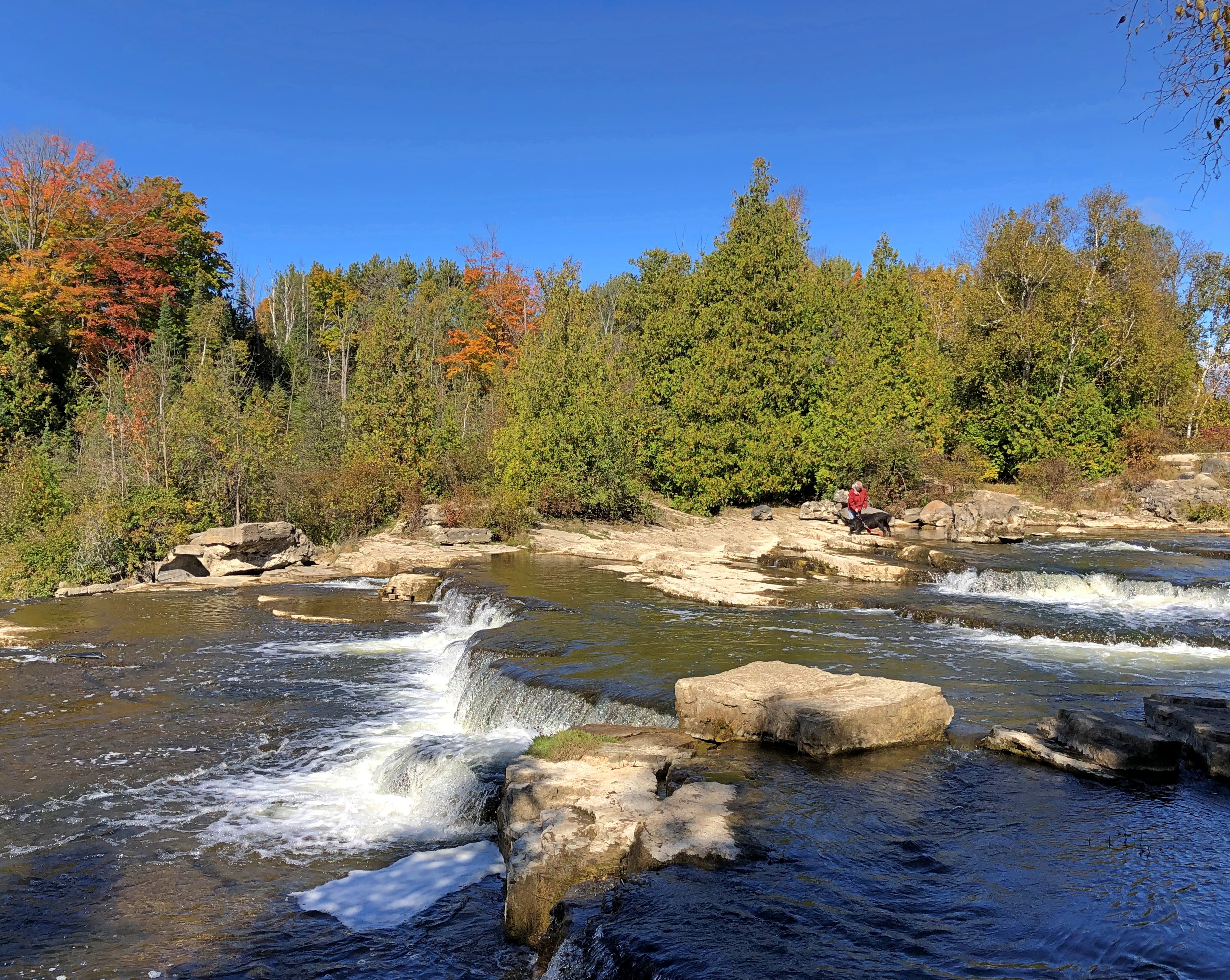
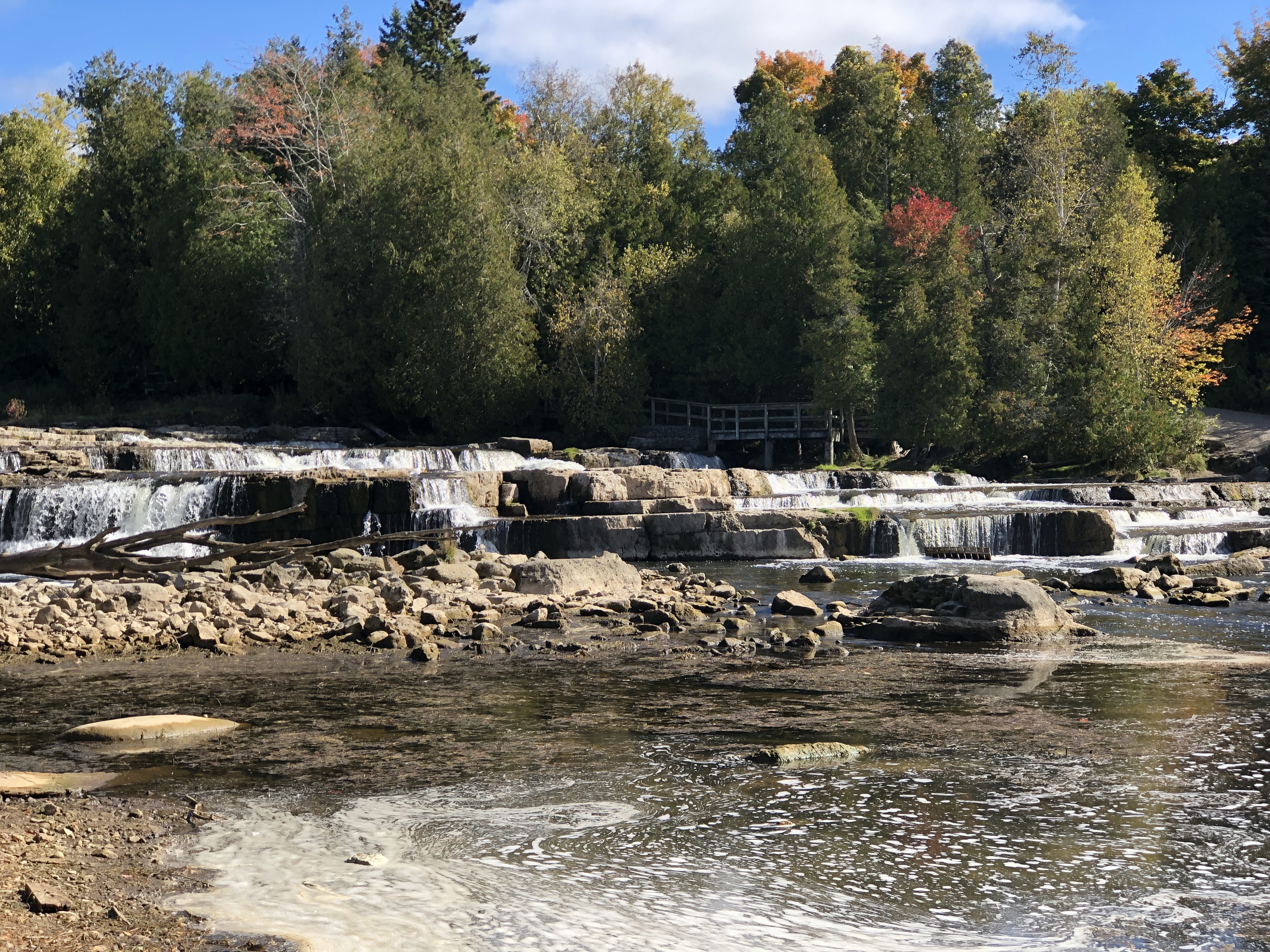
It wasn’t busy, mostly occupied by a few retiree fishermen looking for a catch in the Sauble River below the falls. The trails in the park are short, mostly providing views of the low falls.
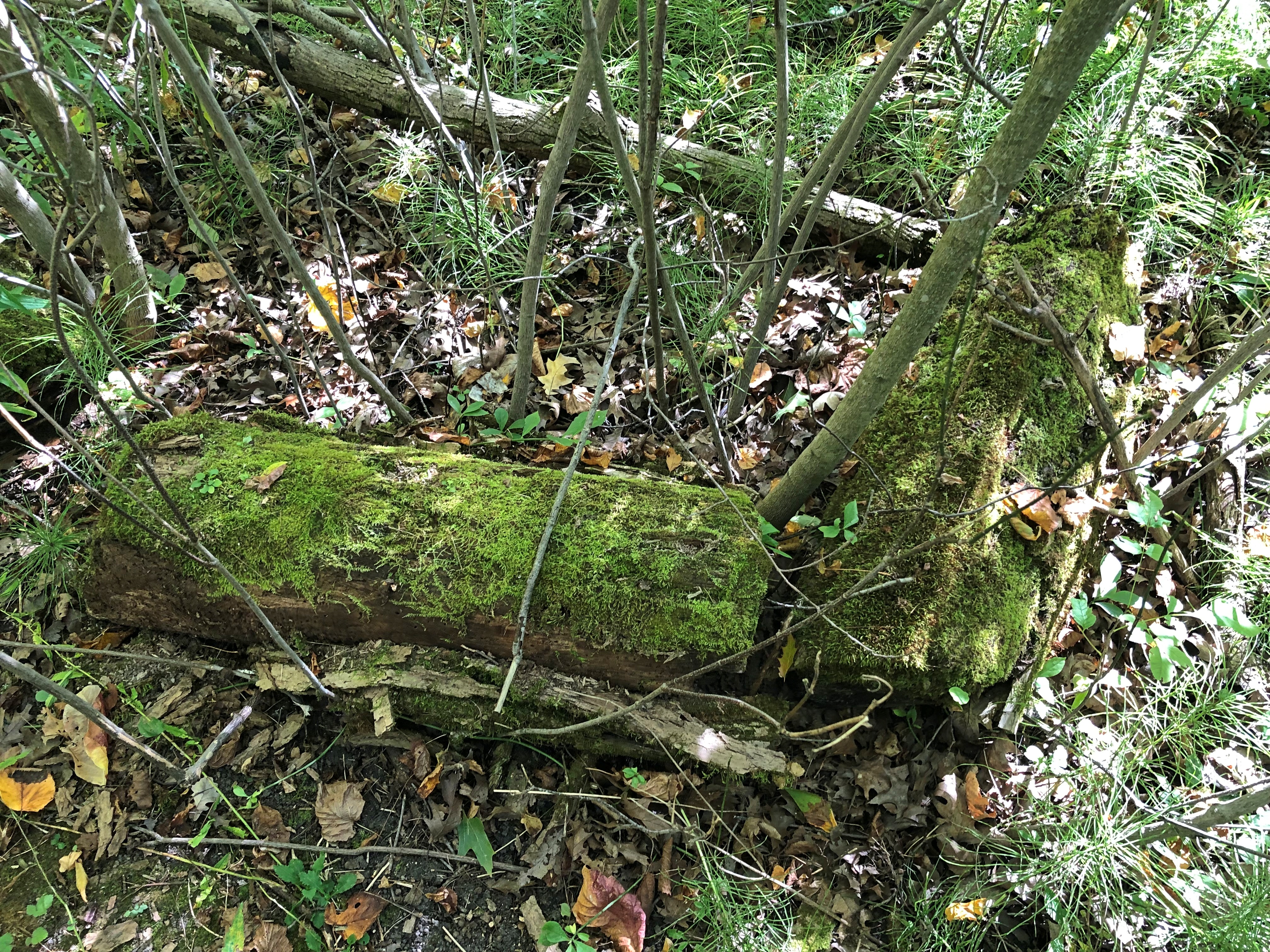
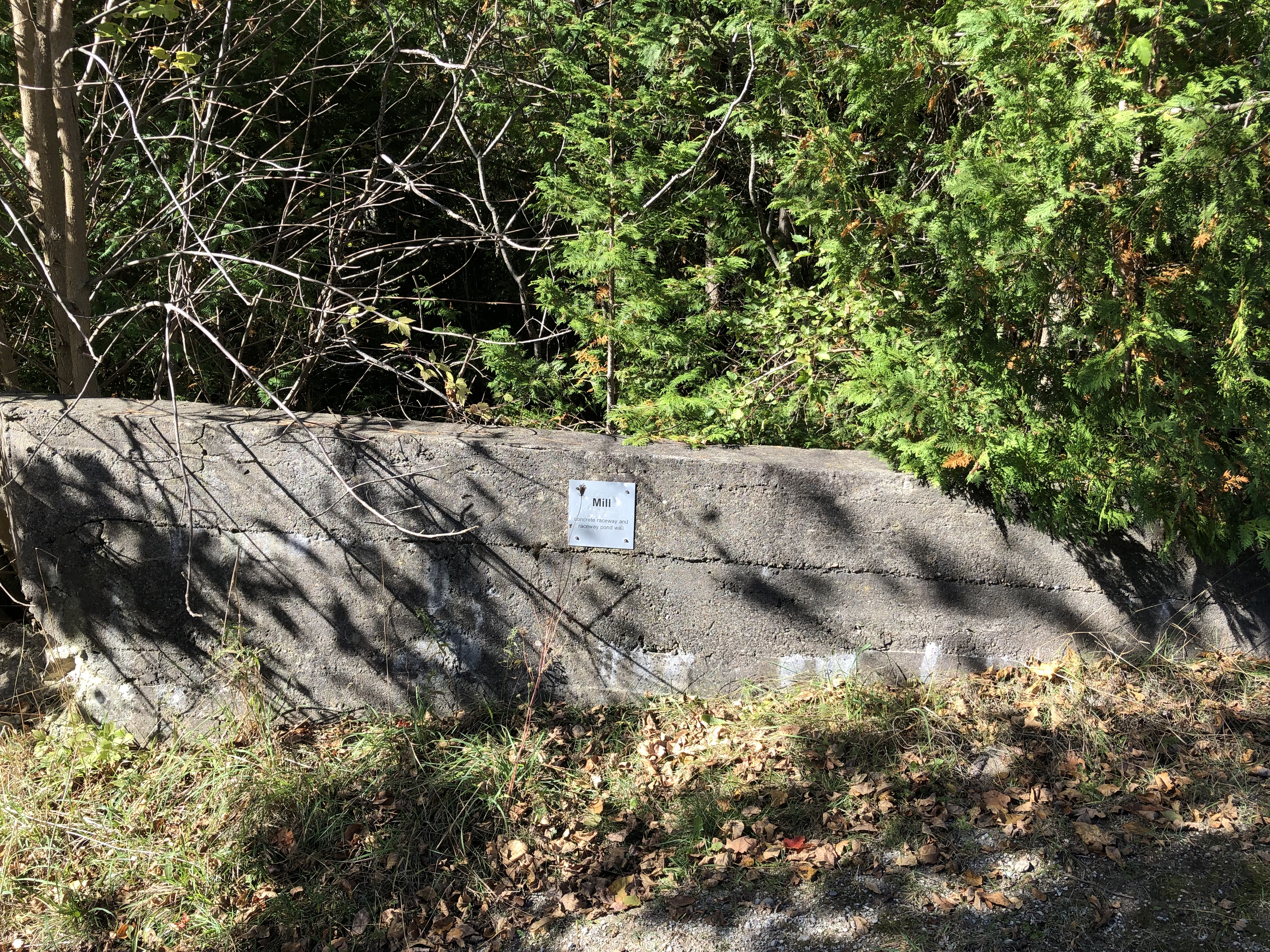
Once upon a time, the river supported a lumber mill, and a small town grew around it. Only small traces of any of that remain, such as part of a concrete raceway.
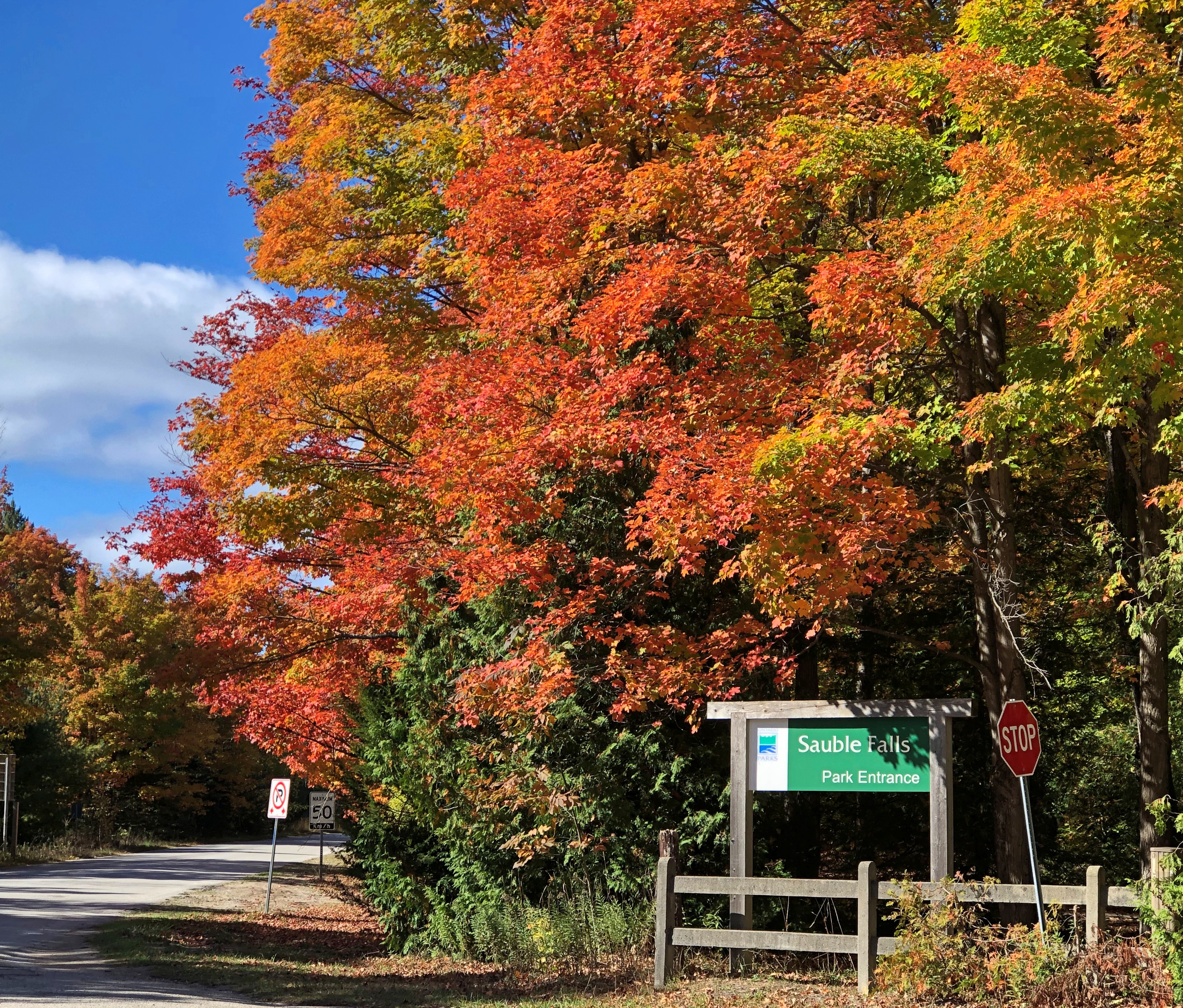
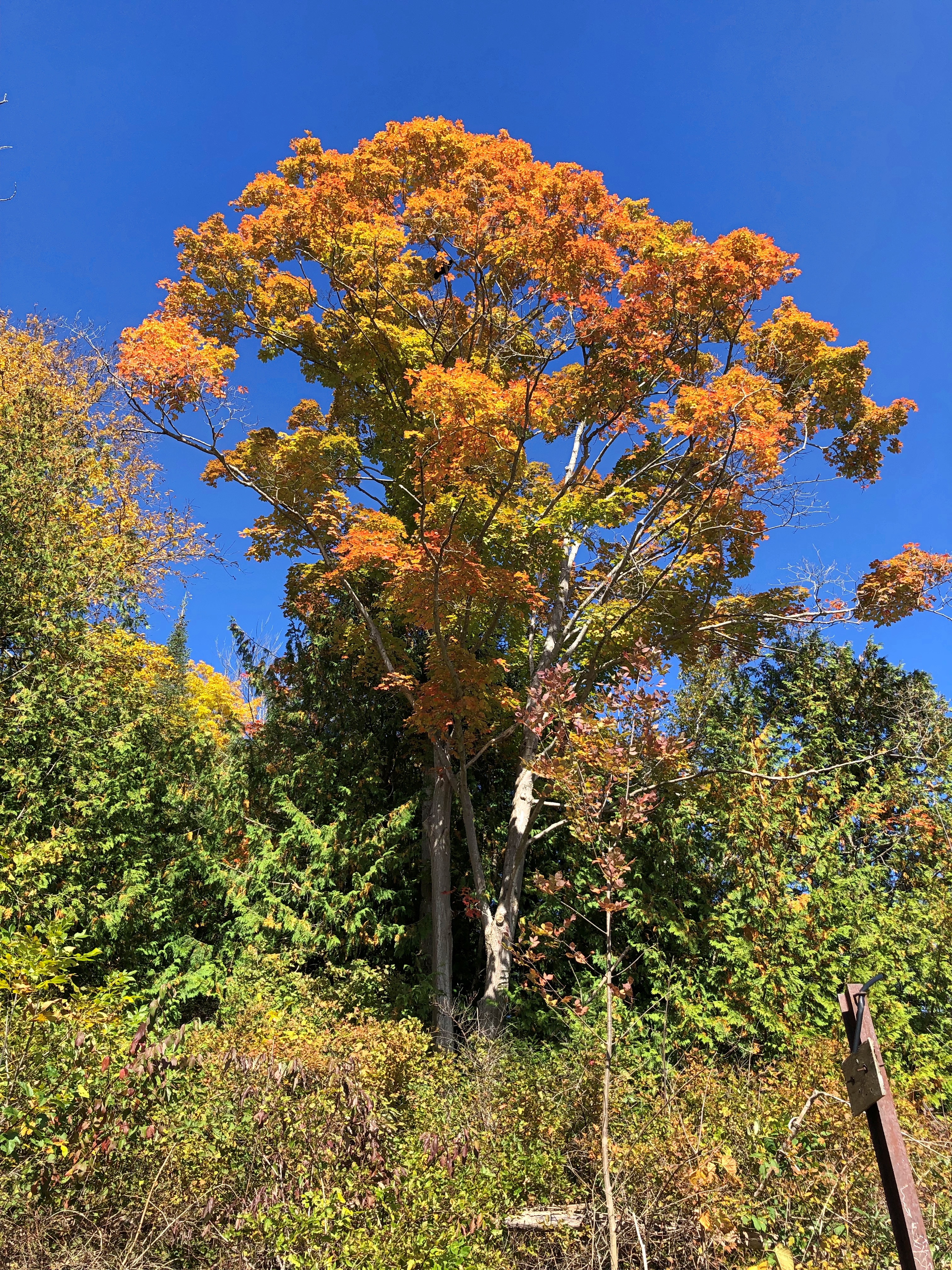
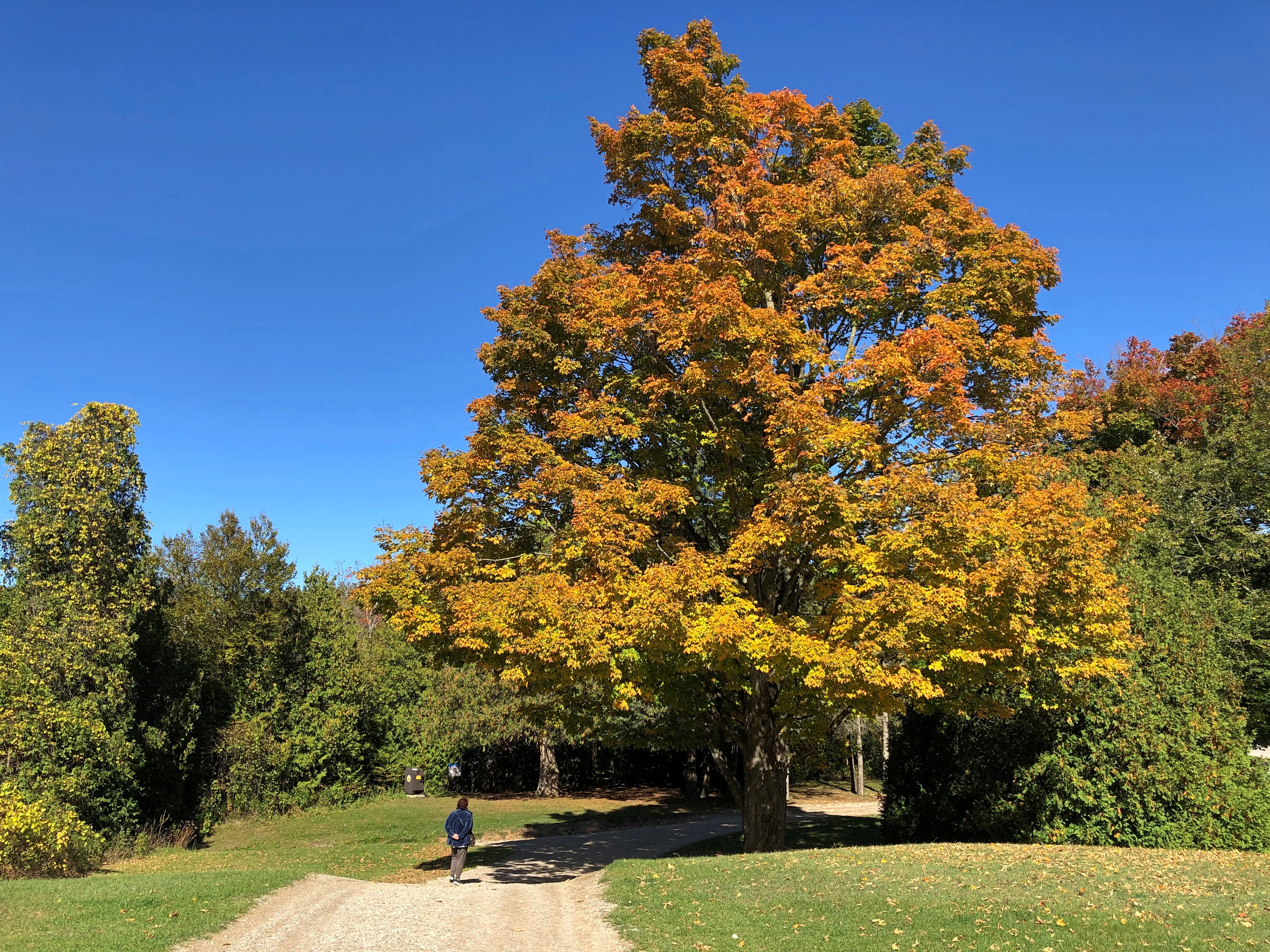
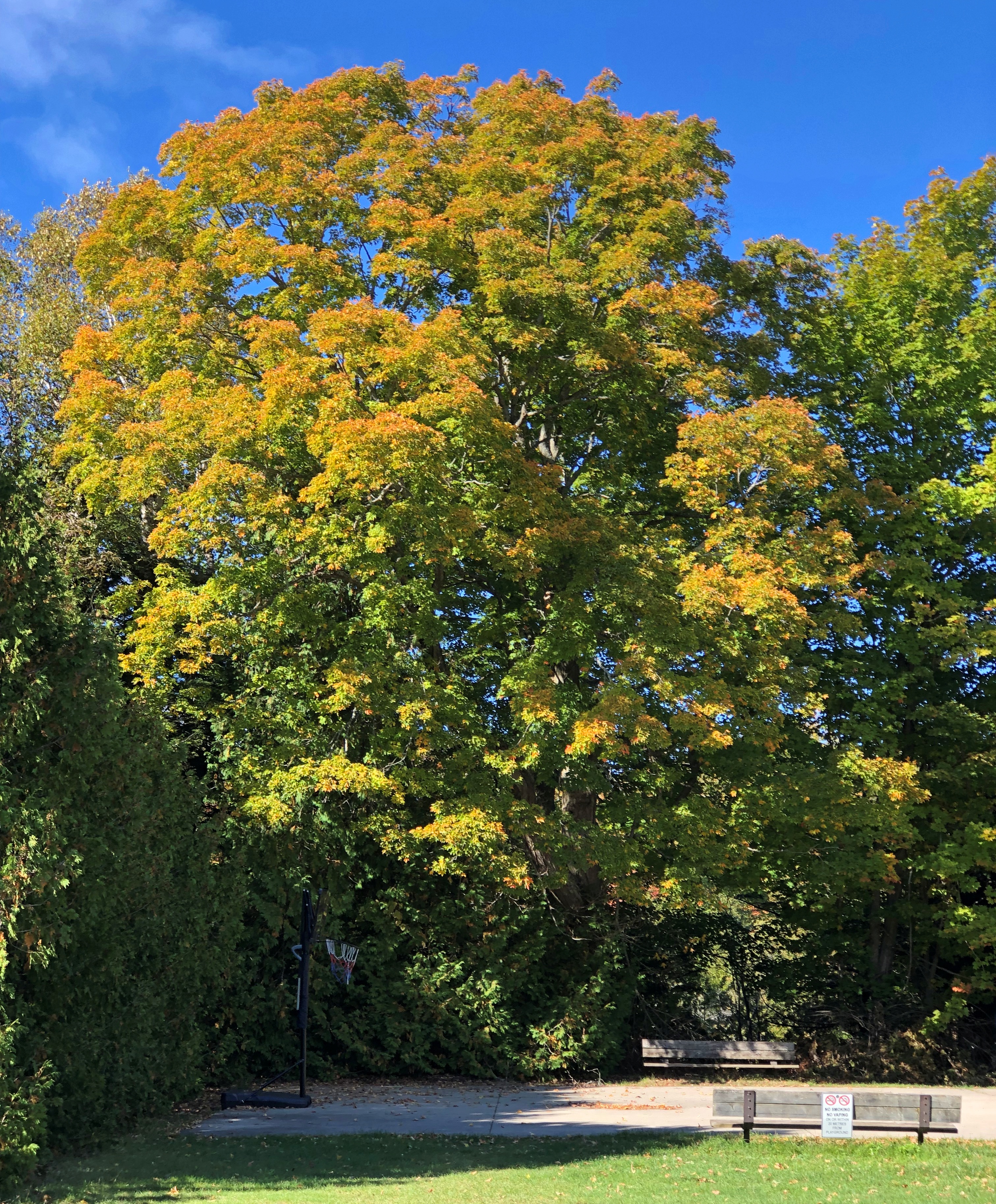
I expected a little more color on the Bruce Peninsula, but we were a little ahead of peak. At Sauble Falls, peak was closer.
You’d think that fall colors would get old. We see it every year. But it never does.


















.svg)