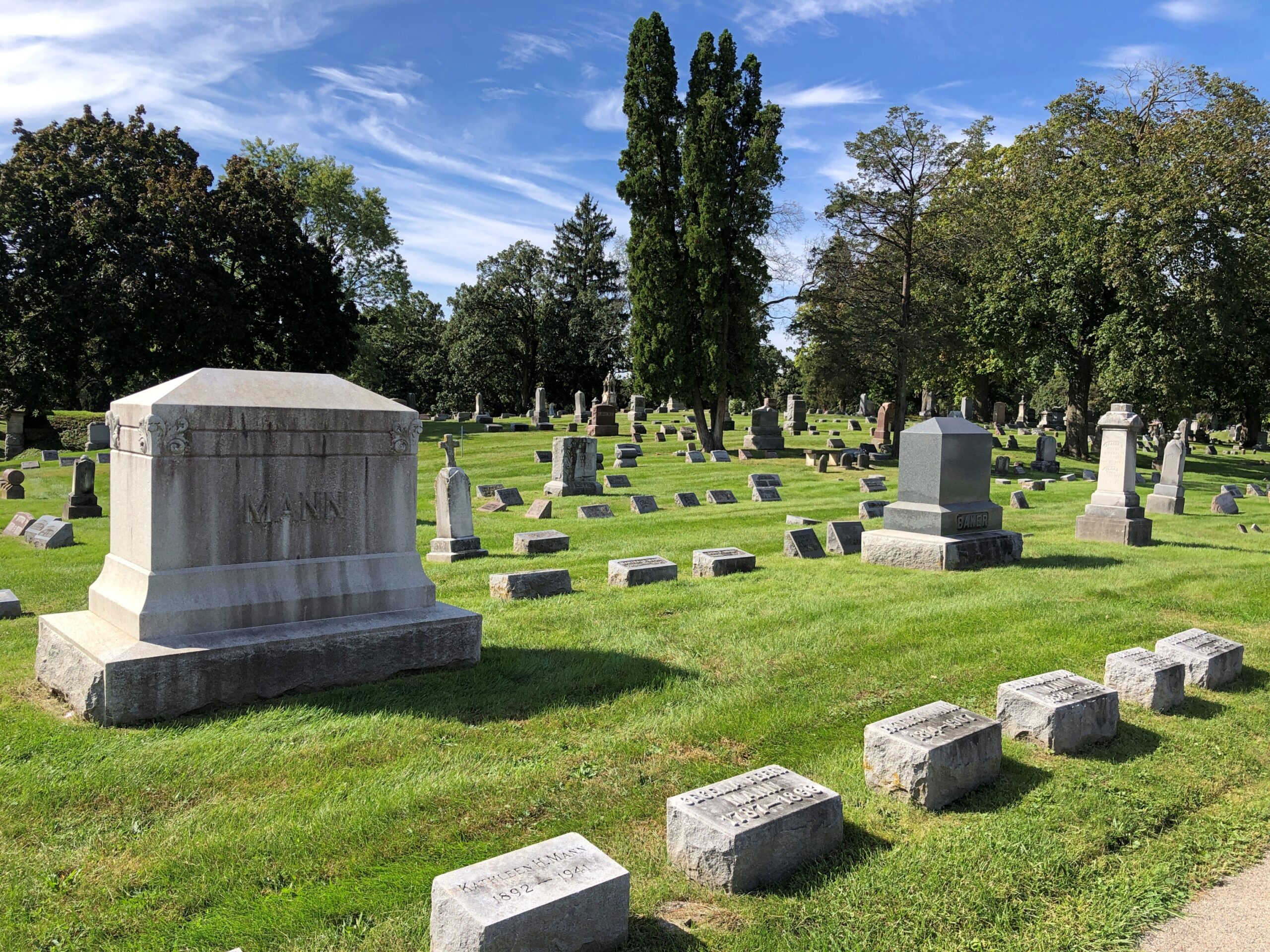
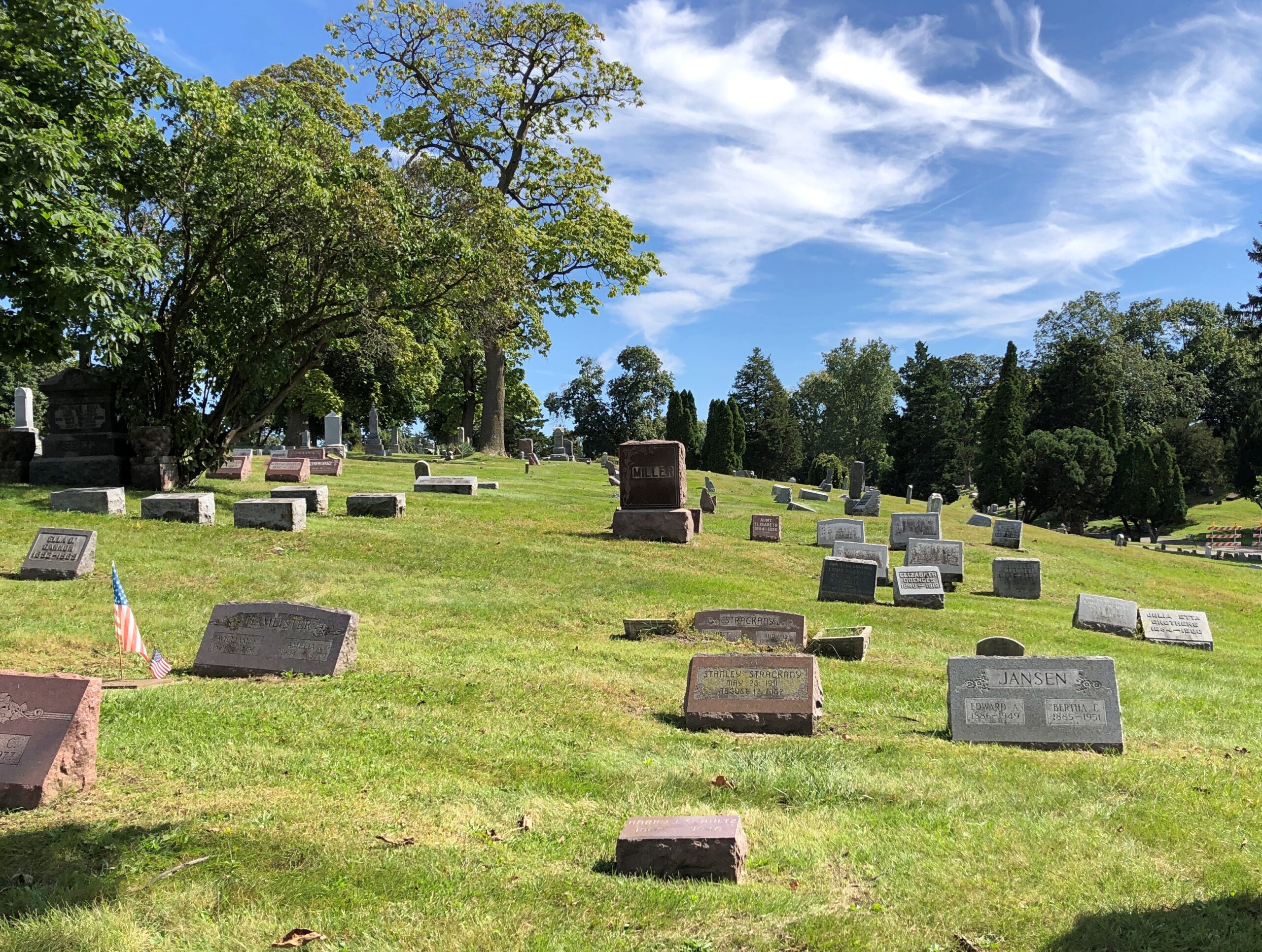
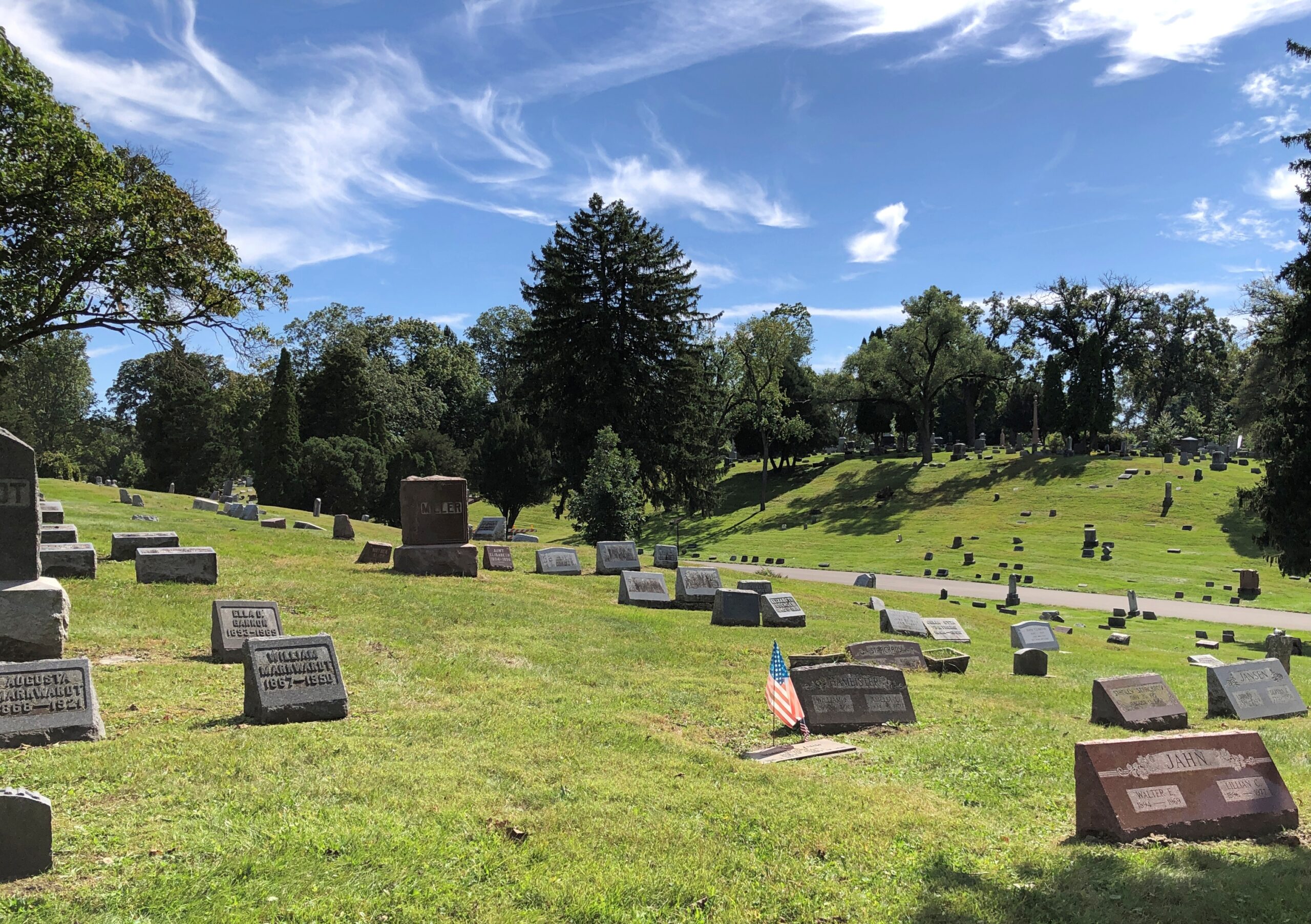
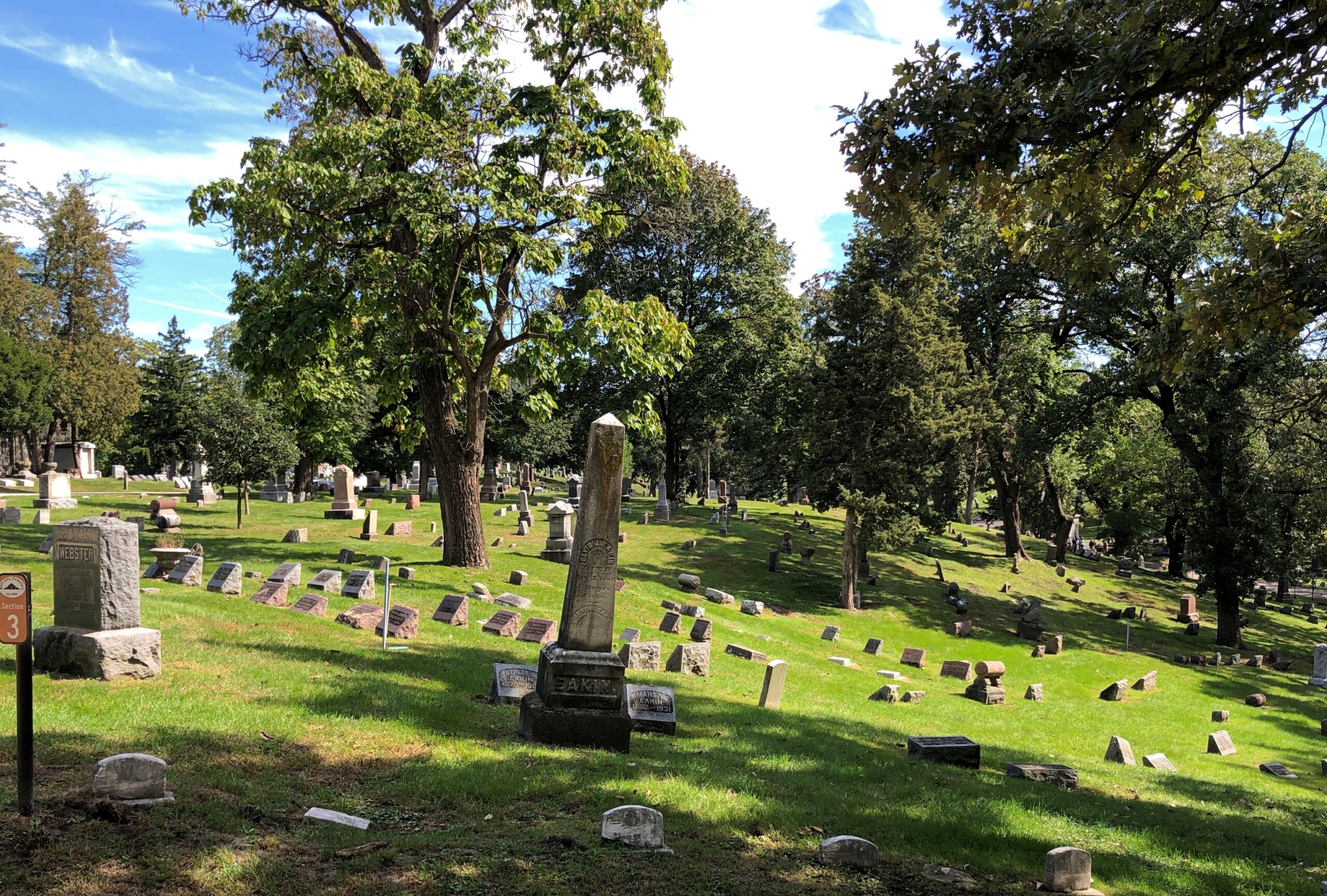
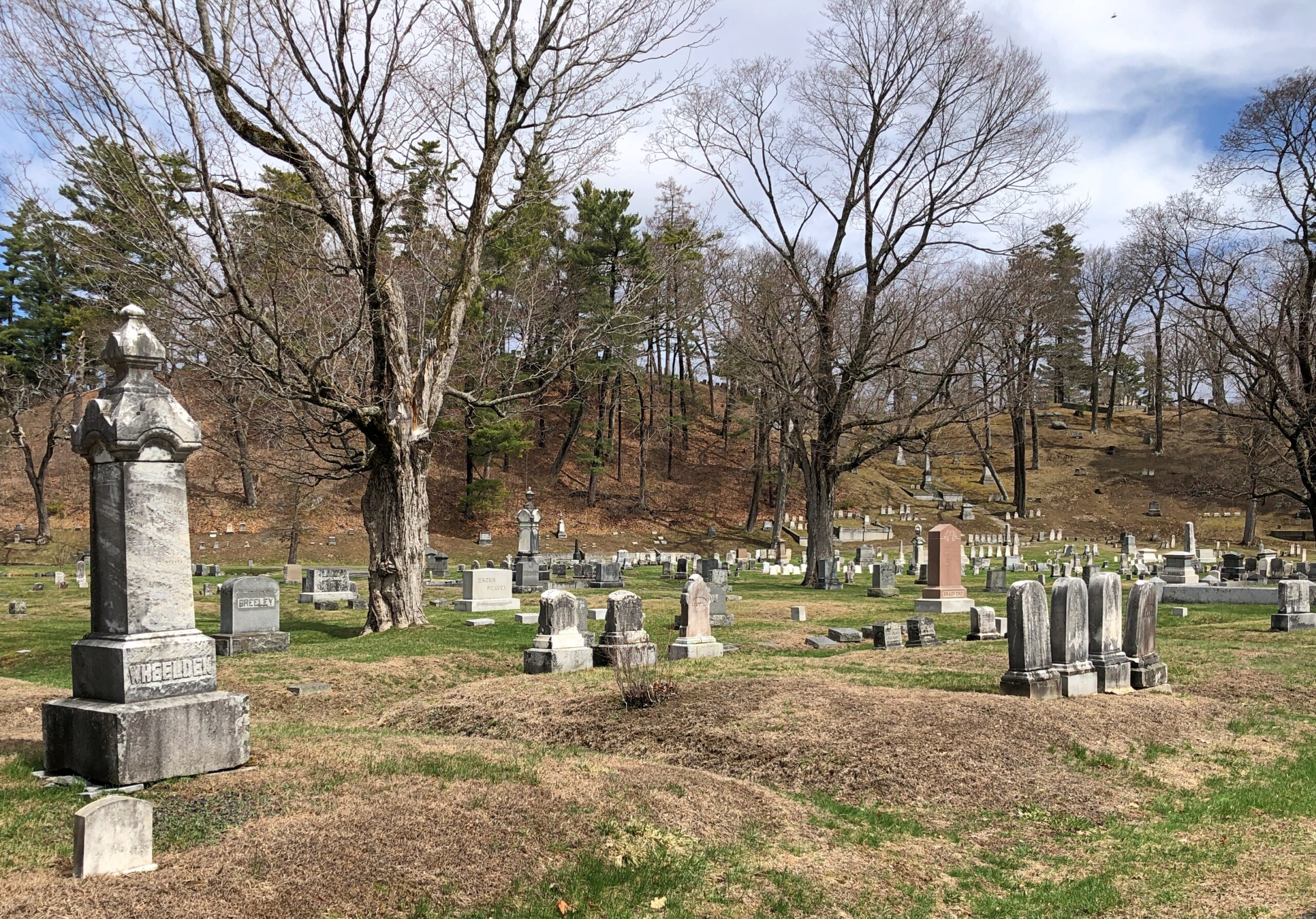
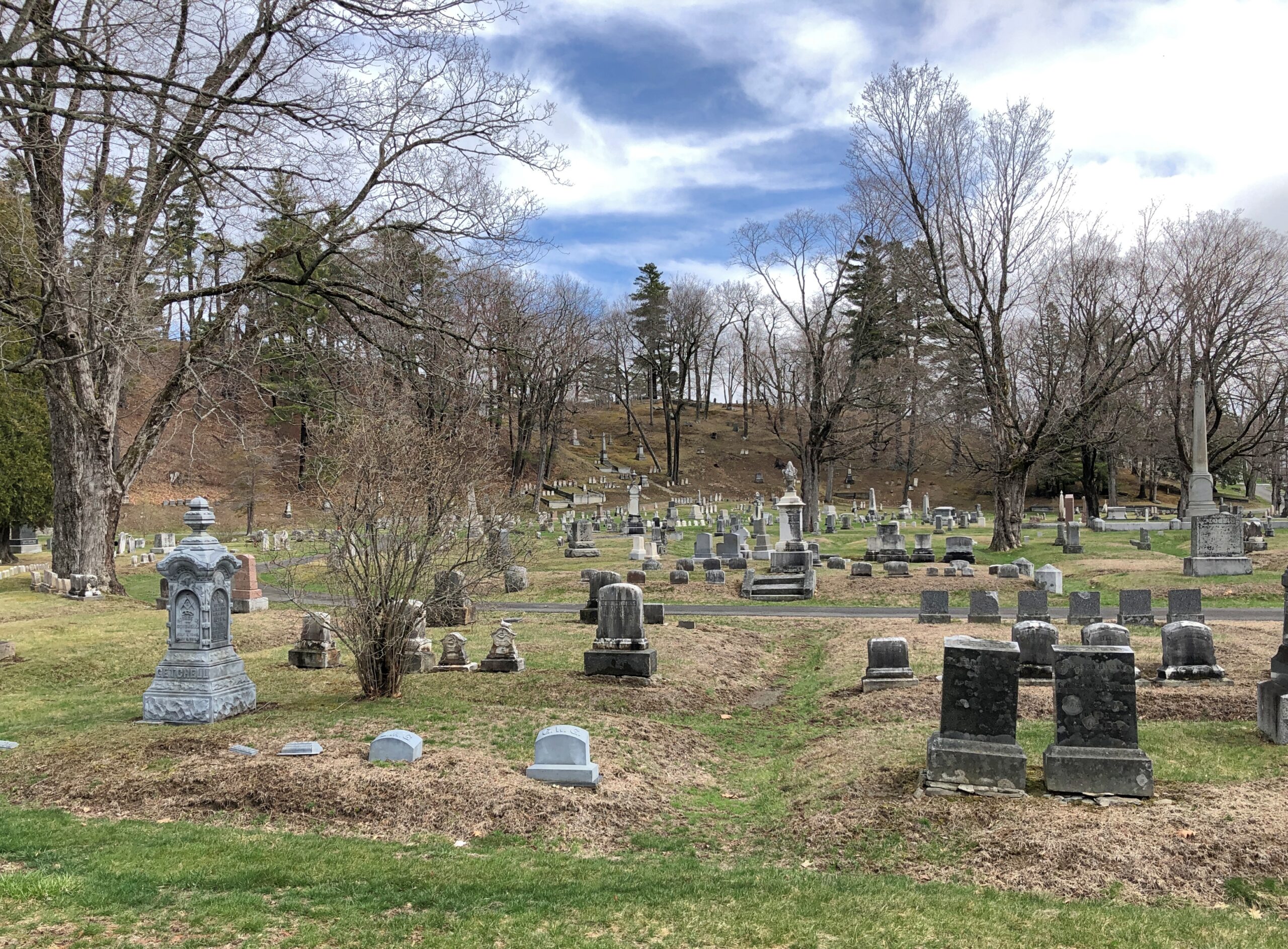
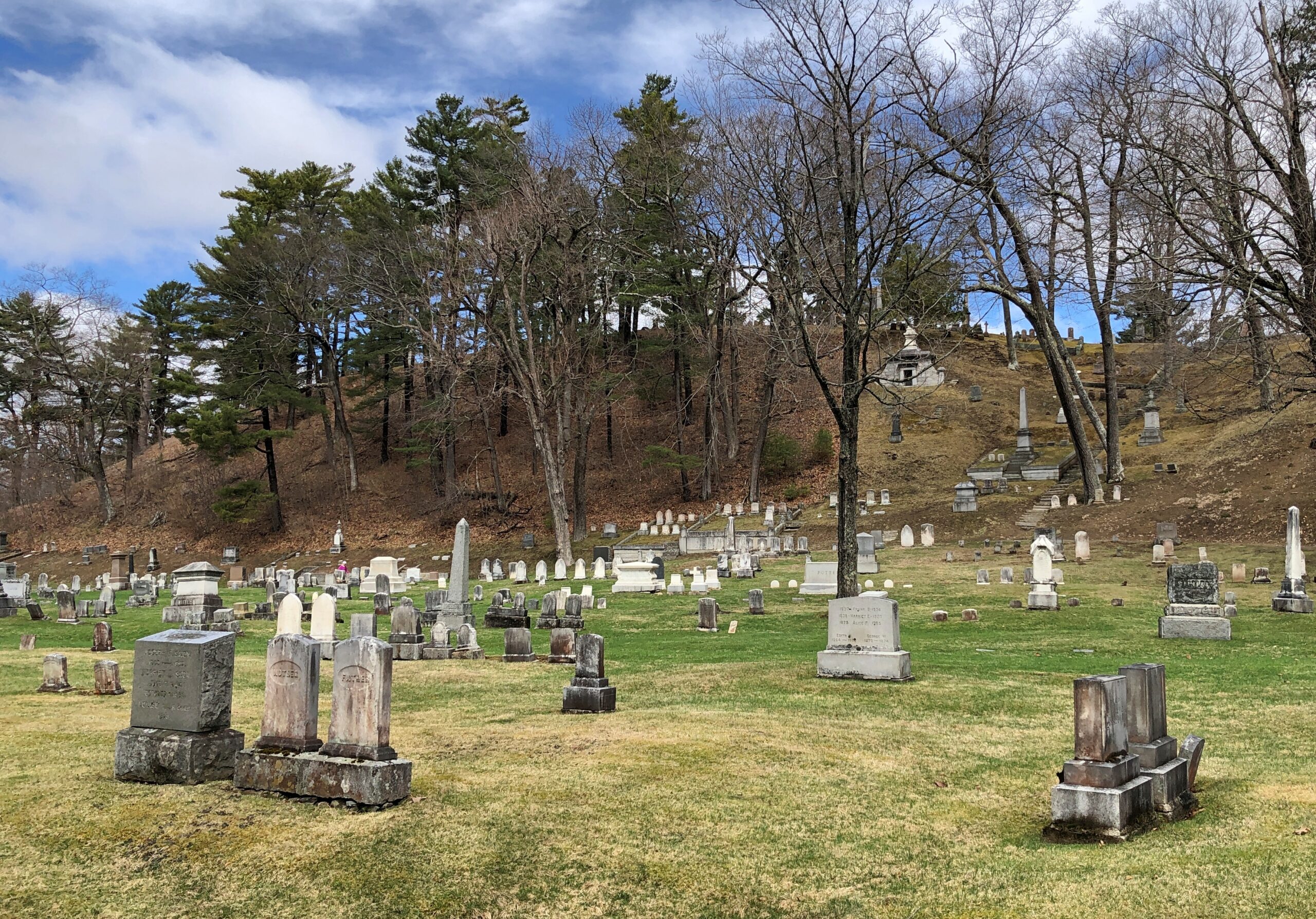
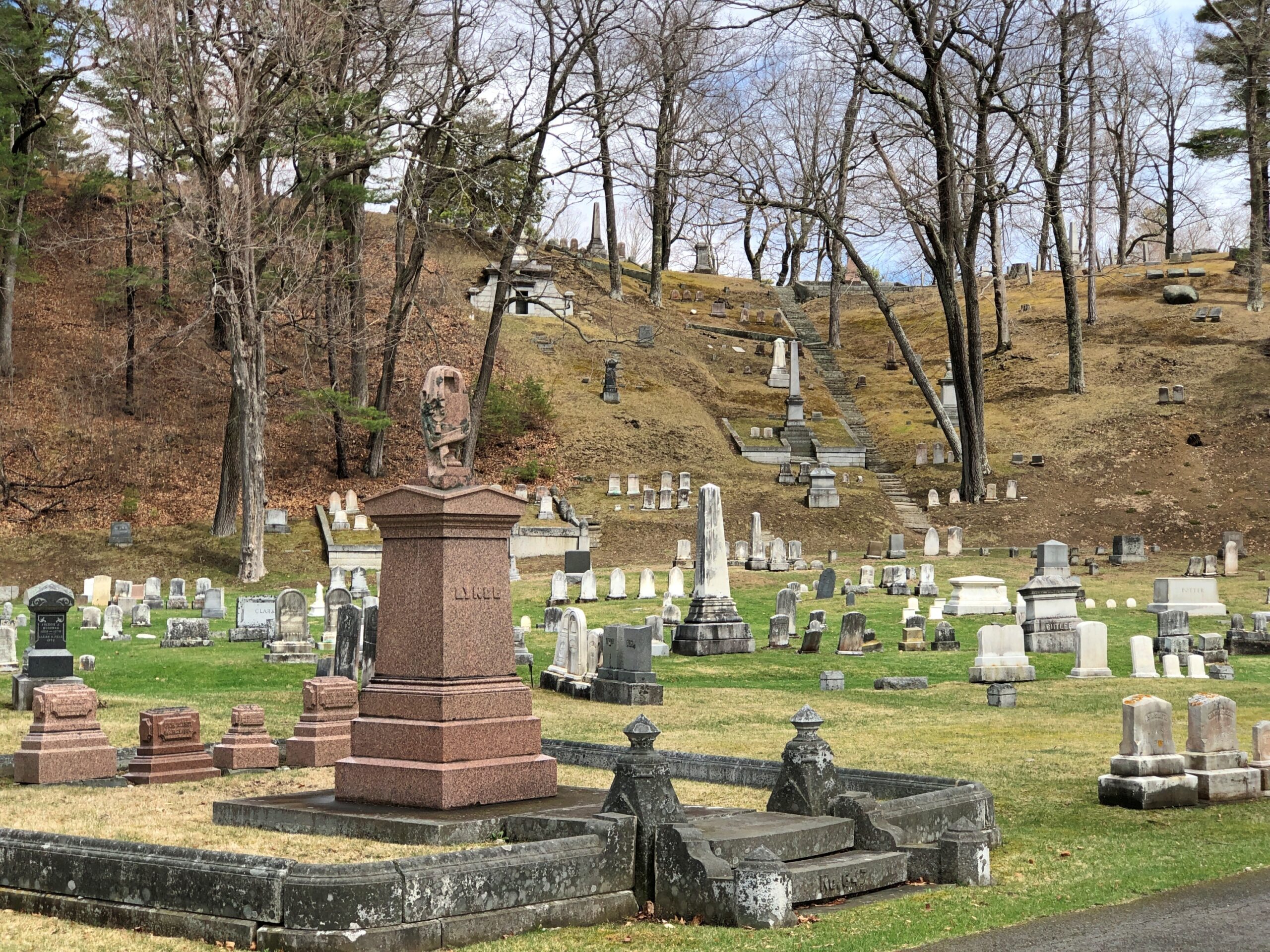
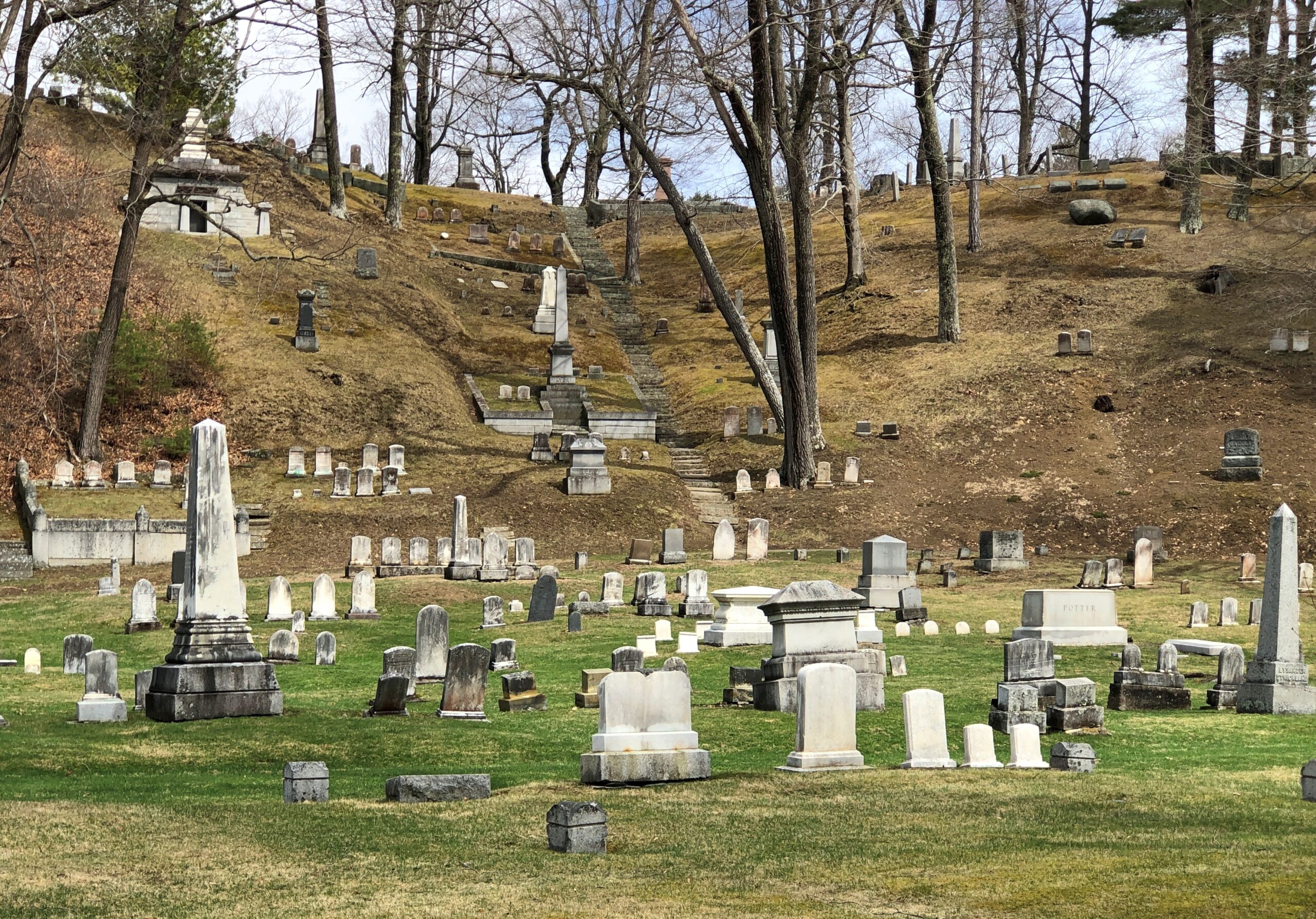
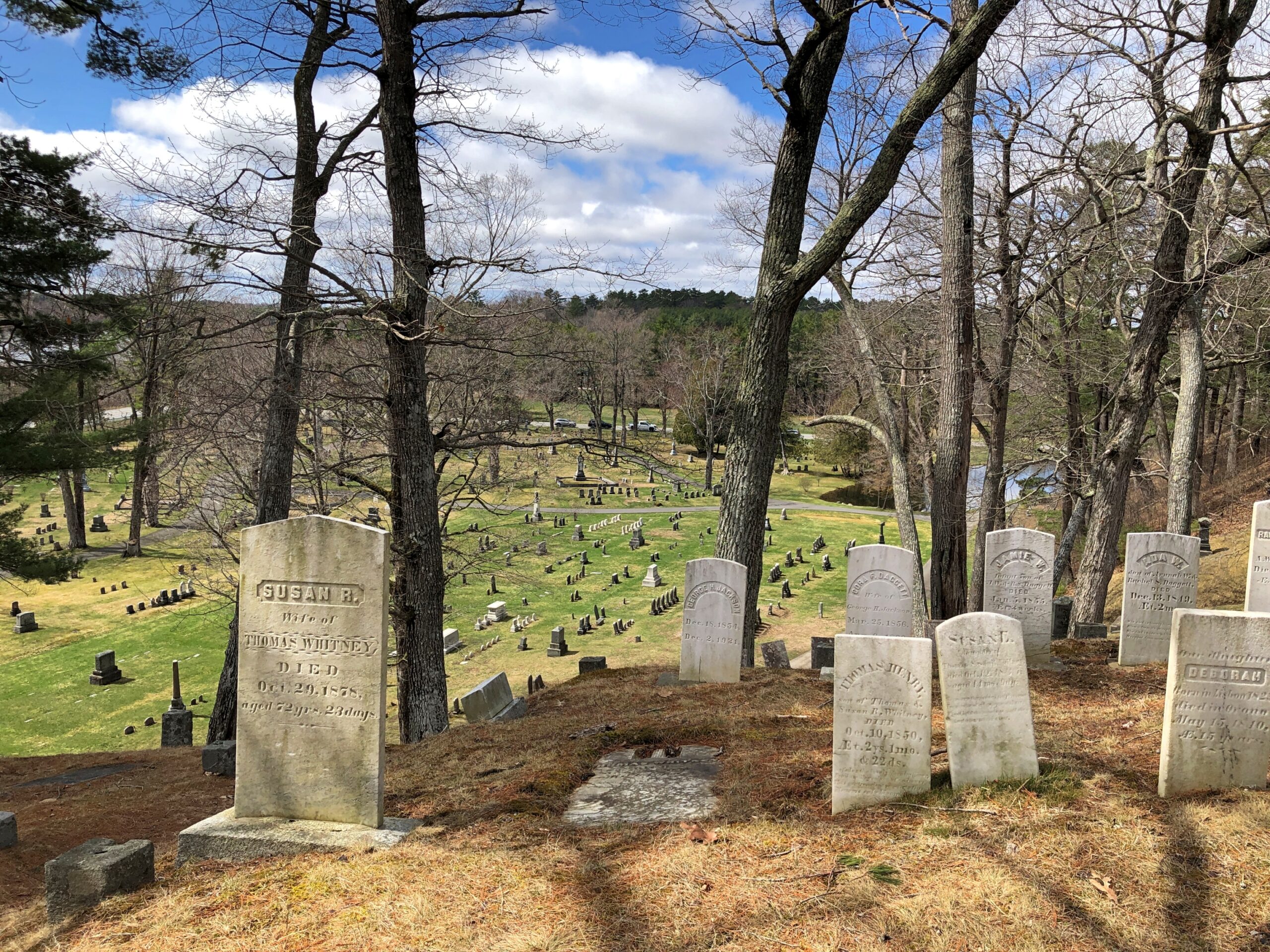
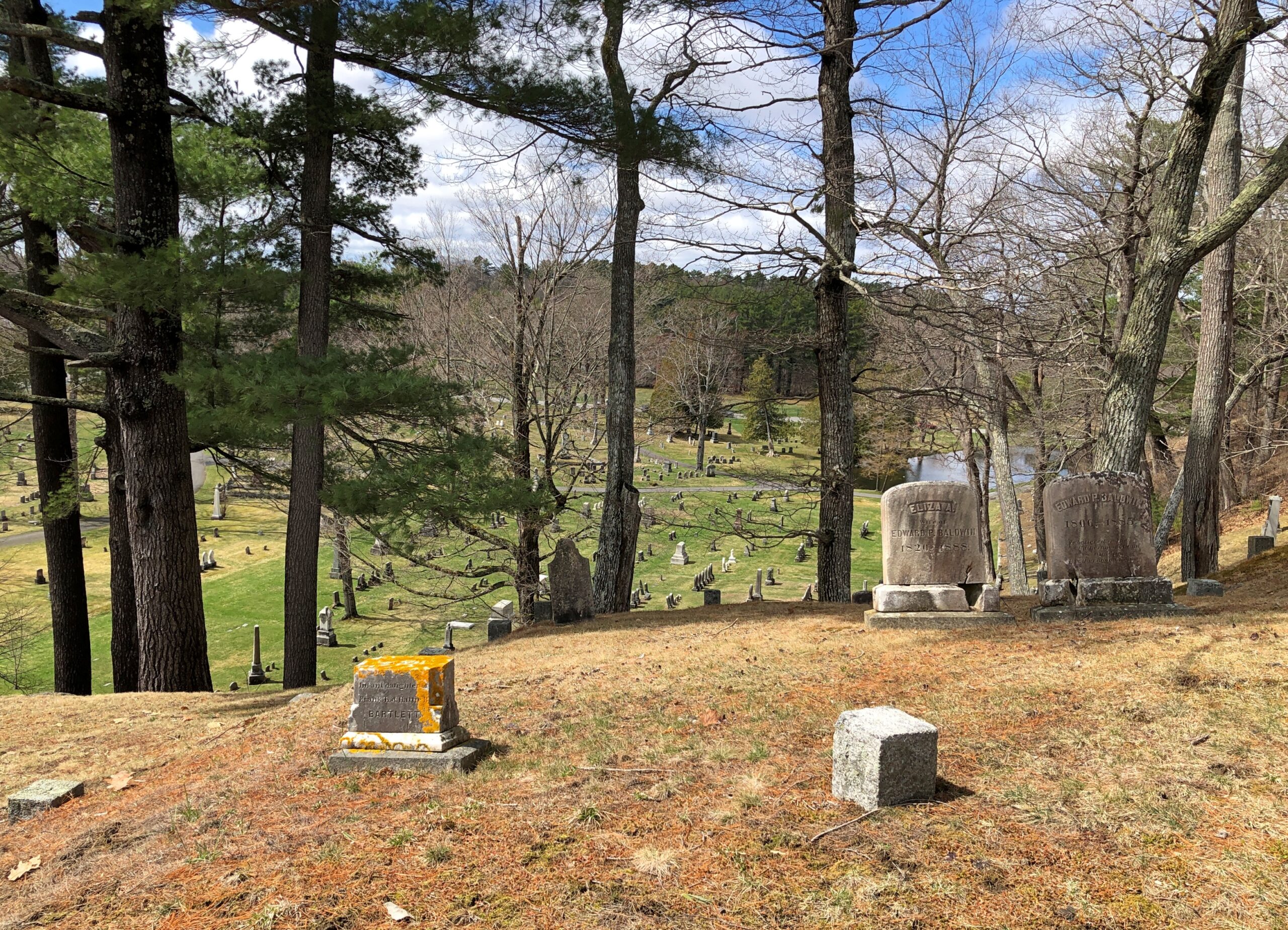
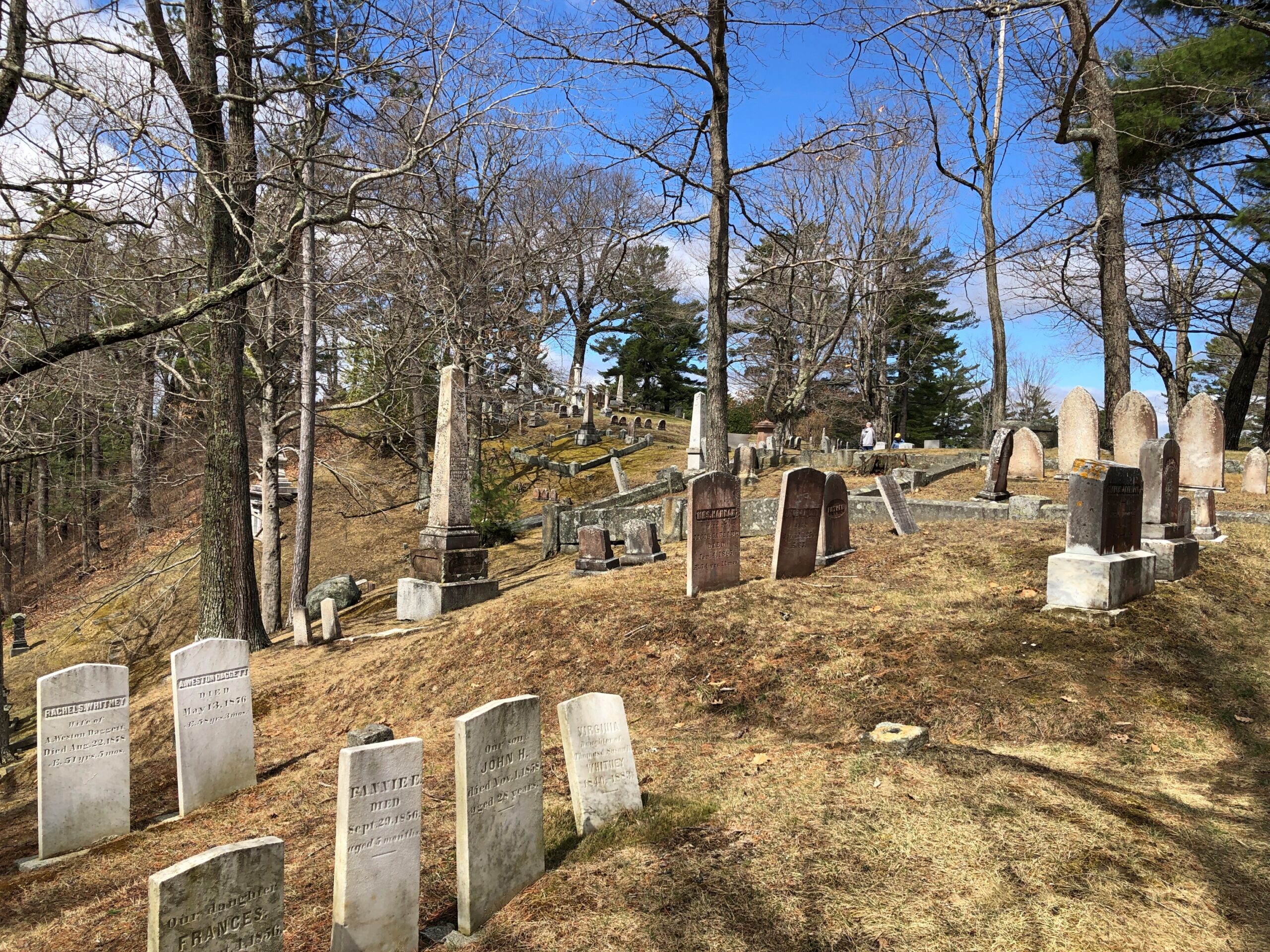
Mount Auburn Cemetery: The Stones

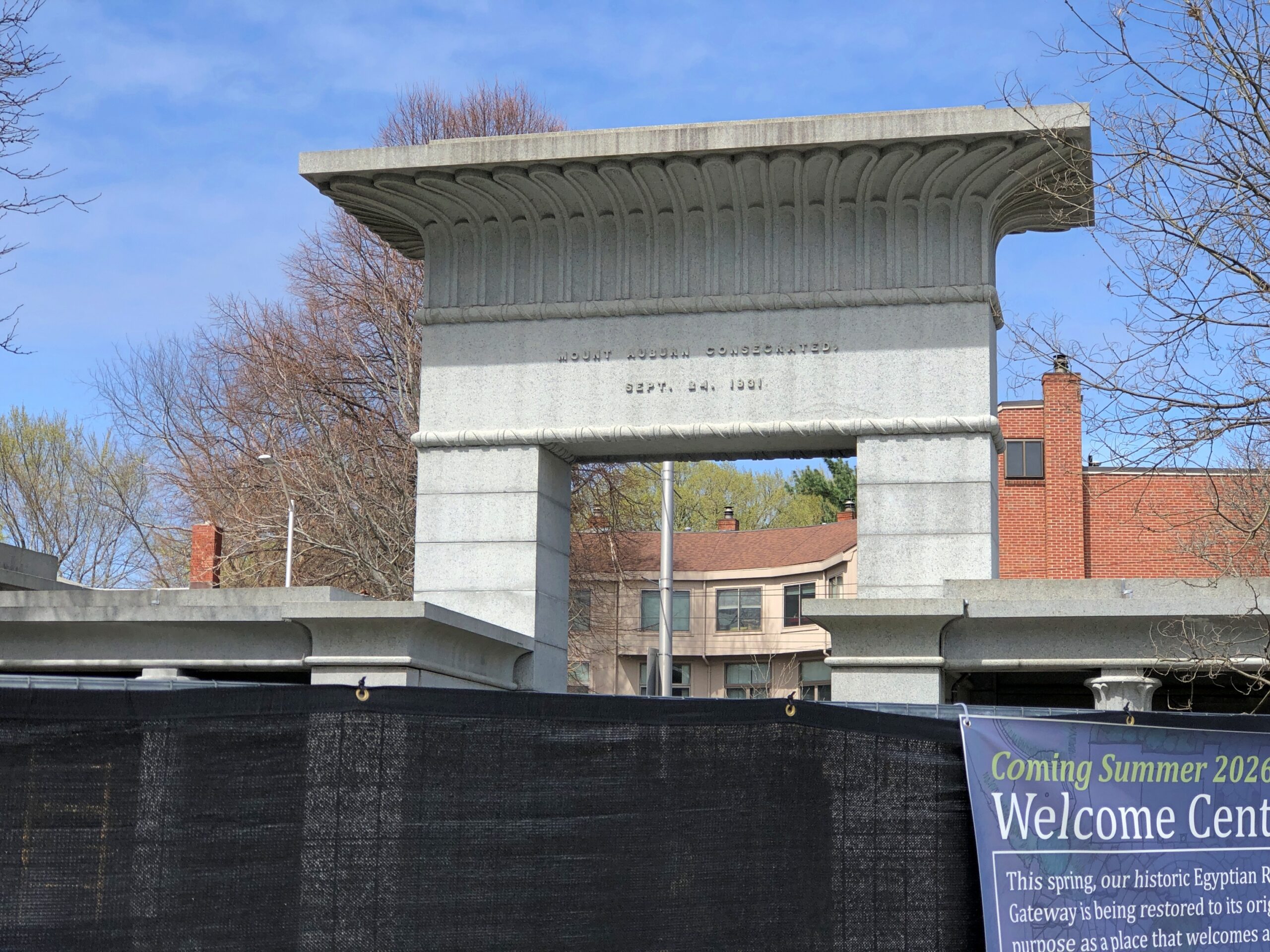
The main gate of Mount Auburn Cemetery, an Egyptian Revival structure, was behind a temporary fence the day I dropped by. That’s only reasonable, as an object that needs periodic renovation.

I took a paper souvenir from the cemetery, one that’s given away: a detailed map and guide. An exceptionally detailed map and guide, I should add, including not only the vehicular roads that twist around the grounds (something like the roads in greater Boston), but all of the many, many footpaths, all of which seem to have names. Also noted are special features, including chapels, ponds, named knolls, the sites of 62 notable people buried on the grounds, plus the sites more than 20 notable memorials or works of funerary art. It’s more than anyone could take in during a short visit, or even a lot of longer visits.

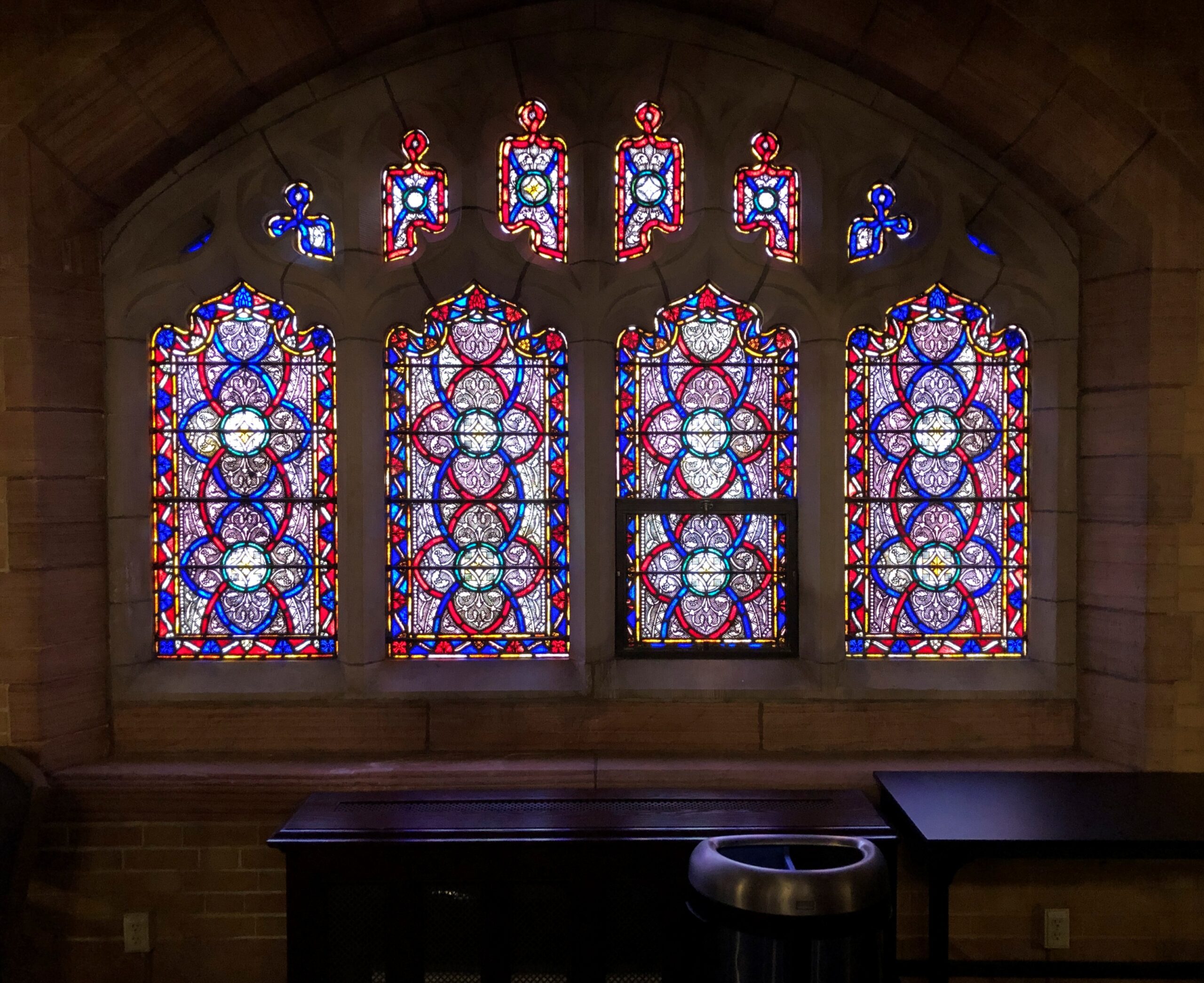
That’s never deterred me. I parked near the entrance and set out, picking up the map at the visitors center and spending a moment at Story Chapel.

The chapel is named for Joseph Story (d. 1845), associate justice of the Supreme Court, colleague of John Marshall and, in as much as I know about the subject (not much), a titan of early U.S. jurisprudence. He was also first president of Mount Auburn and, when his time came, he was buried there, though that was among the many memorials I didn’t happen to see.

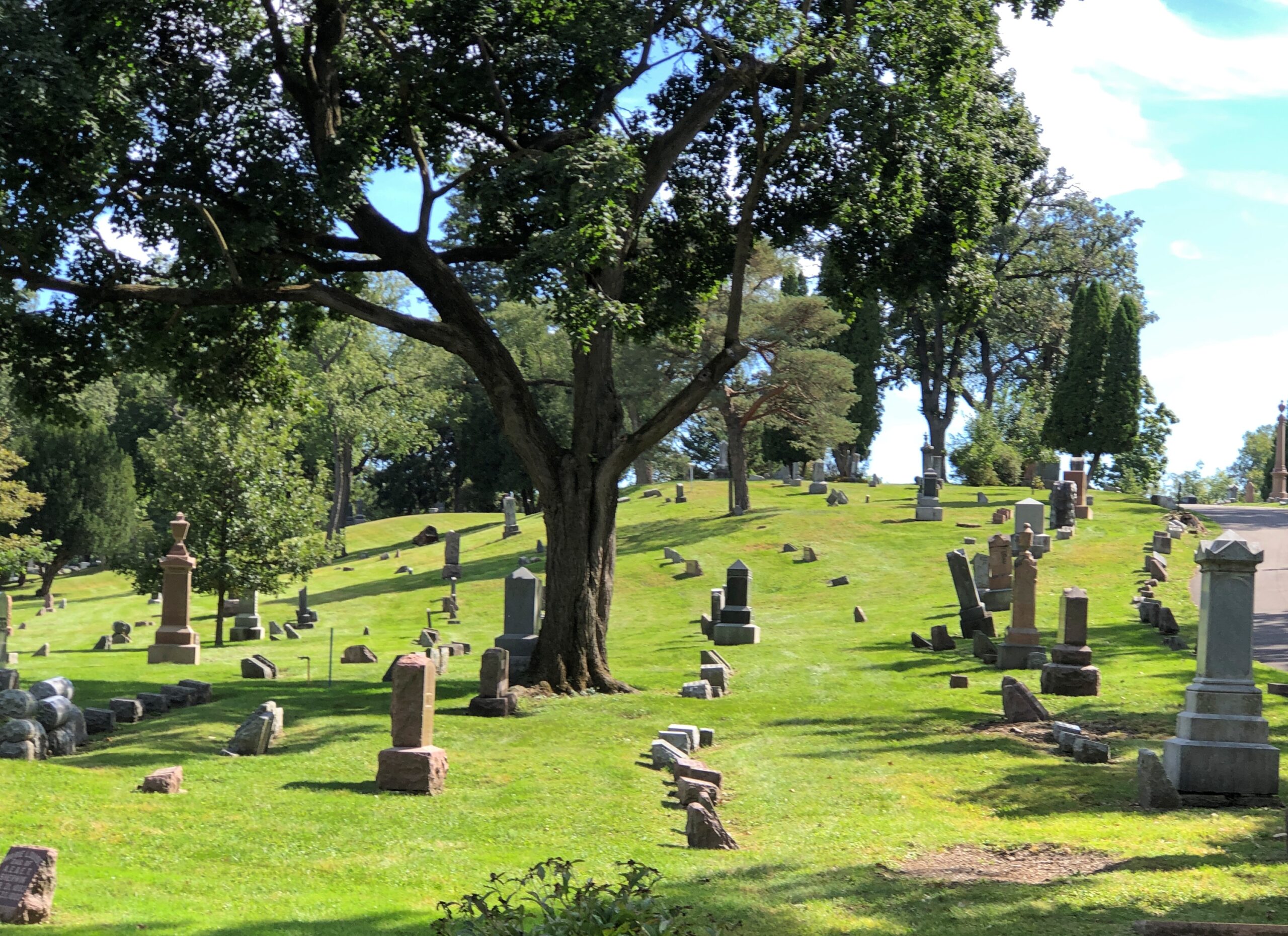
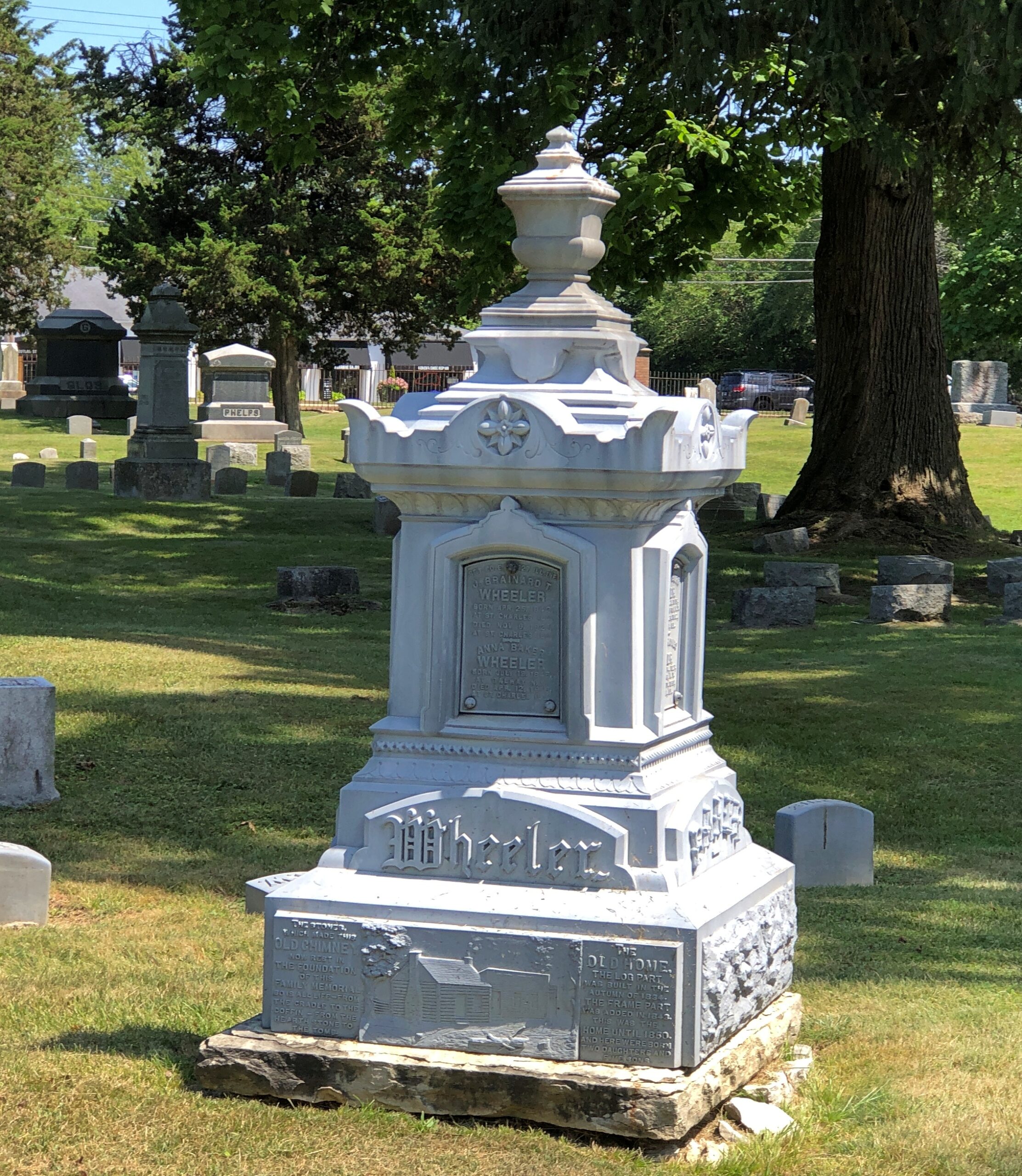
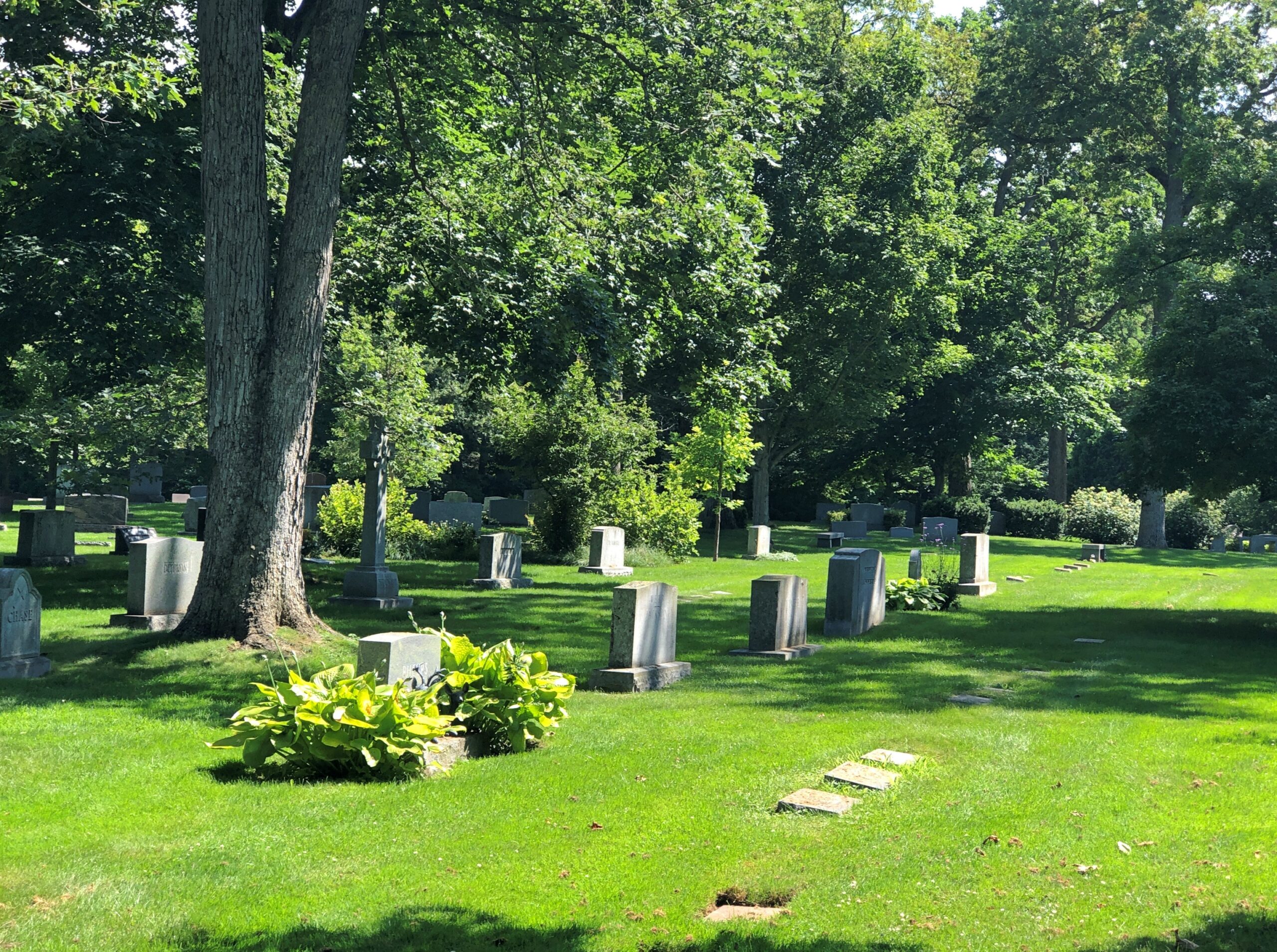
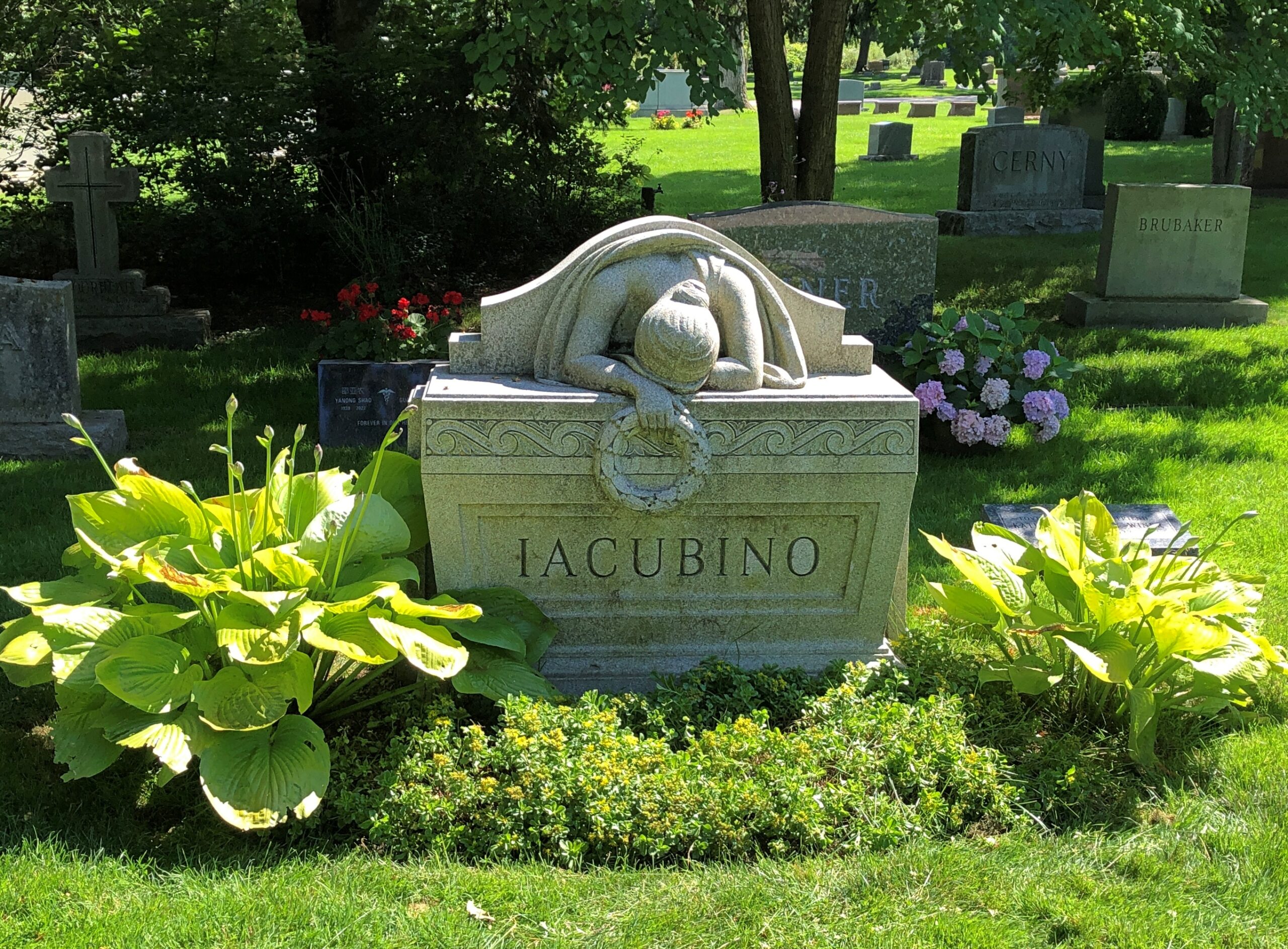
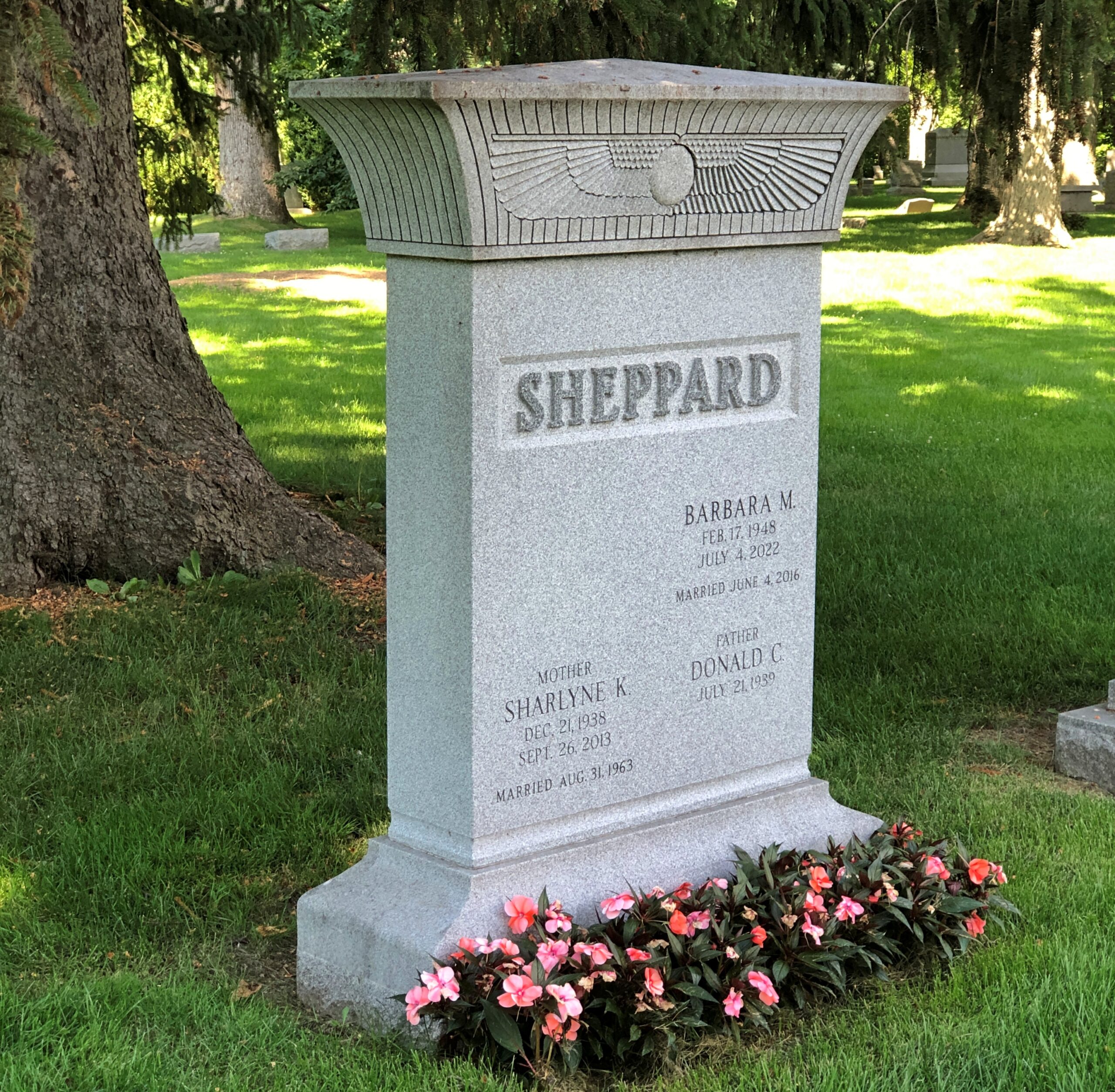
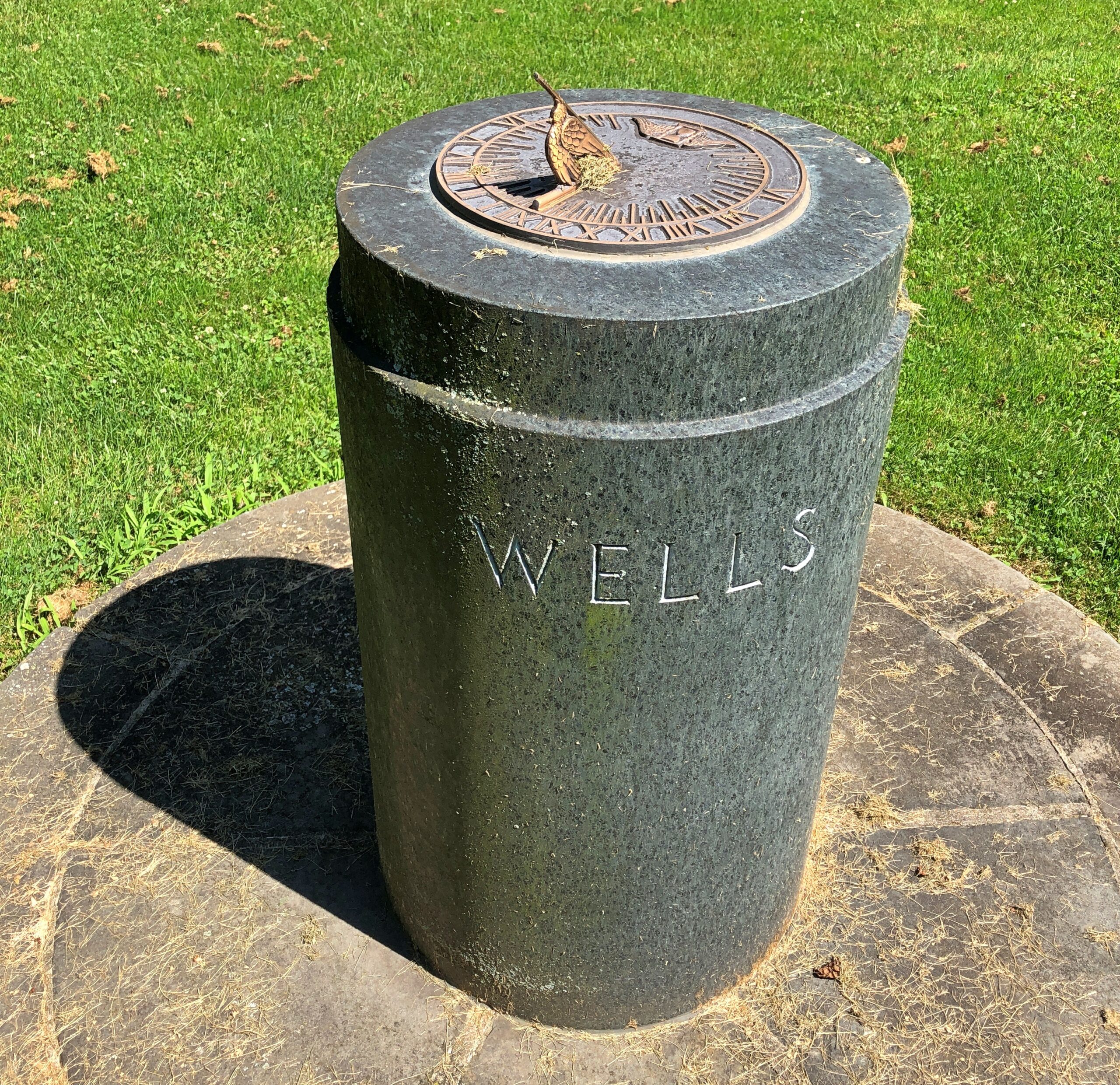
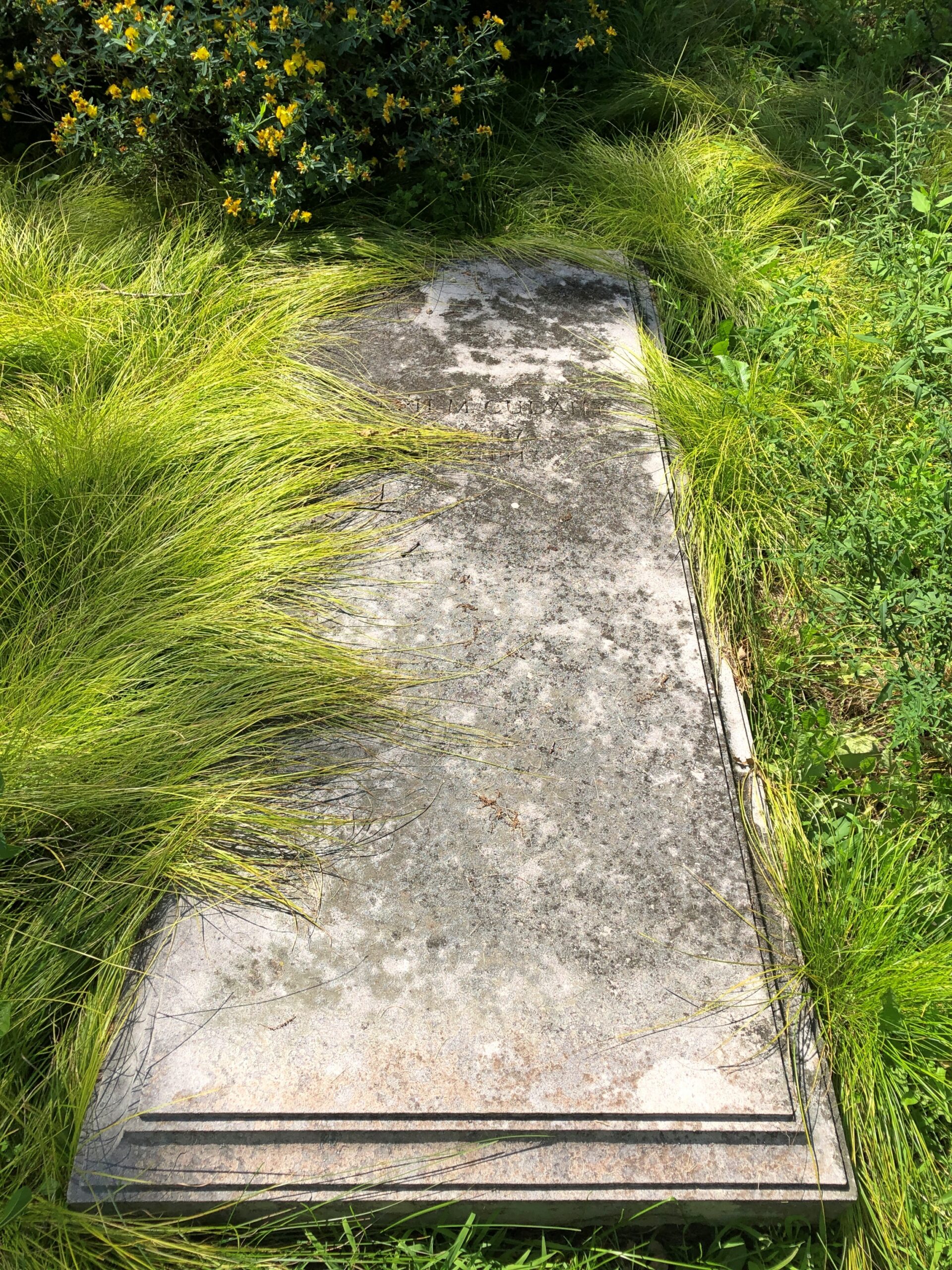
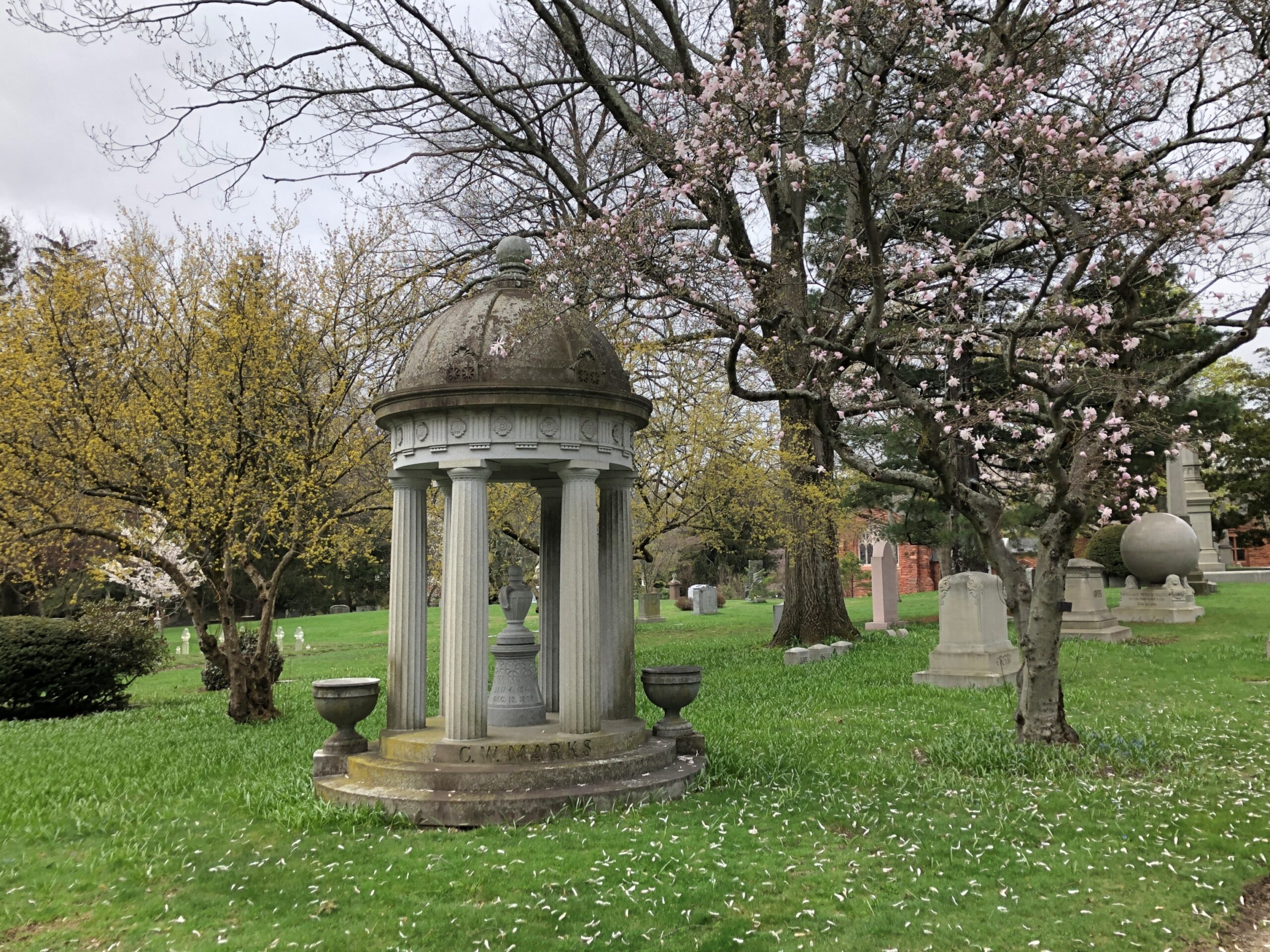
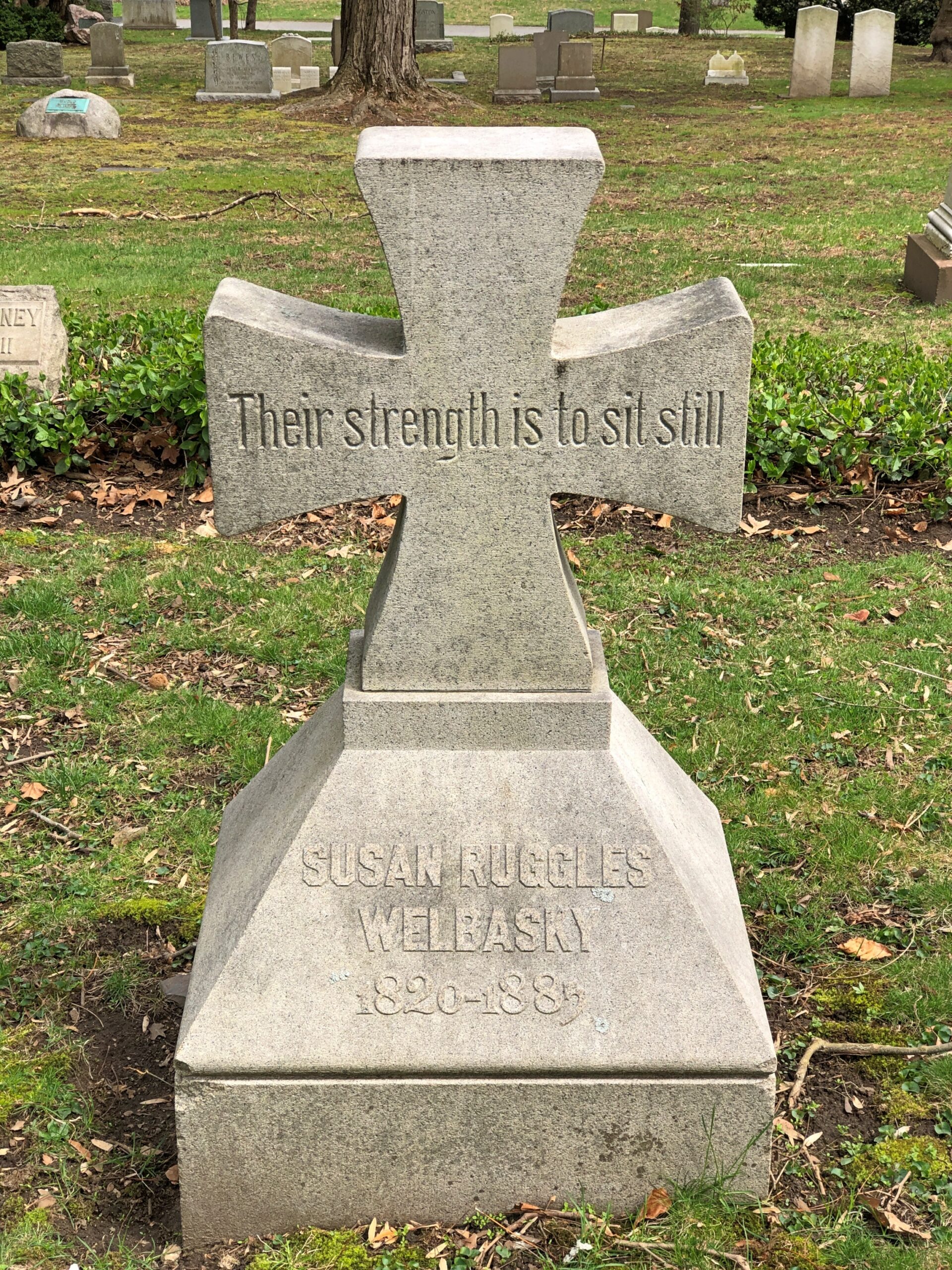
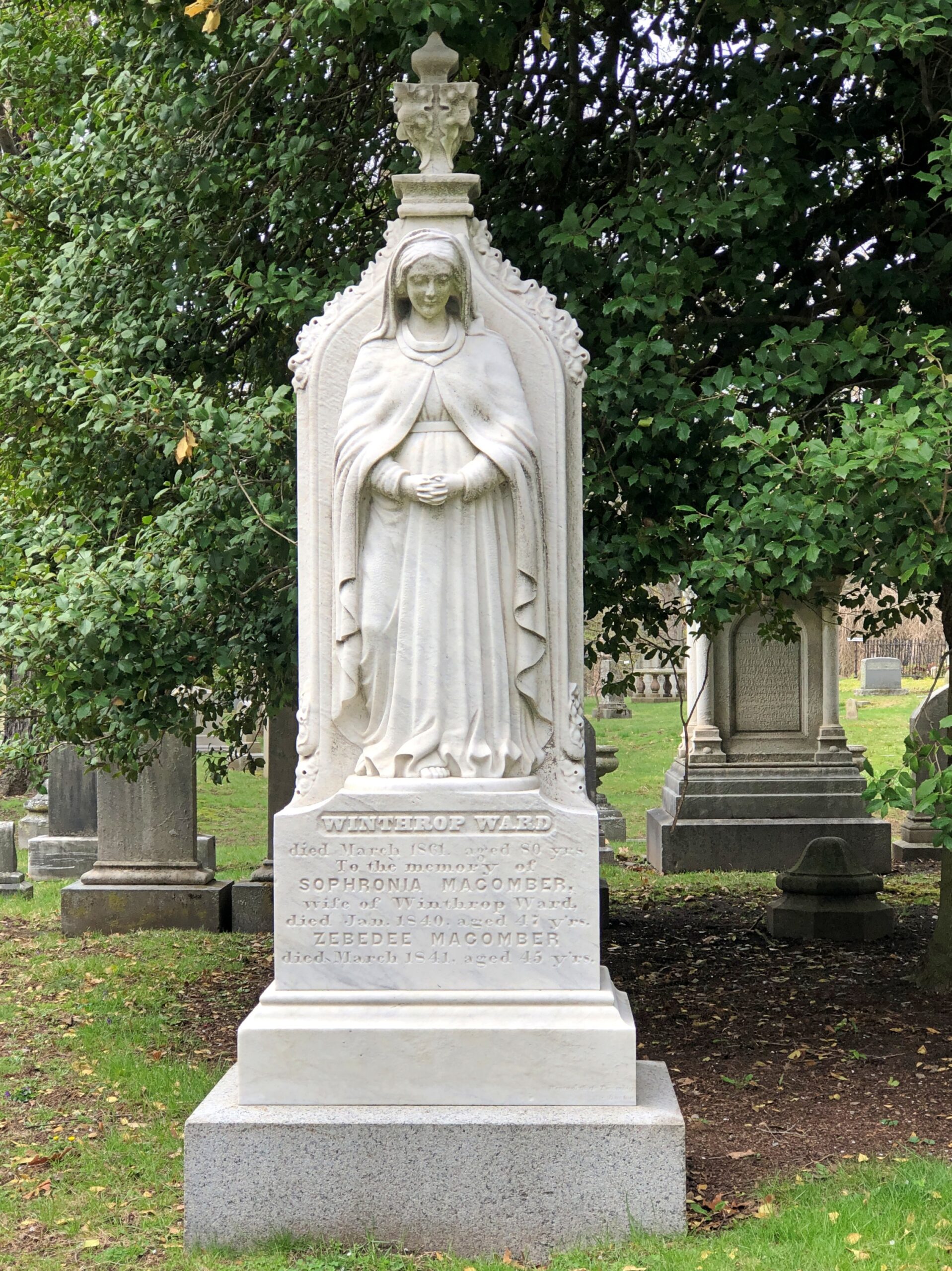
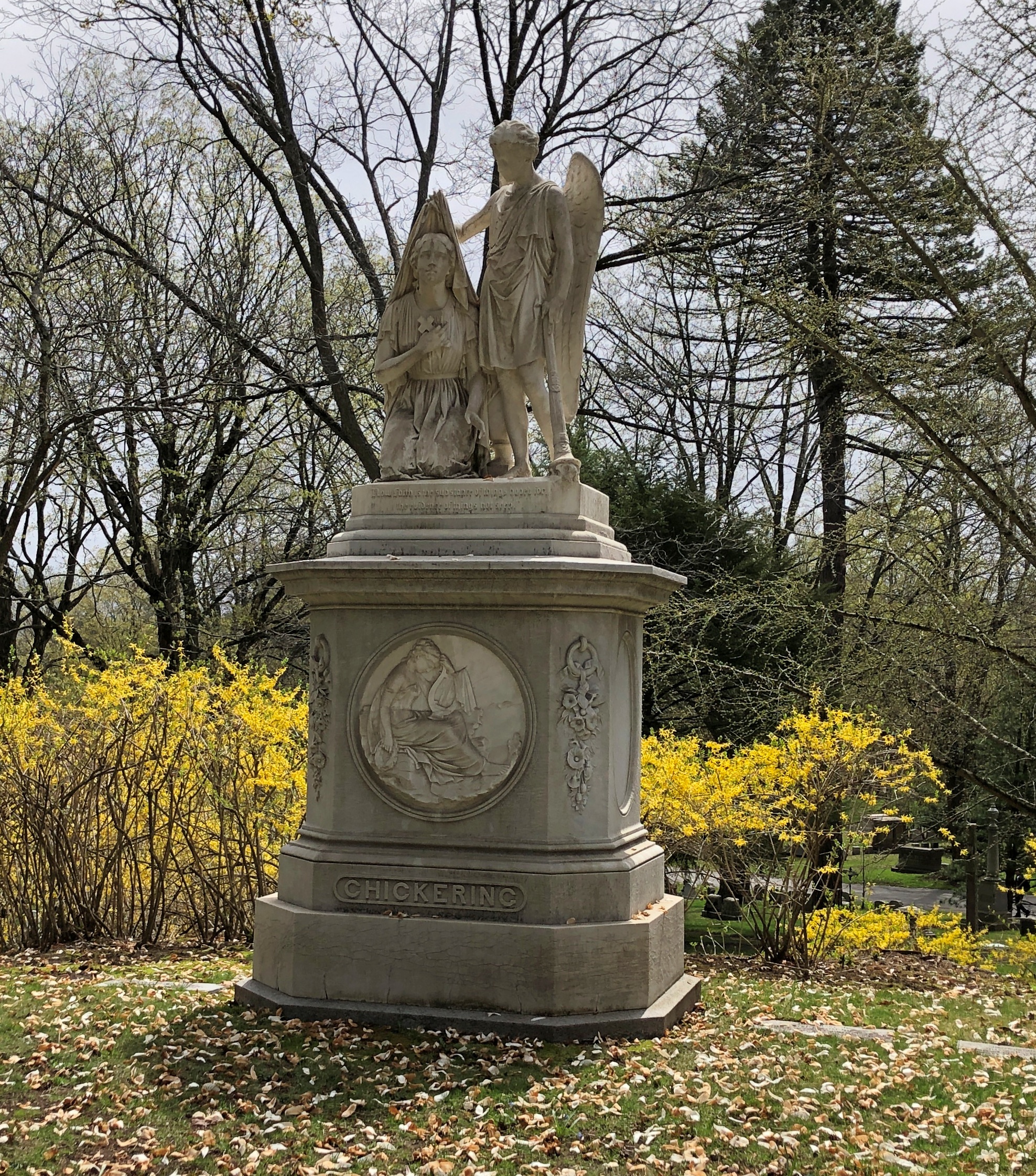
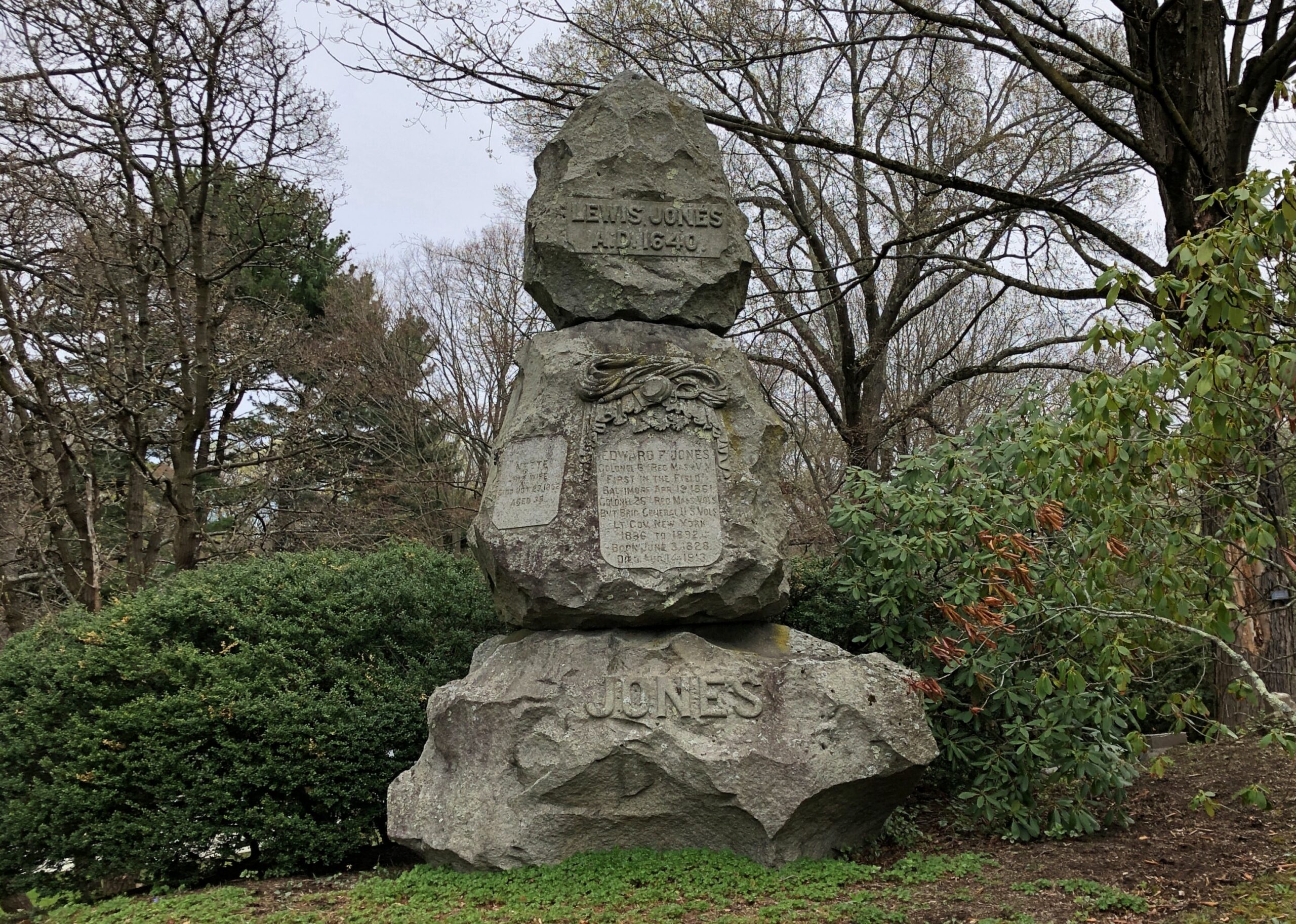
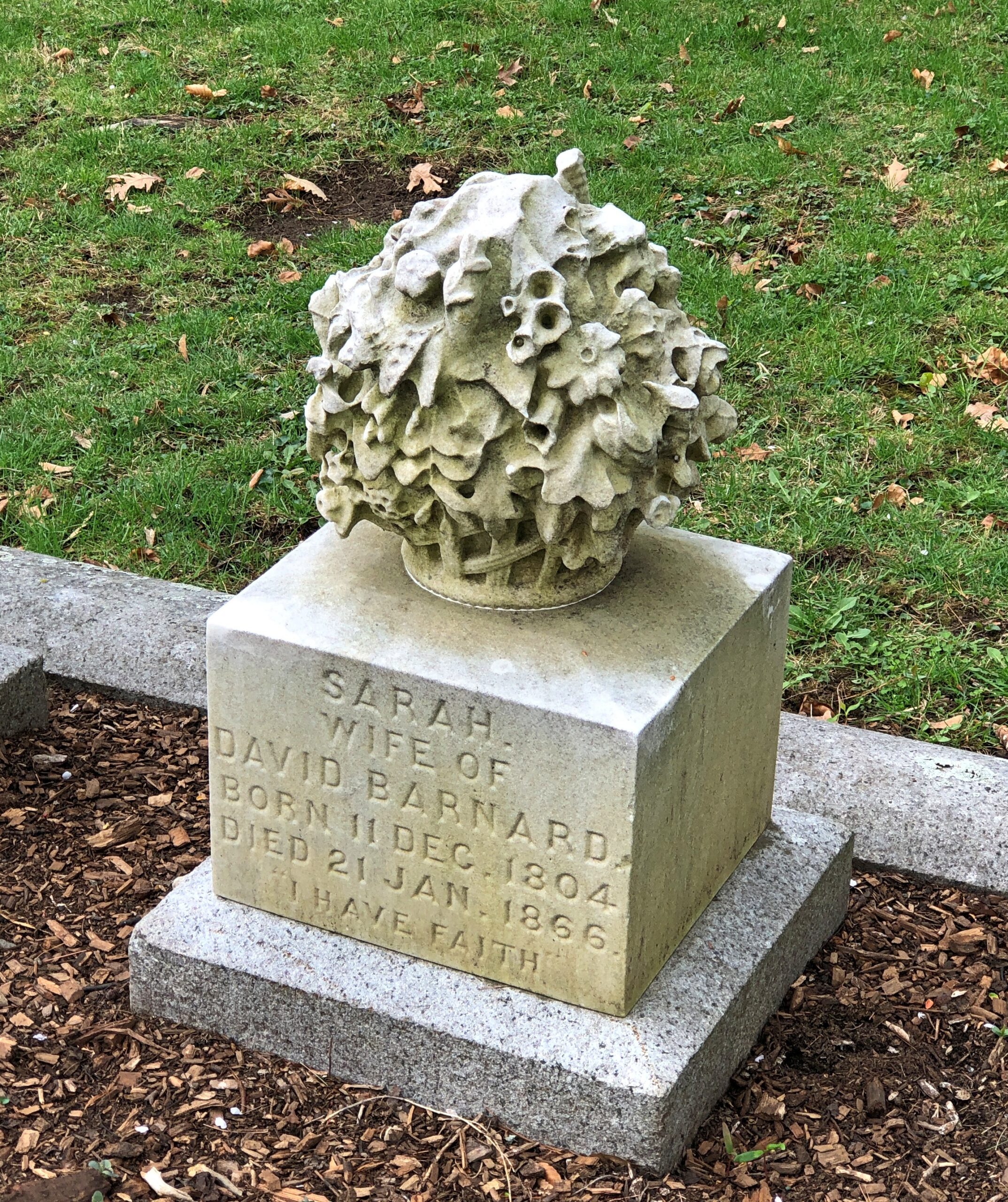
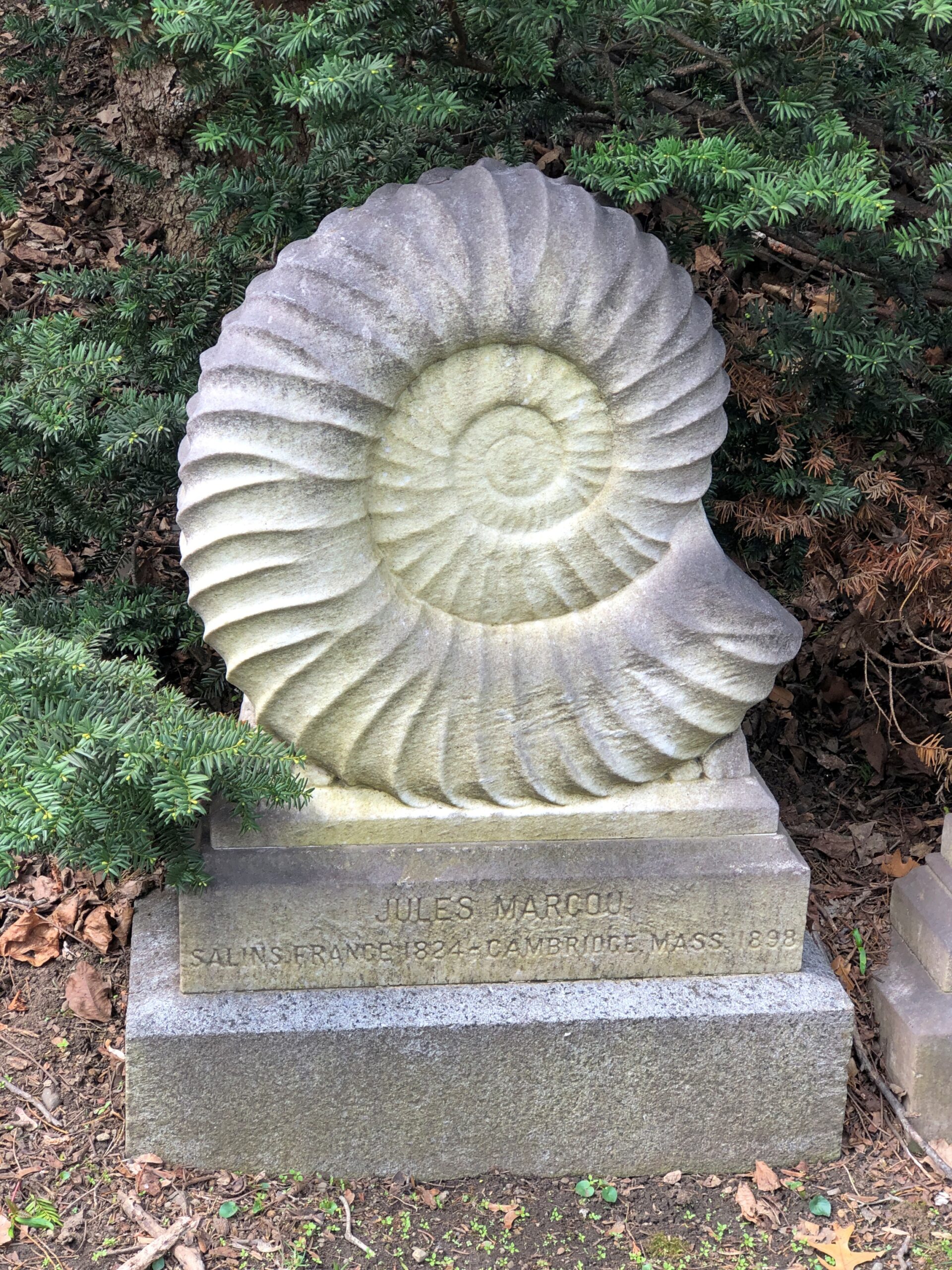
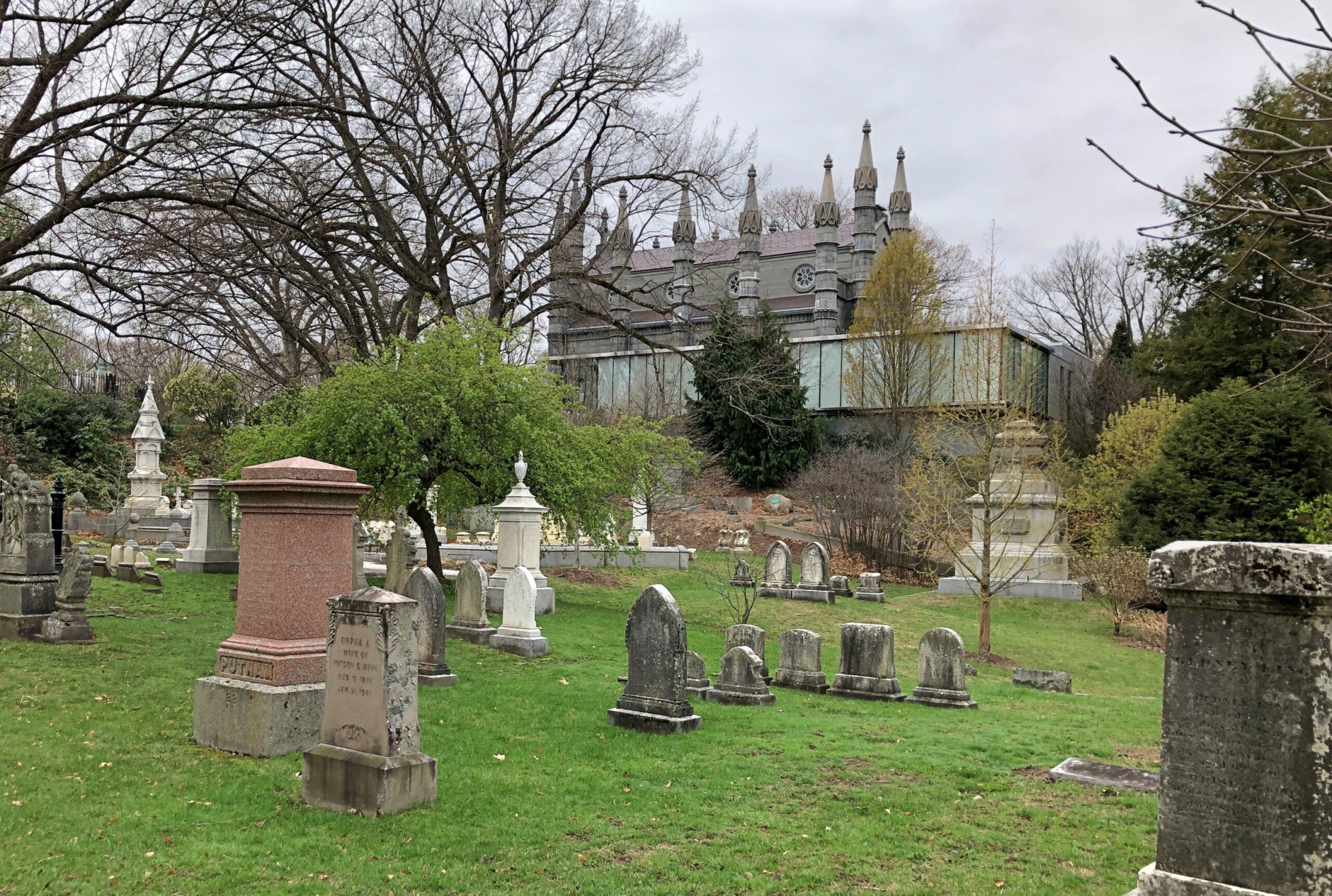
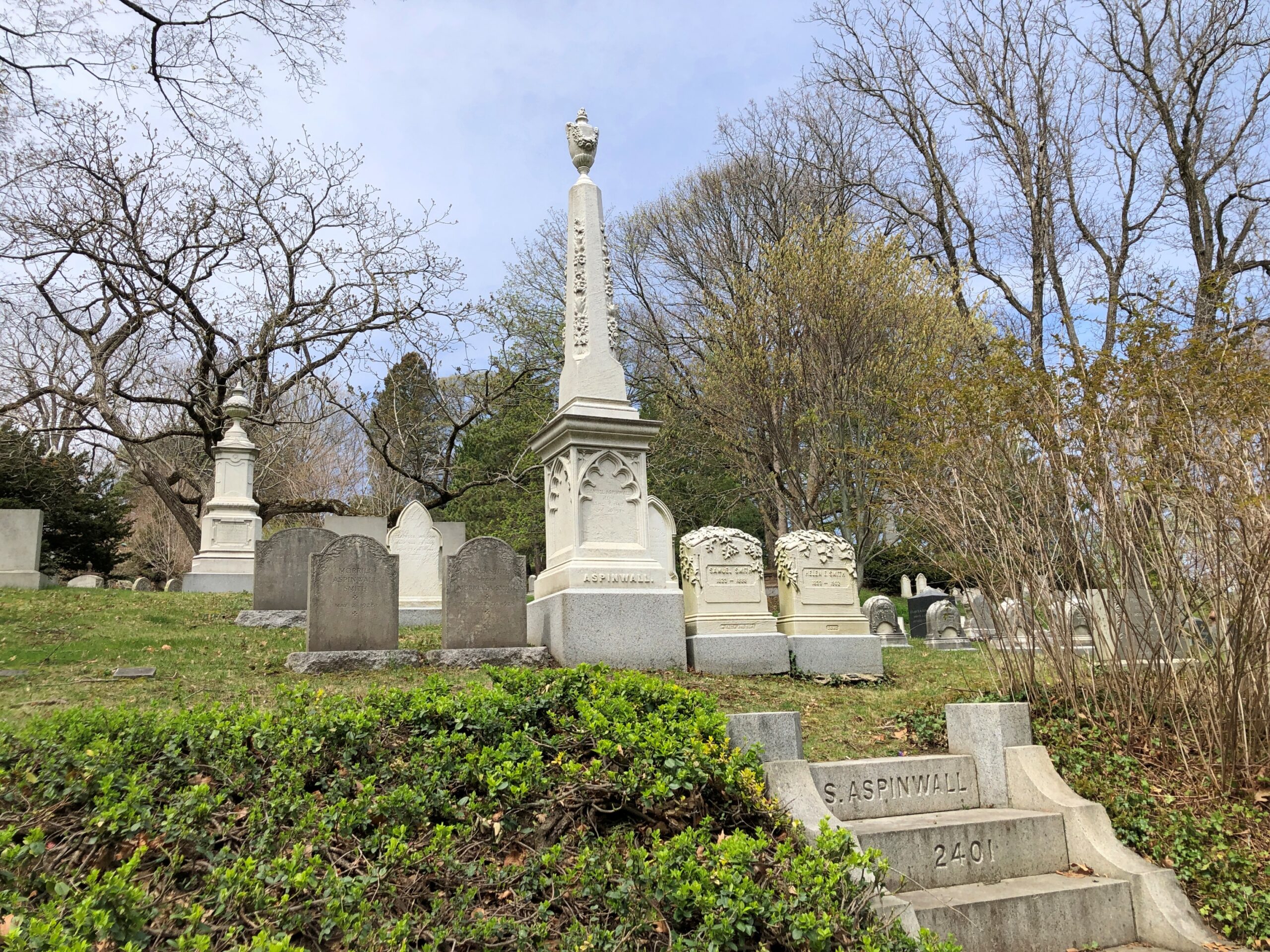
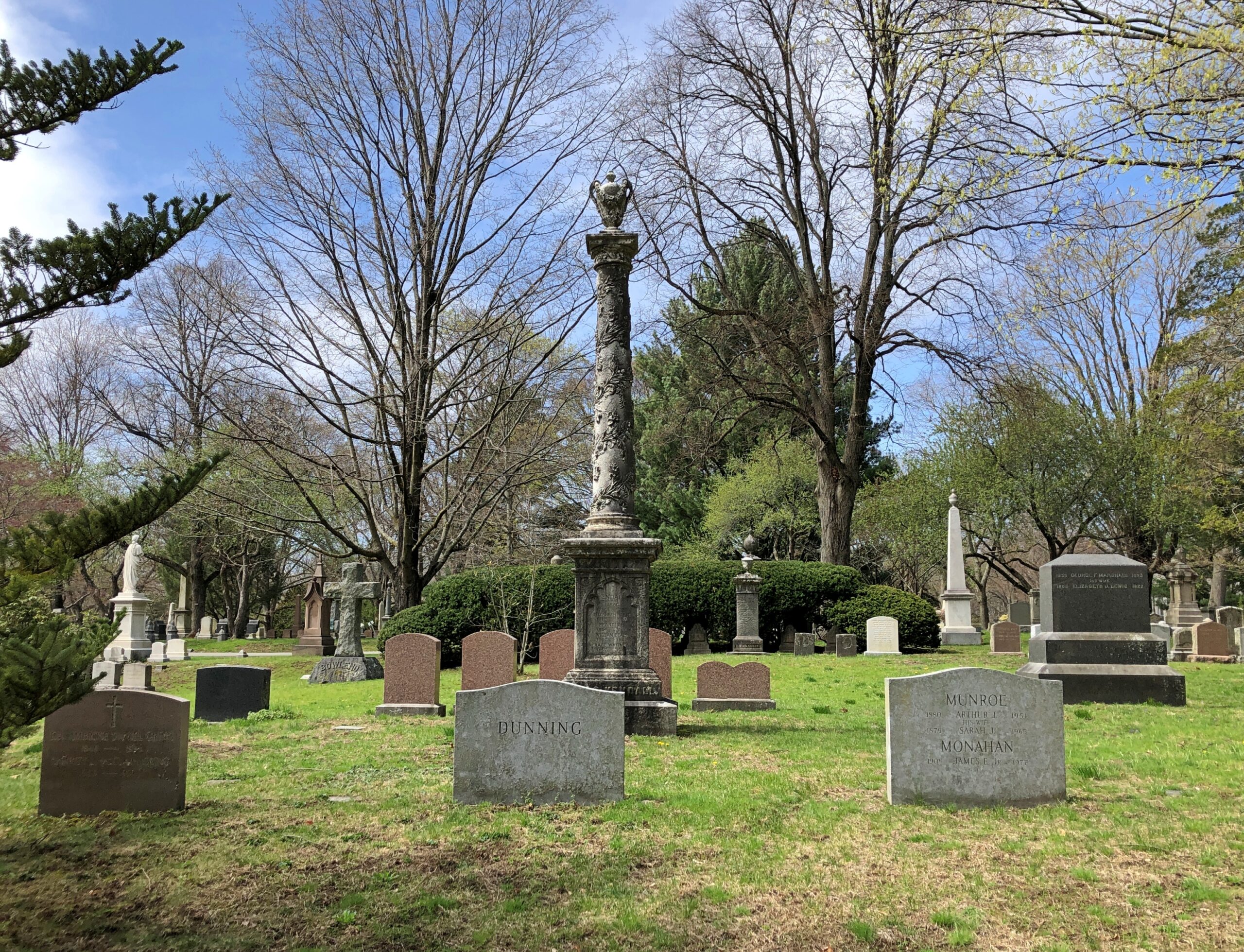
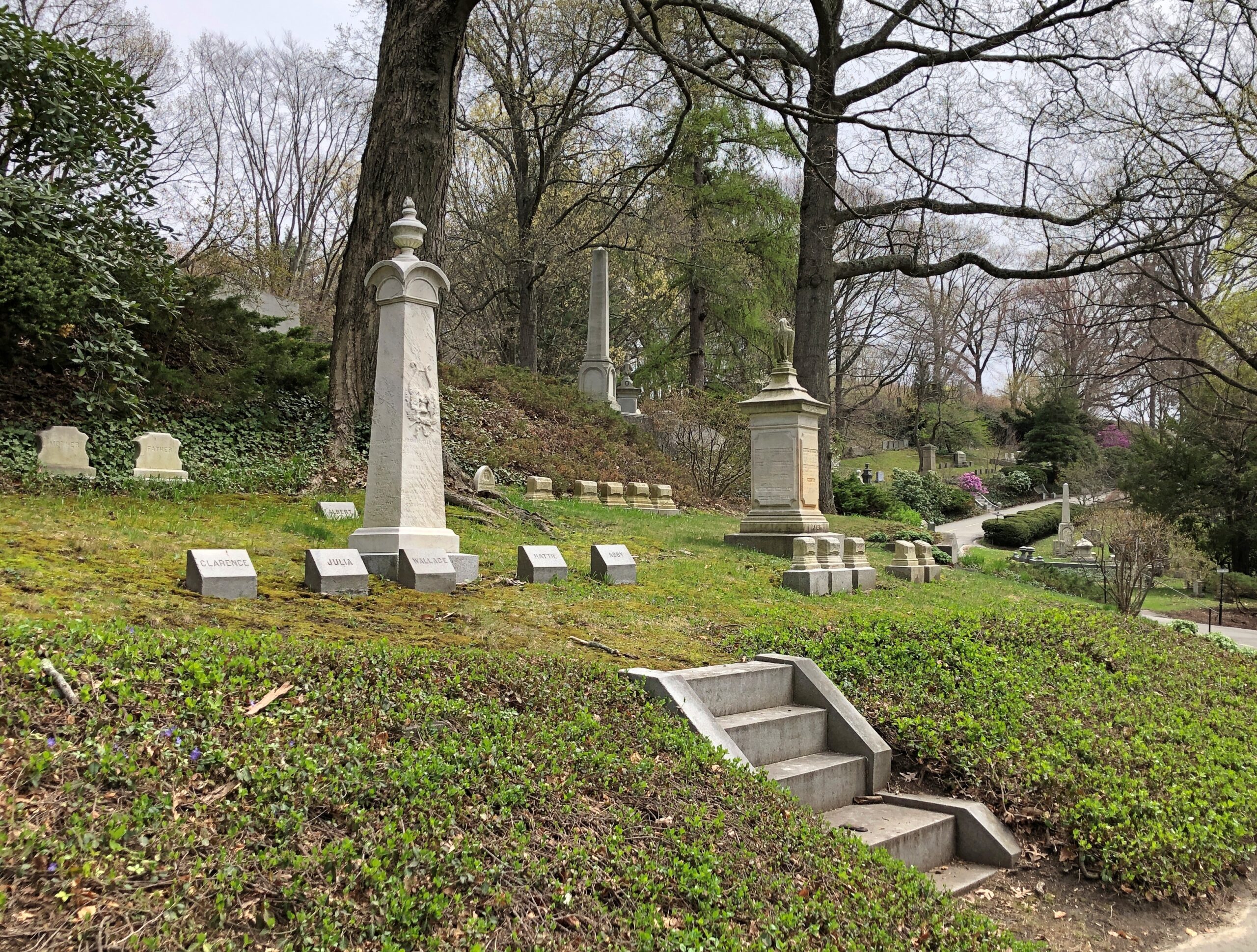
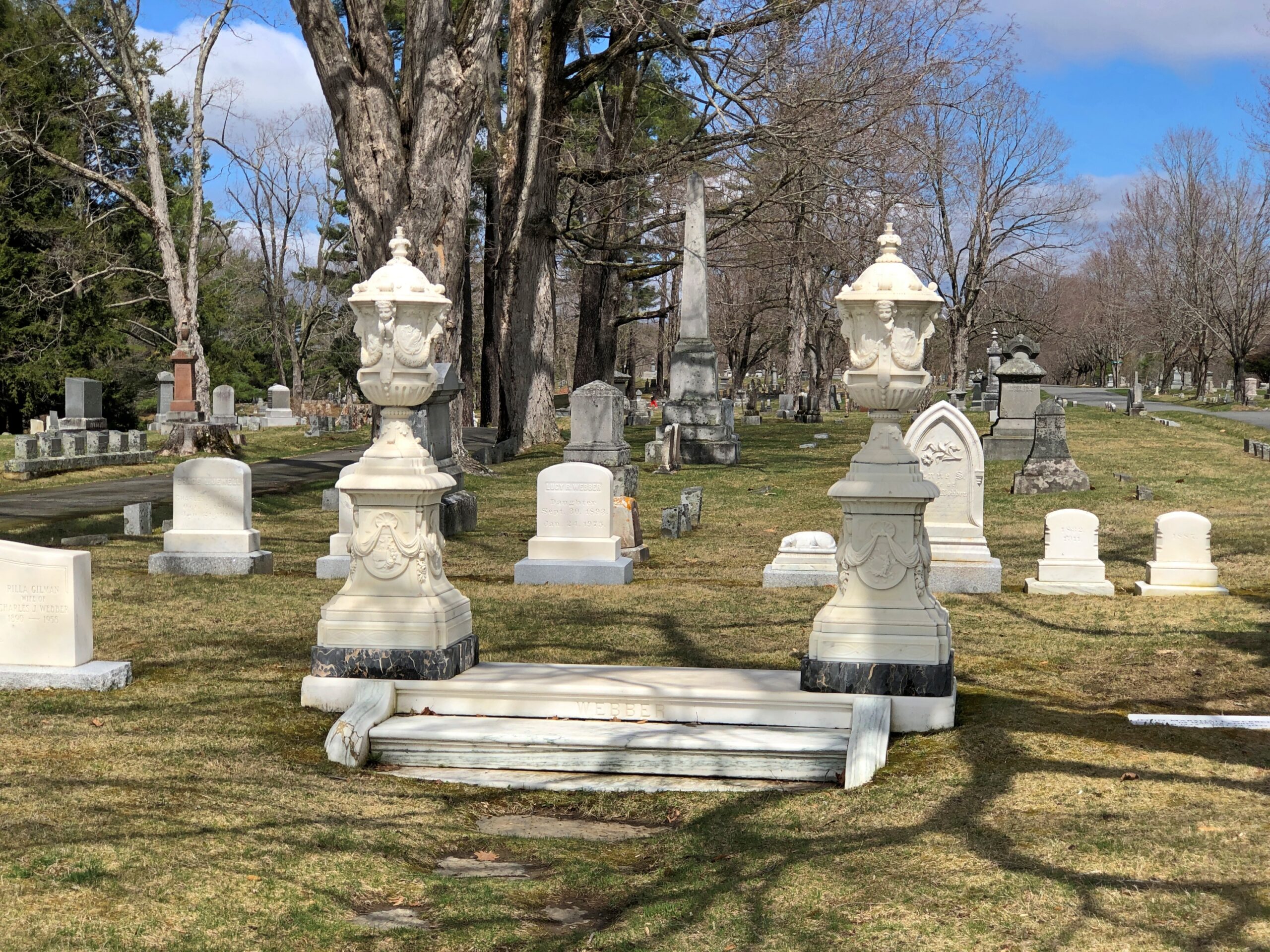
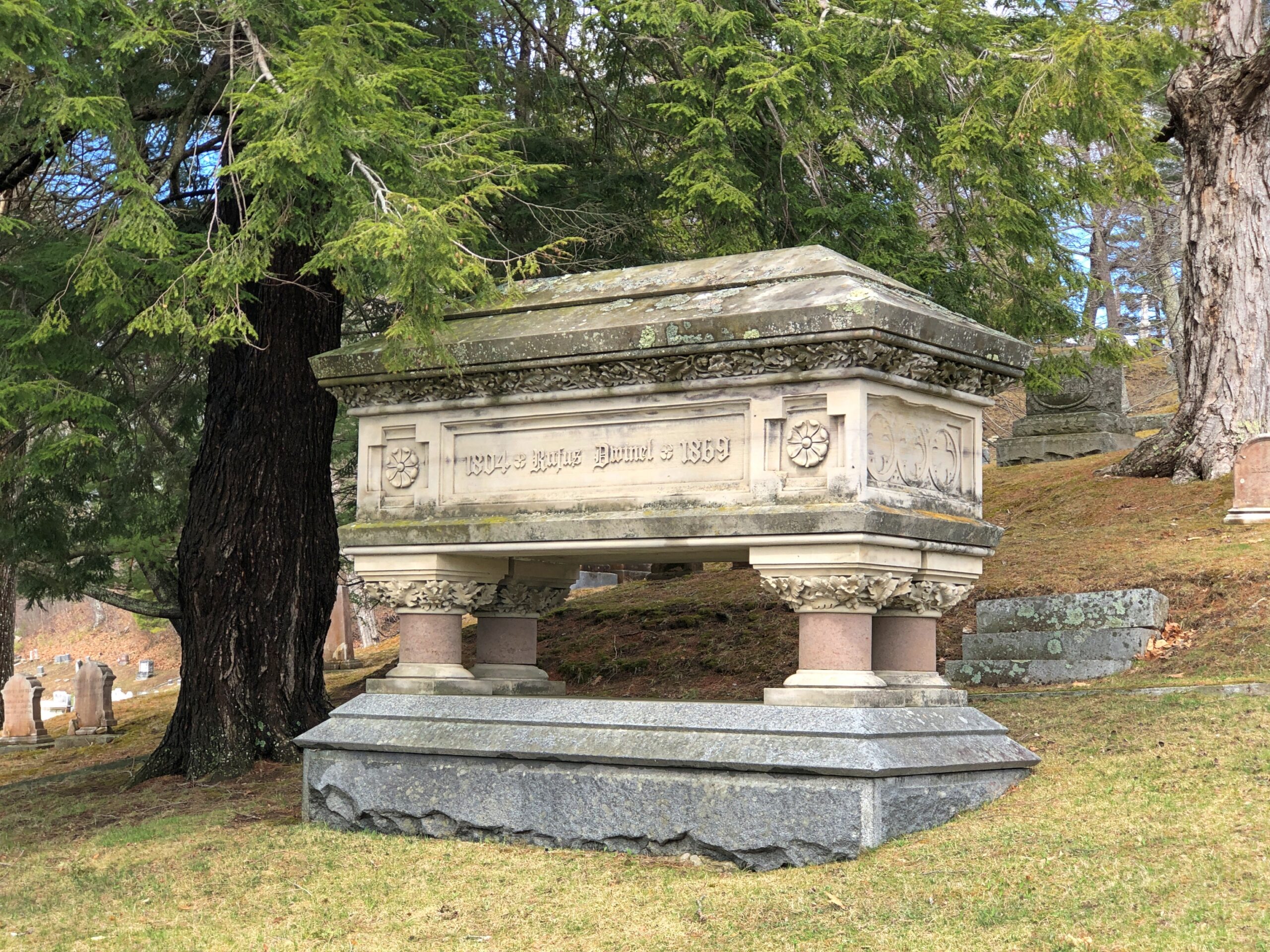
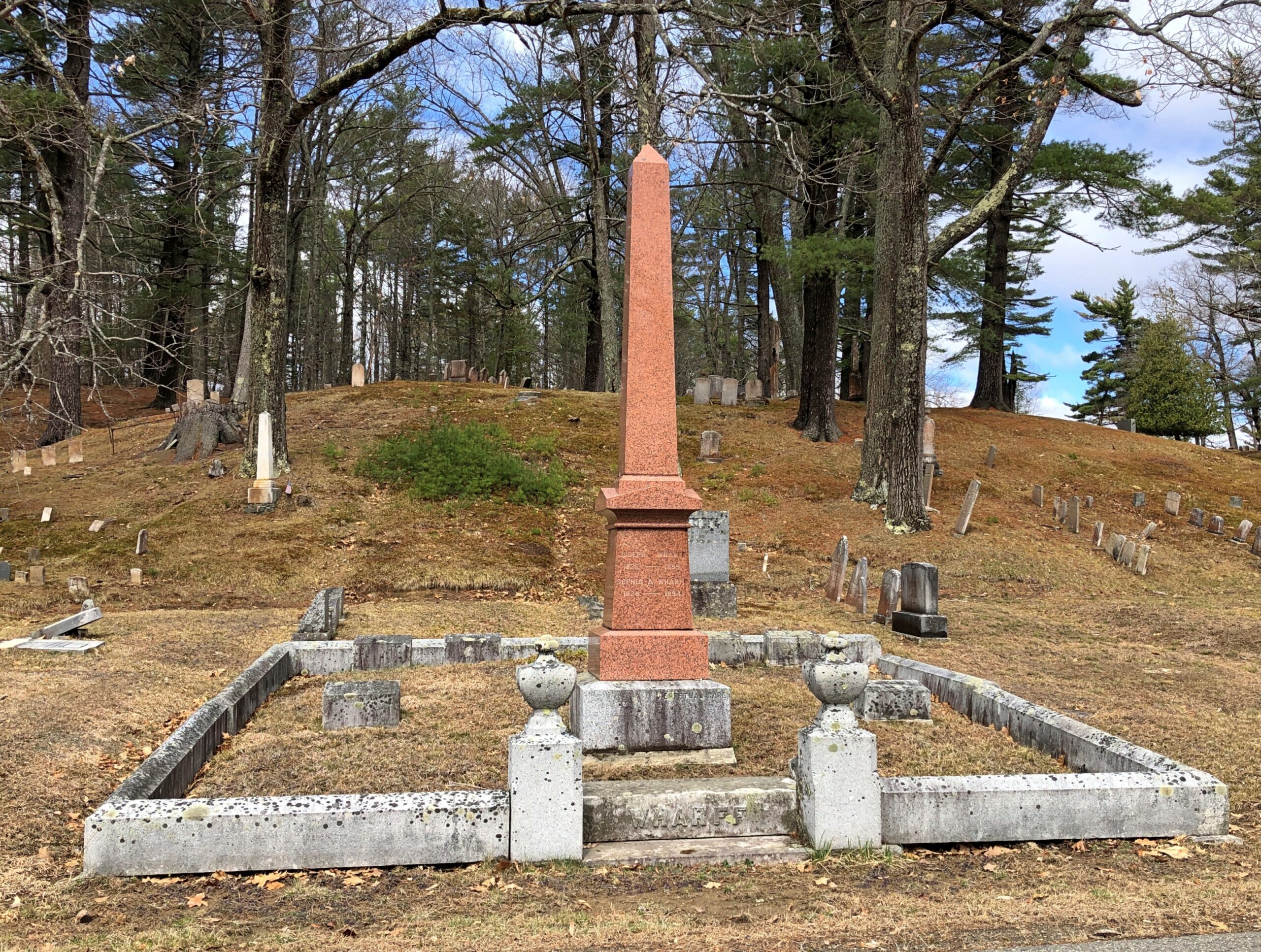
So many memorials. Some more conventional, but no less beautiful or impressive for it.

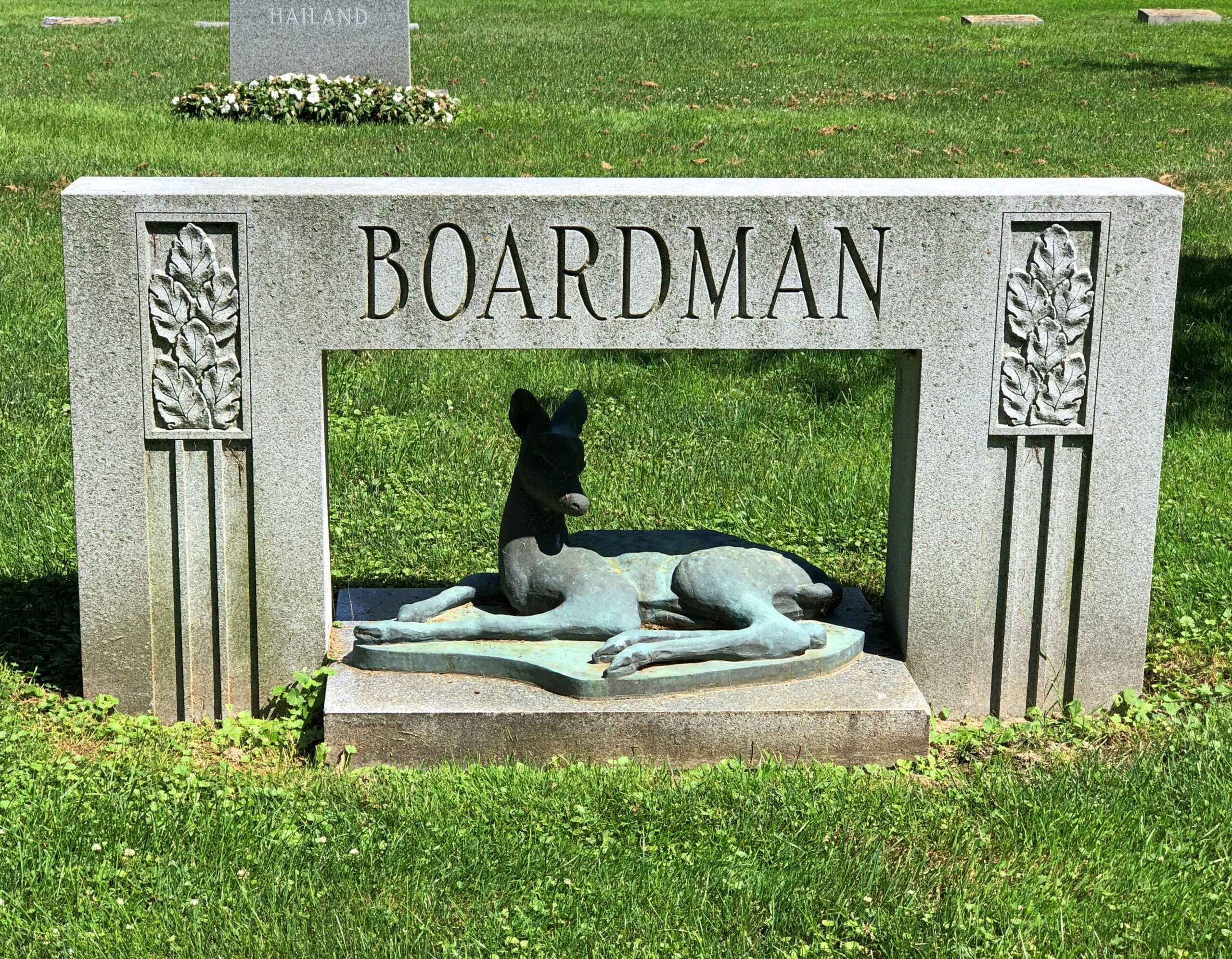
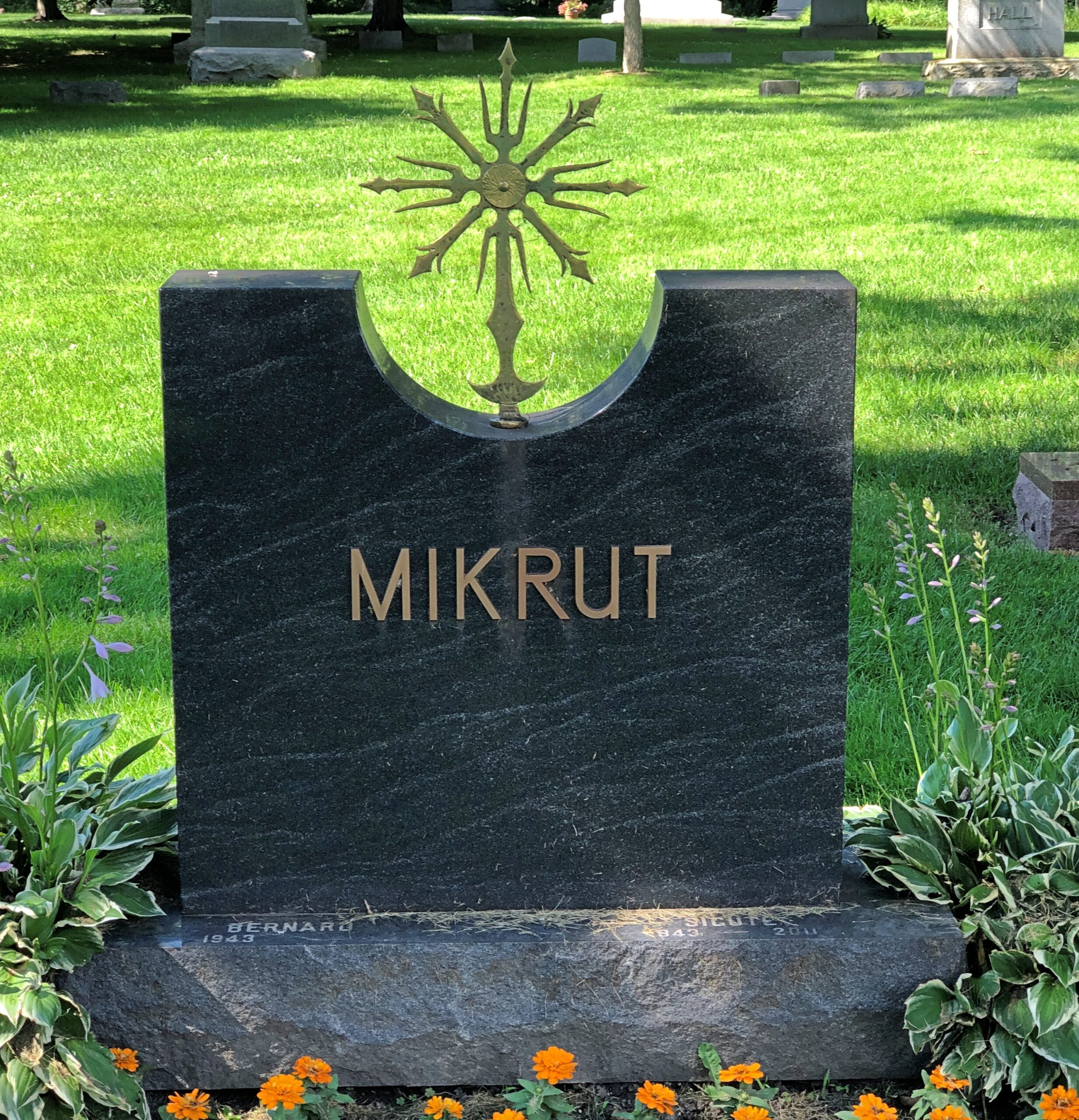
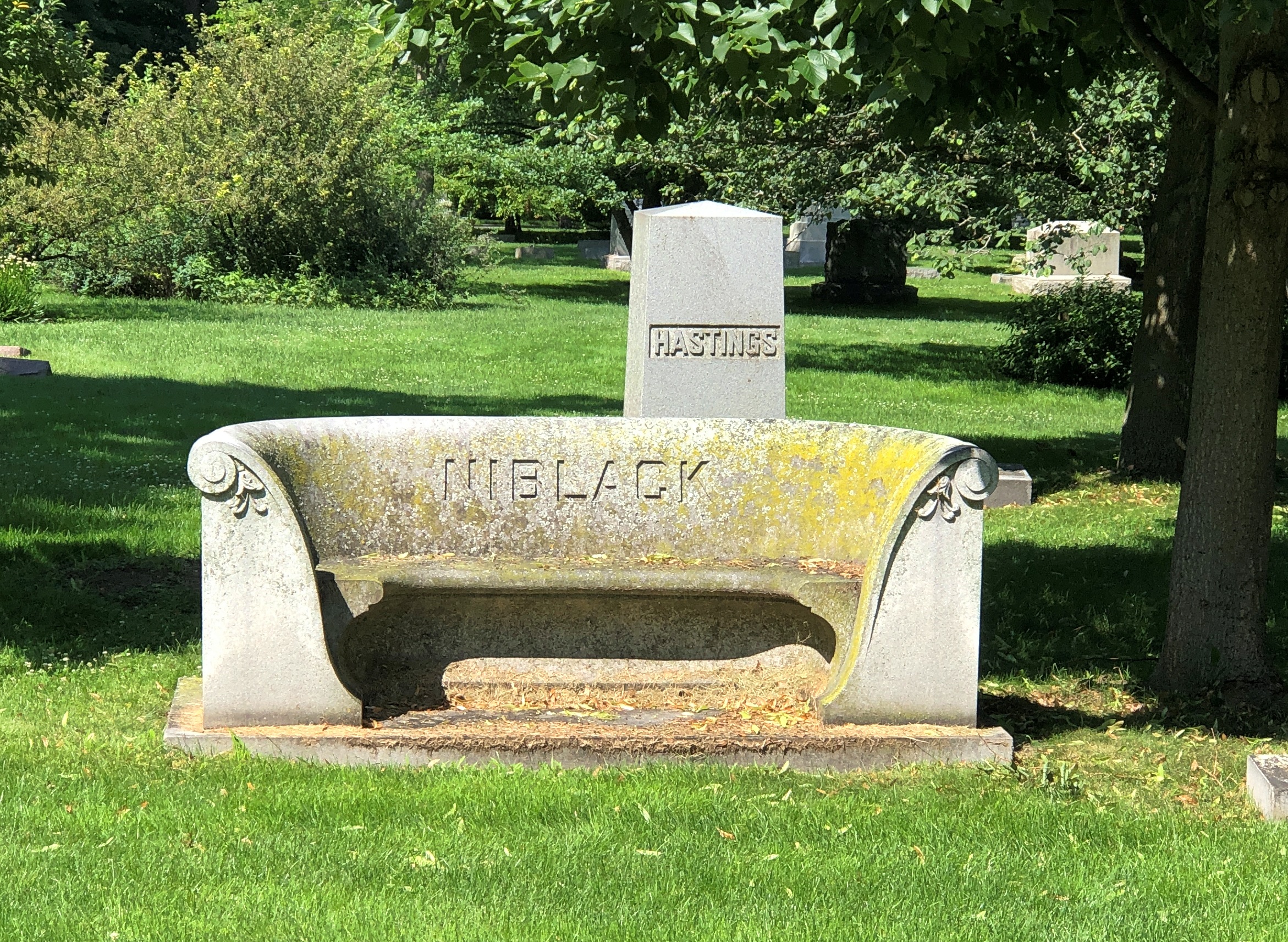
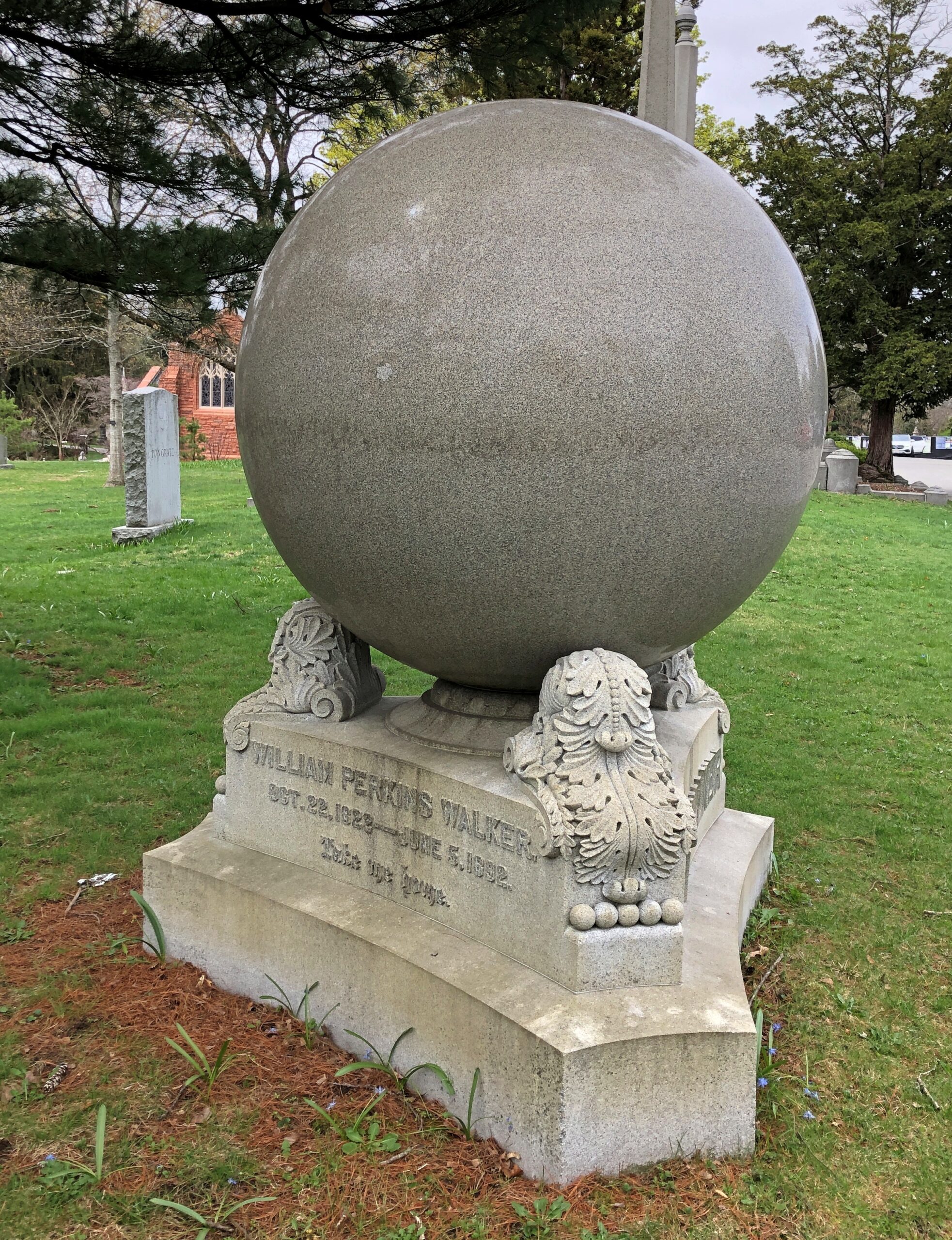
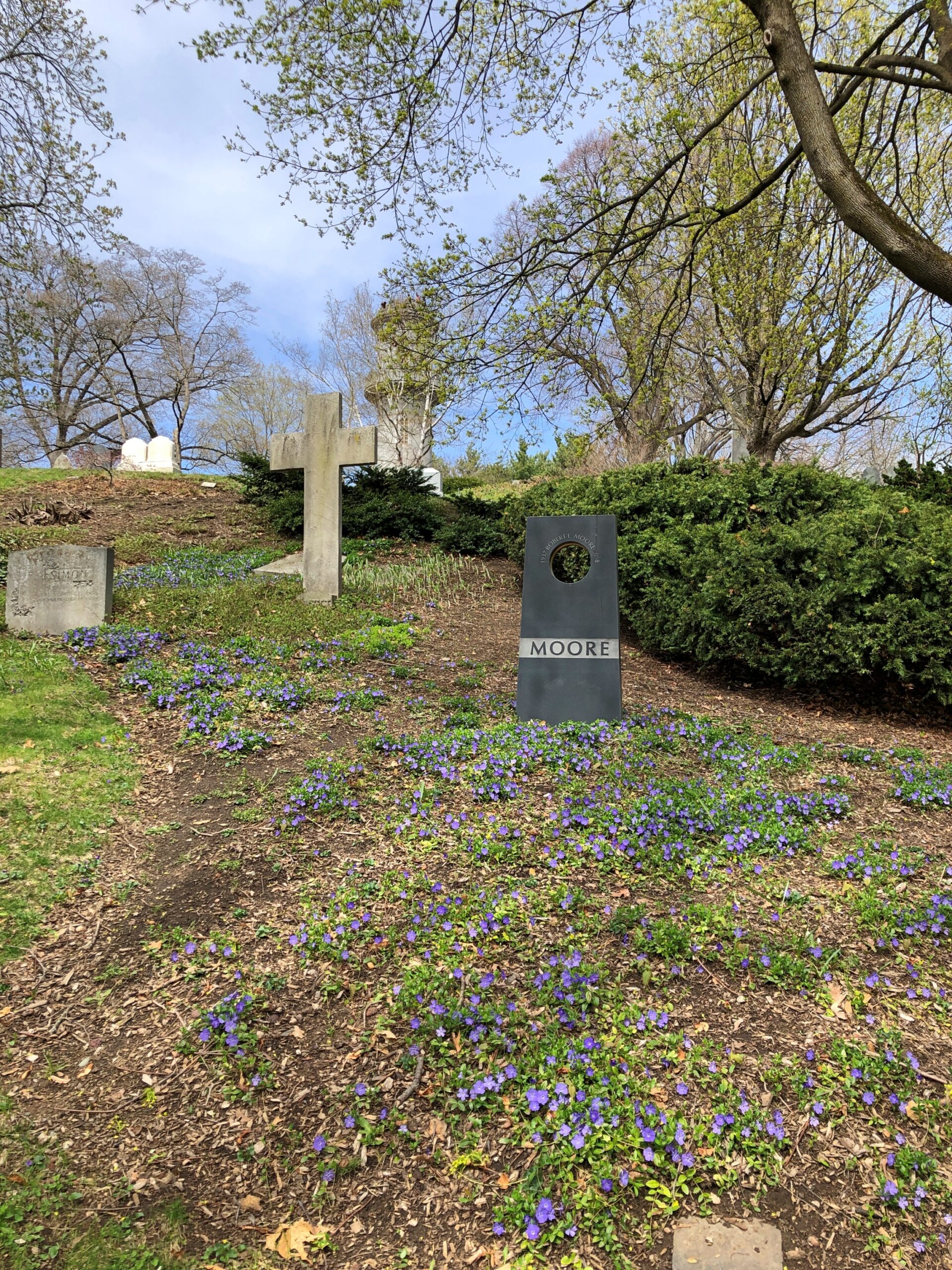
Some less conventional. Any grand cemetery needs a component of the unusual or odd.

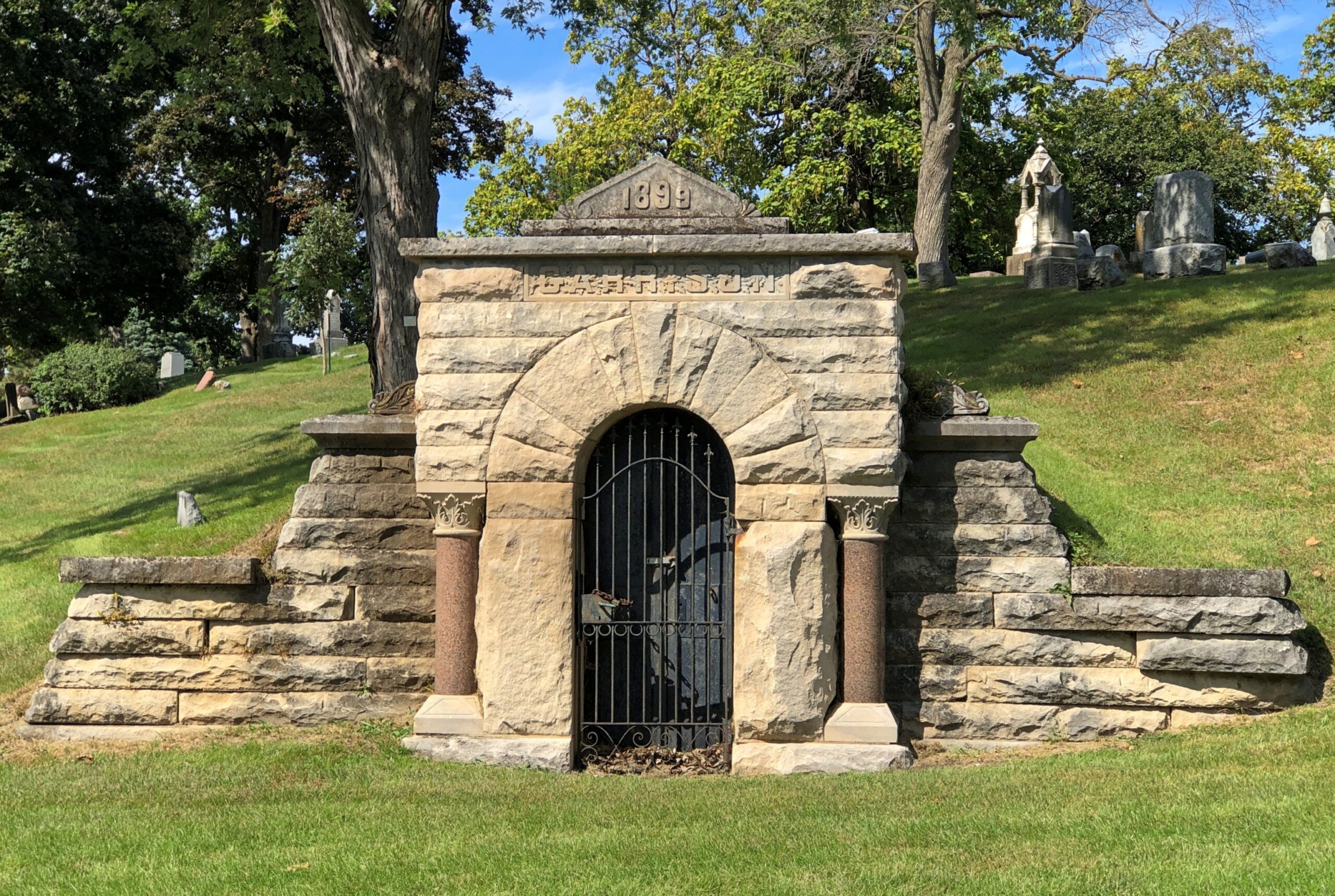
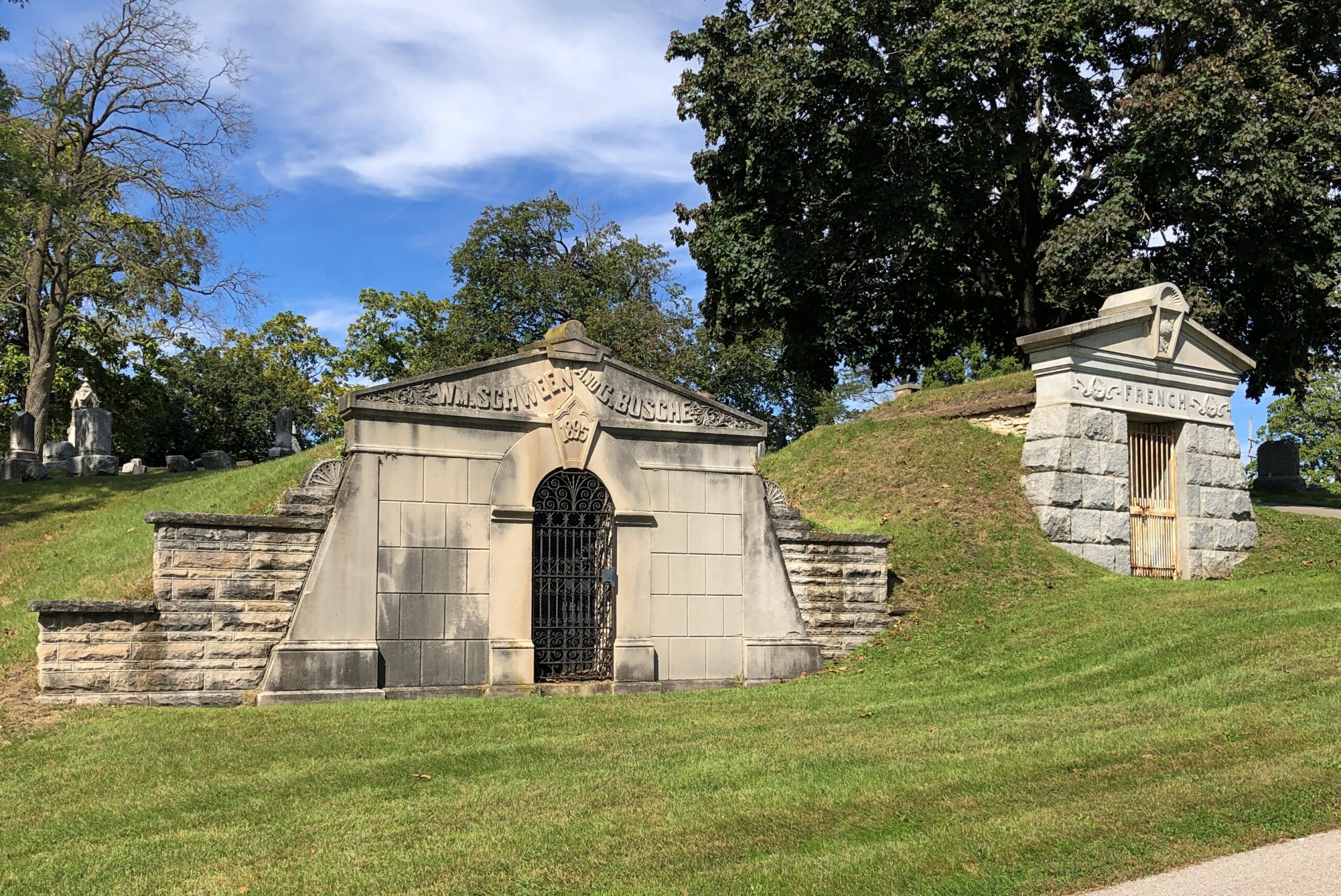
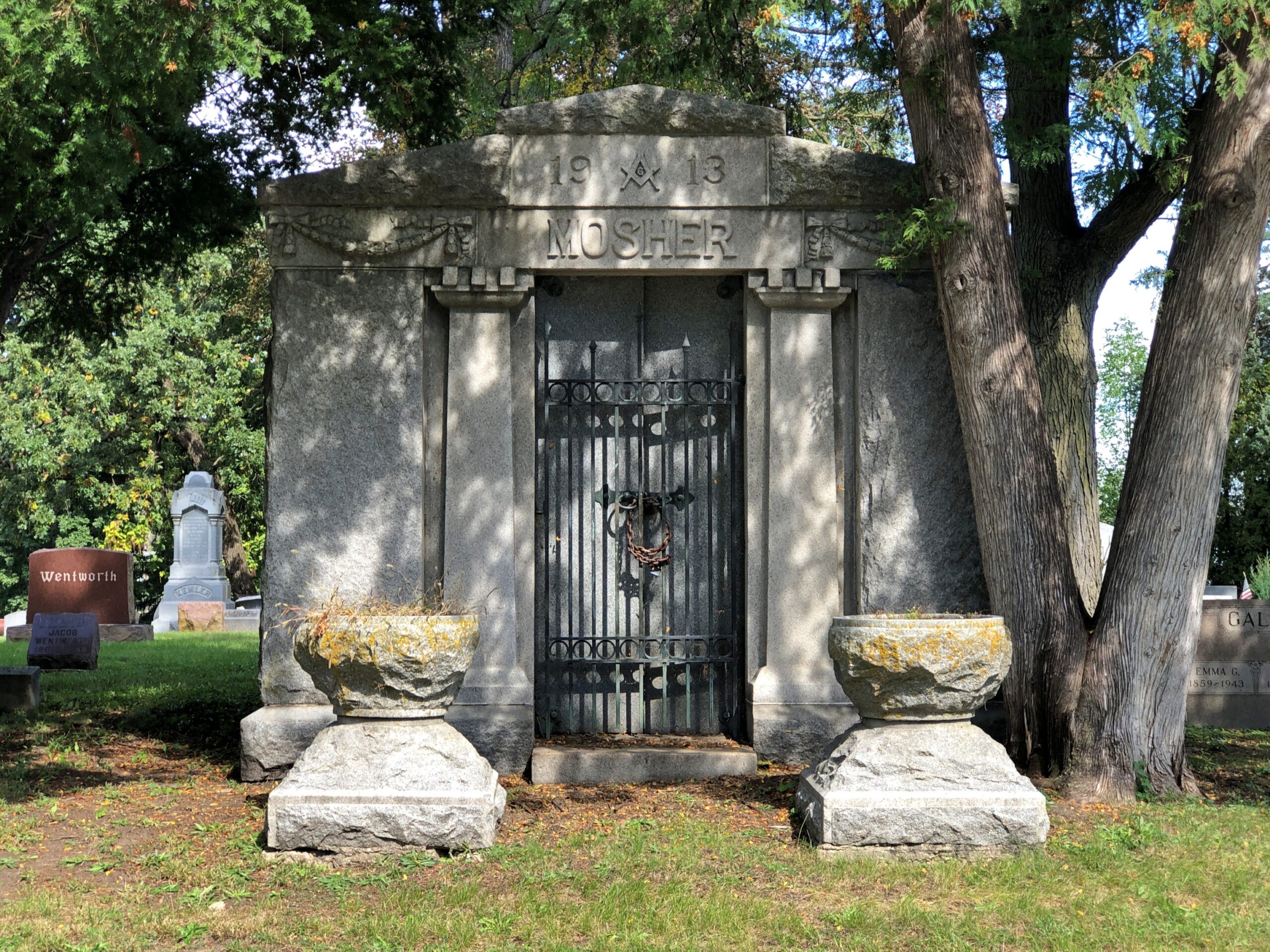
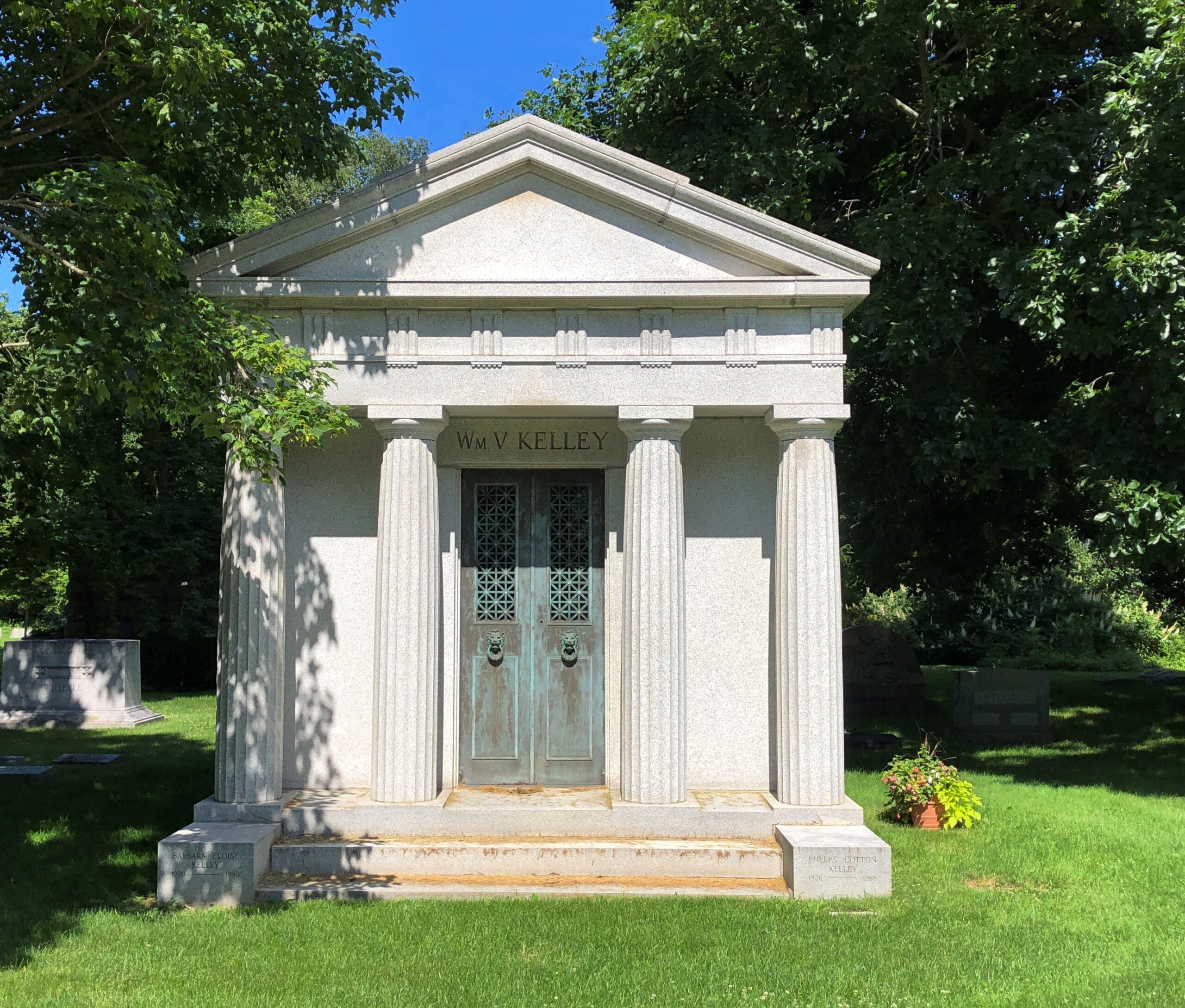
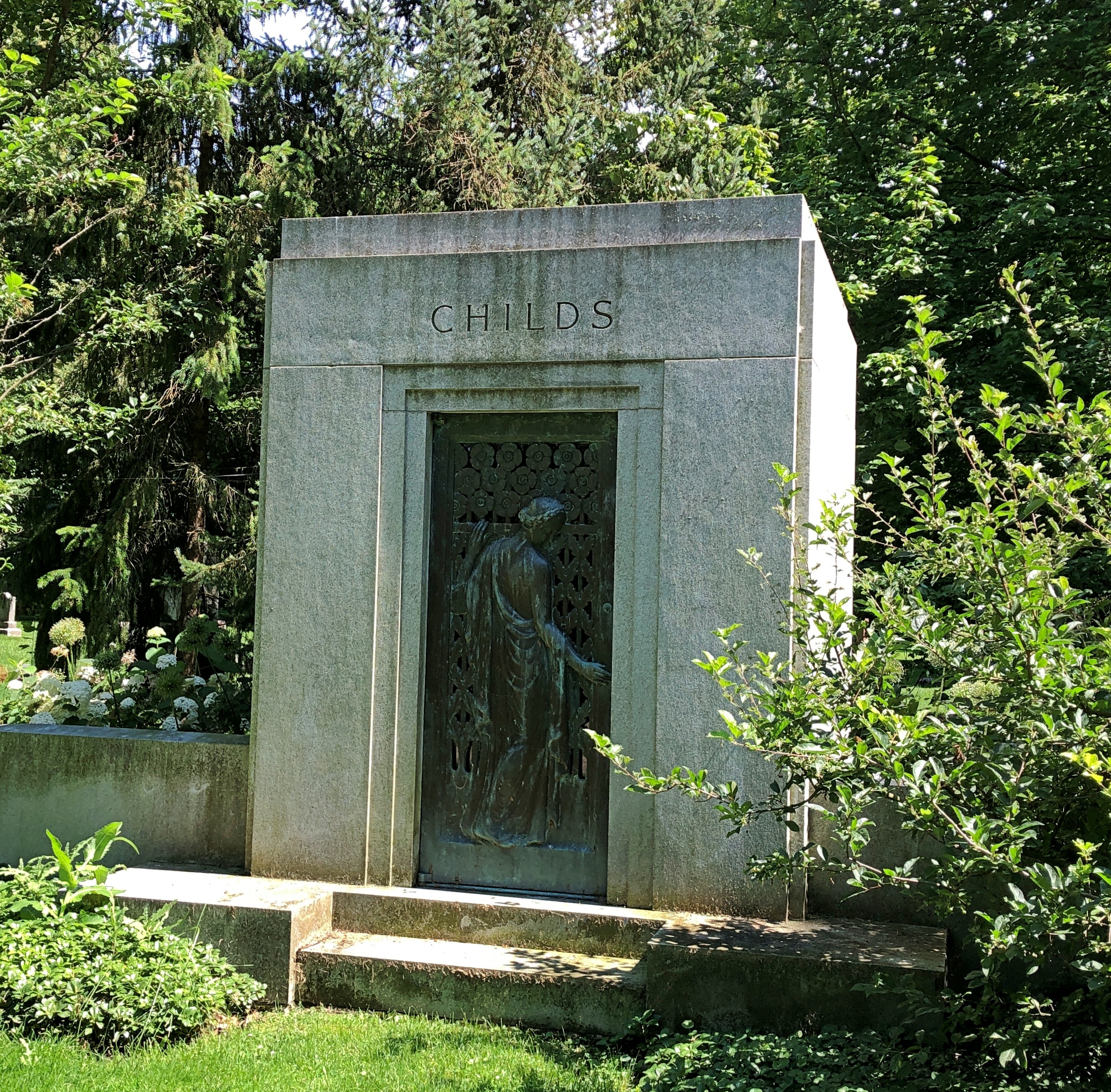
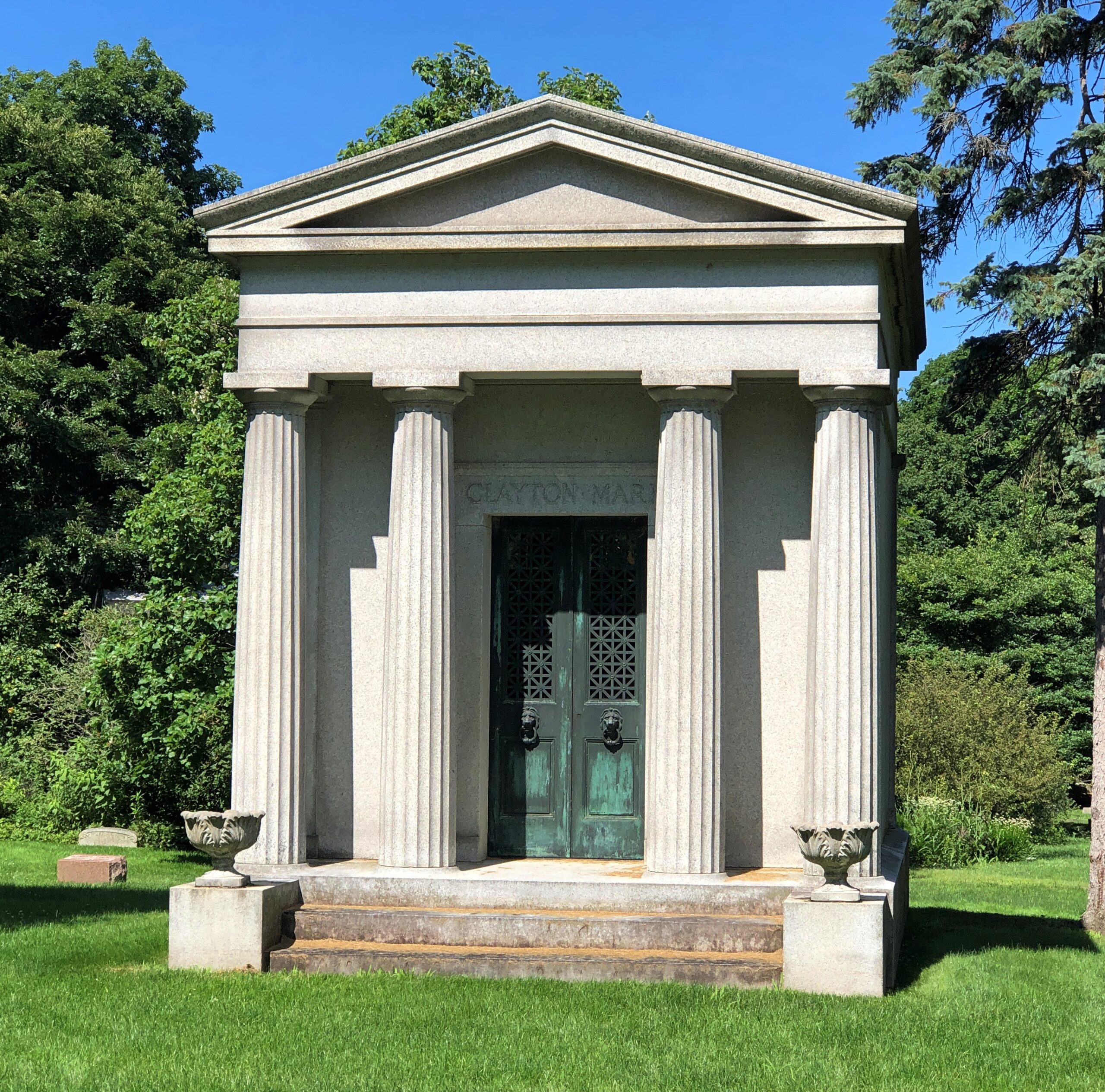
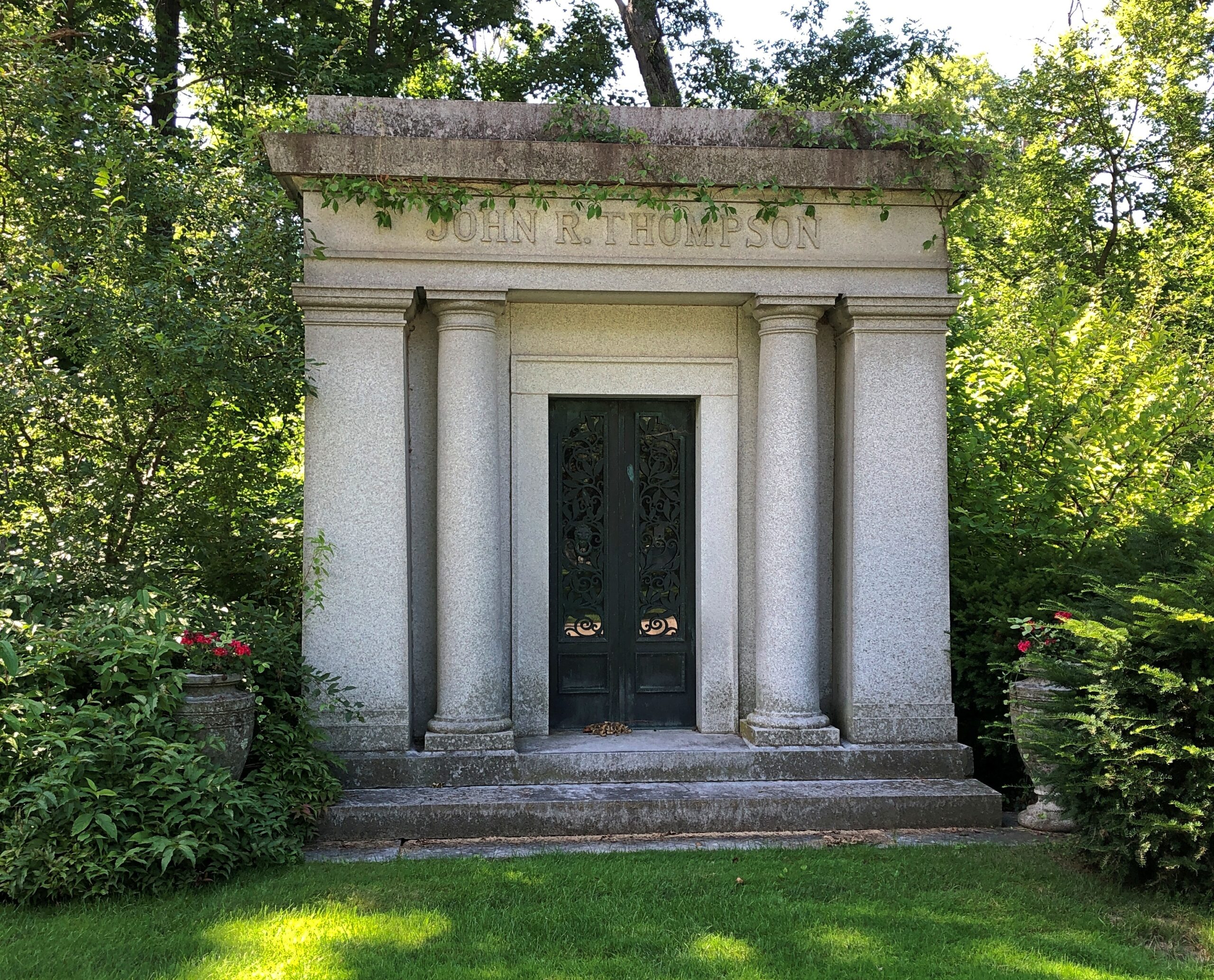
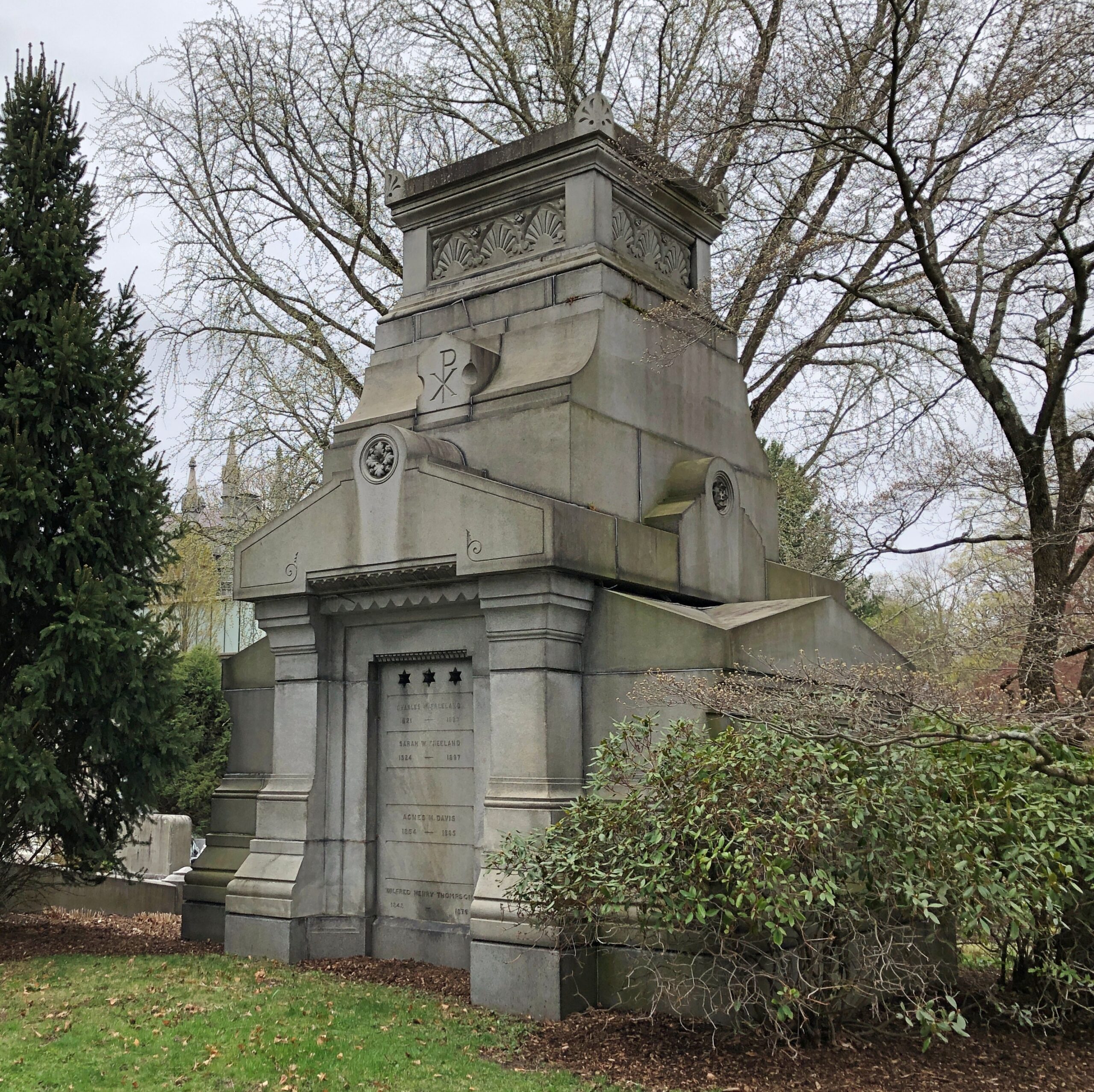
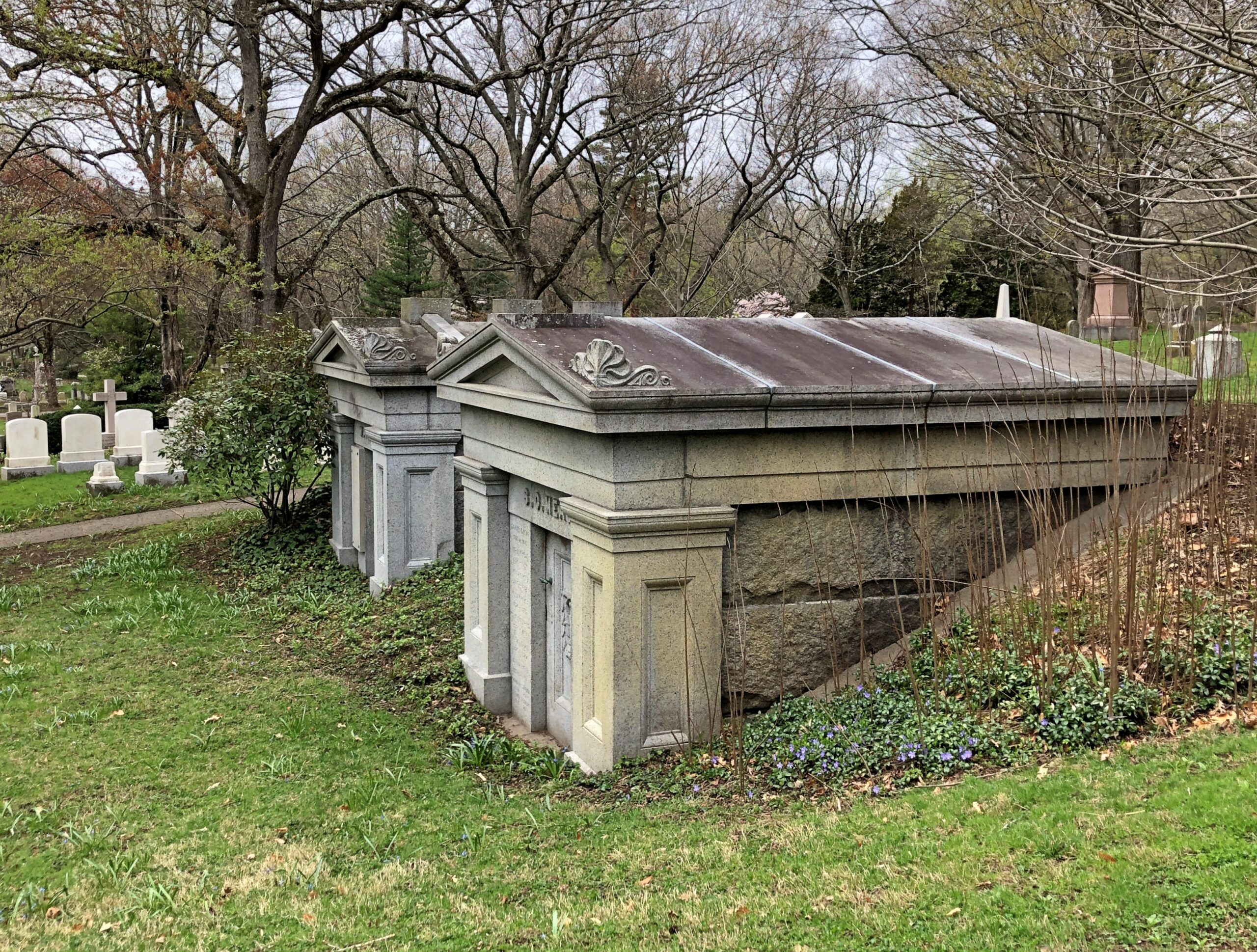
A number of mausoleums, though perhaps not as many as you’ll see at Green-Wood or Woodlawn in the Bronx.

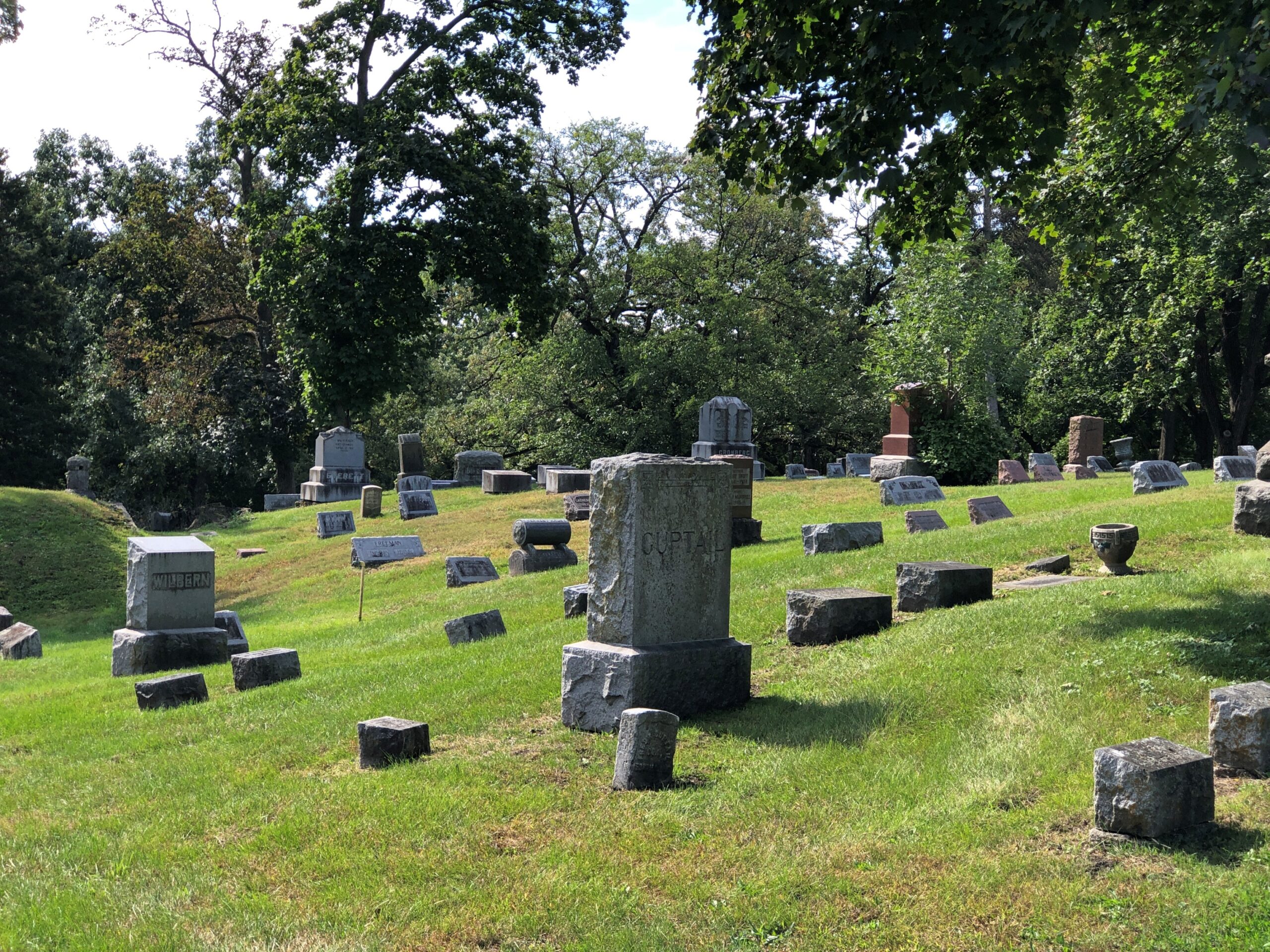
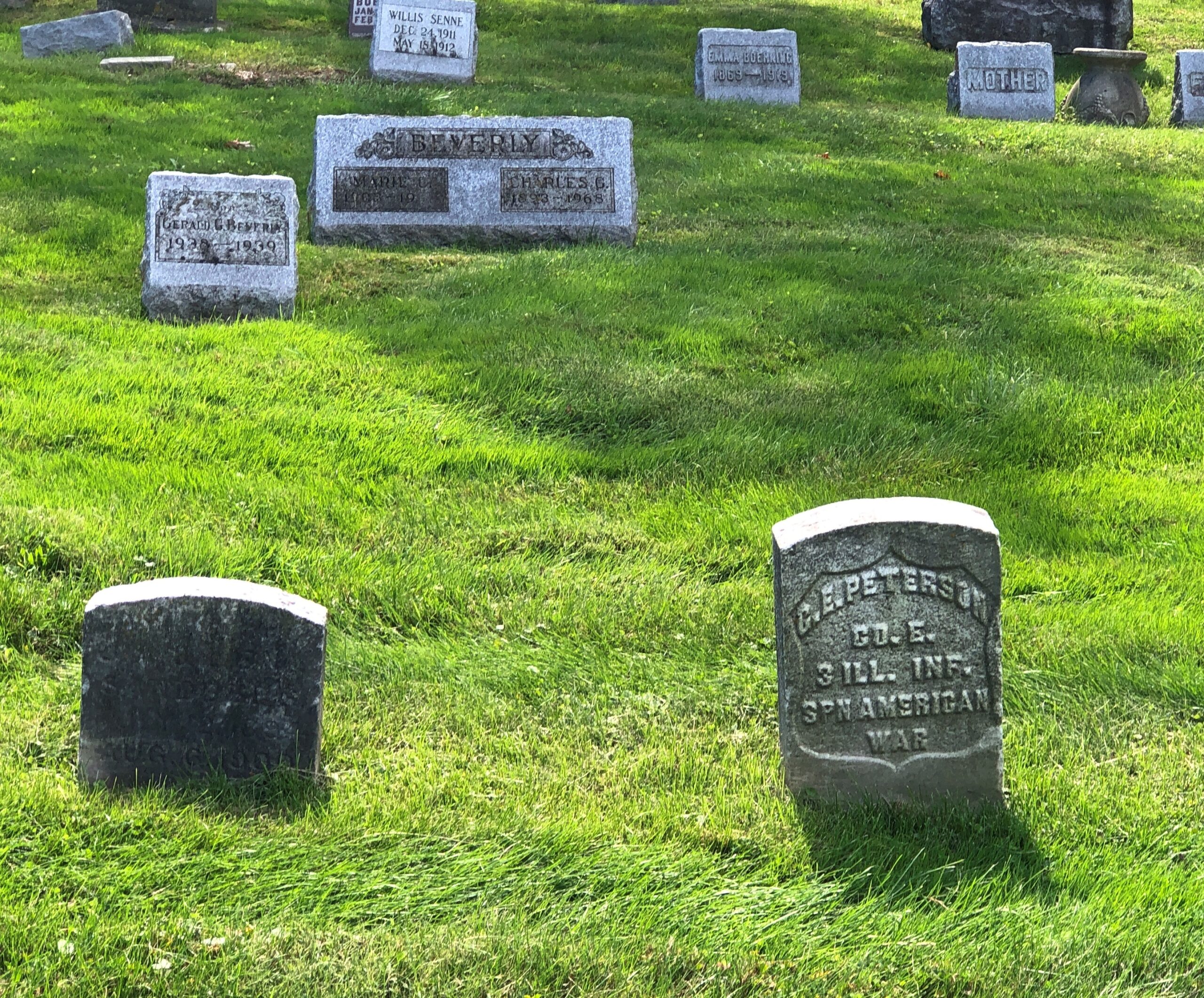
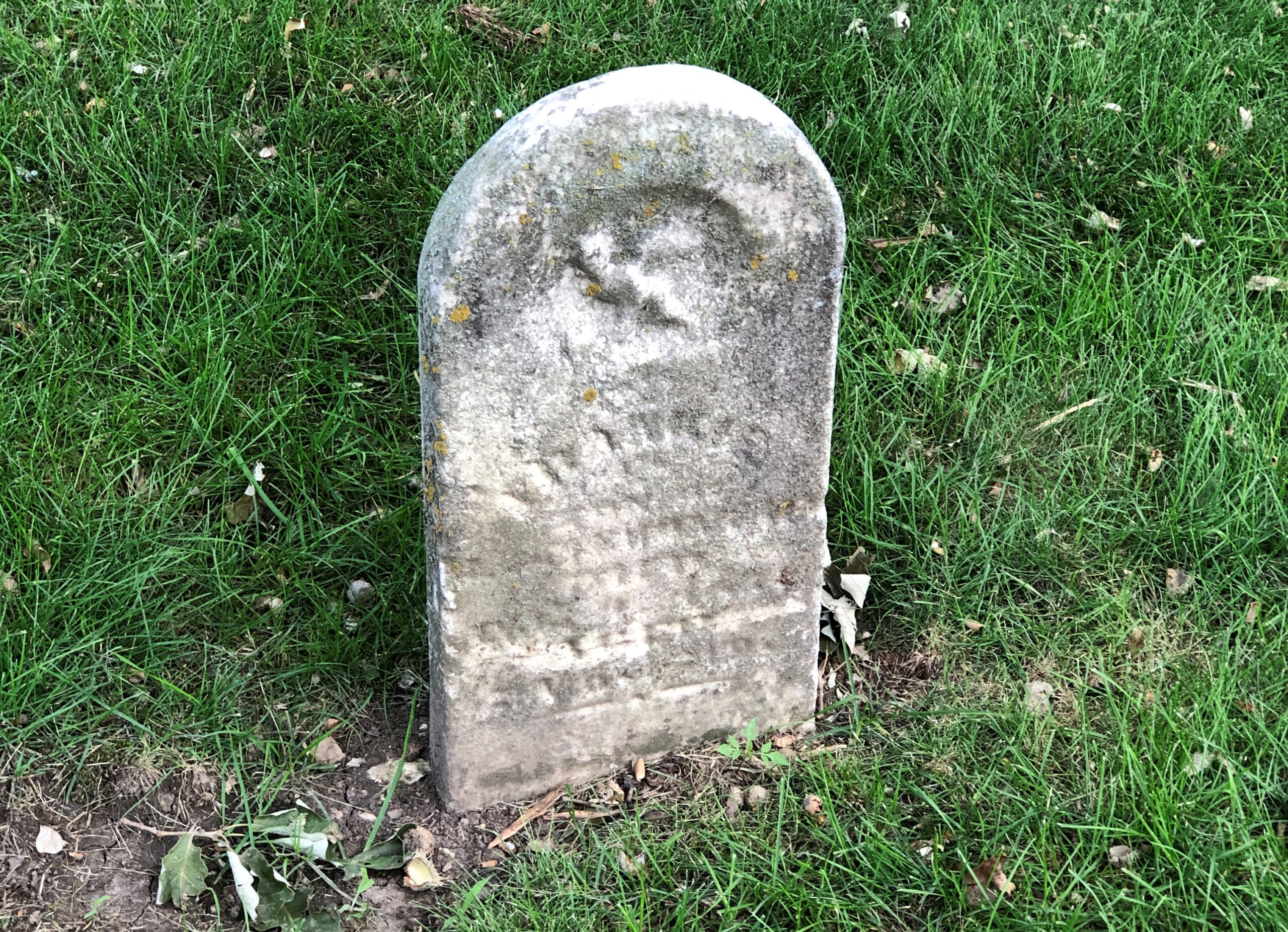
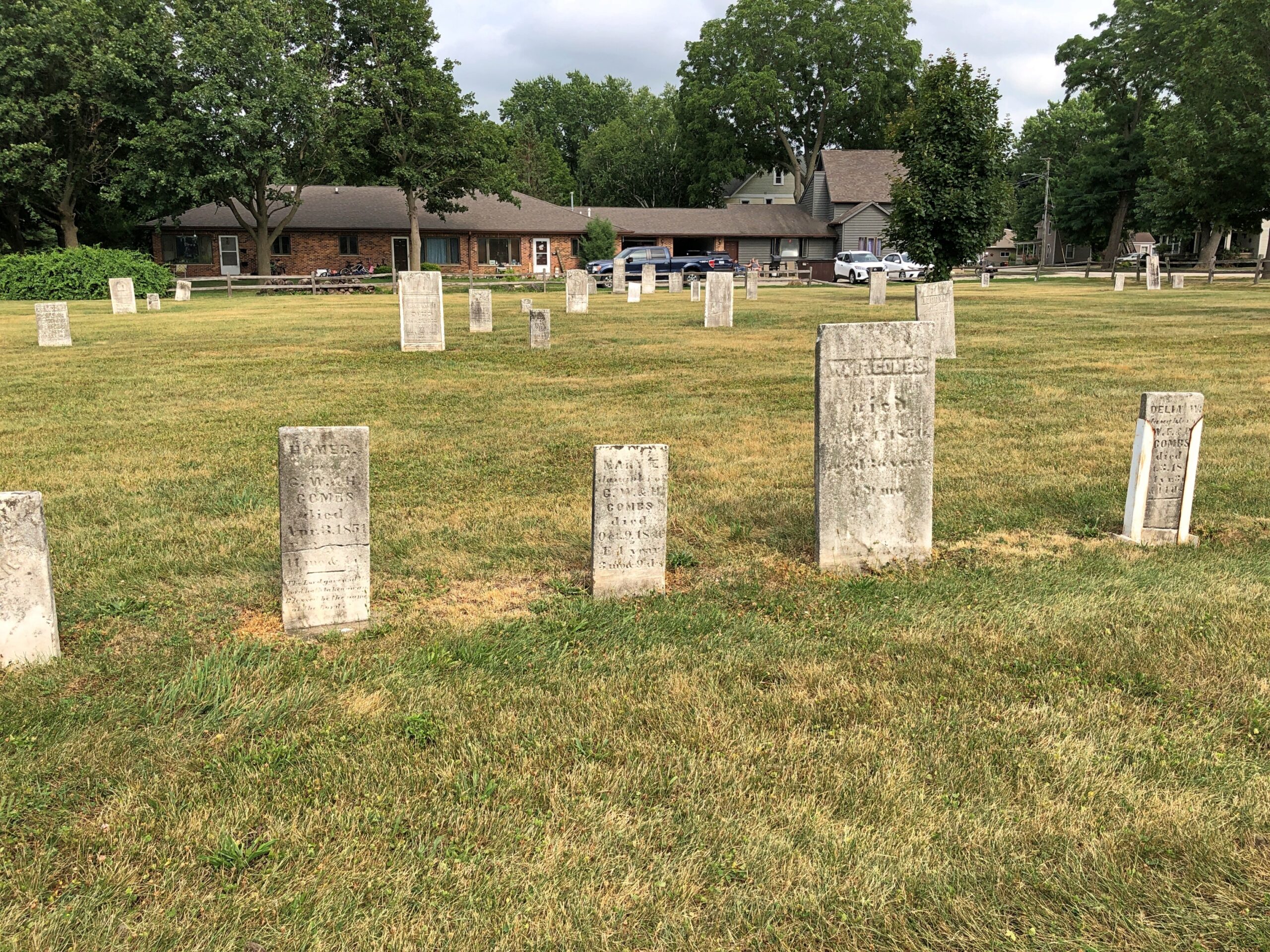
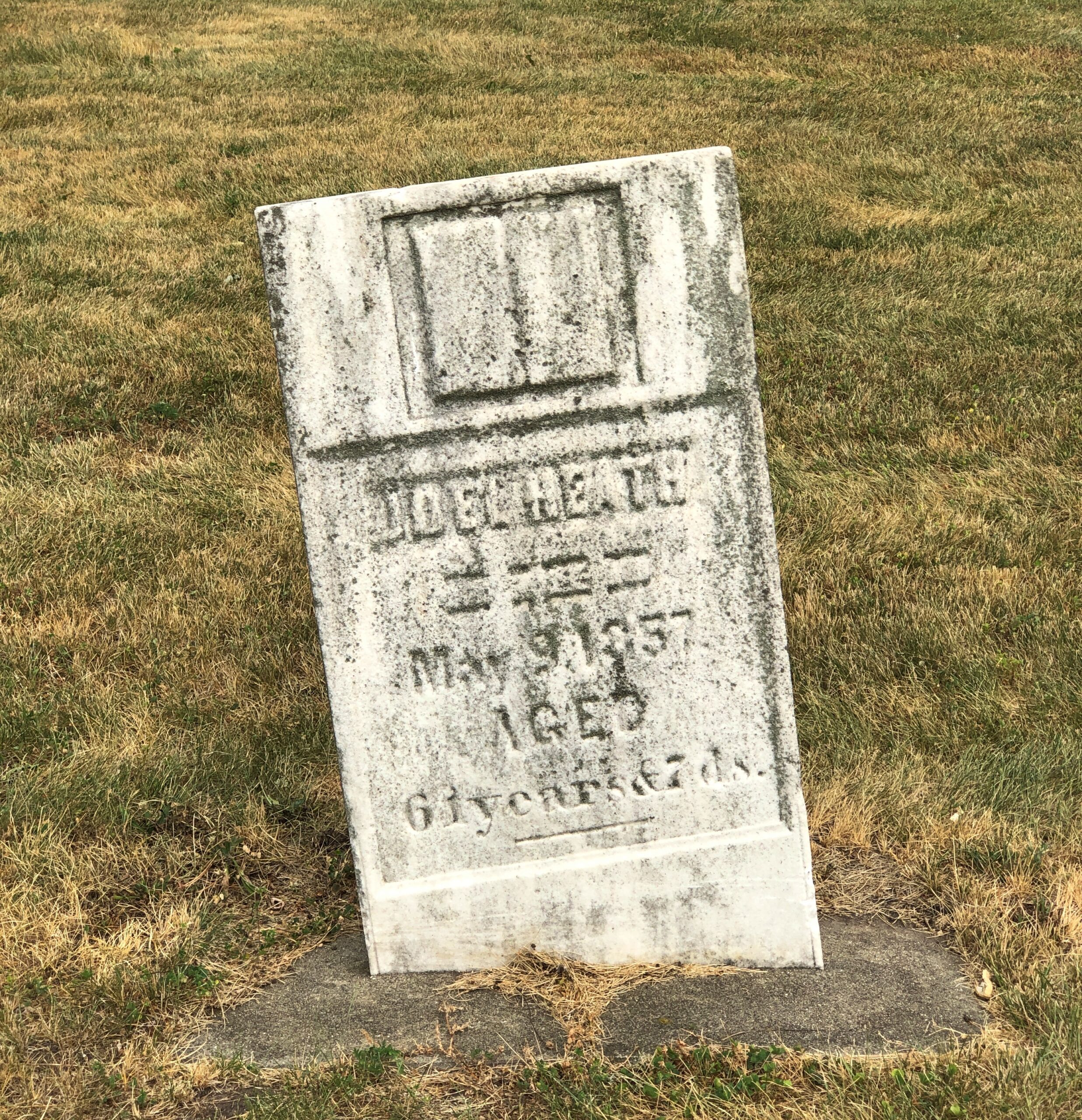
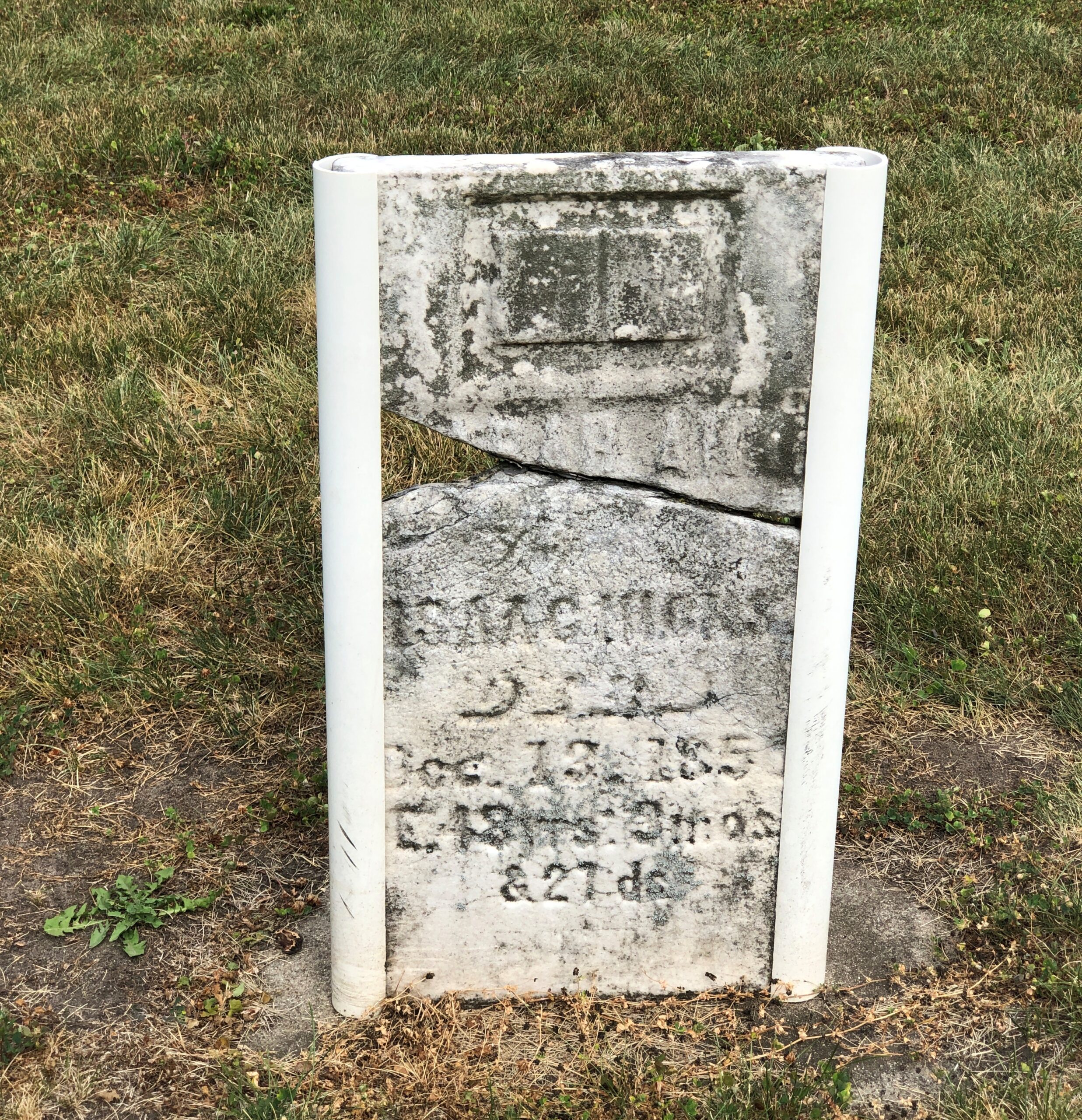
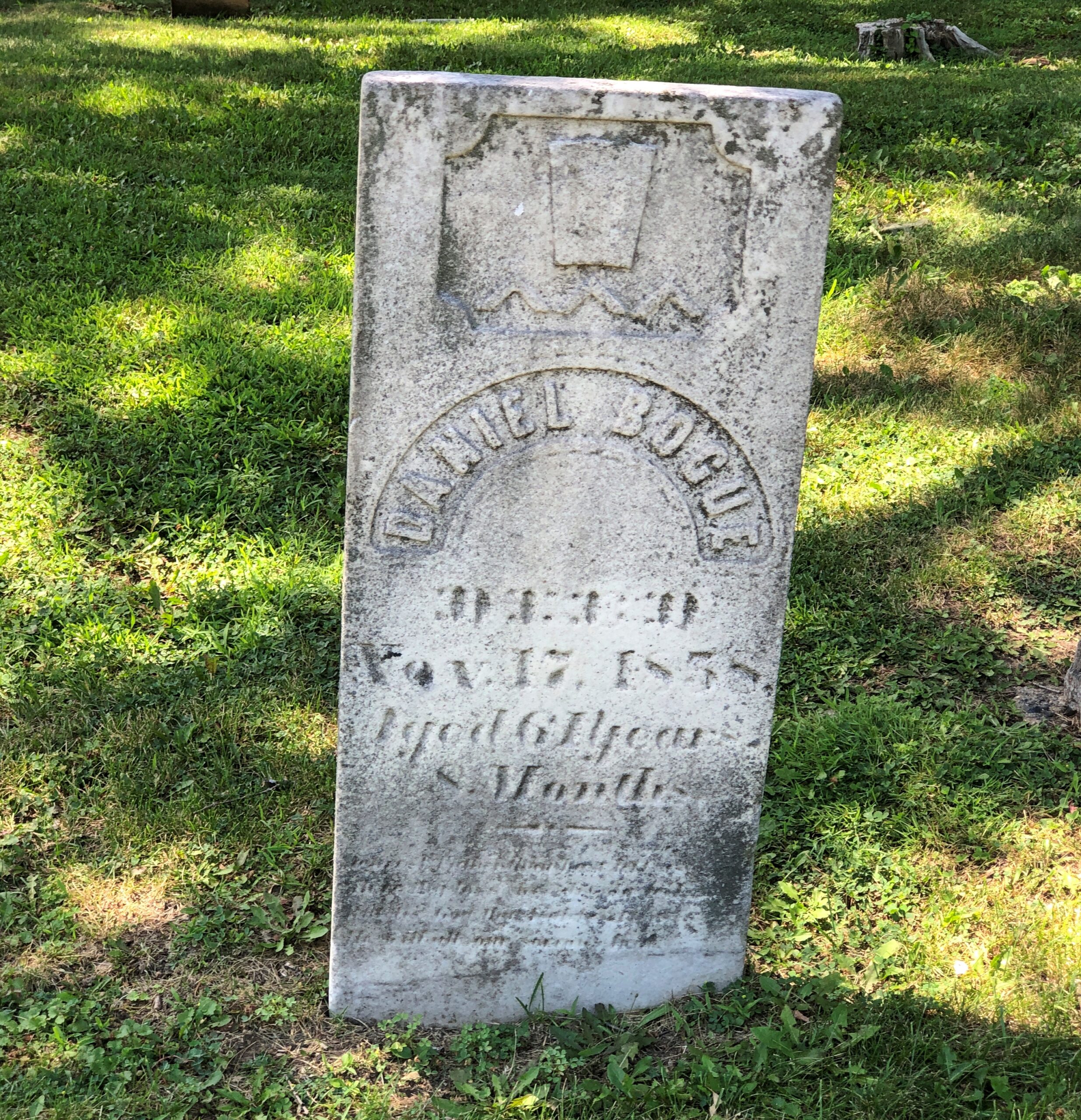
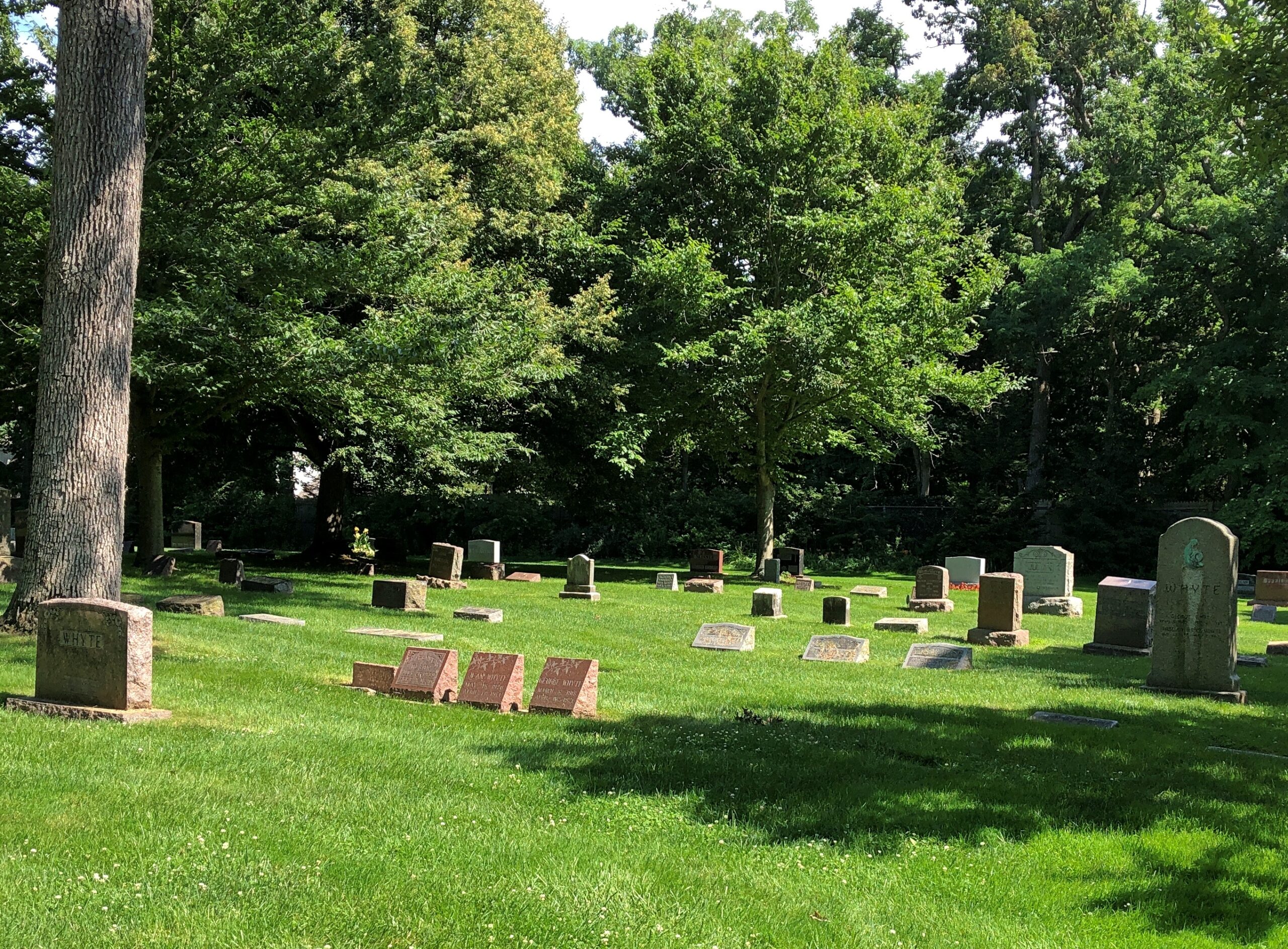
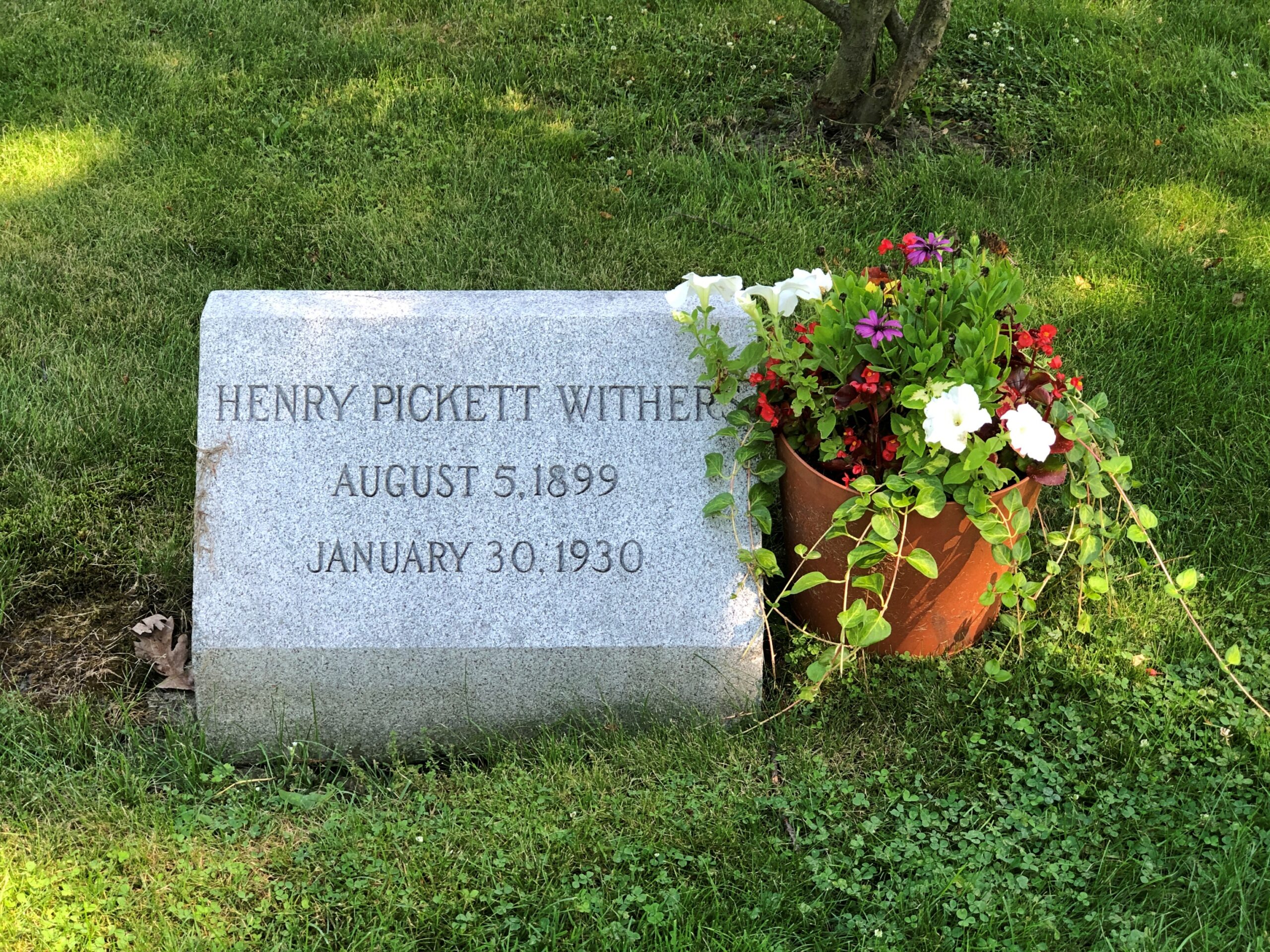
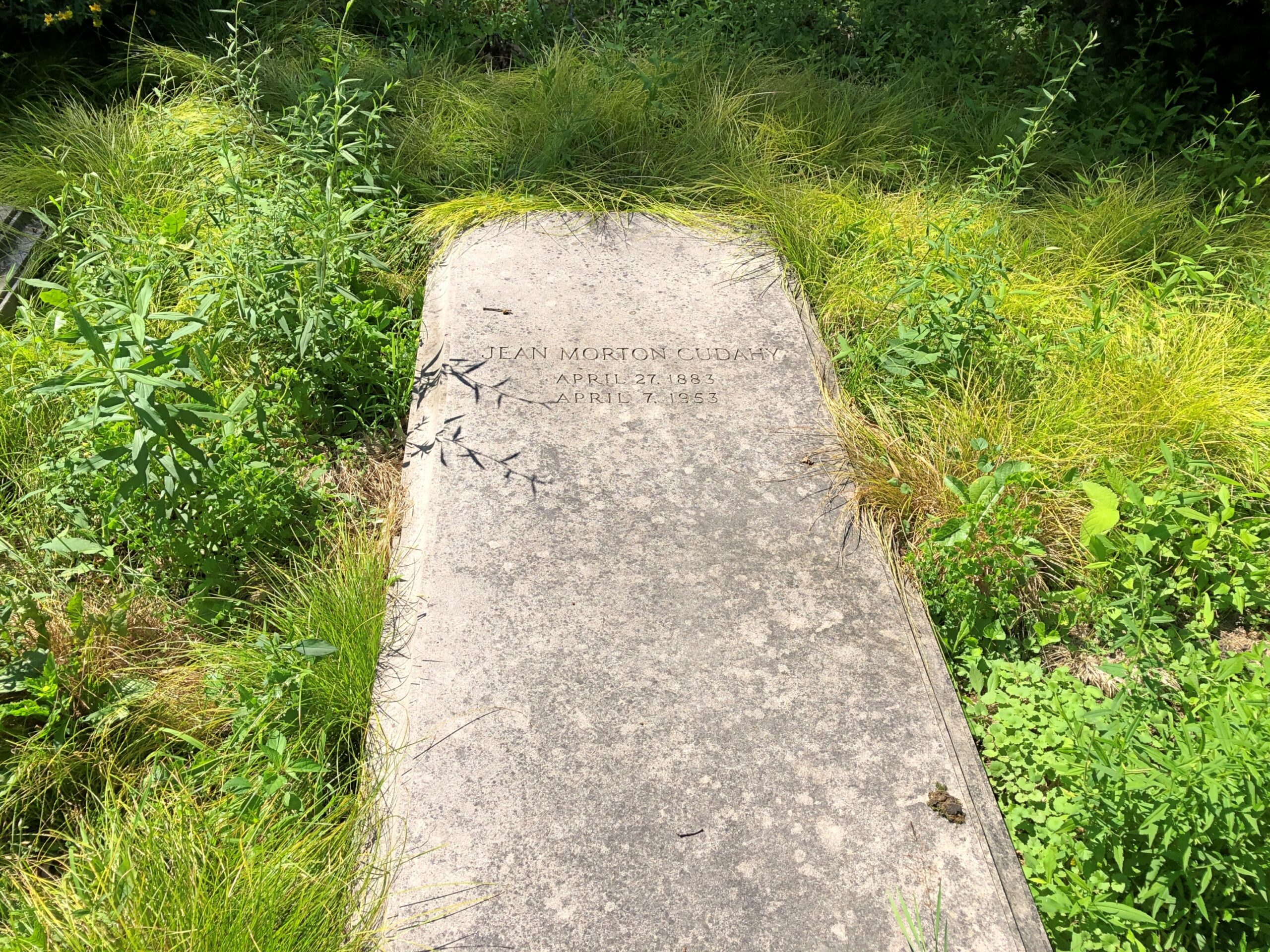
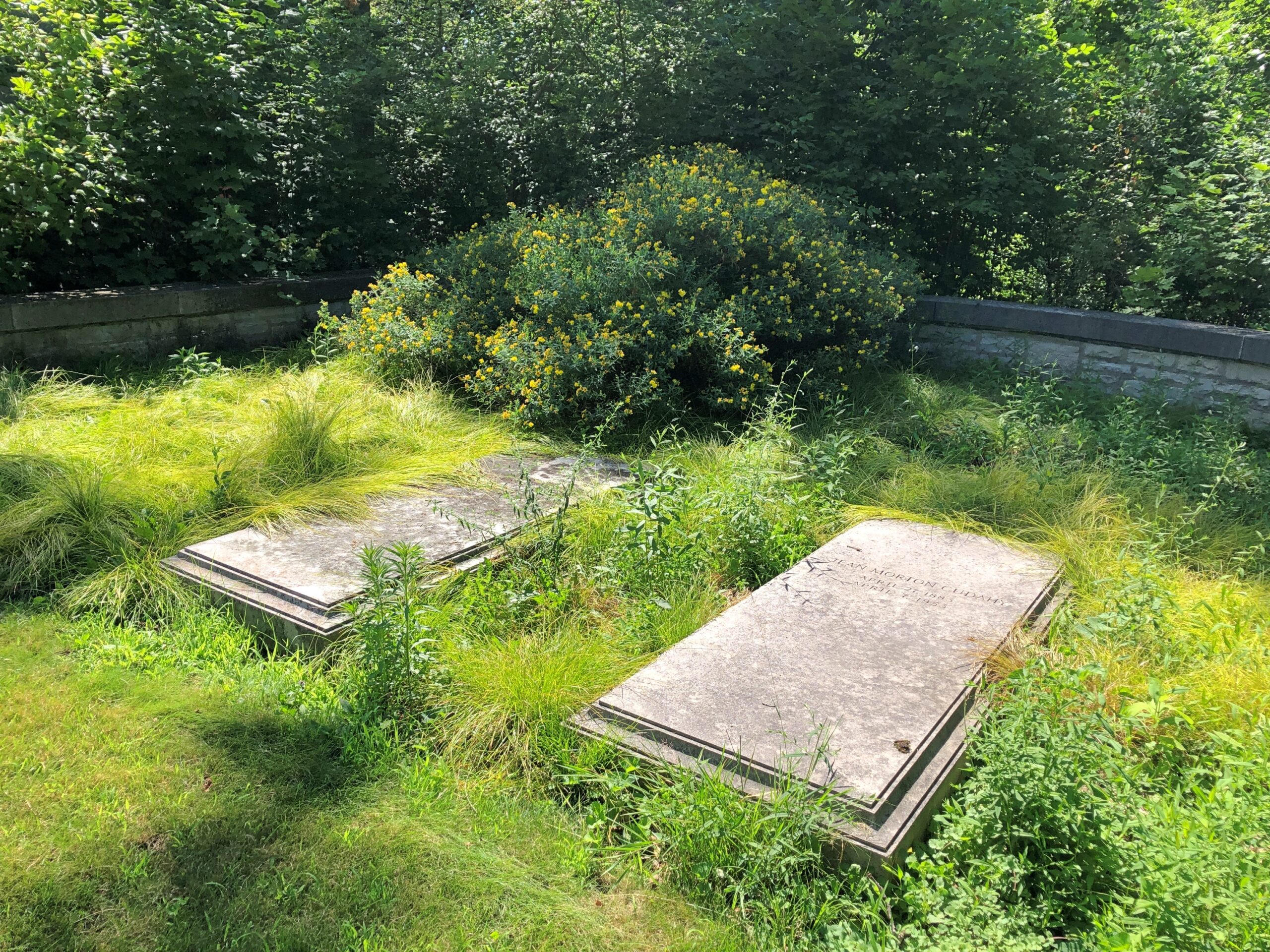
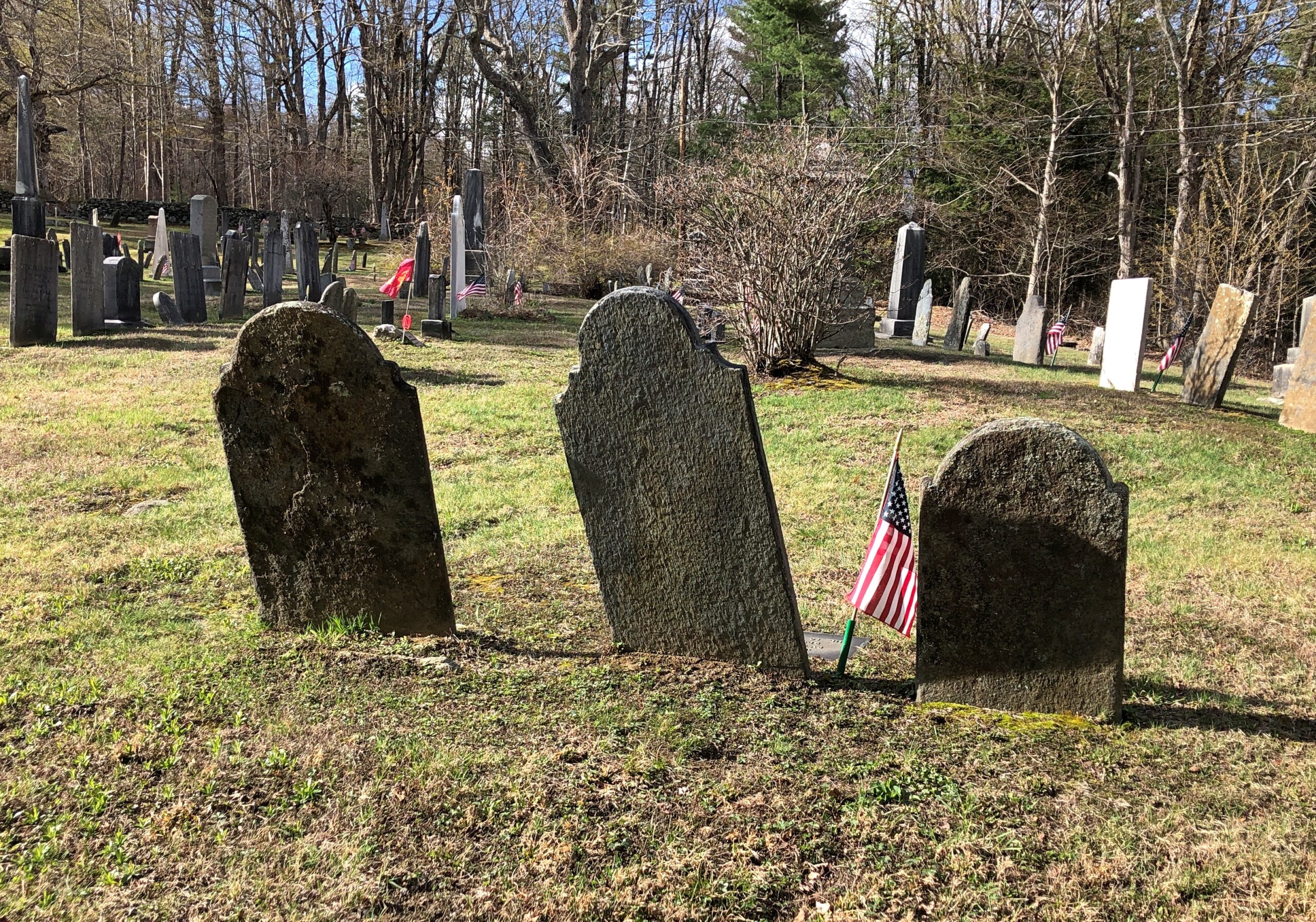
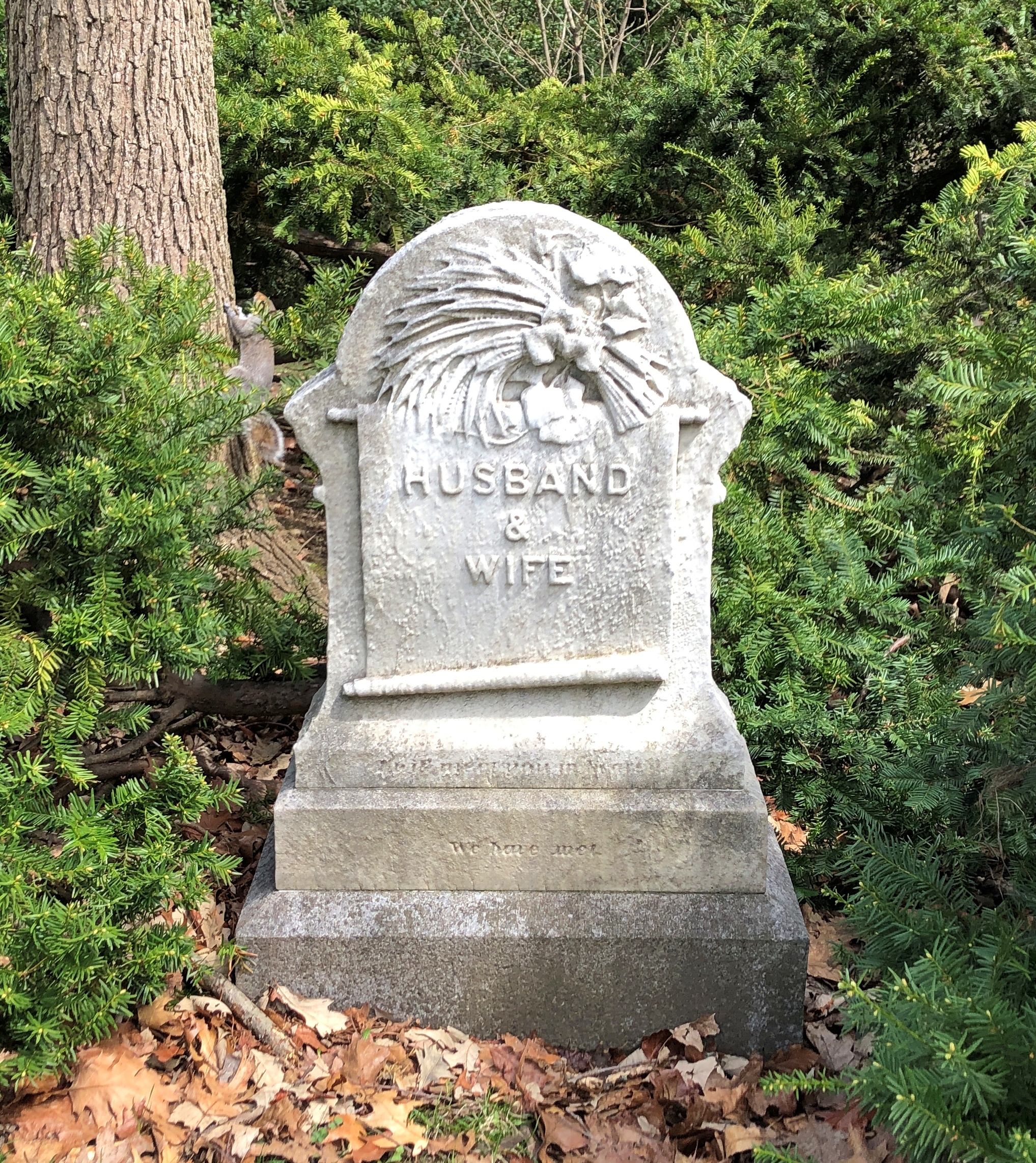
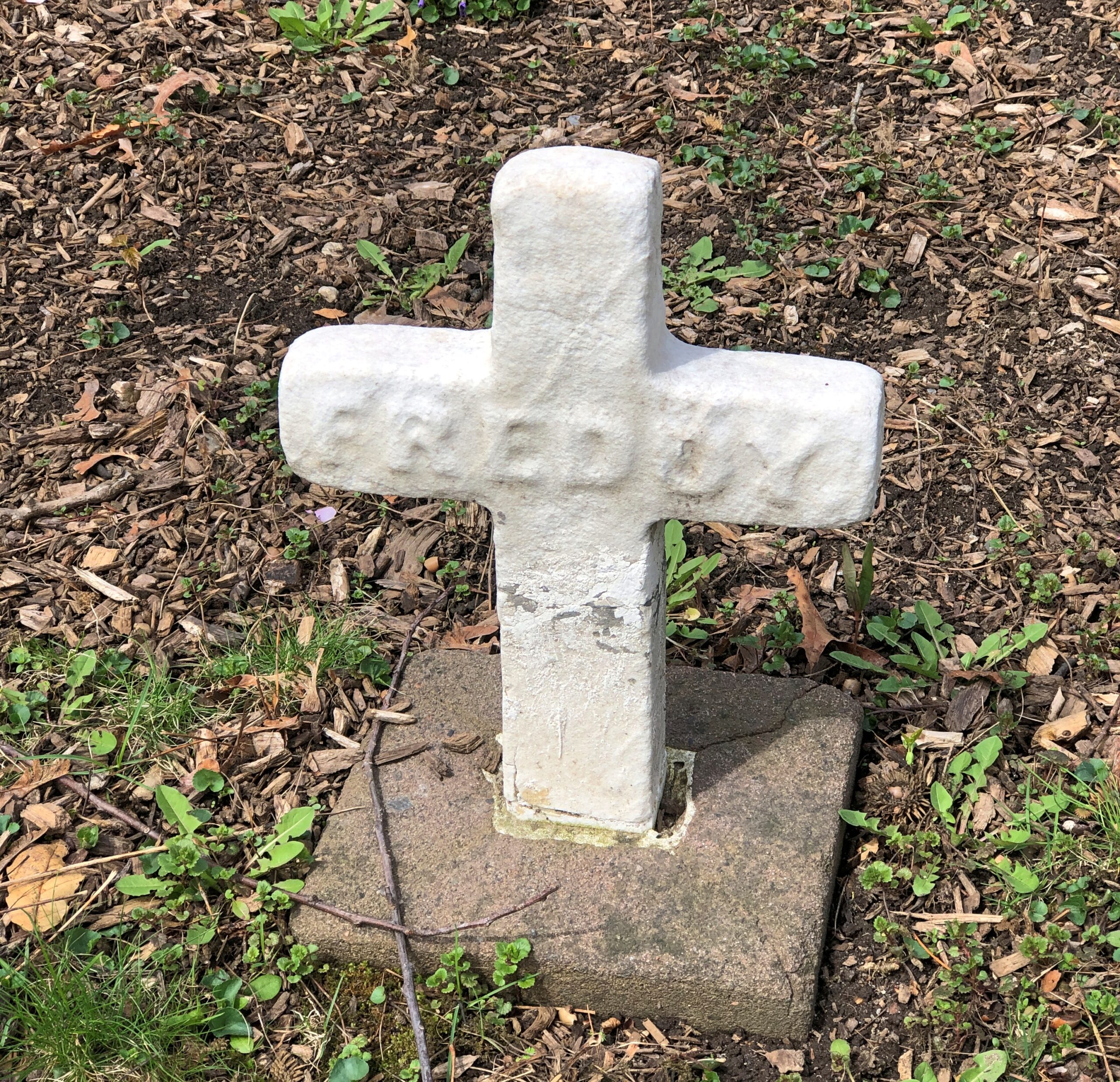
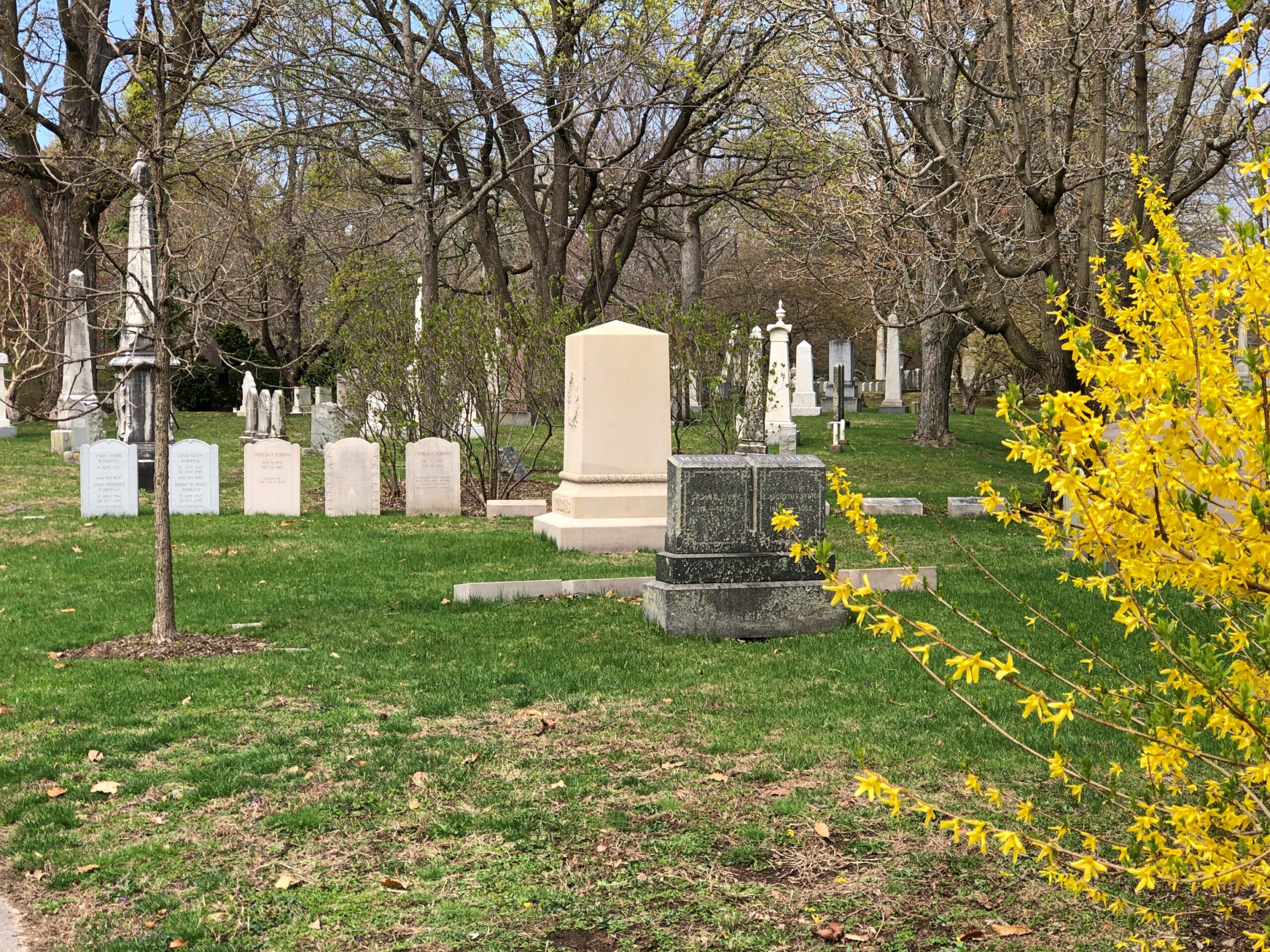
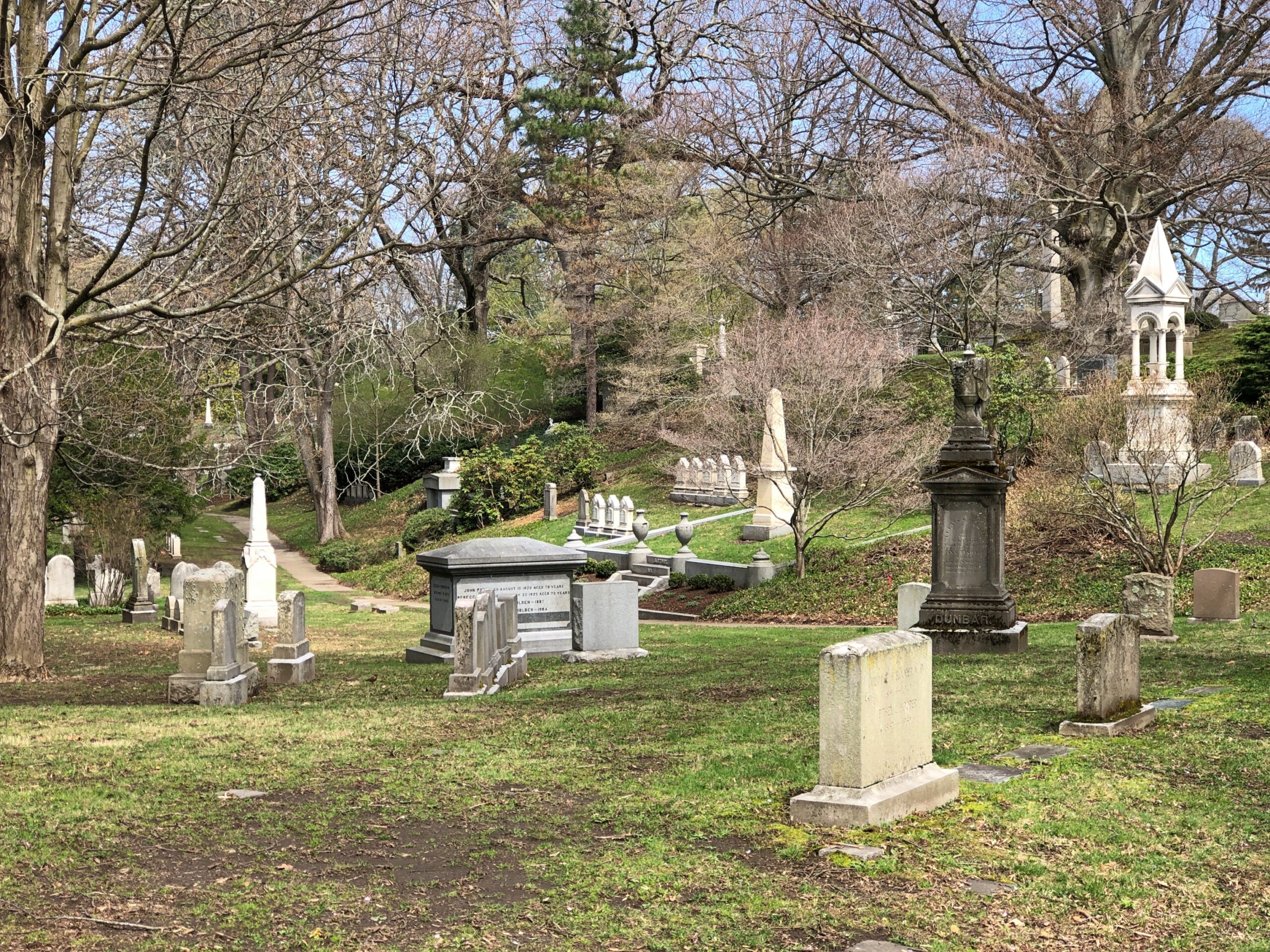
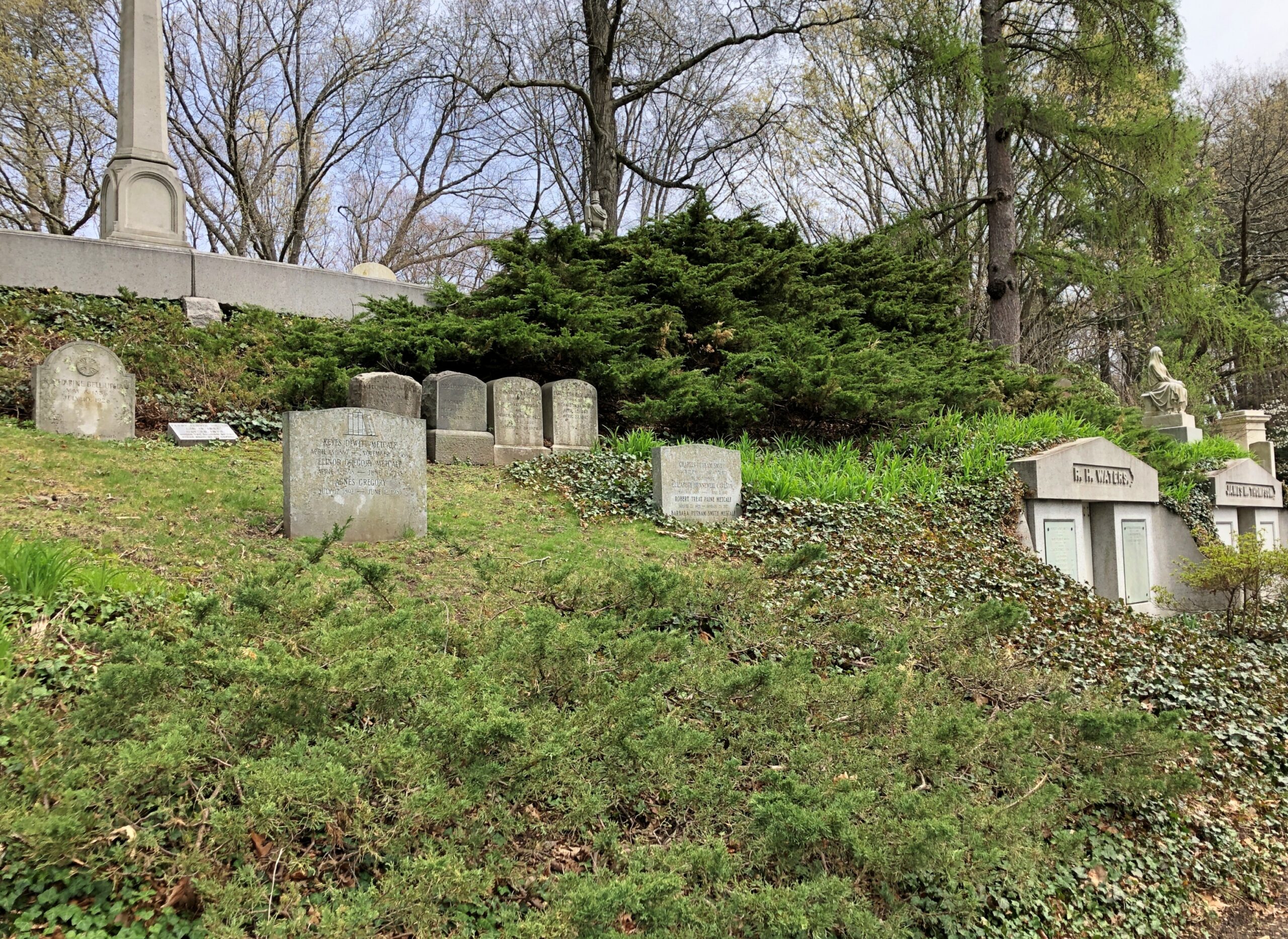
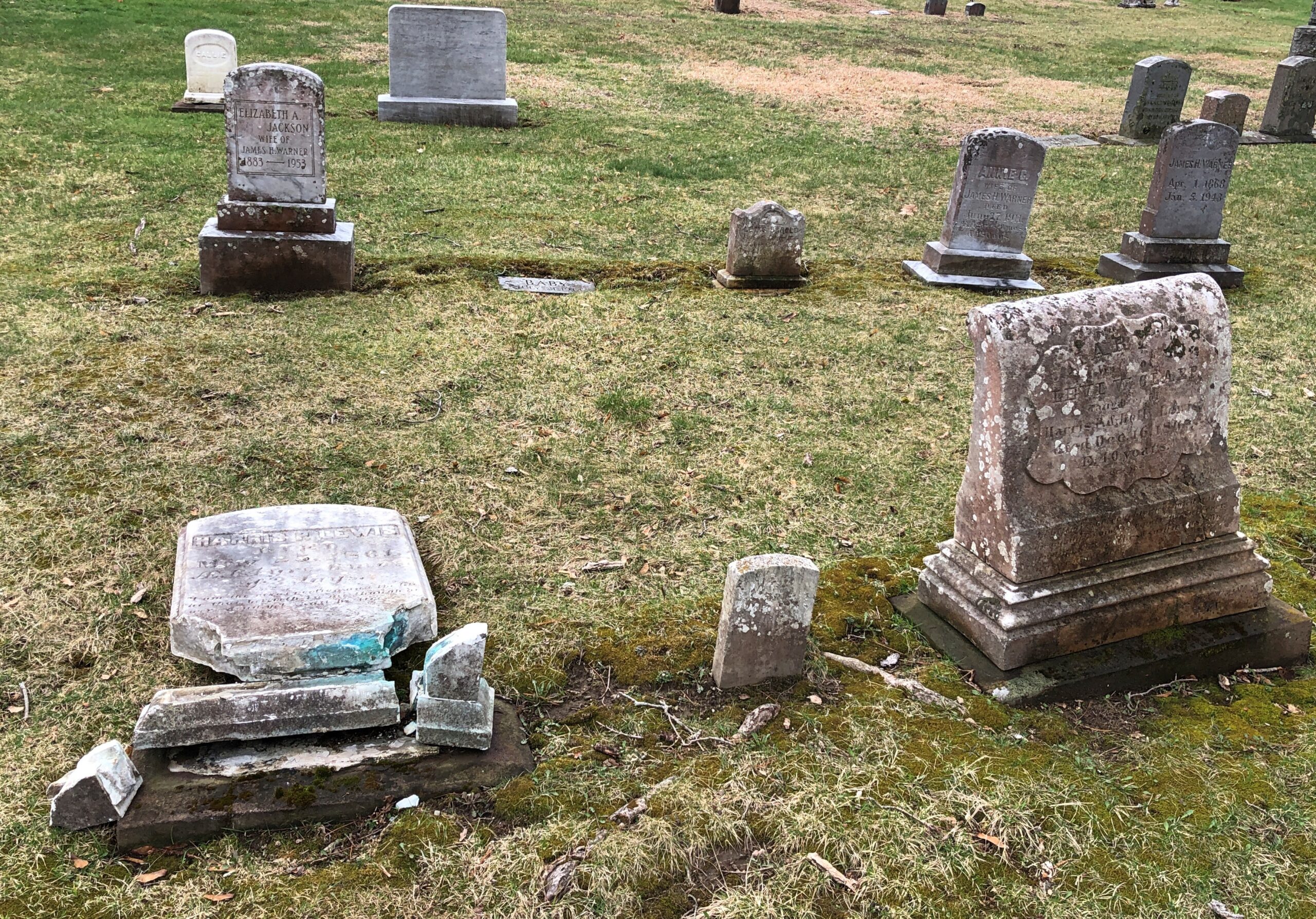
More modest stones.

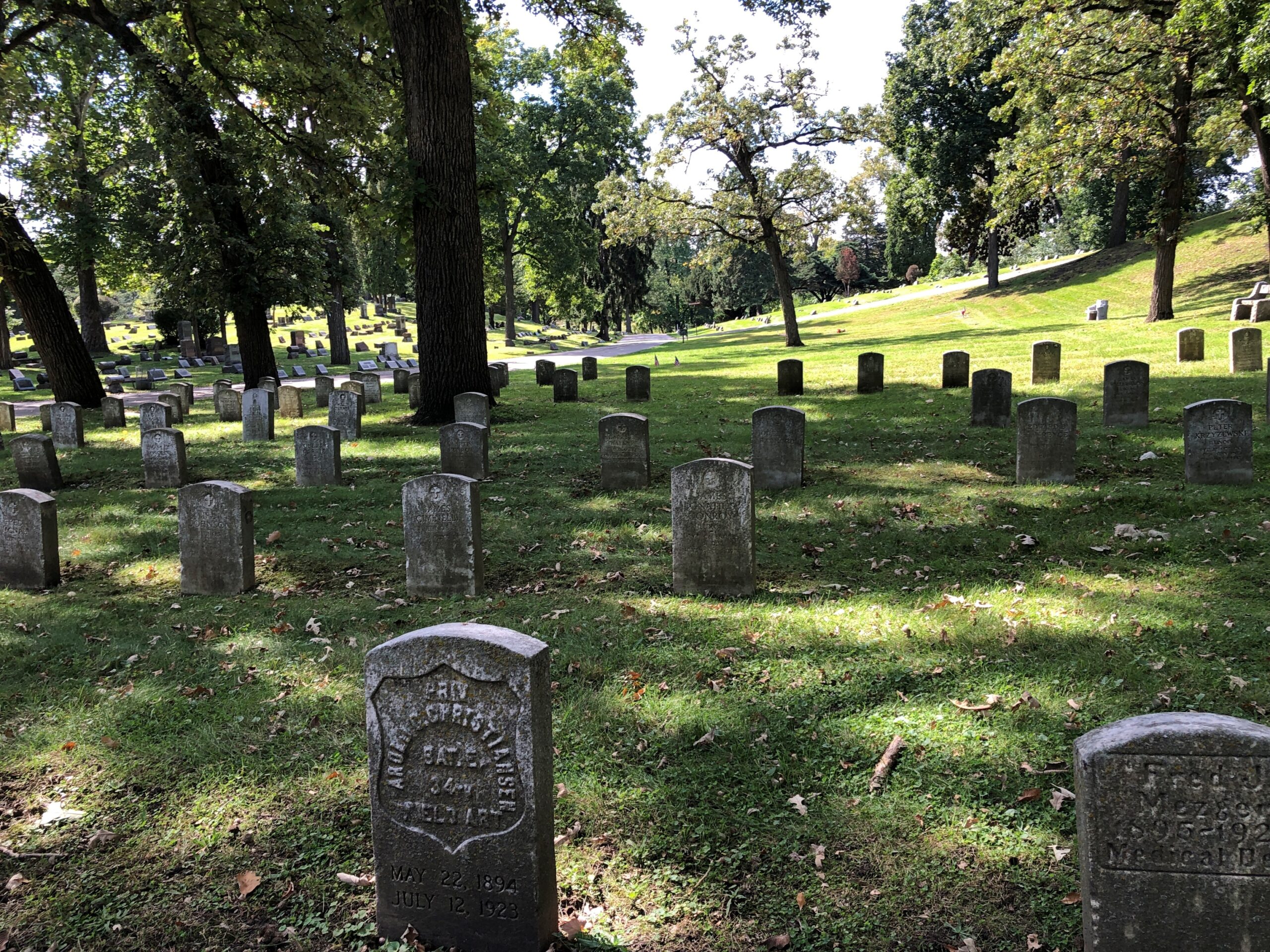
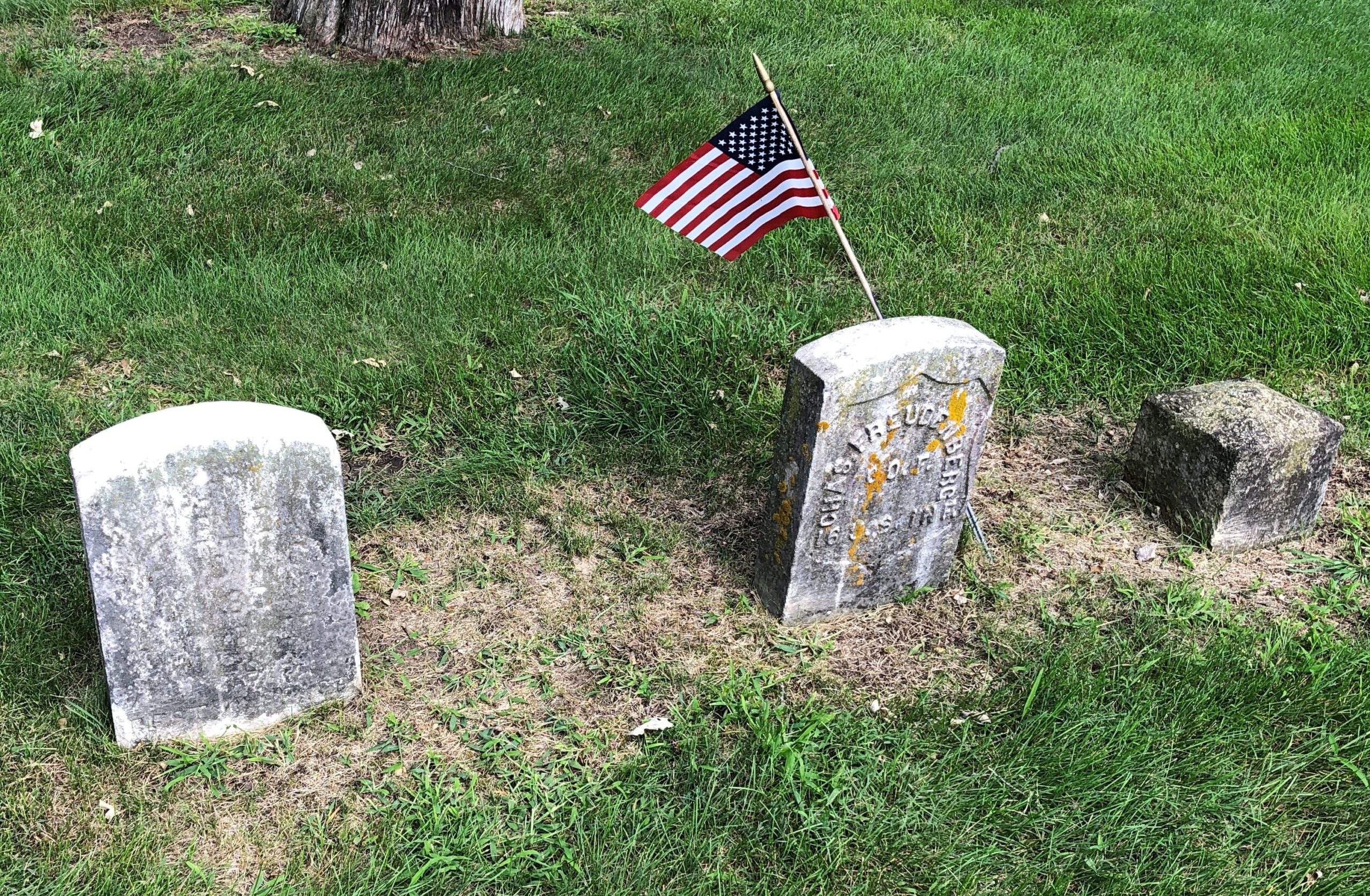
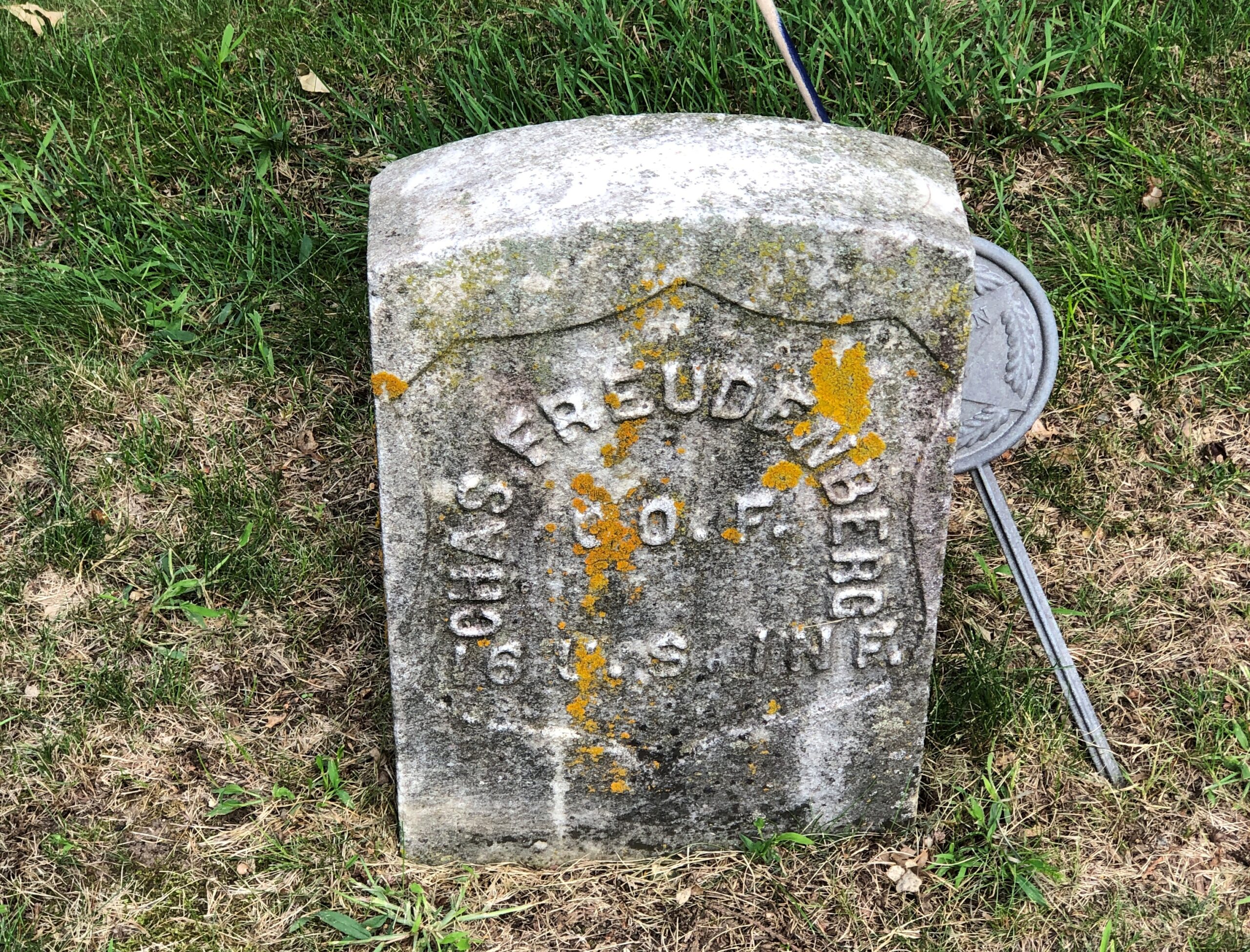
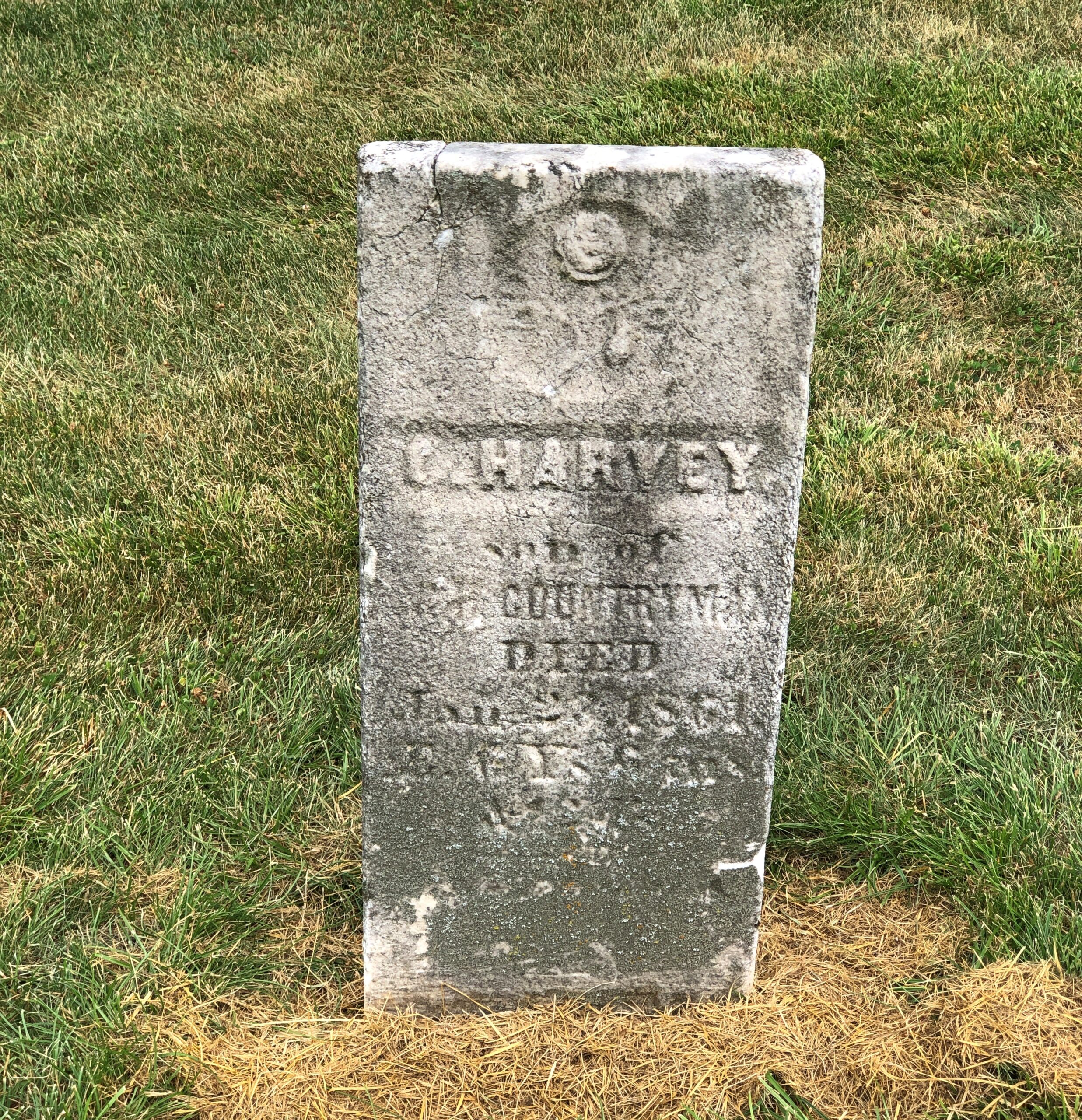
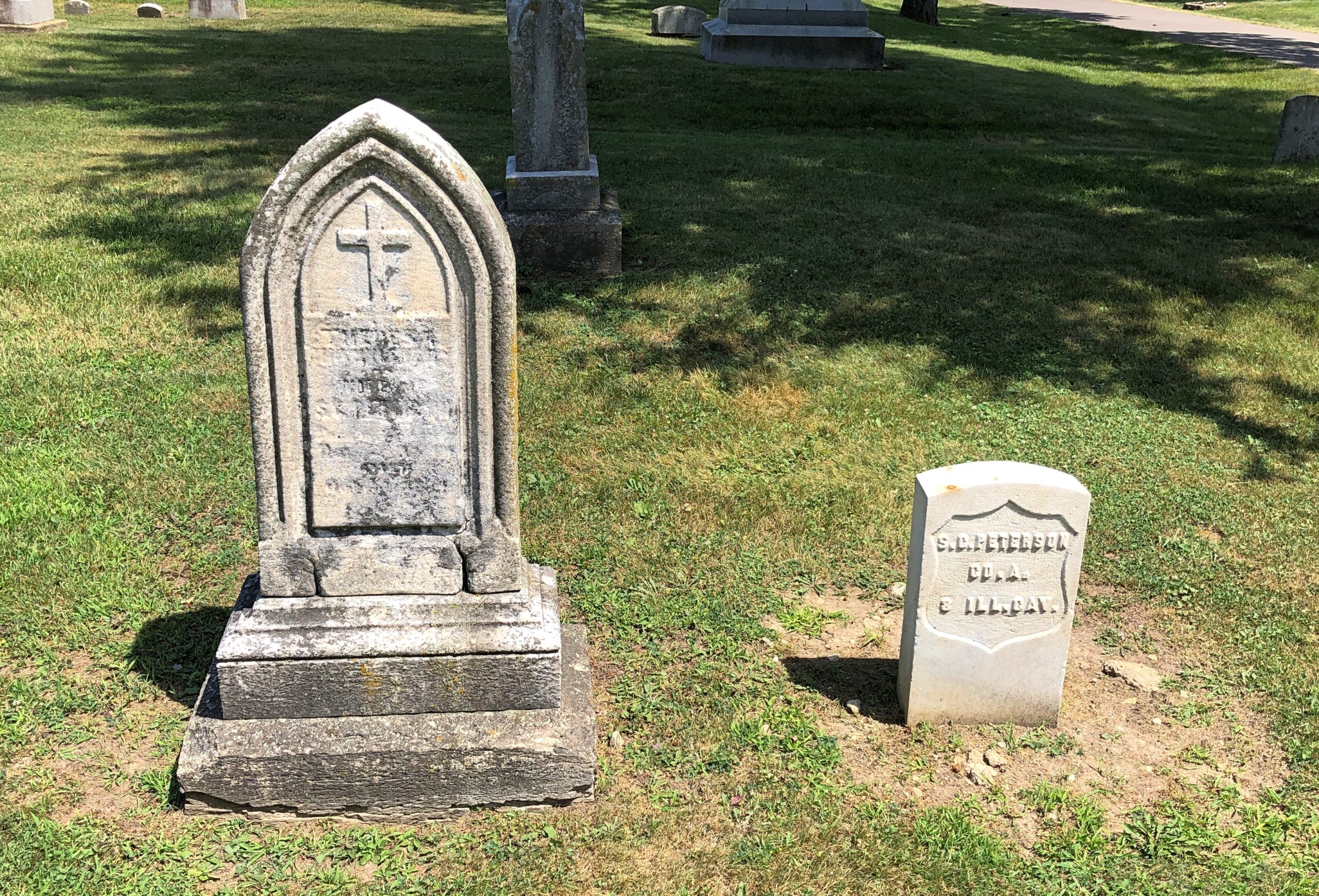
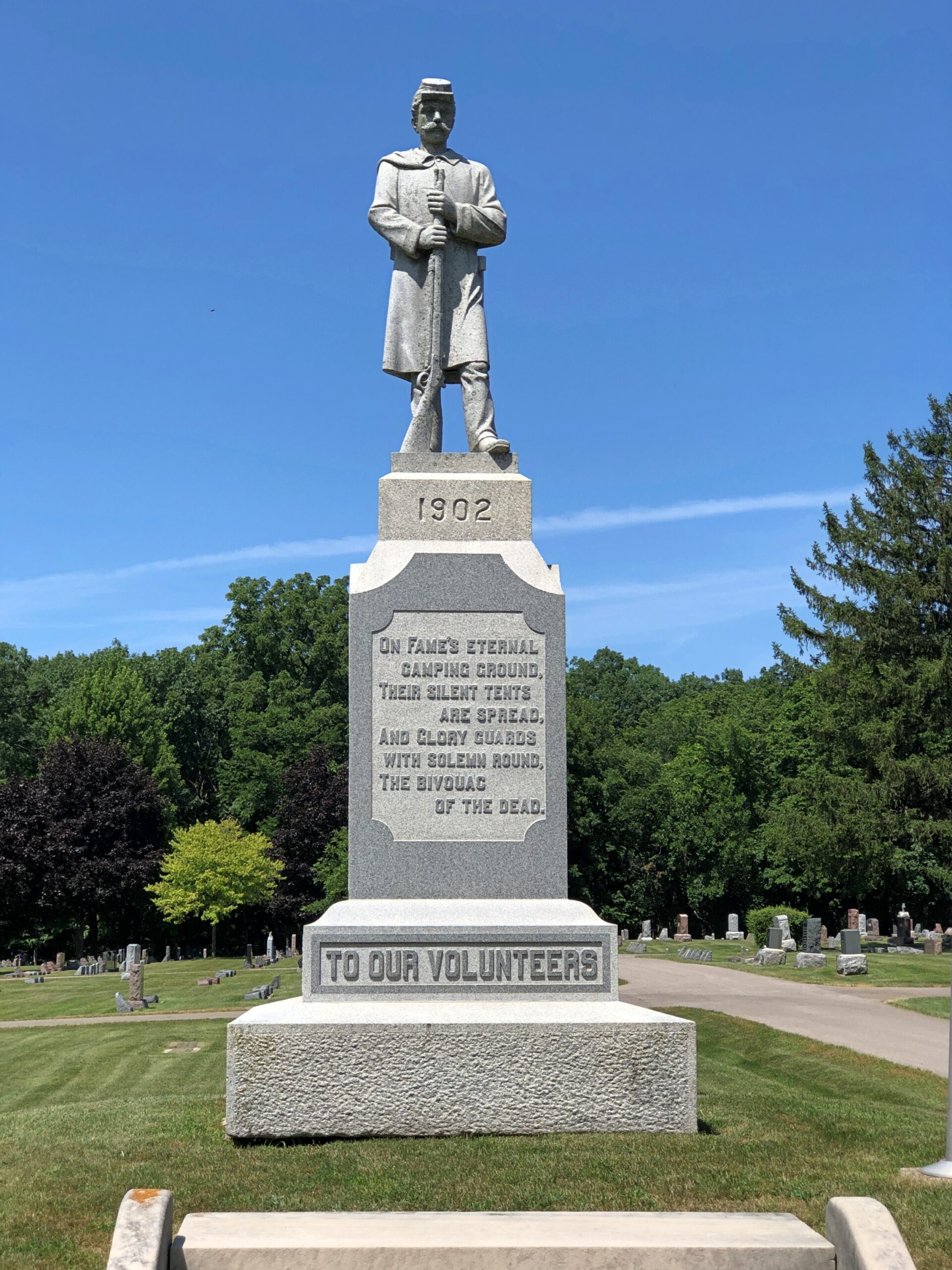
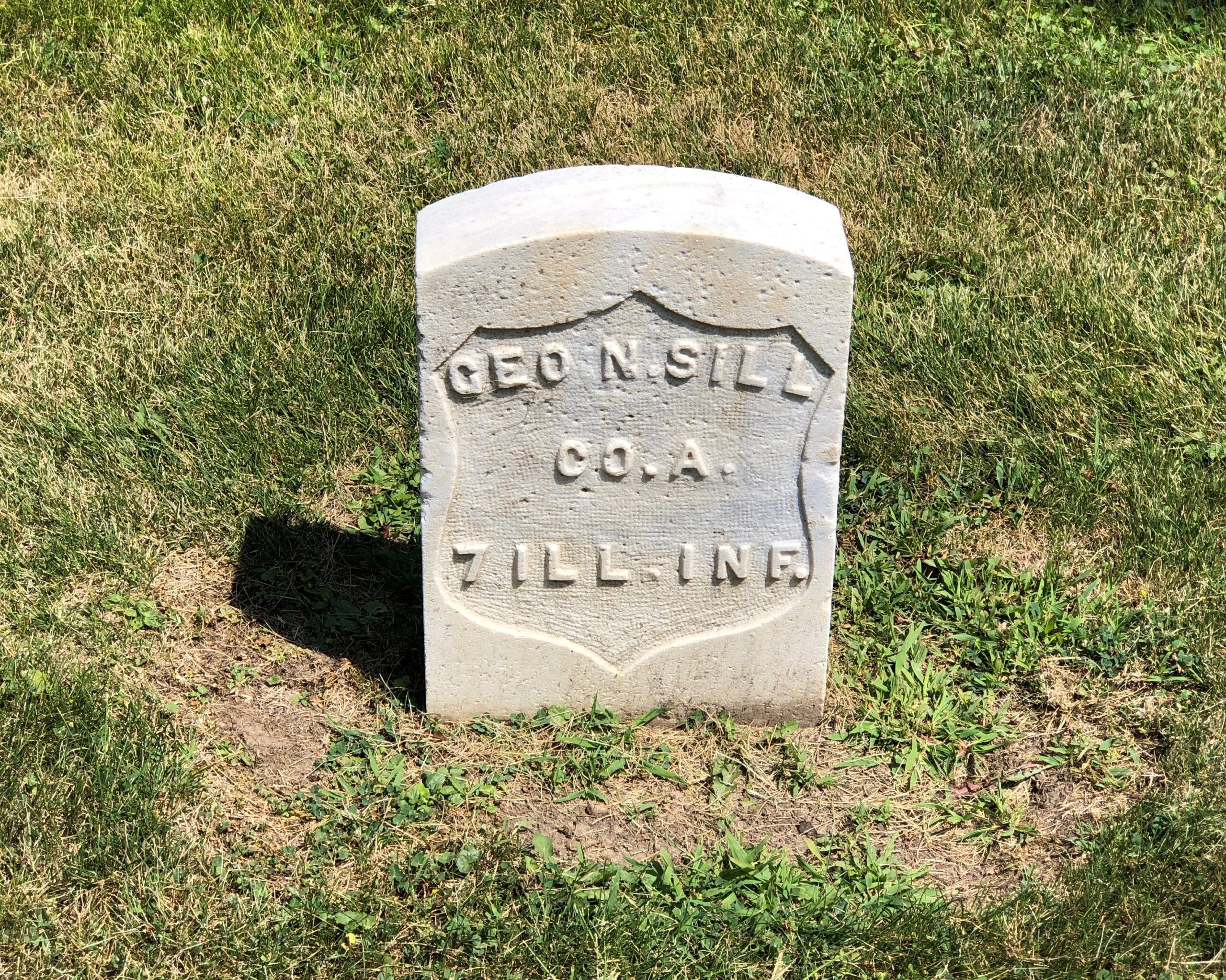
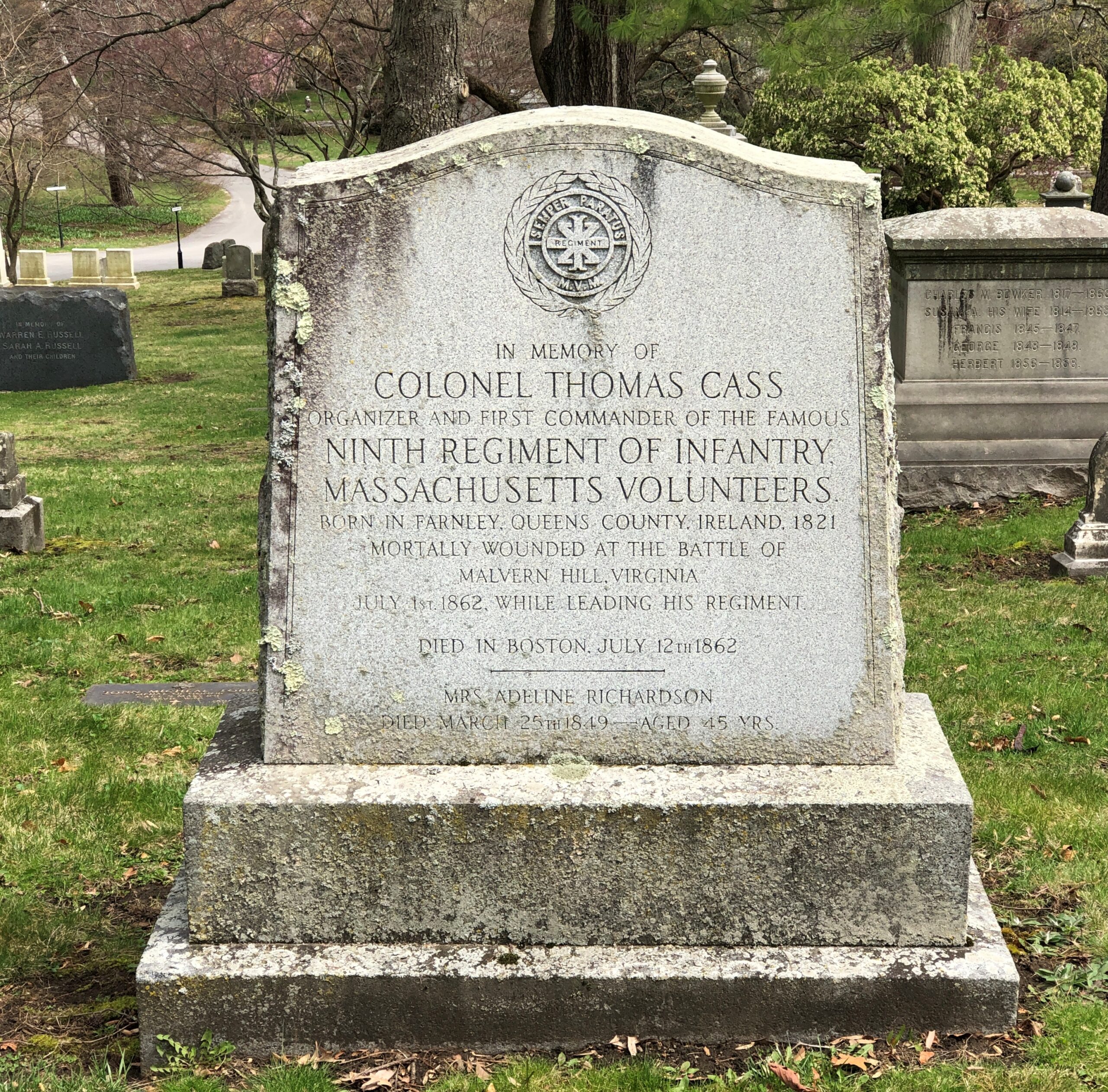
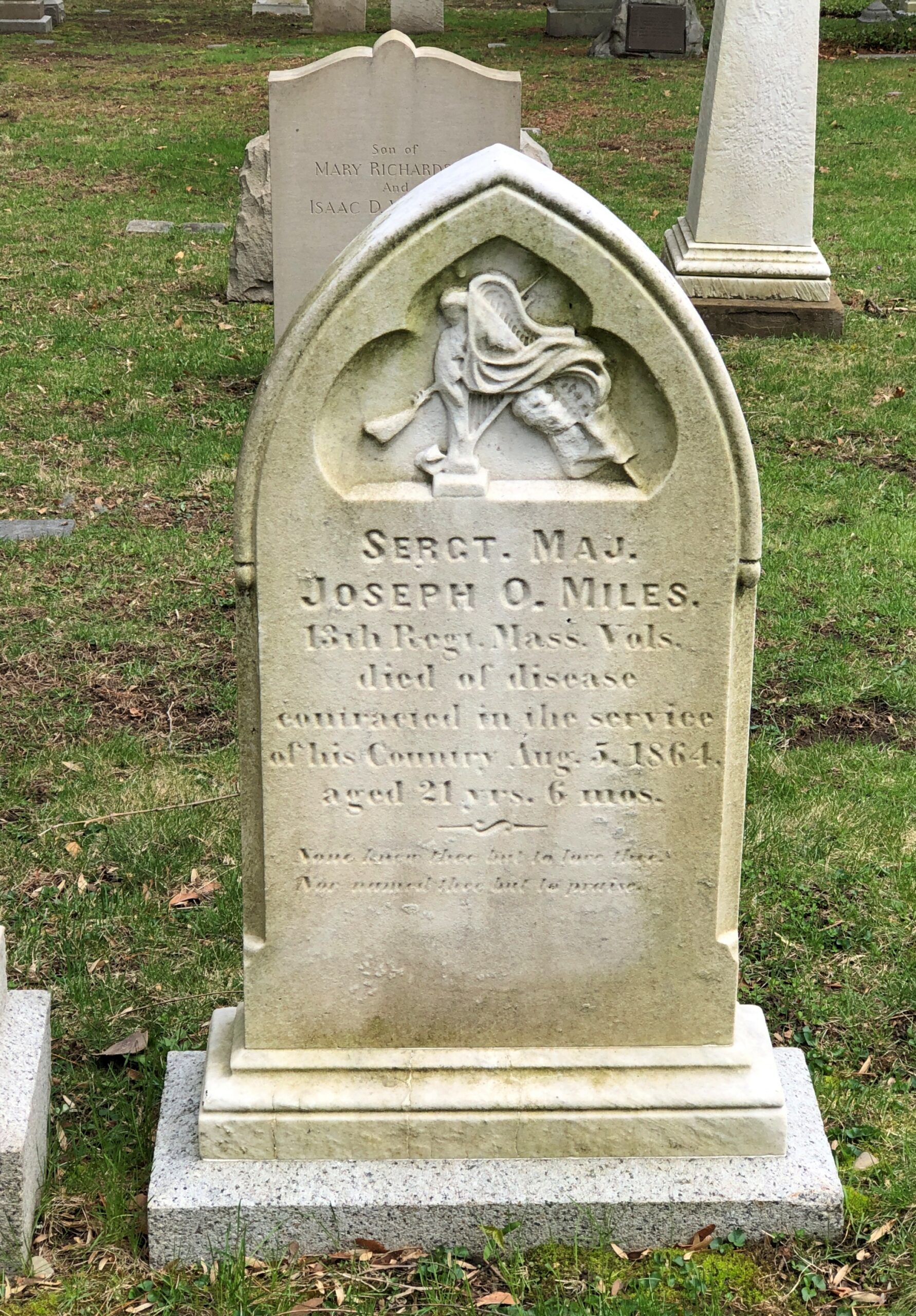
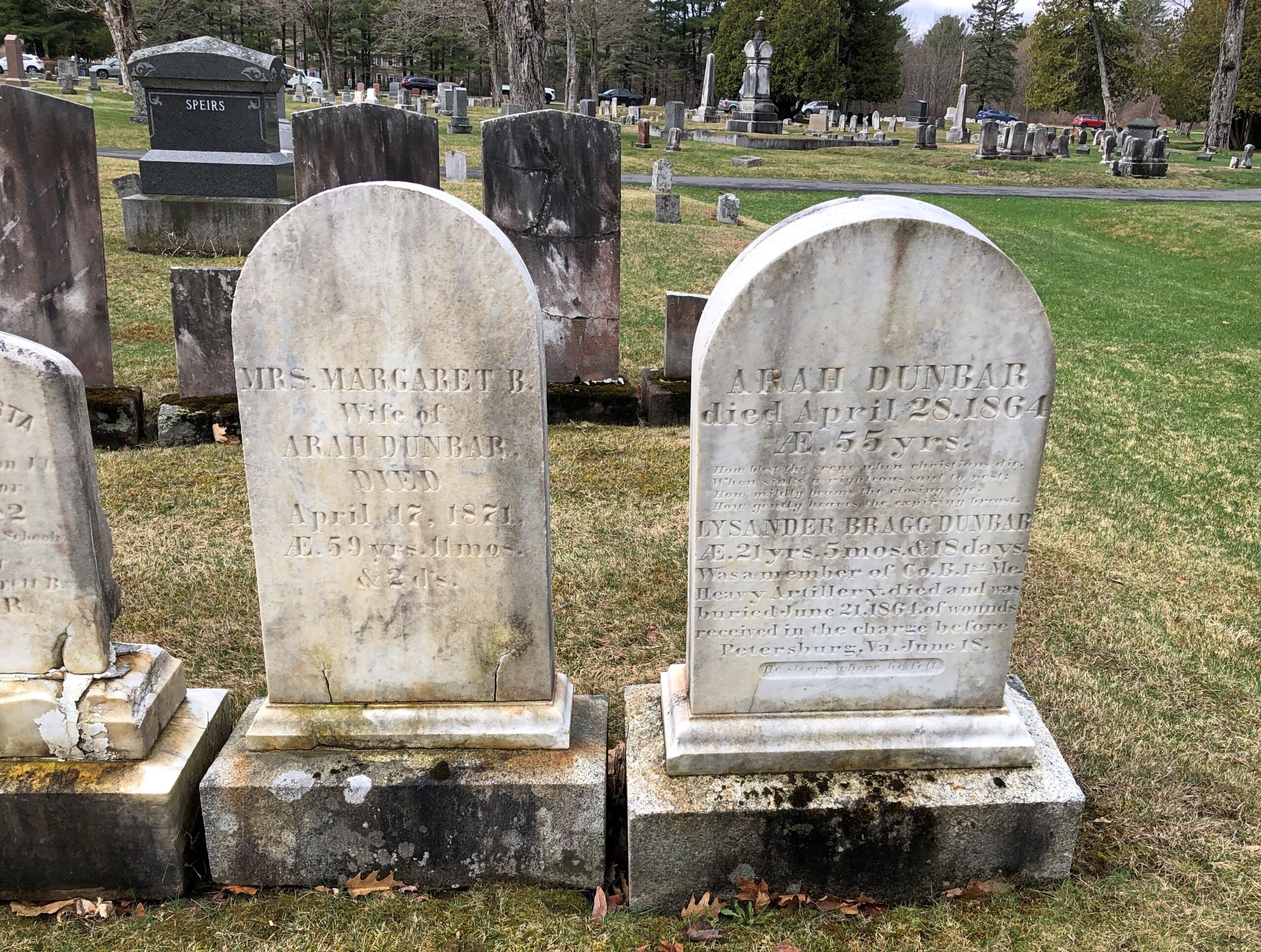
Men who died for the Union.

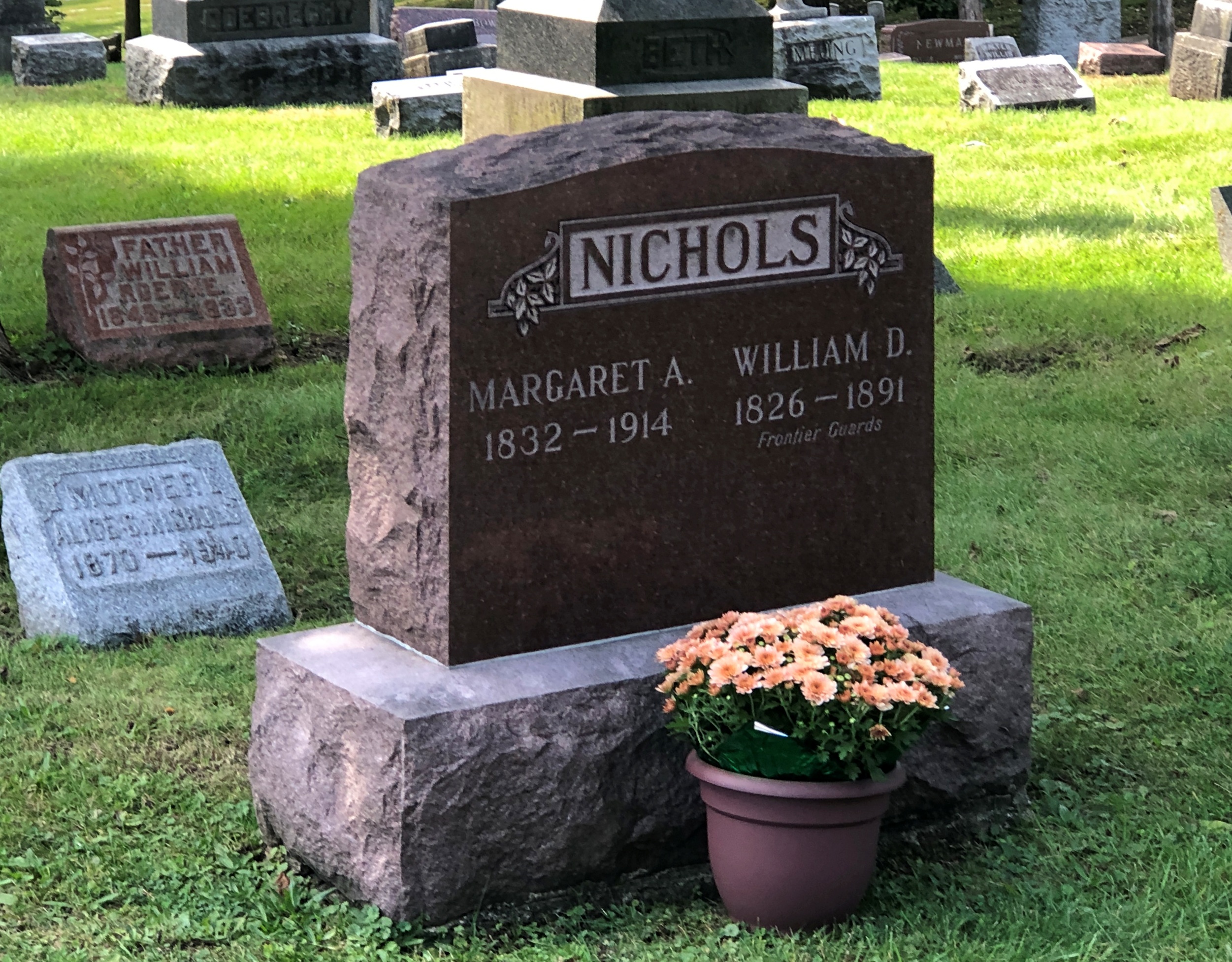
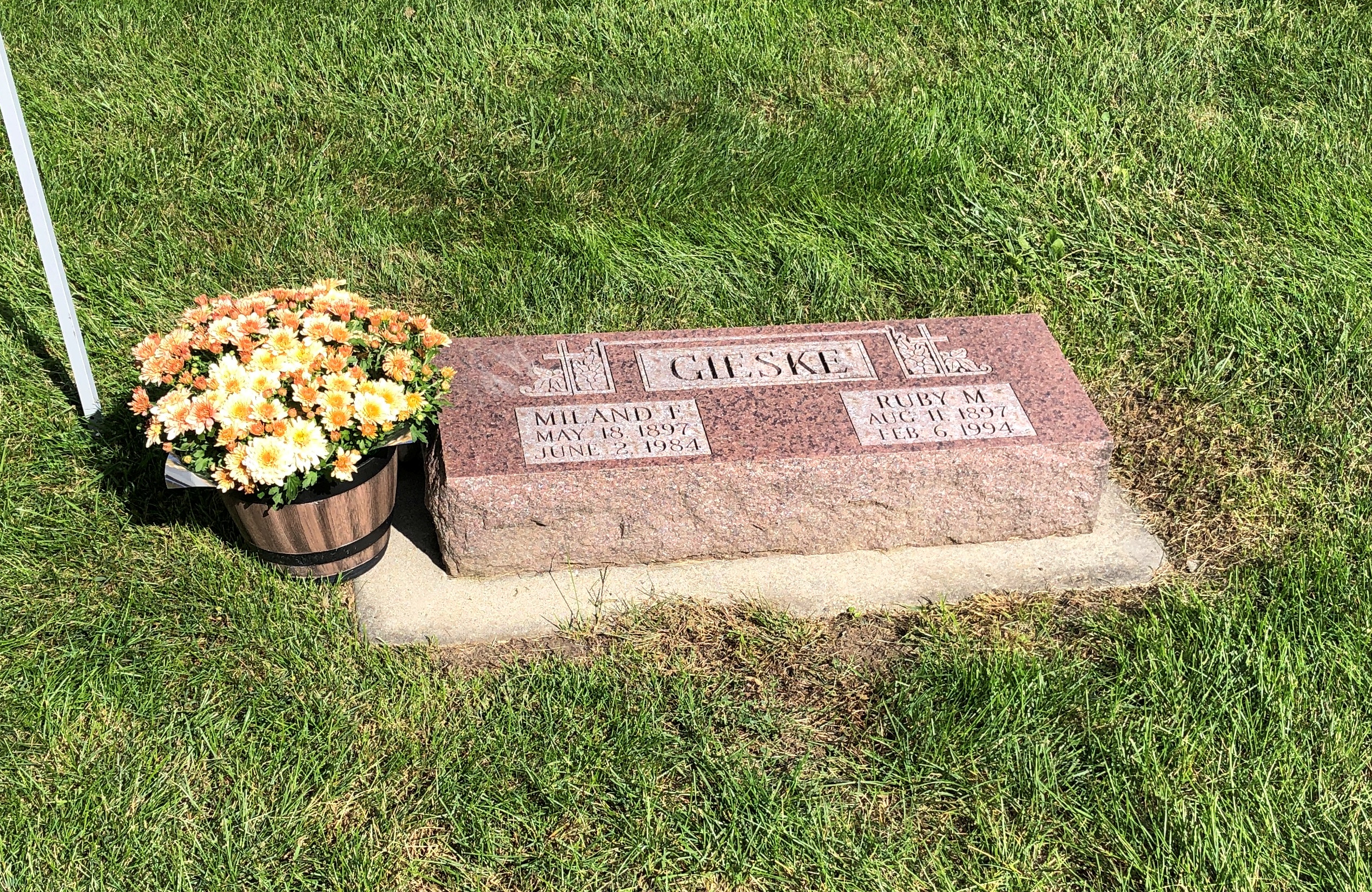
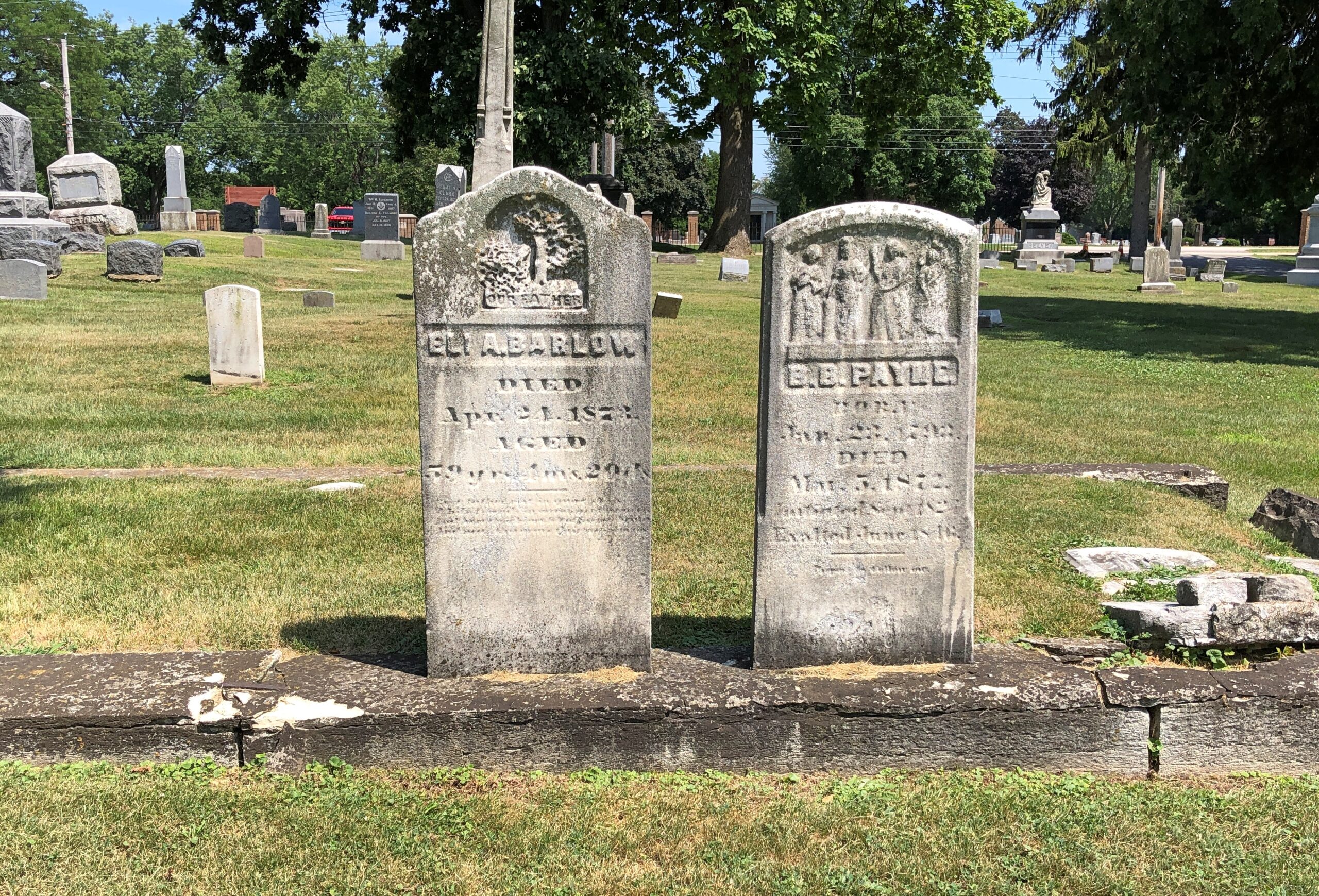
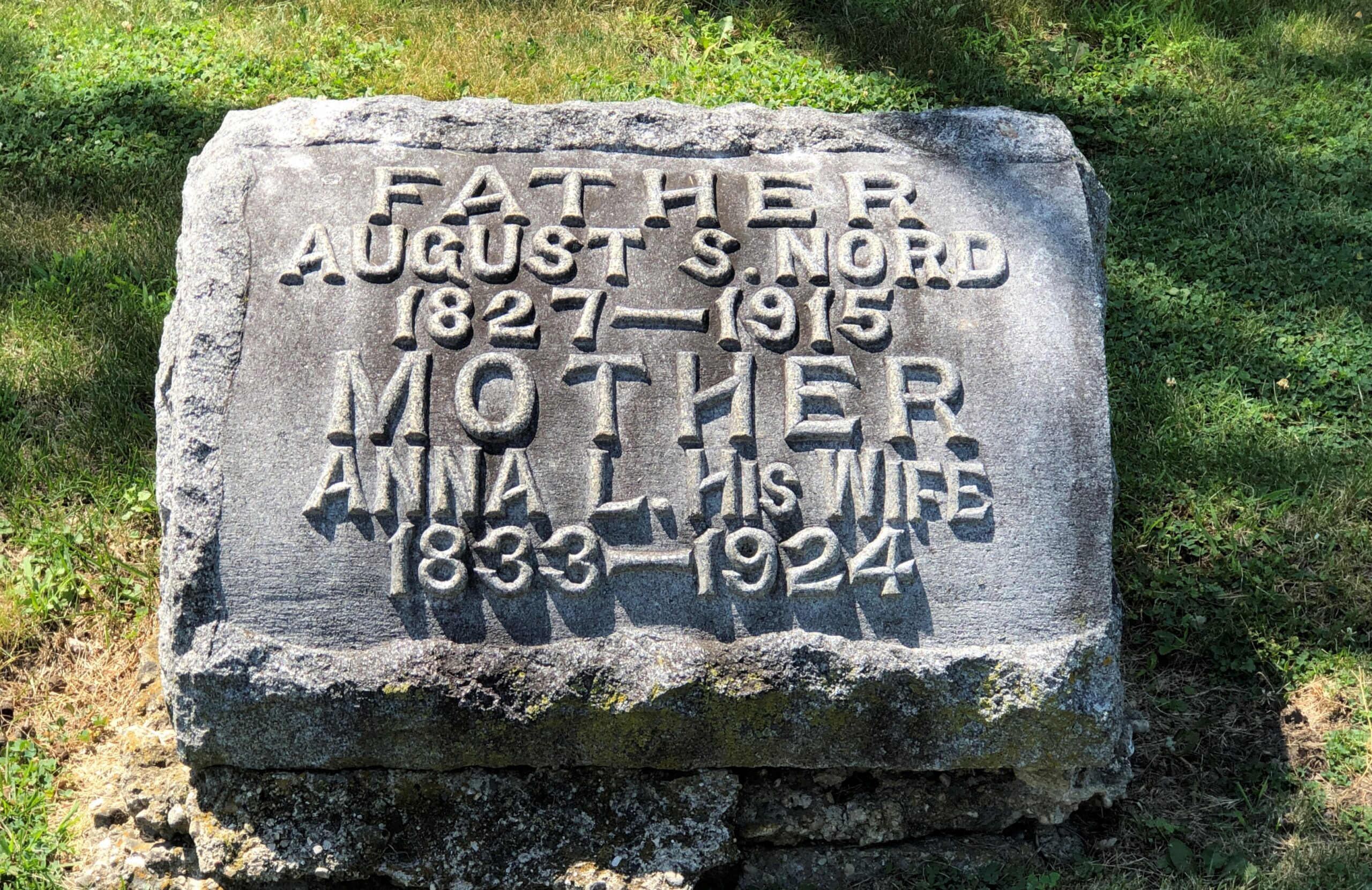
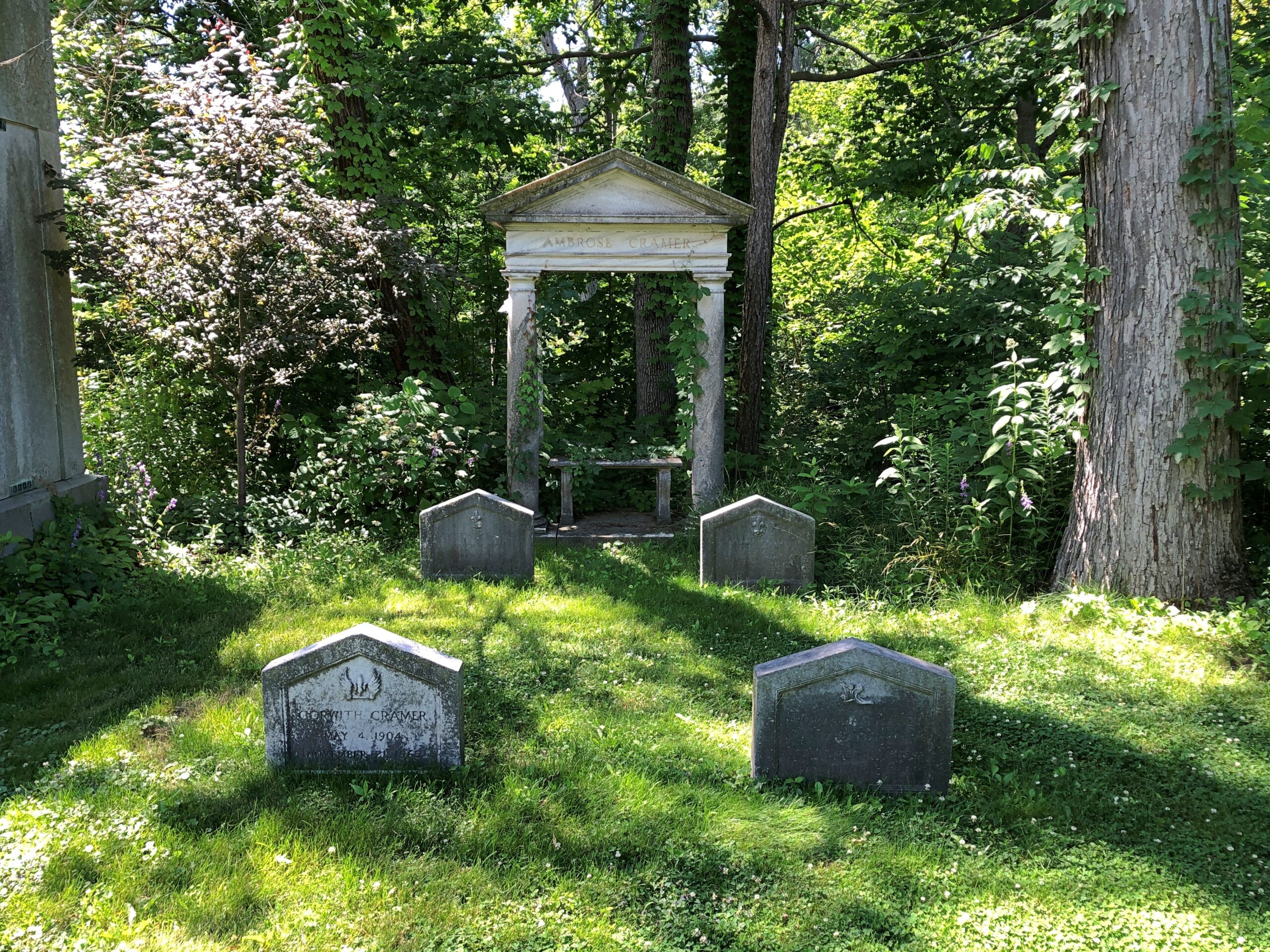
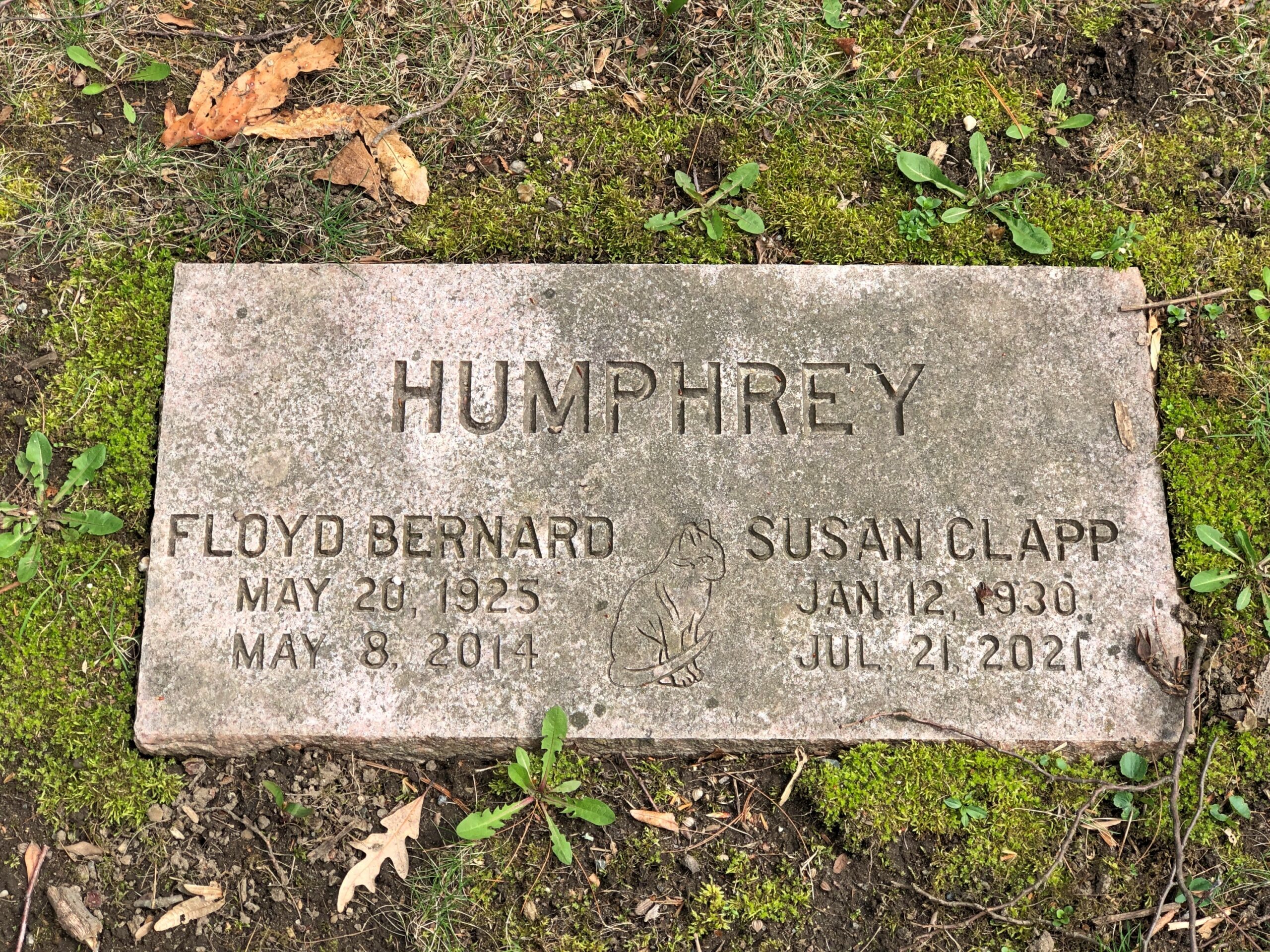
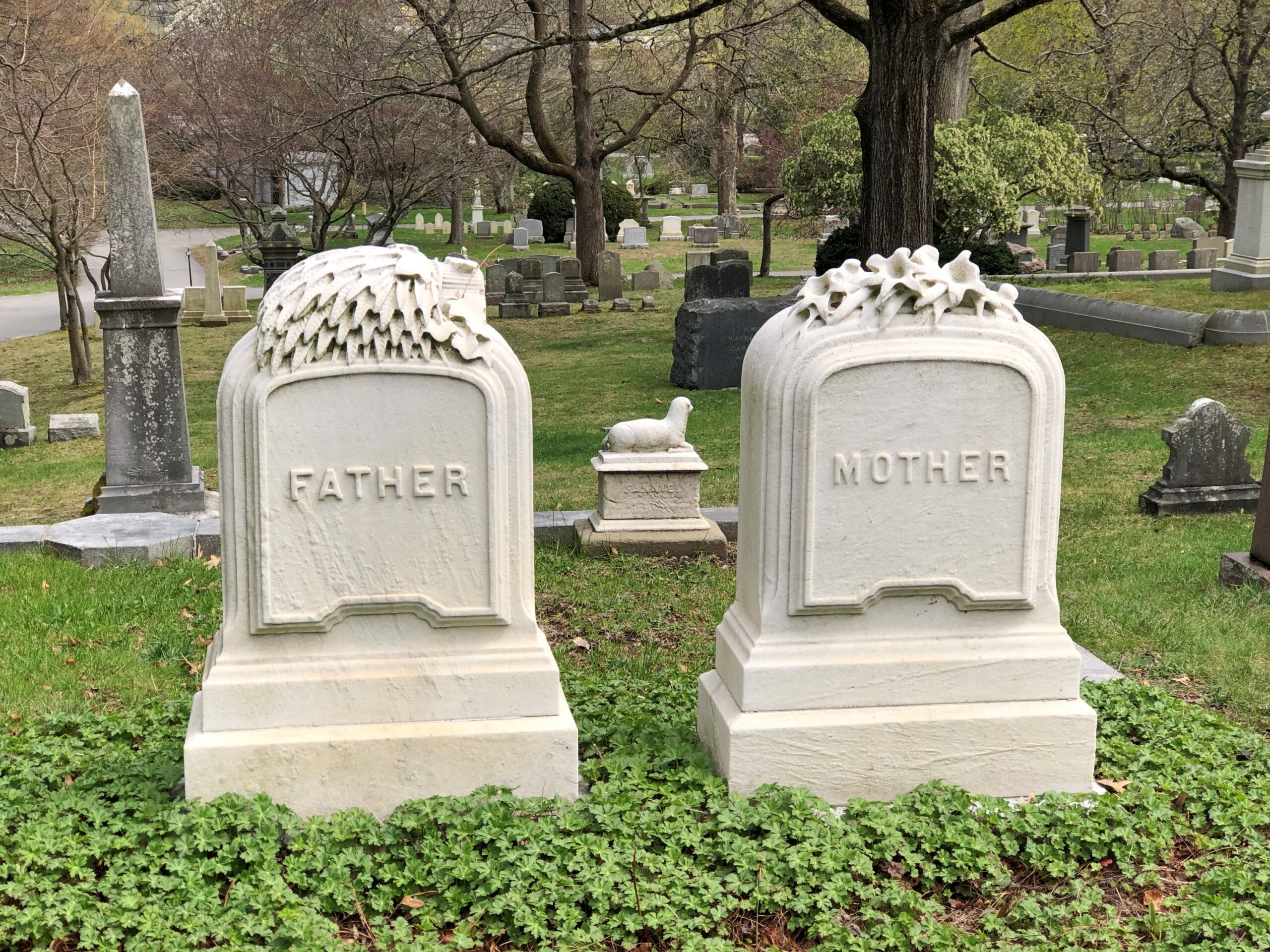
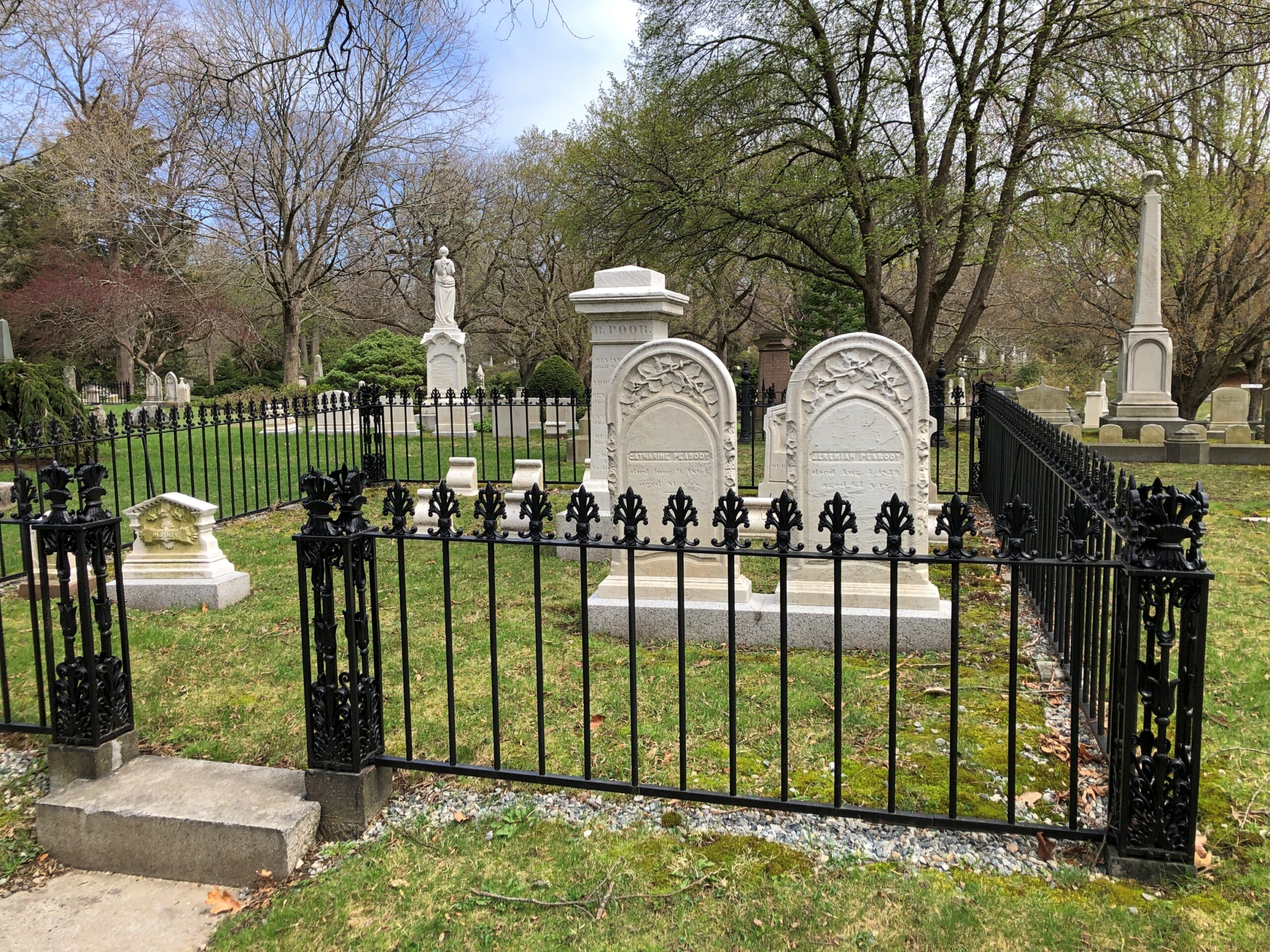
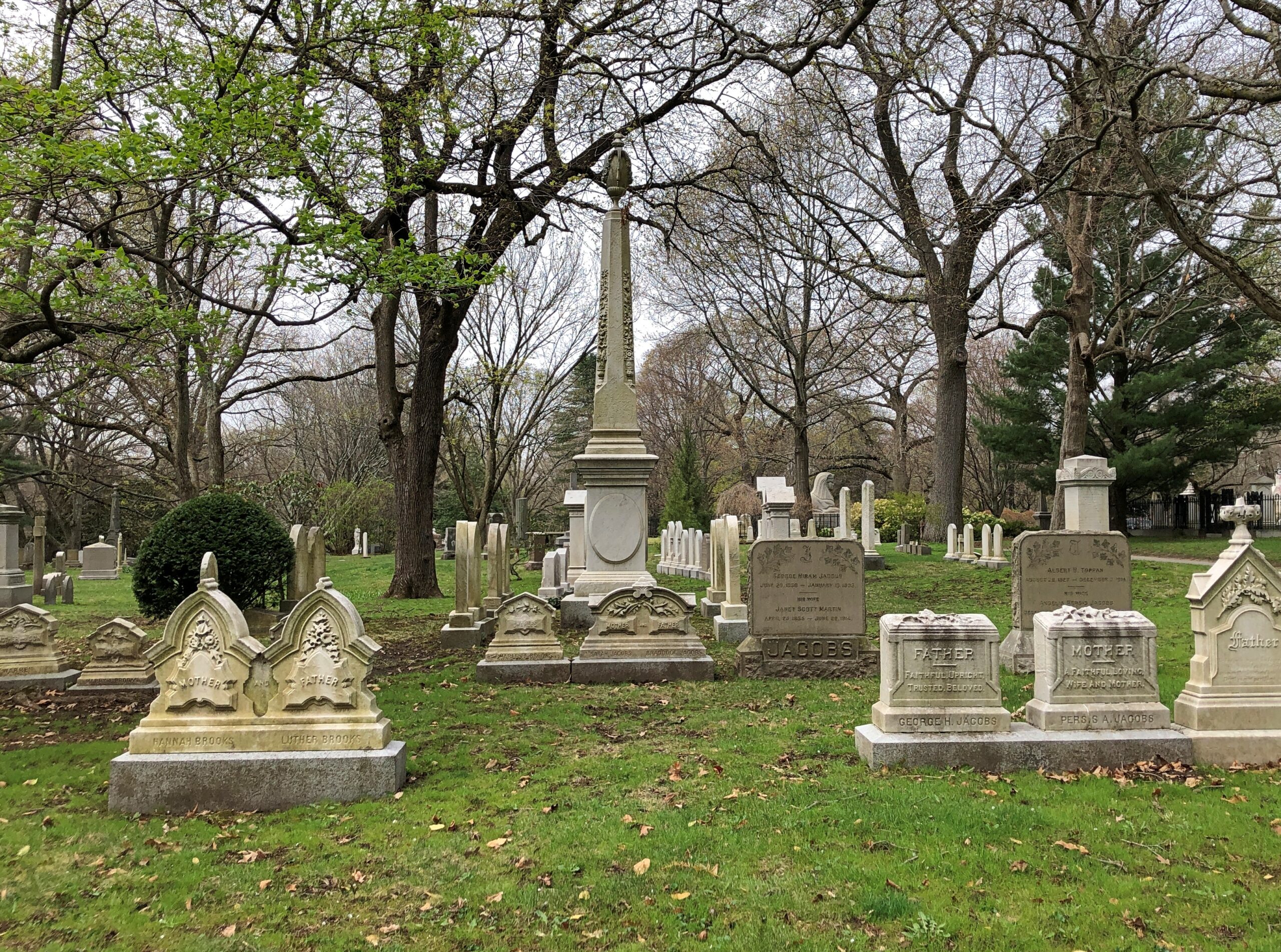
A good many couples.

Mount Auburn Cemetery

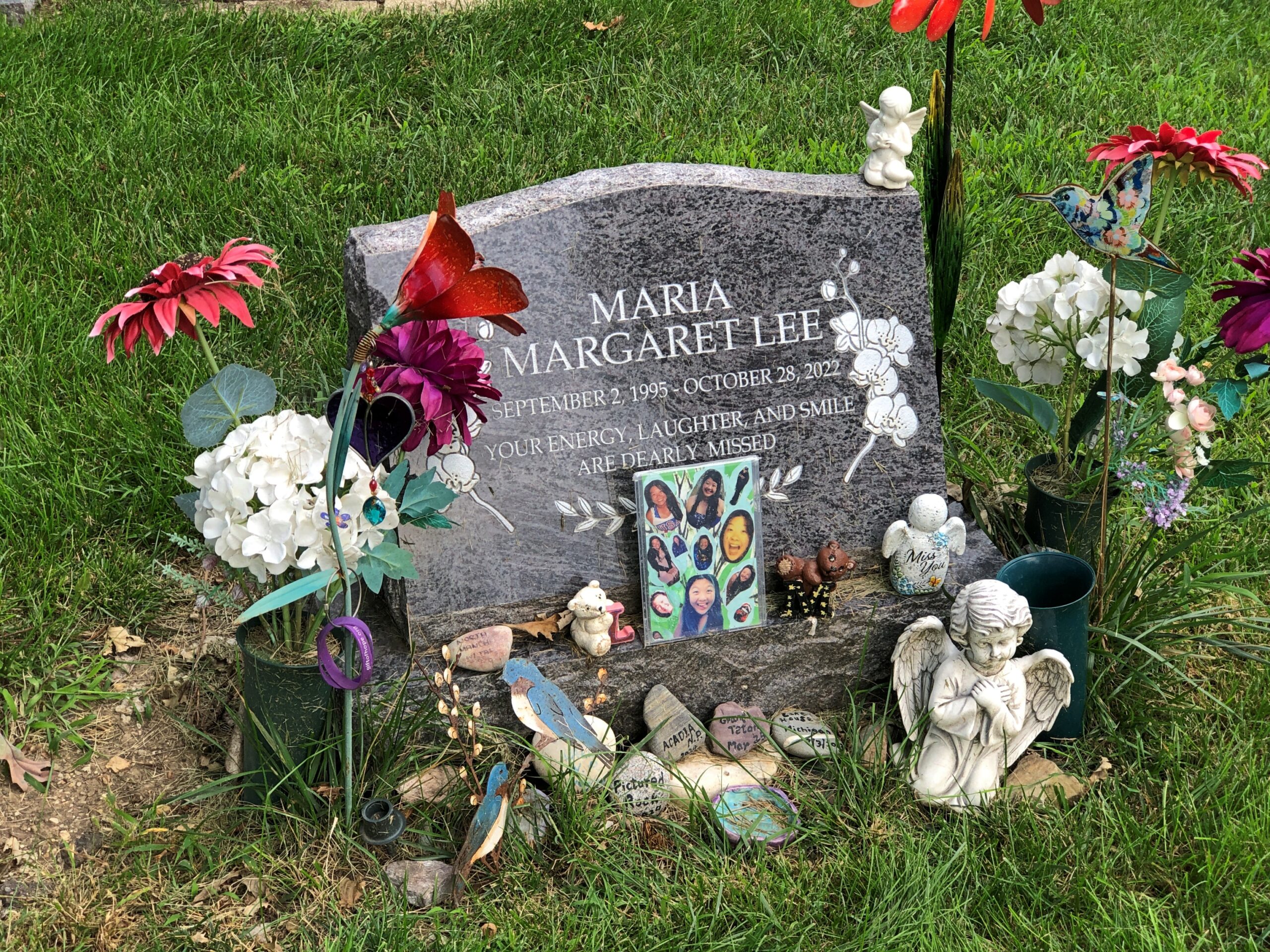
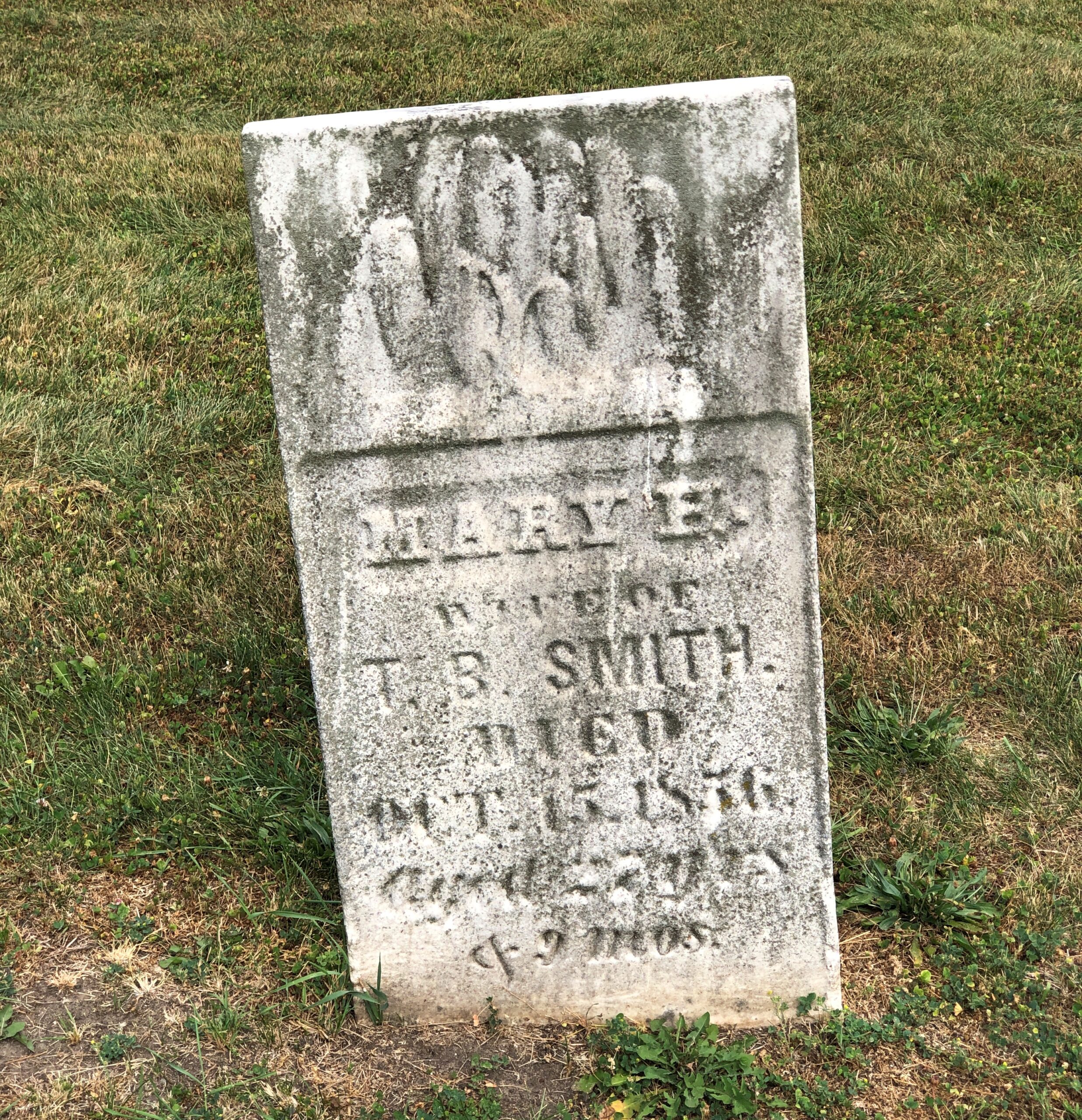
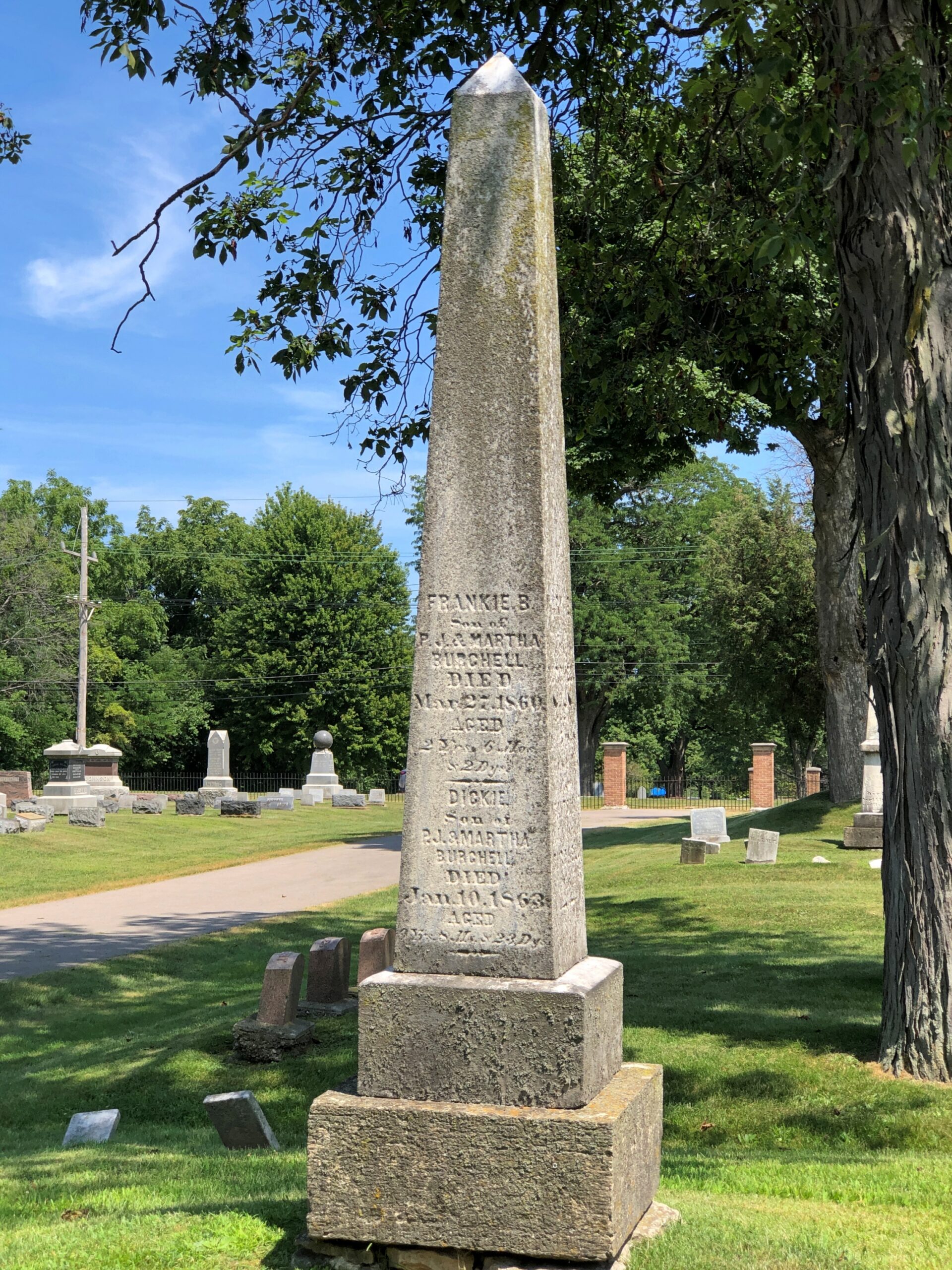
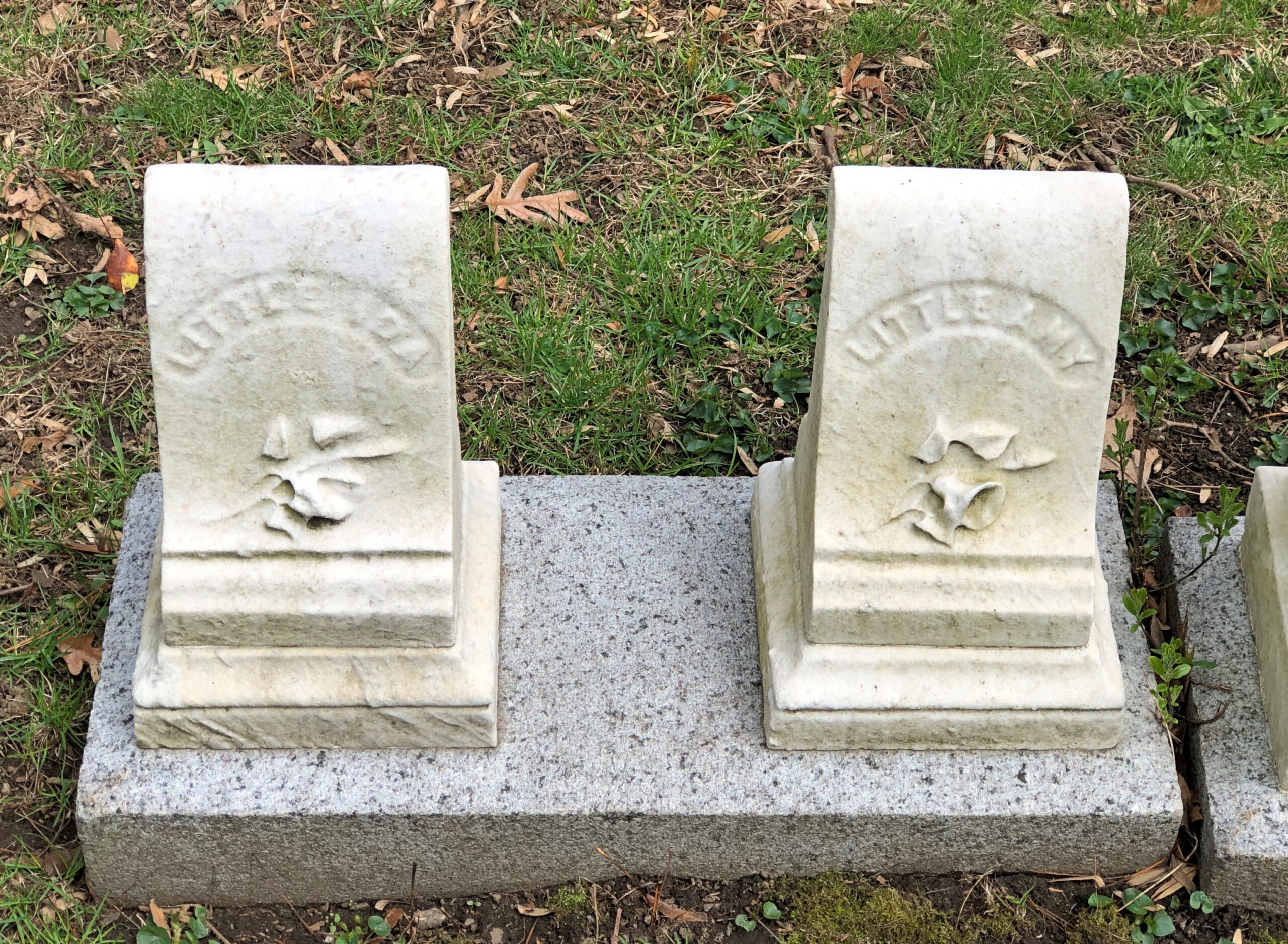
A sad story, one of many.

Maybe a sad story. A little enigmatic, anyway.

Looking at the map’s list of famous permanent residents, one thinks: “Right, I know him. And him. And him. And her. There’s another person I’ve heard of. And another. And I think I know that one – I do…”

On it goes. A short selection of those I didn’t have to look up: Louis Agassiz, John Bartlett (of Quotations fame), Edwin Booth, Charles Bulfinch, Dorothea Dix, Mary Baker Eddy (“discoverer” of Christian Science, the map says), Edward Everett (spoke at Gettysburg, was upstaged), Fannie Farmer, Felix Frankfurter, Buckminster Fuller, Charles Dana Gibson, Curt Gowdy, Oliver Wendell Holmes Sr., Julia Ward Howe, Henry Cabot Lodge, Henry Wadsworth Longfellow, Bernard Malamud, Arthur Schlesinger Jr., B.F. Skinner, I.F. Stone, and Charles Sumner.

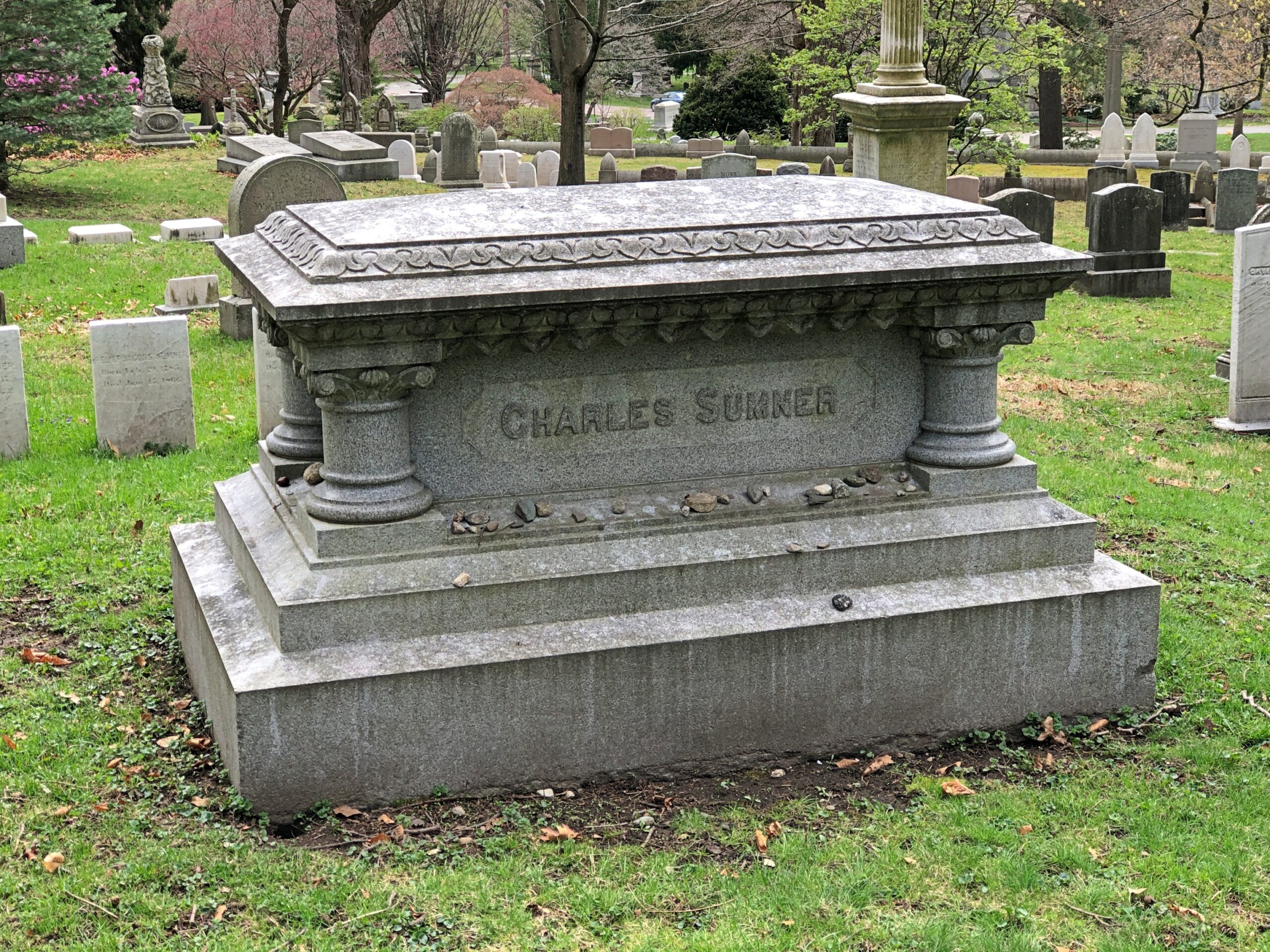
I could have spent all day looking for them, but mostly I didn’t. I did see Charles Sumner’s stone. People leave smaller stones. I found one and did too.

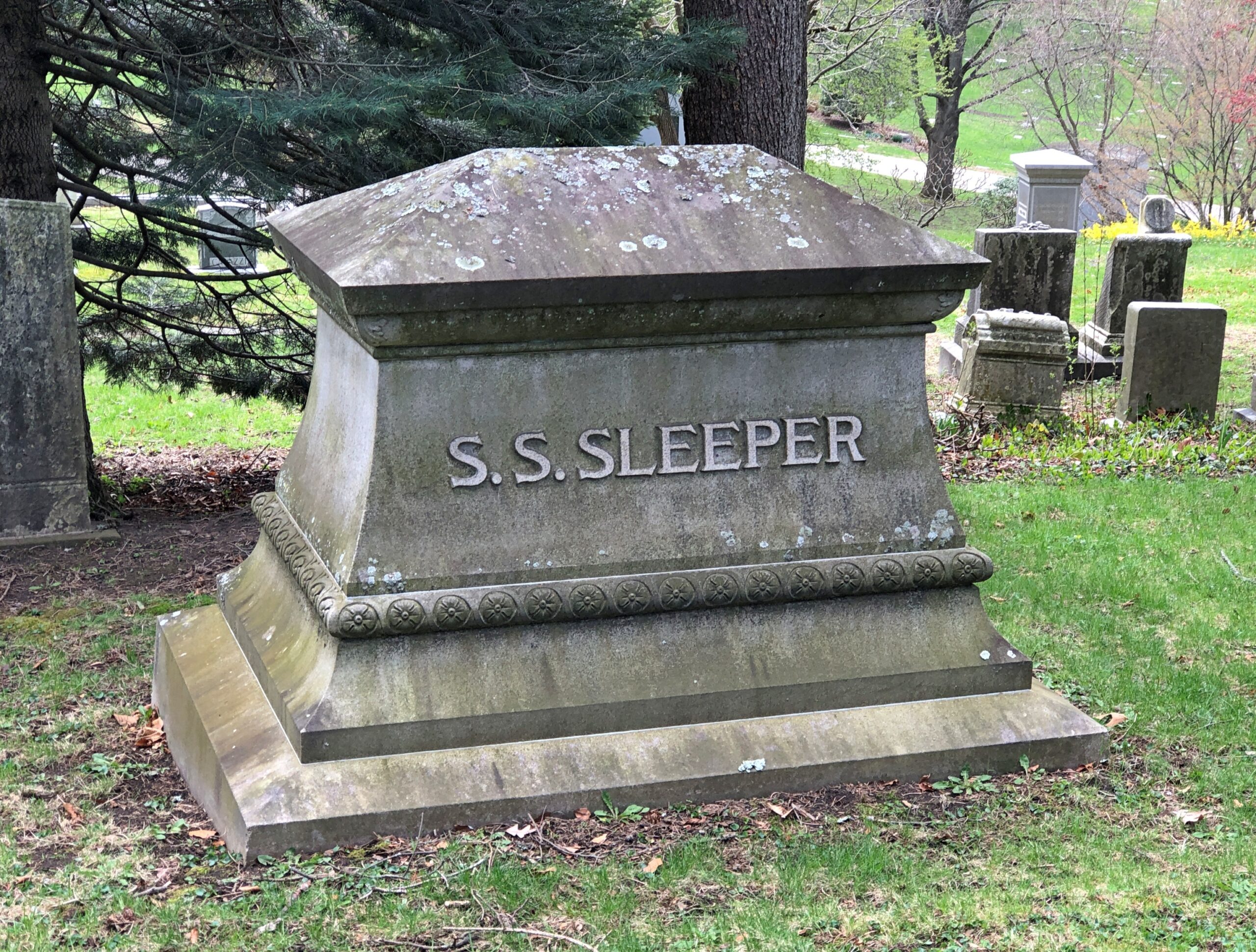
Near Sumner. I’d never heard of him, but I like that name.

Solomon Sias Sleeper (d. 1895), successful Cambridge merchant and local politico and philanthropist.

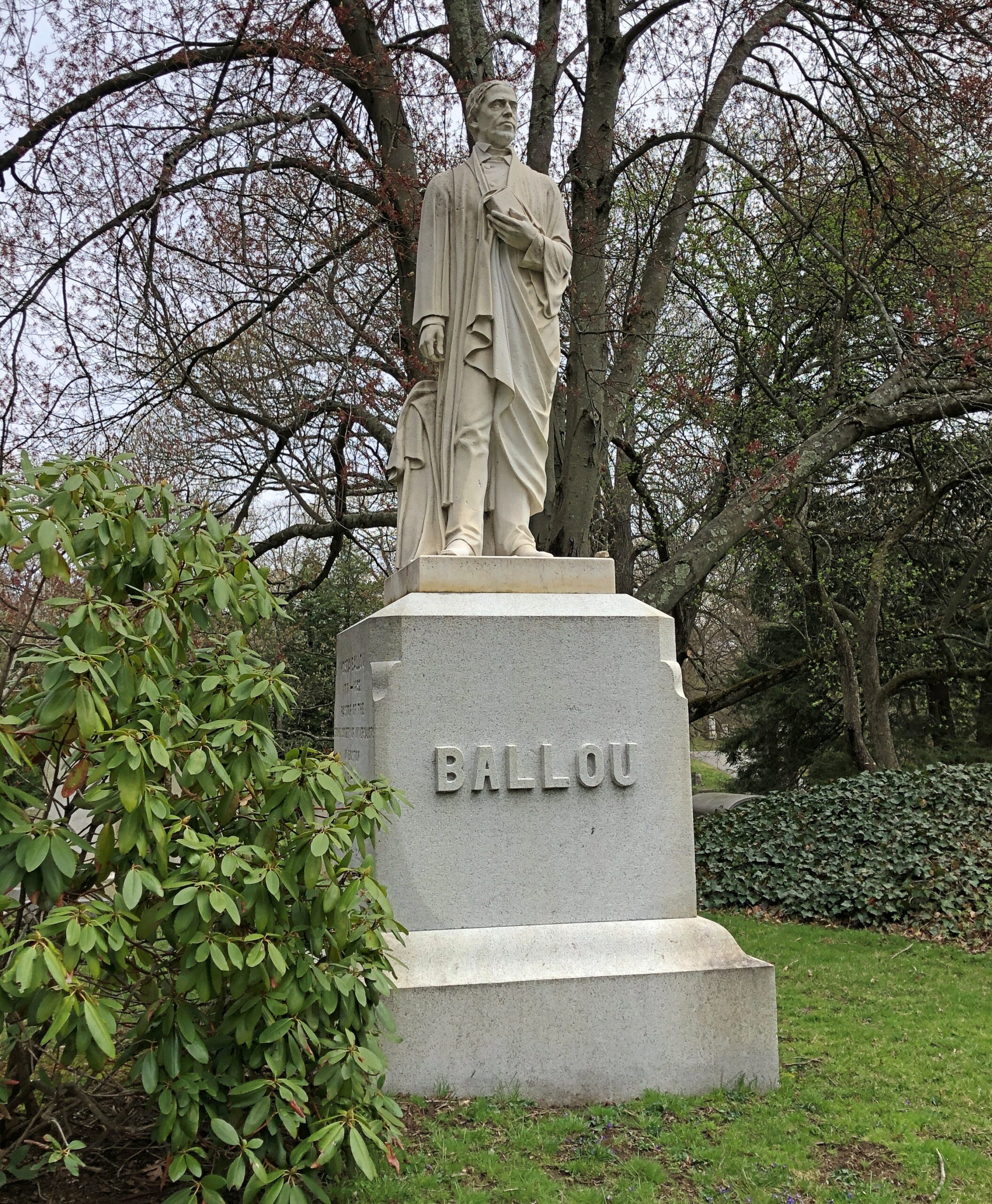
The map also lists impressive memorials. I found a number of those. Such as the Rev. Hosea Ballou Monument, honoring a Universalist clergyman (d. 1852).

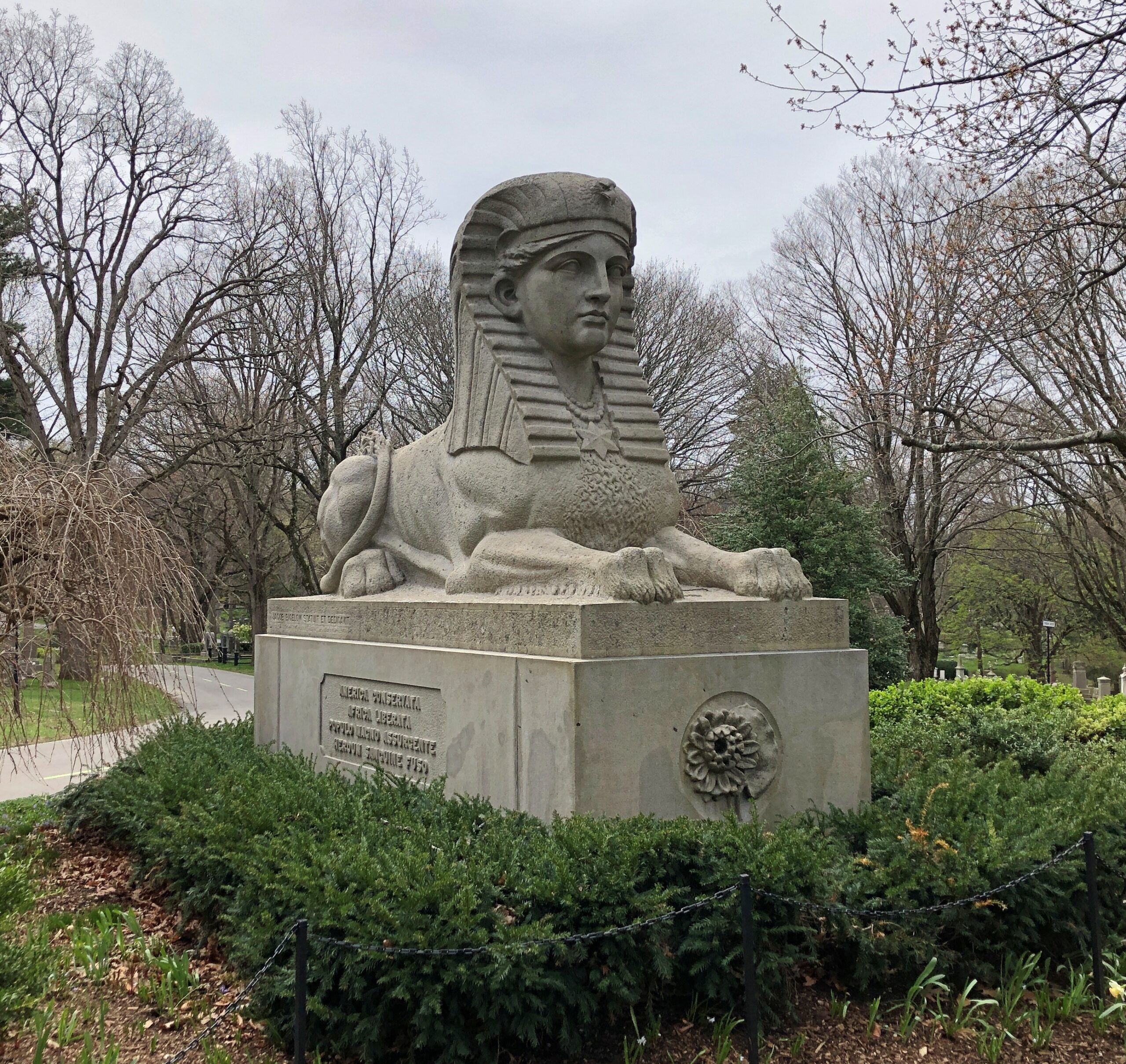
A Civil War memorial, erected in 1872 — the only time I’ve seen a sphinx used for that purpose.

“The sphinx was chosen because of its ideal personification of intellect and physical force and its representation of the combined ideas of beauty and strength,” the notes on the map say. I know the sphinx has a very long history and comes with a lot of encrusted lore, but that sounds like a peculiar Victorian interpretation that didn’t really stick.

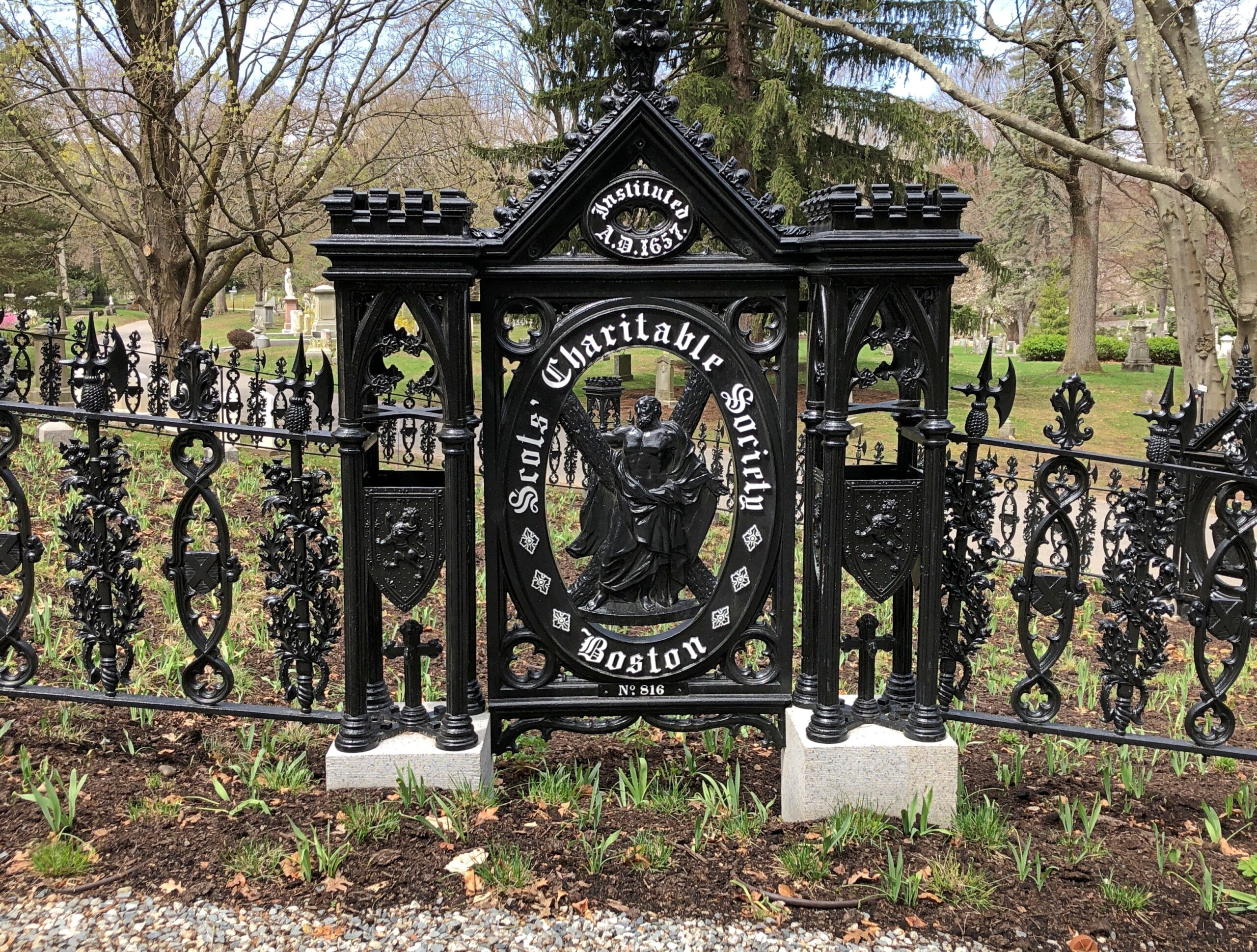
The Scots’ Charitable Society Lot.

An organization founded in 1657 in Massachusetts. It “aims to help people of Scottish heritage by providing relief to Scottish-American individuals and families in need, and by granting undergraduate scholarships to the Scottish-American community,” says its web site because it is still around.

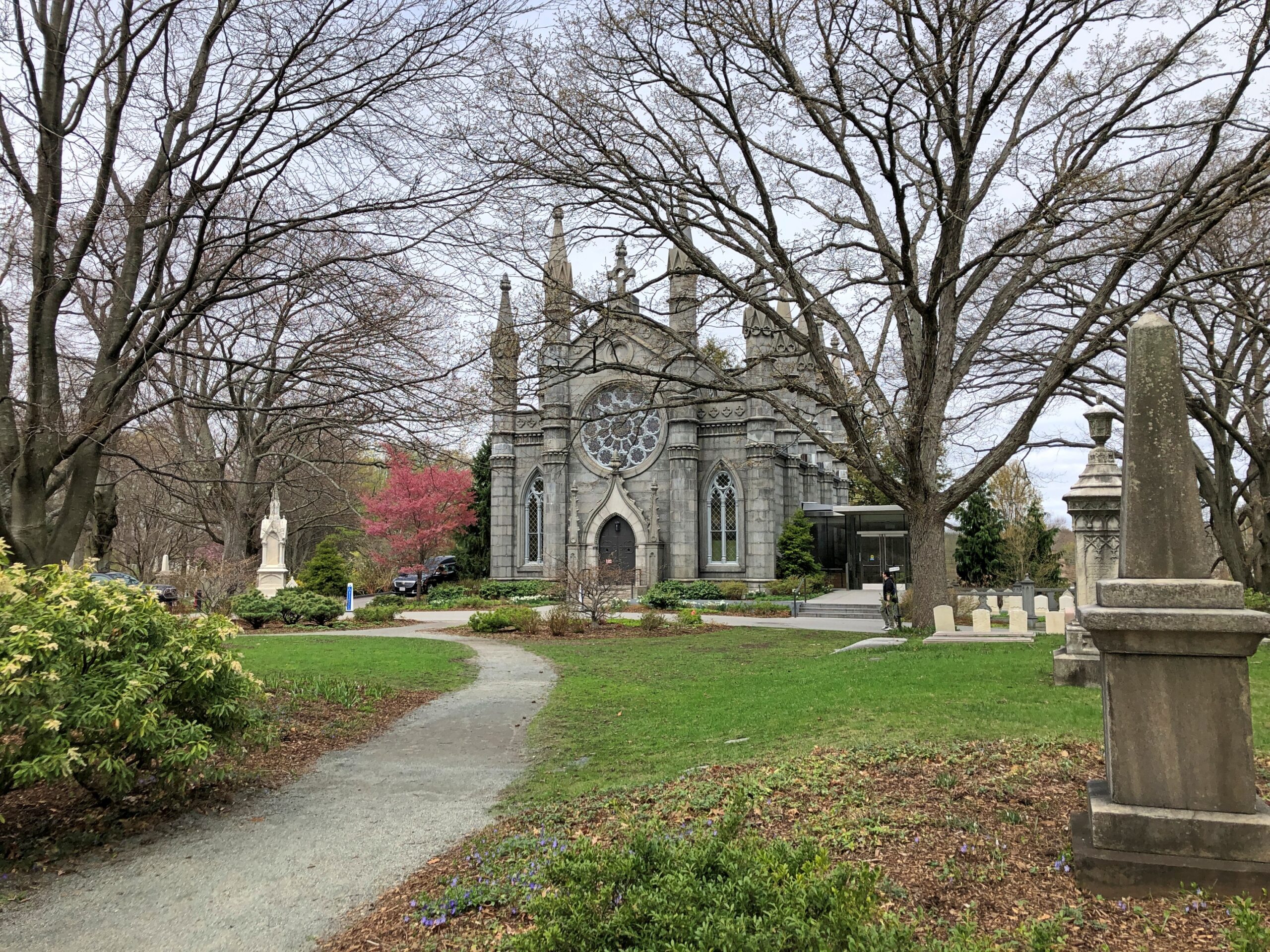
Bigelow Chapel.

Named for Jacob Bigelow (d. 1879), second president of Mount Auburn.

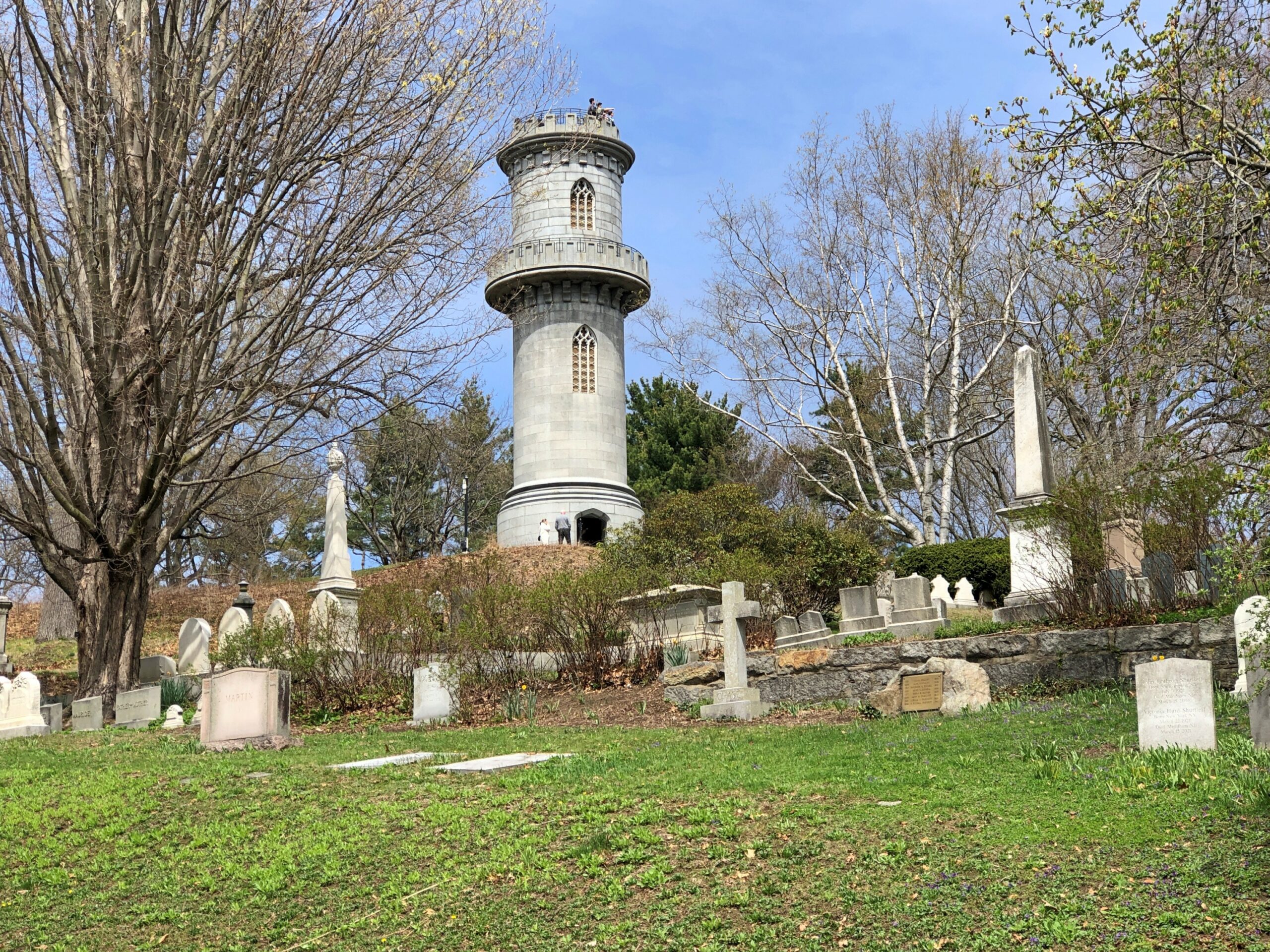
Washington Tower. The highest point on the grounds, honoring George Washington. Designed by Bigelow in collaboration with architect Gridley J. F. Bryant. I didn’t have the energy to climb the hill and then the tower at that moment. Too bad. I understand the view of the Boston skyline from there is terrific.

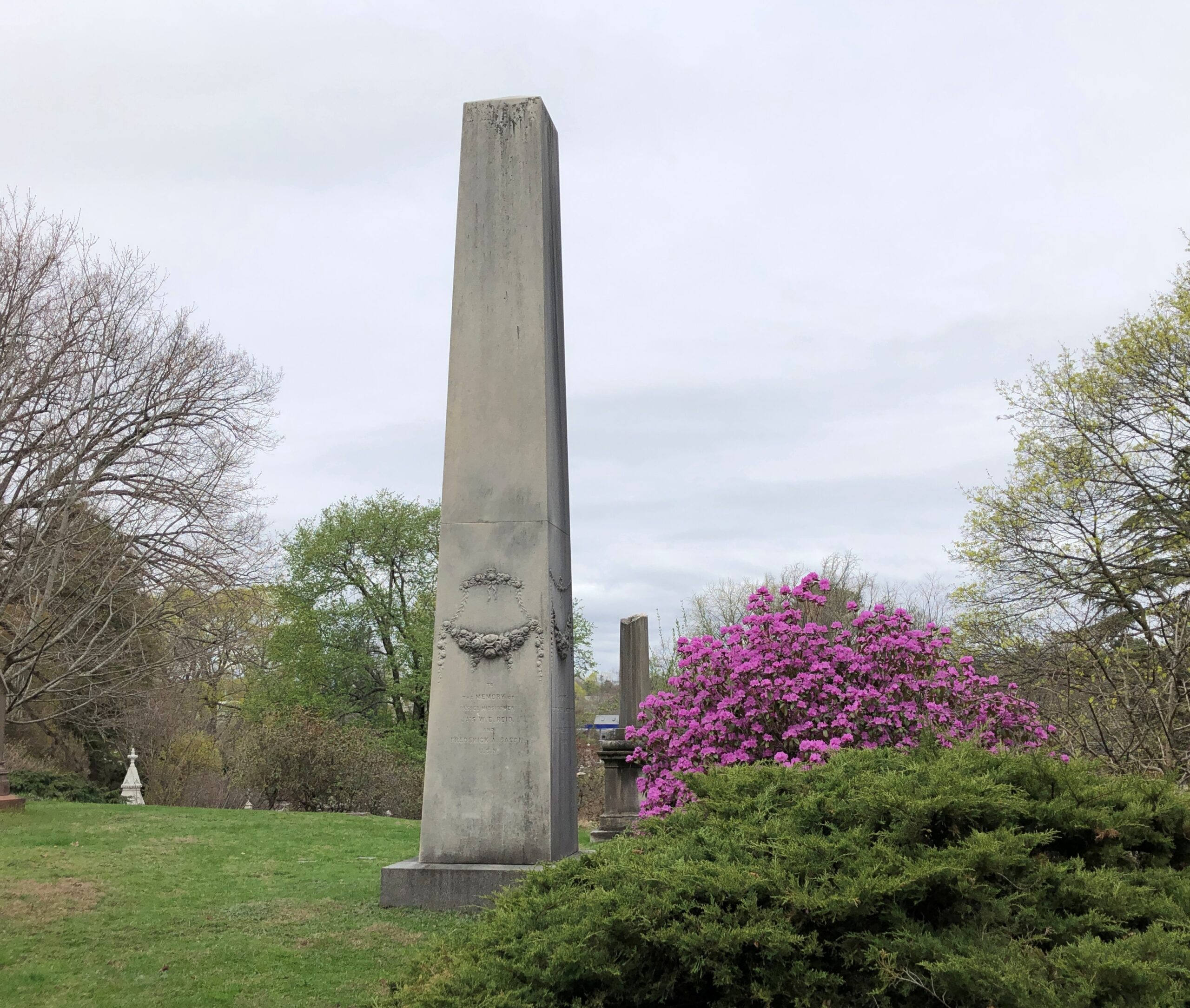
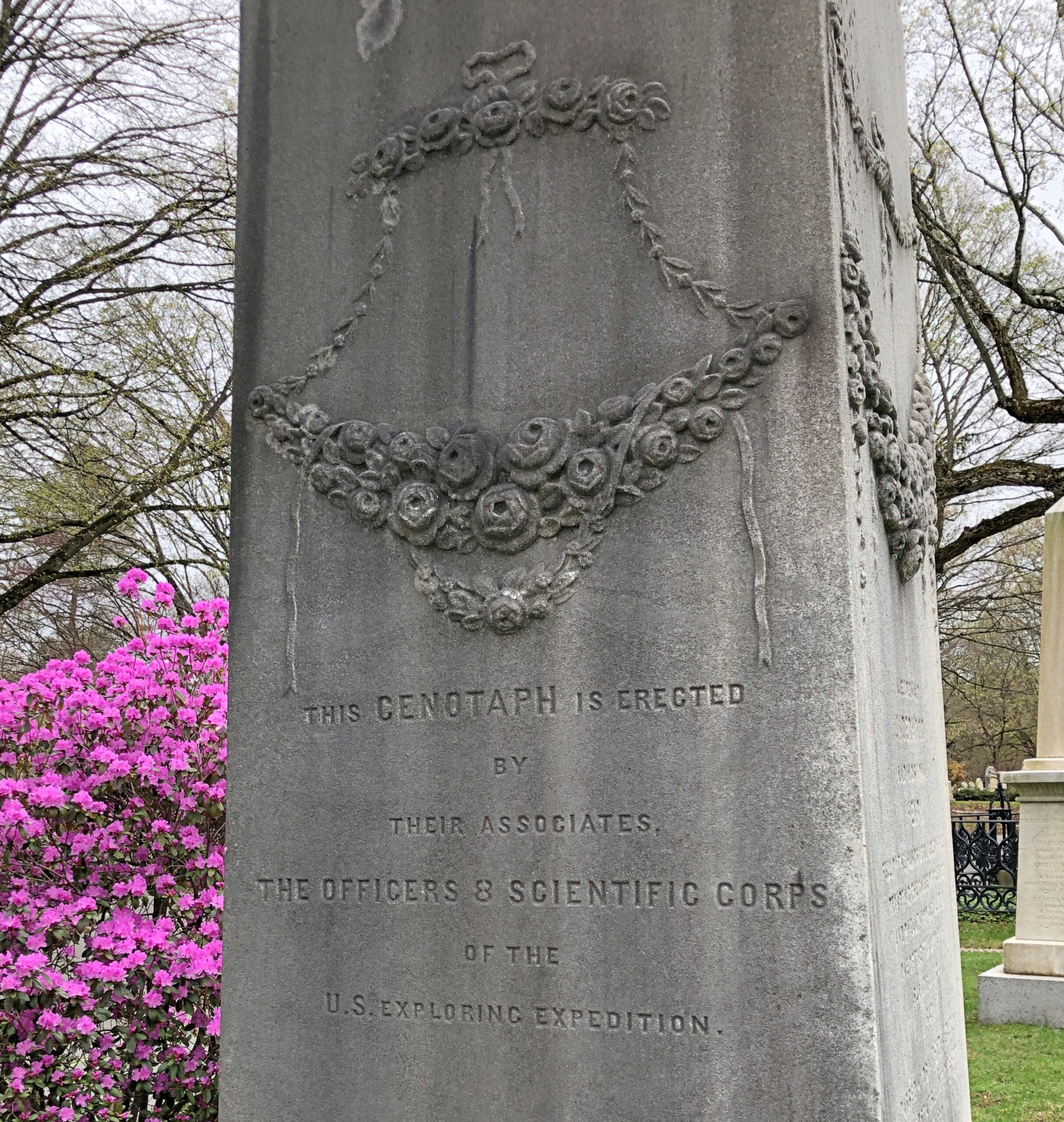
A cenotaph for four members of the U.S. Exploring Expedition who didn’t return from the Pacific.

I was delighted to see it. In its way, as important as Lewis and Clark’s journey, and something I’m certain 99-point-more percent of Americans have never heard of.

Back to Joseph Story. He gave the dedication speech at the cemetery on September 24, 1831. It’s a long one, per custom of the time. Per custom of my time, a short quote:

Here, let the brave repose, who have died in the cause of their country. Here, let the statesman rest, who has achieved the victories of peace, not less renowned than war. Here, let genius find a home, that has sung immortal strains, or has instructed with still diviner eloquence. Here let learning and science, the votaries of inventive art, and the teacher of the philosophy of nature come. Here let youth and beauty, blighted by premature decay, drop, like tender blossoms into the virgin earth; and here let age retire, ripened for the harvest. Above all, here let the benefactors of mankind, the good, the merciful, the meek, the pure in heart be congregated, for to them belongs an undying praise.

Mount Auburn Cemetery: The Landscape

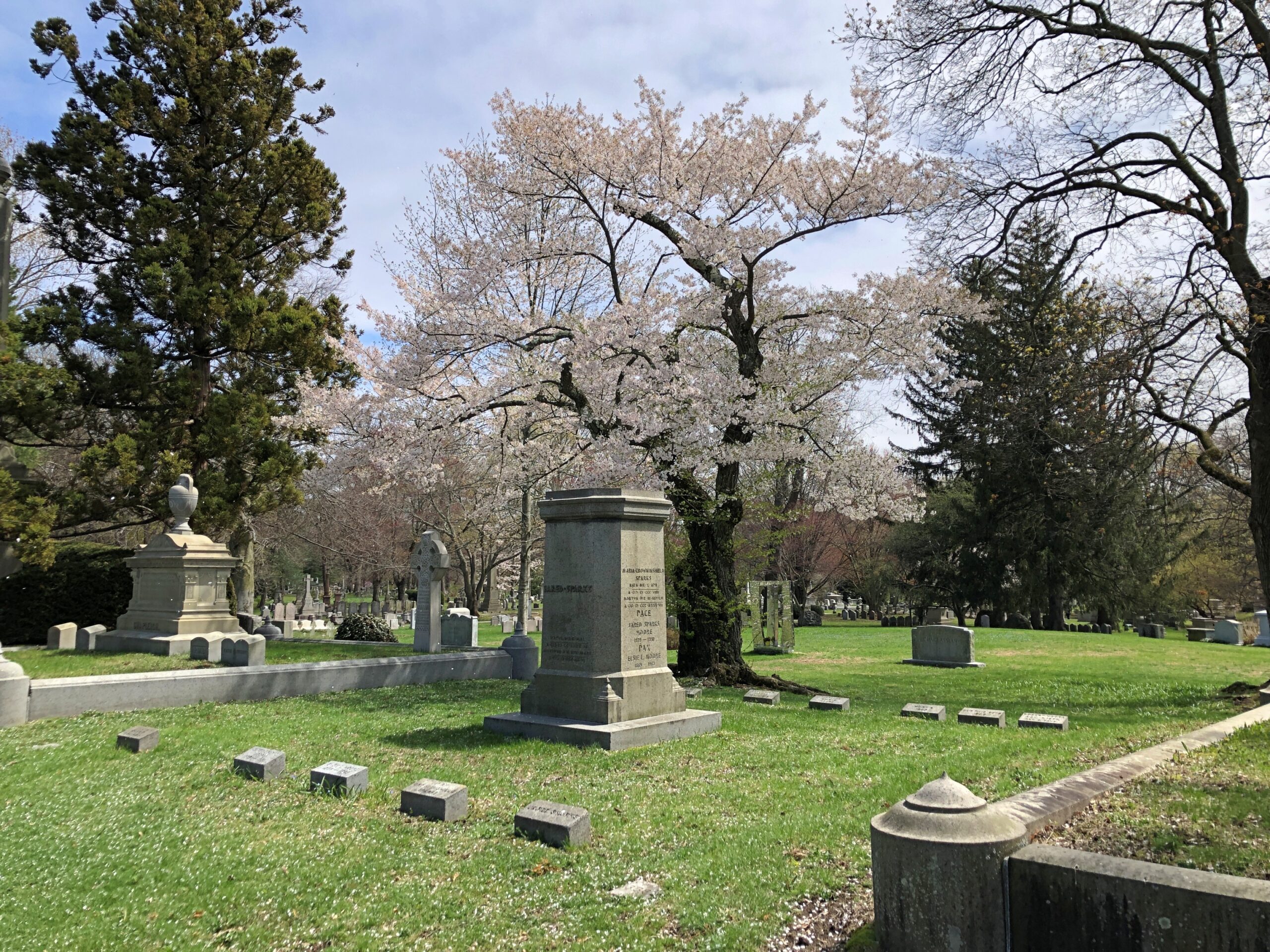
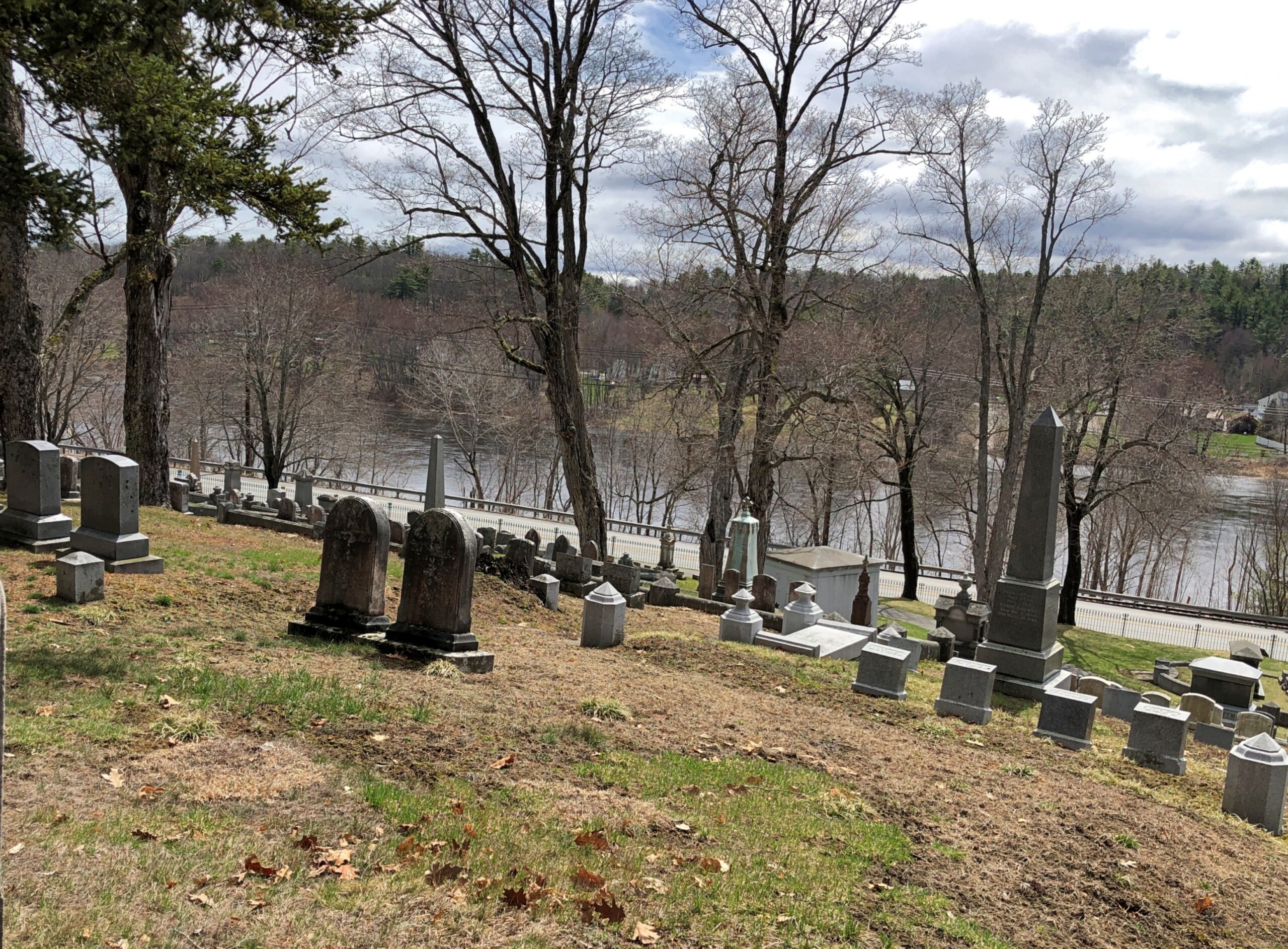
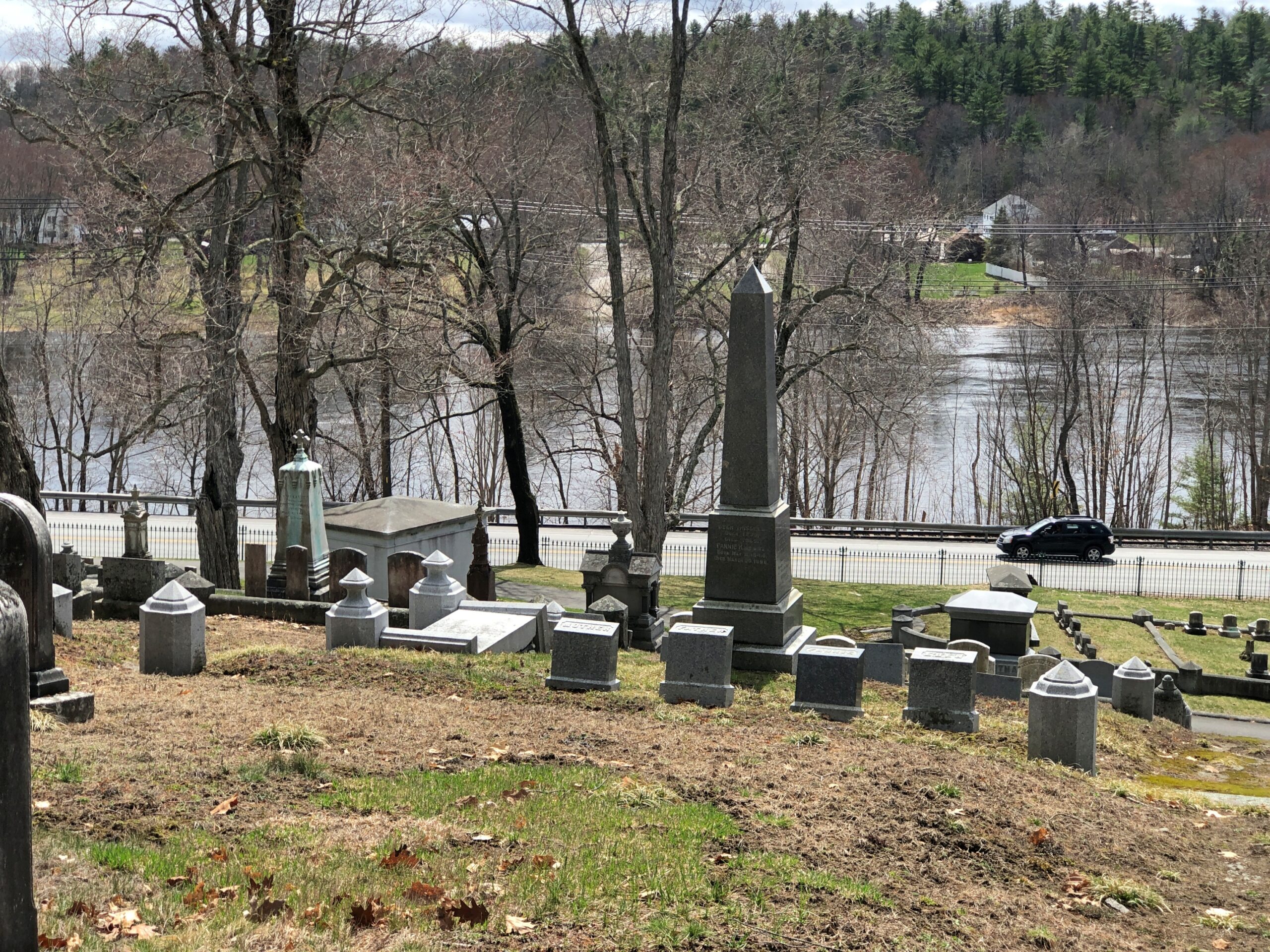
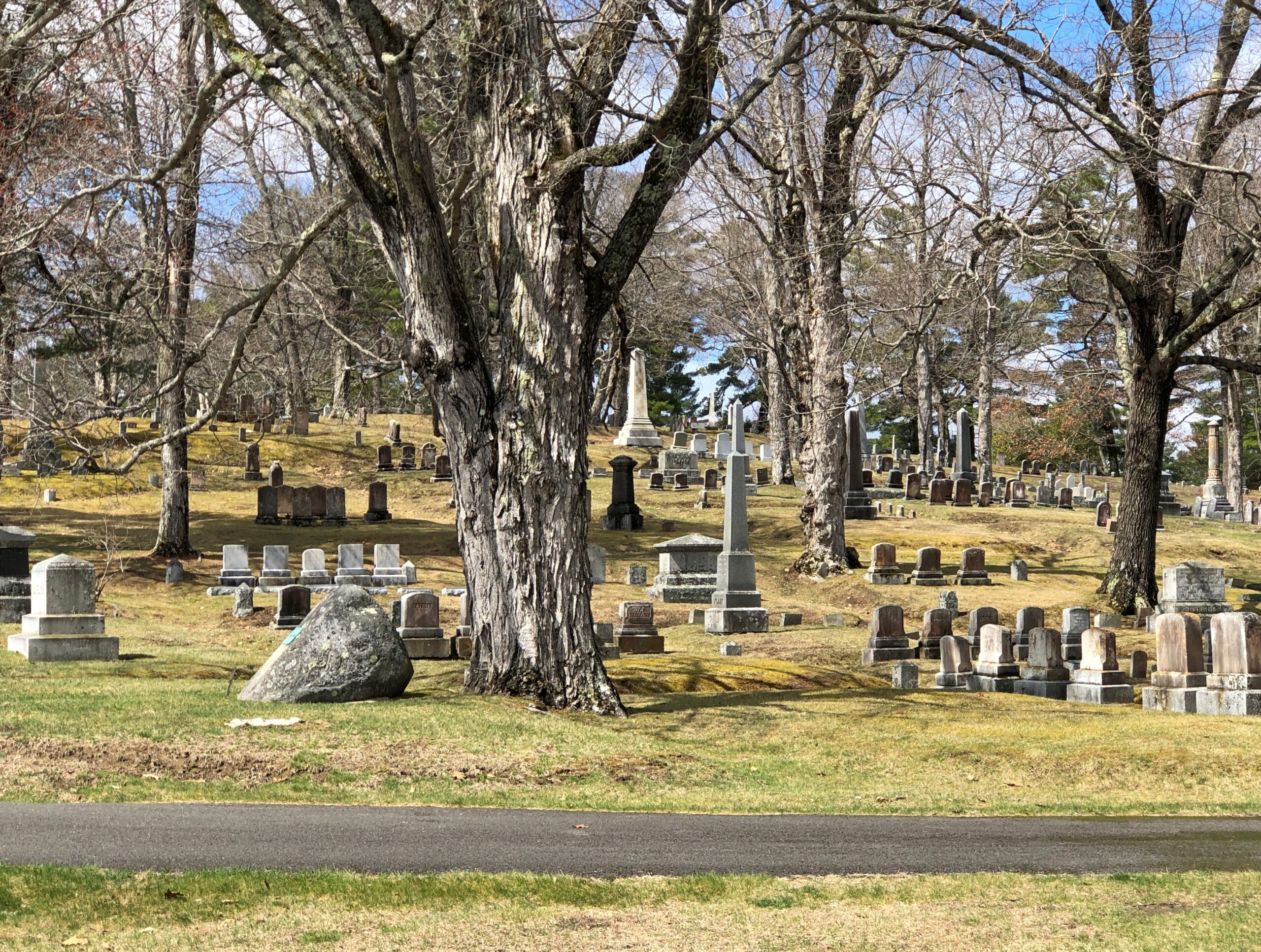
The weekend I spent with friends in Boston in April wasn’t actually in Boston most of the time, but its suburbs, and not with my friends quite all the time. On that Saturday, late morning to early afternoon, I passed some warm springtime moments by myself in the thrall of Mount Auburn Cemetery, mostly in Watertown, partly in Cambridge.

Mount Auburn Cemetery

How is it that I’d never gotten around to visiting Mount Auburn Cemetery until 2026? What kind of cemetery tourist lets that one go for so long? This is the Ur of landscaped American rural cemeteries, acknowledged as the first one, established in 1831. Did I also mention that it’s drop-dead gorgeous? So to speak.

Mount Auburn is one of those rare cemeteries – like Arlington National outside DC or Saint Louis Cemetery No. 1 in New Orleans – that attracts visitors even in our time. Not a huge number, at least when I visited, but a healthy trickle. Spring, I suspect, is a popular season there.

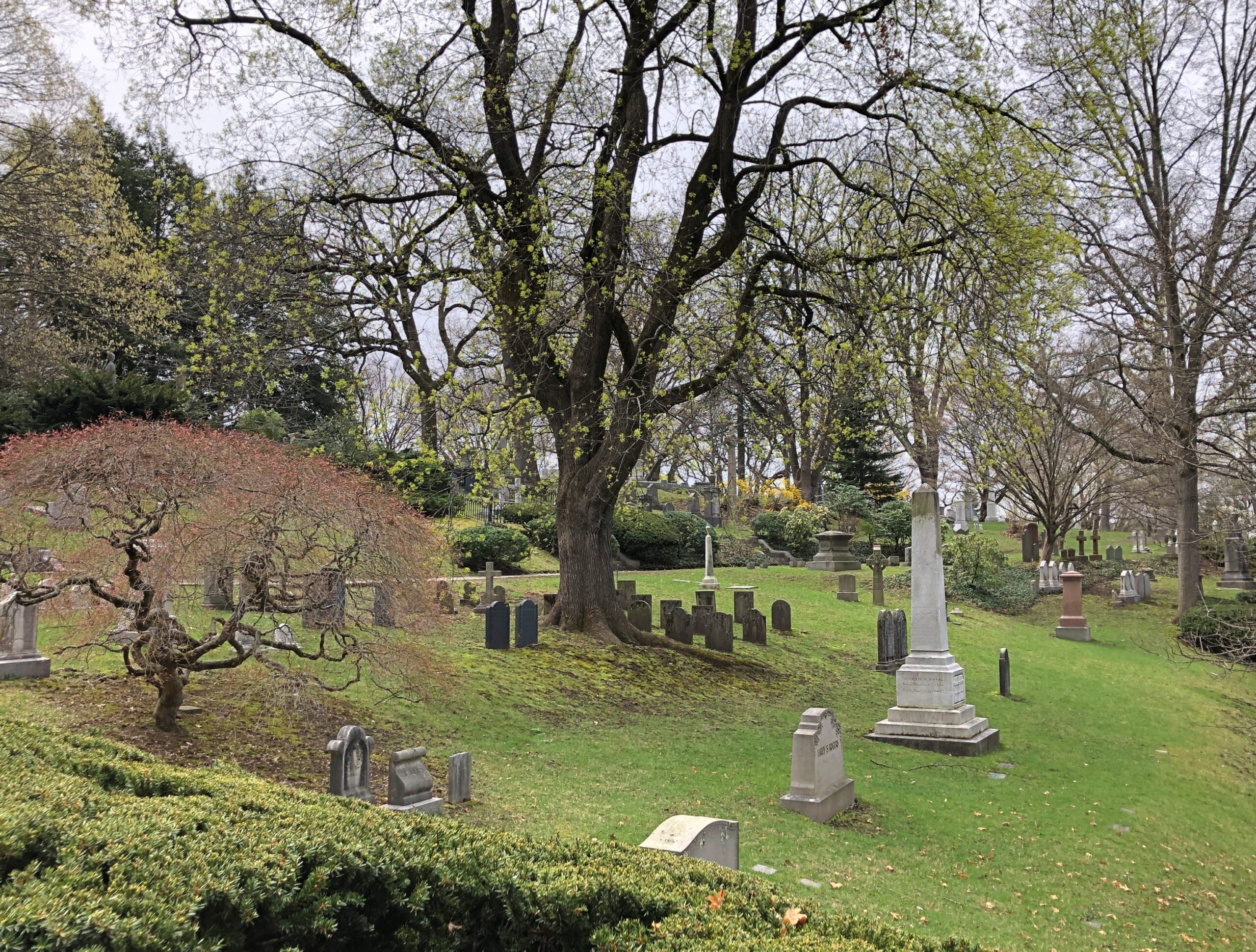
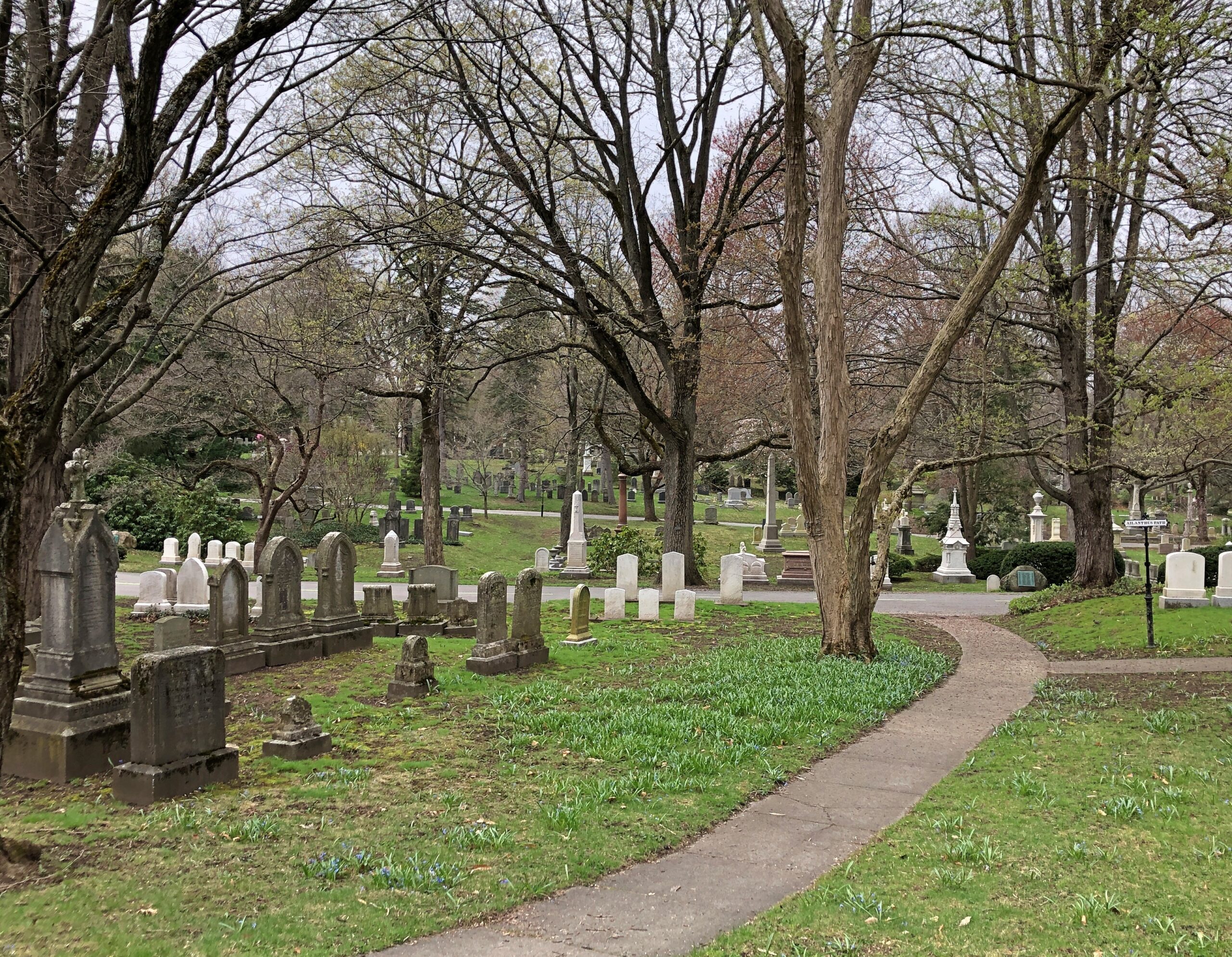
Arlington National inspires feelings of patriotism from as deep an historical well in North America has to offer; New Orleans’ tombs are dressed in mystery and garlanded with voodoo. What does Mount Auburn have? Landscaping of the highest order. A pattern by which all the following garden cemeteries can be judged: stones of great variety, plants equally various, and an alternation of flat and hilly contour.

The Massachusetts Horticultural Society, itself a recent establishment by the 1830s, created Mount Auburn during a time of peace and expansion in Boston, with the violence of the Revolution barely in living memory and U.S. sectional friction deepening, but not to the strife it would become by the ’50s. The president of the society, Henry Dearborn (d. 1851), is credited with designing Mount Auburn.

The site, with its twists and minor vistas, turned out to be just the place for a revolution in burial practice. Dearborn must have had a gardener’s instinct for the reinventing the wooded hills, but he was much more than a gardener, and the cemetery is much more than a garden. And anyway, Dearborn just set the thing in motion nearly 200 years ago, in collaboration with landscape architect Alexander Wadsworth and botanist Jacob Bigelow. The cemetery, a place to recall lives that are over, is ongoing.

Since then, every stone, every planting, all the small decisions and actions that go into managing 174 acres with 100,000 or more permanent residents, have formed a national treasure.

Mount Hope Cemetery, Bangor

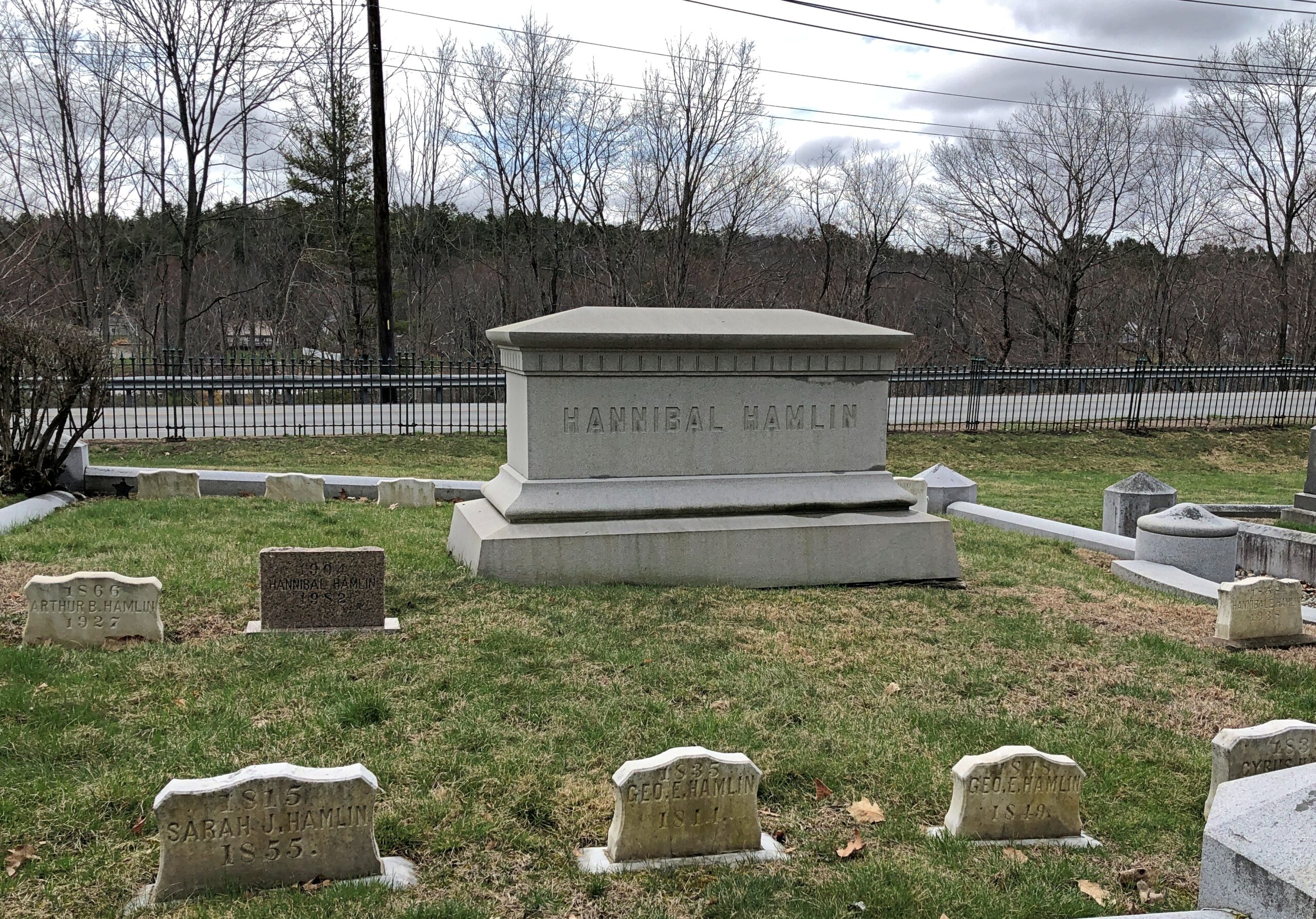
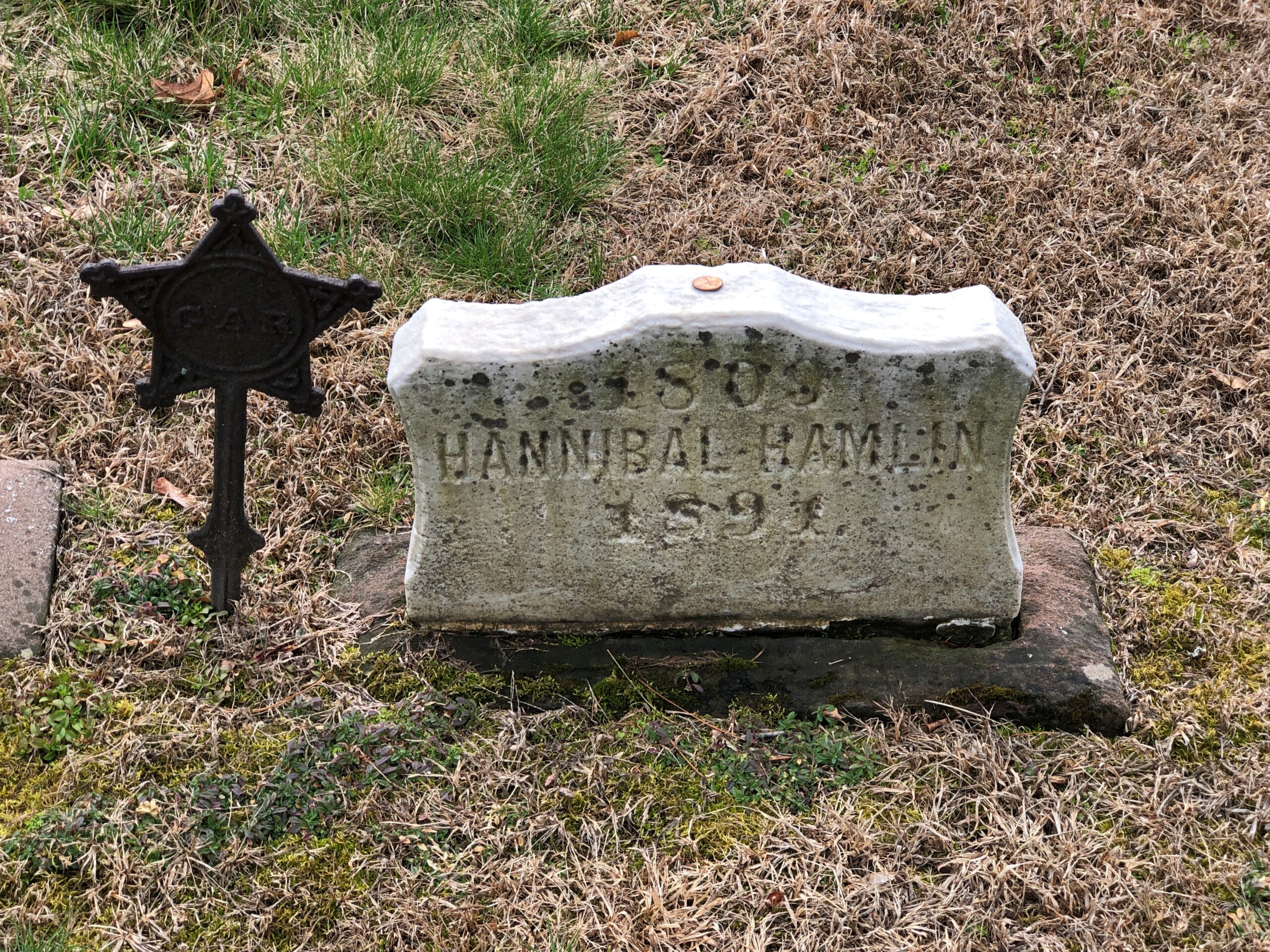
It’s one thing to see Hannibal Hamlin’s bronze in downtown Bangor, but true vice presidential enthusiasts can’t leave it at that. The 15th Vice President of the United States also happens to repose in Bangor, along with a number of other Hamlins, at Mount Hope Cemetery.

He’s in the company of a lot of other Mainers, too.

Including a lot of 19th-century Maine politicos and nabobs, and silent screen actor Ralph Sipperly. Of course I had to look him up, even though I didn’t see his stone.

Wiki notes, ultimately citing the NYT for the theater anecdote: “Ralph Sipperly [d. 1928] was a comic and character actor who appeared in ten films (mostly silents) between 1923 and 1927. His most notable portrayal was as the barber in the Academy Award-winning film Sunrise: A Song of Two Humans (1927).

“During one theatrical performance of Six-Cylinder Love in New York in 1921, Sipperly, who played a high-powered car salesman, accidentally drove an actual automobile off the stage and into the first row of seats. No one was injured, though screams erupted in the sold-out hall, and one woman ‘became hysterical’ as people scrambled out of the way. The incident made The New York Times the following day, but apparently had no effect on Sipperly’s career.”

Mount Hope is credited with being the second U.S. cemetery of the rural cemetery movement. The cemetery organizers picked a partly wooded bluff whose slope rolls down to the Penobscot River. The first such rural cemetery was, of course, Mount Auburn in Massachusetts, which opened in 1831.

“At Mount Auburn, a large tract of land was converted into a romantic park with ponds, bowers, grottos, and a great variety of planting. It was consciously designed for the living as well as the dead,” the cemetery web site says.

“The City of Bangor was not long in following suit. Bangor became very much alive with the settlement of the Penobscot River Valley in the years preceding the Revolutionary War. In 1834, Bangor was declared a city. Among the citizens of Bangor came a strong sentiment for the creation of a new cemetery grounds for the burial of its dead.”
The new cemetery was opened in 1834, along the aesthetic lines pioneered in Boston. Climb the slope – I’ll admit, I drove on the road that snakes up that way – and you’re rewarded with a vista peppered with memorials.

Views of the river and the road that parallels it for a while, the epic US 2.

The cemetery extends further inland, all together totaling about 300 acres.

Aged and crumbly stones in mix, as usual.

Not a lot of large memorials, but some.

More modest memorials.

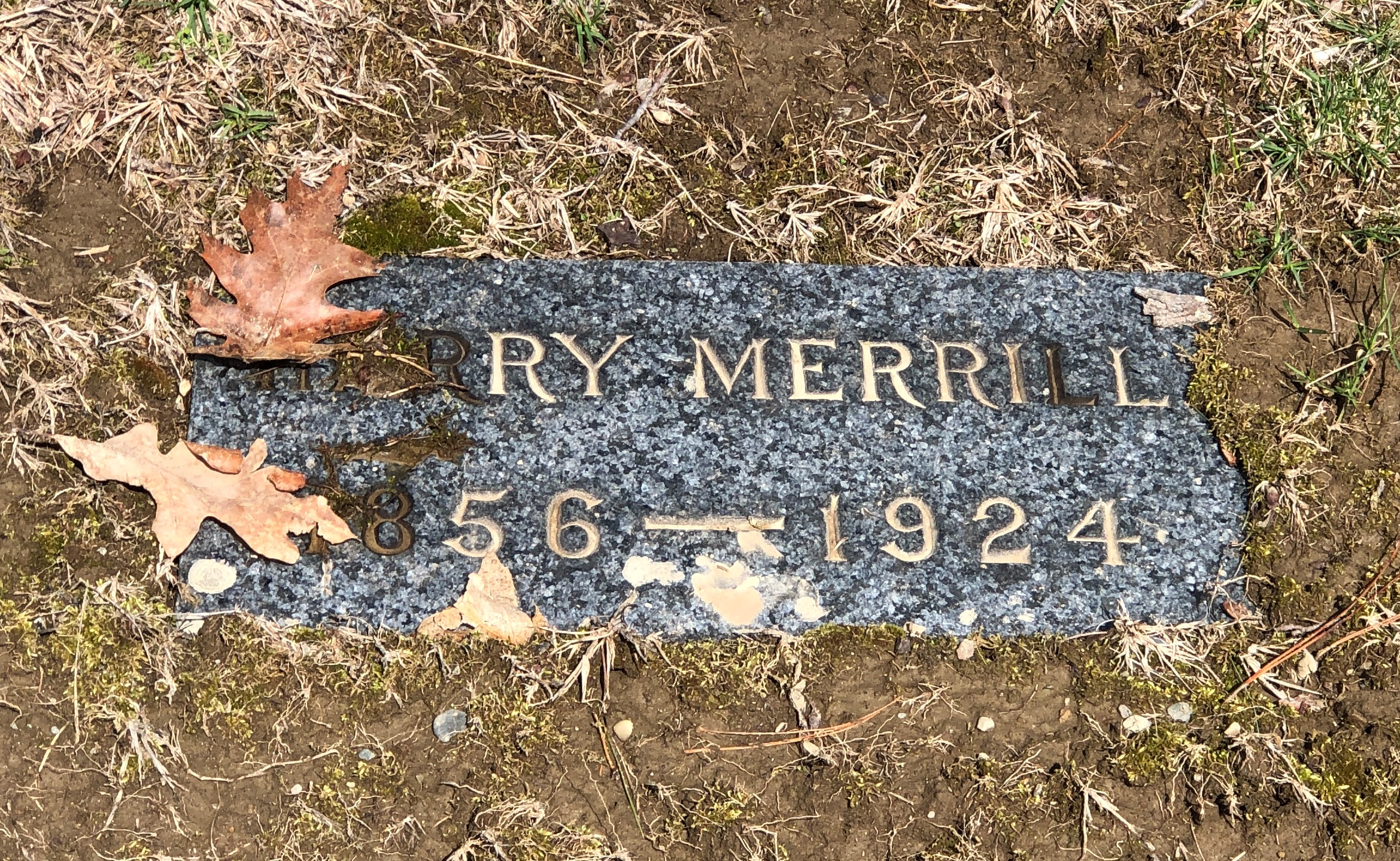
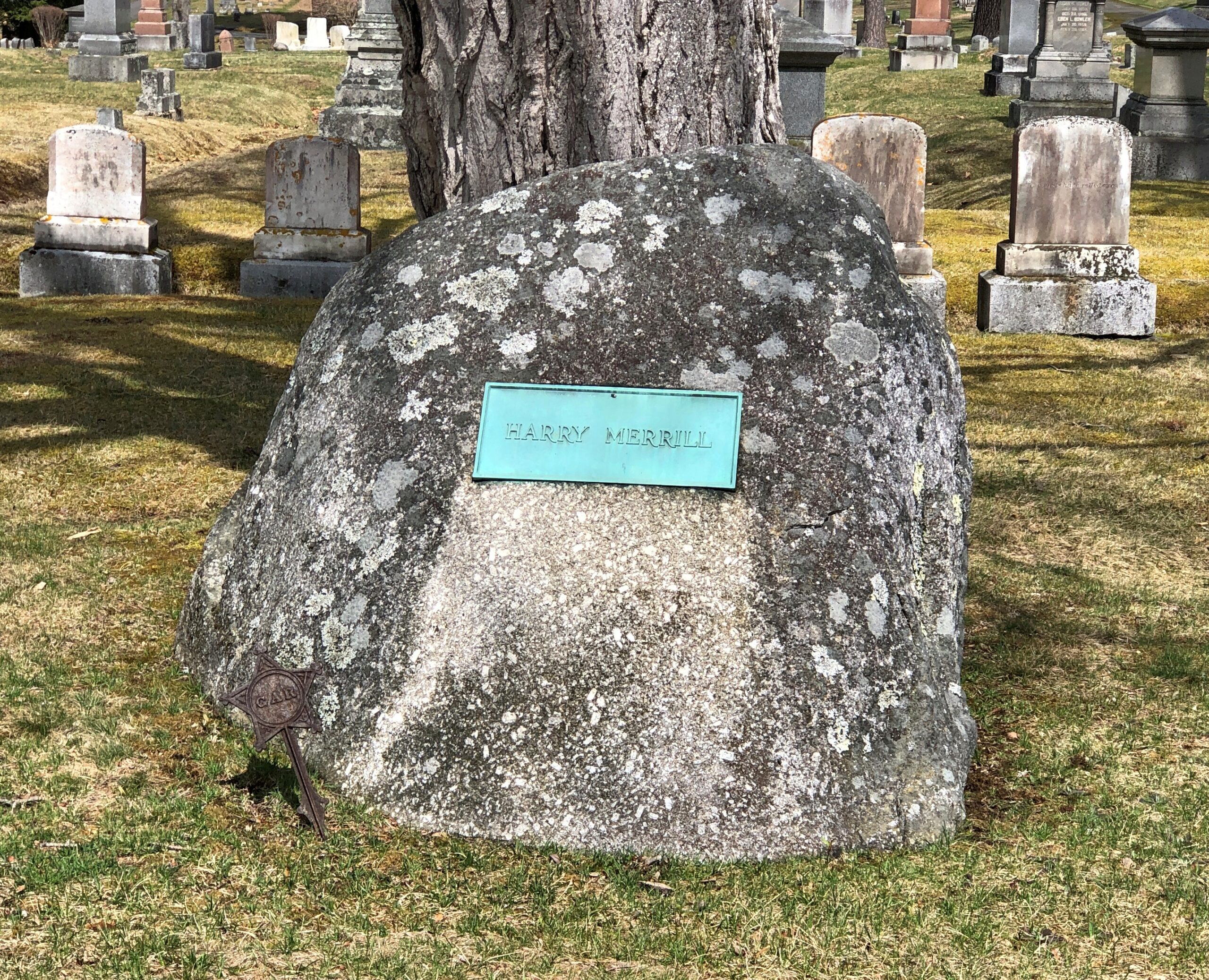
Actually, that isn’t the only memorial for Harry Merrill (d. 1924).

You have to wonder what the decision-making process was like among Harry’s family. Maybe they couldn’t agree on a fitting memorial, and one group went with a ground plaque, the other with a plaque-on-boulder?

Village Burying Ground, Bar Harbor

A month from now, Main St. in Bar Harbor is going to be a busy place, sidewalks thick with shoppers and walkers with their coffee and ice cream cones. People will gather at the well-trimmed Village Green. The park at the end of Main, Agamont Park, named for a storied 19th-century hotel on the site that burned down long ago, will be alive with the pleasant sounds of people on vacation, taking in the view of the harbor. Boats will ply the harbor. Lobsters will die en masse to make their appearance on the menus of Bar Harbor restaurants.

One place in town that will not be busy come high season, just as it wasn’t busy a month ago when I visited — and was the only living person there — is the Village Burying Ground, which is a minute’s walk from Main St., tucked away on a small slice of land between two churches, Bar Harbor Congregational and St. Saviour’s Episcopal.

“Established before 1790, this cemetery holds in many unmarked and unknown graves the remains of those courageous men and women pioneers on the frontier of Downeast Maine,” says a sign on site, put there by the Bar Harbor Village Improvement Association.

“Sea captains, fishermen, shipwrights and hotelmen, selectmen and legislators, their wives and children, and the occasional sailer [sic] dying far from home also rest here.”

One of those sea captains, Israel Higgins (d. 1823).

Capt. Higgins, son of Eden (later called Bar Harbor) founder Israel Higgins, was lost at sea. “Israel was considered a master mariner and served as an Eden selectman in 1802, 1803, and 1809,” notes the blog Adventures in Cemetery Hopping. “He was in command of the schooner Julia Ann (his son Seth was also aboard), thought to be the first ship built in Bar Harbor in 1809. Israel and Seth died at sea on March 29, 1823 about 25 miles south of Sandy Hook, N.J., which is about 600 miles south of Bar Harbor.”

His son Stephen seems to have escaped his father and brother’s fate. At least, no mention of perishing at sea.

Capt. James Hamor (d. 1873).

Lived to be 89. In those older days, an old sea dog who liked to hang out in the technically illegal bars in Bangor and tell harrowing and probably exaggerated stories about his seafaring youth? One of those old sea dogs who didn’t discuss the old days much? Did he regard steamships as unworthy of real seamen, or take positive joy in hearing about progress in seafaring?

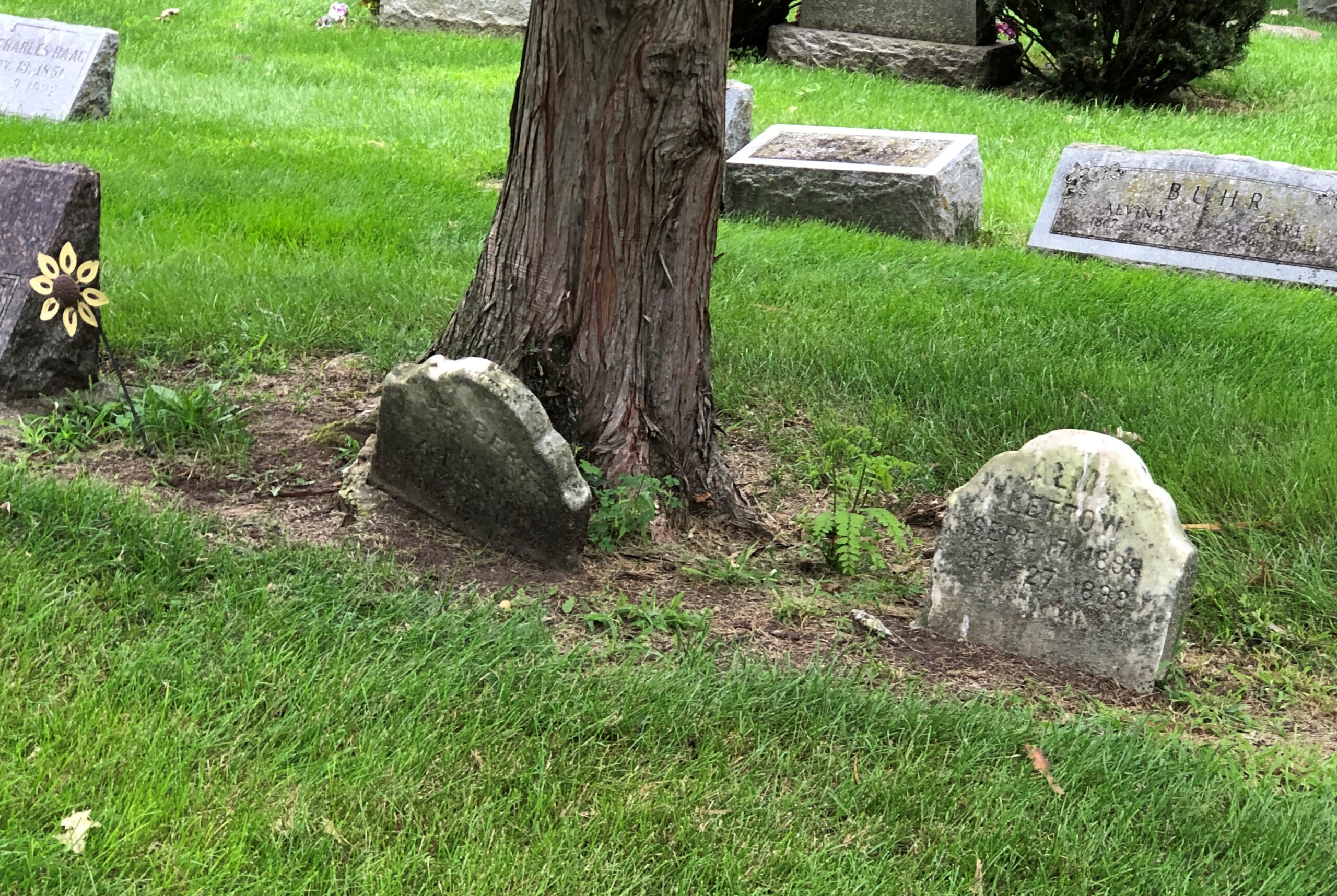
Stones two by two. Maybe not coupled in life, but they are now.

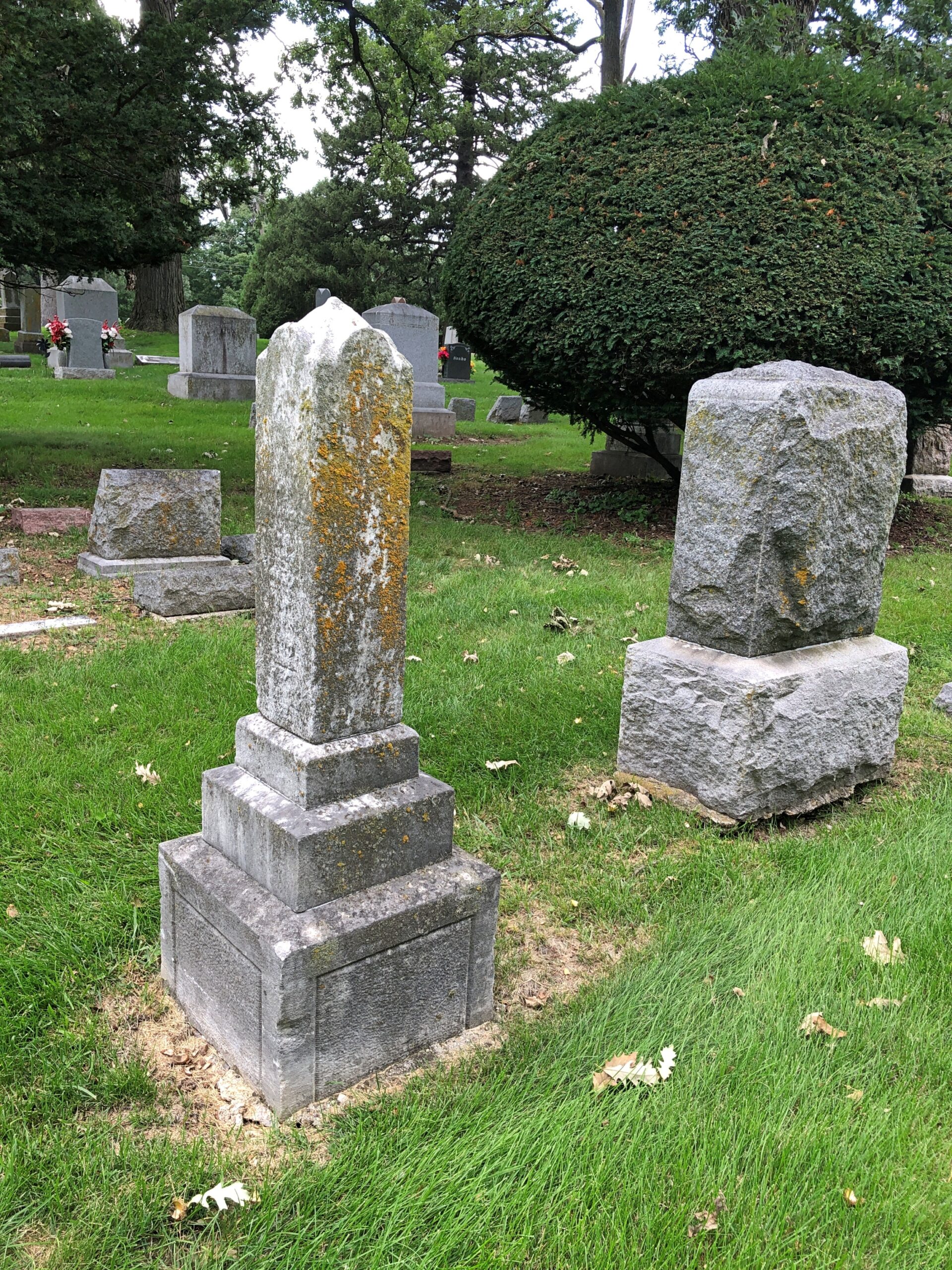
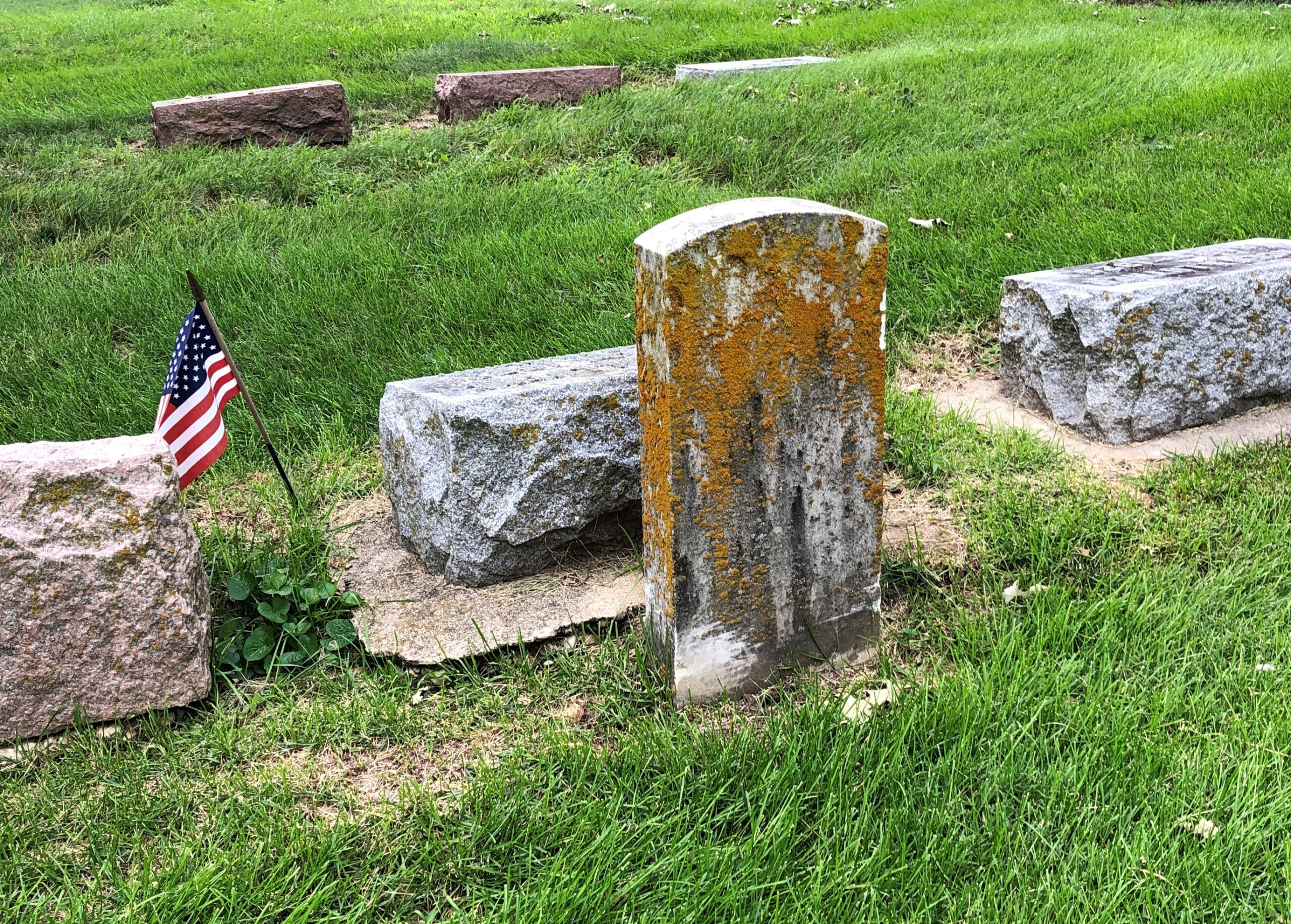
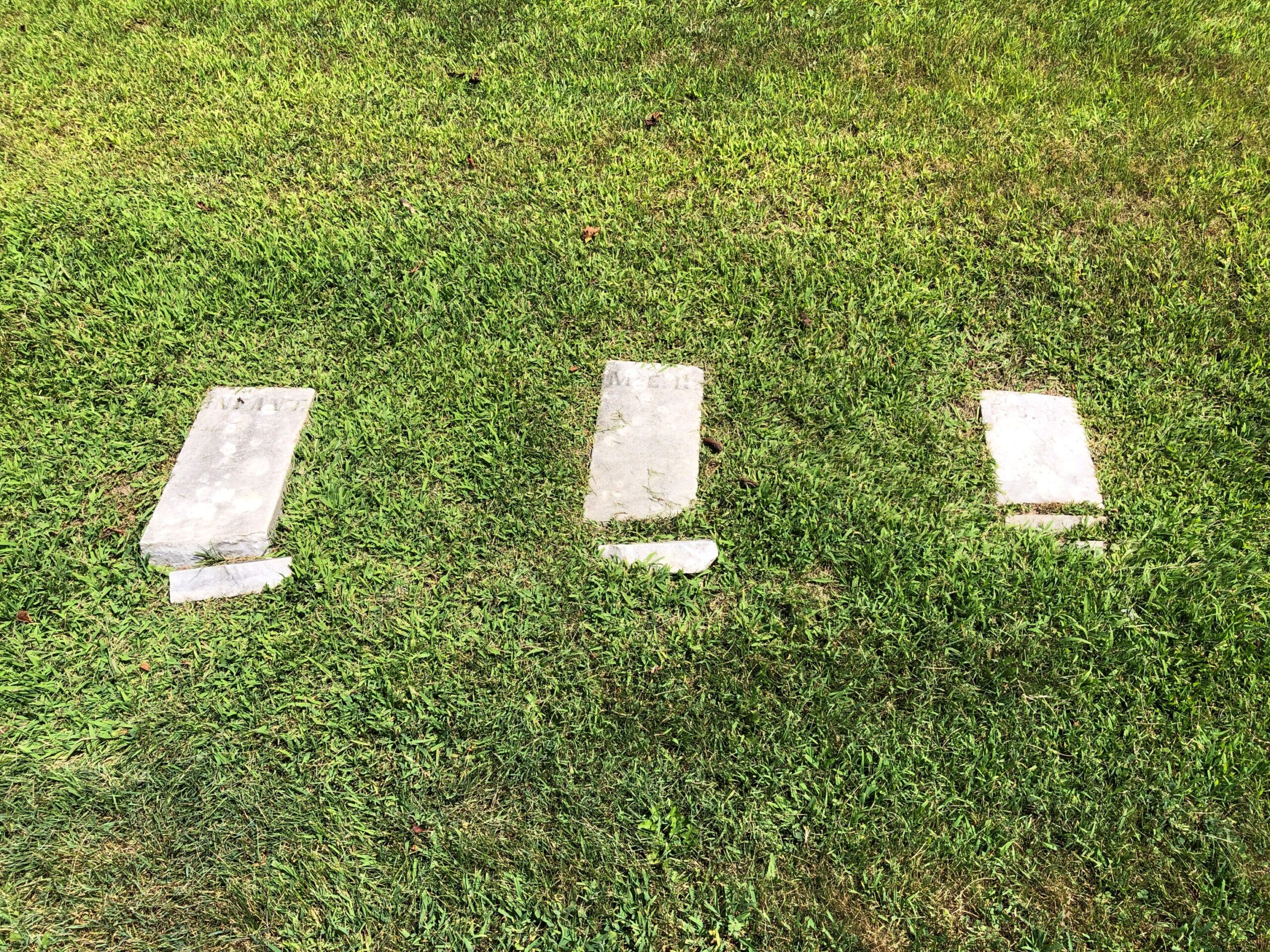
Many stones are on their way to disintegration, as usual with a cemetery that goes back this far.

Dark rectangular slate, as seen in a lot of New England, though no others in this cemetery that I noticed, except for a handful of lighter-colored rectangles.

A memorial to Union soldiers from Eden, erected in 1897, ordered from a catalog. Attributed to Cook & Watkins of Boston, memorial makers.

The village paid for most of it, though the public at large donated. Their efforts were probably pushed along by the idea that we’d better get around to this now, what with all the graybeard vets.

Stockbridge, Massachusetts

Not long ago, I wondered how accurate the lyrics of “Alice’s Restaurant Massacre” were on one specific point. I had my reasons.

You can get anything you want at Alice’s Restaurant
Walk right in, it’s around the back
Just a half a mile from the railroad track

Seems like a convenient rhyme, but that’s not all. Google Maps tells me that the site of Alice’s Restaurant is about a half a mile from a railroad track. I didn’t save the scale on this map, but the distance is correct. This is mildly amazing. Who expects geographical accuracy from a song lyric?

That morning, April 14, I’d extracted myself from Midtown Manhattan via various sorts of transport, retrieving my car at long-term parking at Newark International, and planned to spend the night in Portsmouth, New Hampshire. Though New England isn’t large, it is molasses when it comes to driving through its densely settled areas, and first I had to get out of New Jersey and New York, then cross Massachusetts. All that meant an all-day drive. Stockbridge, Massachusetts, former home of Alice’s Restaurant, was a stop along the way.

Near the eastern edge of New York state, I cruised north on the Taconic State Parkway.

That sounded good, I thought when I noted the name on a map. It was. Budding greenery, smooth driving, no trucks. Or that many other cars, the further north you go. Construction started about 100 years ago, at the urging of then private citizen Franklin D. Roosevelt. The parkway is in the same league as the Natchez Trace Parkway or the Blue Ridge Parkway, though only about a quarter as long as either.

Once I’d gone far enough north, I took connecting roads to the Massachusetts Turnpike. Stockbridge, which is slightly south of the turnpike, counted more-or-less as a midway point on my day’s drive. As I entered town via Massachusetts 102, I noticed a tower. A stone tower, exuding 19th-century New England sturdiness. Its clock was wrong.

The Children’s Chimes Tower, a 19th-century bell tower built on the site of the town’s original church. A 19th-century replacement for that church stands near the bell tower, looking as New England as can be.

The First Congregational Church UCC. Remarkably, it was open.

Musicians were practicing, or rather seemed to be wrapping up a practice. They paid no attention to me as I looked around.

Jonathan Edwards was the church’s second pastor. “Sinners in the Hands of an Angry God” Jonathan Edwards? Yes.

Across the road from the church and freestanding bell tower – which doesn’t chime, except in the summer – is the town cemetery.

“One of the earliest burials was the first minister, John Sergeant, who died in 1749,” says the Stockbridge Library. “Members of the Mohican tribe who joined the church also were buried here. Twenty years later, discussions began about ways to enclose the burial area to keep out cattle, horses, and pigs. It wasn’t until 1853, however, that a new organization in town, the Laurel Hill Association, took on the responsibility to clean and protect the area.”

Route 102 turns into Main Street, with its shops, hotels, and other establishiments.

And, around the back (off Main St., that is), just a half a mile from the railroad track, is Theresa’s Stockbridge Café.

Closed for the day.

Pine Barrens Disorientation

Down in South Jersey earlier this month, I didn’t see the Jersey Devil. I did see Mighty Joe.

He counted as my introduction to the Pine Barrens, standing at a convenience store on US 206 in Indian Mills, Shamong Township, New Jersey. His story, which Roadside America tells well, began in Spain – really? – though immigrant Mighty Joe apparently has spent most of his existence in New Jersey as a commercial mascot of one kind or another. He’s still that, but also a memorial to the son of the store’s owner, Larry Valenzano, according to the sign on the gorilla’s chest. The younger Valenzano, a body builder nicknamed Mighty Joe, died of cancer in 1999.

I didn’t stop for Joe heading south on US 206. Can’t stop for everything. I figured I wouldn’t see him on my return to Trenton either, since I was planning to return on smaller roads through the heart of the Pine Barrens, after visiting Atlantic City. All went according to plan, until I actually got into the heart of the Pine Barrens fairly late in the afternoon of April 9.
Considering how close you are to Philadelphia and New York, it’s remarkable how remote the Pine Barrens feel. The region, I understand, is the largest surviving forest on the Eastern Seaboard south of Maine’s North Woods, totaling over 800,000 acres.

The region is also called the Pinelands. It certainly fits.

Remote, maybe, but still plenty of signs of human habitation, past and present. I stopped to take my bearings at a wide place in the road, and noticed gravestones.

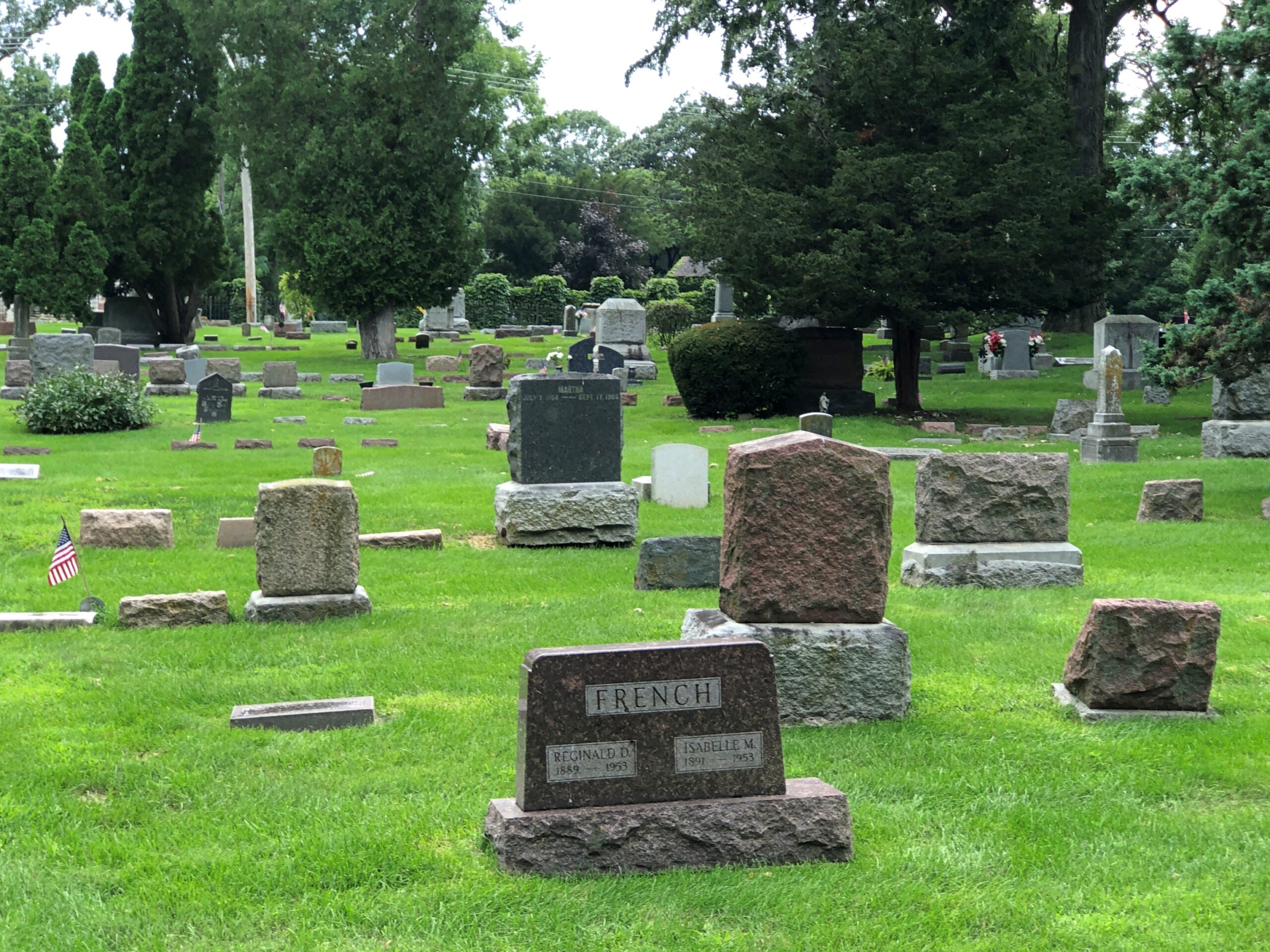
French Cemetery, named for a number of people buried named French, not for their nationality. “One of the oldest burial grounds in South Jersey,” the stone asserts. Could be, but I have no way to check that.
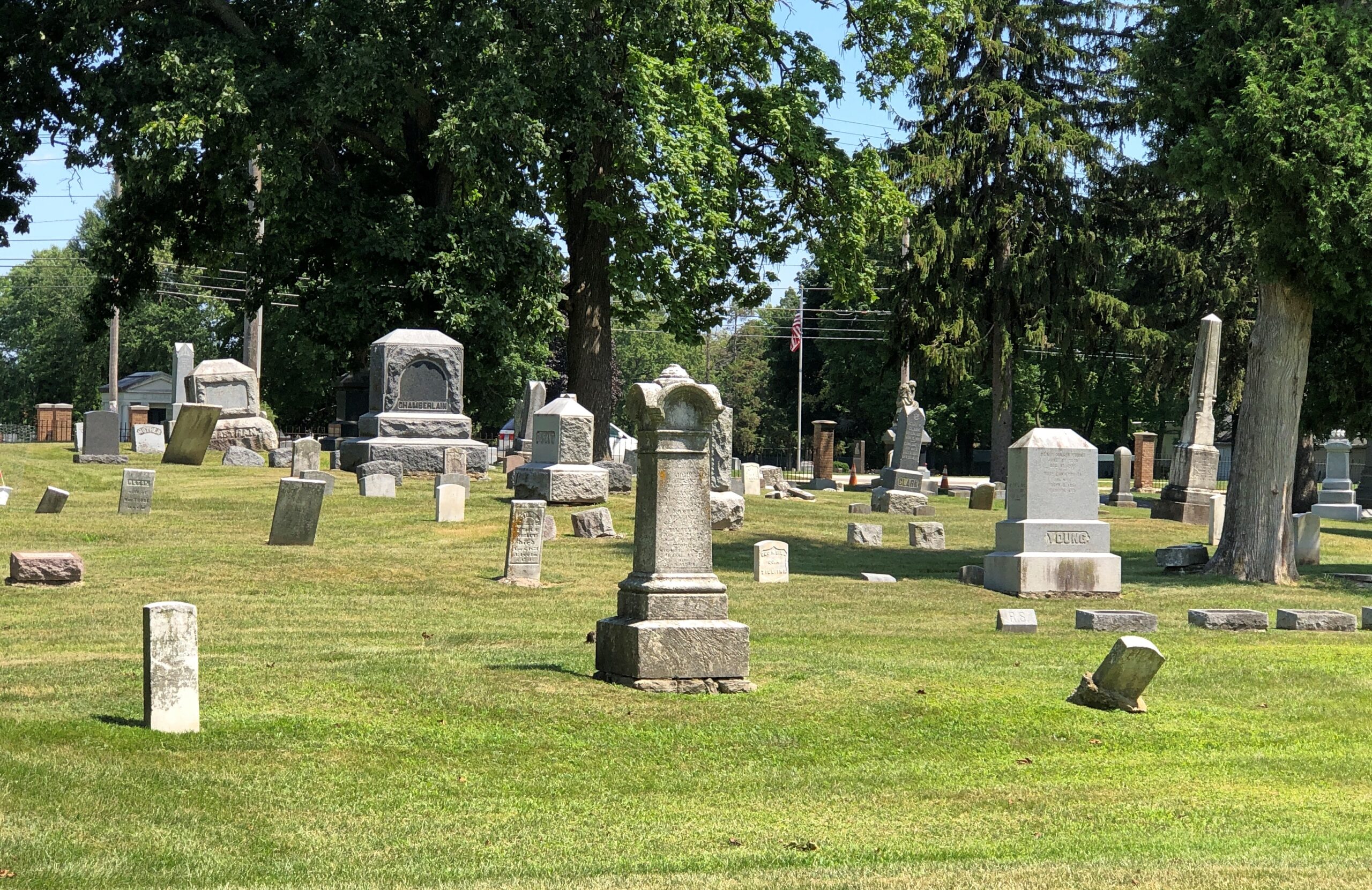
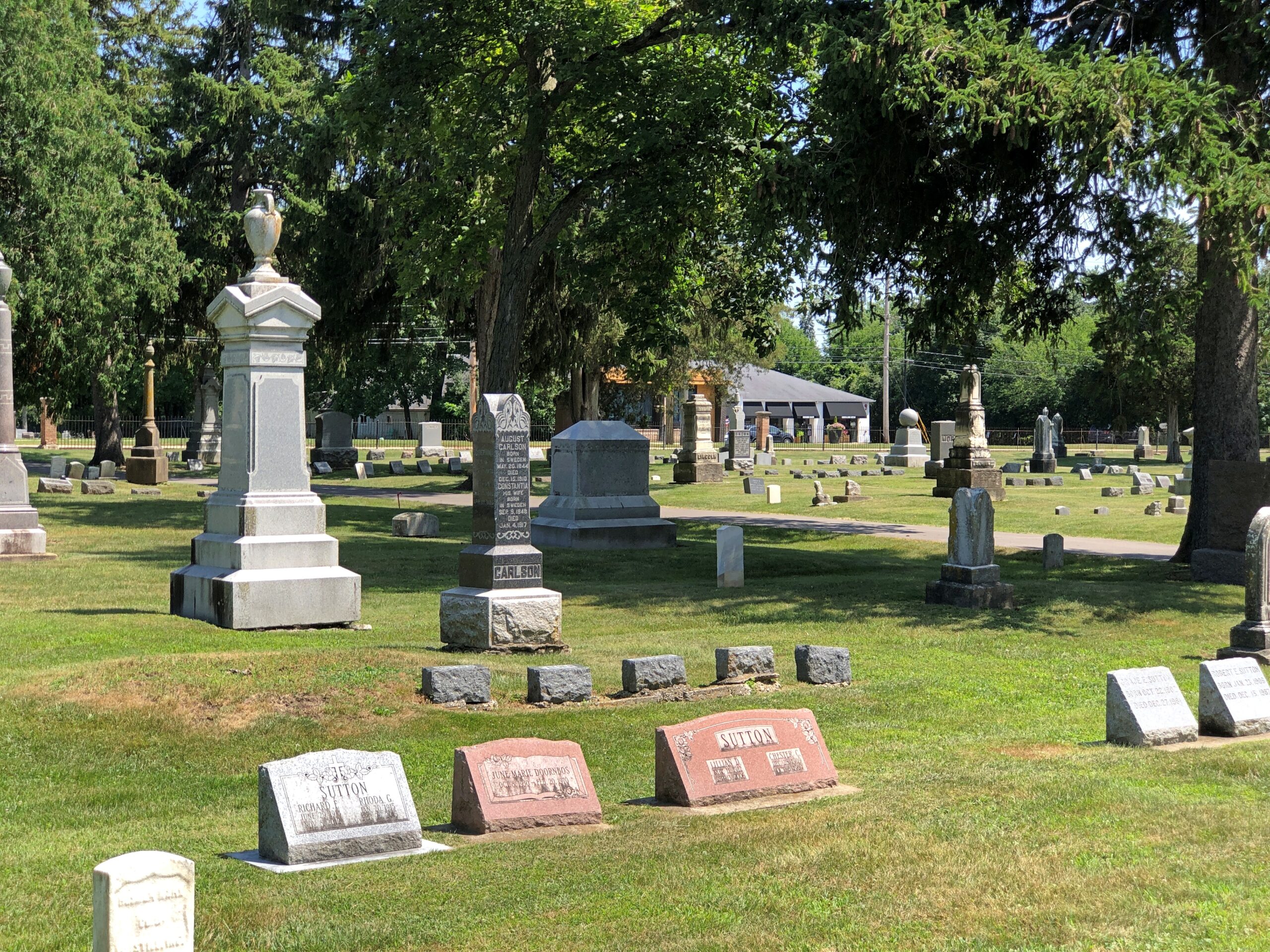
Interesting little spot anyway, northeast from Egg Harbor City and past the Mullica River and near the Wading River. Or was that the actual location? I was traveling on marked county roads, but pretty soon I started seeing county road signs covered with black plastic bags, next to newer signs. I can only guess, but I think that meant a recent change in the numbering of the county roads.

That further meant that both my paper and electronic maps were wrong – in as much detail as they had anyway, which wasn’t a lot. “Lost” is too strong a word, but I’d say I was disoriented in a web of meandering, ill-marked roads. I stopped more than once among the pines of the Pinelands to try to figure out a better course.

Then it occurred to me: I remembered seeing some of the exit numbers on highways near Trenton had been changed, too. I’m speculating, but I think that had something to do with my GPS going just a little funny in the head the night before. Damn it, New Jersey.

Eventually I worked my way back toward Egg Harbor City, a sizable town on US 30, which connects with US 280, which goes straight back to Trenton; the way I’d come. That’s how I was able to stop to see Mighty Joe.

Even so, I happened across a few places in the Pinelands to stop, especially Batsto Village, site of the former Batsto Iron Works.

Most of the open-air museum buildings are 19th century, but the Batsto Iron Works had roots that went back to Colonial times. Some enterprising early NJ settlers found bog iron in the area. By the 19th century, the iron smelting was doing well enough to support a company town, including of course the boss’s house.

The company store.

The company paid in script until the workers were organized enough to demand legal tender for their labor. Unlike at Fayette Historic State Park in Michigan, the actual industrial facility, the 19th-century blast furnace, is long gone. The place has a good-looking lake, however. Created by a small dam on Batsto River to harness the water for the sawmill.

A vista that says New Jersey? Yes, but not the New Jersey of song and story.

Back in Egg Harbor City (pop. 4,442), I chanced across the Egg Harbor City Cemetery – another reason to leave the GPS inactive most of the time. If the box tells you where to go, you’ll miss minor misdirections that take you to unexpected places.

I’ve come up with my next approach to traversing the Pine Barrens. There will be a next time, provided my health holds out. That’s always a contingency these days, but anyway the approach can’t be as rational as trying to plot oneself on a map, or even follow the directions from a machine.

The region isn’t that large. That is, provided your car is gassed and in good running condition, since walking out of the Pine Barrels, even following surfaced roads, seems like a bad idea unless you’ve prepared yourself to do so. Assuming you drive, pick a direction – say east, toward the morning sun – and head that way, hewing to the direction as much as possible. It won’t be too long before you come to a reliably numbered state or US highway. Or in that case, the Garden State Parkway.

Sounds doable. Unless you encounter the Jersey Devil.

GTT ’26 Details

Time for spring break. Back to posting around April 26, when it might actually be spring in northern Illinois. There have been a few days recently when I’ve been able to sit out on my deck comfortably, which is my idea of spring, but not that many.

The recent trip to Texas seems like a while ago now. As usual, though, there were many details. A lot more than I can convey, but here are a few more.

Faces

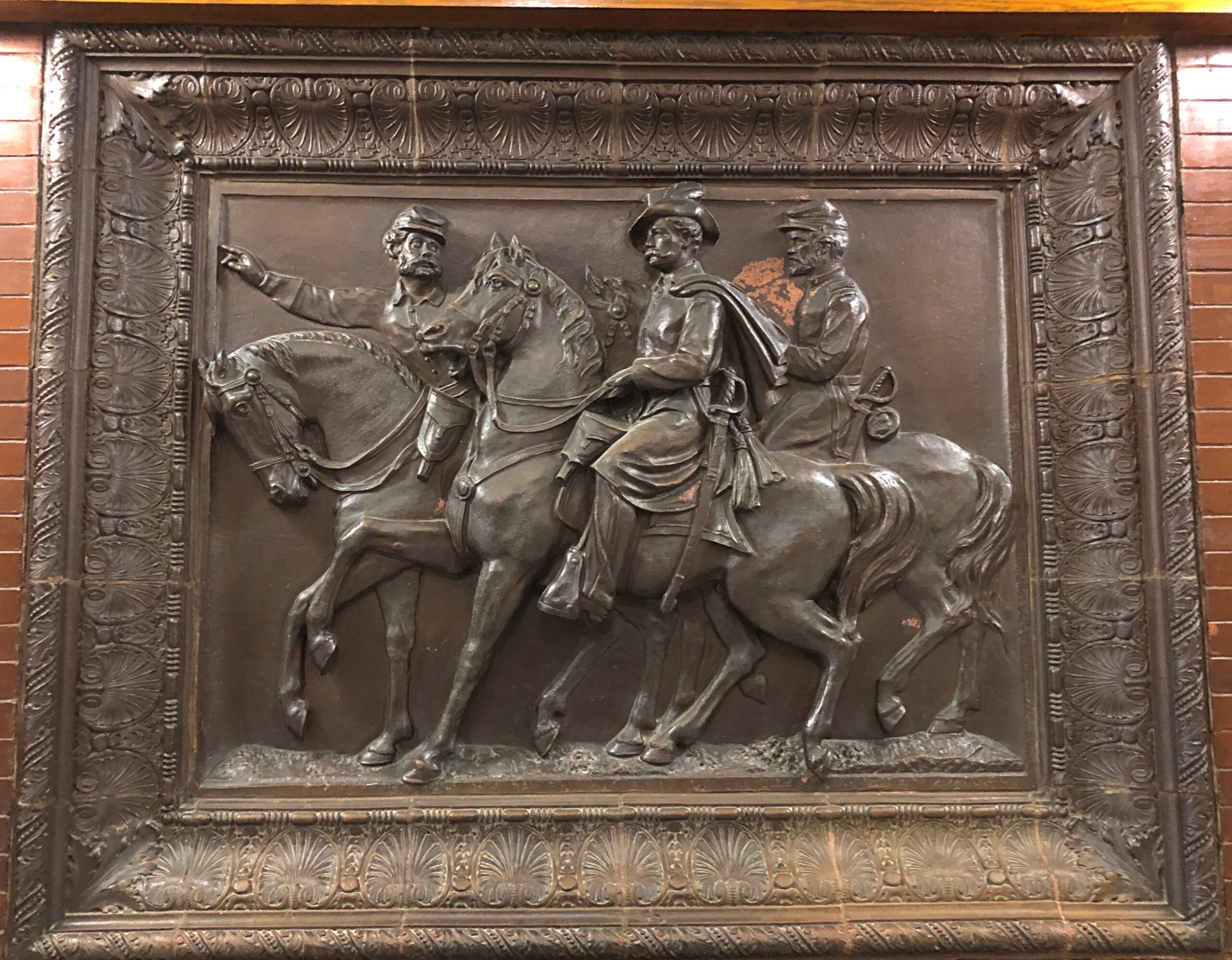
At the National Funeral Museum in Houston, one display featured, chronologically, 20 photographs of Abraham Lincoln. The third to last one, from February 1865, is one you don’t see much.

On a wall in downtown Nacogdoches, familiar figures from Texas.

I didn’t work out who this was supposed to be, in downtown Houston. Better that way, I think.

Signs

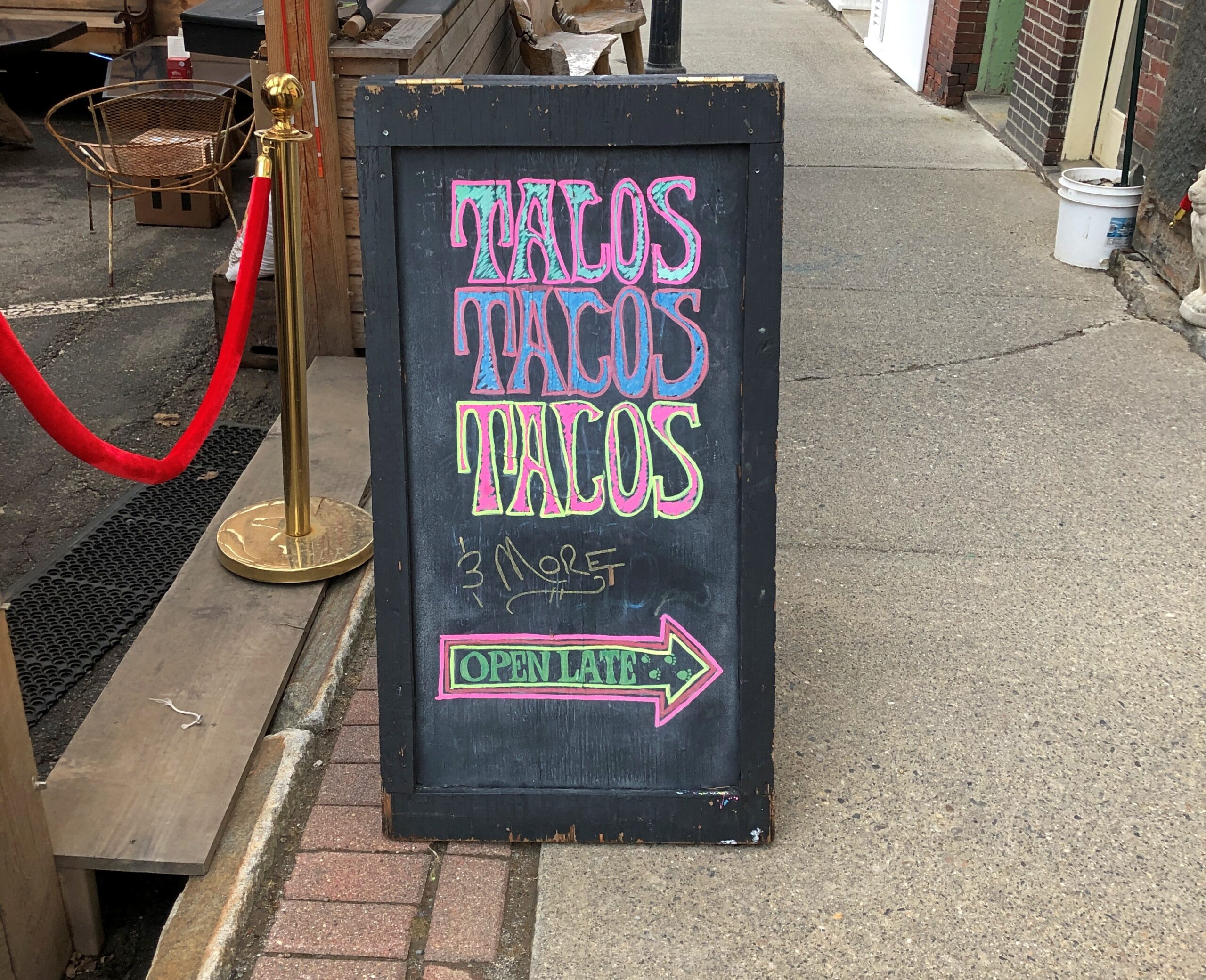
This place in Austin, well known to Tom, serves most delicious tacos.

Bastrop: Cobbling runs in the family.

Belton.

Structures

A re-creation of an ancient Caddo home.

Durst-Taylor Historic House & Garden in Nacogdoches.

The Old Stone Fort Museum in the same town, which is made of stone, but was never a fort. On the campus of Stephen F. Austin State University. Recommendation to the university: if you want people to visit the place, provide just a little unrestricted parking. A little visitor parking anywhere on campus would be good.
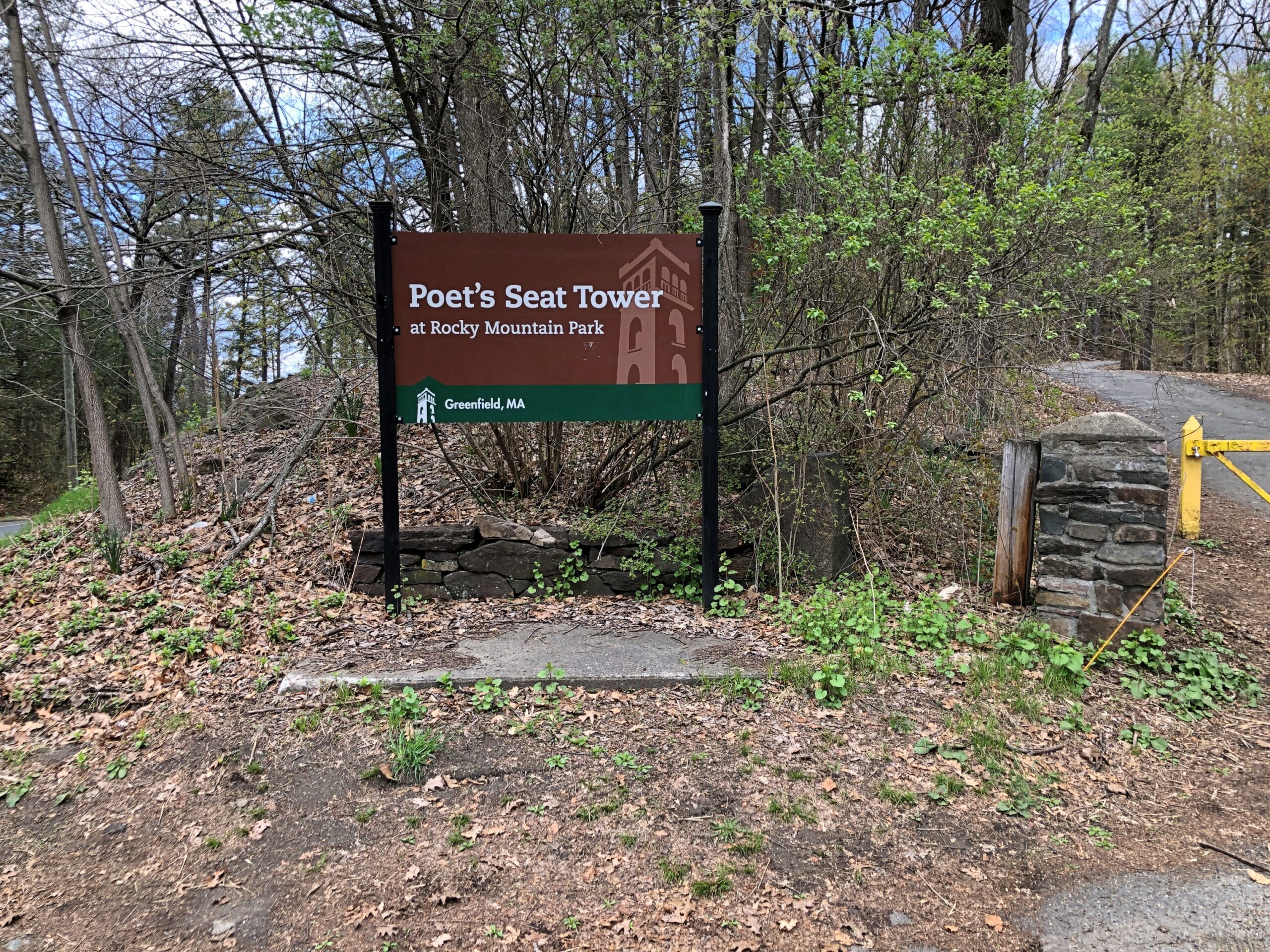
Then again, the university seems determined to move the structure anyway — which might mean taking it apart, and then not putting it anywhere where because such a move would cost too much.

A place that has seen better days in Houston.

Downtown Lockhart.

The Southwest Museum of Clocks & Watches is permanently closed, alas.

Items

Cosmic in Austin is a bar and a collection of food trucks that surround an informal plaza with a lot of tables and chairs and shade. It’s a very pleasant place, and within walking distance of Tom’s home.

Houston manhole covers.

An artifact at the Old Stone Fort, but from San Augustine, and a hyperlocal soda bottle.

The New Mexico flag near Carlsbad NP.

Landscapes

Not just any landscapes, but within the Sierra Madera Astrobleme in West Texas. US 385 cuts right through the ancient crater for about eight miles, on the way to Marathon. You’d never know but for signs telling you that you’re entering the astrobleme, and one telling you that you are leaving it.

Memorials

The Houston National Cemetery.

RIP, Richard Allen Wilson. I don’t think that I’d ever seen an infinity symbol on a national cemetery stone. That, of course, made me curious, and I checked: it is one of the 98 various symbols that the National Cemetery Administration allows. The list is here.

I’m familiar with most of them, but not quite all of them, such as the Church of World Messianity, which is a Japanese new religion – it’s hard to keep track of all of those – and the Aaronic Order Church, which may or may not be part of the LDS movement, but in any case is an American sect. Hard to keep track of all those, too.

The NCA says: “No graphics (logos, symbols, etc.) are permitted on Government-furnished headstones or markers other than the available emblems of belief, the Civil War Union Shield, the Civil War Confederate Southern Cross of Honor, and the Medal of Honor insignias… Emblems of belief for inscription on Government headstones and markers do not include social, cultural, ethnic, civic, fraternal, trade, commercial, political, professional or military emblems.”

So (for example) symbols for the Loyal Order of Moose or some odd emoji or maybe a grawlix will not be considered, though as a comment about the Army, the latter would be funny.

Finally, a less formal memorial, but I’m sure just as heartfelt.

A memorial for Francisco Lin Herrera happens to be near the Giant paintings outside of Marfa. He died in an accident along that stretch of US 90. RIP, Francisco.

Palestine, Texas

Terrific lightning storm rolled by to the south last night at about 11. Little rain but a prodigious amount of cloud-to-cloud lightning, unlike anything I’ve seen in years. The last time might have been when we were under such a near-rainless storm in North Dakota nearly 20 years ago. After watching in fascination from the back door, I got my phone and recorded about 30 seconds of the spectacle.

As usual, video only conveys a fraction of the visual power of the moment. But, in spite of the channel it’s on, it isn’t AI.

I was curious today which volume of the Encyclopedia Brown books — whose protagonist is a sharp grade-school boy who solves crimes and mysteries — mentioned the town of Palestine, Texas. Even though I grew up in Texas, I’d never heard of the place until I read an EB story in the early ’70s that mentioned a string of places that some international jewel thief was traveling to: Moscow, Odessa, London, Paris, Palestine and Athens. The boy detective determined that the criminal would be in Texas, since those are all places in that state, and especially because “Palestine” is called “Israel” now, as he said.

You might wonder (I do now, anyway) what business an international jewel thief would have in a place like Moscow, Texas (pop. 170) or London, Texas (pop. 180), but never mind. It didn’t take long for me to find a YouTube review of Encyclopedia Brown Keeps the Peace (Book 6, originally published 1969), including the case that mentions the Texas towns. The reviewer takes the book to task, asking “can grade-schoolers be expected to know this information?” No, of course not. They can be expected to learn it, however.

Now I know exactly where I learned about Palestine (Pal-es-TEEN) more than 50 years ago. I didn’t arrive in Palestine in person until this February, on my way to Dallas from Nacogdoches. During my visit, I made the acquaintance of this fellow.

The sculpture is called “Chuggin’ ” (2020), created by Dewane Hughes, a sculpture professor at the University of Texas in Tyler. Railroads are important in the history of Palestine, so much so that one terminus of the Texas State Railroad – a linear state park along a former short line RR – is in the town. The other terminus is in Rusk, about 25 miles away. Not running in February, unfortunately.

“Chuggin’ is near the town’s visitor center, a former RR depot.

Also nearby is “Forging History” (2014) by Dale Montagne, with the base made of three actual rail car wheels.

Parking was easy to find in downtown Palestine, traffic light. Parallel parking was available right across from the splendid Sacred Heart Catholic Church, as it happened, an 1890s creation by Nicholas Clayton, who was most active in Galveston before the hurricane. Originally many of the congregation were workers on the International-Great Northern Railroad Co., which had a major presence in Palestine.

Palestine still has a sizable rail yard south of downtown.

Took a walk around downtown. Like most large towns, or small cities, there is a mixture of ongoing businesses –

— with vacancies.

Got some buildings with really good bones, as it’s been said in the real estate biz.

The Palestine City Cemetery is to the east of downtown, but not very far. Nowhere is that far in town.

City Cemetery, Palestine Texas

The crumble is on.

Something you don’t see that often. Not just the Stars and Bars, but the very first version with seven stars. In the fullness of not much time, six more stars were added.

Unknown CSA soldiers.

I assume United Confederate Veterans, the Southern equivalent of the GAR, placed this stone and those like it.

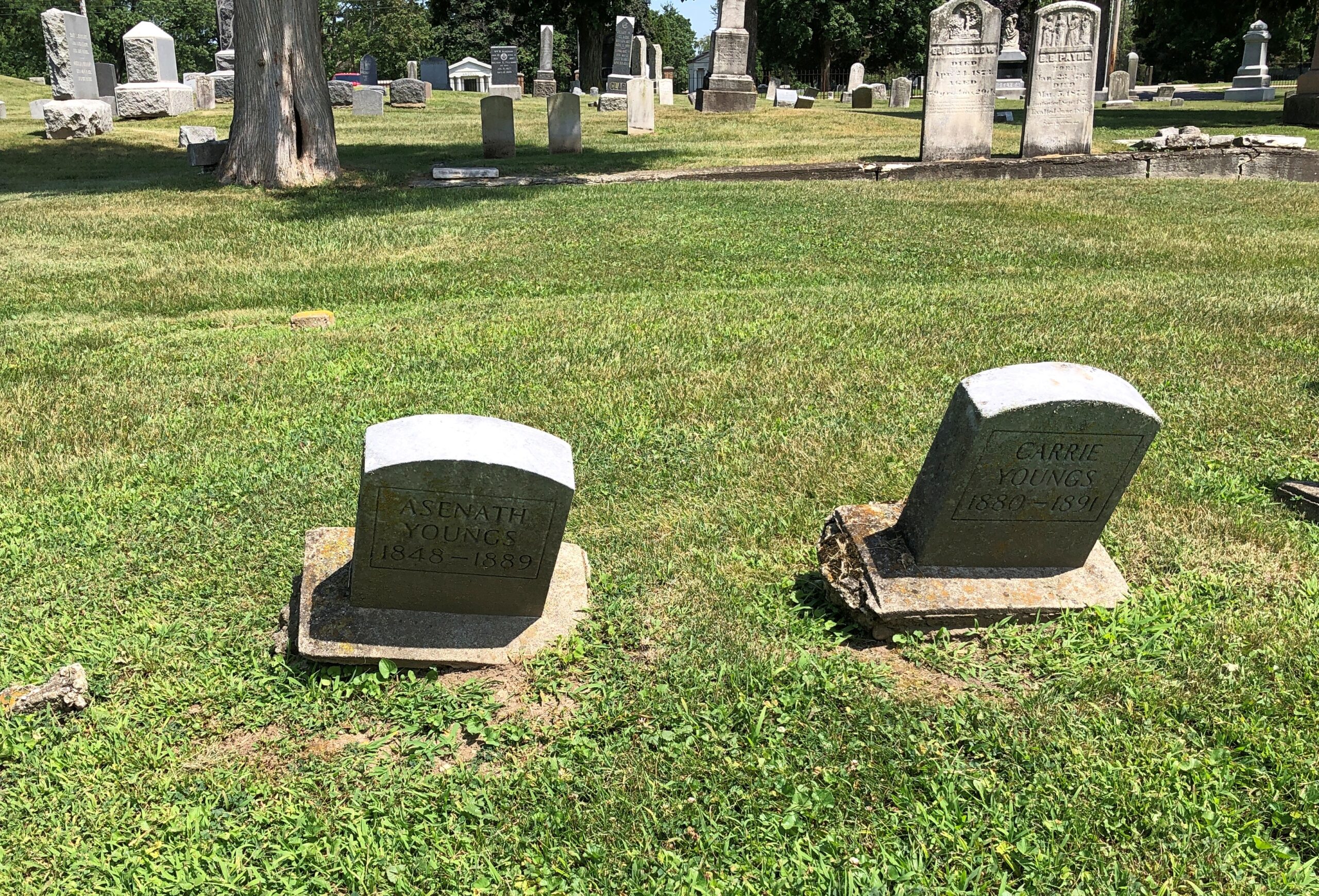
The cemetery has an impressive number of worn, broken stones, soldiering on through the elements.

Victorian sentiment in stone, said with due respect.

Would that kind of soft decay, the romanticism of stones worn by time and the elements, have appealed to Victorian sensibilities? Could be.

Oakwood Cemetery, Huntsville

Sometimes the right word just comes to you: tatterdemalion. As in, the tatterdemalion historic Oakwood Cemetery in Huntsville, Texas, or at least the older section of it.

I use that word with great affection for tatterdemalion cemeteries – ragged and dilapidated, the ragamuffins of the cemetery world, attracting even less attention than the big-deal Victorian cemeteries in the big cities. These cemeteries might be scruffy, but their repose is deep.

Oakwood does have Sam Houston, so people must come for him.

Oops.

You can park your car on the street, walk a few seconds to Gen. Houston’s stone, pay your respects, and never enter the cemetery proper.

Too bad. The grounds extend along a long strip of land, generally sheltered by such pines as you find in the piney green East Texas, and sport a variety of stones, older and newer, moderately ornate and more modest.

Some smashed slowly by time. The fate of all, eventually.

Henderson King Yoakum (d. 1856) is here. He was on the ground floor when it came to writing Texas history, authoring a two-volume work titled History of Texas from Its First Settlement in 1685 to Its Annexation to the United States in 1846 in 1846. His is the taller of the two obelisks.

Henderson King Yoakum

Off in a corner of the older section – which is the sector near Houston – are simple crosses.

They tell a story. Actually, no. A sign nearby does. It’s worth reading in its entirety.
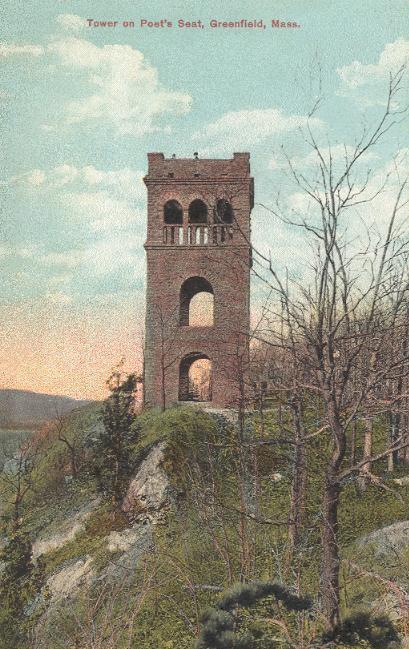
A related story, about the yellow fever epidemic of 1867.

To summarize, in case the text in the photo is hard to read: a lot of Huntsville residents died that year from yellow fever, though not Gen. Houston, who was already dead. Wonder whether any Huntsville physicians or other men of science died persuaded that miasma did them in.

Oak Grove Cemetery, Nacogdoches

Houston’s Glenwood Cemetery sprawls out near downtown, adjacent to much of the parkland along Buffalo Bayou. In Nacogdoches, Oak Grove Cemetery is a more modest burial ground. Nacogdoches is a more modest city. The entrance to Oak Grove is about a half block from the Main St., but the grounds are still tucked away in a residential neighborhood along Lanana St.
Decent flora, but not a garden cemetery.

It’s an old cemetery by modern Texas standards – the first burial was the year after independence – so the cemetery punches above its weight in one way: noted early Texans. Such as Harden Edwards.

The state saw fit, during the 1936 Centennial, to put up a new stone for Edwards, an empresario and “Leader of the Freedonian Rebellion,” who must have penned the rousing tune, “Hail, Hail Freedonia,” for future generations to enjoy.

The stone of a great-great granddaughter of Edwards who died in 1963 seems eager to bask in his remote glory. Why not?

One of the cemetery’s four signers of the Texas Declaration of Independence (60 men in total signed it).

A big name around here: Thomas J. Rusk.

He was a signer, fought at San Jacinto, and had a notable career in antebellum Texas and U.S. politics. There’s is a town a county over from Nacogdoches named Rusk, seat of Cherokee County. Also, strangely, a font based on his handwriting was created in our time, “Texas Hero.”

Some regular folks.

I don’t know how ordinary this person was, but perhaps he was gifted with Victorian prolixity. Or maybe his family was.

Brick tombs of the kind I’ve seen elsewhere in the South from roughly the same period, that is, sometime in the 19th century.

Adjacent to the cemetery but not associated with it is the former home of Zion Hill Baptist Church, one of the oldest African-American Baptist congregations in Texas, founded in 1878. The church is on the corner of Lanana and the delightfully named Bois d’arc St., as in lumpy “apples.”

The congregation hasn’t used the structure, designed in 1914 by architect Diedrich Rulfs, for nearly 40 years. It’s a fine little museum these days, restored to its early 20th century glory.

Rulfs was a German who made good in Texas, as so many have, within a very special niche: most of the buildings worth seeing in Nacogdoches are his work.