M.D. Trains, Blue Lotus &c.

Labor Day weekend is nigh, and even in a semi-retired state, I look forward to these three-day weekends, especially if the weather is still warm. Actually temps have been pretty high these last few days, which means that sitting on the deck well into the evening is comfortable, once the mosquitoes have calmed down.

Think I’ll take a stretch off just because. Back to posting on September 13.

The other day while out on the deck before sunset, listening to the loud cicadas, I made up a 19th-century religious movement, in outline. As one does. A farmer in early 19th-century Ohio proclaimed that the late summer cicadas are actually trying to communicate with mankind, but that the last people who could understand them were the ancient Israelites (using the Hebrew term for “locust”). Some Israelites were able to interpret their song as revelations from the Lord, which formed the basis for the lost Book of Locusts. After the destruction of the First Temple, the locusts spoke no more.

Who is suddenly able to understand the cicadas in the (19th century) present? The farmer, of course (Robert, let’s call him). He listens closely, and it turns out the Lord is laying down some new rules ahead of the Second Coming, via cicada song. Including how to organize a new church with Bob as its head, and an exact time for the Second Coming, like the Seven-Day Adventists. Bob gathers a few hundred followers. One of their main rituals is the “Summer Listening,” as they gather outside in the late afternoon and Bob, in a trance, interprets. Some of his grown sons soon have the ability too. Locust Listeners, their neighbors derisively call them, but soon they themselves are using the term.

The day for the Second Coming comes and goes, and Bob has a new revelation for his disappointed flock: they should be listening to crickets as well, to complement cicadas. That will reduce the chance of misunderstanding, as clearly happened with the date of the Second Coming. Groups of Listeners start staying up all night to listen to crickets, but others are dismayed, sparking a schism.

I could go on, naturally – how a few dozen Church of Listeners congregations still exist in the Midwest (and California, of course), how one of the great entomologists of the early 20th century grew up as a Listener, how a descendant of Bob erected a historic landmark in Ohio – a bronze cicada – in 1979…

* * *

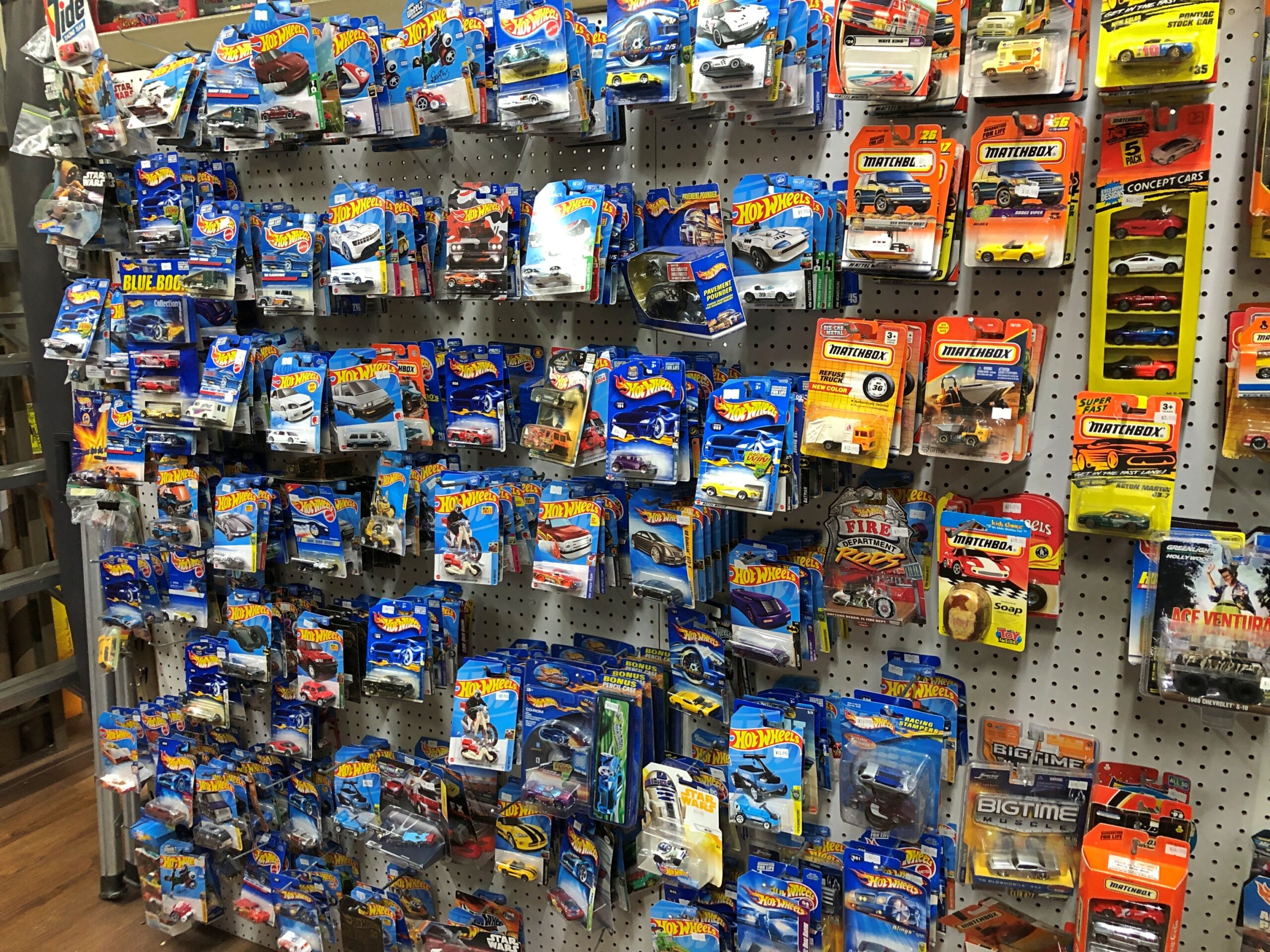
On the historic square in Woodstock last Saturday, something intriguing. This setup graced a shop window, though I took the image once I’d entered the building.
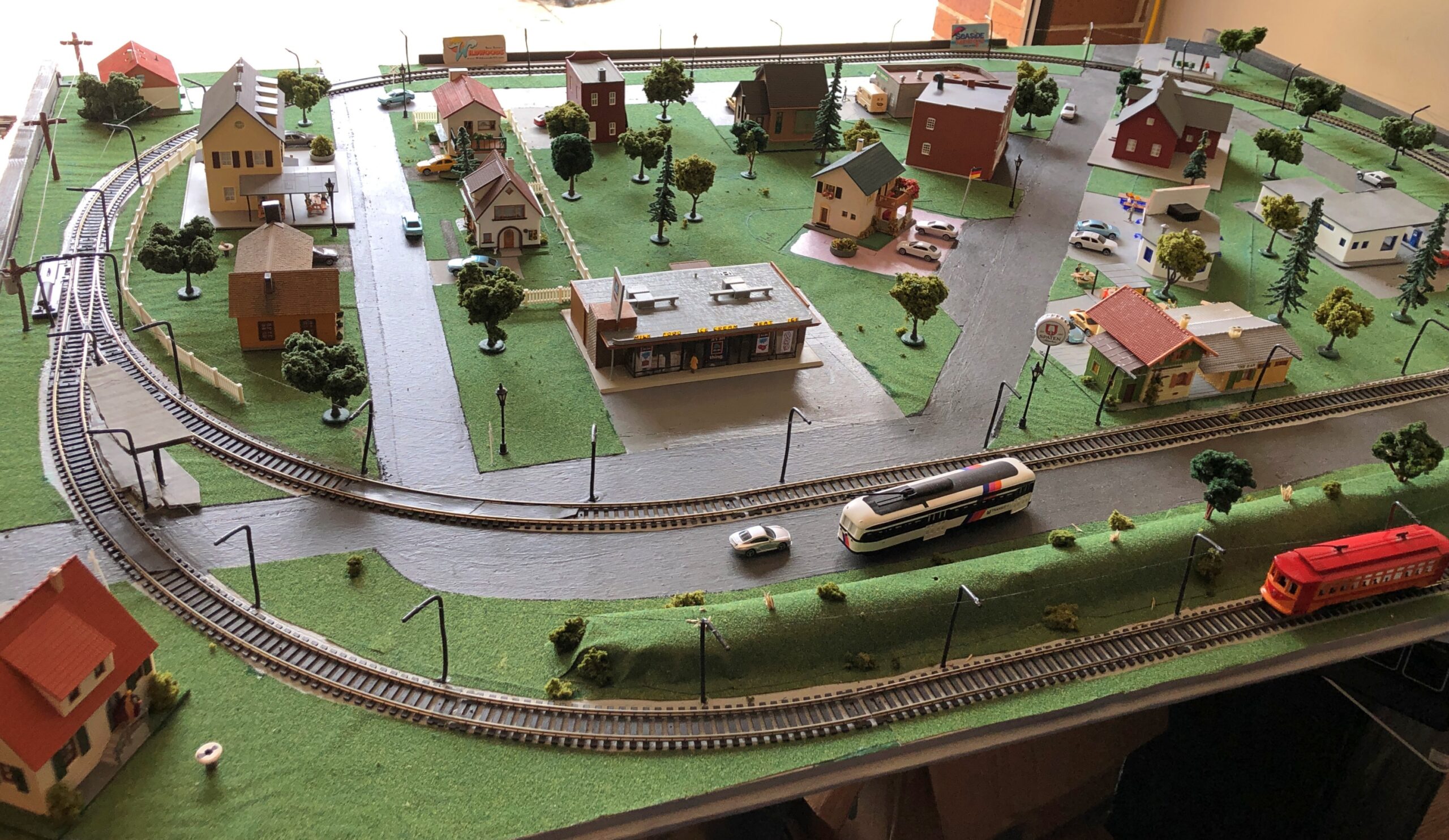
We’d found a model train store: M.D. Trains.
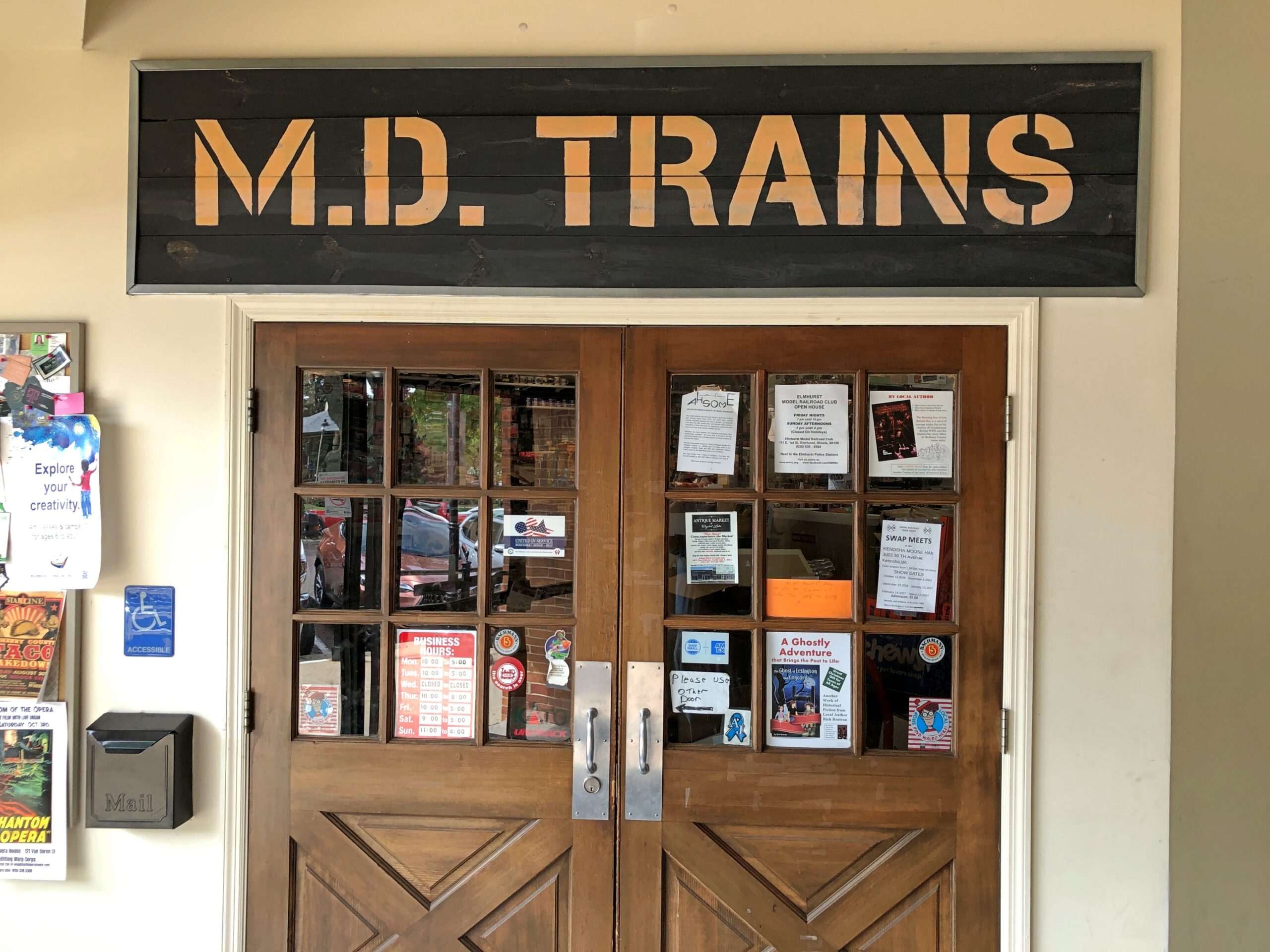
Those kinds of shops are few and far between, but not impossible to find. M.D. Trains was empty when we entered, except for an older man I took to be the proprietor and a younger fellow I took for an employee, both sitting near the front, chatting.

“You want to buy everything, don’t you?” the older gentleman said to us. Later I heard him say it to other people entering the shop. “Everything” meant a lot of stuff in a glorious clutter.
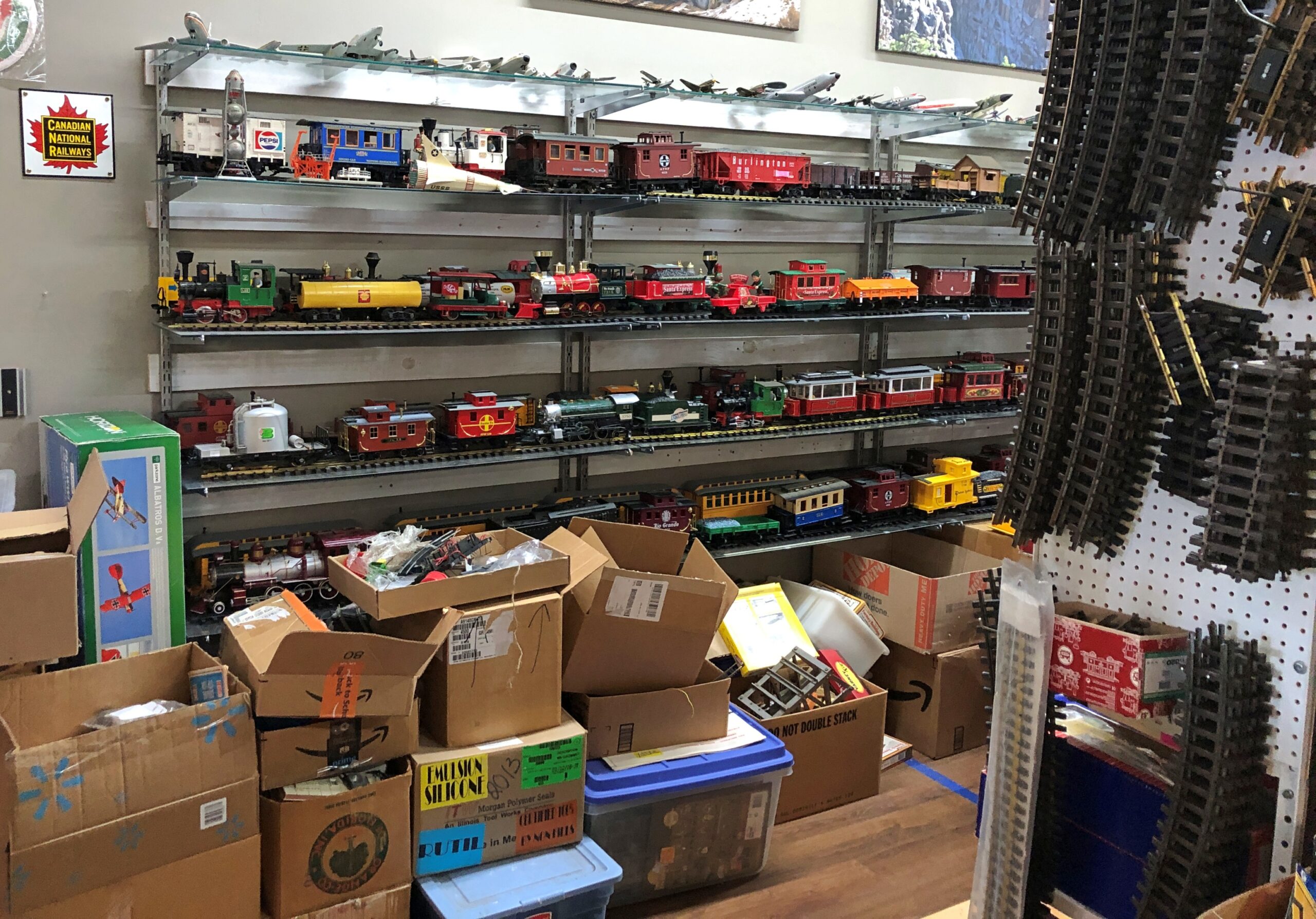
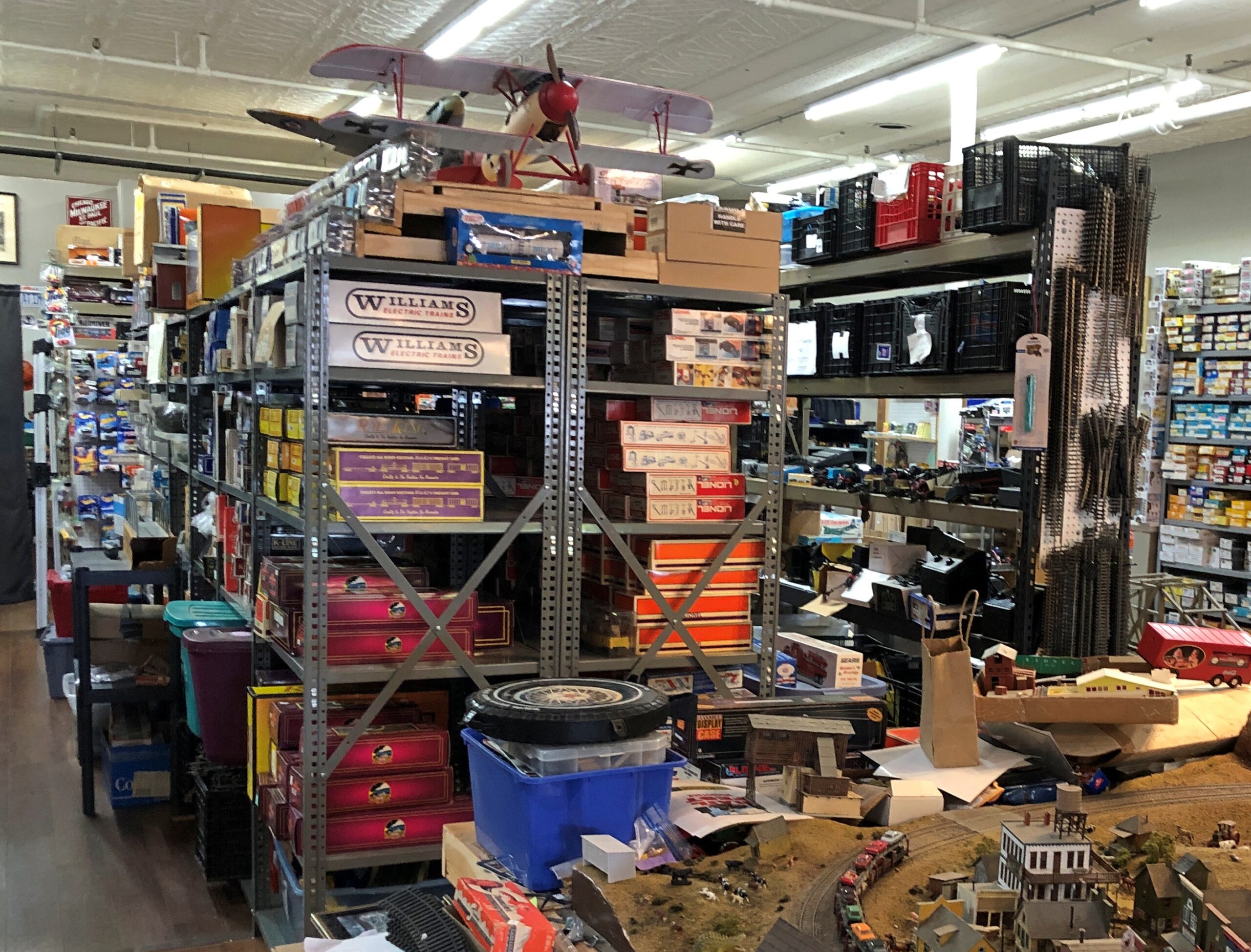
“If only,” I answered. I didn’t really mean it, since I’m not in the market for a room full of model train cars, tracks, accessories, model trucks, books, magazines and ephemera. Still, I enjoyed looking around the store.

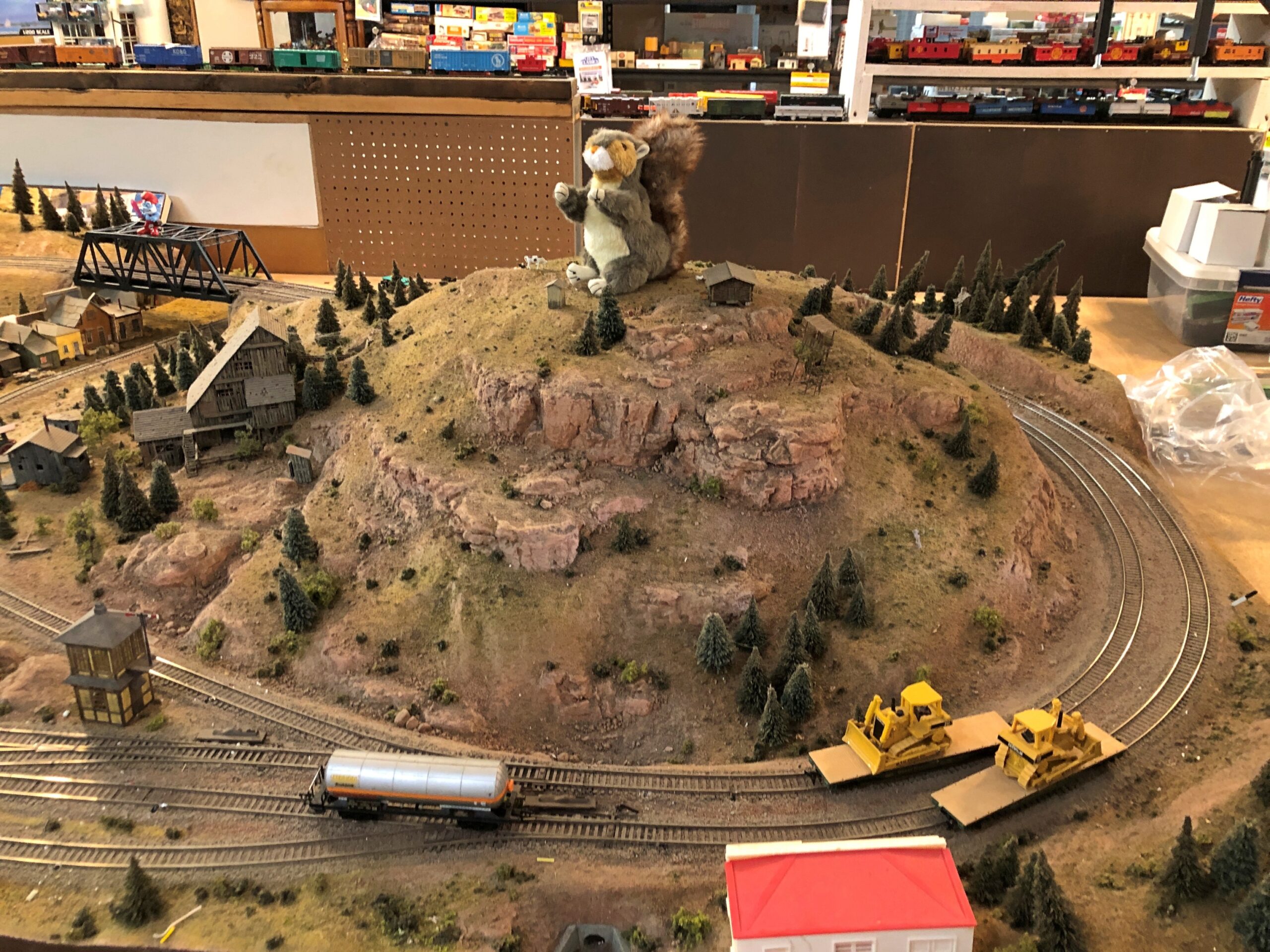
There’s more than just merchandise. Square in the middle of the store is an intricate model train layout, much more elaborate than the one in the window.
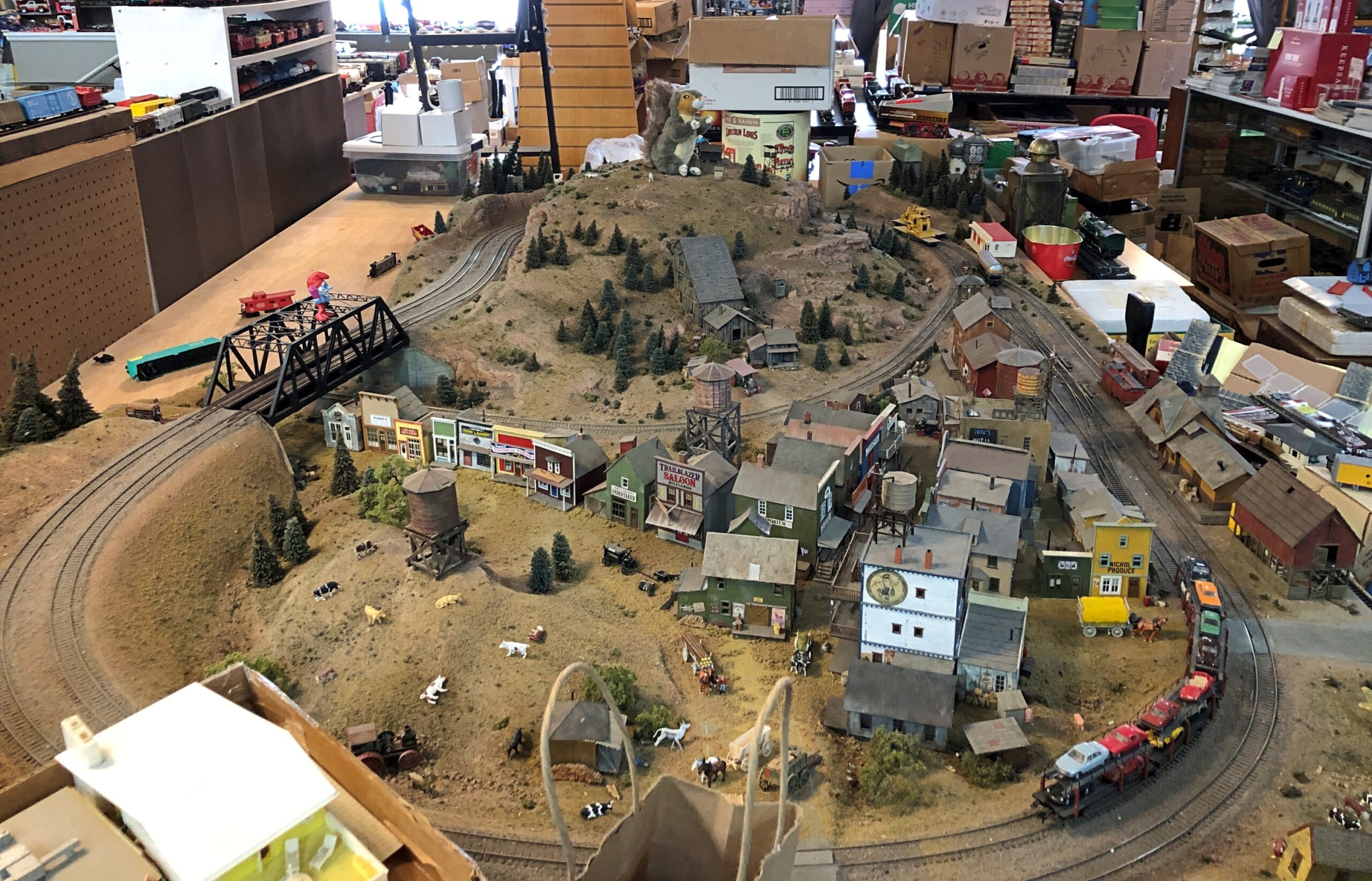
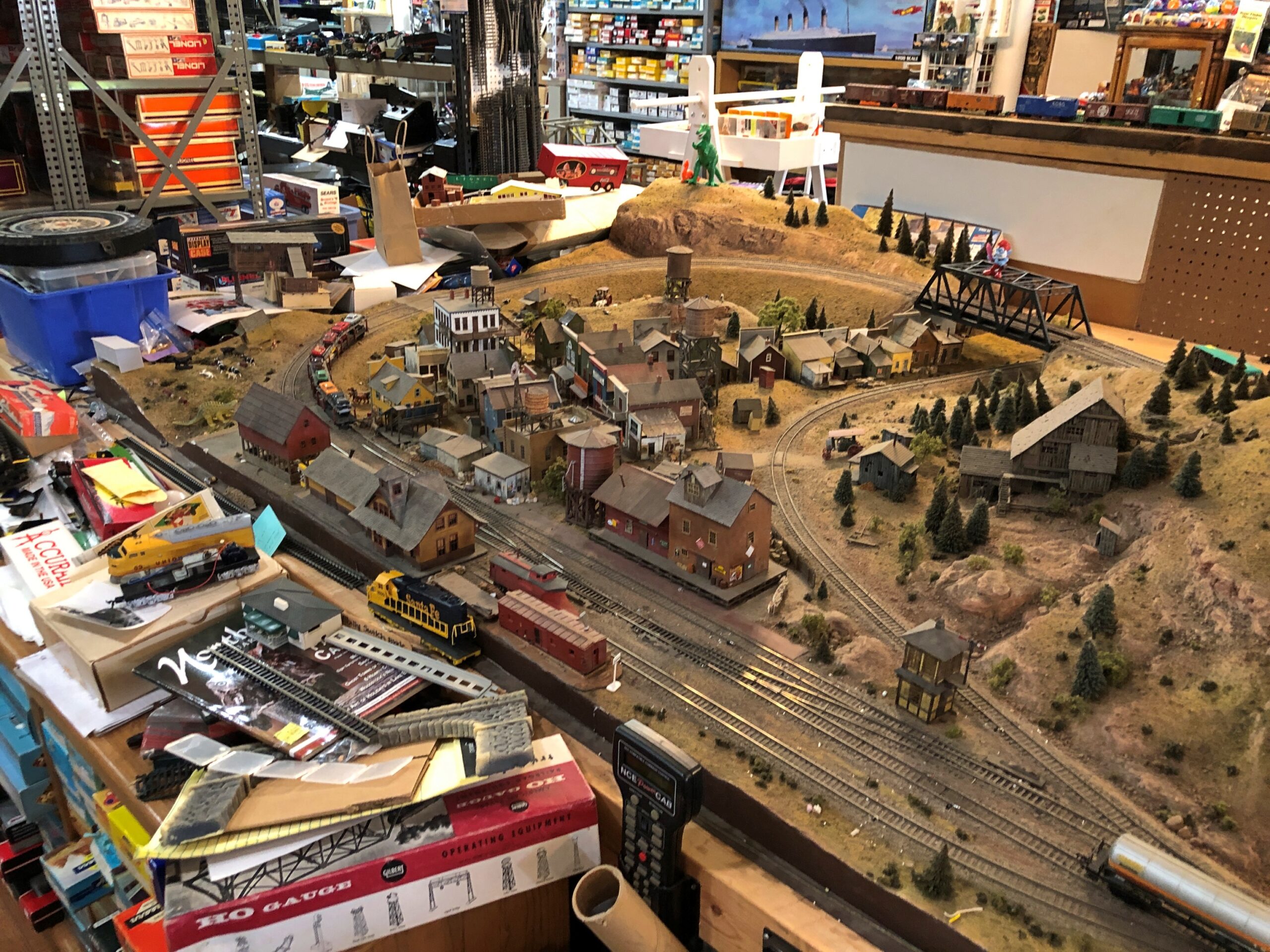
But I did buy a small toy engine for $5. You can’t go in a place like that and not support it.

* * *

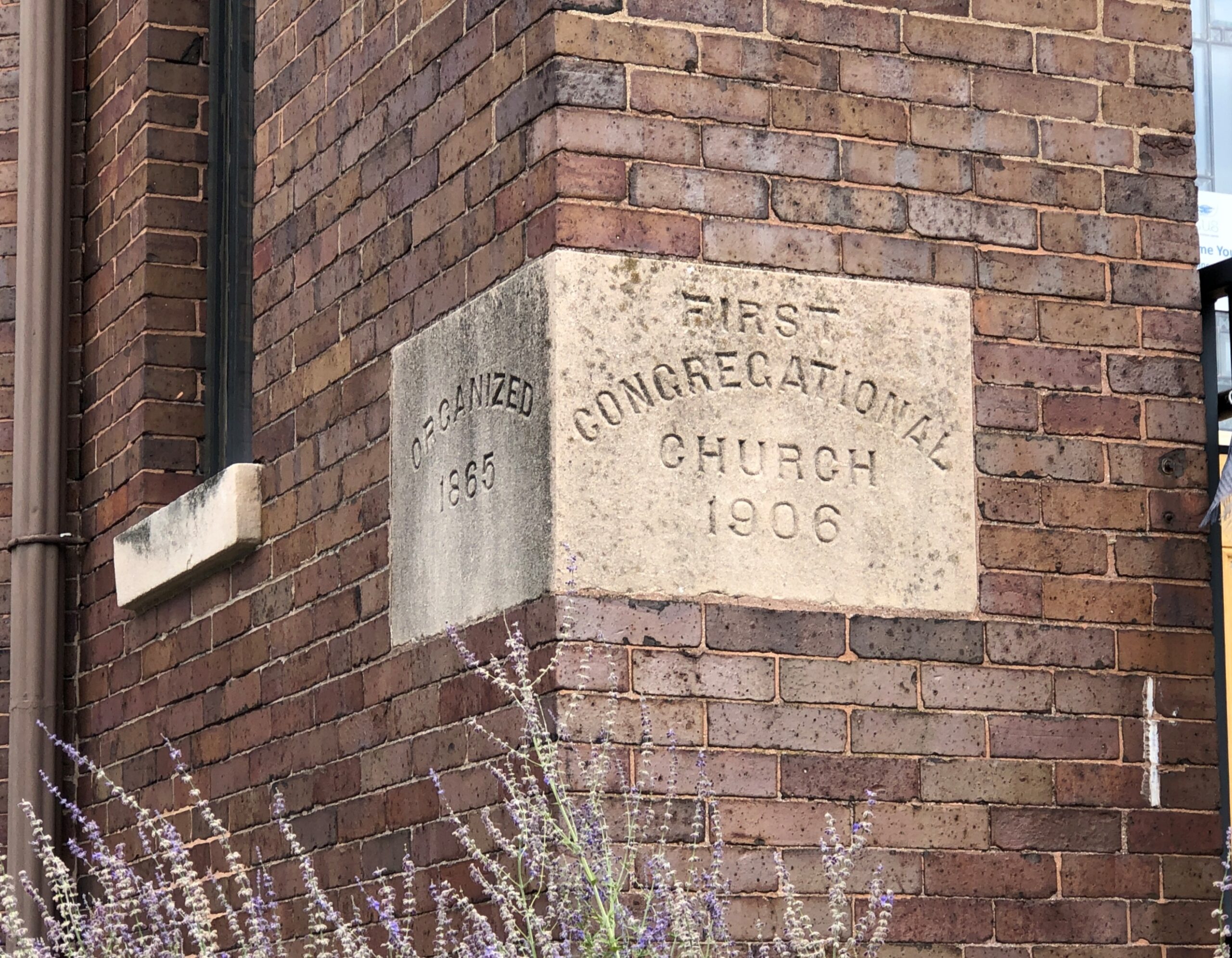
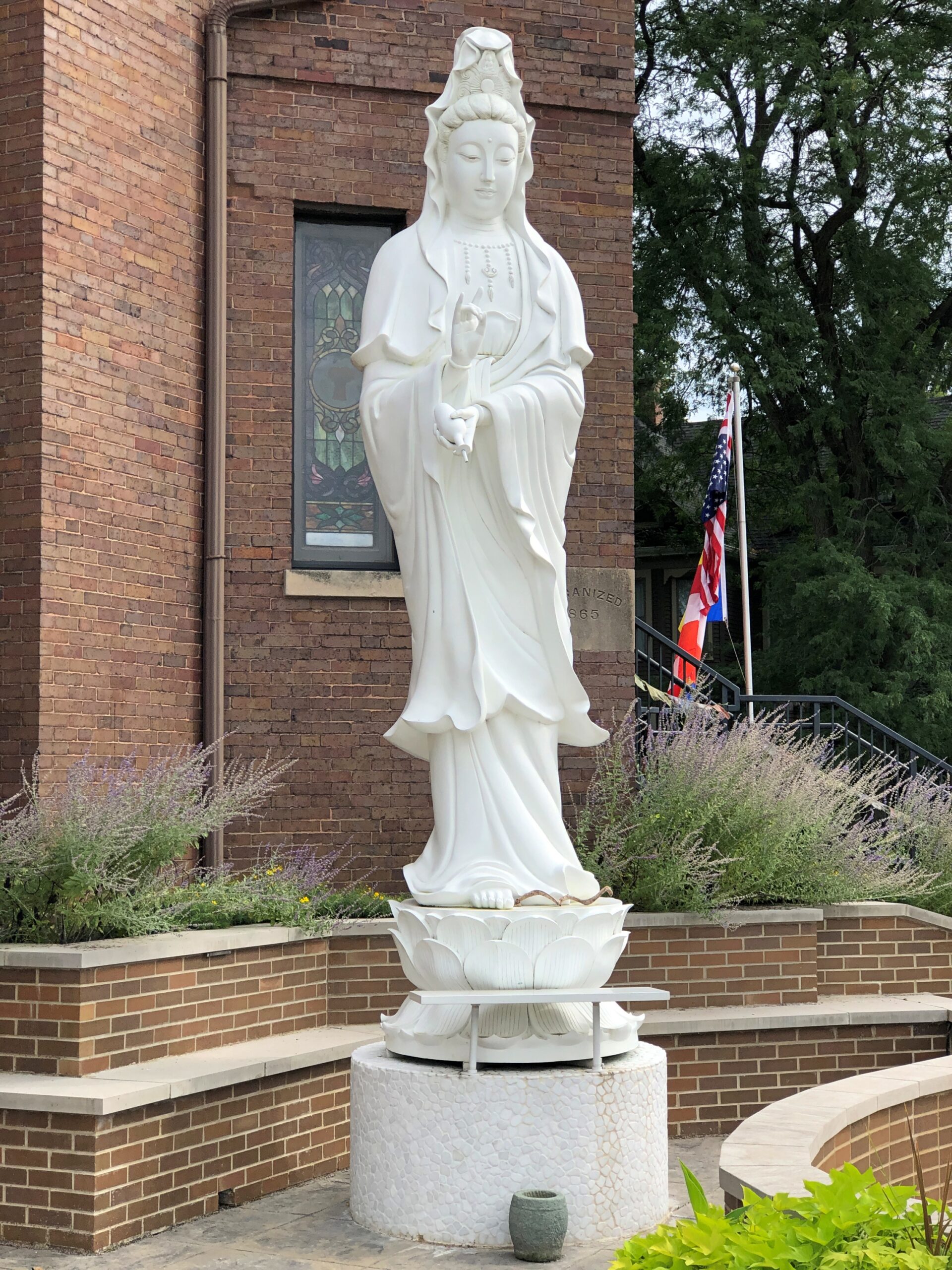
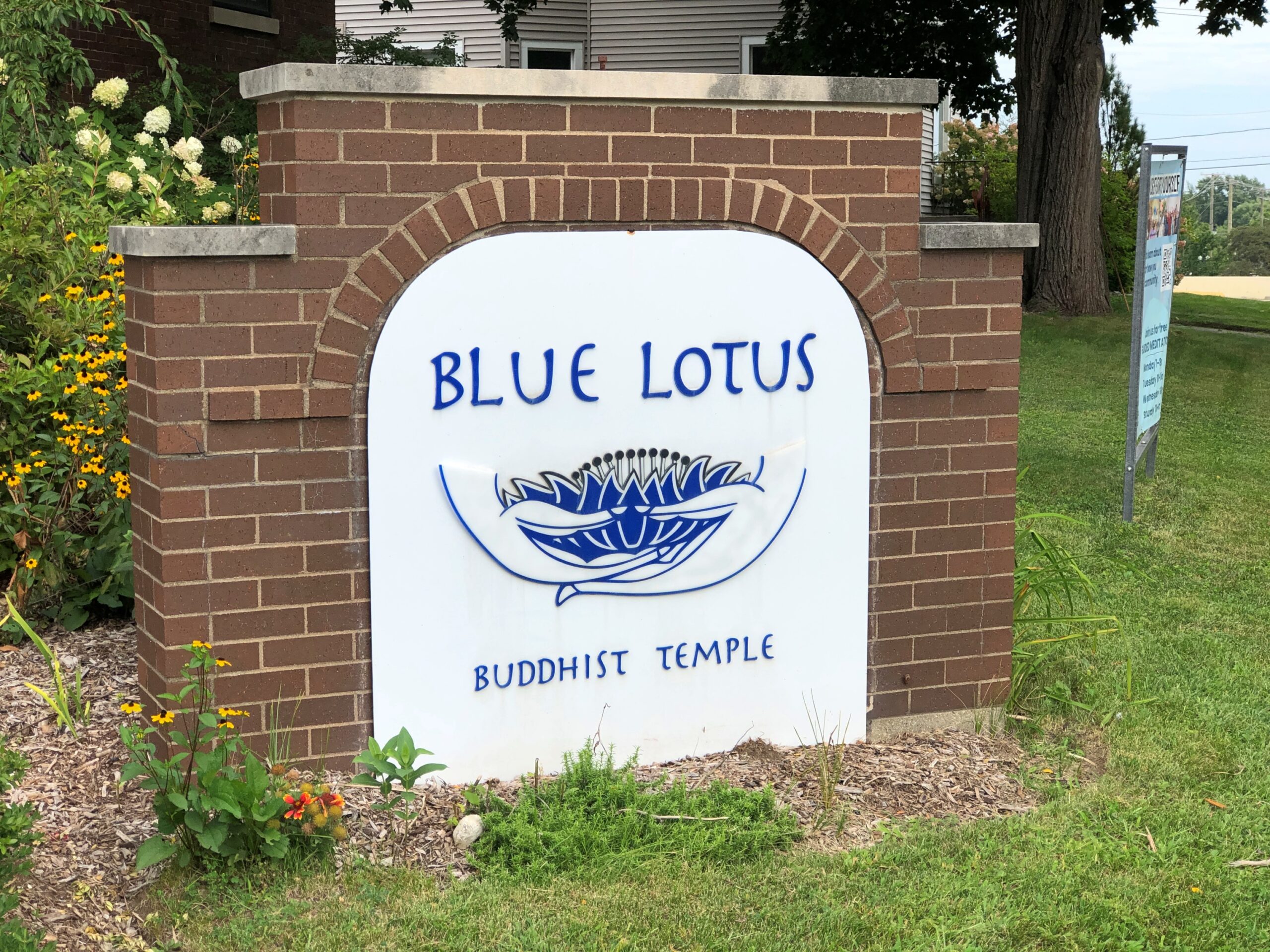
I’m glad to report that Blue Lotus, a Buddhist temple housed in a former Congregationalist church, is still active in Woodstock.
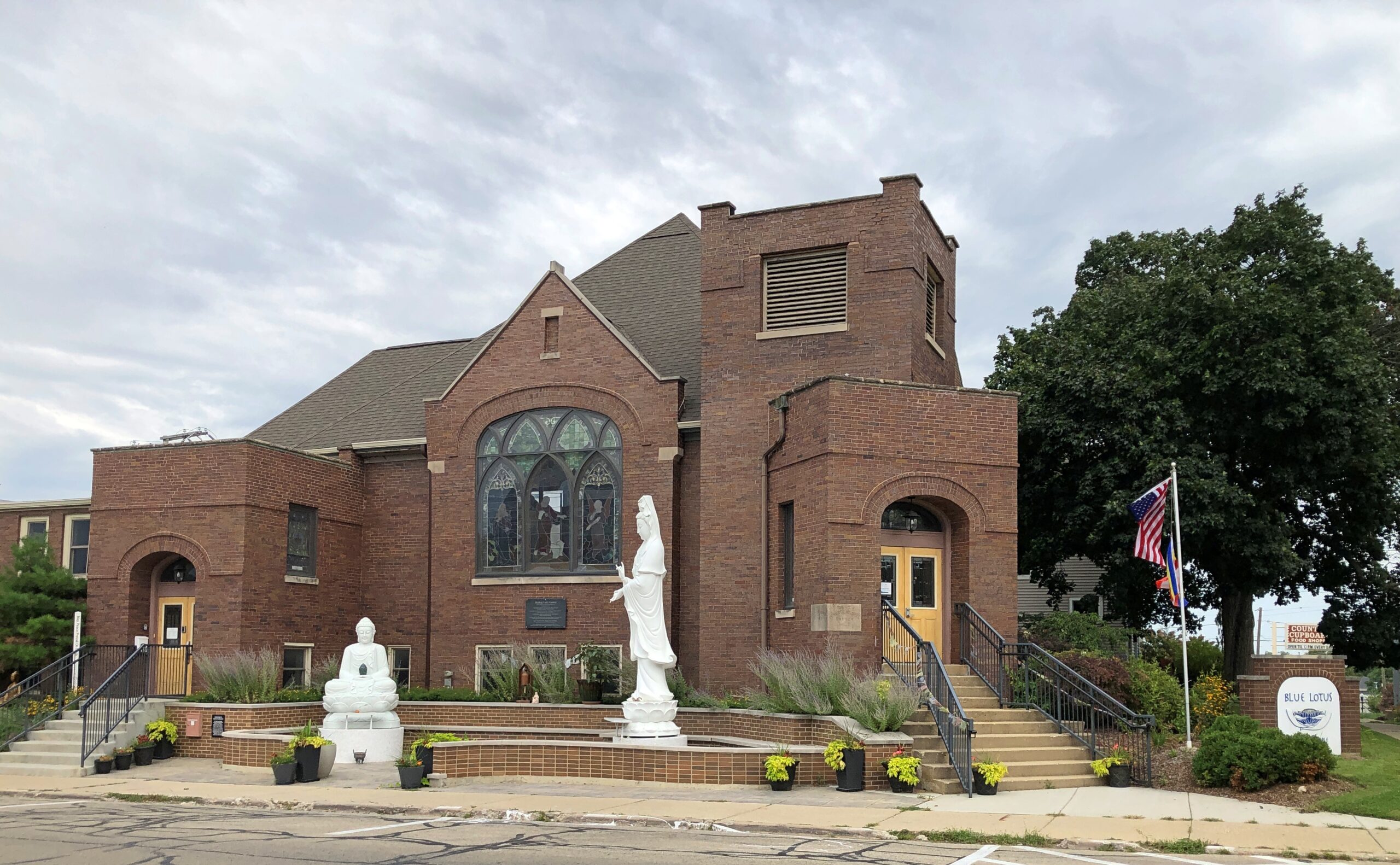
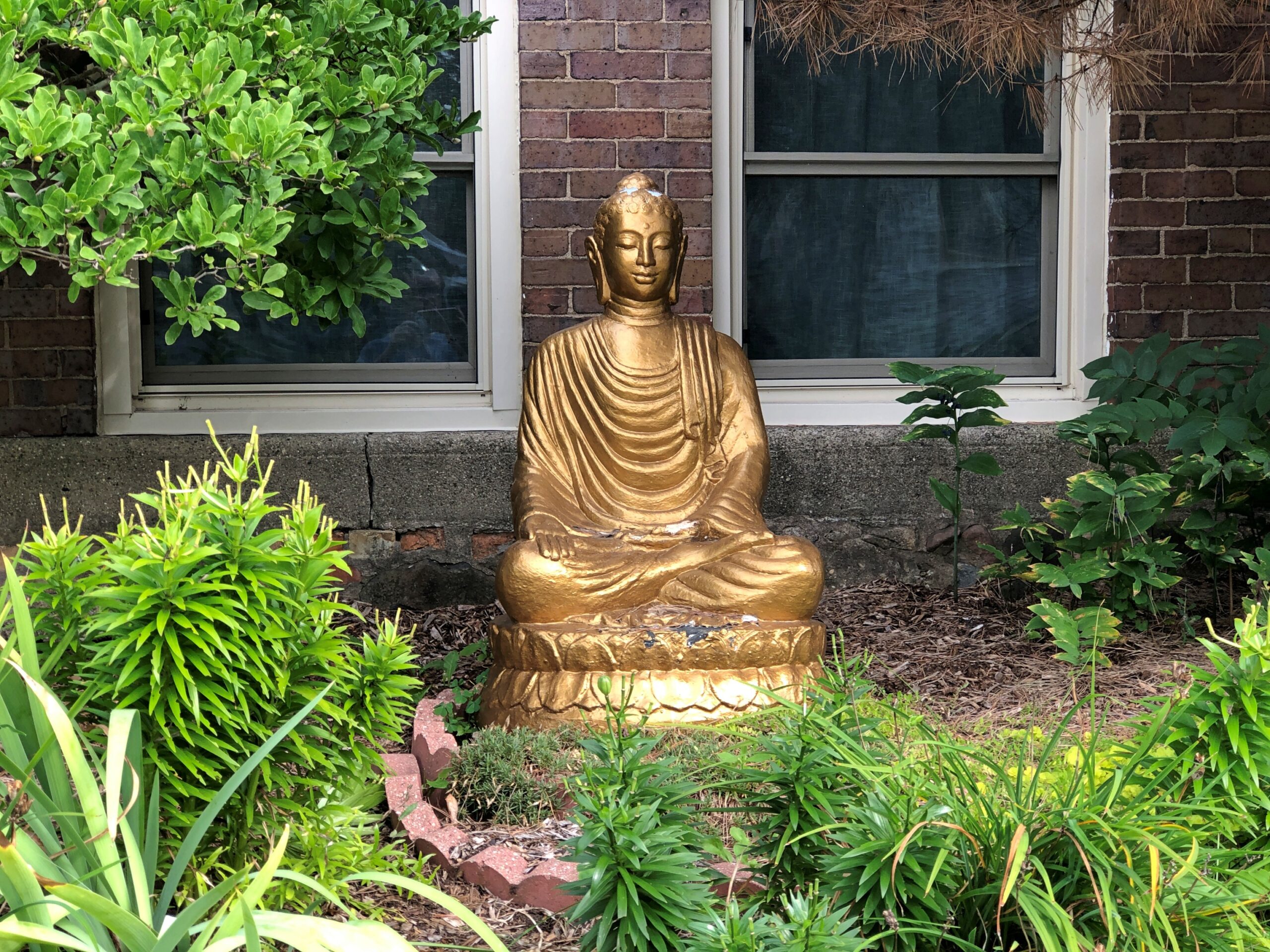
In fact, I believe they’ve added some depictions of the Buddha lately.
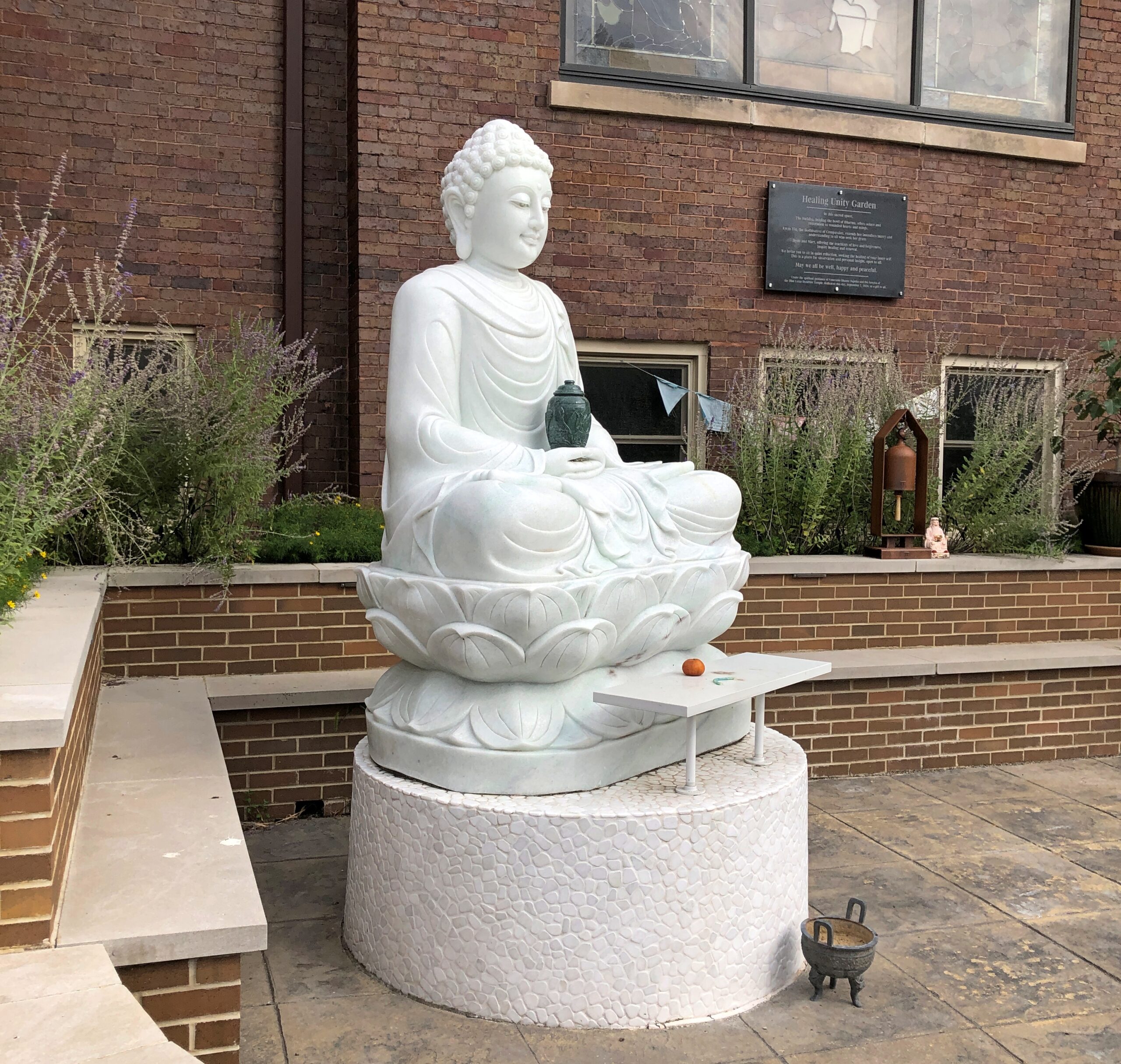
One of these days, Blue Lotus is going to be open when I happen by. I’d like to see how the temple interprets the space.
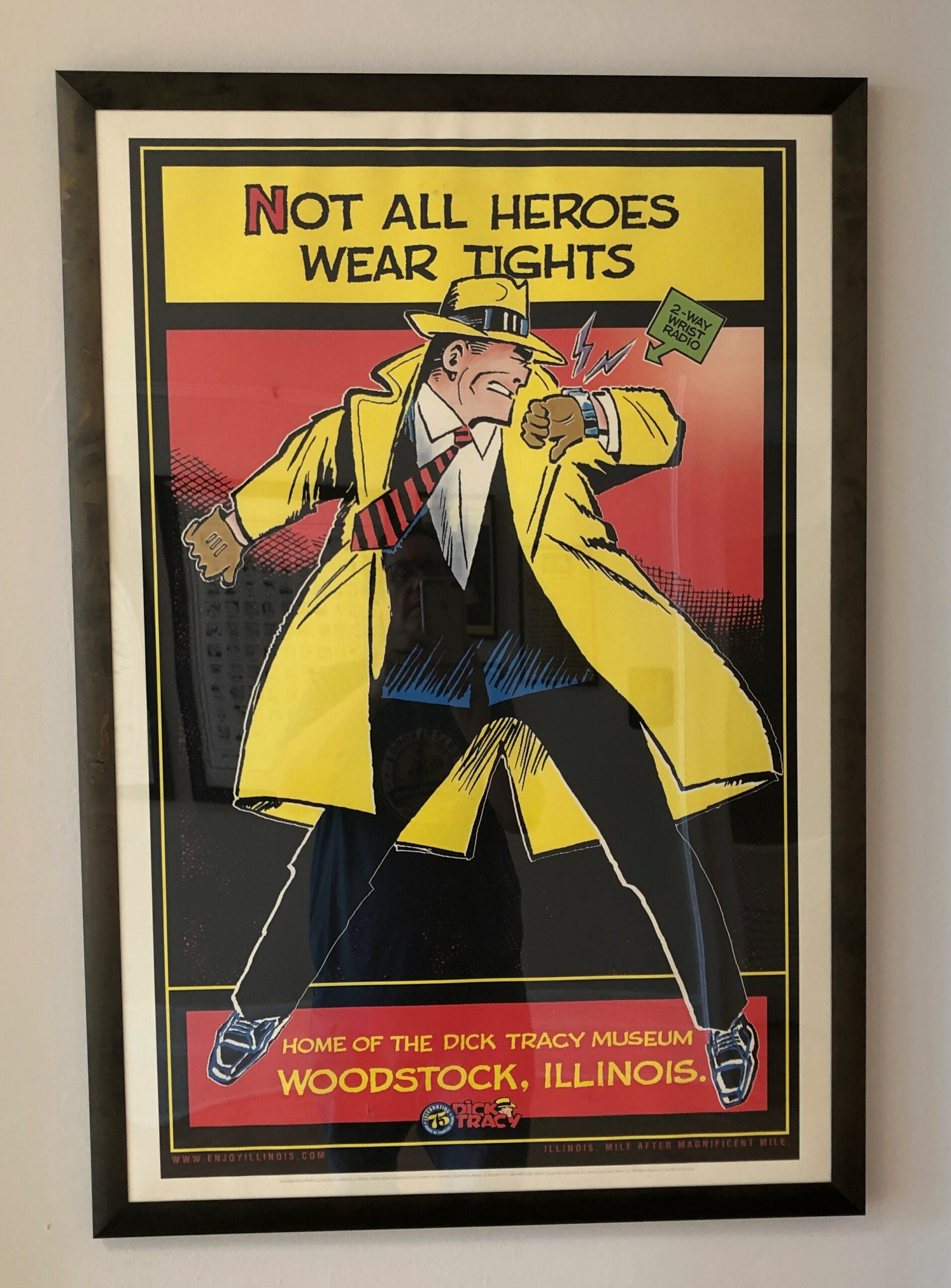
Woodstock: Dick Tracy

This evening, Ann said she was going to see Coyote vs. Acme. I will ask her about it later. Good idea — and I understand its inspiration is the hilarious Ian Frazier piece — but it could be awful in execution. Happens a lot.

Could Road Runner cartoons be a Buddhist parable? The Coyote seeks satisfaction in the world, in pursuing goals, but is rewarded with constant frustration, since in a world of impermanence, simple peace of mind is impossible, much less nirvana. Acme, that is to say society, provides the Coyote tools for pursuing his goals that he inevitably believes will work, but which inevitably do not. He learns nothing from the experience.

* * *

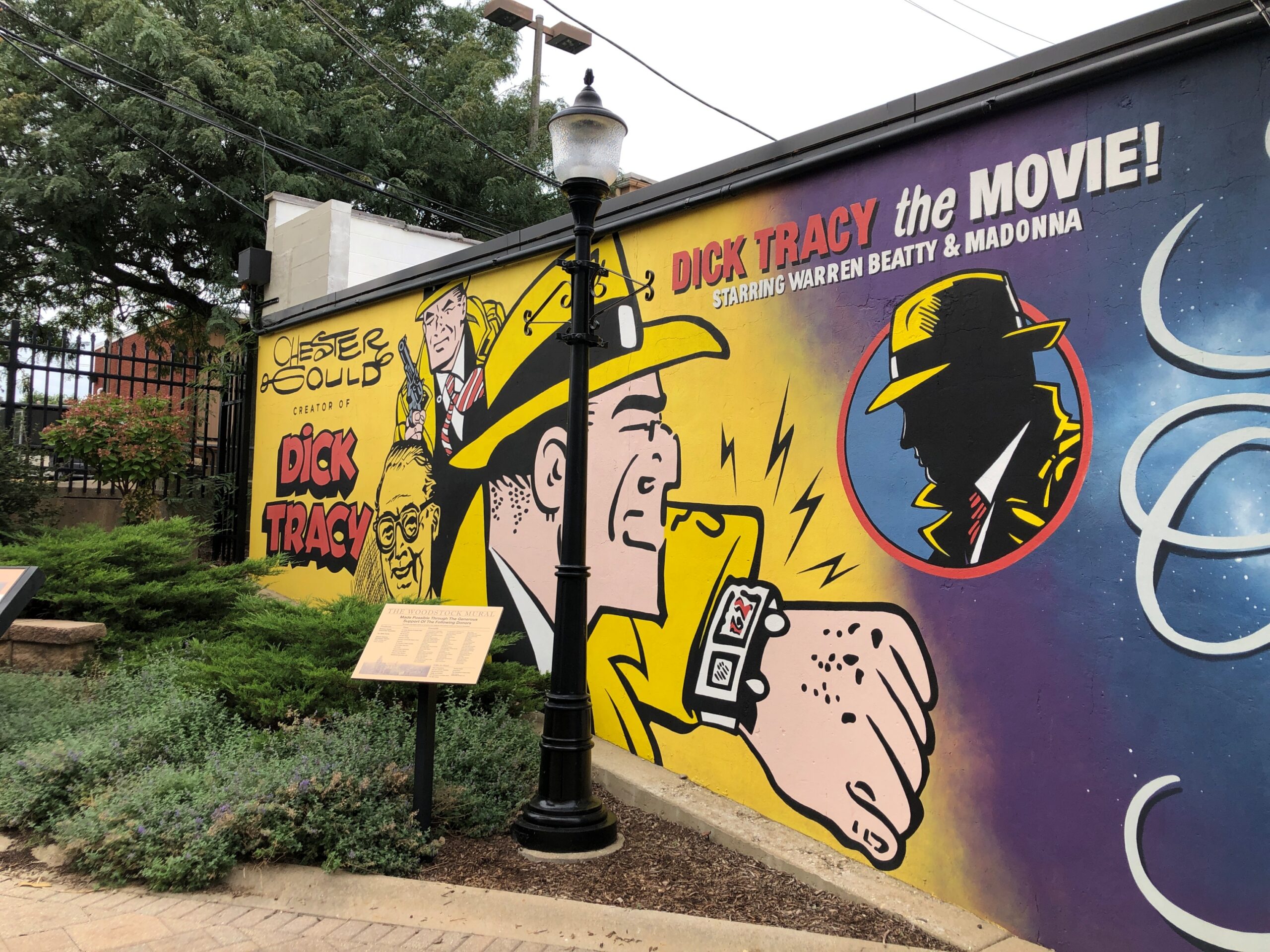
You could say that Dick Tracy considers Groundhog Day an upstart when it comes to Woodstock. The comic strip detective has a distinct place in Woodstock history, since DT creator Chester Gould drew all of them from 1931 to 1977 at his home in the town, where he also stayed until his death in 1985.

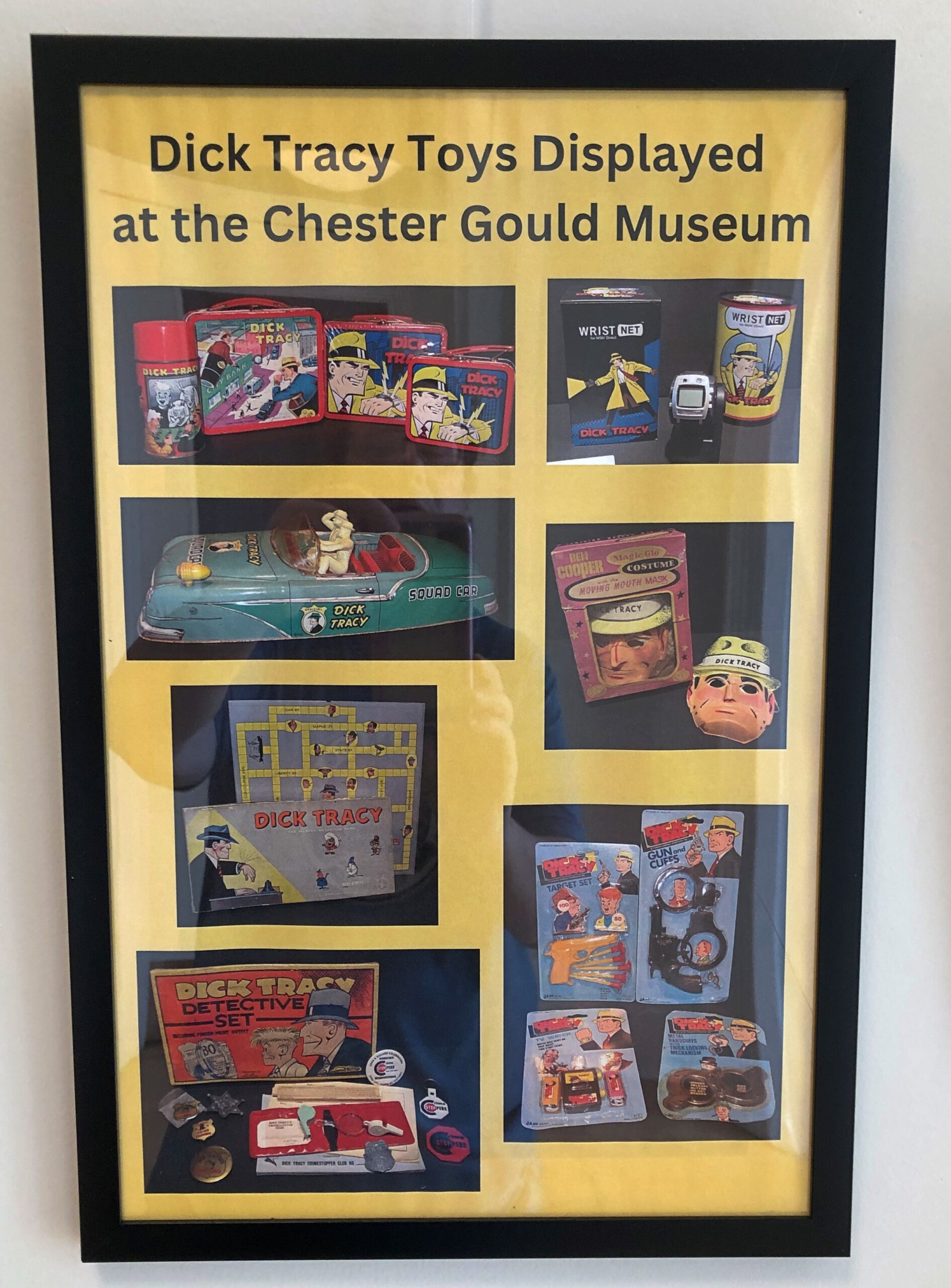
Previously, there was a small museum devoted to Dick Tracy in Woodstock. On September 26, 2005, I wrote: “It’s a handsomely restored 19th-century brick building, now housing an art gallery, a restaurant (in the former jail) and the Chester Gould-Dick Tracy Museum. Only $2 to get in that museum, but the family was waiting in the car during my inspection of the inside of the former courthouse, so I merely looked in. Even when I was a kid, Dick Tracy seemed like a comic in amber, so I didn’t feel a great urge to go in. Someday I’ll go, maybe, just for curiosity’s sake.”

That day never arrived, and I believe the demise of the museum was around the time of the economic disruptions of 2008 and ’09. On the other hand, the day did arrive for a visit, sort of, when we went into the old McHenry County courthouse on Saturday. Dick Tracy is even more of a bug in amber than ever, though it is still being published, with a small exhibit on the first floor given over to the comic and the former museum.

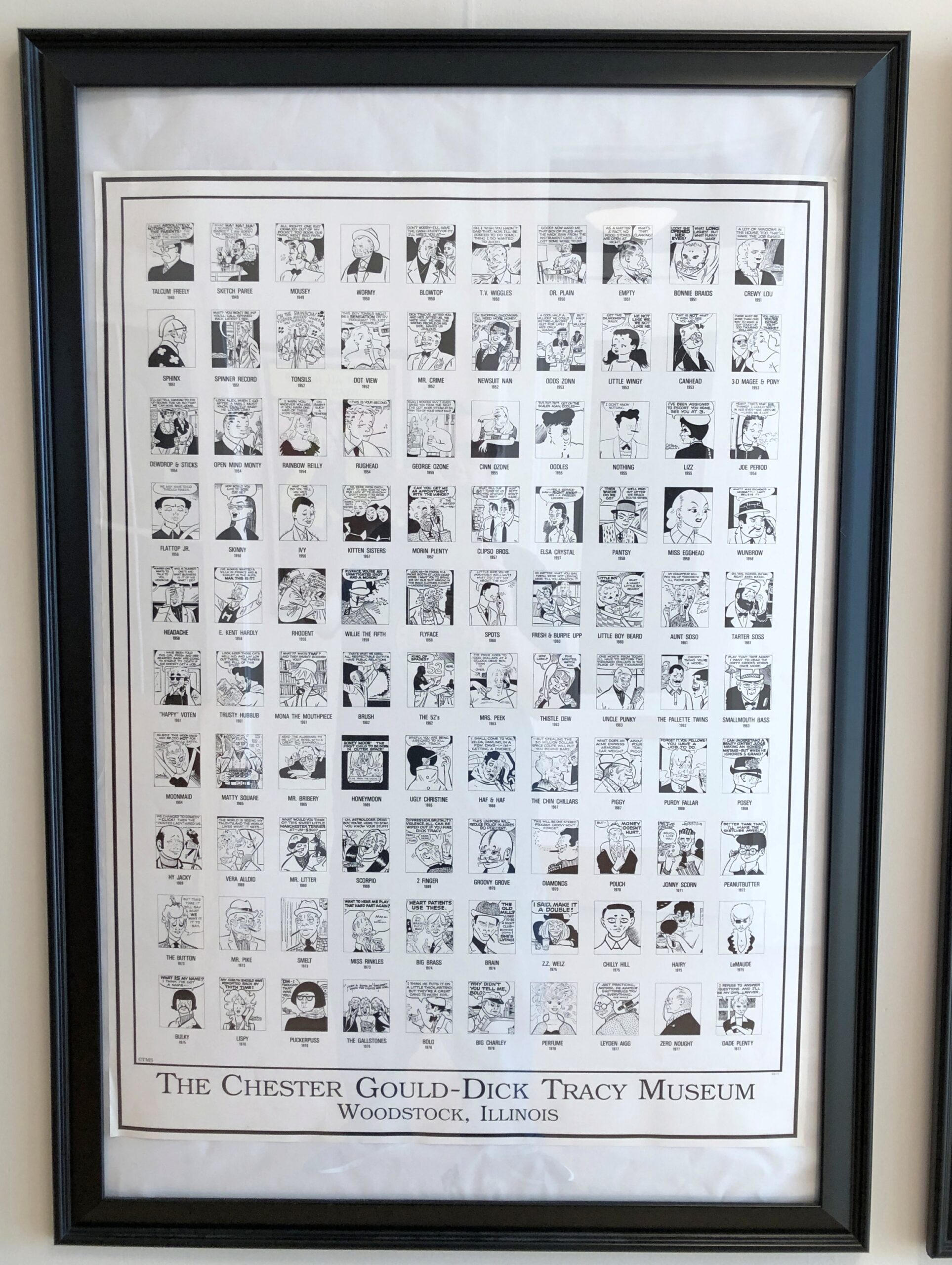
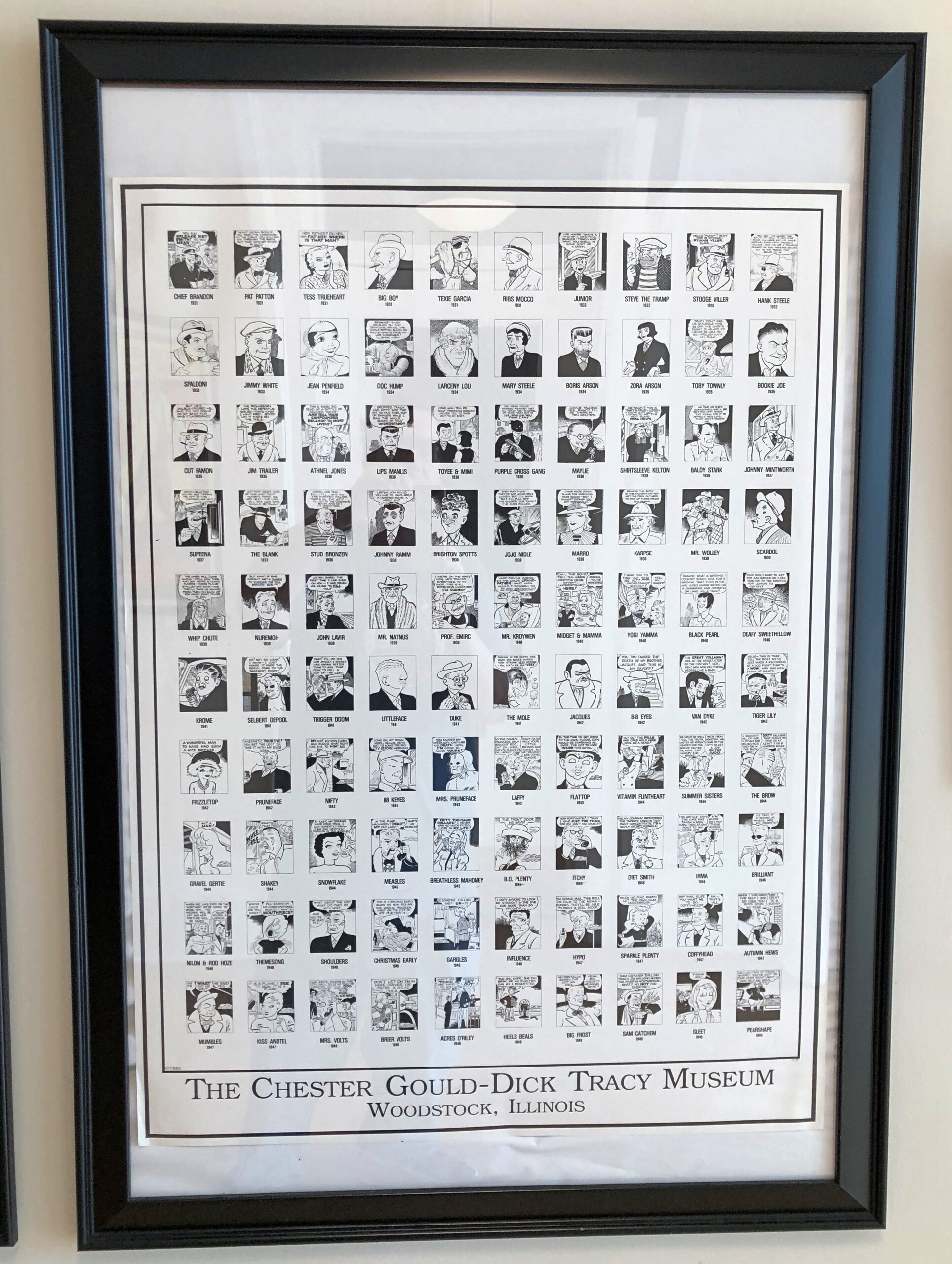
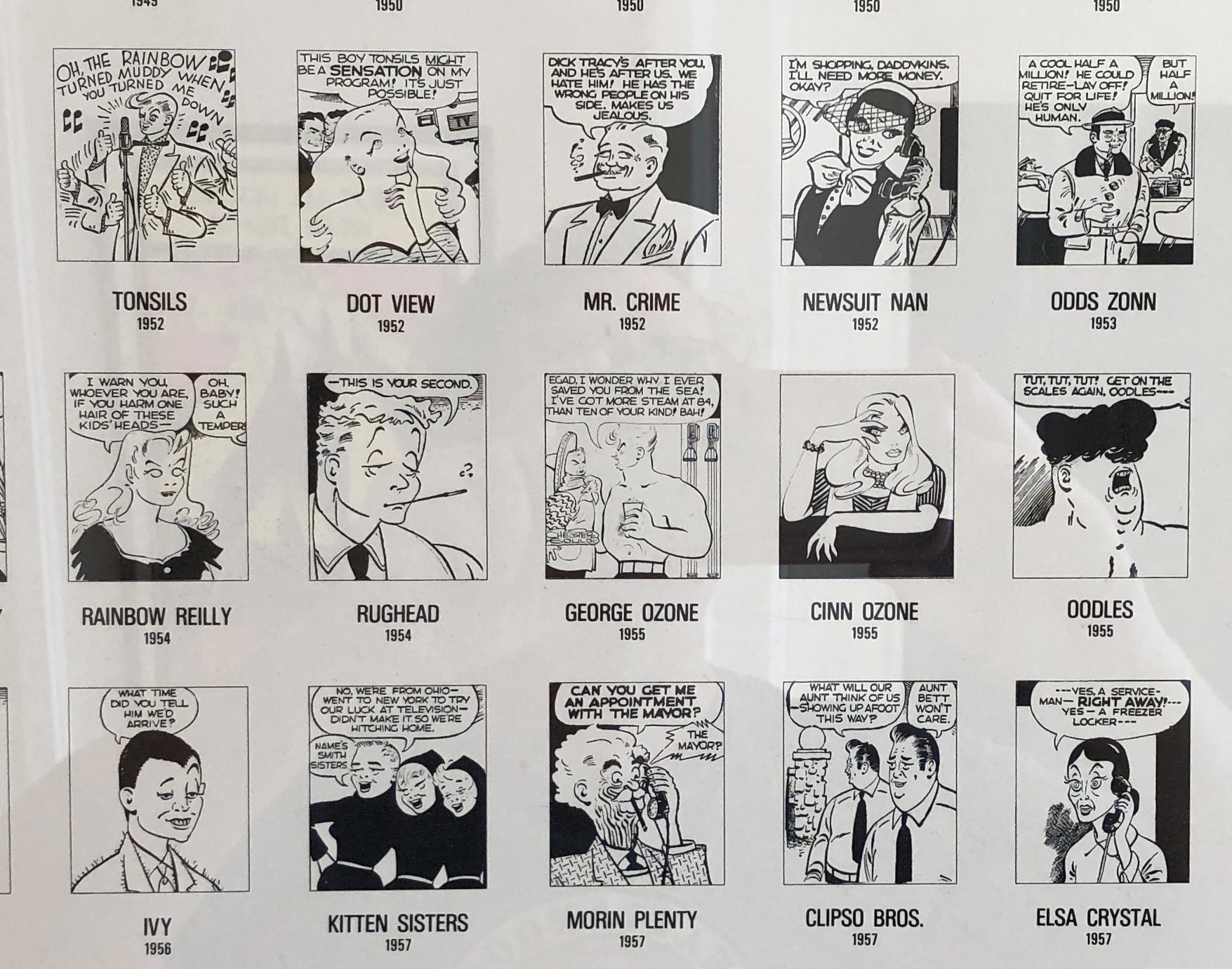
Including posters that detail character introductions through the run of the Gould strip from 1931 to 1977. I have to say that my knowledge of Dick Tracy characters is meager.

A detail.

Tracy also gets his Woodstock due on the same wall as the Groundhog Day mural.

Hey, there was a Dick Tracy movie too! Of course I remember it. Saw it on a transcontinental bus ride in ’91. A long-distance bus that had video. A novelty. That was in Australia. Madonna turned out to be the villain? The movie didn’t make much of an impression.

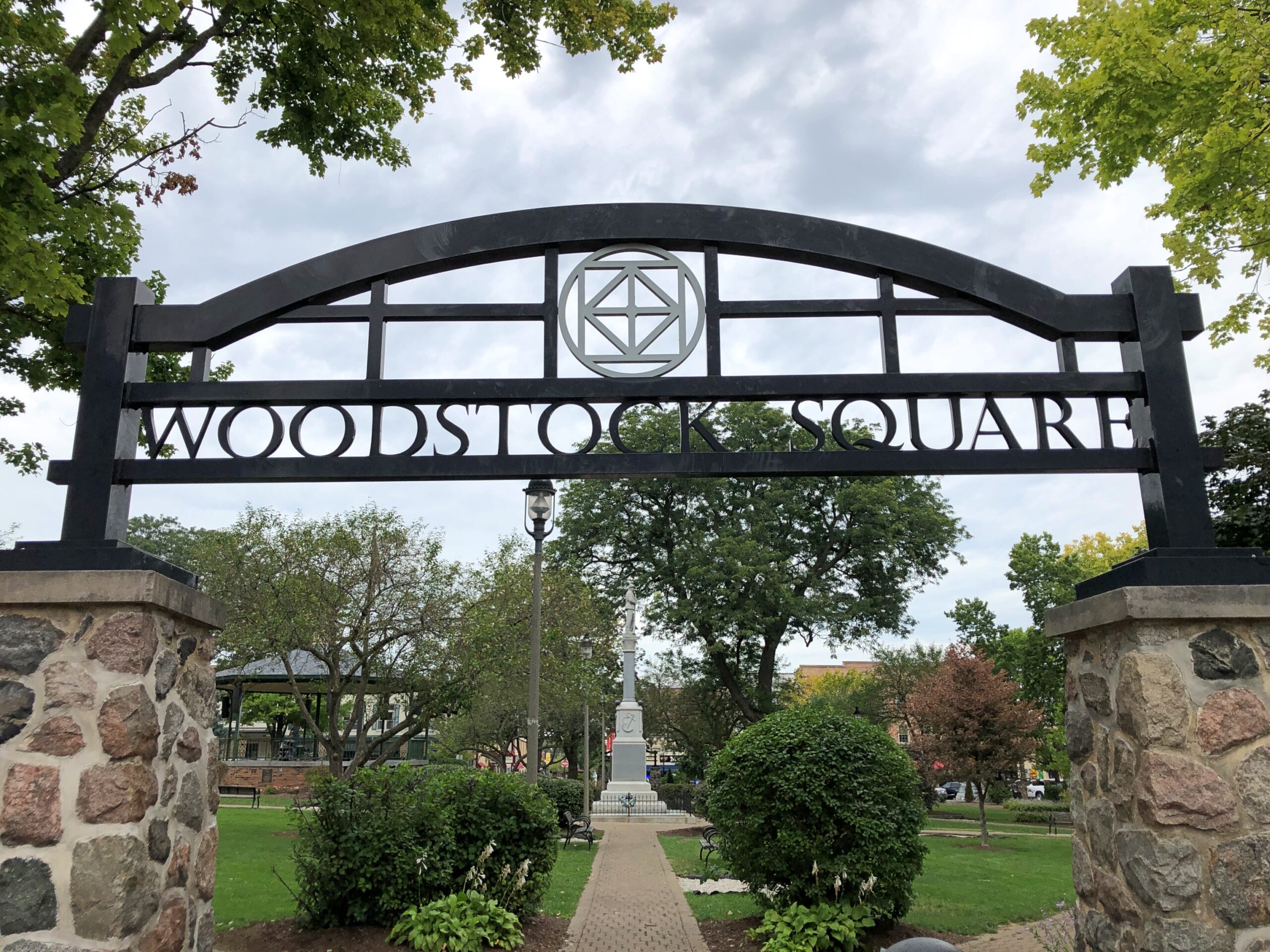
Woodstock Square

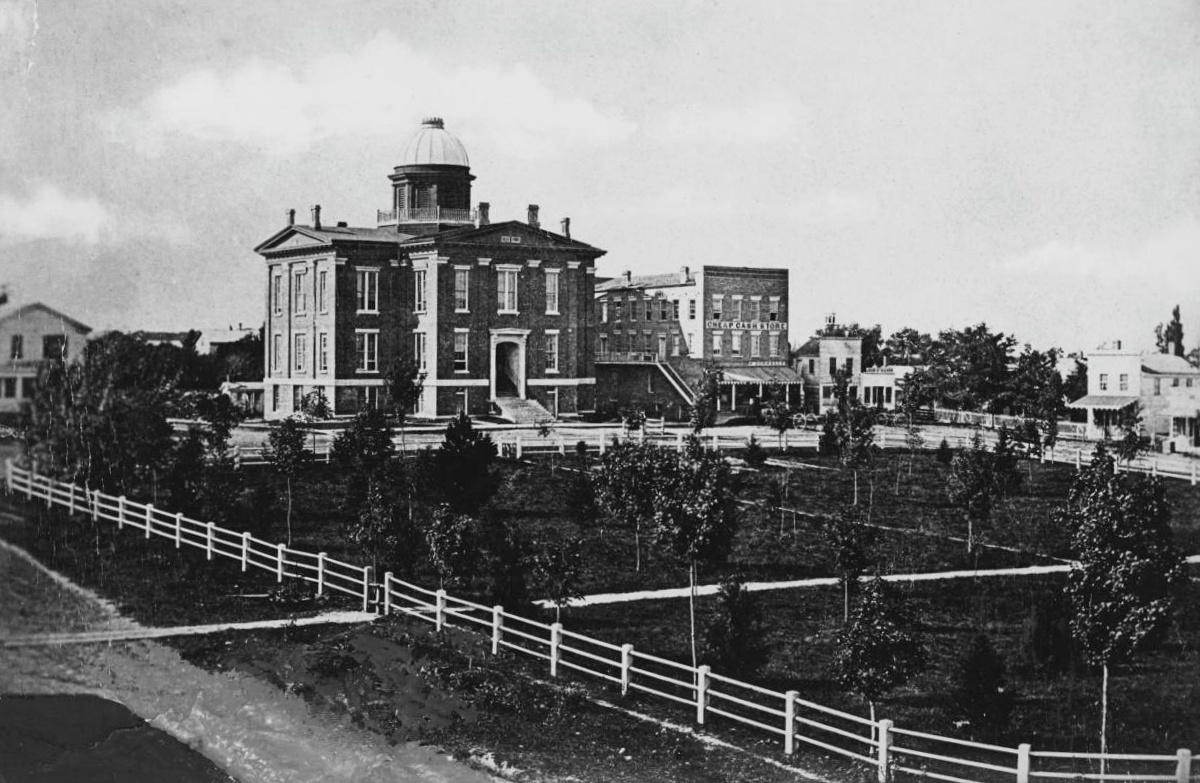
Back in 1858, someone bothered to take a photography of the spanking-new McHenry County, Illinois, courthouse – and what a bother it must have been, considering the state of camera tech at the time. Then again, it wasn’t like the photographer had to tell the building to be still.

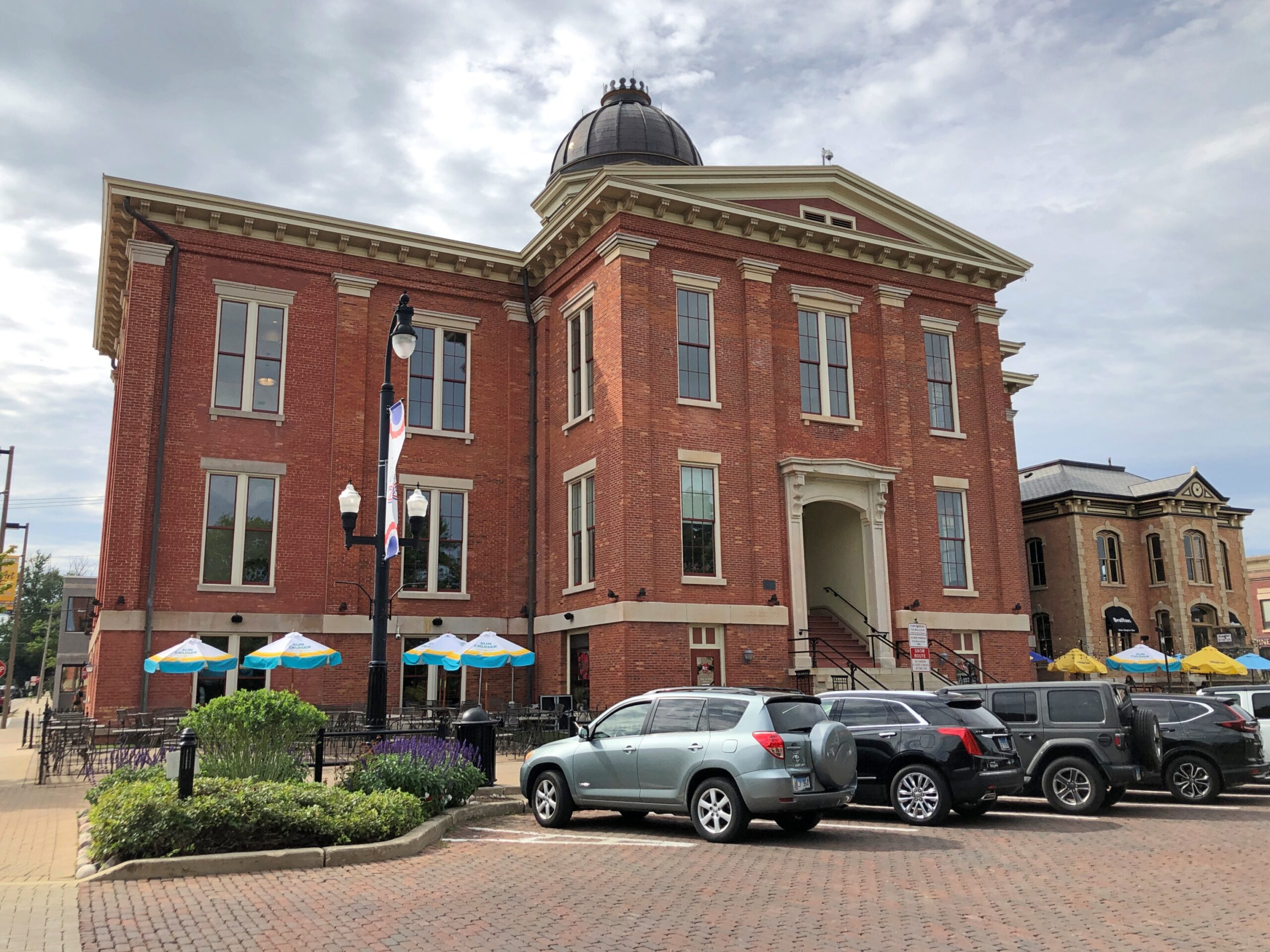
Here in 2026, point and shoot.

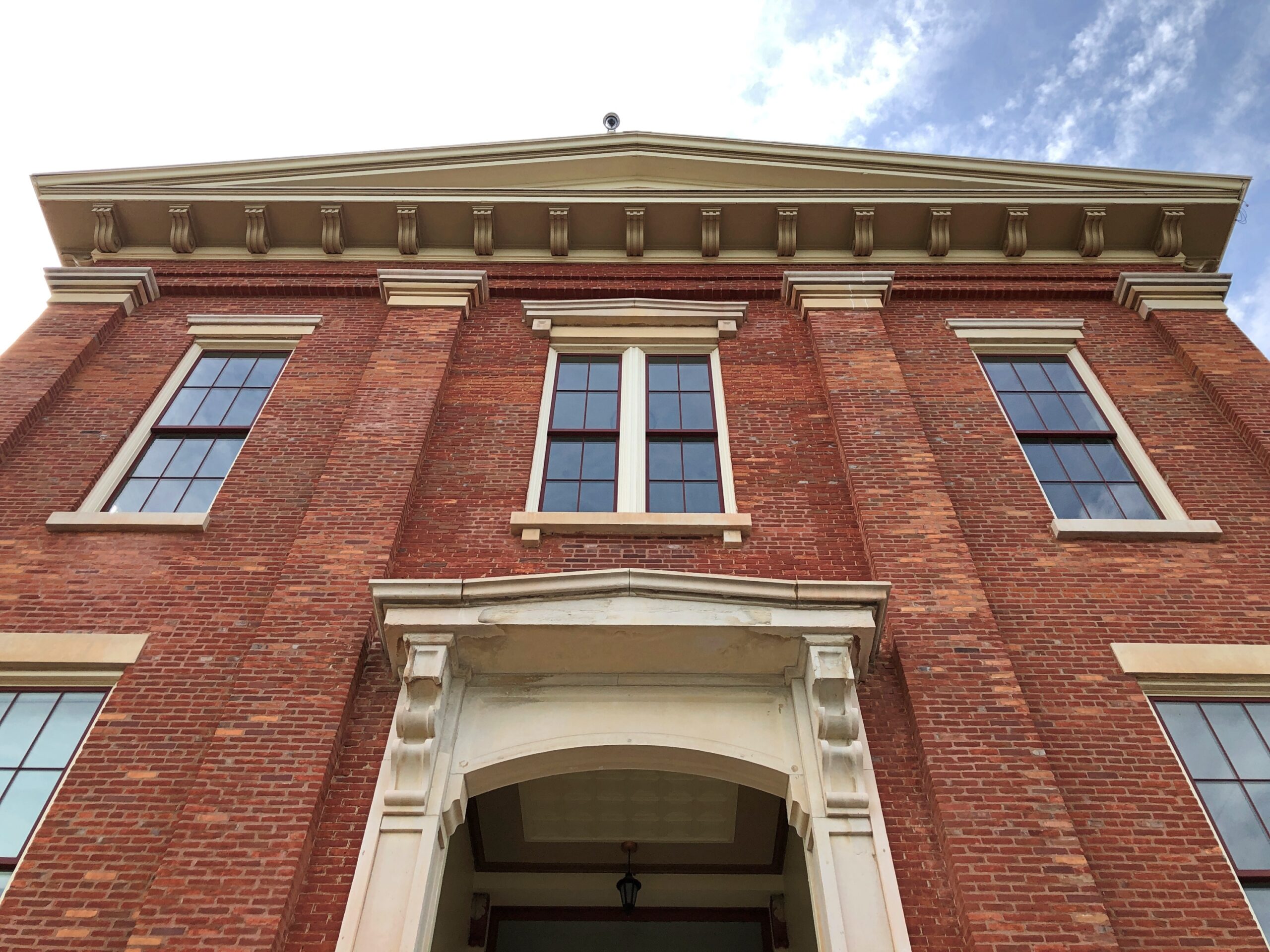
The design of John Mills Van Osdel (d. 1891), described by Wiki as the first Chicago architect. Is that so, I wondered? Whatever I’d read about him – and I did a fair amount of reading about Chicago history when I lived in the city for the first time – had long since evaporated. Biographical Sketches of the Leading Men in Chicago, Photographically Illustrated by John Carbutt (1868) tells the Van Osdel story, and quite a story it is.

The first mayor of Chicago, William Ogden, hired him to build structures in the infant metropolis, and soon Van Osdel was designing them, too. This was back in the days when someone could learn to build buildings from a builder father and later reinvent himself as an autodidact architect, with all sorts of 19th-century ups and downs along the way.

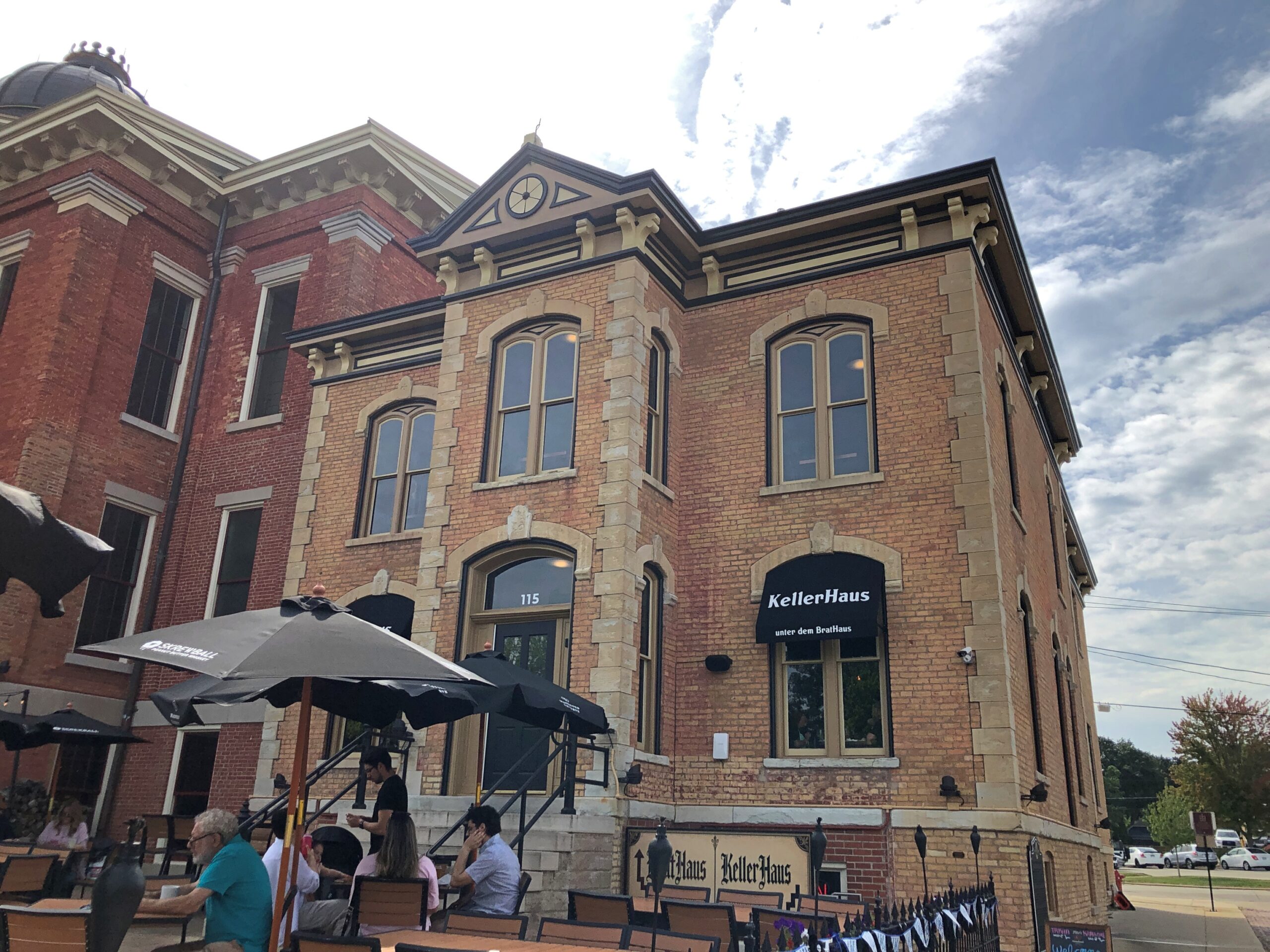
Next door, a smaller building, but also handsome.

Formerly where the McHenry County sheriff lived, with a jail in the basement. Now home to KellerHaus, a local brewery and restaurant.

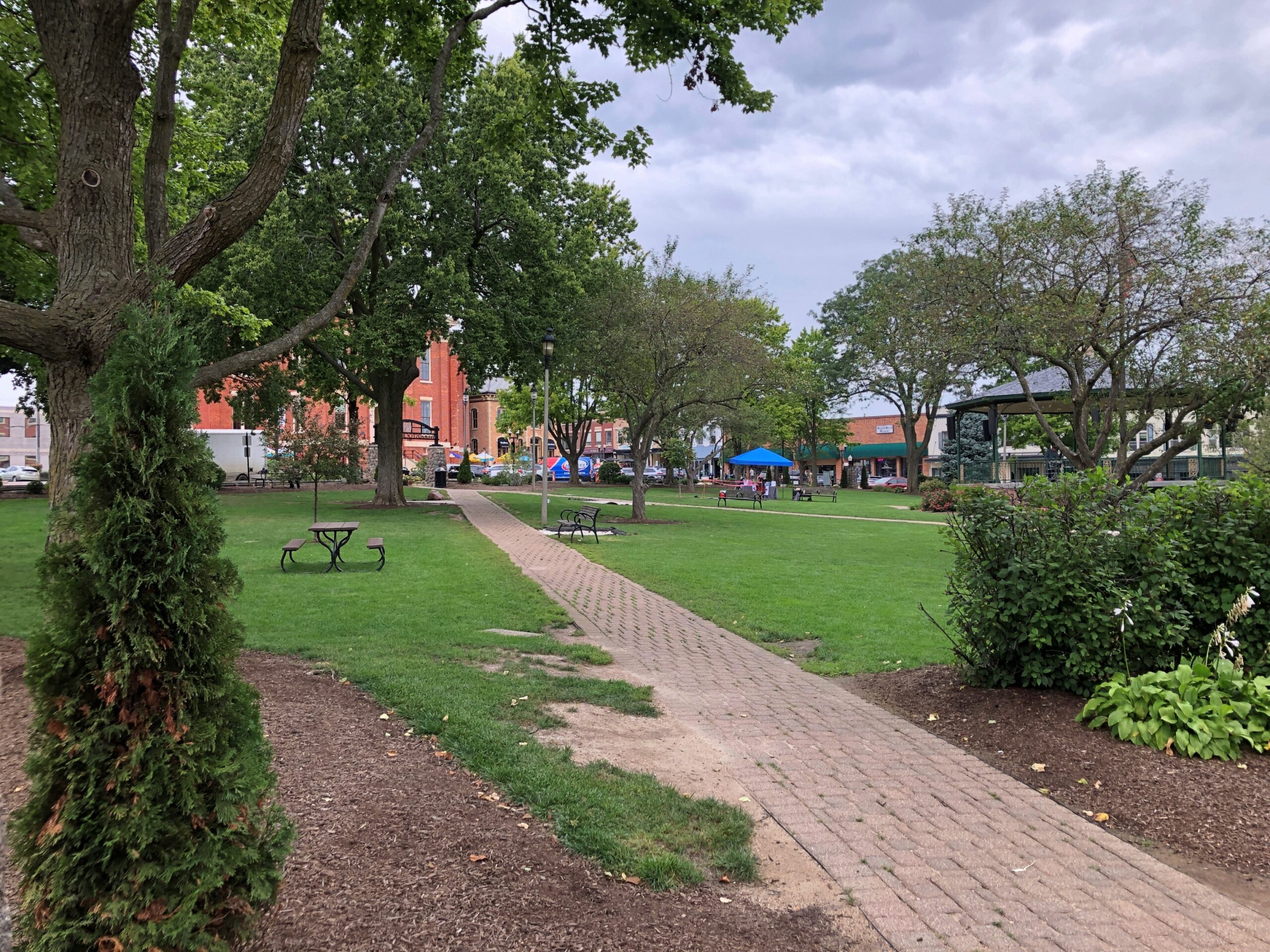
County government moved out of the building more than 50 years ago, to someplace less aesthetic but not too bad. Later, Woodstock Square (my guess would be late 19th century) took its present form, a green crossed by sidewalks.

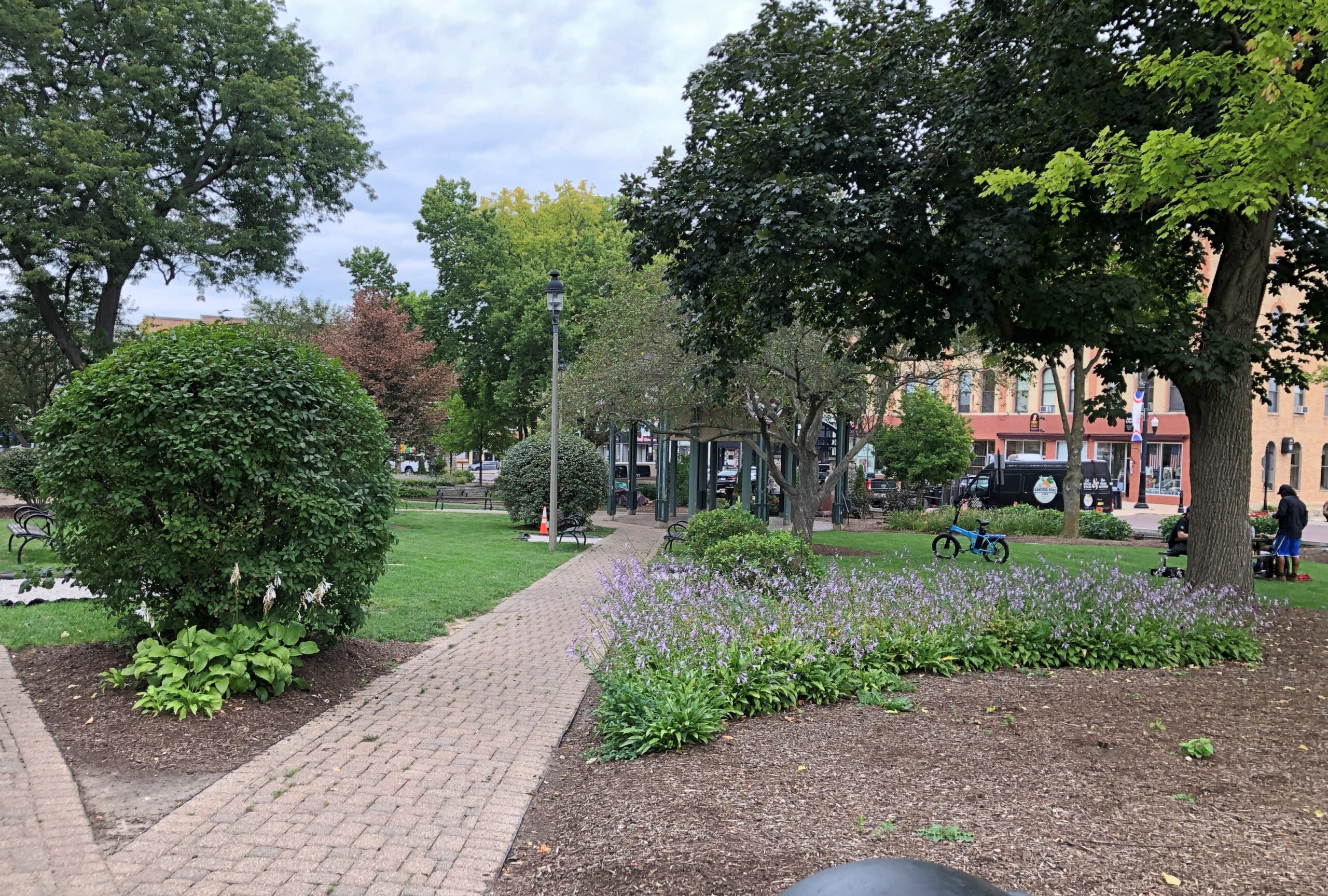
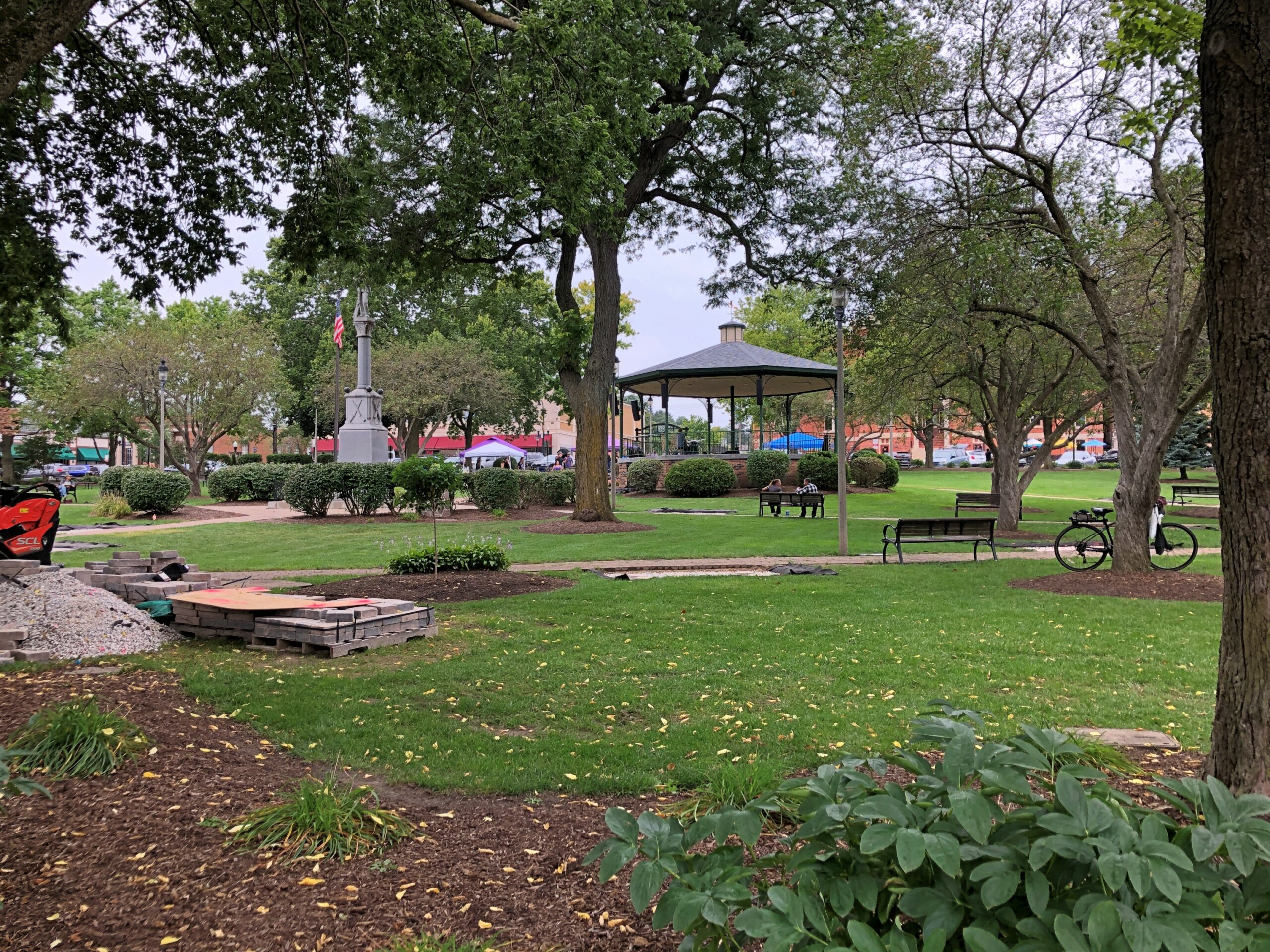
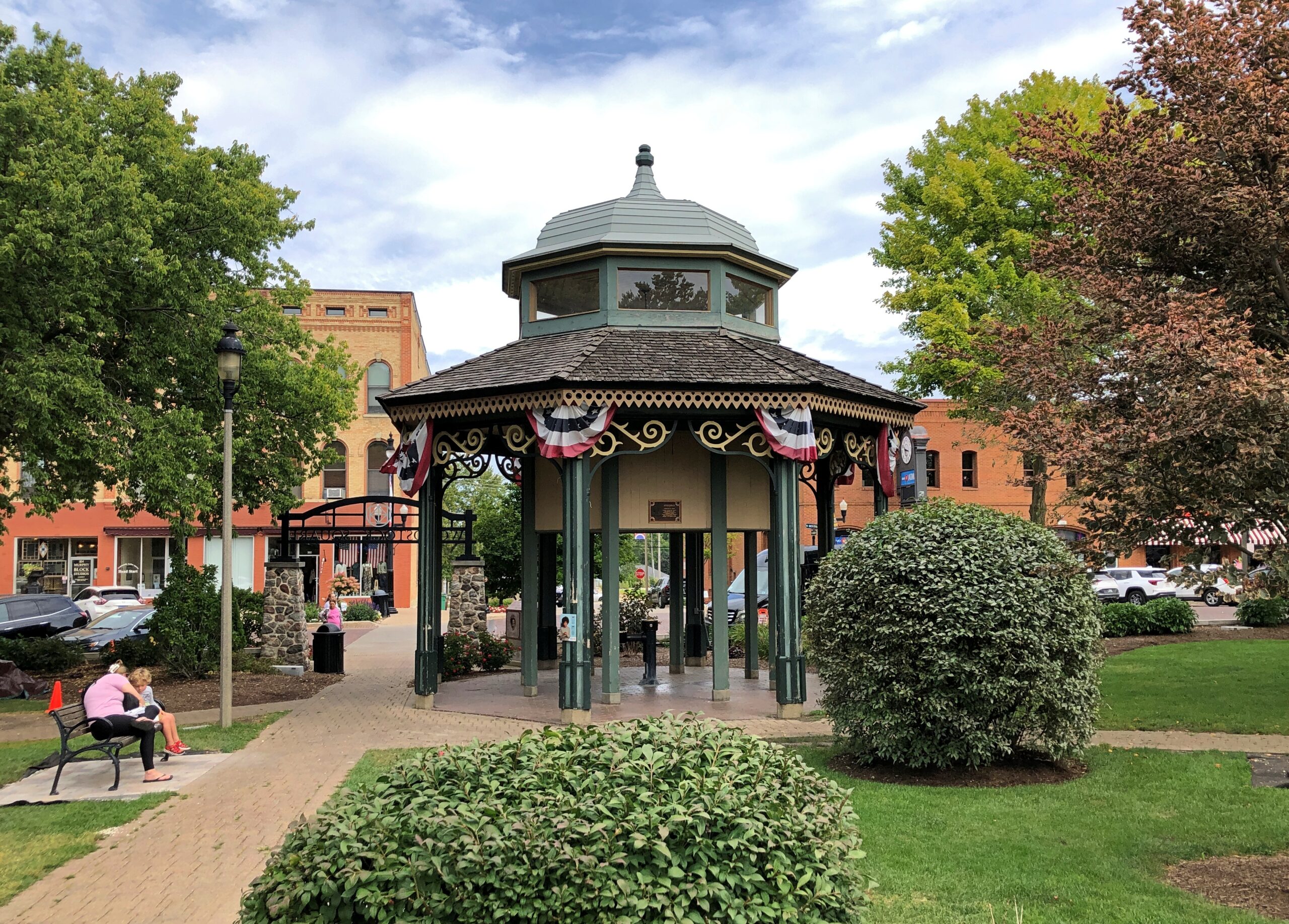
The park is home to a gazebo. And a bandstand. Or two gazebos or two bandstands. Authorities disagree about which is which, and entire academic careers have been staked on determining the difference. Or not, I made that up.

Woodstock Square, Illinois

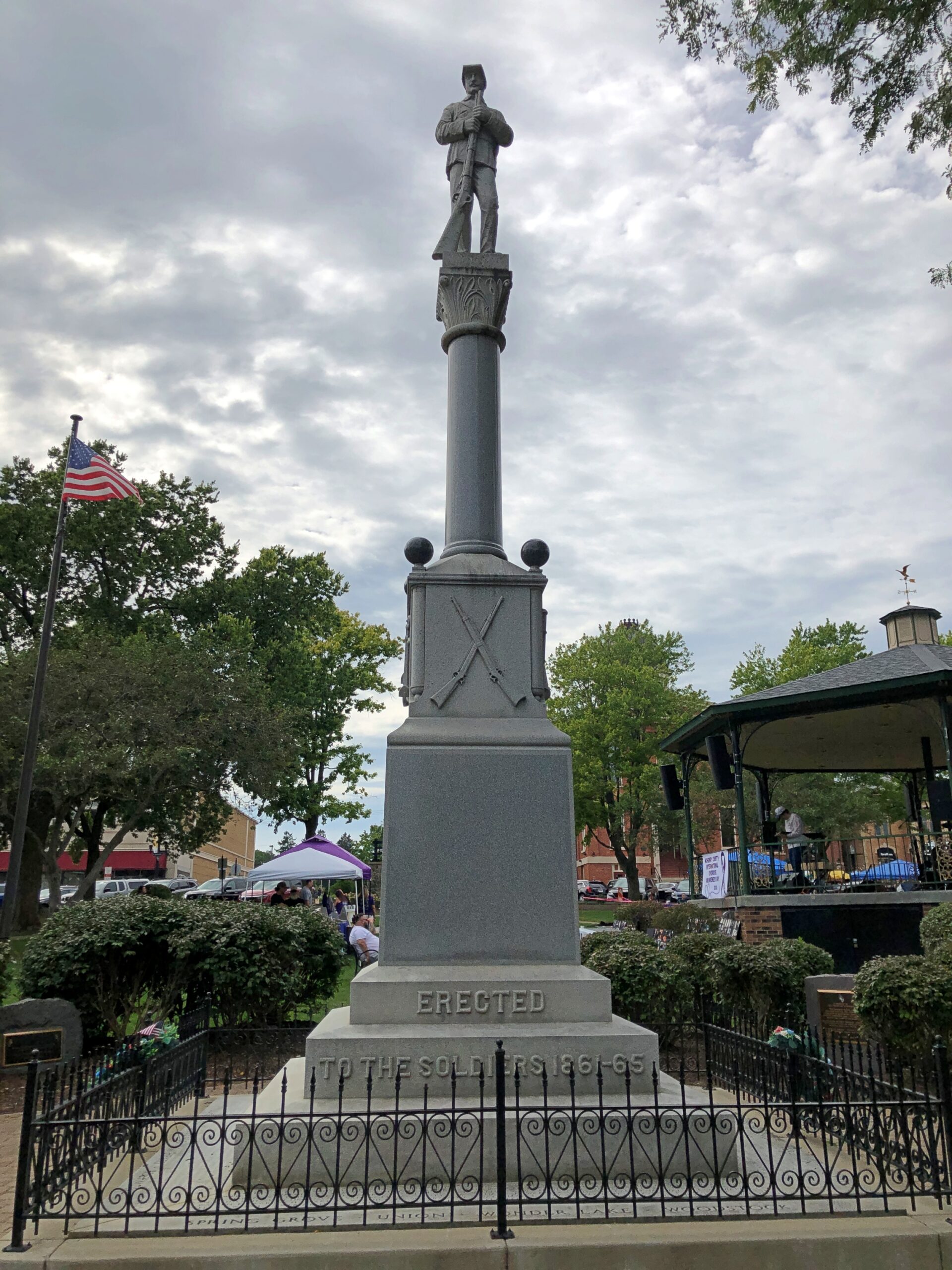
A memorial to the men in blue from McHenry County, erected in the “We’d better get moving on this” year of 1911.

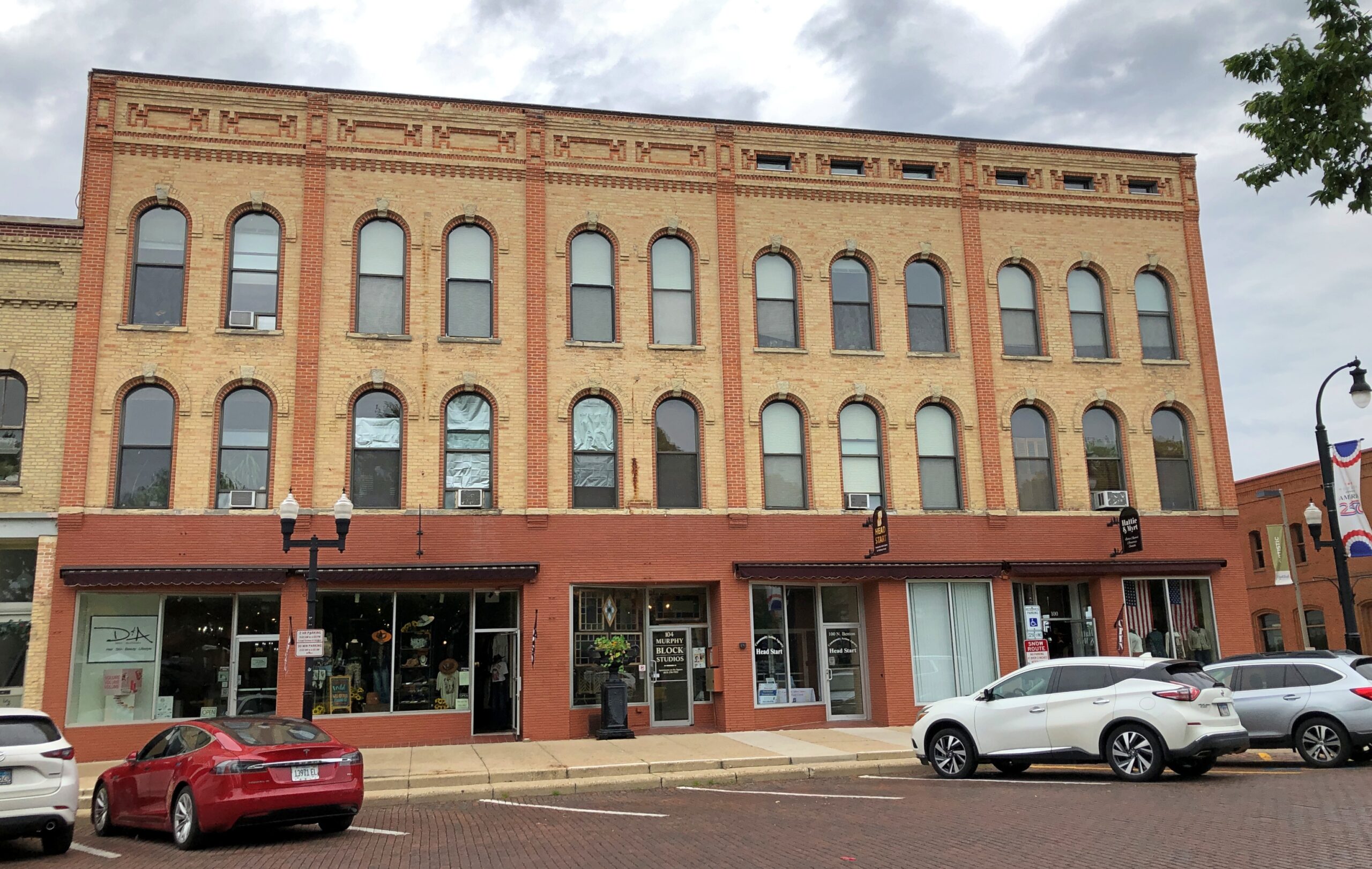
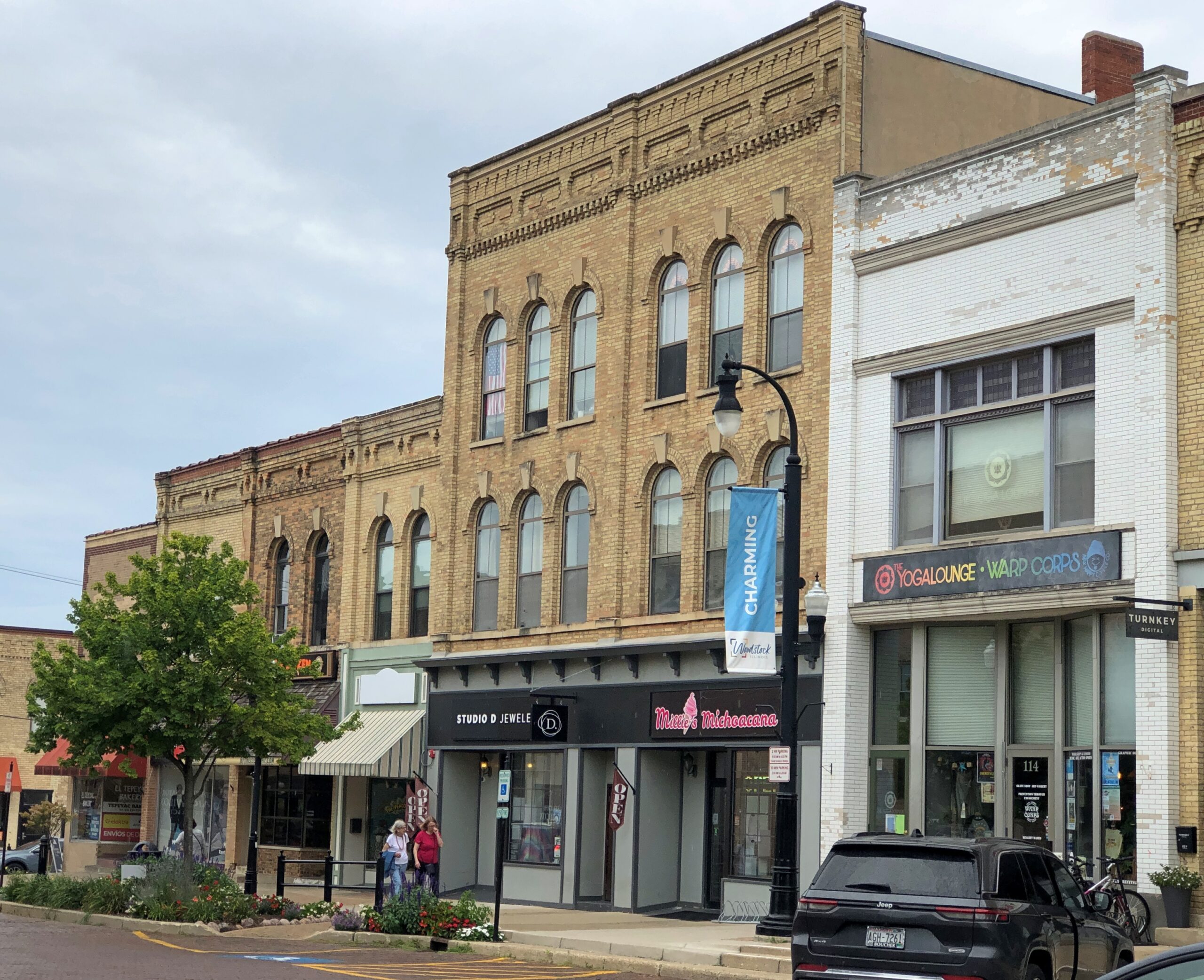
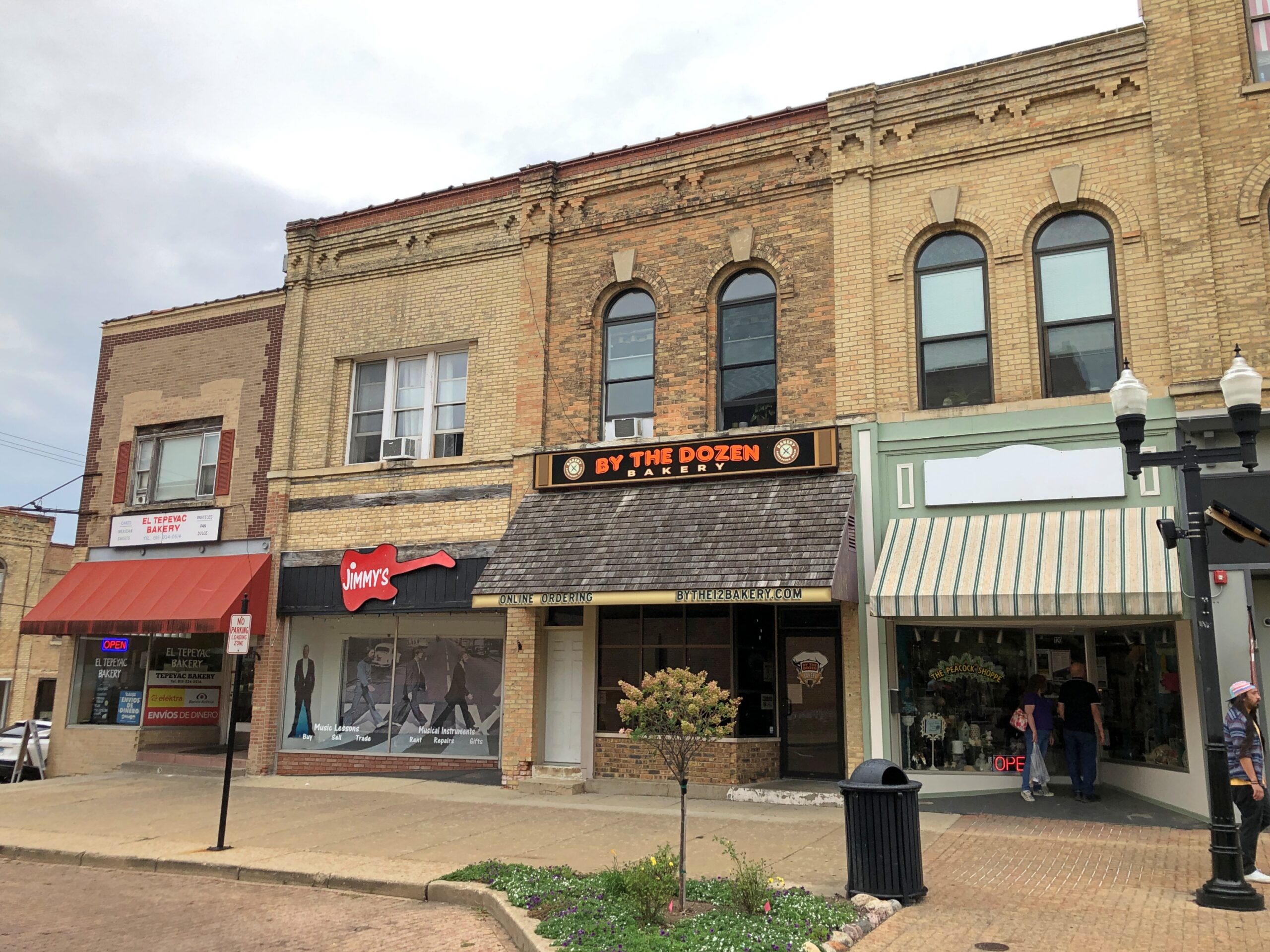
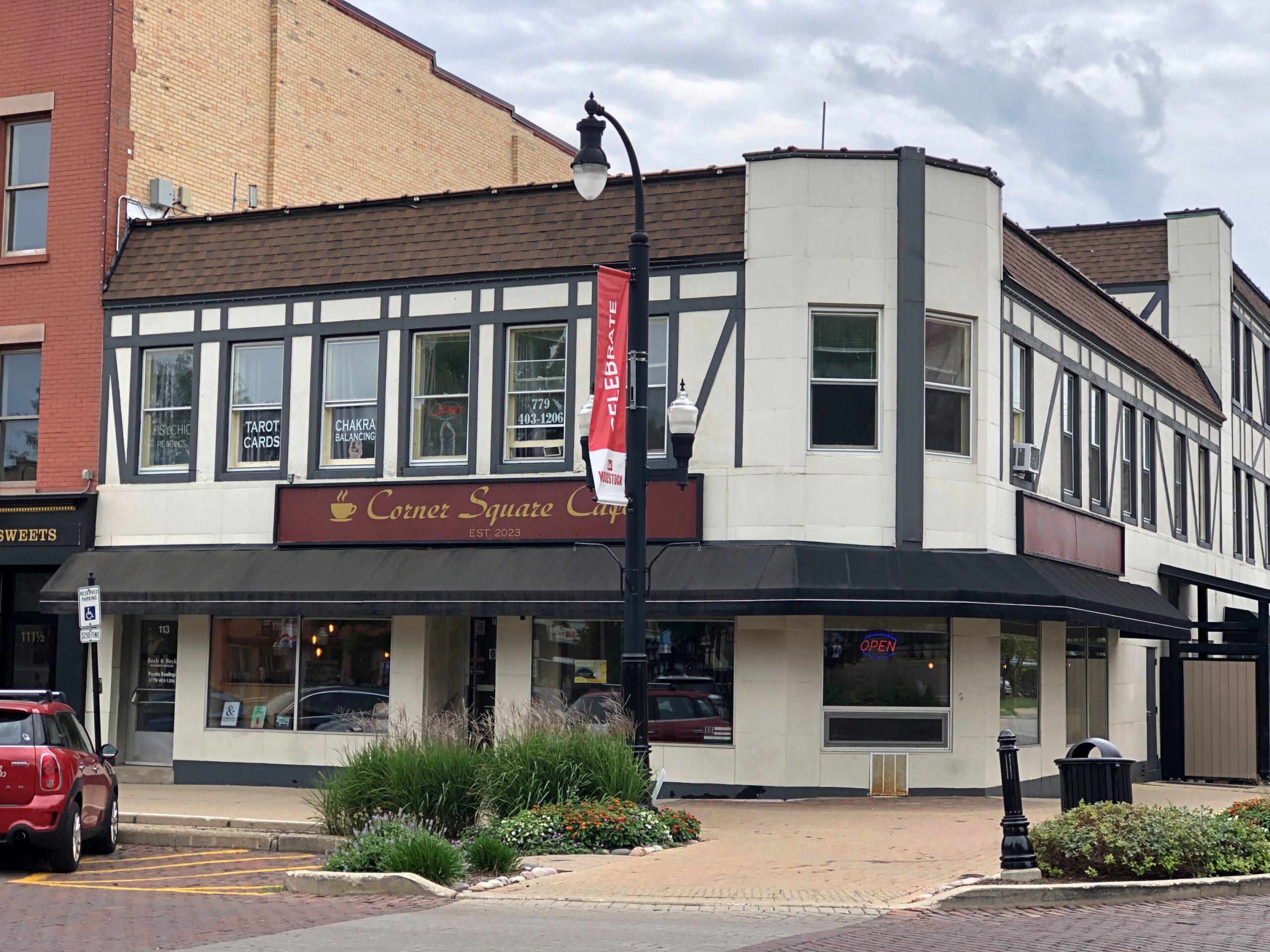
Woodstock Square is ringed – squared – by some handsome commercial structures of pre-Great War vintage, mostly.

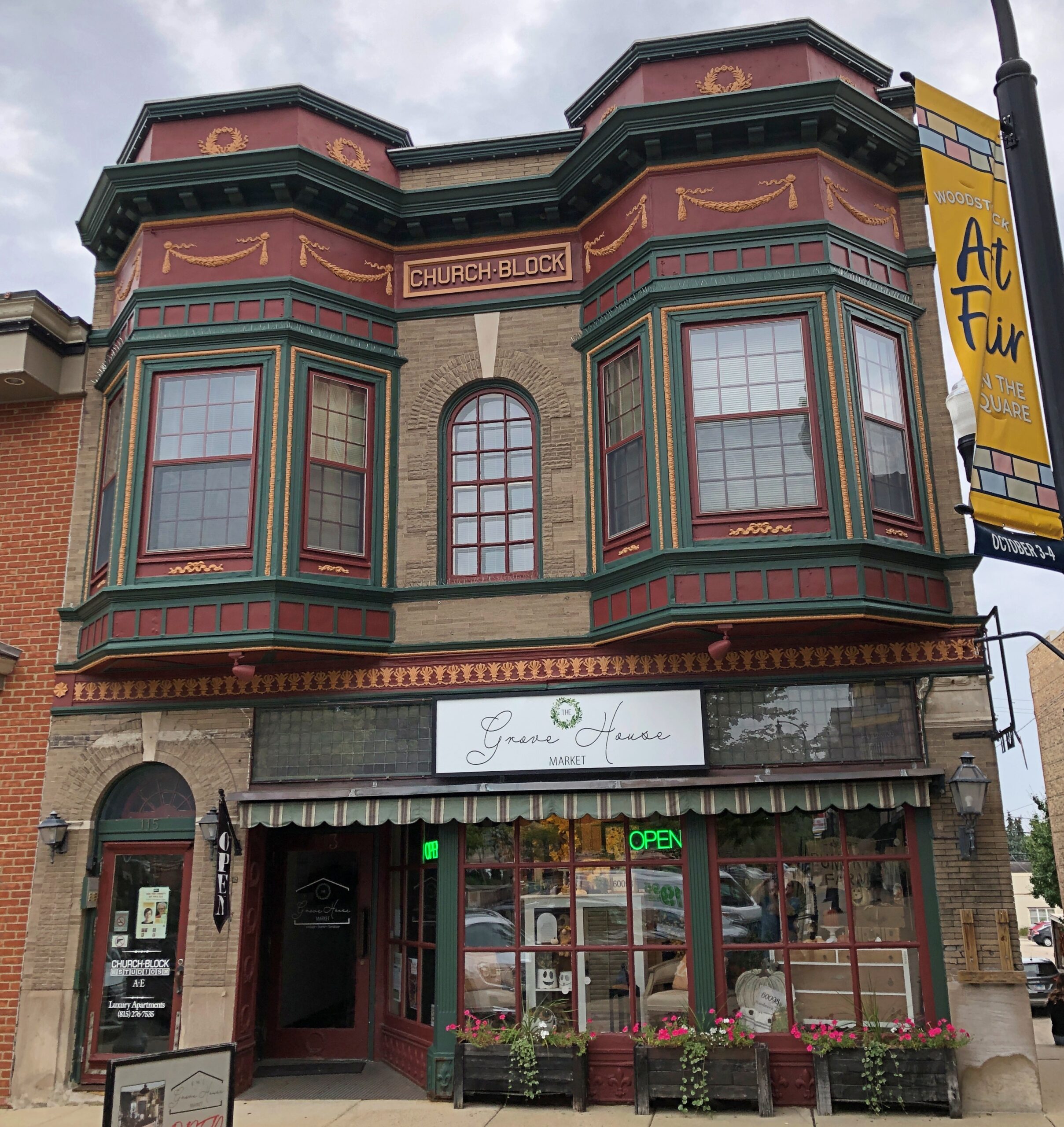
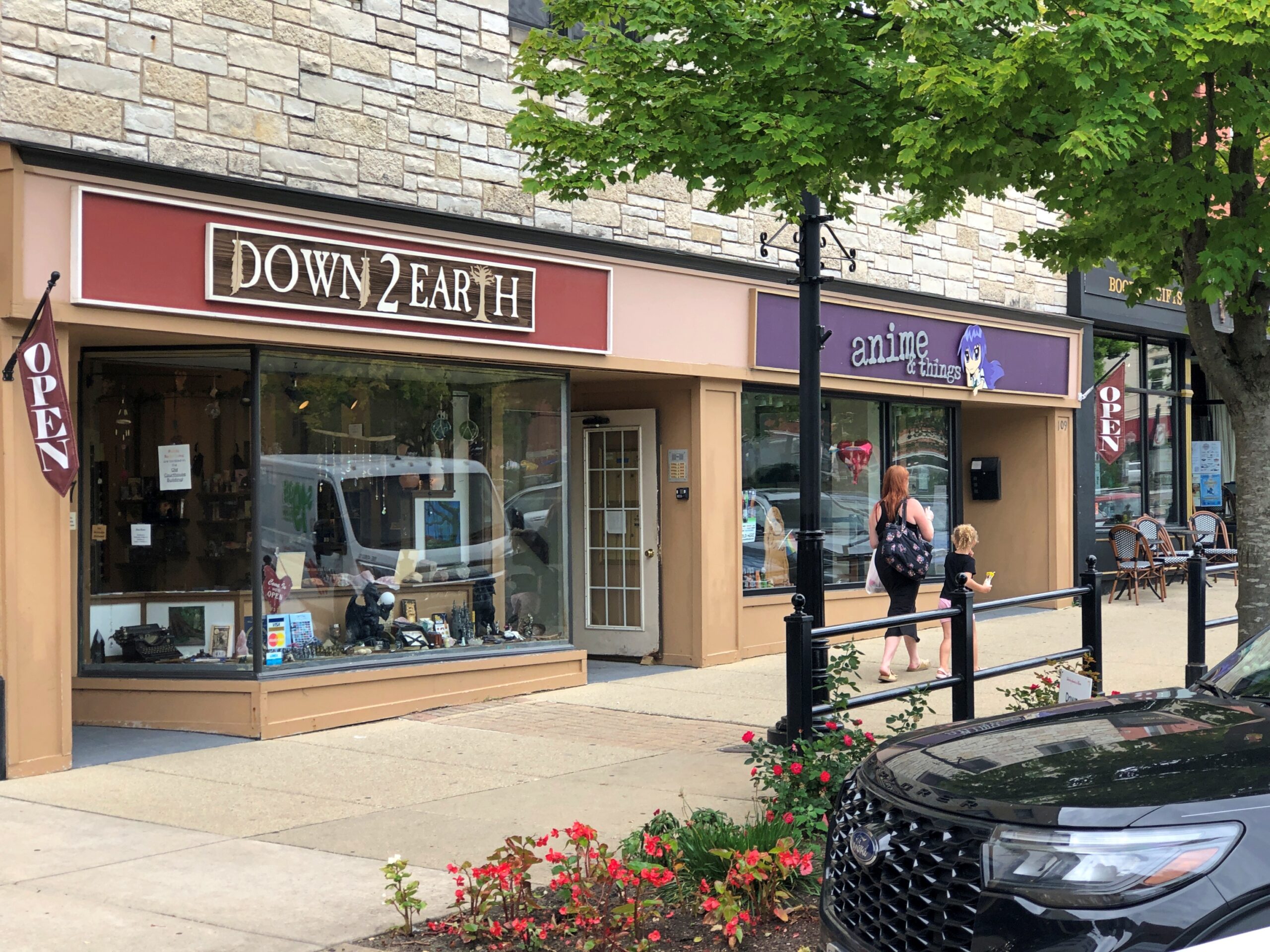
Including a fair amount of boutique-ification.

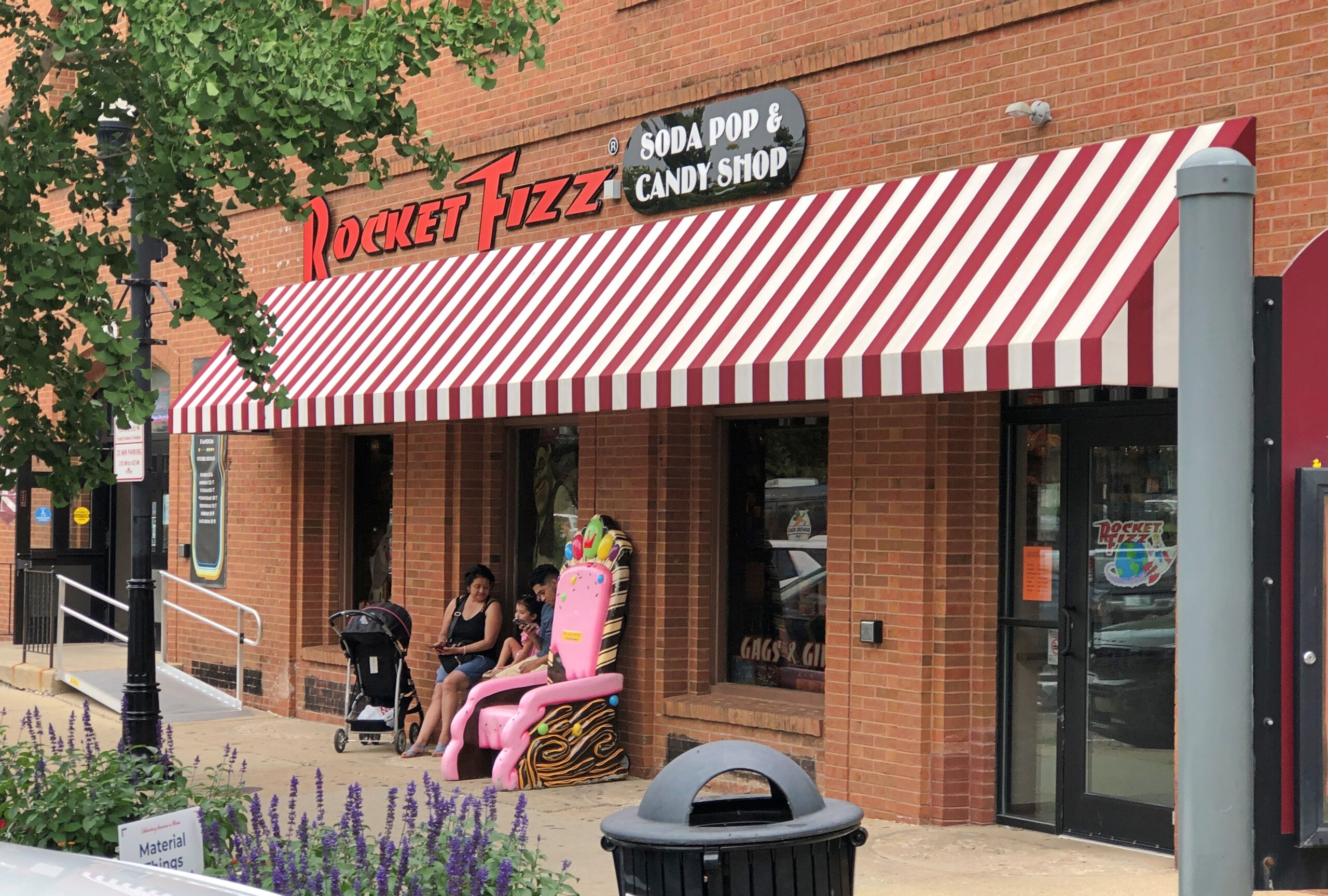
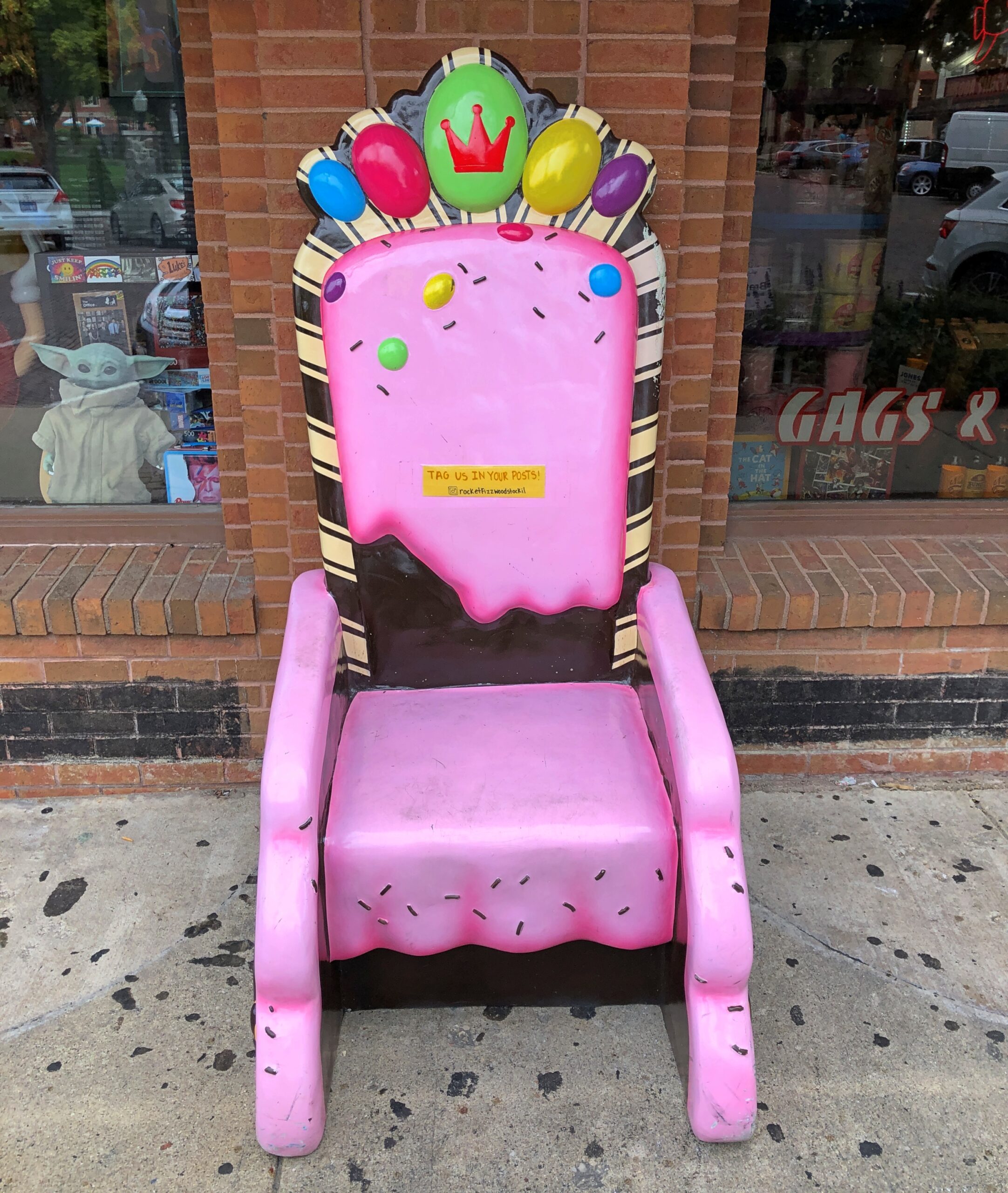
Which makes for some colorful spots.

Smaller, but adding just as much to the character of the square.

We had lunch on the square. At a diner along traditional lines, and tastier for it.

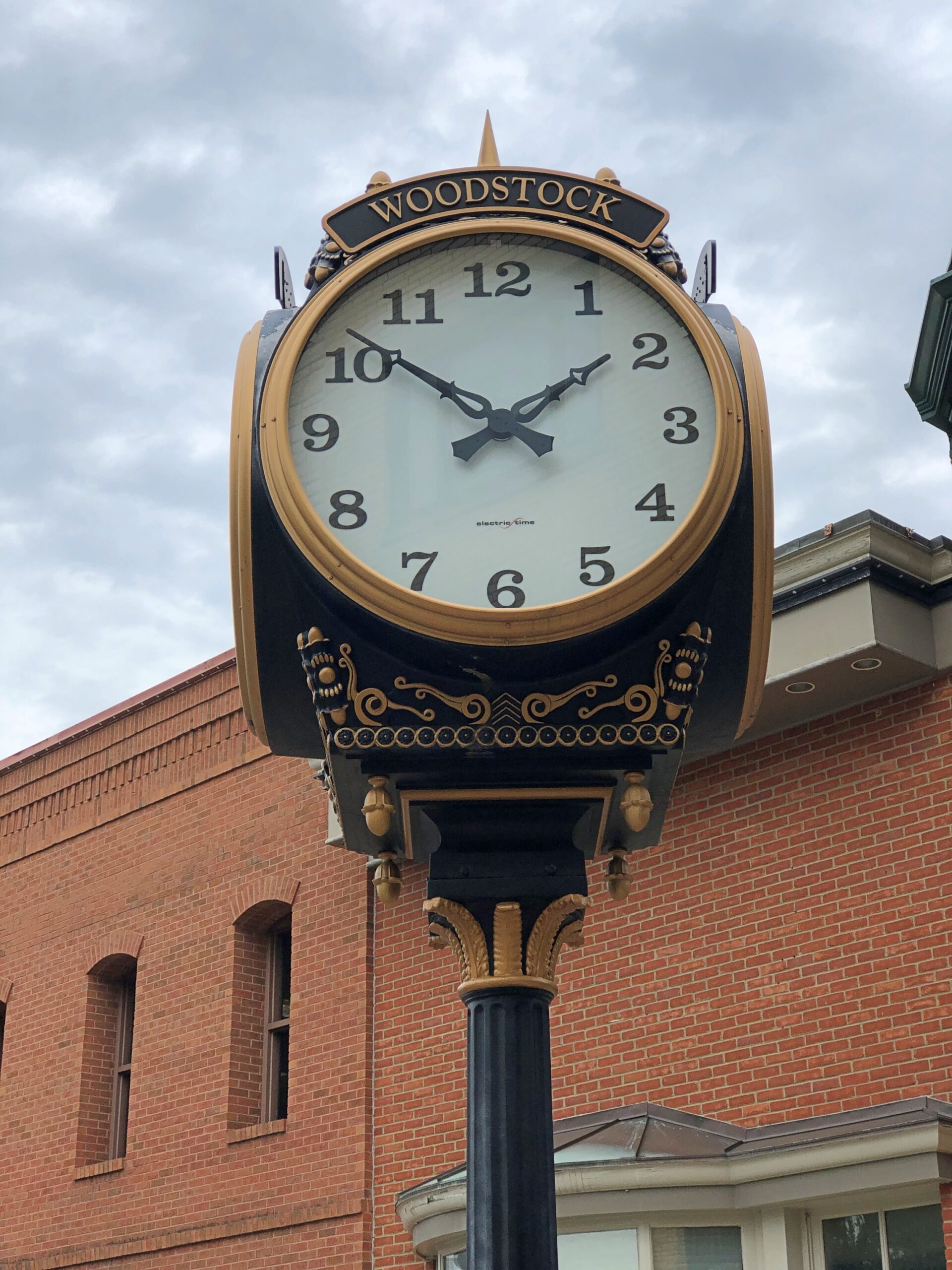
Afterward, the square told us the time.

Note that Bill Murray isn’t trapped in this clock face. Tying in with the movie is only going to go so far.
Woodstock Opera House 2026

Thunderstorms rolled through much of the last day of August, but not consistently – the sun would be out for a while, then a new one would rumble through, with heavy downpours for a quarter hour and then gone – as if to remind us who live on the ground that it’s been an intermittently wet summer. Which is going away now. Summer is, that is. We’ll see about the wetness.

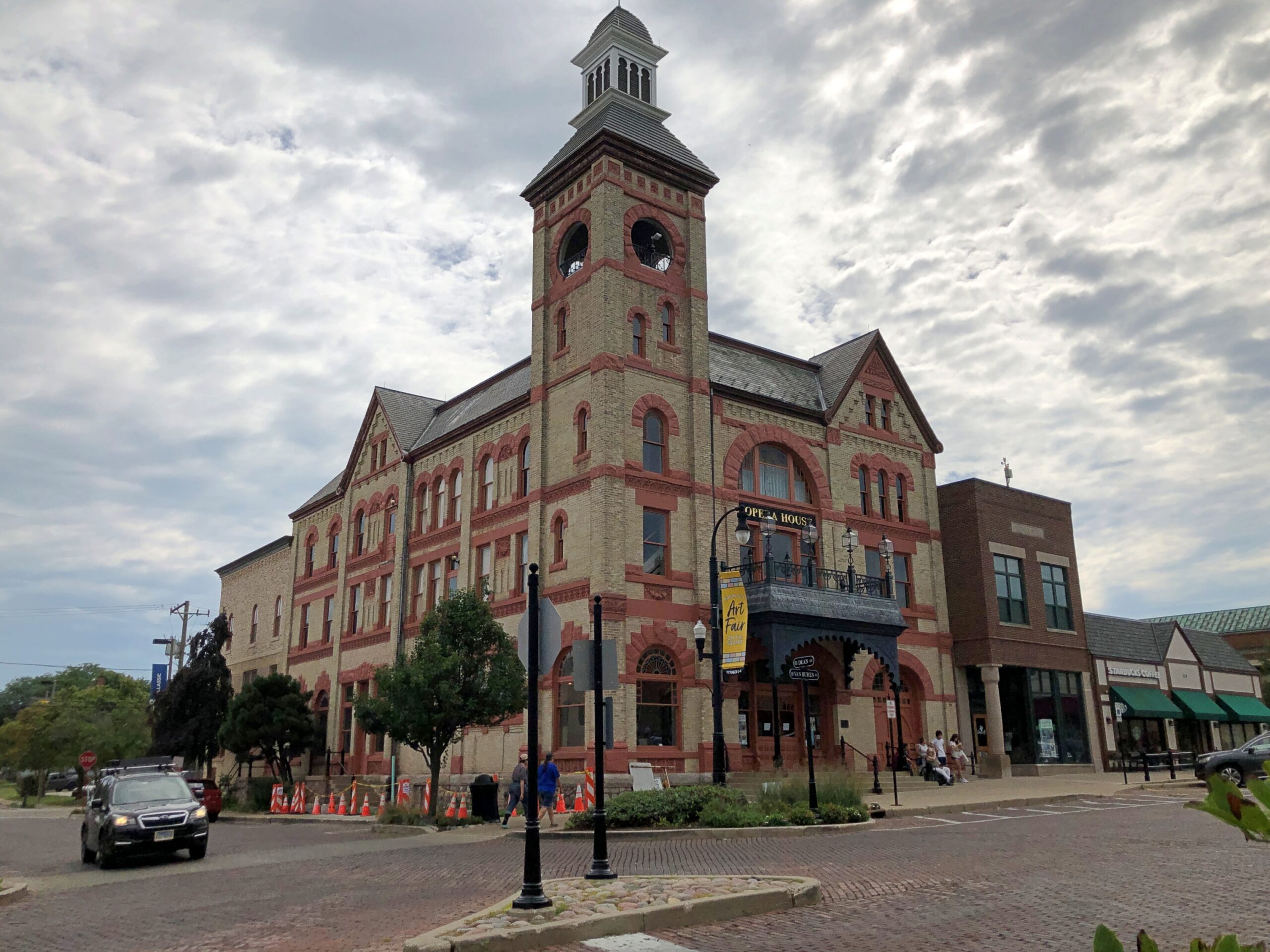
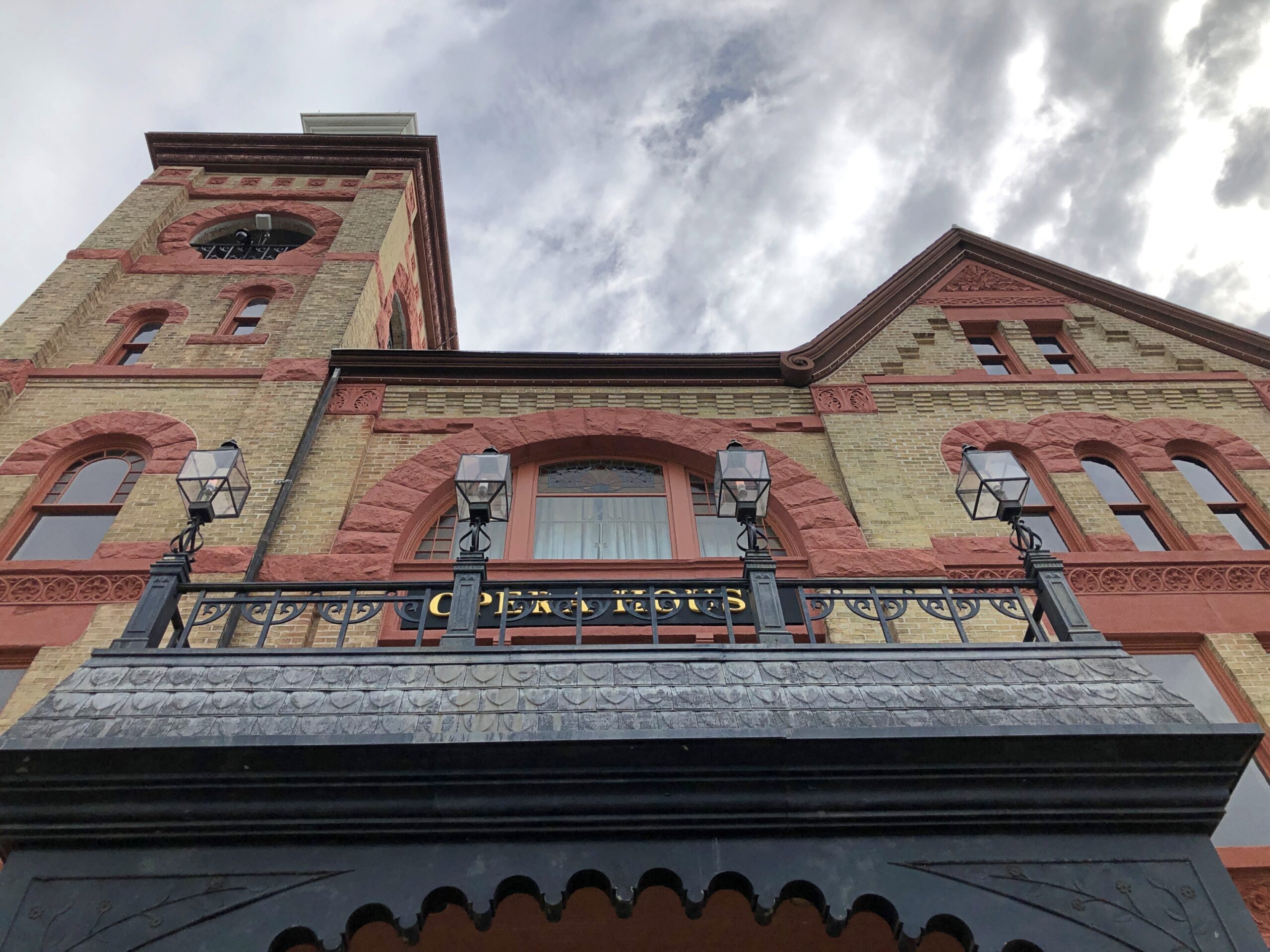
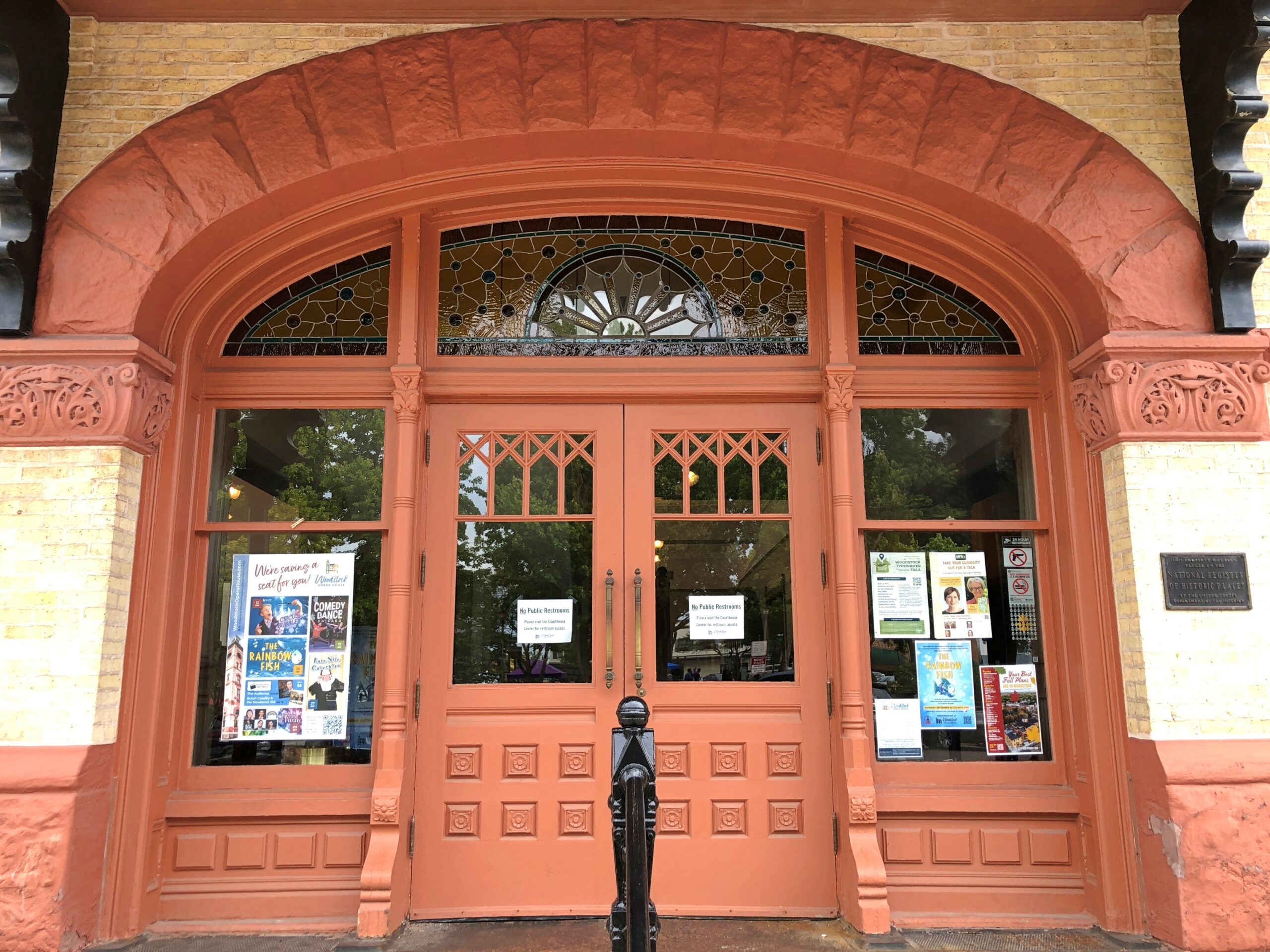
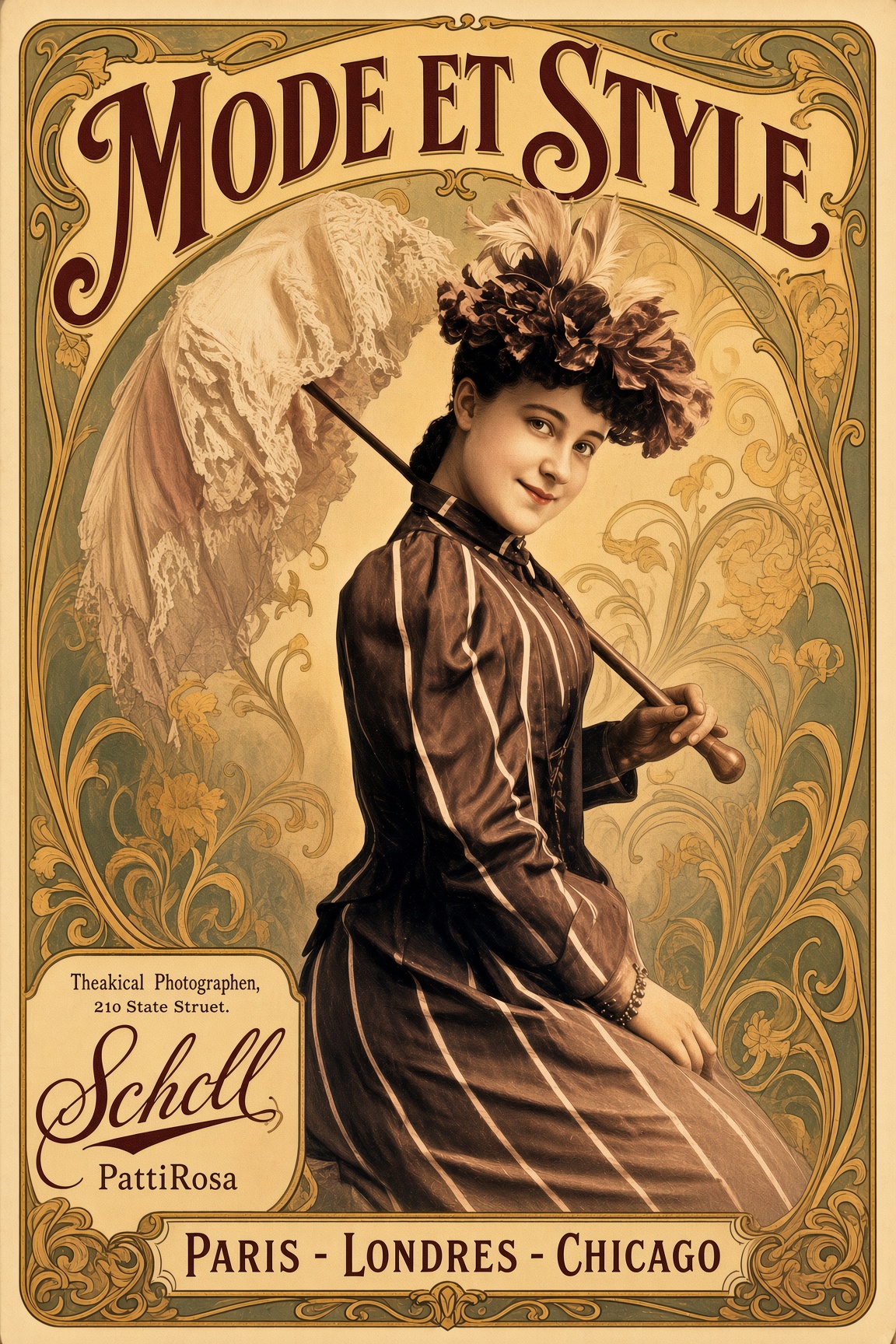
The Woodstock Opera House sent me down a peculiar rabbit hole today. Just who, I wondered, was Patti Rosa? But first, some views of the structure, completed in 1890 and a grand artifact from the period, designed by Elgin architect Smith Hoag, but built by local contractor Simon Brink.

“The year was 1888 and [Woodstock] Alderman WW. Cook made the motion to purchase a lot on the downtown square in Woodstock, which had remained vacant since a fire in 1871,” according to the modern City of Woodstock web site. “Having grown tired of holding council meetings in a local attic, the proposal was to build a City Hall worthy of the town and its citizens. However, when put to a vote the motion came to a tie and it rested on Mayor Merritt Joslyn to cast the deciding vote. Of course he voted in the affirmative…”

“…on September 4, 1890 the grand opening was held with the Patti Rosa Player’s performance of Margery Daw.

“Throughout the next few decades the building functioned as the center of activity for Woodstock and McHenry County. The City offices, library, police and fire department occupied the first floor of the building and the Opera House was contained in the second and third floors. With a capacity of almost 700 movable seats, the Opera House functioned as a public space for a variety of activities including, theatrical events, concerts, weddings, dances, wrestling matches, the annual strawberry festival and graduation commencements to name a few.”

In more recent years, the place has been a venue for live entertainment. I’ve seen a number of performances myself there over the years, such as Al Stewart in 2012.

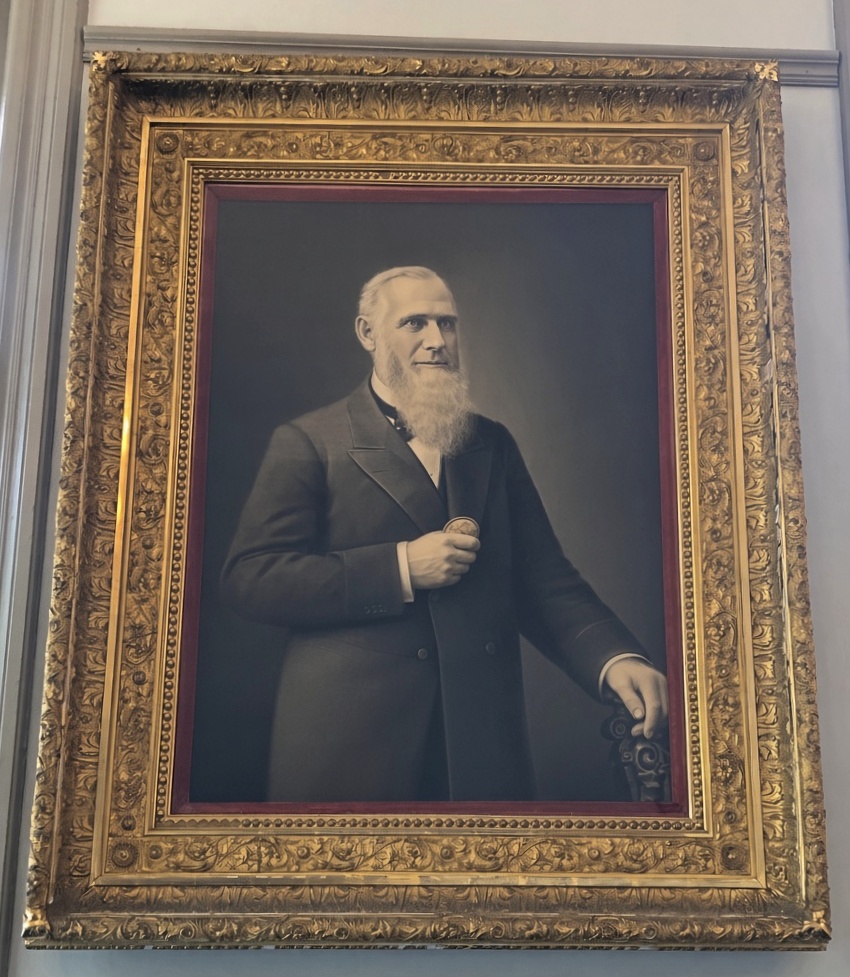
I was glad to see a portrait of Mayor Joslyn in the lobby of the opera house. Without him, it might not exist at all, or in some other, less elegant form. (I removed the glare from the image below.)

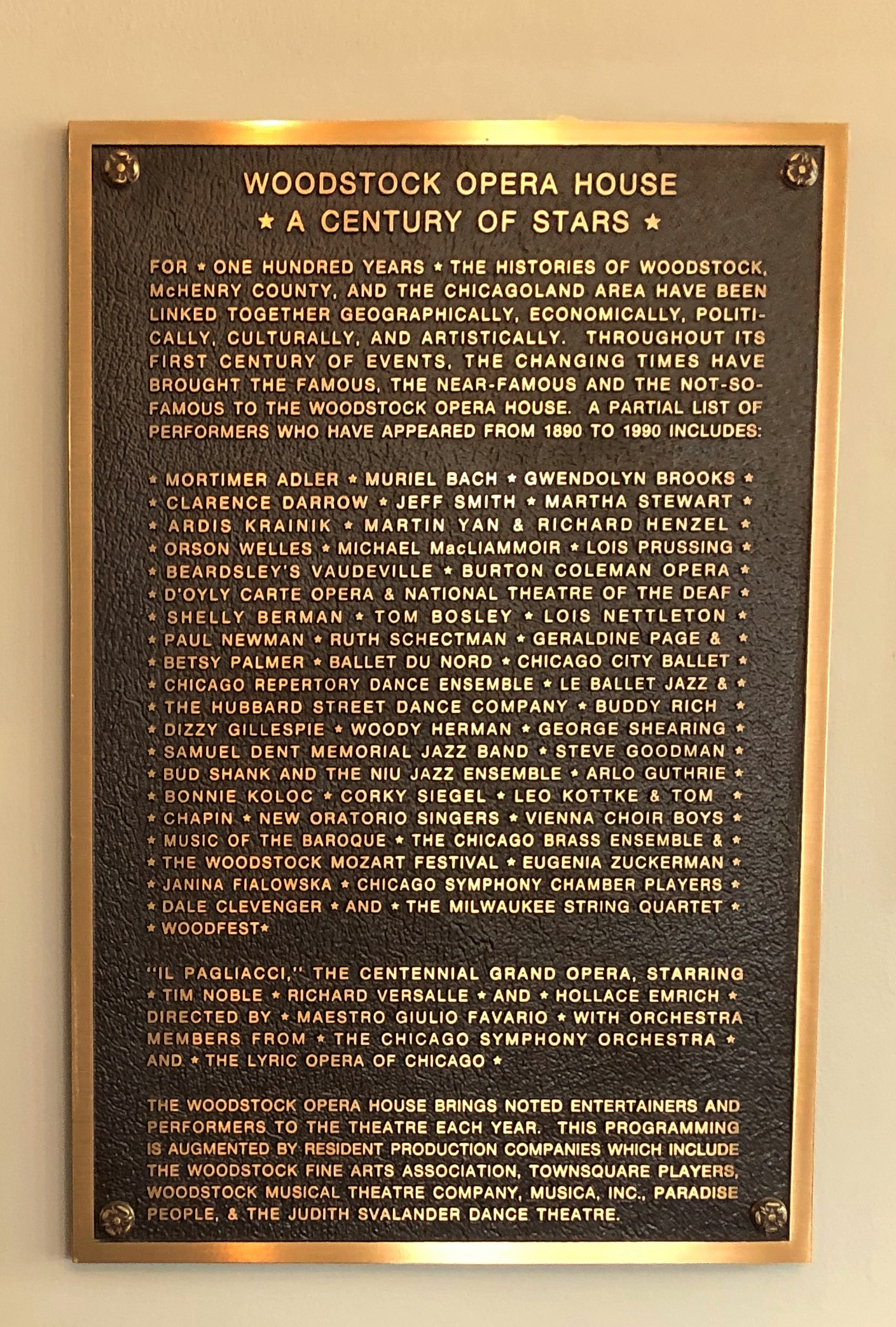
The theater puts its greatest hits on a plaque.

But not Patti Rosa. Who would expect that? First is only first and that was probably by chance. Information about Patti Rosa is slender, at least to a not-rigorous amount of Googling. But there is some, such as a review of one of her shows in London.
Patti Rosa at the Jodrell Theatre, London, January 1889:

Patti Rosa, after much preliminary puffing, and accompanied by a newspaper called the Patti Rosa Illustrated News, of which copies were given away on the first night, has made her appearance at the hitherto unlucky Jodrell. Bob, the hotchpotch she appears in, is not a remarkable work of dramatic art; but it is a filling vehicle for the eccentricities, peculiarities, and whimsicalities of the fair and plump Patti, who sings, dances, coquettes, and banjoes her way into the good graces of a few easily-pleased Americans. In her line of business she is, however, what is called ”clever.”

The Man of the World, London, Saturday, 12 January 1889)

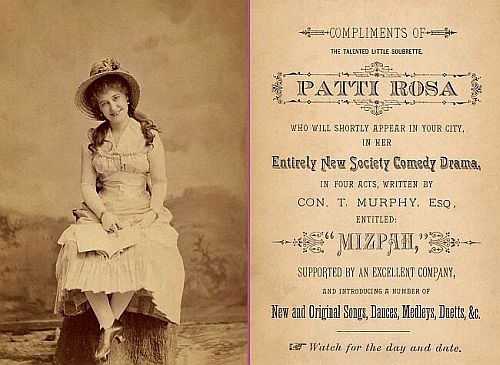
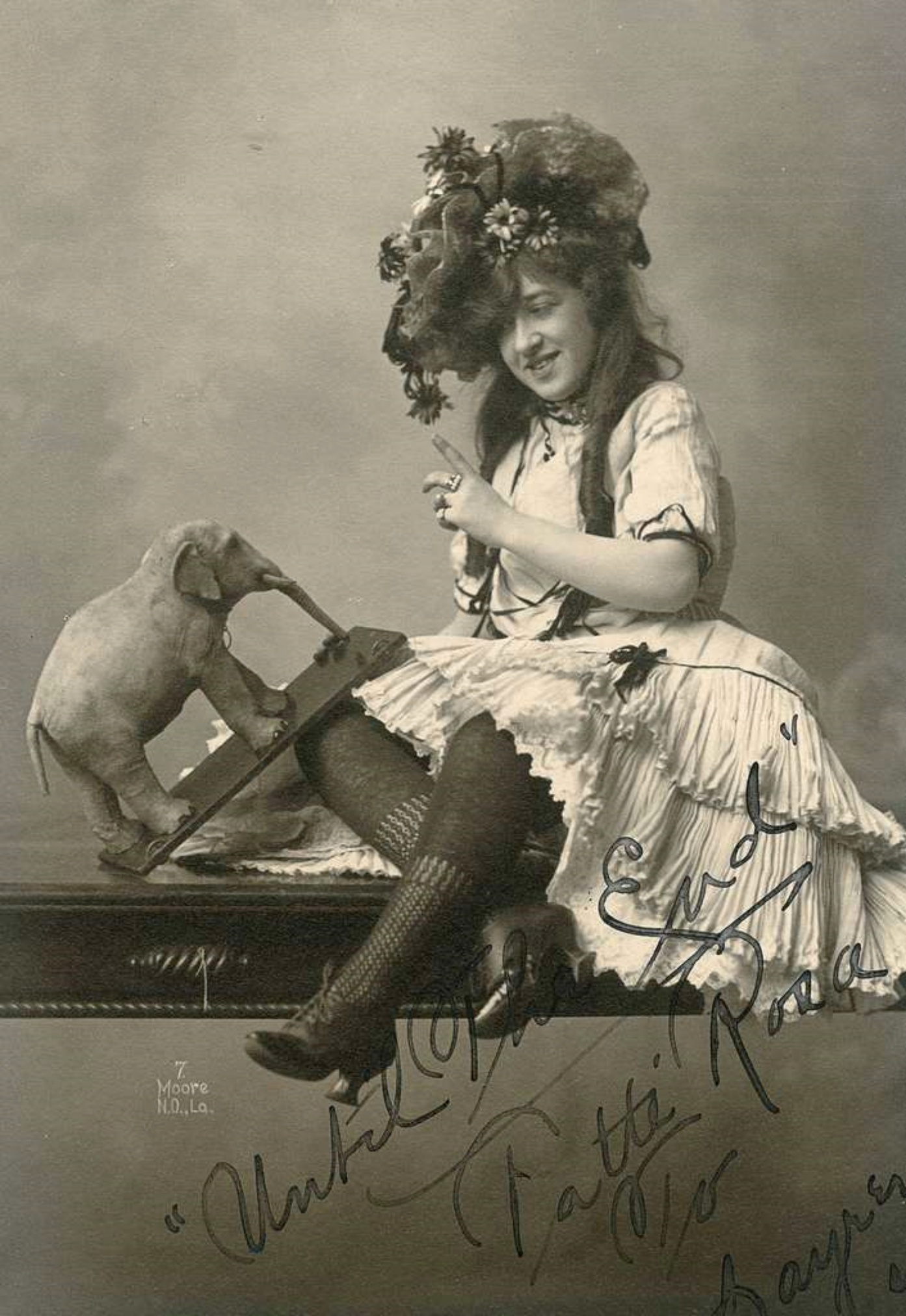
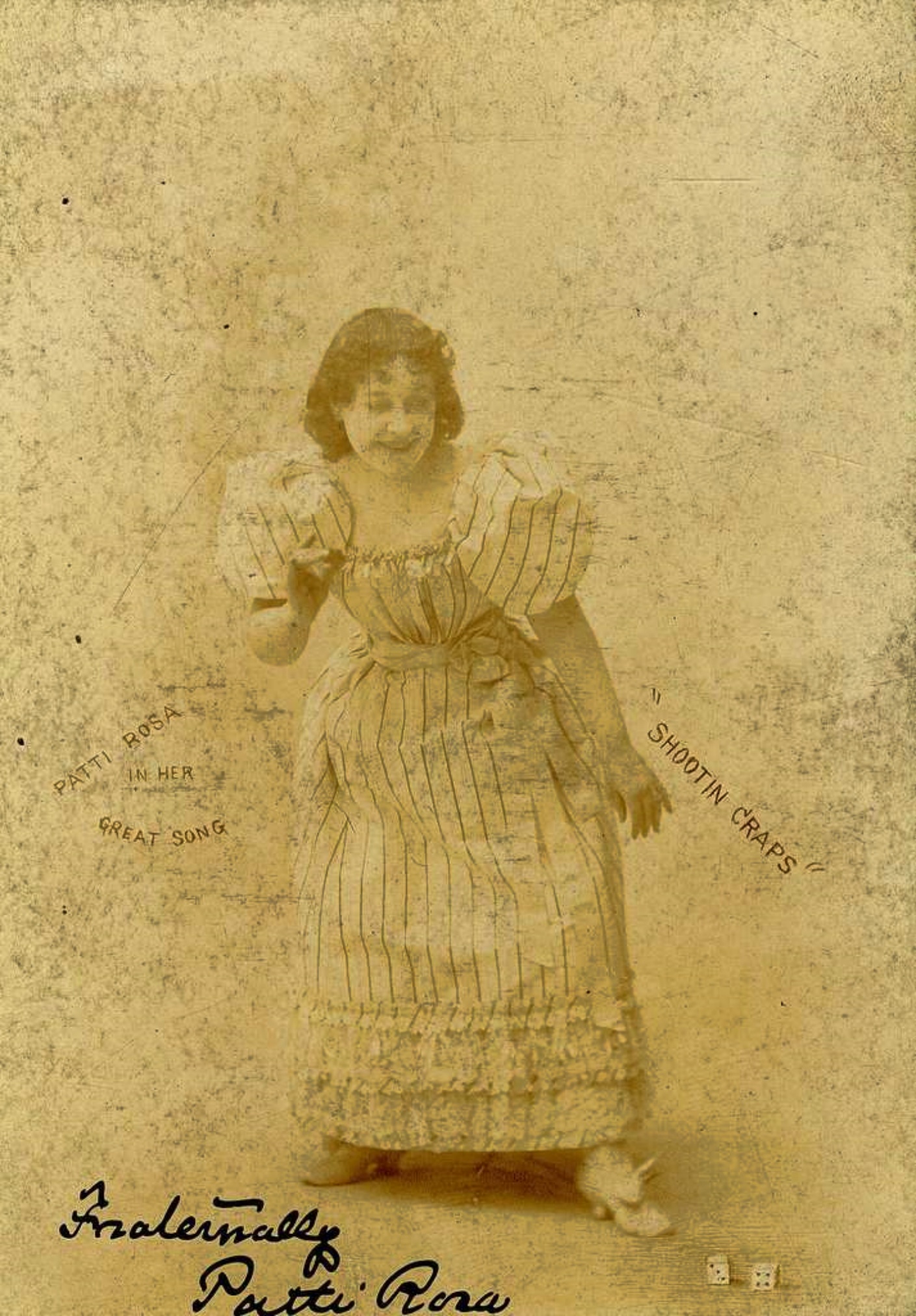
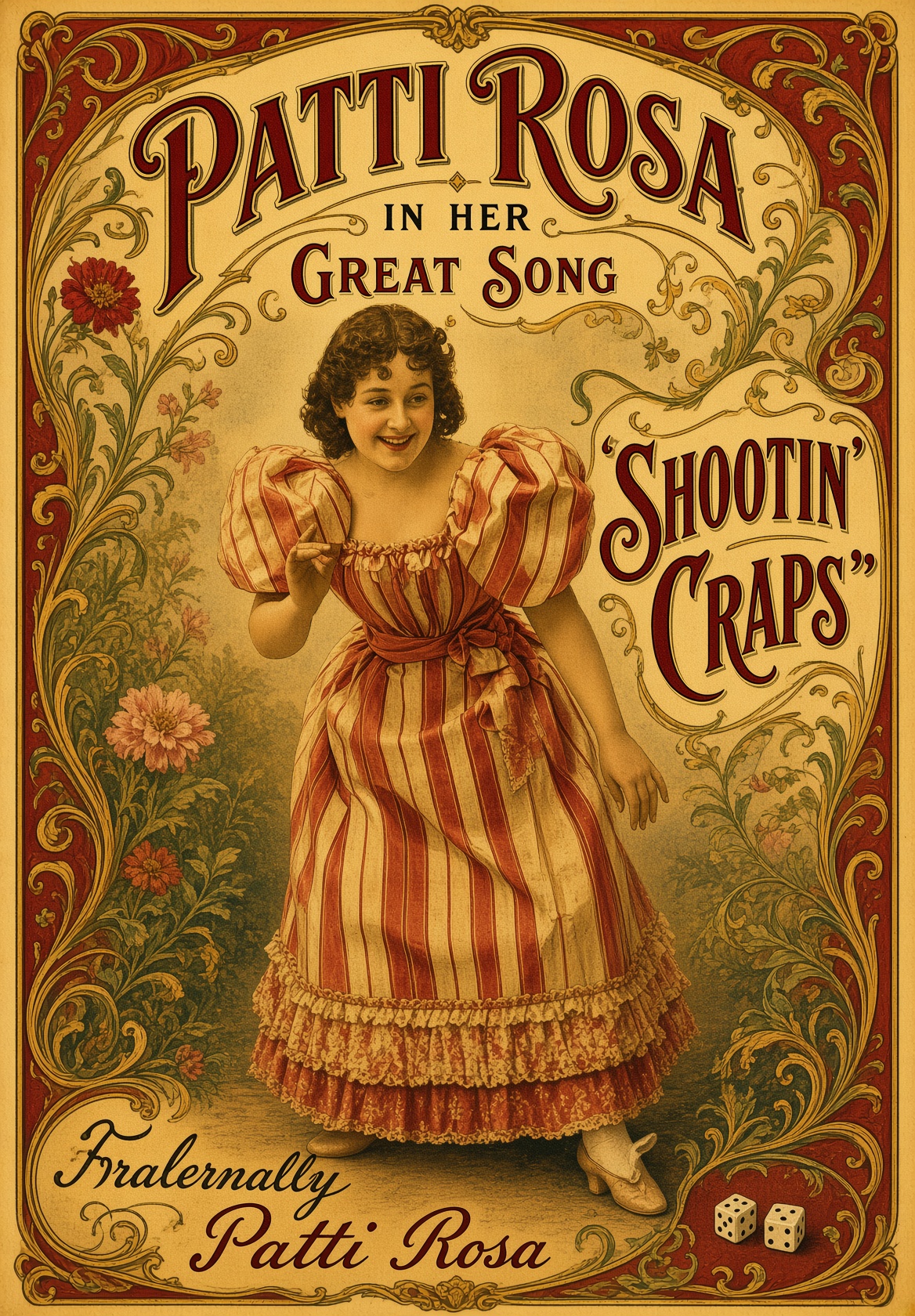
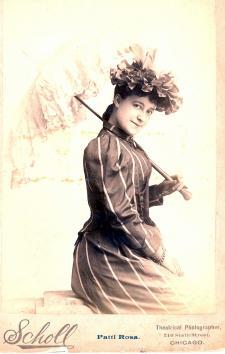
Some images. All public domain, nicked from various places online.
This one, a faded relic in the most literal sense.
I’ll give it a little revival.

Another fuzzy image of yore.
Looks like a minor hallucination in making this, but I doubt that Patti would have minded.
Patti Rosa’s heyday, and she did seem to have a heyday around the time of Benjamin Harrison’s administration, didn’t last, not even into the 20th century.

Posted at Footlight Notes:

‘NEW YORK, Aug 6. Patti Rosa, a well known soubrette, died at St. Francis hospital from the affects [sic] of an operation performed for appendicitis. She was the wife of [the actor manager] John W. Dunne.’ (The Trenton Times, 6 August 1894, p. 8b)

Well, that’s too bad. Otherwise she might have lived long enough to be an equally forgotten silent screen comedienne.

At this point, there are a number of rabbit sub-holes, or maybe informational tunnels, to wander. I decided not to.

Such as what a soubrette is, or was, and how that particular stock character, or in this case, a kind of shtick, faded from common awareness. Or did it morph into something like the manic pixie dream girl? I’m couldn’t say.

Or the play Margery Daw, which was probably a high-jinks version of an equally obscure short story by one Thomas Bailey Aldrich.

Or whether there is a copy of Patti Rosa Illustrated News anywhere in the world, or whether it’s a lost as Genghis Khan’s tomb, except that no one cares.

Or what was it that made the Jodrell Theatre “unlucky”?

Or the song “Shootin’ Craps.” There’s a revival for that song in the right musical hands.

Or the play Mizpah, or its author, one Con. T. Murphy, Esq. Forgotten, and probably with reason.

Woodstock Willie

As mentioned before, Punxsutanwney, Pennsylvania, has gone a long way to let the world know about its groundhog and its celebration of things groundhoggish. Of course, that town isn’t the only place to do so, just the best known. I’ll bet few people south of the U.S.-Canada line know about Wiarton Willie. I didn’t know myself until I passed through Wiarton, Ontario, a couple of years ago, because travel is broadening, you know.

Back in the U.S., there is an up-and-coming town for celebrating groundhogs, and it’s less than an hour’s drive from where I live: Woodstock, Illinois. Yuriko and I made that drive on Saturday and spent a few hours in Woodstock’s pleasant downtown. The town has no history of imported northern European folk customs associated with rodents, but of course director Harold Ramis’ decision to film the many Groundhog Day exteriors in Woodstock did the trick.

Since I was there last, a new acknowledgment of the movie has been added in Woodstock Square, which is the hub of the historic downtown.

Very new, as in added earlier this month. In fact, on August 2 – six months ahead or behind February 2.

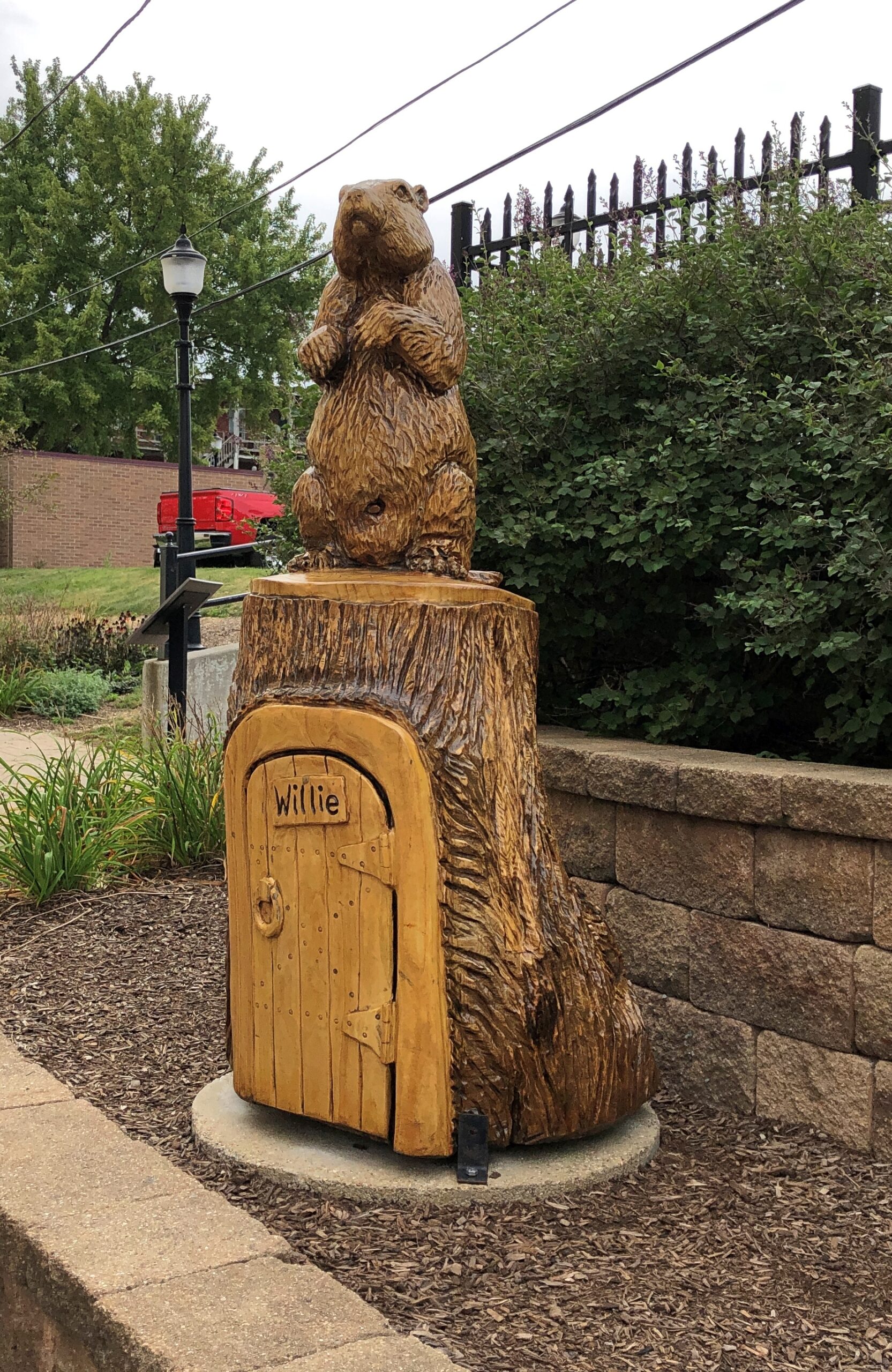
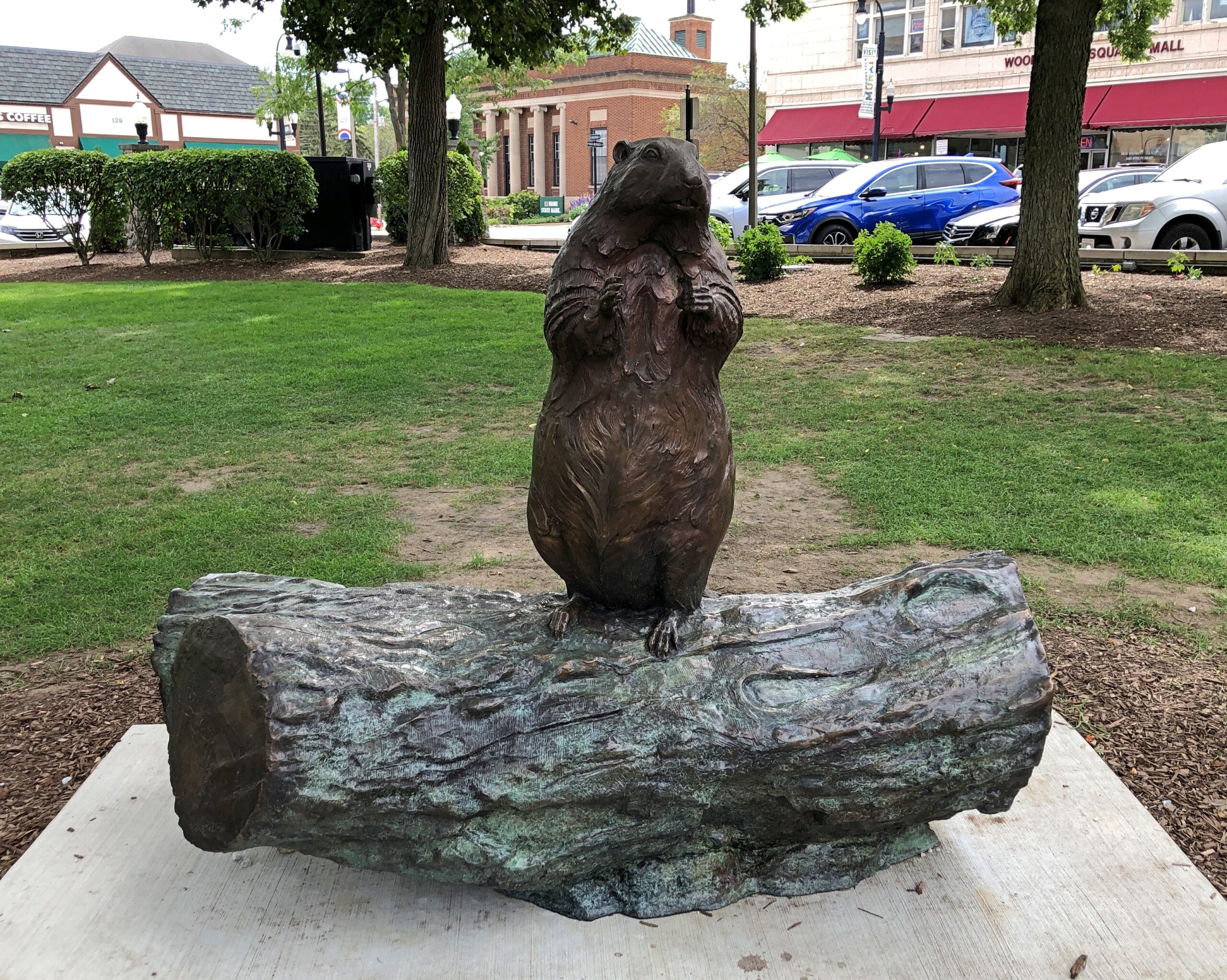
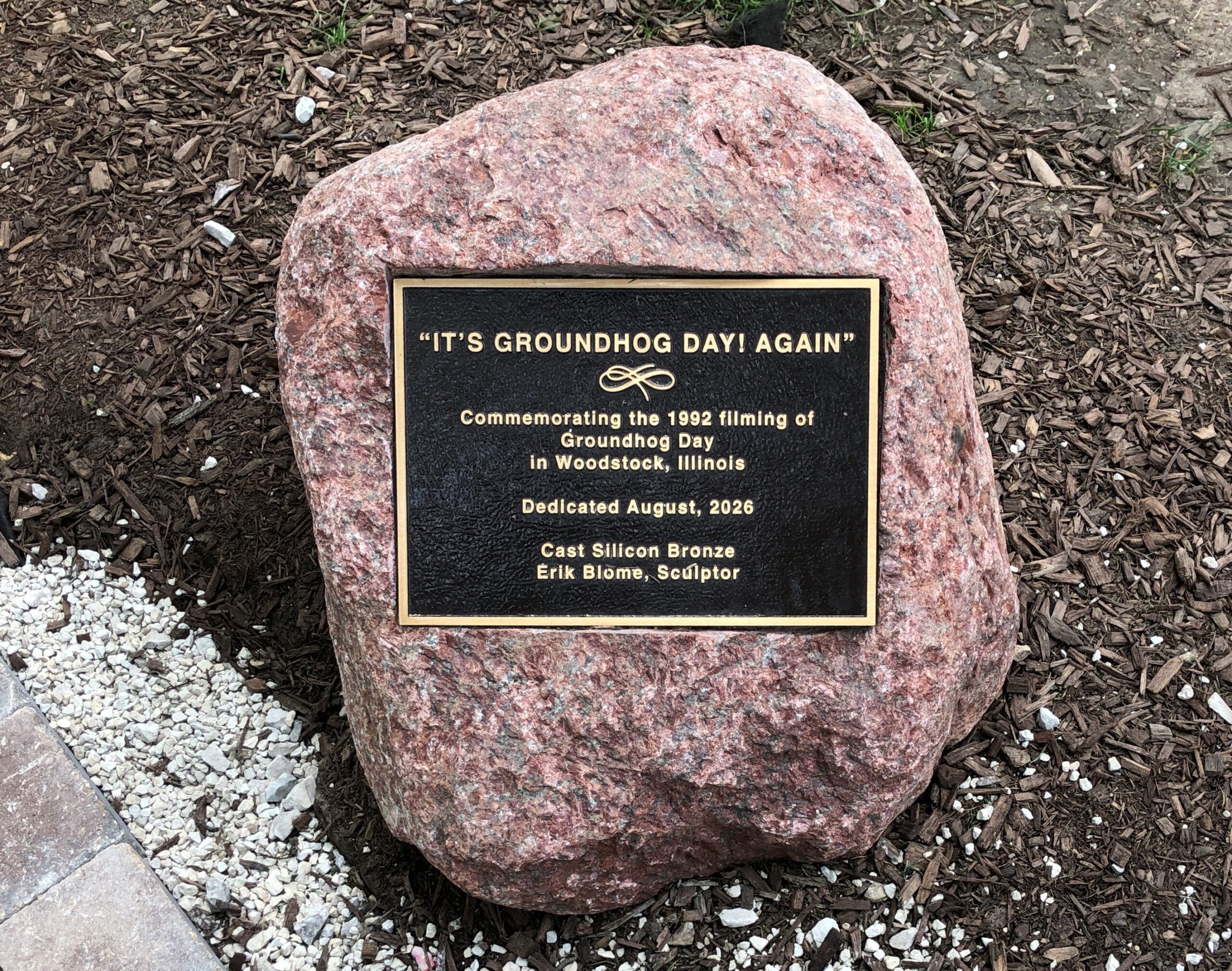
The square passes for Gobbler’s Knob in the movie. It looks little like the actual Gobbler’s Knob, but in the world of movies, that’s a big so what. Local artist Erik Blome did this latest iteration of Woodstock Willie. I’d seen a work of his before: Jack Benny and his violin (and alligators) in Waukegan.

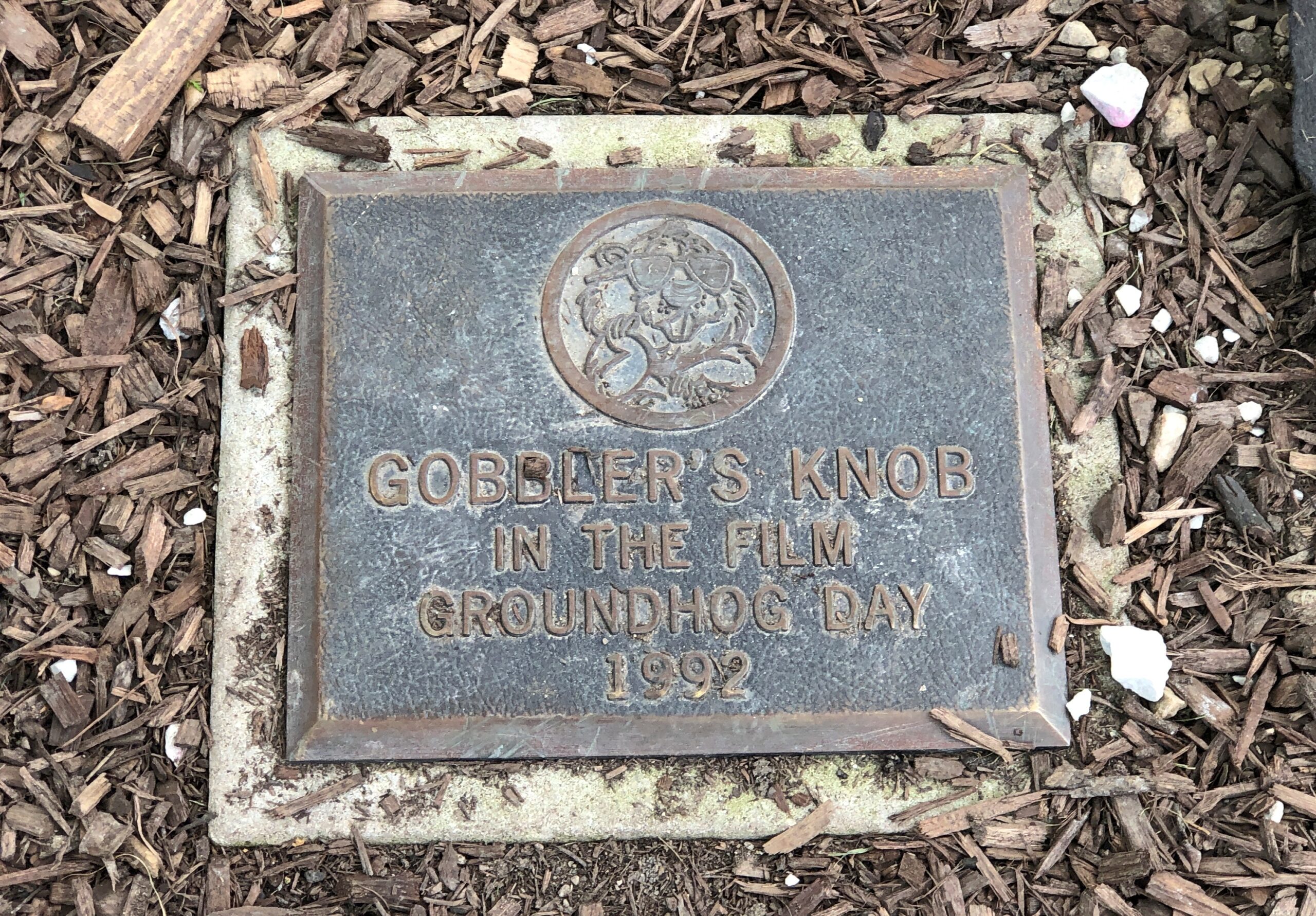
There is a newer plaque, and an older one, near the latest Woodstock Willie statue.

Not far from the square, behind the town movie theater, is an older Willie.

Woodstock has its own groundhog fest, and this is the place from which Willie emerges. I assume that it – cage isn’t the word, maybe temporary pen – is moved to Woodstock Square for the February 2 event, though it’s unlikely I will be at that event to see for myself.

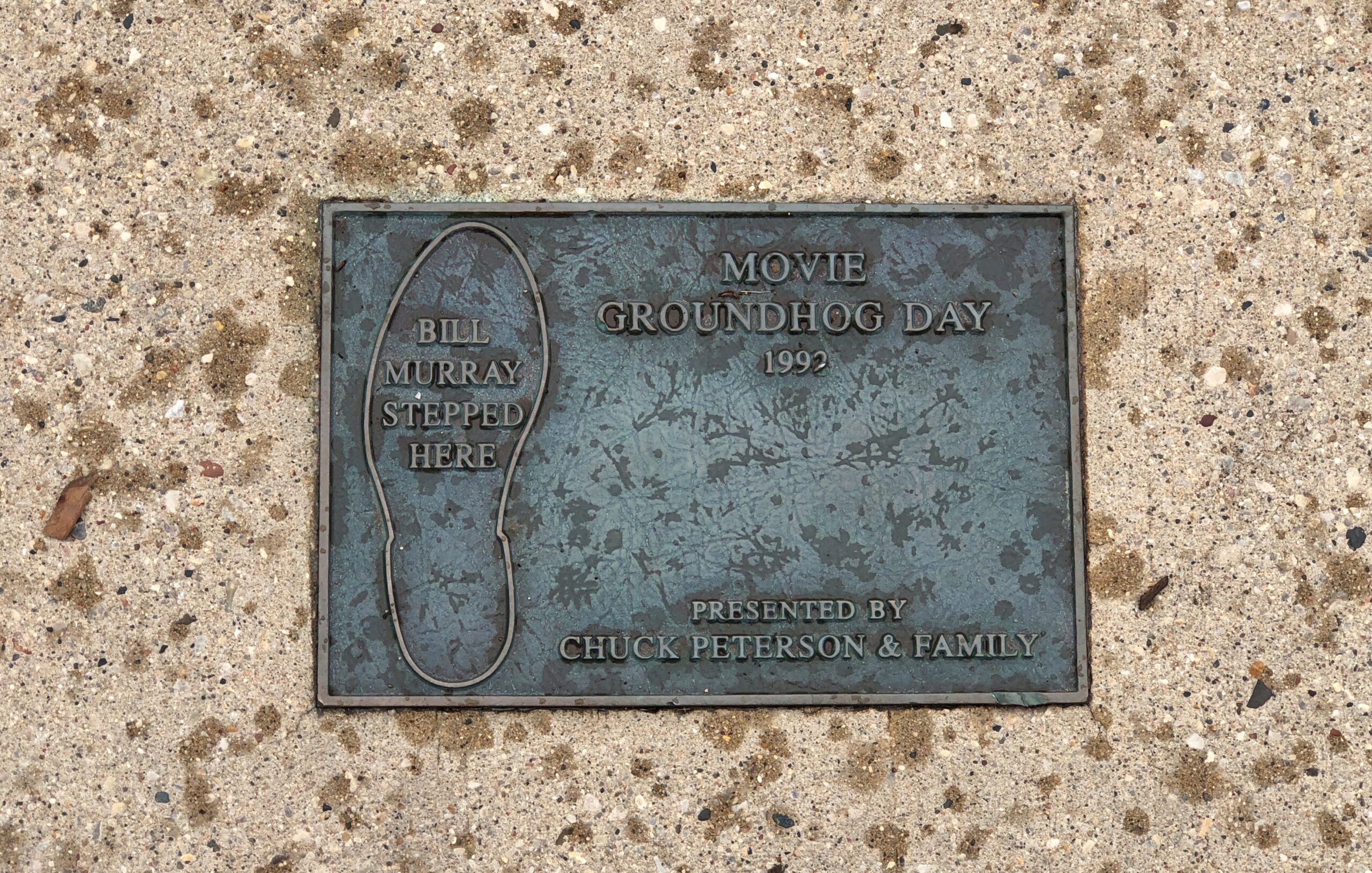
Other local plaques refer to the movie. This one has been in place for quite a while.

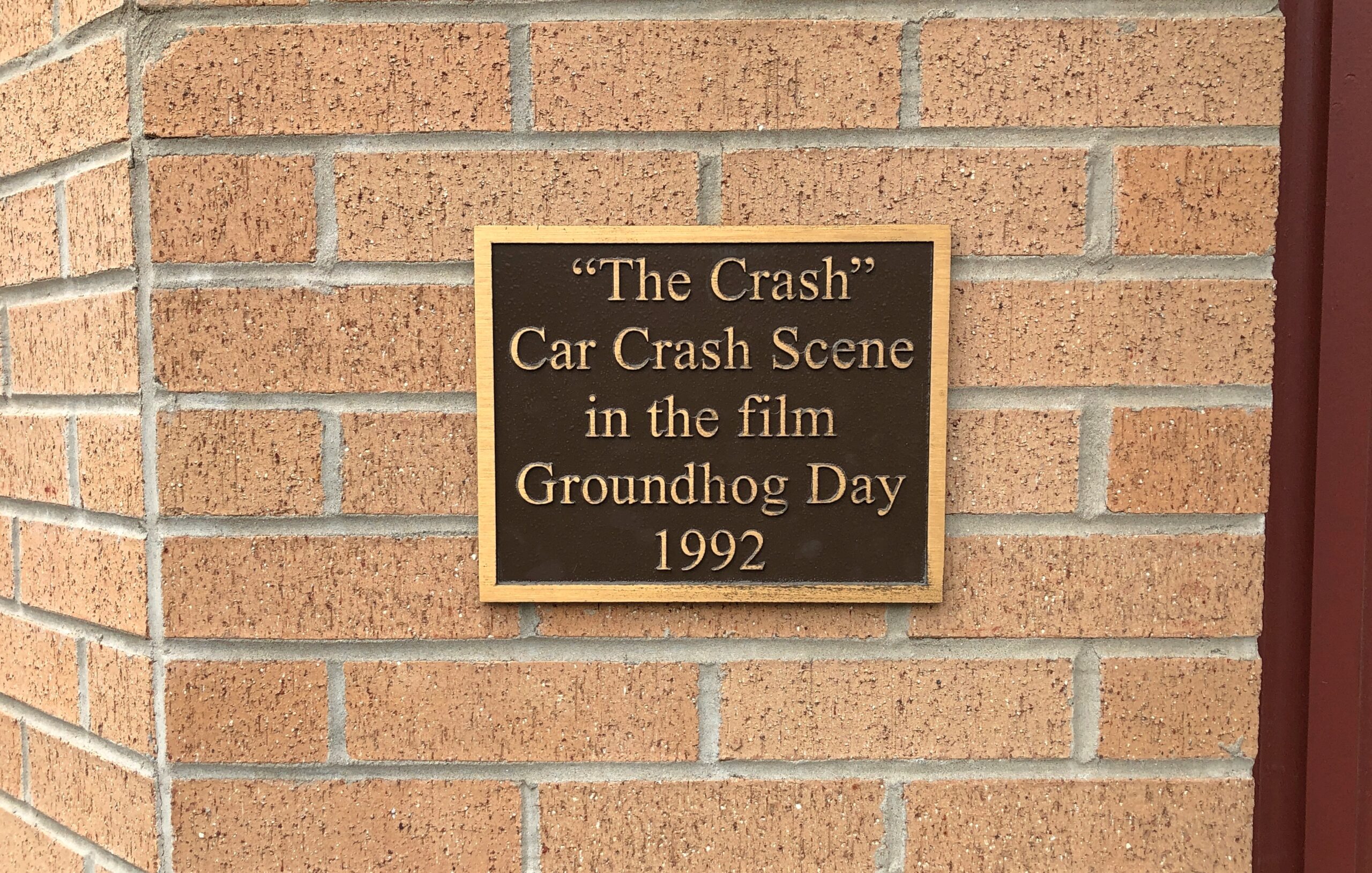
Others look newer.

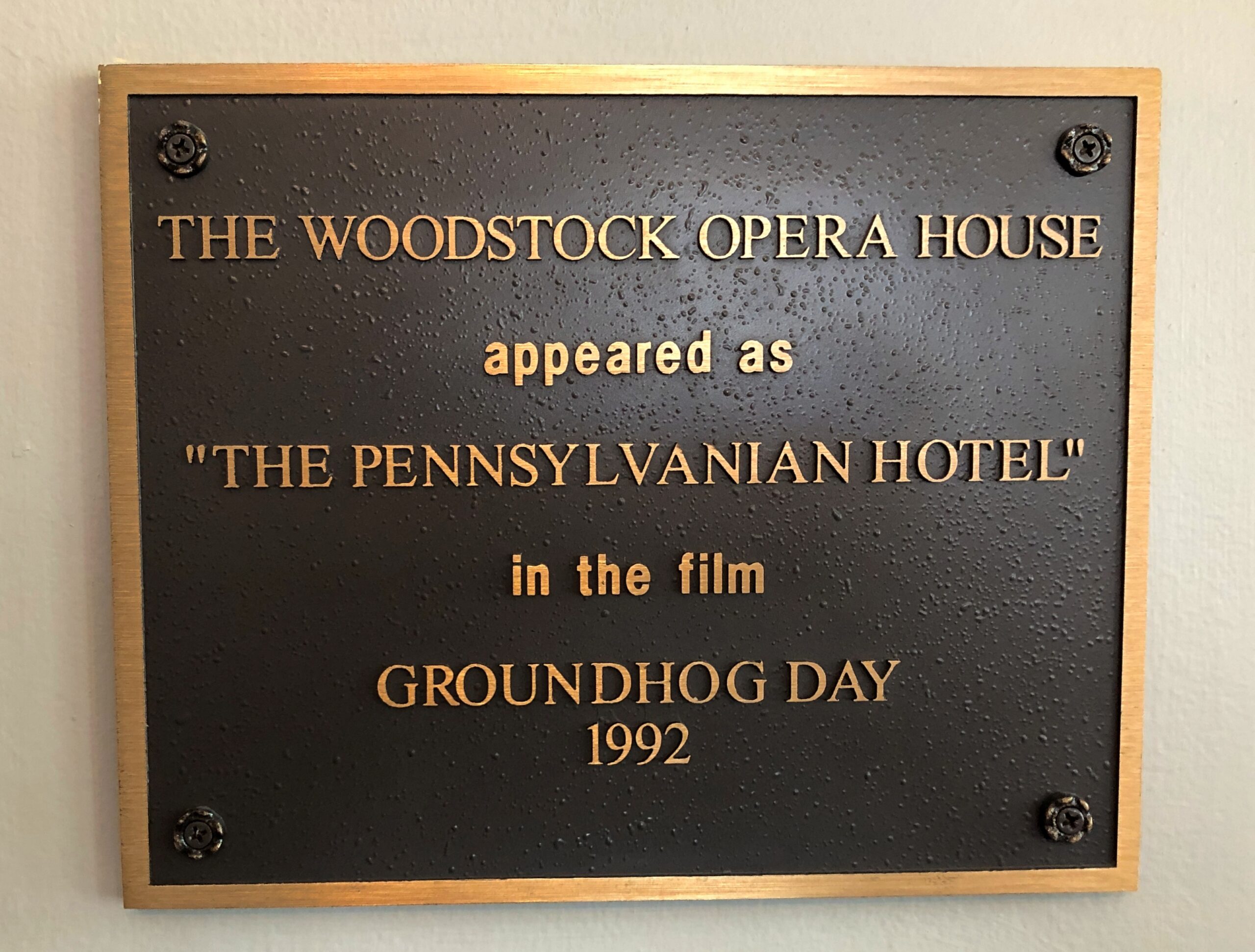
Even the grand Woodstock Opera House wants its role in the movie acknowledged.

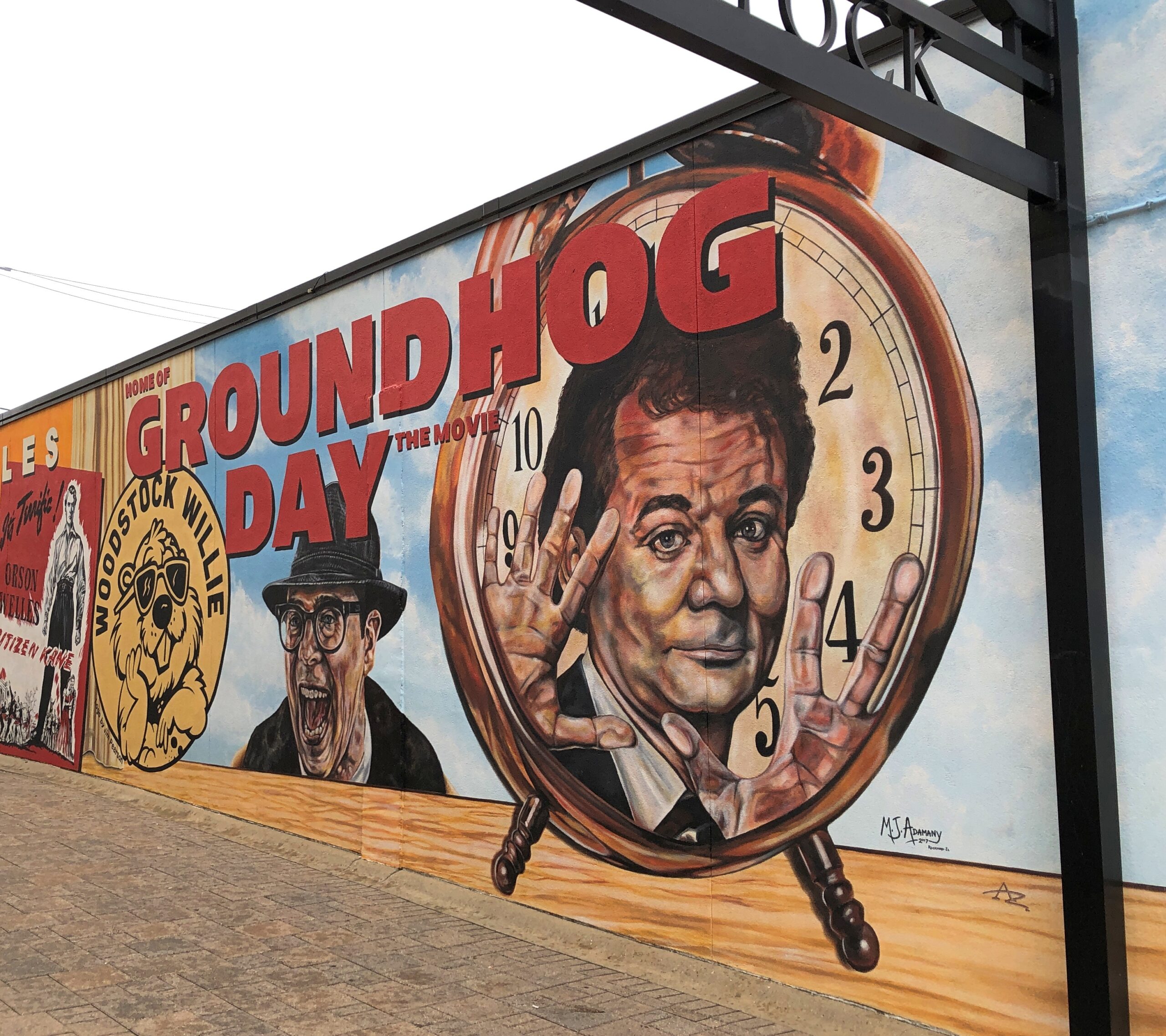
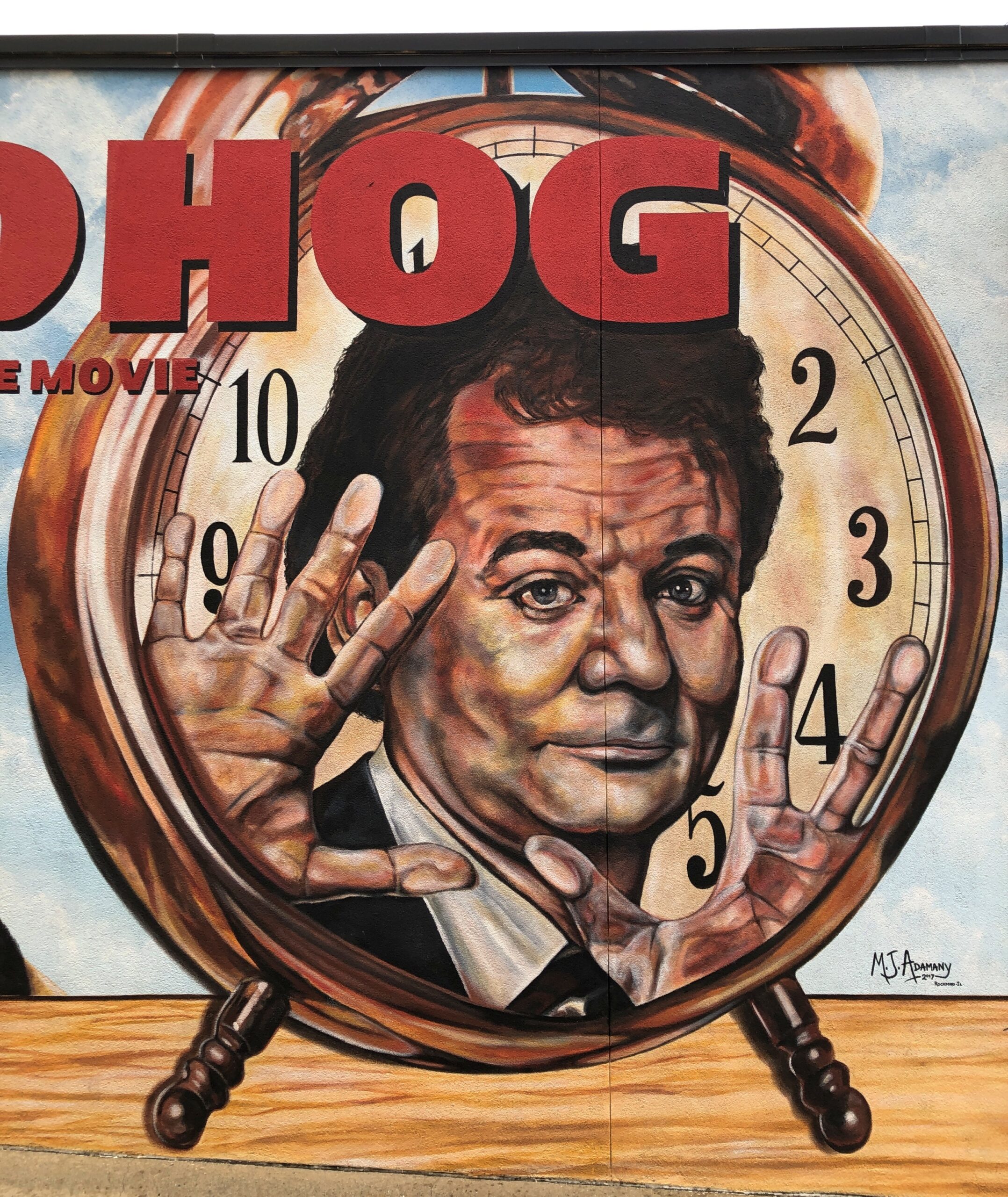
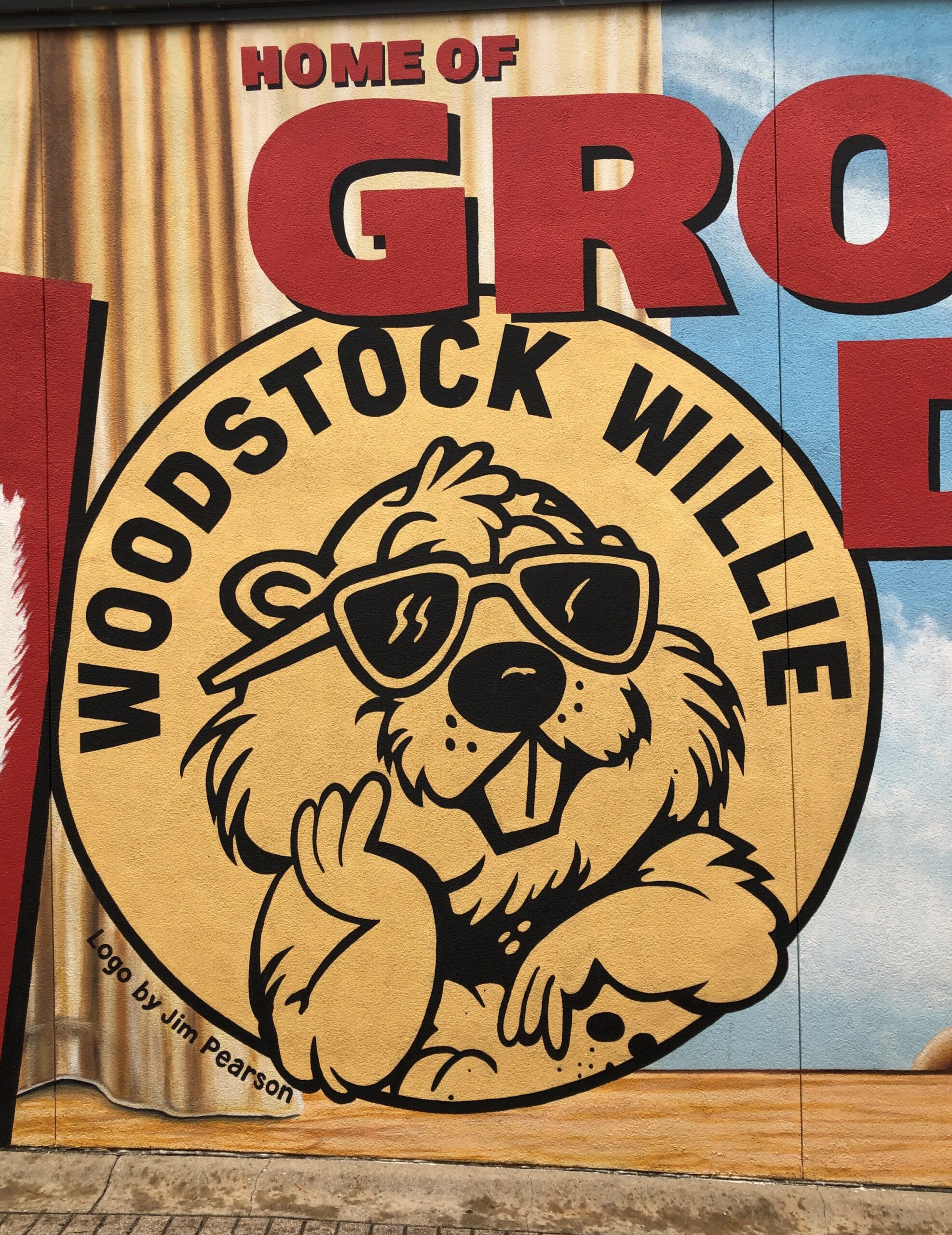
Also near the local movie theater is a Groundhog Day mural, evoking the movie’s promotional materials, and adding Woodstock Willie retroactively.

A good mural, but how is it Ned Ryerson (Stephen Tobolowsky) rates a spot? It is a funny bit and all, but I’d much rather see Rita Hanson (Andie MacDowell) there.

Idle Hands and AI

Most places I go, I take a fair number of photos, because in our time – over the last two decades or so – high-quality photography has become cheap and easy. I took a digital camera on a trip for the first time in 2005 and have ever since, each one making sharper images than the one before, besides an exponential increase in memory. I’d never have the patience to set apertures or figure out film speeds, but point a phone that I use for nothing else? Easy.

Now, suddenly, digital graphic design has became cheap and easy. Is it any good? A lot of AI images look like AI images, the kind of stilted cartoons we all now recognize (well, a lot of us do). But do they have to be?

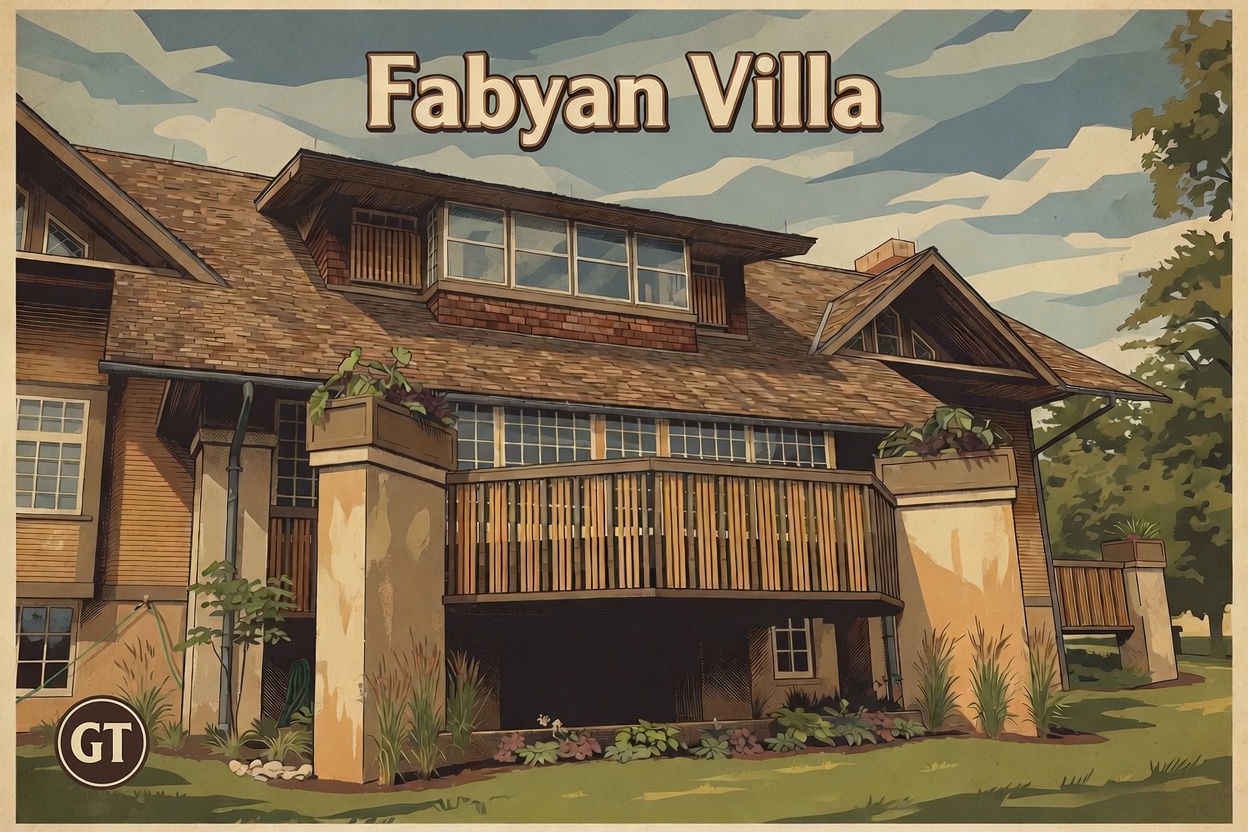
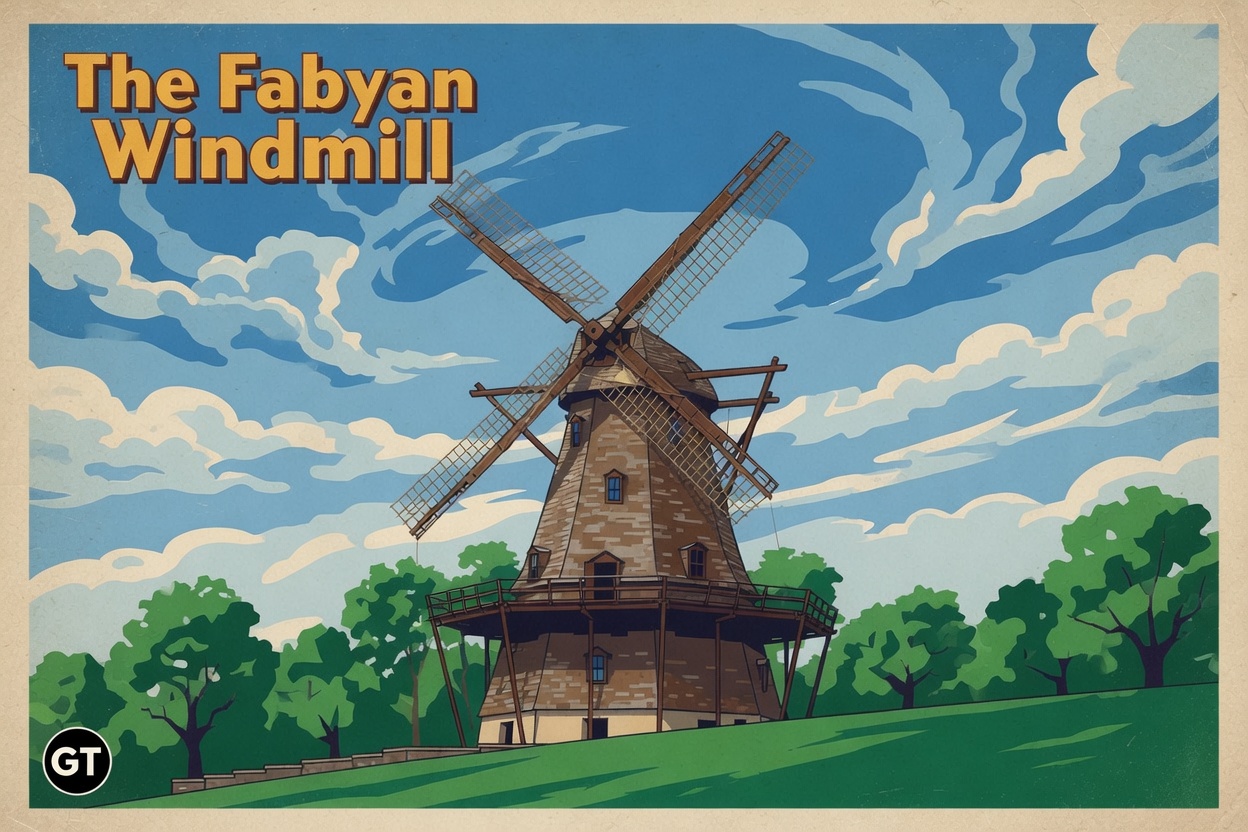
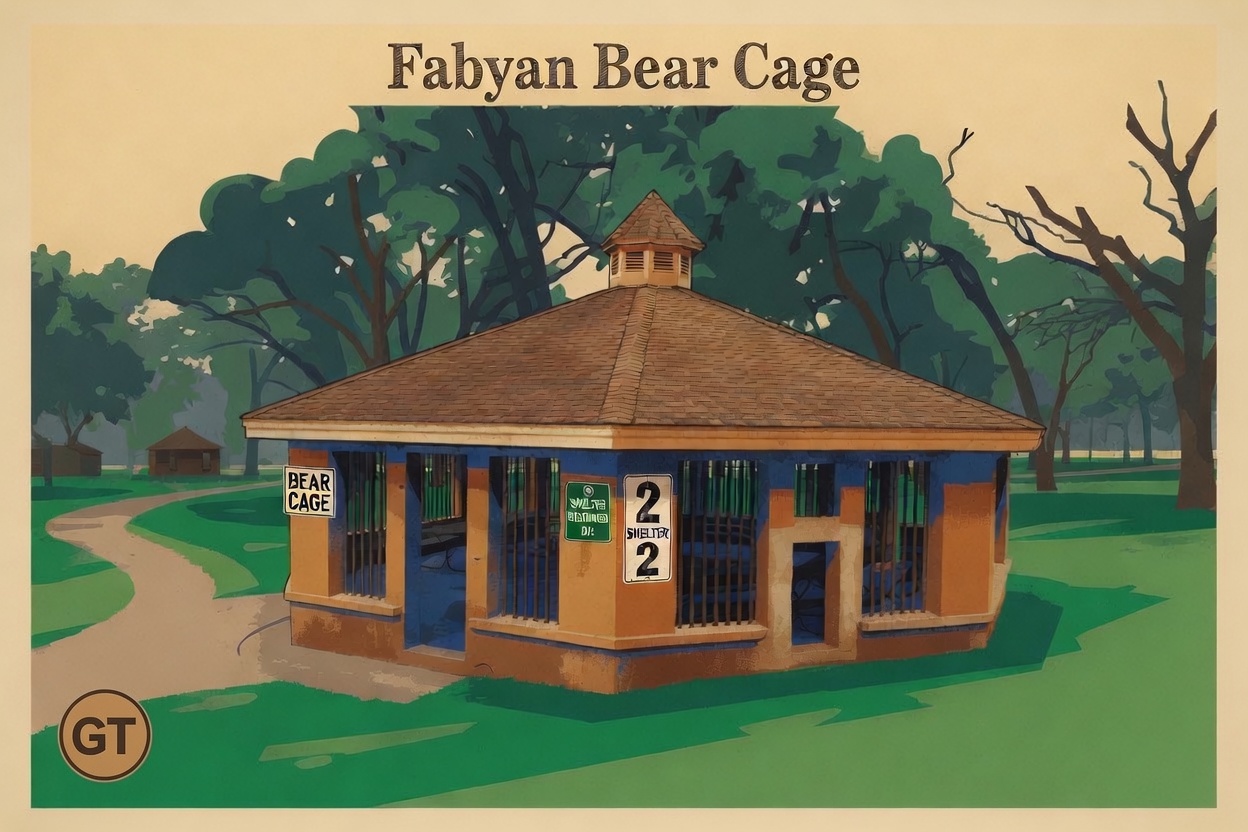
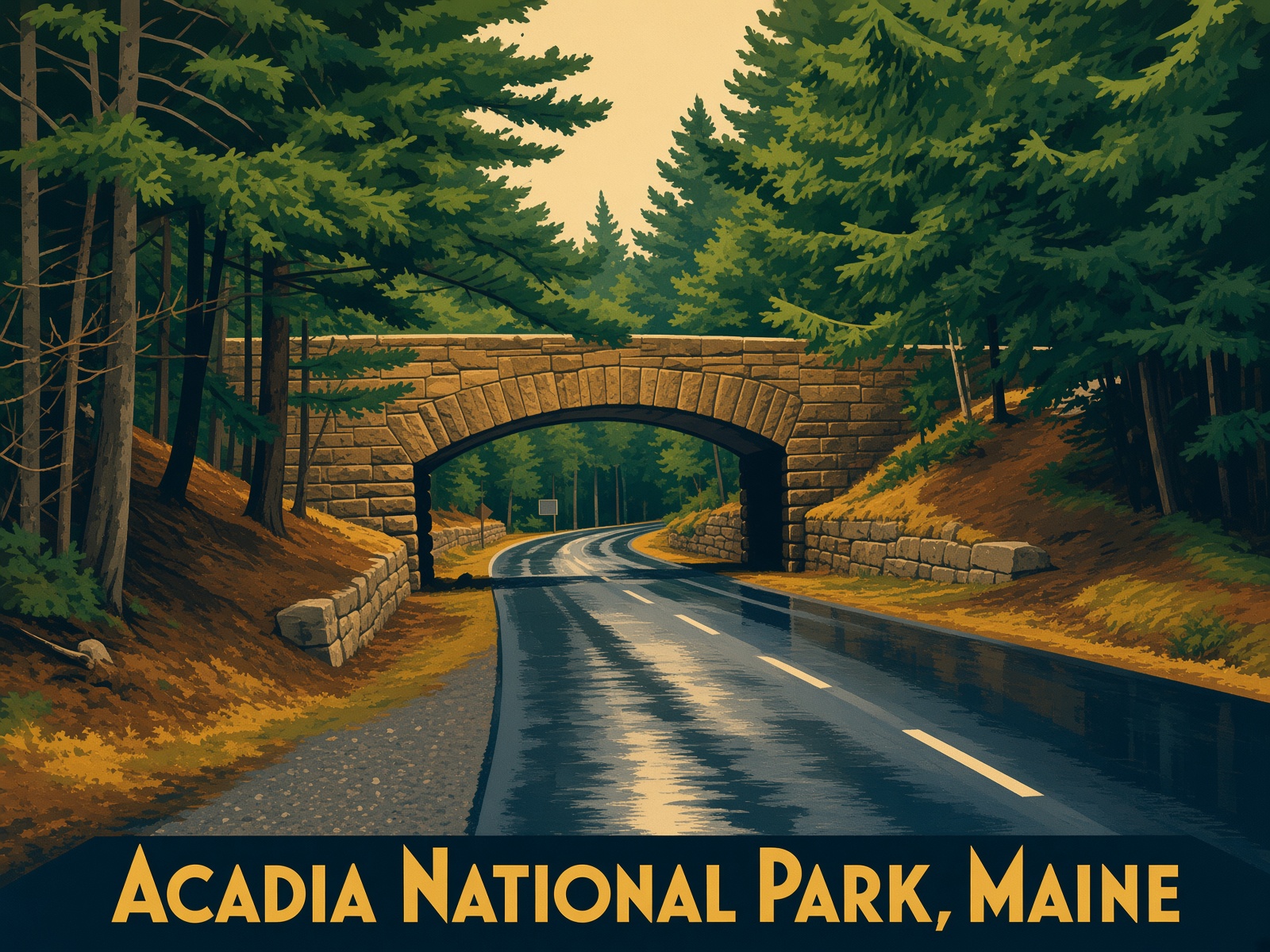
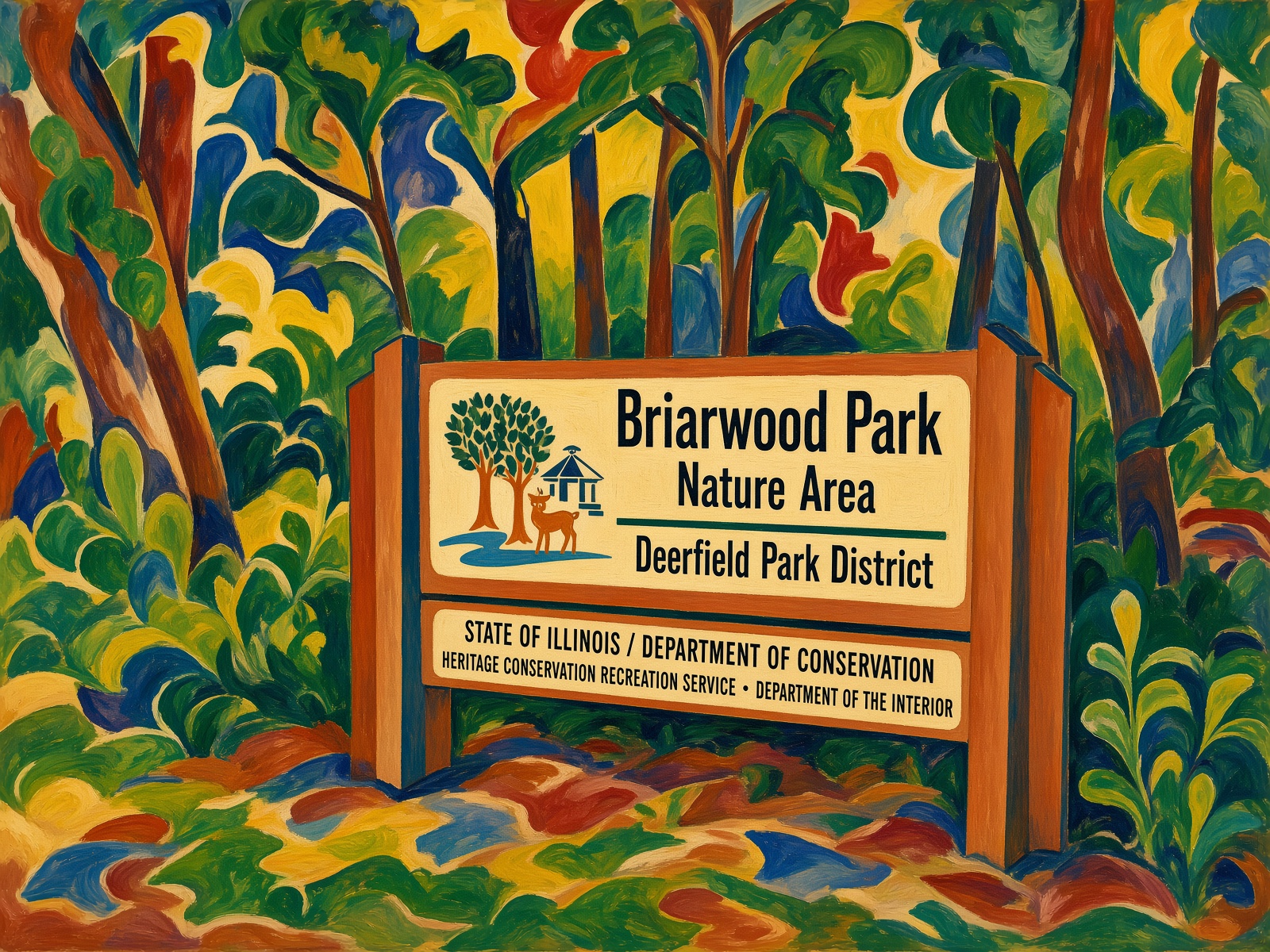
Earlier this summer, we visited Fabyan Forest Preserve in Geneva, Illinois. Later, I cooked up a series of “postcards” – named for the aspect ratio, since they aren’t real cards – using images I took there. There are a number of advantages to this, the main one being I own the copyright to the images, and so derivative works aren’t an issue. The prompts in this case are “WPA style” or something to that effect. Add some text and there you go.

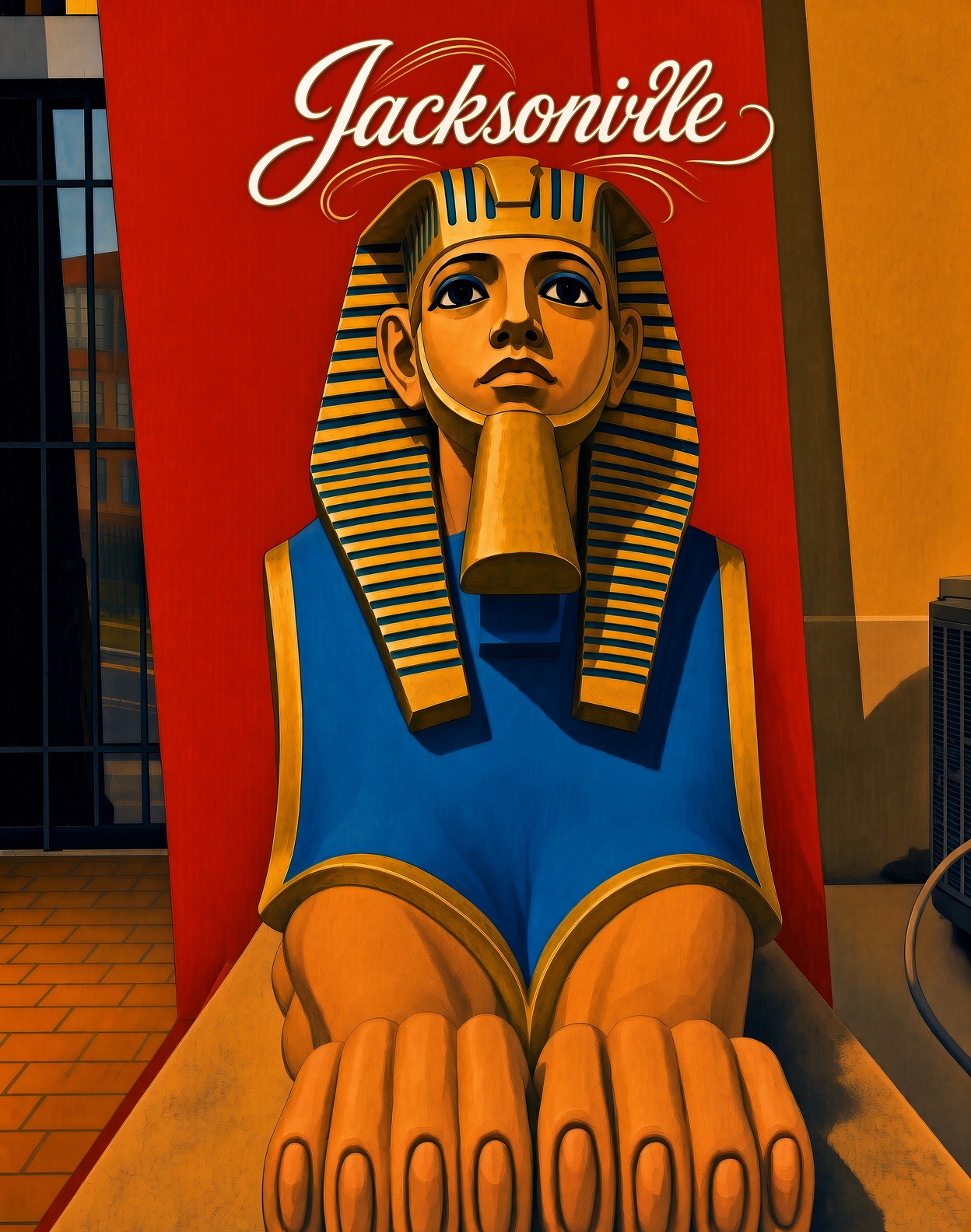
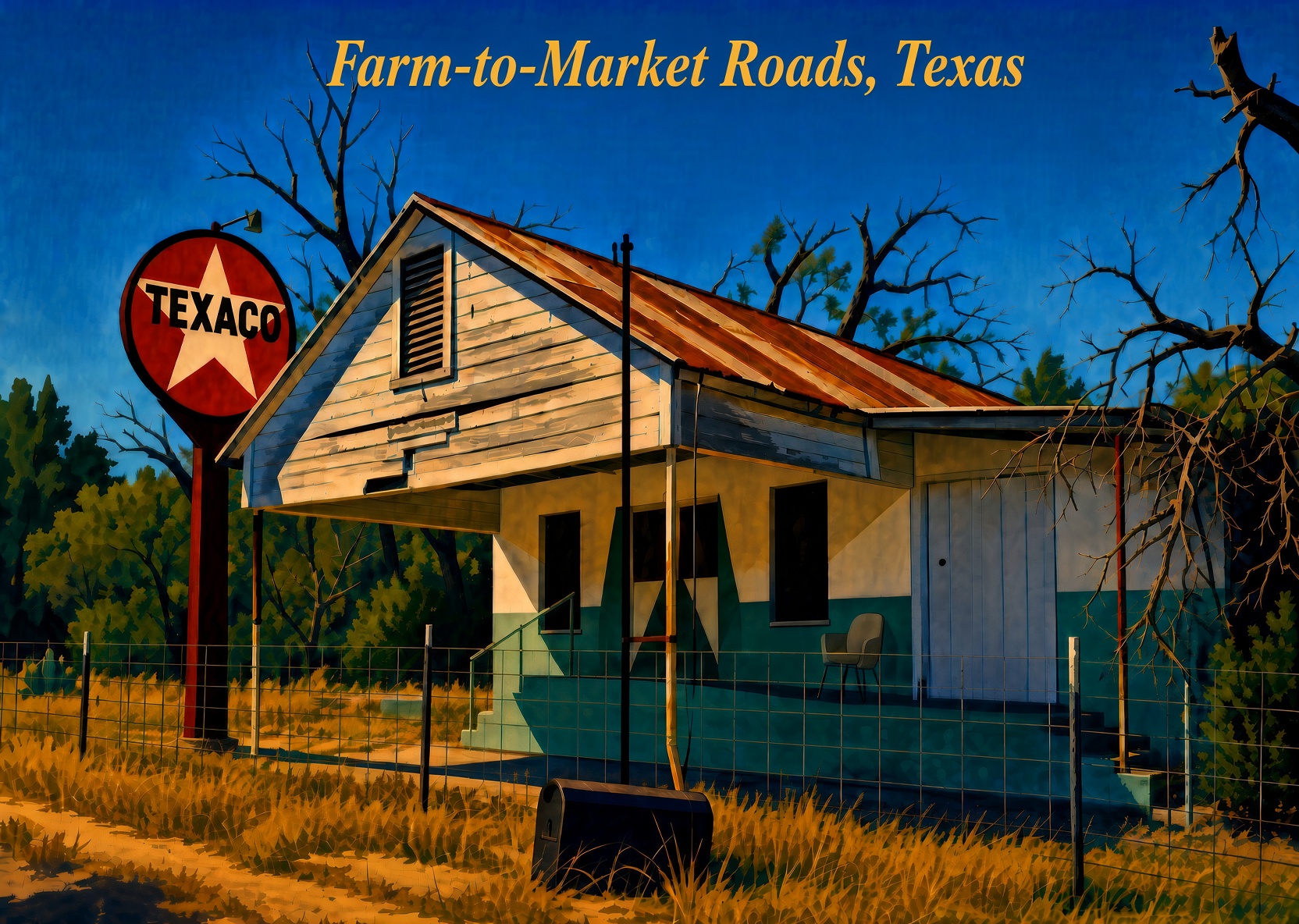
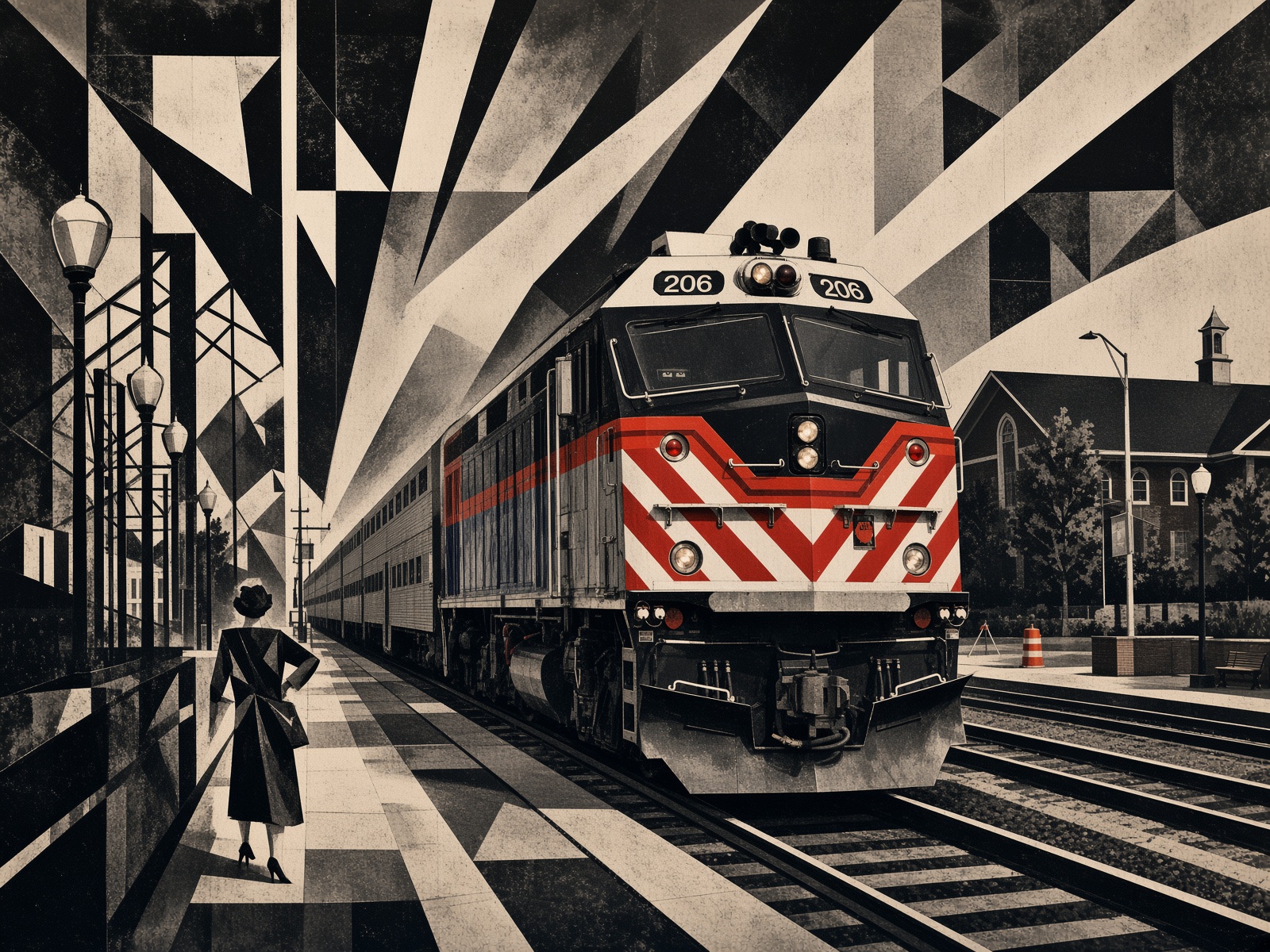
Promotion-type images for other places I’ve been, recently or not. Again, all the underlying images are mine.

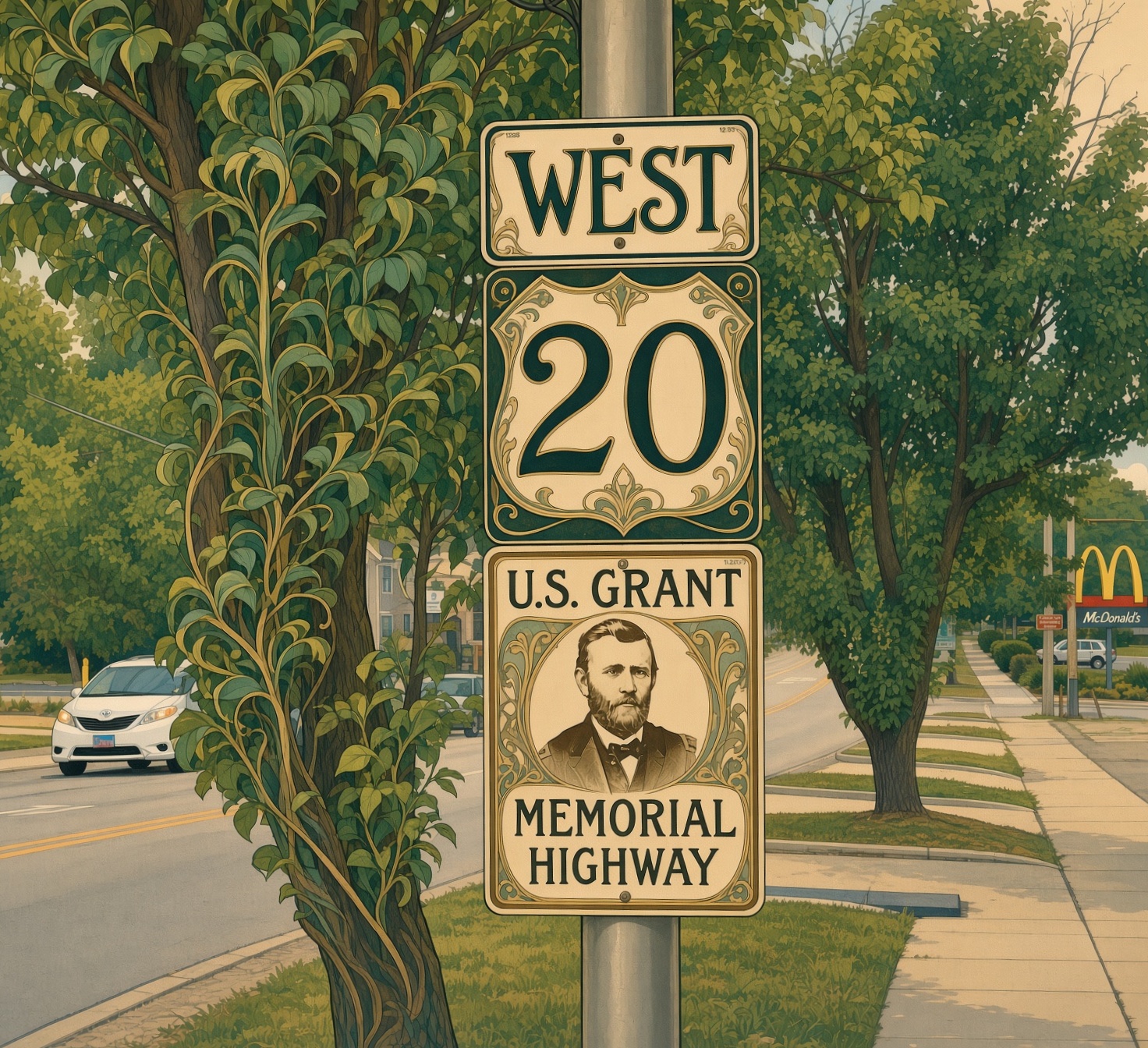
Images for details along the way in Illinois, using a variety of other prompts, exact location not so important.

One more.

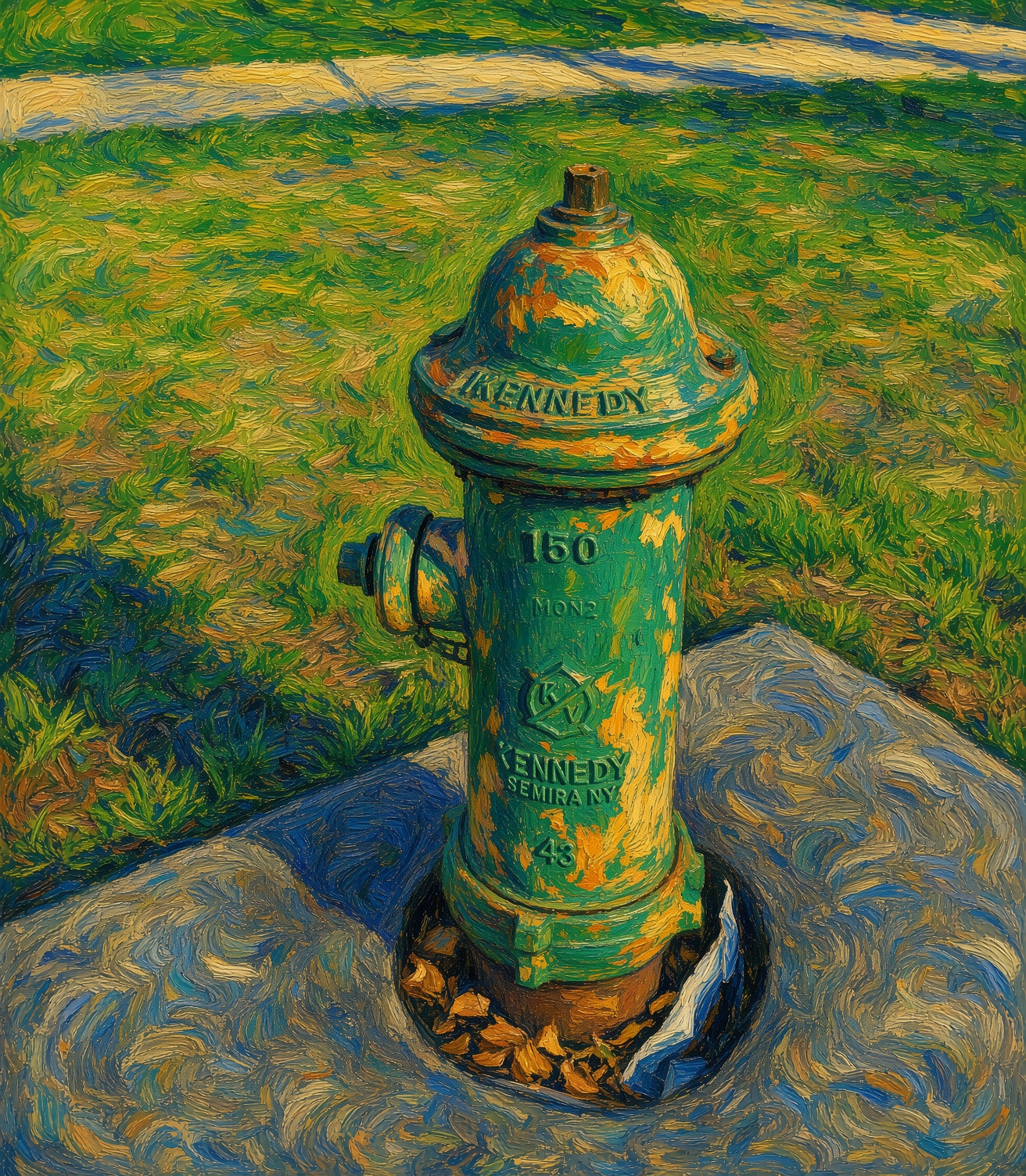
Think of it as the first in a fire hydrant series: Van Gogh Fire Hydrant.

Marengo, Illinois

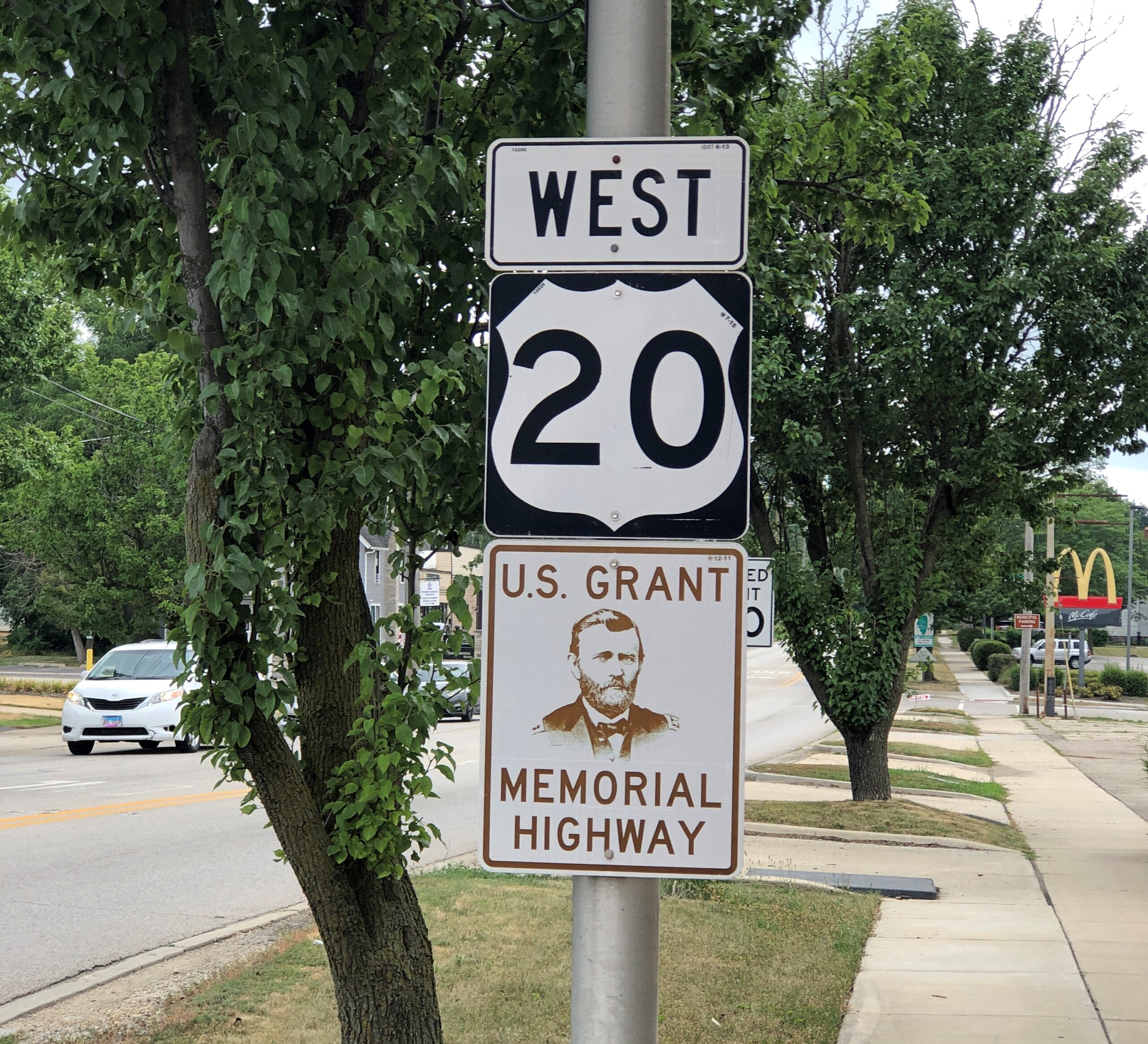
US 20, according to the Federal Highway Administration, is the longest road in the country. That wasn’t the case in 1925 when the US highway system was created; it was number two at that time. Various adjustments afterward (told in highway-nerd detail on the FHA’s Highway History page) made it so by 1963.

“US 20 is 3,365 miles long, according to the 1989 log,” the site notes. “The route begins in Boston at a junction with Massachusetts Route 2 and ends in Newport, Oregon, at a junction with US 101. Because U.S. numbered highways are not designated with[in] National Parks, US 20 is divided into an East Section ending at the eastern entrance to Yellowstone National Park and a West Section beginning at the west entrance to the park.”

In Illinois, the highway is also the General Ulysses S. Grant Memorial Highway.

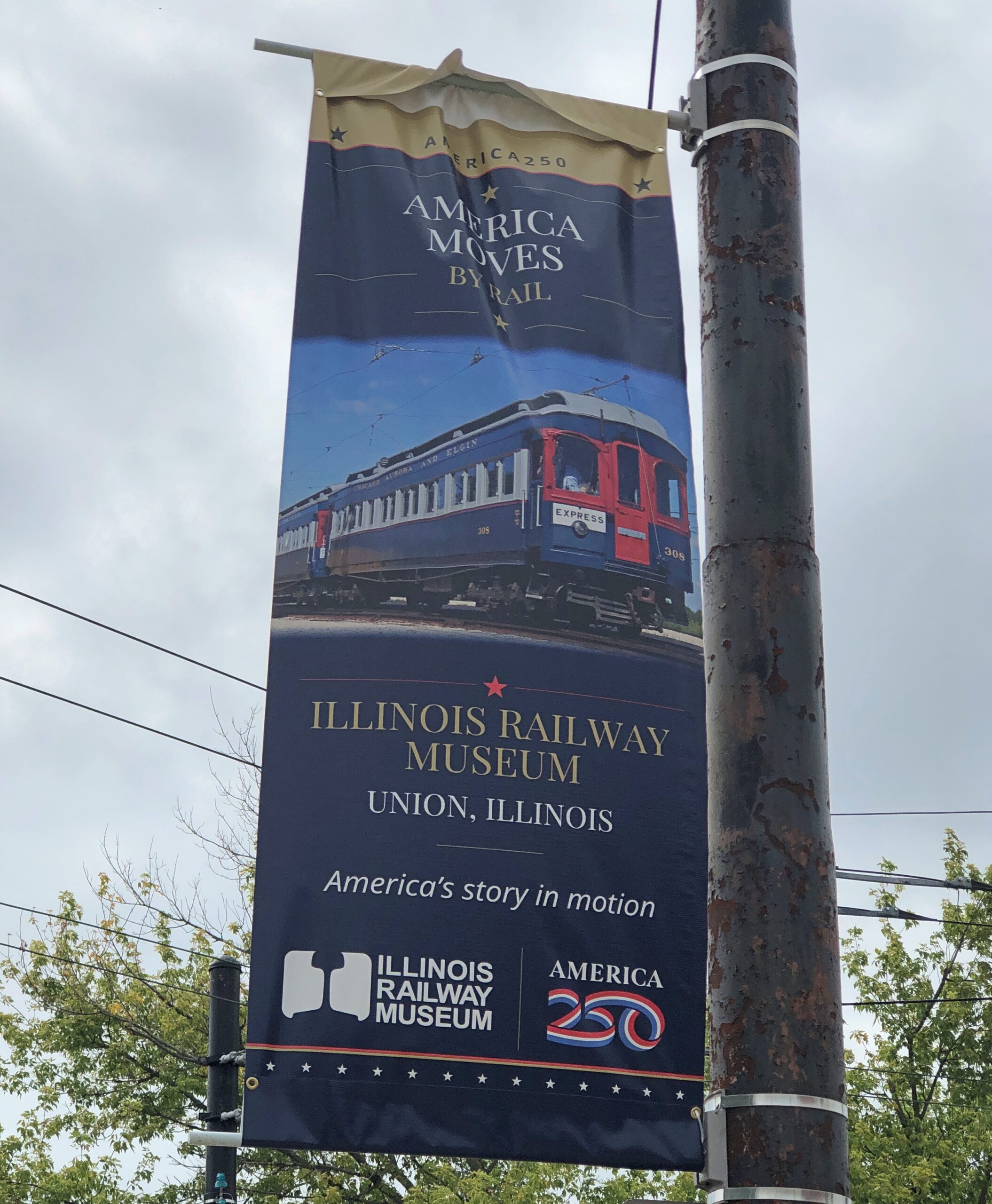
When time isn’t an issue, US 20 is my preferred route westward toward Rockford and, for an ambitious intrastate drive, Galena. Last month, it was our preferred route most of the way to Union, Illinois, to visit the Illinois RR Museum. On the way back, we stopped briefly in Marengo, which is one of the many towns along those 3,365 miles.

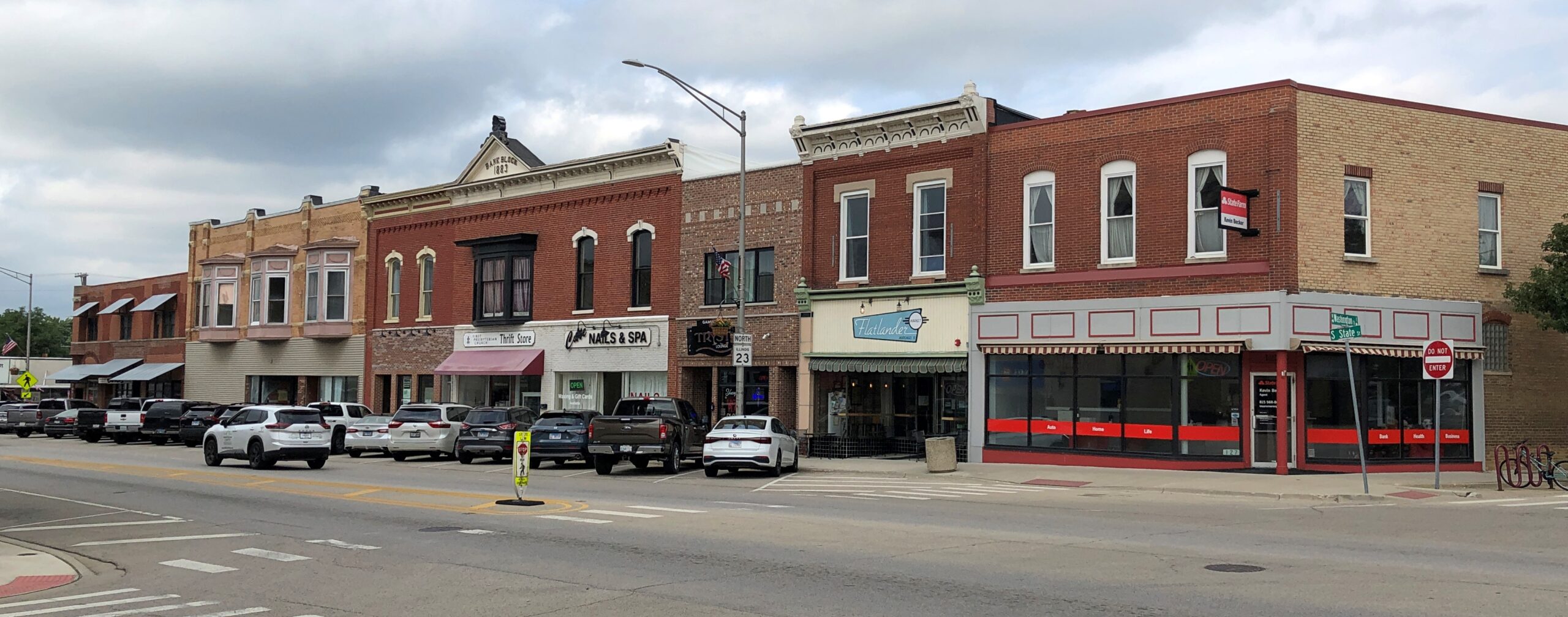
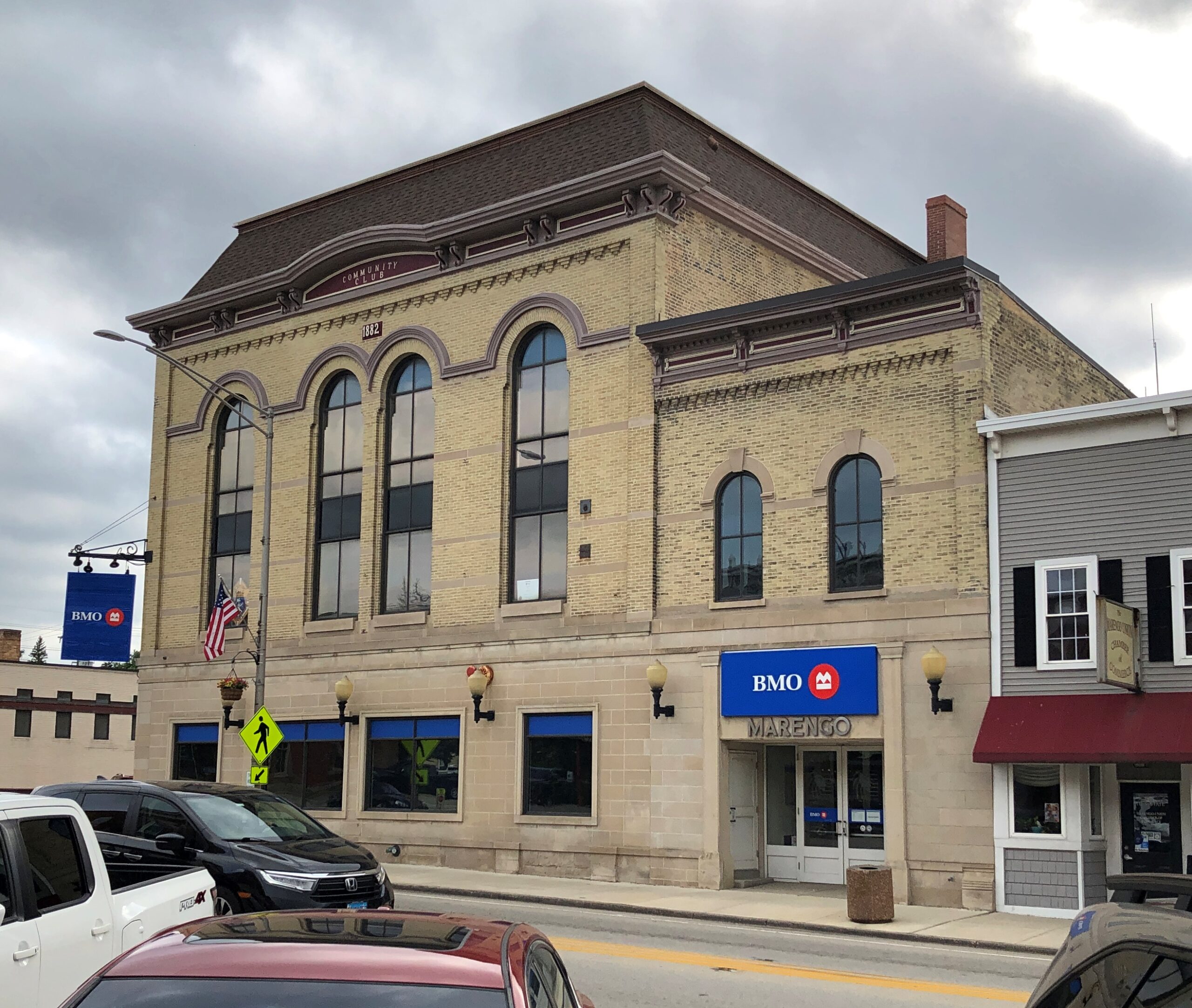
A modest downtown, but at pop. 7,500 or so, it doesn’t need to be anything else.

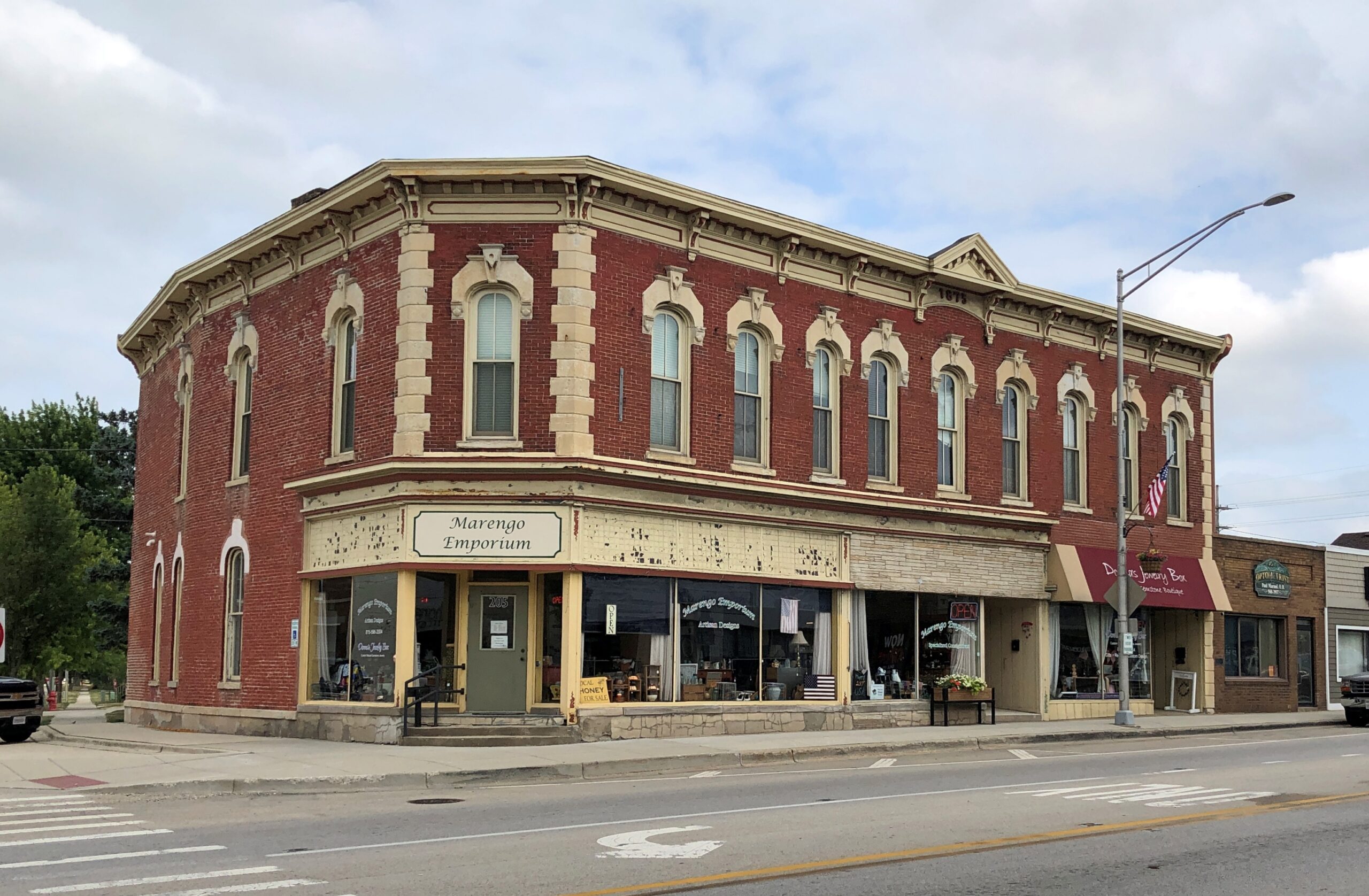
A run of buildings from the late 19th century, along Main St. Such as the current home to the Marengo Emporium, closed that late Saturday afternoon, in spite of what a red neon OPEN sign said.

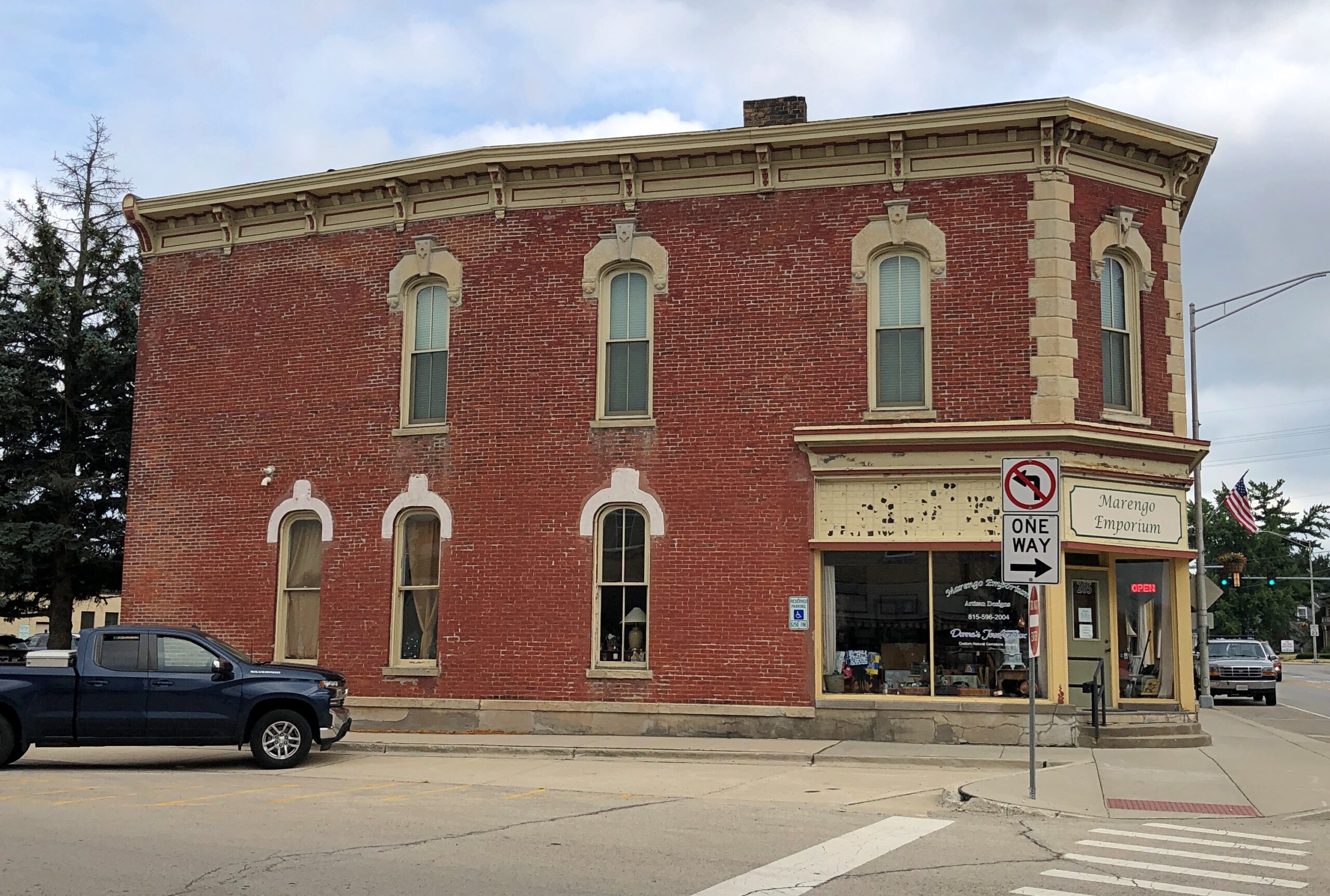
The Marengo Union Chamber of Commerce notes that the building, dating from 1875, housed the first bank in McHenry County in its early years. “In the later years, Swonguer Furniture & Undertakers, Marengo Farm Store, Vidiots, Wholly Smokes and State Street Pub occupied the building but perhaps [it’s] best known for housing the Marie Ann Dress Shop,” the C of C says.

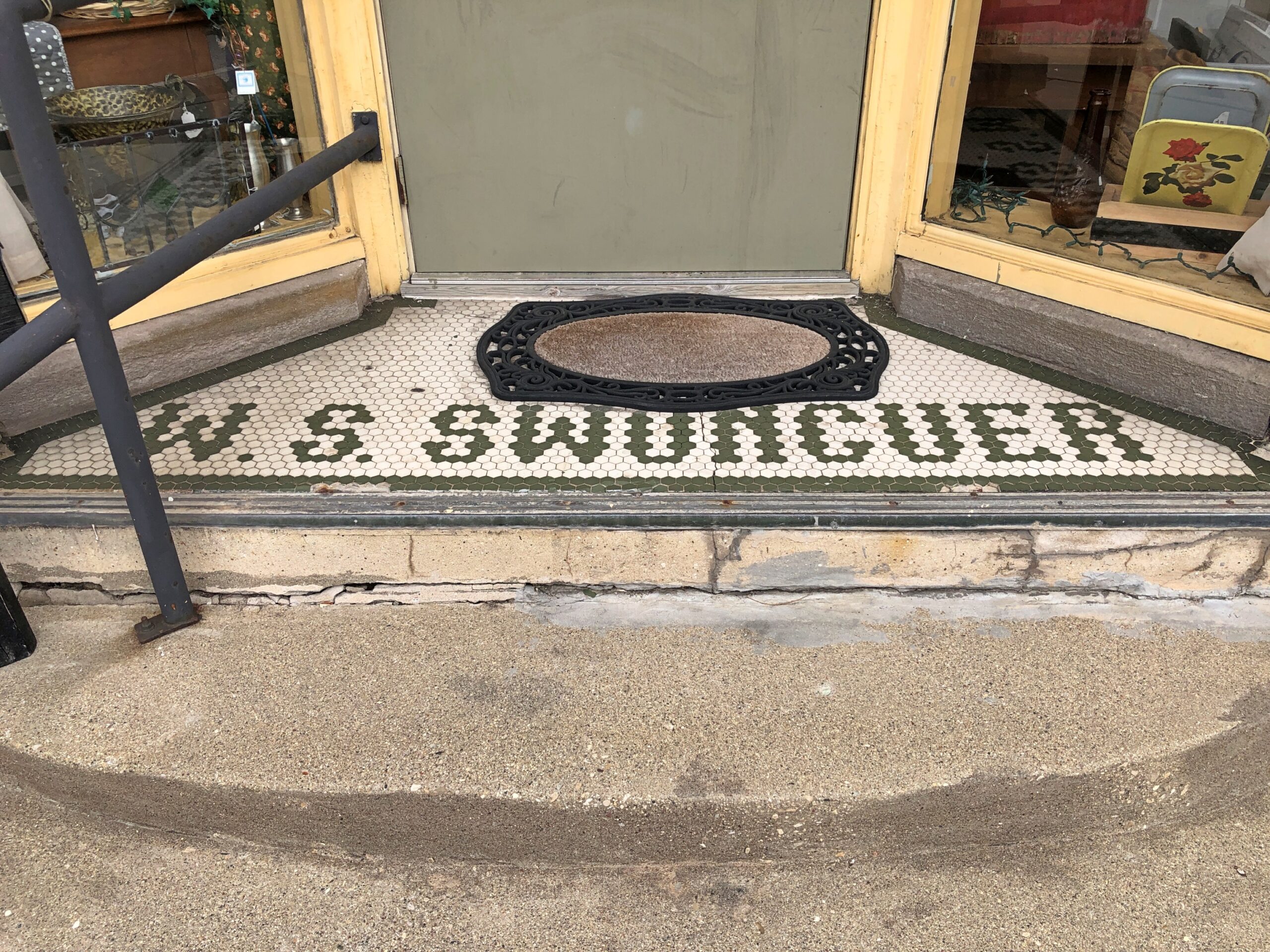
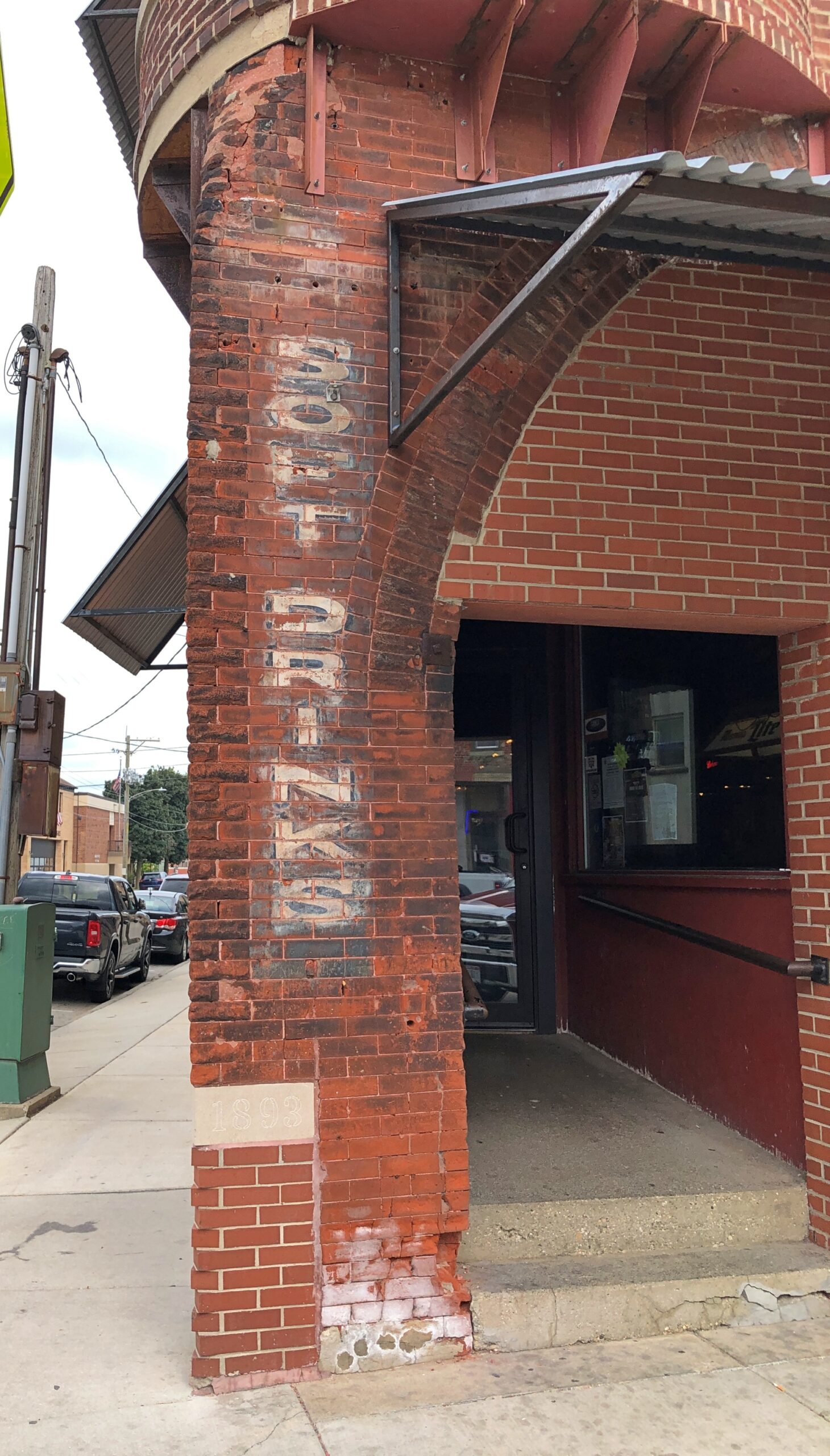
Swonguer Furniture & Undertakers. Not as odd as it might sound and, apparently, a known combination in a number of places more than a century ago. After all, how different is making pine boxes from making pine tables and chairs, at least for a skilled wood worker? Also, it explains this trace of the former furniture and undertaker establishment, in the form of abandoned commercial mosaic text.

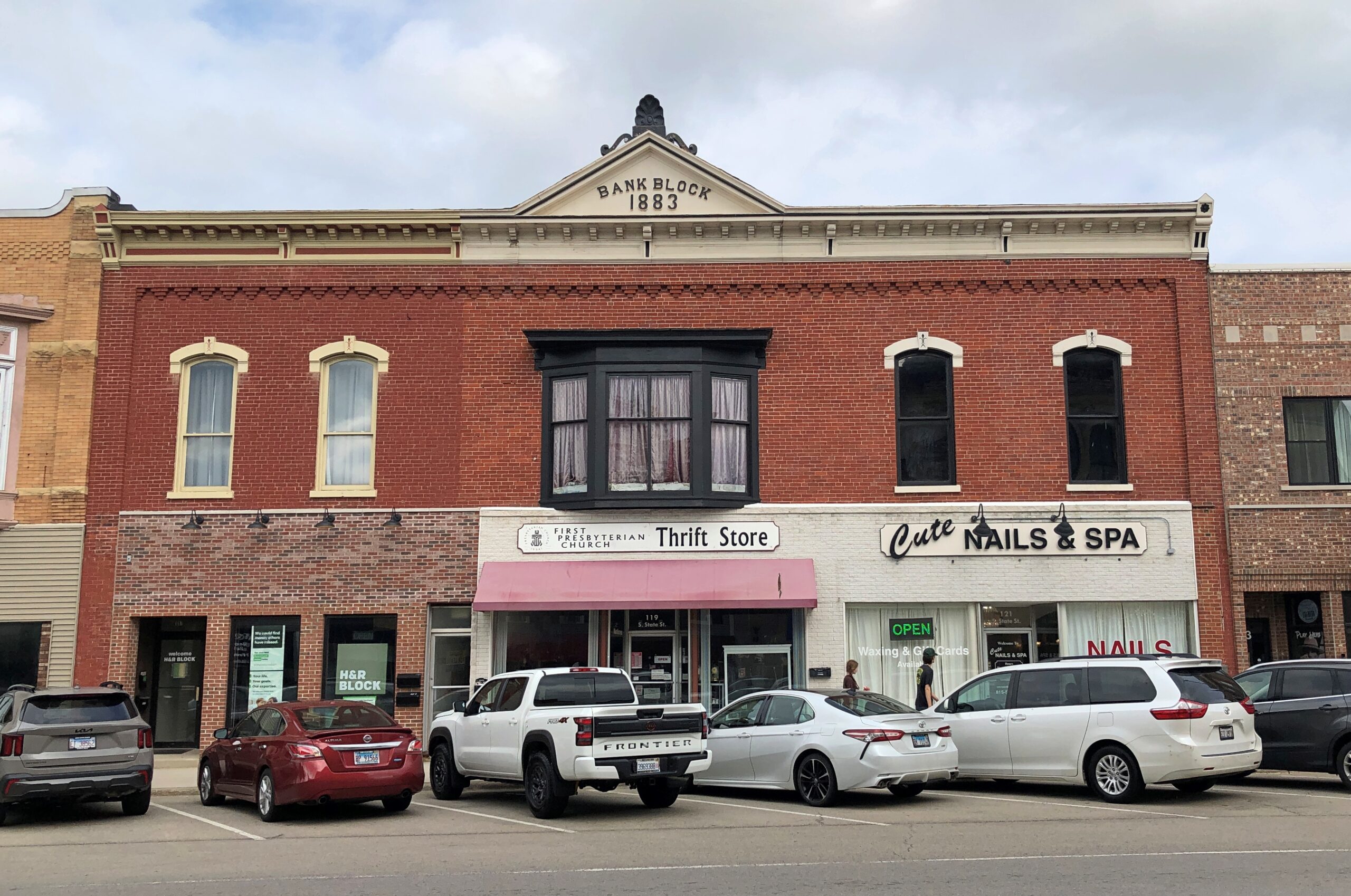
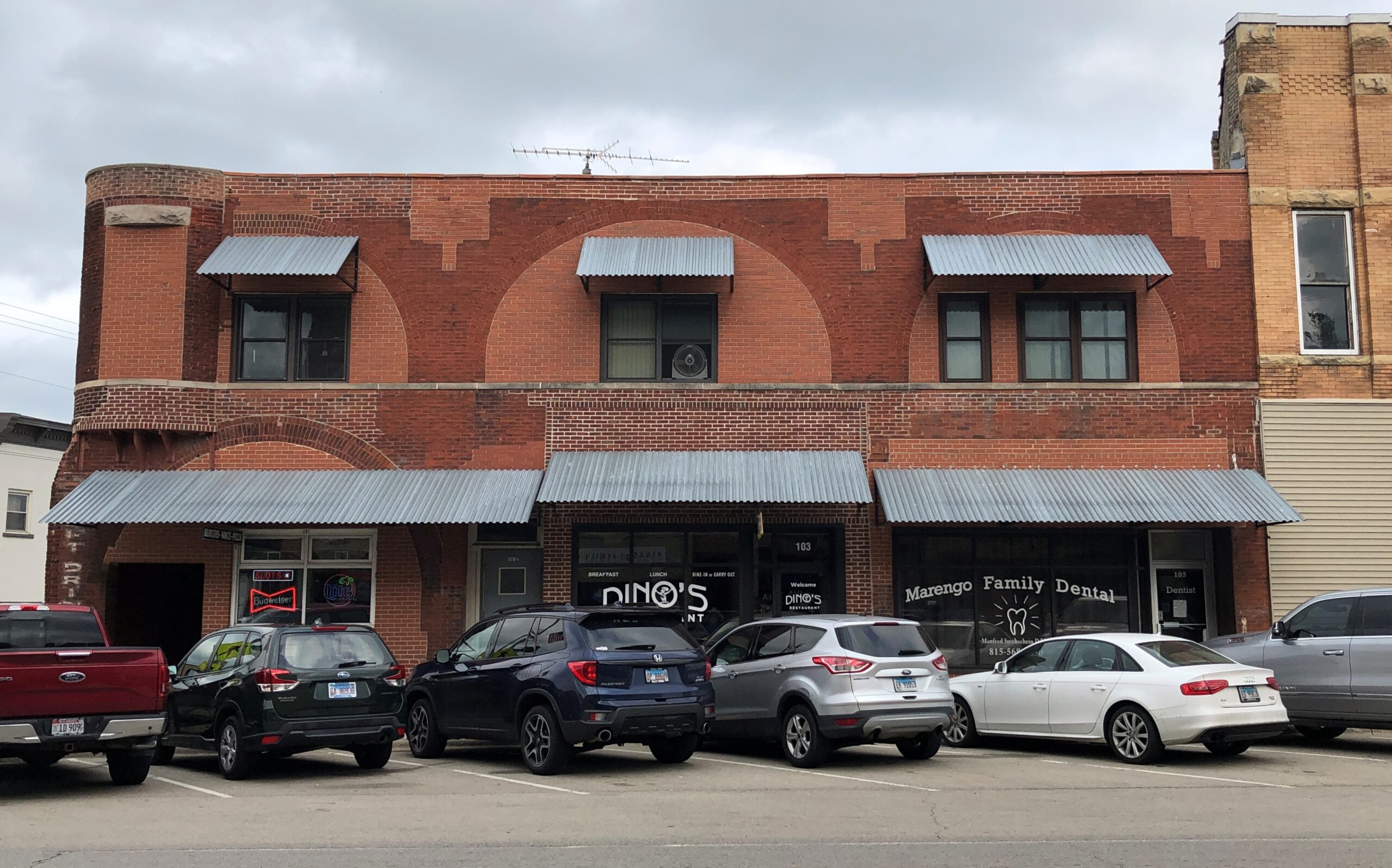
Other buildings on the street.

There’s been a fair amount of re-bricking and other construction over the years on that last one. The building looks like it was assembled Frankenstein-style, though I’m sure it wasn’t. The corrugated metal awnings look a little out of place, but I suppose it was an economical addition. To one side, an unusual ghost sign.

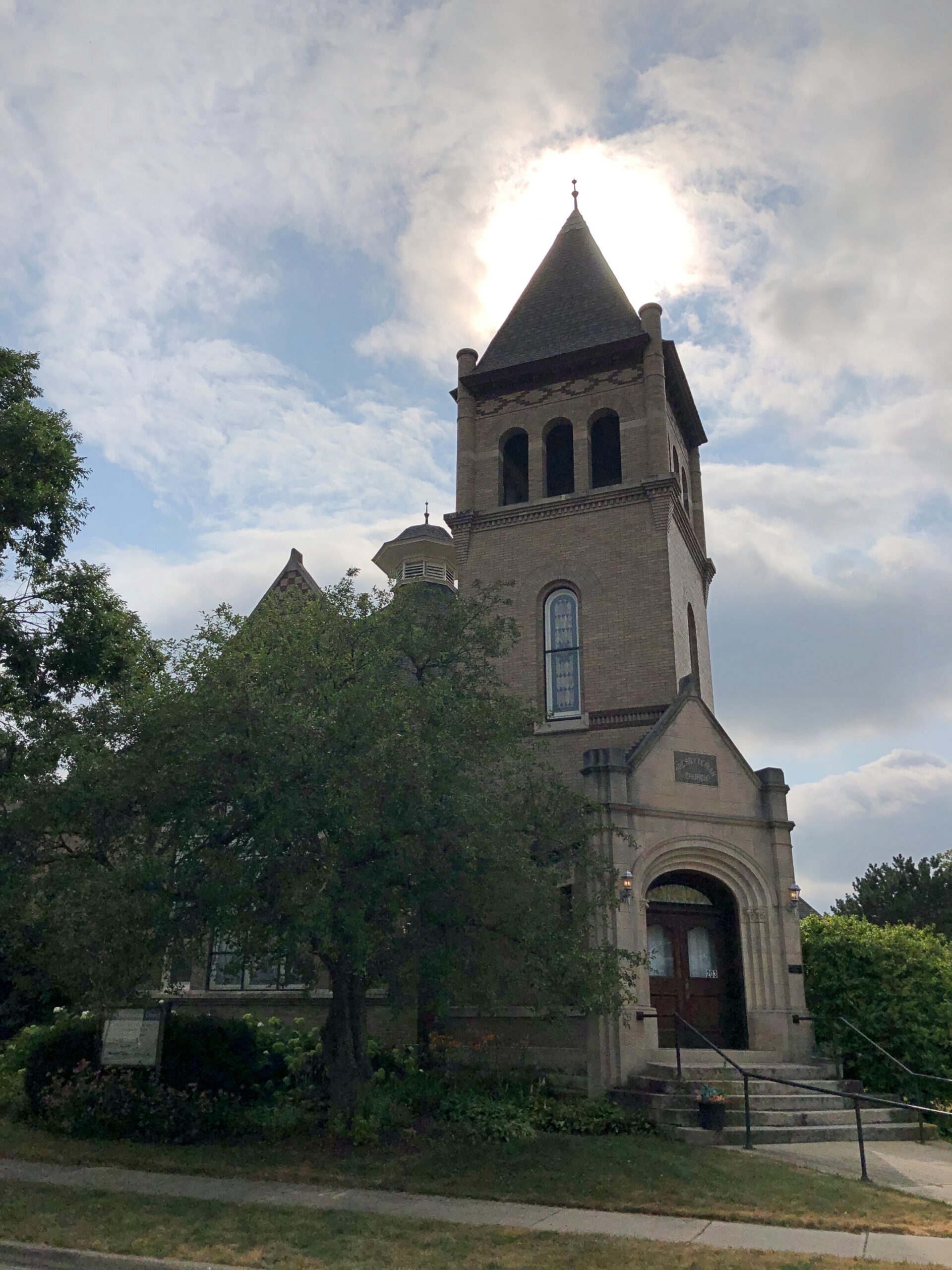
First Presbyterian, a block from Main.

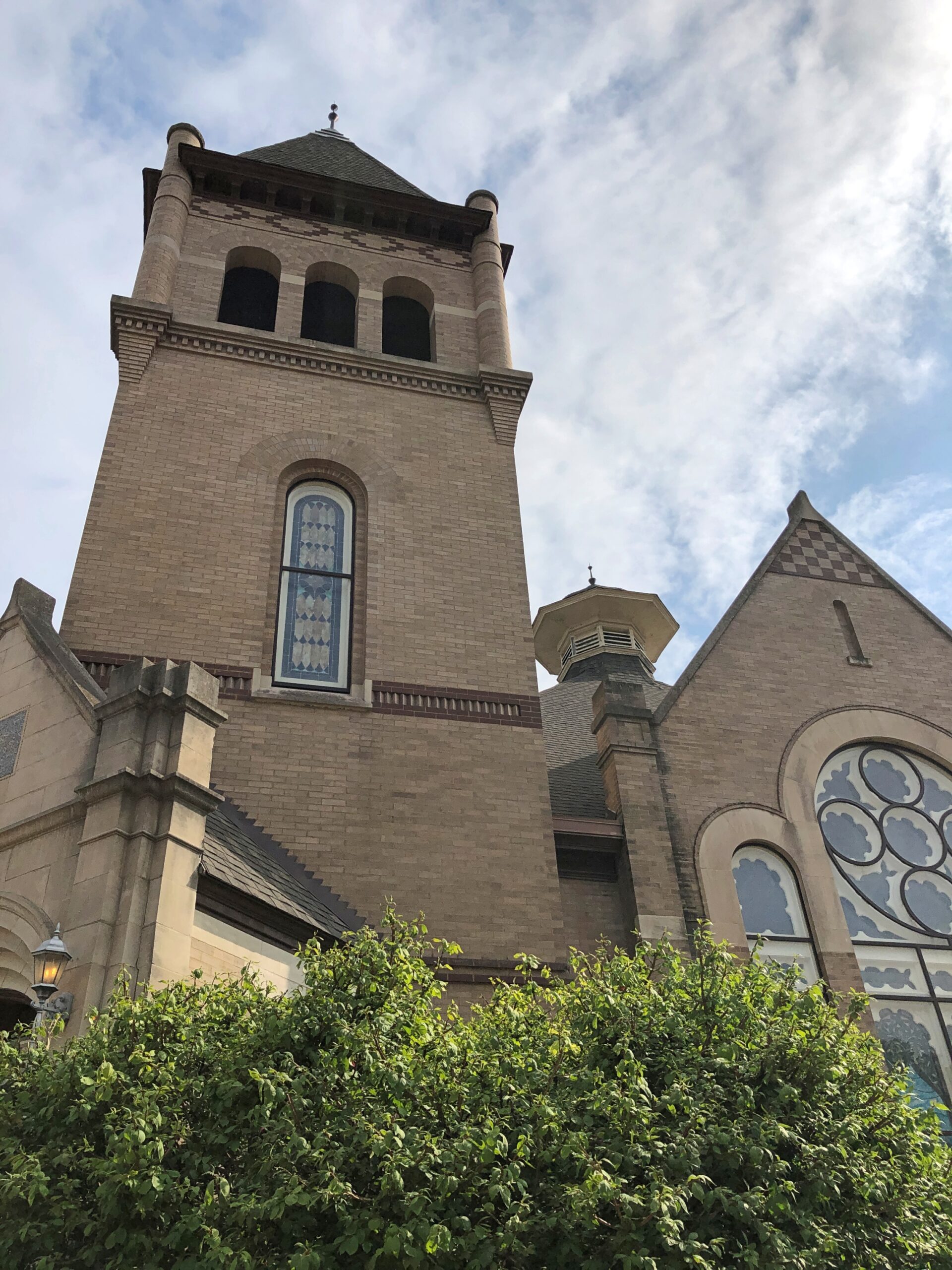
An 1898 rebuilding of a previous church. Naturally McHenry County says: “The architects, Tumbull and Jones of Elgin borrowed elements from various Romantic styles when they designed this church. Foremost is the Moorish-style square bell tower.”

I’ll say. How often does one encounter Moorish-style square bell towers here in the heart of North America? Maybe more often than I know, but I figure no one’s done a census.

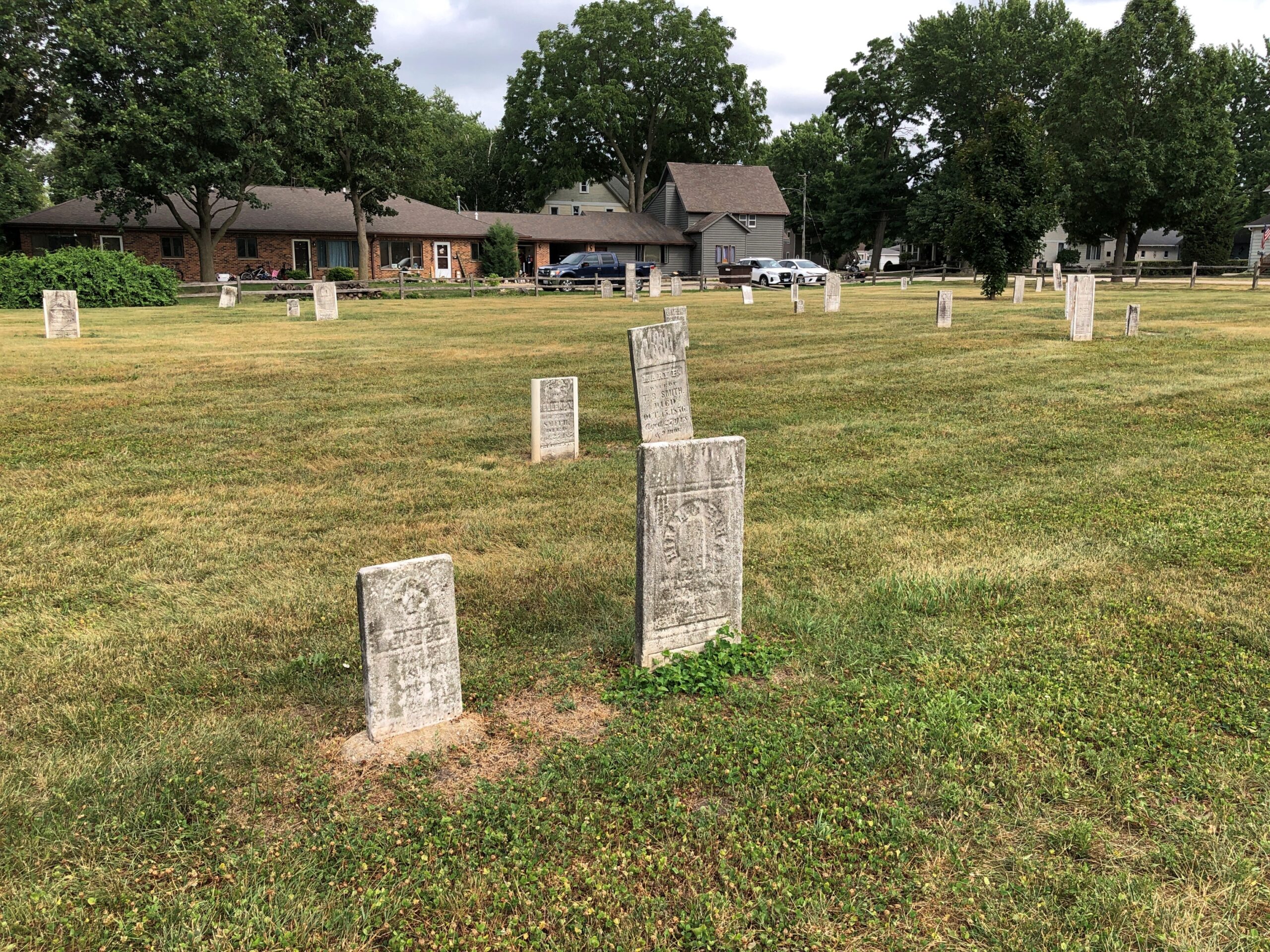
Not far from downtown is East St., which takes you to the City of Marengo Cemetery. Cubs pitcher Lundy Lundgren (d. 1934) is buried there; I saw his marker across the street during a previous visit to Marengo. This time, I took a look at the older section of the cemetery.

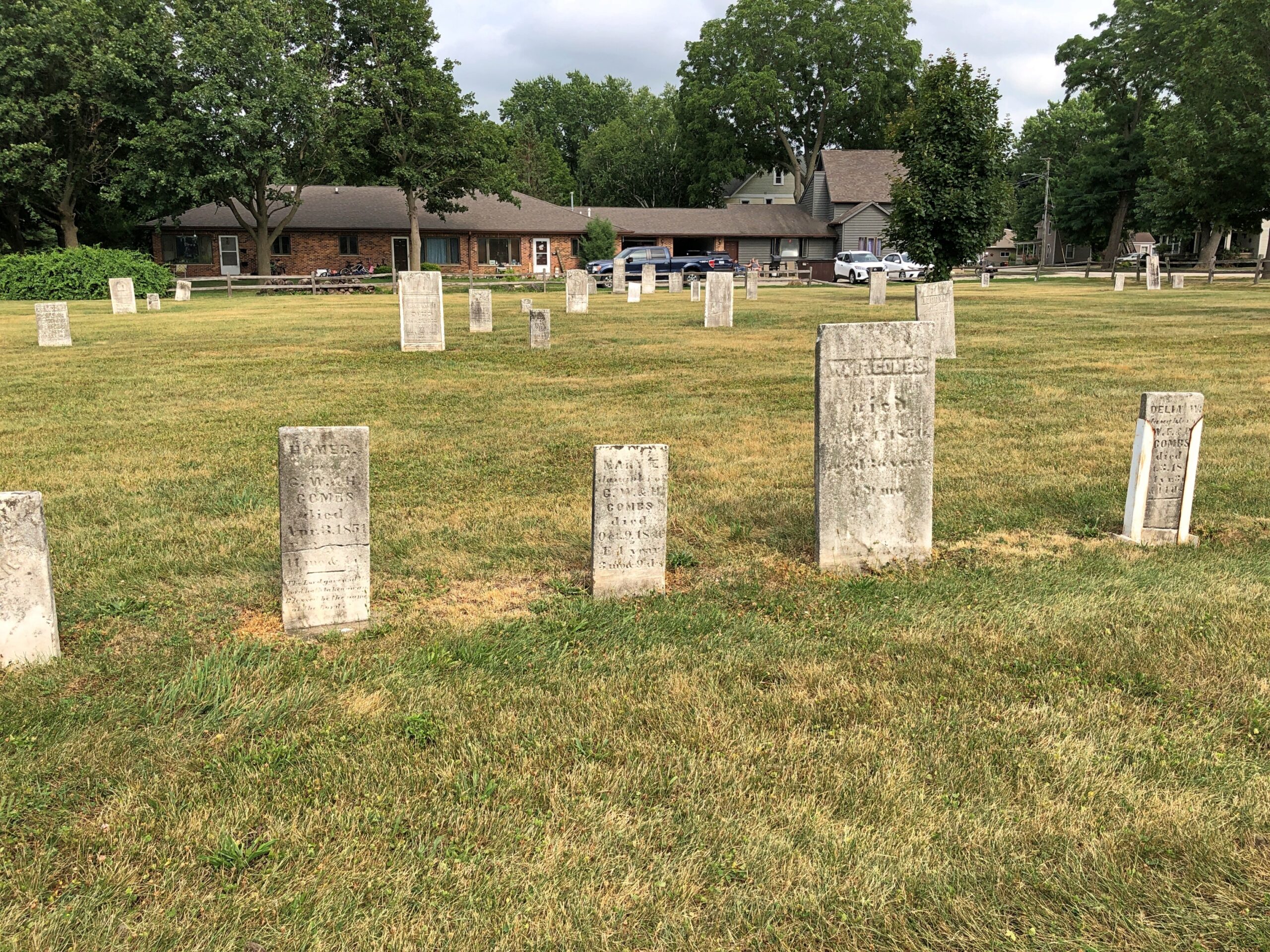
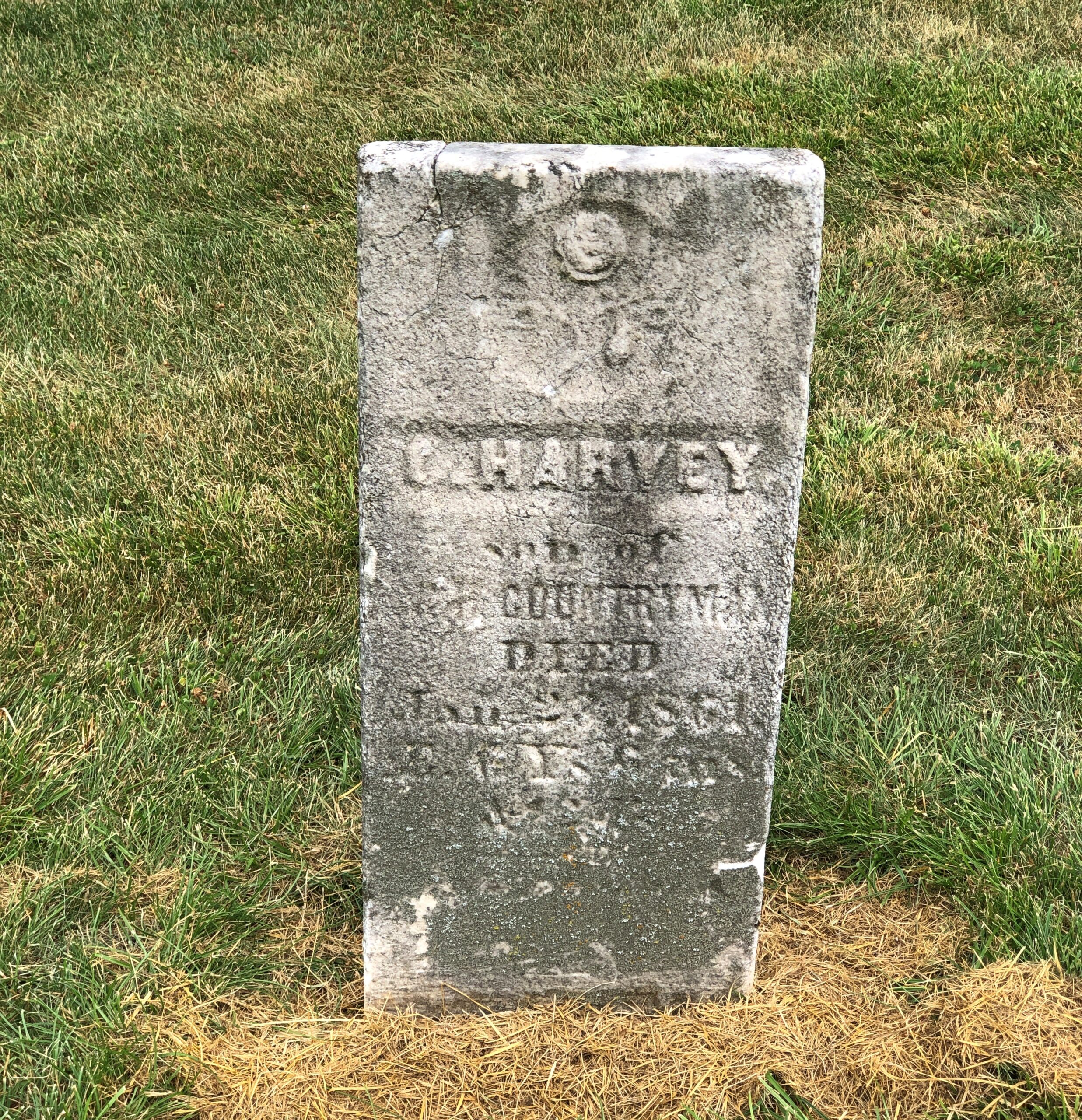
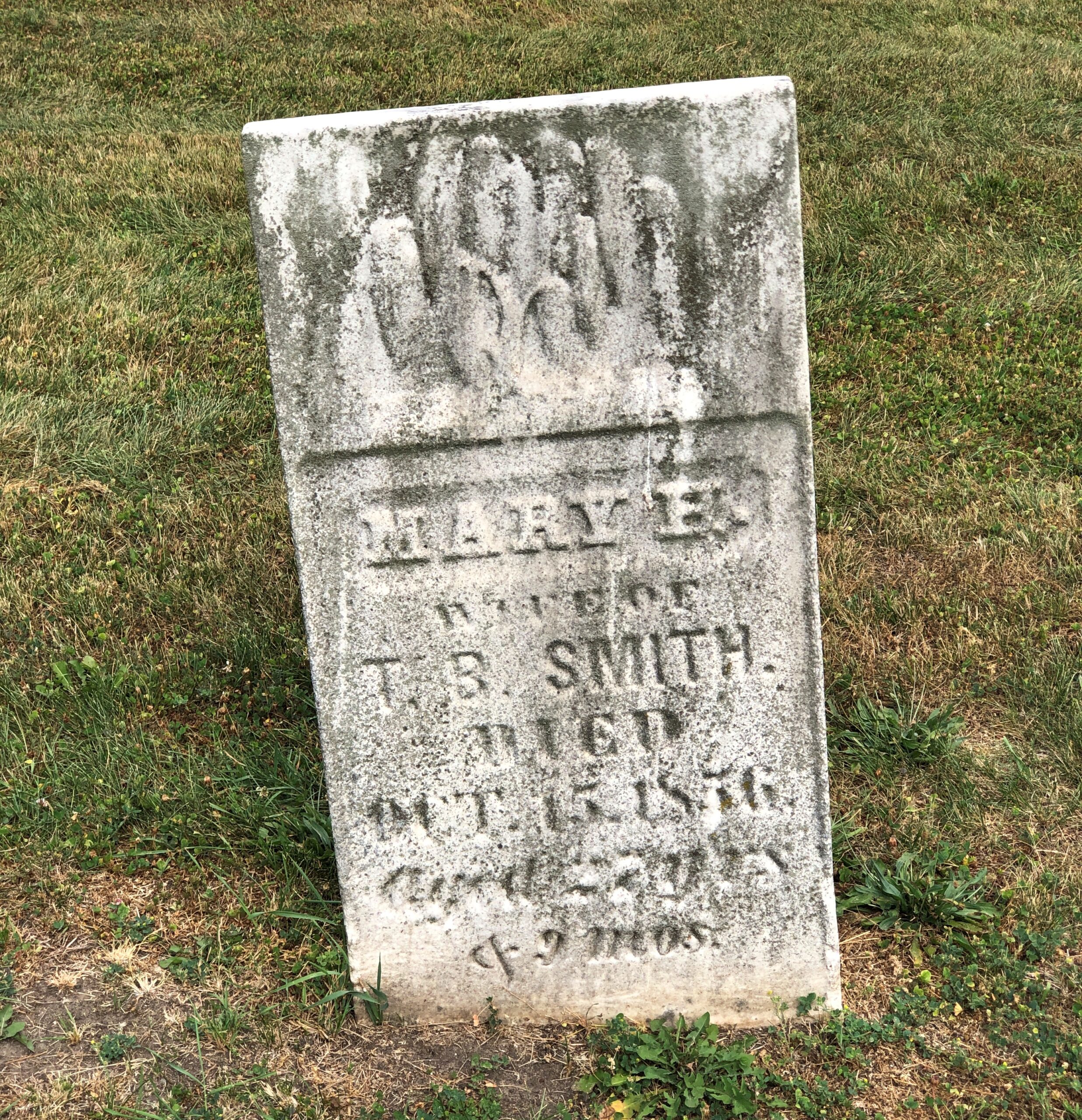
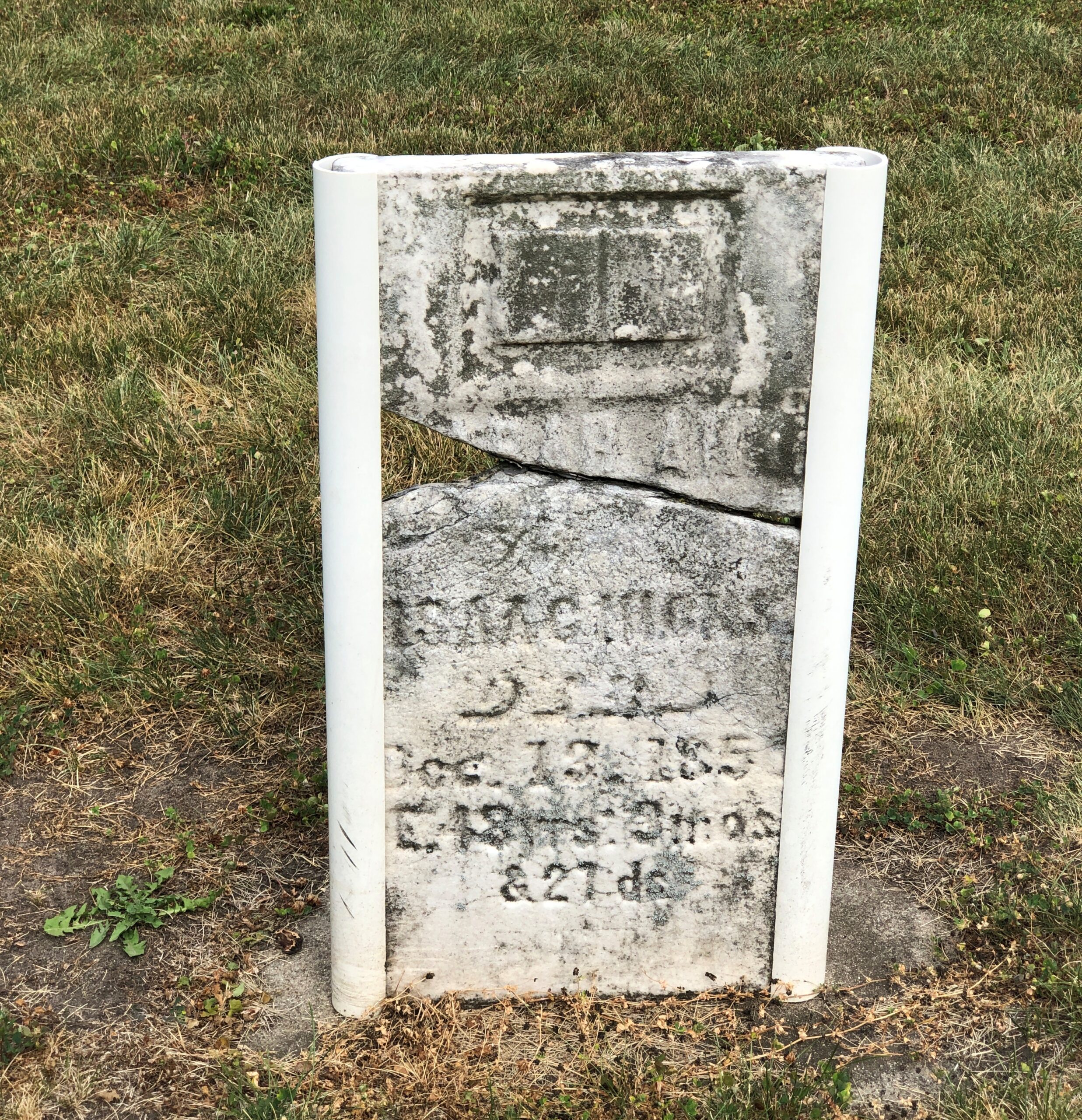
I suspect there are more burials than stones, but in any case, the stones are worn.

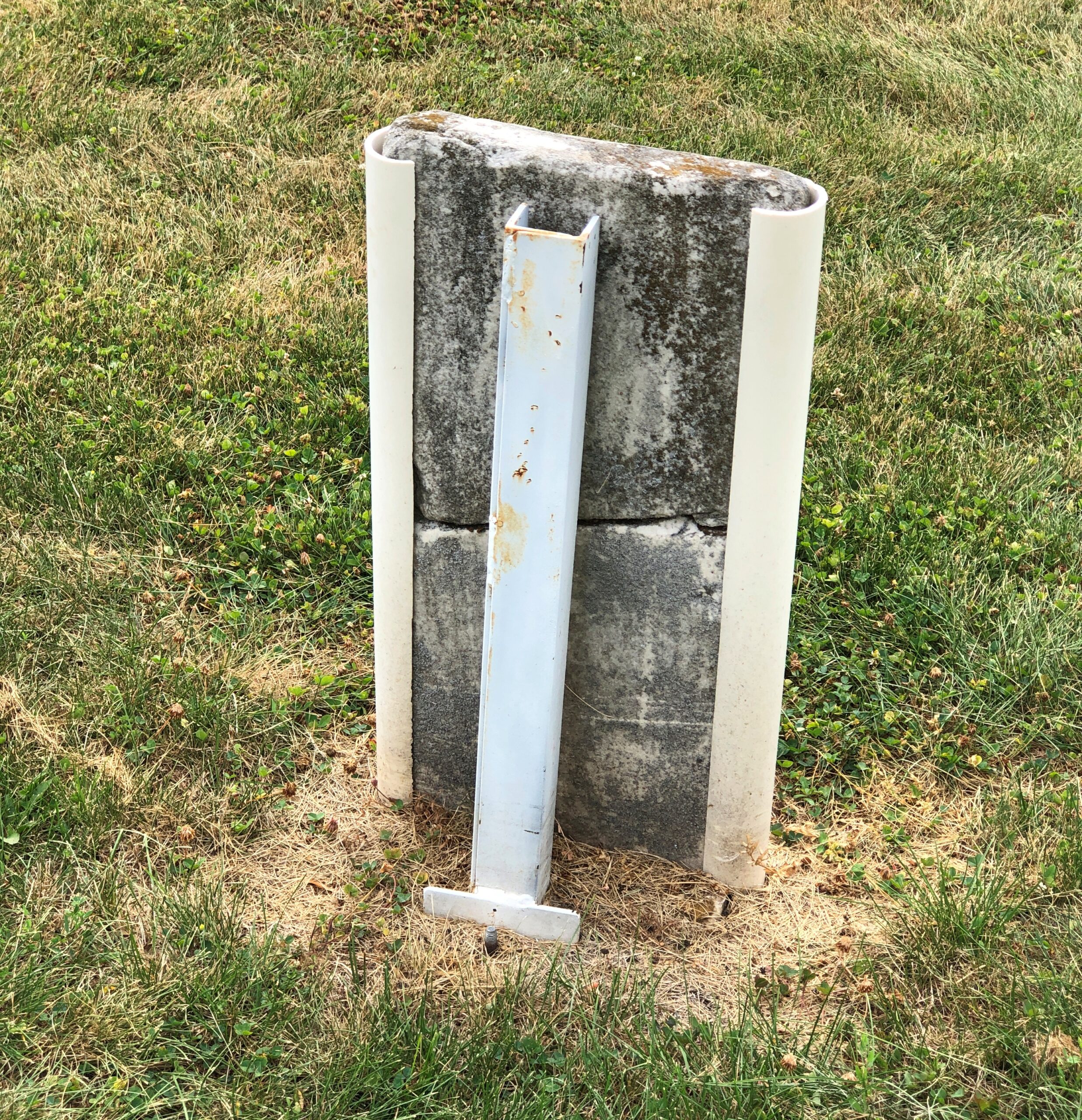
In some cases, propped up by metal structures.

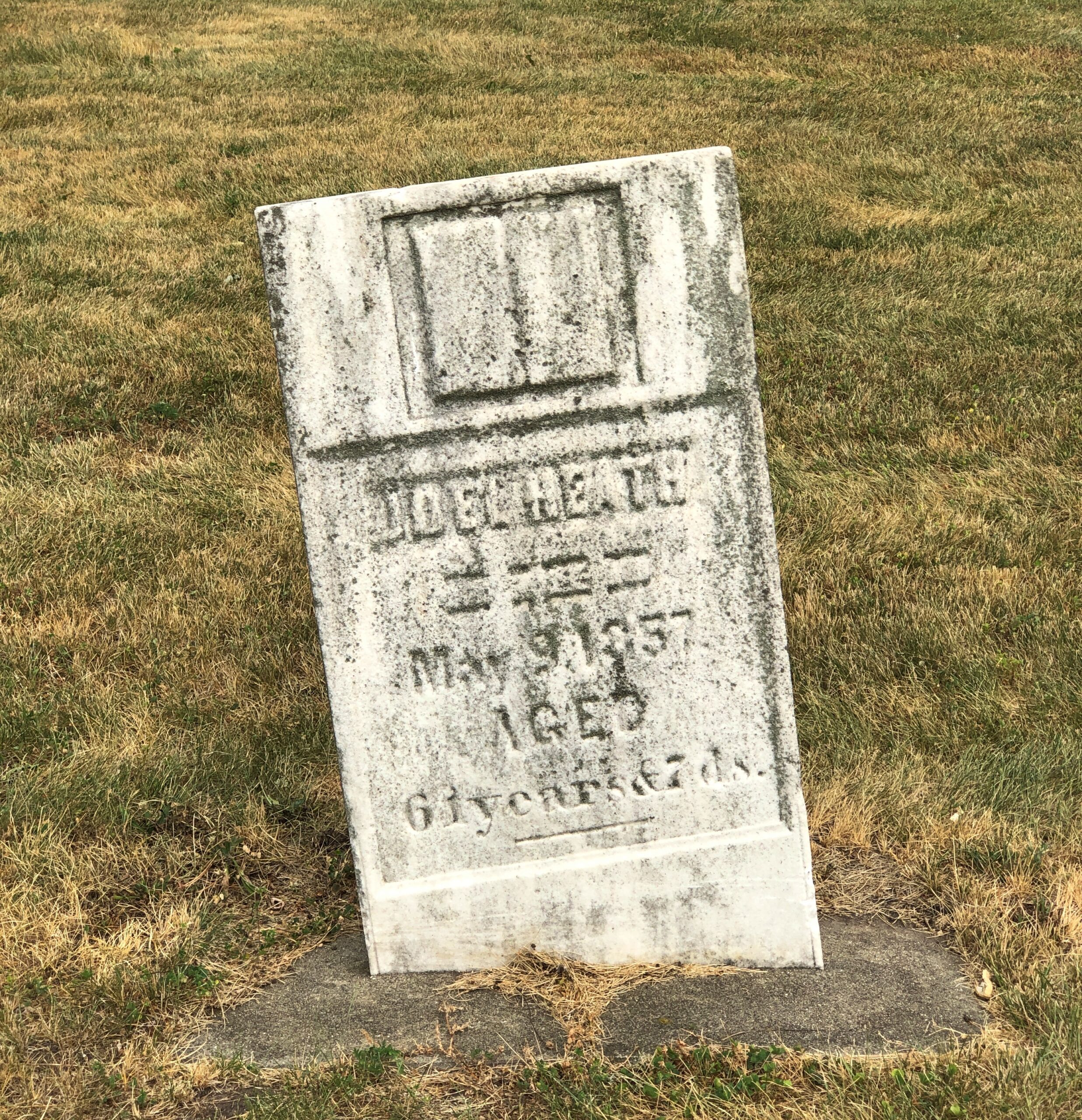
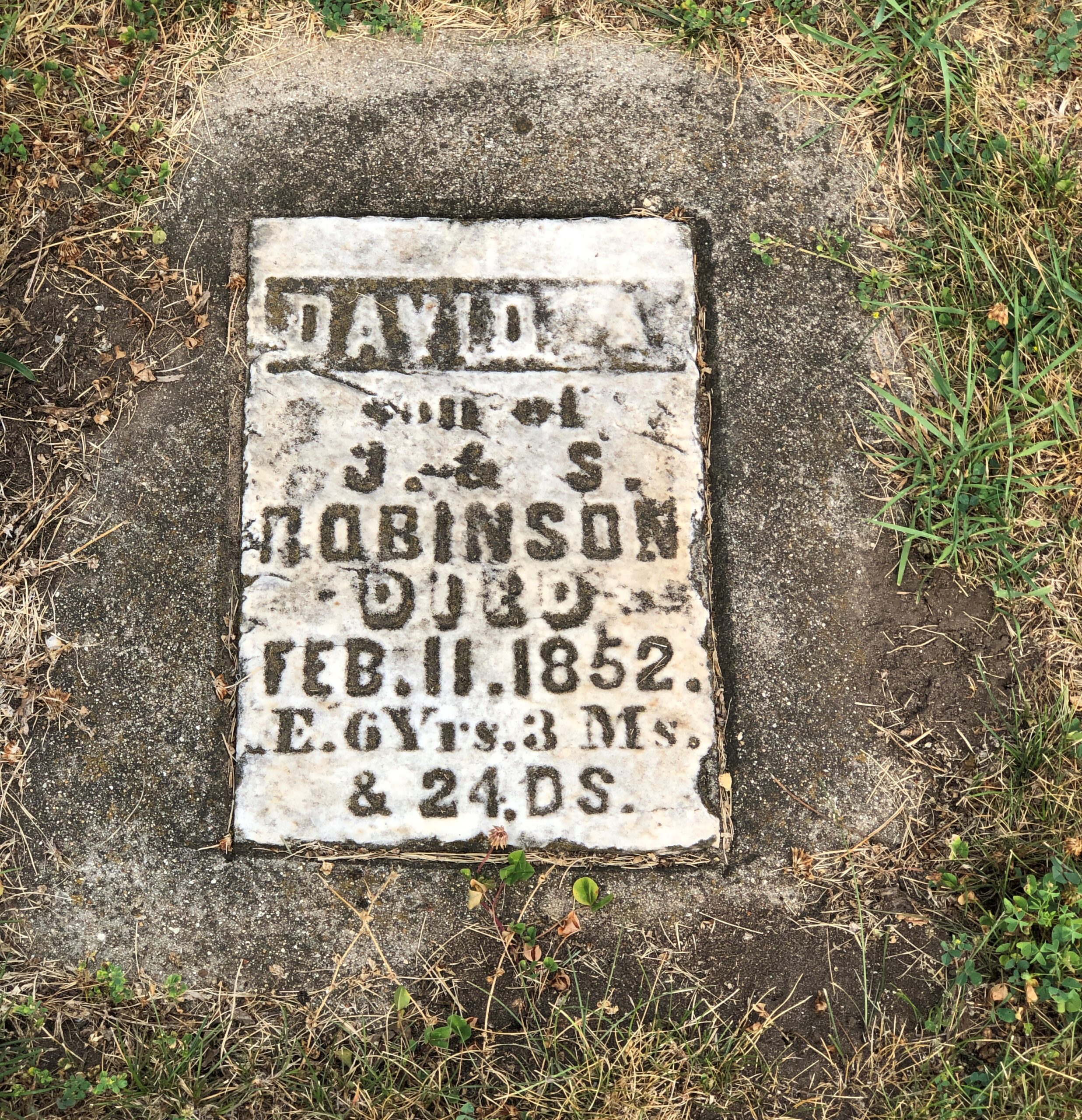
As usual for any cemetery, there are stones that hint at sad stories of extinguished youth.

Six years, three months and 24 days. Whatever else you can say about being old — and I’m at that point — you can be sure you aren’t going to die young.

Camp Kane & The Riverside Lift Station

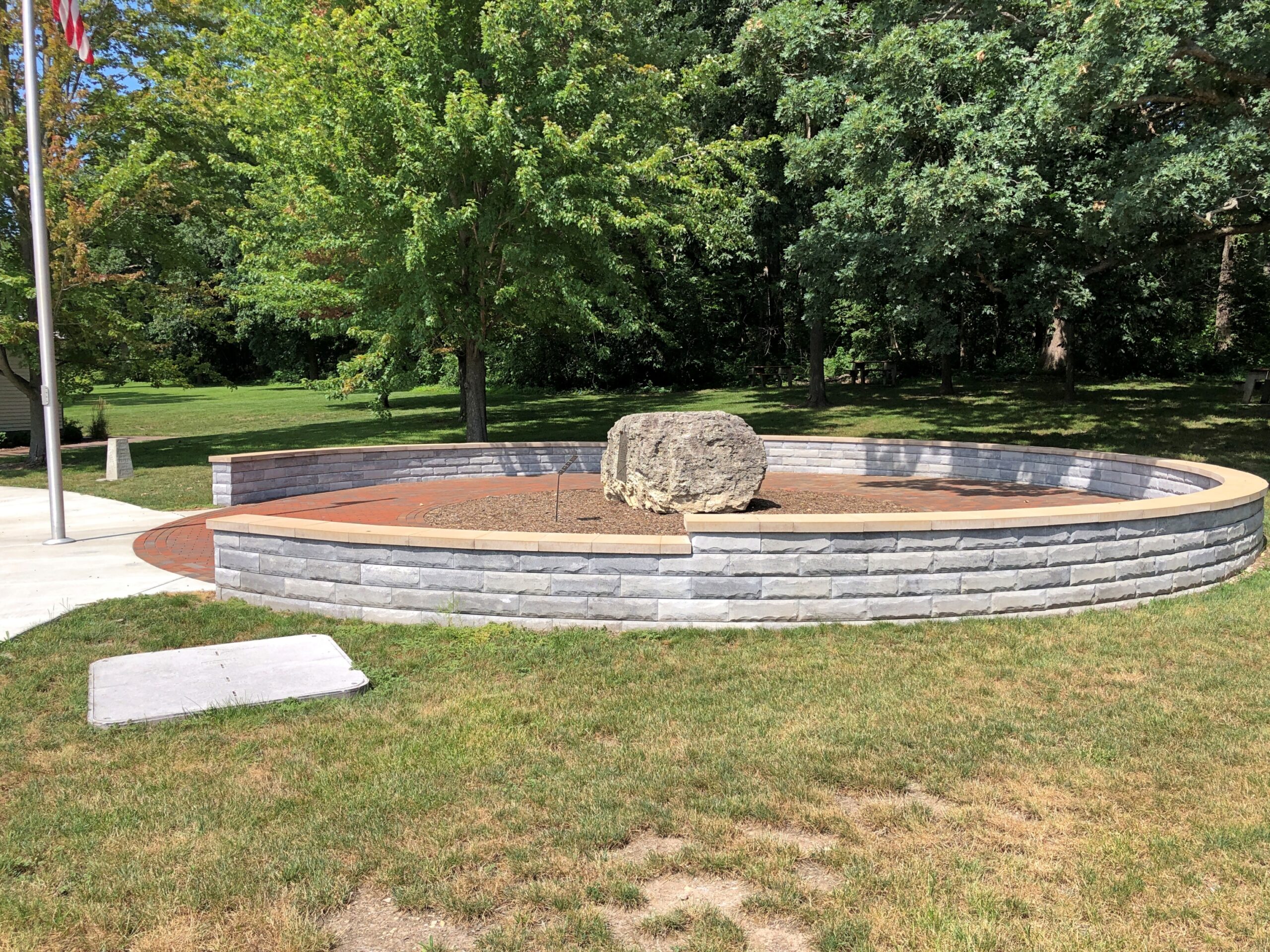
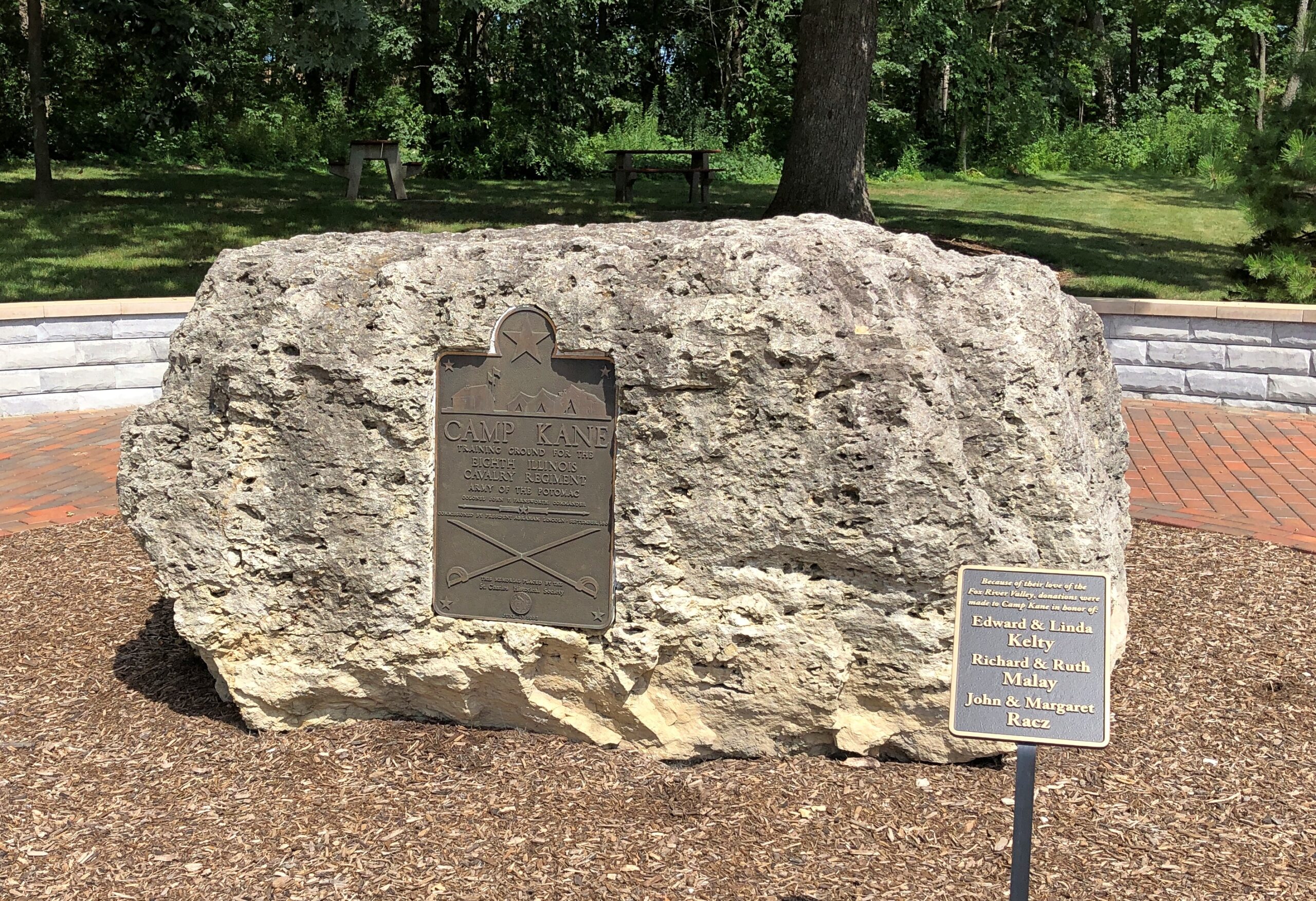
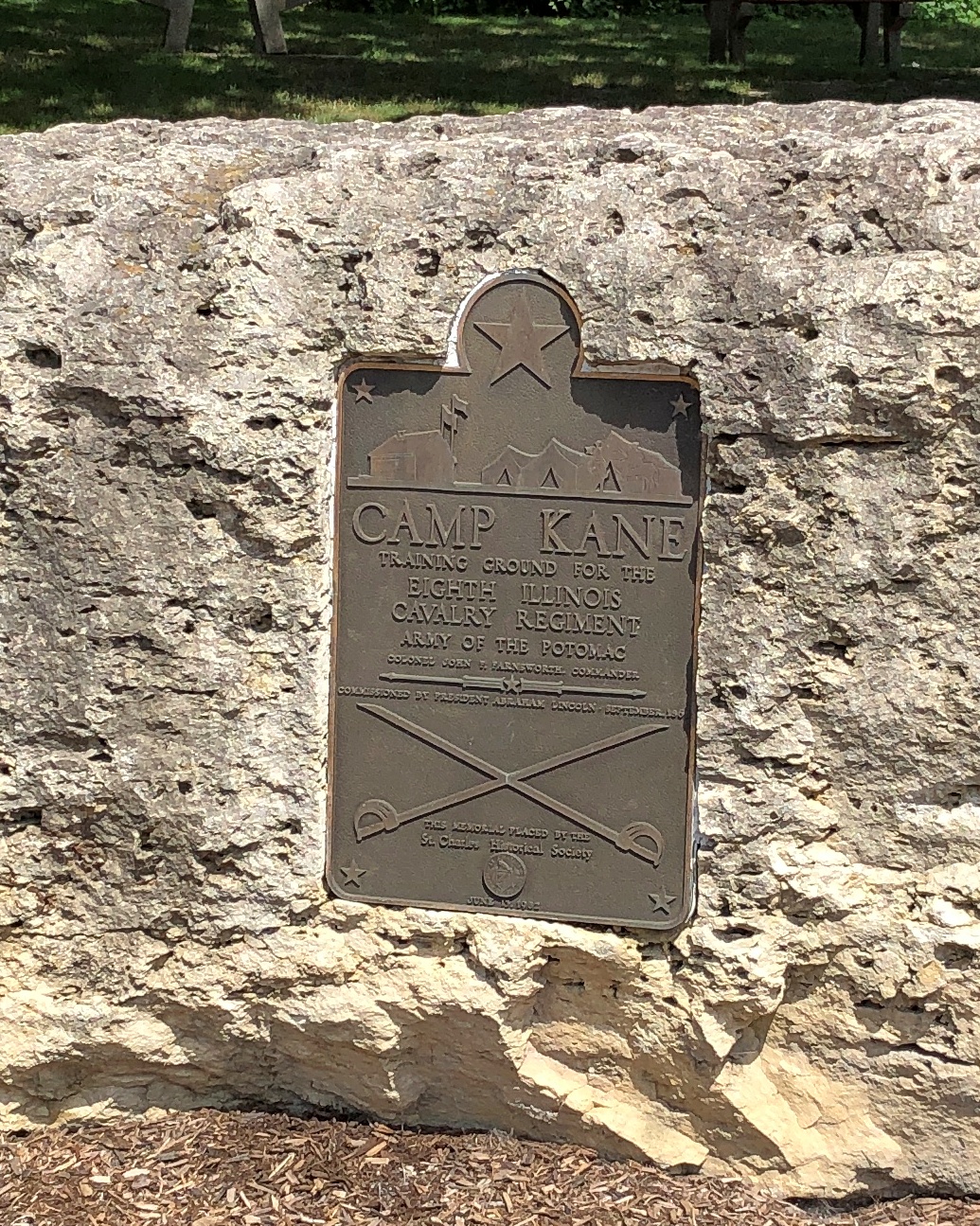
Along the highway Illinois 25 near the Fox River – within sight of the river – is Camp Kane. Or rather, the site of Camp Kane, since it was never intended to be anything but temporary, and in our time, the green space is known as Langum Park in St. Charles. A memorial to the men who gathered at the camp during the Civil War is inside a small stone ring.

In 1861, prominent Kane County resident John Farnsworth (d. 1897) – attorney, Congressman, politico on the ground floor of the Republican Party, ardent abolitionist and friend of Abraham Lincoln – organized the 8th Illinois Cavalry, which trained on land he owned along the Fox River. Camp Kane, it was called.

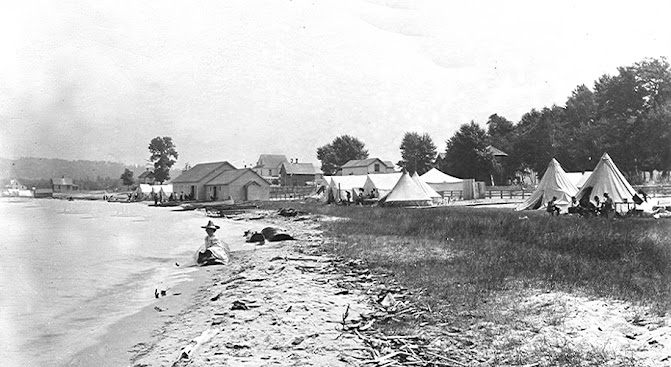
Below, Camp Kane in the day, a public domain image borrowed from the Digital Research Library of Illinois History. The 17th Illinois Cavalry also organized there, fairly late in the war.

For a time, Col. Farnsworth led the 8th, which served through the entire war in the Army of the Potomac. Most notably at Gettysburg, a little after Farnsworth’s command.

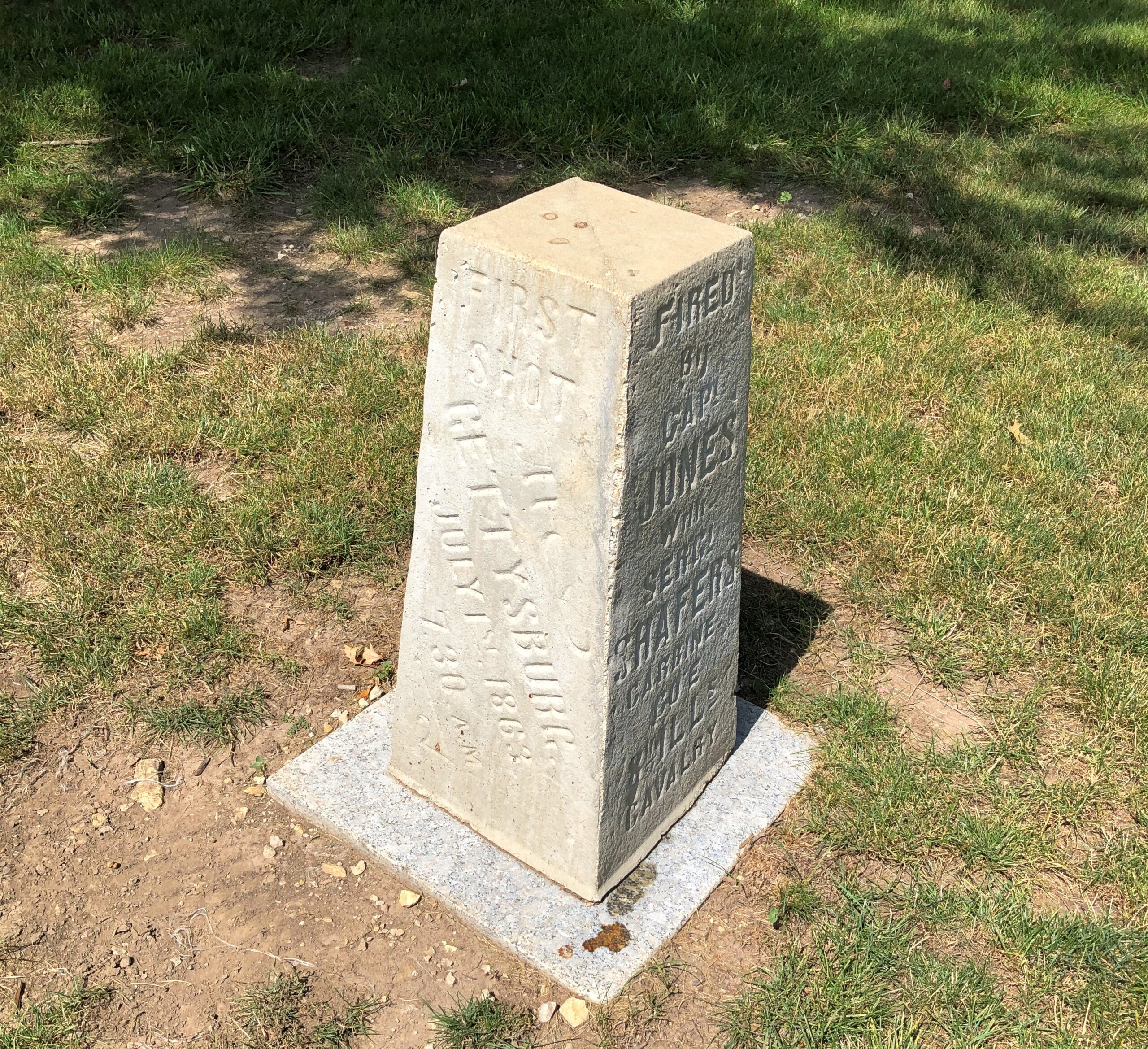
“It was the 8th Illinois Cavalry’s Lt. Marcellus Jones who fired the first shot of the famous battle [Gettysburg],” says the Digital Research Library of Illinois History. “Confederate Colonel John S. Mosby (The Grey Ghost) called the 8th Illinois Cavalry ‘The best cavalry regiment in the Army of the Potomac.’ On a more sorrowful note, the 8th Illinois Cavalry also had the disheartening yet distinguished honor of being the honor guards for Lincoln’s funeral train.”

A stone memorizes that first shot at Gettysburg.

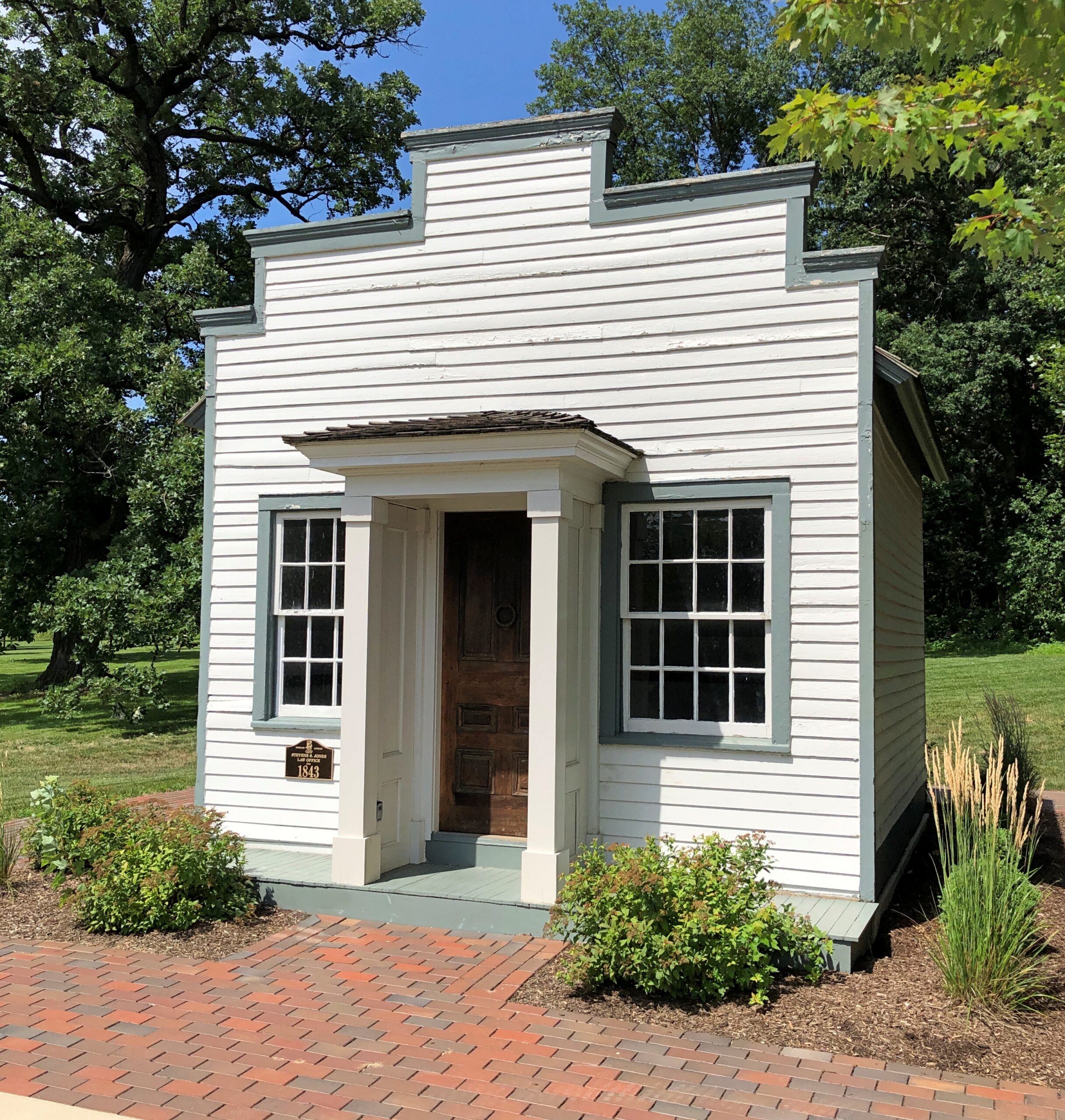
Moved from elsewhere in St. Charles: the law office of Steven S. Jones (d. 1877), built in 1843. But it did have a wartime use: a holding area for deserters.

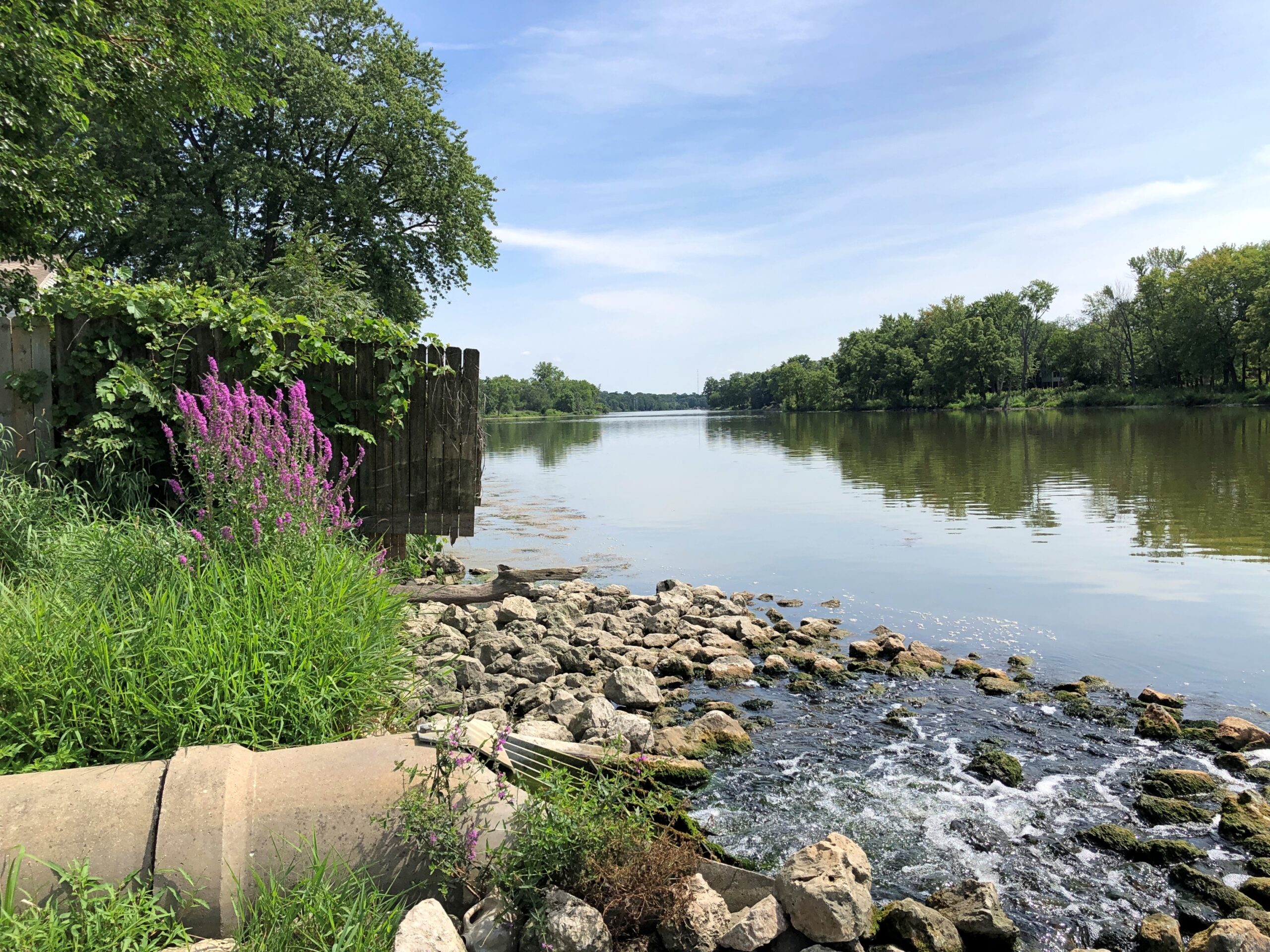
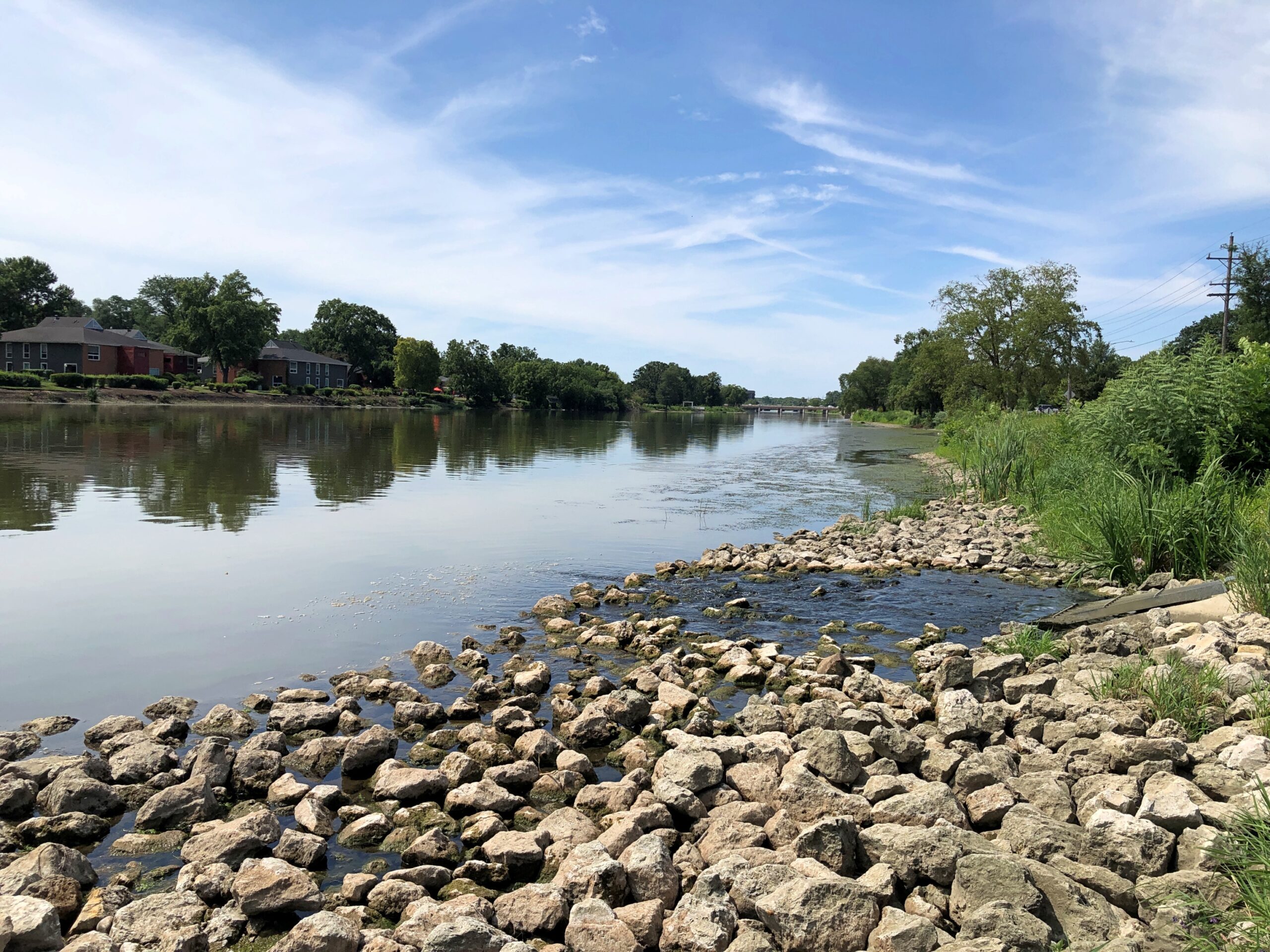
The site, as mentioned, isn’t far from the wide Fox. Cross the road, and you’re there. That pipe, I believe, is a channelized creek, nothing to do with wastewater.

One more thing. This.

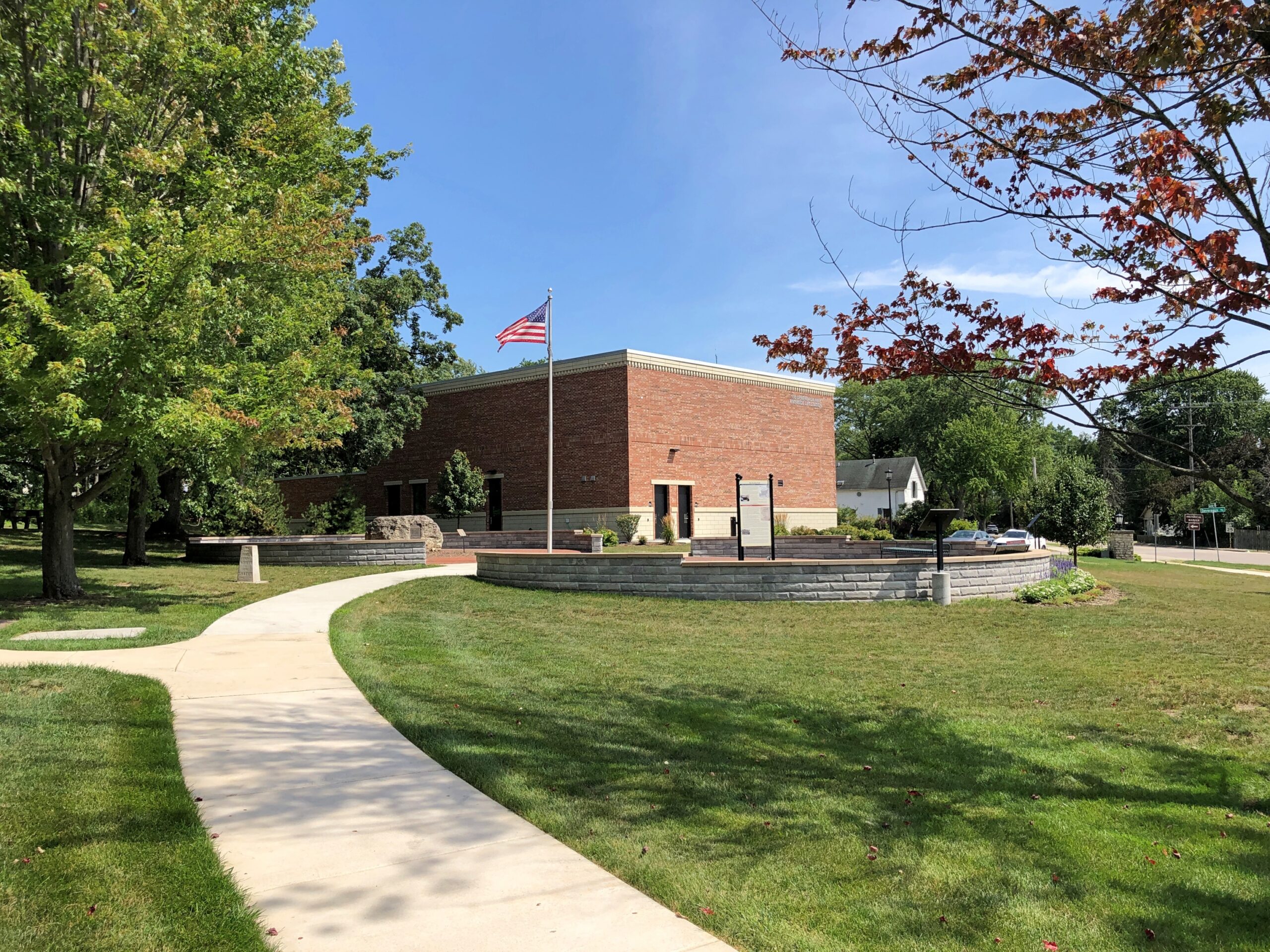
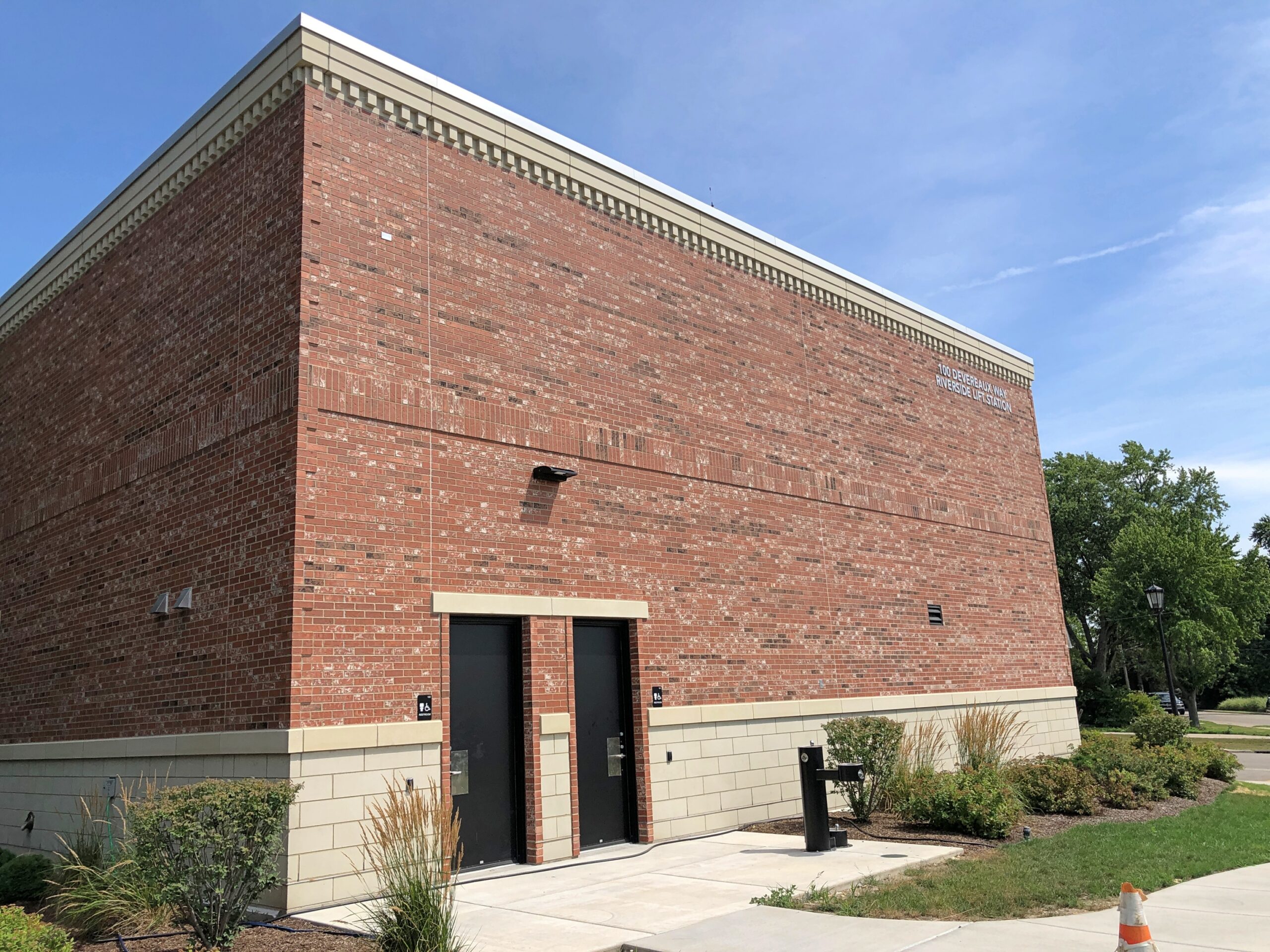
The Riverside Lift Station.

Just the facts:

The lift station, completed in 2024, serves more than half of St. Charles households. It pumps wastewater from the lower reaches of the town slightly uphill to a water reclamation plant.

The $14.8 million project was funded by the IEPA Low-Interest Loan Program.

The new lift station has the capacity to pump 35 million gallons per day. This is an increase of 15.3 million gallons per day compared with the older station it replaced.

Designed by Trotter Associates, with construction by Whittaker Construction & Excavating.

I looked up Trotter. Municipal infrastructure is its specialty, and the company does a lot of it.

There are actual design elements at play in the expanse of brick. What could have been a hulking brick wall, hulking with sameness, instead has some texture for the eye. Nice work. Also, note the two doors in the front wall. Those are public restrooms, so you can add your little bit to the wastewater stream if need be.

***

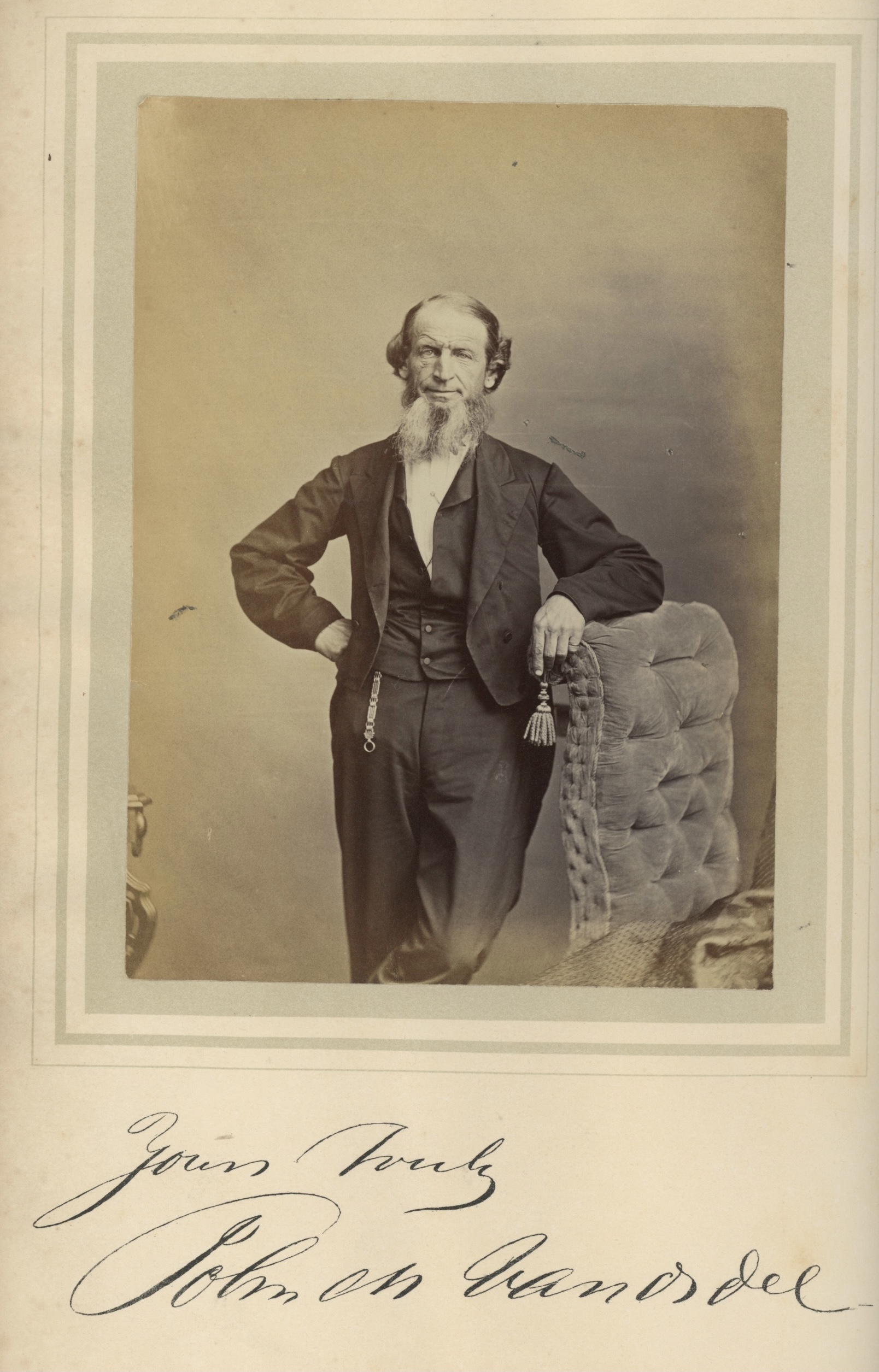
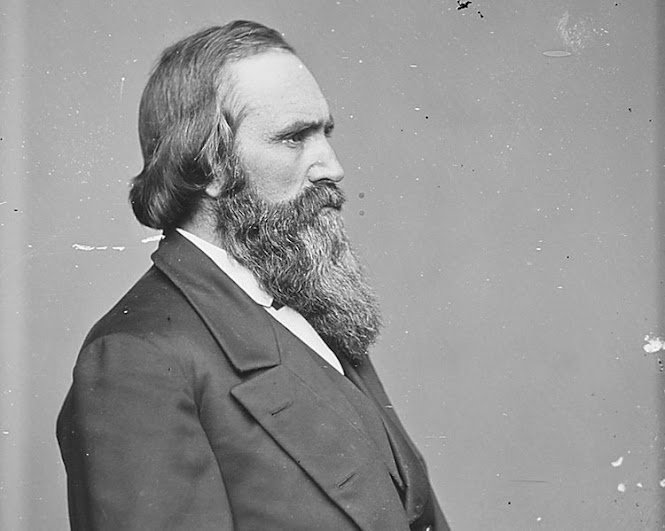
This is John Farnsworth, looking about as 1860s as one graybeard can.

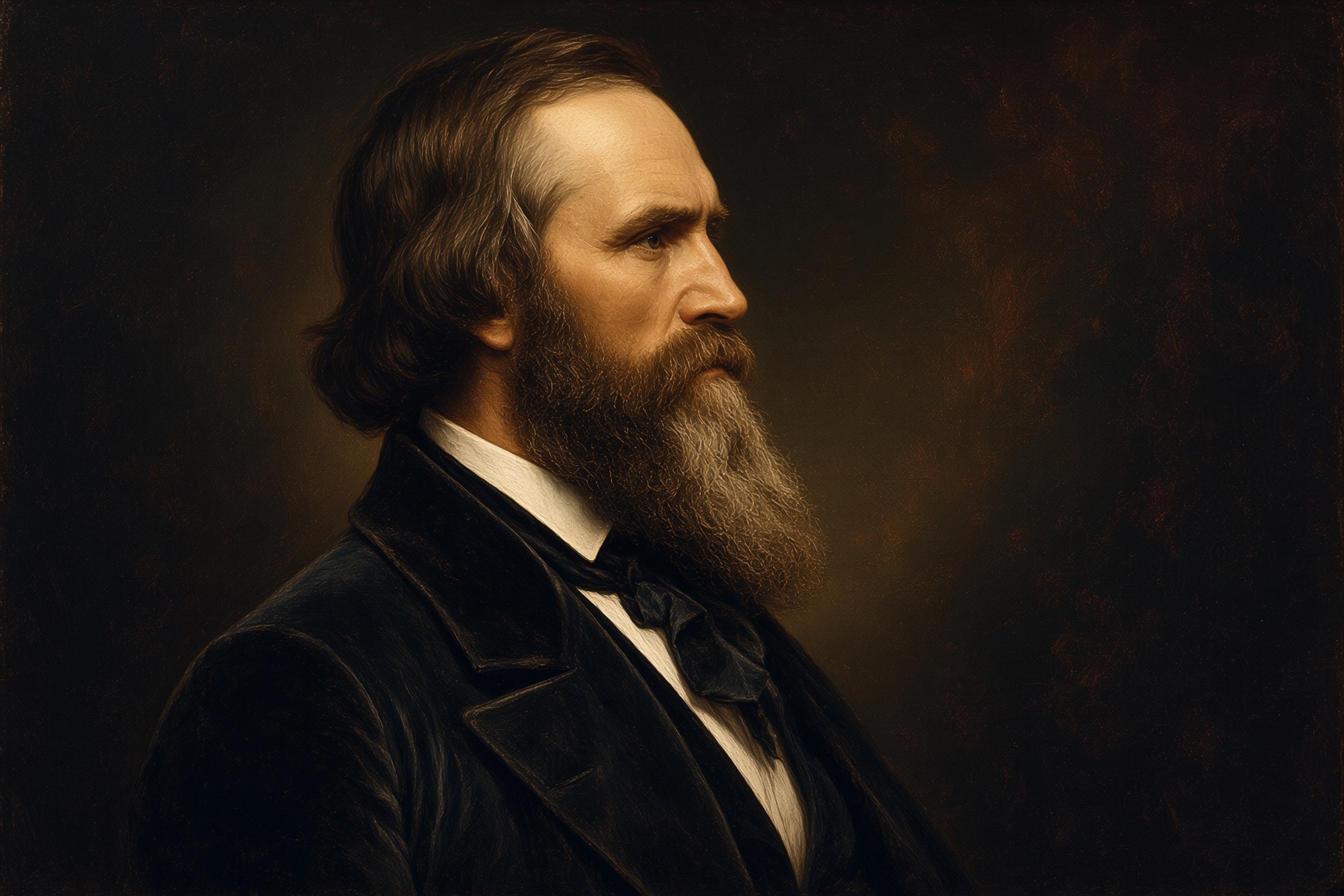
My AI prompt: Dutch Masters Style. Retain the look of the coat and beard.

Striking. Still looking 1860s, but with an enhanced presence, somehow. Maybe it’s the somewhat less gray beard.

The Illinois Railroad Museum: Details

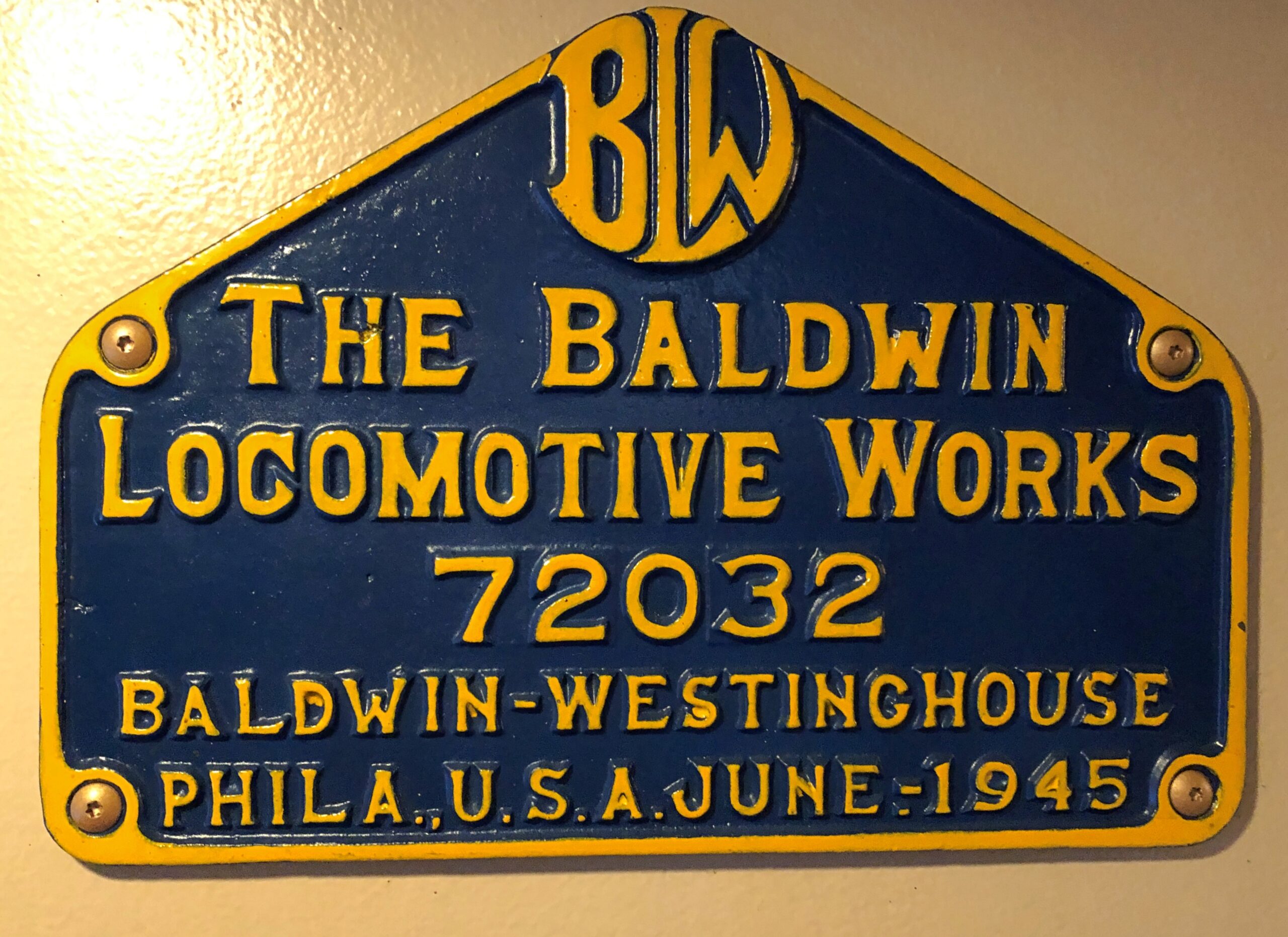
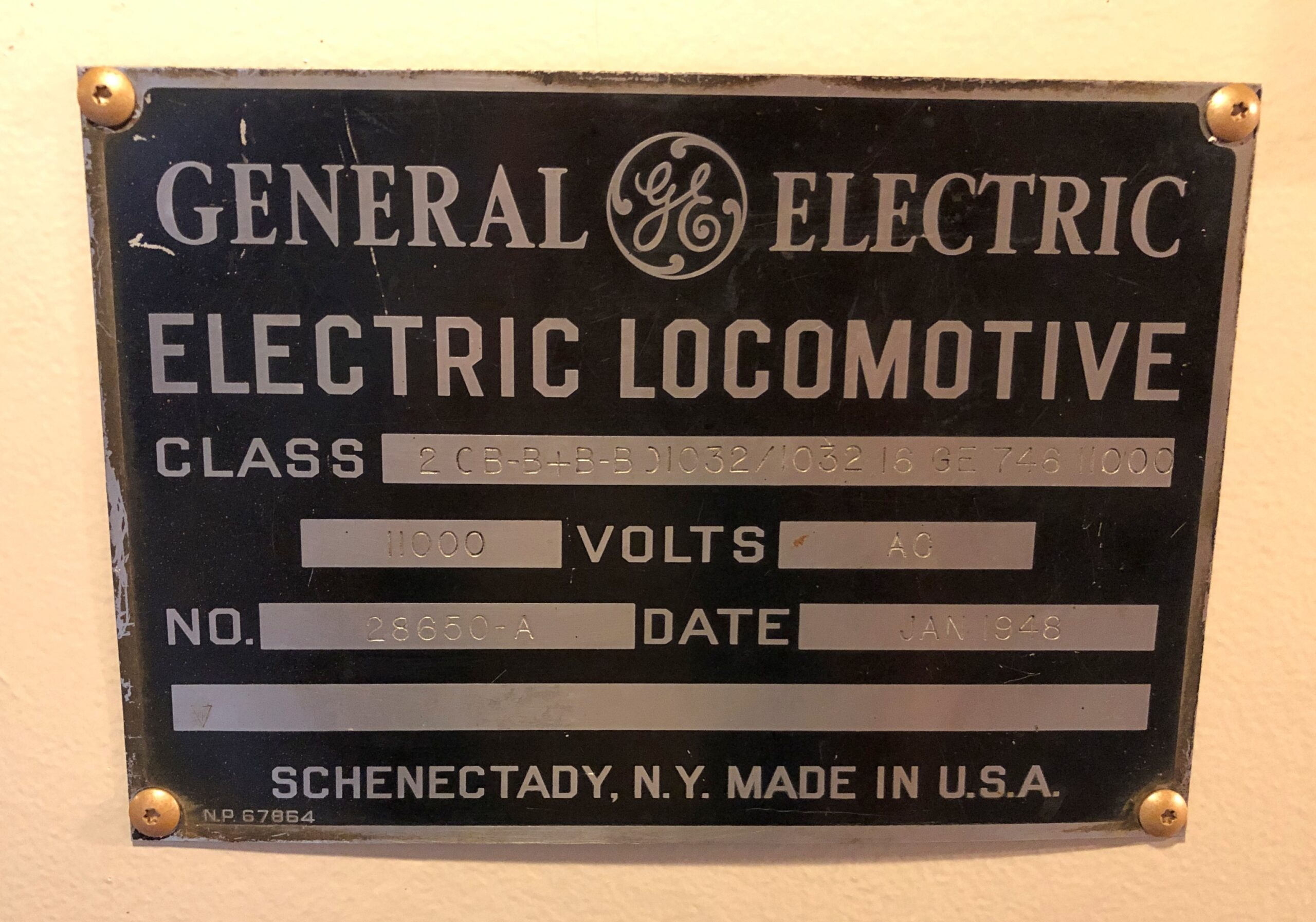
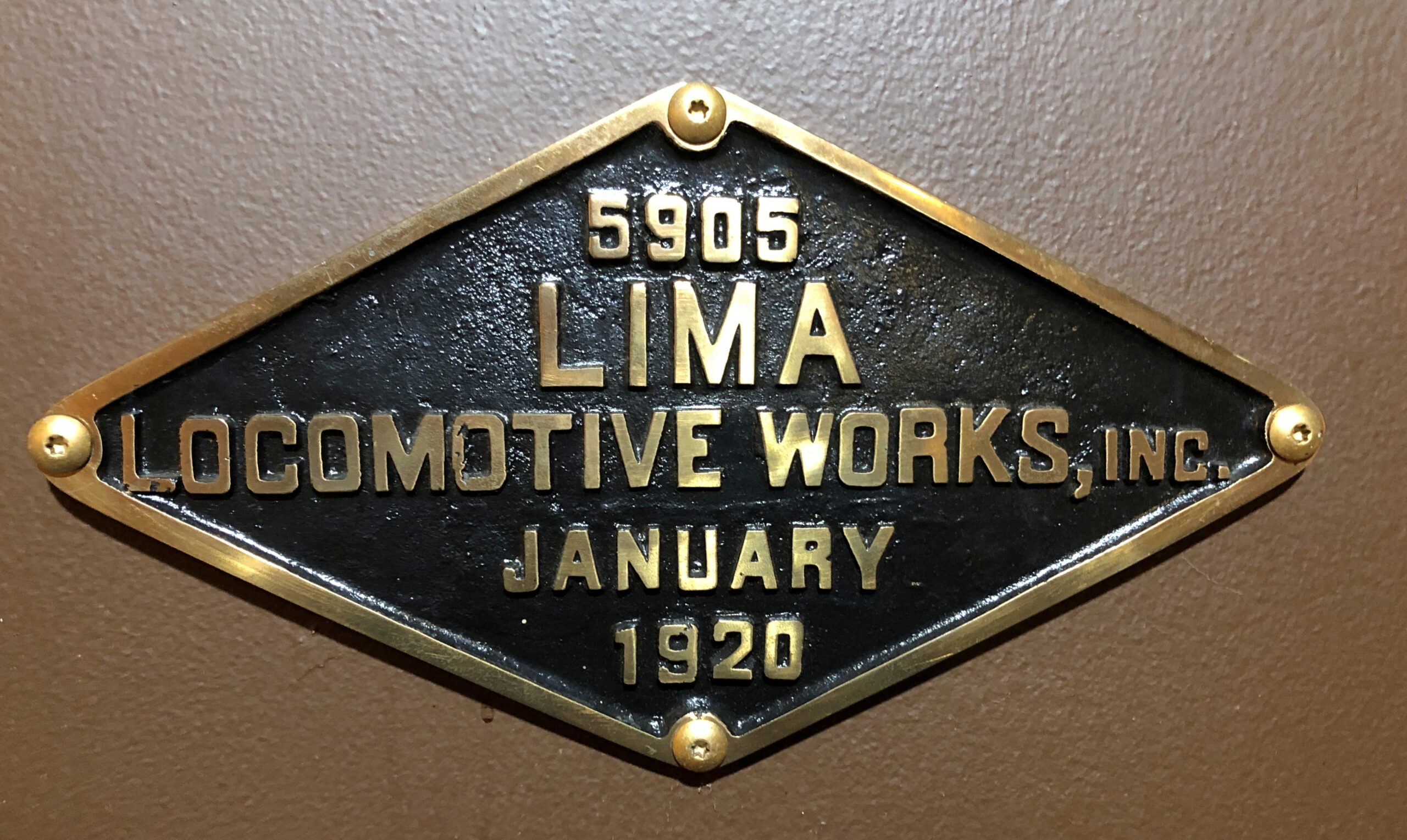
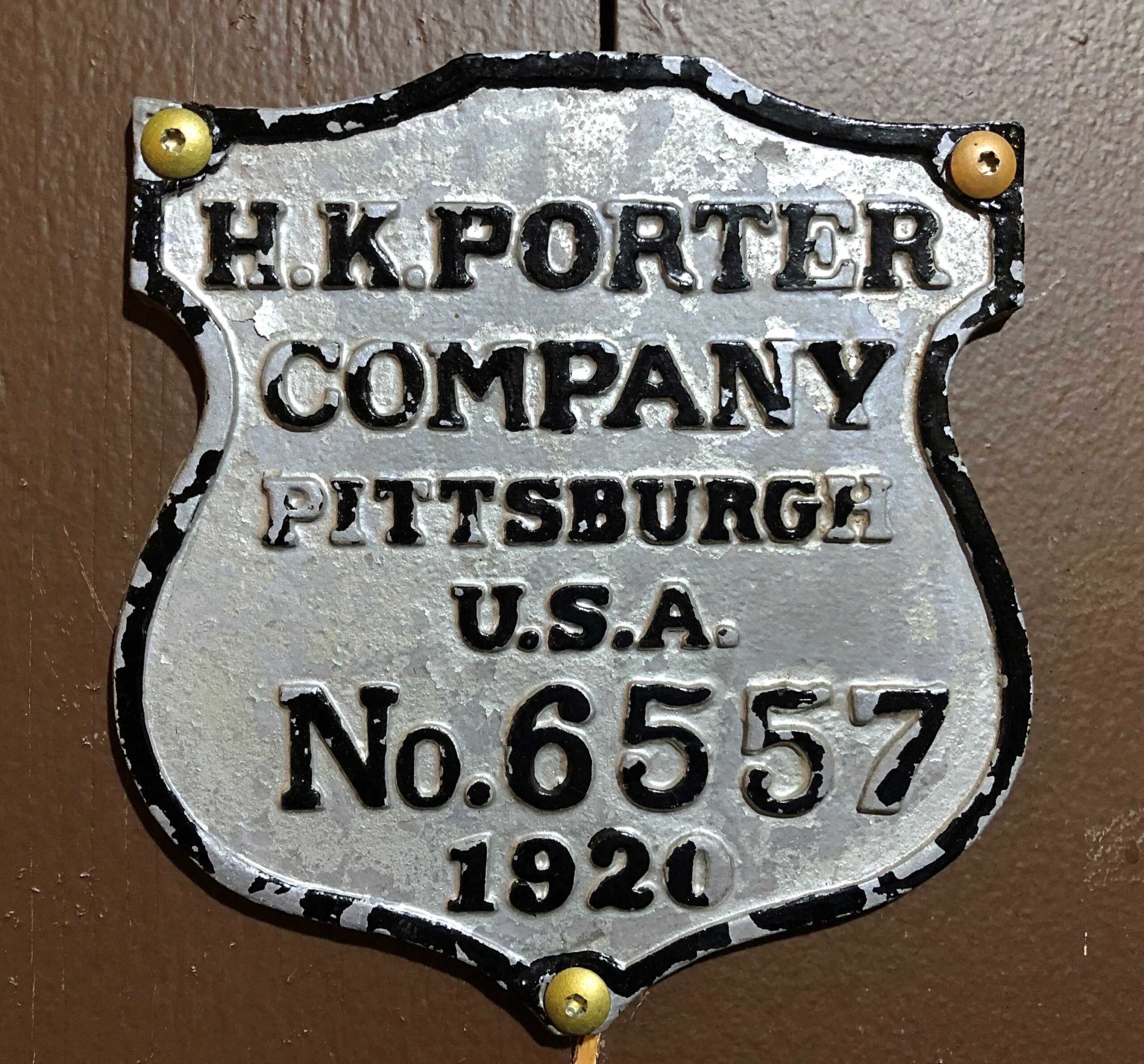
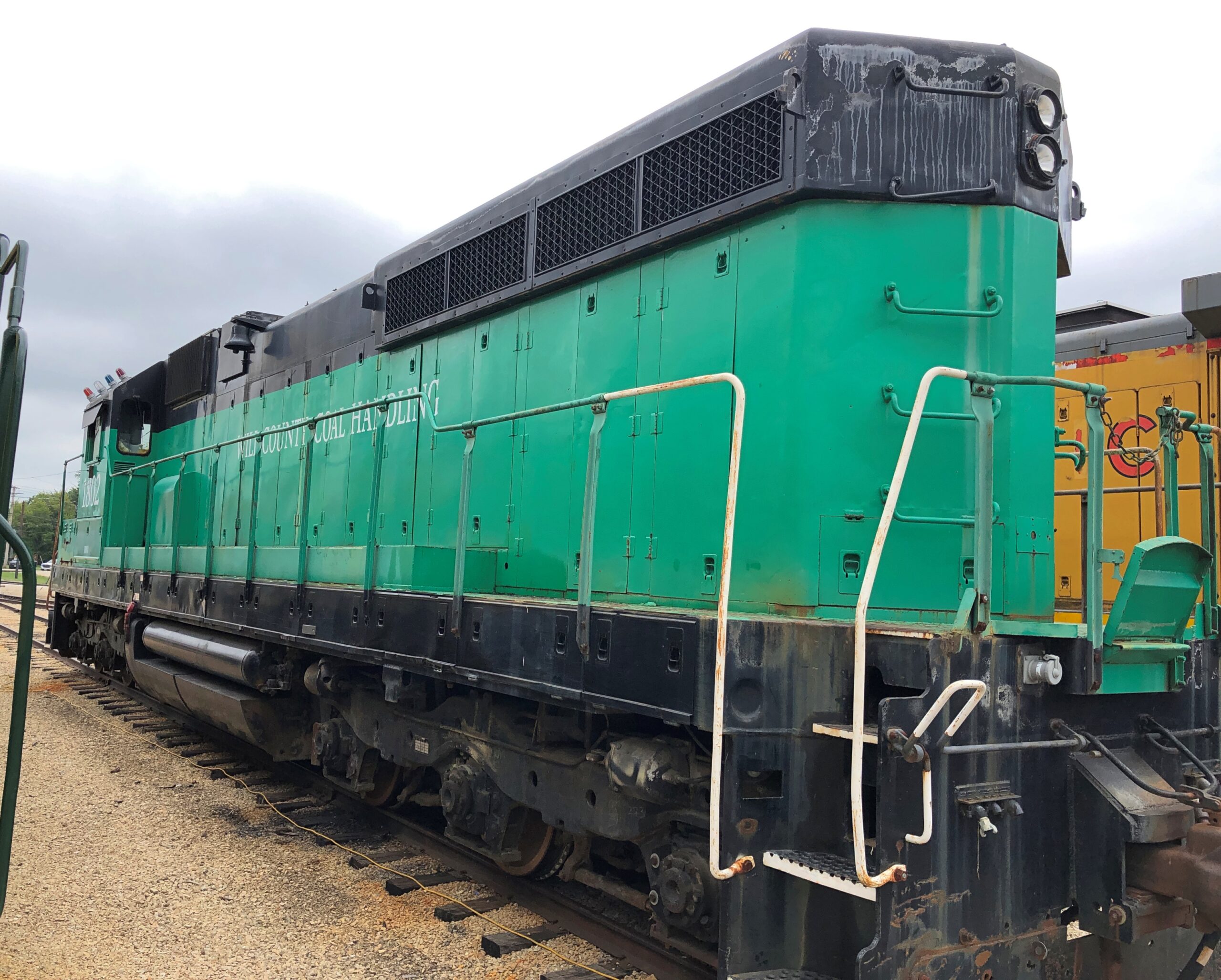
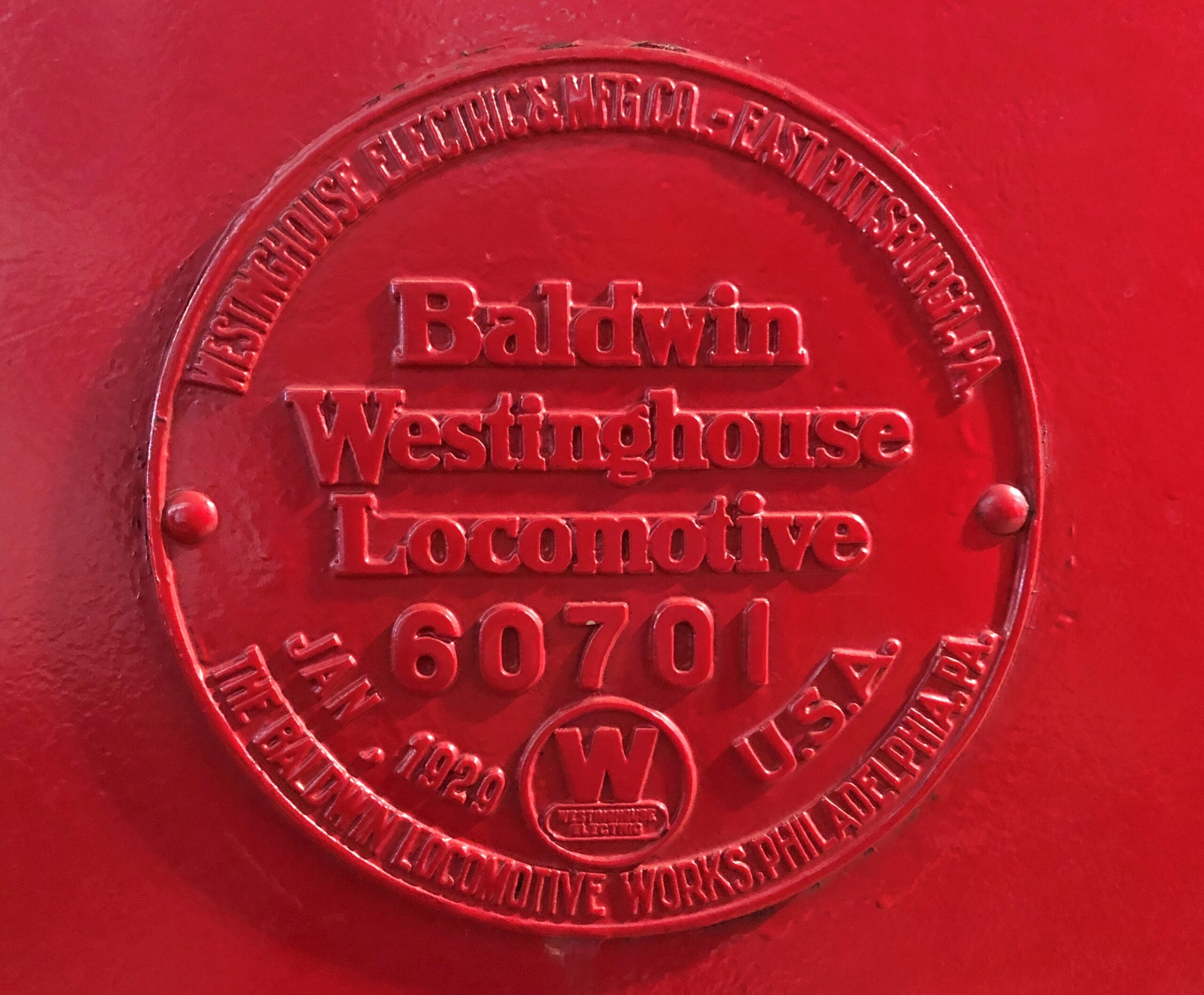
The Illinois RR Museum, as mentioned, has plenty of impressive rolling stock, some of which actually rolls. But like any good museum, the showpieces aren’t the only pieces. The small items have their own stories to tell, or at least to suggest. At one point I went into a repurposed car — I forget what kind of car it was — and found myself in the Builder Plate Hall.

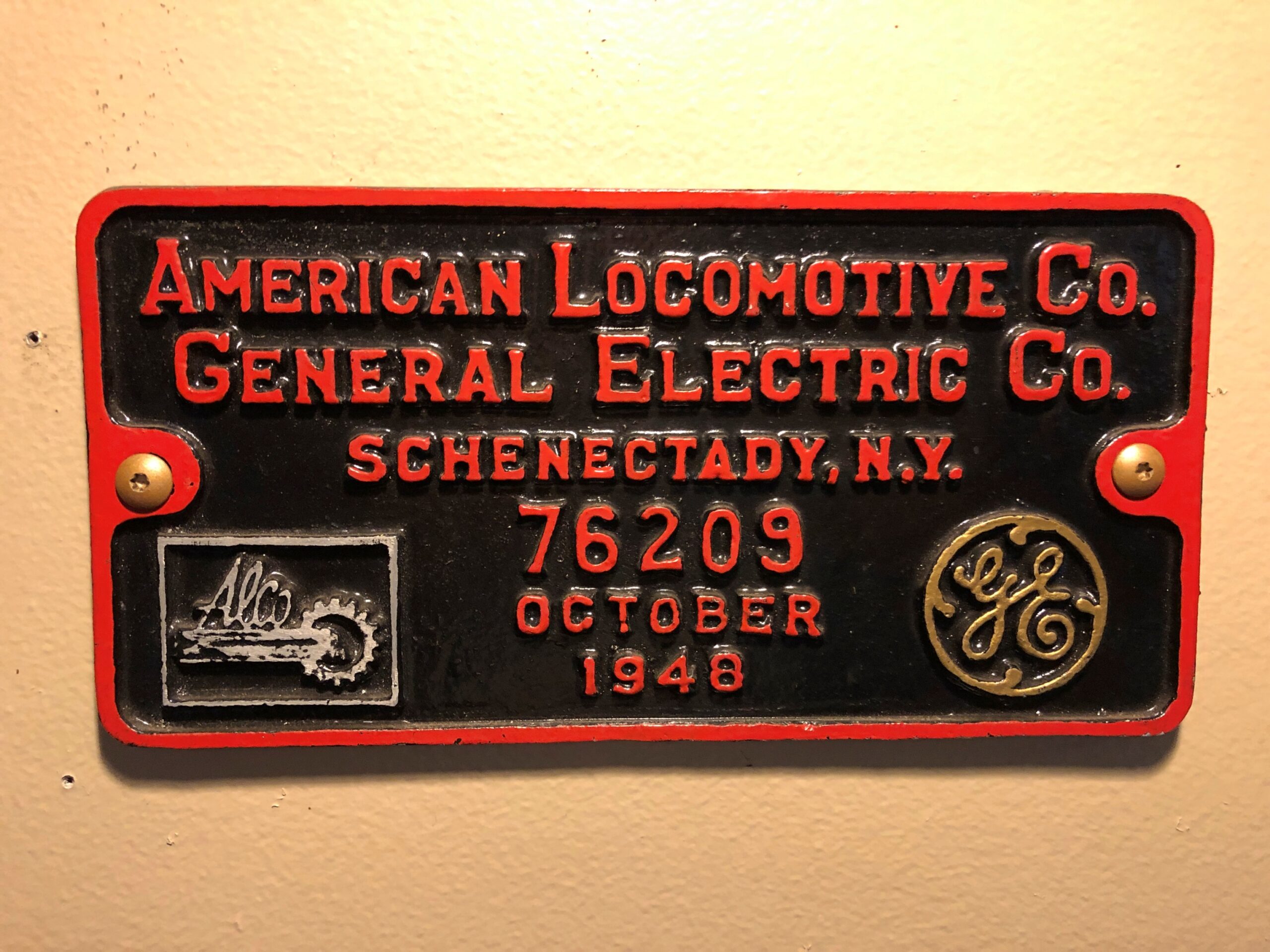
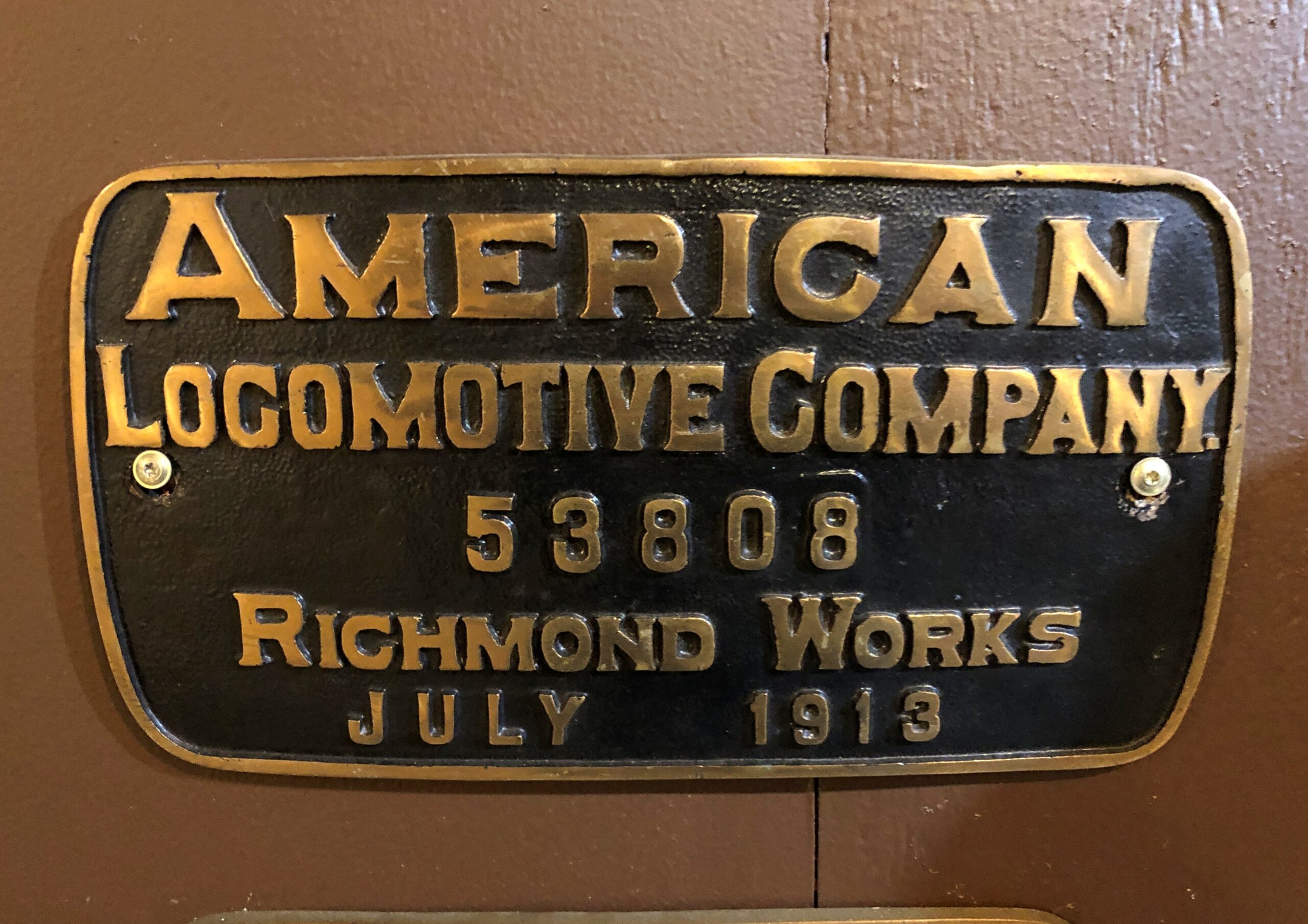
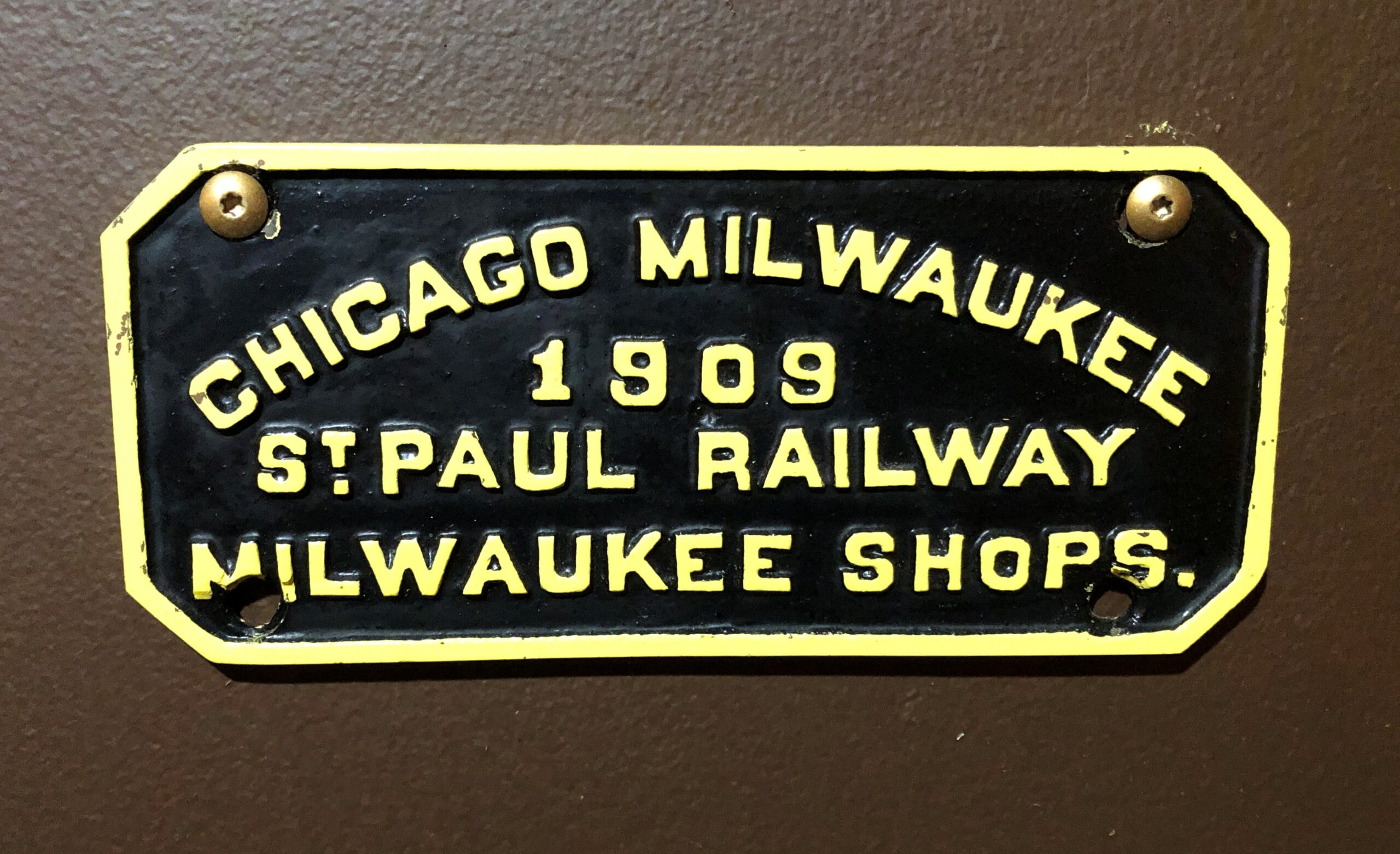
Builder Plate? “In this hall are the builder plates from the builders of steam, electric, diesel, interurban, streetcars and passenger cars,” said a sign in the car. “A builders plate is like the VIN plate on a car. It gives the car a serial number that is unique to that car. A builder plate can service [sic] the same purpose. It is used to identify a locomotive.”

Evocative, these plates.

Evoking the rumble of finished locomotives on tracks, but also the din and heat of the factory floors where working men put together these machine-age power marvels to specs that began on drafting tables by gas light and then early electric bulbs.

Illinois RR Museum

I don’t want to romanticize such hard jobs too much, but it’s hard not to.

Illinois RR Museum

Are all locomotives made in China in our time? No. According to this Wiki list, there are many more defunct U.S. locomotive makers than not, but there are still active ones, including major repair facilities. Good to know.

And damn it, every time I look into a subject like that, I uncover a new destination. In this case, the Altoona Works.

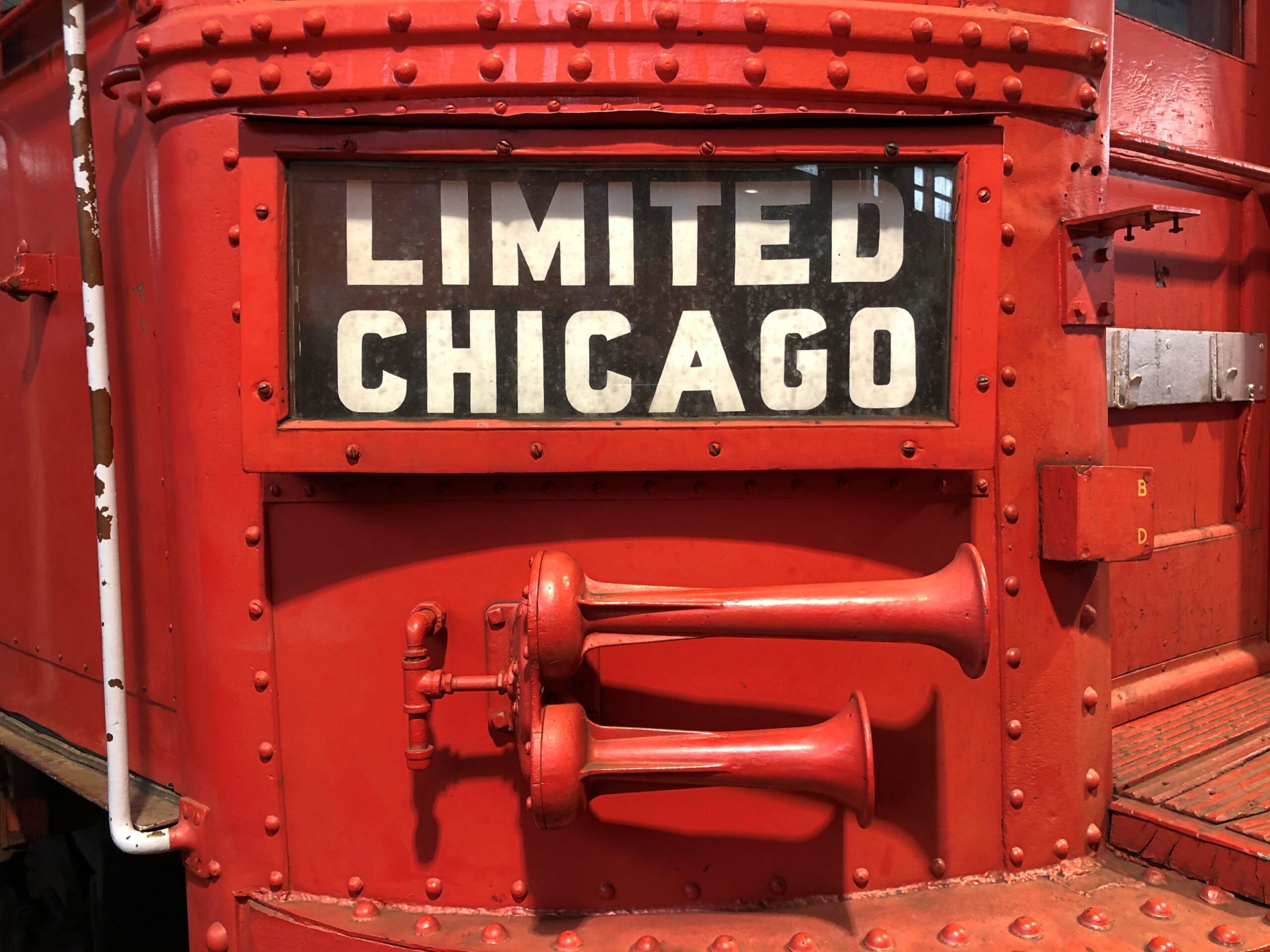
At the Illinois RR Museum, the cars themselves offer detail. Sometimes builder plates.

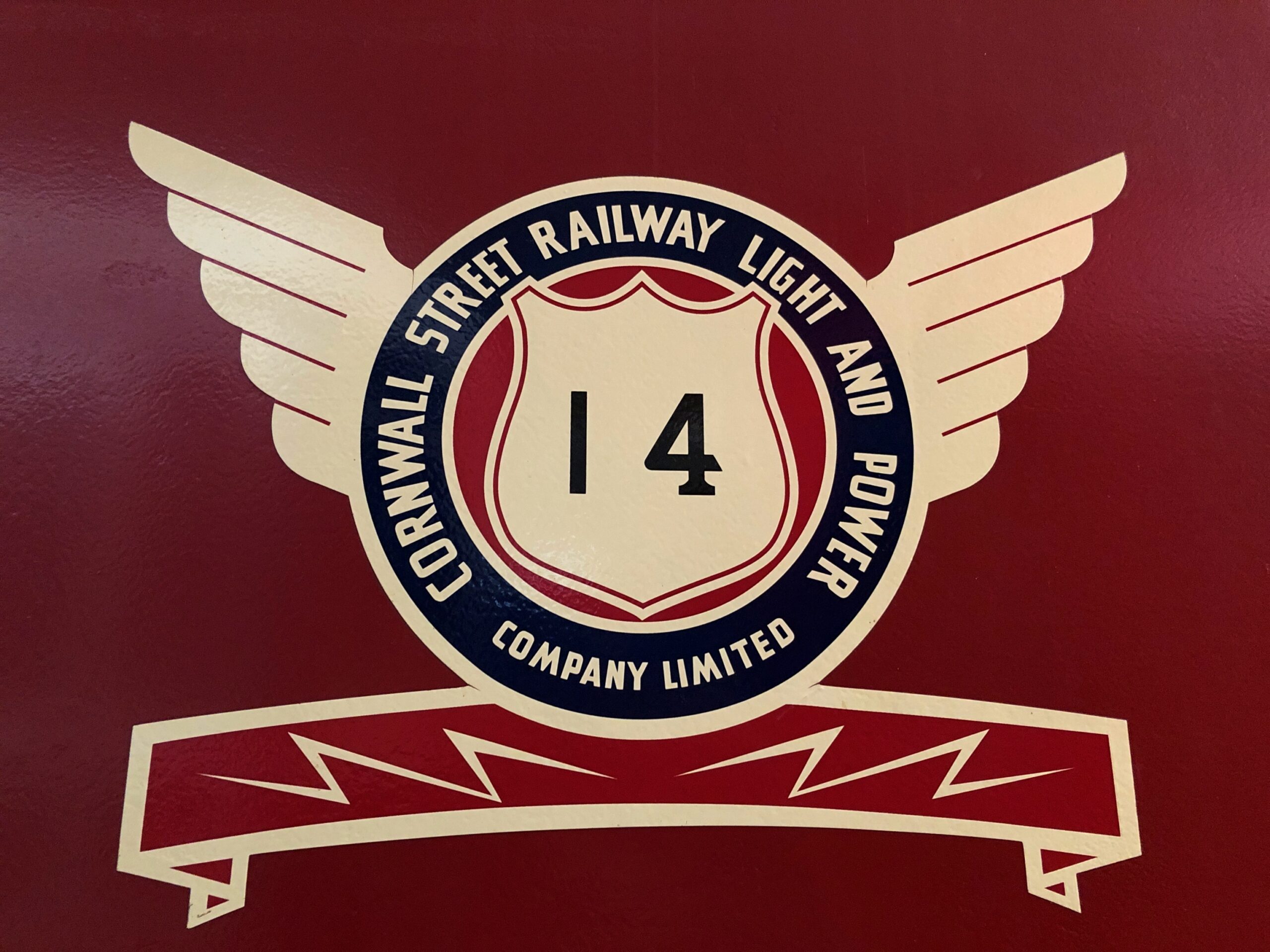
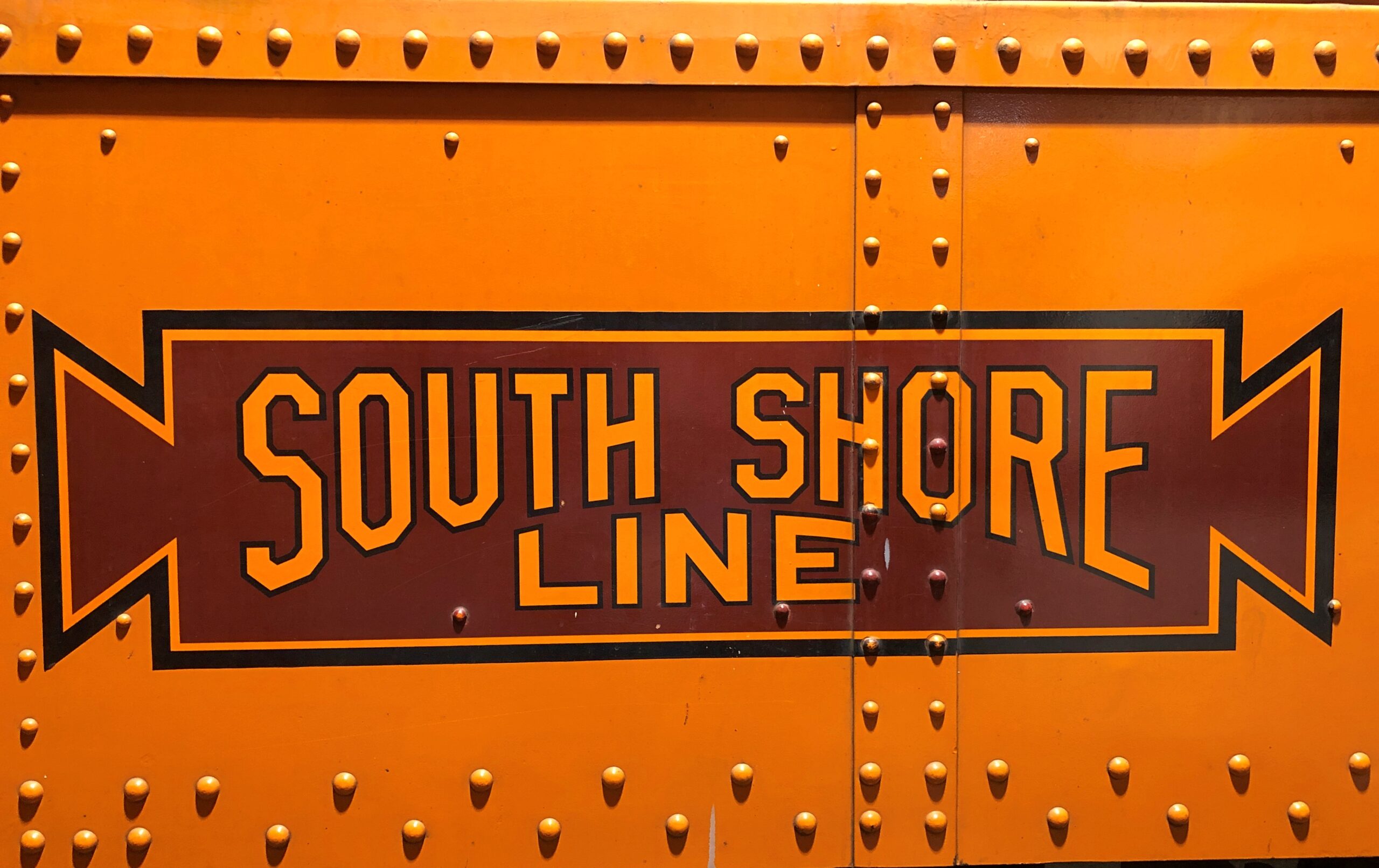
Or branding.

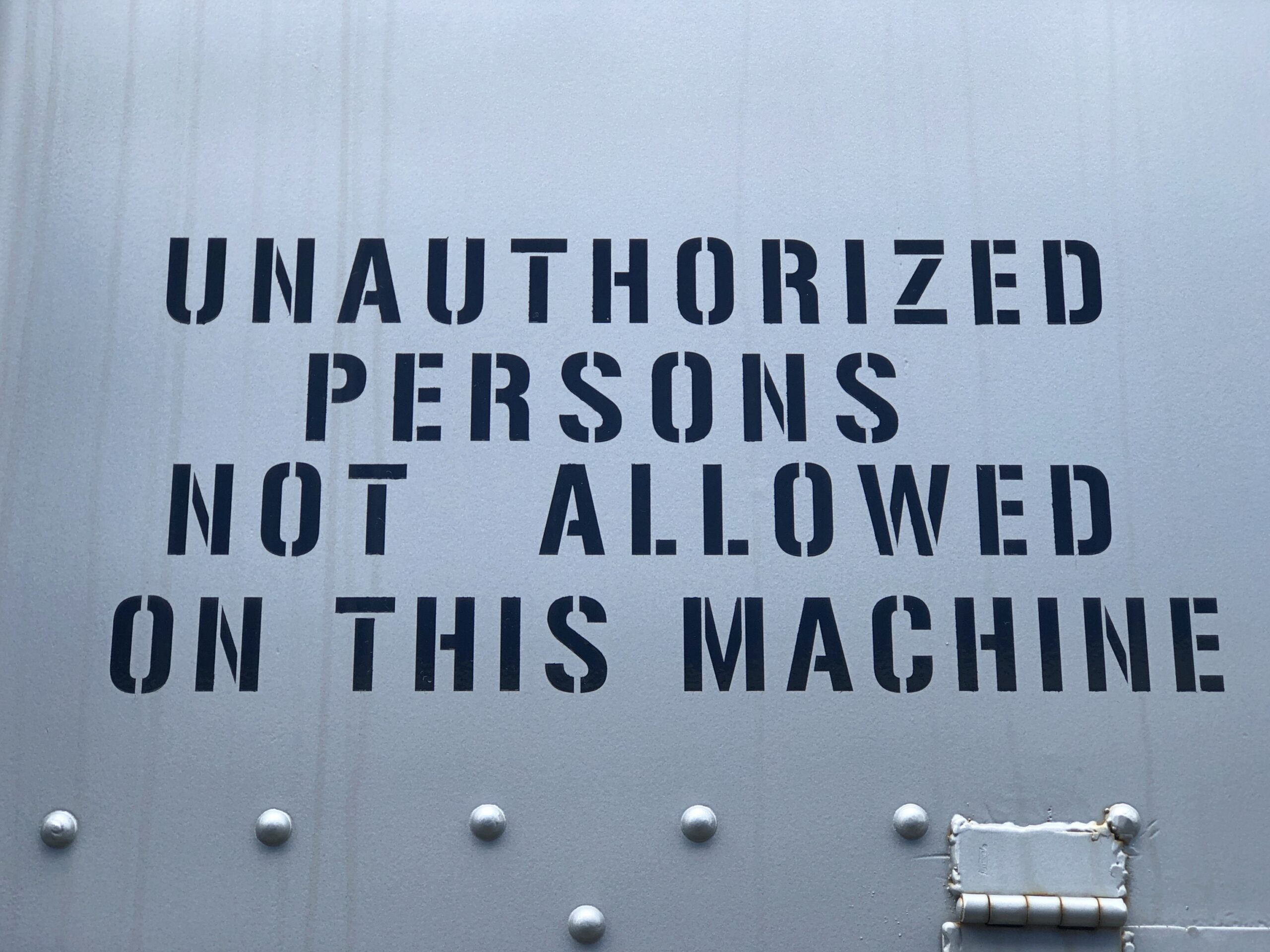
Or warnings.

A curious thing to put on your train, but there’s a story.

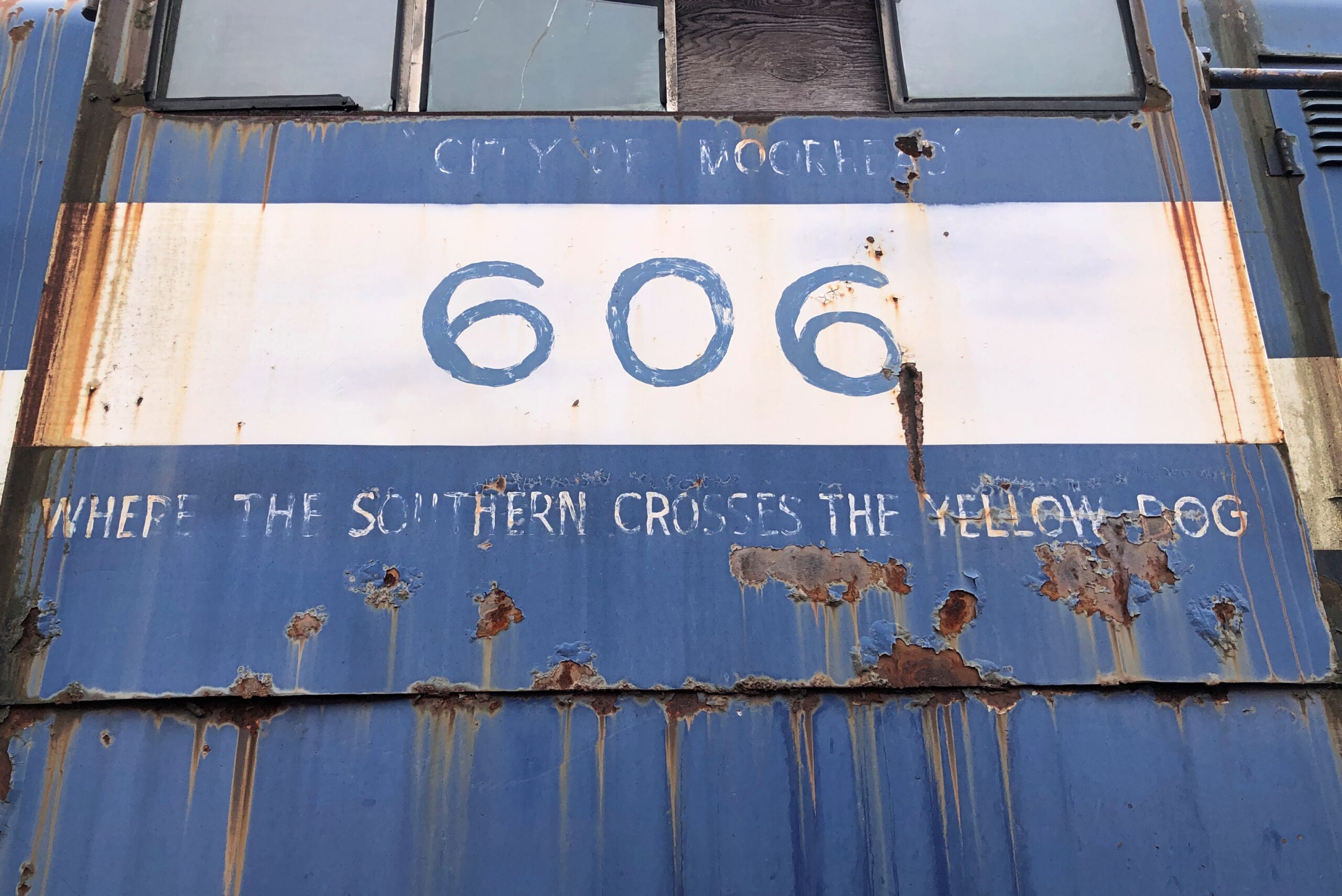
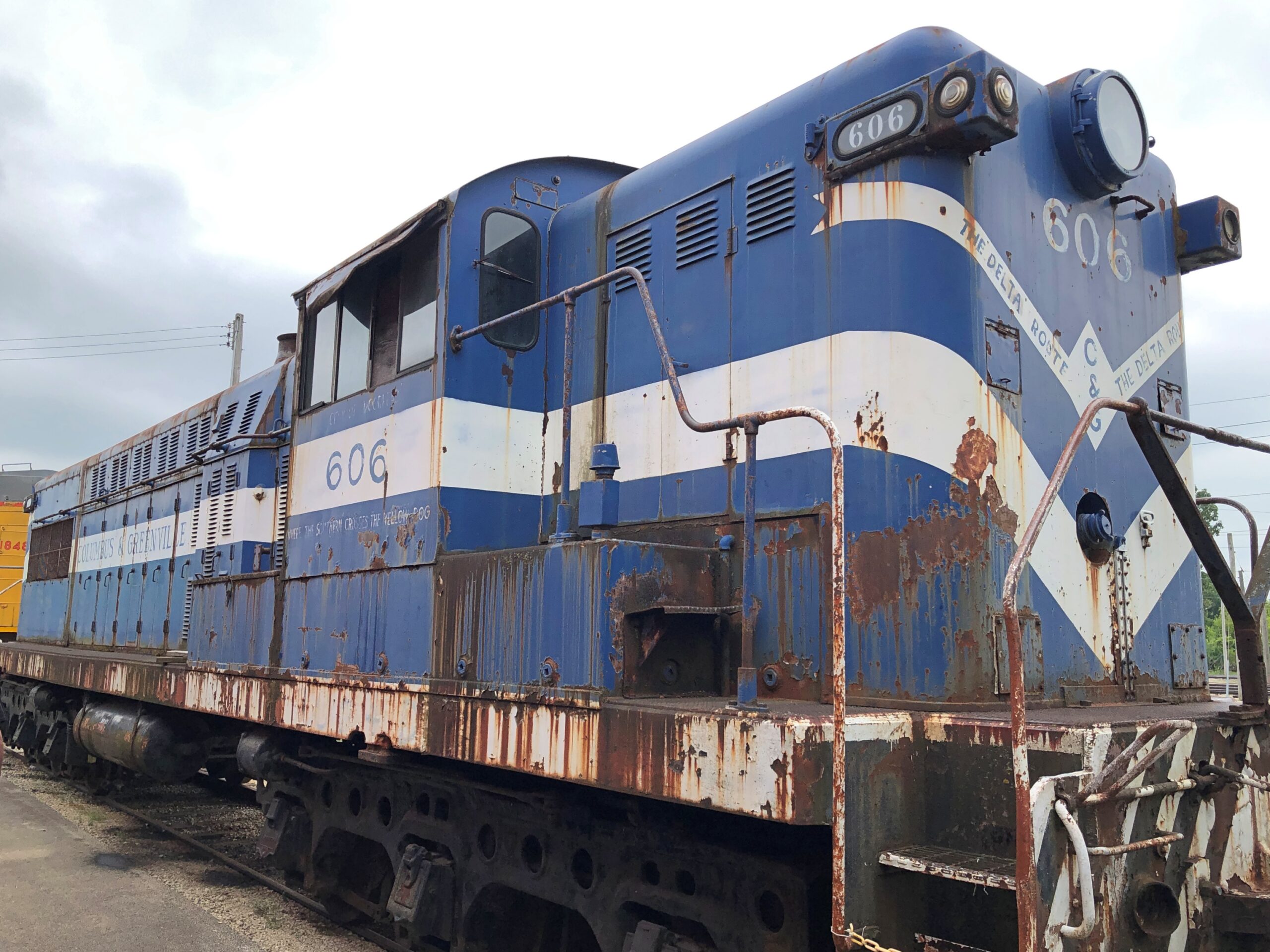
The train, or at least the locomotive, looks to have a name: The City of Moorhead. Where the Southern Crosses the Yellow Dog.

“W. C. Handy, ‘The Father of the Blues,’ immortalized the crossing of the Southern Railway and the Yazoo Delta (‘Yellow Dog’) Railroad at Moorhead in his 1914 song ‘Yellow Dog Rag,’ better known under its later title, ‘Yellow Dog Blues,’ ” notes Mississippi Blues Trail. “Handy wrote that he first heard the line ‘Goin’ where the Southern cross the Dog’ sung by a guitarist at the Tutwiler train station (c. 1903). Moorhead became a hub not only of rail transportation but of blues activity in local juke joints.”

A more recent interpretation of the song is, of course, on YouTube.

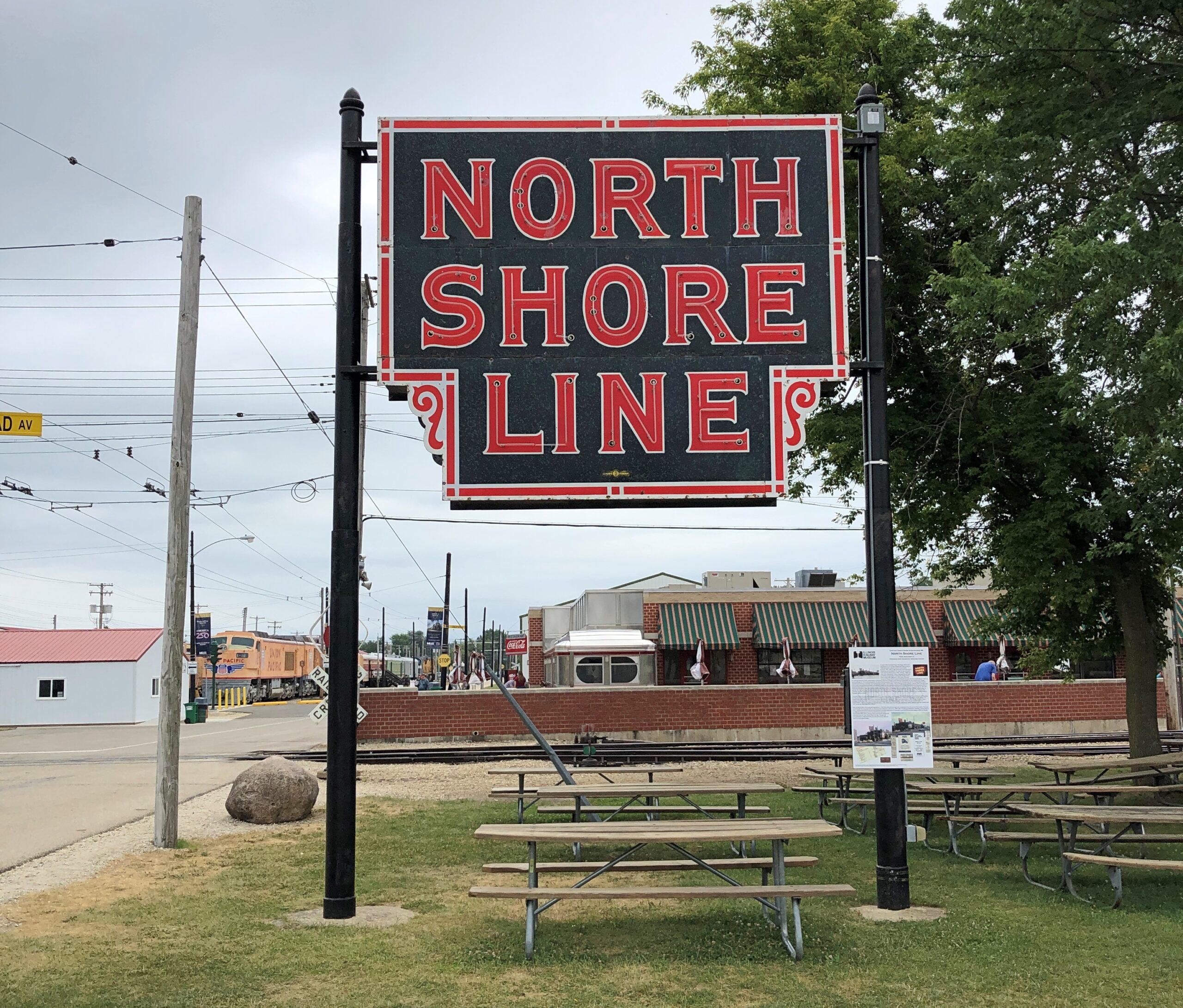
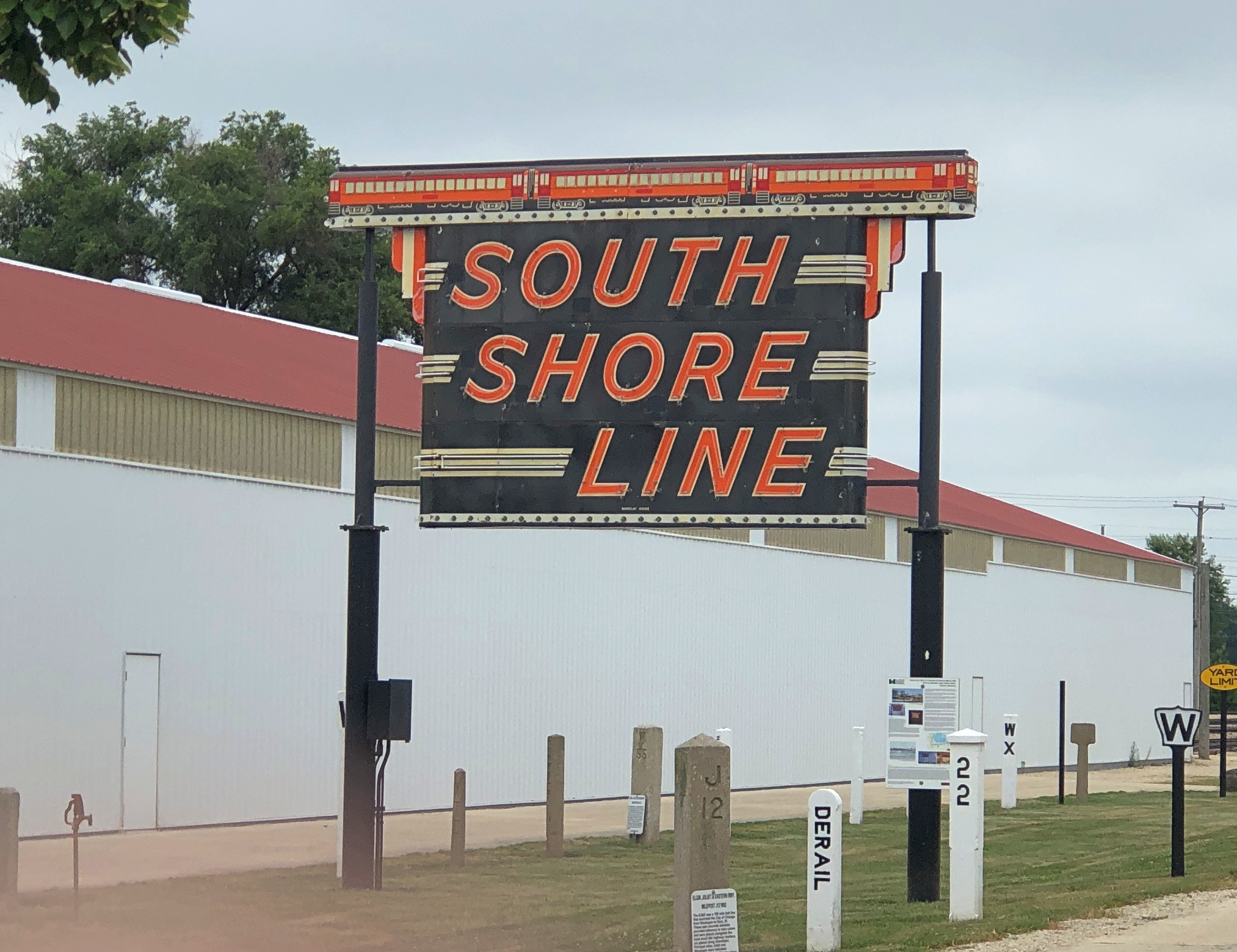
Larger signs. Where there’s a north, there’s a south.

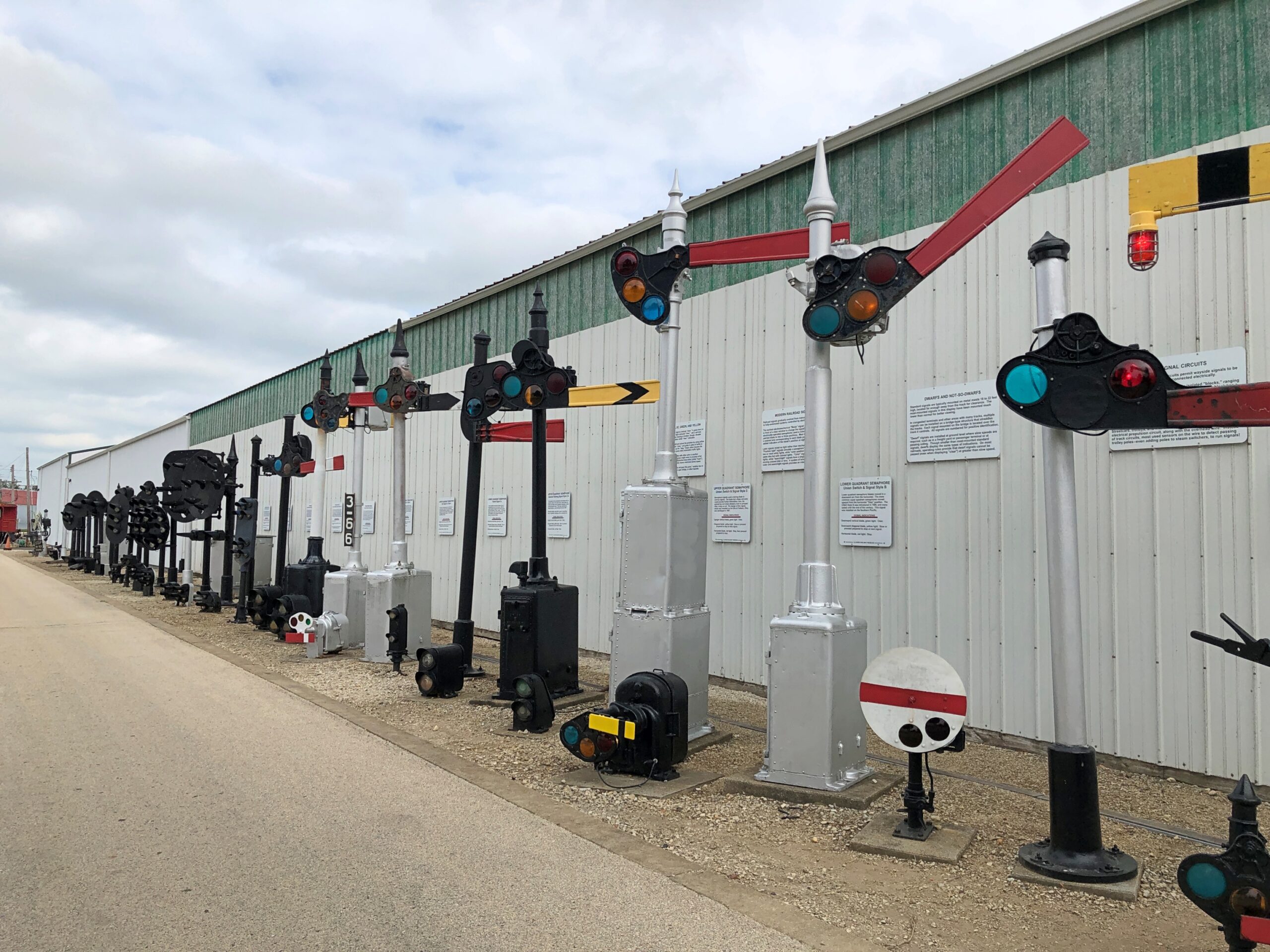
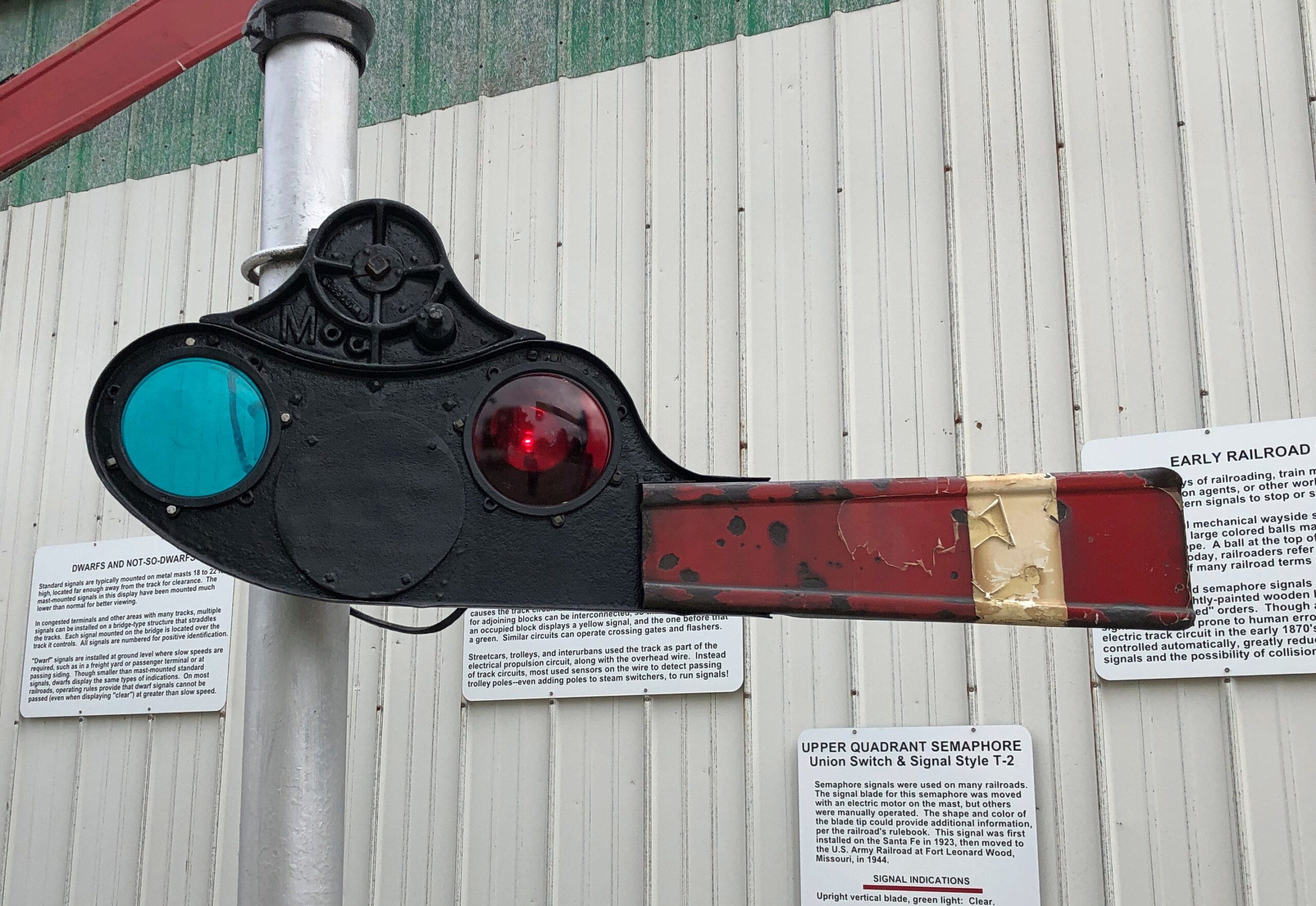
Signals.

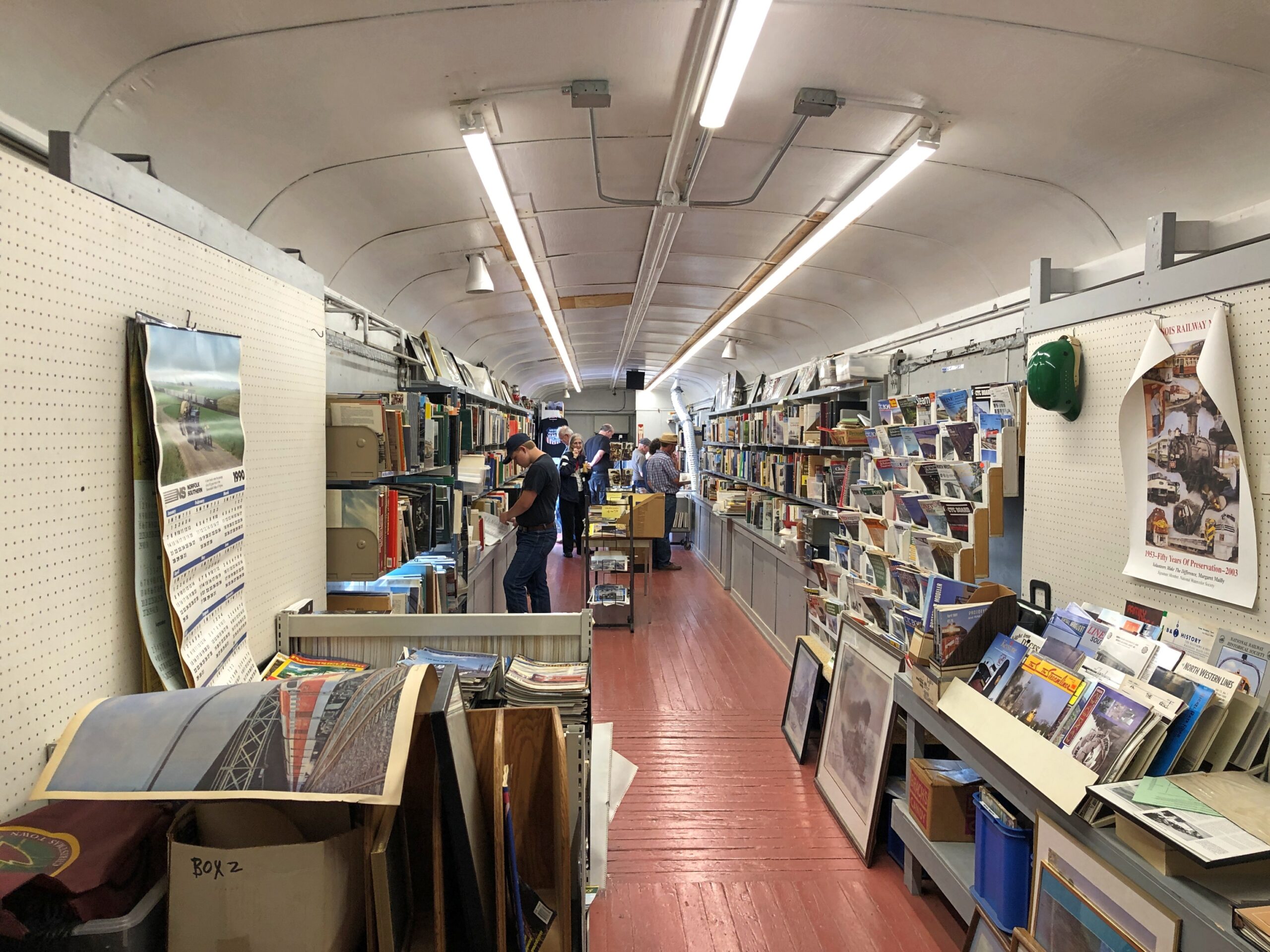
The museum has a railroad-oriented book store in another repurposed car.

Illinois RR Museum

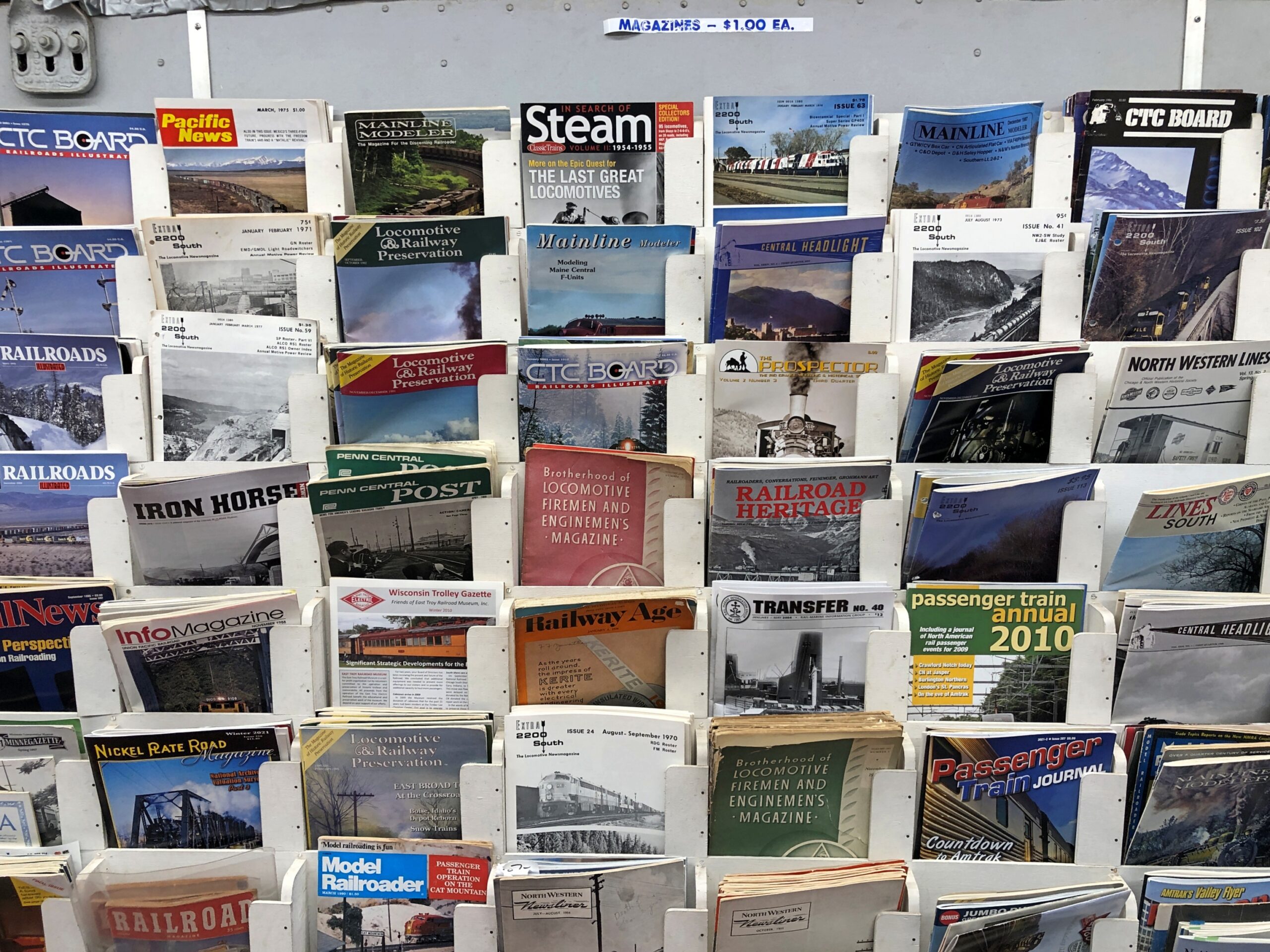
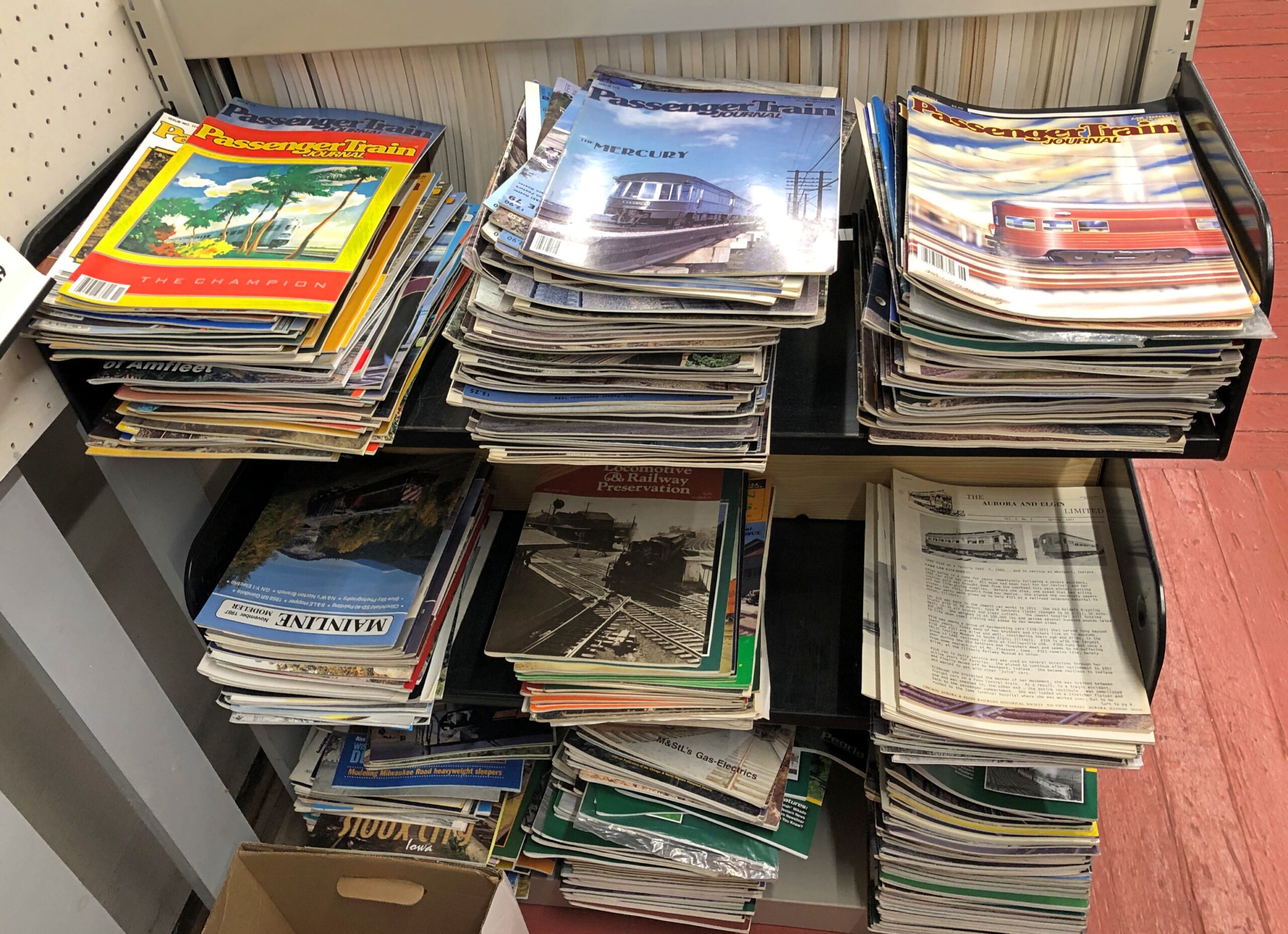
Lots of material for the enthusiast.

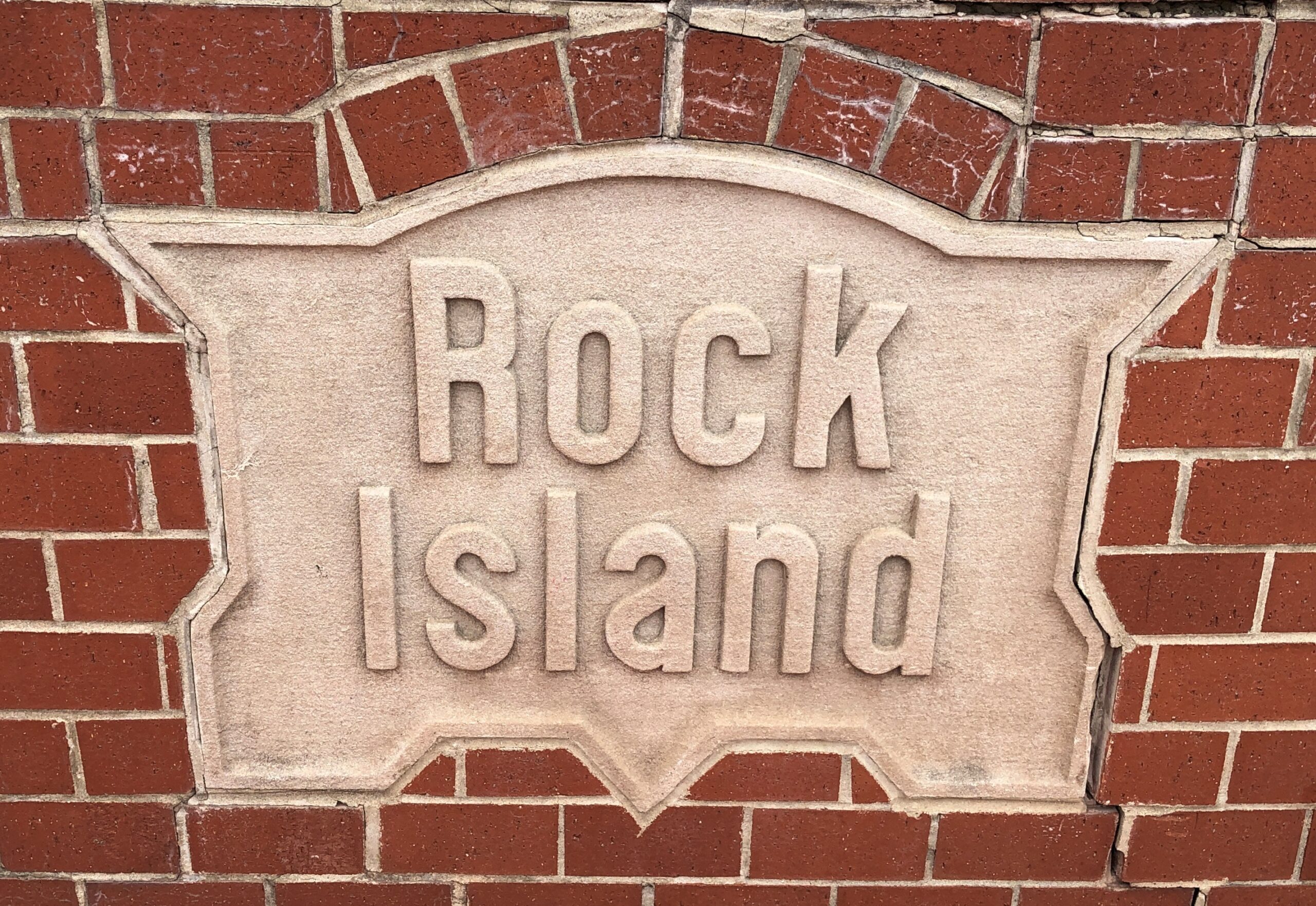
One more item: a bit of re-embedded signage from the Chicago, Rock Island and Pacific Railroad, which traversed Illinois not far from here.

Good to see it. Because, as we all should know, the Rock Island Line is a mighty good road, the Rock Island Line is the road to ride.

The Illinois Railroad Museum: The Rolling Stock

Not long ago my friend Kevin and I were kicking around ideas for a day trip from our homes in Chicagoland, and we happened on a place he’d hadn’t been since he was a child nearly 60 years ago, and I hadn’t been in years, perhaps as long ago as 2005: the Illinois Railroad Museum, near the town of Union in McHenry County, in the northwestern exurbs. About an hour drive from my house. Definitely worth the trip.

Another example of a place people take their kids, but might not otherwise consider. Not how I think. Good for kids, good for everyone else whose admiration for and curiosity about trains hasn’t gone away. During our visit, on the last Saturday in July, the place was busy but not packed, with small children and their elders well represented, but they weren’t the entirety of visitor demographics. The Illinois RR Museum draws old men (old people) as well, sometimes without grandchildren in tow. In that, Kevin and I fit right in.

Not only that, the museum also seems to attract former railroad employees and railroad aficionados, enthusiasts and nerds of all ages and walks of life. Toward the end of our visit, near a display of dispatcher equipment, a visitor struck up a conversation with a museum volunteer that I was near enough to overhear. Old men both, older even than me, and both former dispatchers for lines long ago absorbed into the handful of U.S. railroads that still exist. They had a lot to talk about – with an intensity of jargon that was nearly opaque to us non-professionals.

But you don’t need to know every technical detail to appreciate the collection.

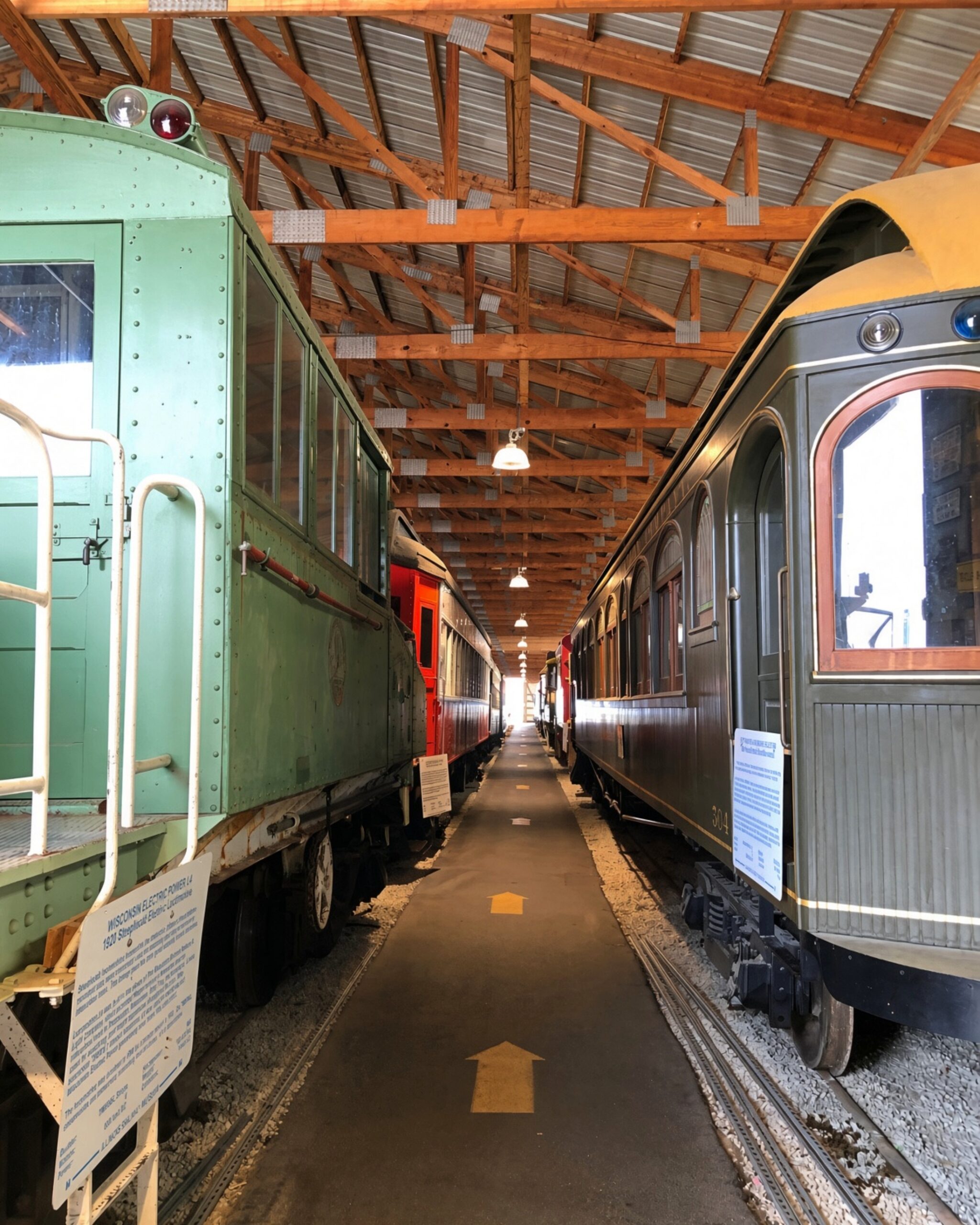
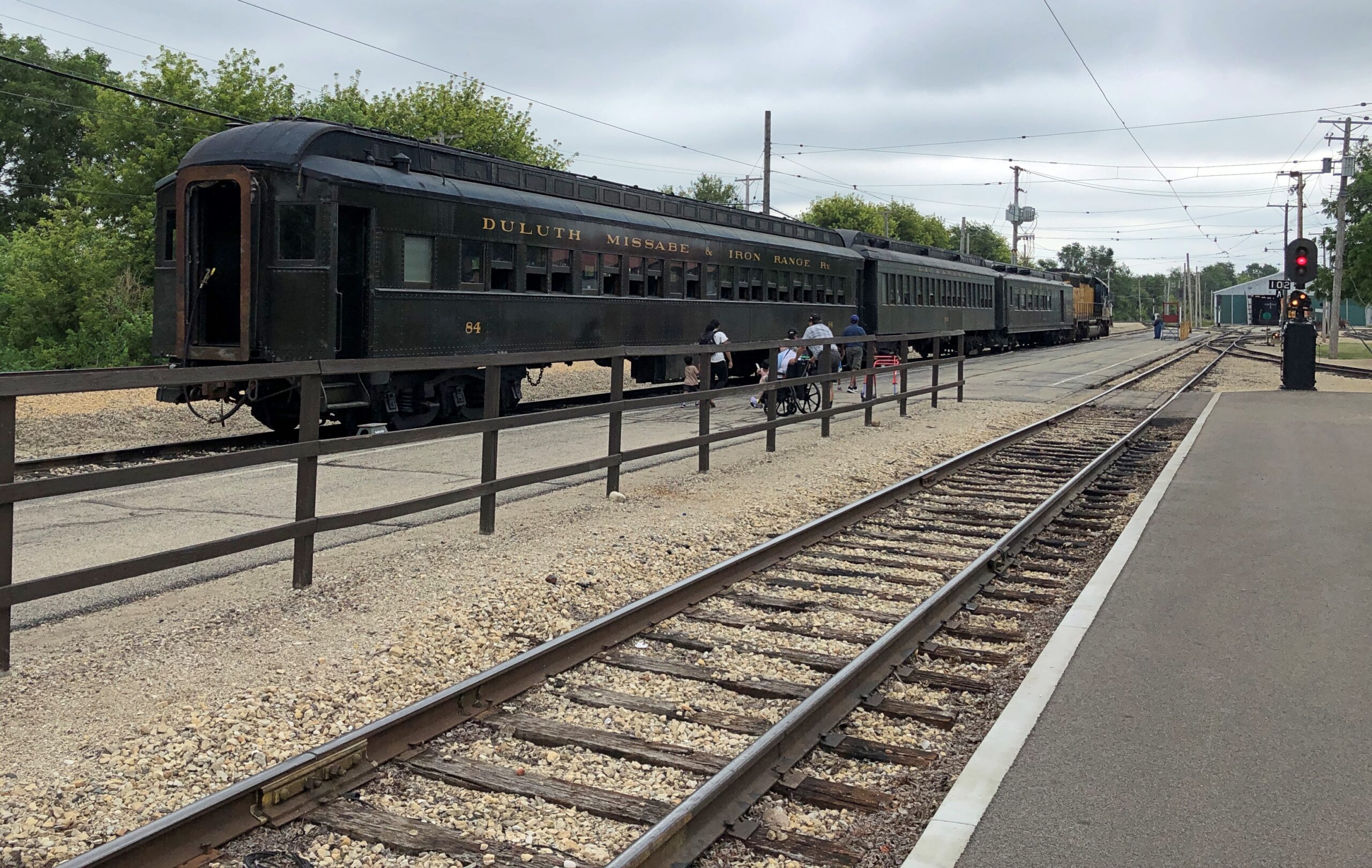
It’s massive, including locomotives and steam engines, freight cars, interurban cars, long-haul passenger and baggage cars, subway cars, streetcars, trolley buses, railroad work equipment, signals, signs and much more, either open to the elements or in several sizable train barns. Some of the rolling stock is still rolling, and visitors can take short rides out into the countryside along a few miles of right-of-way that the museum owns, with volunteers running the show.

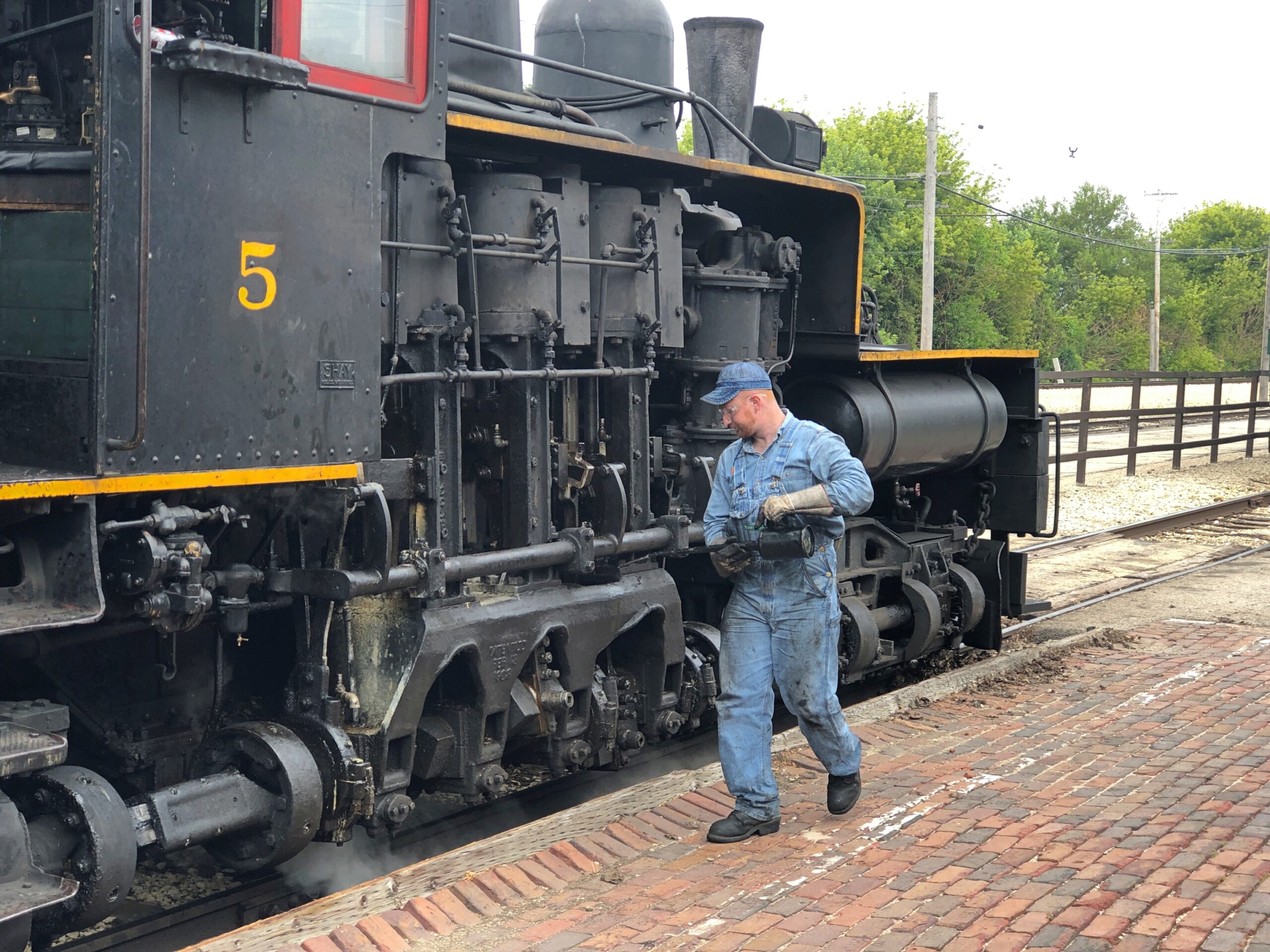
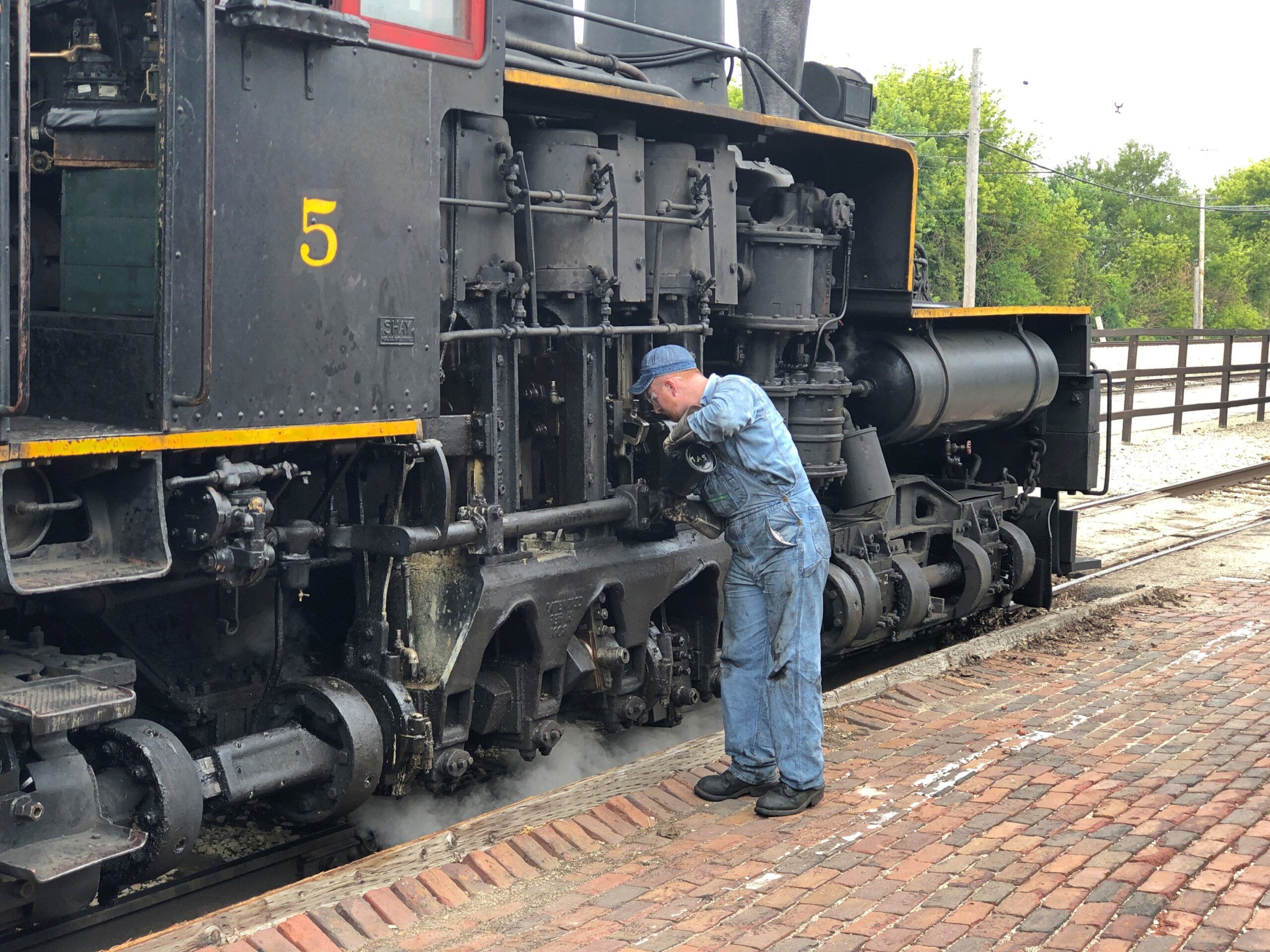
And doing the maintenance: I don’t think I’d ever seen anyone in railroad garb oiling the machinery with a long-spout oil can, as you see (saw) in illustrations.

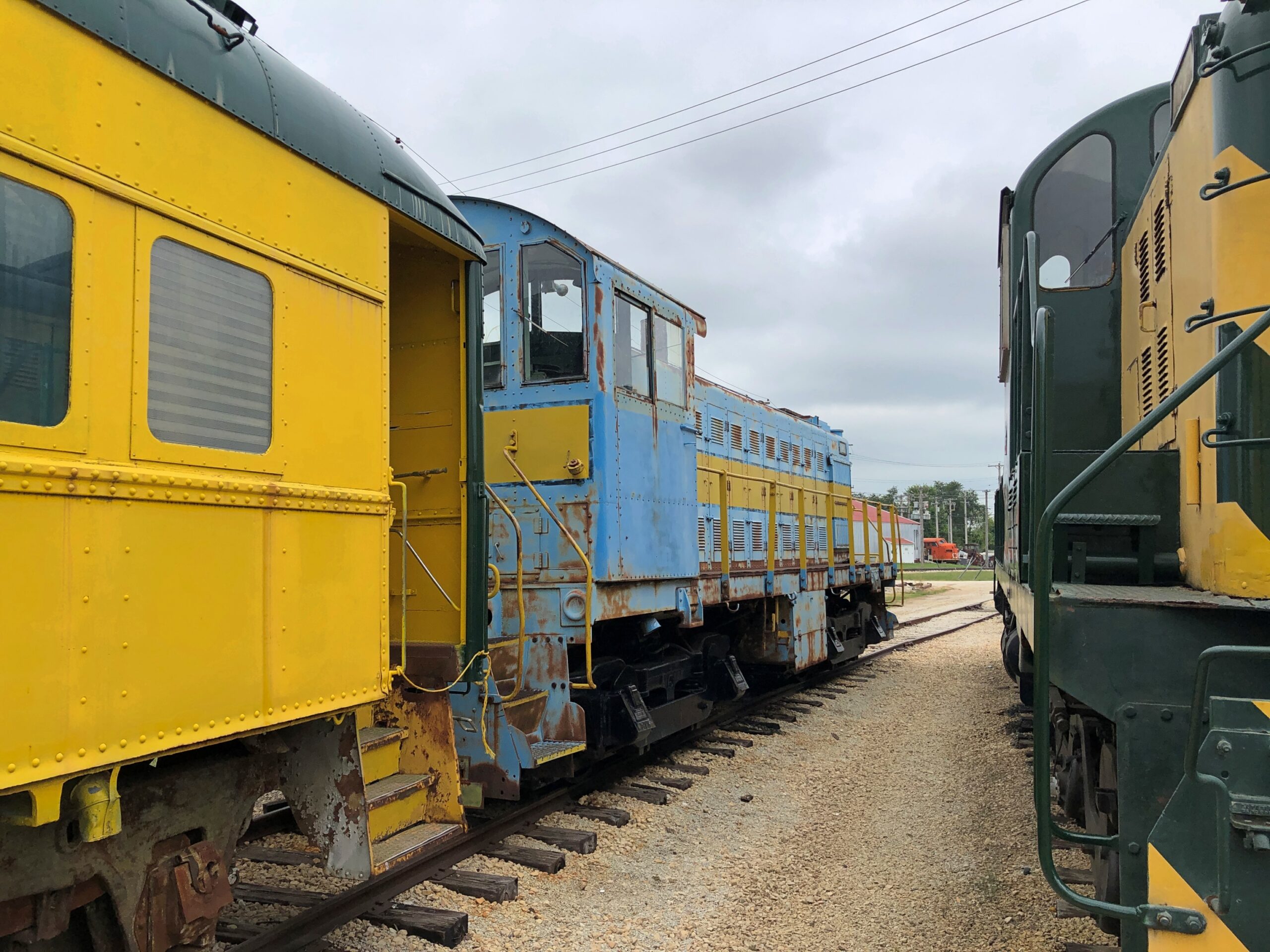
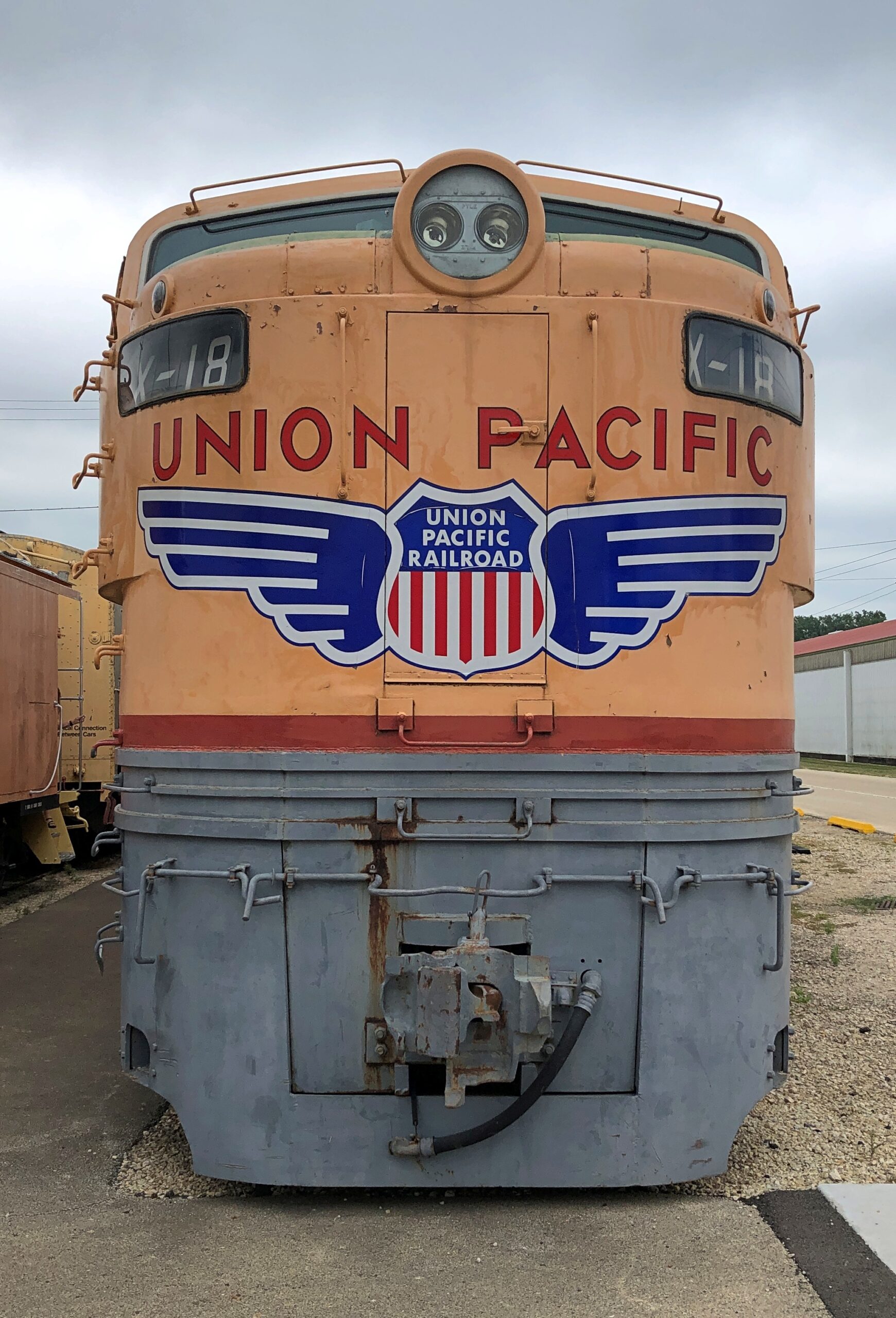
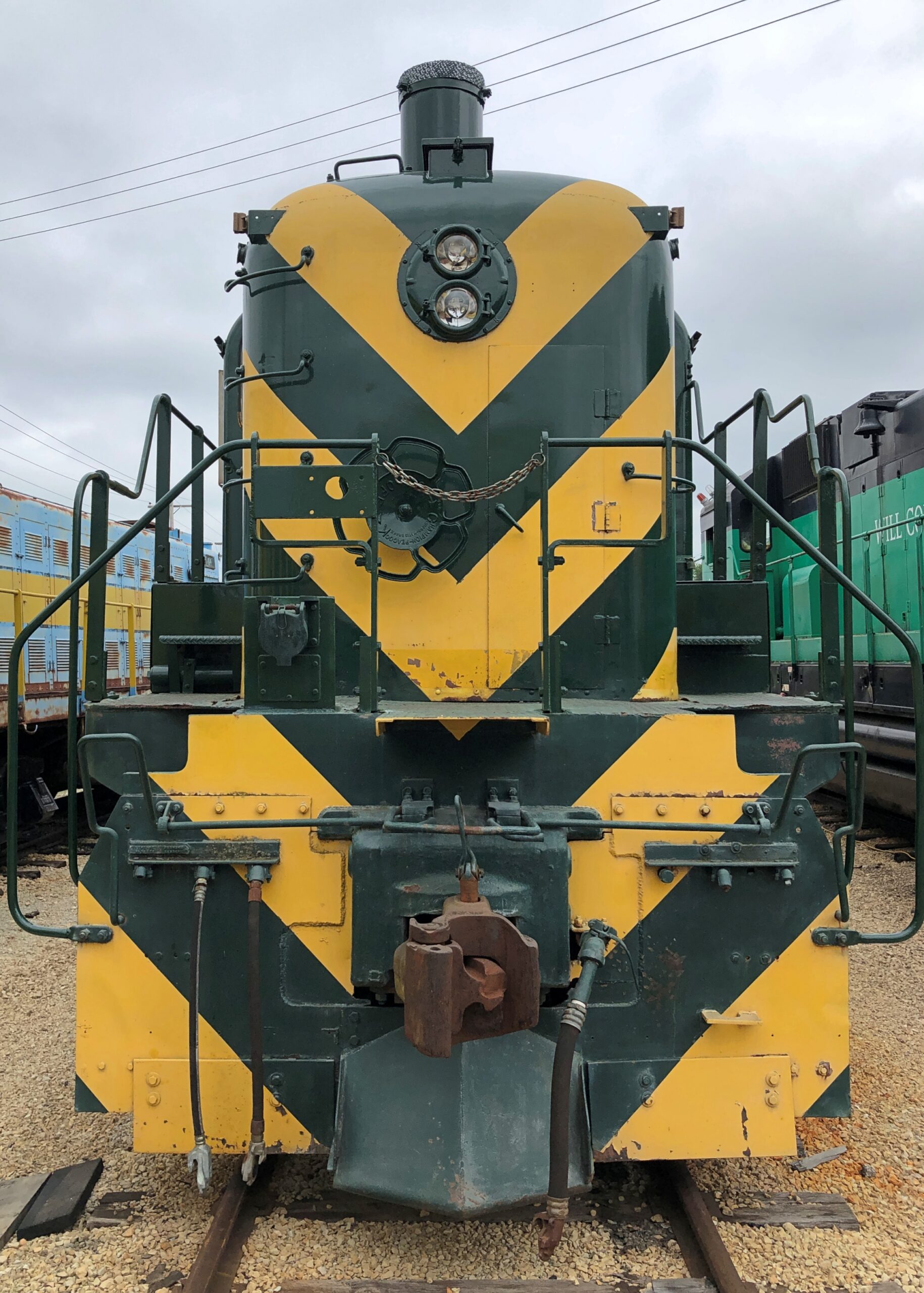
Mighty locomotives of various kinds.

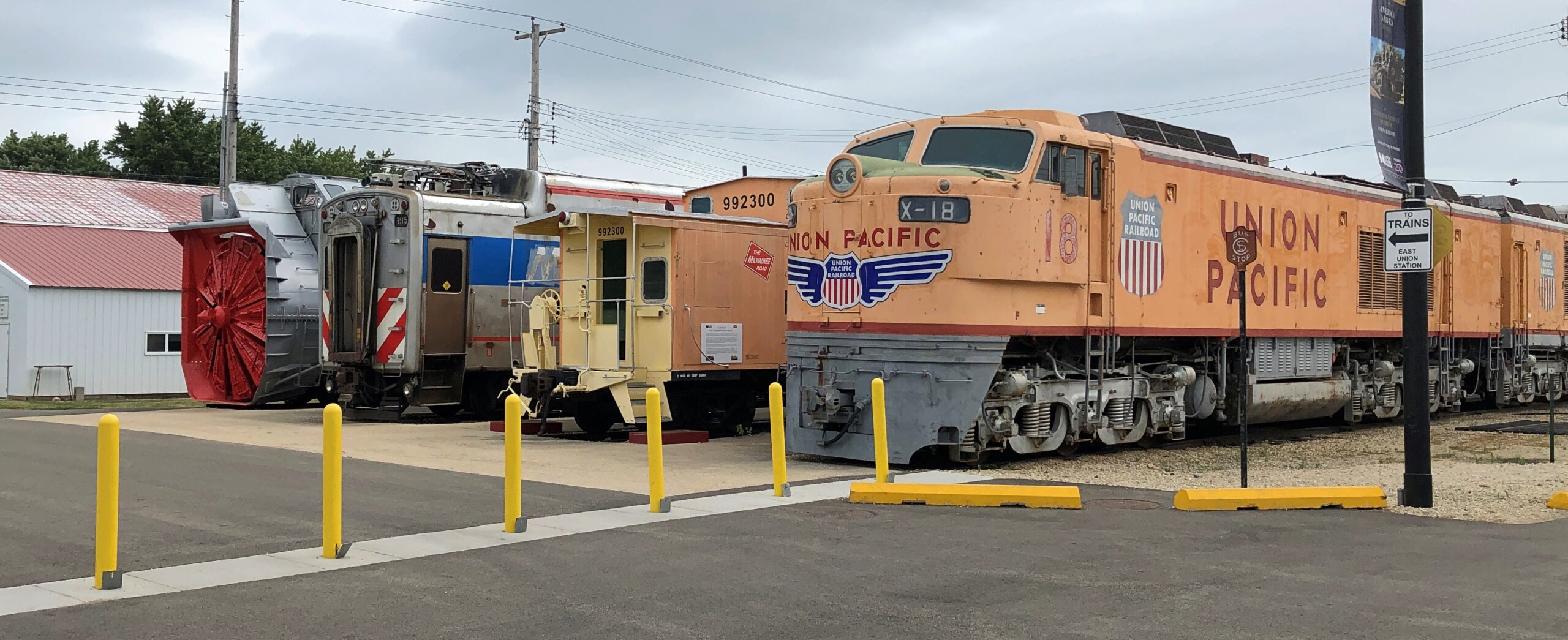
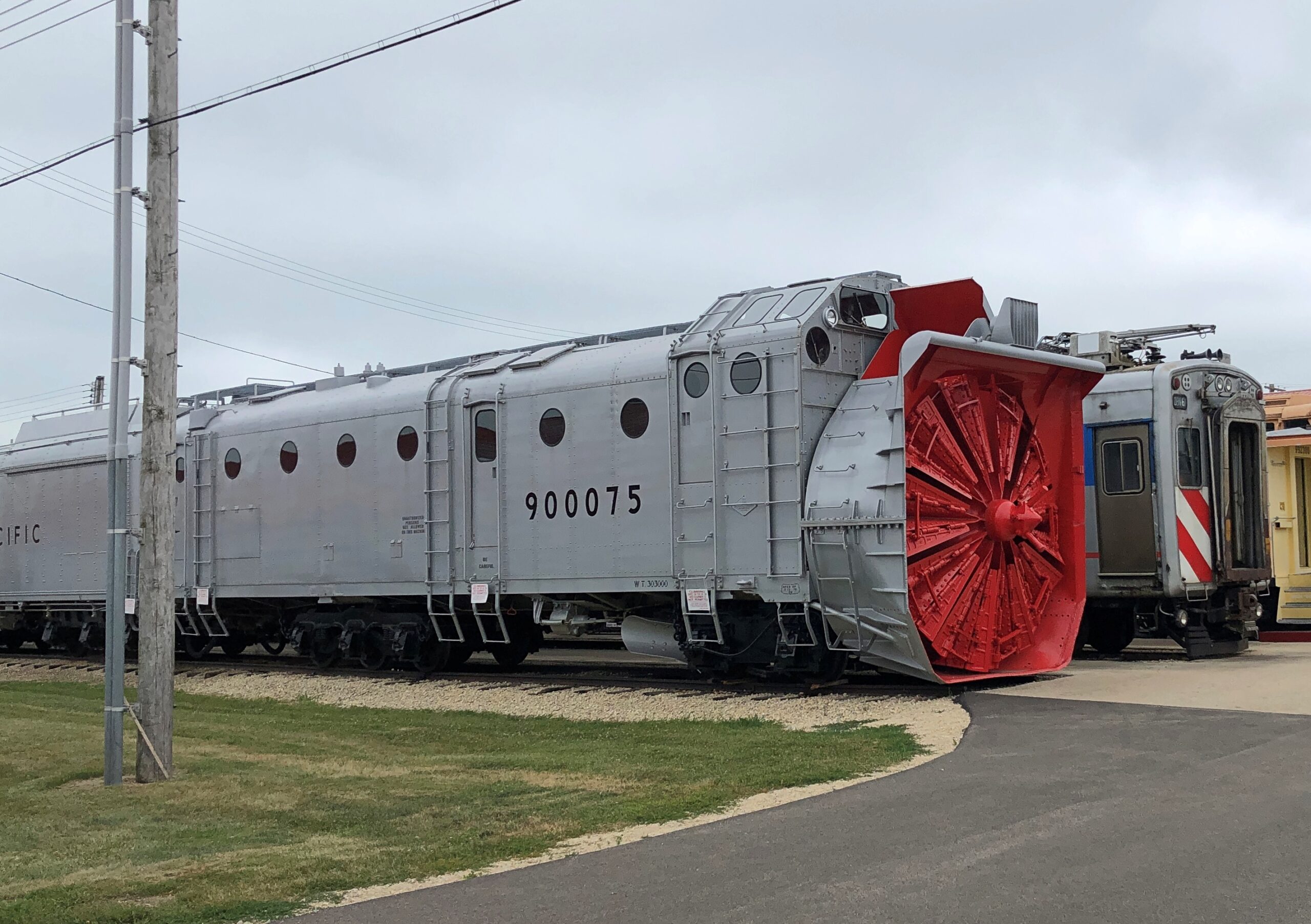
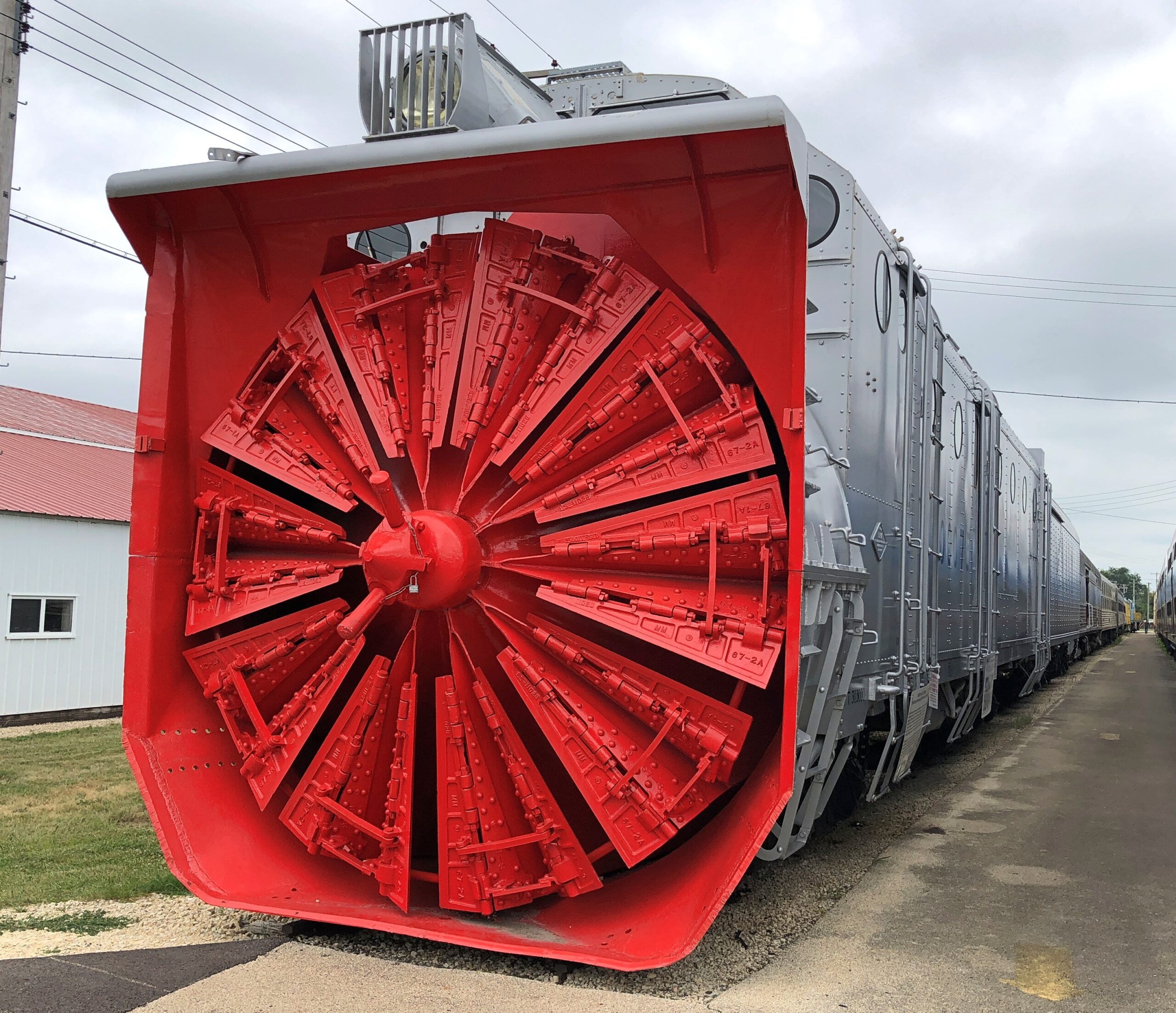
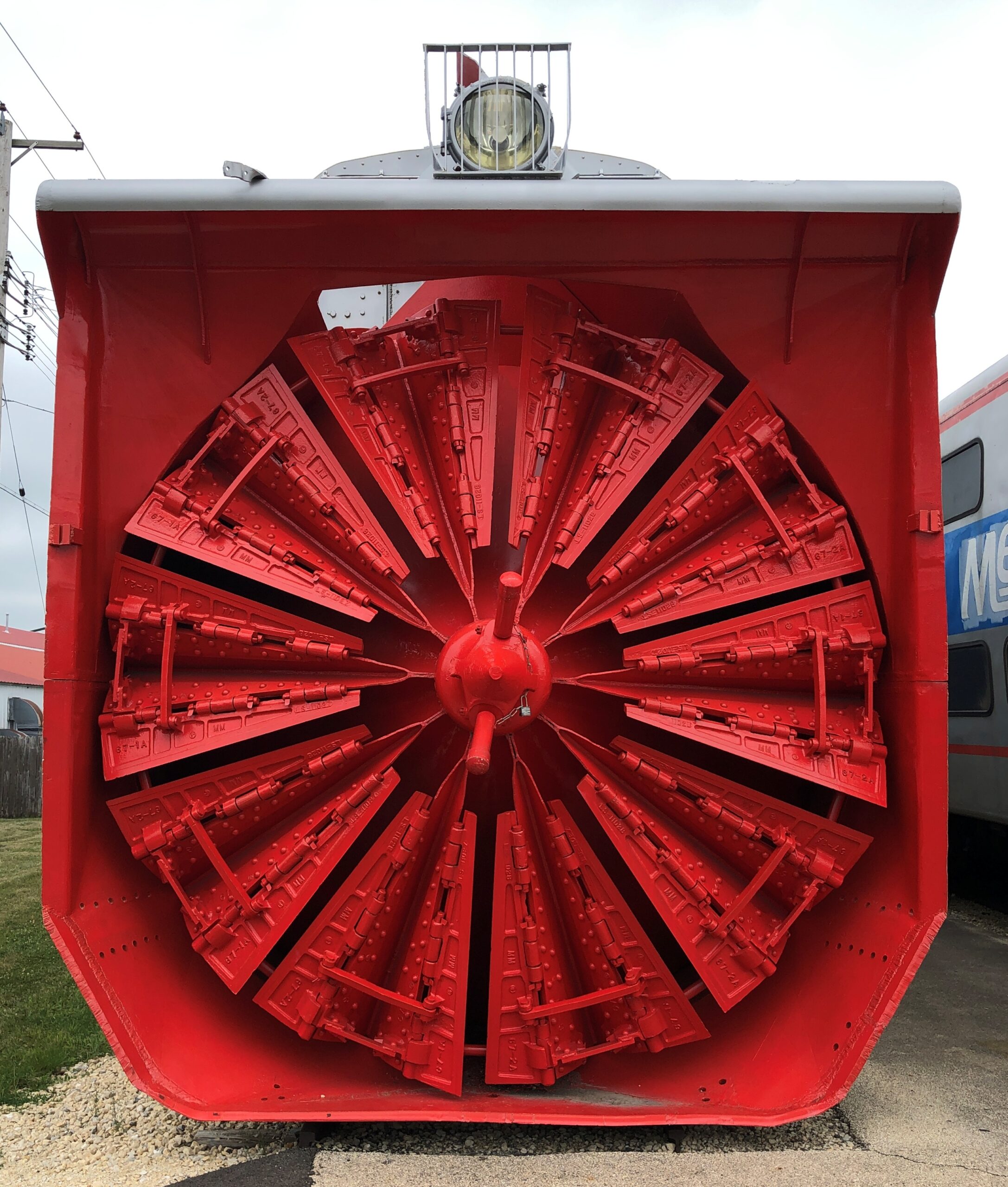
The collection includes some rolling stock you don’t see that much, such as a 1949 steam-powered Leslie rotary snowplow designed to clear tracks of ice and snow, and one of the last ever made, as these too converted to diesel. To do its job, the blade at the front rotated at 150 rpm.

Illinois RR Museum

A wicked red maw, ready to grind its way forward. Just the thing for a fistfight, on the top of the car, between Bond and a nameless henchman; resulting in the henchman tumbling into the blade; think of your own Roger Moore bon mot for that situation (something about a grinding headache, maybe).

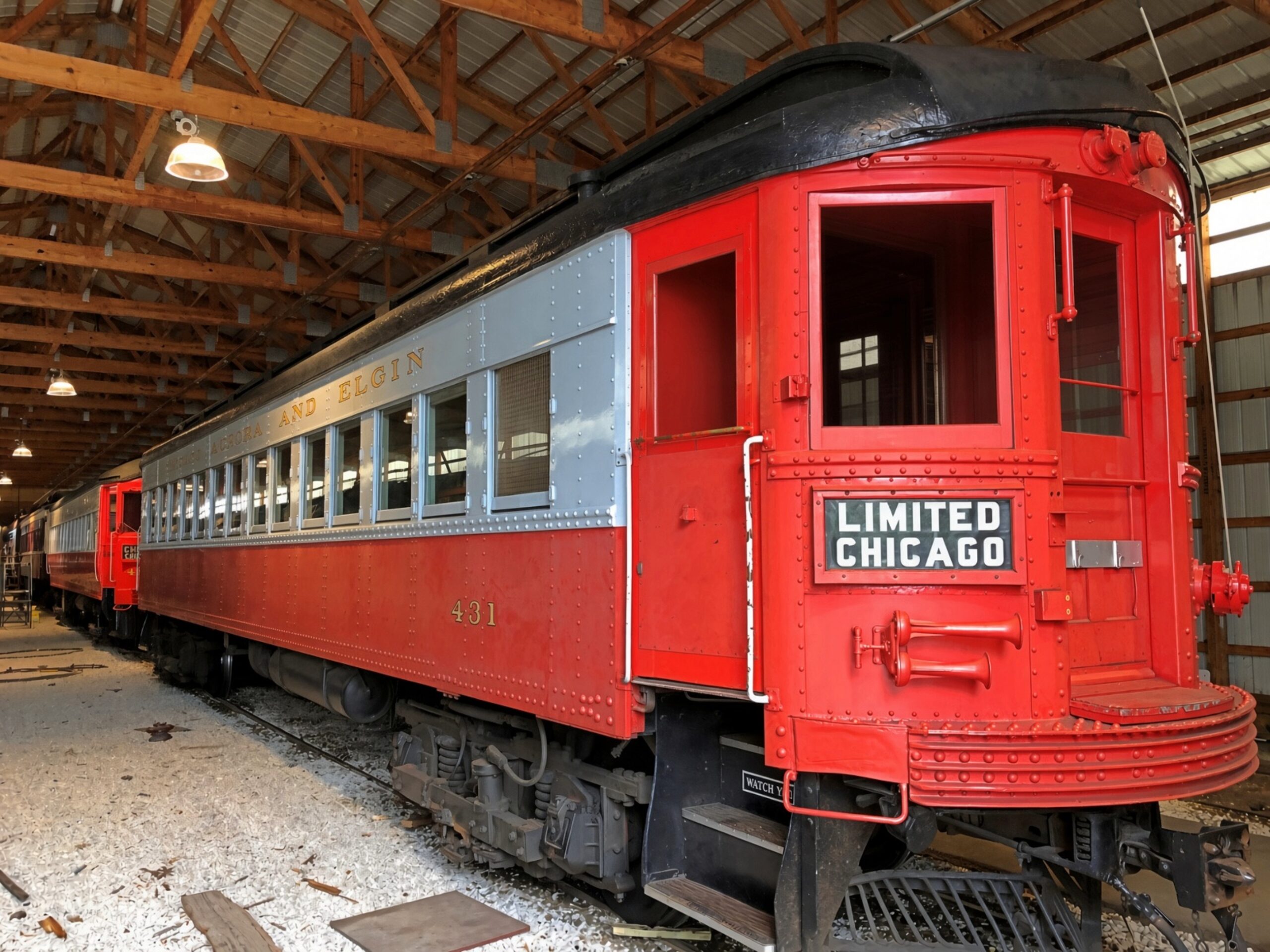
Interurban cars. Including this one, in which we rode out into the Illinois cornfields.

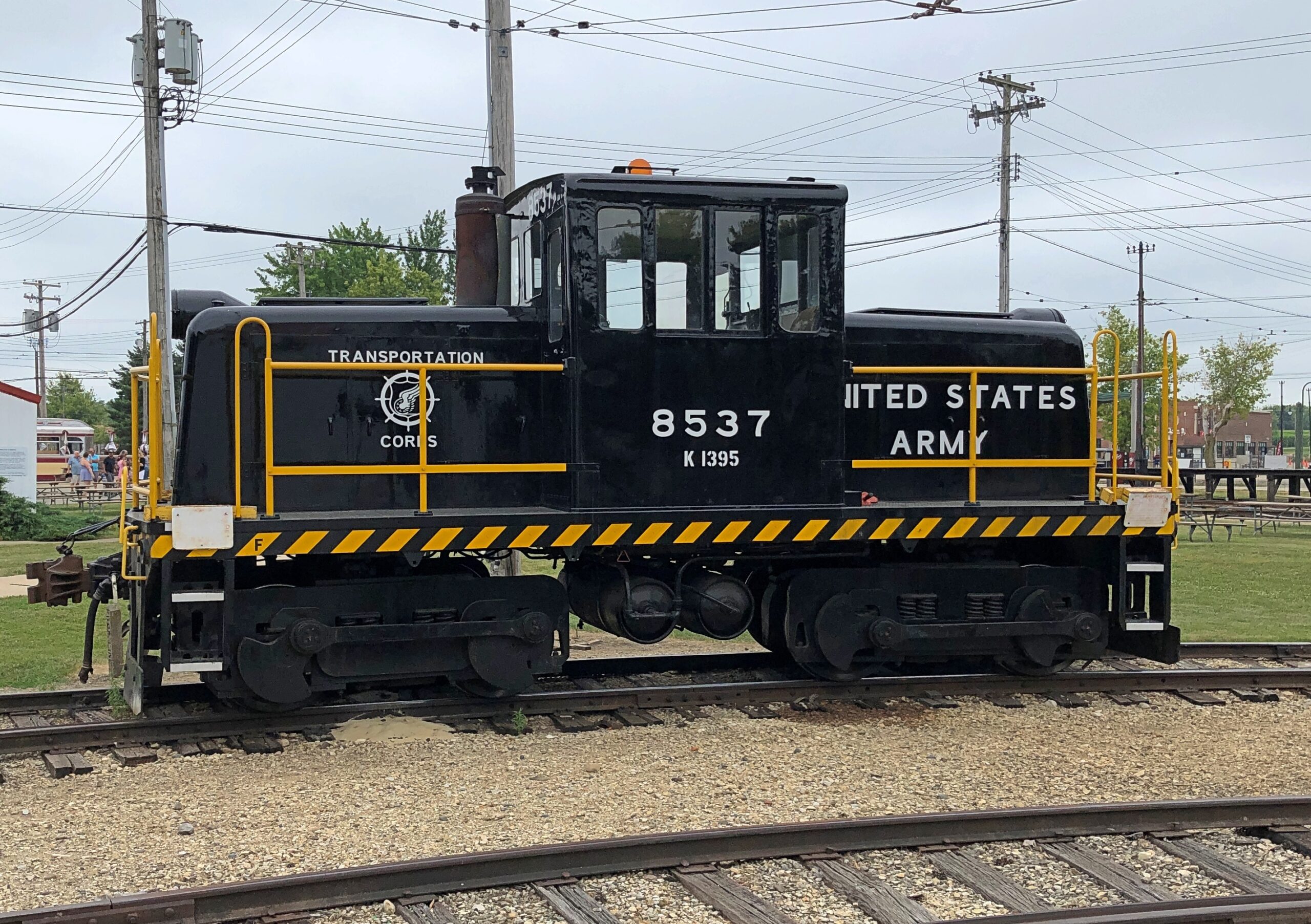
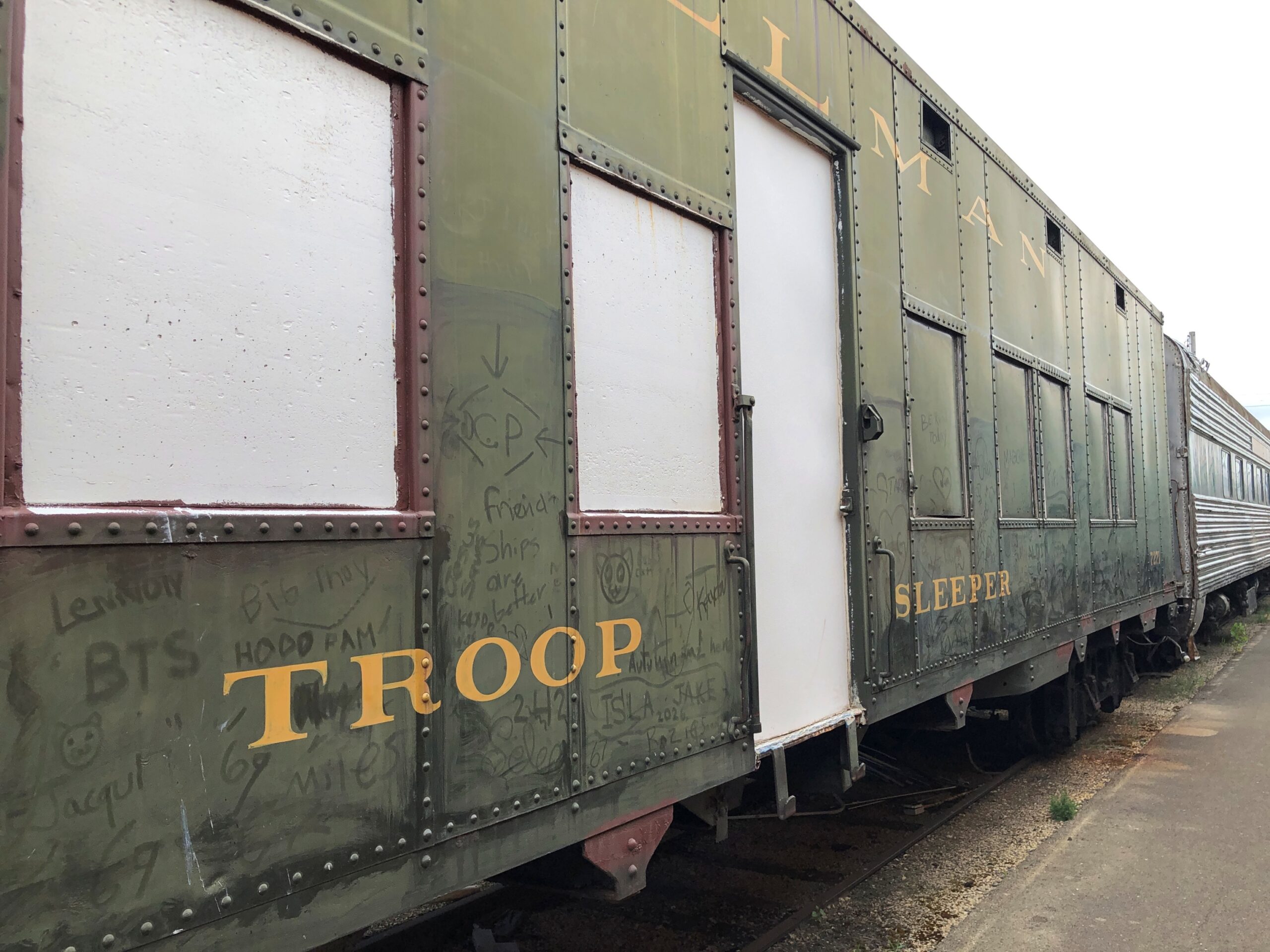
A few military cars.

The latter is a troop sleeping car, built by Pullman, doing its part for the war effort in the early 1940s.

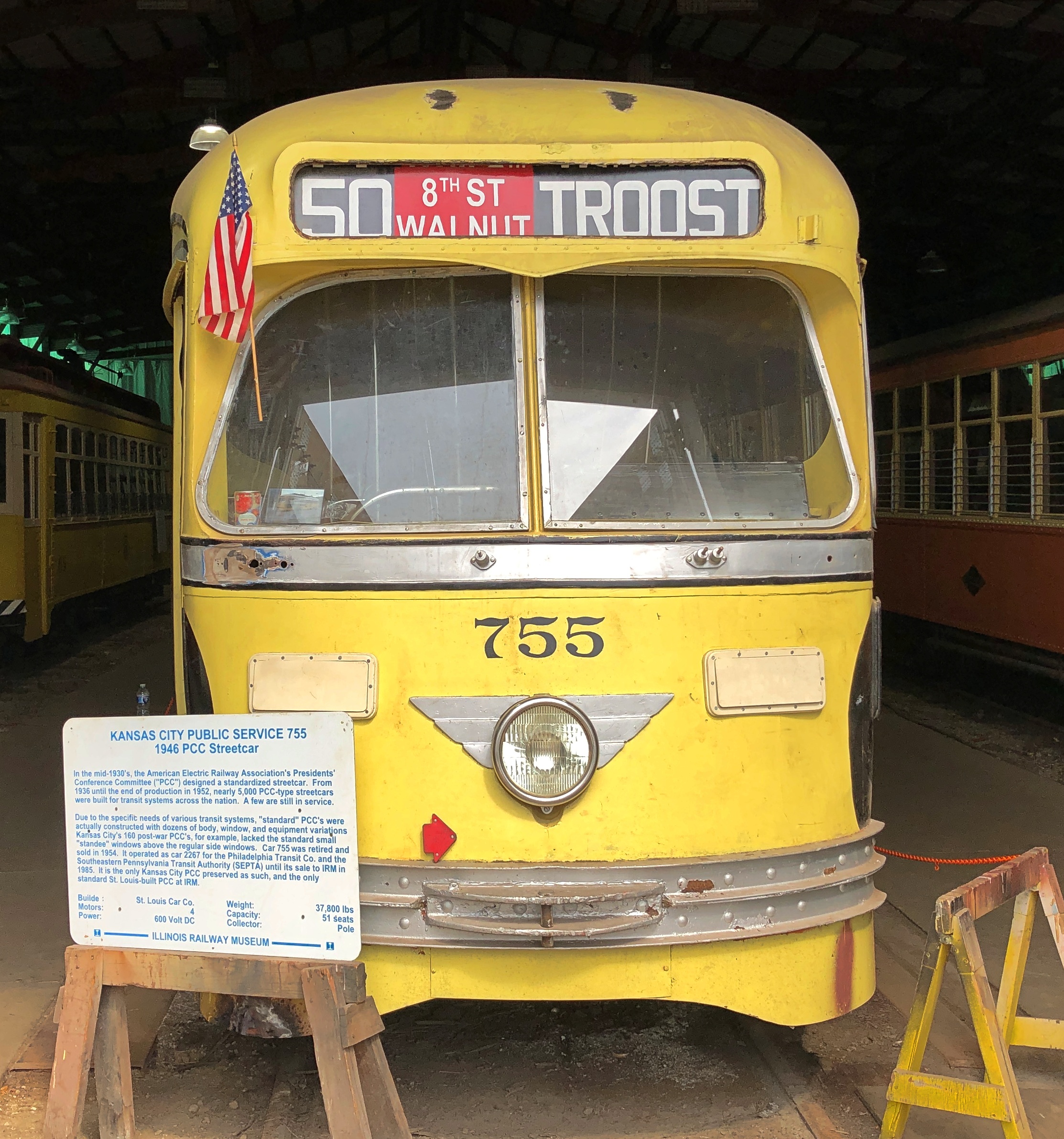
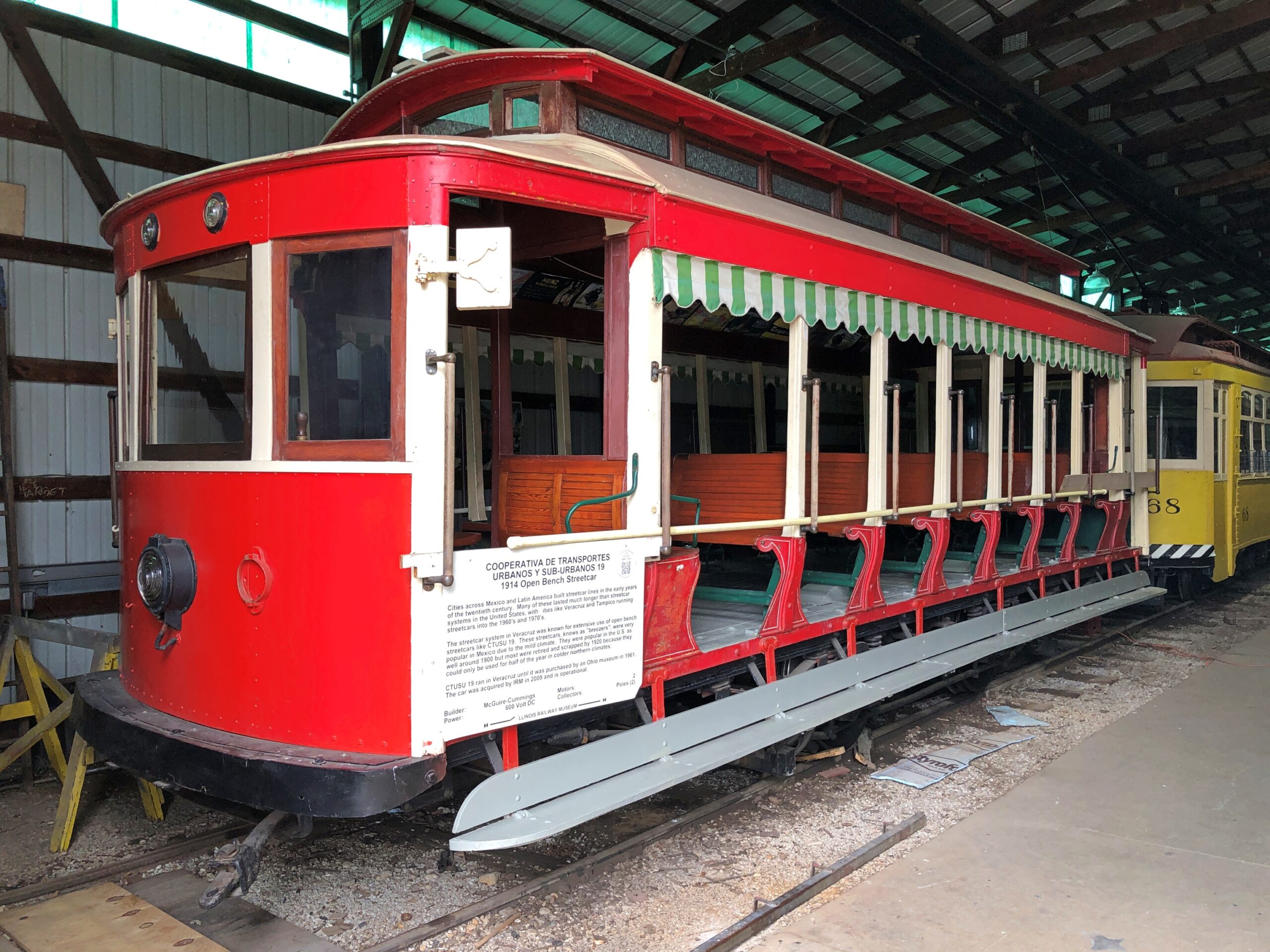
Examples of the many streetcars and trolley cars in the collection.

The latter built in 1914, so it’s a little anachronistic, but I thought of it as a Meet Me in St. Louis streetcar.

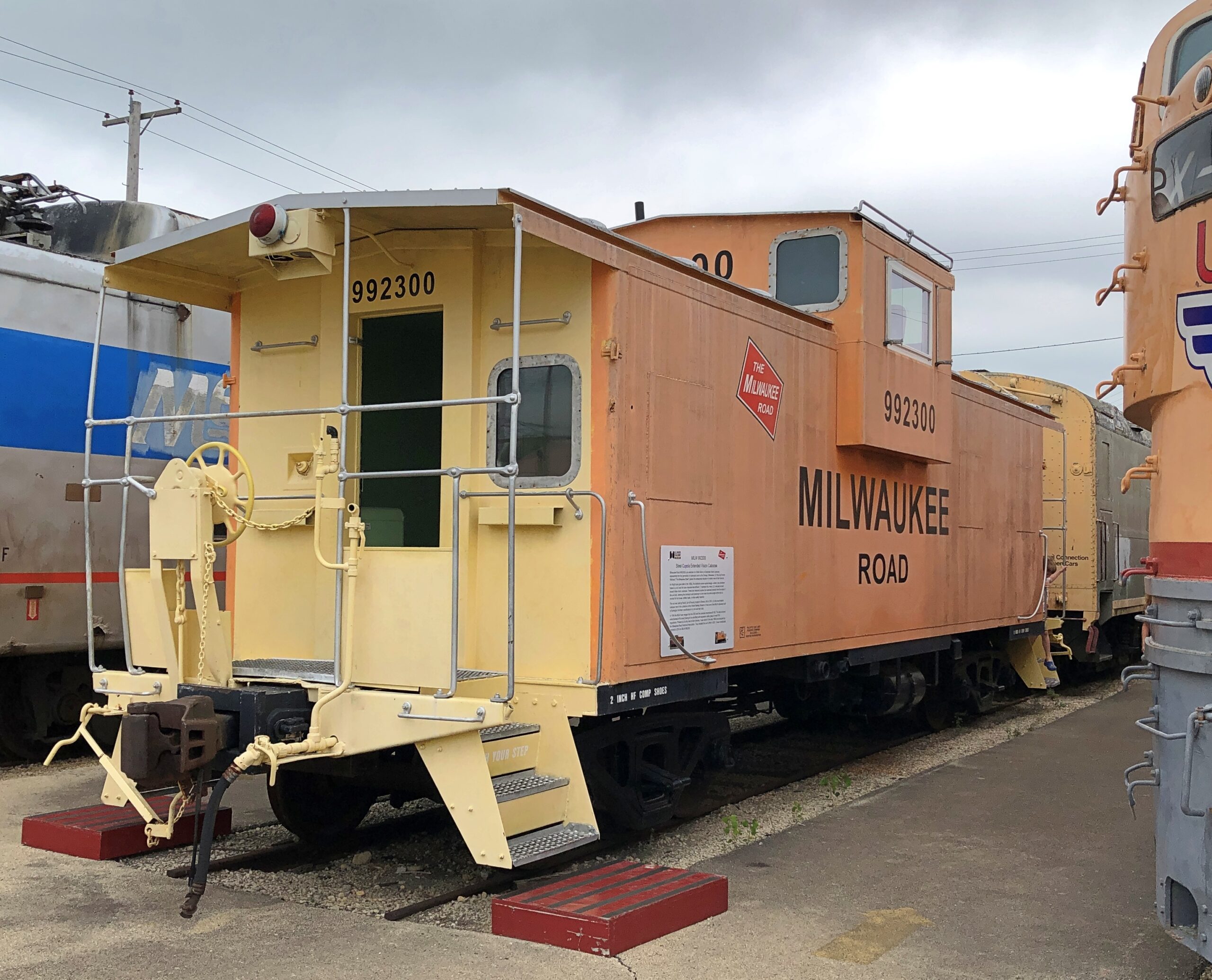
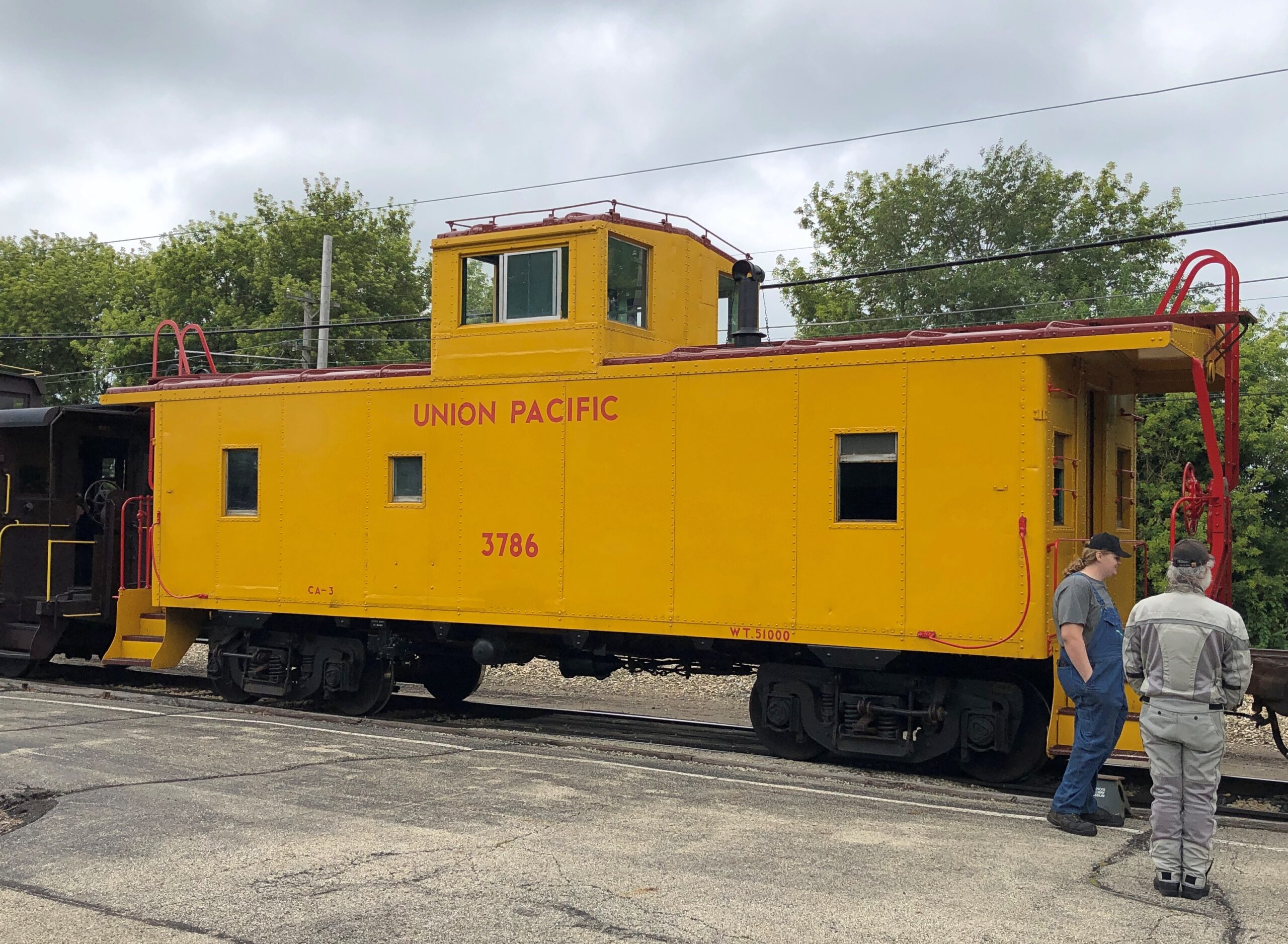
And — of course it should be last — cabooses.

If you asked me, railroads should still be using cabooses. For aesthetic reasons. No railroad is going to do that, naturally, but that’s my opinion.

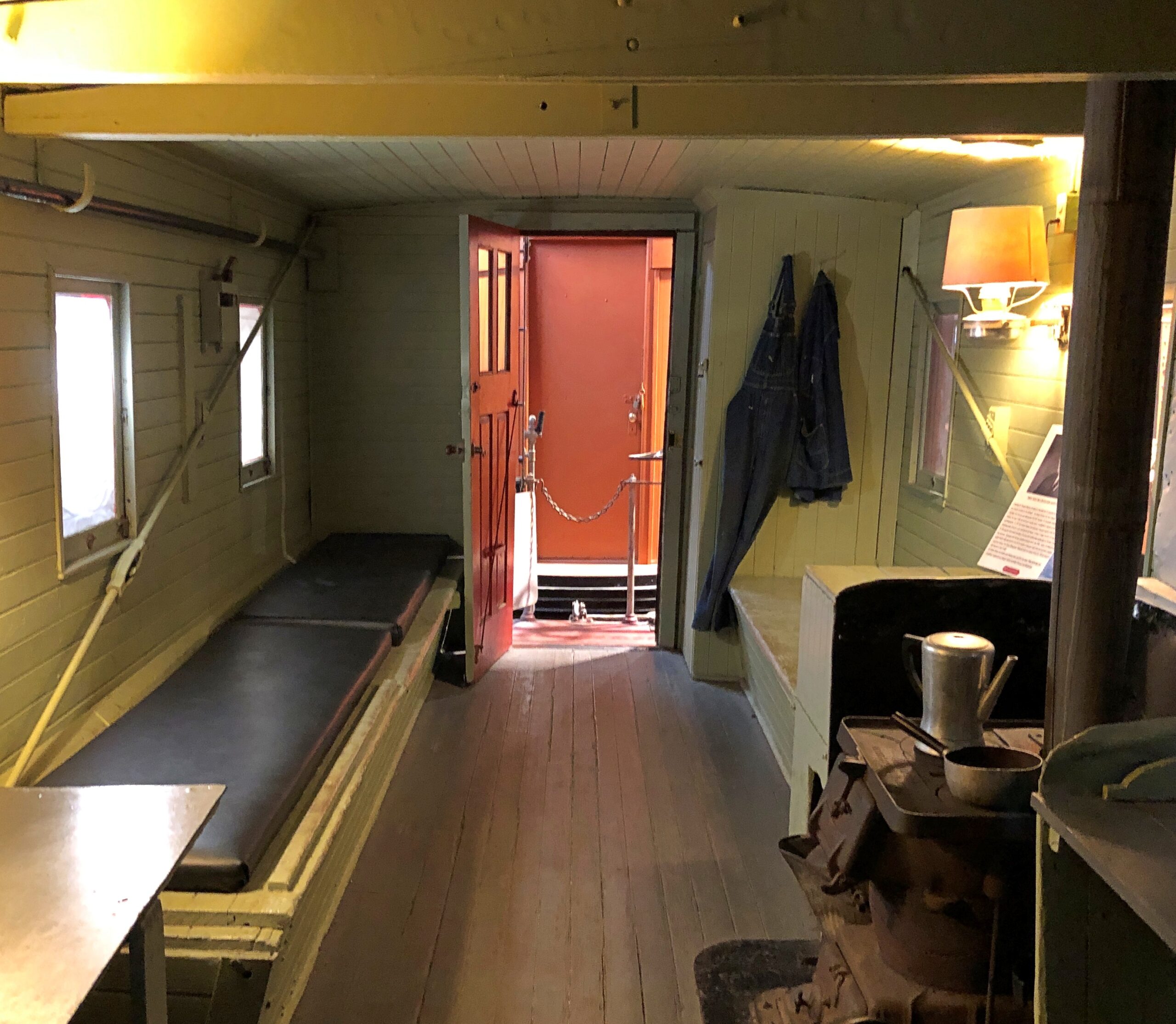
The interior of one of the cabooses. A good many of the cars at the museum are open, provided you’re willing to climb into them, and we certainly were in this case.

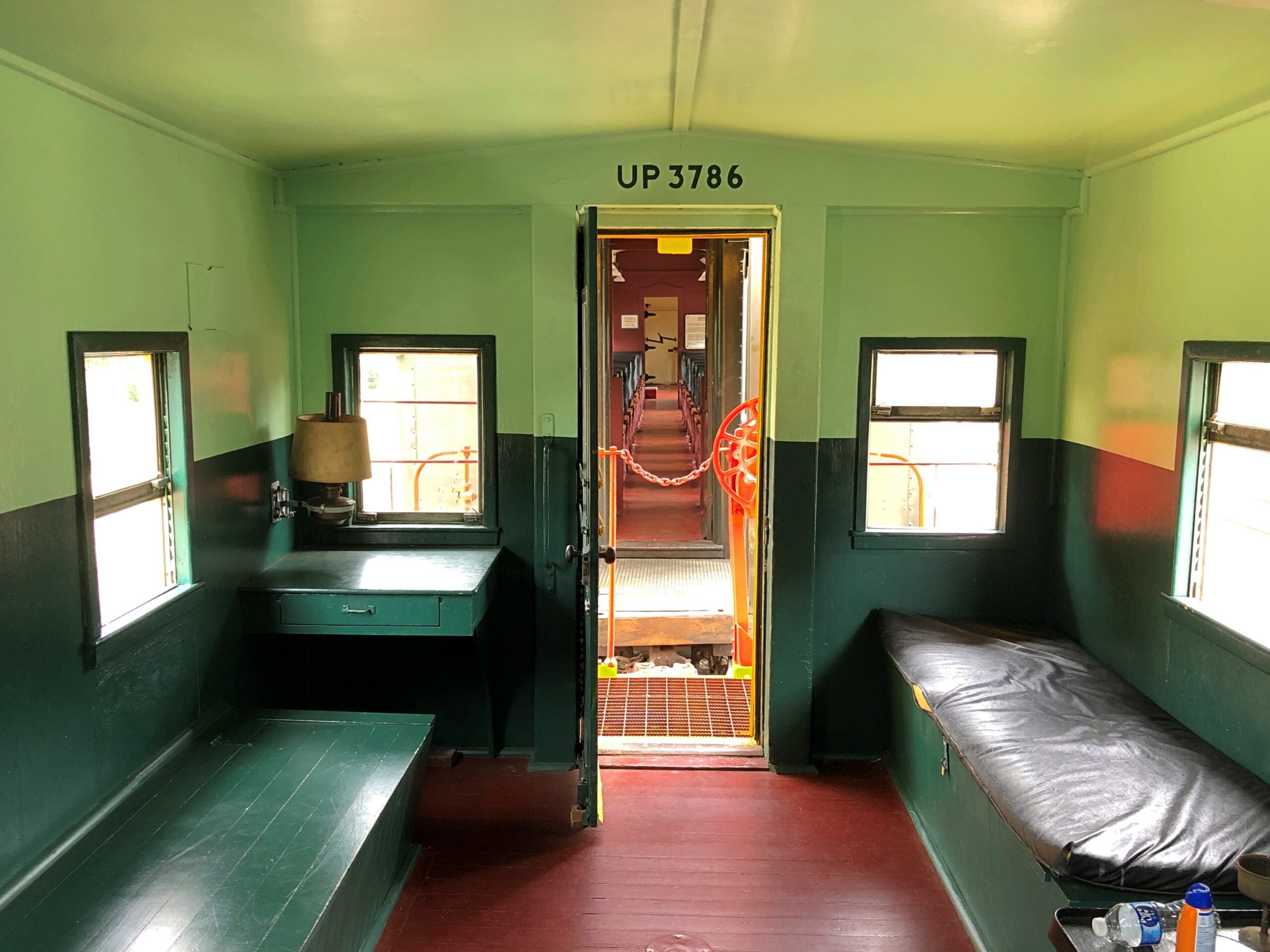
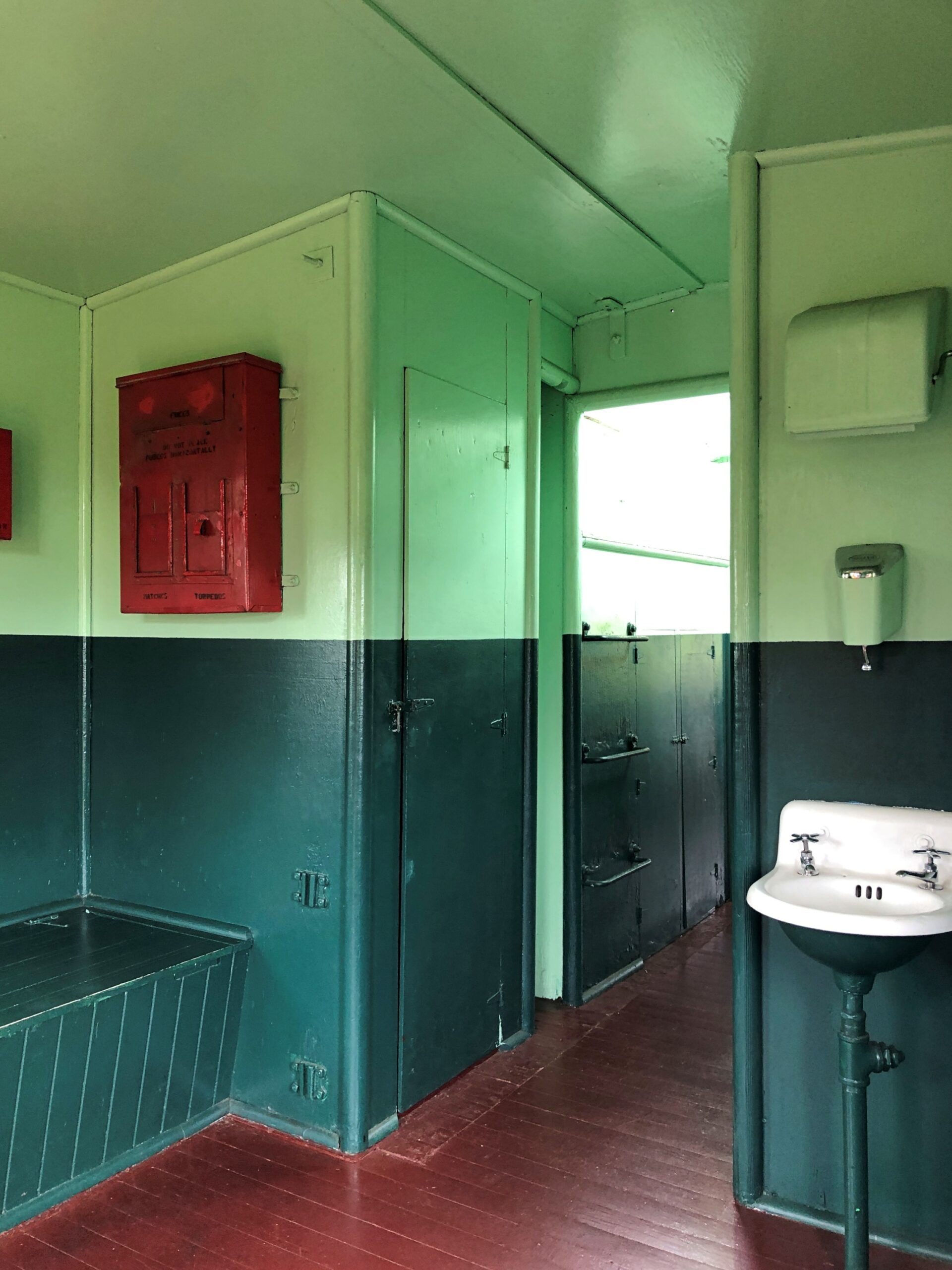
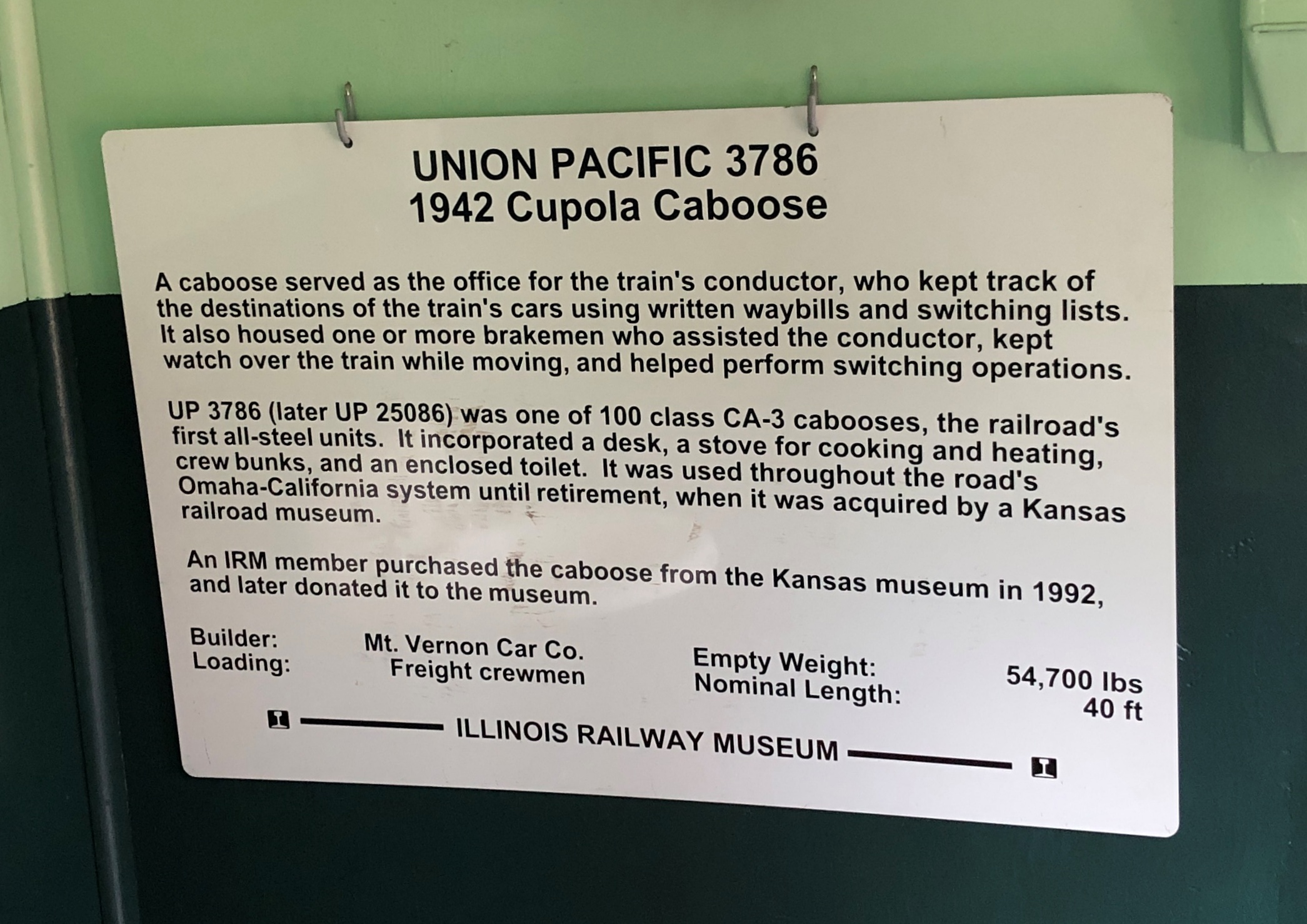
A somewhat newer caboose. We went in there, too.

This caboose was attached to another caboose and an engine, and you could take rides. We did. I couldn’t ever remember riding in a moving caboose before, but now I have.