Wayne, Illinois

Toward the western end of Army Trail Road here in the suburbs – where the territory is almost exurban – a handsome church caught my attention not long ago. Traffic was sparse, so pulling off the road and then taking a look on foot was a reasonable option.
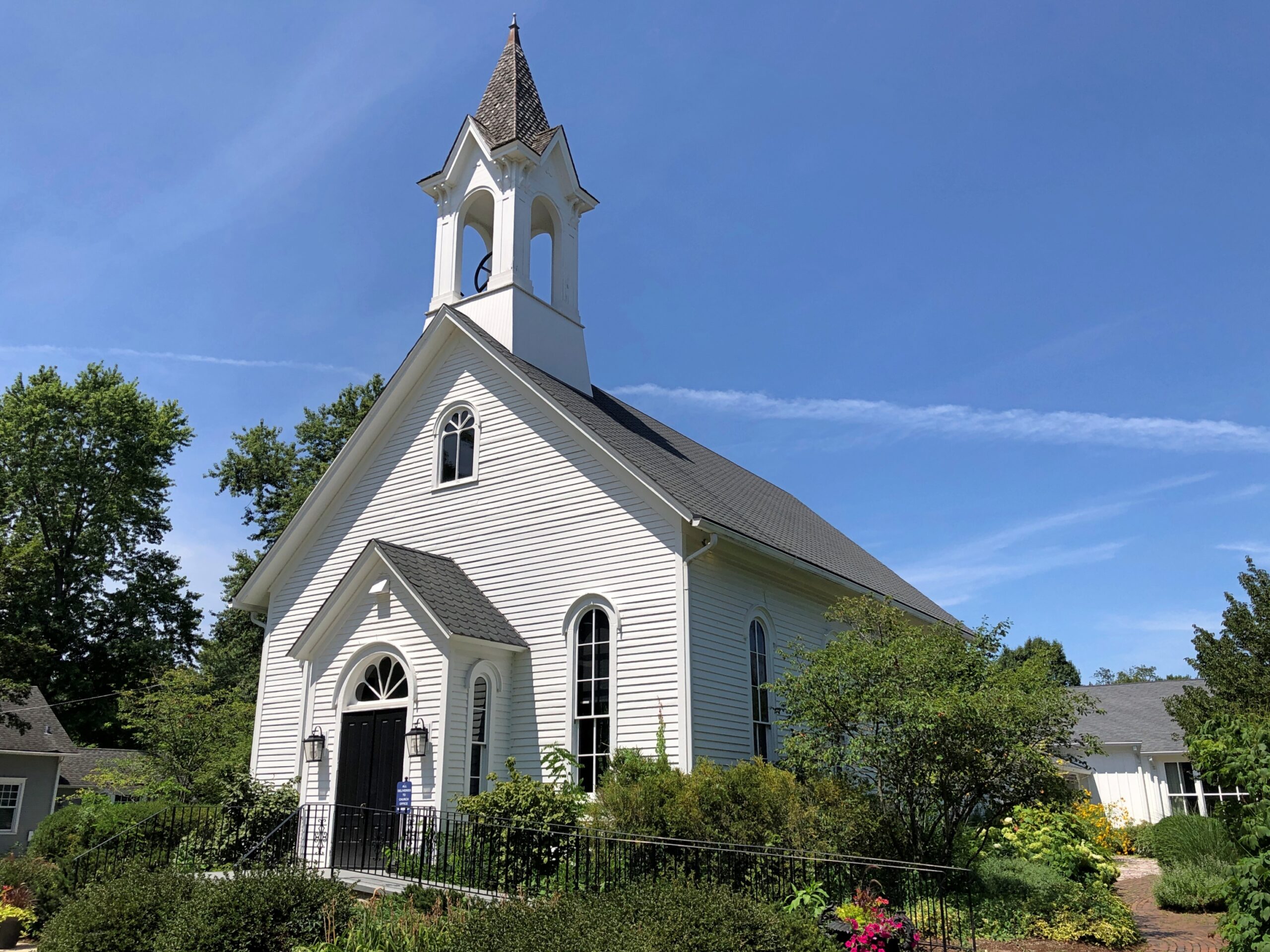
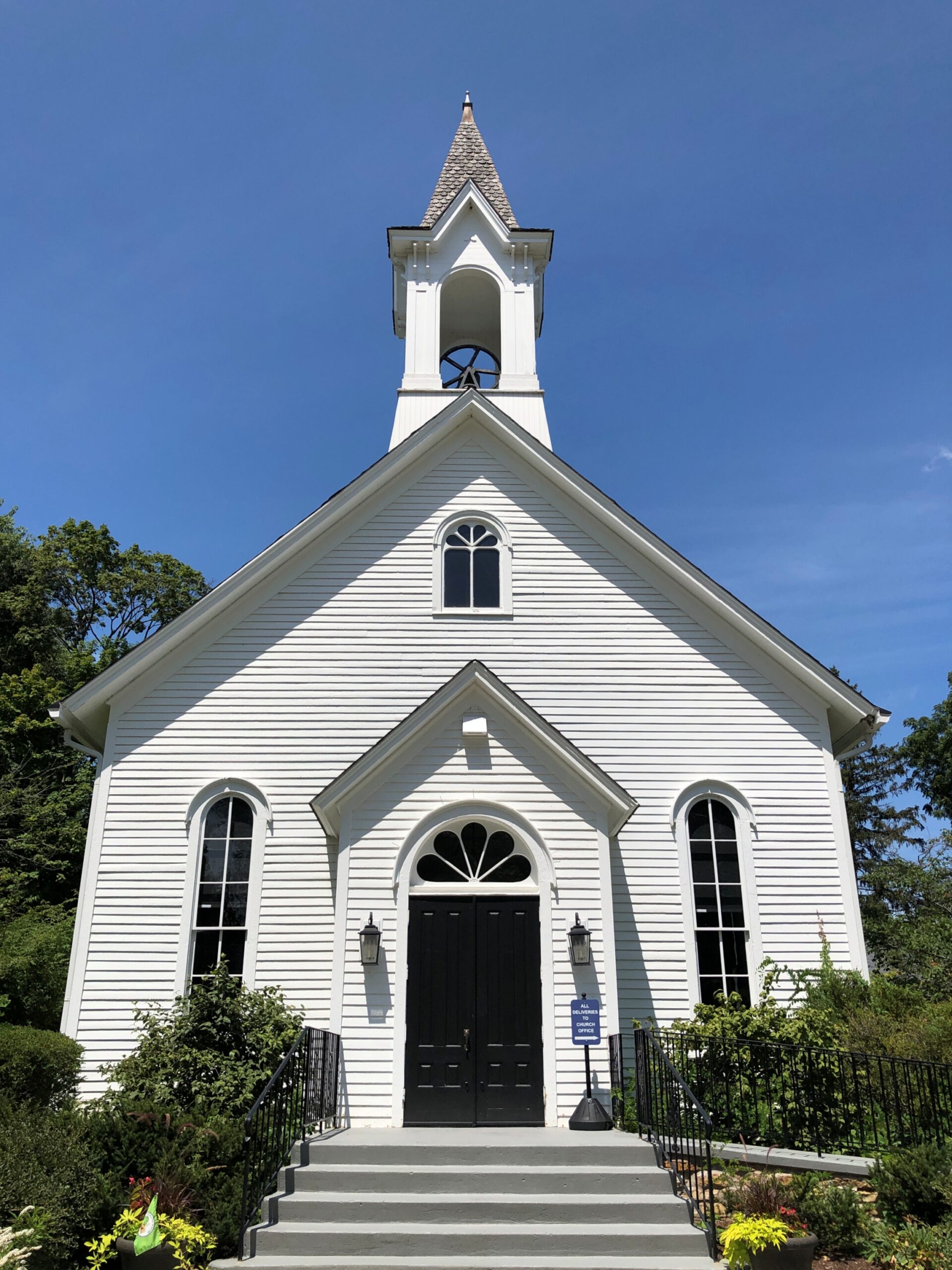
Little Home Church by the Wayside, a United Church of Christ congregation. Closed, unfortunately.

Without realizing it, I’d arrived in Wayne, Illinois. I drive Army Trail Road a lot, but mainly its eastern reaches, an arterial thick with retail in suburbs like Bloomington, Glendale Heights, and Carol Stream. I had a social event to go to late last month, and since it was Saturday, I allowed myself a little extra time to do a spontaneous drive, such as follow Army Trail as far west as it goes, to see what I could see. Such as Wayne, a place I barely knew as a spot on maps.

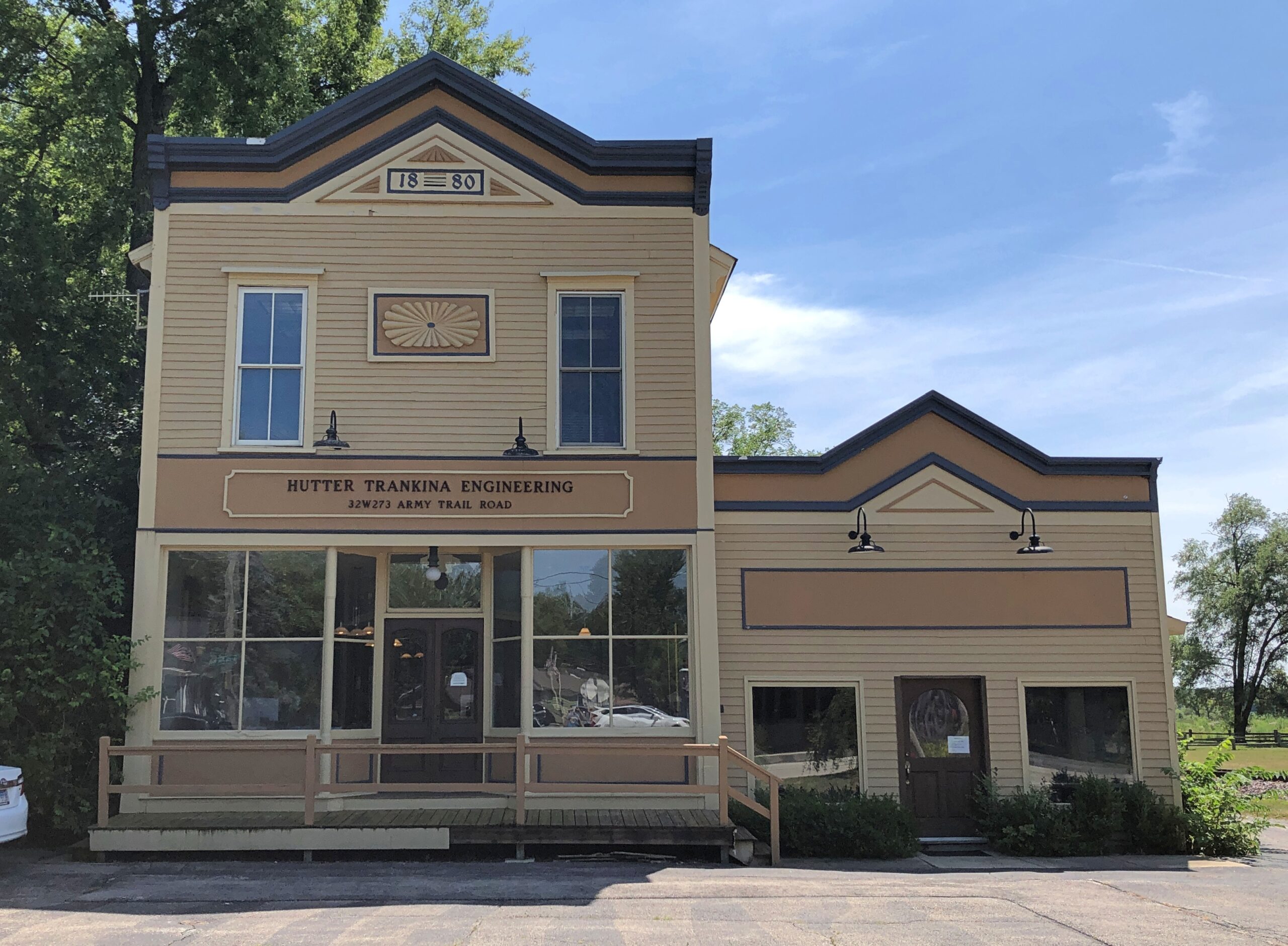
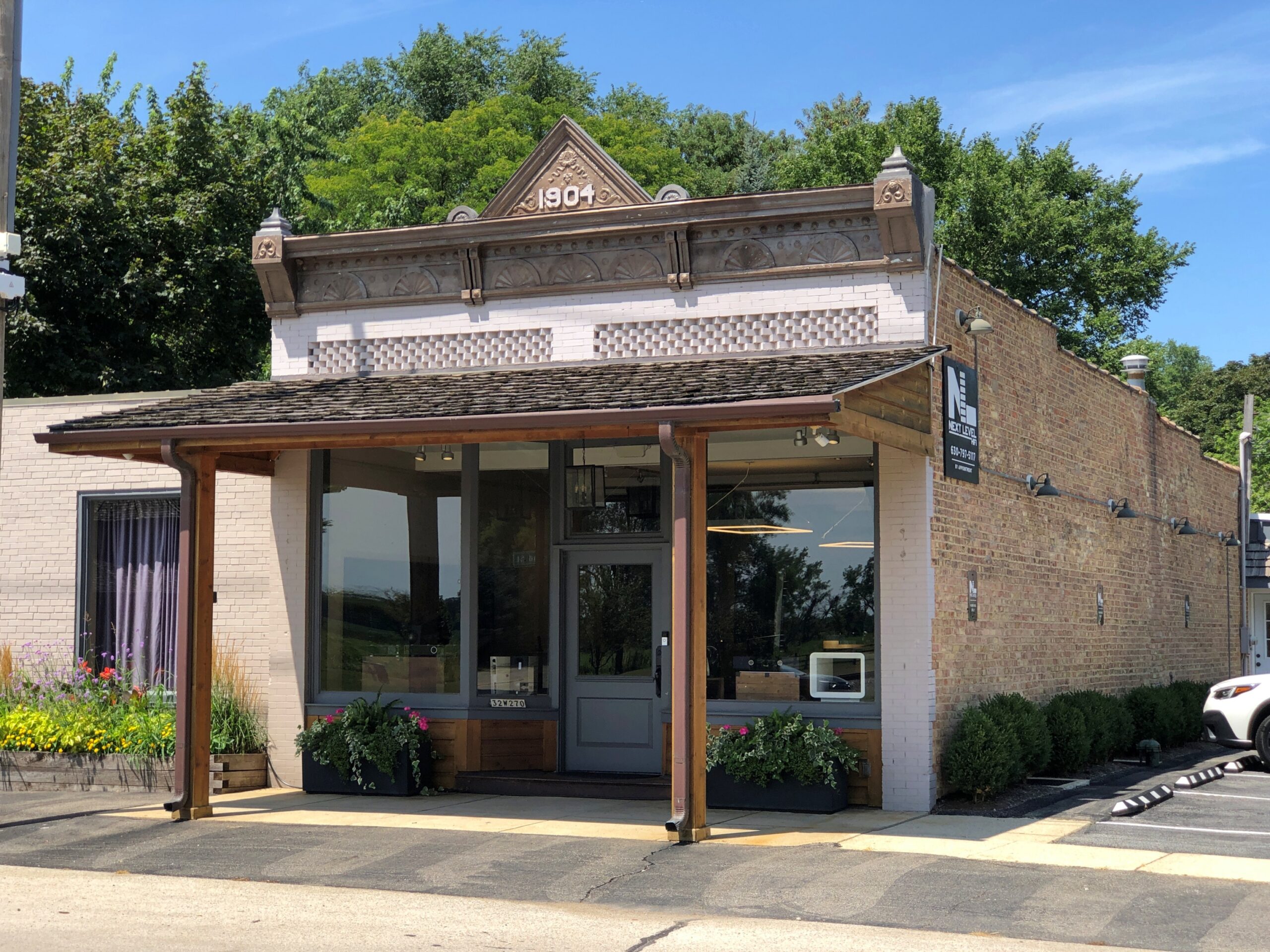
Army Trail passes right through “downtown” Wayne. It isn’t very large, but it has a few good-looking buildings besides the church.
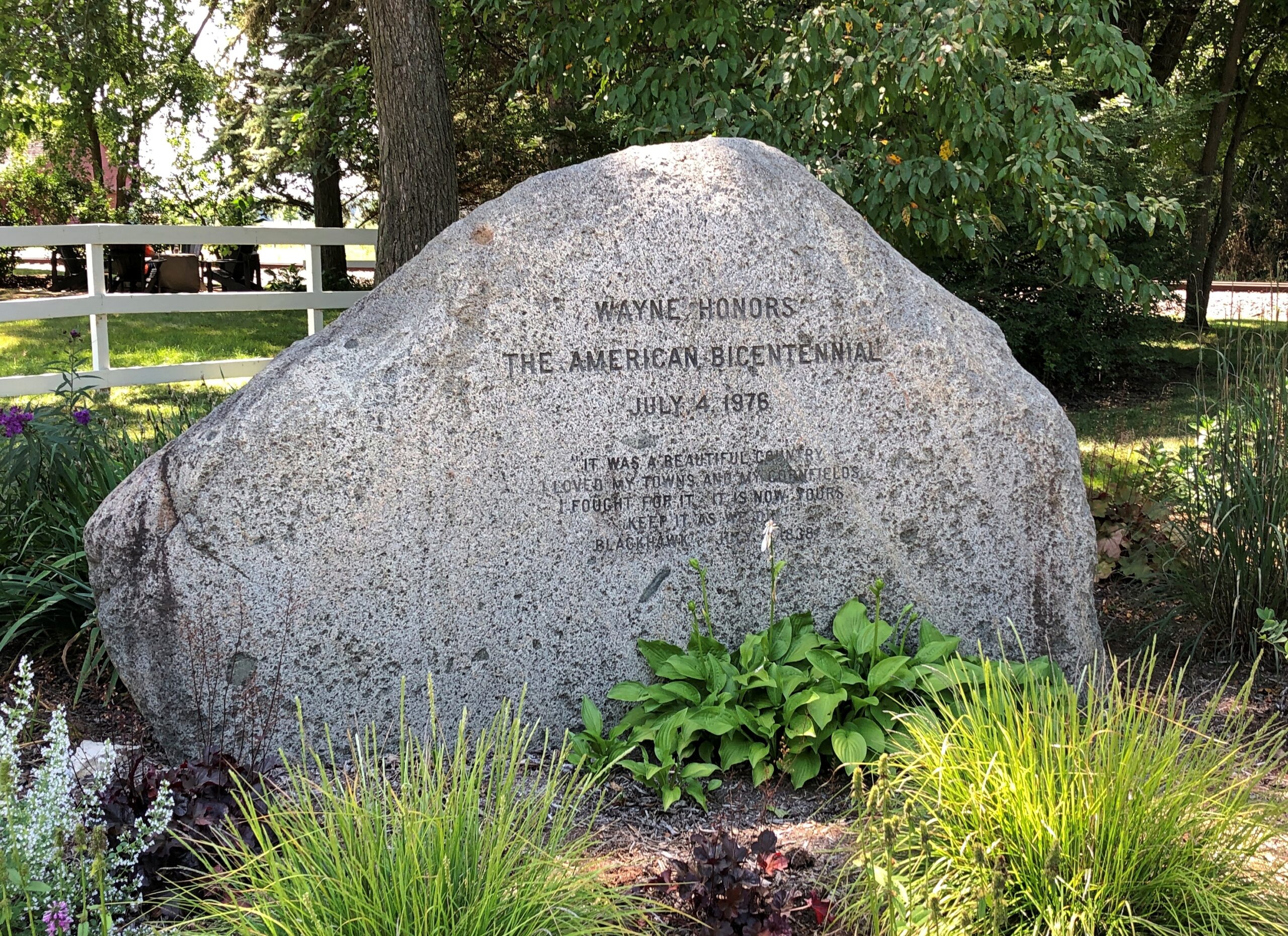
A bicentennial stone.
A nonfunctioning, yet well restored, train station. Nonfunctioning in the sense that trains don’t stop there anymore, but apparently events are held at the building. If I were going to throw a hootenanny or a shindig or a hoedown, I might consider renting it.
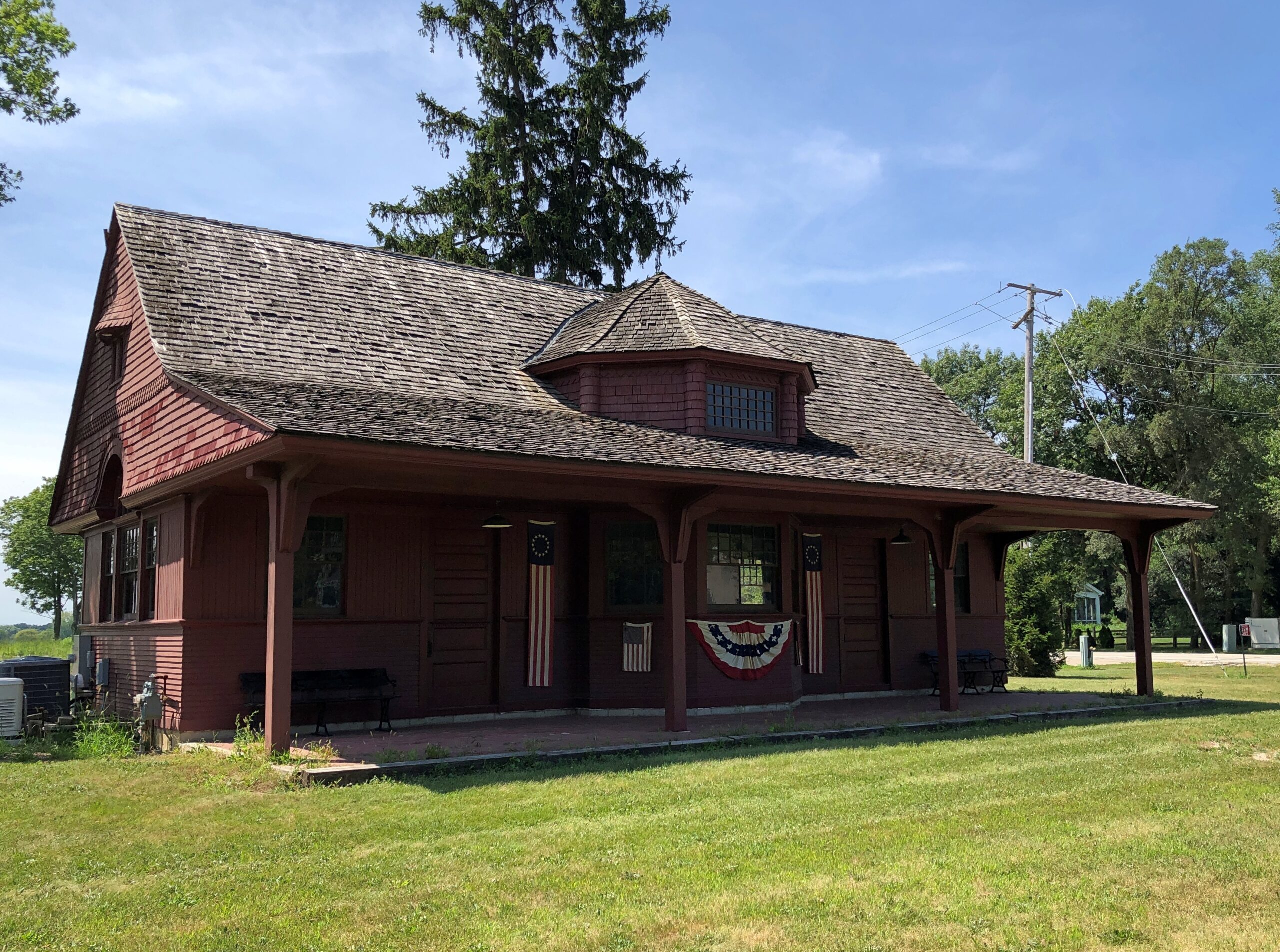
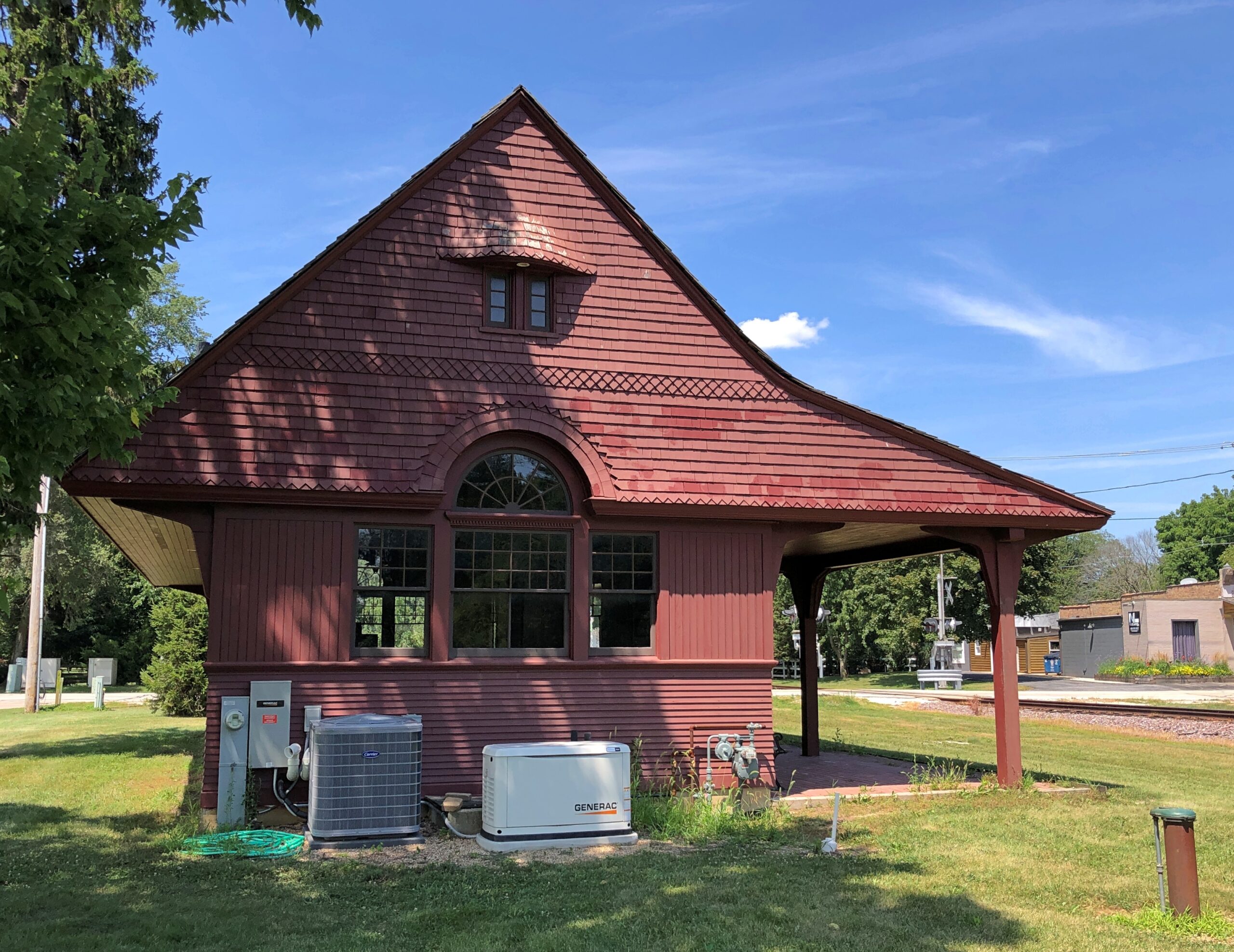
Provided local codes allow such noisy festivities.
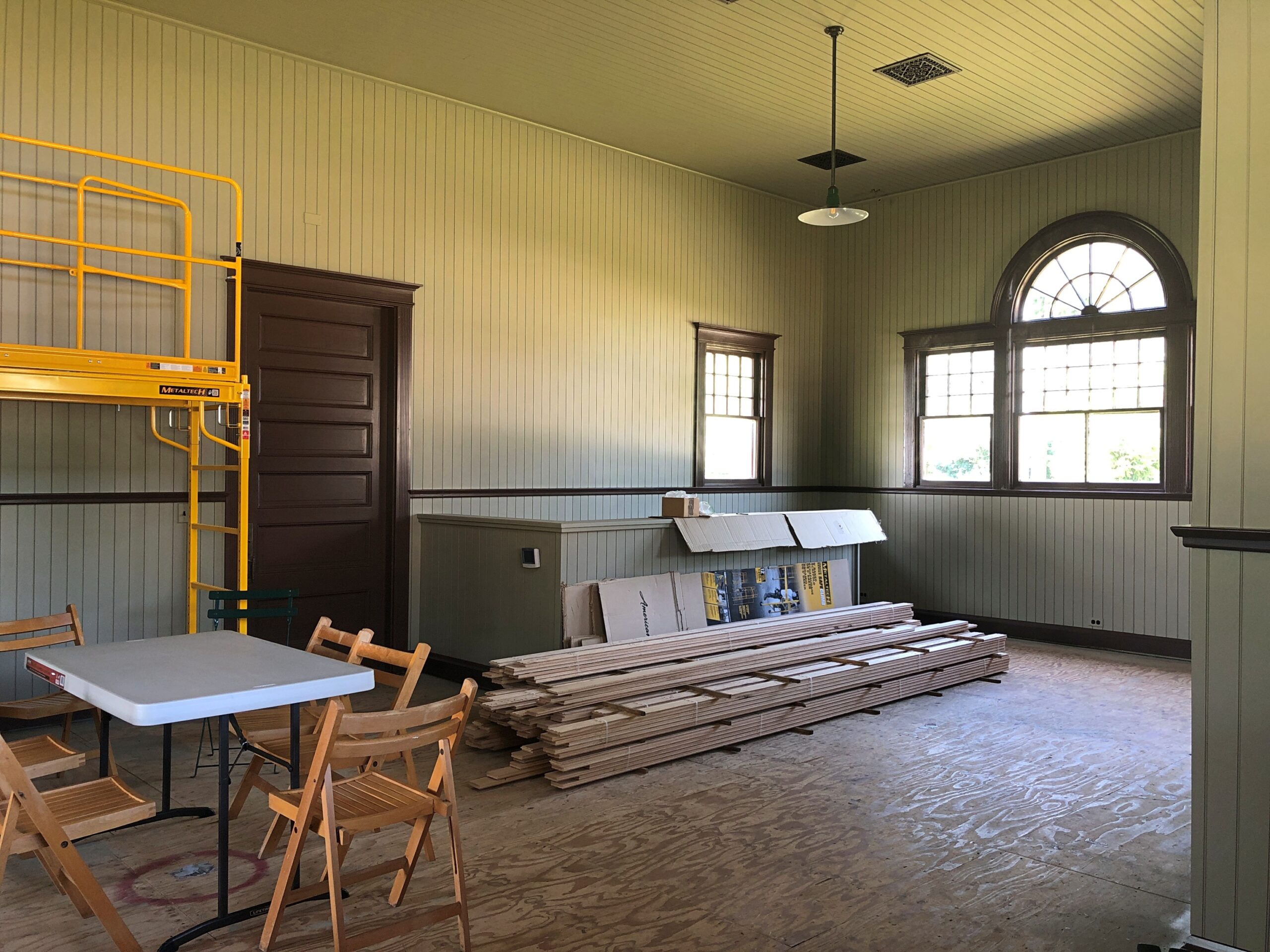
Wayne, I later discovered, is a low-density suburb: a sizable 5.8 square miles with a population of not quite 2,300. As such, I imagine there are a fair number of rules to enforce the quiet and semi-rural character. Zoning keeps lots large, four acres or more, which functions to make the town the province of those who can afford it, but there’s also a lot of open land. Such as the Dunham Forest Preserve.
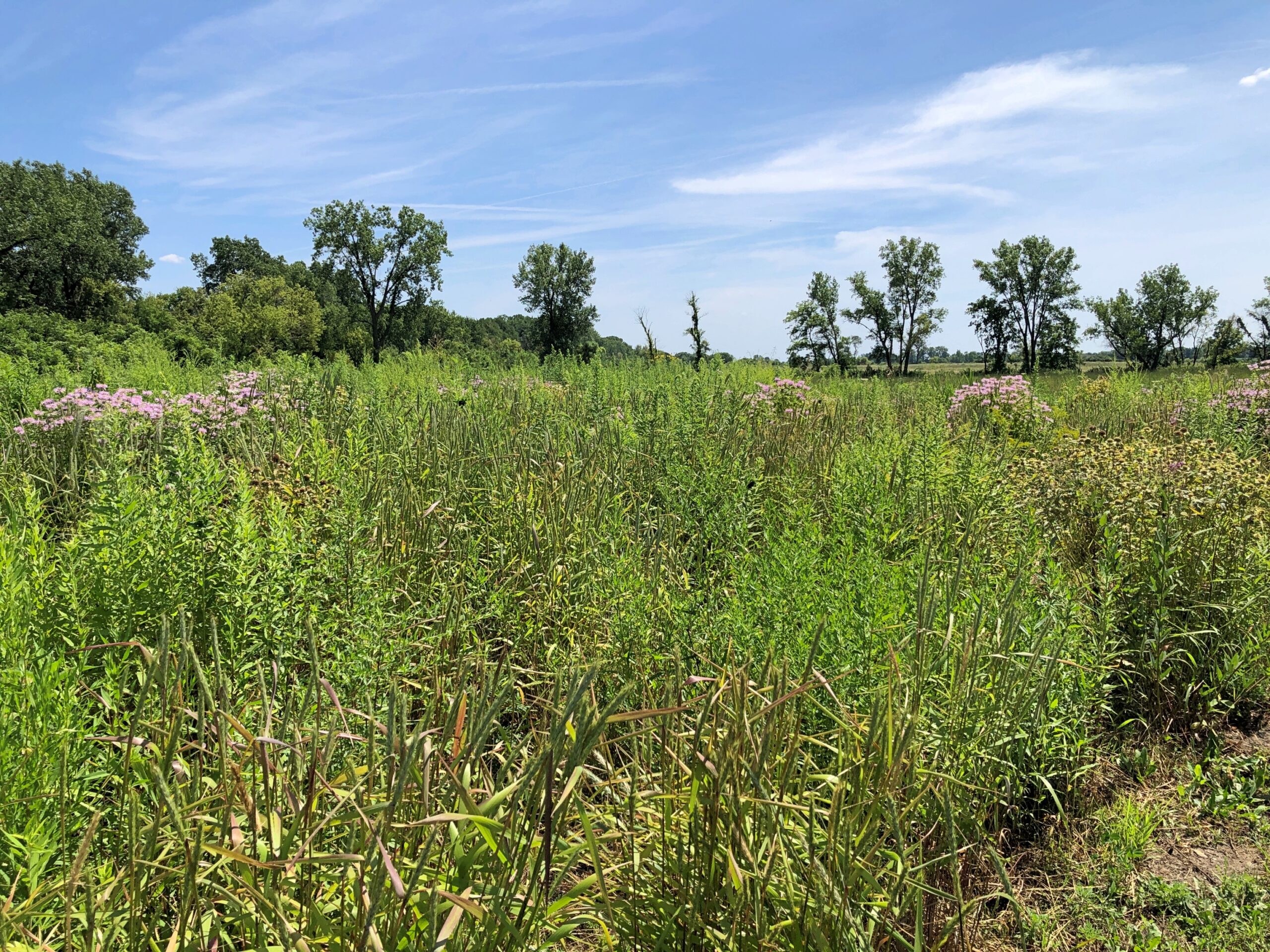
Open to all, but the day I visited, near it was north of 90 degrees F. and, true to the prairie nature of parts of Illinois, little shade was to be seen. Taking pictures around downtown and the former station was sweaty enough.

We’ve heard of one-horse towns, though the metaphor long ago became fossilized. Wayne, it turns out, is a many-horse town, the legacy of a major horse-breeding operation in the 19th century.

“By 1865, Mark W. Dunham… had begun breeding and selling prize Percheron horses which he originally imported from France,” the Village of Wayne says. “By 1883 he had over 1,300 mares and stallions grazing on 1,700 acres of land known as Oaklawn Farm. His residence, Oaklawn, now popularly known as ‘Dunham Castle,’ was also constructed as part of the farm, and the red brick building which had been the Dunham home (now the Dunham Woods Riding Club) was converted into offices for the farm and guest rooms for visiting horse buyers.

In 1893, Oaklawn Farm was accorded the honor of serving as one of the agricultural displays for the World’s Columbian Exposition in Chicago, and visitors traveled Wayne Road from Wayne Station out to the Broad expanse. The old railroad station still exists and has been returned to its original site in the Village Center. By 1905, Oaklawn Farm produced more Percheron horses for American and European buyers than the next eight establishments combined.”

The market for Percheron work horses isn’t what it used to be, but Wayne’s open spaces and many trails – pretty much invisible when you’re driving through – accommodate a good many horses even now, according to the village: “[Wayne] is one of the few communities in northeastern Illinois that provides and encourages equestrian uses and facilities.”
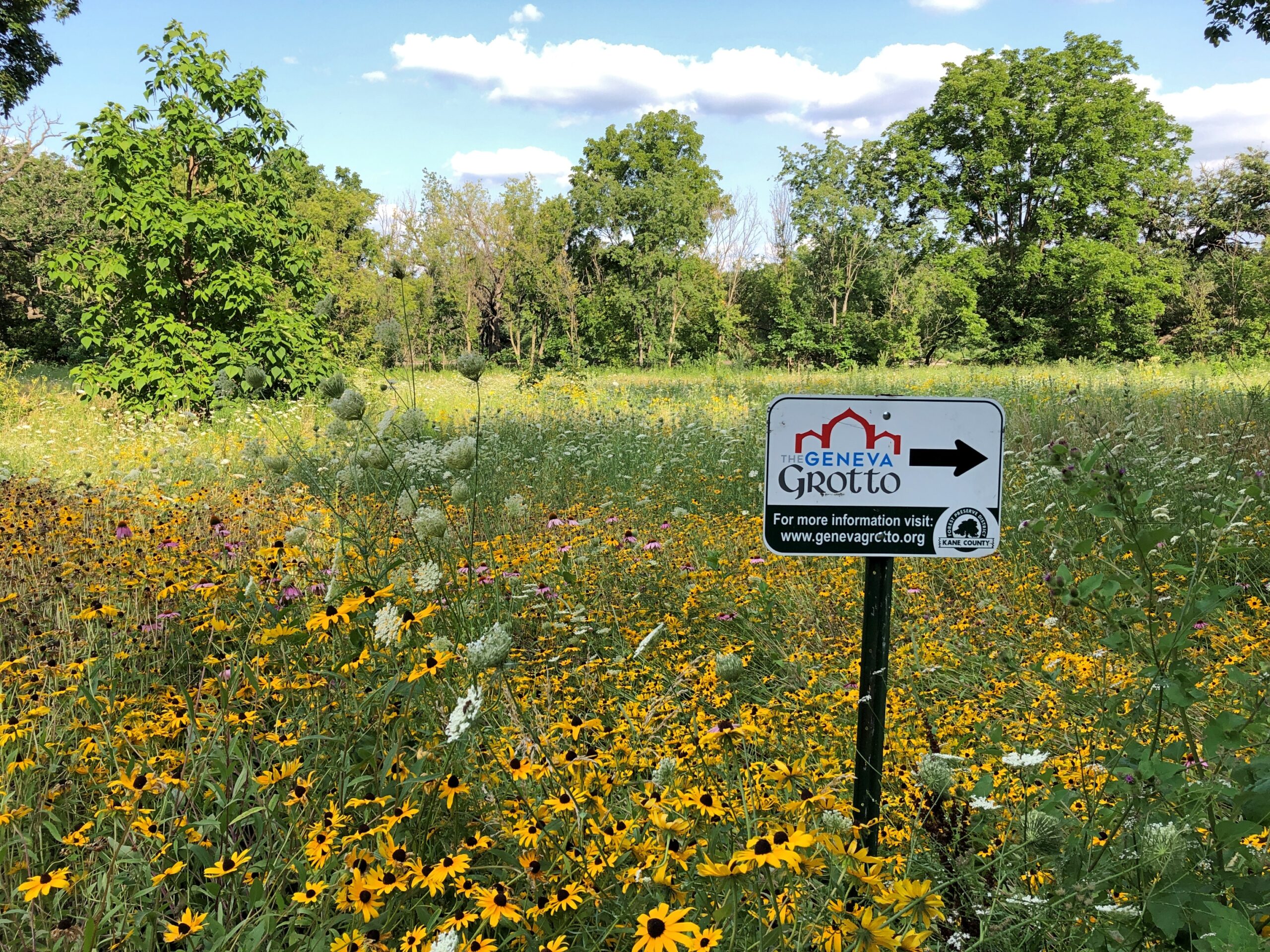
The Geneva Grotto

I don’t know about anyone else, but when I see something like this, I’m intrigued. The Geneva Grotto, you say?

Barring an obvious hazard – and there weren’t any, unless you count the possibility of mosquitoes carrying some disease yet unknown to science – that’s the kind of thing that bears further investigation. So toward the end of our most recent visit to Geneva, Illinois, we followed the sign, which is next to a parking lot in the Gunnar Anderson Forest Preserve on the Fox River, behind the Kane County Government Center.

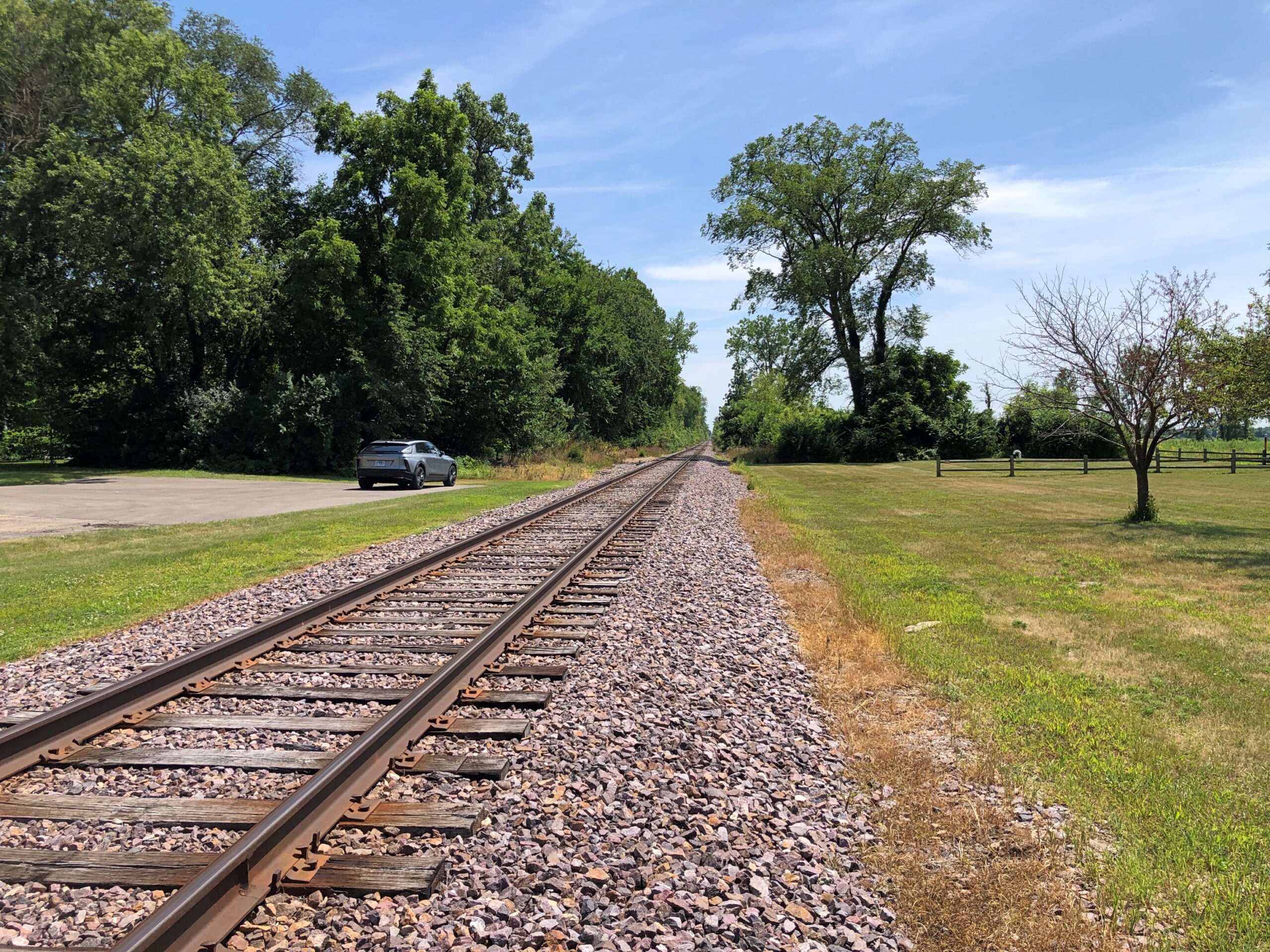
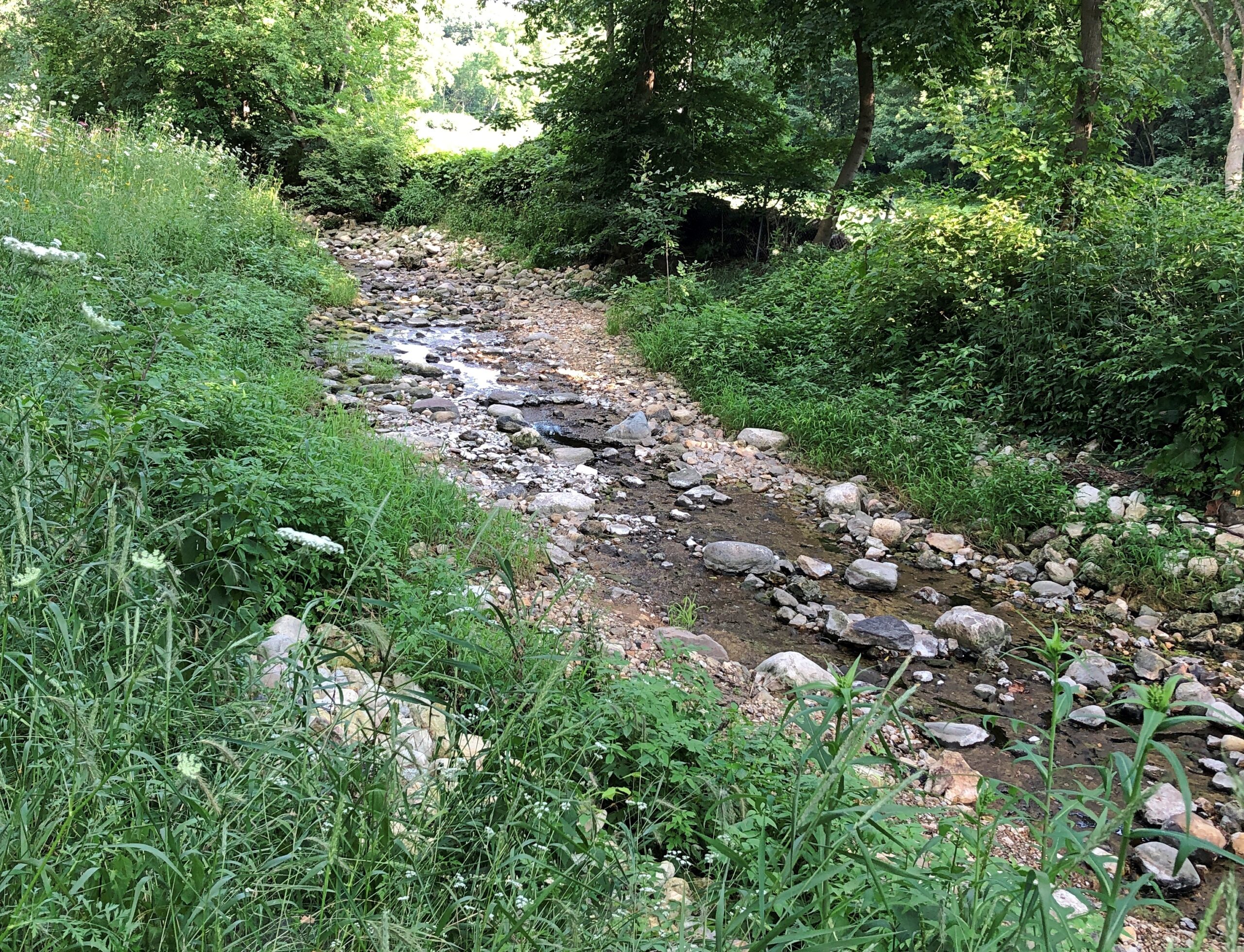
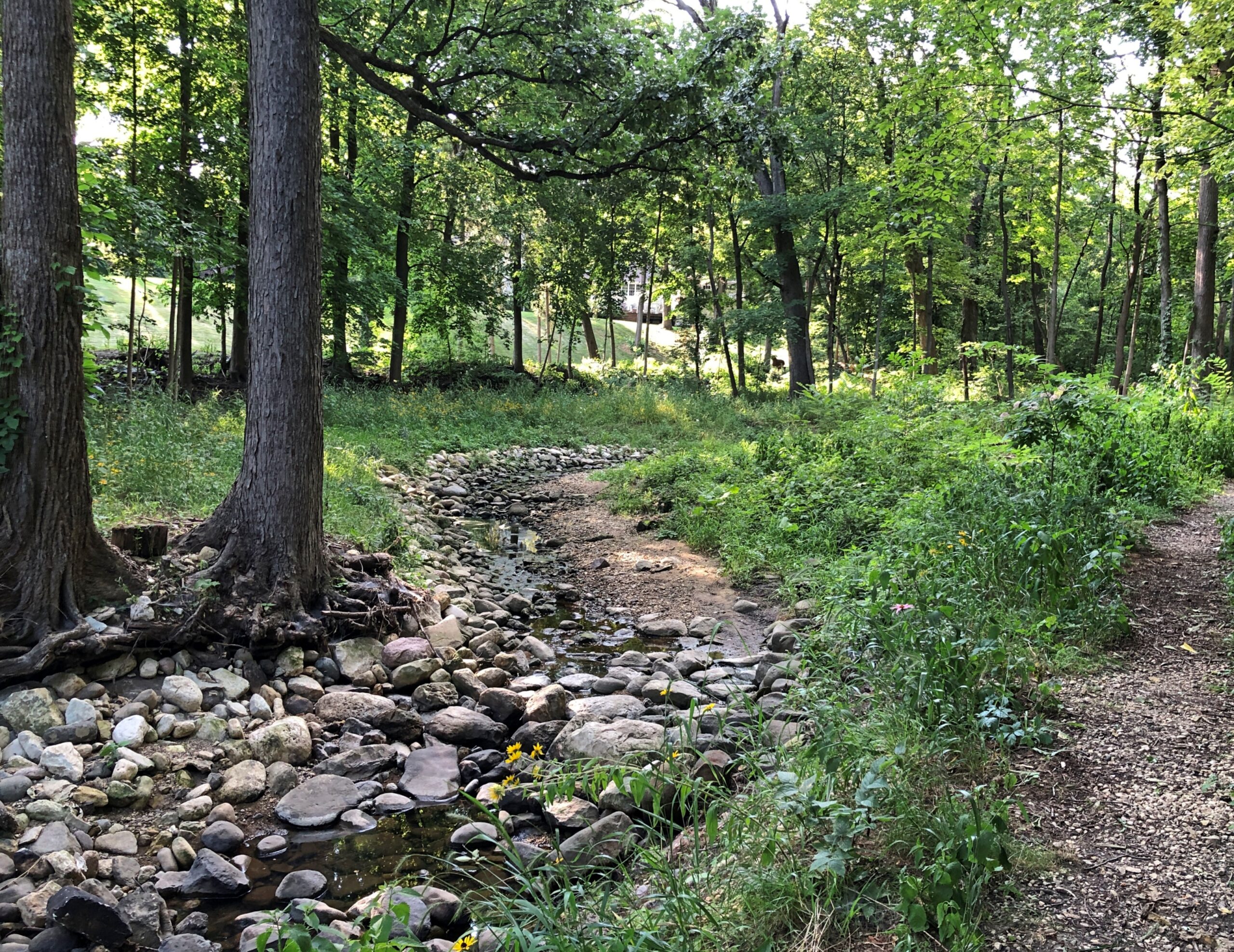
The tracks lead to a smaller trail into the forest, along a small, rocky creek that feeds into the Fox.

So small it isn’t acknowledged on Google Maps. The place felt a little remote, but of course it isn’t. At various points along the way, houses just outside the forest preserve are visible. Also, it doesn’t take long to get to the promised destination: less than five minutes. Bold exploration, this was not. More like seeking out the obscure, which I have a certain knack for.

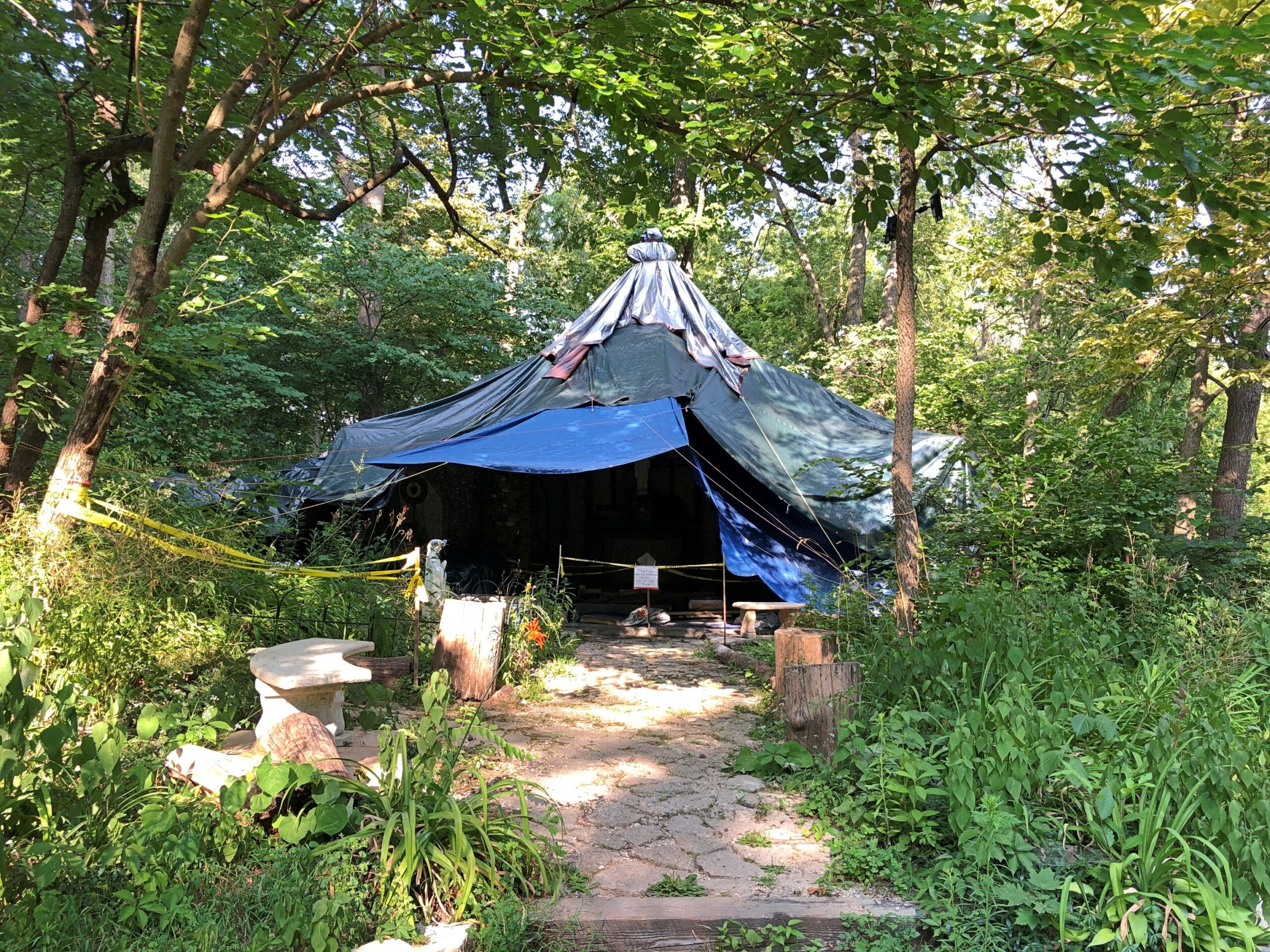
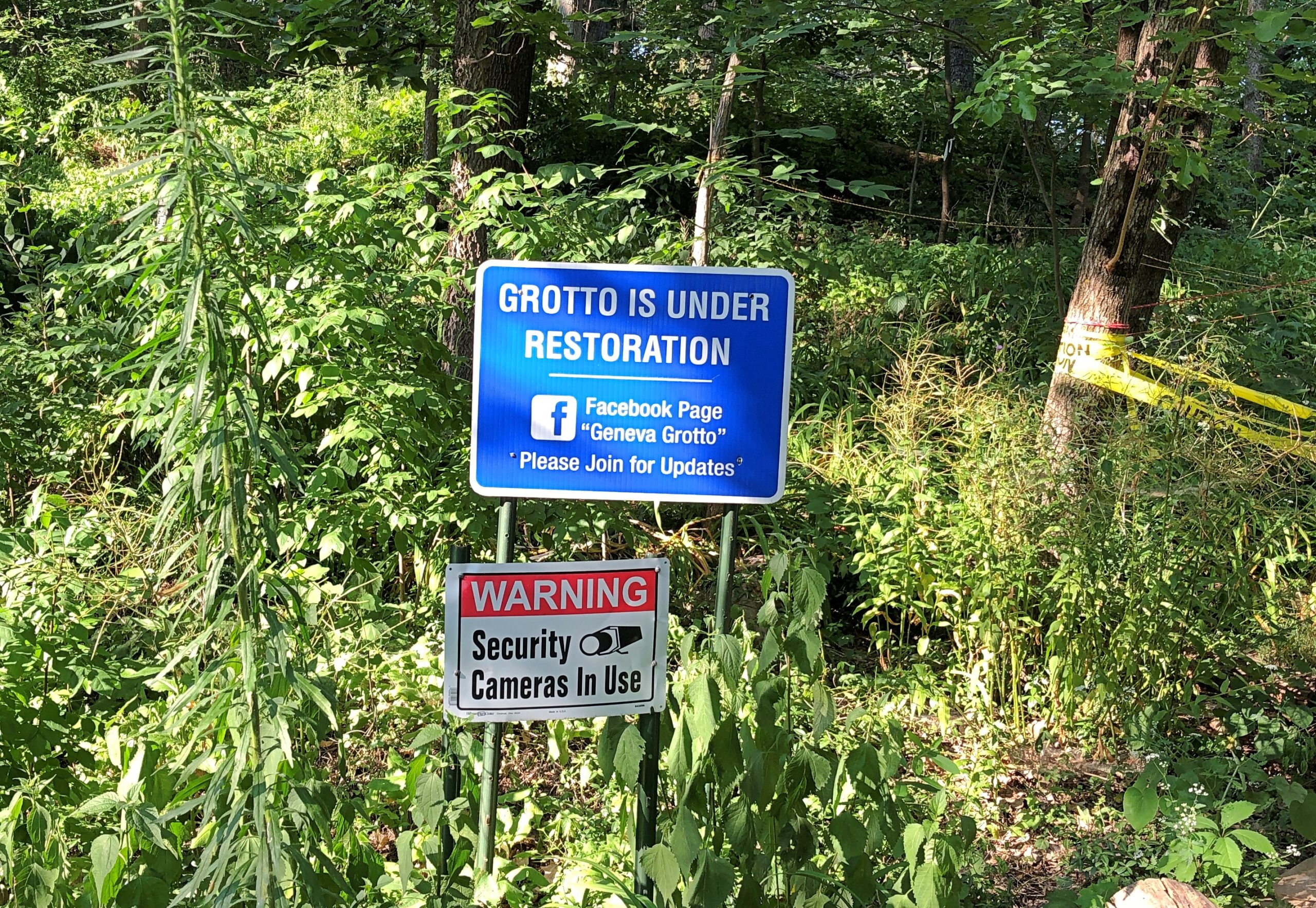
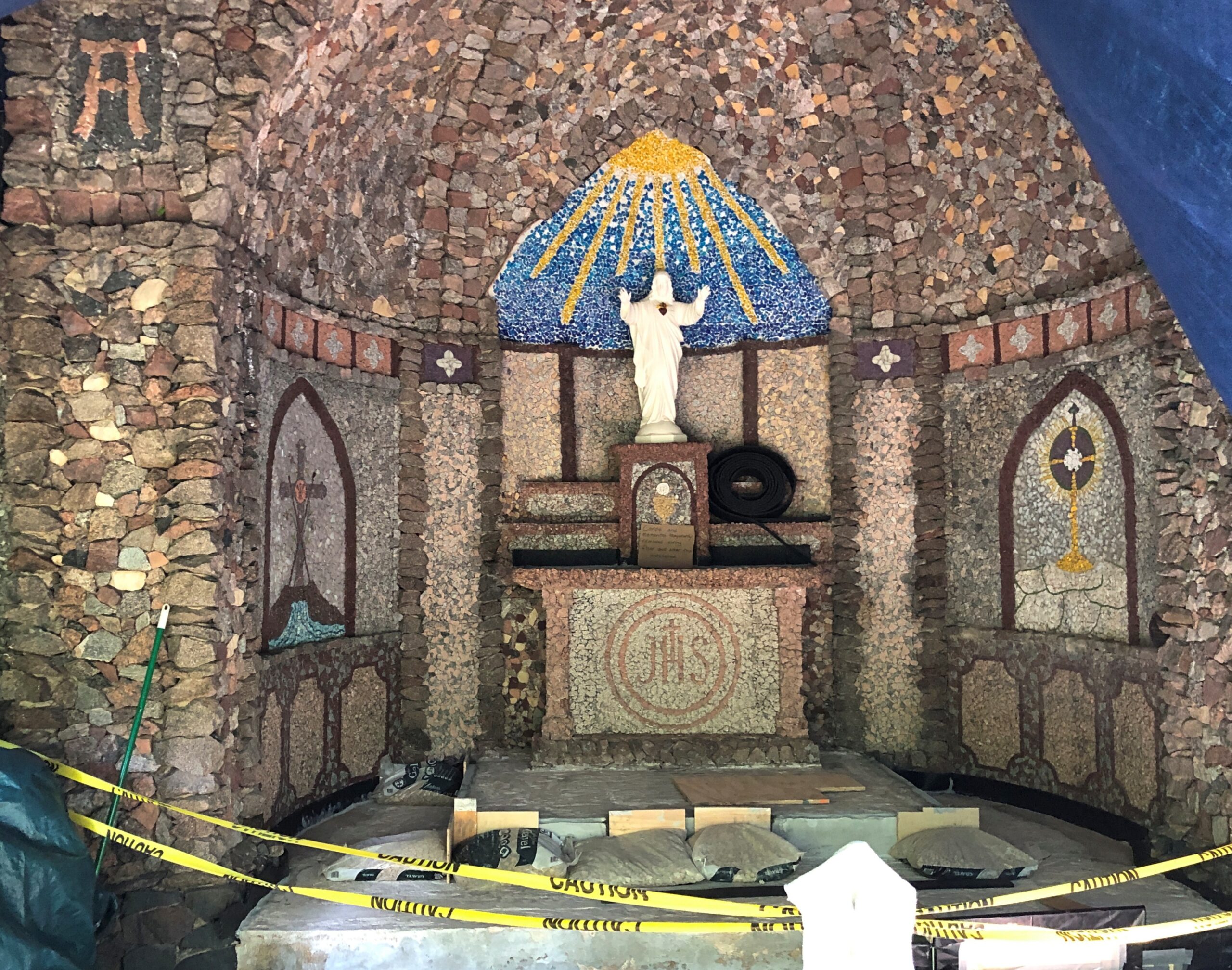
When we arrived, the grotto stood in the forest, and under a tarp.

Restoration is under way. Wanker vandals damaged the place in recent decades, I understand, so a camera now watches.

When I see that kind of setup, I’m reminded I’m reminded of the opening lines of “Soldier of Plenty” by Jackson Browne (1986).

God is great, God is good
He guards your neighborhood
Though it’s generally understood
Not quite the way you would

So while the grotto might be obscure, it isn’t unknown. In fact, it has its own web site. Or rather, the volunteers overseeing the restoration do.

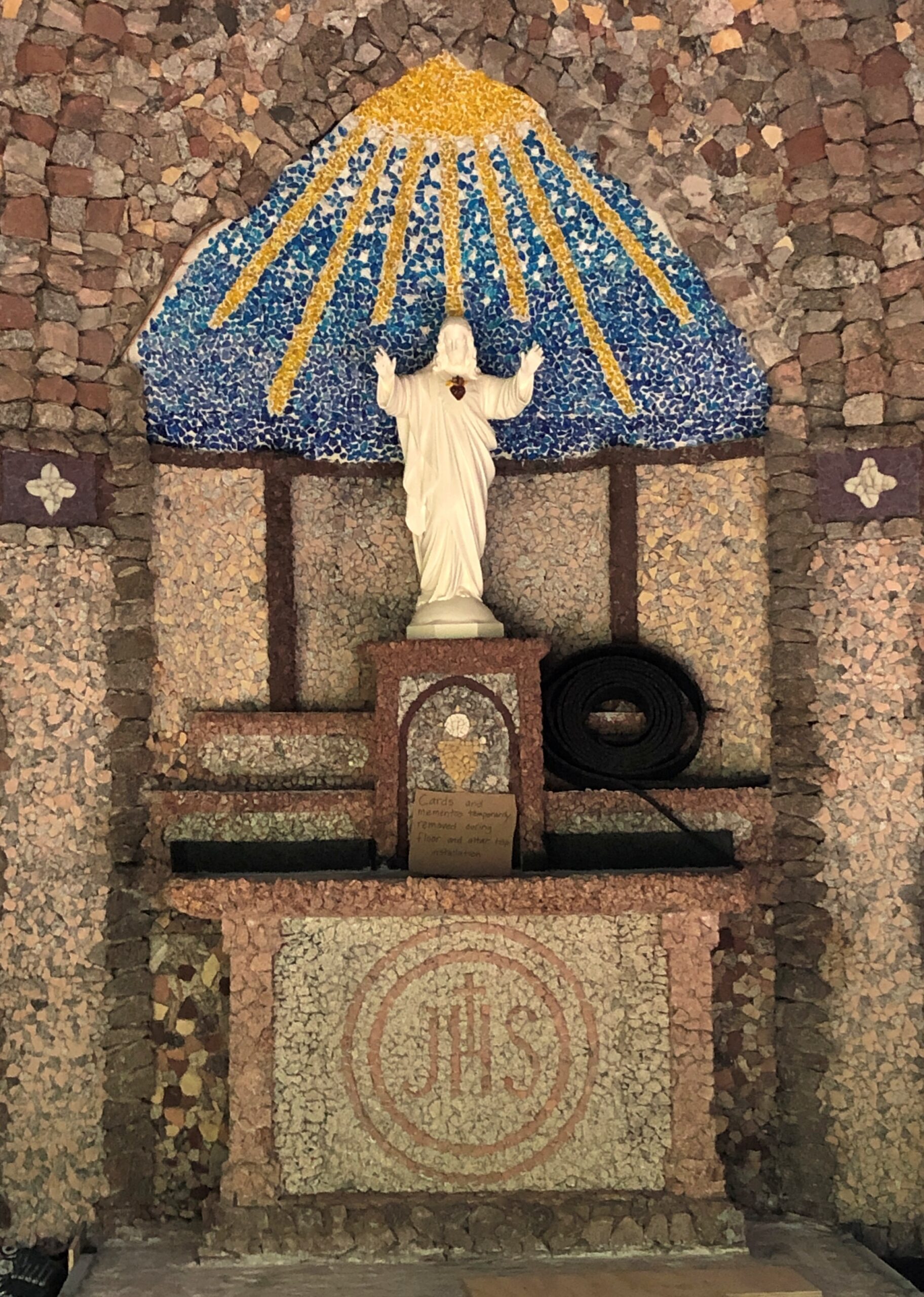
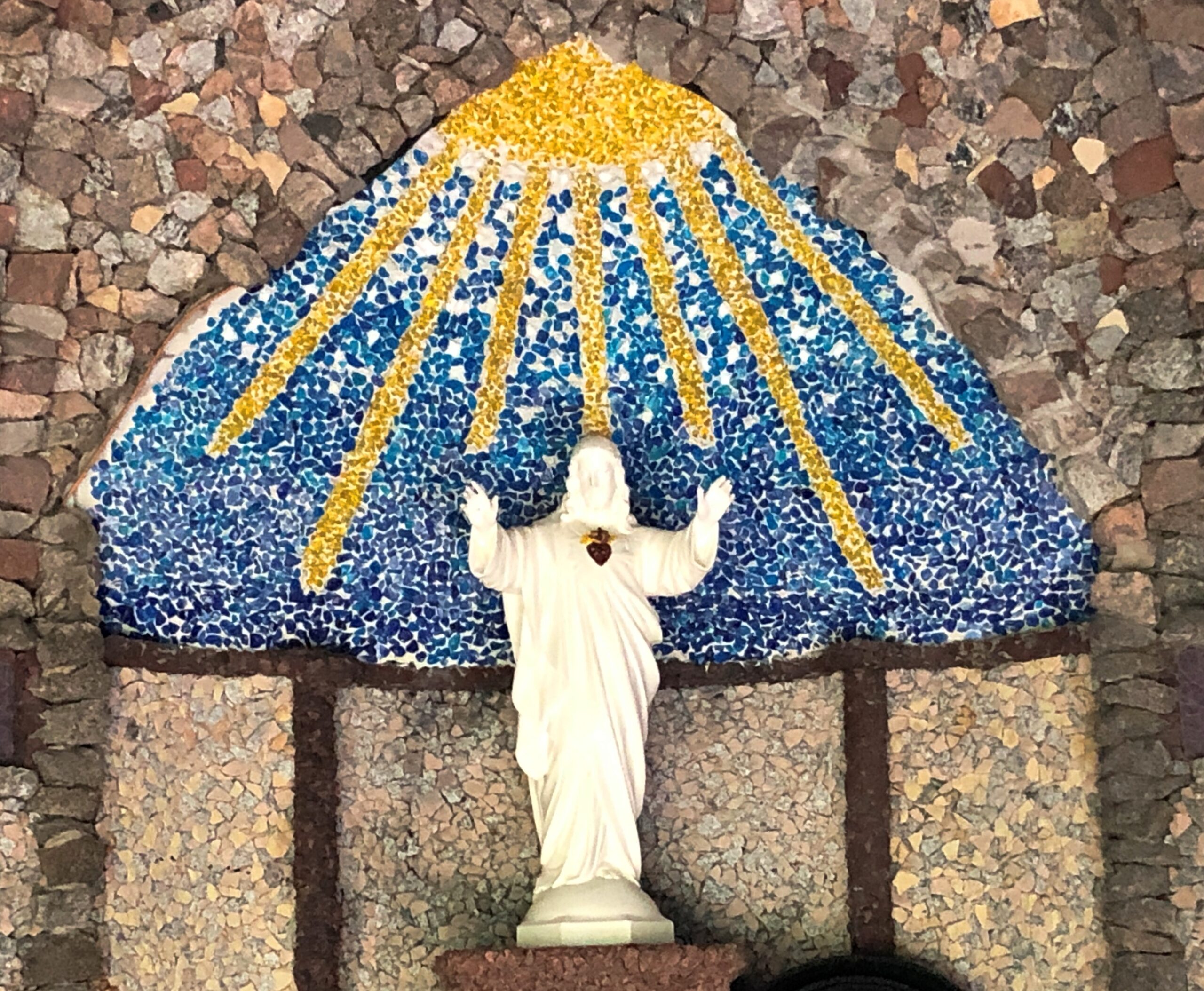
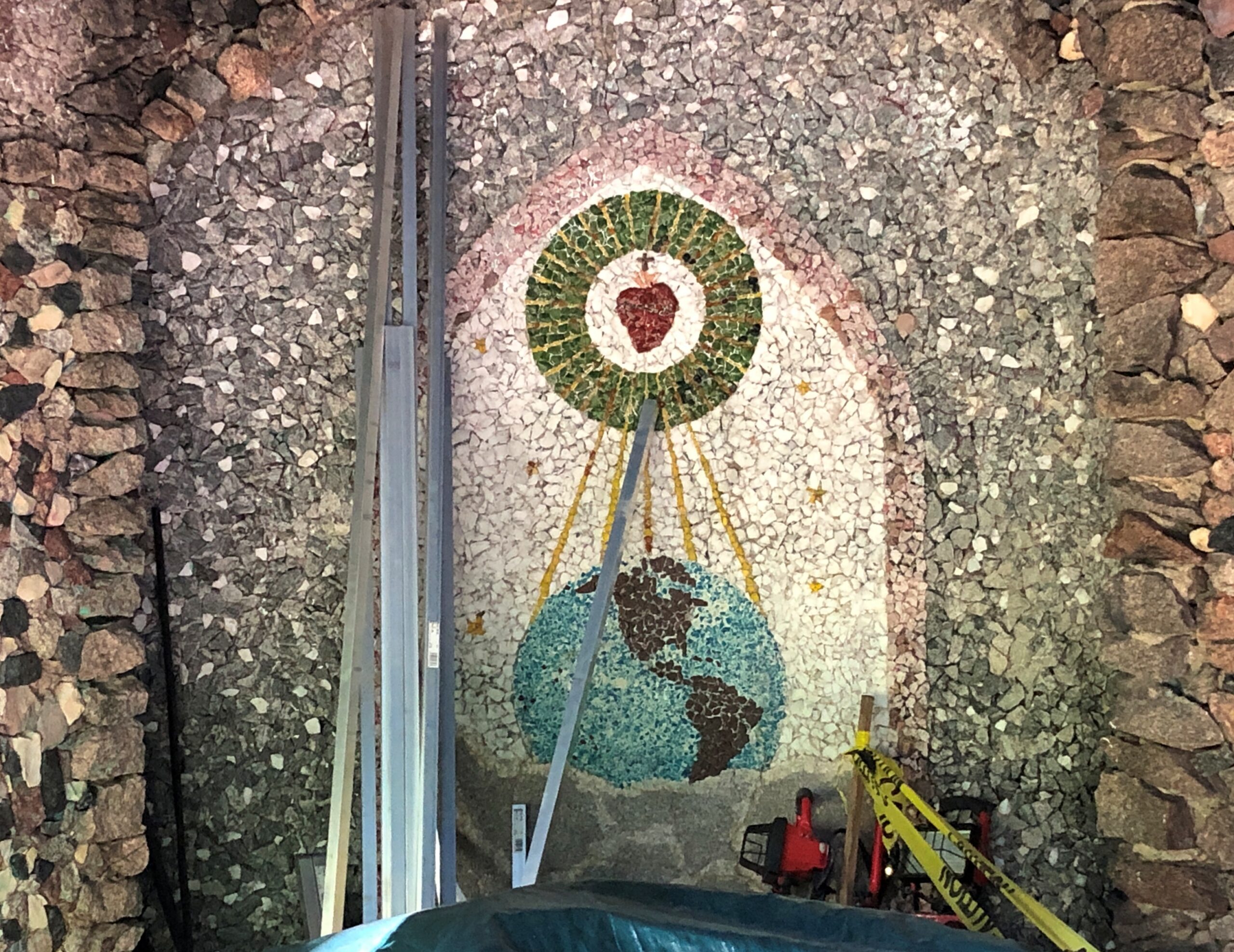
“Built in the 1930s when the property was owned by the Missionaries of the Sacred Heart [MSC], the outdoor chapel is an imposing stone structure,” the site says. “A German priest [Bro. Driesch] built the shrine, using rocks and colored glass from the local river beds to create the small chapel-like structure.”

We got as close as we could without stepping on the stone floor of the grotto, since a sign further warned us that that would hinder the restoration. Close enough that some of the interior mosaics were visible.

The land ultimately proved so valuable that the MSCs sold it in the early ’70s and moved on. But the grotto, with the help of restoration, endures.

The Fabyan Bear Cage

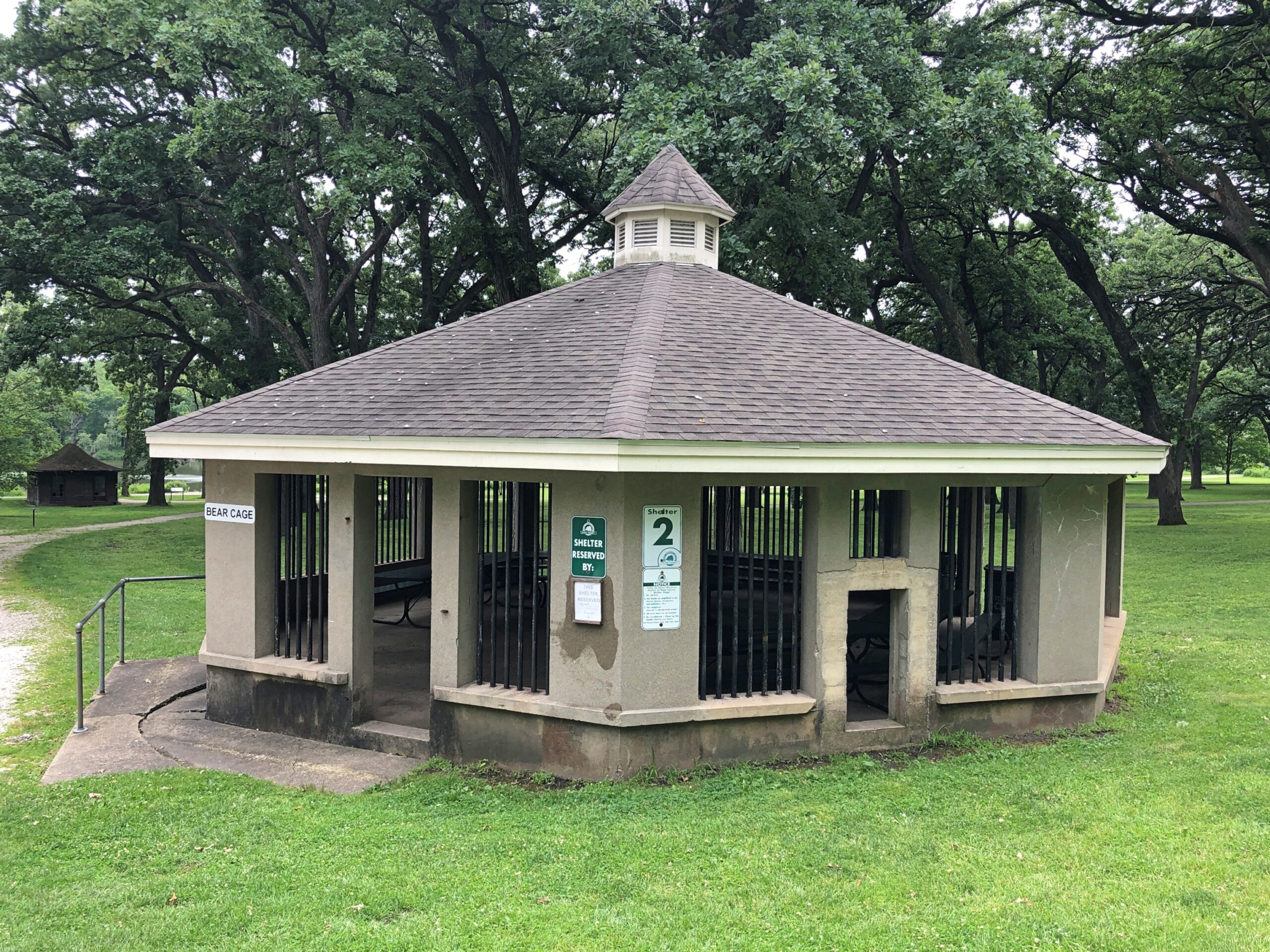
Another relic of the Fabyan’s time along the banks of the Fox River in Geneva, Illinois, is a bear cage.

To be more exact, it’s a former bear cage, now used for picnics at the forest preserve. A nearby sign tells the story:

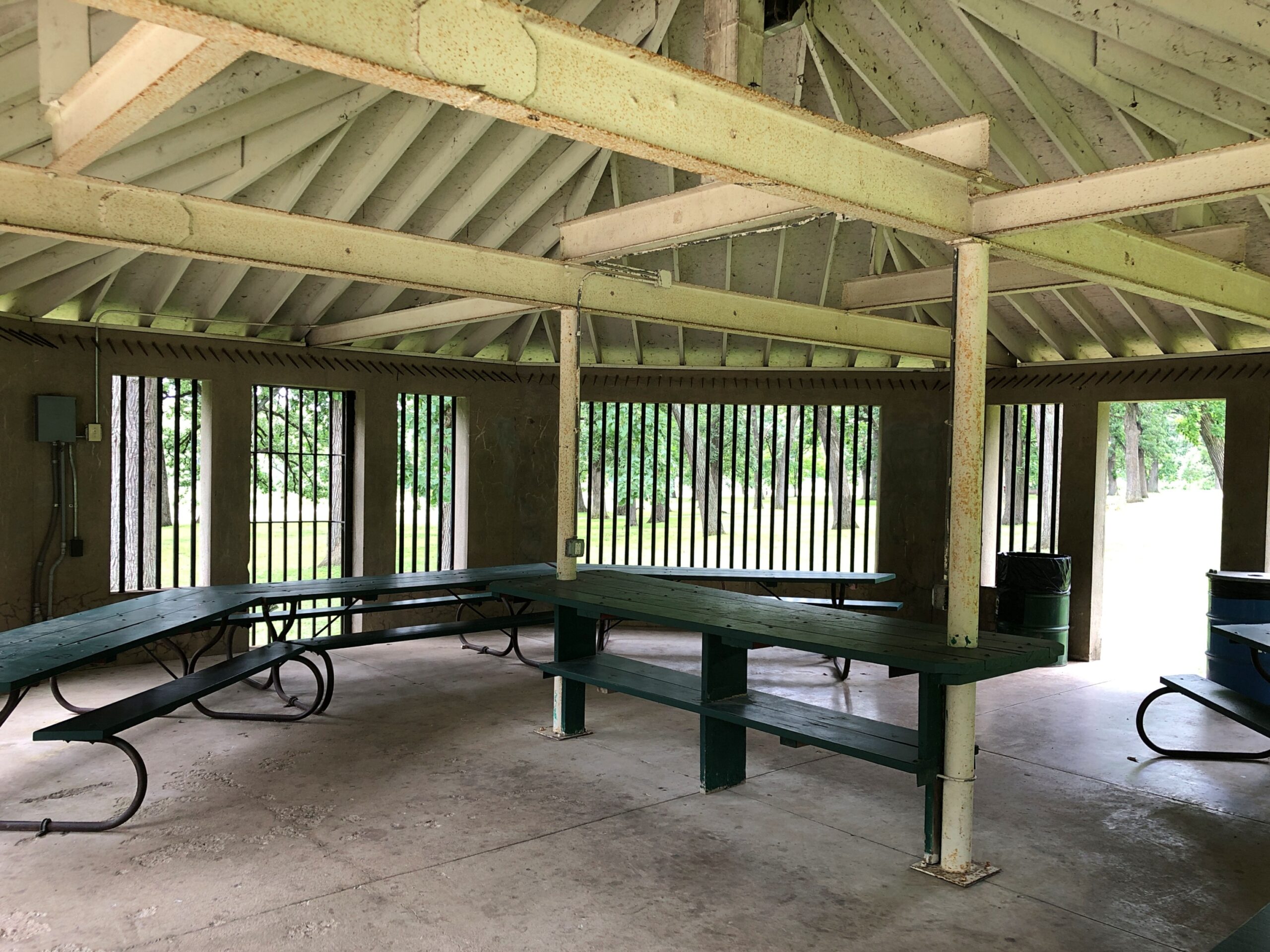
This picnic shelter actually began as a large cage built to house the Fabyan bears. It was built around 1920 to replace the first bear cage, which was a wire-and-wood structure. [Perhaps the bears had a habit of escaping that cage.] The first inhabitant, Mary, was a female American black bear. Later, two American brown bears, Tom and Jerry, lived here. During the Fabyan period, the cage did not have a roof. Spikes may still be seen along the top of the inside walls. These were meant to keep the bears from climbing out of their cage. The bears also had a large tree branch placed in the center of their cage so they could climb on top and look out over the estate. What a surprising sight this must have been to passers by.

At one time or another, the Fabyans also kept alligators and a monkey — and the latter lived in the house. The docent was happy to point out a room where he spent much of his time. Sure, things were different then. But I’m hard pressed to think that having a monkey in your house would have ever been a good idea.

Fabyan Japanese Garden

For someone who has never written for television, and surely never will, I’ve got a few ideas. Just today: the wacky comedy adventures of three Florida Men who manage to kill themselves in a humiliating way – getting drunk and naked and trying to drive a cherry picker on the highway, say, with them in the basket.

They return as ghosts, condemned to haunt Florida retirement communities, though sometimes they find themselves in Miami Beach among the crabby ghosts of former retirees who came to live there in the ’60s. A twist: a fourth Florida Man, their friend who was driving the cherry picker, survived the accident and now he’s the only one who can see them. Hilarity does what it does, ensues.

In the 1890s, Japan was still newly open, and apparently exotic to the likes of wealthy Illinoisans George and Nelle Fabyan. The story is that they came away from the Japanese Pavilion at the 1893 Columbian Exposition deeply impressed by Japanese culture. It was a common reaction, I’ll bet, and most people might have bought a book or two, or a bit of art, and left it at that.

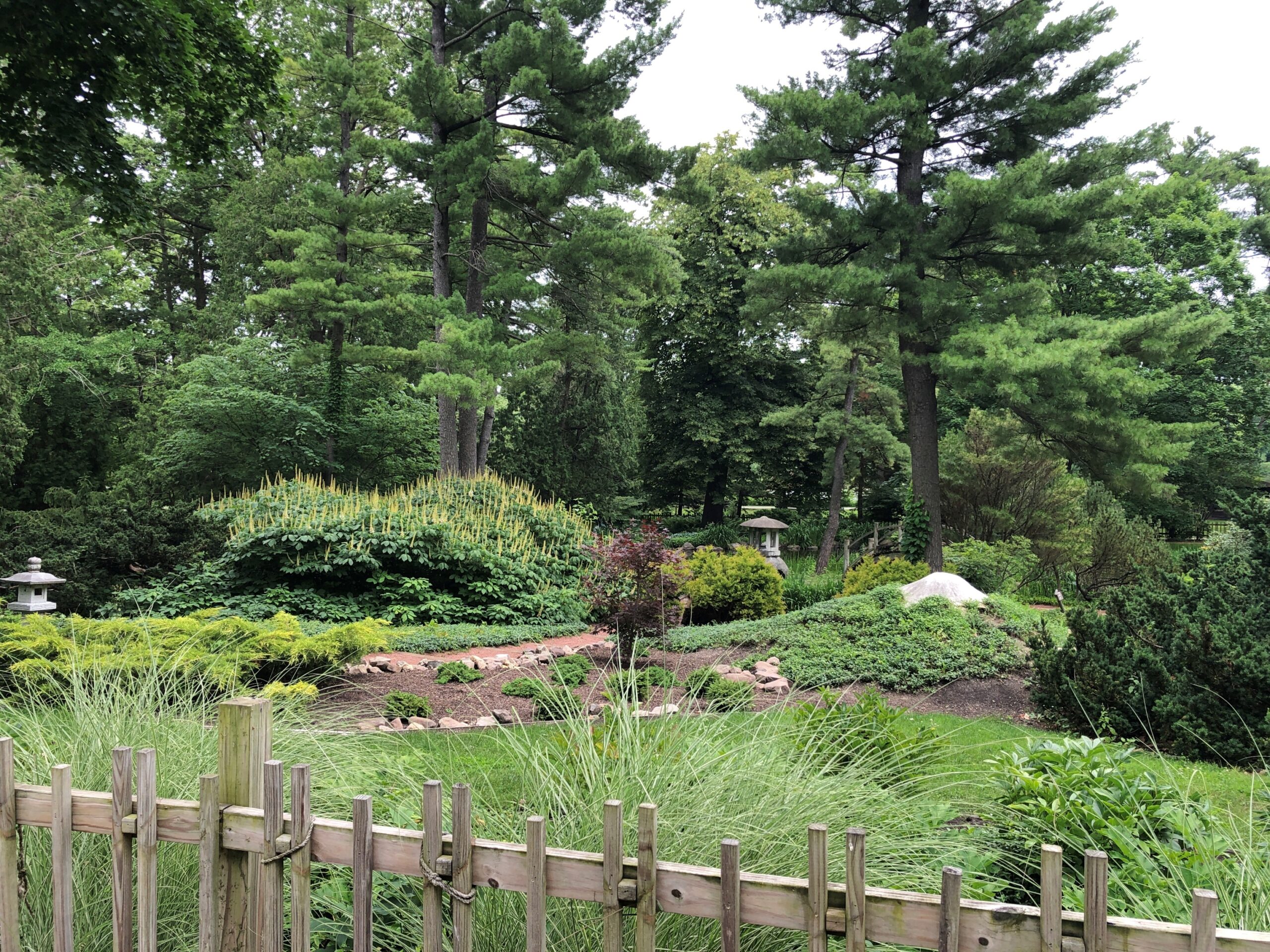
Not George Fabyan, the Great Collector of the Fox River Valley (gardens, windmills, mummies and more!). He had a Japanese garden built downslope from his home near the Fox. During the summer, visitors can go there even now, though ownership long ago passed to the Kane County Forest Preserve District.

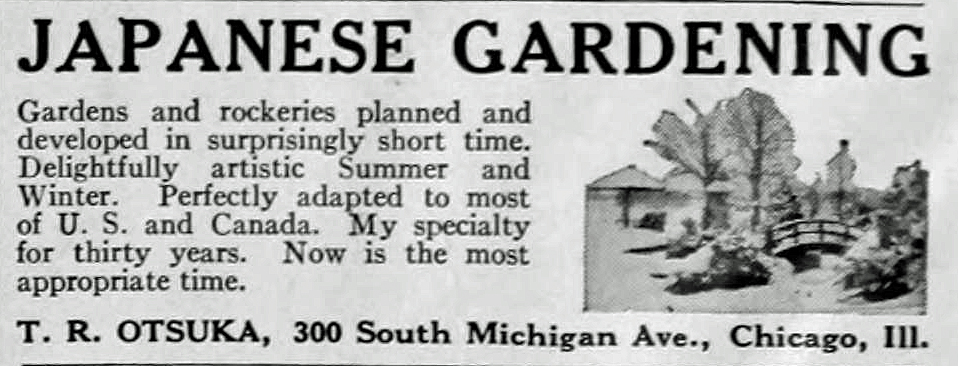
He tasked Japanese garden designer Taro Otsuka to undertake the project, which was completed not long before the Great War. Otsuka, an early 20th-century immigrant, found his niche on these shores. Namely, in designing a wave of Japanese gardens in the Midwest.

Through cycles of decline and restoration, the Fabyan garden has abided. Free admission, donations accepted.

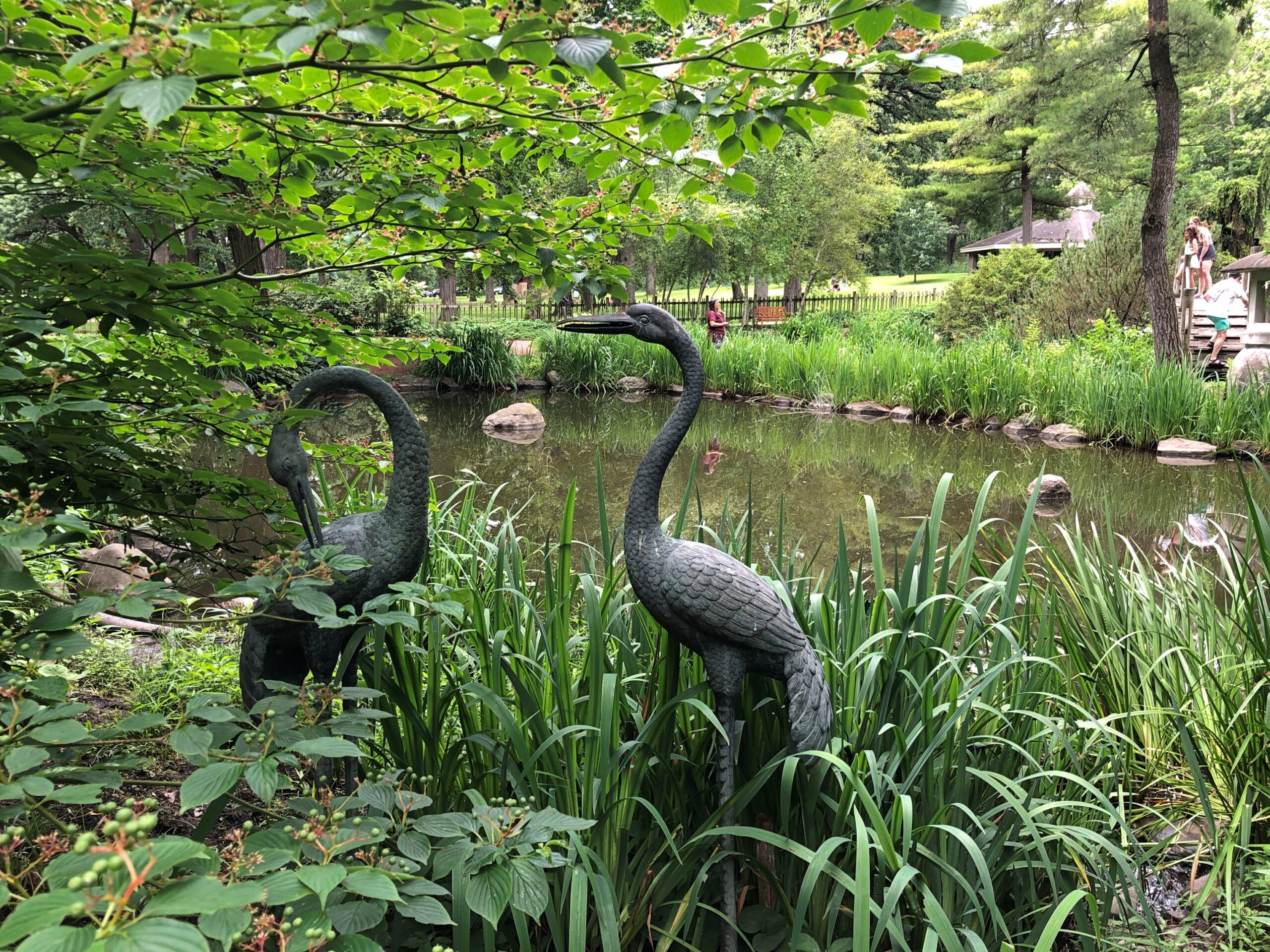
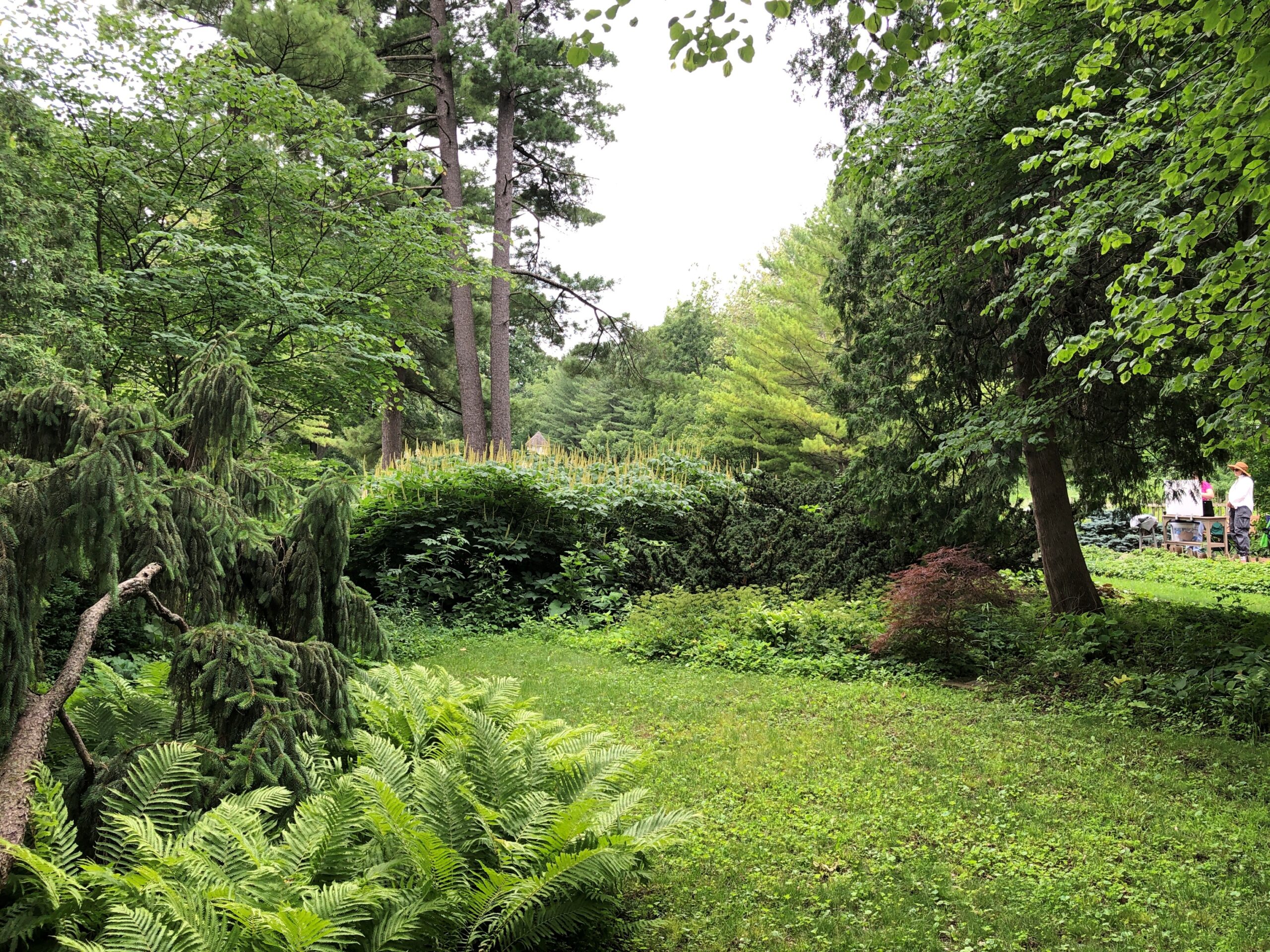
The garden designer’s raw material is the local flora, resulting in a garden on traditional lines that nevertheless has a look apart of the models of the old country, taking aspects of the new country. Don’t ask me the details, that’s just the sense one gets.

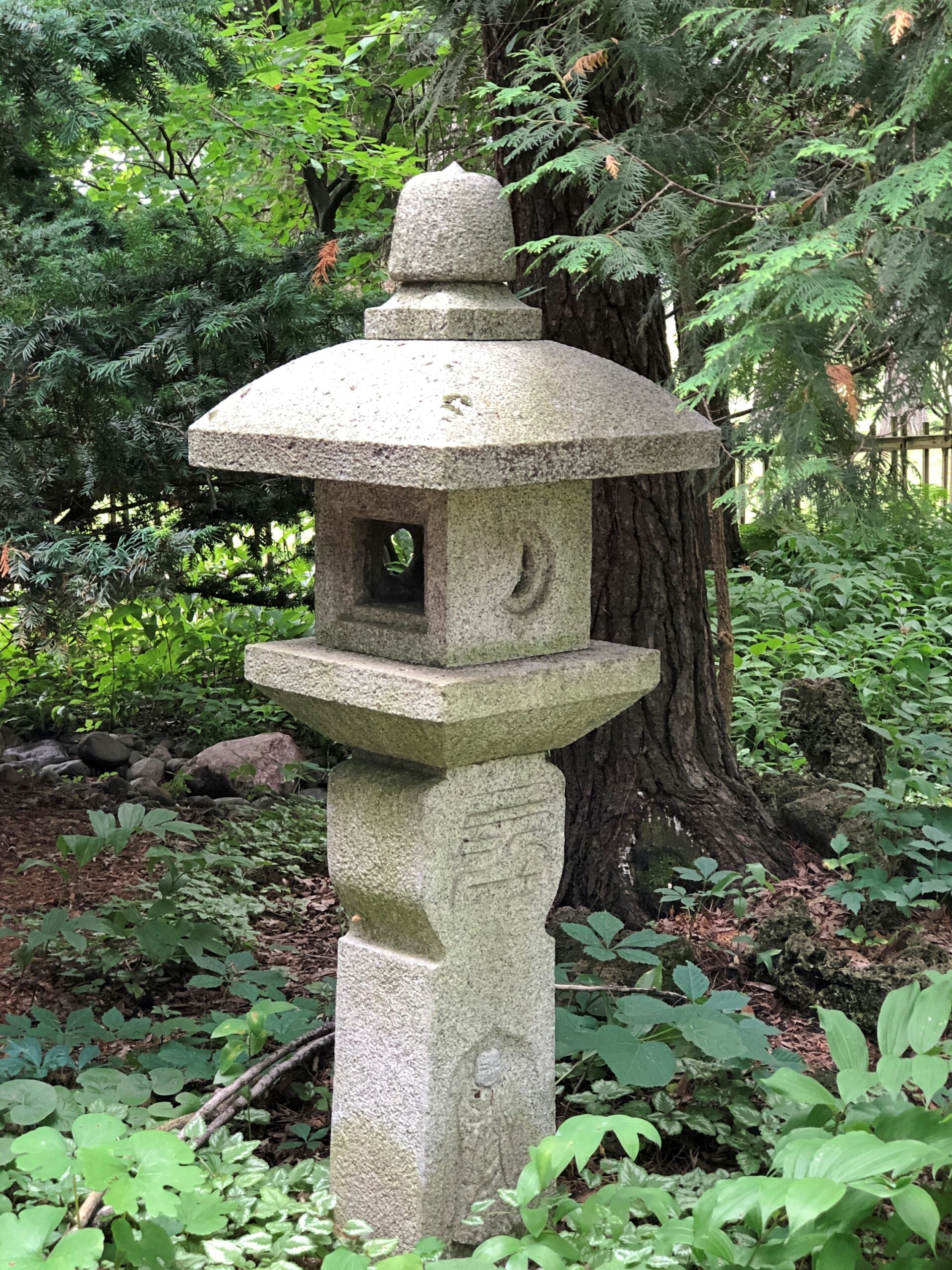
Lanterns.

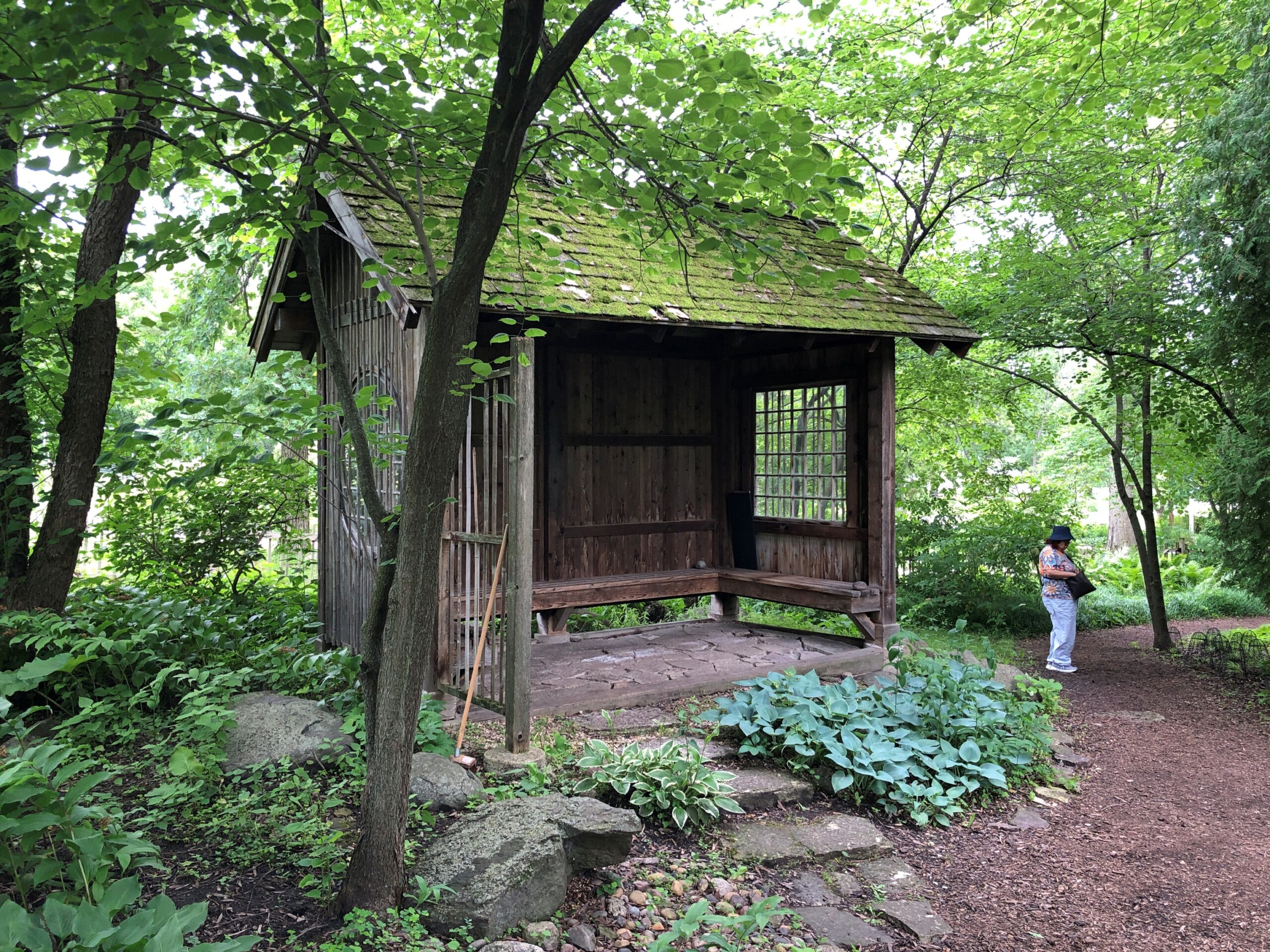
Structures.

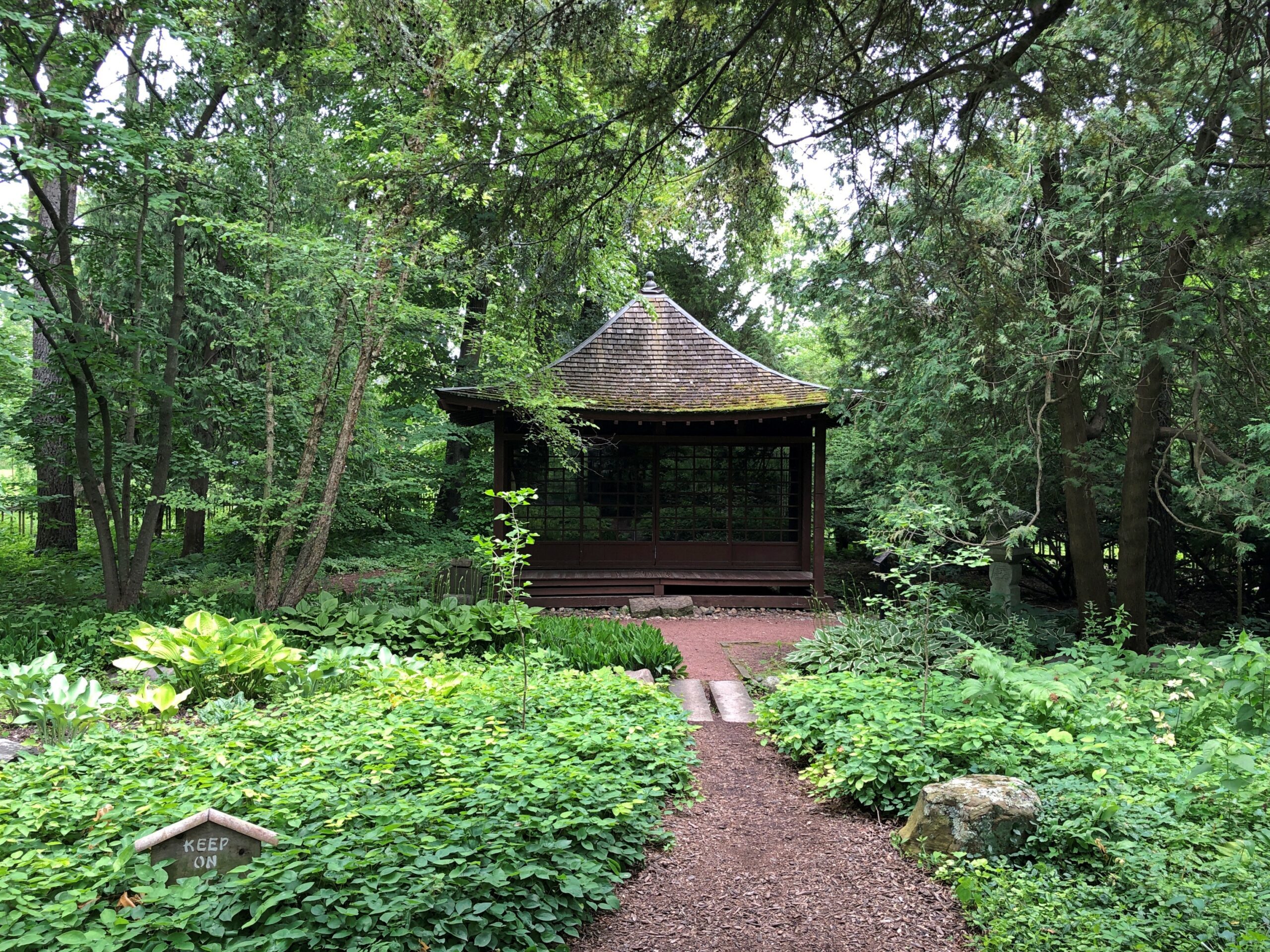
Teahouse of the Fox River, you could call that one.

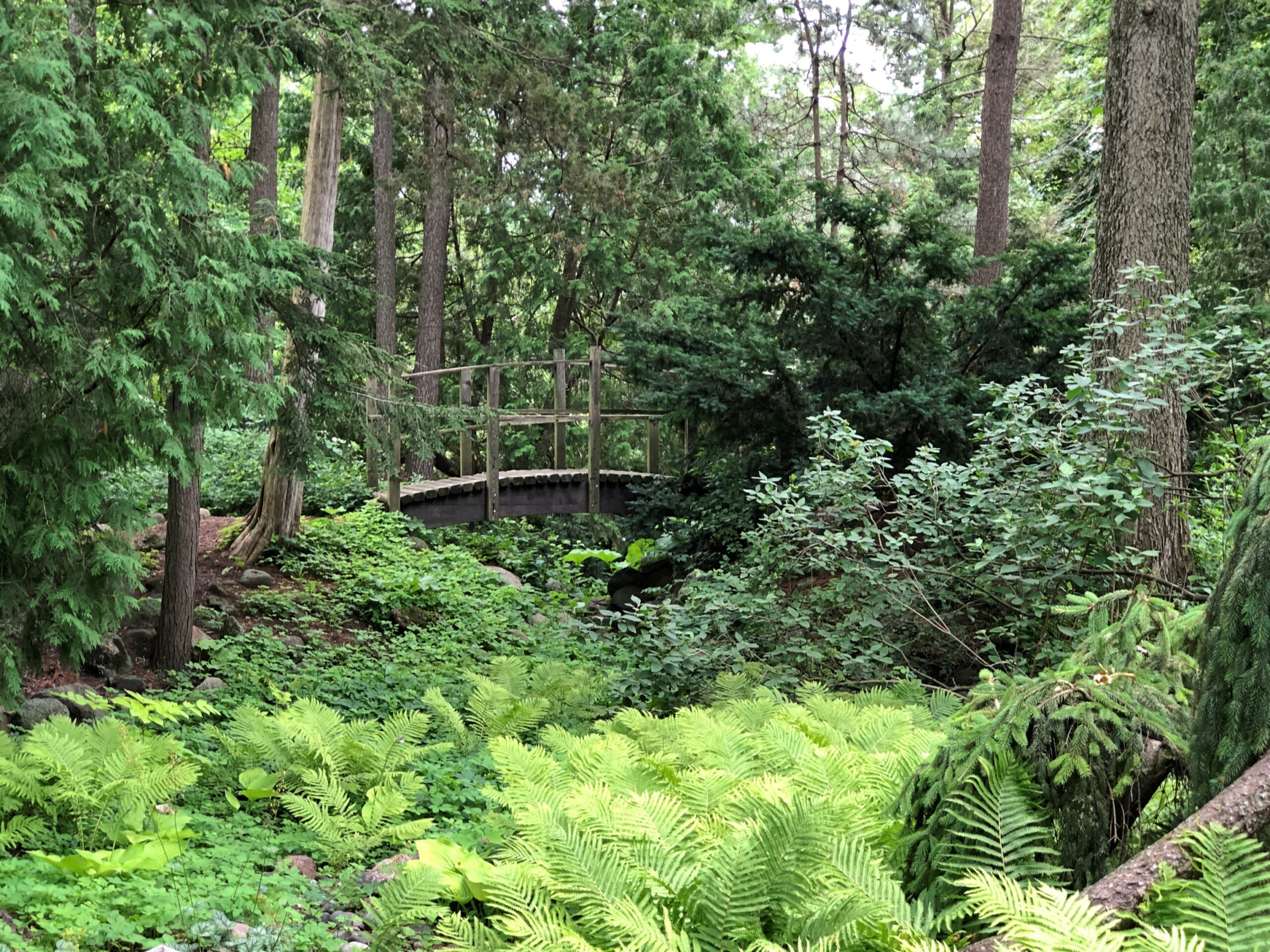
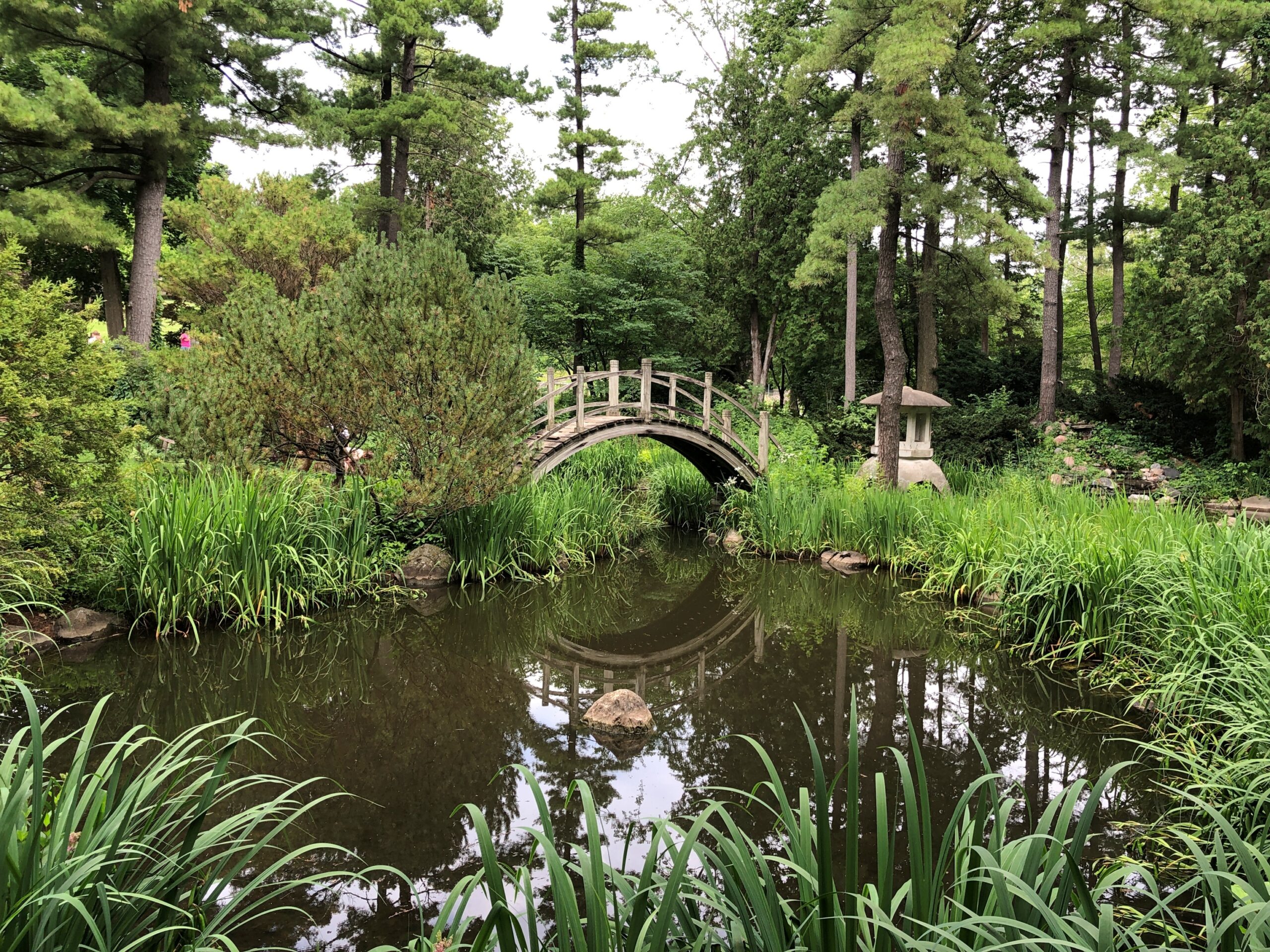
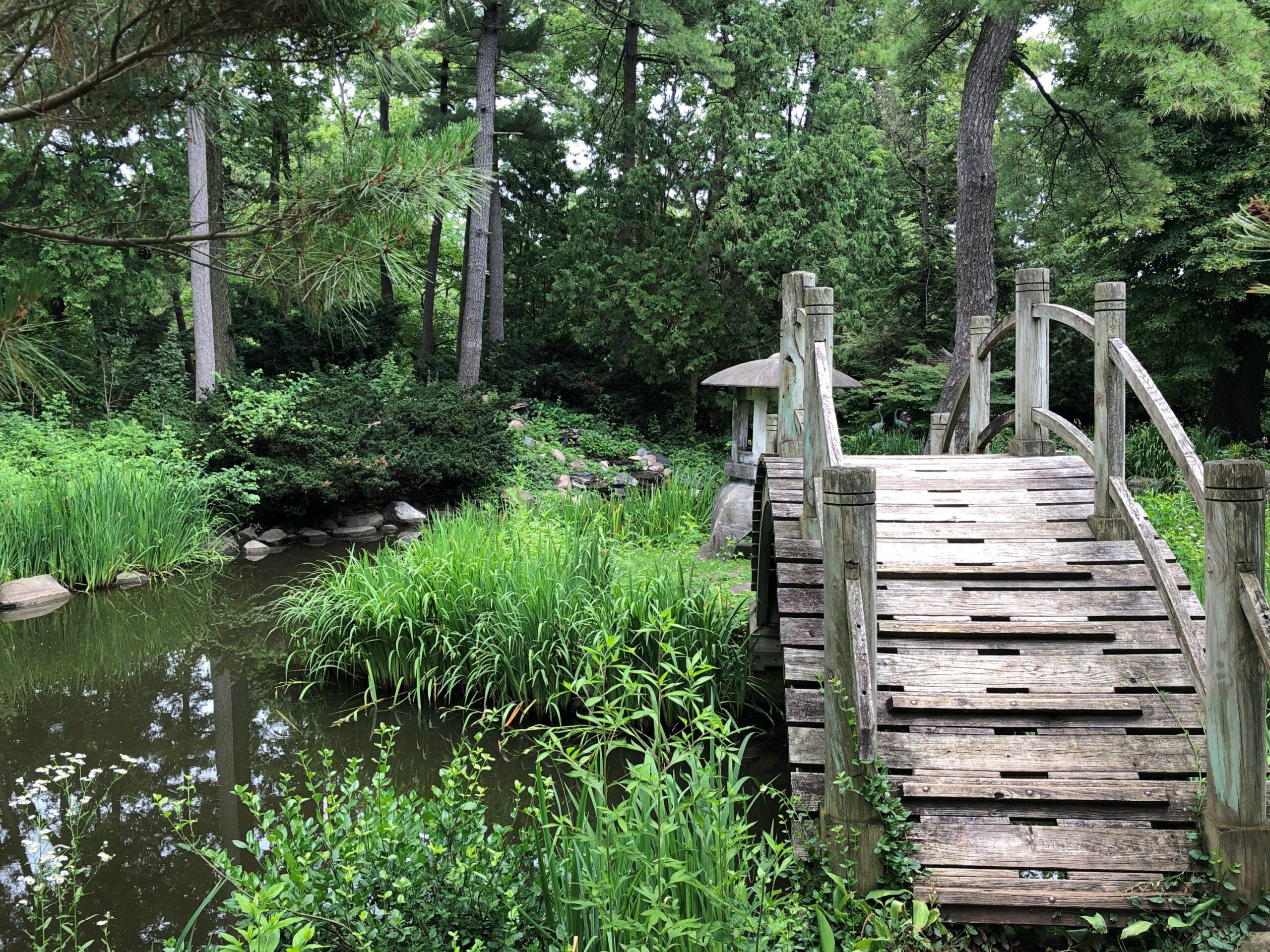
What’s a Japanese garden without an impressive bridge over an elegant water feature?

The assortment of possible Japanese garden bridges is extensive, and of course they’re found other places besides gardens, such as the magnificent bridge at Sumiyoshi Shrine in Osaka.

Fabyan on the Fox

Looks like we’ve hit the mid-July stride of chamber-of-commerce weather, with low 80s F for highs, high 60s for lows, for some days ahead. On the other hand, standard forecasts don’t include smoke, which could well make a comeback in the coming days.

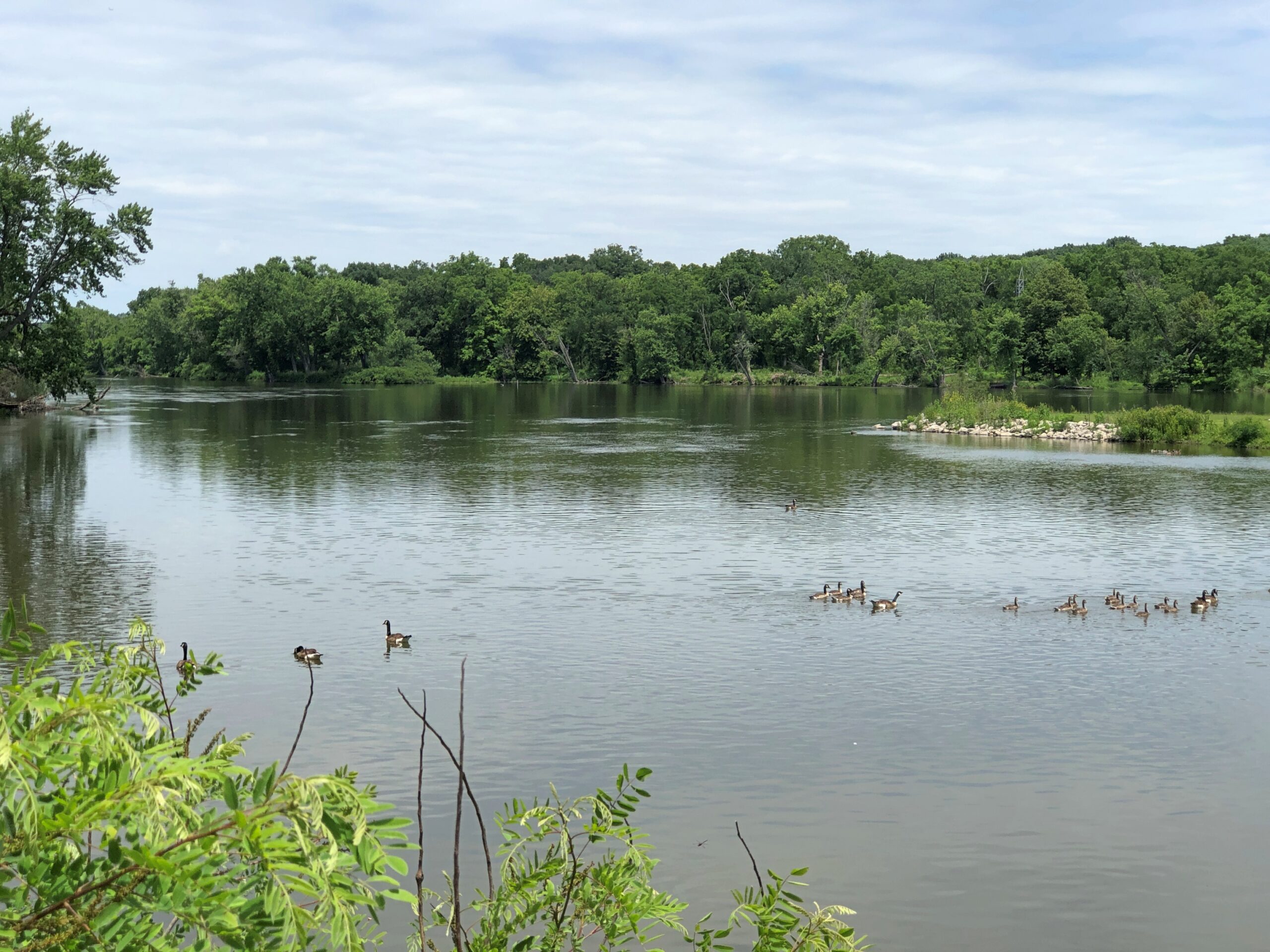
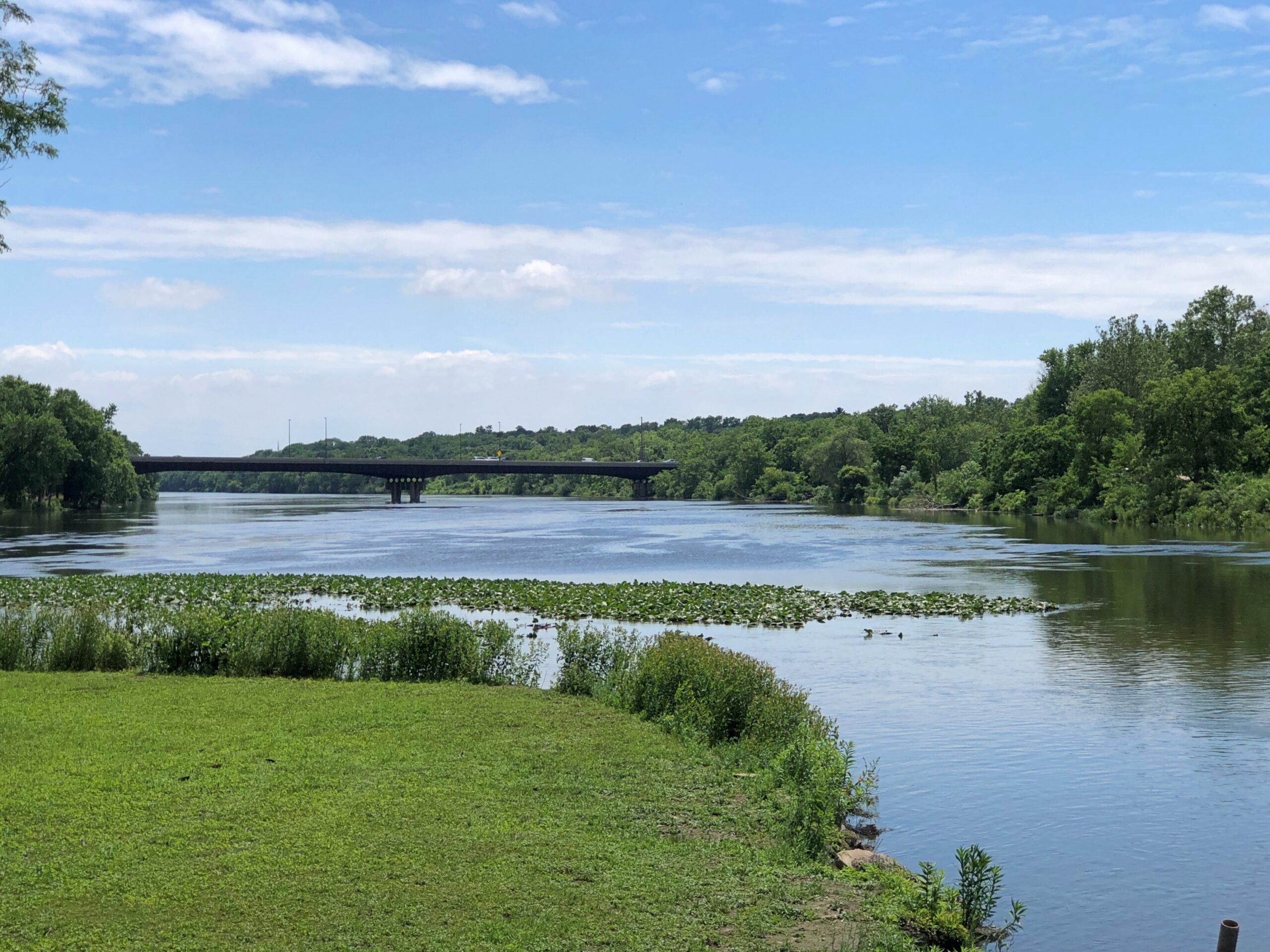
It was a rainy May and June, bringing the flow of the Fox River fairly high by the time last month that we took a short walk nearby, largely under the flush of greenery.

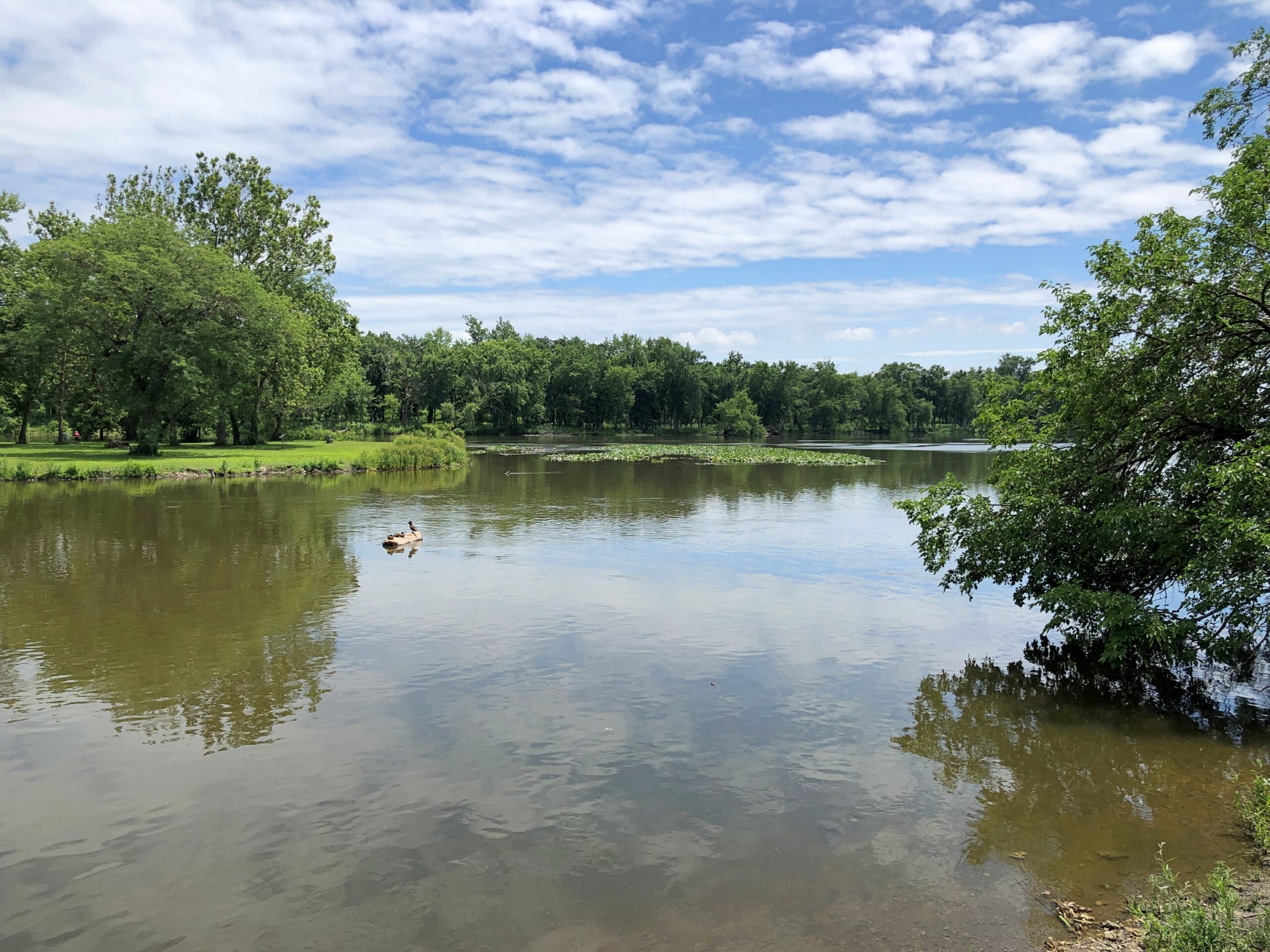
As mentioned, we visited the Fabyan Forest Preserve in Geneva, Illinois one Saturday not long ago. The holdings — formerly part of the estate of George Fabyan (d. 1936) — include land on both sides of the river, and a large island accessible on both sides by footbridges. The view from the island.

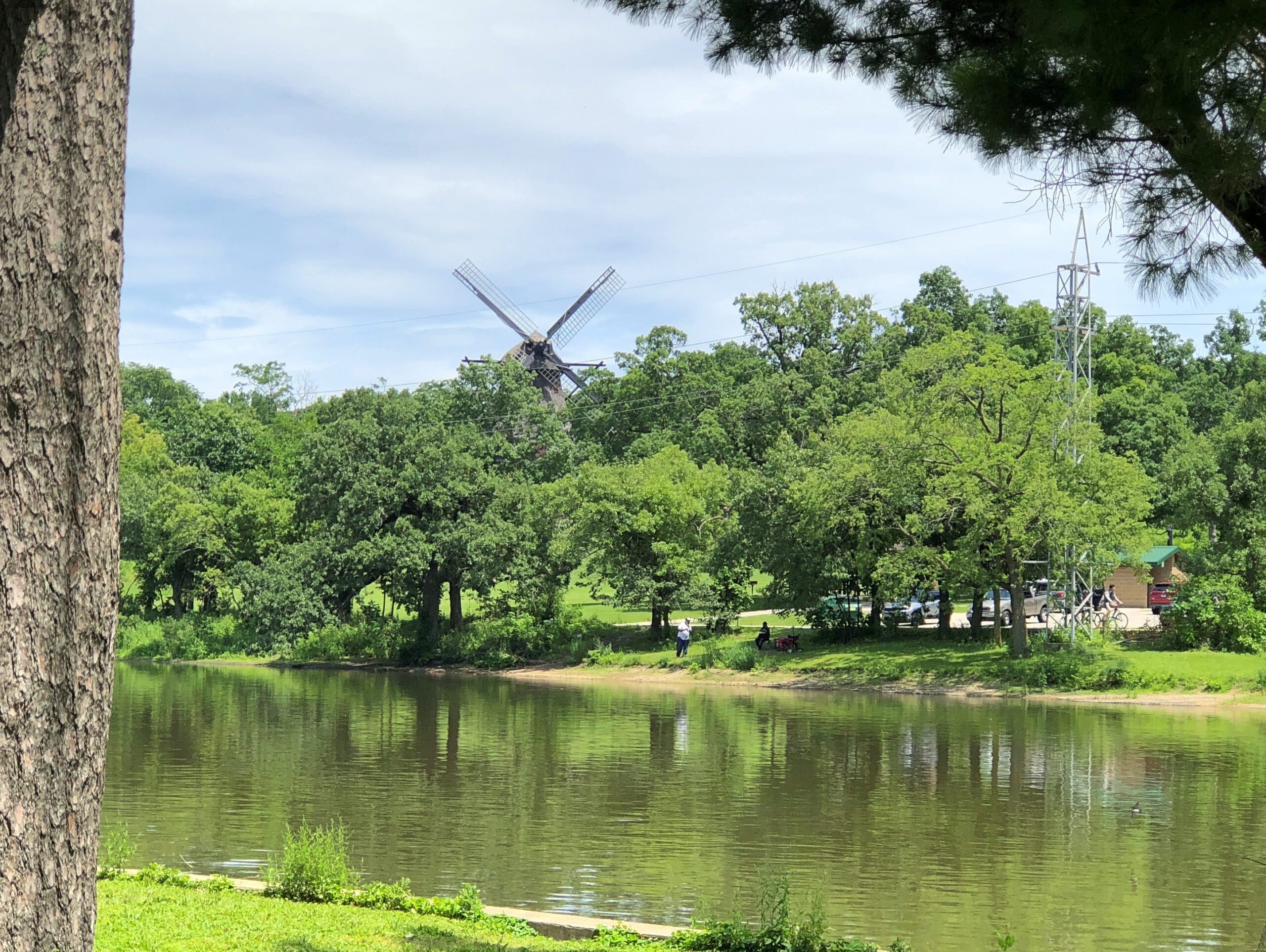
The Fabyan Windmill is visible from the island.

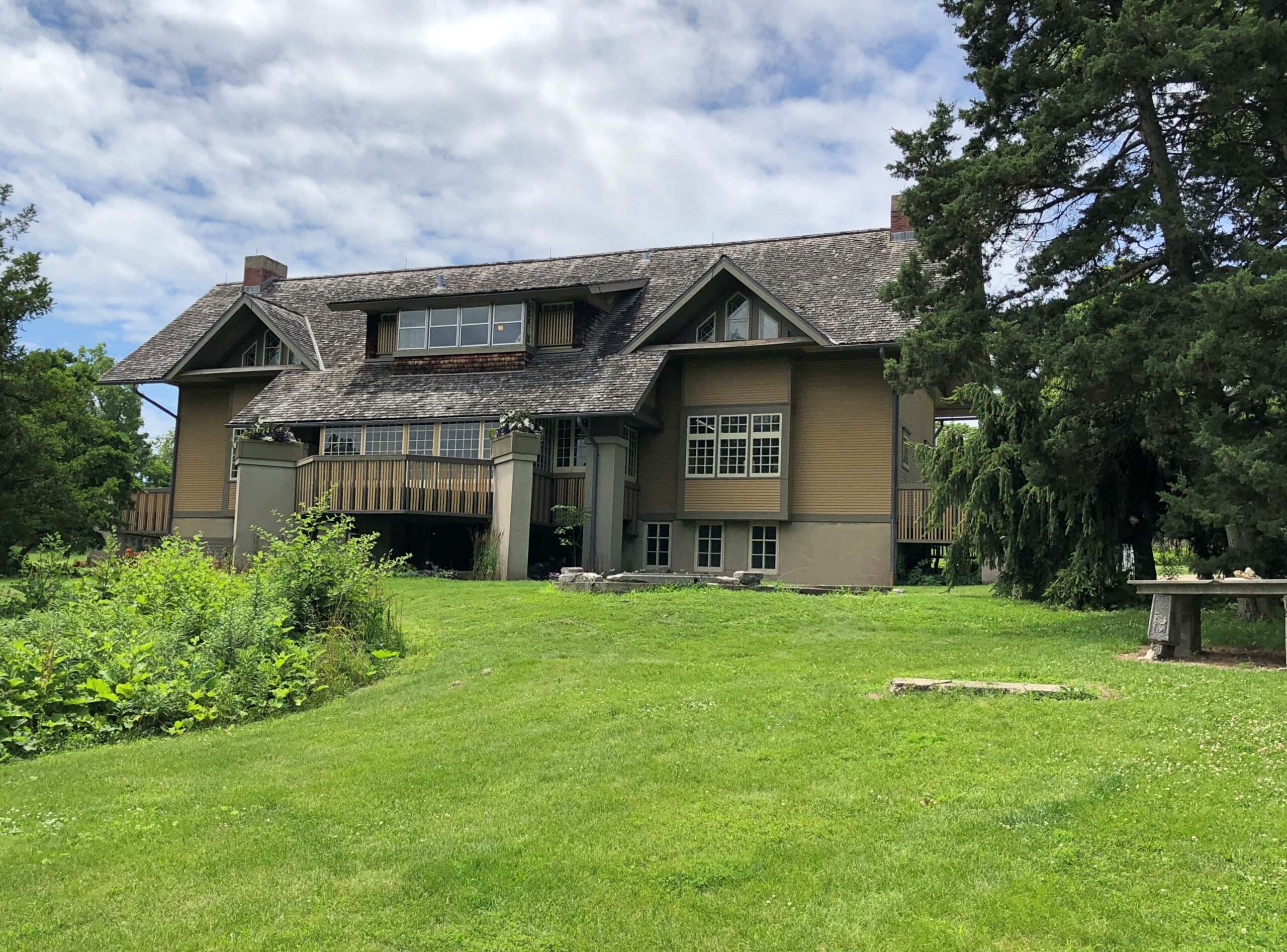
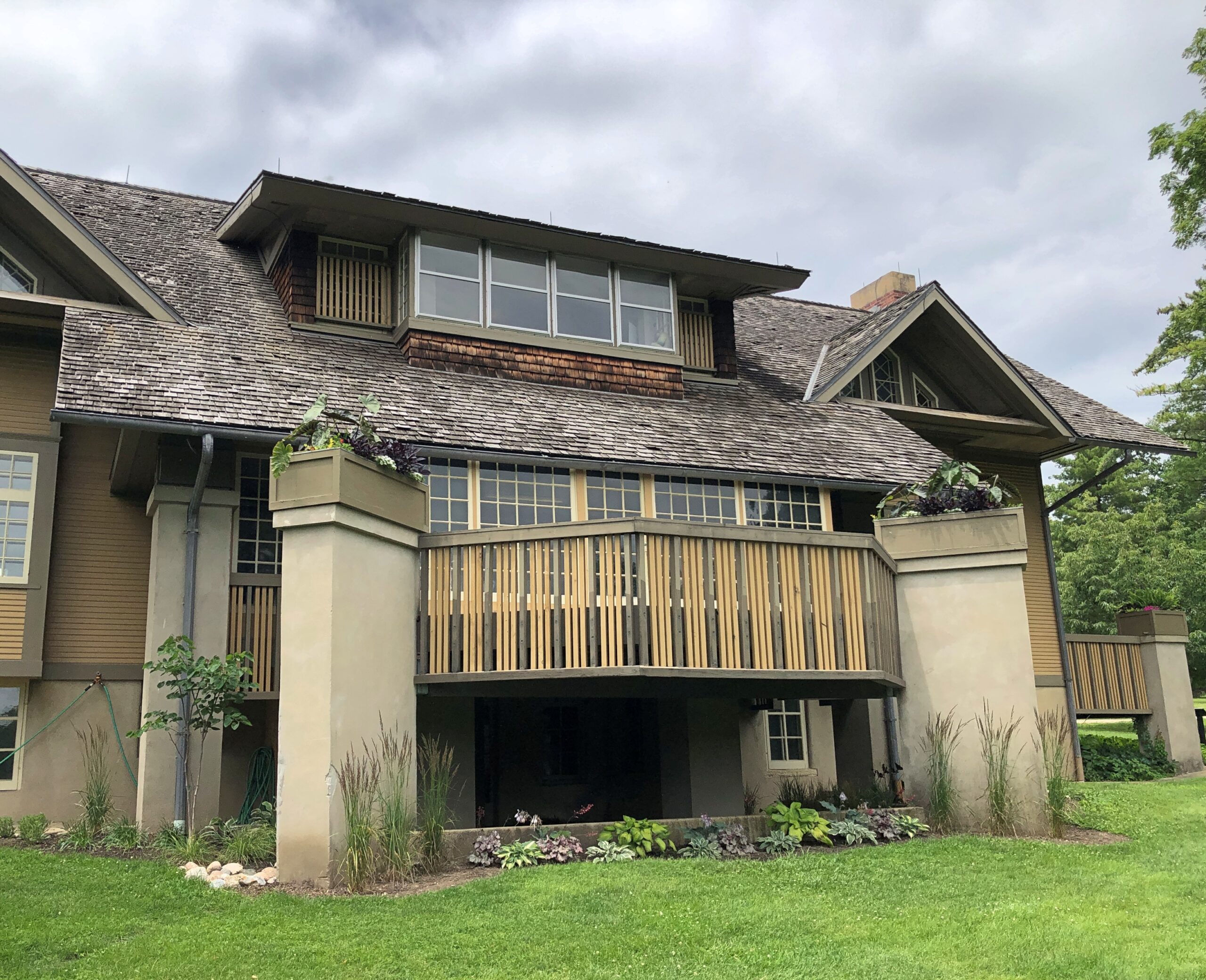
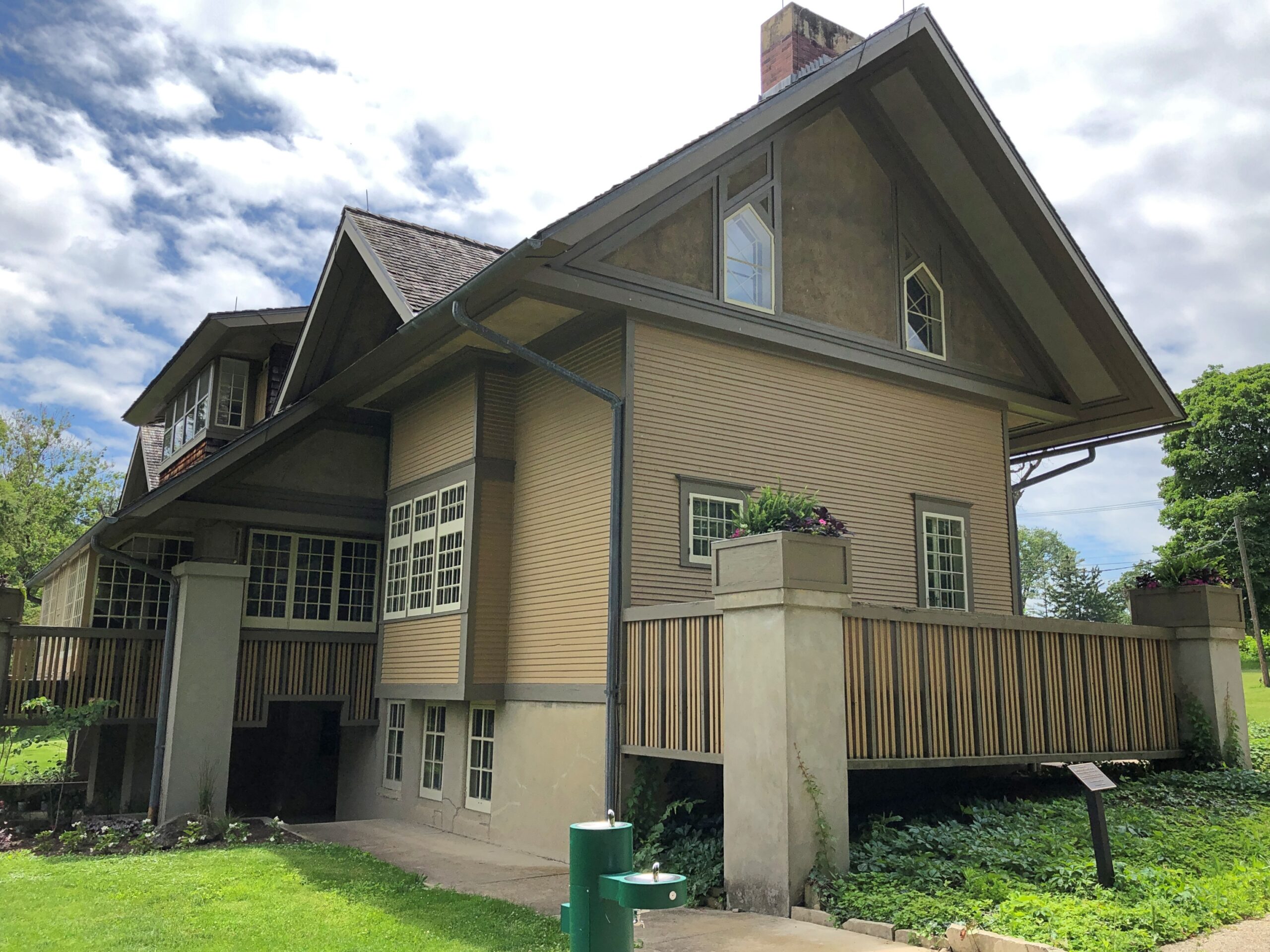
We didn’t go there this time, but rather lingered on the west bank, around the Fabyan Villa, which we toured, taking in the bogus mummy. FLW did some renovation on the property, a fact well emphasized at the museum.

One view from the villa toward the Fox. If you’re going to build near a river — or any flowing body of water — give it some height.

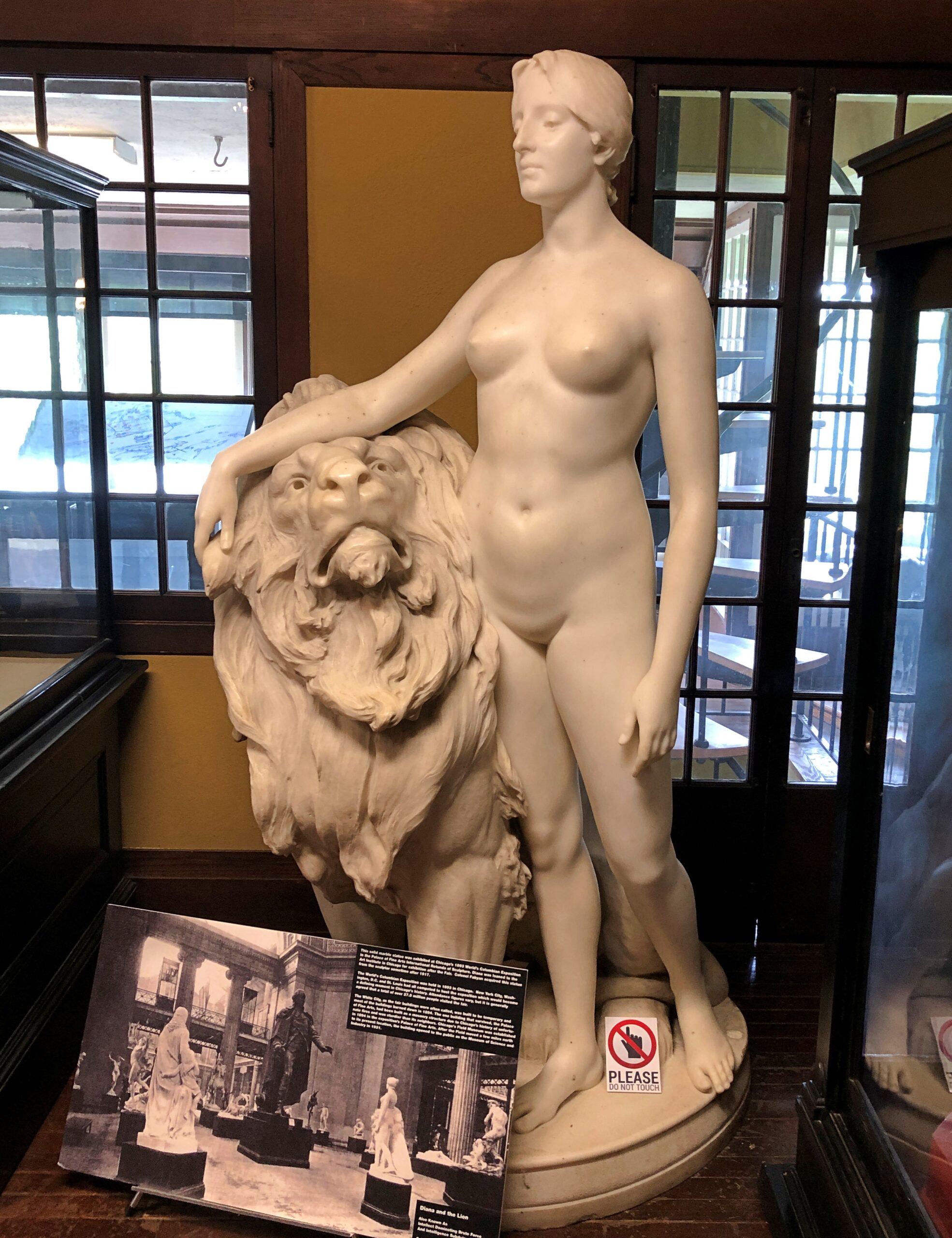
Fabyan collected a lot more, including European artwork, back when that was doable.

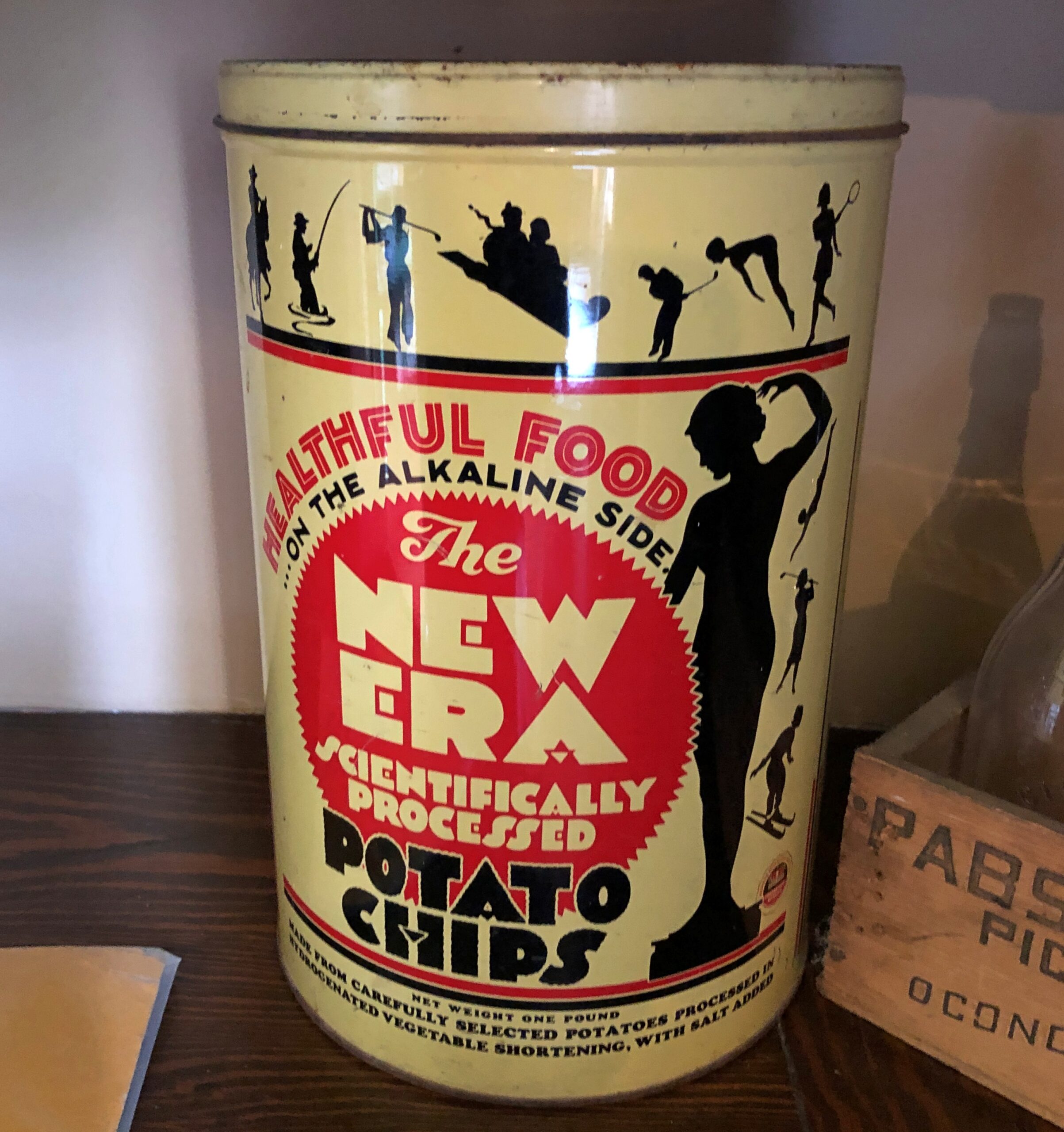
Once upon a time (probably), the Fabyan kitchen served New Era Potato Chips. Glad to see it. The memory of the same such can at the Cuneo Museum is a minor delight for me.

Back when food processors crowed about have food science on their side. These days, that might get them MAHA’d into consumer skepticism.

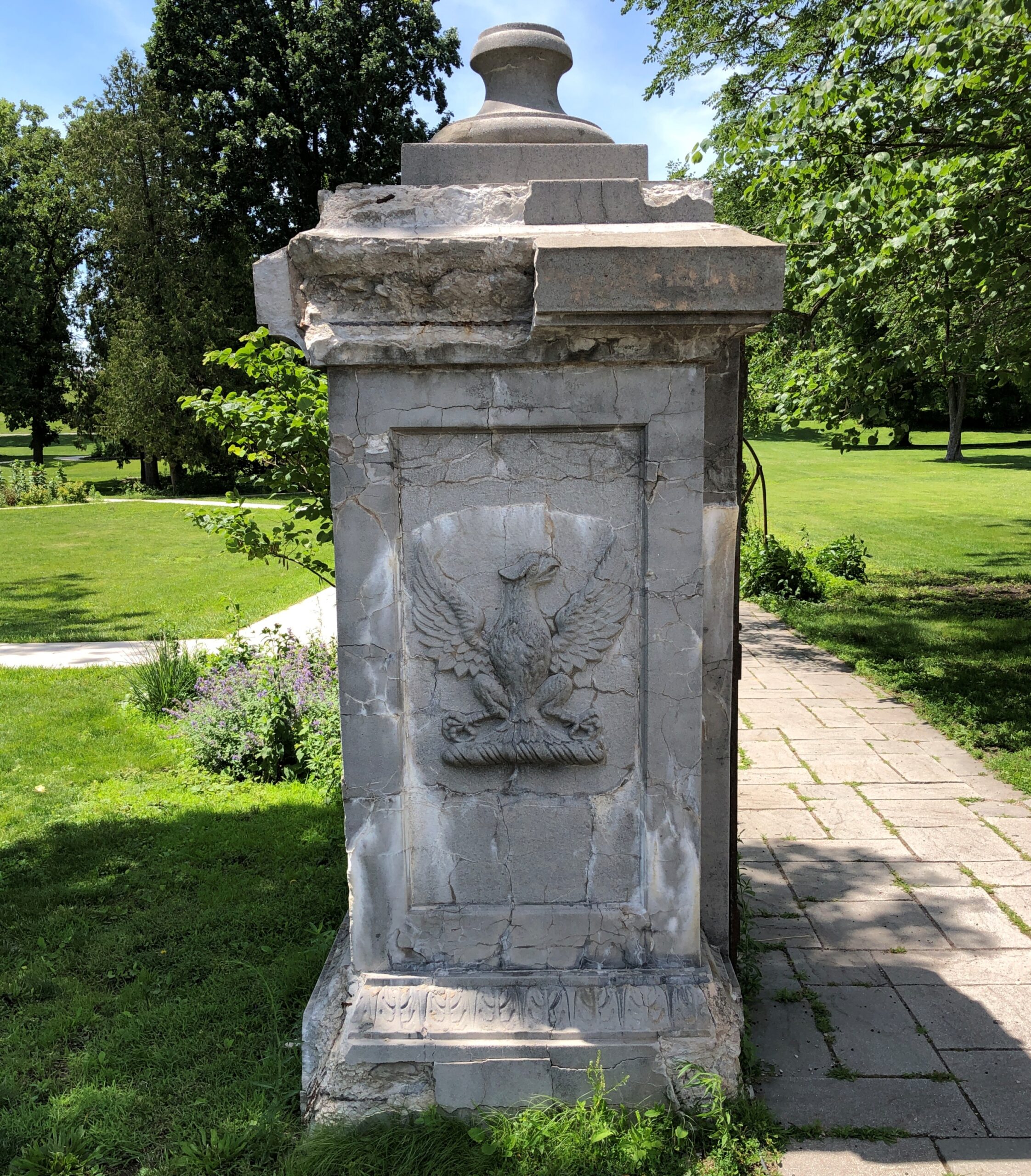
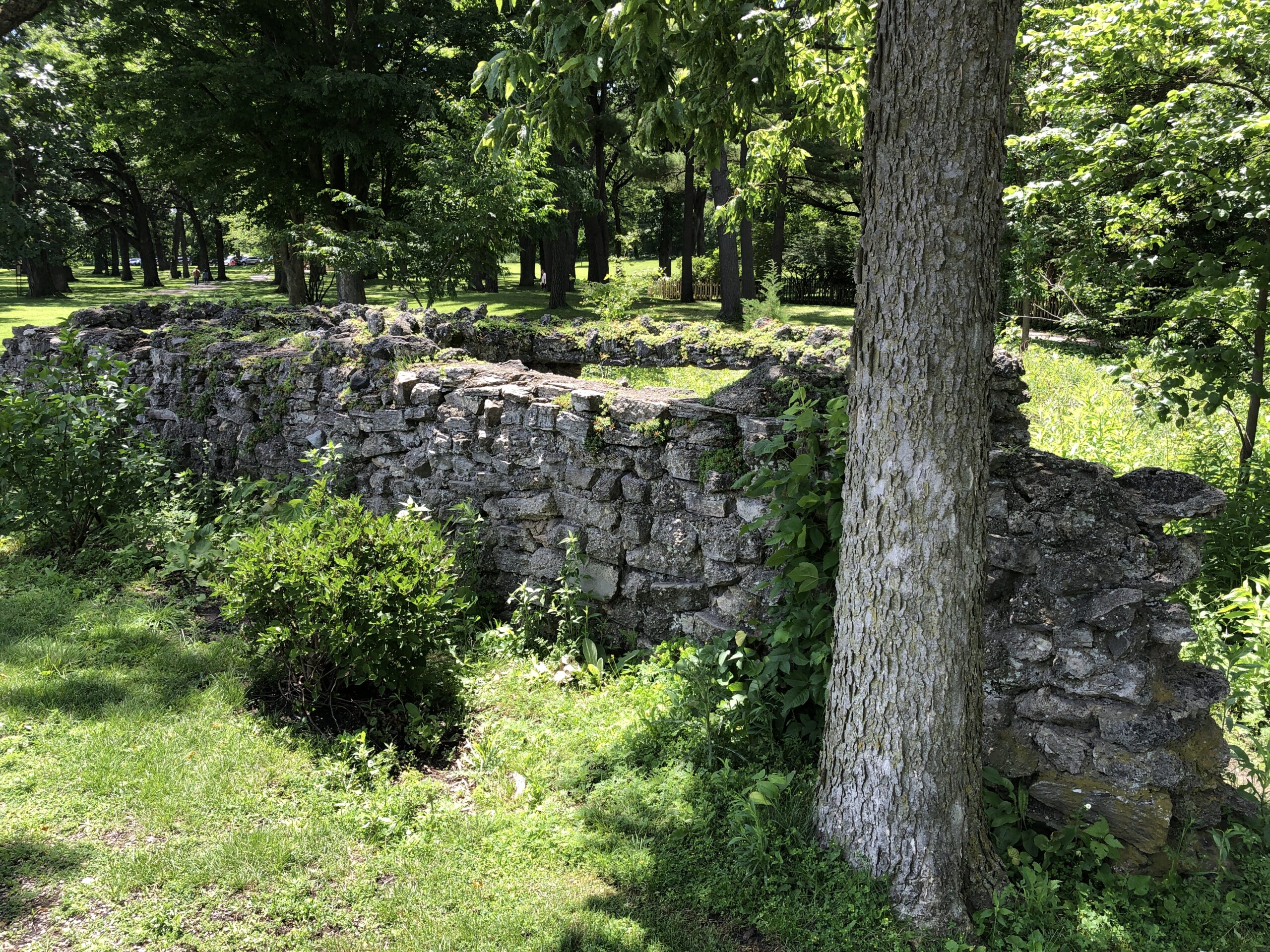
Outside, more features, including a ruin from Fabyan days. I understand that the Roman-themed pool on the island has mostly been reclaimed by the river. This wasn’t part of the pool. A out-of-place gatepost, from the looks of it.

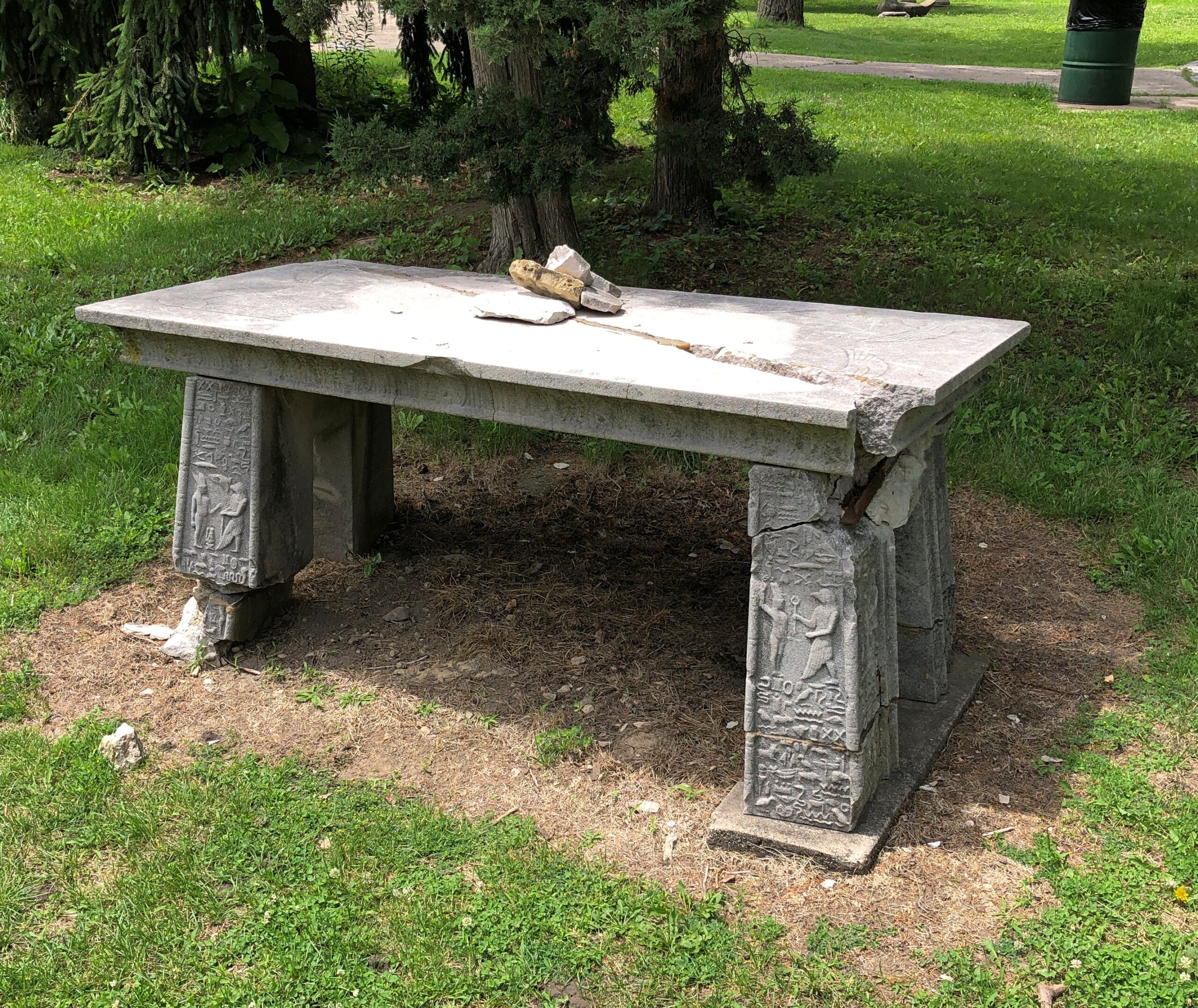
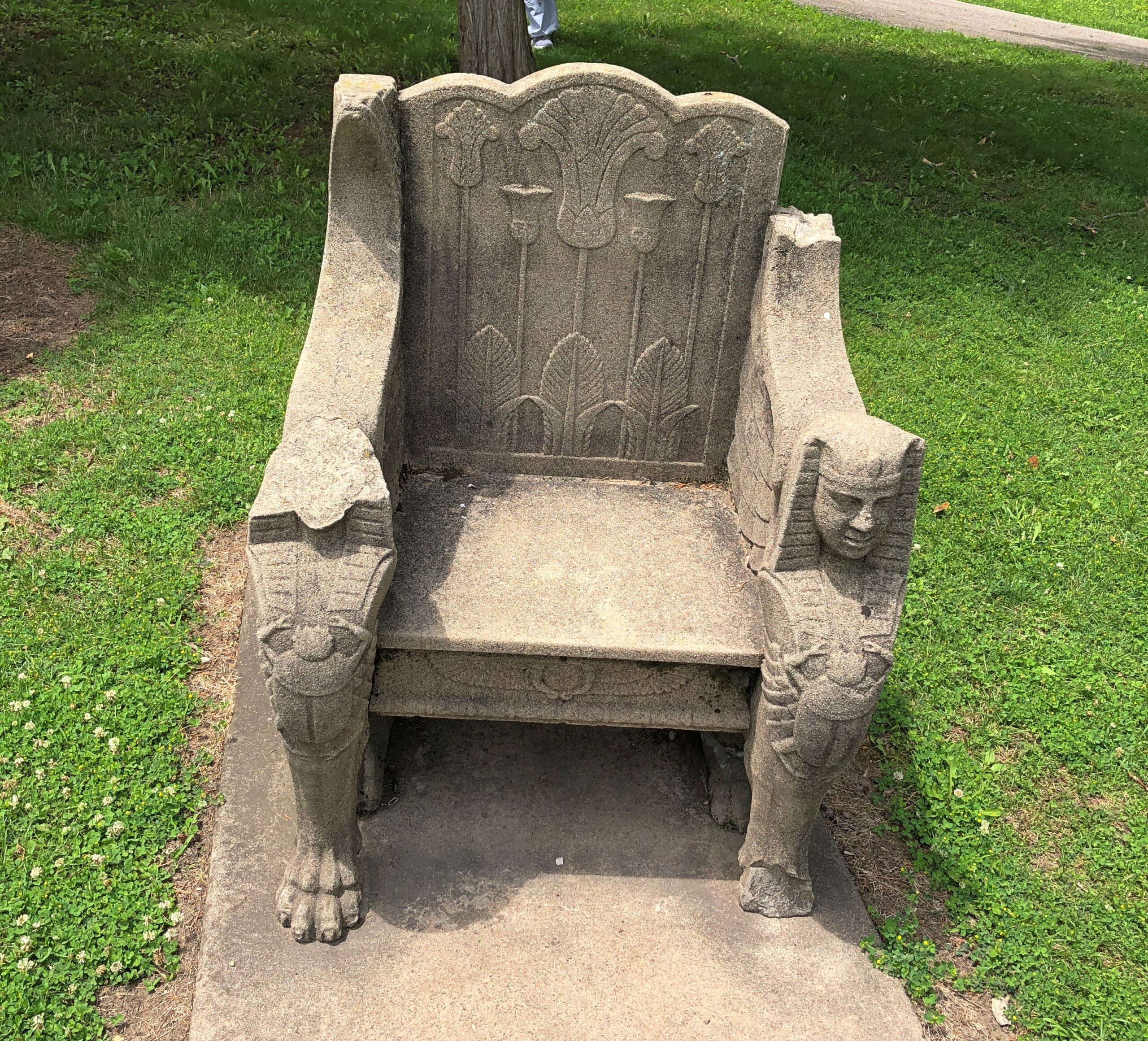
More evidence of the passing wave of Egyptomania.

Looking a little worse for roughly a century of wear.

The Fabyan Mummy

The Internet might be more vast a wasteland than the worried Newton Minow could ever imagine, but its oases of information – actual information, to judge by internal consistencies, linkable references and good writing – continue to amaze. For example, Mummies.com, which has lists of Egyptian mummies in the United States.

I went looking for such a site because of a recent encounter with a mummy. Or rather, a “mummy,” but we’ll get to that later.
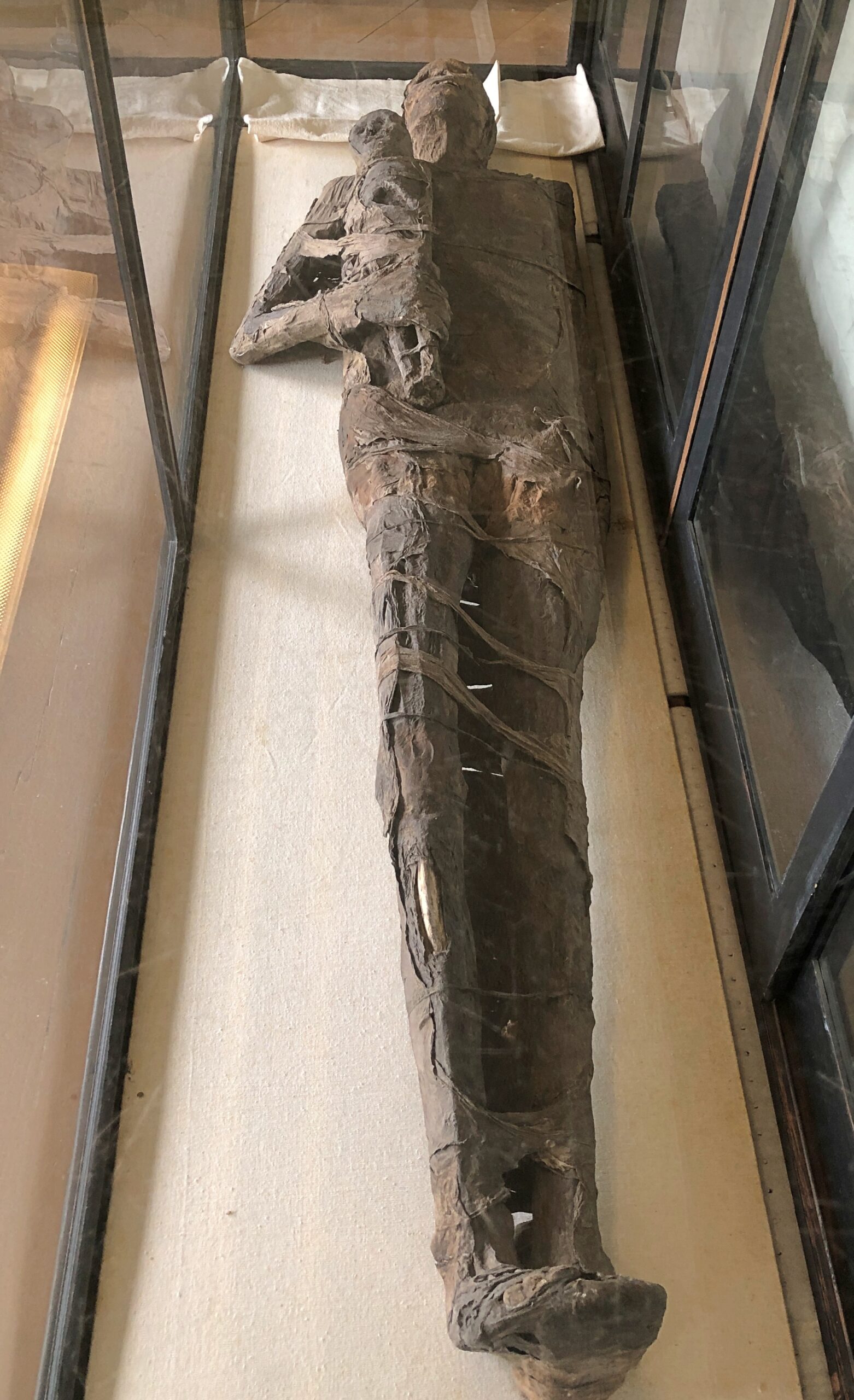
This figure is on display at the Fabyan Villa, which is part of the Fabyan Forest Preserve on the west bank of the Fox River, in Geneva, Illinois. We visited a few weeks ago. Both the villa and the “mummy” are legacies of George Fabyan (d. 1936), who has been fated to go down in history – in a small way, but more than most people – as a wealthy eccentric. One of his eccentricities, like William Randolph Hearst writ small, was collecting eccentric artifacts.

A sign near the mummy-shaped artifact says that modern examination has proven it to be a fake. Whether George Fabyan knew this or not is an open question.

Remarkable thought, that there was once a market for mummies so brisk that counterfeiters made bank. It wasn’t called Egyptomania for nothing.

An anecdote from Mummies.com about a real mummy (Harwa) in possession of the Field Museum, which has 33 mummies, tells quite the tale:

Harwa’s adventurous afterlife is one example of how things have changed. In 1939, he became the first mummified person to fly on an airplane, and he was taken to a Broadway show upon his arrival in New York City. On display at the New York World’s Fair for two years, he then returned to the Field Museum after getting lost in the luggage and being sent to San Francisco.

There’s streaming service comedy gold in that, say 10 episodes: the misadventures of the promoter hired in 1939 to take care of the mummy, and his oddball assistant, who also happens to be a bombshell of a woman. High jinx ensue. The mummy is misplaced, more than once. There are various shenanigans on the airplane, and on Broadway. A rival promoter tries to steal the mummy. Weird things happen at the World’s Fair. Nothing supernatural, though one or another of the characters might worry about the Curse of Harwa — which a publicist make up. Maybe even a guest appearance by Col. Fabyan, who wants to buy the mummy. Of course, the actual Fabyan was already dead by then, but this is TV we’re talking about. You know, the outclassed wasteland.

Meacham Grove Forest Preserve & The Temporary Tunnel of Gold

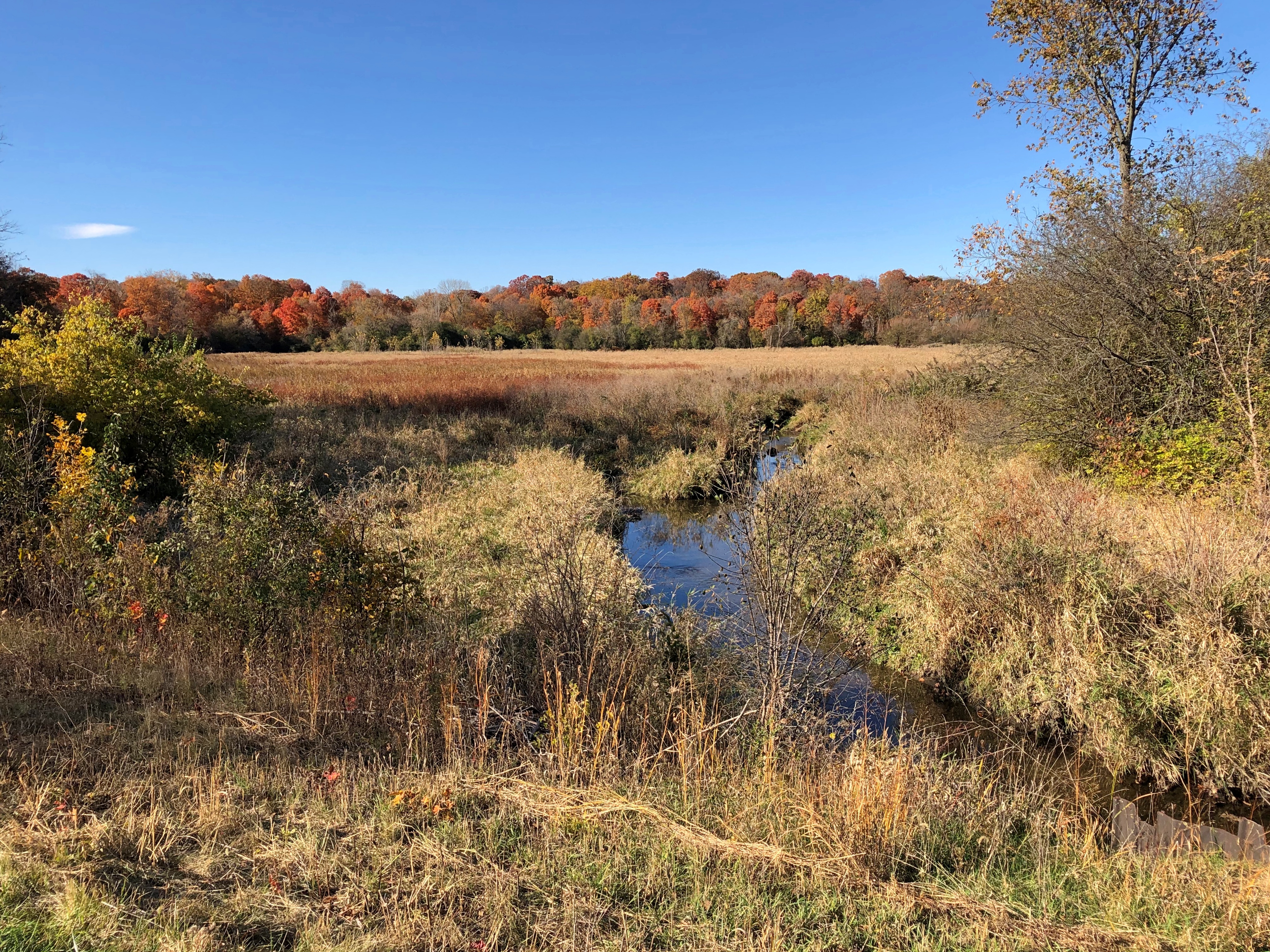
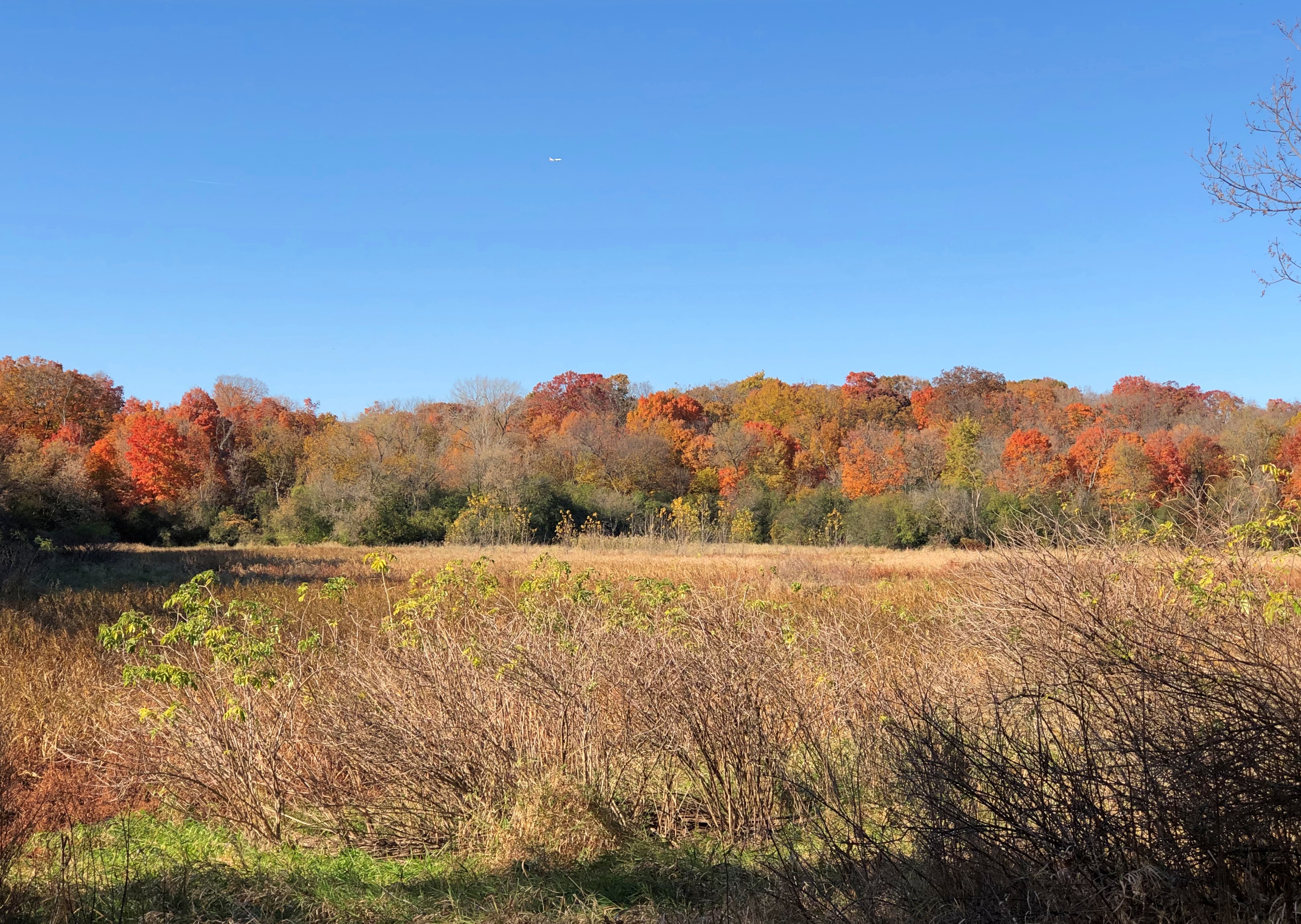
Though it’s fairly close, we hadn’t been to the Meacham Grove Forest Preserve in a few years, so on the last Saturday in October, I suggested a walk. Bright, warm and little wind: a good day for it.Meacham FP

The path around Maple Lake – called that on maps, anyway – takes you about halfway before you come to another path: a section of the North Central DuPage Regional Trail. We headed west on that trail. Meacham Forest Preserve October 2024

At first the trail passes Spring Brook and Meacham Marsh. The Meacham brothers were earlier settlers in this part of DuPage County and the village of Bloomington was once known as Meacham’s Grove, as a waystation on the Chicago-Galena Stagecoach Trail.Meacham Forest Preserve October 2024 Meacham Forest Preserve October 2024

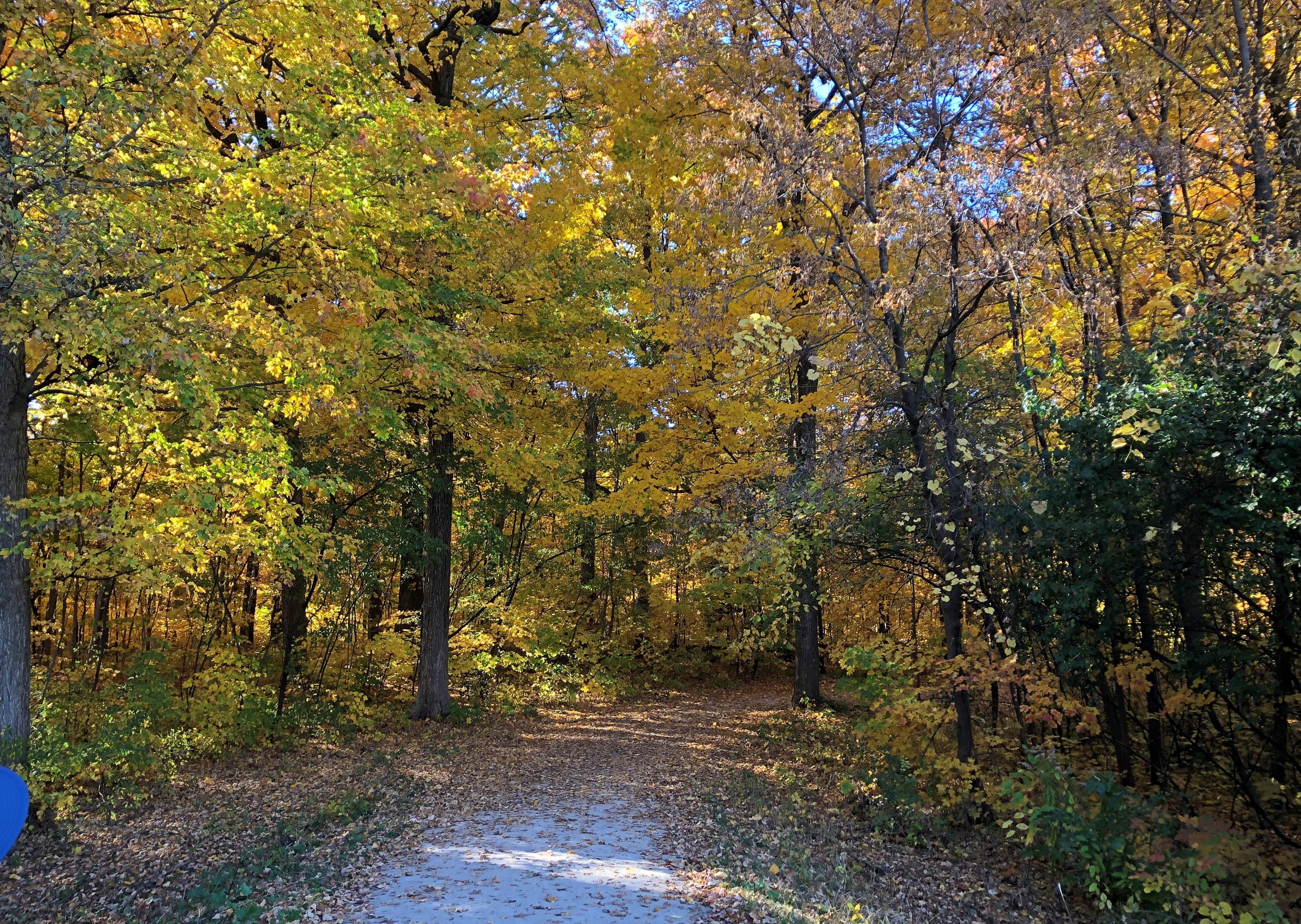
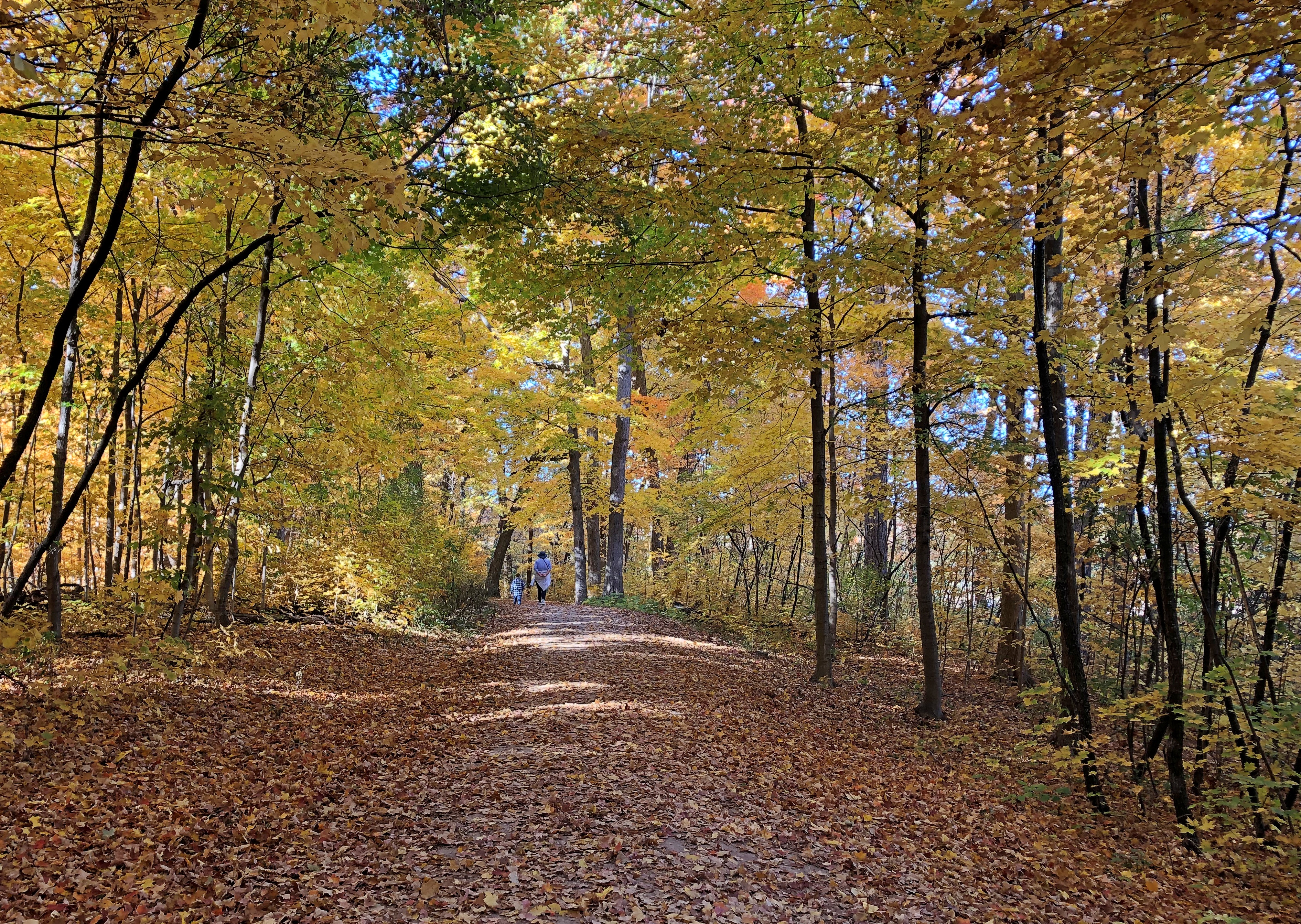
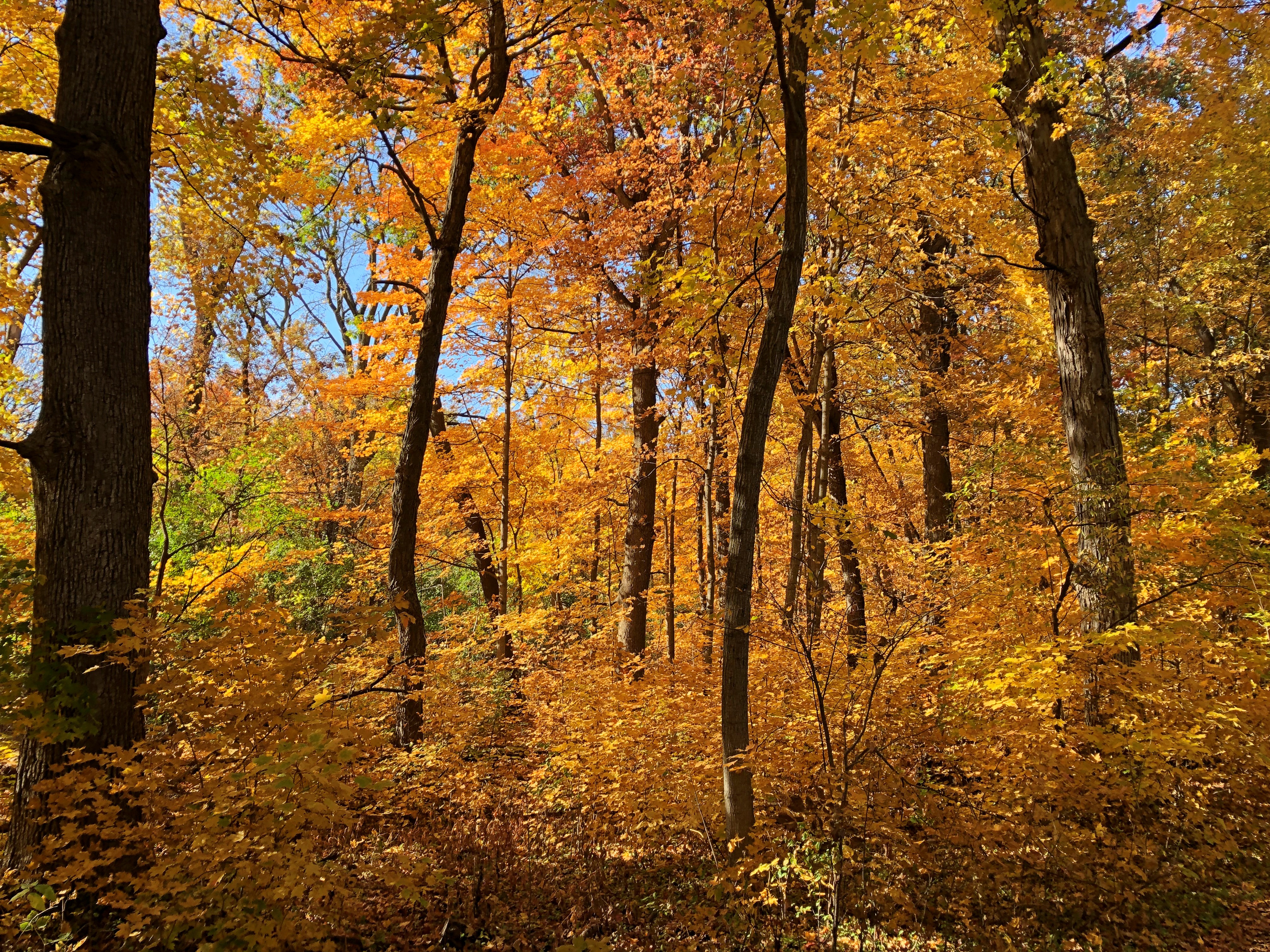
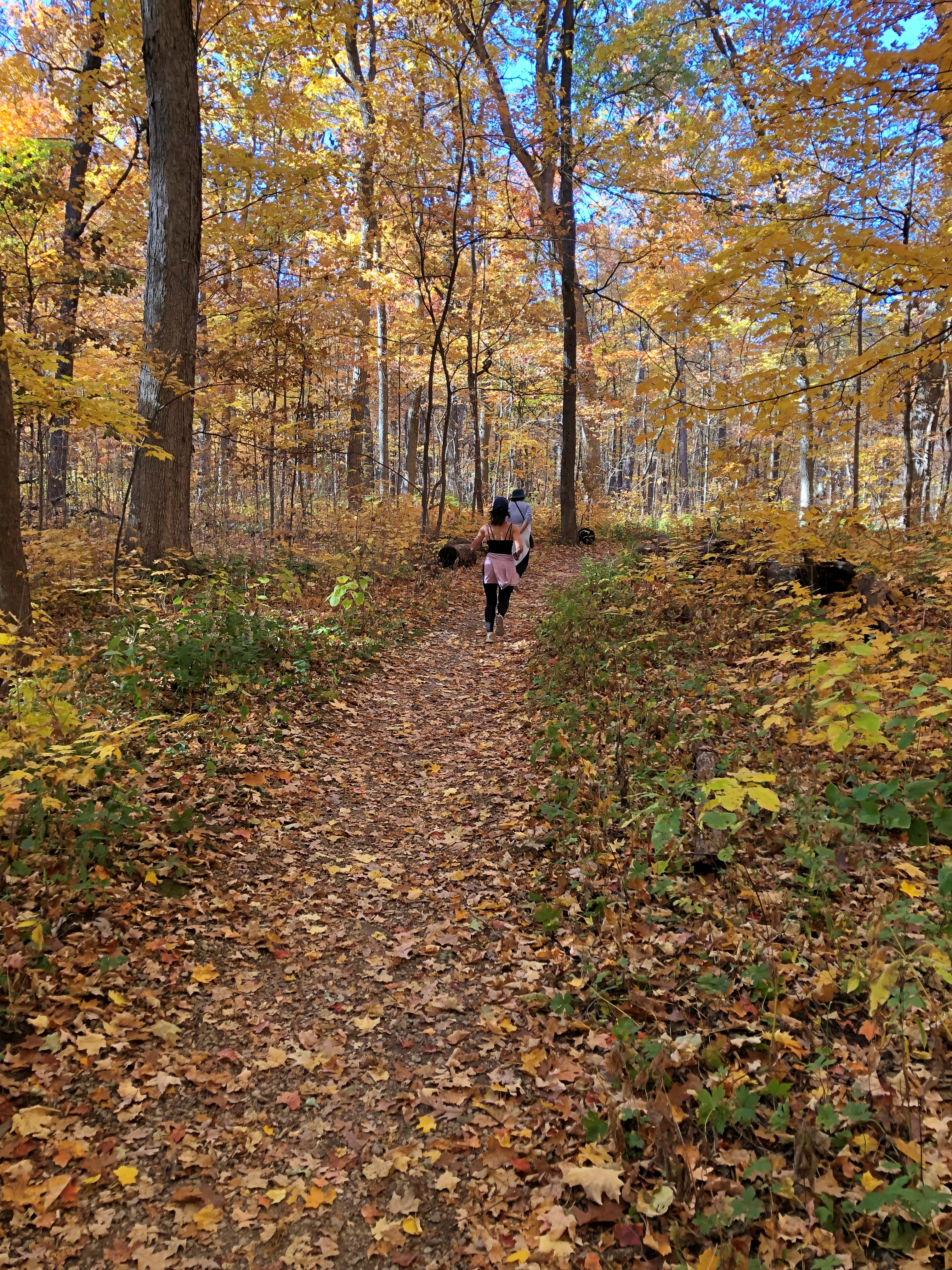
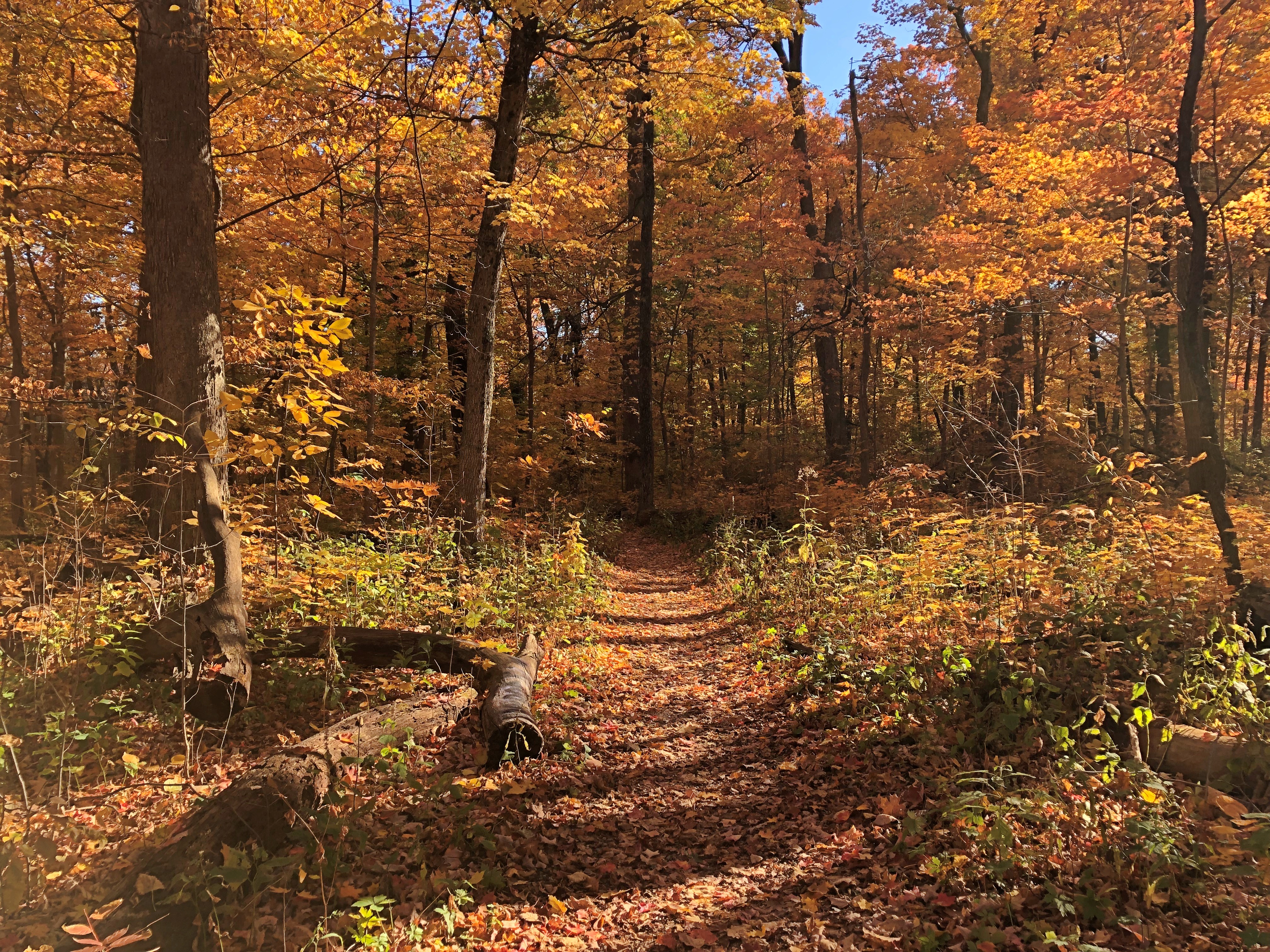
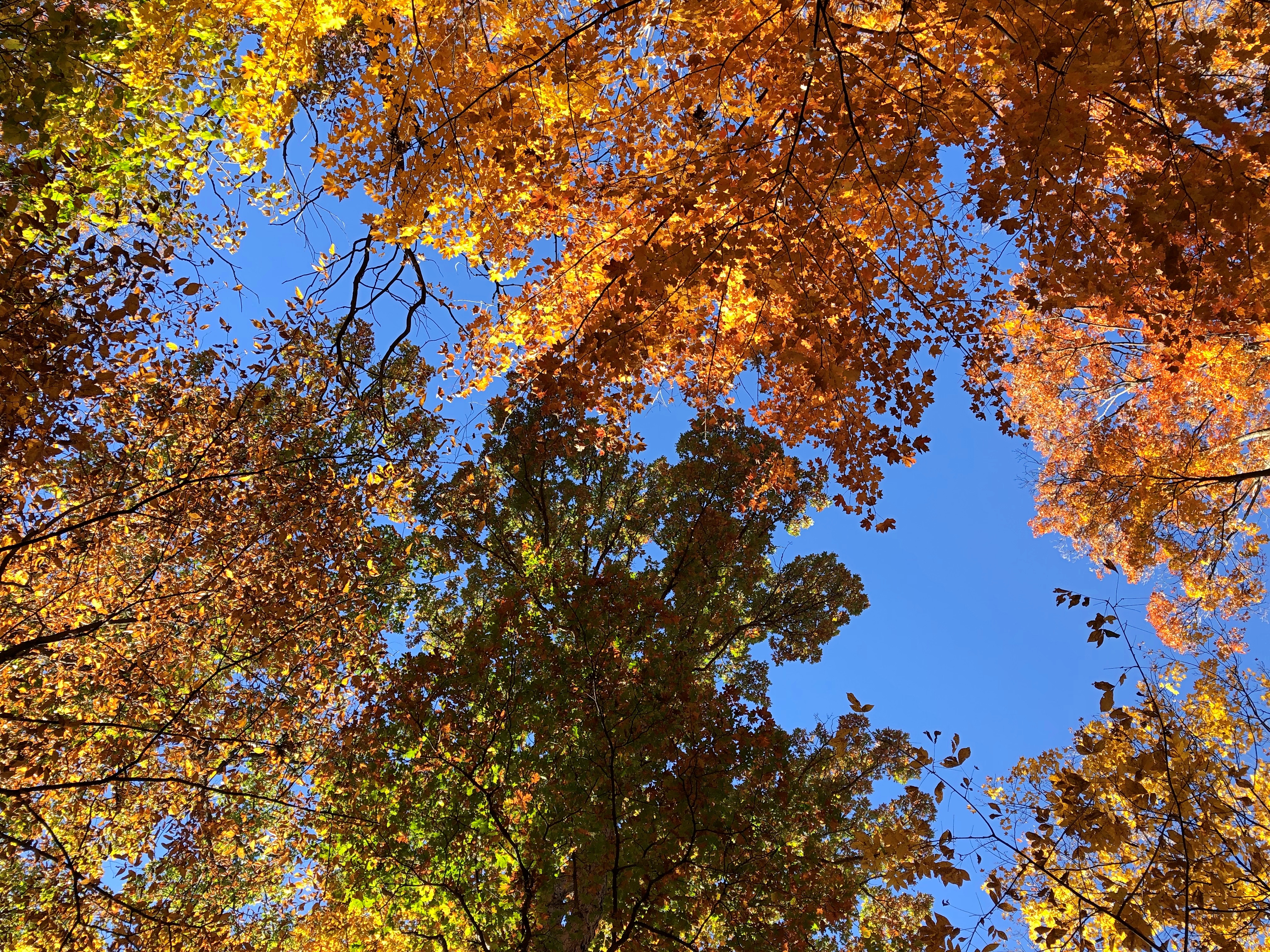
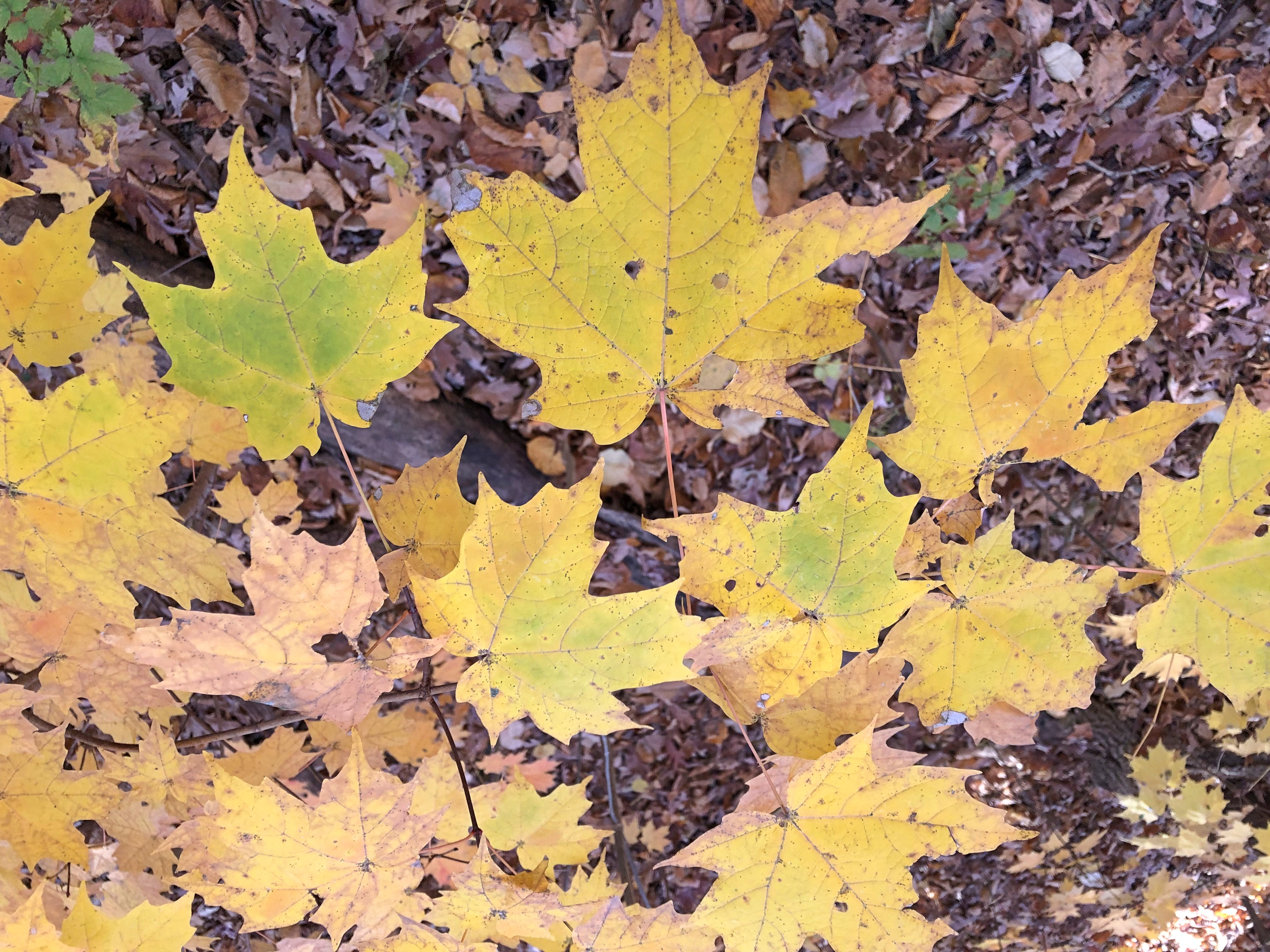
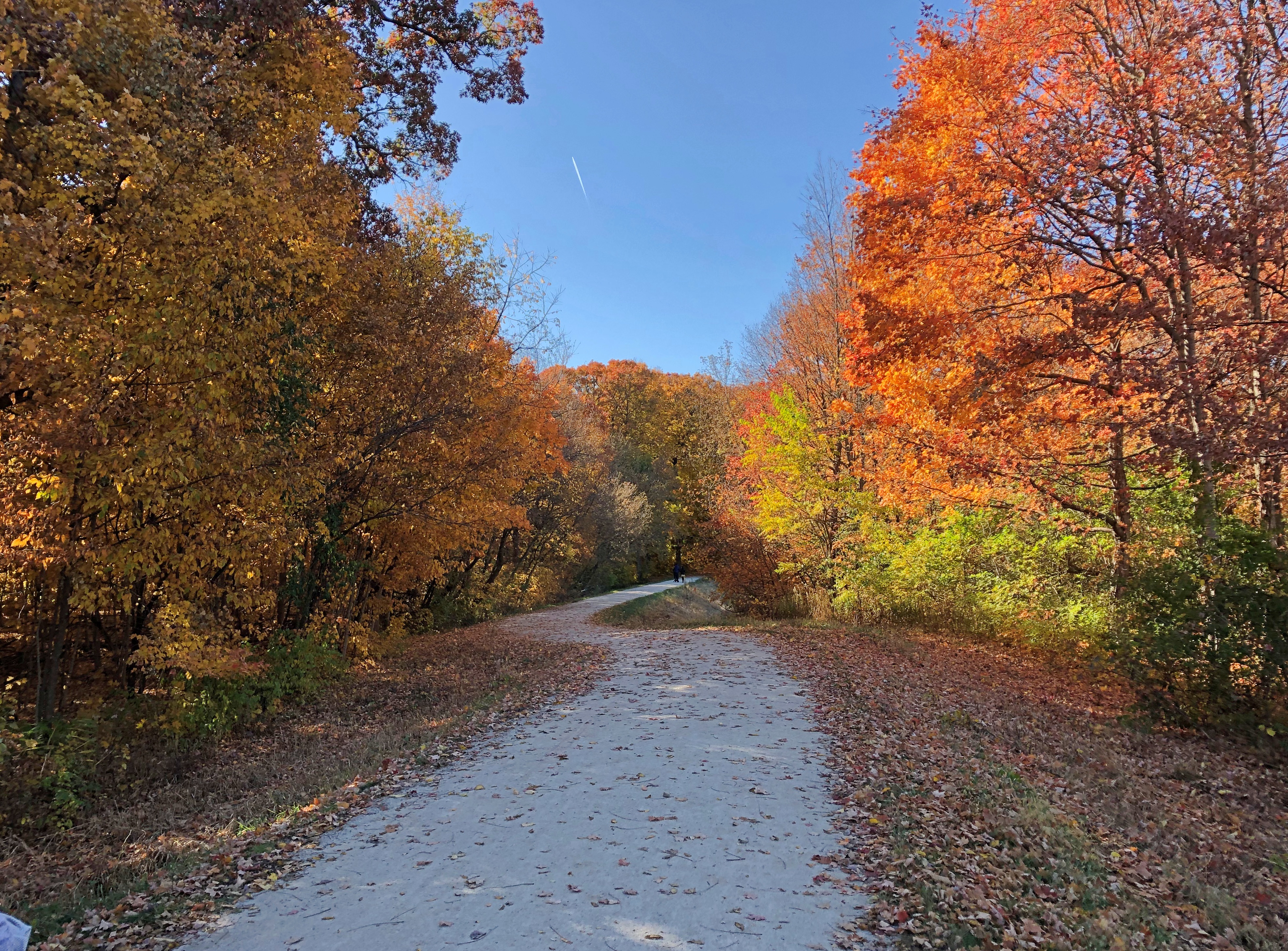
At that moment in October, the trail winds into a tunnel of gold. That’s what I’m calling it anyway, mostly formed by a canopy of maple leaves. Canada has no monopoly on them, even if they put it on their flag.Meacham Forest Preserve October 2024 Meacham Forest Preserve October 2024 Meacham Forest Preserve October 2024

Roselle Road divides the preserve. The other section is accessible by footbridge over the road.Meacham Forest Preserve October 2024

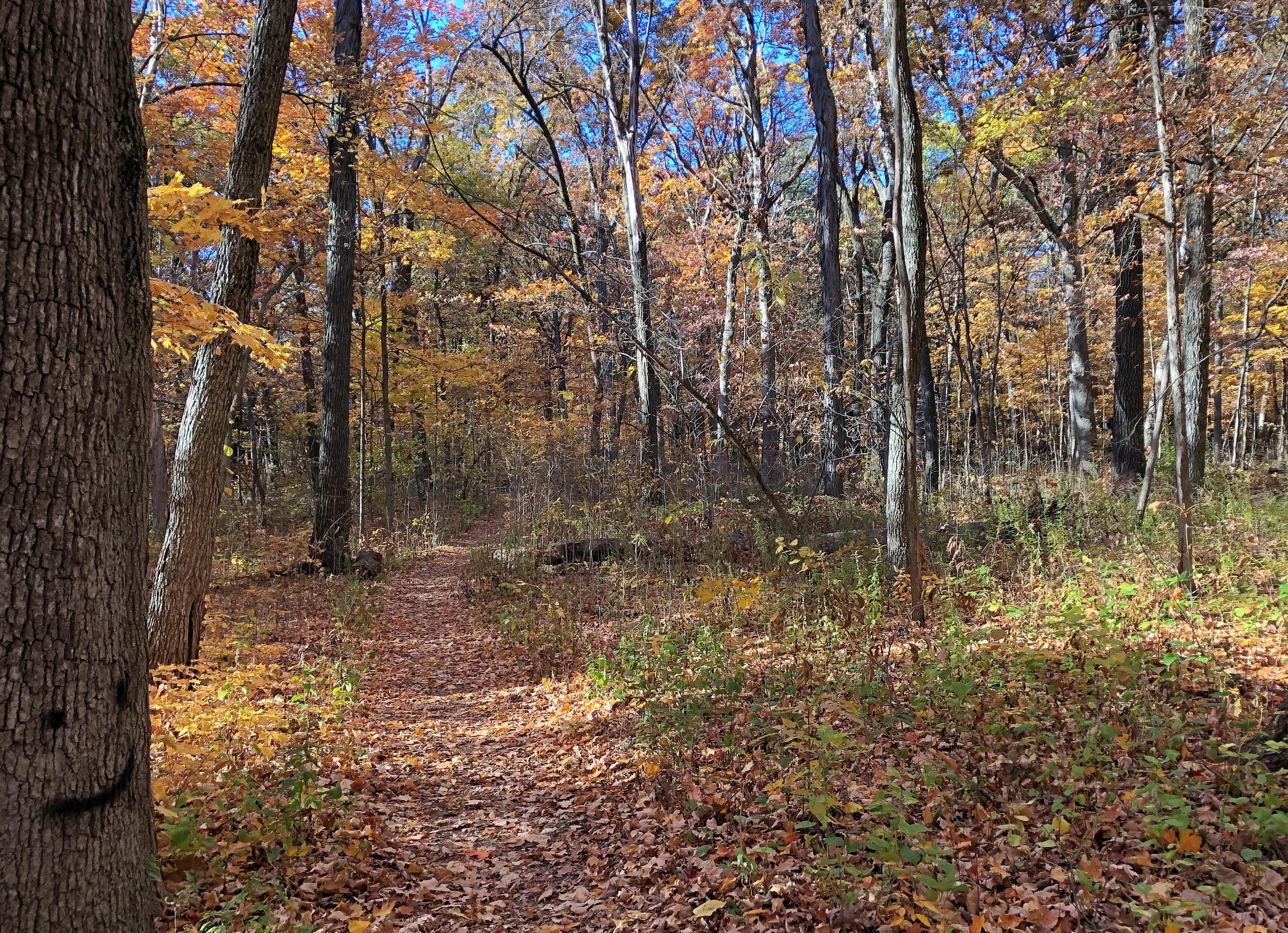
All these years in the northwest suburbs, and we’d never ventured across the bridge. In the western section of the preserve, the North Central DuPage Regional Trail connects to a half-mile loop, Savanna Trail. Not quite a tunnel of gold, but not too shabby in its foliage.Meacham Forest Preserve October 2024 Meacham Forest Preserve October 2024 Meacham Forest Preserve October 2024

There’s a metaphor in those leaves somewhere: a brief blaze of glory near the end.Meacham Forest Preserve October 2024 Meacham Forest Preserve October 2024

Or maybe leaves are leaves are leaves.

Deer Grove Ahead of the Greening

Not long ago, on one of the warmish days we had before the more recent chilly run, we made our way back to Deer Grove Forest Preserve in Palatine, one of the many such green spaces in the northwest suburbs. Except it hadn’t greened yet. The last time we were there, during the pandemic spring of 2020, it was full spring and lush green.

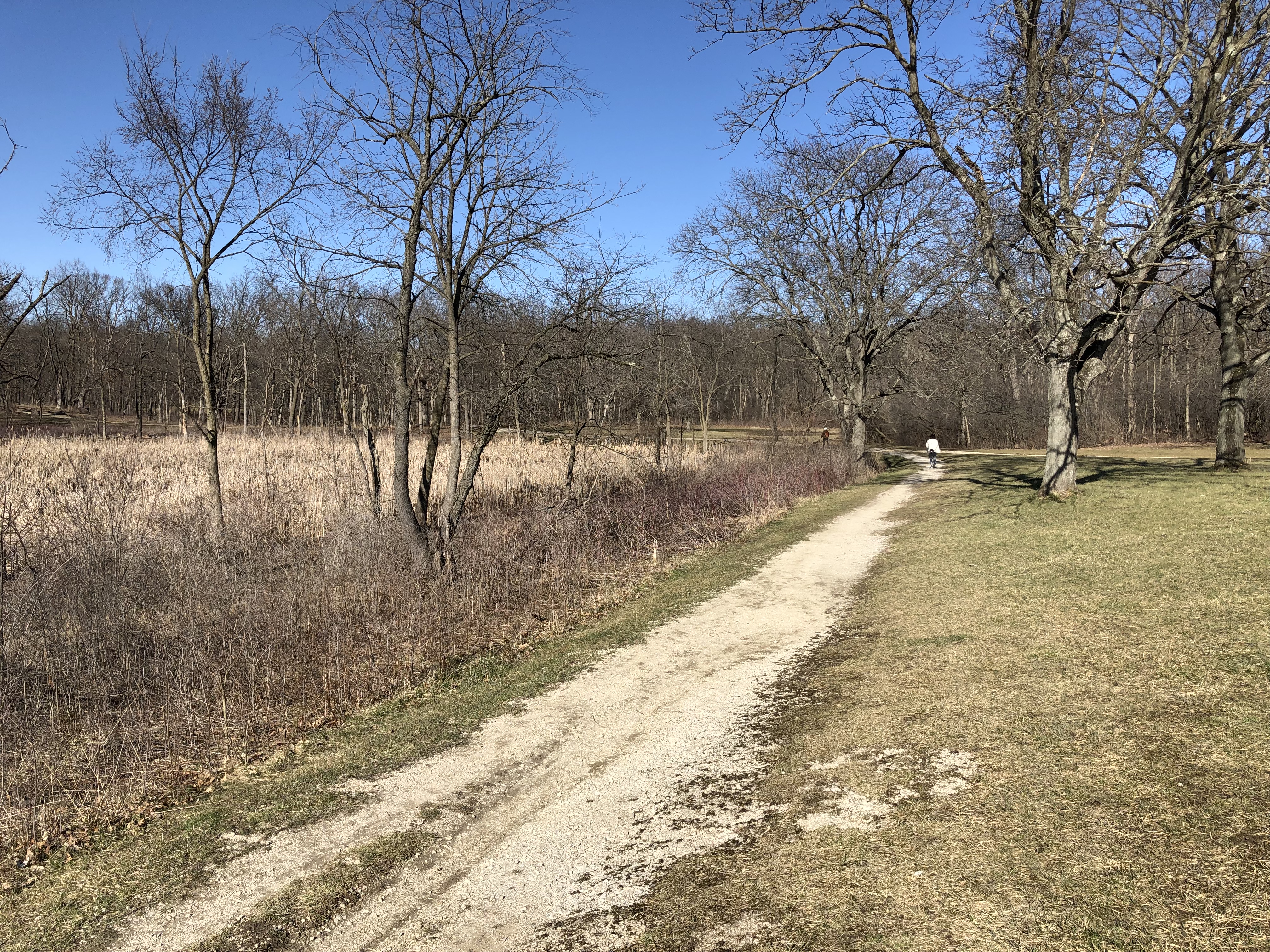
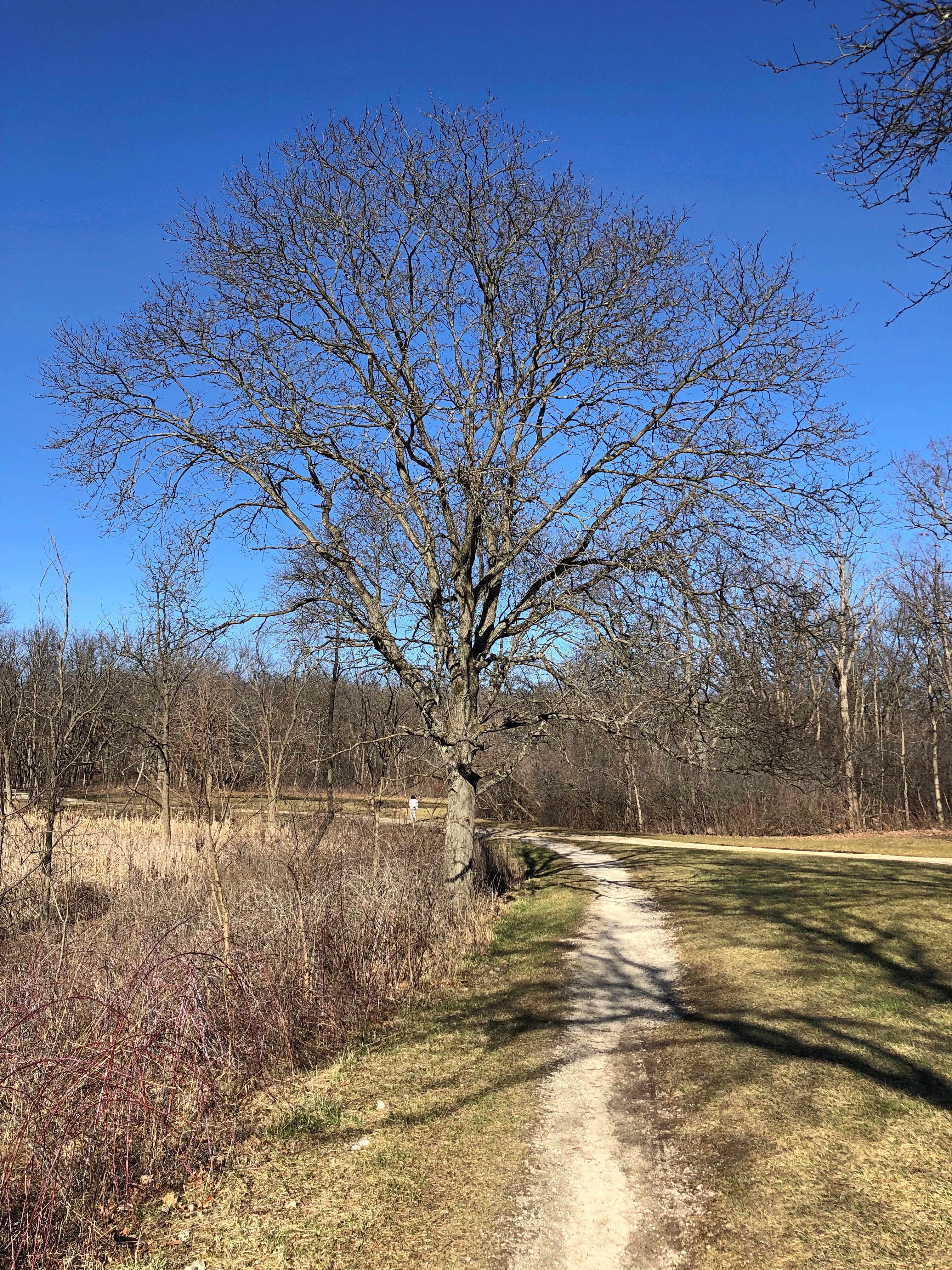
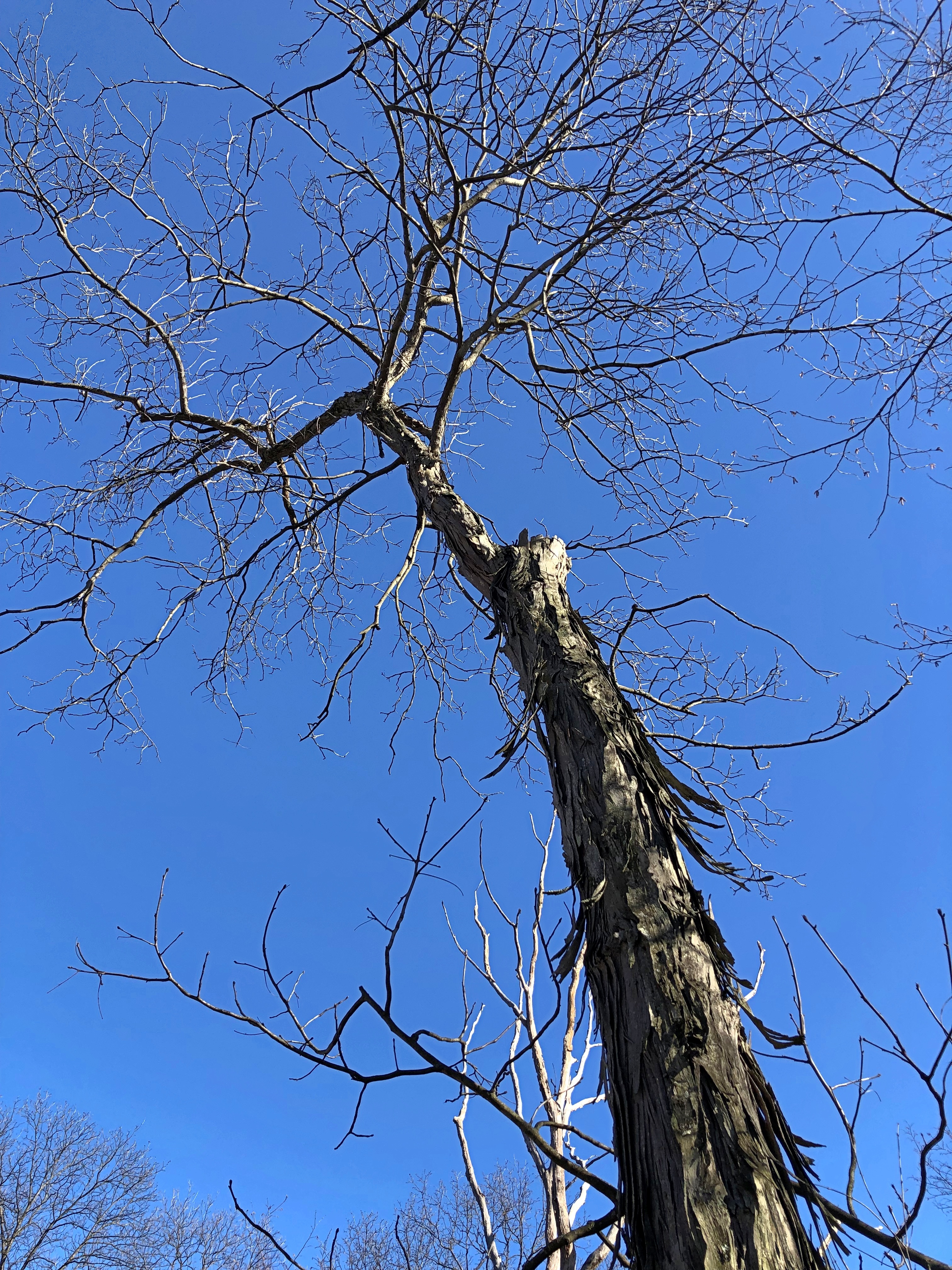
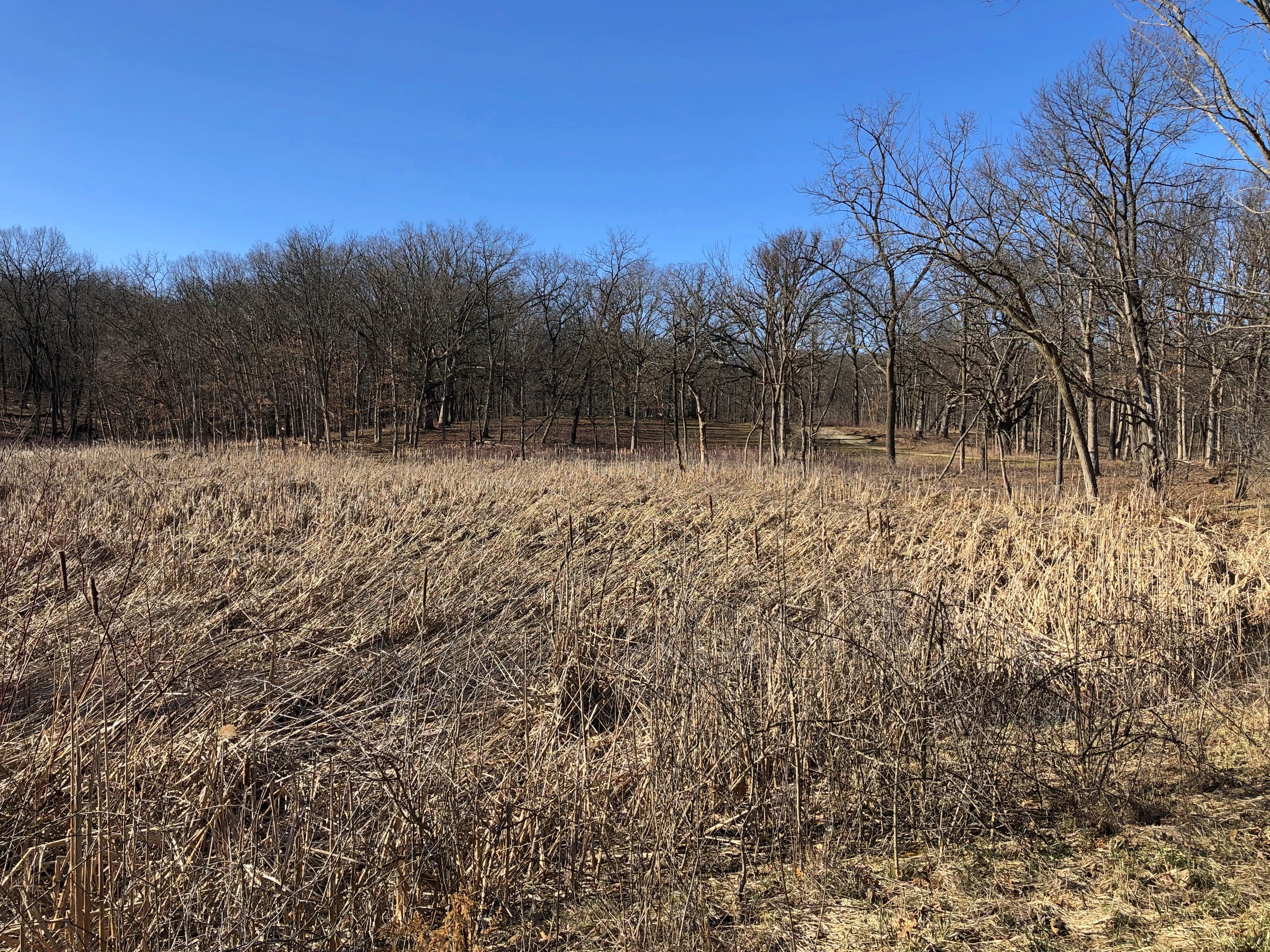
Still, there’s a certain charm to the slumbering brown-gray earth, provided the air isn’t that cold and the paths are fairly dry. Had a good walk.Deer Grove Forest Preserve

Trees before budding. It won’t be long.Deer Grove Forest Preserve Deer Grove Forest Preserve

Grassland waiting to green up. That will come even sooner.Deer Grove Forest Preserve

Recent rains – including much of yesterday – are hastening things along. I cracked the window last night to listen to the micro-splash rhythm of the falling rain, but didn’t leave it open too long, as cold air snuck in along with the pleasurable sounds.

Mallard Lake on a Mild February Sunday

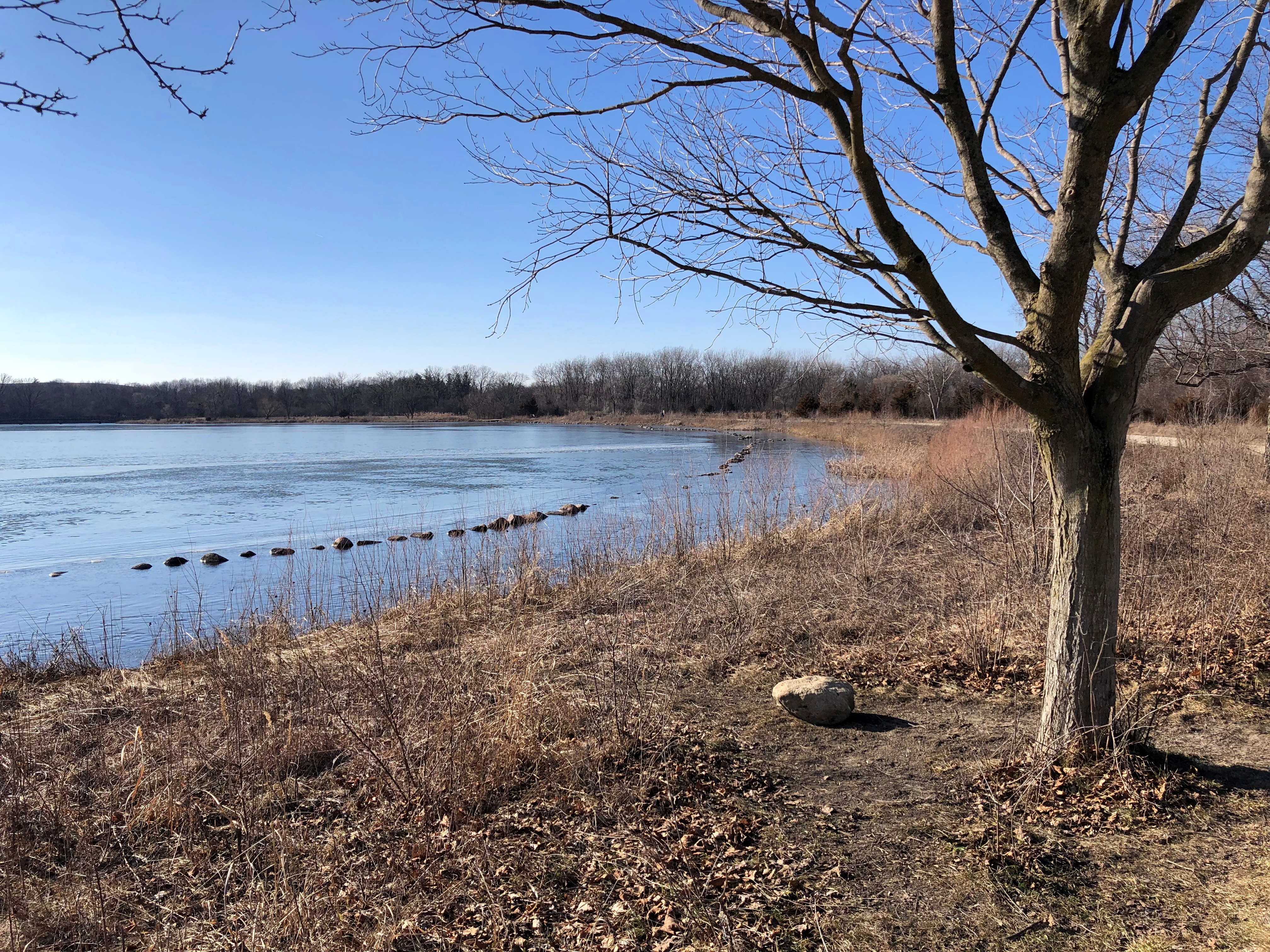
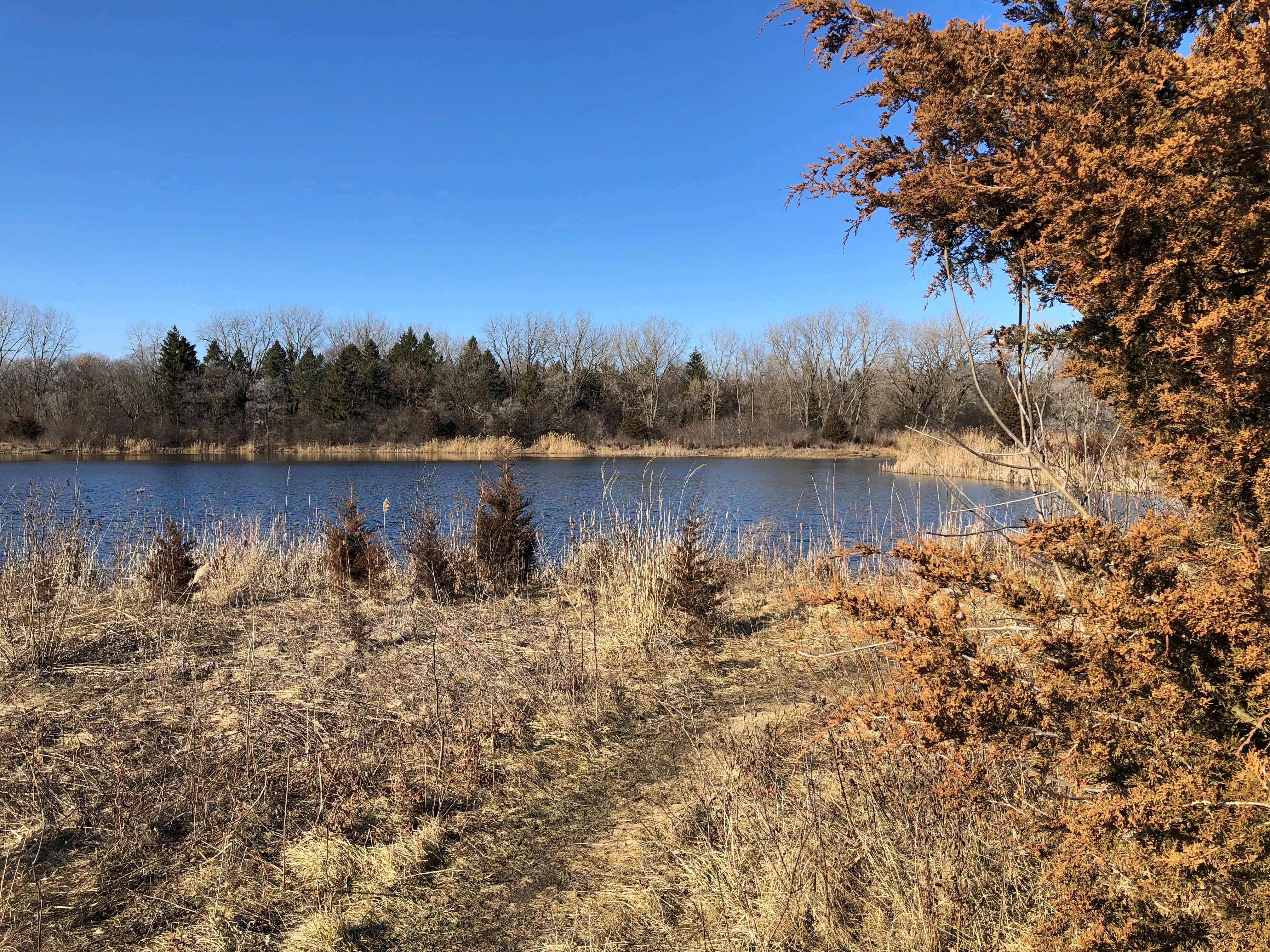
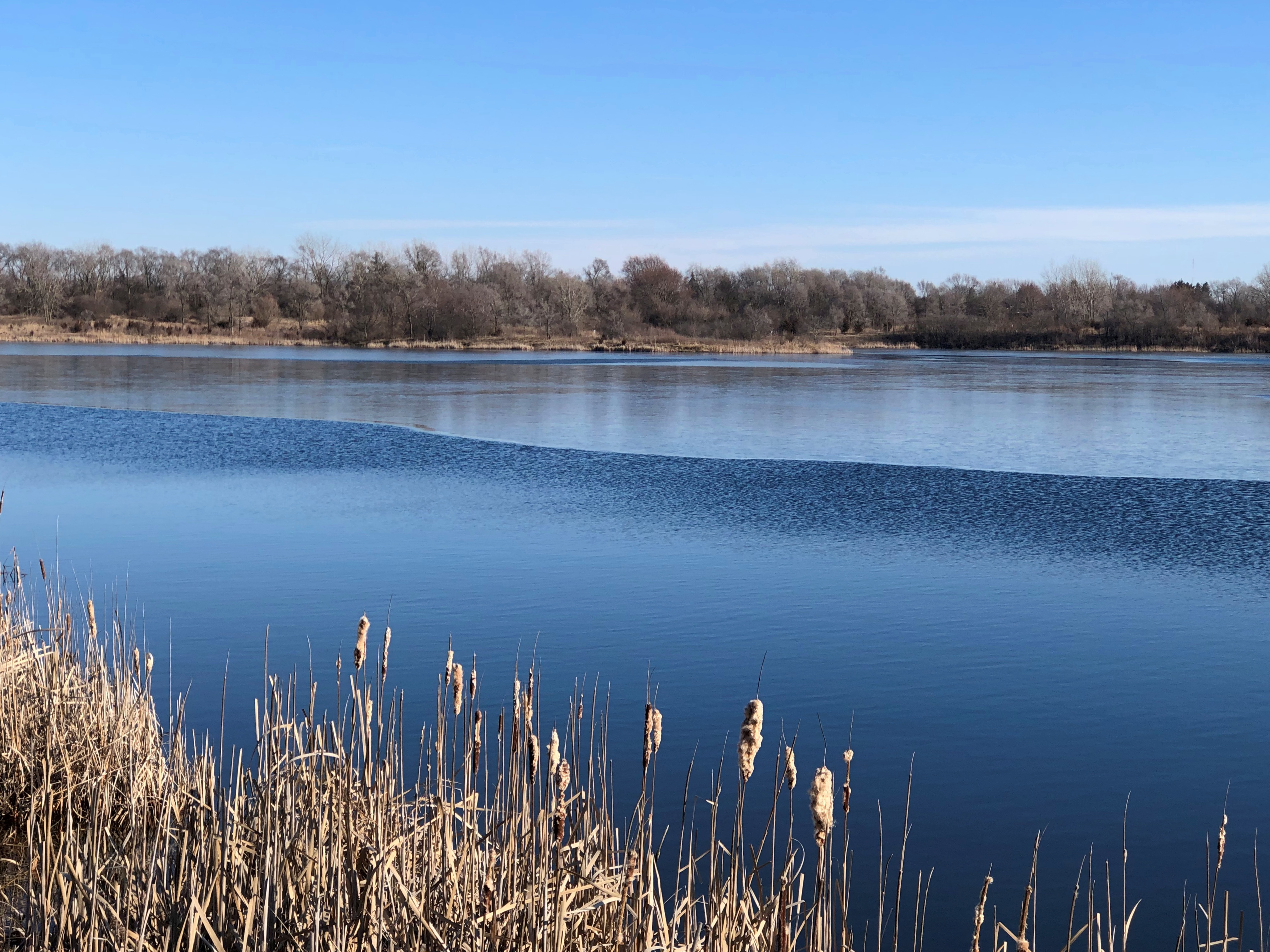
An unusual run of warmish days for February so far, and by that I mean above freezing every day and a completely melted snow cover. Local plants aren’t fooled, keeping their earth colors for now.

The scene Sunday at Mallard Lake. A few other people were around, walking the trail around the lake. Not everyone was at a pregame gathering.Mallard Lake Mallard Lake Mallard Lake

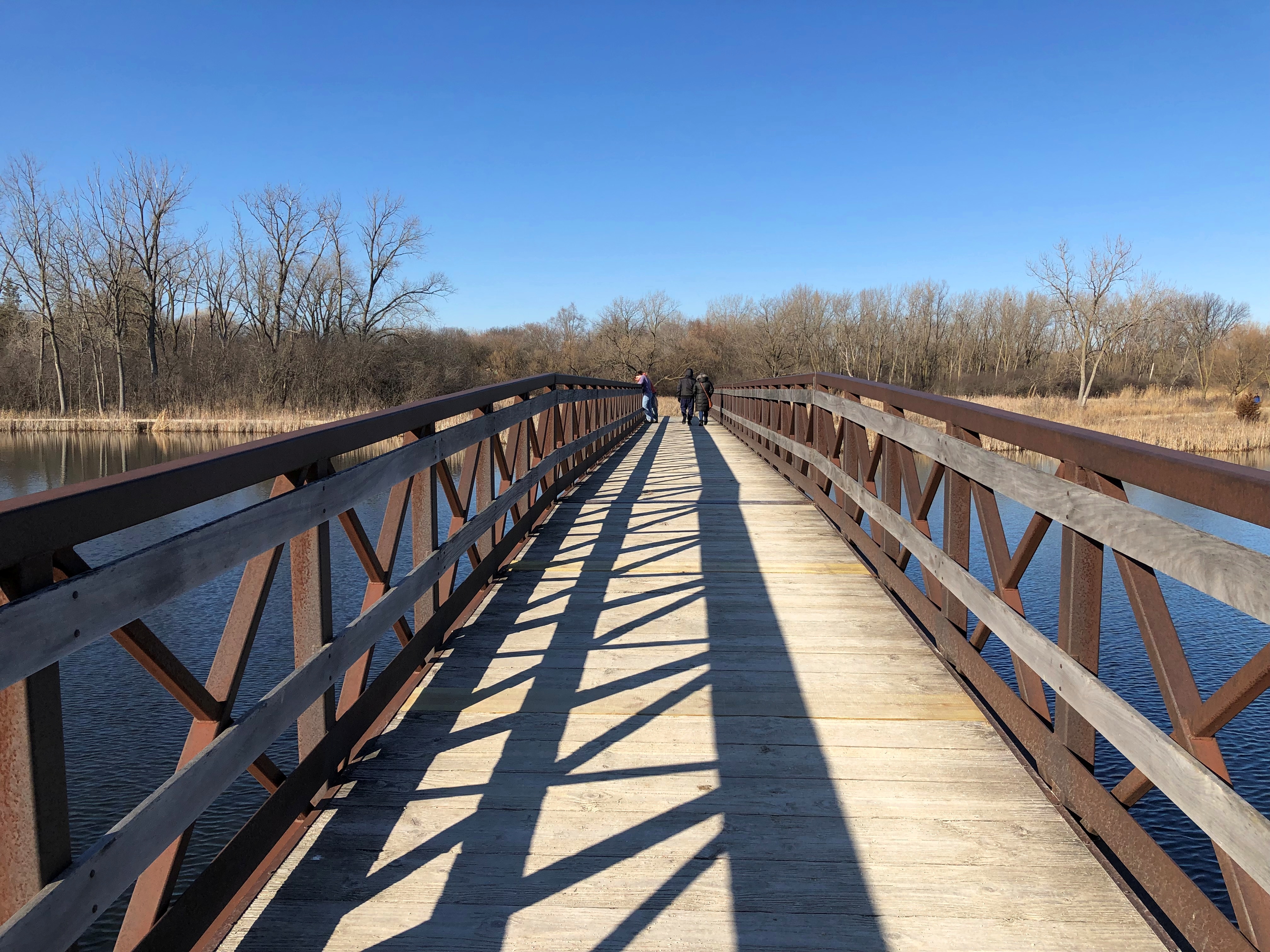
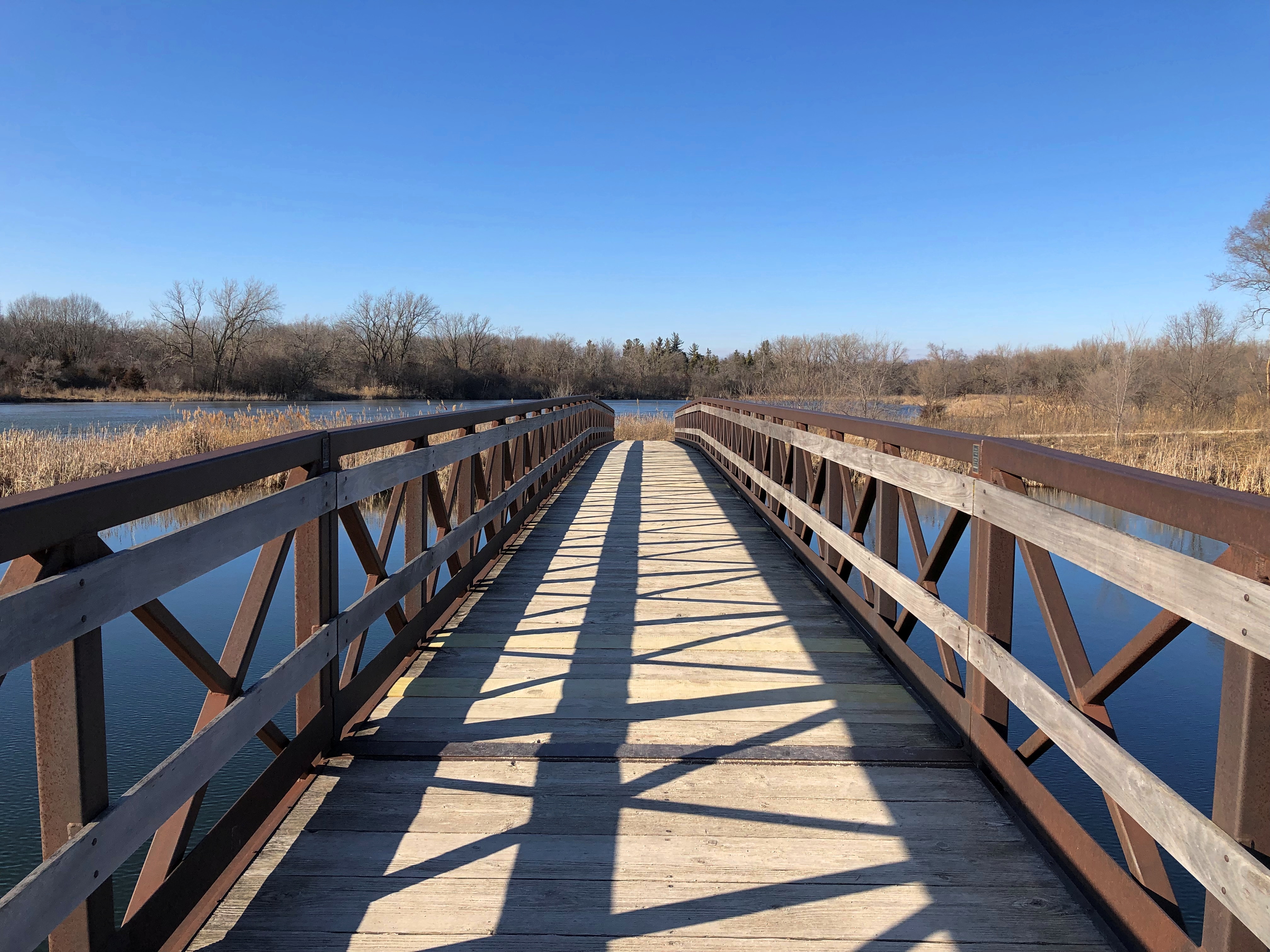
There are islands in Lake Mallard, and where there are islands, there are bridges.Mallard Lake Mallard Lake

The stroll was a touch melancholic, since we couldn’t bring the dog, who is too frail for this kind of walk any more. Just a touch, since she’s still with us, just slow moving.

Fort Sheridan Forest Preserve

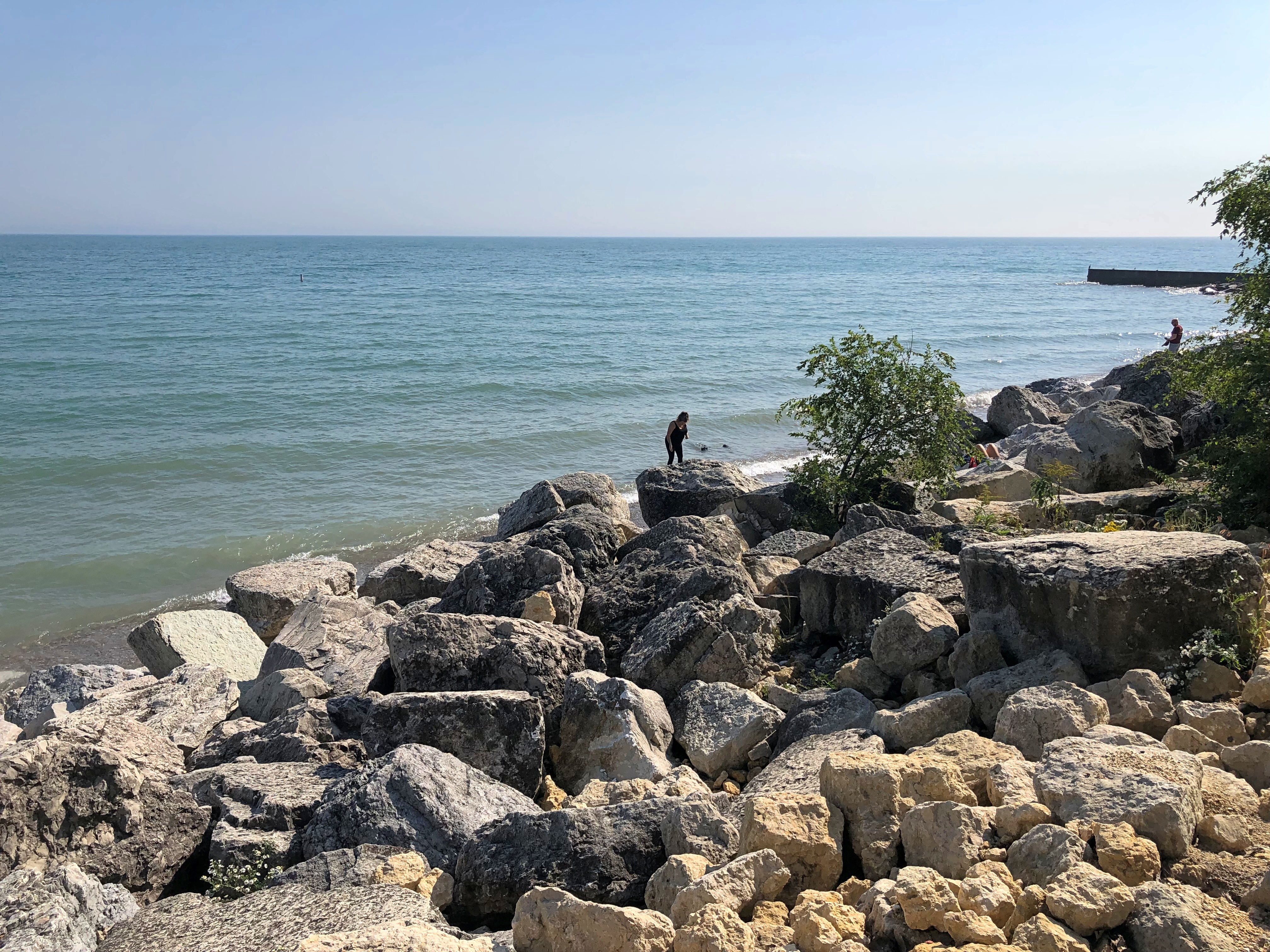
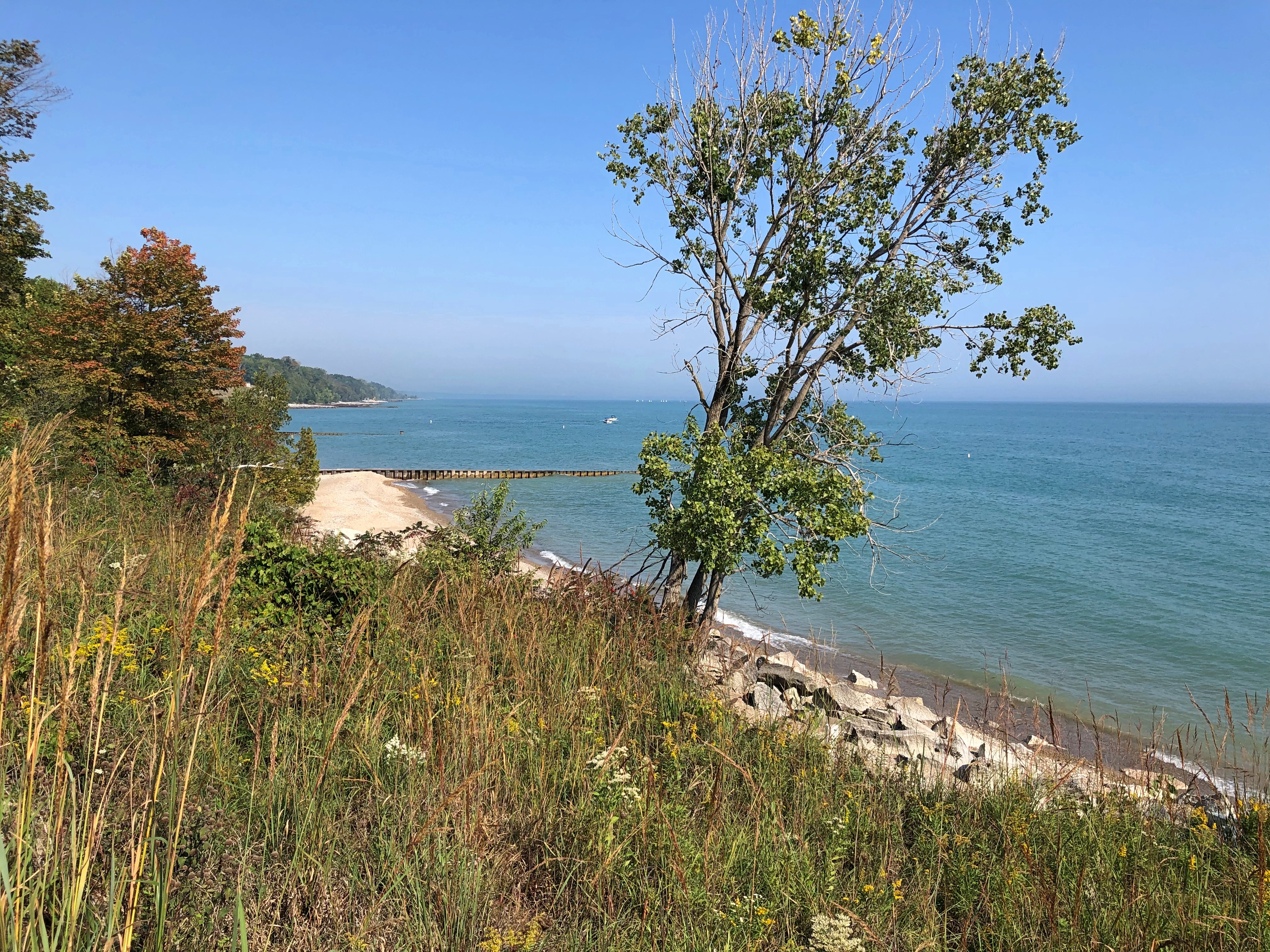
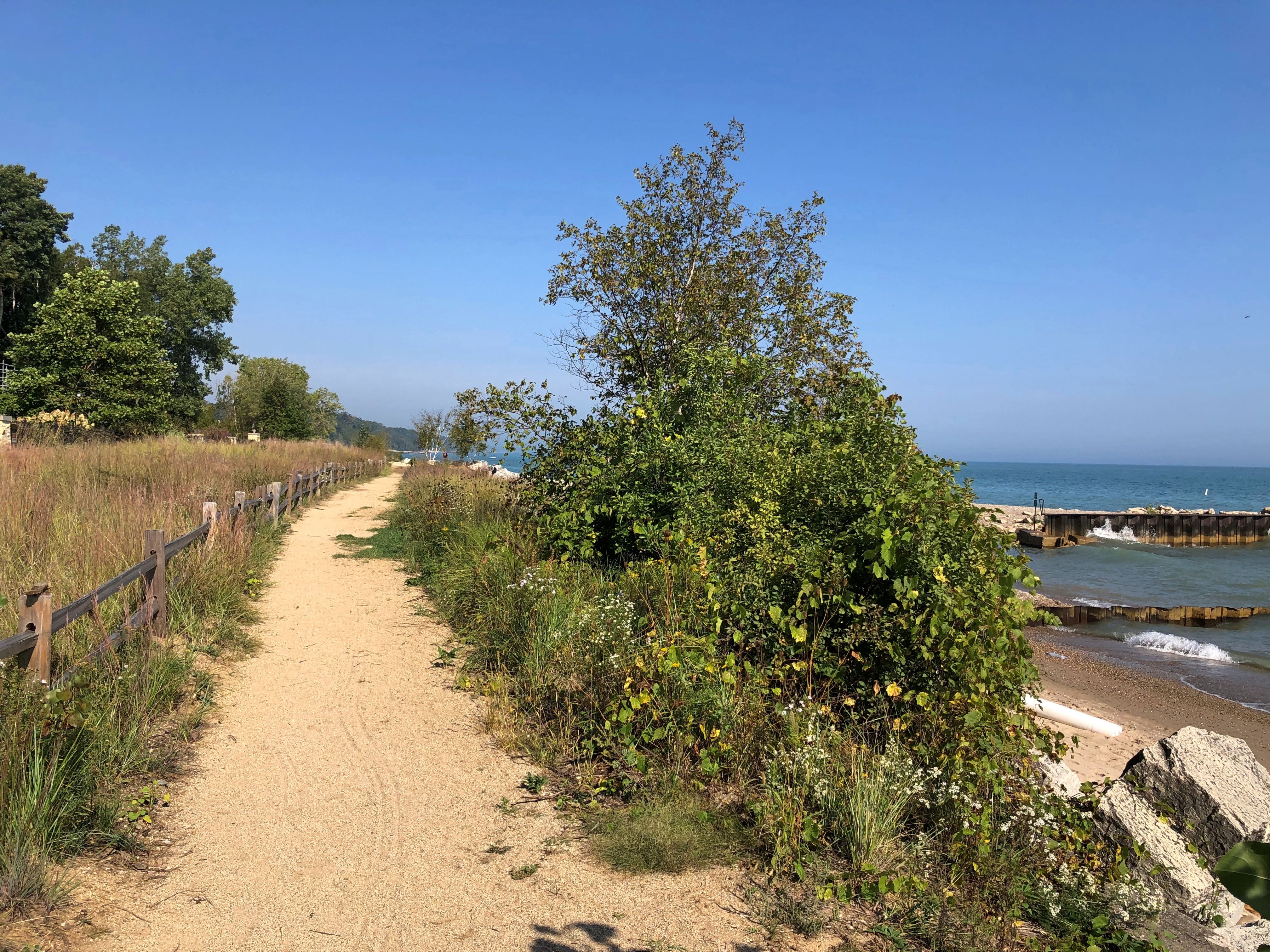
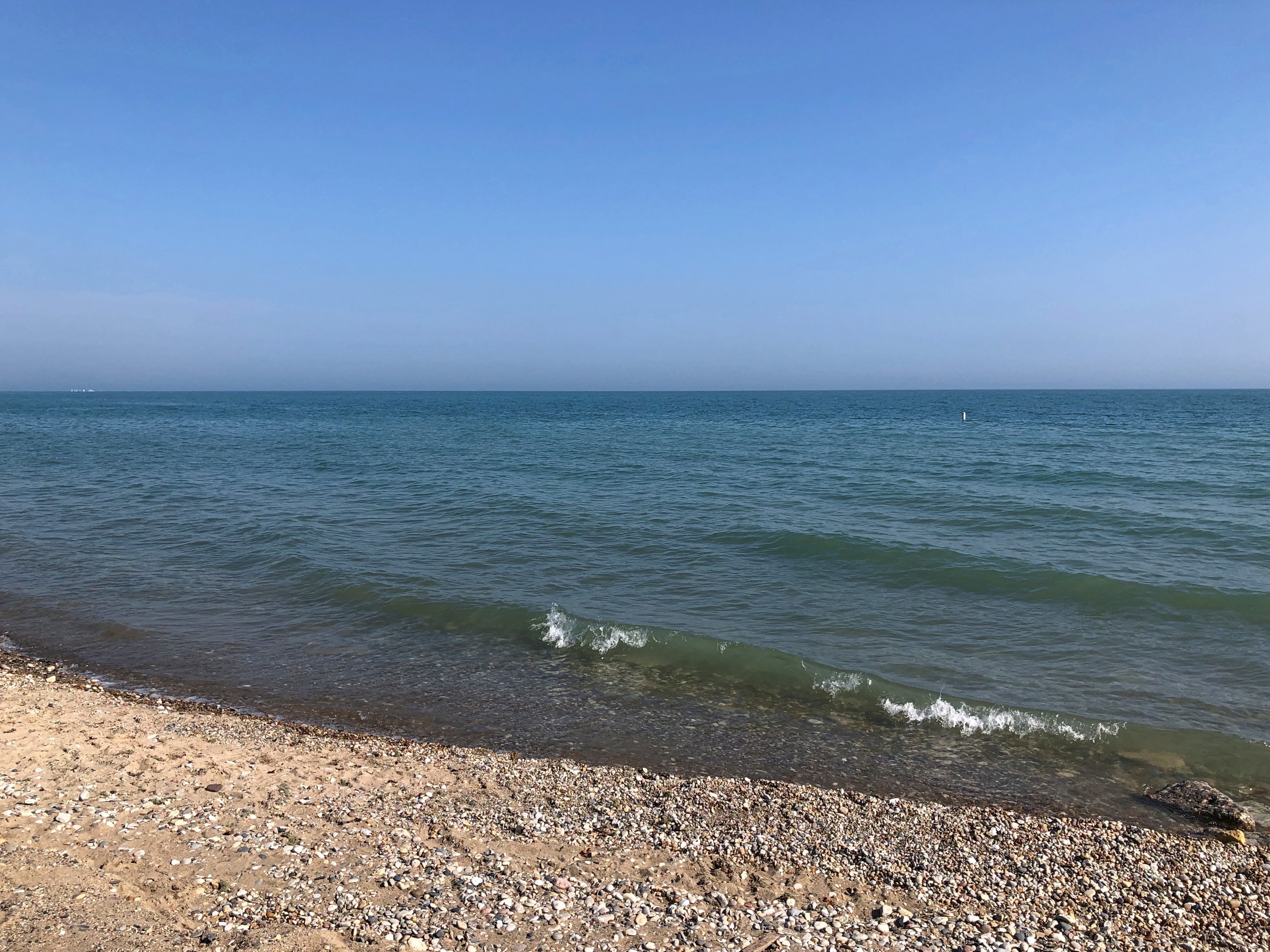
On Saturday, we made our way to the edge of Lake Michigan.Fort Sheridan Forest Preserve Fort Sheridan Forest Preserve Fort Sheridan Forest Preserve Fort Sheridan Forest Preserve

We’d come on the sunny last day of September to Fort Sheridan Forest Preserve, a unit of the Lake County Forest Preserve District. For a little more than a century, the U.S. Army maintained a presence at Fort Sheridan and in surrounding acreage for a shifting variety of uses, until base closure turned the site mostly over the private development, with a relatively small slice added to the forest preserve system.

The decommissioning was in the 1990s. I remember writing about the redevelopment, but after I quit much local reporting about the Chicago area ca. 2005, I tucked whatever I knew about Fort Sheridan in a remote filing cabinet in my memory. That is, I forgot it until not long ago, when I noticed the forest preserve on a map – a paper map – and determined to go, since we were due for lunch with Wendy and Ted later in the day in Evanston anyway.

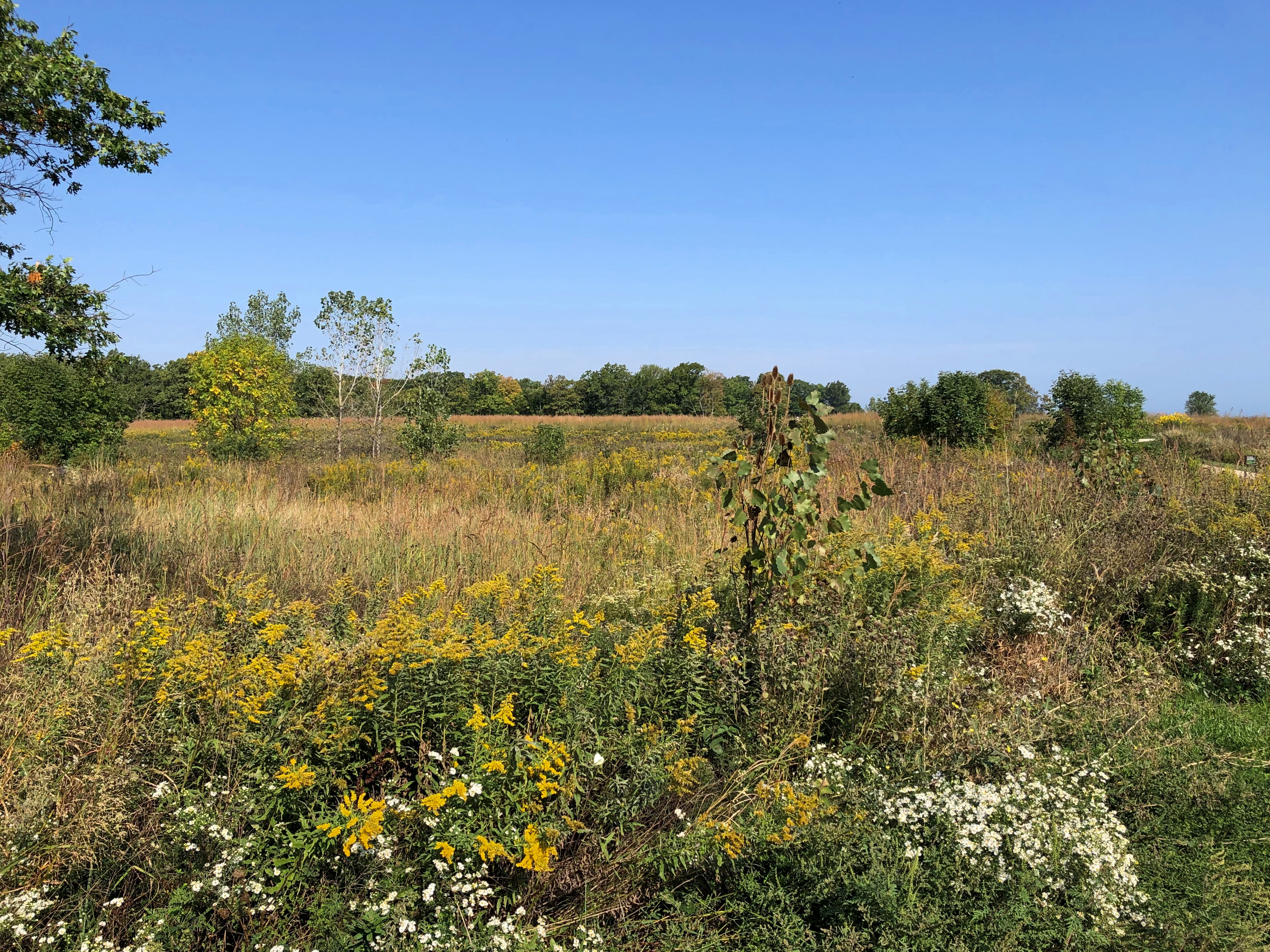
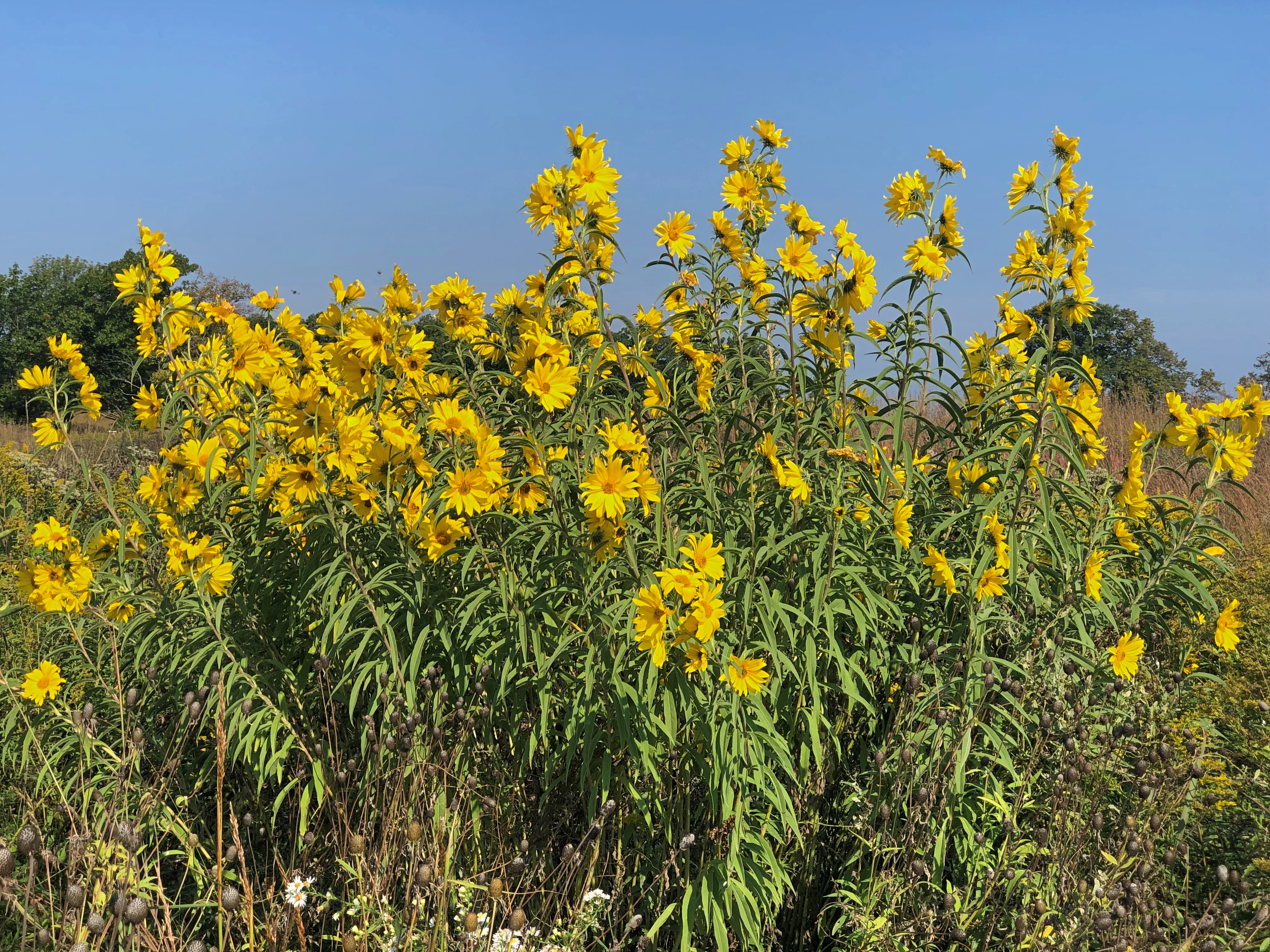
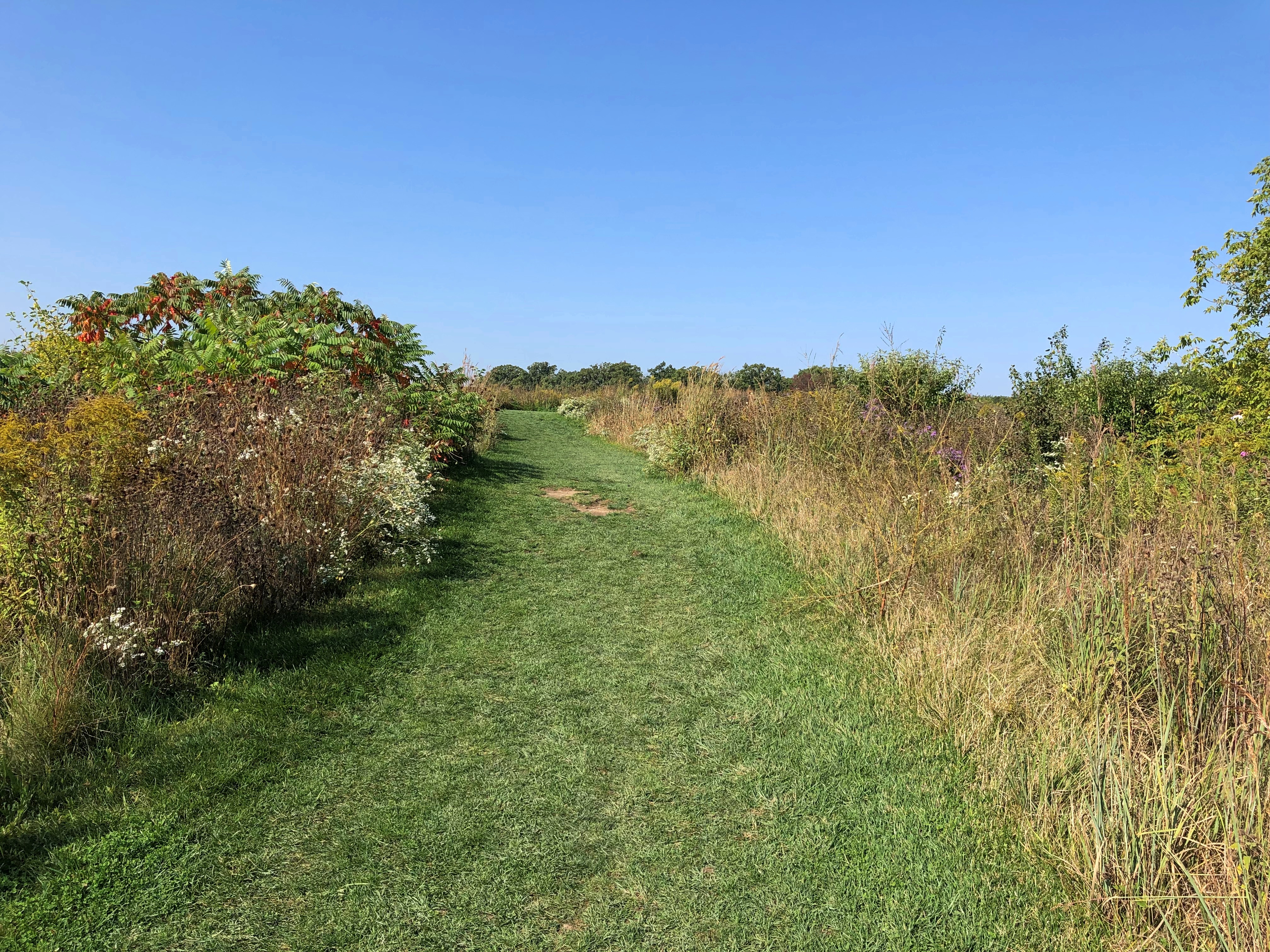
This forest preserve is only partly forest. We took short trails through prairie. Much is prairie. Much is prairie. Much is prairie. Much is prairie.

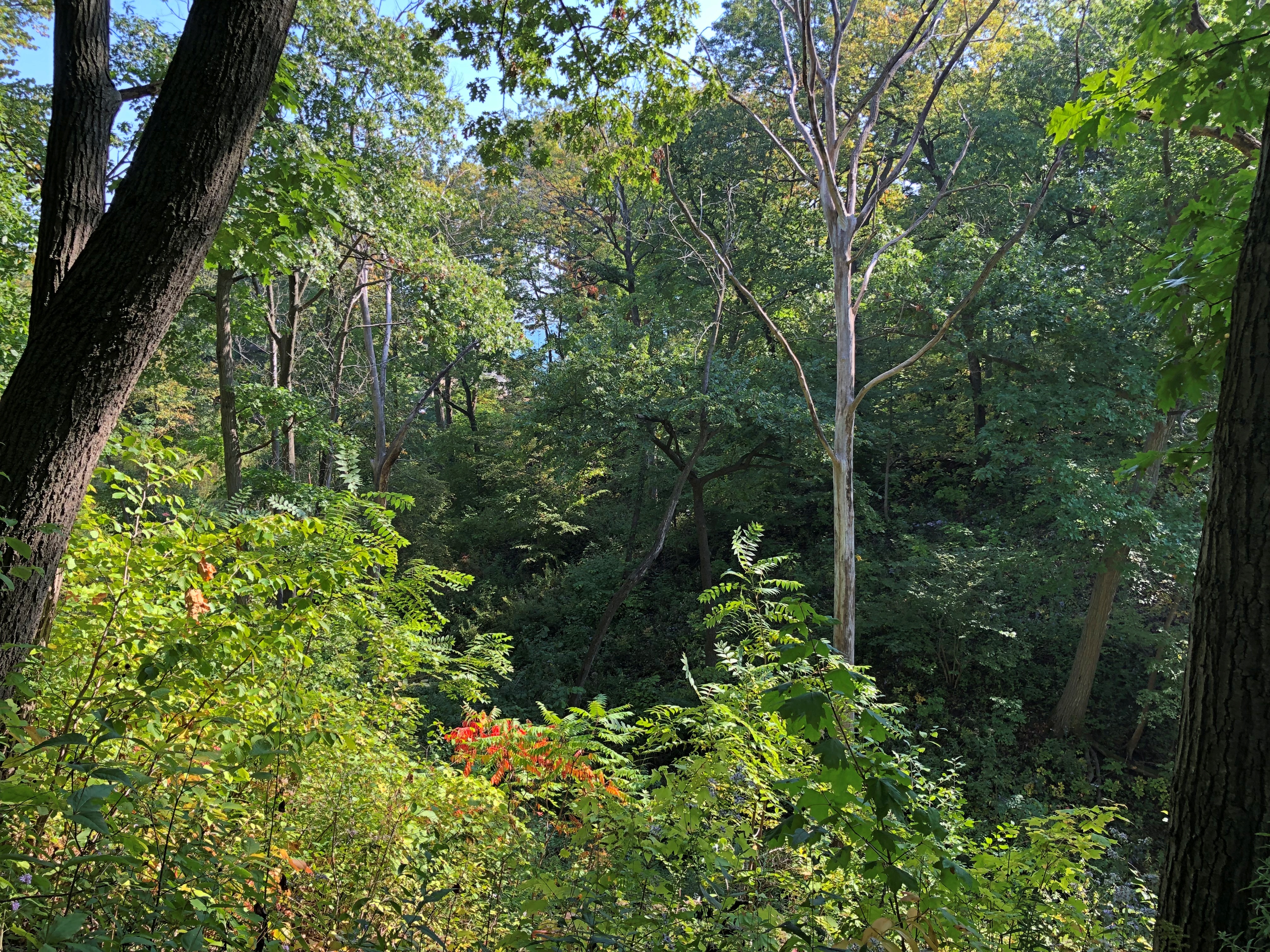
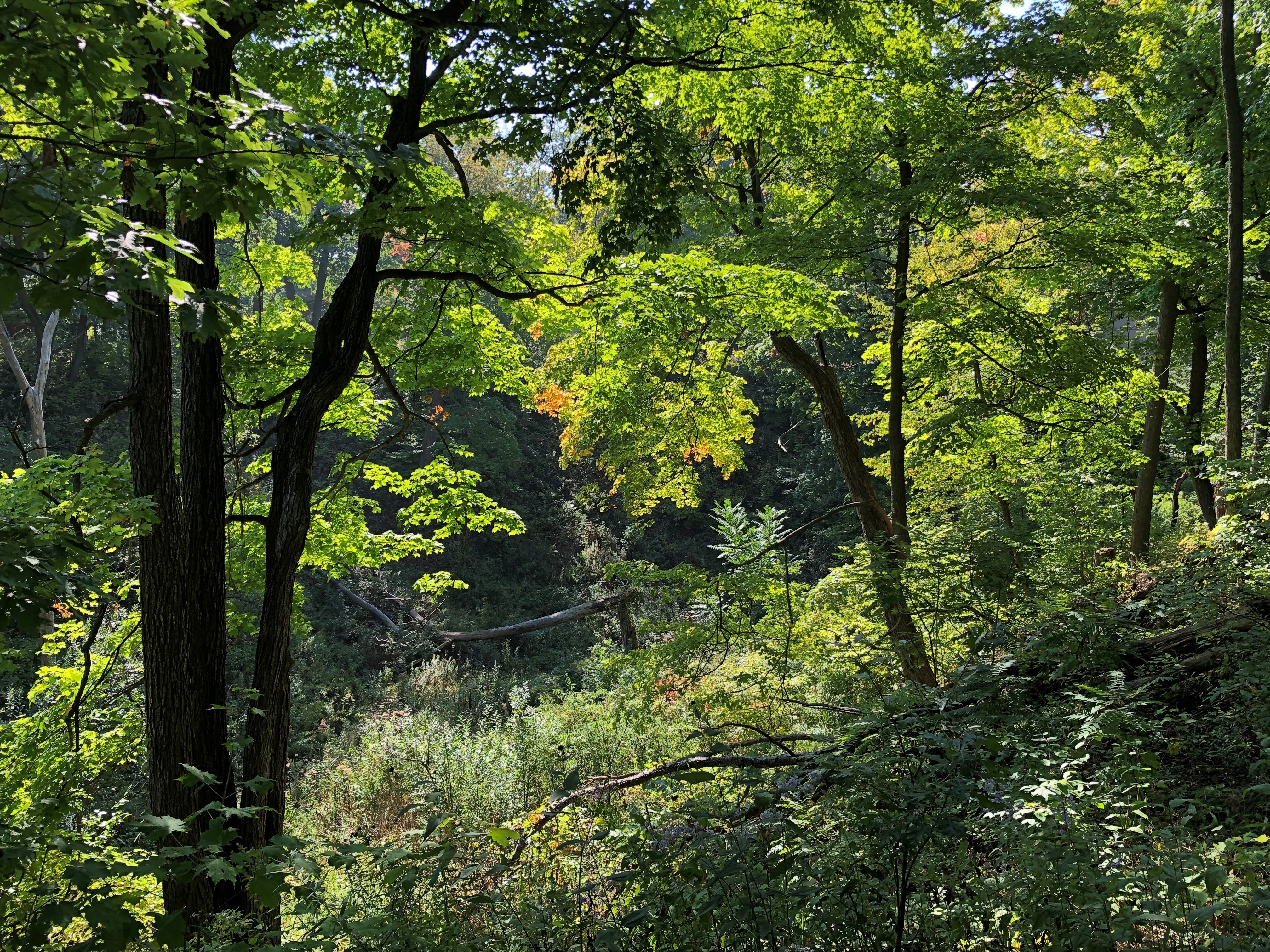
A ravine runs through it.Fort Sheridan Forest Preserve Fort Sheridan Forest Preserve

Coloration has started. Fort Sheridan Forest Preserve Fort Sheridan Forest Preserve

Barely but vividly.