For someone who has never written for television, and surely never will, I’ve got a few ideas. Just today: the wacky comedy adventures of three Florida Men who manage to kill themselves in a humiliating way – getting drunk and naked and trying to drive a cherry picker on the highway, say, with them in the basket.
They return as ghosts, condemned to haunt Florida retirement communities, though sometimes they find themselves in Miami Beach among the crabby ghosts of former retirees who came to live there in the ’60s. A twist: a fourth Florida Man, their friend who was driving the cherry picker, survived the accident and now he’s the only one who can see them. Hilarity does what it does, ensues.
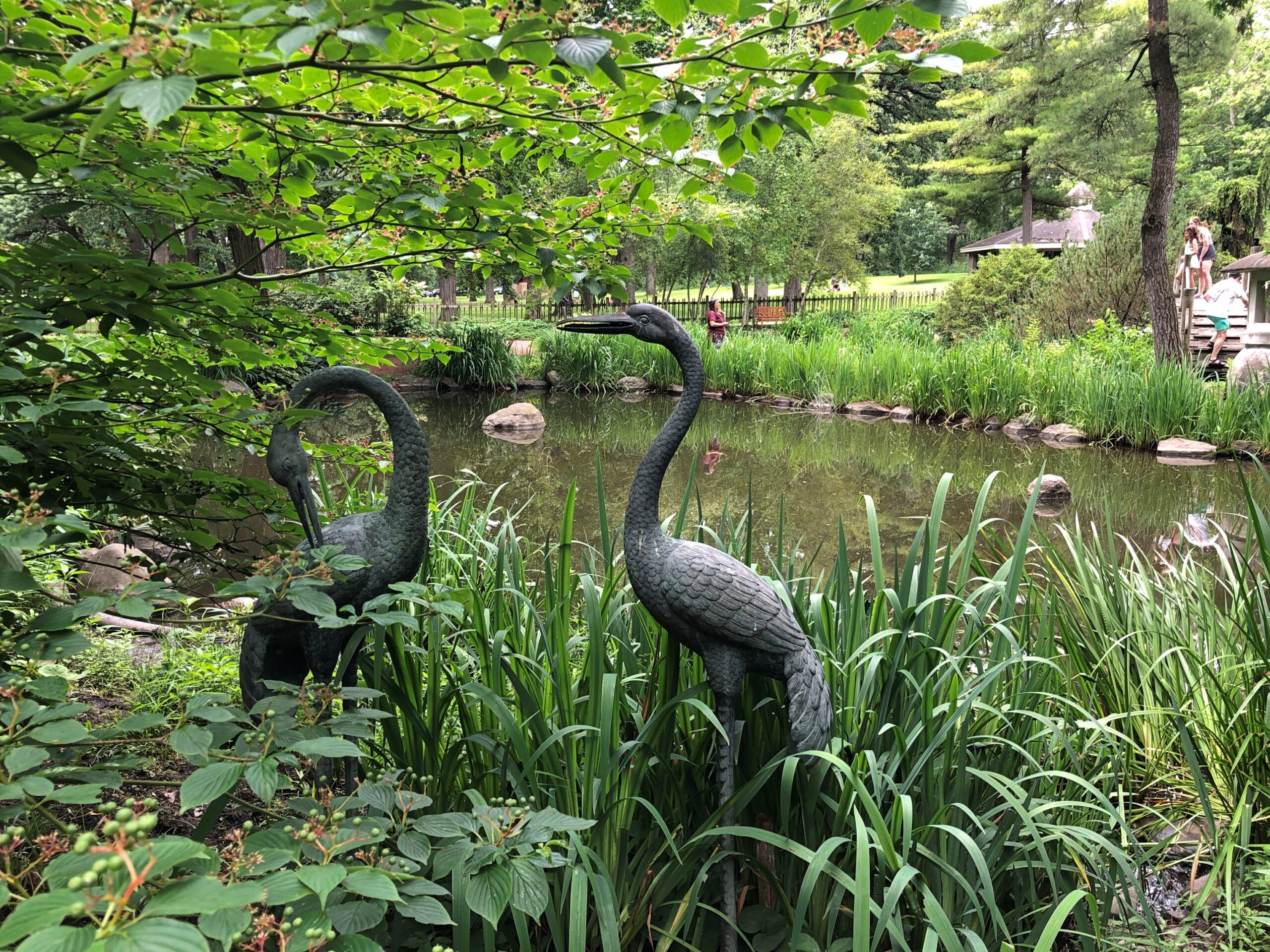
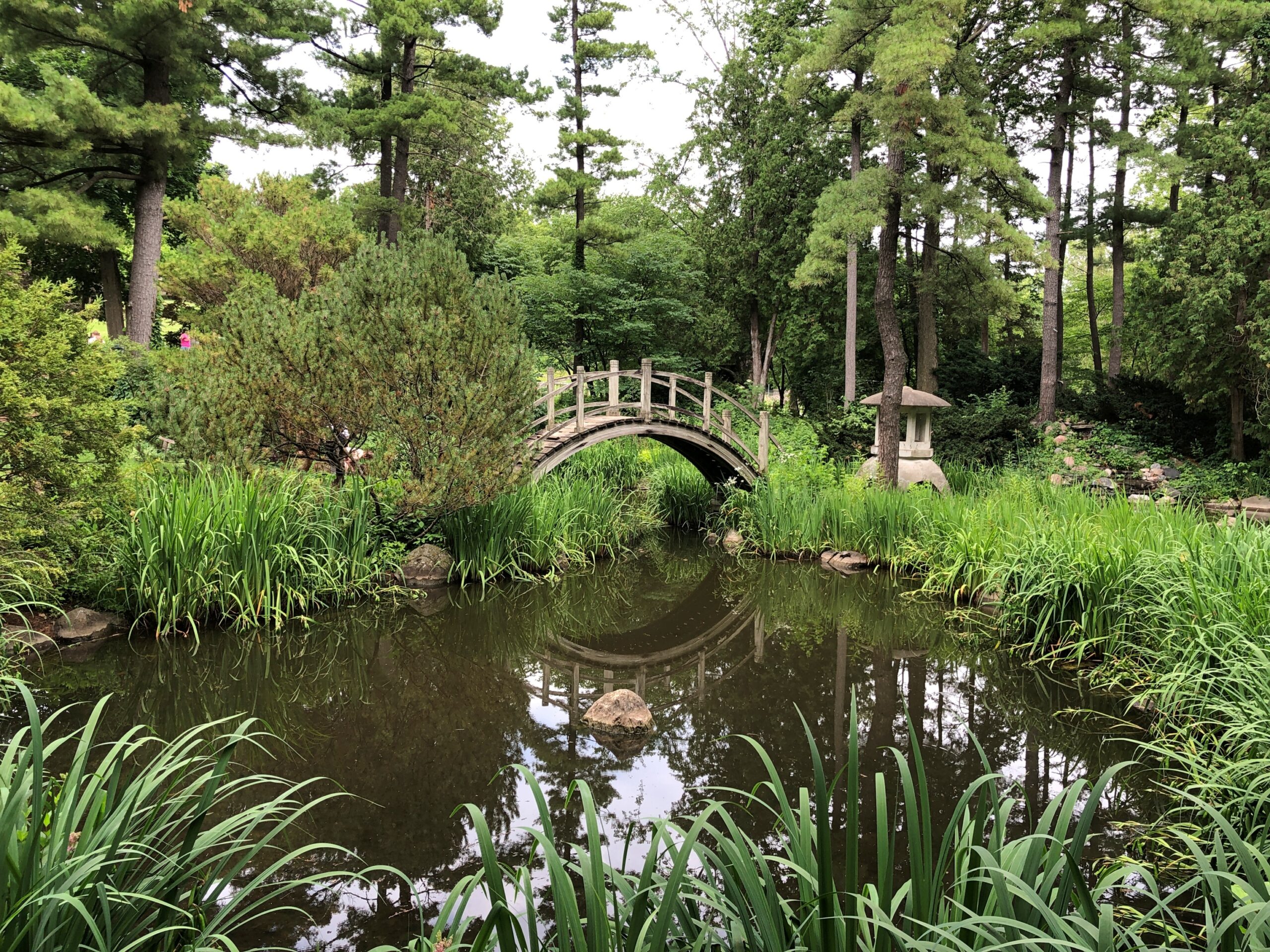
In the 1890s, Japan was still newly open, and apparently exotic to the likes of wealthy Illinoisans George and Nelle Fabyan. The story is that they came away from the Japanese Pavilion at the 1893 Columbian Exposition deeply impressed by Japanese culture. It was a common reaction, I’ll bet, and most people might have bought a book or two, or a bit of art, and left it at that.
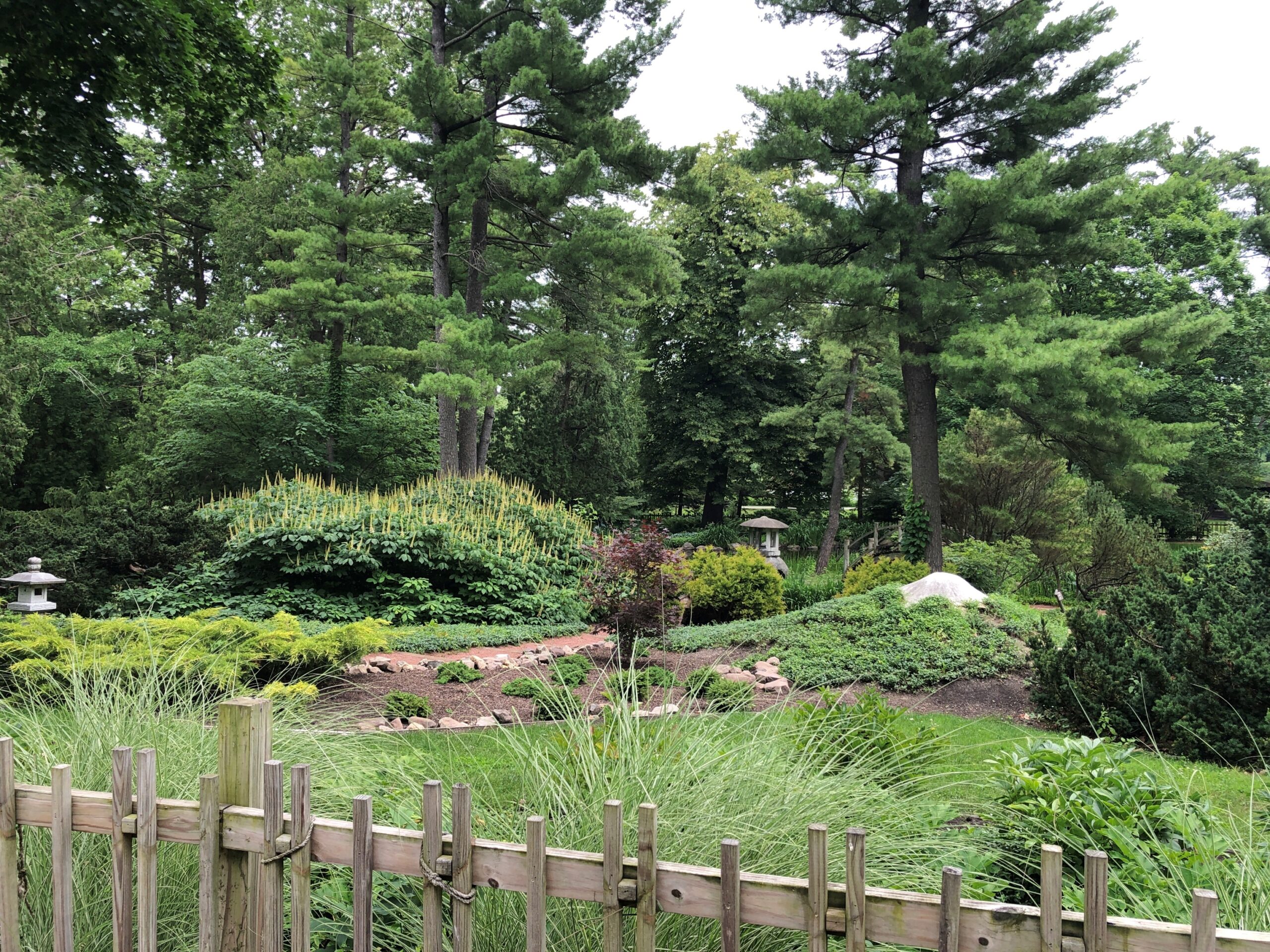
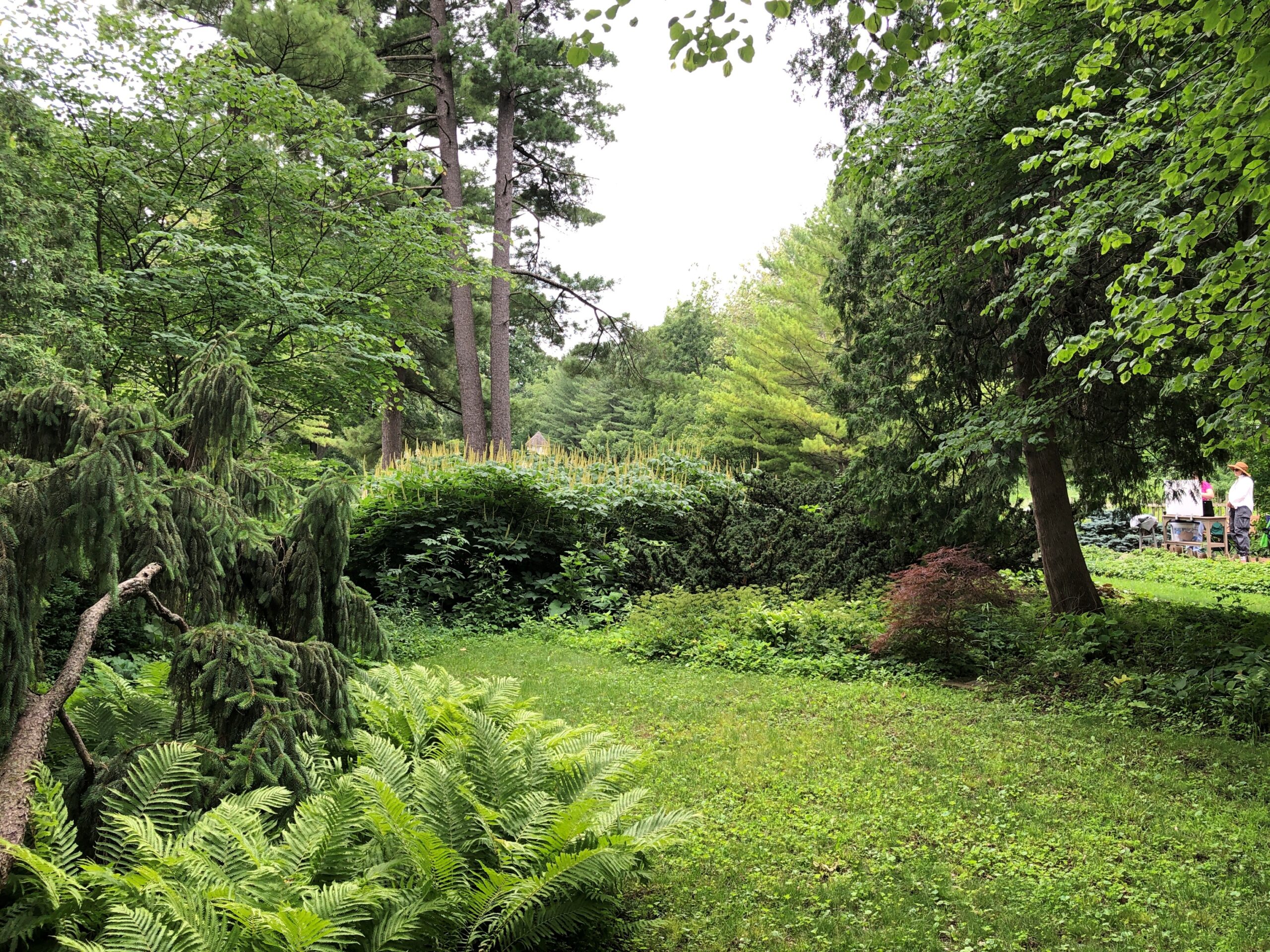
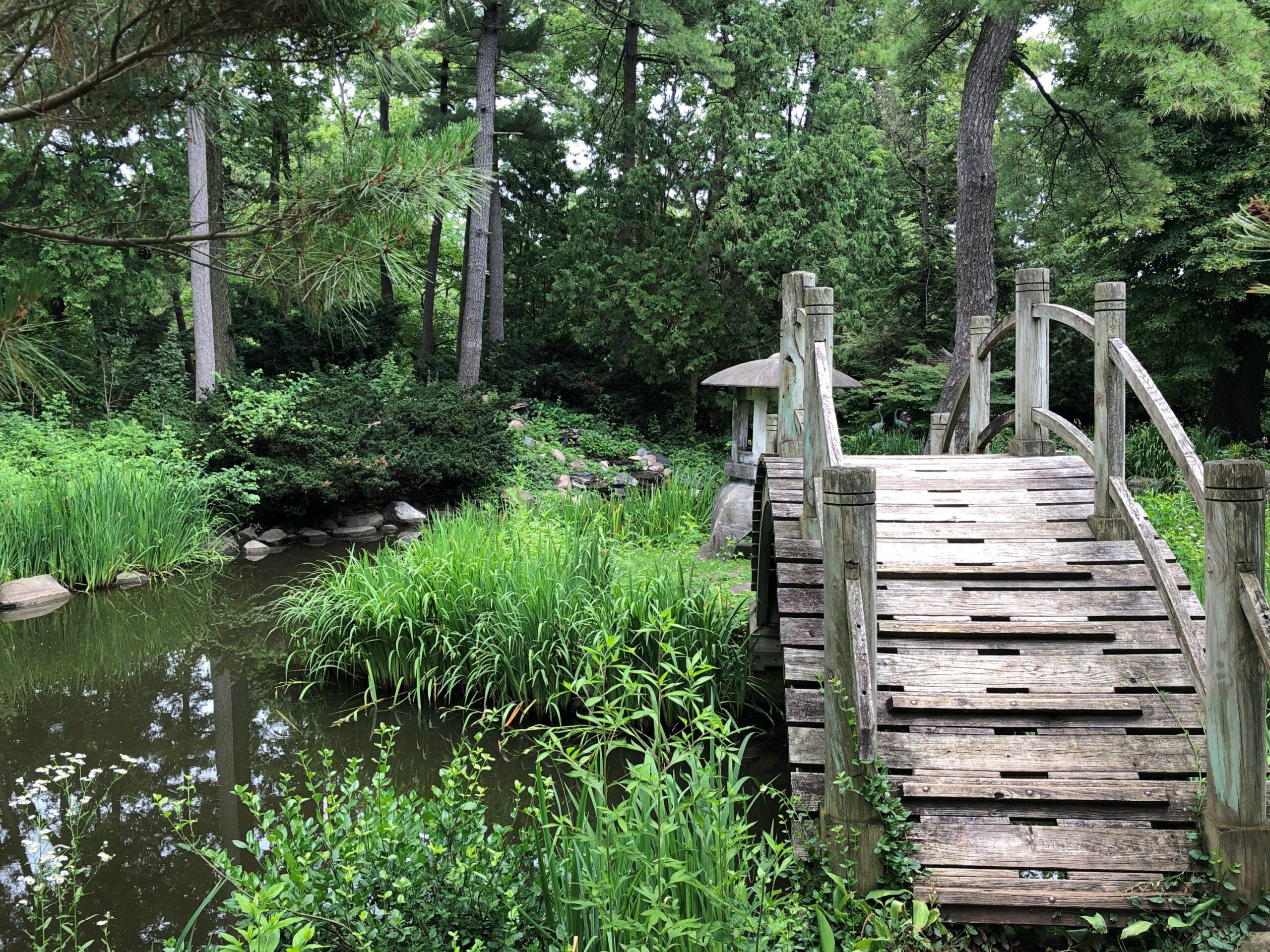
Not George Fabyan, the Great Collector of the Fox River Valley (gardens, windmills, mummies and more!). He had a Japanese garden built downslope from his home near the Fox. During the summer, visitors can go there even now, though ownership long ago passed to the Kane County Forest Preserve District.
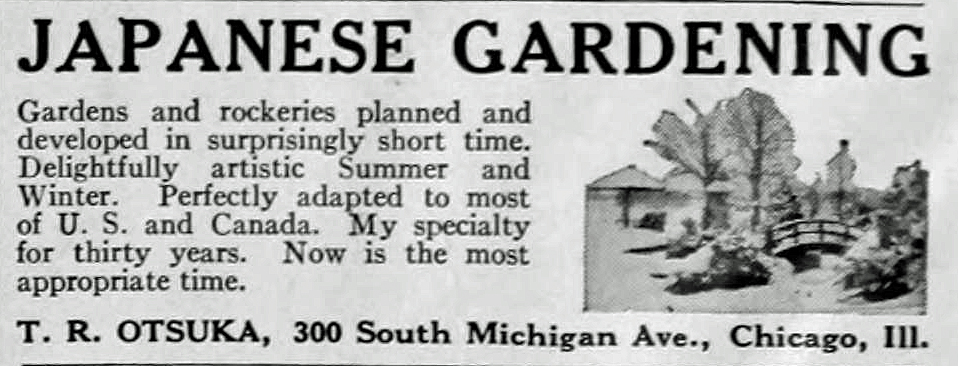
He tasked Japanese garden designer Taro Otsuka to undertake the project, which was completed not long before the Great War. Otsuka, an early 20th-century immigrant, found his niche on these shores. Namely, in designing a wave of Japanese gardens in the Midwest.
Through cycles of decline and restoration, the Fabyan garden has abided. Free admission, donations accepted.
The garden designer’s raw material is the local flora, resulting in a garden on traditional lines that nevertheless has a look apart of the models of the old country, taking aspects of the new country. Don’t ask me the details, that’s just the sense one gets.
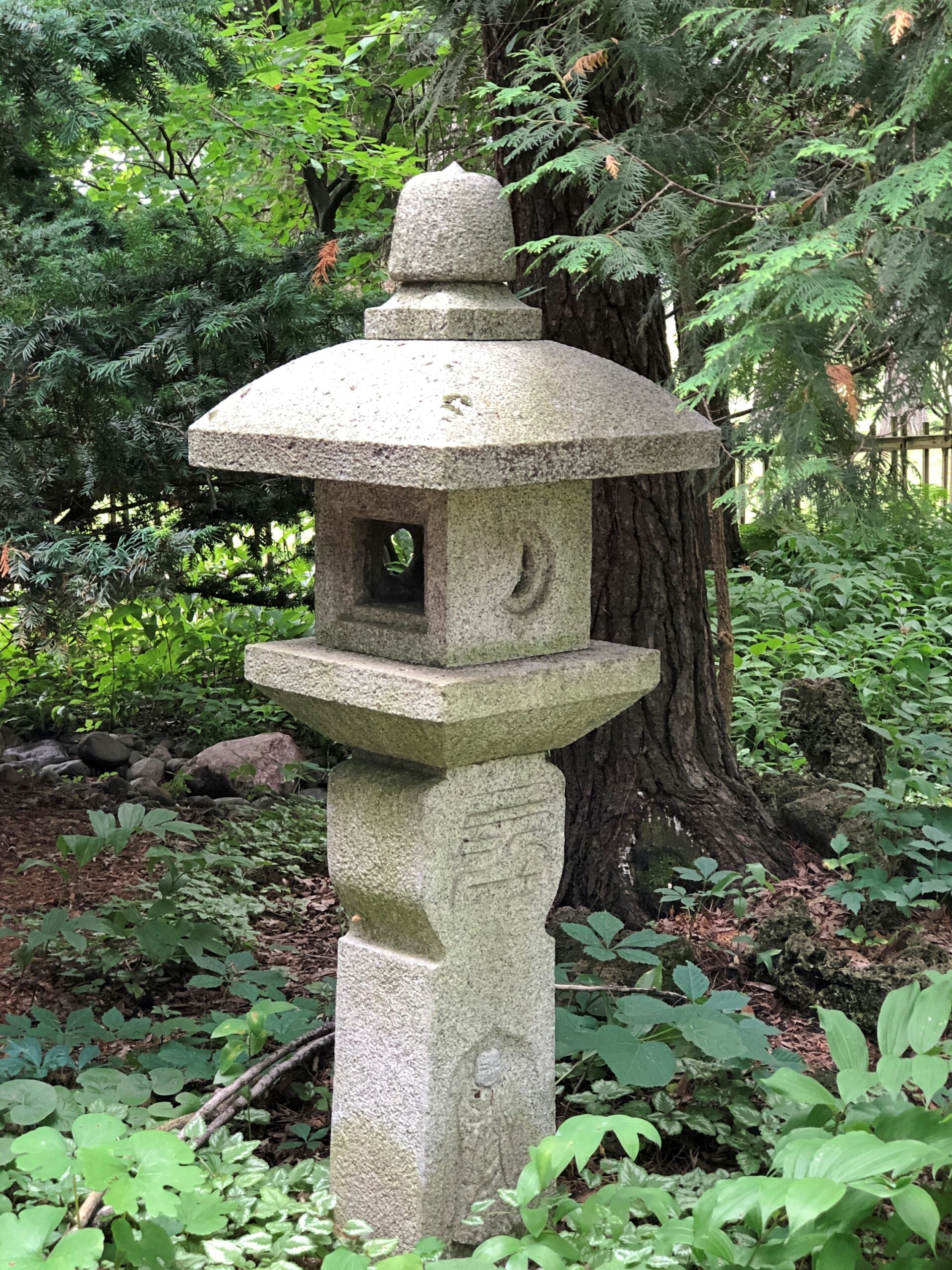
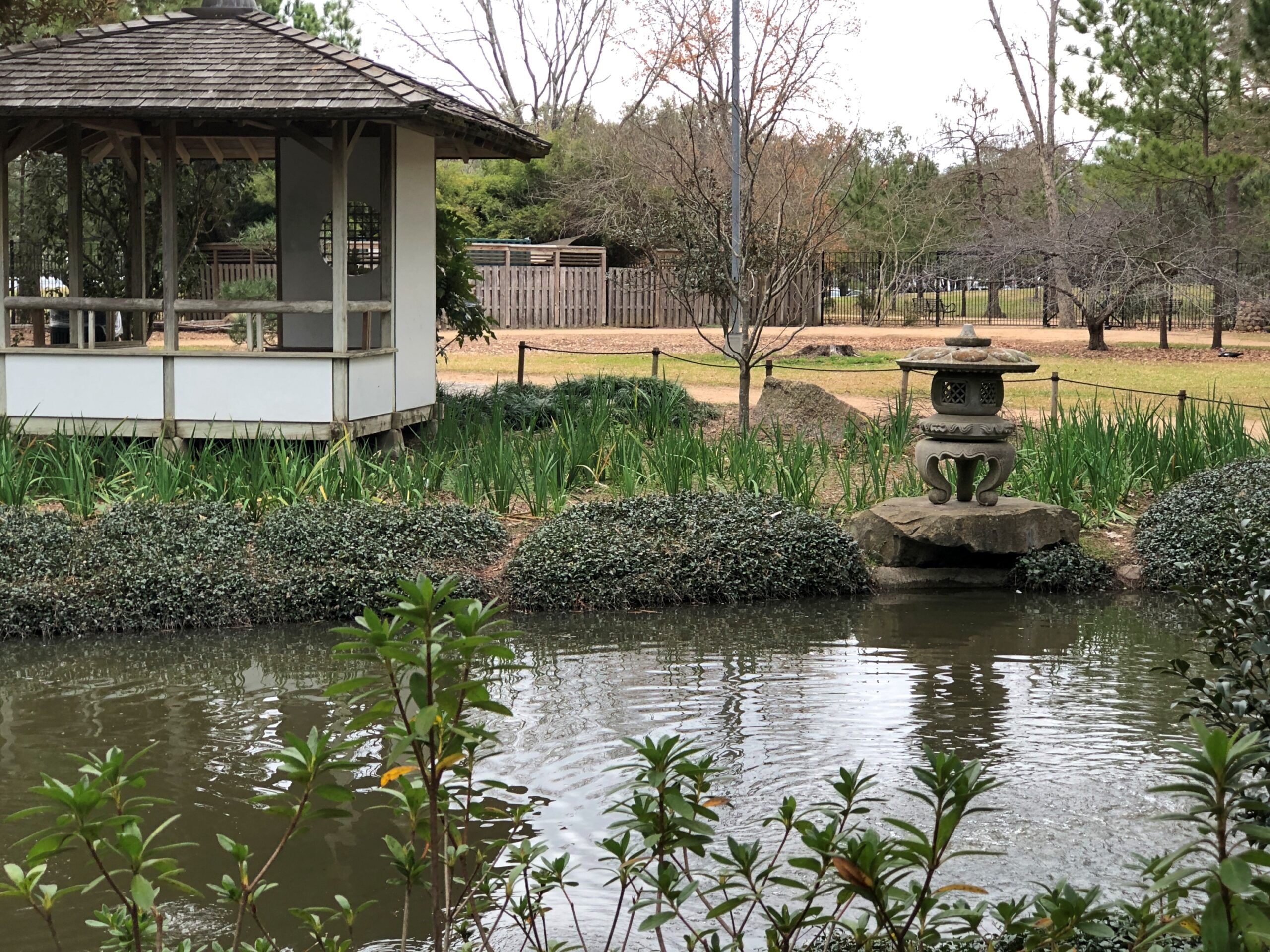
Lanterns.
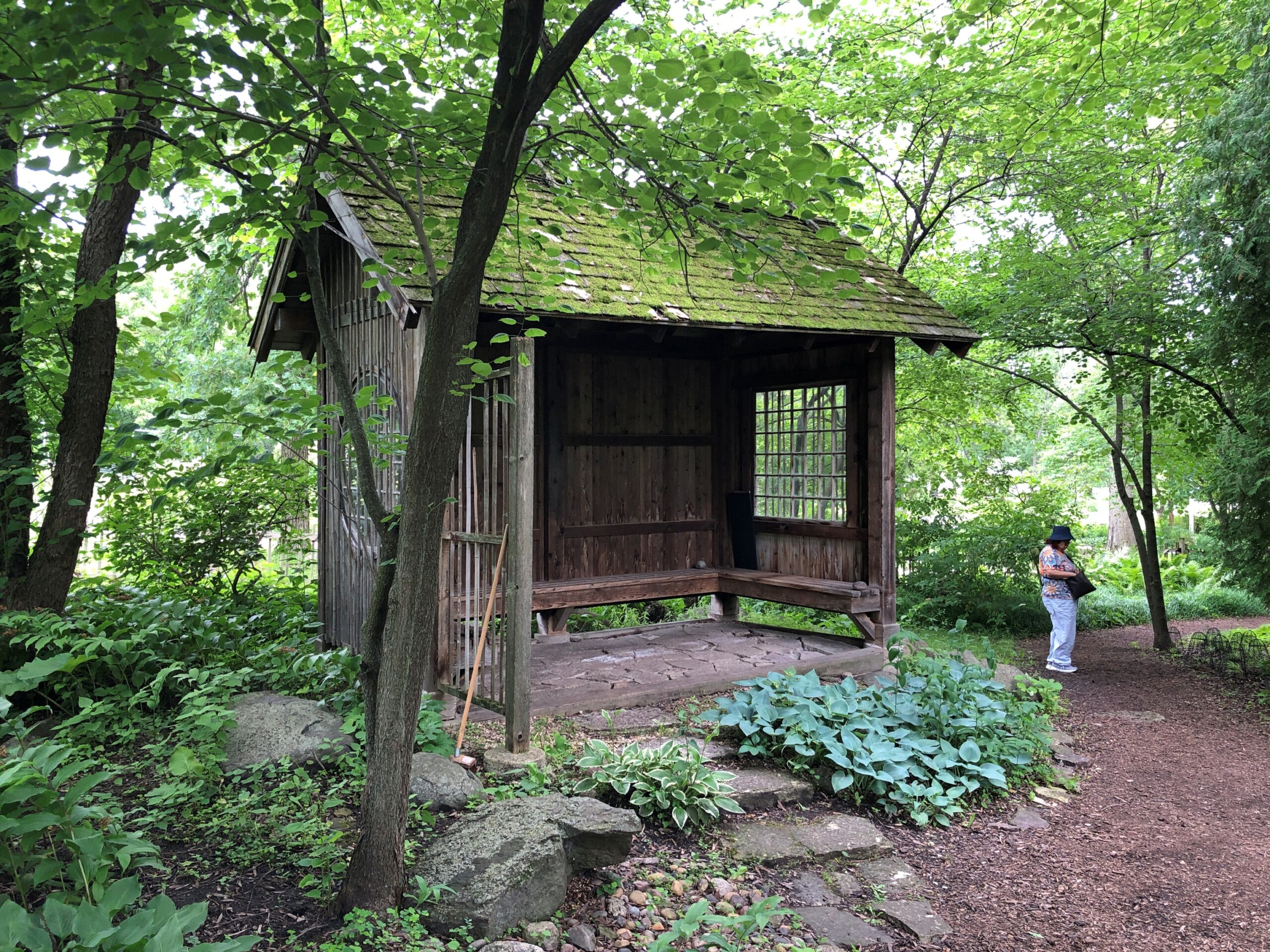
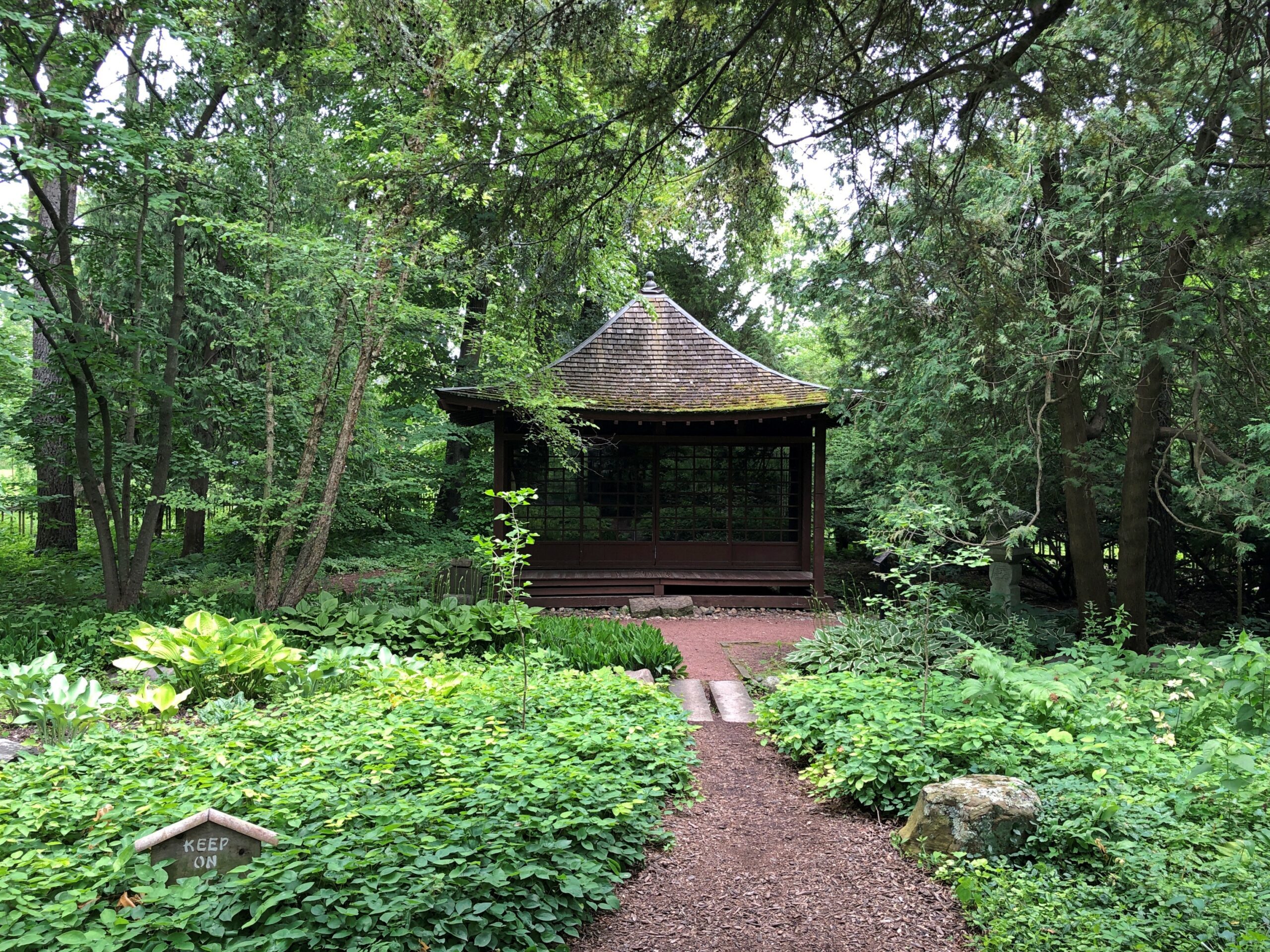
Structures.
Teahouse of the Fox River, you could call that one.
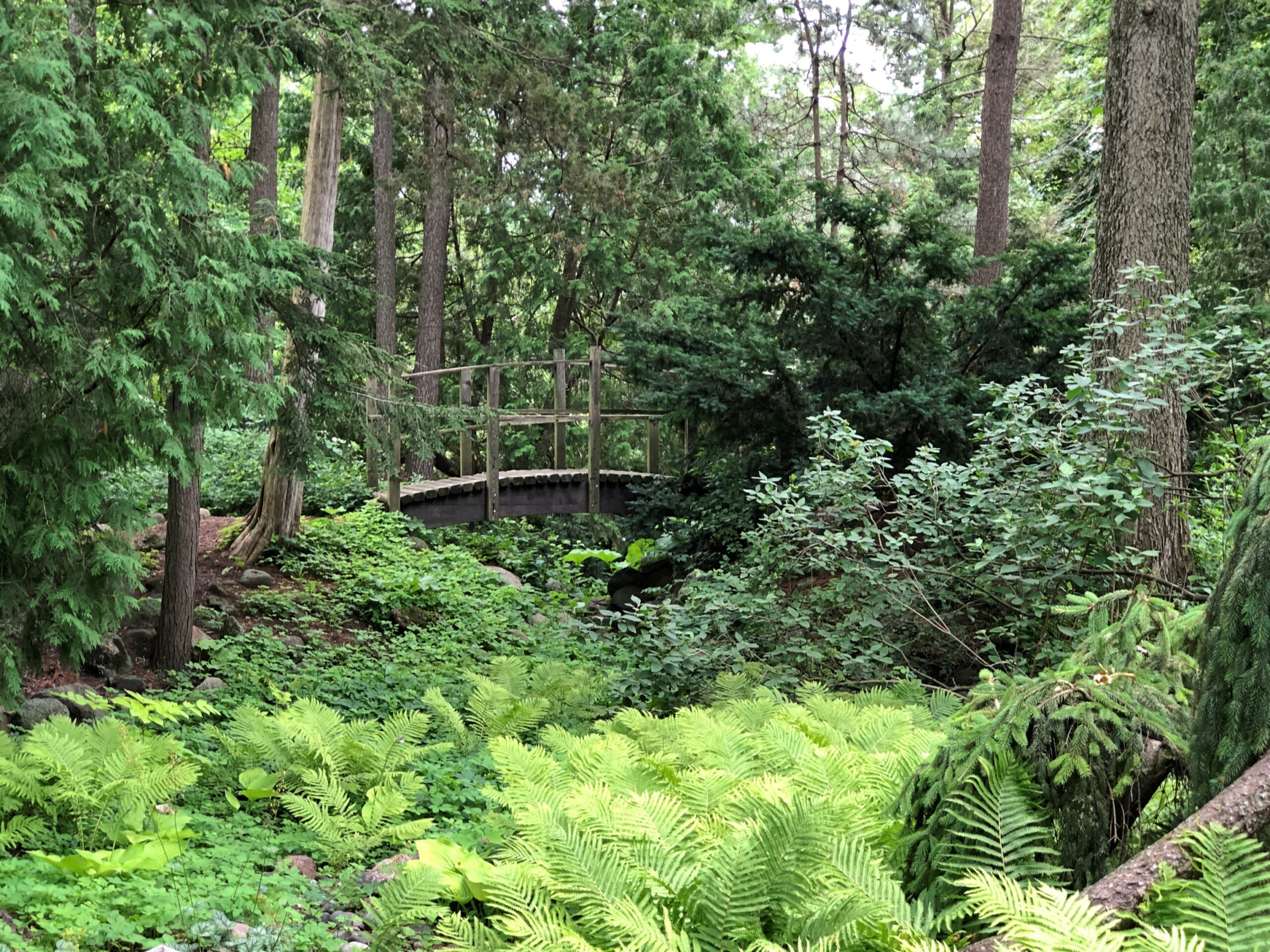
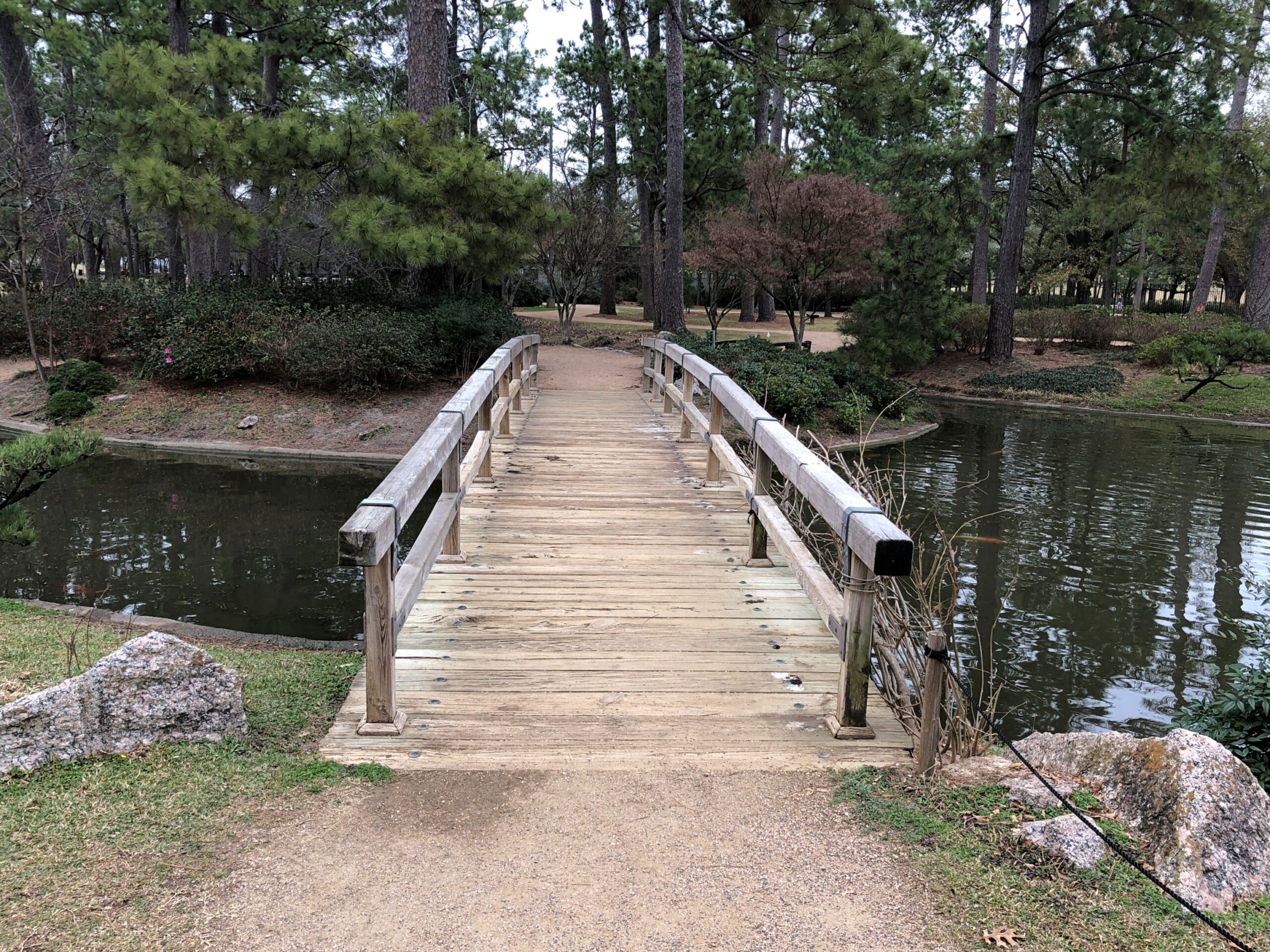
What’s a Japanese garden without an impressive bridge over an elegant water feature?
I’m glad for a lot of reasons that I lived in Japan in the early ’90s and not later. One reason: pre-Google and (more importantly) pre-Google Maps, you navigated by your own wits, aided by not-always-detailed paper maps, wayfaring signs in Japanese and sometimes English, directions from other foreigners – part of the mass of gaijin lore we all tapped into – and helpful Osakans.
It was doable. One time I bought a used bicycle from a colleague who lived in a fairly far corner of metro Osaka, far from me anyway, on the condition that I come take it away. Meaning about a 20-mile ride through the heart of greater Osaka, a ride I broke into two segments by locking the bike after the first day’s pedaling at a subway station and going home that way. Good thing Japanese streets are more or less suitable for bicycling, but less so for wayfinding, since the urban texture tended to be a rinse-and-repeat cycle of narrows streets, concrete apartment blocks, and small shops shoehorned into even narrower lanes.
Six- or eight-lane boulevards crisscrossed the region, and so did small and larger rivers. One time a helpful Osakan directed me to an elevator door tucked away in a grey wall of odd shapes and angles – a door that had been accidentally camouflaged by its utilitarian surroundings. The unmarked elevator took pedestrians and bicyclists down to the entrance of a spare, well-lit underground tunnel under a major river at a spot that had no bridge.
But I need to say that the rinse-and-repeat was only superficial. Like other places, most other places I’d say, with a little time and observation, details come into focus. In the case of Osaka, a shrine tucked into wall or a weedy embankment near a canalized creek that was home to a couple of gnarled, flowering trees, or sometime as incongruous as a speedboat parked in a spot for a car. Or an unusual handmade retail sign, clearly made by pop for the front of a mom-and-pop (or maybe by mom, who wouldn’t be accorded credit for it, and maybe not inclined to take credit).
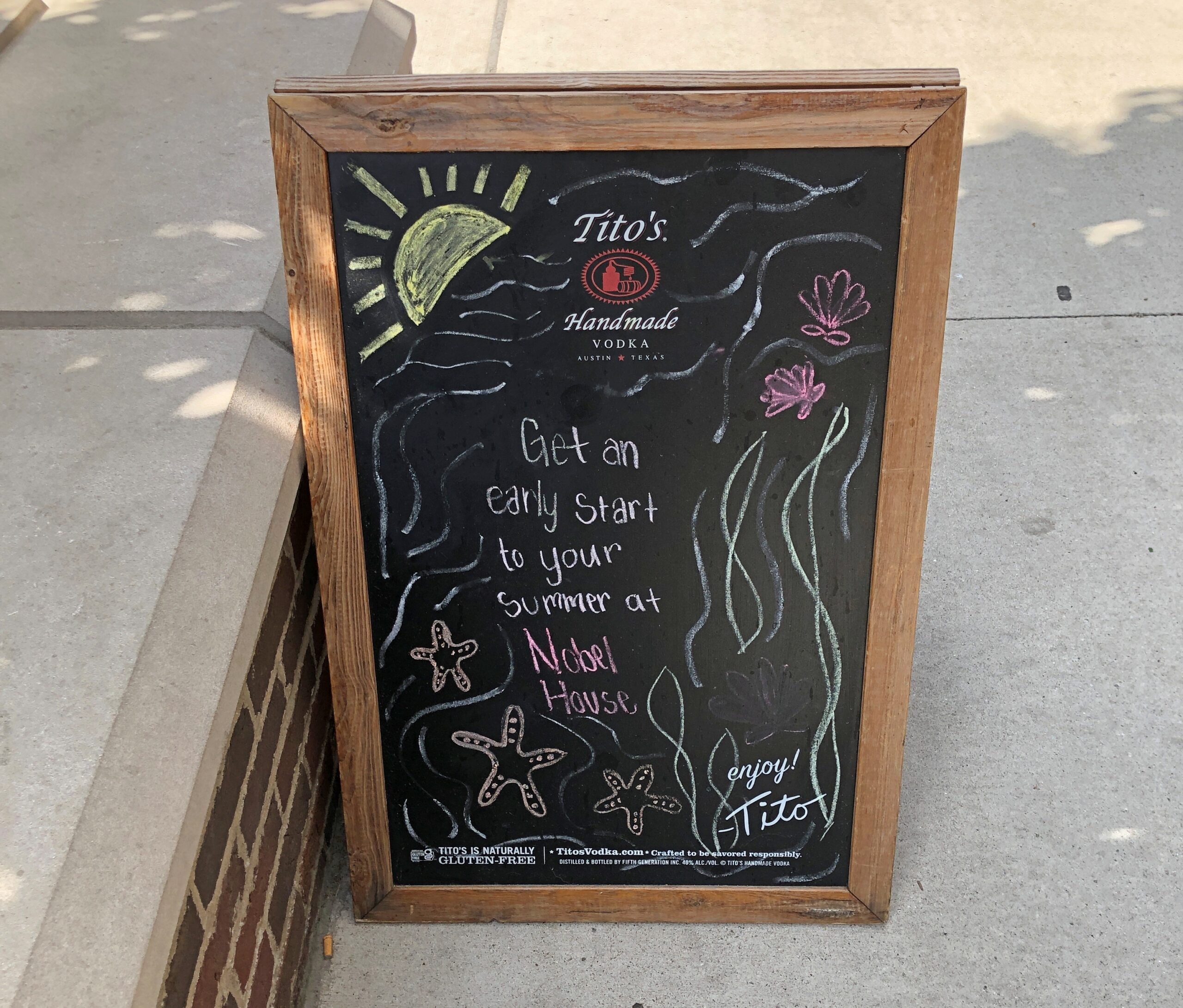
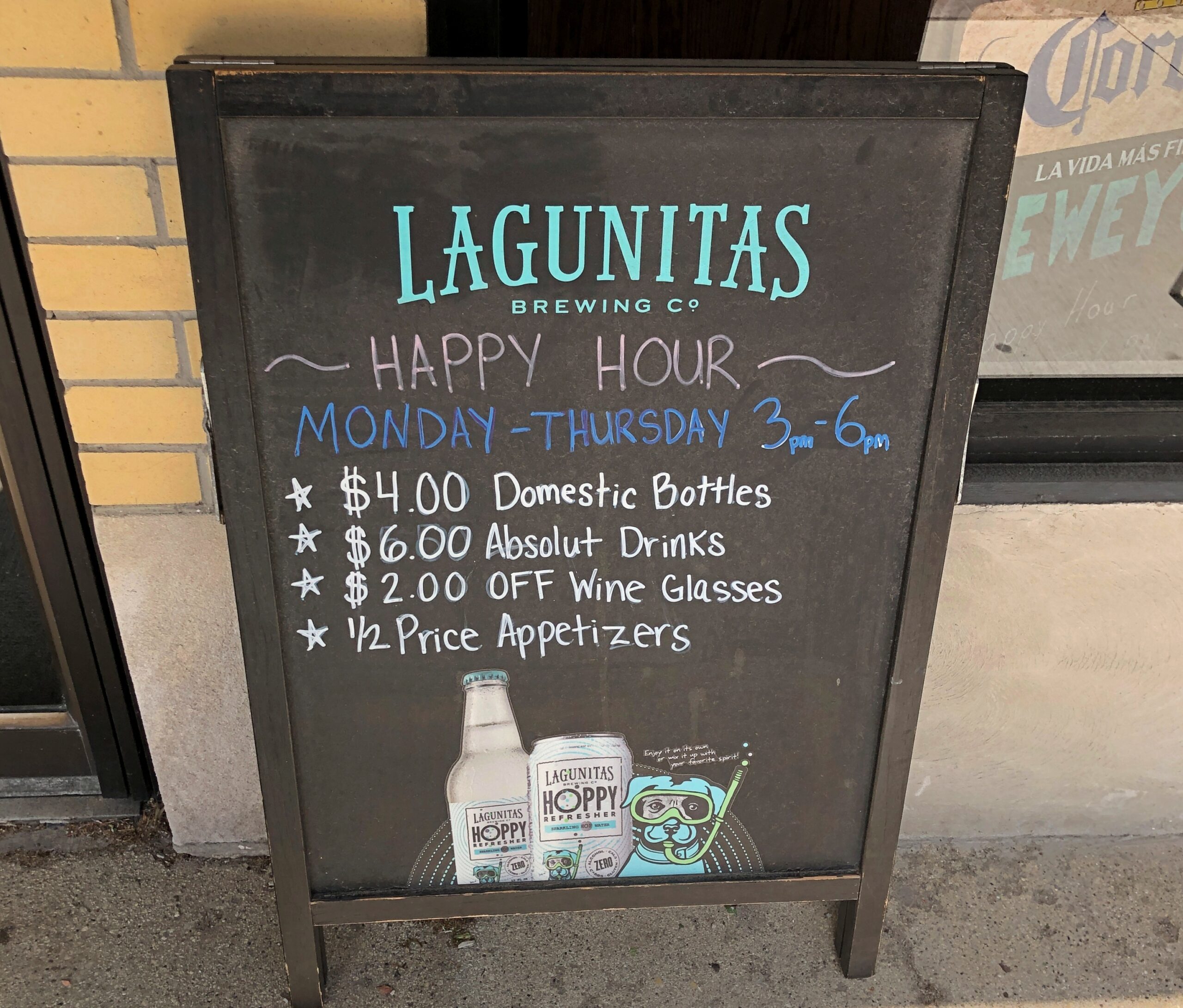
There’s a Flickr collection, or even a coffee table book, in the unlimited variety of limited-edition retail signs, handmade or made by advertisers. A worldwide selection. They’re more sporadic in the Chicago suburbs, generally clustering on main shopping streets – of which there are a fair number, tucked away and locally focused. So far this summer we’ve made our way to a handful of suburban shopping streets.
Starting with the imprimatur of Tito, Alamo Heights High School Class of ’79.
Straightforward, gets the signing job done.
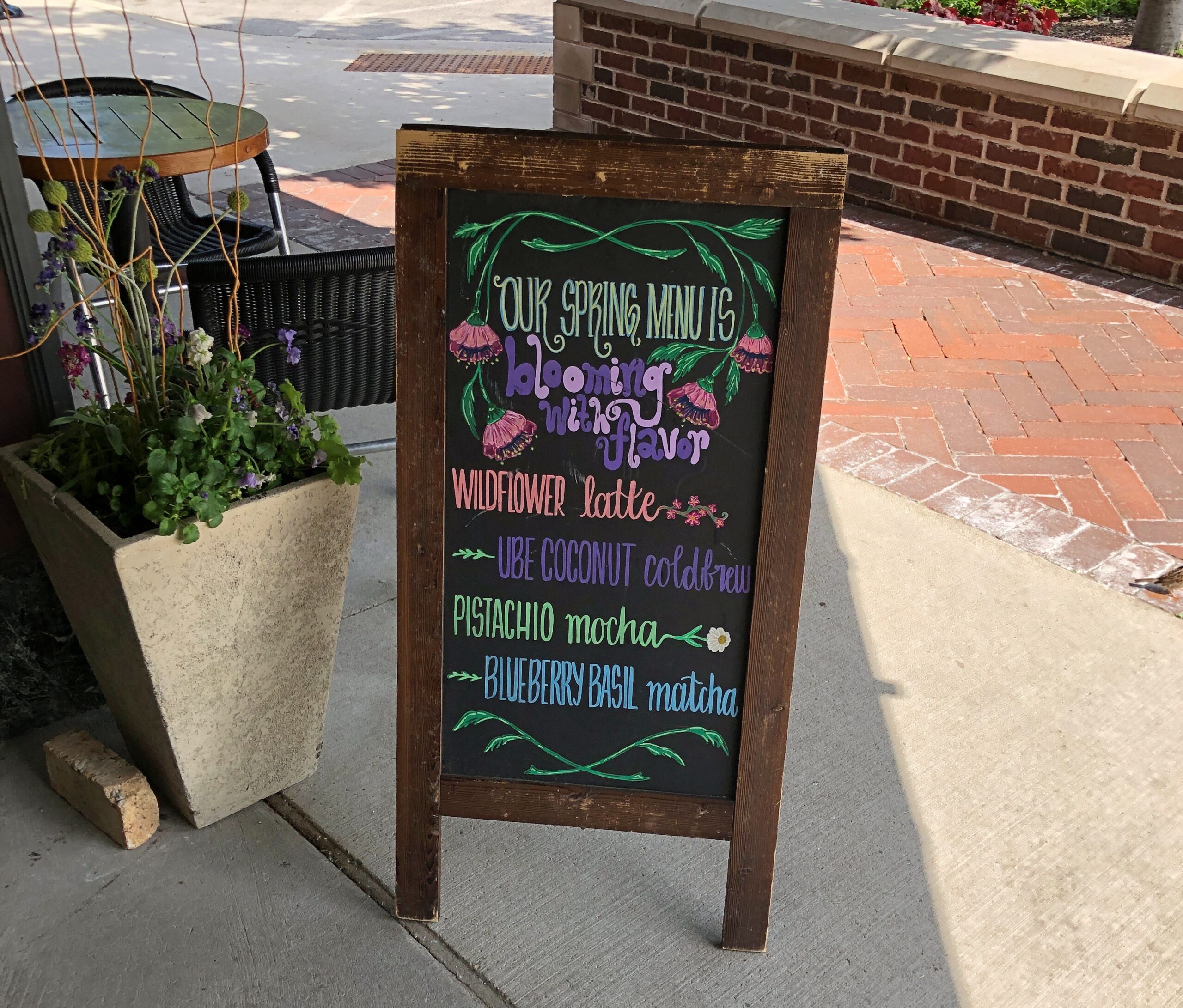
For those who aren’t into that whole neurotoxin thing.
“We need something out there now, we’re about to open.”
How could this not be a favorite?
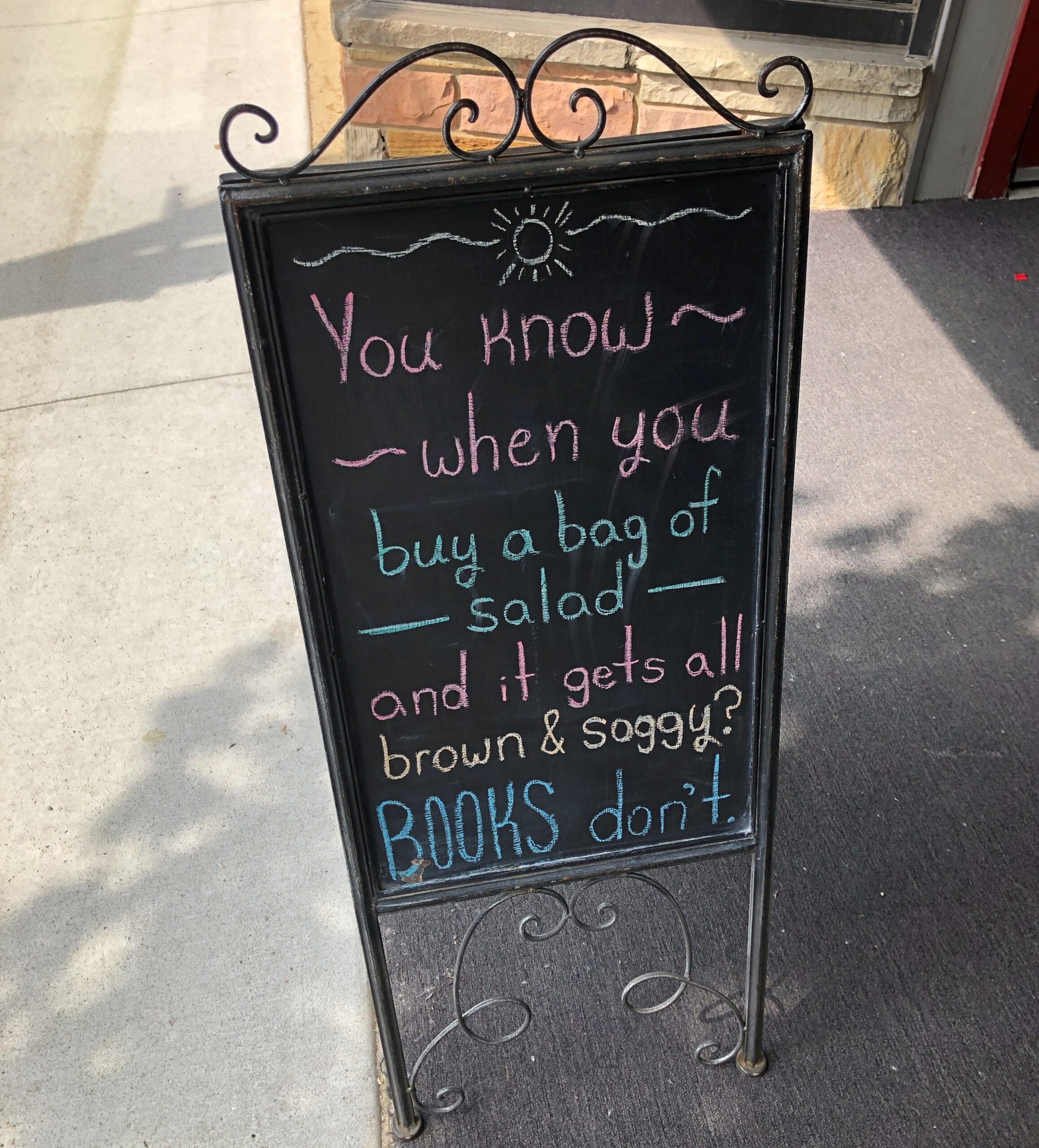
True, not brown and soggy. Brown and crumbly, with enough time.
My go-to data source for gas prices is AAA, which tells me that the national average today is $3.983/gal, and higher in Illinois, at $4.228/gal. As everyone knows, up markedly this month. People have long seemed to believe that the President of the United States has a magic button that made gas prices change. That was nonsense, of course, but now it looks like the administration has found such a button, except it might be stuck on “rise.”
Be that as it may, I’m glad my recent long drives, and long flights, aren’t scheduled for this year. The summer of ’26 could be a time to stay closer to home. Then again, prices north of $4/gal – in fatter 2008 dollars – didn’t keep us from driving to Great Smoky Mountains NP that year.
In Houston last month, I did a fair amount of driving, including in the airport-area industrial submarket. That is, among the warehouses and distribution centers that form part of the sizable metro Houston industrial market, which totals about 700 million square feet (for comparison, metro Chicago’s market is roughly 1 billion square feet). I’m probably one of the few tourists anywhere who gets a kick out of driving by behemoth industrial buildings, but there you have it.
I also drove the short distance from downtown Houston to Hermann Park, a legacy of the City Beautiful Movement and the landscape architectural talents of George Kessler (d. 1923). He was a younger version of Frederick Law Olmstead, it seems, busy in a lot of places, though more important in planning for Dallas than Houston.
Always thought “City Beautiful” is too far a reach. Like most people, I’d say City Pretty Nice or City Not Bad would be good enough, but that’s not the kind of movement name that inspires grand projects.
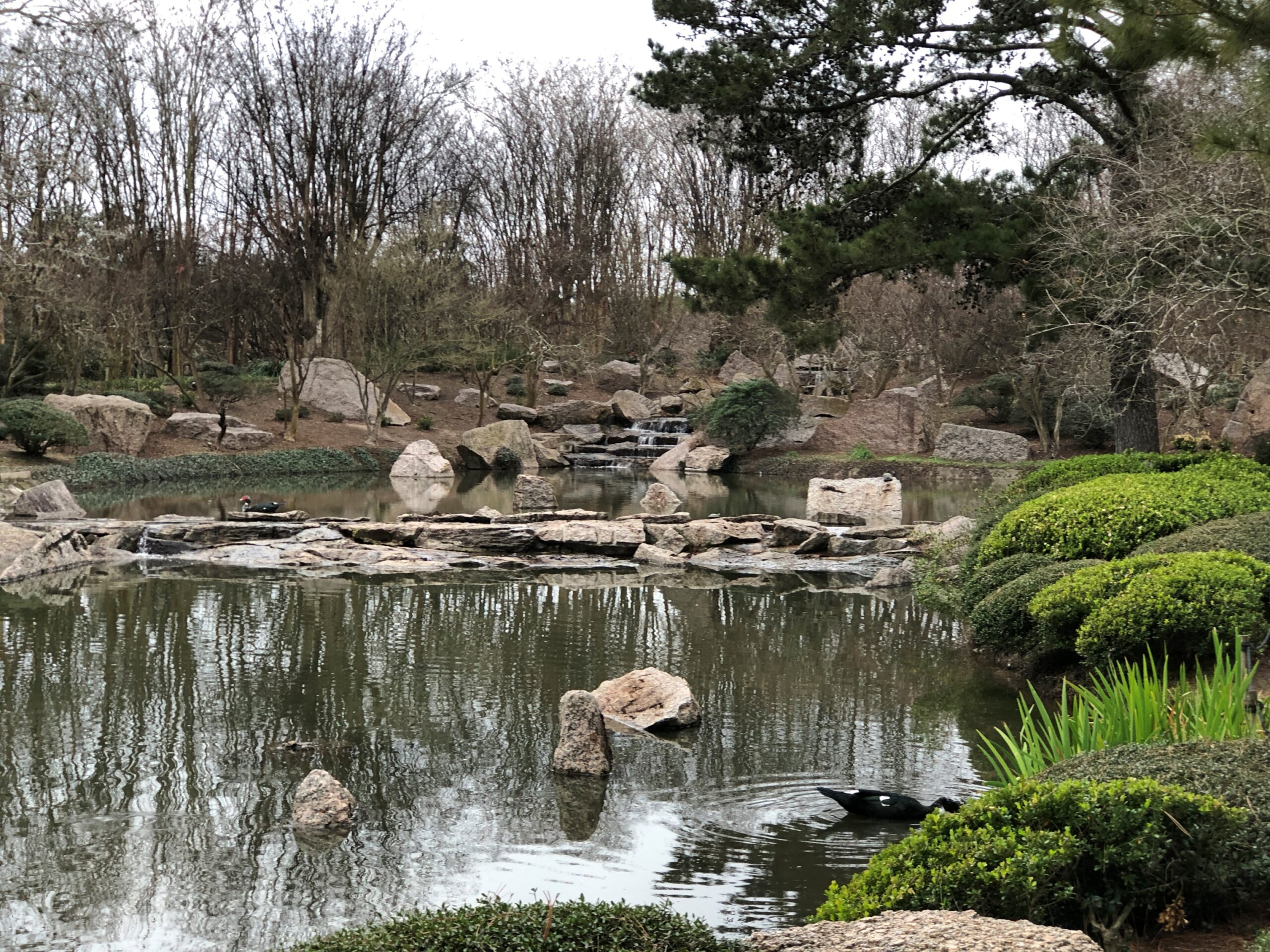
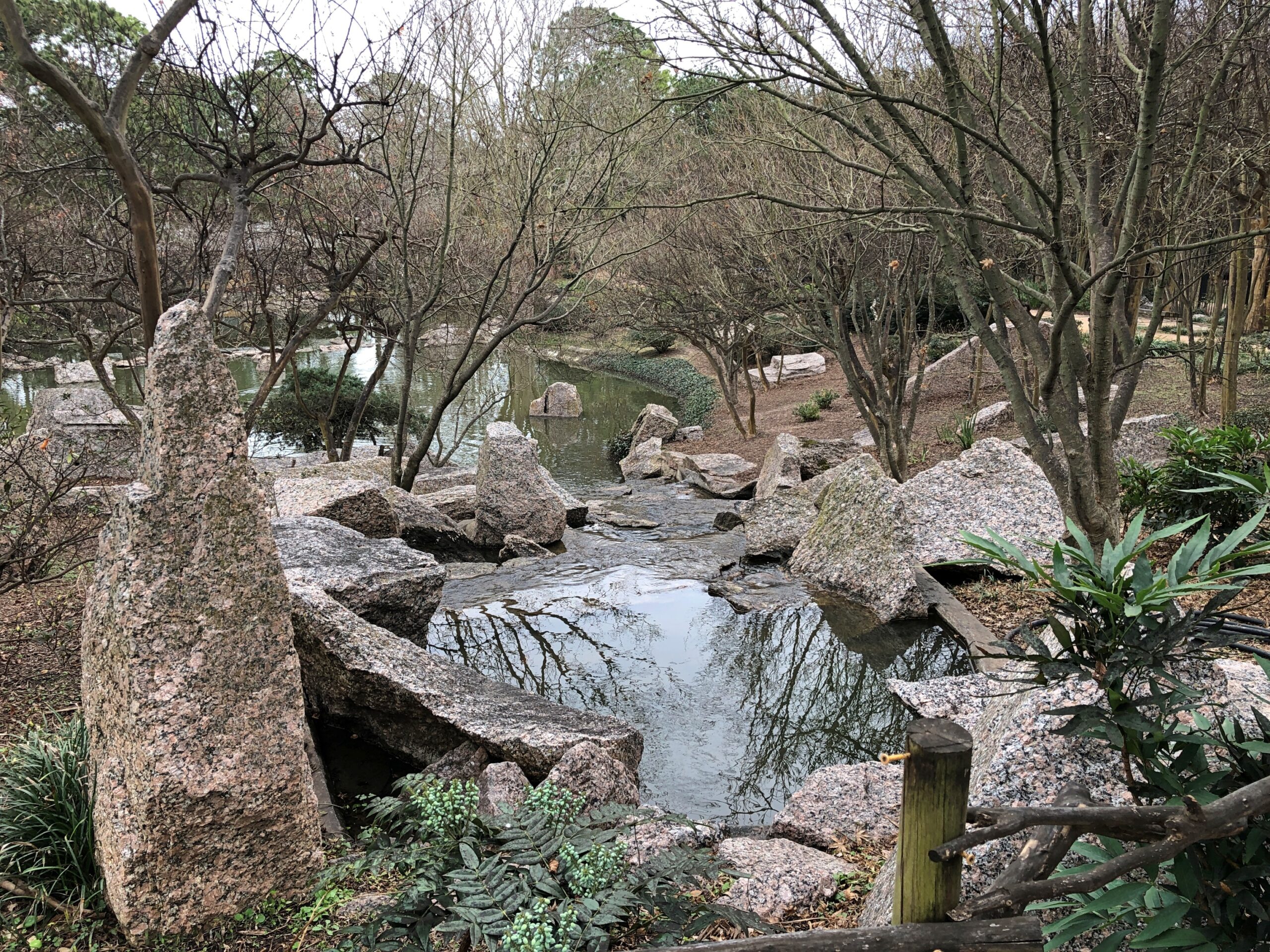
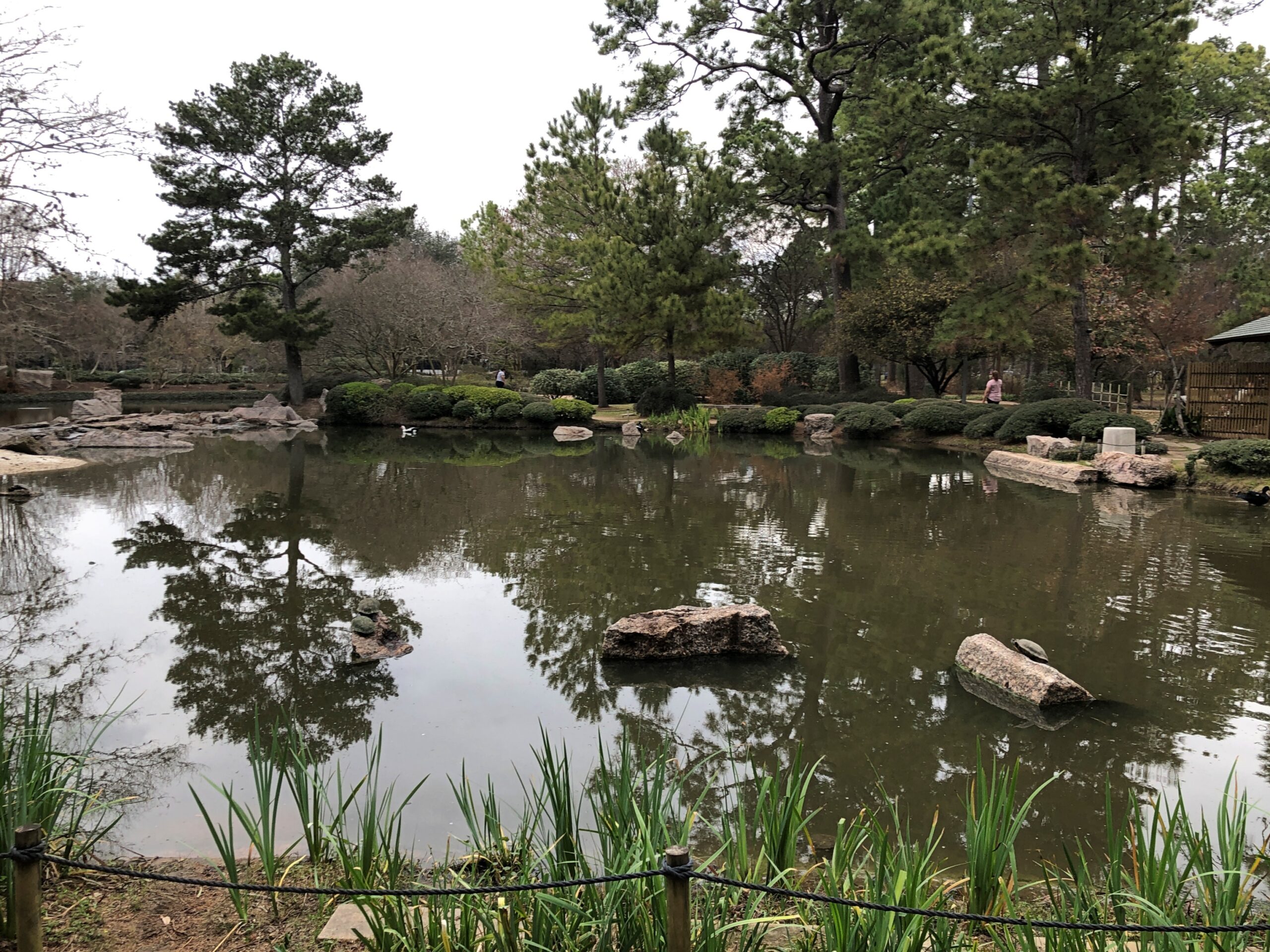
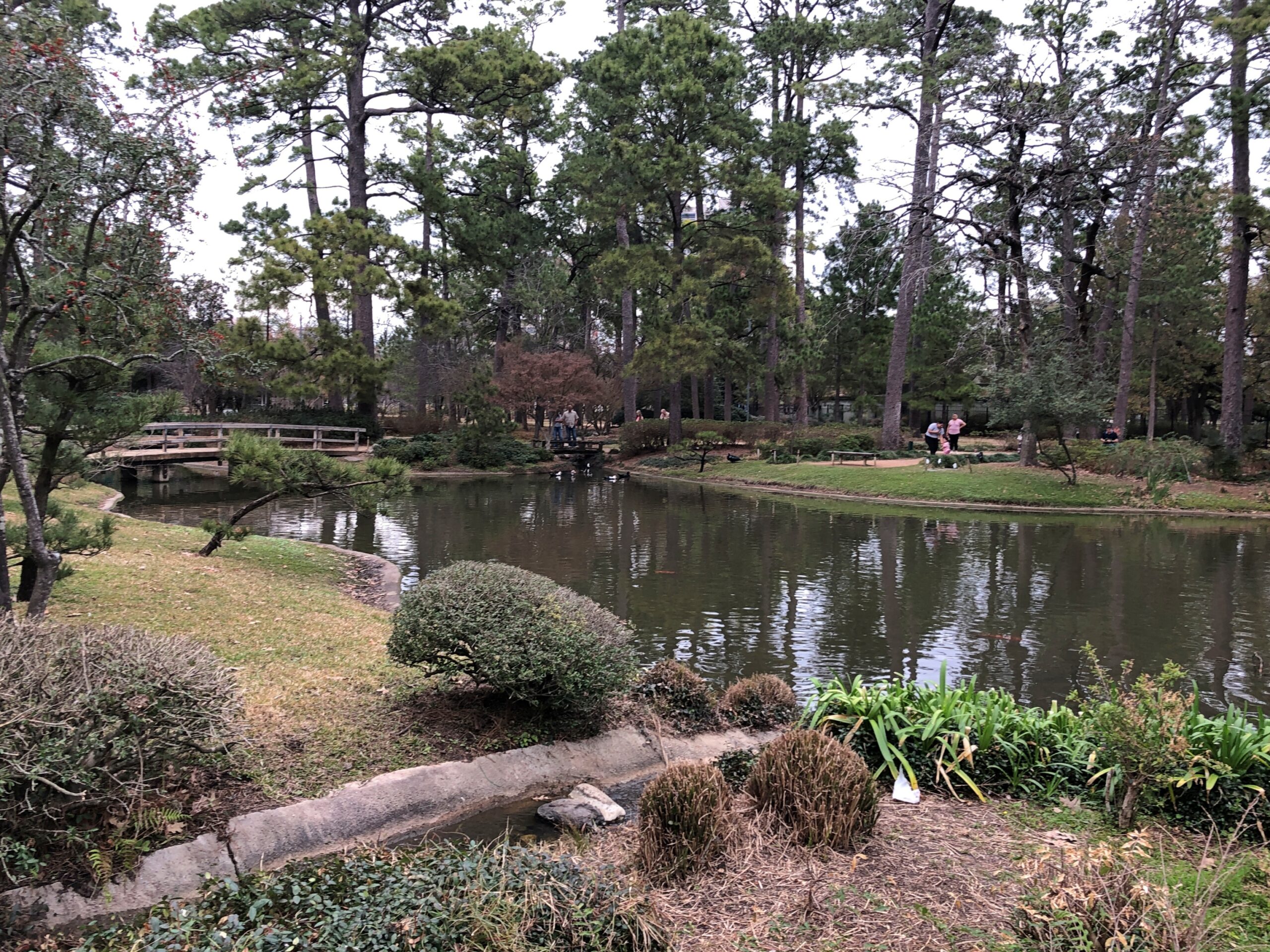
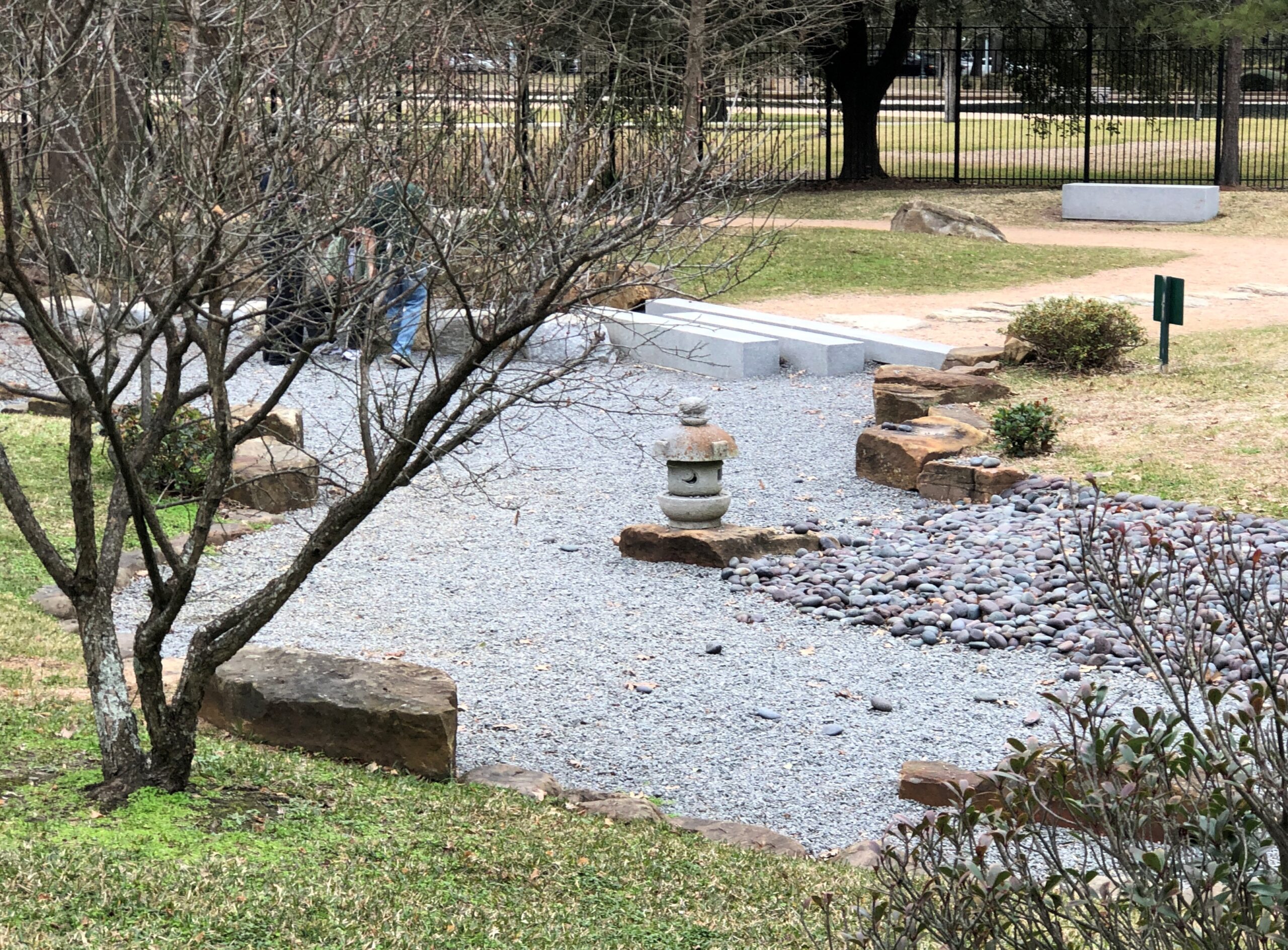
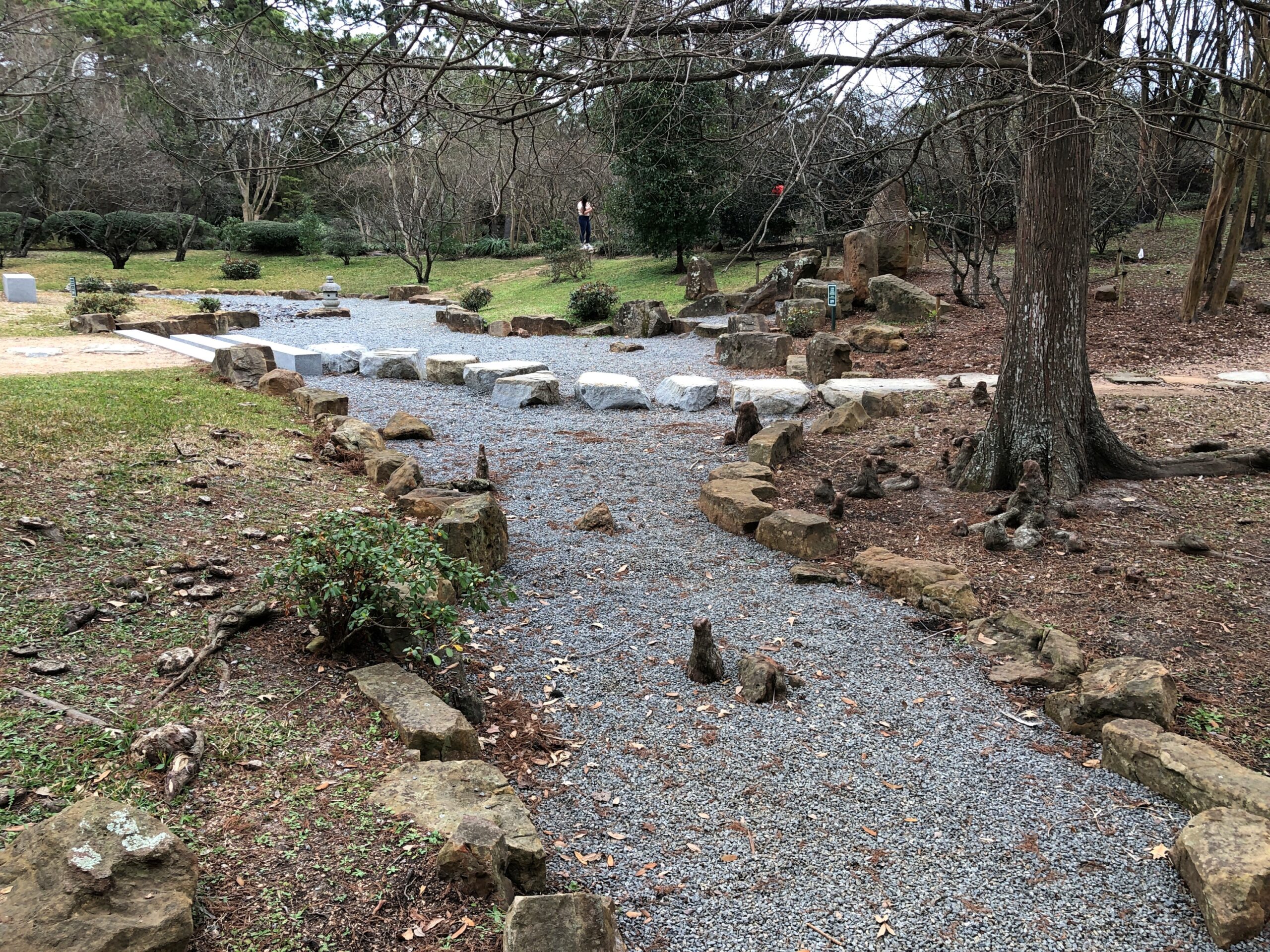
The Japanese Garden occupies part of Hermann Park. That seems to be the generic name. I made my way there. It’s a pretty place, even in February.
A mix of imported Japanese flora and the pines of East Texas. Hermann Park itself dates from the early 20th century. The Japanese Garden, the late 20th century, a prosperous time for Japan, and when that dustup between Nippon and the USA had mostly been put in the rear view mirror.
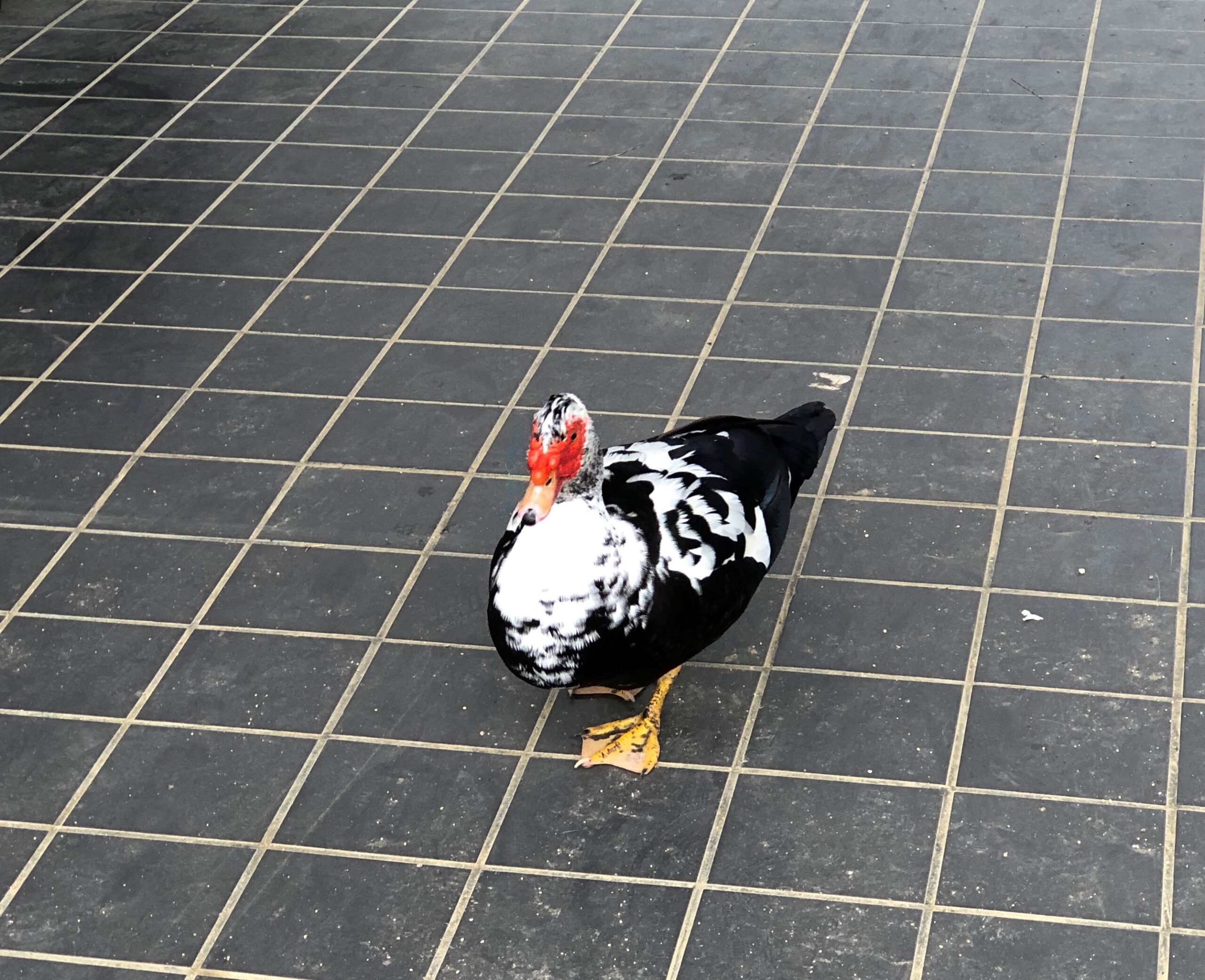
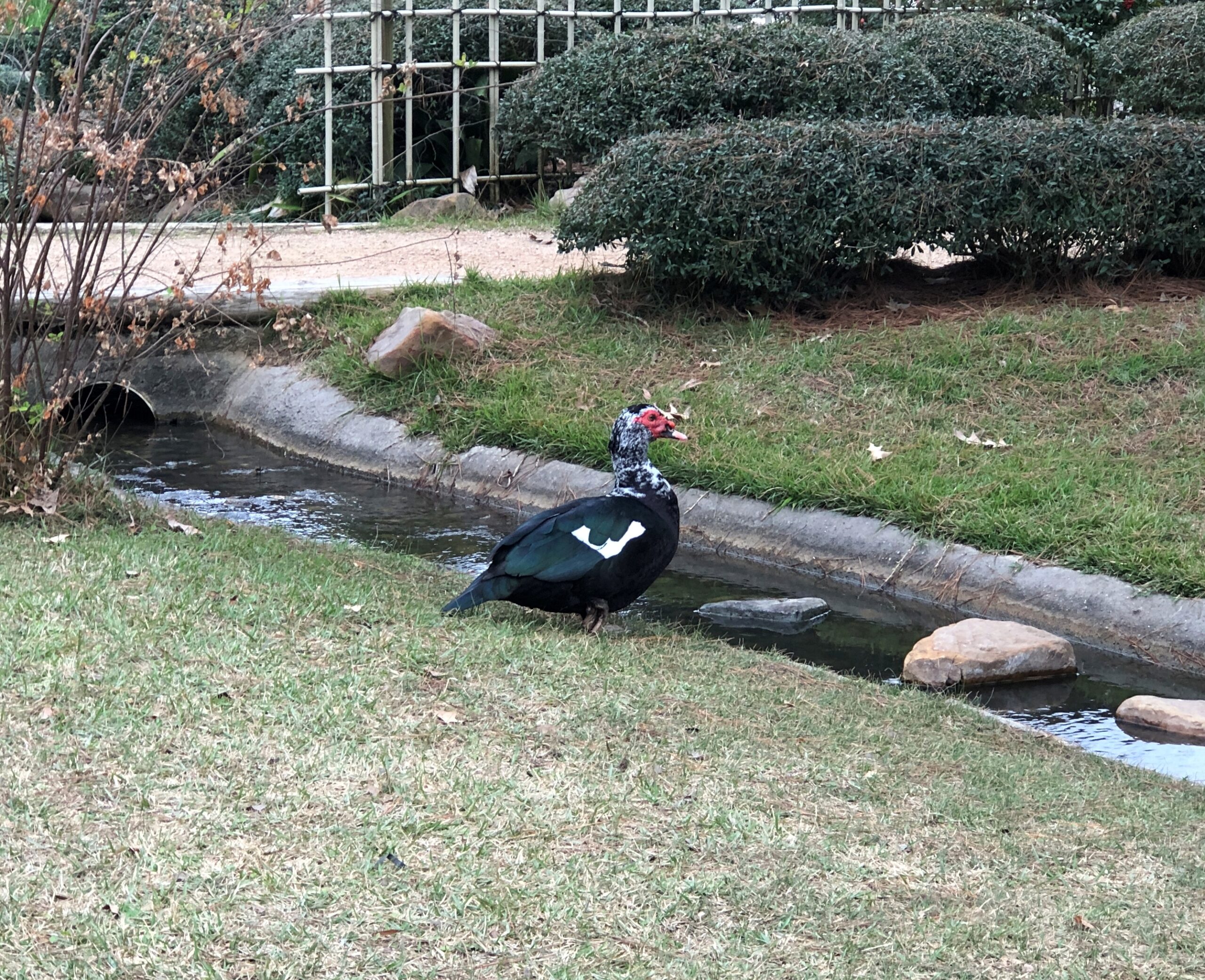
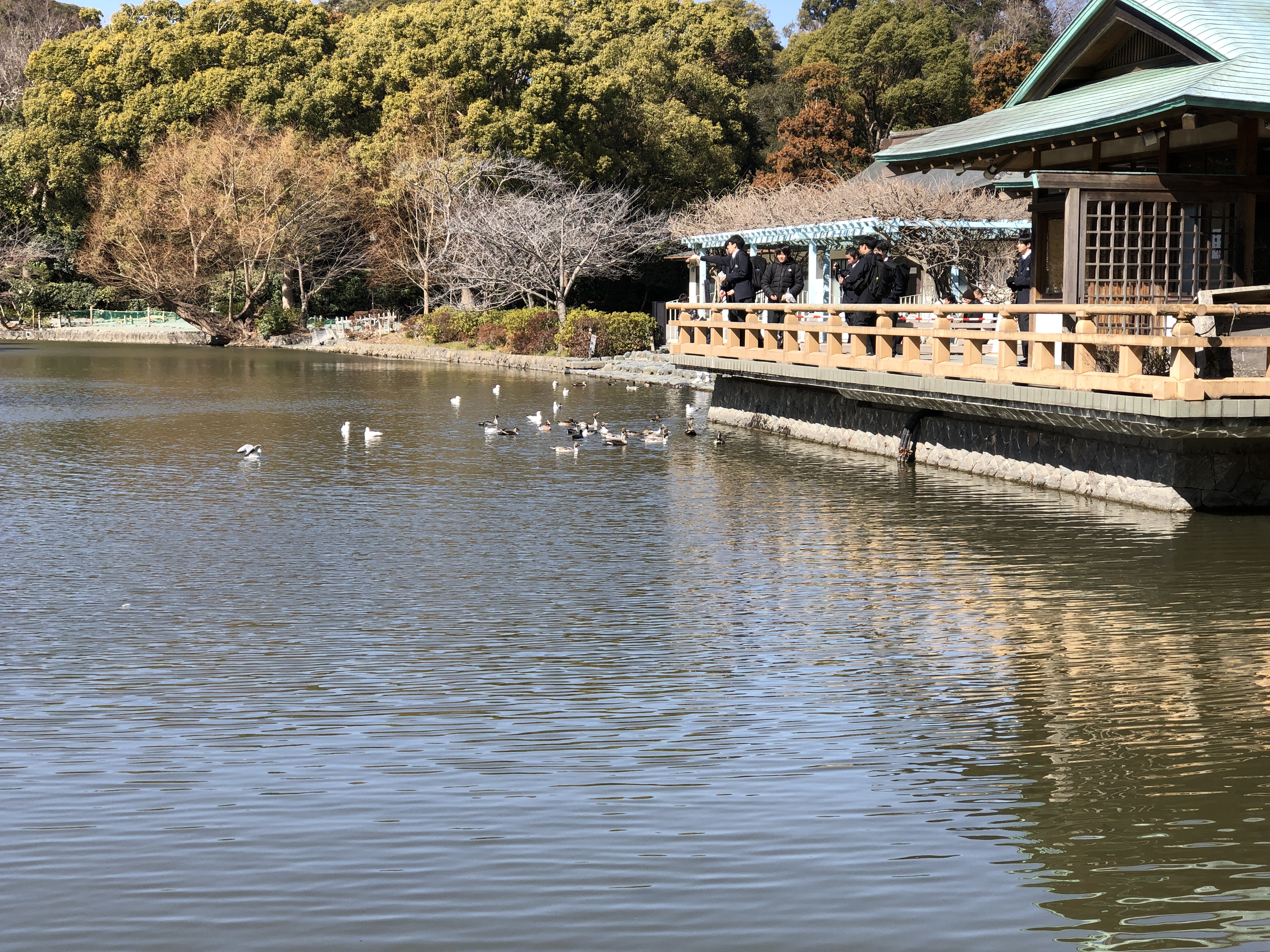
Where there is water, there is waterfowl.
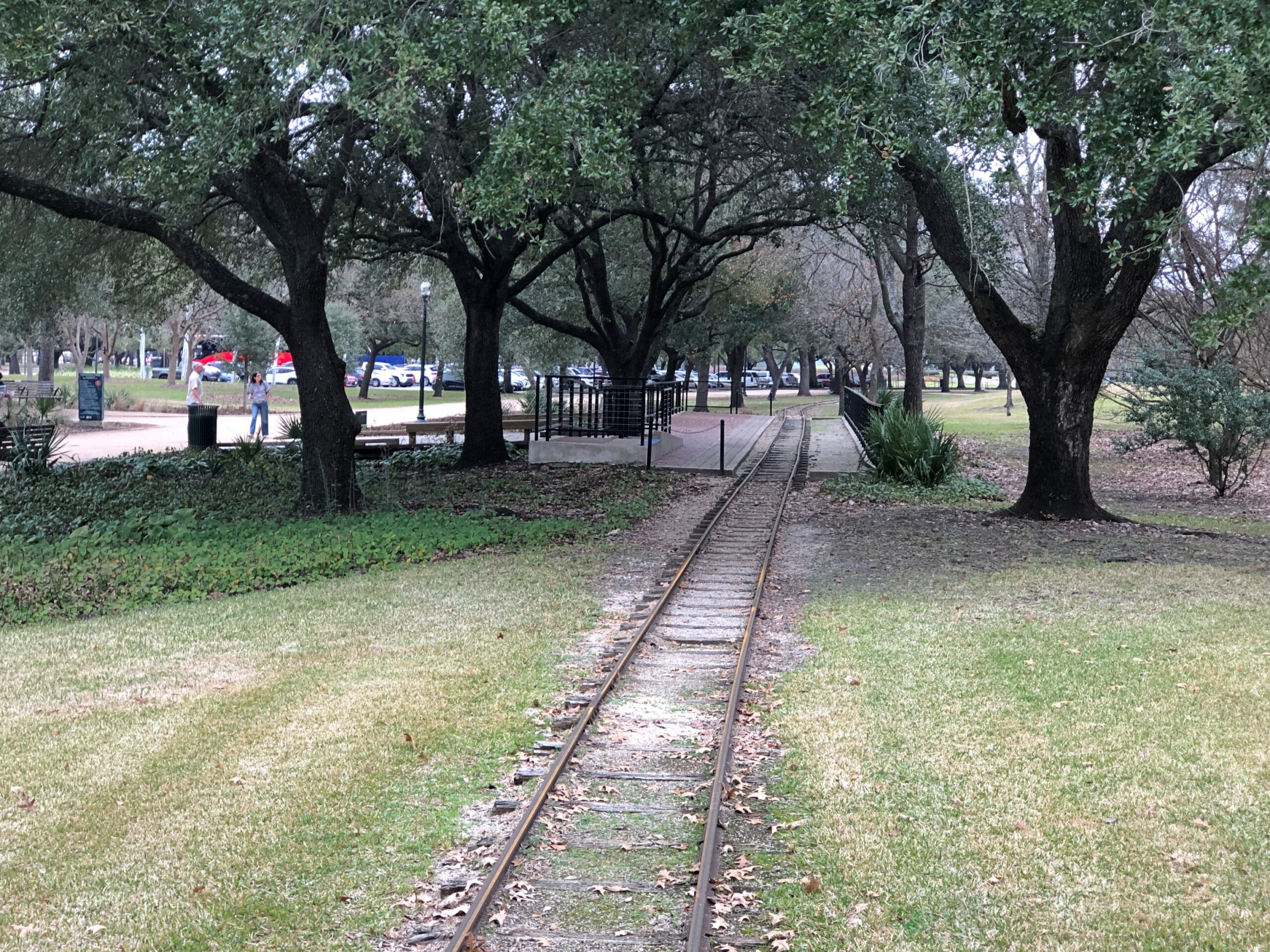
Just outside the Japanese Garden are tracks for the Hermann Park Railroad, a narrow-gauge line that makes a loop through the park. I didn’t ride it, but of course thought of the Brackenridge Park RR in San Antonio, the one by which all others are judged (by me).
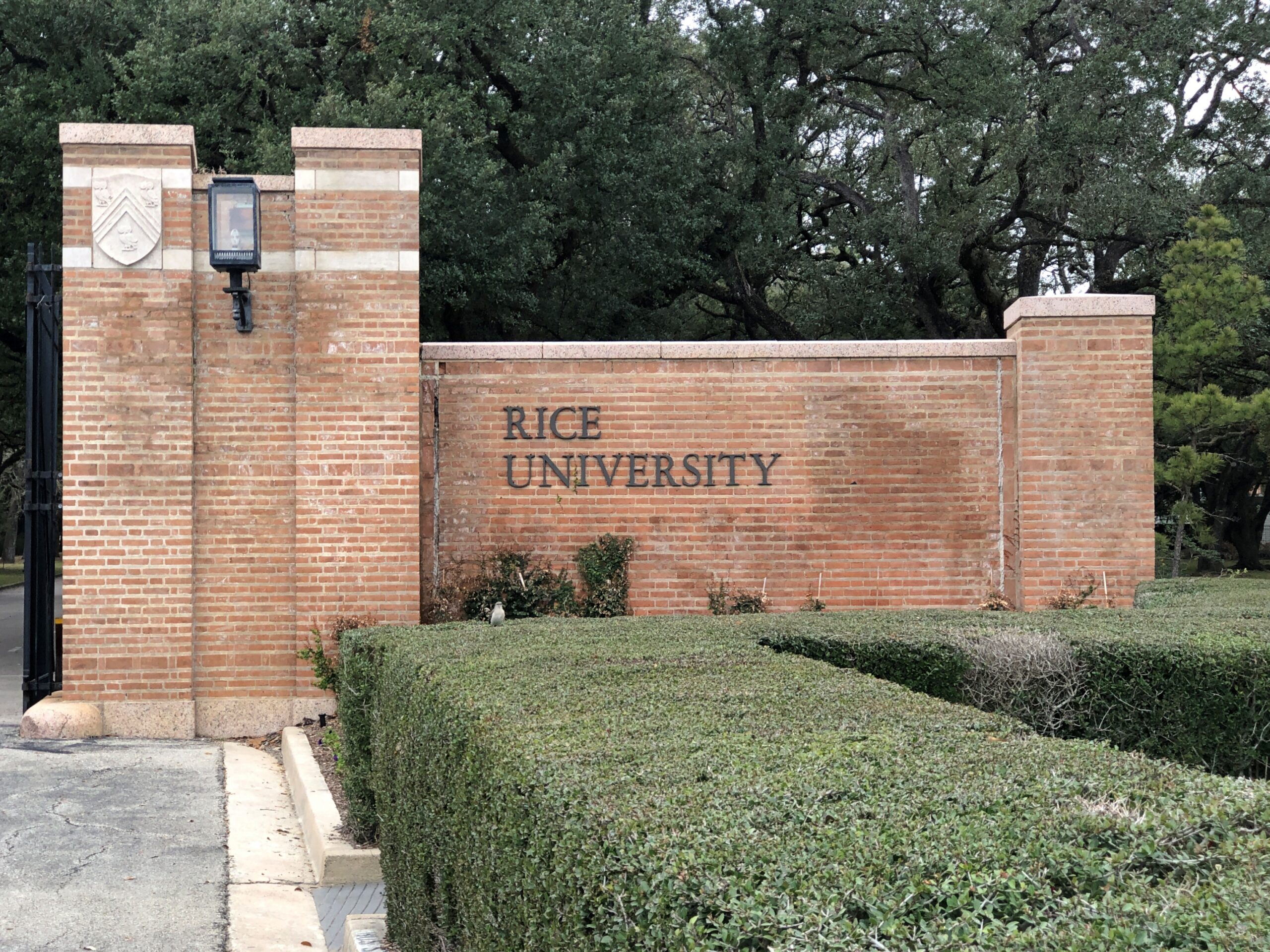
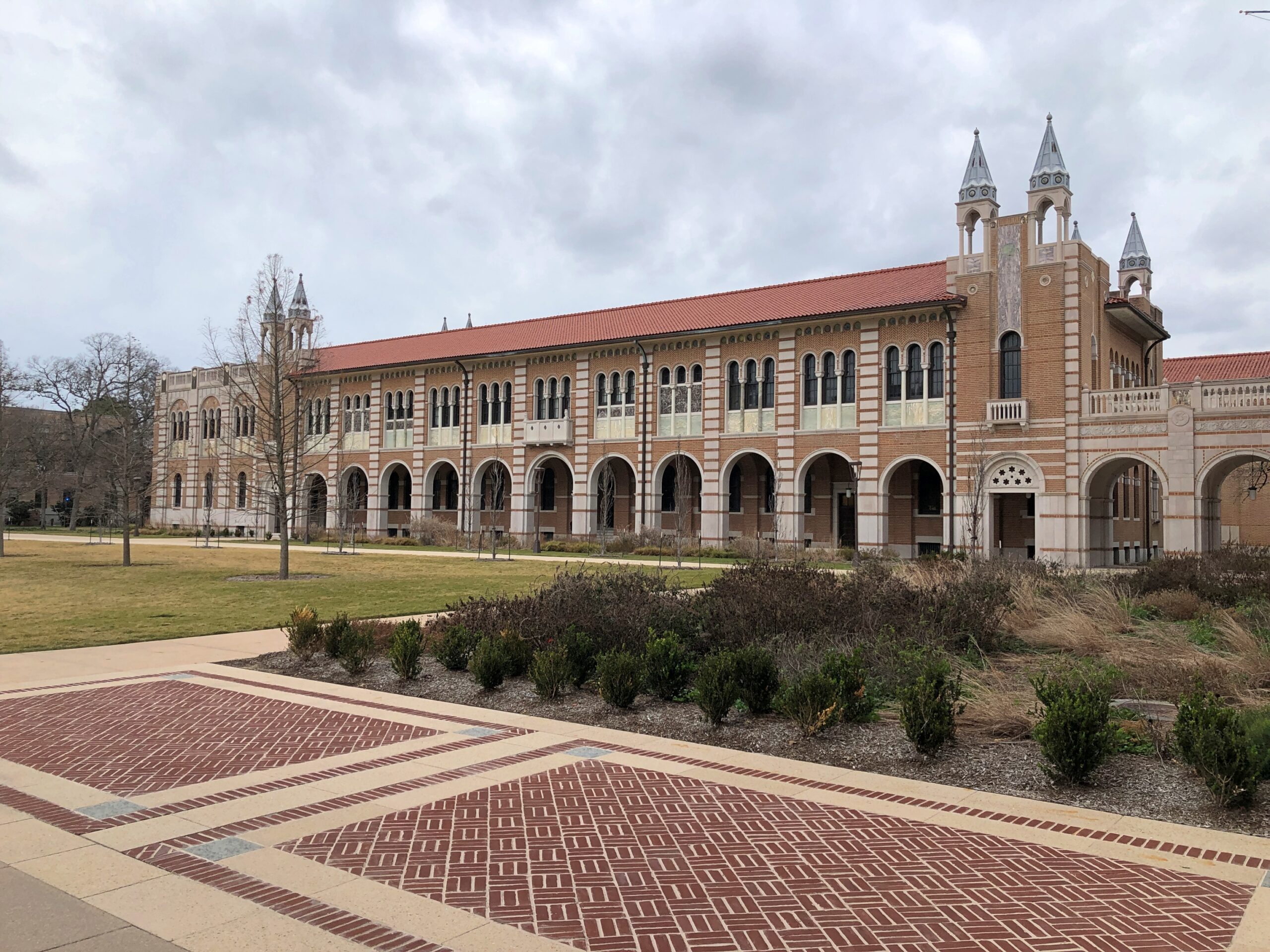
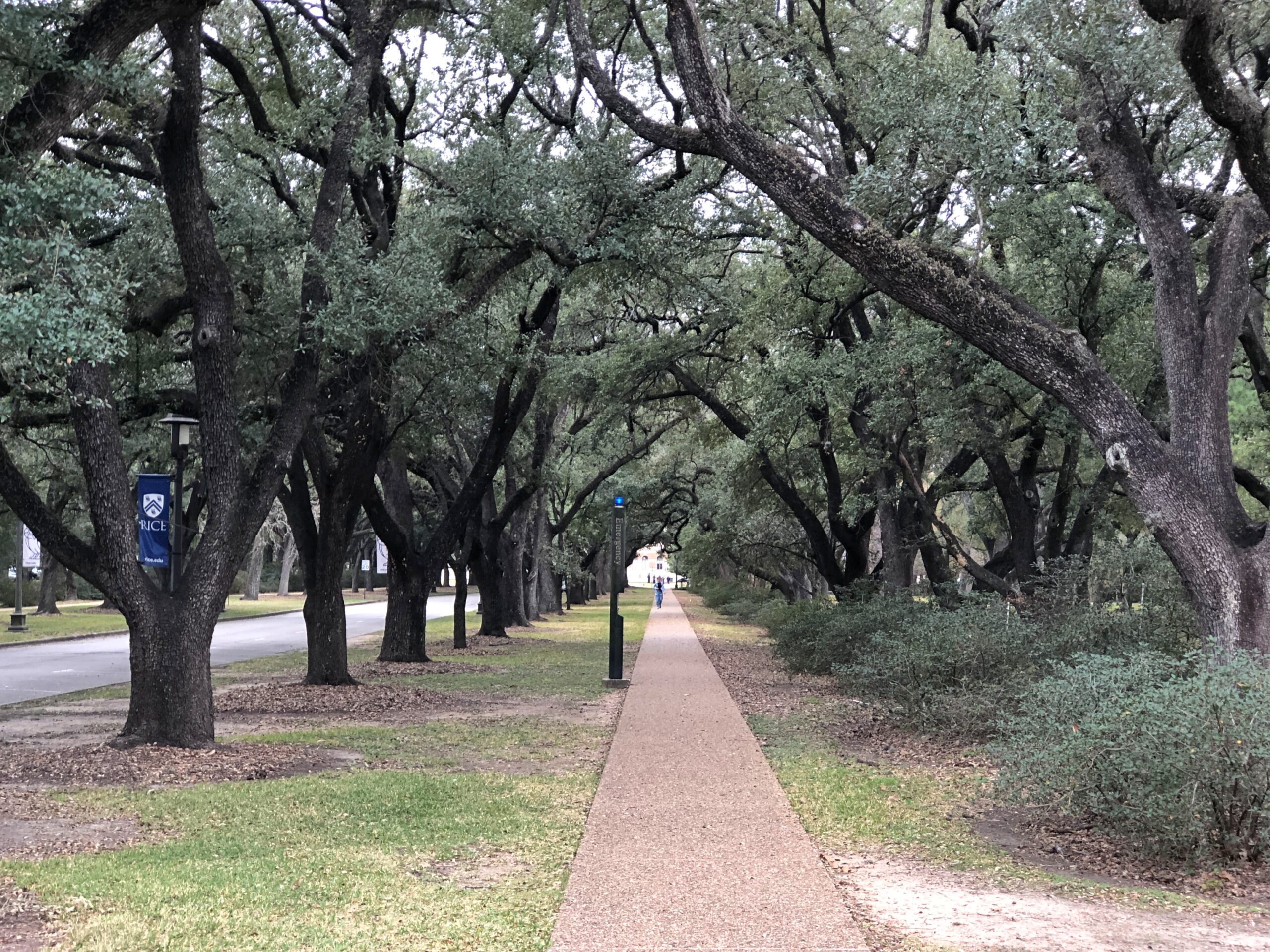
Just outside Hermann Park is Rice University. I considered Rice, but decided not to go — or I wasn’t admitted anyway, I don’t remember after all this time. As a result, my short stroll this February was my first visit to campus.
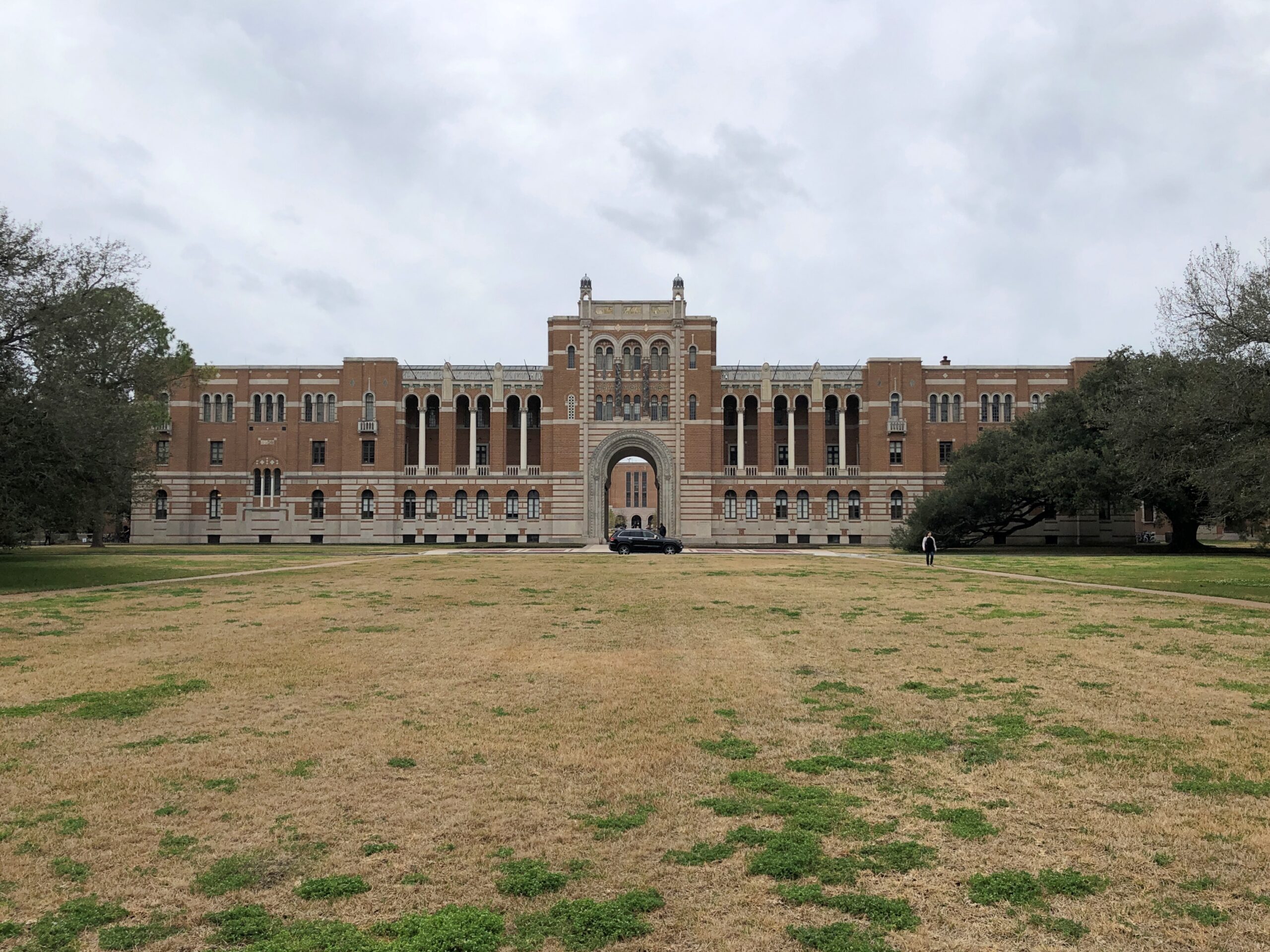
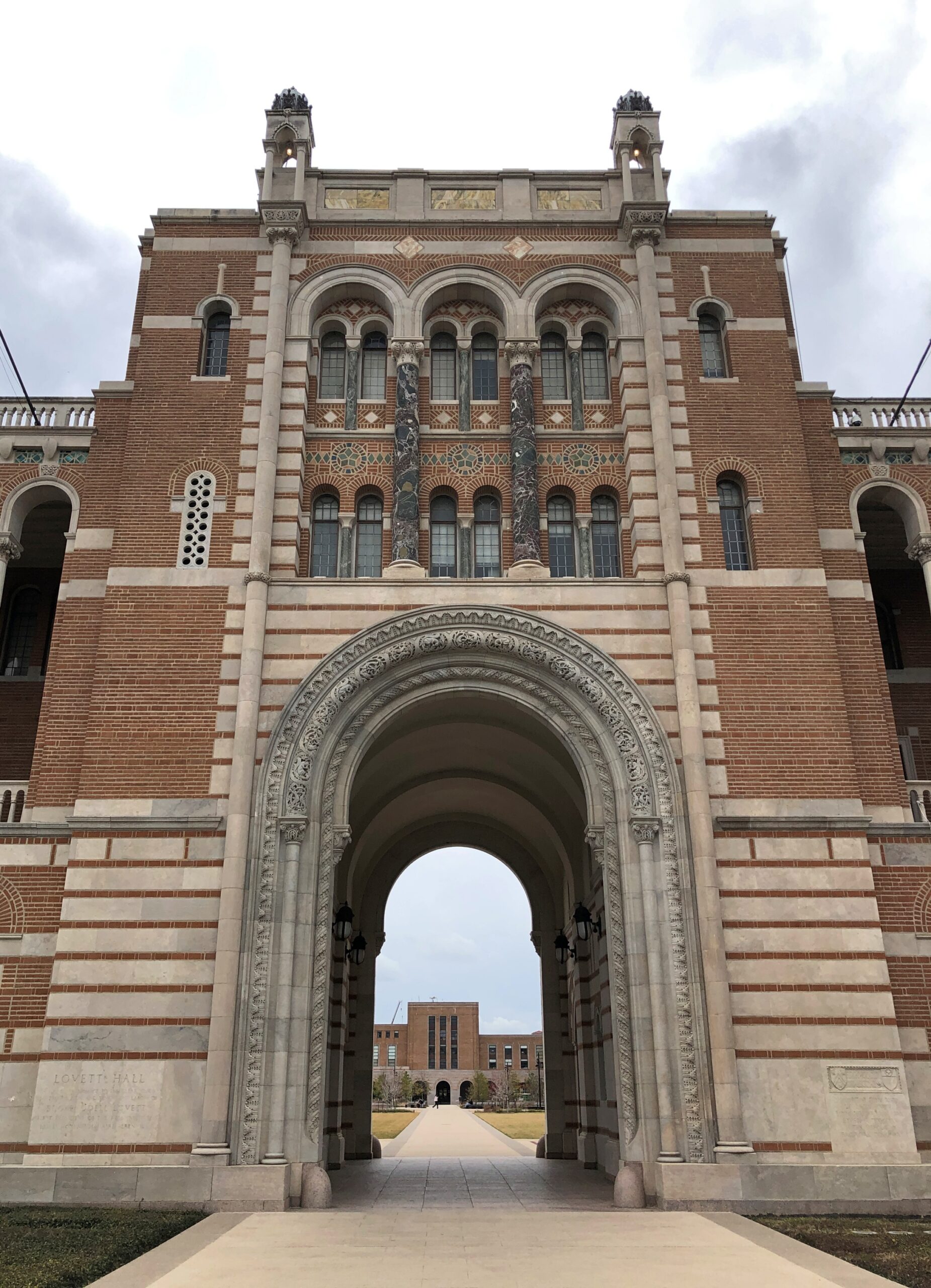
Not a very long visit. Rice has some fine buildings.
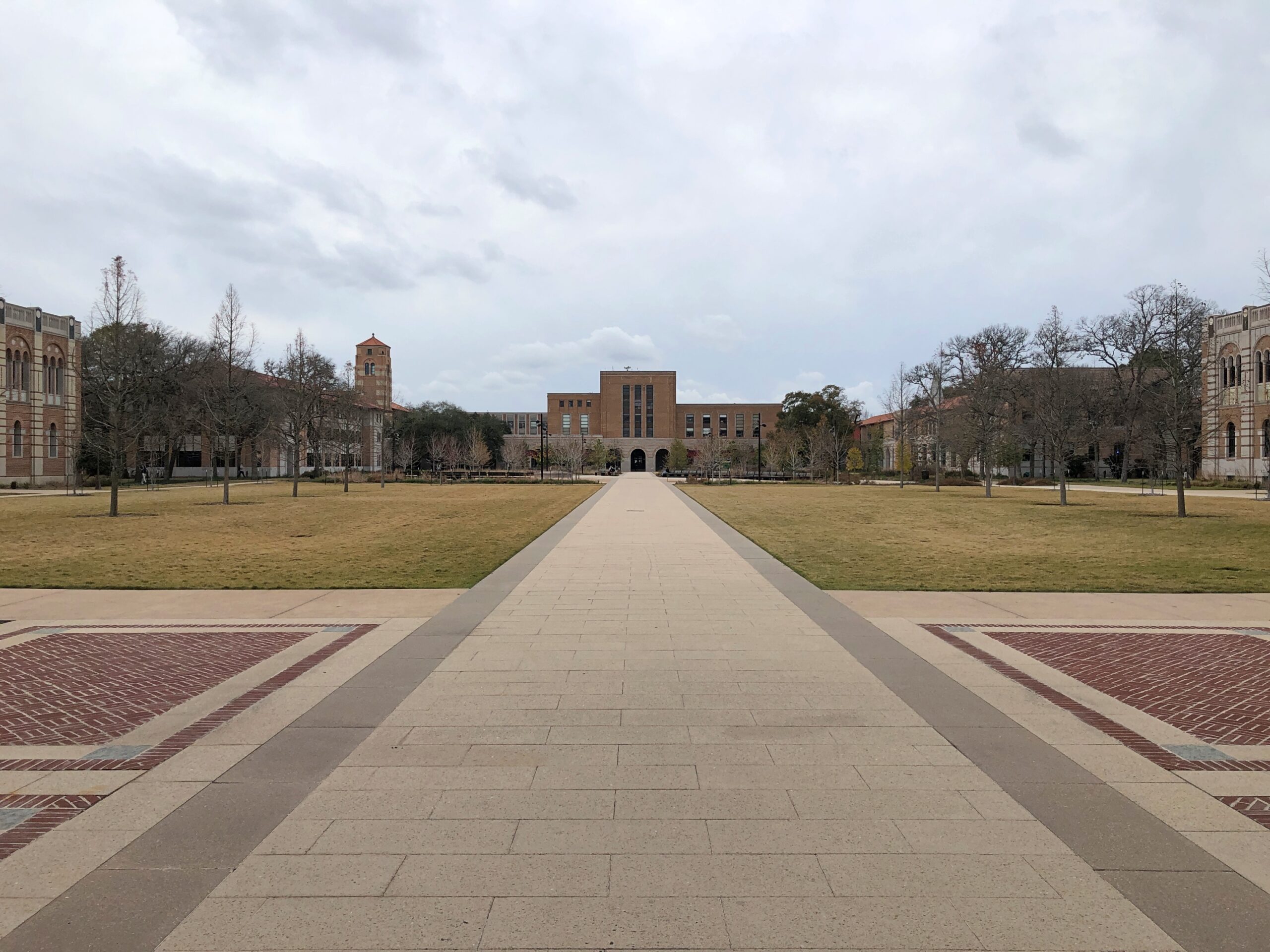
But also long sightlines. That make for long walks.
I’d already spent time walking around downtown Houston, and then the Japanese Garden. There’s only so much walking even indefatigable sightseers can do.
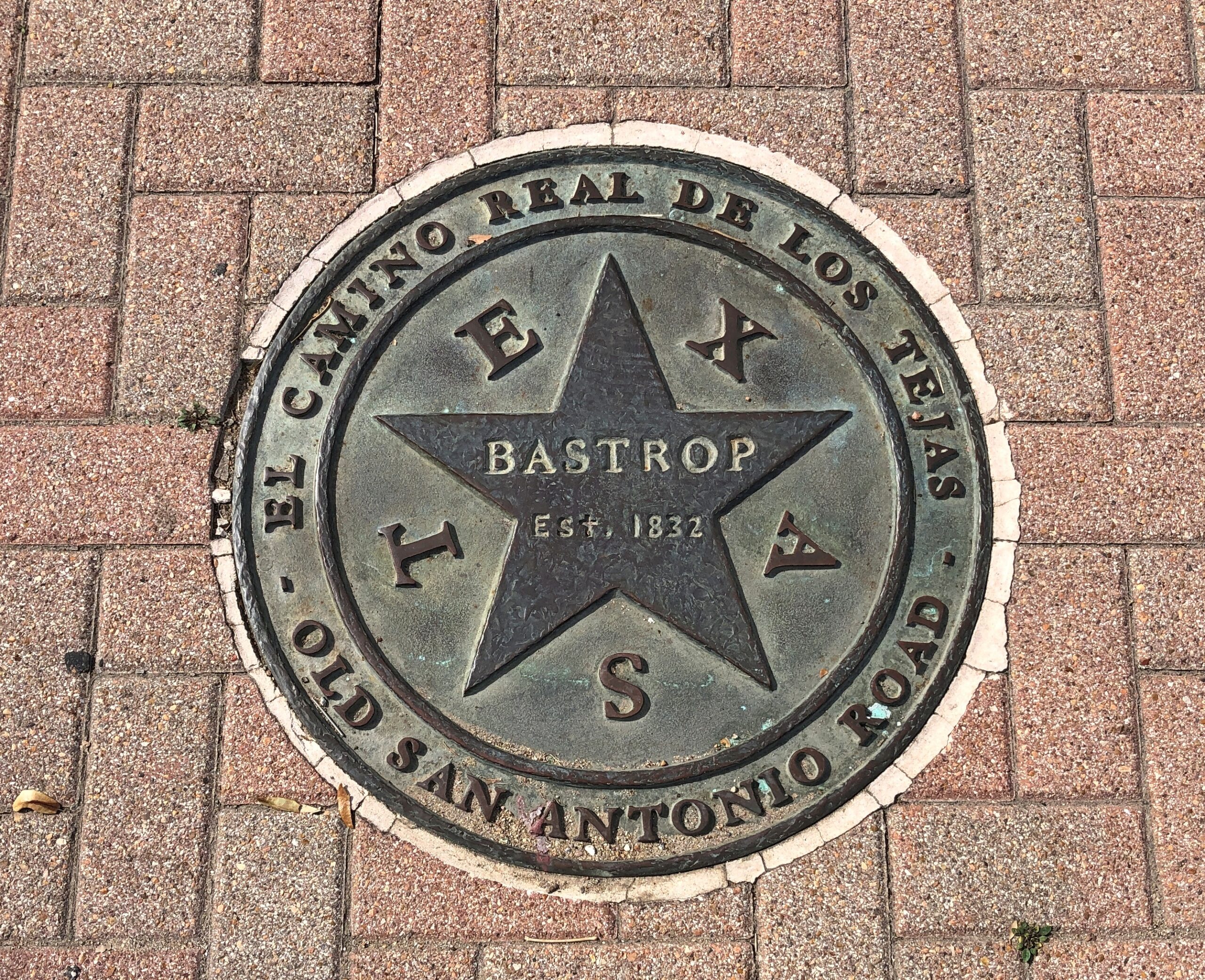
Consider Philip Hendrik Nering Bögel, an 18th-century Dutchman who at one point in his career was collector general of taxes for the province of Friesland. The Texas State Historical Association takes up his story: “In 1793 he was accused of embezzlement of tax funds and fled the country before he could be brought to trial. After the Court of Justice of Leeuwarden offered a reward of 1,000 gold ducats to anyone who brought him back, Bögel adopted the title Baron de Bastrop.”
Those were the days, no Interpol butting into your business. No one ever collected those gold ducats, because the self-titled Baron de Bastrop spent the rest of his days in the New World, doing well for himself in New Spain and then Mexico, dying in 1827.
“One of his most significant contributions to Texas was his intercession with Governor Antonio María Martínez on behalf of Moses Austin in 1820,” TSHS continues. “Because of Bastrop, Martínez reconsidered and approved Austin’s project to establish an Anglo-American colony in Texas… Although his pretensions to nobility were not universally accepted at face value even in his own lifetime, [Bastrop] earned respect as a diplomat and legislator. Bastrop, Texas, and Bastrop, Louisiana, as well as Bastrop County, Texas, were named in his honor.”
Reminds me of the psychologically astute moment (one of a number) in Mad Men, when Bert brushed off Pete’s accusation that Don had stolen another man’s identity – which happened to be true – with, “Mr. Campbell, who cares?” Bert also quoted a supposed Japanese saying, “A man is whatever room he is in.” Give credit to the scriptwriter for inventing a saying that could well be Japanese, but apparently is not.
Bastrop’s location was an important spot, once upon a time, where the Old San Antonio Road met the Colorado River.
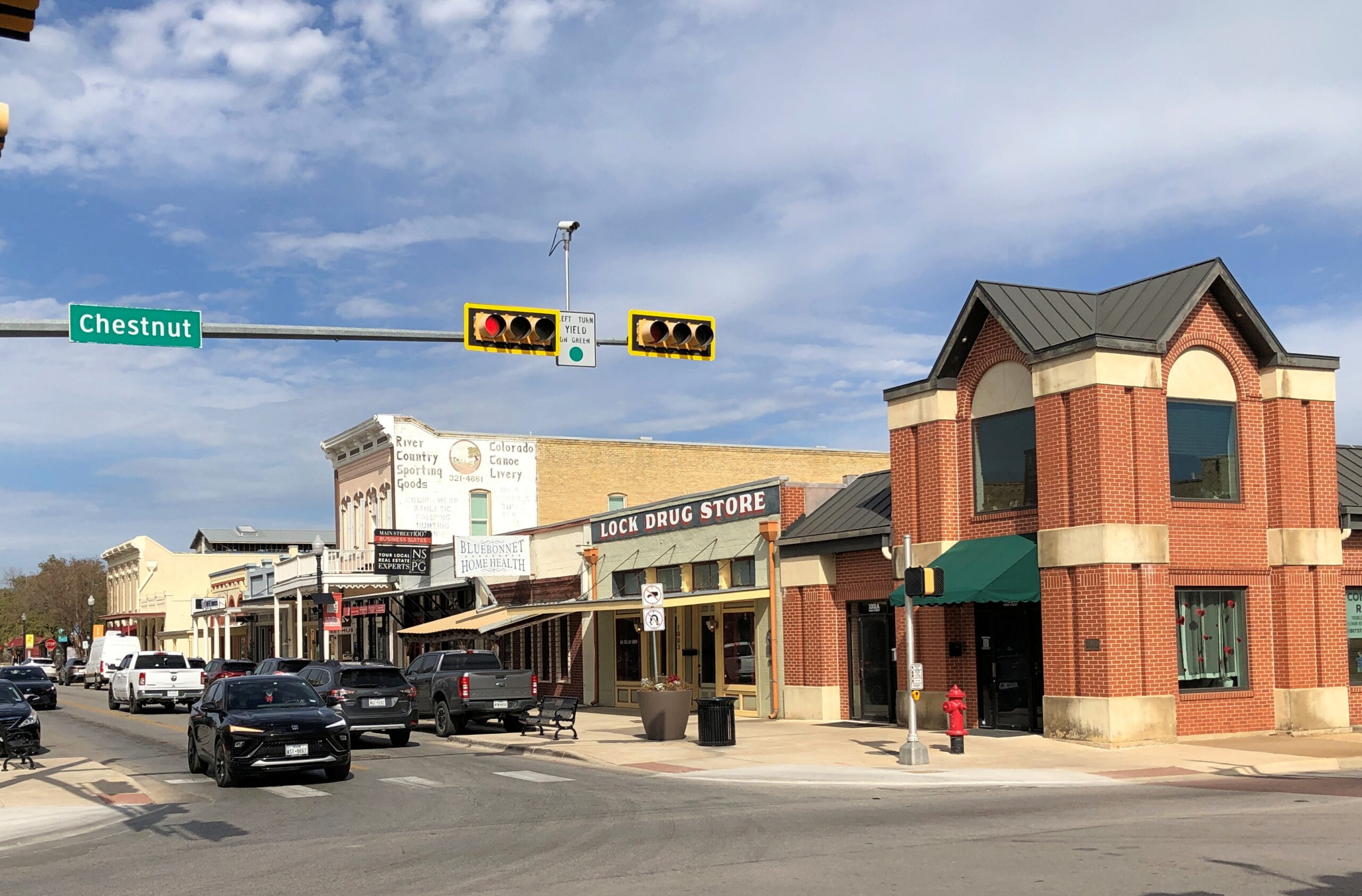
These days, Bastrop (pop. 9,600 or so) is only a short hop by modern vehicle from Austin or San Antonio. Day-trip material from those metros, that is. That was probably true the last time I visited Bastrop, sometime in the late ’80s, but maybe not with the same retail intensity you find near the intersection of Main and Chestnut in 2026.
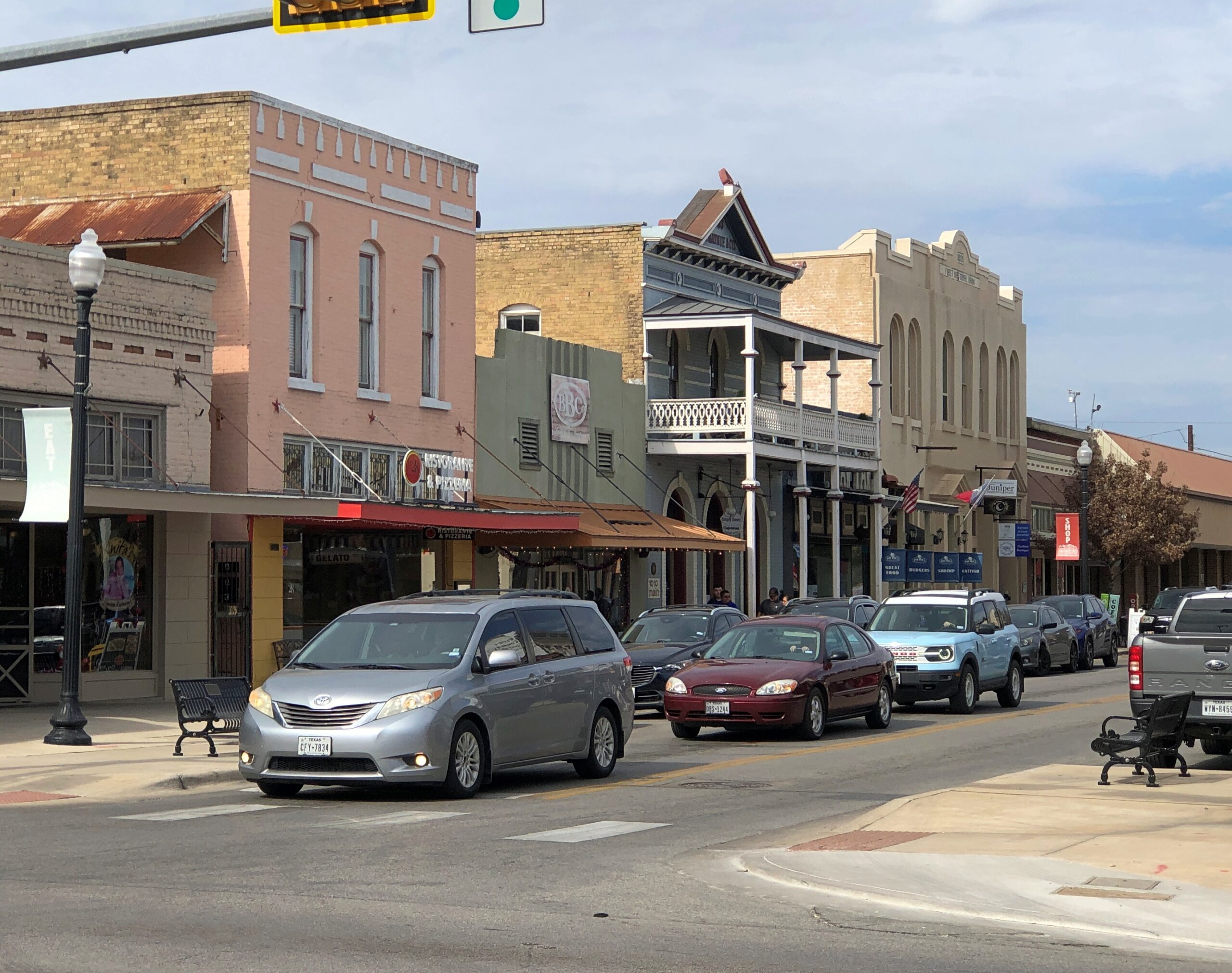
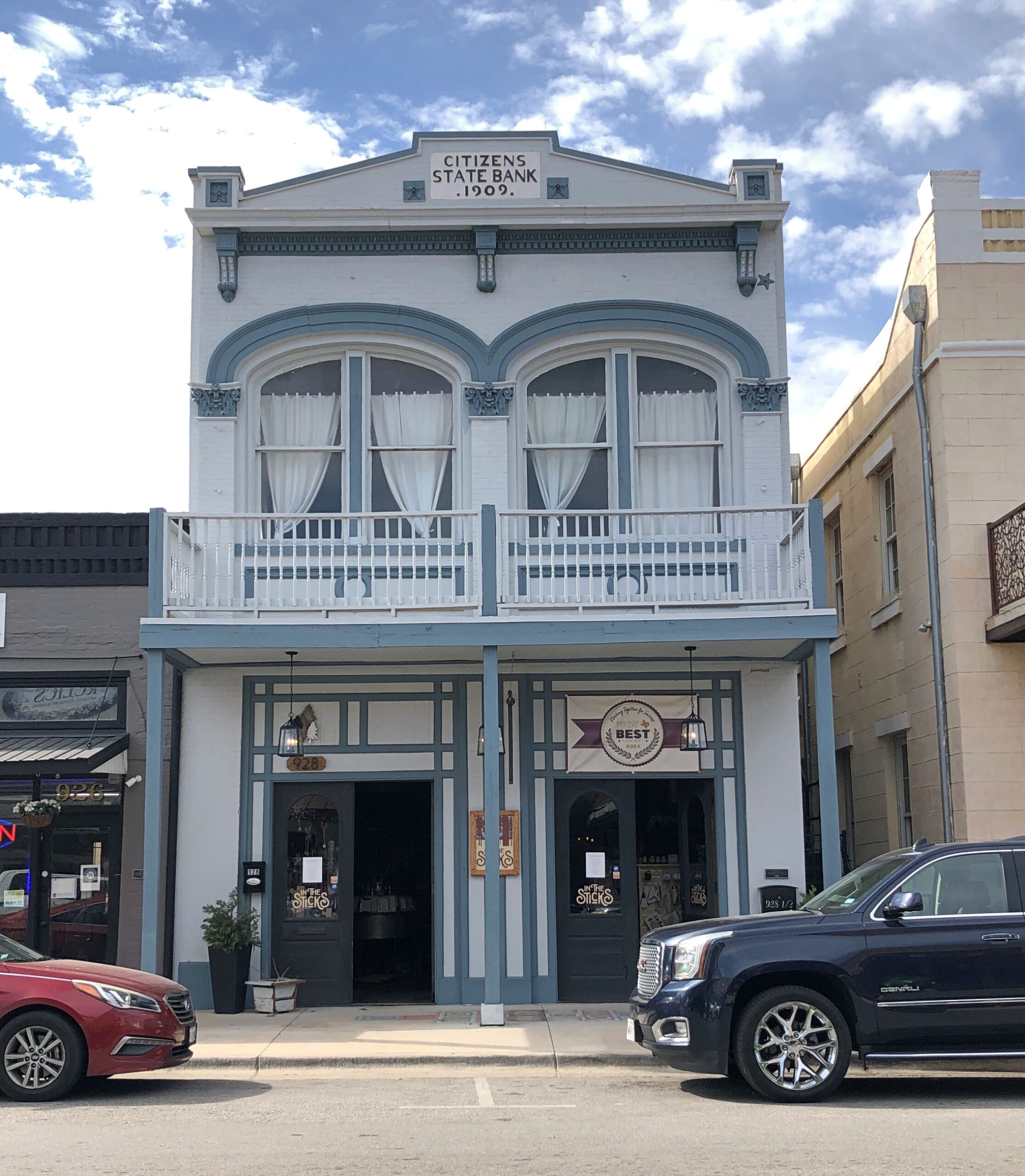
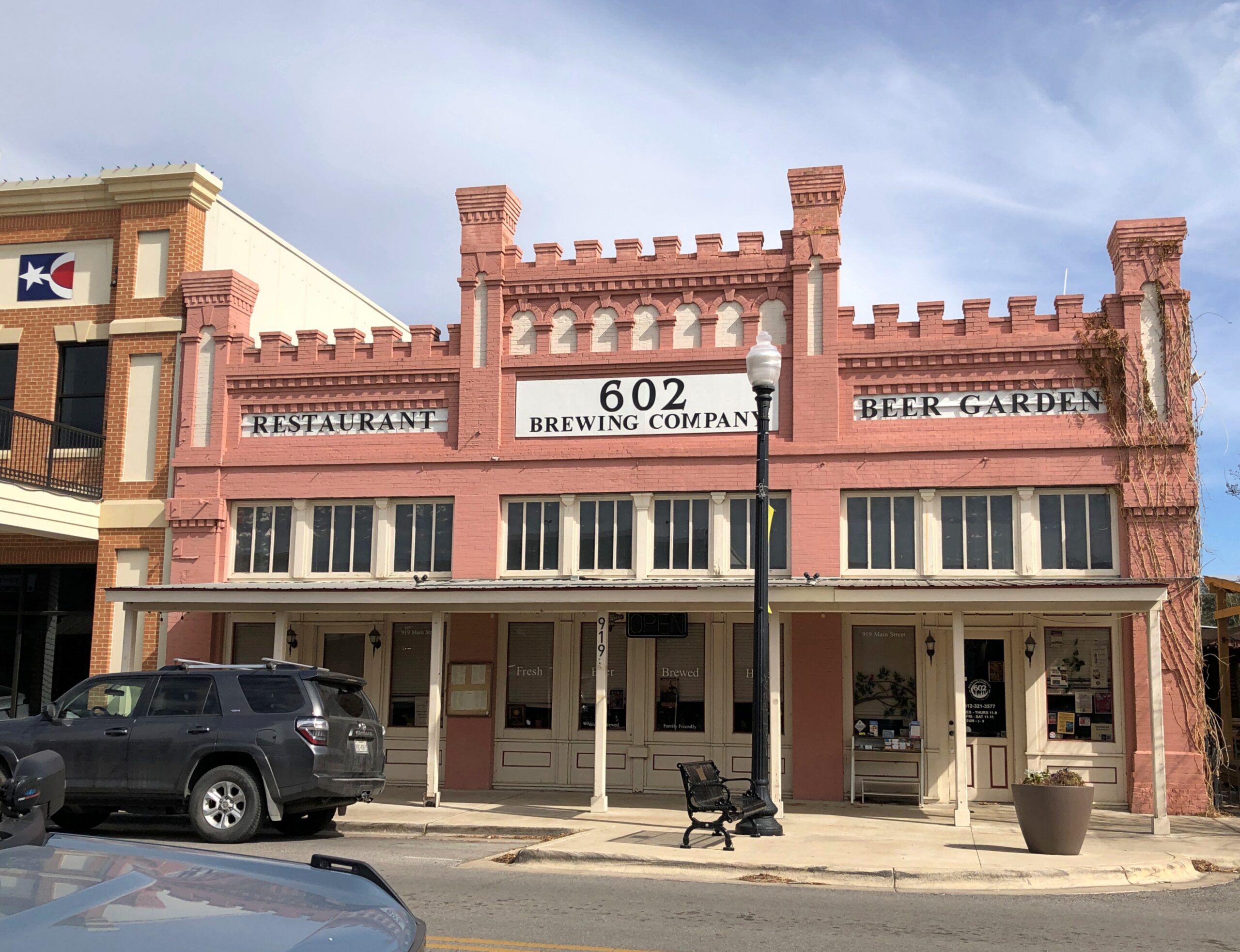
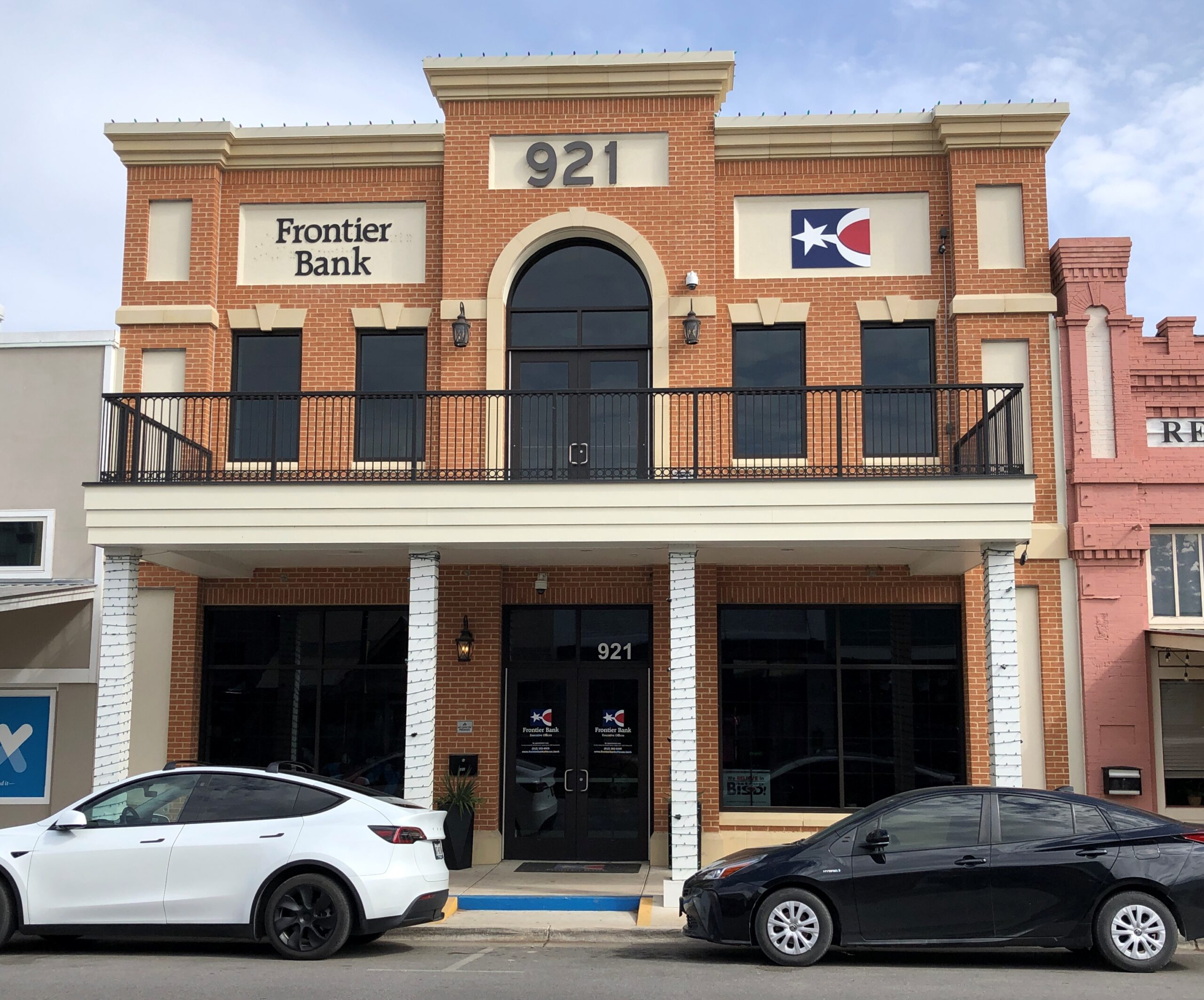
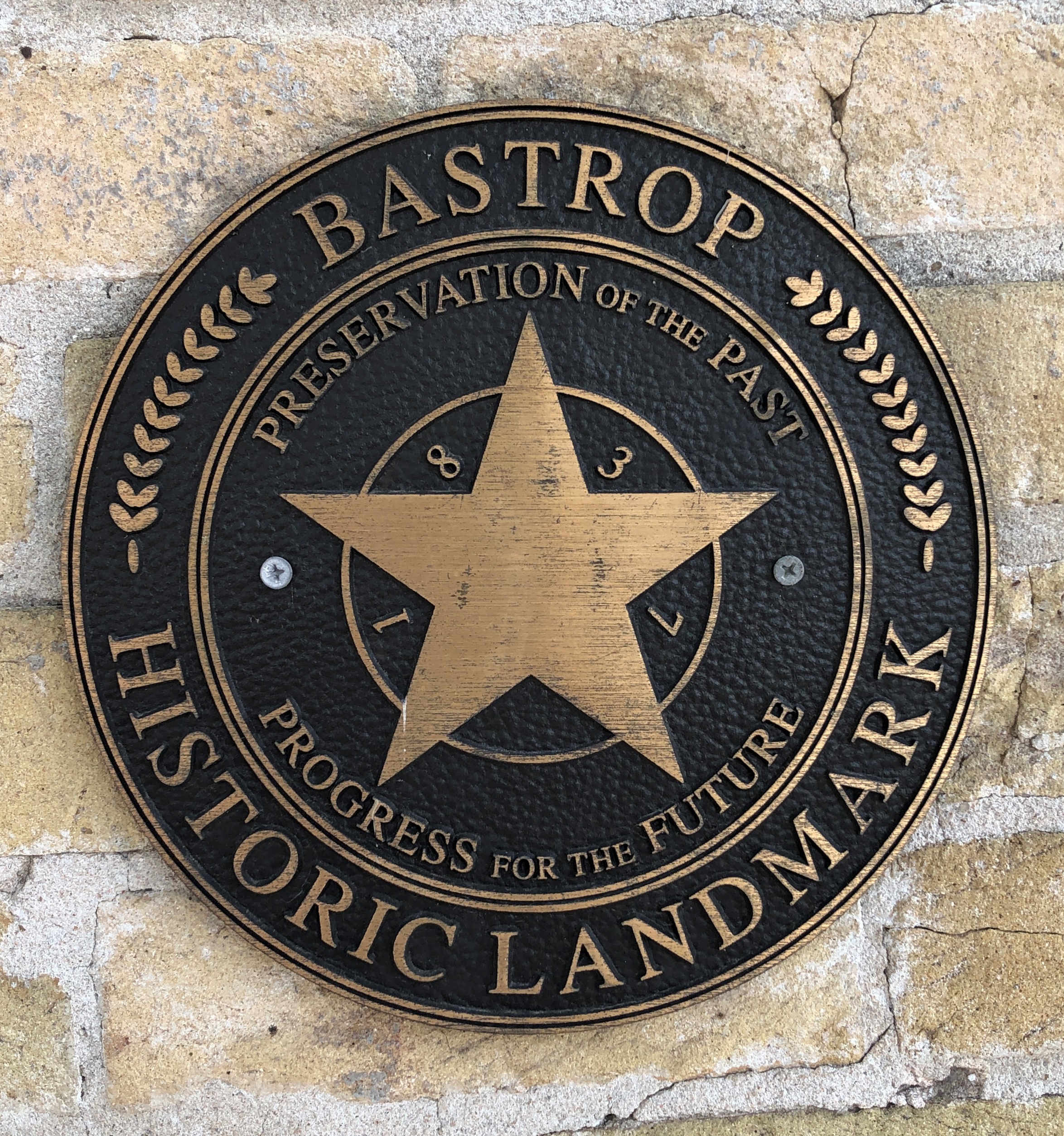
This part of town has a good stock of late 19th- and early 20th-century buildings. Pleases the eye, pleases the day-trippers.
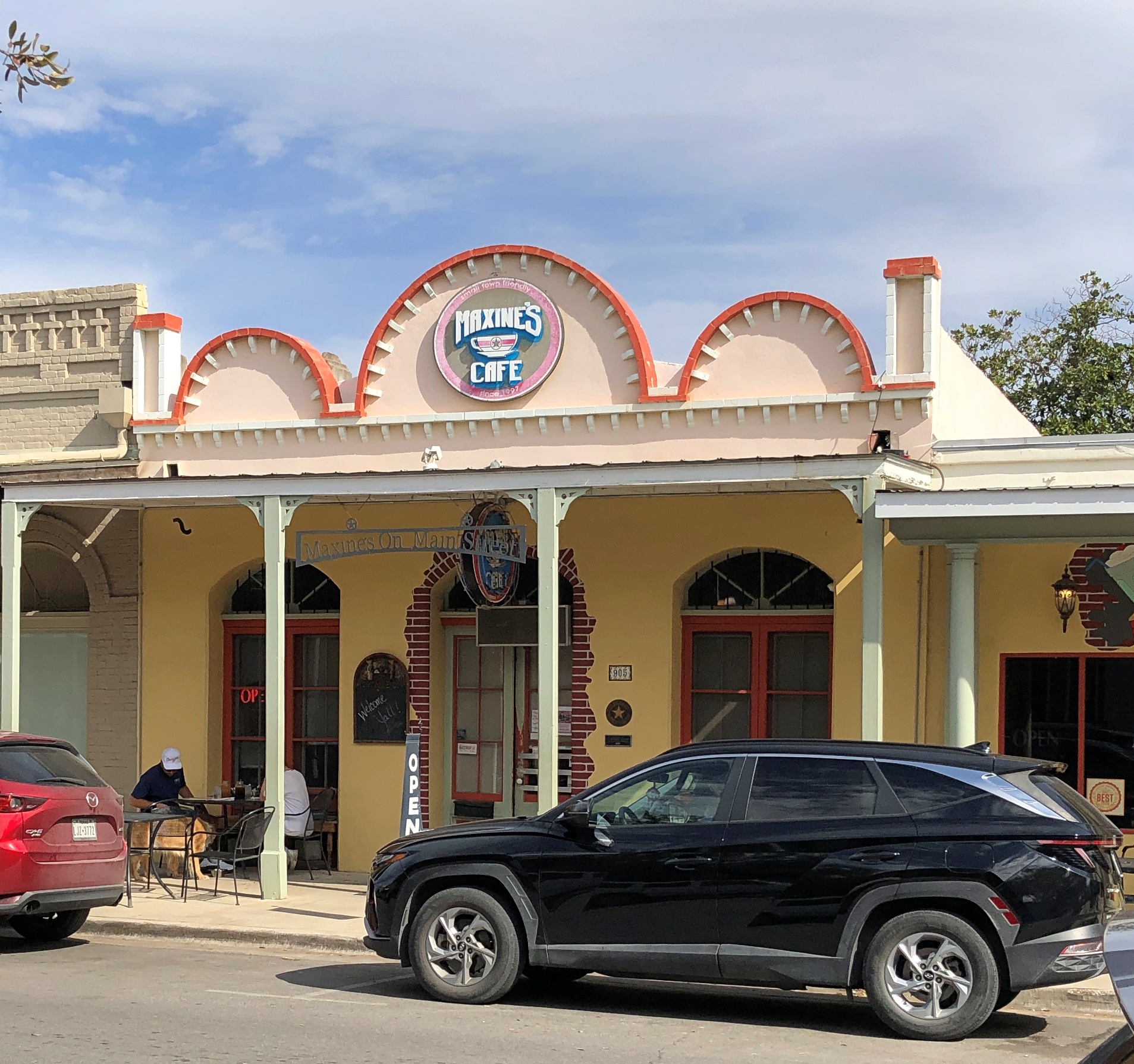
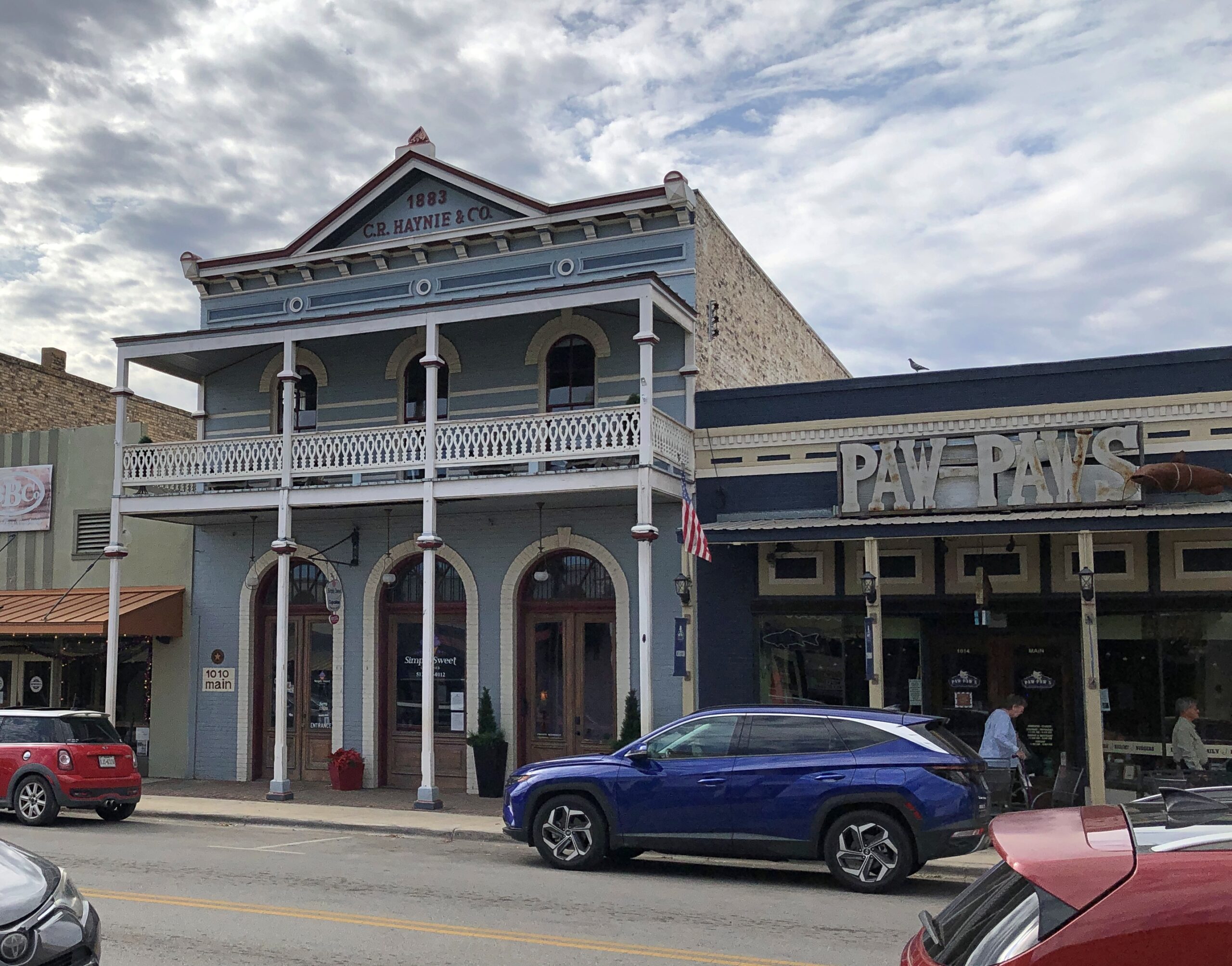
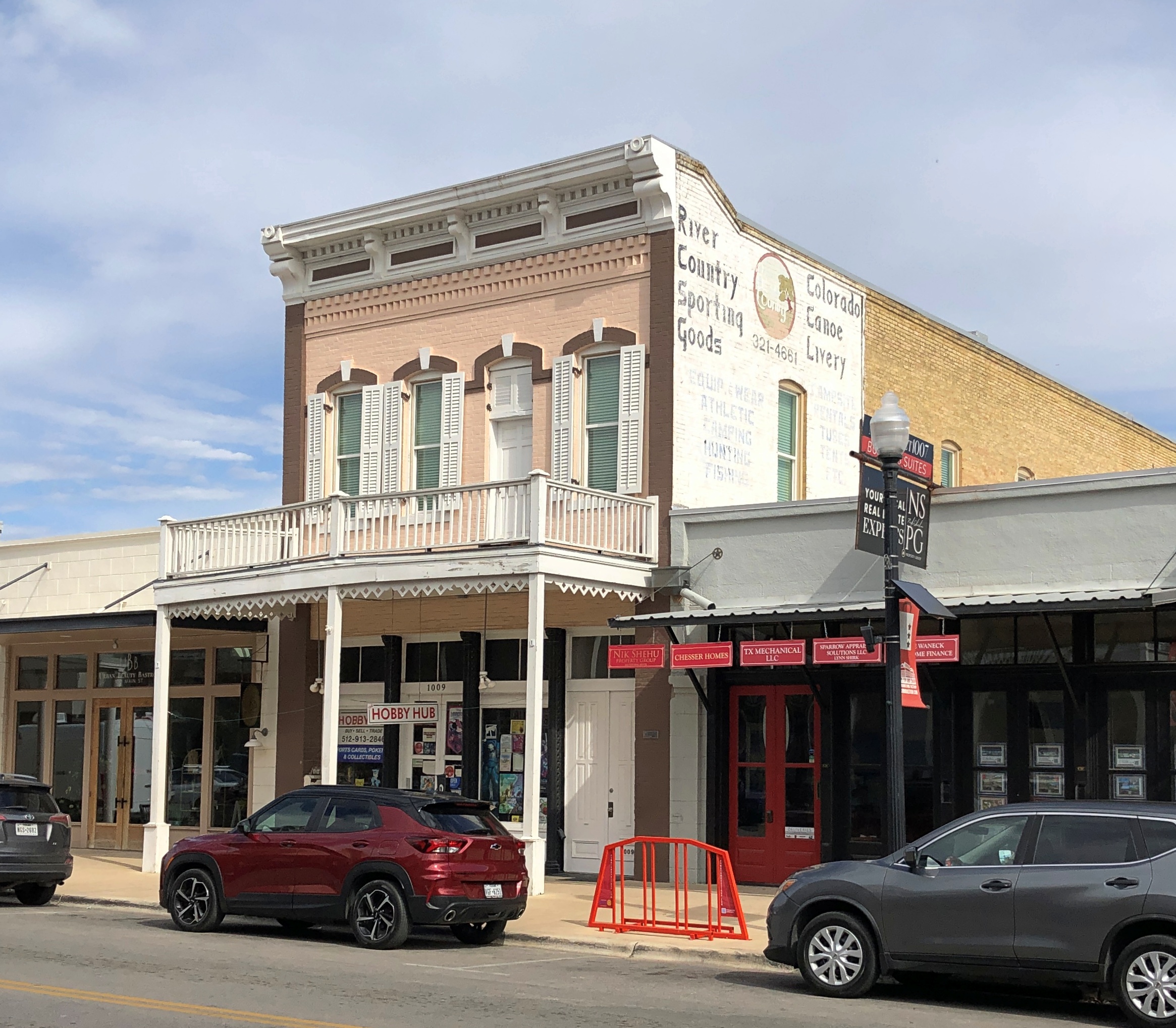
Around Main and Chestnut, you’ll see Paw Paws Catfish House, Simply Sweet Cupcakes, Bastrop Beer Company, flower designer Greenleaf Gatherings, Urban Beauty Bastrop, the Hobby Hub trading card store, another trading card store called Game Time Cards, DivineLites Soap Shop, Lost Pines Art Bazaar rug store, In The Sticks–Eclectic Gifts and More, Rhinestone Rattler Boutique, Monarch Art Gallery and Main Street Yoga Bastrop. A partial list. The town seems to be doing OK.
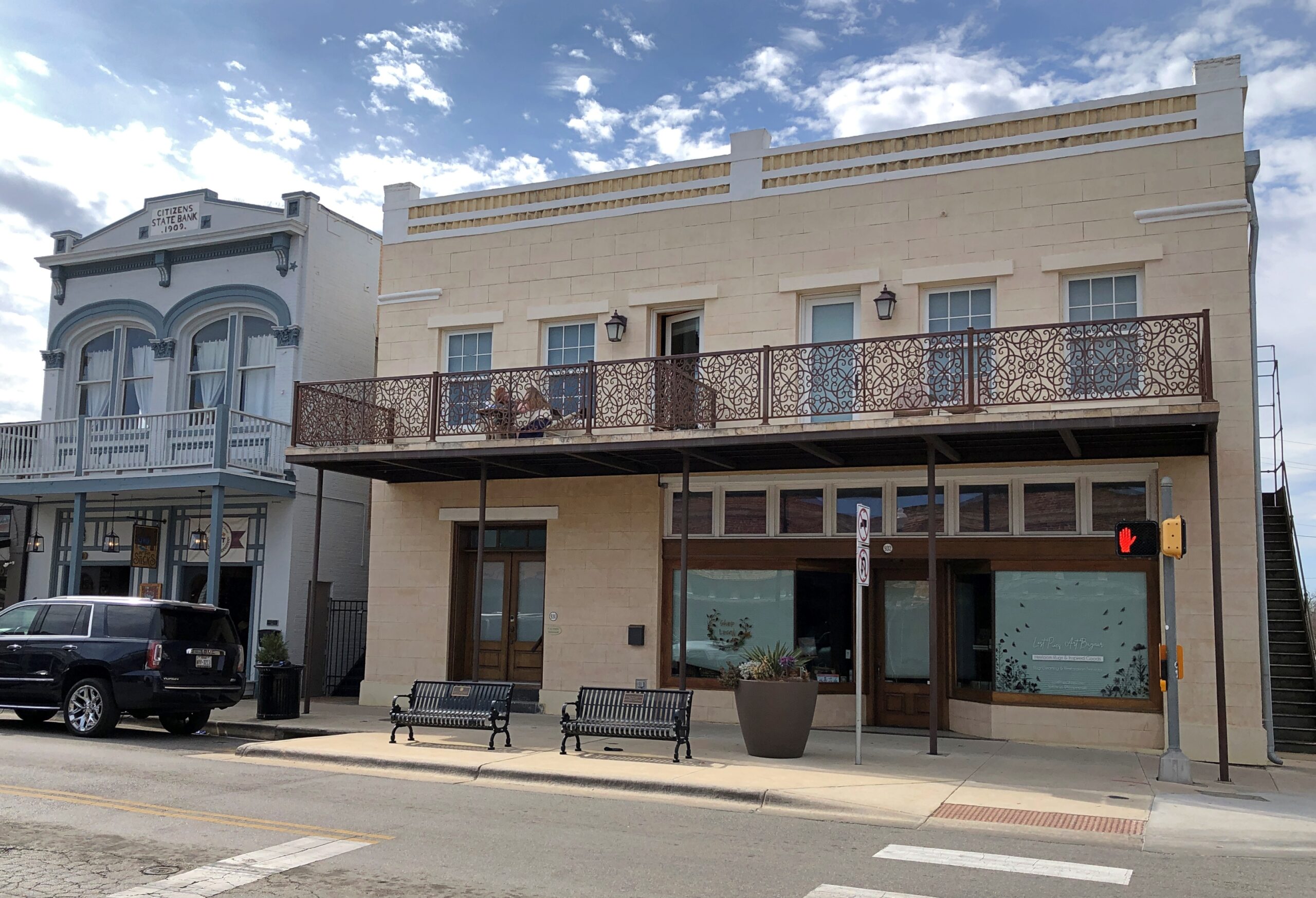
Looks like a newer building. The architect did a good job of blending it into its surroundings.
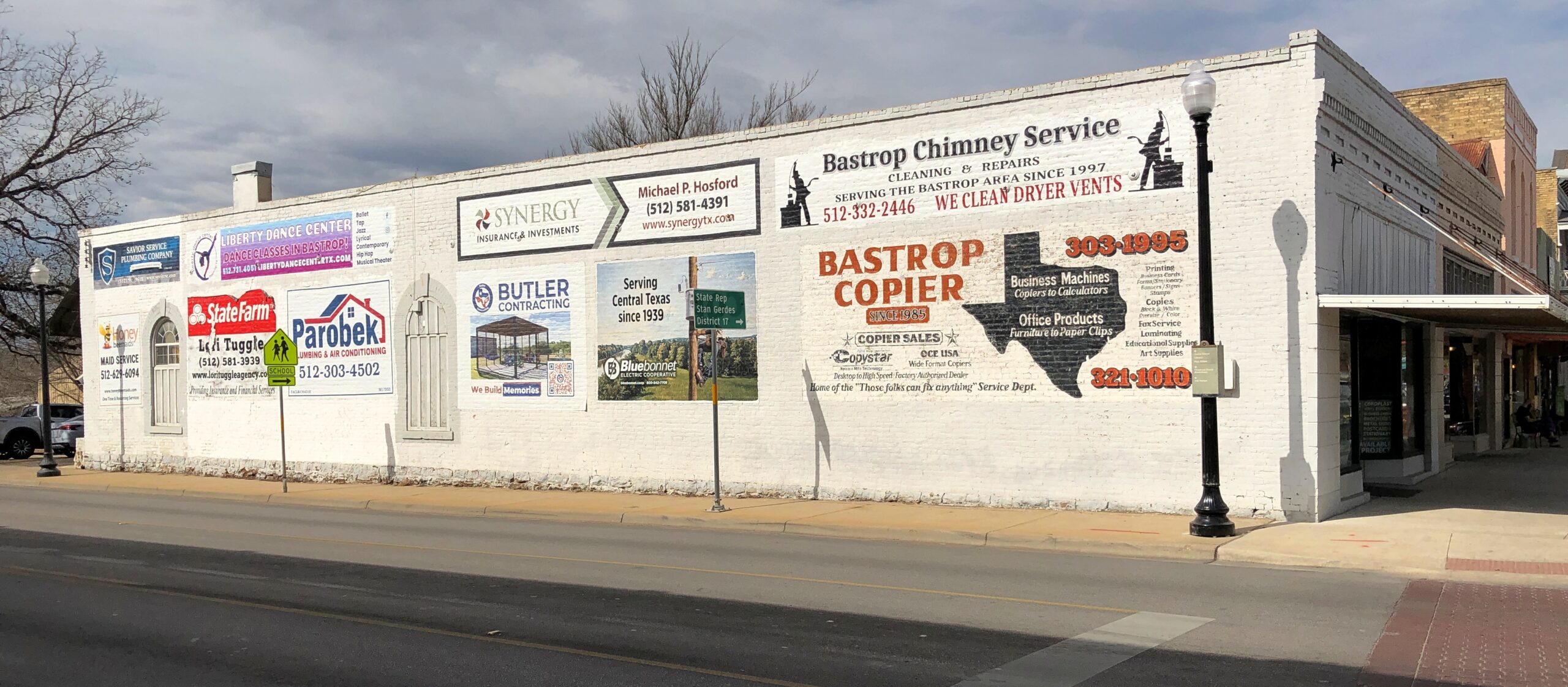
Plenty of these.
Advertising.
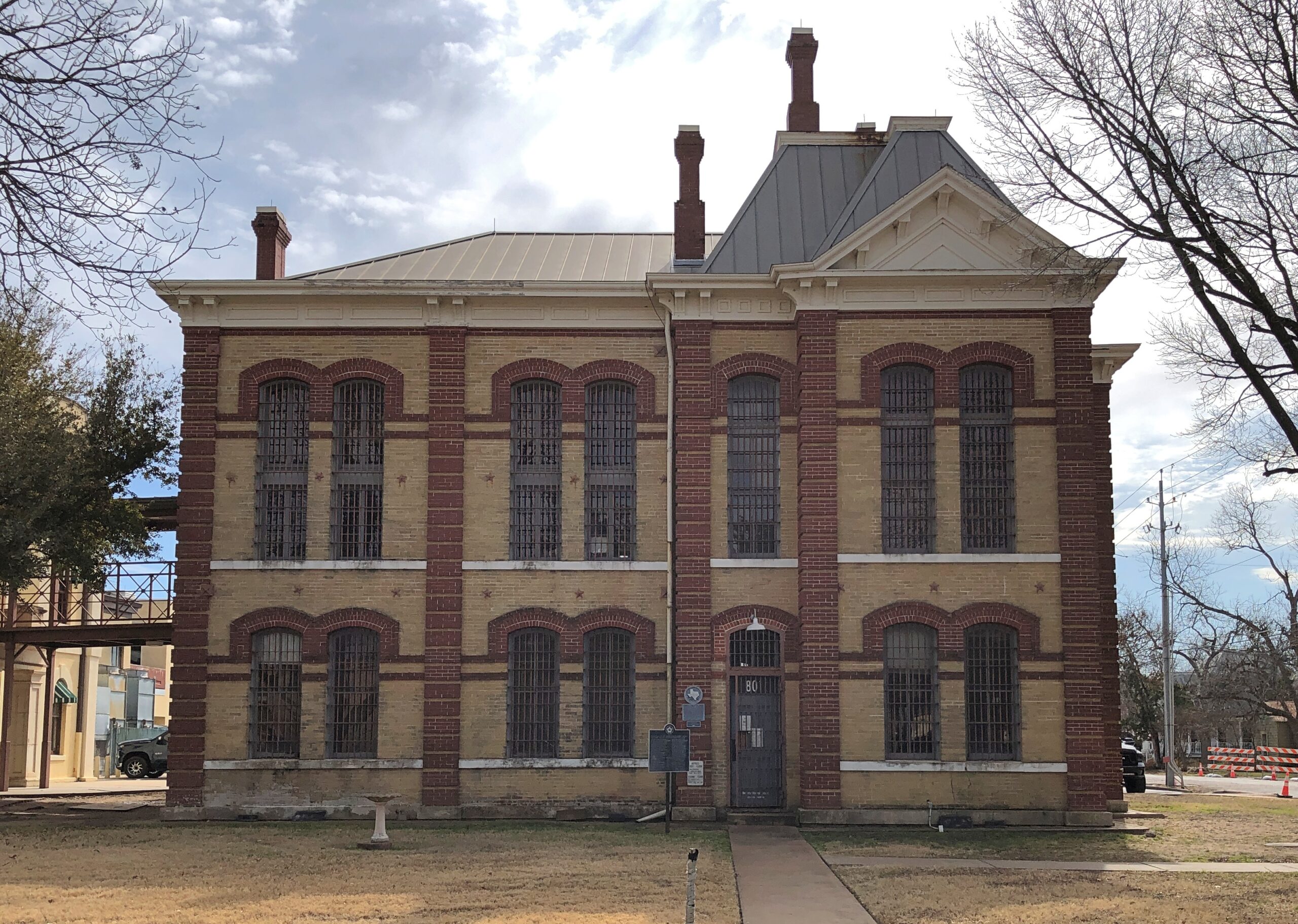
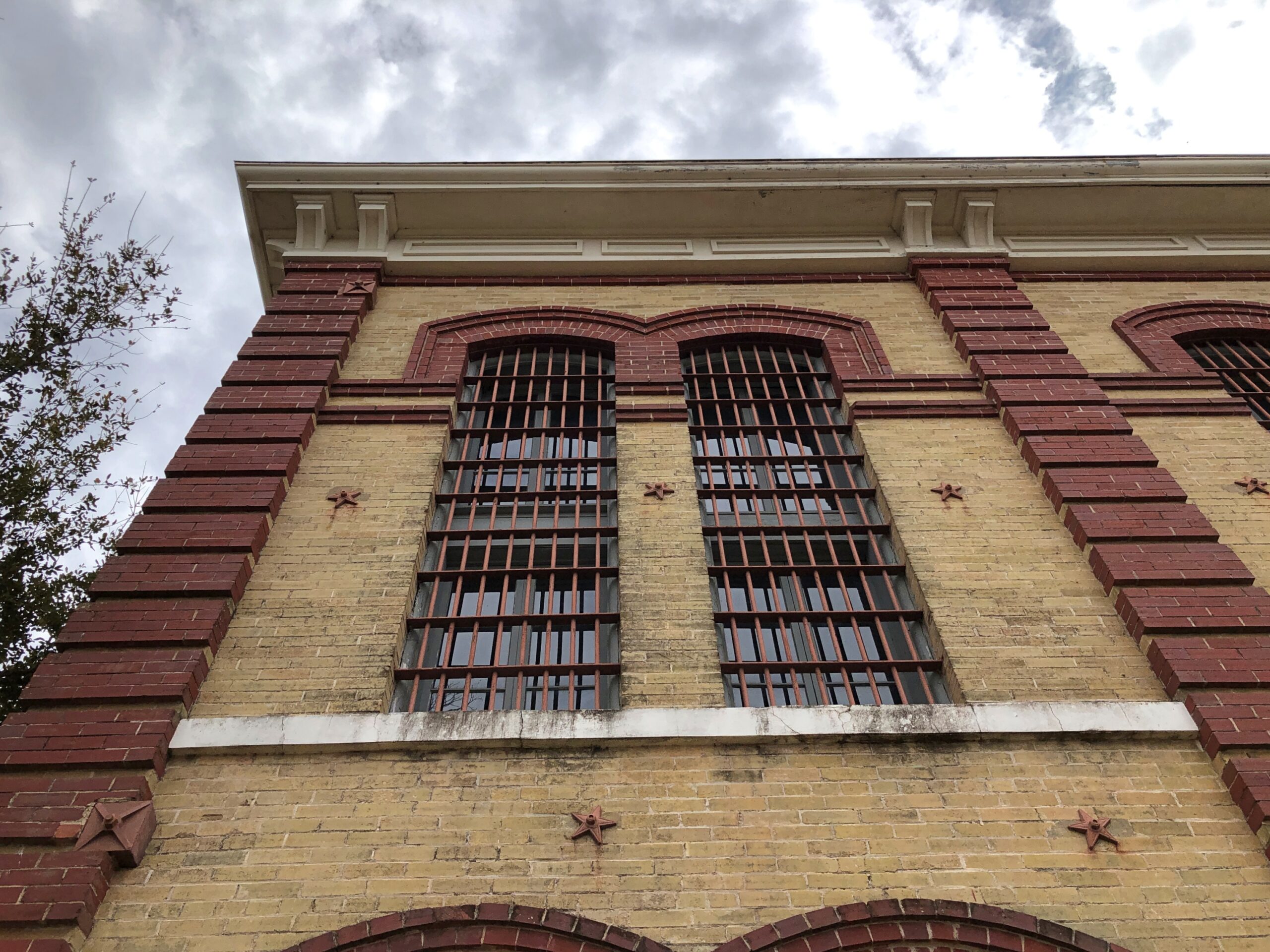
Not far from Main St. and next to the aforepictured Bastrop County courthouse is the old county jail.
In 1979, nearby Bastrop State Park, not the town itself, was the scene of Pine Cone Wars, Midnight Backgammon and our slightly older “chaperons” who holed up in a separate tent much of the time to make the beast with two backs. The youthful antics of two successive camping trips with high school friends that spring are something of a blur now, but a pleasant one.
Summertime, and the living’s not bad. Pretty good, really. But those aren’t as catchy as the actual lyric. Time to pause posting for the summer holiday string: Flag Day, Juneteenth, Canada Day, Independence Day and Nunavut Day. Come to think of it, that’s an exceptionally representative run of holidays for North America. Back around July 13.
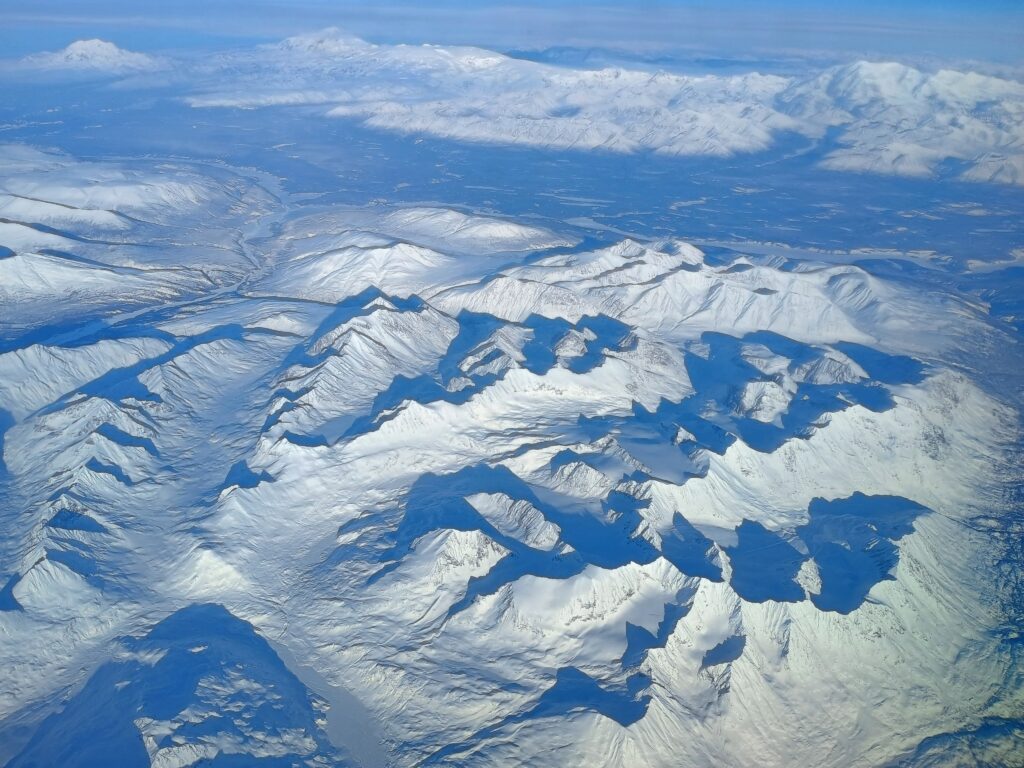
The flight from Chicago to Tokyo took us far north, as that flight path usually does. There was more light than I thought there would be, looking down at this moment on the February snows of the Yukon or Alaska; I’ll never know which. I could have been eying the border, for all I know, which suggests that borders are a gossamer fiction at these latitudes.
Japan
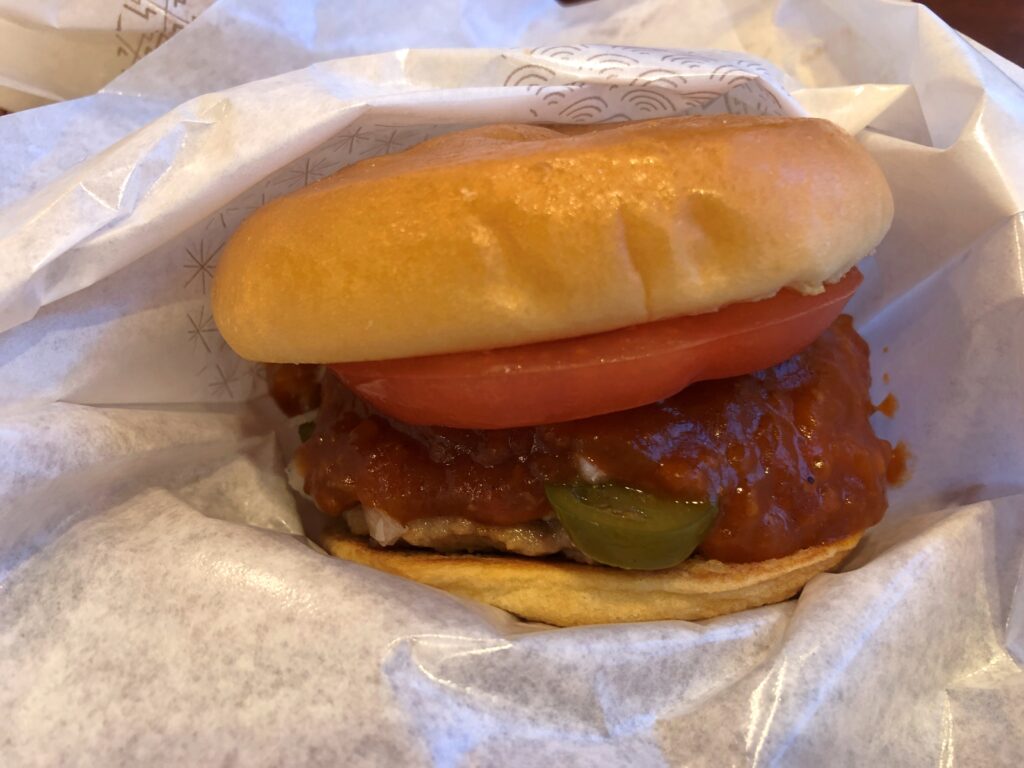
It was a happy moment when we ate at Mos Burger. One of these days, I’m going to dig out my paper copy of an article I wrote for Kansai Time Out in 1993 about four varieties of Western-style fast food chains founded in Japan, and post it. Today isn’t that day. But I can say that Mos Burger was the best of them.
As good as I remember it from 25+ years ago, the last time I went to one.
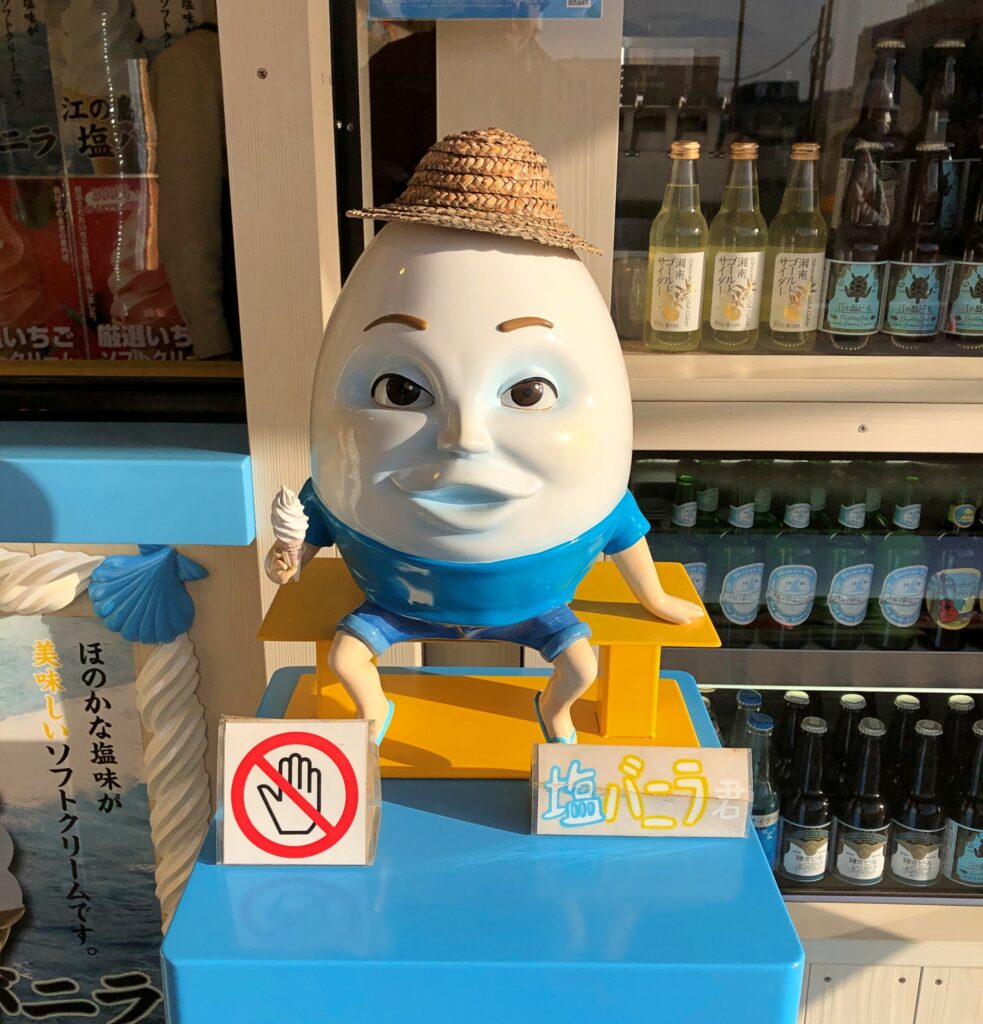
In Enoshima, near the ocean, this fellow hawks soft serve ice cream. Goo goo g’joob. Look but don’t touch.
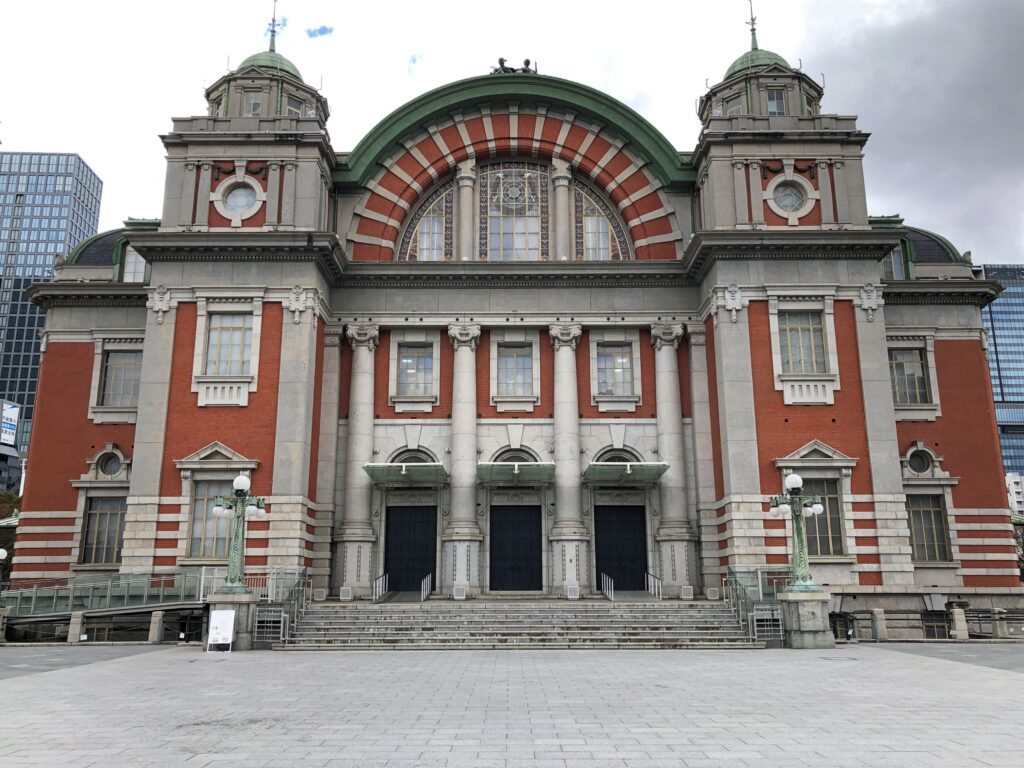
The handsome Osaka City Central Public Hall, completed in 1918. Amazing that it survived the war and urban renewal 20 years later, those forces that generally gave modern urban Japan the boxy concrete character it enjoys today.
India
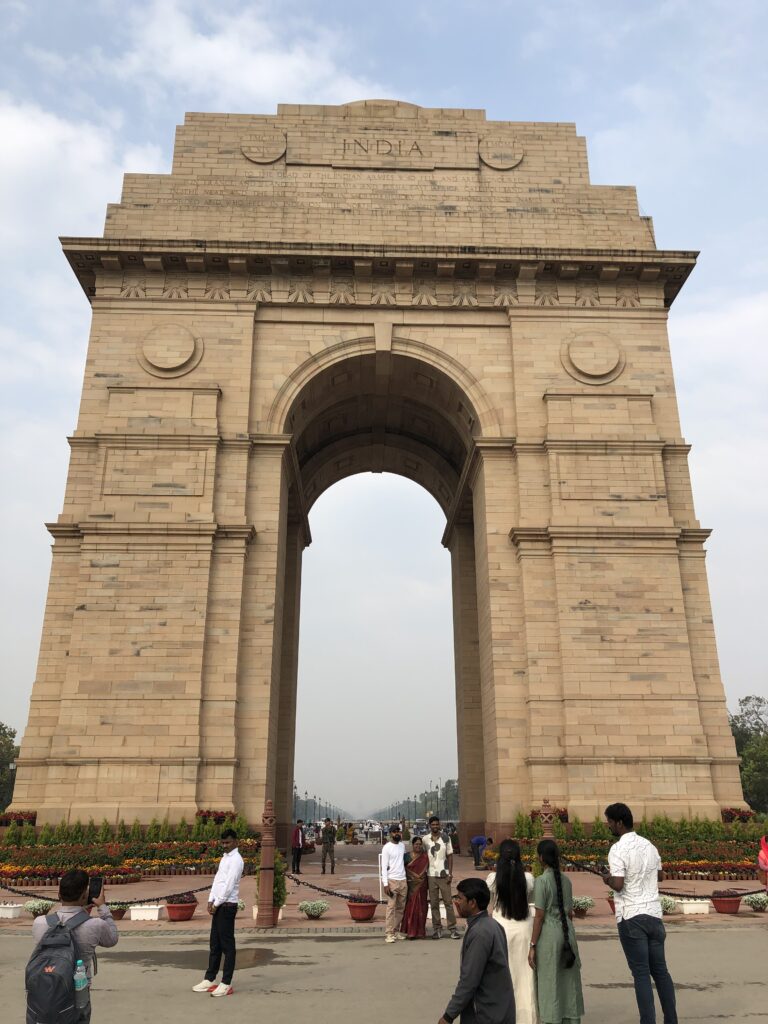
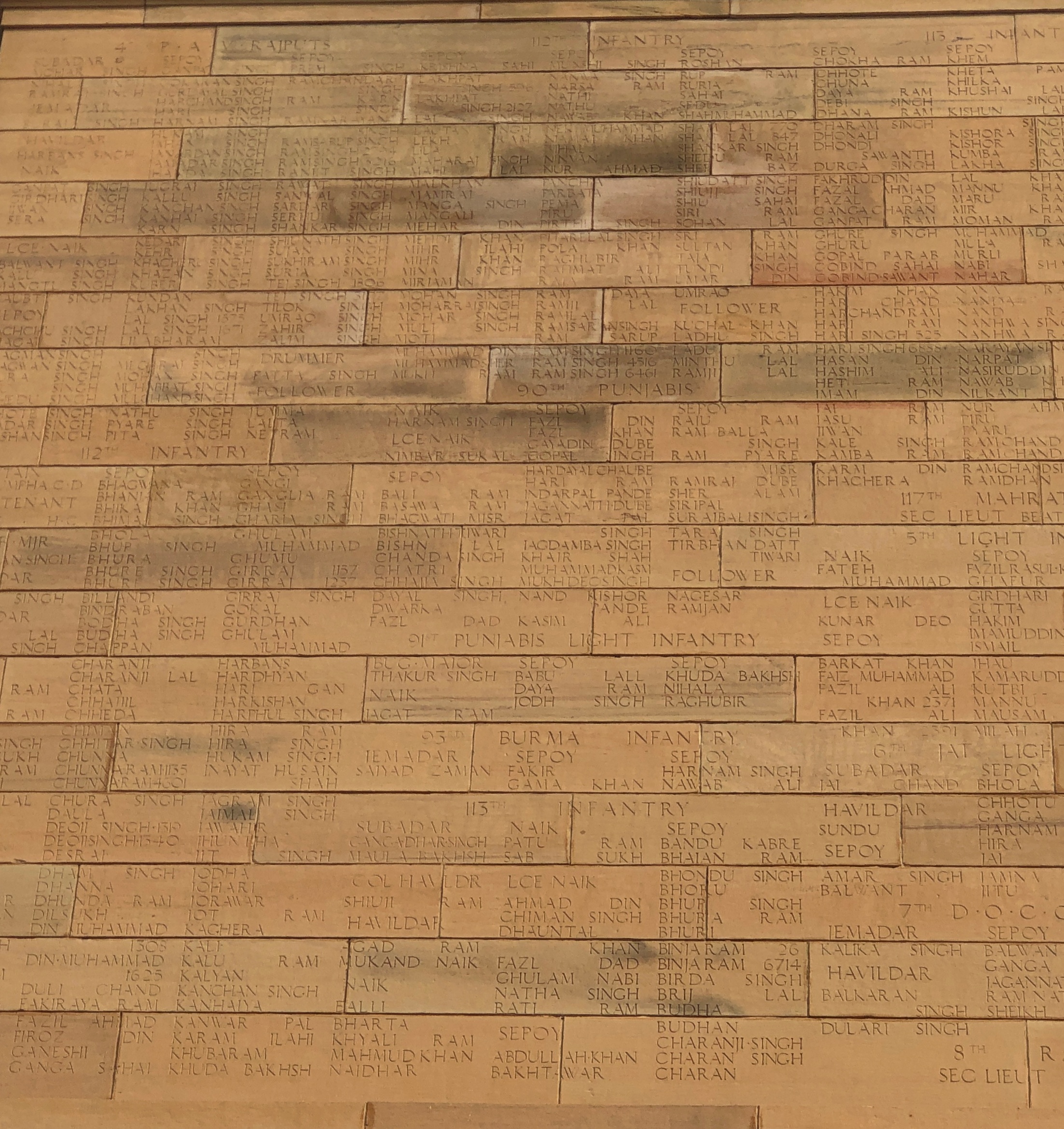
A monumental monument in New Delhi: India Gate, which honors more than 74,100 soldiers of the Indian Army who died during the Great War, and a number more in the Third Afghan War a few years later. They did their part. One of the larger relics of the Raj, unless you count things better described as legacies, such as railroad lines, parliamentary government, and the bitter feud between India and Pakistan.
While we were looking at India Gate, a group of about a dozen uniformed schoolboys, who had detached themselves from a larger group, approached me and asked where I was from. They were gleeful to hear “America,” a reaction I didn’t know anyone would have anymore, but I suppose they’ve seen a lot of our movies. A middle-aged male chaperon appeared in short order and shooed them away, while giving me a sidelong glance with a hairy eyeball, though I hadn’t precipitated the encounter in any way. I was just a suspicious foreigner, I guess.
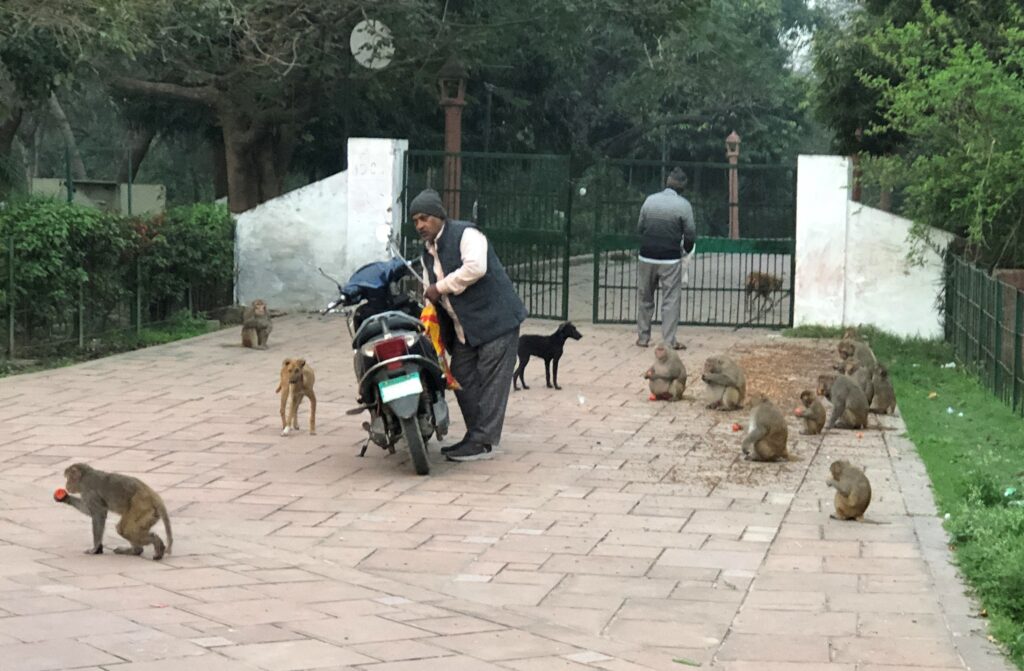
The Taj Mahal has a fair amount of parkland around it. That means a population of monkeys, too. I spotted more monkeys in urban India than I would have anticipated. These didn’t seem to be bothered by the men, the dogs or the motorcycle.
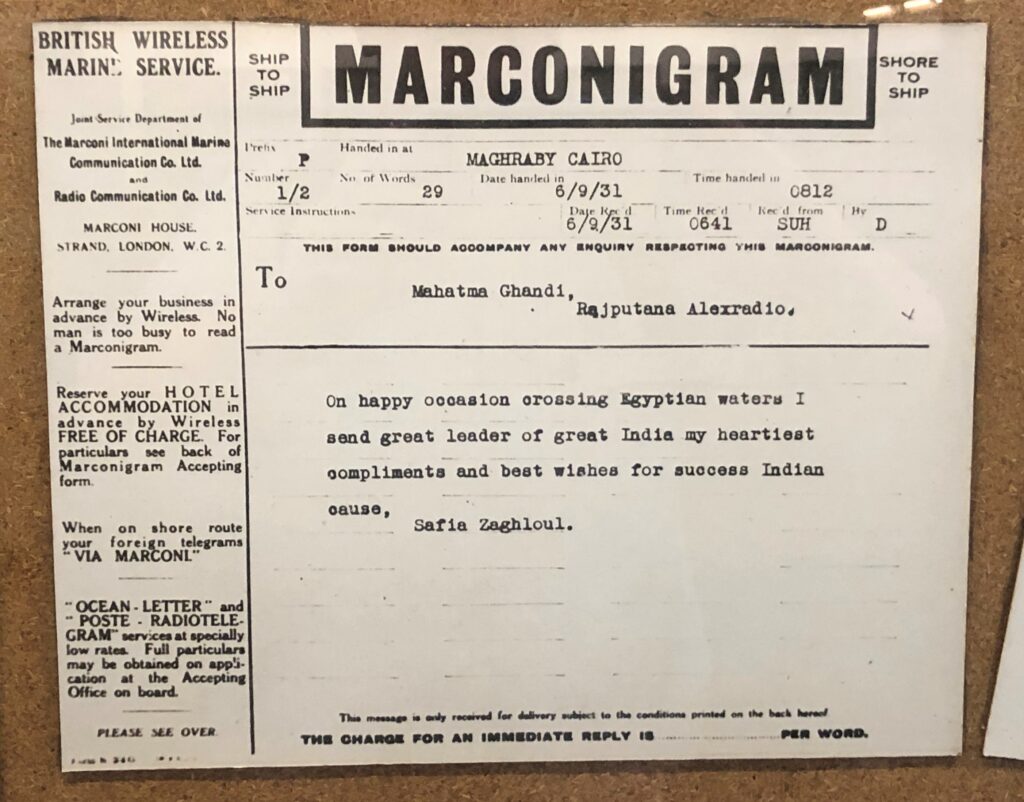
On display at the Ghandi Museum: a Marconigram. I don’t know that I’d ever seen one of those before. Or maybe there was one on display at the Titanic Museum in Branson. Anyway, that’s one good reason to go to museums: for things once common, now curiosities. Safia Zaghloul was an Egyptian political activist of the time.
United Arab Emirates
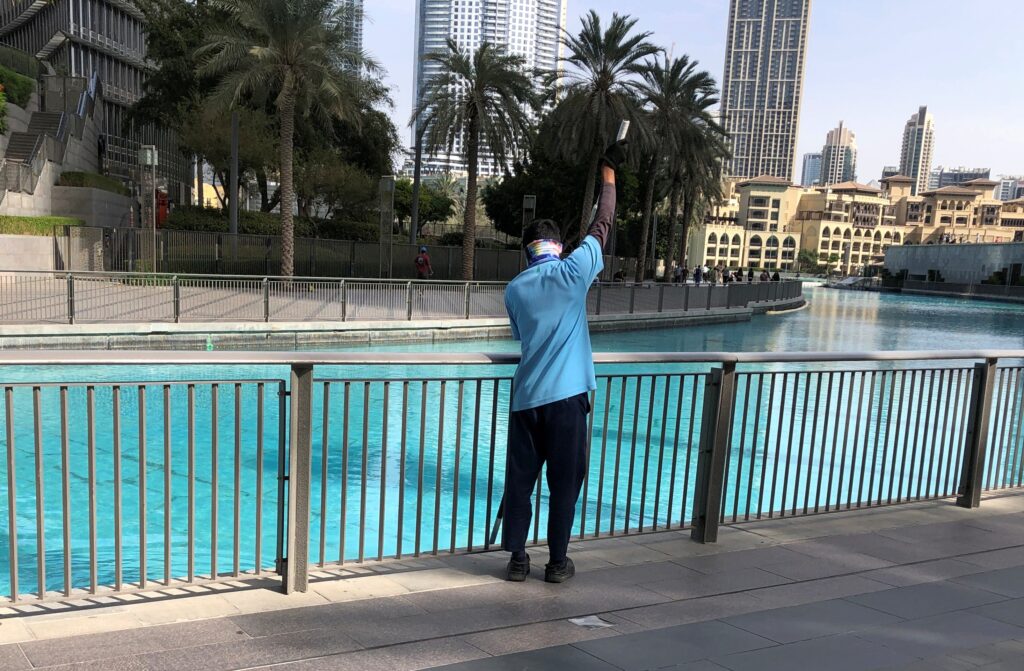
In Dubai it seemed like there were more men at work sweeping, mopping and other cleaning of floors and other flat places, per square meter, than anywhere else I’ve ever been. There are worse things to do with cheap labor.
Not sure exactly where this was, except somewhere out on Palm Jumeirah. Must have been a wall, or like a wall, in one of the posh retail corridors winding through one of the posh resort properties amid the poshness of the island.
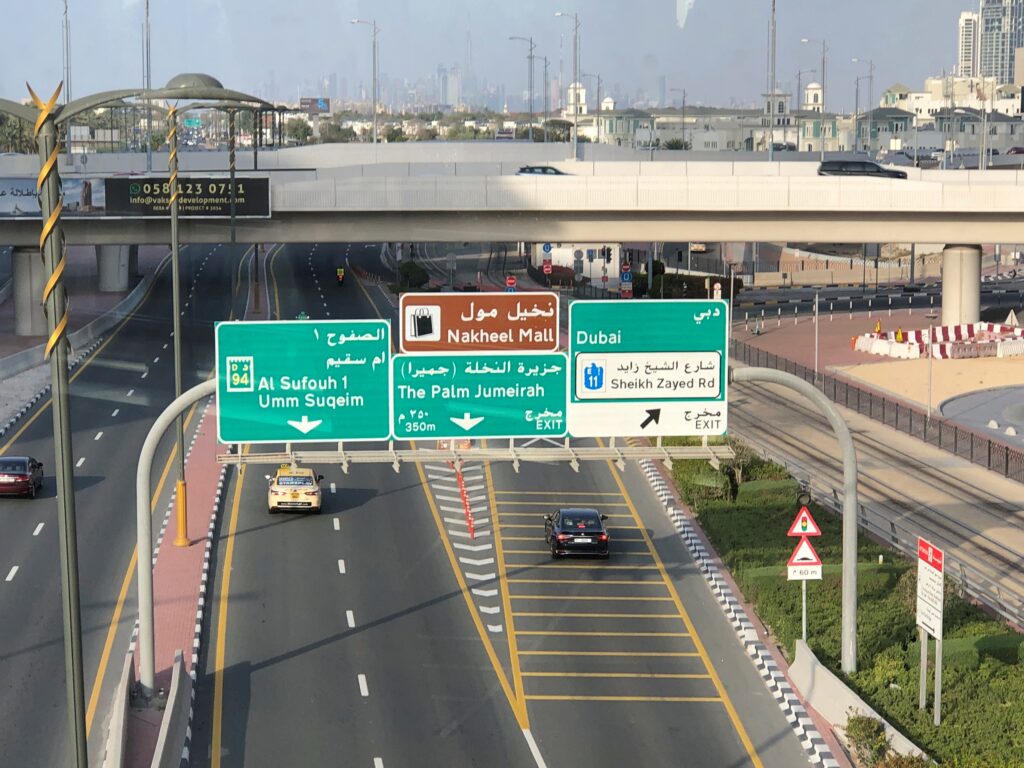
Note: White on green is common indeed around the world.
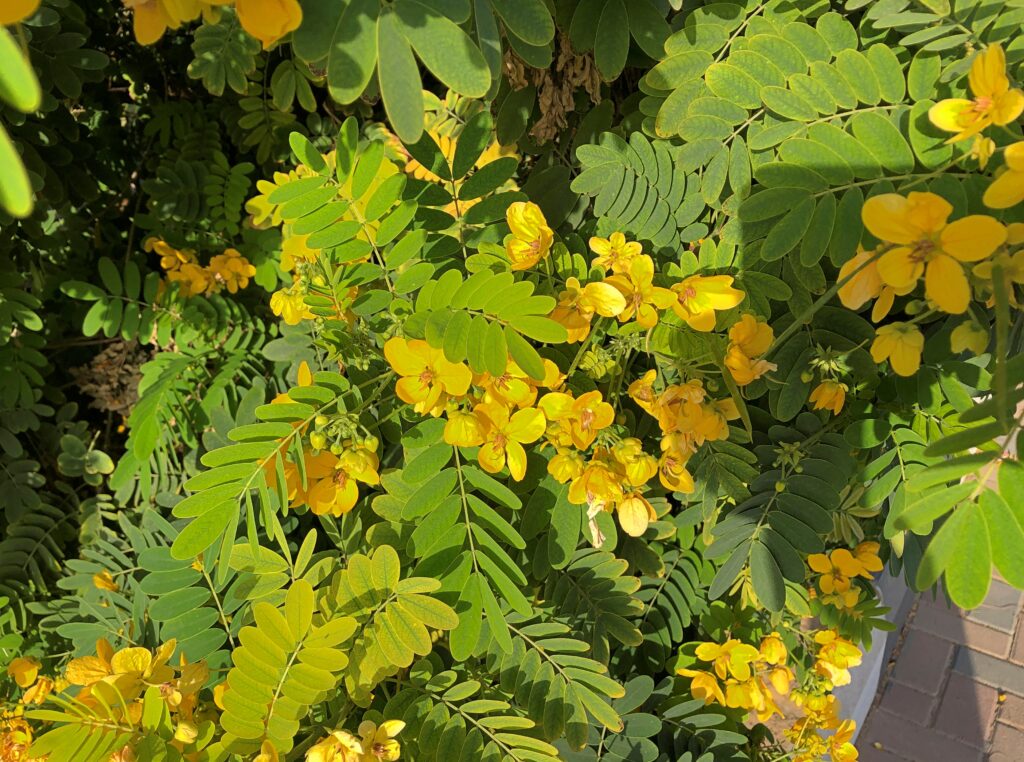
Desert flowers. Of course, sprinklers water that bit of terrain at regular intervals.
Germany
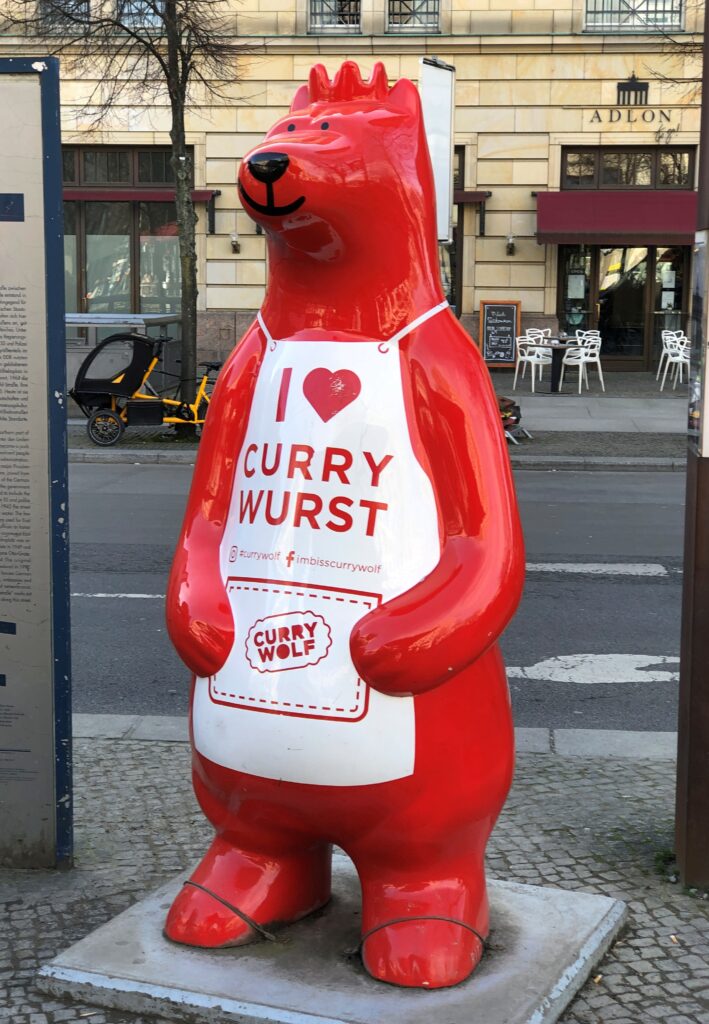
What’s Berlin without currywurst? They say it came into style soon after the city was divided.
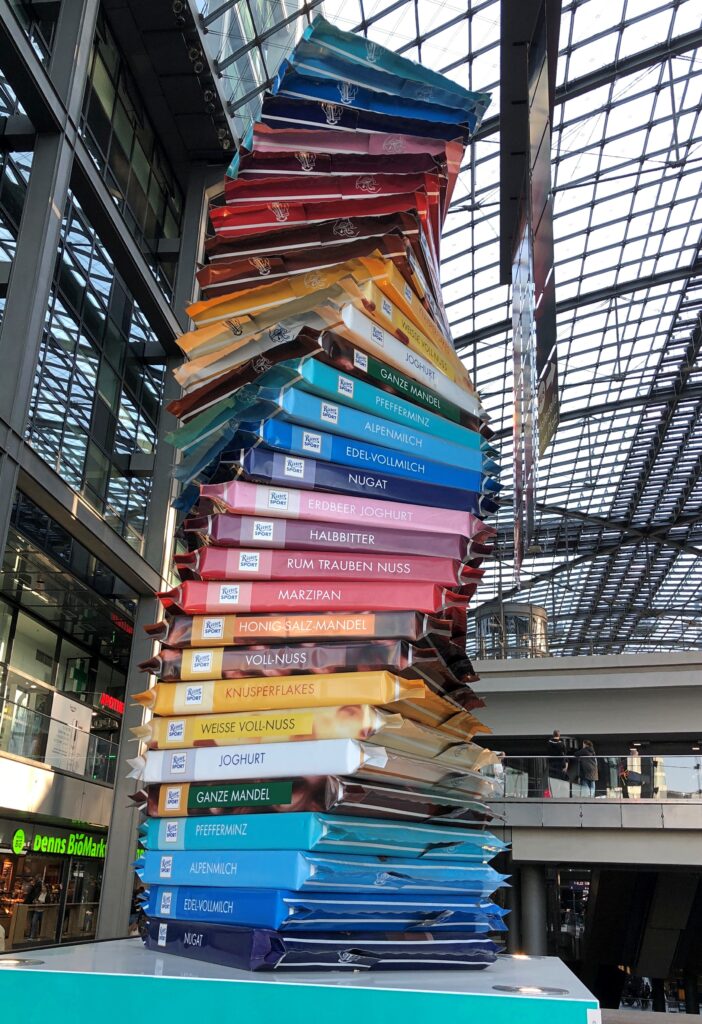
What would Germany be without Ritter Sport? A giant stack of them can be seen, in their great variety, at the Hauptbahnhof in Berlin. Later, I bought about 10 squares of RS at a discount price at a Netto grocery store near our hotel. Think Aldi or Lidl, but more cluttered.
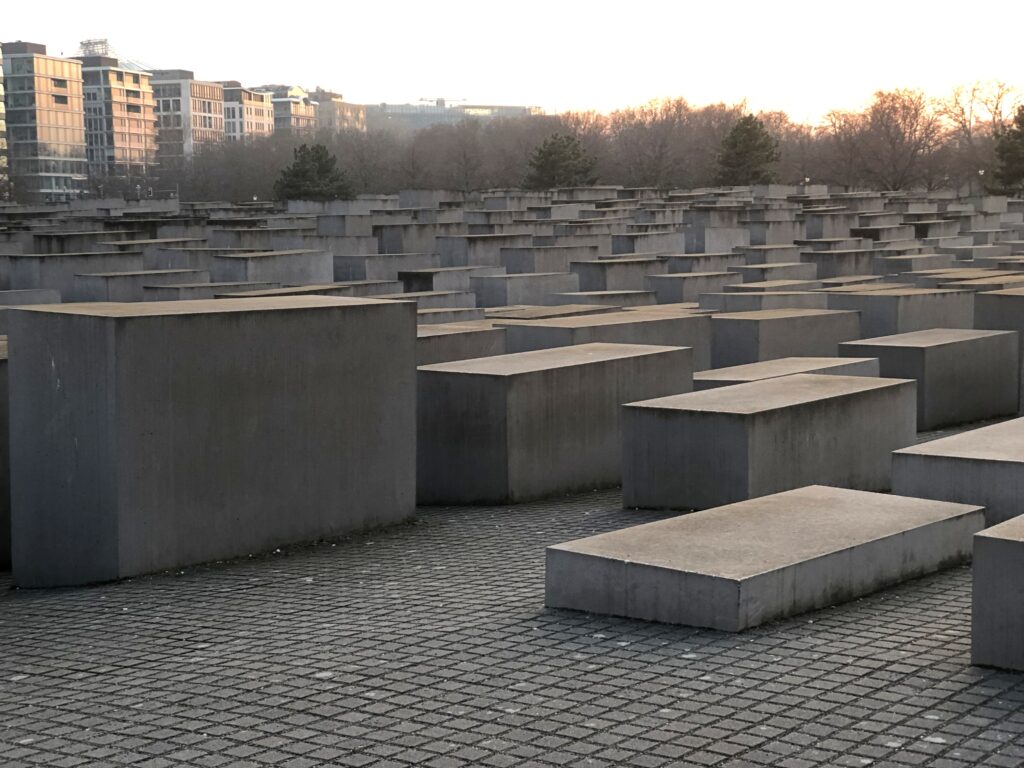
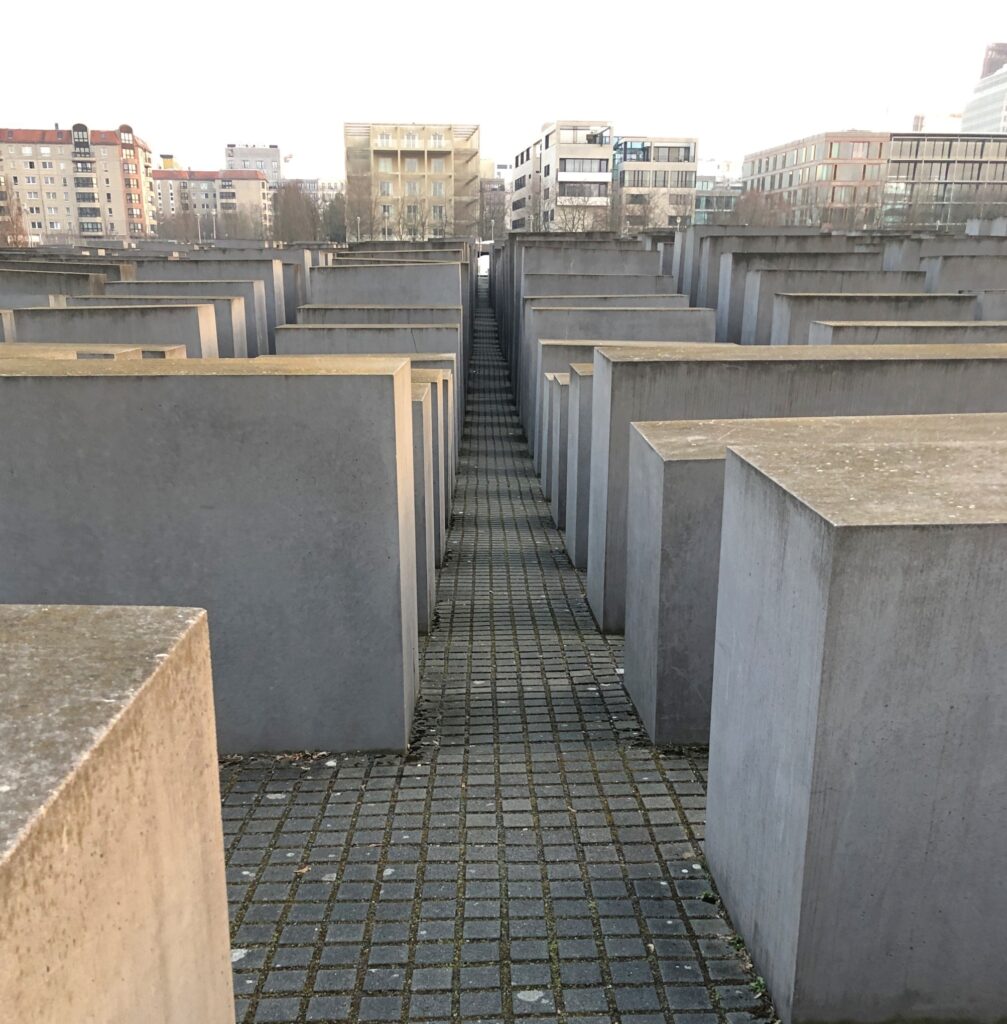
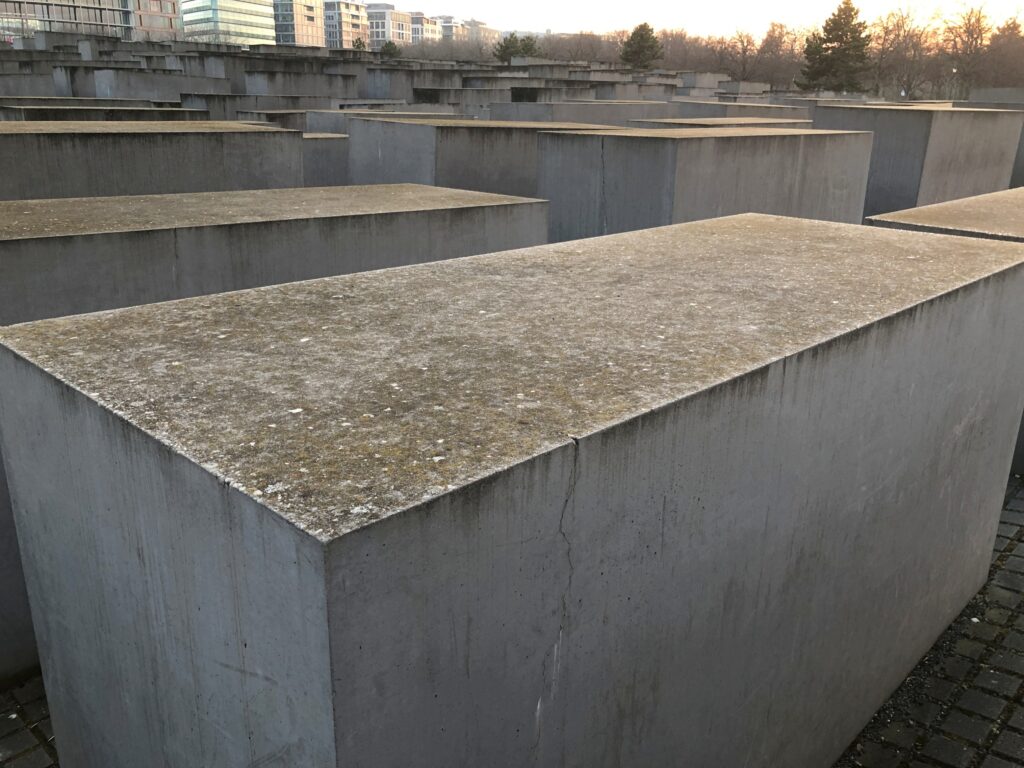
Views of the Memorial to the Murdered Jews of Europe, Denkmal für die ermordeten Juden Europas, near the Tiergarten in Berlin. It wasn’t there in 1983.
Czech Republic
Not calling it Czechia. Or, if it ever comes to it, not calling India Bharat, either.
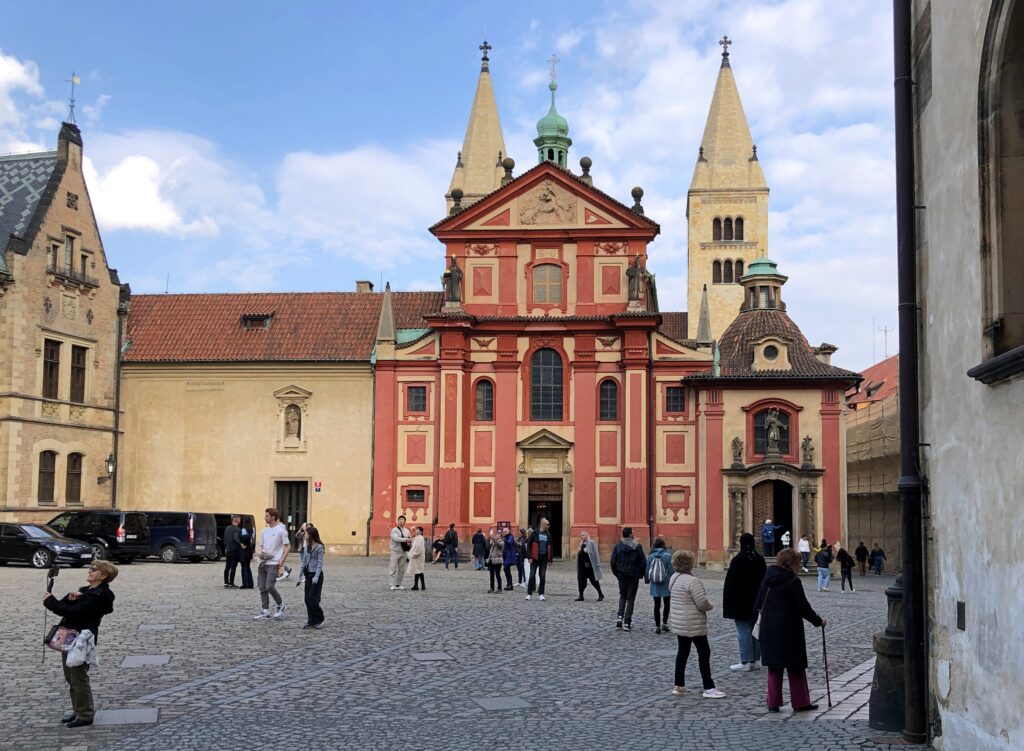
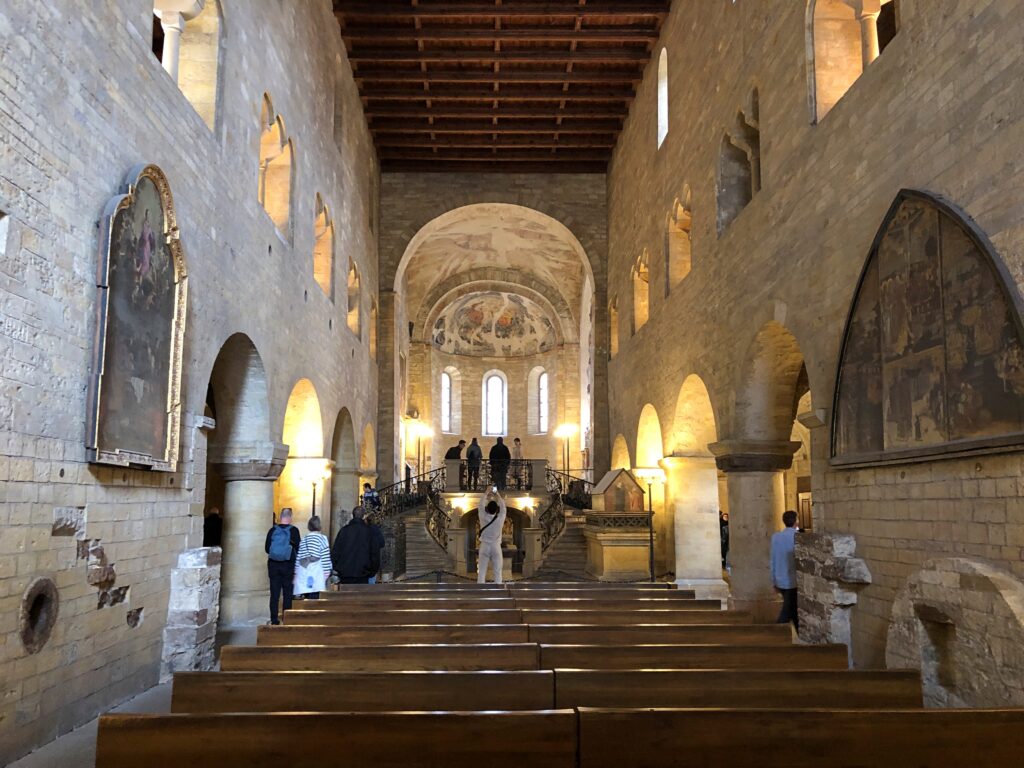
St. George’s Basilica. I admired the nearby St. Vitus Cathedral. That’s a grand edifice. But St. George’s has that human scale, and echoes of an even earlier time. It was completed during the time of Good King Wenceslaus.
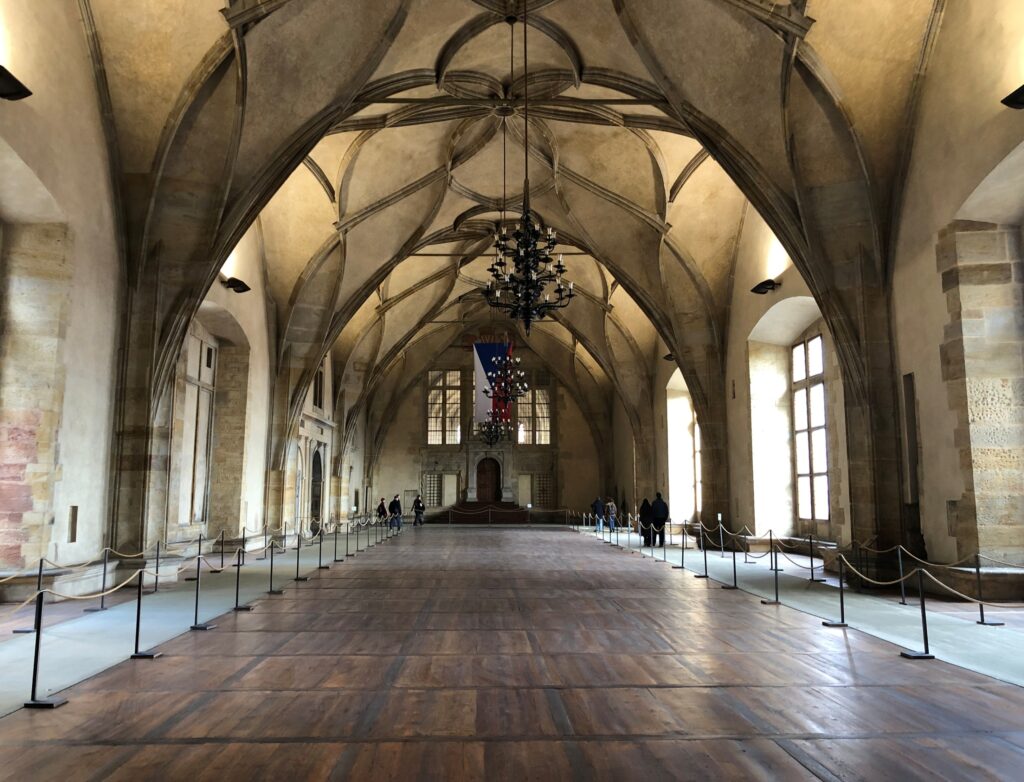
Vladislav Hall. The site of centuries of Bohemian parties, banquets and balls, me boys. That and affairs of state.
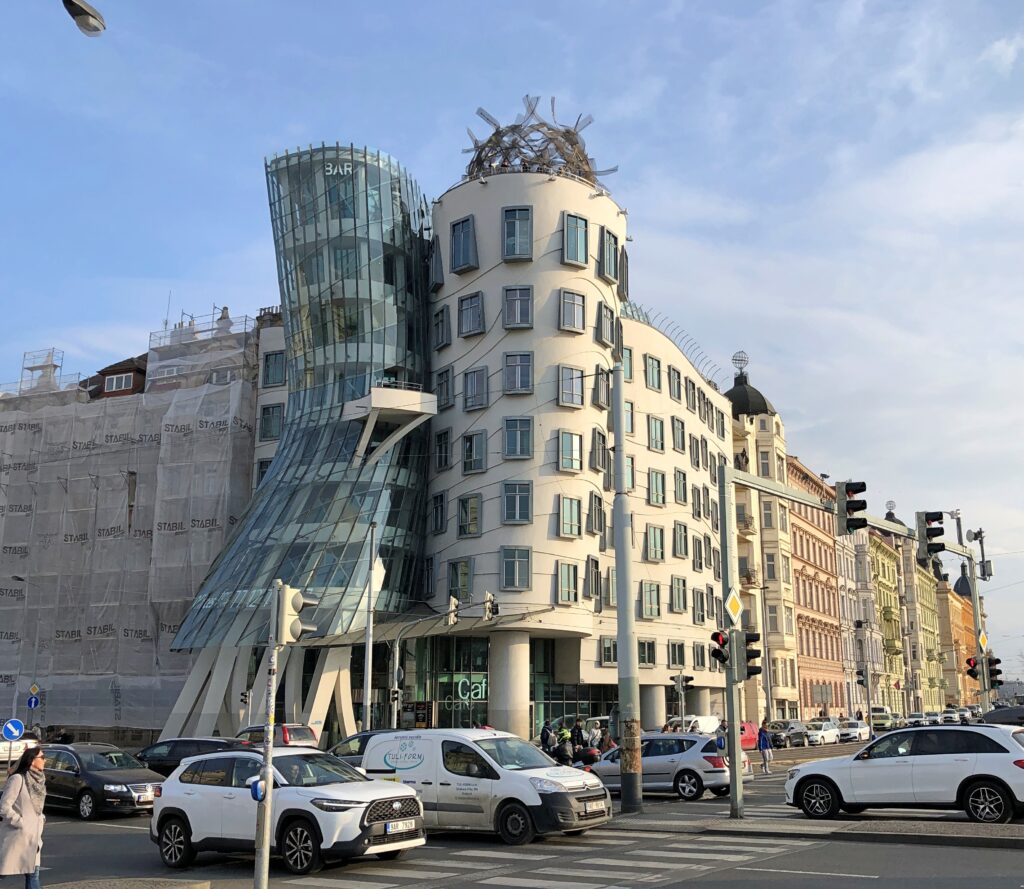
The Dancing House. We rode a streetcar line out of our way to see it, though not that far. It wasn’t there in 1994.
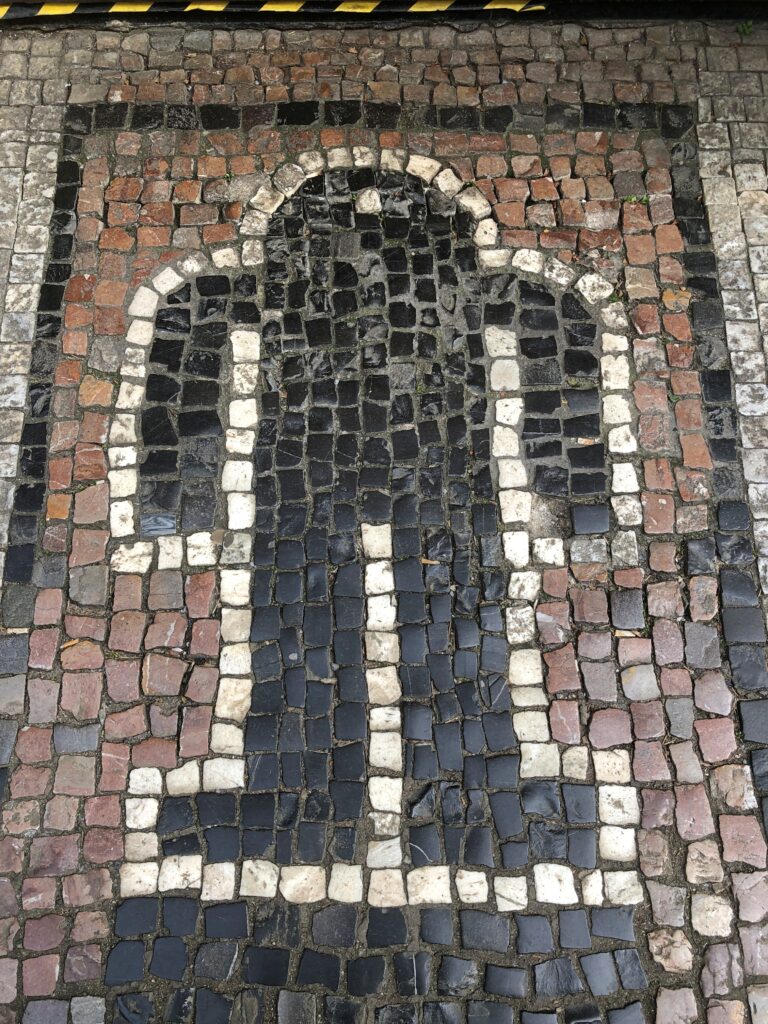
A sidewalk golem in the old Jewish Quarter of Prague. The Sidewalk Golems was a relatively obscure band who sometimes toured with Irwin Hepplewhite and the Terrifying Papoose Jockeys.
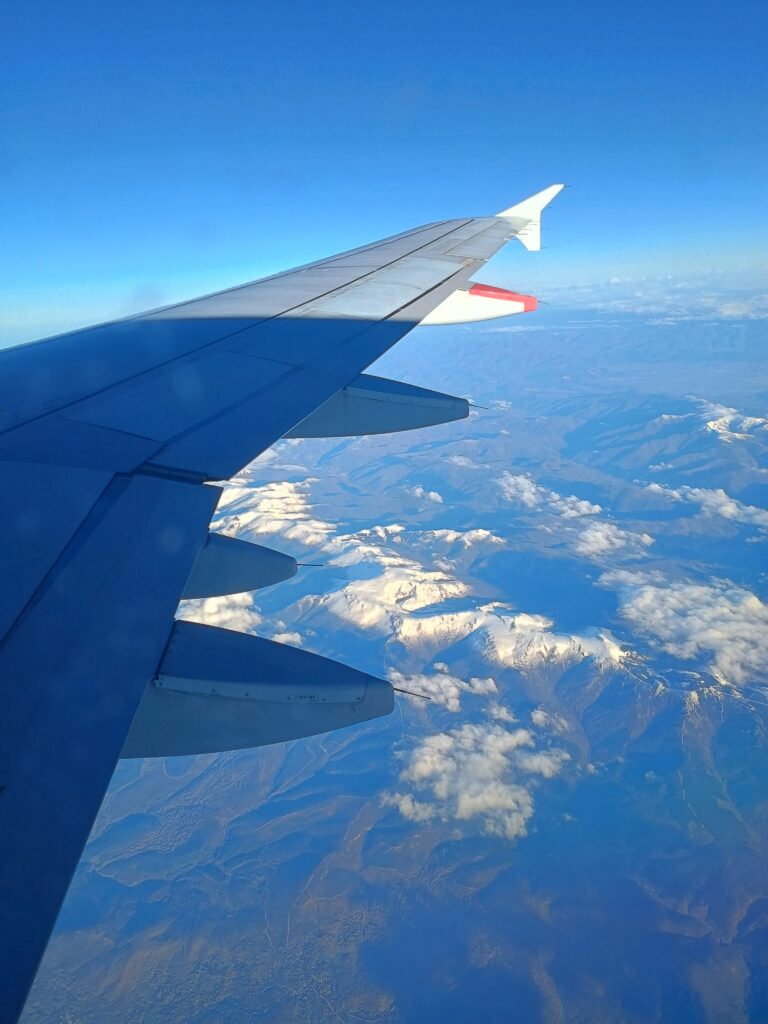
This could have been over Spain or Portugal.
The last image of thousands that I took, a staggering number in any context except digital images that take practically no time or effort to make.
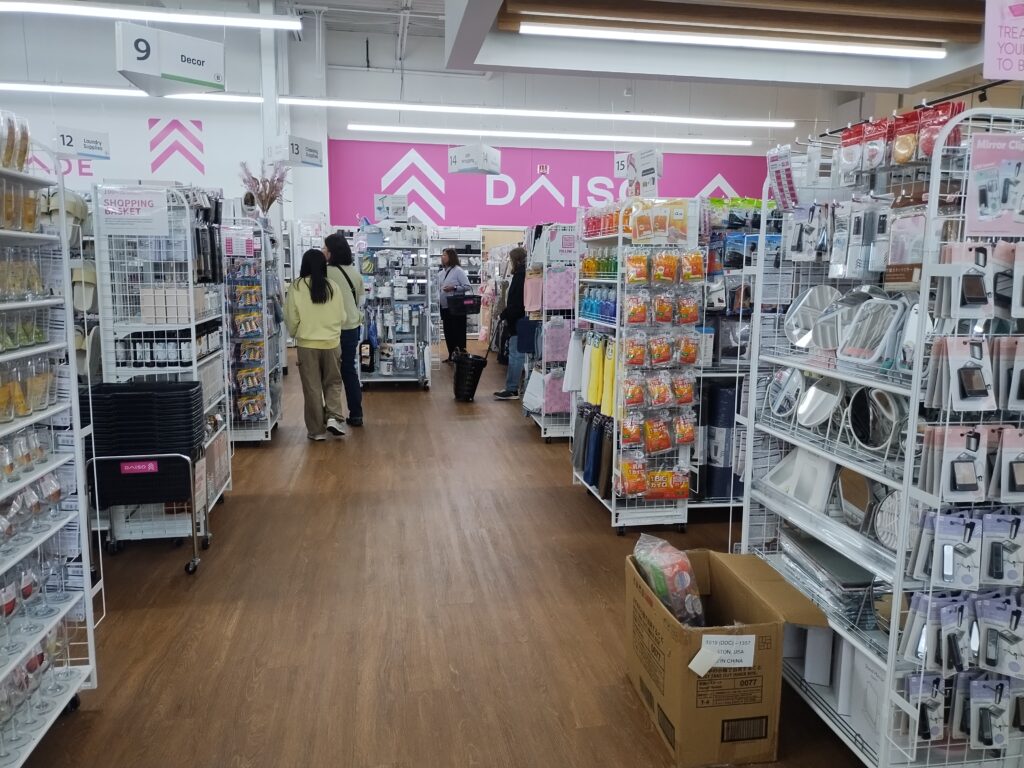
Retail comes and goes. After we visited Jo-Ann’s – where I bought a single item, an olive-theme doormat for our deck – we went a short distance to something new. Newish, that is, to North America, but well-established in Japan: Daiso.
We hadn’t noticed this particular northwest suburban location before. Back in February, we visited one in Tokyo, which was my first time at the chain, though I’d written about it before. Worldwide, there are about 6,000 Daiso locations, with only 150 in the U.S., and even those are fairly recent arrivals.
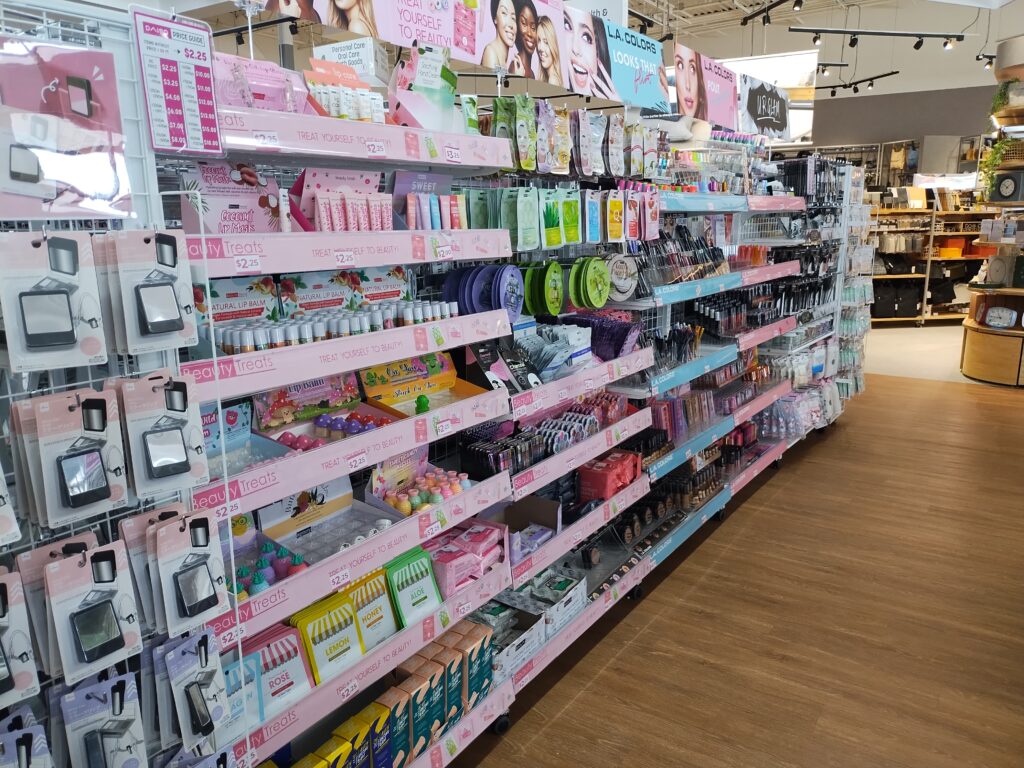
The store has an impressive amount of inexpensive goods, and a more imaginative selection that you’d find in a dollar store. Better designed, too. Things cost money in Japan, naturally, and sometimes quite a lot, but that country doesn’t share the notion, common here in America, that if you don’t pay a lot, you deserve crappy design.
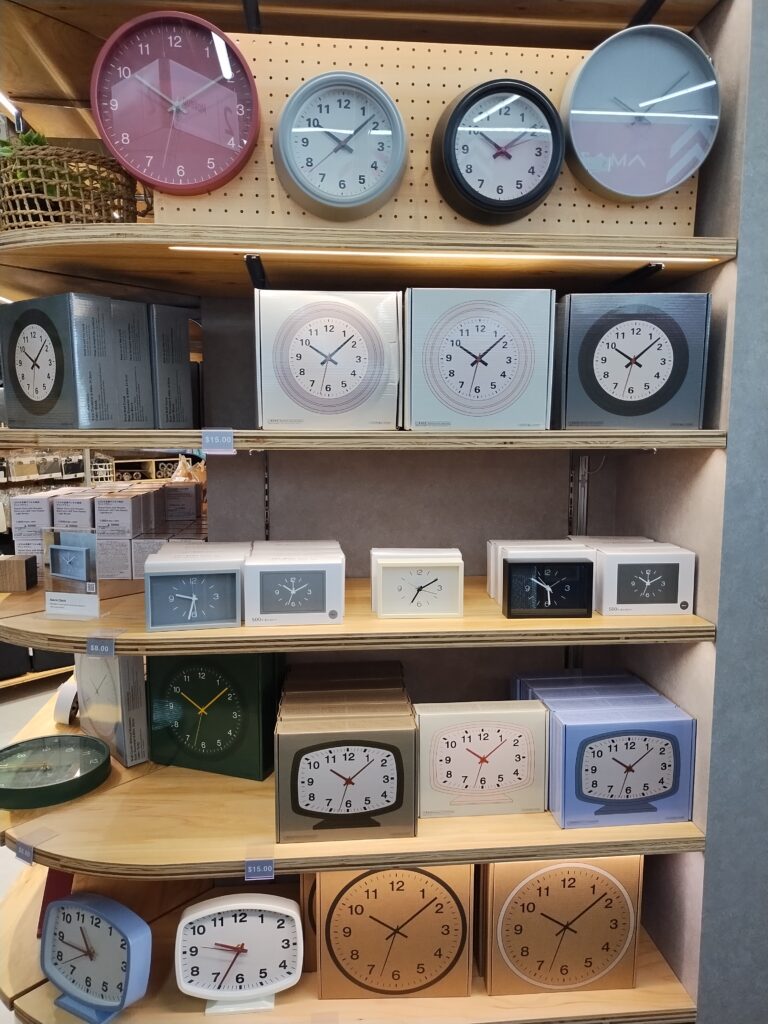
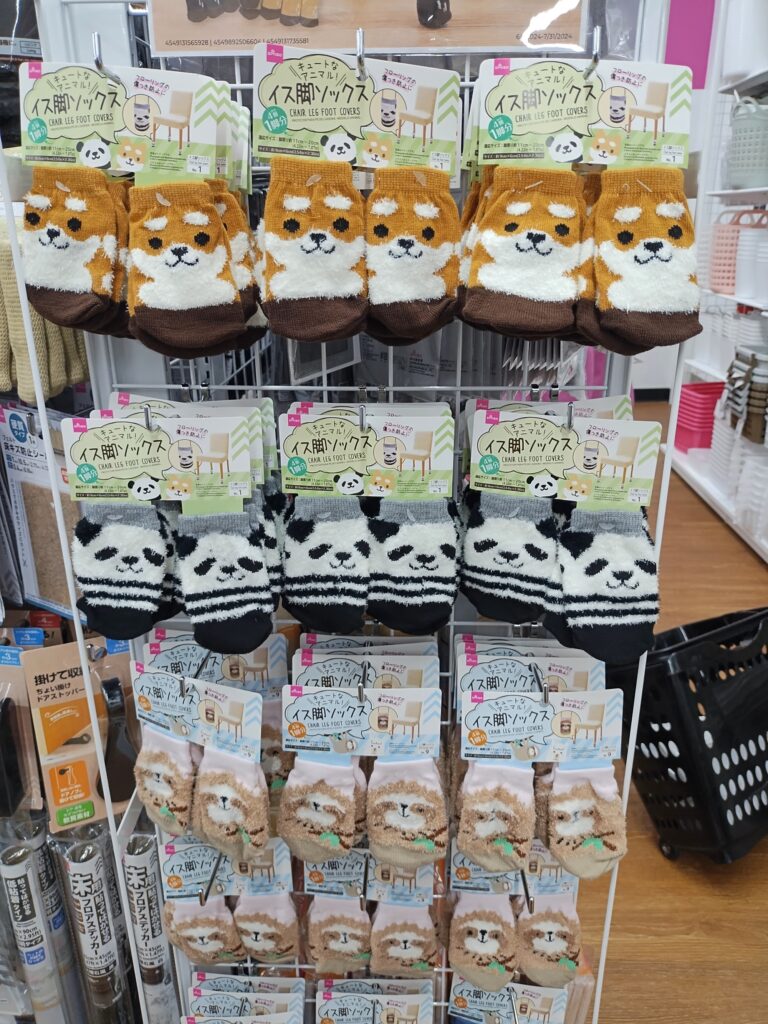
Socks and clocks, among many other items.
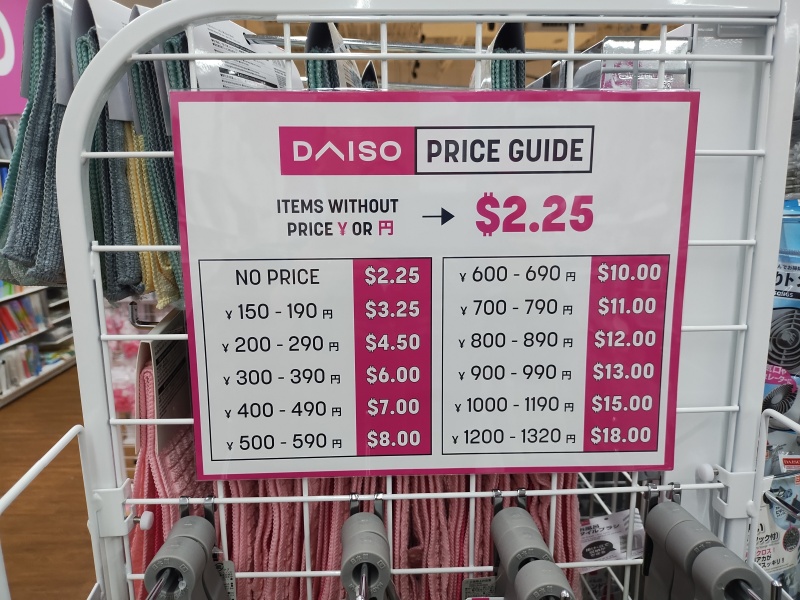
Also, an unusual pricing structure.
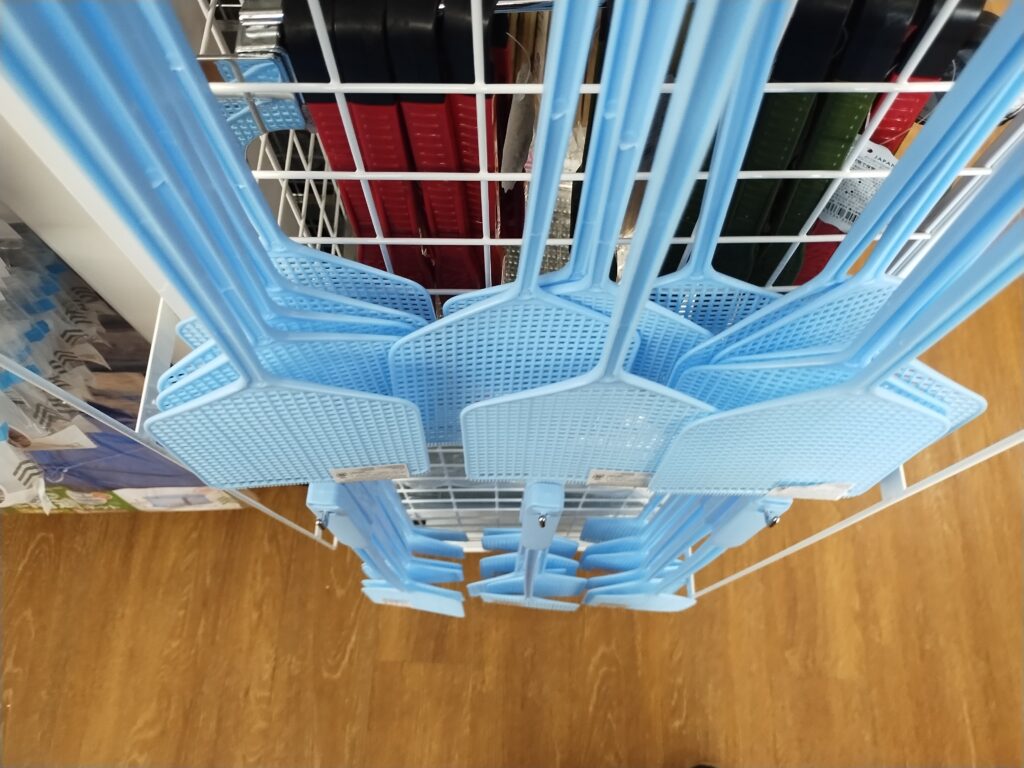
I didn’t buy one of these, because we have one – an odd souvenir from the Bluegrass Inn during a stay in ’08. More recently I used it to swat moths.
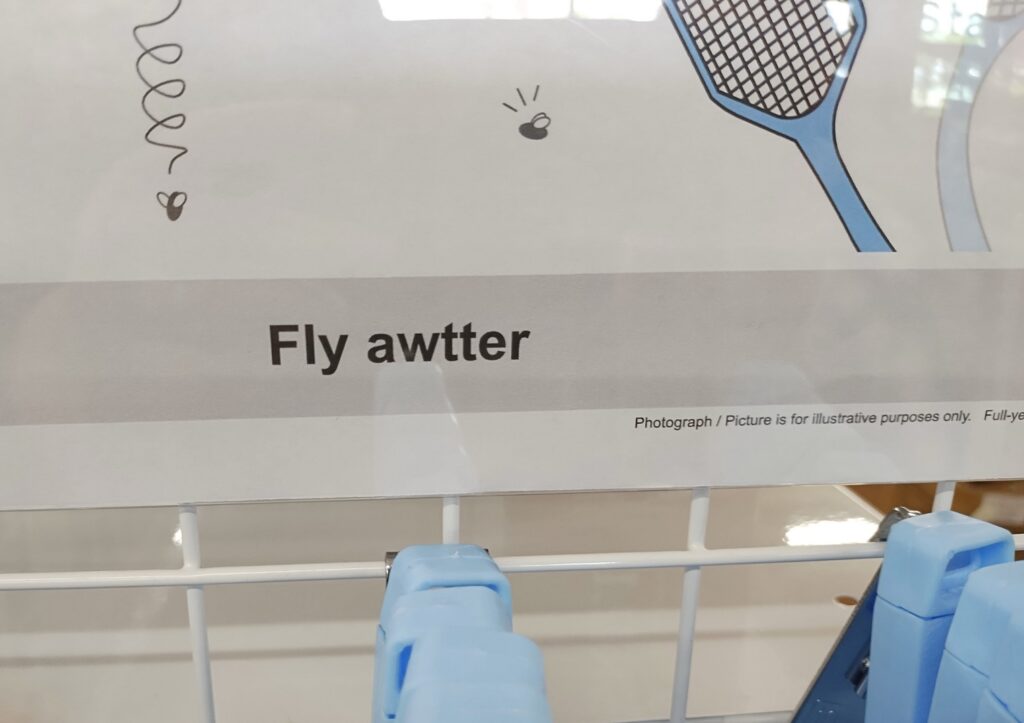
Mangled English, no extra charge. An authentic Japanese touch.
In Japan, it was never necessary to have a car. In theory, one could wish such a condition for North America, but I wouldn’t want to give up the option of getting in a vehicle and driving a few hundred miles at a go, or further, to seek out fun roads.
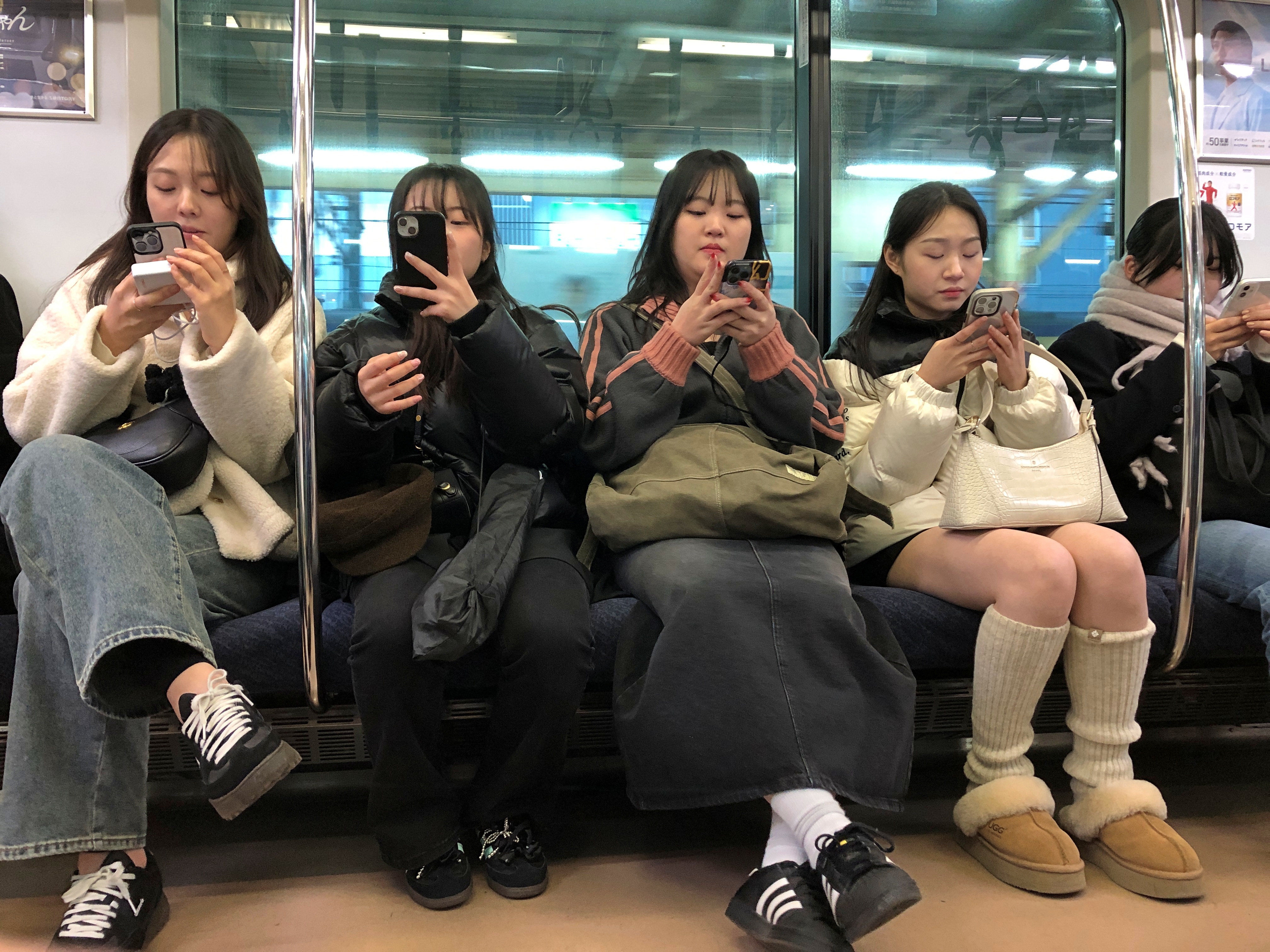
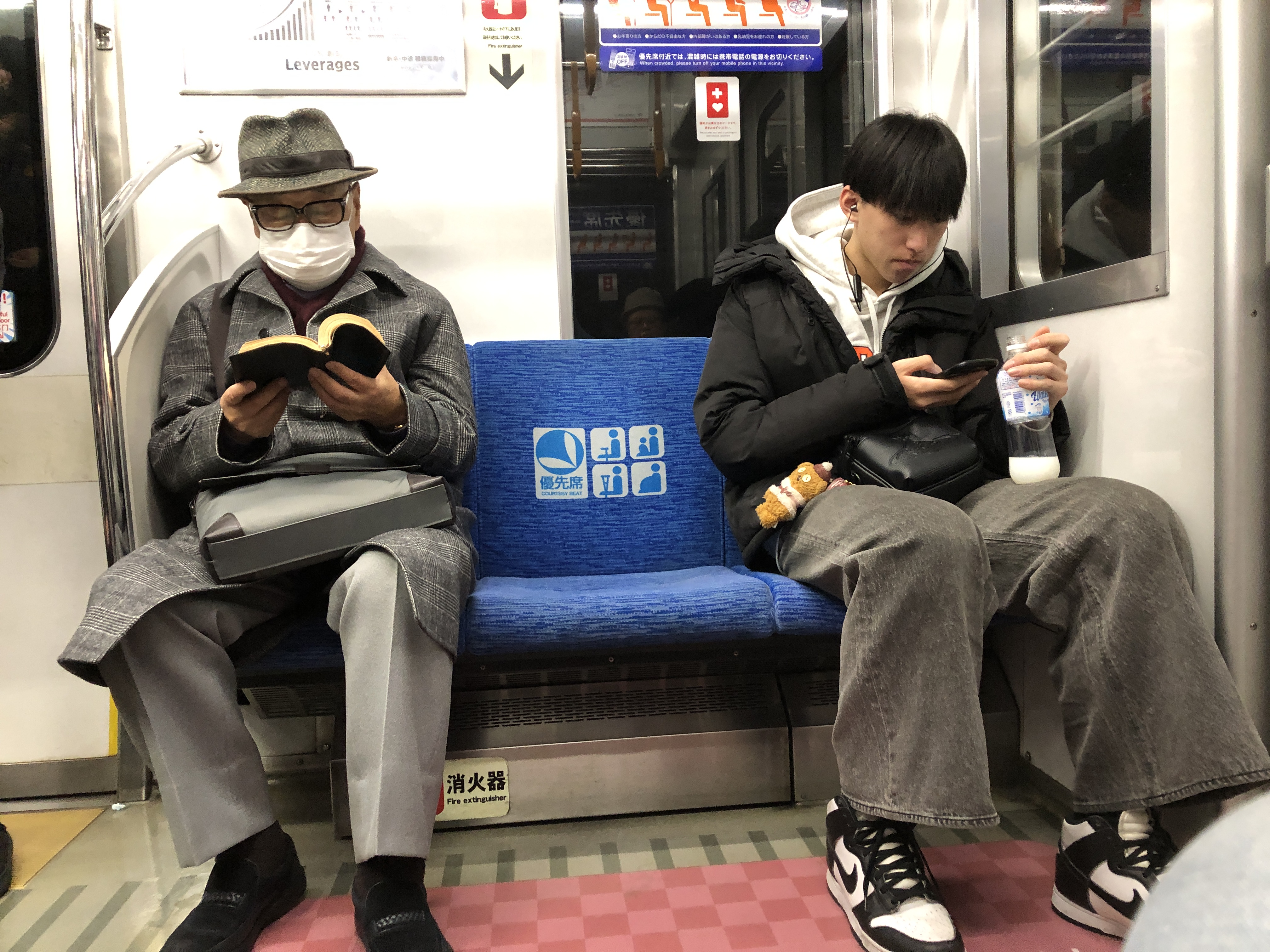
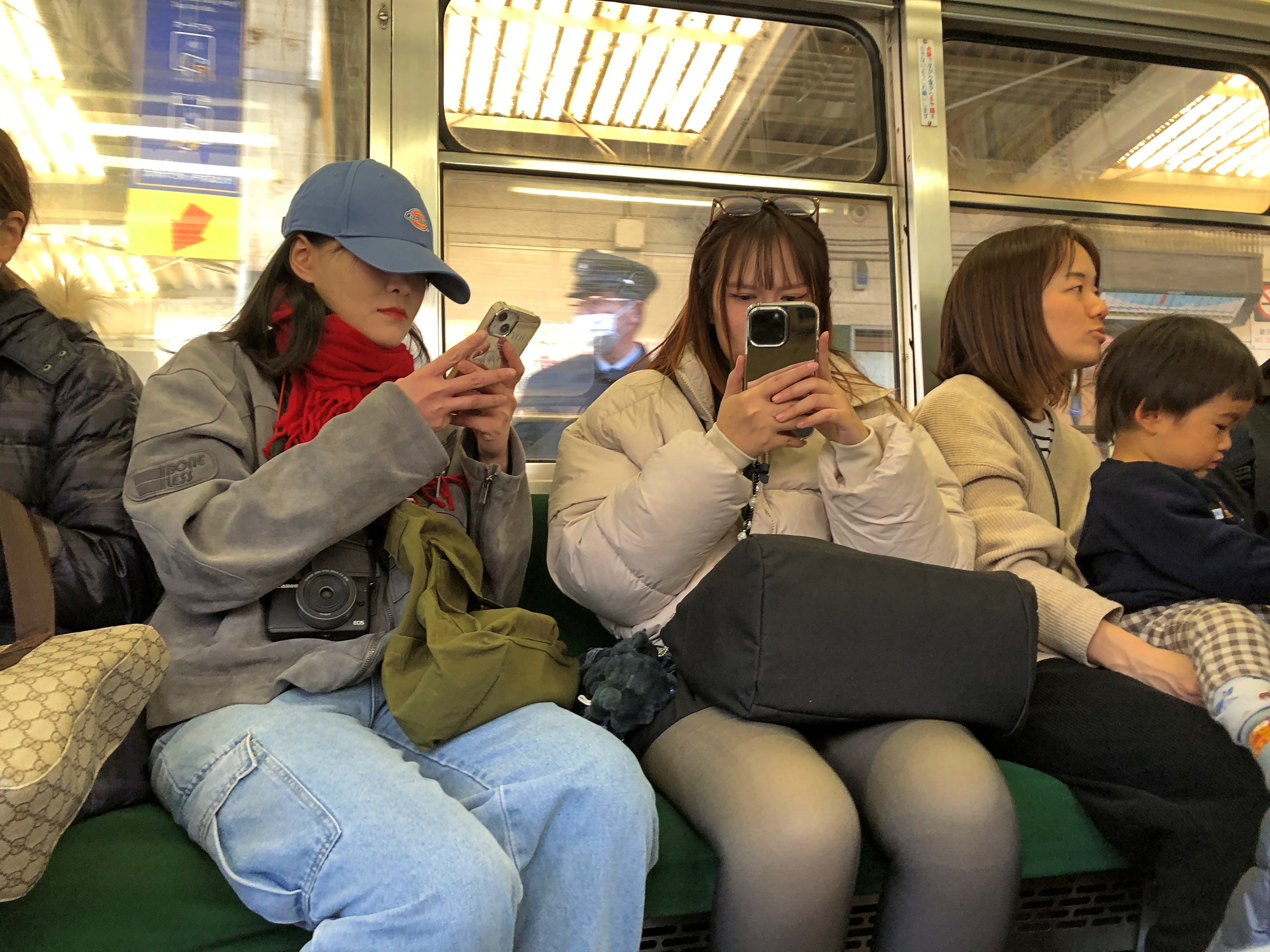
There are probably similarly engaging roads in Japan, but I prefer trains there. We took quite a few during the recent visit. Some were crowded, as subways in rush hour tend to be, but none required the assistance of white-gloved train employees shoving passengers into cars – an image known to gaijin lore as much as the vending machines that sell weird items, but one I never saw at any time, even during rush hours in the ’90s. (And the vast majority of Japanese vending machines sell drinks.)
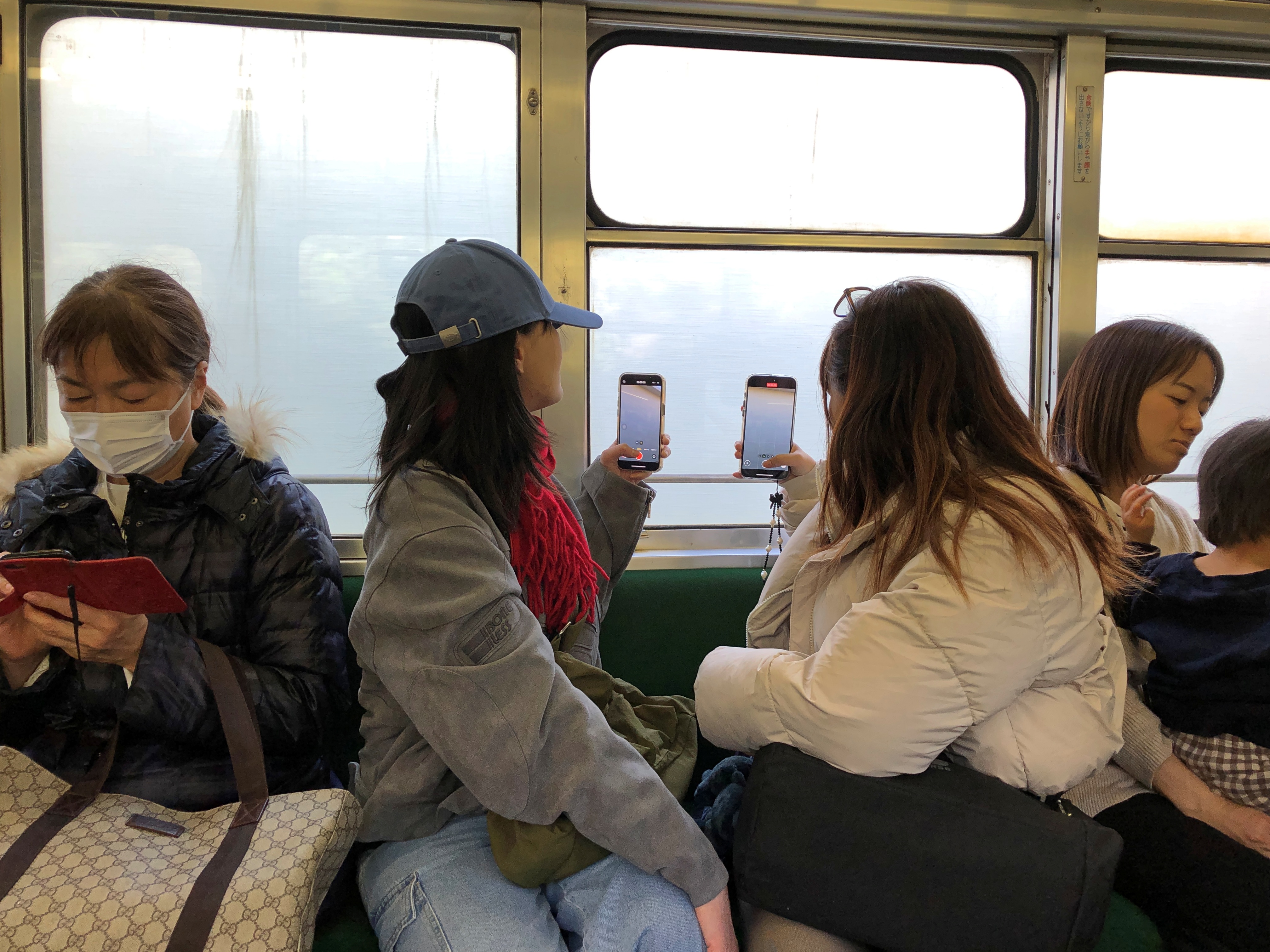
Scenes on the trains.
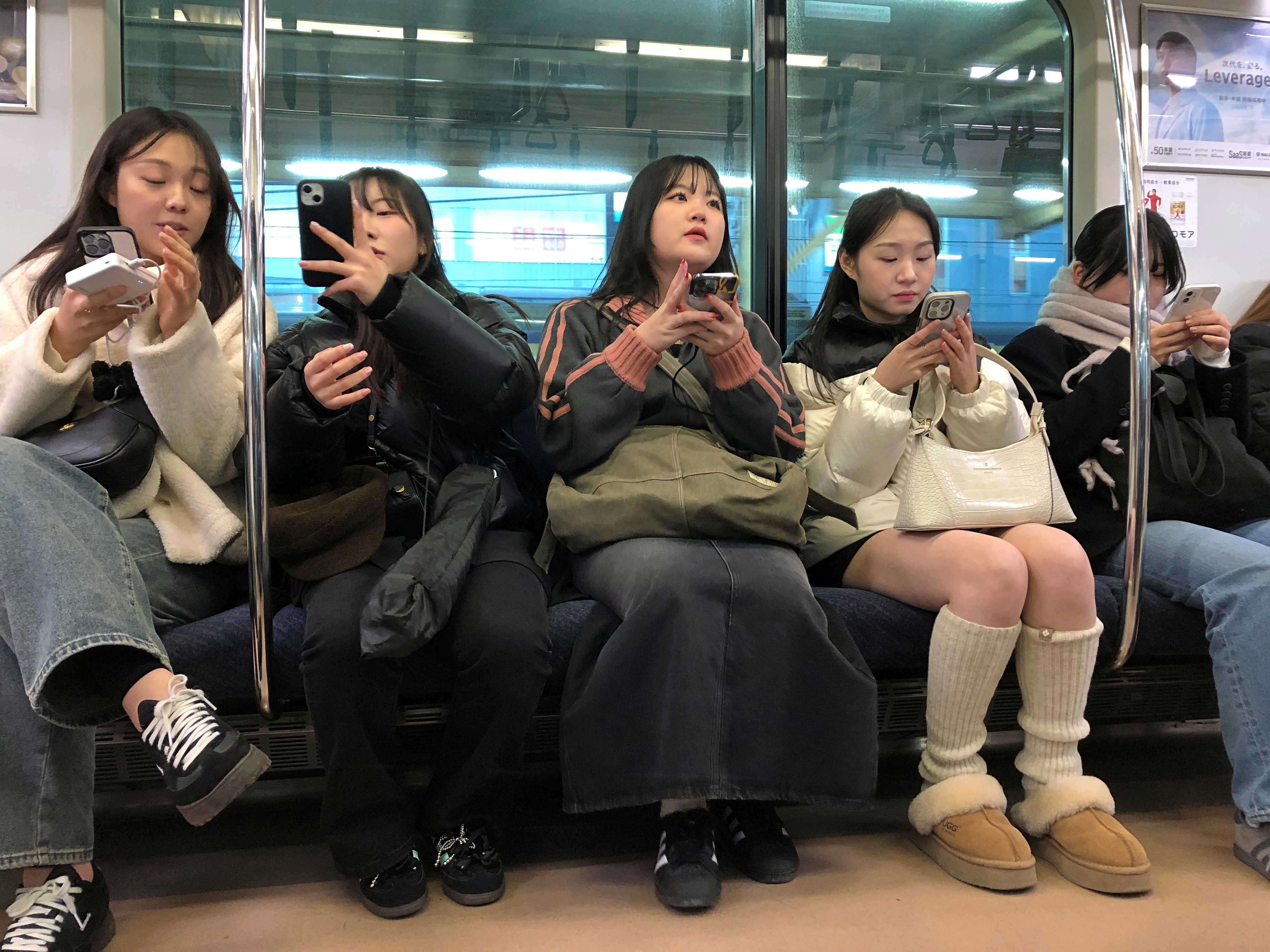
Almost everyone was paying attention to their phones, but not quite everyone. Still, the fellow reading a book – maybe manga – was a rarity this time around. Thirty years ago, half the car would have been reading physical books.
The train from Kamakura to the seaside spot of Enoshima runs along the ocean for a while, inspiring some passengers to take pictures of the scene.
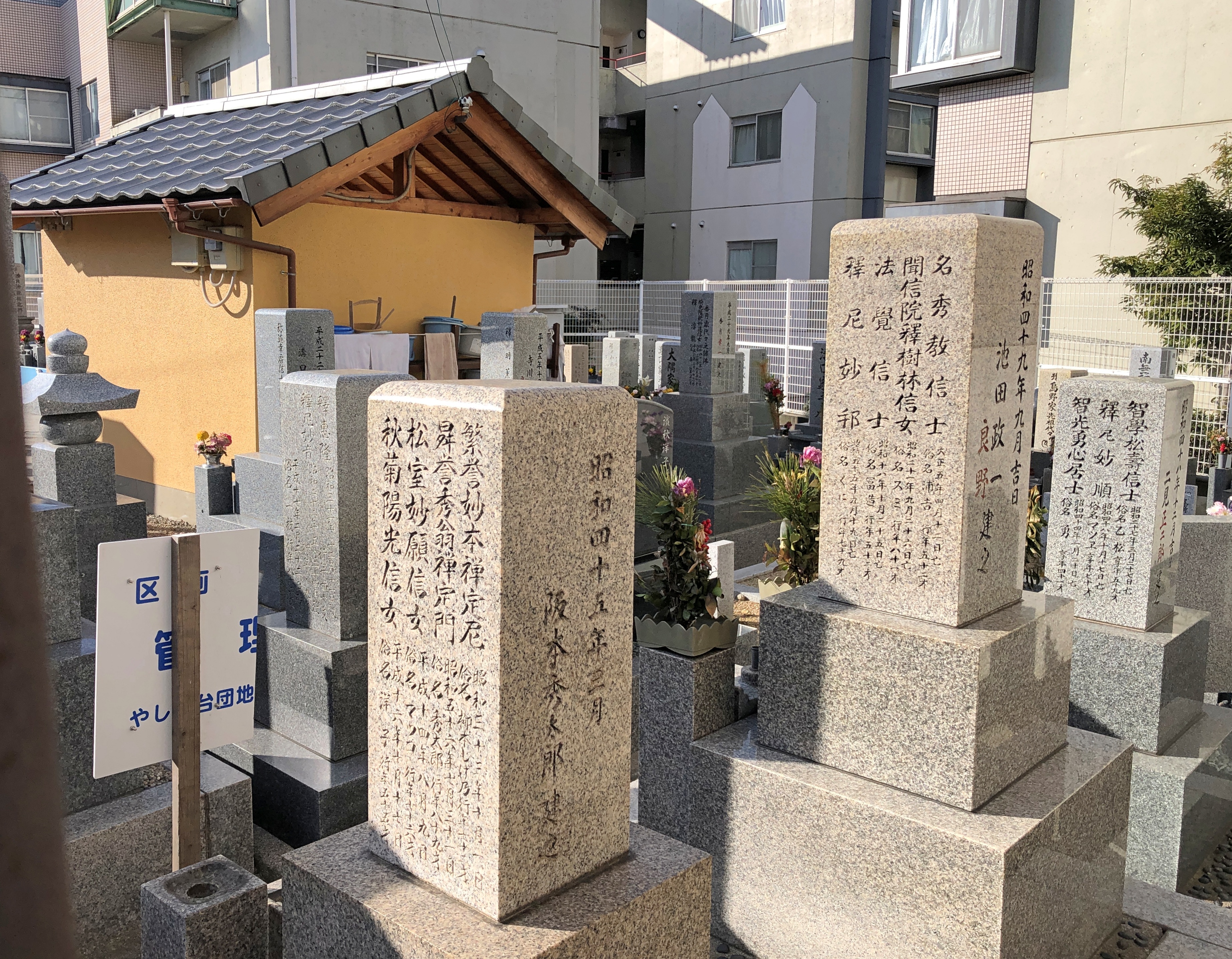
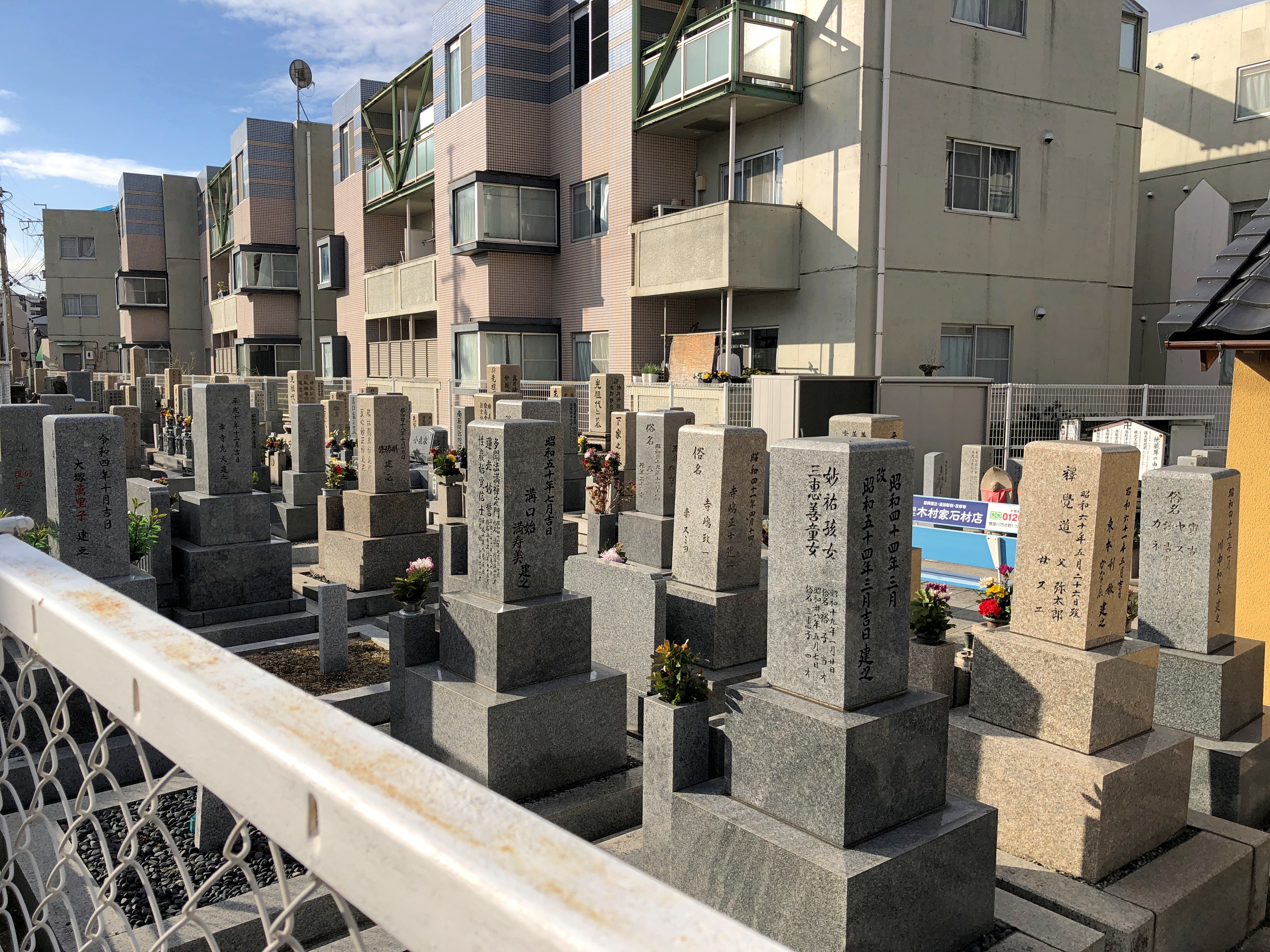
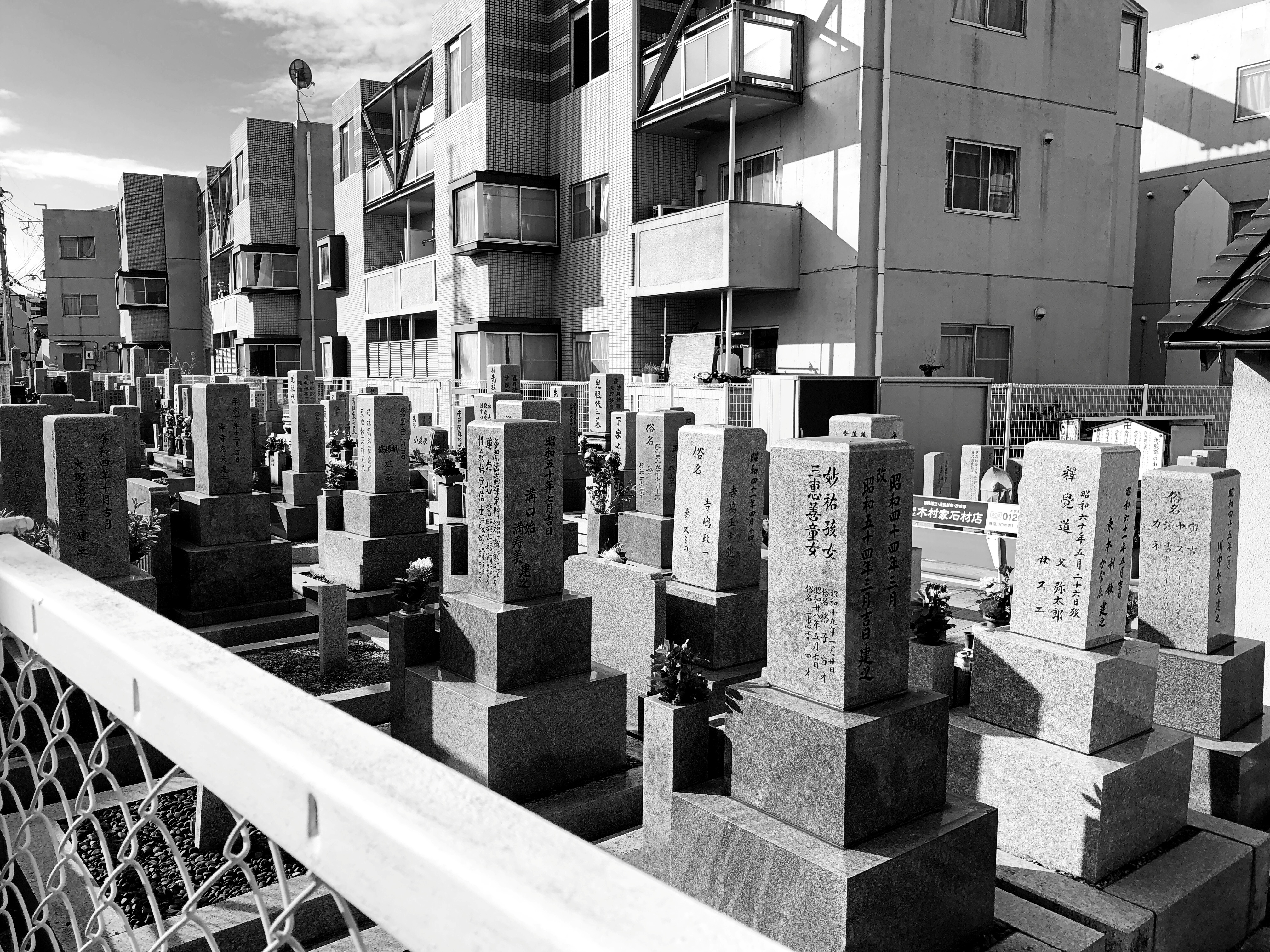
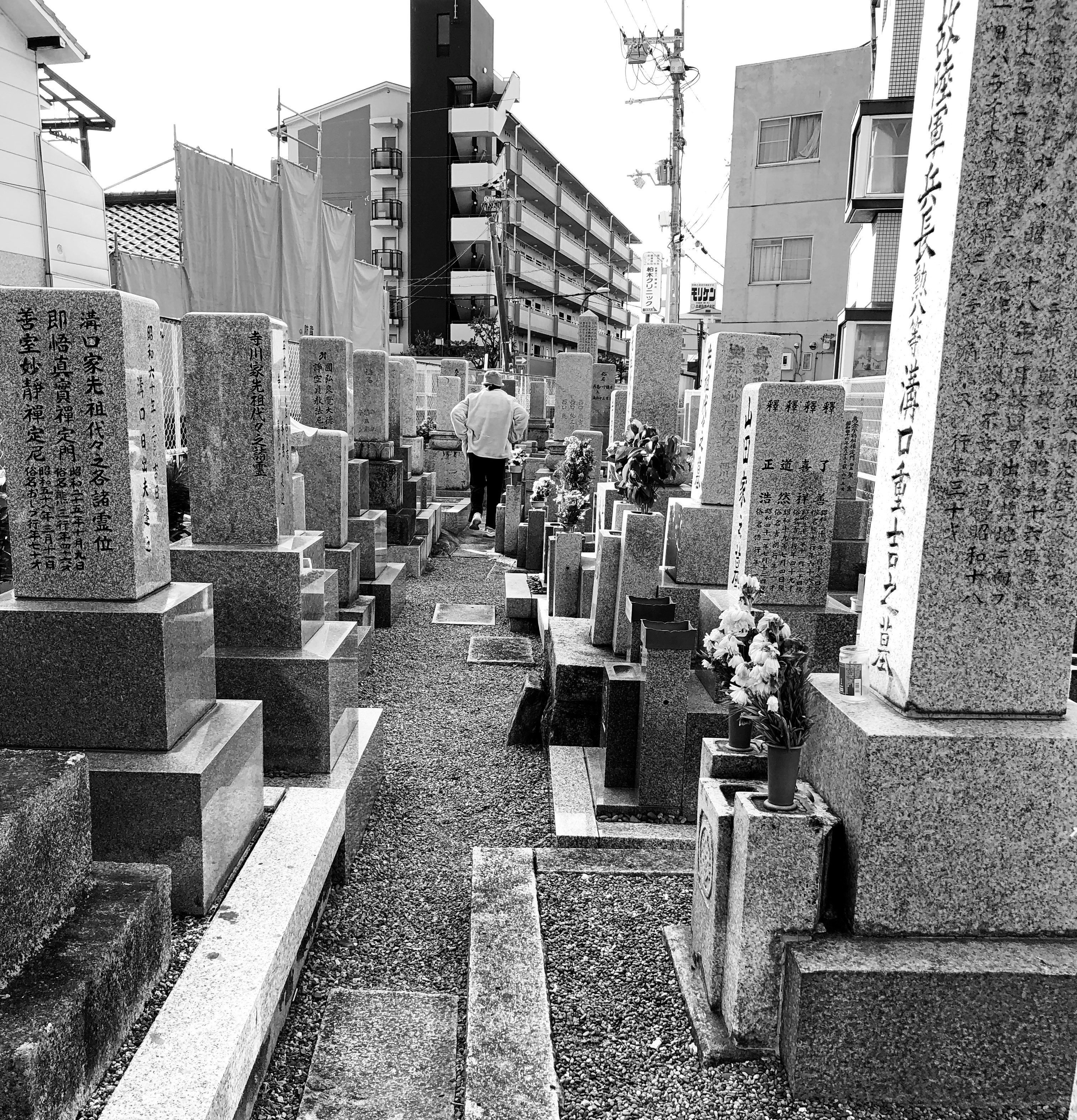
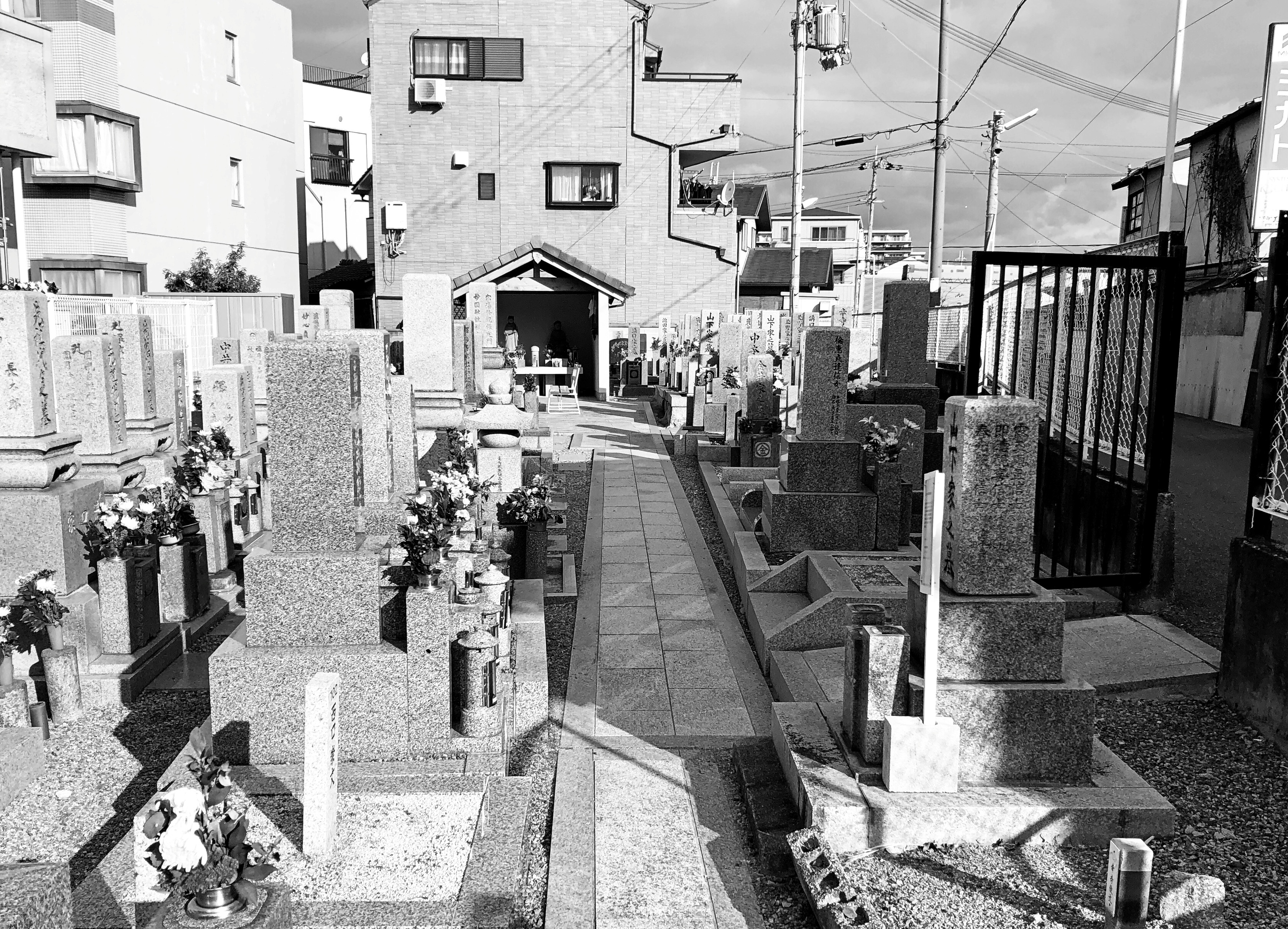
Unfortunately this time there was no time to visit that most beautiful of cemeteries in Japan or anywhere else: Okuno-in at Koya-san, which is about an hour’s train ride from central Osaka. But there was a cemetery near where we stayed, a more ordinary one in the far reaches of suburban Osaka. I don’t know its name.
It is essentially just a sliver of land not dedicated to anything else. Around it is a short fence.
Around that is a neighborhood.
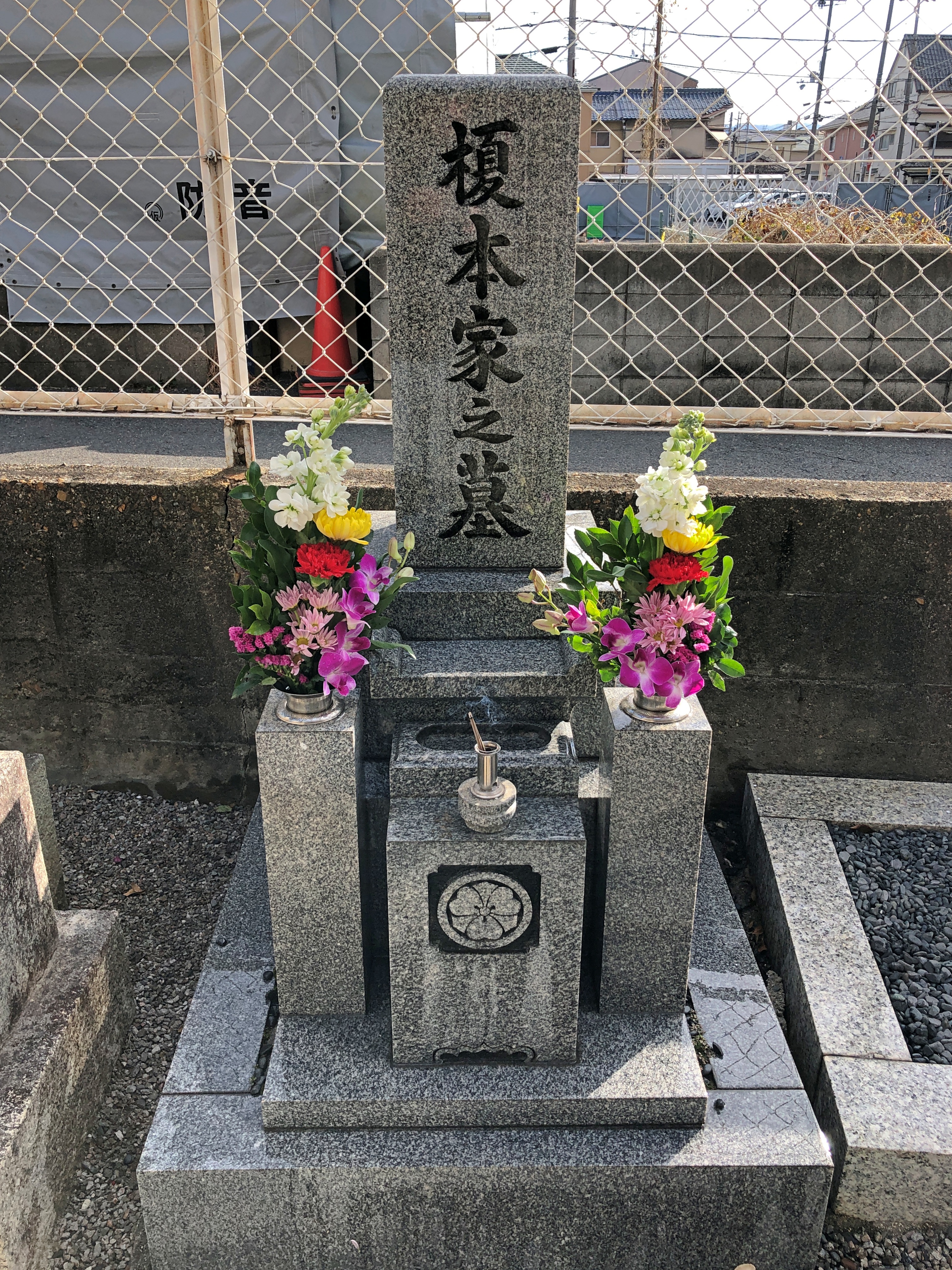
It also happens to be the location of my mother- and father-in-law’s memorial and ashes.
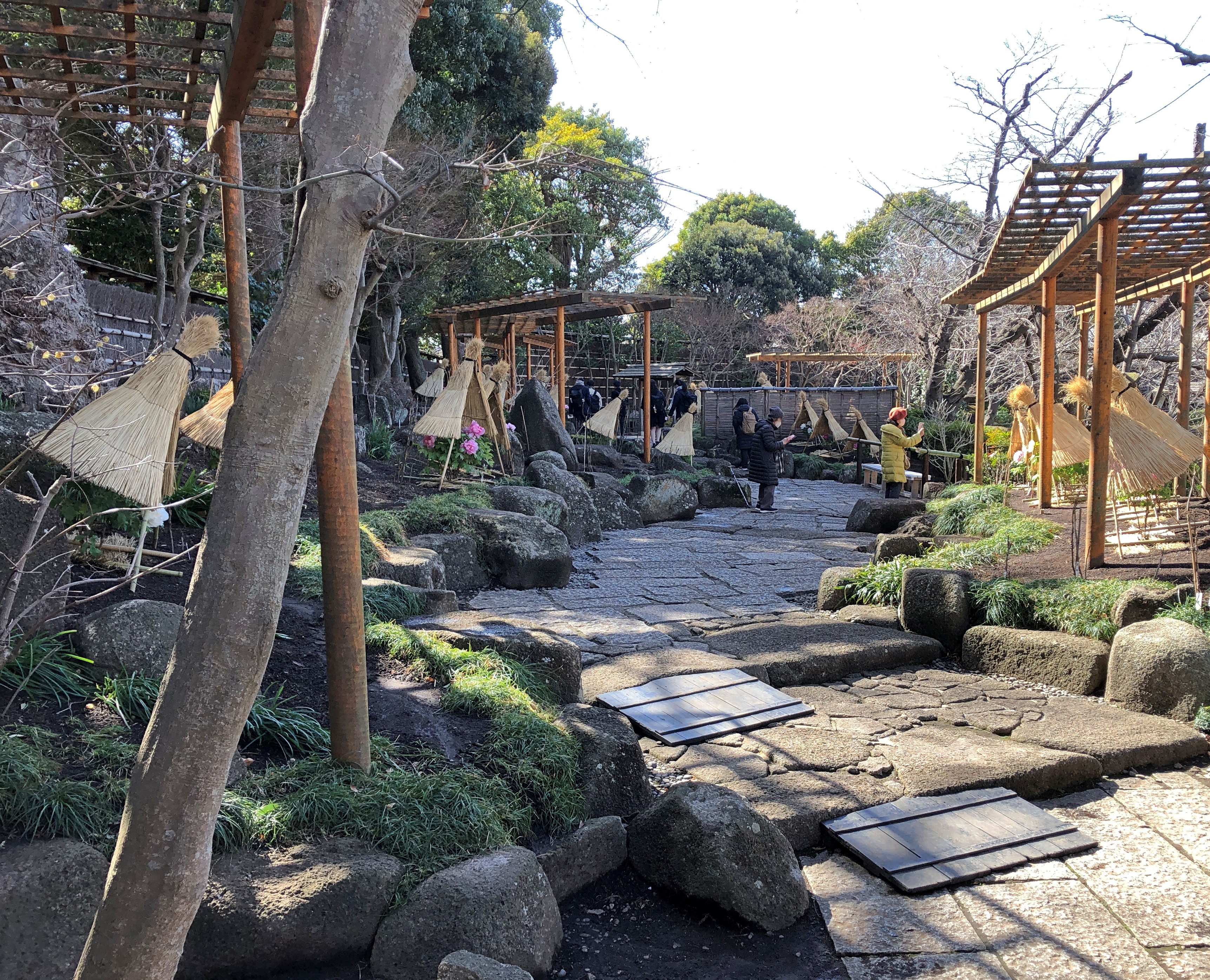
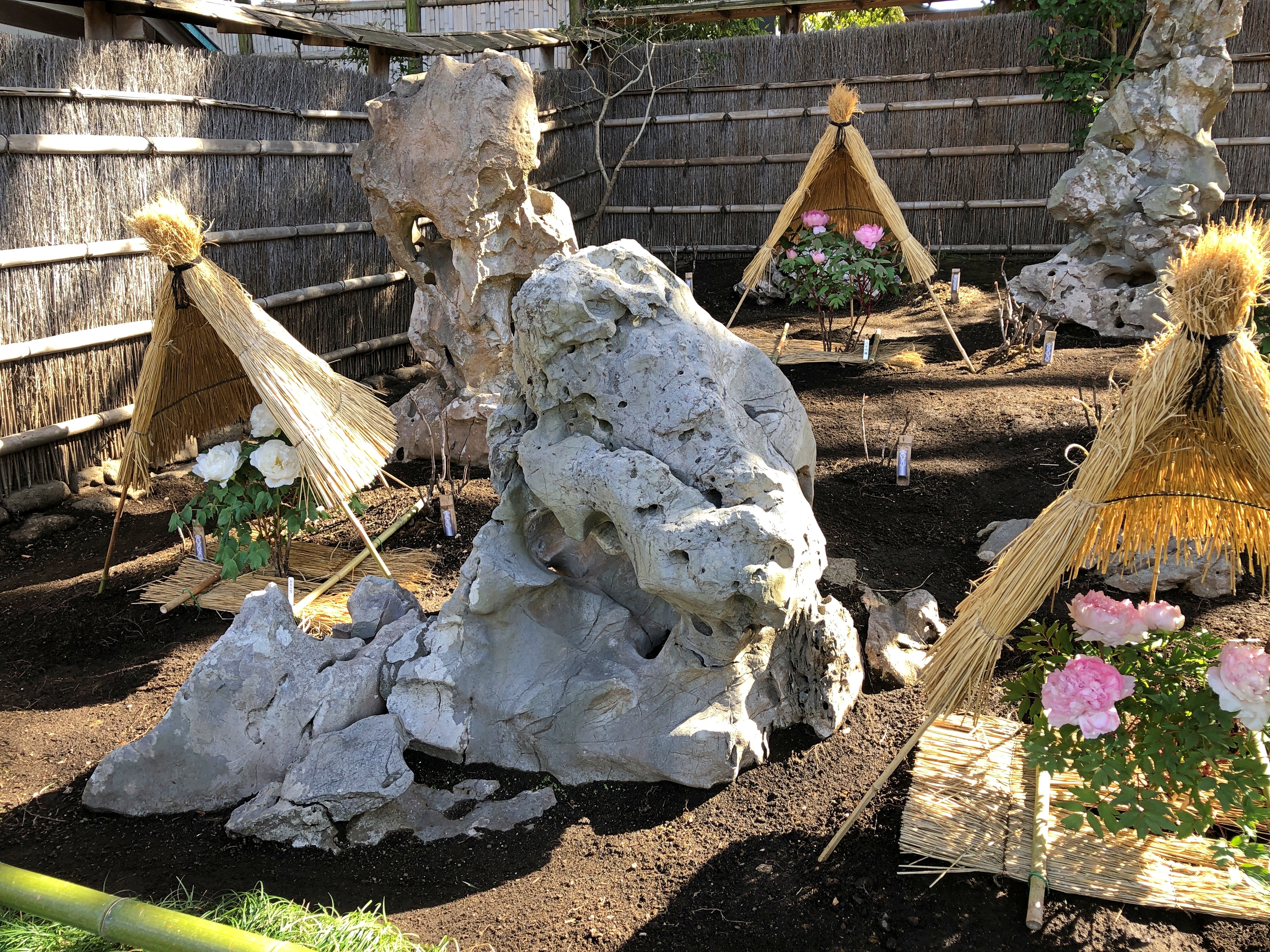
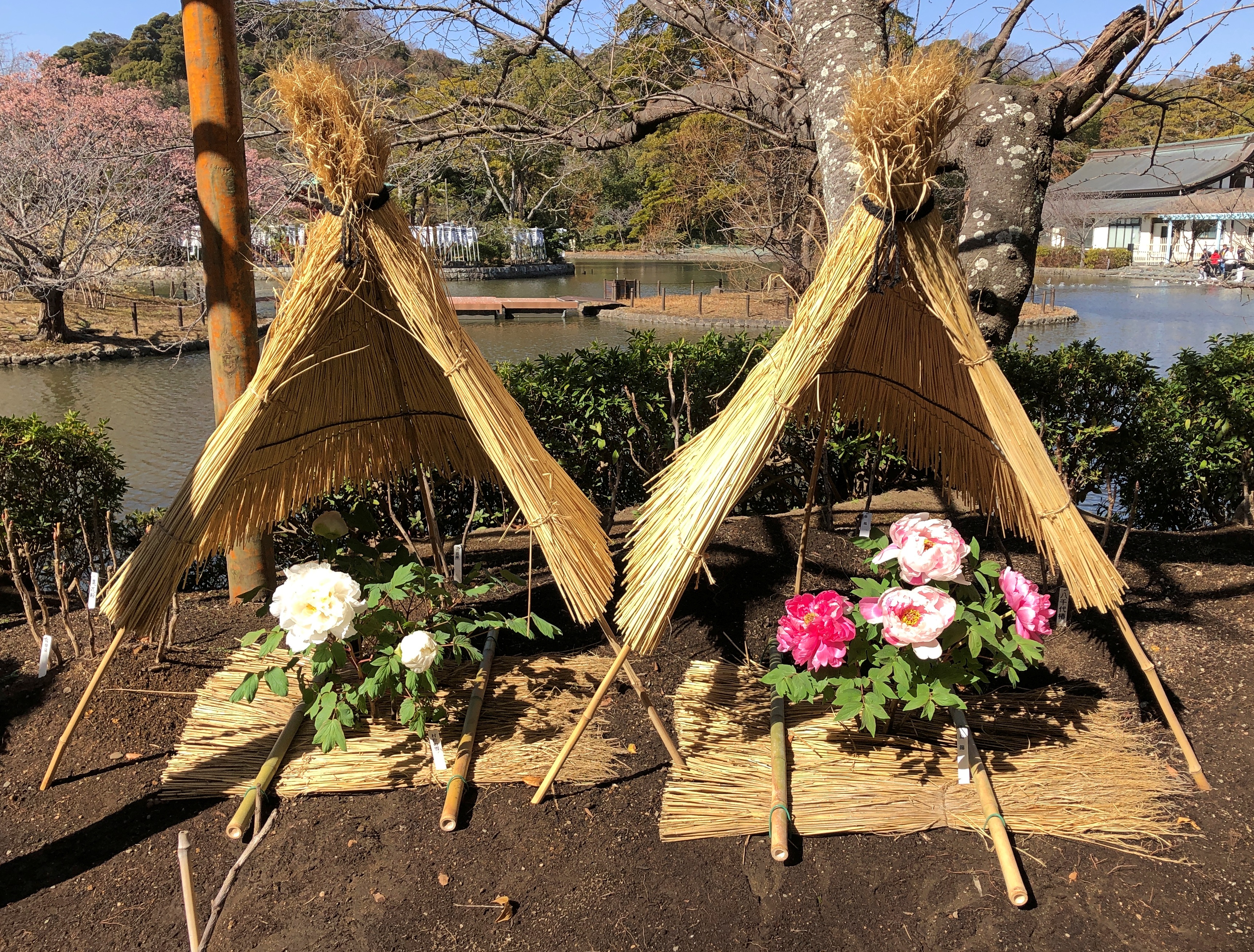
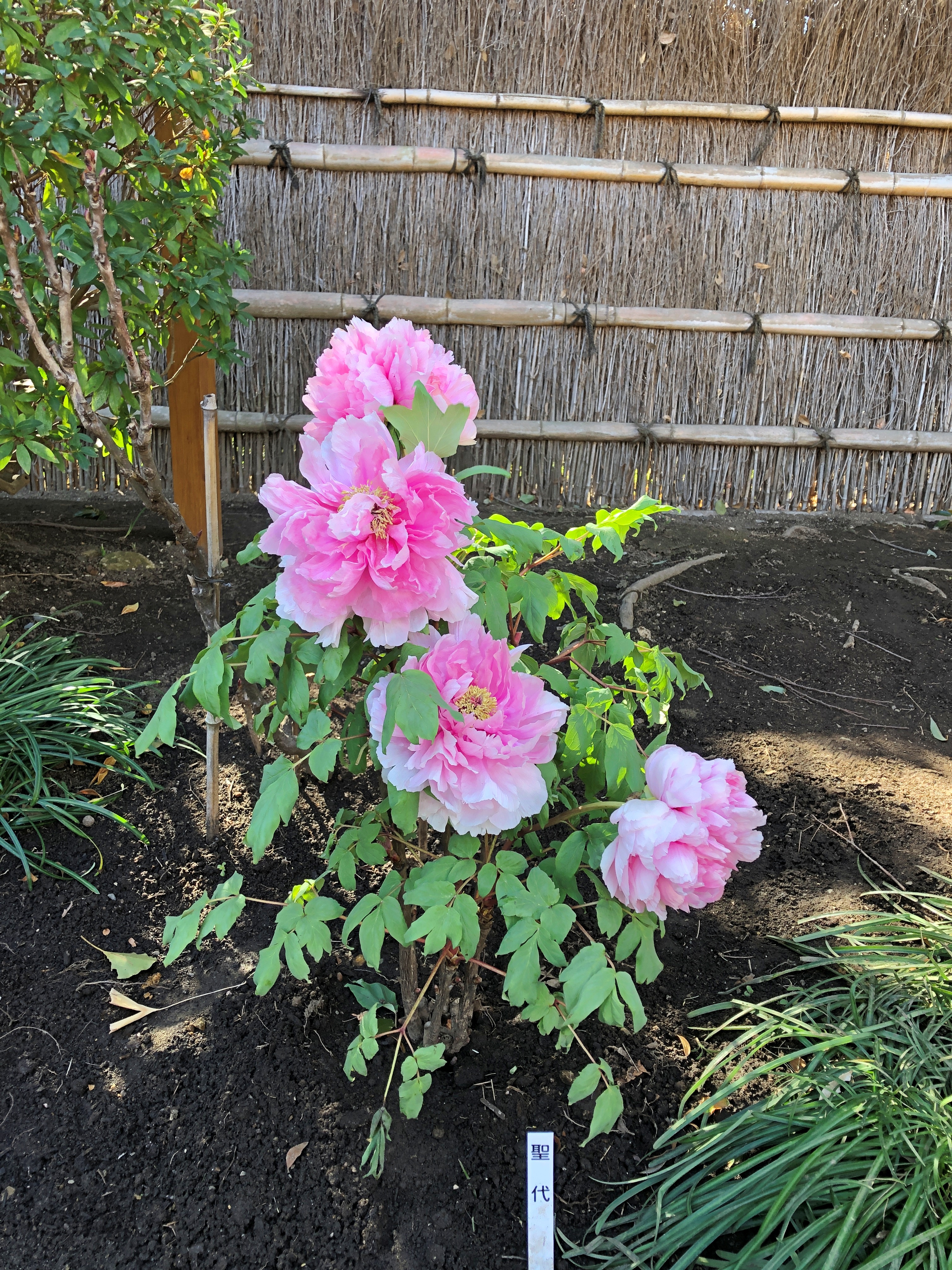
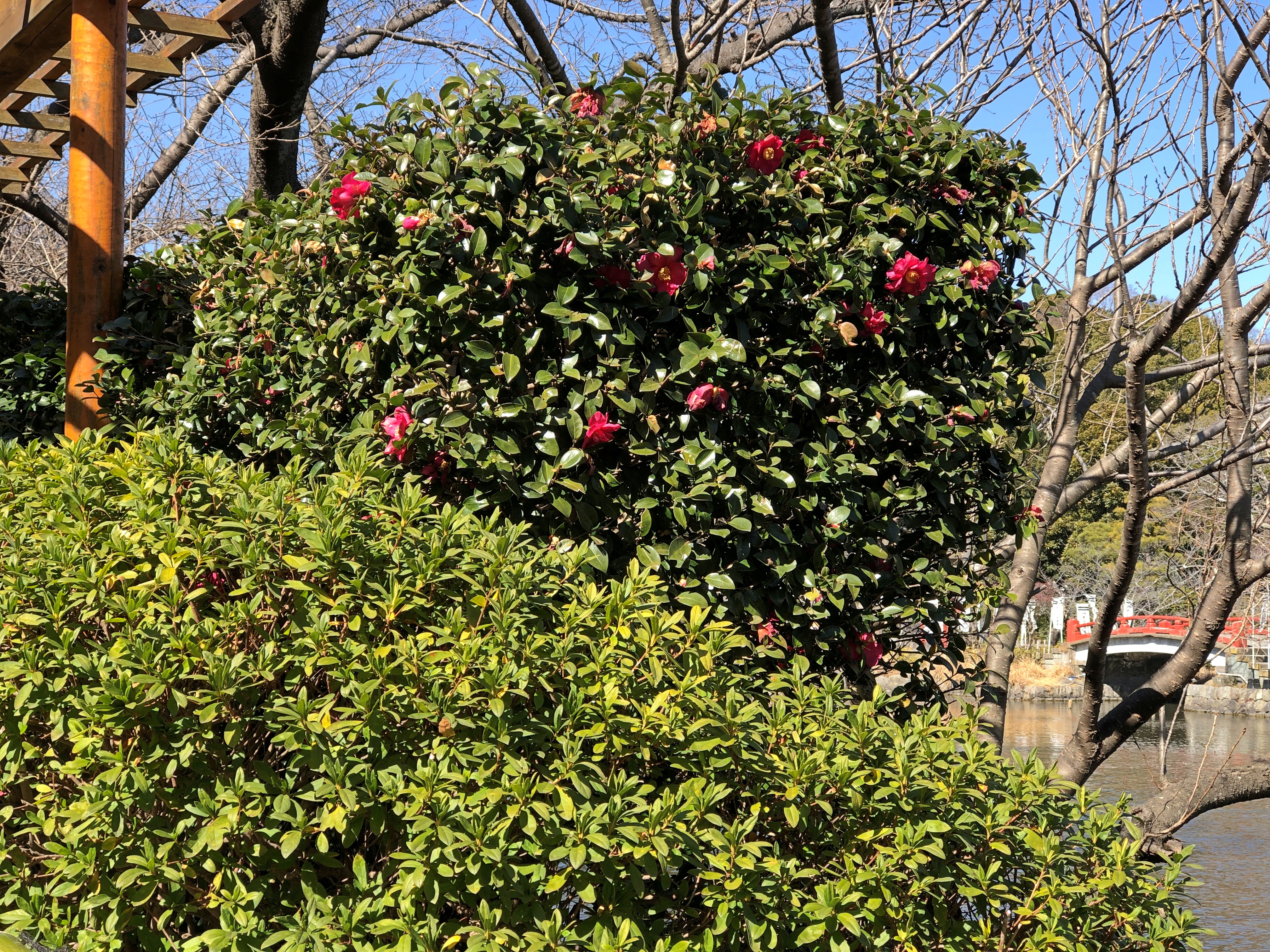
On the extensive grounds of Tsurugaoka Hachimangu Shrine in Kamakura – or maybe a separate entity adjacent to the shrine, it wasn’t quite clear – was a garden that managed to sport flowers in mid-February.
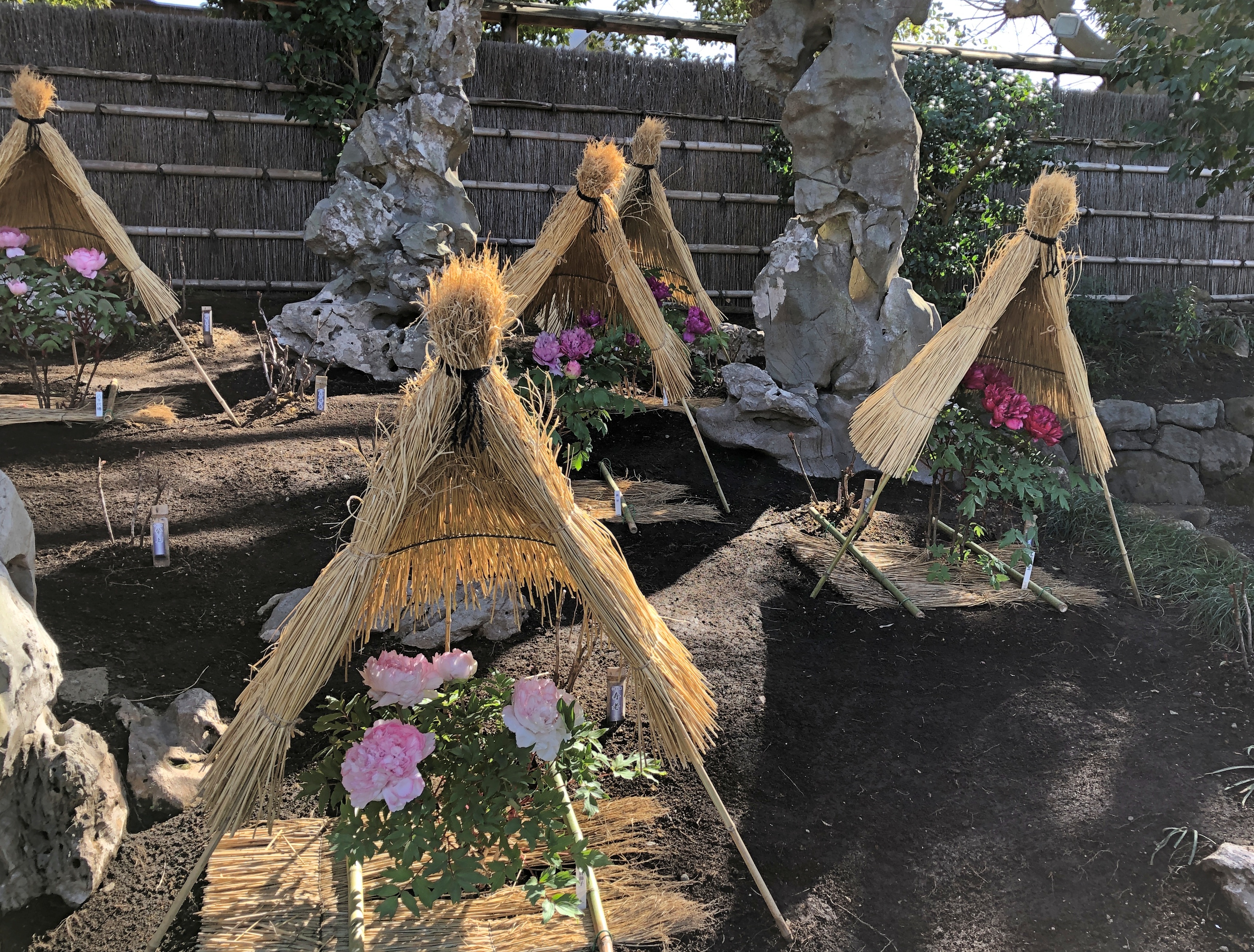
Part of the gardeners’ strategy seemed to be tepee-like straw structures over the blooms, many of them ‘mid the garden stones.
There must be a word for that sort of cover. In English or Japanese or some other language, and it must work somehow, though speaking as a non-gardener, it doesn’t look like it would keep cold air out. The area is roughly the same latitude as Nashville or Oklahoma City, certainly far enough north for some chilly winter days, though presumably the ocean off Kamakura moderates temps somewhat in Kamakura. Anyway, it does get cold there, as this detailed climate page notes.
Or maybe the growing season is longer than it used to be. Whatever could be the cause of that?
Not every floral growth was covered.
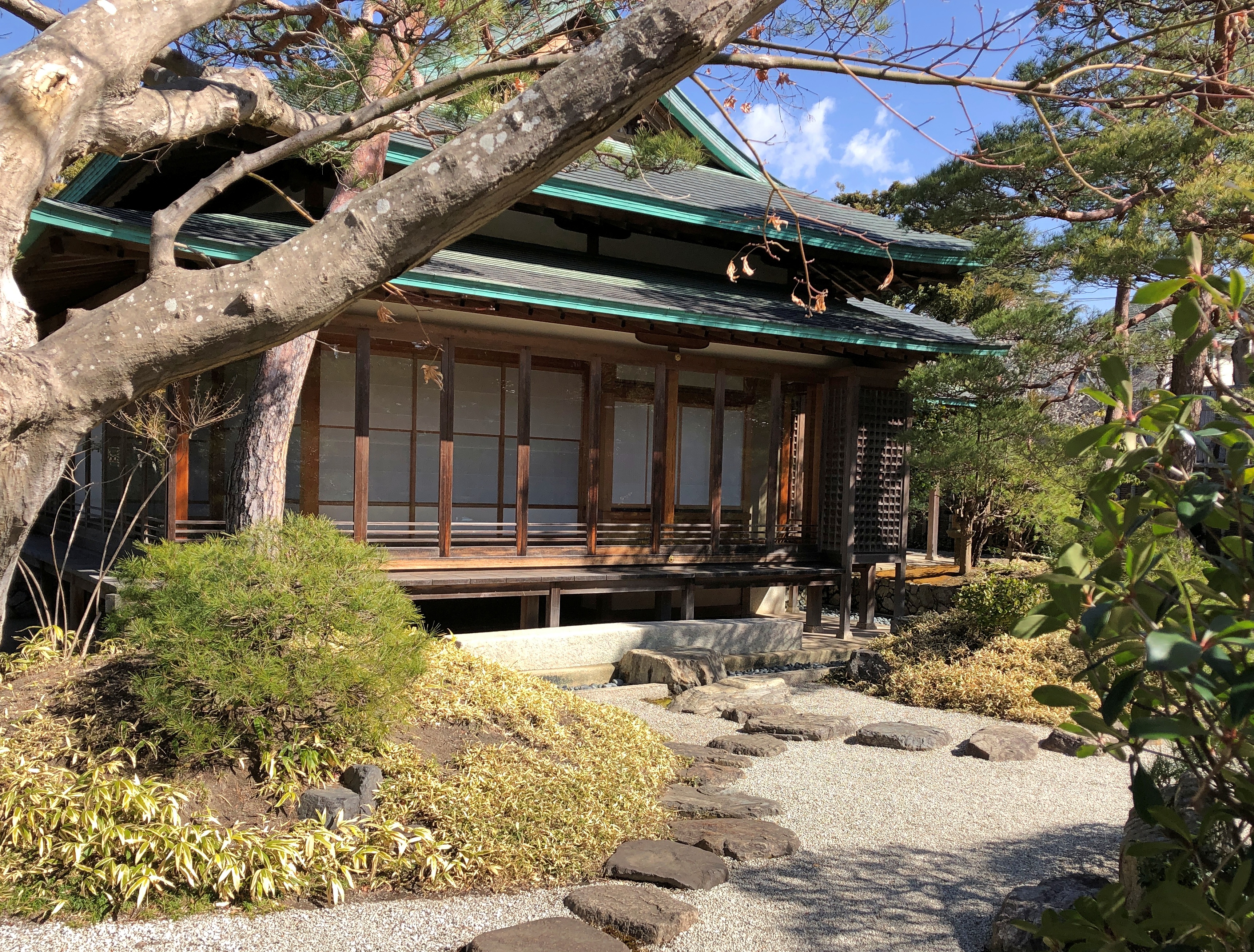
Even without flowers, the place made for a pleasant stroll in an elegant setting.
What would a kaiyushiki teien, a stroll garden, be without bamboo?
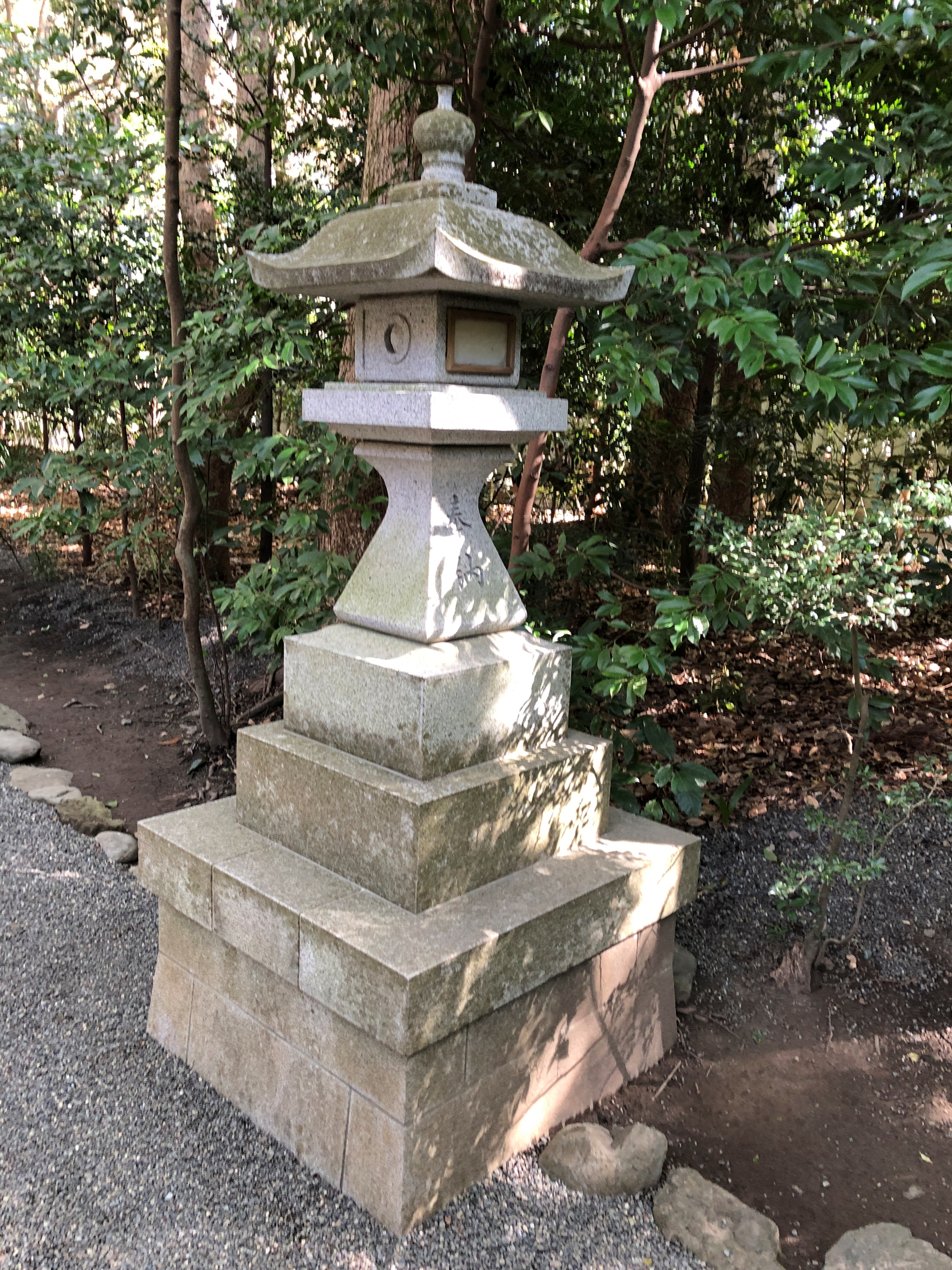
Or a stone lantern?
After we strolled the garden, we made our way to the Kamakura Daibutsu, the Big Buddha, a bronze of many tons that somehow makes you think about impermanence. As February days go, the one in Kamakura was top-notch.
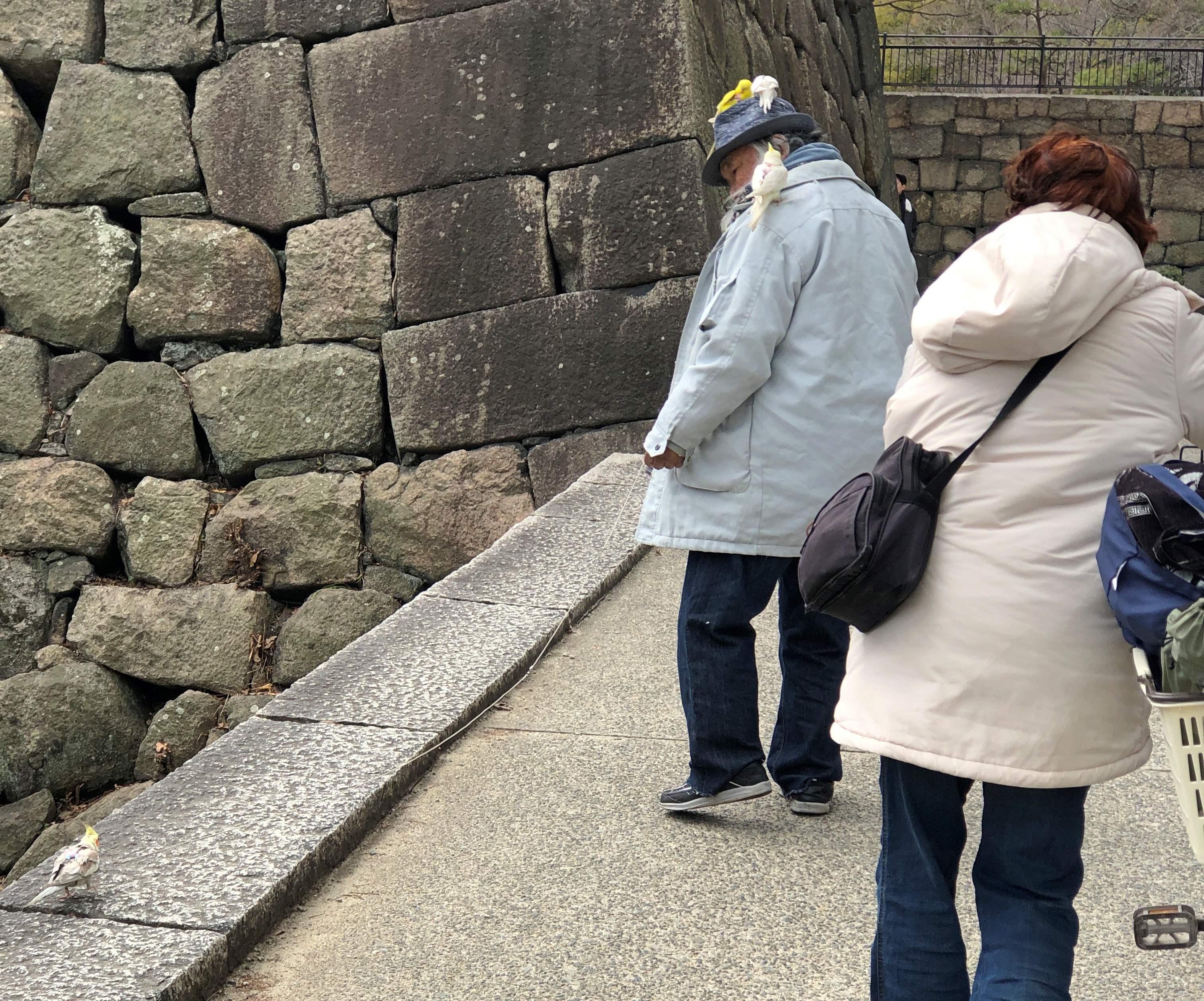
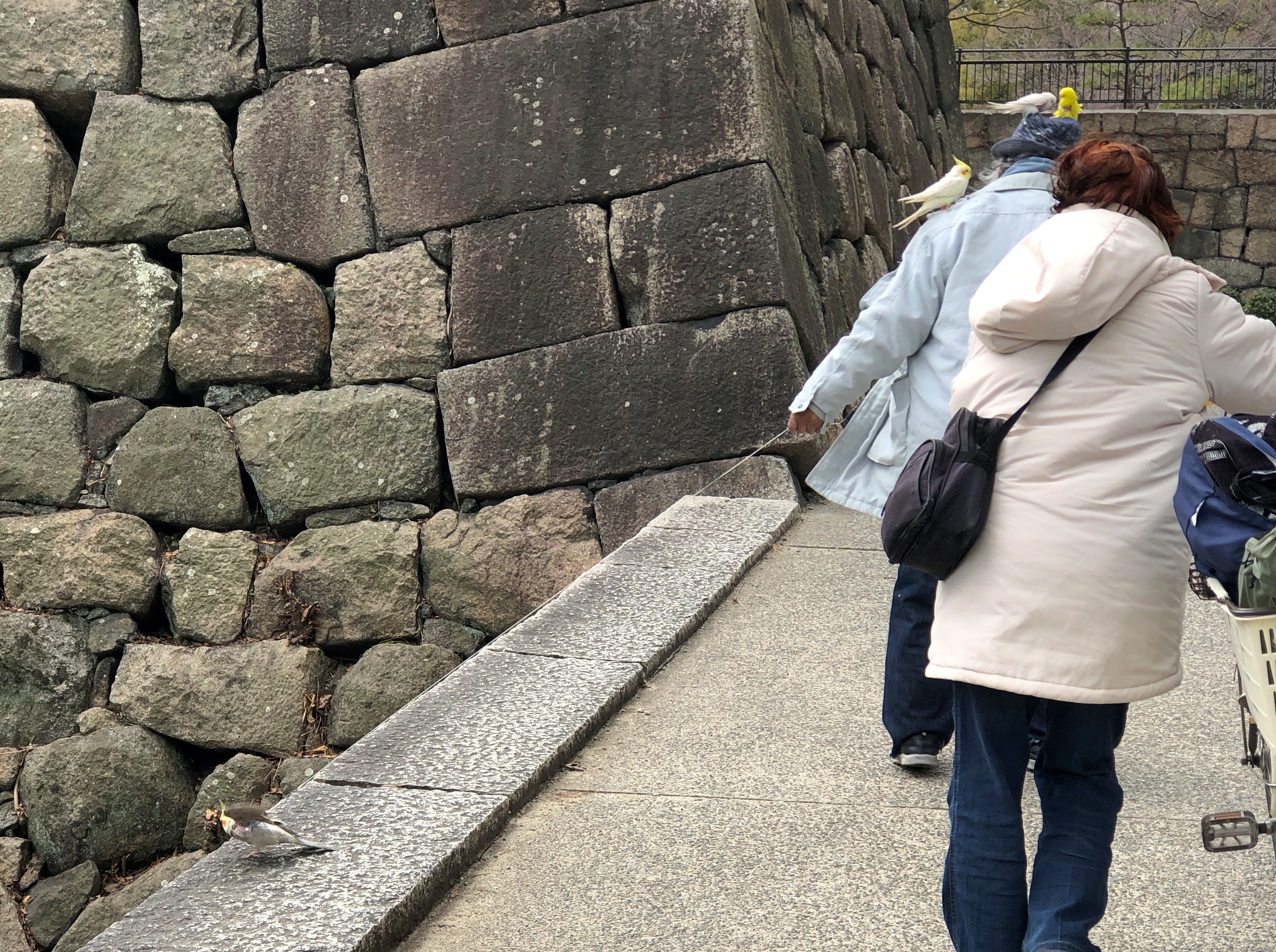
In Chinese city parks during our visit in 1994, it was fairly common to see (mostly) elderly men out for a walk with their birds. Their songbirds in cages, that is, which the men carried along with them and would hang somewhere nearby while they rested on benches. This article at least asserts that the practice goes back to the Qing Dynasty, which was founded in 1644. I’d never seen such a thing before anywhere else, and not since, until we visited Osaka Castle Park in February.
Note the fellow in the blue jacket and blue hat, near one of the former castle walls, with birds perched on his head and shoulders. He seemed to be out for a stroll with his birds.
They were living, chirping birds that would periodically fly away, but they would also come back. The bird at the left bottom corner of the image was one of his as well, tethered to a string he’s grasping with his hand. Guess that was a bird in training.
Of course, Japan is not China, however much the Japanese borrowed from China in earlier centuries. Bird walking wasn’t one of those borrowings, so I believe this man and his birds were eccentric outliers who eschewed cages for freedom of movement. Still, the level of training is impressive. It’s one thing to train the birds to return – carrier pigeons do that – but do they know to go somewhere else when it’s time to drop a load? I’d hope so, but I don’t know whether that is possible.
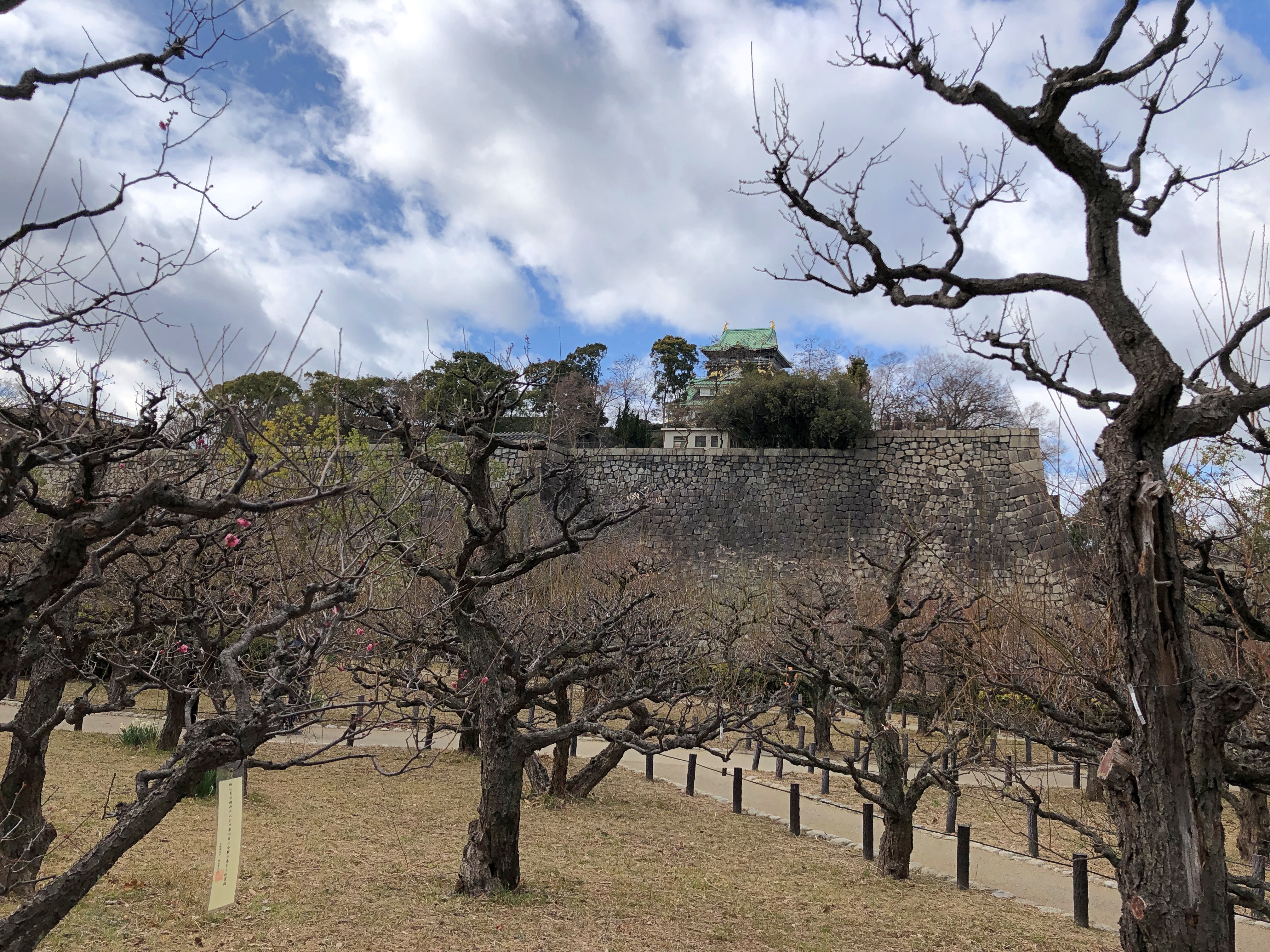
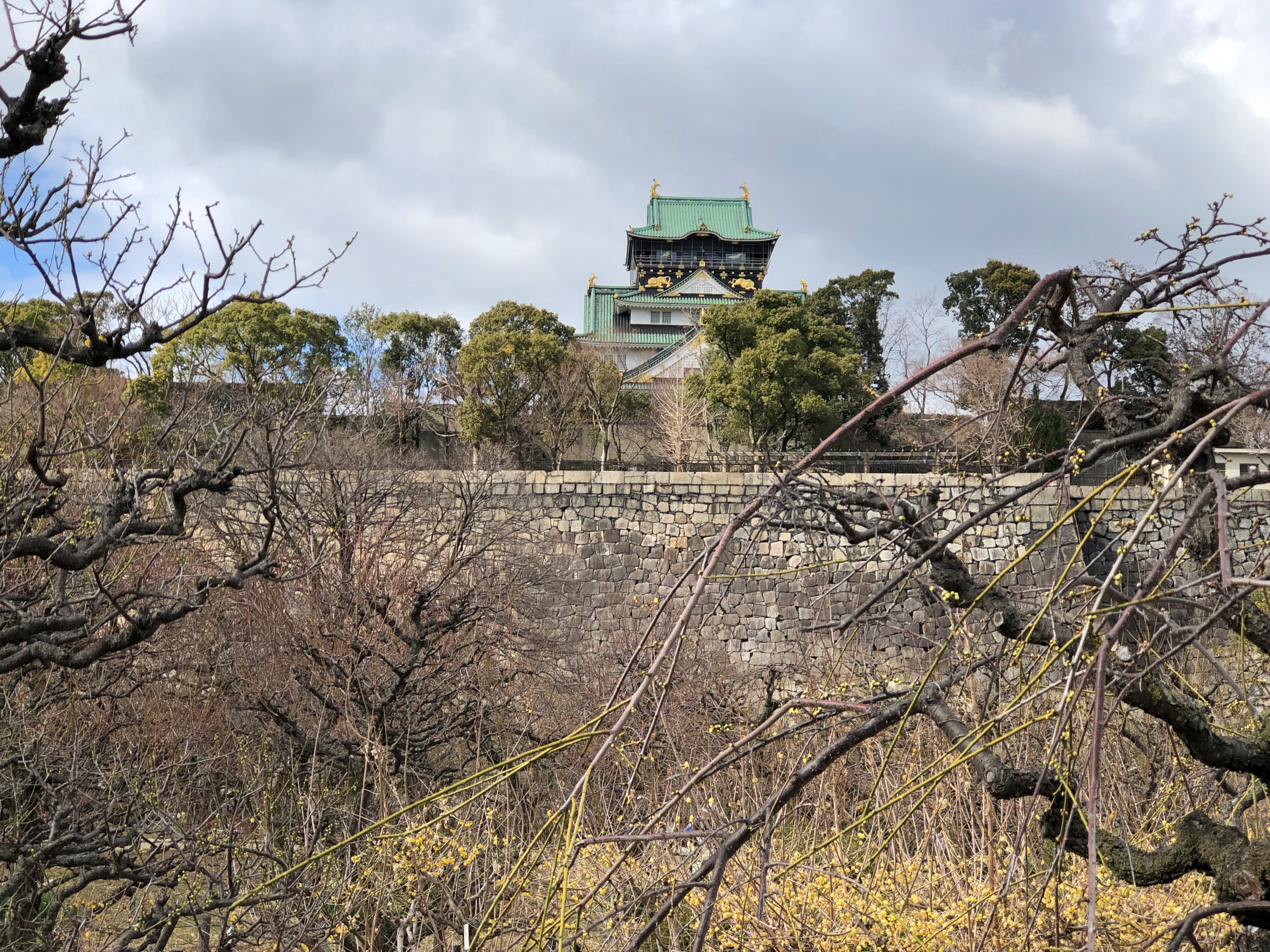
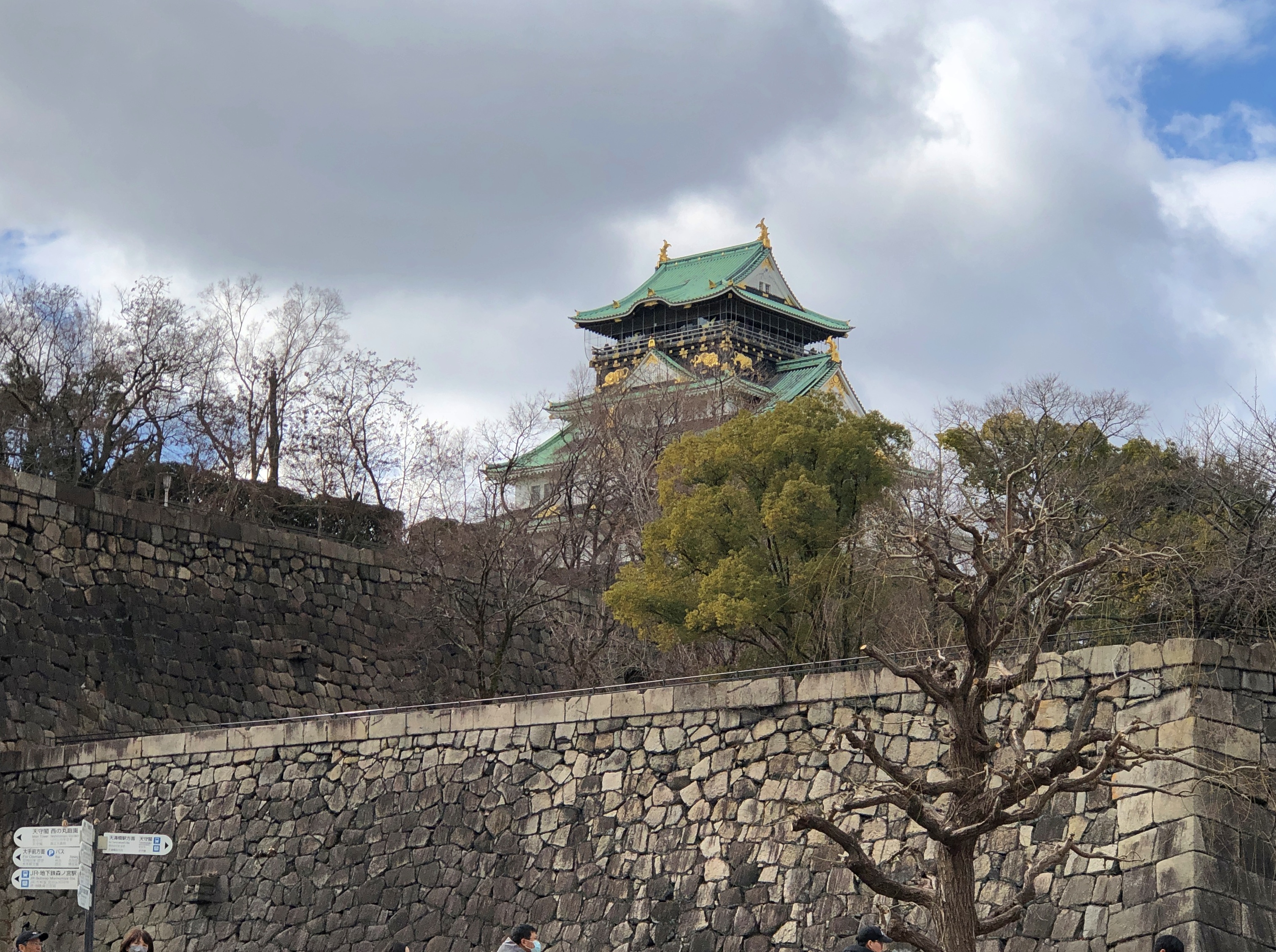
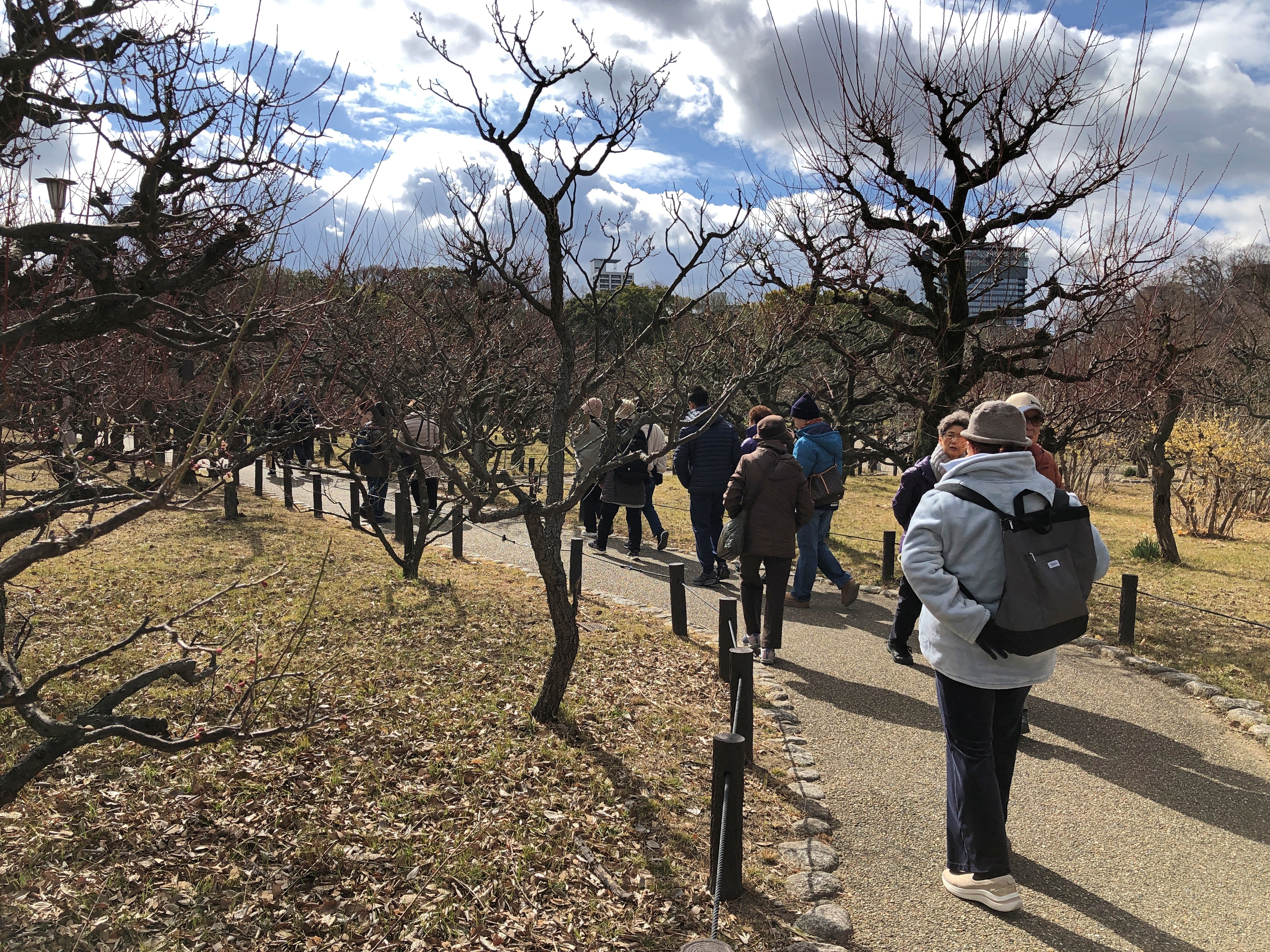
Even in winter, Osaka Castle Park (Osaka-jo Koen, 大阪城公園) is a pleasant place to stroll. We didn’t enter the castle itself, where we’d both been a few times before, but took in some nice views of it.
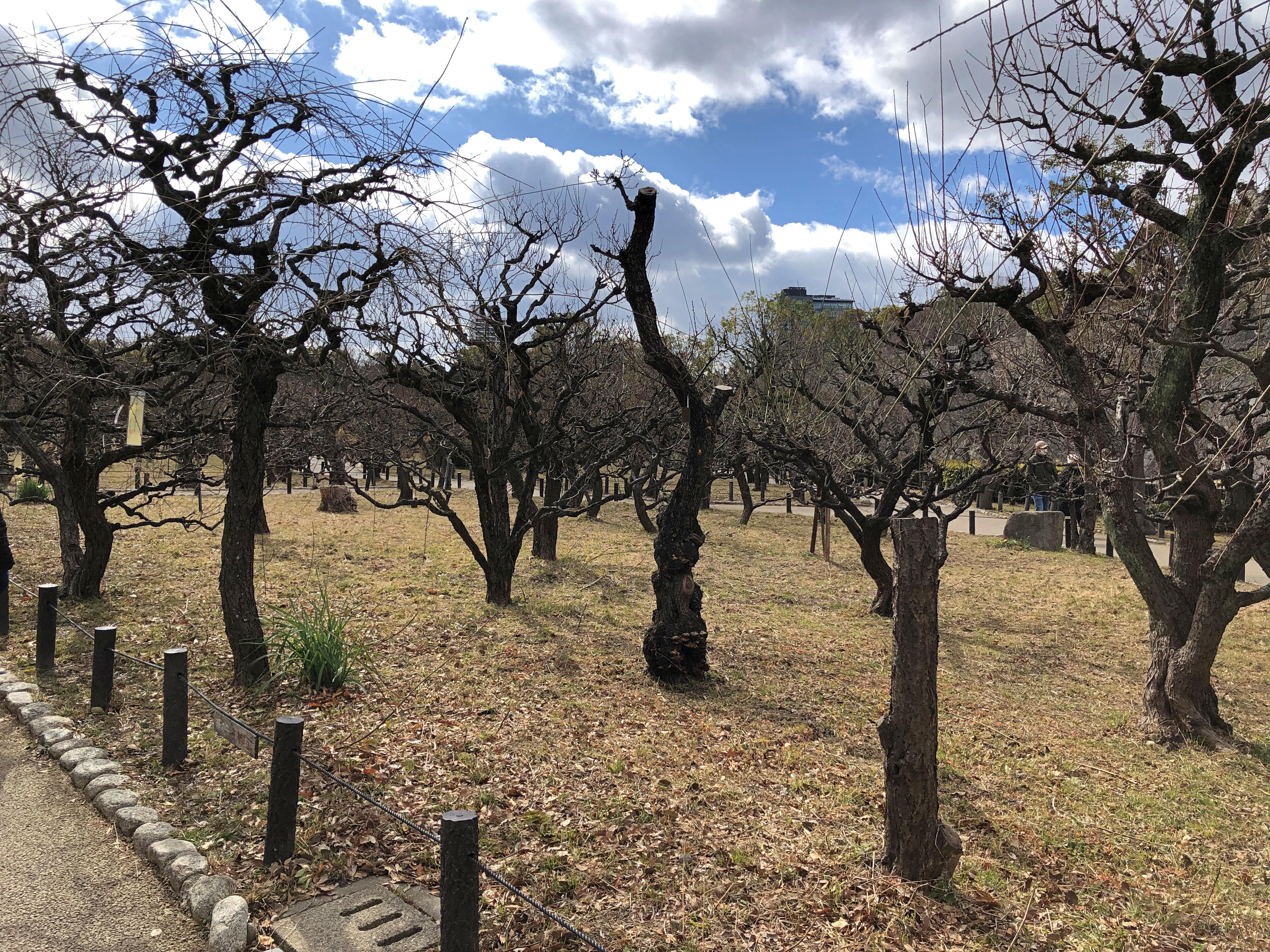
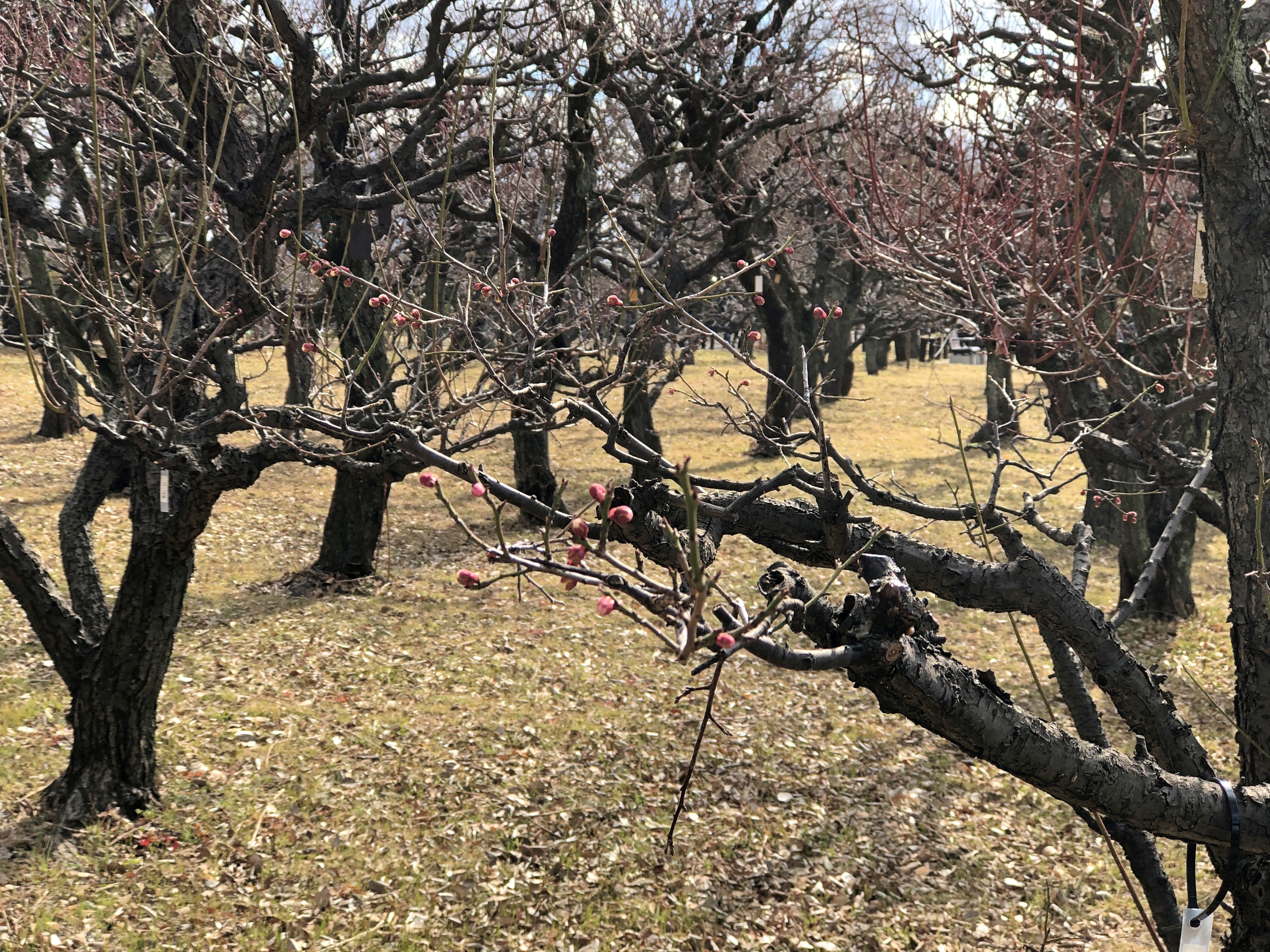
Many of the trees are plums. They are the first to blossom, and we could see the very beginnings of buds, but we were too early for full flowering.
Later, peach and cherries blossom in the park, though the place to see cherry blossoms in Osaka without the crowds in 1990s – and there were always crowds in the large parks, including the grounds of the Japan Mint – was Osaka Gogoku Shrine in Suminoe Ward. I’ll bet it still is.
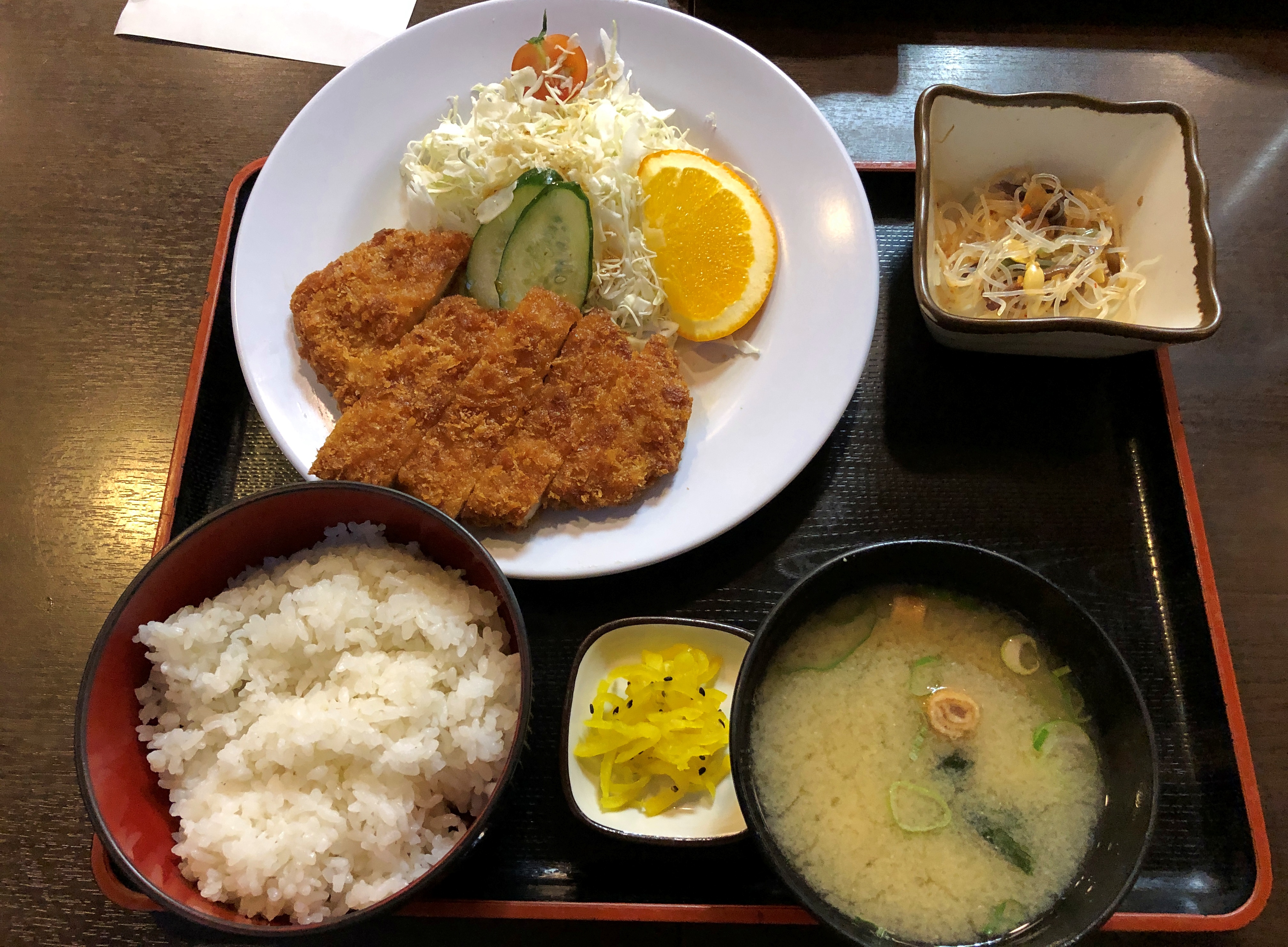
Take a pork cutlet, a nice thin one but not too thin, dredge a bit in flour, dip in beaten egg, coat with panko, and deep fry in light oil. Serve sliced so that the pieces are easier to manage with chopsticks, and with a brown Worcestershire-y sauce (but better, I think). Add a bed of lettuce, and sides of rice, miso and Japanese pickles.
A modest dish, but there’s nothing quite like a good tonkatsu. It is an example of salaryman food. Of course, other people eat it – a lot in my case, since the happy day sometime in 1990 when I had it for the first time. But in the lunchtime domain of male office workers in dense Osaka, the Kitchen of Japan, tonkatsu is a familiar regular (and in other parts of the country, too). They are little works of fragrant and delicious art whose purpose is to be eaten for the pocket money that their wives allow them for lunches.
Naturally, I sought it out during my recent days in Japan. This one is before the application of sauce. It’s the legacy of a Japanese adaptation of a European, specifically French dish, back in the 19th century. A detail from the Meiji era.
Another popular adaptation in Japan, spotted among the office towers near Osaka Castle. Doughnuts have long had a home in Japan.
Yes. It was time.
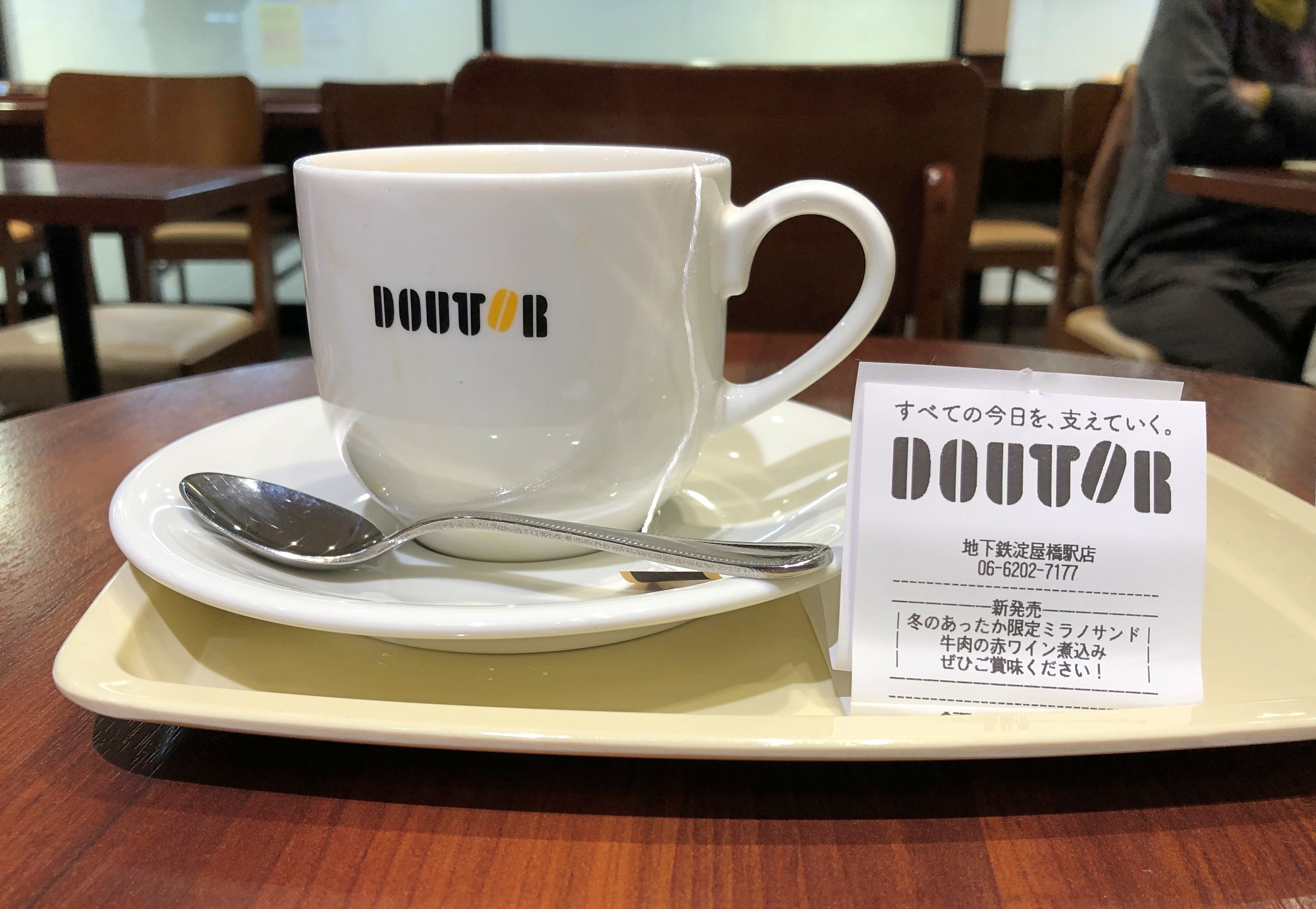
Another day, during a solo wander in the streets near Midosuji Blvd., I took rest at a small coffee shop, part of a large chain.
Doutor Coffee has some 1,200 locations in East Asia, with a concentration of 900 or so in Japan and others in Taiwan, Malaysia and Singapore. I expect most of them are franchised locations, and many are along underground pedestrian ways near subways or train stations. Mine was so close to a subway station entrance, you could hear the soft beeping of the electronic tickets and the slightly louder clank of the turnstiles if you decided to pay attention.
Mostly, the place was quiet, with people setting themselves in front of their laptops or fiddling with their phones. I joined the laptop users, pecking out emails or parts of whatever article was due next.
Considering the strong dollar (in February, anyway), the tab for milk tea and a warm chocolate croissant came in less than double digits in US dollar terms. But a refreshing beverage and a tasty snack are only part of the deal: you’re also renting a place to sit.
But not a place to smoke anymore. I was a little surprised, considering how consistently tobacco smoke used to linger, or sometimes billow and swirl, in public spaces in Japan 30+ years ago. That shift oddly reminded me of visits to Preservation Hall in 1981 and 1989 (minus the jazz, of course). The first time, the jazzmen played in a room lightly clouded with smoke. Eight years later, the air was clear.