Fall is well under way, even though this evening, a youth baseball game was played in the park next to the school behind my house. It’s warm enough for it, but not summertime warm. It might be the last game of the year for that particular neighborhood diamond. I mowed my yard today under a warm sun, which I’m sure will be the last time this year.
With the coming of fall is the end of the Summer of Here. Back to posting when autumn is much further along, around November 9.
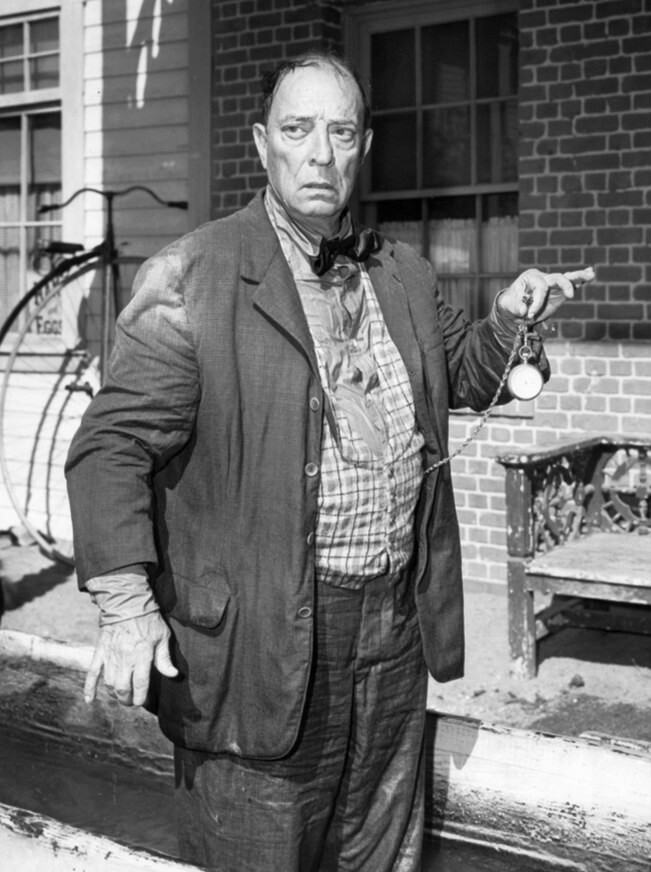
Wikipedia asserts that this image, from 1961, is in the public domain. Probably so. A publicity still published without any kind of copyright notice, it seems.
The other day I saw, by chance, an episode of The Twilight Zone that I’d never seen, or even heard about before. I saw a moment of it in passing and thought, wait, that’s Buster Keaton. What’s he doing in The Twilight Zone? Turns out he starred in an episode in late 1961, “Once Upon a Time.” Using the marvel that is streaming, I rewound the ep at the touch of a button and watched the whole thing.
As a story, the episode isn’t that good. In fact, it’s pretty dopey. But it is an unusual example of a comic episode of the series and worth some chuckles. Mainly, it’s worth watching for the aging star. Keaton was roughly 40 years past his prime, but he still had those Buster Keaton moves.
No point in going into too much detail about the story, but it involves Keaton’s character, who dislikes all the hubbub associated with living in 1890, traveling in time to ca. 1960 – which he hates even more. Interestingly, the sequences set in 1890 play like a silent movie, complete with title cards, a musical score and lots of physical comedy (of course). The 1960 sequences have sound and also a fair amount of pratfalls. Buster’s going to be Buster.
Two of the supporting characters evoke, “Hey, it’s that guy.” Namely Stanley Adams, best known as a dealer in tribbles a few years (or a few centuries) later, and Jesse White, who plays a repairman in the episode – a few years before he became the lonely Maytag repairman for my generation. Always fun to see familiar faces in unusual settings.
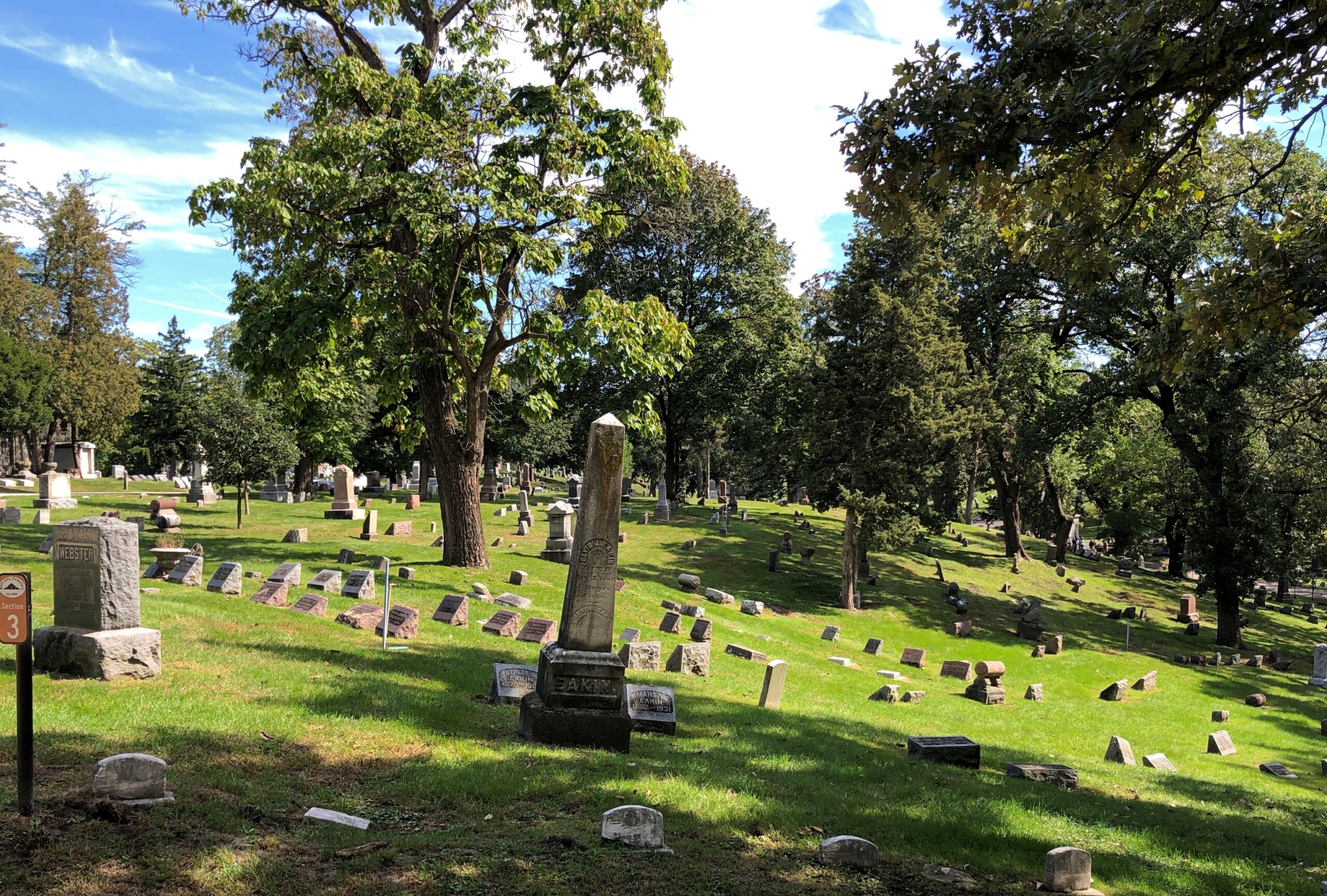
In September, during the Elgin House Walk, I found out that the 39th Annual Elgin Bluff City Cemetery Walk was coming up on the last weekend of the month. That sounded good. For me. Yuriko wasn’t interested, so on Sunday the 27th, I made my way solo to Bluff City Cemetery in Elgin.
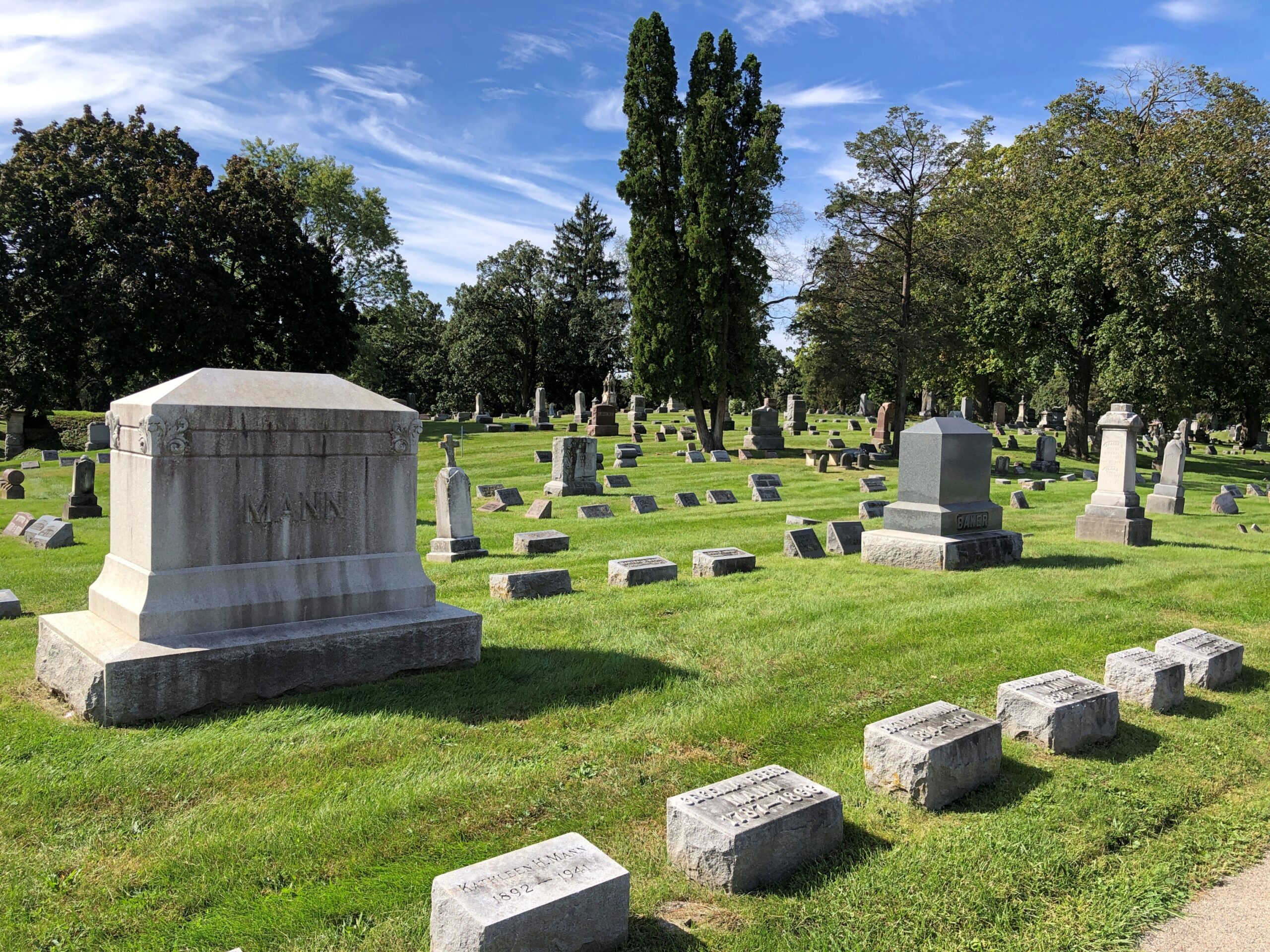
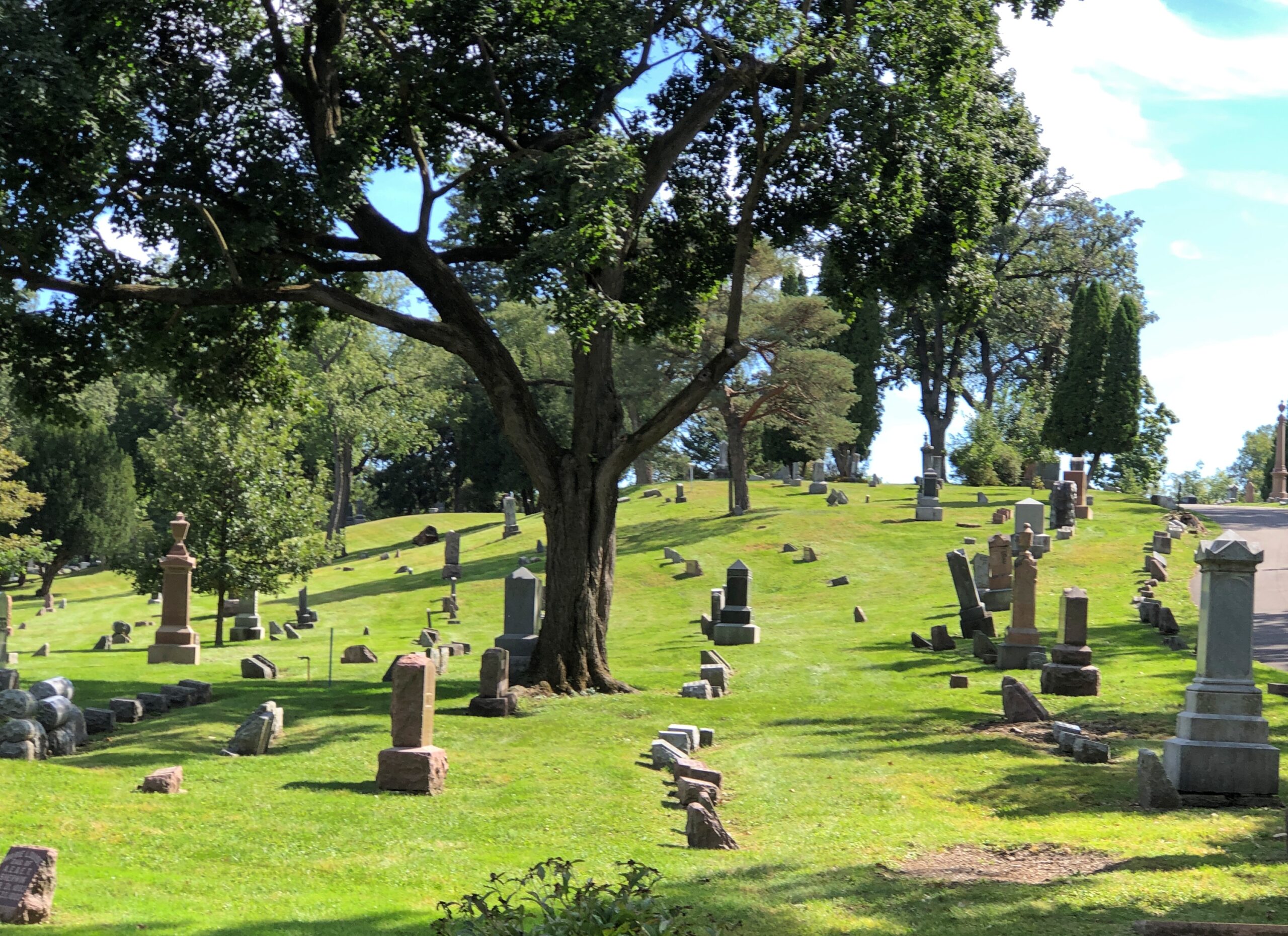
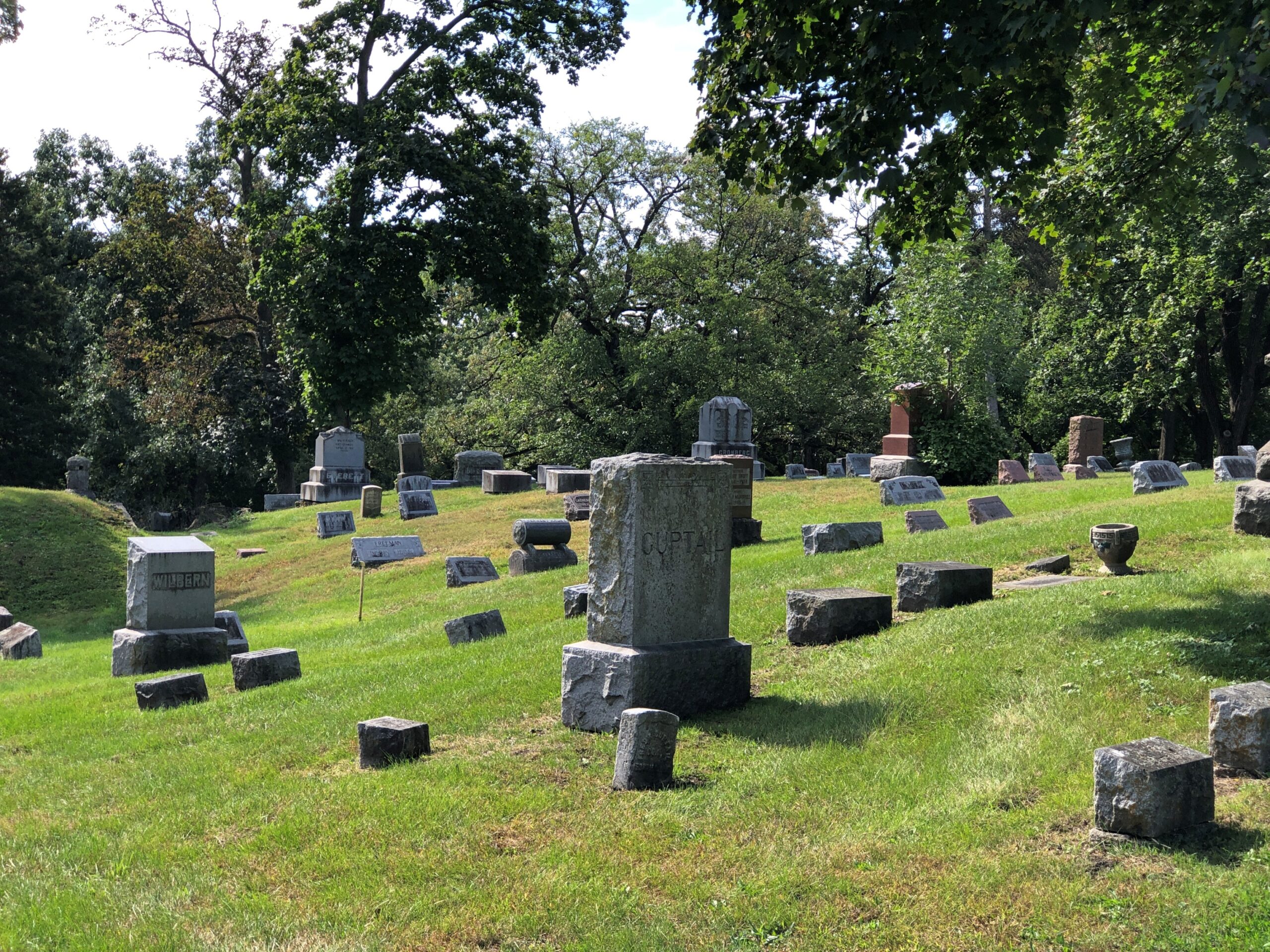
I’d missed the previous 38 walks, but I had visited the cemetery before – 12 years ago. Long enough that another visit would not go amiss. It’s a good-looking cemetery.
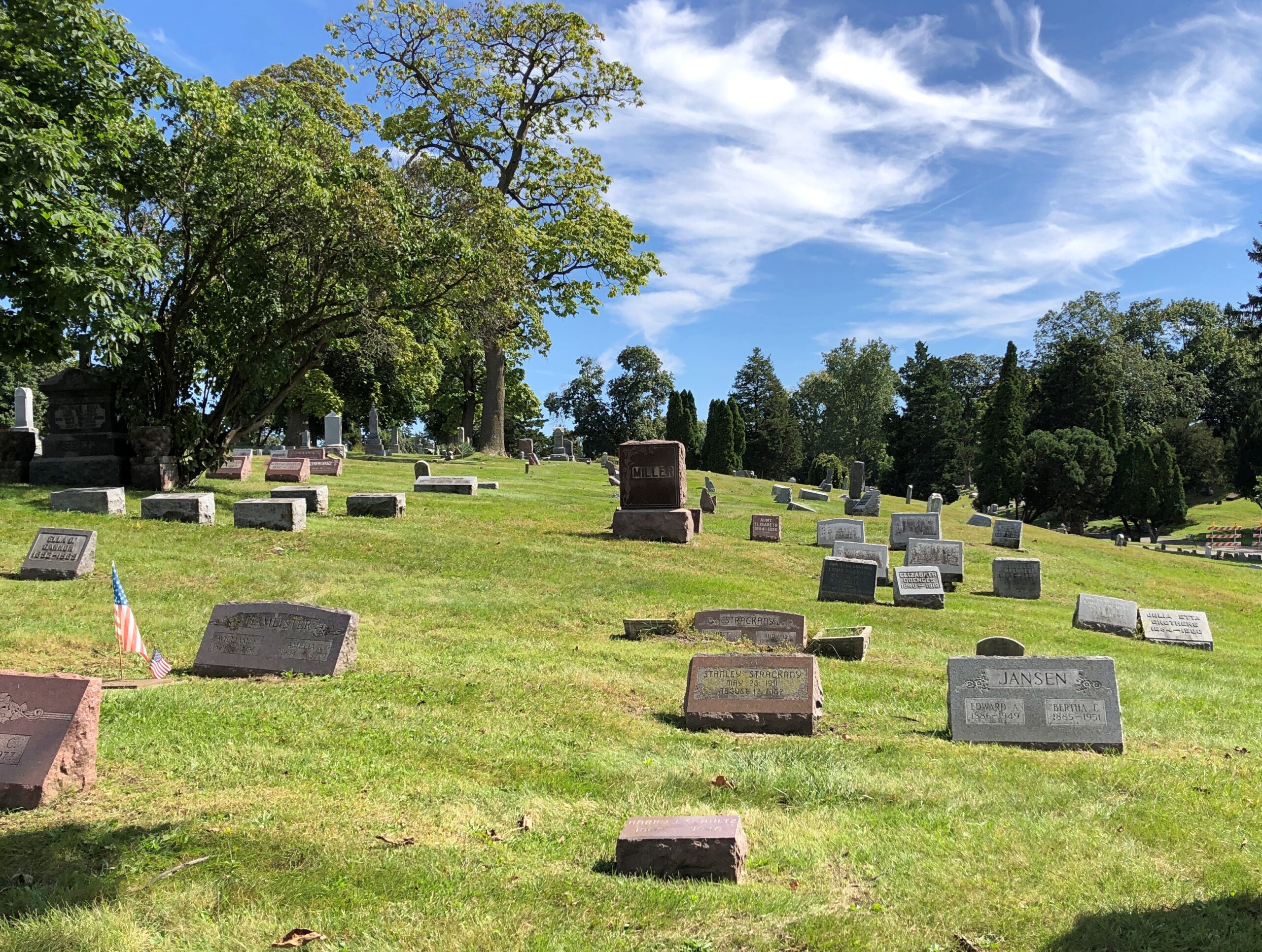
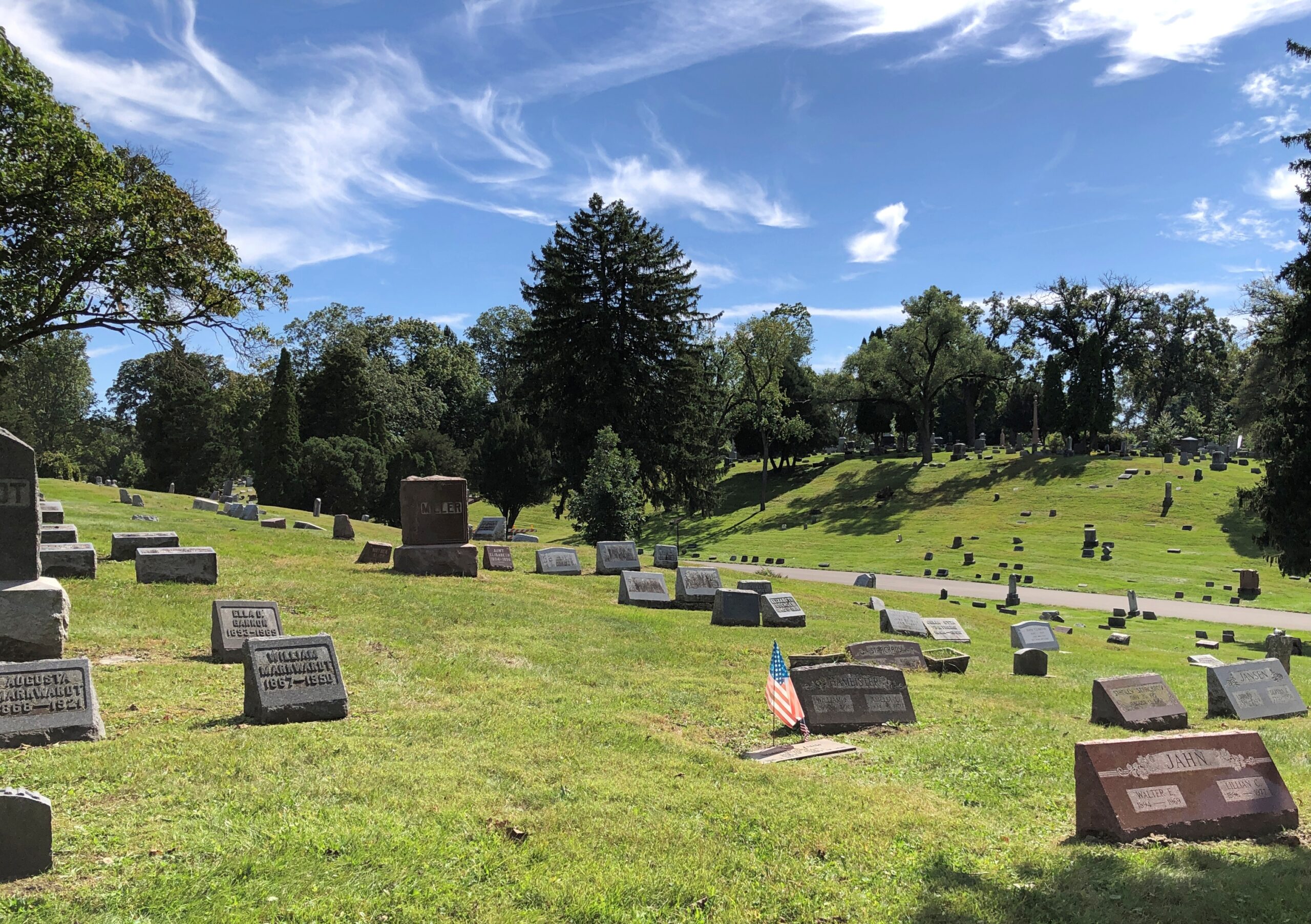
I remember liking the sloping contour of parts of the cemetery. I still do.
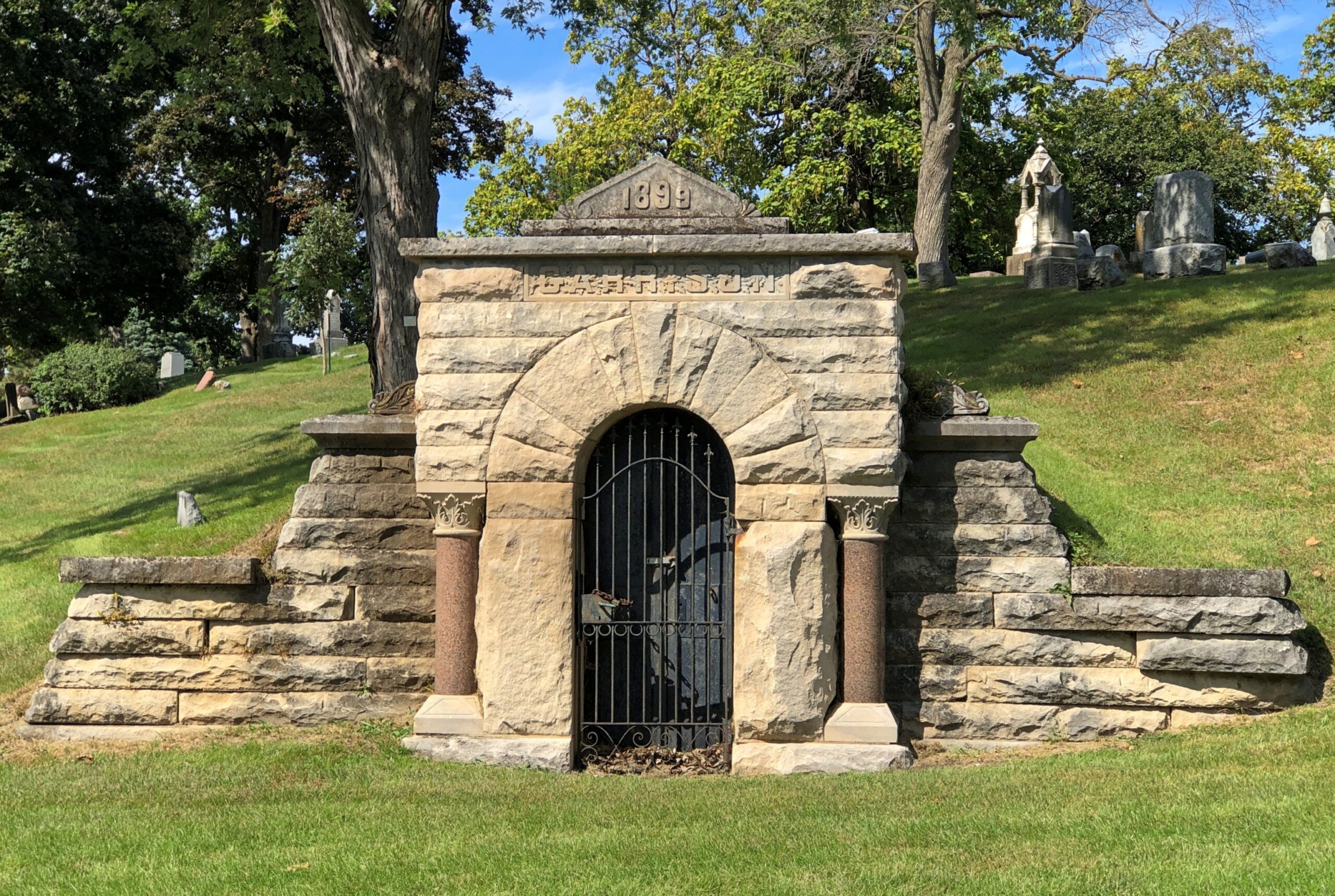
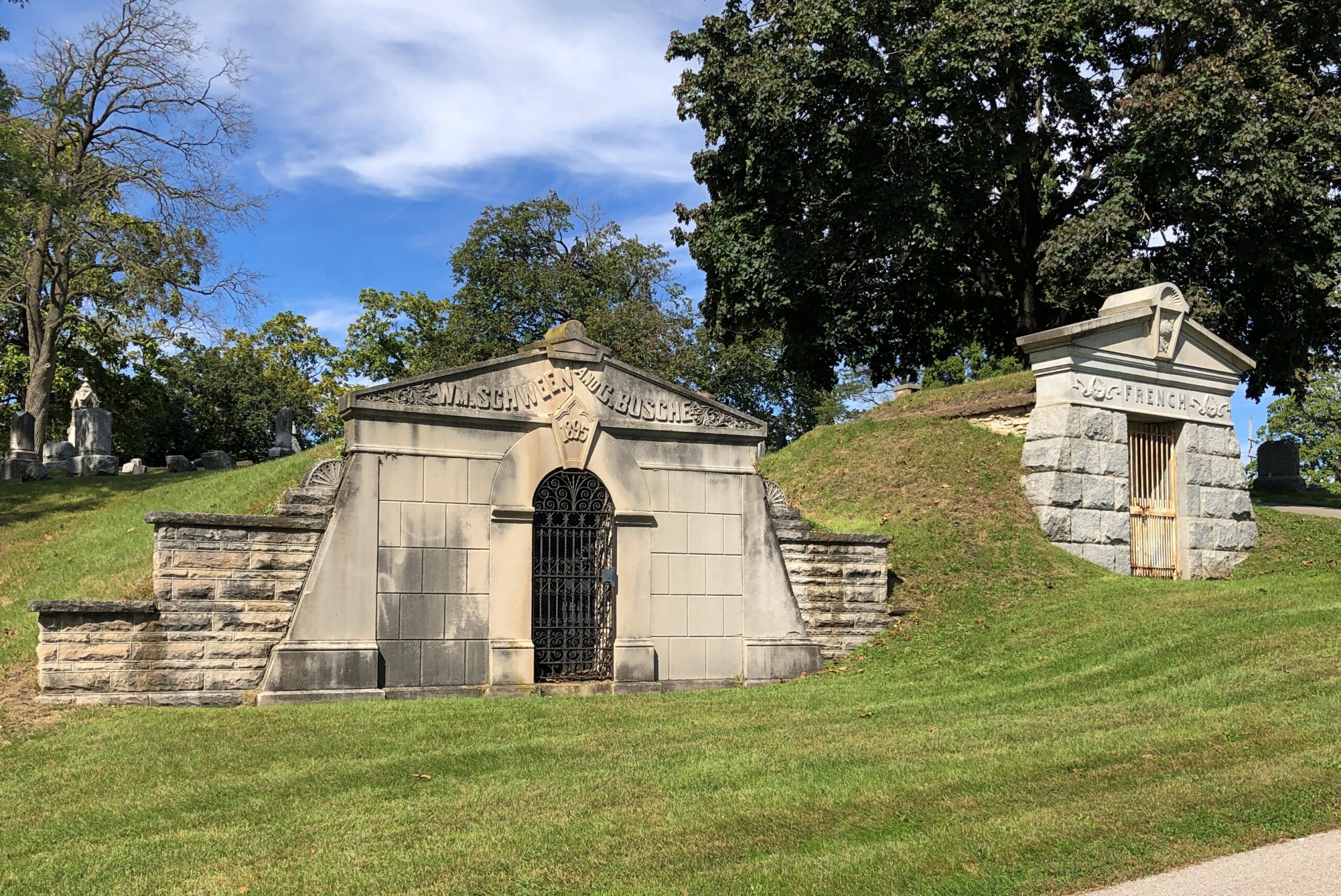
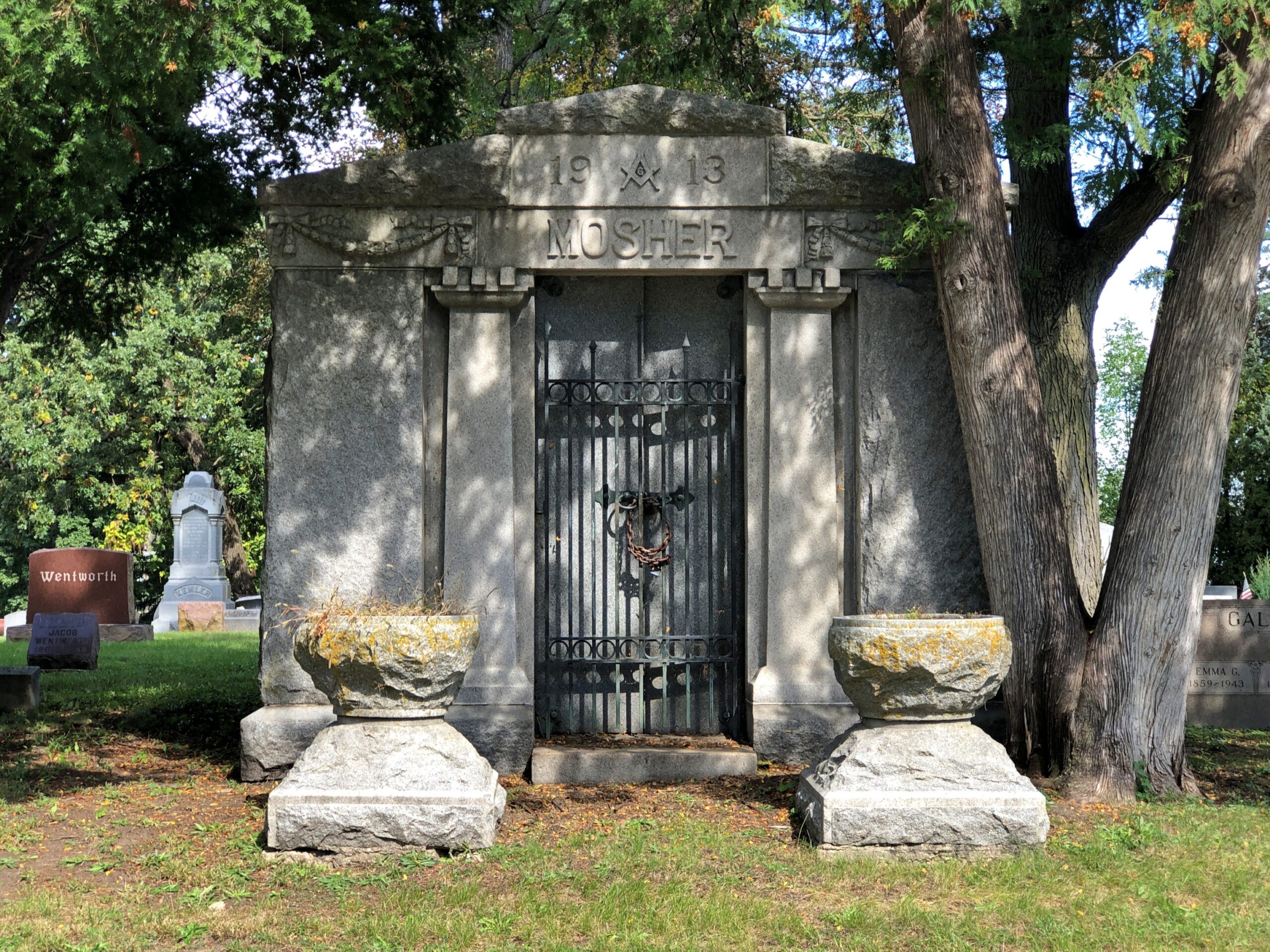
As well as the scattering of mausoleums.
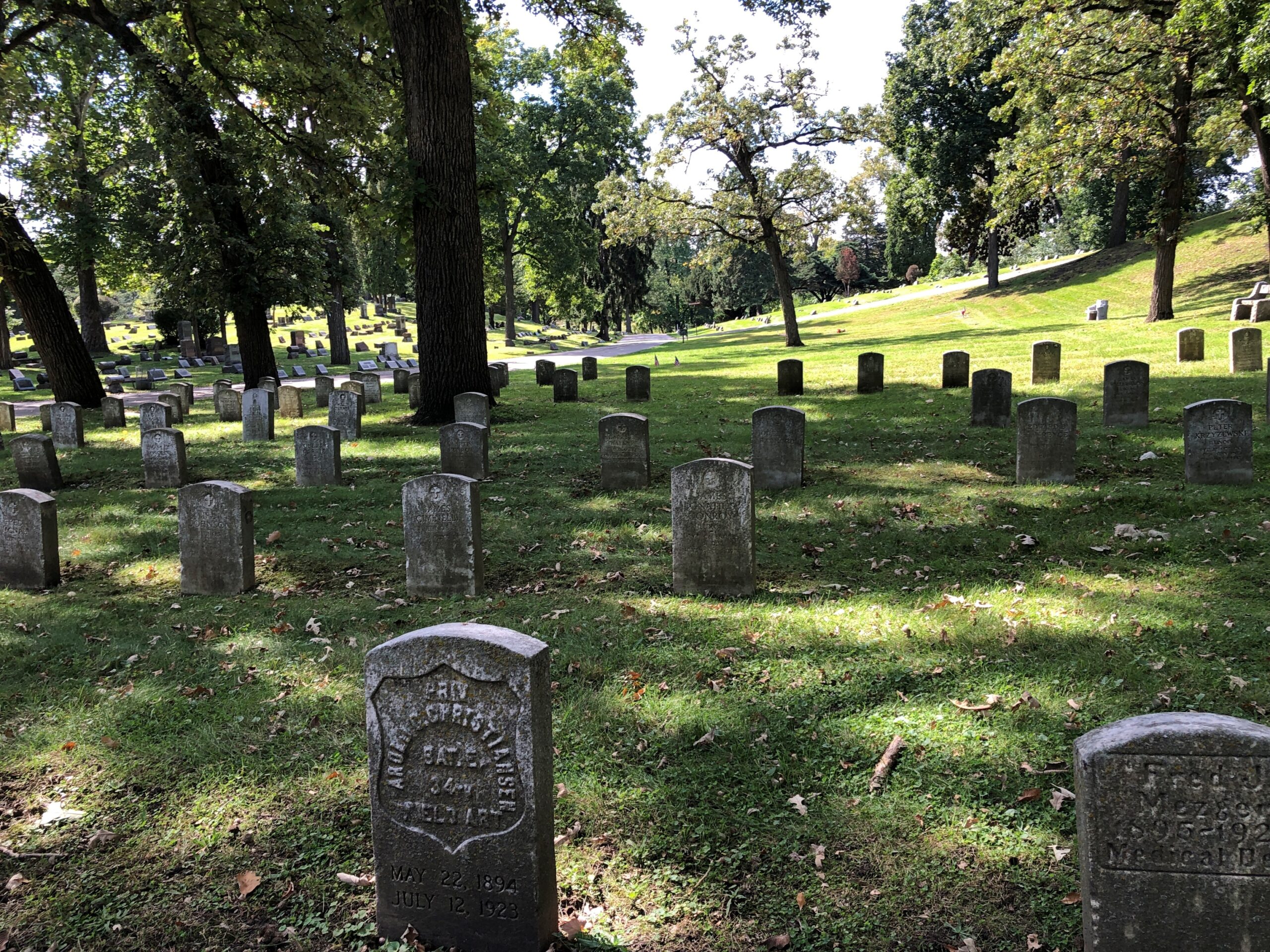
The cemetery was founded in 1889, in time to receive a good many old soldiers who did their part of the Union.
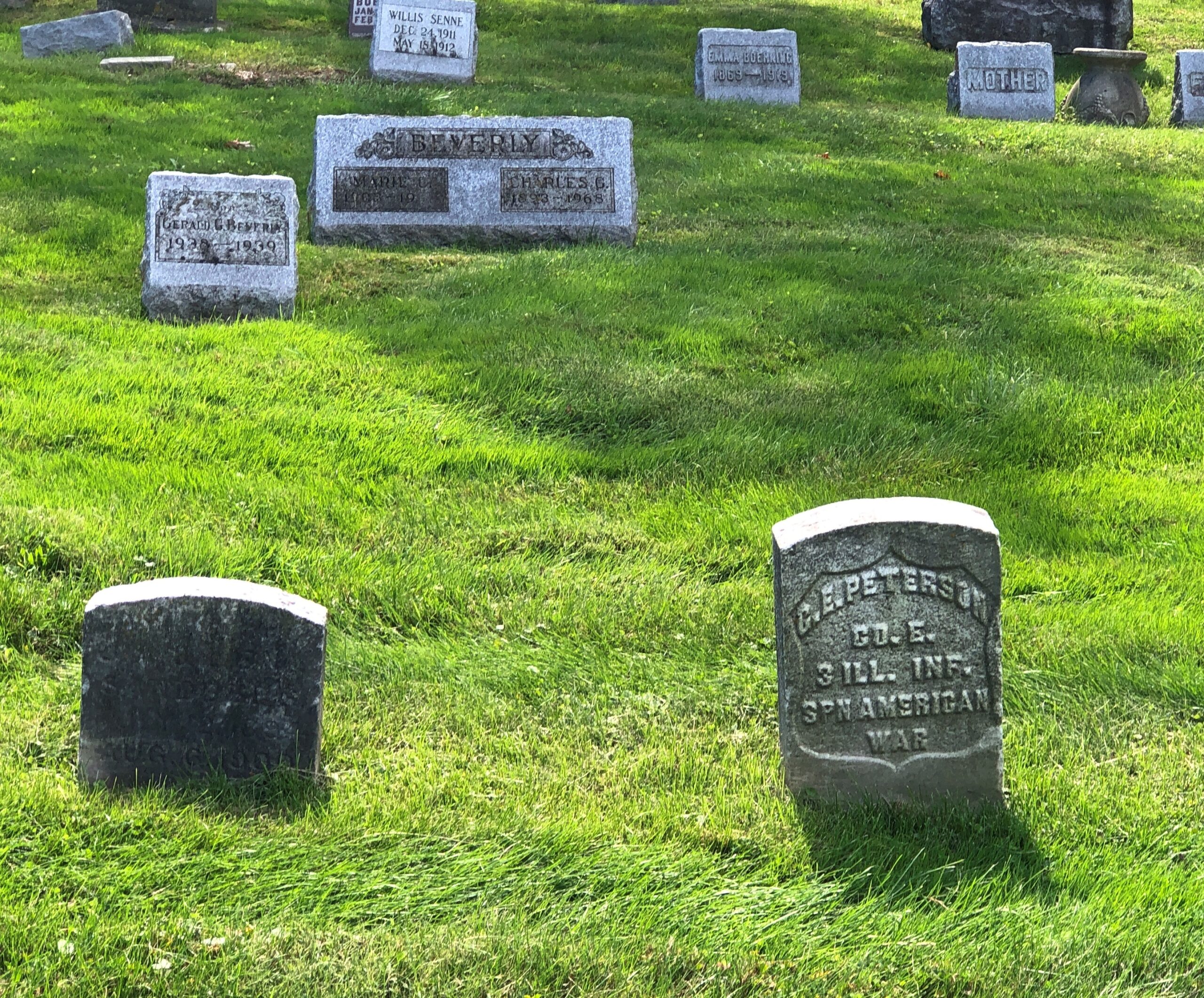
Along with veterans of other wars, even the one with Spain.
Bluff City is still active, with newer arrivals too.
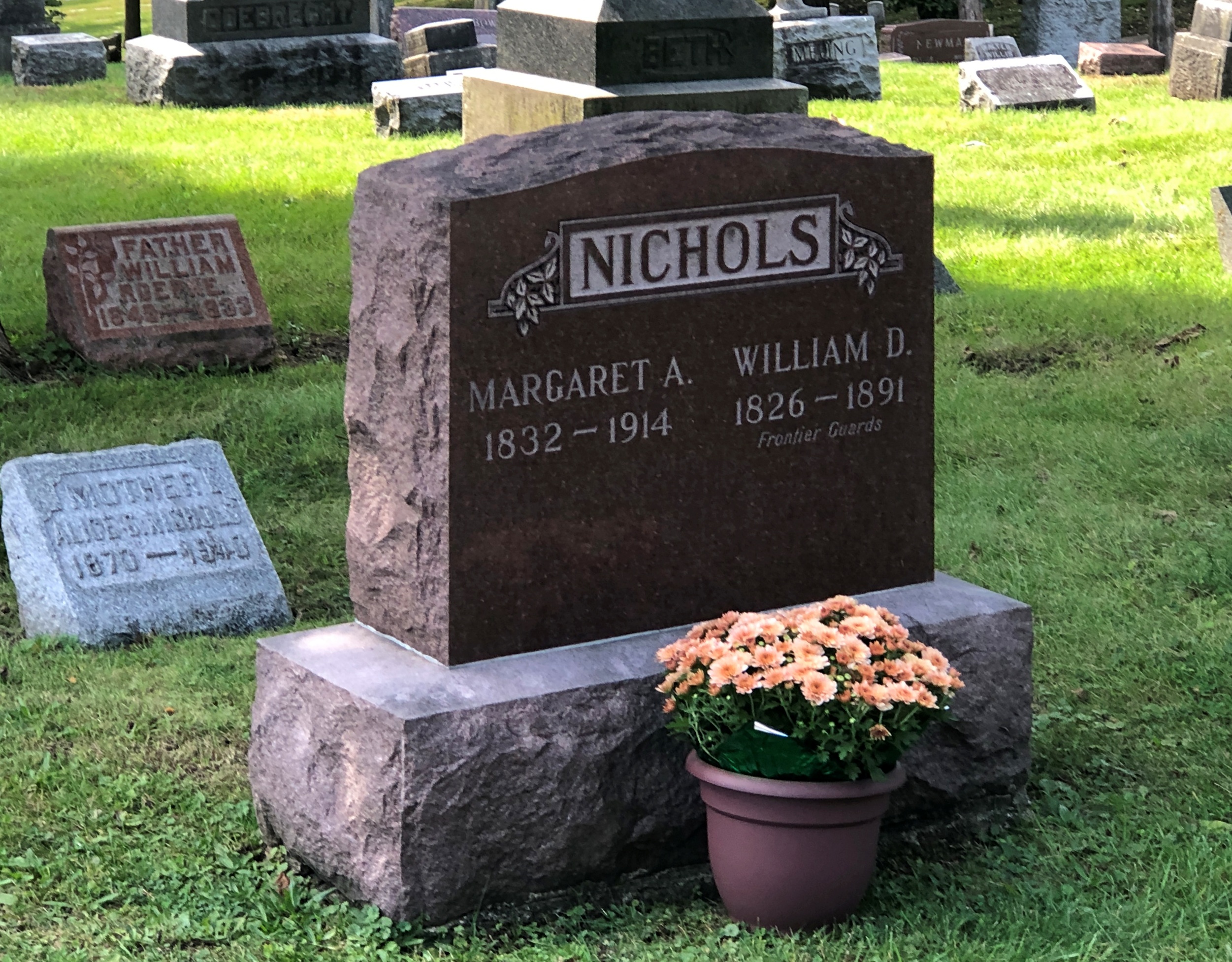
The tour took groups of about 15 people to the graves of notable Elgin residents, where a volunteer actor, dressed in period costume, played the person. Such as William D. Nichols (d. 1891).
Note that under his name is “Frontier Guards.” The actor, David Santori, told us about the guards, who were an impromptu armed group assembled in the spring of 1861 in the dicey first weeks of the war to protect President Lincoln, before a more formal guard of actual Union soldiers could be dispatched for that purpose. Nichols was an engineer and inventor, but his membership in the guard is what he wanted to be remembered for.
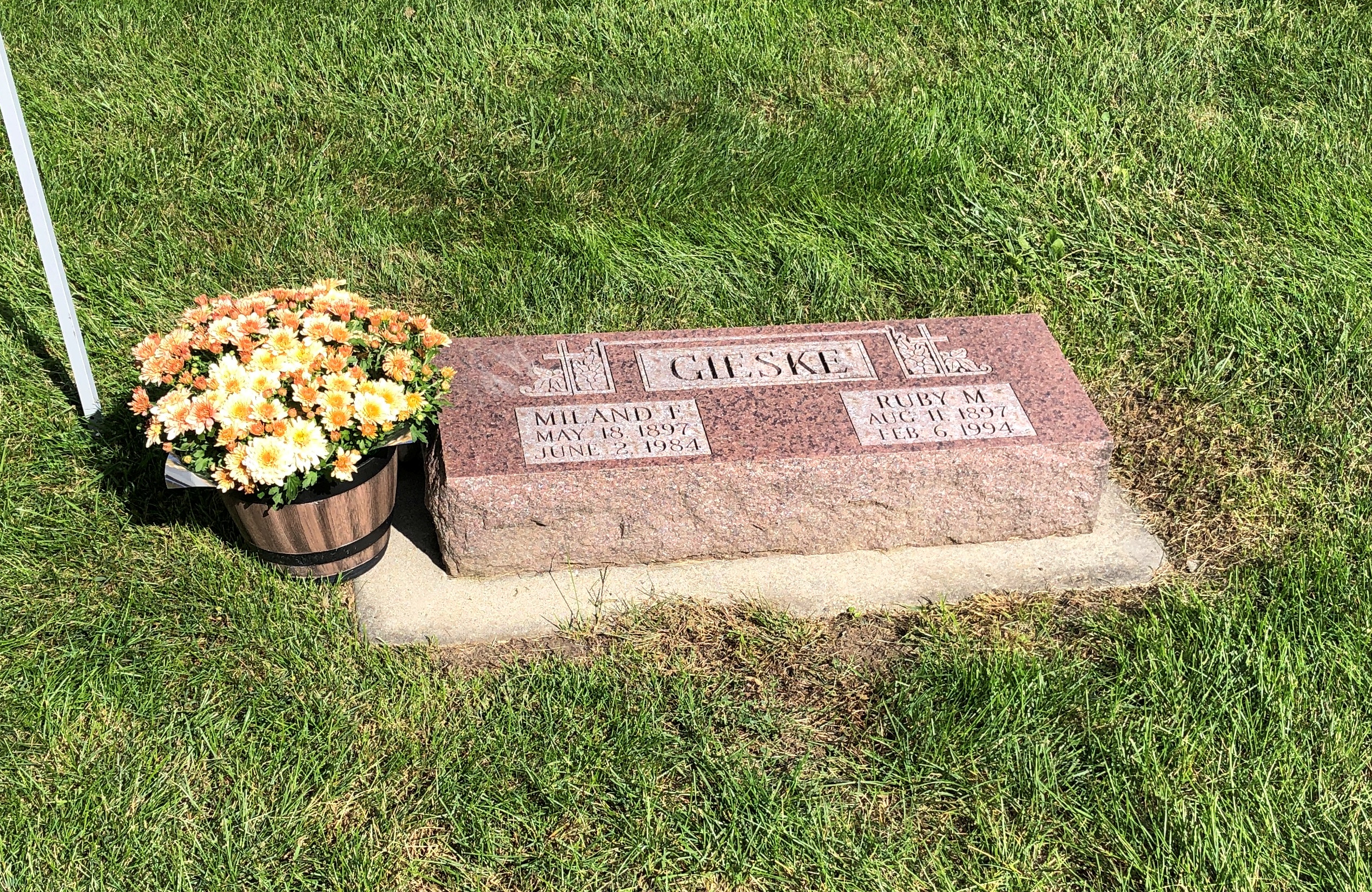
Here is Miland Gieske (d. 1984), who as a young man in 1920 survived a building falling on him when a tornado struck Elgin. A fellow named Thomas Rieser played him, and a harrowing tale it was, too. Gieske spent most of his career working in a funeral home, and the actor said his near-death experience gave him considerable empathy with the bereaved.
Other permanent residents of the cemetery evoked by the tour included Louise Logan (d. 1972), who organized relief during the Depression (played by Bernadette May or Tameron Keeffe); Trygve Rovelstad (d. 1990), a noted Elgin artist who designed, among other things, the U.S. Bronze Star medal, the 1936 Elgin Centennial half dollar, and the Pioneer Family Memorial on the Fox River (Steve Delaney); Nora Wagner (d. 1923), who, along with other young women, repaired a washed-out major Elgin road in 1908, as officialdom dilly-dallied at the task (Thea Delaney); and Jessie Sauceda (d. 2001), who arrived in Elgin as a child when she and her family fled the chaos of the Mexican Revolution in the 1910s (Estela Macias-Bonner), who all had to work out how to thrive despite the not-so-benign neglect of the rest of the community for some decades, and did.
My own favorite was Dr. Alban Mann (d. 1943), city physician and a force for public health (played by Don Gingold). In 1916, he figured out the source of a typhoid outbreak that killed 26 residents: the Elgin National Watch factory.
“The source of the contamination was traced by Dr. Mann to a leaky valve, which separated water from the watch factory’s reservoir on Watch Street and water taken from the river,” the Elgin Historical Society notes. “The leaky valve allowed river water seepage to contaminate water pumped to drinking fountains throughout the watch factory building.”
That incident came up during the talk about his life, as you’d expect. “Dr. Mann” also expressed astonishment that people are still skeptical about vaccines, which I’d say is a reasonable assumption about how the good doctor would react, were he magically aware of goings-on in our time. As has been pointed out, Dr. Mann, there’s still no vaccine for stupidity.
By chance today, I heard part of a radio report about basketball in Lithuania. Seems that Lithuanians are keen on the sport, at levels of devotion usually seen for soccer in other countries. There is also a basketball program at the Lithuanian World Center on this side of the Atlantic, namely in suburban Lemont. Not a surprise, since the center is home to about 50 Lithuanian organizations.
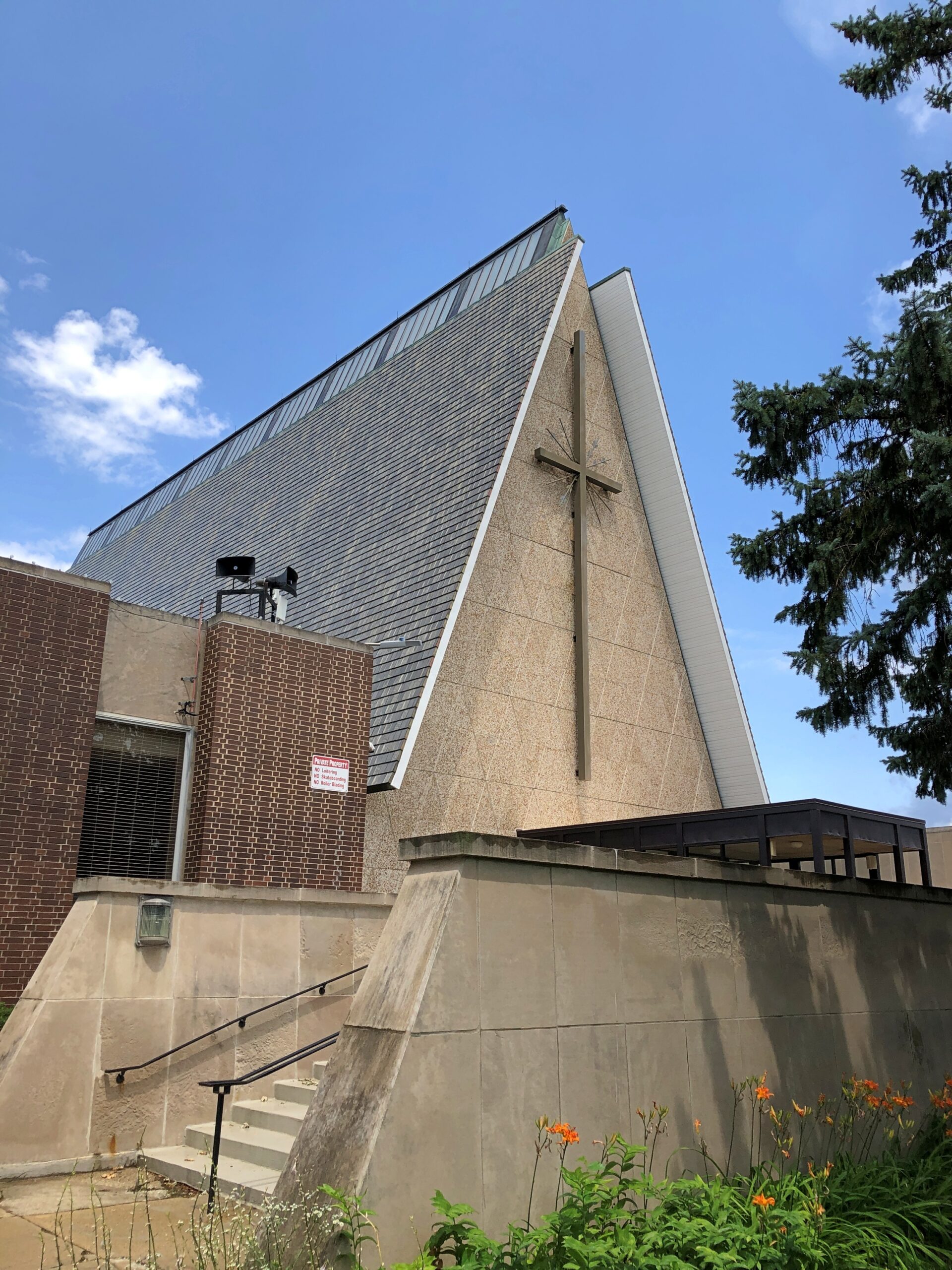
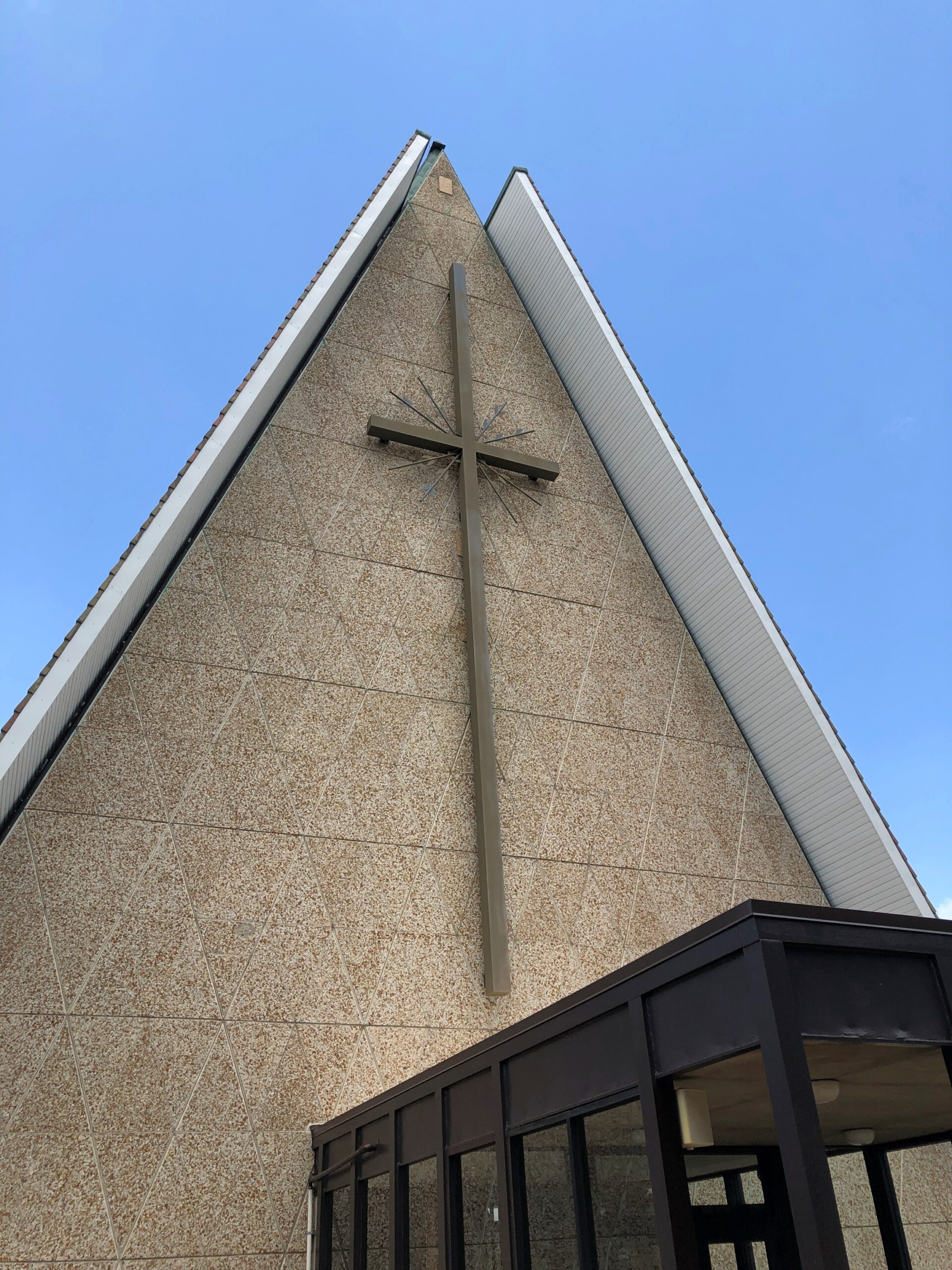
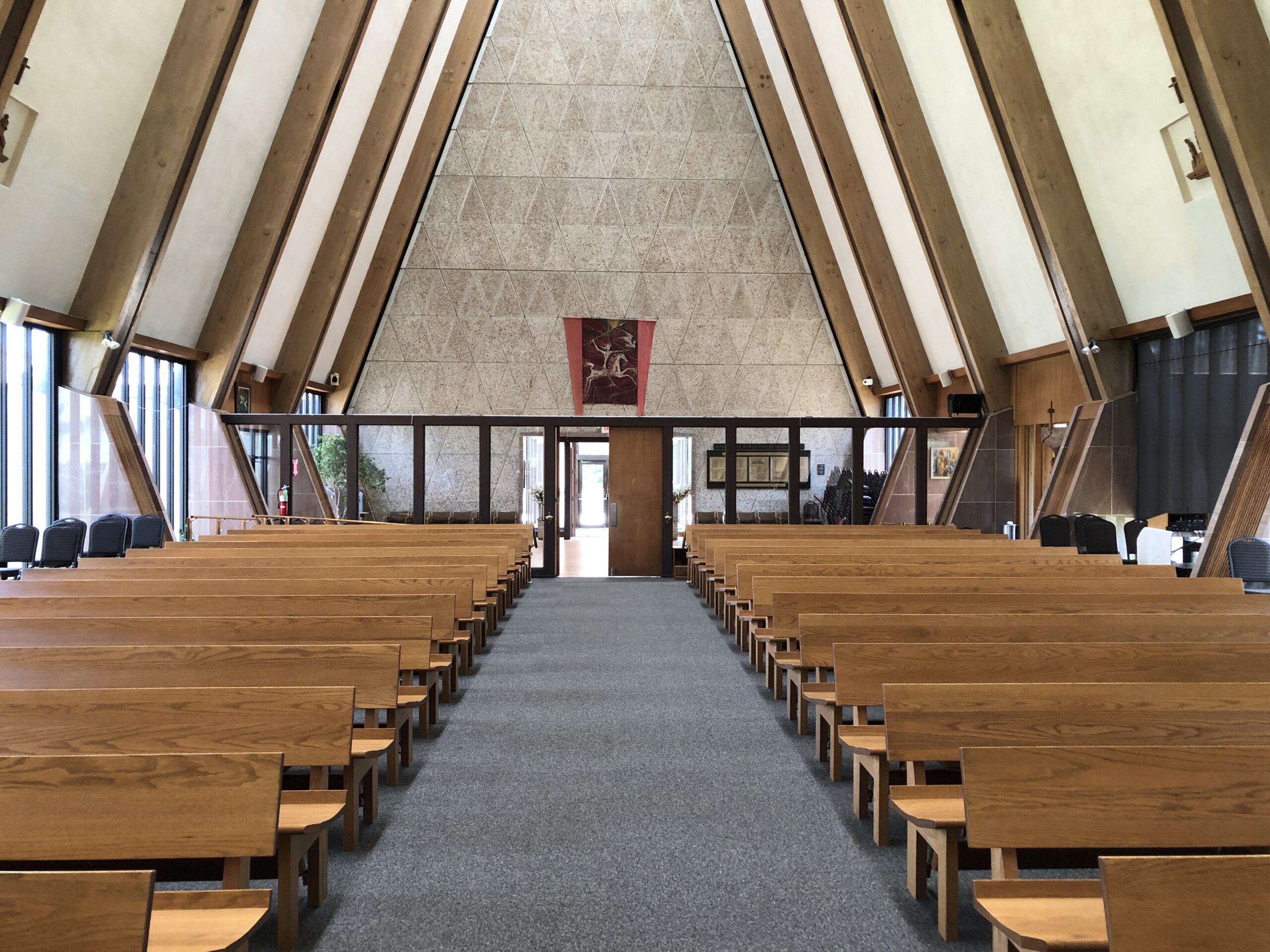
We encountered the remarkable Hill of Crosses at the center in July. Within sight of the hill is a church building of a distinct modernist cast.
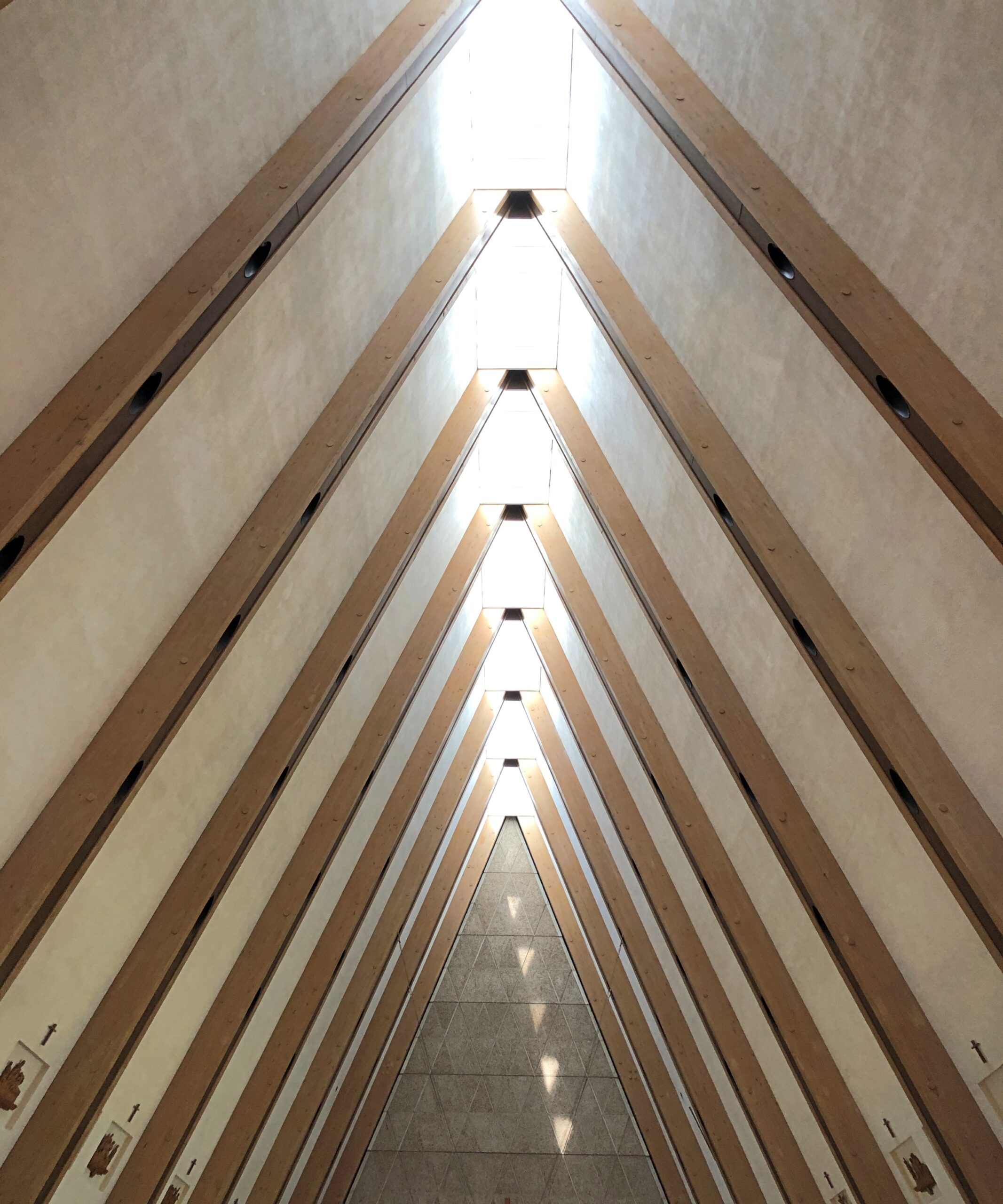
One of less-known works of Charles Murphy (d. 1985), Chicago modernist, whose highly visible portfolio includes One Pru Plaza, McCormack Place, the Daley Center, and the original terminal in O’Hare and some of the later ones, too.
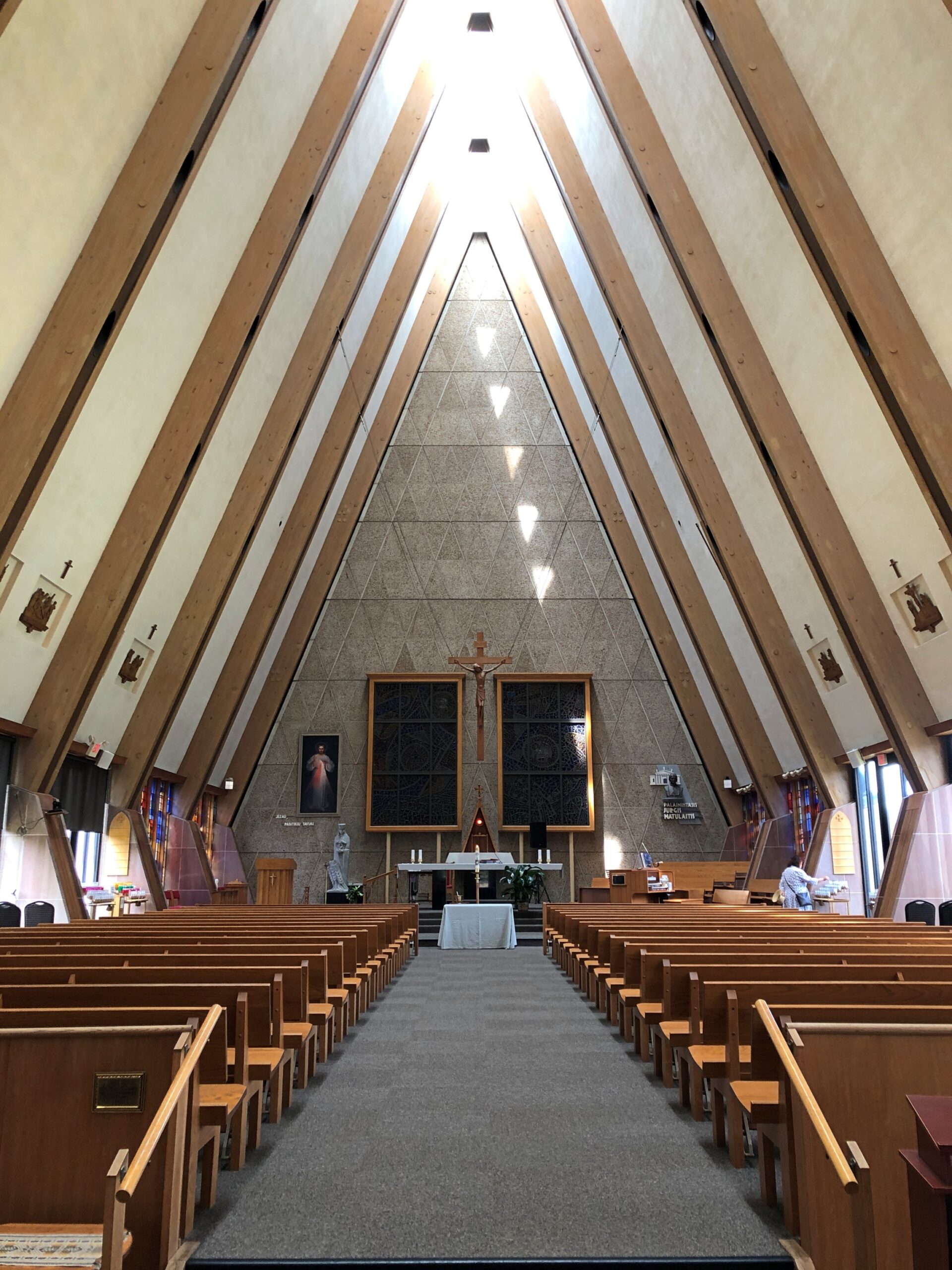
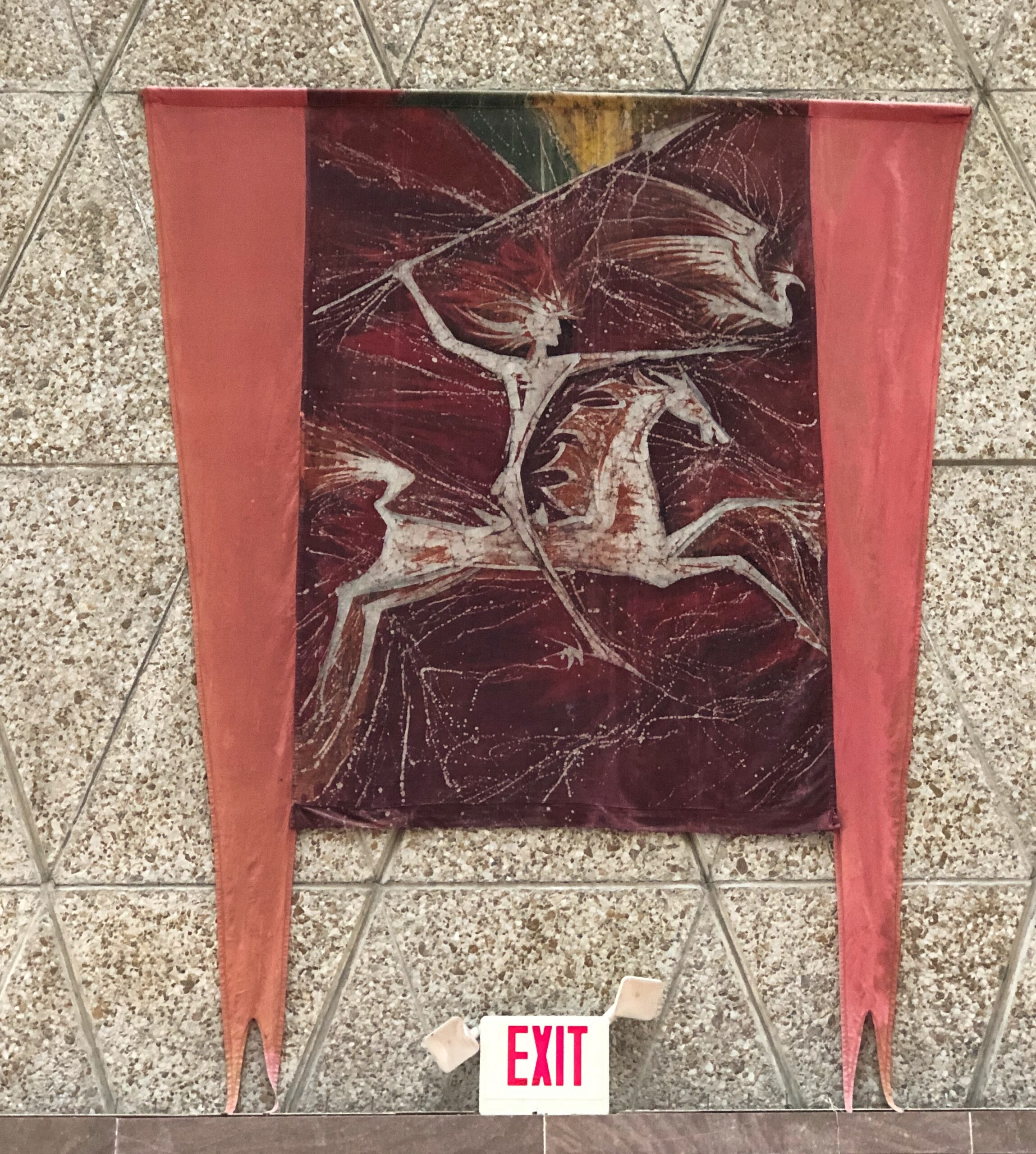
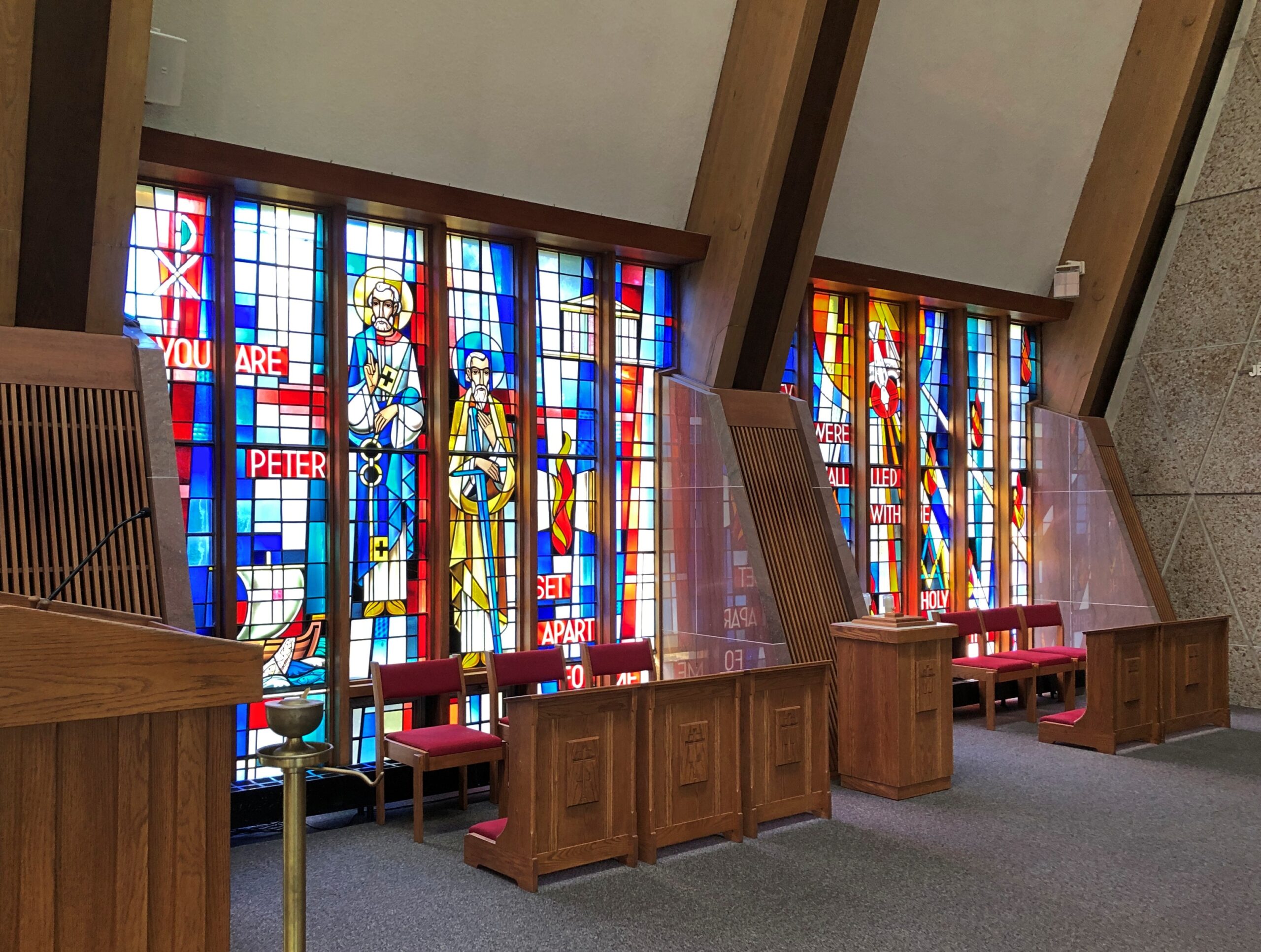
Looking every bit 1964. Not built for Lithuanian World Center – that was still more than two decades in the future – but as part of D’Andreis Seminary, a Vincentian Catholic seminary.
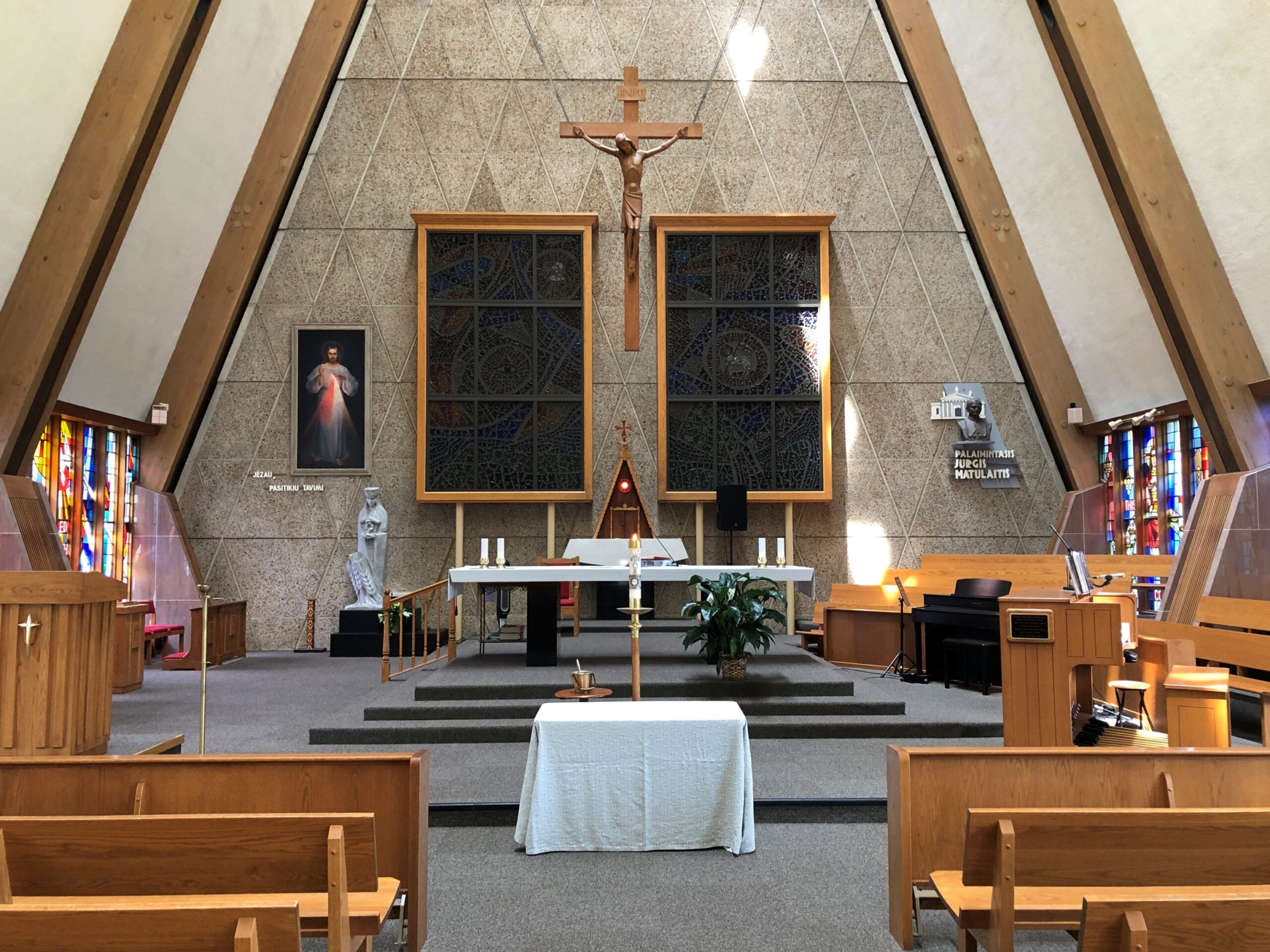
After the seminarians bugged out, the Lithuanians bought the property and invited the Blessed Jurgis Matulaitis Mission to use the church, where they say mass and administer sacraments and so forth. Apparently the Diocese rents the structure from the center.
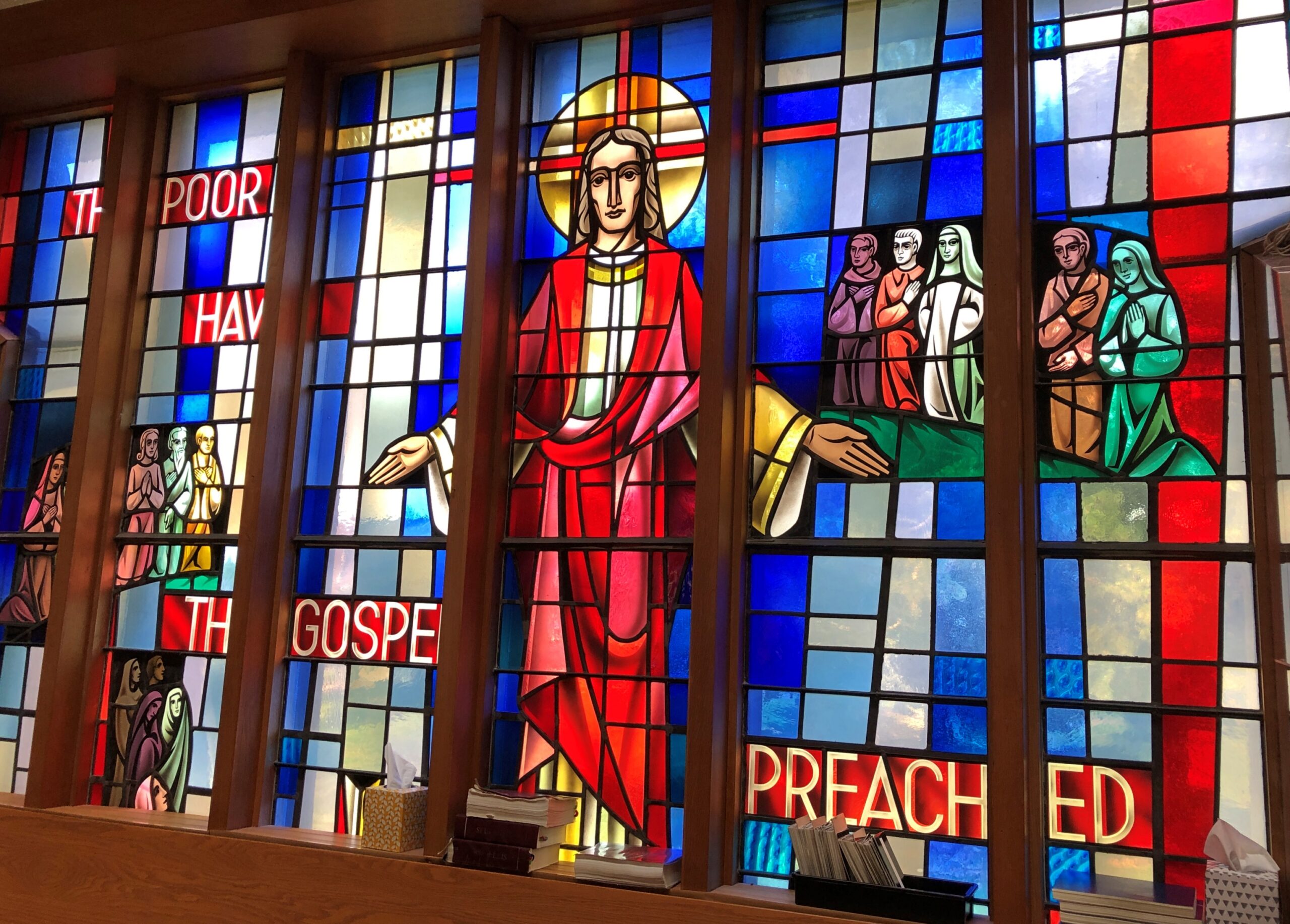
The stained glass might be in English, but masses are in Lithuanian, I understand. It’s all very Chicago, even if it’s in the suburbs.
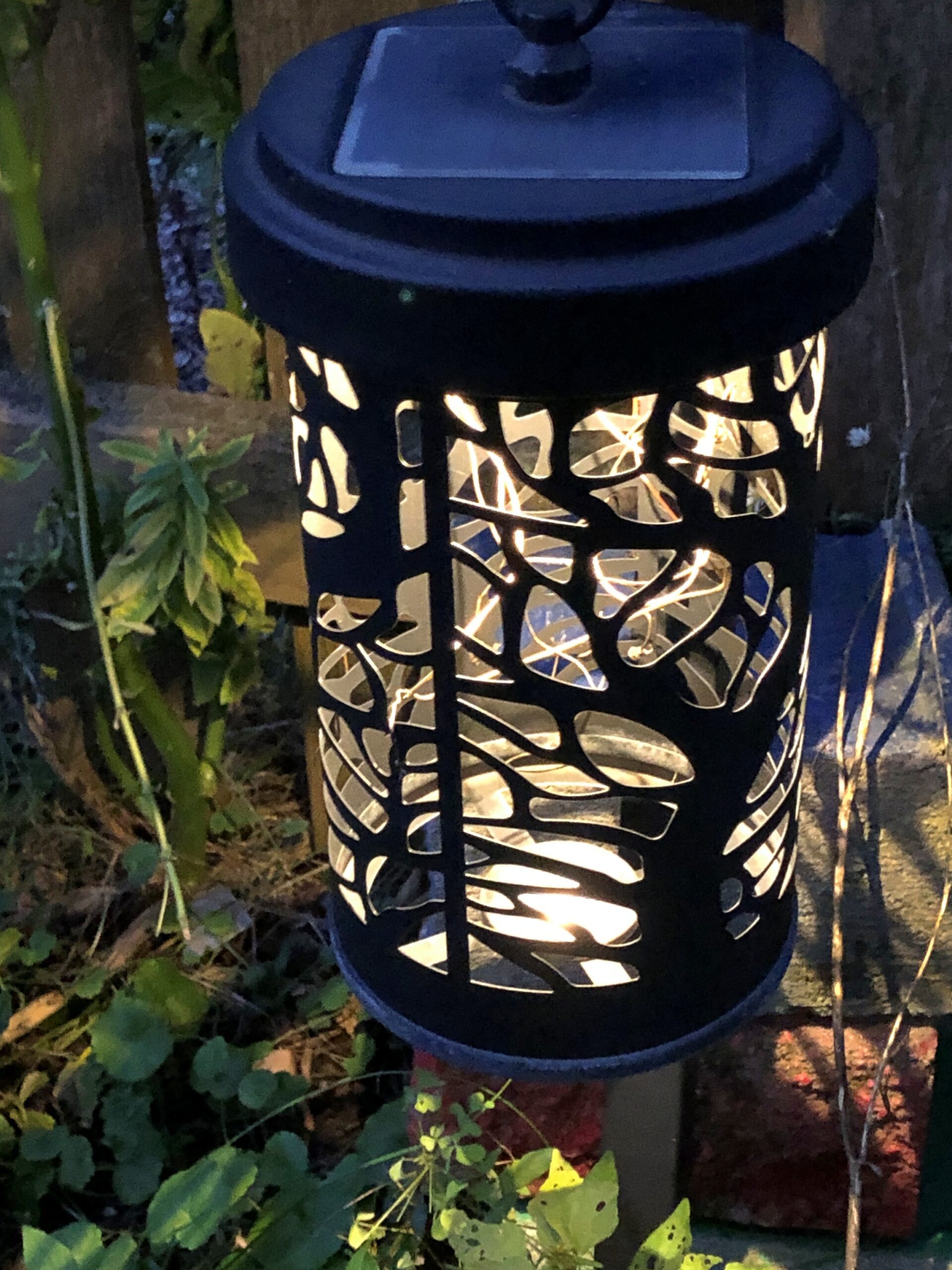
I went around the yard taking pictures just ahead of sunset today, around the time of the fall equinox. The solar lamp translates energy from the sun into light, so in a real physical sense, this is sunlight by other means. At least for a while. It peters out after a few hours.
There’s an even deeper connection to stars, if not the sun. The lamp is partly iron. As one nonfiction book I read years ago put it – and I can’t remember where I read this – bits of iron are “shards of ancient suns.”
Another lamp, this one of the insect-theme variety.
The air has already decided that fall is underway, cool but not quite chilly. Still, you know chill isn’t long in coming. With a few more warm days sprinkled in, I hope.
Golden rod, which hangs out with the wrong crowd – pollen-heavy ragweed – and so is blamed for seasonal sneezing and other respiratory upsets afflicting us primates.
Other flowers.
Zinnias, as it happens – hardy September flowers doing well near the fence.
Saturday was International Talk Like a Pirate Day. Can’t forget to note that, though some years I do, like National Gorilla Suit Day (January 31). Supposedly Long John Silver’s, the fish joint, was giving away fish for Talk Like a Pirate Day if you said something pirate-y, and even fish meals if you dressed like a pirate. Naperville – the nearest LJS after the one in Hanover Park closed – was too far to go for that, and it drizzled most of the day anyway.
As it did today, with bursts of stronger rain. Good to listen to drifting off to sleep, especially when the rain doesn’t come with dangerous winds or close cracks of lightning. Or, for that matter, when the volume of water doesn’t seem enough to overwhelm local drainage. So it proved. Your house is always the second-best place to experience a storm, anyway. The best place to enjoy a more vigorous storm is always a rental property.
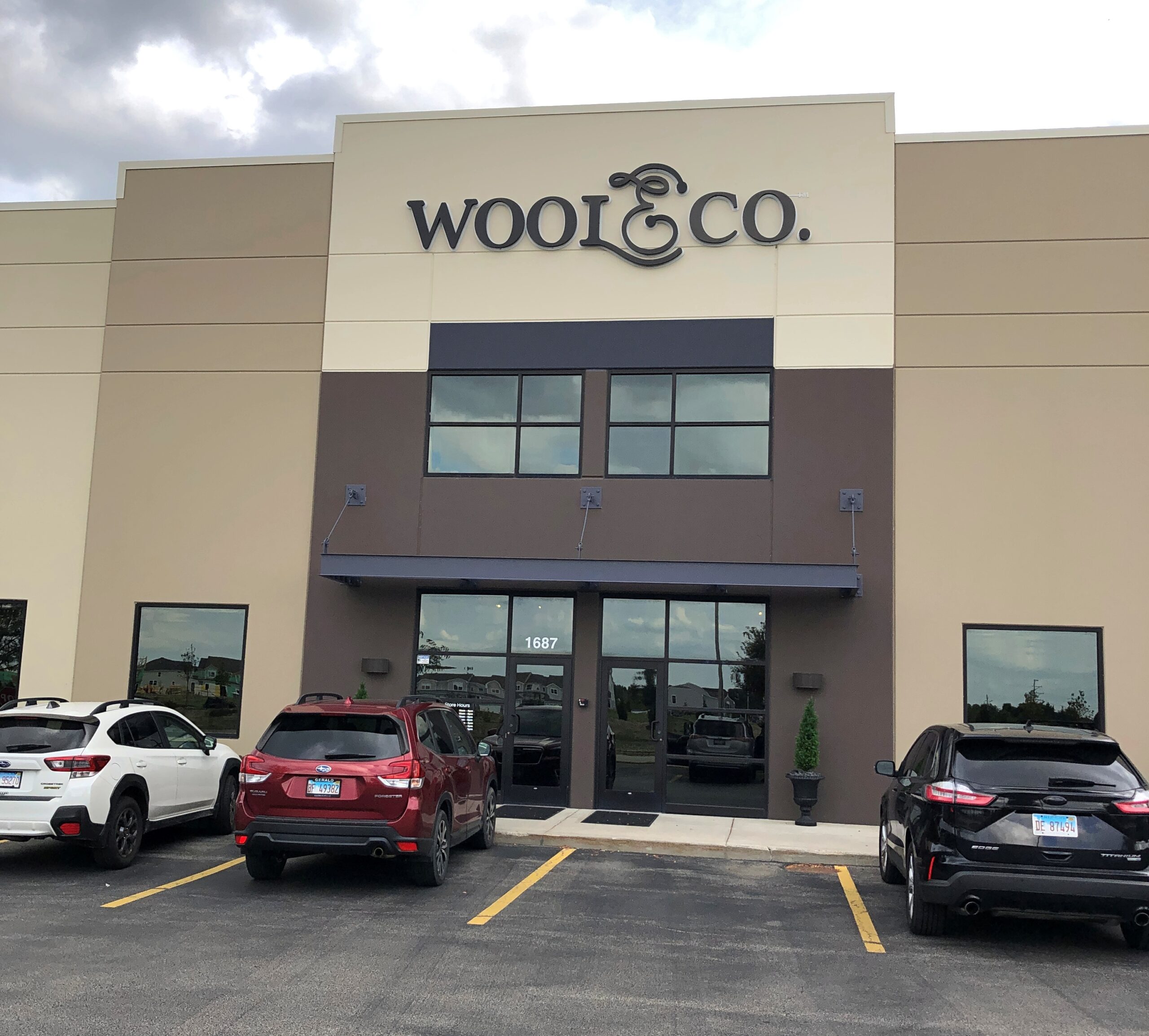
After we were done in Elgin last week, at Yuriko’s suggestion, we went to Wool & Co. in South Elgin, out at the edge of the suburbs in new-looking development.
The entrance doesn’t much hint at the colors within.
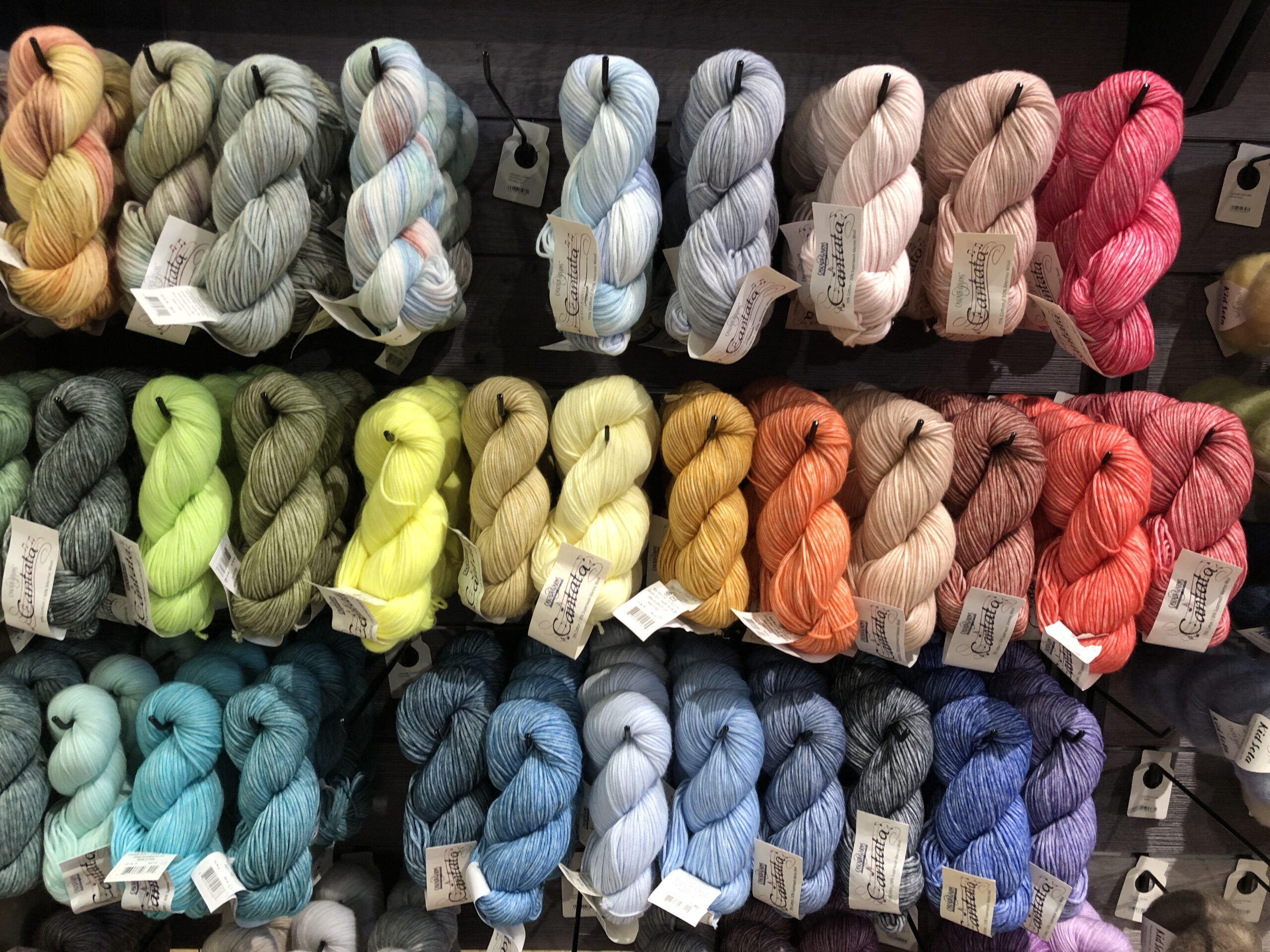
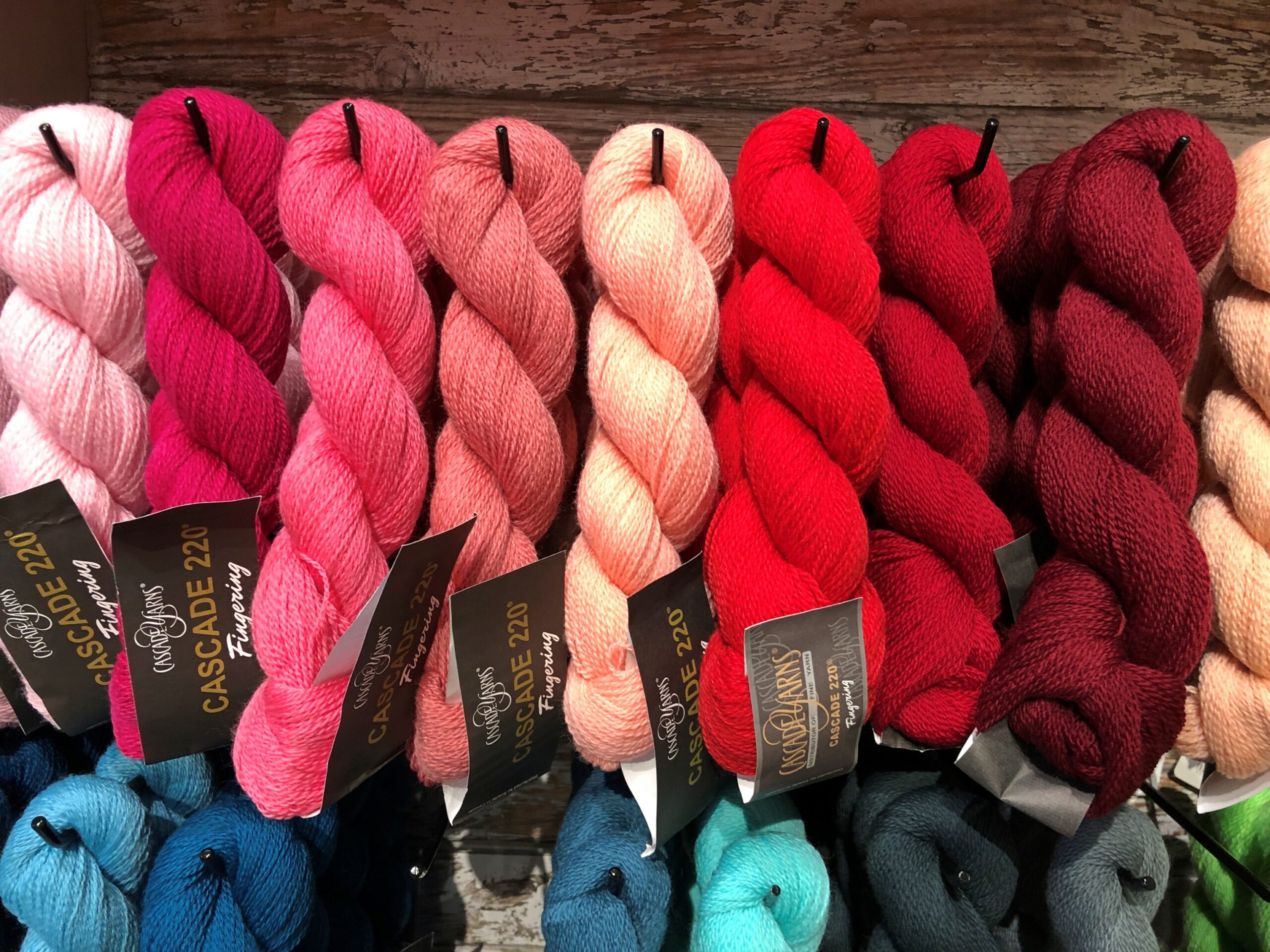
I don’t knit, but I do like the colors.
I thought the shop might be part of a chain, but no. The South Elgin location is it, for now. As its web site puts it: “Visiting Wool & Co. is akin to being at a friend’s house… a friend with over 10,000 skeins of yarn!!!”
Saturday was warm and we finished the day after seeing the Elgin Castle. That left three more houses on the tour unseen. Elgin is only about 20 minutes away, half an hour in thick traffic, so we decided to return on Sunday for the last three houses, since our ticket was still valid for them. The weather had turned overcast with periods of light rain.
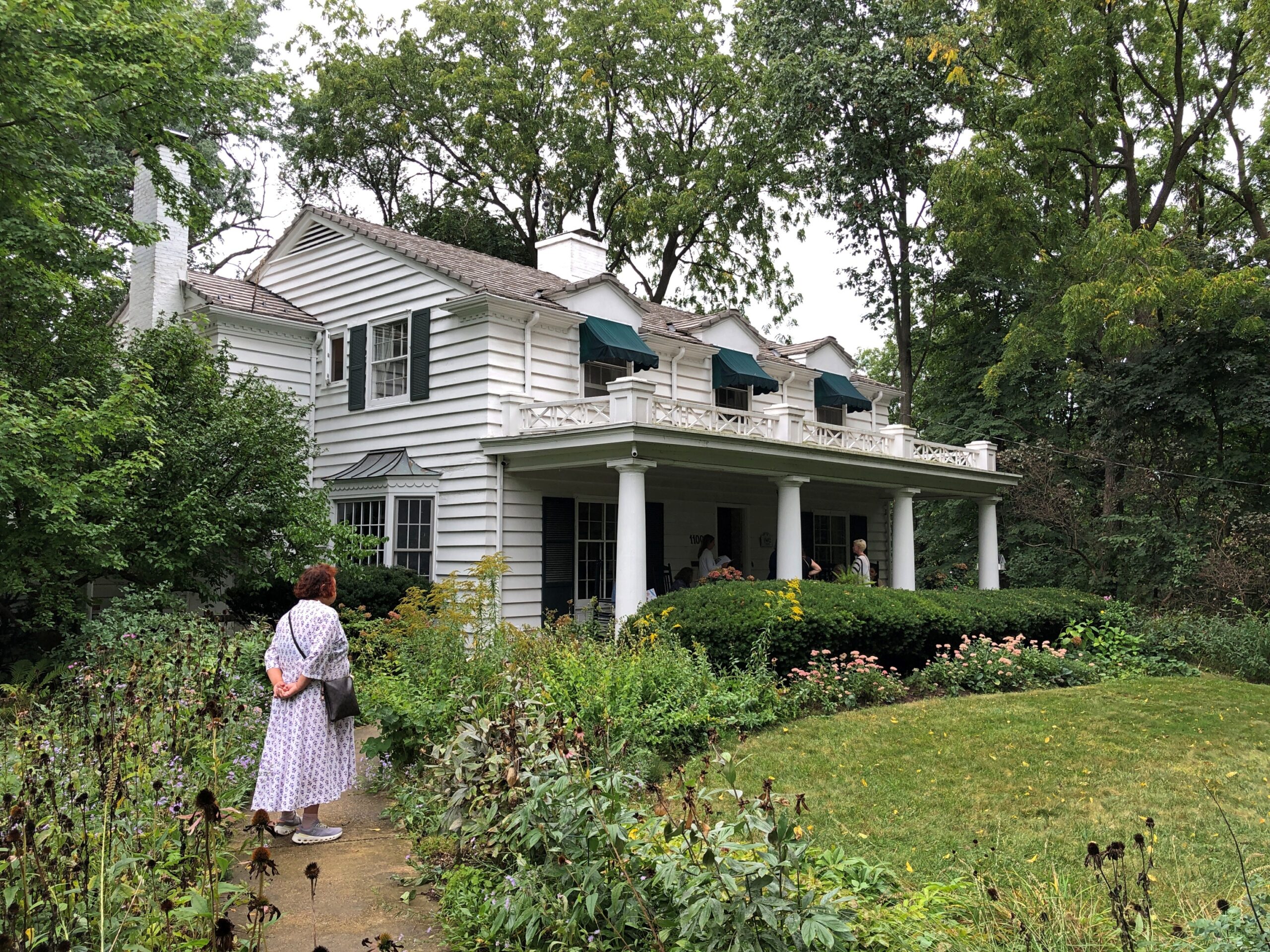
1100 Spring St.
My own favorite among the three, tucked away between its street and a slope leading down to the Fox River, though that view was mostly obscured by greenery this time of the year. Its yard is lush, especially near the front-yard sidewalk.
Influenced by English and Dutch Colonial designs, the booklet notes, and owned by a series of well-to-do Elginites since 1902, including a bank president, a doctor, an attorney, other local company presidents and an opera singer (the booklet doesn’t offer more detail on that last one, alas). More recently, as in now, the house belongs to an Illinois state rep and her teacher husband.
1100 Spring has a terrific picture window looking down toward the river – or will, when the leaves fall – which is a testament to expertise in glass production, and whatever kind of glass-cleaner the current residents use. Another only slightly smaller window faces the back yard. That space itself was the picture of comfort, a part-flagstone, part-grass turf punctuated by a sizable hammock strung between a couple of mature trees that lord over the yard.
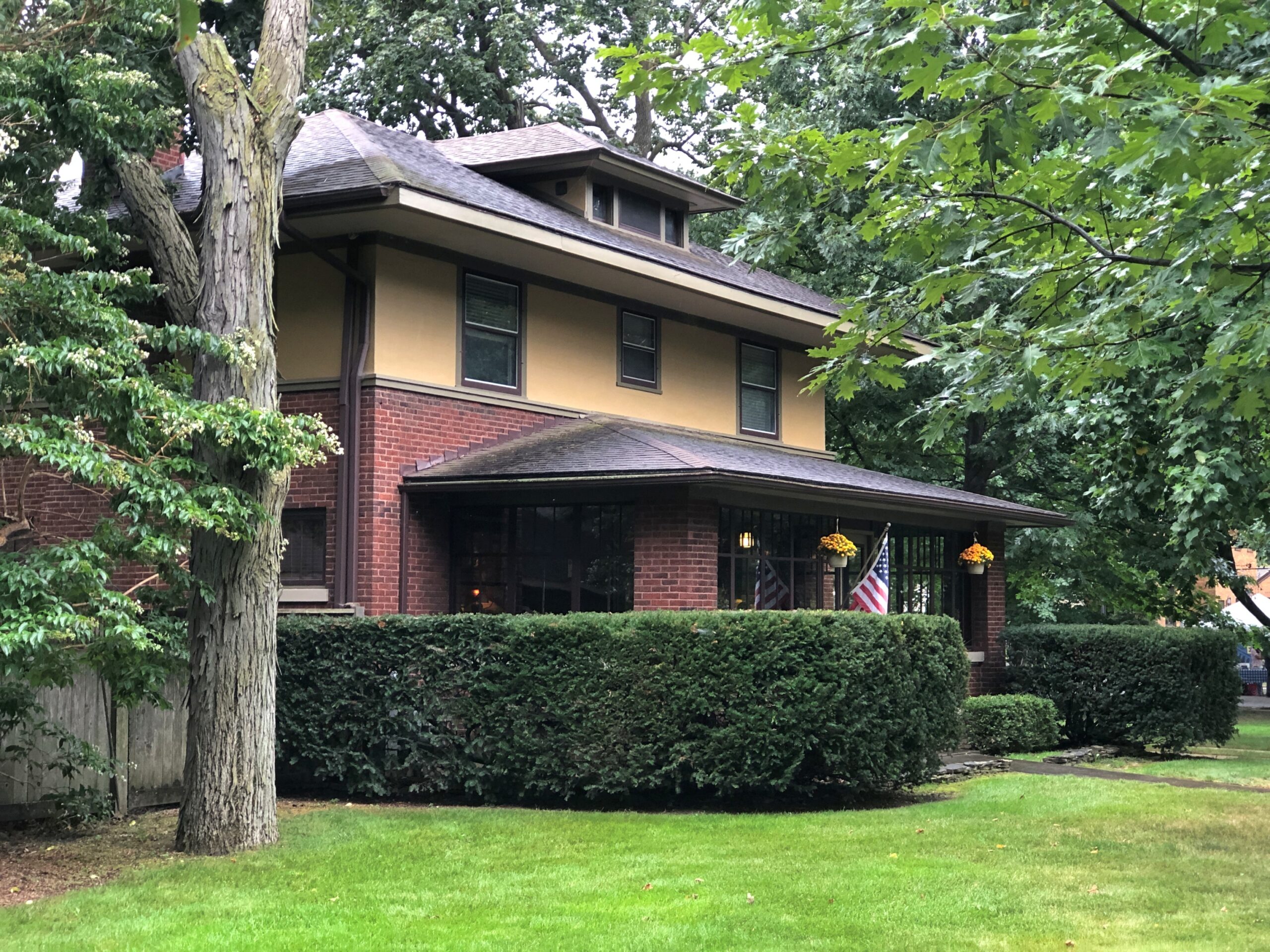
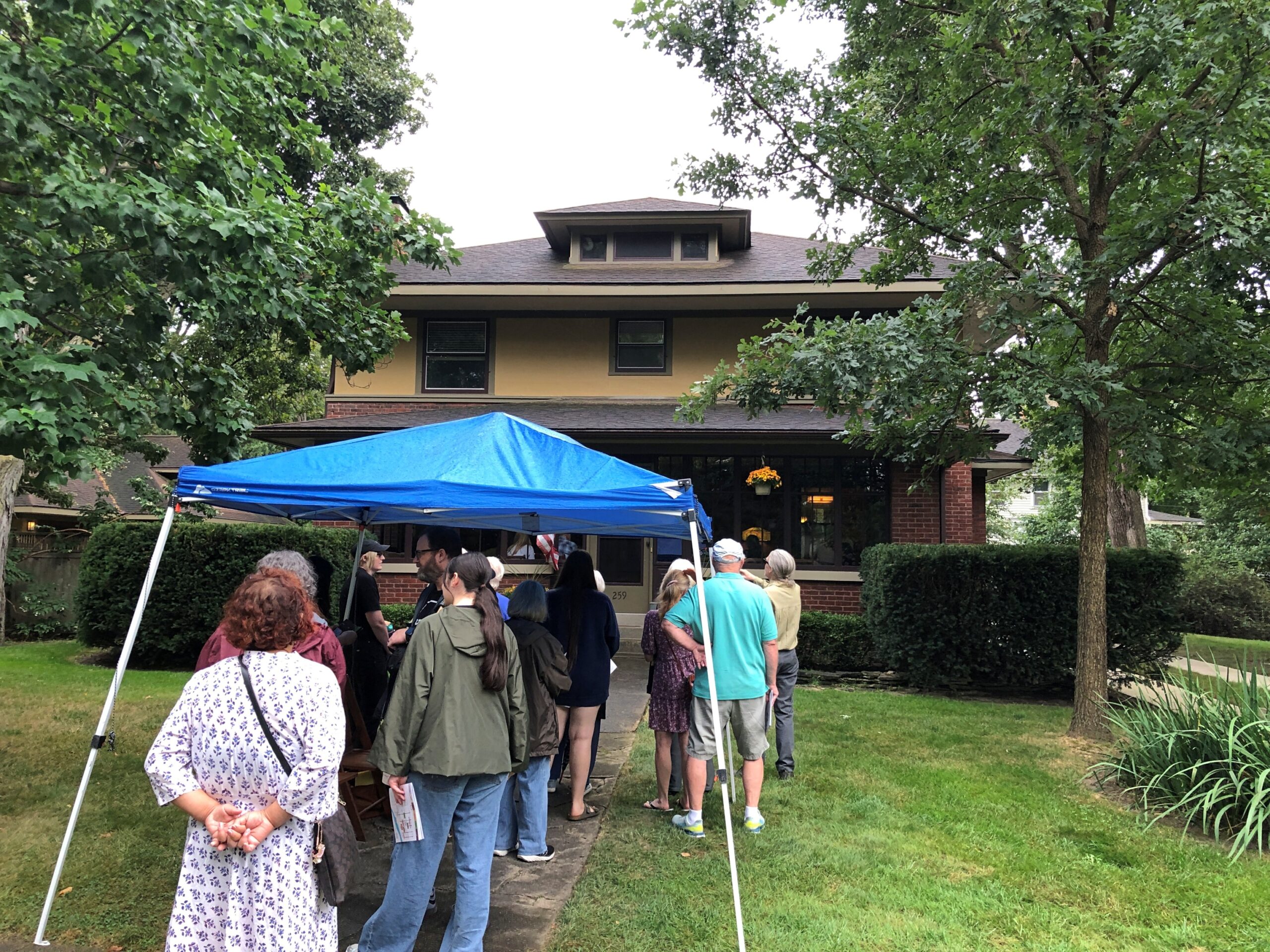
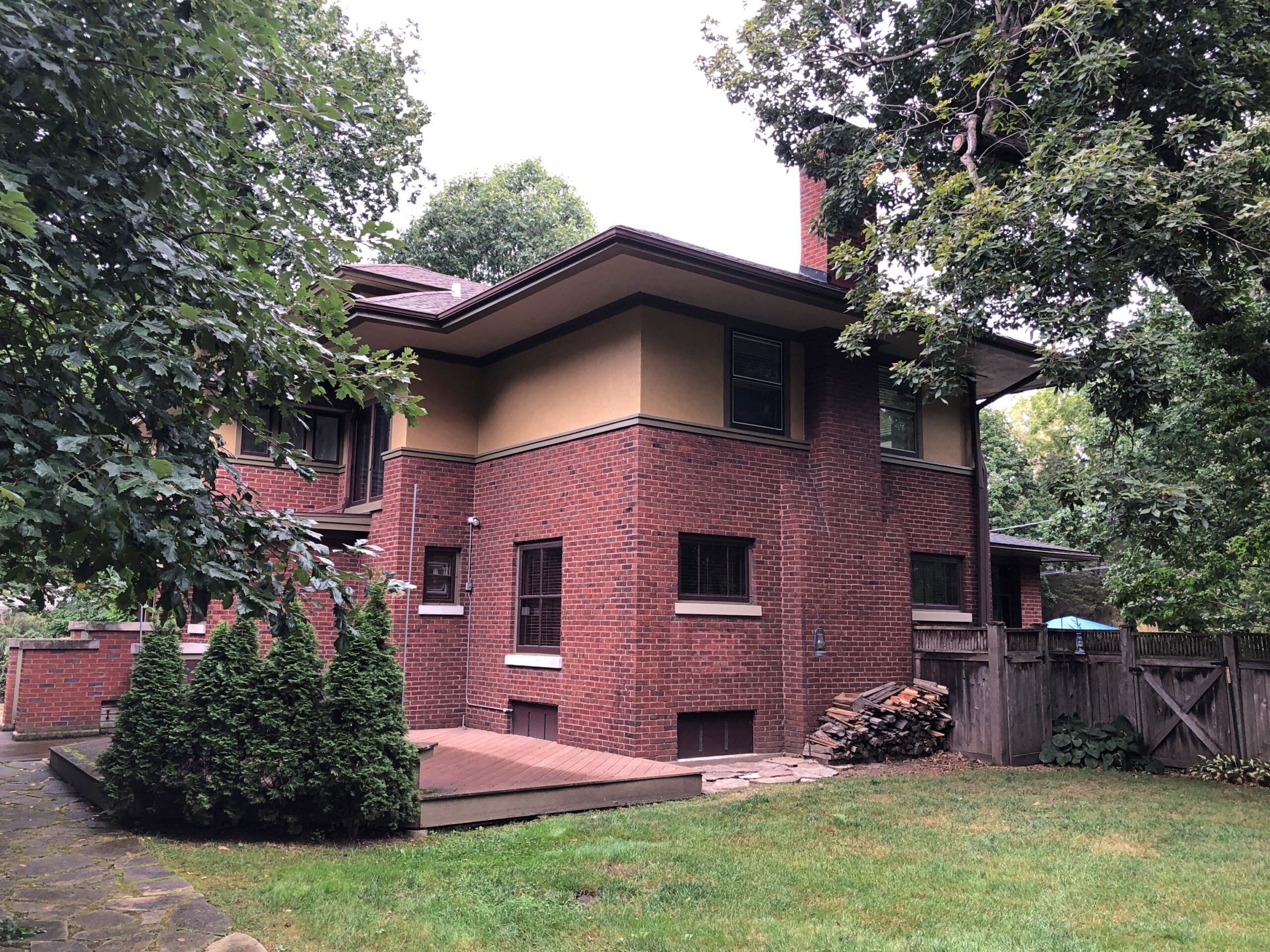
259 River Bluff
Not a FLW. But Prairie Style was a popular style in 1915, and it does echo a lot of FLW.
That FLW vibe applied inside as well in the long, straight lines and Wright-like geometry of the walls. We saw only the first floor, since the stairs don’t have handrails of any kind. But the first floor was enough to show that the current owner, a retired airline pilot, has put a lot of effort and money into its restoration.
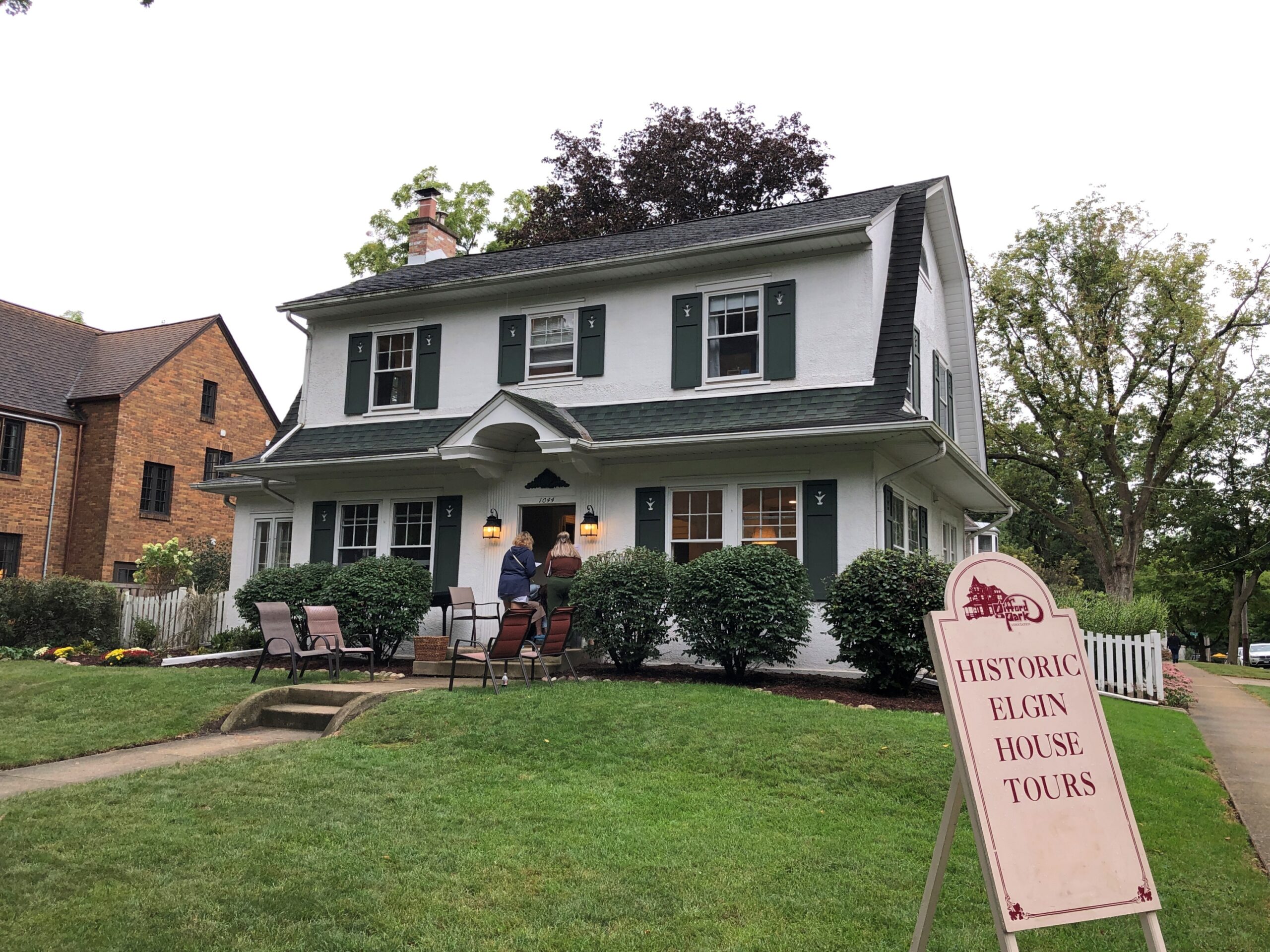
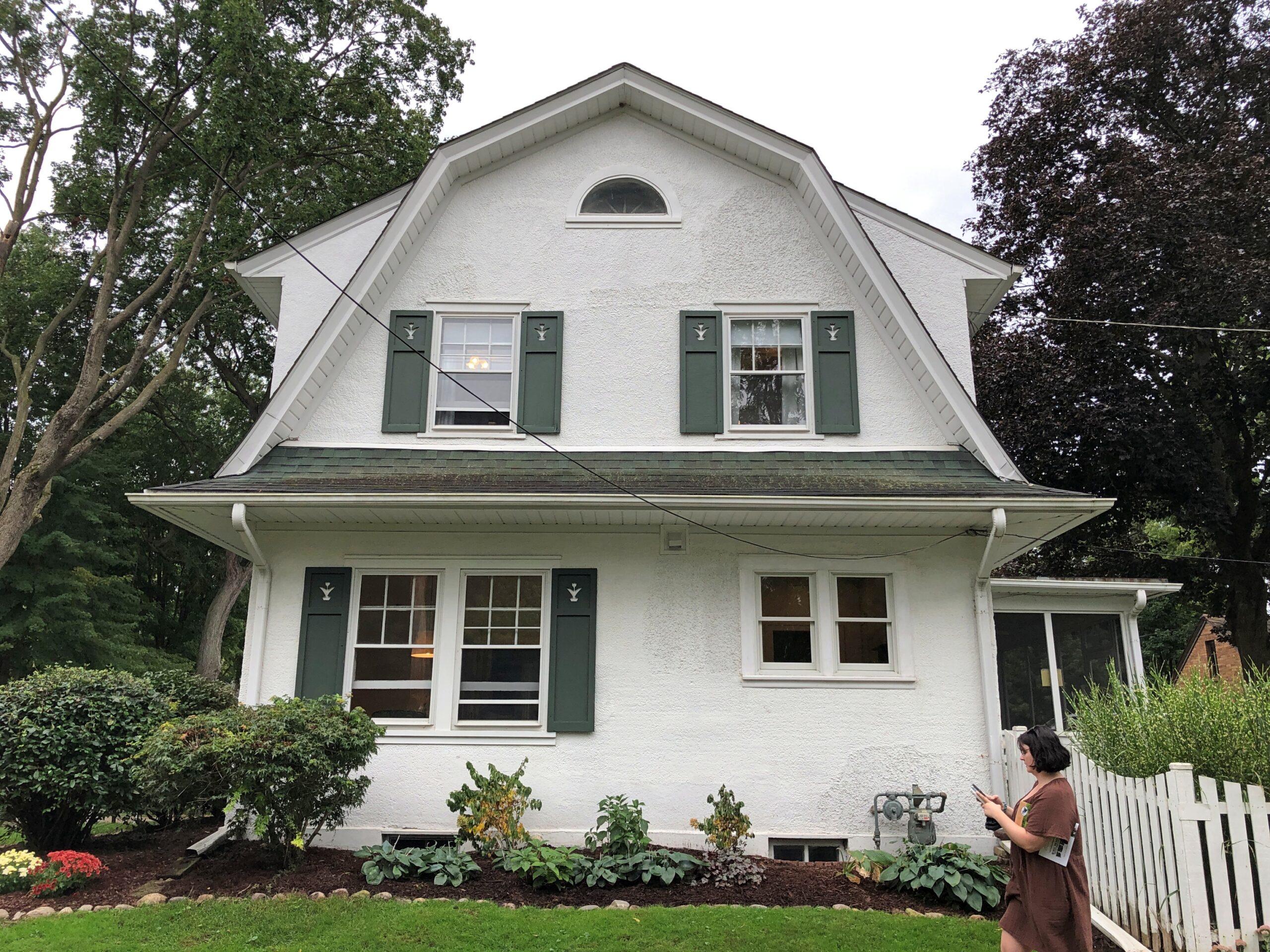
1044 Center St.
Dutch Colonial Revival, a fair way from New Netherland, both in space and time, but it does have a Dutch sort of shape.
Also tended for with great care by its current owners, only there a few years now, an architect husband and pastor wife.
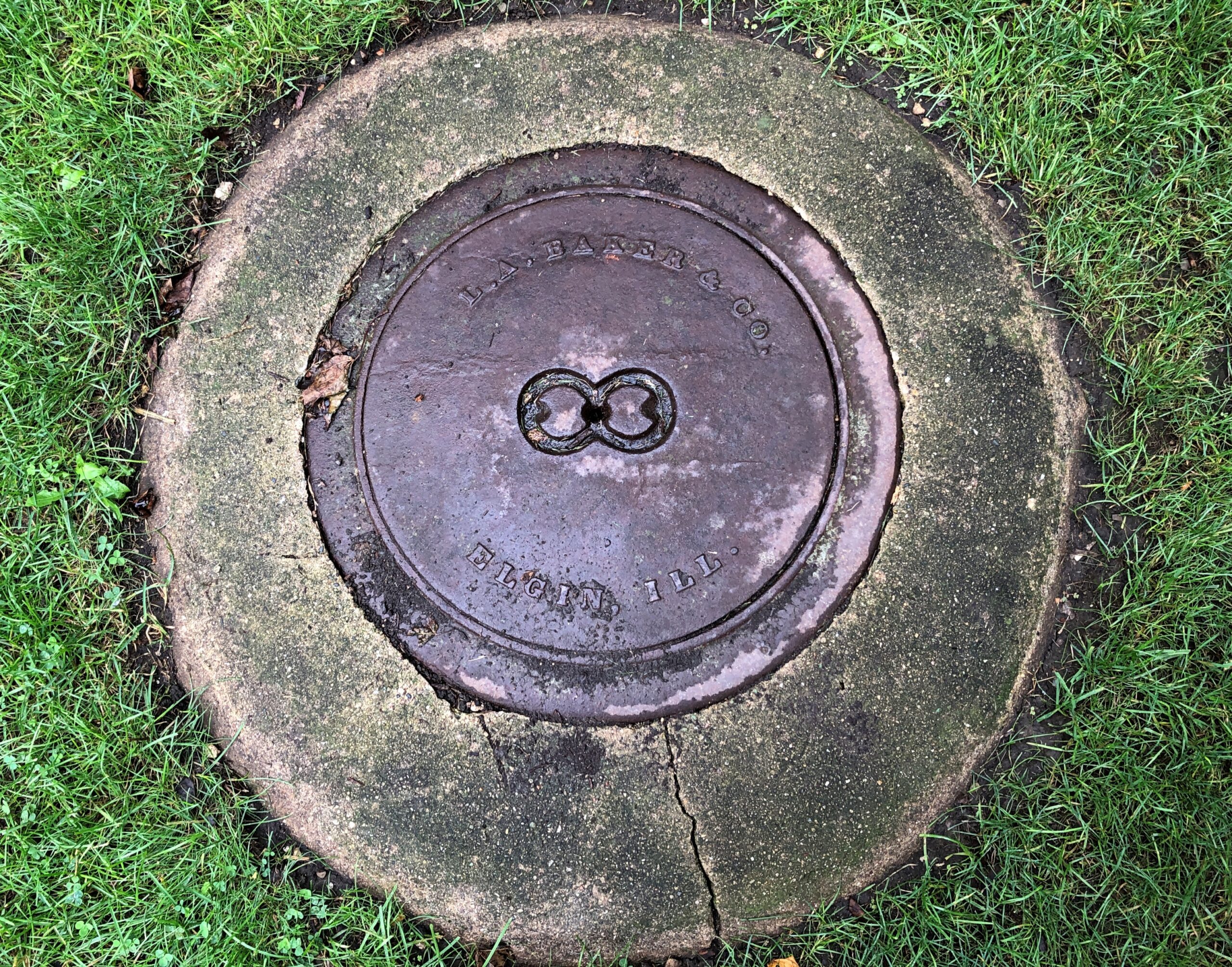
What’s this?
We had exited 1044 Center by way of a back door and the small backyard, partly taken up by a modest, but handsome garage. Near the sidewalk, but still on the property, was an iron disk embedded in concrete.
An enthusiastic docent, seeing us looking down at the object, told us from the screen porch not far away, “That’s a cistern. You know, to capture rain water,” she said. Adding, “They were ahead of their time. Something we should all be doing,” in a pleasant but authoritative voice.
L.A. Baker & Co., Elgin. Something else to look up. An AI search offered some reasonable but not-too-hard to figure out speculation, namely that the company was one of the ironmongers down near the Fox, when the valley was alive with manufacturing, and providing at least one non-bogus link to a newspaper of the 1890s mentioning the company. A short but not too shabby Google search doesn’t turn up much. I expect his name lingers here and there in local legacy ironwork, and is seldom noticed.
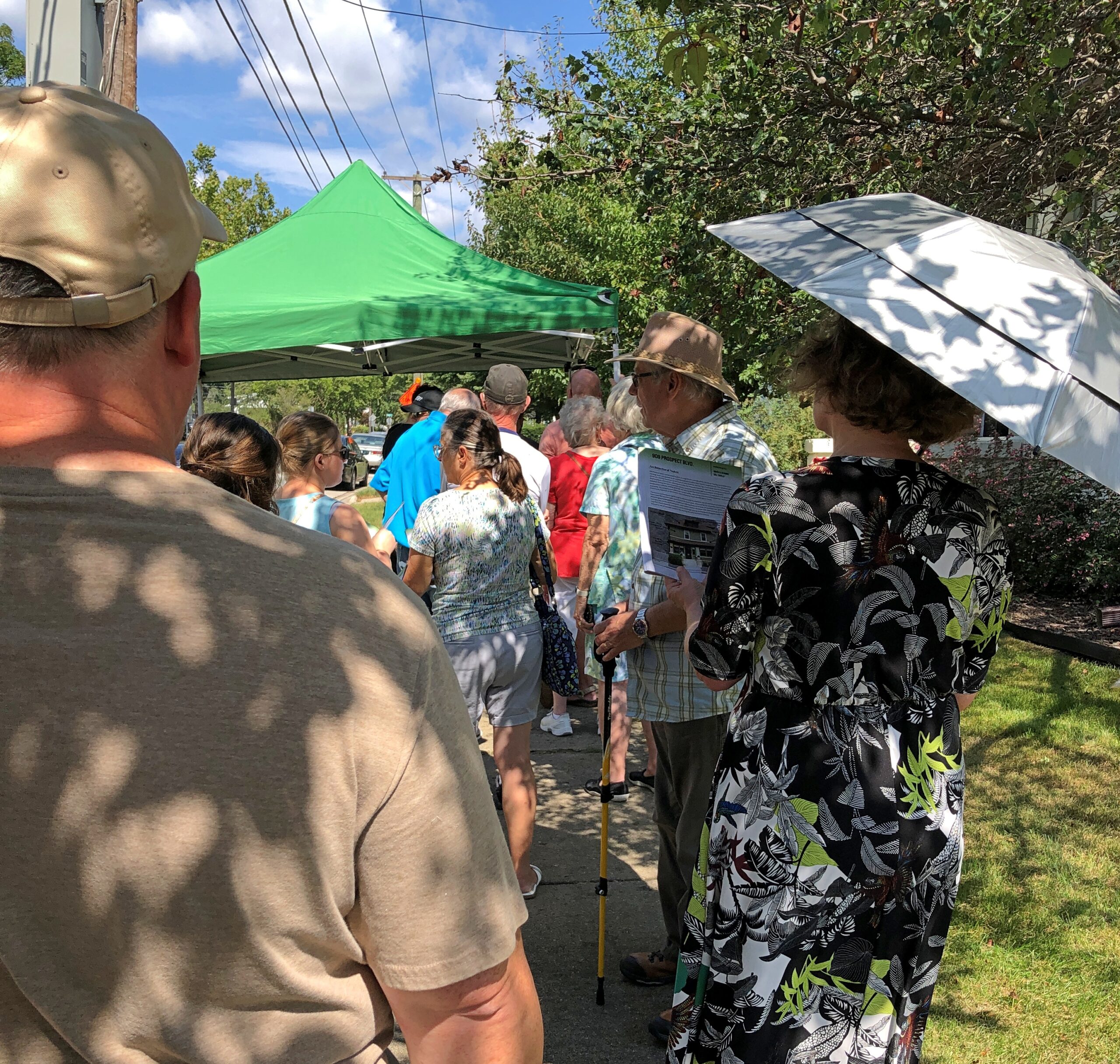
Saturday was pretty warm as we waited in line in Elgin. More than one outdoor line, in the course of the afternoon. Not dangerously hot, just a touch sweaty. We’d arrived for the Historic Elgin House Tour. We didn’t have to wait more than 15 or 20 minutes to get into each of the houses. Not a crush of people, but a healthy number for a niche interest.
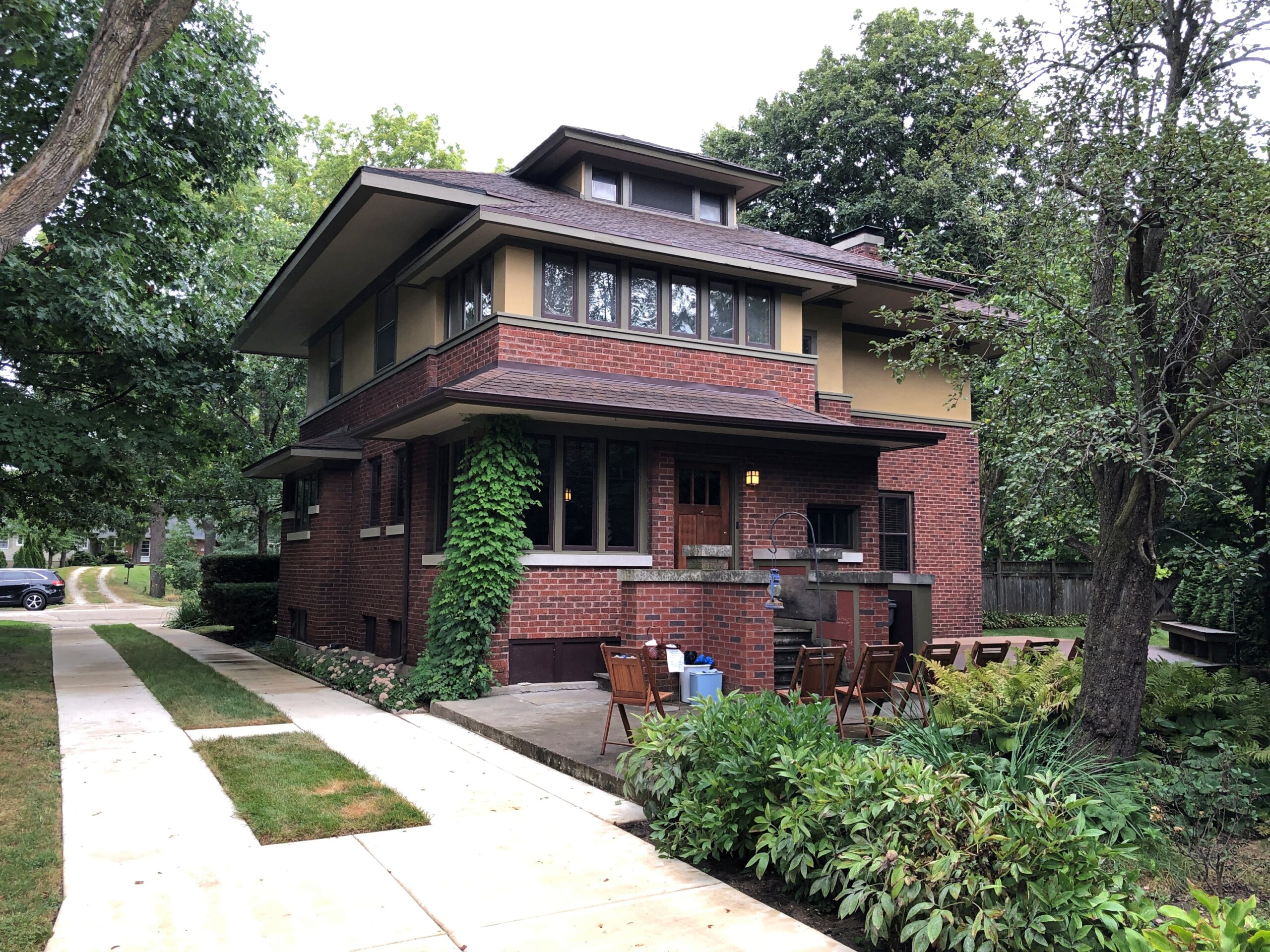
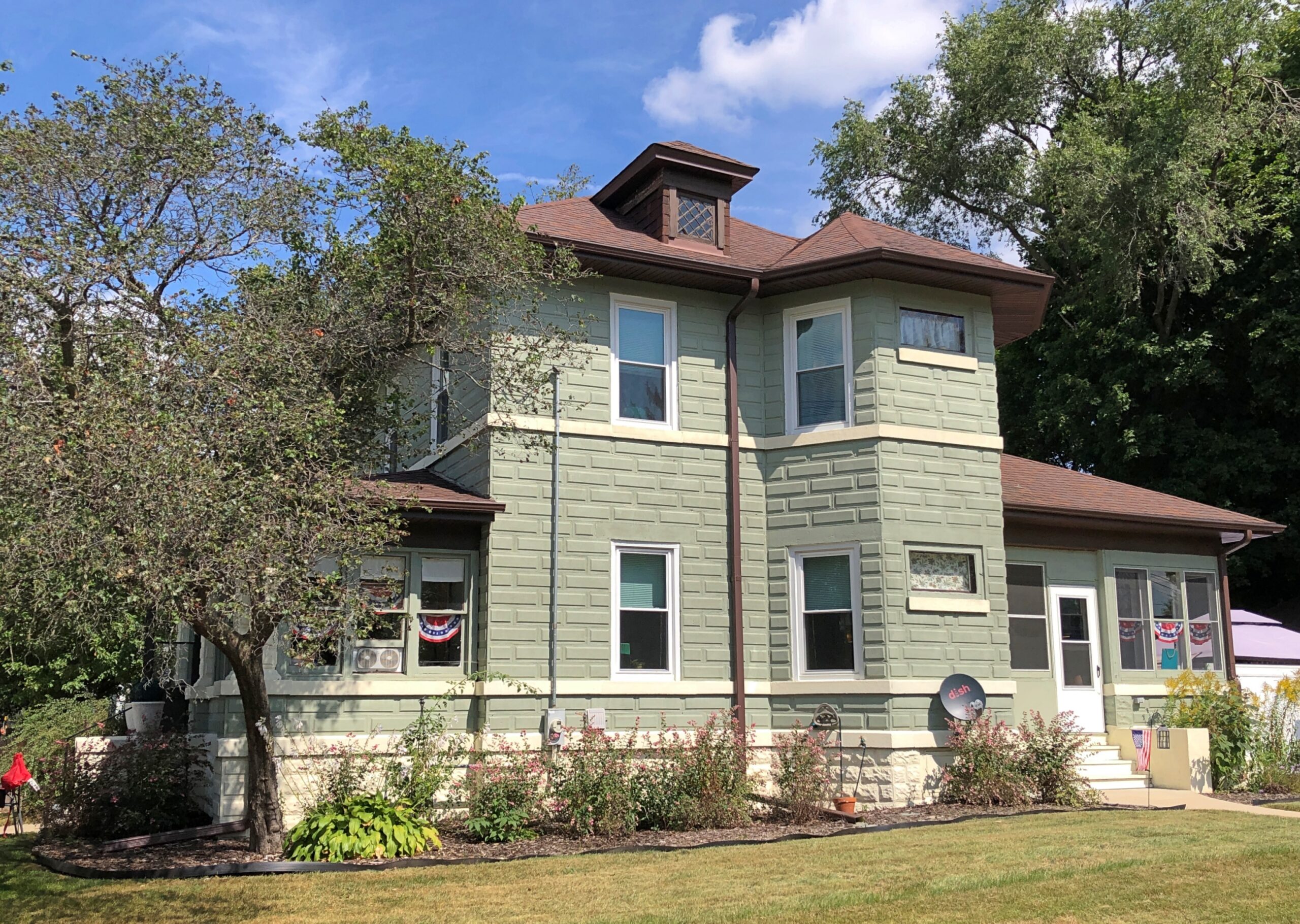
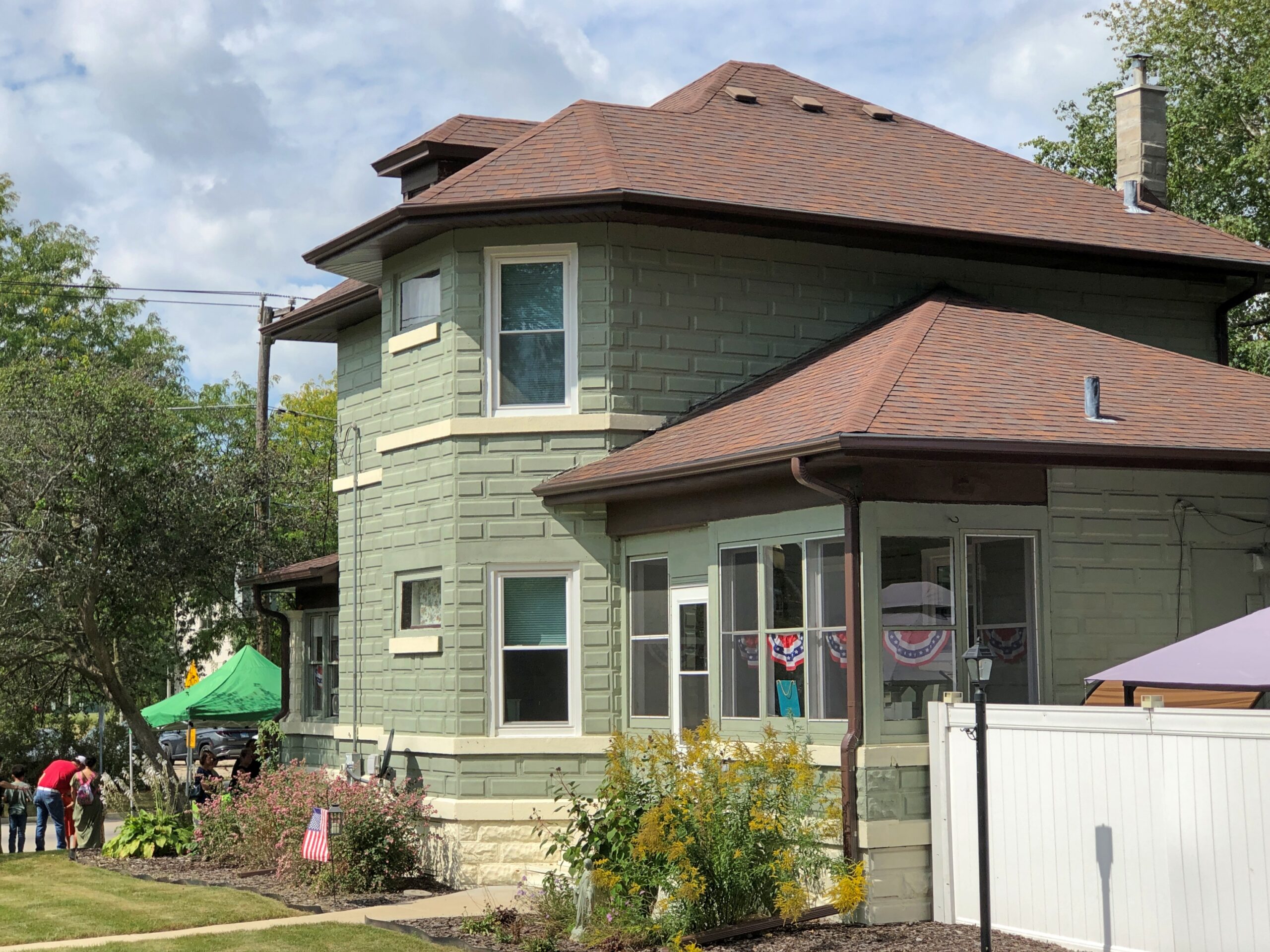
Think “concrete blocks” and the first thing you think of probably isn’t a good-looking house made from them. But there it was, the first house we visited on the last weekend: 909 Prospect Blvd. in that town. “A significant example of the American Foursquare architectural typology,” our informative guide booklet says.
Once upon a time – in 1912, to be exact – one John McBride owned the Elgin Concrete & Structural Co., and what better way to expand your market than build a handsome house from concrete blocks? To show what could be done.
Do a Google image search for “concrete block house” and all too many of them are concrete gray. The color associated with sterile, ugly places. I understand there might be other issues with concrete block construction, ones to do with insulation or other features I’m not qualified to comment on, but concrete gray just might be one reason concrete block houses aren’t so common in North America. Doesn’t have to be that way. John McBride could produce pleasantly green concrete blocks, in a pleasing array, a step above featureless rectangles glued together, and he could do that more than a century ago.
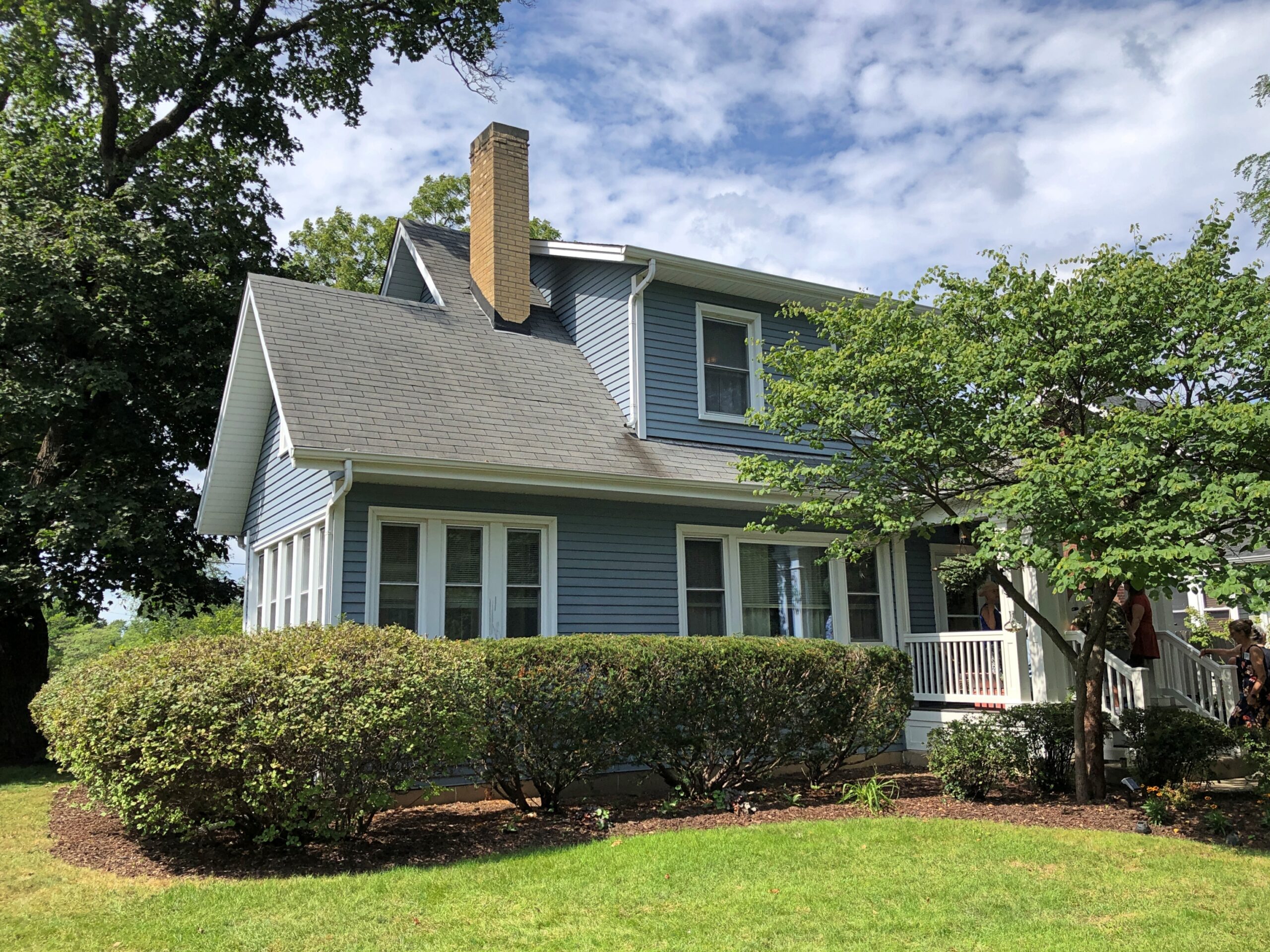
The next house was just down the street: 840 Prospect.
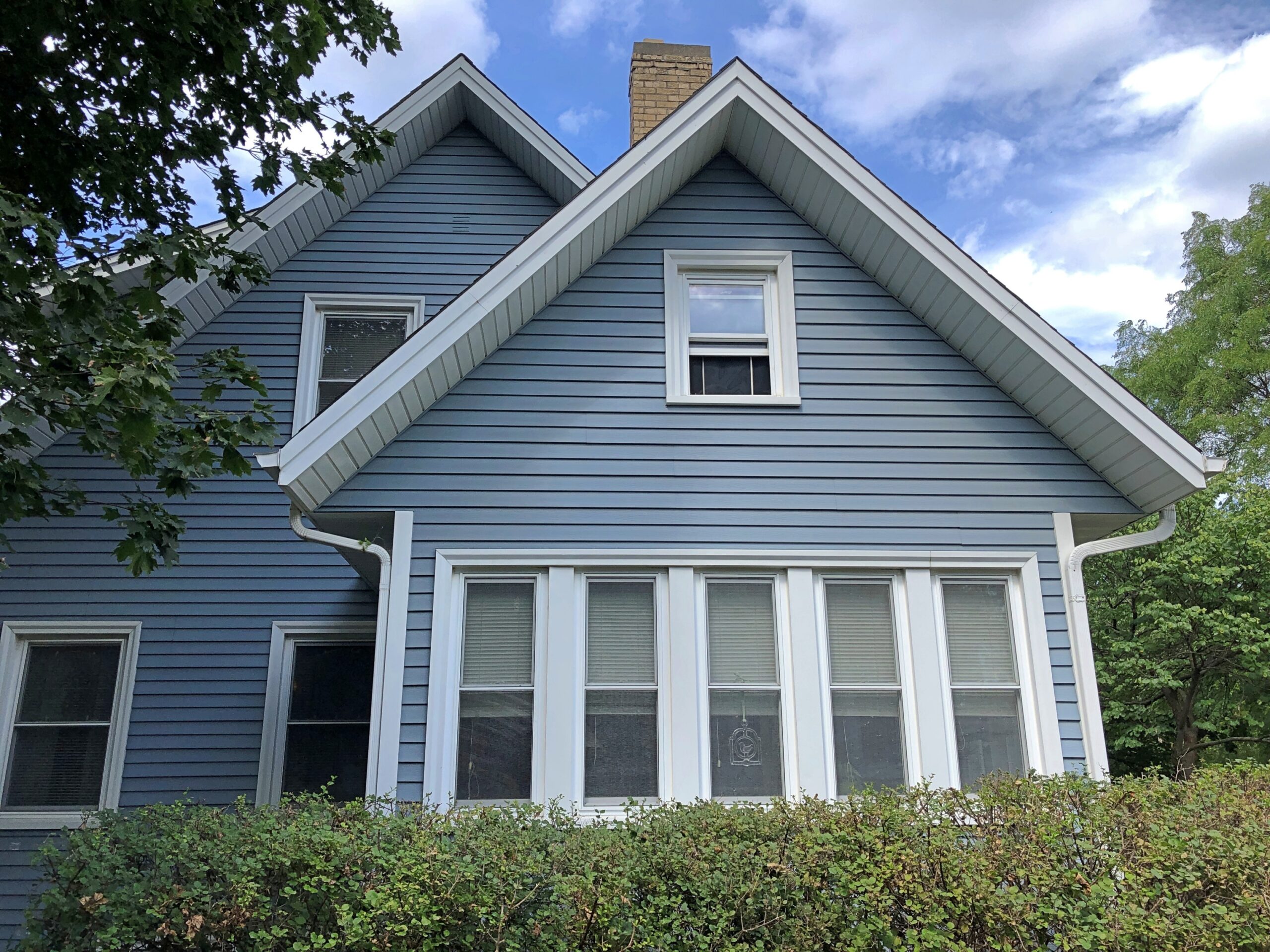
An “eclectic interpretation of Colonial Revival,” the booklet says. Just as handsome, in its way, as the concrete structure nearby. In keeping with the history of the neighborhood, whose anchor used to be Sherman Hospital, the docents explained that a long-time owner was a staff anesthesiologist who sold it to the hospital in 1986 when he retired, and when the hospital was looking to expand, razing some of the nearby houses. The hospital facilities were already long in the tooth in the 1980s.
The booklet says the hospital acquired the house in 1959 and implied the residence was a benefit of employment for the anesthesiologist. But anyway, a Sherman doctor lived there for three decades or so. A number of the other houses in the neighborhood were occupied by doctors or other hospital employees, and fortunately the hospital never got around to razing any of the neighborhood, but decided to build new elsewhere.
Part of the rules of the tour specified no interior photography. I can say that all the houses were to House Beautiful standards, if not quite that style: elegant or at least good-looking space, well adorned with handsome furniture and artwork and smaller household objects, yet definitely not cluttered. Still, each of them had clearly personal touches, such as photos of ancestors or children’s art, and were better living spaces for it.
How about a tour of an architecturally interesting, yet cluttered spaces? Don’t tell me there aren’t any. I’d pay money for that, too.
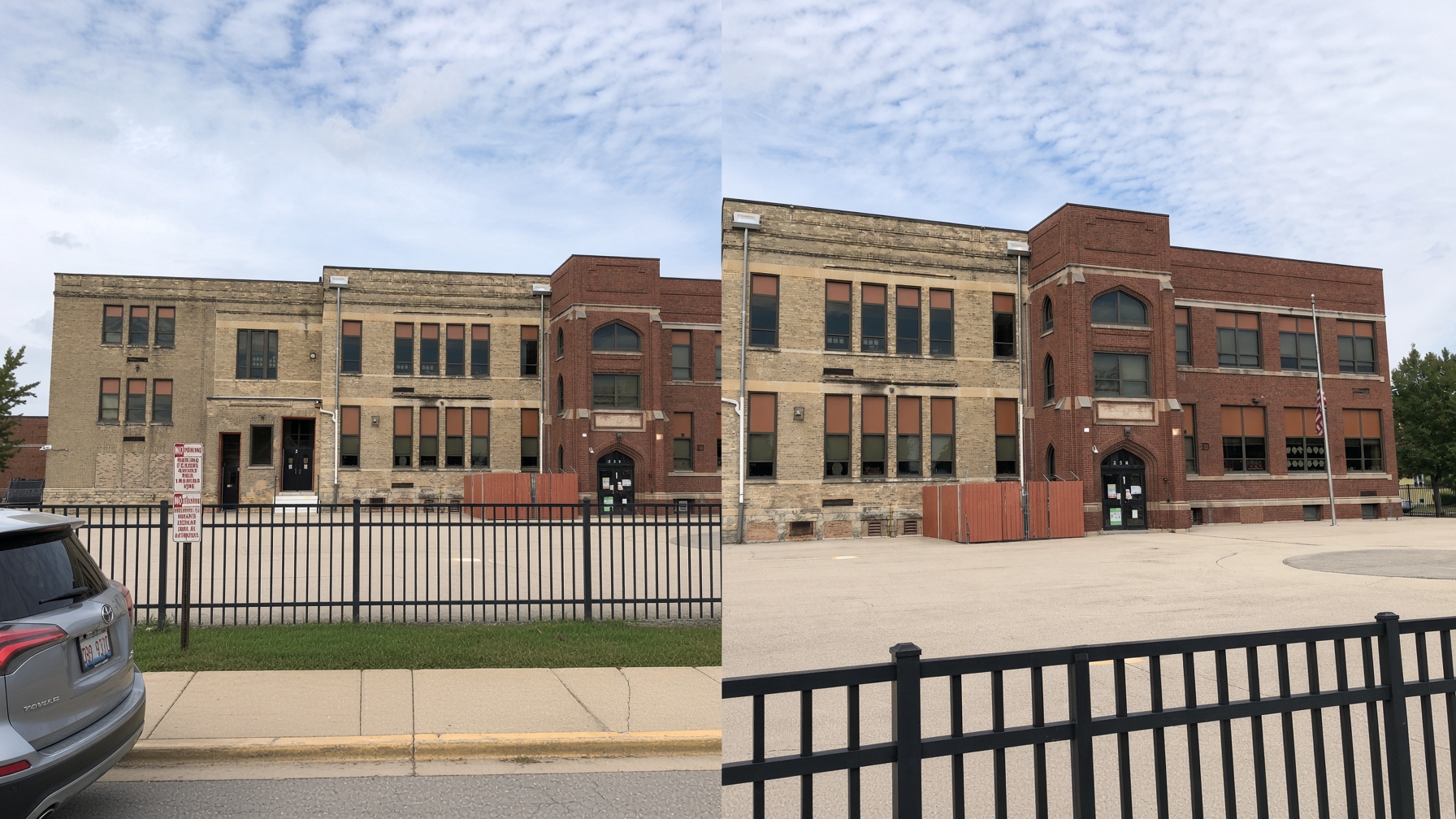
The first place we actually went that day was McKinley Elementary School, where you checked in and received the well-designed and informative physical booklet. Maybe it costs extra, but no phone-based guide could be as useful, because the format is so handy. The school beats the neighborhood houses we saw for age, with the original structure built in 1886 as Prospect Street School. Collegiate Gothic, the booklet calls it. (Huxley College is known for its Collegiate Gothic, I think.)
After the turn of the 20th century, there were additions, and the installation of modcons like electricity and indoor plumbing. Very soon after the turn of the century, it must have received its current name – in a nationwide spasm of school-, street- and other place-naming in honor of the slain president.
Still a school. The oldest continuously operating school building in Elgin, in fact, though I understand it will close in 2028 after a new school is completed not far away. I checked, and McKinley’s mascot is the Tigers. I’m sure they’re fond of their mascot. Still – what about the McKinley Gold Standards? Or if that’s too odd, the Goldbugs.
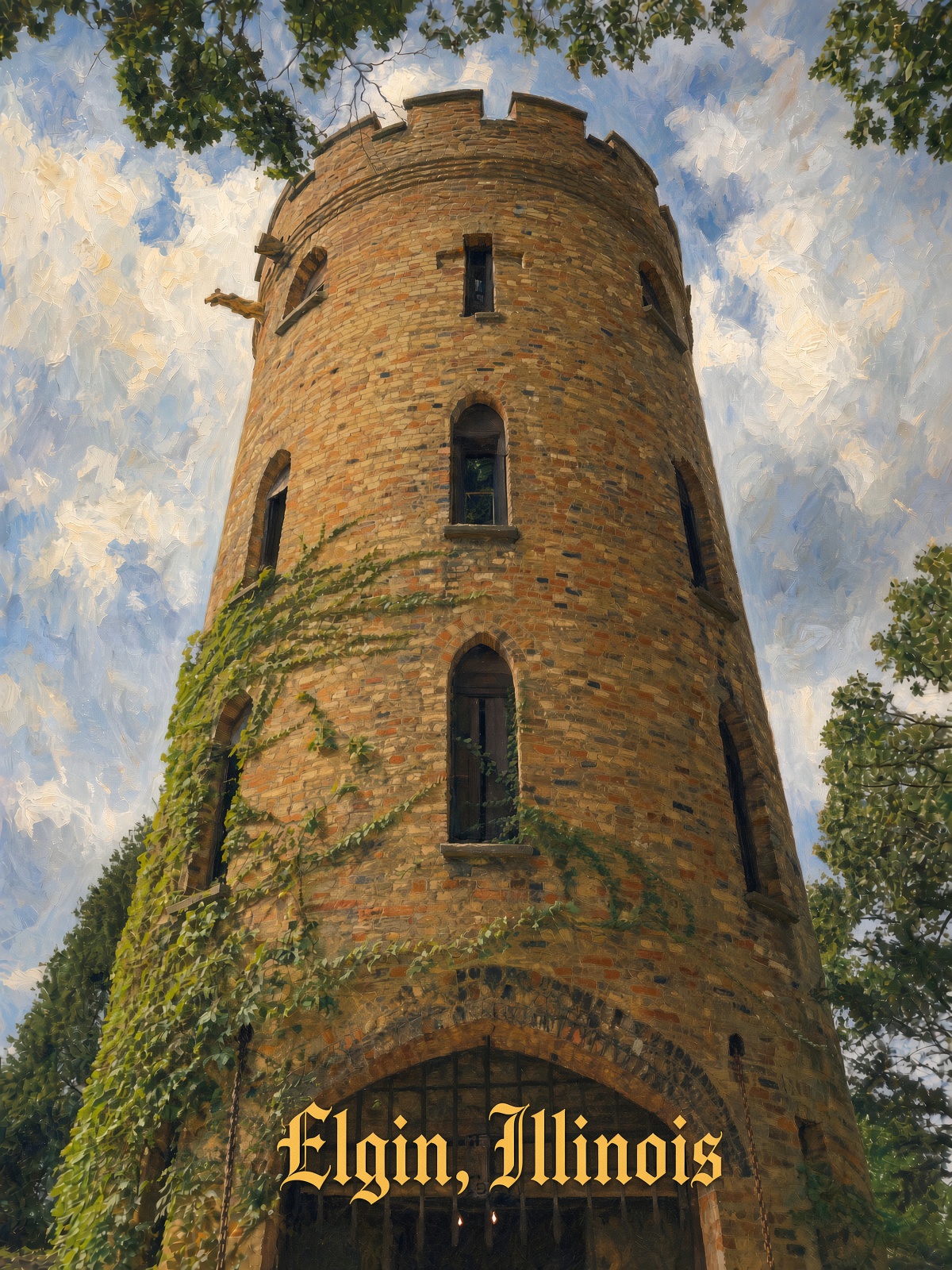
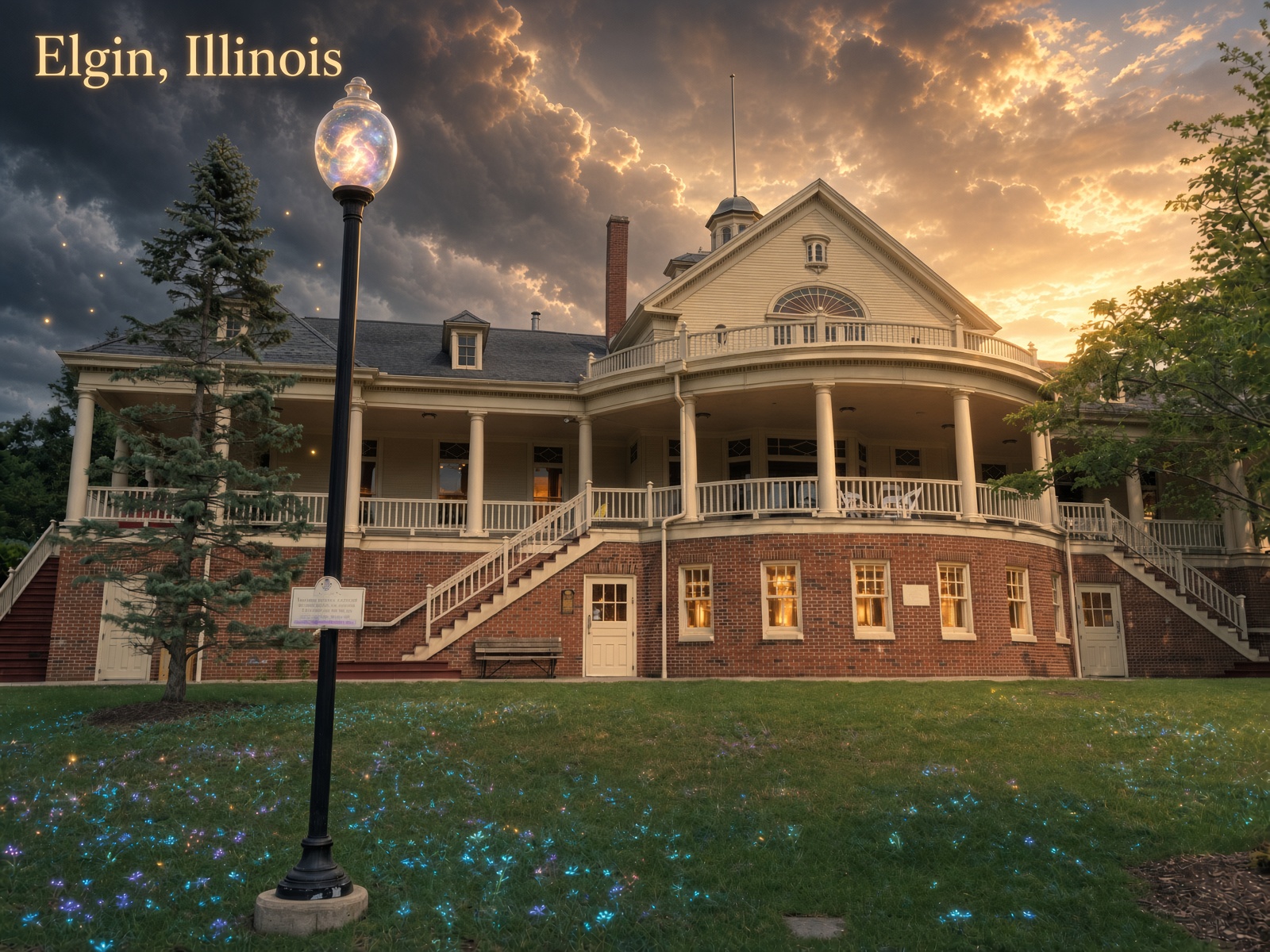
The backlash against AI is underway – or is it? – but when I think of images created like this, I think of them as illustrations. Both original and derivative at the same time, since the underlying image is photographic (original) while the AI adjustment only consults a body of existing images. I’d argue that it’s as valid as any other art form, just a difference in tools and a curious democratization of graphic design, but I’m not fluent enough in art-speak to make the case.
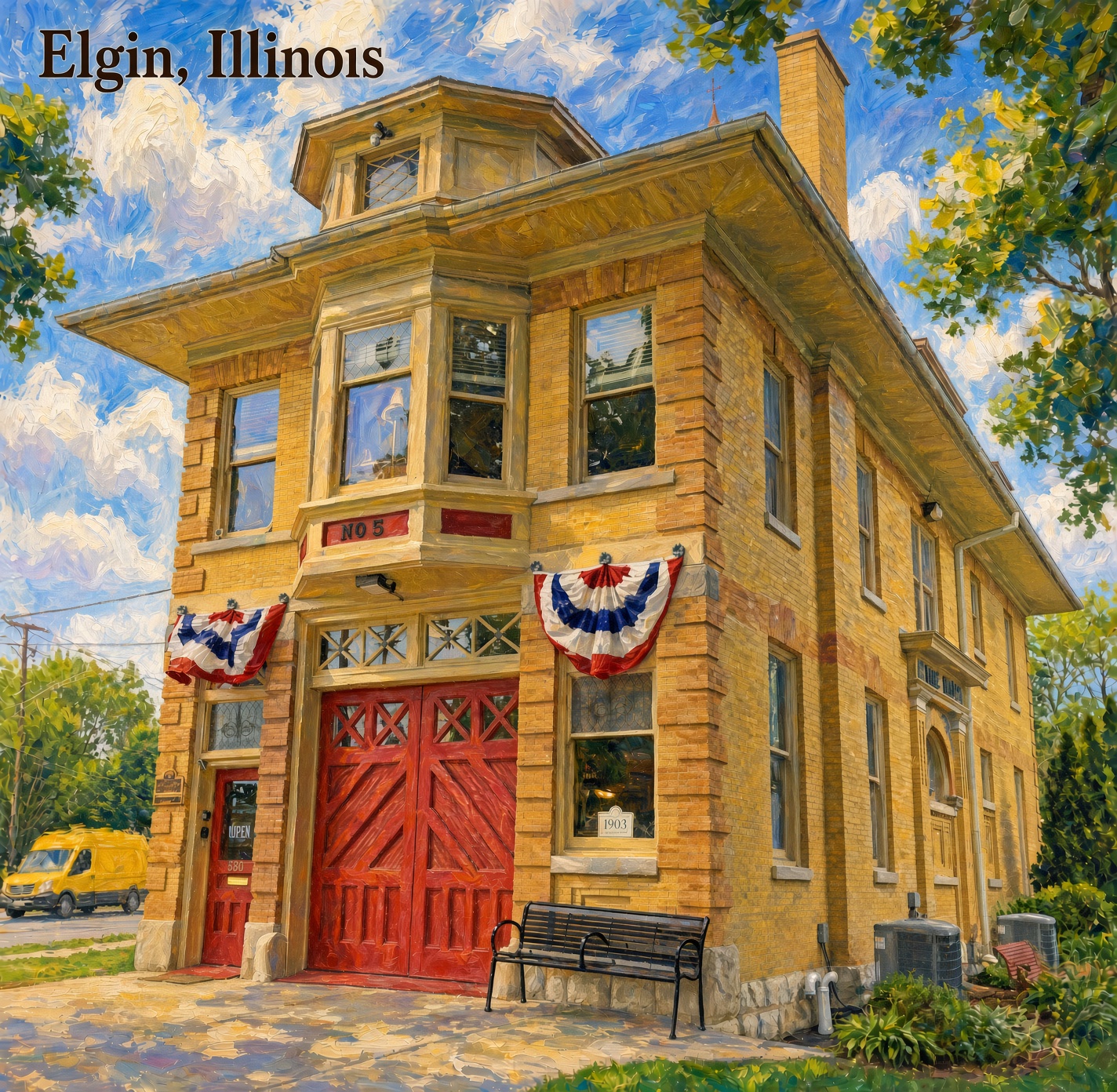
Somehow I feel that a series of place-images should be four, so here are three more. Like the first one, these are all based on photos, all in this case taken in Elgin by me within the last year or so.
That last image was taken near downtown, looking toward the bluff overlooking the west bank of the Fox. The windmill is not an AI hallucination.
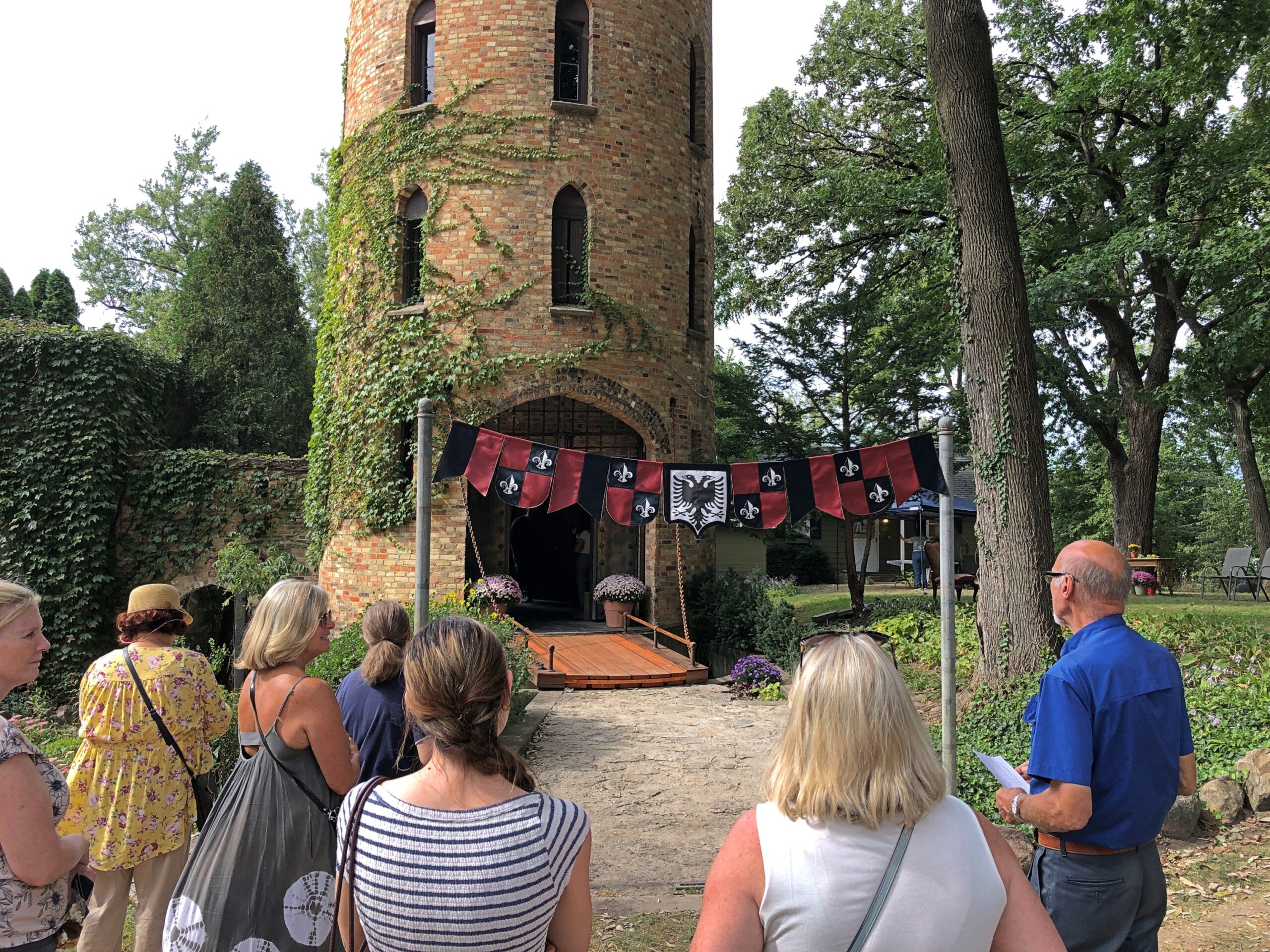
On Saturday we were among the first members of the general public to see the inside of Pratt’s Tower in Elgin, at least according to one of the docents, and no doubt he was right. But first we had to wait outside on the unpaved driveway. Even that vantage is usually off limits, but not this time.
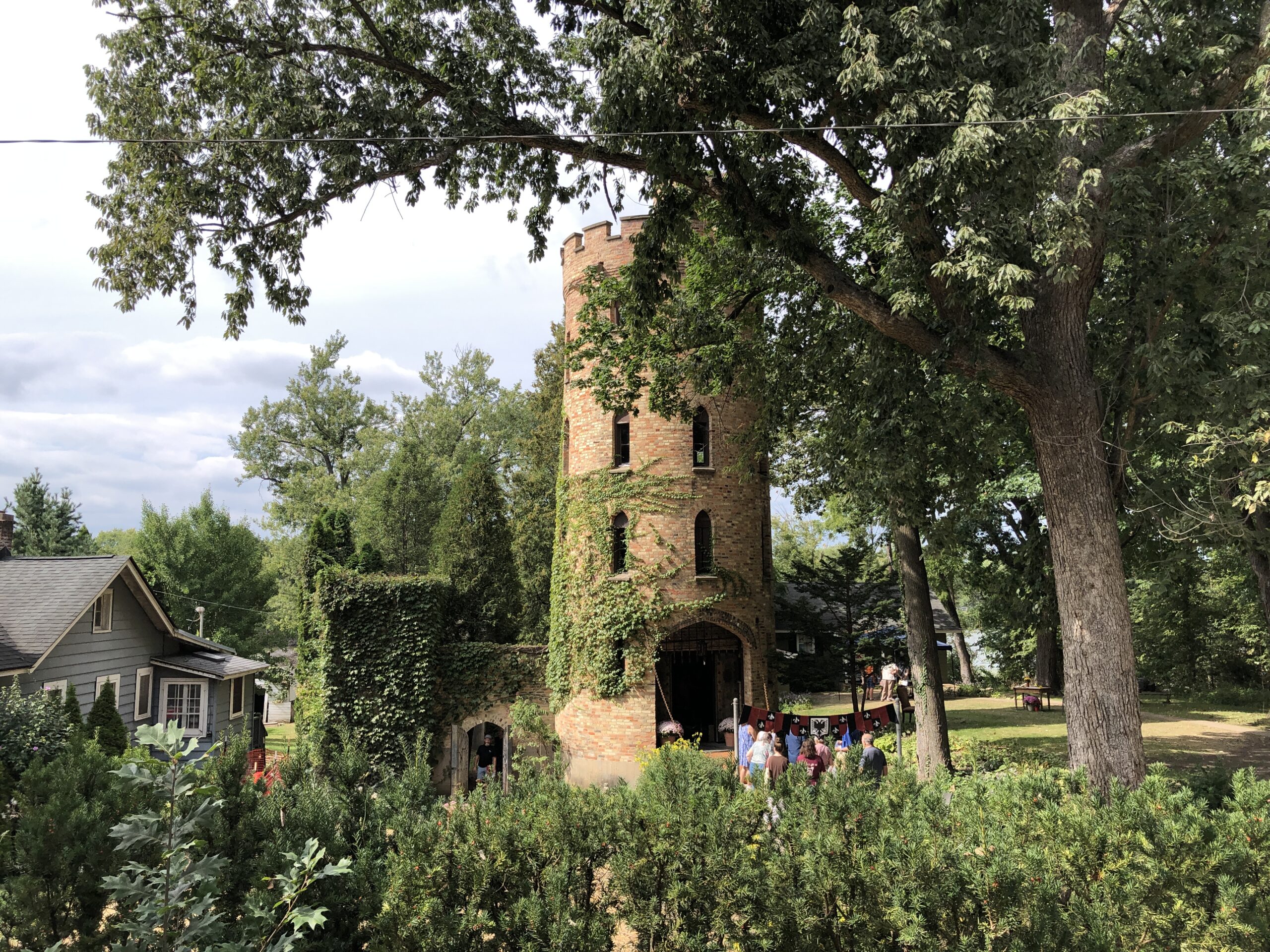
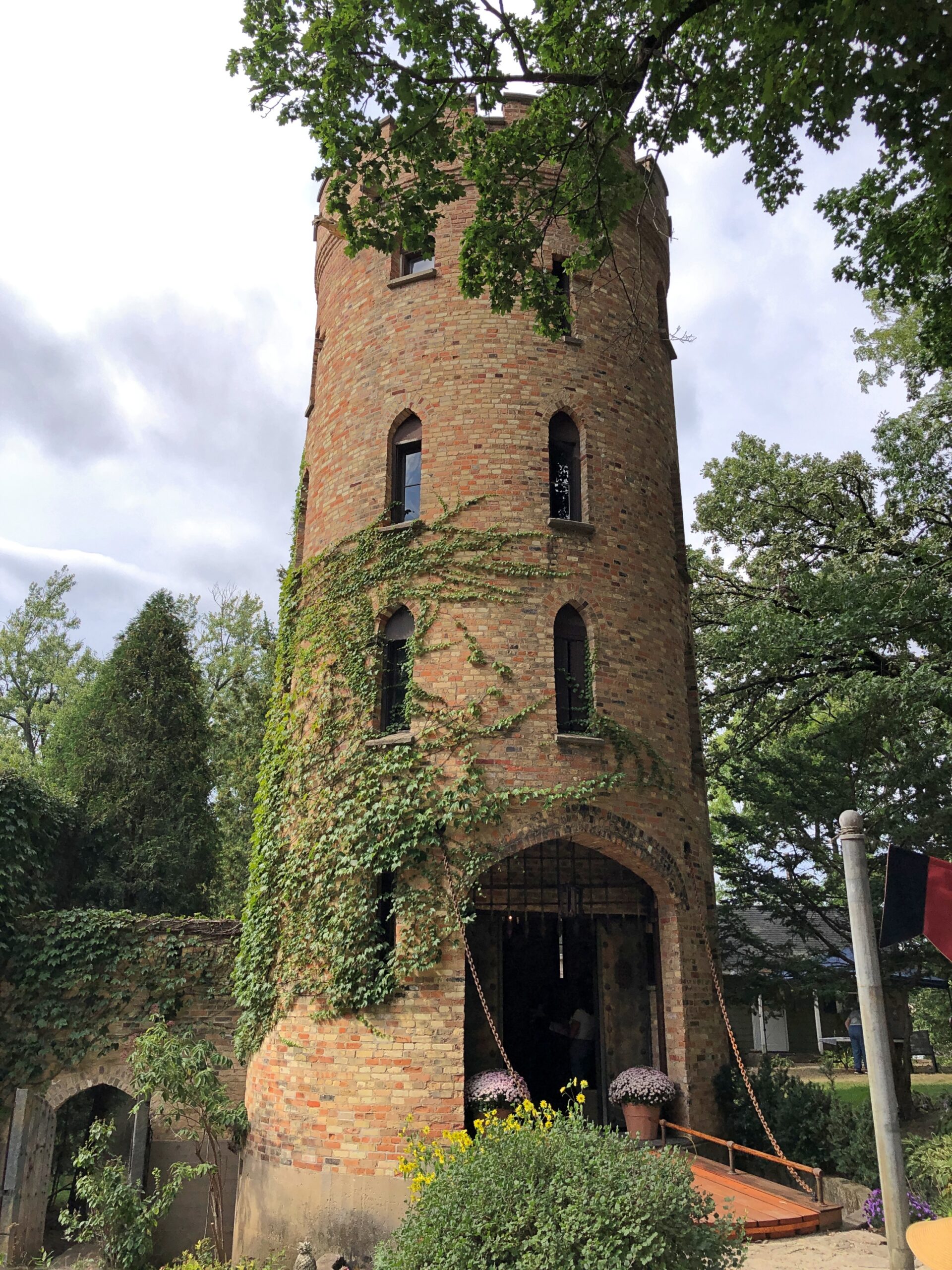
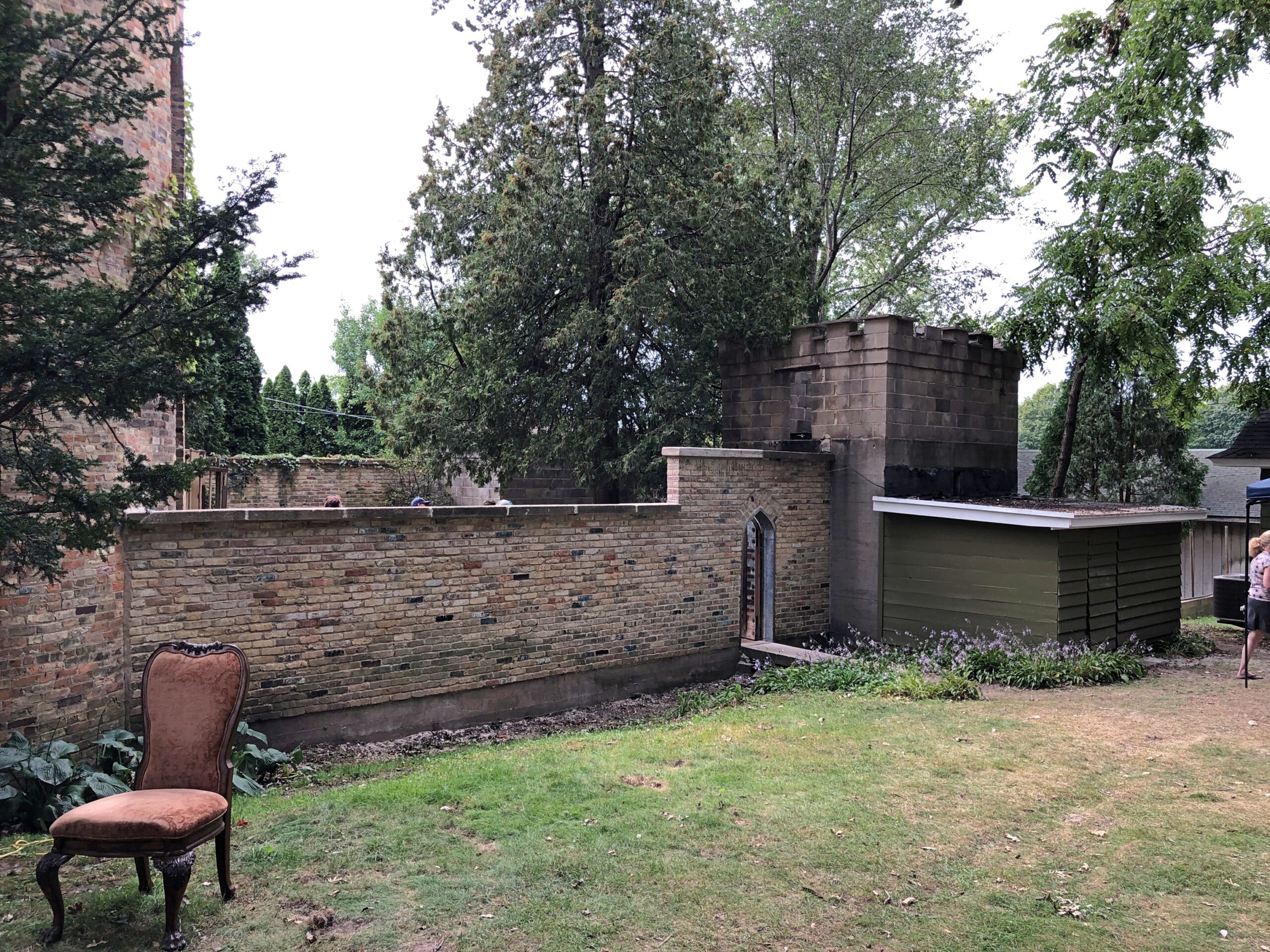
The castle is a towering structure between the Fox River Trail and the river itself.
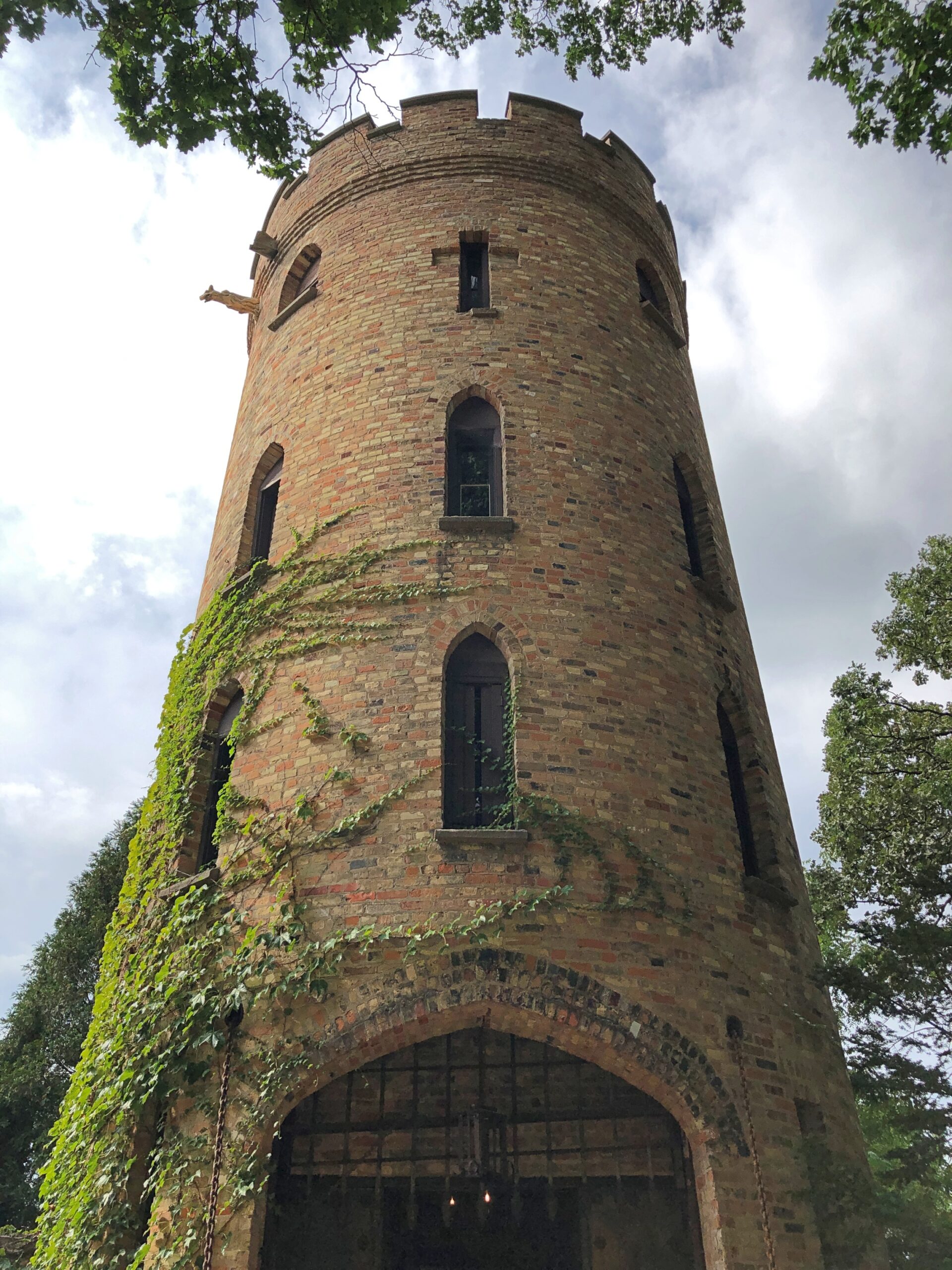
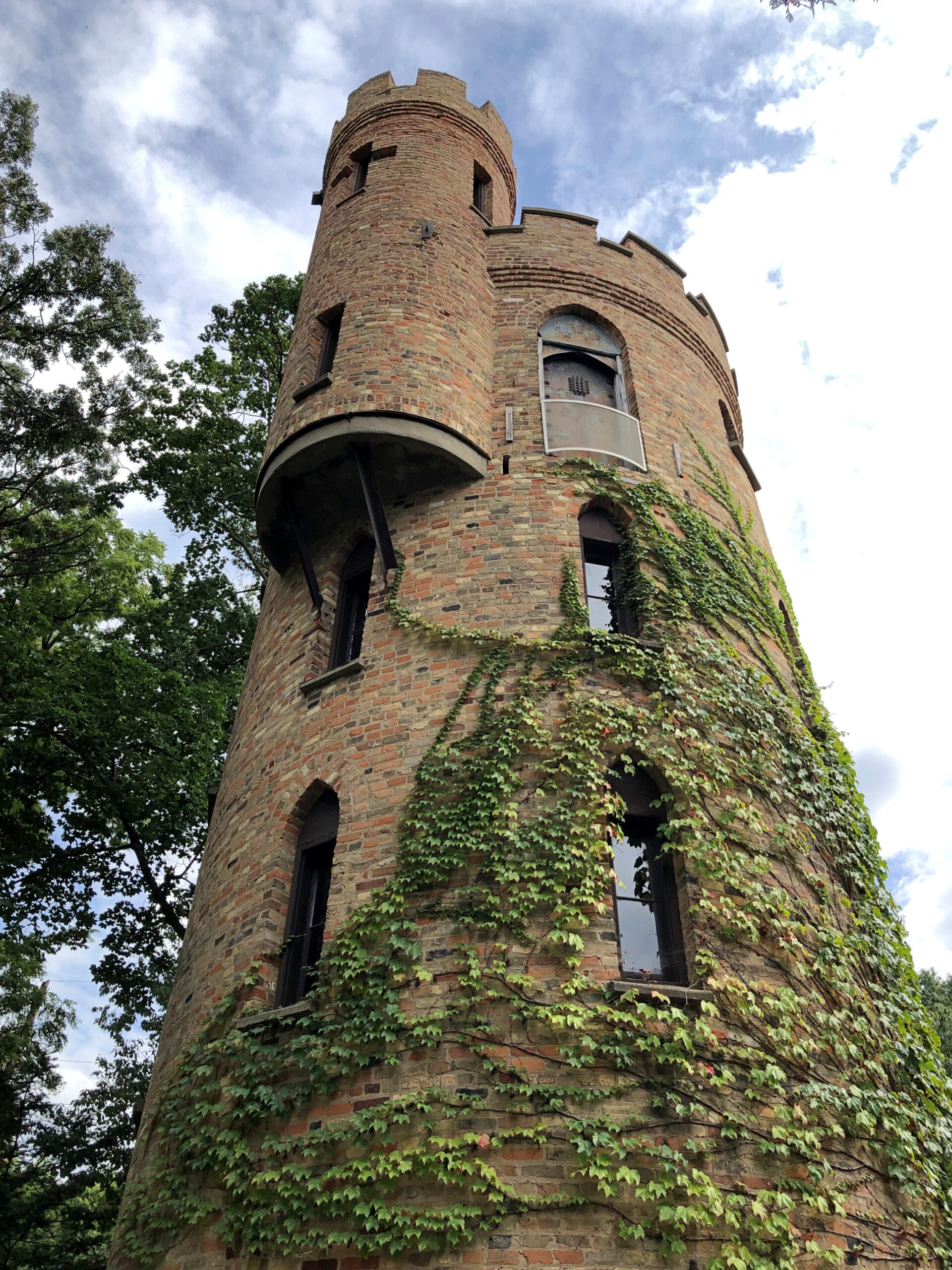
This time of the year, its 50-foot height is complemented by greenery, including a draping of ivy.
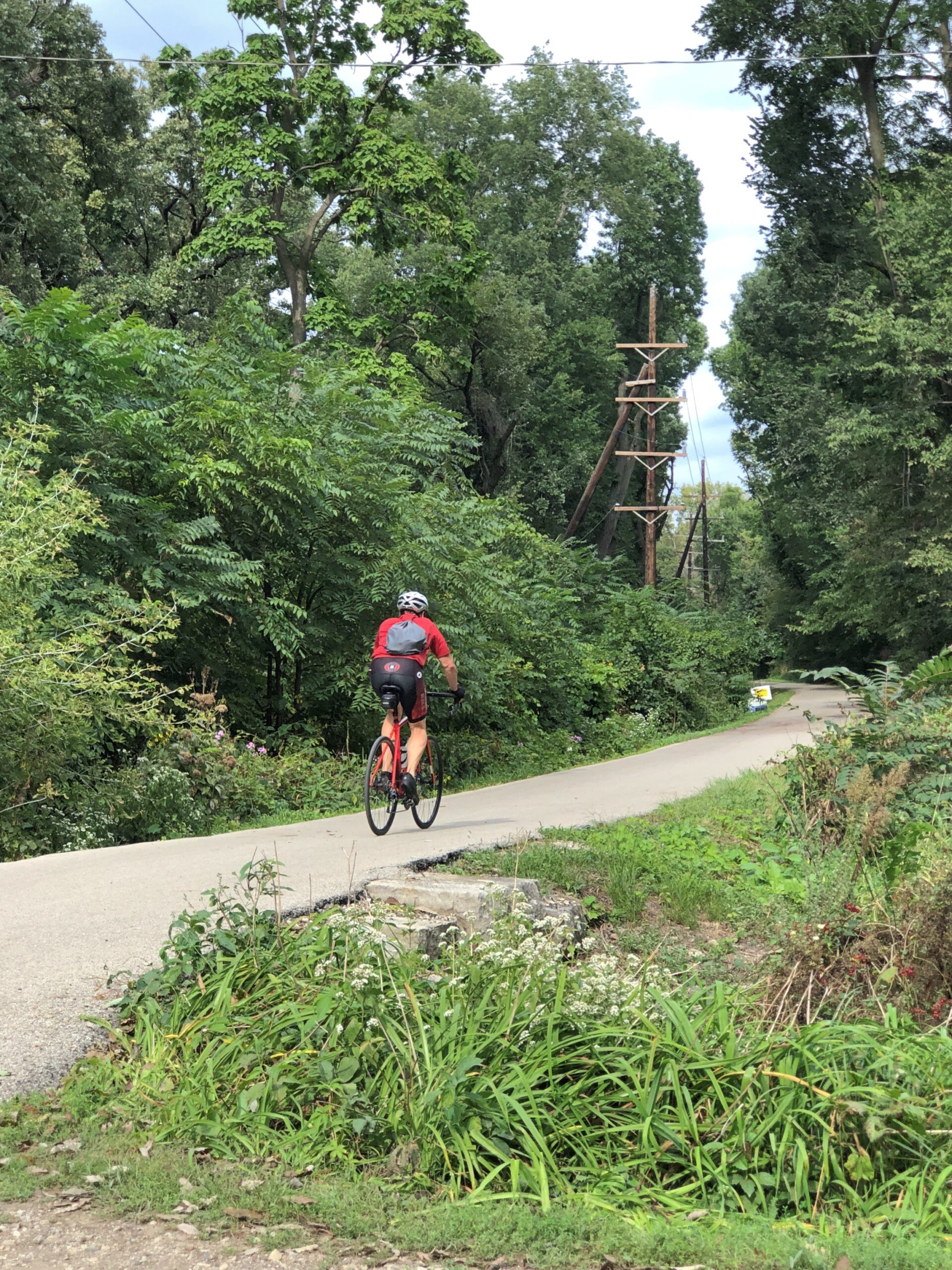
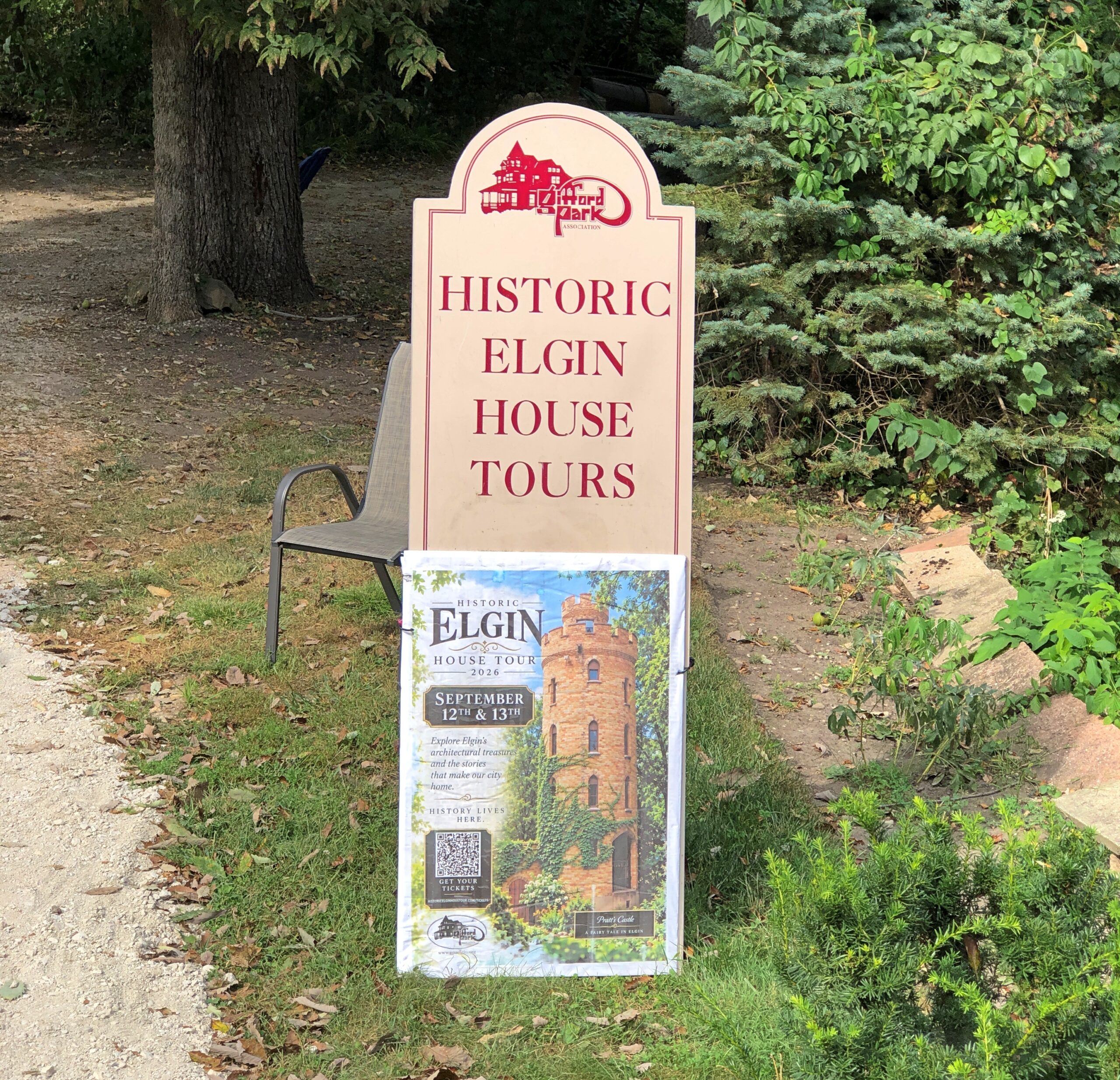
Not long ago I learned that Pratt’s Castle was part of the Historic Elgin House Tour, an annual event organized by the Gifford Park Association in Elgin. The tour operators thoughtfully provided a shuttle bus down the slope to the castle (and back up again), which can also be reached by the trail, still flush with green just ahead of fall.
A few months ago, I learned that the BTST posting of January 5, 2021 is persistently the second result of Google search for “Pratt’s Castle,” after Historic Elgin’s page on the subject. How that happened, I can’t say, since the ways of the Google algorithm are as a mysterious as the Sibylline Books. Still, I’m glad that I’ve been able to inform the few people who click through to my nattering about the castle, which I’m sure isn’t much known the further you go from Elgin.
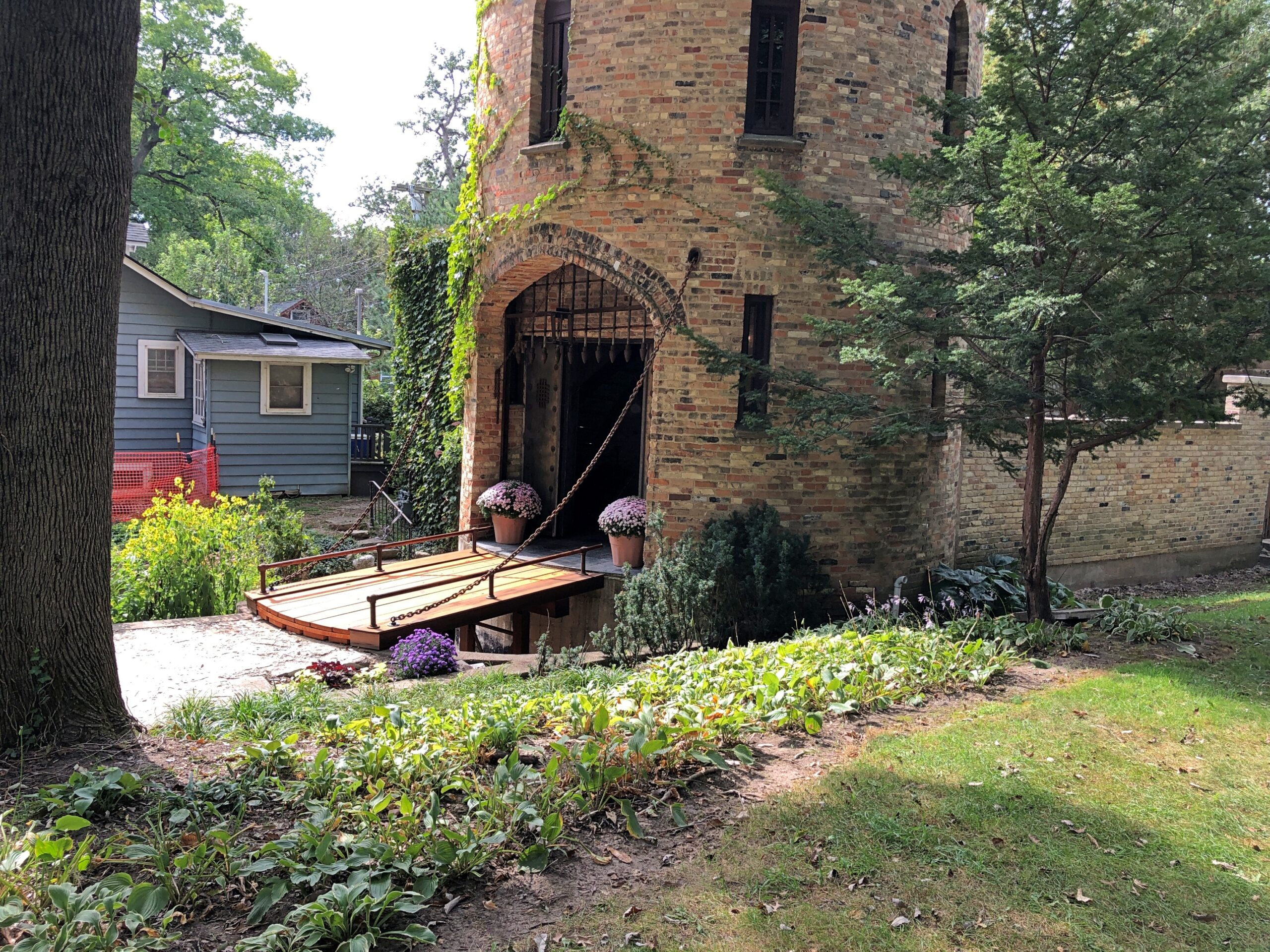
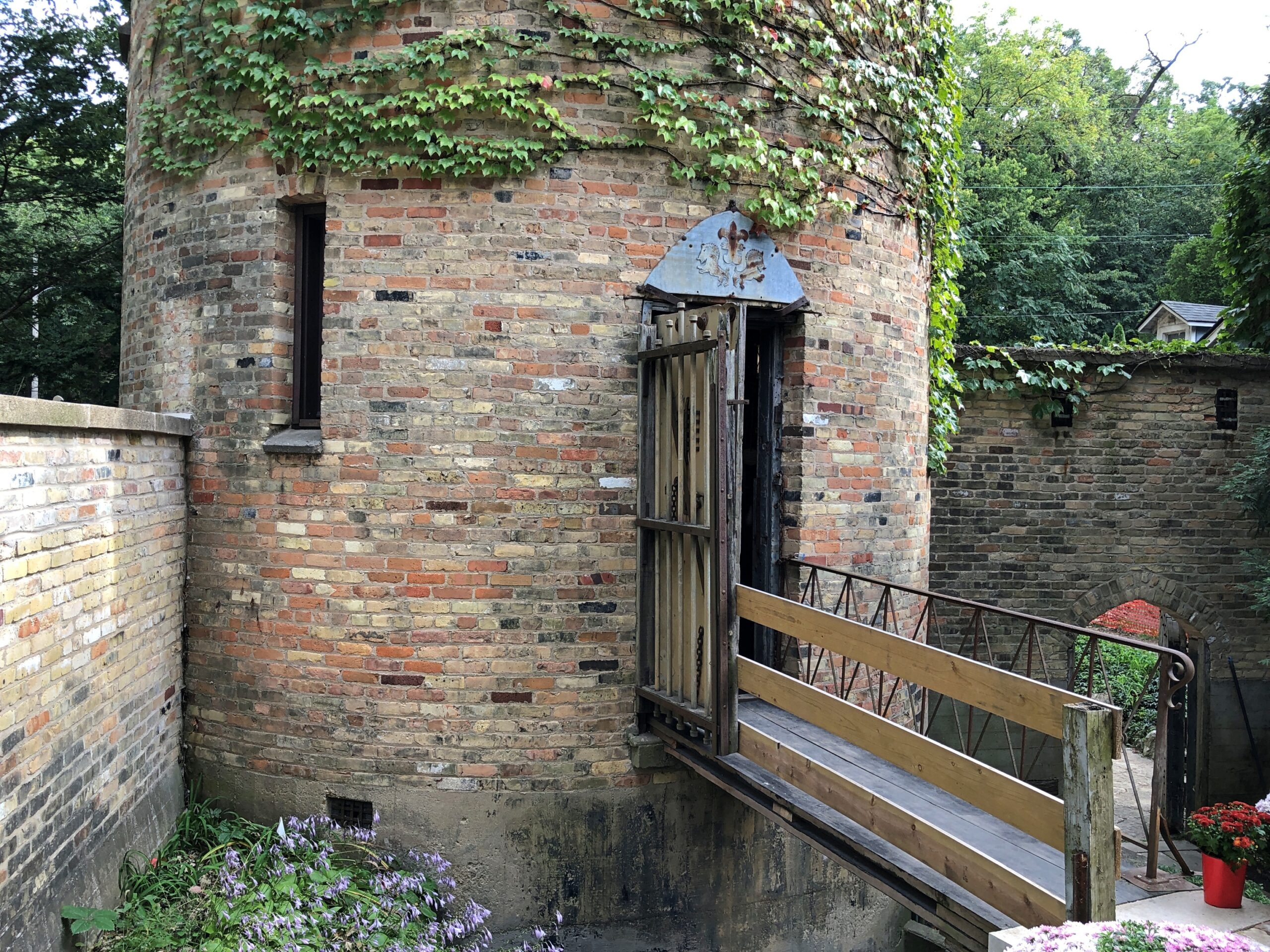
The entrance. Complete with a drawbridge and a portcullis. A docent told us that the drawbridge, a replacement for one that crumbled long ago, was completed just in time for the event.
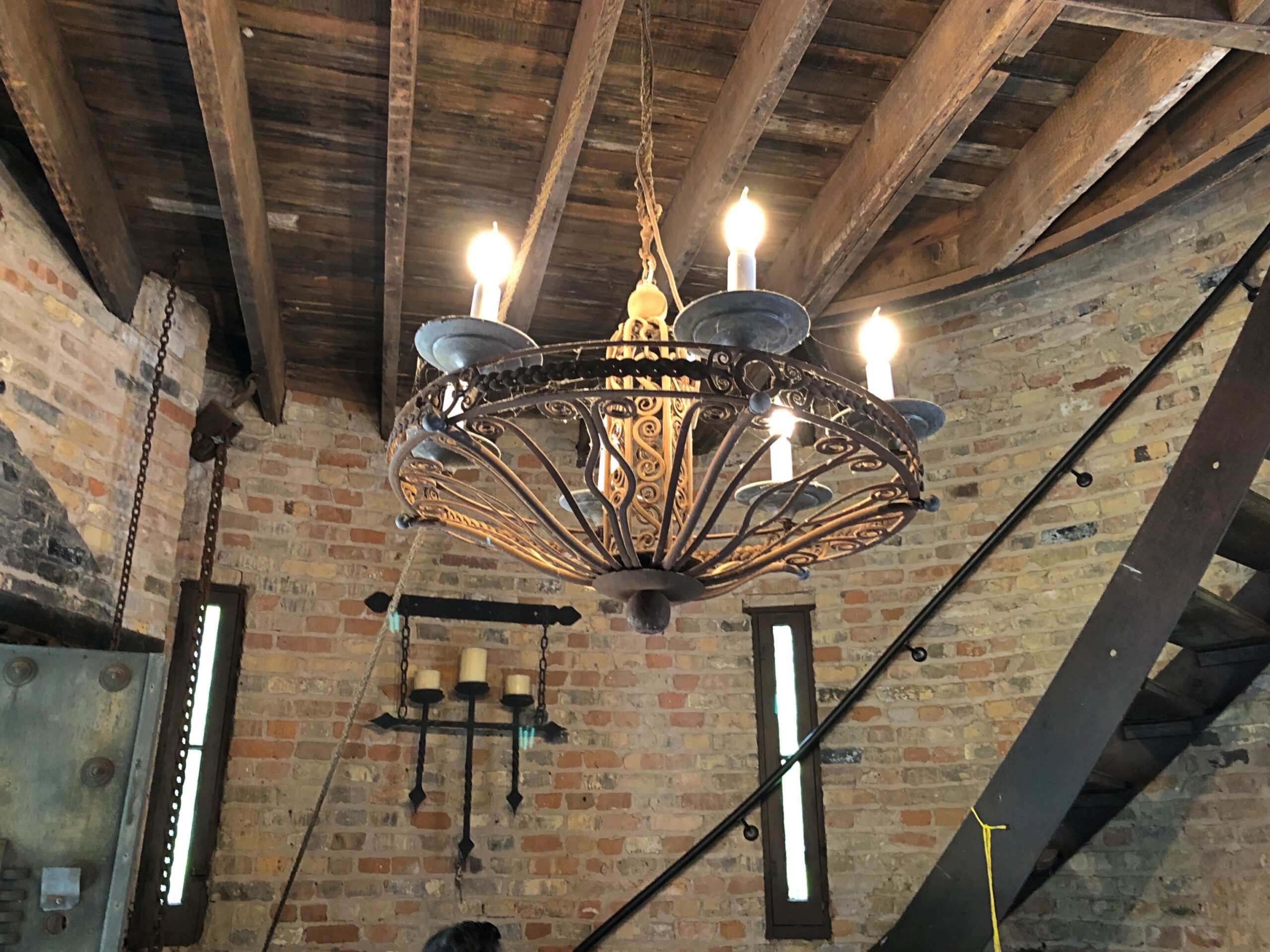
The only level accessible to tour-goers was the first floor. There are five levels all together, connected by winding stairs that have a handrail on the wall but, unfortunately, no balustrade. We were informed that the other floors were similar in design, and that the very top of the tower, a turret, is reached by a wooden ladder. No doubt there’s a terrific view of the Fox River Valley from that perch, but I can see why we couldn’t go up there.
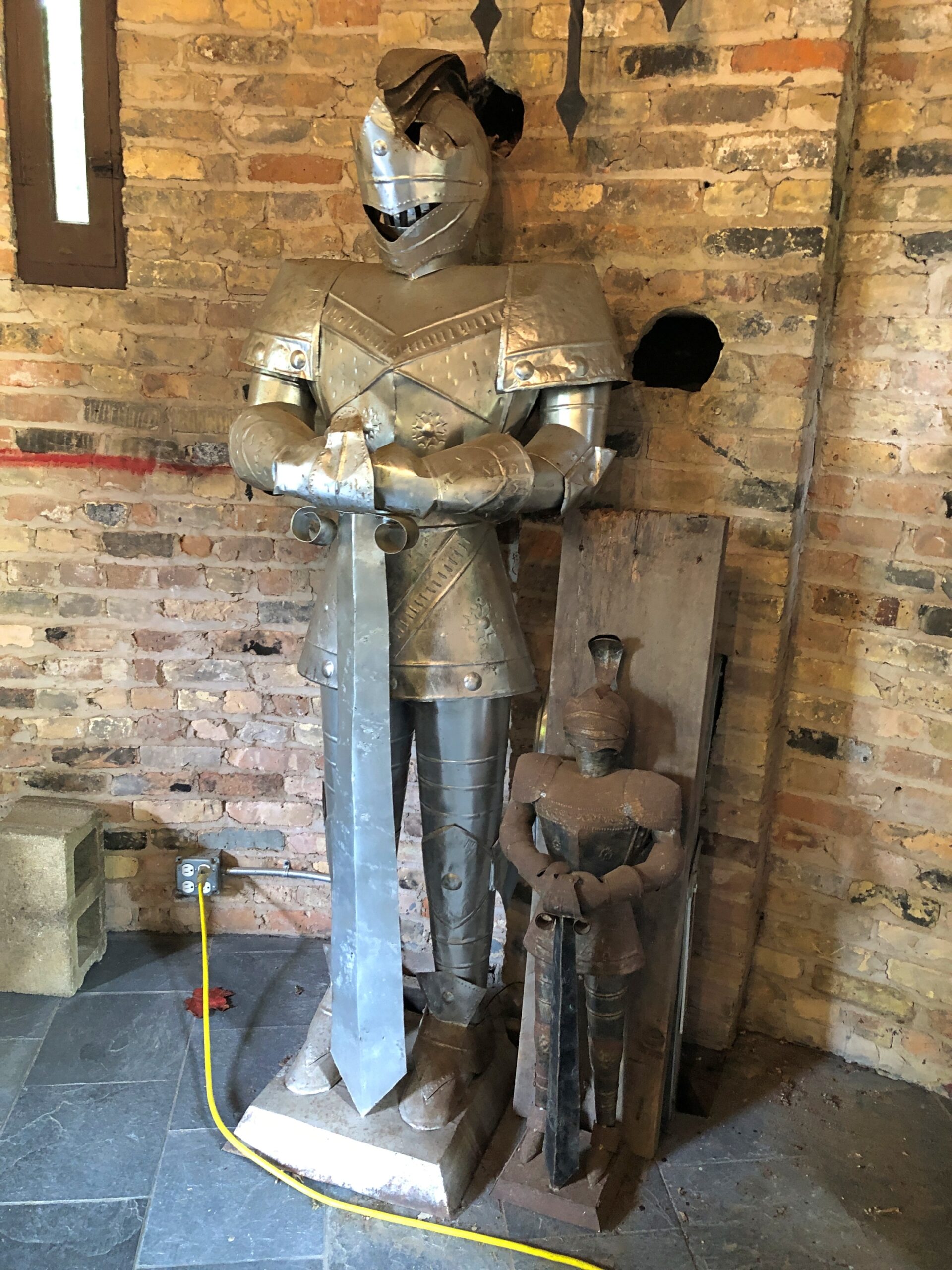
A nod to the long-gone collection of medieval artifacts that tower builder Harold Pratt used to keep in the tower.
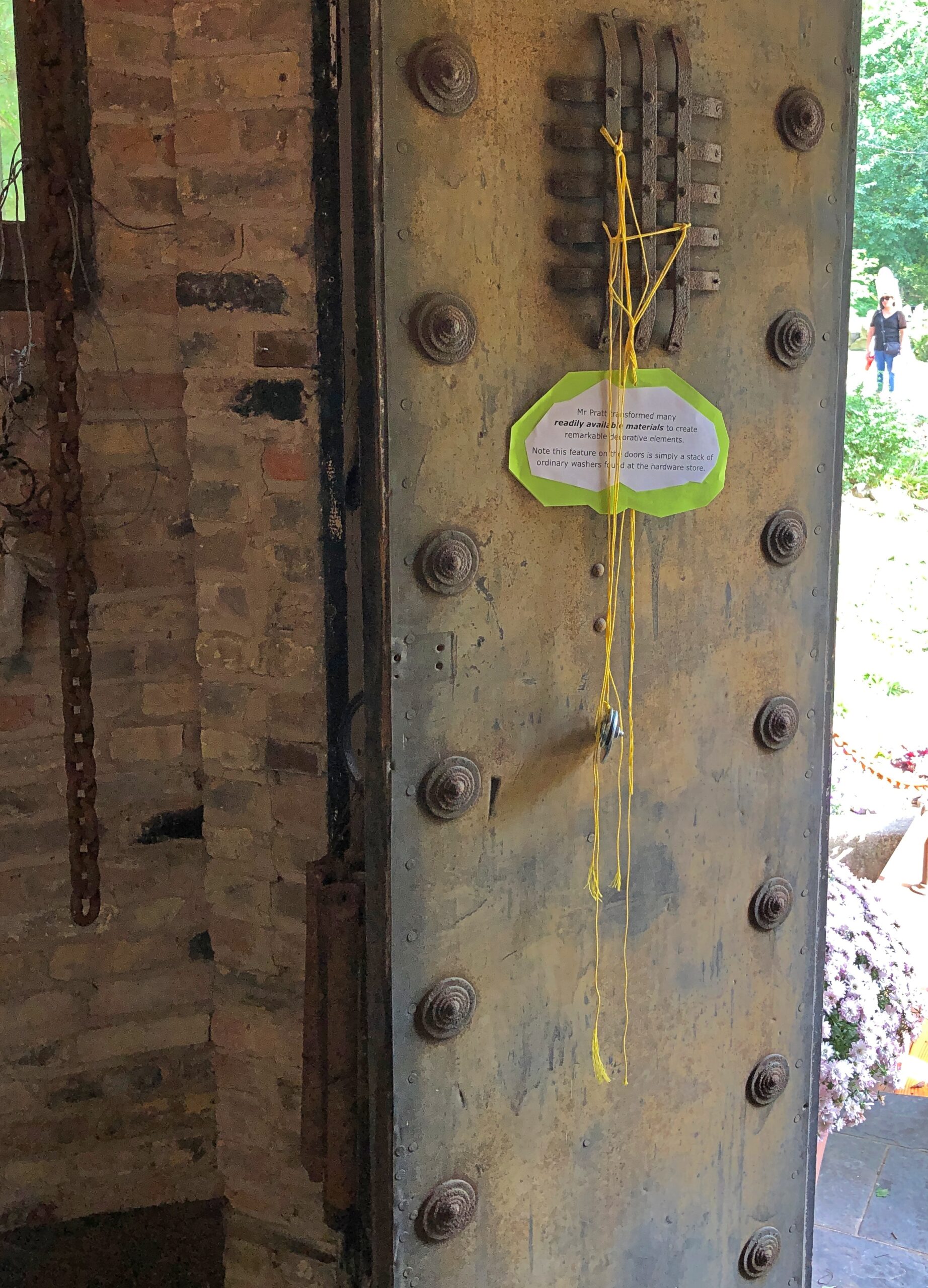
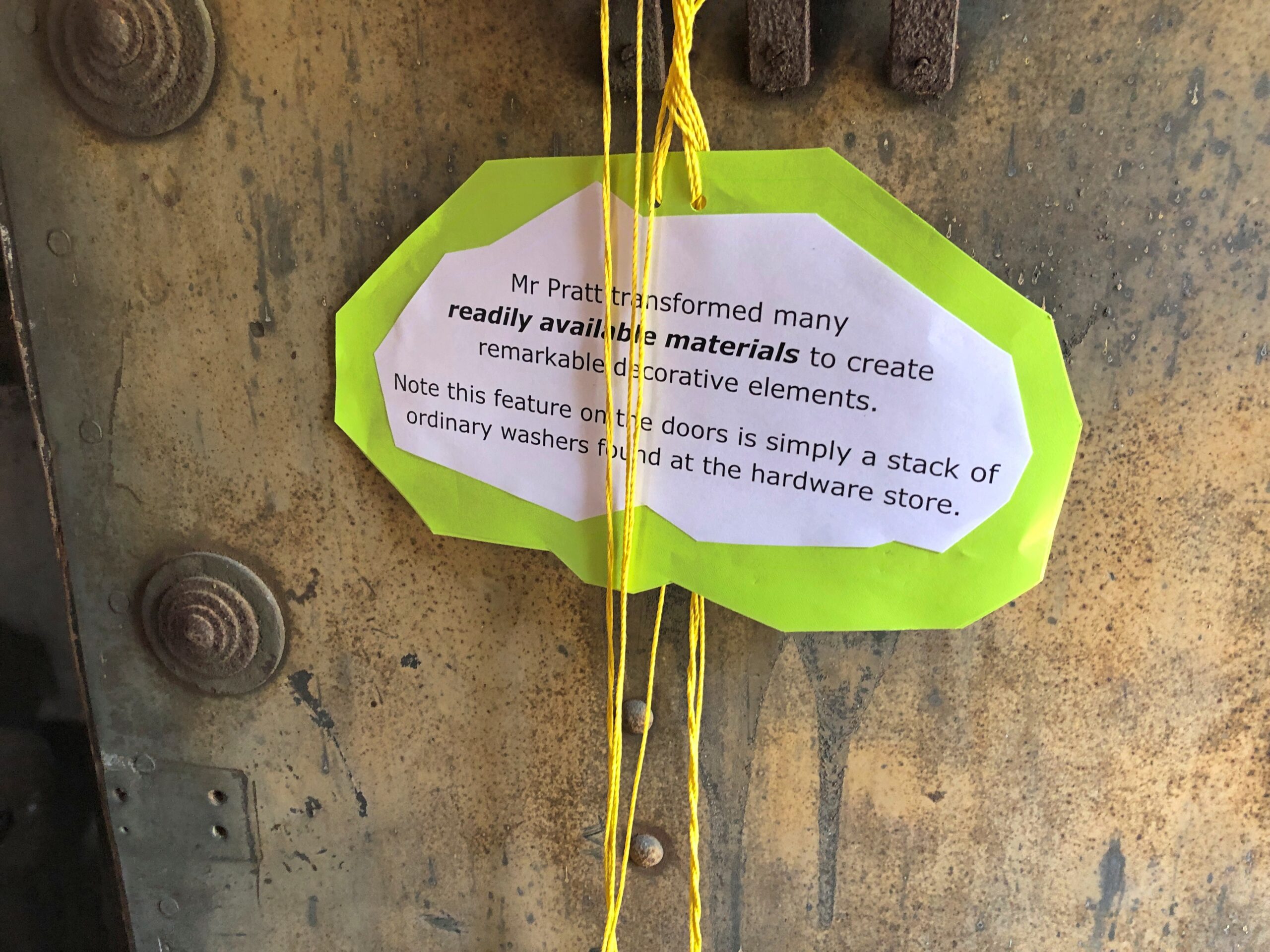
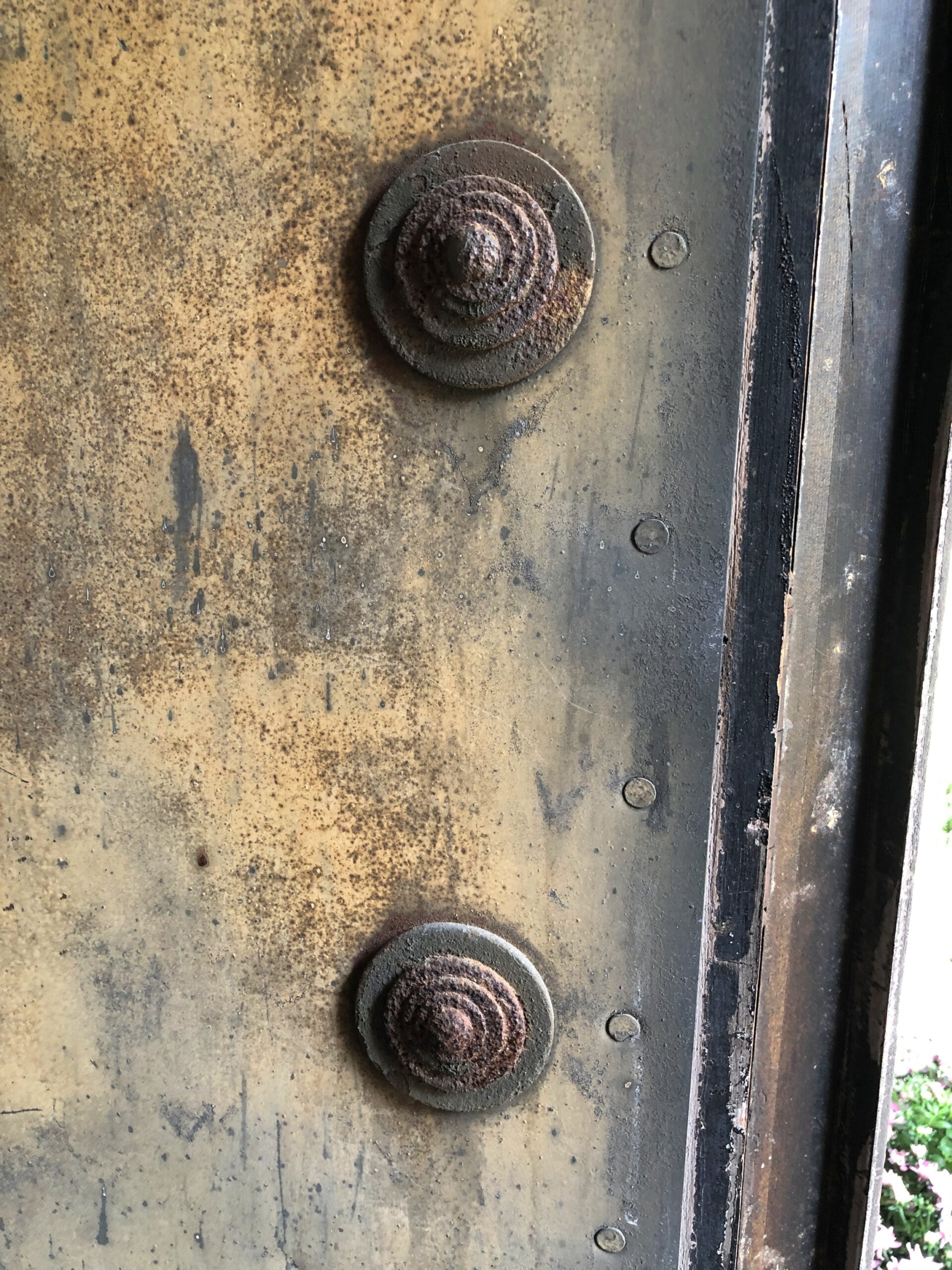
A detail about Pratt’s construction methods. Clever.
The back entrance, where we exited.
Word is there are other inhabitable spaces in the crenulated structure behind the main tower, but it wasn’t open. The docent posited that the space, and maybe the tower, would make a terrific short-term rental property, with certain modifications. I’ll bet it could.
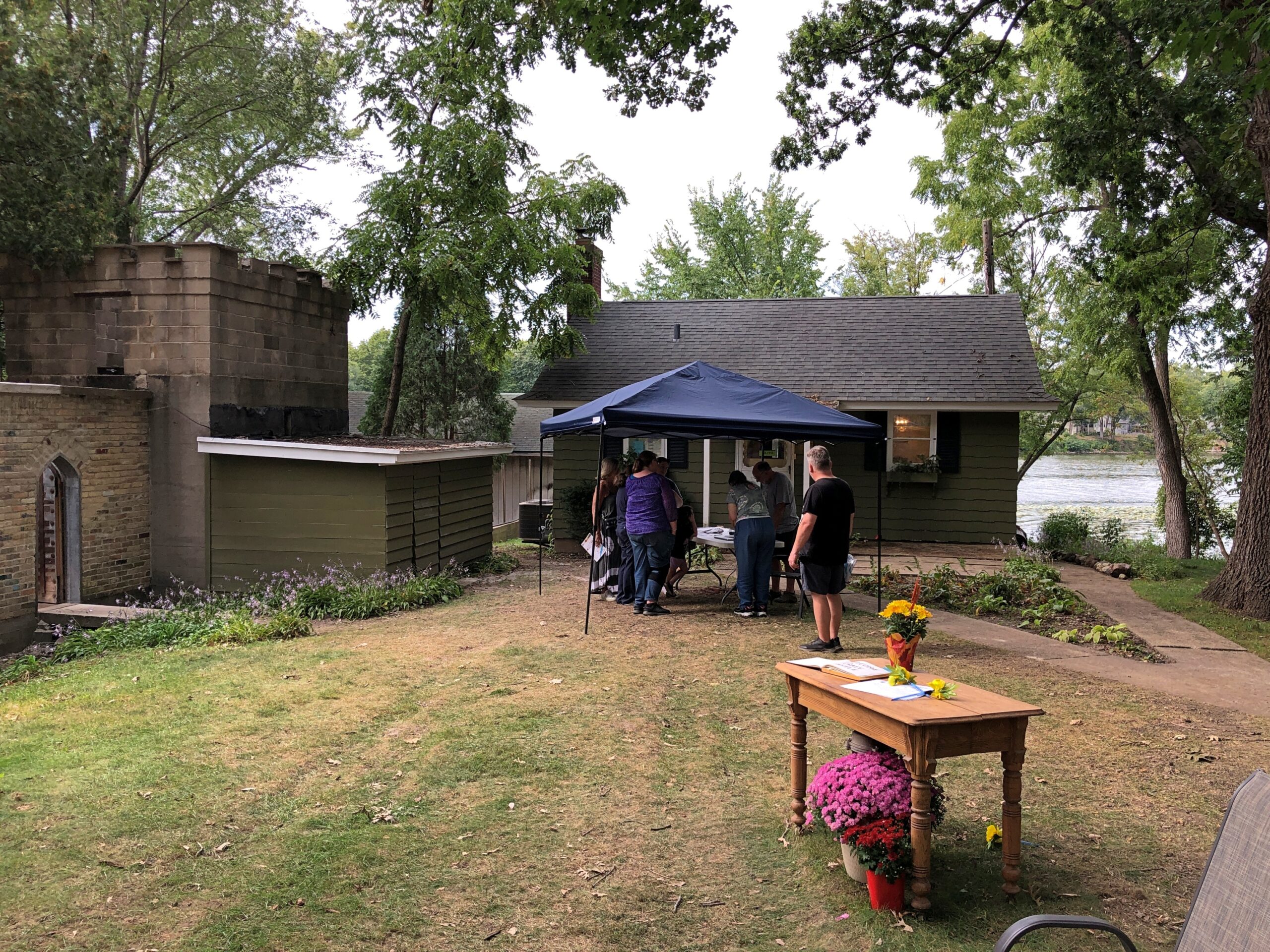
A small house of more conventional design is behind the castle, also part of the property. Just behind, the Fox River.
The property’s current owner, a nonagenarian named Paul Sommer, was reportedly on hand during our visit, but we didn’t see him. I’d have asked him a few questions, such as what do you know now about owning a medieval-style tower that didn’t you expect before you bought it in 1998?
The booklet the association created for the tour is a font of information, telling me that Sommer is the third owner of the tower, though with a structure like this, steward would be a better way to think of it. As he apparently does, putting much time and money into the structure’s continued existence. Good for him.
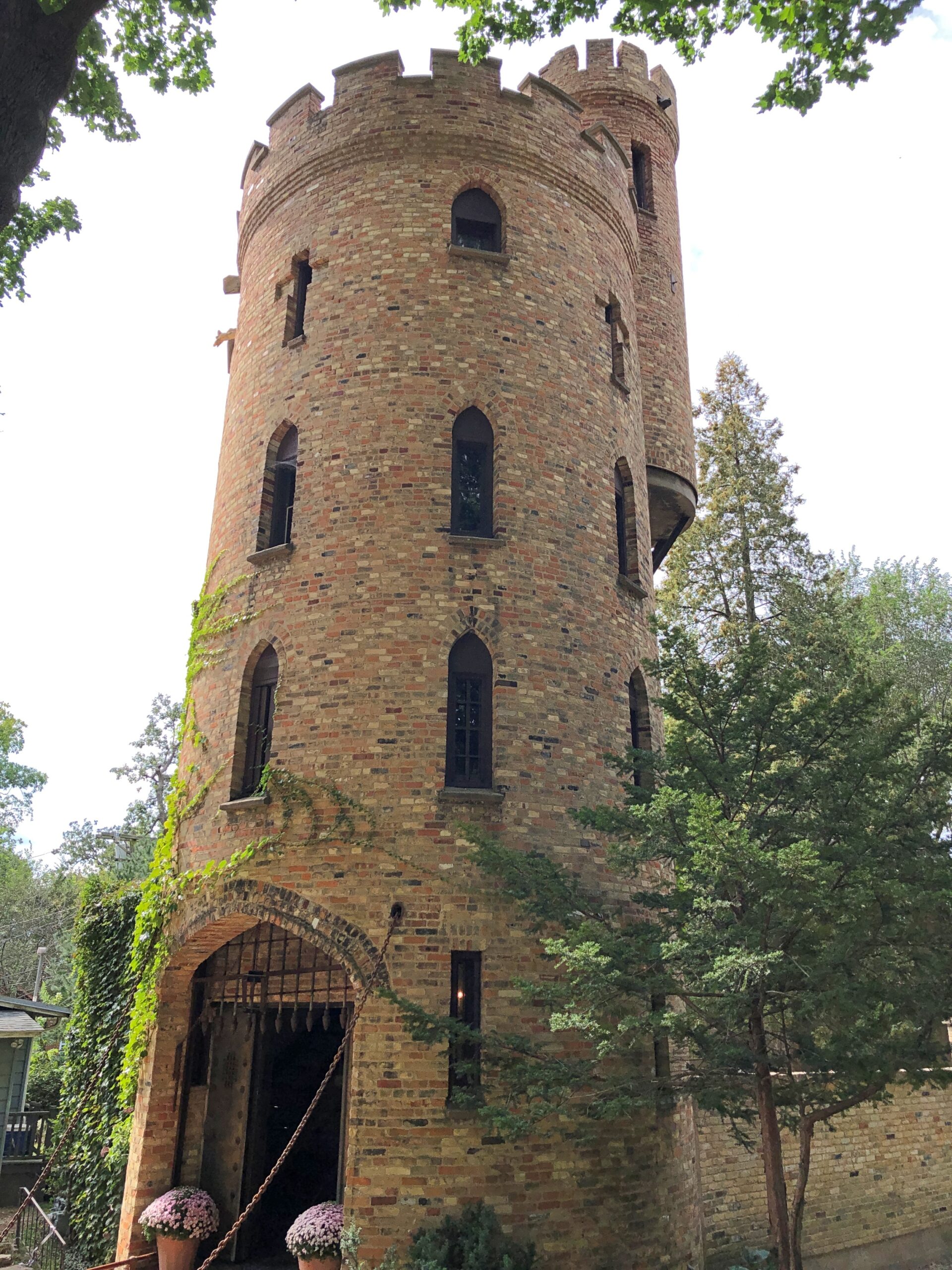
Though it evokes castle towers of Europe, England and France specifically, Pratt’s Castle is American in the sense that it’s the eccentric legacy of a single individual doing what he wanted to do with the fruits of his success: namely, Harold Pratt (d. 1979), an electrical engineer by vocation who had a serious jones for medieval times. Thinking of the structures he’d seen in those countries, Pratt set about building the tower in the 1930s. One opinion, according to the guide booklet, is that professional builders started the structure and Pratt finished it. In any case, it was largely complete by 1937, joining the ranks of individual-created North American structures, in the same spirit if not exact history as better-known works, like the Coral Castle or Watts Towers (East and West coast examples, those).
Unlike a stone European castle tower, Pratt’s is brick, but otherwise the structure sports a collection of features very much like a European tower, such as a crenellated parapet, with crenels and merlons. (A binary system: crenels, 0; merlons, 1.) A turret is atop the tower – the place reached by a wooden ladder – and some gargoyles are thrown in for good measure. Lancet windows, those narrow openings that come to a point, provide light and air and, in some other reality, the opportunity to shoot arrows from a relatively safe position. Here’s a term I’d never heard, and the castle has those too, near the top: arbalestina windows, ones particularly suited (I assume) for shooting your arbalest, a species of souped-up crossbow.
All very cool, if you asked me. Though built in a particular style, its history and placement make it one of a kind, making the world just a little more interesting.
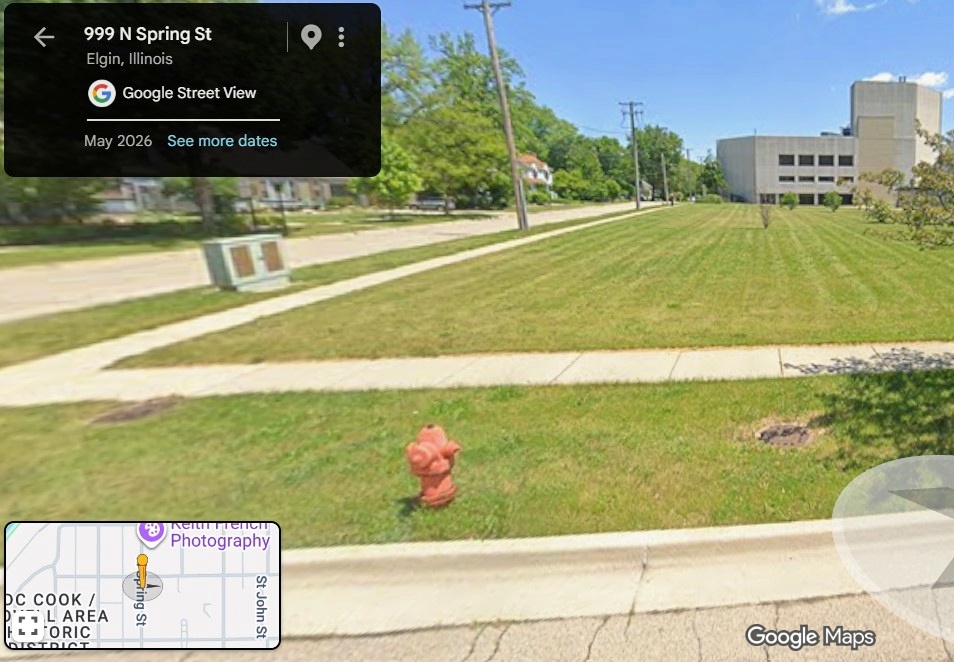
We visited Elgin, Illinois, today and at one point during our visit, we took a stroll near the former site of the Sherman Hospital. At the corner of Cooper and Spring Streets (where I didn’t take a picture), we saw this view, except that it was overcast today.
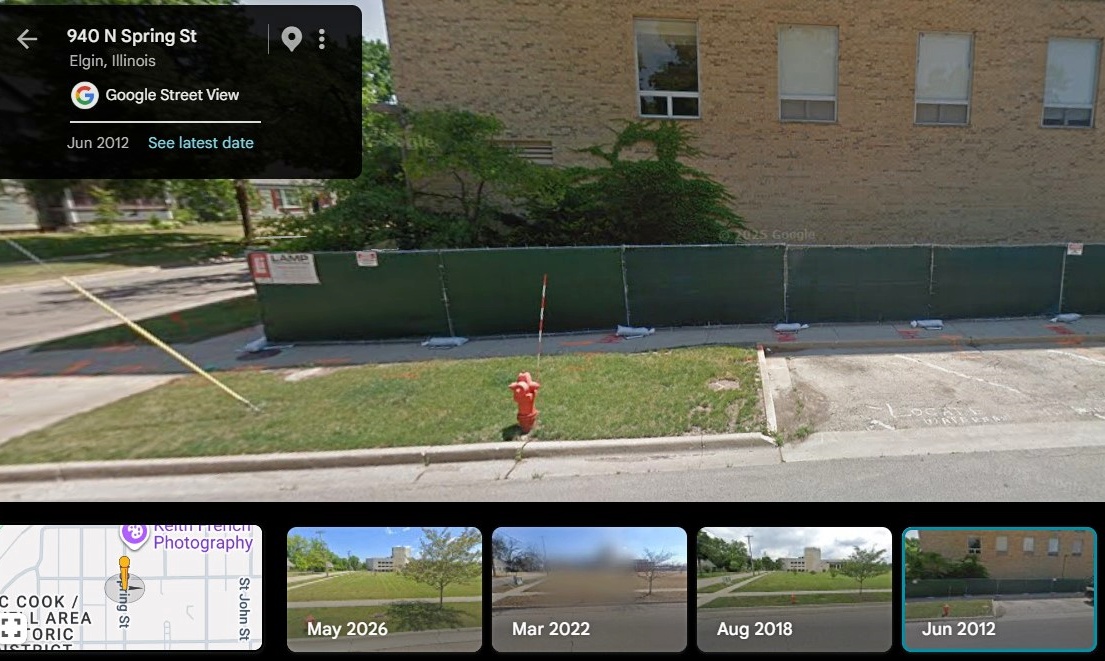
Had we been at the same corner in 2012, according to Google, we would have seen this.
Never mind the shifting address. Google did that willy-nilly, since there is no there, there, to have an address. The vanished brick building was part of the old Sherman Hospital, closed in the 2000s. The new hospital is to the west and close to I-90. The old hospital was square in a neighborhood, where a lot of the houses belonged to doctors and other hospital employees, once upon a time.
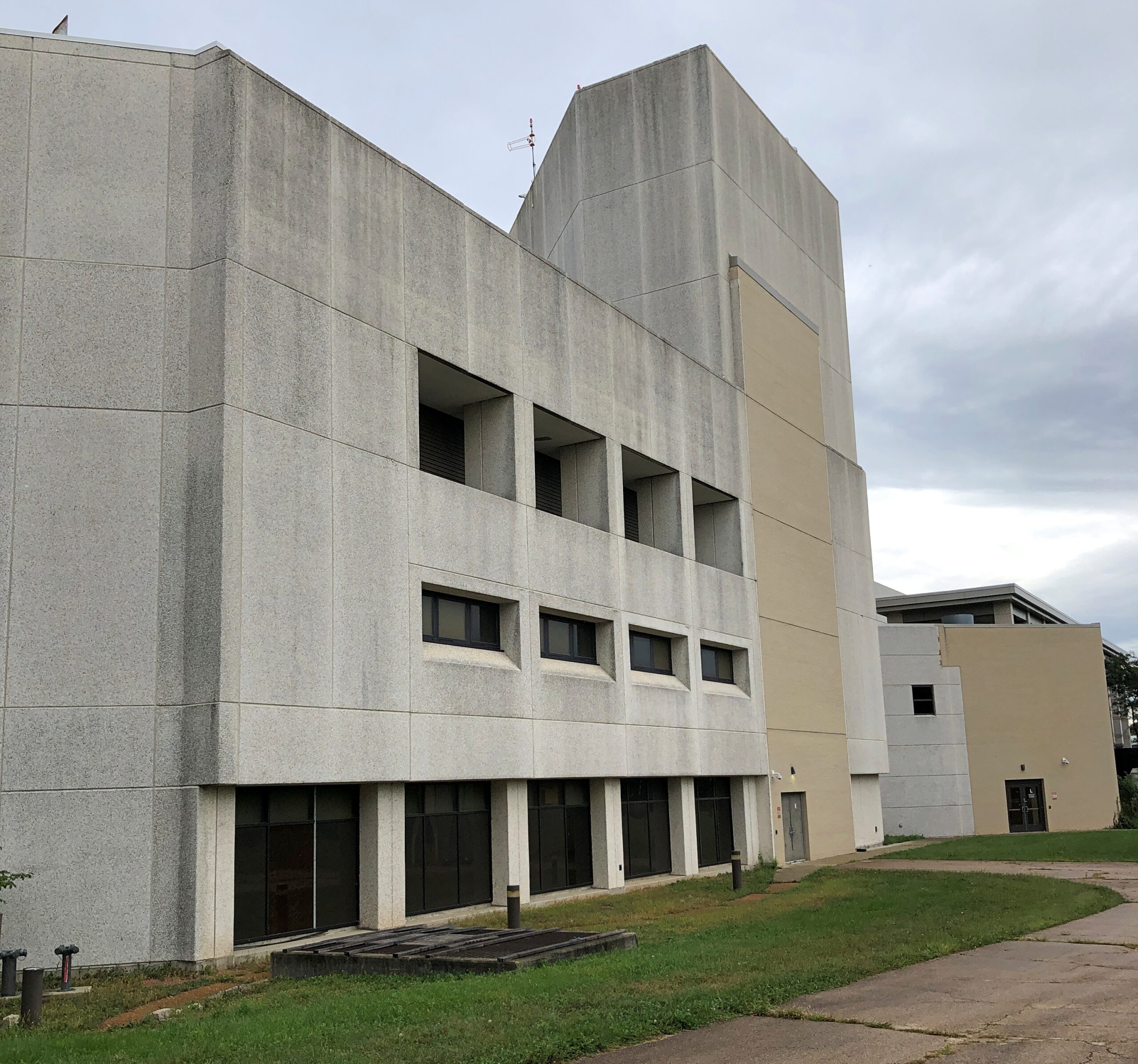
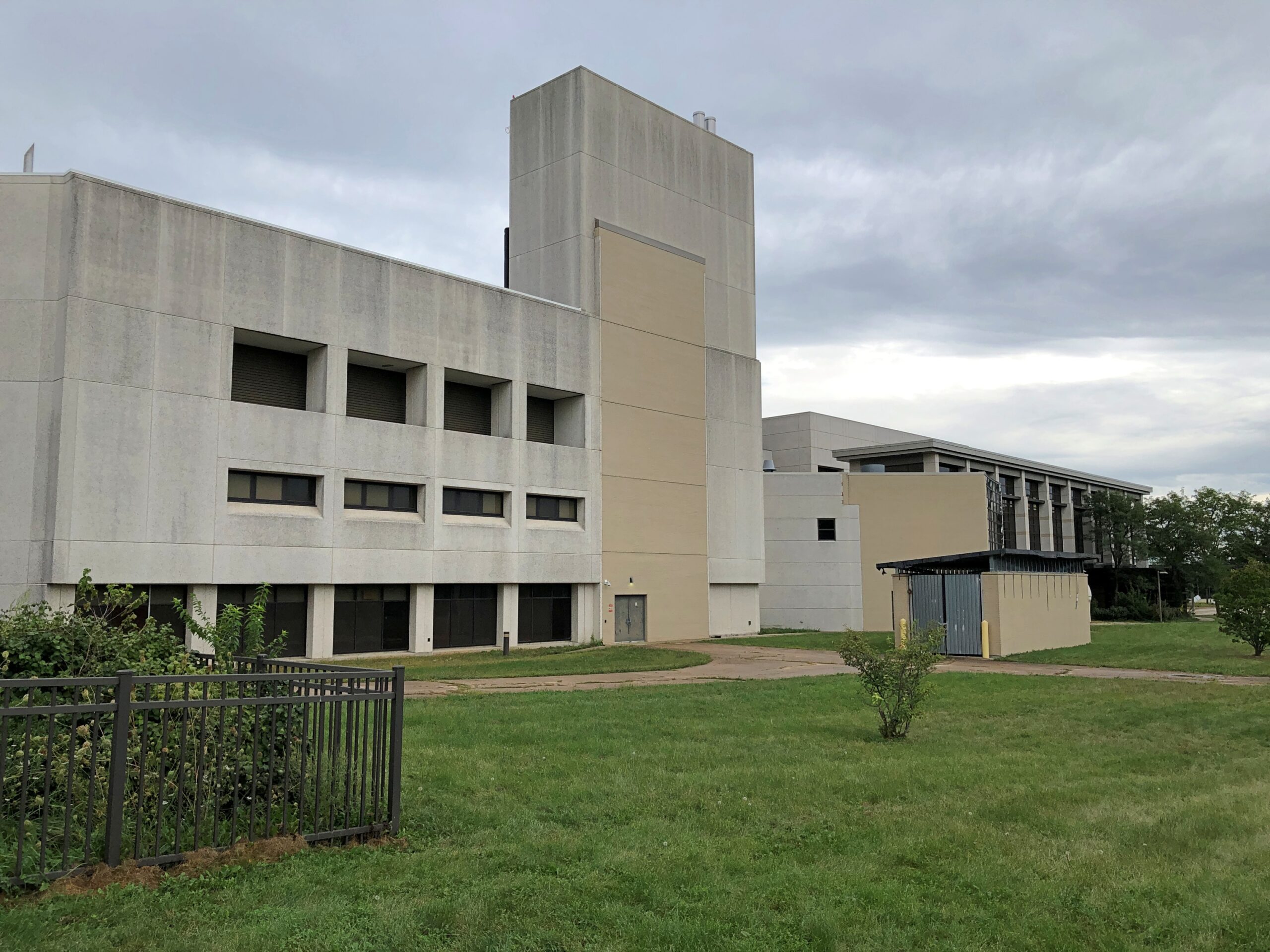
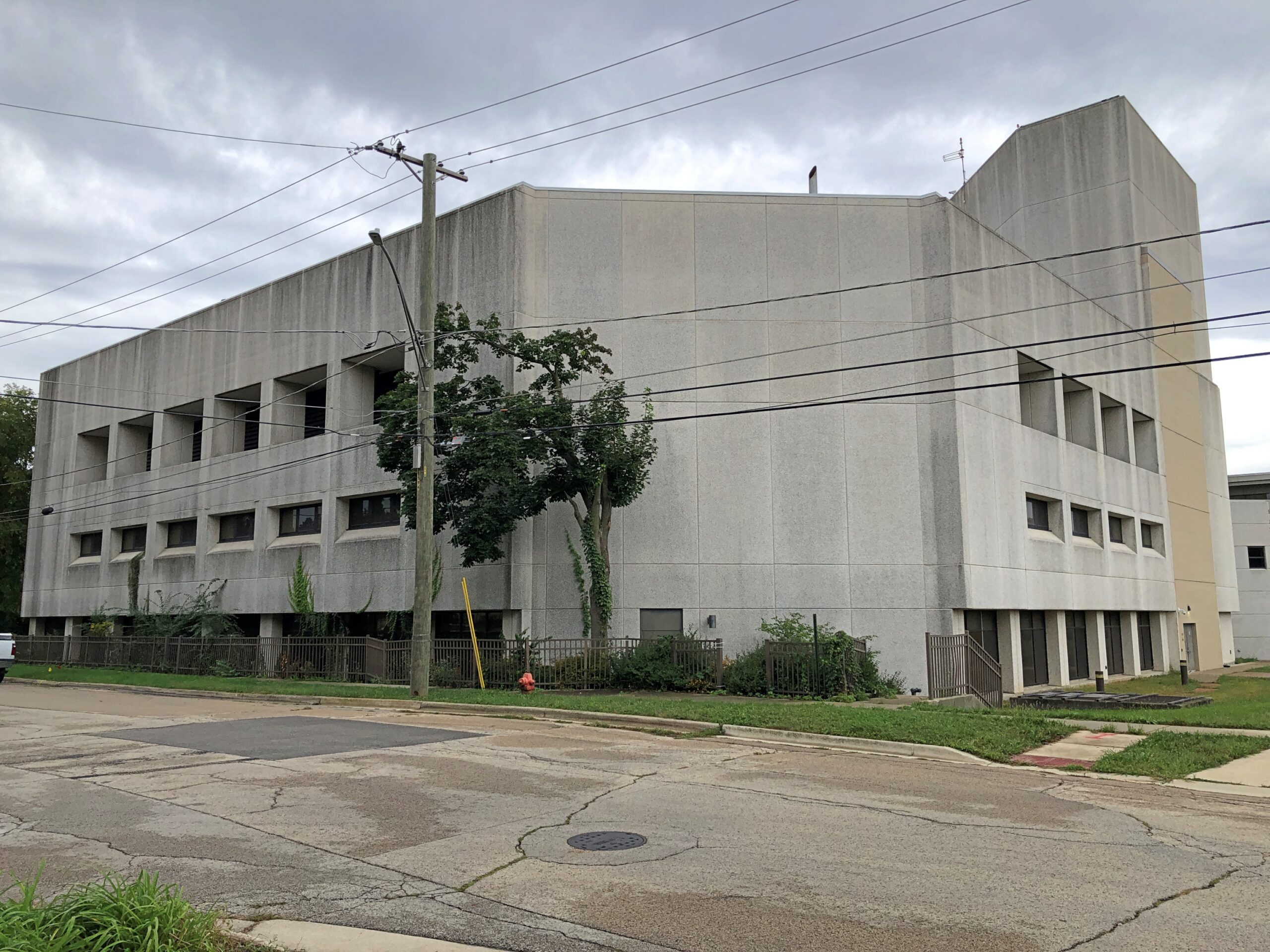
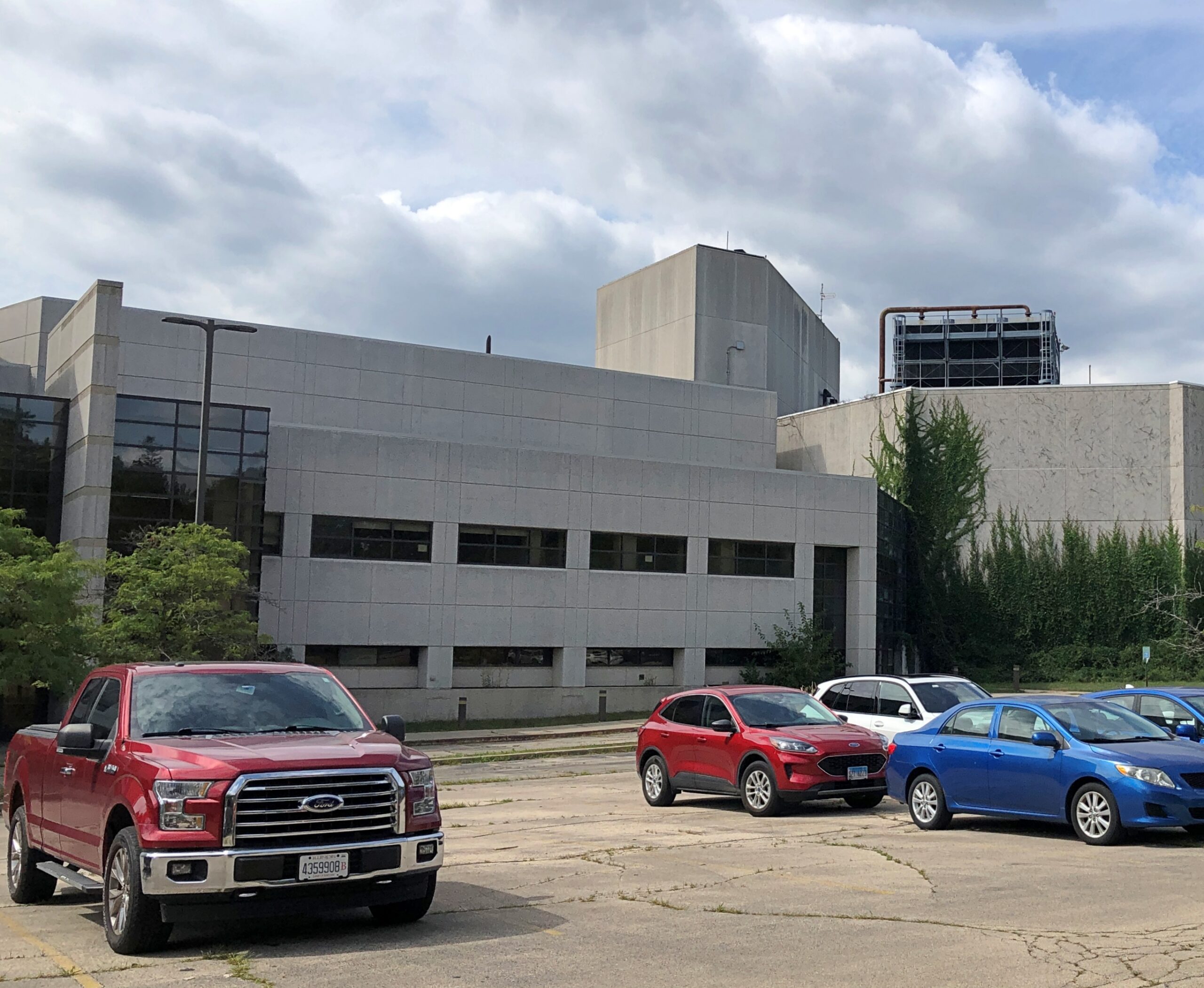
At the edge of the enormous vacant lot, a structure remains, an obvious mid-century addition to the long-gone early 20th century brick structure.
It looked vacant, though perhaps the hospital still uses it for labs or storage or the like. I also read that during the worst days of the pandemic, when hospital space was in short supply, this building was used – or at least ready to be used – for overflow patients.
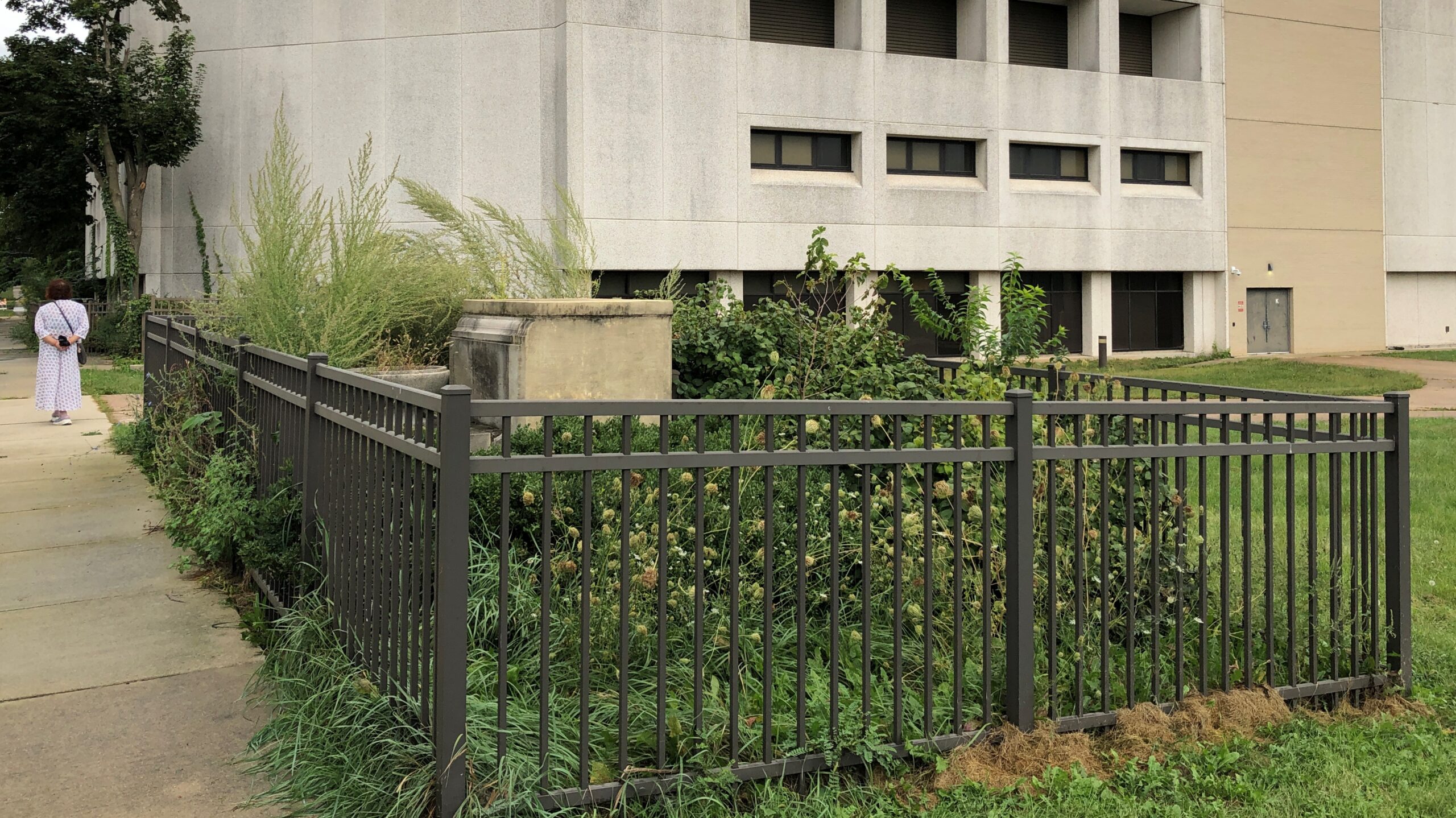
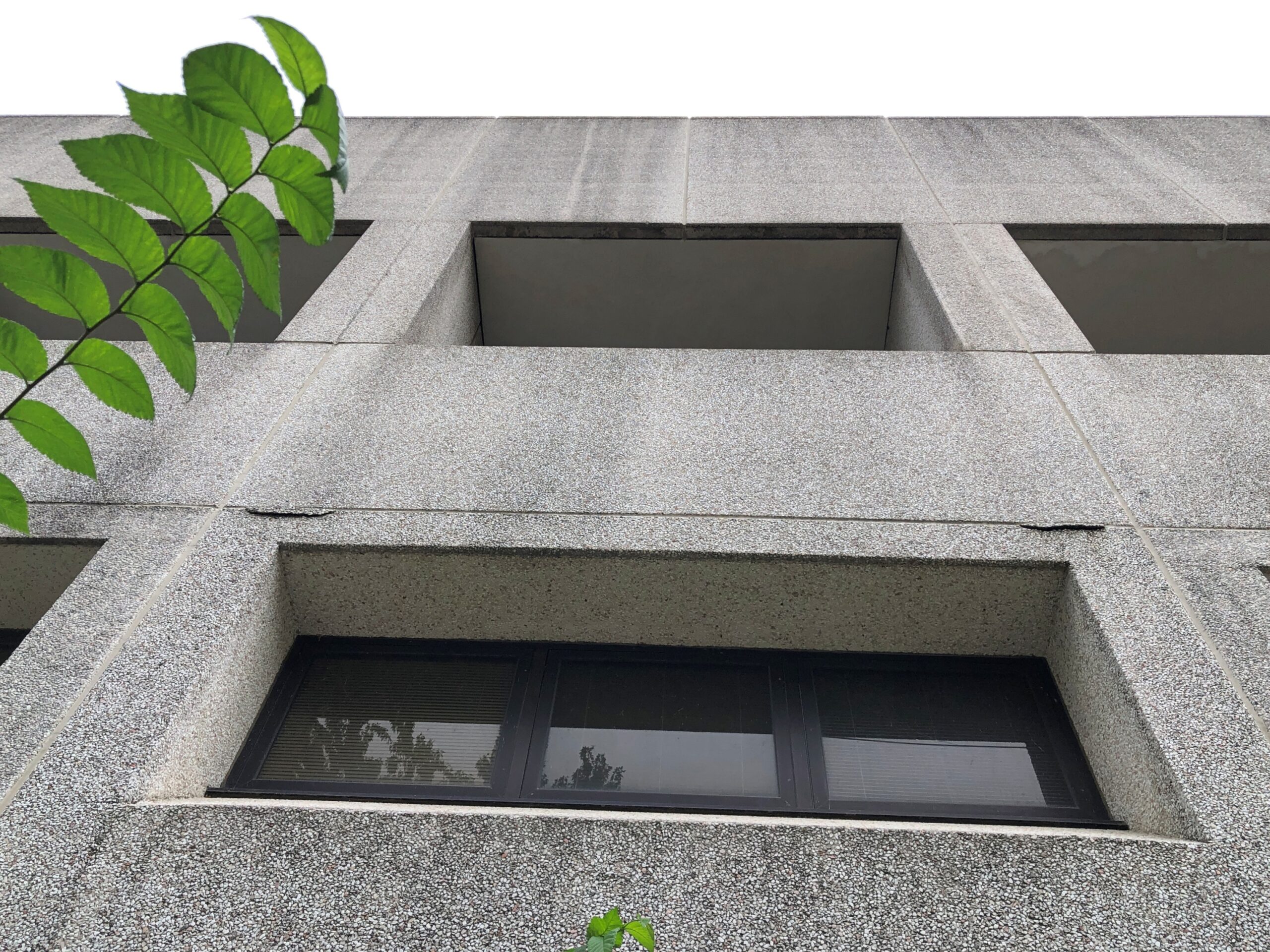
Mostly I was struck by how brutalist it is. Some other views:
Apparently there used to be a memorial sign honoring the hospital in this now-lush spot, which is fenced in for no obvious reason. The sign disappeared like the hospital, also for no obvious reason.









#/media/File:Buster_Keaton_Twilight_Zone_1961.JPG)