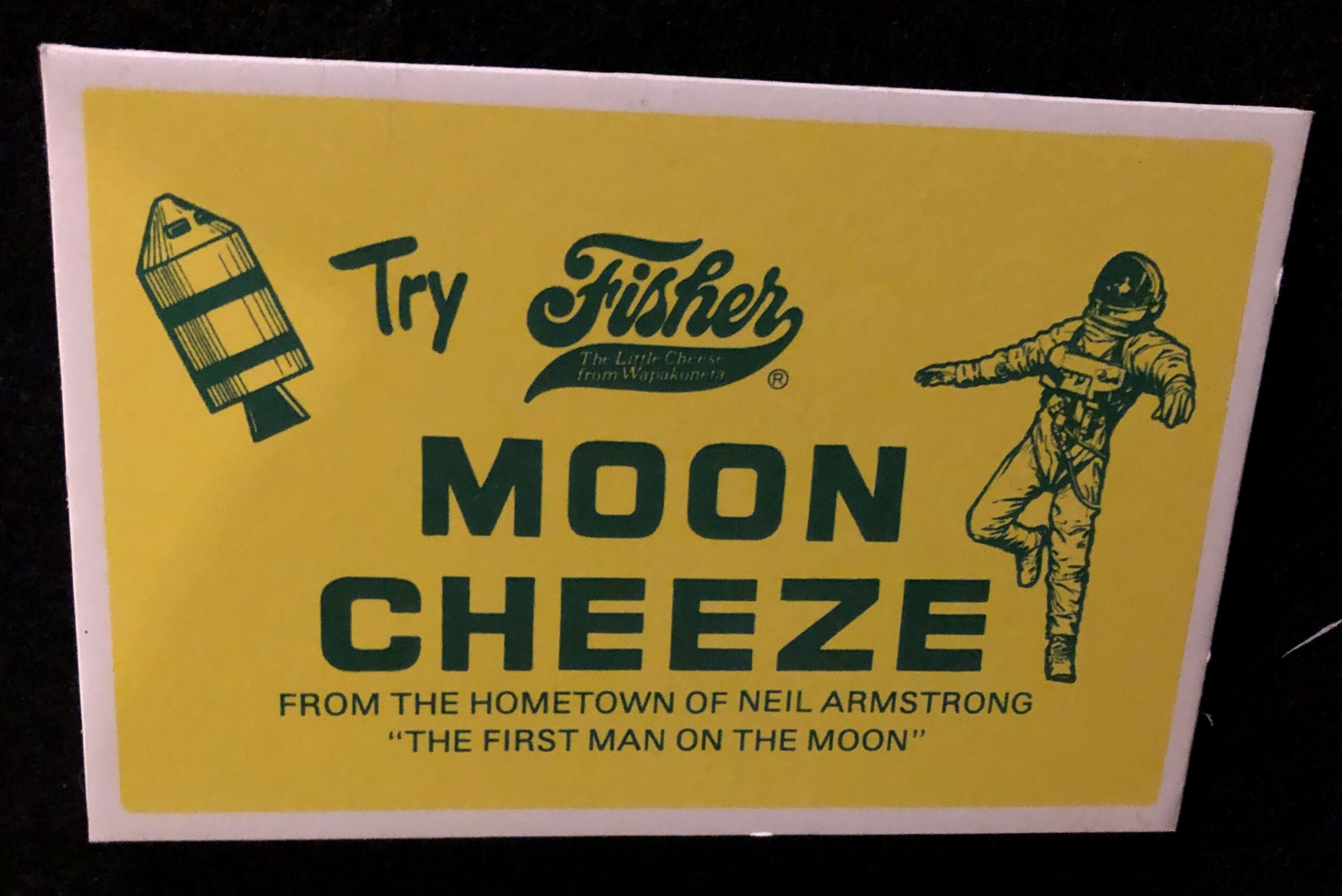
I’d never had any Moon Cheeze. Or even heard of it.
But I did eat Space Food Sticks from time to time in the days of Apollo and maybe a little after. As the ad says, Moon Cheeze was made in Wapakoneta, Ohio, hometown of Neil Armstrong.
“It seems to have been just regular American cheddar cheese,” Weird Universe says. “Only the packaging was special. It came in a container shaped like the state of Ohio.” In the ad above, it looks like an astronaut is drifting away from the safety of the Command and Service modules, like the (dead) astronaut did in 2001.
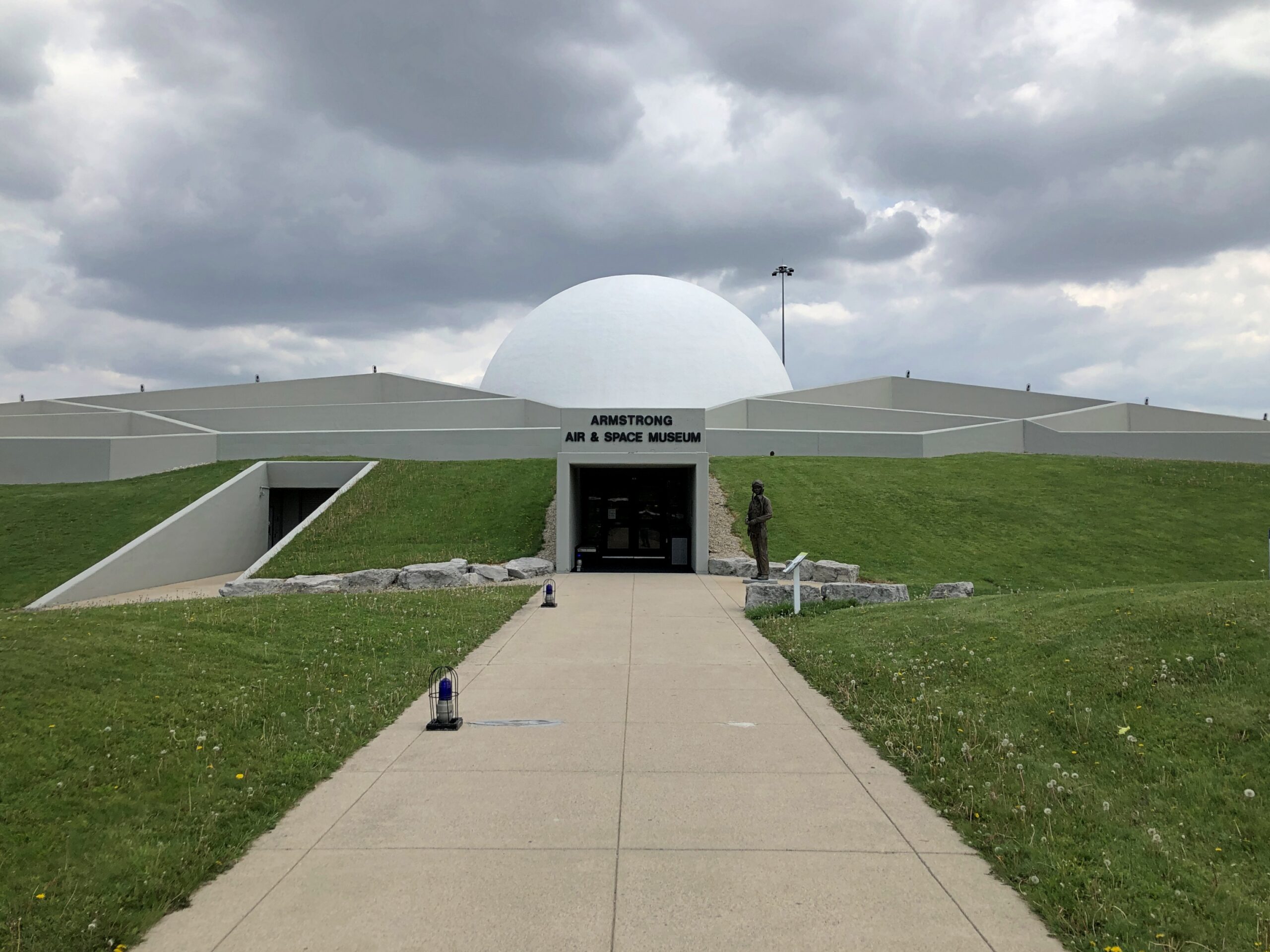
On the last day of my recent trip, I diverted a bit to Wapakoneta to visit the Armstrong Air & Space Museum, which I’d bypassed a decade earlier, and was rewarded for my effort when I saw the Moon Cheeze ad and a lot more.
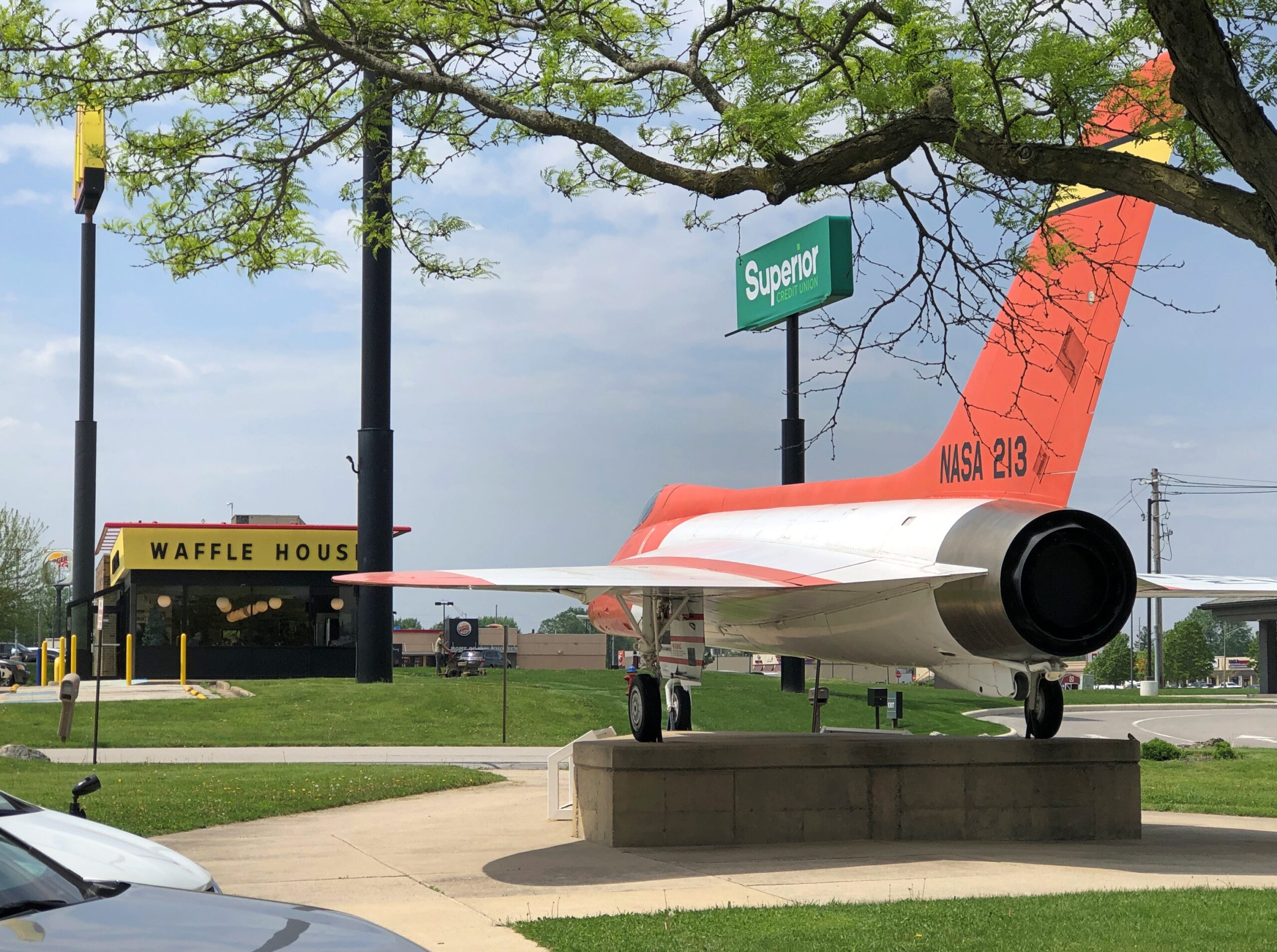
It’s conveniently located near a Waffle House.
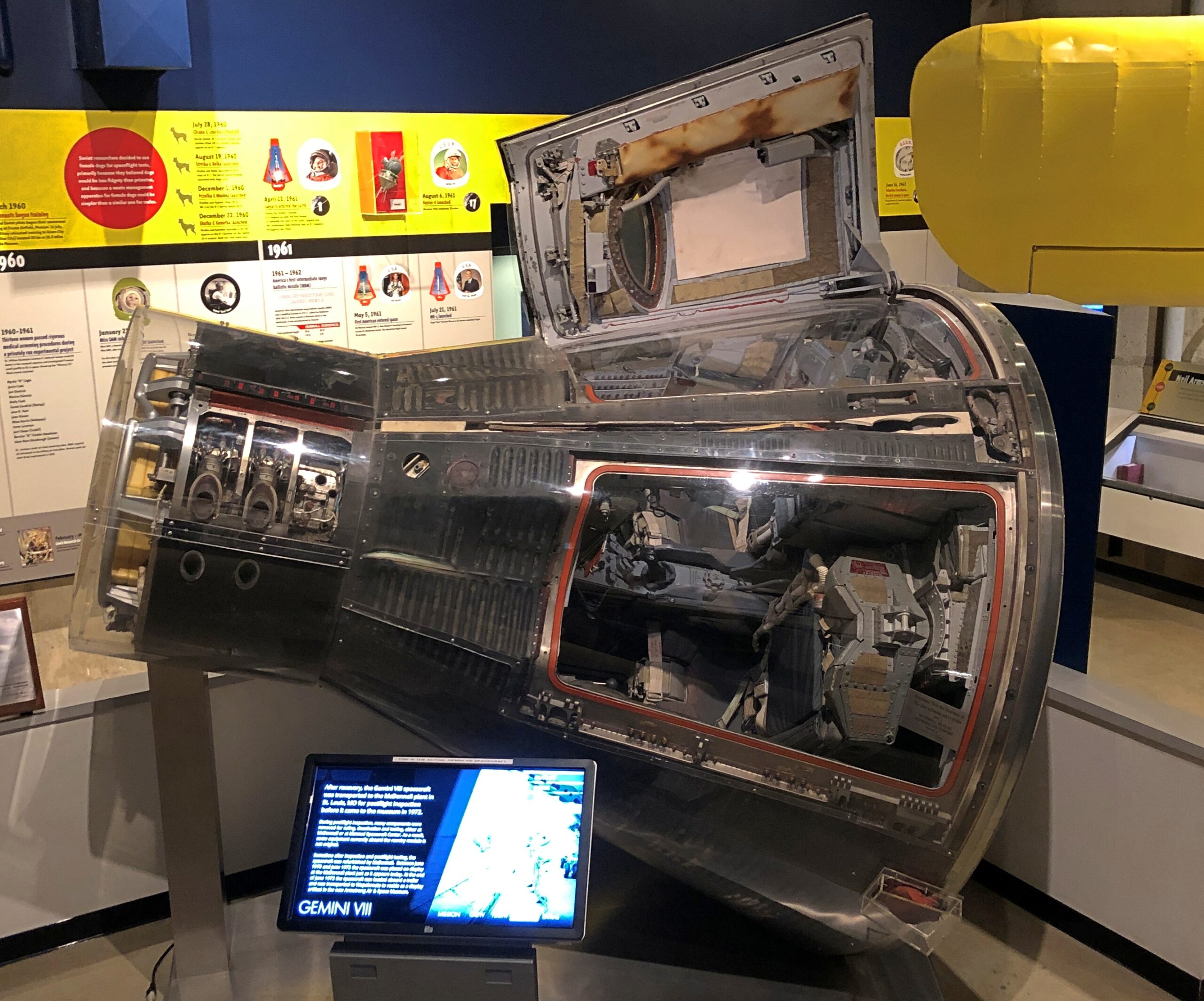
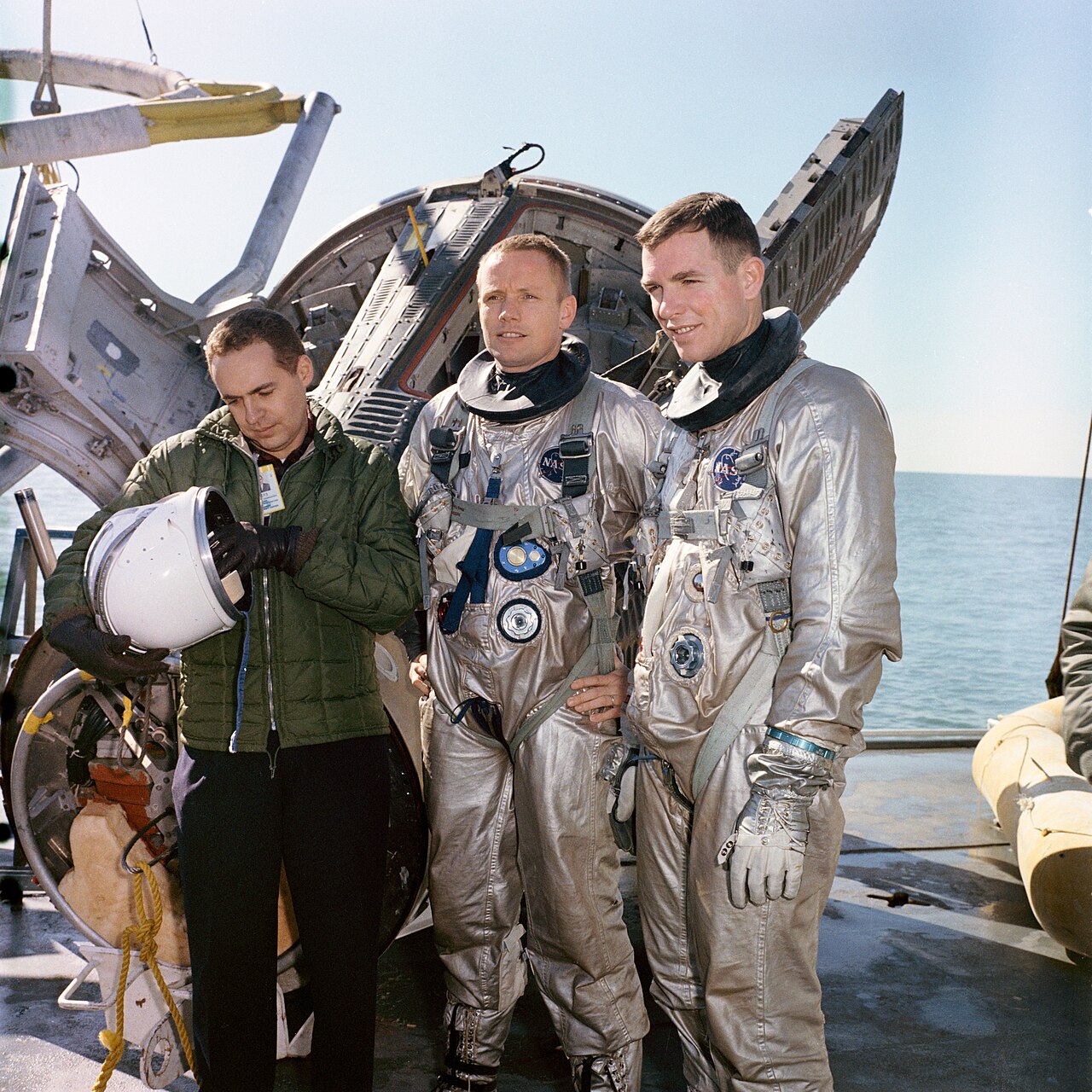
Worth the price of admission by itself: the Gemini 8 capsule, in which Neil Armstrong and David Scott nearly bought the space farm due to a malfunctioning thruster.
They survived, of course, and in fact Scott is still alive at 94. Besides Gemini 8, he flew on Apollo 9 and Apollo 15. Being seventh man to walk on the Moon doesn’t get you a museum, however; that’s reserved for being first. Fame is funny that way.
Neil Armstrong and David Scott. NASA public domain photo.
The museum isn’t large, but it does feature a number of good artifacts. The Smithsonian and the Kansas Cosmosphere shouldn’t have everything.
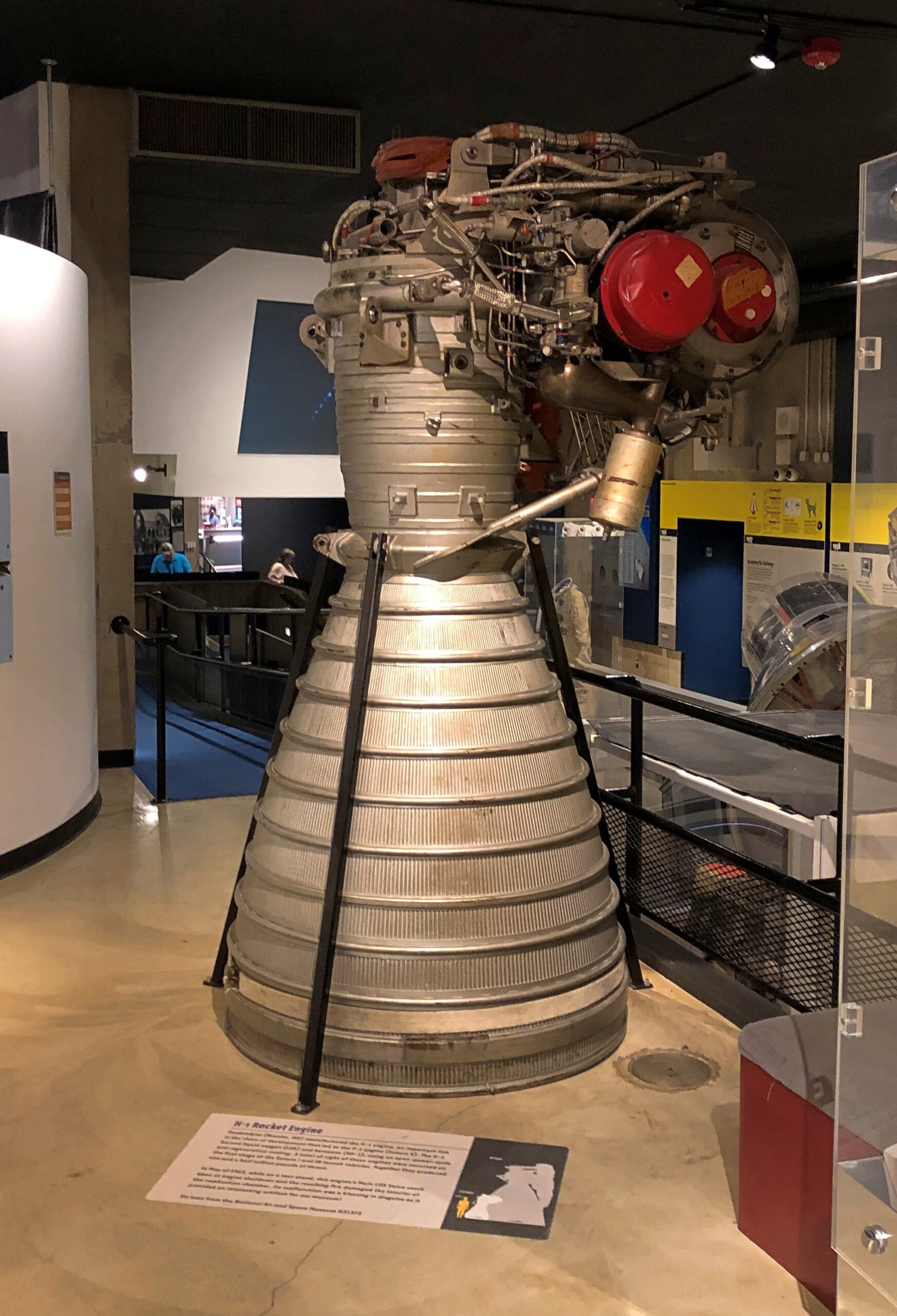
An H1 engine, which were used on Saturn 1 and Saturn 1B rockets.
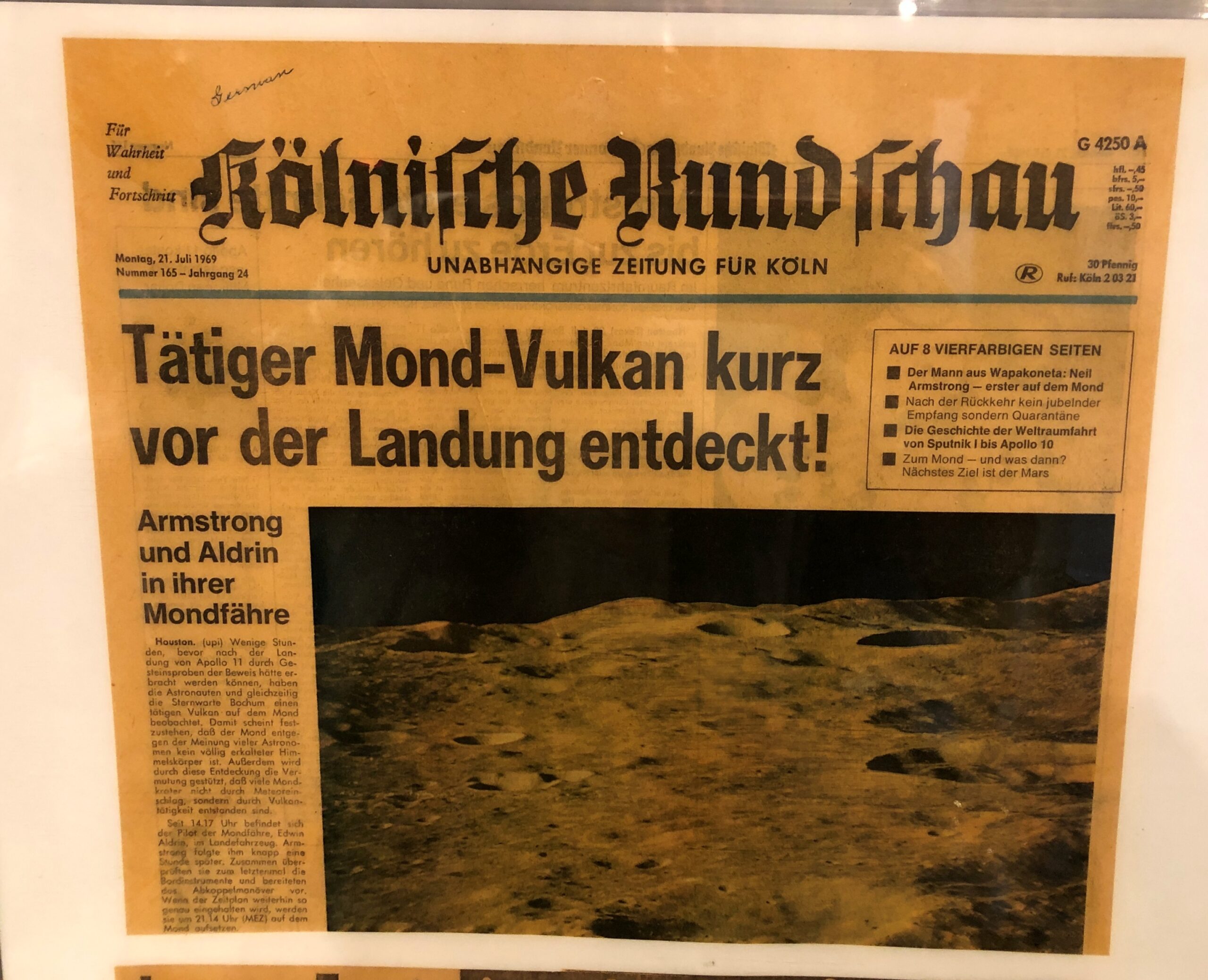
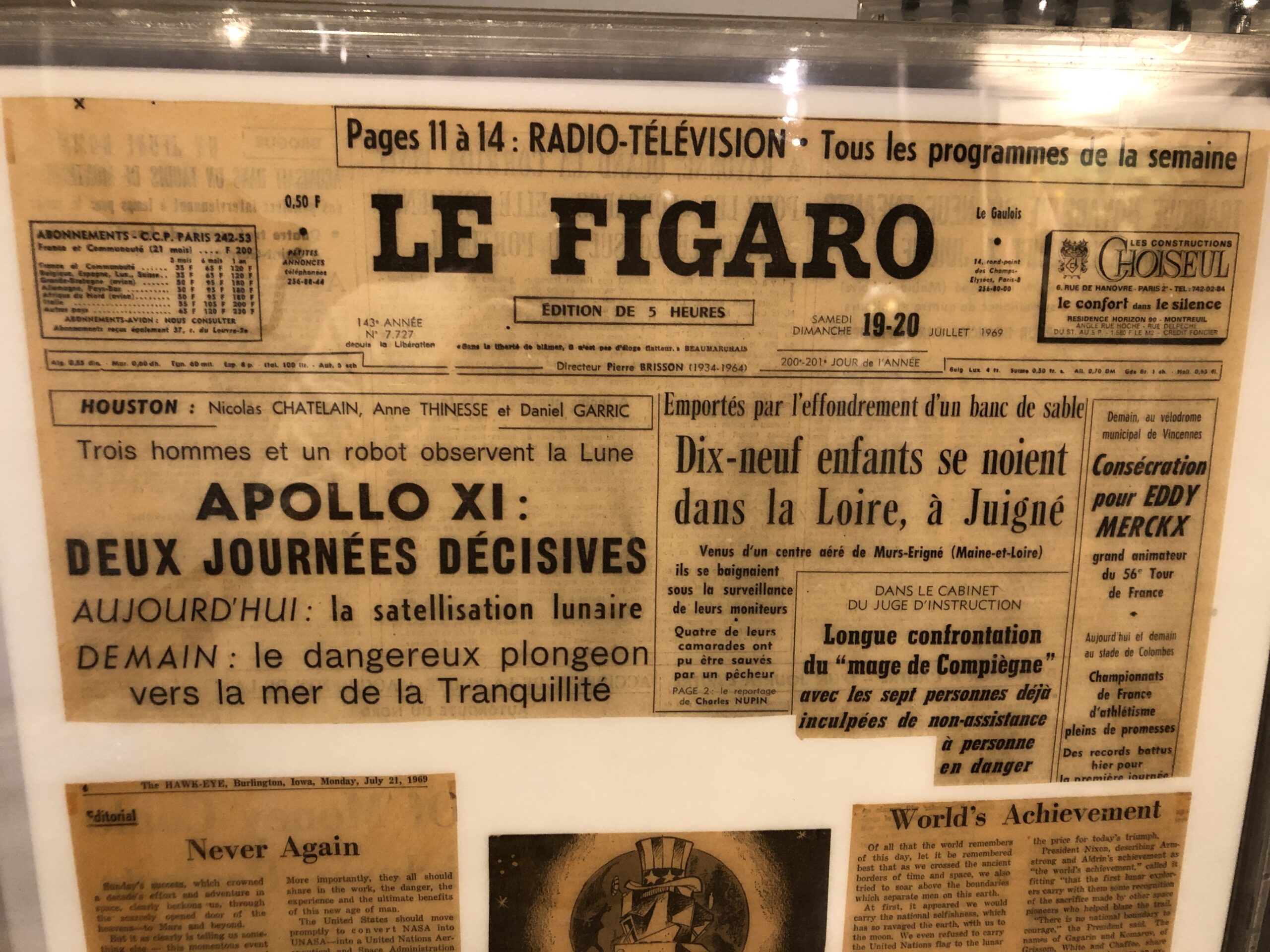
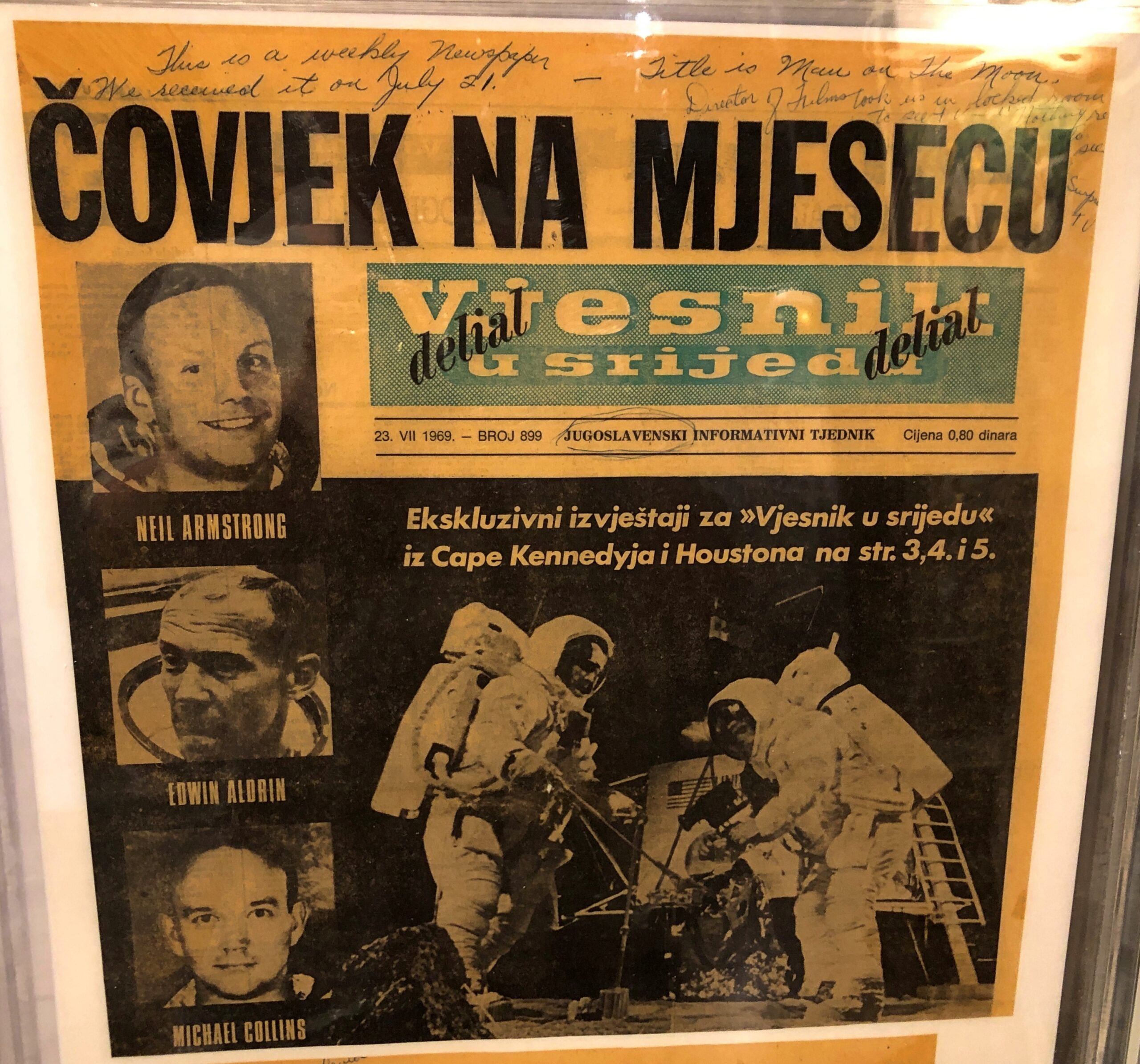
Newspapers from around the world covering the Apollo 11 landing.
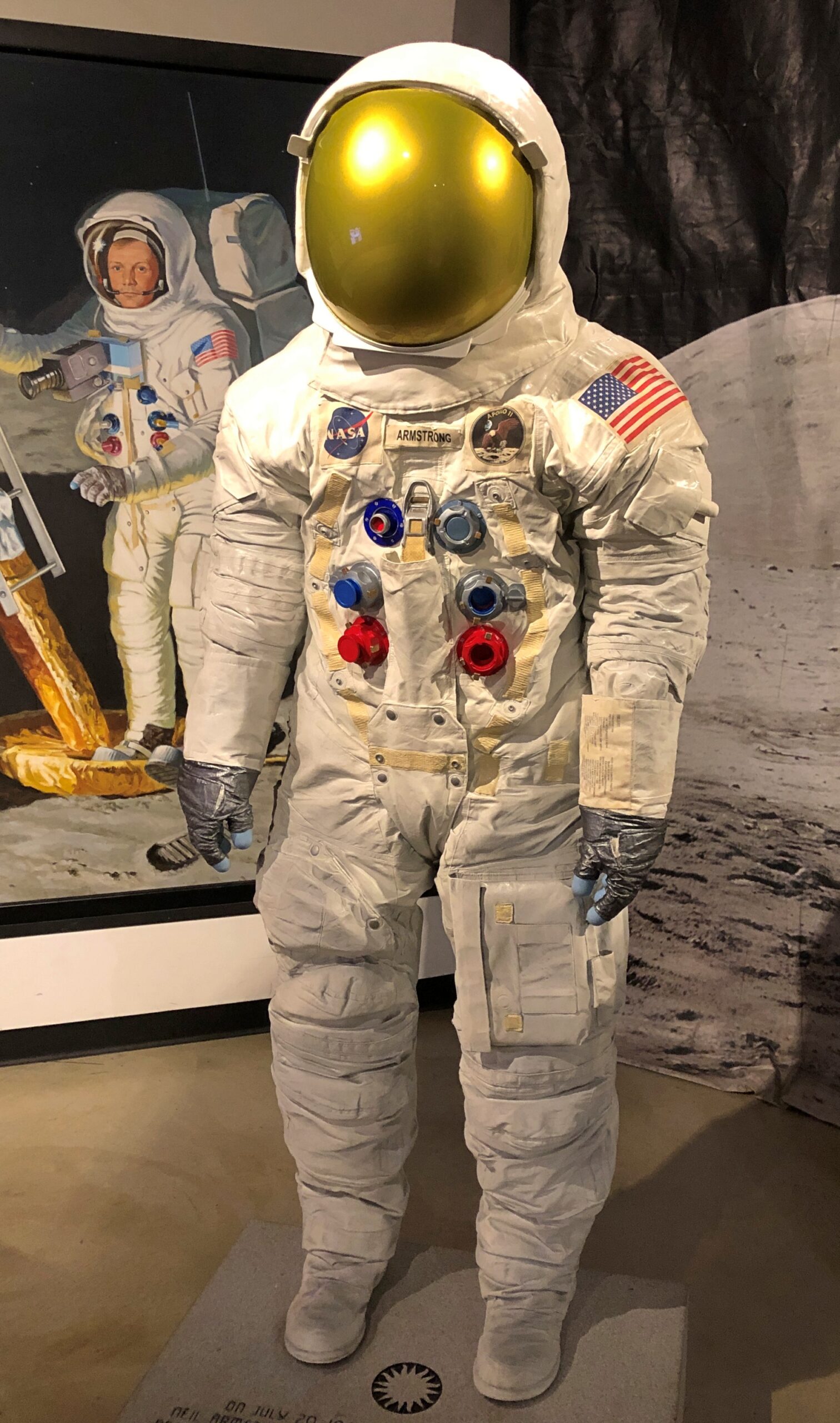
Some artwork. Looks like a spacesuit, but it’s a statue depicting Armstrong’s suit.
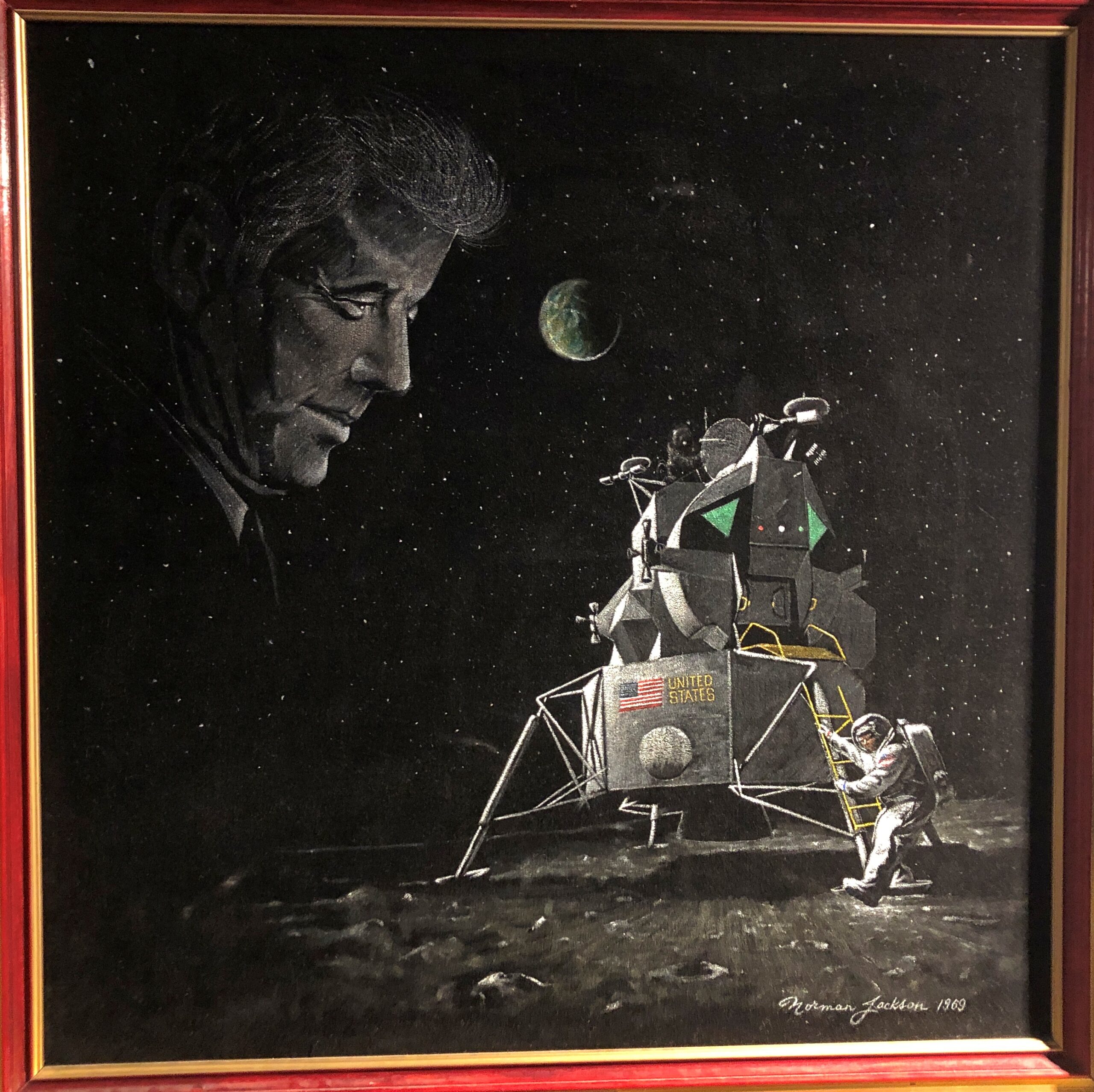
A painting from 1969.
It seems that the Armstrong and Aldrin didn’t report the alarming apparition of President Kennedy hovering over the lunar surface. Conspiracy theorists, take note.
An example of nonlinear tourism, a term I just made up, is my visit to Warren, Ohio. Linear tourism, another term I just (logically) made up, is picking a destination and sticking to it. That isn’t a bad approach, some of the time. But at other times, one follows an urge to go that next place on the map, to see what you can see. Nonlinear tourism has an element of spontaneity, obviously, and it probably isn’t the best way to plan a long trip.
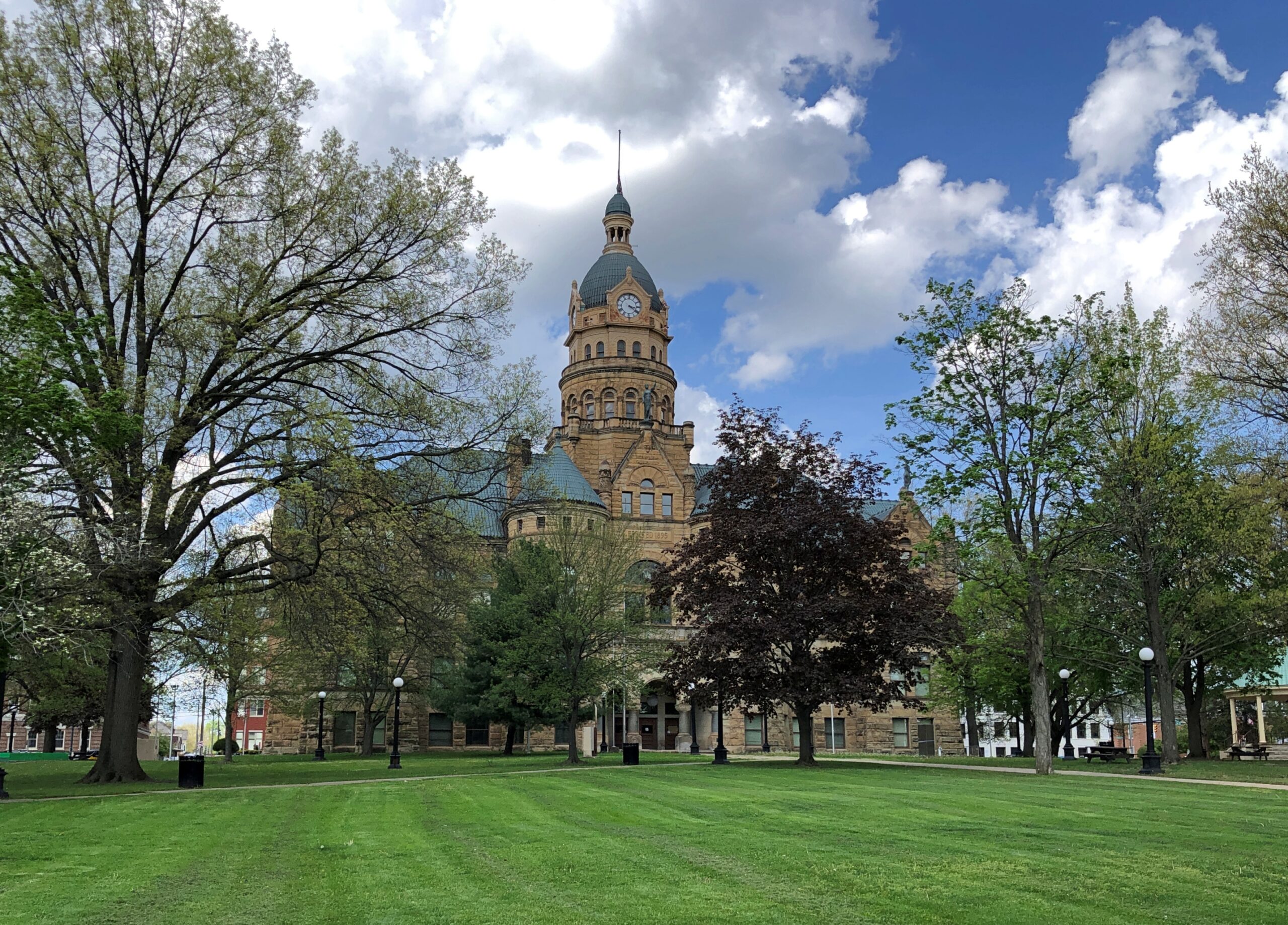
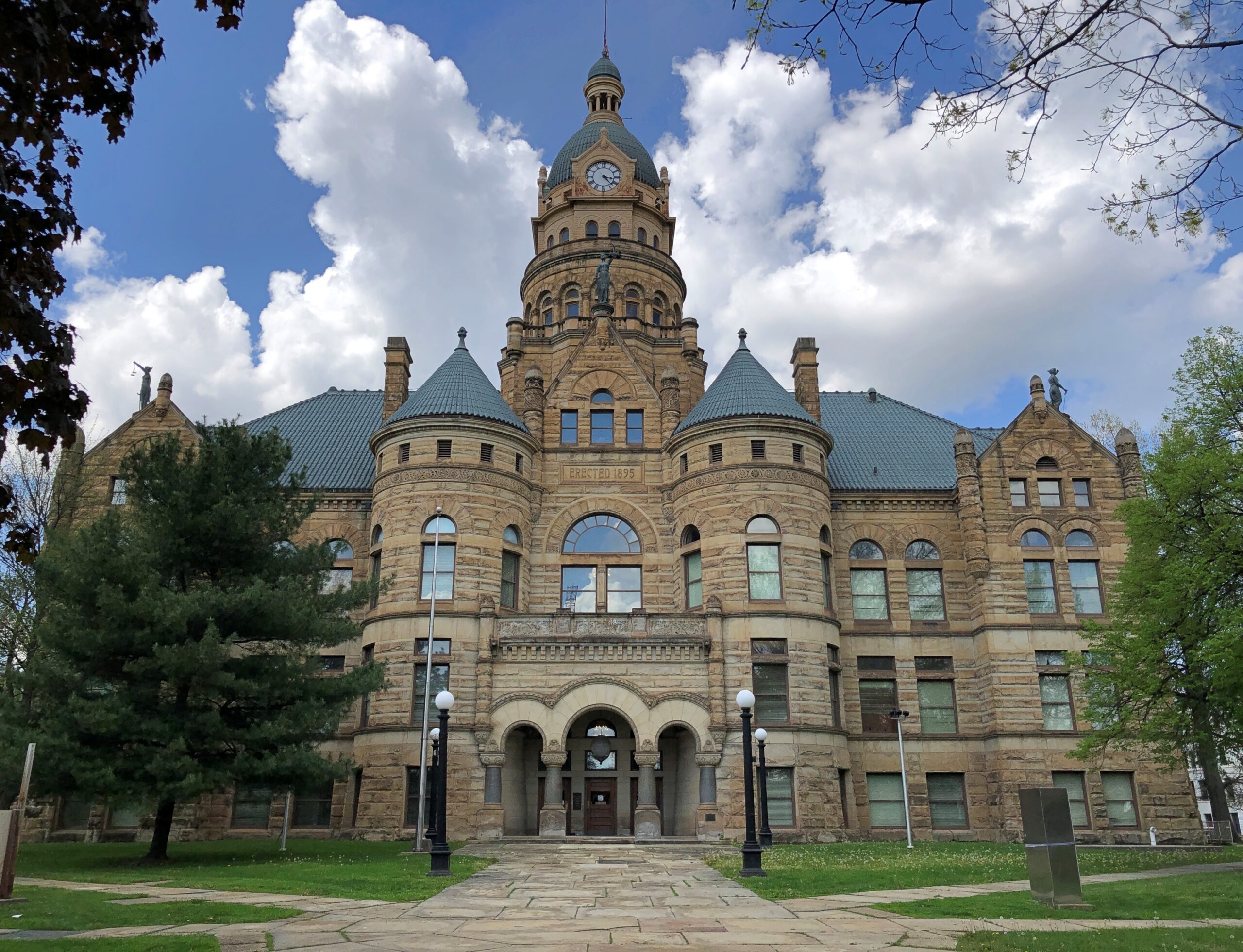
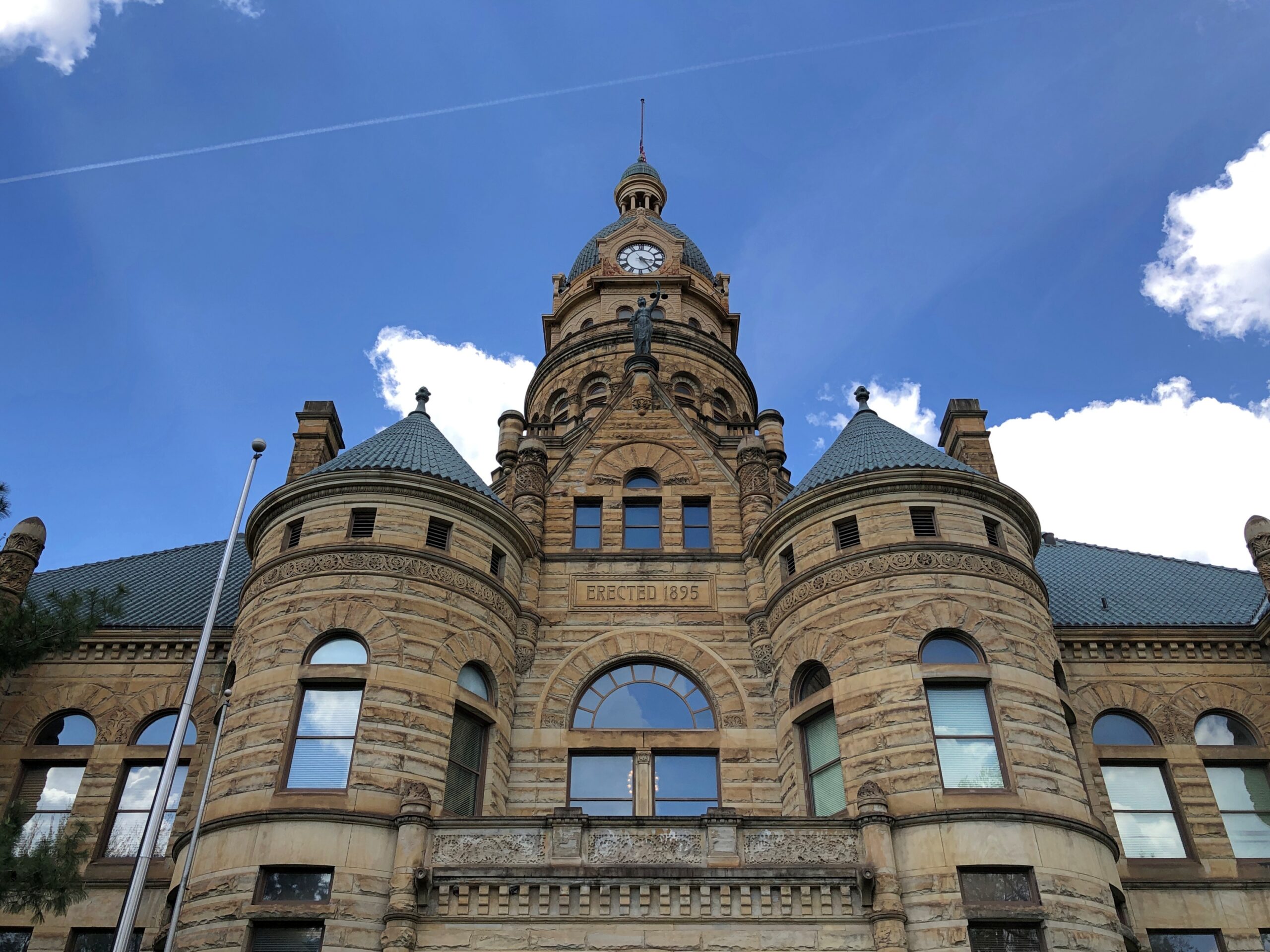
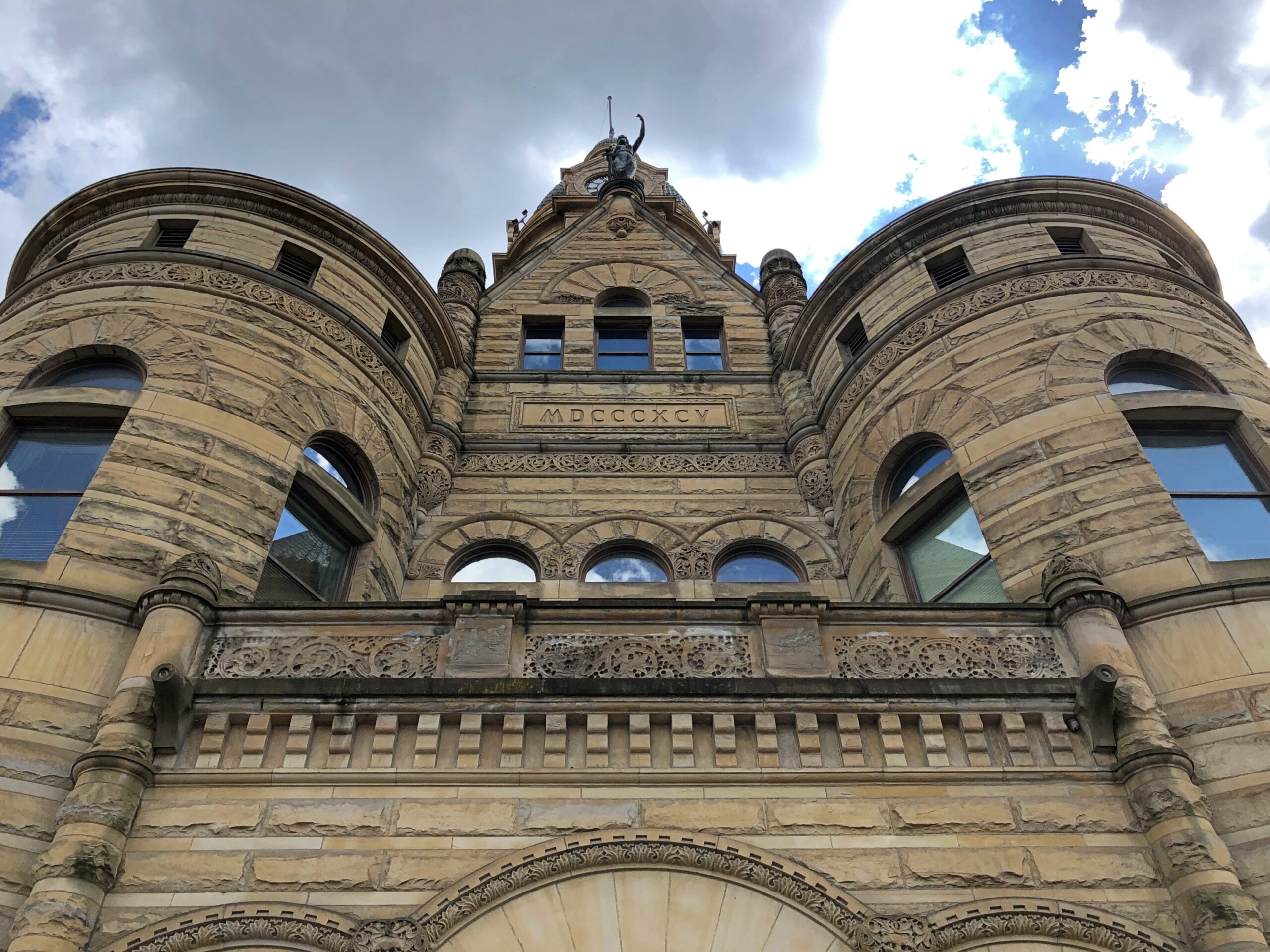
Sometimes the rewards are worth the slight meander. There I was in Niles, done with my visit to McKinley sites, and I thought: Warren’s just up the road. So I went. Warren is the seat of Trumbull County, and a prosperous place 100-plus years ago – Packard got its start there, for one thing – and so the county could afford a grand courthouse in 1895. That was worth the side trip right there.
Front and back.
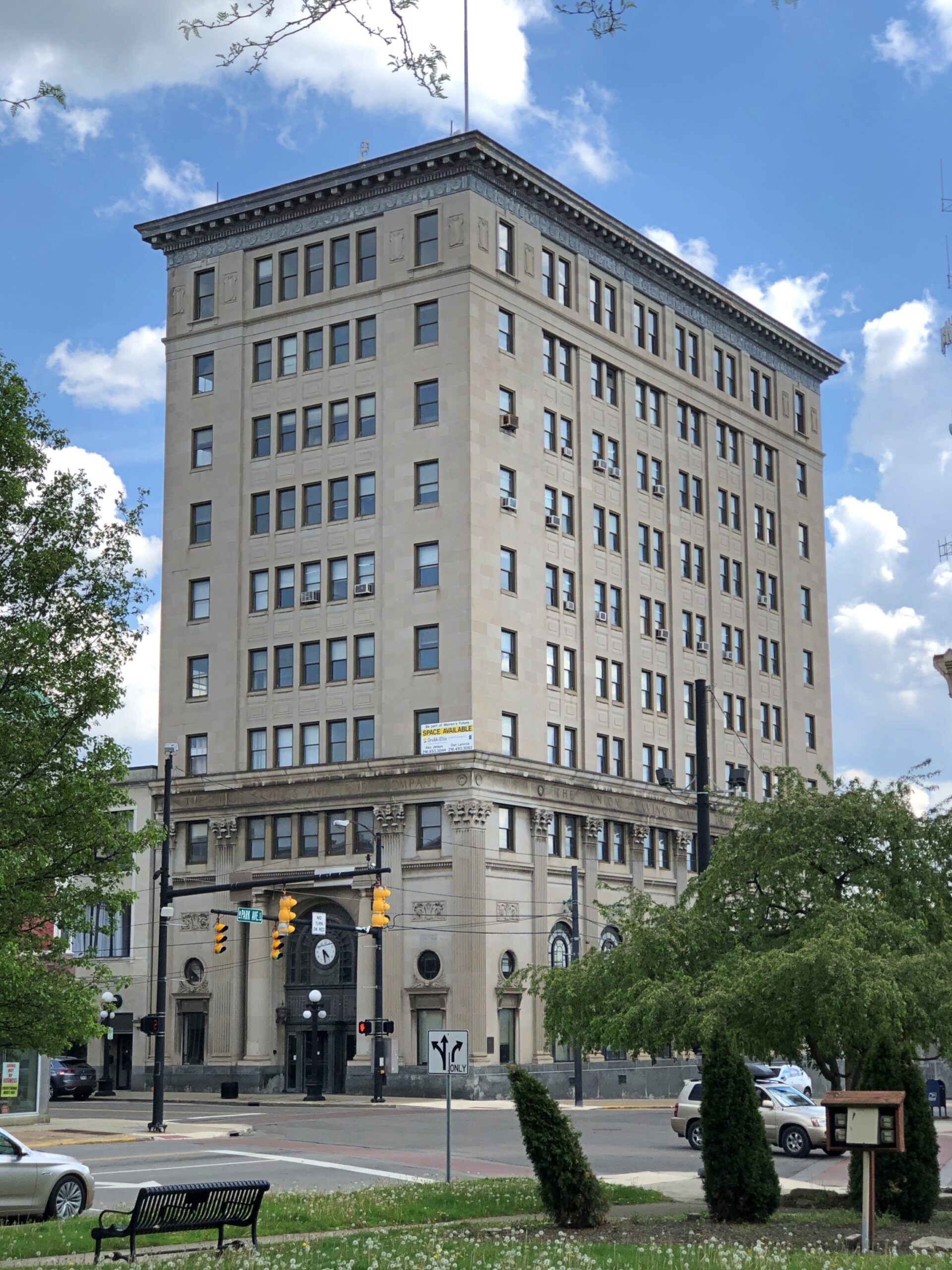
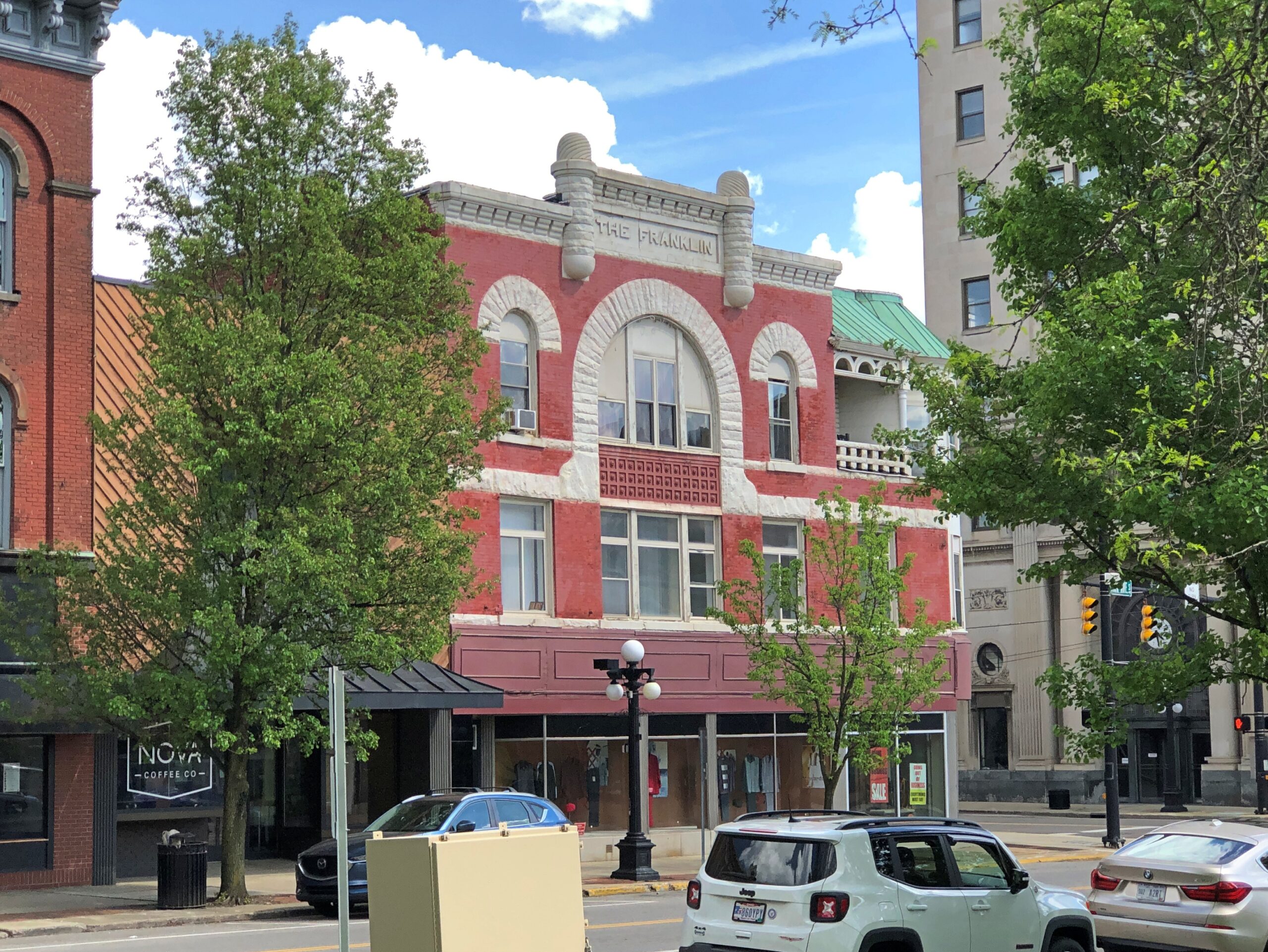
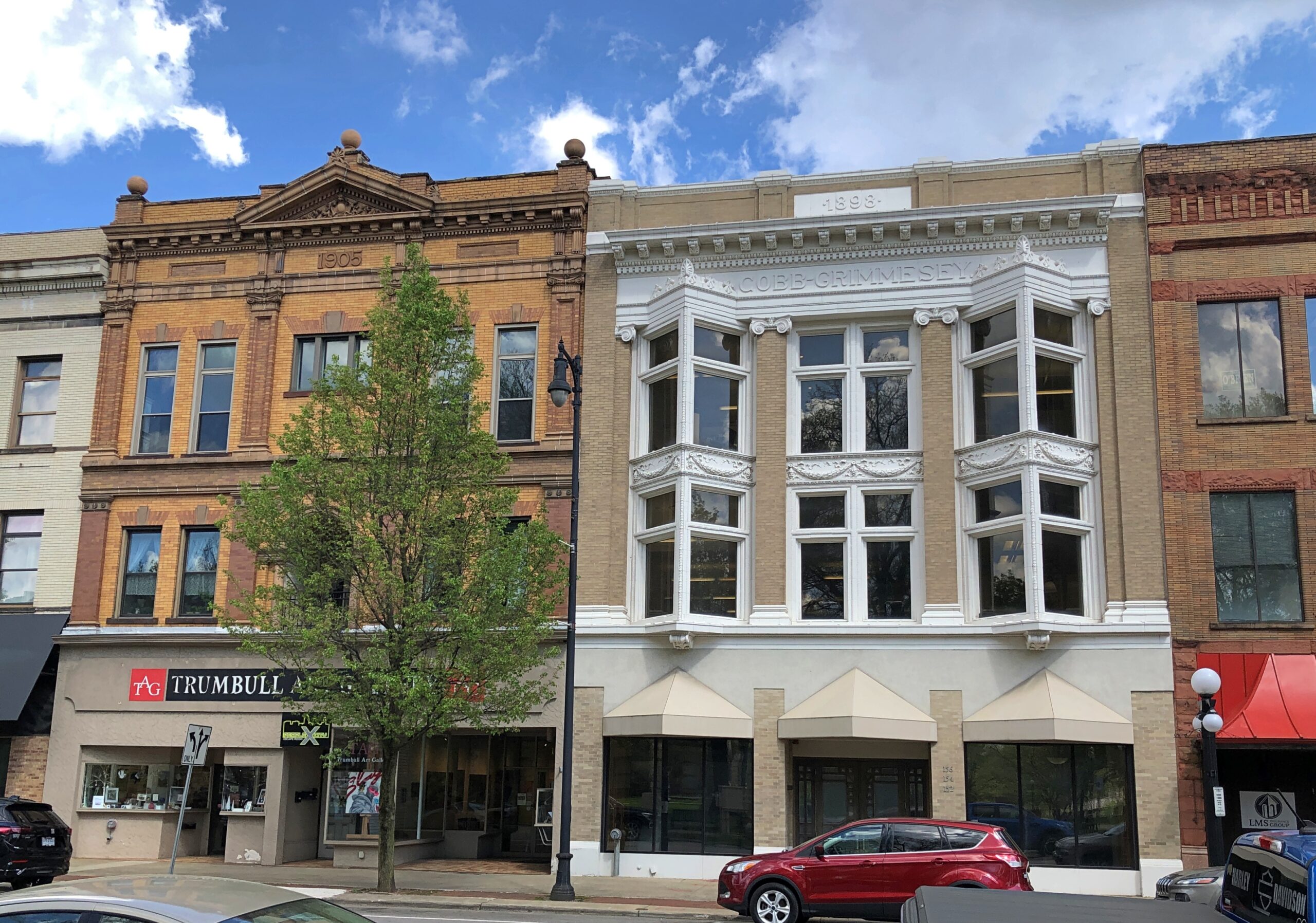
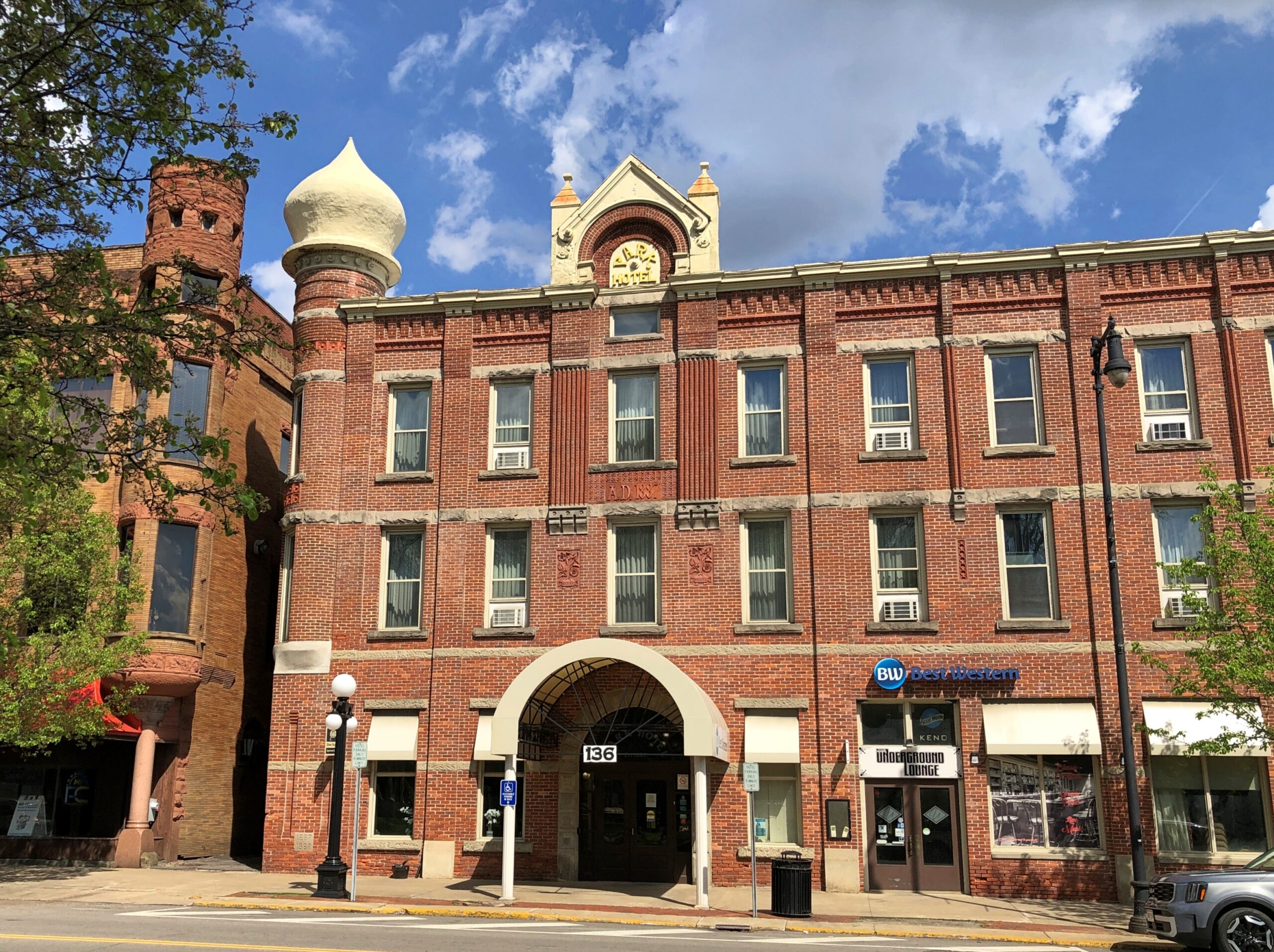
The buildings ringing the courthouse were also worth a look. Warren might not be the industrial hub it once was (though Ohio is making a comeback in that regard), but it isn’t in bad shape, from the looks of things.
That’s what commercial buildings need more of: onion domes.
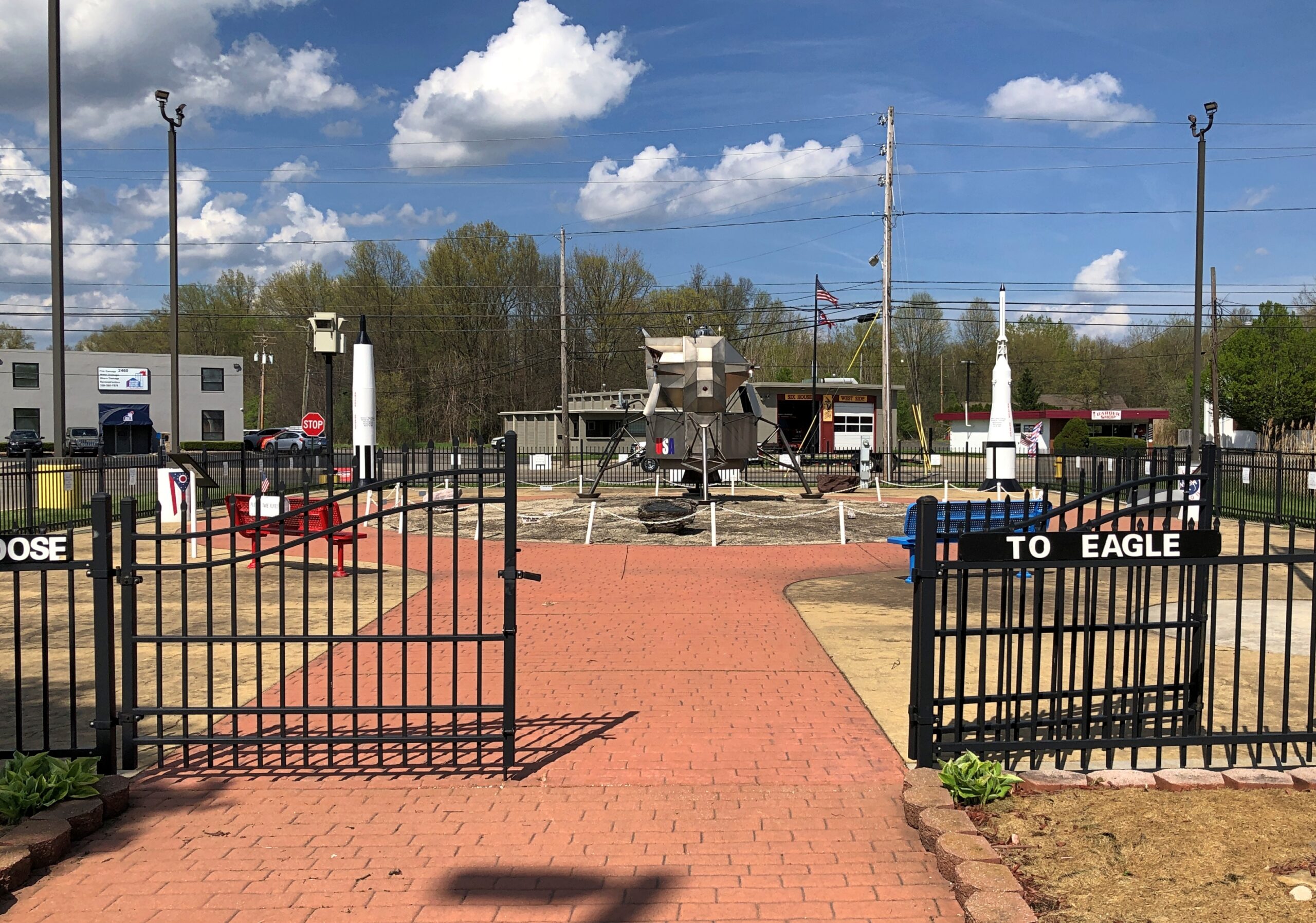
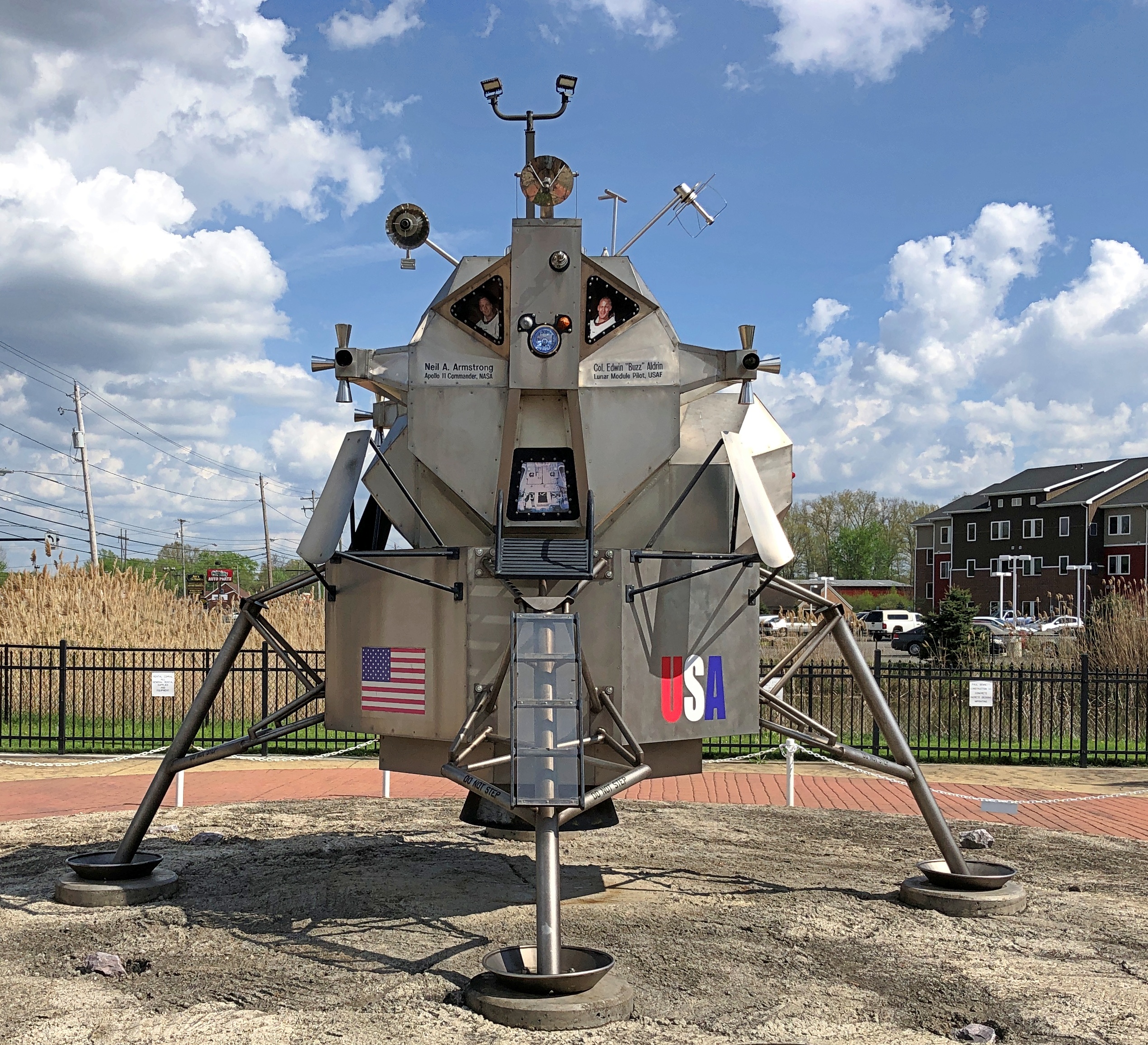
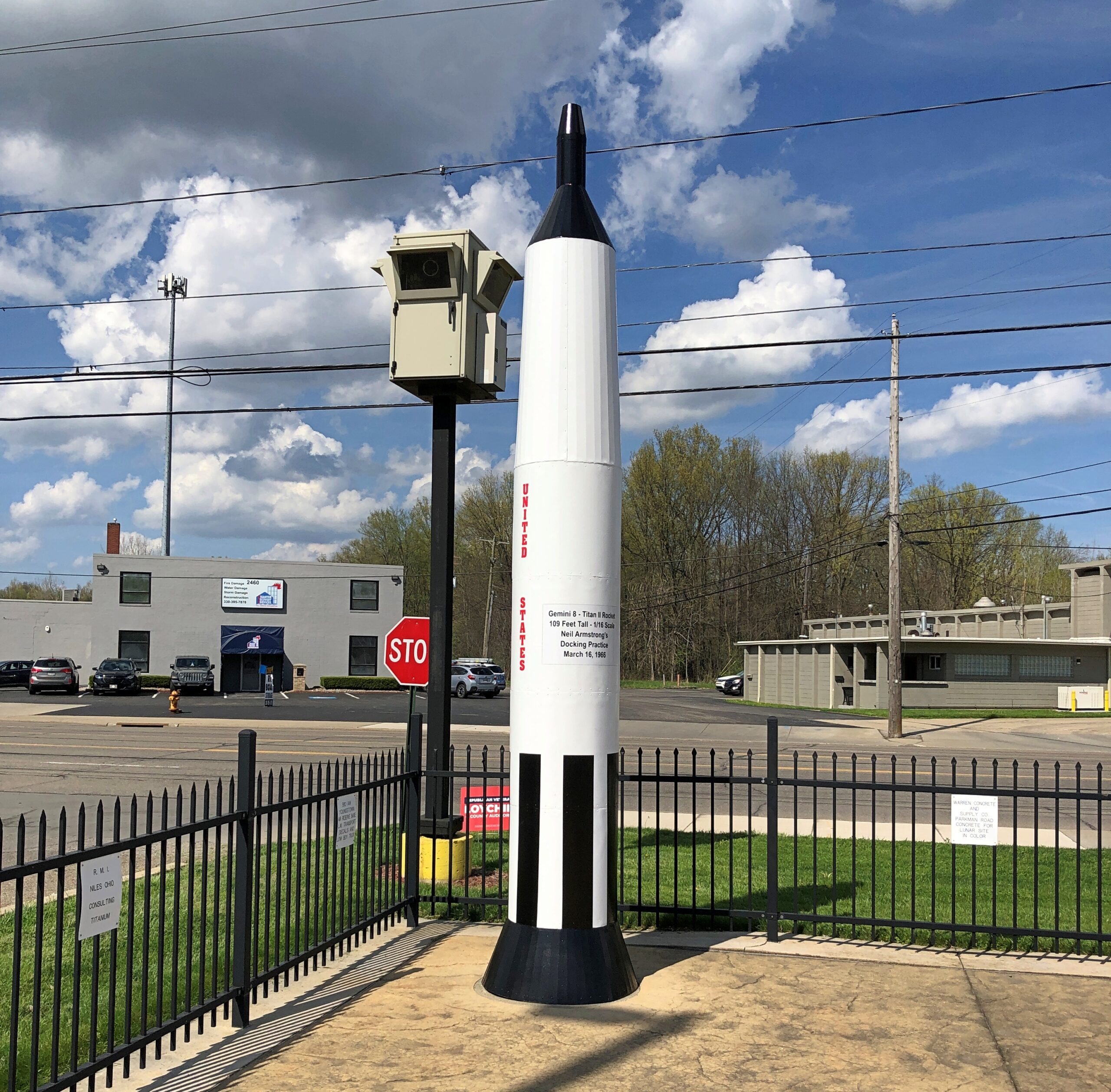
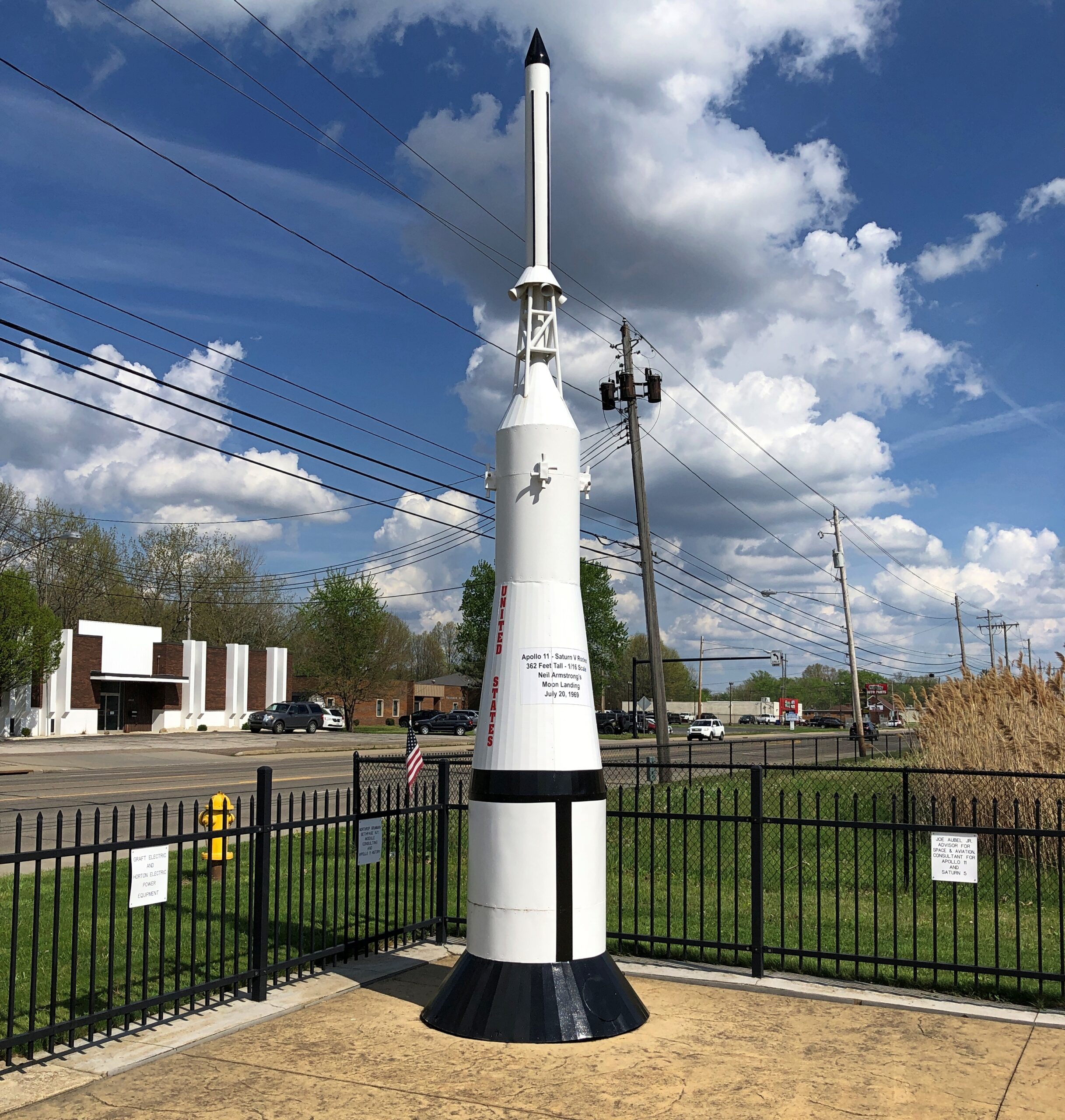
One more place in Warren before I headed west: a replica lunar module on a mock lunar surface.
It’s called “First Flight Lunar Module.” Its web site says: “Neil Armstrong and his family made their home in Warren, Ohio, for a time when he was a young boy. An interest in flying developed at an early age and on July 26, 1936, at the age of 6, young Neil and his father, Stephen, embarked on his first flight in a Ford Tri-Motor airplane – a Tin Goose – from Warren Airways on Parkman Road, now the site of the Apollo 11 First Flight Lunar Module…”
Replicas of Gemini 8 and the Apollo 11 Command/Service Module are also at hand. (And the Escape Tower and part of the third stage, too.)
“Neil’s achievements and ties to the local community inspired retired area photographer Pete Perich’s dream to create a memorial honoring Armstrong. Through the vision of Pete’s daughter, Linda Carpenter, and the technical assistance of Lisa Goetsch, the long-time dream began to become a reality in the summer of 2001.”
Cool. Another benefit of nonlinear tourism for me.
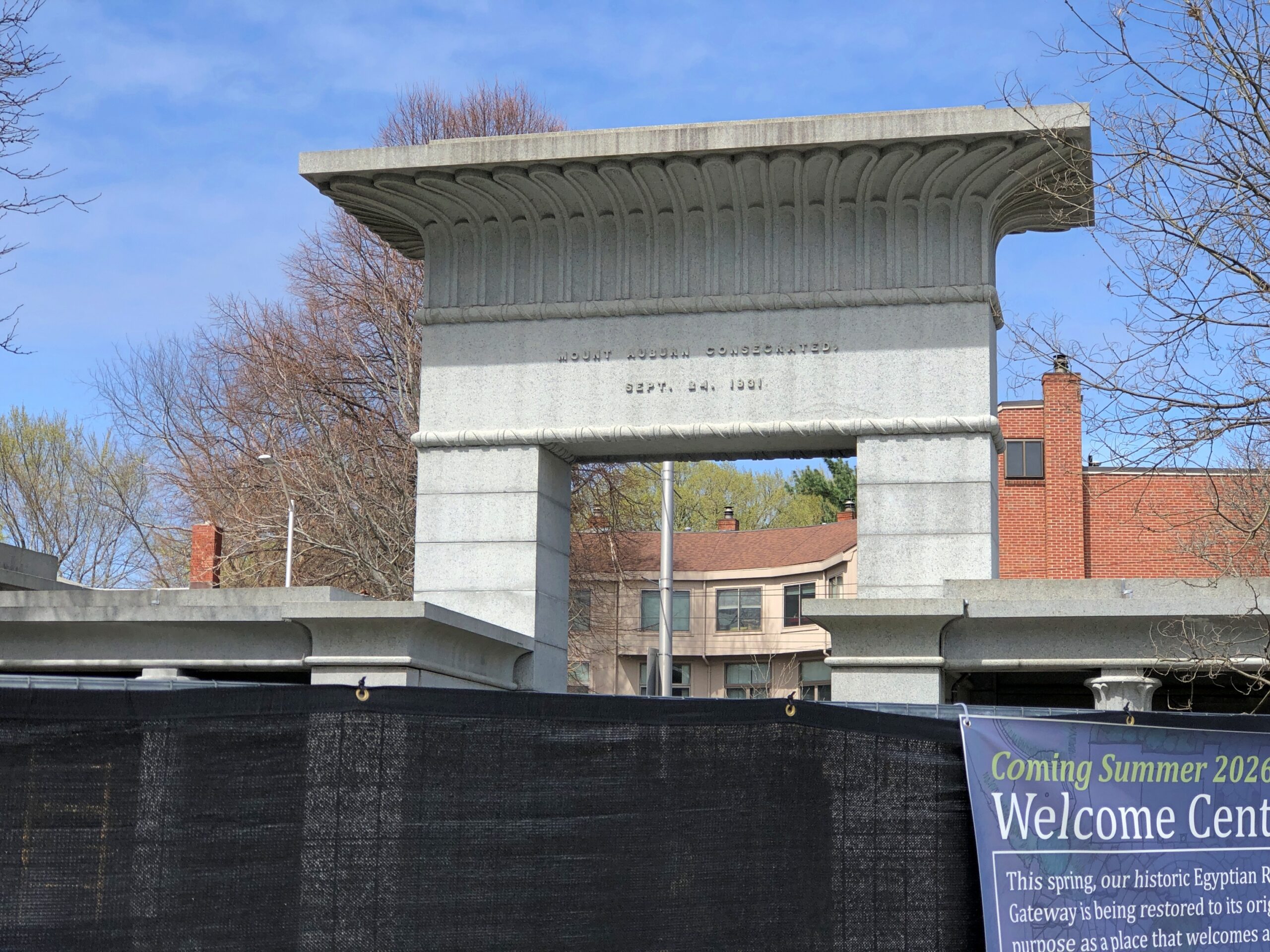
The main gate of Mount Auburn Cemetery, an Egyptian Revival structure, was behind a temporary fence the day I dropped by. That’s only reasonable, as an object that needs periodic renovation.
I took a paper souvenir from the cemetery, one that’s given away: a detailed map and guide. An exceptionally detailed map and guide, I should add, including not only the vehicular roads that twist around the grounds (something like the roads in greater Boston), but all of the many, many footpaths, all of which seem to have names. Also noted are special features, including chapels, ponds, named knolls, the sites of 62 notable people buried on the grounds, plus the sites more than 20 notable memorials or works of funerary art. It’s more than anyone could take in during a short visit, or even a lot of longer visits.
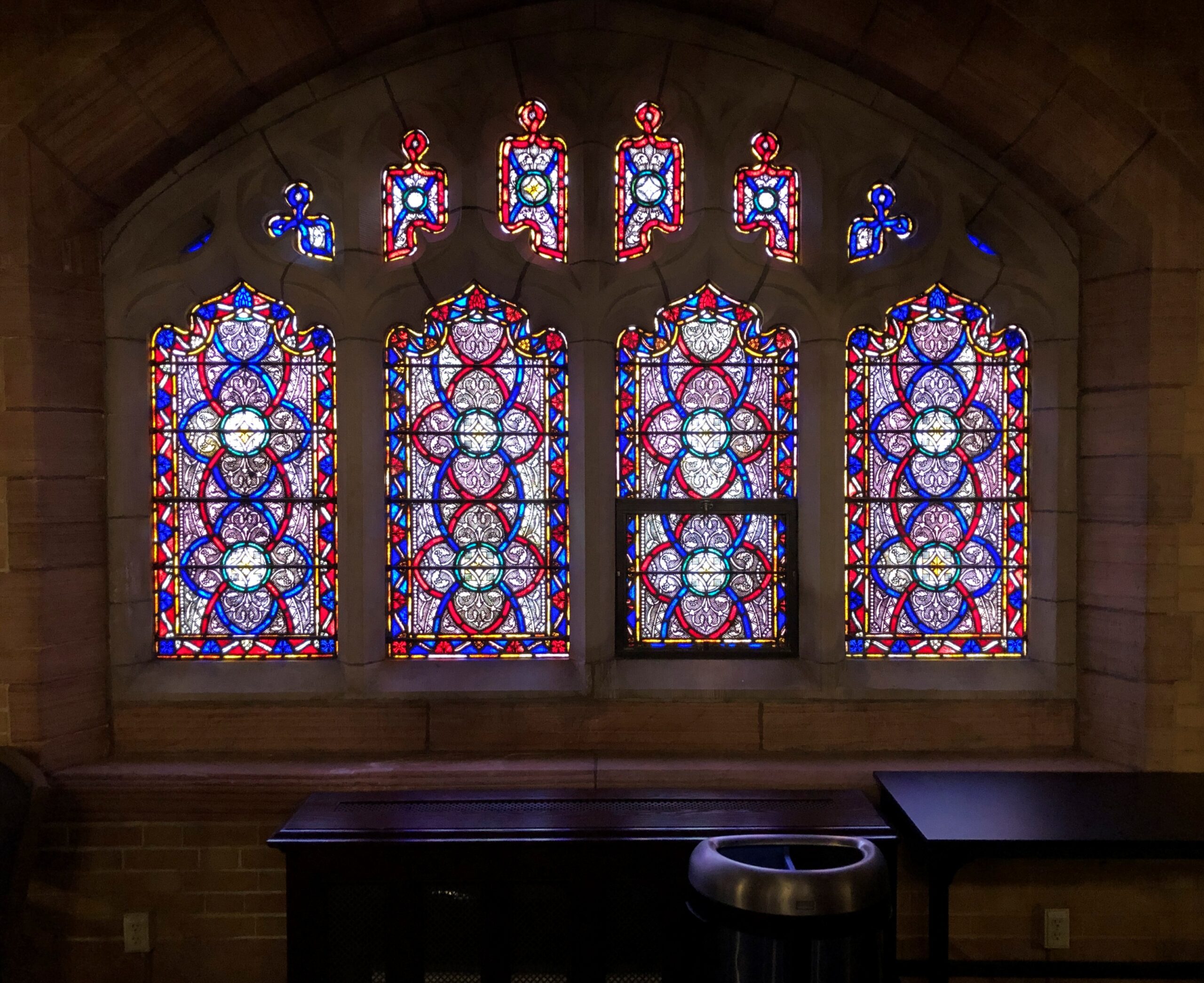
That’s never deterred me. I parked near the entrance and set out, picking up the map at the visitors center and spending a moment at Story Chapel.
The chapel is named for Joseph Story (d. 1845), associate justice of the Supreme Court, colleague of John Marshall and, in as much as I know about the subject (not much), a titan of early U.S. jurisprudence. He was also first president of Mount Auburn and, when his time came, he was buried there, though that was among the many memorials I didn’t happen to see.
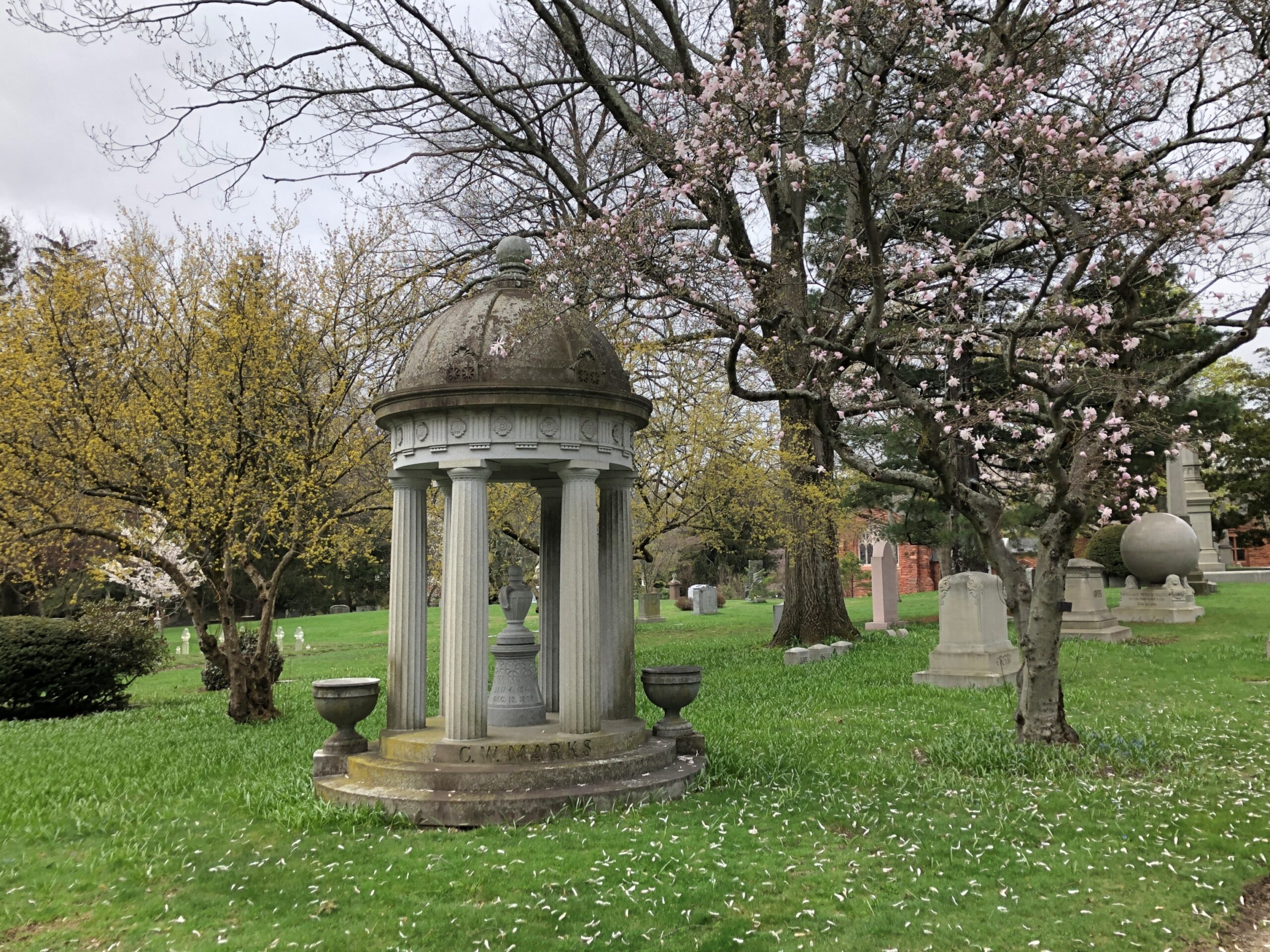
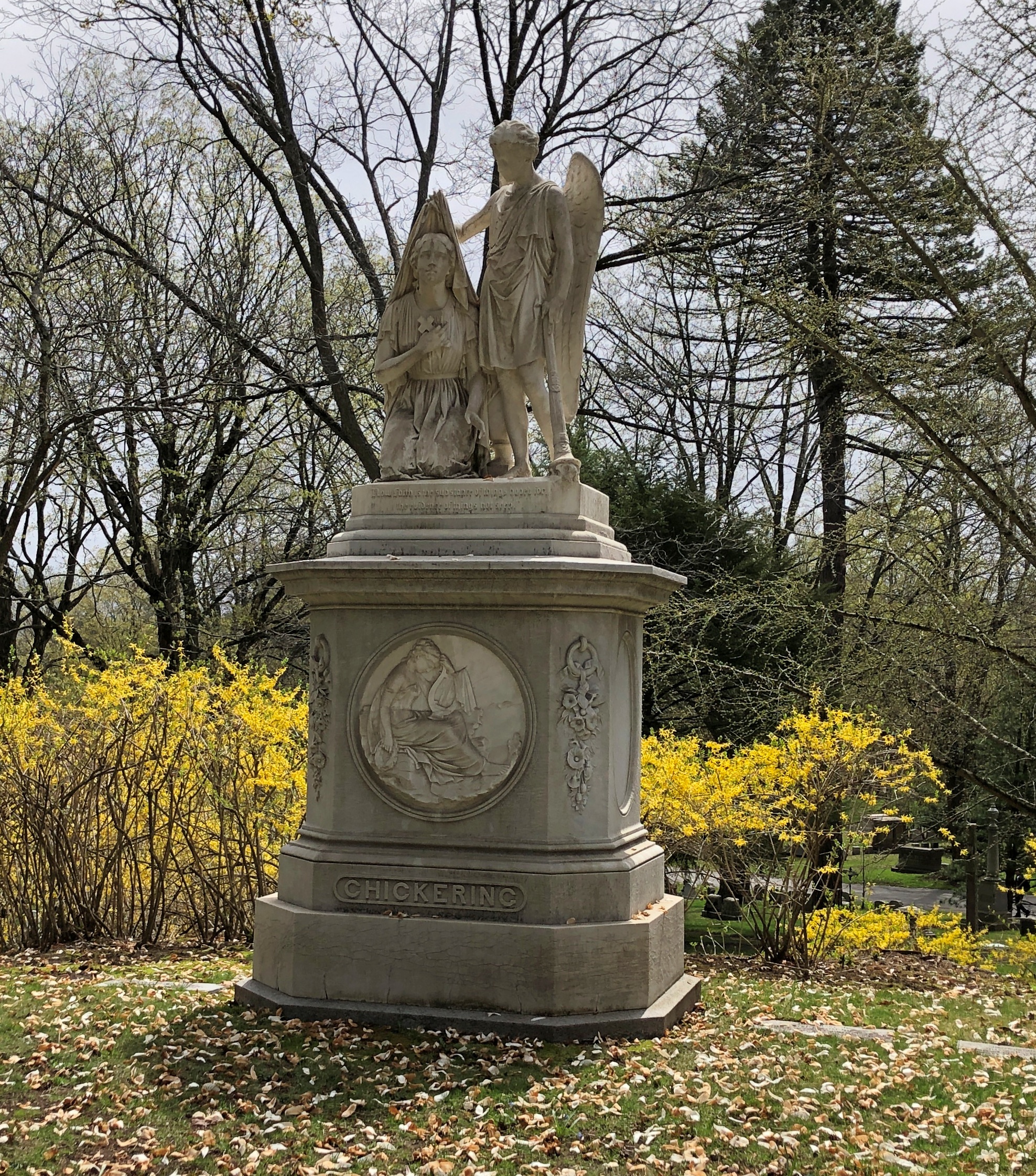
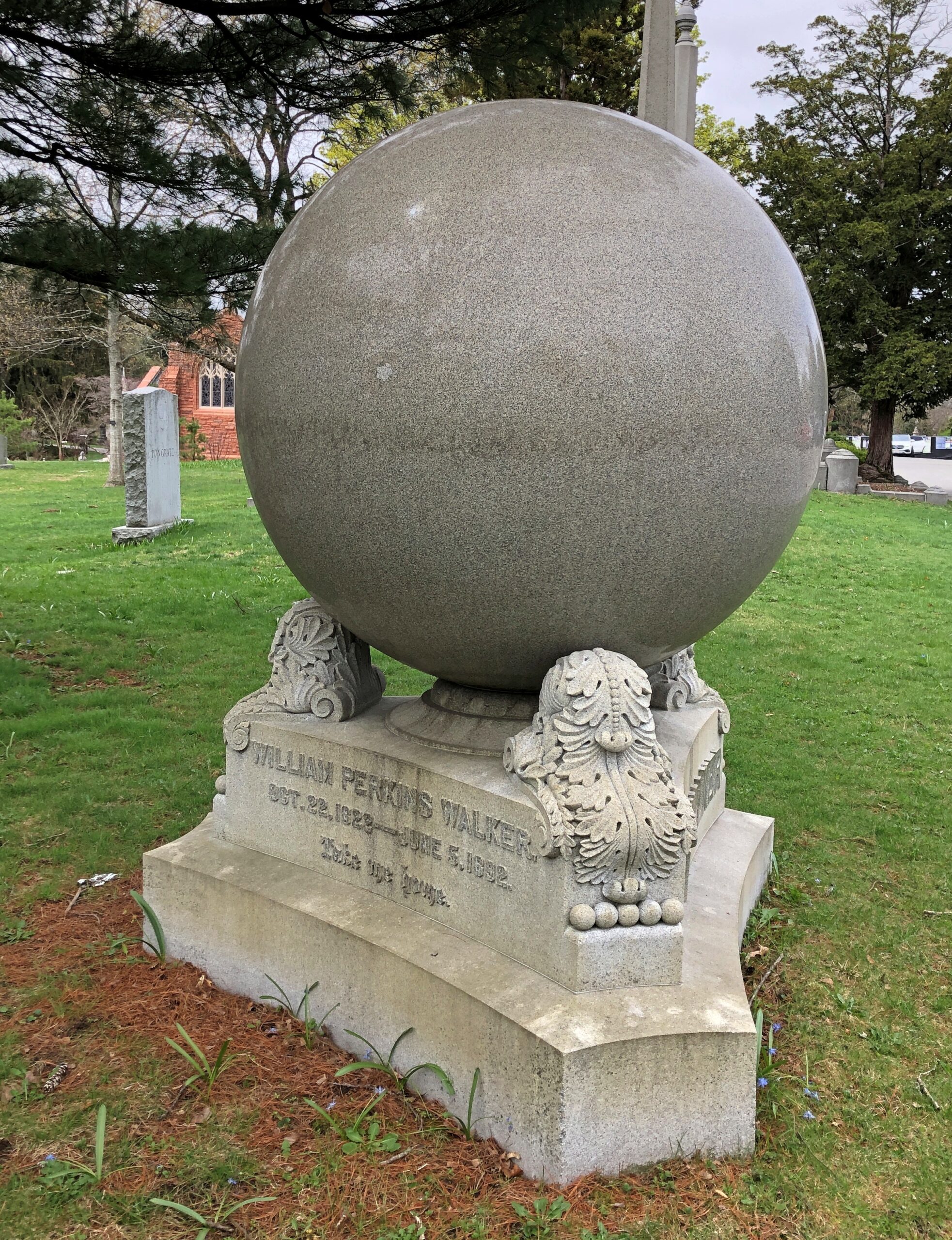
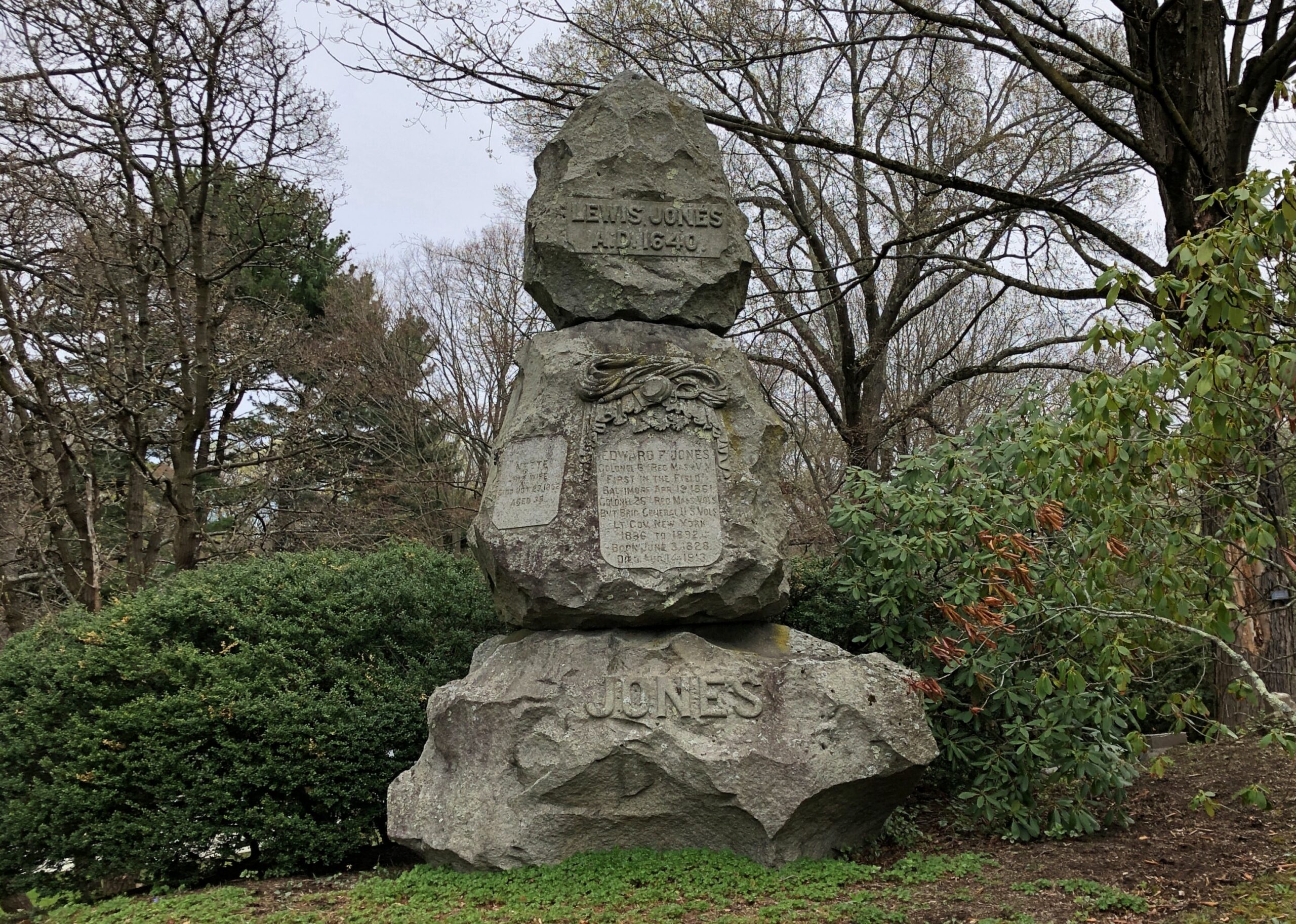
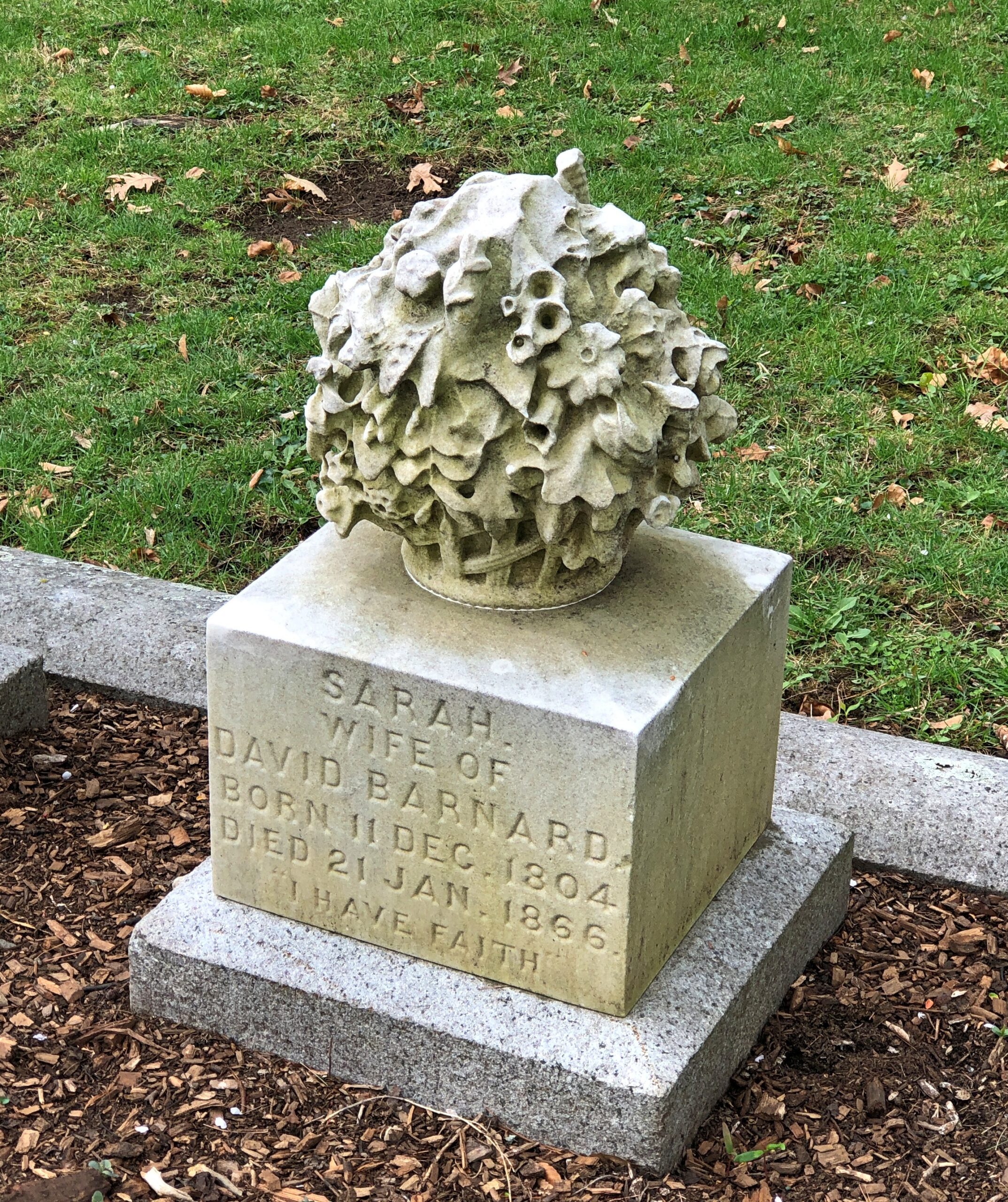
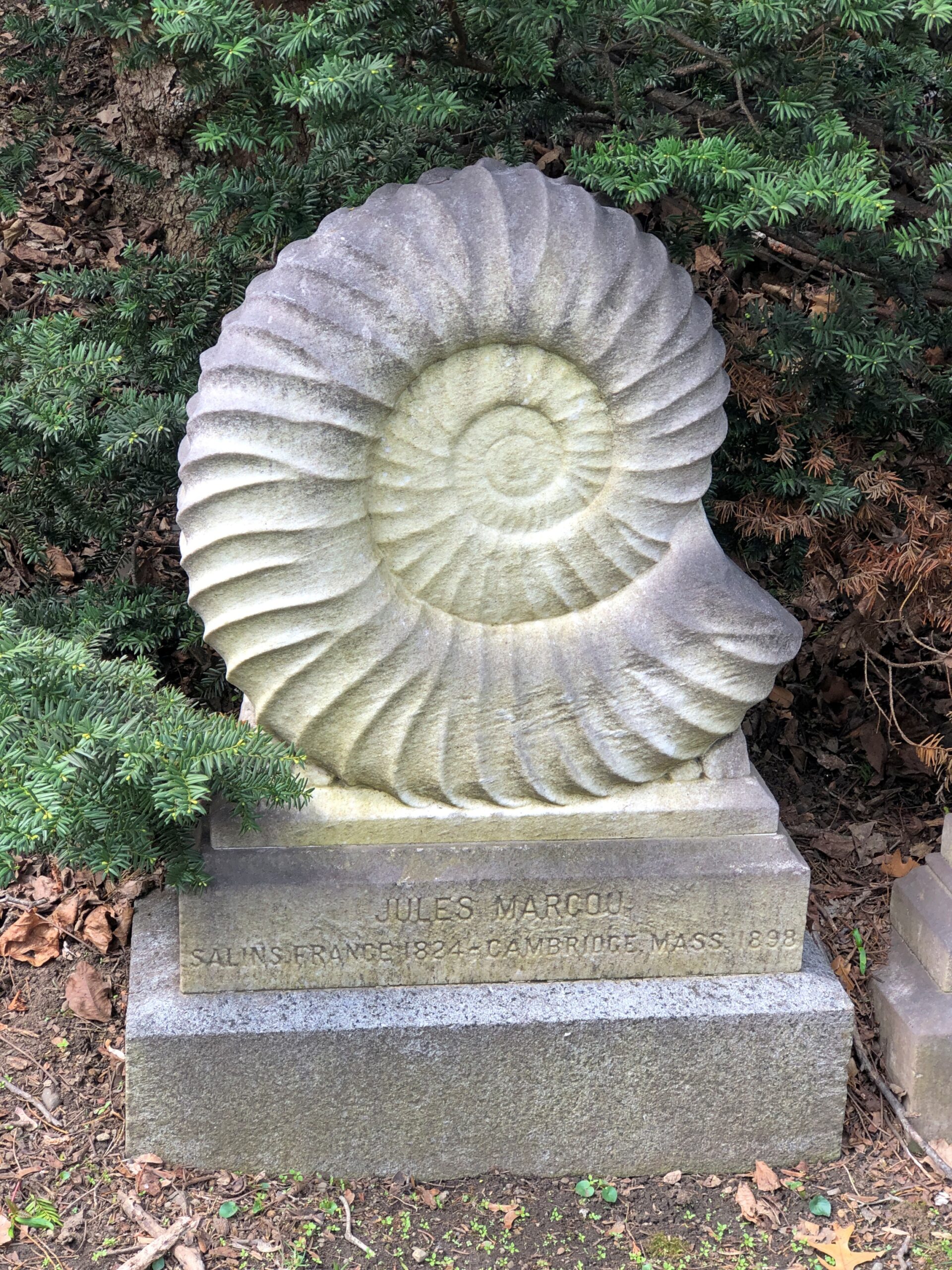
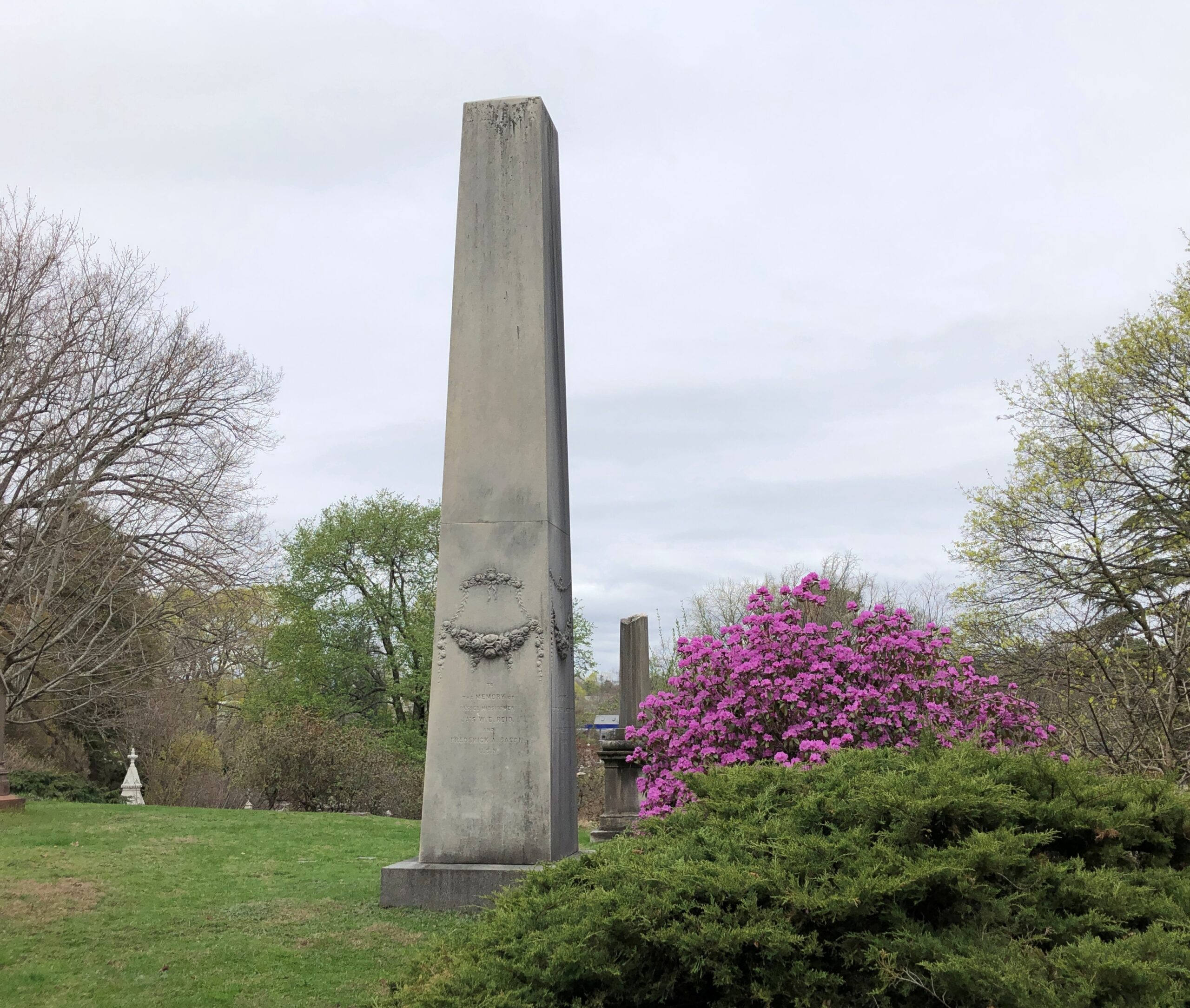
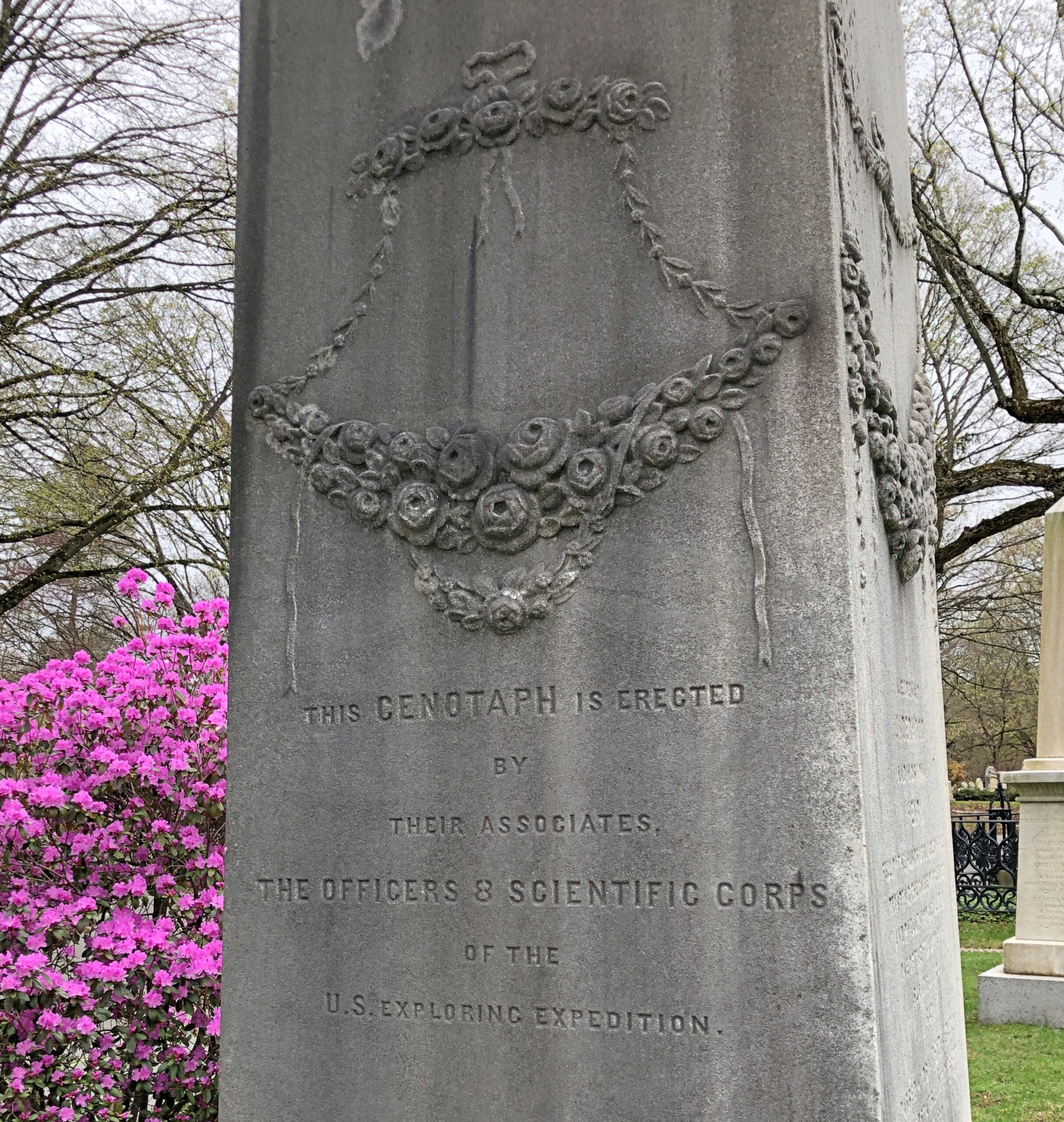
So many memorials. Some more conventional, but no less beautiful or impressive for it.
Some less conventional. Any grand cemetery needs a component of the unusual or odd.
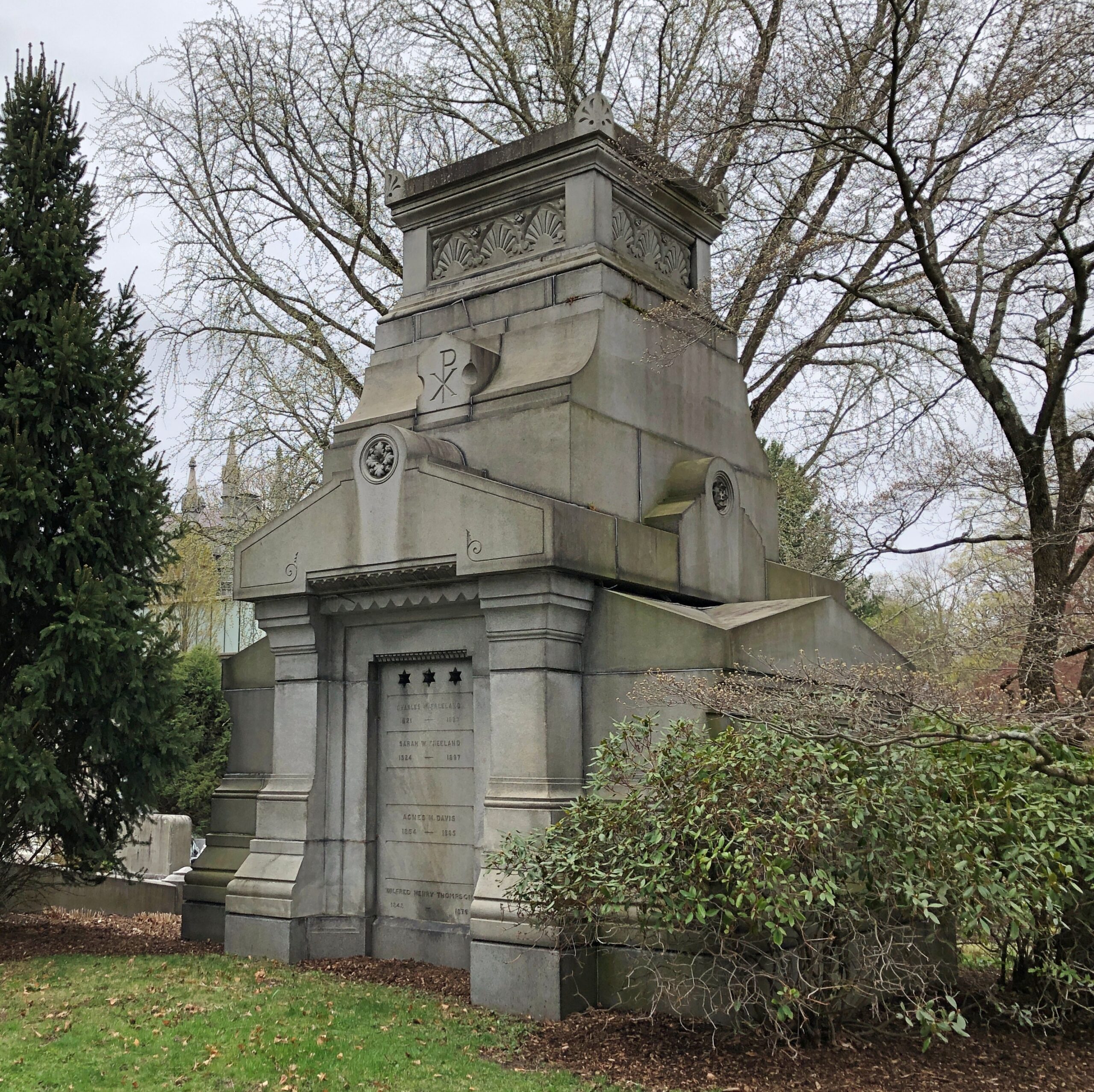
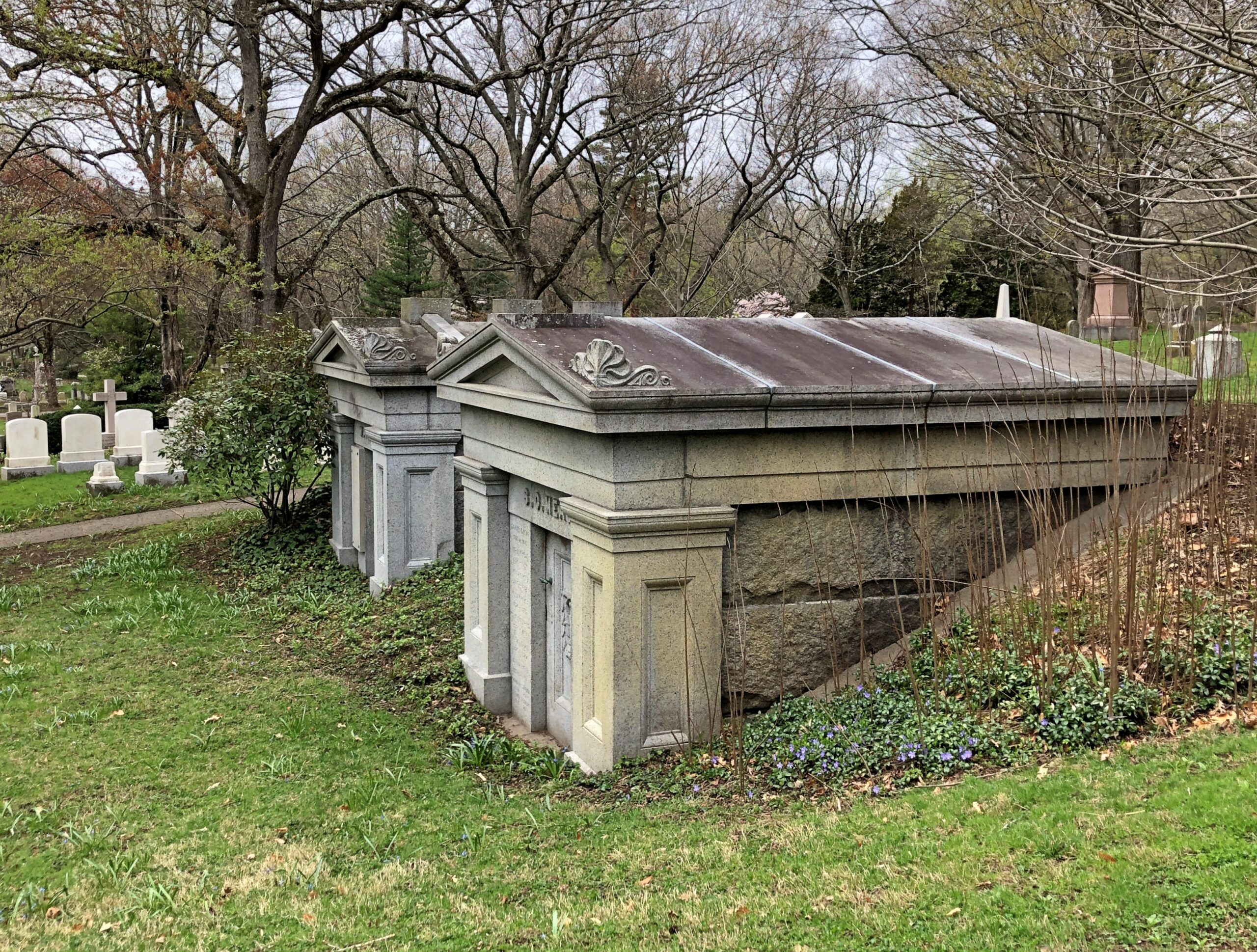
A number of mausoleums, though perhaps not as many as you’ll see at Green-Wood or Woodlawn in the Bronx.
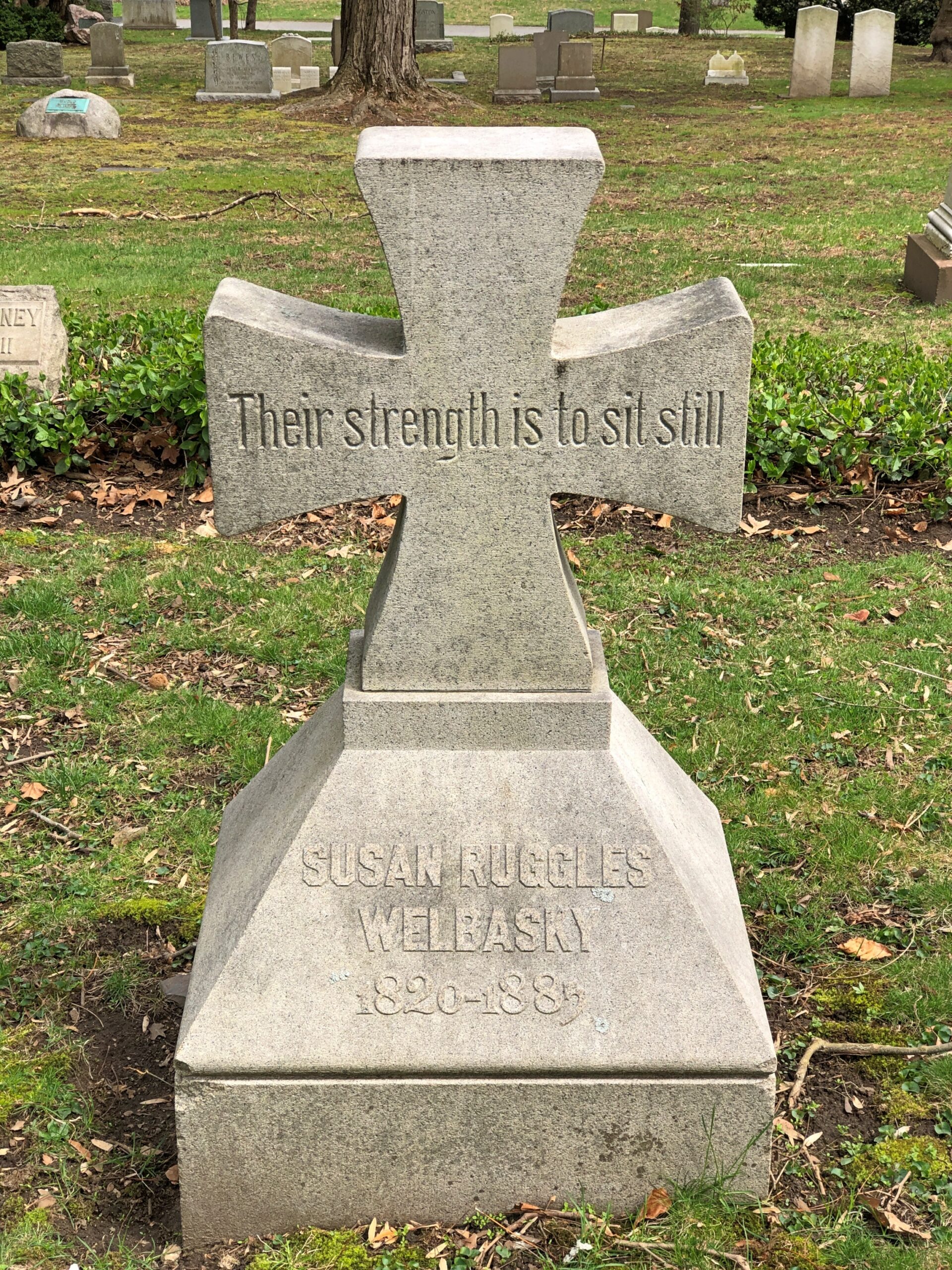
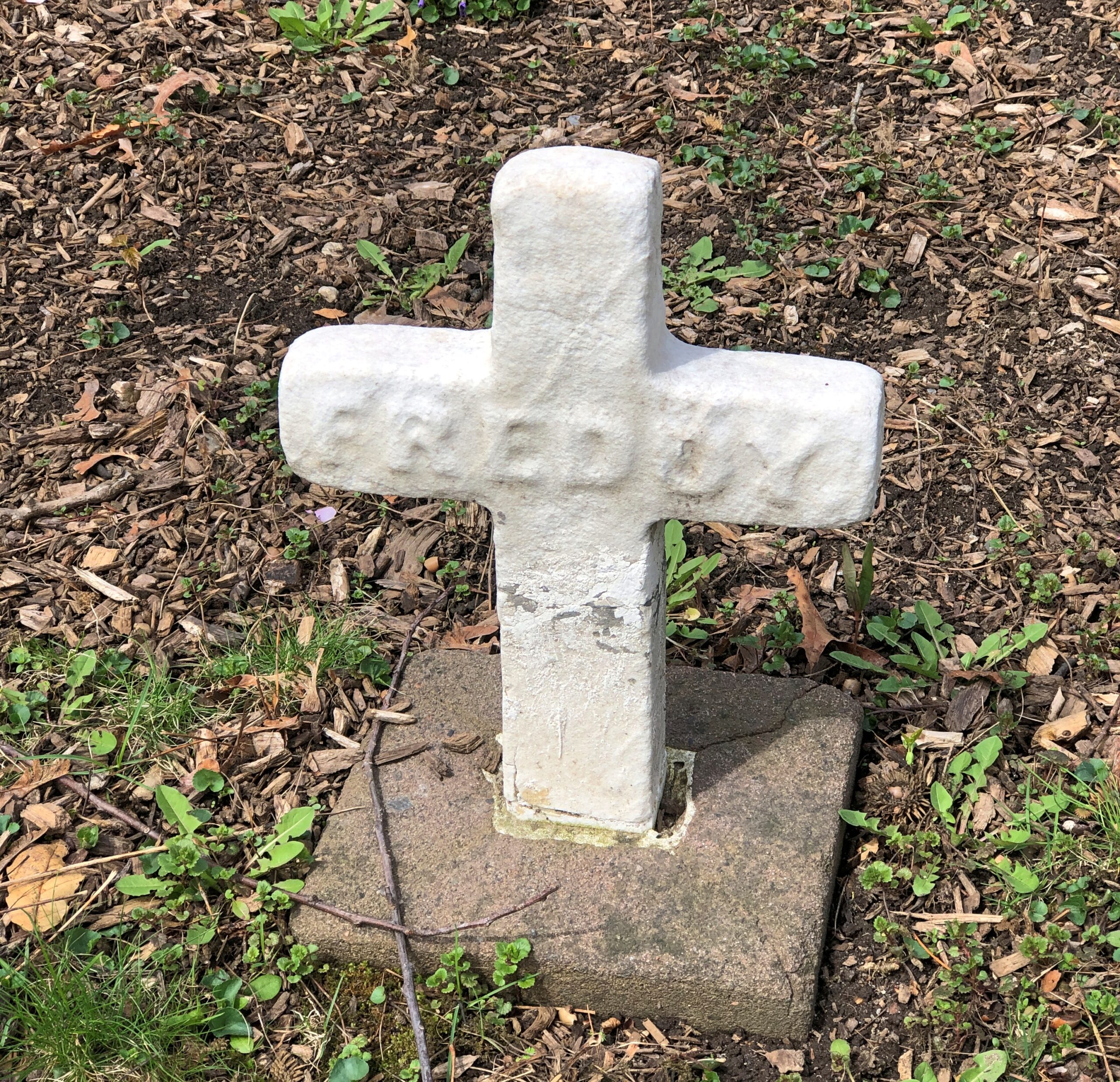
More modest stones.
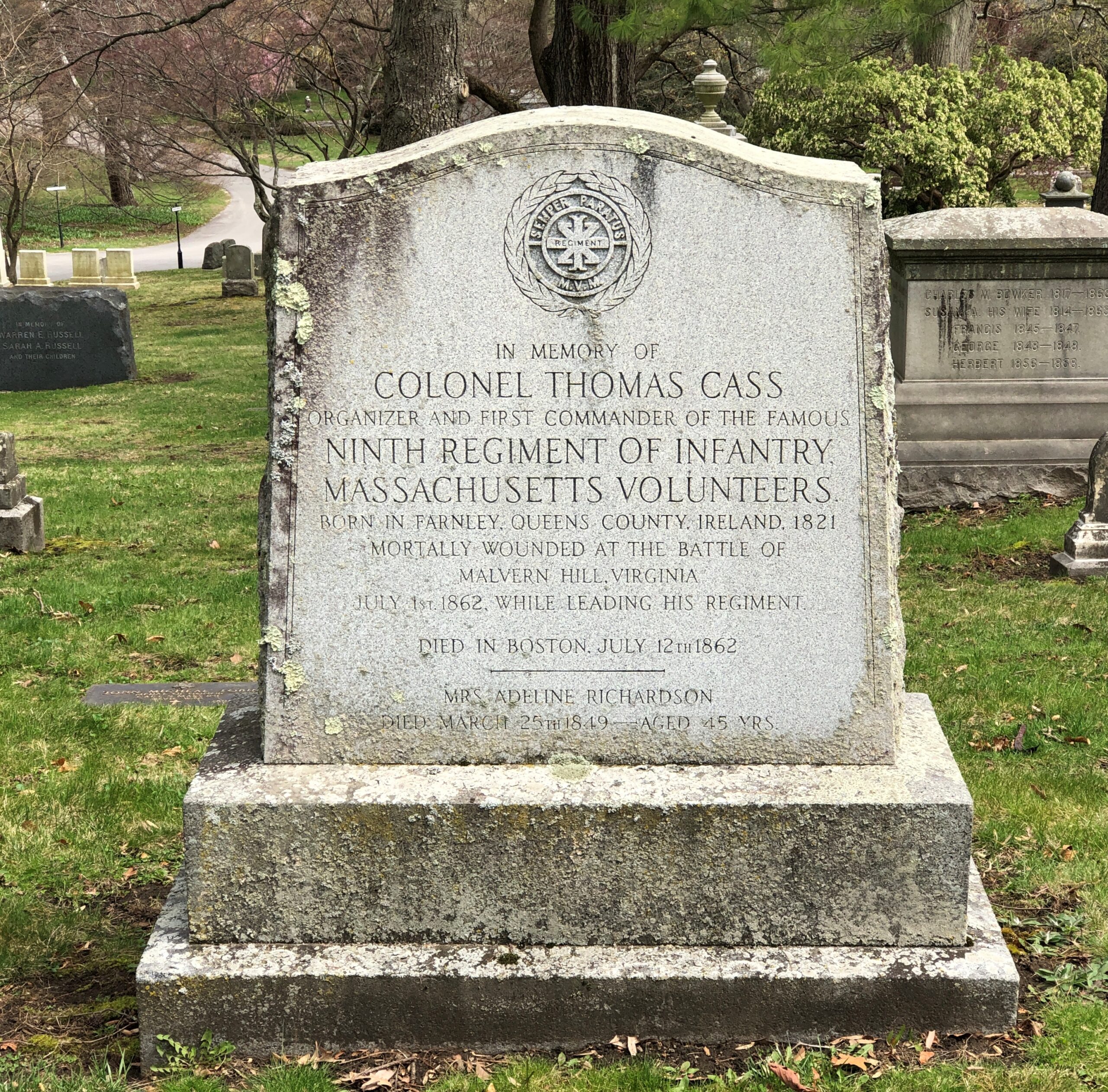
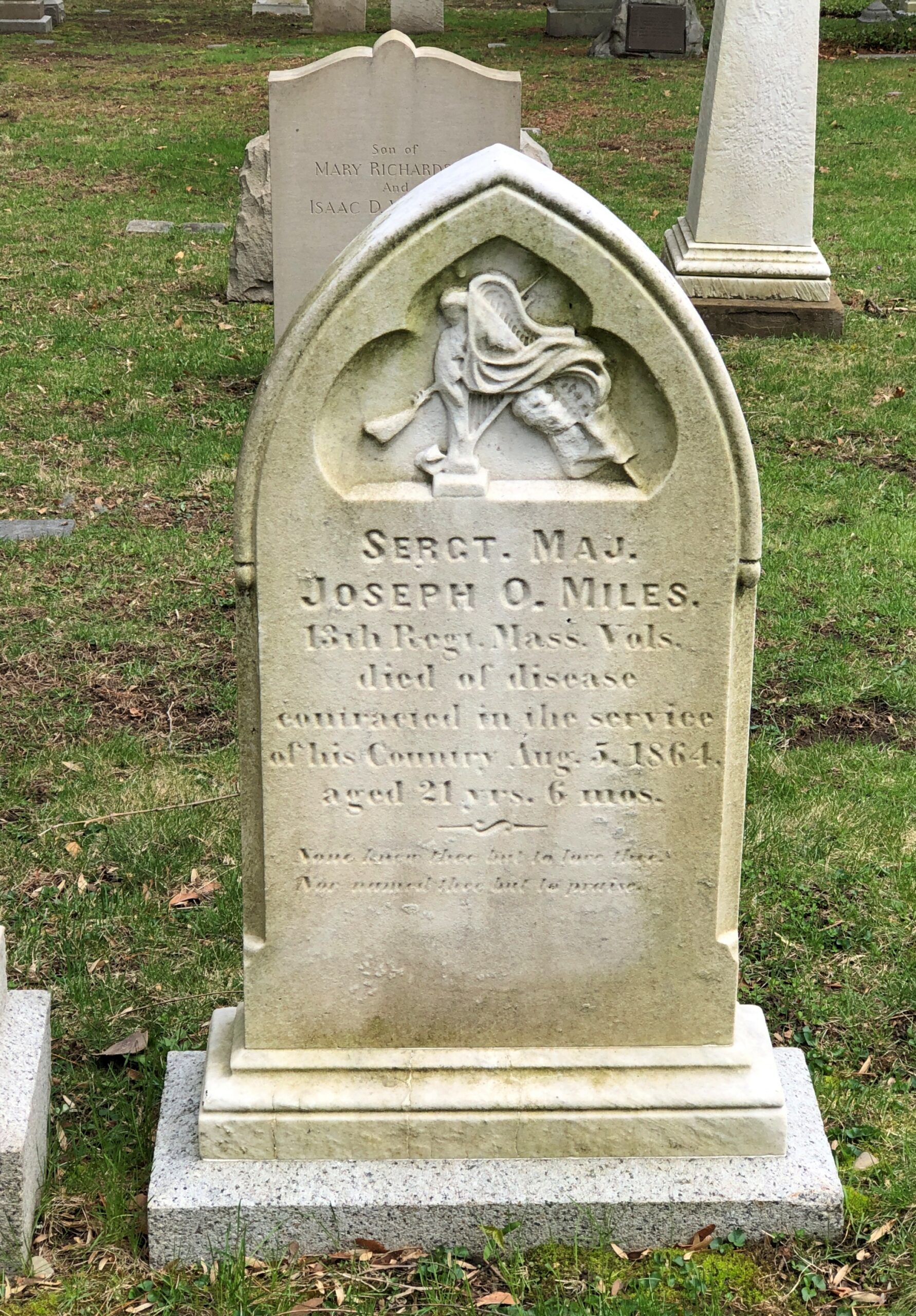
Men who died for the Union.
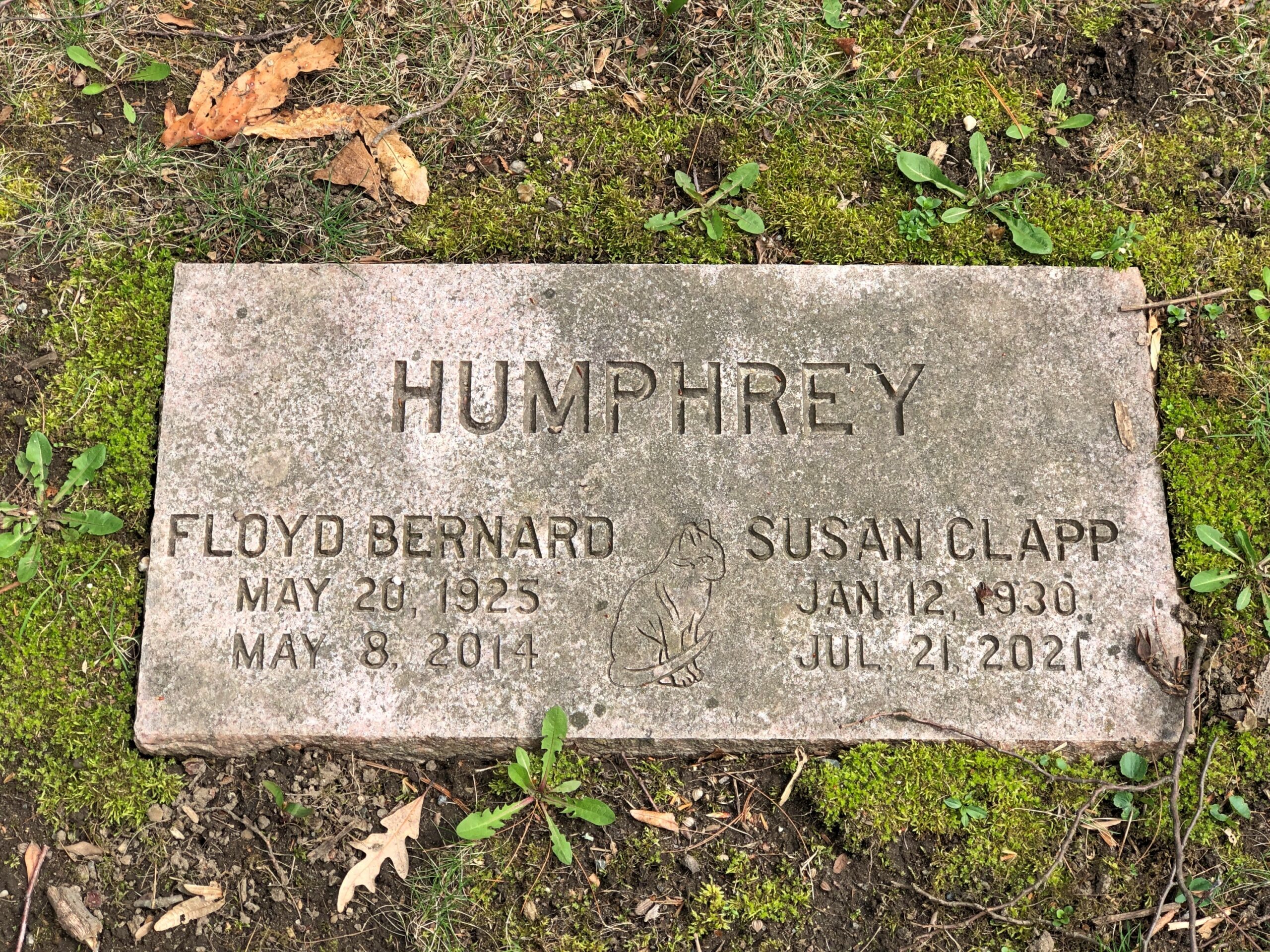
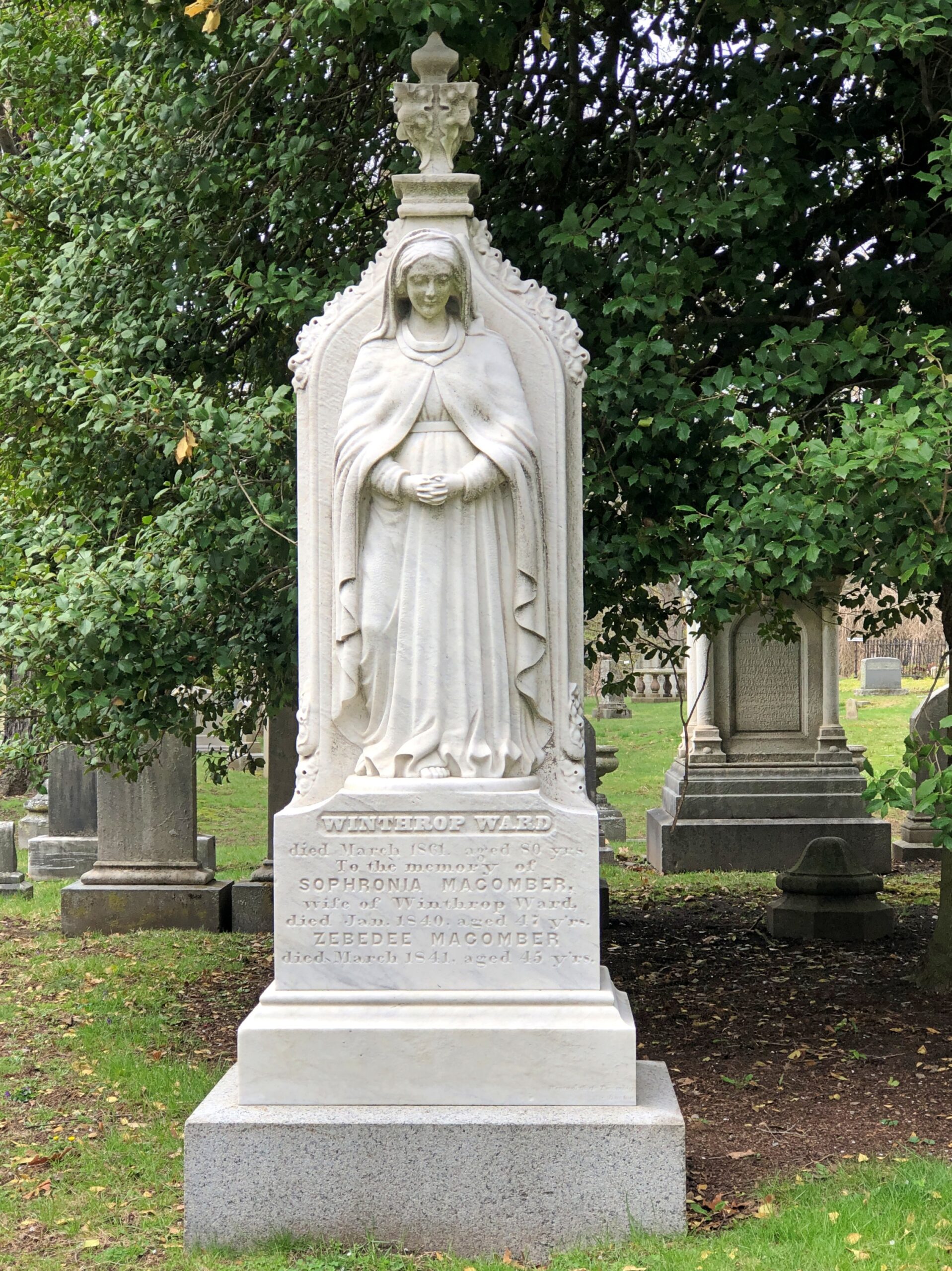
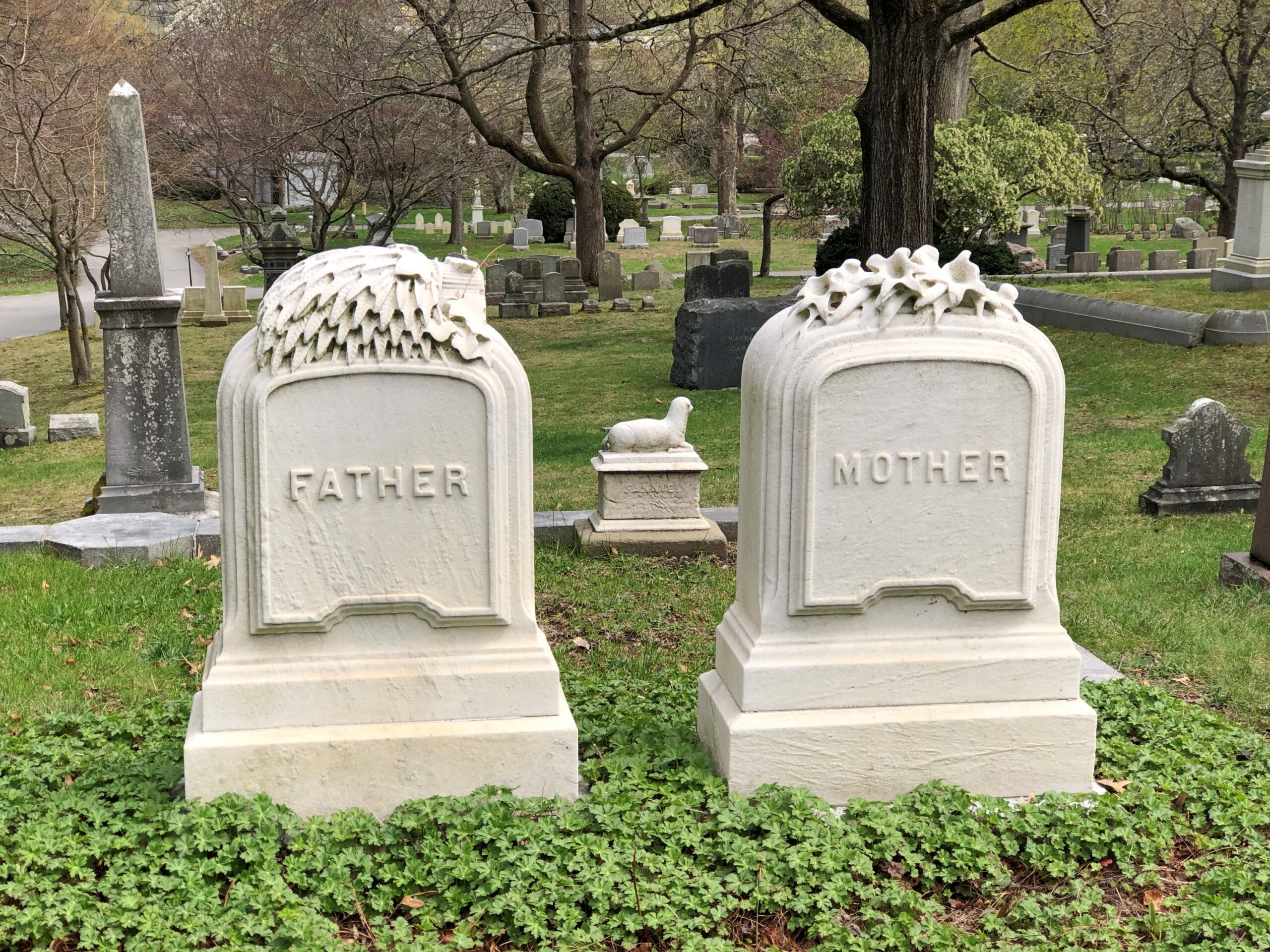
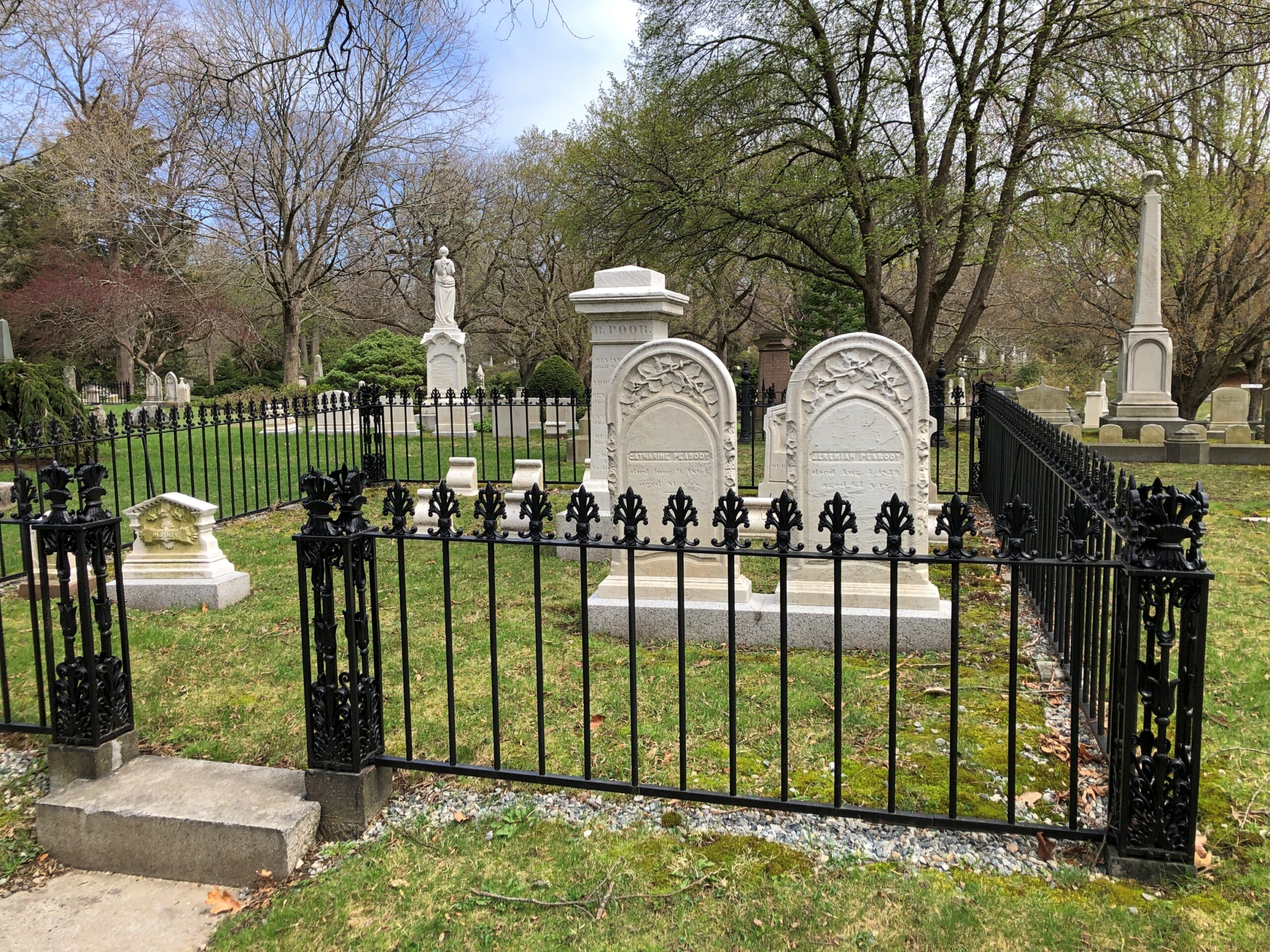
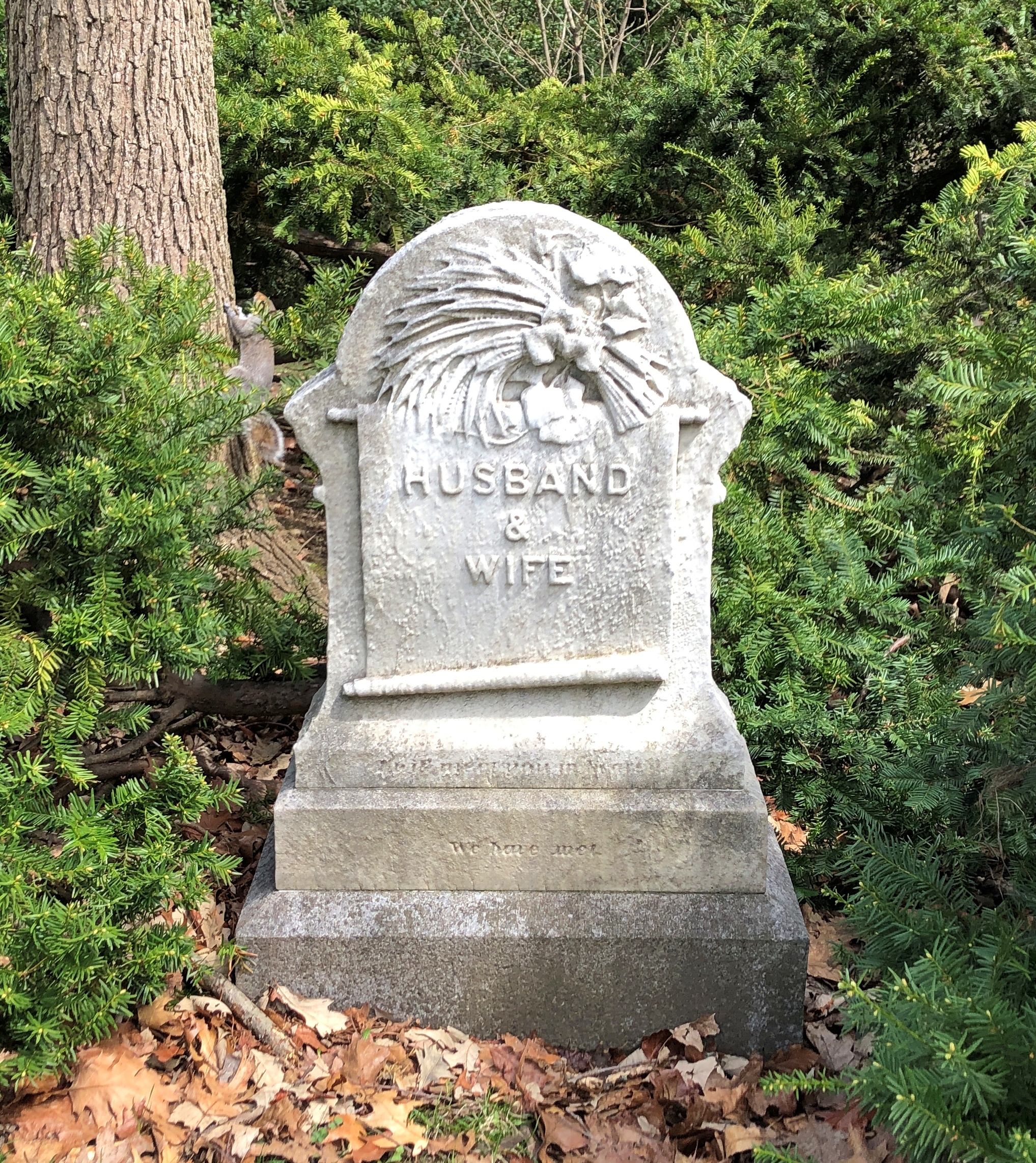
A good many couples.
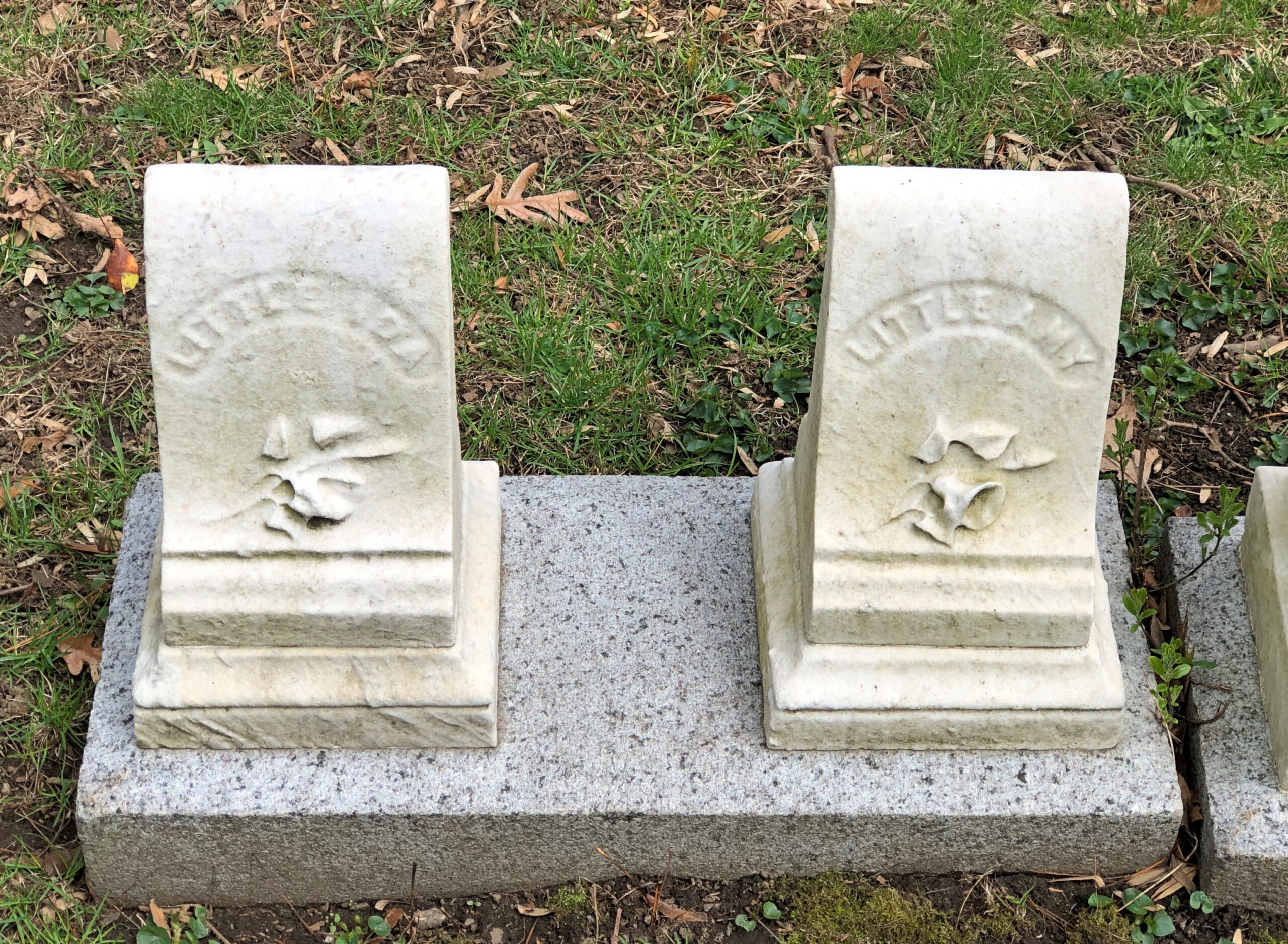
A sad story, one of many.
Maybe a sad story. A little enigmatic, anyway.
Looking at the map’s list of famous permanent residents, one thinks: “Right, I know him. And him. And him. And her. There’s another person I’ve heard of. And another. And I think I know that one – I do…”
On it goes. A short selection of those I didn’t have to look up: Louis Agassiz, John Bartlett (of Quotations fame), Edwin Booth, Charles Bulfinch, Dorothea Dix, Mary Baker Eddy (“discoverer” of Christian Science, the map says), Edward Everett (spoke at Gettysburg, was upstaged), Fannie Farmer, Felix Frankfurter, Buckminster Fuller, Charles Dana Gibson, Curt Gowdy, Oliver Wendell Holmes Sr., Julia Ward Howe, Henry Cabot Lodge, Henry Wadsworth Longfellow, Bernard Malamud, Arthur Schlesinger Jr., B.F. Skinner, I.F. Stone, and Charles Sumner.
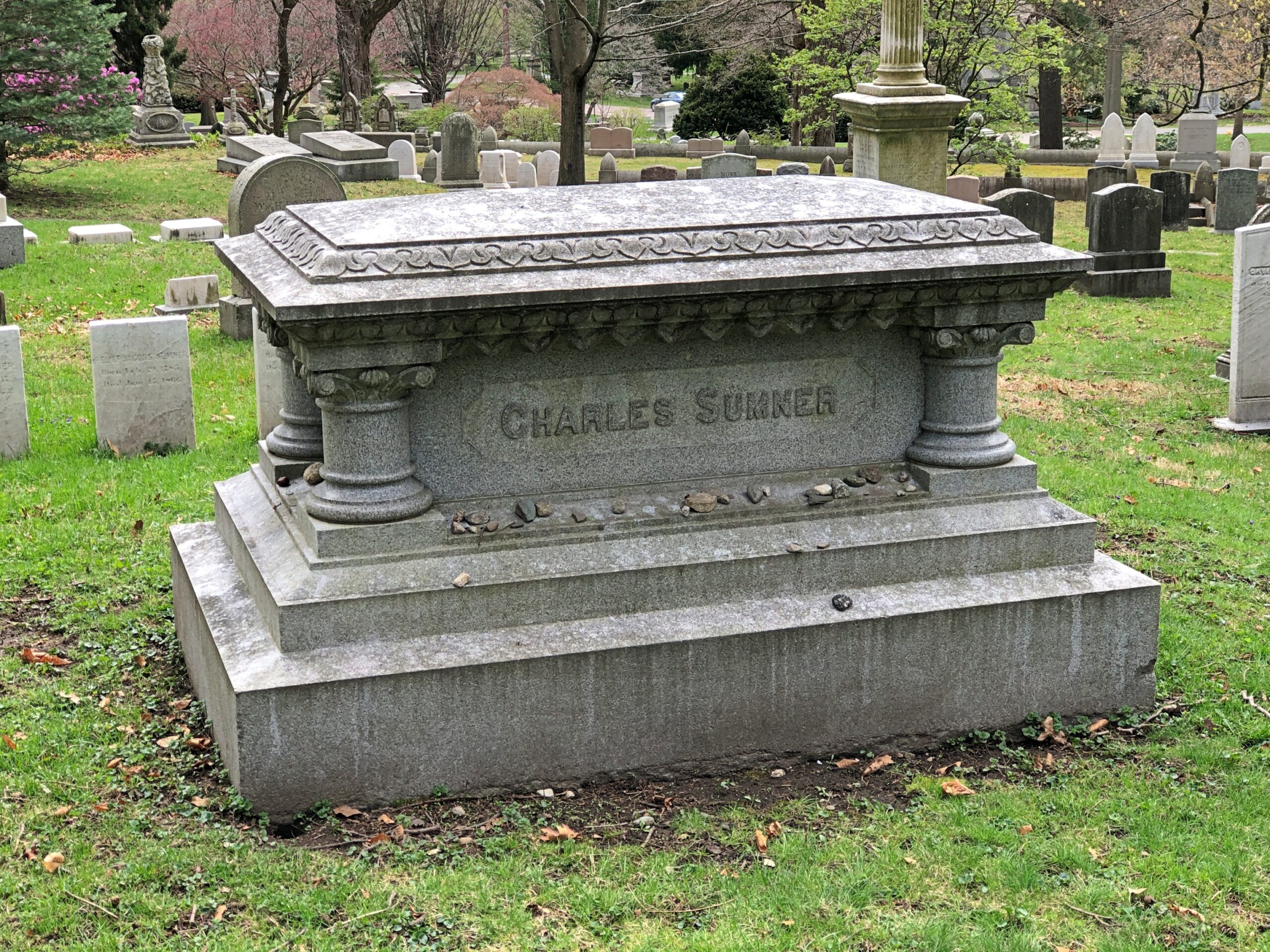
I could have spent all day looking for them, but mostly I didn’t. I did see Charles Sumner’s stone. People leave smaller stones. I found one and did too.
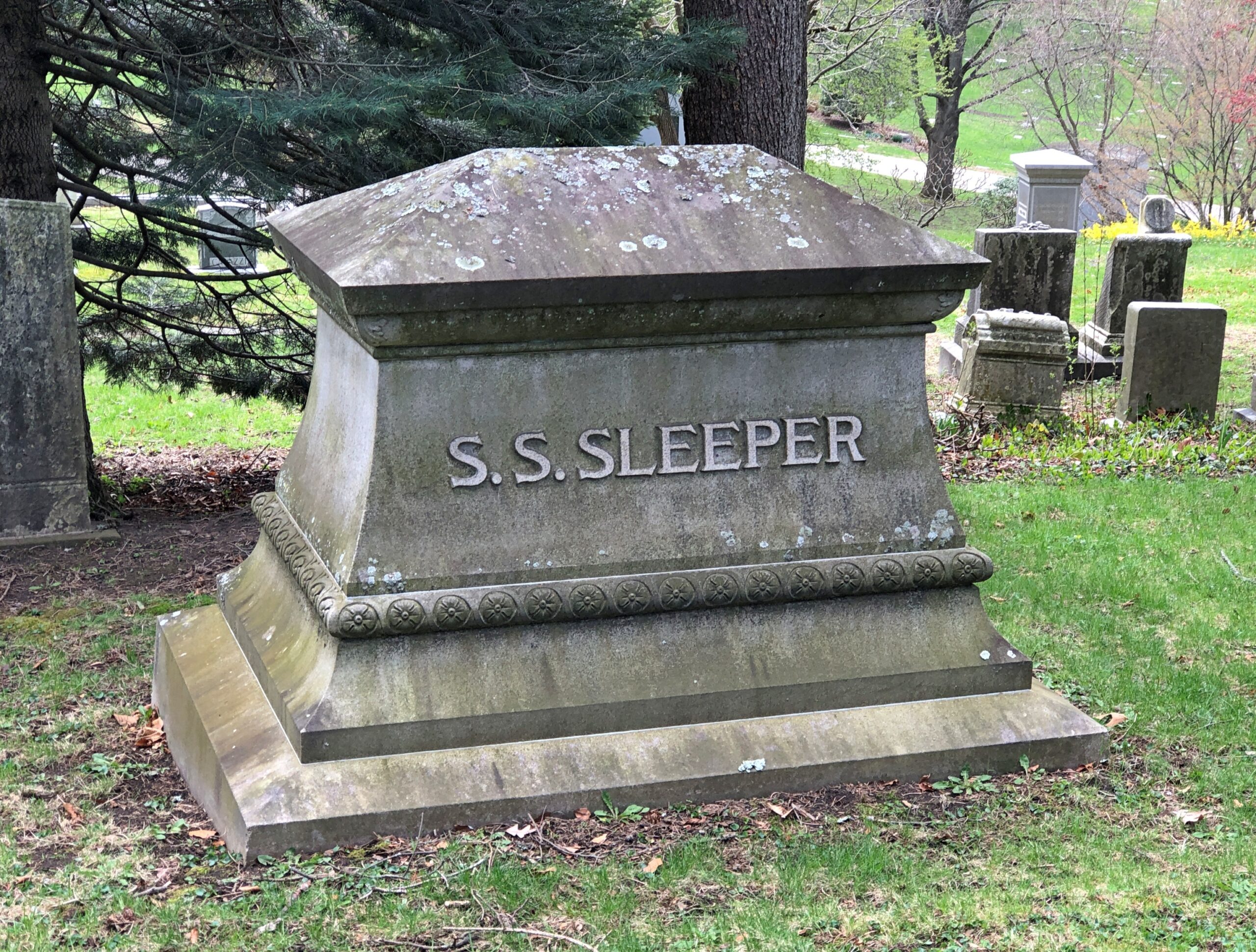
Near Sumner. I’d never heard of him, but I like that name.
Solomon Sias Sleeper (d. 1895), successful Cambridge merchant and local politico and philanthropist.
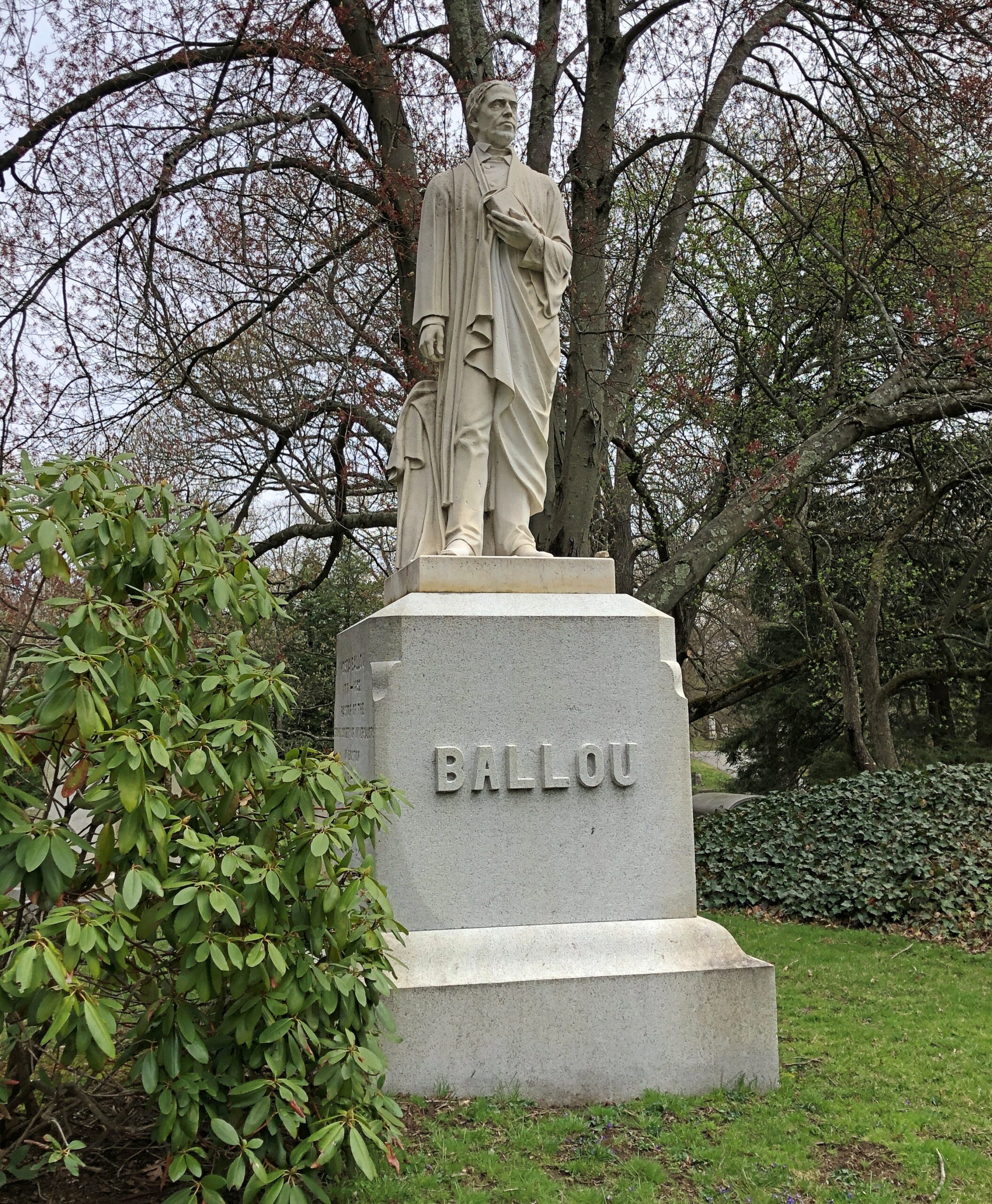
The map also lists impressive memorials. I found a number of those. Such as the Rev. Hosea Ballou Monument, honoring a Universalist clergyman (d. 1852).
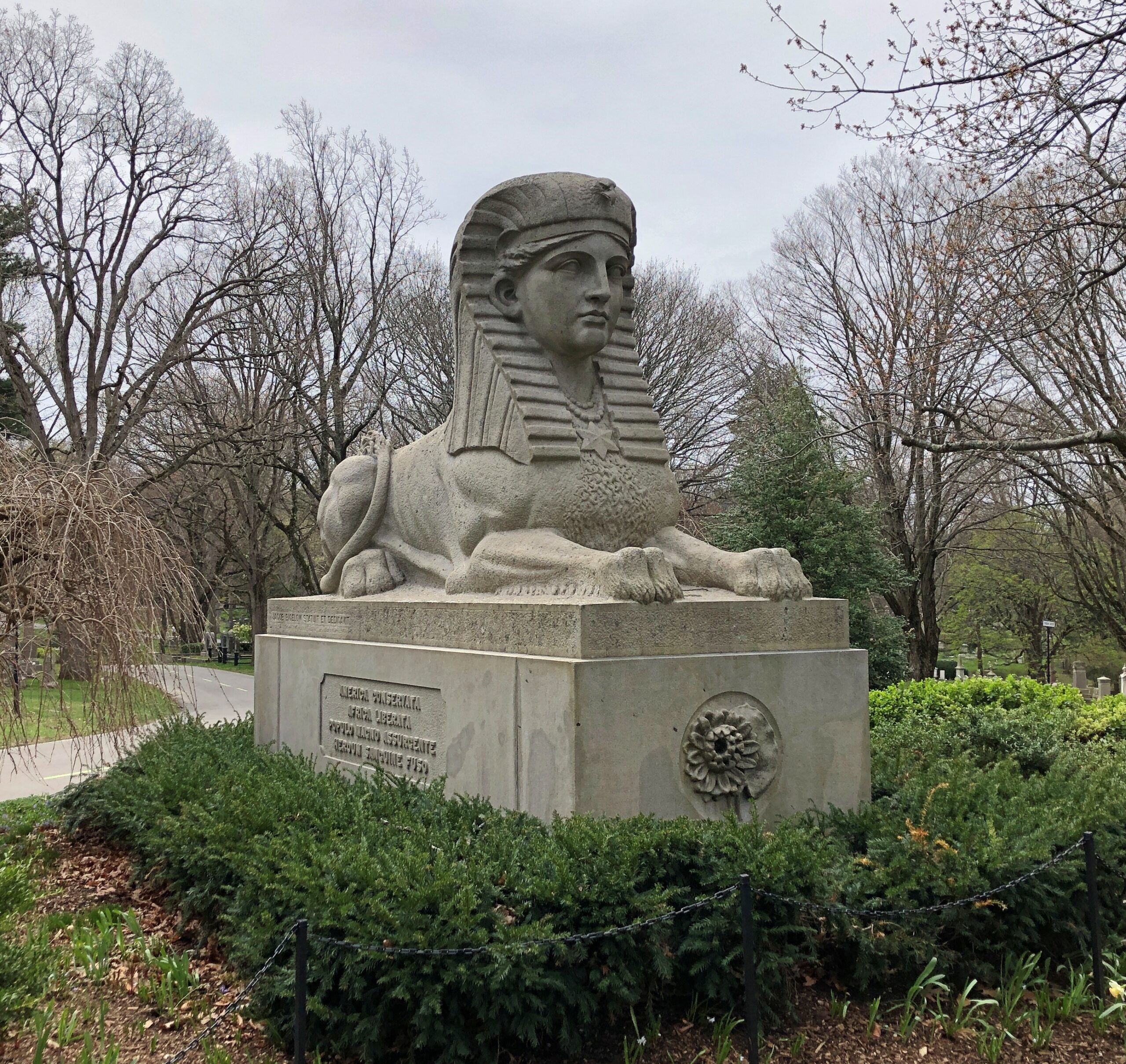
A Civil War memorial, erected in 1872 — the only time I’ve seen a sphinx used for that purpose.
“The sphinx was chosen because of its ideal personification of intellect and physical force and its representation of the combined ideas of beauty and strength,” the notes on the map say. I know the sphinx has a very long history and comes with a lot of encrusted lore, but that sounds like a peculiar Victorian interpretation that didn’t really stick.
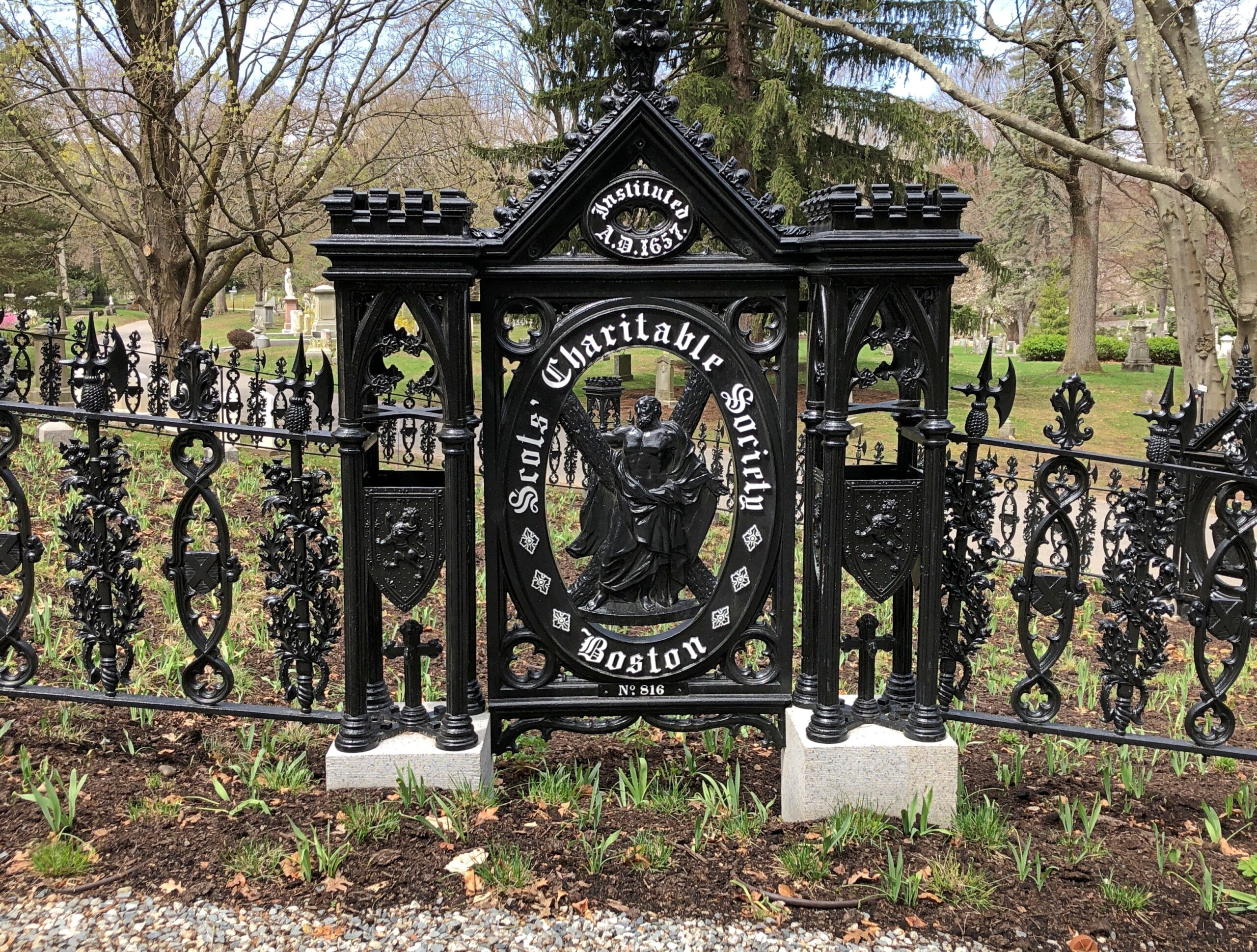
The Scots’ Charitable Society Lot.
An organization founded in 1657 in Massachusetts. It “aims to help people of Scottish heritage by providing relief to Scottish-American individuals and families in need, and by granting undergraduate scholarships to the Scottish-American community,” says its web site because it is still around.
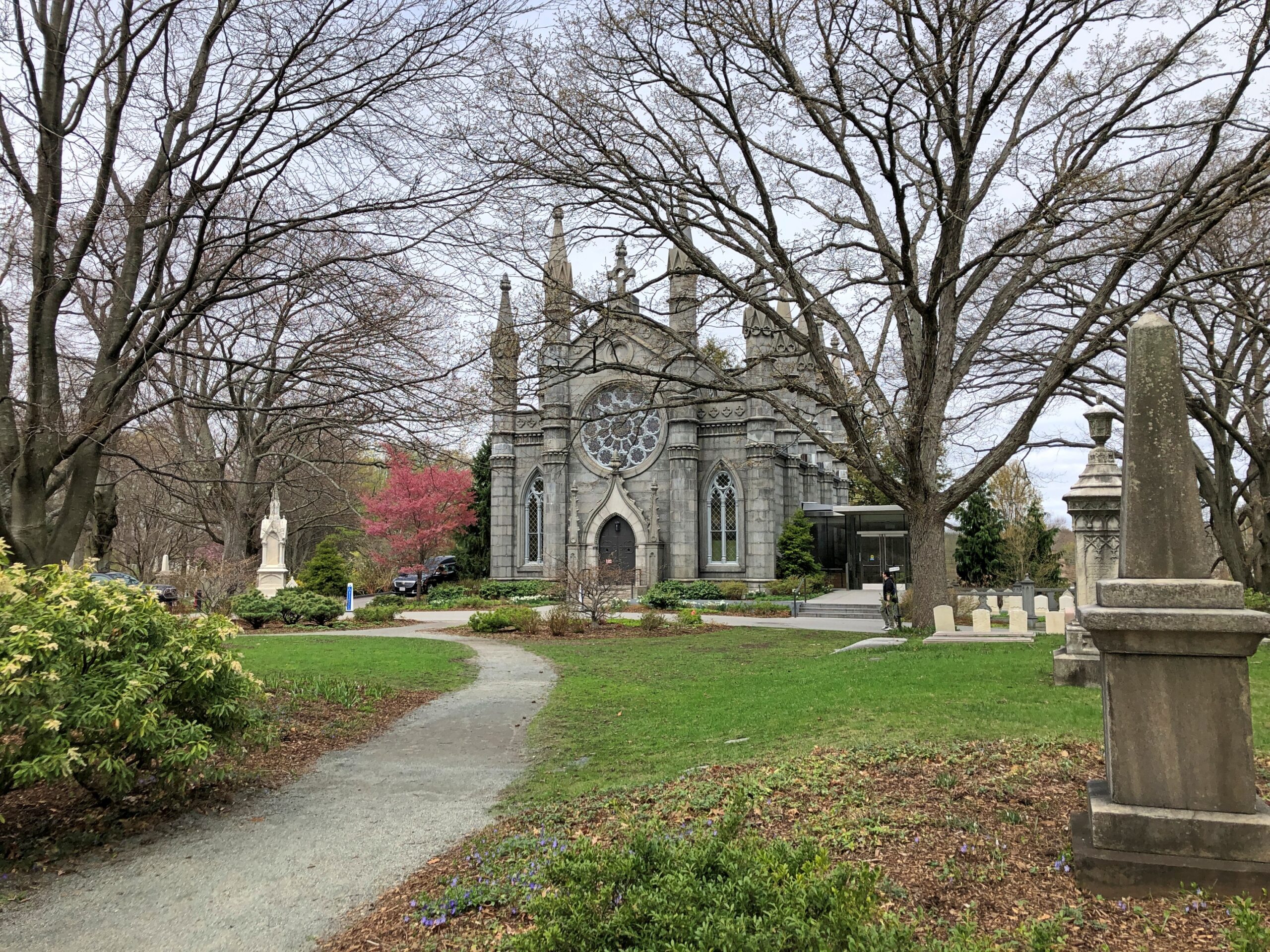
Bigelow Chapel.
Named for Jacob Bigelow (d. 1879), second president of Mount Auburn.
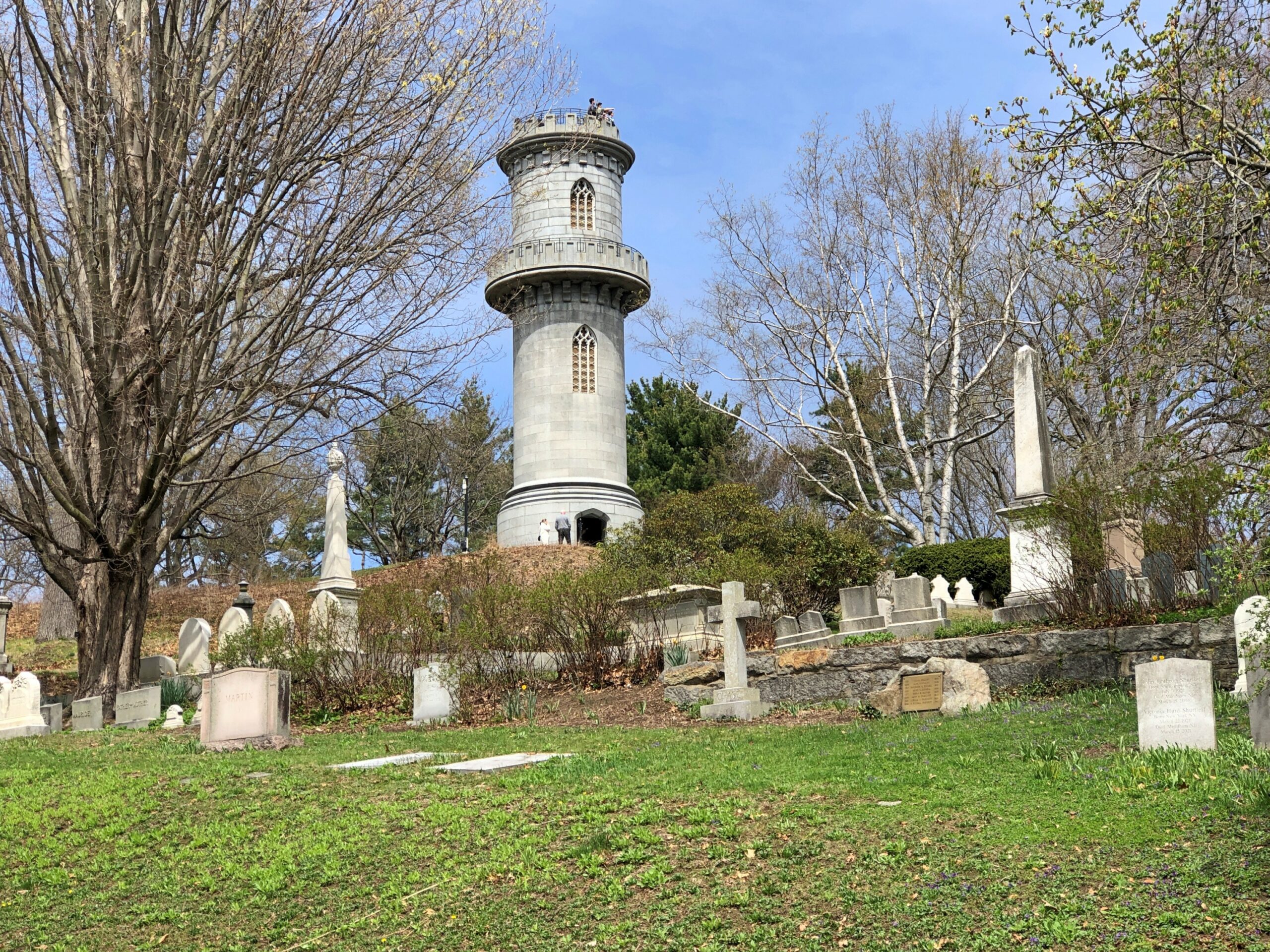
Washington Tower. The highest point on the grounds, honoring George Washington. Designed by Bigelow in collaboration with architect Gridley J. F. Bryant. I didn’t have the energy to climb the hill and then the tower at that moment. Too bad. I understand the view of the Boston skyline from there is terrific.
I was delighted to see it. In its way, as important as Lewis and Clark’s journey, and something I’m certain 99-point-more percent of Americans have never heard of.
Back to Joseph Story. He gave the dedication speech at the cemetery on September 24, 1831. It’s a long one, per custom of the time. Per custom of my time, a short quote:
Here, let the brave repose, who have died in the cause of their country. Here, let the statesman rest, who has achieved the victories of peace, not less renowned than war. Here, let genius find a home, that has sung immortal strains, or has instructed with still diviner eloquence. Here let learning and science, the votaries of inventive art, and the teacher of the philosophy of nature come. Here let youth and beauty, blighted by premature decay, drop, like tender blossoms into the virgin earth; and here let age retire, ripened for the harvest. Above all, here let the benefactors of mankind, the good, the merciful, the meek, the pure in heart be congregated, for to them belongs an undying praise.
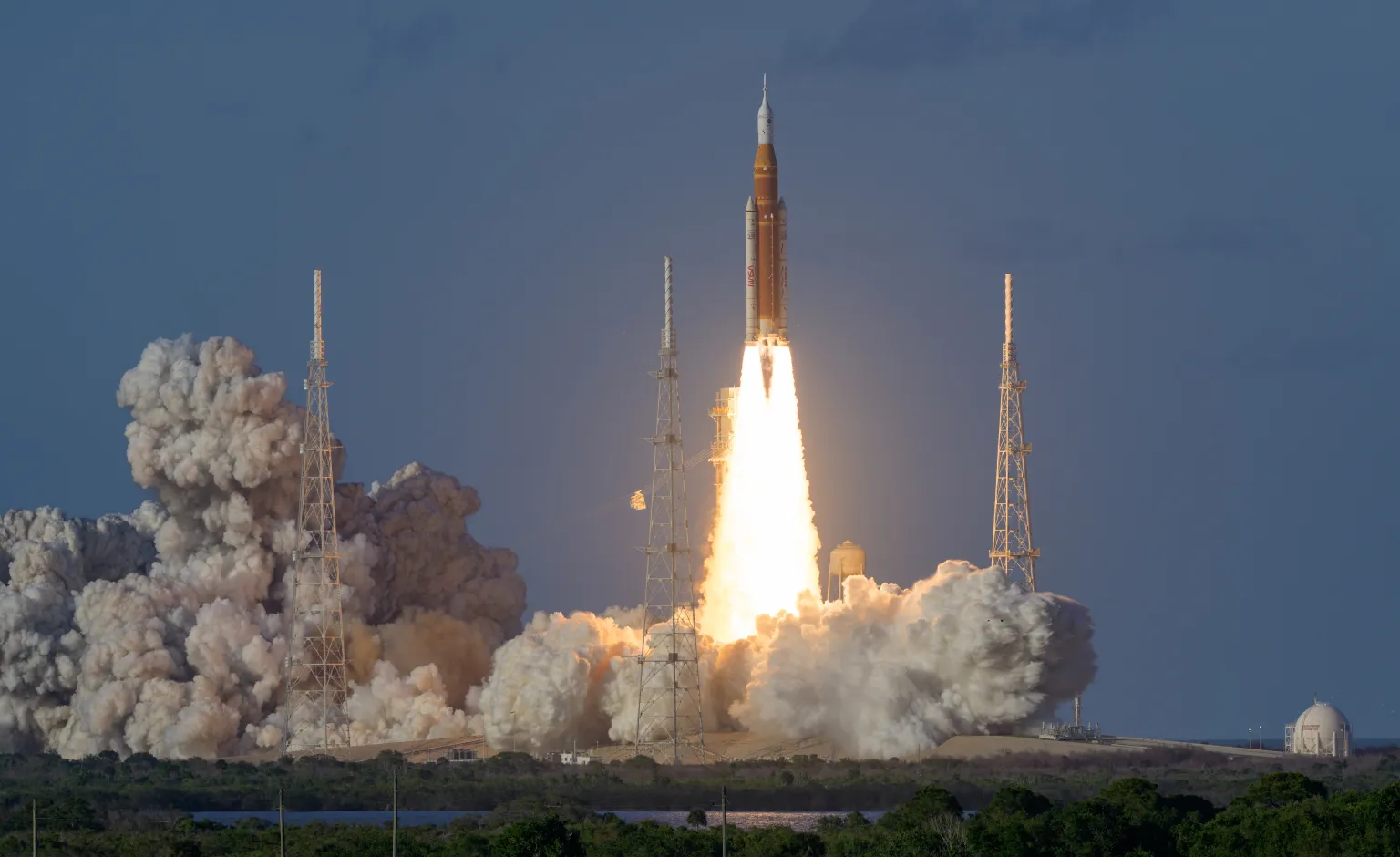
I wasn’t persuaded Artemis II would actually launch today, what with its delays so far, but I found out it did a few minutes afterward, and watched a tape of the launch on YouTube. As one can. Then I nicked a NASA picture of the launch. As one can, since it’s public domain.
NASA/Bill Ingalls
All well and good, but the boy I used to be asks, “Why did this take so long? Why no moon base by, say, the actual year 1999?” The man I became answers, “Money, boy.” An entirely unsatisfactory answer for both of us, but so it goes.
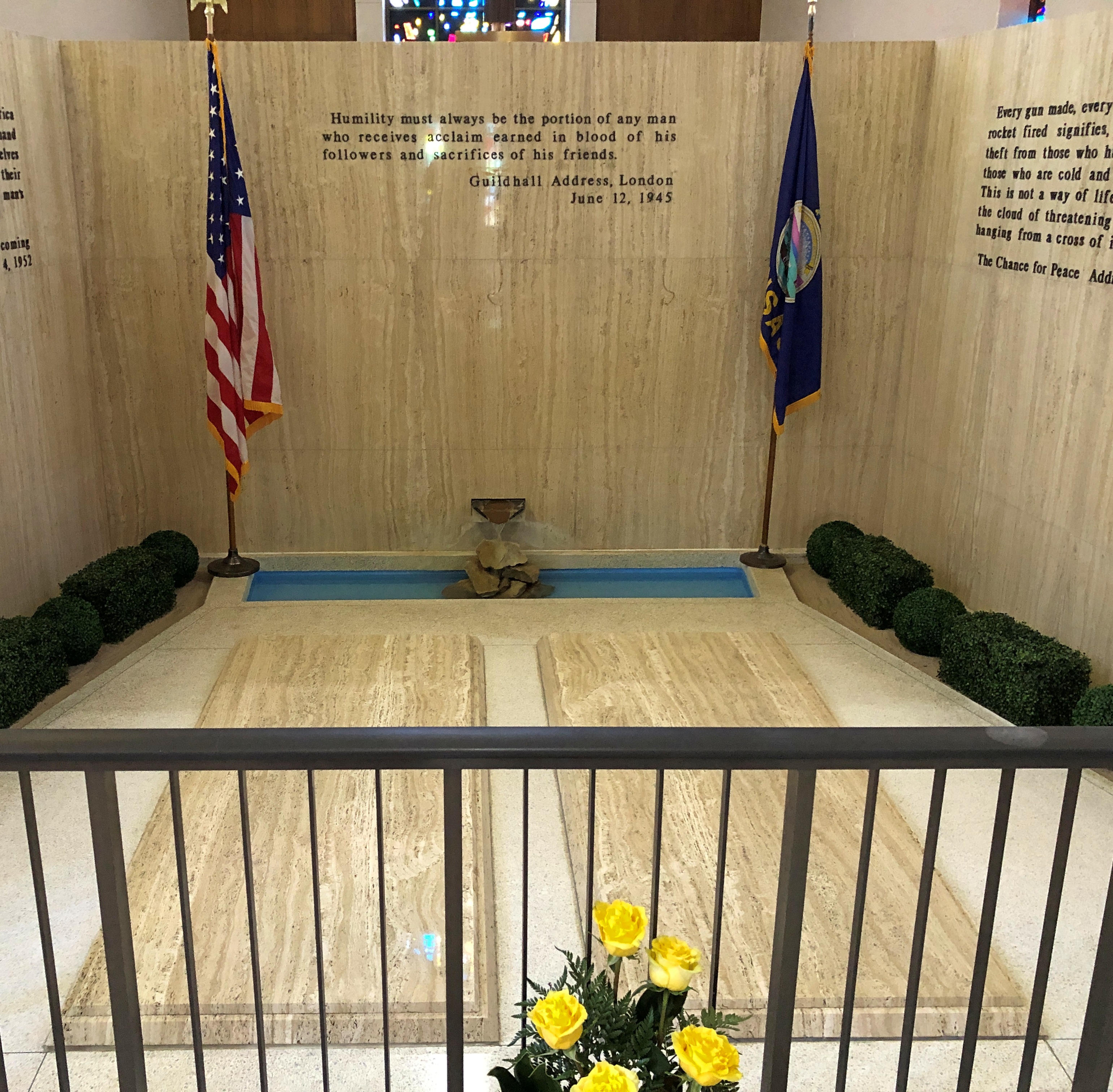
In Abilene, Kansas, not long ago, I found myself wondering, whatever happened to Manus Hand? That’s because I stood at that moment near the graves of President and Mrs. Eisenhower, Ike and Mamie.
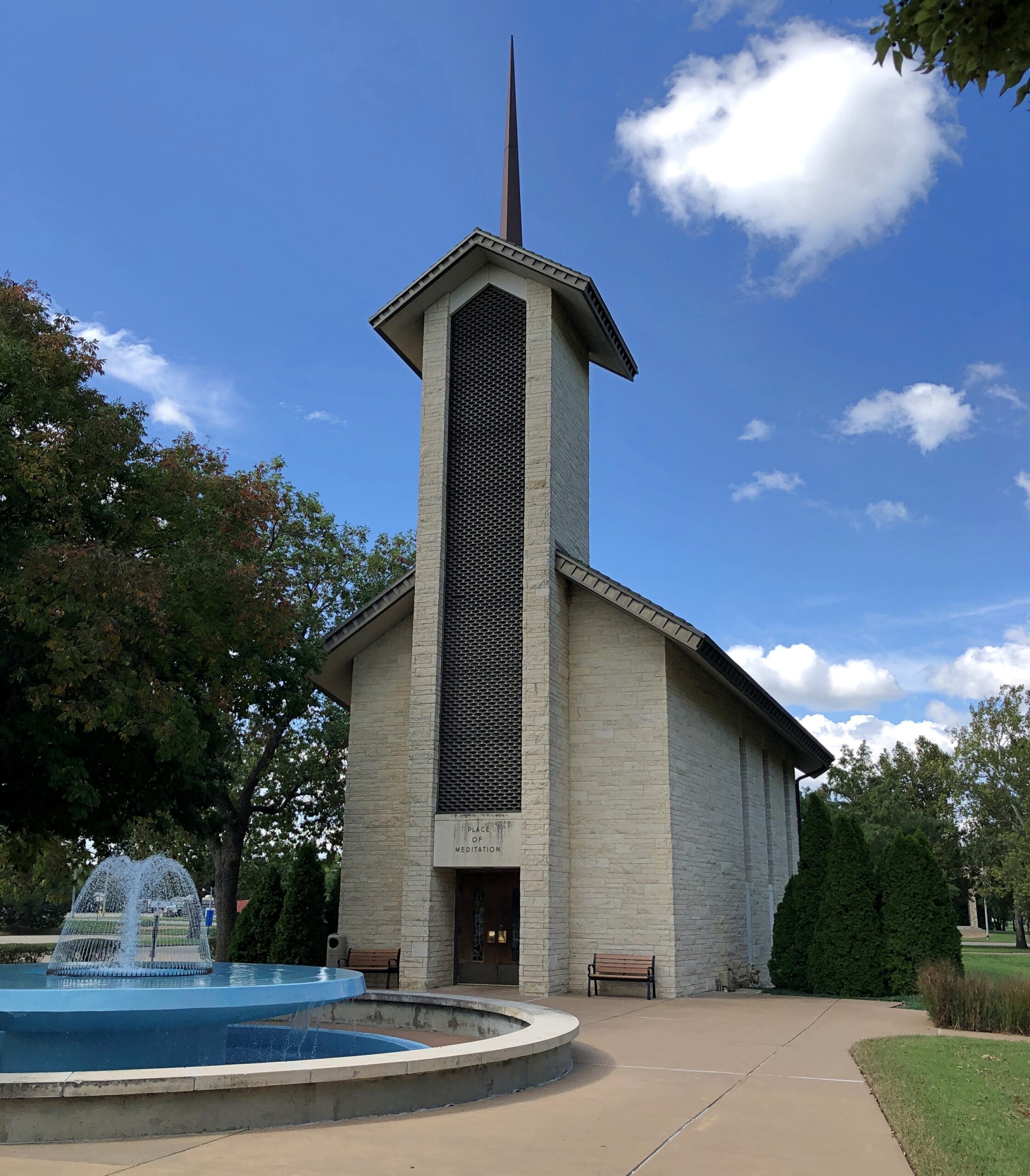
The 34th President of the United States and the First Lady repose in a chapel-like structure on the grounds of the Dwight D. Eisenhower Presidential Library, Museum and Boyhood Home in Abilene, pop. 6,400 or so, the town where the president came of age.
I’ve been told I visited before, with my family during a trip to Kansas when I was a wee lad, but I don’t remember that at all. So I count this as a new visit to a presidential sight, including a grave site, which makes 21 presidential graves all together. But for the federal shutdown in October, there would be four more at least: Adams père et fils, FDR and TR.
I thought of Manus Hand because, back in the Neolithic age of the Internet, he had a web site featuring photos of him at presidential grave sites. In my own dead presidents days, I found Hand’s site at some point. He had visited almost all of them by then, 36 by his count. His site is still in existence, without much change, except an update to note that George H.W. Bush had died (2018), but not Jimmy Carter.
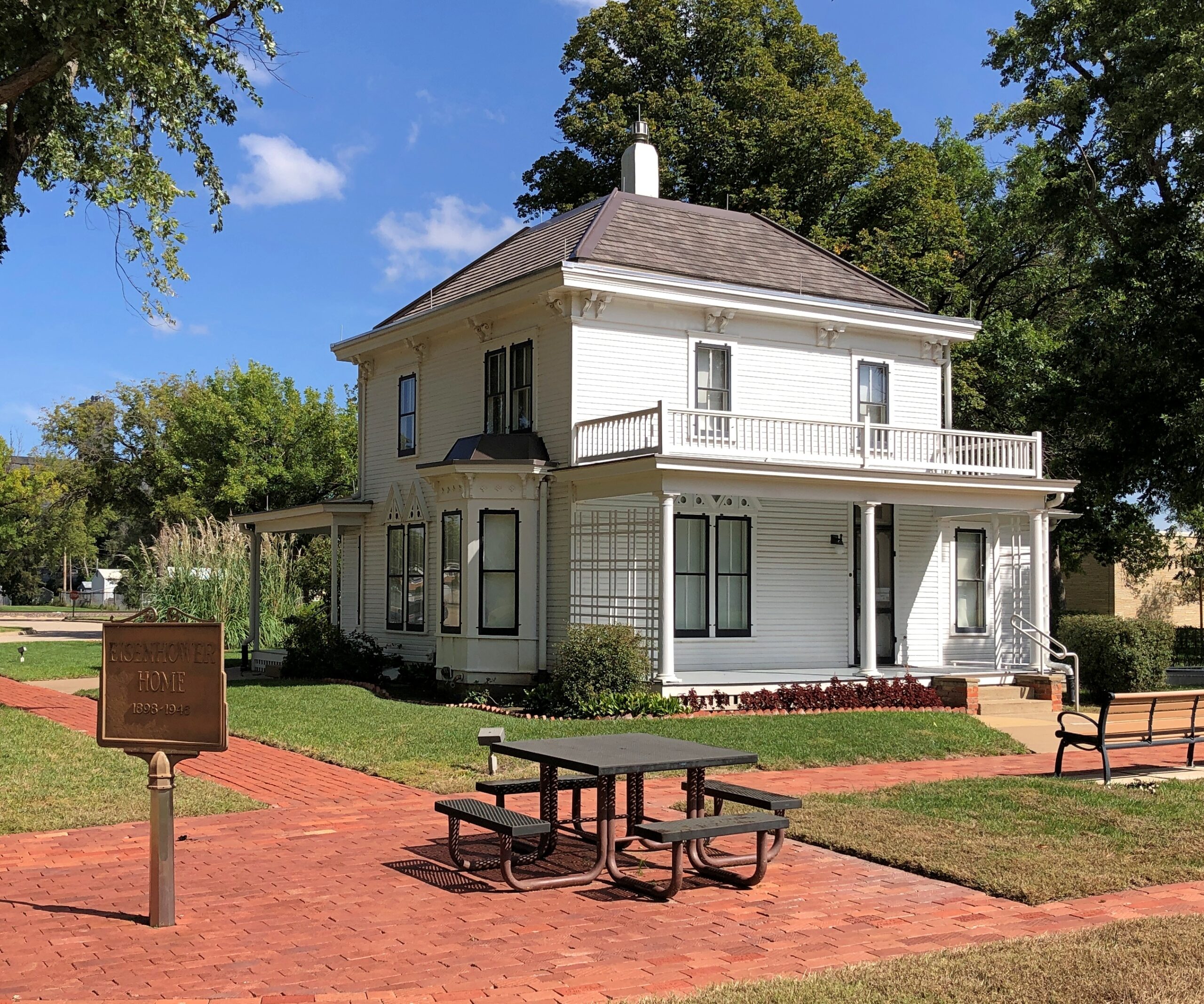
The Eisenhower Boyhood Home, moved to the site. No tours available when I came by.
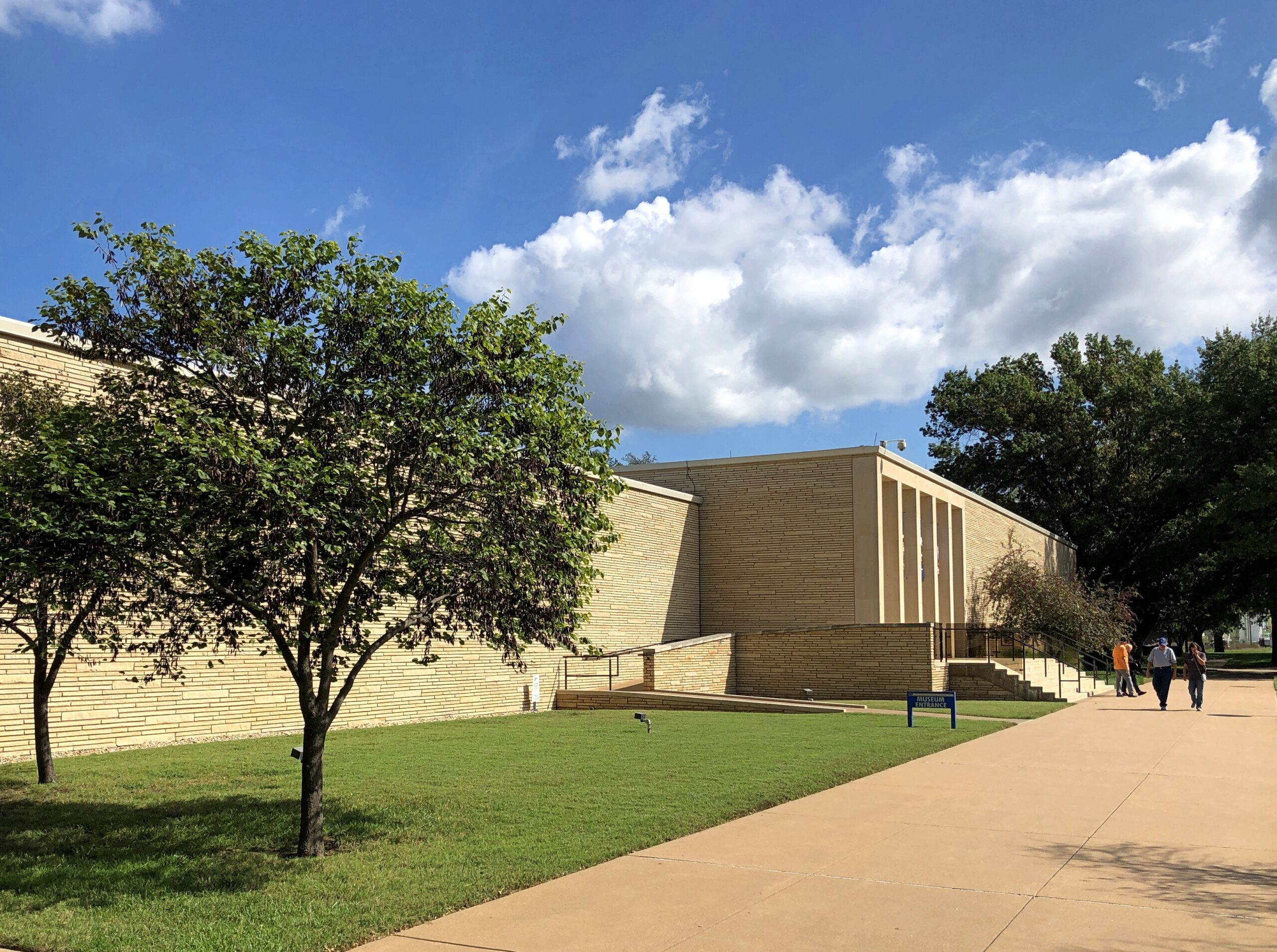
The Eisenhower Museum.
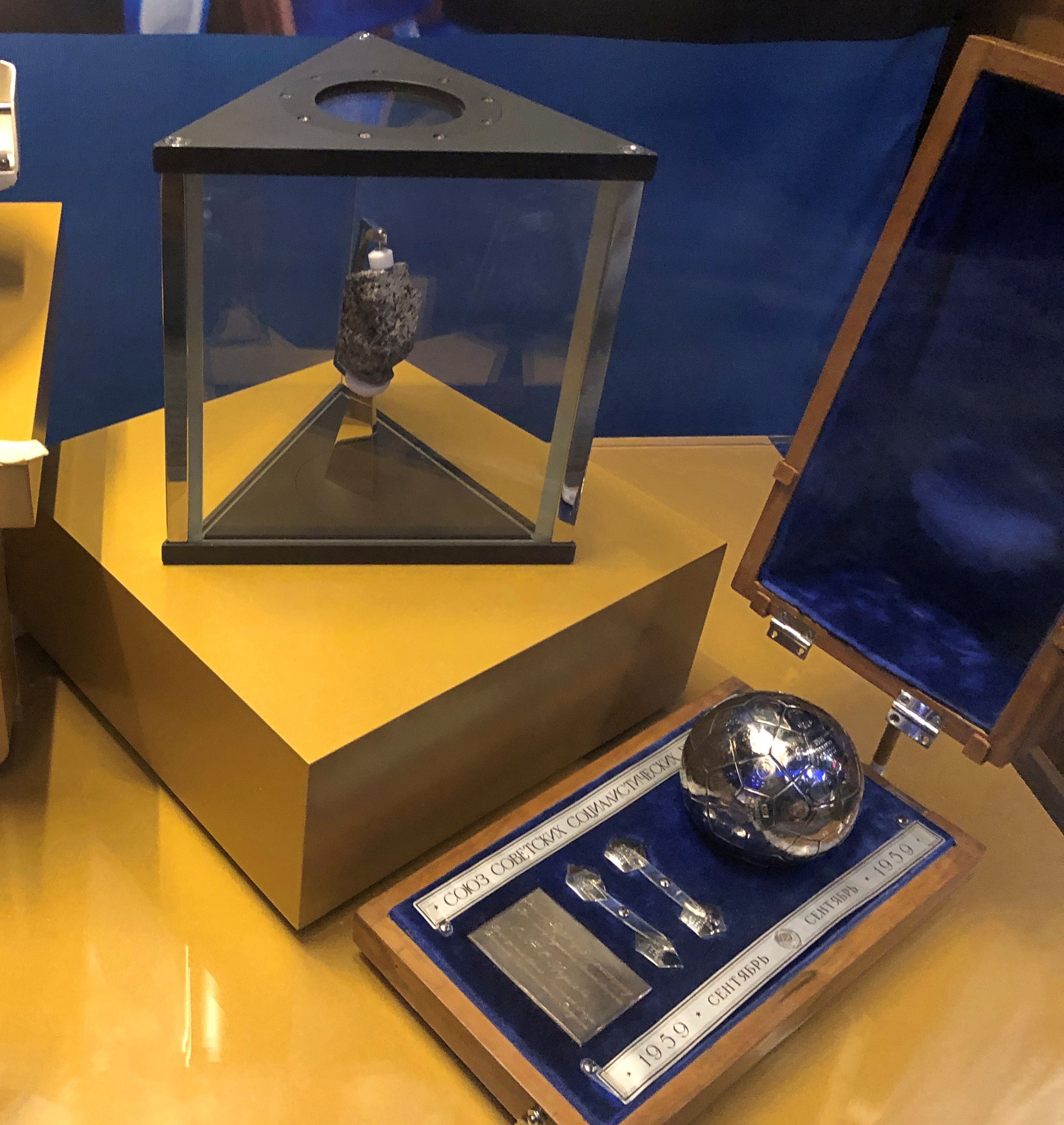
Midcentury, and what could be more fitting for Eisenhower? It’s chronologically organized: early Ike in Abilene; his Army career before WWII, including his cross-country epic; during that war and right after the war; his presidency and post-presidency, and a gallery about Mamie. Well organized, interesting artifacts, but (for me) none more interesting than a titanium sphere.
The sphere is a replica of the pennant sphere that traveled to the Moon in 1959 aboard the Soviet spacecraft Luna 2, which was the first manmade object to reach the lunar surface, or any celestial body. The sphere was a detail that I remembered from long-ago reading about space exploration. I didn’t realize one existed any more, even in replica form. Khrushchev presented it to Eisenhower during his famed visit to the U.S. that year (Khrushchev’s due at Idlewild!).
Luna 2 carried two spheres filled with liquid and an explosive charge, designed to burst apart on impact and scatter pentagonal pennants, the Moon Registry says. The pennants were imprinted with: 1) Sentiabr 1959 (September 1959); CCCP… ; and the state seal of the USSR, a wreath of grain around the hammer and sickle. It is theorized that the medallions vaporized on impact.
Russia is still shooting Luna missions to the Moon. The most recent, Luna 25, crashed near the lunar south pole in 2023 but, unlike Luna 2, not on purpose. Oops. More about the many pennants the Soviets sent into space is here. On display next to the sphere is a lunar rock, which must have been a posthumous gift, since Ike didn’t live quite long enough to benefit from astronauts rock-gathering on the surface, though he was still alive during Apollo 7, 8 and 9.
A close second excellent artifact was a dagger Marshal Zhukov presented to General Eisenhower on the occasion of the defeat of Germany, a good-looking blade with an ivory hilt and gold decorations. I picture an exuberant Zhukov, as in The Death of Stalin, handing the knife to Ike and saying something earthy. Apparently the two, Ike and Zuke, got along well in the early months of the joint occupation of Germany. Differences aside, they had job experience in common. I don’t remember seeing anything about that in the museum, but there was a lot of material, so that could have been easily missed. That and any reference to Kay Summersby.
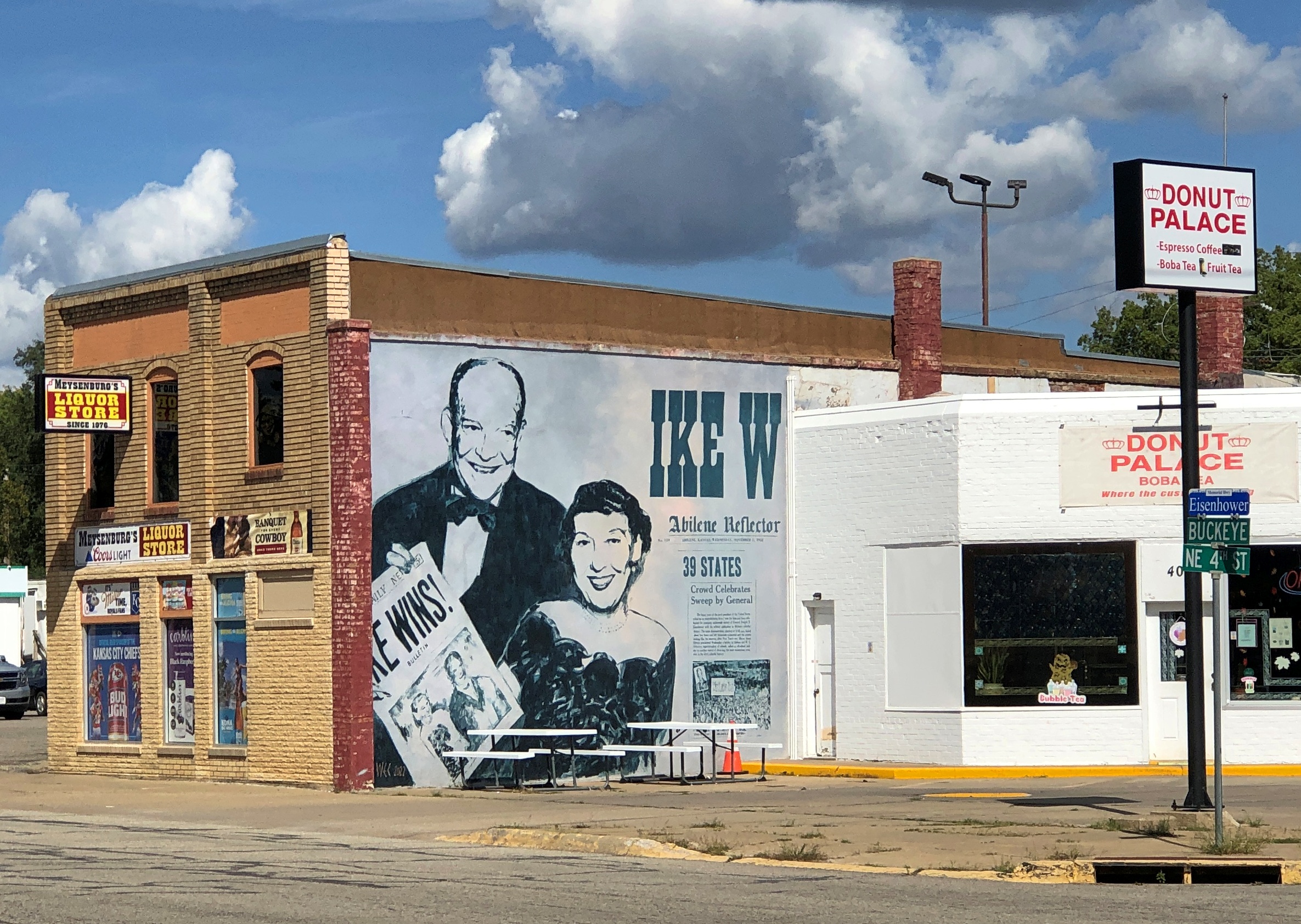
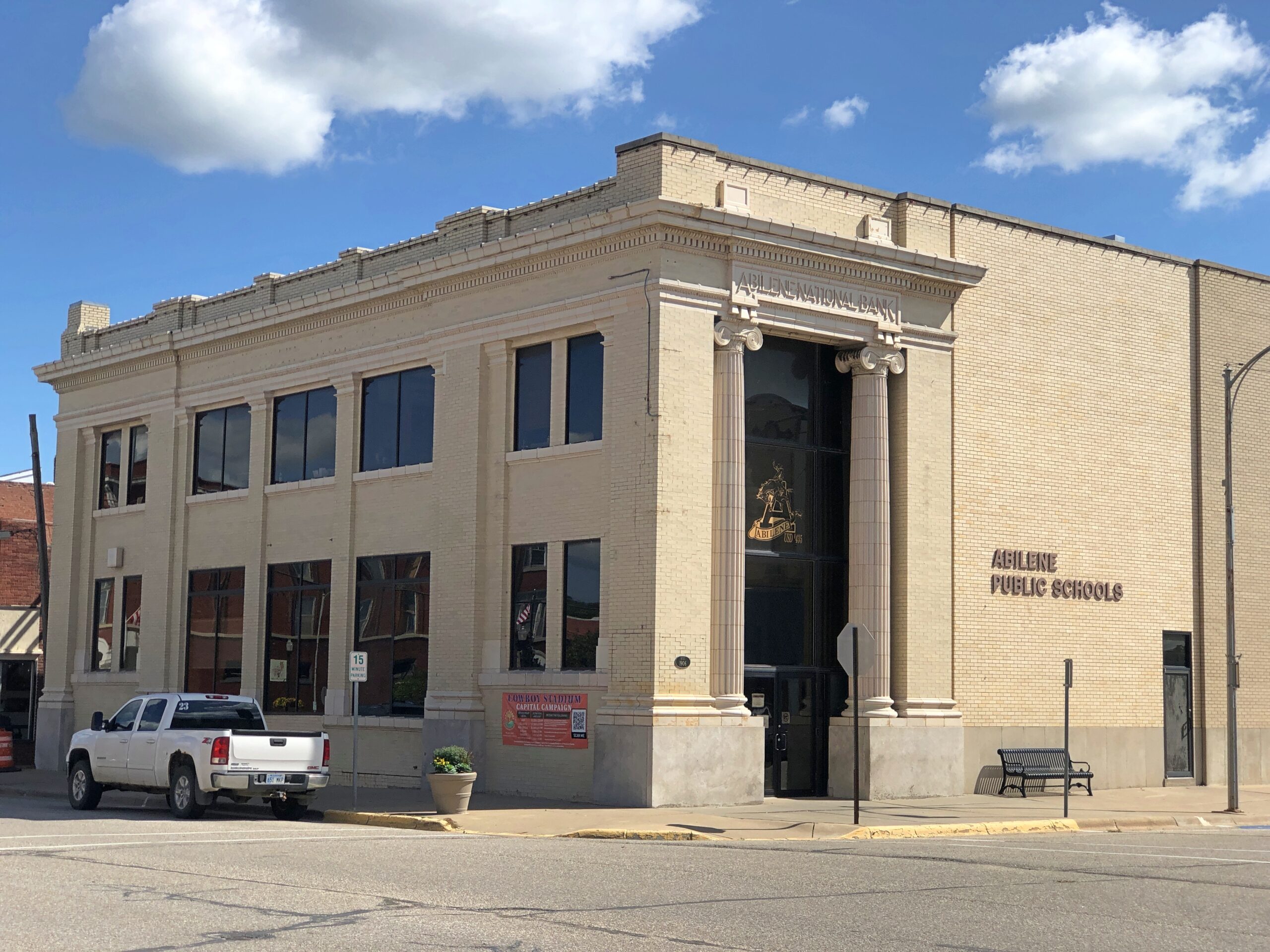
It was hot that day, September 24, but after visiting the museum, I took a look around Abilene anyway. The town hasn’t forgotten its most famous native son. Also, Donut Palace was closed.
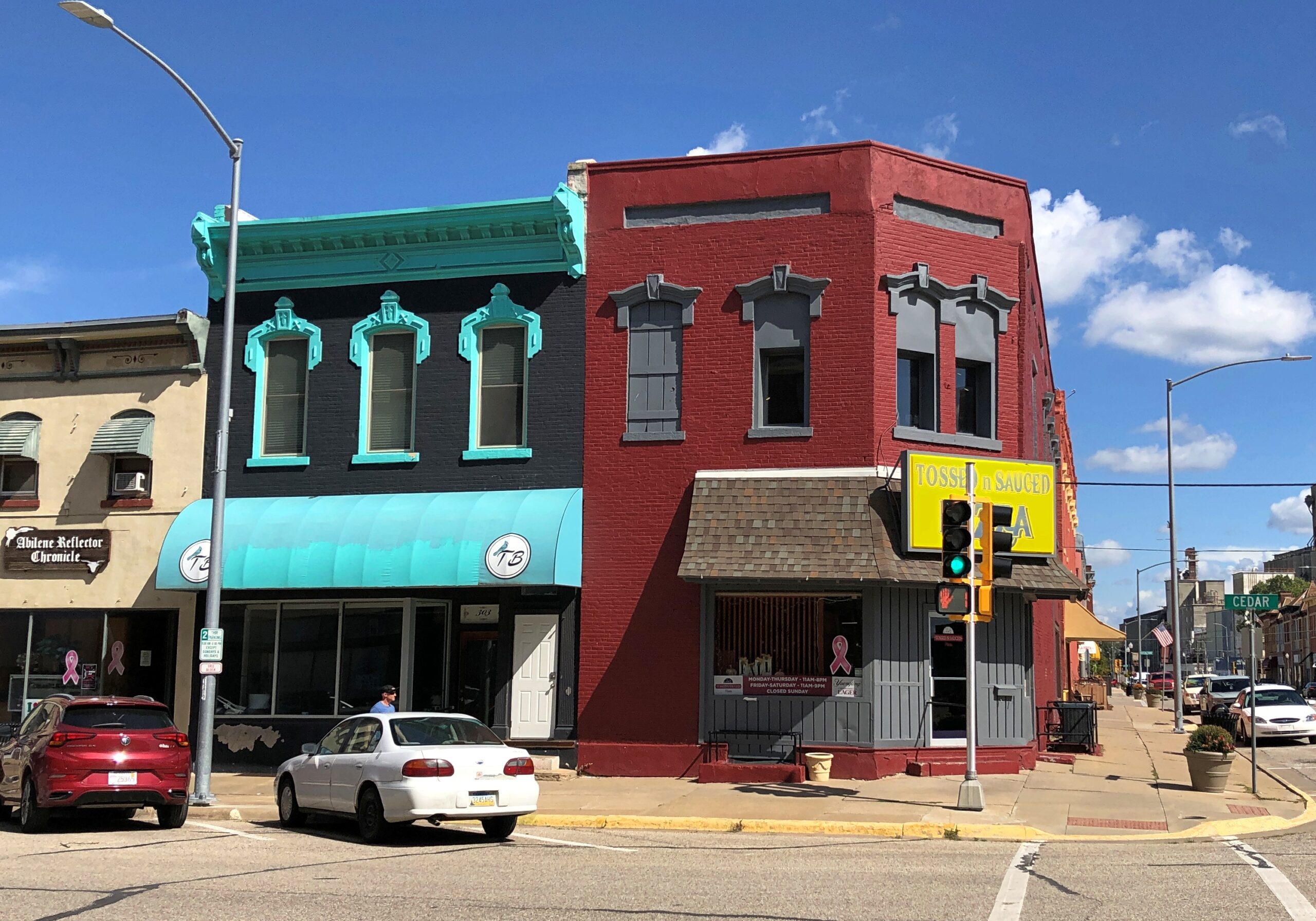
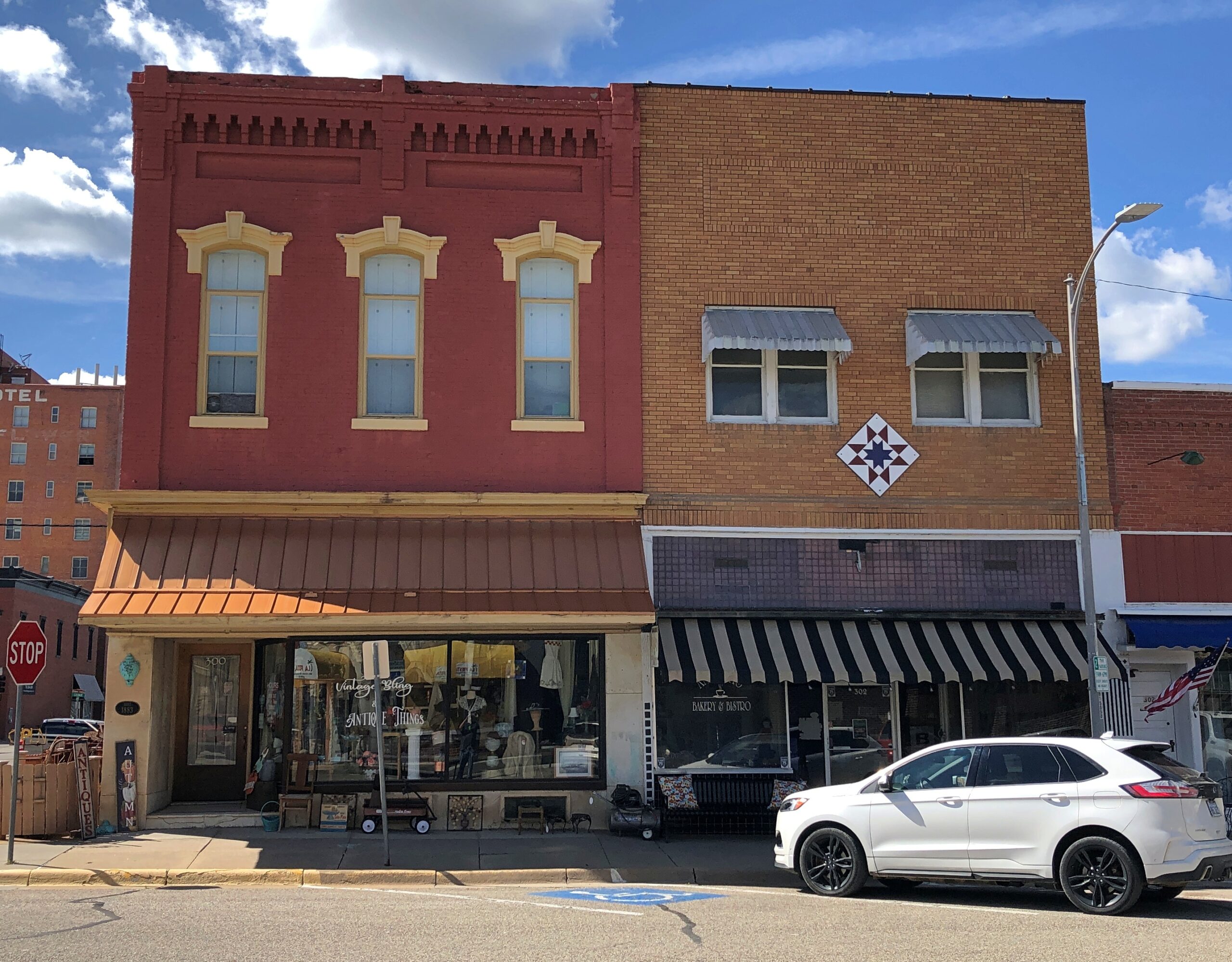
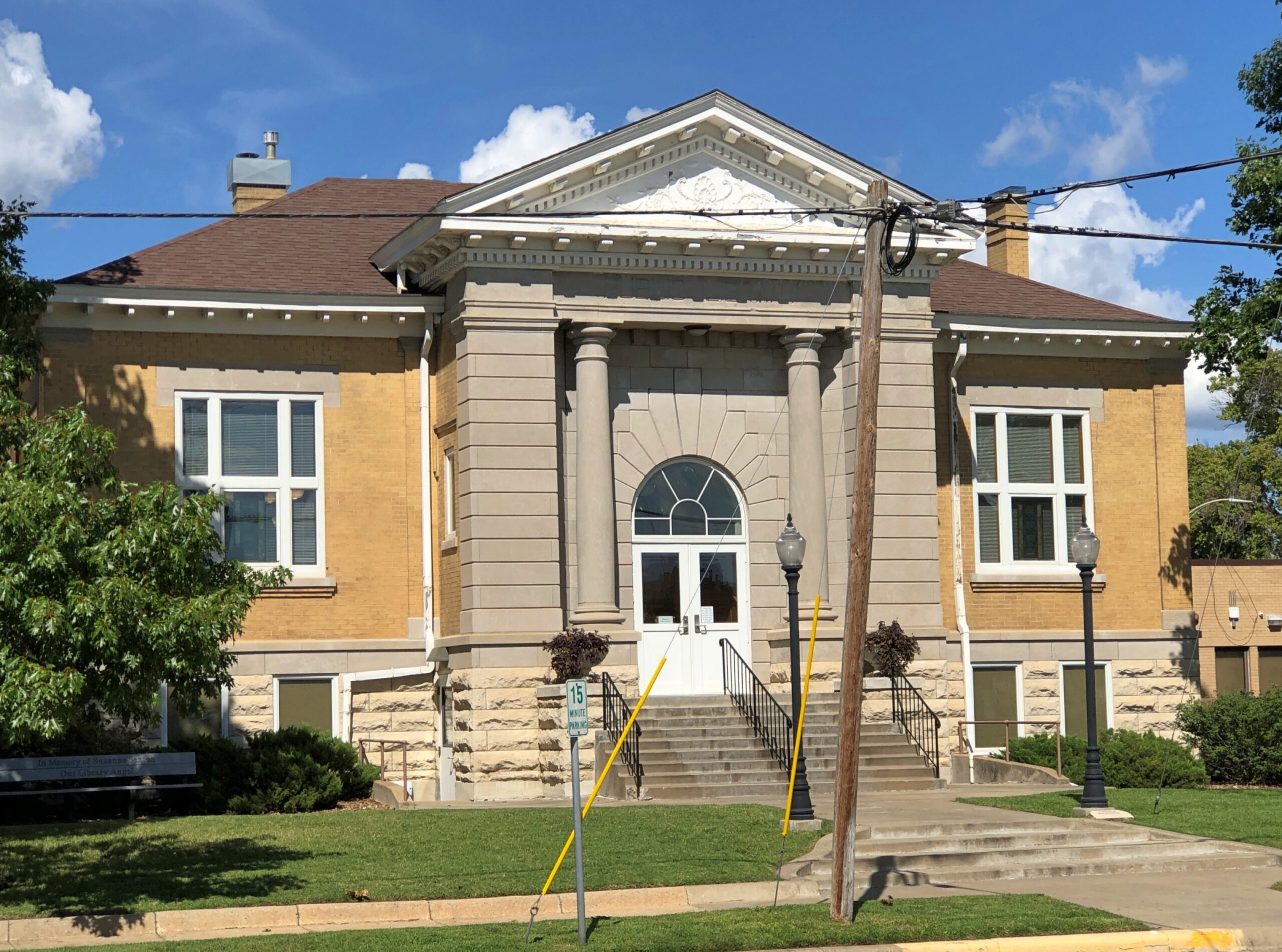
A lot of the detail would be different, but I’ll bet Ike would still feel at home with the scale of Abilene. Small town, small buildings, but some solid touches.
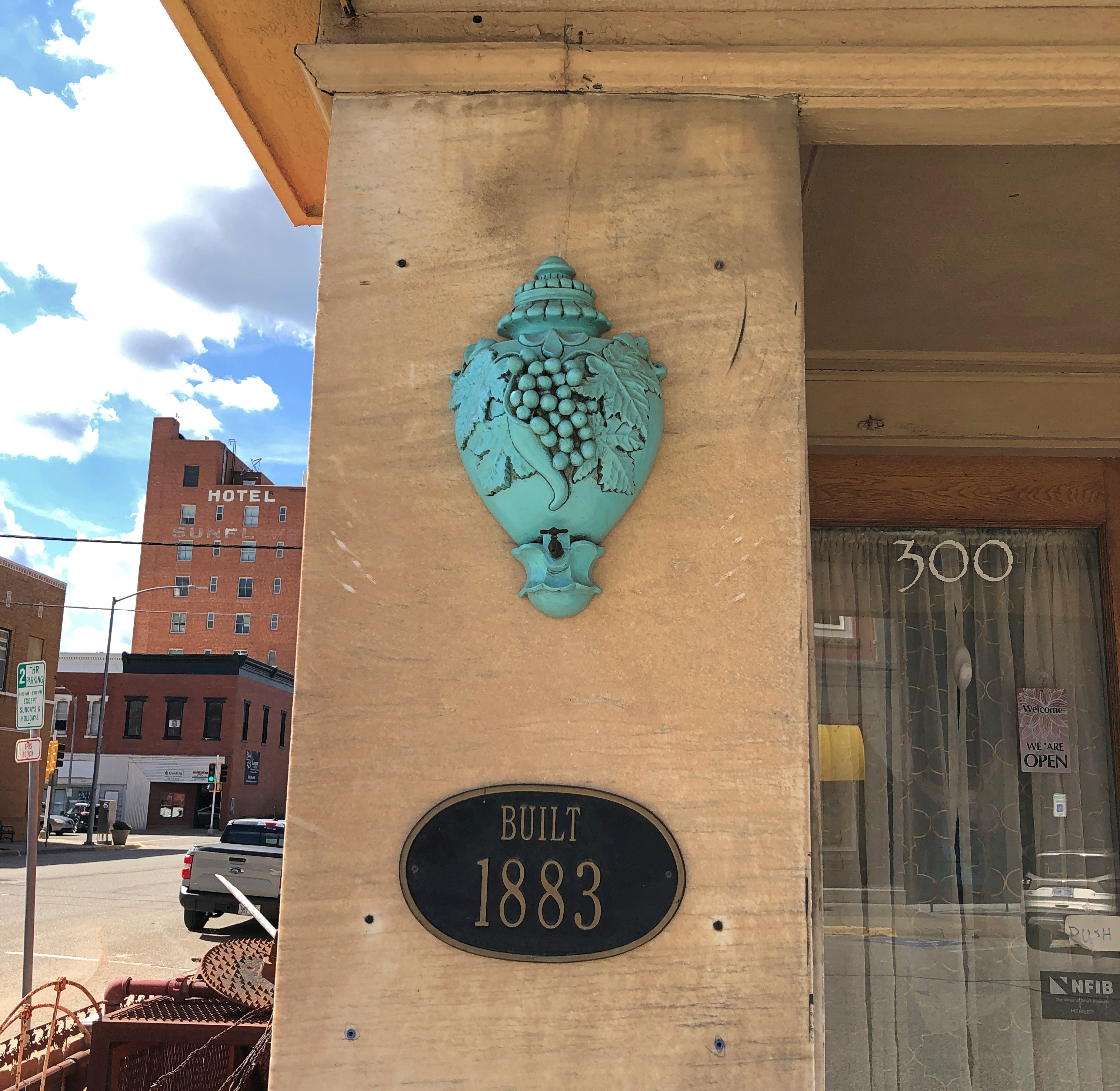
Including at least one building Ike would have known.
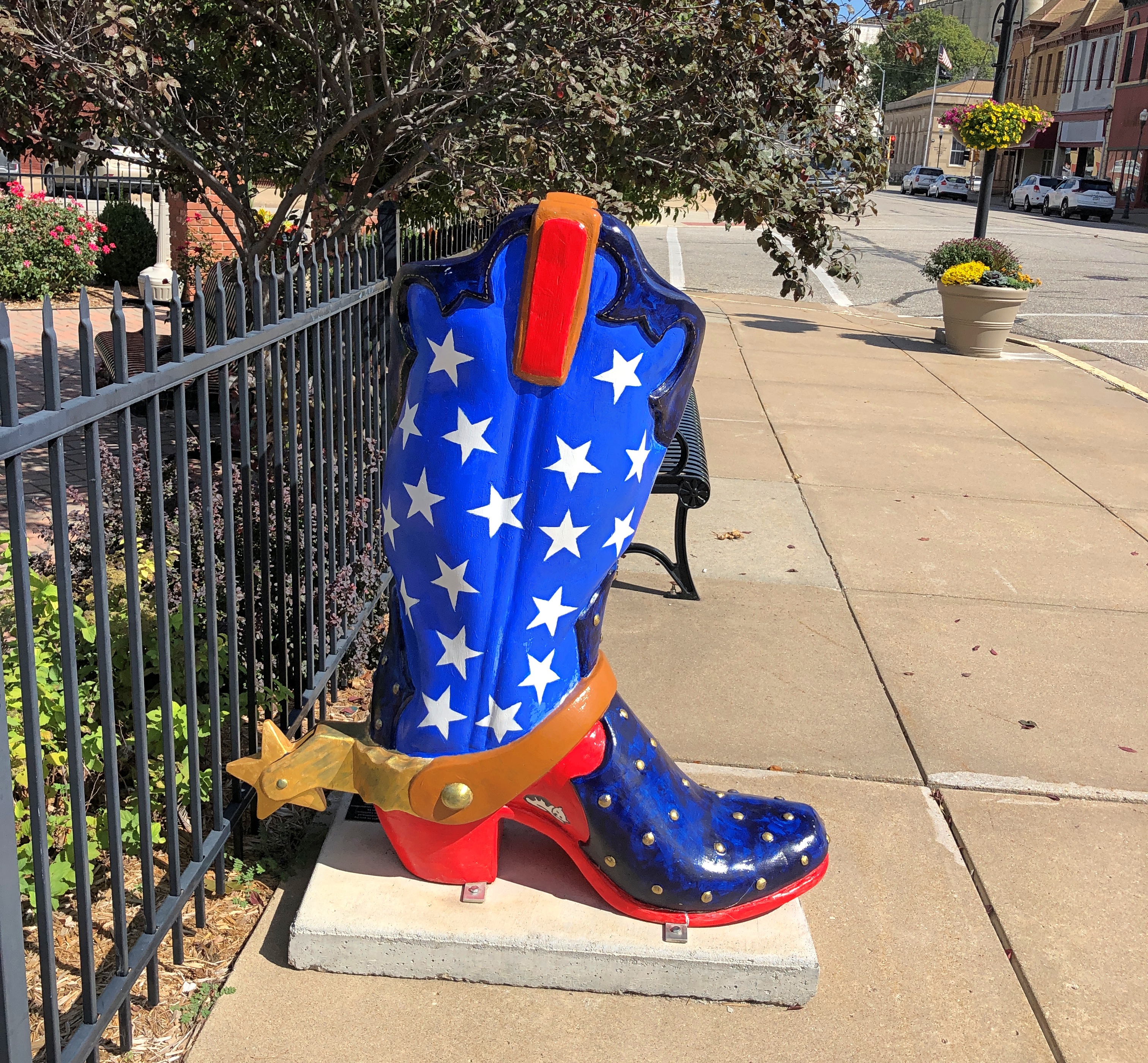
Chicago had cows, Abilene has cowboy boots.
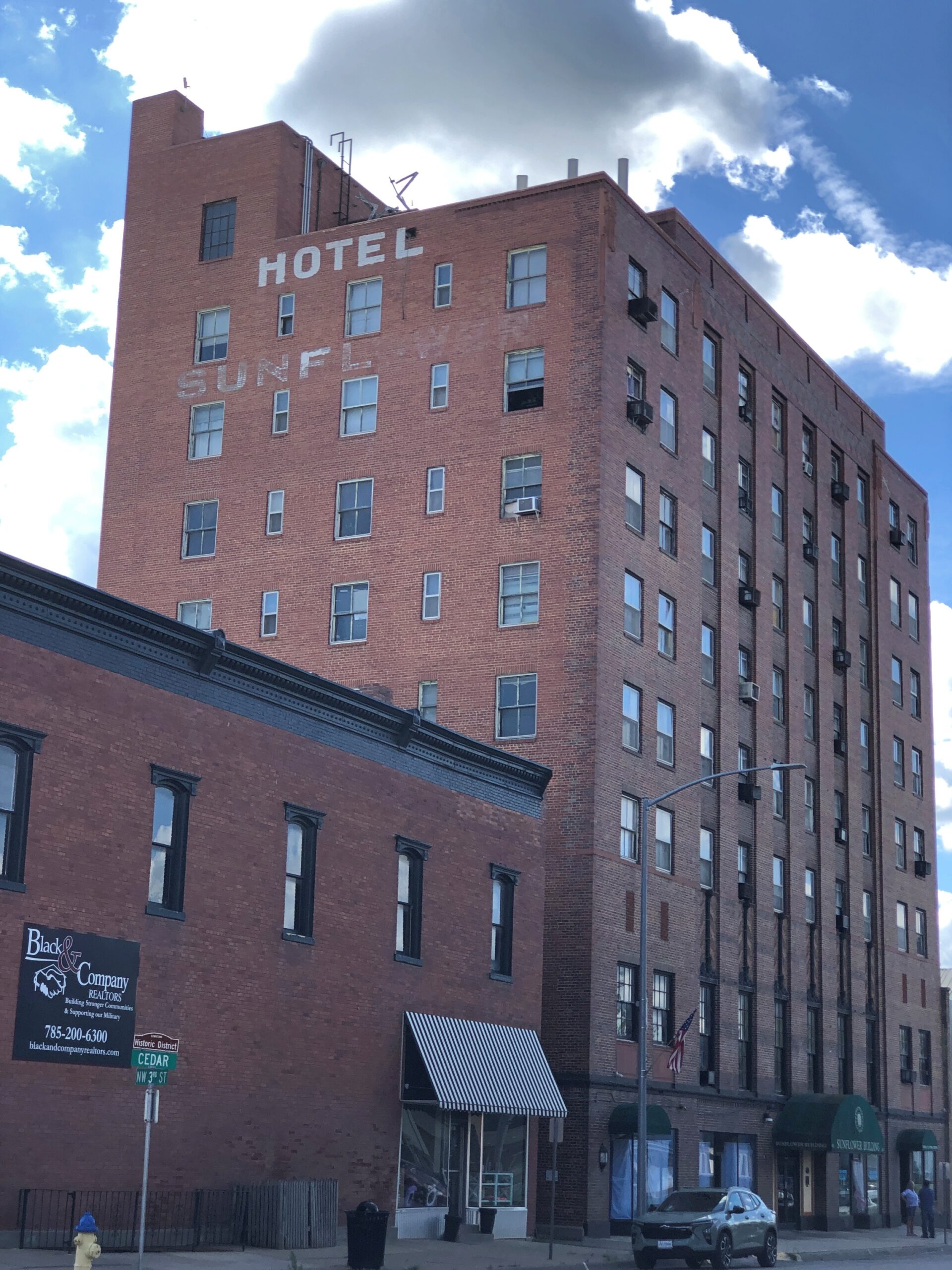
The Hotel Sunflower. Former hotel, that is, now apartments.
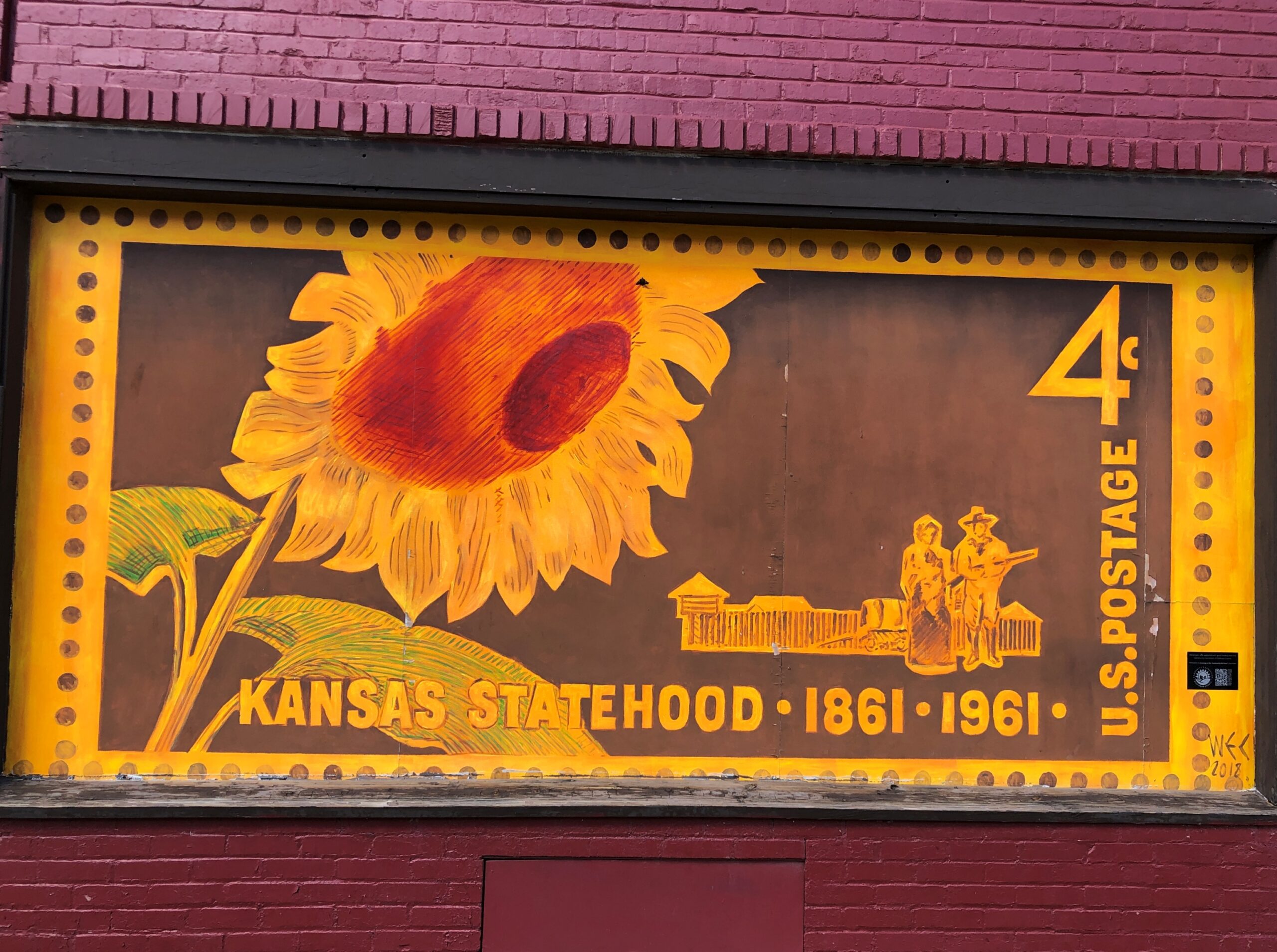
The Sunflower State. The flower looks a little ominous, peering down at the settlers.
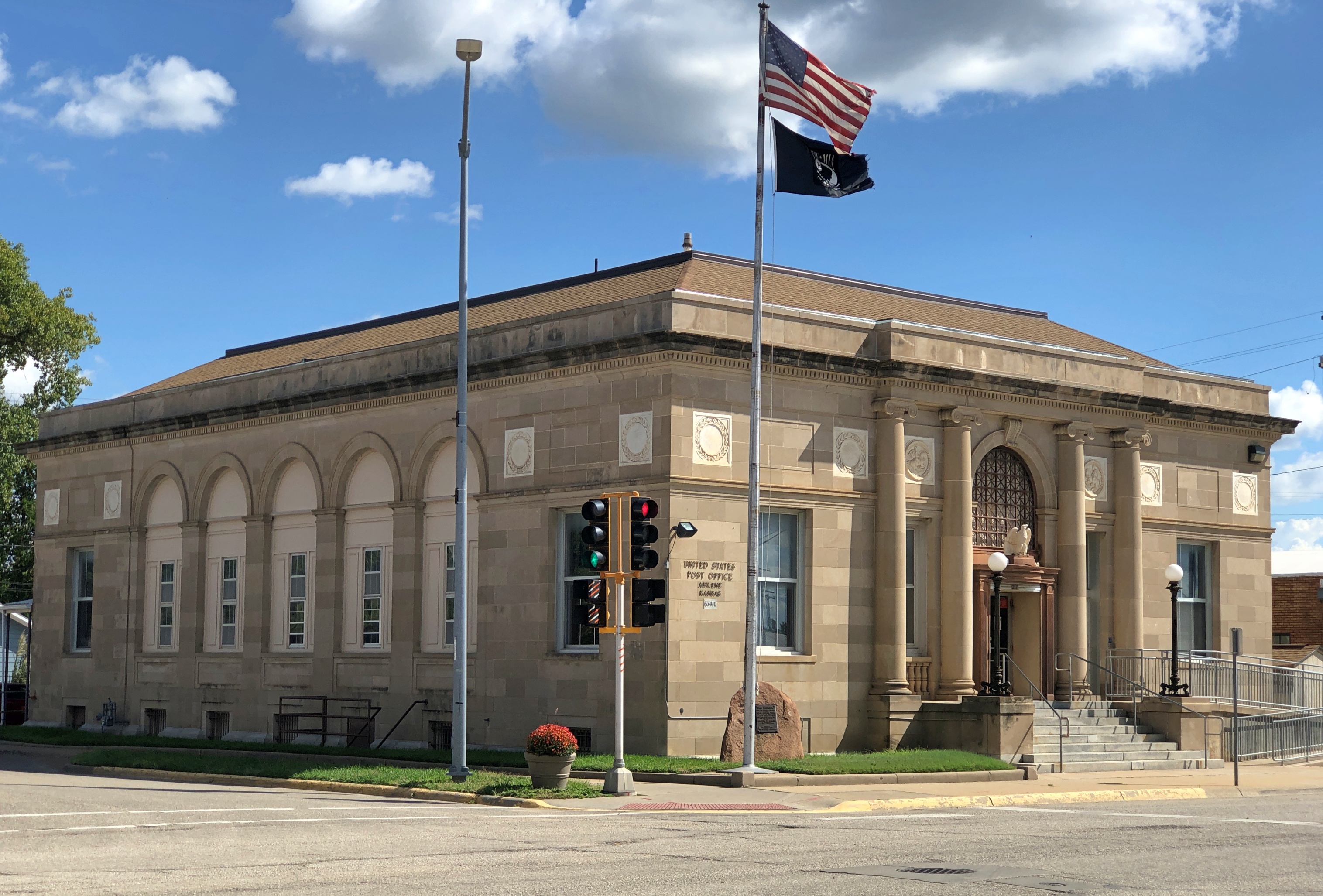
Structures that aren’t grand, but stately even so. Petite stately, you might call them.
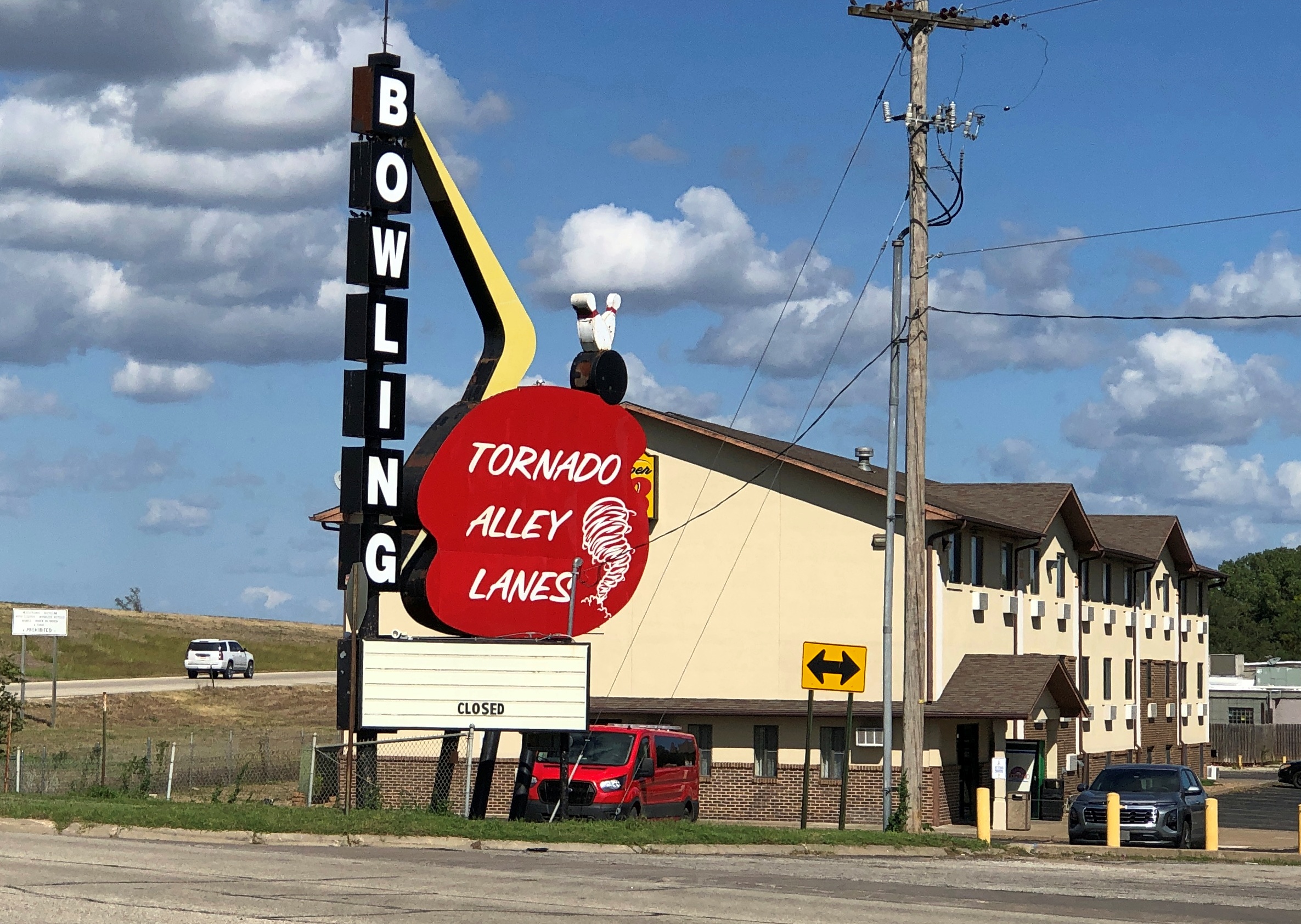
Out near the highway: truth in naming. But note also, the bowling alley is closed. I could go either way on the reopening of an alley in that location, but I really want the sign to stay.
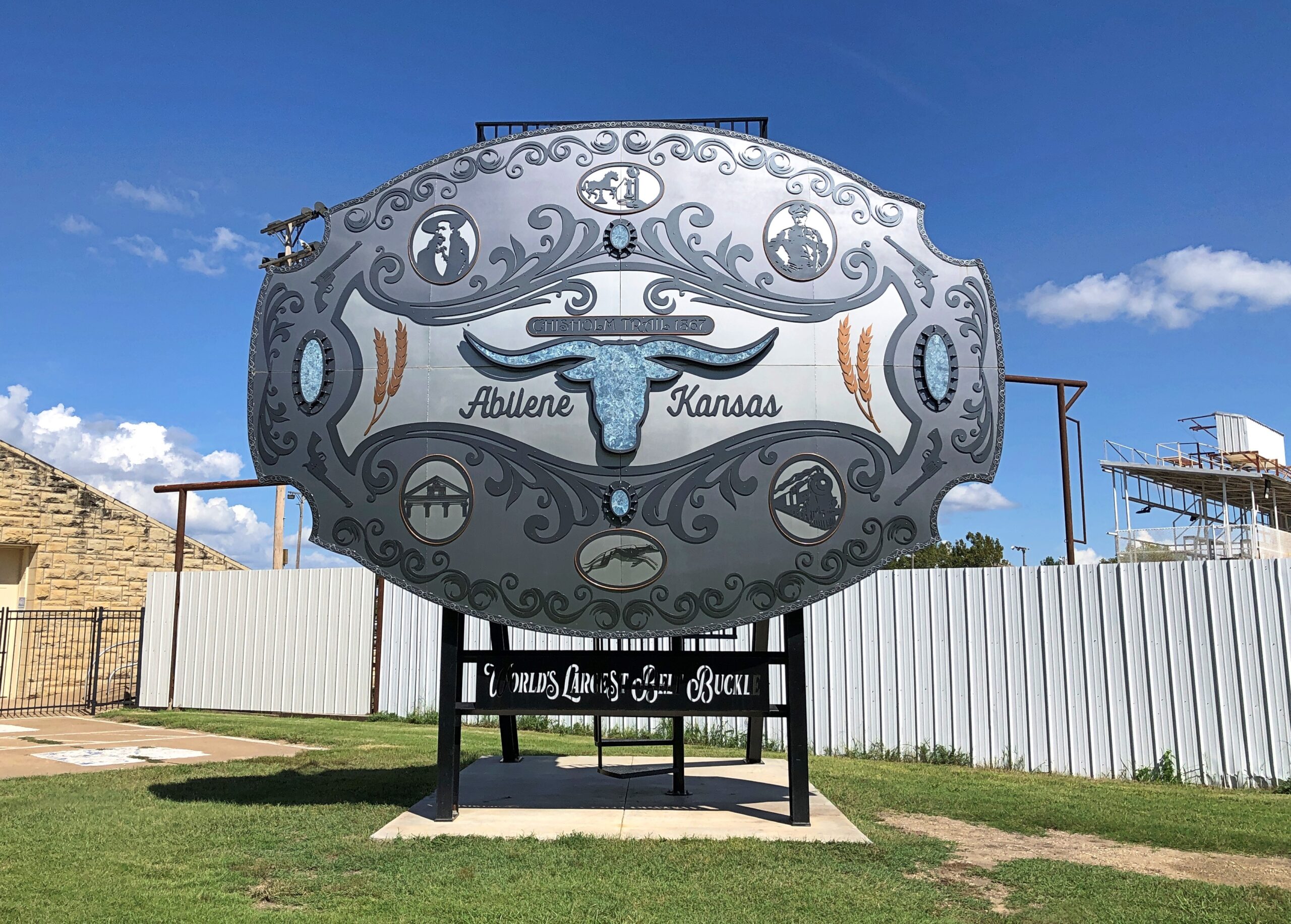
One more thing Abilene is known for, at least since 2022.
The World’s Largest Belt Buckle. Says so right there on it. How large would that belt have to be?
“Designed by local artist Jason Lahr, Fluter’s Creek Metal Works, the buckle features Dwight D. Eisenhower, Wild Bill Hickok, Abilene & Smoky Valley Railroad, Historic Seelye Mansion, C.W. Parker carousel horse, C.L. Brown telephone, a racing Greyhound and Chisholm Trail longhorn inlaid with blue quartz,” says the city of Abilene, Kansas.
“The buckle is a project of the Abilene Convention and Visitors Bureau which hopes the new roadside attraction will entice travelers to stop and visit the Best Historic Small Town.”
Recently I took a small survey among family members about Vasco da Gama, for reasons soon to be obvious. Namely, I asked Ann whether her U.S. elementary school education, about 10 years ago now, mentioned the Portuguese explorer and his voyages. Yes, she said. I asked Yuriko whether her Japanese elementary school education an ocean away and some decades earlier did so. Yes, she said.
I should have guessed it. Da Gama didn’t go all the way to Japan himself, but paved the away – was a maritime pathfinder – for other Portuguese, who arrived in 1543, bringing firearms and Catholicism to the Japanese archipelago at a time of civil war.
Fifty years ago in South Texas, I also learned about Da Gama, the stuff of textbook paragraphs and illustrations in the chapters on the European voyages to Asia and the Americas – and in the same league as Leif Ericson and Columbus and Magellan and Drake and Hudson and Cabot. Other kids might have been uninterested, but not me. What better than accounts of exploration?
So he’s taught in American and Japanese schools across recent decades. Quite a posthumous feat.
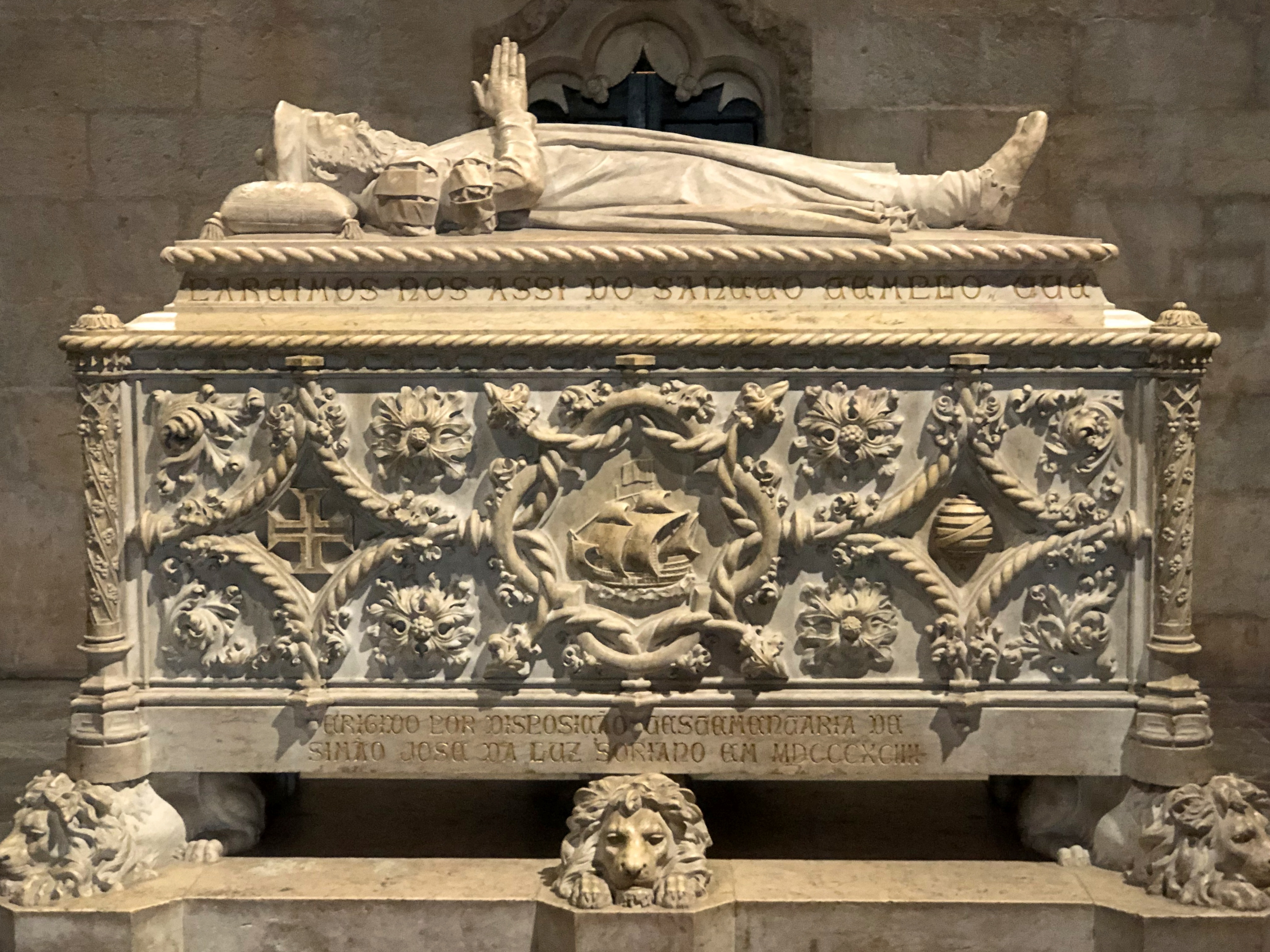
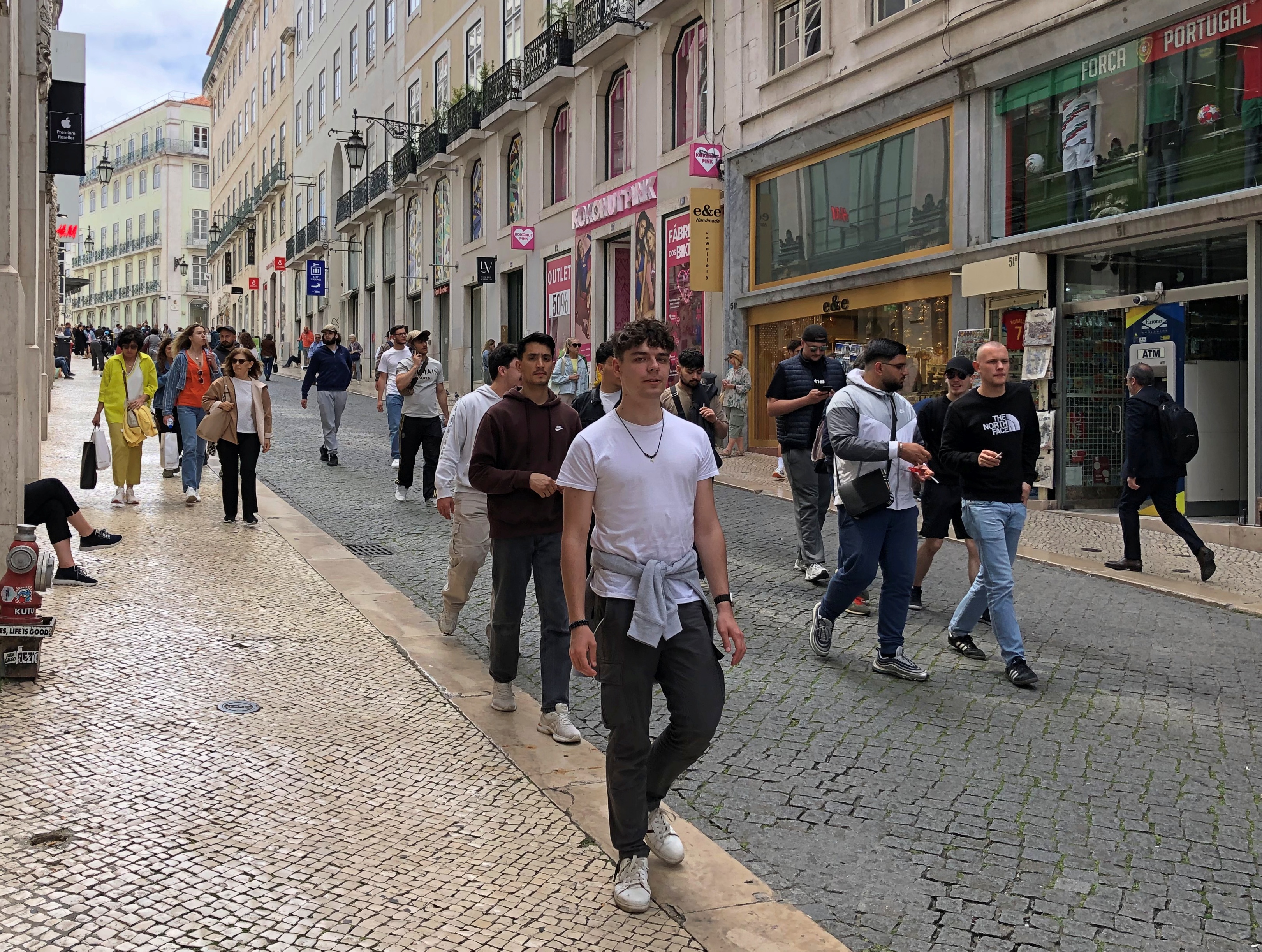
Last week, we stood in front of Da Gama’s tomb, in the Belem district of Lisbon.
That was a moment during our recent six days in Lisbon, except for a day trip foray to Sintra, which these days seems to be a far suburb of Lisbon. We returned yesterday.
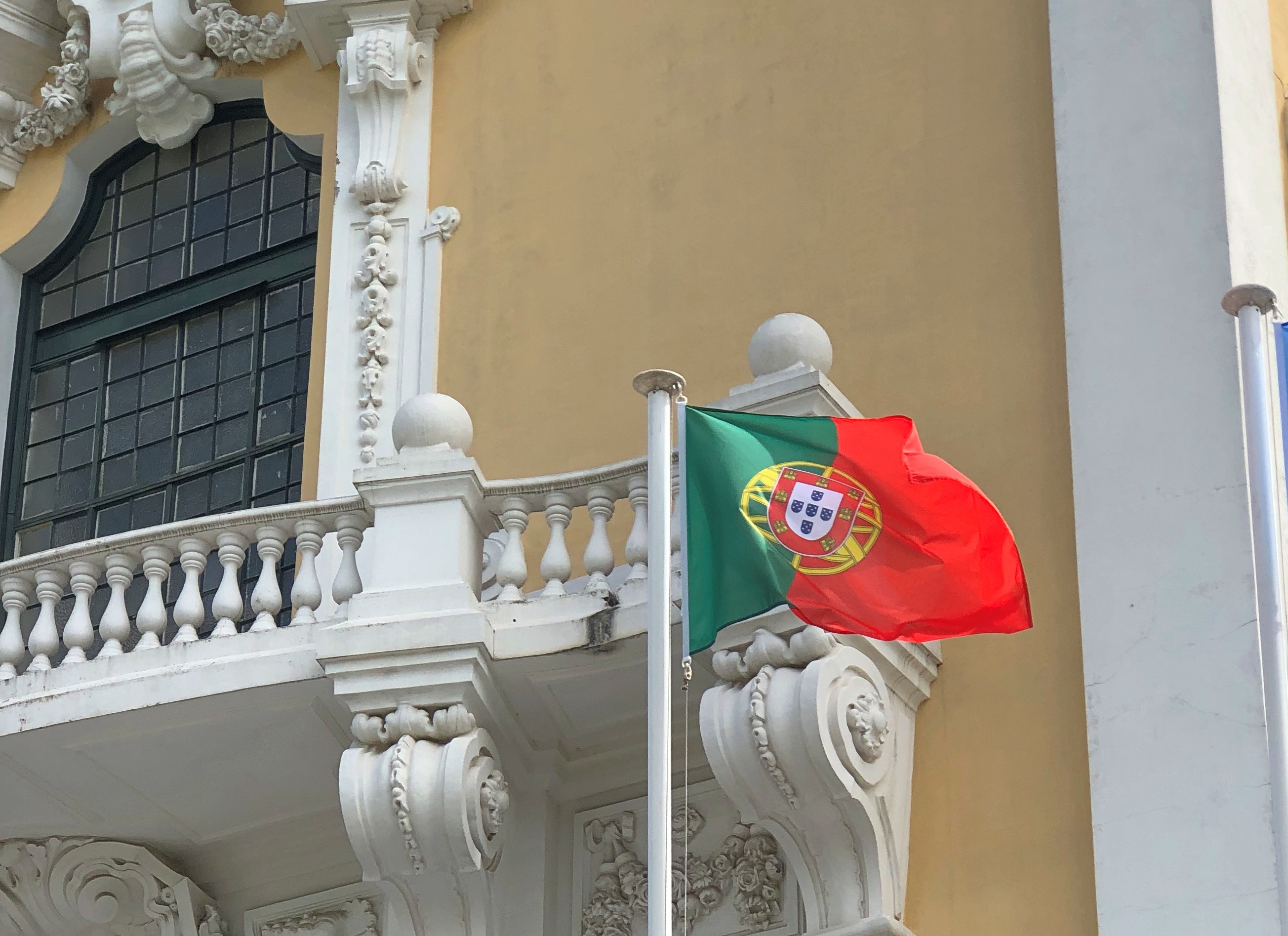
History certainly brought us to Portugal. For a smallish country, it punches above its weight in history. Including more recent history.
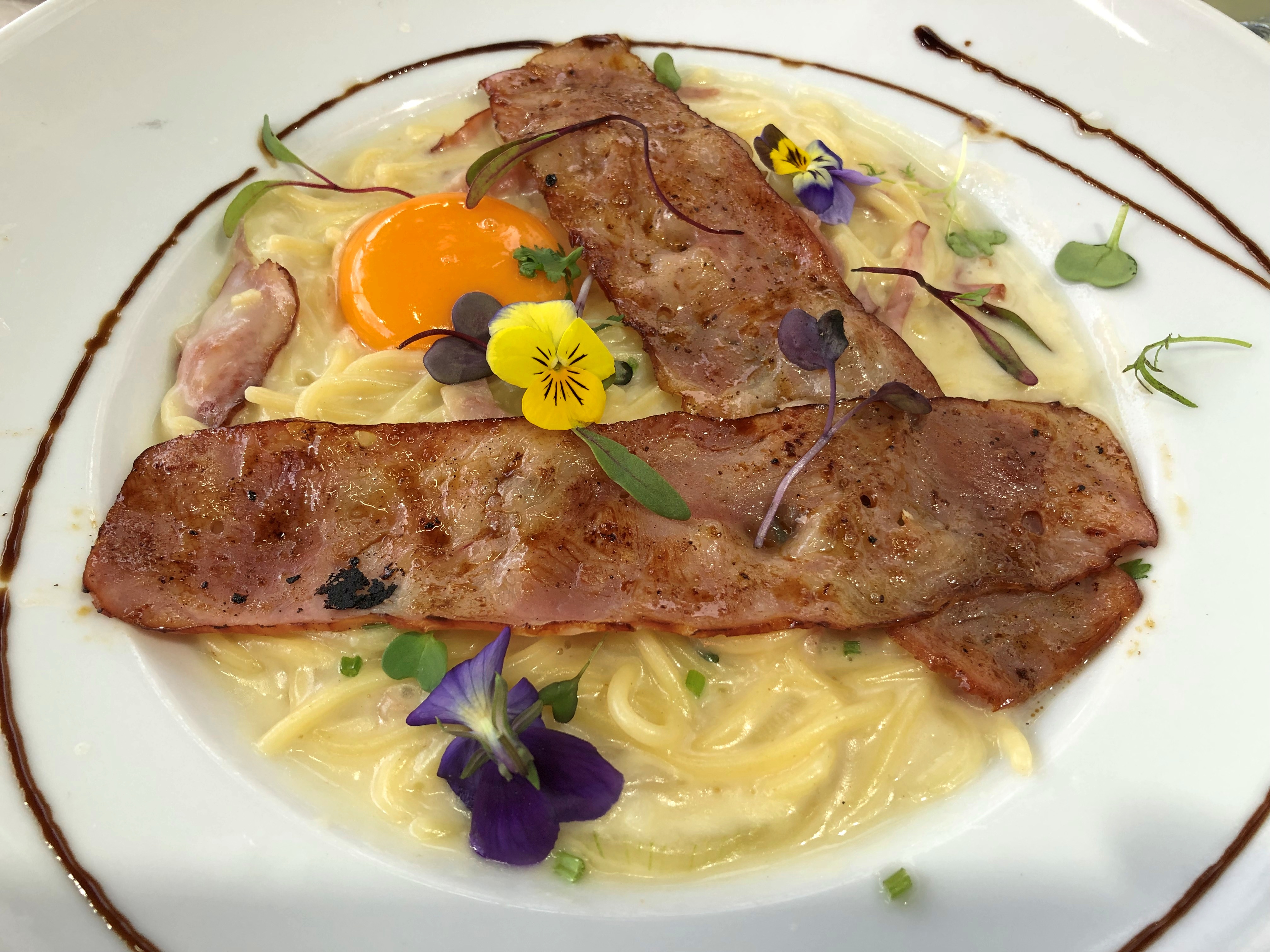
But that’s not all. We had some idea that the food was really good. Really, unbelievably good. It was. Pastries and pastas and seafood and sandwiches and many other true delights on our plates; coffee and tea and lemonade and beer in the glasses. We didn’t have a bad meal in Lisbon, or even mediocre.
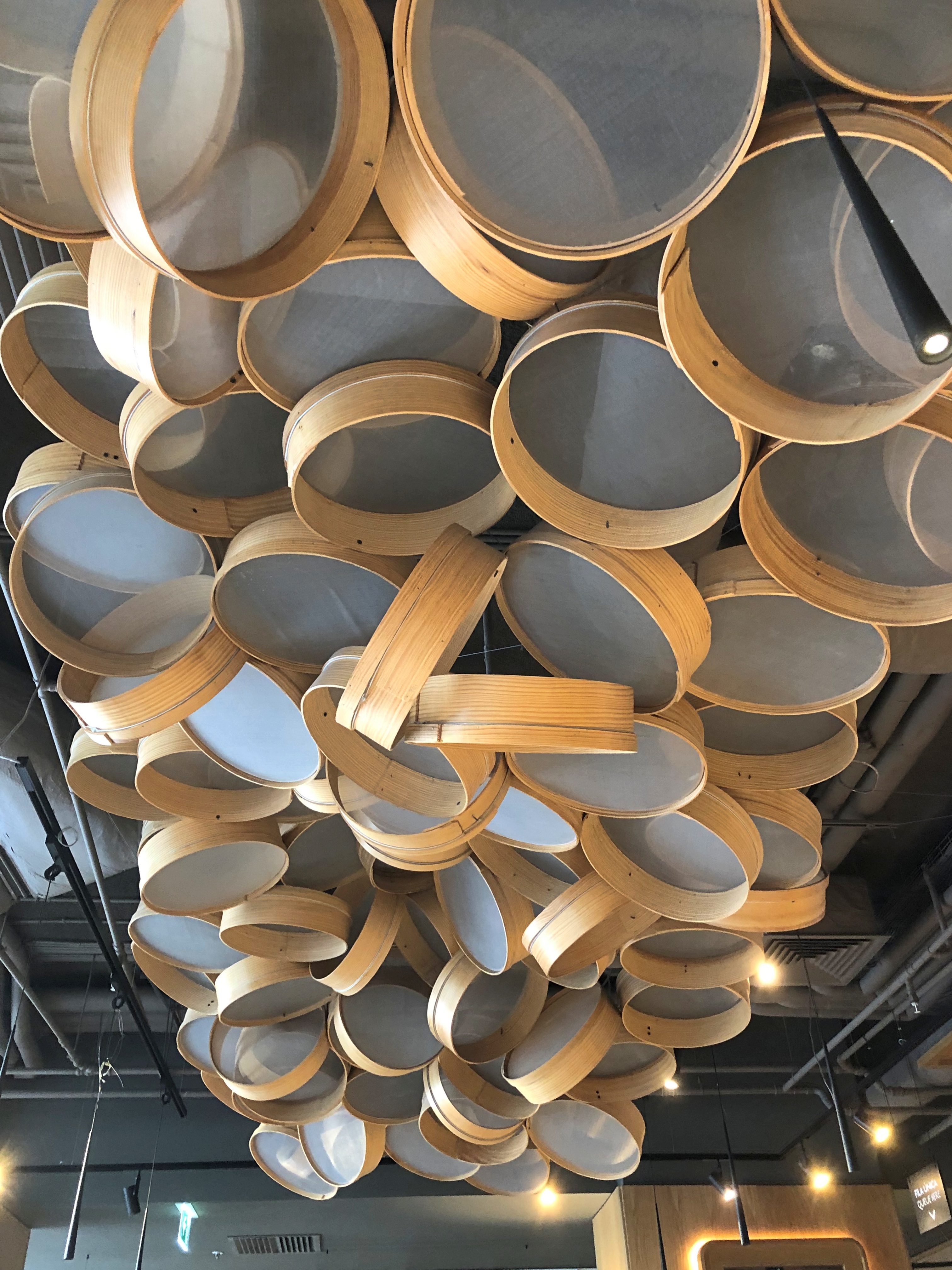
Flour sifters decorating the ceiling of an unpretentious cafe in a mid-Lisbon hotel.
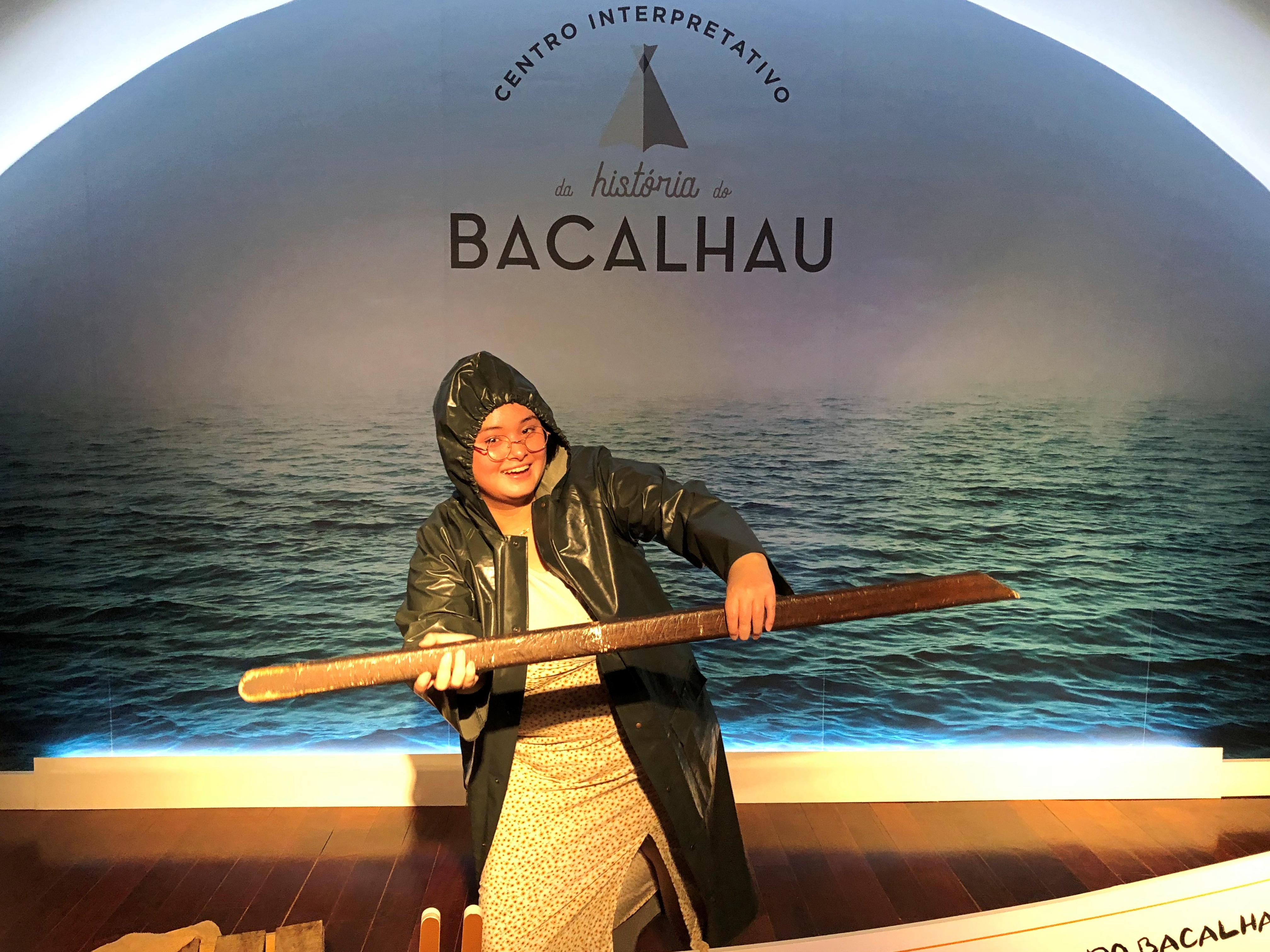
At an entire museum in Lisbon devoted to Portuguese cod fishing and cod as a staple in the Portuguese diet, you can pretend to take a small boat out on choppy waters.
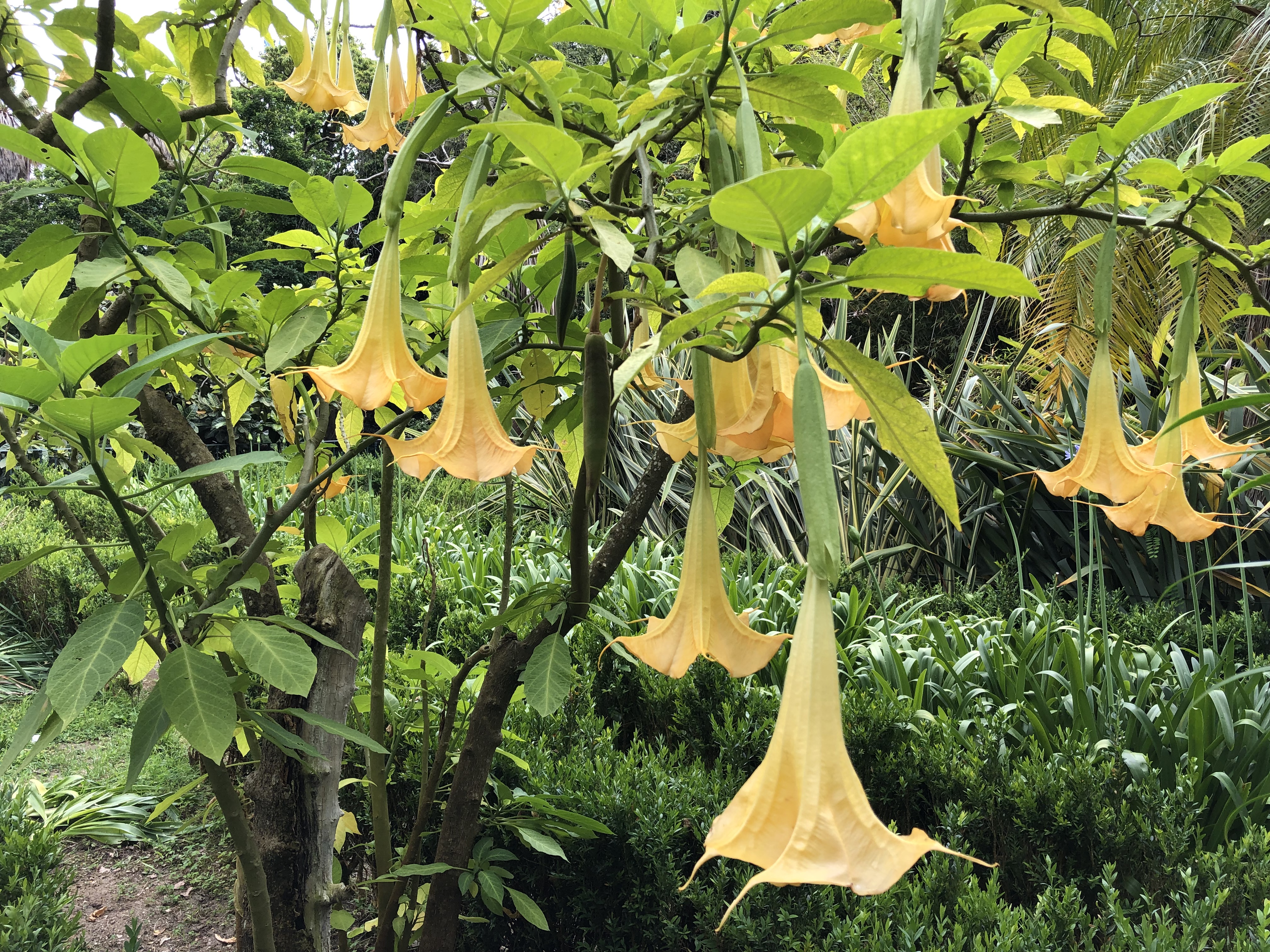
I don’t know that Lisbon has the greatest parks in Europe, but it’s got swatches of greenery.
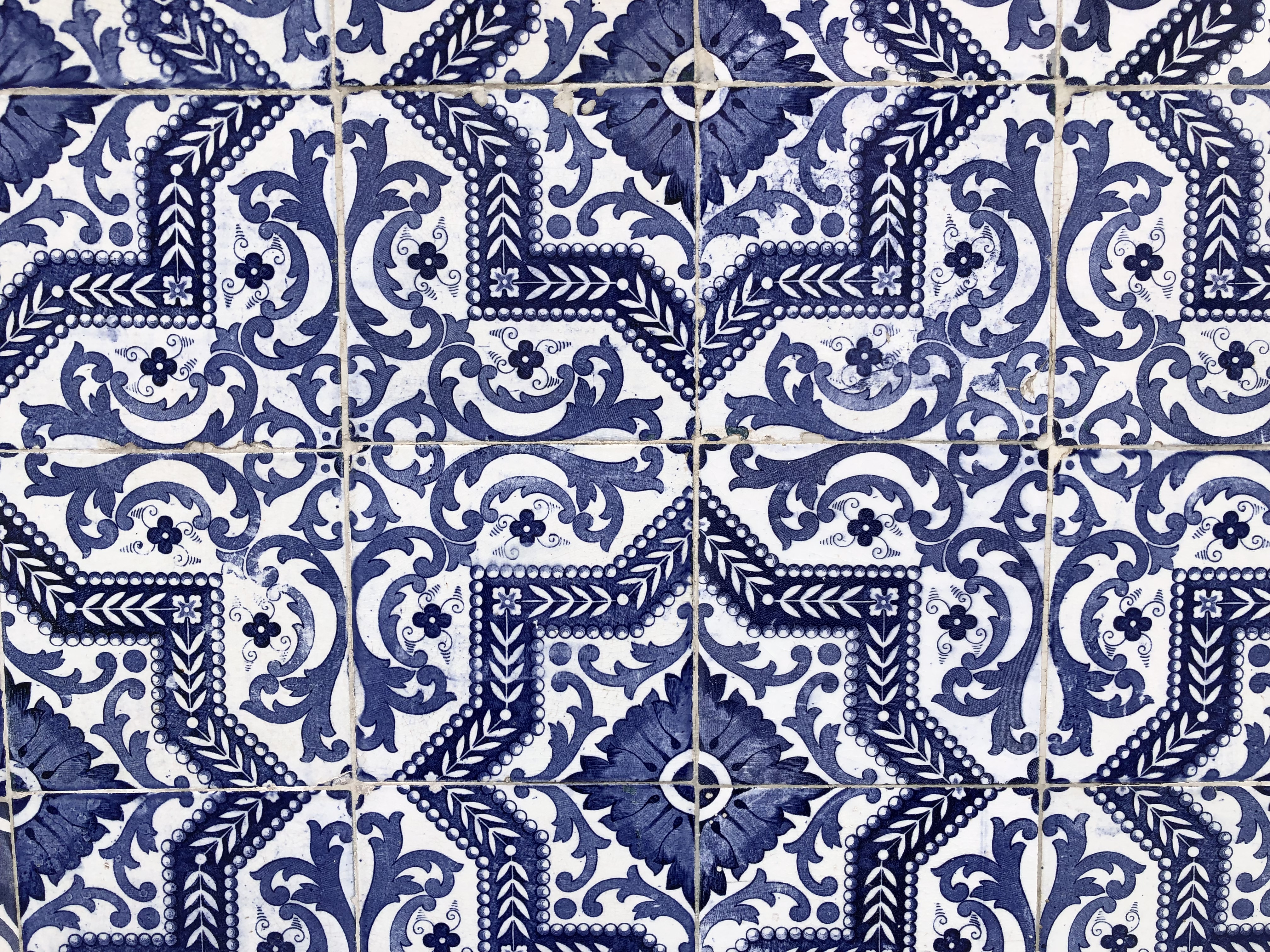
Portuguese tiles – azulejos – decorating buildings large and small, draw your attention often enough.
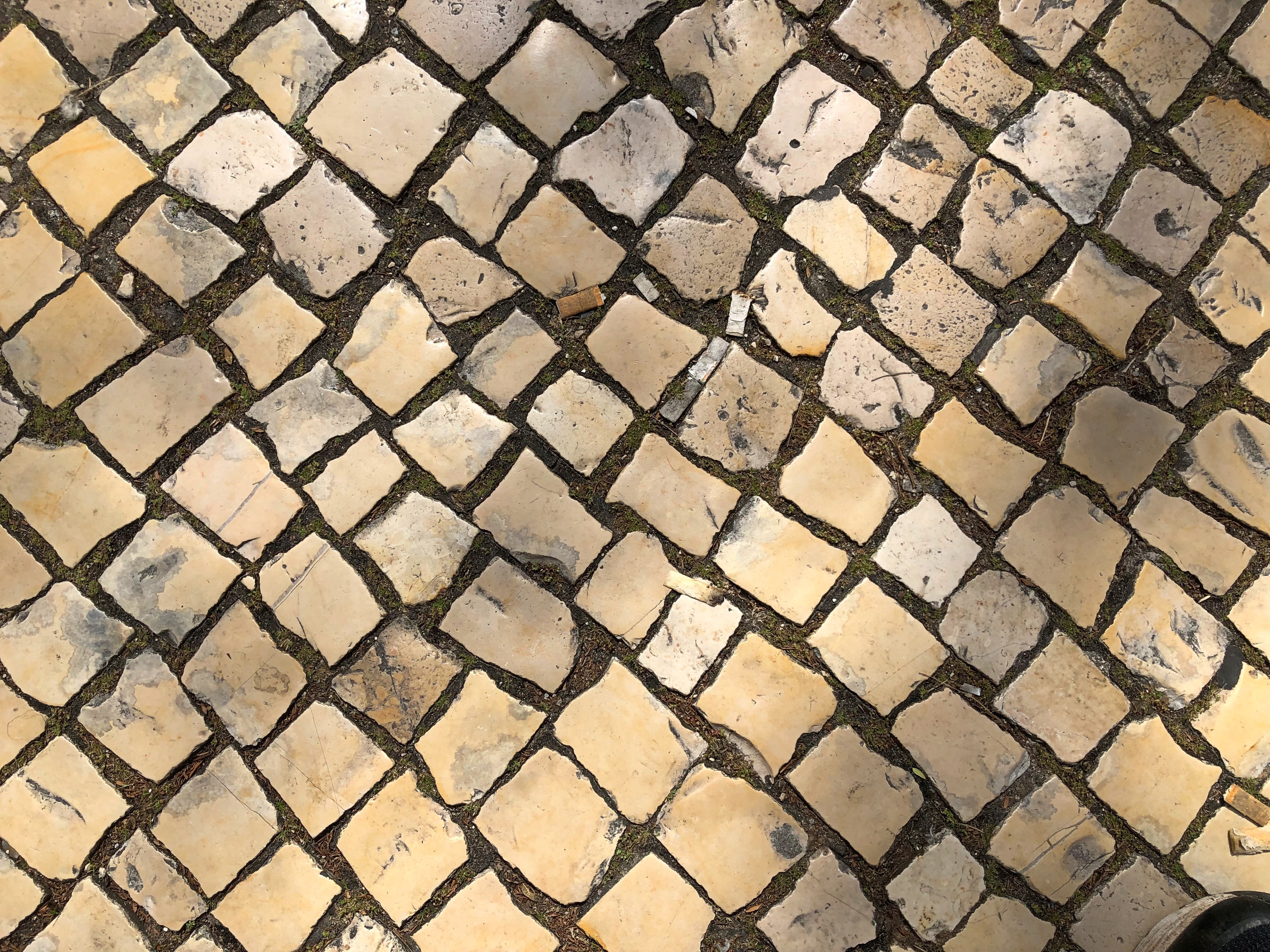
You look at the azulejos for their beauty. The stone sidewalks, which were extensive on the many blocks we walked, demand attention for another reason. Their surfaces are reasonably flat. Mostly. But more than occasionally there will be damaged, irregular patches just waiting to land the unwary on their bum, or worse.
With the launch of the Age of Discovery, Lisbon embarked on becoming an international city. That might mean different things in the 21st century than it did when Prince Henry the Navigator schemed to further Portuguese exploration, but so what. The world comes to Lisbon.
The world comes in the form of millions of people every year from many corners of the Earth to this distinctive, aesthetic corner of that same planet. We were glad to join them.
Why should we start sending people back to the Moon? Because it’s still there? Besides that. Rather, because the ranks of those who have flown to the Moon are getting pretty thin – something I thought of when I learned that Tom Stafford (Apollo 10) died. Now only seven of them are left, four who landed on the surface and three who got really close without landing.
At 88, the youngest of this rarefied group is Apollo 16’s Charles Duke. Three have passed just in the last few months, including Ken Mattingly (also Apollo 16) and Frank Borman (Apollo 8) and now Stafford. It wouldn’t be right somehow to have the experience of being close to the Moon slip out of living memory. The plan is for these astronauts to go next year on Artemis 2; we shall see.
If Artemis 2 does come to pass as planned, it would include among its crew one Jeremy Hansen, who happens to be a Canadian astronaut and would be the first non-American (non-citizen of the United States, to nitpickers) to pay a visit to the Moon. Assuming a knot of taikonauts doesn’t surprise the world before Artemis’ flight by appearing on the lunar surface hoisting the flag of the PRC.
Hansen, as Wiki succinctly put it, “Canadian astronaut, fighter pilot, physicist and former aquanaut.” If that’s not an action hero’s resume, I don’t know what would be.
Lots of rabbit-hole material here: Canada currently has four active astronauts (one of whom is Hansen) and a number of retired ones, including the dude astronaut who played “Space Oddity” on the ISS about 10 years ago. They work or worked for the Canadian Space Agency, which has been around since 1989 but I’d say is fairly low profile. Canadians have been going to space since before then, since Marc Garneau went up on a 1984 Shuttle mission. He happens to be a Québécois and until recently fairly highly positioned in the current Trudeau government.
Here’s a question for Moon landing deniers: how come some other nation (say, you know, China) hasn’t faked going to the Moon by now? Certainly Xi Jinping would be able to marshal the resources, by various carrots and sticks, to get the filming and other fakery done.
If someone (say, you know, Kubrick) could fake it using late ’60s video tech, wouldn’t the vast improvements in digital image creation since then mean a higher quality fake by the Chinese government? One so good no one would question it? Except of course for brave Moon-landing deniers.
Another warmish day and a not-so-cold evening. We walked the usual path around Lake V. well after dark, taking in the Moon in the cloudless sky now and then. It’s nearly full. Then I remembered that an unmanned American spaceship was due to land near its south pole; Odysseus, which might not be the most auspicious name for a traveler, but at least a noble one from classical antiquity. Maybe the next one will be Penelope or Telemachus.
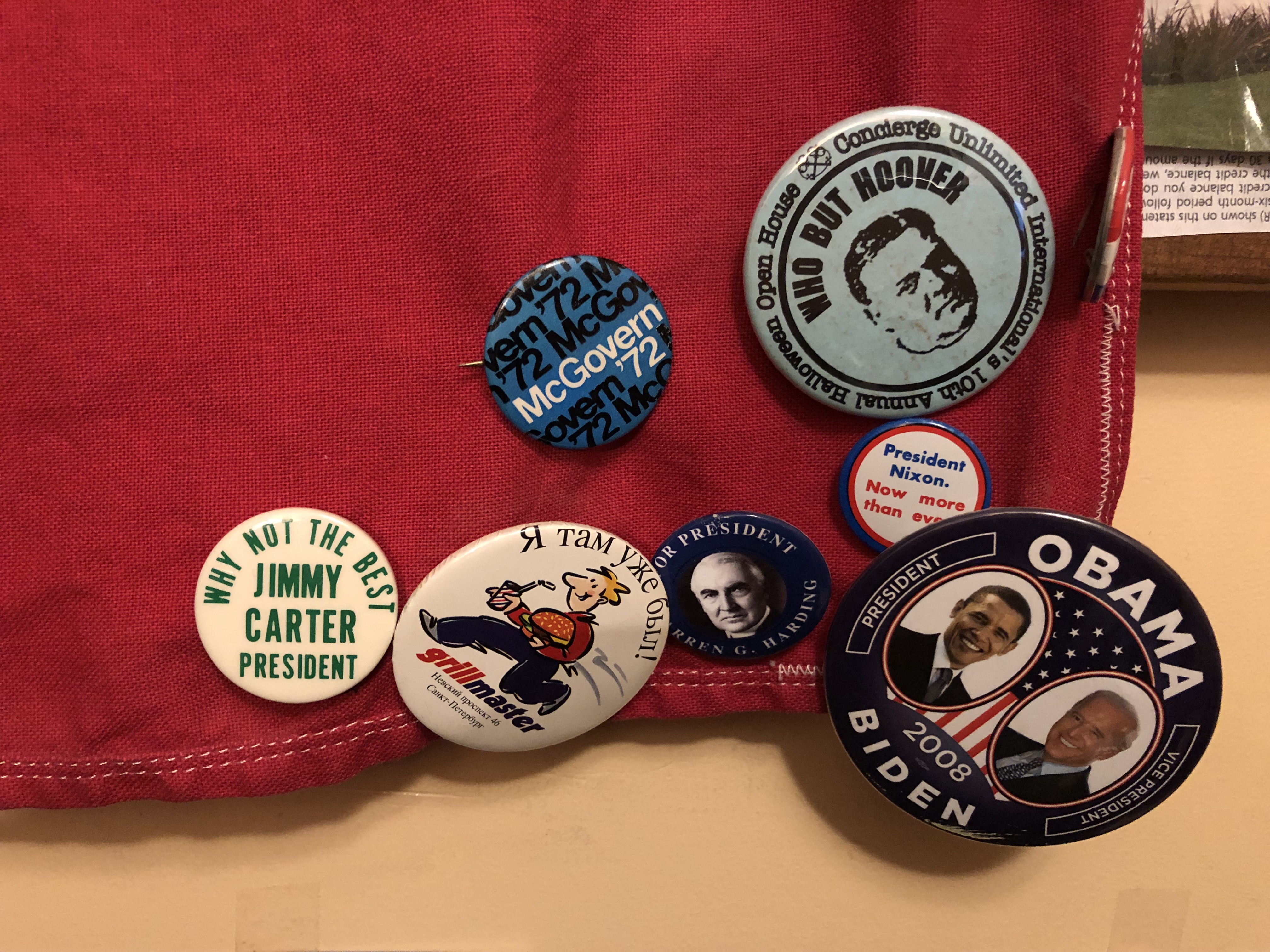
Recently Jay sent me two of those buttons: McGovern and Carter. The others have been hanging there a while.
The Hoover button was created for a Halloween party that a company down the hall from us in the Civic Opera Building used to throw many moons ago. The event wasn’t in that building, but rather the Rookery, whose common areas are excellent for a corporate events. The Harding one I picked up at the Harding Museum in Ohio last year, and the Grillmaster button has nothing to do with U.S. presidents. It was a souvenir of St. Petersburg, Russia.
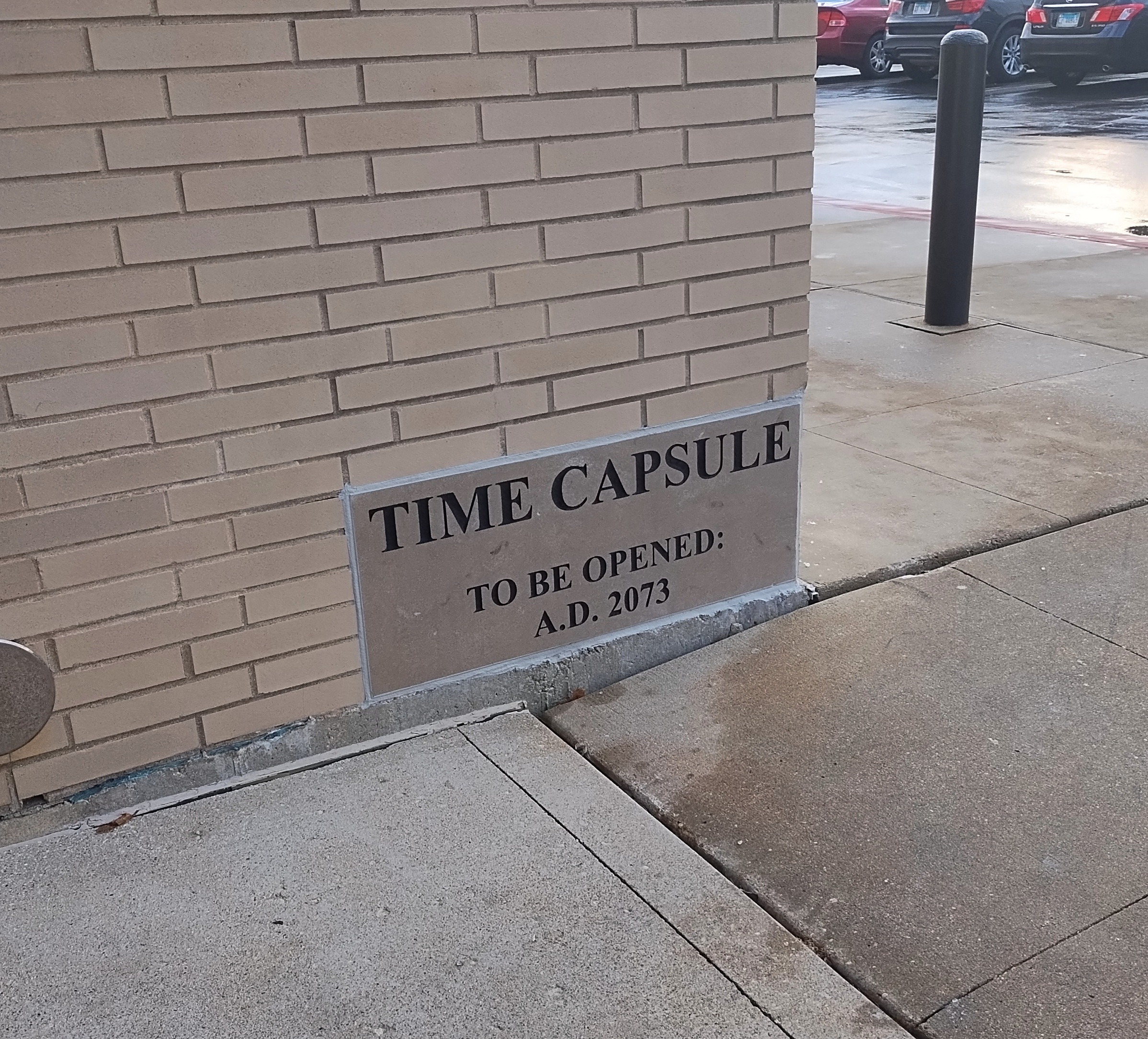
Spotted at the Schaumburg Township Library not long ago.
It used to say 2023.
“On Saturday, Sept. 23 [2023], more than 850 people gathered at our Central Library (with another 300 joining us online) to watch as we unveiled the contents of a time capsule that was placed in the cornerstone of our Library when it was built in 1998,” the library’s web site says.
I wasn’t one of them. I went to Milwaukee that day instead for Doors Open. The contents of the ’98 capsule are mildly interesting, but one of the Westinghouse Time Capsules, it isn’t. (And no horny toads or cartoon frogs.)
Still, I like the idea of time capsules, enough to bury a few myself once upon a time, including one late in the summer of 1974 in our back yard, which I wasn’t able to retrieve five years later as planned. I dug a few holes in an effort to do so, damaging some grass, which annoyed my mother, if I remember right.
The trees are budding, flowers are emerging – including a fine crop of dandelions, suburbia’s most underappreciated blossoms – and the grass is green and long enough to merit a trim. One thing missing from this spring: about 20 degrees Fahrenheit of ambient temperature, sometimes 30. That winter clings so long into what should be spring is, I’ve long felt, worse that the actual pit of winter here in the North.
Happens every year. Then I forget about it as summer really does come.
Over the weekend I watched a clip of the flopnik launch of Starship, a few days after the event, as one does in our time. Flopnik probably isn’t a fair way to describe it, since Vanguard only got a few feet off the pad, but still: “rapid unscheduled disassembly”? That sounds like terminology made up for Space Force. Or it should have been. I only saw the first episode of that series, and found it to be lame. If it had had more jokes like rapid unscheduled disassembly, it might have been a better show.
I’d read about the launch before I watched the video, of course. Learned a few things, too. Apparently the Starship first stage has 33 engines. Sounds like a Soviet approach to clustering engines, and so it is. The N1 rocket first stage (retired in failure in 1972) had 30 engines and, like Starship, was a sumo wrestler among launch vehicles. The N1 didn’t ever propel anything to the Moon, but never mind. The Saturn V? A flawless record.
I’m no rocket engineer and so not up to the task of commenting on Starship‘s technical specs, or even whether the launch was a successful failure, but I will say this: dump that ridiculous name. Until you can build something that proceeds at some sizable fraction of the speed of light, say via sophisticated ion propulsion, and arrives at a nearby star system within a human generation, you haven’t got a starship, Mr. Musk.
Titan is taken, I guess. How about Gargantua? Behemoth? Juggernaut? Granted, all those may convey the rocket’s enormous size, but there’s also an undercurrent of threat in each of those names. Nothing a few million dollars in PR couldn’t try to change. What about Ares?The U.S. decided not to use that name for a rocket, and the thing called Starship is supposed to go to Mars someday, after all.
Something else: what’s all the cheering and applause recorded with the Starship video? A latter addition, or a capture of cheers among spectators? If the latter, were those people really cheering, or hired to cheer? If really cheering, I can understand a cheer at the successful launch, why did they continue to cheer when the rocket had obviously failed?
When visiting a place like Carson City, Nevada, you wonder how many other places are named after Kit Carson. That’s the kind of fleeting question that occurs to me, anyway, and sometimes I remember to look it up later.
I like the conciseness of Britannica on the matter, though it’s short on facts: “Carson’s name is preserved variously throughout the Southwest, including Nevada’s capital at Carson City; Fort Carson, Colorado; and Carson Pass in California.”
The National Park Service has naught to say about the mountain man’s naming legacy, so of course the place to go is Wikipedia. All easily checked facts, grouped in one place.
“Carson National Forest in New Mexico was named for him, as well as a county and a town in Colorado. A river and valley in Nevada are named for Carson as well as the state’s capital, Carson City. The Carson Plain in southwest Arizona was named for him.
“Kit Carson Peak, Colorado in the Sangre de Cristo range, Kit Carson Mesa in Colfax County, New Mexico, and Carson Pass in Alpine county, California, were named for him.
“Fort Carson, Colorado, an army post near Colorado Springs, was named after him during World War II by the popular vote of the men training there… Innumerable streets, businesses, and lesser geographical features were given his name.”
Apparently, so was Kit Carson Park in Taos, NM, and a recent move to change it was defeated for interesting reasons.
In Carson City, you can see the bronze Kit. He passed this way in the early 1840s, when he was guiding John C. Fremont.
The inscription: 1843-44, Kit Carson by Buckeye Blake, Commissioned by Truett and Eula Loftin. The Loftins, former casino owners in Carson City, donated the work to the state in 1989.
The statue is on the grounds of the Nevada state capitol, along with an unusual plaque imparting geographic information about Carson’s visits to the future state of Nevada.
Nearby is a man without any national fame, Abraham Curry.
His nickname locally is the “Father of Carson City.” Kit might have passed this way, but Curry stayed. Among many other things, he gave the state the 10 acres on which the capitol stands.
The capitol is a handsome structure, and wouldn’t look out of place as a county courthouse back east. If it were behind scaffolding.
The landscaping is unusual for a capitol, which tend to be clear of trees. Not so for Nevada.
Designed by Joseph Gosling of San Francisco, who is known for a scattering of works. The capitol, completed in 1871, wasn’t always surrounded by trees, such as about 150 years ago.
Inside, no metal detectors, though there is a uniformed officer at the desk. There’s also a bronze of Sara Winnemucca Hopkins.
There are a few of the design elements you see in U.S. capitols, but on the whole the capitol is restrained.
One space is given over to museum exhibits.
Featuring a number of artifacts you aren’t likely to see anywhere else.
This is Guy Shipler (1913-96), once dean of the capitol press corps. Good to see a journalist honored.
The capitol is on N. Carson St. I took a stroll down that street and a couple of connecting streets. A number of state buildings cluster around Carson St. These days, this building houses the Nevada Department of Tourism.
Dating from 1891 as a federal edifice, it has variously been home to the Carson City Post Office, Land Office, Weather Bureau and U.S. District Court.
A few other Carson City buildings pleasing to the eye.
The Nevada State Museum includes this building, the former Carson City Mint. It was closed for Monday.
It’s important (to me) to list the coin types made there from 1870 to ’93. In silver: Seated Liberty dimes, 20-cent pieces, Seated Liberty quarters, half dollars, and dollars, Trade dollars and Morgan dollars. In gold: Half Eagles, Eagles and Double Eagles.