I’ve now been to Mars Cheese Castle about n times. I pass its way often, and while I don’t always stop there, visits over 40 years have added up to n. Like Wisconsin itself, or Milwaukee, or a healthy number of other places.
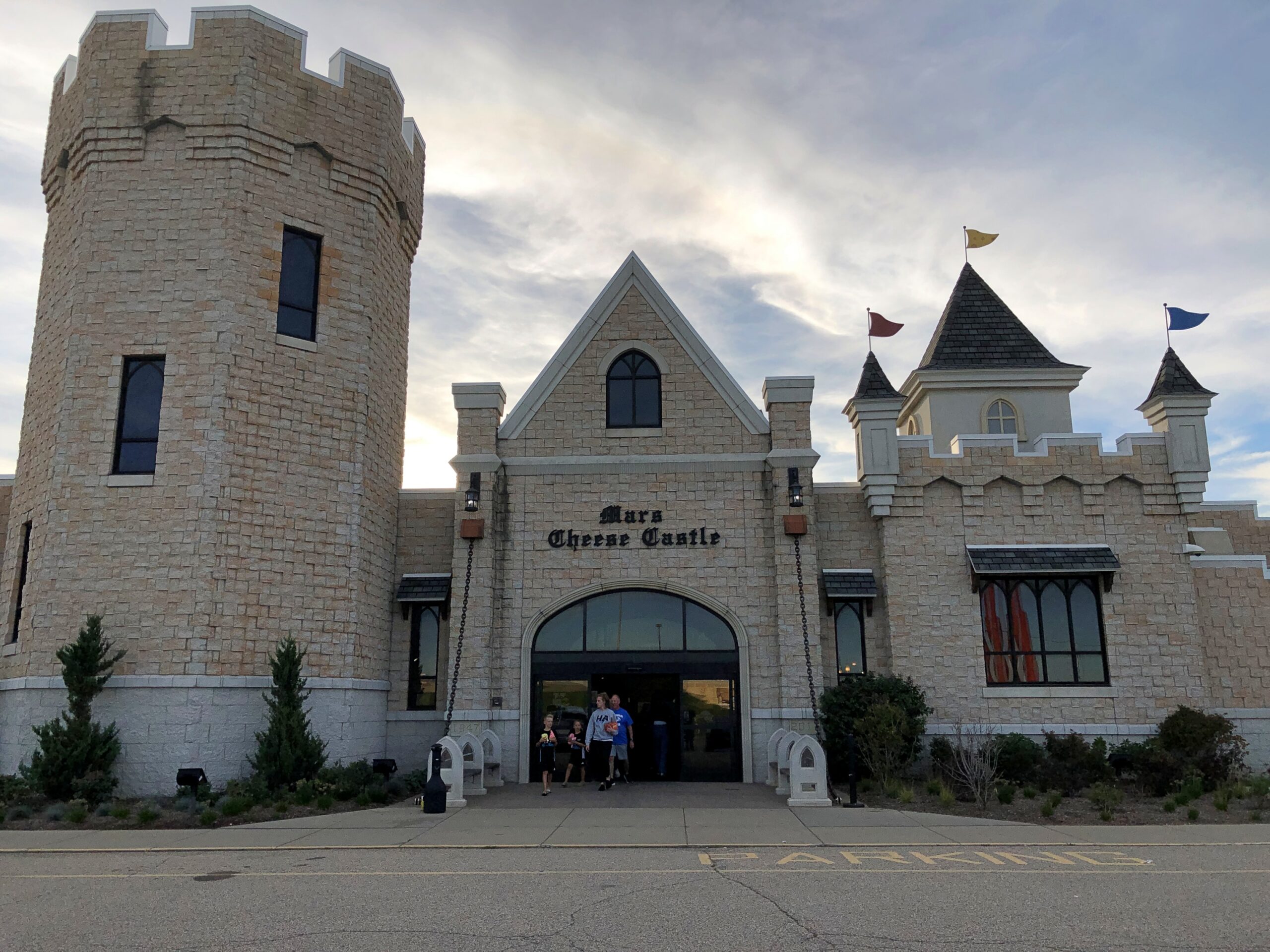
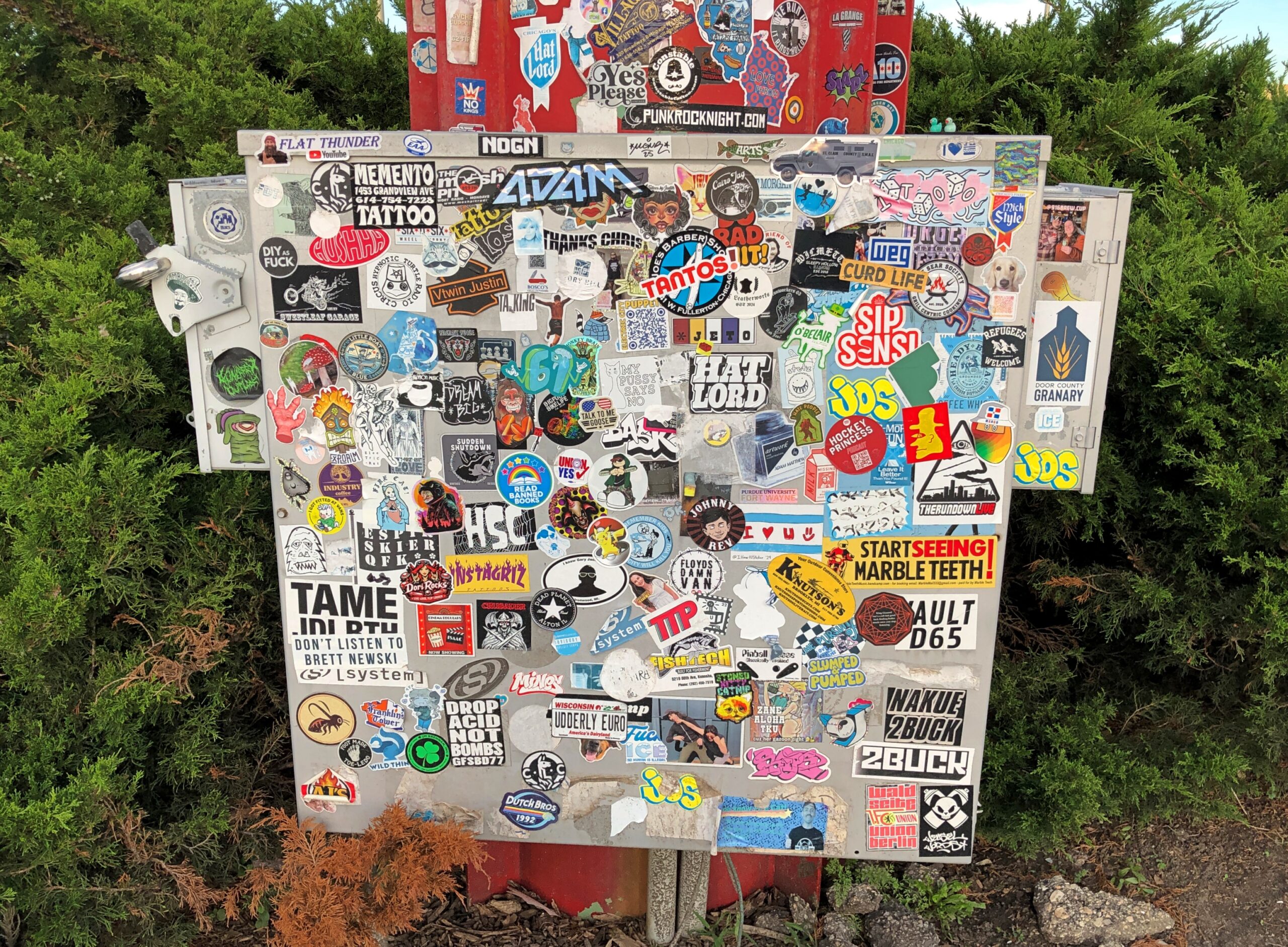
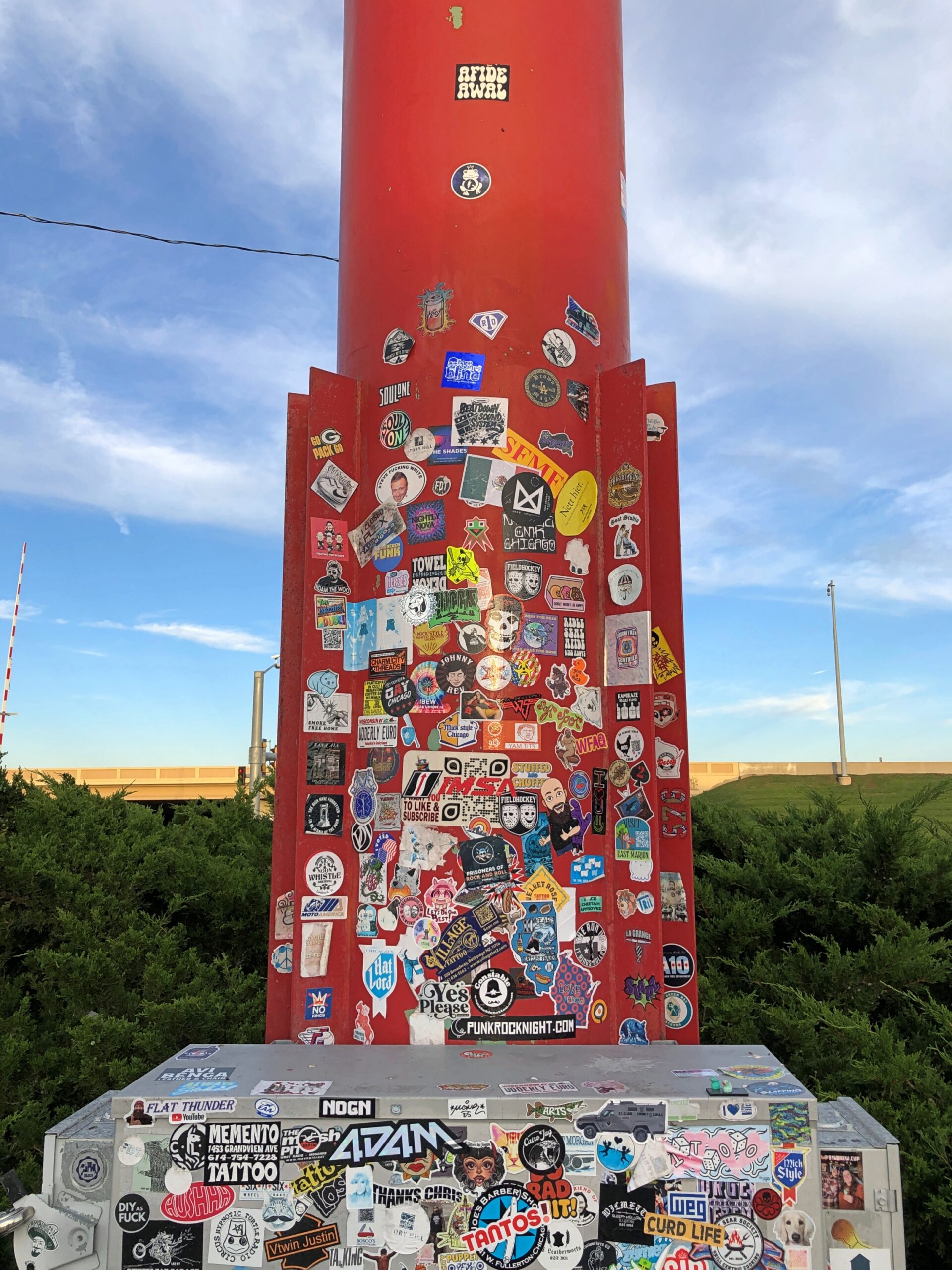
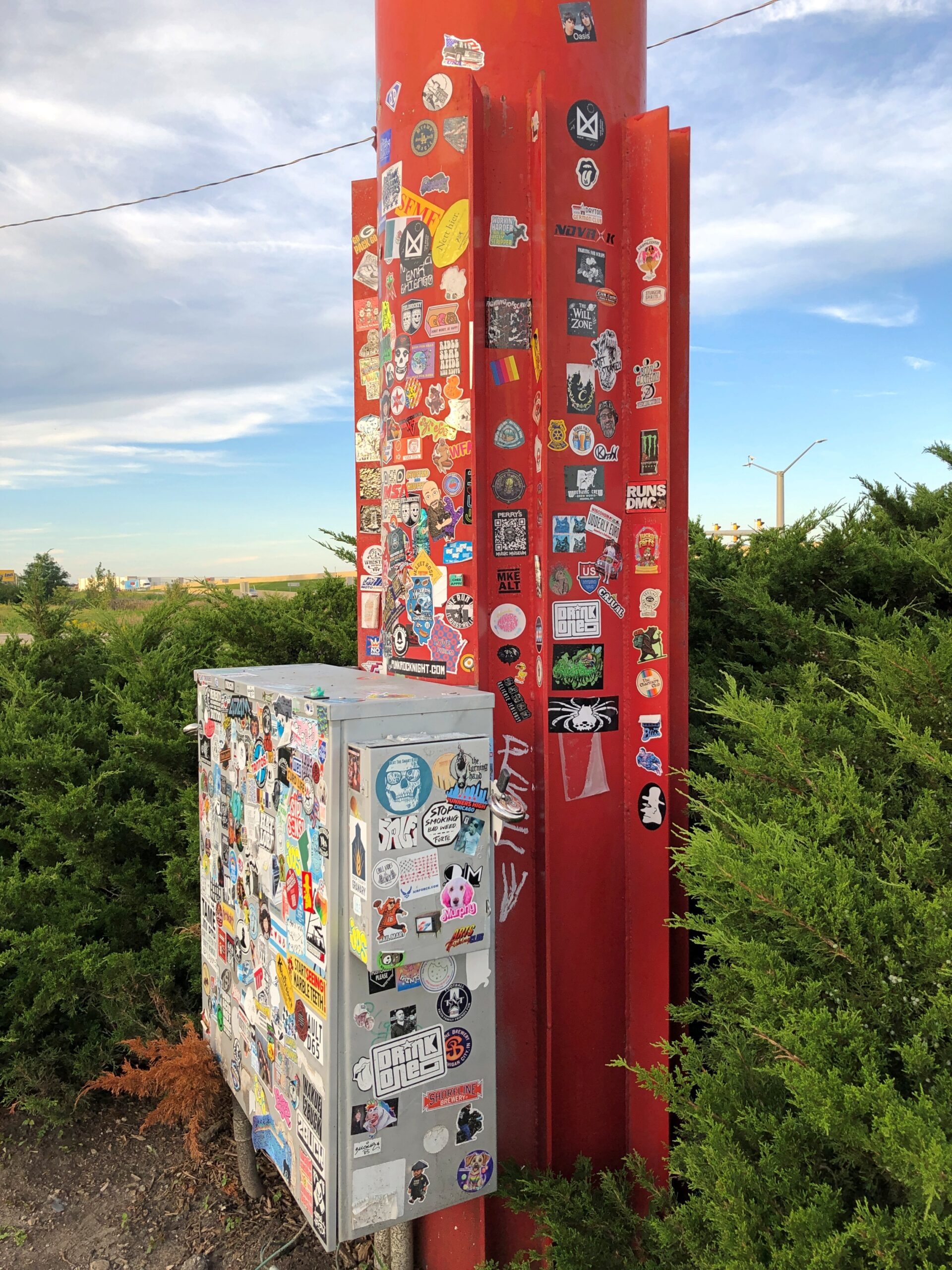
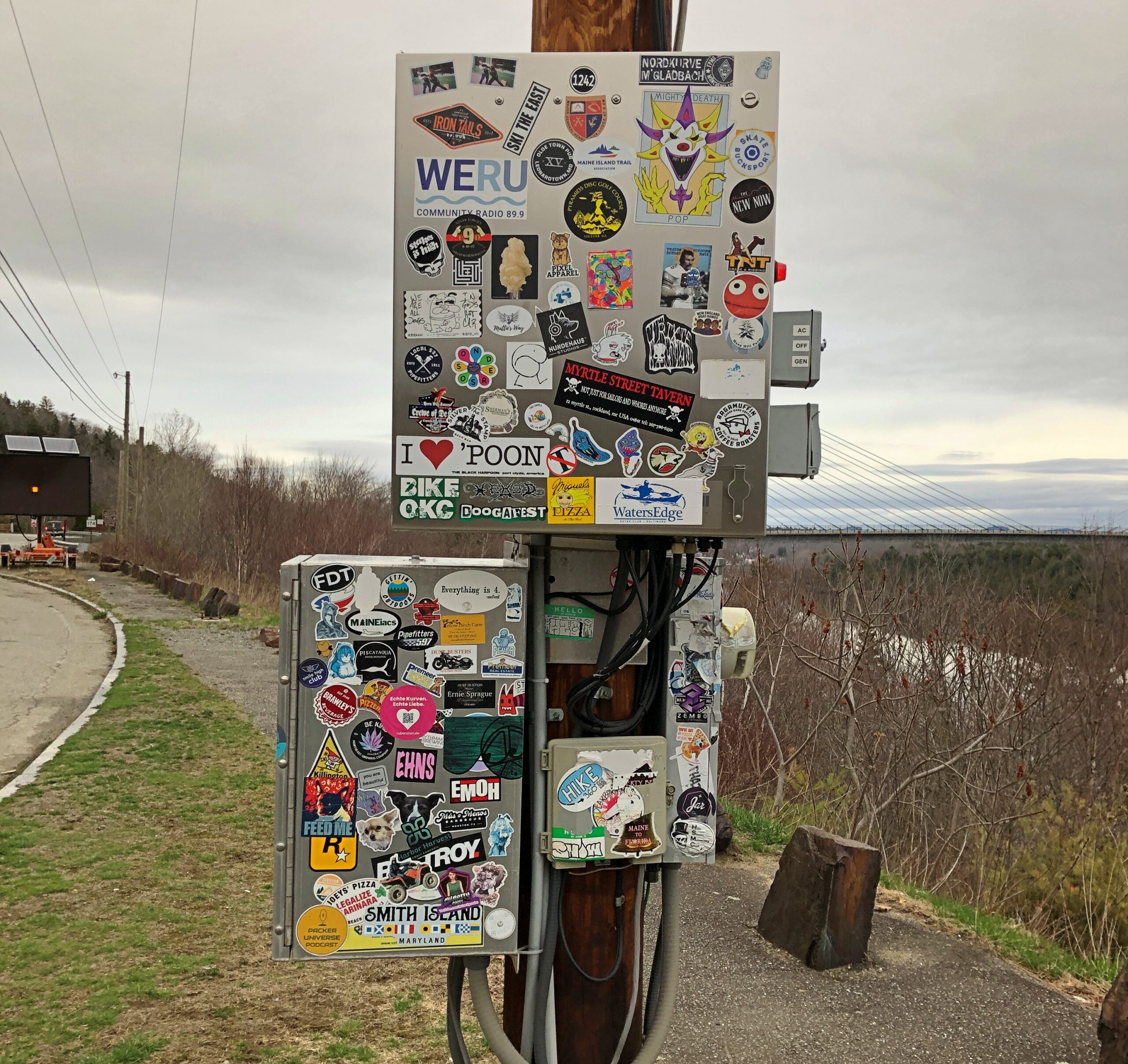
After much of a day in Milwaukee, for the latest Doors Open Milwaukee event, we stopped at Mars, mere miles north of the Wisconsin-Illinois line on I-94. First thing, I decided to document the sticker situation at the base of the highway sign.
I don’t see you-know-who from a much larger chain of retail establishments whose mascot is known to dam streams and sue alleged lookalikes. There are no locations yet in Wisconsin, but he is waiting, biding his time.
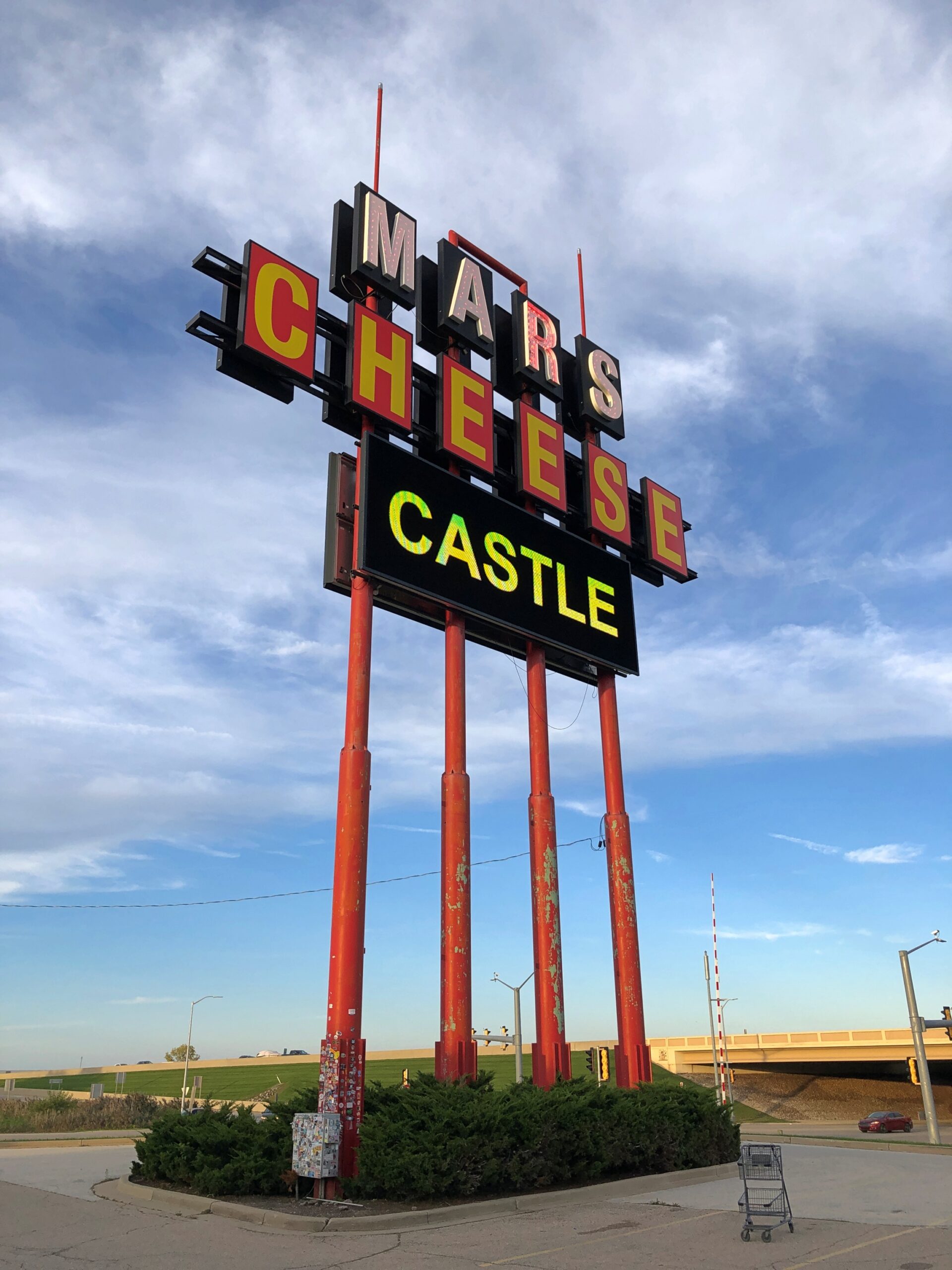
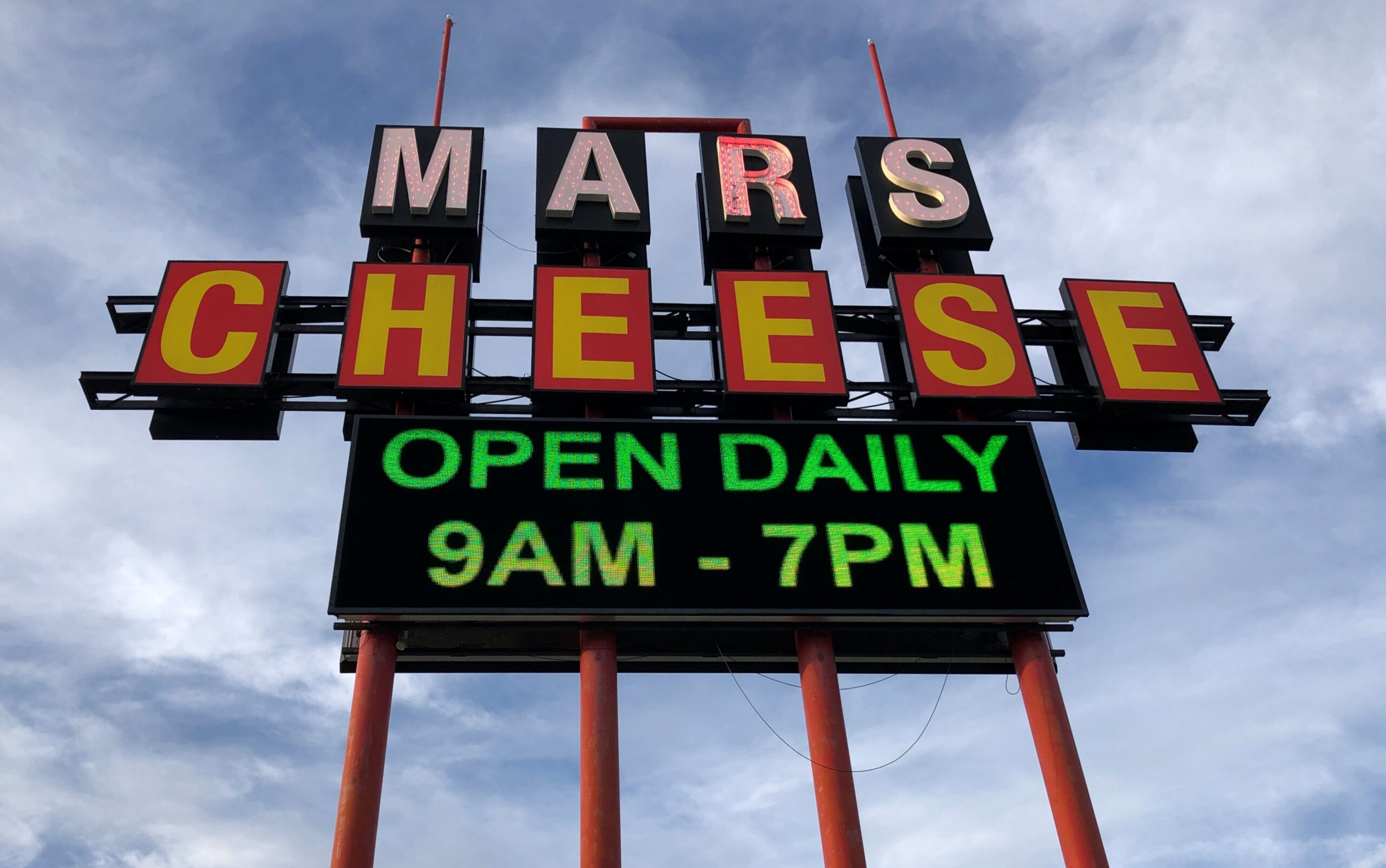
At 80 feet, the sign is a story unto itself, with the Wisconsin legislature specially allowing the store to keep it when the whole complex had to be moved in 2011 to accommodate the expansion of the highway. By that time, 80 feet was too tall for a modern roadside sign, but Mars was grandfathered in. Could be that Wisconsin respects its ’50s roadside heritage.
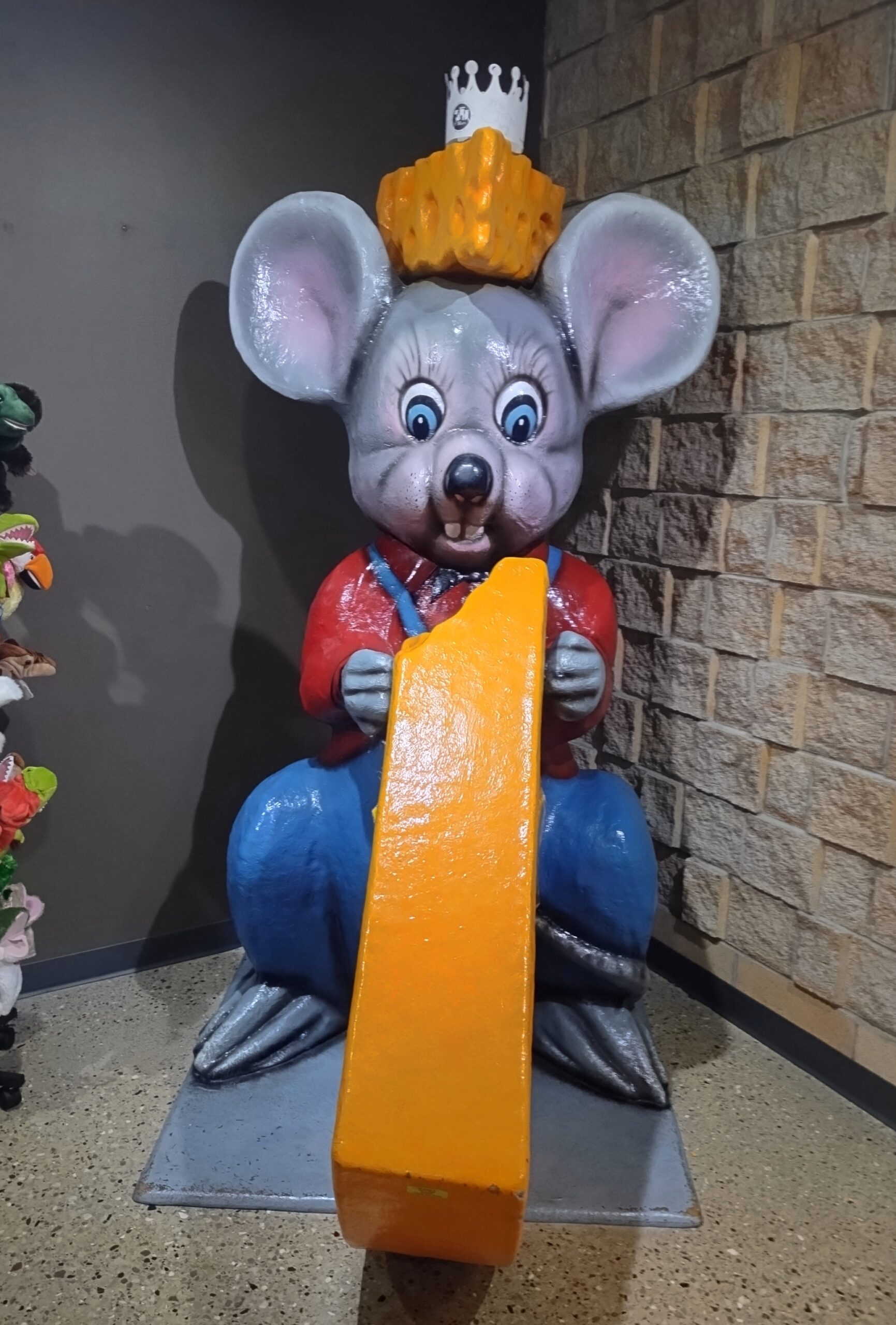
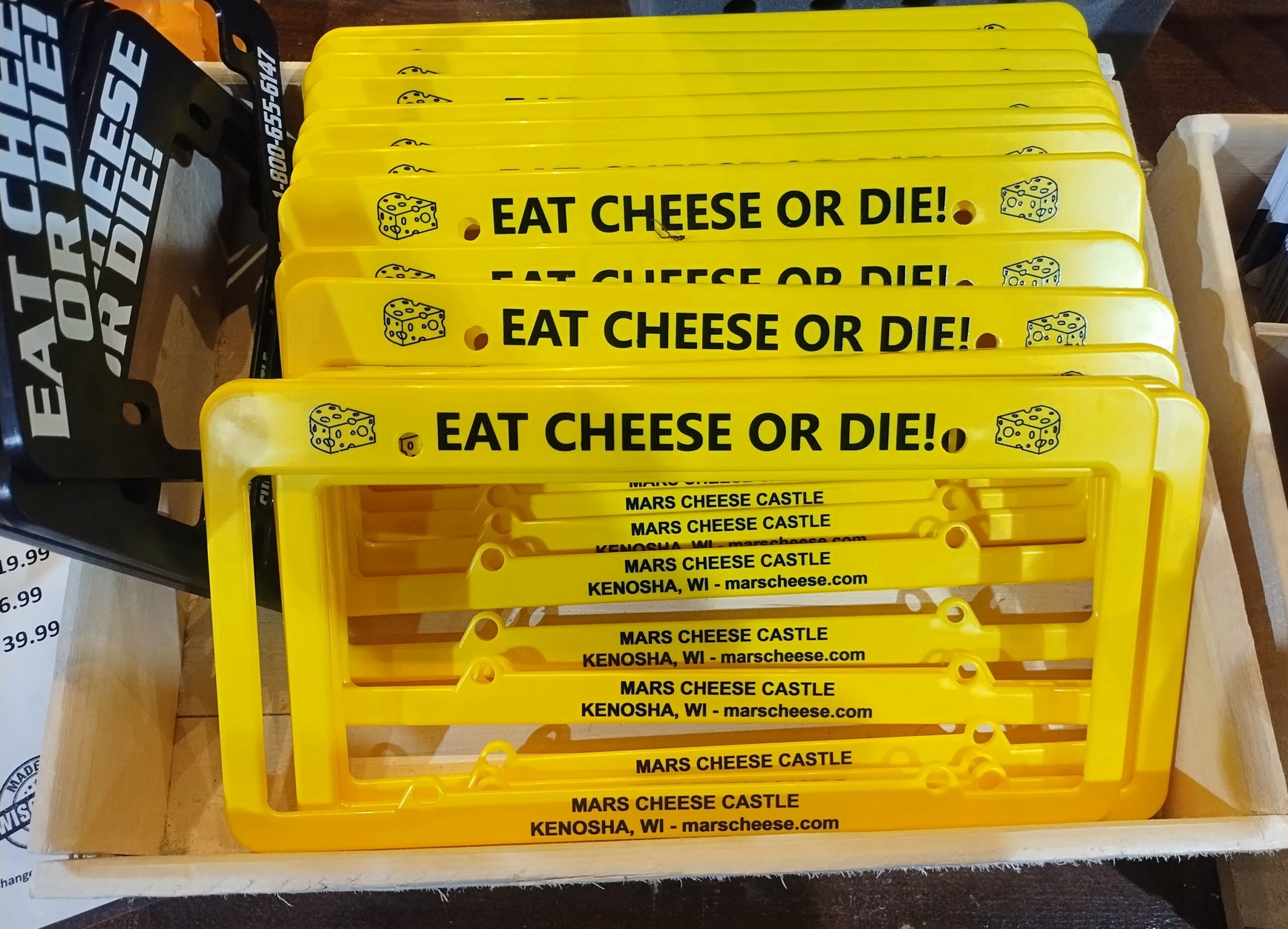
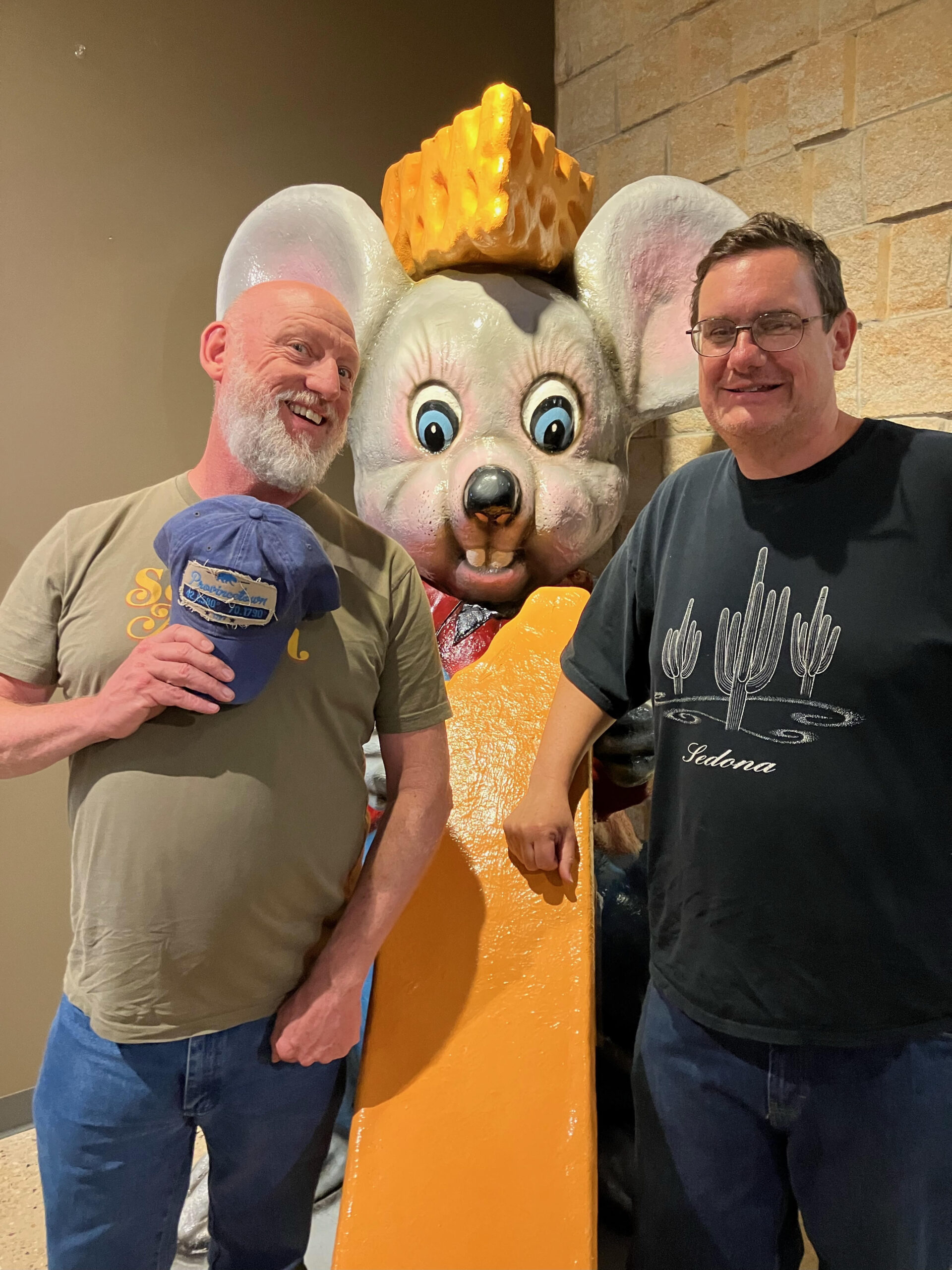
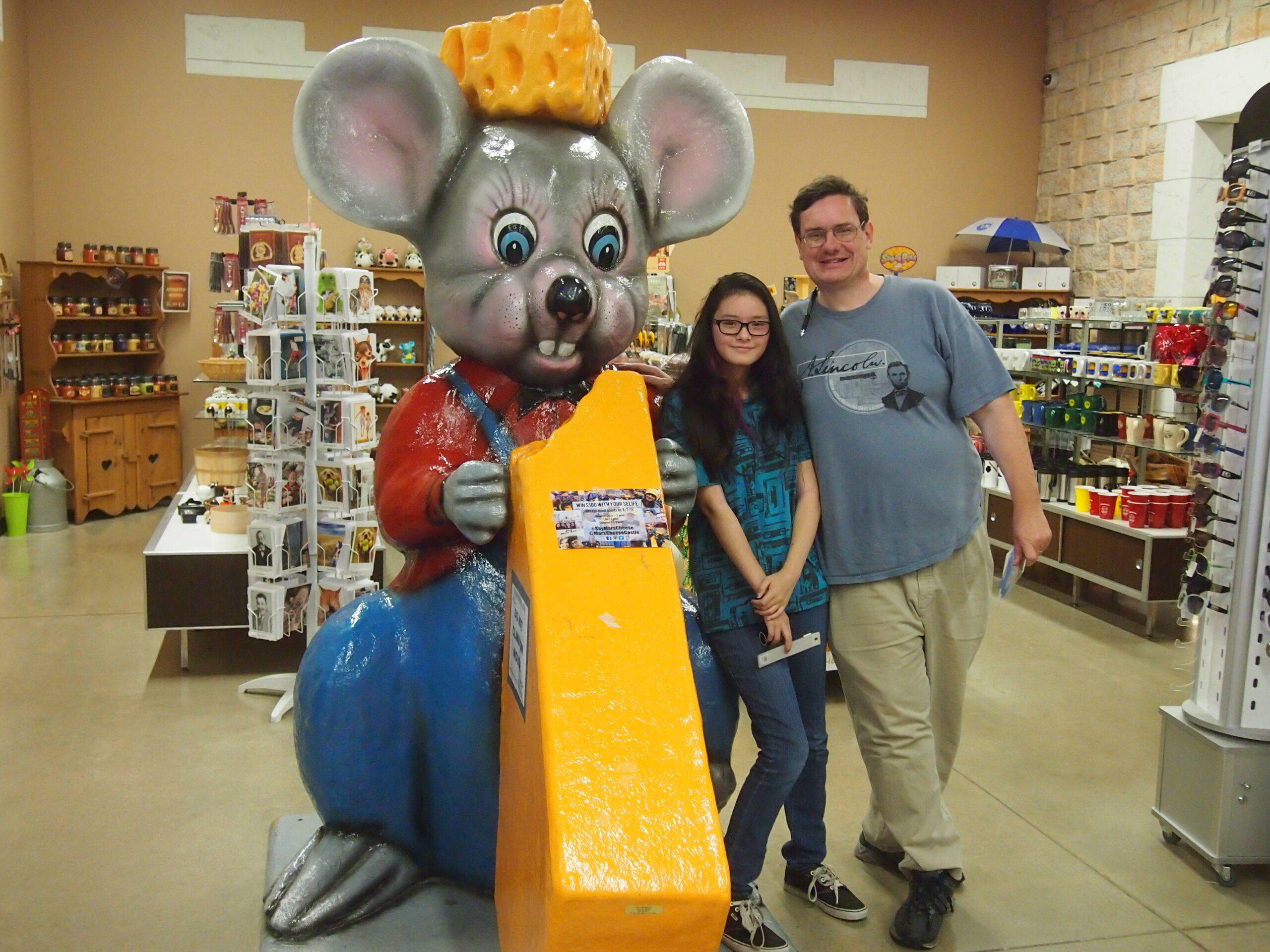
Inside, the mouse is still around. I don’t know that he has a name. Maybe Mario Mouse, after the original owner of Mars Cheese Castle, one Mario Ventura Sr., a gas station owner who pivoted into cheese in 1957 after his gas station burned down. Pivoting into cheese is a thing you can do in Wisconsin. Eat Cheese or Die.
Tom recently sent me by email — out of the blue, coincidence or synchronicity? — a picture of us with the mouse from our ’22 trip around Lake Michigan. A favorite photo of us, he explained, and it is a good one.
Of course, I’d been there before, such as in ’15. The mouse seems to have moved since then.
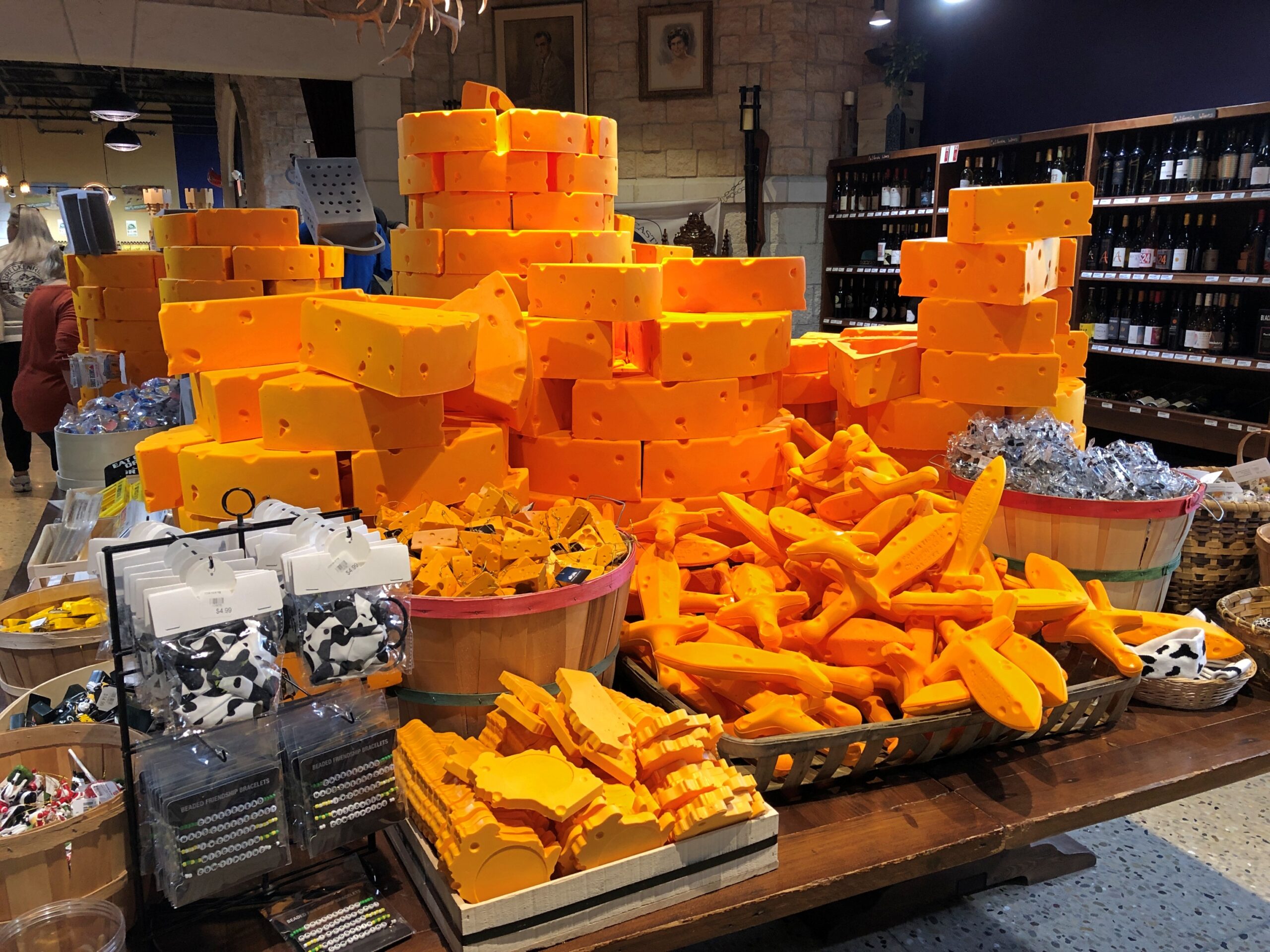
Cheese hats and other extruded yellow shapes are for sale, along with edible cheese, sausage and other meat, candy, beer and many other comestibles, plus knickknacks, gimcracks and gewgaws galore.
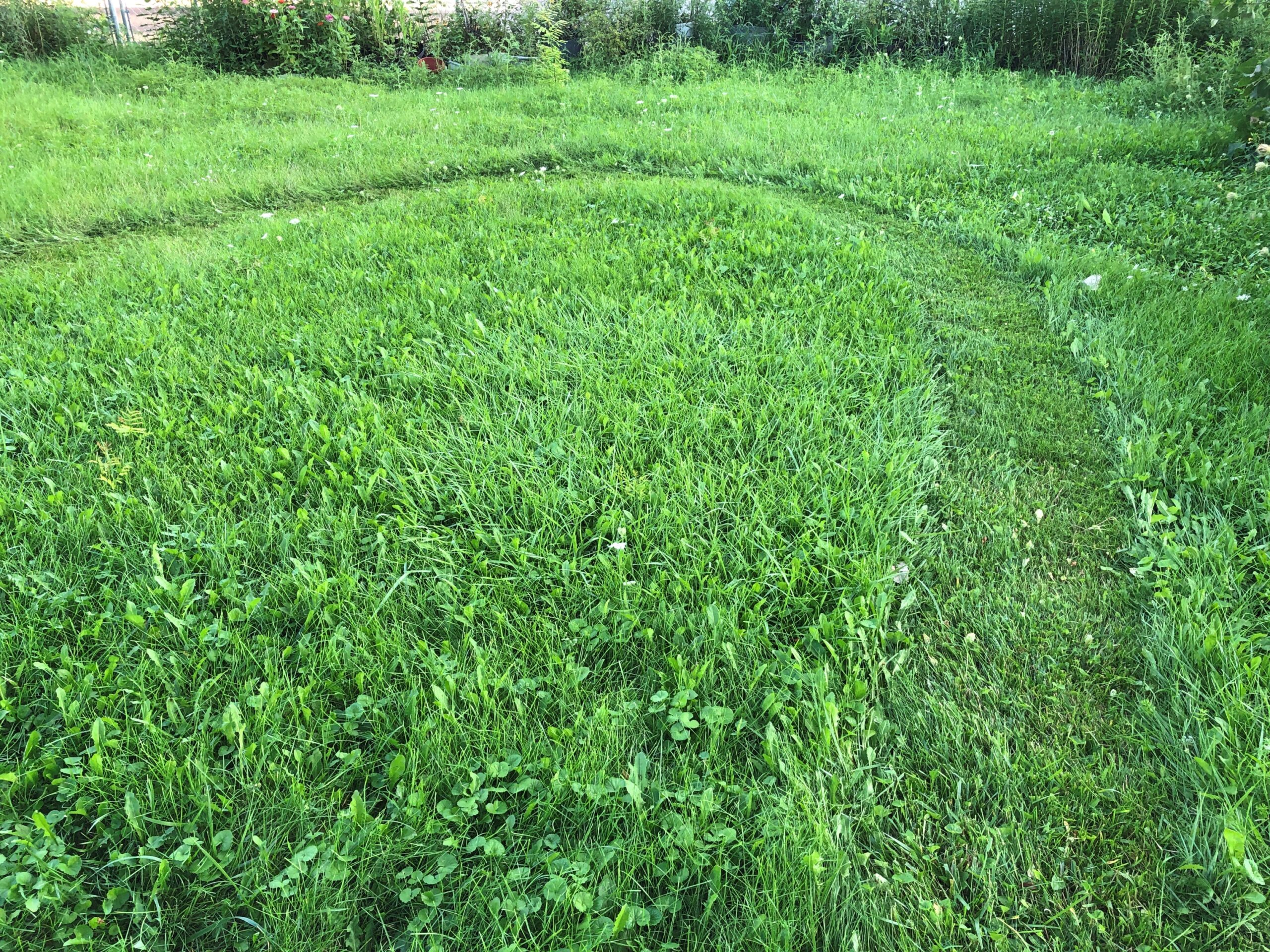
Clear evidence that space aliens visited my back yard: a lawn circle.
Note also that the grass is unusually green for August. Clear evidence that it has been raining a lot around here, or at least it was until early last week.
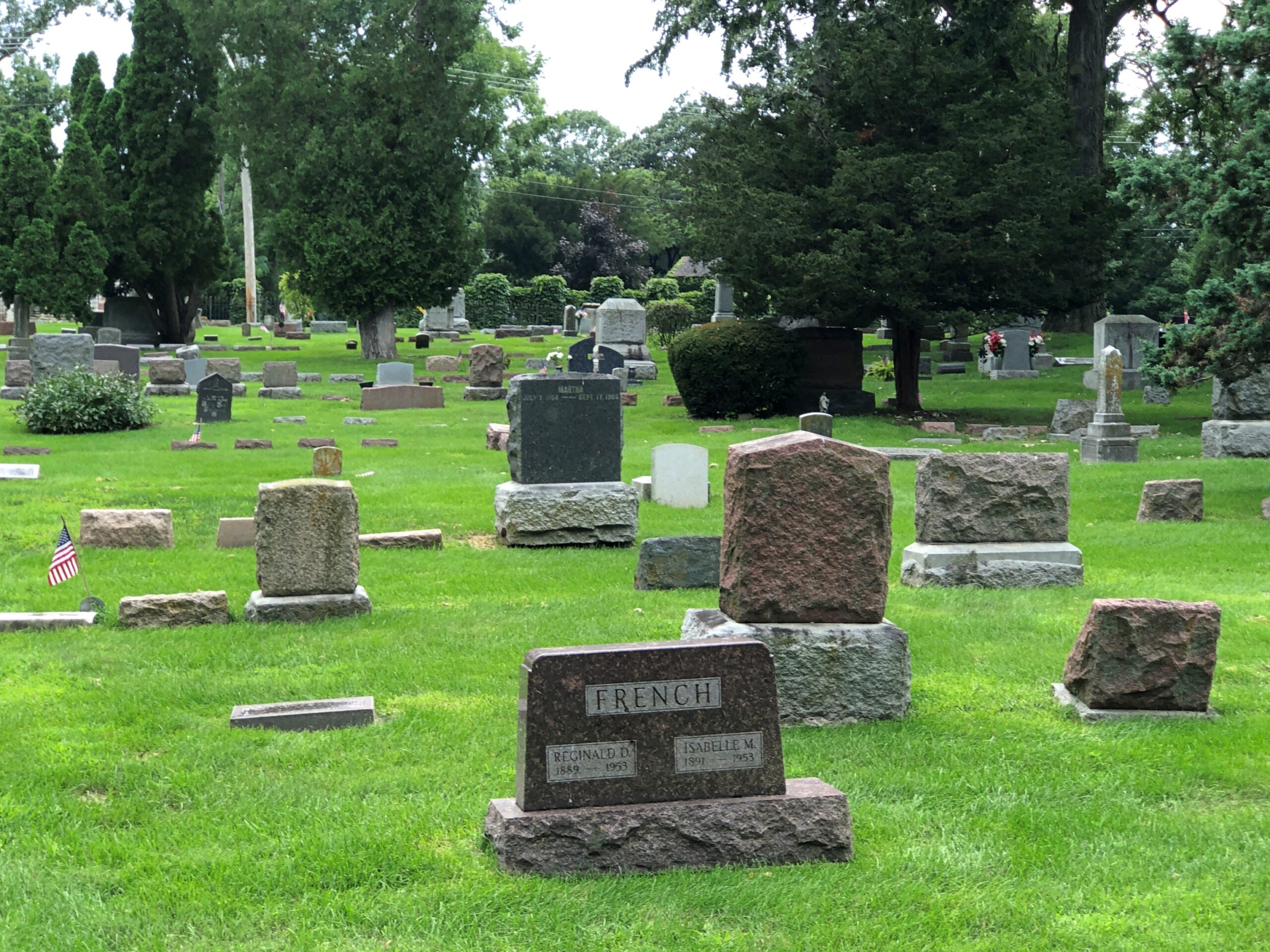
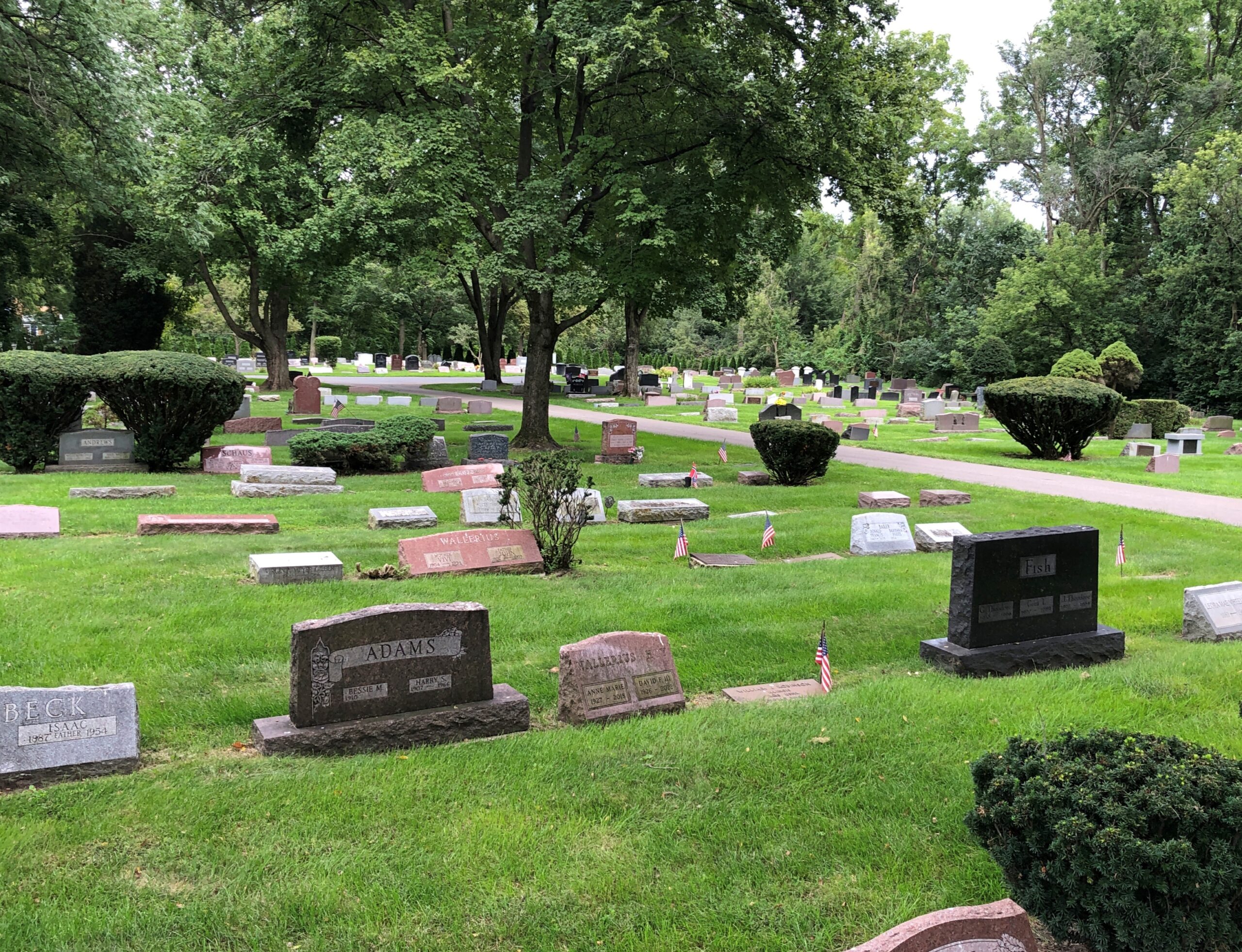
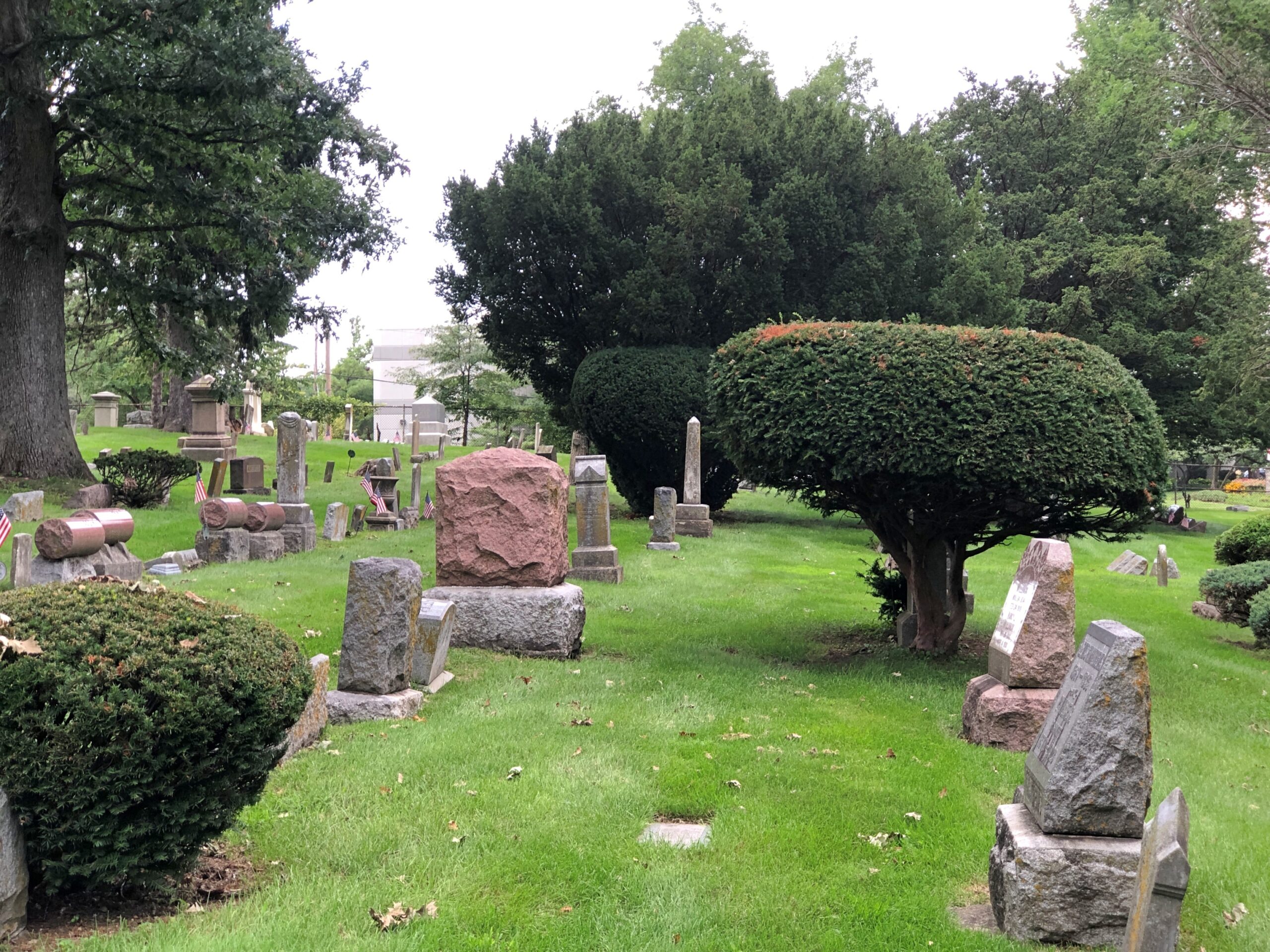
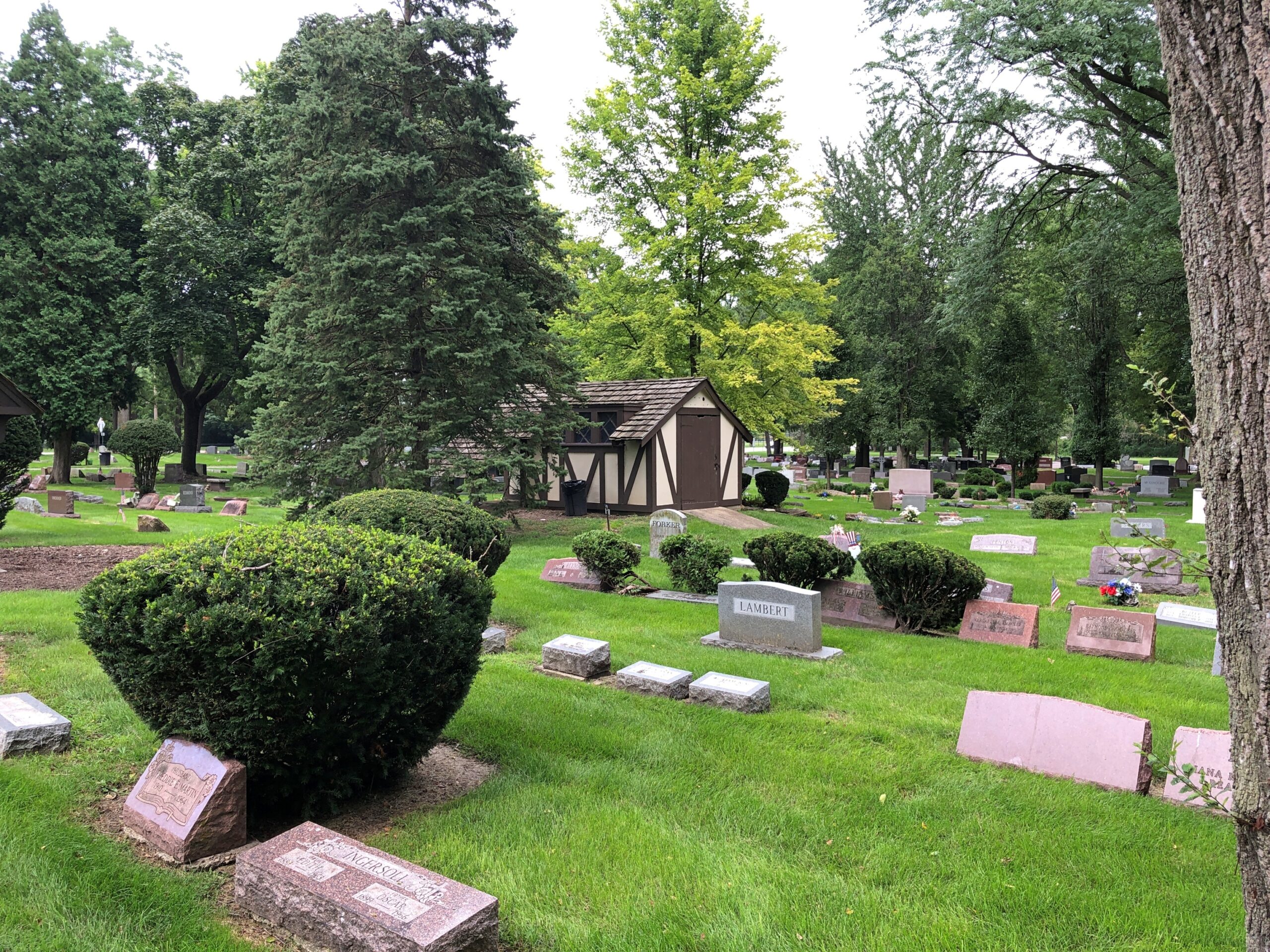
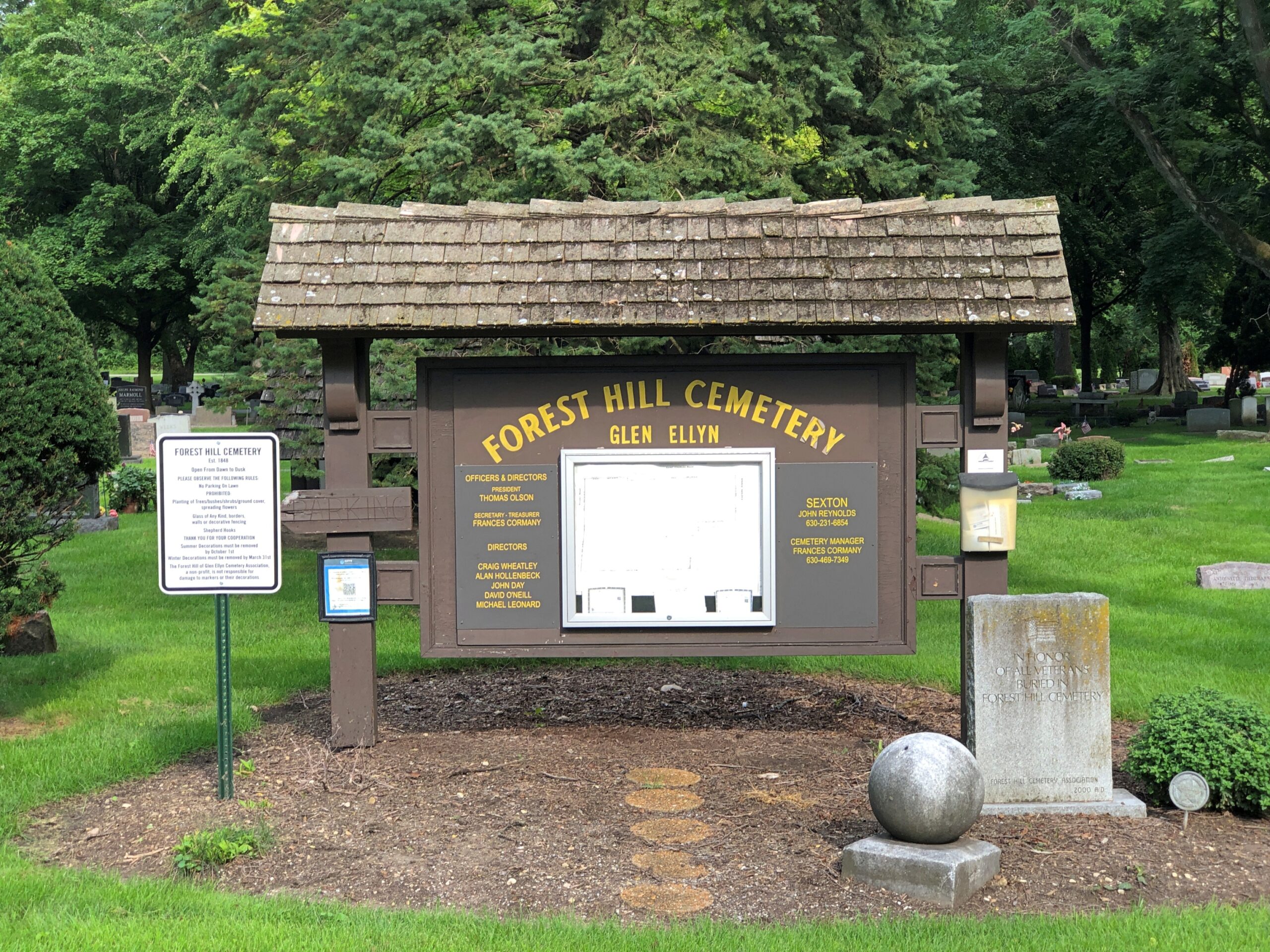
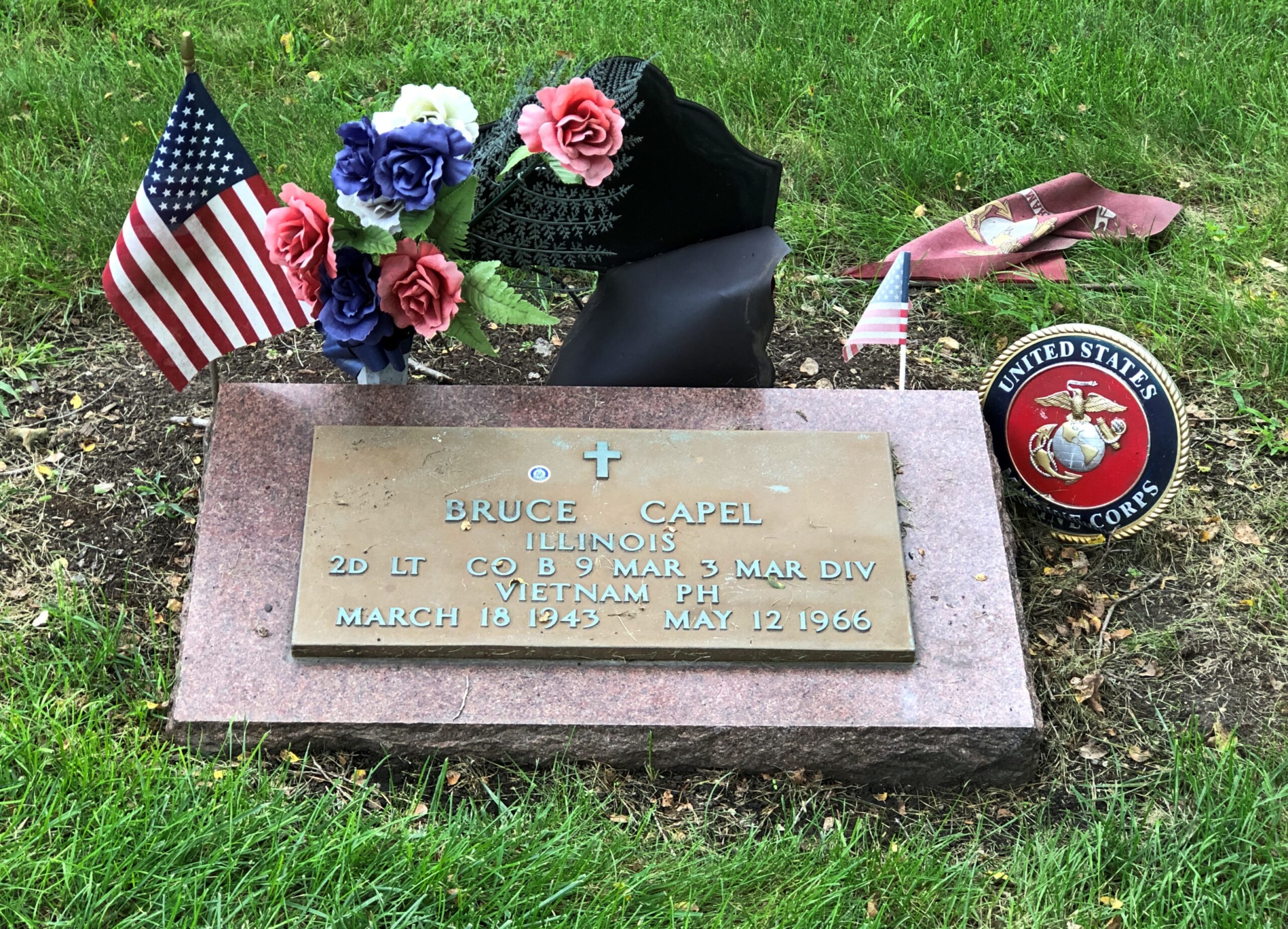
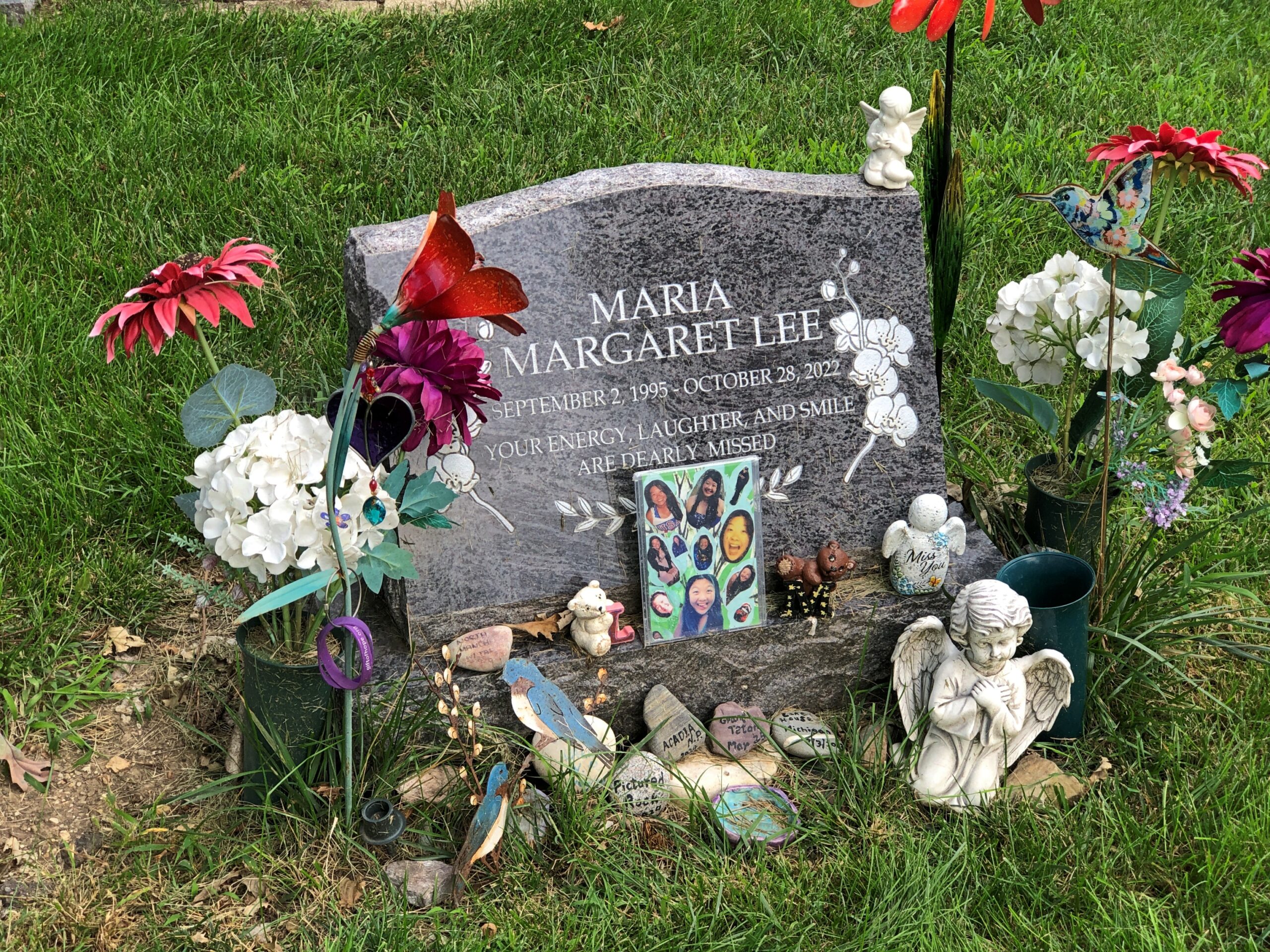
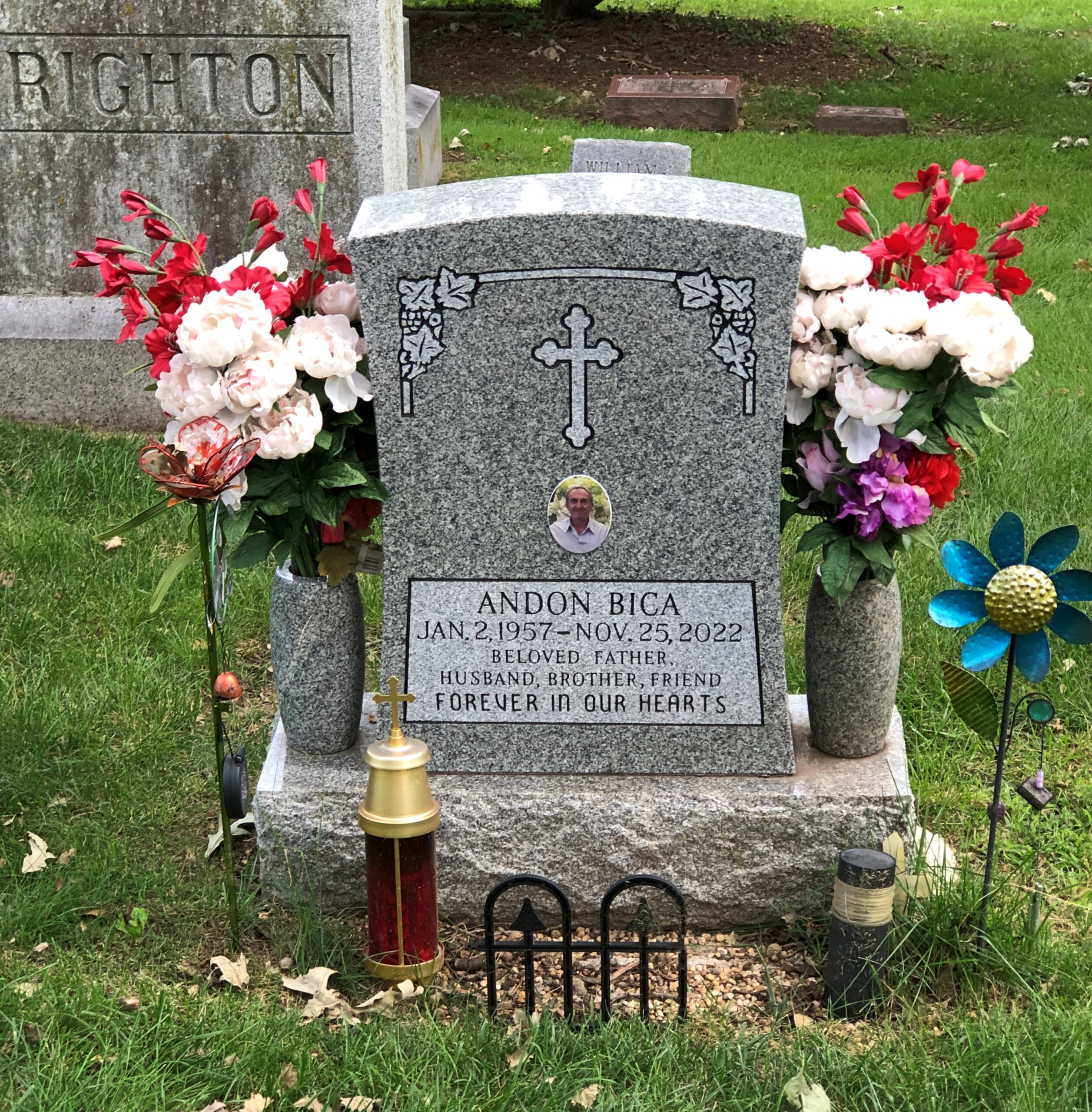
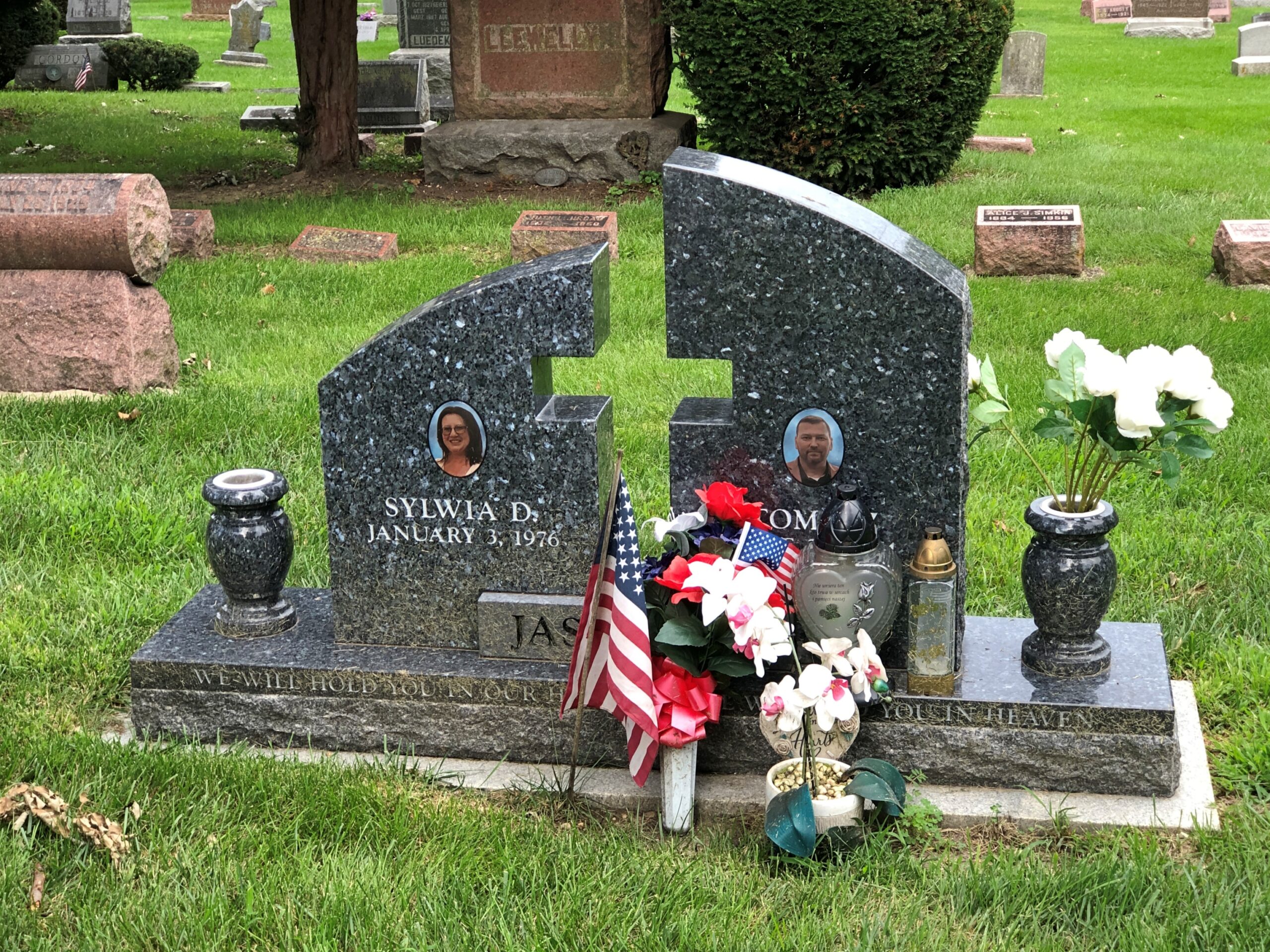
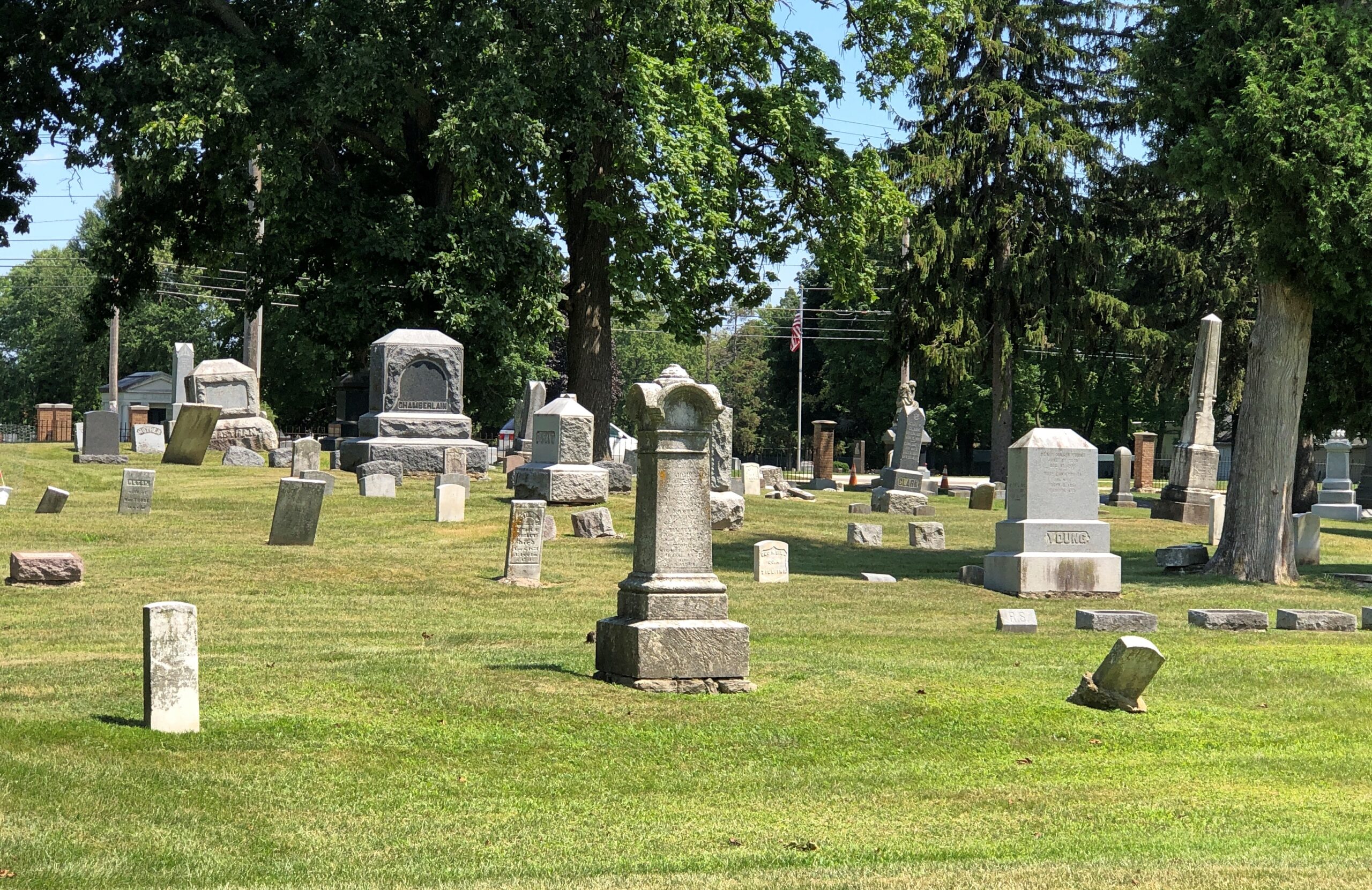
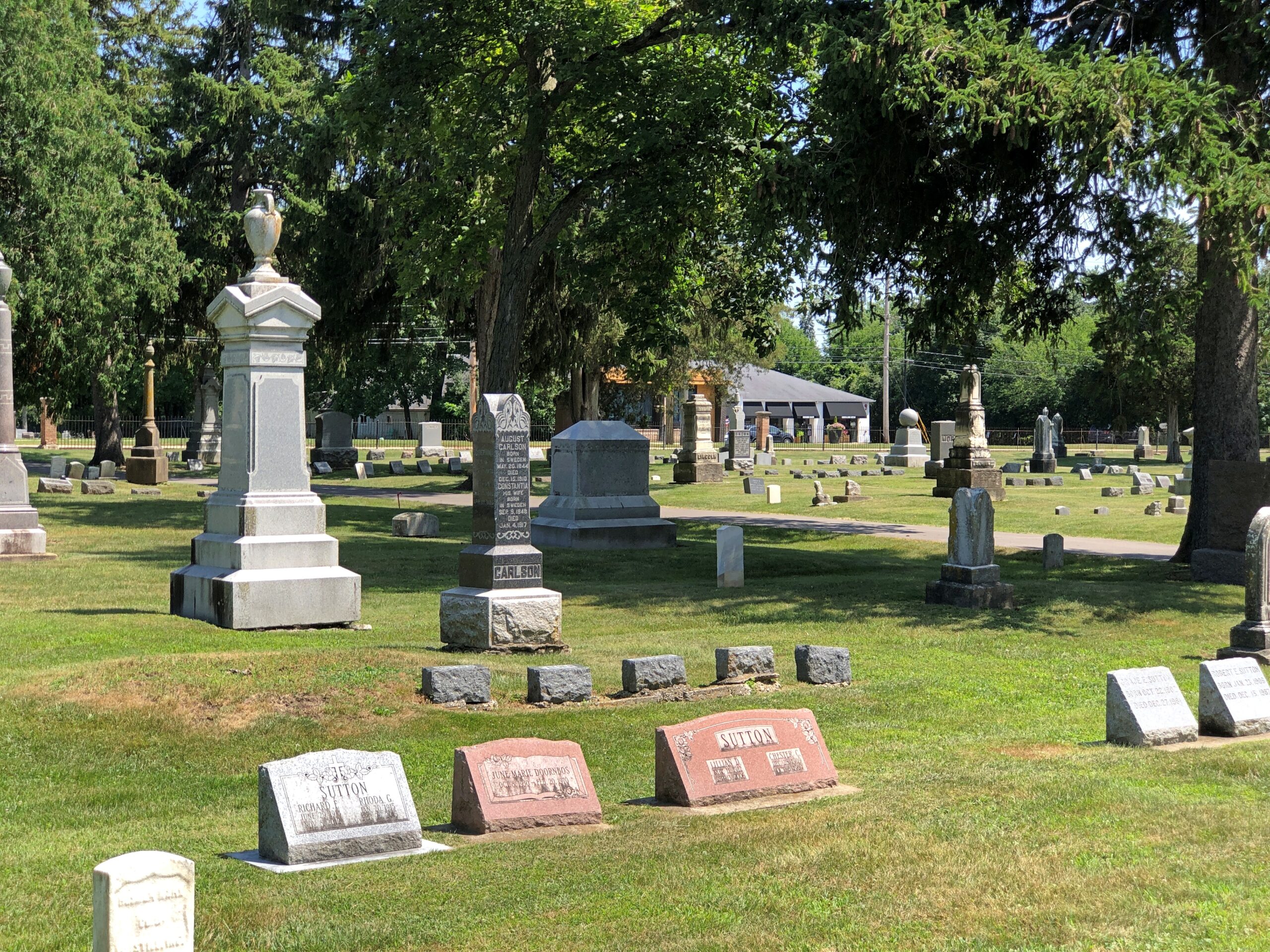
Vibrant green was also in display recently at Forest Hill Cemetery in Glen Ellyn, Illinois, when I stopped by.
Forest Hill has no hills that I could tell, but there are enough trees and bushes to make a small forest.
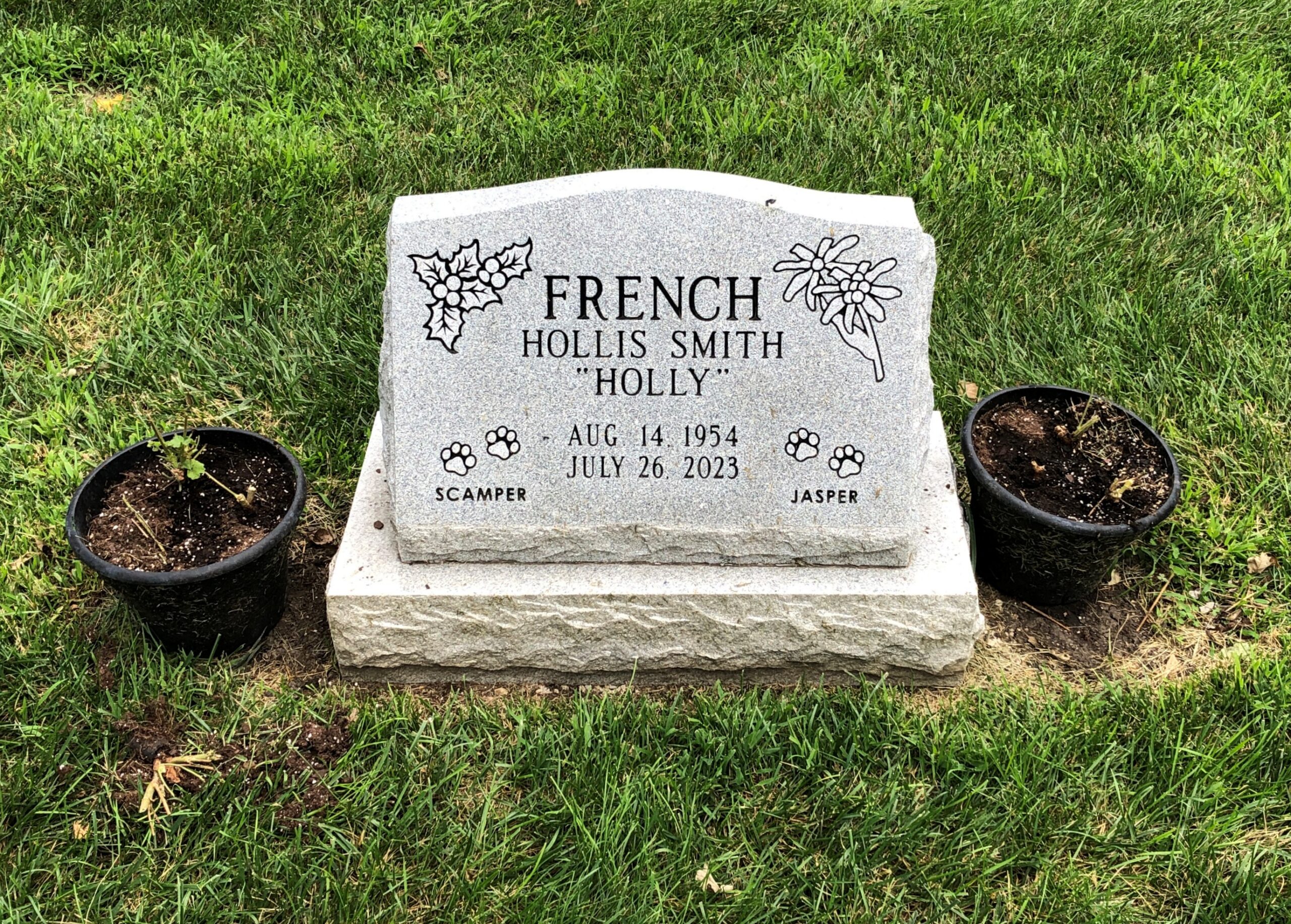
As an active cemetery, there are more recent stones, some of which lushly adorned.
I don’t think Scamper and Jasper are here, except as fond memories.
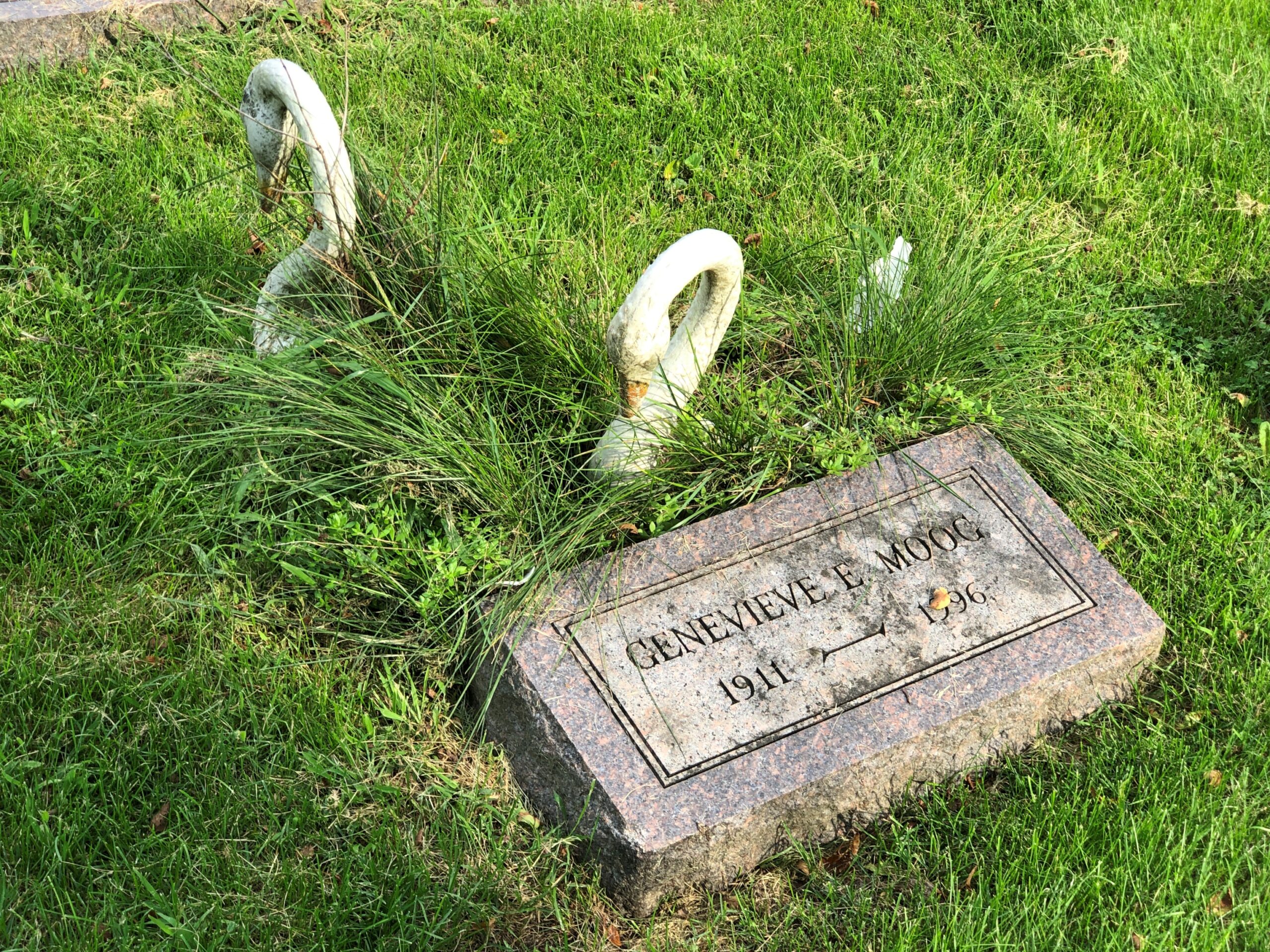
The only memorial I’ve ever seen featuring swans.
Find-a-Grave lists two “famous” permanent residents of Forest Hill, whose stones I didn’t happen to see, but which memorialize a father and son who both died in similar accidents. Namely, race car accidents.
From Find-a-Grave:
Don Vogler (d. 1981):He was killed in a one car accident during warm ups for a United States Auto Club midget car race at the Indianapolis Speedrome. He was pronounced dead at Community Hospital following the accident. Some witnesses said that they saw Vogler clutch his chest before the mishap. His car went out of control and flipped over the track’s outside wall.
Rich Vogler (d. 1990):In the last race of his life, July 21, 1990, during an ESPN Saturday Night Thunder national broadcast, he was killed while leading a sprint car race at the Salem (Indiana) Speedway with a little over a lap remaining. He was posthumously declared the winner. “White Lightning” was reconstructed and has been driven by Steve Butler, Robbie Stanley (who also lost his life in this car) and Johnny Parsons. The car is still racing today.
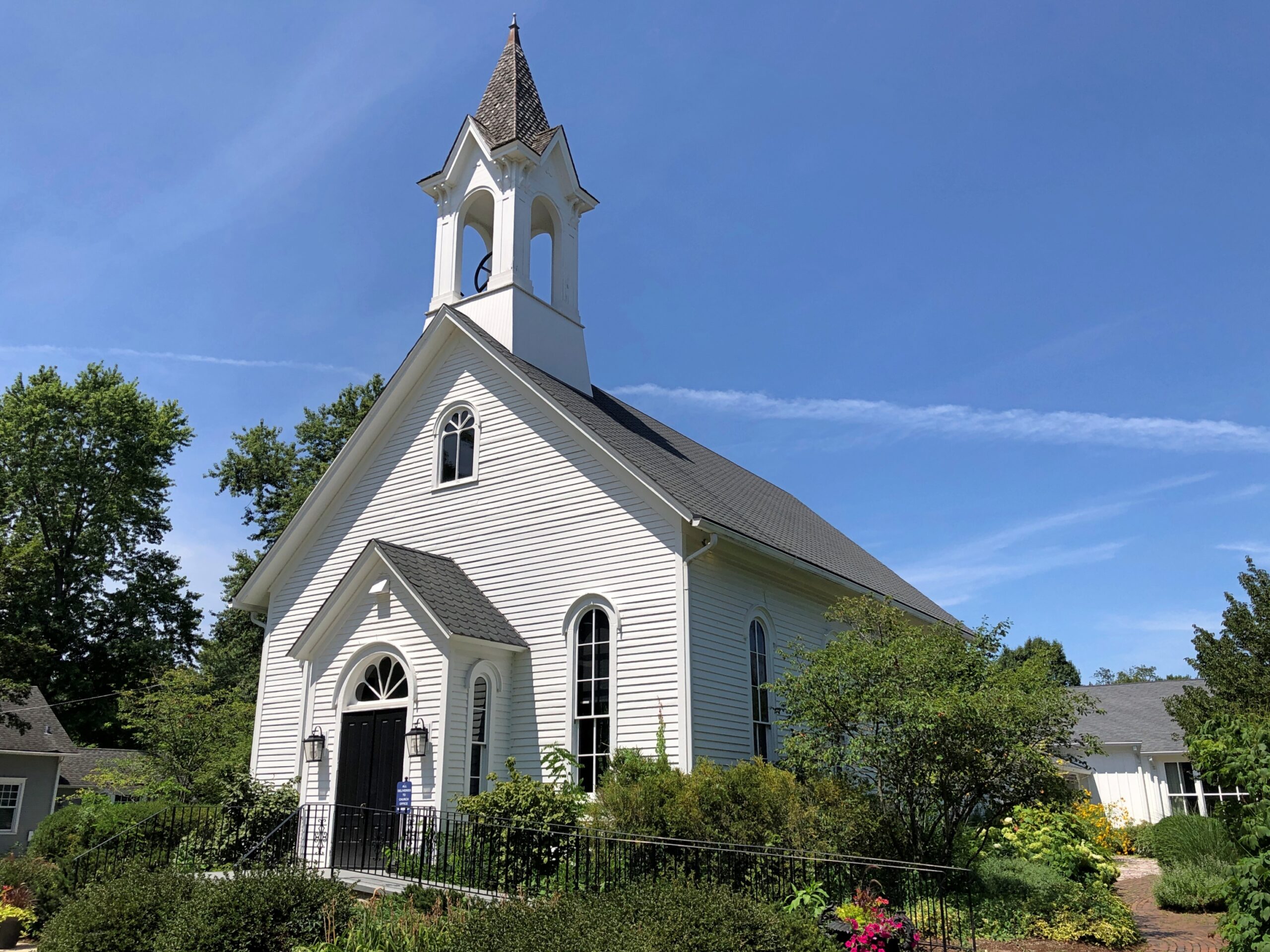
Toward the western end of Army Trail Road here in the suburbs – where the territory is almost exurban – a handsome church caught my attention not long ago. Traffic was sparse, so pulling off the road and then taking a look on foot was a reasonable option.
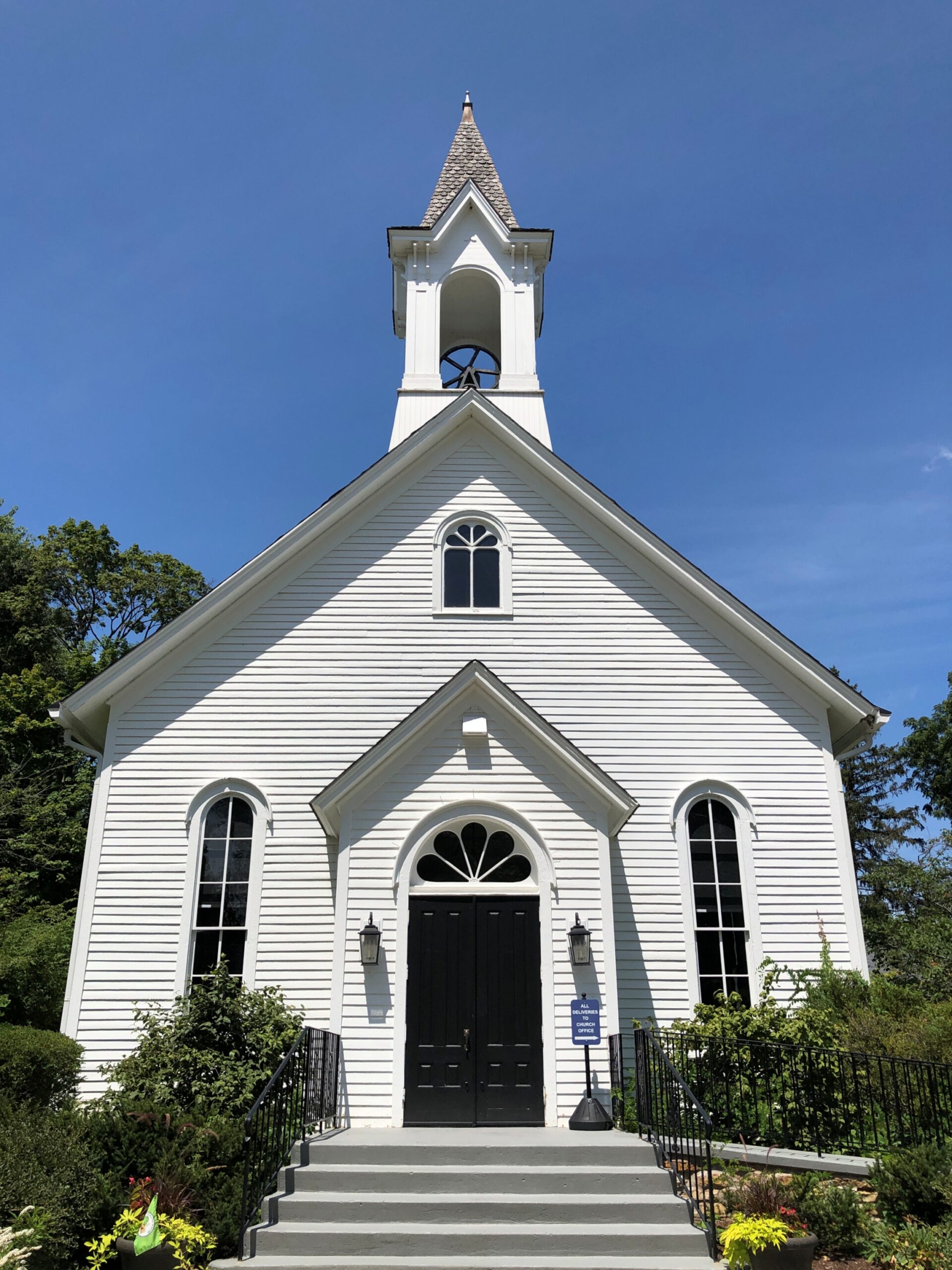
Little Home Church by the Wayside, a United Church of Christ congregation. Closed, unfortunately.
Without realizing it, I’d arrived in Wayne, Illinois. I drive Army Trail Road a lot, but mainly its eastern reaches, an arterial thick with retail in suburbs like Bloomington, Glendale Heights, and Carol Stream. I had a social event to go to late last month, and since it was Saturday, I allowed myself a little extra time to do a spontaneous drive, such as follow Army Trail as far west as it goes, to see what I could see. Such as Wayne, a place I barely knew as a spot on maps.
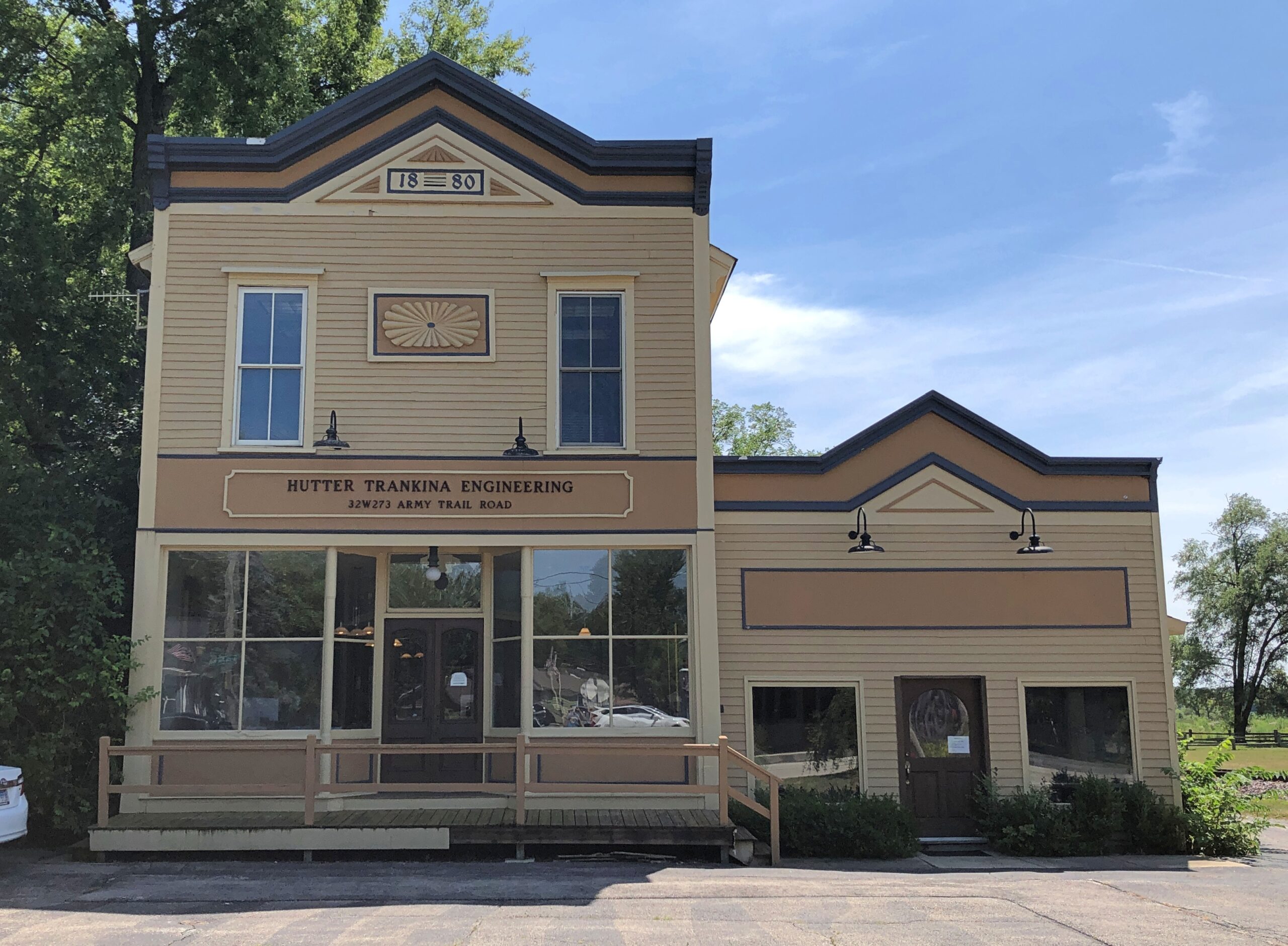
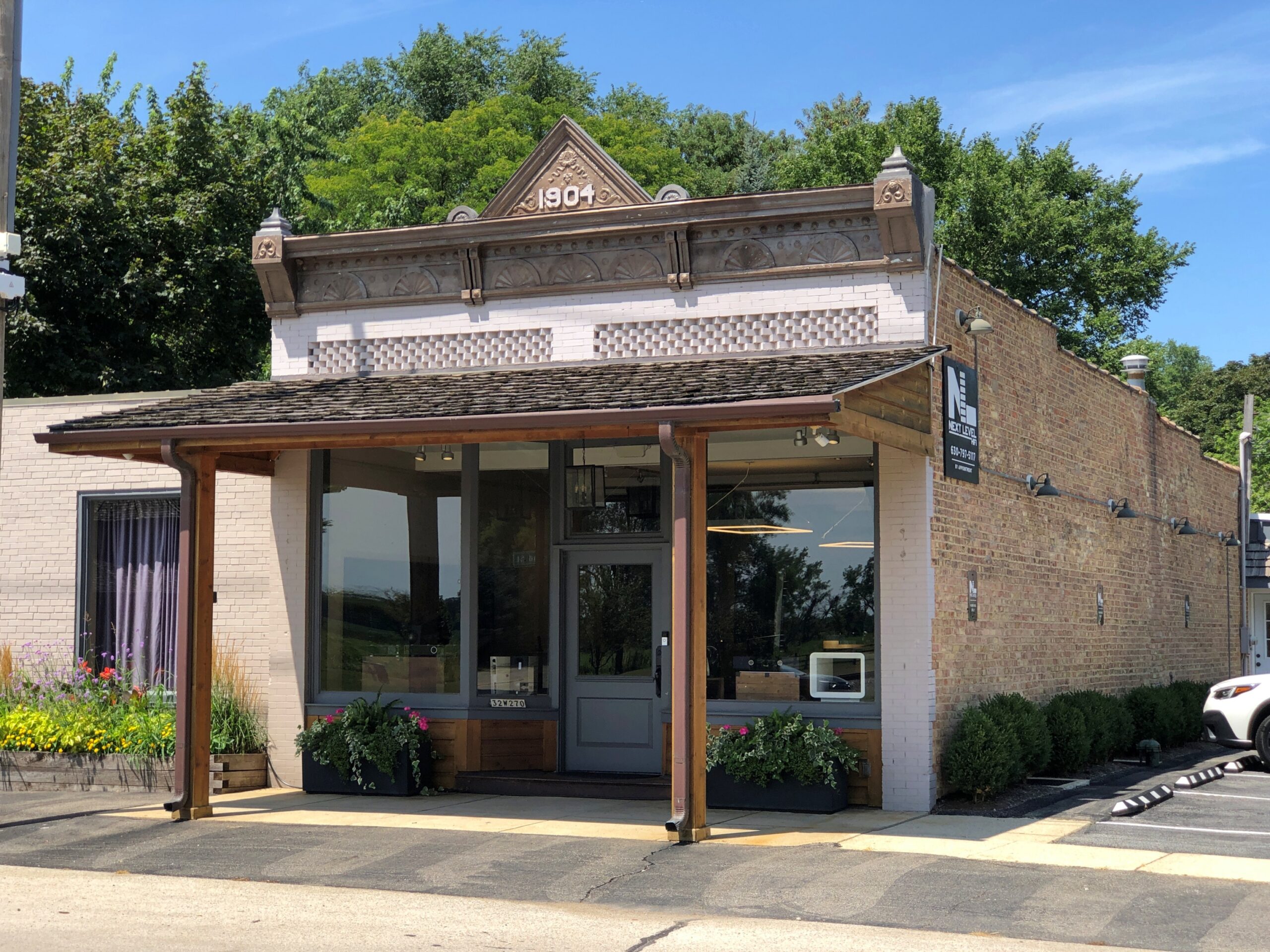
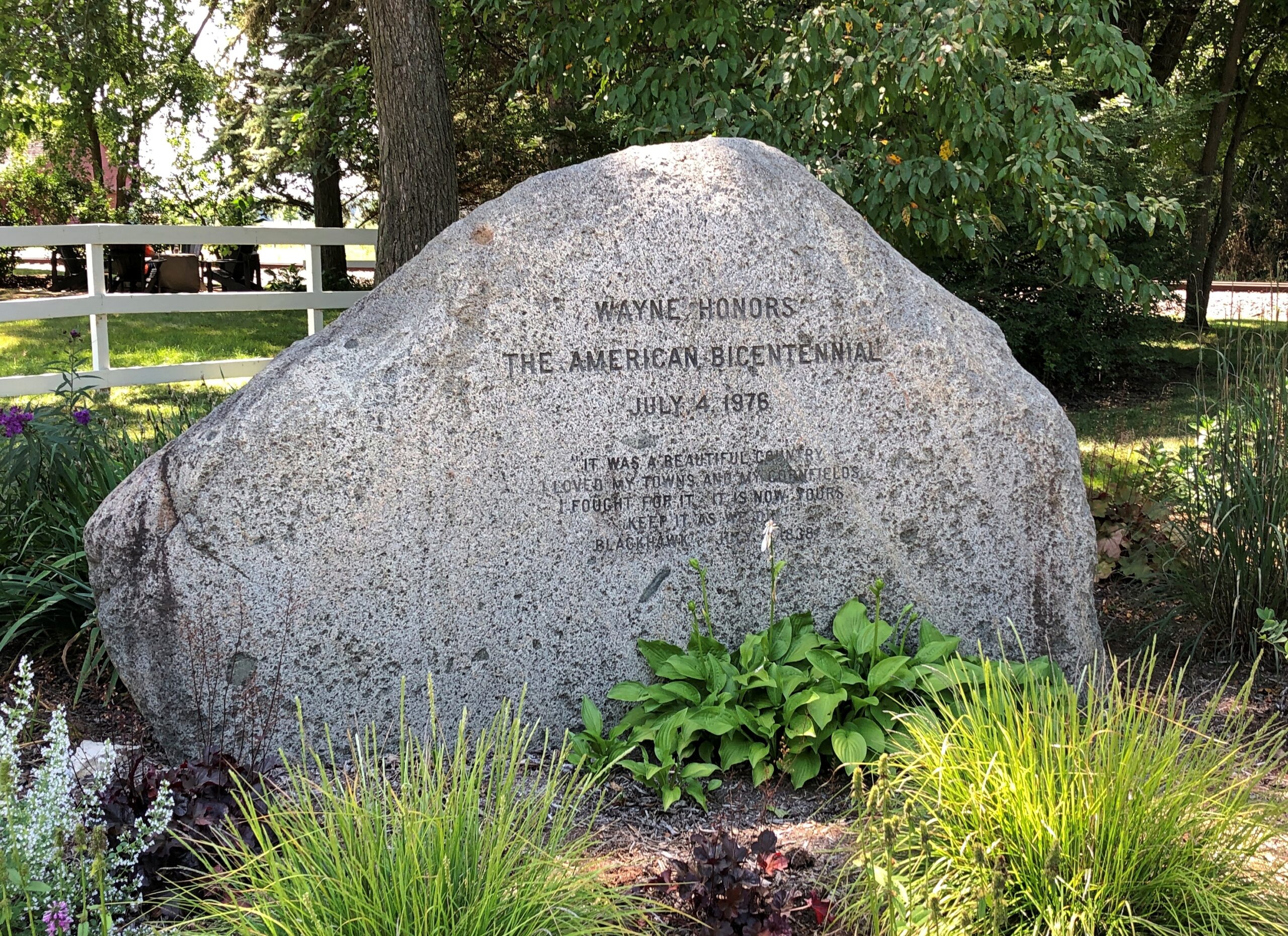
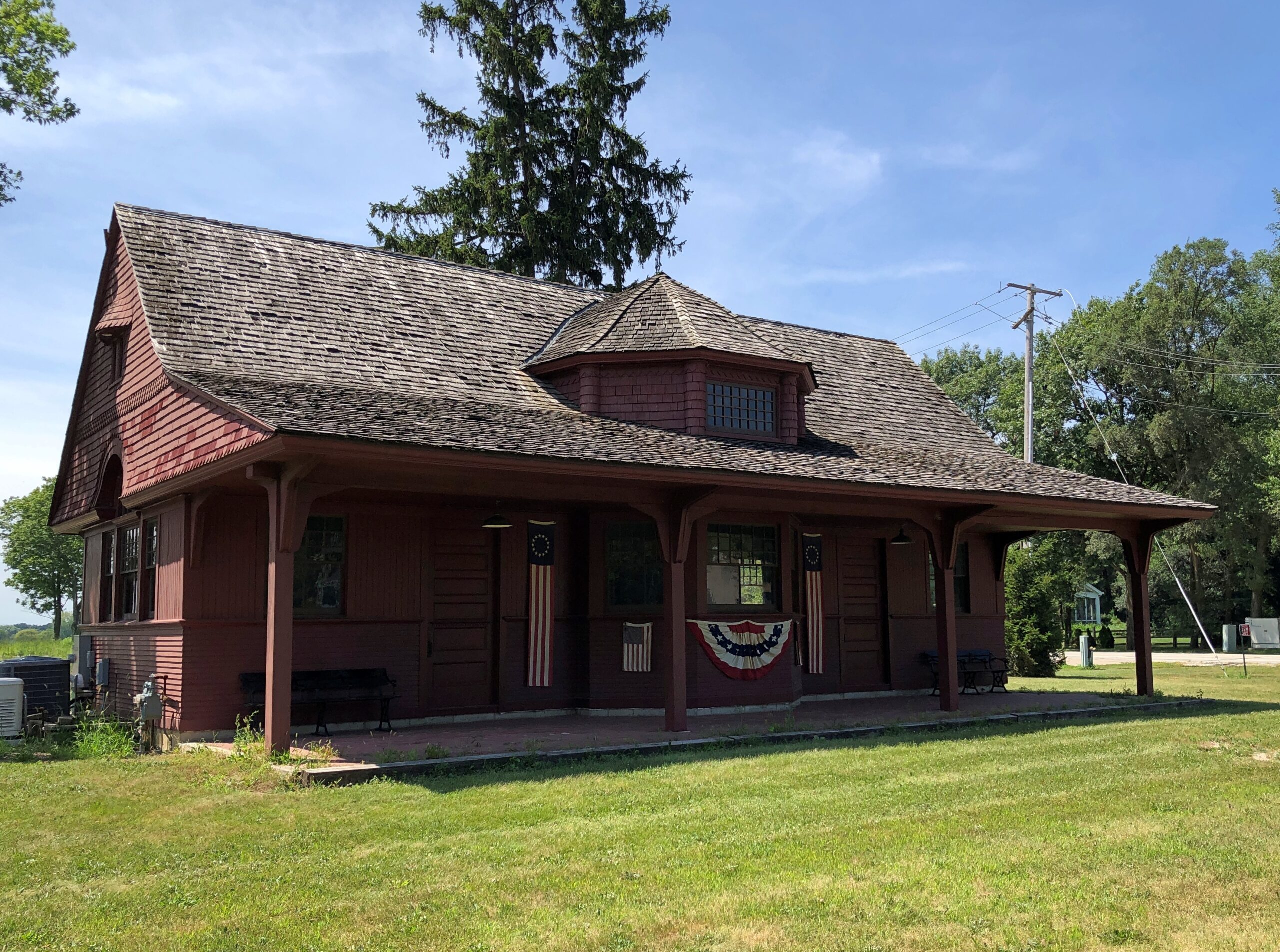
Army Trail passes right through “downtown” Wayne. It isn’t very large, but it has a few good-looking buildings besides the church.
A bicentennial stone.
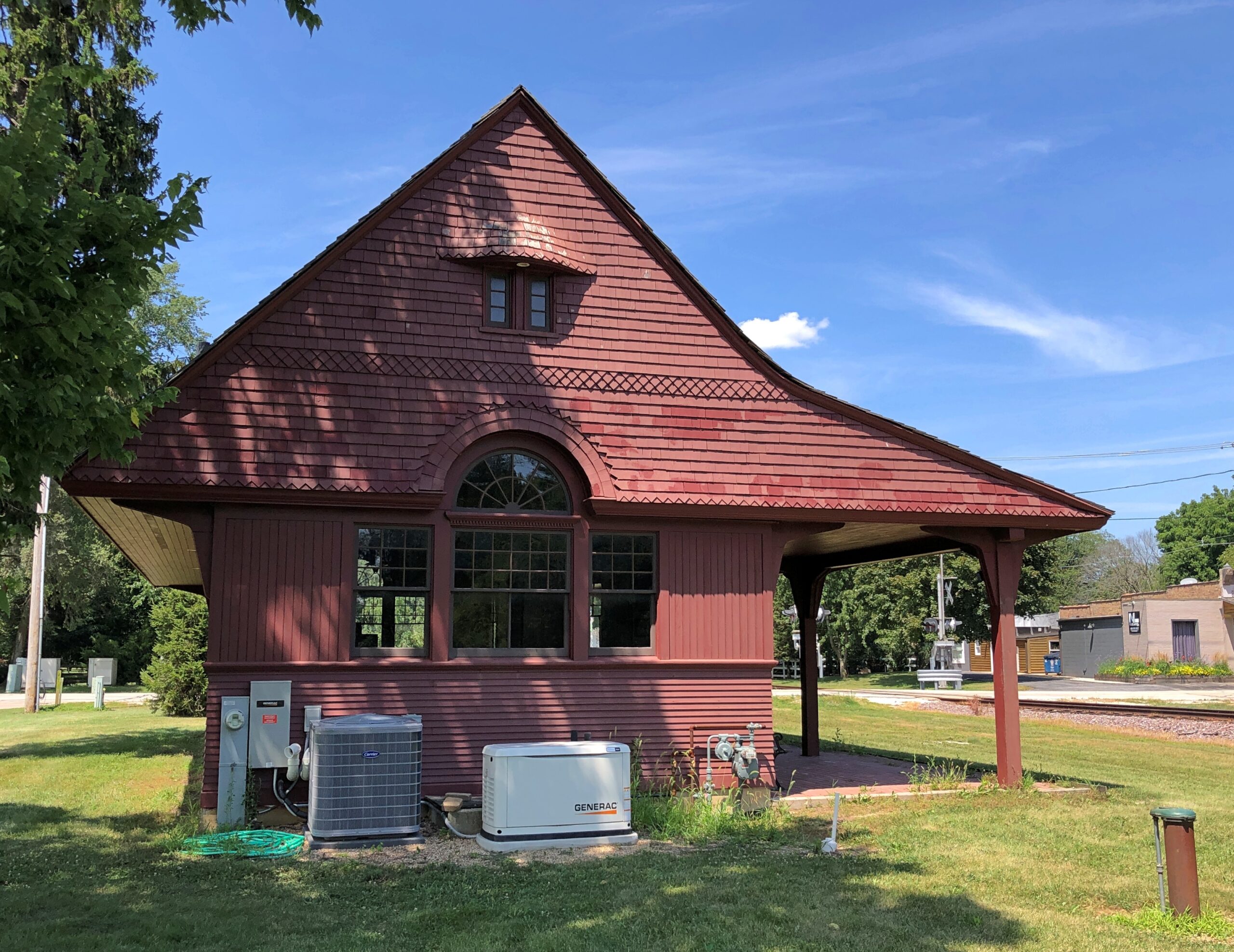
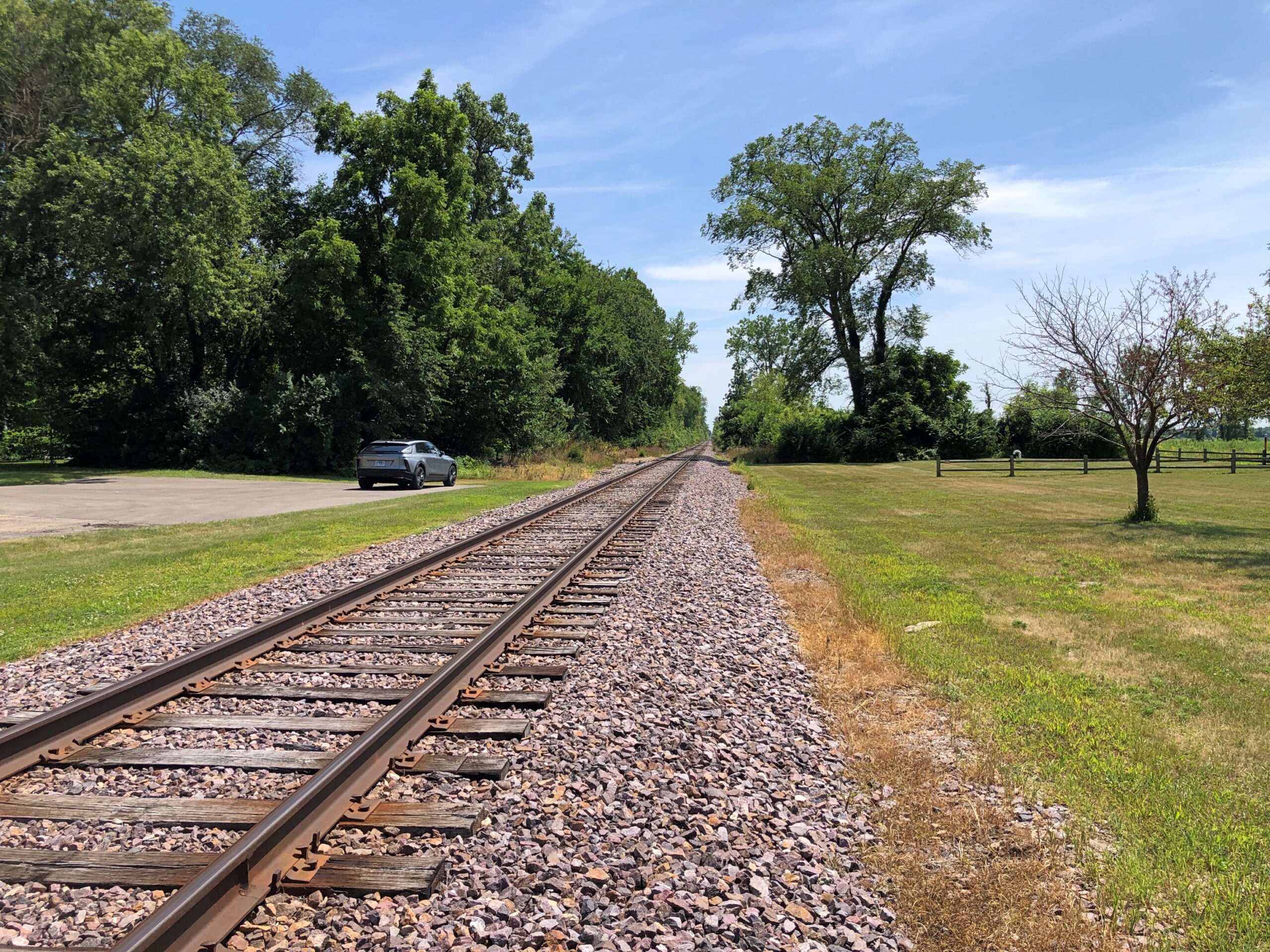
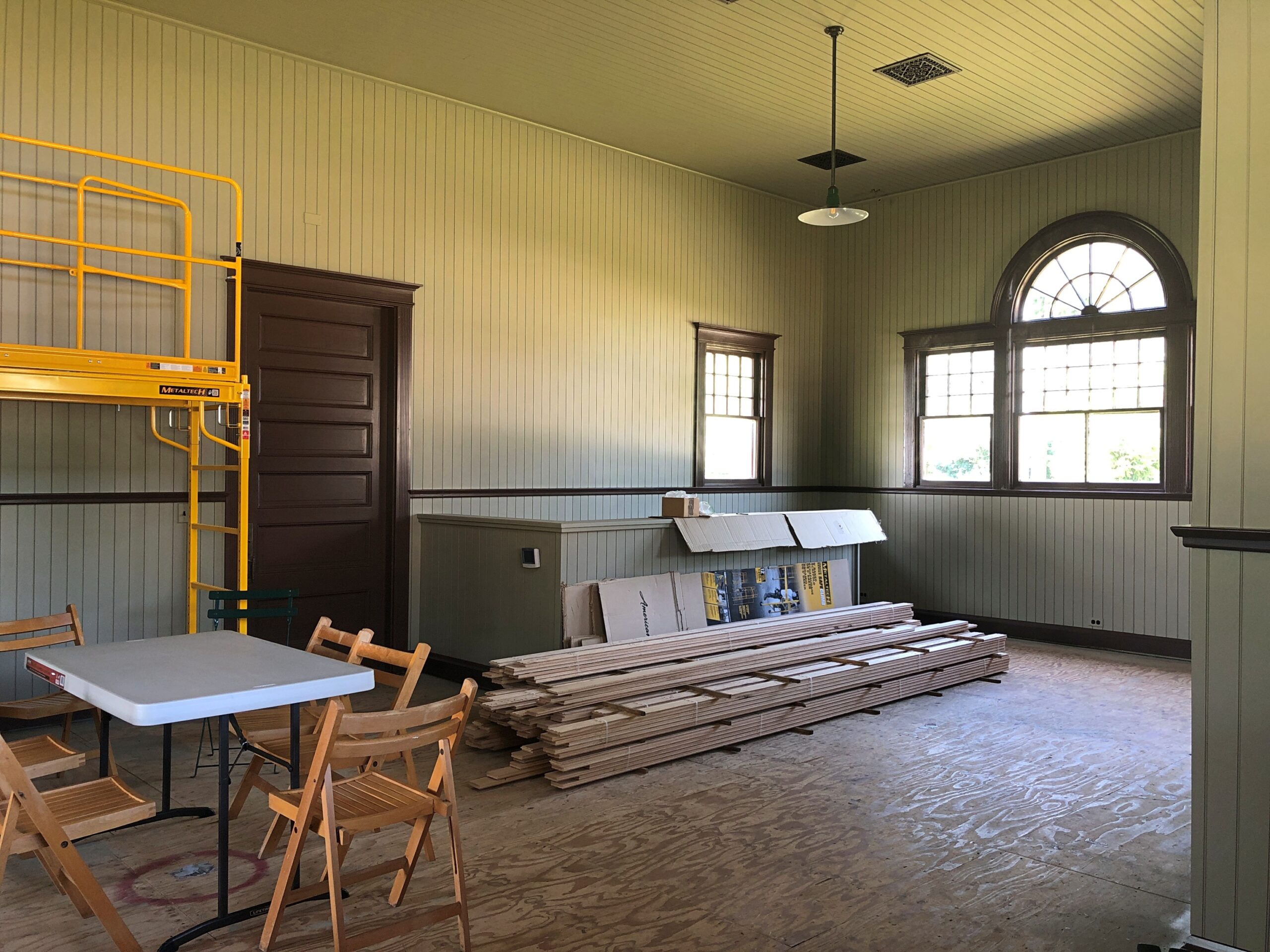
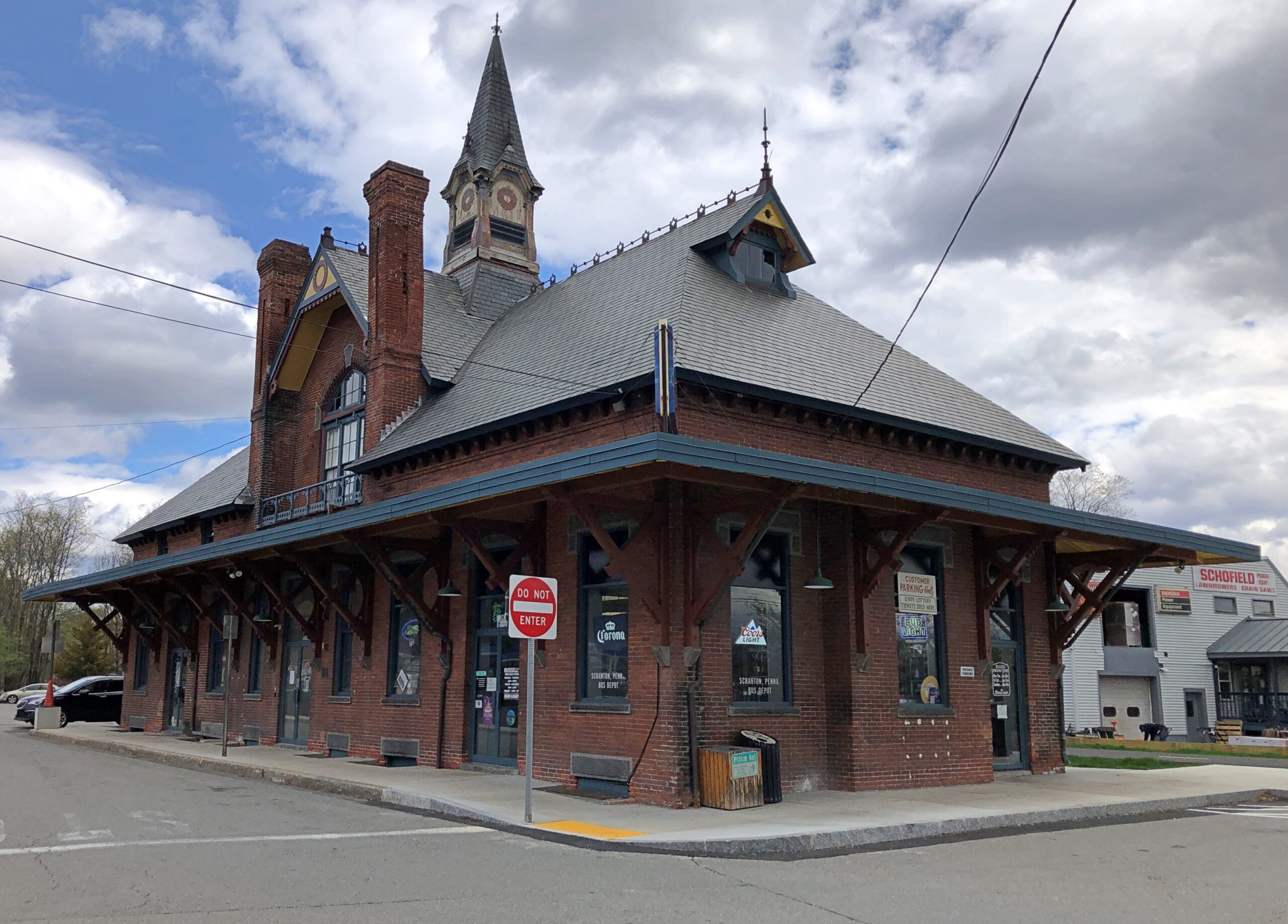
A nonfunctioning, yet well restored, train station. Nonfunctioning in the sense that trains don’t stop there anymore, but apparently events are held at the building. If I were going to throw a hootenanny or a shindig or a hoedown, I might consider renting it.
Provided local codes allow such noisy festivities.
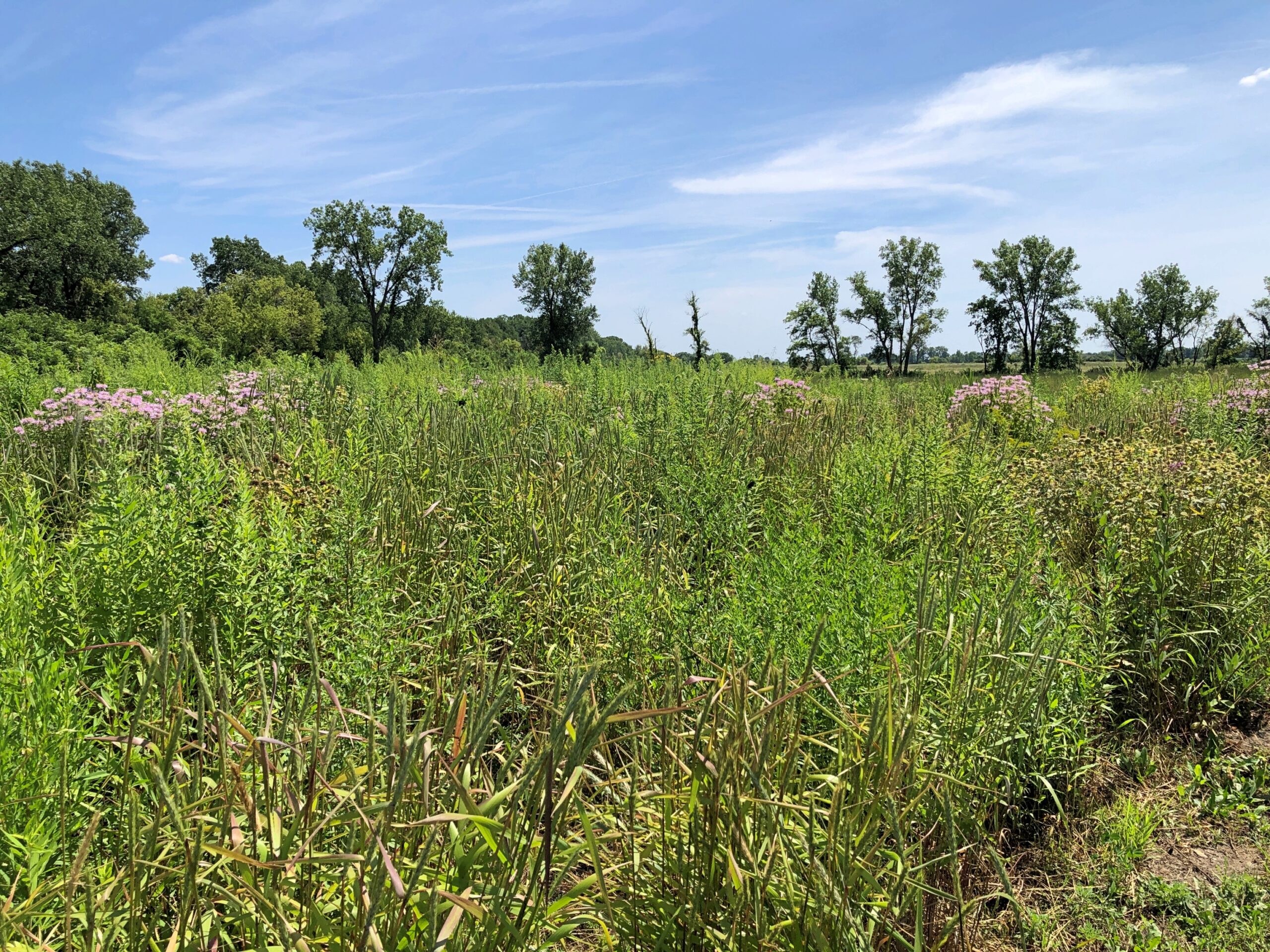
Wayne, I later discovered, is a low-density suburb: a sizable 5.8 square miles with a population of not quite 2,300. As such, I imagine there are a fair number of rules to enforce the quiet and semi-rural character. Zoning keeps lots large, four acres or more, which functions to make the town the province of those who can afford it, but there’s also a lot of open land. Such as the Dunham Forest Preserve.
Open to all, but the day I visited, near it was north of 90 degrees F. and, true to the prairie nature of parts of Illinois, little shade was to be seen. Taking pictures around downtown and the former station was sweaty enough.
We’ve heard of one-horse towns, though the metaphor long ago became fossilized. Wayne, it turns out, is a many-horse town, the legacy of a major horse-breeding operation in the 19th century.
“By 1865, Mark W. Dunham… had begun breeding and selling prize Percheron horses which he originally imported from France,” the Village of Wayne says. “By 1883 he had over 1,300 mares and stallions grazing on 1,700 acres of land known as Oaklawn Farm. His residence, Oaklawn, now popularly known as ‘Dunham Castle,’ was also constructed as part of the farm, and the red brick building which had been the Dunham home (now the Dunham Woods Riding Club) was converted into offices for the farm and guest rooms for visiting horse buyers.
In 1893, Oaklawn Farm was accorded the honor of serving as one of the agricultural displays for the World’s Columbian Exposition in Chicago, and visitors traveled Wayne Road from Wayne Station out to the Broad expanse. The old railroad station still exists and has been returned to its original site in the Village Center. By 1905, Oaklawn Farm produced more Percheron horses for American and European buyers than the next eight establishments combined.”
The market for Percheron work horses isn’t what it used to be, but Wayne’s open spaces and many trails – pretty much invisible when you’re driving through – accommodate a good many horses even now, according to the village: “[Wayne] is one of the few communities in northeastern Illinois that provides and encourages equestrian uses and facilities.”
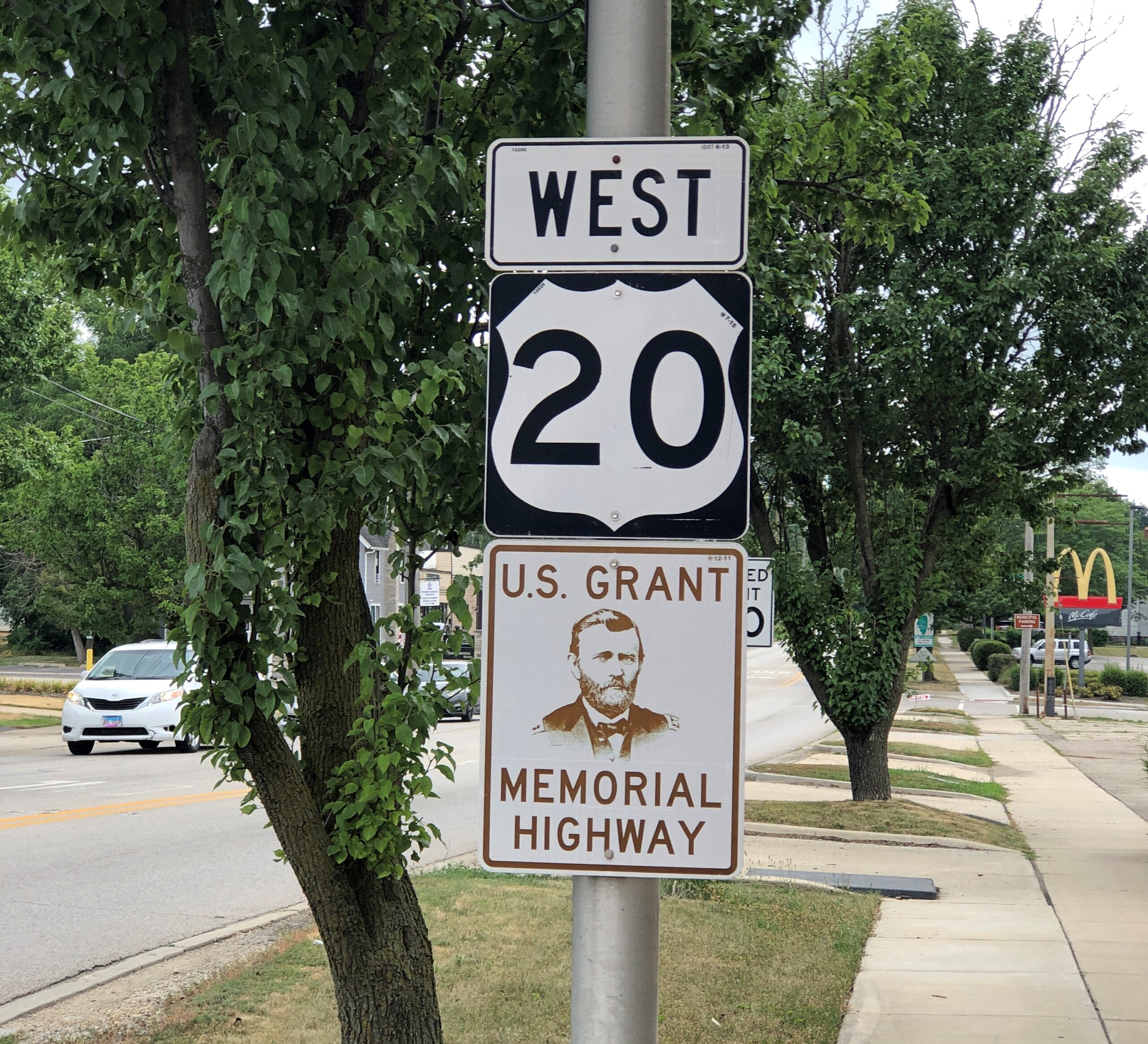
US 20, according to the Federal Highway Administration, is the longest road in the country. That wasn’t the case in 1925 when the US highway system was created; it was number two at that time. Various adjustments afterward (told in highway-nerd detail on the FHA’s Highway History page) made it so by 1963.
“US 20 is 3,365 miles long, according to the 1989 log,” the site notes. “The route begins in Boston at a junction with Massachusetts Route 2 and ends in Newport, Oregon, at a junction with US 101. Because U.S. numbered highways are not designated with[in] National Parks, US 20 is divided into an East Section ending at the eastern entrance to Yellowstone National Park and a West Section beginning at the west entrance to the park.”
In Illinois, the highway is also the General Ulysses S. Grant Memorial Highway.
When time isn’t an issue, US 20 is my preferred route westward toward Rockford and, for an ambitious intrastate drive, Galena. Last month, it was our preferred route most of the way to Union, Illinois, to visit the Illinois RR Museum. On the way back, we stopped briefly in Marengo, which is one of the many towns along those 3,365 miles.
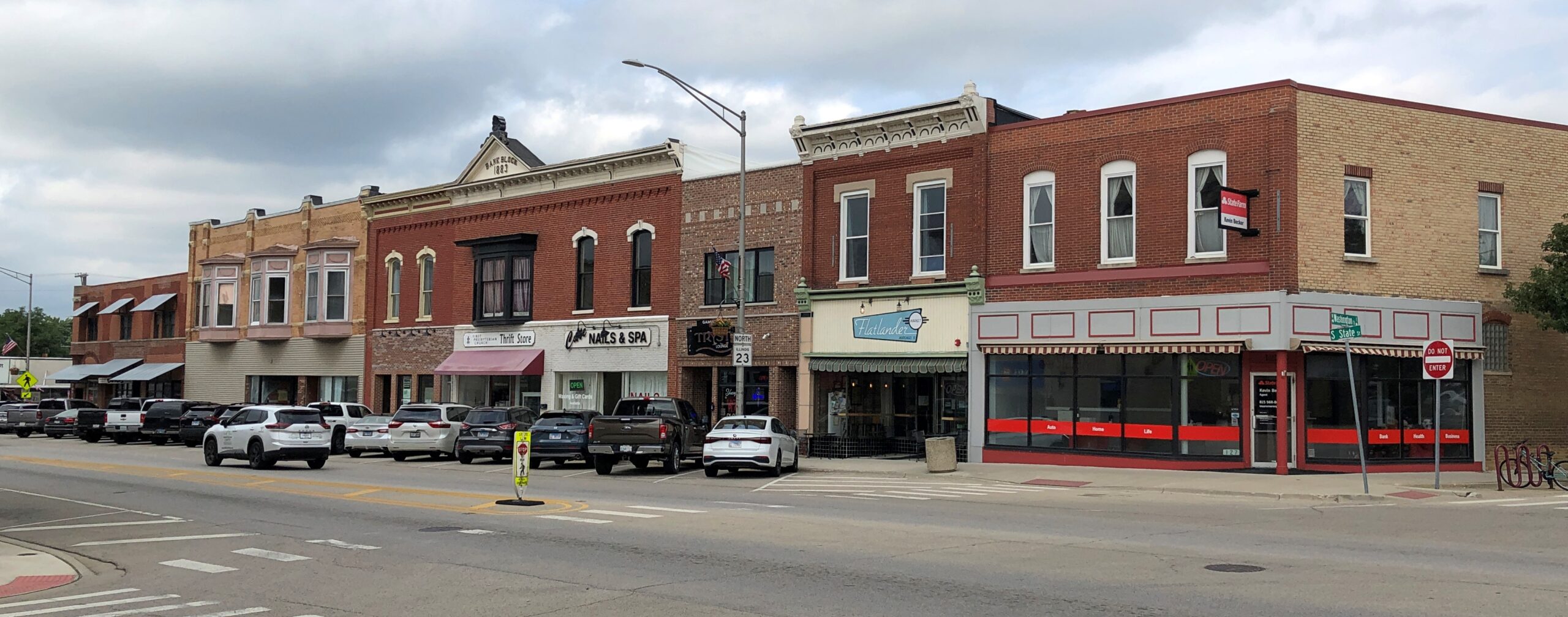
A modest downtown, but at pop. 7,500 or so, it doesn’t need to be anything else.
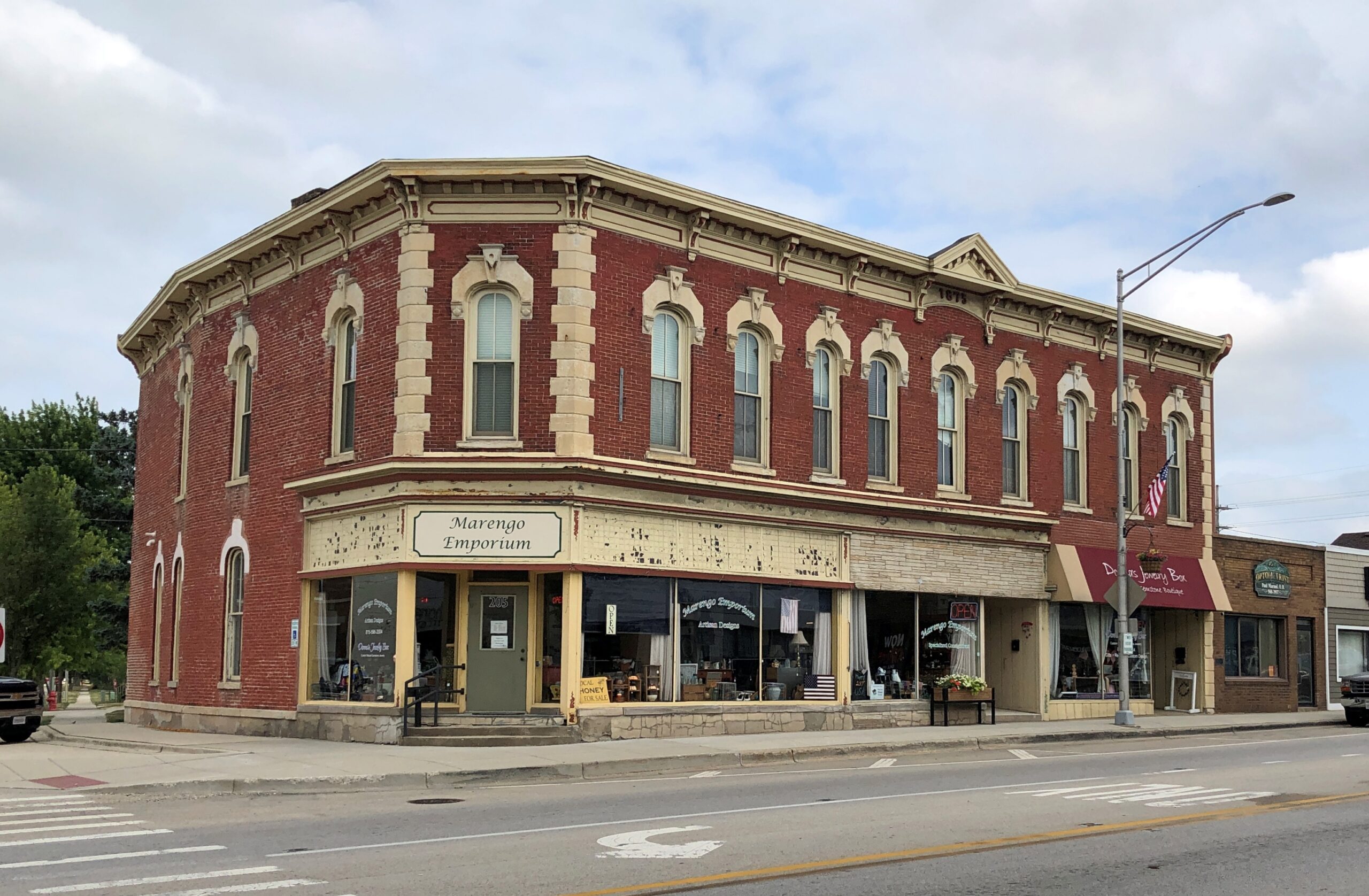
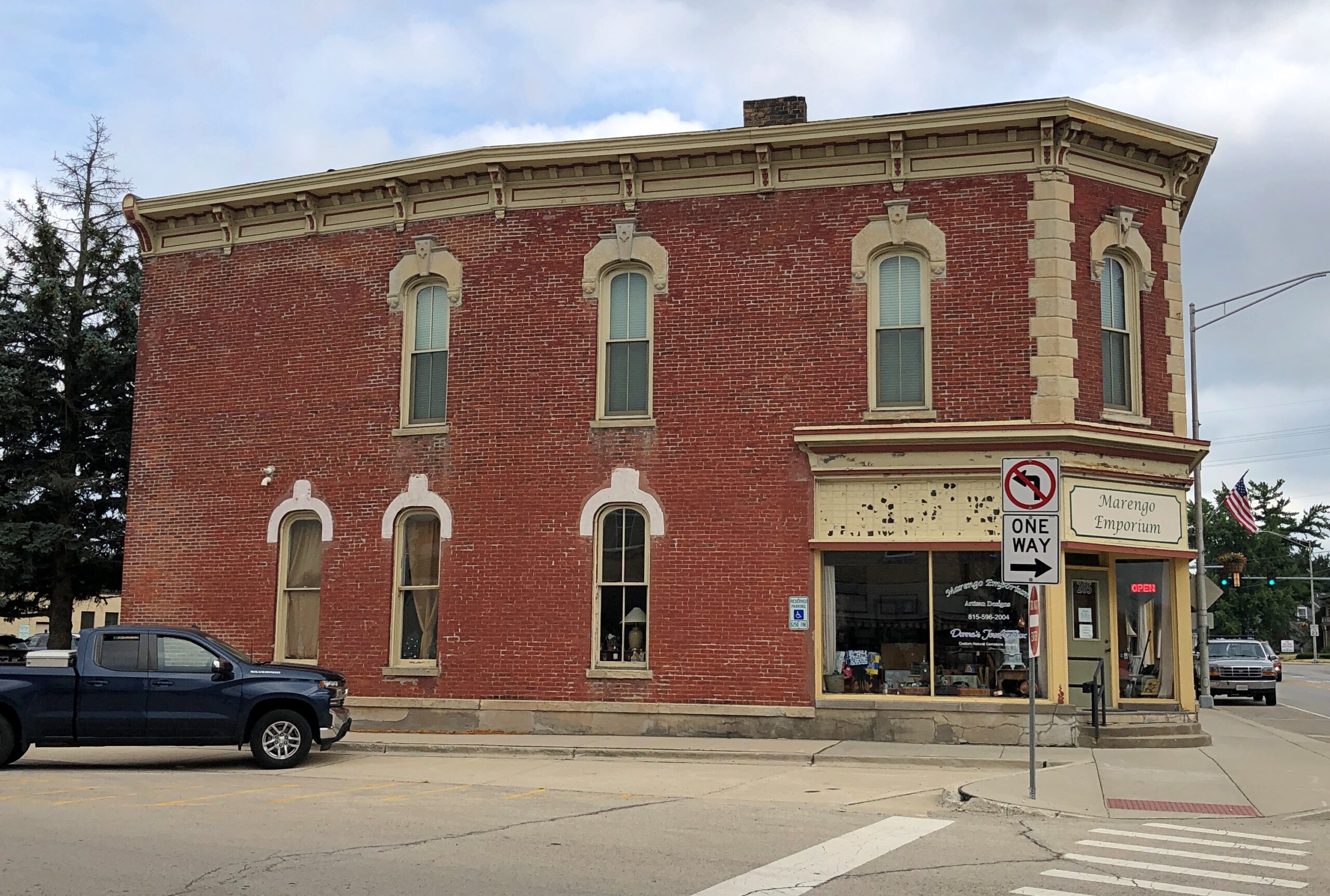
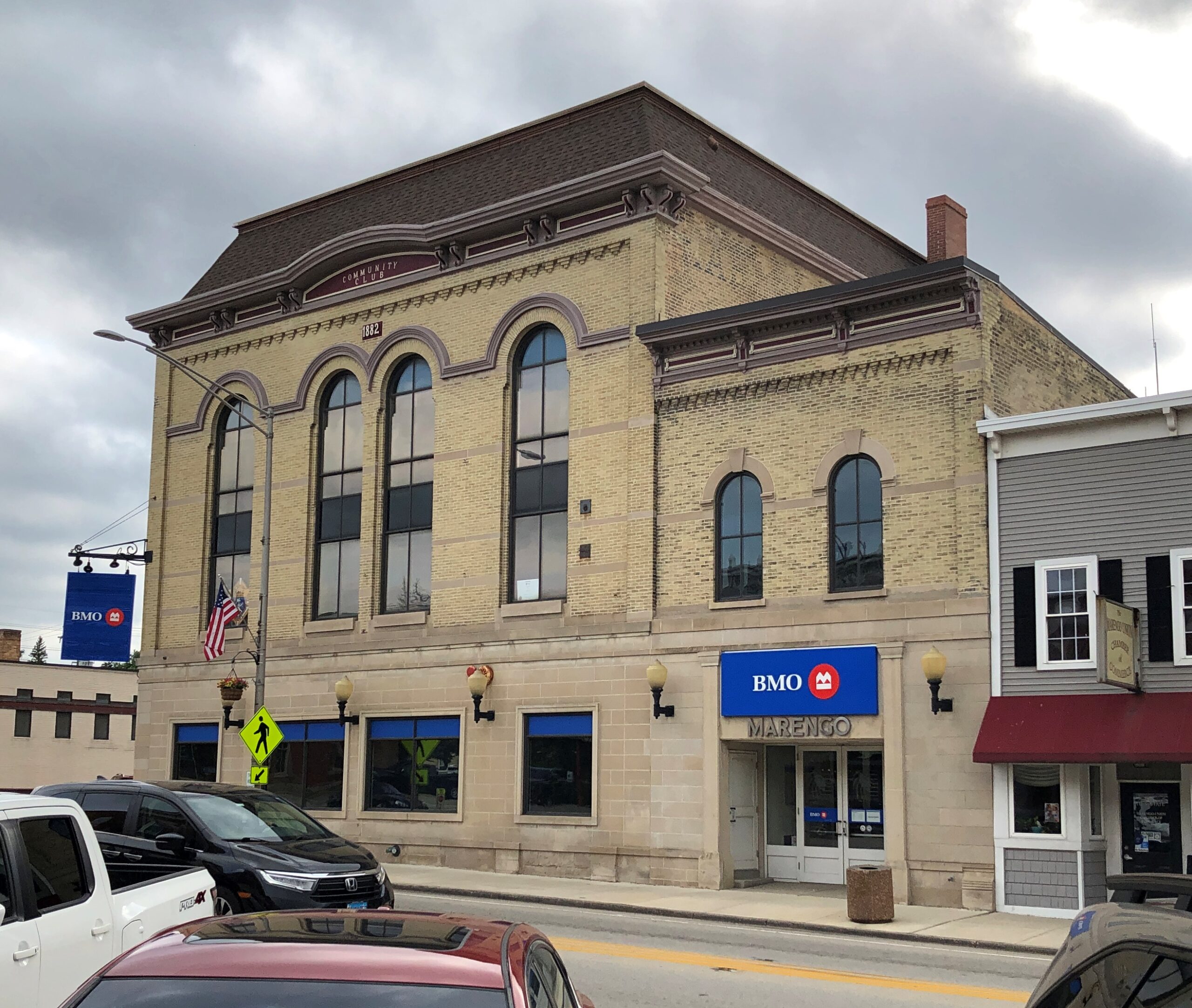
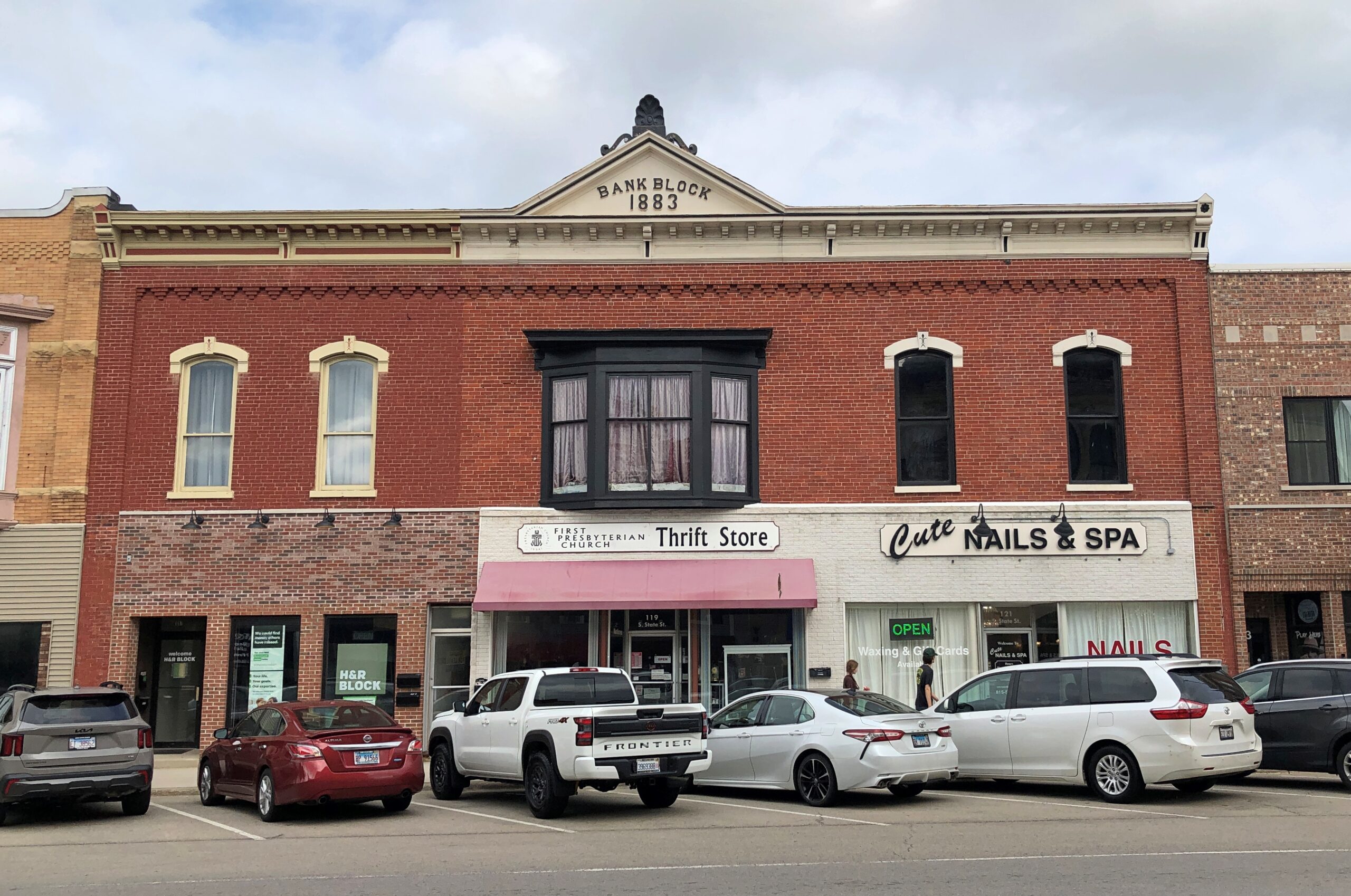
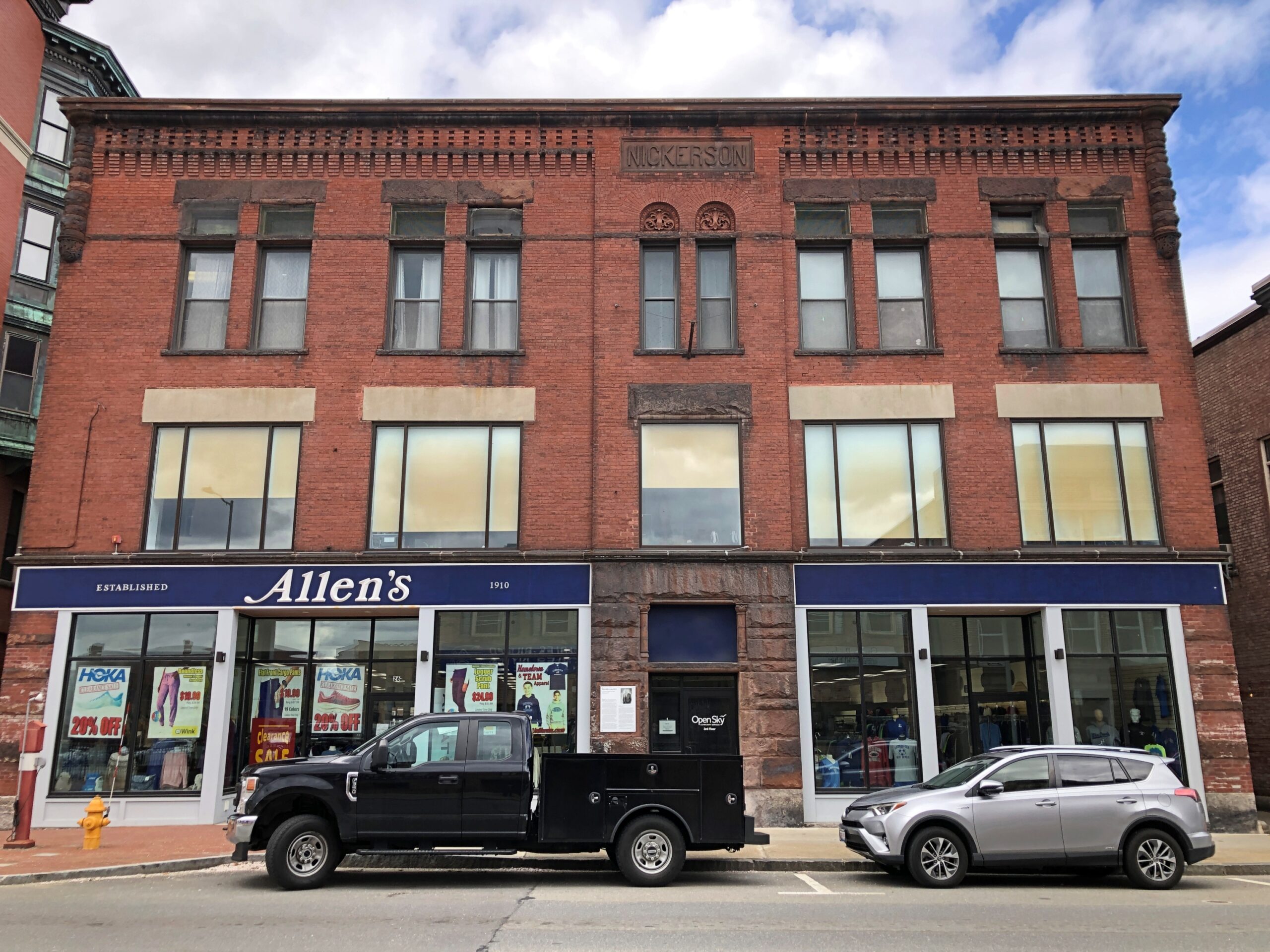
A run of buildings from the late 19th century, along Main St. Such as the current home to the Marengo Emporium, closed that late Saturday afternoon, in spite of what a red neon OPEN sign said.
The Marengo Union Chamber of Commerce notes that the building, dating from 1875, housed the first bank in McHenry County in its early years. “In the later years, Swonguer Furniture & Undertakers, Marengo Farm Store, Vidiots, Wholly Smokes and State Street Pub occupied the building but perhaps [it’s] best known for housing the Marie Ann Dress Shop,” the C of C says.
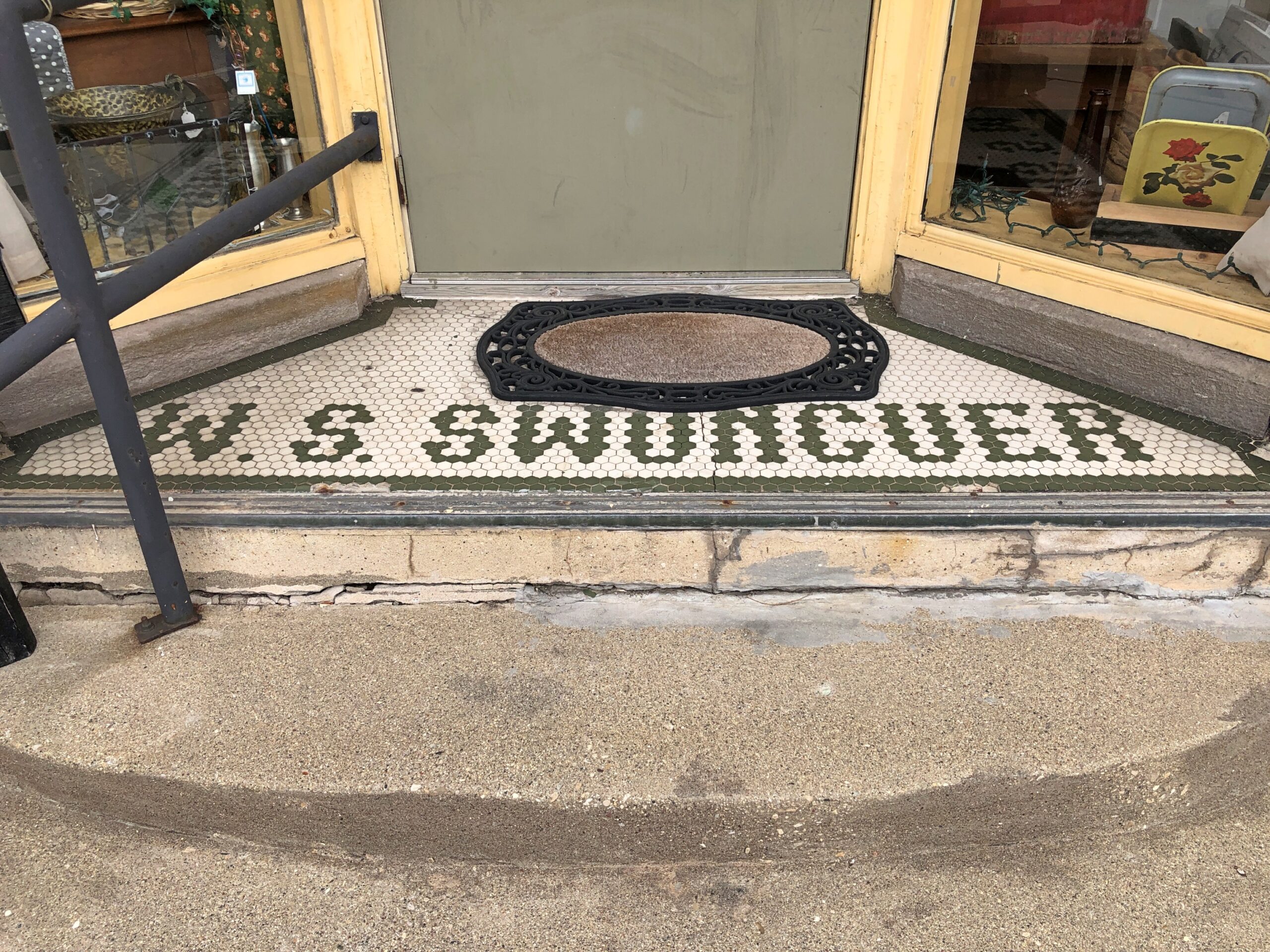
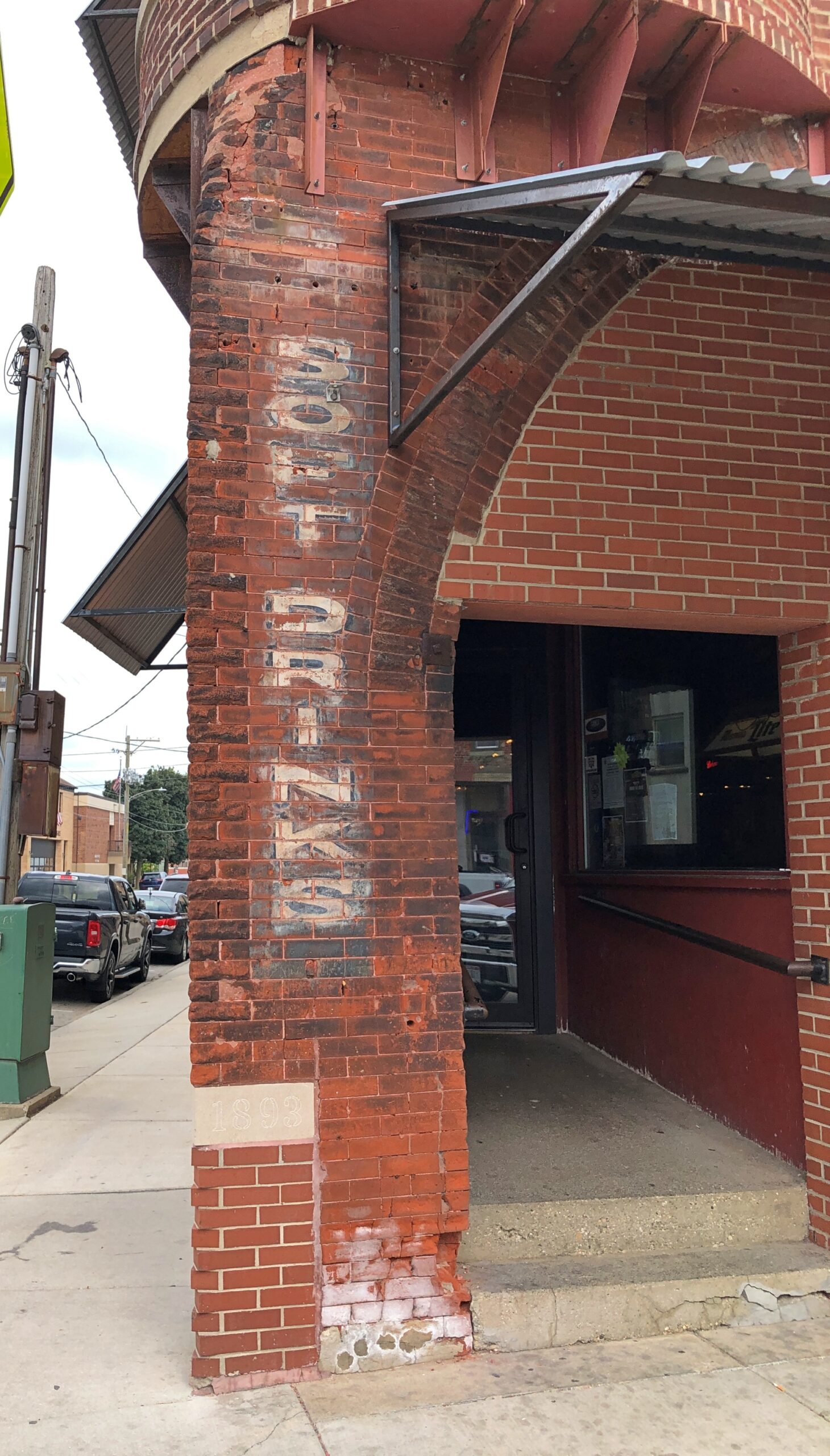
Swonguer Furniture & Undertakers. Not as odd as it might sound and, apparently, a known combination in a number of places more than a century ago. After all, how different is making pine boxes from making pine tables and chairs, at least for a skilled wood worker? Also, it explains this trace of the former furniture and undertaker establishment, in the form of abandoned commercial mosaic text.
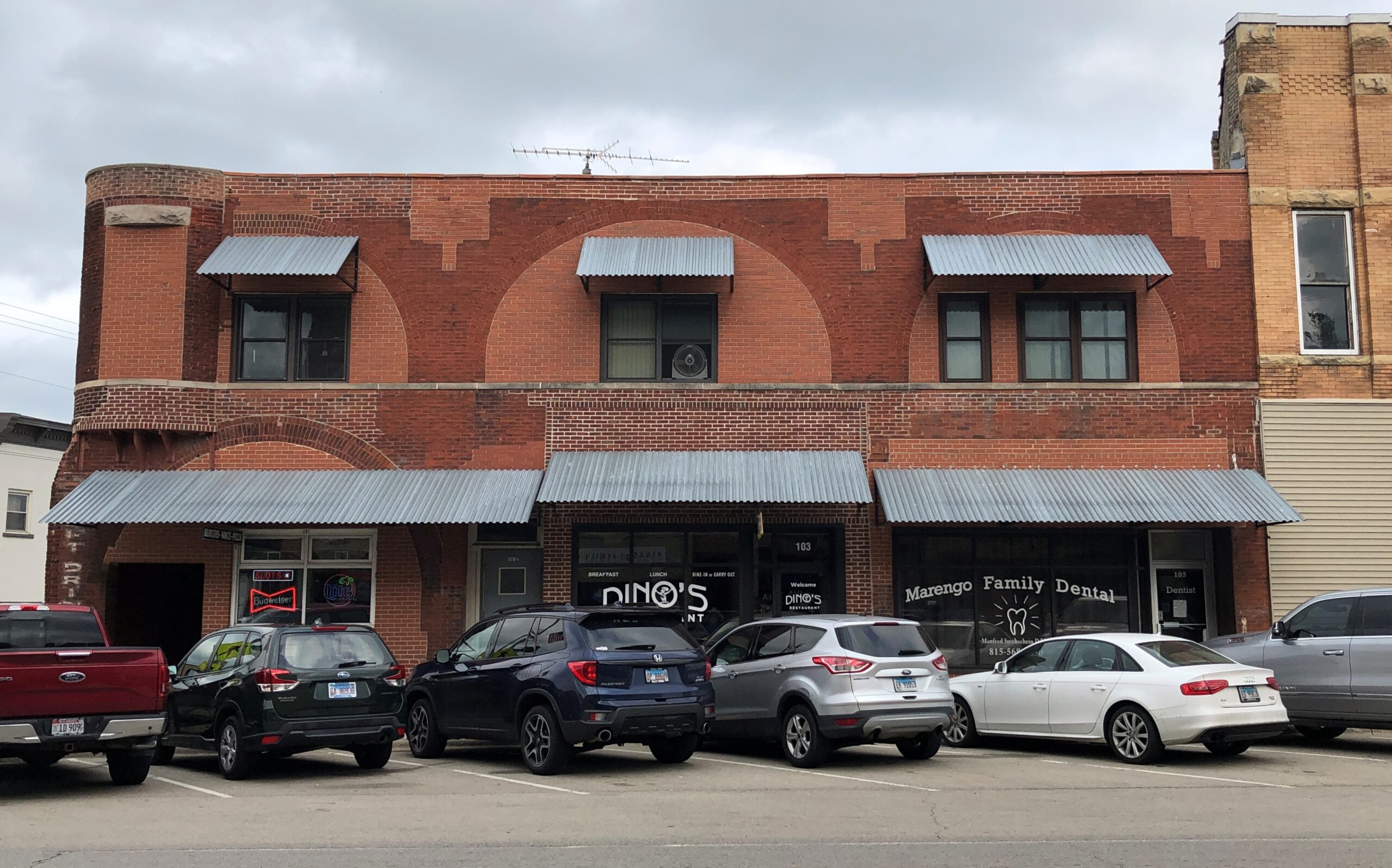
Other buildings on the street.
There’s been a fair amount of re-bricking and other construction over the years on that last one. The building looks like it was assembled Frankenstein-style, though I’m sure it wasn’t. The corrugated metal awnings look a little out of place, but I suppose it was an economical addition. To one side, an unusual ghost sign.
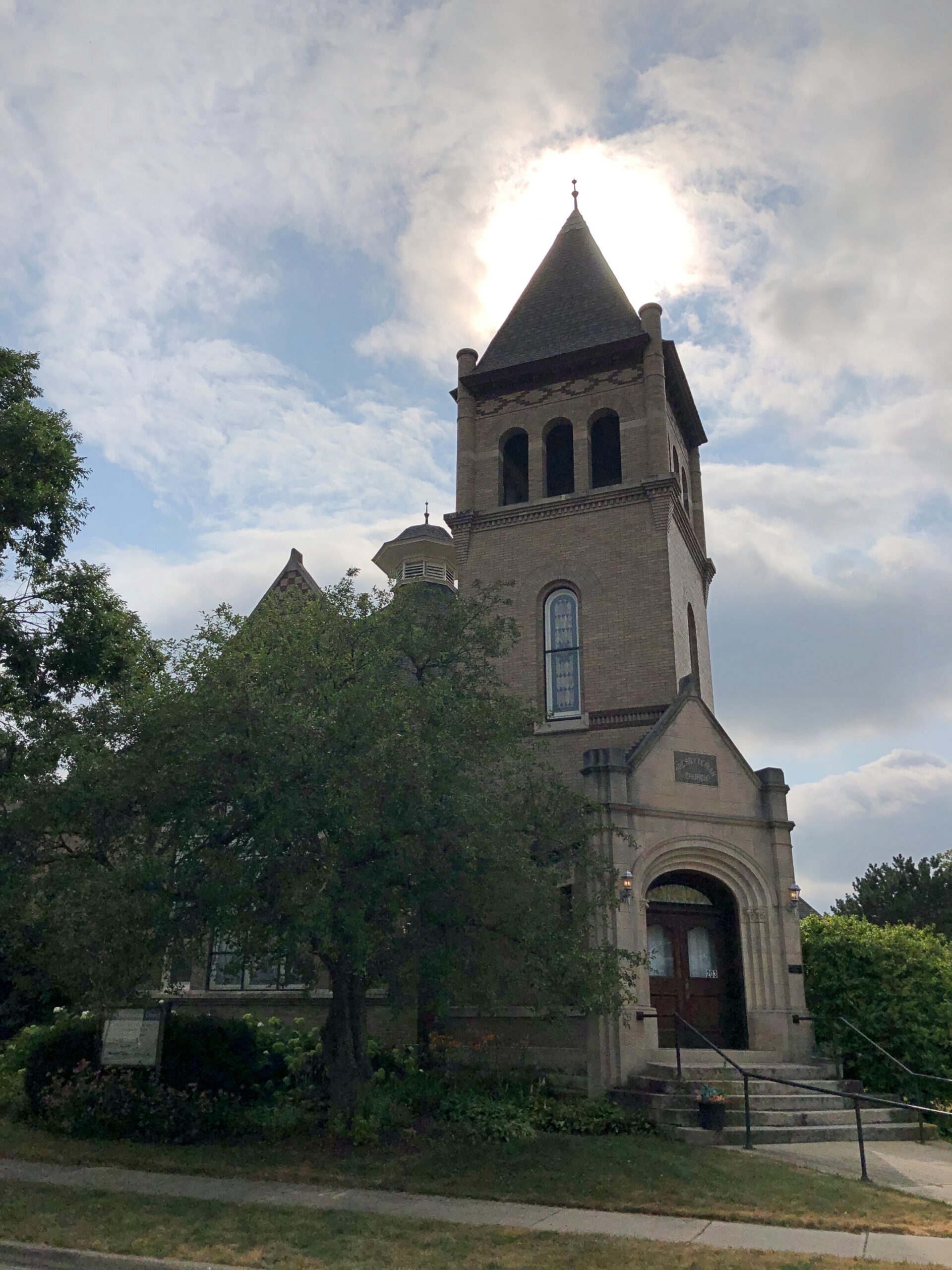
First Presbyterian, a block from Main.
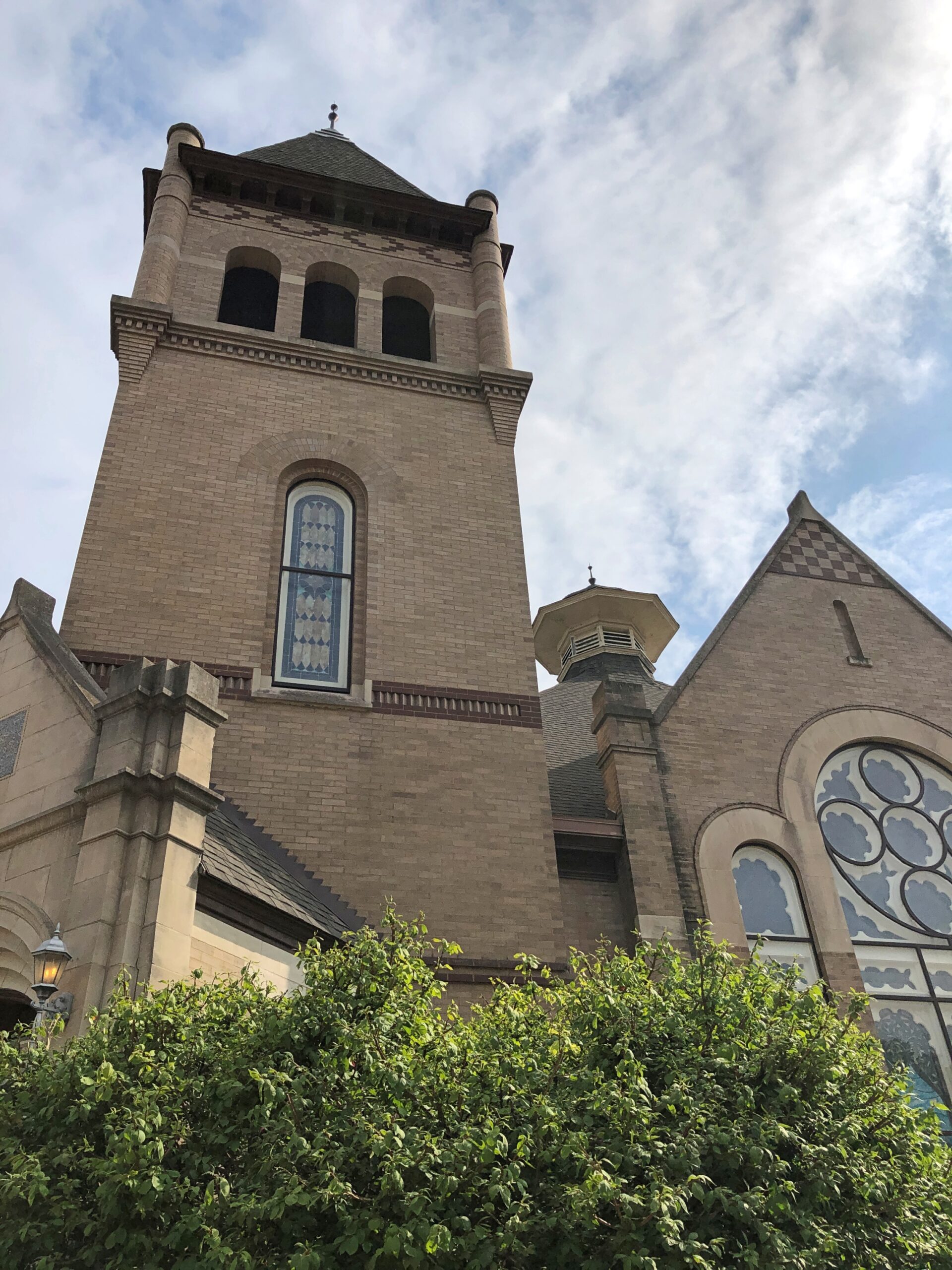
An 1898 rebuilding of a previous church. Naturally McHenry County says: “The architects, Tumbull and Jones of Elgin borrowed elements from various Romantic styles when they designed this church. Foremost is the Moorish-style square bell tower.”
I’ll say. How often does one encounter Moorish-style square bell towers here in the heart of North America? Maybe more often than I know, but I figure no one’s done a census.
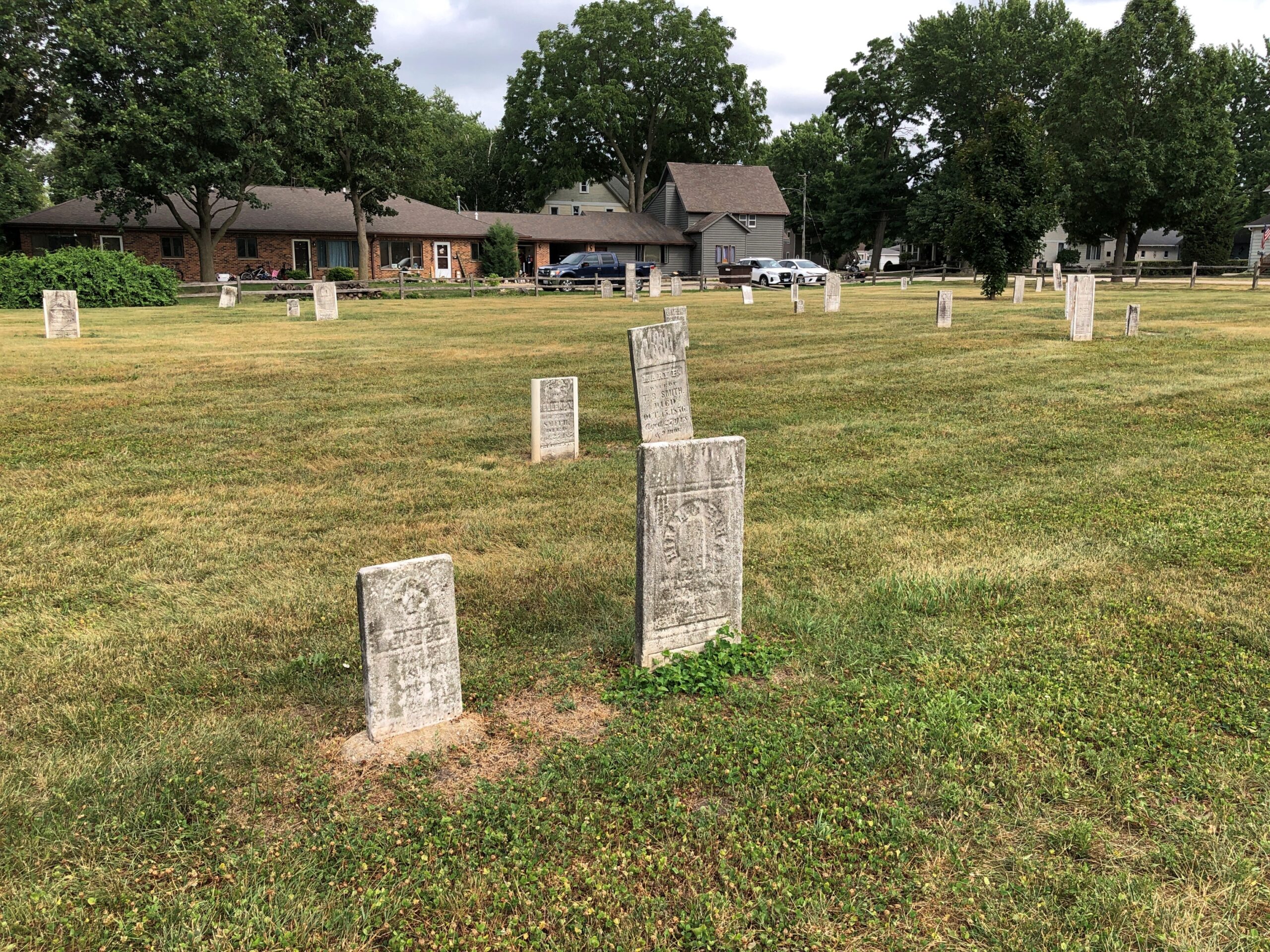
Not far from downtown is East St., which takes you to the City of Marengo Cemetery. Cubs pitcher Lundy Lundgren (d. 1934) is buried there; I saw his marker across the street during a previous visit to Marengo. This time, I took a look at the older section of the cemetery.
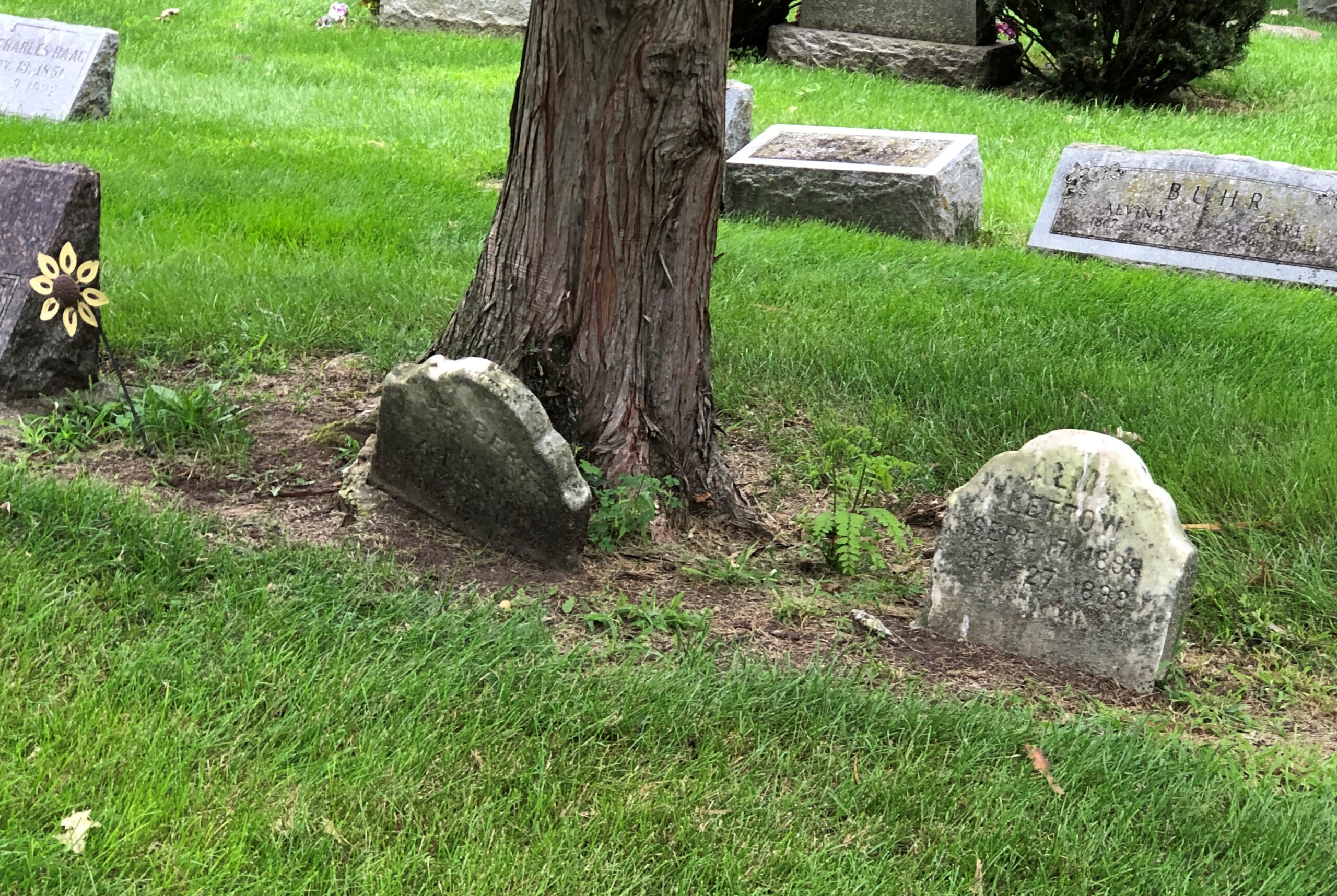
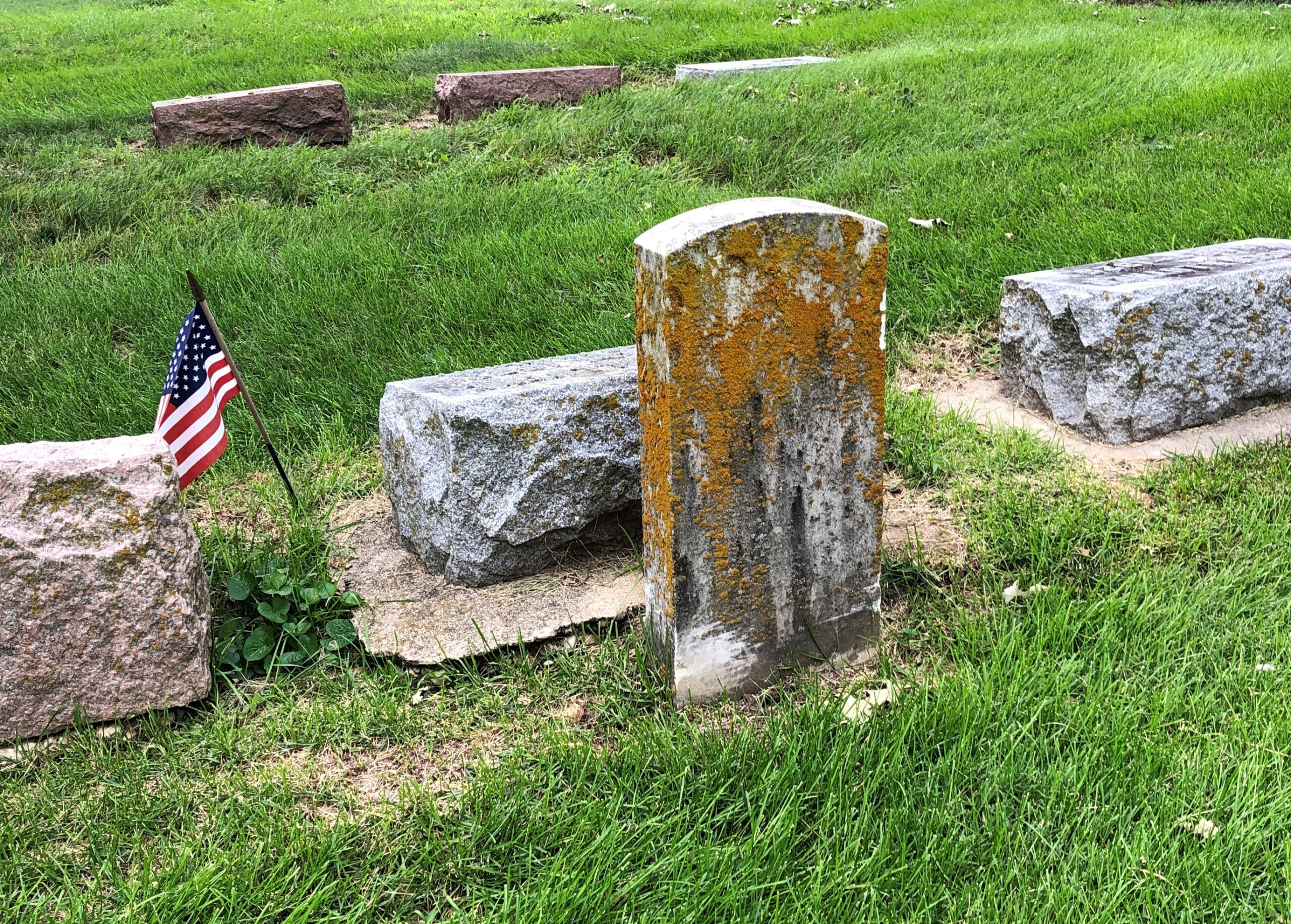
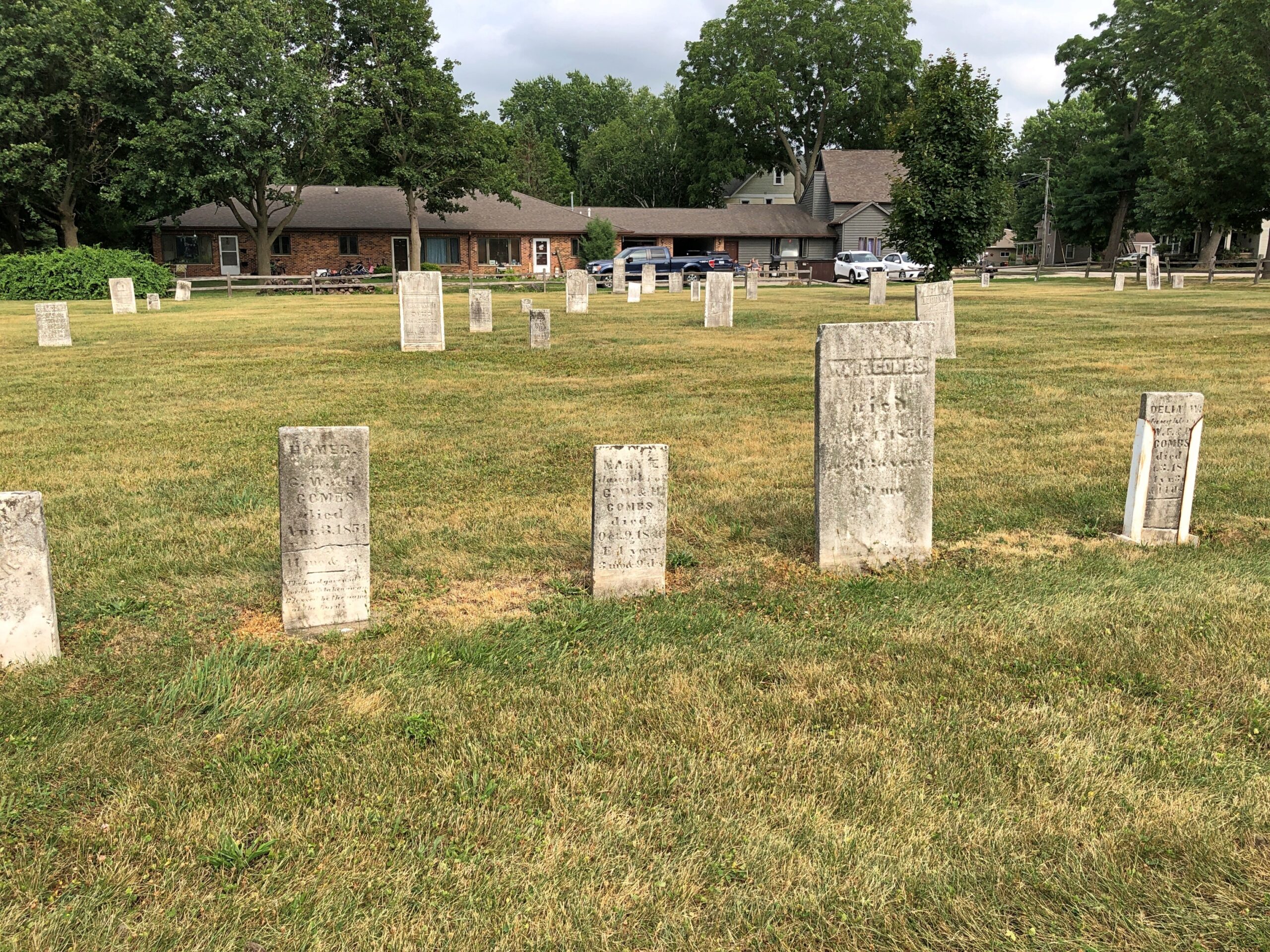
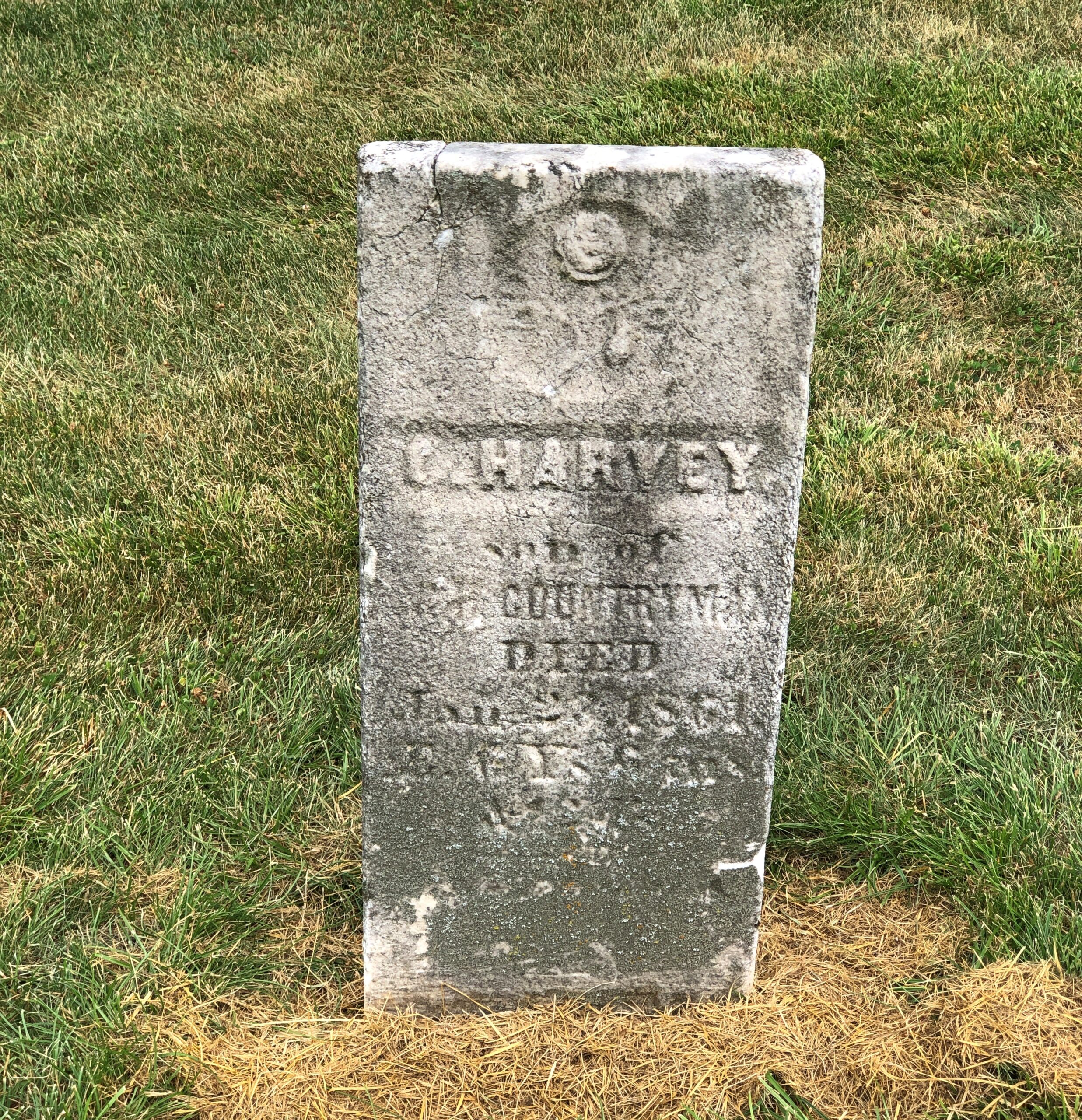
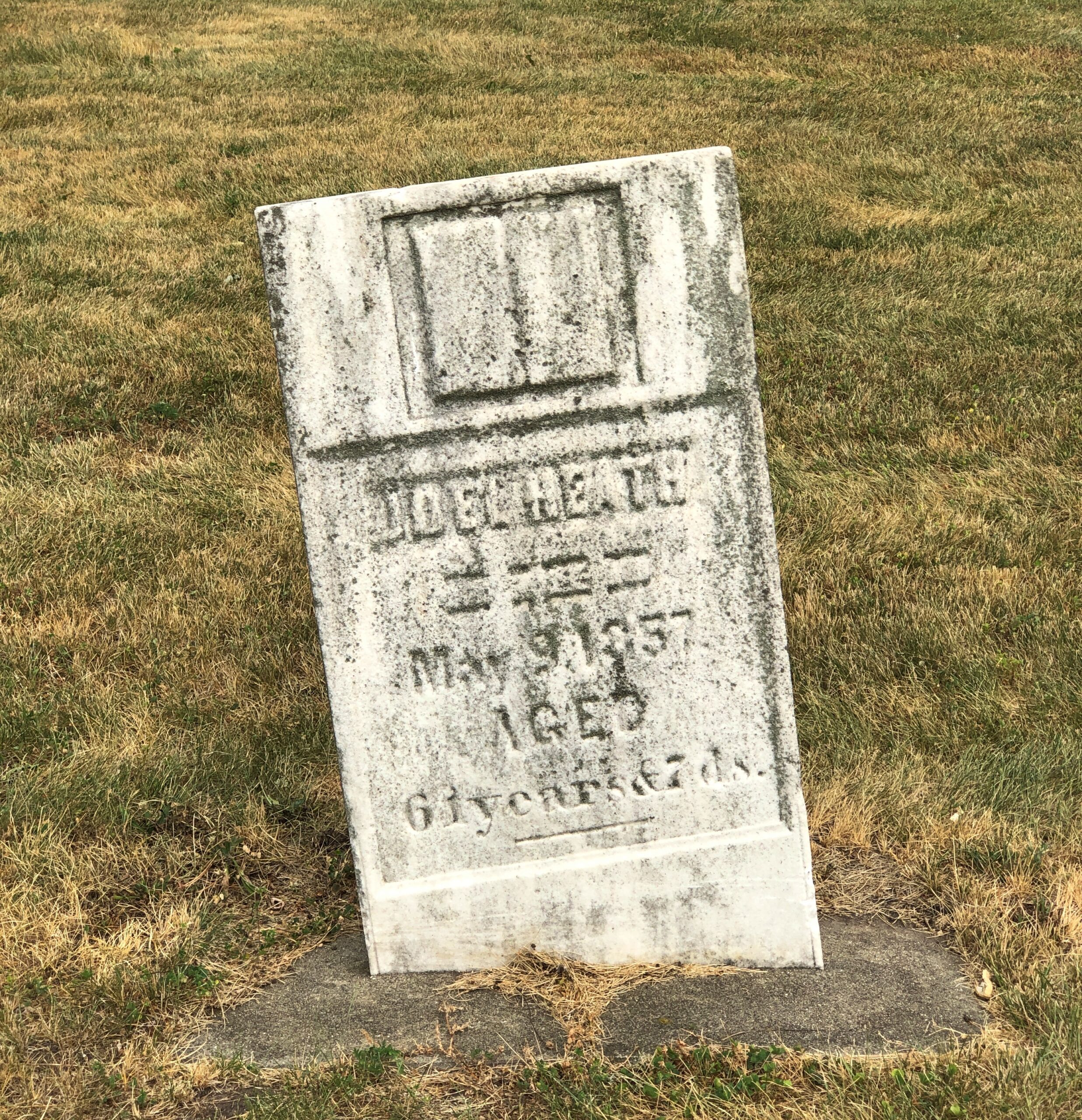
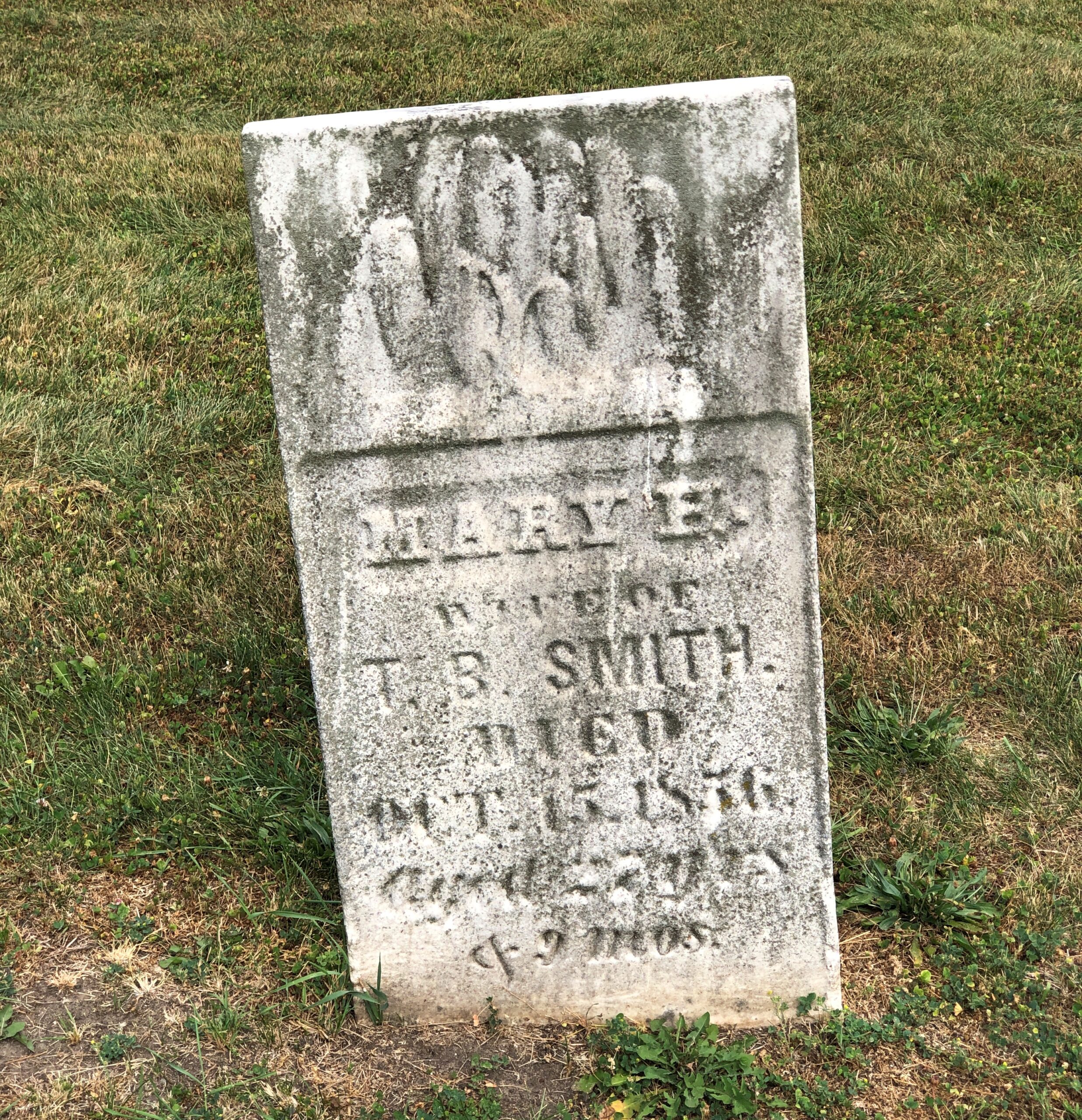
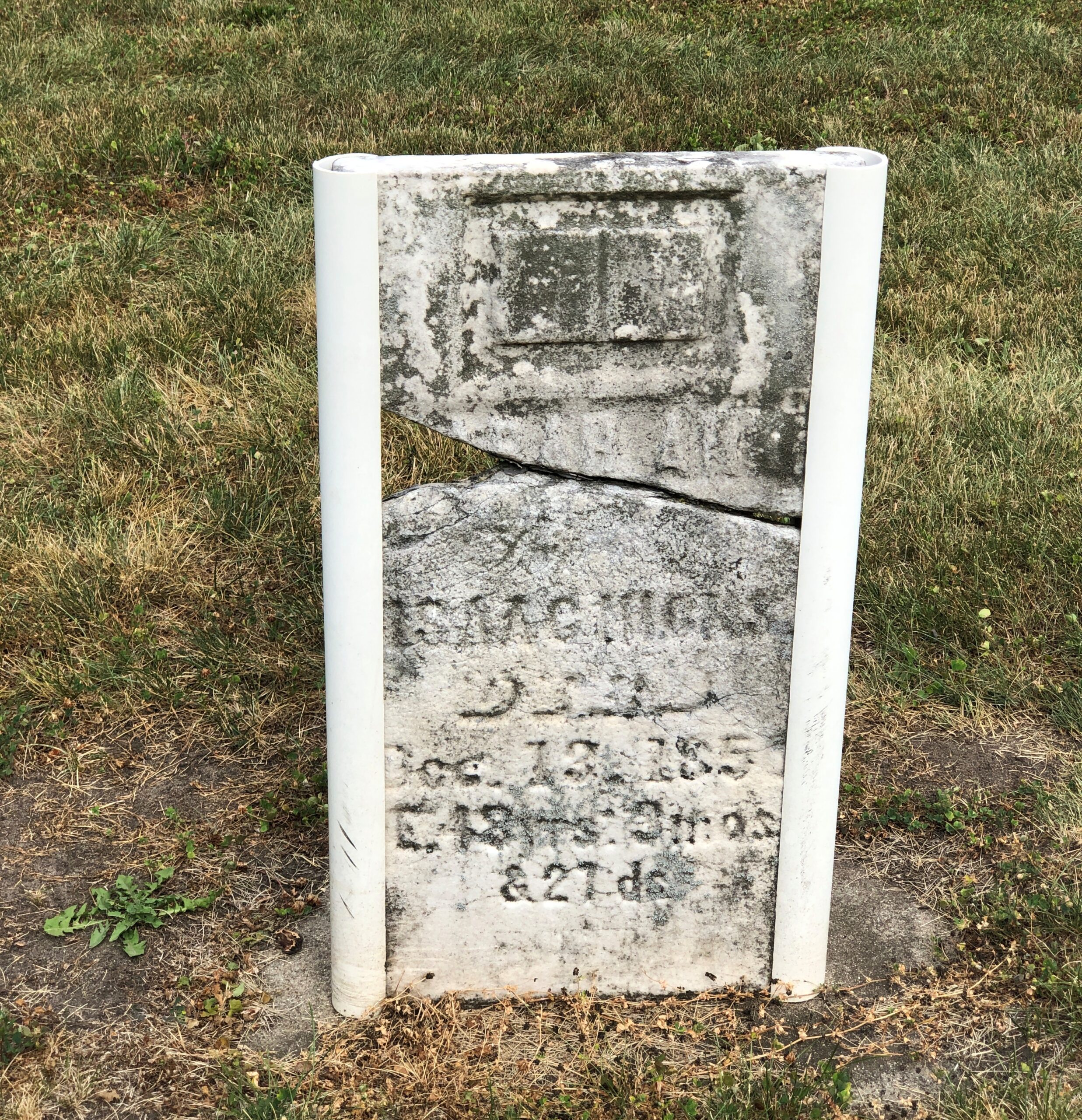
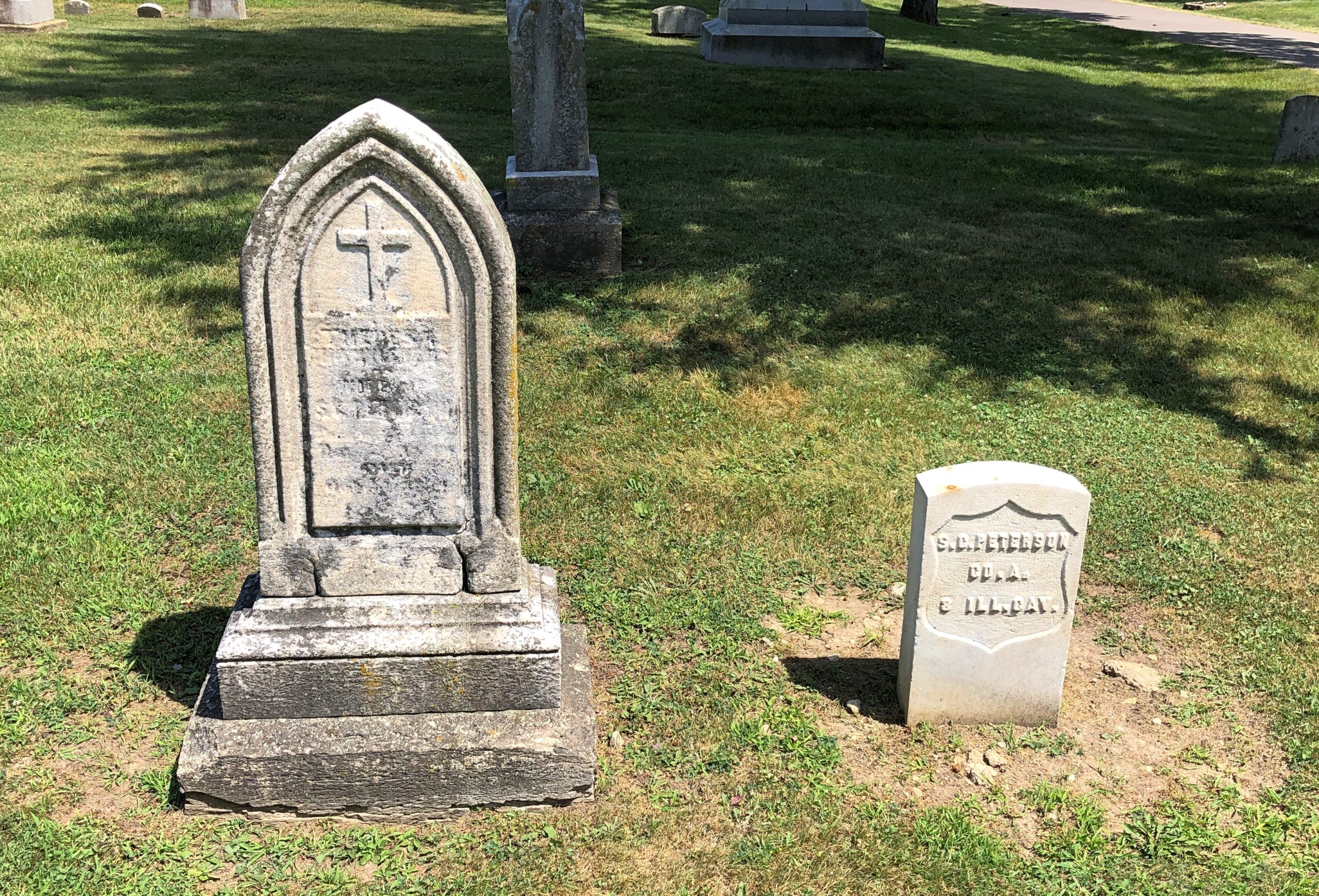
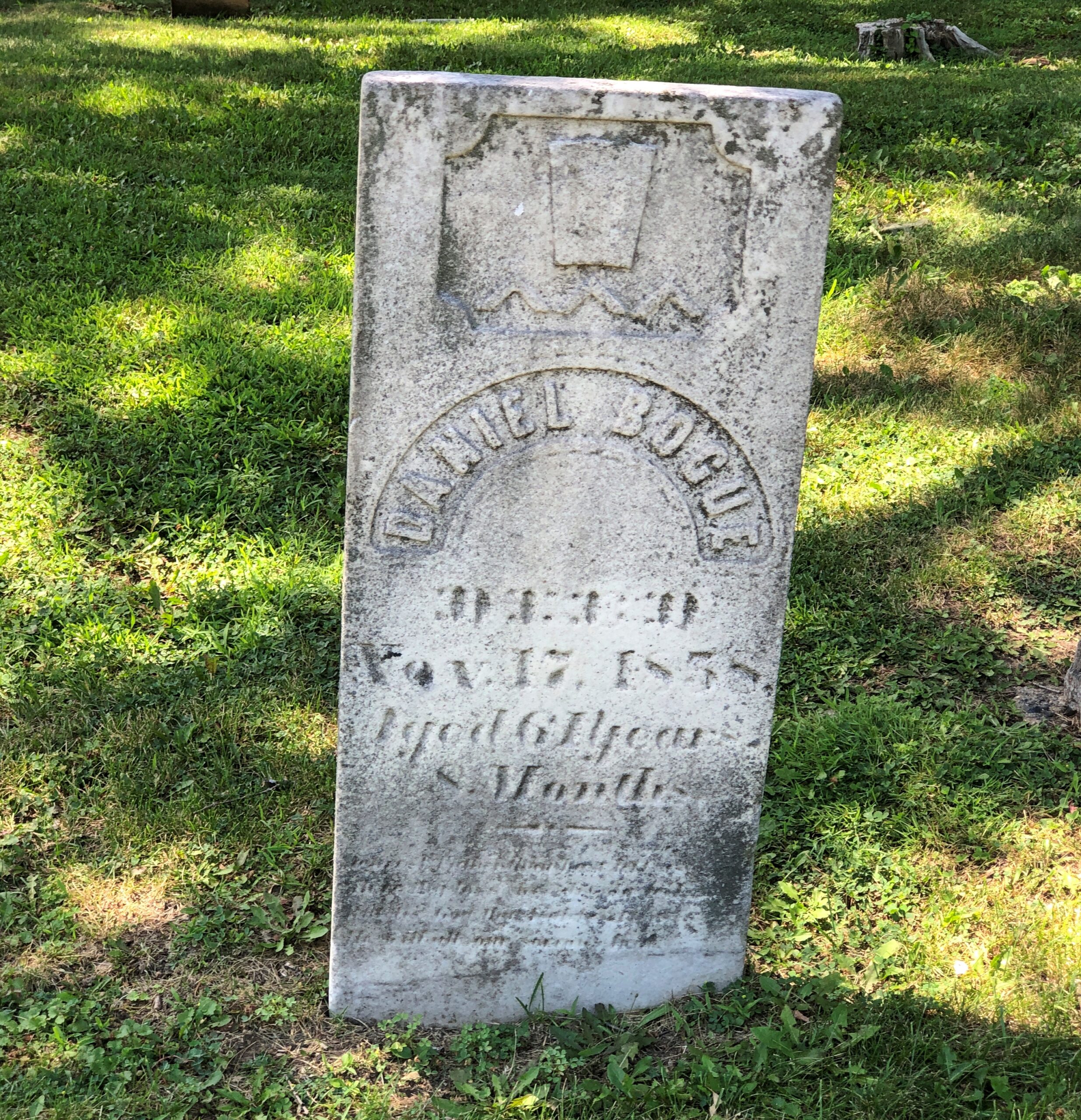
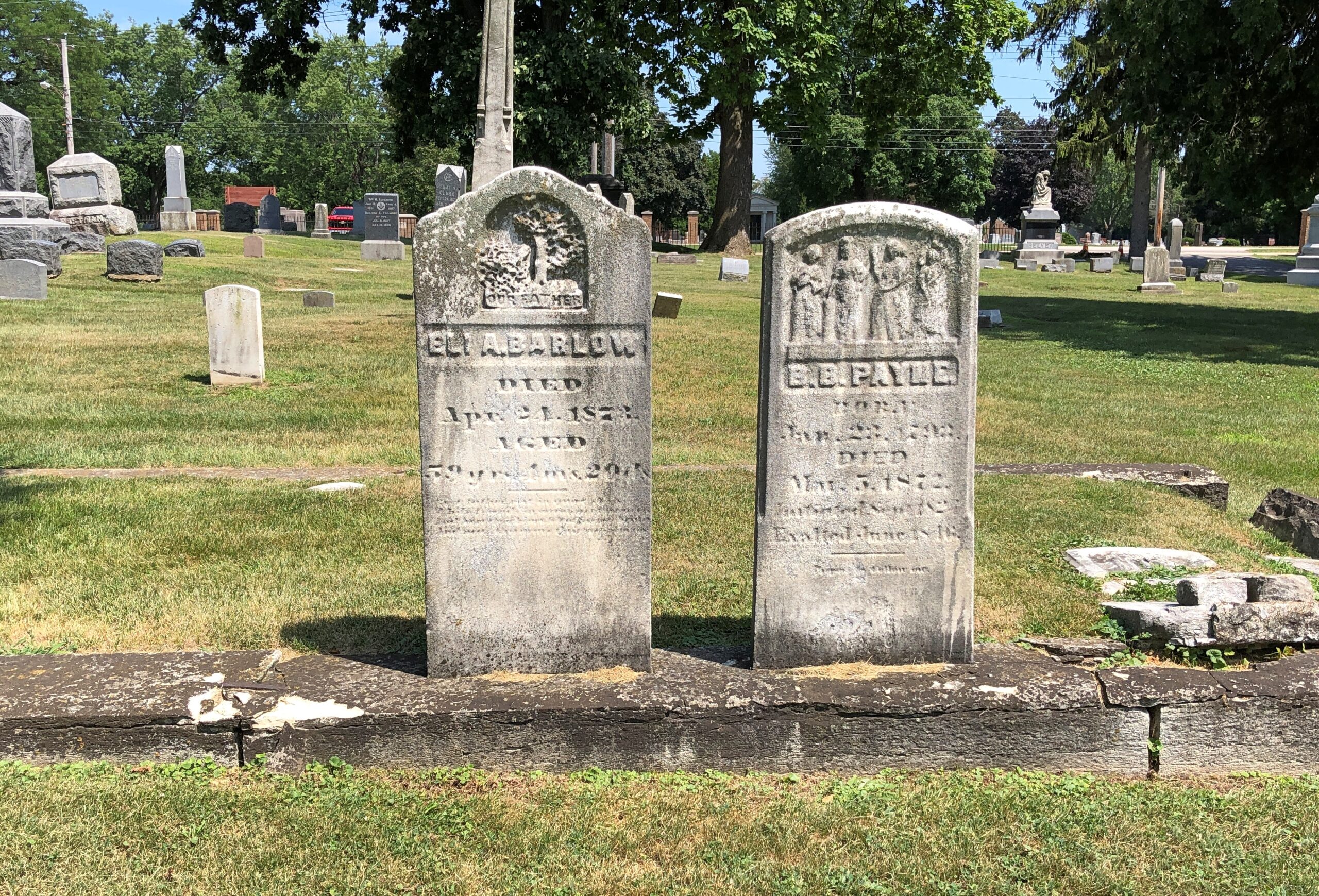
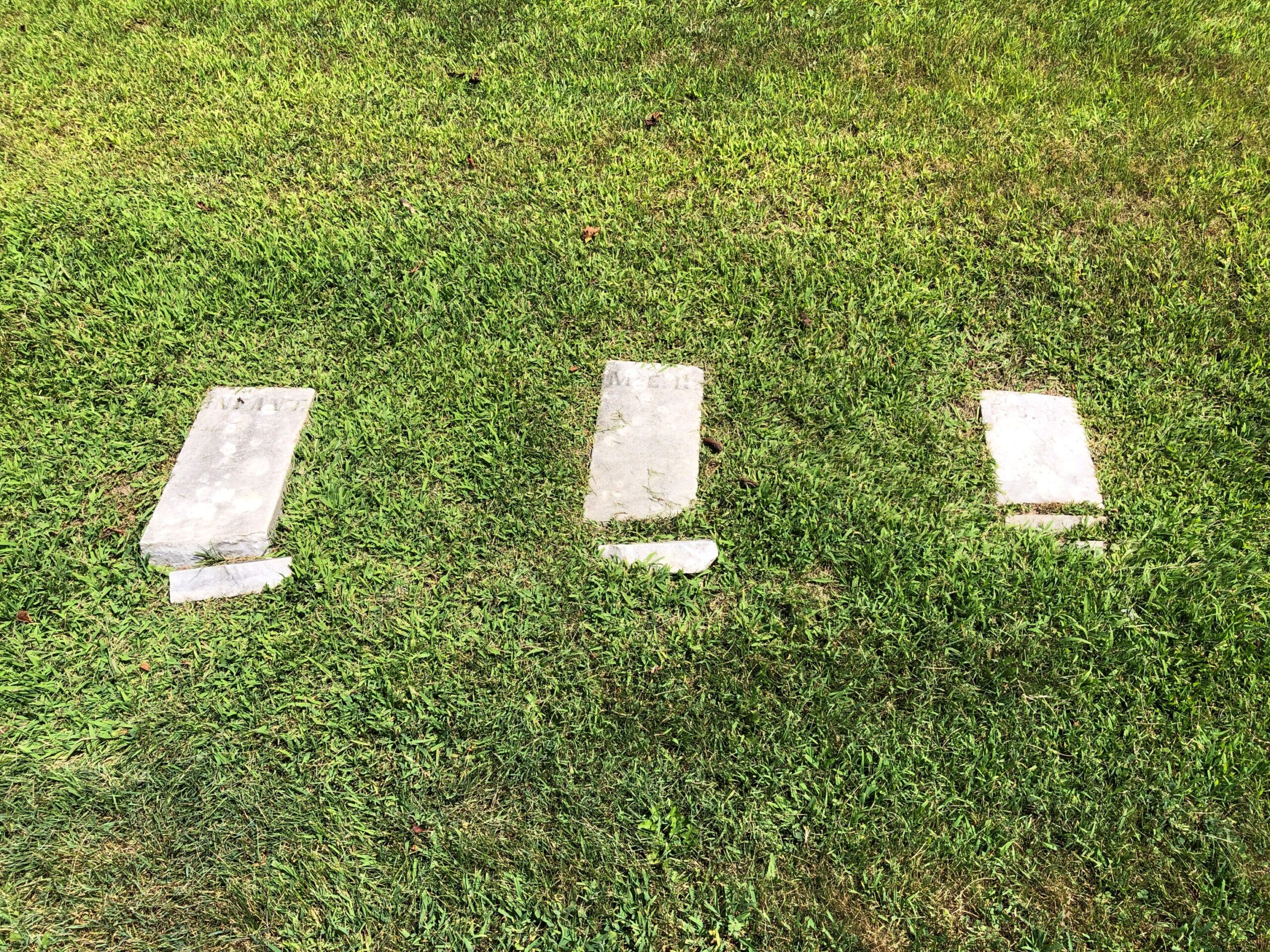
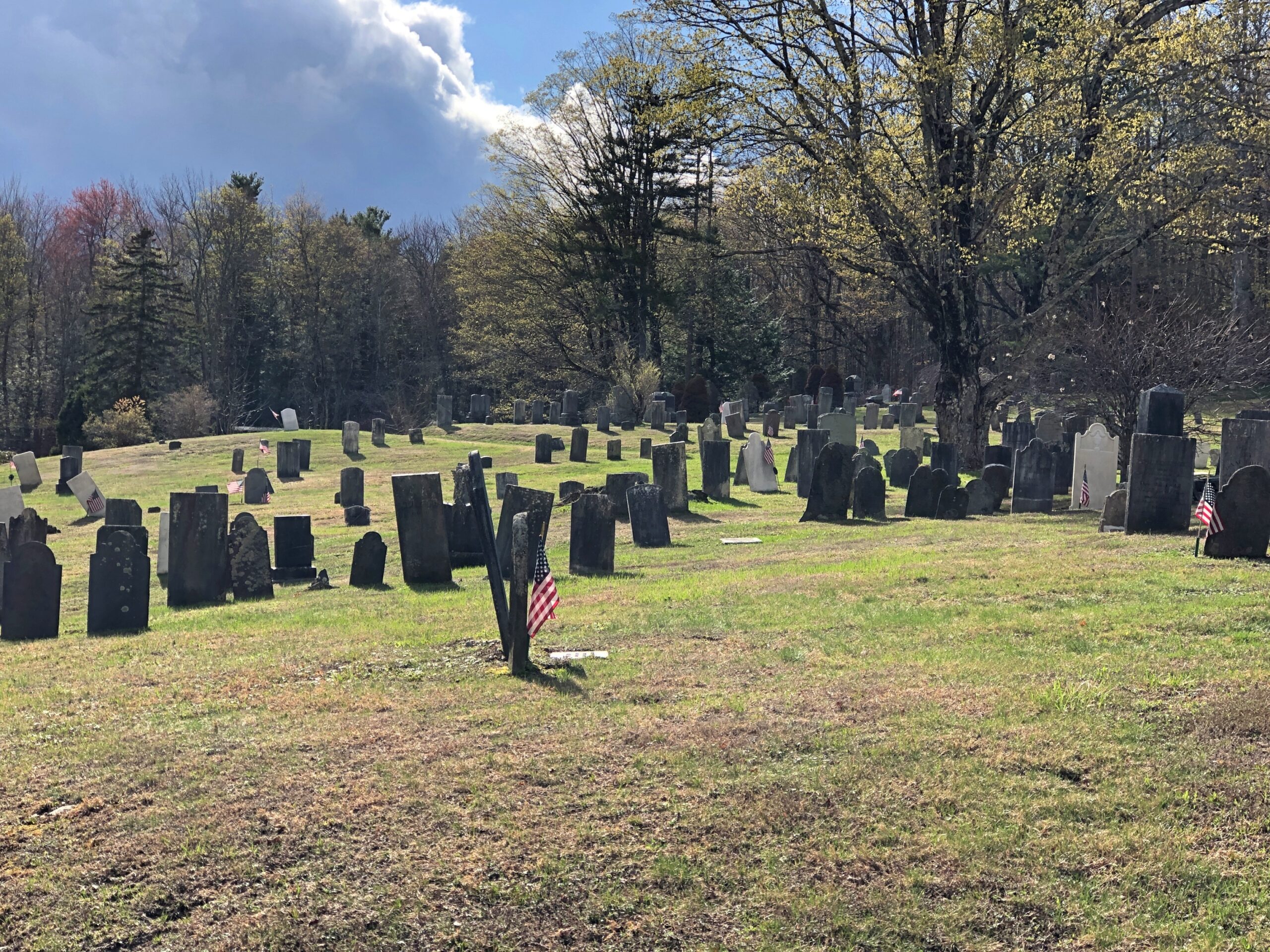
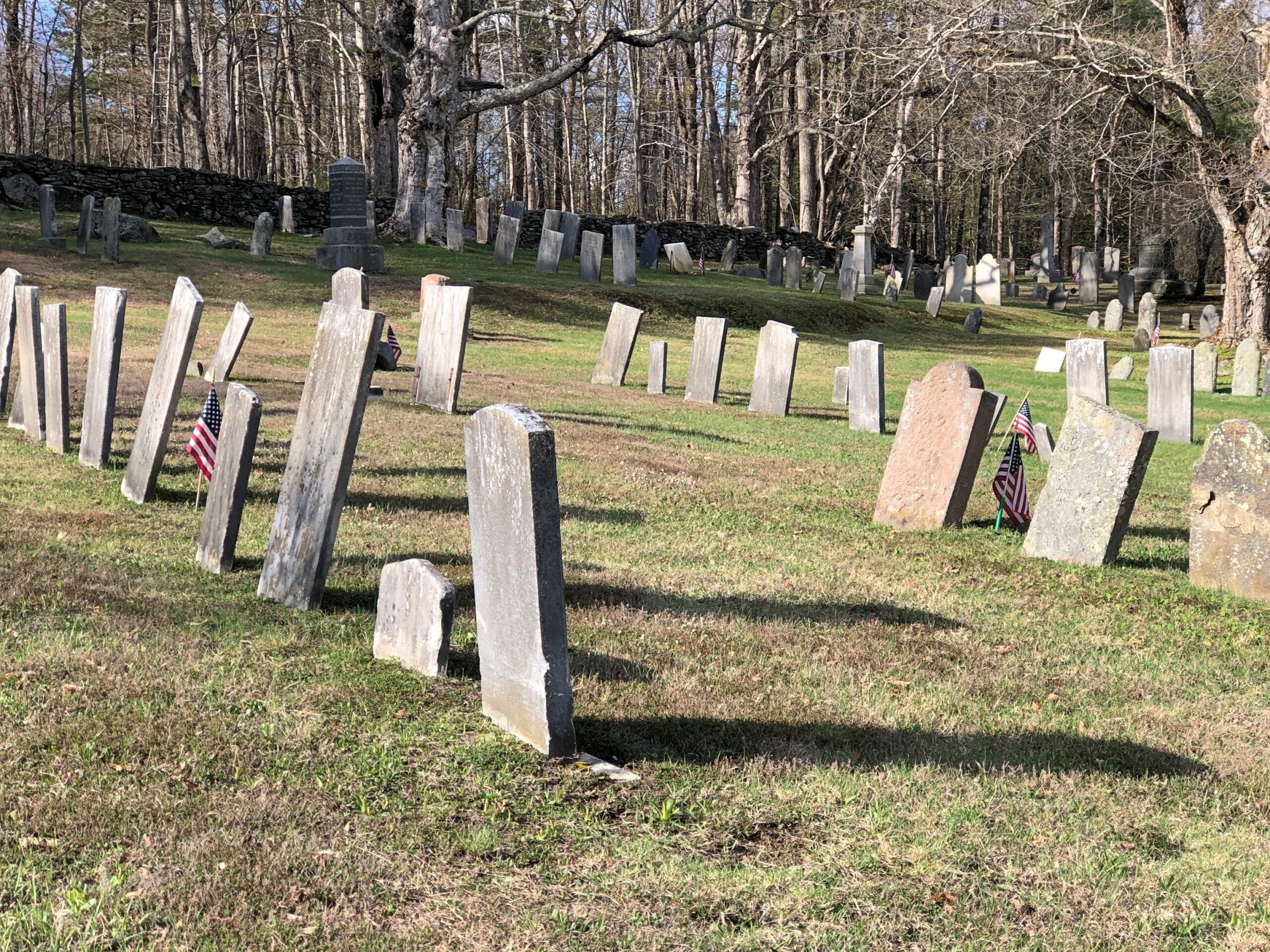
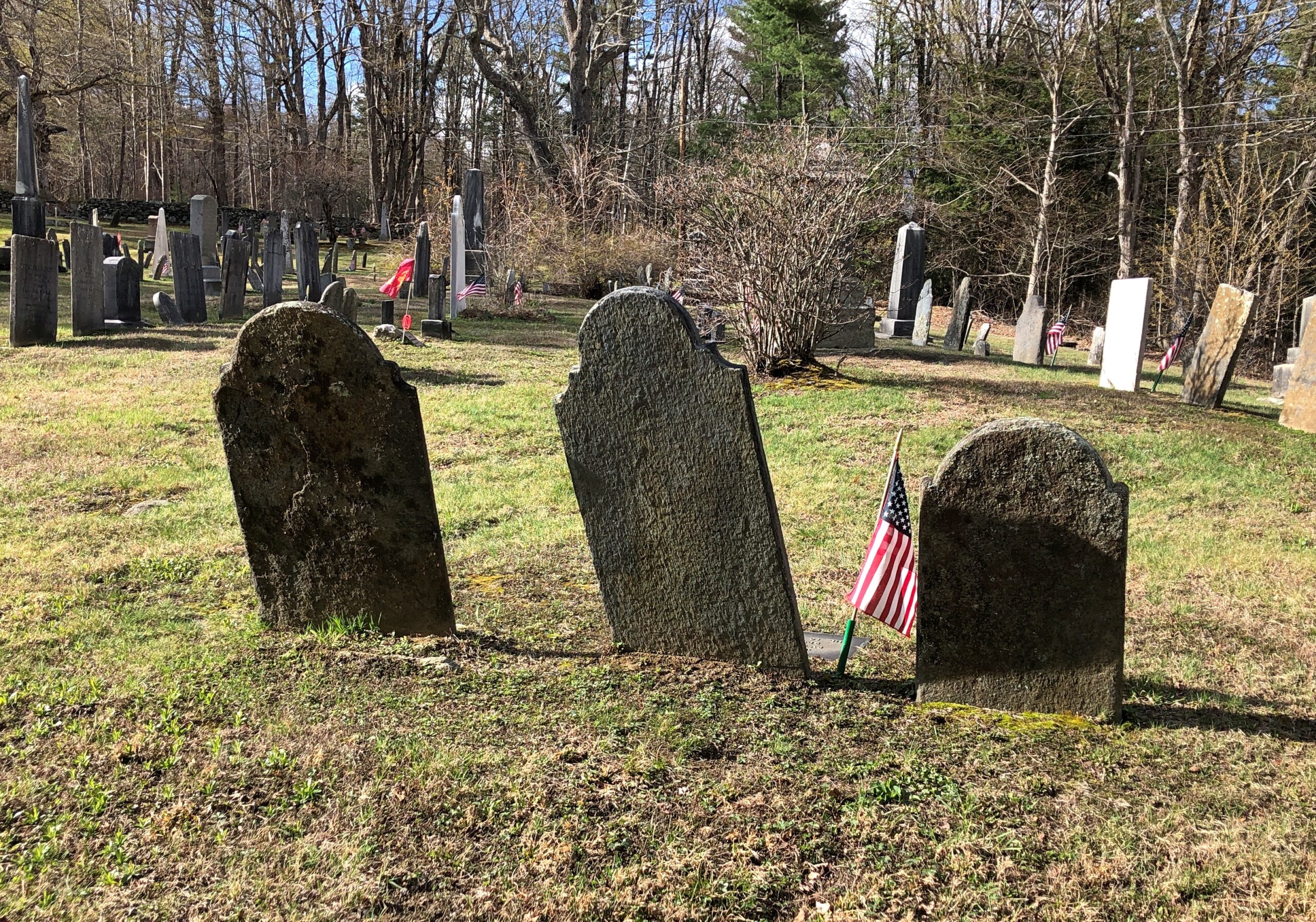
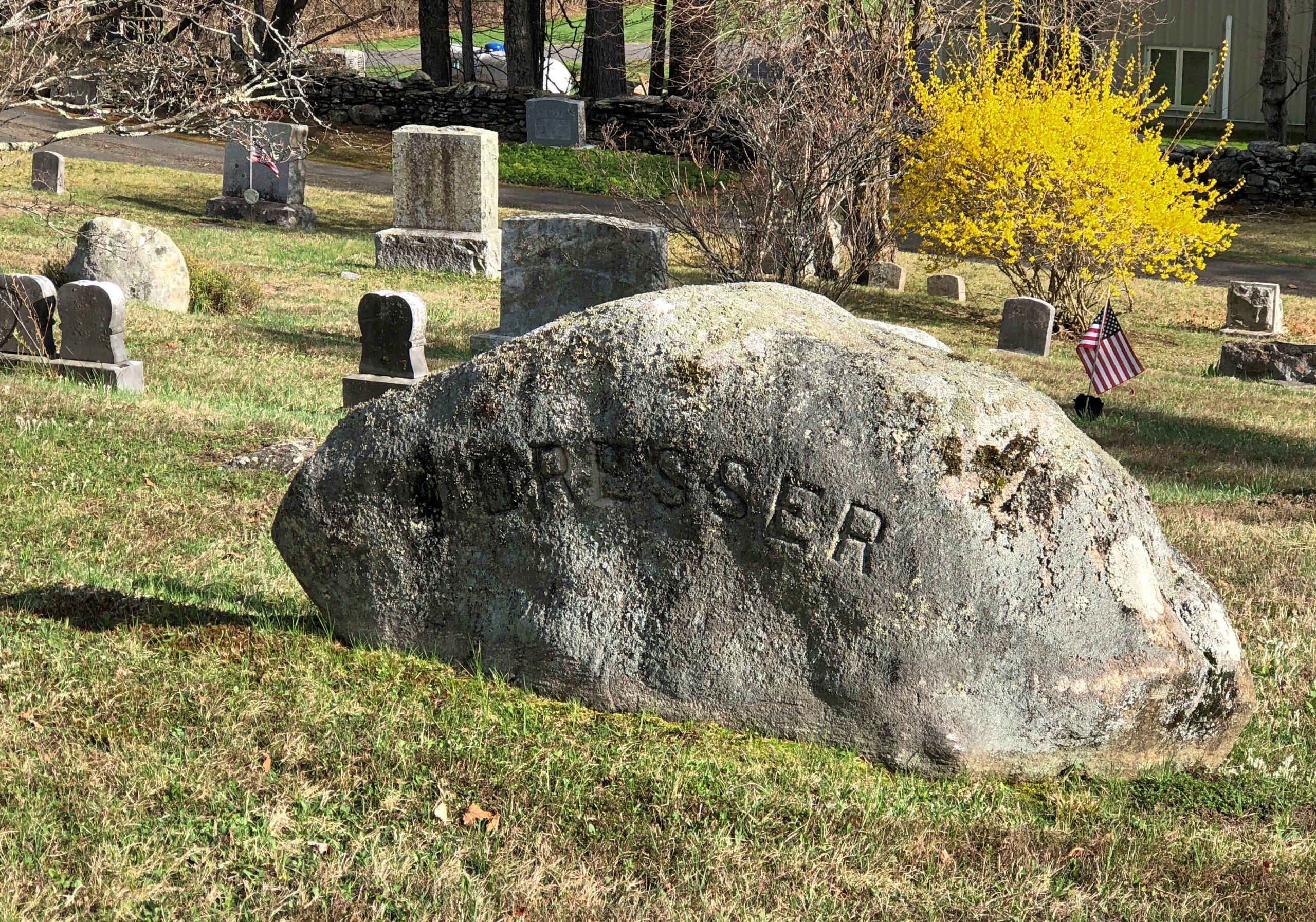
I suspect there are more burials than stones, but in any case, the stones are worn.
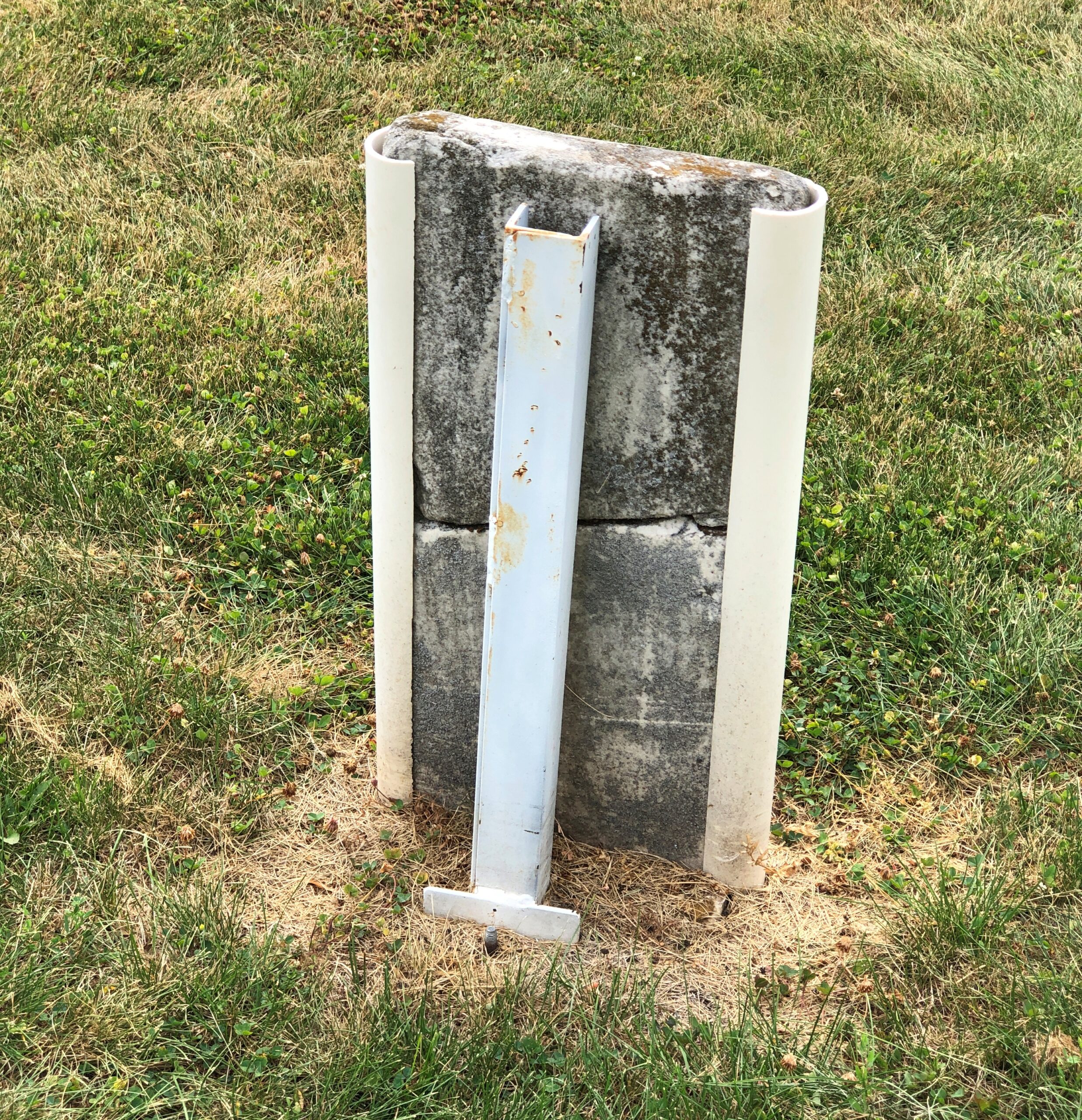
In some cases, propped up by metal structures.
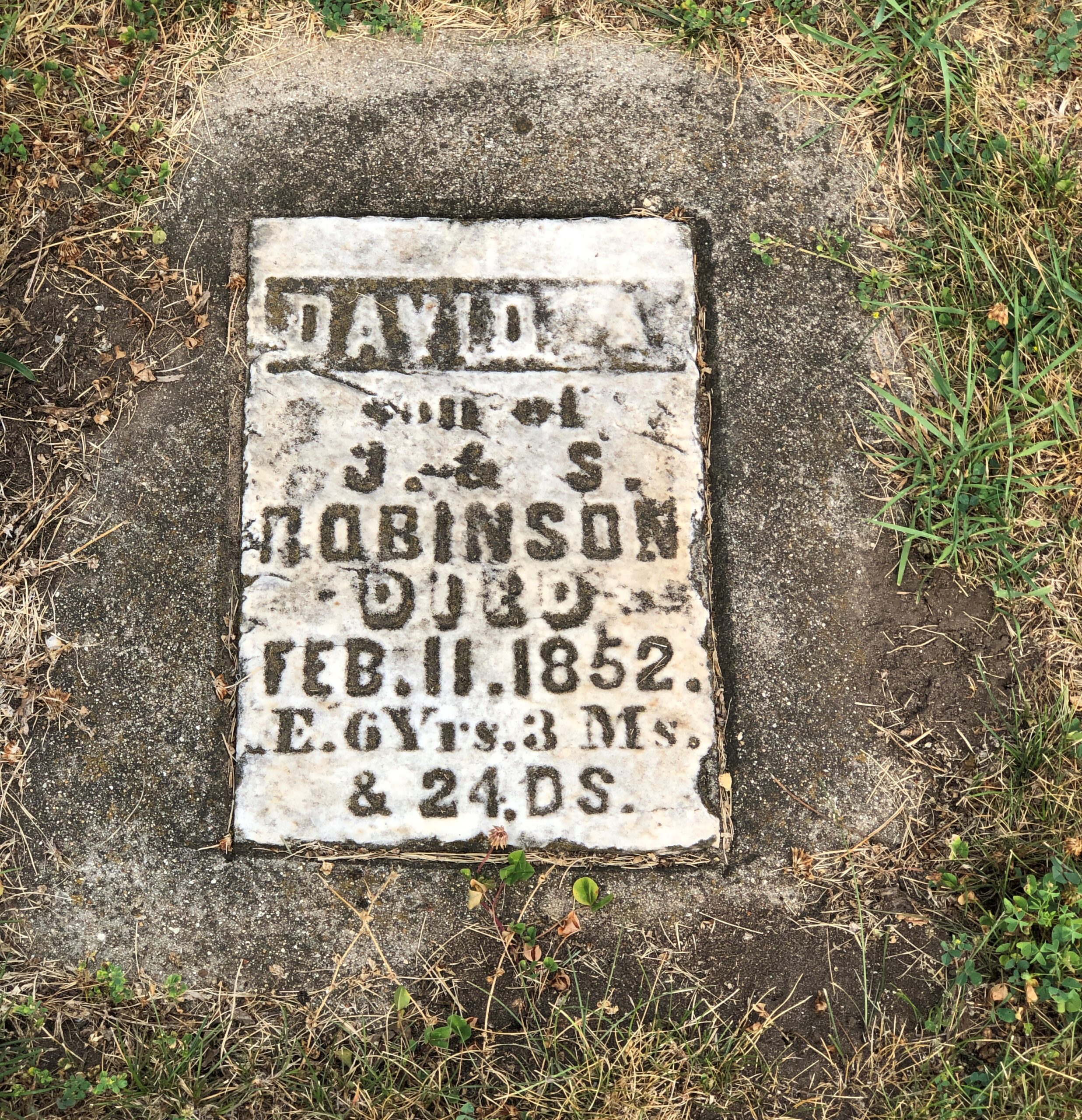
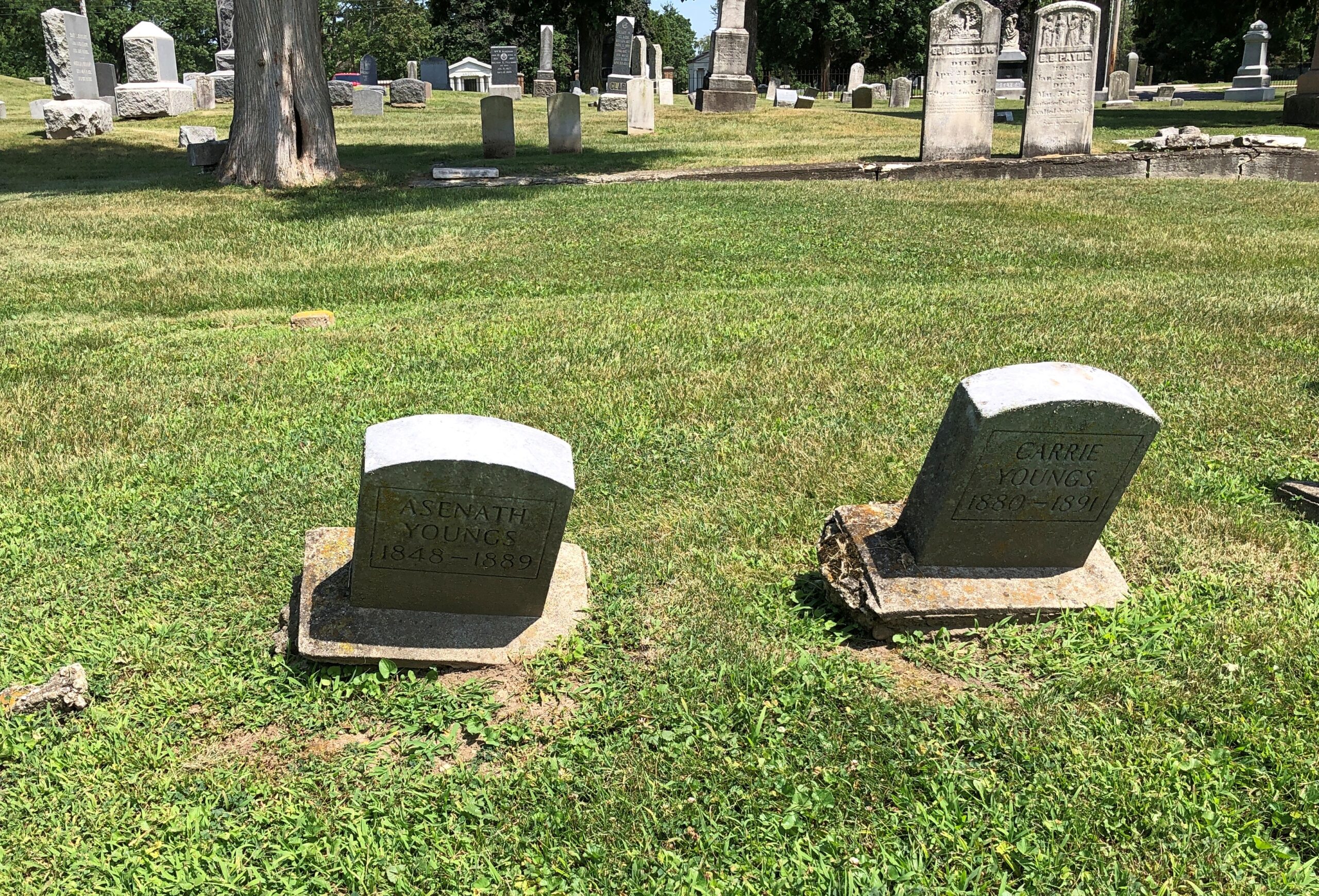
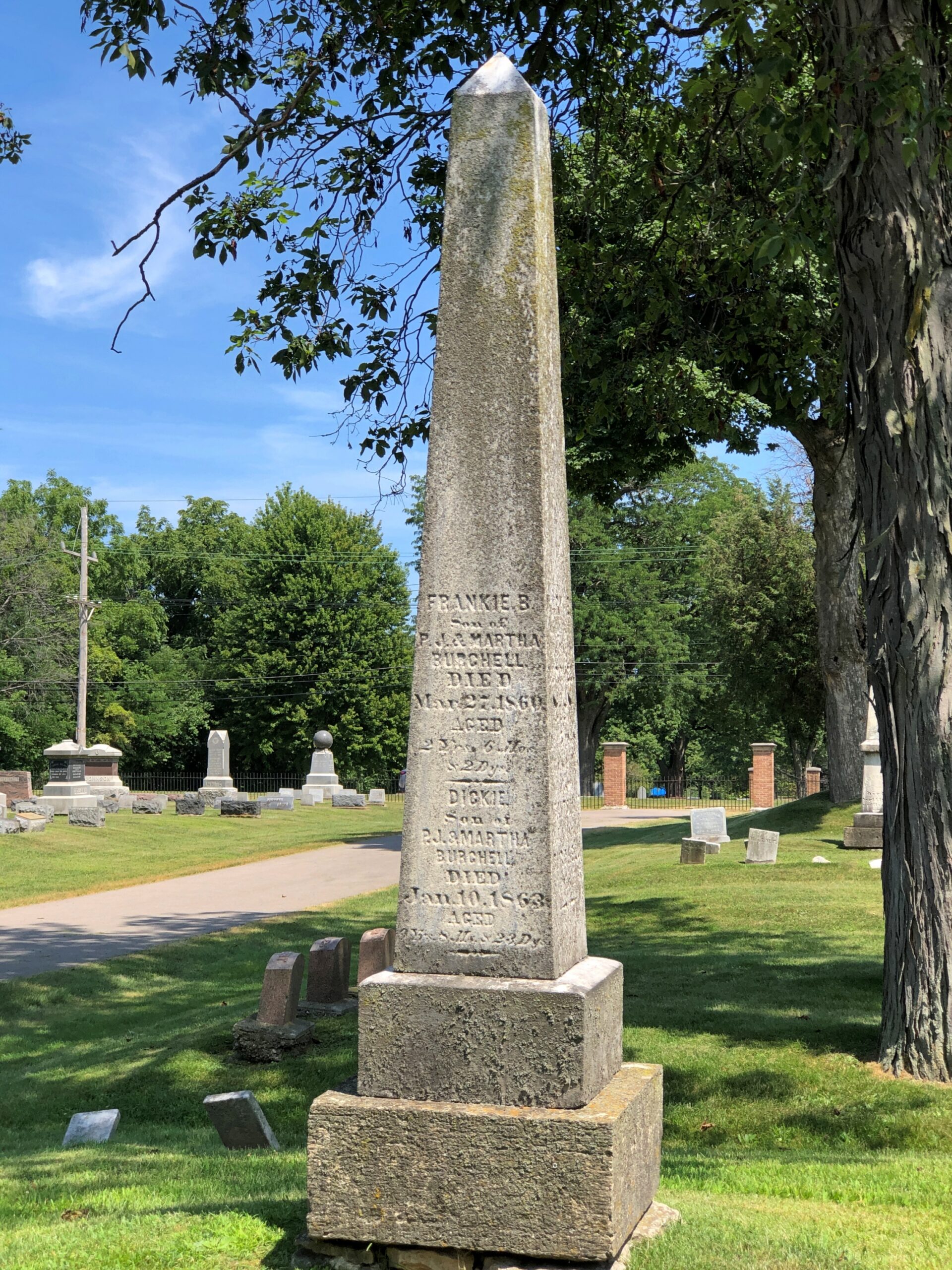
As usual for any cemetery, there are stones that hint at sad stories of extinguished youth.
Six years, three months and 24 days. Whatever else you can say about being old — and I’m at that point — you can be sure you aren’t going to die young.
One of the more pleasant drives in greater Chicago is along the Fox River. Two state routes parallel the river, Illinois 25 near the east bank and Illinois 31 near the west bank. The roads follow the river especially tightly from St. Charles to Oswego. During a recent drive on Illinois 25, I noticed North Cemetery, one of the six cemeteries in St. Charles (I later read).
“North Cemetery, aptly named for its location in relation to St. Charles, is the resting place for many of the community’s early settlers,” notes the St. Charles History Museum. “It was owned in the latter 1800s by William C. Irwin… Irwin was a cooper or barrel maker by trade. He was also the town funeral director for a number of years. He was probably best noted for developing Irwin’s Block, a collection of commercial buildings, located on W. Main St. between 1st and 2nd Streets. When he died in 1900, he was laid to rest in the cemetery he owned.”
Barrel maker, undertaker and commercial property developer: as always, I’m in awe of the professional flexibility of the 19th century, and just a little envious. I didn’t encounter Mr. Irwin during my short visit, since I never heard of him until later. But North Cemetery has a nice variety of stones, including some clearly from the early days of St. Charles.
Some very much beaten down by Time.
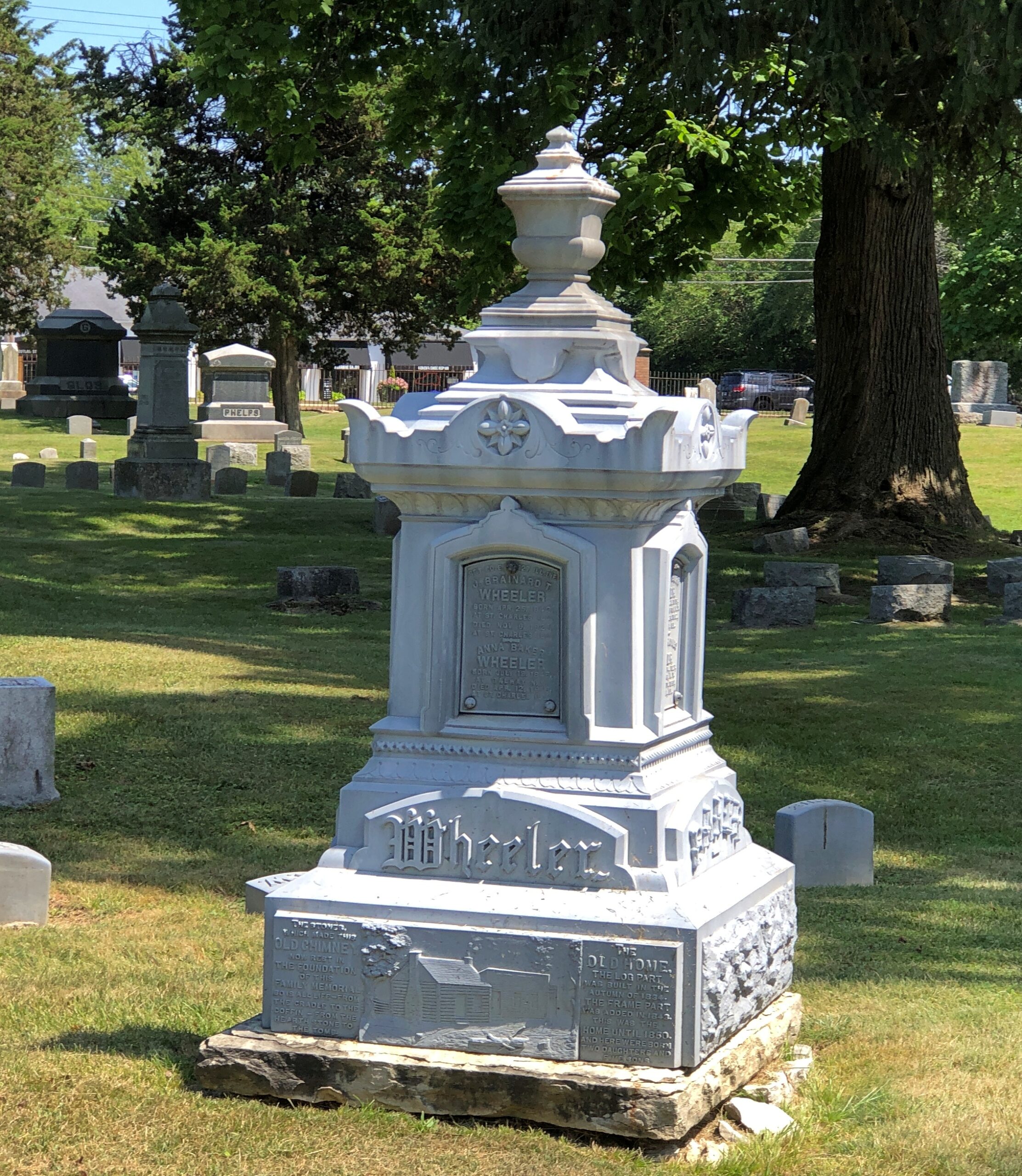
The cemetery is home to a few memorials of some size, but not so many. Before St. Charles became a far suburb, it was an ag village and river town. Prosperous, but even its city fathers were unlikely to have vast stores of wealth.
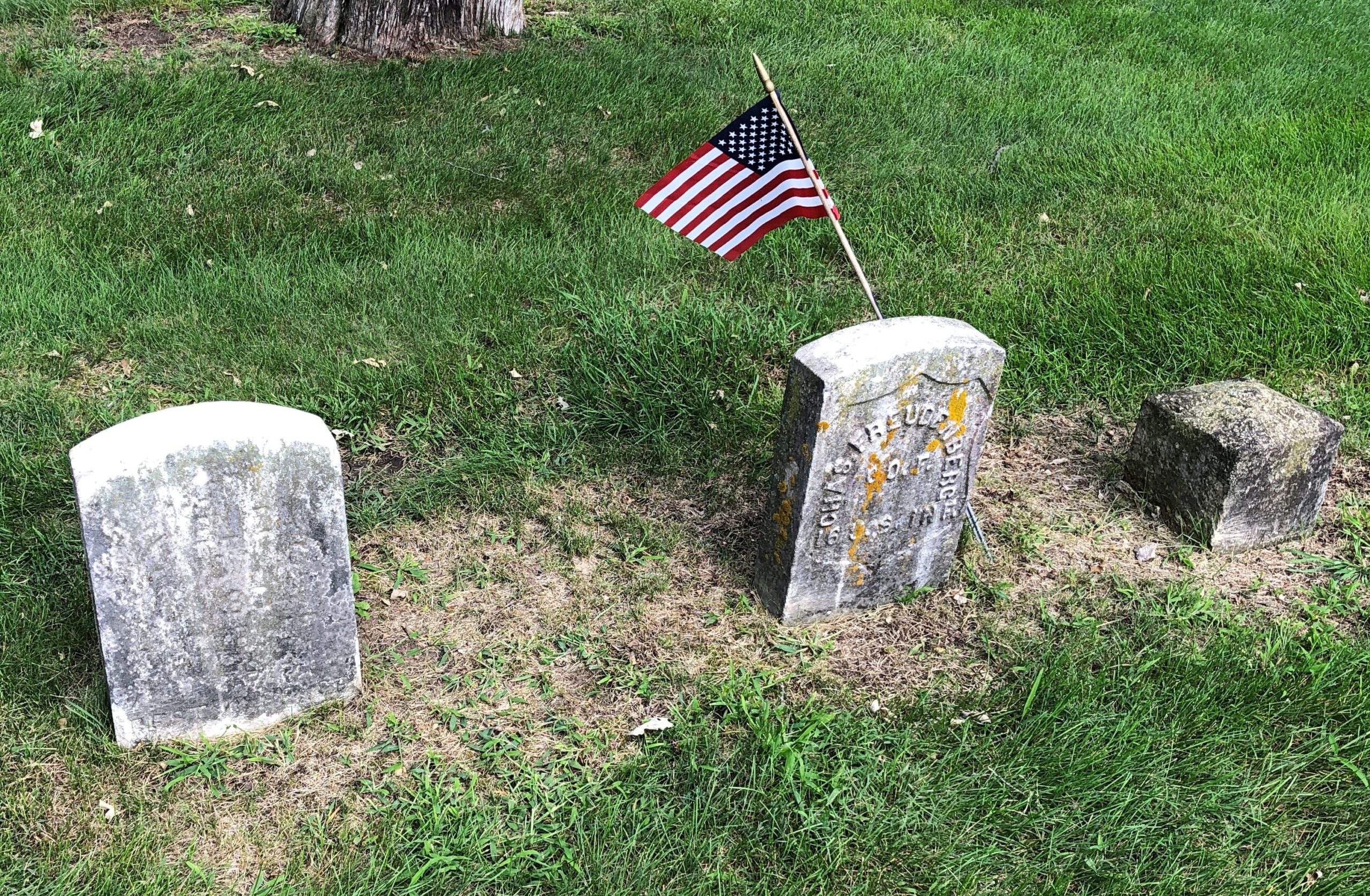
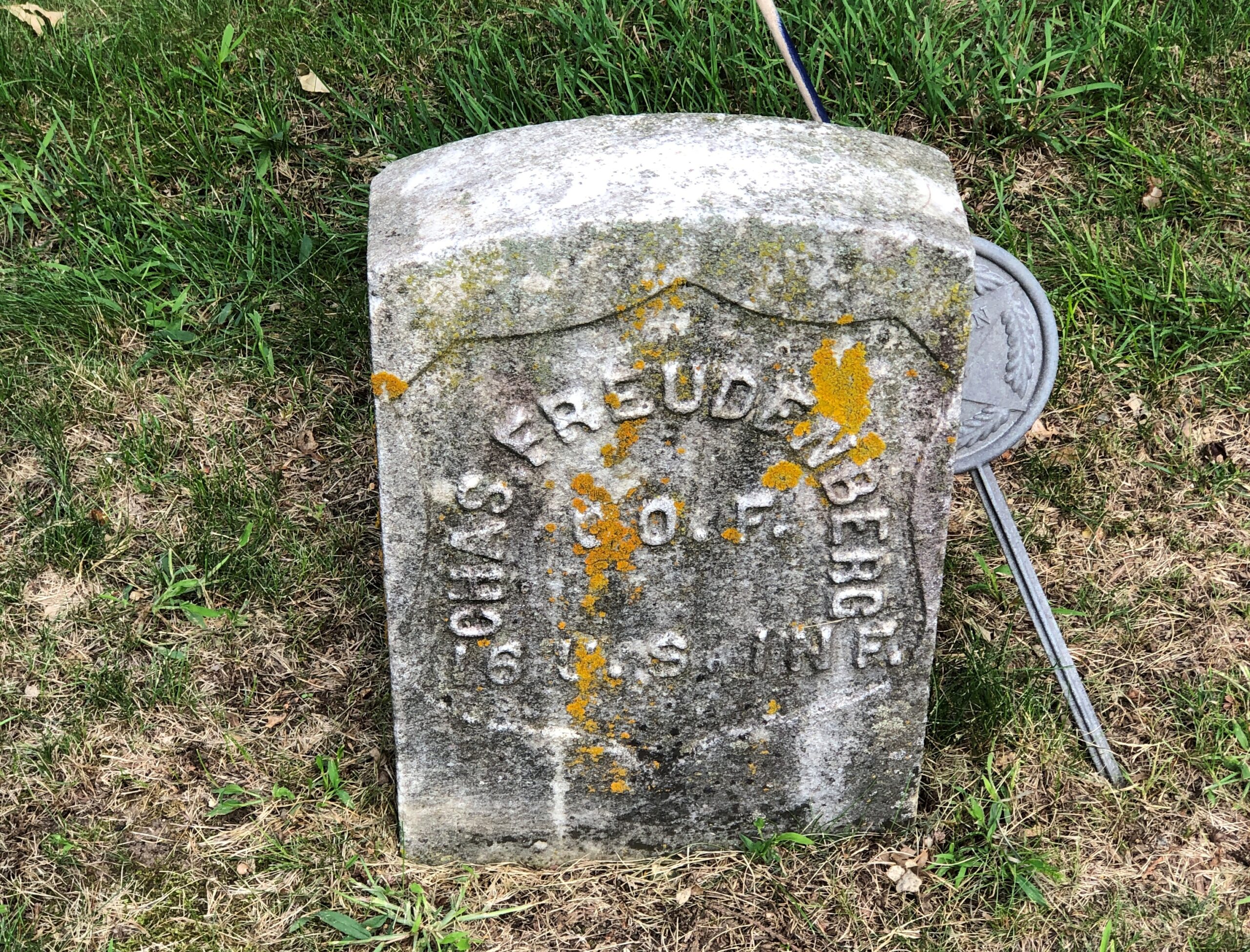
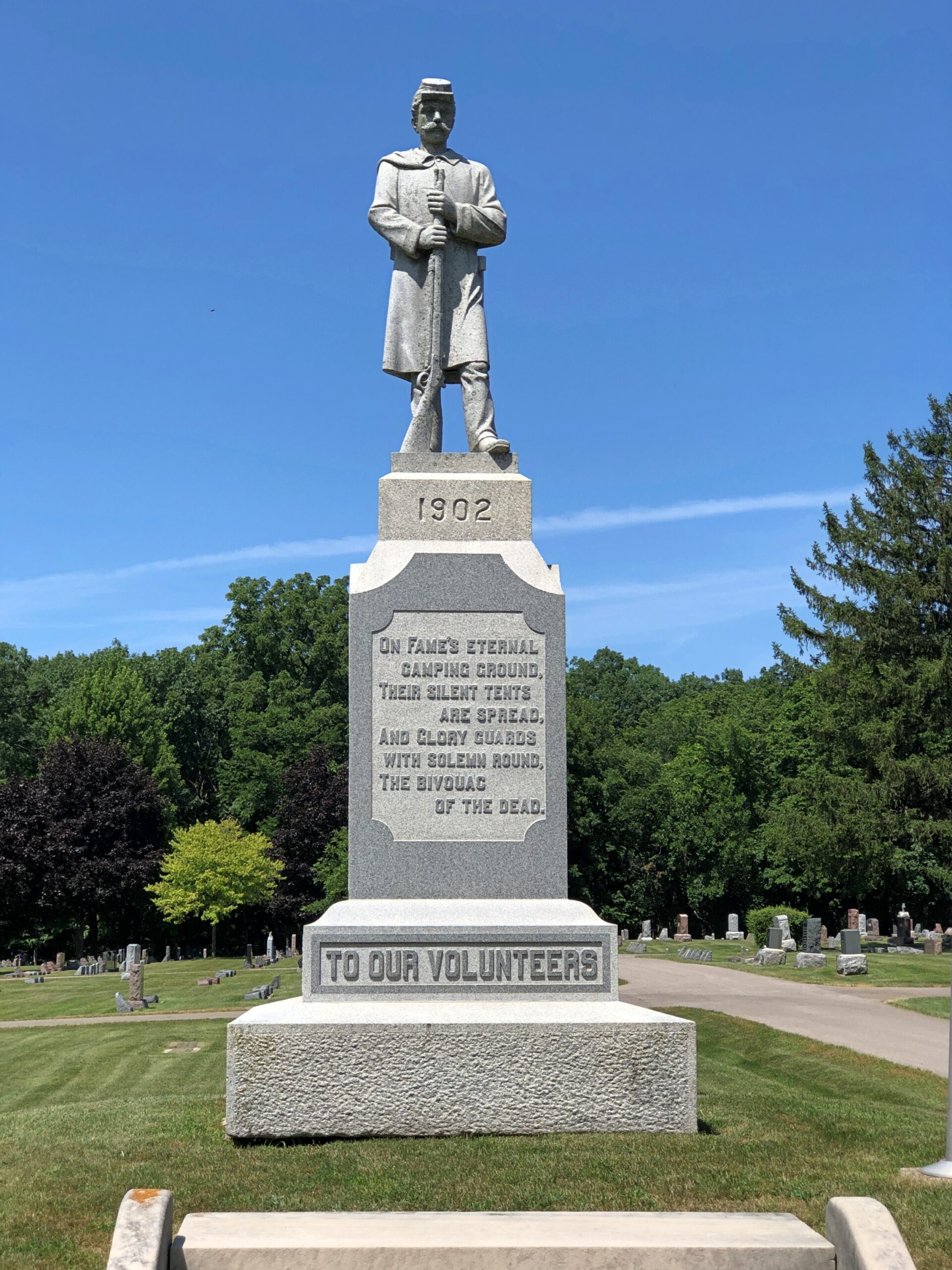
A mail-order memorial for veterans who, by 1902, were starting to disappear.
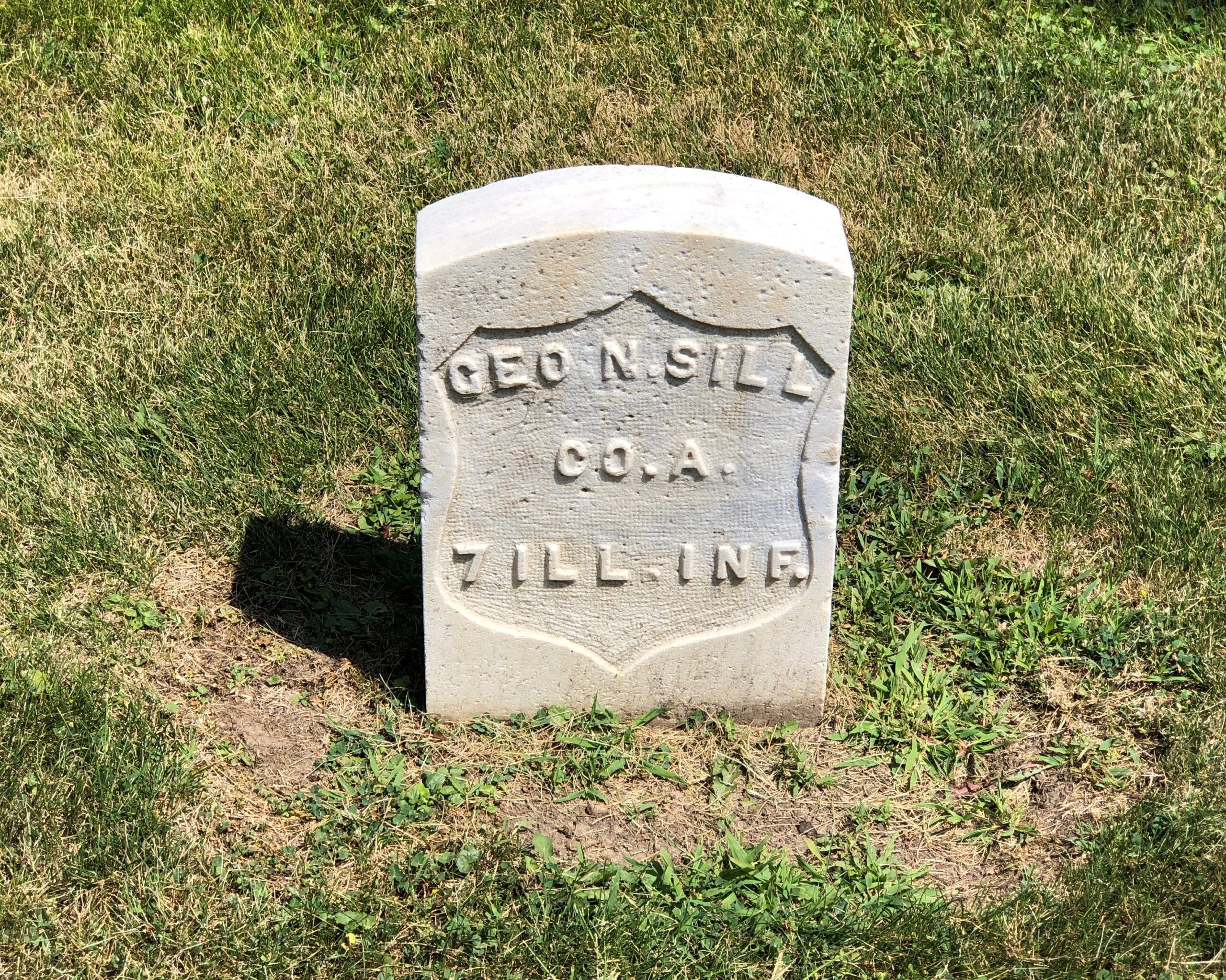
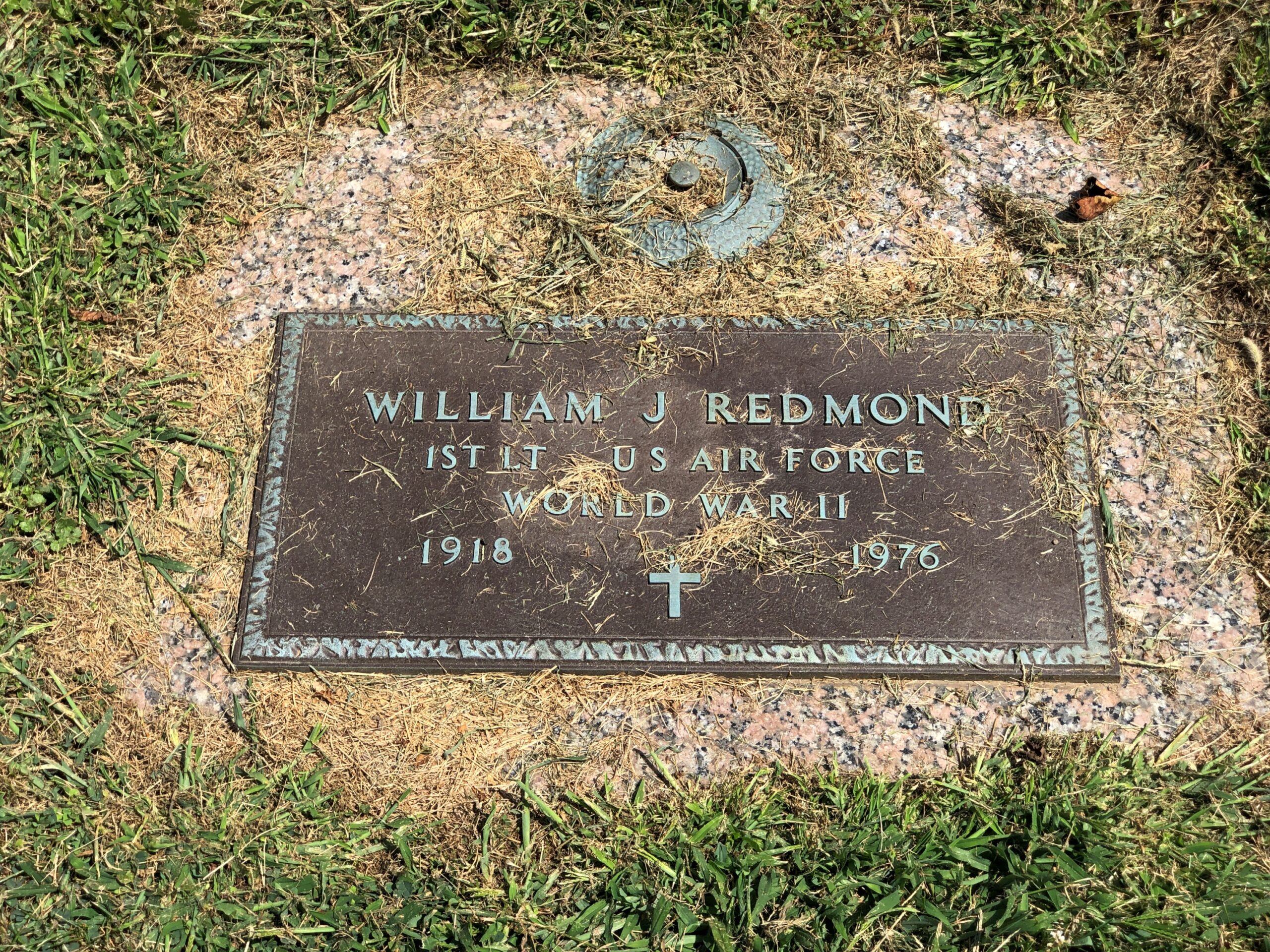
Another veteran. Who wasn’t born yet in 1902. There will always be more wars, though.
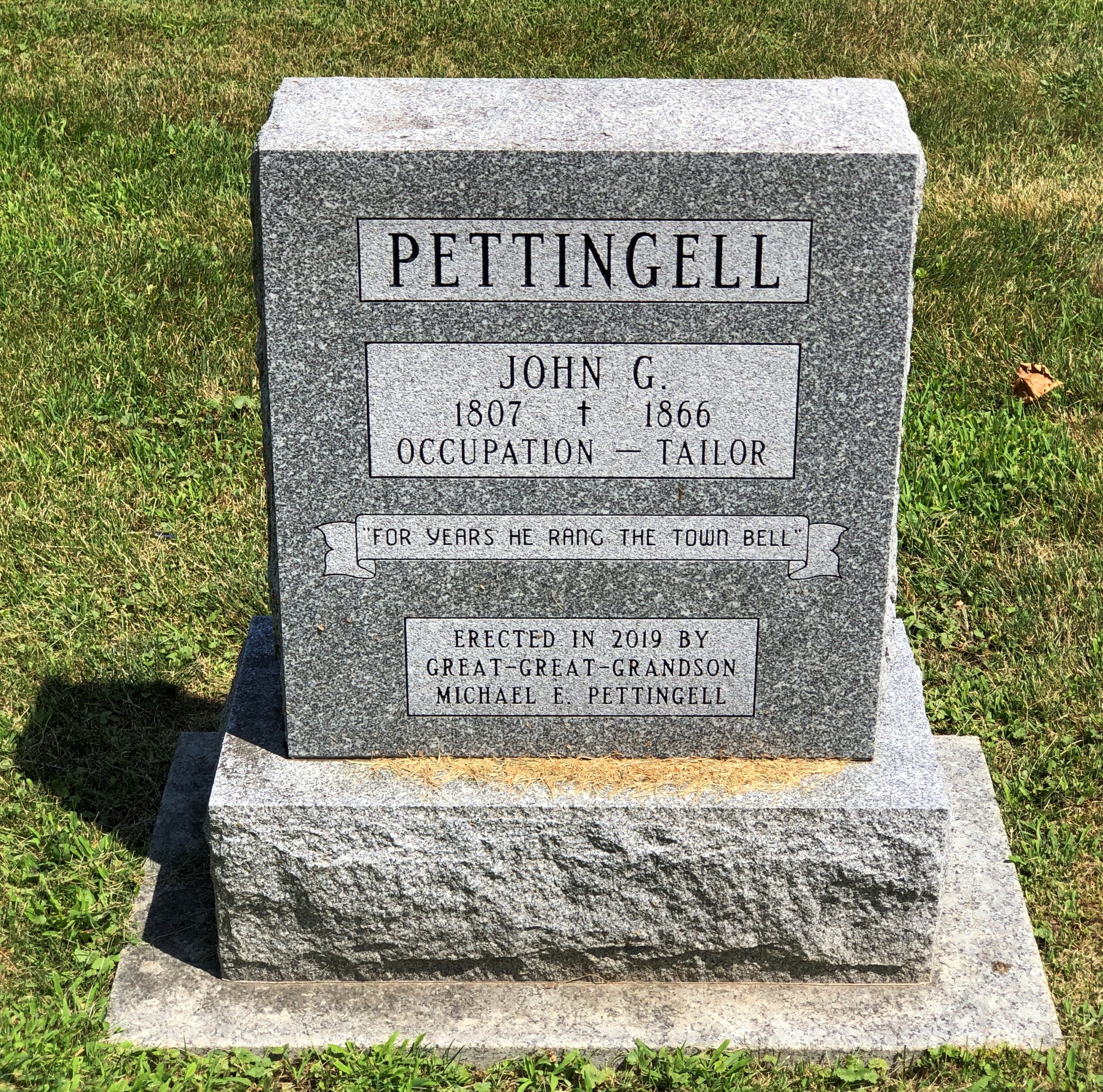
For years he rang the town bell.
A job as gone as Mr. Pettingell himself, who apparently was well enough known to a distant descendent to rate a spanking-new stone more than 150 years after his death.
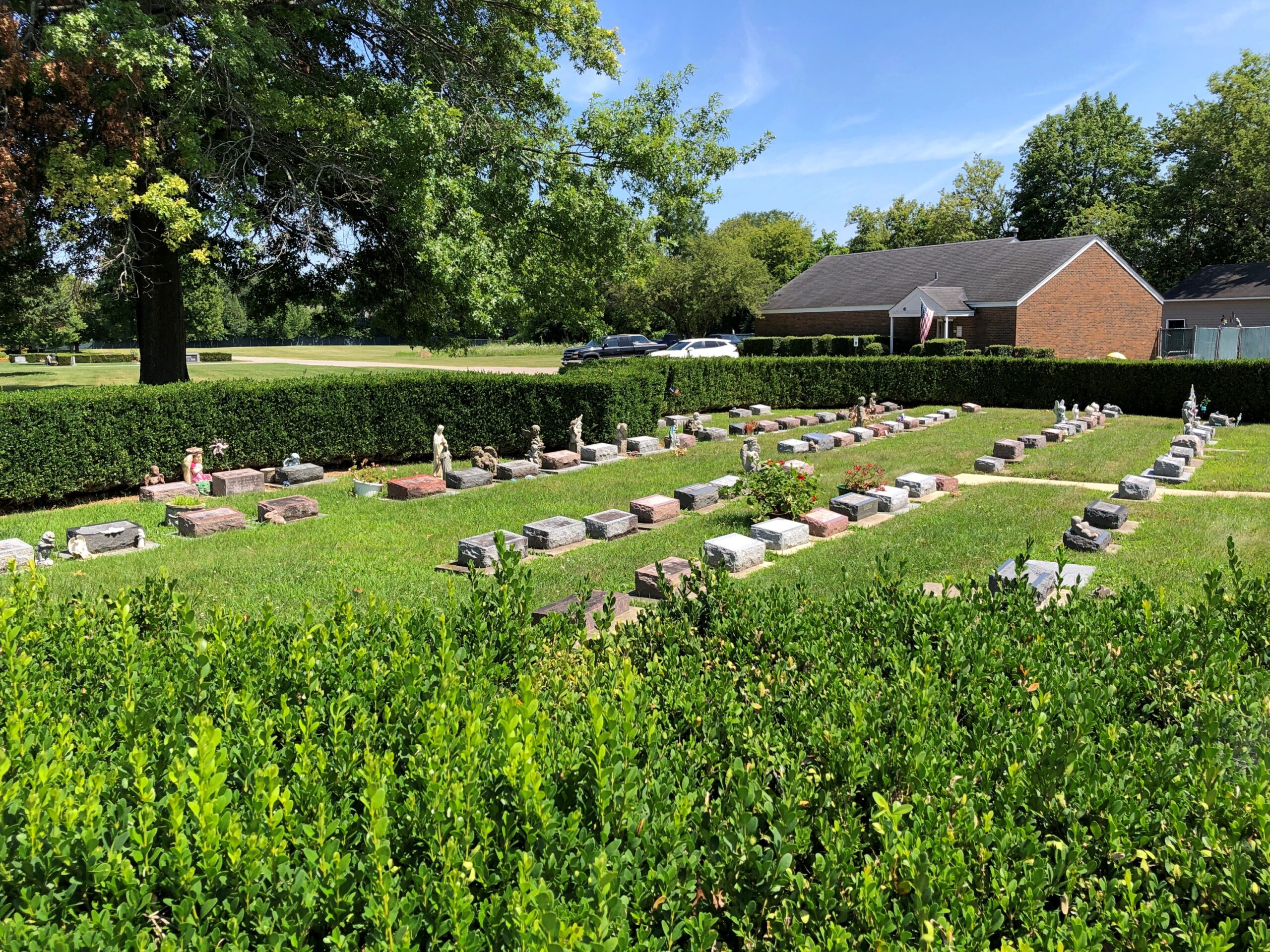
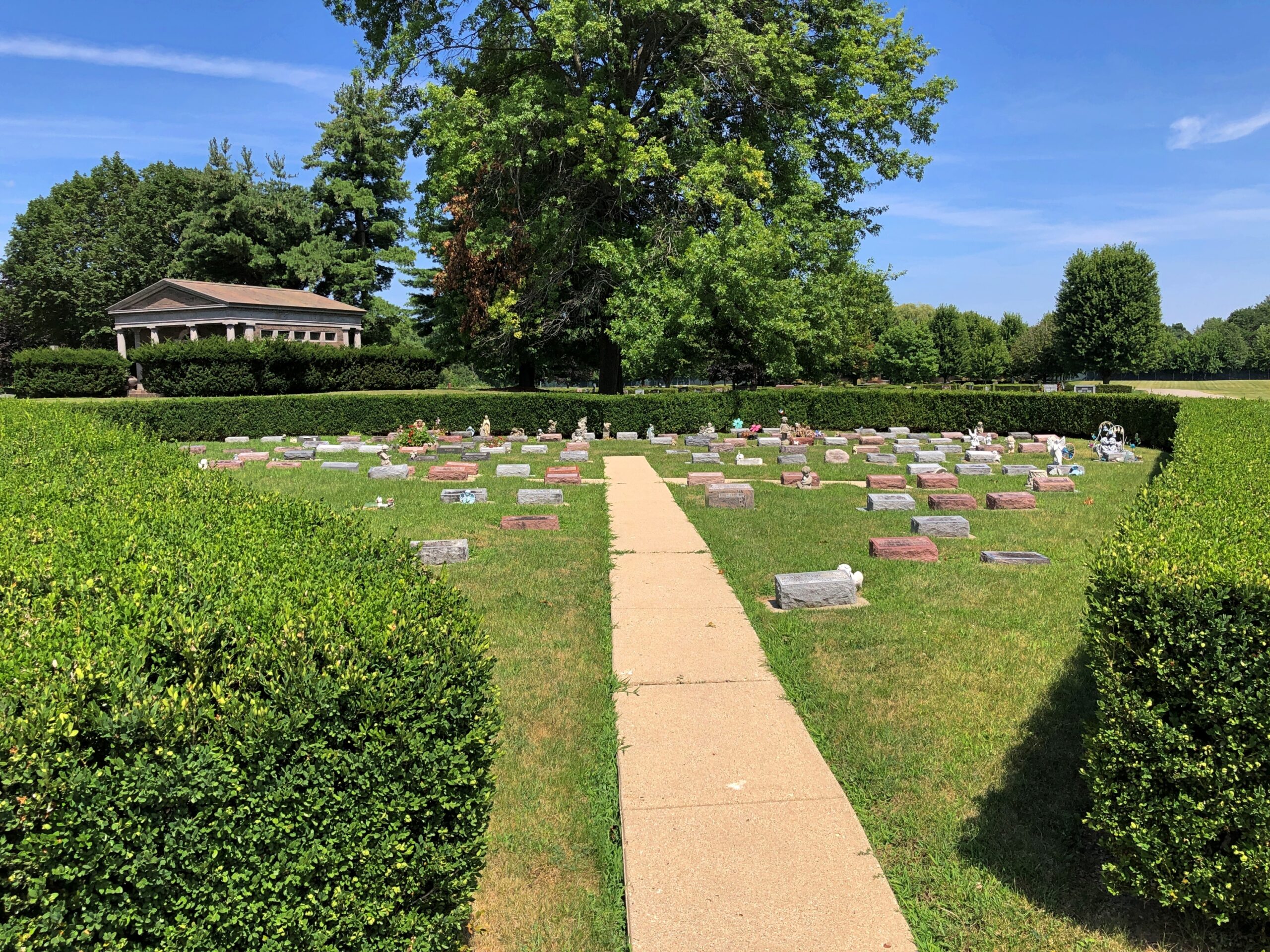
Across Illinois 25 from North Cemetery is another one of the St. Charles cemeteries, Union Cemetery. Mostly newer stones, including a poignant section for children: a patch of ground enclosed by a ring of bushes in the shape of a heart.
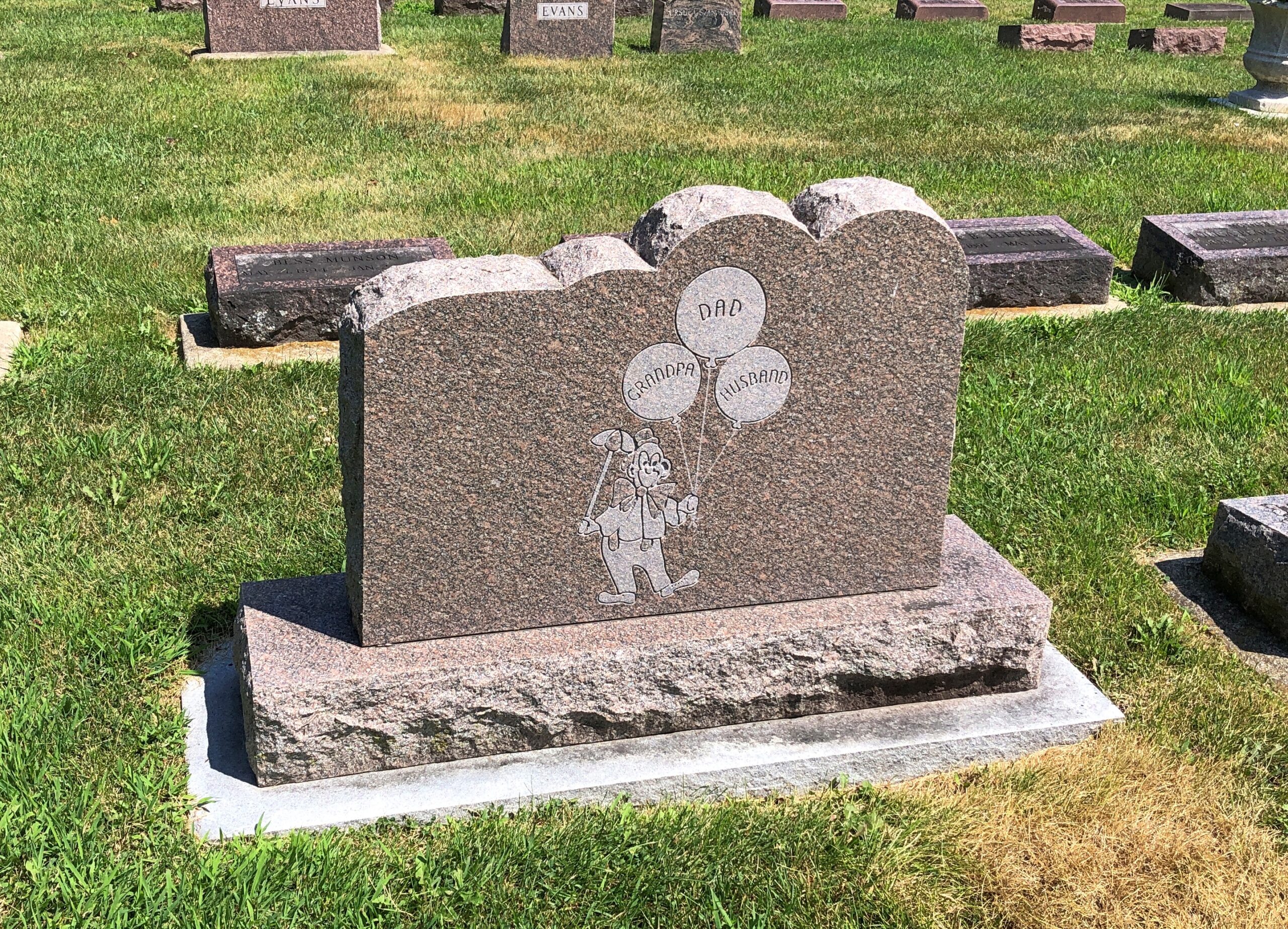
Not far away, this stone. For an adult.
Always something new. I, for one, had never seen a circus monkey on a grave marker.
It occurred to me over the Independence Day weekend that I’ve experienced roughly a quarter – 25% – of the entire history of the United States, accepting the commonly held age for the nation of 250 years. Anyone my age or older has, that is. One-quarter of a 250-year span is 62.5 years. At the age of 65, I can’t really claim to remember those first two and a half years, but the furthest reaches of my memory run back to the mid-1960s, so close enough.
And I have to add that if you’re Mel Brooks, you’ve lived 40% of the nation’s history.
Fifty years ago, on the much ballyhooed Bicentennial, it rained in San Antonio, where I was. We stayed home. On Saturday, on the much less ballyhooed 250th, it rained in metro Chicago, where I was. We stayed home. Coincidence? Well, yes.
Been home for a few months now, witnessing a wet and cool spring edge into a wet and warm summer in northern Illinois, and temps finally popped up into the 90s ahead of July 3. The heat was ended by rain and more rain. A pretty typical Northern summertime pattern.
Fireflies have made their appearance, though a meager number, and just today, this afternoon, I heard cicadas bleating ahead of dusk, though no cricketsong came afterward. Could be the Brotherhood of Orthopteran Insects is still negotiating a new contract for this year, and I won’t pretend I didn’t have to look up orthopteran. Mosquitoes are out looking for mammal blood, though considering the temporary wetlands that are our suburban lawns, not as many as you’d expect. Lit up the mosquito coils on my deck table this evening, and it seemed to work.
Old friends Neal and Michele visited from Chicago for the Fourth – a smaller version of the Gabfest, and indoors because of the rain. A delight all the same. They left before dark, after the rain had stopped. A little wet ground wasn’t going to keep the suburban populace from flouting Illinois’ nanny-state fireworks ban, one of the two nights of the year when the pop-pop-BOOM-pop-boom-fssst goes on for a few hours (the other is New Year’s Eve). In recent years I’ve repaired to the garage to listen to the July 4 explosions. The explosion acoustics are good in that cluttered enclosure.
I’ll be home for a few more months. 2026: Summer of Here. People pay money – I’ve paid money – to enjoy warm weather like this, but we’re getting it no extra charge. Also, even I’ve gotten a little tired of the pace of my driving lately.
No long drives this summer. But that doesn’t mean no drives. Back during the pandemic, my thinking was, if you can’t go far, go near, and that kind of thinking took us to new parts of Wisconsin and Illinois. No pandemic this year, fortunately, but the idea is a good one anyway.
The run of days from Juneteenth to July 4 at least, and even better to Nunavut Day (July 9), would be a fine time to slow down, like between Christmas and New Year’s Day, only warmer and without the mad runup to December 25. Back to posting around July 6.
Thousands of impressions flitter by on the road, most instantly forgotten when literally on the road – driving, you need to be in the moment, or else – or quickly forgotten, when “on the road” means you’re out and about somewhere that isn’t home. Still, a handful of details stick, even without photos. But photos help.
Maine
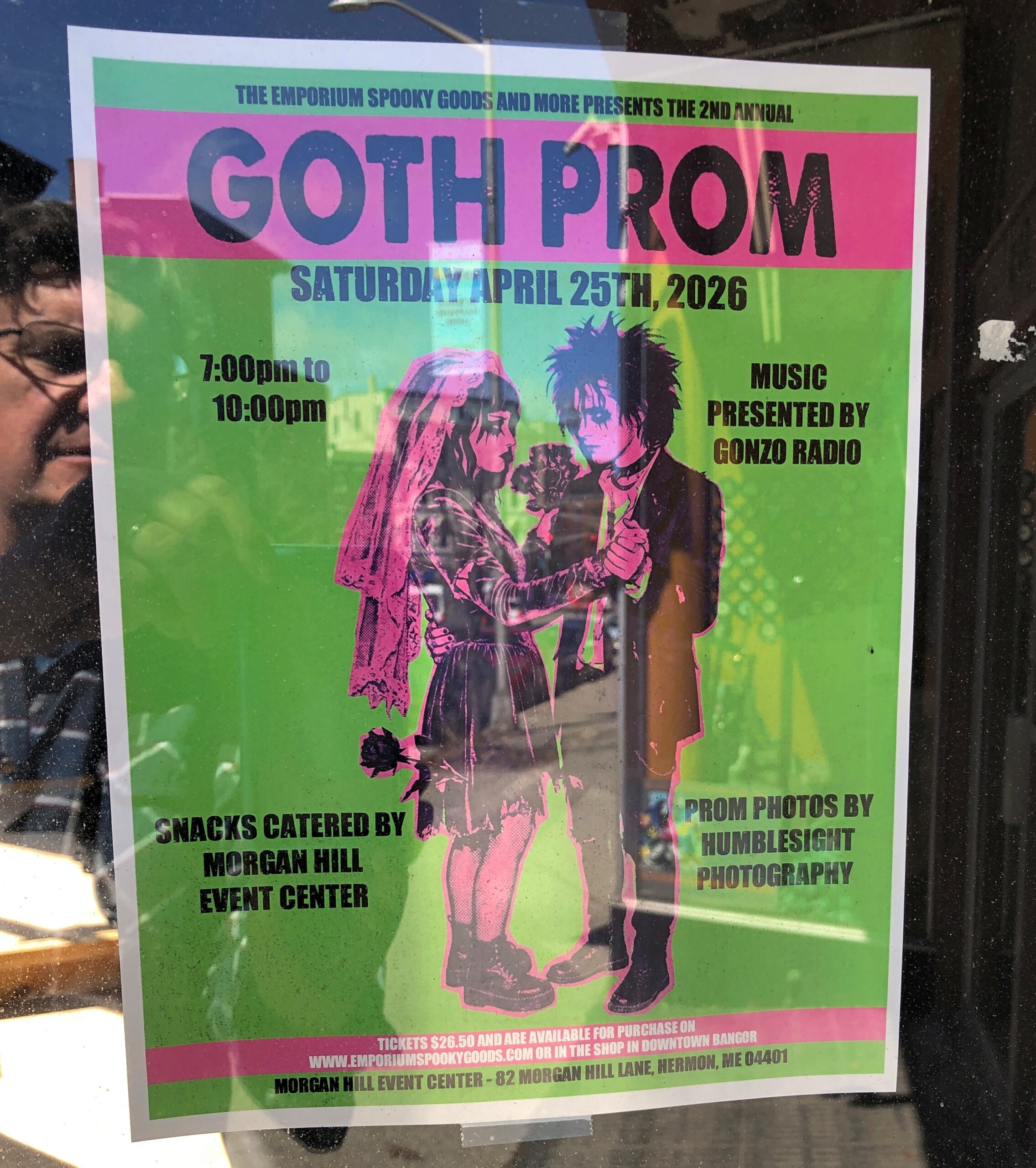
I call it “Self-portrait with Goth Prom.” Poster spotted in downtown Bangor.
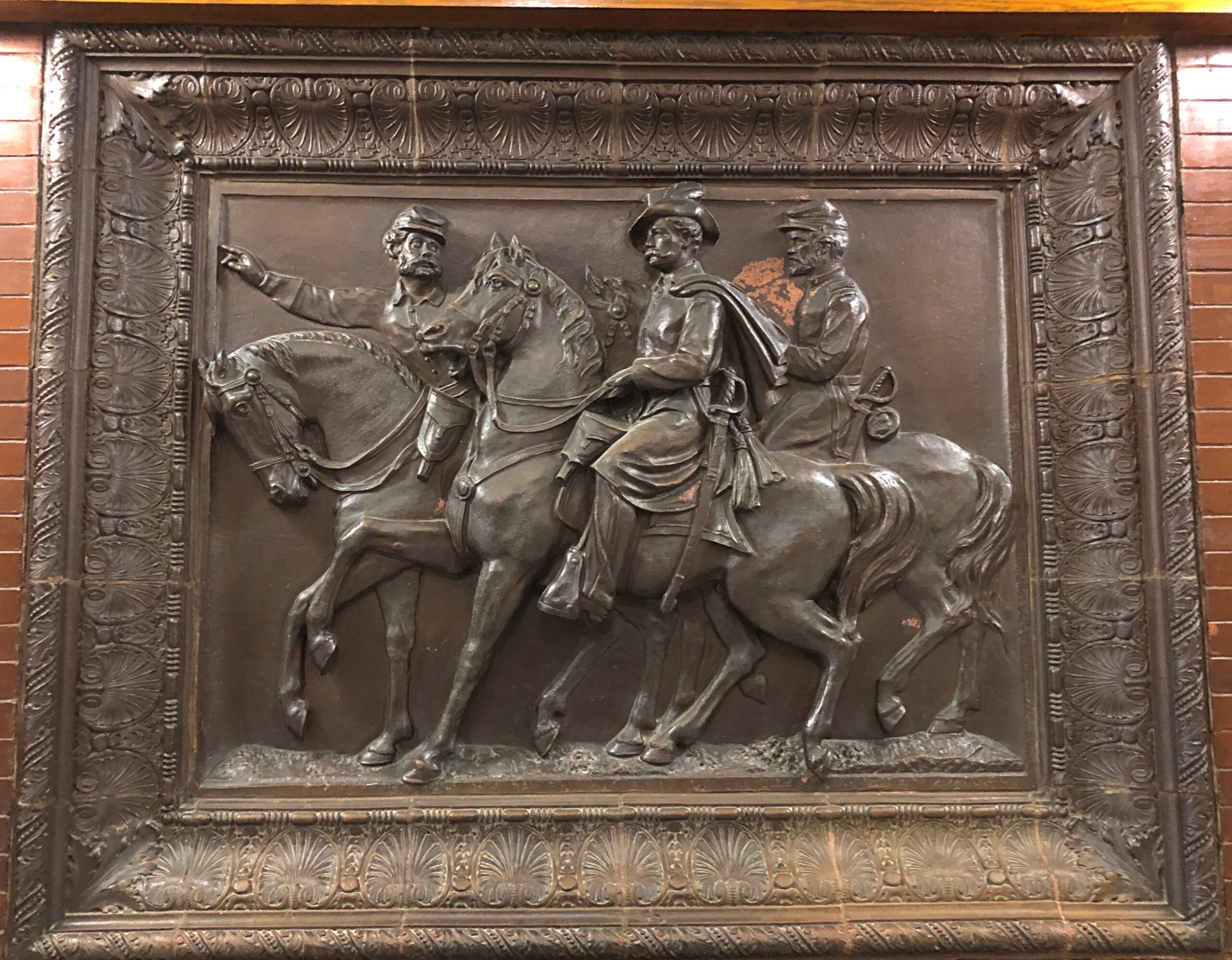
In the Maine Statehouse, a flat-ish object of a different kind.
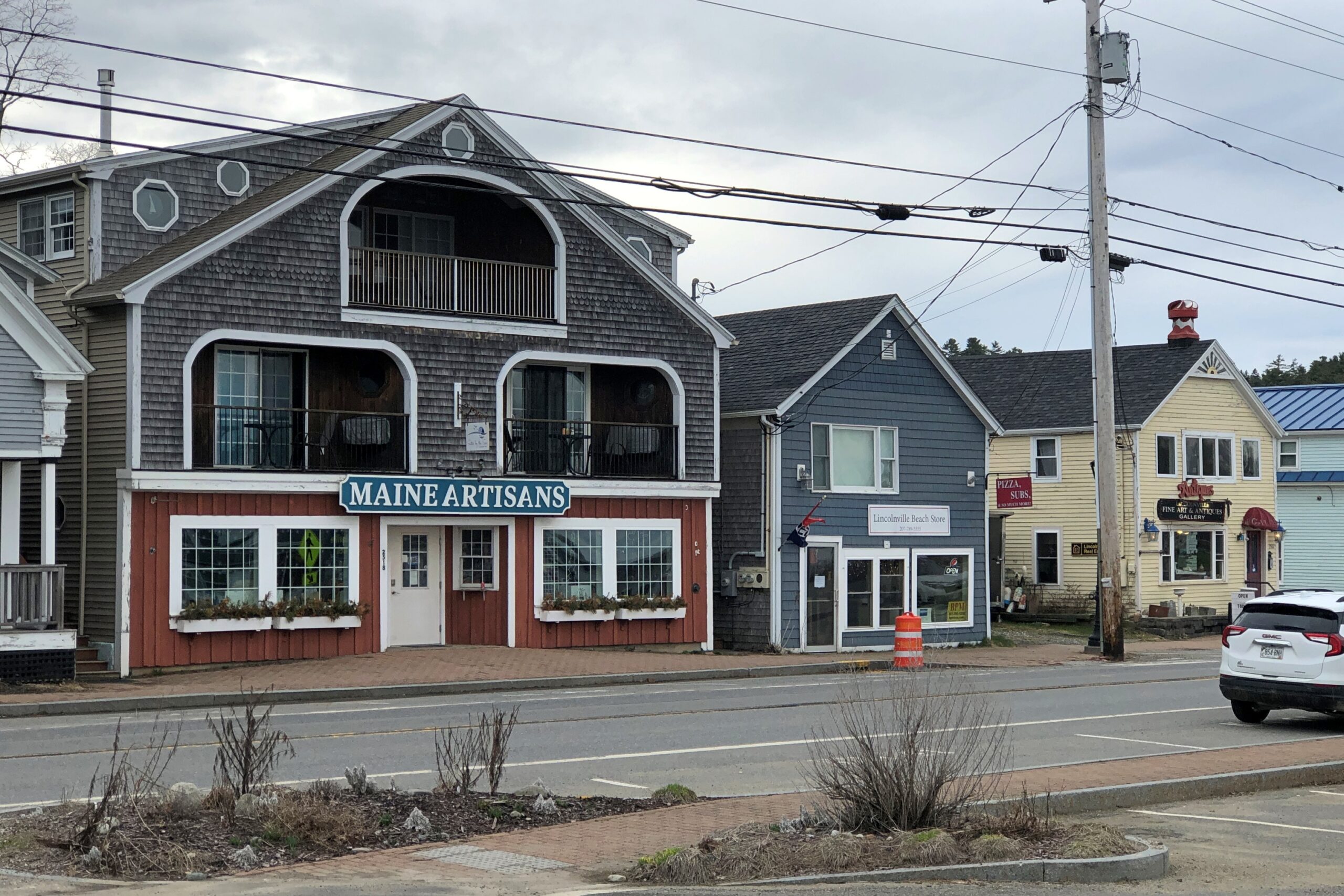
Lincolnville, on the coast of not far from Belfast.
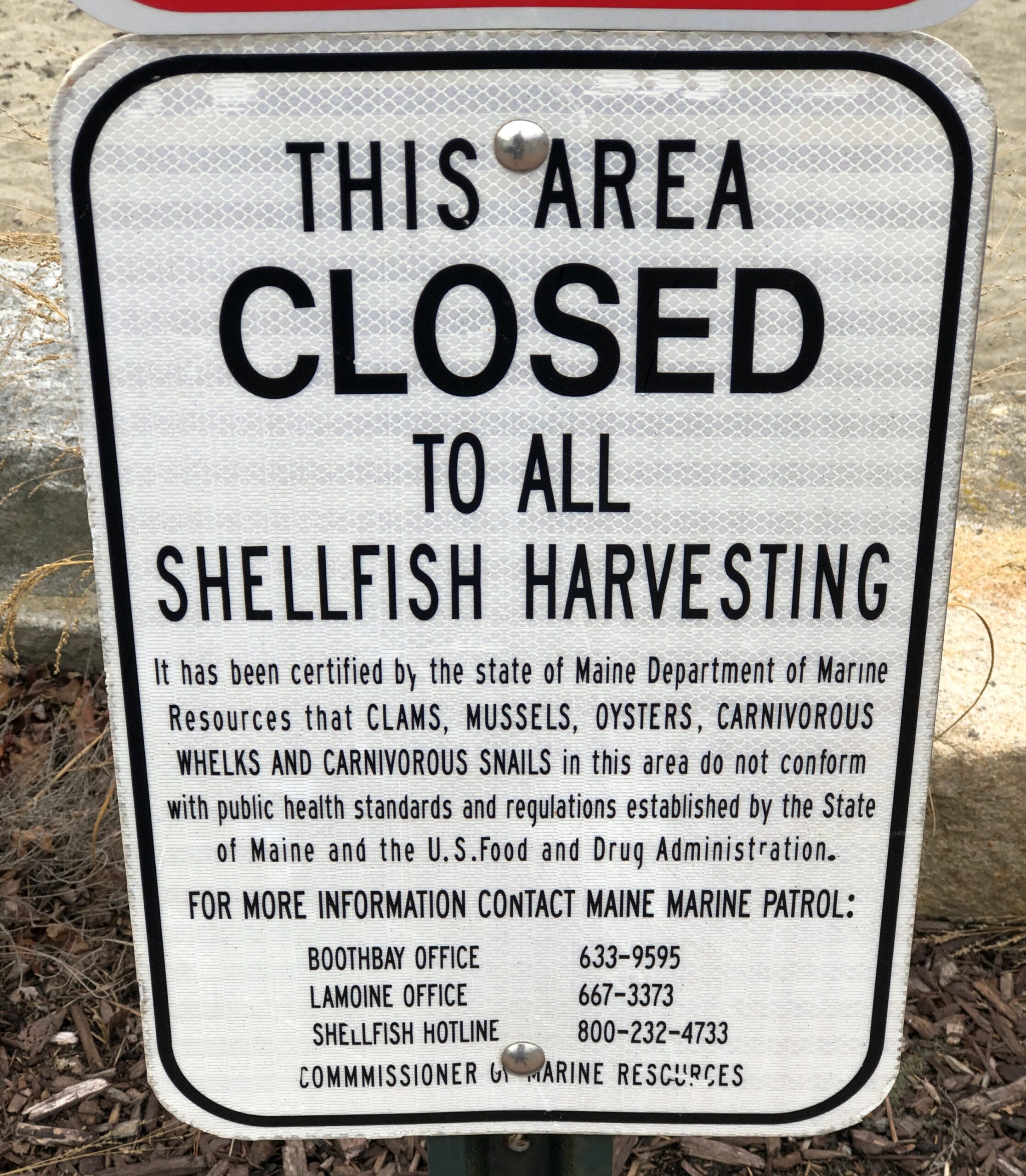
Carnivorous whelks. I was frankly ignorant about carnivorous whelks, and glad to learn a little about them. Because what a great name for a snail.
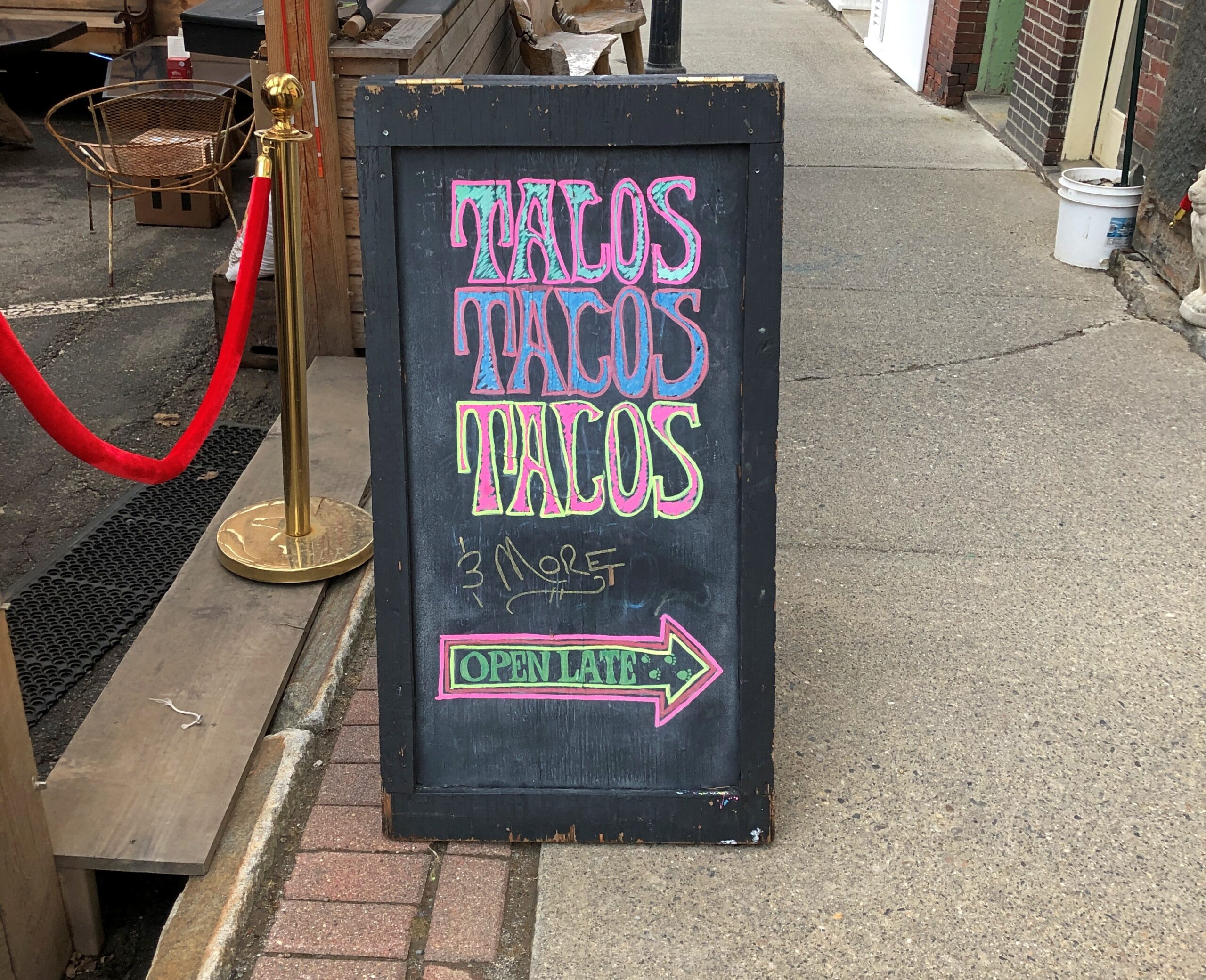
Too bad I wasn’t hungry in Belfast. I’d have had tacos.
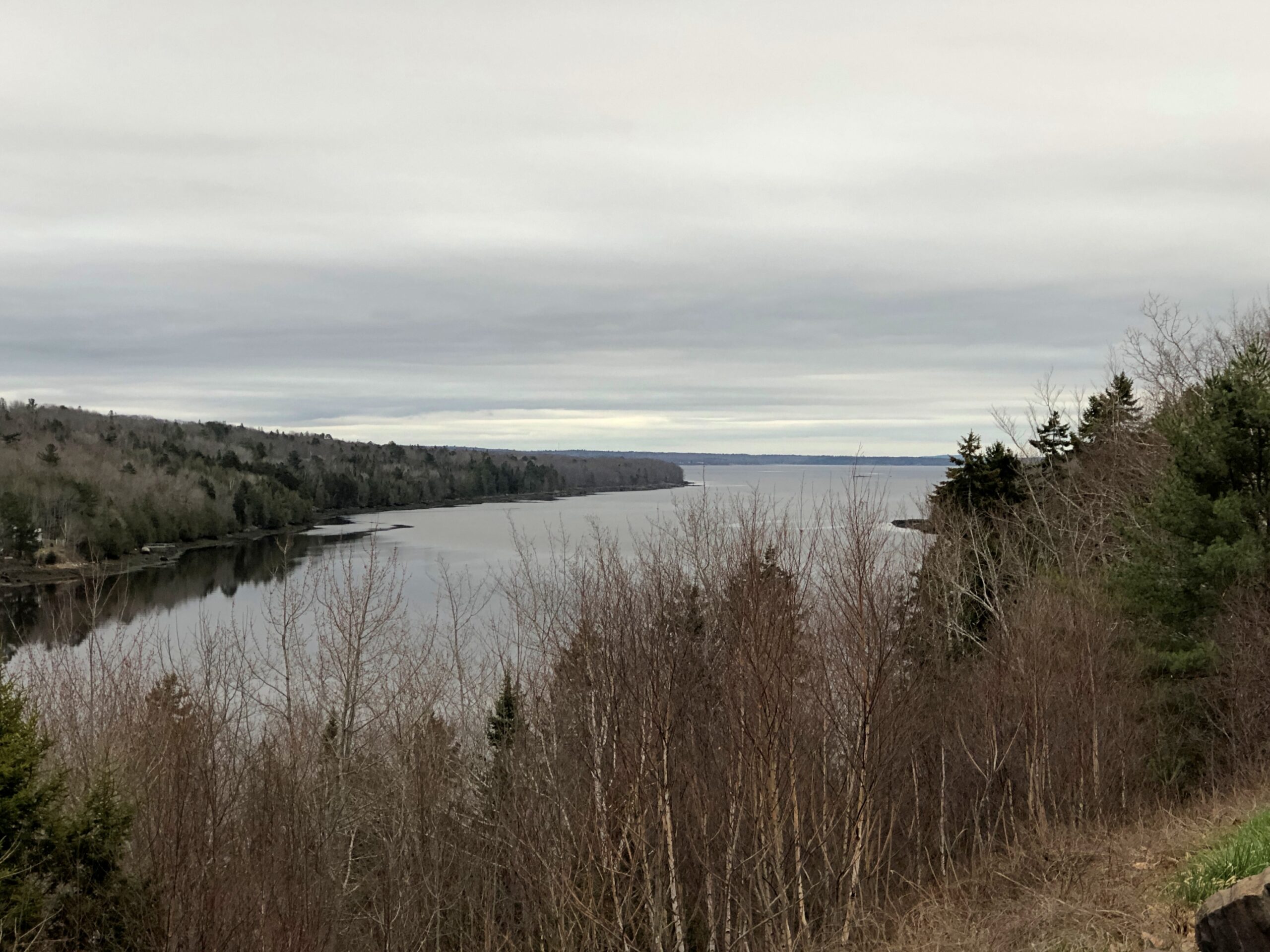
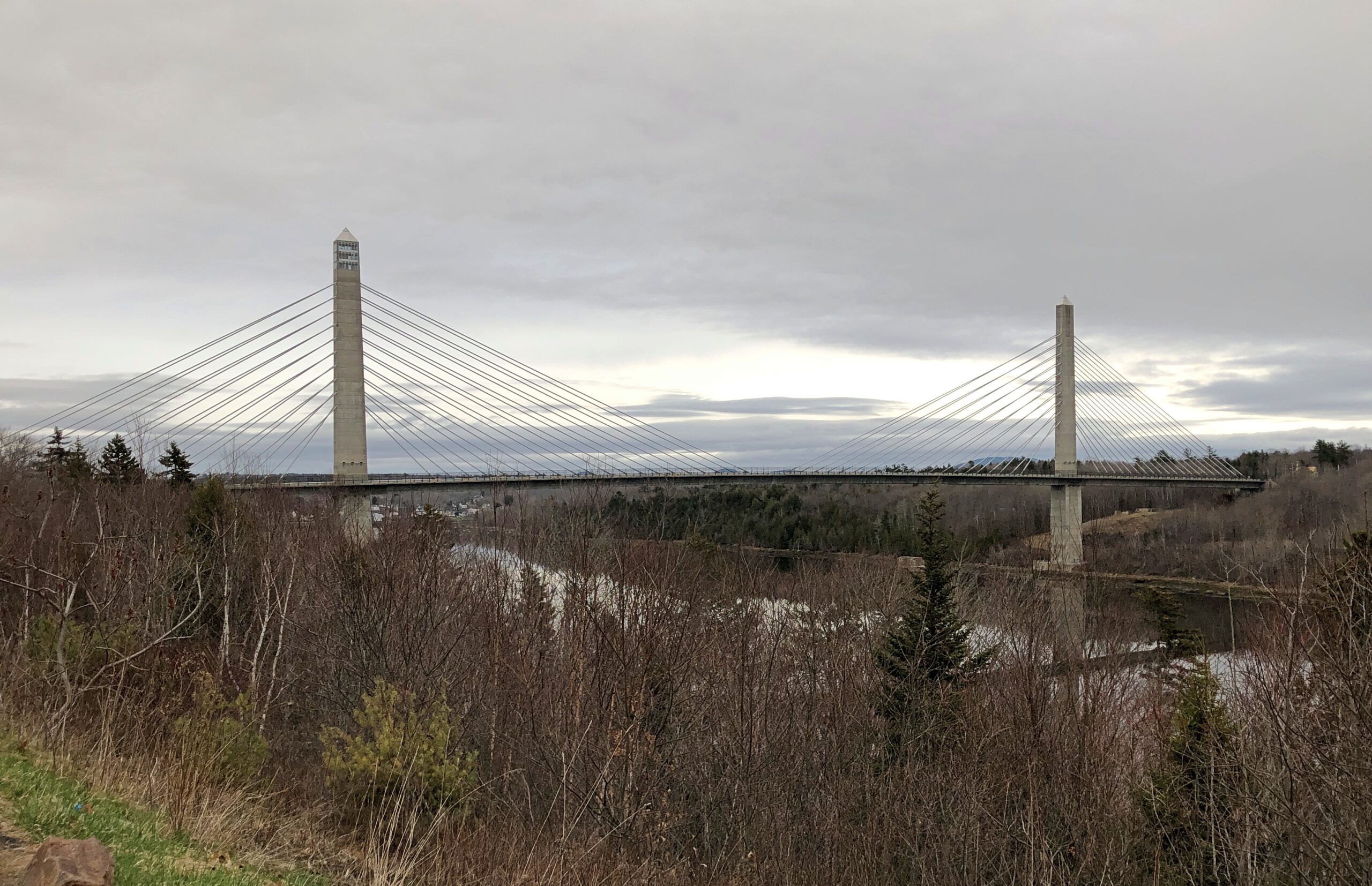
The Penobscot River and the Penobscot Narrows Bridge. A literal and scenic highpoint on that part of US 1 as it winds through near-coastal Maine. The bridge includes an observatory, unfortunately not open in April. Driving over the bridge itself was another pleasure of coastal Maine.
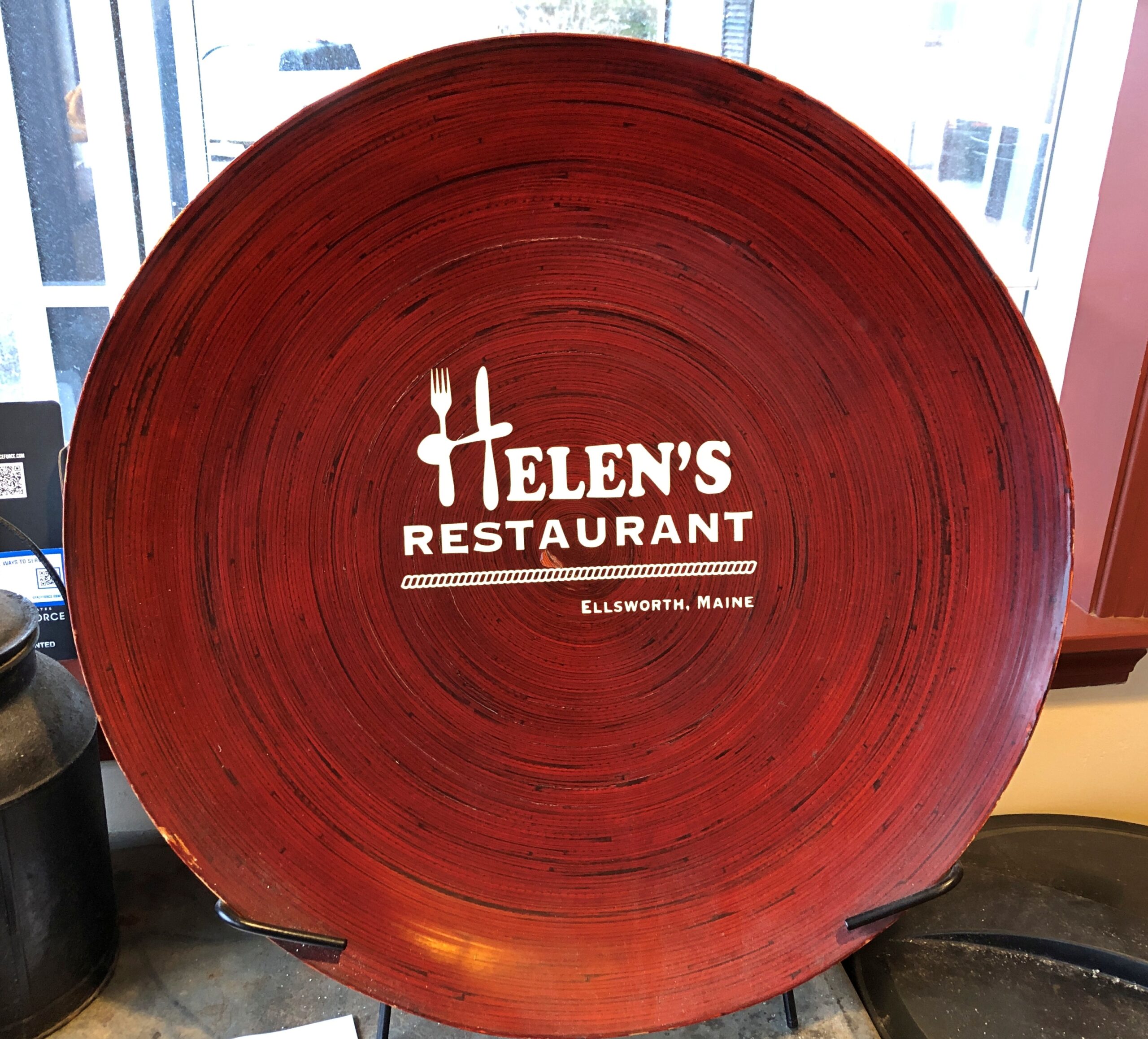
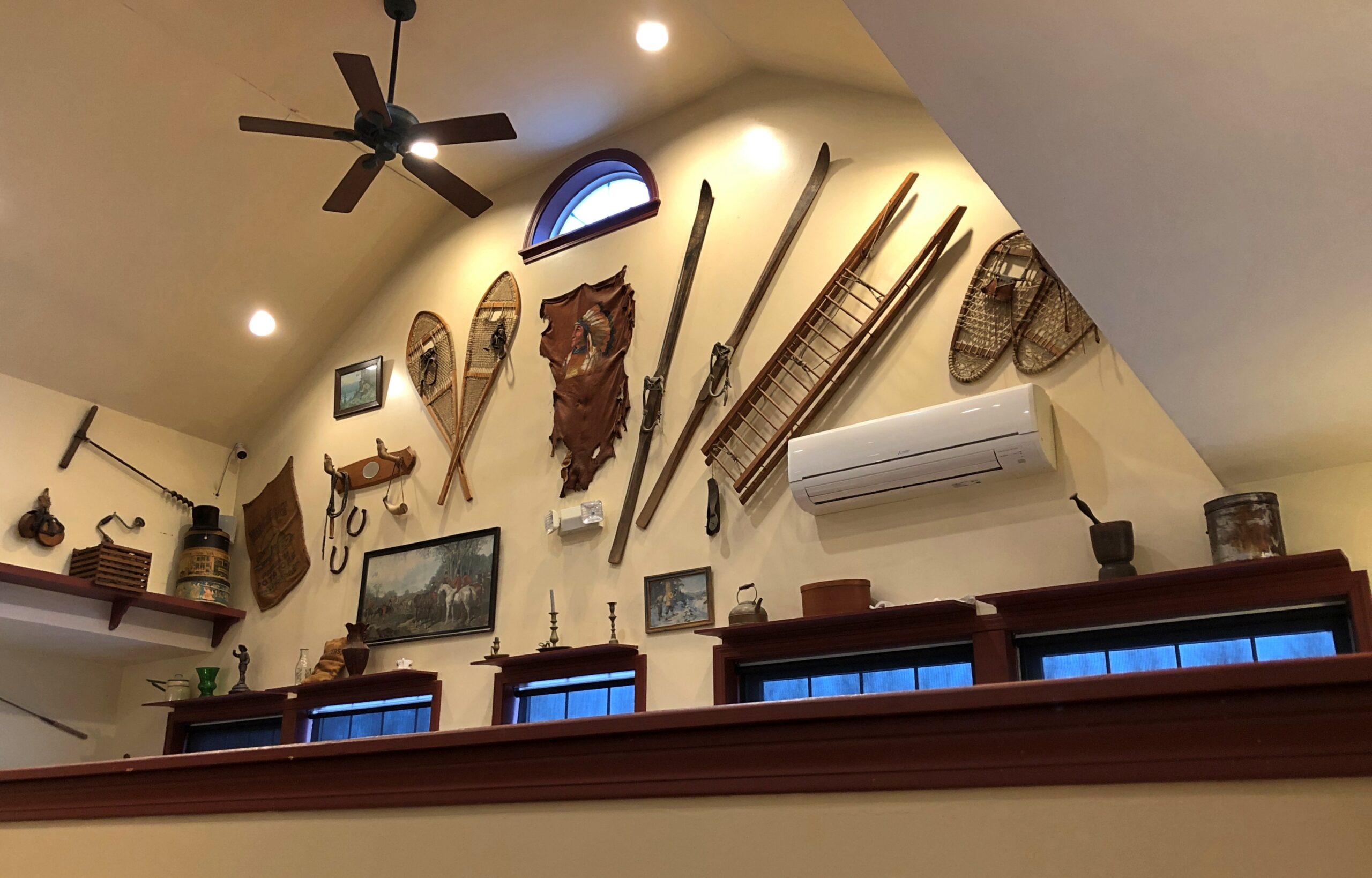
Helen’s Restaurant in Ellsworth. Tasty fish and chips. Haddock, specifically. What do you take for a haddock? “Well, sometimes I take-a aspirin, sometimes I take-a calomel.” It was some years before I learned that calomel was something I’d never take in a million years.
Massachusetts
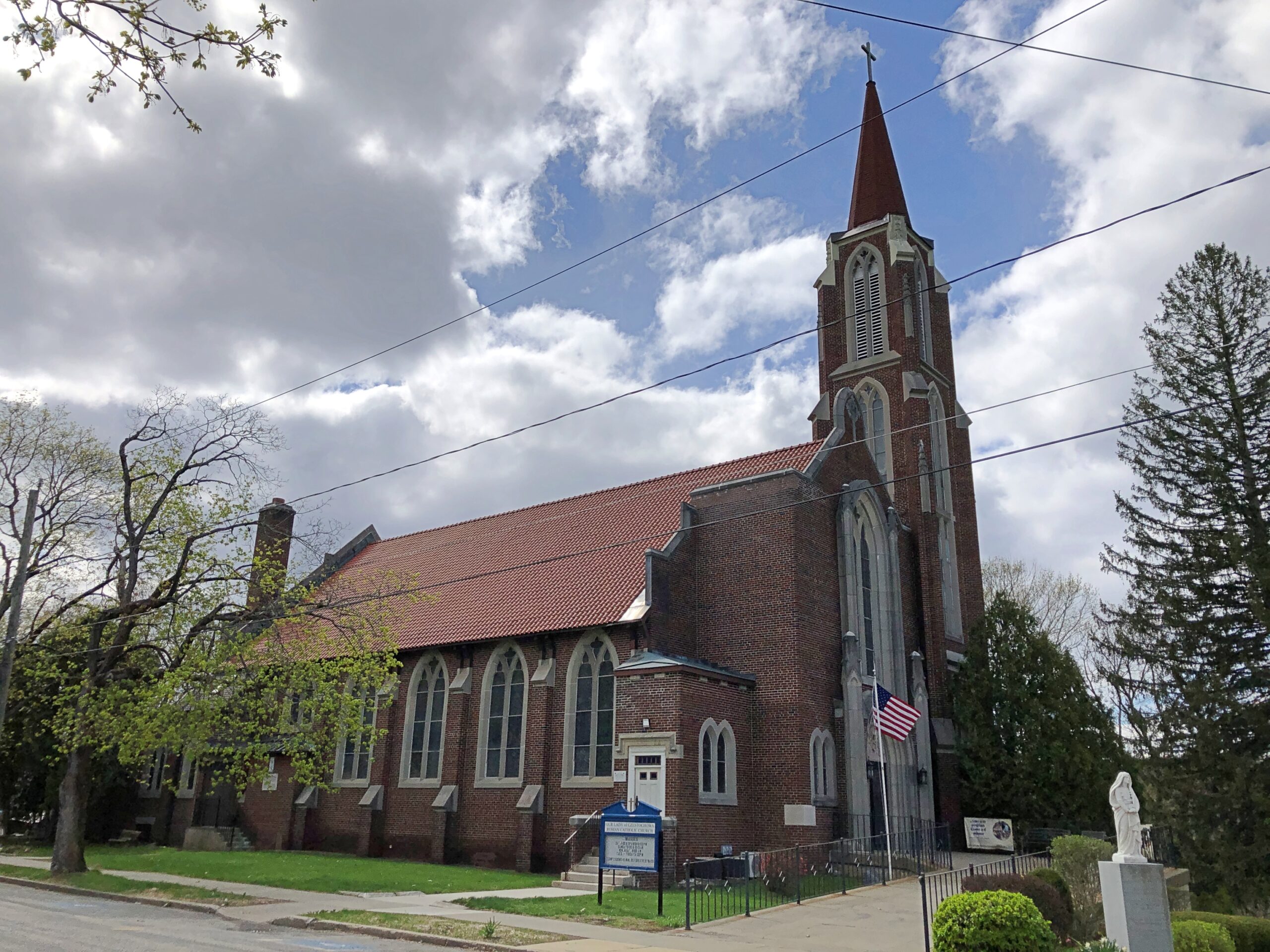
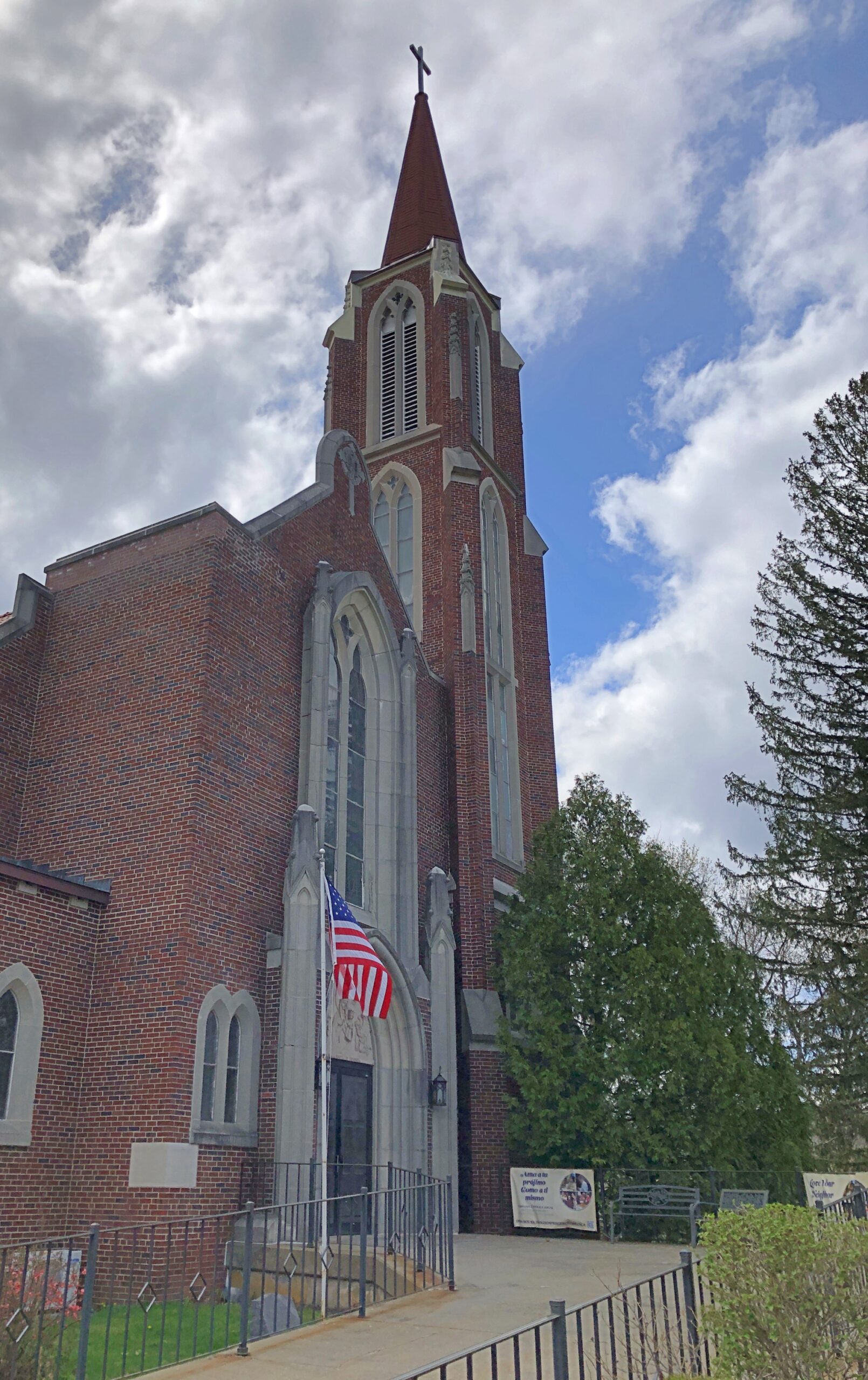
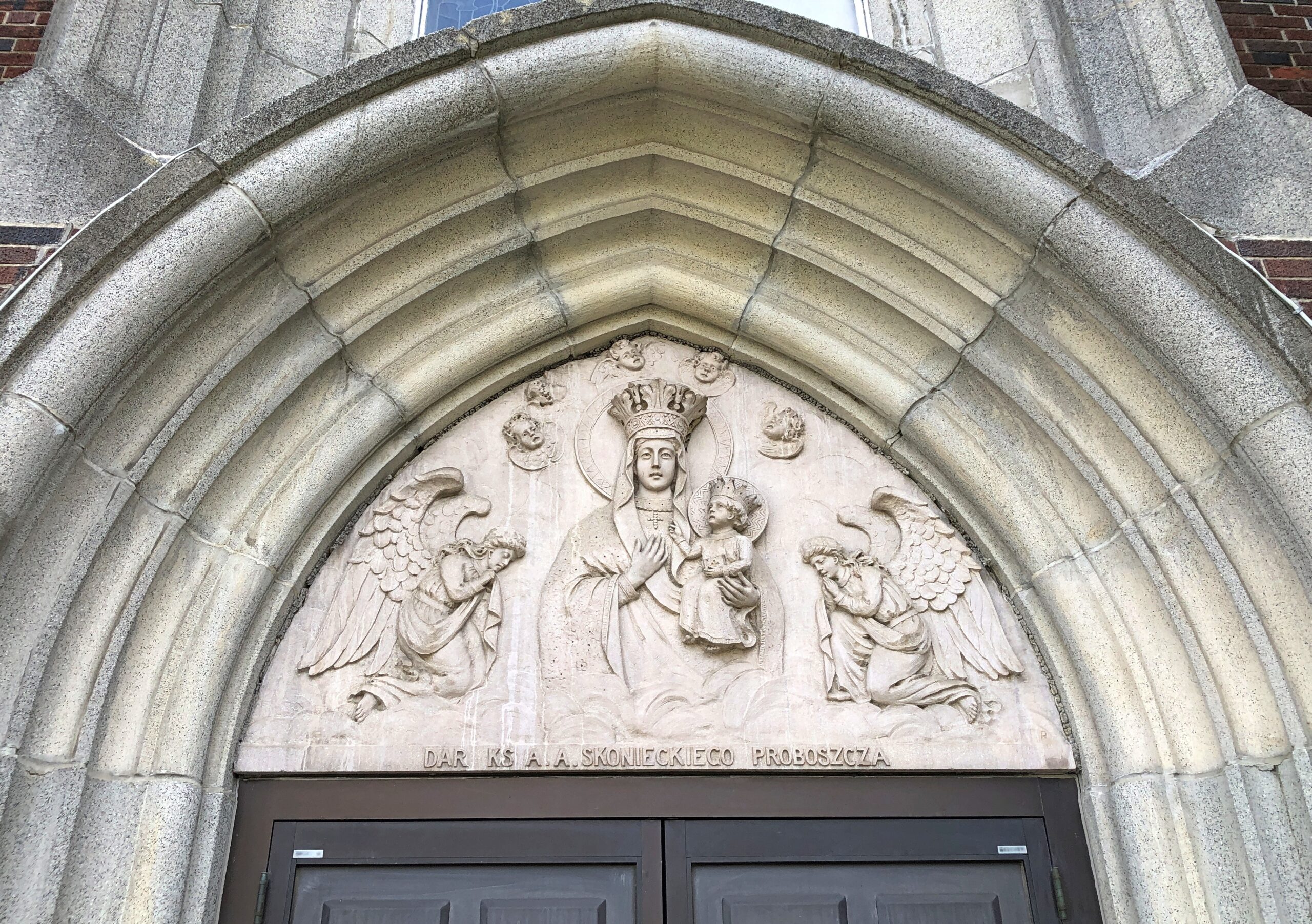
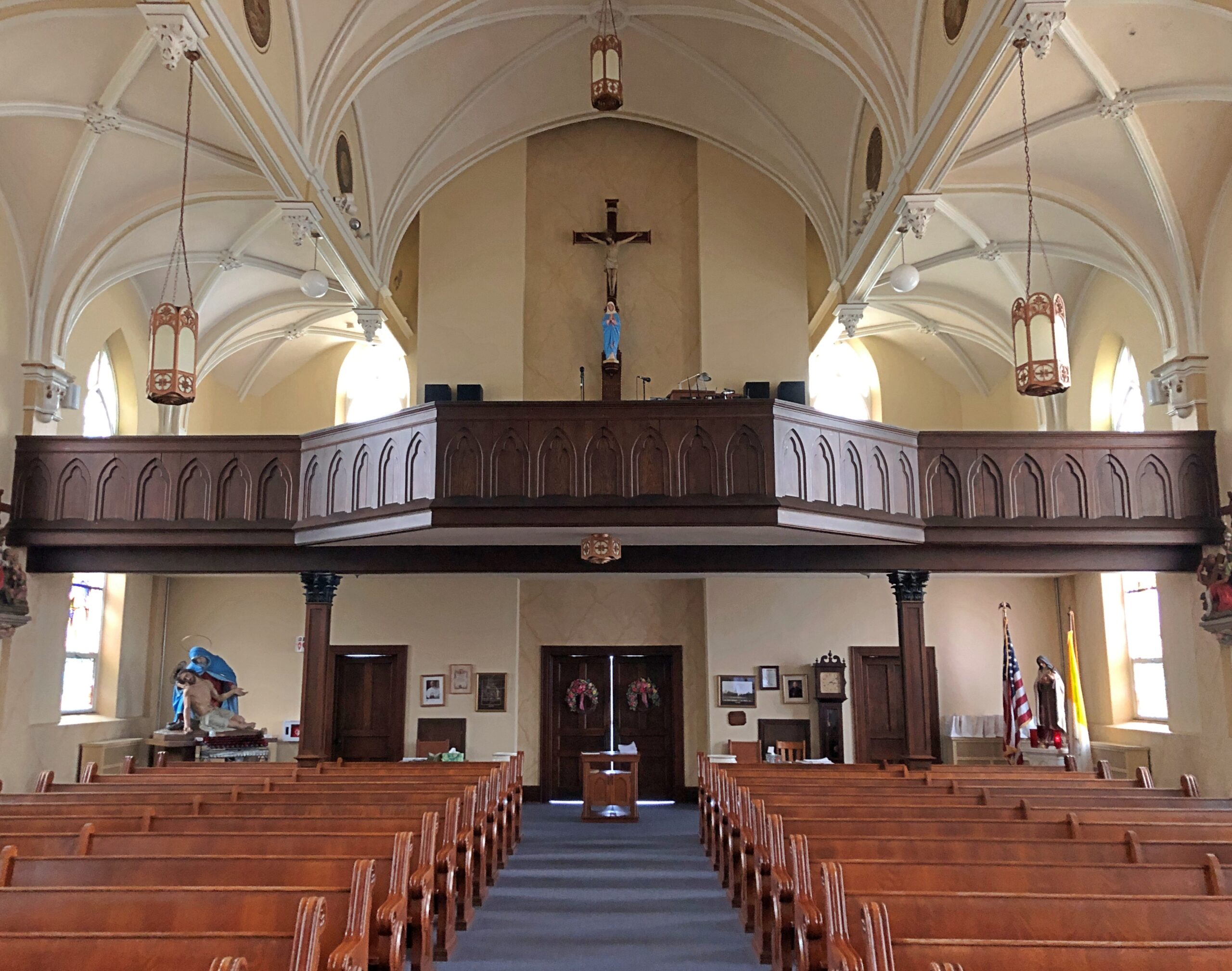
Our Lady of Czestochowa Parish, Turners Falls.
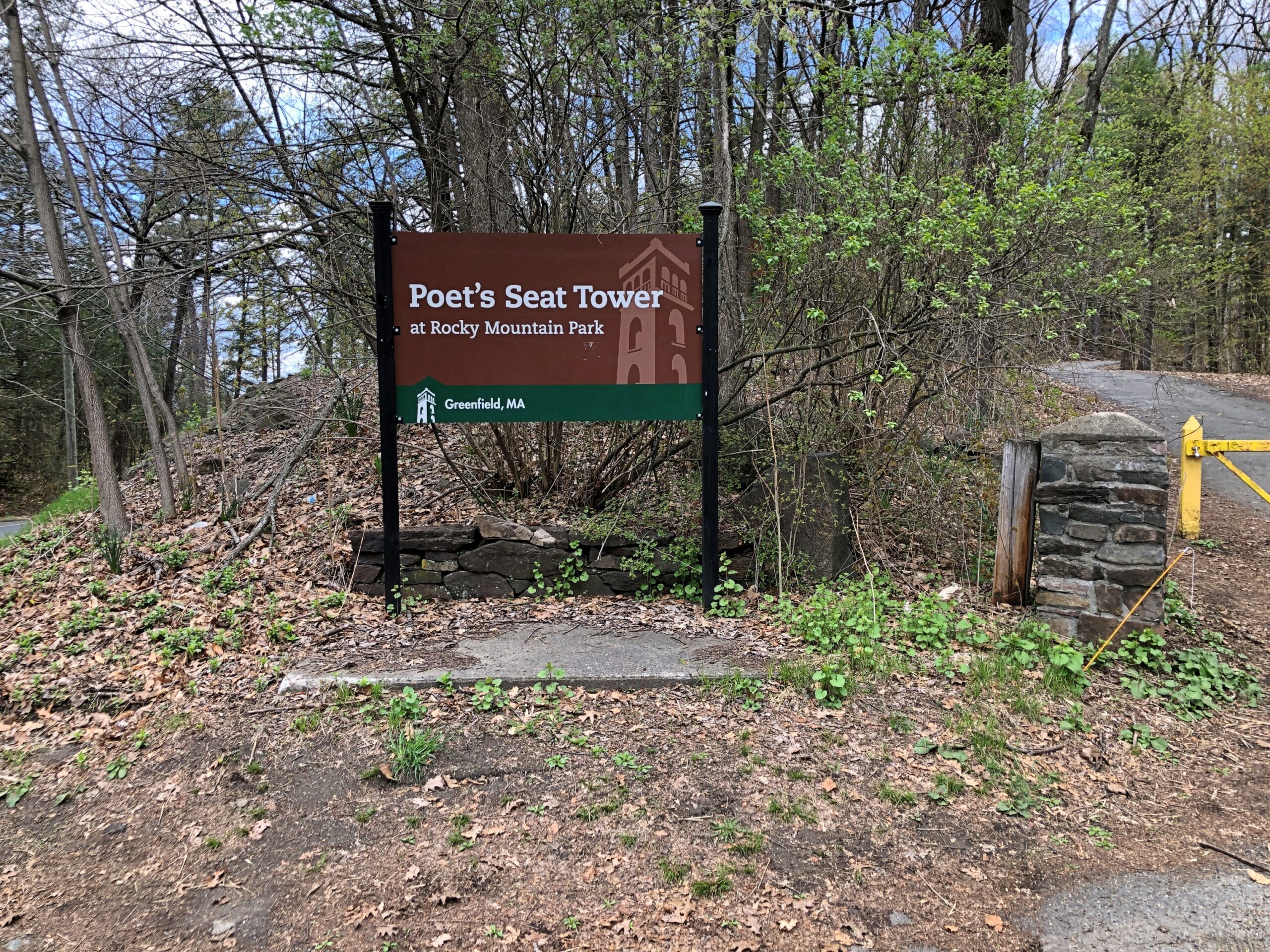
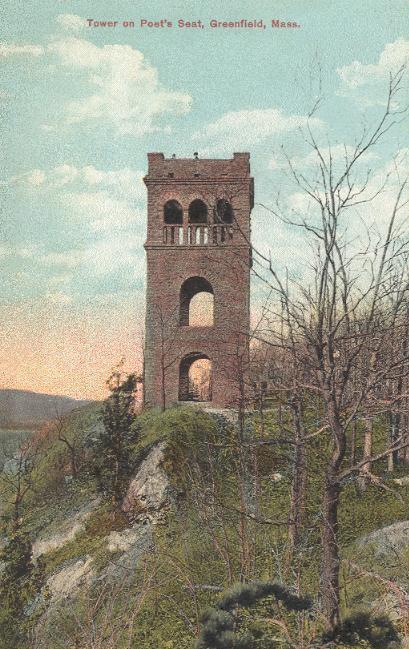
The church was closed. So was Poet’s Seat Tower.
As the tower appeared more than 100 years ago.
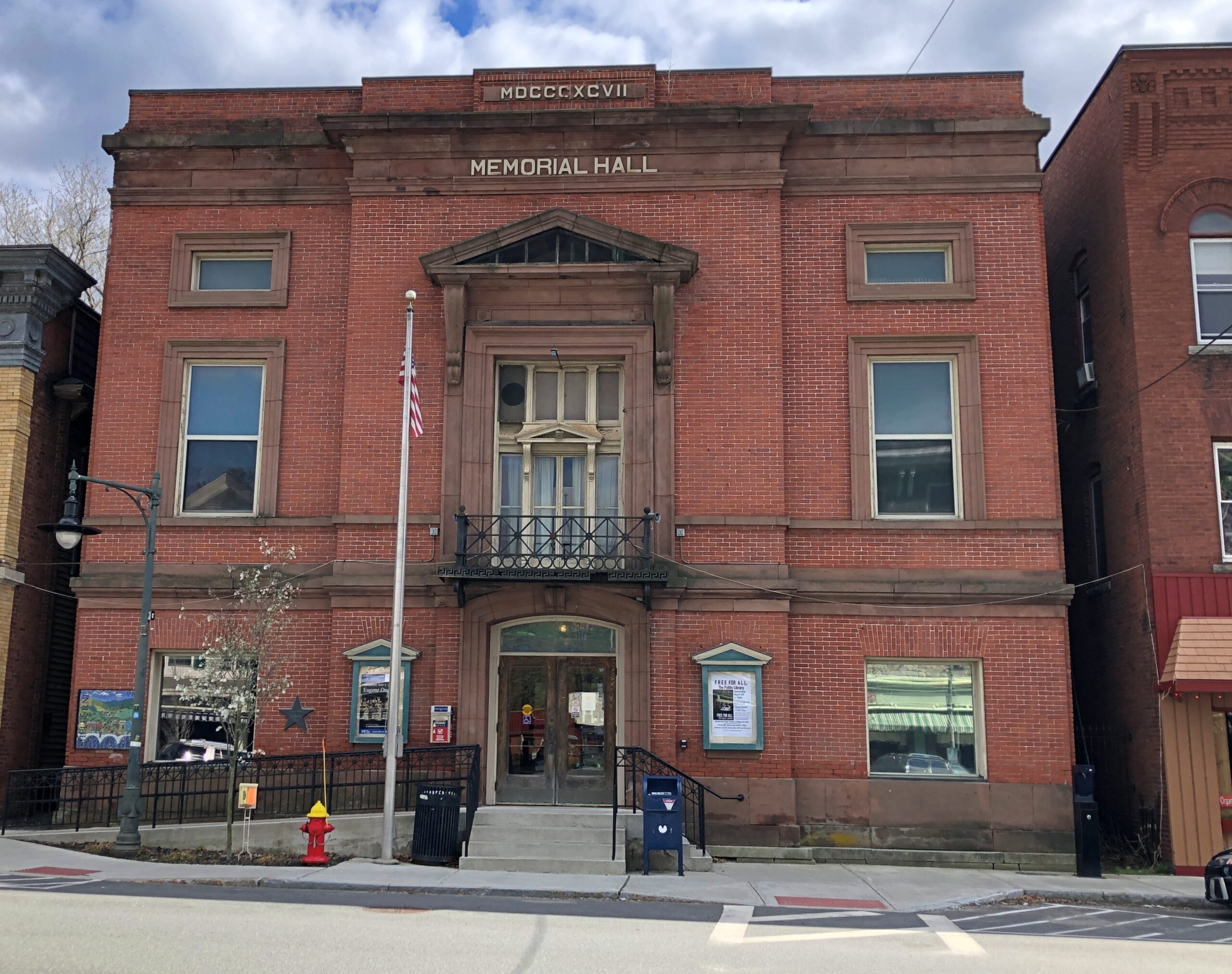
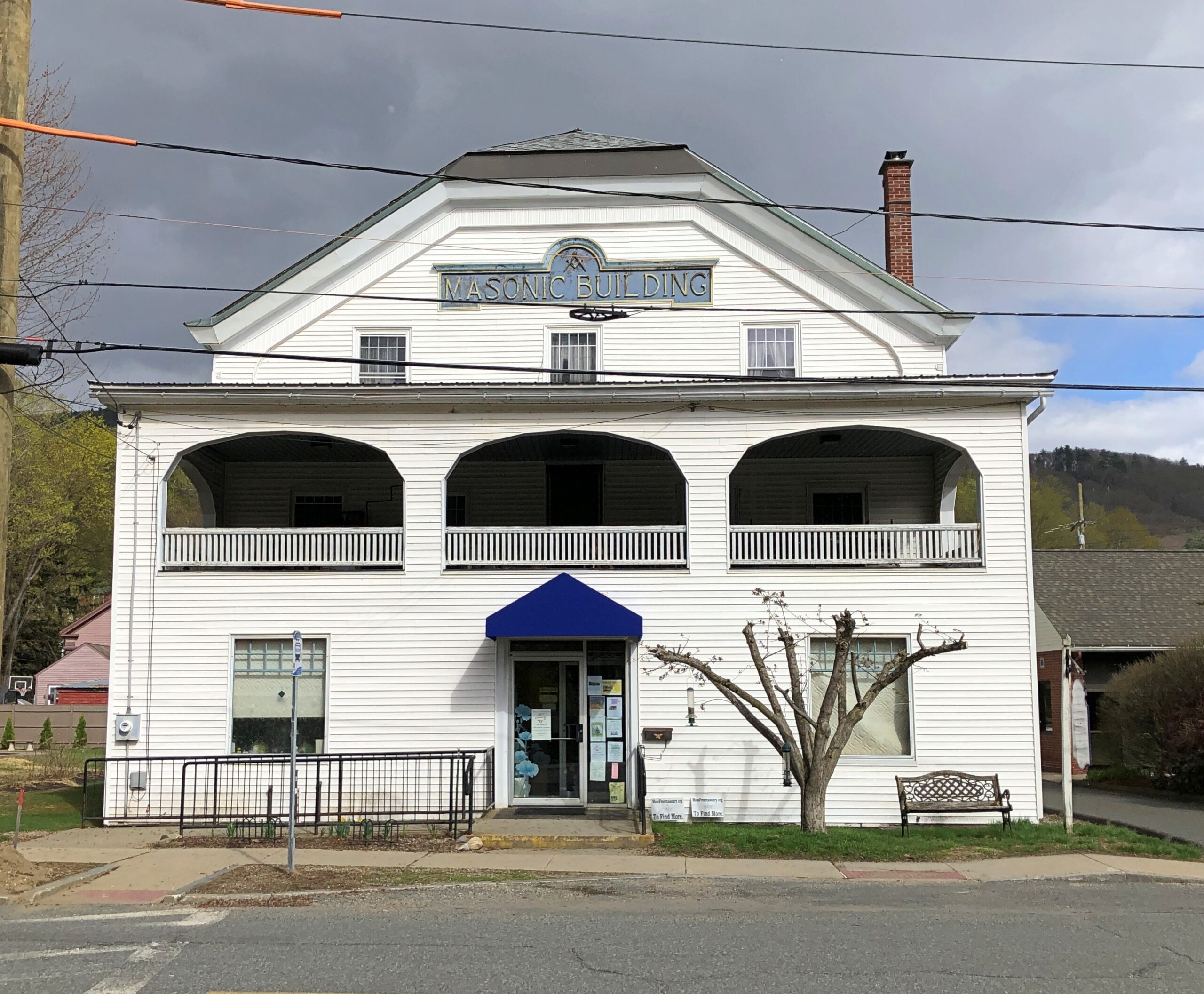
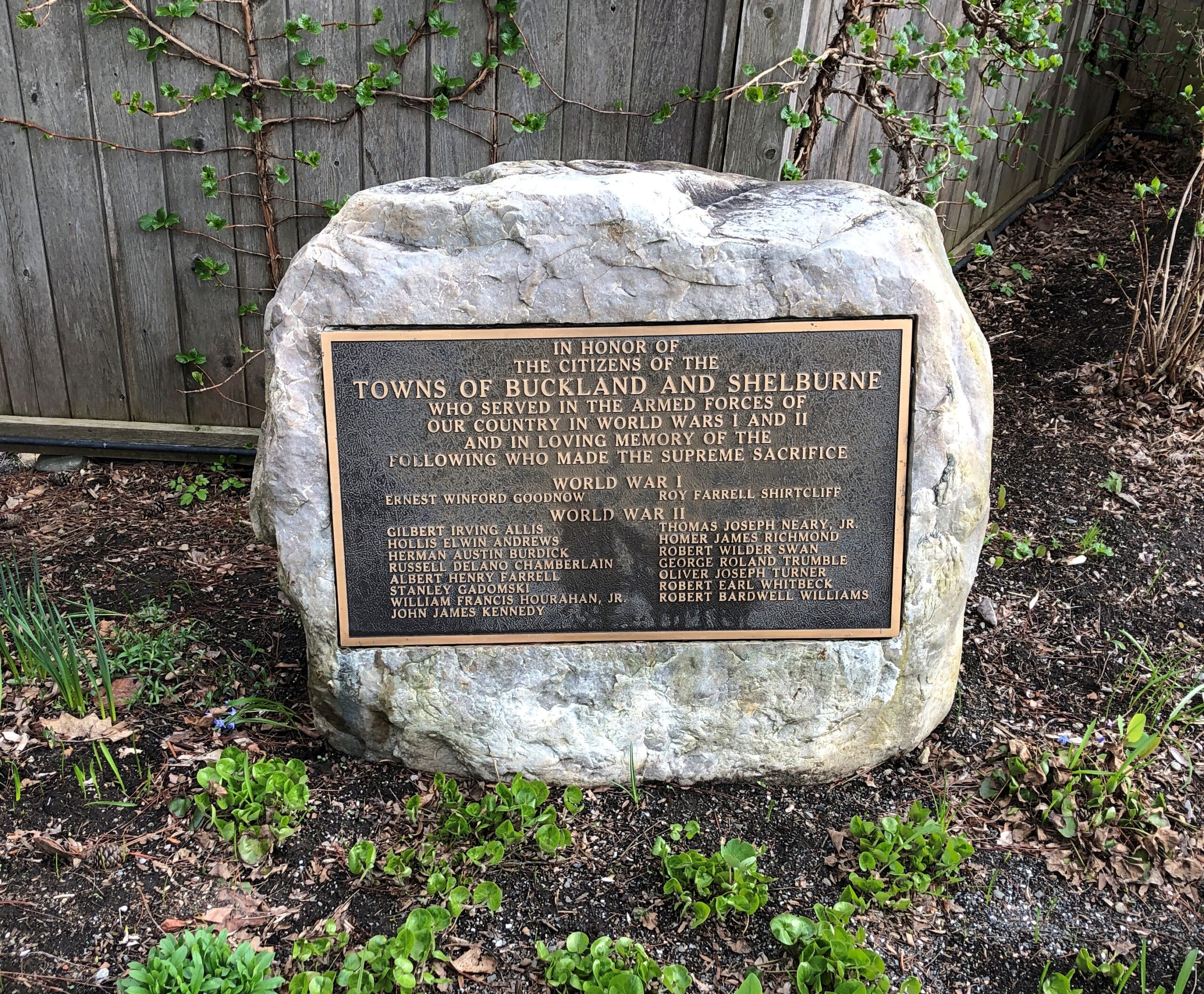
Shelburne.
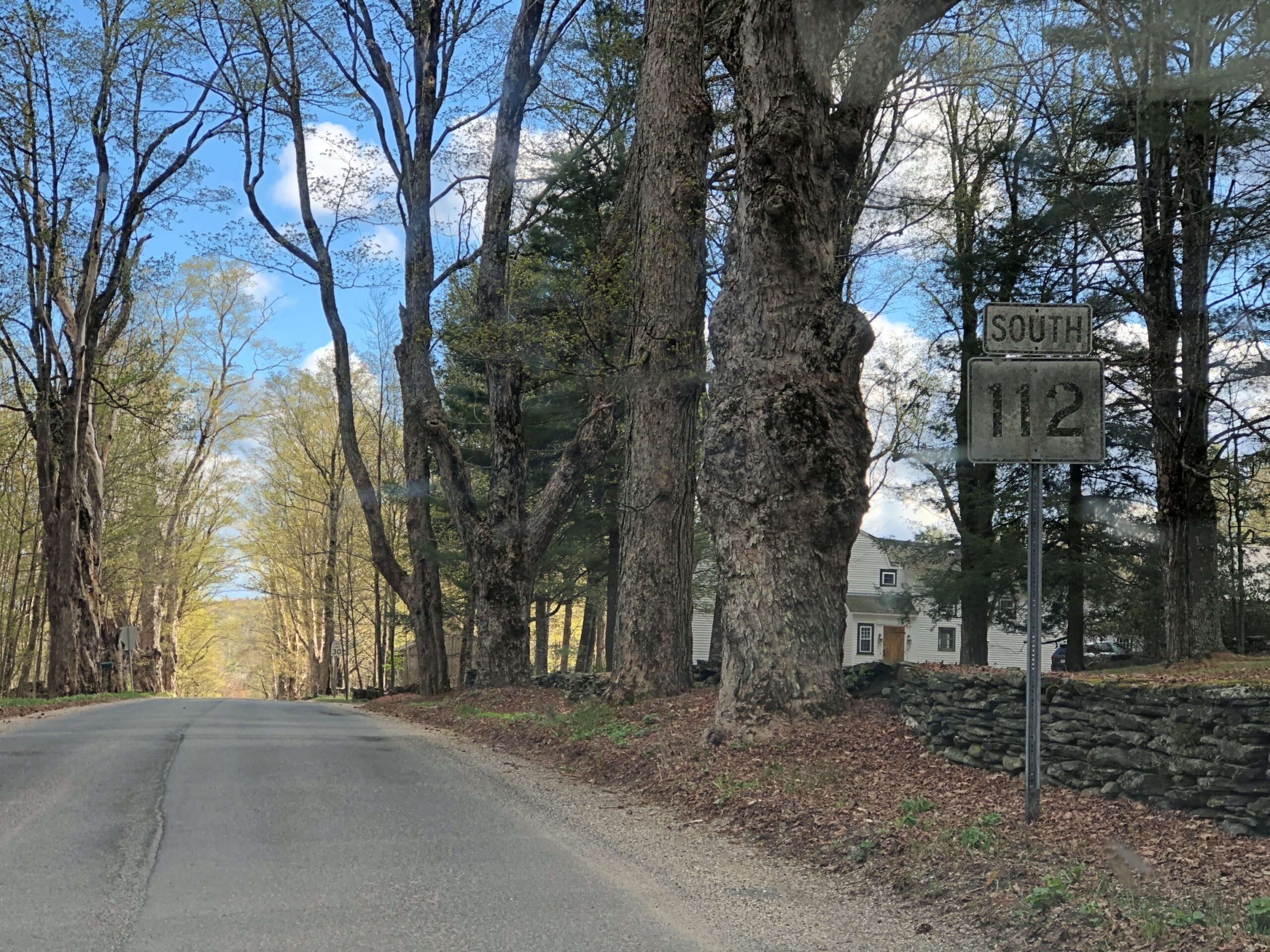
Massachusetts 112 (Route 112) in Hamilton County. Car commercial driving.
Goshen Cemetery, just off Route 112.
Ohio
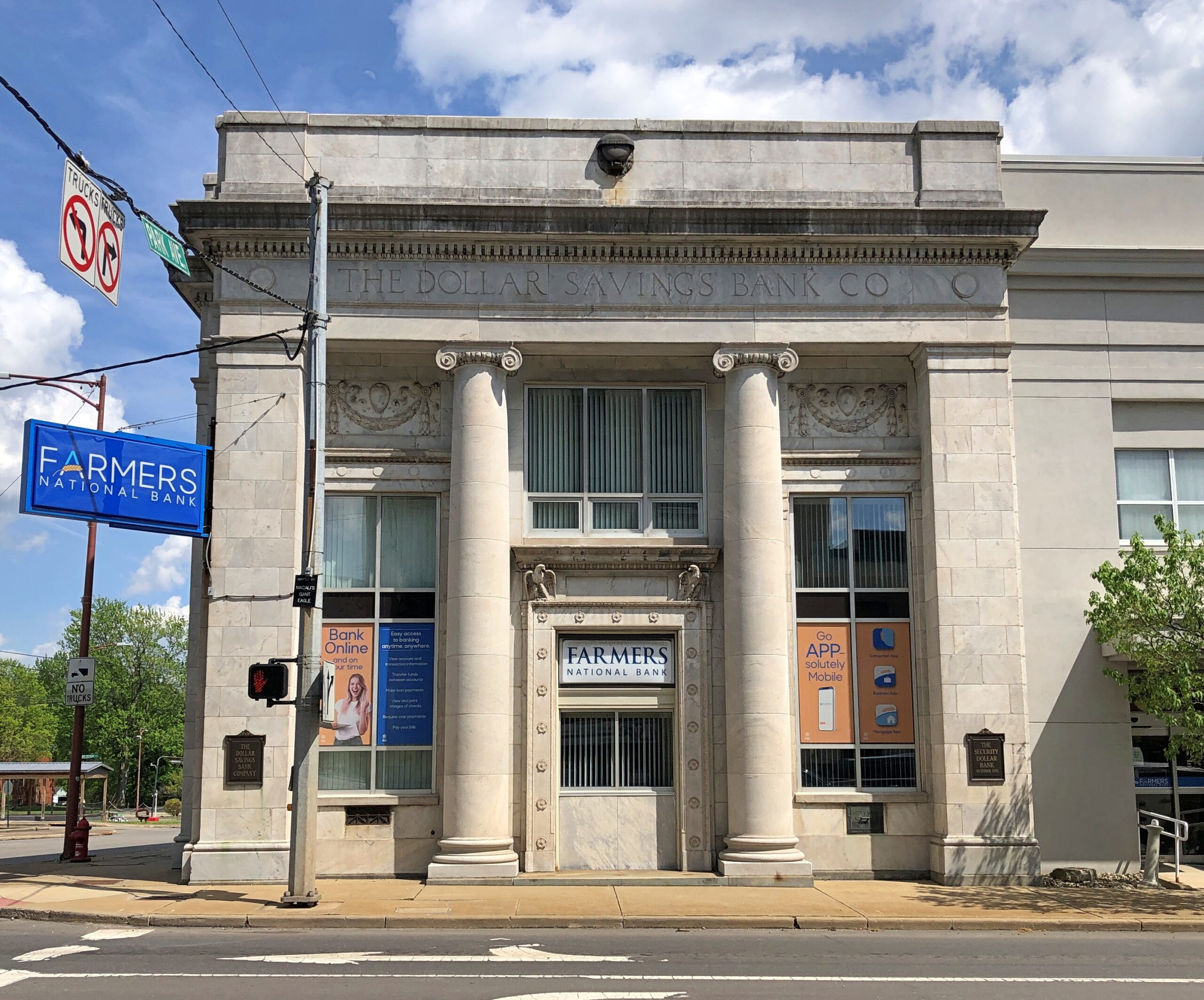
A solid bank building in Niles, across the street from where William McKinley was born. The Dollar Savings Bank Co. sounds like the kind of place that George Babbitt would mention, but distain in favor of a bank with longstanding ties to the best business men in Zenith.
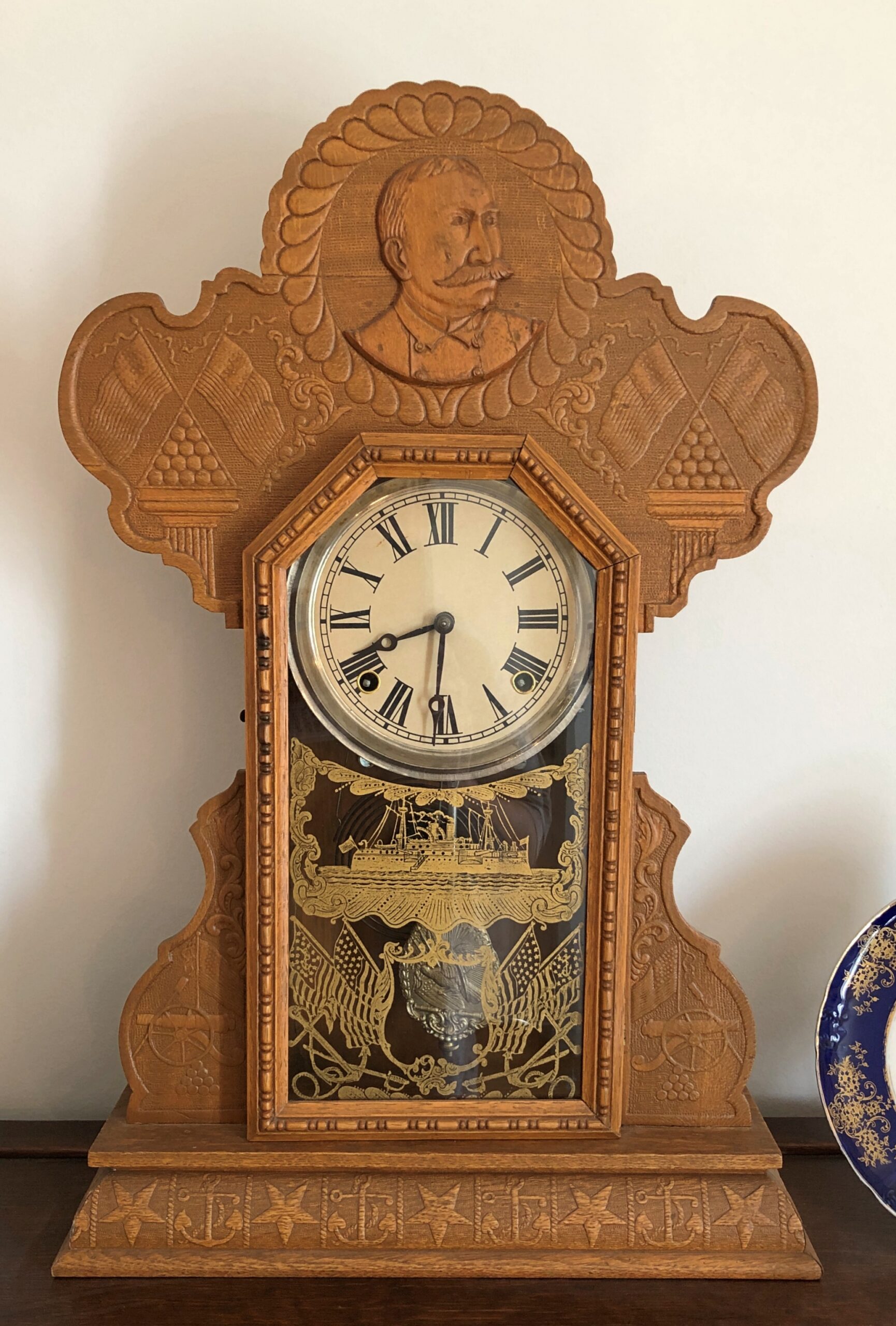
An Admiral Dewey clock at the McKinley Birthplace Museum. A textbook case, that Dewey, of how fleeting fame usually is.
Passing through northeast Ohio intrigued me greatly about that part of the state. Akron, Canton, Youngstown, Austintown — all places I can imagine going, and enjoying the visits. See ’em before the reverse migration really gets underway.
Further west, the drive on the Lincoln Highway (US 30) was a pleasure: mostly four lanes, rarely crowded. The flat farmlands don’t qualify as conventionally scenic, but the budding springtime fecundity has a lot to recommend it, even as a strictly visual pleasure: the bright greens of new leaves, the brown and grays of the fields recently plowed, small roads heading off usually at right angles to the main road, a run between Upper Sandusky and I-75 near Lima with few buildings of any kind, except distant farm structures.
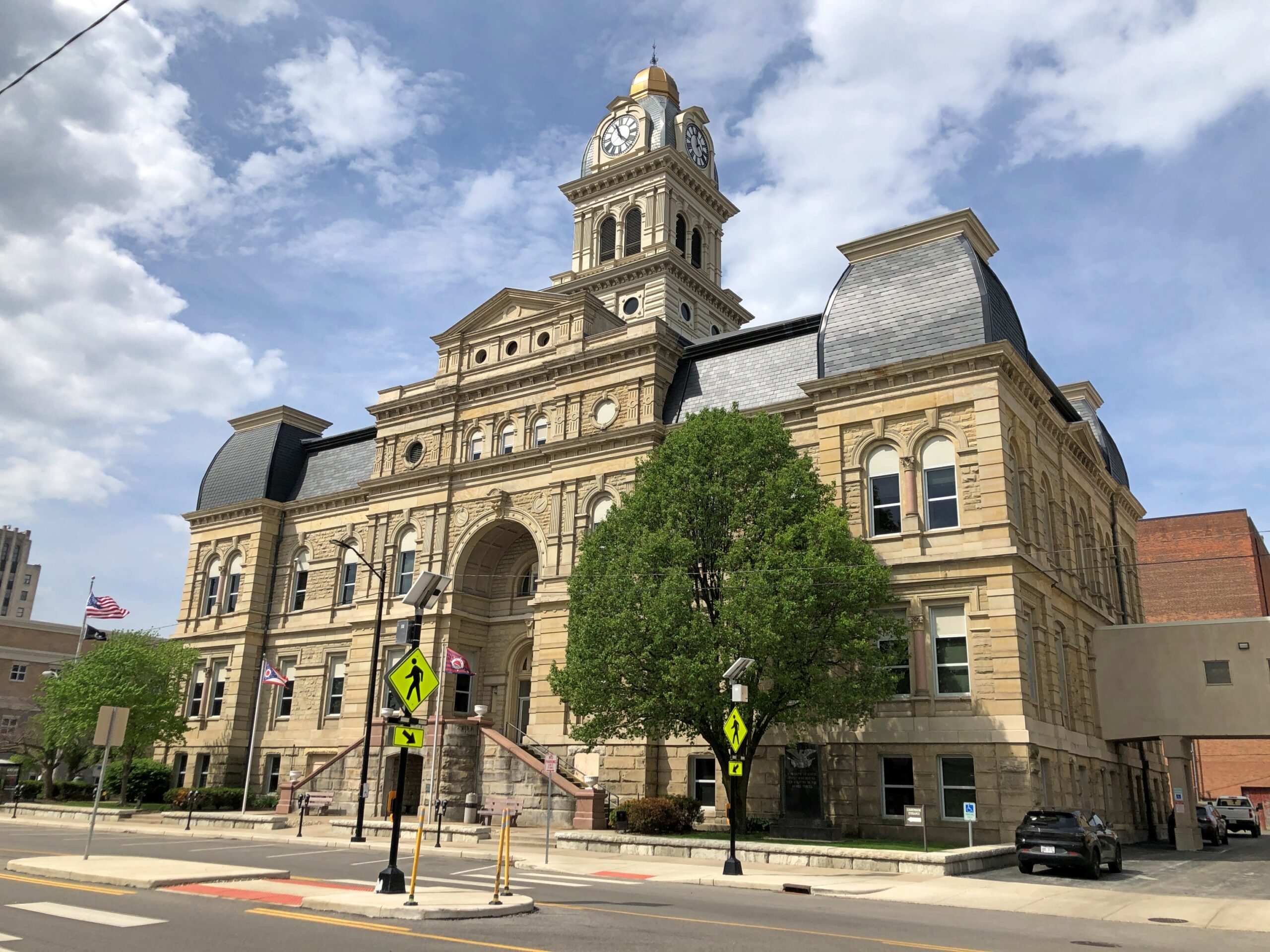
Downtown Lima: the Allen County courthouse, seen from North St.
Looks like my kind of breakfast place. Closed on Sunday anyway.
Another North St. detail. Spiderman sitting on — something. A large scoop of strawberry ice cream?
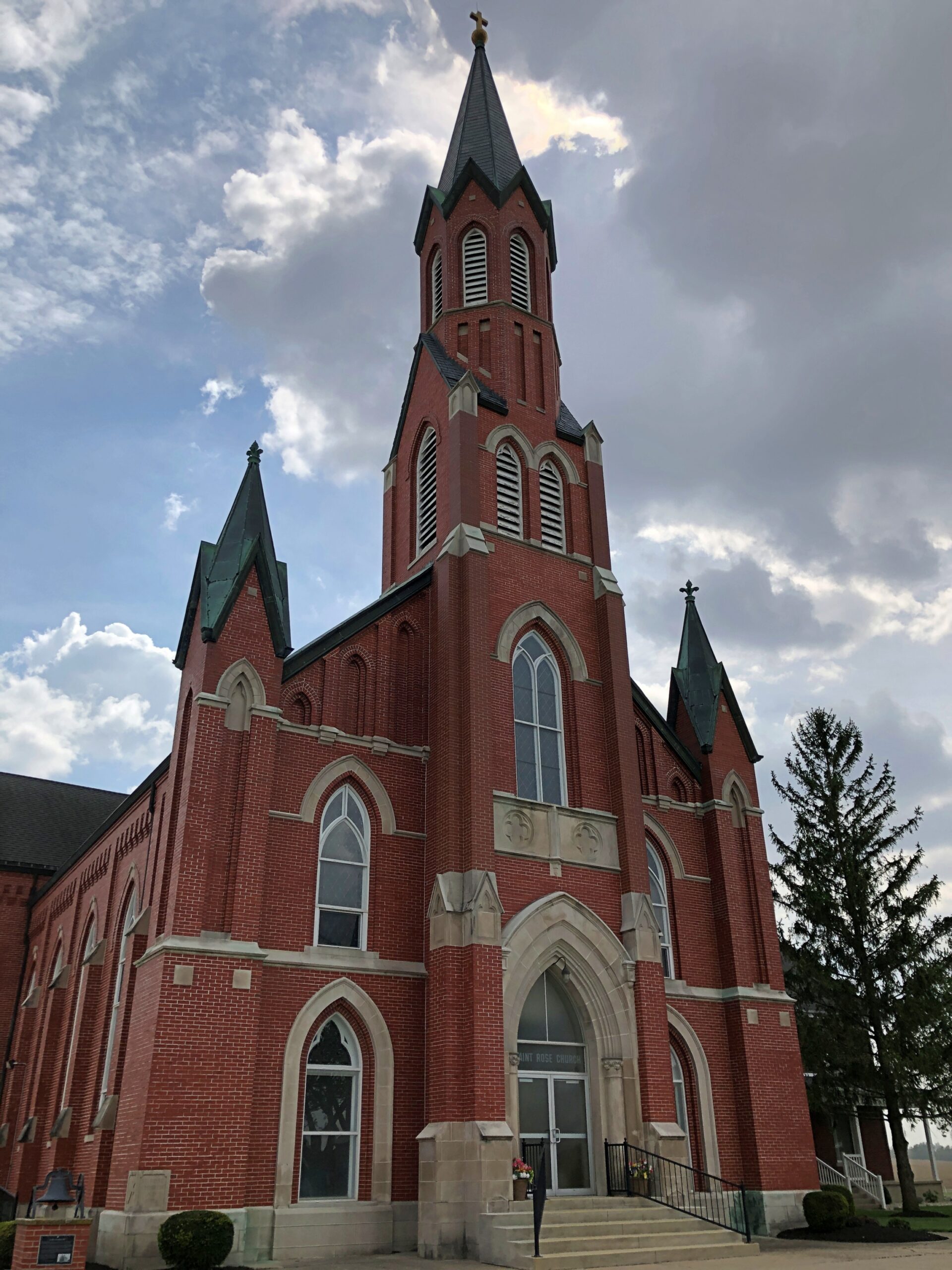
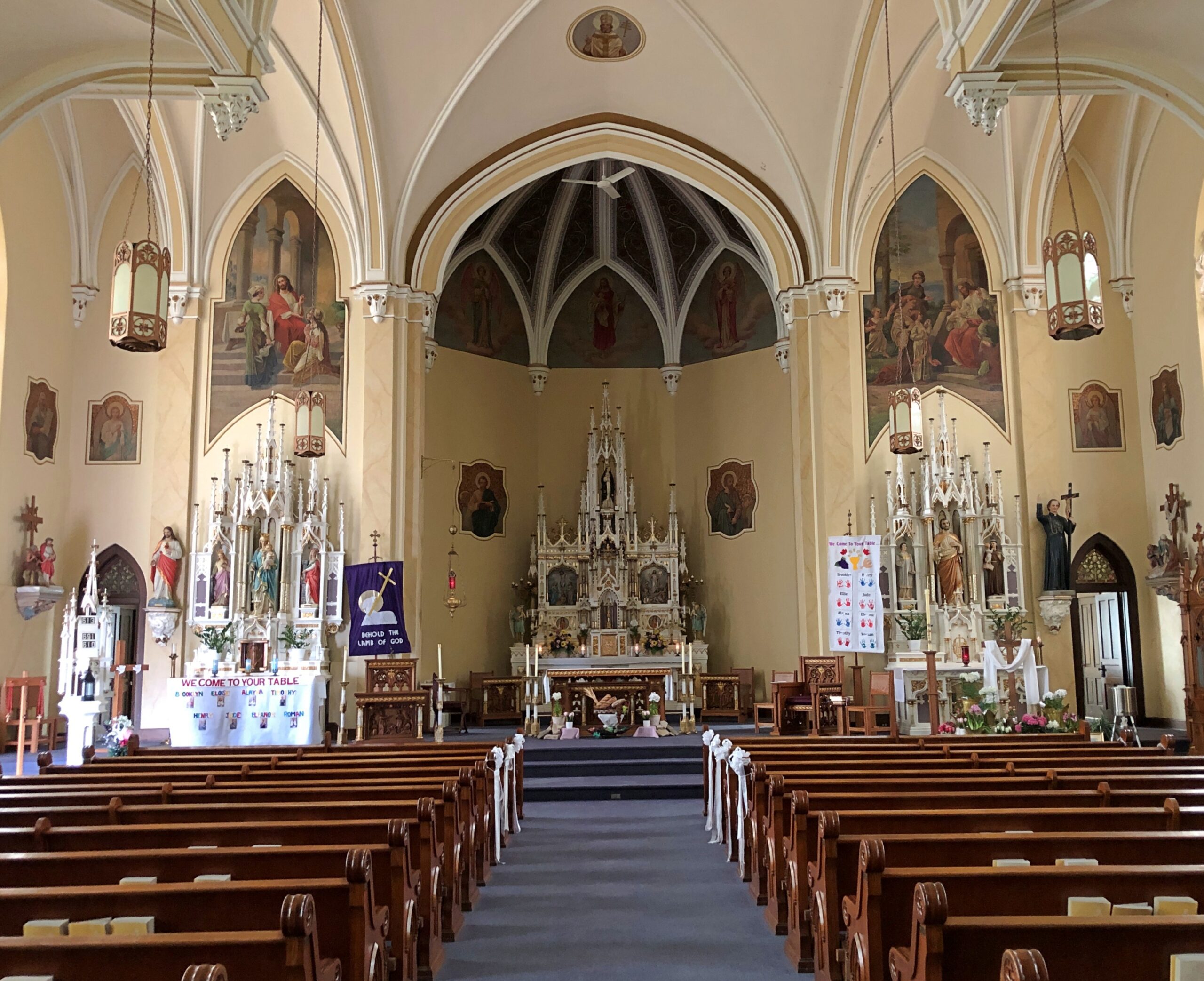
Saint Rose Church in the hamlet of Saint Rose, not far east of the Ohio-Indiana line. A Cross-Tipped Church.
Pennsylvania
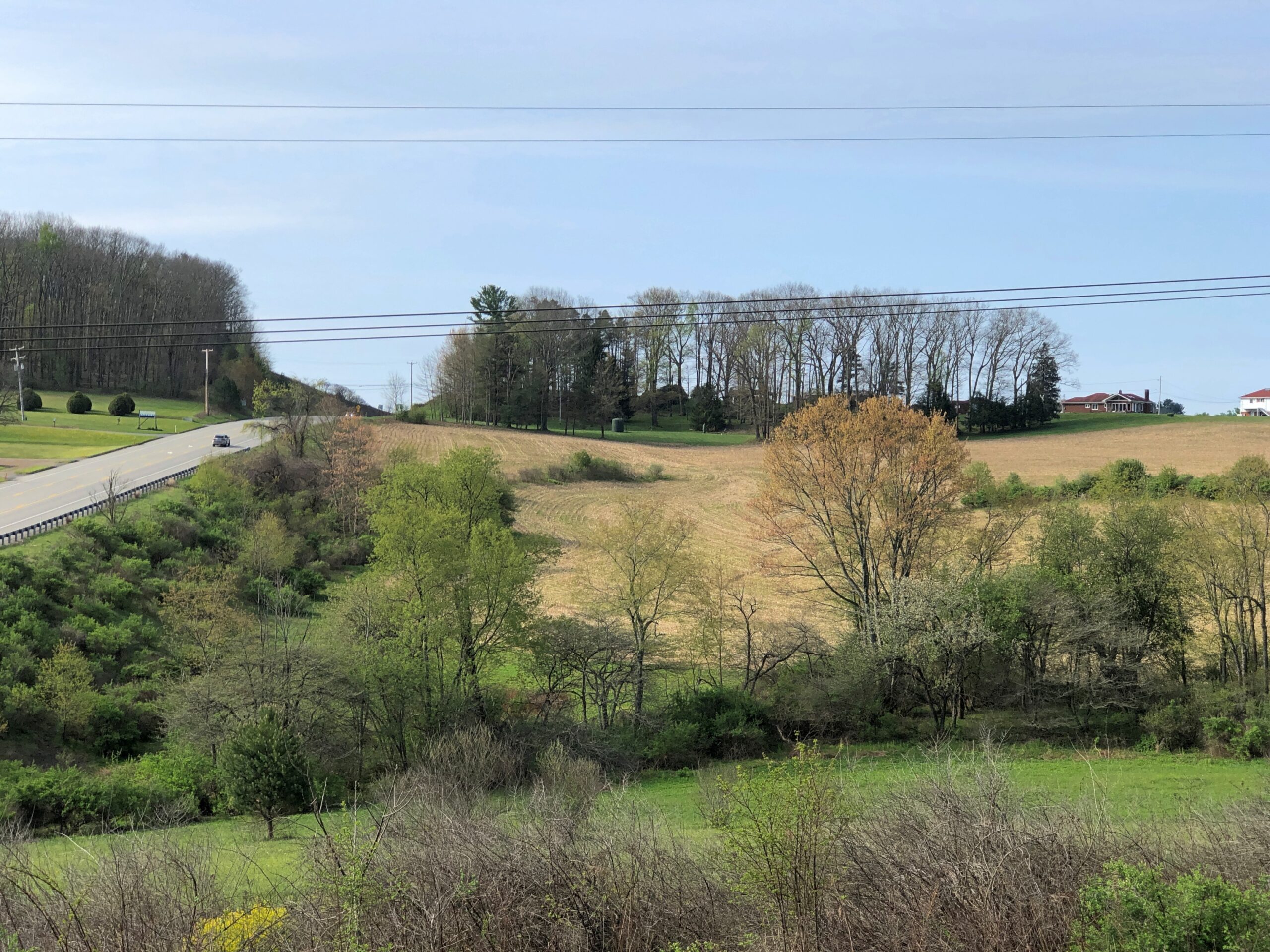
The hills at the edge of Punxsutanwney.
The drive west across Pennsylvania began across the Delaware River from Port Jervis, NY, taking US 209 southwest through part of Delaware Water Gap National Recreation Area. Bet the straight-ish, two-lane road is busier in peak recreation season in the Recreation Area, but in April, I booked along without encountering much in the way of traffic. Trees were still budding, but it wouldn’t be long before some stretches of the highway would pass through green tunnels. The sunlight was already casting green leaf shadows on the road.
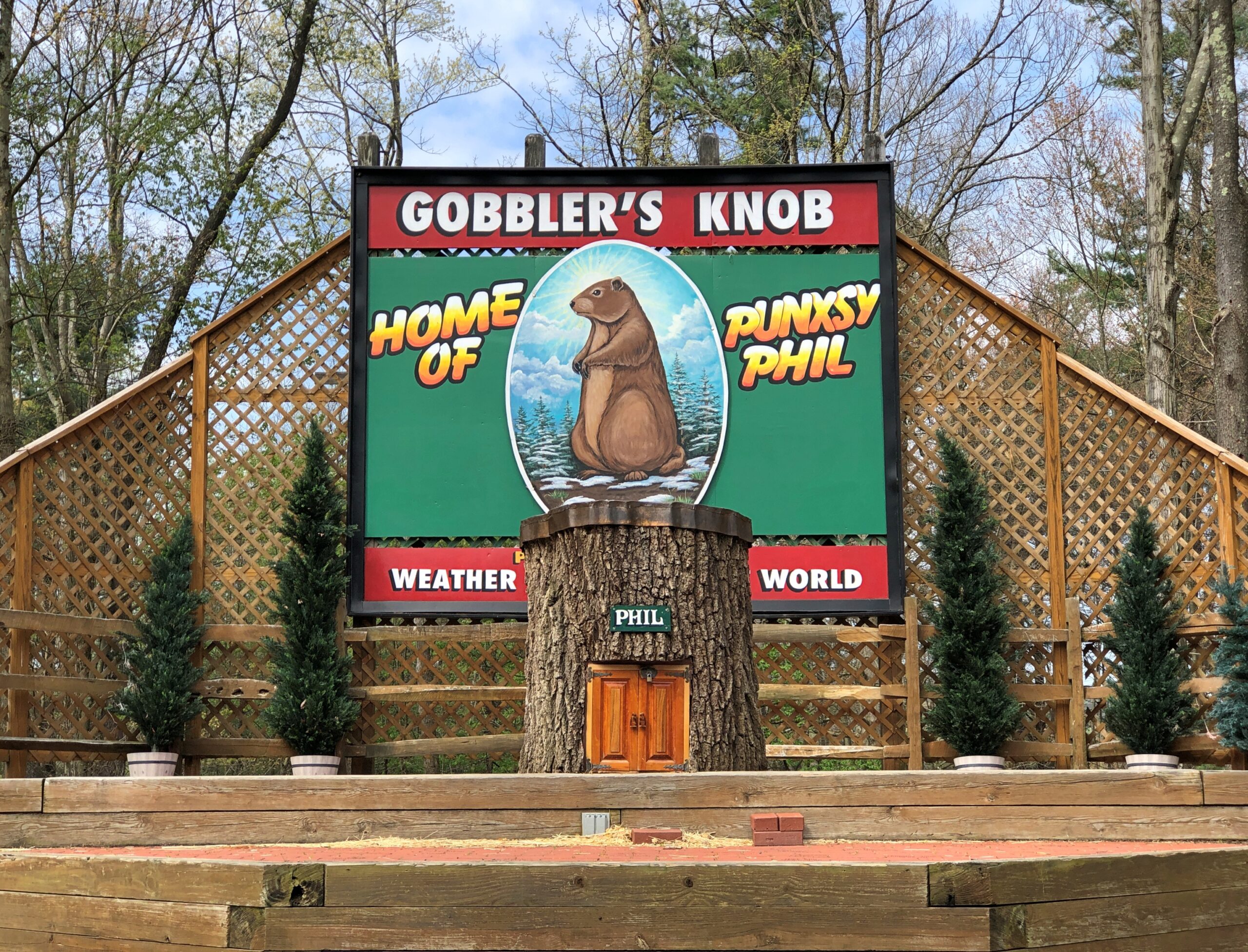
Watch Groundhog Day, and the impression is that the festivities are held in the center of town — which they are, in the Punxsutanwney stand-in of Woodstock, Illinois. Go to Punxsutanwney itself and learn that the February 2 fest is a few miles from town in a place called Gobbler’s Knob.
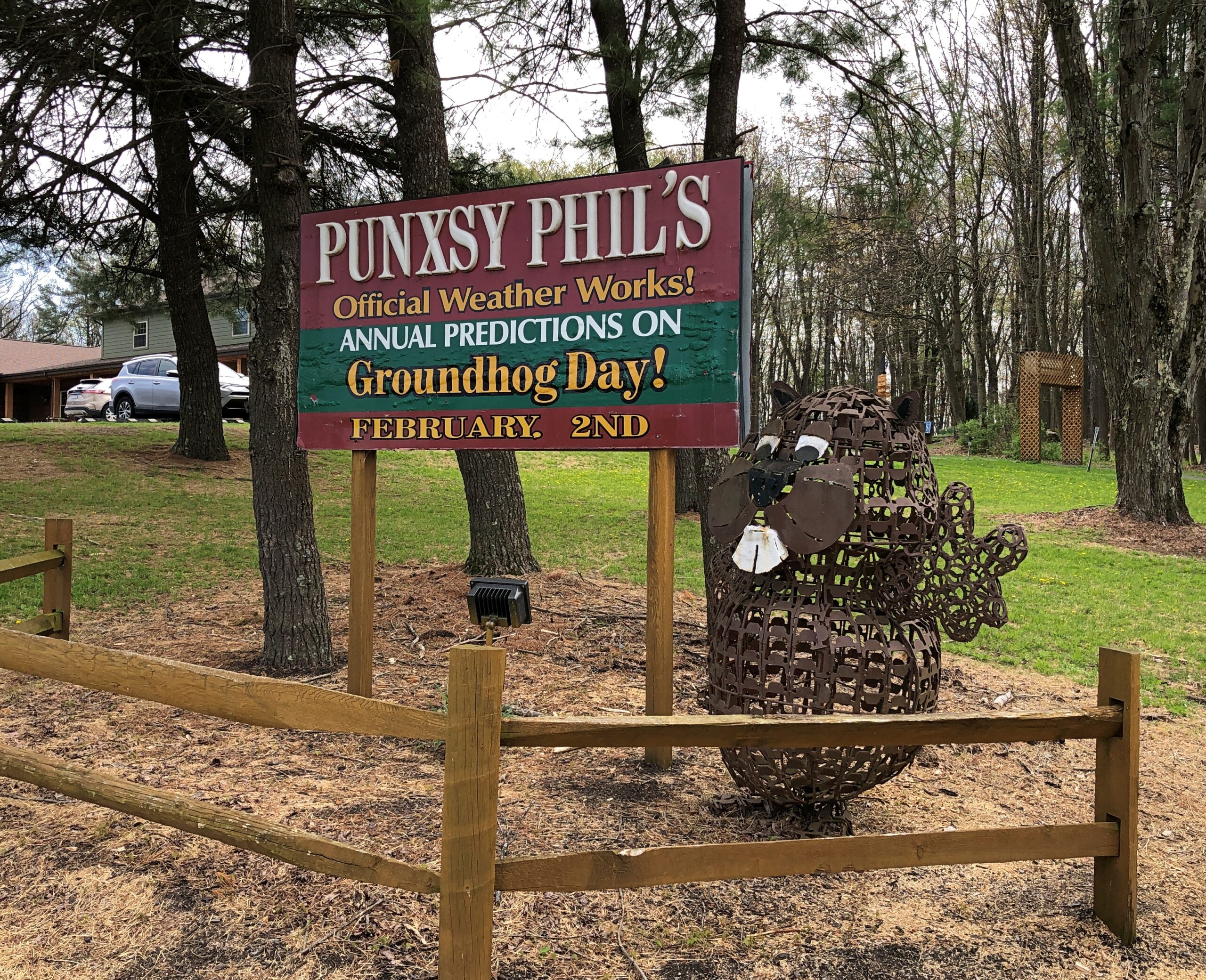
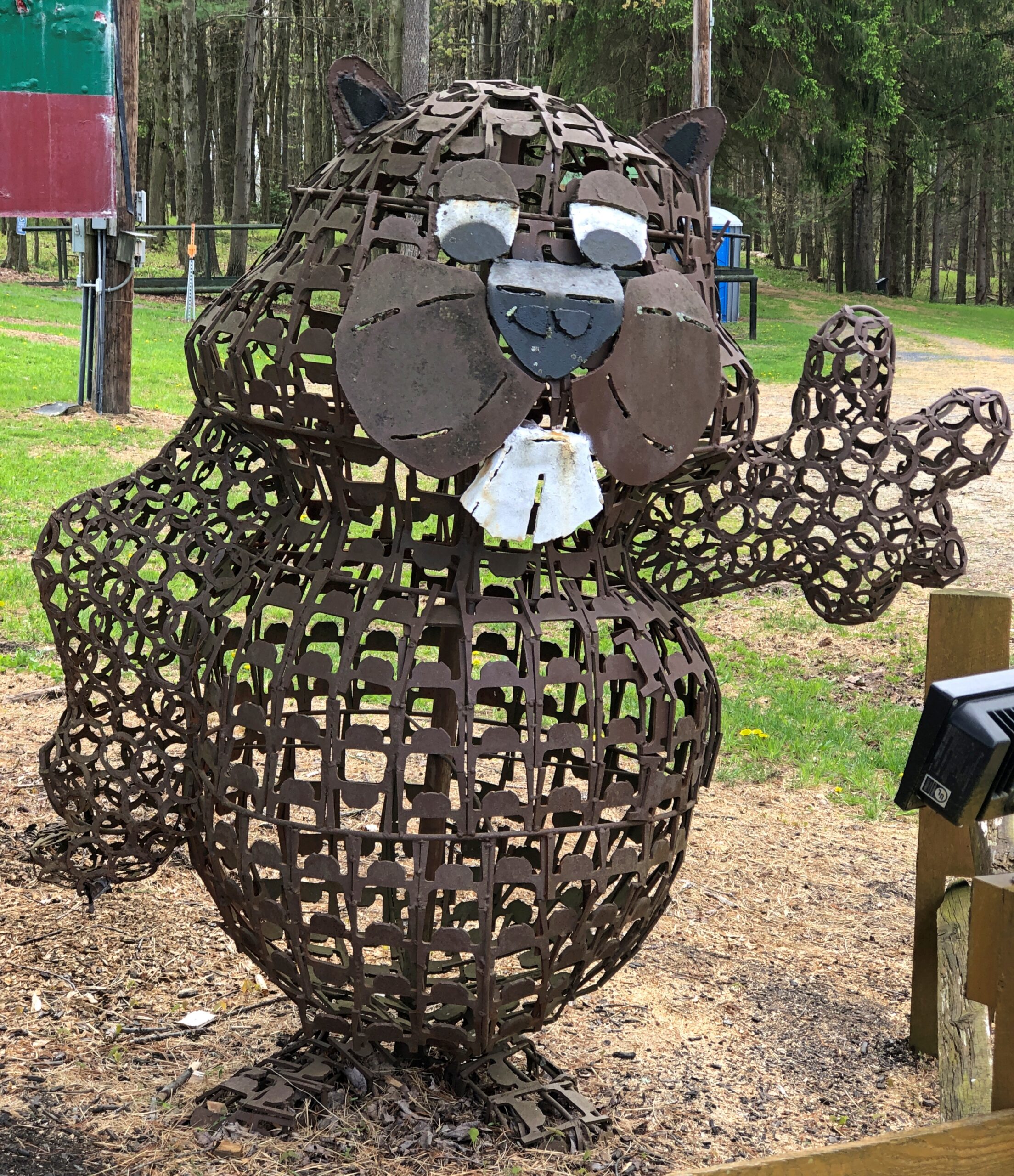
One more Phil. Iron Phil.
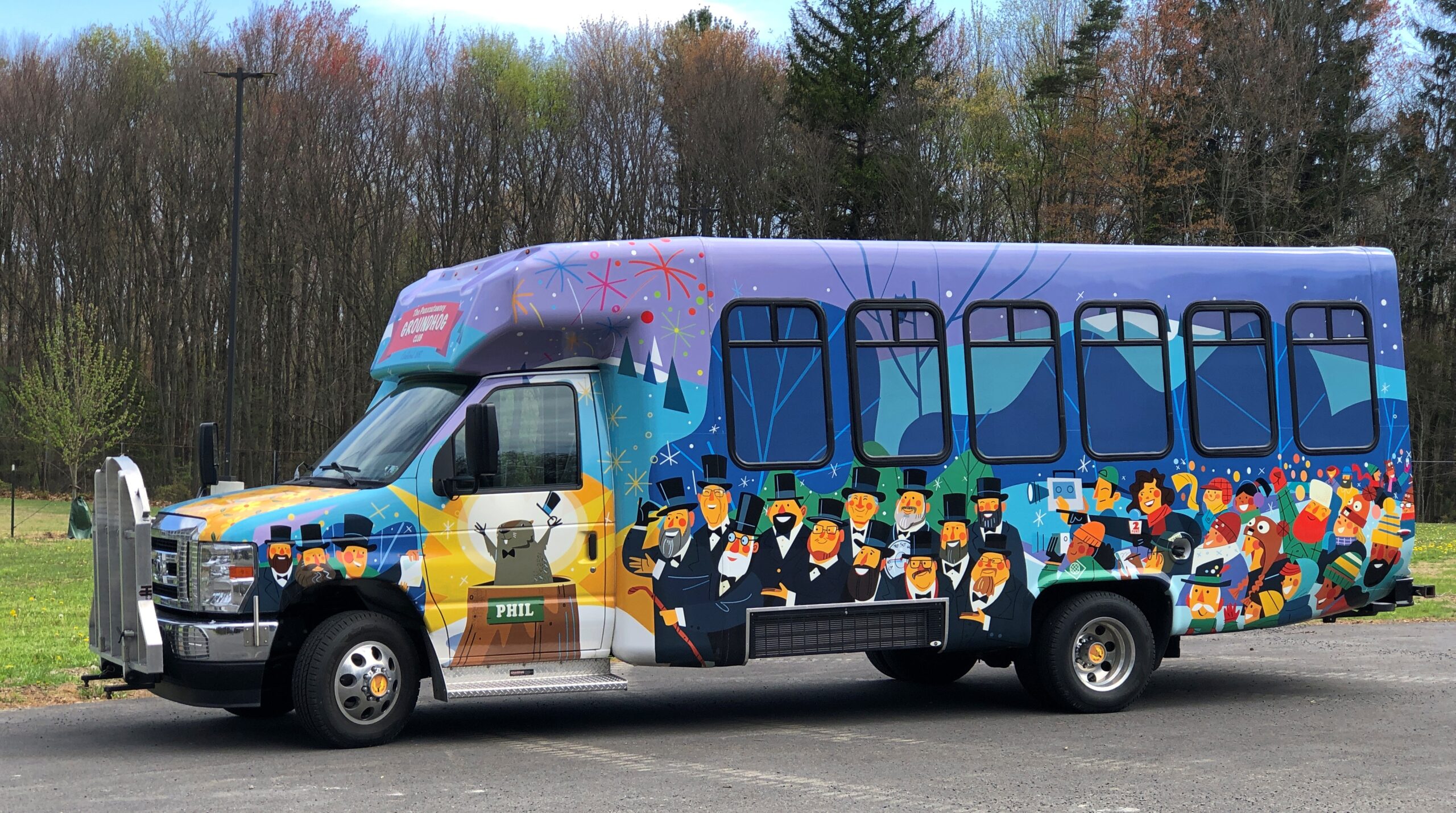
The clerk at the Gobbler’s Knob gift shop took pains to let me know that the site, and the festivities, were overseen by a nonprofit, not the commonwealth. Outside is the nonprofit’s bus, or at least I assume that, probably used to ferry people from town to GK and vice-versa, to help deal with the popularity of the event.
I like a good local festival as much as anyone, but February 2 is a deal-breaker. Can’t Phil come out again on August 2 to predict how much longer summer is going to last?
One More (Indiana)
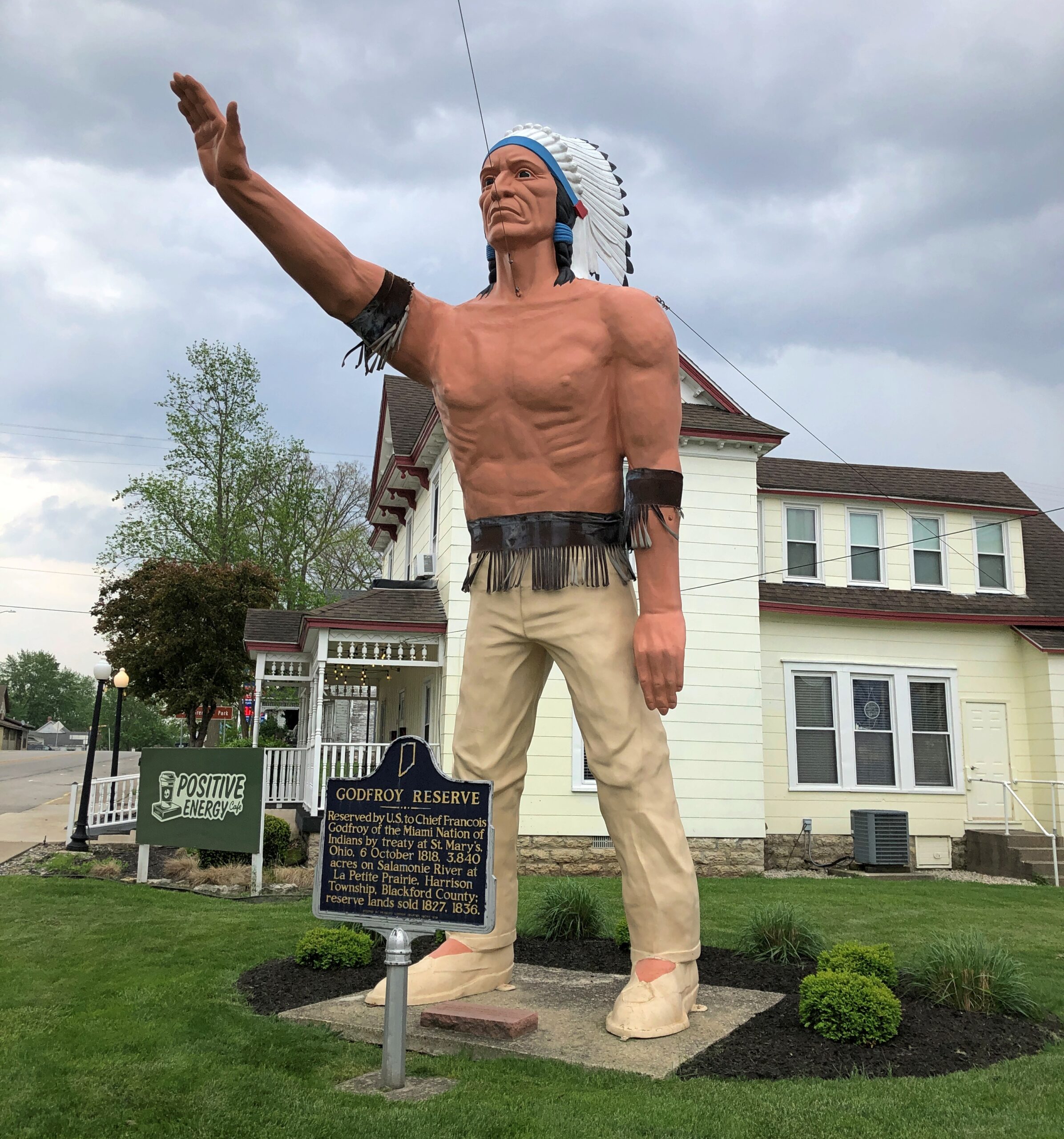
Miami Chief Francois Godfroy stands at the corner of Main Street and Huntington Street/Indiana 18 in Montpelier. Well, maybe it’s supposed to remind passersby of the chief more than actually depict him.
A Daughters of the American Revolution historical marker says: Reserved by U.S. to Chief Francois Godfroy of the Miami Nation of Indians by treaty at St. Mary’s, Ohio, 6 October 1818. 3,849 acres on Salamonie River at La Petite Prairie, Harrison Township, Blackford County: reserve lands sold 1827, 1836.
Waymarking says: “The statue was made in Venice, CA in 1960 for the Tom Wood Pontiac dealership in Indianapolis. Later it was in front of the Indian Museum at Eagle Creek Park In Indianapolis. After the museum closed, the statue (of more a plains Indian than a NE Indiana tribe) was obtained by Chief Larry Godfroy — a descendant who presented it to the City of Montpelier and they erected it as a monument in 1984.”
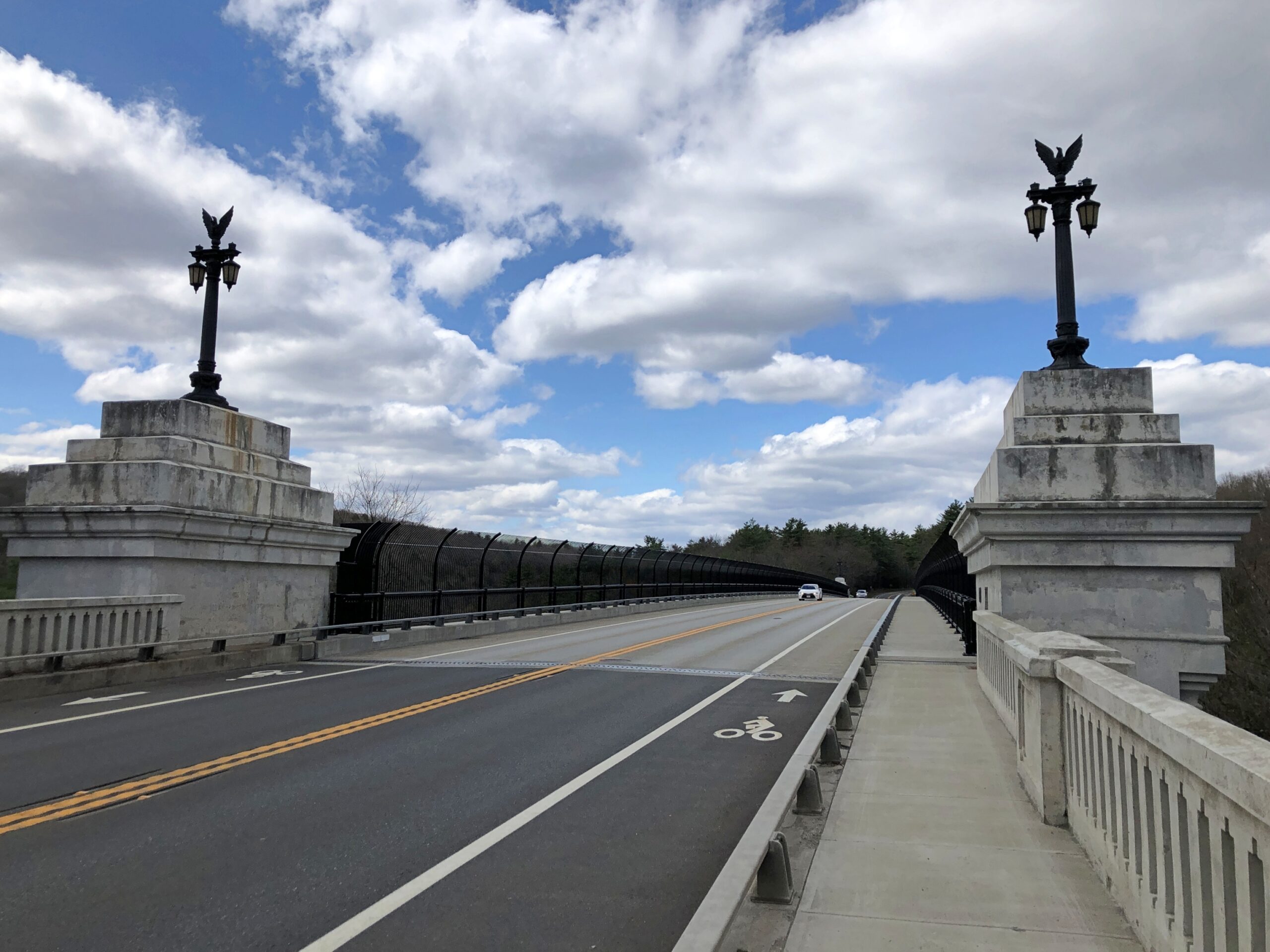
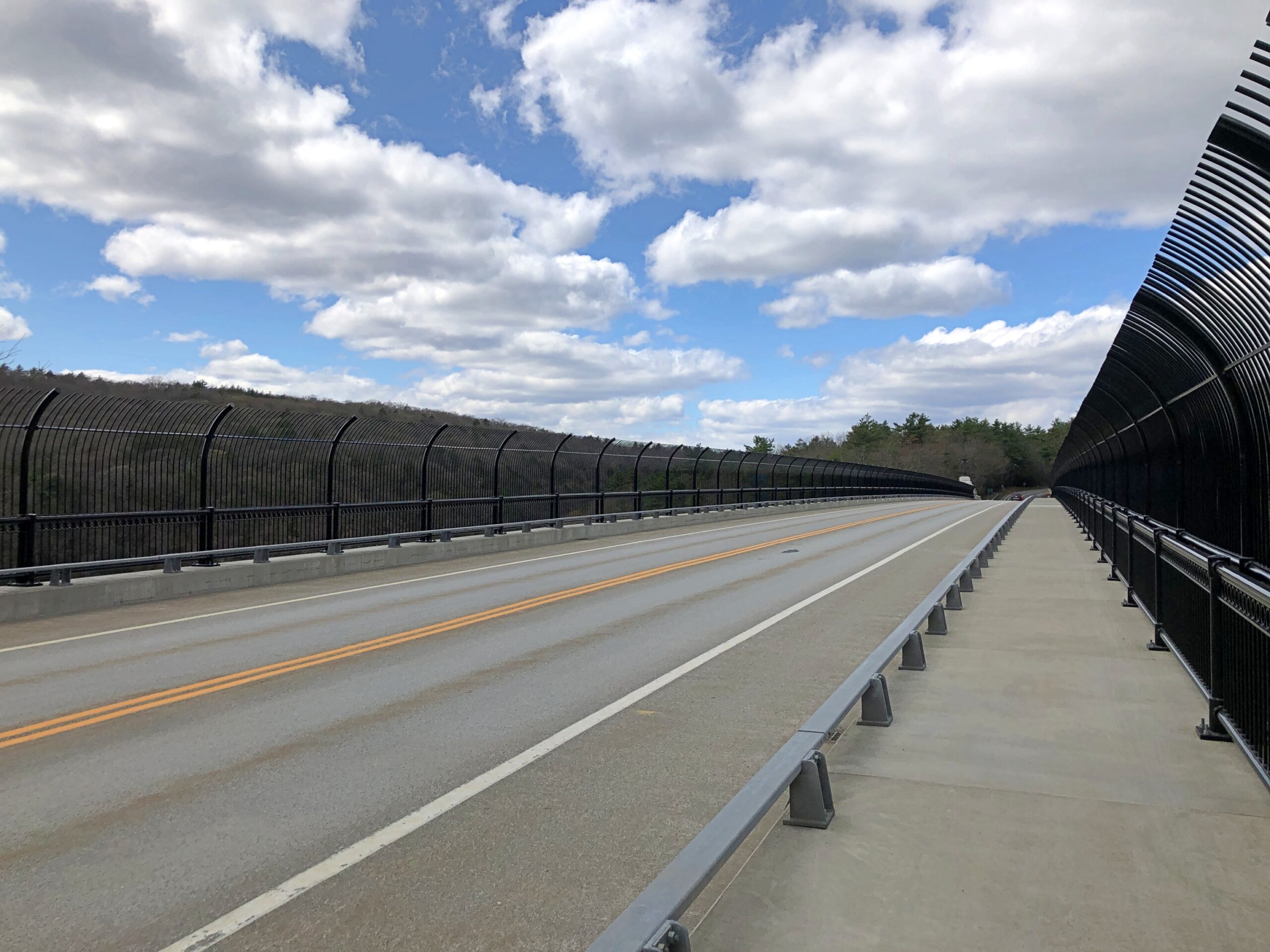
In my experience, a bridge with a name is usually worth a look. So it was with the French King Bridge, which crosses the Connecticut River in Franklin County, Massachusetts. There was even a wide place in the road (Route 2) to park, so that accessing the pedestrian experience was easy.
Just to judge by the walkway, a middling pedestrian experience. There are worse, especially bridges with high traffic volumes, but also many more walkable ones.
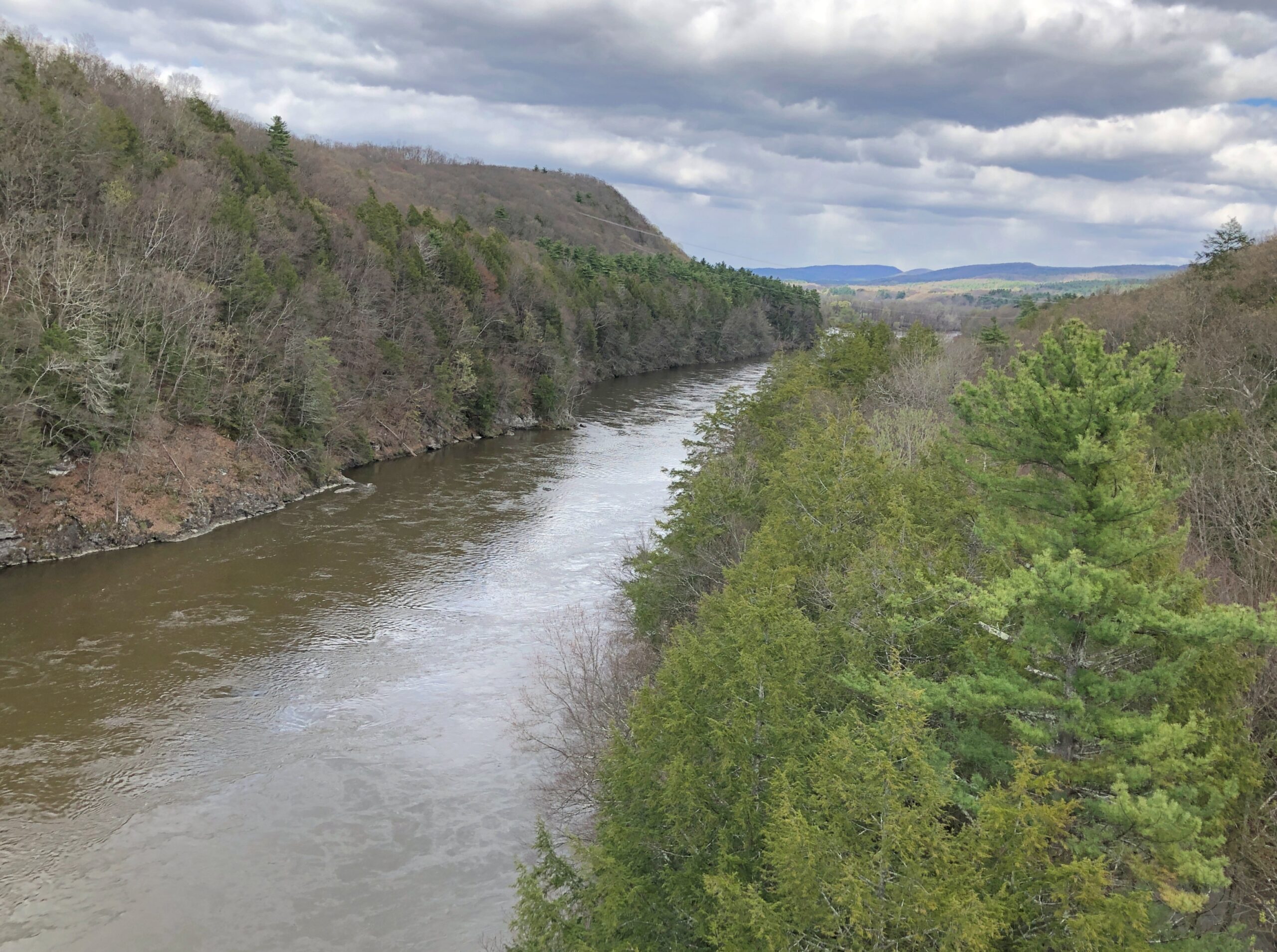
Then there’s the view from French King. That’s worth the stop and then some.
Looking upstream, or generally north. The Connecticut rises in New Hampshire very near the Canadian border and reaches Long Island Sound near Old Lyme, Connecticut. People have been living in the Connecticut River Valley for at least 6,000 years.
French King is an arch (see image from below here), like the New River Gorge Bridge in West Virginia, only a lot smaller and not nearly as high. But high enough: seems that MassDOT recently installed the cage-like bar structure at each edge of the walkways across the bridge because of people’s occasional but unfortunate habit of pitching themselves into the river, almost always fatally.
I know suicide ideation is a worrisome thing for those plagued with it, and I’m glad I’m not. But I believe most of us have anti-suicide ideations, as in, jumping off a bridge is not the way I would do myself in. Of course, I’ve ruled out all the other common methods as well.
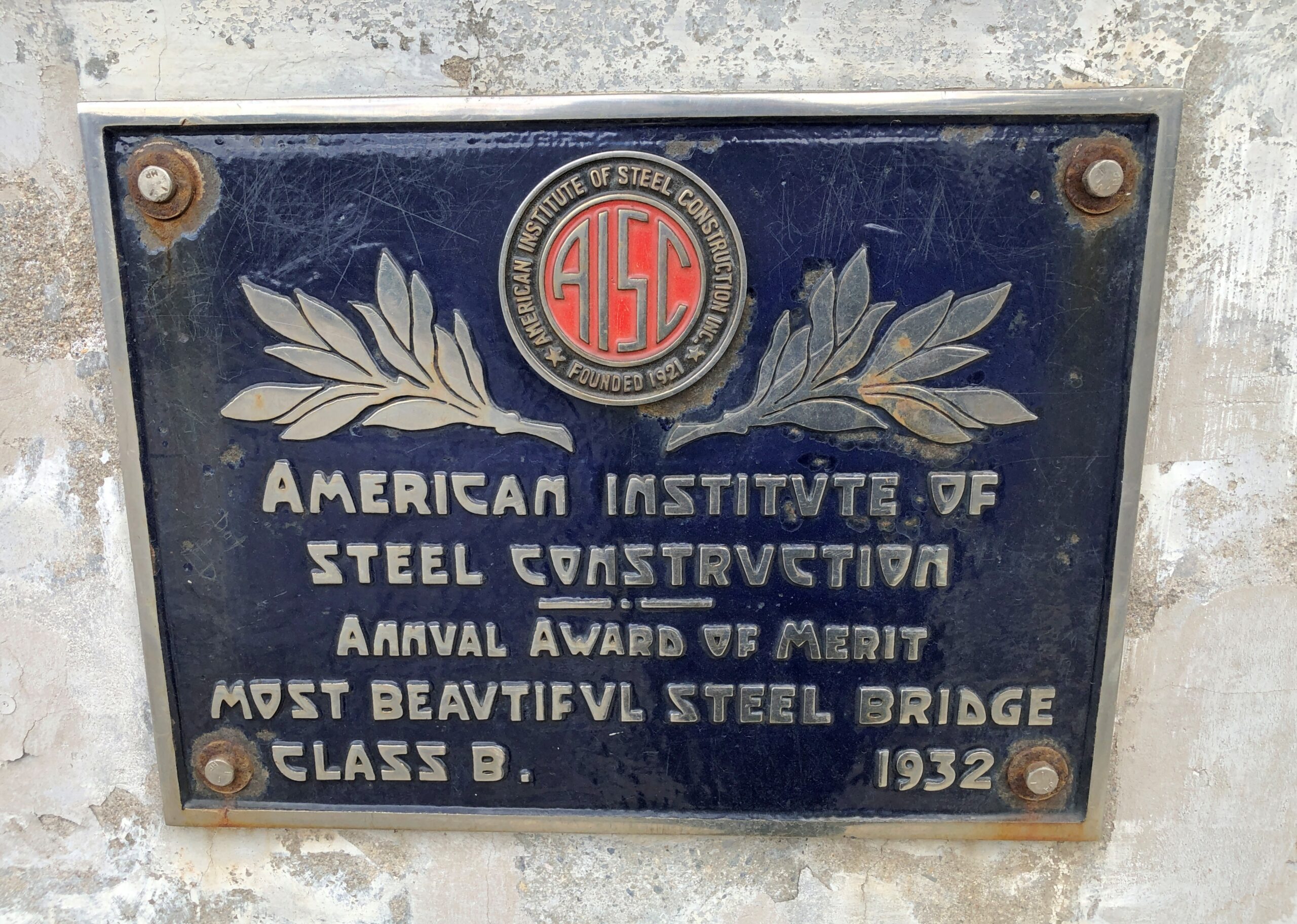
Engineers at the time of the bridge’s construction thought highly of the design.
One thing leads to another online, and pretty soon I was leafing through web pages at the American Institute of Steel Construction. Such as this page – Featured Projects – by the National Steel Bridge Alliance, showcasing some cool-looking steel bridges: Lake Bridges over Kentucky Lake and Lake Barkley; Lake Champlain (Crown Point) Bridge; Homestead Grays Bridge (Pittsburgh); Hope Memorial (Lorain-Carnegie) Bridge (Cleveland).
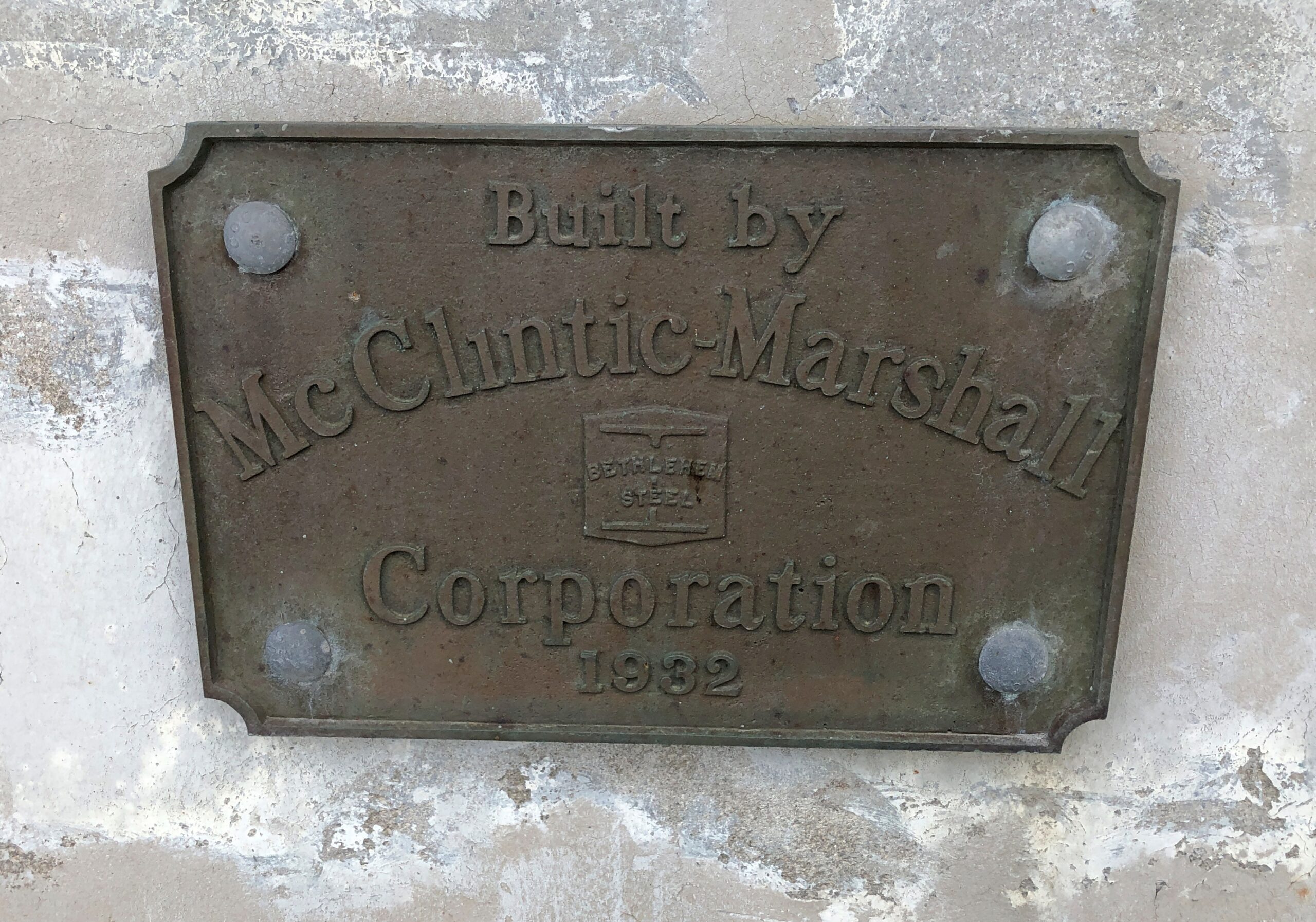
Bridge builders.
McClintic-Marshall was just warming up with the French King Bridge. Not long after, the company won a contract for the superstructure of the Golden Gate Bridge.
“The McClintic-Marshall Co., a subsidiary of Bethlehem Steel Corp., bid $10,494,000 for the contract to build the steel superstructure,” notes the Pottstown Historic Society. “Of course, because McClintic-Marshall was located in Pottstown, the outcome of this bid was of enormous importance for the entire area… On Jan. 12, 1933, anxiety gave way to joy as The Pottstown Mercury announced “M’CLINTIC’S BIG CONTRACT TO BE SIGNED TODAY.”
Finally, the name. French King after a nearby large rock in the middle of the river of that name. Before the river was dammed, it rose prominently out of the water. That naming is vaguely attributed to passing Frenchmen but more seems like one of those go figure origins common enough in place names. Maps wouldn’t be quite as interesting without them.
The highway Massachusetts 2 – locally called Route 2 – traverses the northern reaches of the commonwealth, from the Boston Common to the border with New York more than 140 miles away, or vice versa. I went west, fortunately not starting in Boston itself, but still slightly inside Route 128.
Once you leave the thickest of metro Boston headed westward, the route becomes more casually picturesque, mildly winding through mildly hilly territory, providing access to Massachusetts towns more and less pleasant, depending I suppose on the vagaries of their economic history. Not an epic drive of the kind you encounter high in some mountains or across wide bodies of water, but a satisfying one all the same.
Eventually you come to the western part of the state, as mountainous as it gets, and the road acquires appropriate twists and vistas. My favorite moment on the road was when I first drove it in 1989. I took one of those twists, and saw a suddenly appearing sign that said Entering Florida. Of course someone has posted a picture.
Florida, Massachusetts, that is, a town (pop. 671) in the Berkshires.
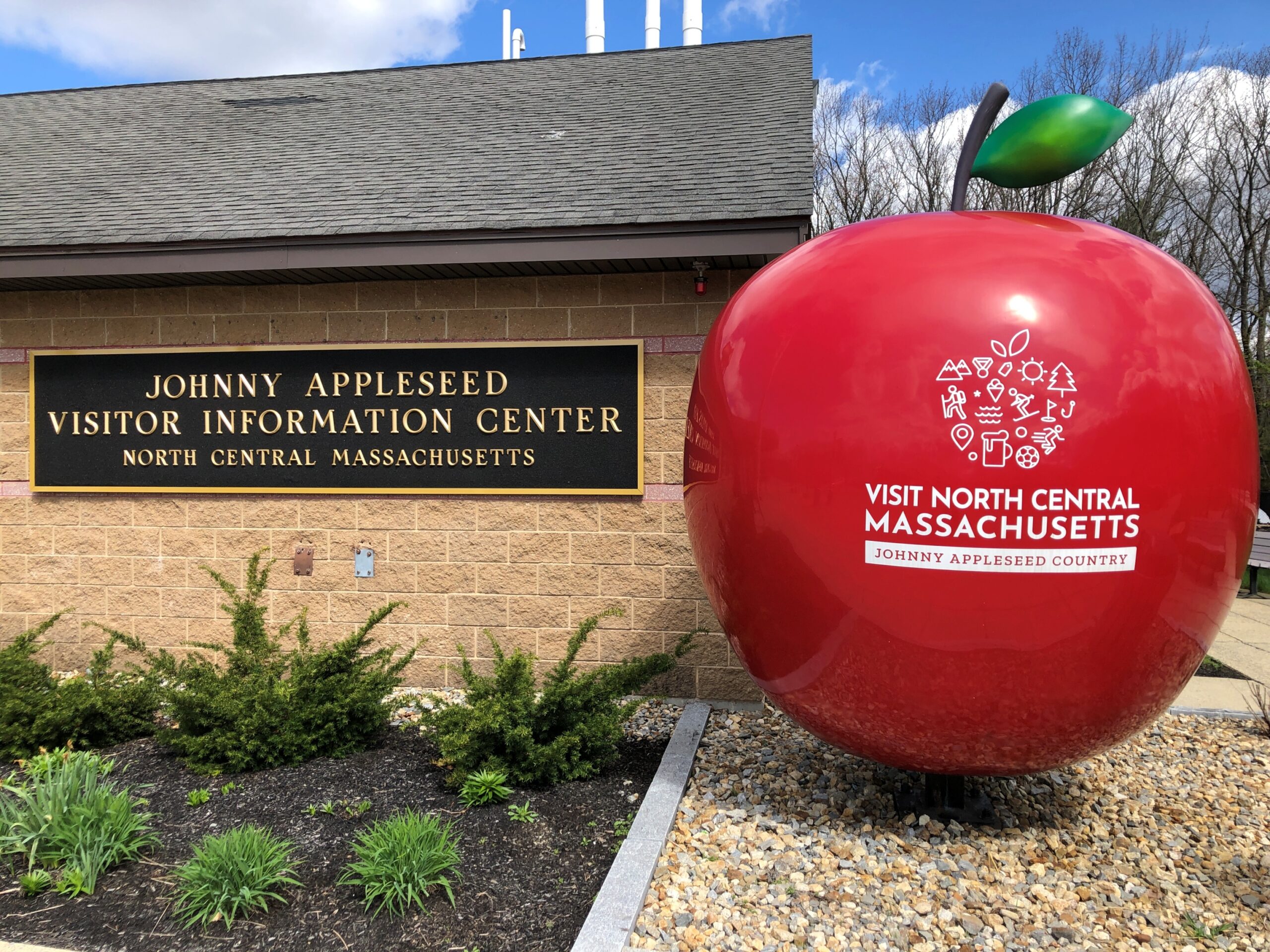
That was another drive. In April I traveled on Route 2 as far west as Shelburne Falls, but I’m getting ahead of myself. First I stopped at a rest stop on the way that reminds us that Johnny Appleseed hailed from these parts.
Indeed, John Chapman was born in Leominster, Massachusetts before the Revolution, though he came to fame in the wild-and-woolly Northwest Territory (and its spanking-new states) and now reposes in Fort Wayne, Indiana under some apple trees.
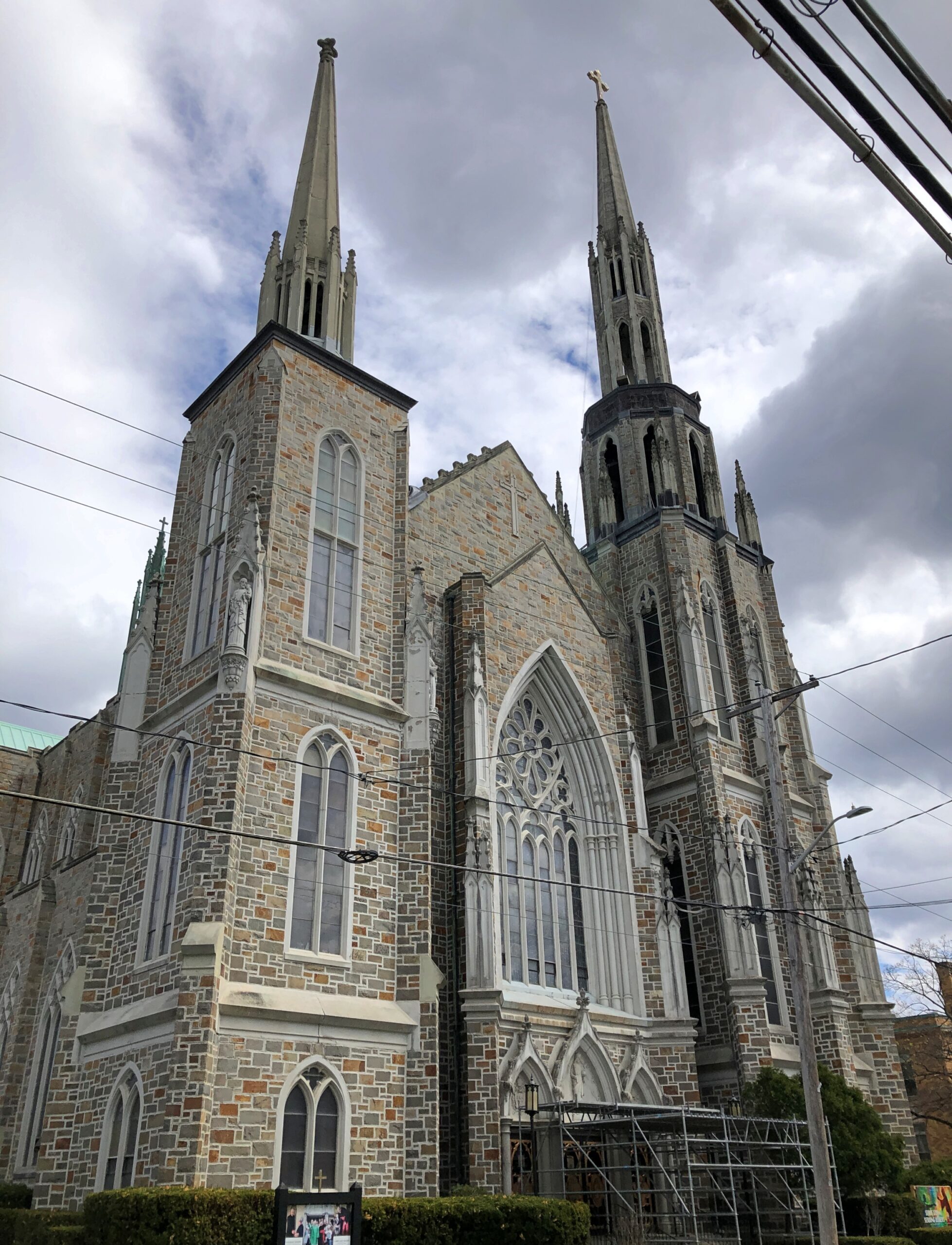
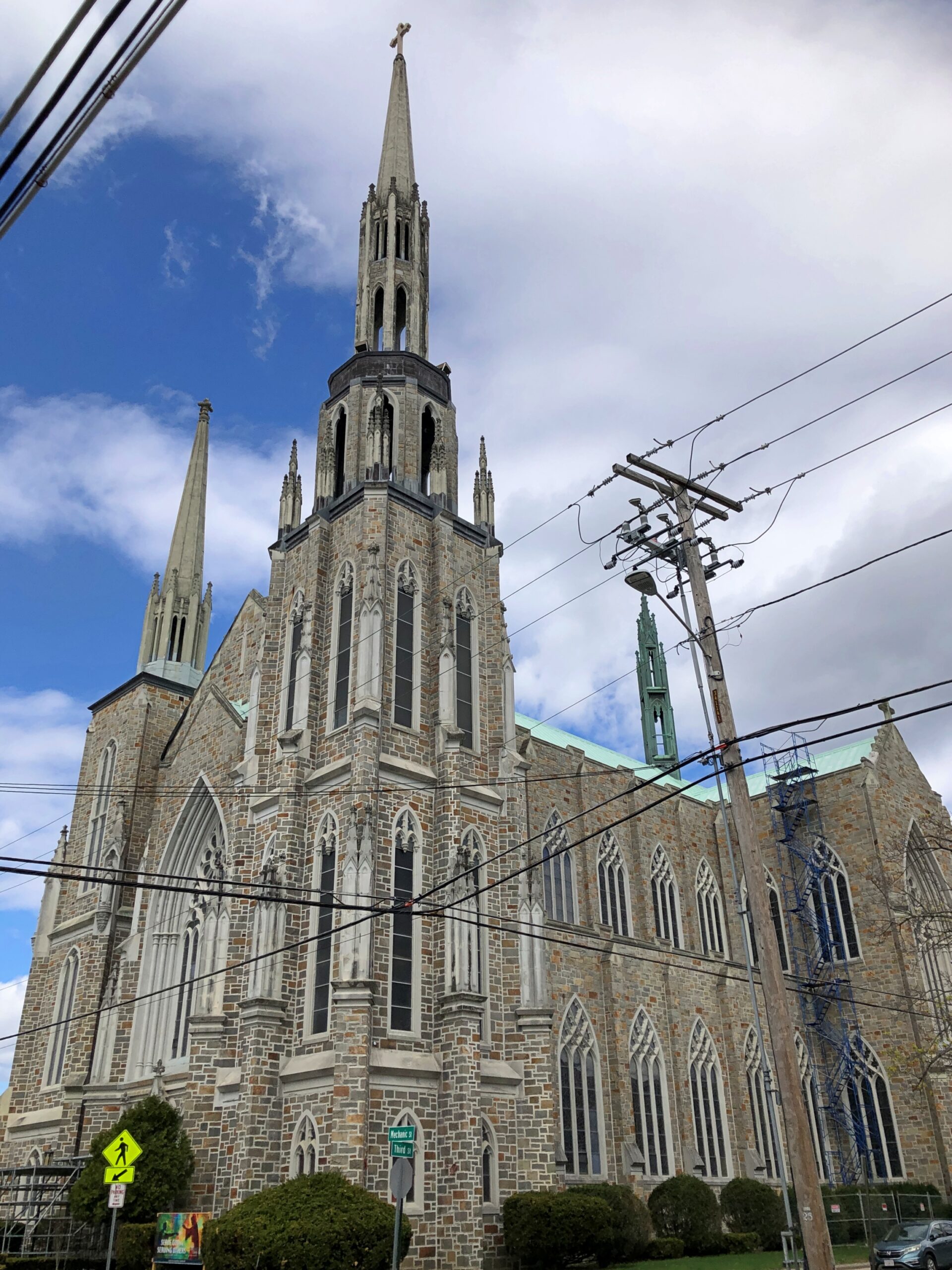
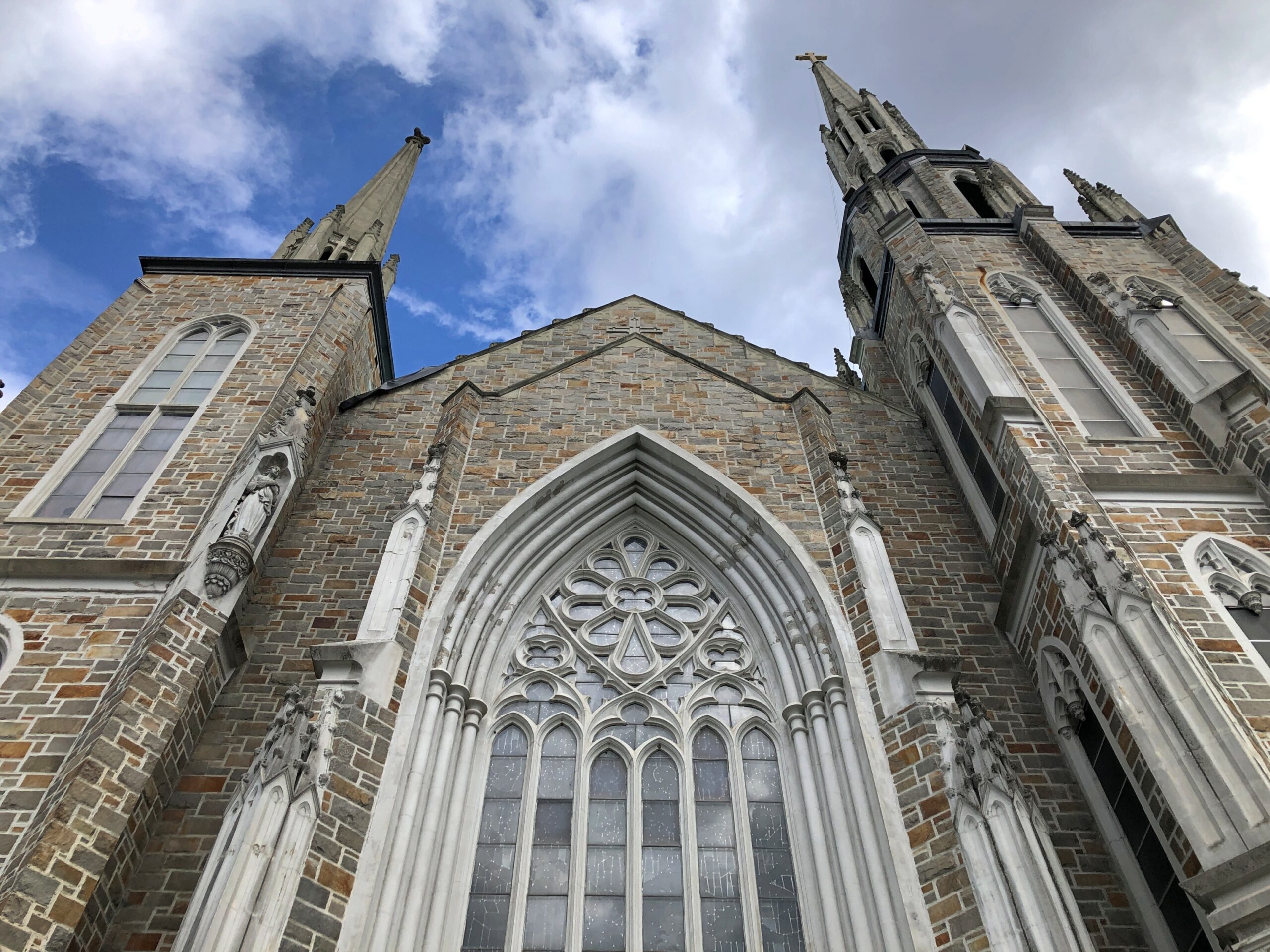
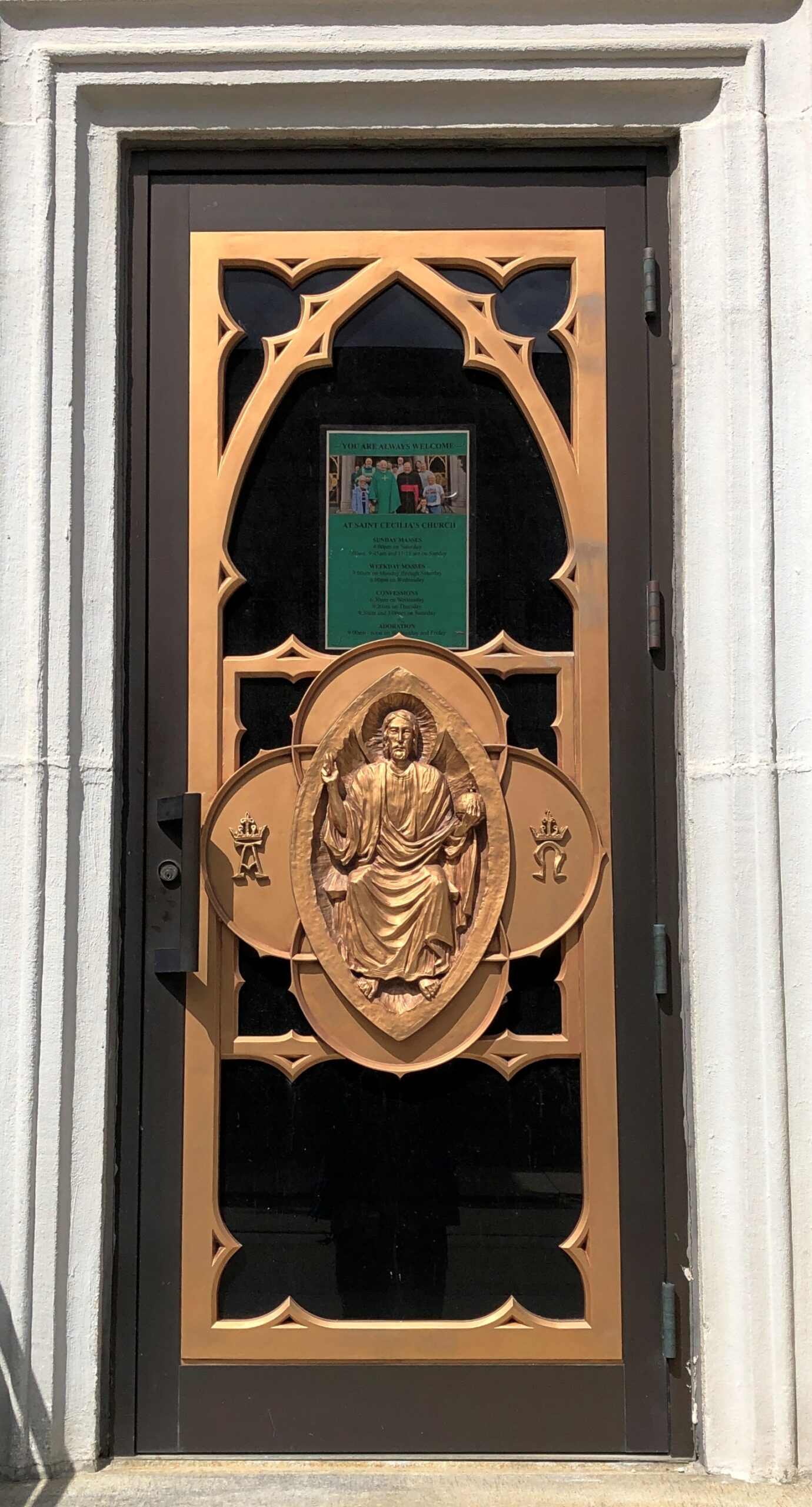
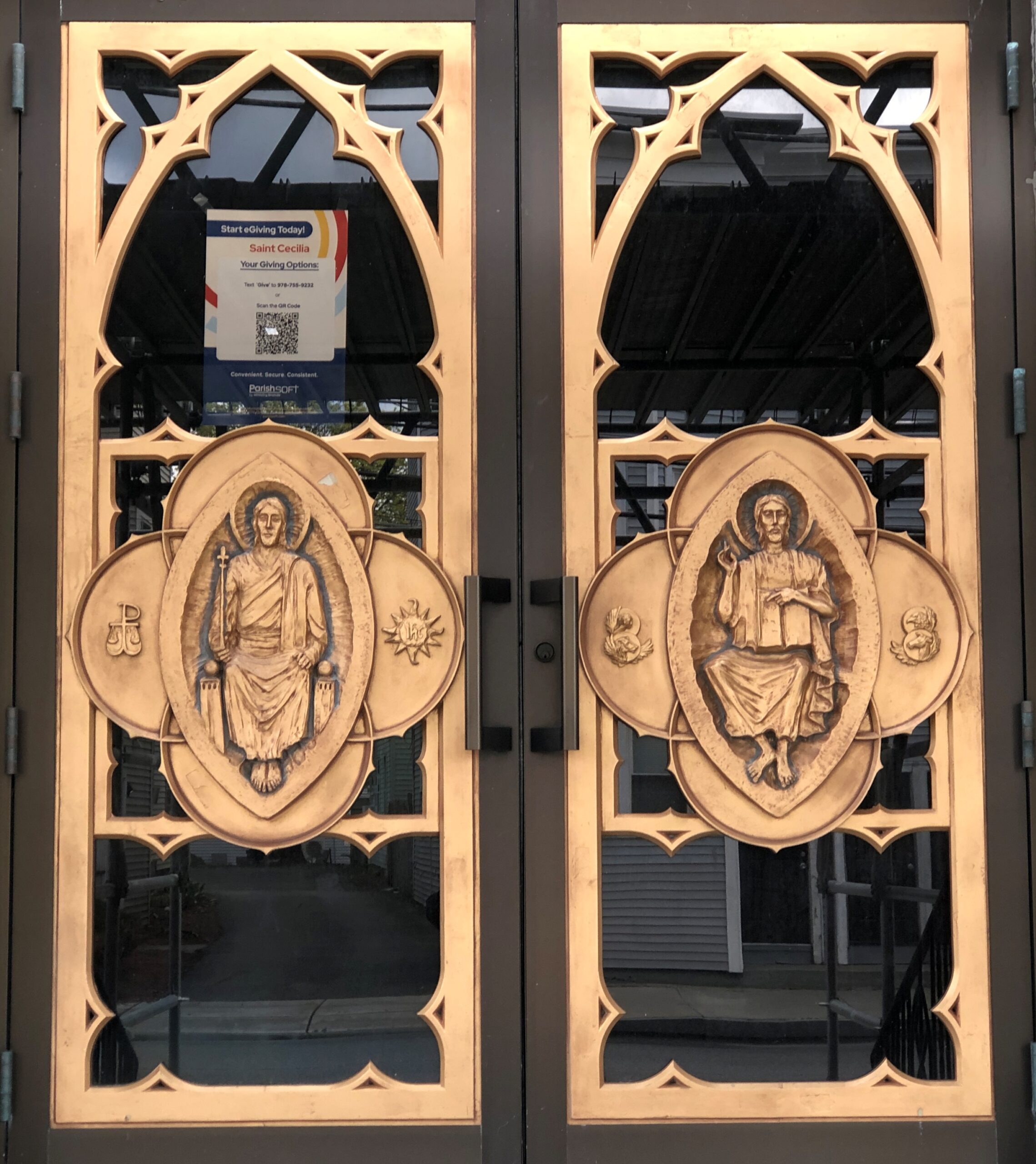
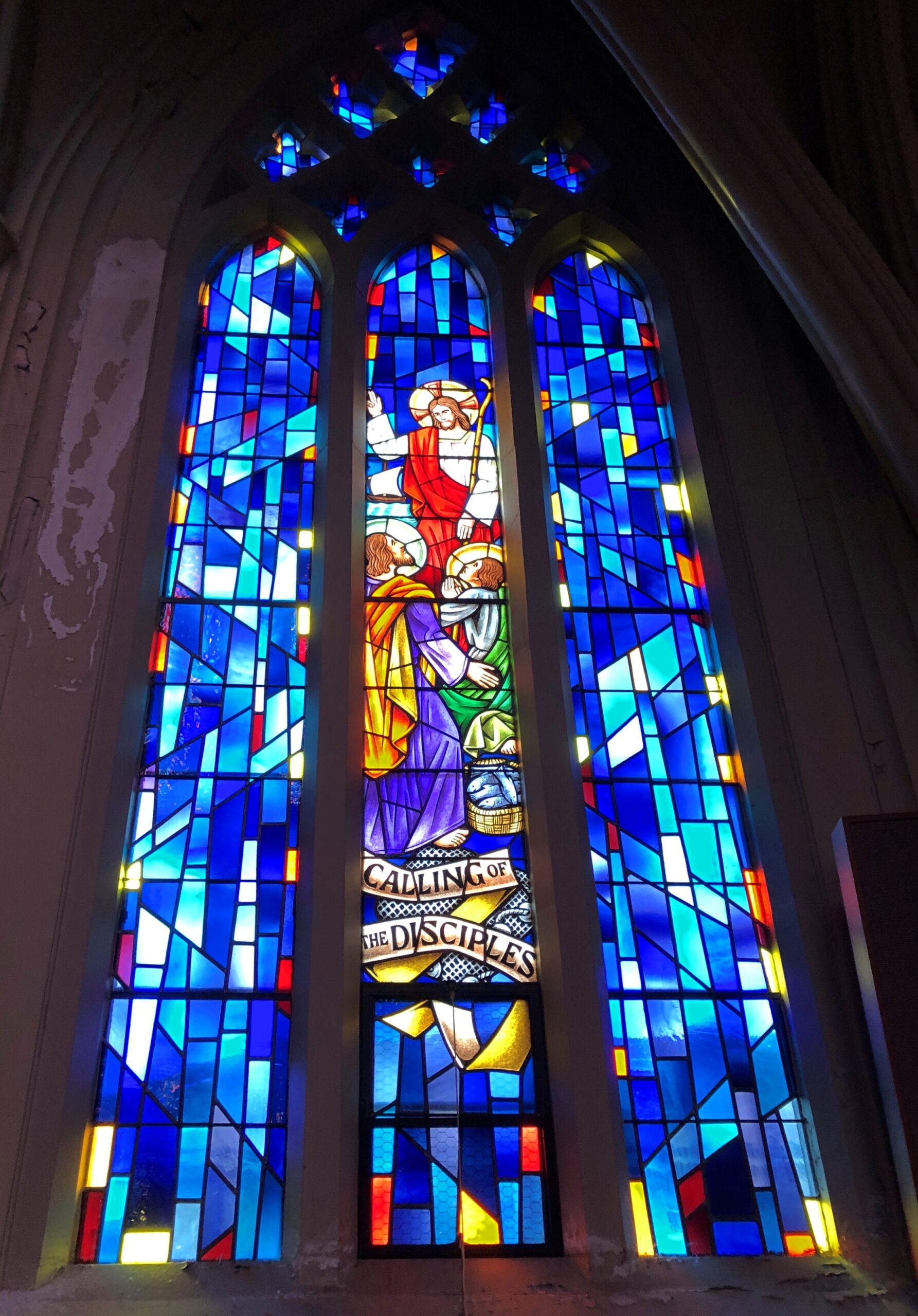
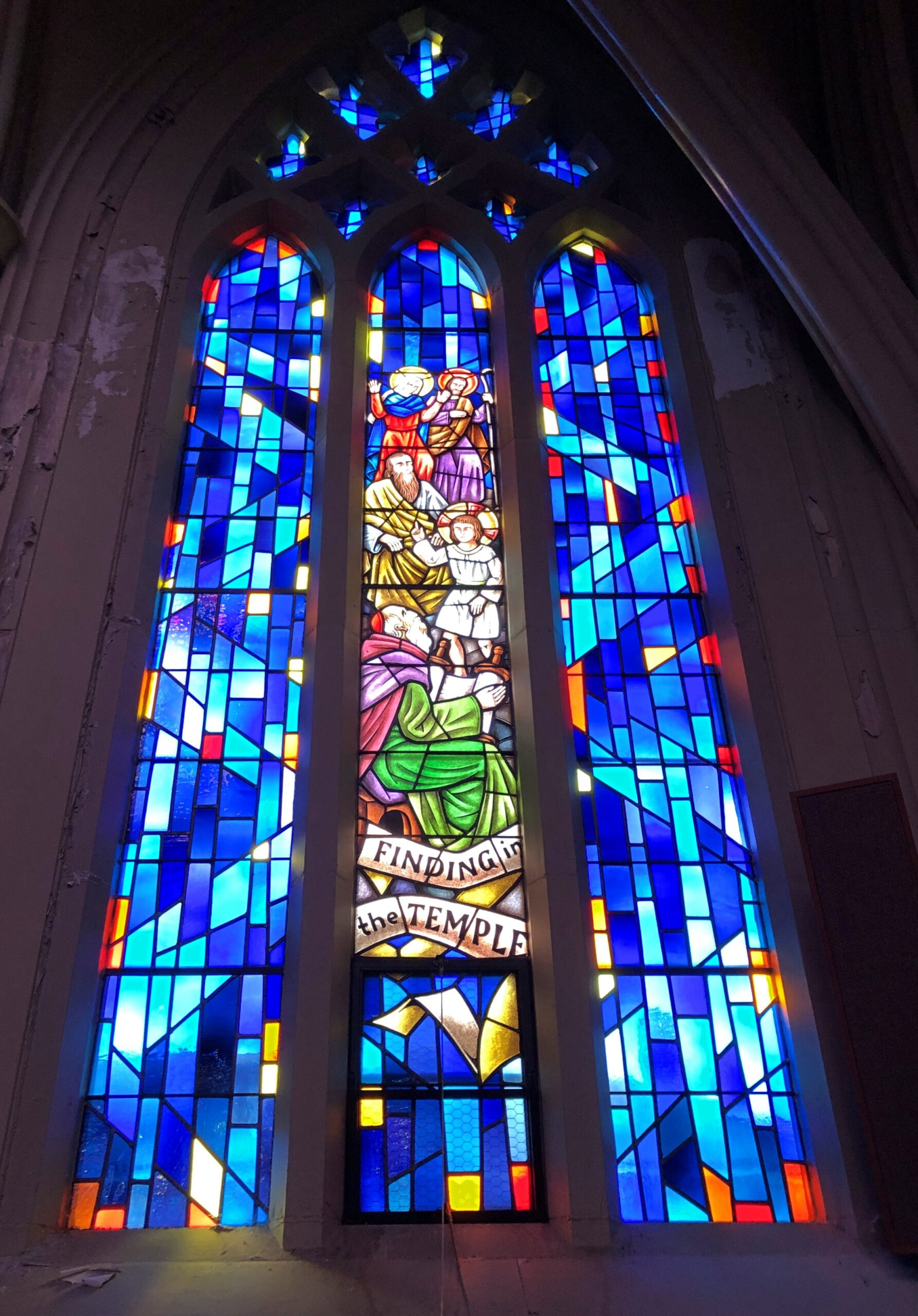
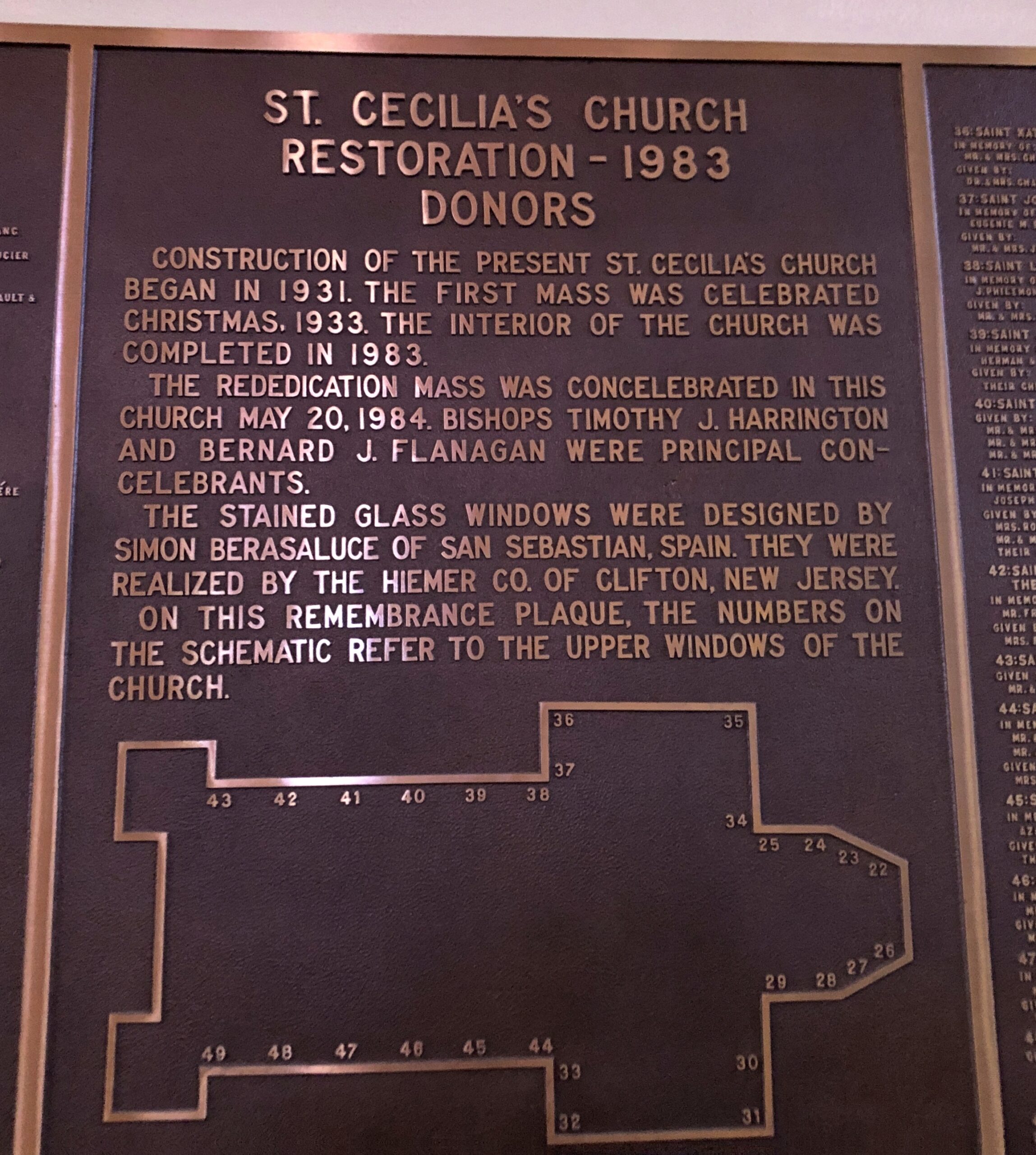
I was inspired to stop in Leominster (pop. 43,800). First stop, St. Cecelia’s Church, whose construction began in 1931 and which was restored in 1983.
Good to see a church of that name; reminds me of Santa Cecilia in Trastevere, a favorite part of Rome for me (40+ years ago), though the Massachusetts church itself is rather different.
Some fine stained glass, designed in Spain, created in New Jersey.
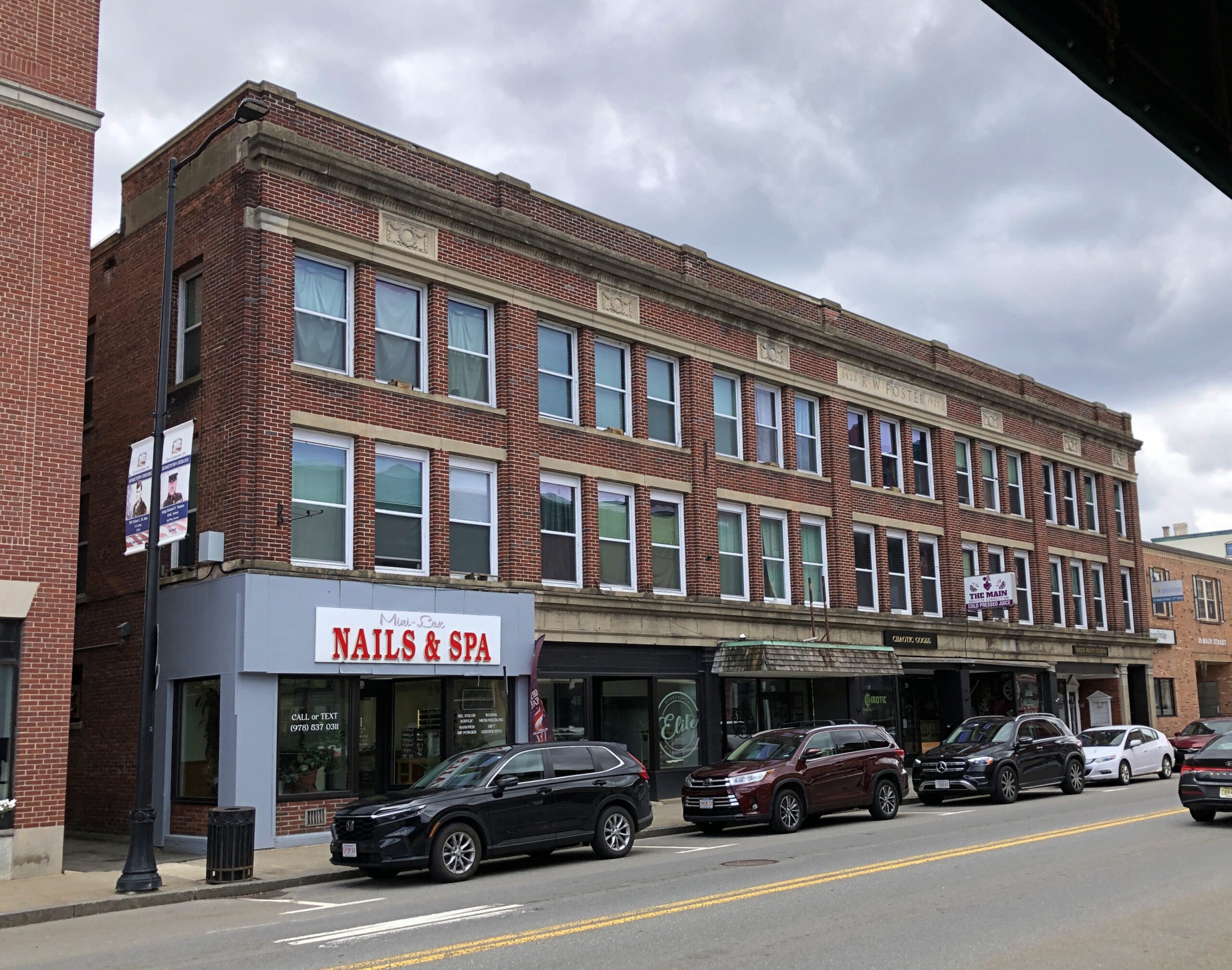
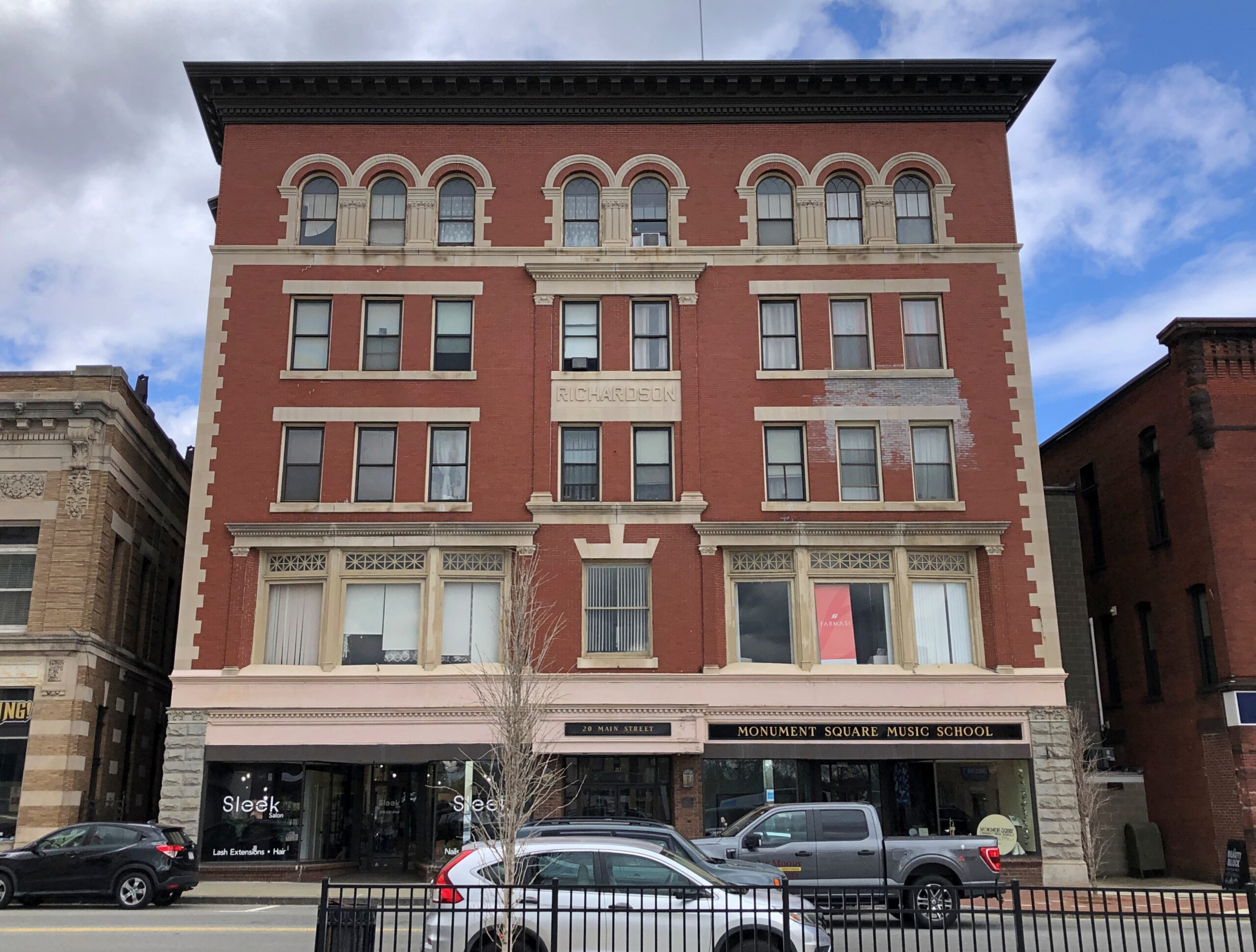
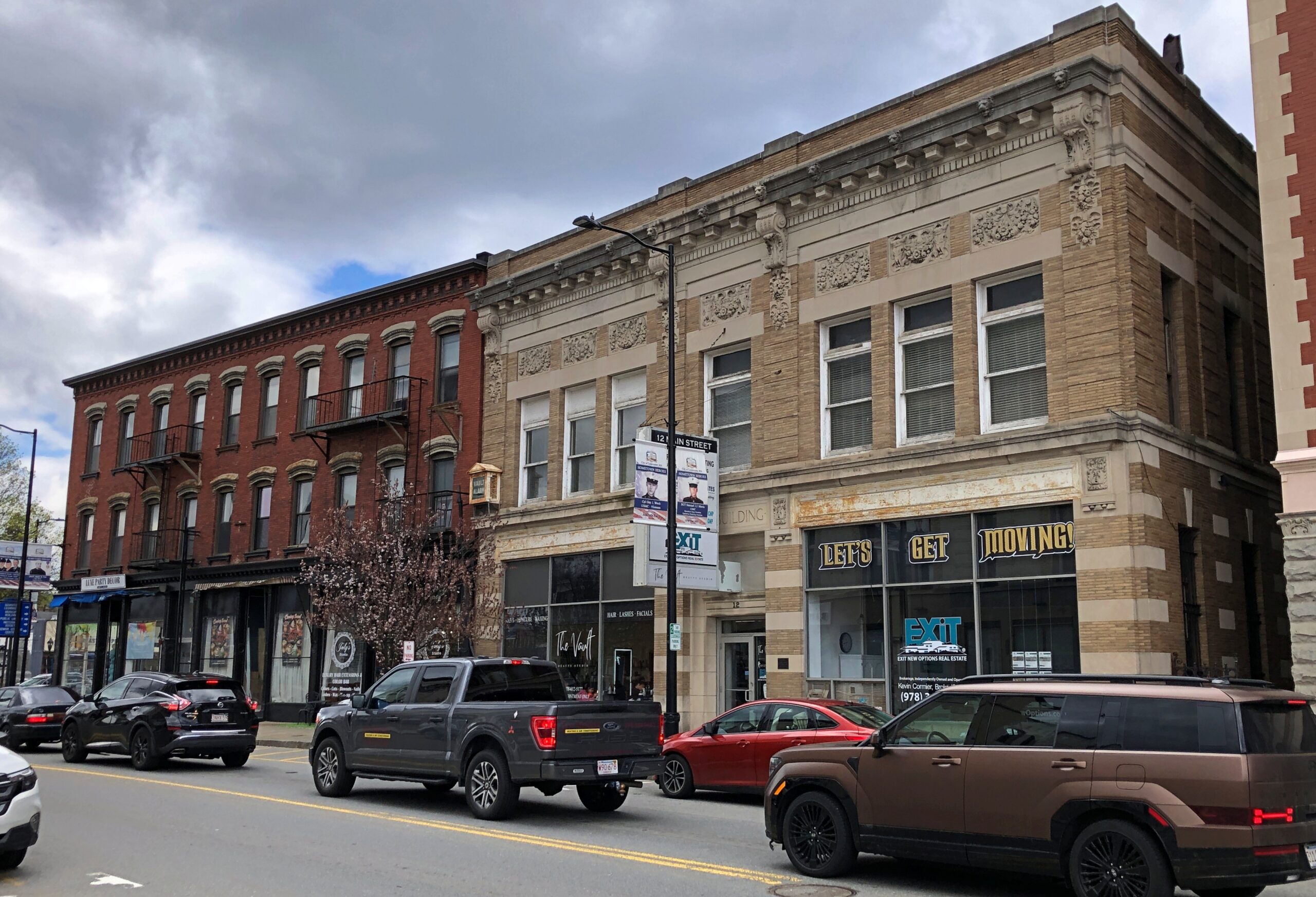
Leominster has the sort of long economic arc (for America) one finds in the Northeast: agriculture to manufacturing to services, though those first two economic activities are to some degree ongoing even now. The town is prosperous enough to support well-kept and still-used downtown buildings.
I liked the handsome former train station, now retail.
Another church.
Not as vaulting as the Catholic church down the road, but still a handsome brick structure. I had to look into it: this church is affiliated with the Assemblies of God, the largest Pentecostal association in the U.S.
Manufacturing in the case of Leominster meant a remarkable specialty in the 19th century and into the 20th: combs. Even more remarkable, a history of American comb making, published in 1925, is posted online, namely Comb Making in America, “An Account of the Origin and Development of the Industry for which Leominster has Become Famous to which are added Pictures of Many of the Early Comb Makers and Views of the Old Time Comb Shops.”
That publication date puts it in the public domain. Ah, there’s another setting for a streaming service limited series costume drama — among the cutthroat world of comb making in 19th-century Leominster. I don’t know that “cutthroat” is accurate at all, but who cares. Maybe two brothers fighting for control of their dying father’s comb empire, and their love for the same upper-class woman (who is anachronistically feisty), amid a backdrop of bitter labor agitation, with two labor leaders pushing for unionization, and their love for the same woman (a different woman, that is, one of the comb makers, but also feisty.). See, that wasn’t hard at all. Who needs AI to come up with ridiculous ideas?
The Forward of Comb Making in America calls Leominster the “present seat” of the industry in America: “The industry has changed this thriving town, which is about fifteen miles from Worchester and forty-five miles from Boston, from a small agricultural hamlet into an industrial center of more than twenty thousand people whose products are known throughout the world.”
In the early days, of course, making combs from animal horn and the like was a labor-intensive effort. A more modern industry arose with the invention of celluloid. Later came more sophisticated plastics and molding tech, and the expansion of the industry into other molded items. Such as Foster Grants and Tupperware, both of which originated in Leominster. A simple Google search reveals that there is still a plastics industry in Leominster.
I didn’t spend a lot of time in Leominster, so maybe I missed it. But where’s the giant comb or Foster Grant or Tupperware container in a prominent public place? Leominster officials and private boosters, get on it. Or at least invite the Wall Dogs to town to whip up some local history murals.
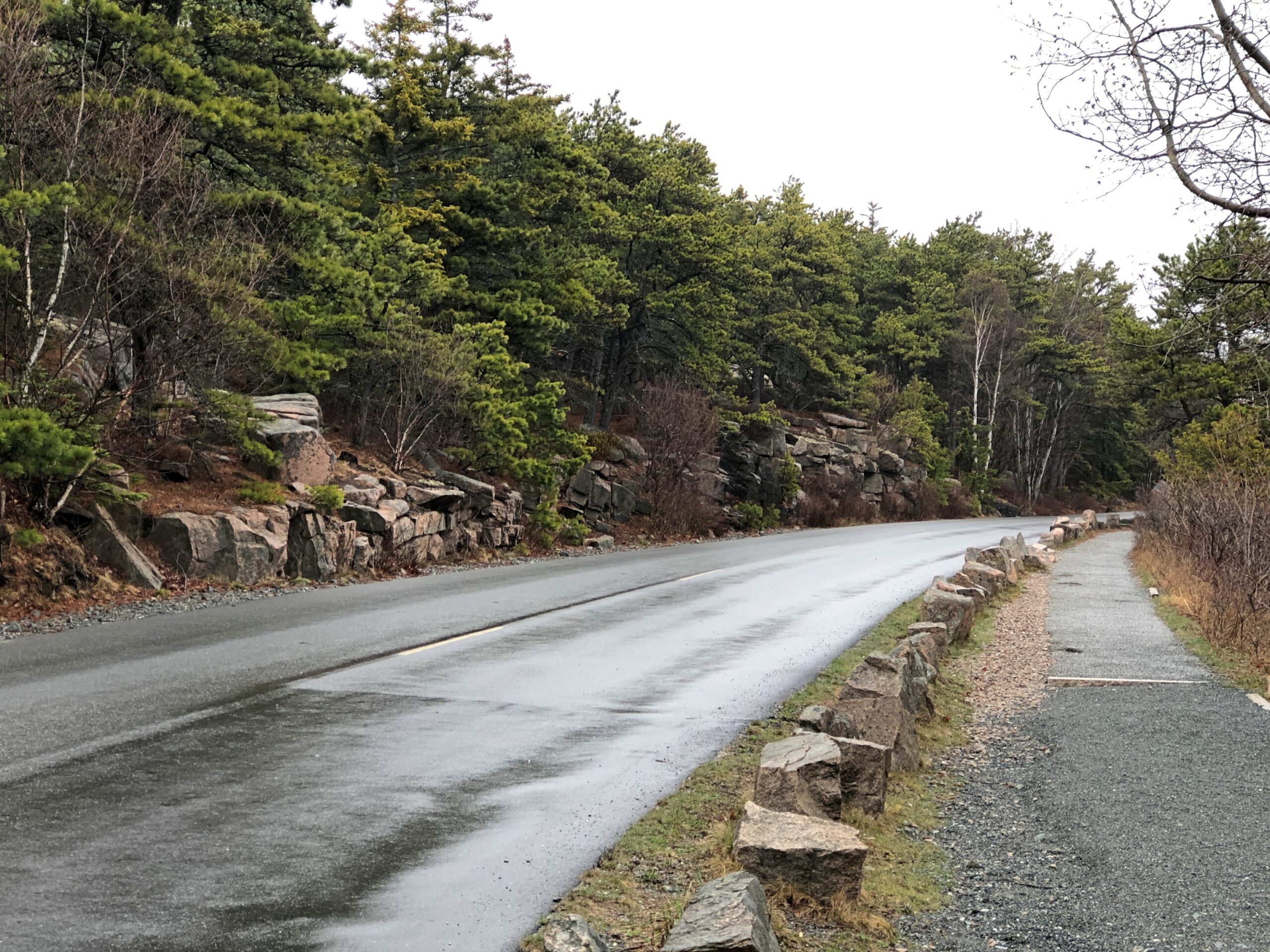
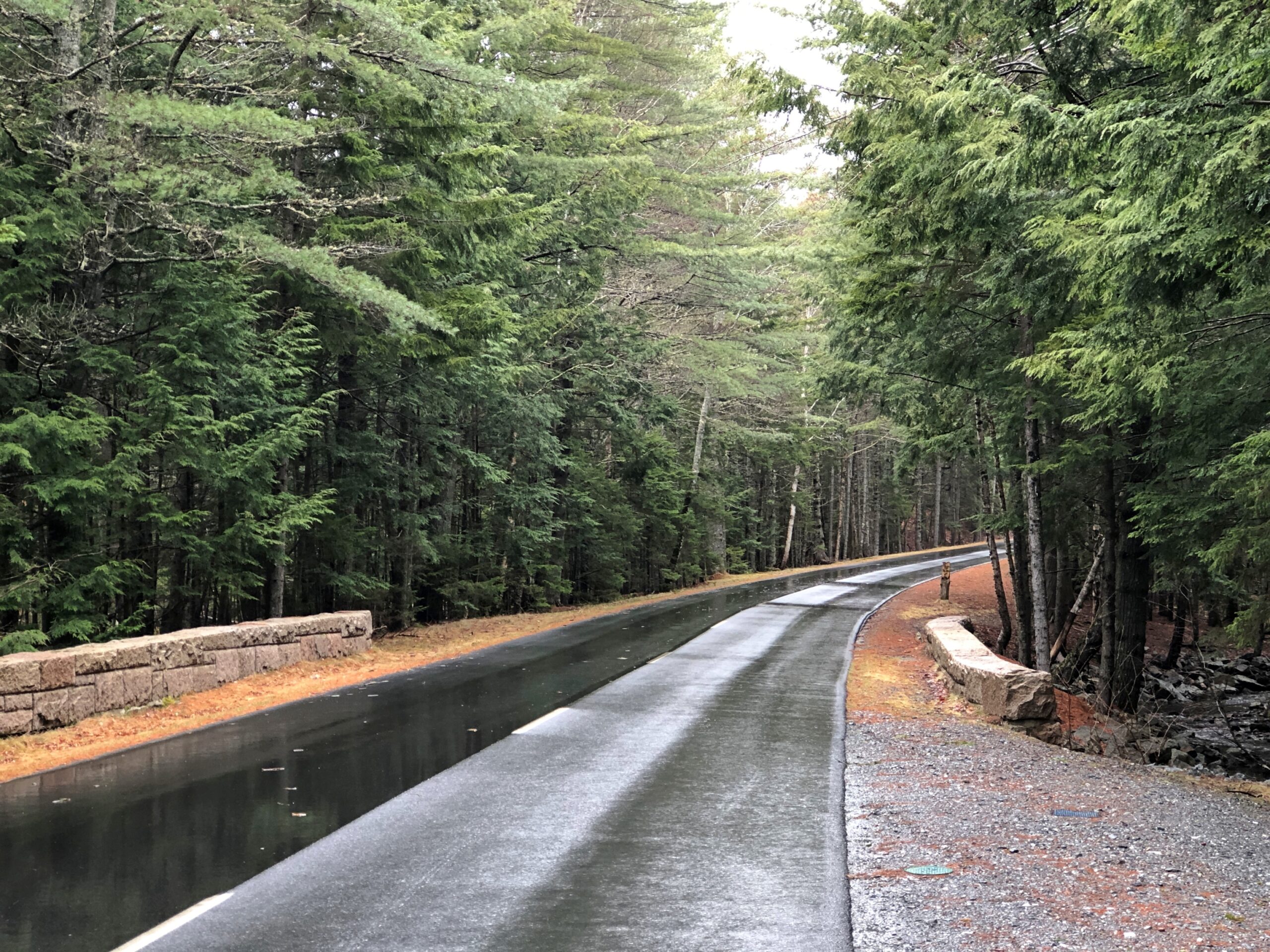
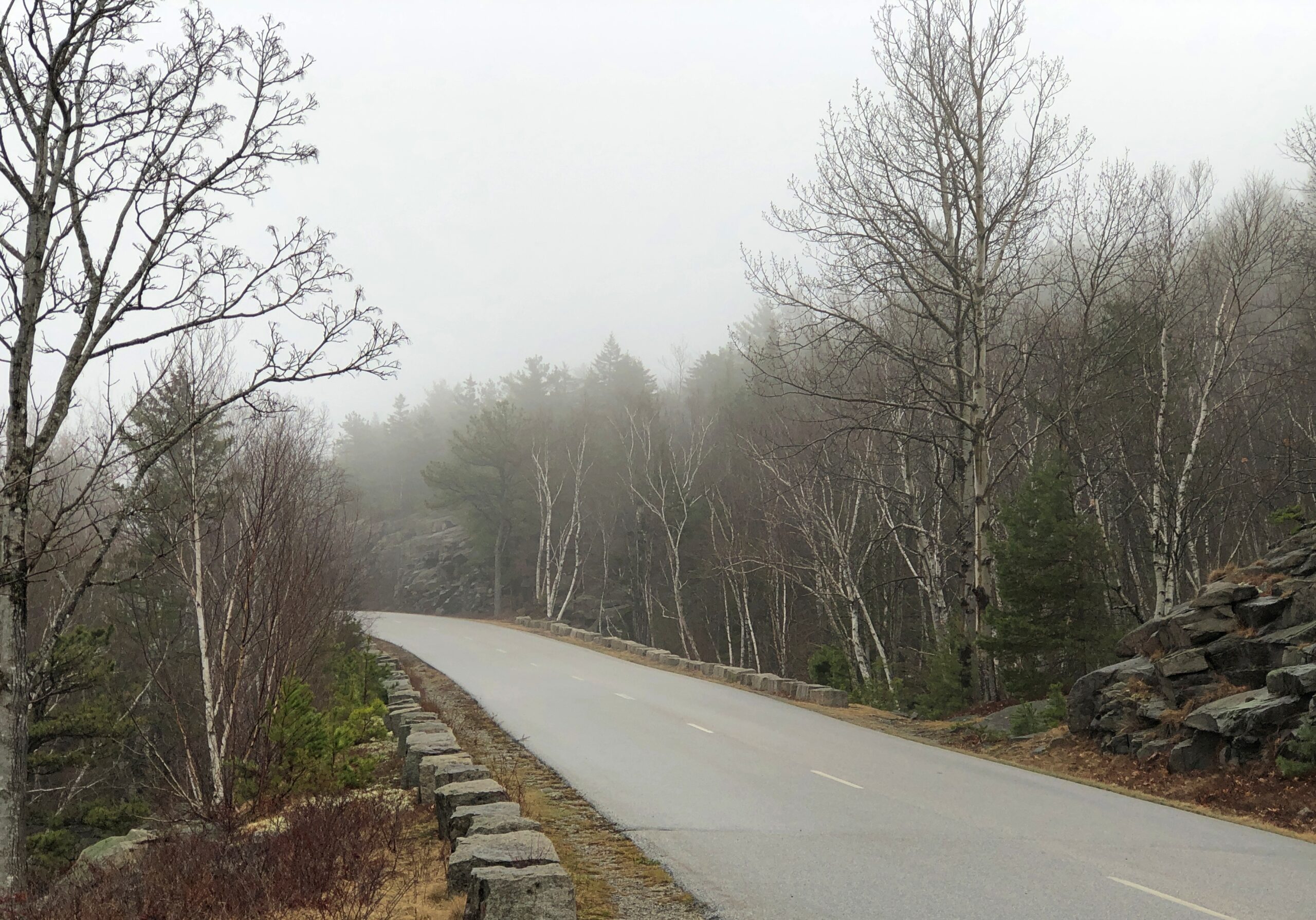
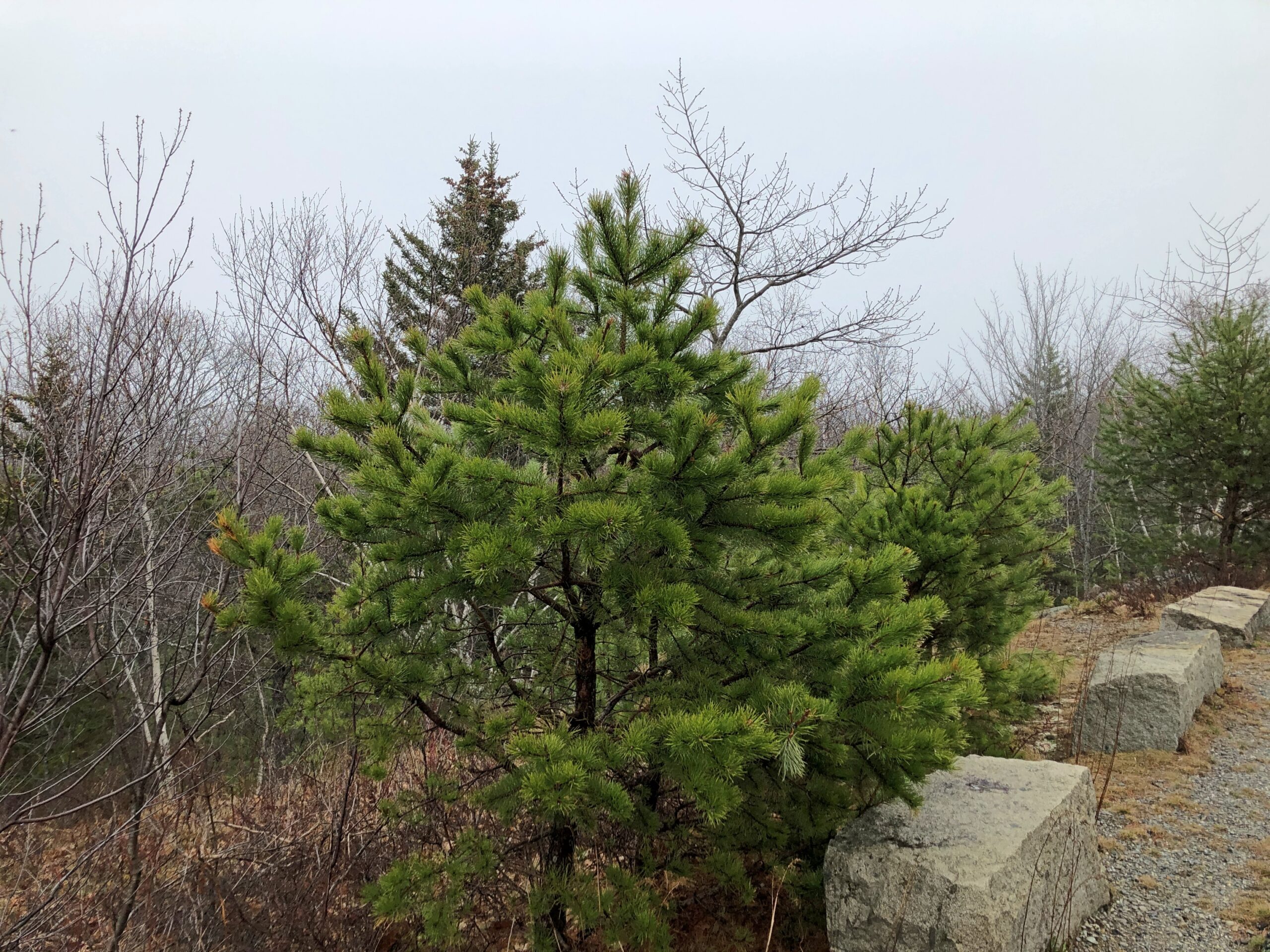
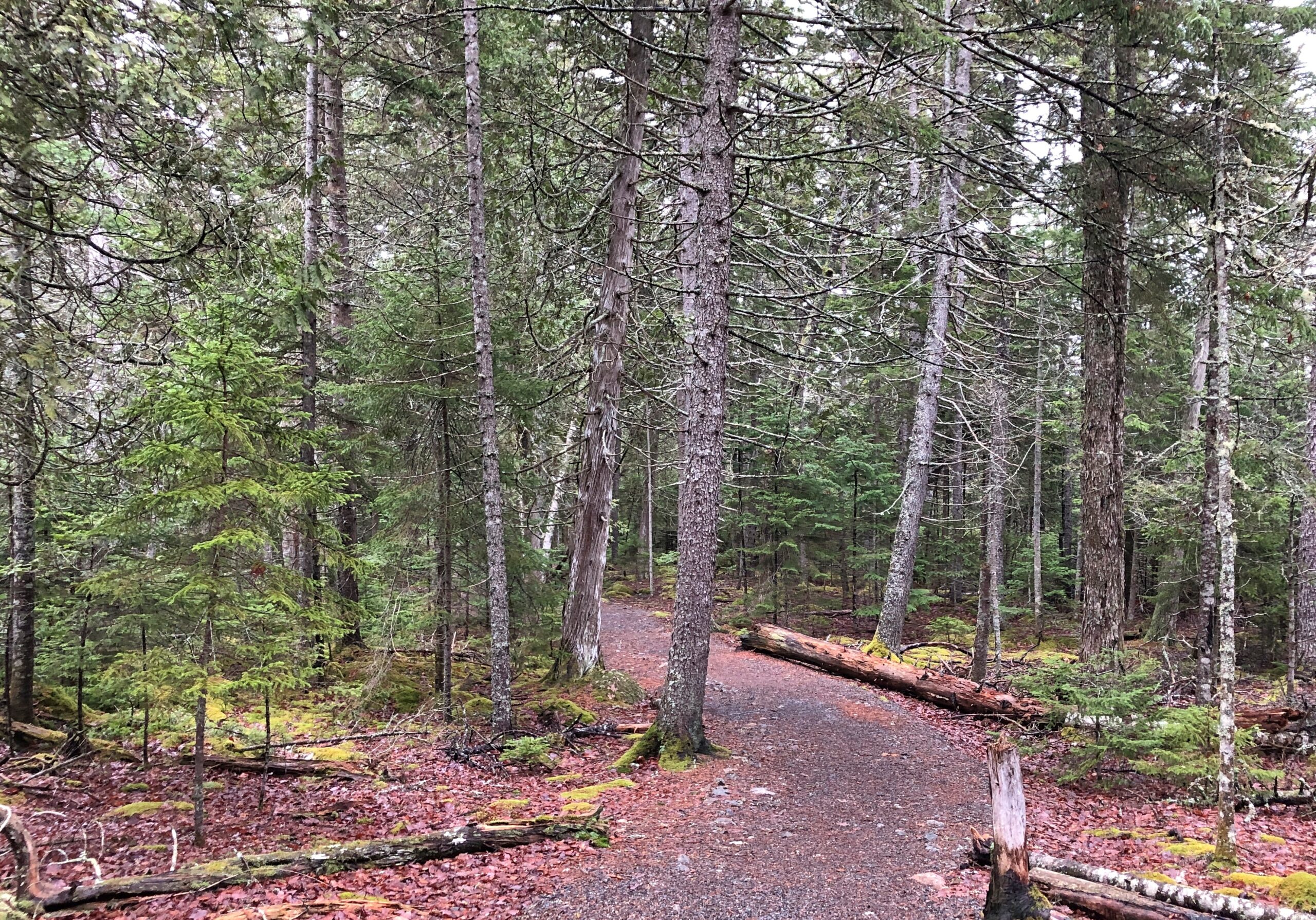
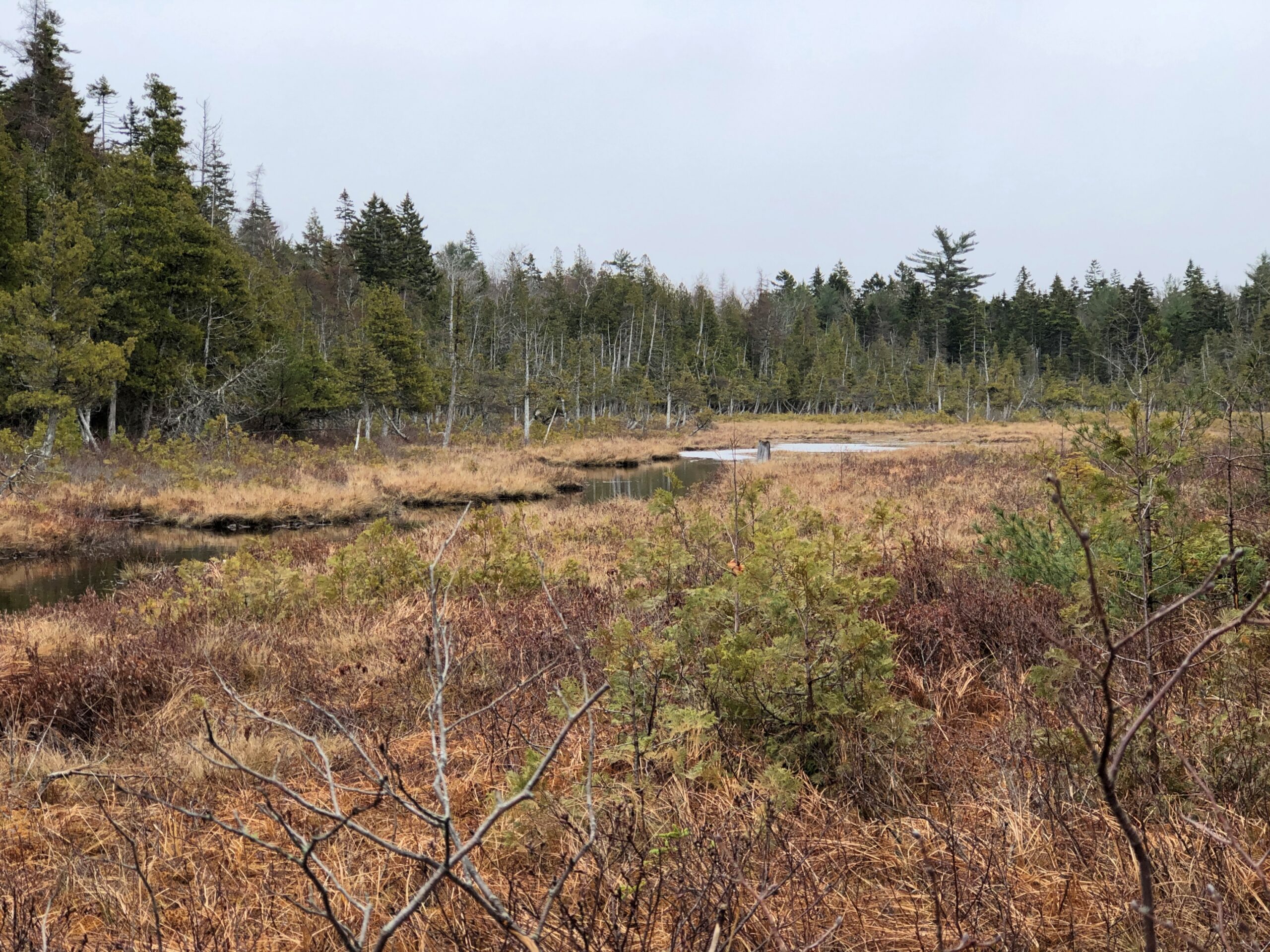
The Park Loop Road in Acadia NP is a fine drive (1) if there aren’t many other cars and (2) you take it easy around those curves. In that, it’s no different than a lot of rural roads. But there’s also the bonus of passing through thick Maine woods. There are brief views of the ocean from the road, but mostly you’re tooling through evergreens.
Through patches of deciduous trees as well.
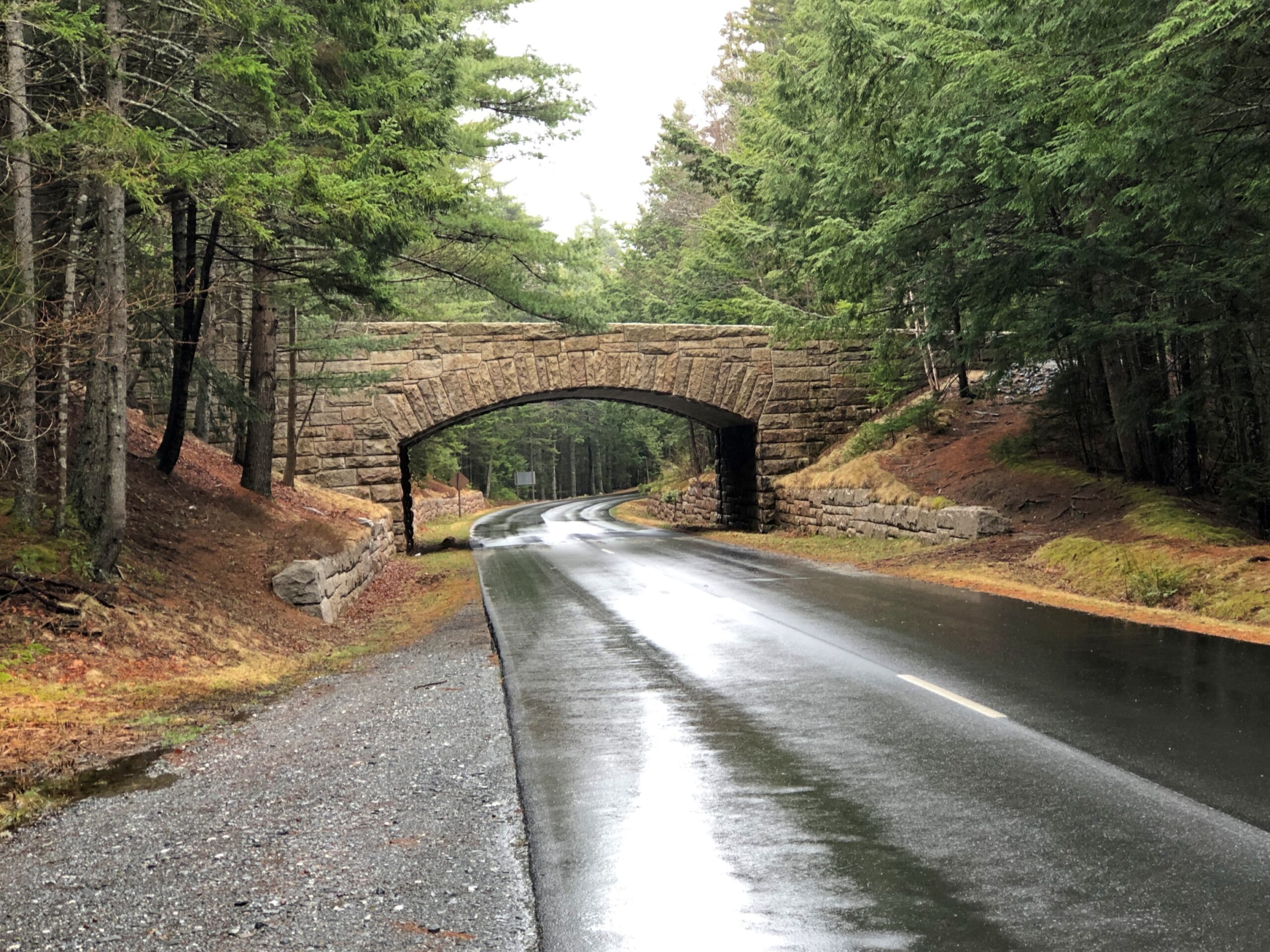
Periodically, the road crosses under handsome bridges.
This made me wonder: bridges for what? Soon I learned that the park not only has a hard-surface road snaking through, but also a network of carriage trails. A lot of them. The bridges are for them.
“Forty-five miles of rustic carriage roads, the gift of philanthropist John D. Rockefeller Jr. and family, weave around the mountains and valleys of Acadia National Park,” says the NPS. “Rockefeller, a skilled horseman, wanted to travel on motor-free byways via horse and carriage into the heart of Mount Desert Island. His construction efforts from 1913 to 1940 resulted in roads with sweeping vistas and close-up views of the landscape.”
It was barely the season for the paved road, and I suspect few visitors were on the carriage roads either. I noticed that the entrance to the Wildwood Stables, a facility that supports carriage riding, and which can be glimpsed from the road, was still closed. A carriage ride through Arcadia NP might be an grand experience, but maybe not in April.
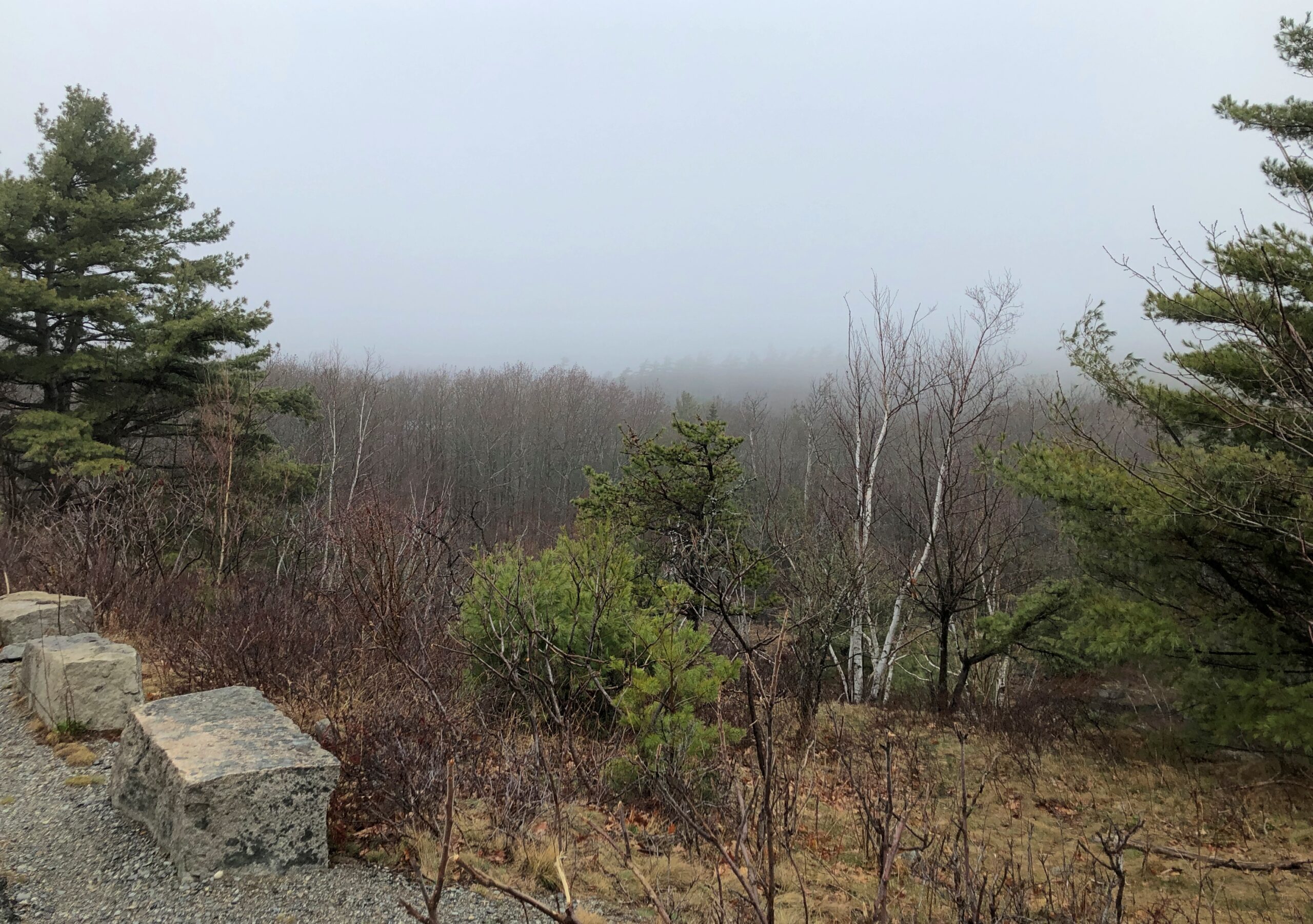
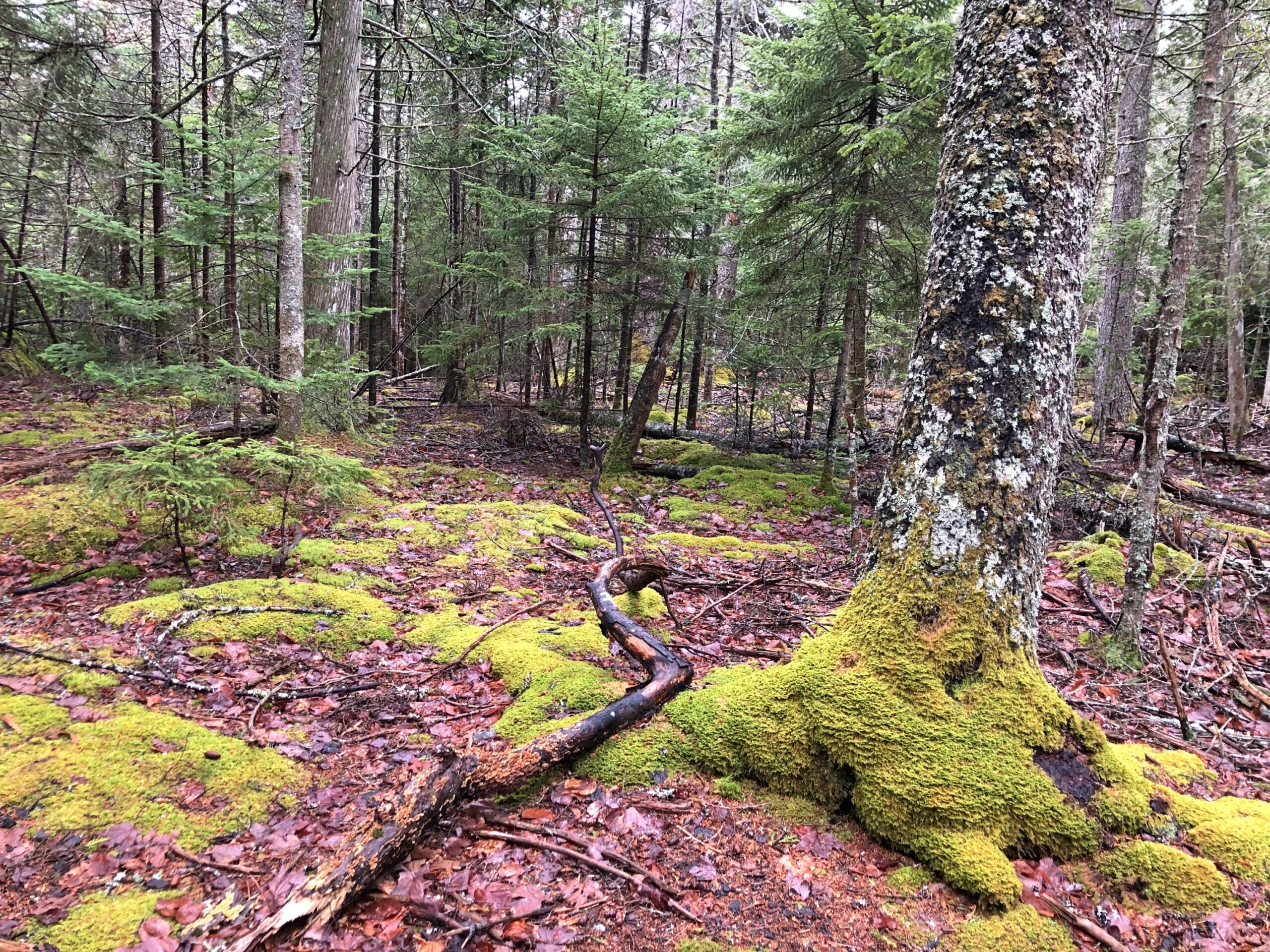
The woods alongside the road.
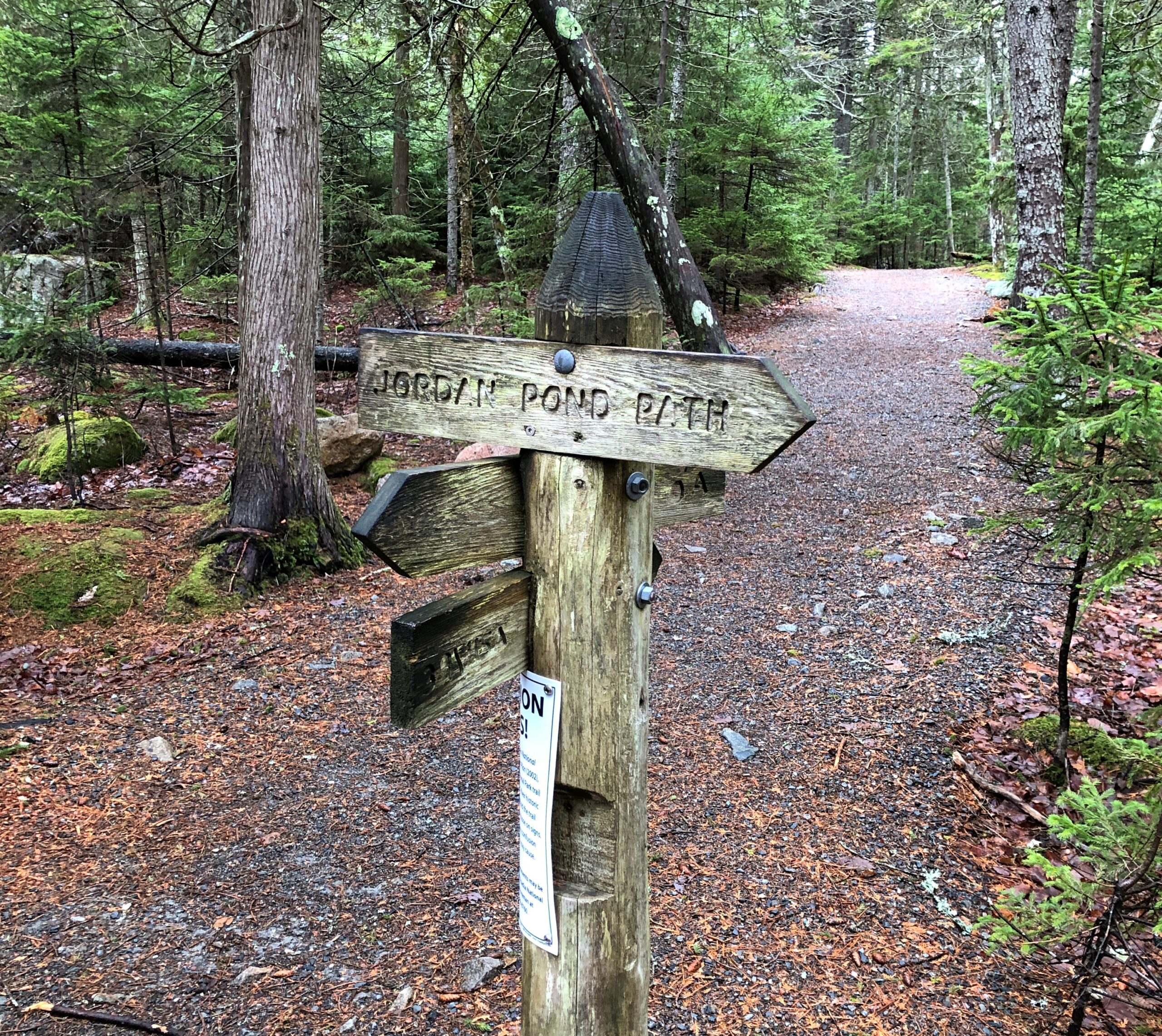
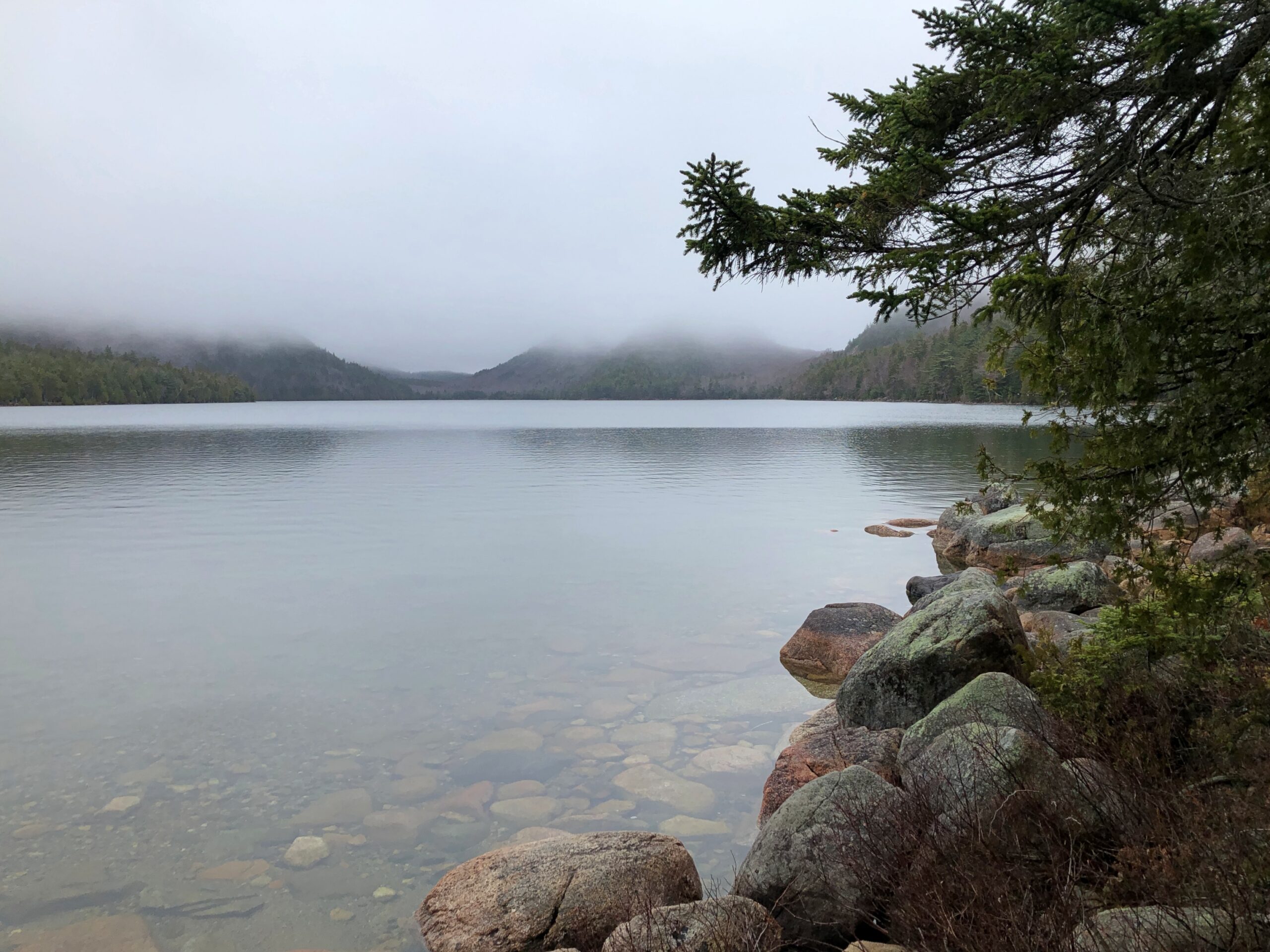
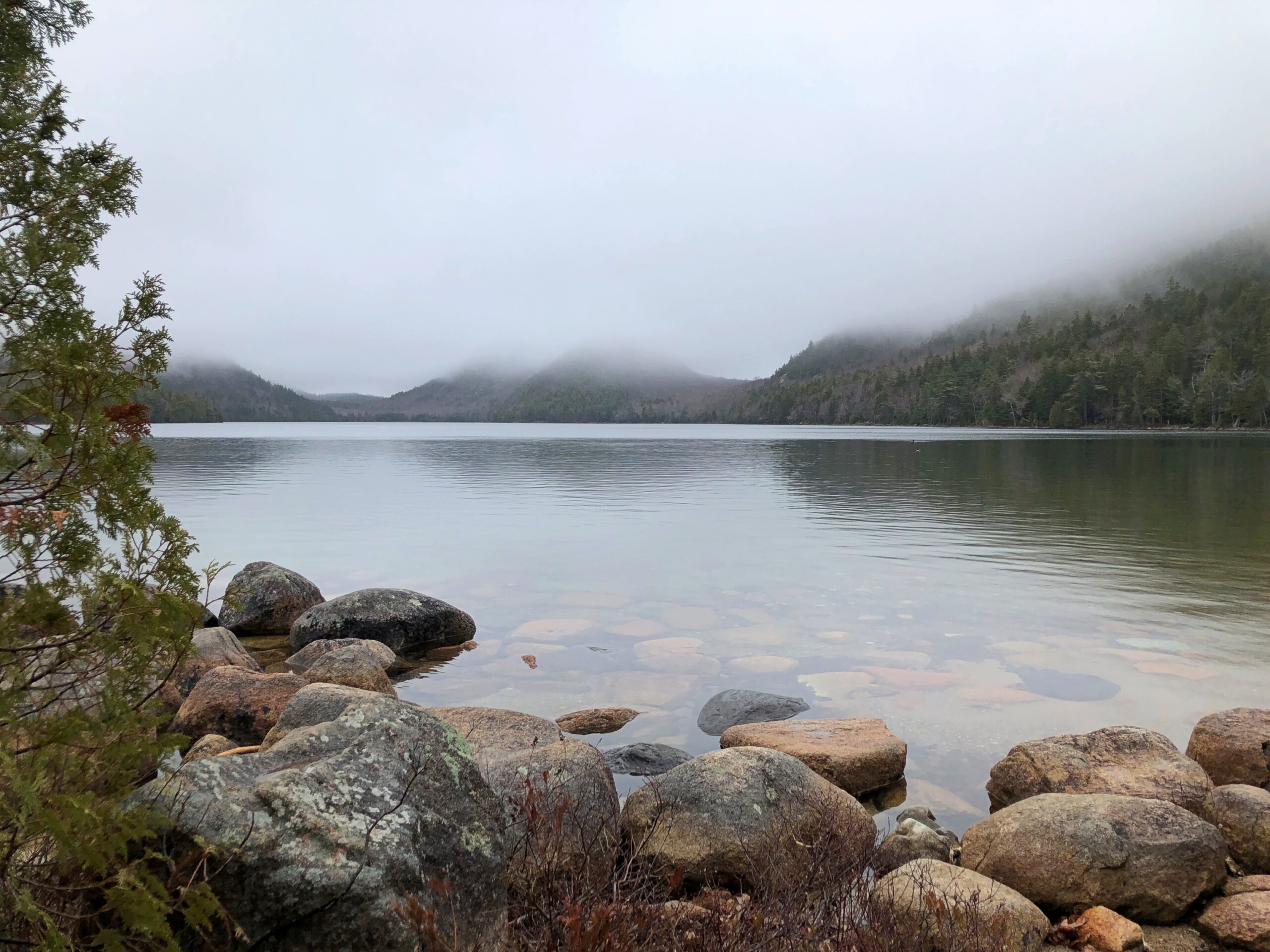
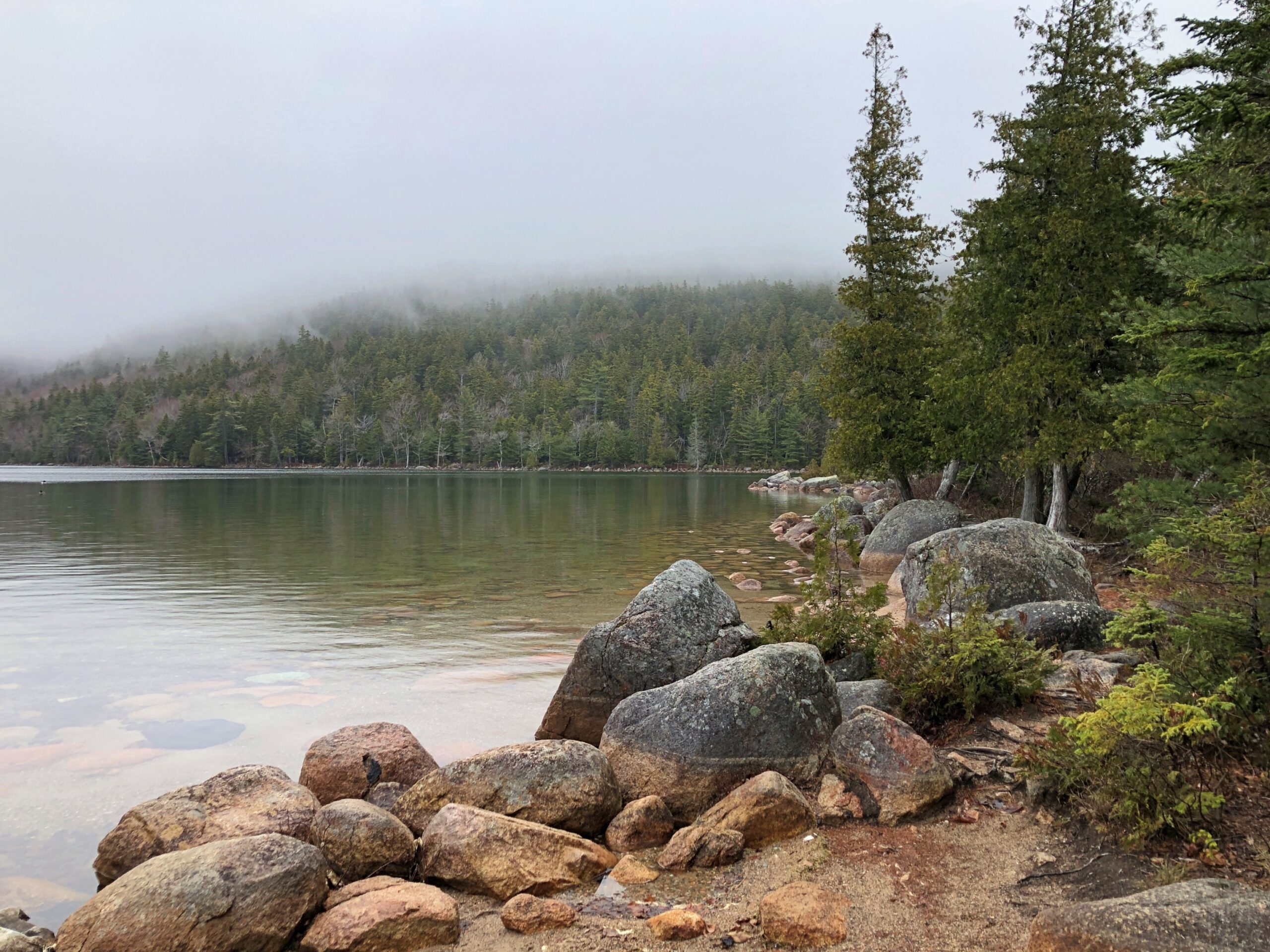
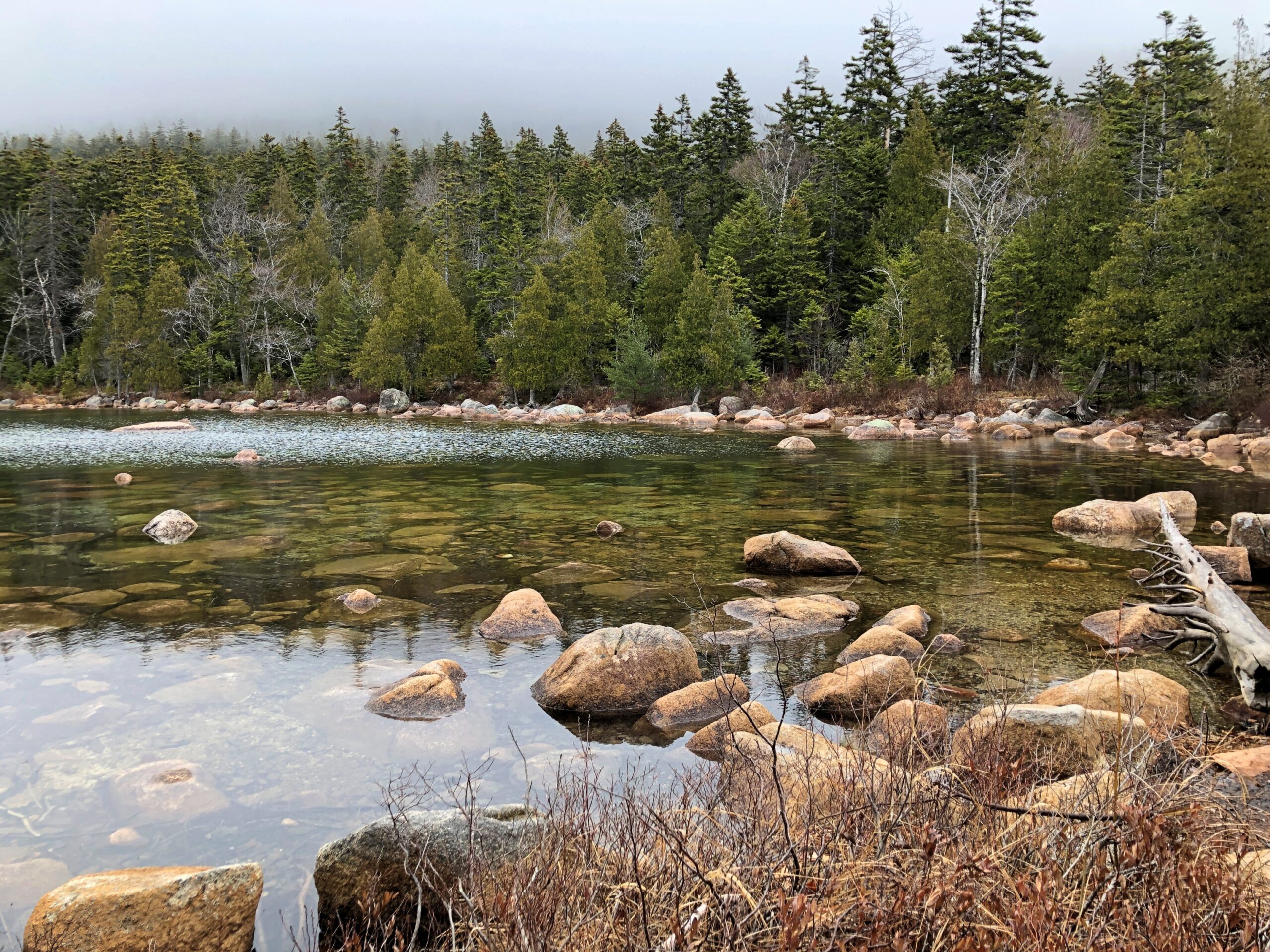
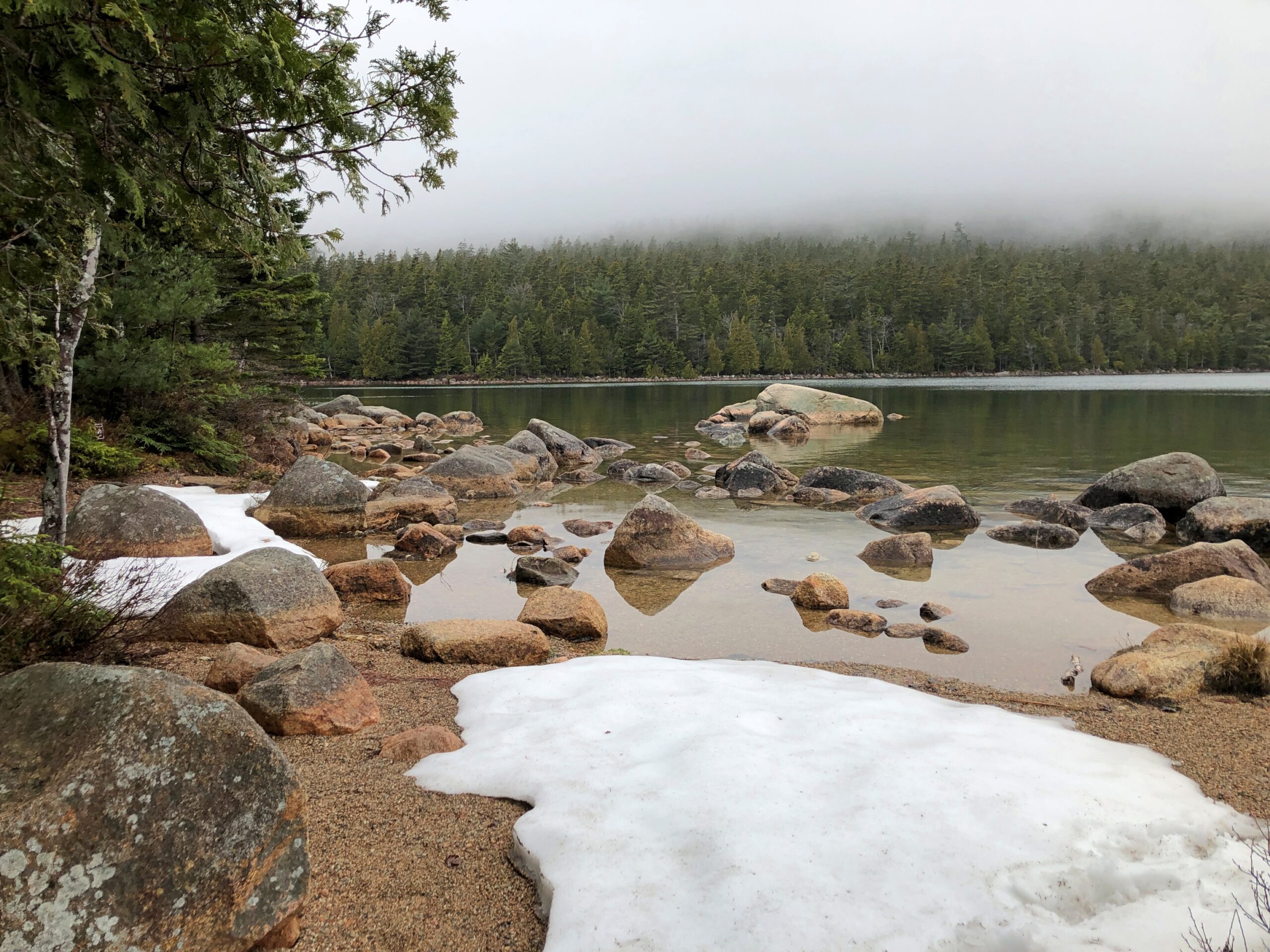
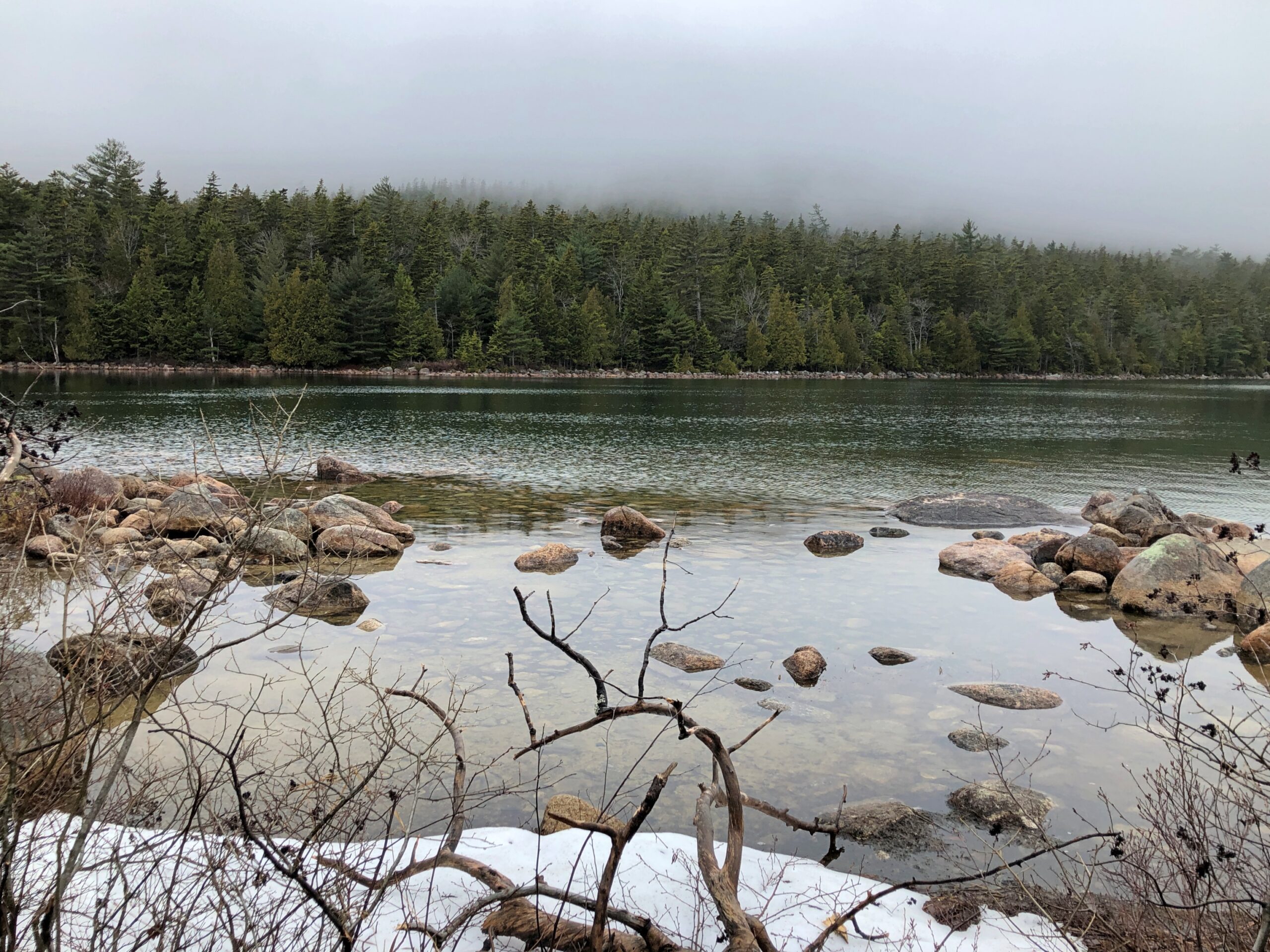
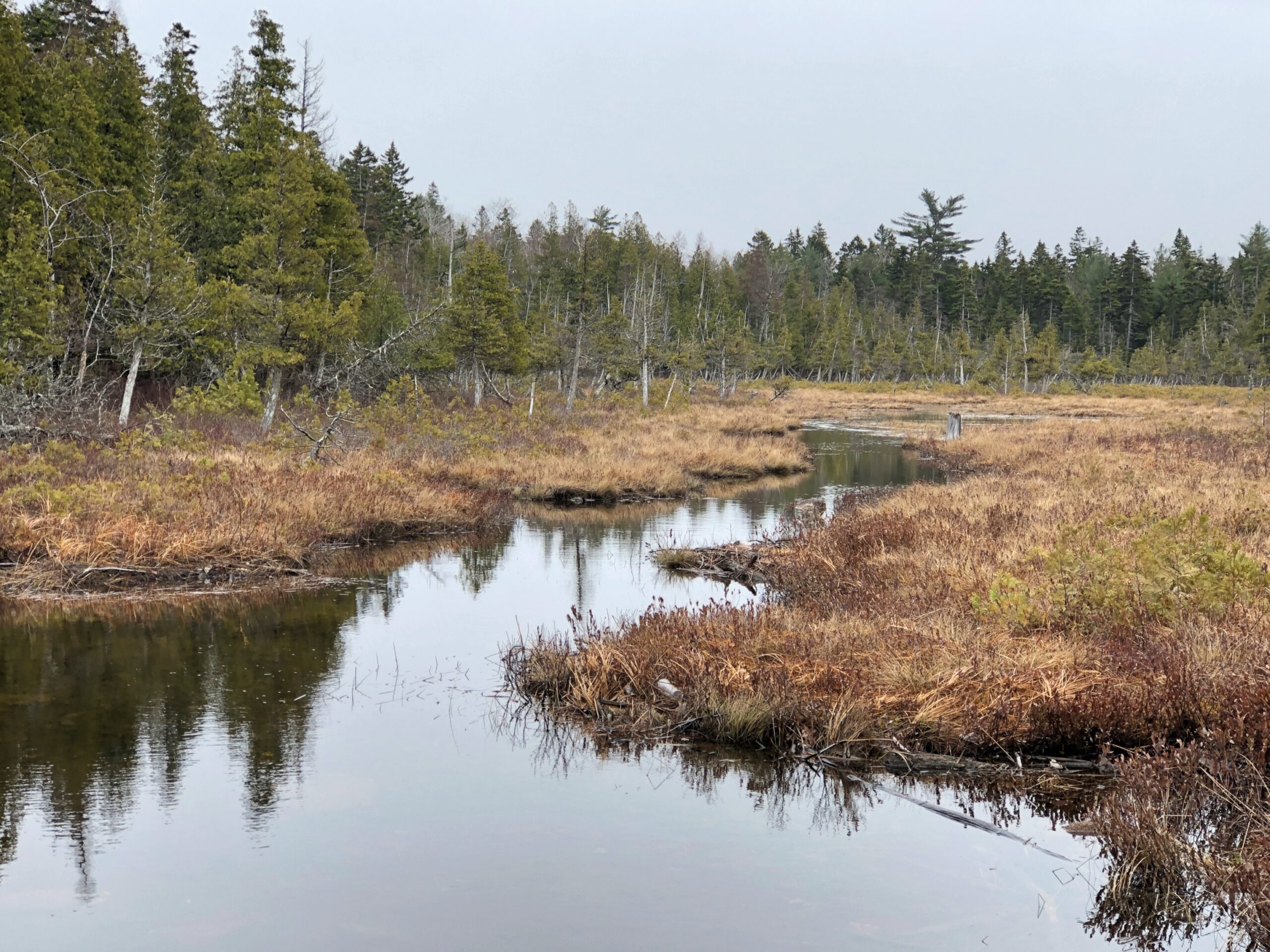
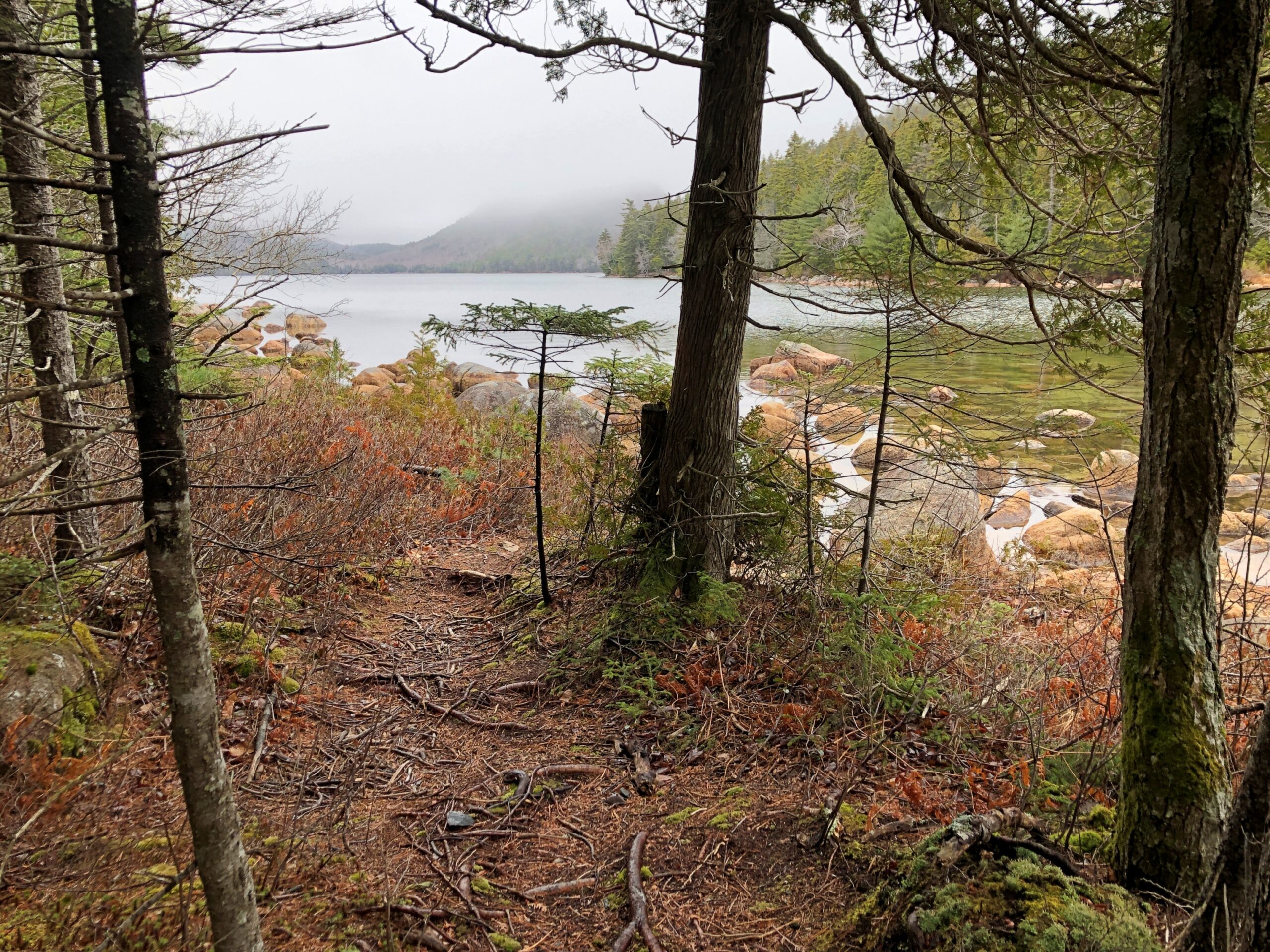
Driving is one thing, but I also wanted to walk. I found my way to Jordan Pond for that purpose.
“Oligotrophic lakes are most common in cold, sparsely developed regions that are underlain by crystalline igneous, granitic bedrock,” the entry says. “Due to their low algal production, these lakes consequently have very clear waters, with high drinking-water quality.”
No giardia in that lake? I didn’t want to find out. I carried my own drinking water as I walked the trails near the pond.
An easy trail. At one point, it crossed a creek feeding into the pond.
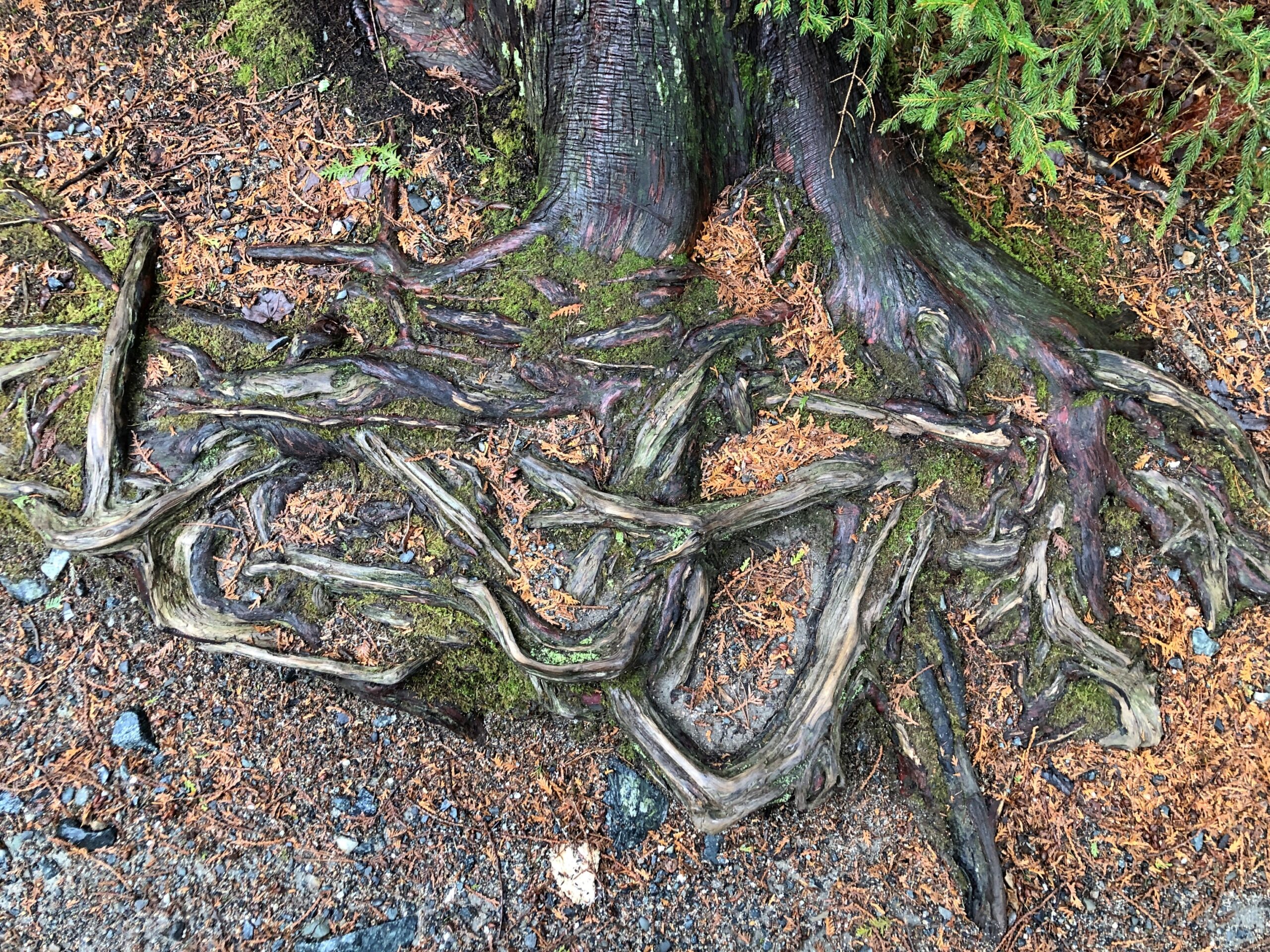
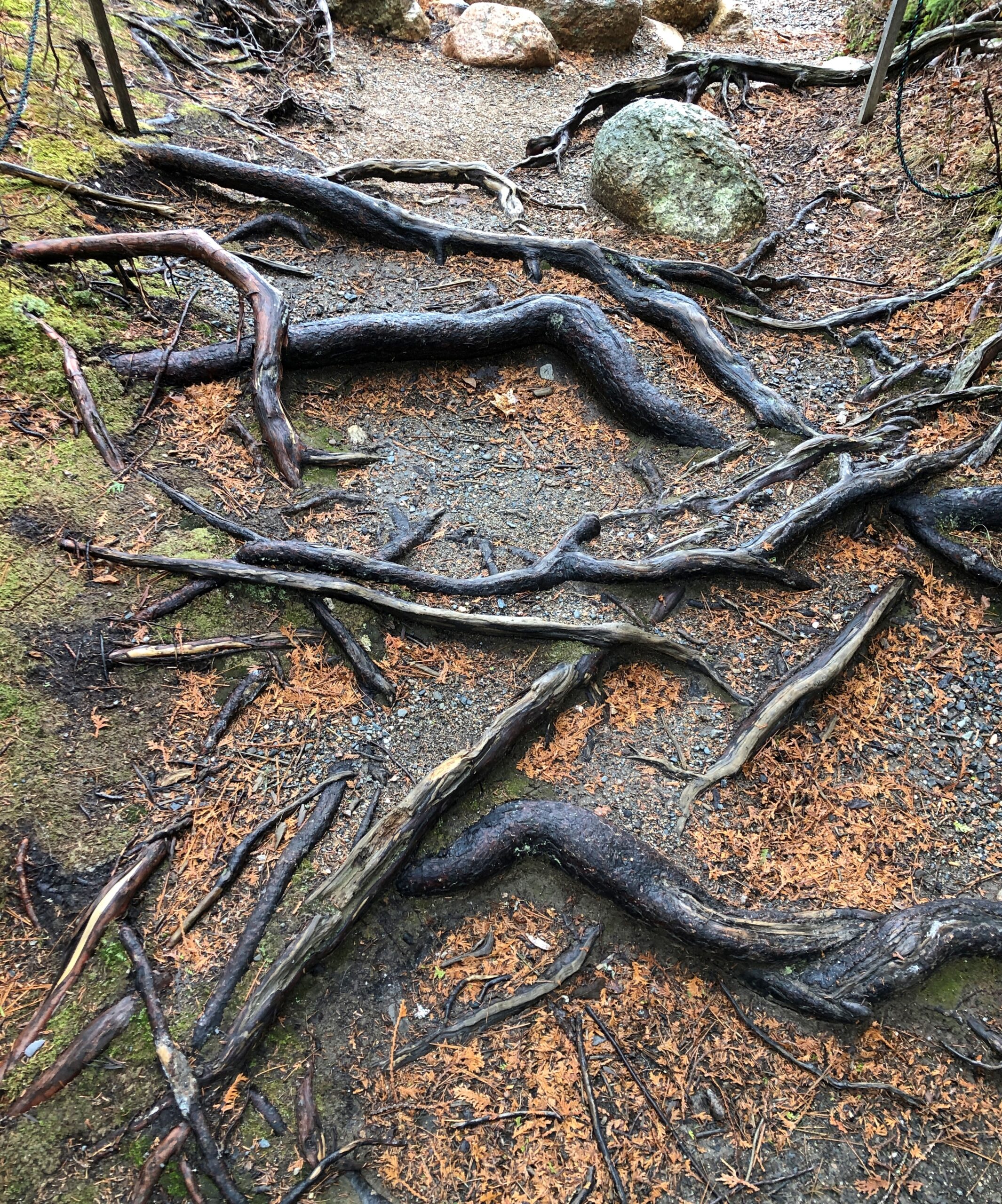
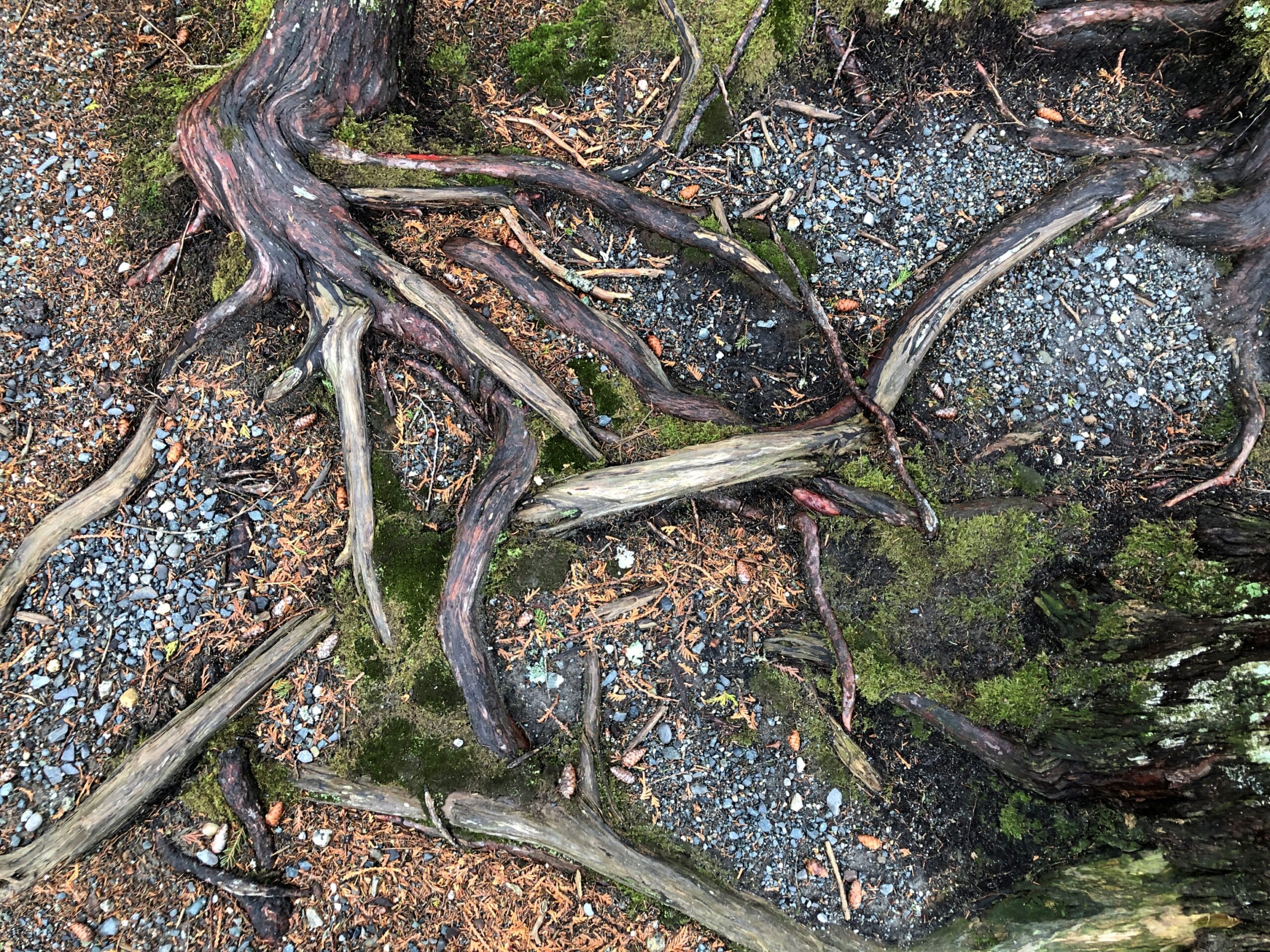
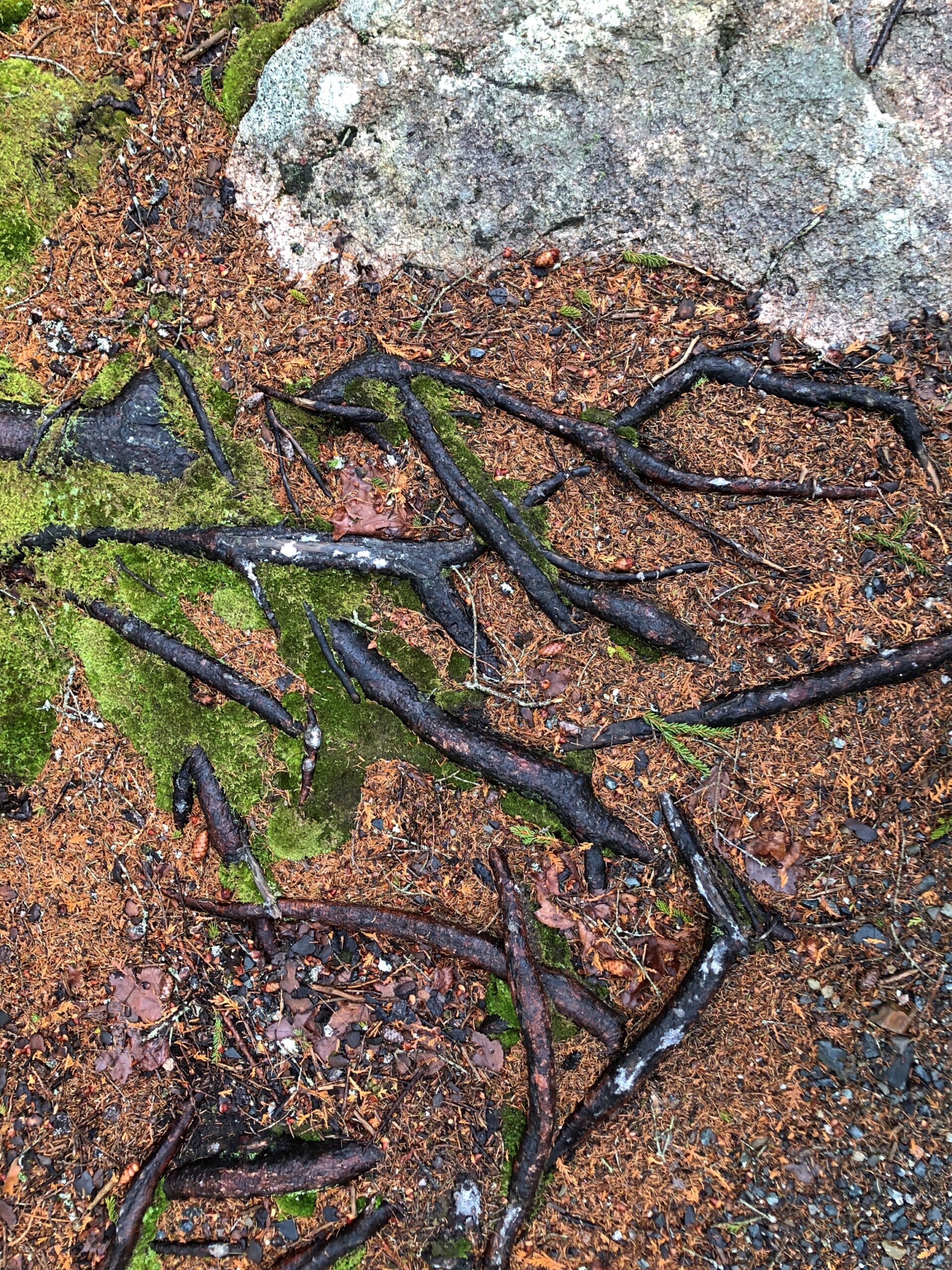
There were too many interesting tree roots to ignore them.
“Roots are typically at least half of a plant’s biomass, but you wouldn’t know it given how little scientific research has been devoted to these critical tendrils,” says the Smithsonian magazine. “Only recently have scientists given plant roots their day in the sun — in fields like collections research, climate science and microbiology.”
Or, in the case of the hardy trees of coastal Maine, their day in the fog.