The Park Loop Road in Acadia NP is a fine drive (1) if there aren’t many other cars and (2) you take it easy around those curves. In that, it’s no different than a lot of rural roads. But there’s also the bonus of passing through thick Maine woods. There are brief views of the ocean from the road, but mostly you’re tooling through evergreens.
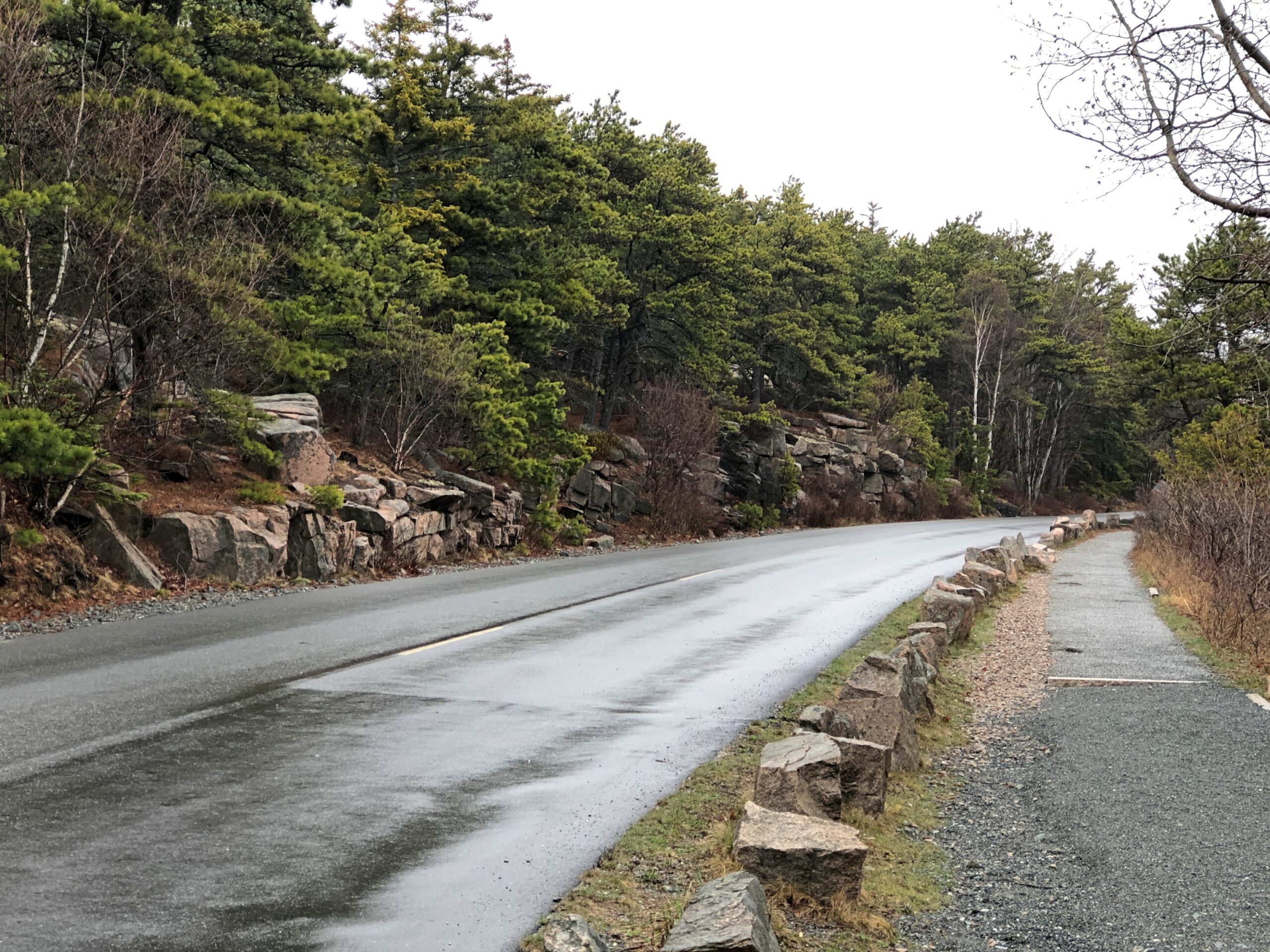
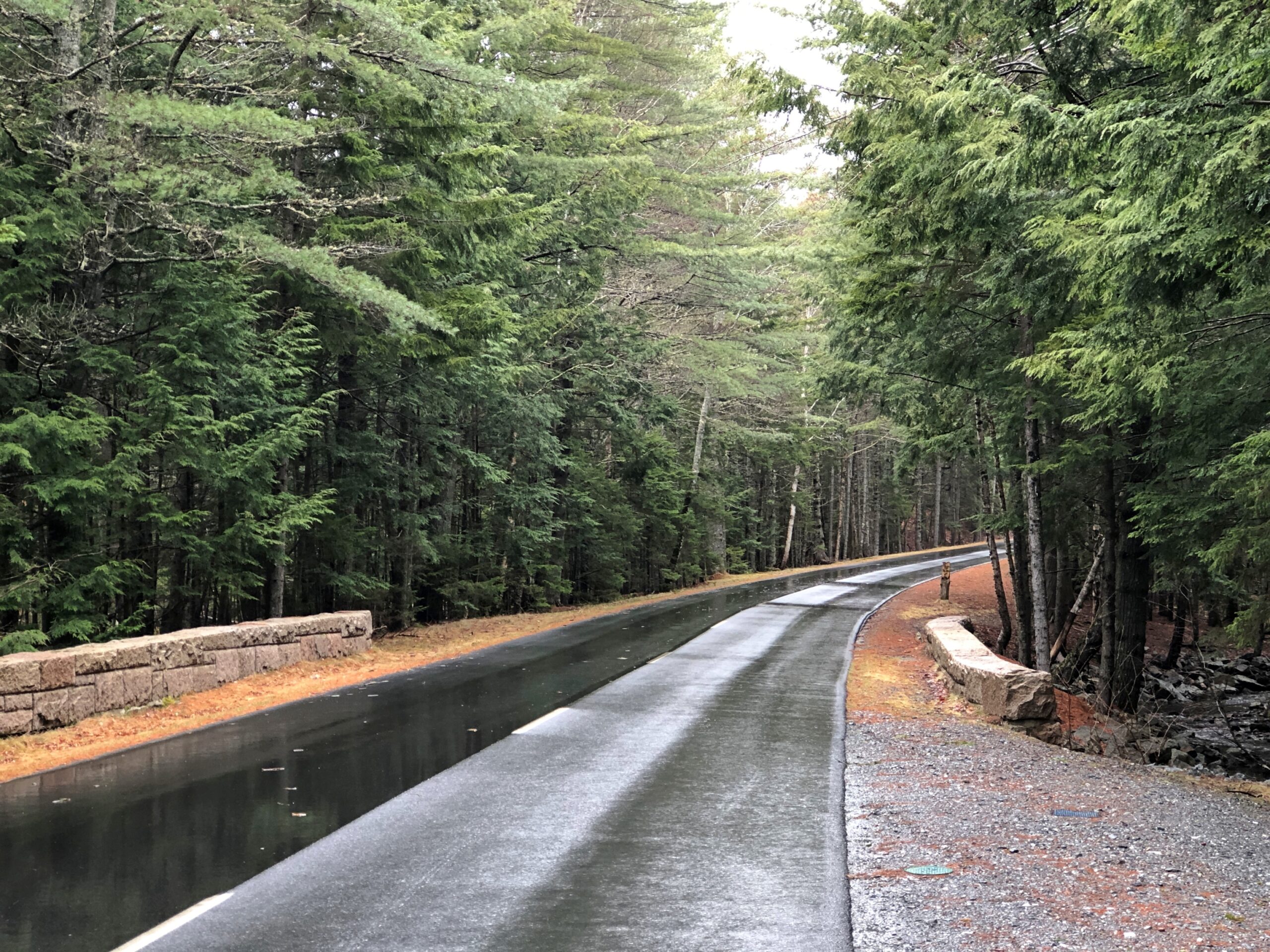
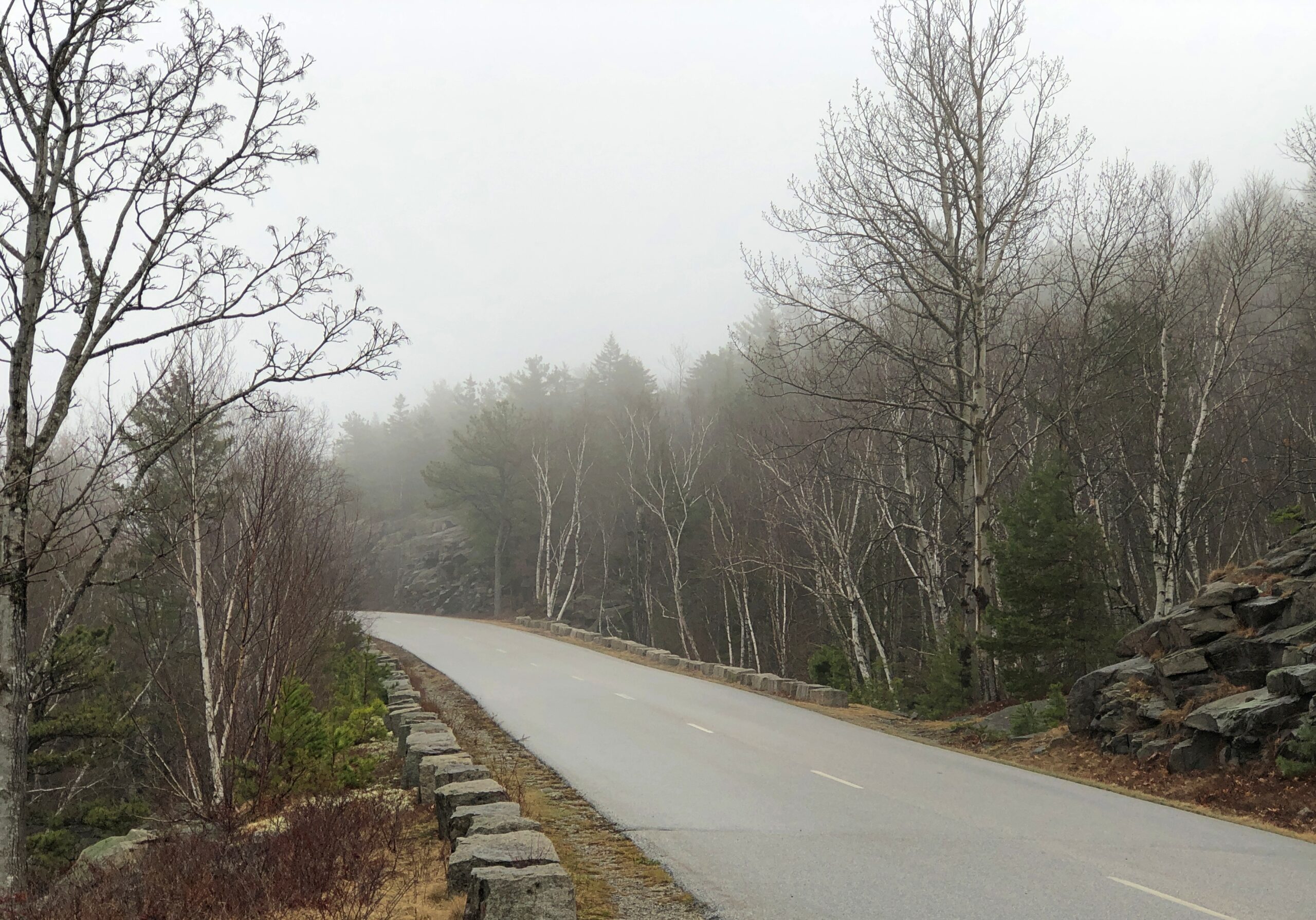
Through patches of deciduous trees as well.
Periodically, the road crosses under handsome bridges.
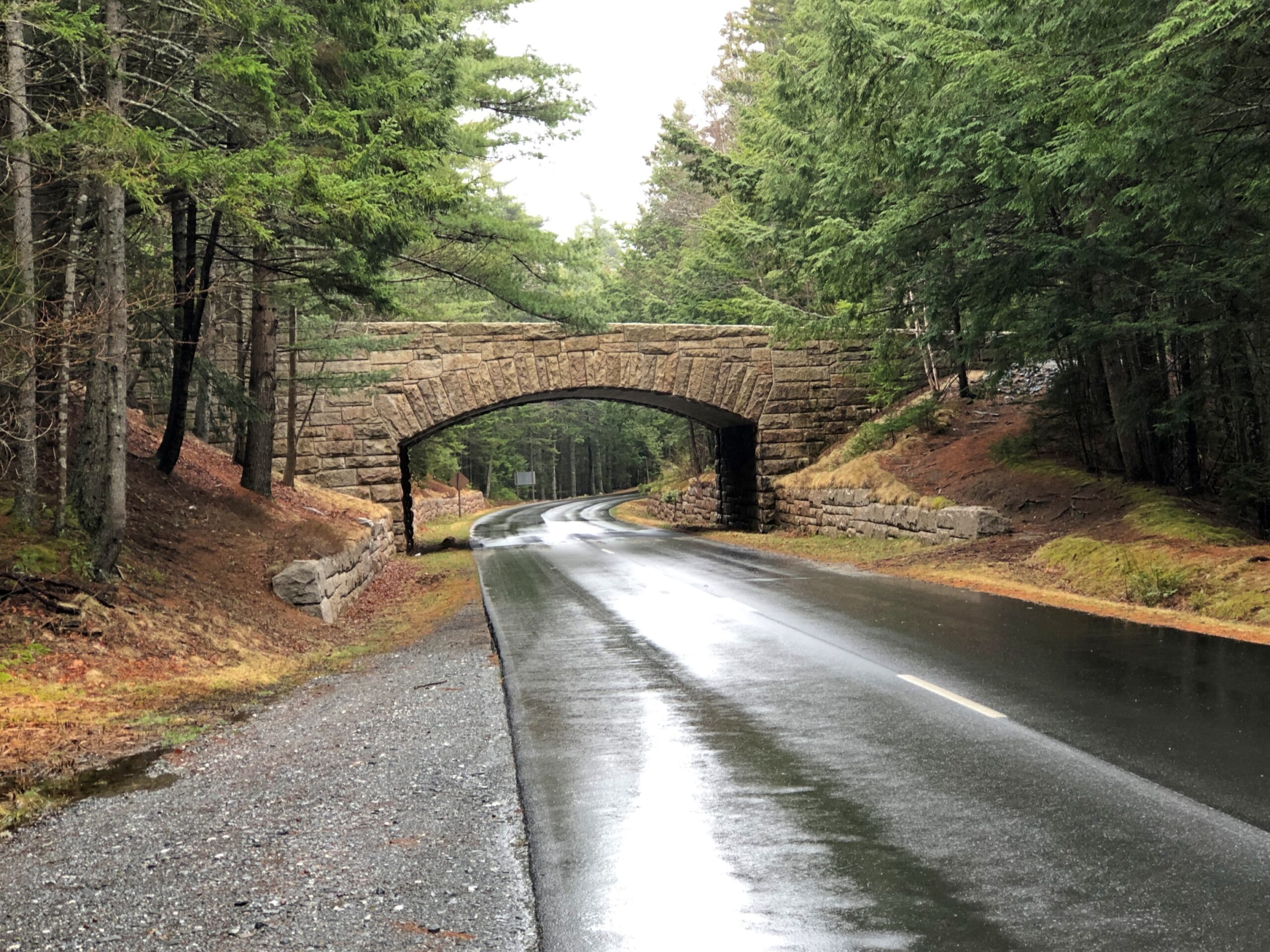
This made me wonder: bridges for what? Soon I learned that the park not only has a hard-surface road snaking through, but also a network of carriage trails. A lot of them. The bridges are for them.
“Forty-five miles of rustic carriage roads, the gift of philanthropist John D. Rockefeller Jr. and family, weave around the mountains and valleys of Acadia National Park,” says the NPS. “Rockefeller, a skilled horseman, wanted to travel on motor-free byways via horse and carriage into the heart of Mount Desert Island. His construction efforts from 1913 to 1940 resulted in roads with sweeping vistas and close-up views of the landscape.”
It was barely the season for the paved road, and I suspect few visitors were on the carriage roads either. I noticed that the entrance to the Wildwood Stables, a facility that supports carriage riding, and which can be glimpsed from the road, was still closed. A carriage ride through Arcadia NP might be an grand experience, but maybe not in April.
The woods alongside the road.
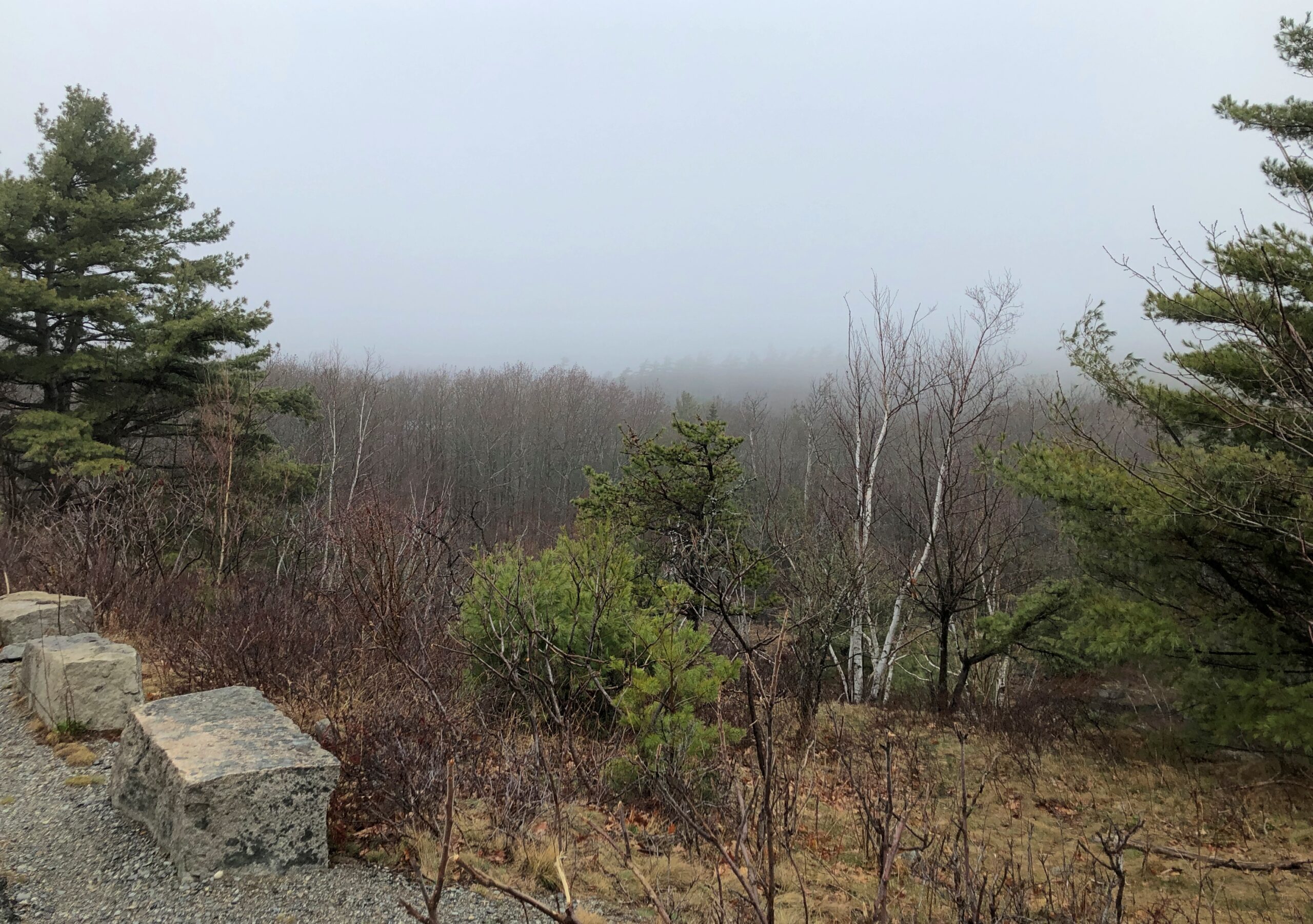
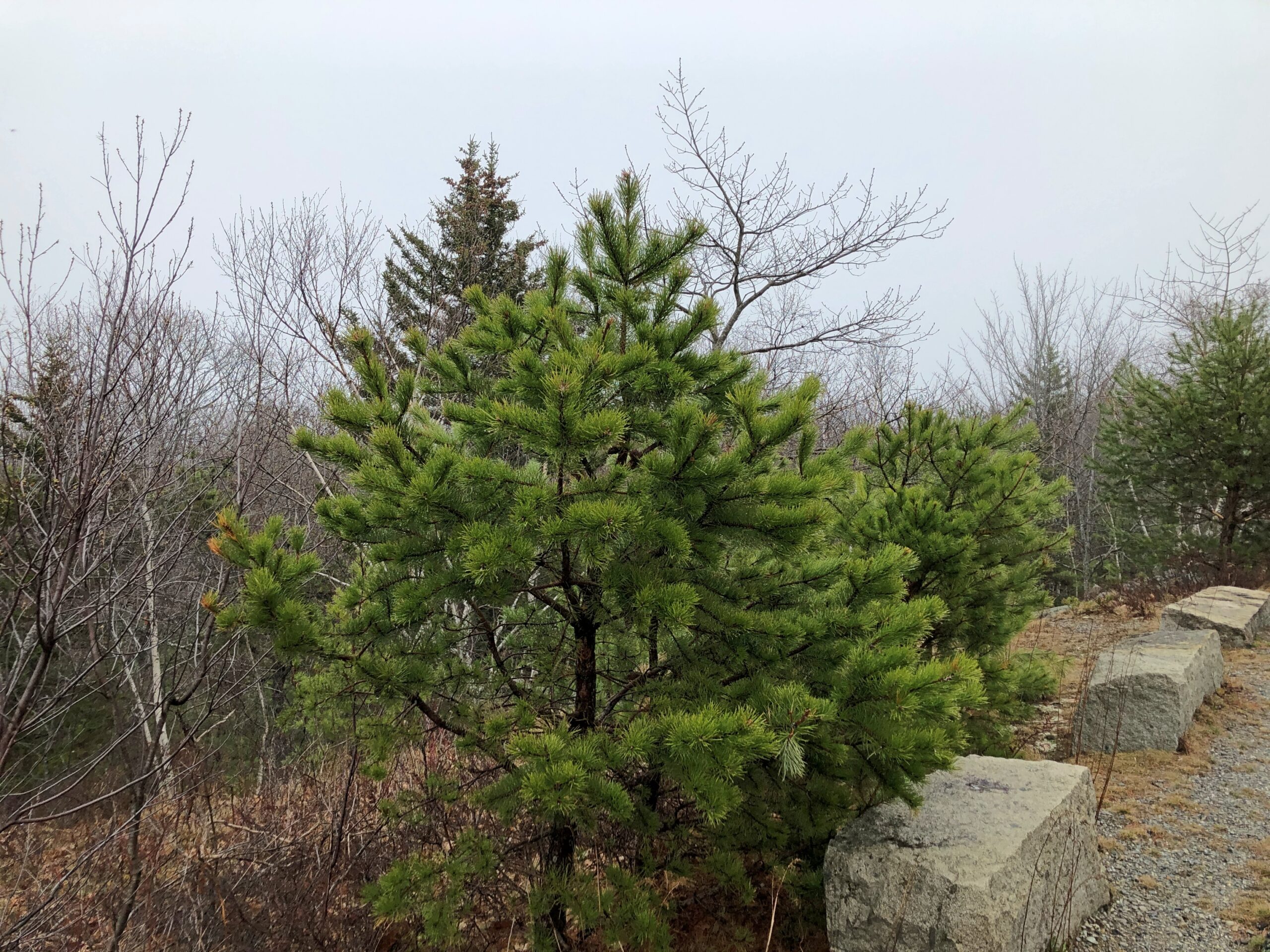
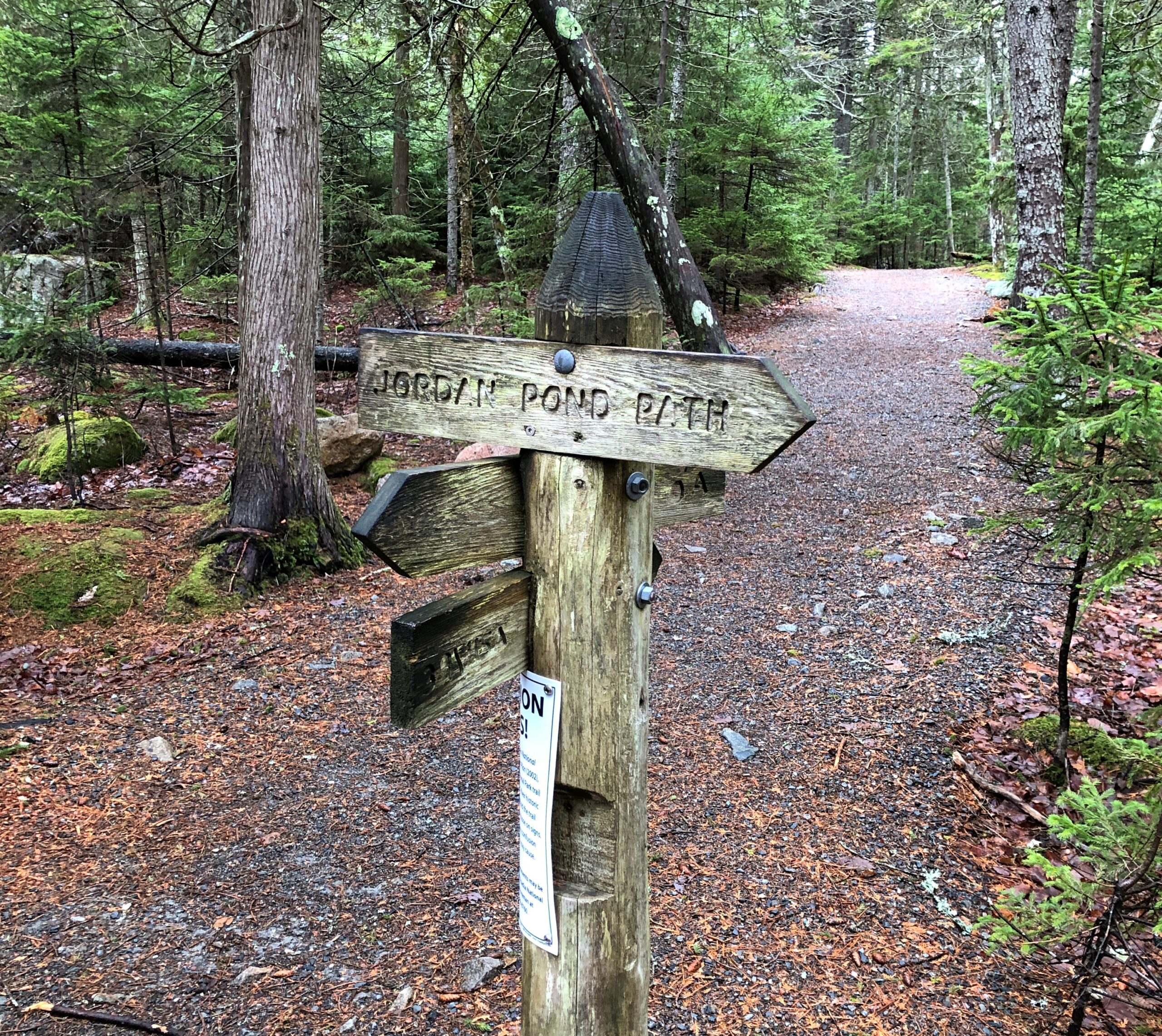
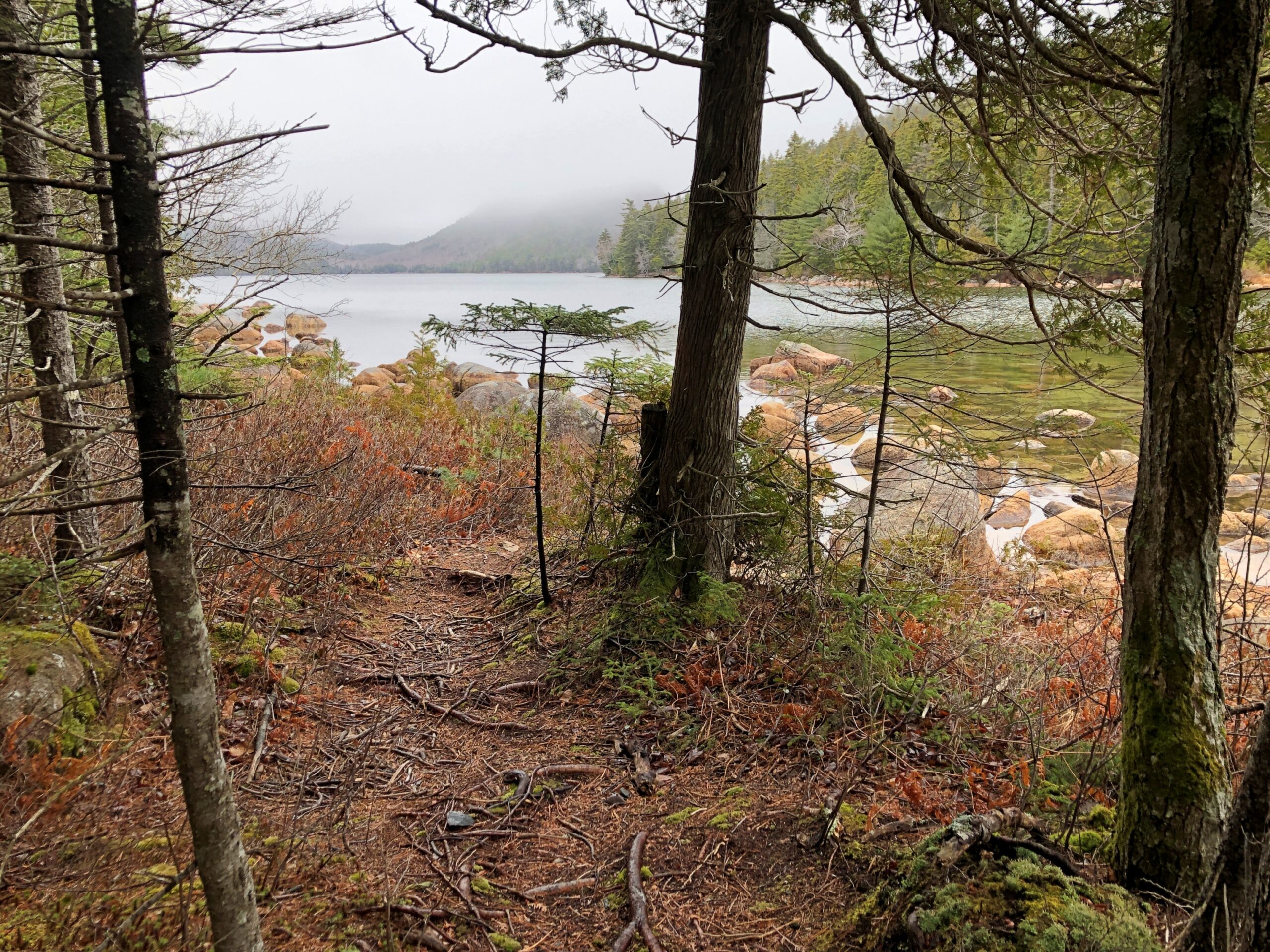
Driving is one thing, but I also wanted to walk. I found my way to Jordan Pond for that purpose.
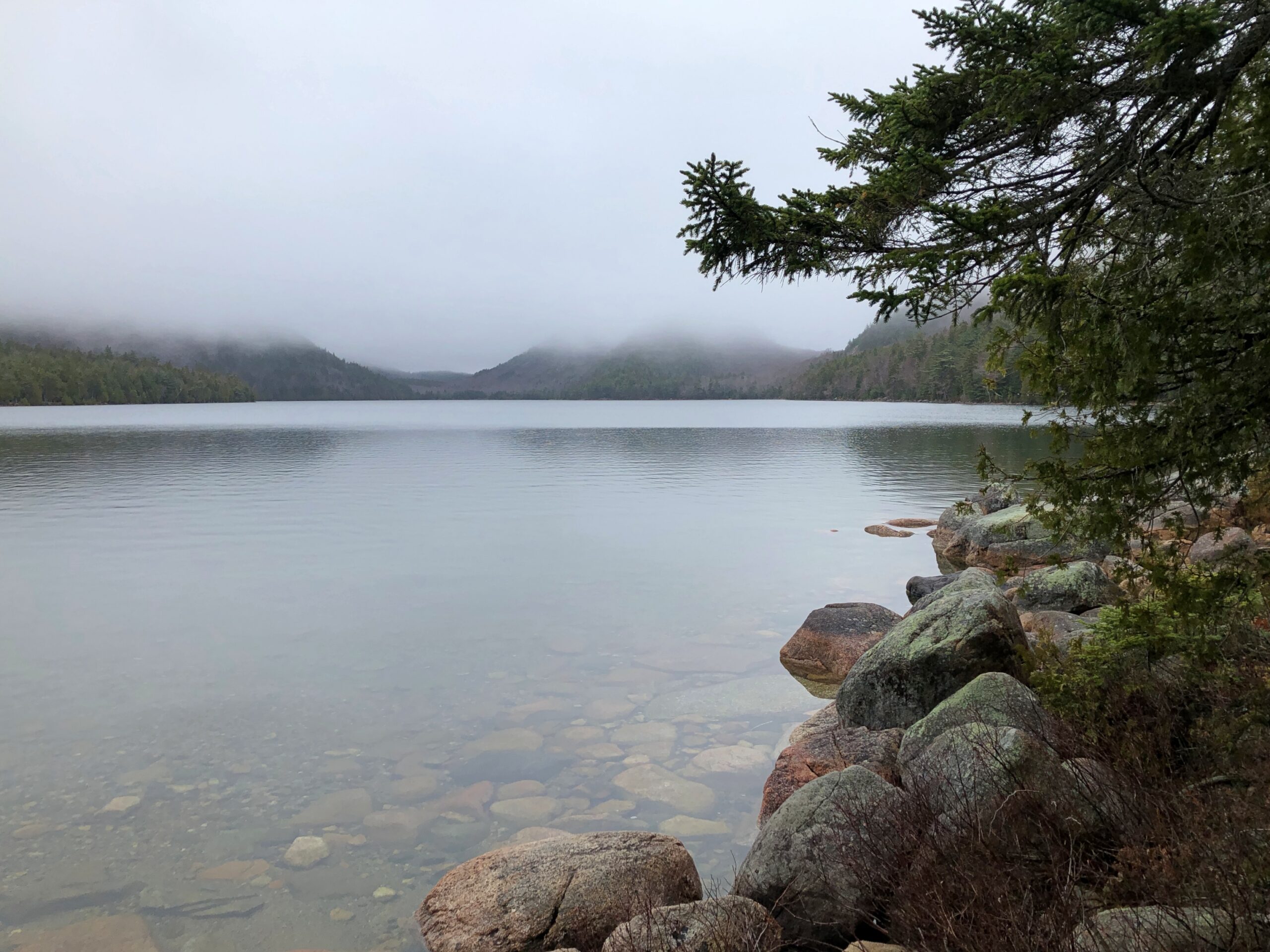
Jordan Pond is a remnant of the latest Ice Age. According to Wiki, it counts as a tarn. Even better, an oligotrophic tarn, a term that makes my day. Even better to know that I visited one, or rather another one, though it simply means a body of water without much in the way of aquatic plants.
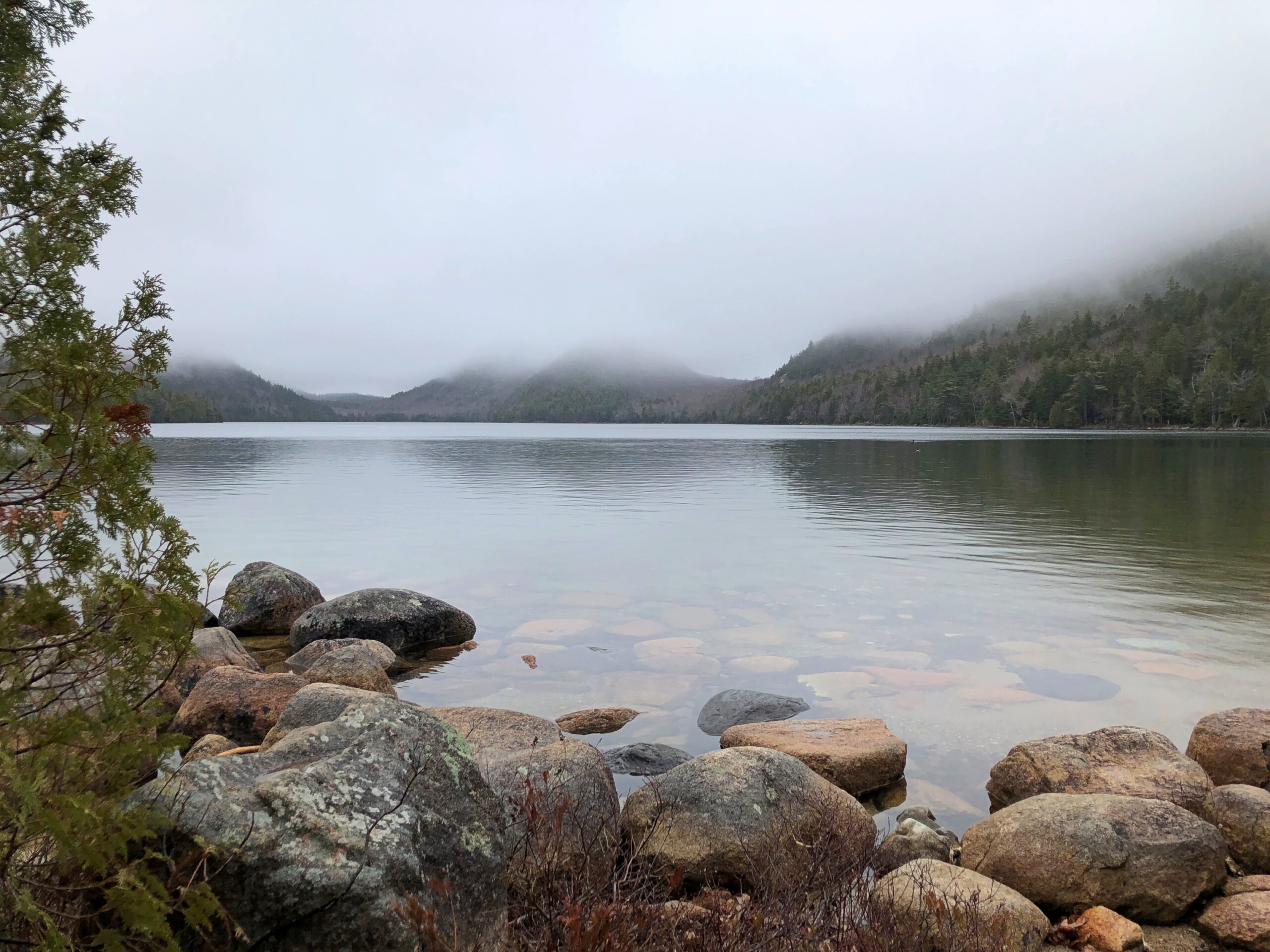
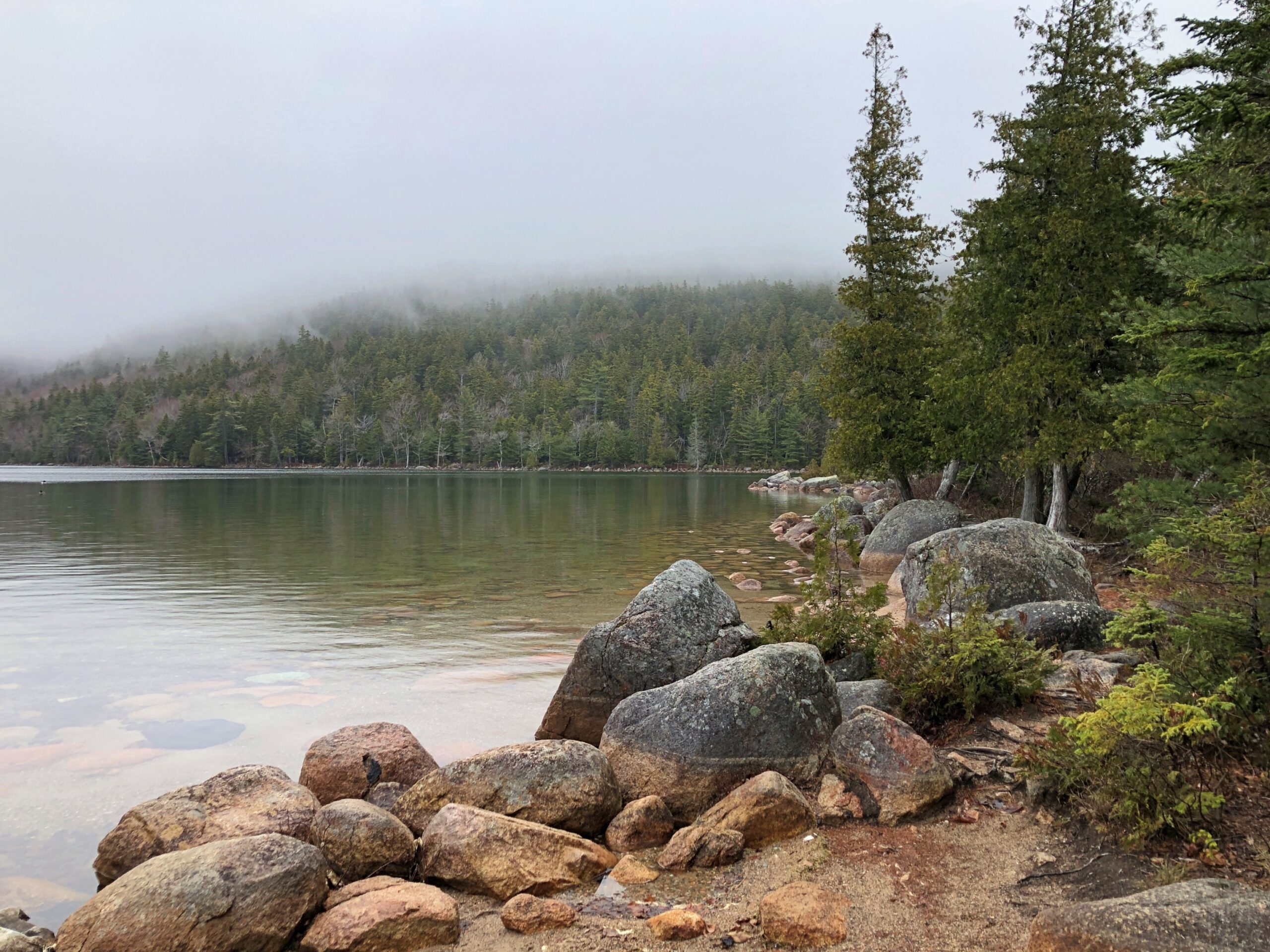
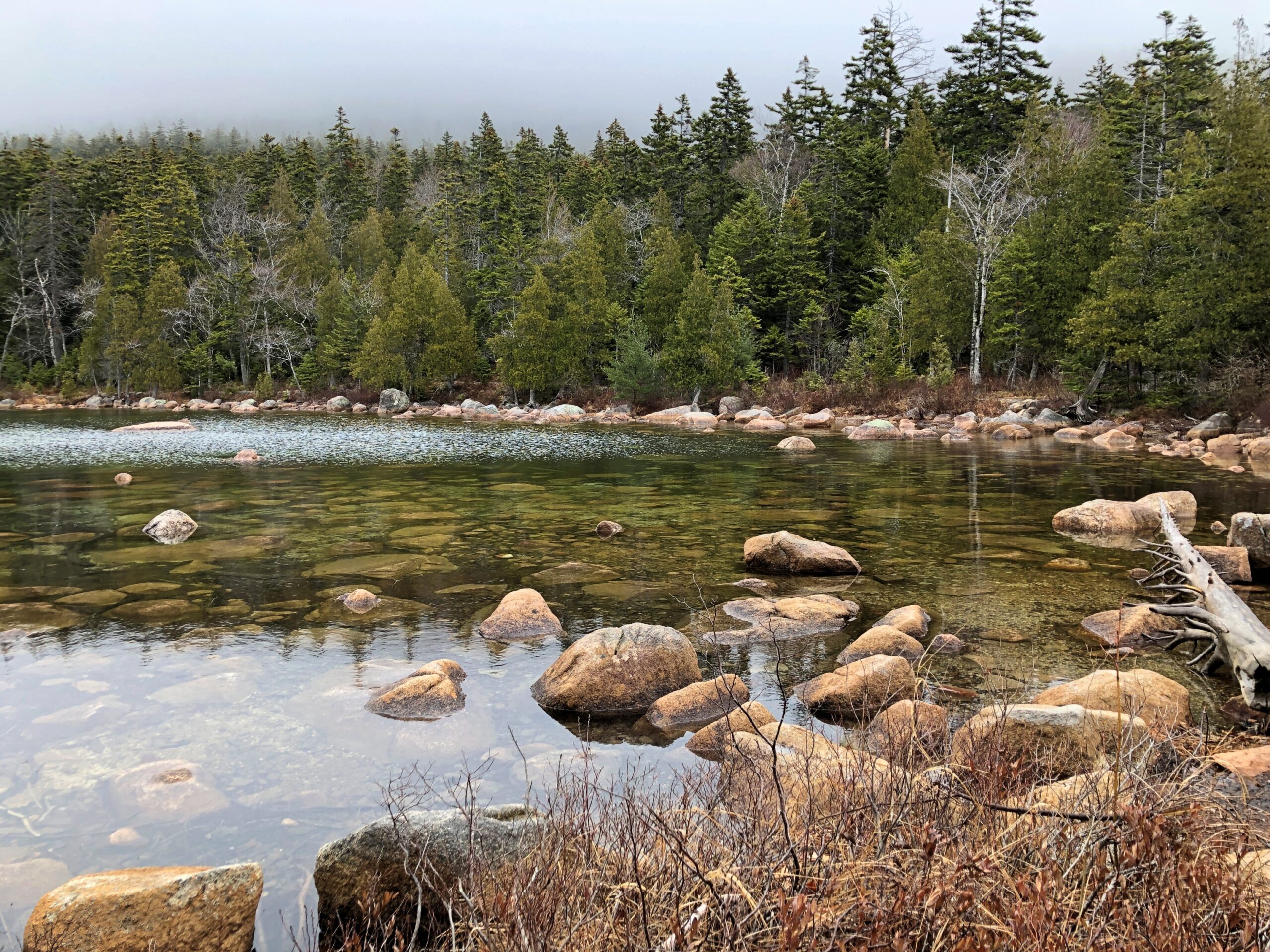
Near the pond, I found patches of snow.
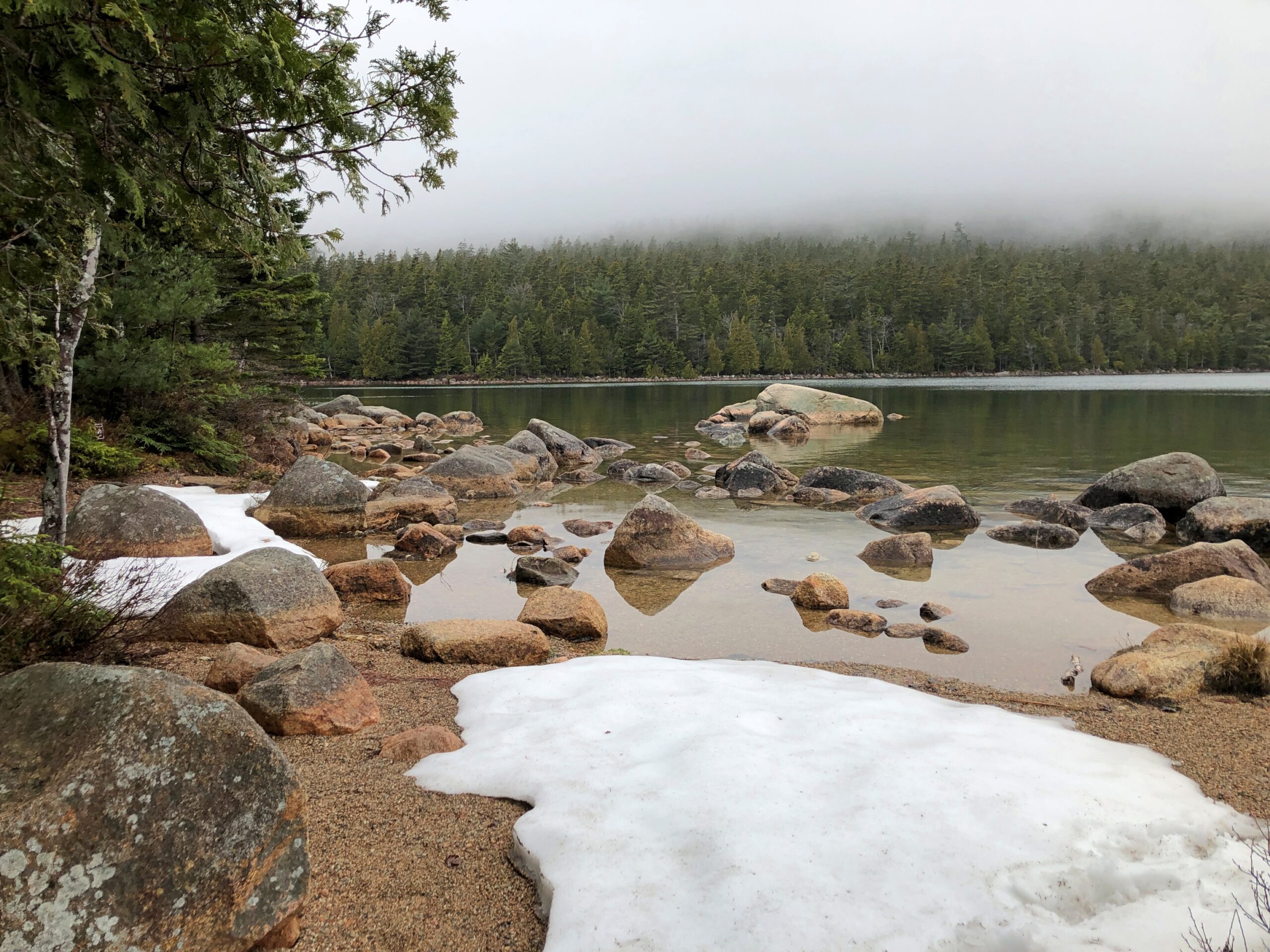
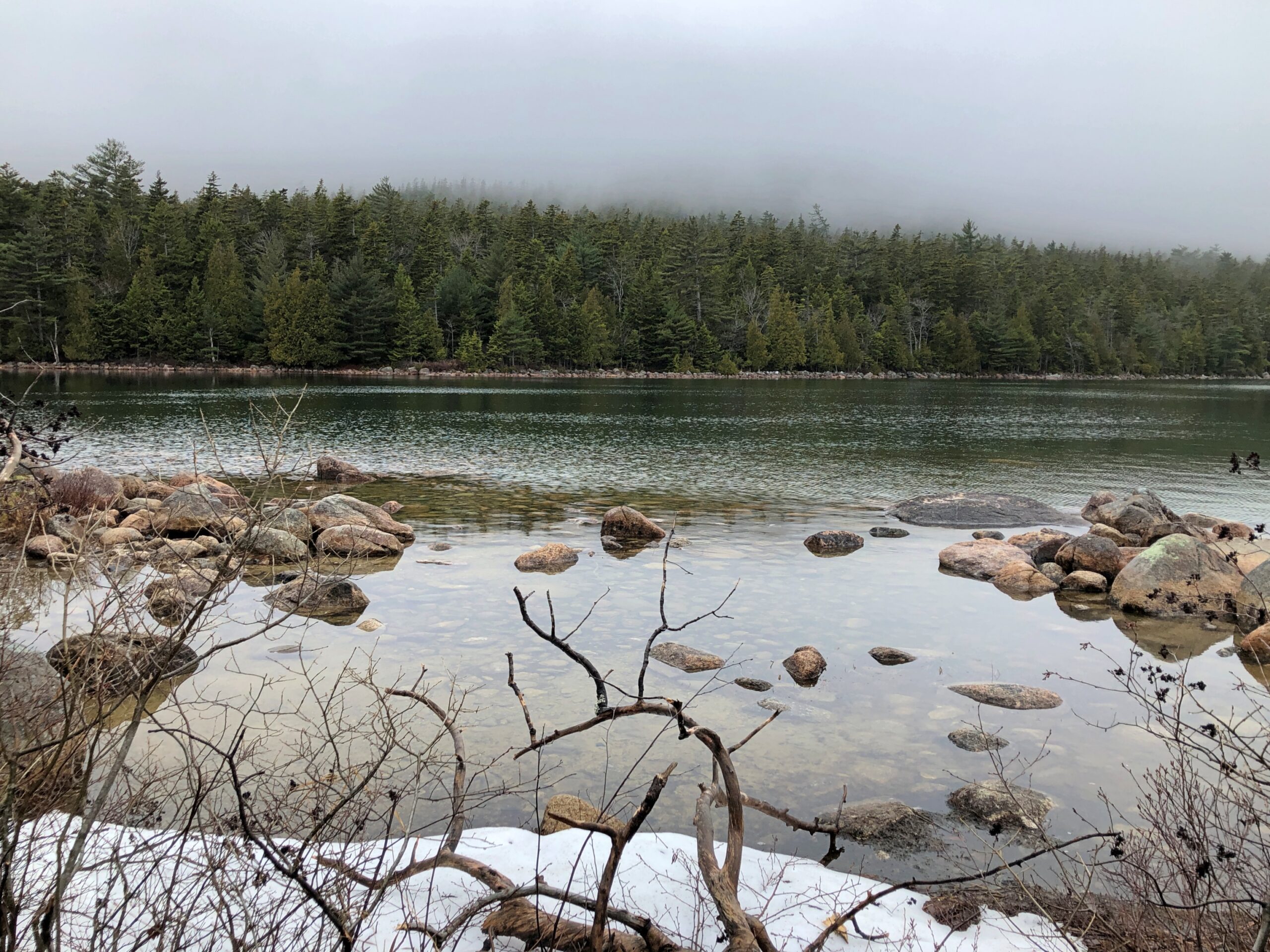
“Oligotrophic lakes are most common in cold, sparsely developed regions that are underlain by crystalline igneous, granitic bedrock,” the entry says. “Due to their low algal production, these lakes consequently have very clear waters, with high drinking-water quality.”
No giardia in that lake? I didn’t want to find out. I carried my own drinking water as I walked the trails near the pond.
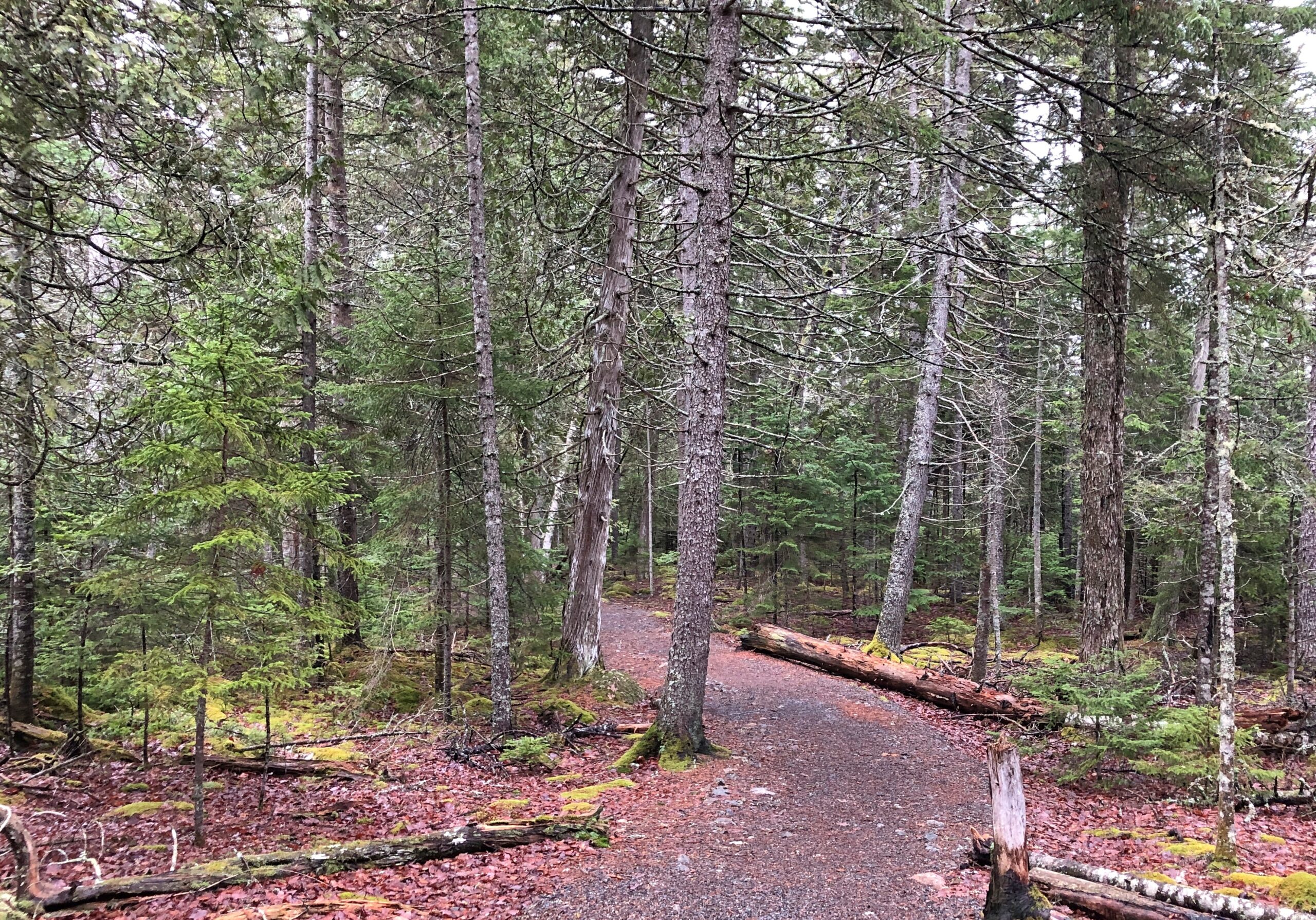
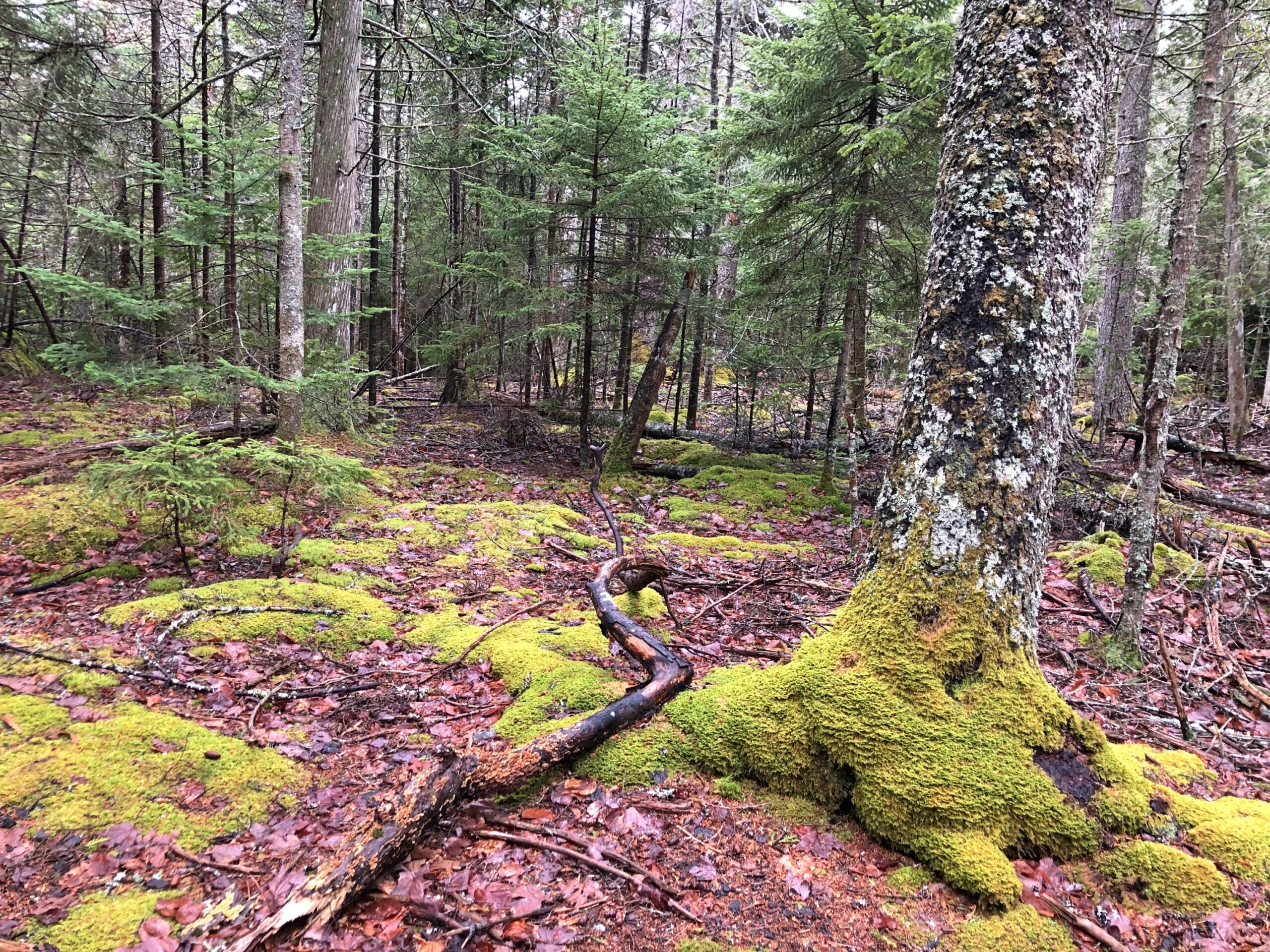
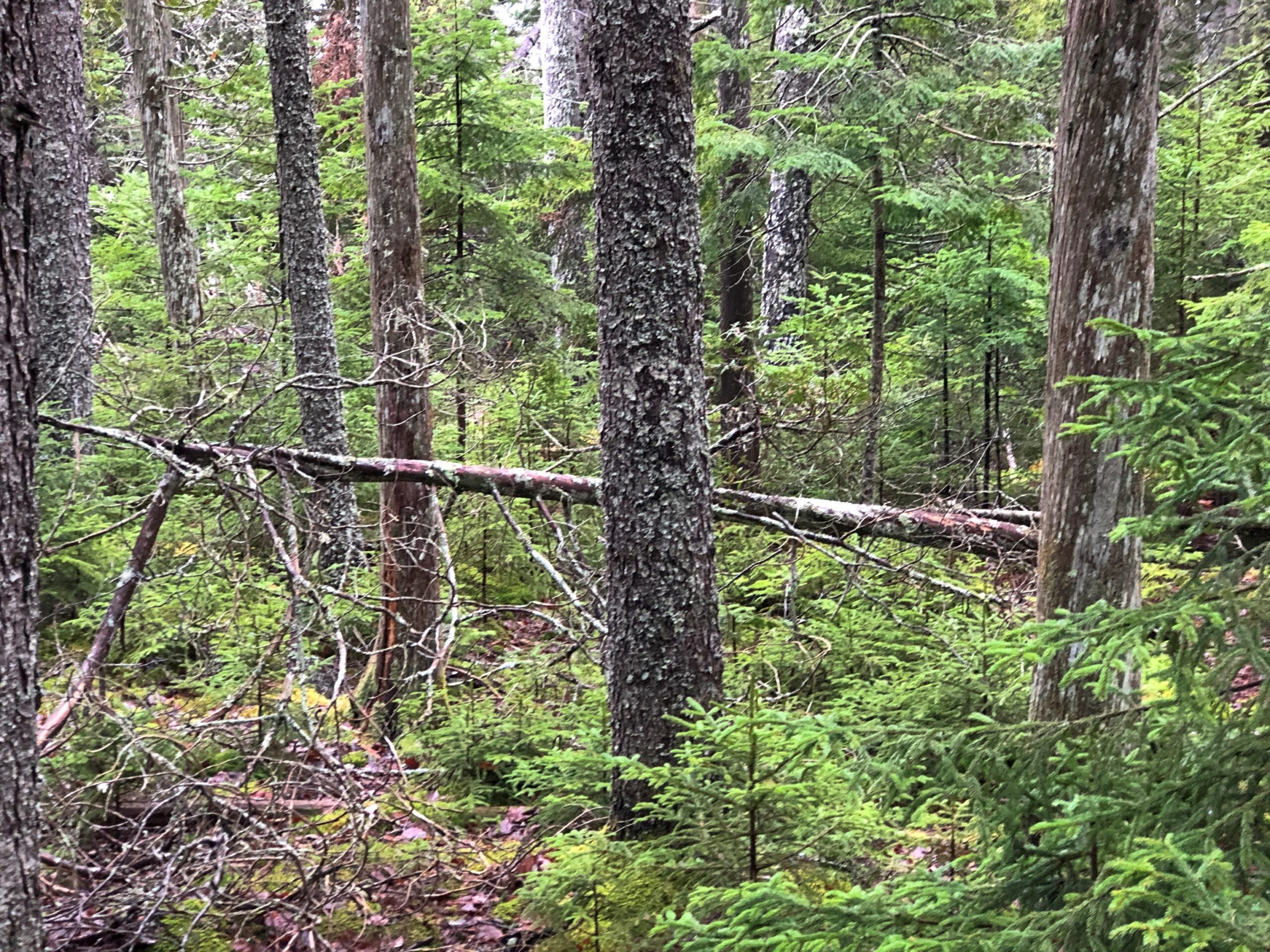
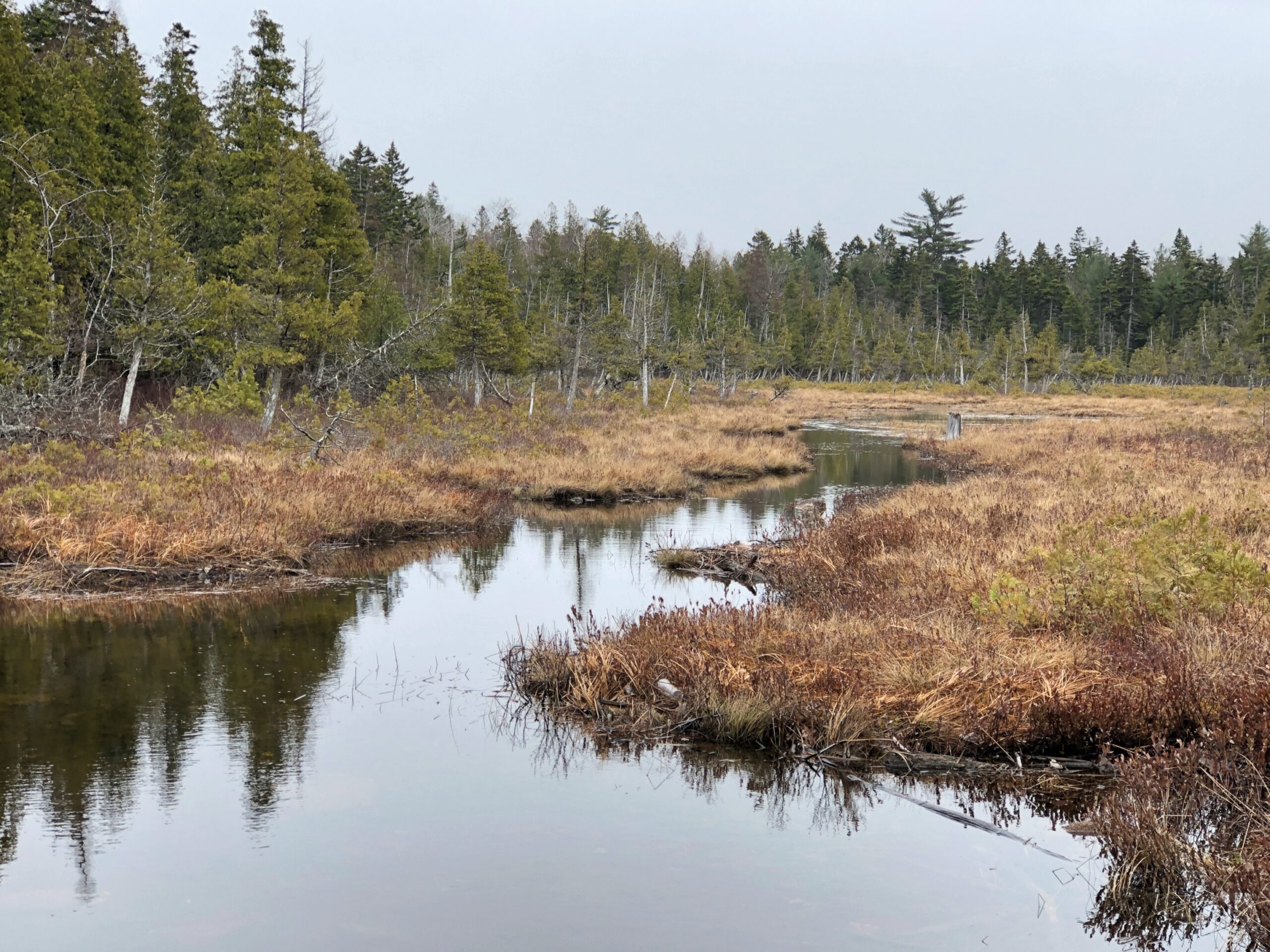
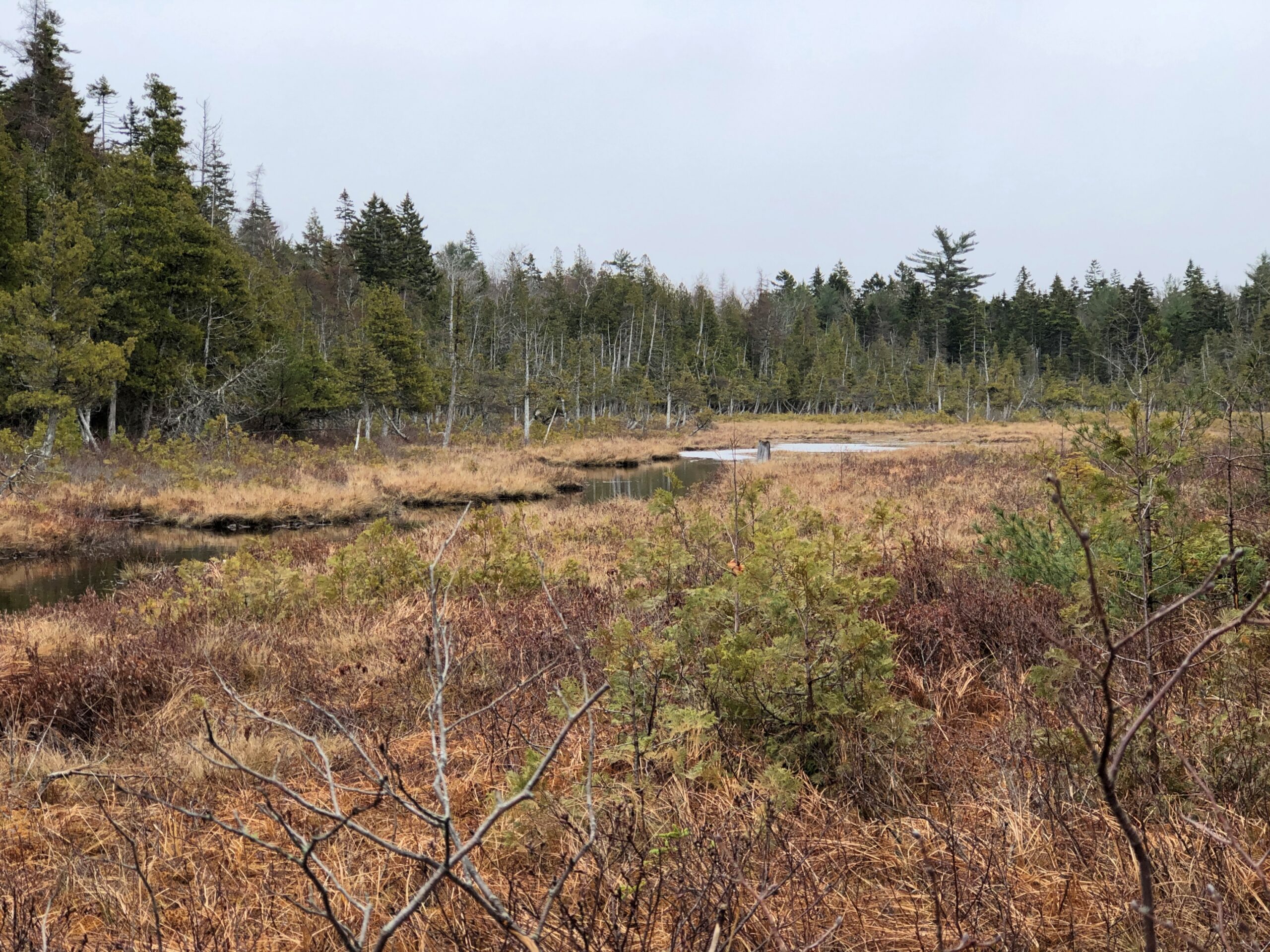
An easy trail. At one point, it crossed a creek feeding into the pond.
There were too many interesting tree roots to ignore them.
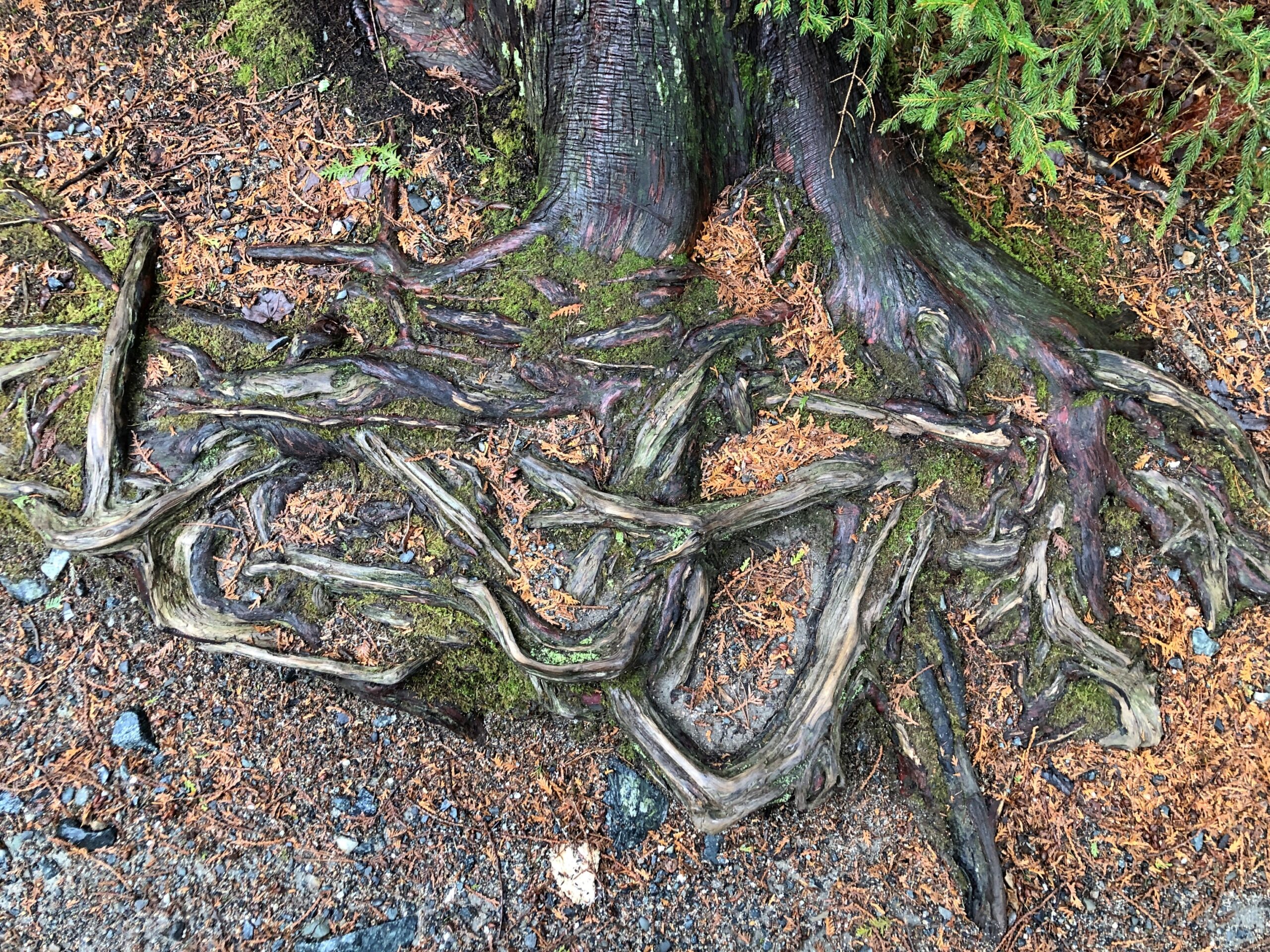
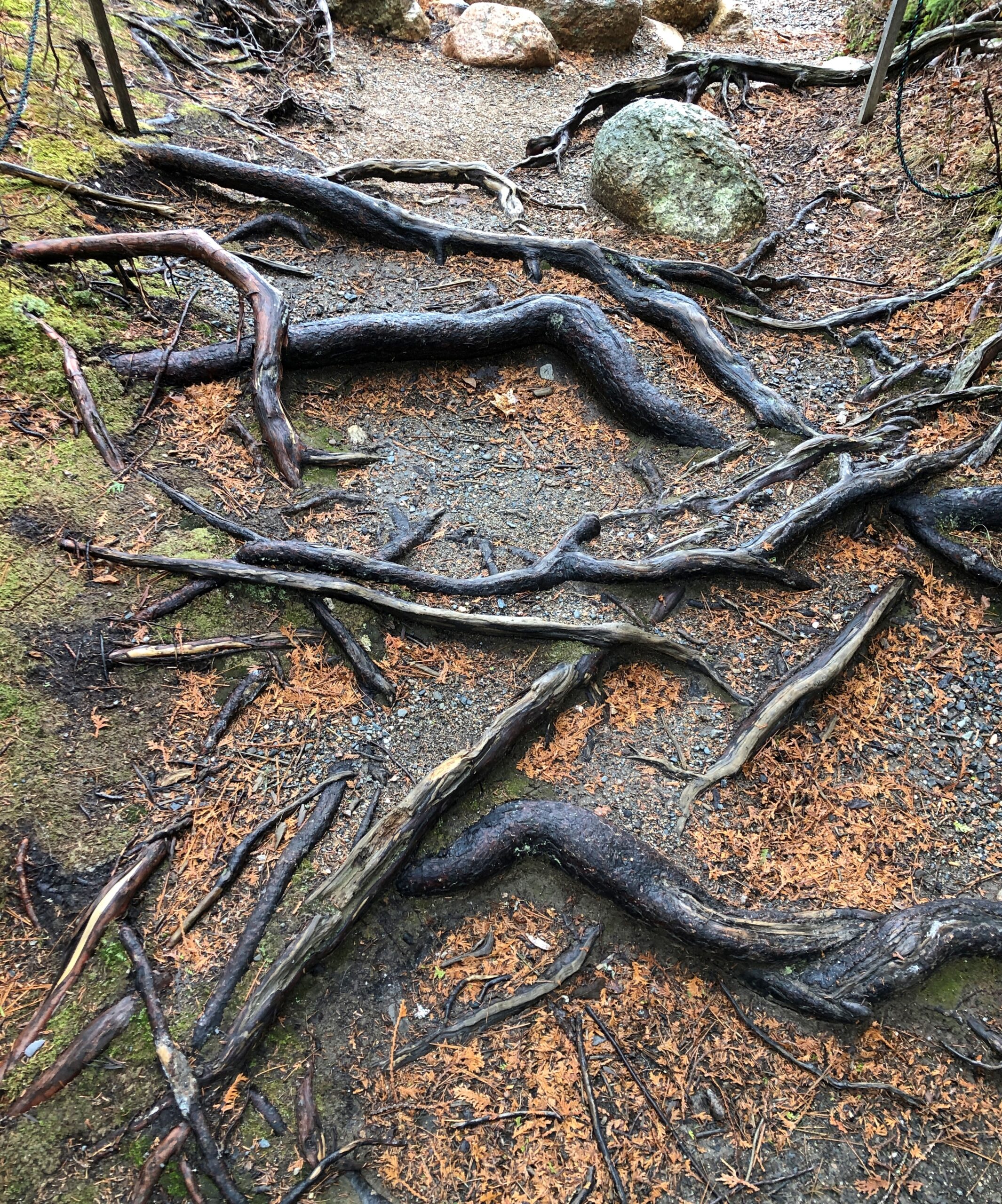
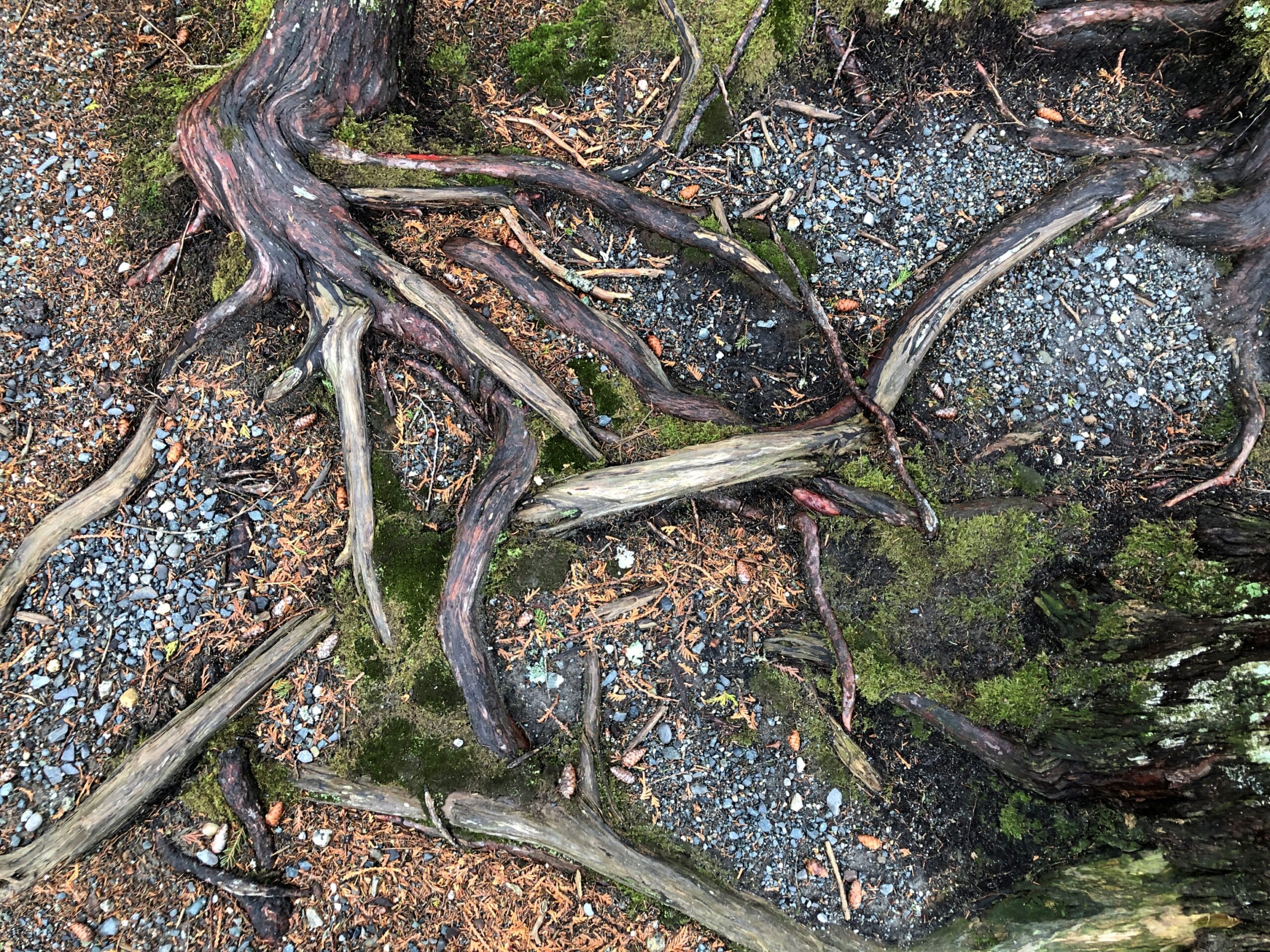
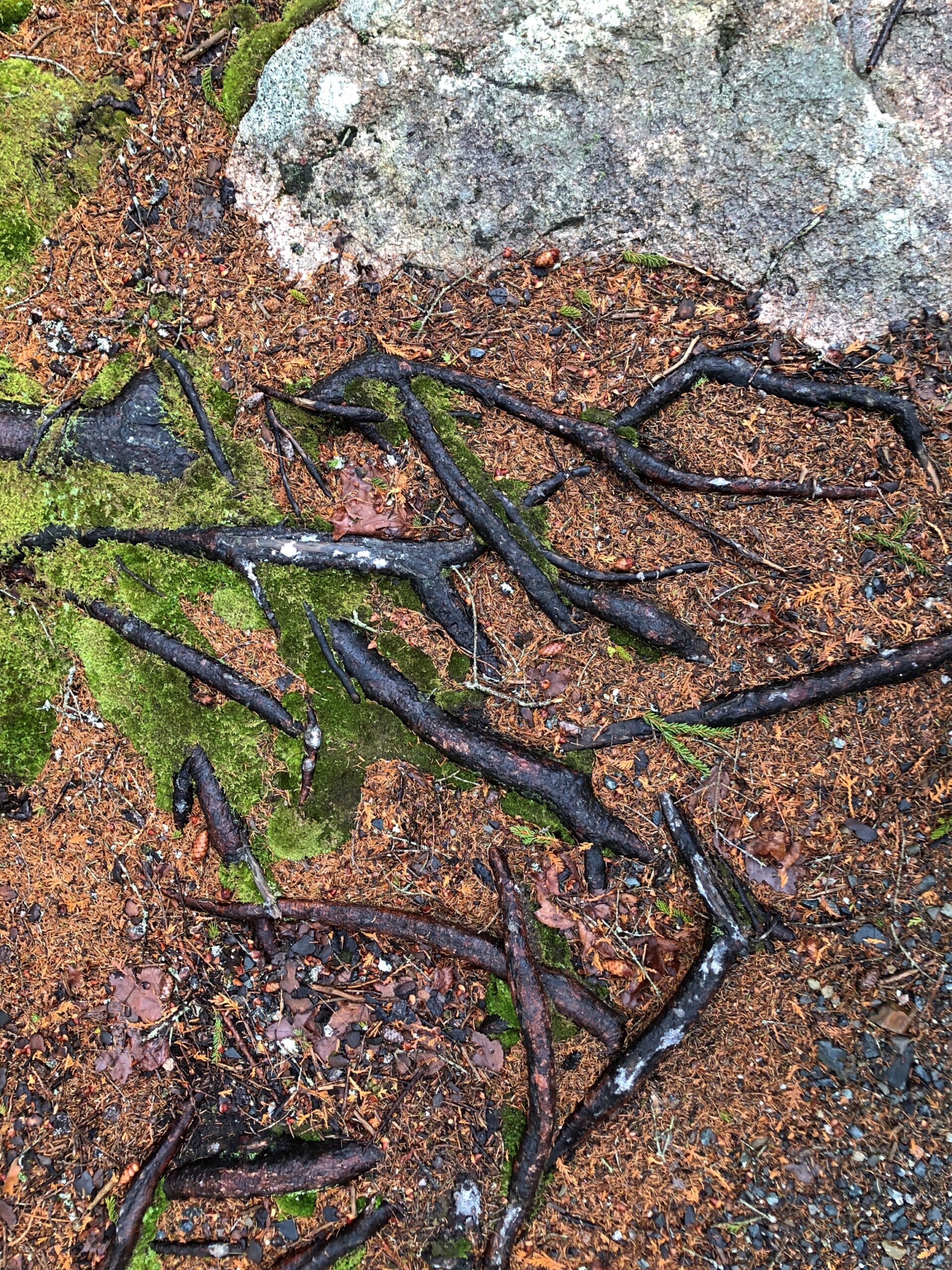
“Roots are typically at least half of a plant’s biomass, but you wouldn’t know it given how little scientific research has been devoted to these critical tendrils,” says the Smithsonian magazine. “Only recently have scientists given plant roots their day in the sun — in fields like collections research, climate science and microbiology.”
Or, in the case of the hardy trees of coastal Maine, their day in the fog.