Palestine, Texas

Terrific lightning storm rolled by to the south last night at about 11. Little rain but a prodigious amount of cloud-to-cloud lightning, unlike anything I’ve seen in years. The last time might have been when we were under such a near-rainless storm in North Dakota nearly 20 years ago. After watching in fascination from the back door, I got my phone and recorded about 30 seconds of the spectacle.

As usual, video only conveys a fraction of the visual power of the moment. But, in spite of the channel it’s on, it isn’t AI.

I was curious today which volume of the Encyclopedia Brown books — whose protagonist is a sharp grade-school boy who solves crimes and mysteries — mentioned the town of Palestine, Texas. Even though I grew up in Texas, I’d never heard of the place until I read an EB story in the early ’70s that mentioned a string of places that some international jewel thief was traveling to: Moscow, Odessa, London, Paris, Palestine and Athens. The boy detective determined that the criminal would be in Texas, since those are all places in that state, and especially because “Palestine” is called “Israel” now, as he said.

You might wonder (I do now, anyway) what business an international jewel thief would have in a place like Moscow, Texas (pop. 170) or London, Texas (pop. 180), but never mind. It didn’t take long for me to find a YouTube review of Encyclopedia Brown Keeps the Peace (Book 6, originally published 1969), including the case that mentions the Texas towns. The reviewer takes the book to task, asking “can grade-schoolers be expected to know this information?” No, of course not. They can be expected to learn it, however.

Now I know exactly where I learned about Palestine (Pal-es-TEEN) more than 50 years ago. I didn’t arrive in Palestine in person until this February, on my way to Dallas from Nacogdoches. During my visit, I made the acquaintance of this fellow.
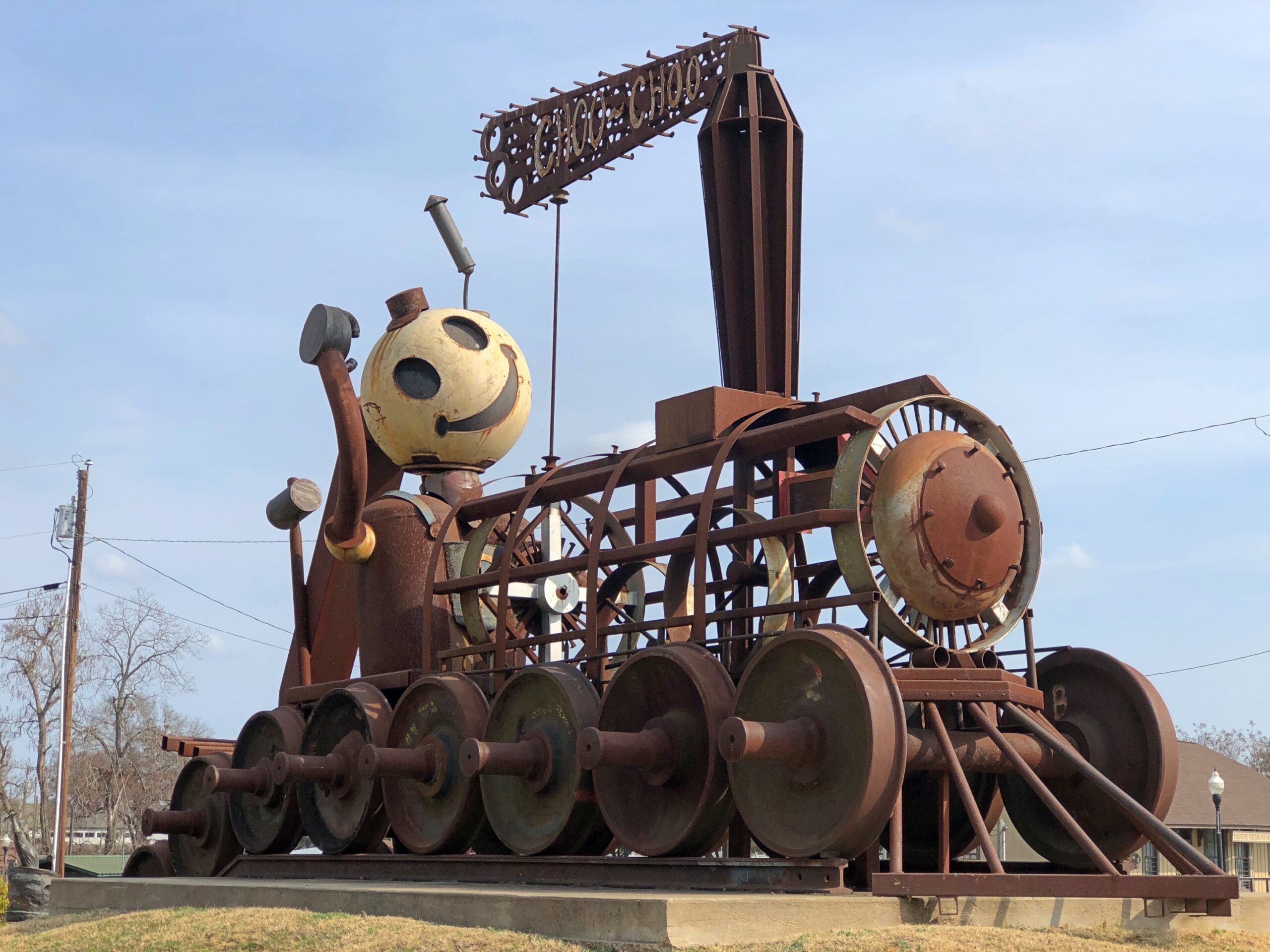
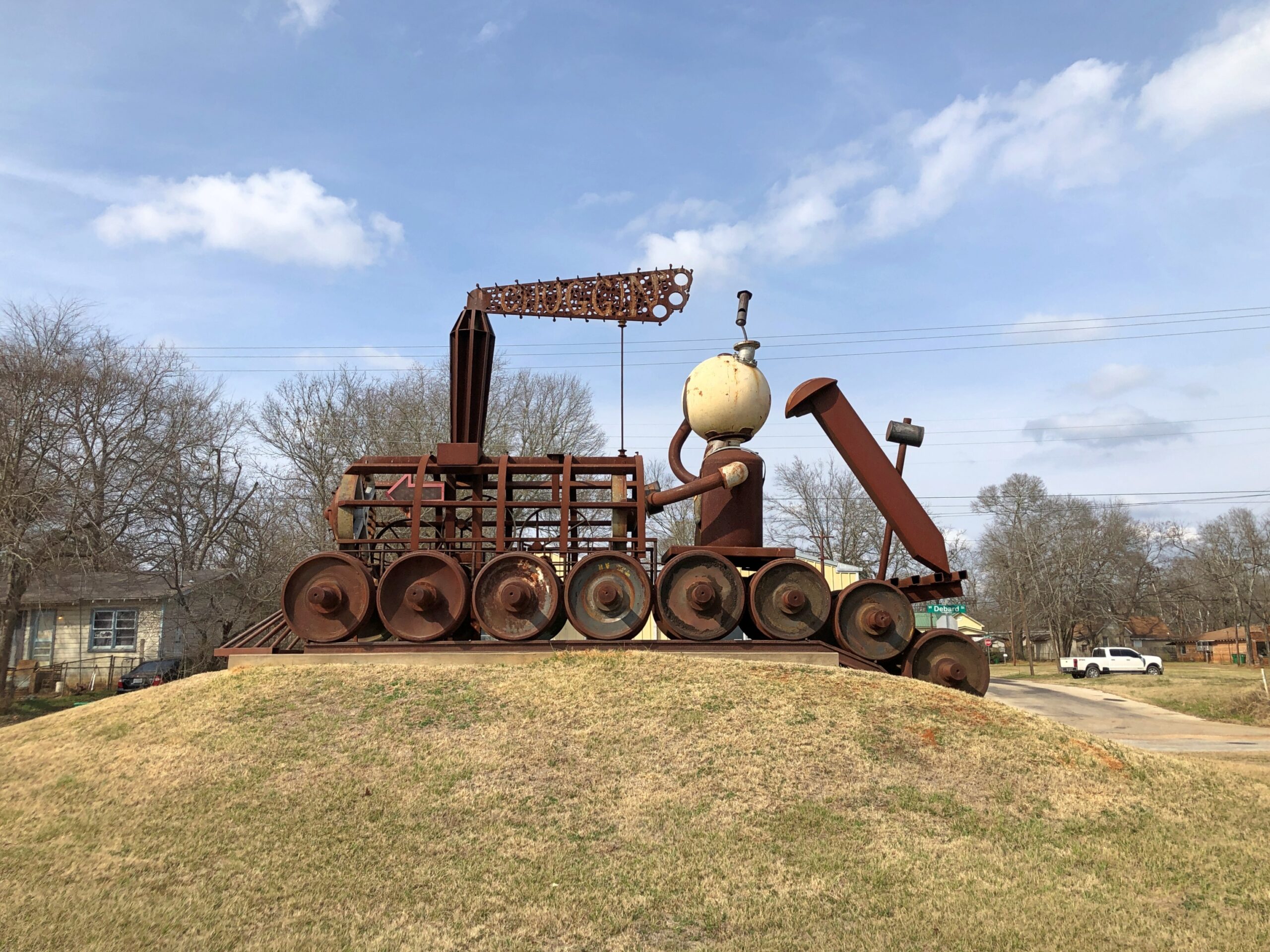
The sculpture is called “Chuggin’ ” (2020), created by Dewane Hughes, a sculpture professor at the University of Texas in Tyler. Railroads are important in the history of Palestine, so much so that one terminus of the Texas State Railroad – a linear state park along a former short line RR – is in the town. The other terminus is in Rusk, about 25 miles away. Not running in February, unfortunately.

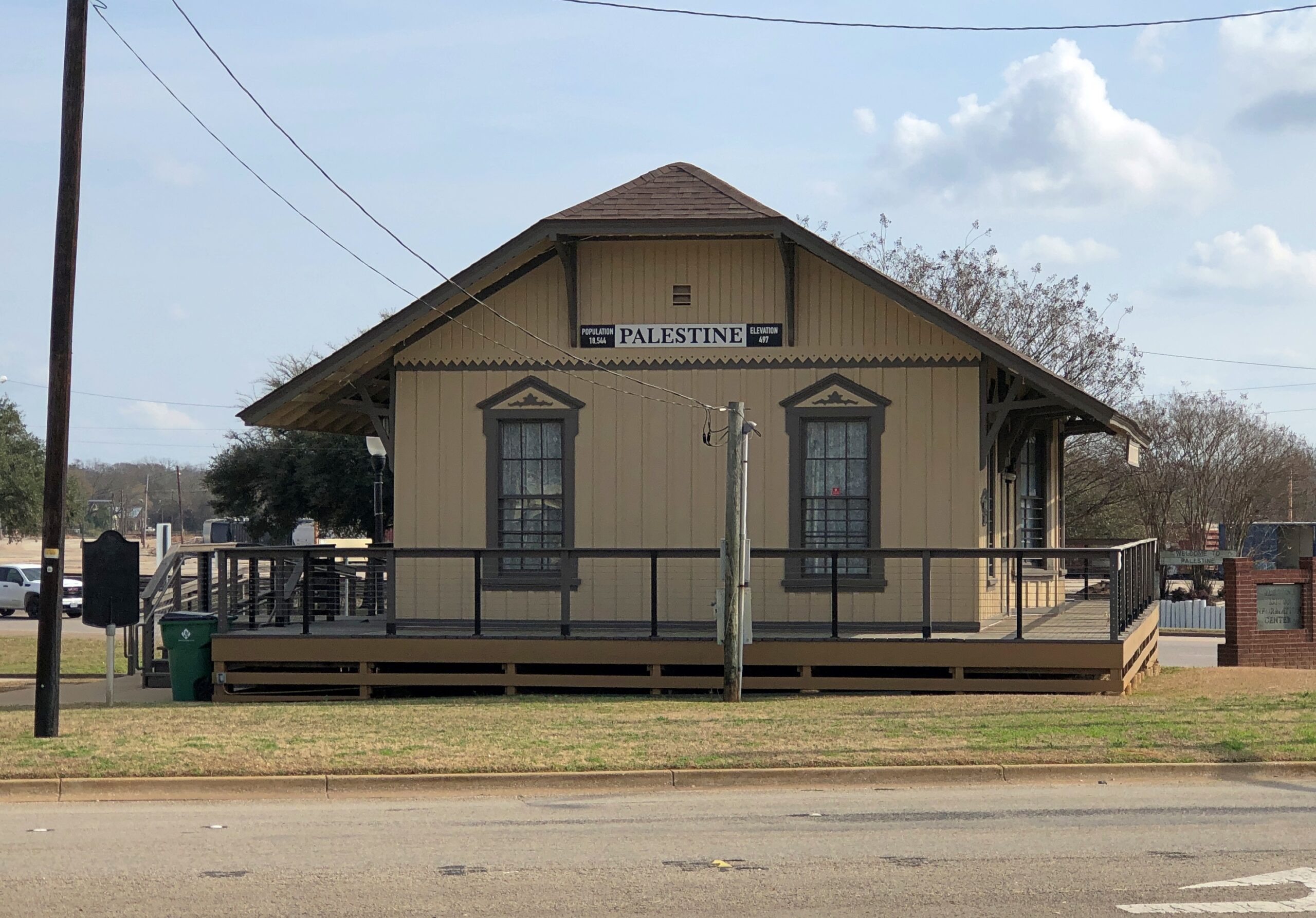
“Chuggin’ is near the town’s visitor center, a former RR depot.
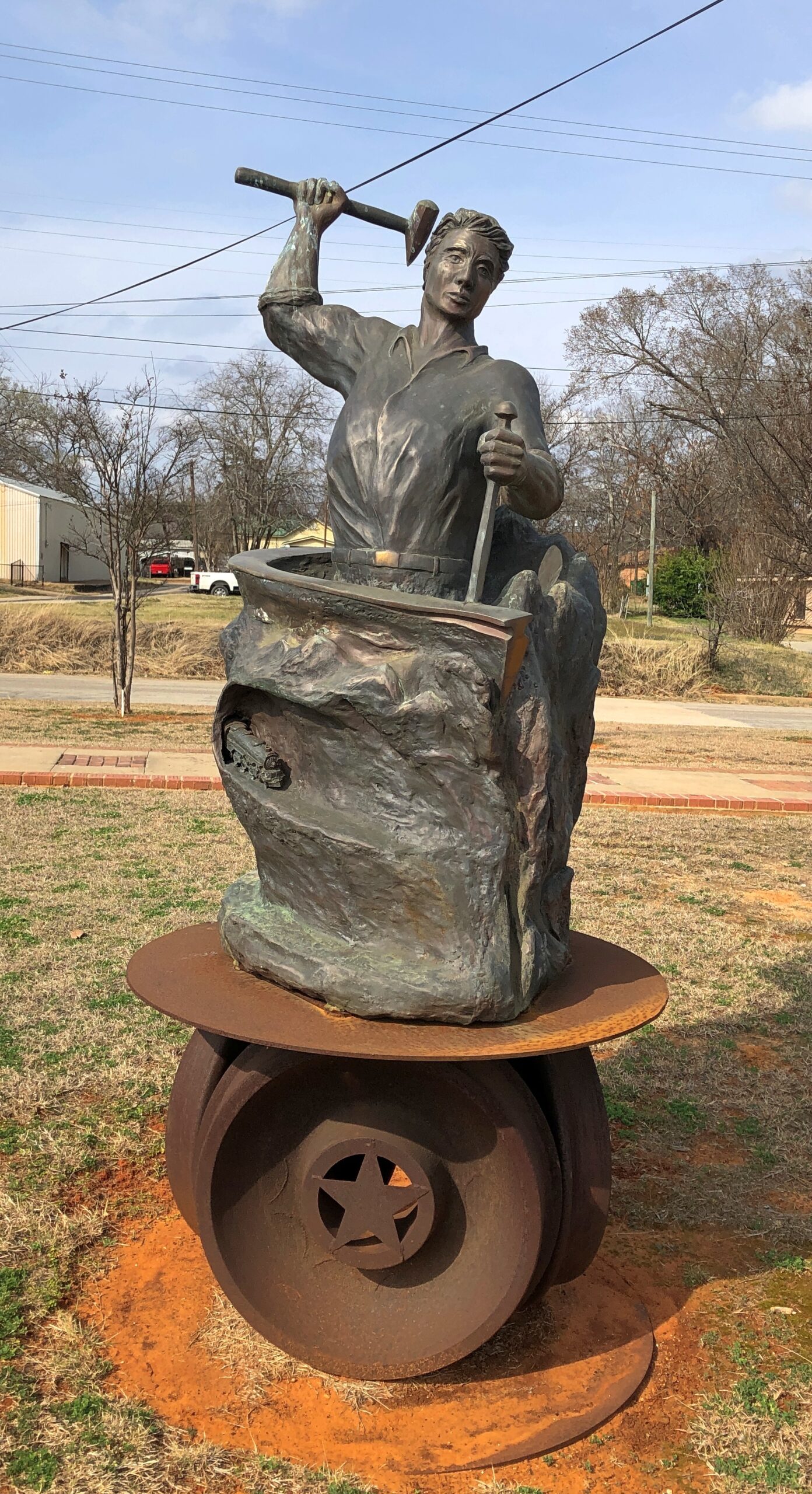
Also nearby is “Forging History” (2014) by Dale Montagne, with the base made of three actual rail car wheels.
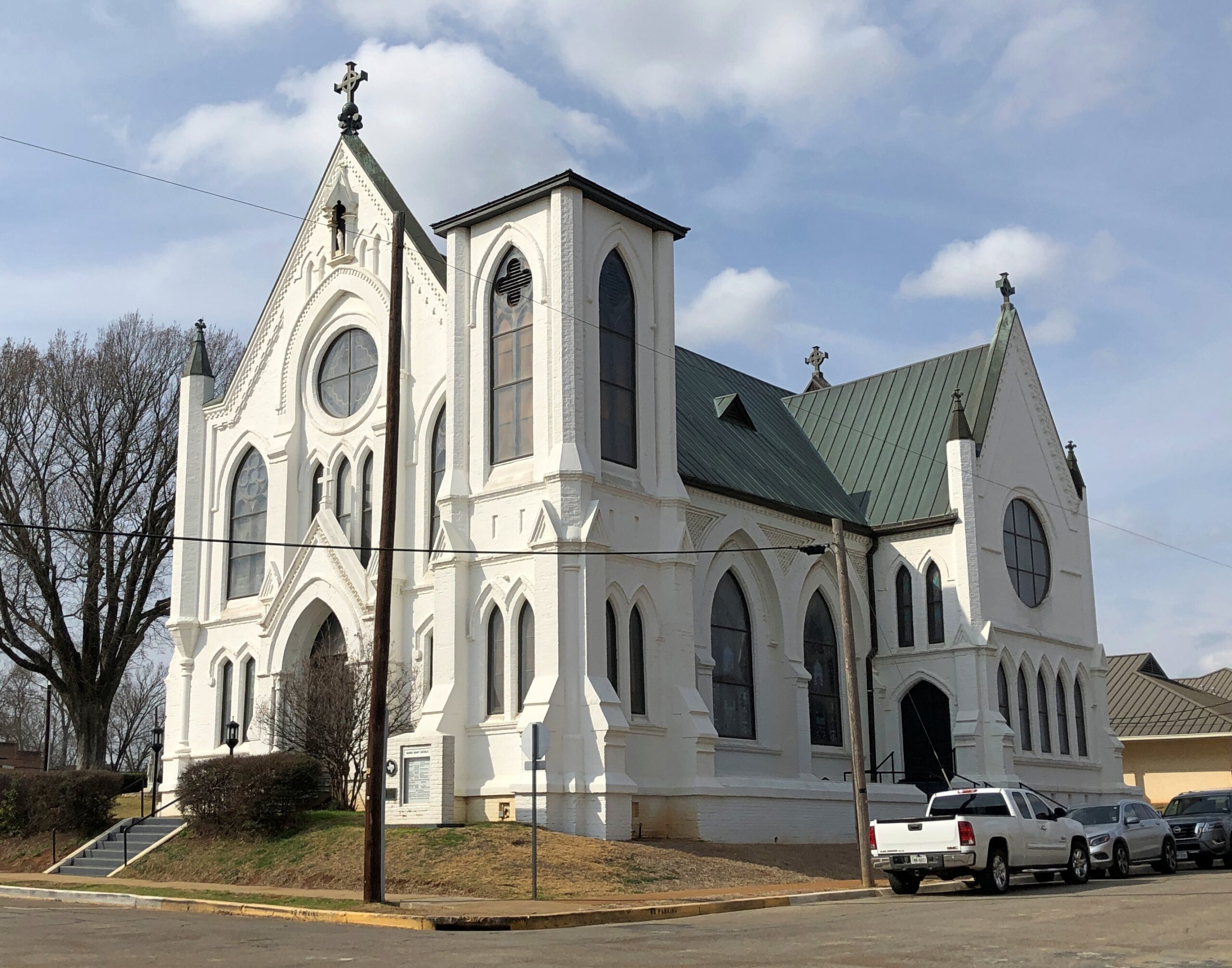
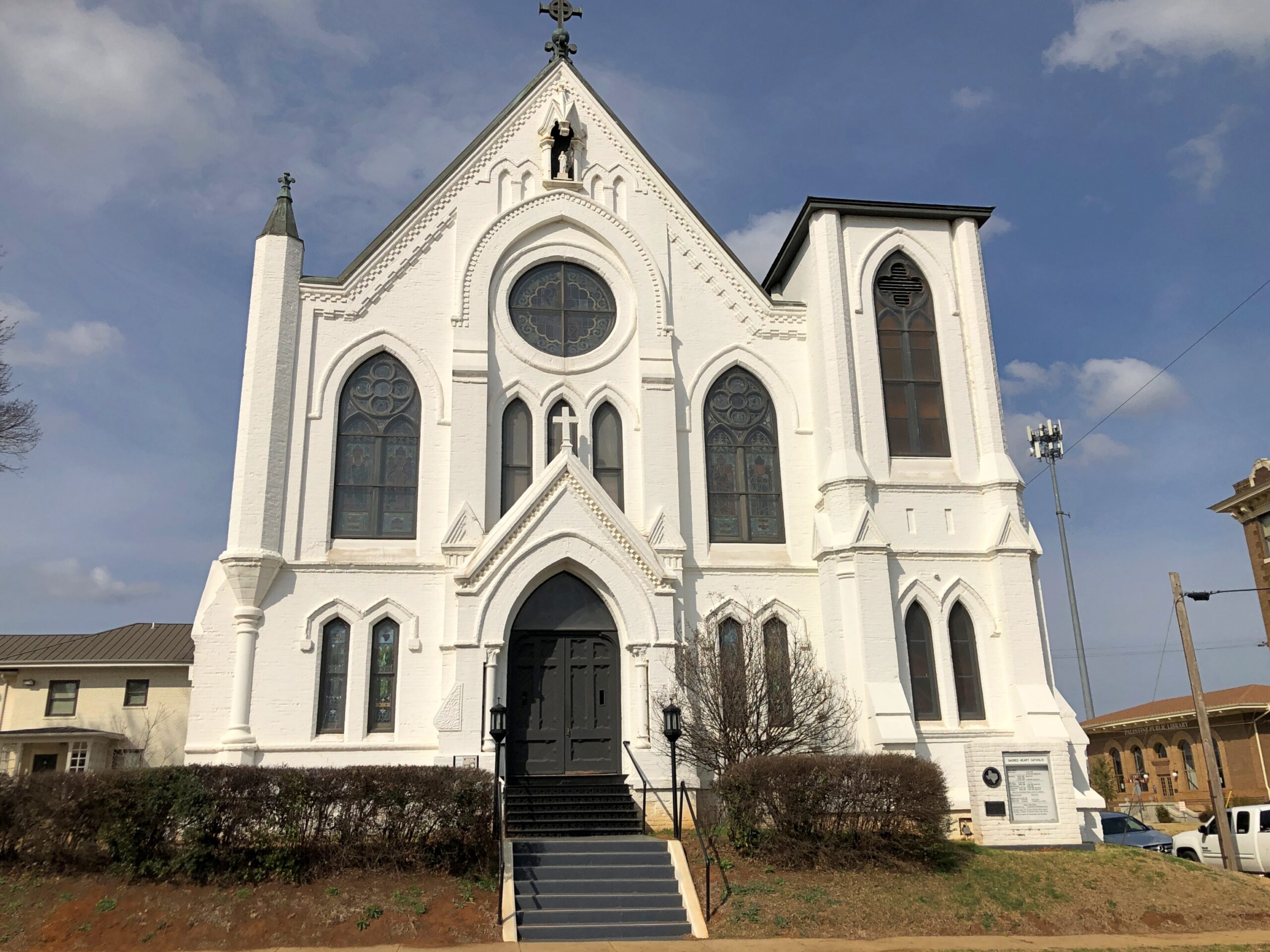
Parking was easy to find in downtown Palestine, traffic light. Parallel parking was available right across from the splendid Sacred Heart Catholic Church, as it happened, an 1890s creation by Nicholas Clayton, who was most active in Galveston before the hurricane. Originally many of the congregation were workers on the International-Great Northern Railroad Co., which had a major presence in Palestine.
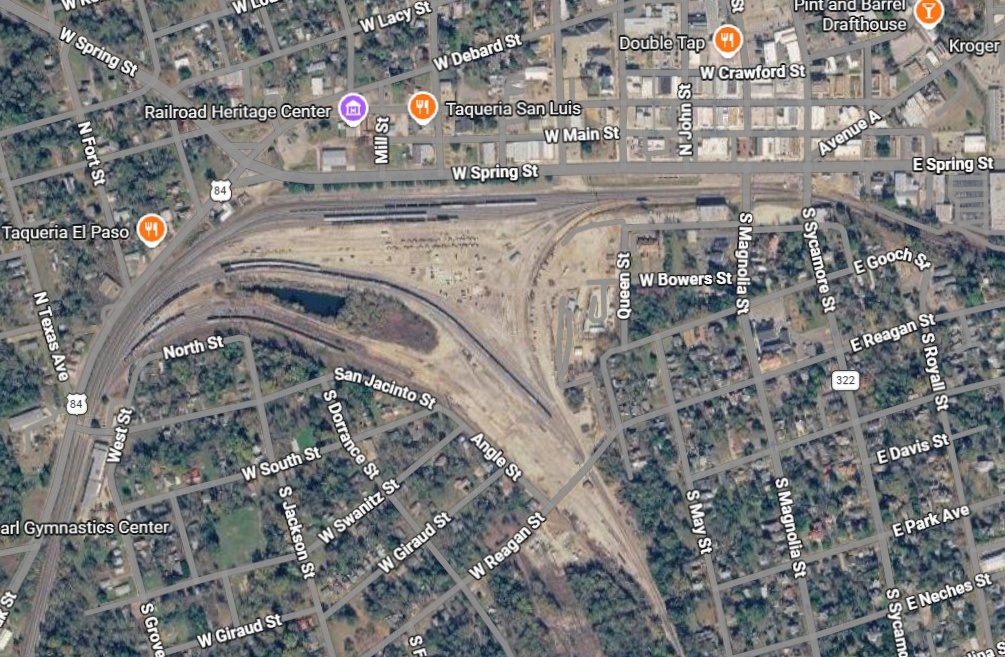
Palestine still has a sizable rail yard south of downtown.
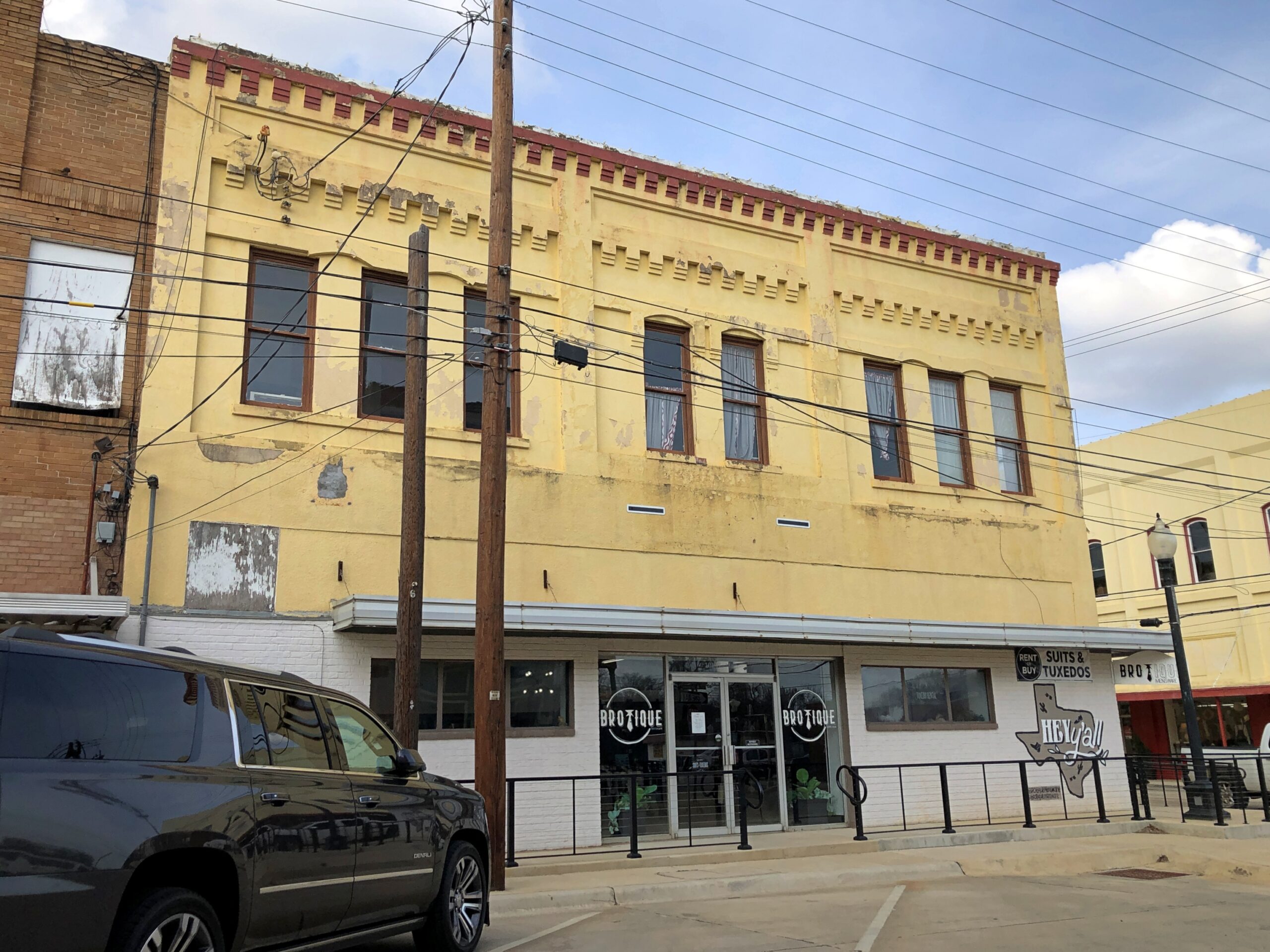
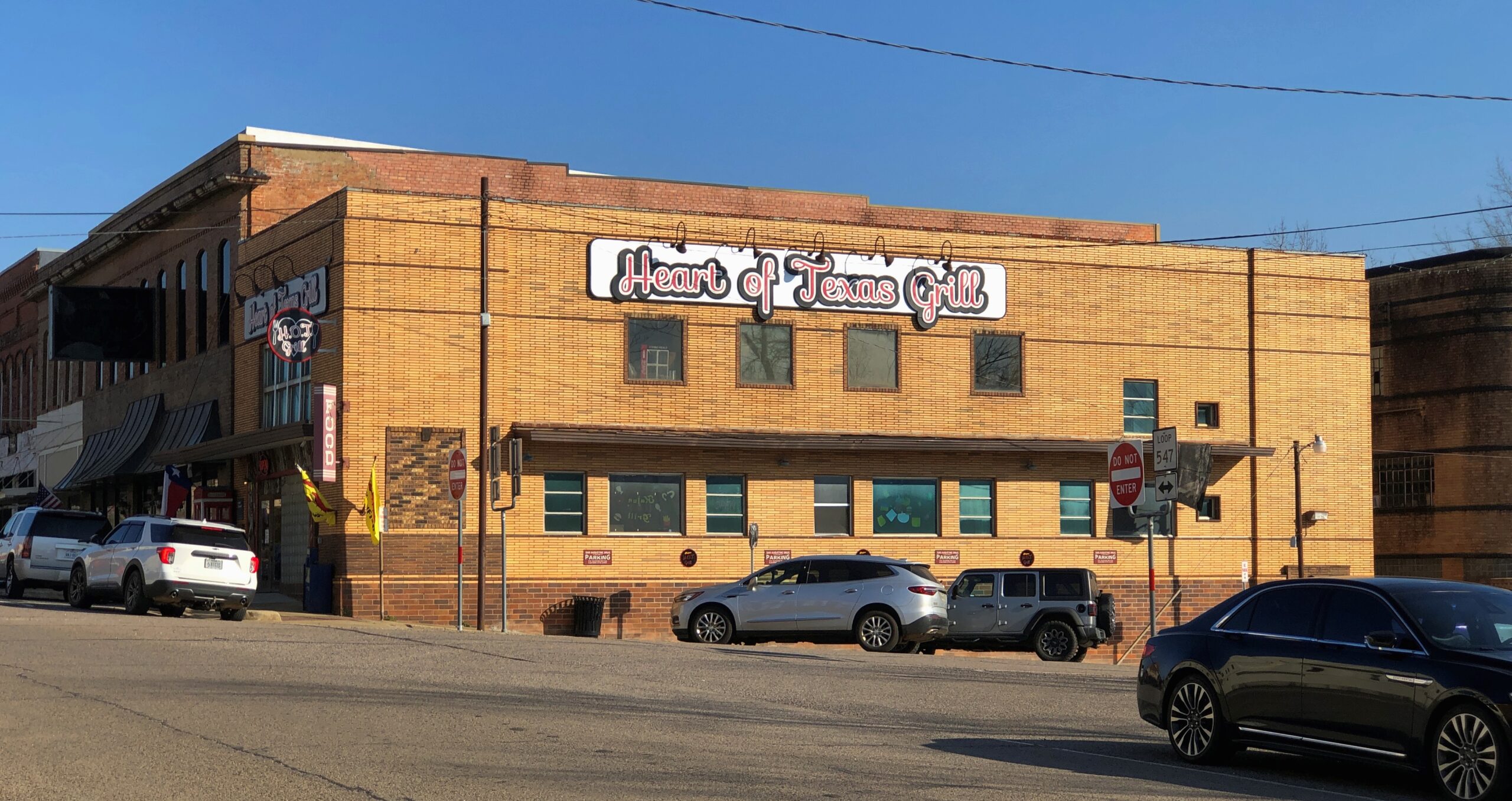
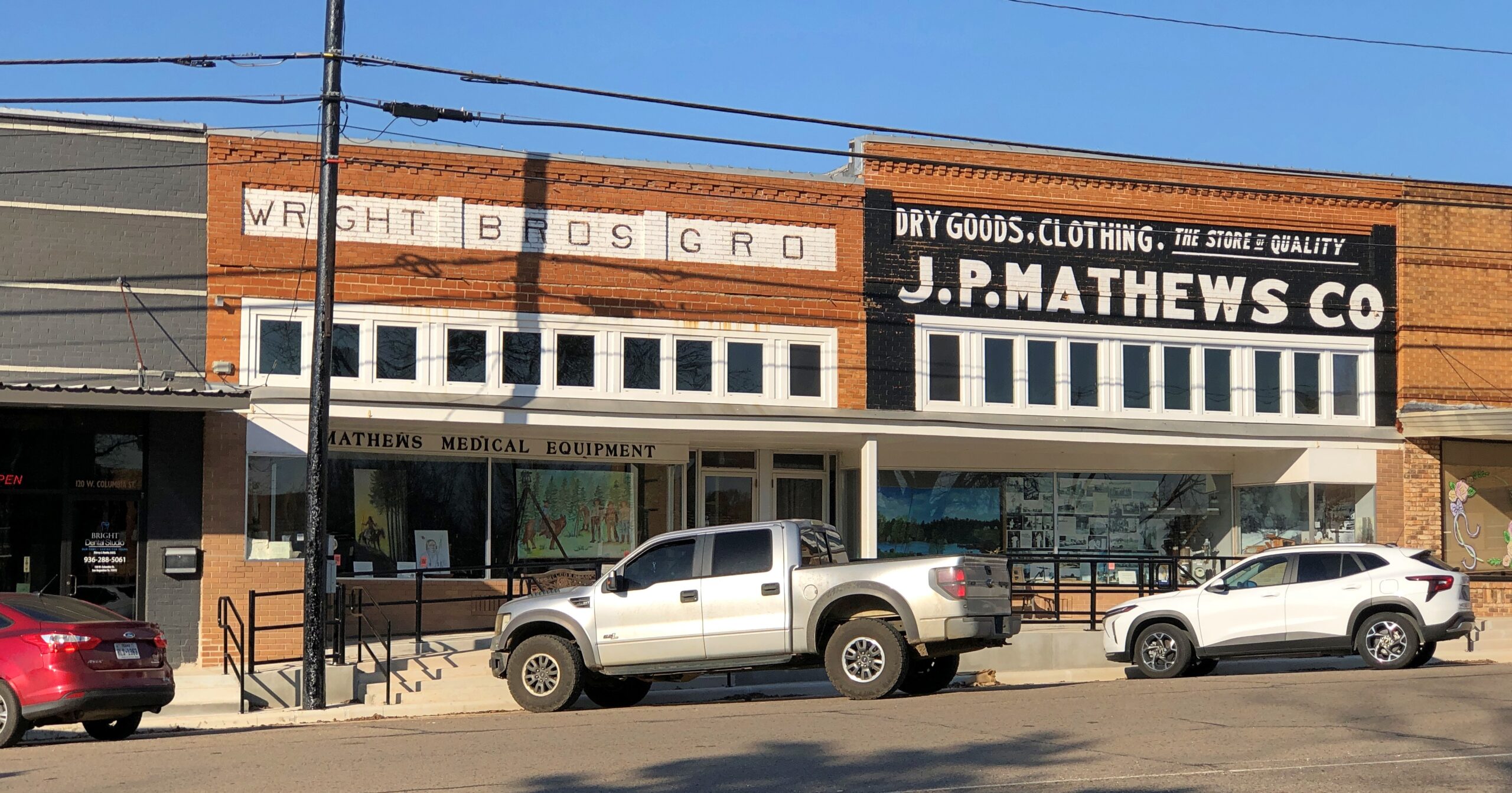
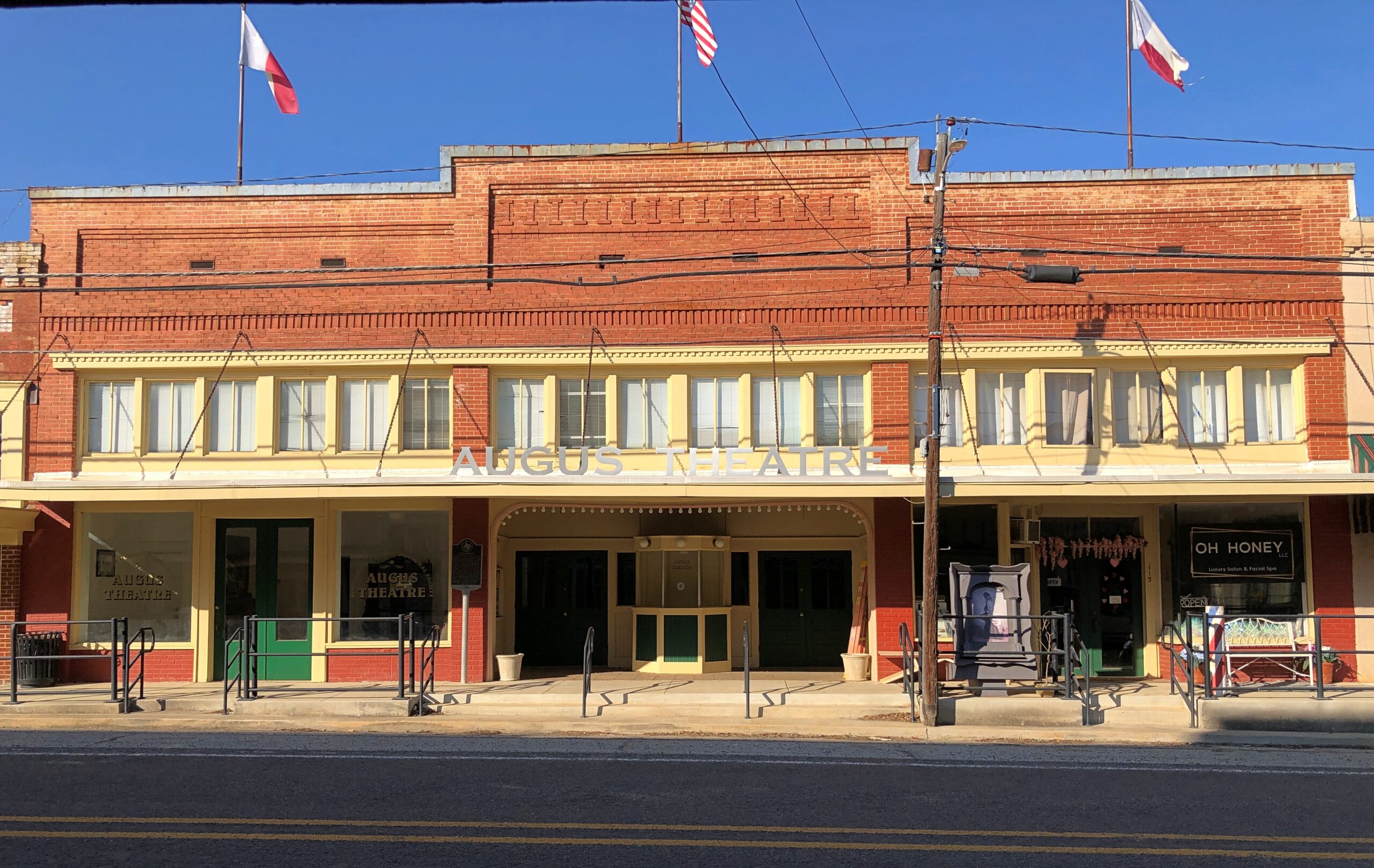
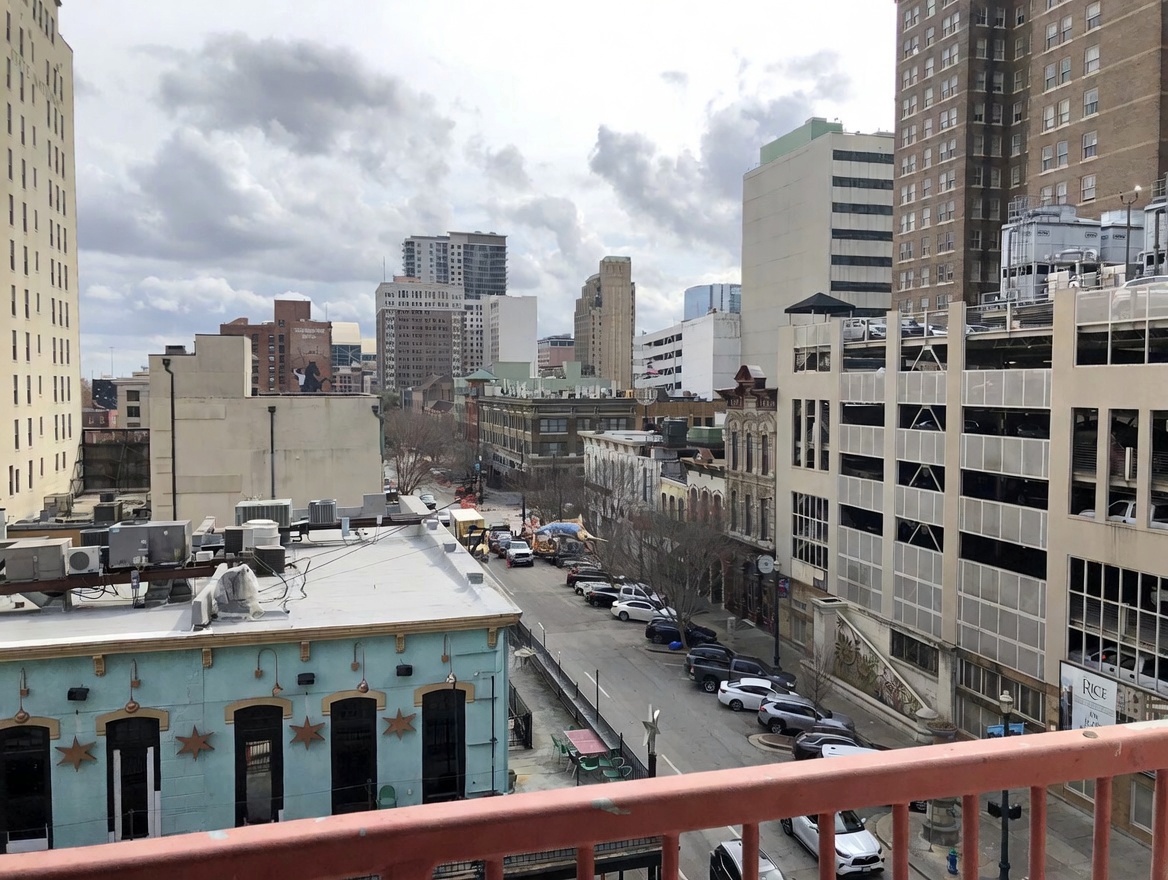
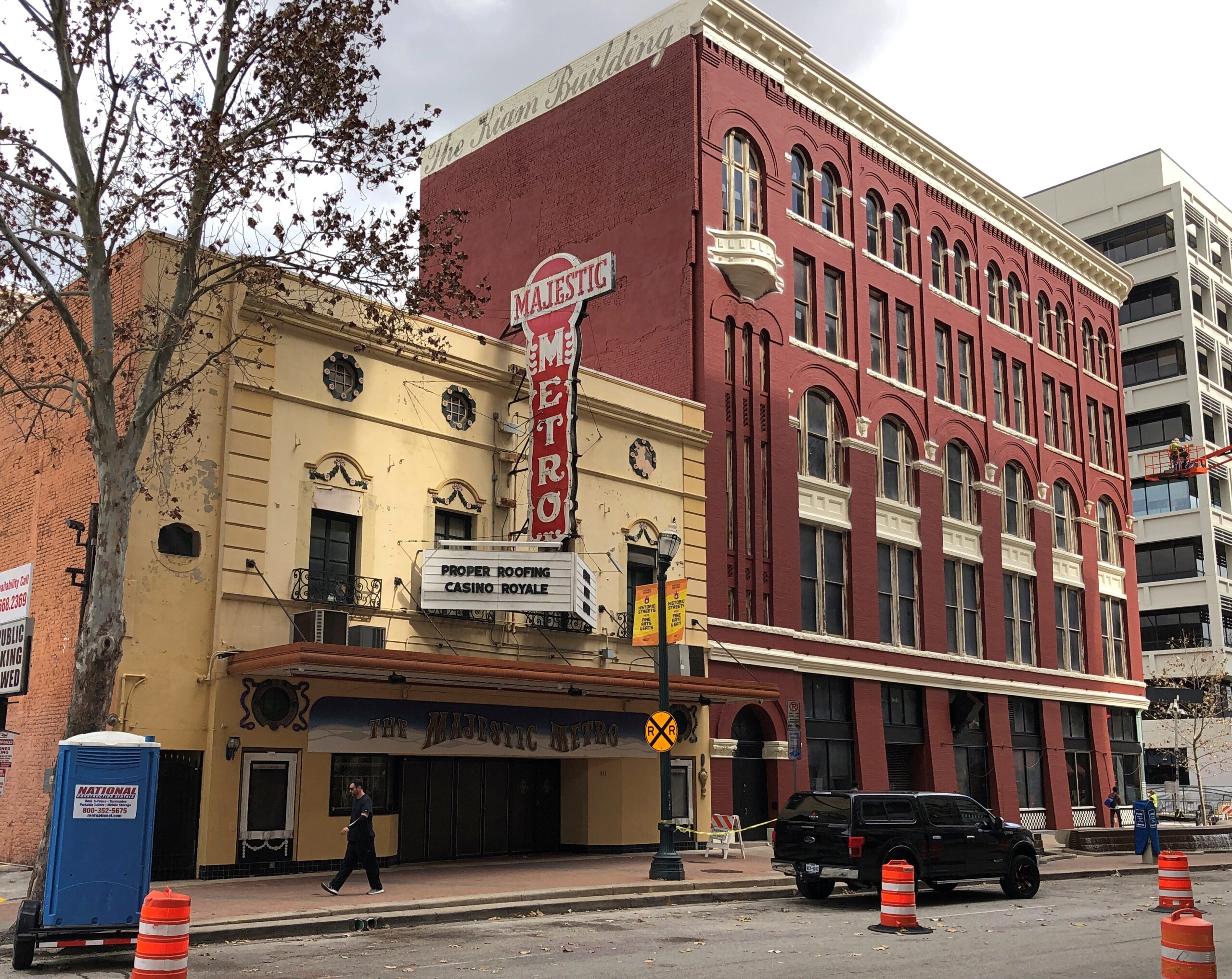
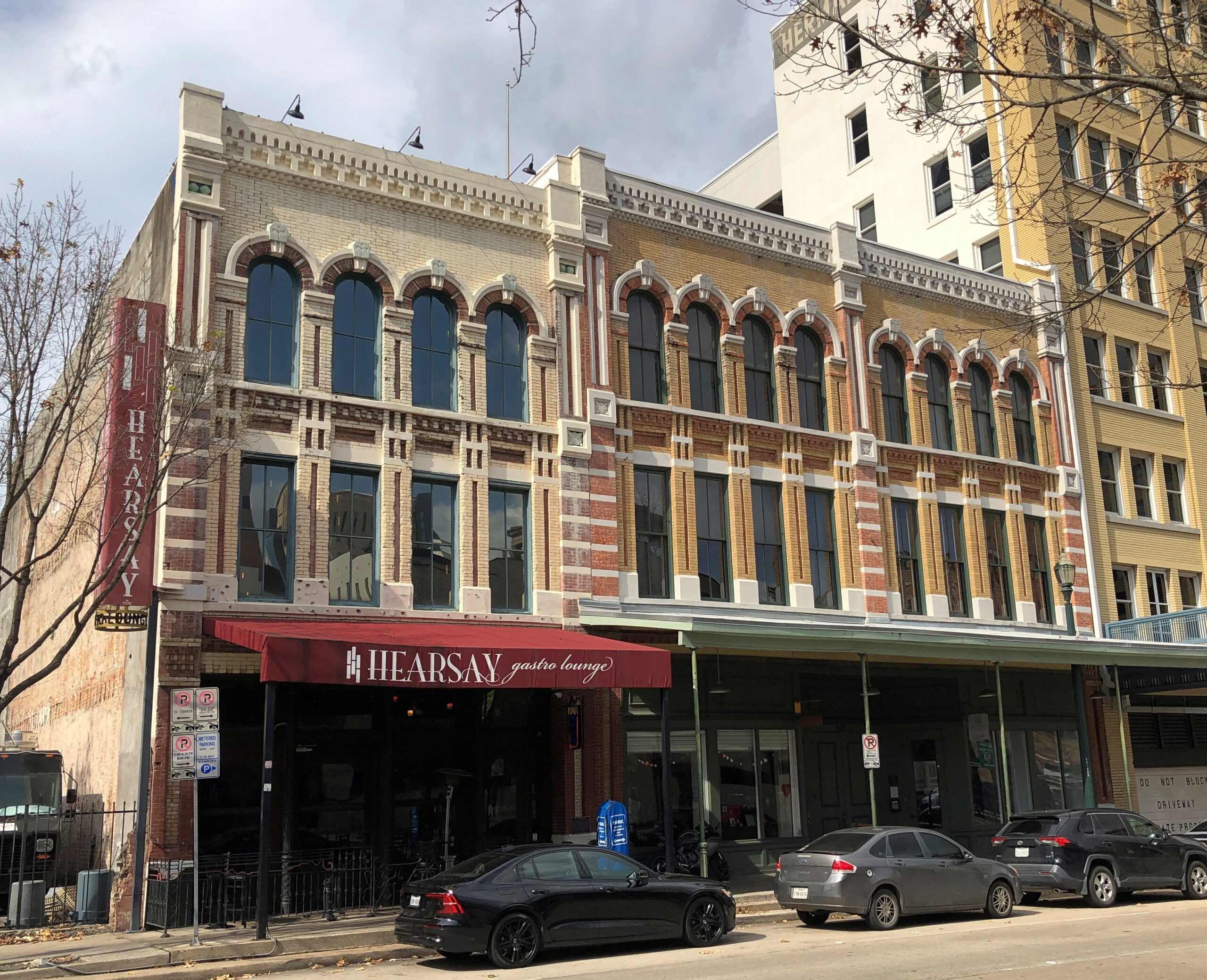
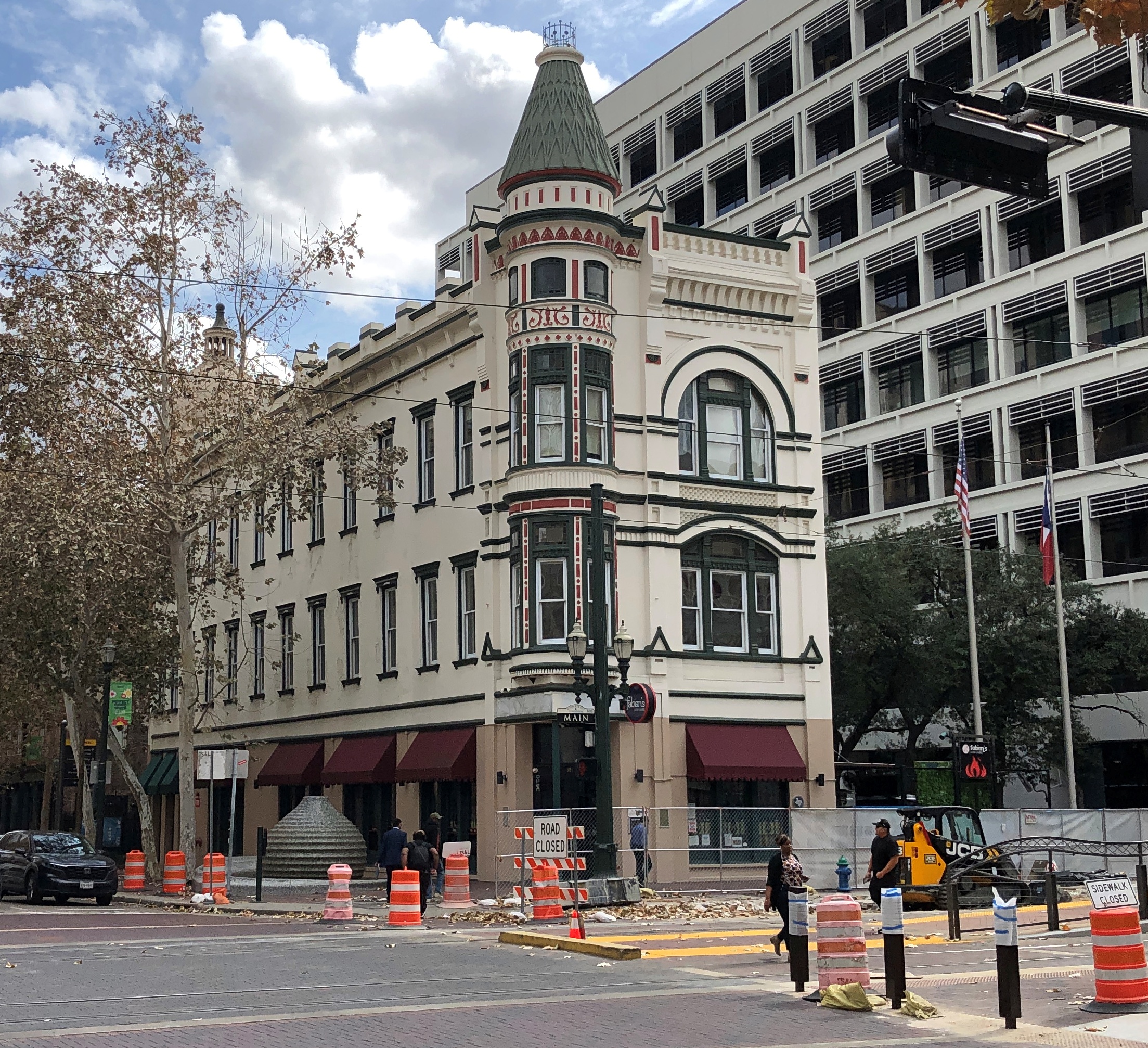
Took a walk around downtown. Like most large towns, or small cities, there is a mixture of ongoing businesses –
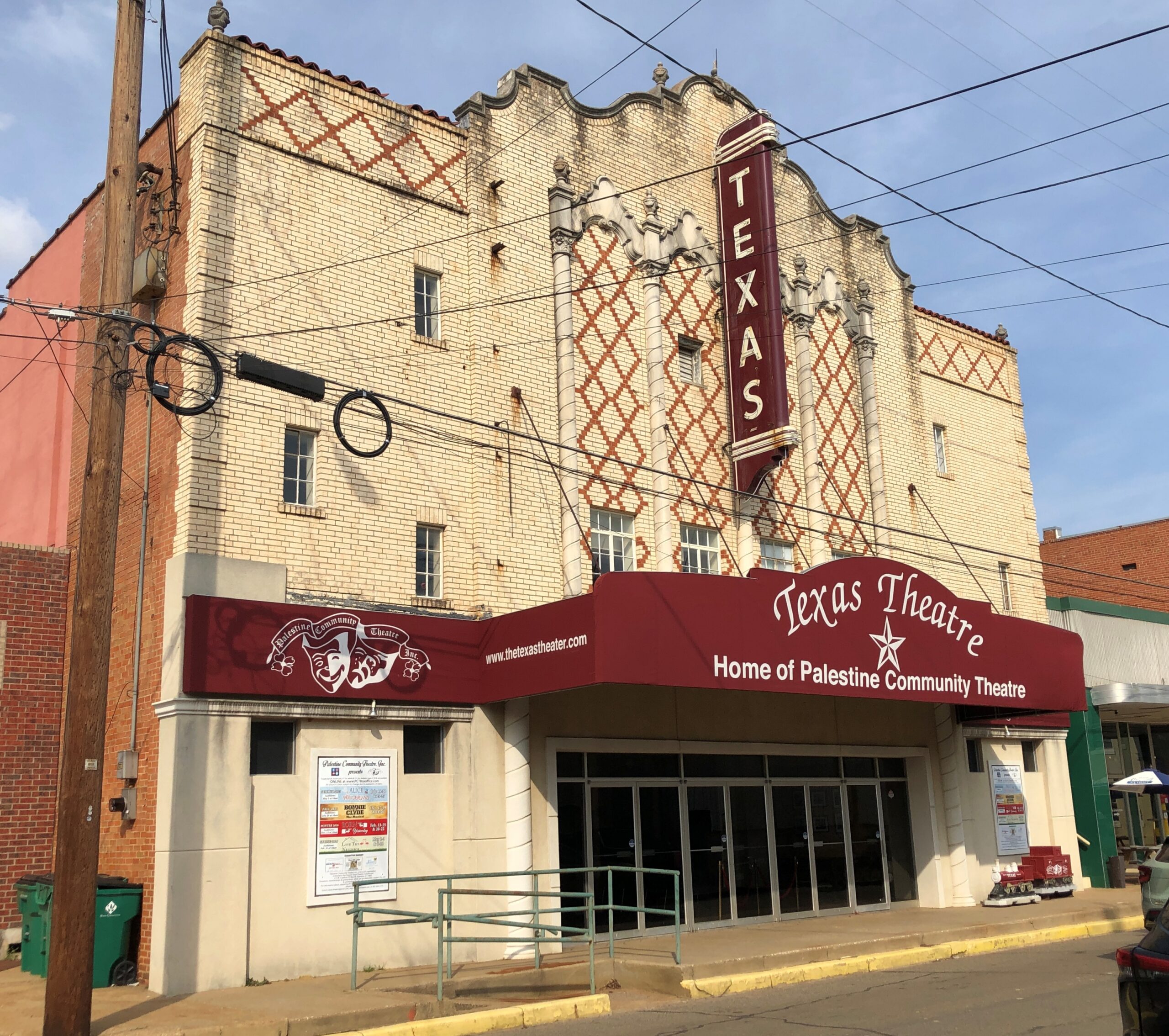
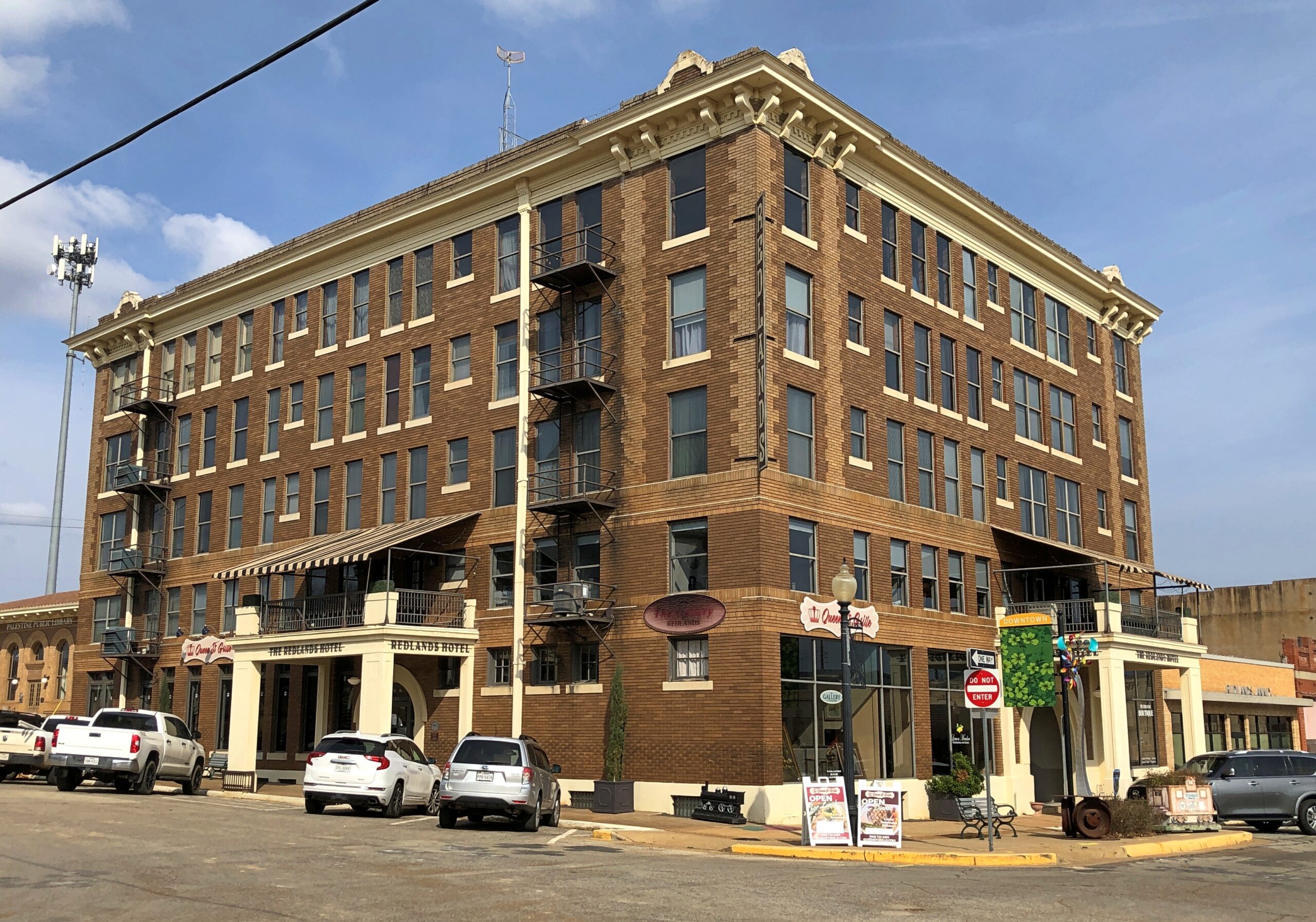
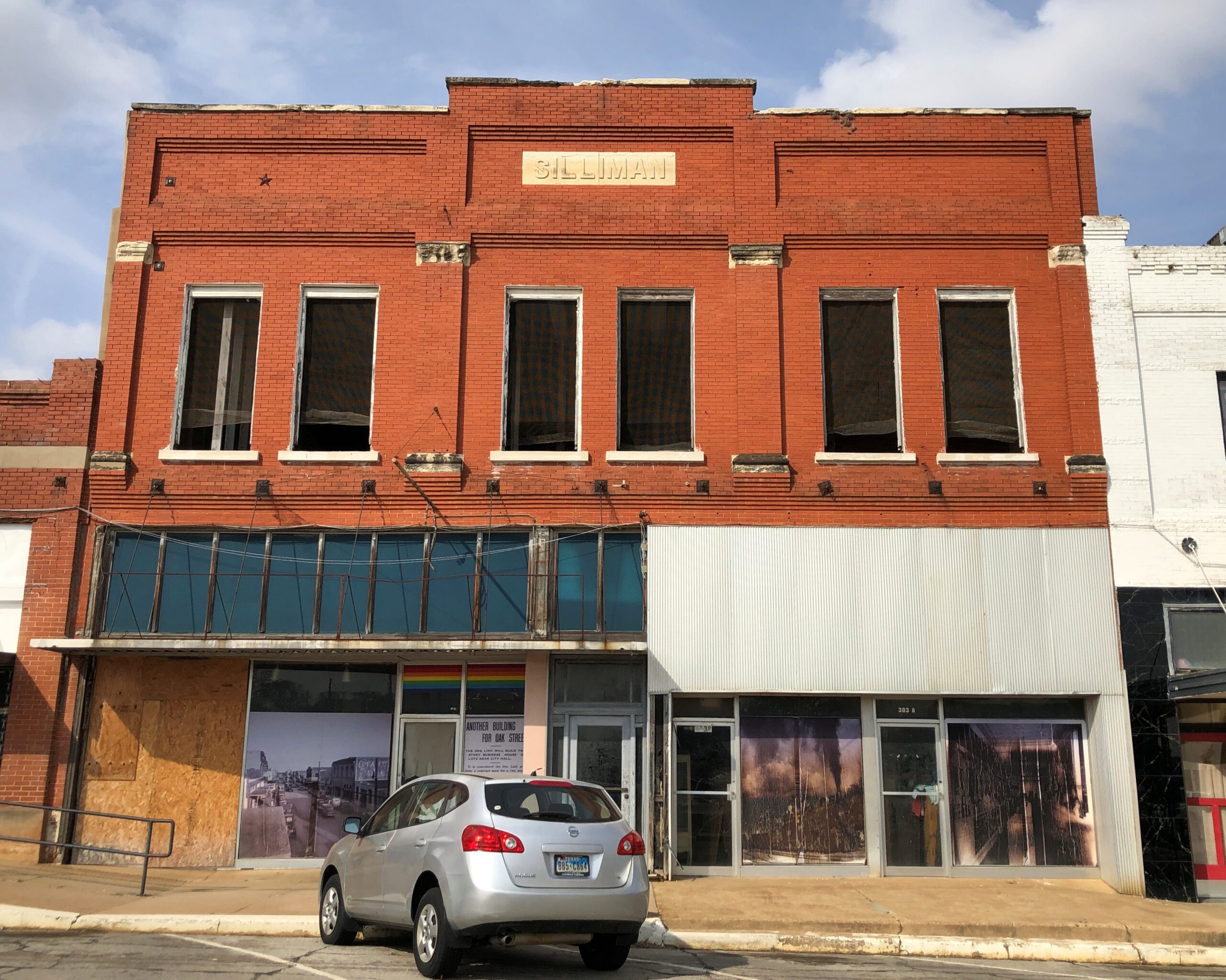
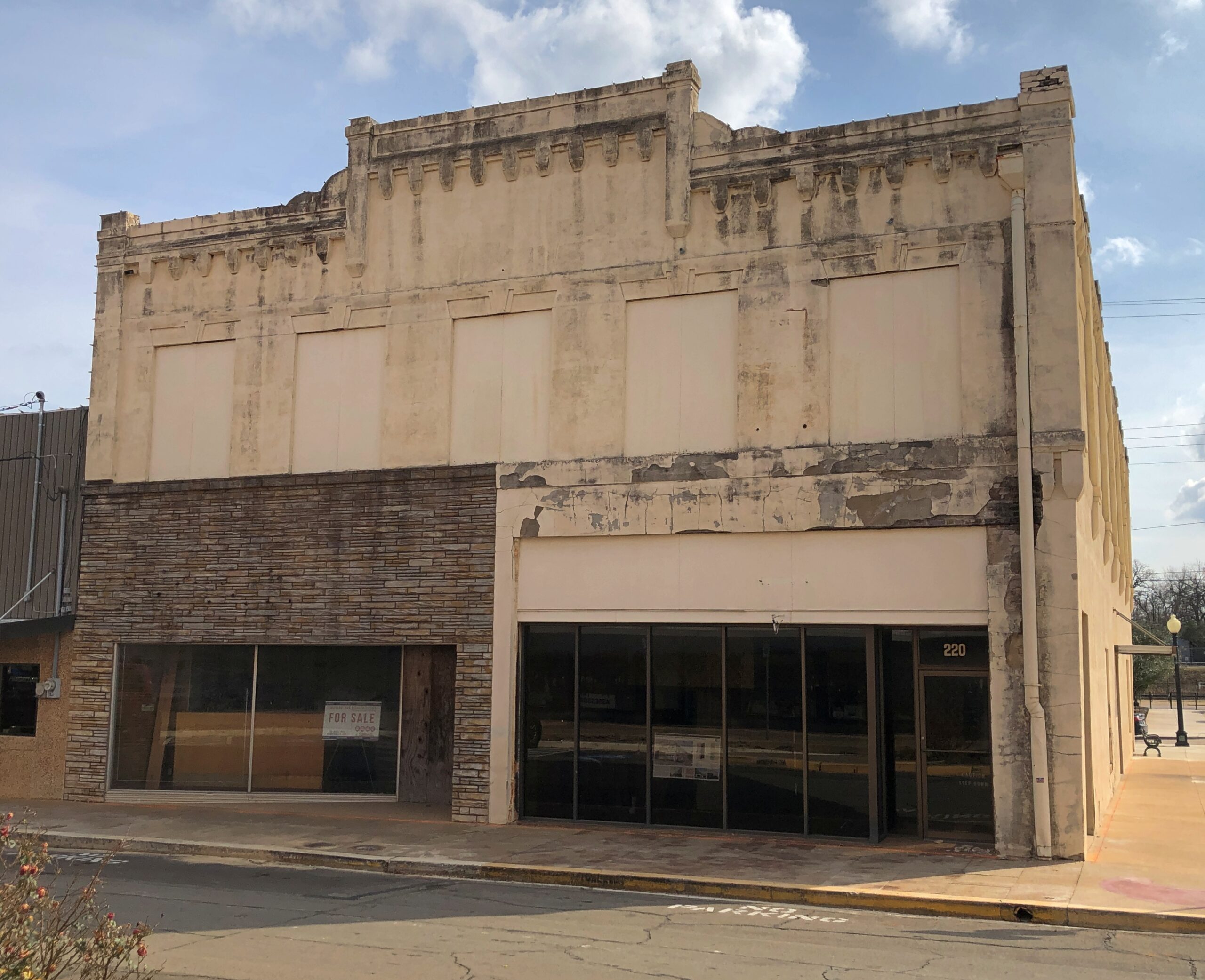
— with vacancies.
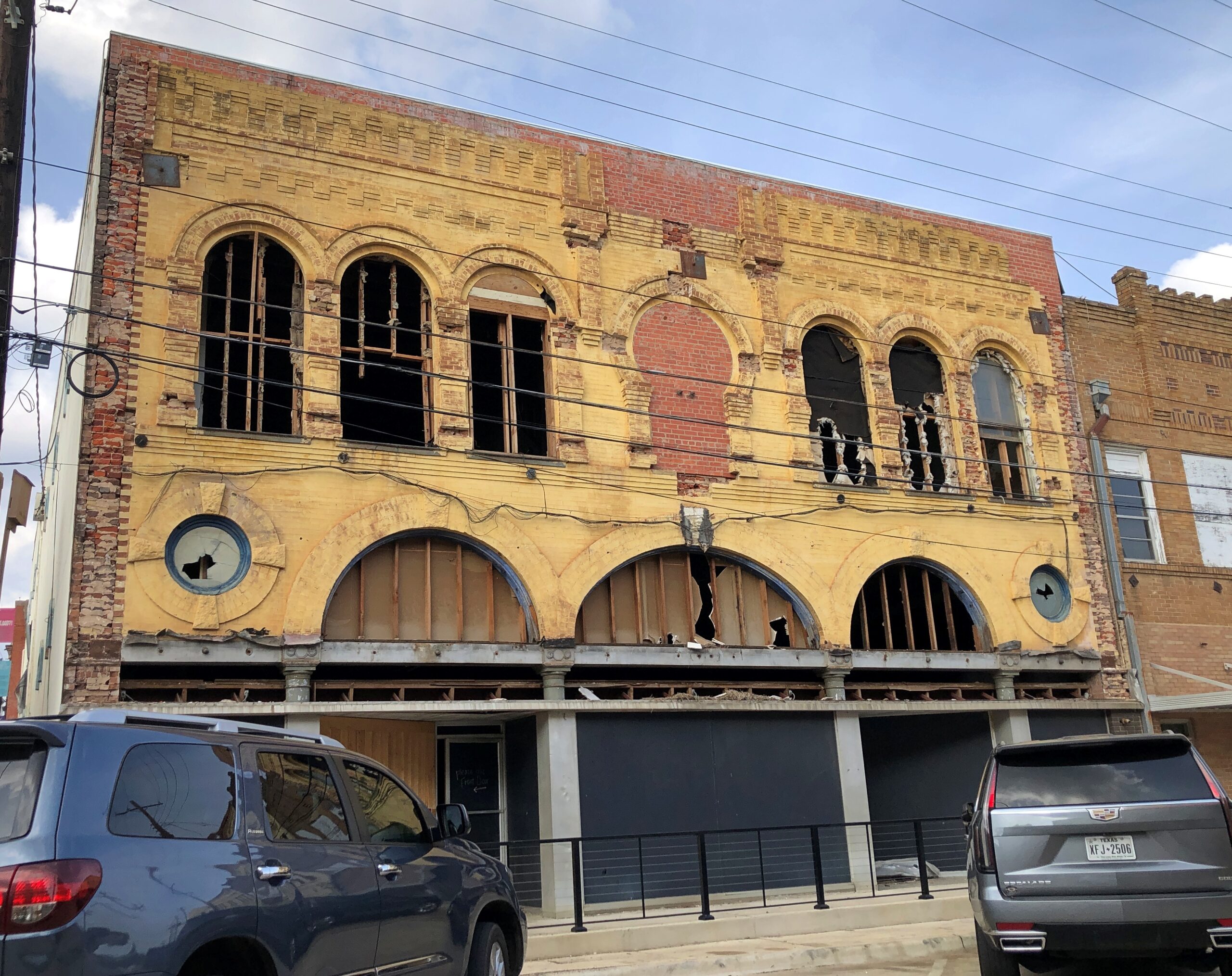
Got some buildings with really good bones, as it’s been said in the real estate biz.

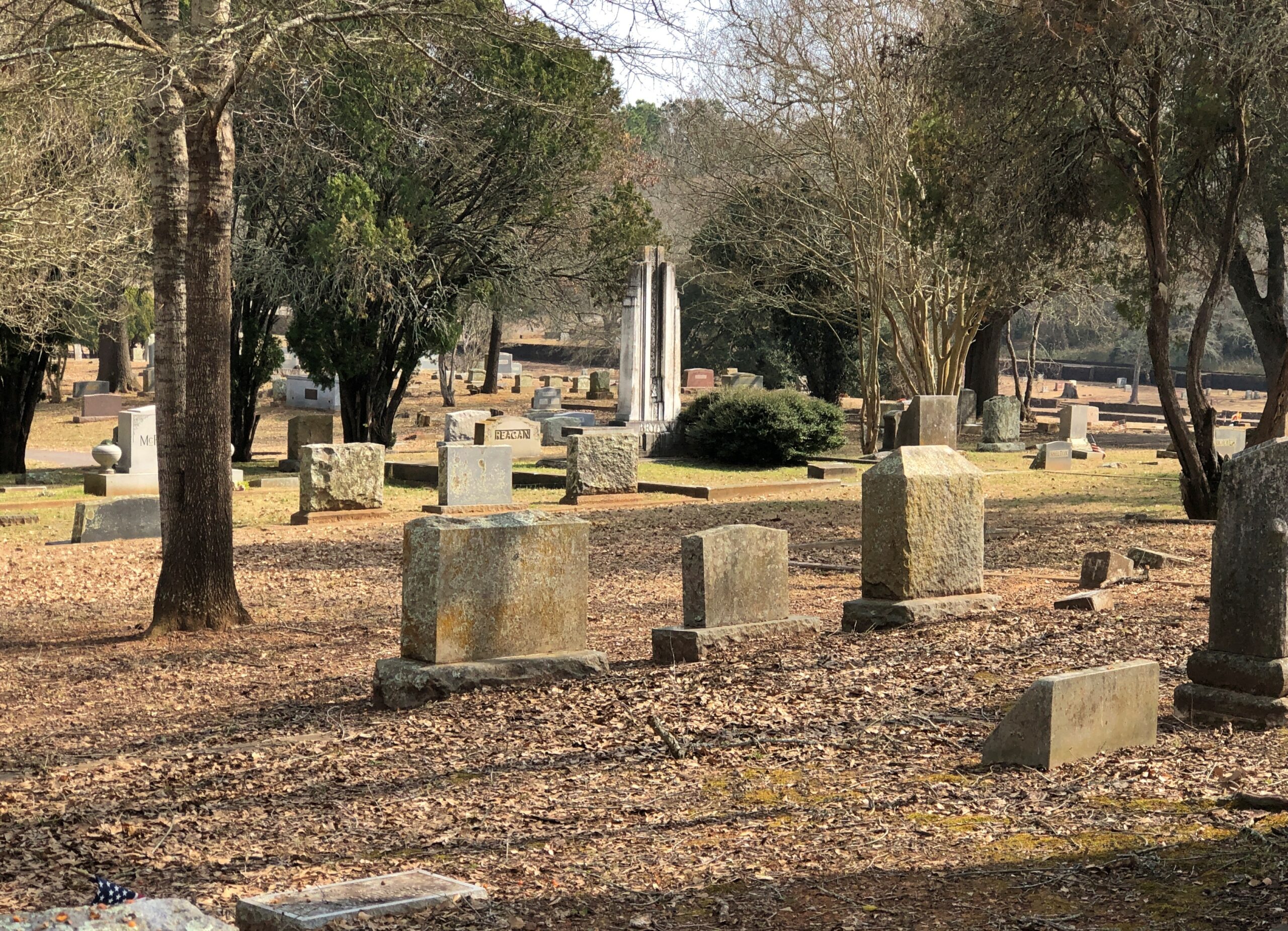
The Palestine City Cemetery is to the east of downtown, but not very far. Nowhere is that far in town.
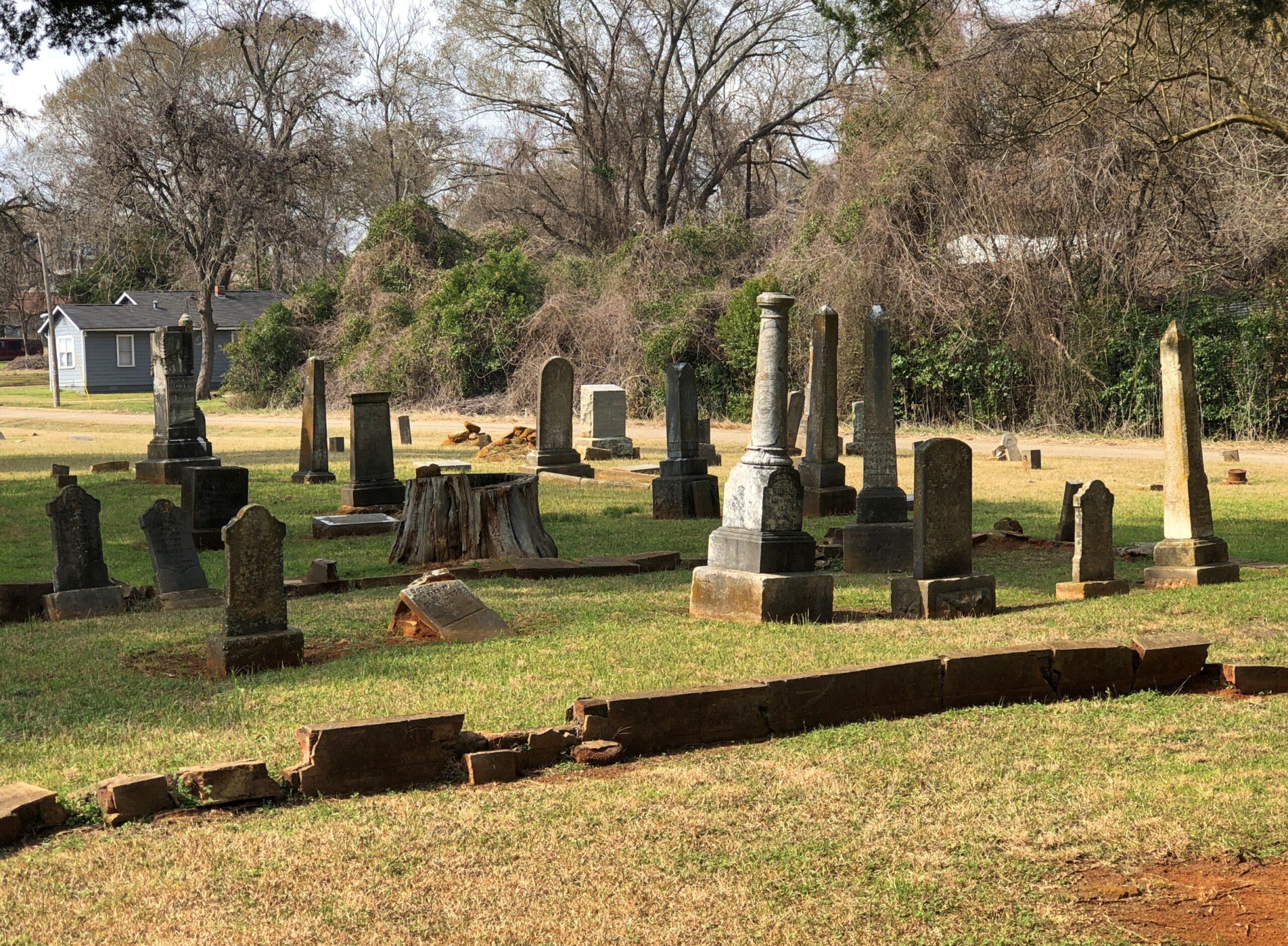
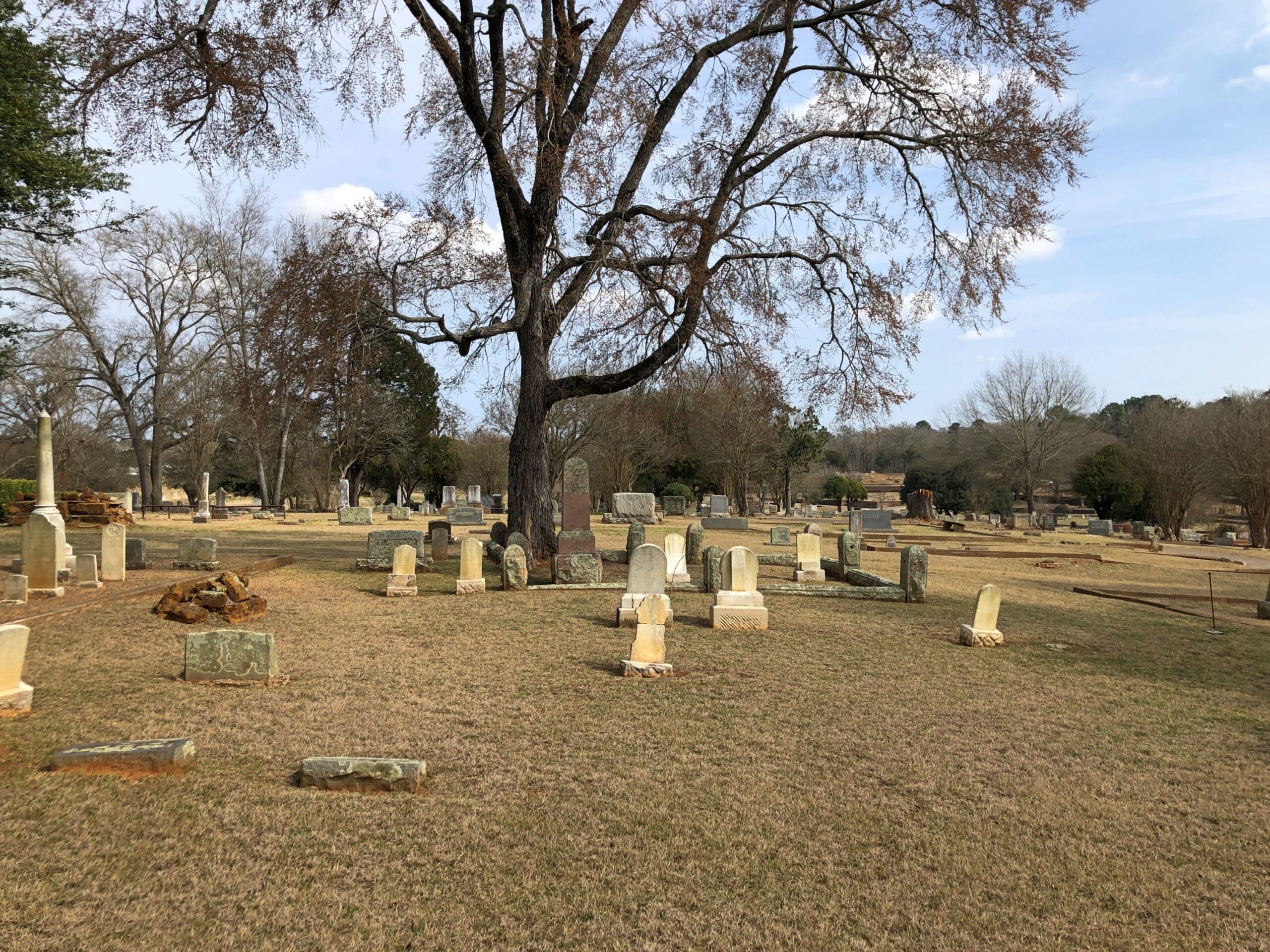
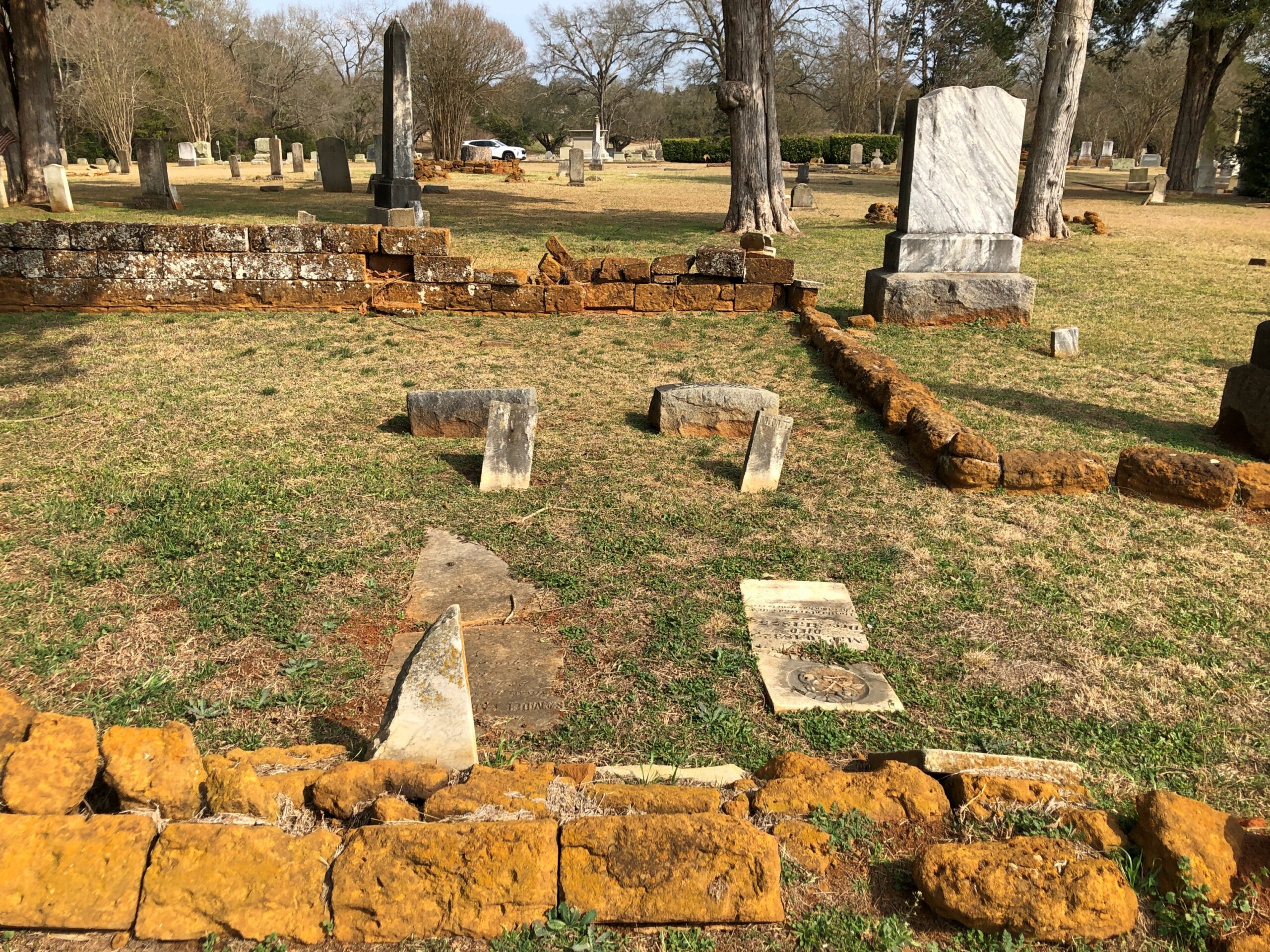
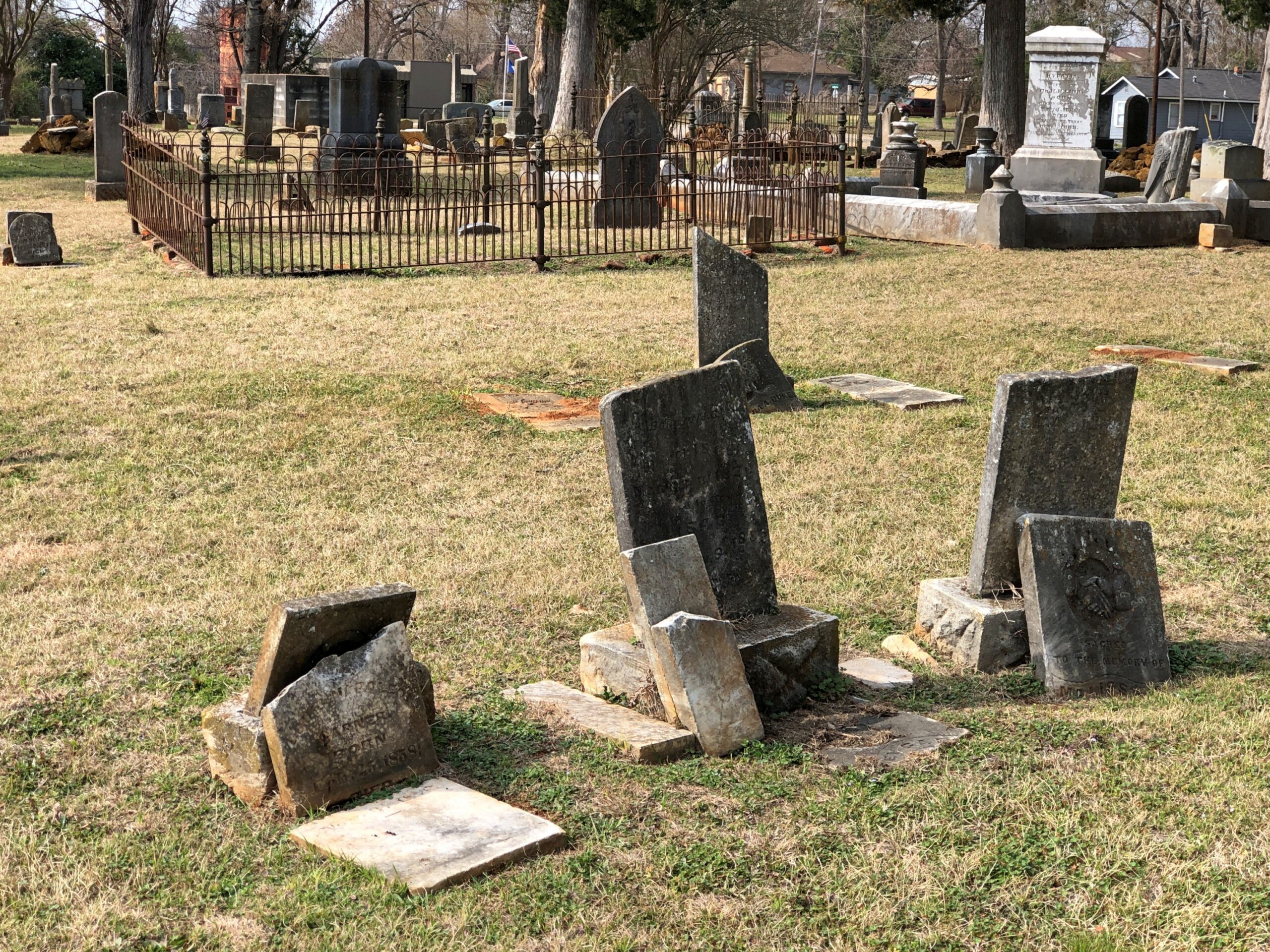
City Cemetery, Palestine Texas

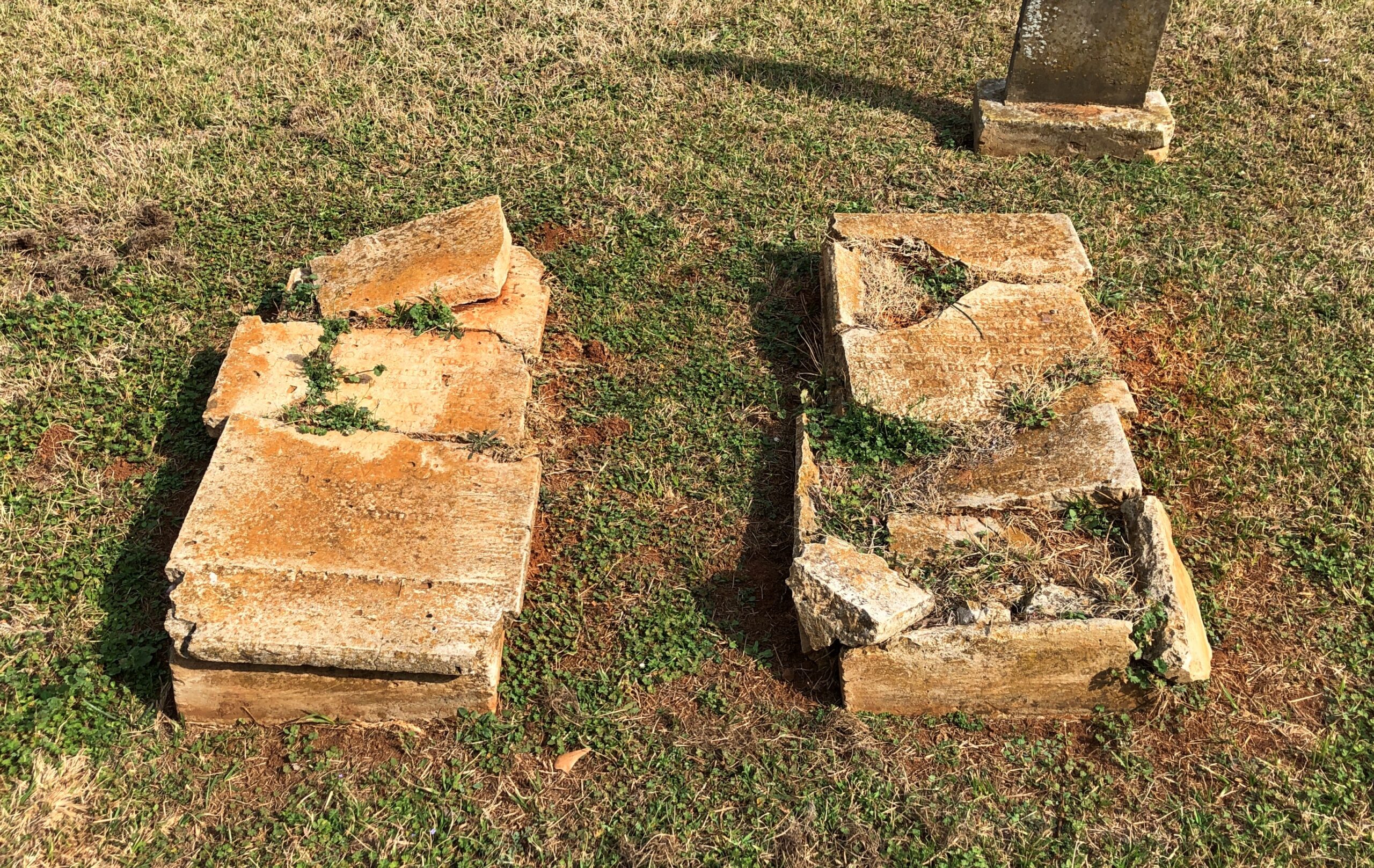
The crumble is on.

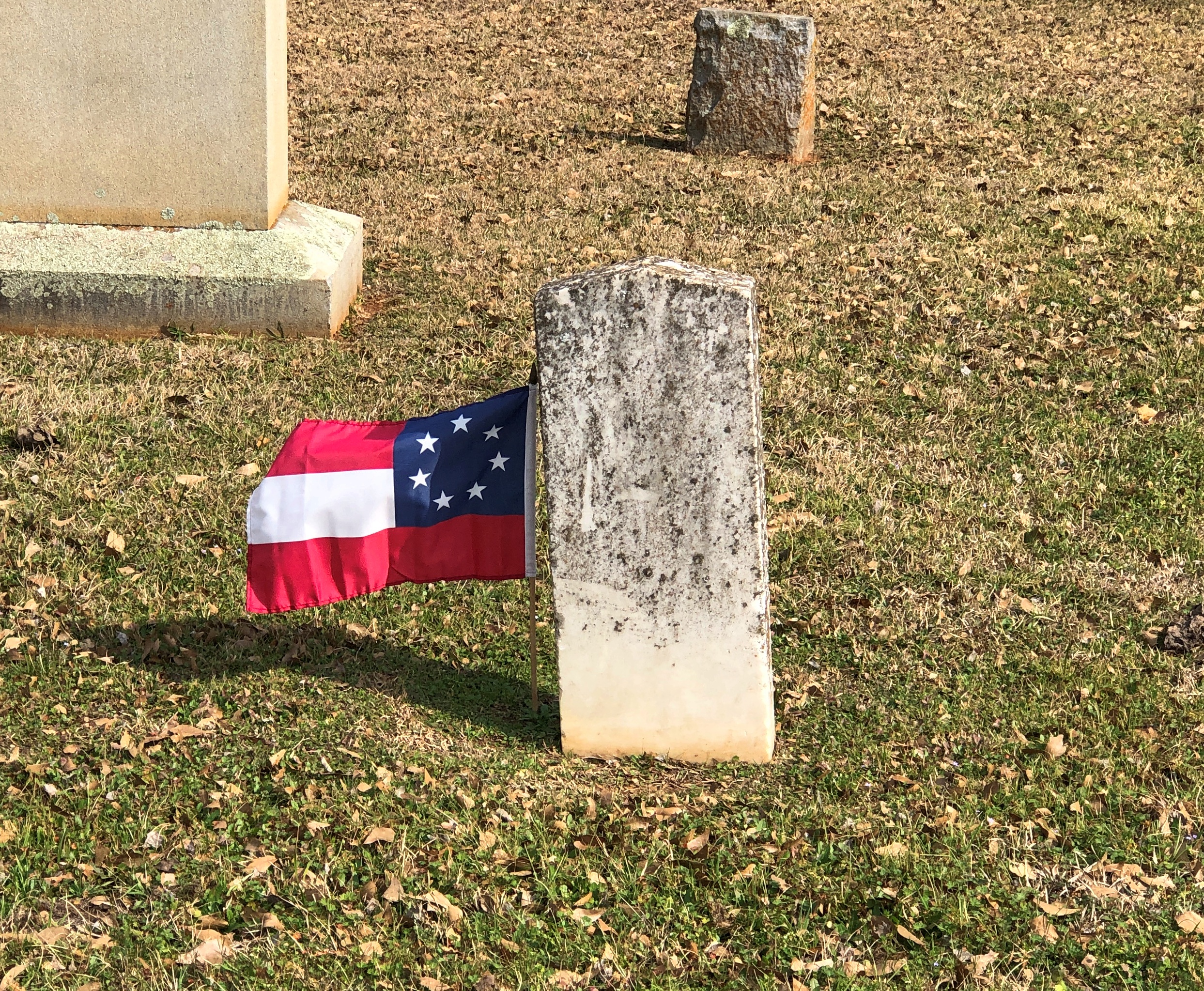
Something you don’t see that often. Not just the Stars and Bars, but the very first version with seven stars. In the fullness of not much time, six more stars were added.
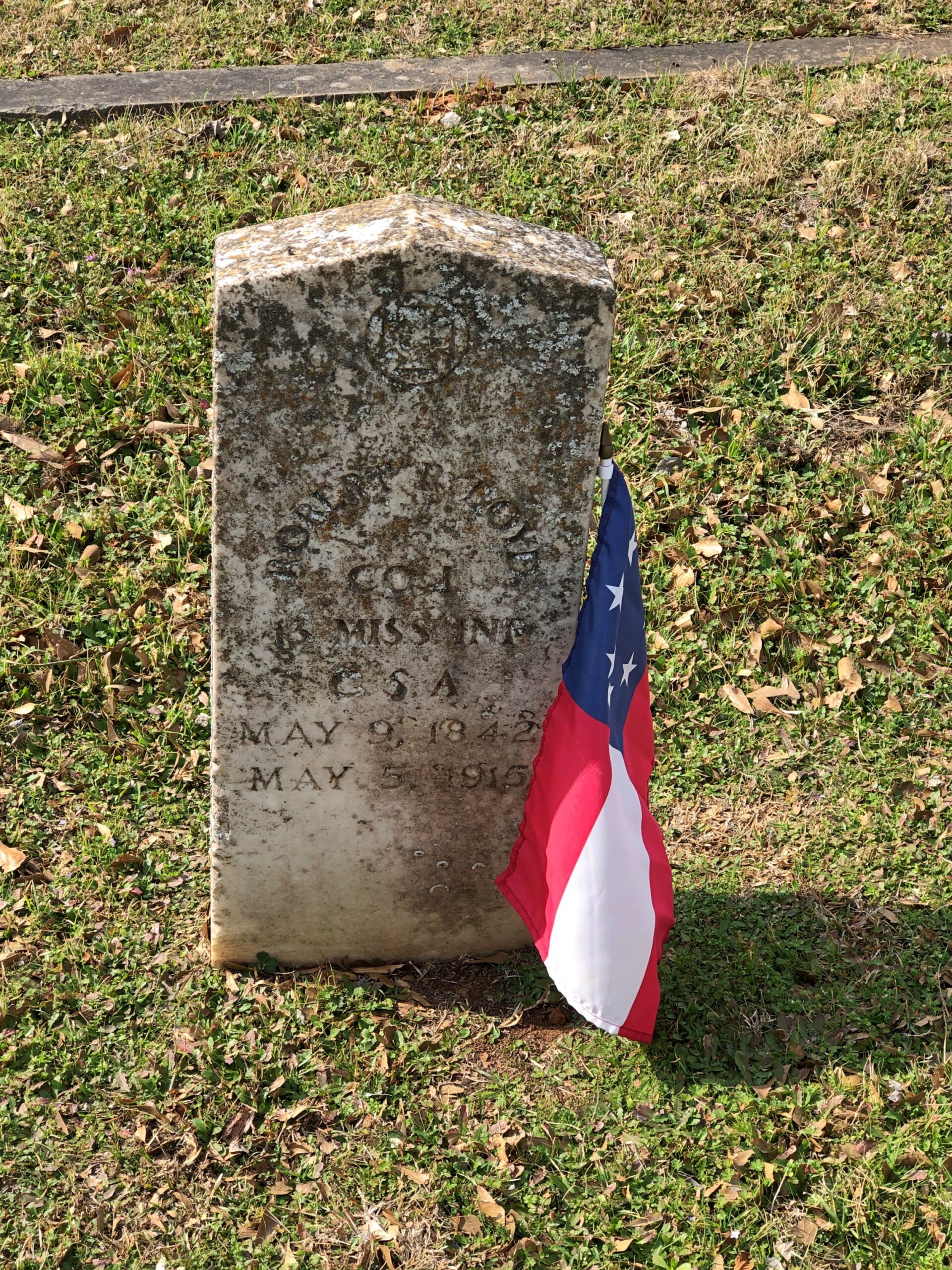
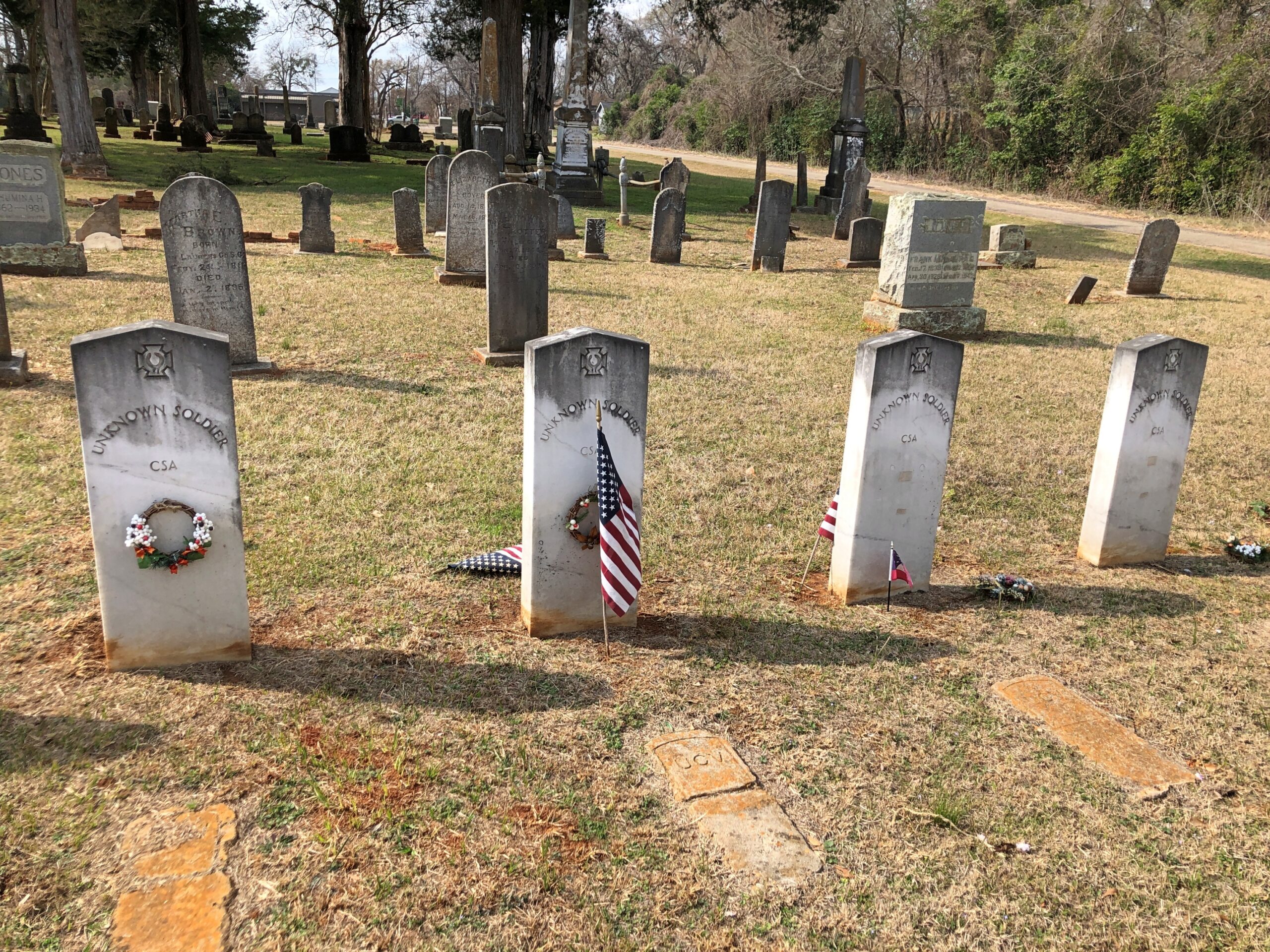
Unknown CSA soldiers.
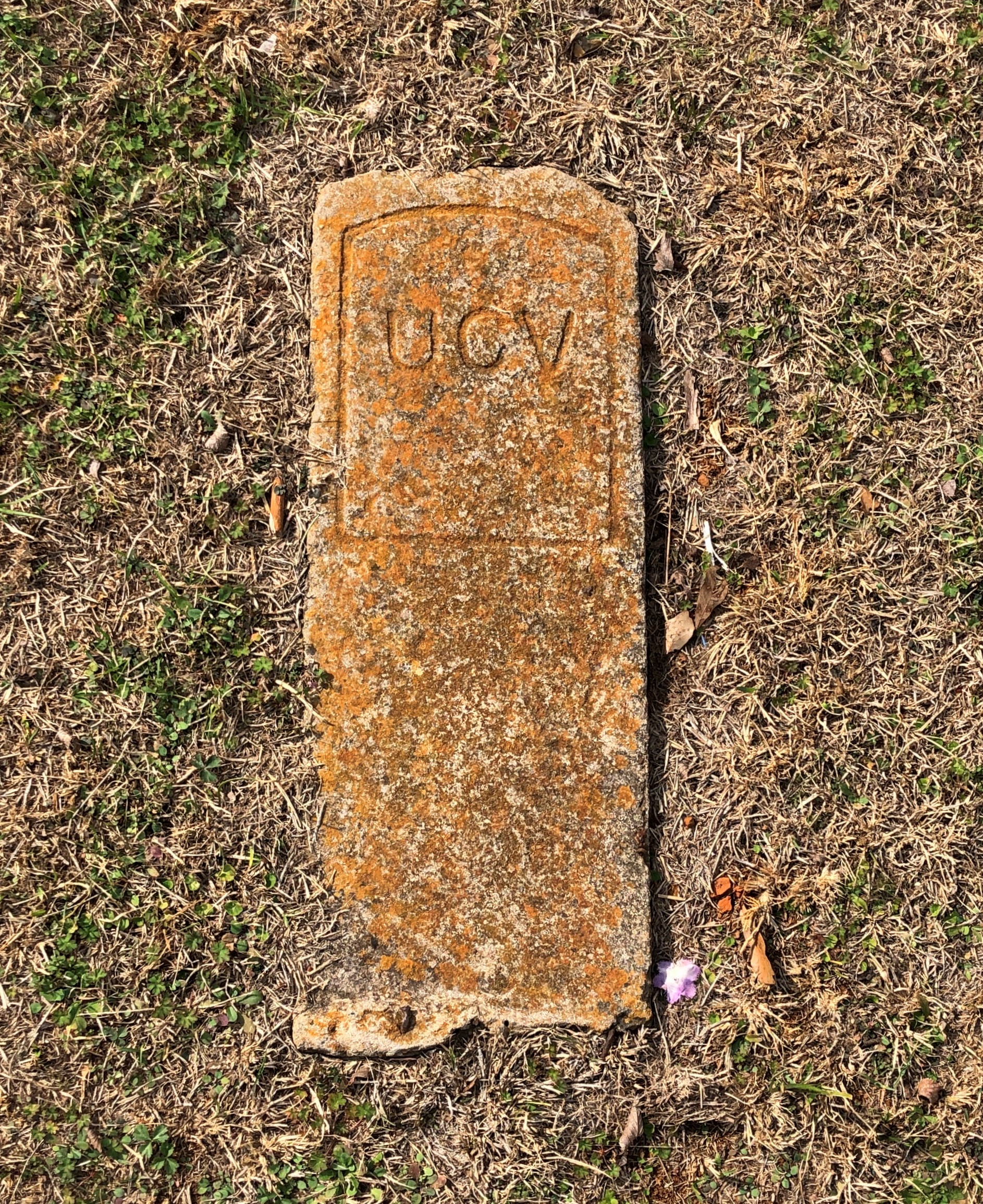
I assume United Confederate Veterans, the Southern equivalent of the GAR, placed this stone and those like it.
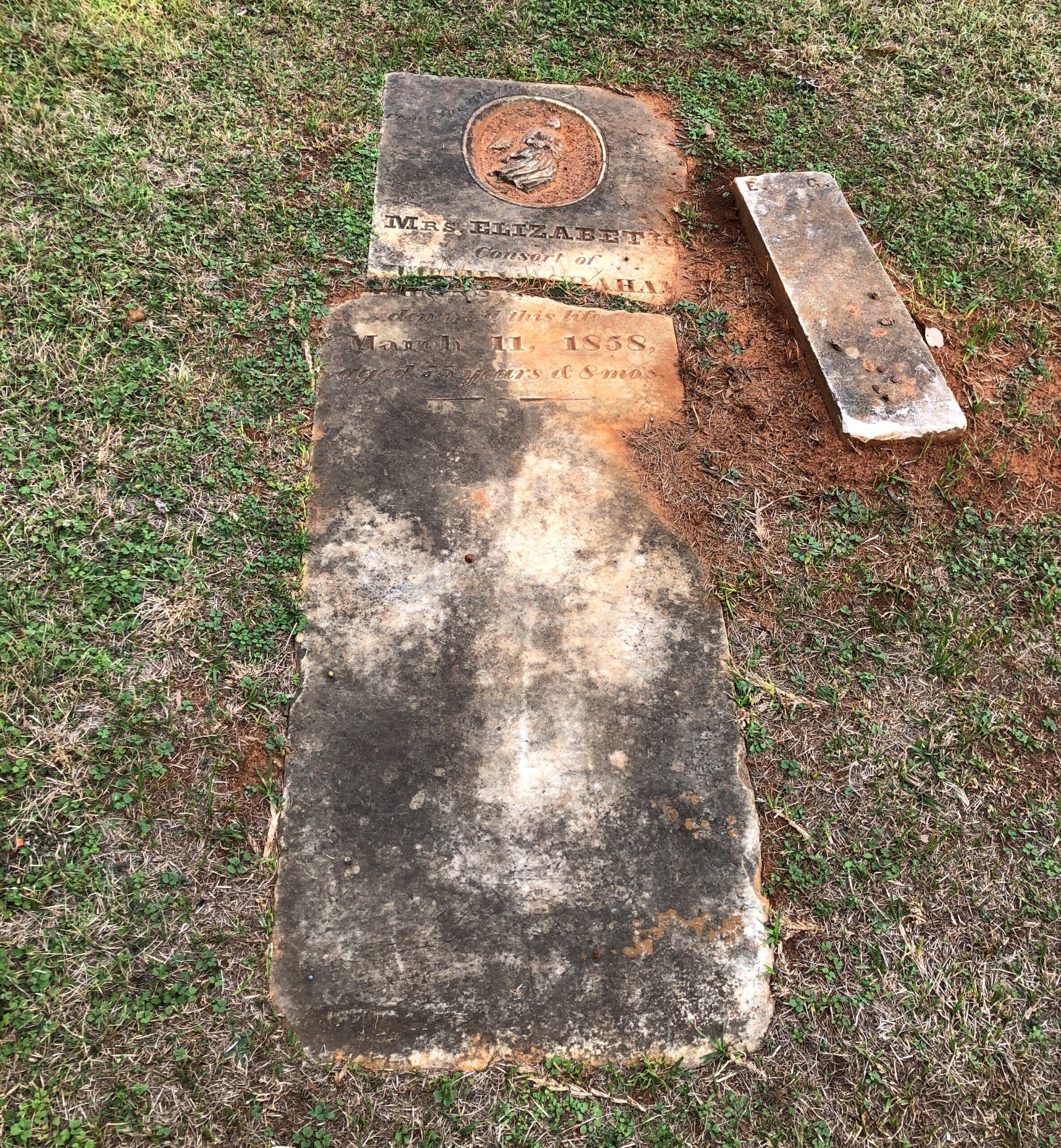
The cemetery has an impressive number of worn, broken stones, soldiering on through the elements.
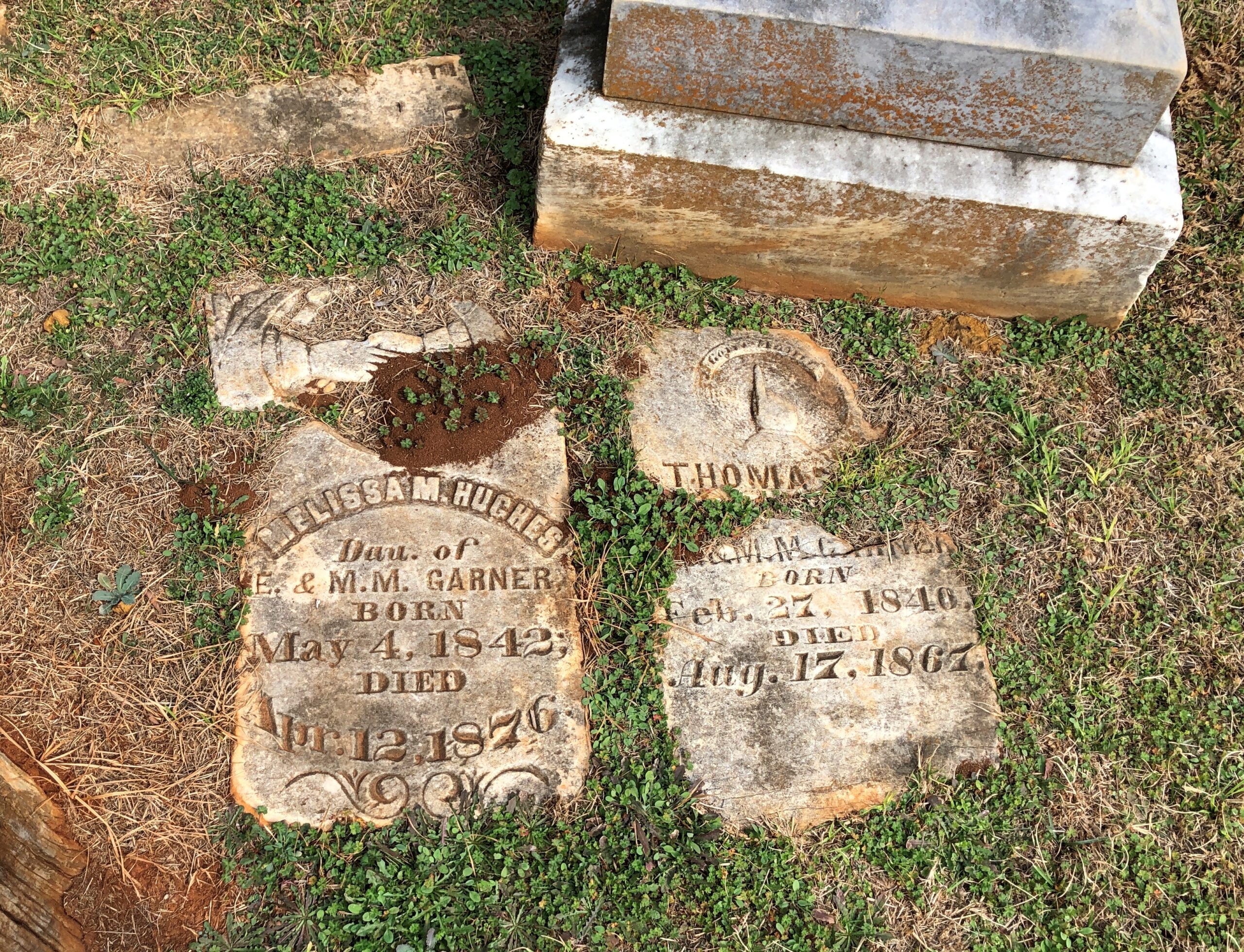
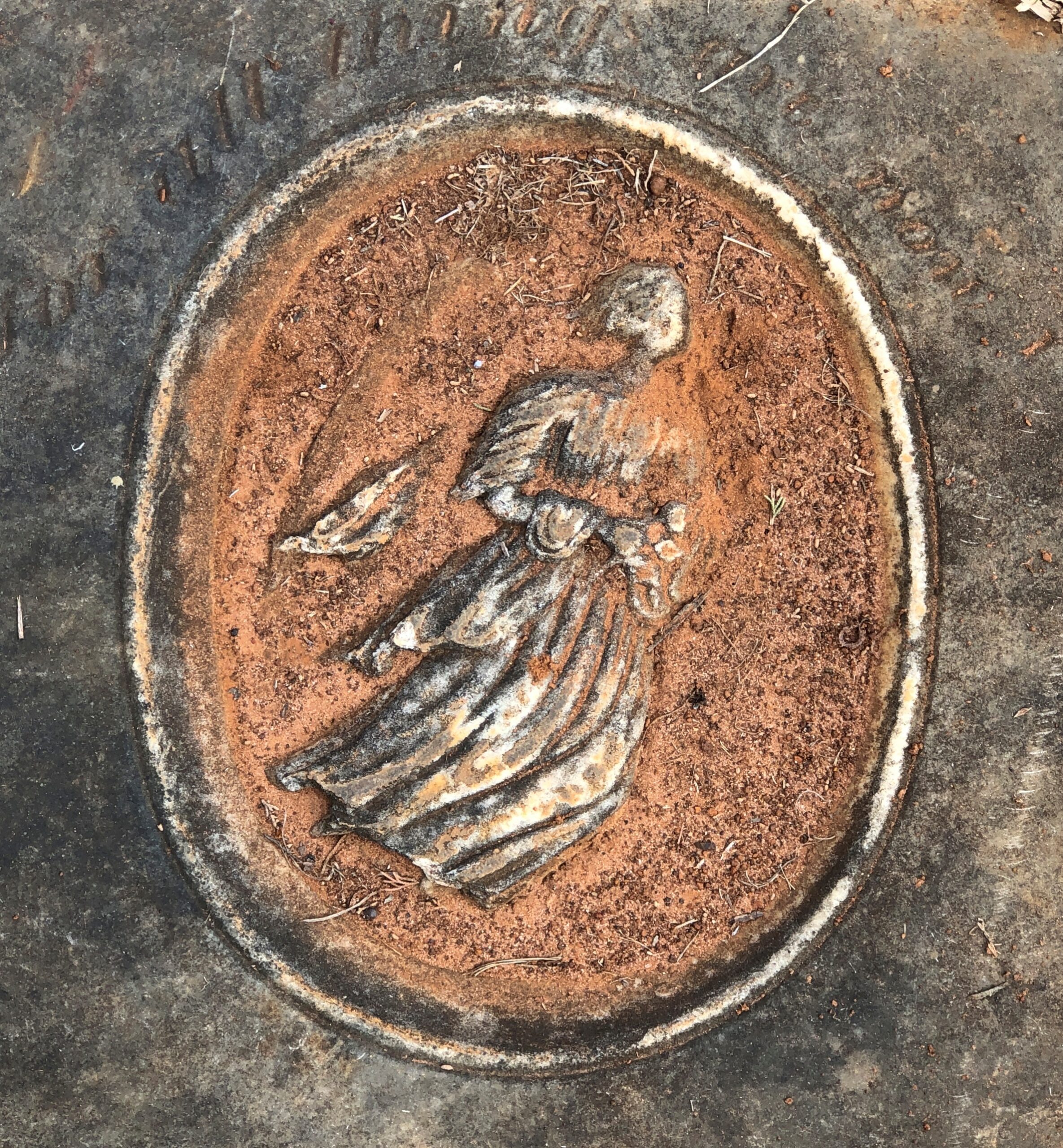
Victorian sentiment in stone, said with due respect.
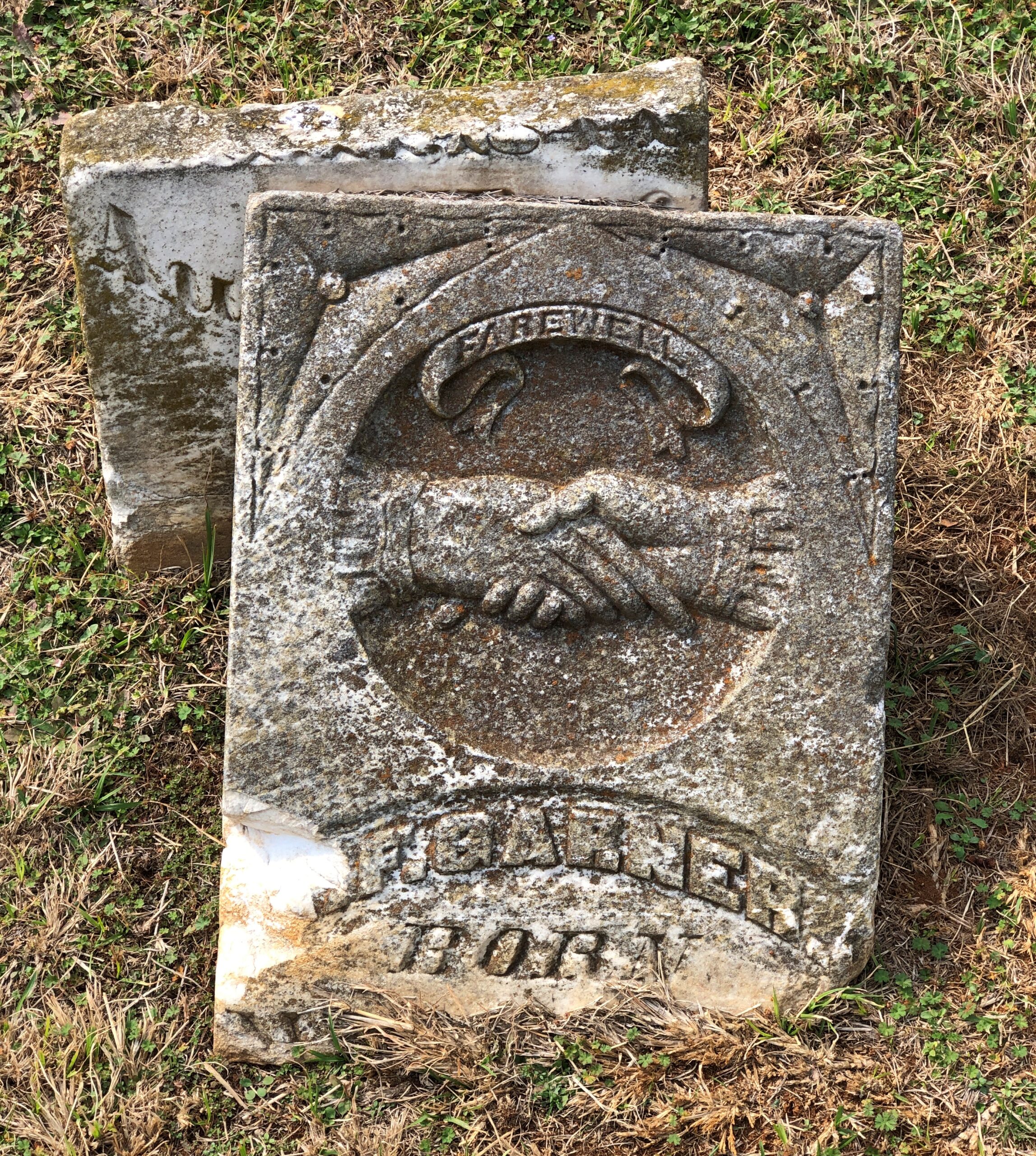
Would that kind of soft decay, the romanticism of stones worn by time and the elements, have appealed to Victorian sensibilities? Could be.
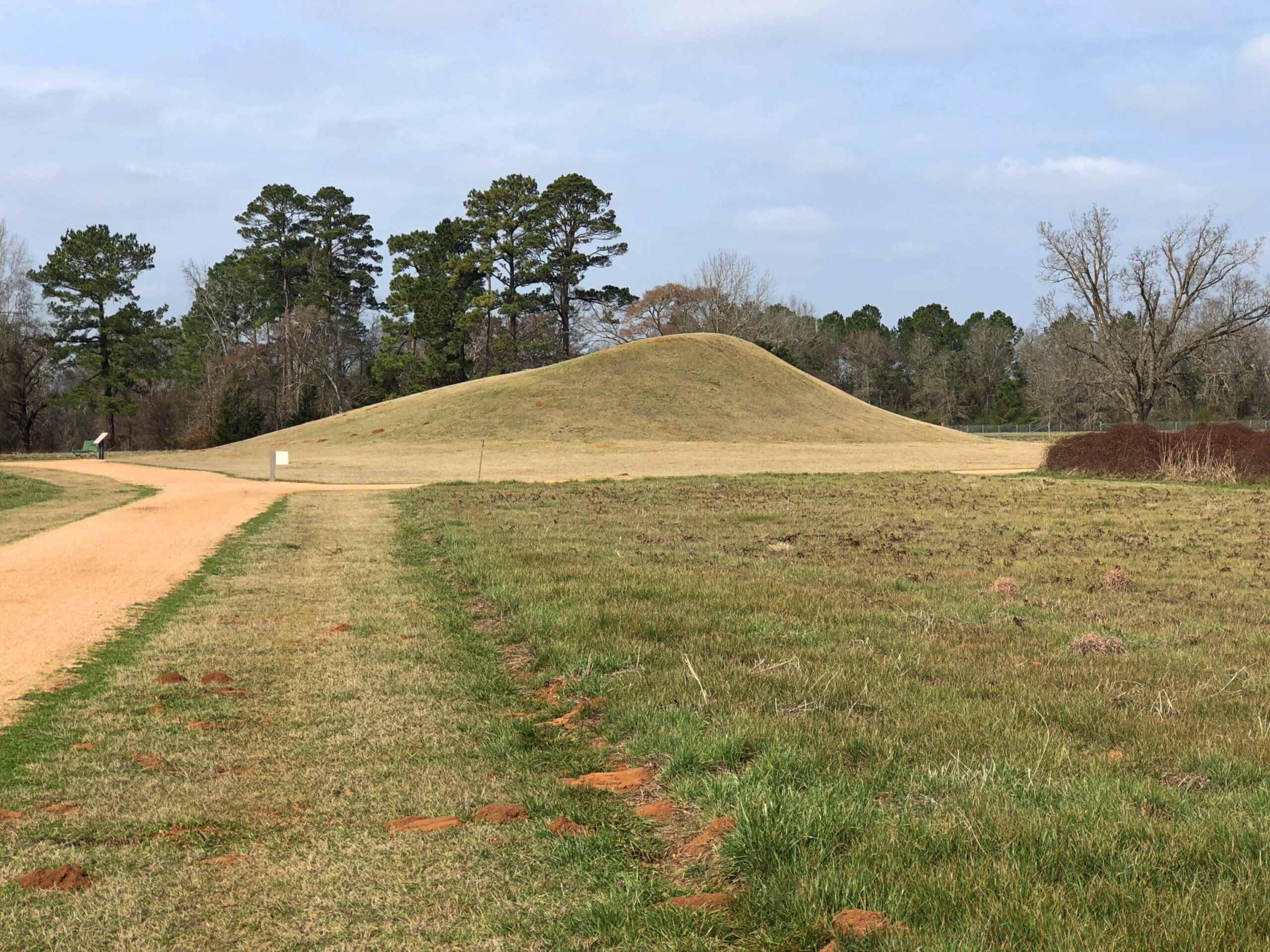
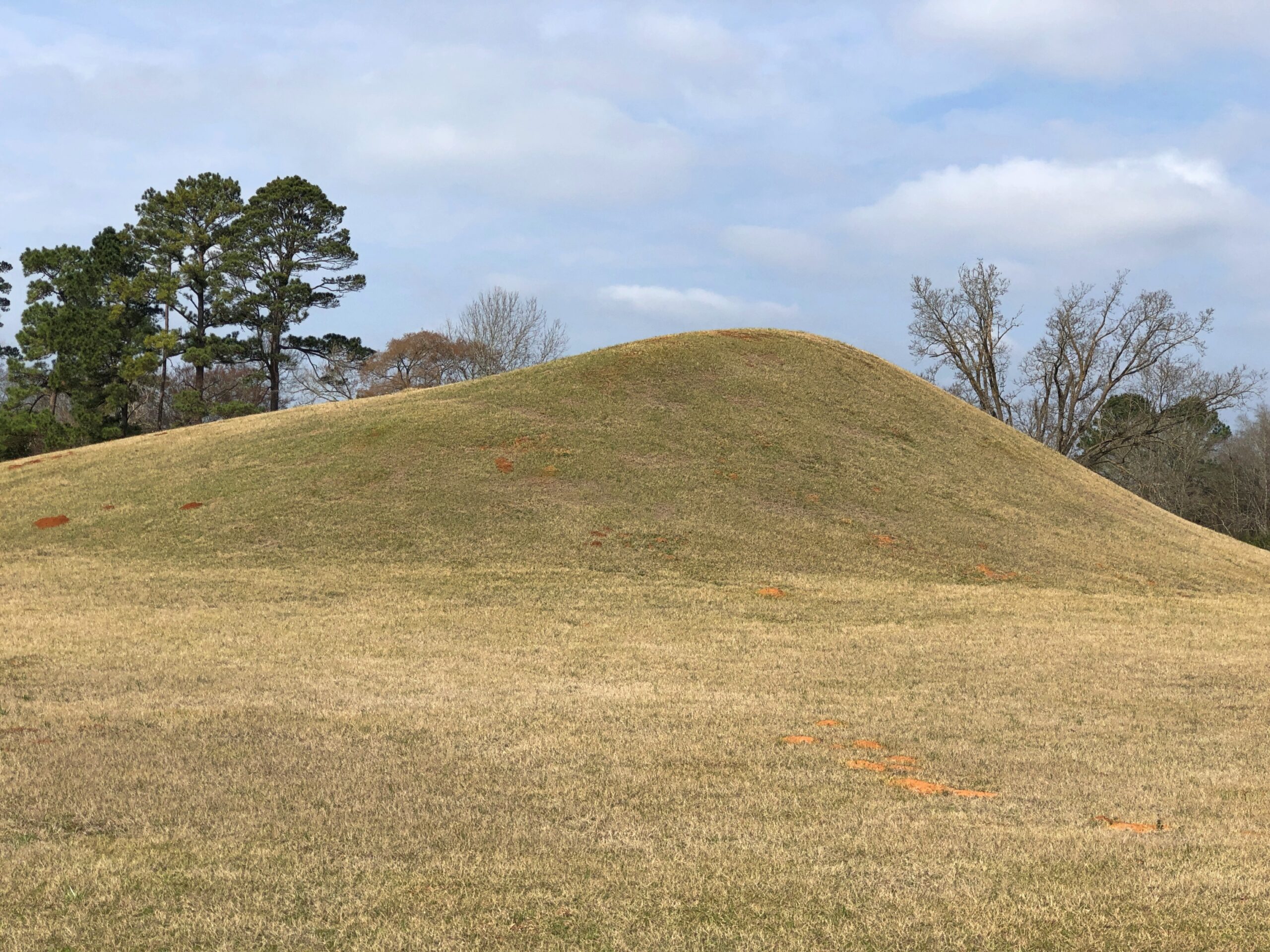
Caddo Mounds State Historic Site

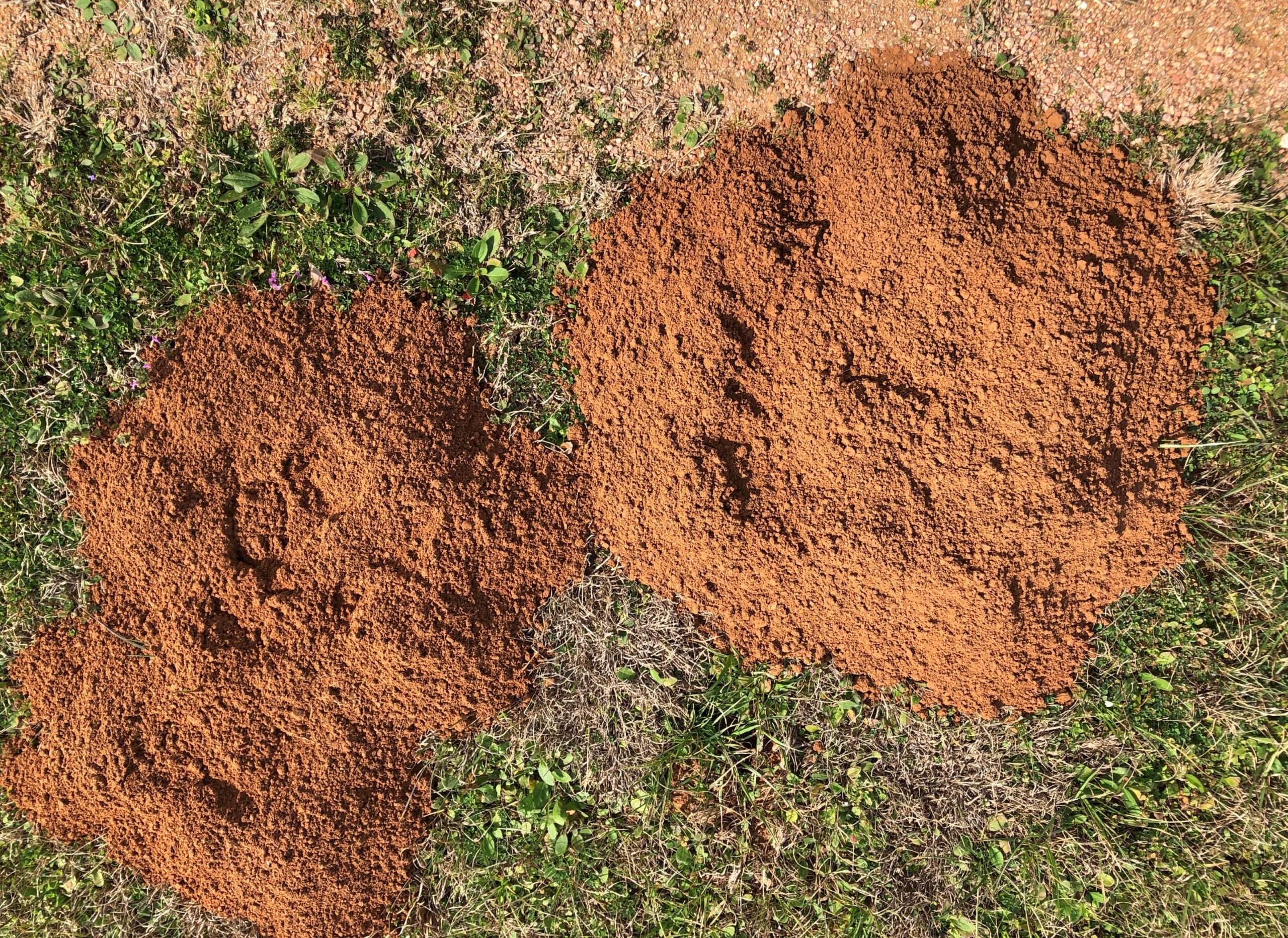
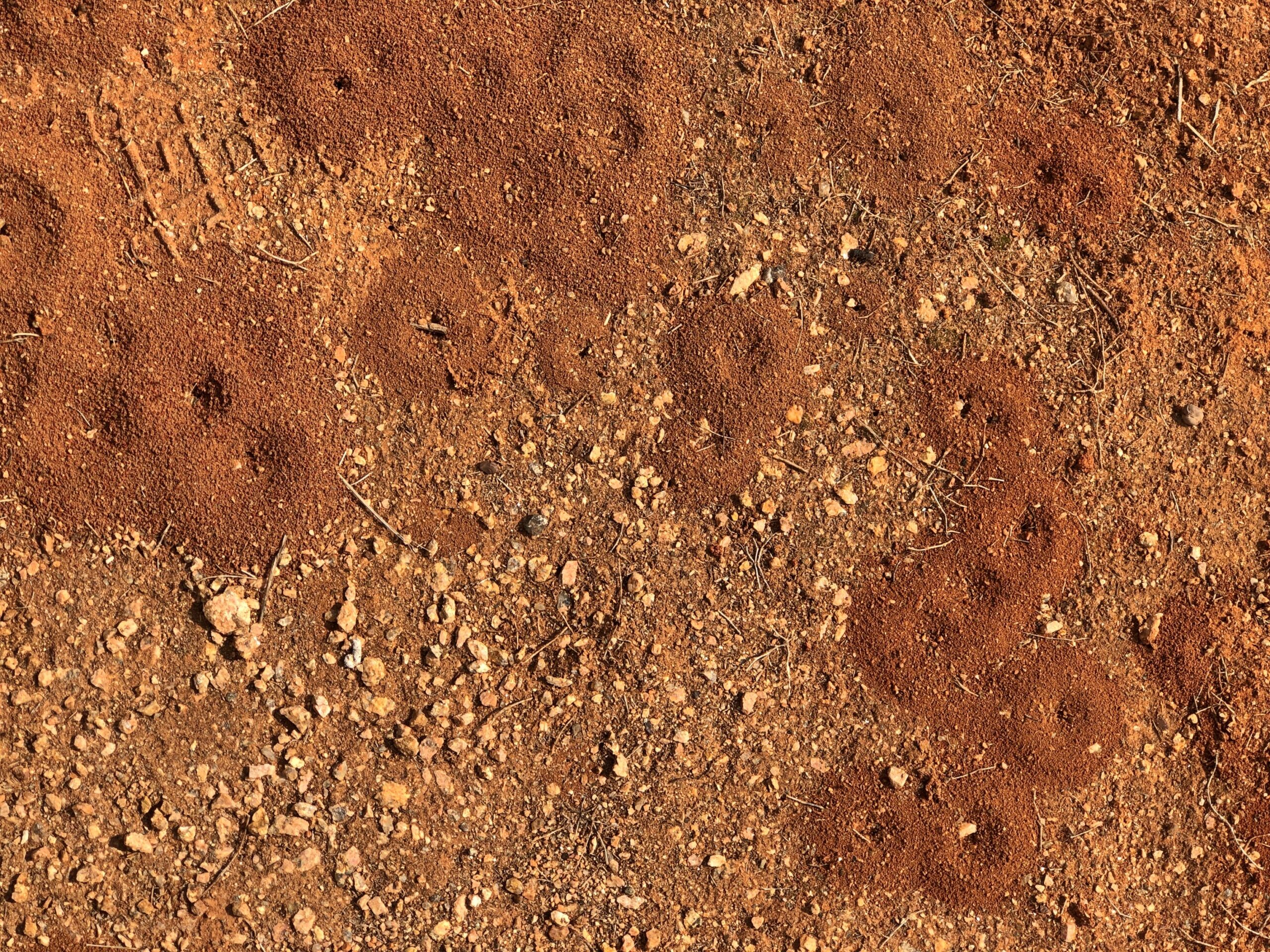
Underfoot, ants went about their business in the red soil.

Fire ants? An expert might know, not me. Could be, considering these ant colonies tunnel under the the grounds of Caddo Mounds State Historic Site in Cherokee County, Texas, not far from Nacogdoches.

People, being proportionally bigger, make larger mounds, but for what we assume are entirely human reasons.

“The Caddo selected this site for a permanent settlement about A.D. 800,” says the Texas Historical Commision. “The alluvial prairie possessed ideal qualities for the establishment of a village and ceremonial center: good sandy loam soil for agriculture, abundant natural food resources in the surrounding forest, and a permanent water source of springs that flowed into the nearby Neches River. From here, the Caddo influenced life in the region for approximately 500 years.”

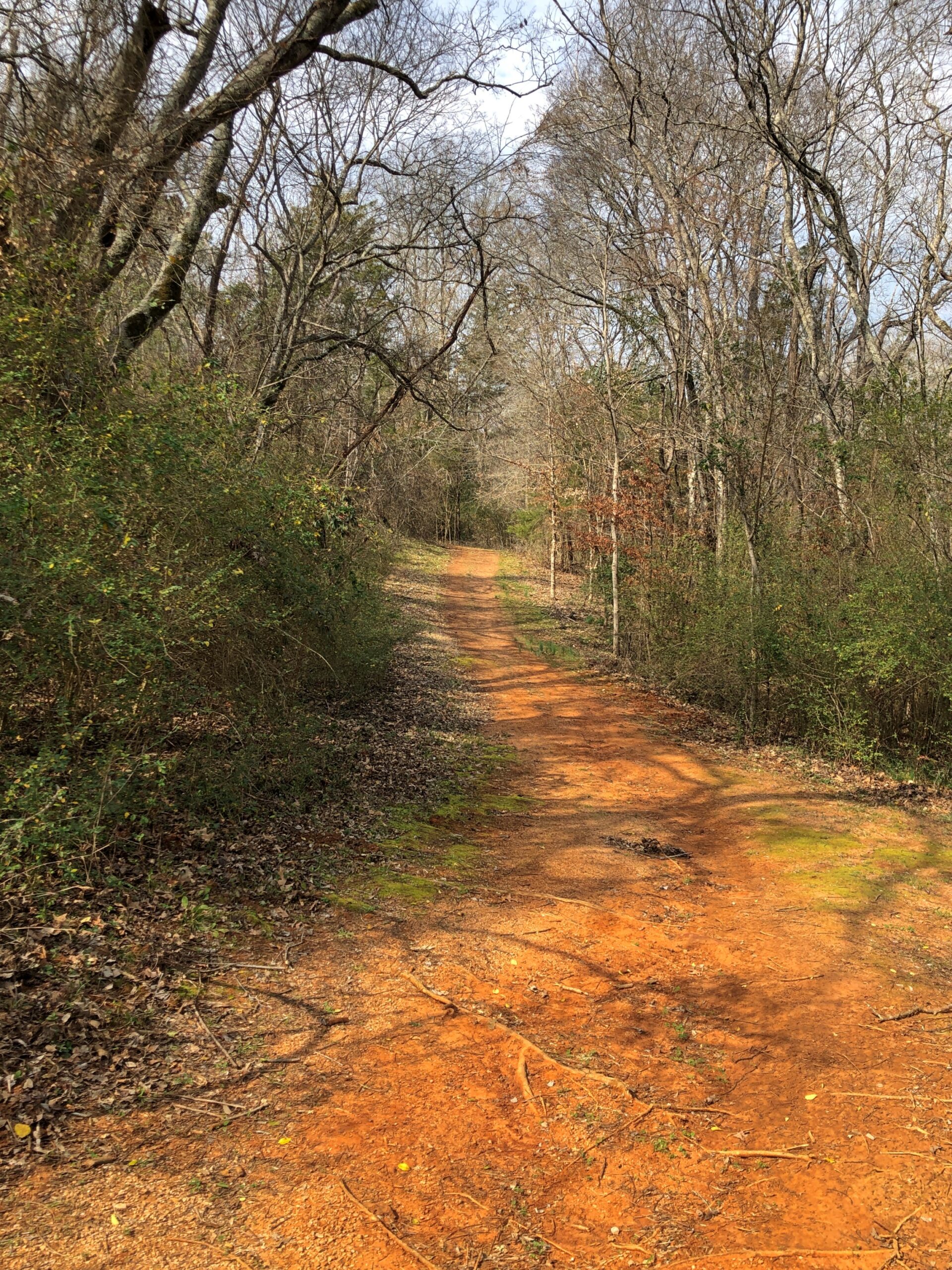
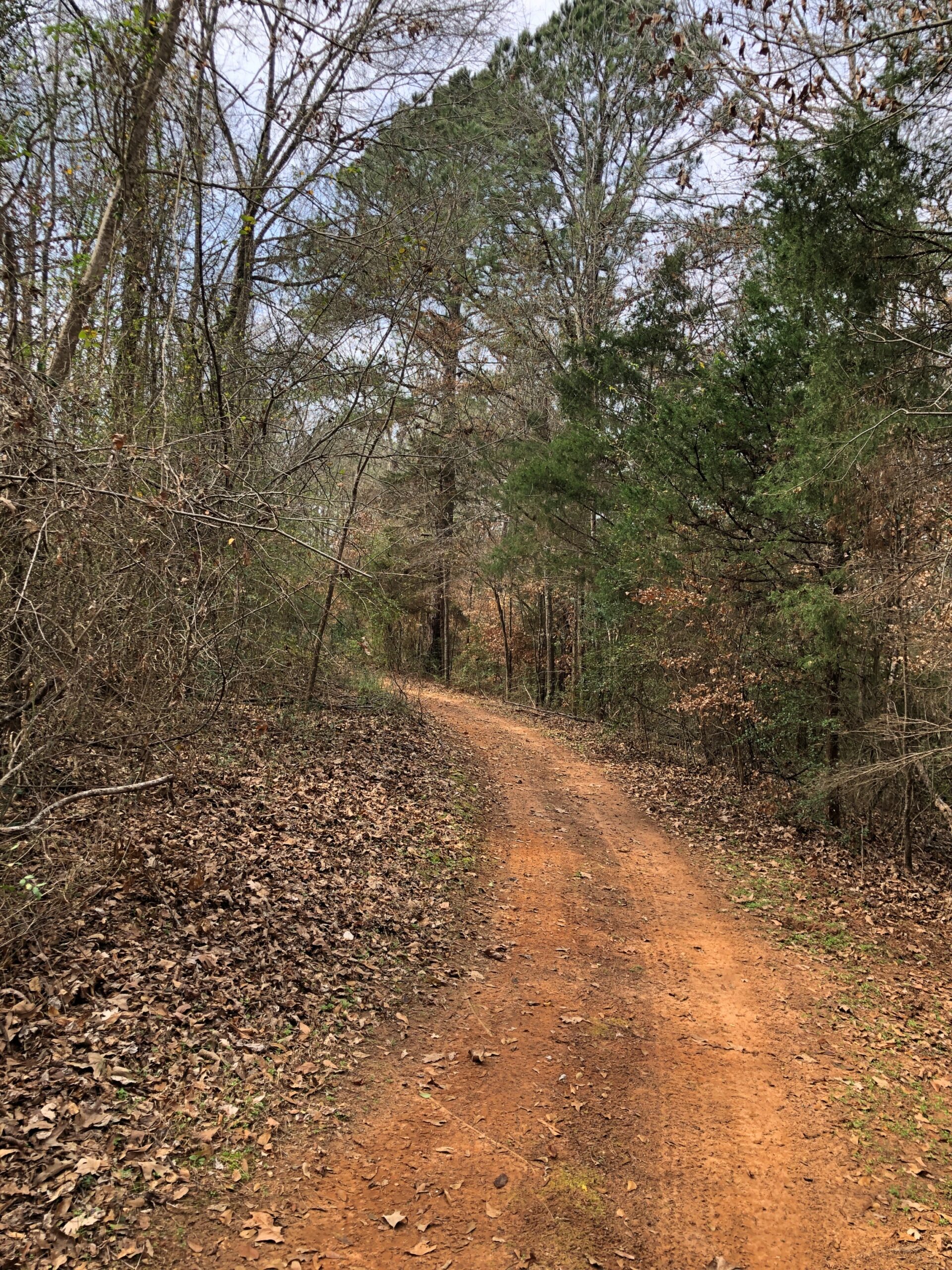
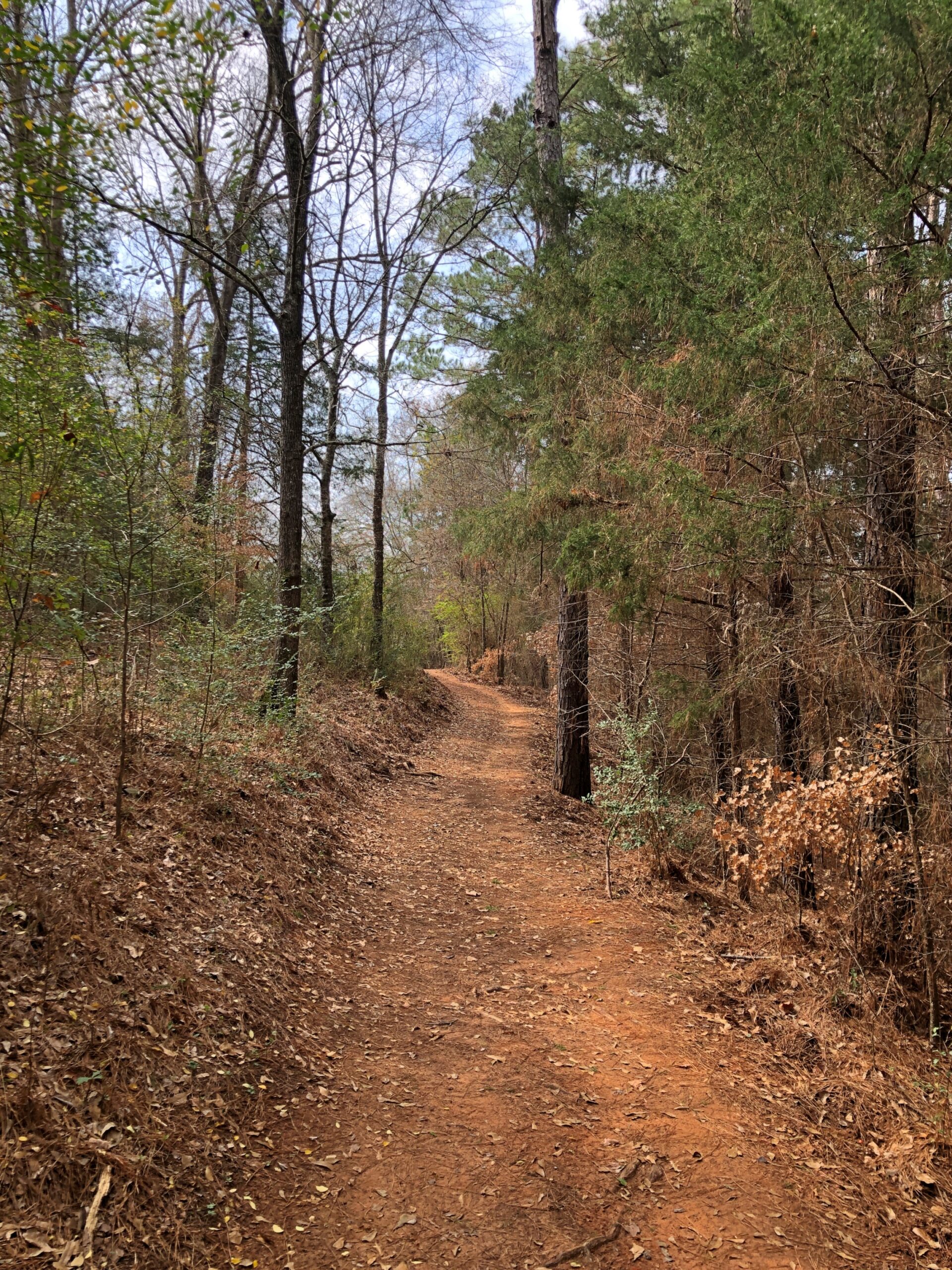
The historic site is large enough to include a winding trail. On a warm, dry day, a most enjoyable walk.

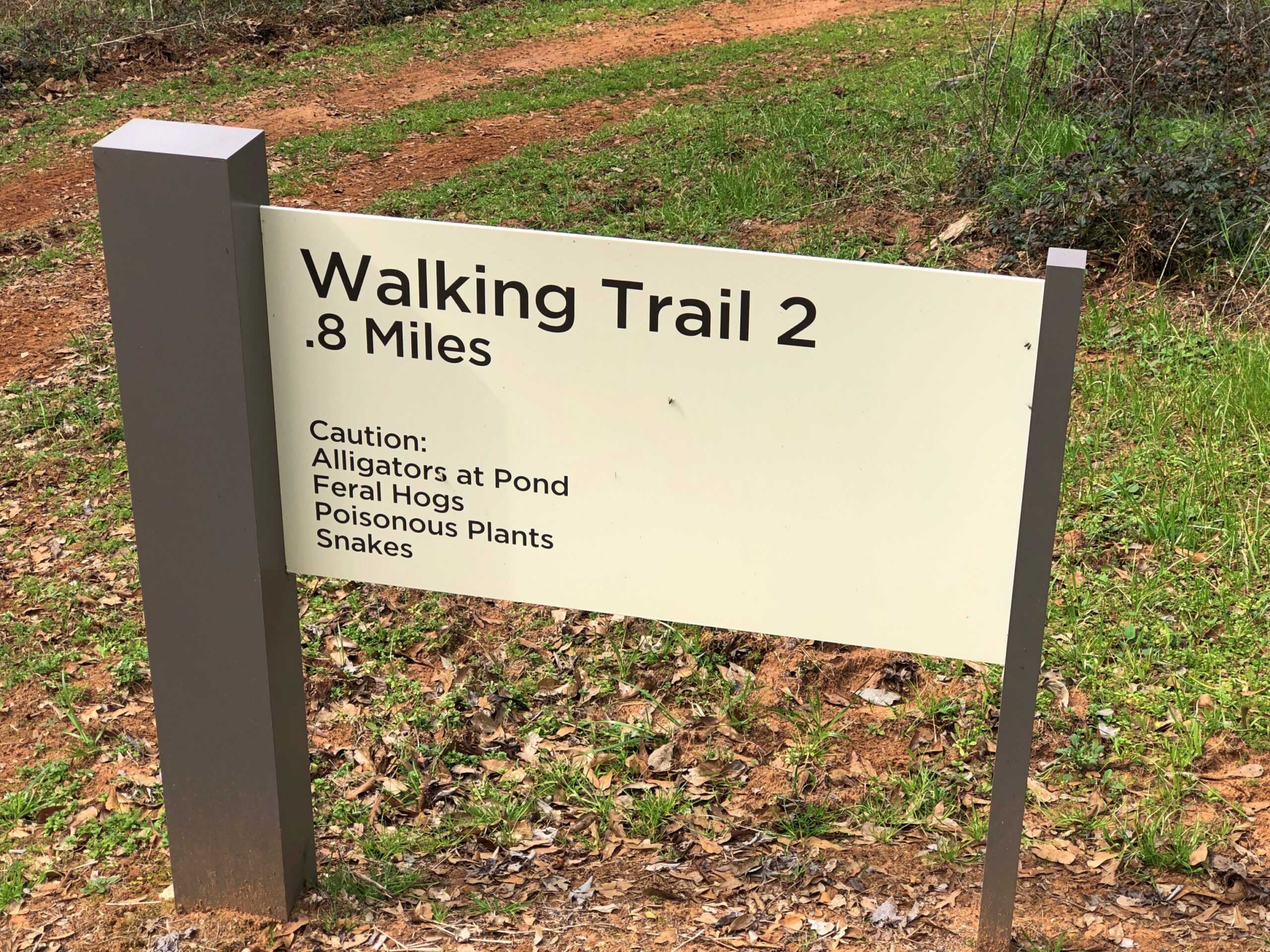
I can’t say I wasn’t warned, but I blithely ignored the warnings and took my walk. Nothing bad happened. A fair amount of life is like that.

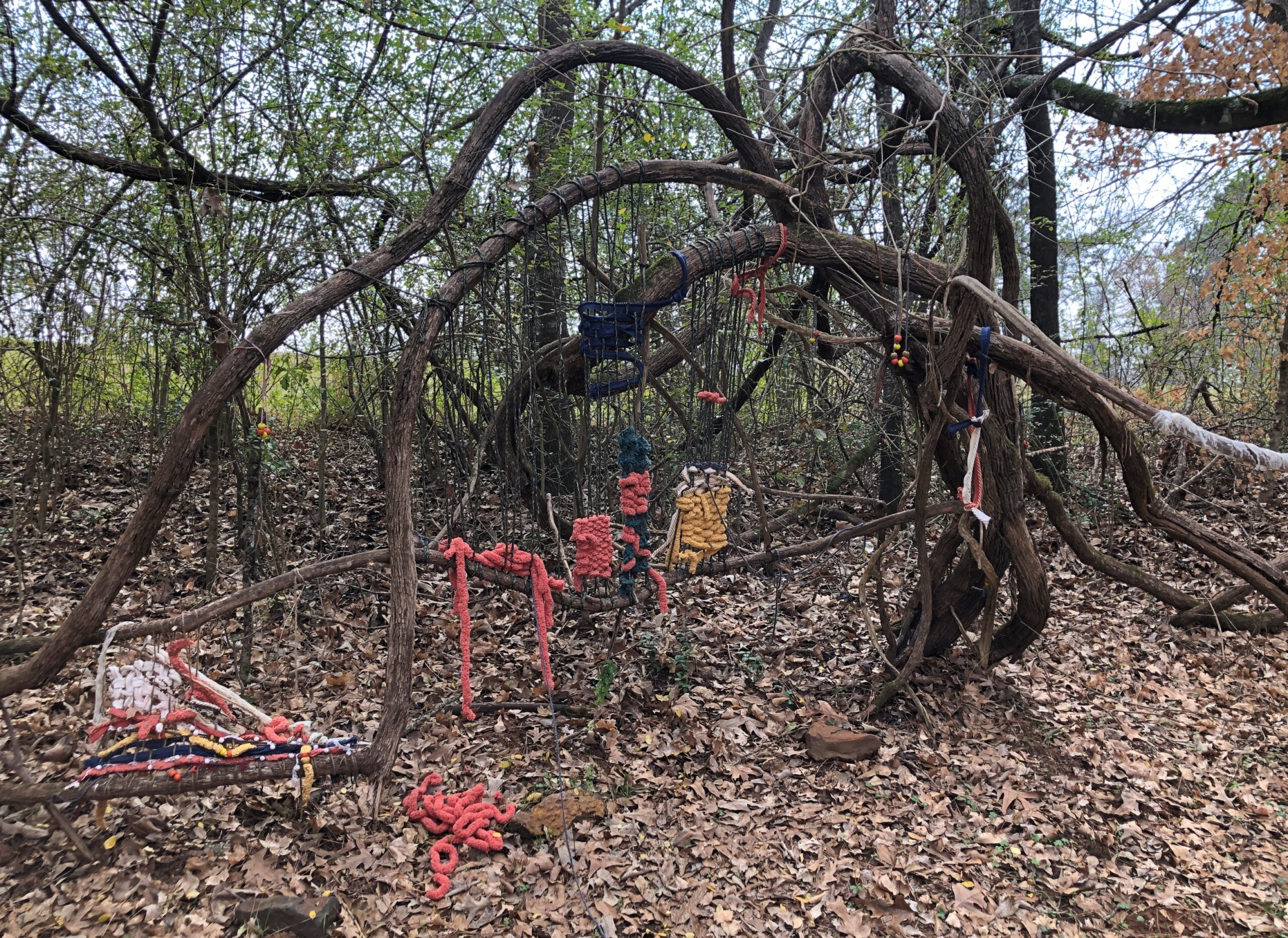
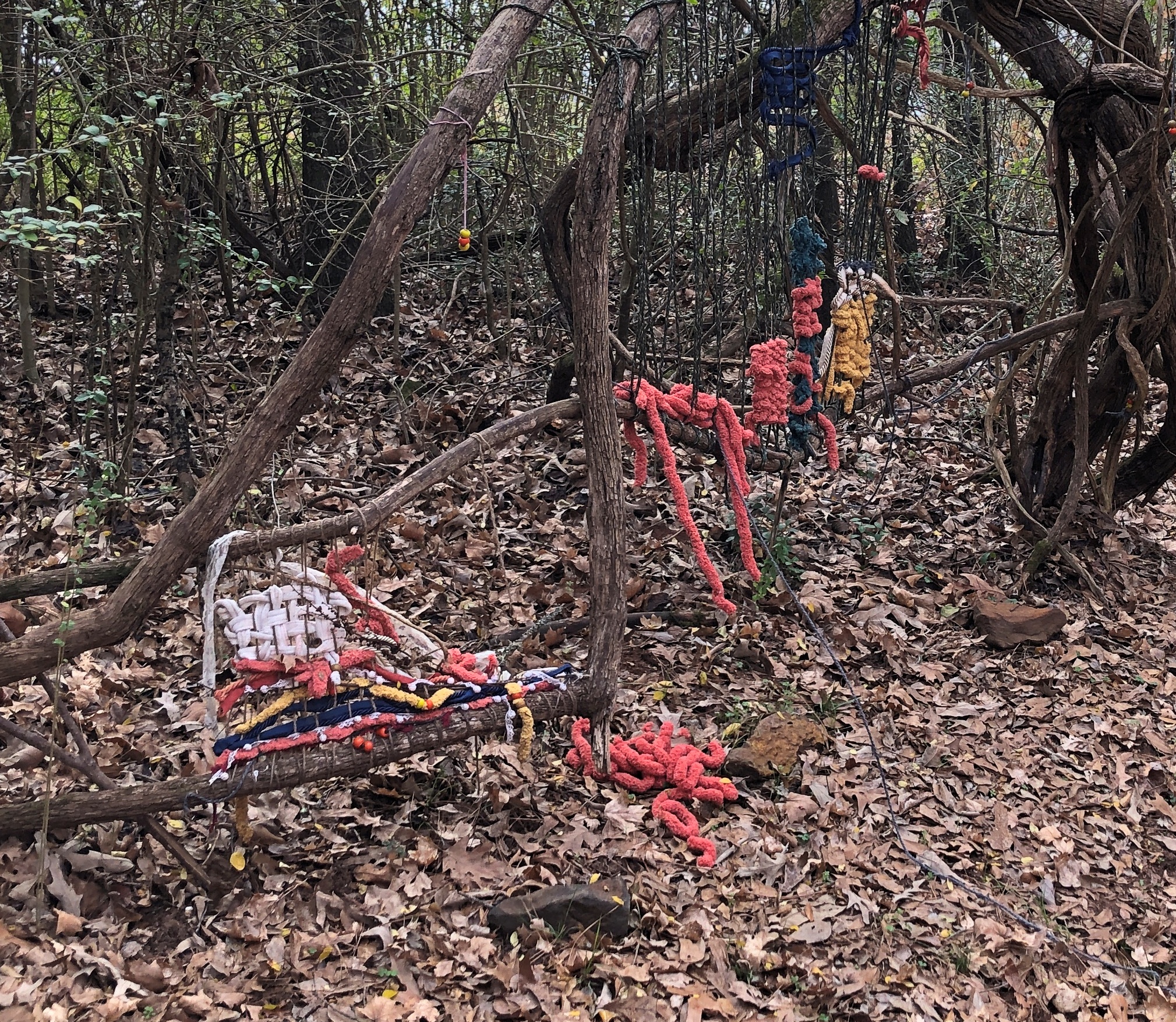
Yarn bombing? Here? Why? It might as well have been done by the ancient Caddos, for all I’m going to get an answer to that.

Of course, that tree is gnarly, literally and in the way Jeff Spicoli used the word. So maybe a good candidate for some yarn.

My drive from the historic site to Palestine, Texas, took me on some ill-marked back roads, but we’re not talking the Sahara, so signed roads eventually appear to alleviate any navigational uncertainty. Near the site on Farm to Market 2907 – walking distance, really – is Weeping Mary, Texas, a hamlet that has gotten more attention that one would think, at least considering its small size (pop. 40). “The community was probably first settled soon after the Civil War by freed slaves from neighboring plantations,” the Texas State Historical Association says.

In our time, Weeping Mary is a small agglomeration of standard and manufactured houses and satellite dishes and cars scattered among tall pines, with the church in there somewhere, and it takes all of half a minute to drive through.

San Augustine & Mission Dolores State Historic Site

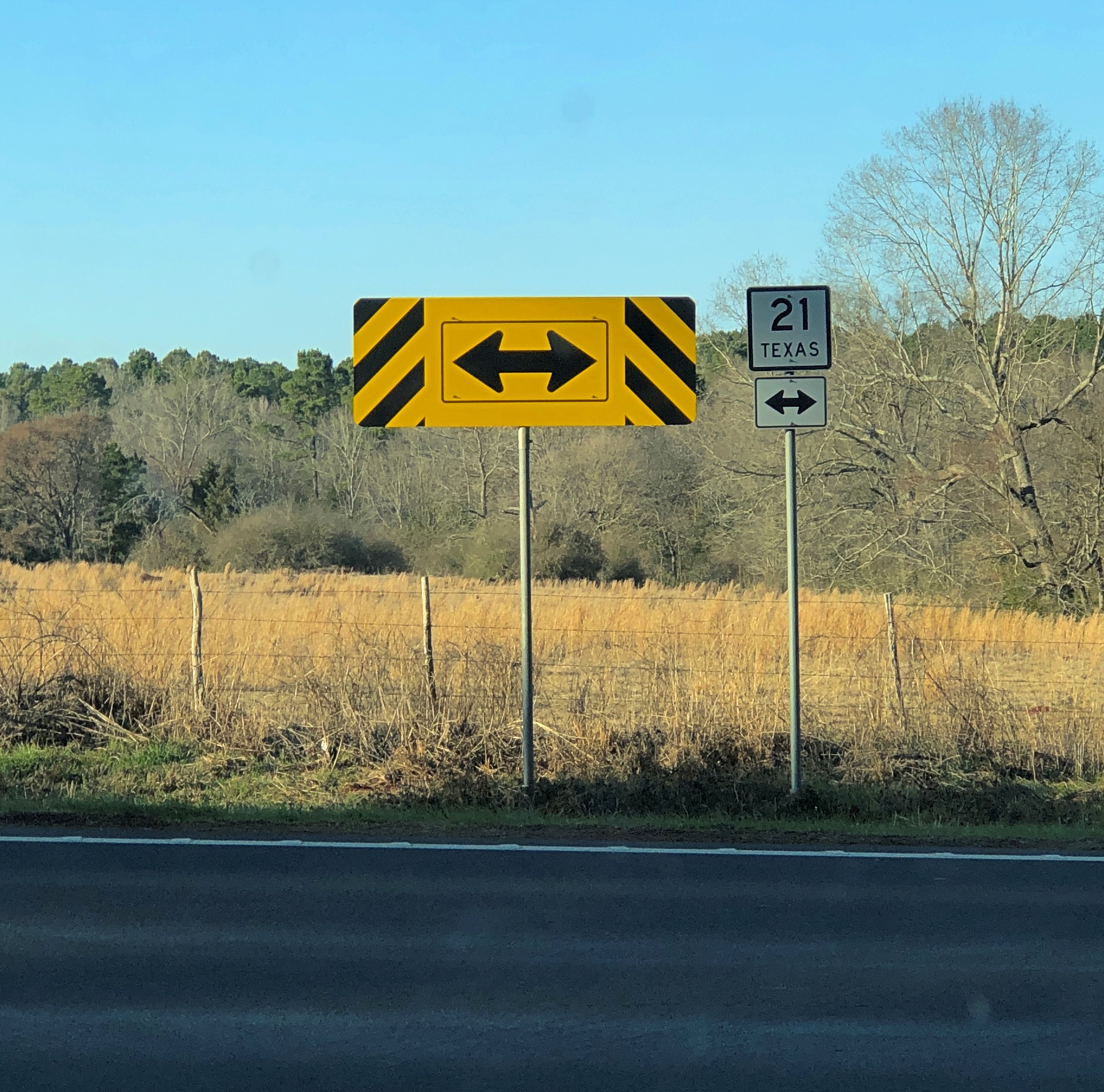
From Nacogdoches east to San Augustine, there in the thick of East Texas, is about 20 miles along the highway Texas 21. An excellent drive.

Gary the Builder

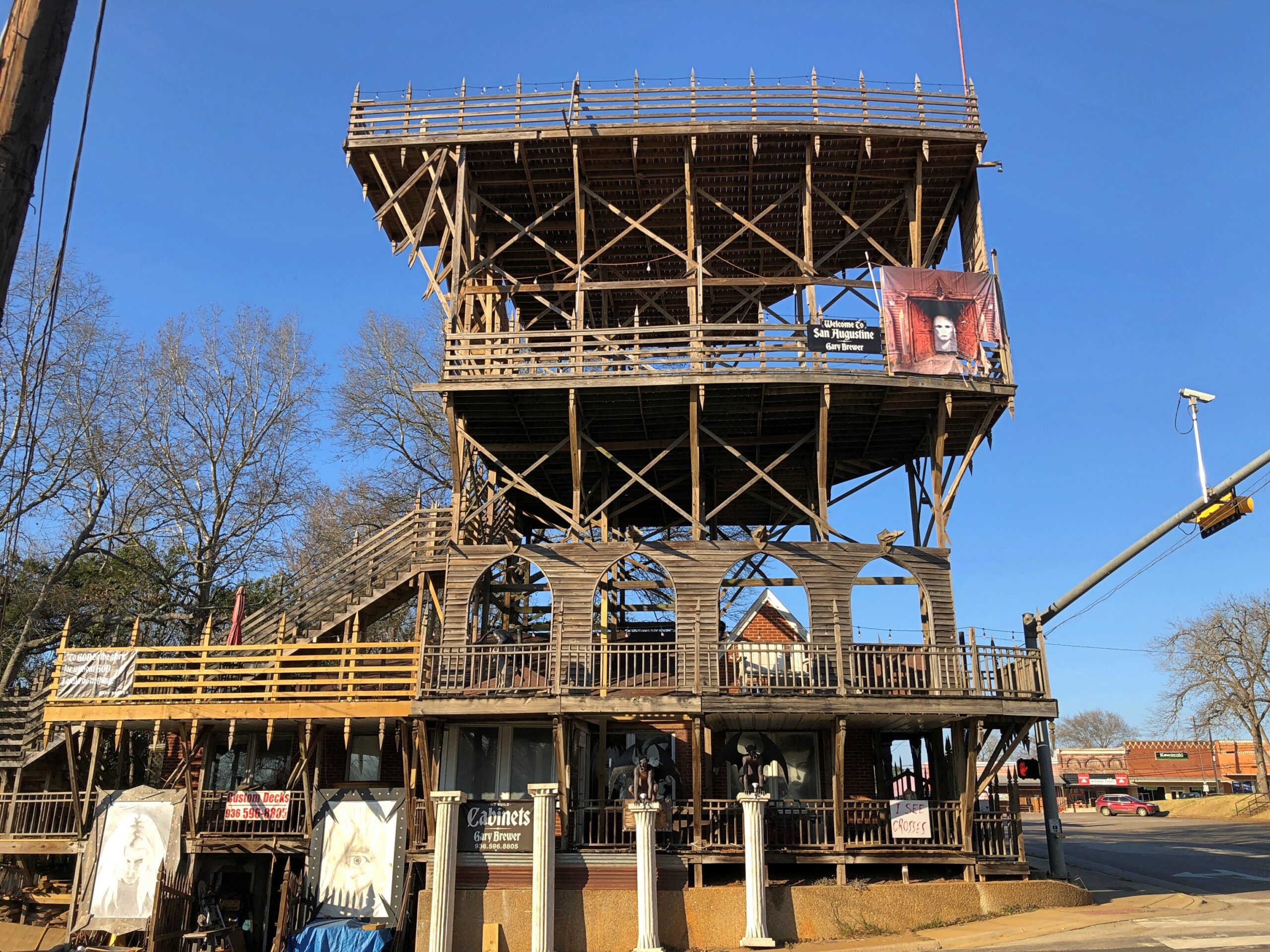
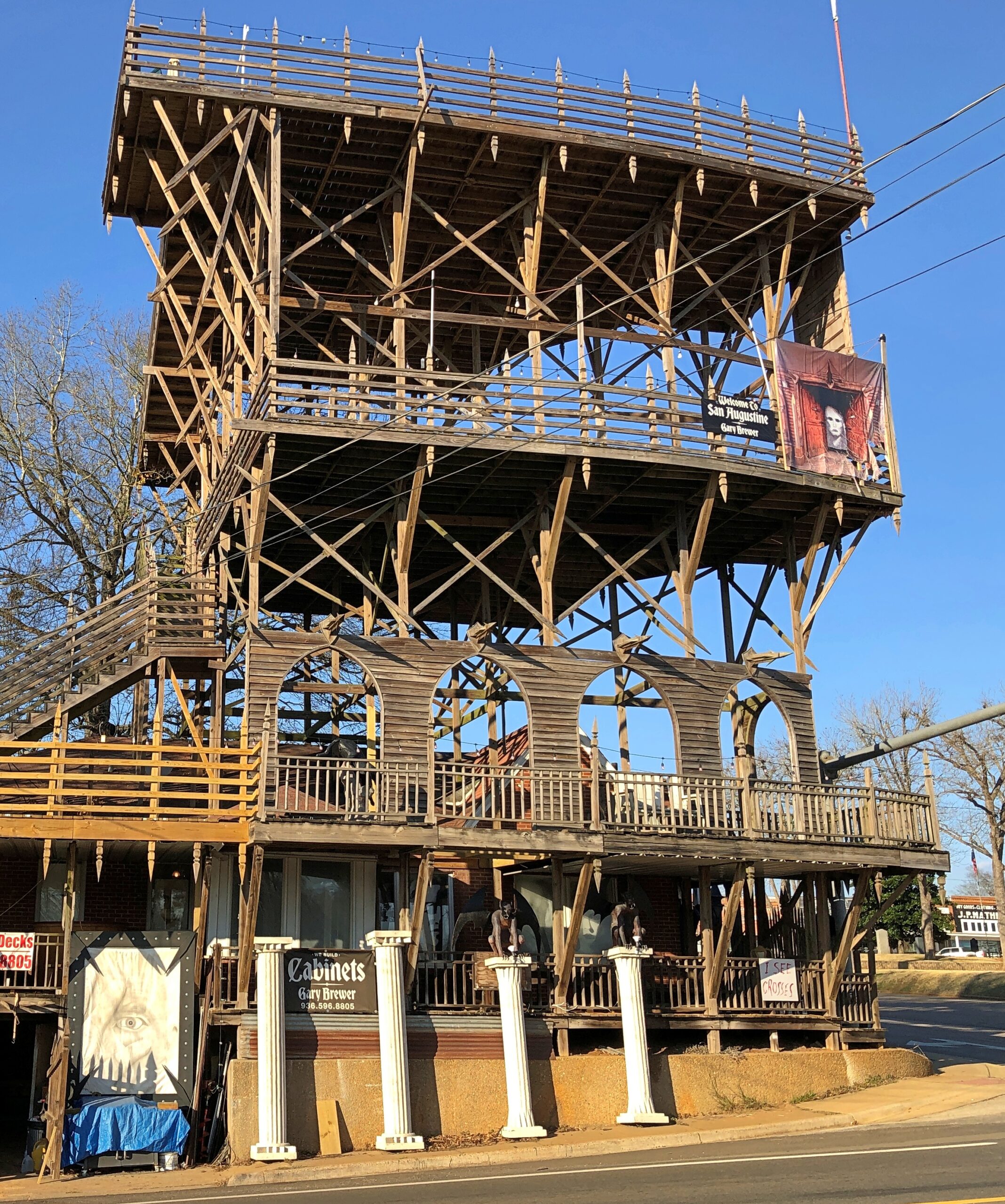
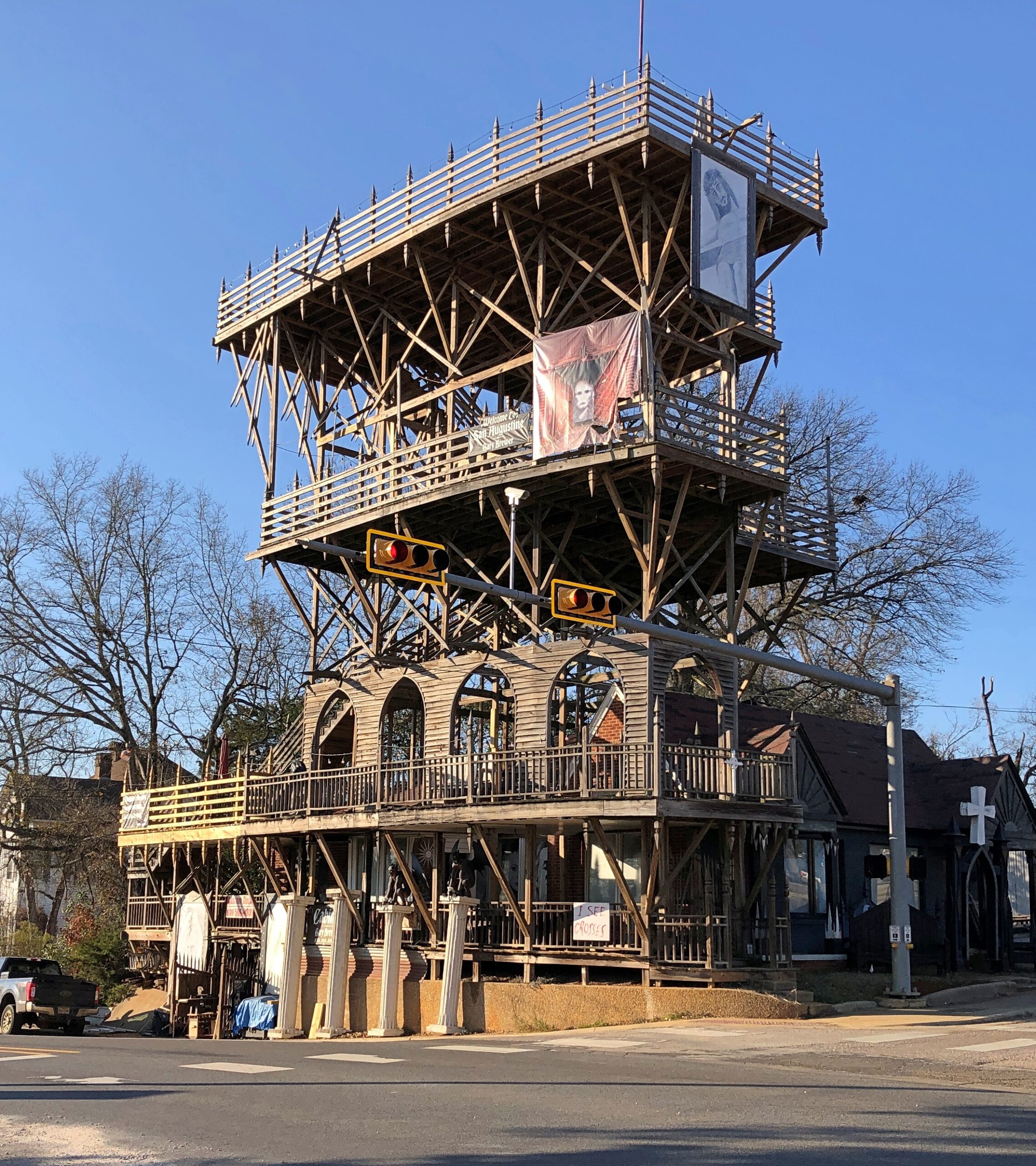
Approach San Augustine (pop. 1,920) from the west on the Texas 21, as I did, and you’re certain to notice an unusual wooden structure, as I did.

Roadside America calls it “Major Fun,” and I will say it was a major surprise, since I went to San Augustine knowing very little about the place. RA says: “Gary Brewer, a carpenter, has been adding multi-story decks and spiky wooden things to the outside of his house since 2006. The town has tried to stop him, but the woodwork is all code-compliant. Gary views his house an attraction, and wants people to visit it.”

The tower is at one corner of the county courthouse square. So maybe Mr. Brewer could file the paperwork for his construction by walking across the street. Do you suppose Mr. Brewer the carpenter has a friend named Carpenter who’s a brewer? Possibly.

The rest of the town square shows that many town squares aren’t what they used to be — sporting more than a few vacant storefronts — for all the usual reasons, such as big box retail elsewhere in the county. But businesses cling to life in the courthouse square even so.

Not pictured is the San Augustine Drug Co., a pharmacy near the square, a sizable place that’s more clothes and gift shop than drug store. You can buy ice cream at a counter near one wall. Not quite a classic drug store lunch counter, but distinctive. As I was looking around the store, one of the employees asked if this was my first visit. I told her it was, and she said that first-time visitors receive a cold drink from the counter, no charge. So I sat at the counter and drank a complementary lemon squash, as lemony and delightful as could be.
A Stripling Might Say My Name is the Alternate

A number of the vacant spaces had been recently used as Christmas stores. Even in February, seasonal décor lingered, because why not?

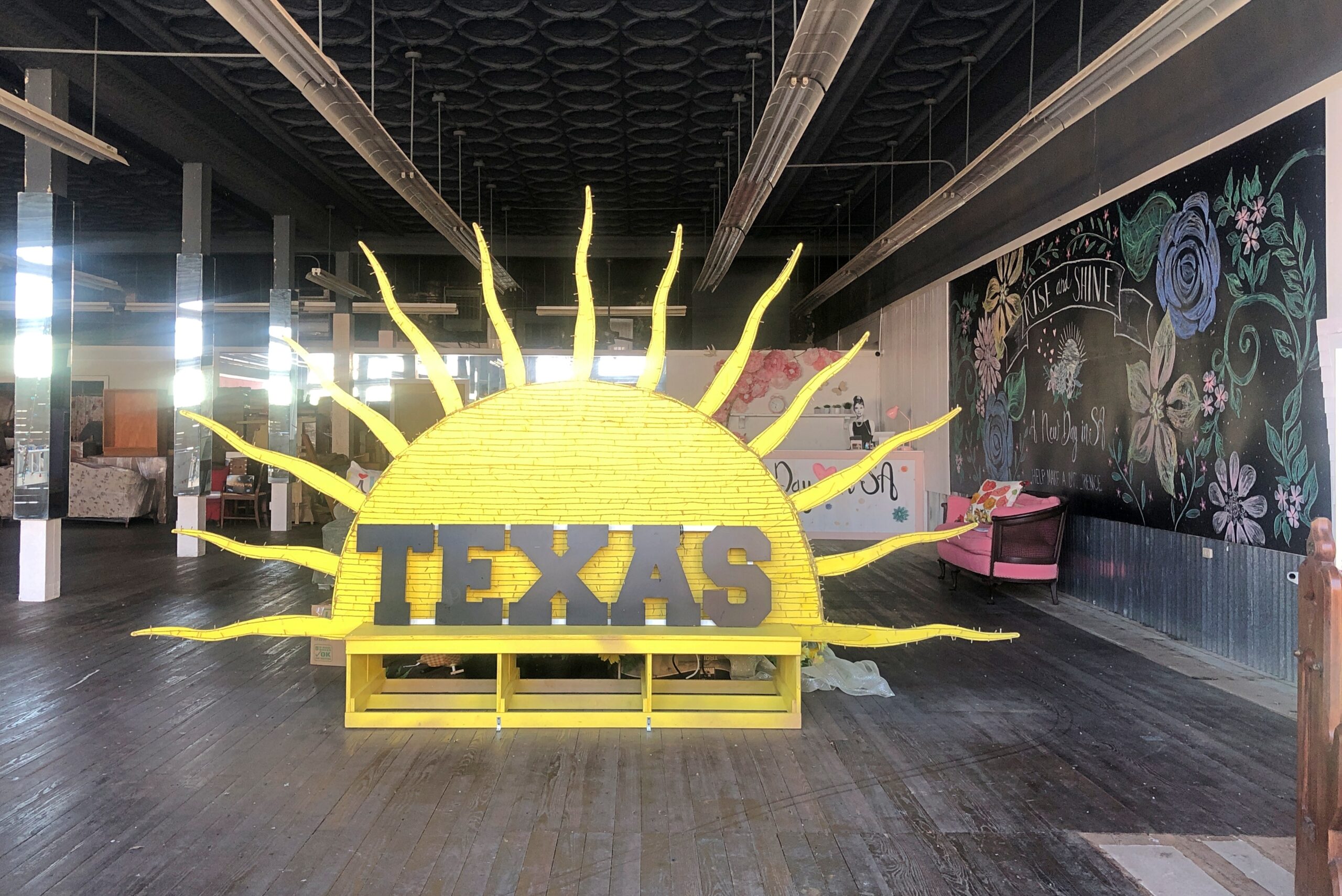
This space wasn’t vacant, exactly, but it was unmarked and its use a little hard to sus. Art space perhaps. The view reminded me of “Texas Sun” for obvious reasons.

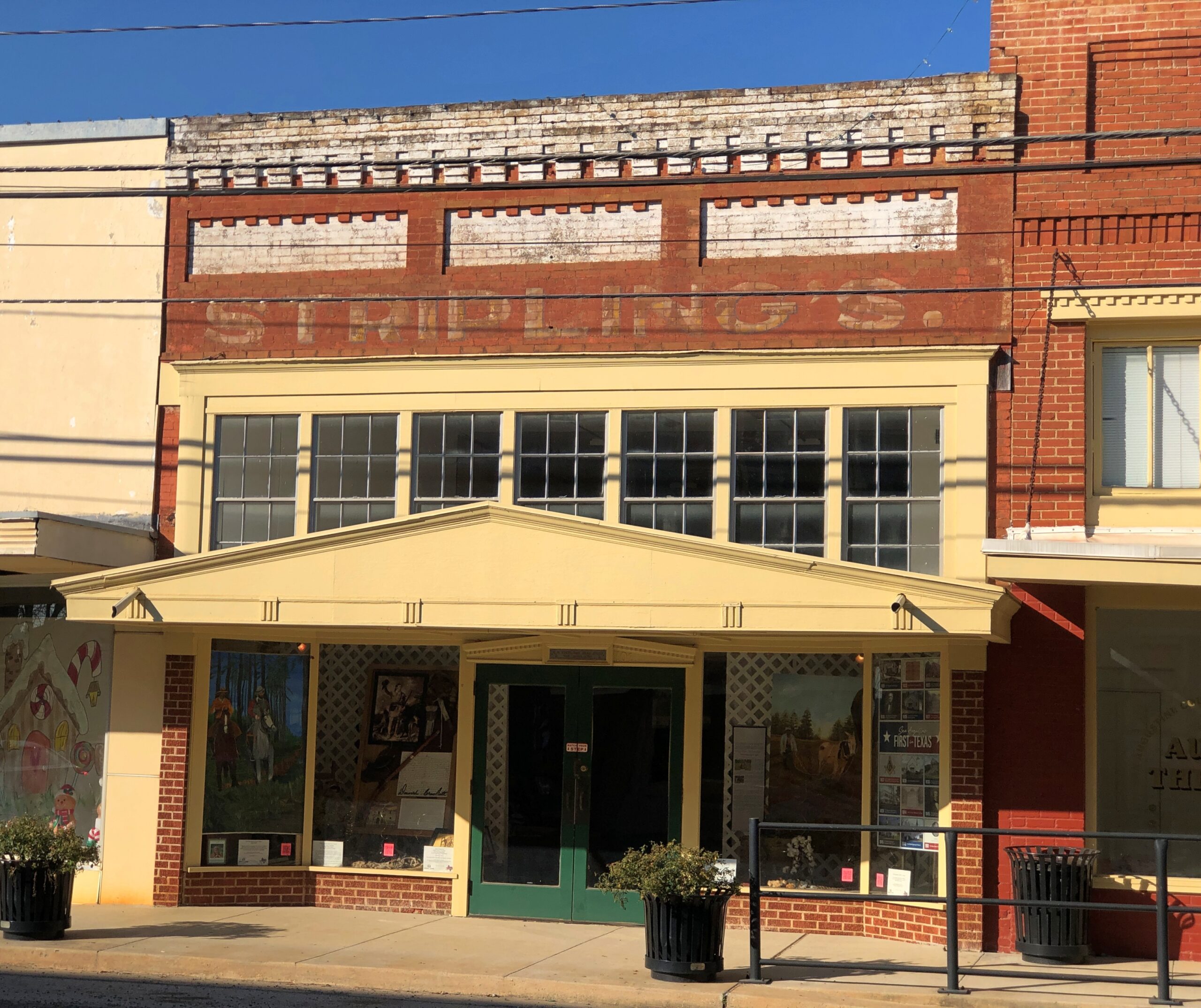
There were ghost signs, which isn’t unusual. More unusual is Stripling’s on a building. I have to take an interest in that, an alternate of my name.

“The original town well was dug by slaves on this site in 1860, and a saloon was built over it in 1891,”says the Society of Architectural Historians. “The First National Bank acquired the property, filled in the well, and commissioned this building. Raif Stripling purchased the building several years later and reopened the well as a tourist attraction. In 2003, the San Augustine Historical Foundation bought the property, which is now operated as a gift shop. The entrance canopy’s curious pediment with miniature triglyphs was added to his father’s building by Raiford Stripling.”

You never know what a building has to say.

The Spanish Brought Horses & Frisbee Golf

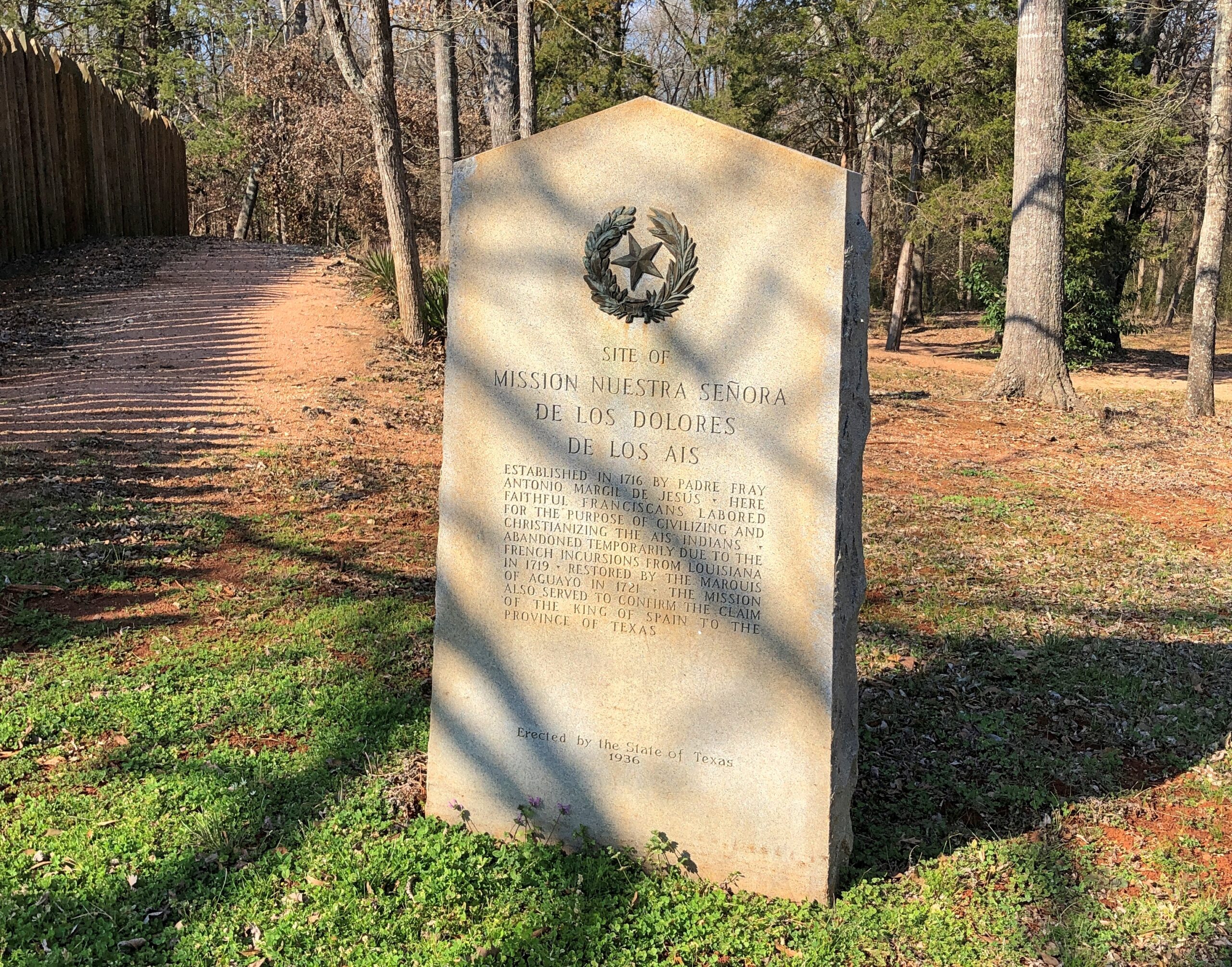
Not far away from the courthouse, half a mile or so south on US 96, is Mission Delores State Historic Site. Once upon a time, but not for that long, Mission Nuestra Señora De Los Dolores De Los Ais was there.

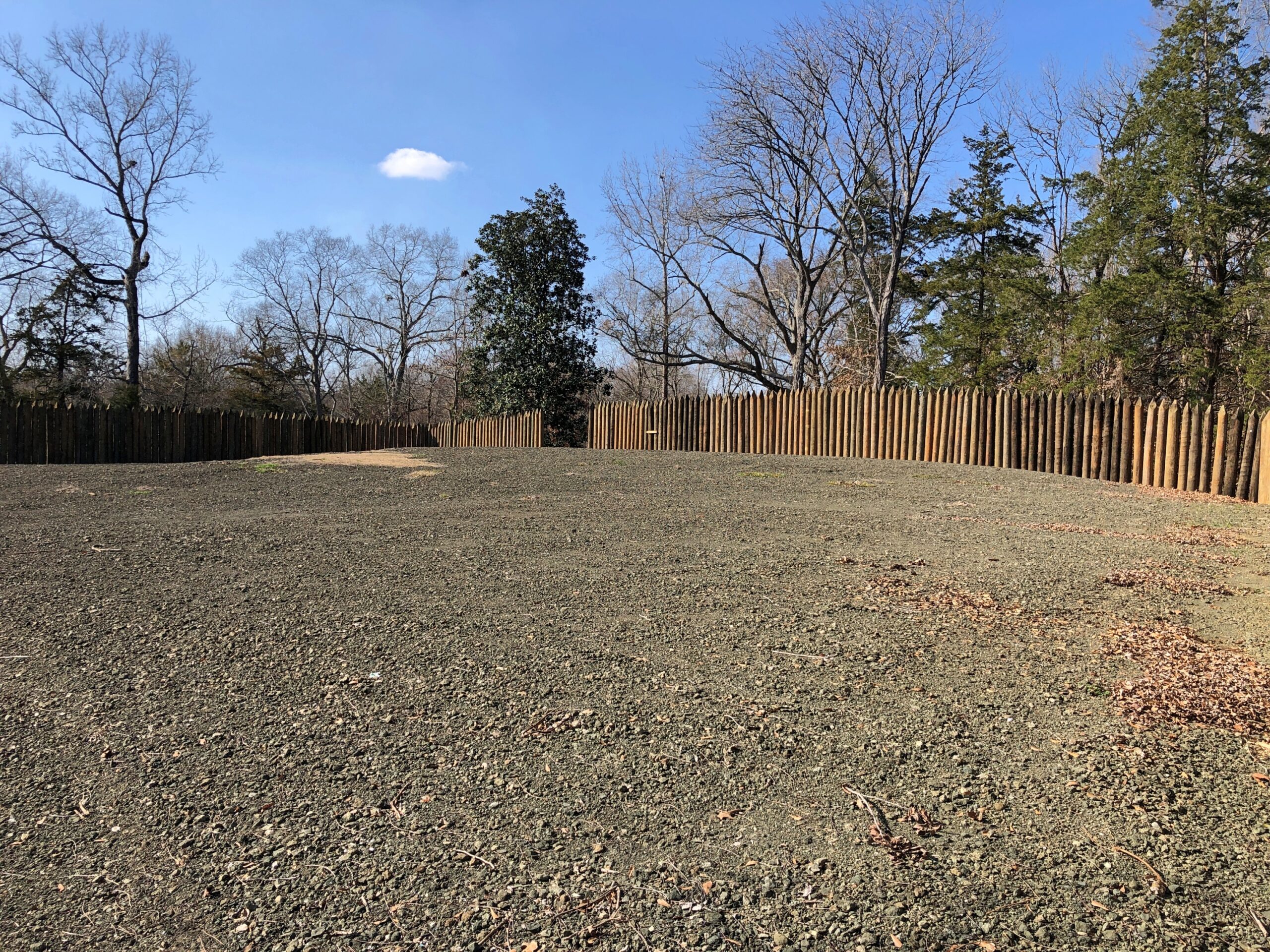
Mission Dolores has a name that evokes the stone relics of a backwater from the Spanish conquest of the Americas, but I’ve got bad news: the mission seems to have been built of wood, a material not known for durability across the centuries. Modern wooden poles ring part of the site, but otherwise you’ve got to bring a lot of historical imagination to the place.

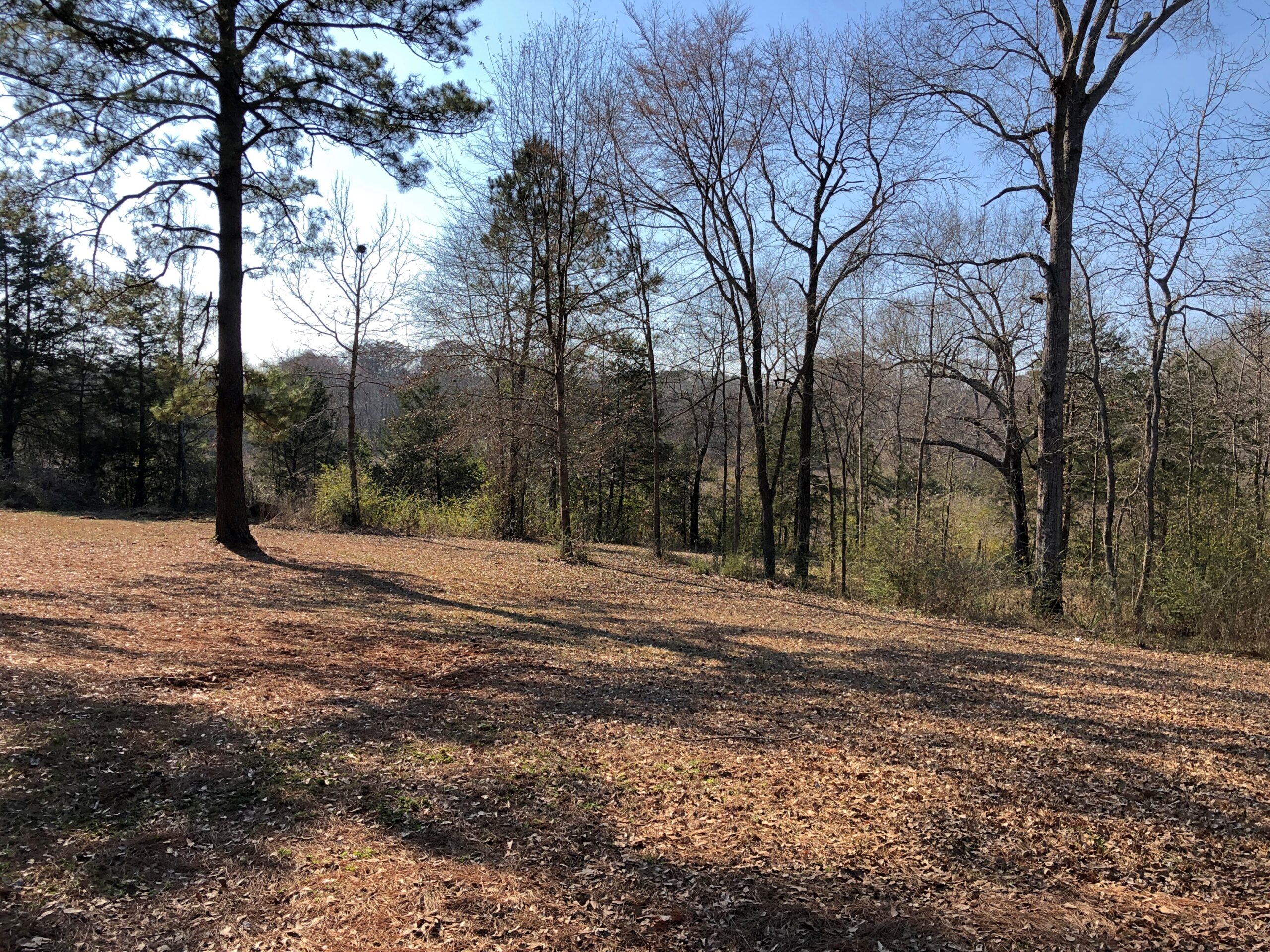
The actual site wasn’t known until late 20th century archaeology confirmed the location, part of which was destroyed by the building of the highway. The modern state historic site grounds extend far enough to offer a pleasant walk, provided the weather is pleasant, as it was that day.

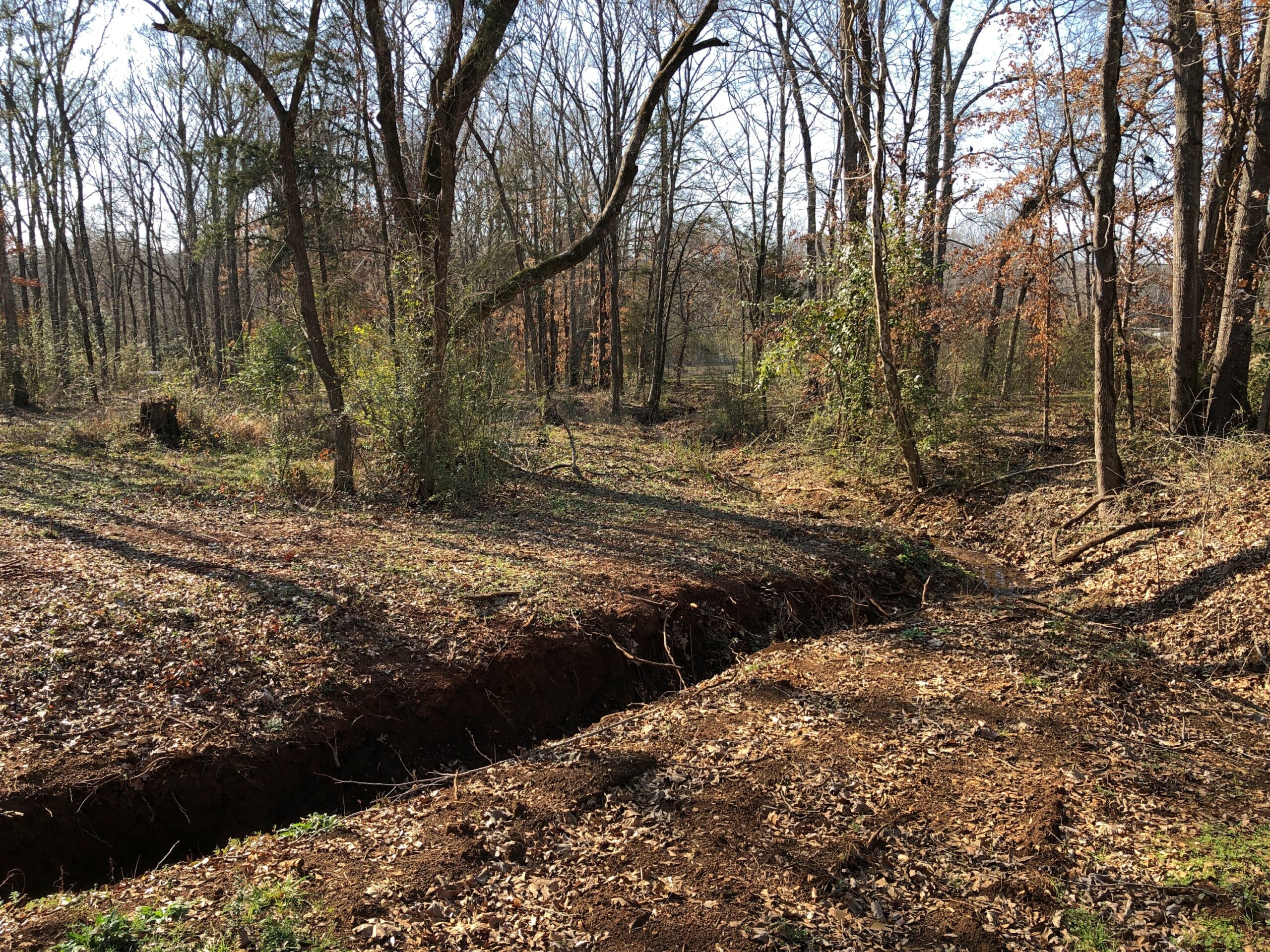
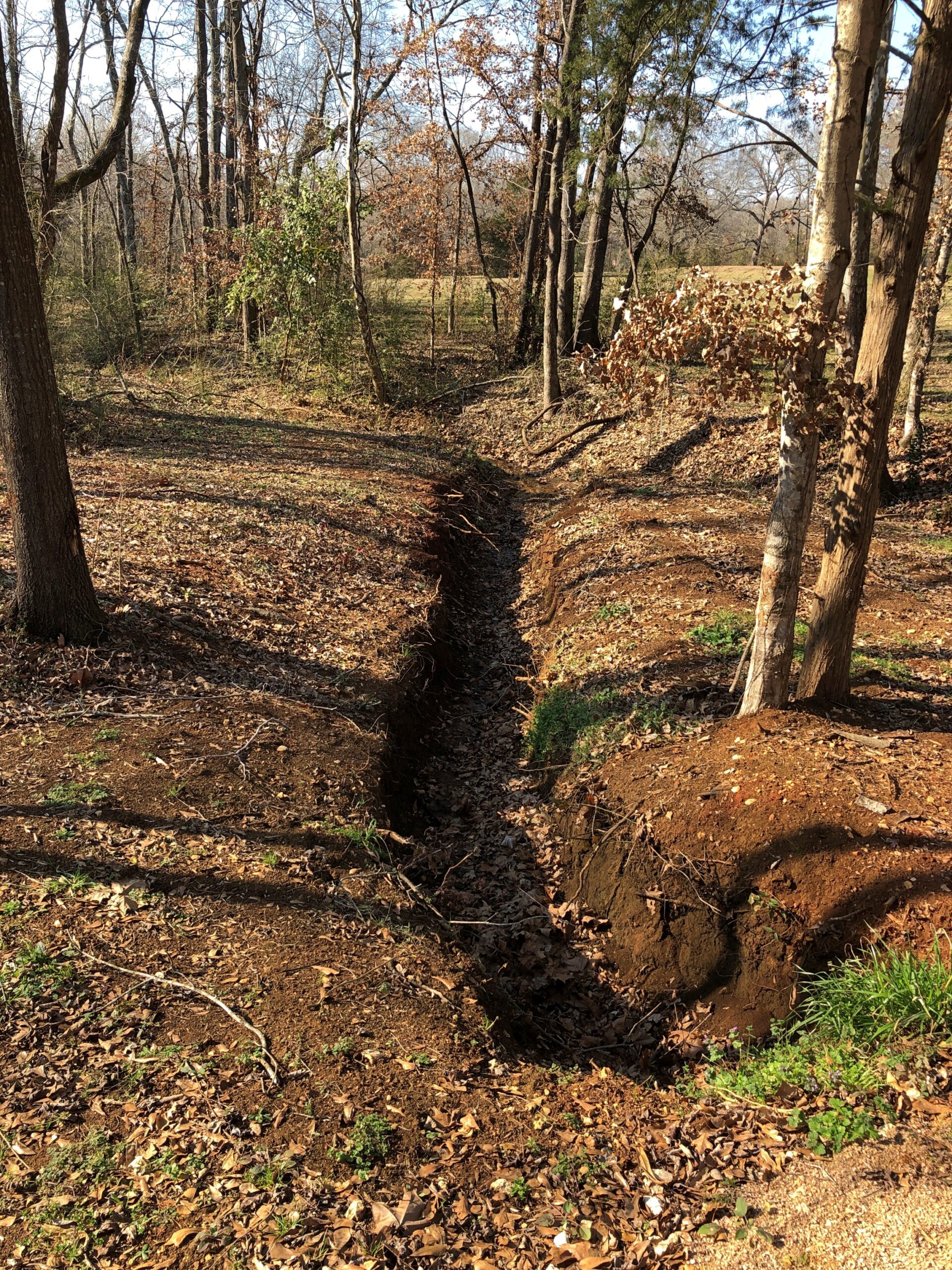
Gashes in the earth run through the wooded grounds.

They’re something like the ghost signs – ghost trails, you might call them, carved by horses and wagons and Indians and Spaniards and, remarkably, not yet lost to time.

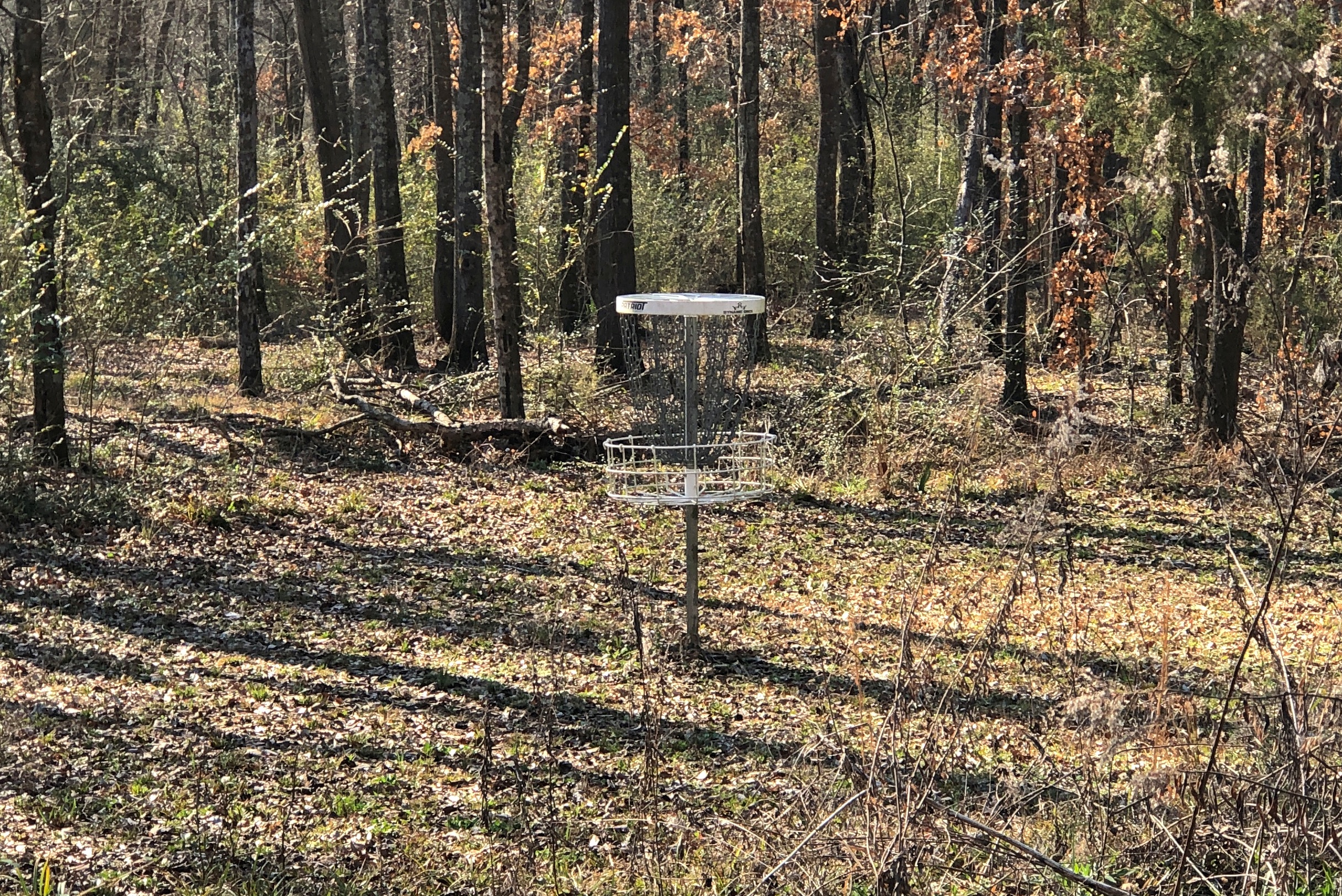
Also part of the park: a Frisbee golf course.

An homage to the fact that the Spanish brought the sport to the Americas as surely as smallpox and horses. If you tell people that with some conviction, wonder how many would believe it?

A Little More Houston: Tu Viện Phước Đức & Chùa Linh-Sơn

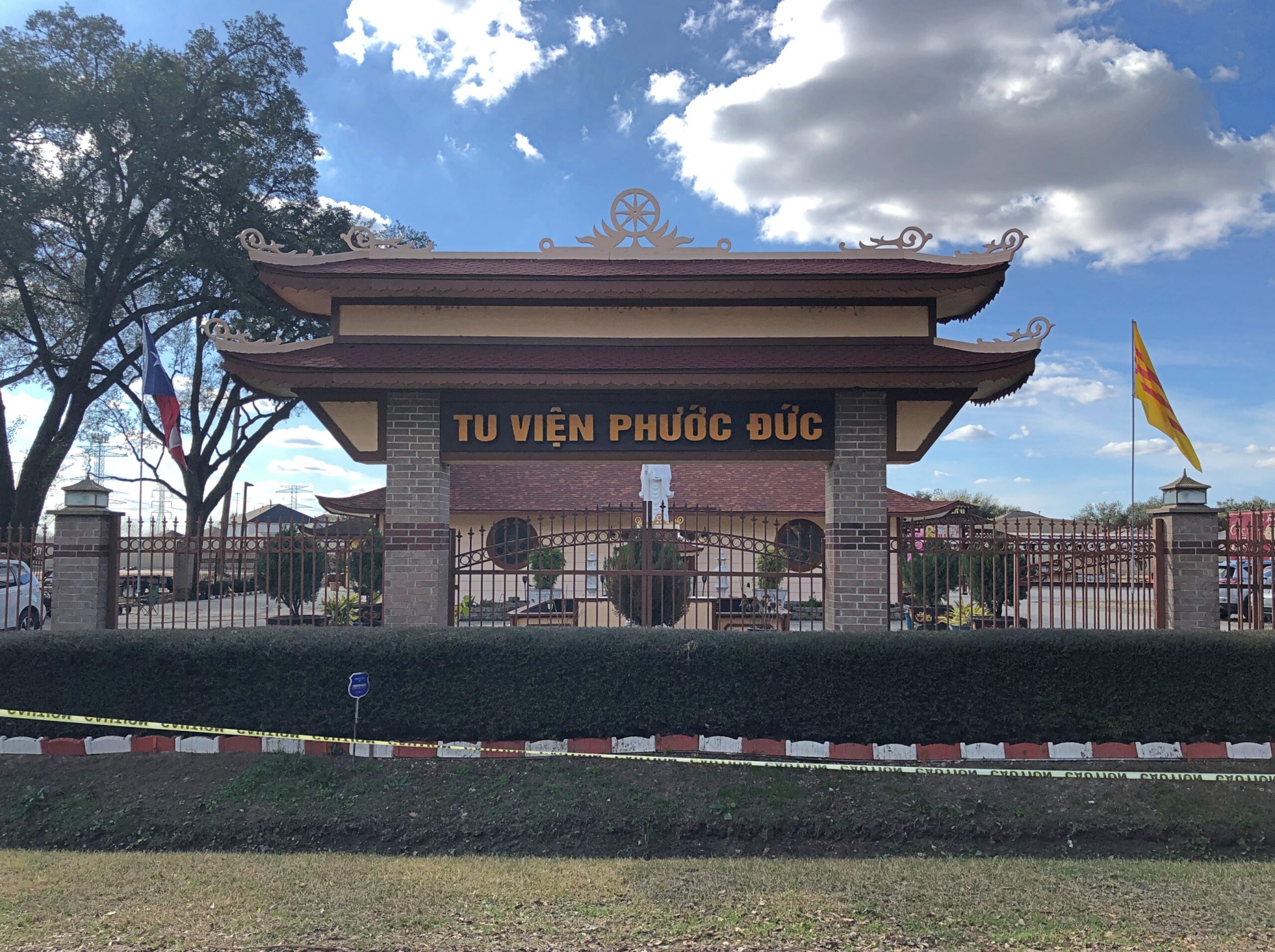
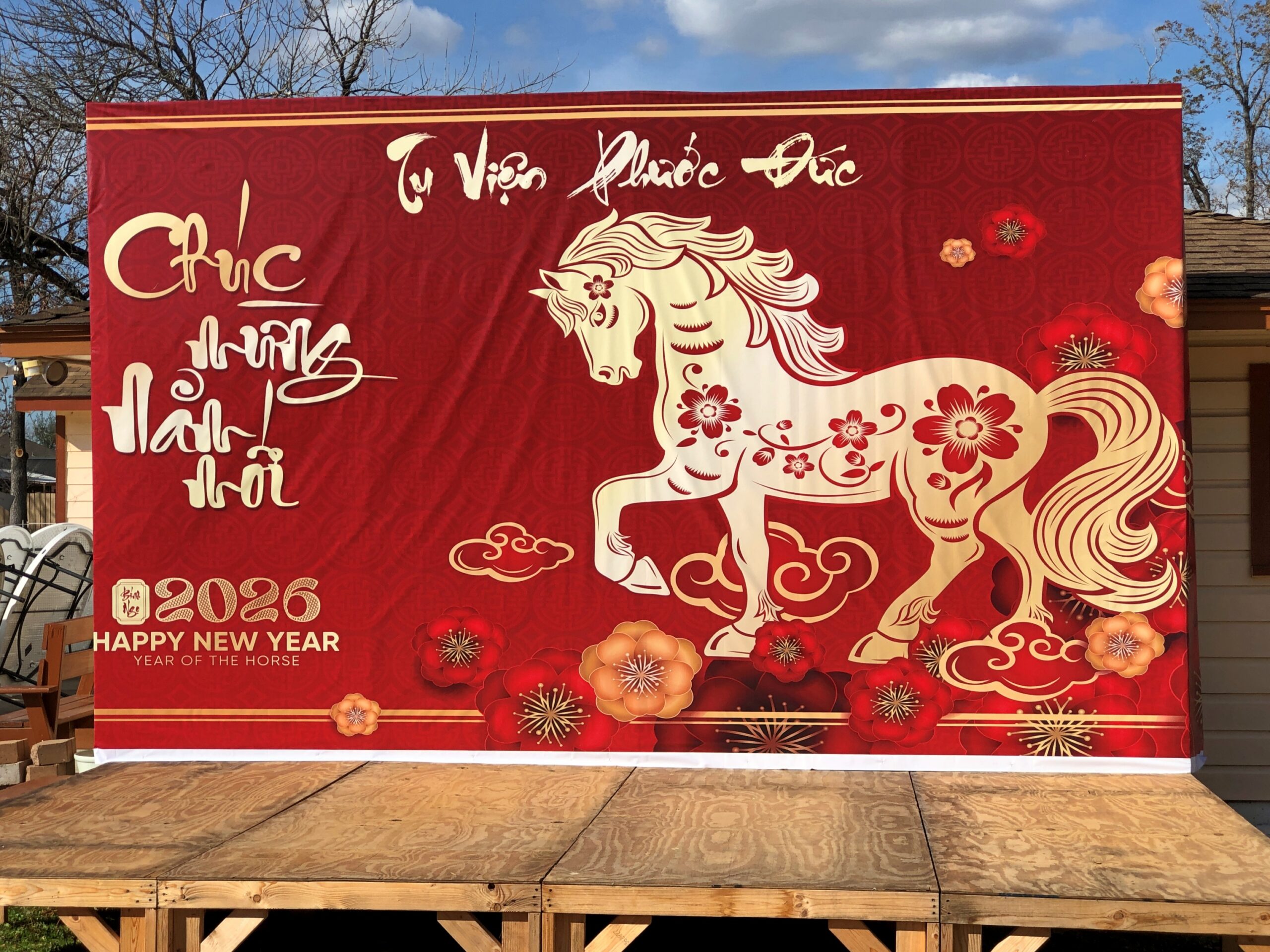
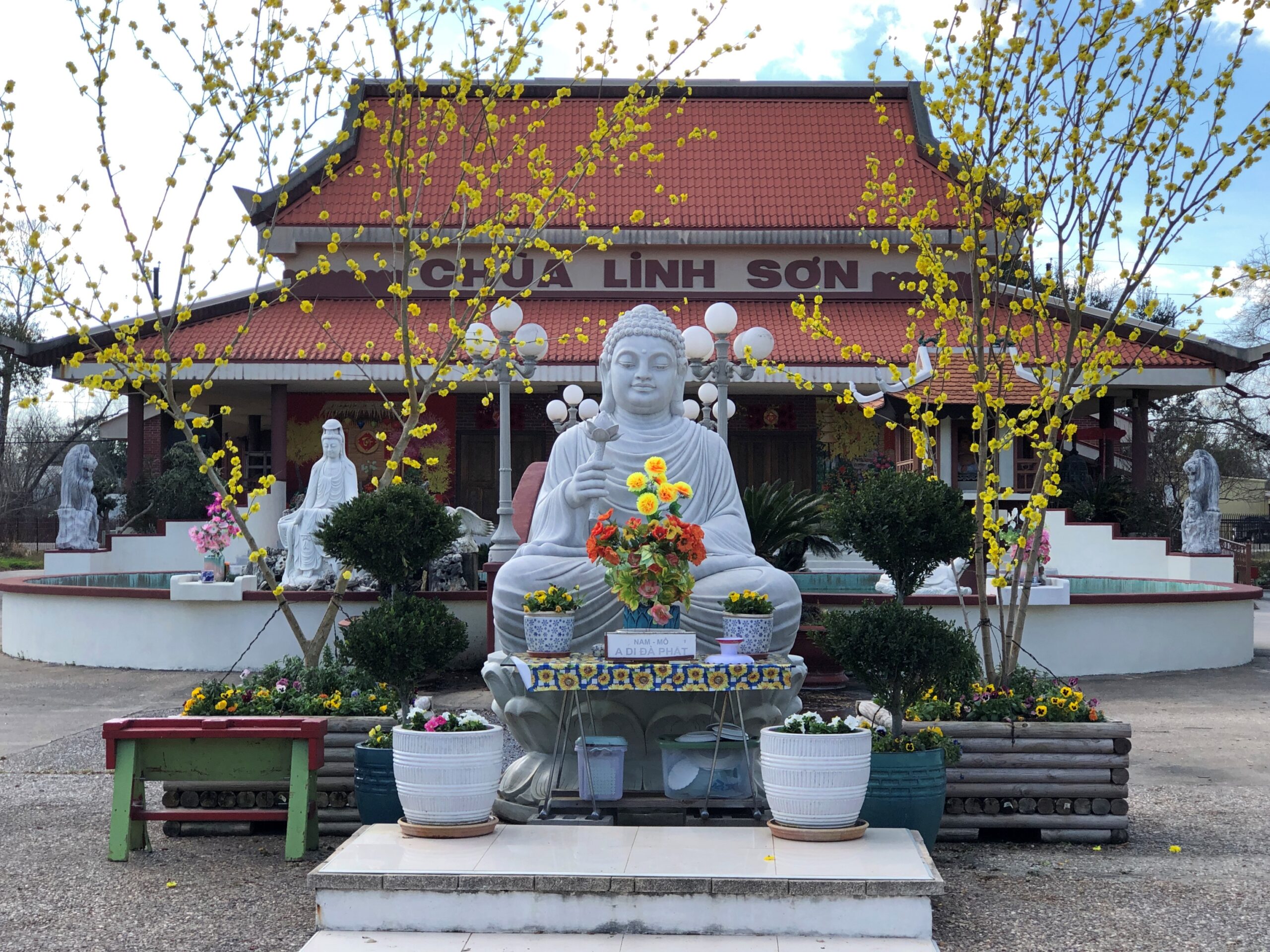
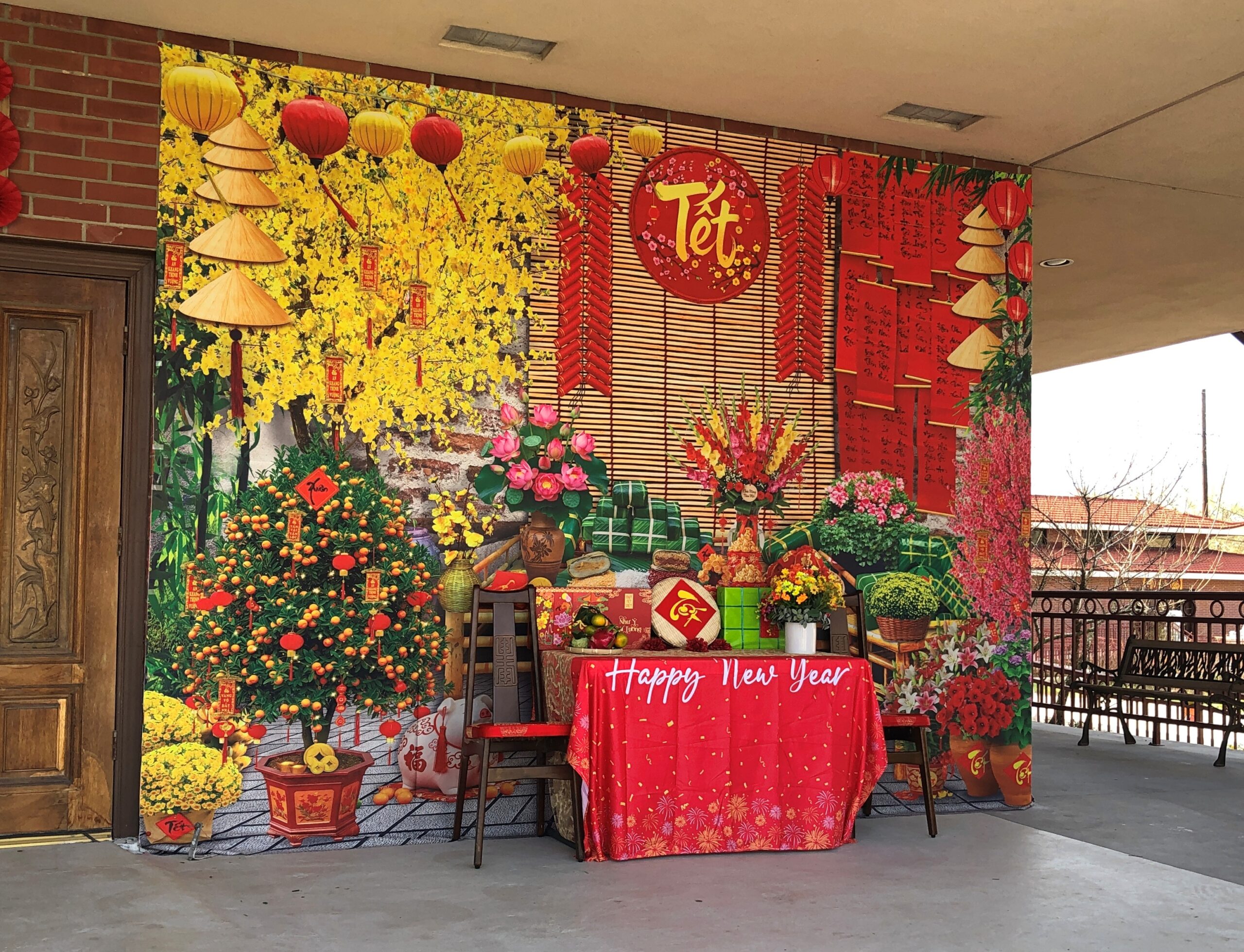
I arrived at Tu Viện Phước Đức in Houston a few days ahead of the Vietnamese New Year, but the monastery was getting ready.

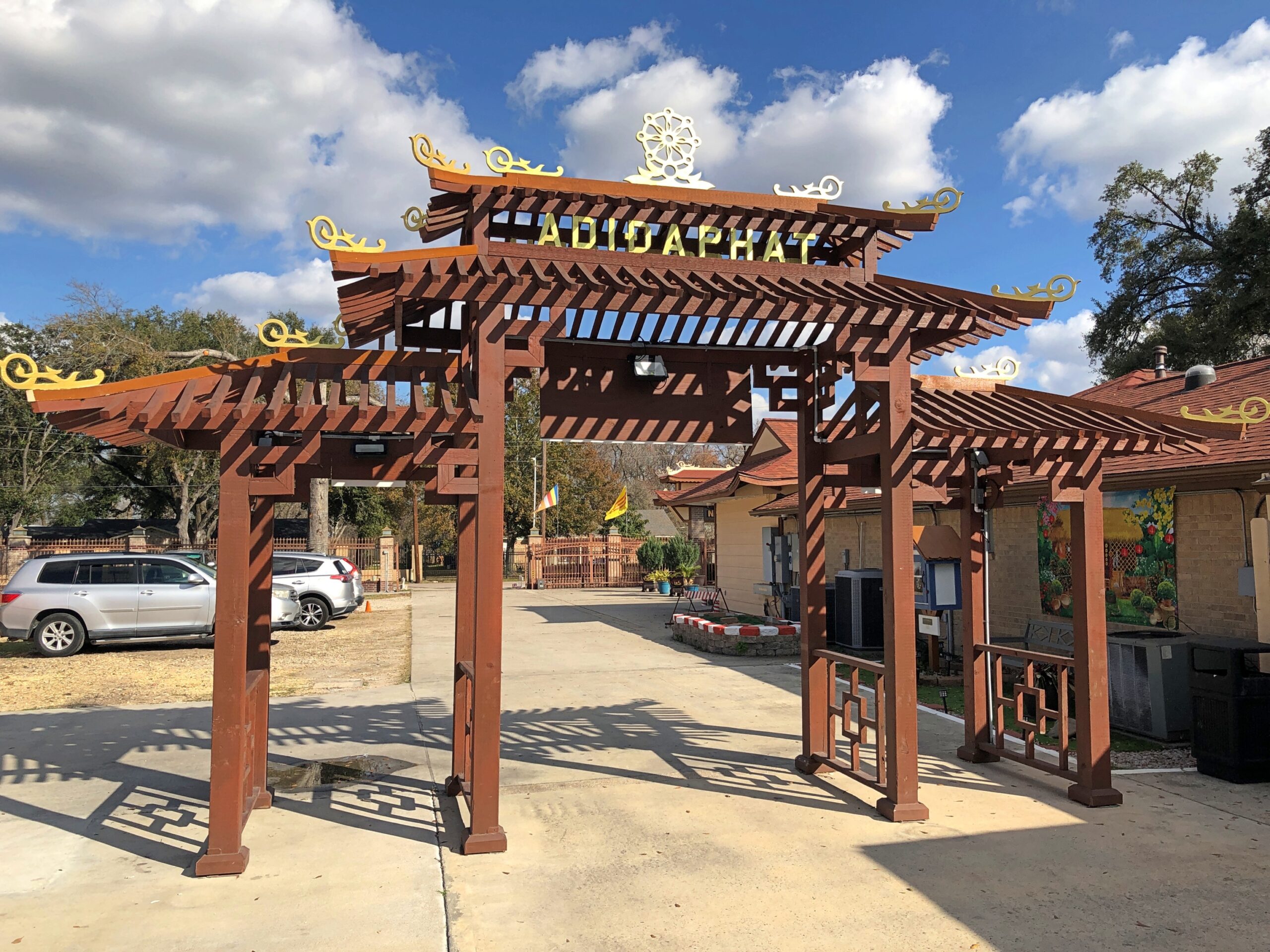
Some kind of planning meeting – I guess – was ongoing in the main sanctuary – I guess again – but no one took a second look at me as I took a look around the place.

Parts of Tu Viện Phước Đức were also under construction, hinting at a thriving Vietnamese diaspora community woven into the fabric of Houston. And I like all those diacriticals, sprinkled on the name like croutons on a salad. I have copy and paste to thank for their presence here.

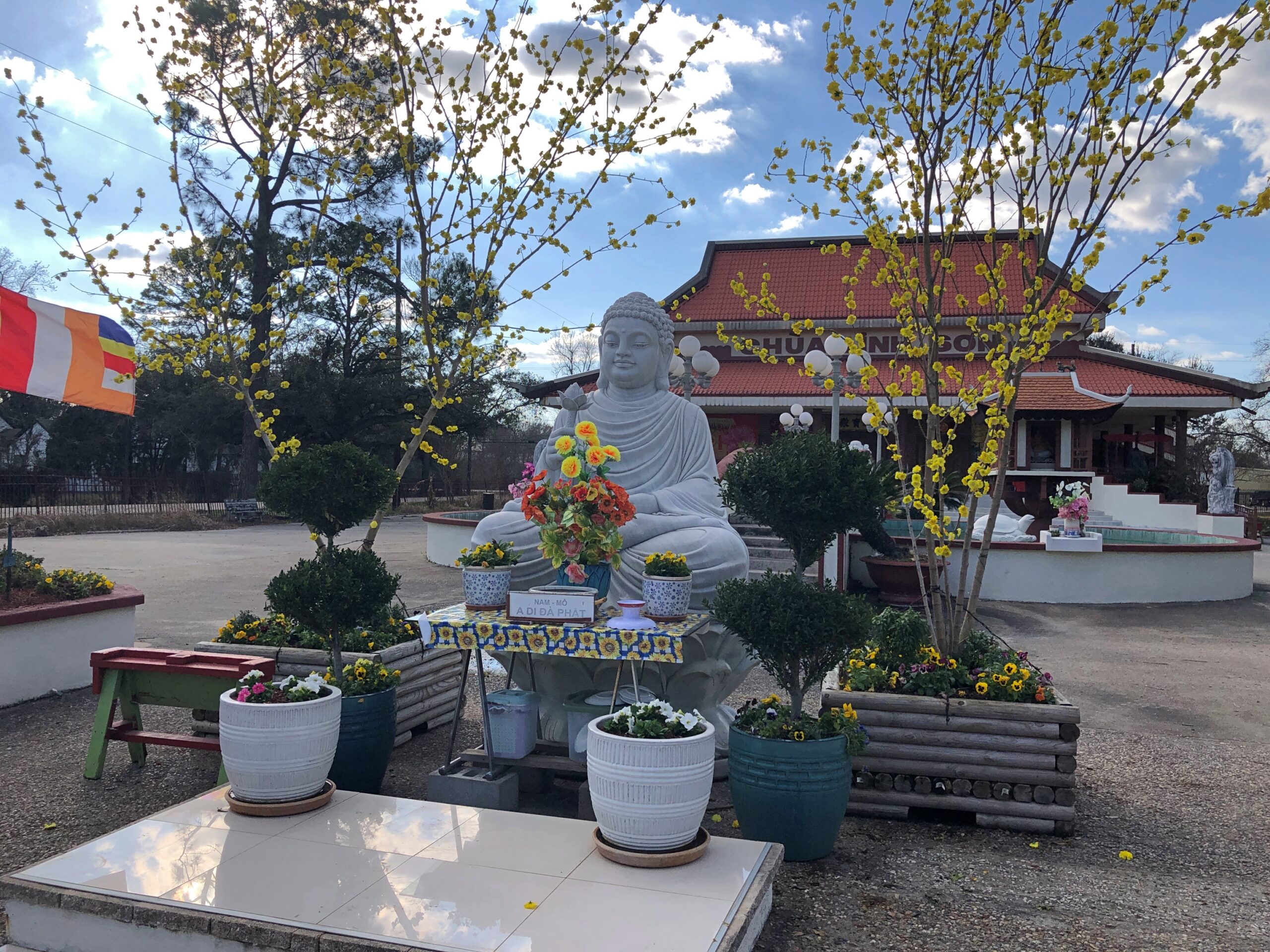
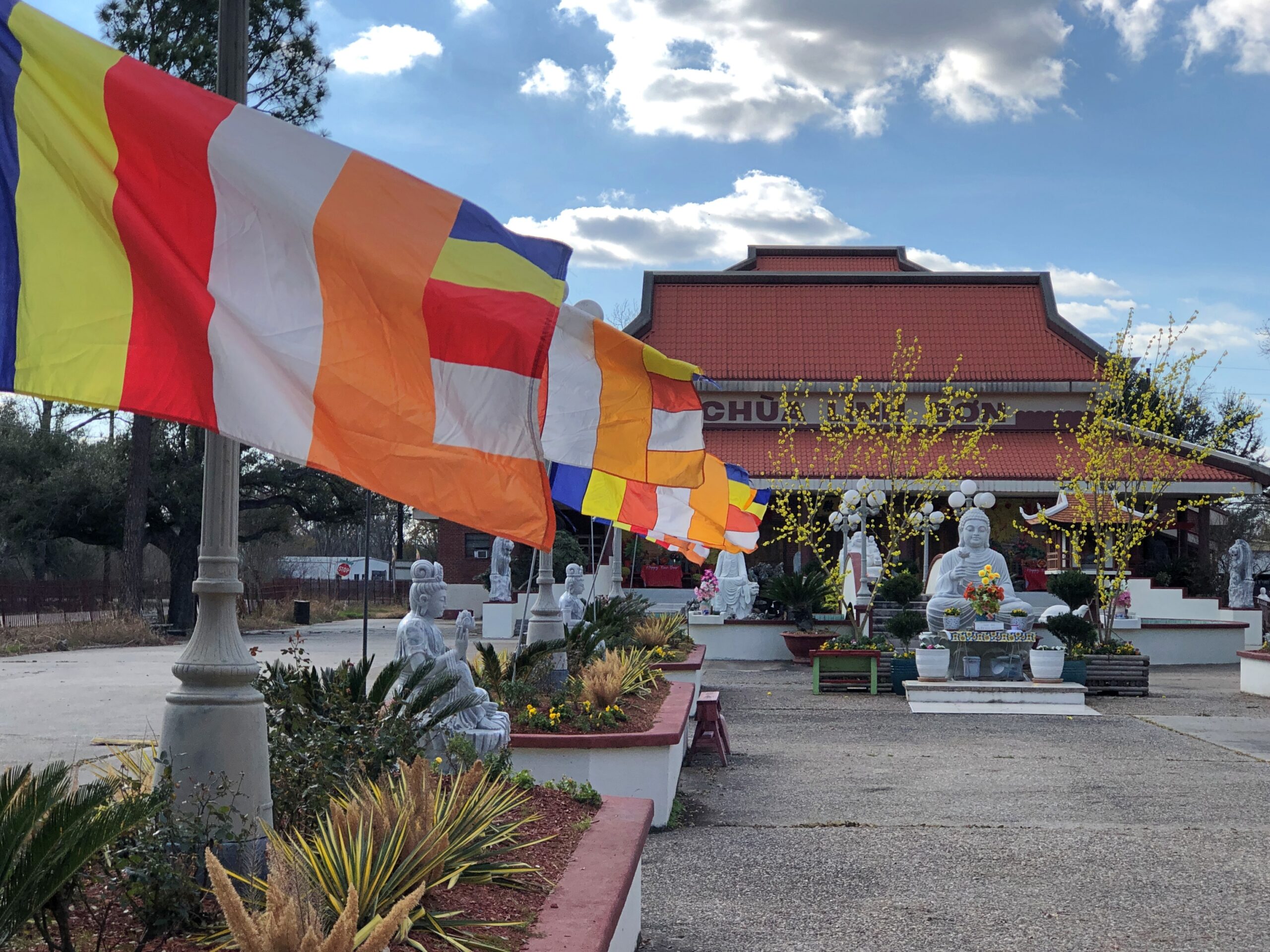
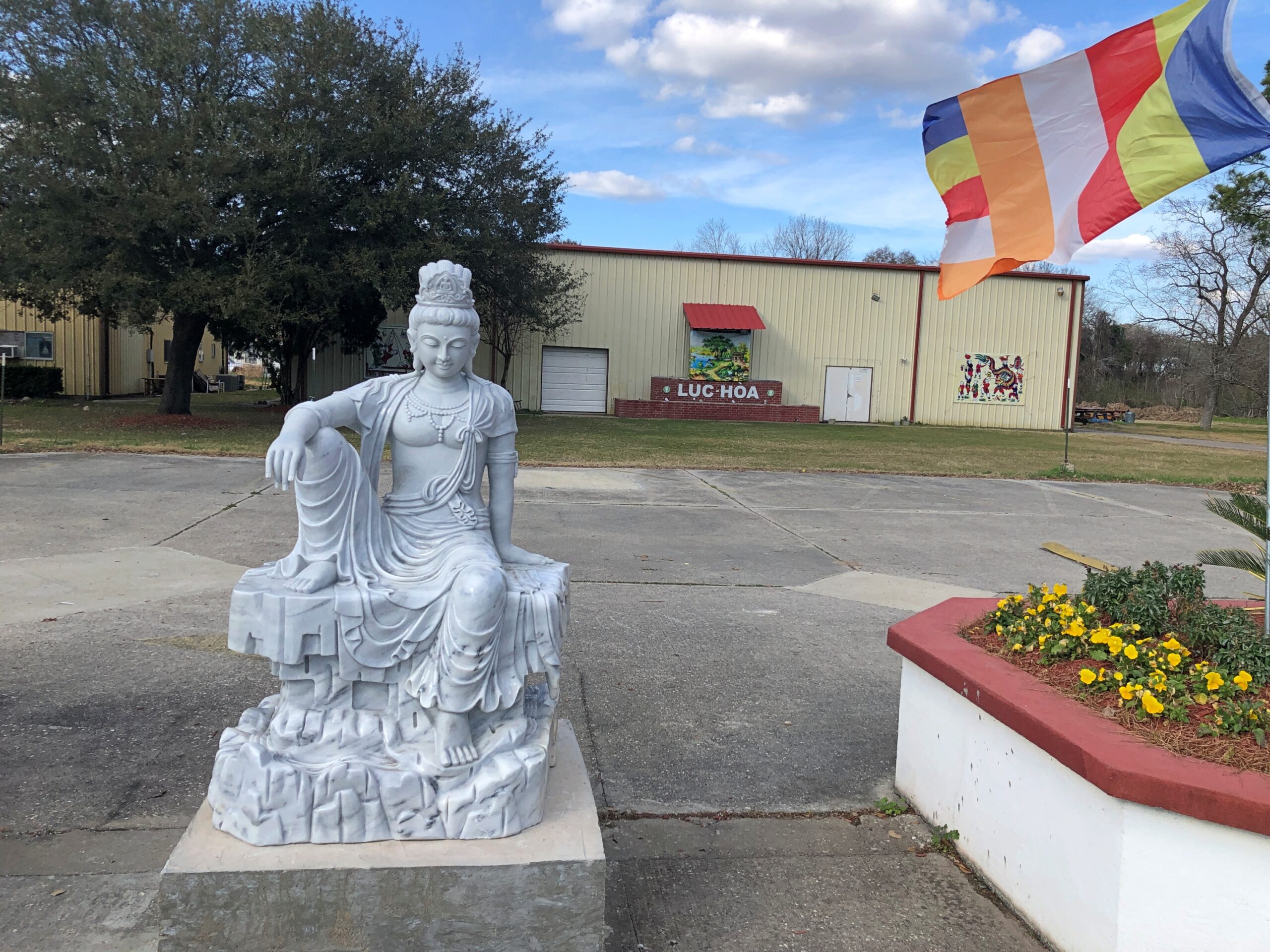
Google Maps had been my assistant that afternoon. “Buddhist temples” was my search term, and a number of them came up not far from my airport-area hotel. The other one I made it to happened to be Vietnamese as well: Chùa Linh-Sơn.

Vietnamese Buddhist temple, Houston

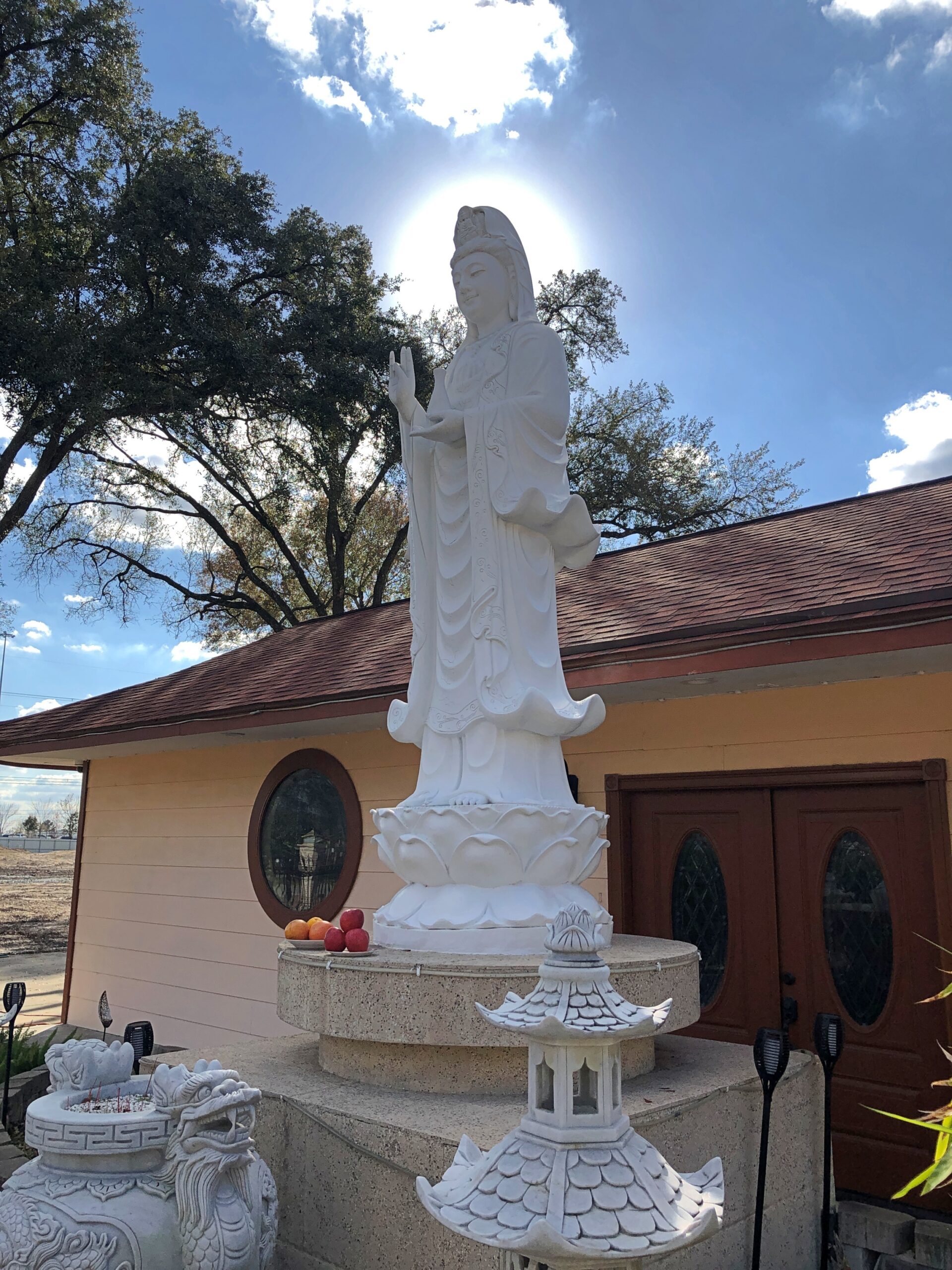
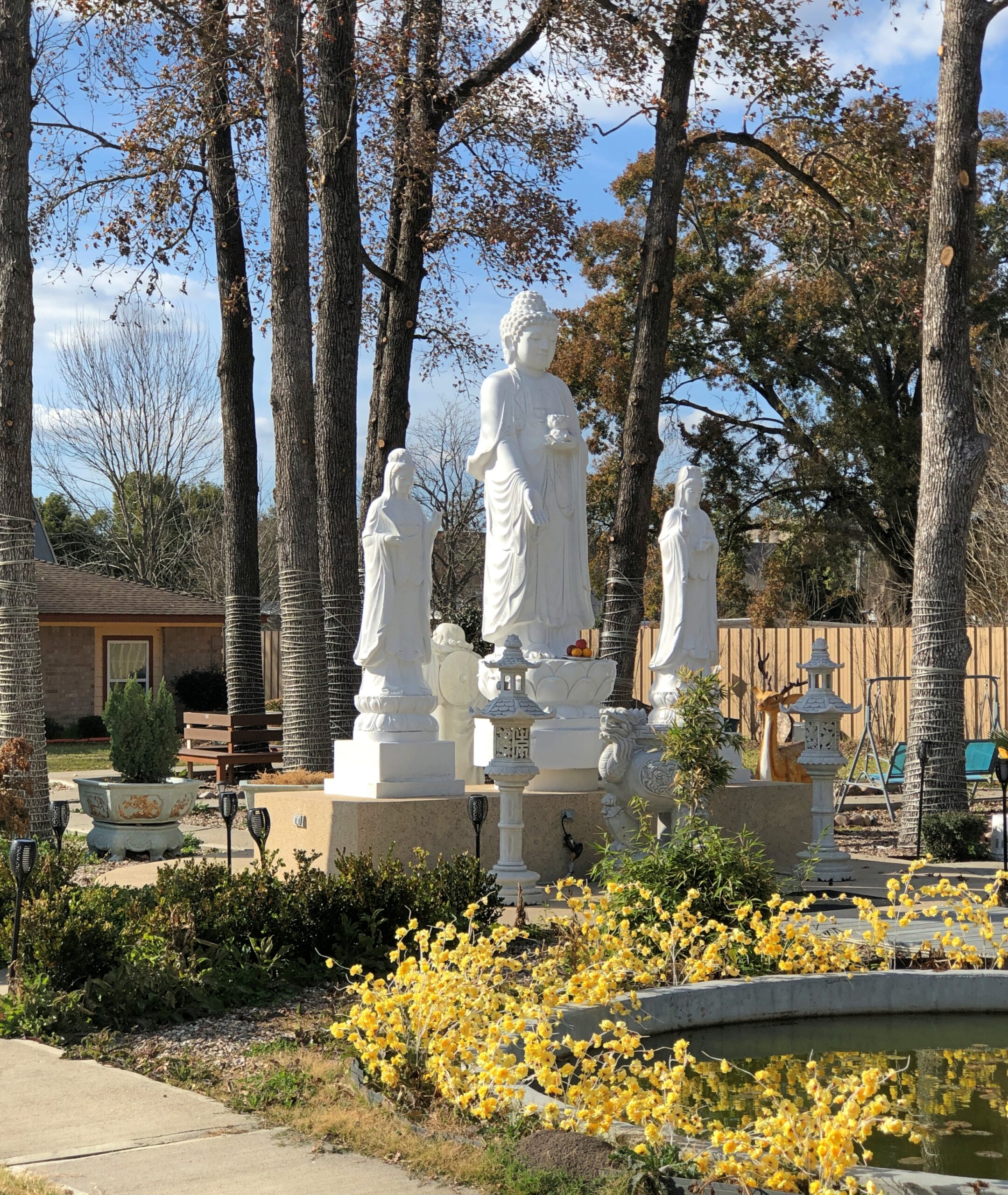
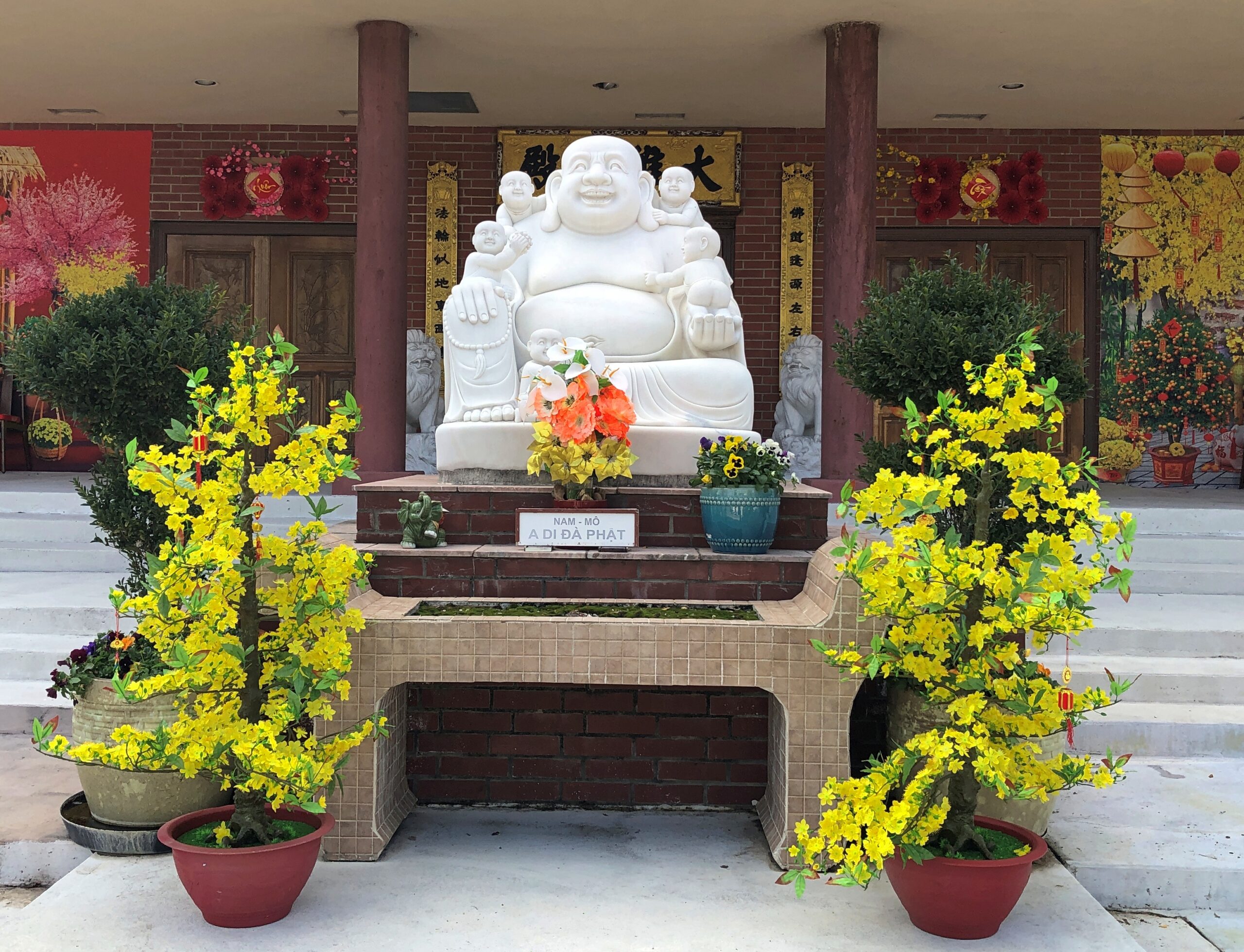
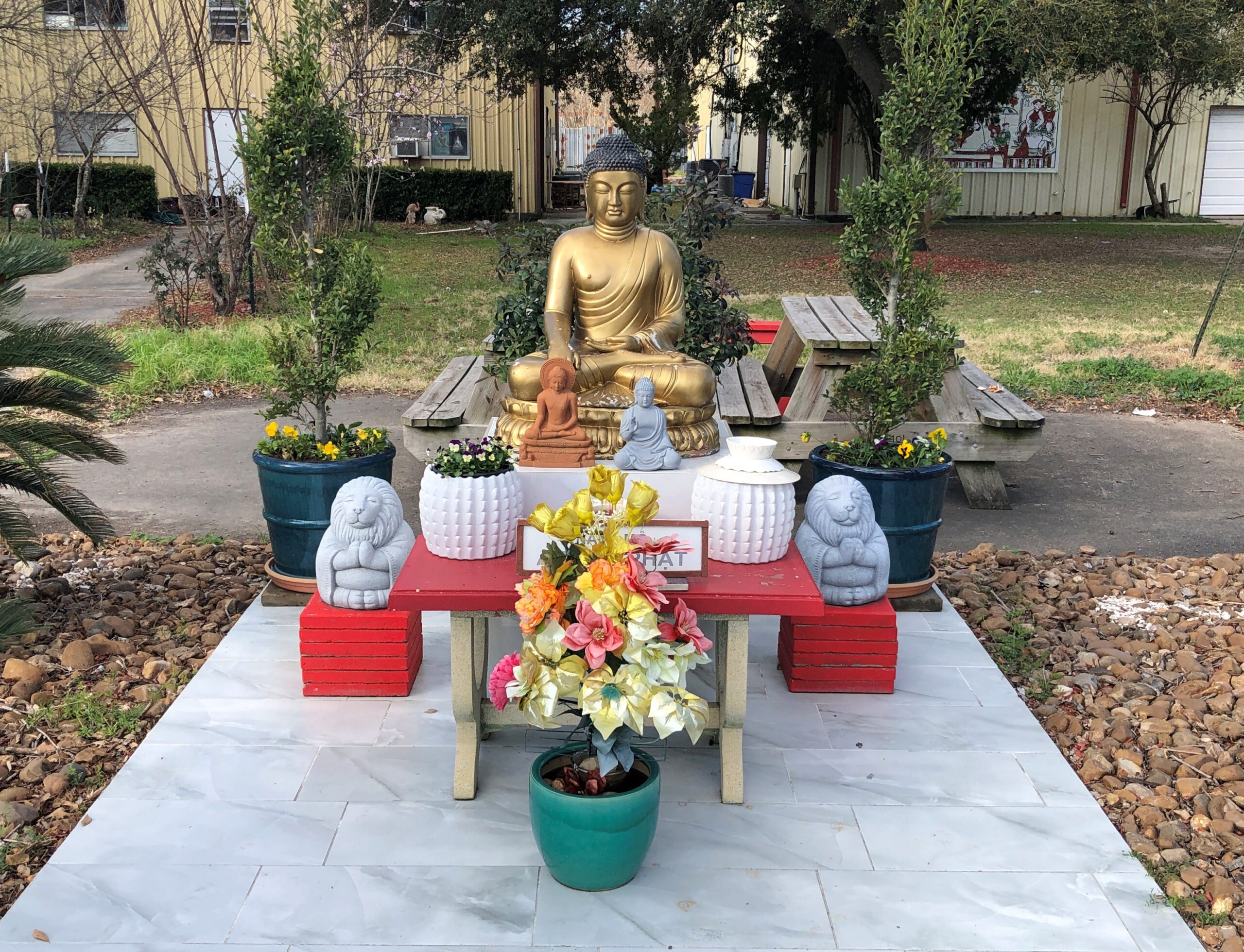
No one else was around that I saw or heard. But the grounds were open for a stroll. Plenty of Buddharūpa around.

Chùa Linh-Sơn was also preparing for the New Year.

Too bad I didn’t have the chance to wish anyone a tip-top Tết, though I probably would have forgotten to do so.

The Hermann Park Japanese Garden & A Side of Rice

My go-to data source for gas prices is AAA, which tells me that the national average today is $3.983/gal, and higher in Illinois, at $4.228/gal. As everyone knows, up markedly this month. People have long seemed to believe that the President of the United States has a magic button that made gas prices change. That was nonsense, of course, but now it looks like the administration has found such a button, except it might be stuck on “rise.”

Be that as it may, I’m glad my recent long drives, and long flights, aren’t scheduled for this year. The summer of ’26 could be a time to stay closer to home. Then again, prices north of $4/gal – in fatter 2008 dollars – didn’t keep us from driving to Great Smoky Mountains NP that year.

In Houston last month, I did a fair amount of driving, including in the airport-area industrial submarket. That is, among the warehouses and distribution centers that form part of the sizable metro Houston industrial market, which totals about 700 million square feet (for comparison, metro Chicago’s market is roughly 1 billion square feet). I’m probably one of the few tourists anywhere who gets a kick out of driving by behemoth industrial buildings, but there you have it.

I also drove the short distance from downtown Houston to Hermann Park, a legacy of the City Beautiful Movement and the landscape architectural talents of George Kessler (d. 1923). He was a younger version of Frederick Law Olmstead, it seems, busy in a lot of places, though more important in planning for Dallas than Houston.

Always thought “City Beautiful” is too far a reach. Like most people, I’d say City Pretty Nice or City Not Bad would be good enough, but that’s not the kind of movement name that inspires grand projects.

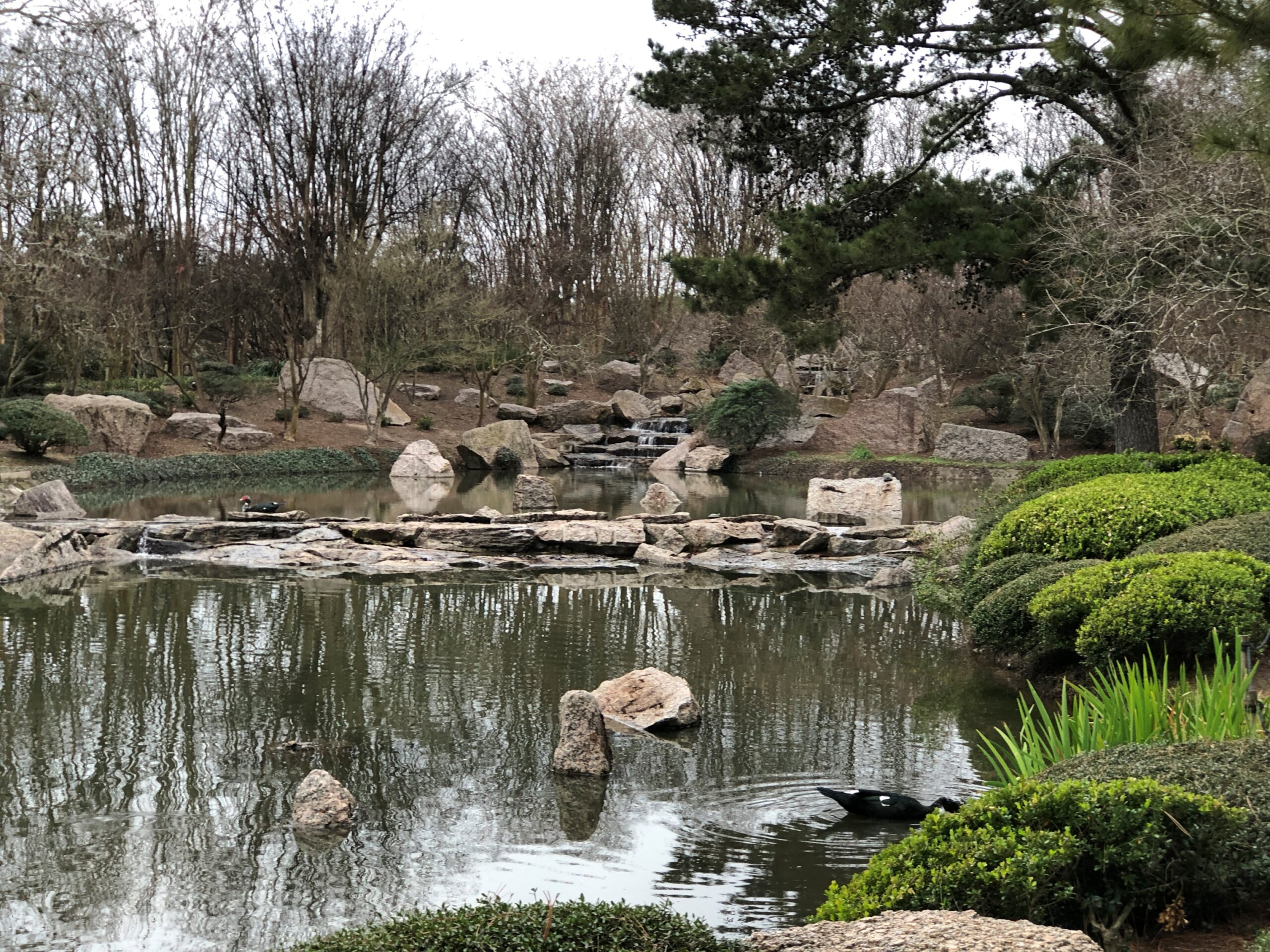
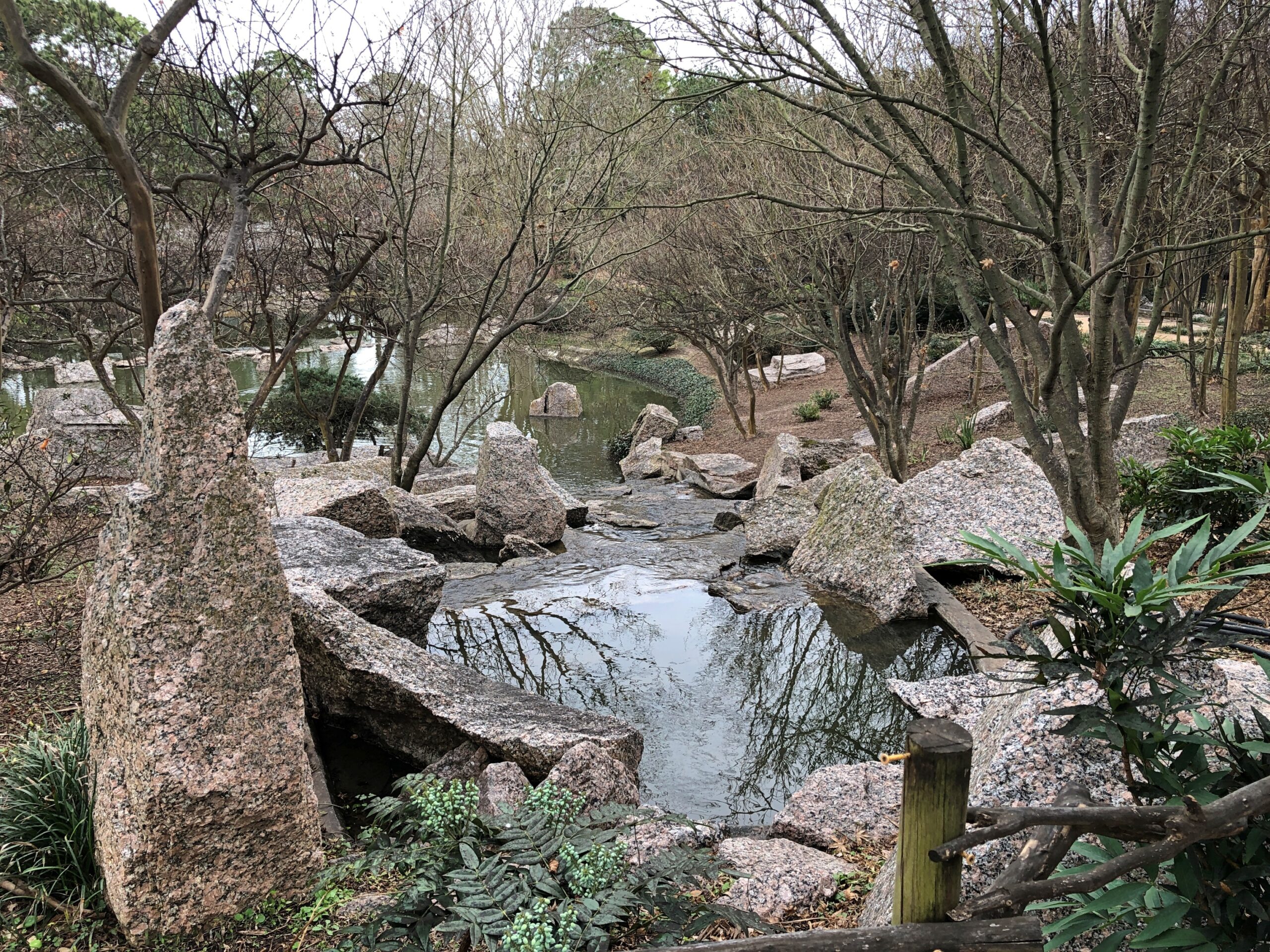
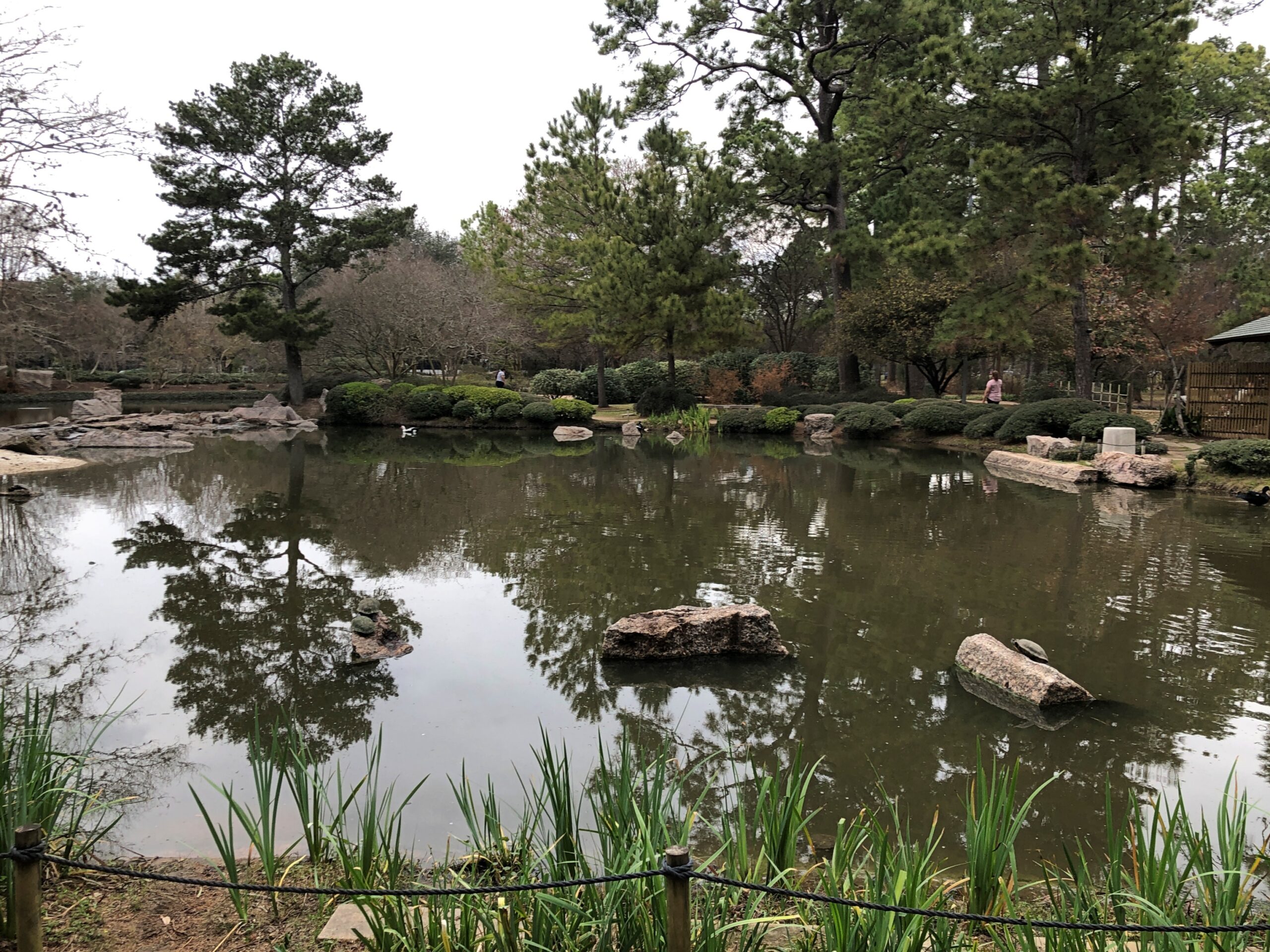
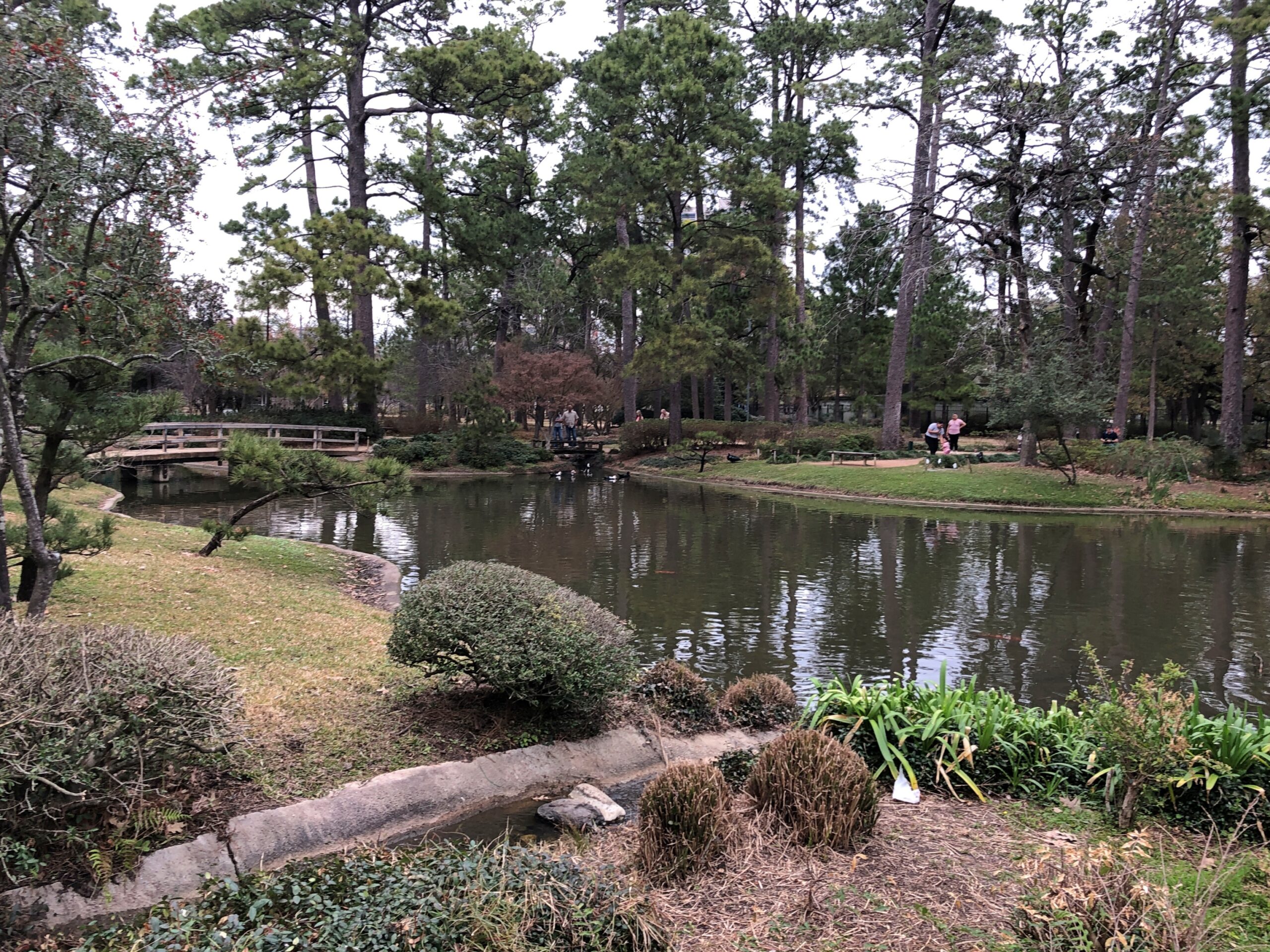
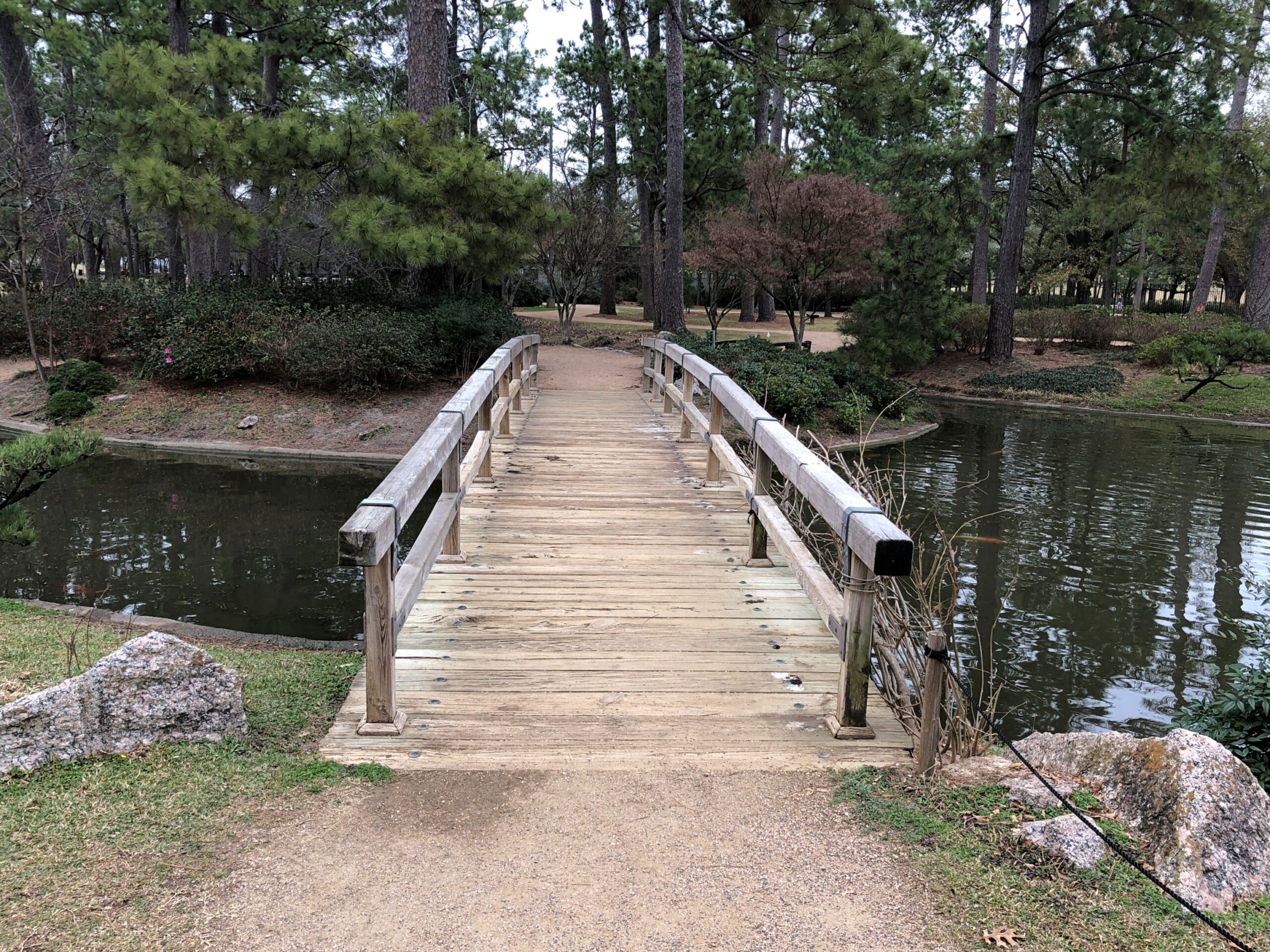
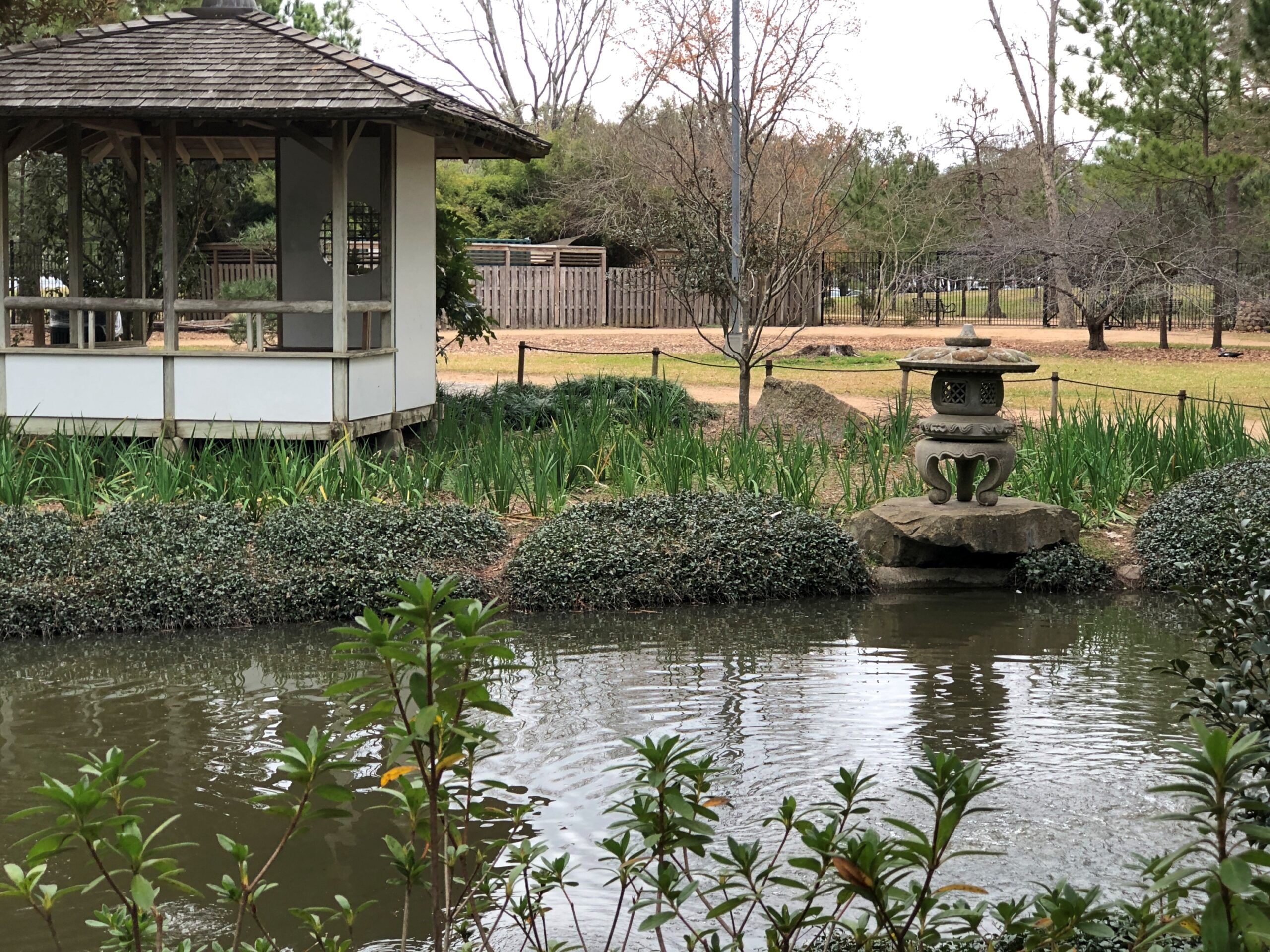
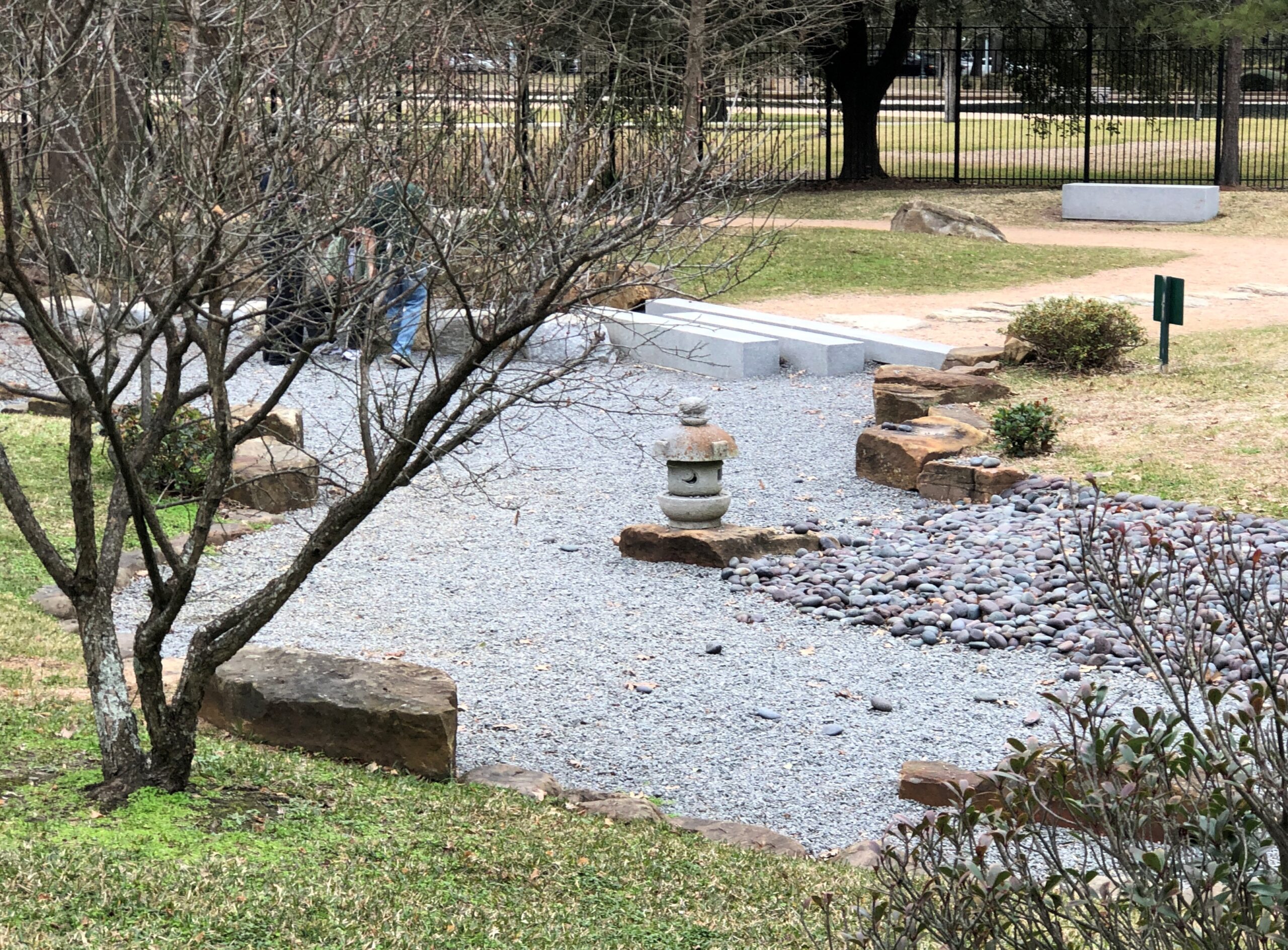
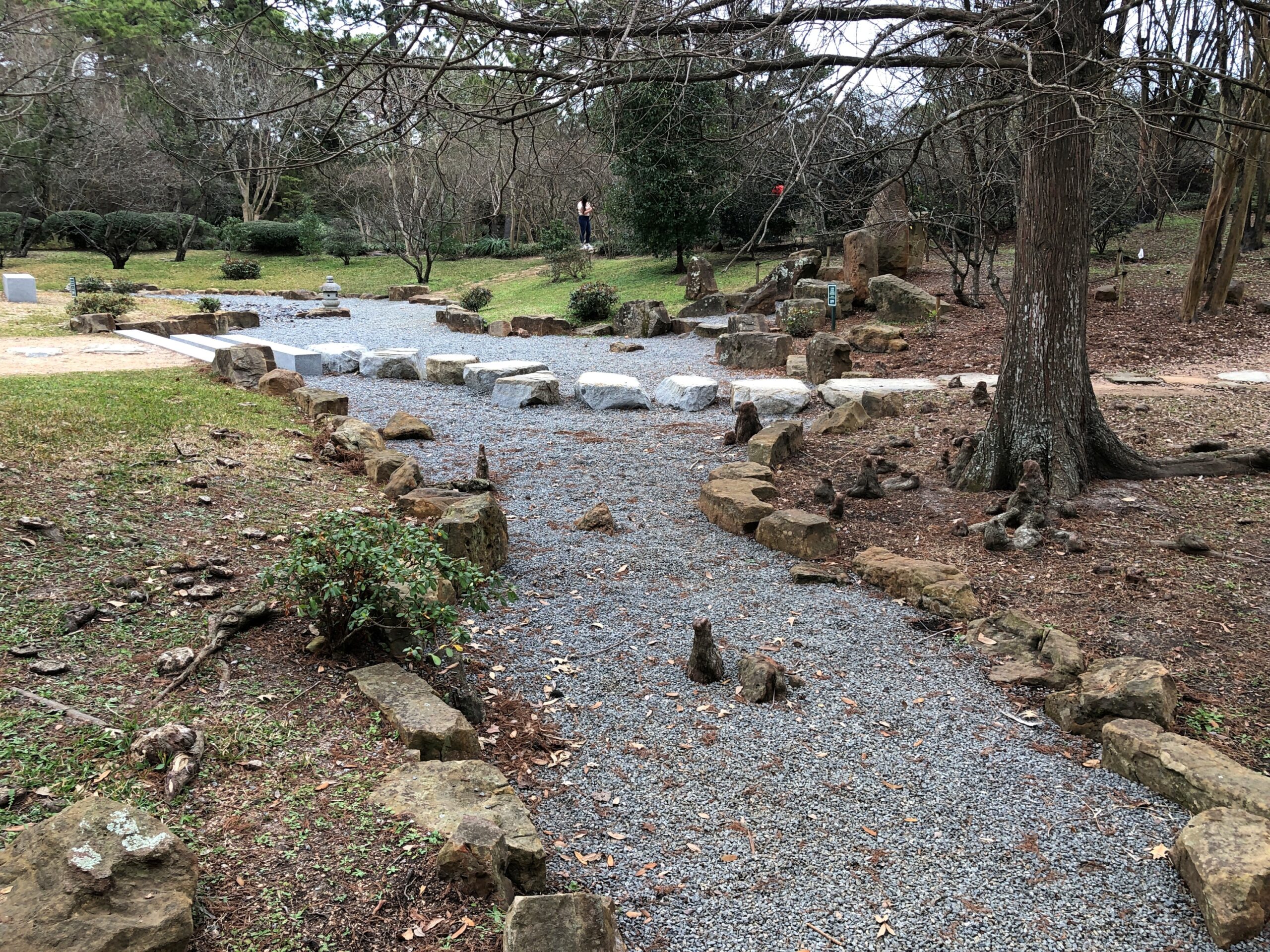
The Japanese Garden occupies part of Hermann Park. That seems to be the generic name. I made my way there. It’s a pretty place, even in February.

A mix of imported Japanese flora and the pines of East Texas. Hermann Park itself dates from the early 20th century. The Japanese Garden, the late 20th century, a prosperous time for Japan, and when that dustup between Nippon and the USA had mostly been put in the rear view mirror.

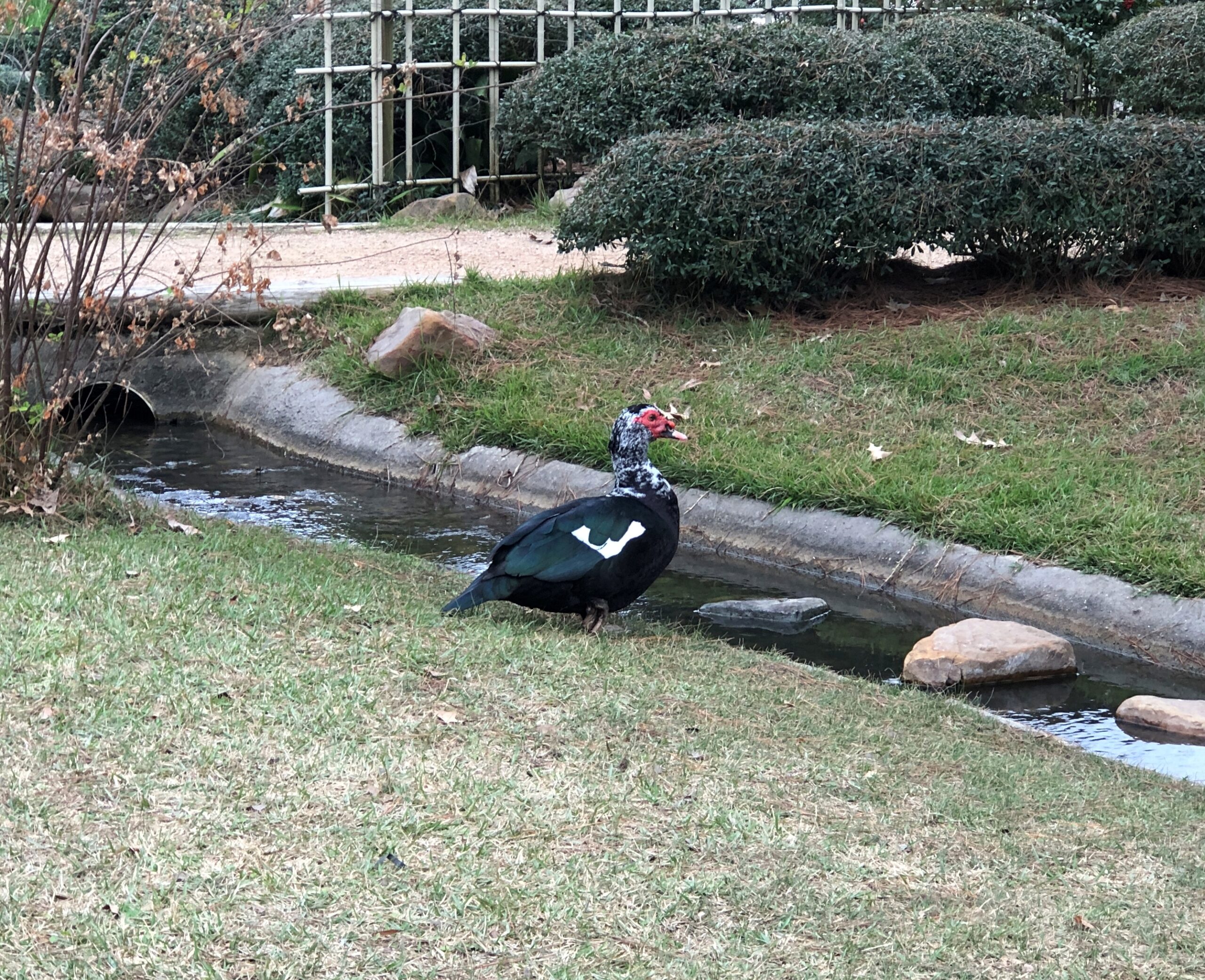
Where there is water, there is waterfowl.

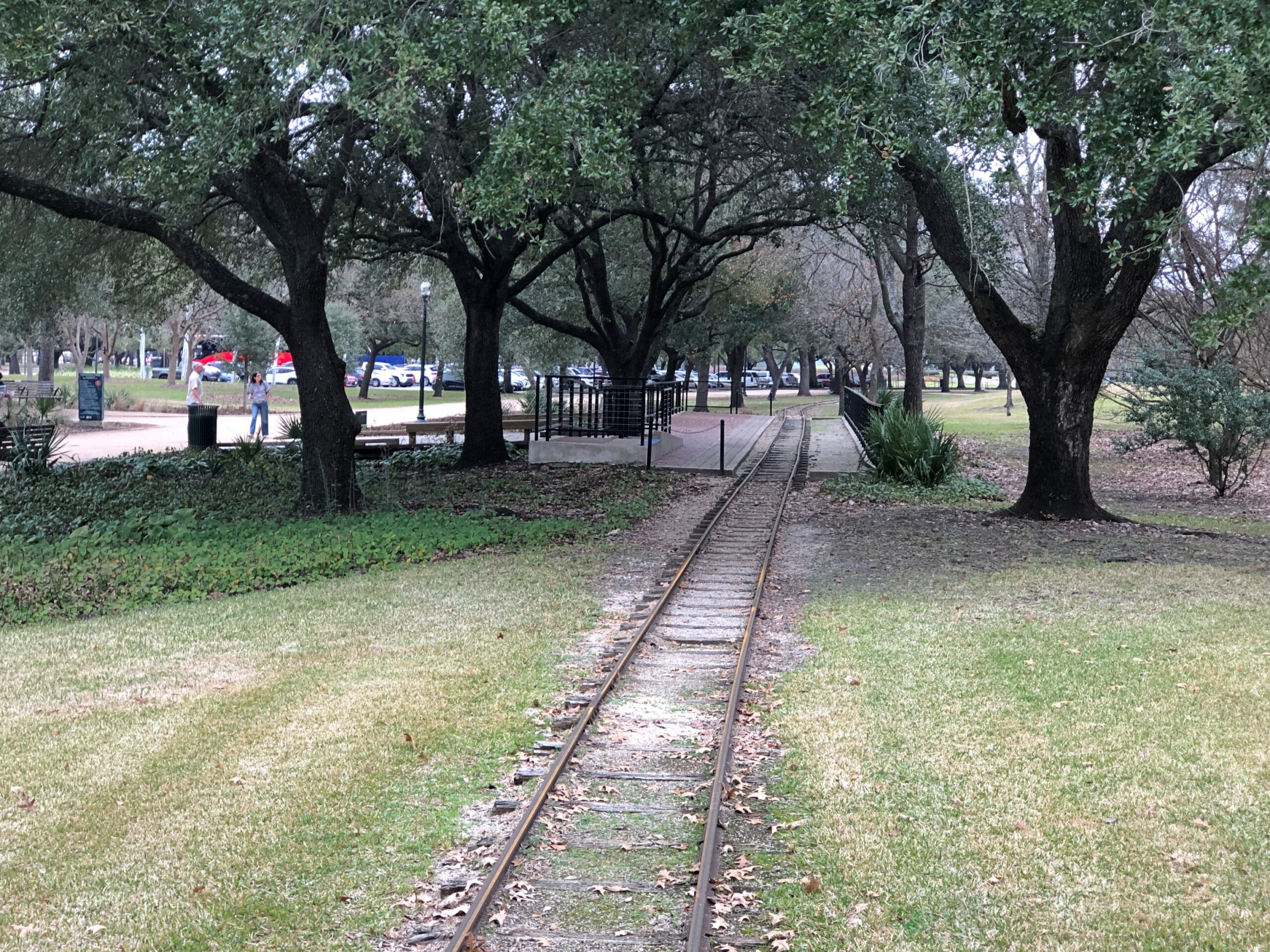
Just outside the Japanese Garden are tracks for the Hermann Park Railroad, a narrow-gauge line that makes a loop through the park. I didn’t ride it, but of course thought of the Brackenridge Park RR in San Antonio, the one by which all others are judged (by me).

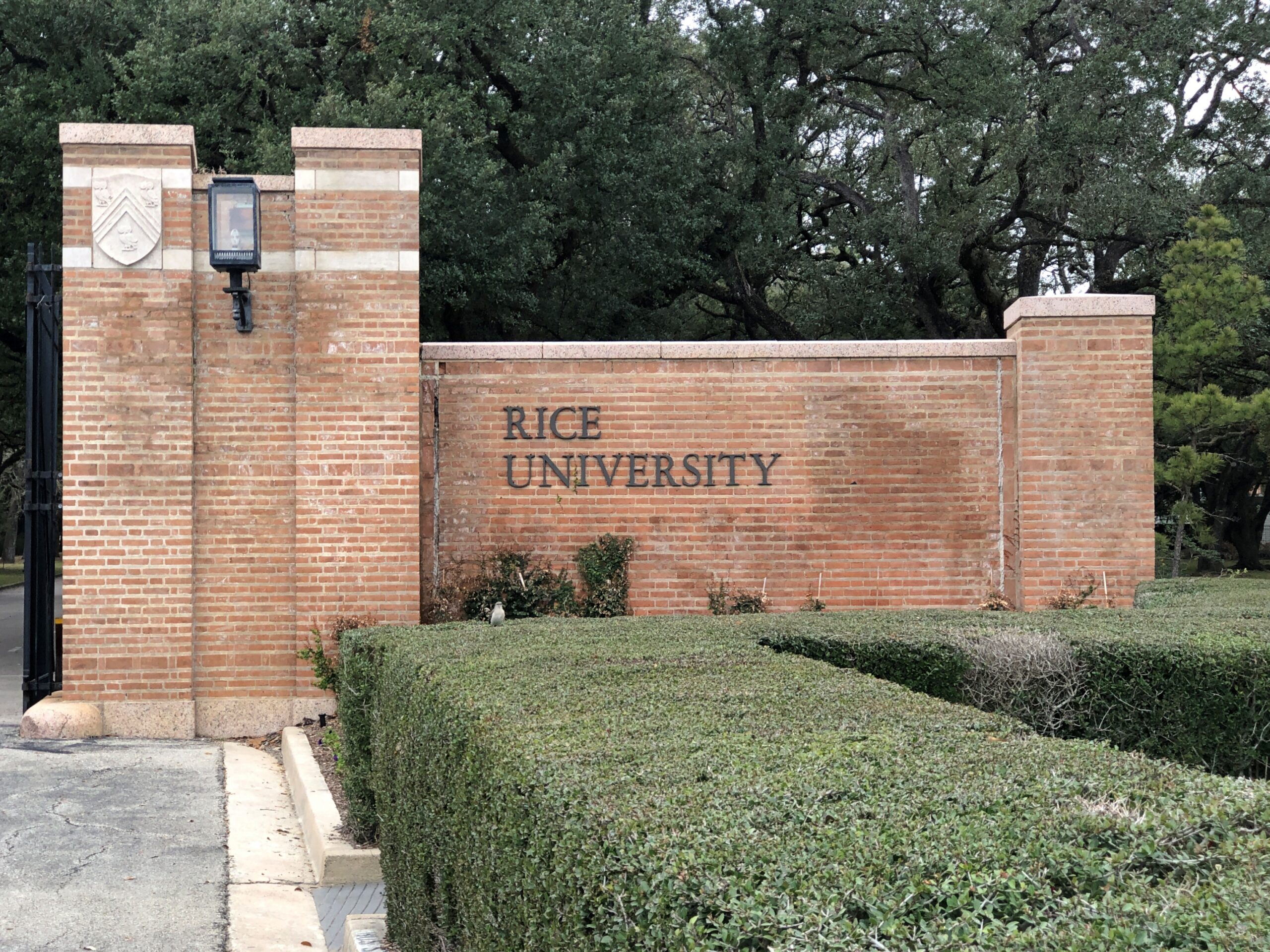
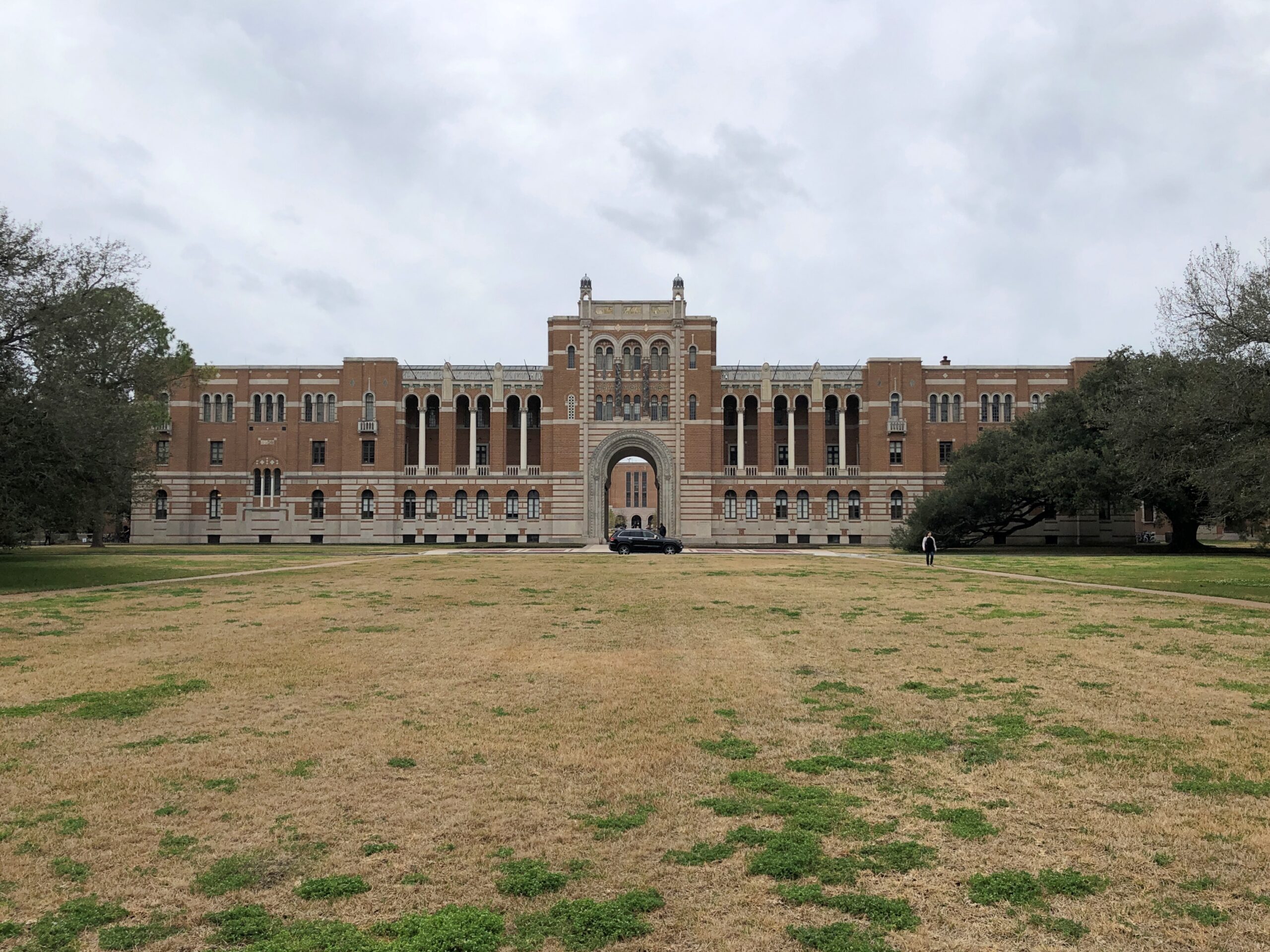
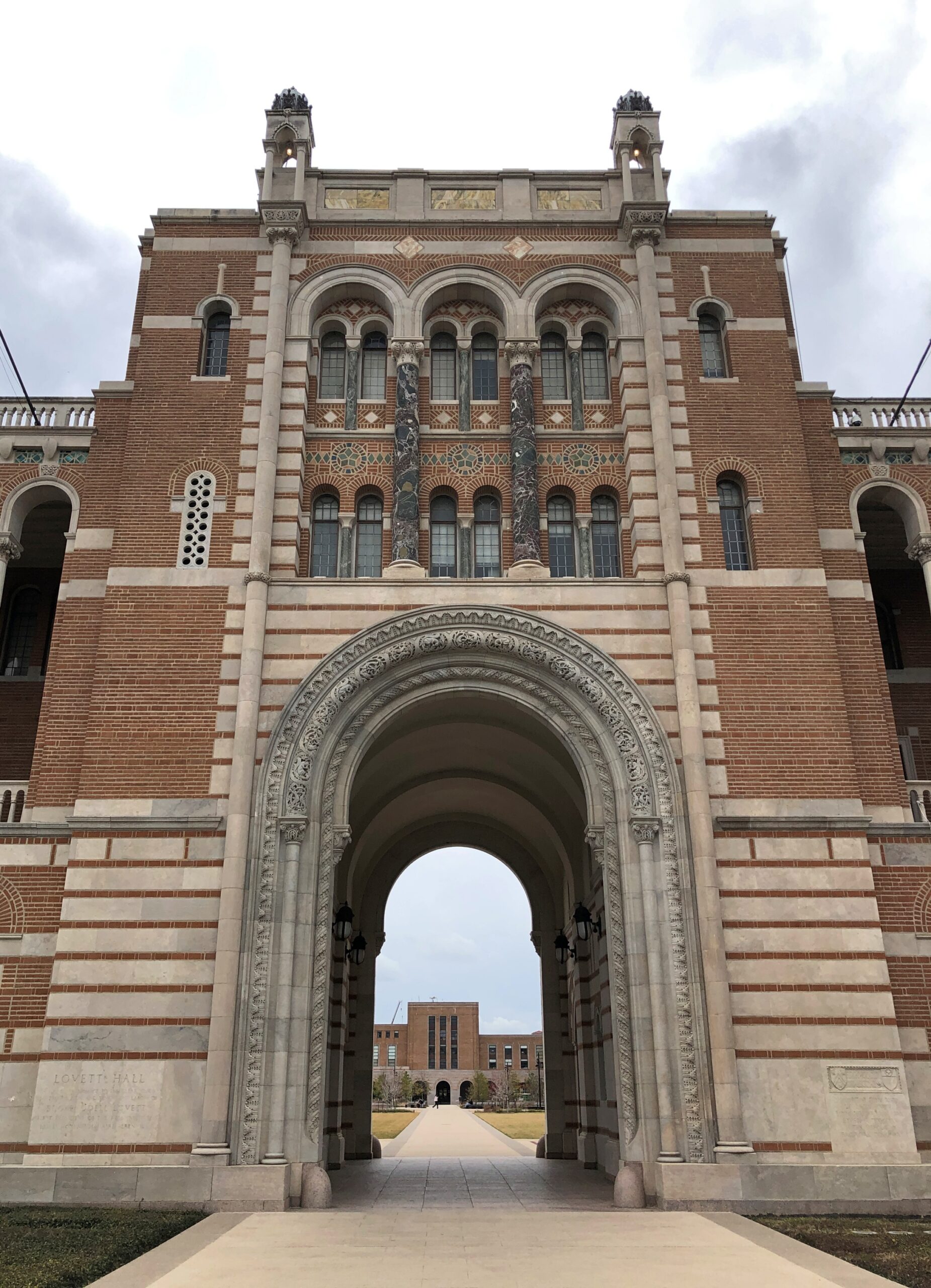
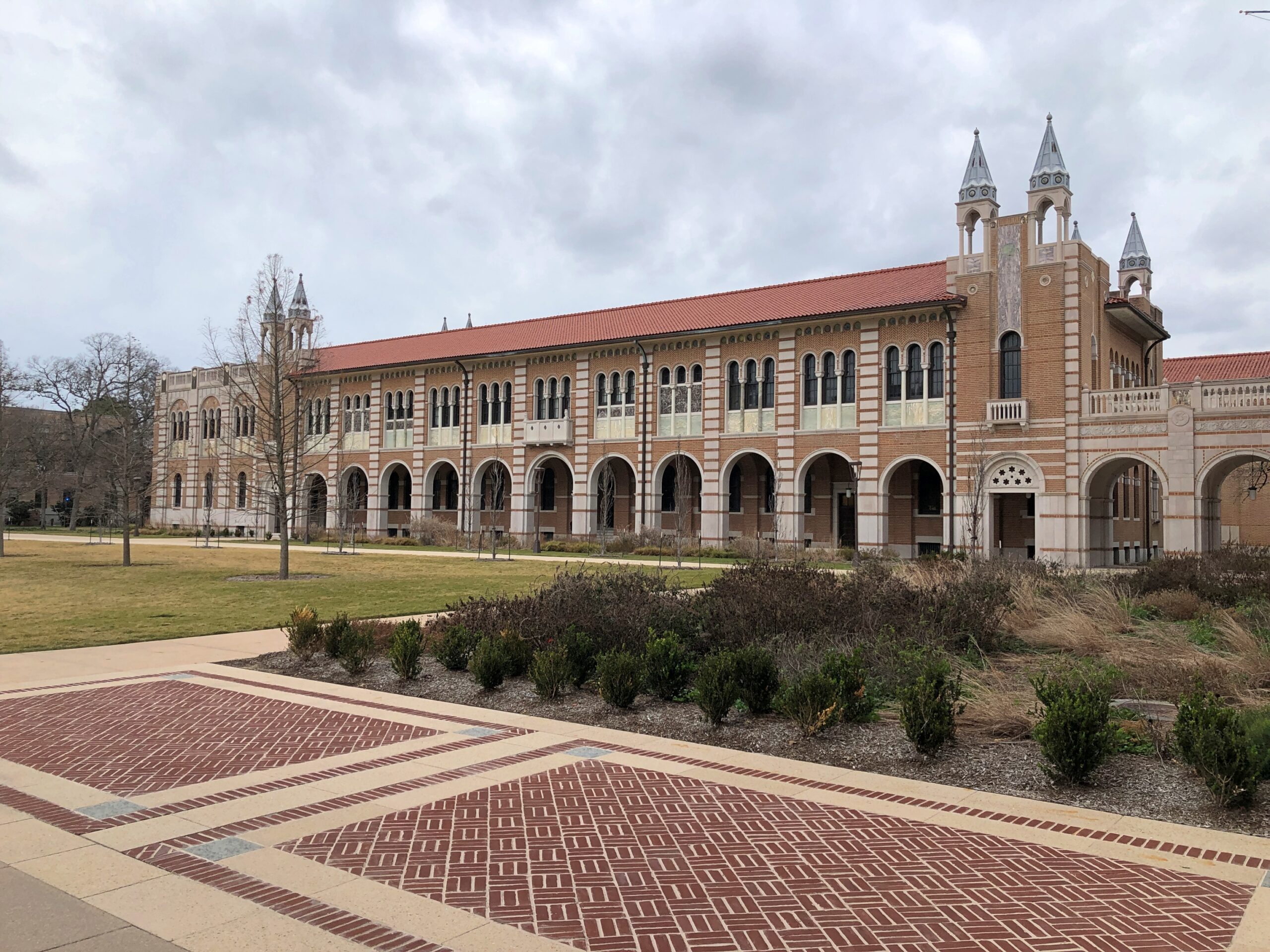
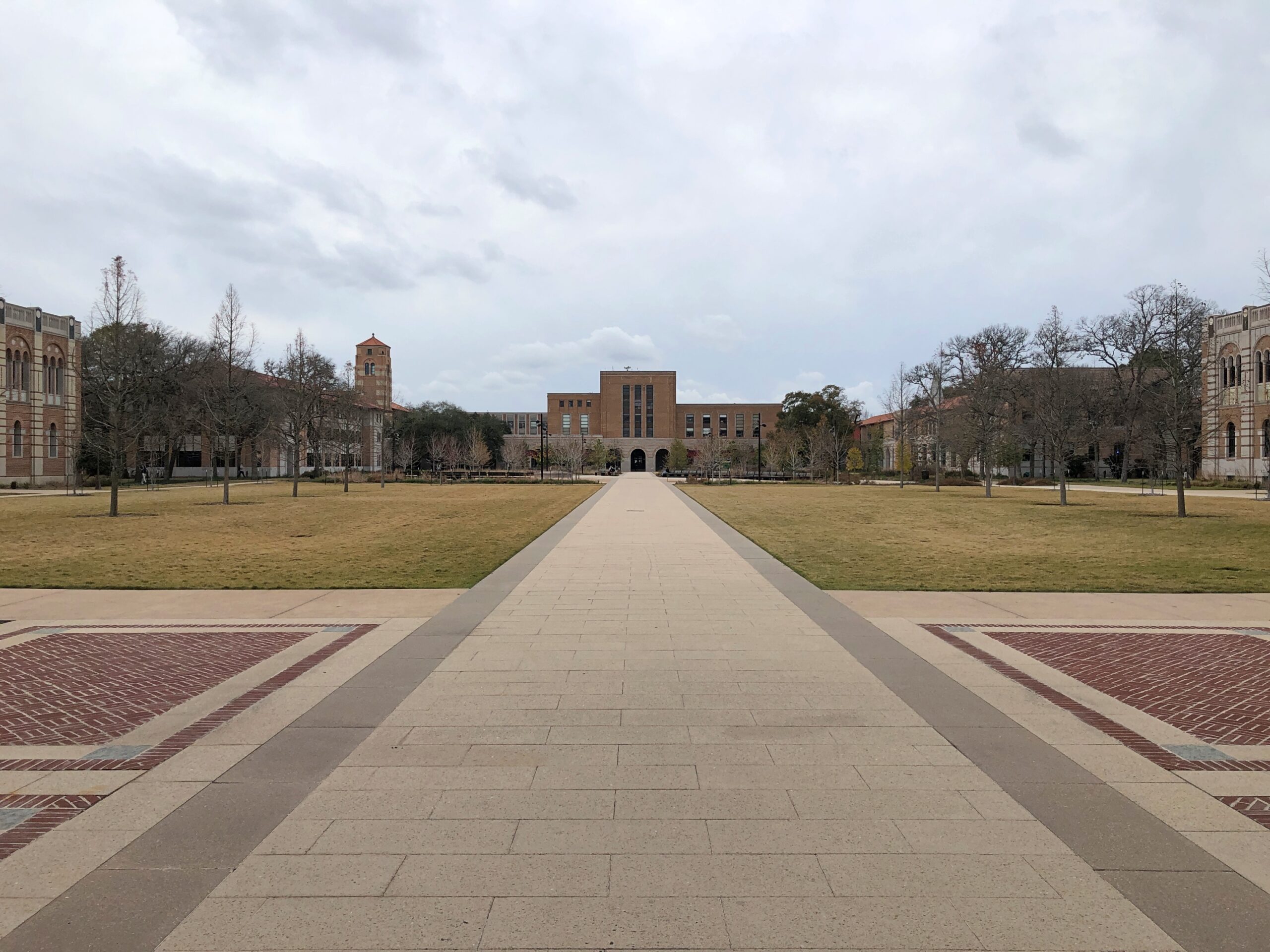
Just outside Hermann Park is Rice University. I considered Rice, but decided not to go — or I wasn’t admitted anyway, I don’t remember after all this time. As a result, my short stroll this February was my first visit to campus.

Not a very long visit. Rice has some fine buildings.

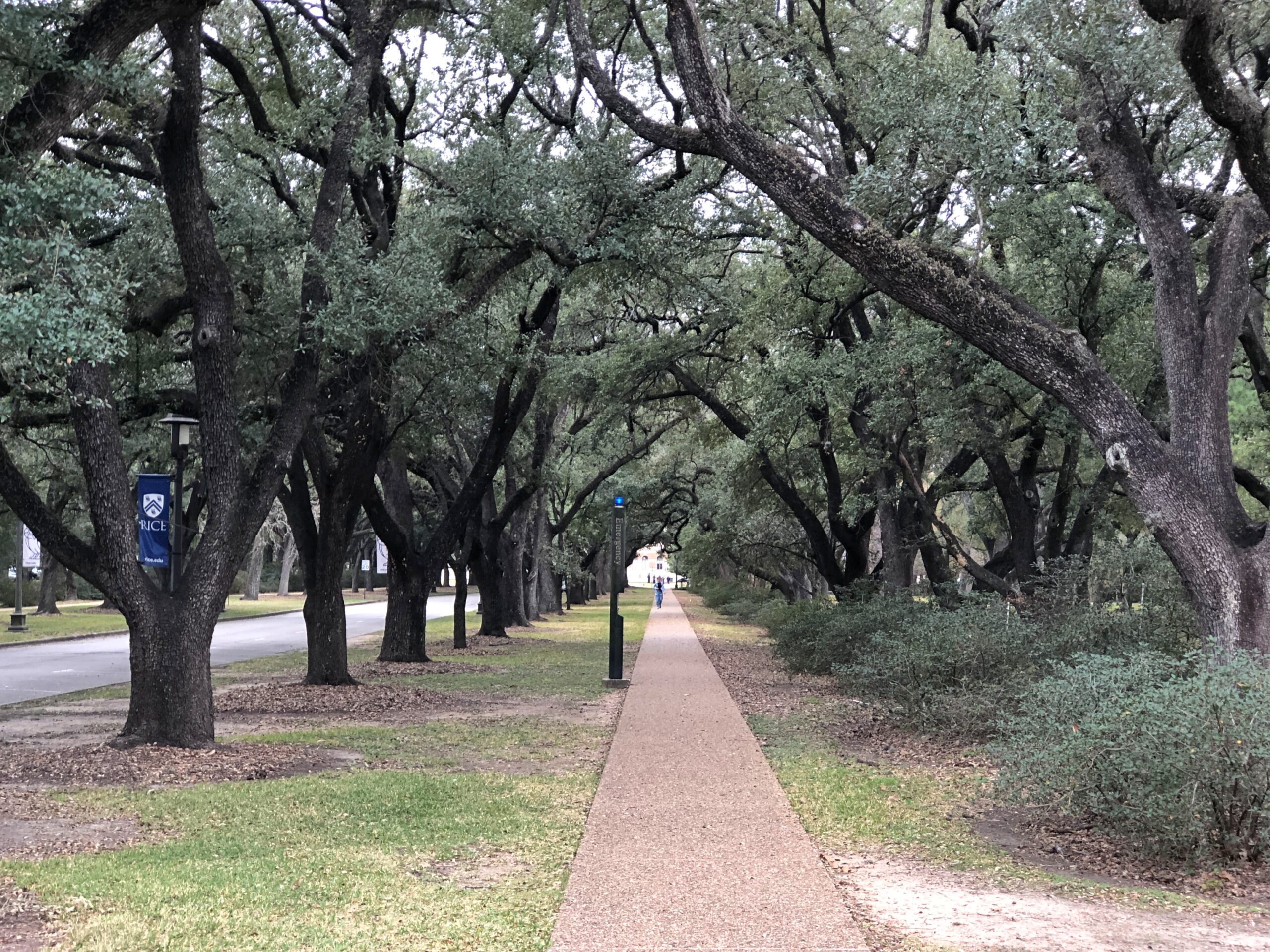
But also long sightlines. That make for long walks.

I’d already spent time walking around downtown Houston, and then the Japanese Garden. There’s only so much walking even indefatigable sightseers can do.

Downtown Houston

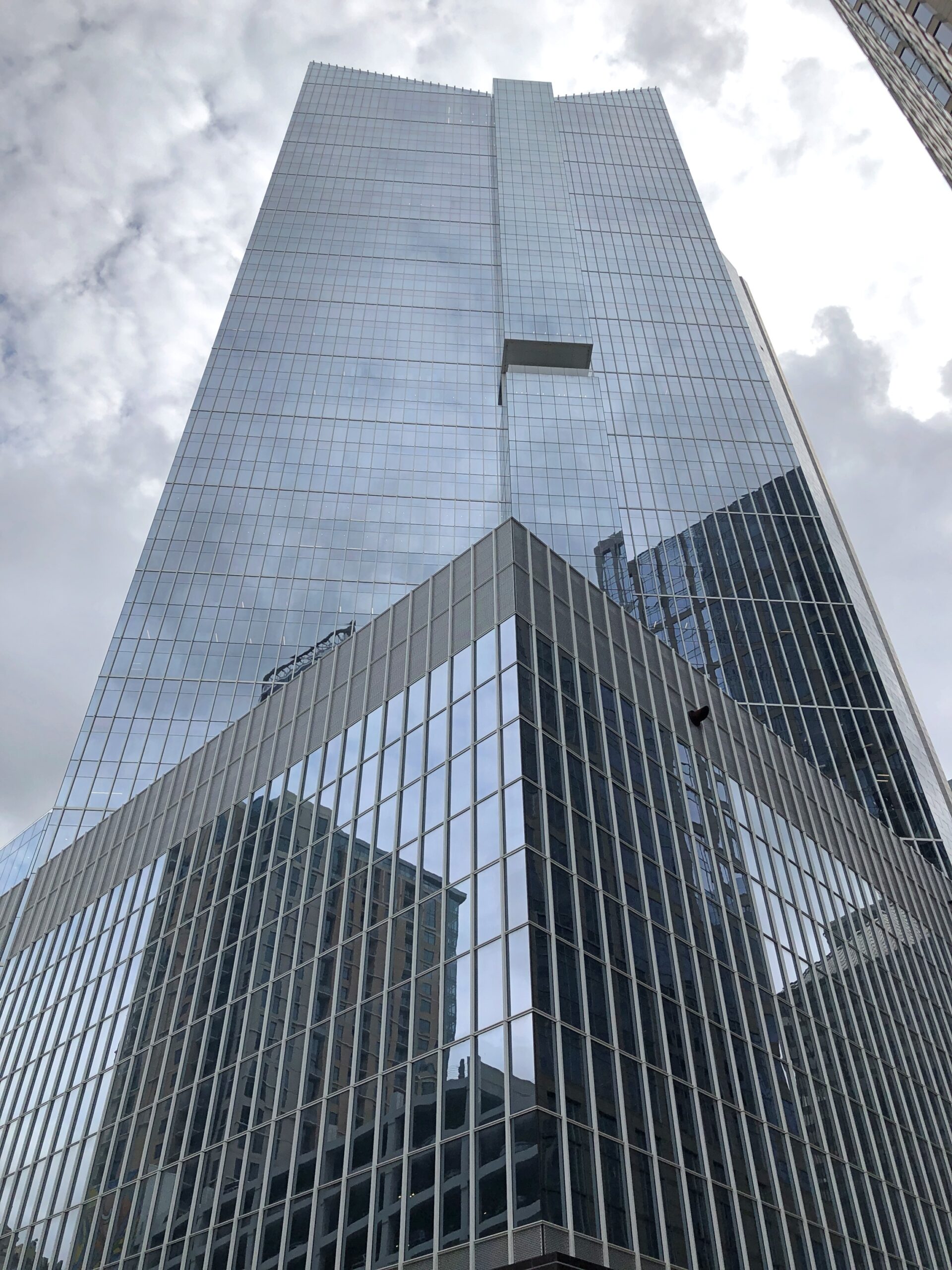
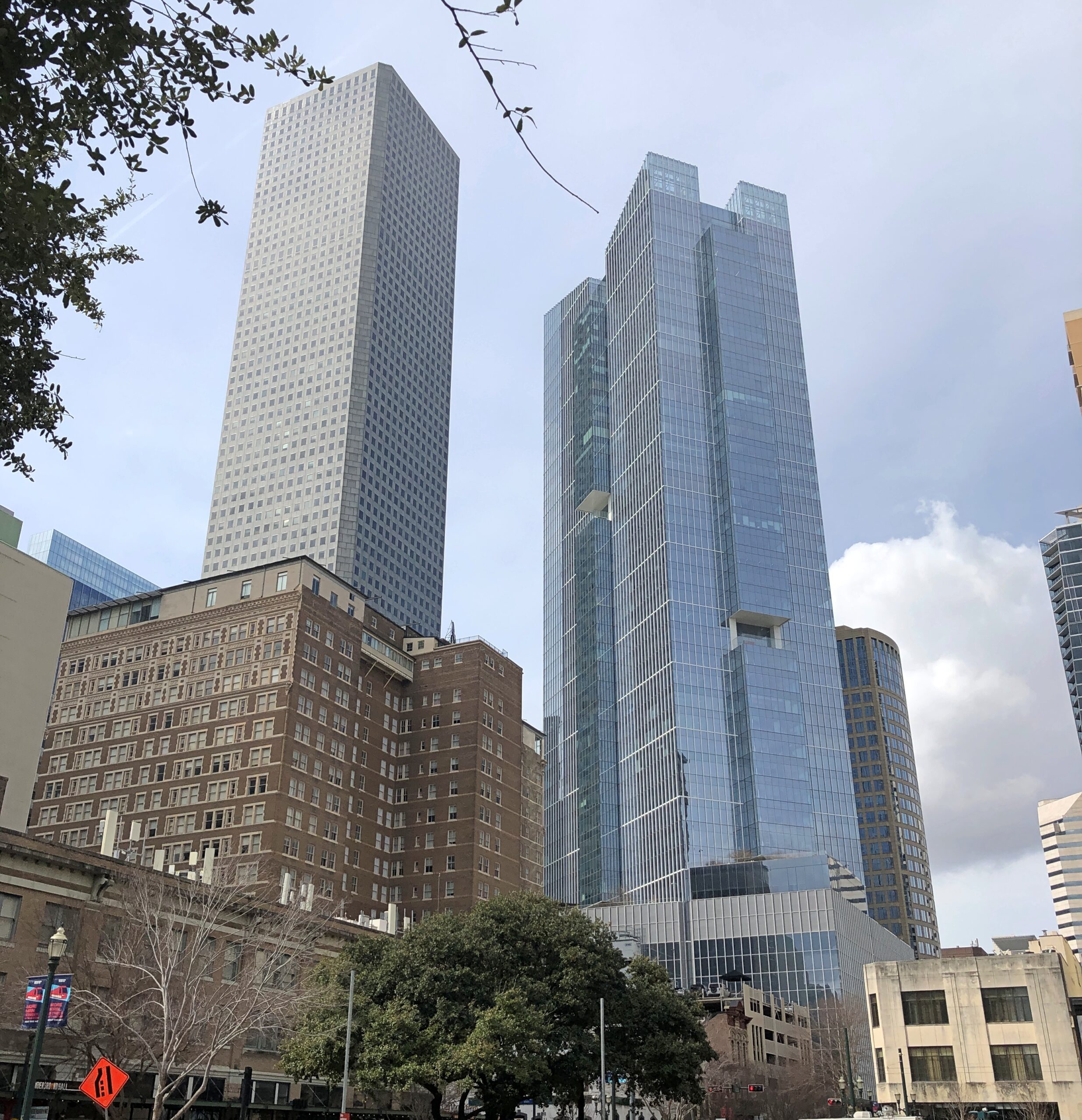
Who made these skyscrapers possible?

Considering that they are in Houston, Texas, that would be Willis Carrier, father of modern air conditioning.

Heat wasn’t an issue in Houston in February, which was one reason to make my way downtown for a walkabout. Another reason is completely idiosyncratic: I couldn’t remember the last time I’d been downtown. Not 2019, though we could see downtown from Buffalo Bayou and visited Houston’s alt downtown, the Galleria district; or 2015, when we made it to the Menil Collection. Close each time, but no cigar.

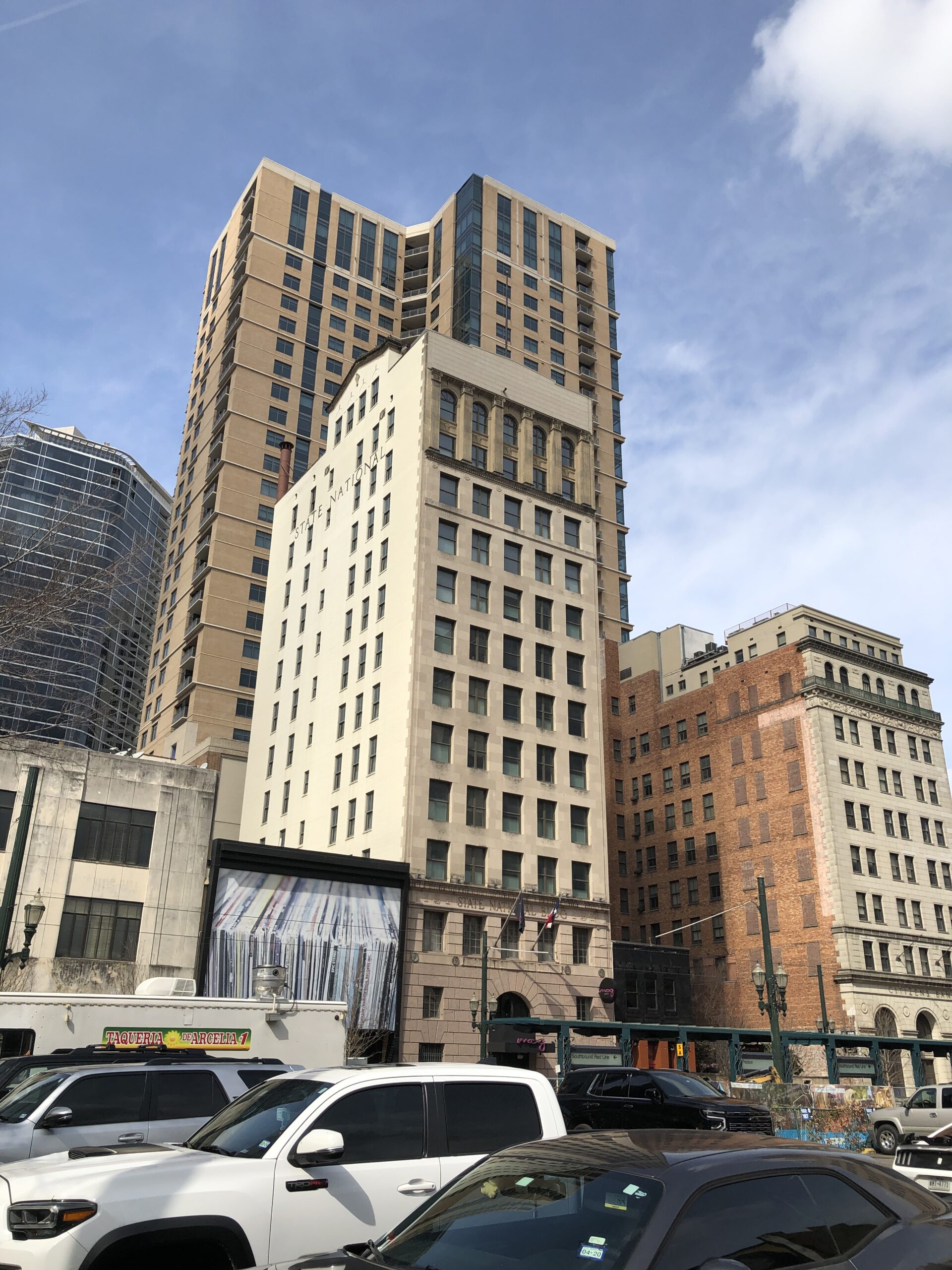
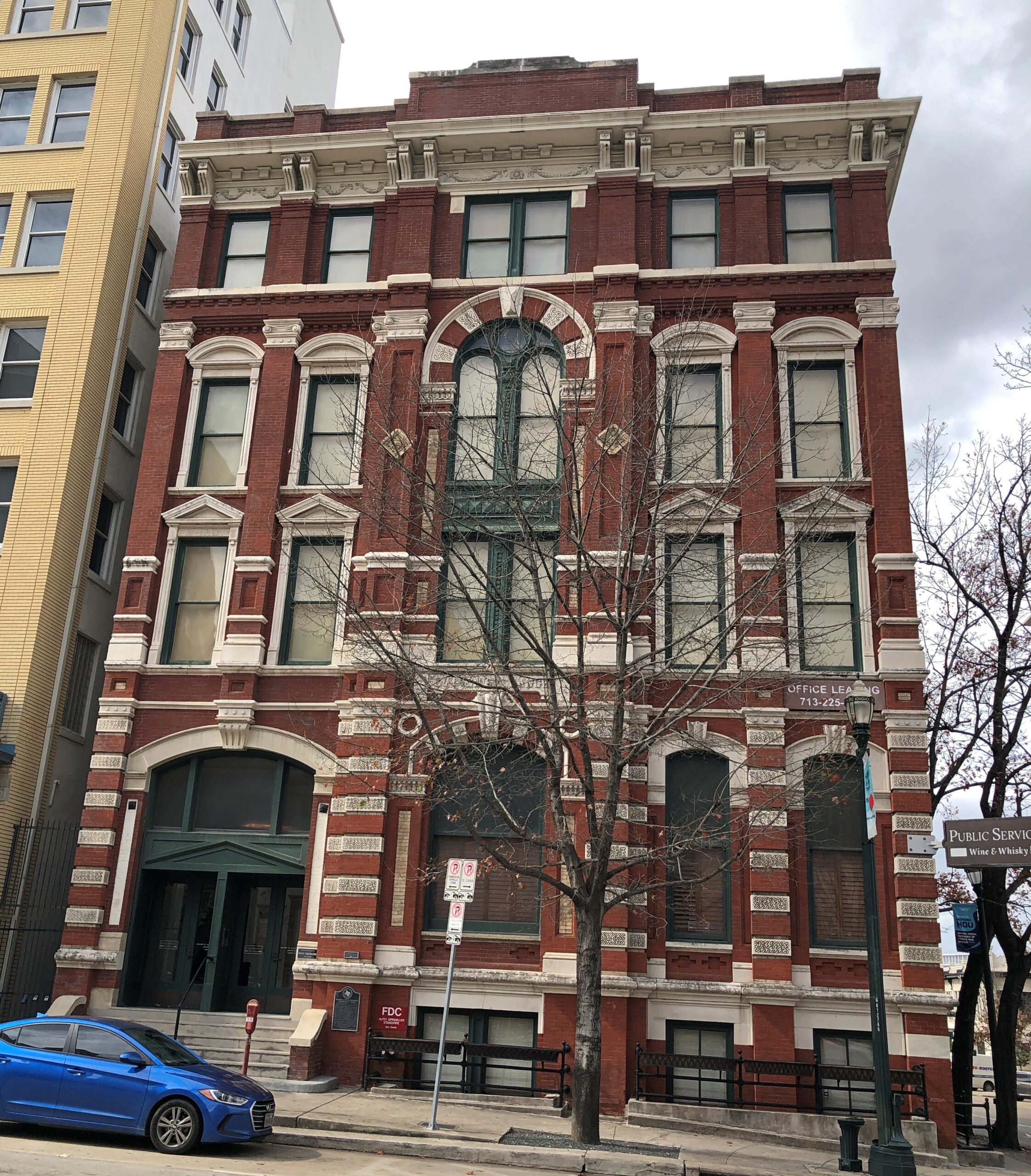
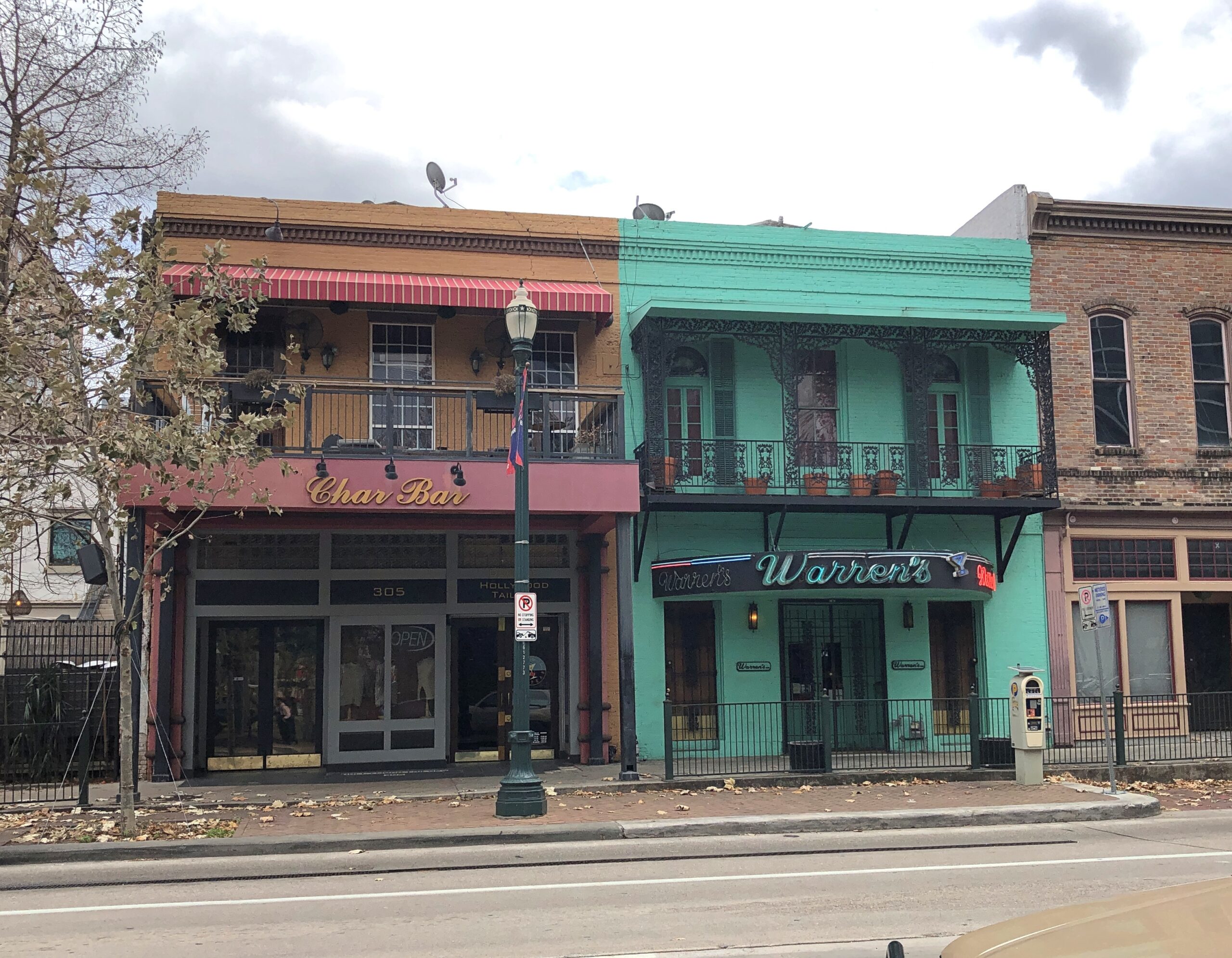
A surprising amount of pre-air conditioning Houston remains downtown, though of course even the oldest building has been retrofitted for HVAC.

Nice ironwork on the green one.

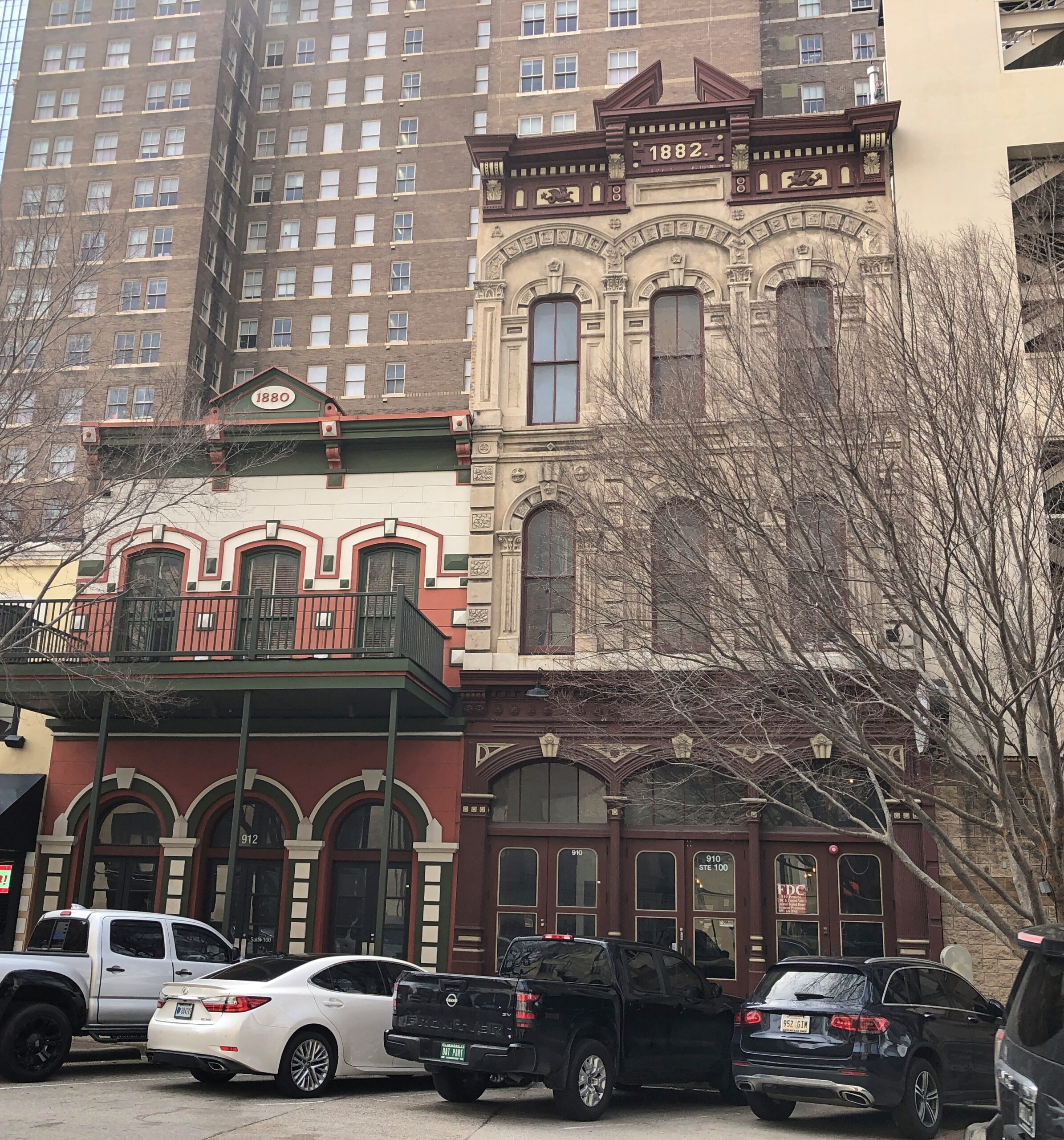
Structures surviving from the 1880s.

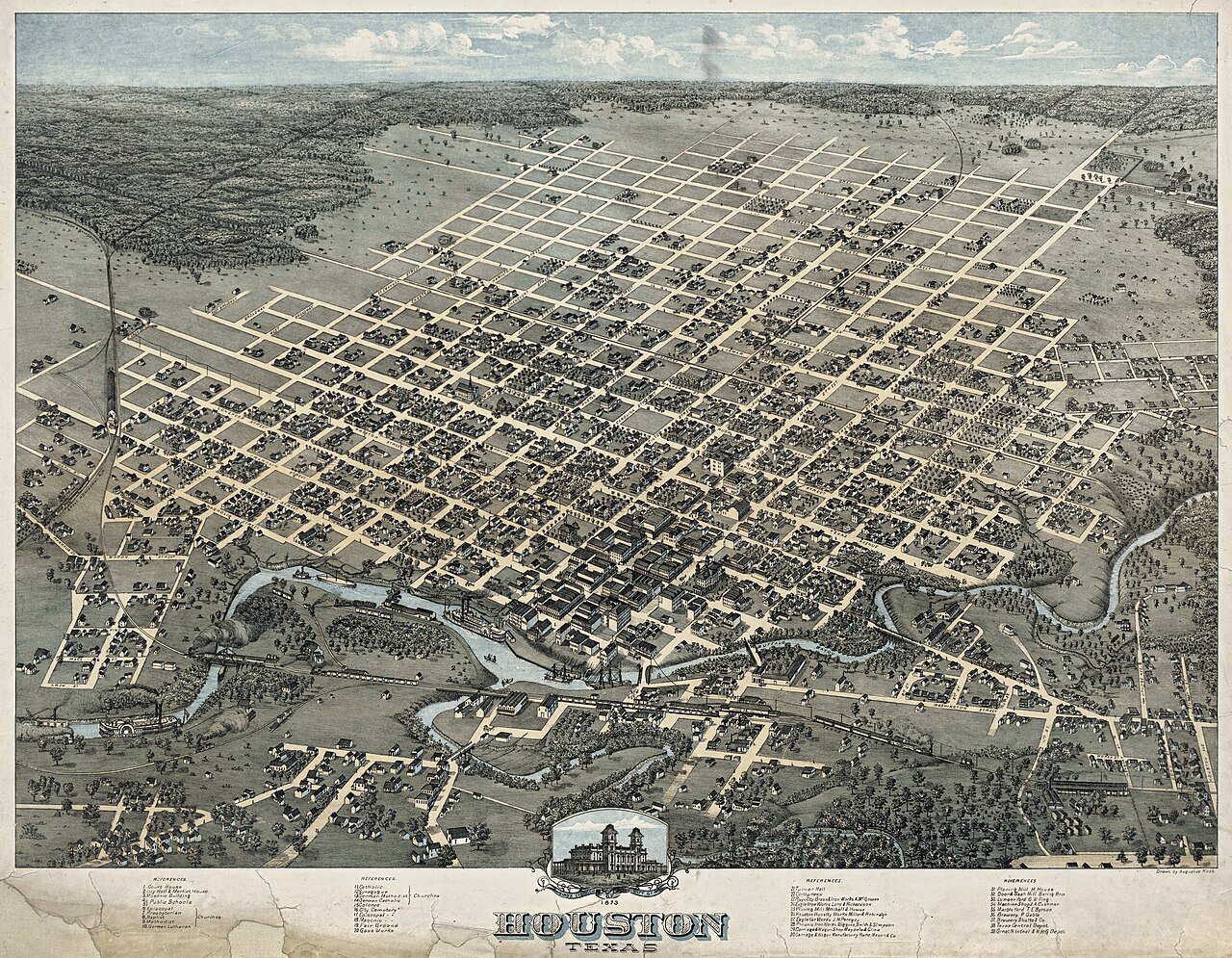
Imagine those 1880s buildings back in the 1880s. In July, say. Couldn’t have been pleasant. Or any of Houston in 1873, the date of this map.

The 1880 Census counted 16,513 residents of Houston, a near doubling from 1870. Hardy souls who endured the heat and malaria and fetid dung underfoot, among other conditions. Back then, Houston wasn’t quite the port it would be later. The major port then was Indianola, Texas, pop. 5,000 in 1875, before the vicious hurricane that year, that is, the first of two that reduced Indianola to the status of ghost town.

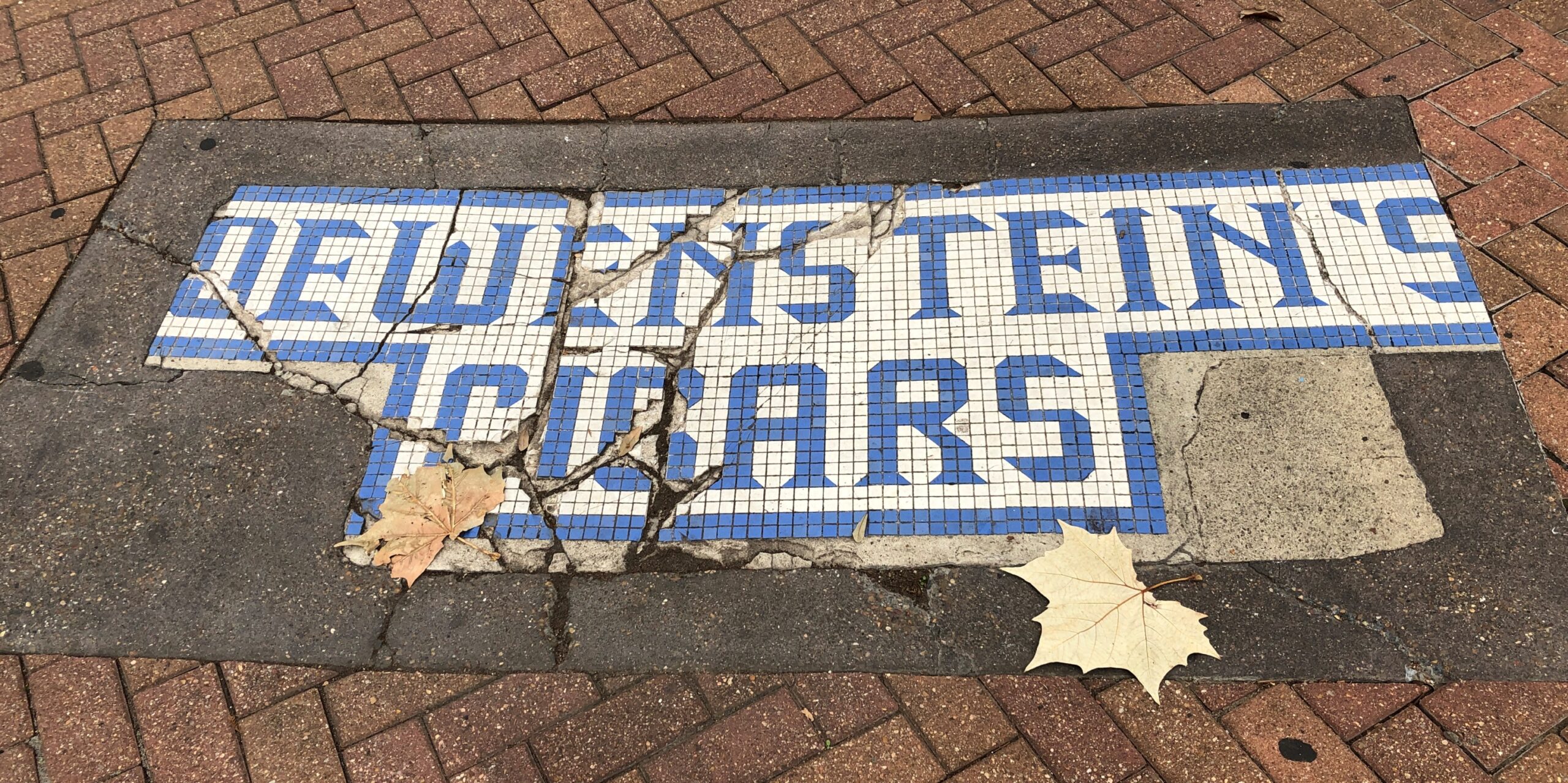
Not all the remnants of an older Houston are buildings, but are underfoot.

There’s a story behind the ghost tiles advertising Loewenstein’s Cigars: an early Texas mercantile family.

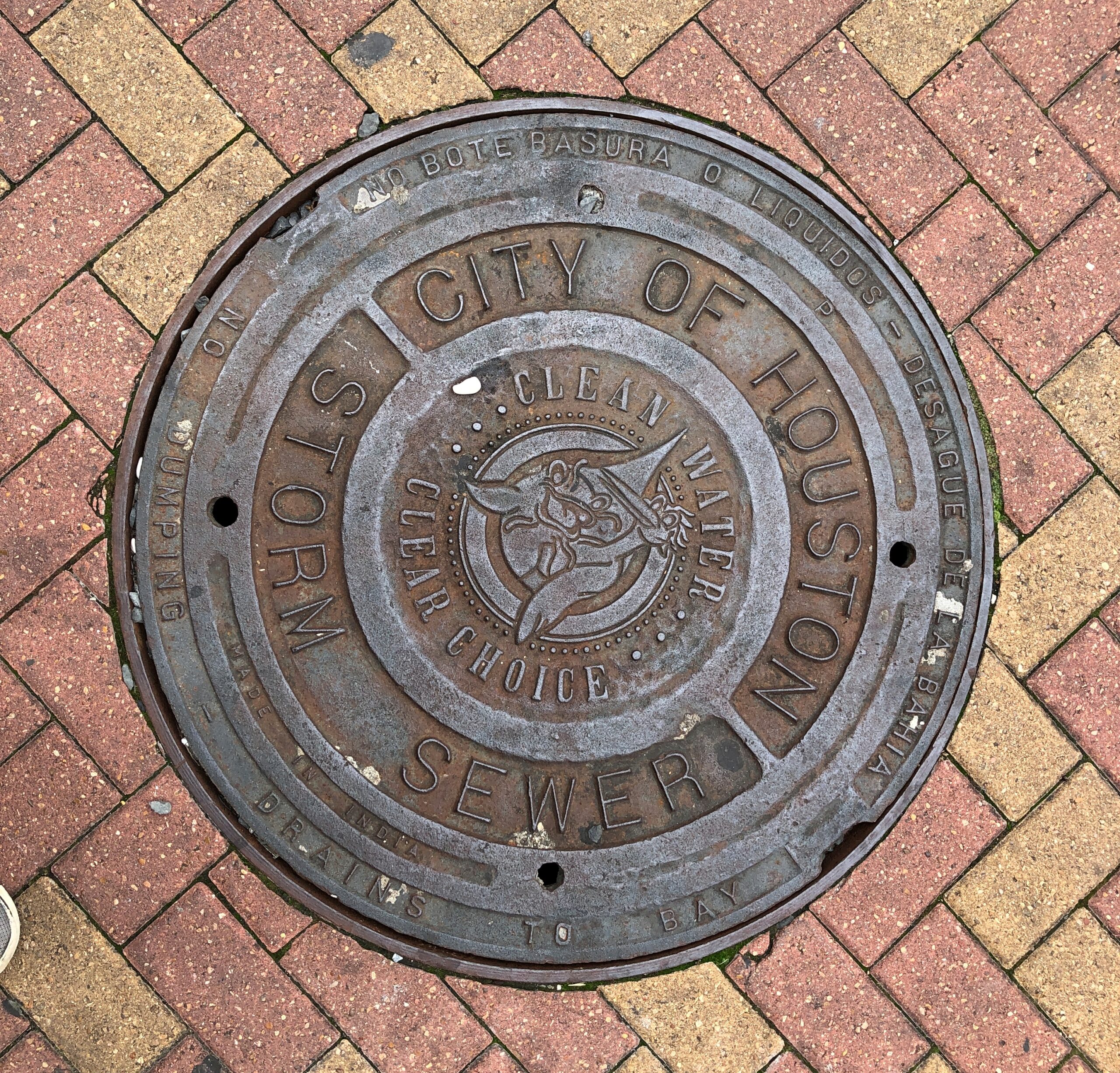
Also underfoot.

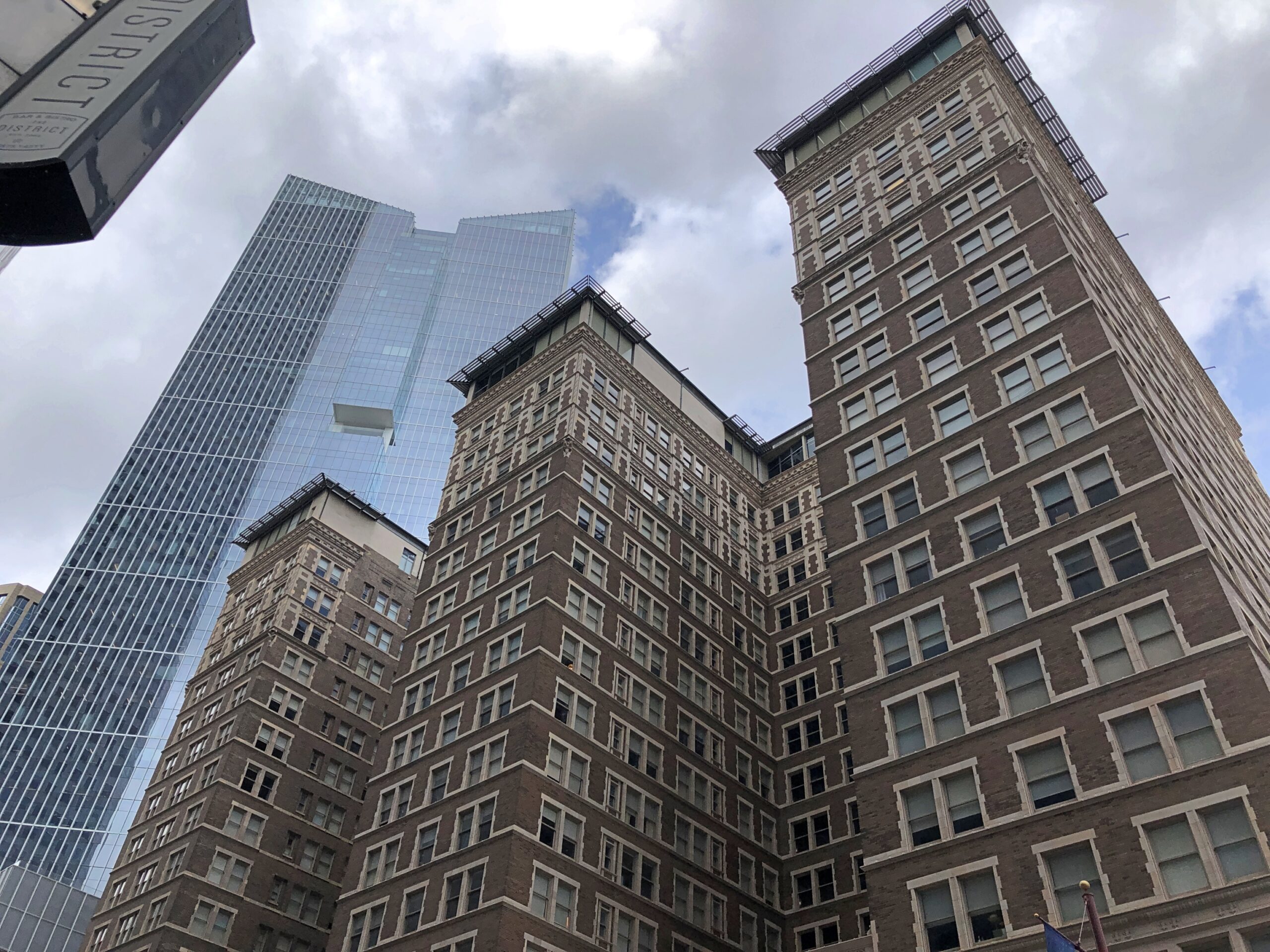
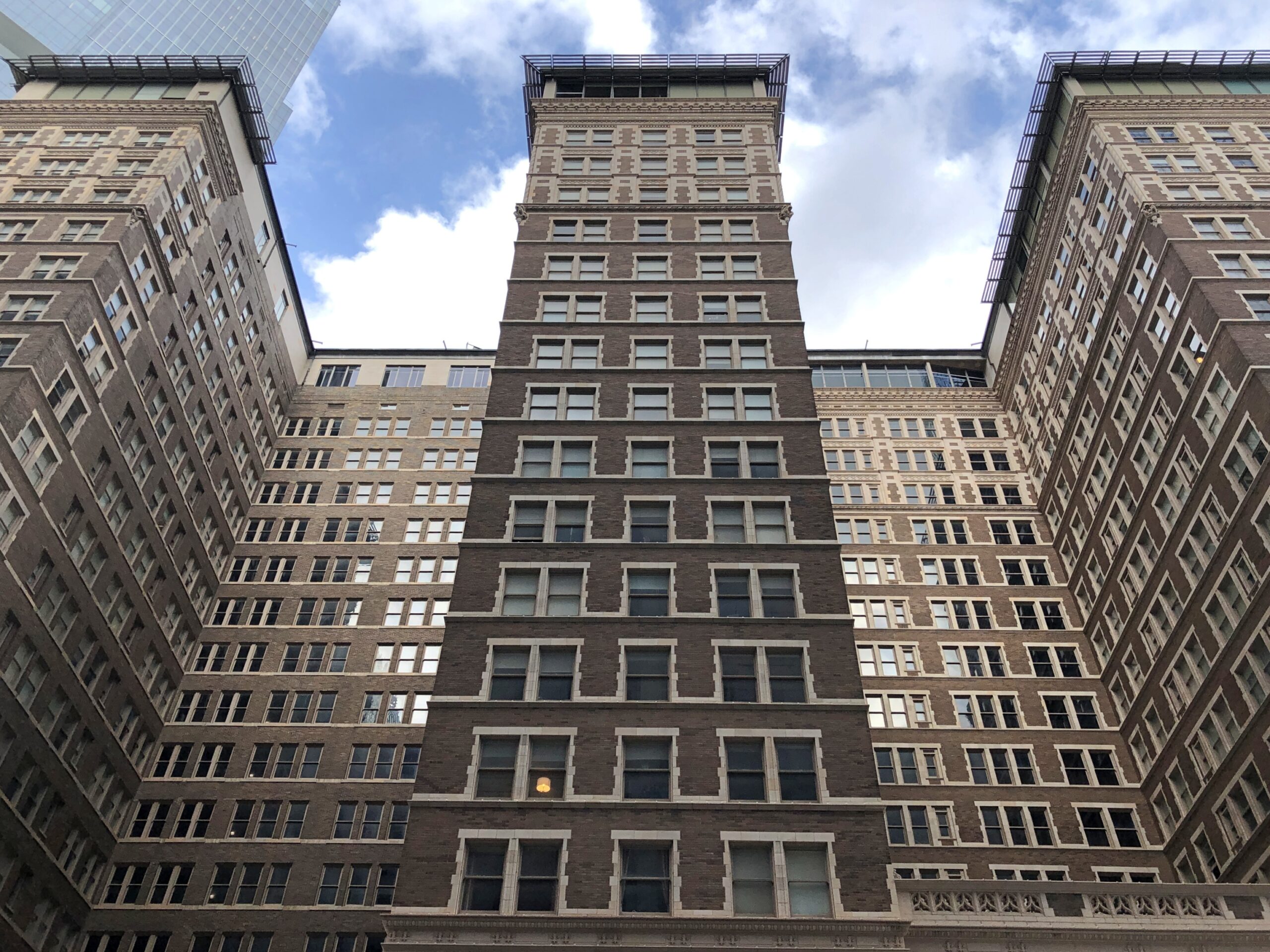
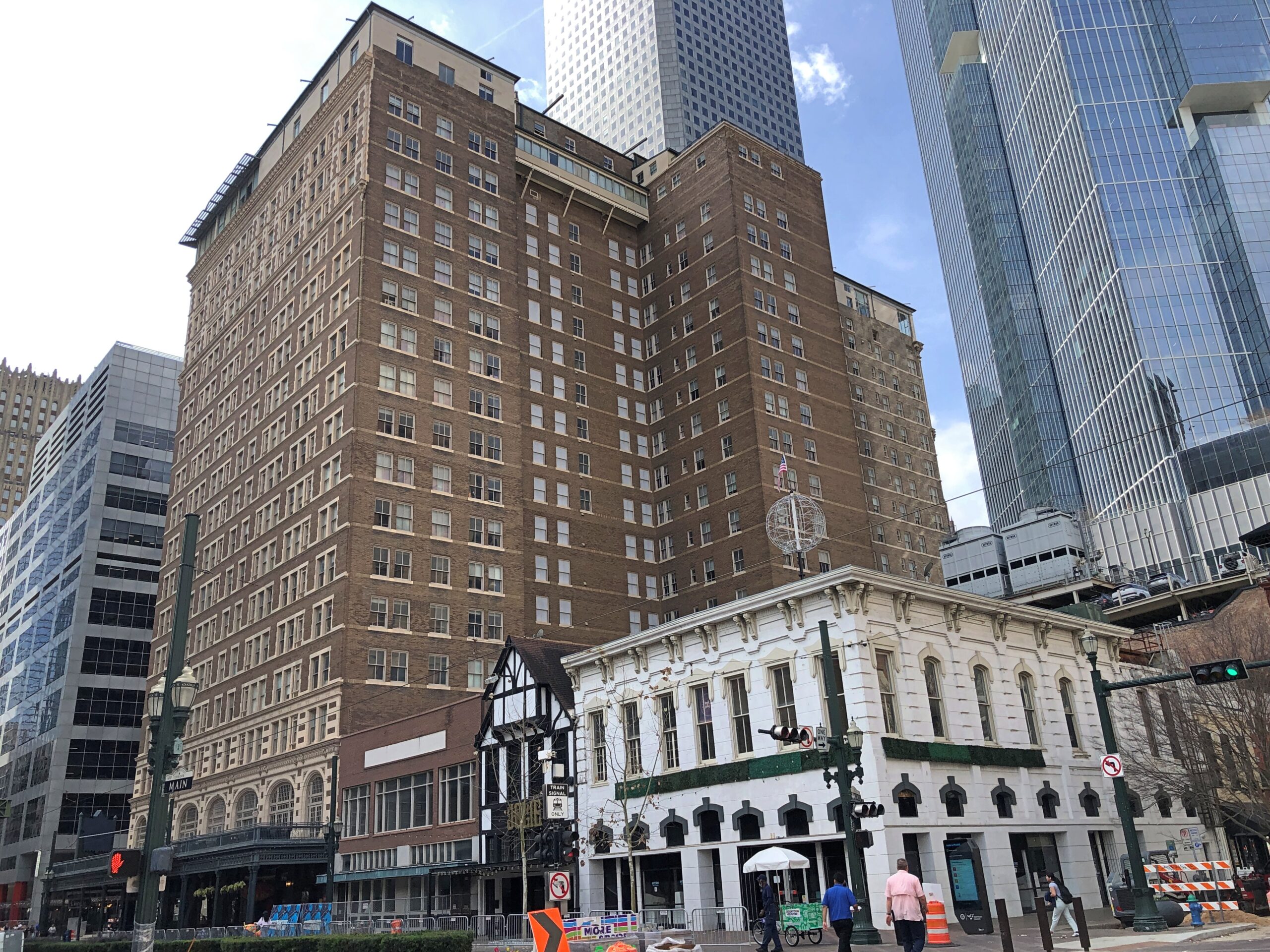
The splendid former Rice Hotel, designed by John Mauran and completed in 1913, though it only had two towers at the time, becoming triune with a later addition. These days, it’s an apartment building.

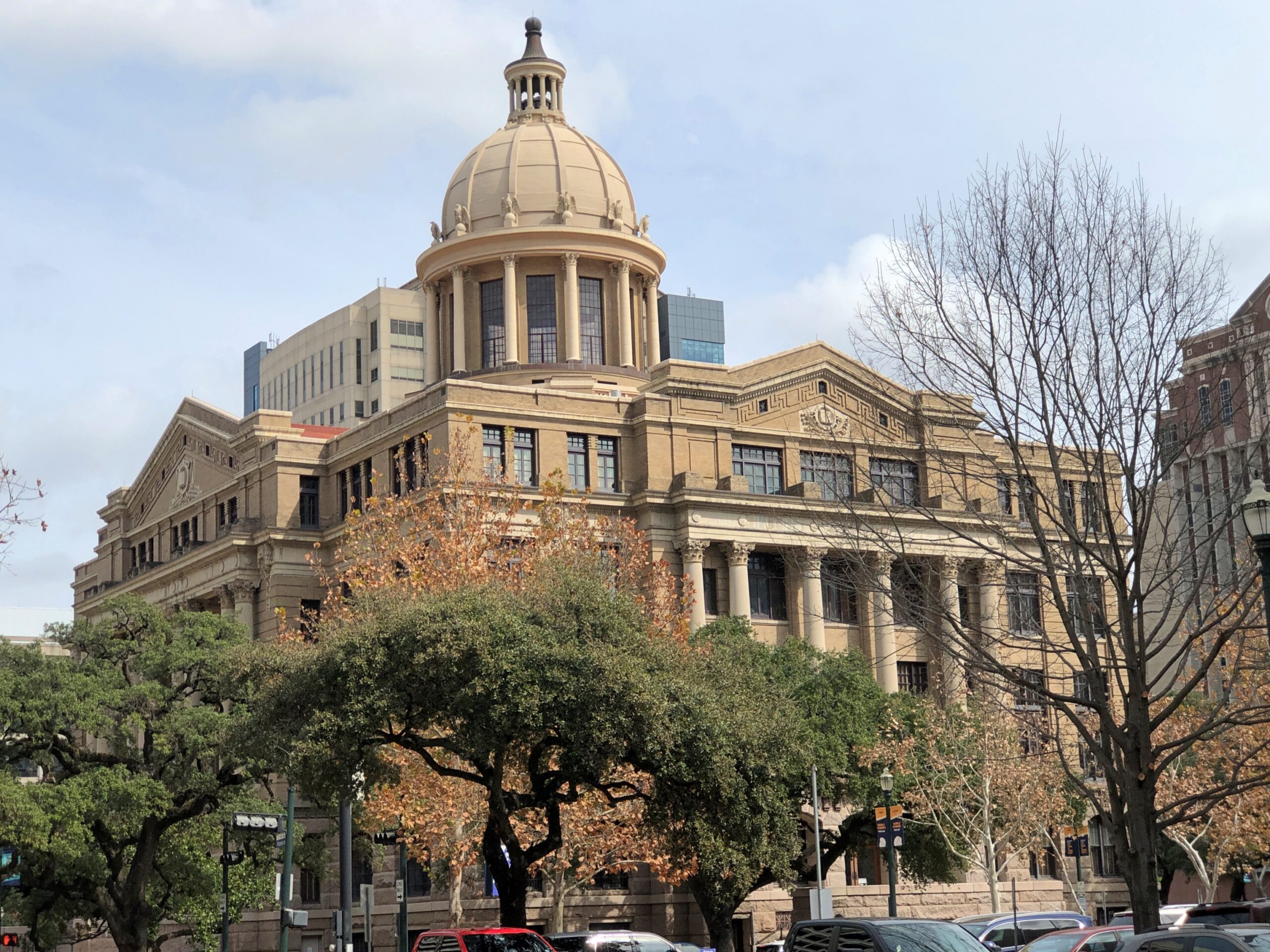
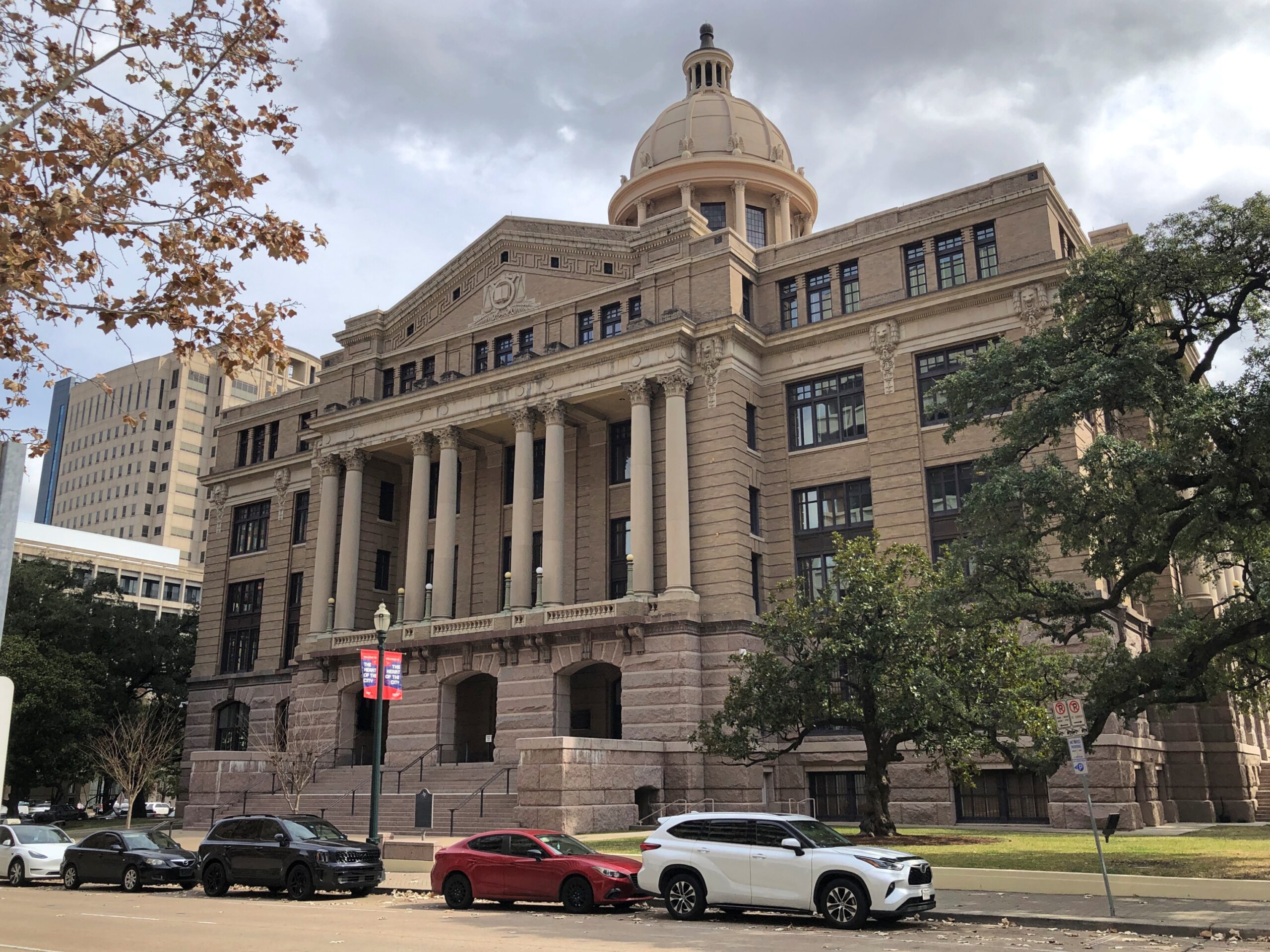
The 1910 Harris County courthouse, with enough heft to be a state capitol building.

“An imposing, domed neo-classical edifice, it is a prime example of the civic architecture of Houston of the 1900s and 1910s and is the only example in Houston of the work of Lang & Witchell, a leading Dallas architectural firm of that period,” notes the Texas Historical Commission.

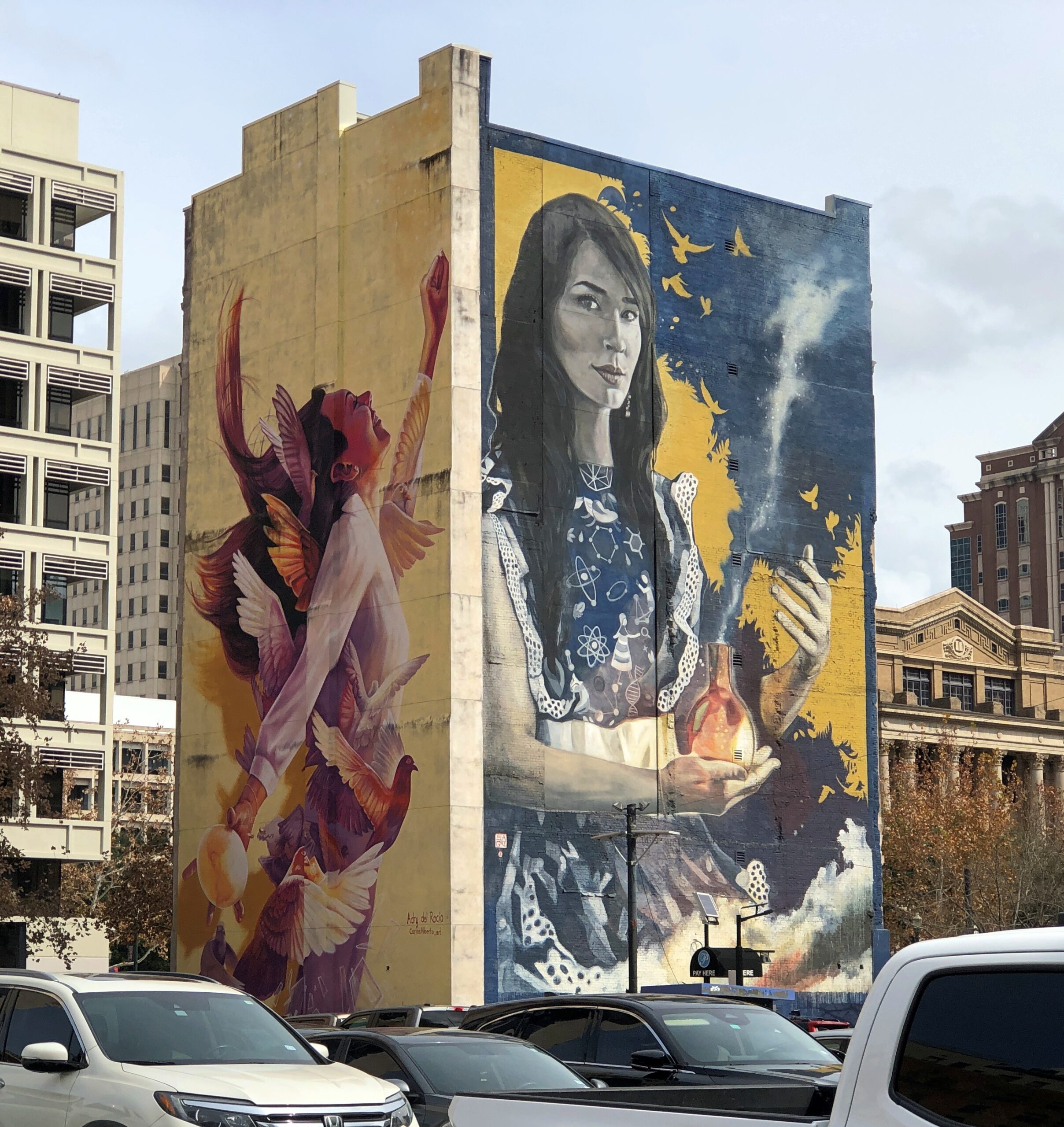
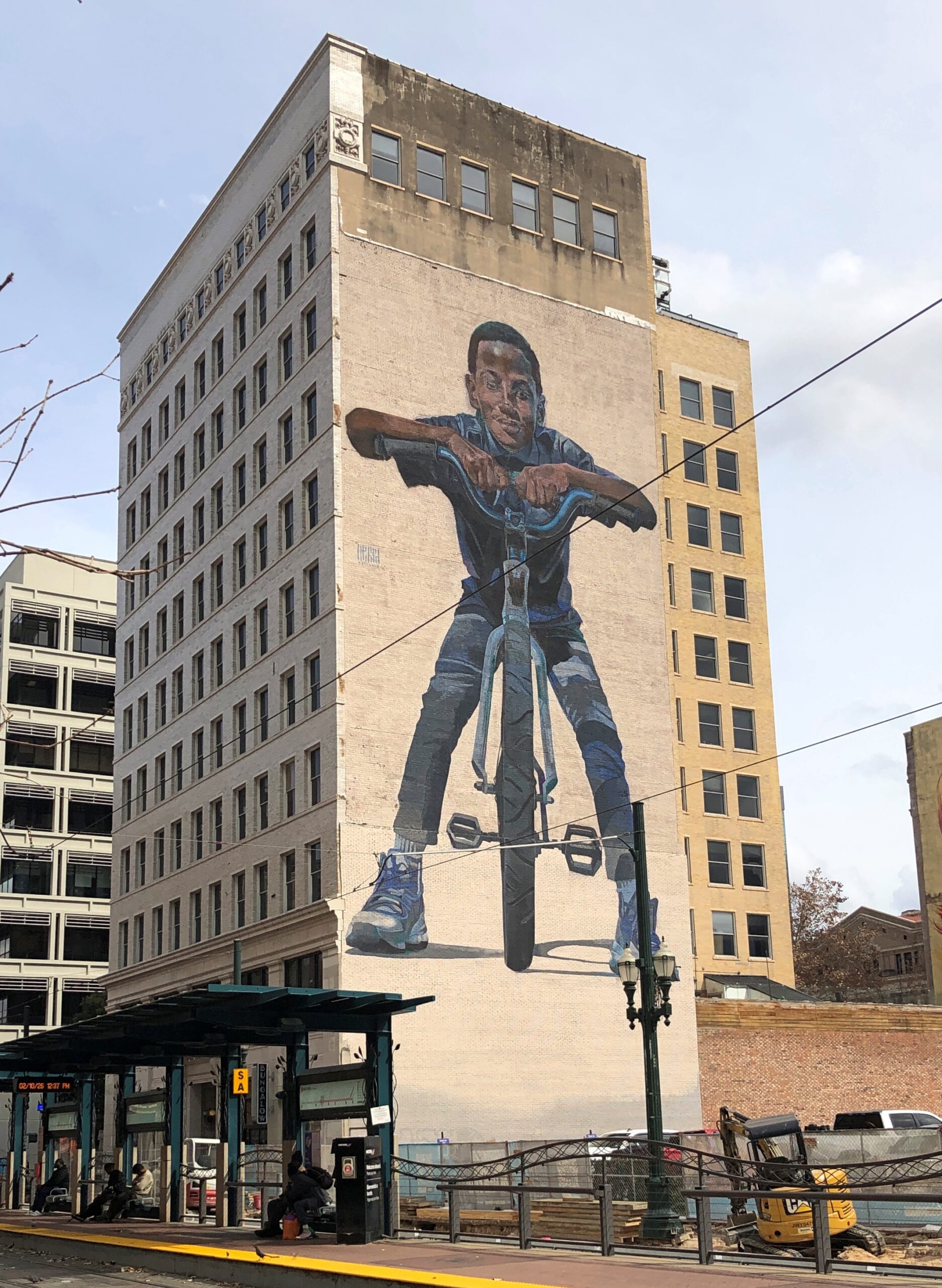
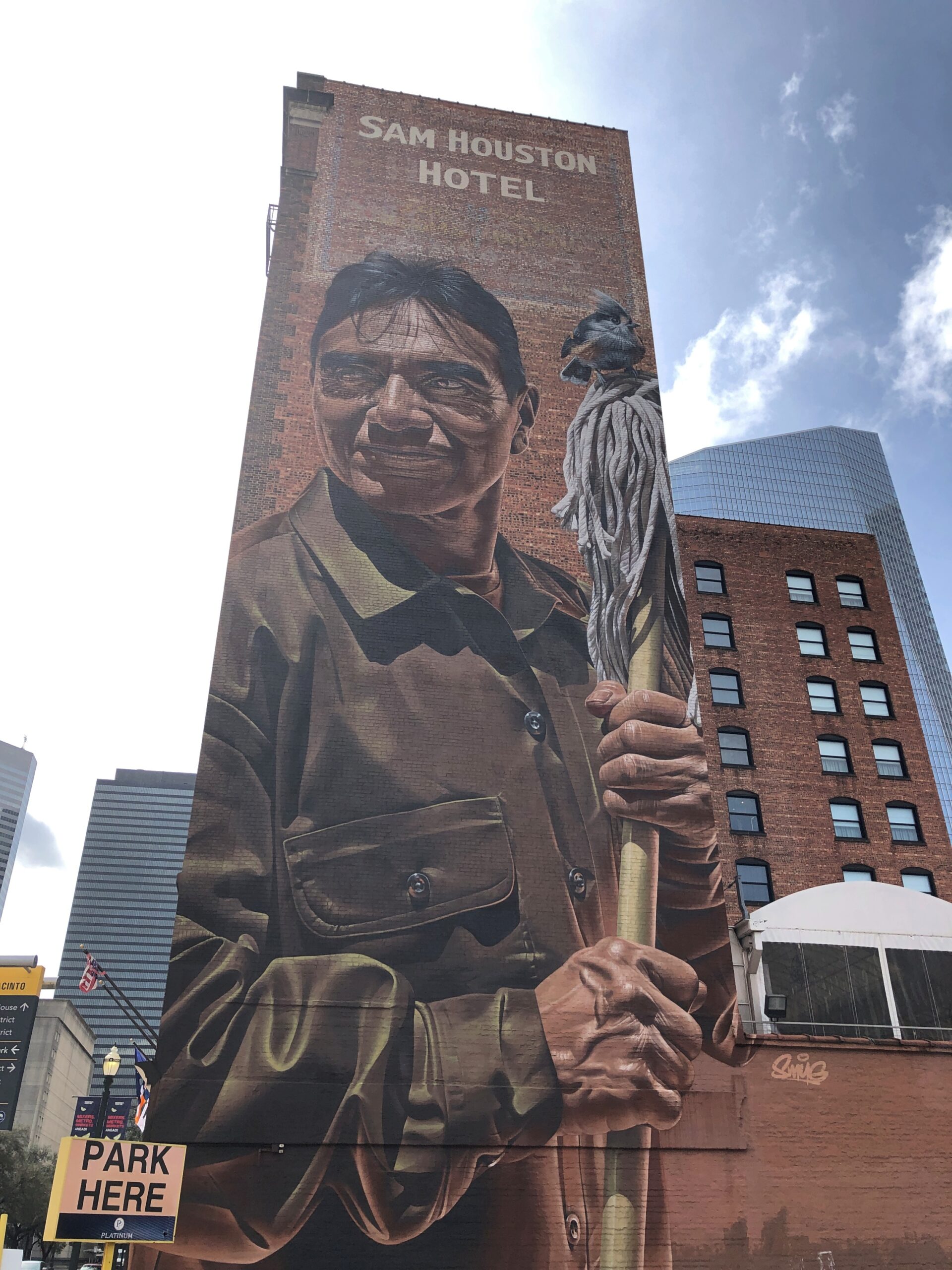
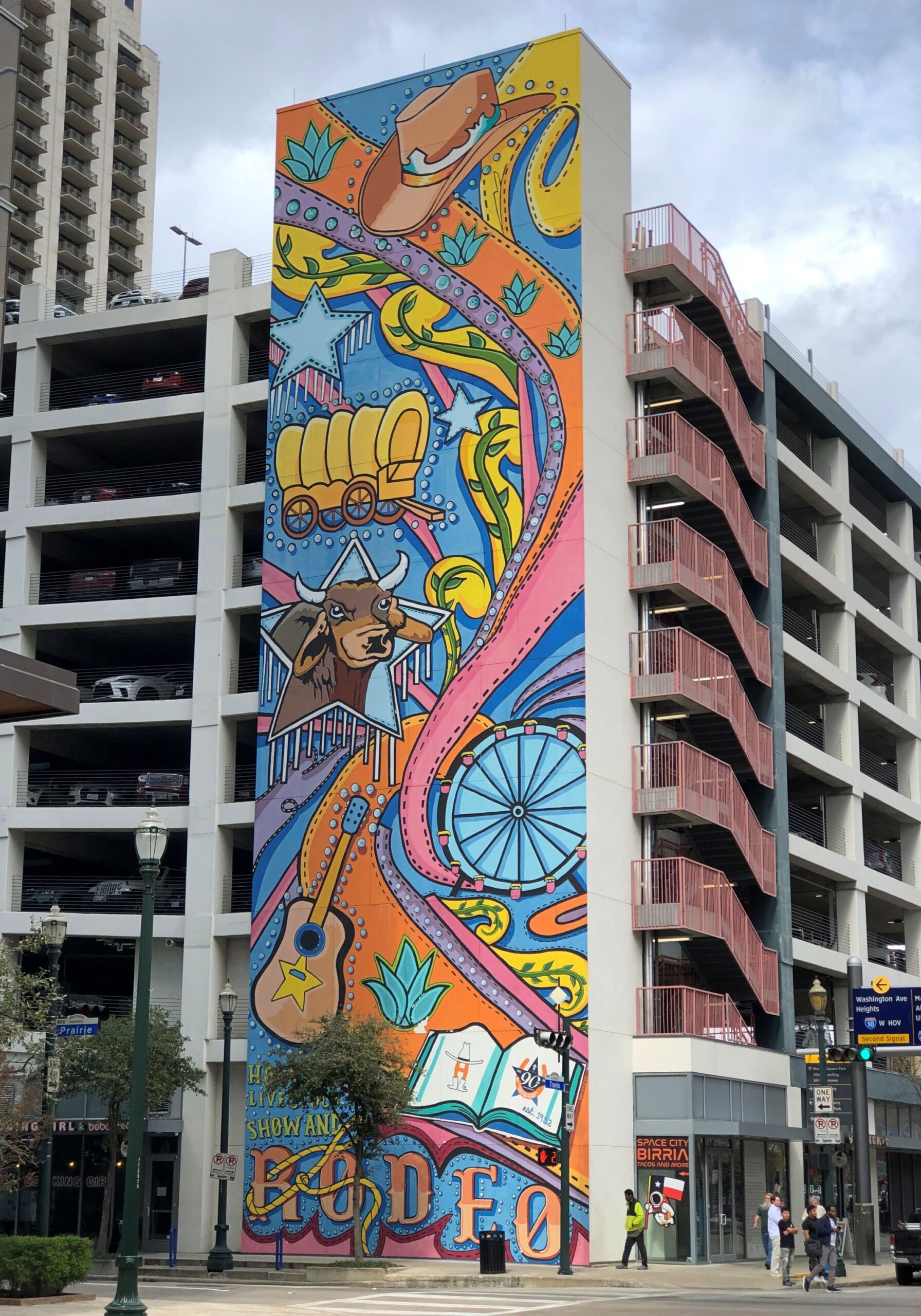
Downtown Houston is also a city of murals. Tall murals.

Even on the parking garage I used.

That one lauds the Houston Livestock Show and Rodeo, which just ended for this year. “A total of 2.6 million people attended the Houston rodeo this year held across three weeks at NRG Park,” Houston Public Media says.

Bastrop, Texas

Consider Philip Hendrik Nering Bögel, an 18th-century Dutchman who at one point in his career was collector general of taxes for the province of Friesland. The Texas State Historical Association takes up his story: “In 1793 he was accused of embezzlement of tax funds and fled the country before he could be brought to trial. After the Court of Justice of Leeuwarden offered a reward of 1,000 gold ducats to anyone who brought him back, Bögel adopted the title Baron de Bastrop.”

Those were the days, no Interpol butting into your business. No one ever collected those gold ducats, because the self-titled Baron de Bastrop spent the rest of his days in the New World, doing well for himself in New Spain and then Mexico, dying in 1827.

“One of his most significant contributions to Texas was his intercession with Governor Antonio María Martínez on behalf of Moses Austin in 1820,” TSHS continues. “Because of Bastrop, Martínez reconsidered and approved Austin’s project to establish an Anglo-American colony in Texas… Although his pretensions to nobility were not universally accepted at face value even in his own lifetime, [Bastrop] earned respect as a diplomat and legislator. Bastrop, Texas, and Bastrop, Louisiana, as well as Bastrop County, Texas, were named in his honor.”

Reminds me of the psychologically astute moment (one of a number) in Mad Men, when Bert brushed off Pete’s accusation that Don had stolen another man’s identity – which happened to be true – with, “Mr. Campbell, who cares?” Bert also quoted a supposed Japanese saying, “A man is whatever room he is in.” Give credit to the scriptwriter for inventing a saying that could well be Japanese, but apparently is not.

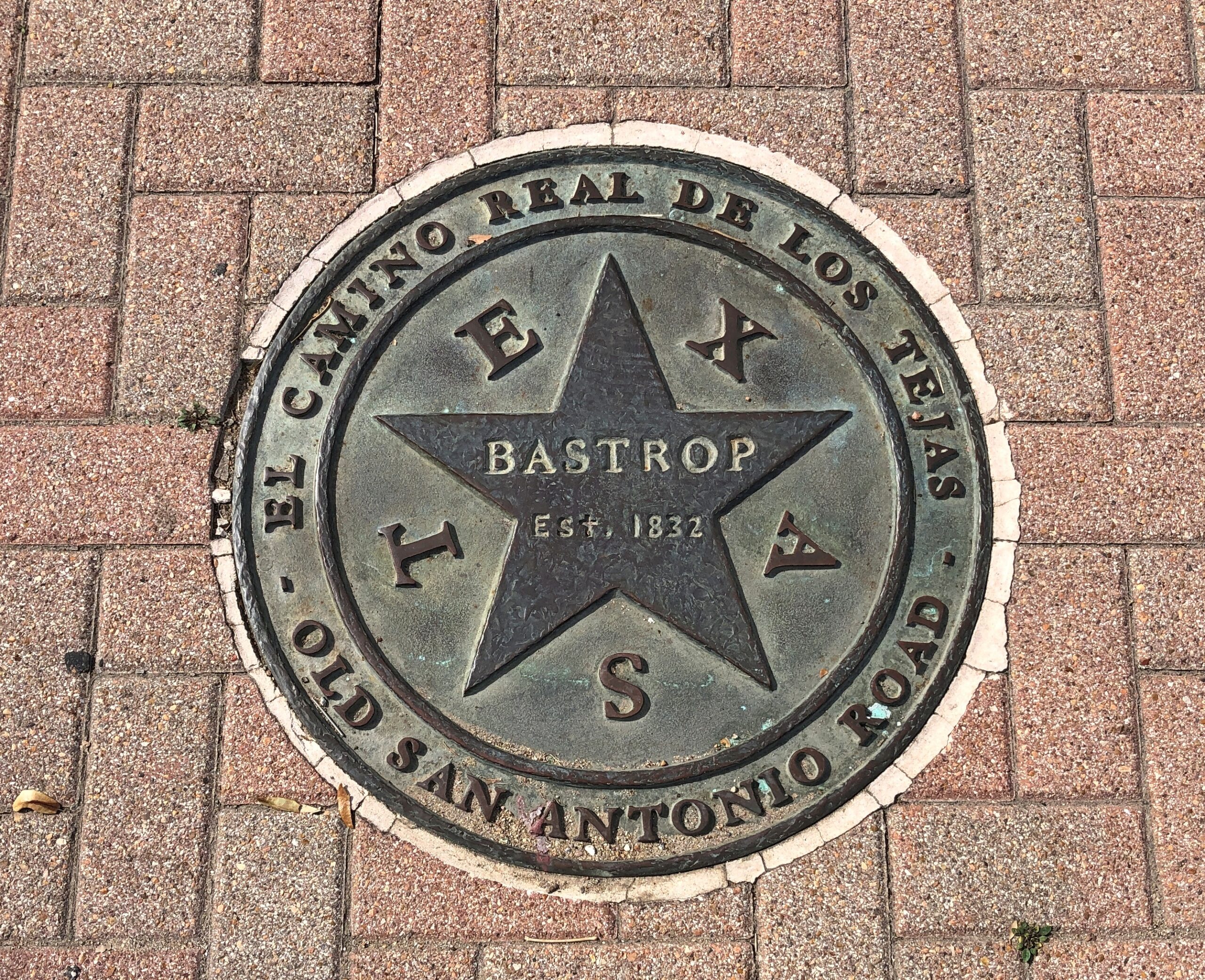
Bastrop’s location was an important spot, once upon a time, where the Old San Antonio Road met the Colorado River.

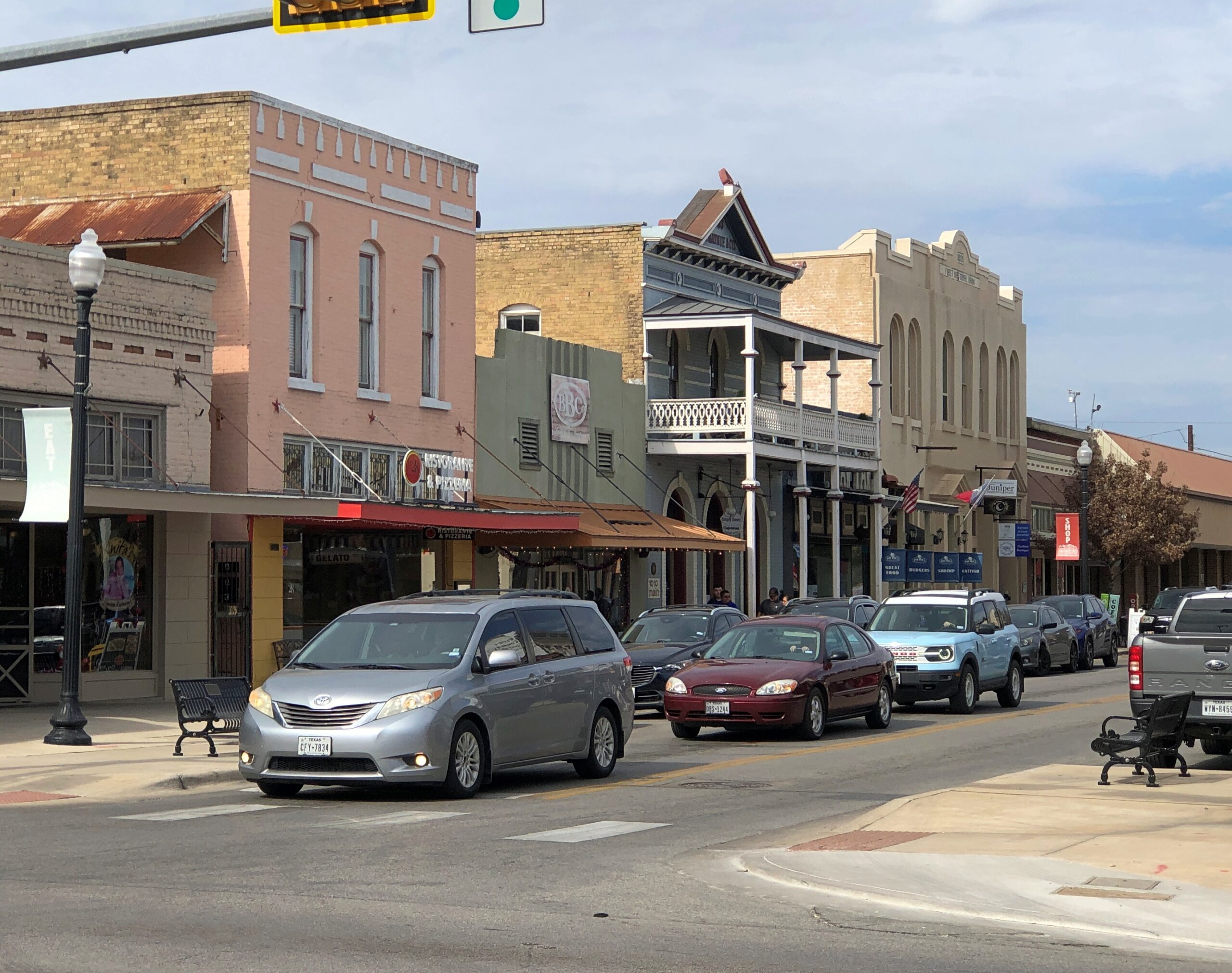
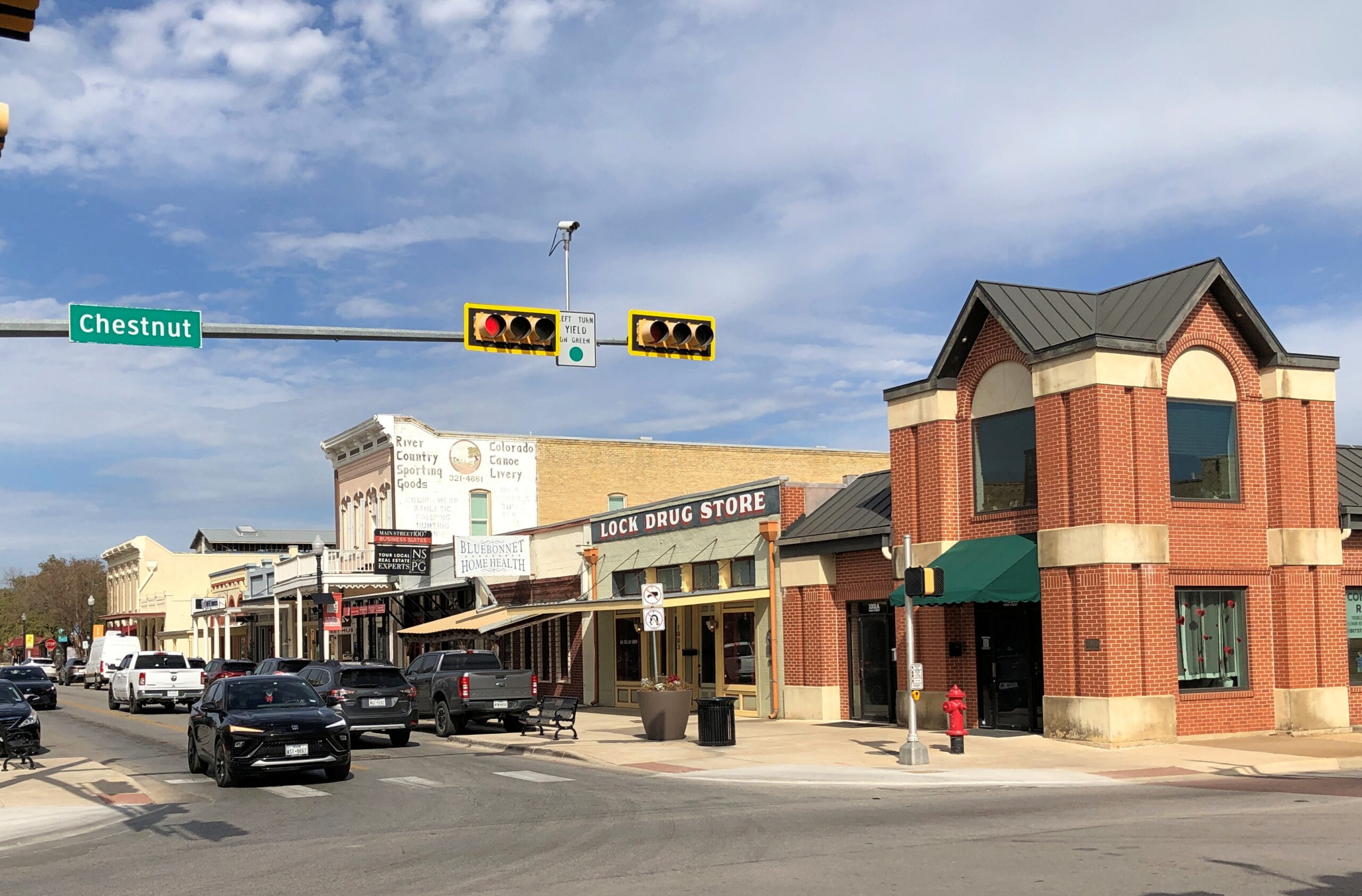
These days, Bastrop (pop. 9,600 or so) is only a short hop by modern vehicle from Austin or San Antonio. Day-trip material from those metros, that is. That was probably true the last time I visited Bastrop, sometime in the late ’80s, but maybe not with the same retail intensity you find near the intersection of Main and Chestnut in 2026.

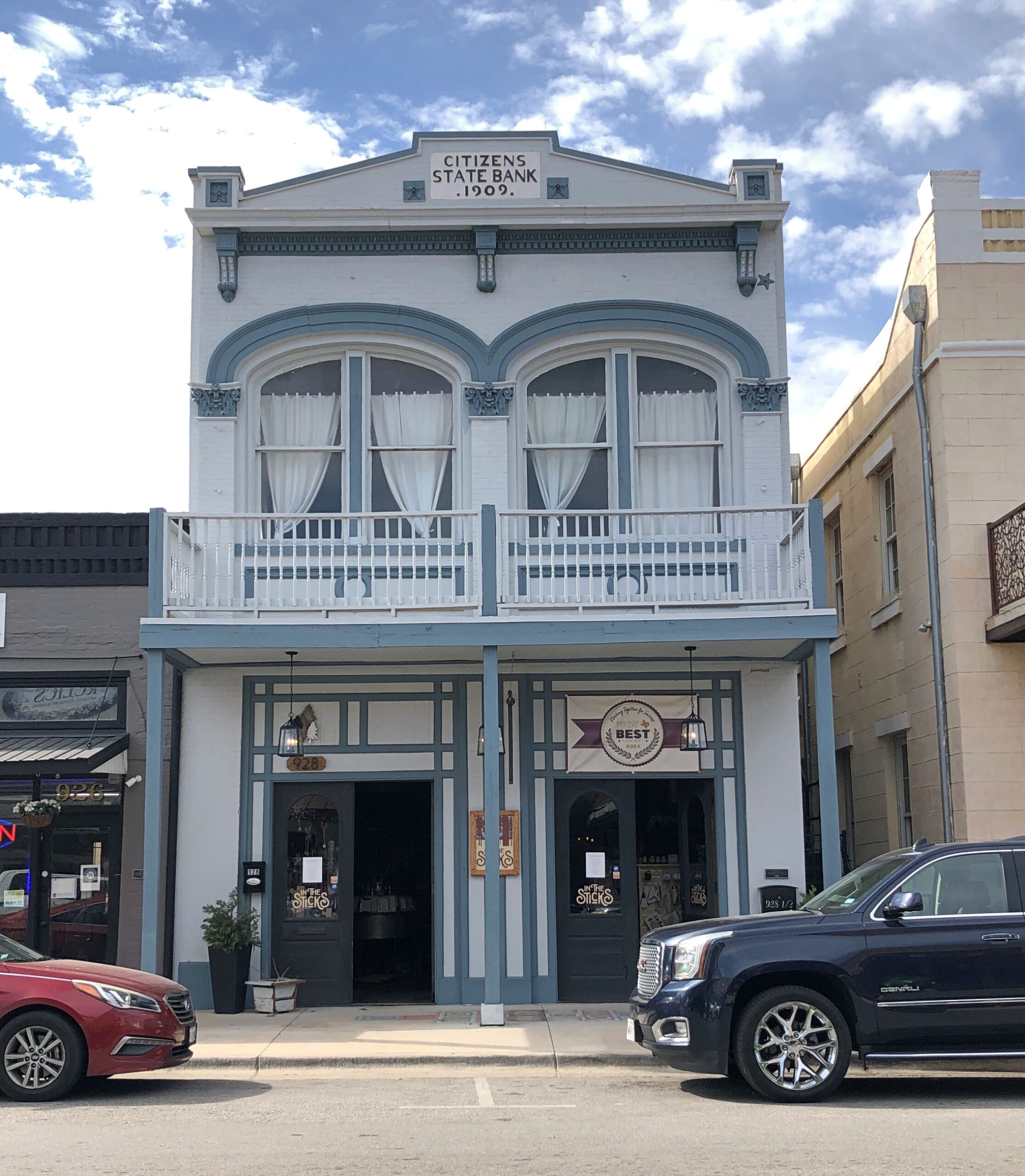
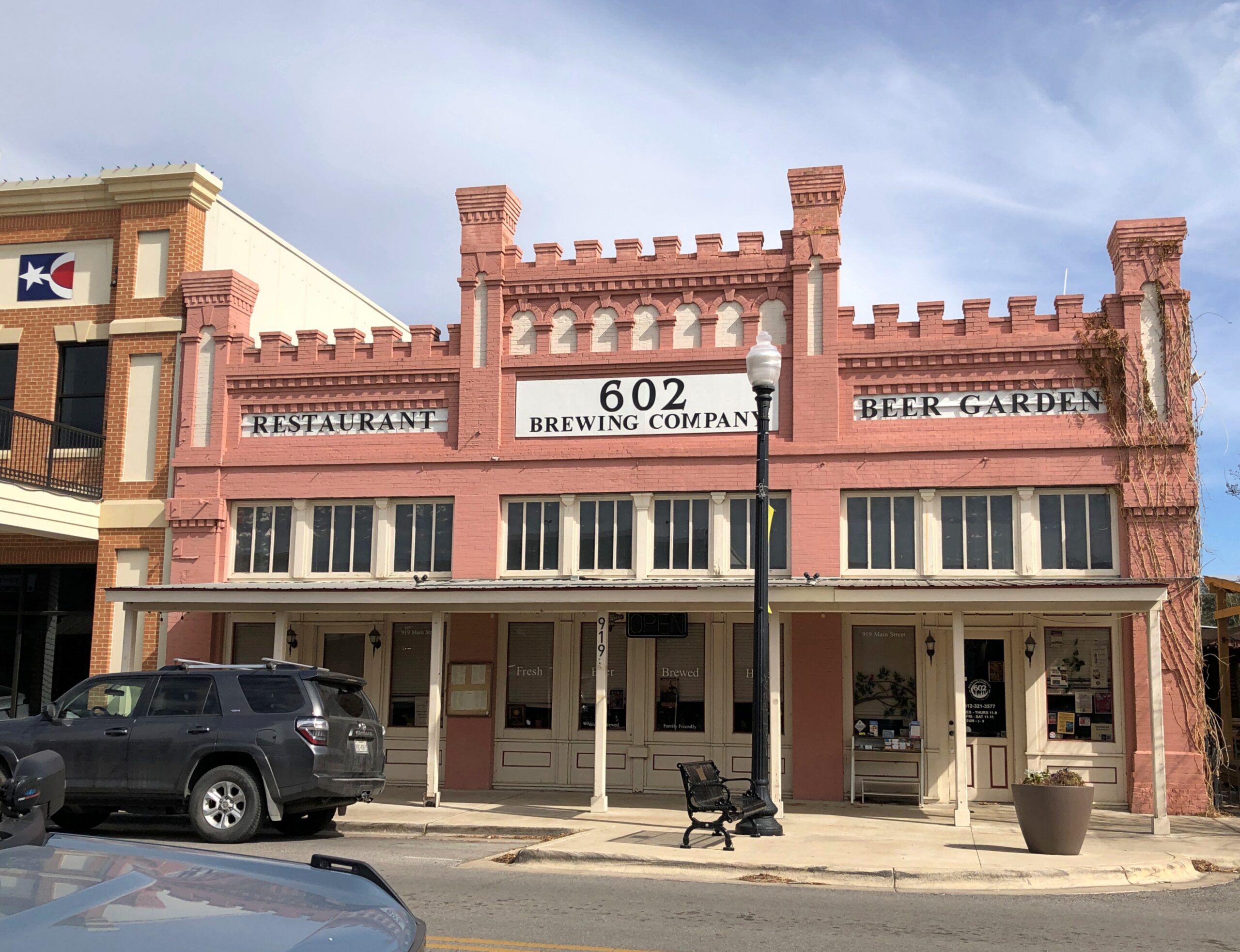
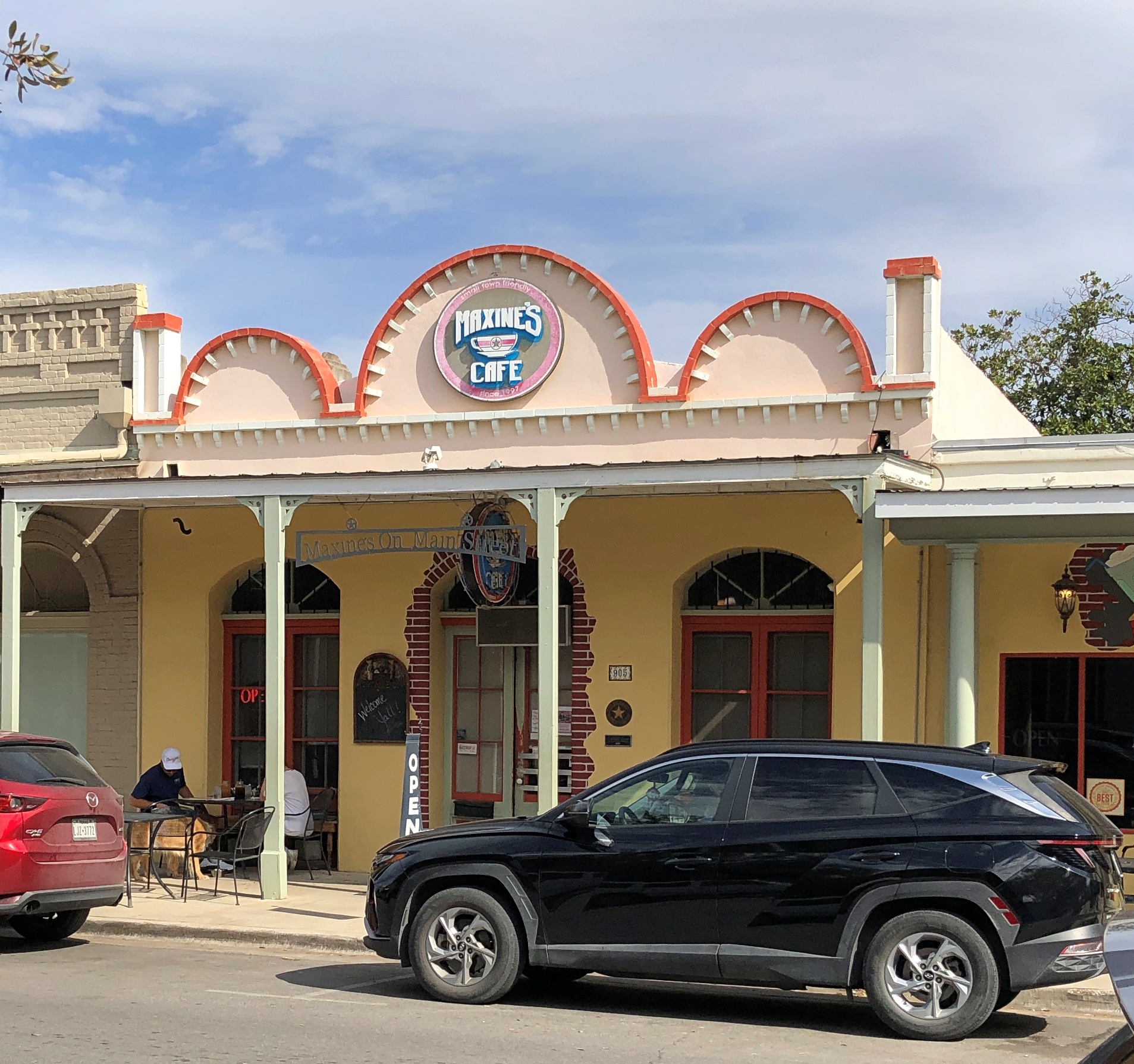
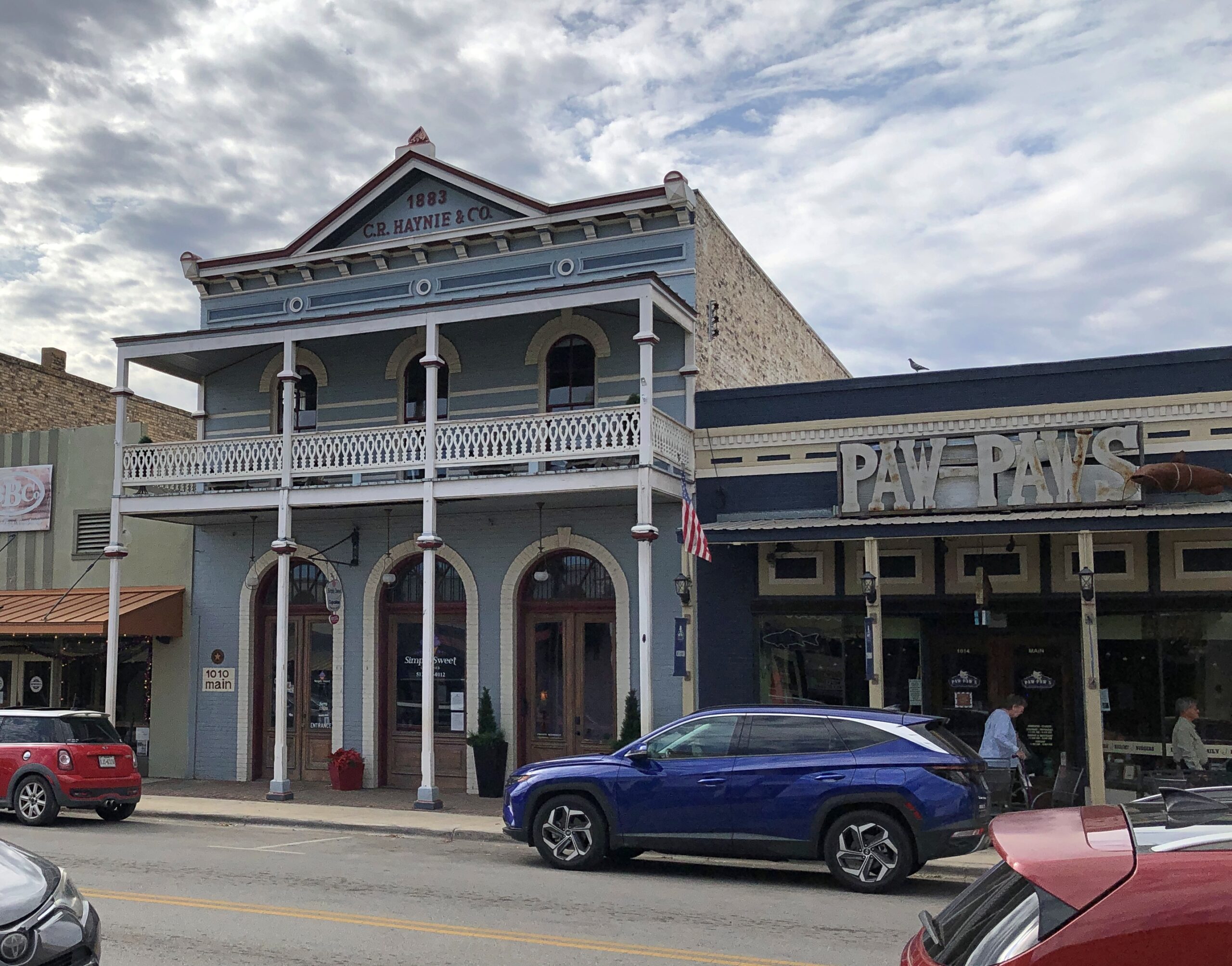
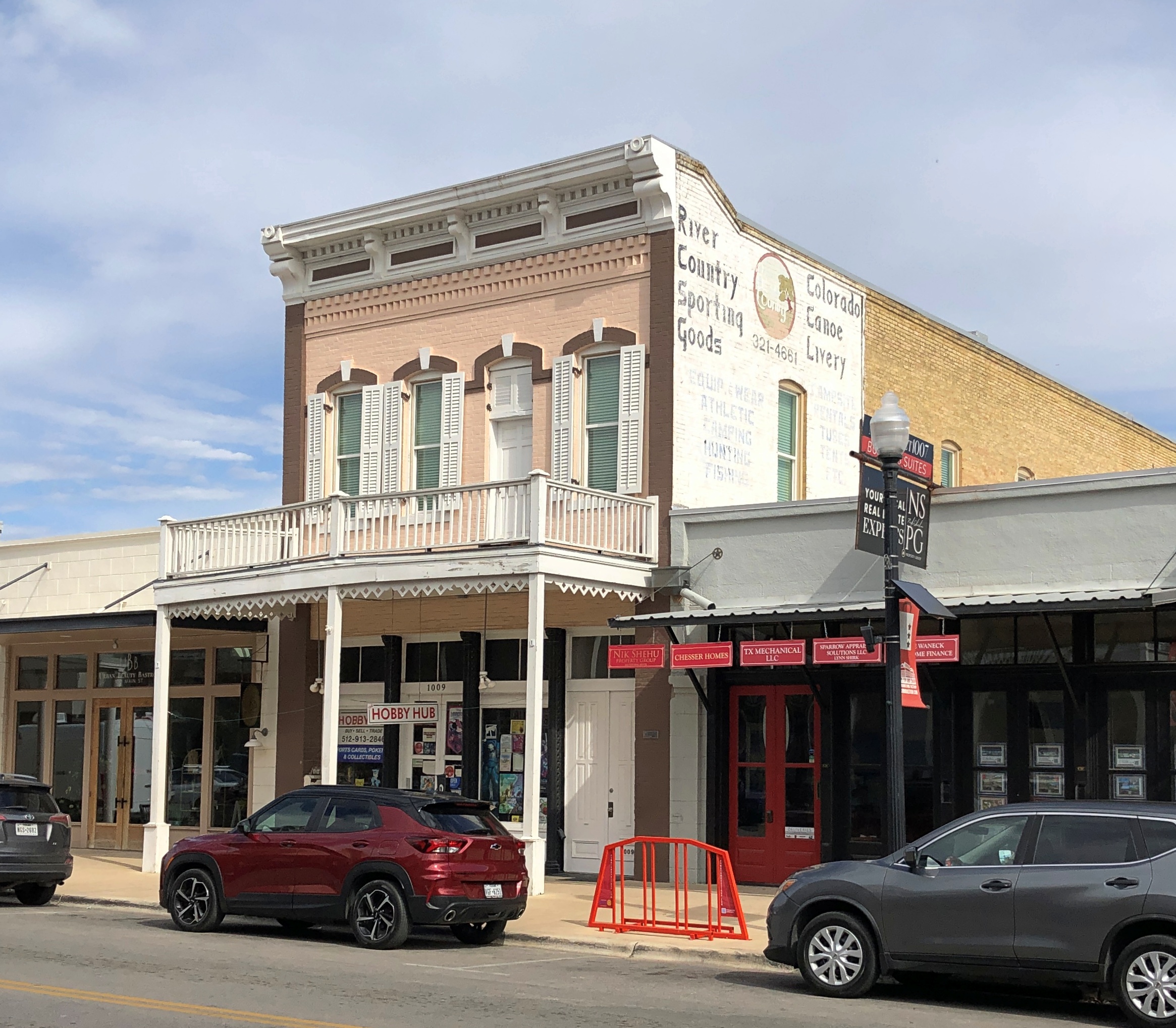
This part of town has a good stock of late 19th- and early 20th-century buildings. Pleases the eye, pleases the day-trippers.

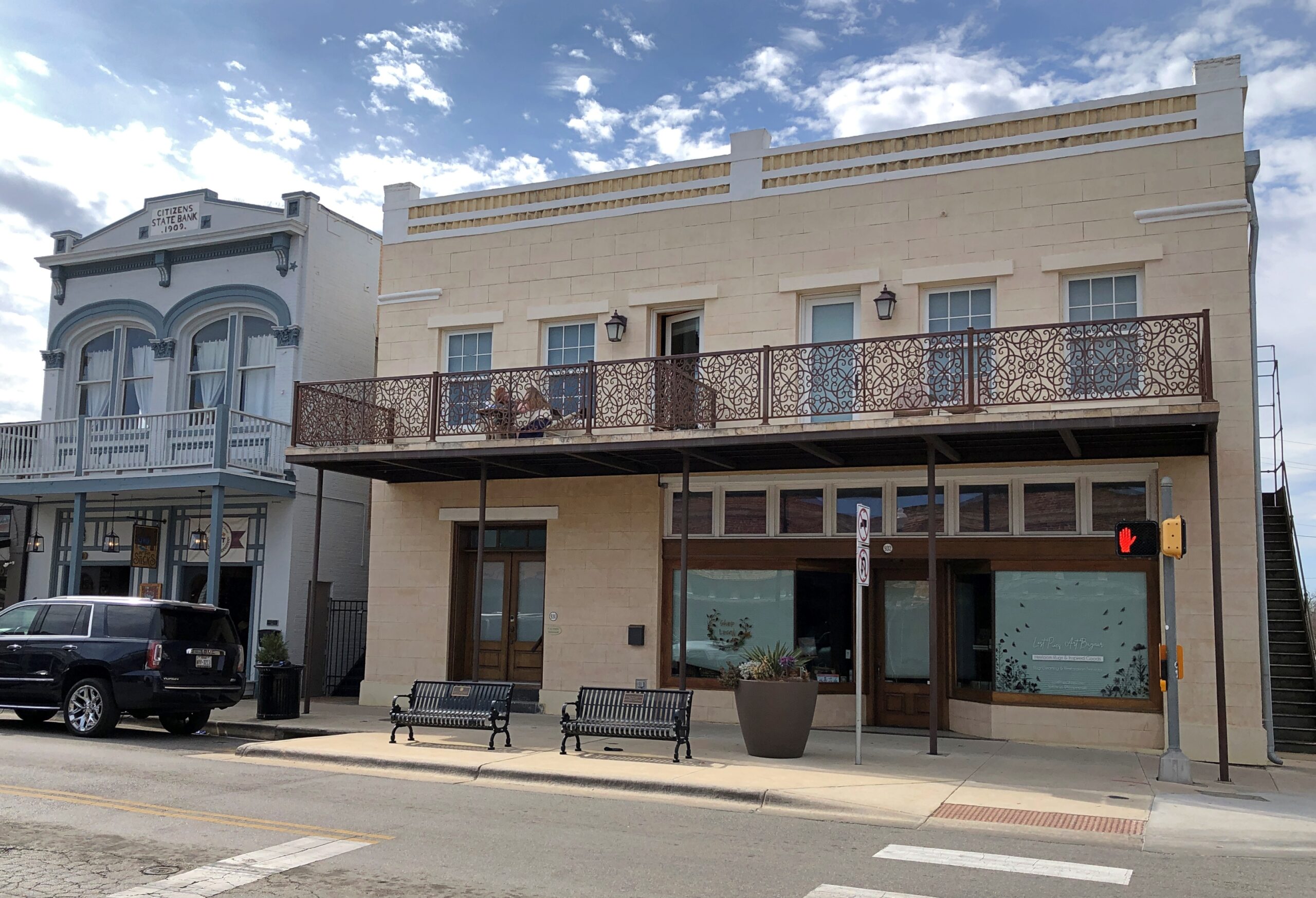
Around Main and Chestnut, you’ll see Paw Paws Catfish House, Simply Sweet Cupcakes, Bastrop Beer Company, flower designer Greenleaf Gatherings, Urban Beauty Bastrop, the Hobby Hub trading card store, another trading card store called Game Time Cards, DivineLites Soap Shop, Lost Pines Art Bazaar rug store, In The Sticks–Eclectic Gifts and More, Rhinestone Rattler Boutique, Monarch Art Gallery and Main Street Yoga Bastrop. A partial list. The town seems to be doing OK.

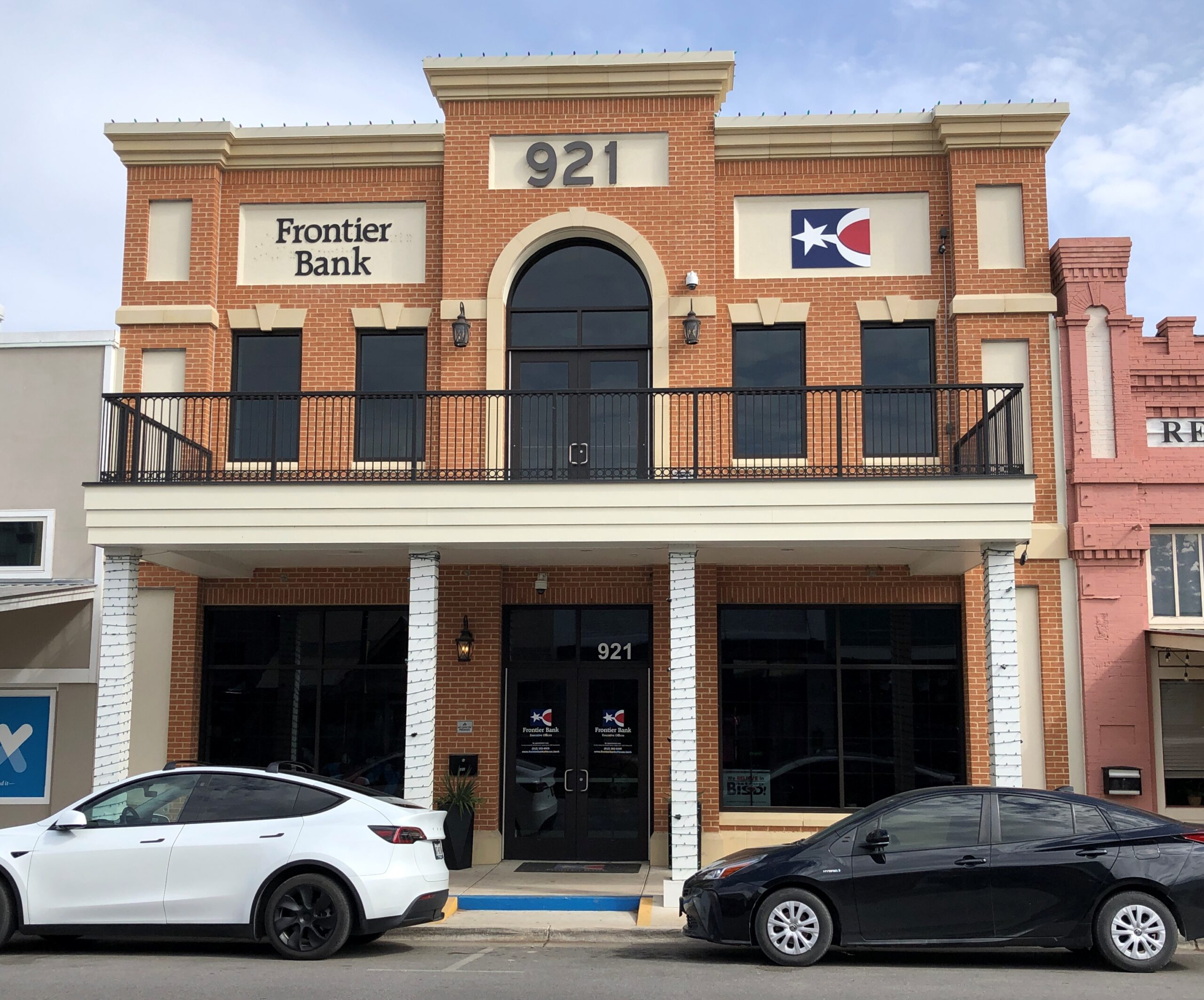
Looks like a newer building. The architect did a good job of blending it into its surroundings.

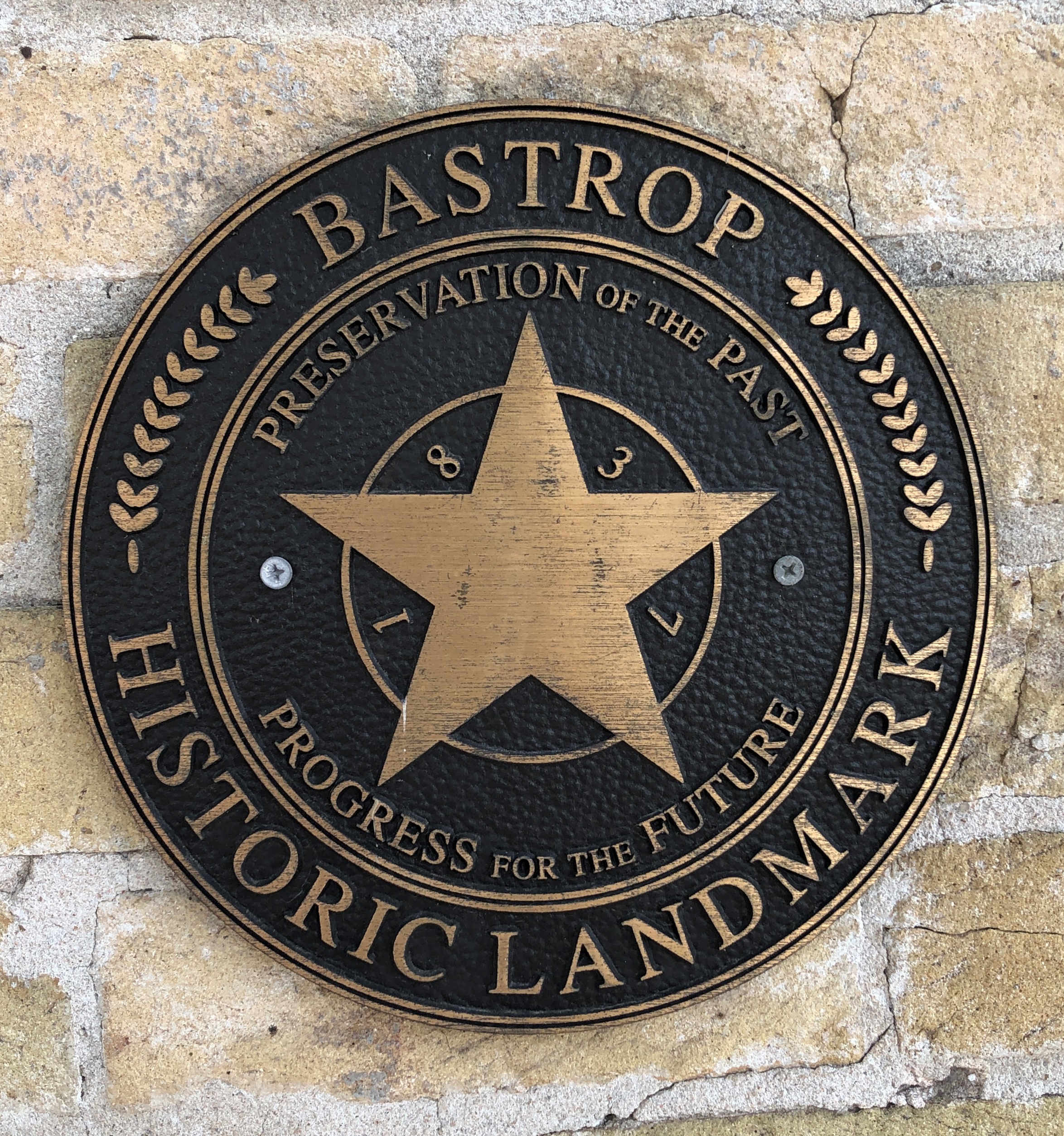
Plenty of these.

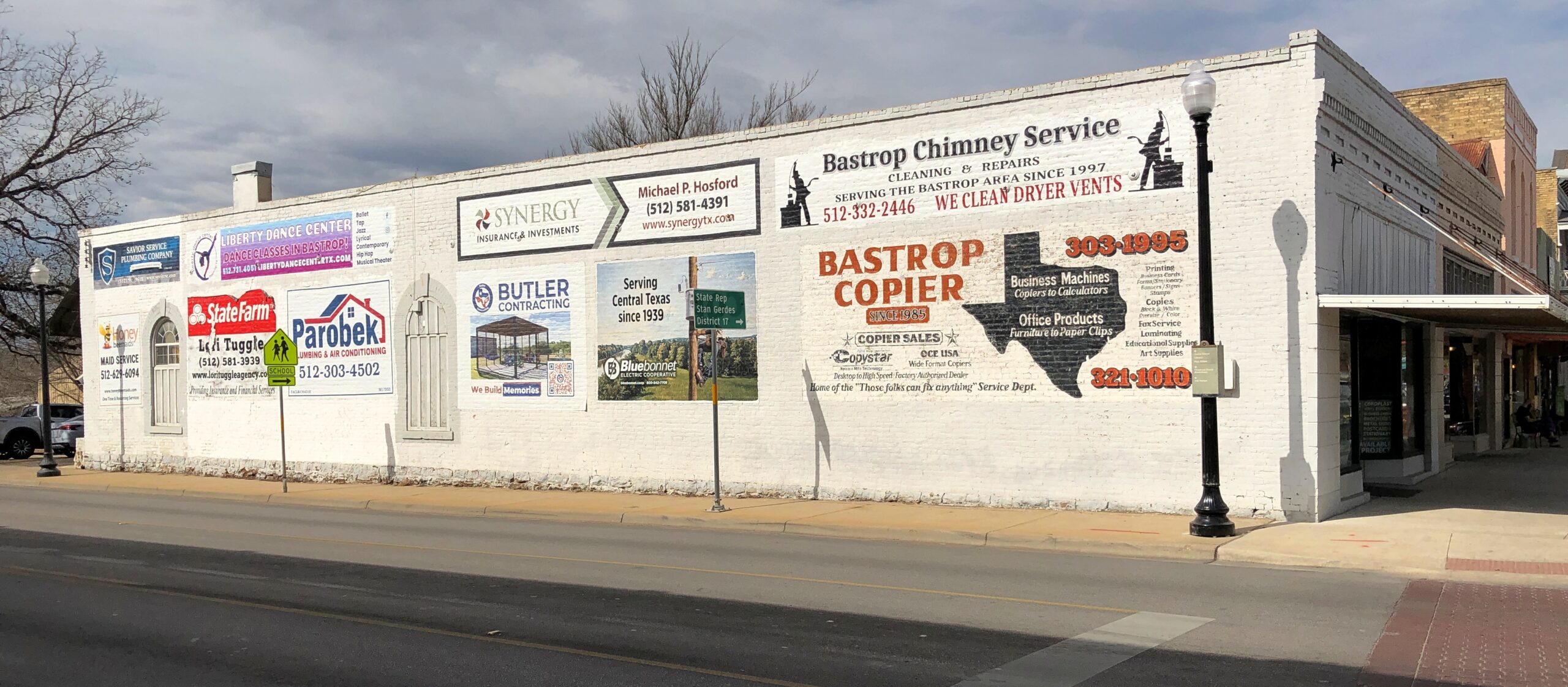
Advertising.

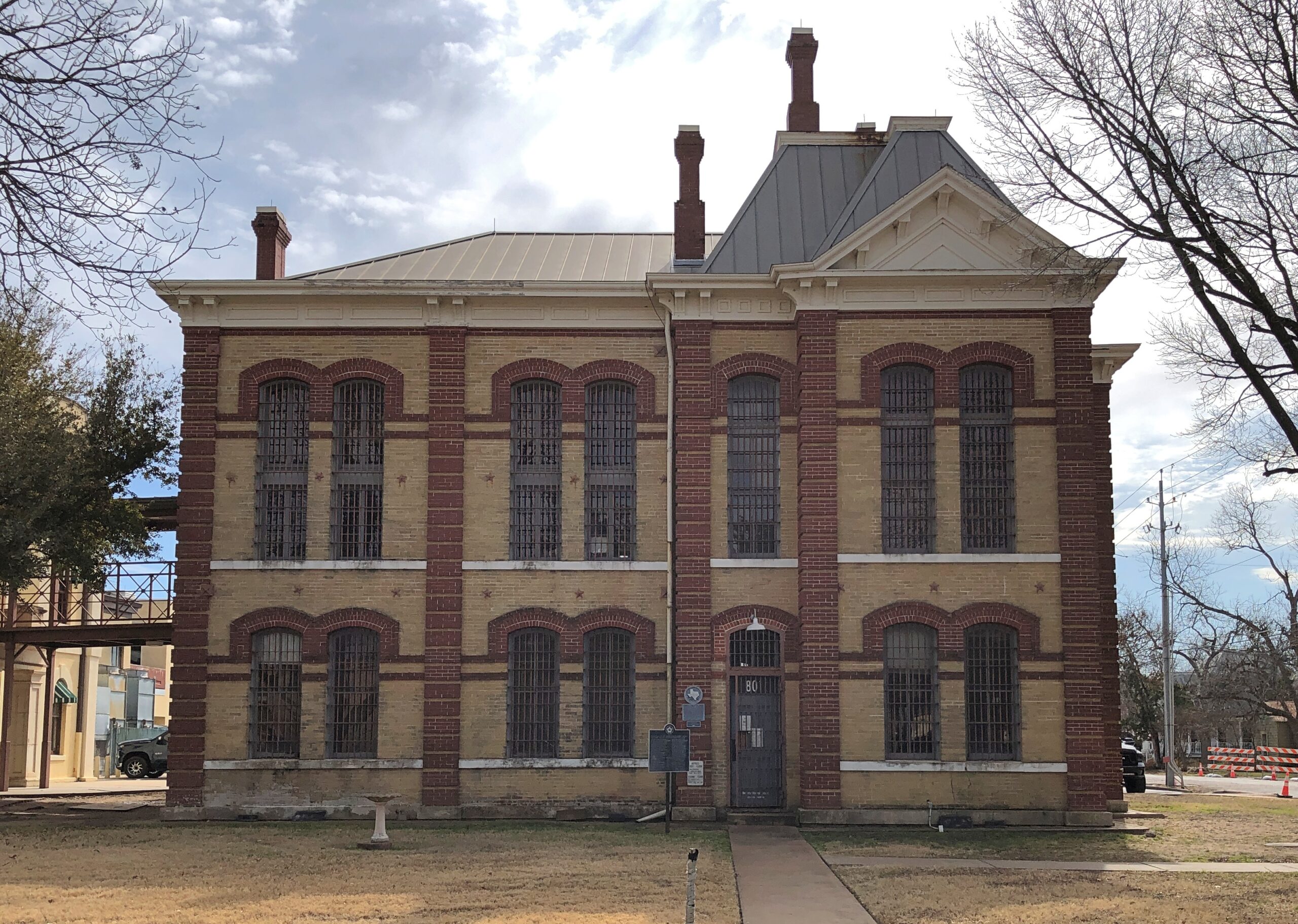
Not far from Main St. and next to the aforepictured Bastrop County courthouse is the old county jail.

In 1979, nearby Bastrop State Park, not the town itself, was the scene of Pine Cone Wars, Midnight Backgammon and our slightly older “chaperons” who holed up in a separate tent much of the time to make the beast with two backs. The youthful antics of two successive camping trips with high school friends that spring are something of a blur now, but a pleasant one.

Austin ’26

South Austin Strolls

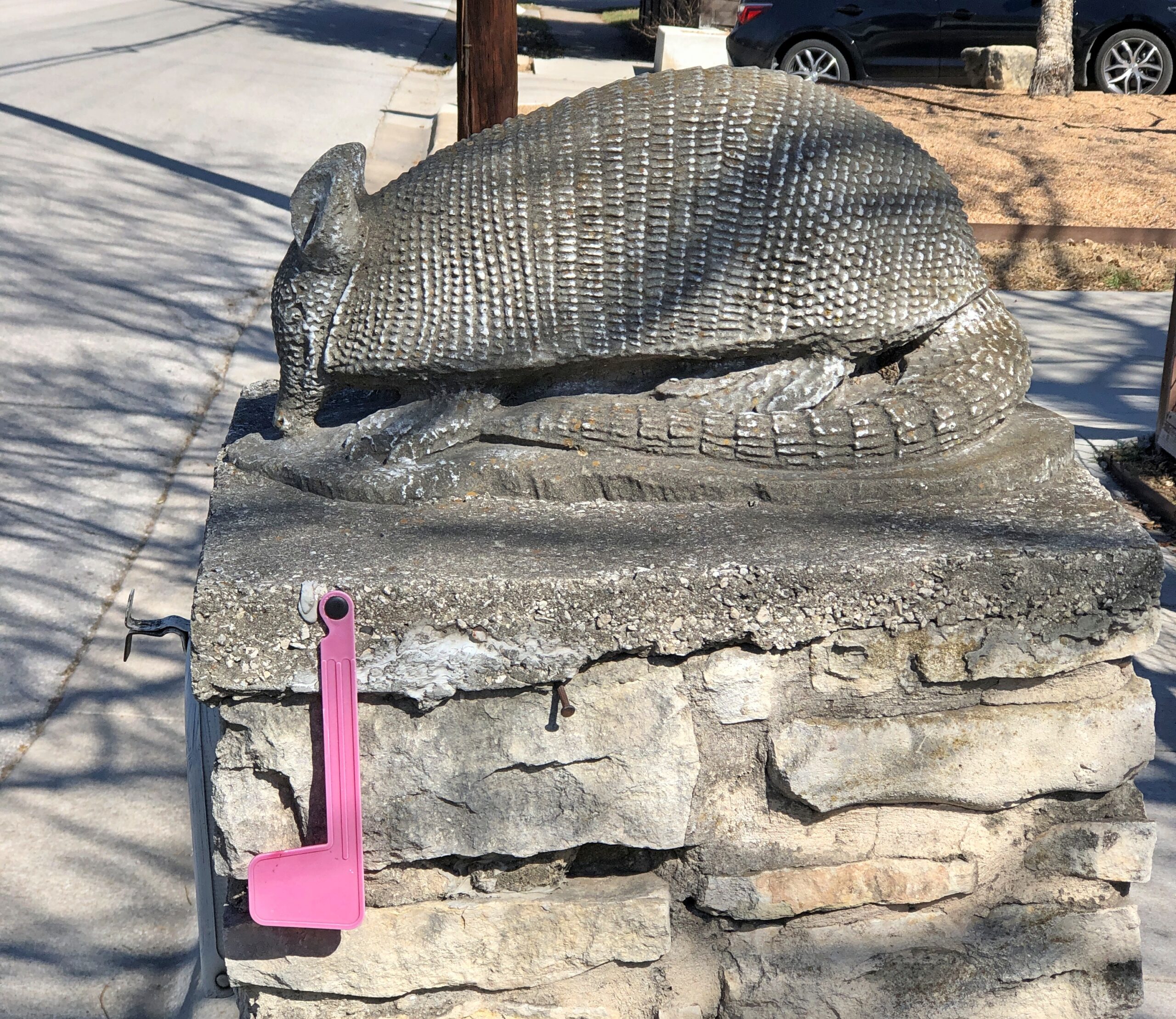
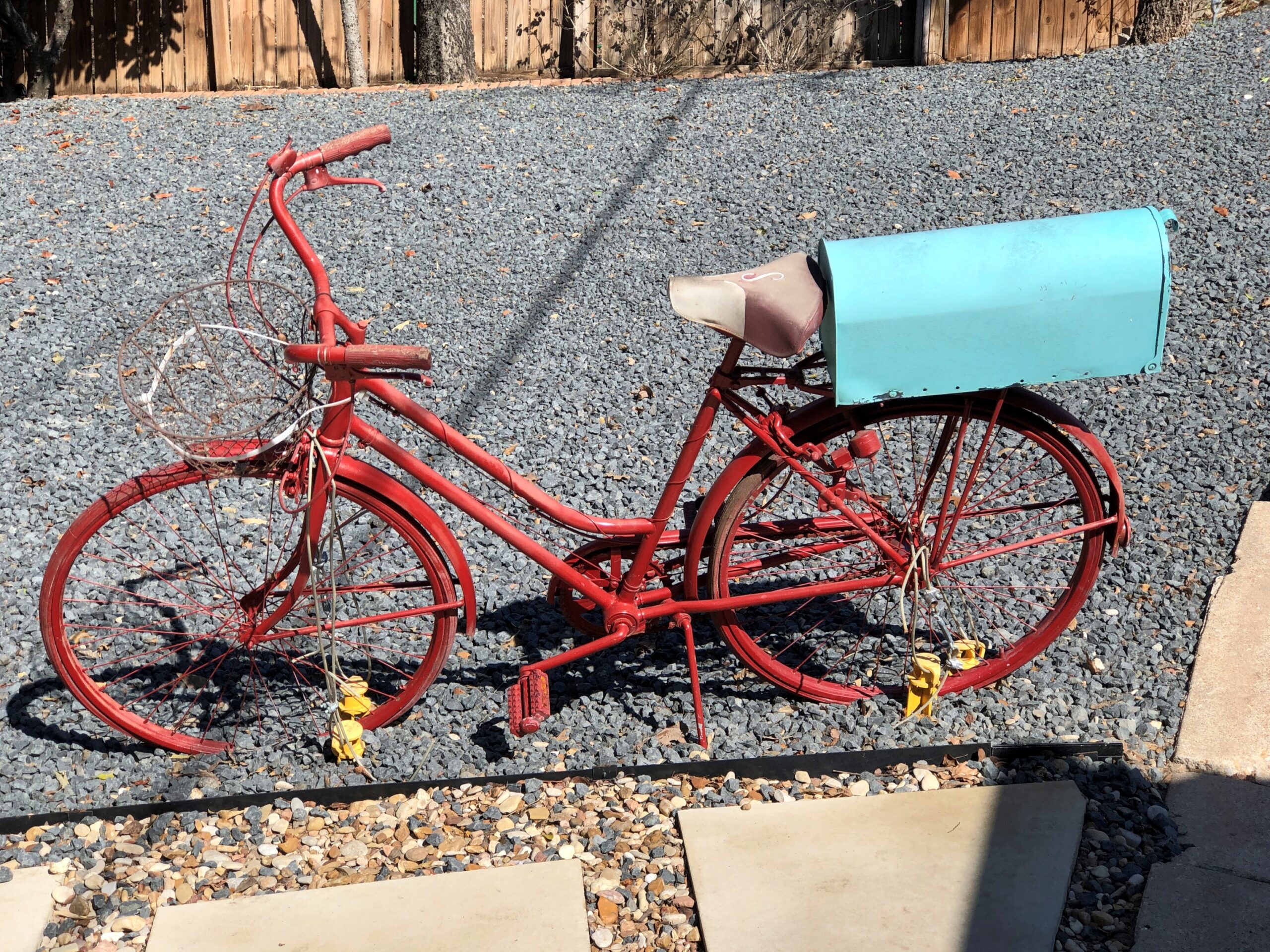
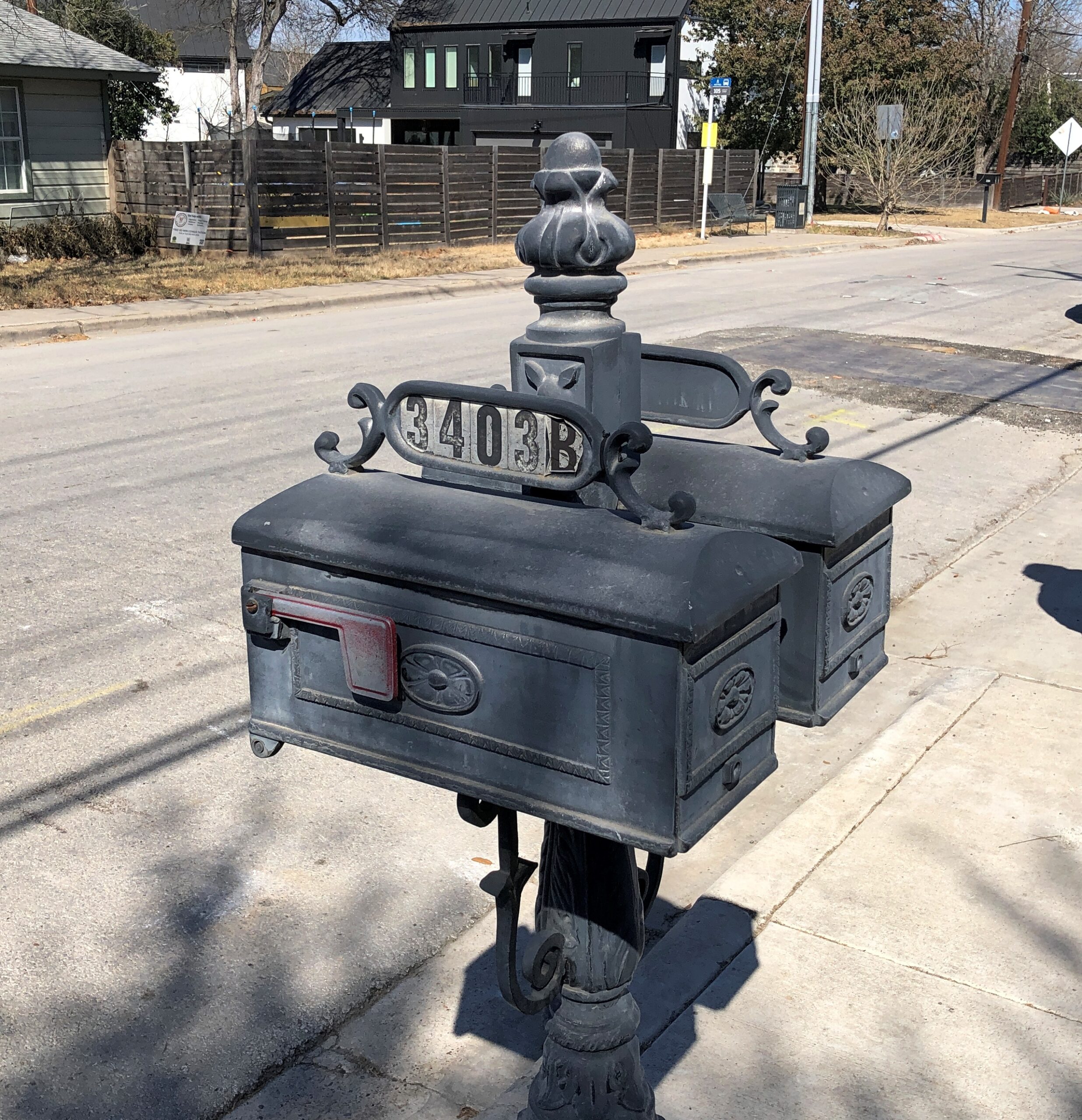
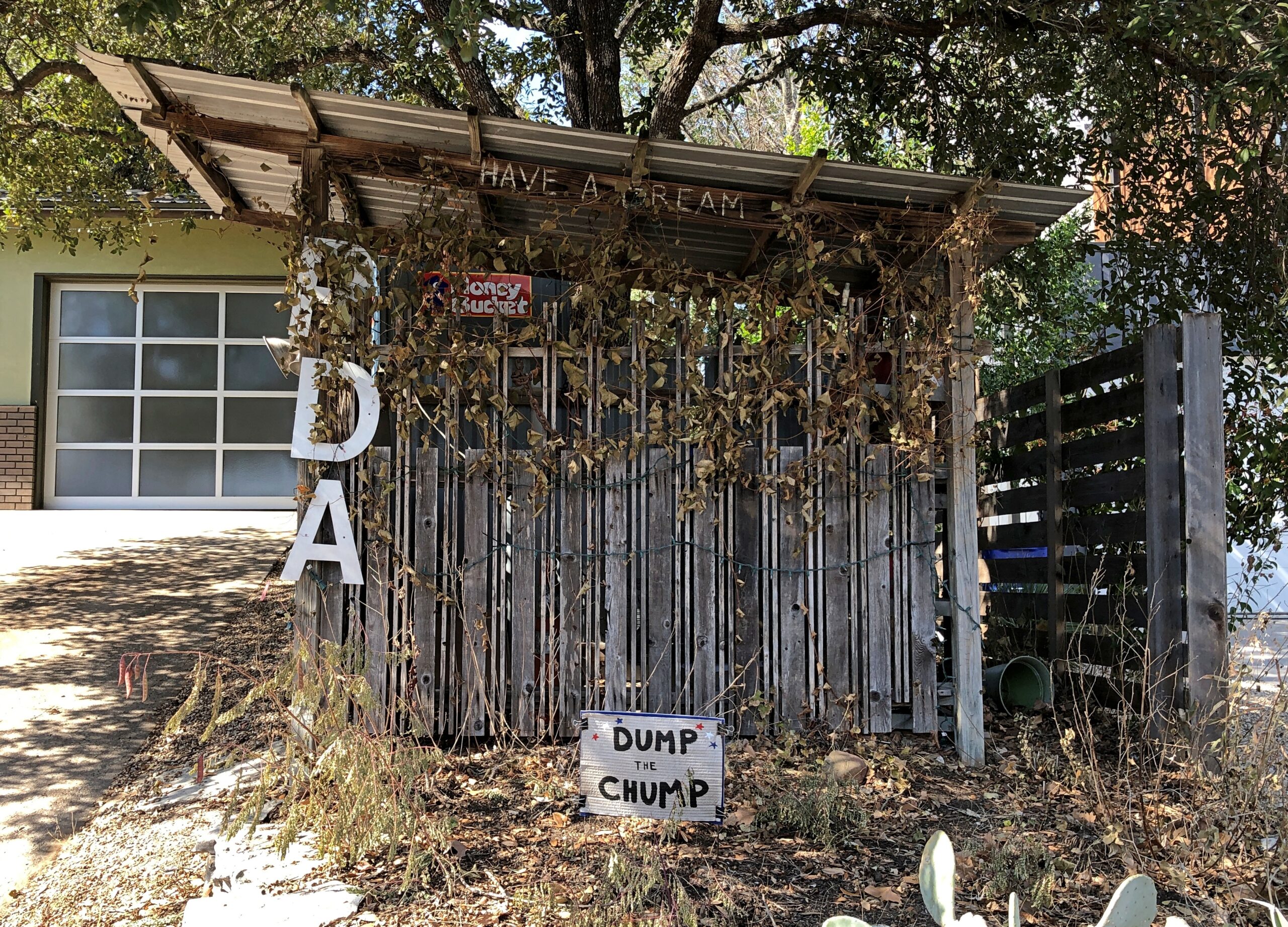
Tom’s neighborhood in south Austin is carved into the sides of the dry low hills near the Balcones Escarpment, its streets as much of a grid as possible, which isn’t that much. During my visit, we took a couple of walks in the neighborhood, as we were enjoying an unusually warm February, even for Texas. I started noticing the odd mailboxes. The last one isn’t that odd, but I liked it.

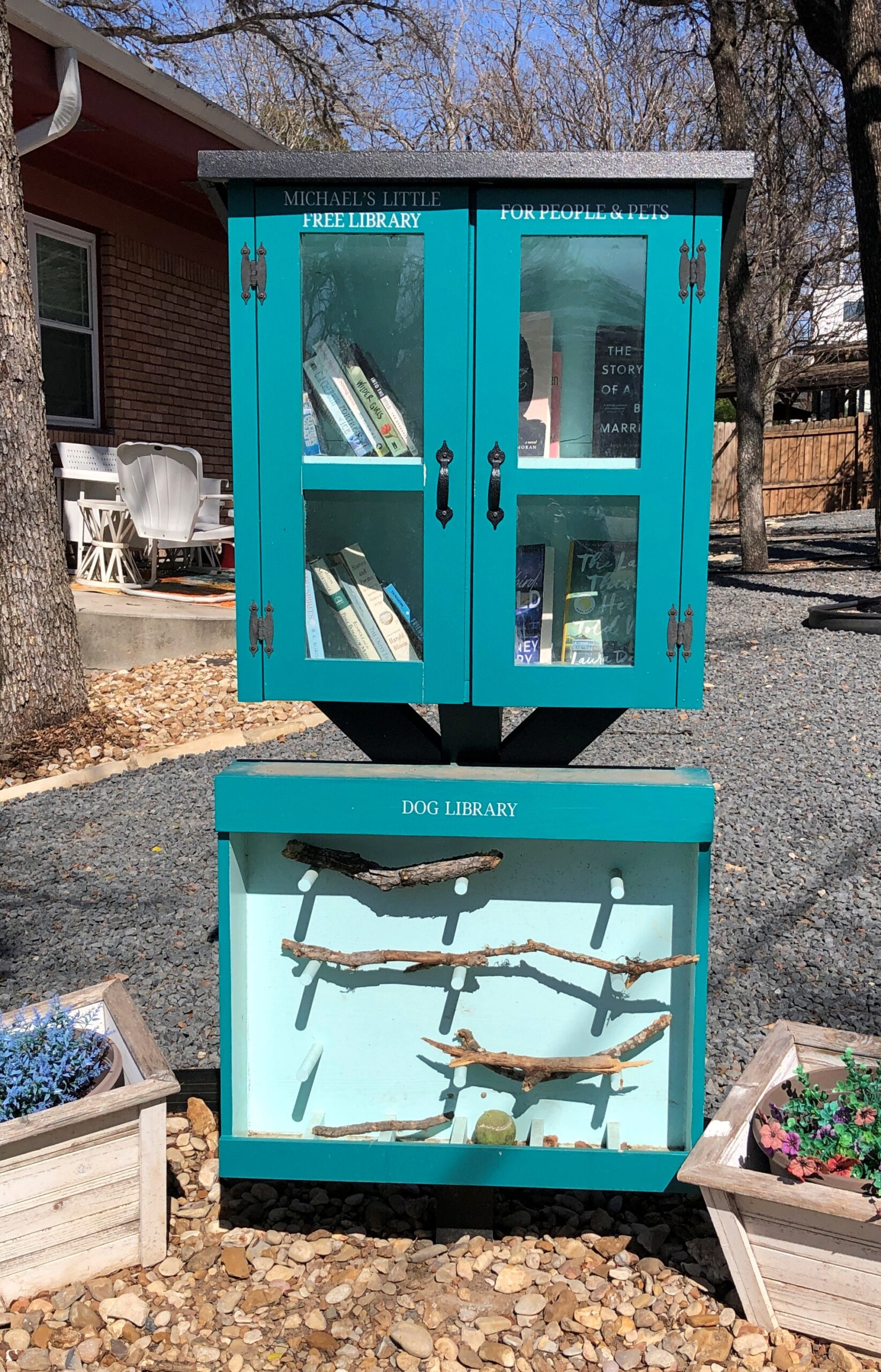
Never mind the five-cent cigar. That’s what this country needs, more whimsical mail boxes. Or little free libraries that offer books, but also sticks and tennis balls for dogs.

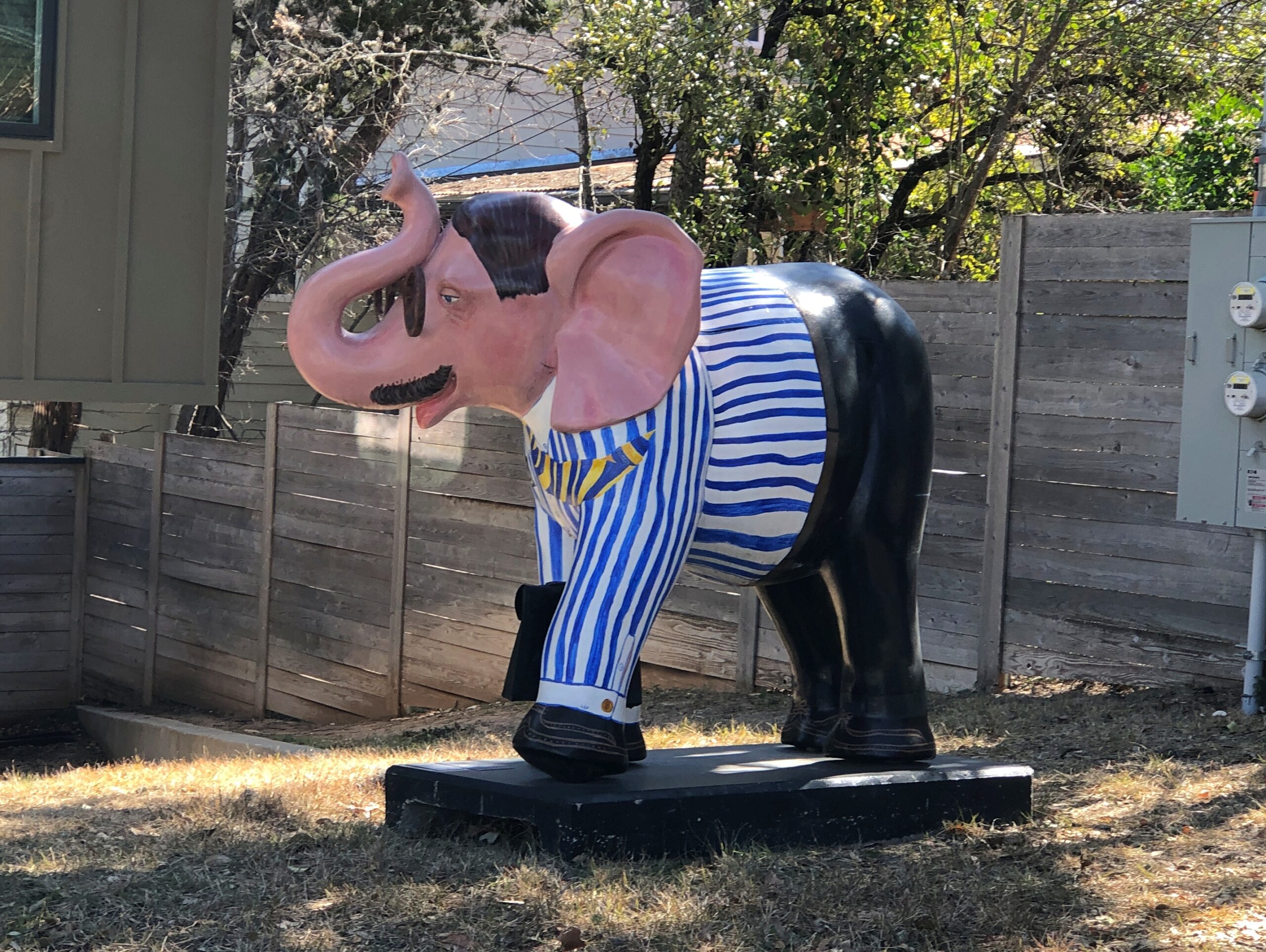
More neighborhood ambiance: I call it the TR Elephant.

I took the TR Elephant to my casual AI studio, and once again only proved that image-to-video via text is still a very, very stupid process. Maybe my prompts weren’t clear, but then again, I told the program very specifically what not to do — namely change the eyeglasses or the mustache or the hair — and alternatively phrased things more positively (e.g., “elephant’s mustache and hair remain the same”). Damned if it didn’t change those things anyway, every time, including one time the elephant grew a sort of man bun.

This was as close as I got to what I wanted.

And apparently the program doesn’t know “rimless spring bridge Pince-Nez eyeglasses” (the kind TR wore) from its AI ass. It could not be persuaded to provide the elephant that kind of glasses, after I gave up on trying to keep the glasses the same.

More neighborhood sights.

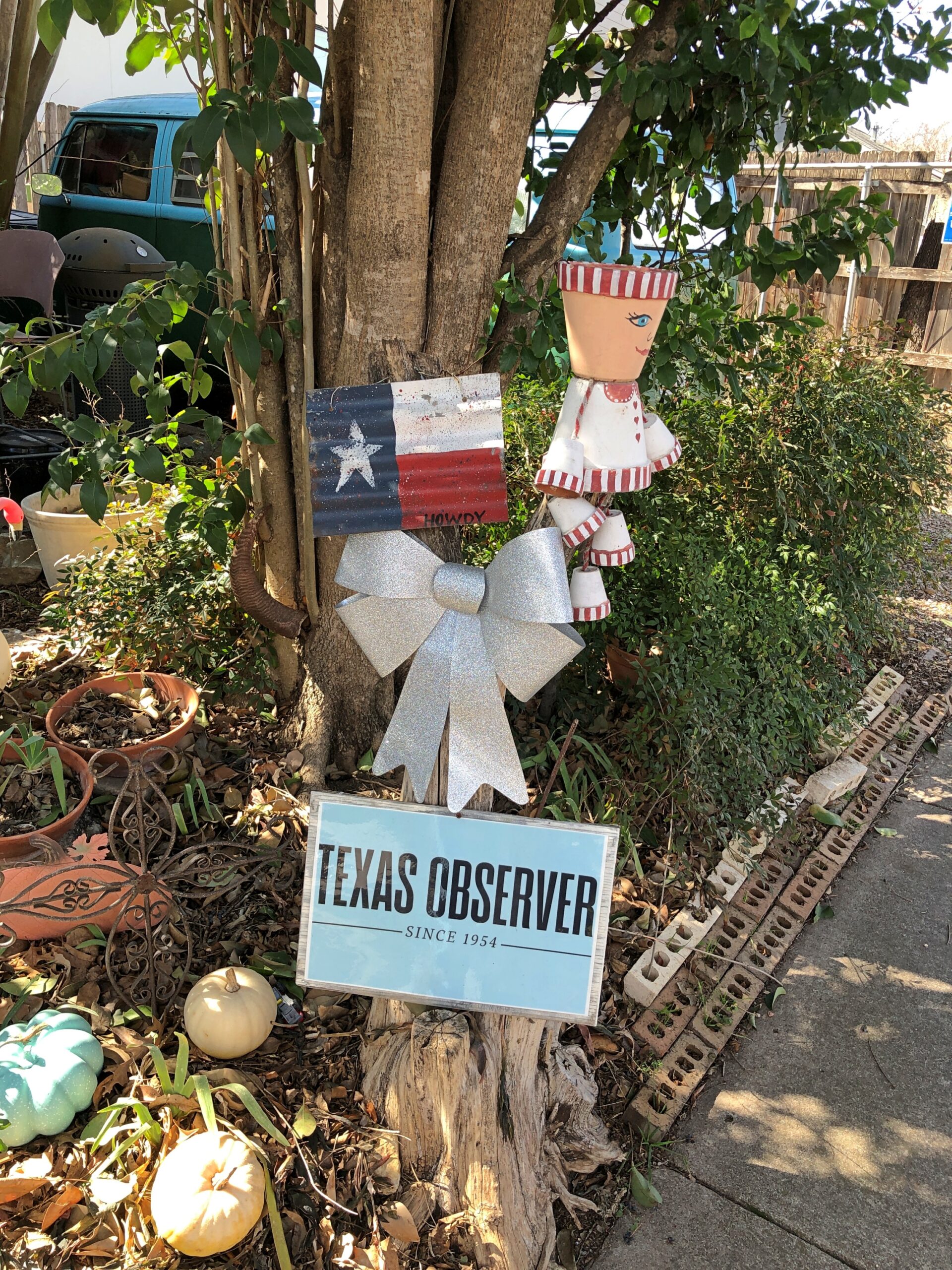
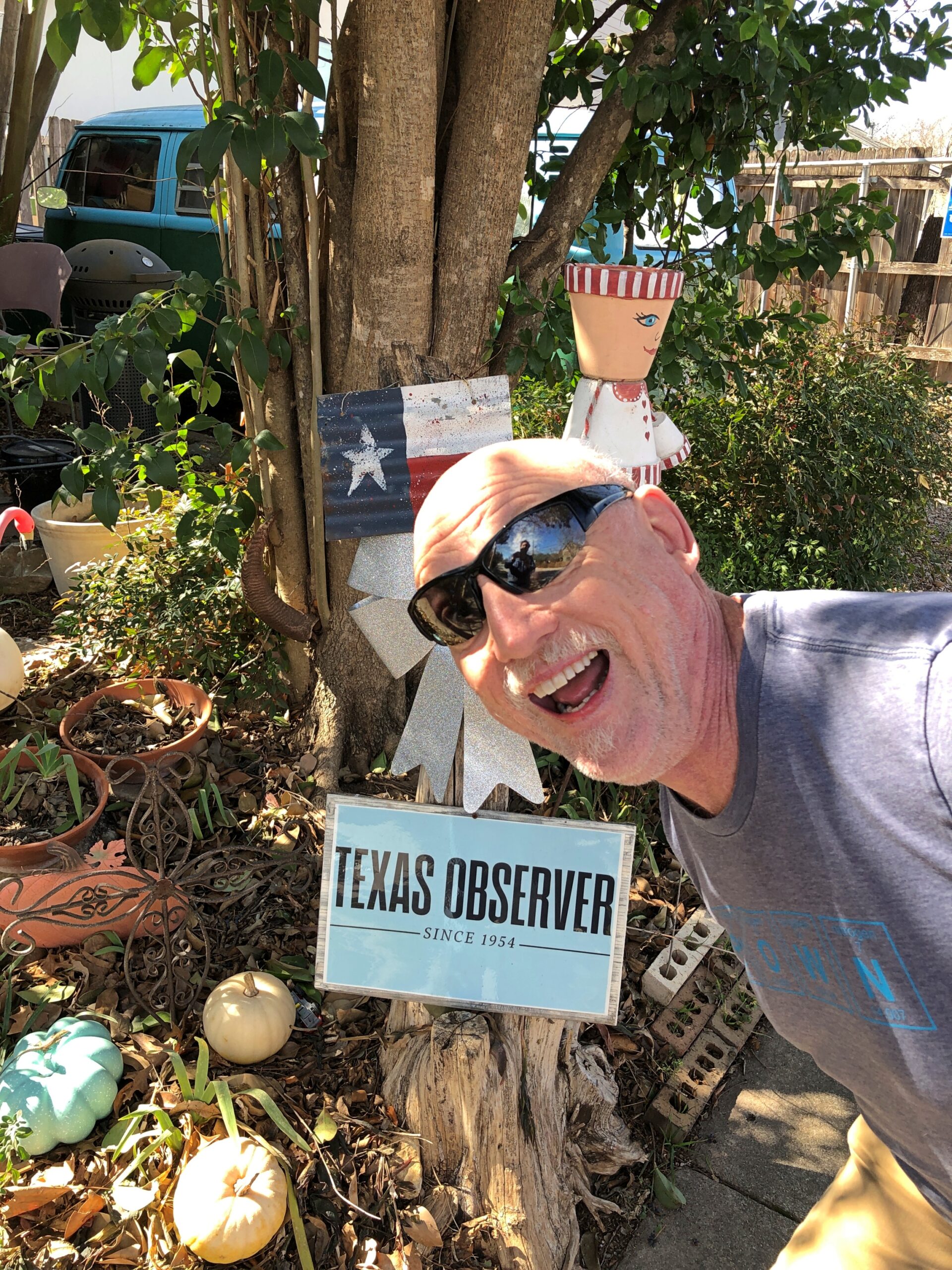
Do they receive a paper copy of the Texas Observer? Or just enthusiasts, whatever the physical media? Tom took that moment to hone his considerable photobombing skills.

It wouldn’t be the last time.

Austin Skyline

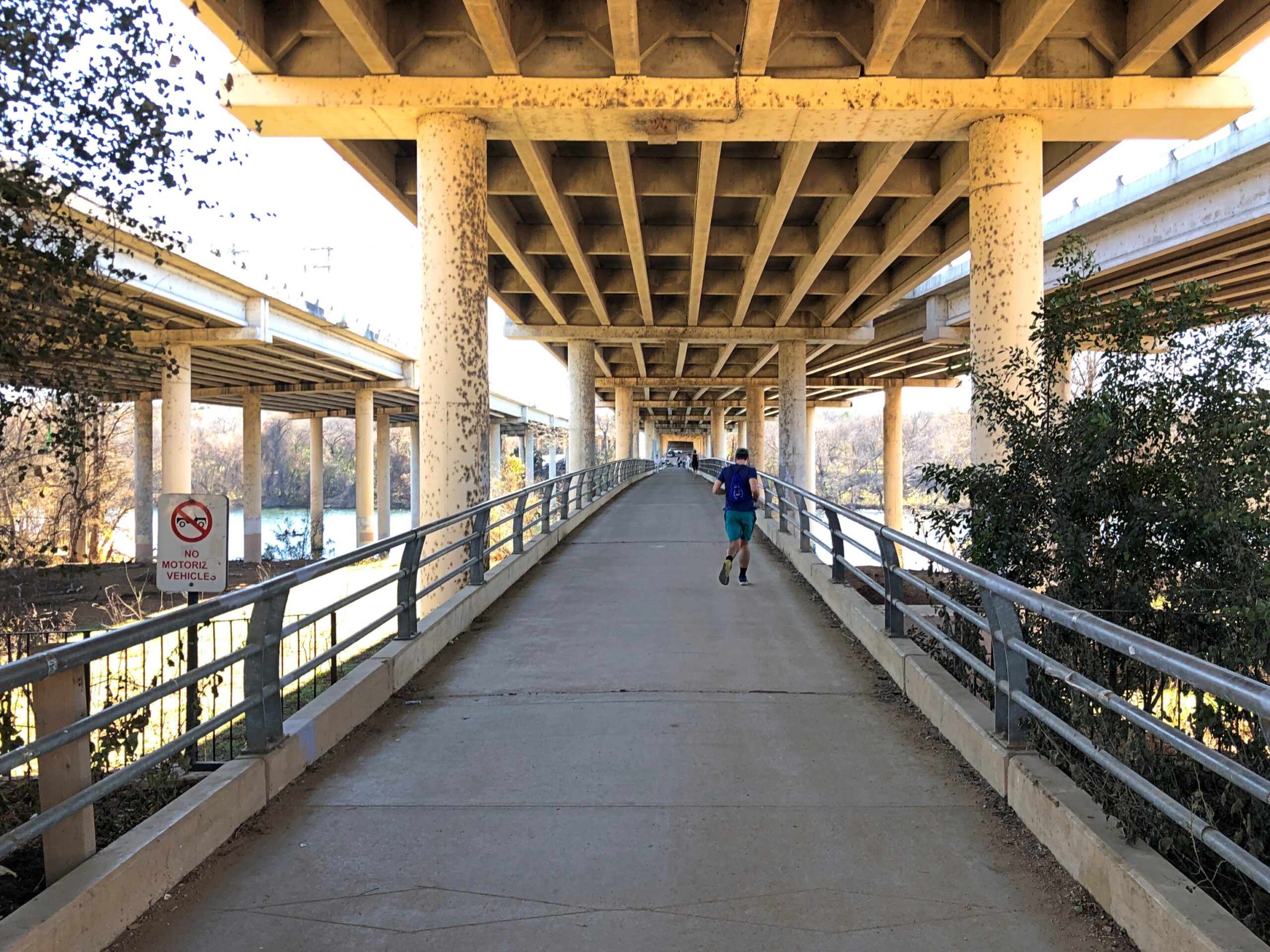
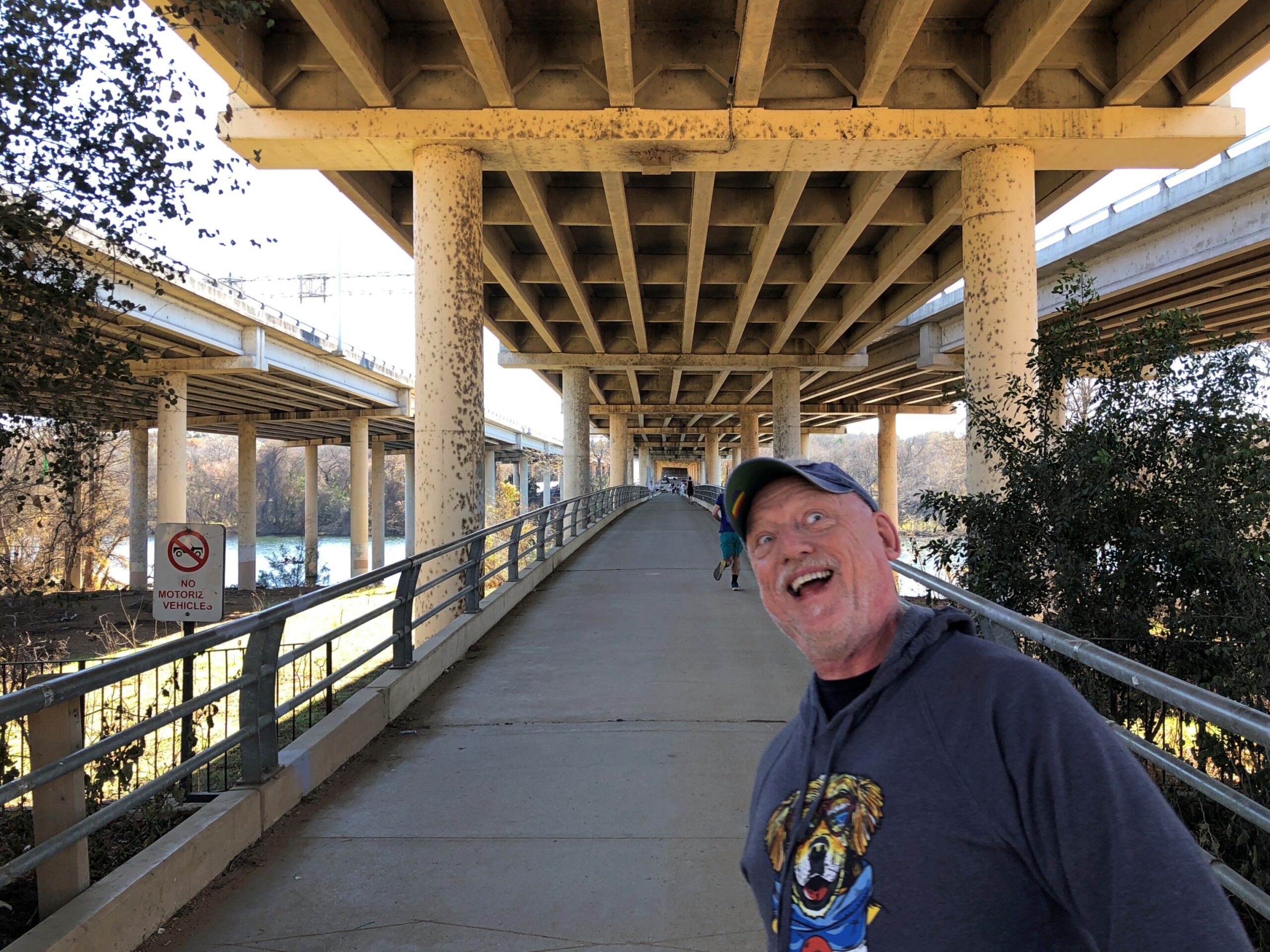
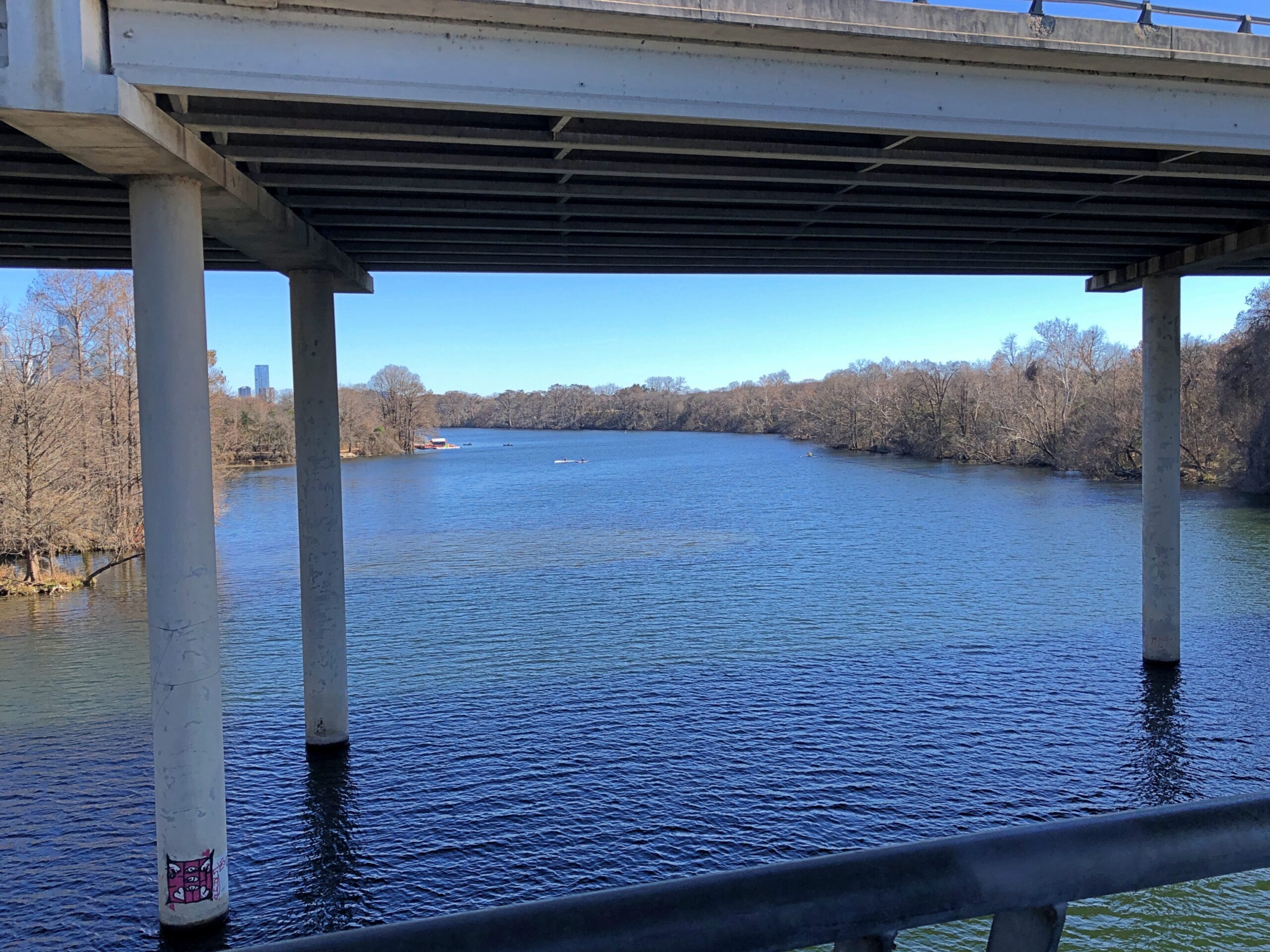
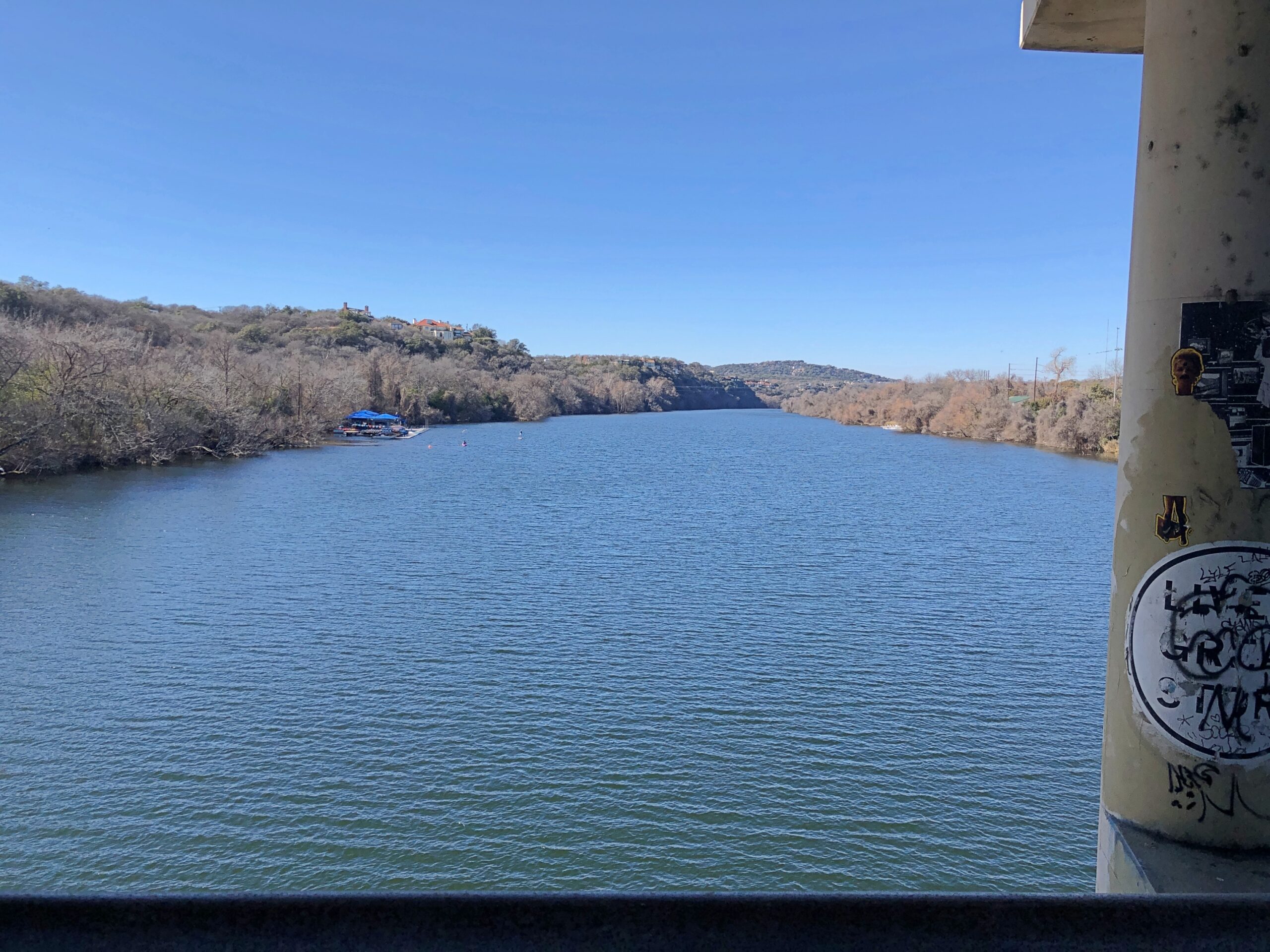
I’ll walk a mile for a good skyline, and in the case of Austin recently, that’s pretty much what we did. We did a walkabout around the banks of the Colorado River not far from downtown. We crossed the river at one point, via a pedestrian bridge under the Mopac Expressway.

The Colorado.

Our stroll took us to the other side of the river, up mild hills on twisty paths, and through copses of gnarly South Texas trees in the massive Zilker Park.

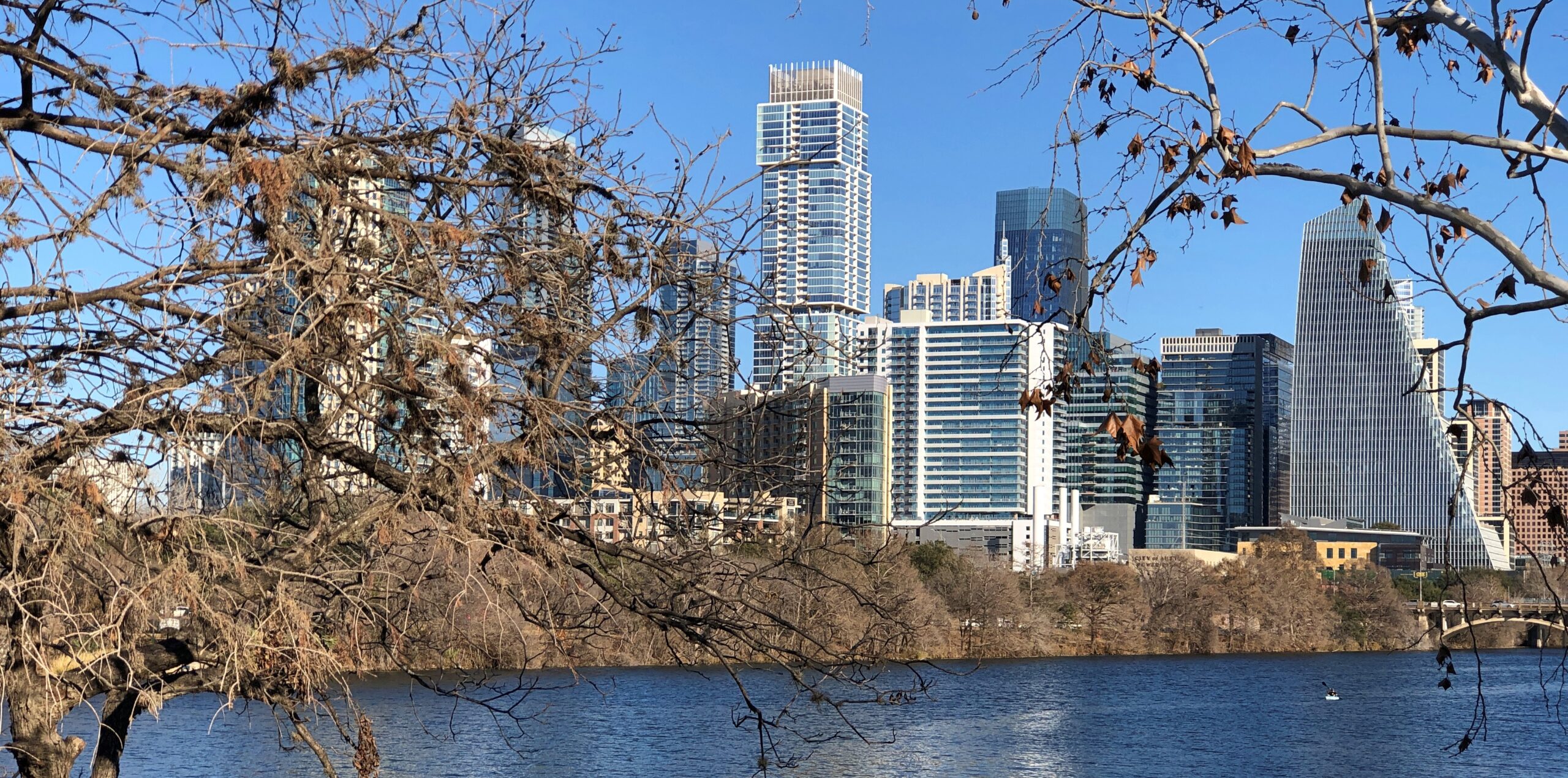
The view from the far bank.

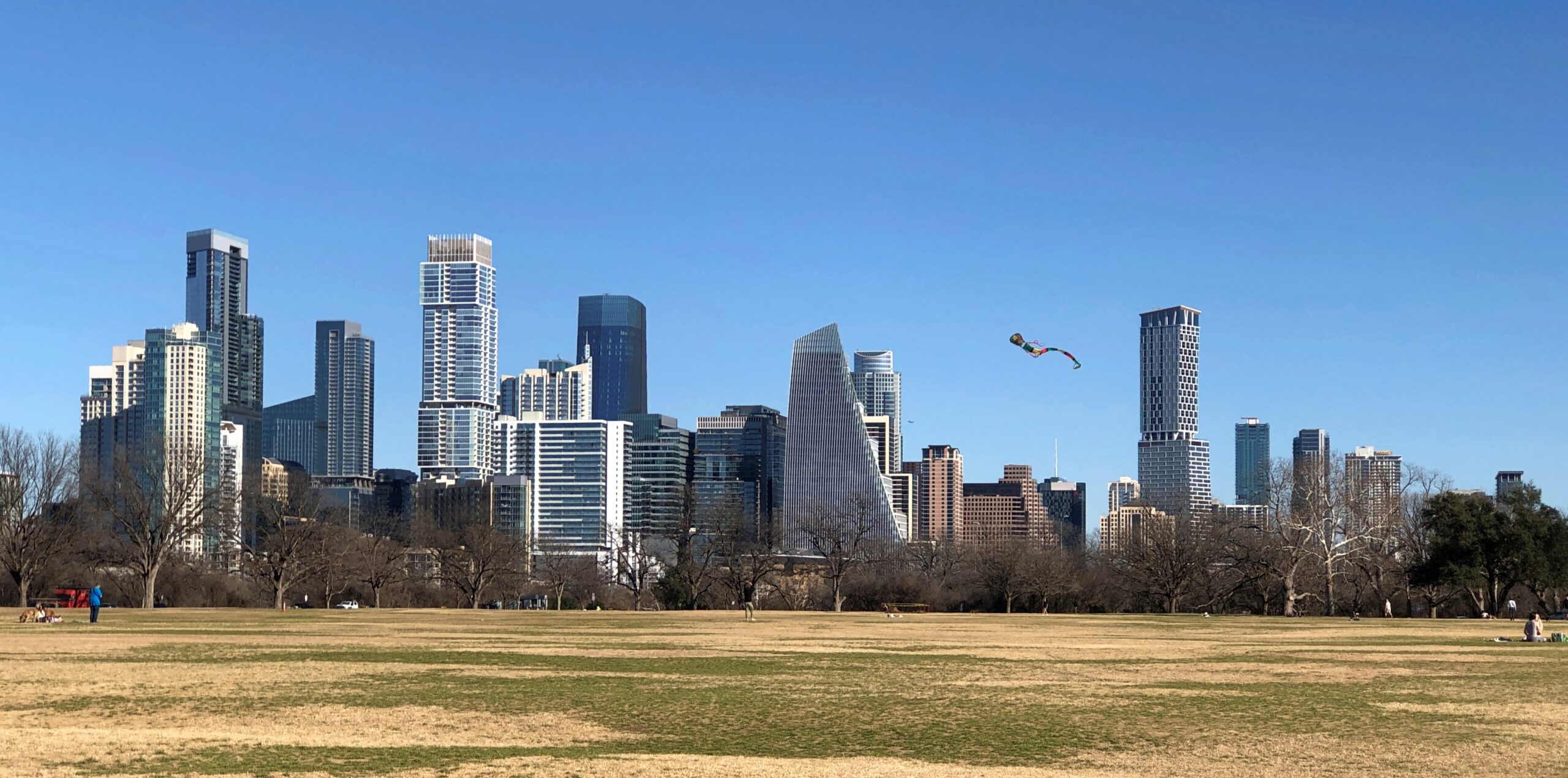
From the near bank, including a kite.

austin skyline

The crowded roads are annoying, and I’m glad I don’t have to deal with property prices in the city, but even so the shiny, growing skyline is a thing of wonder.

Downtown Austin

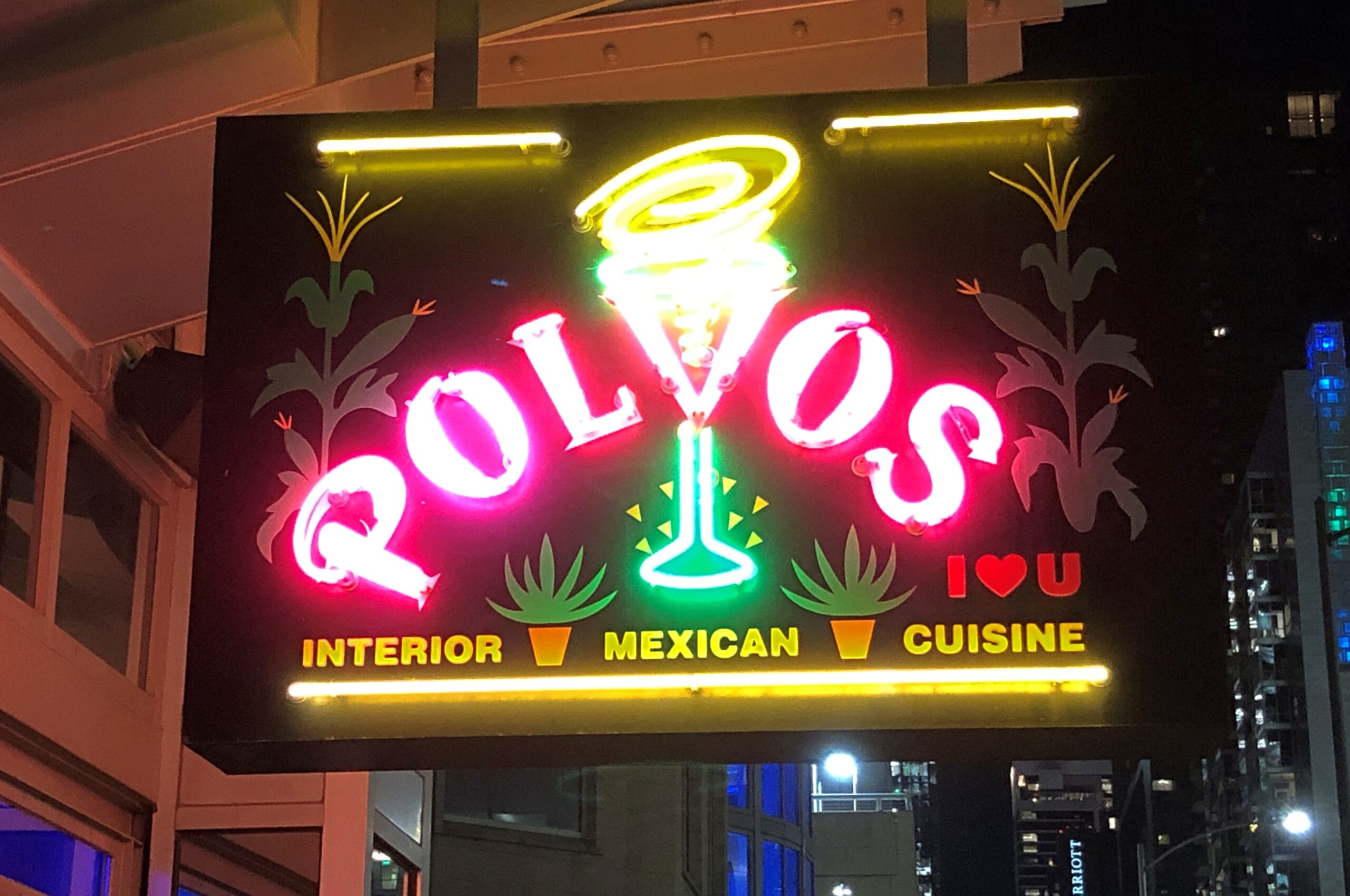
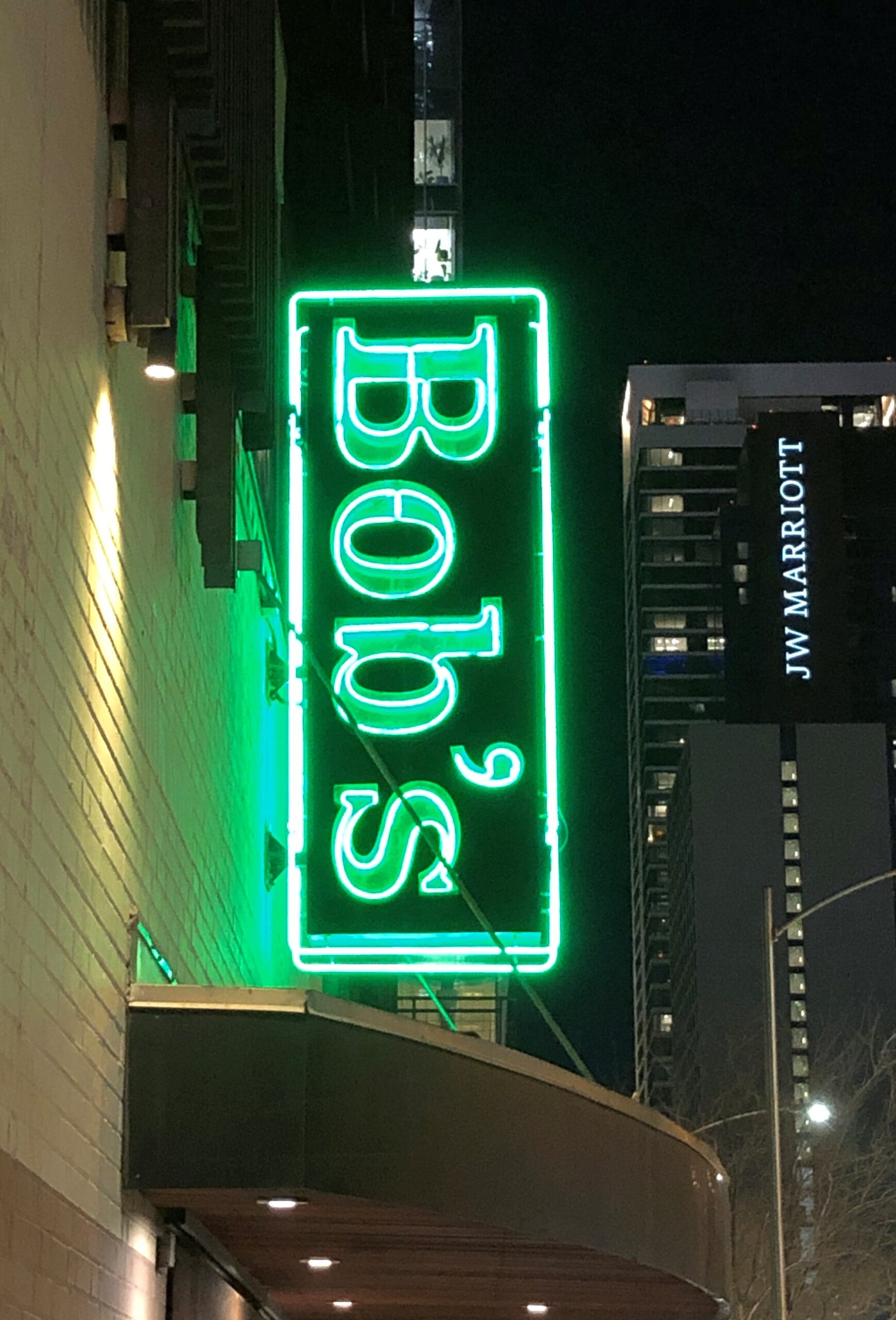
Nighttime downtown Austin was our choice for another stroll. One reason: Austin neon.

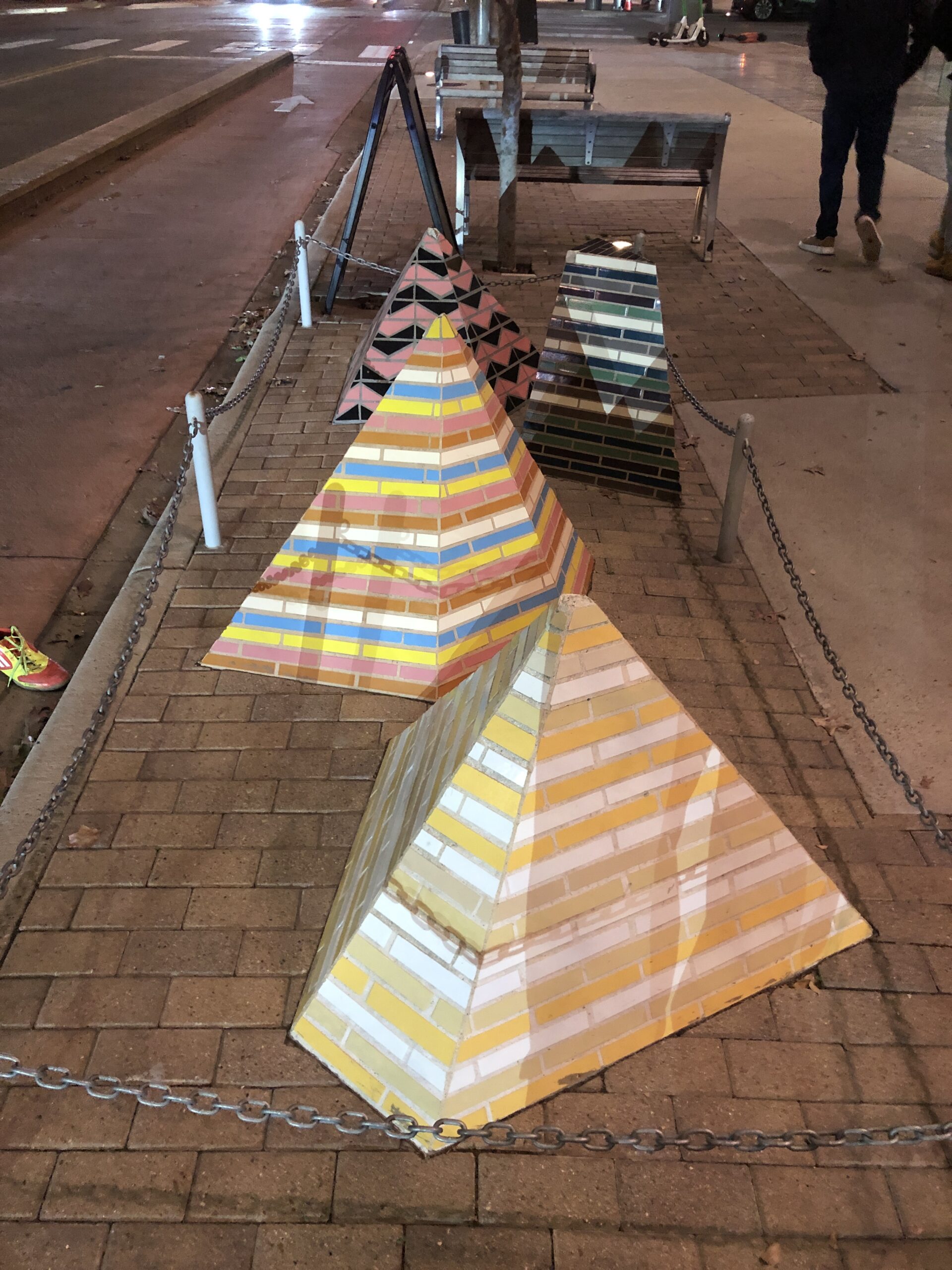
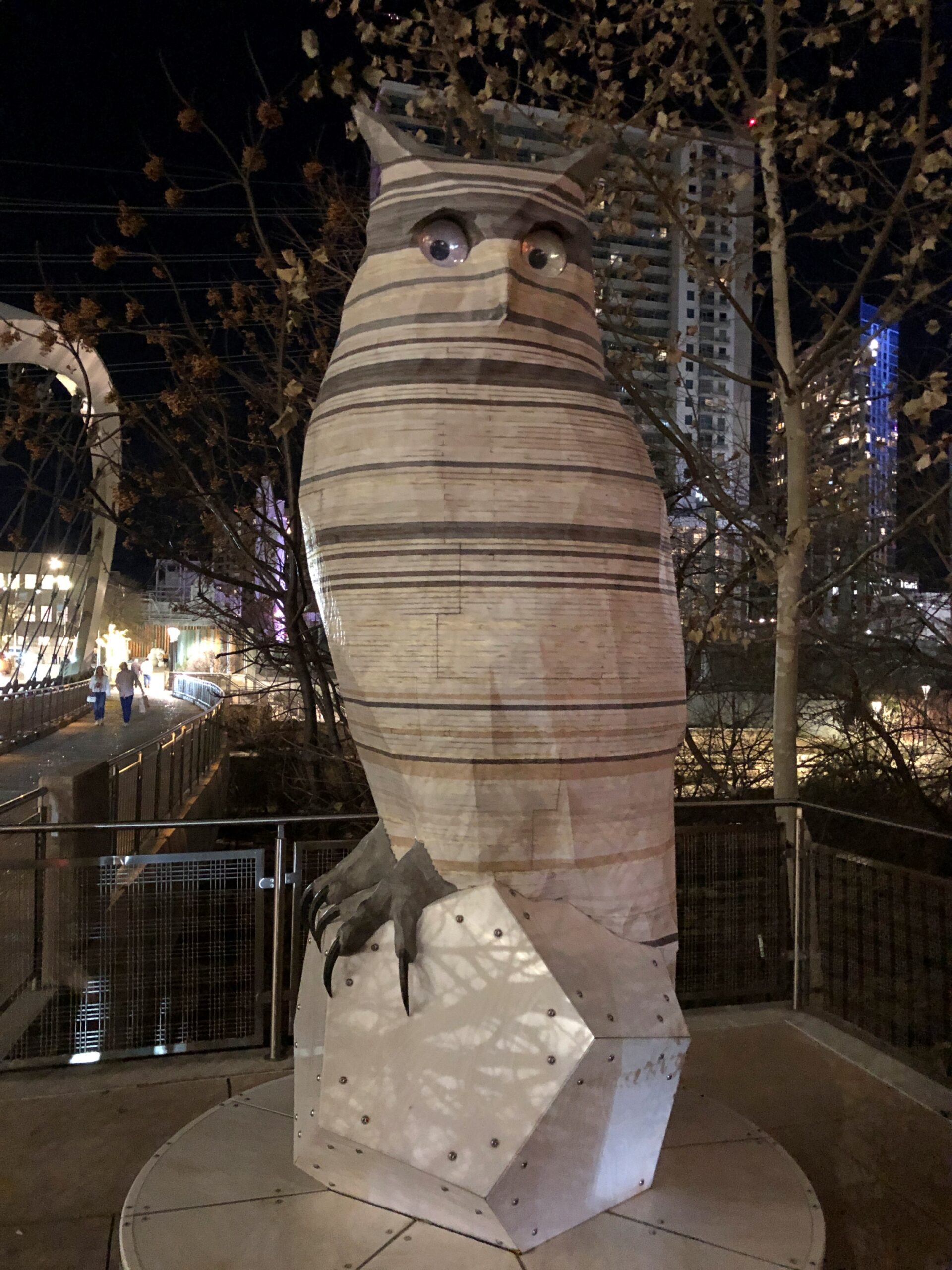
Some public art.

Downtown Austin 2026

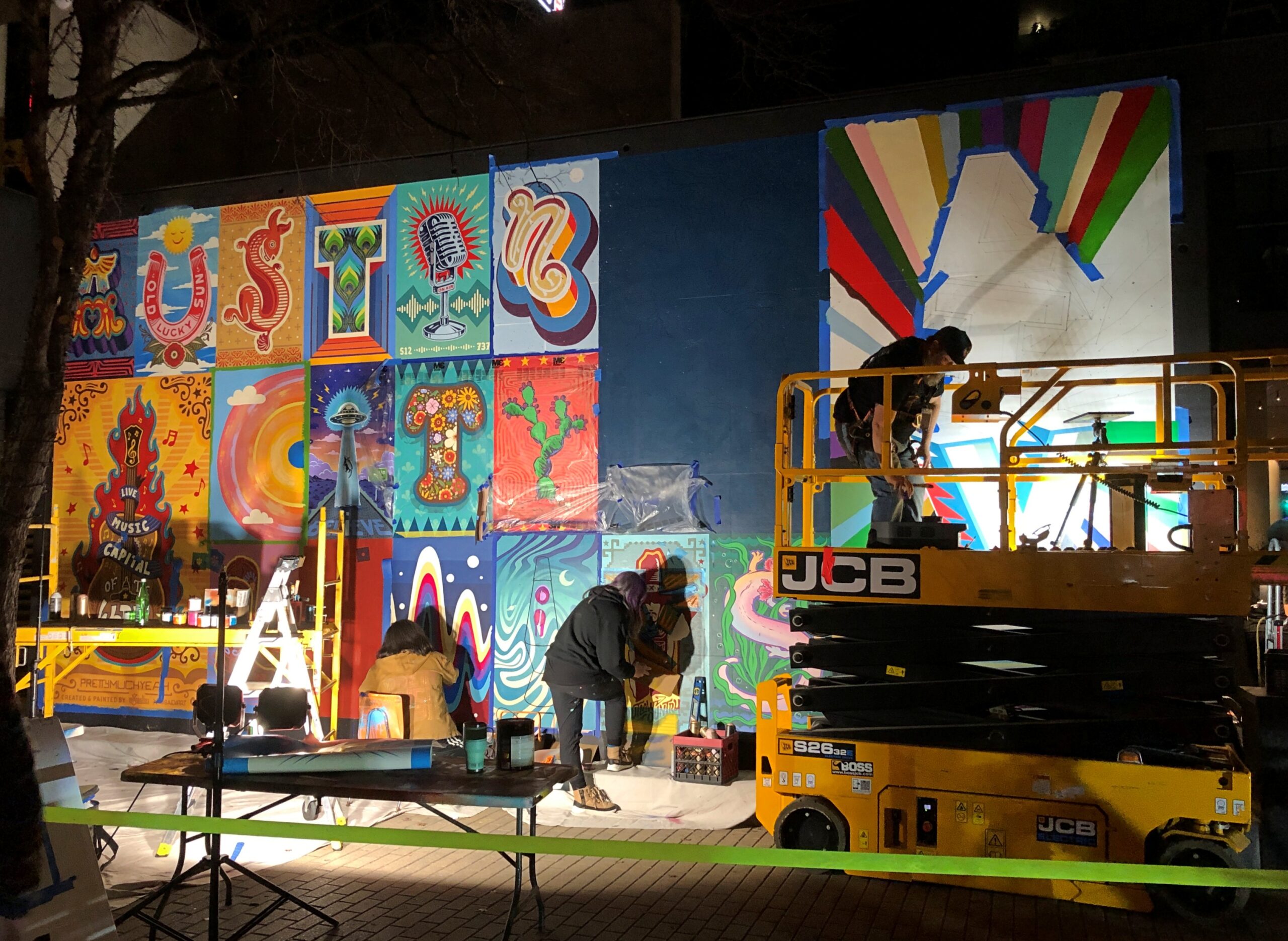
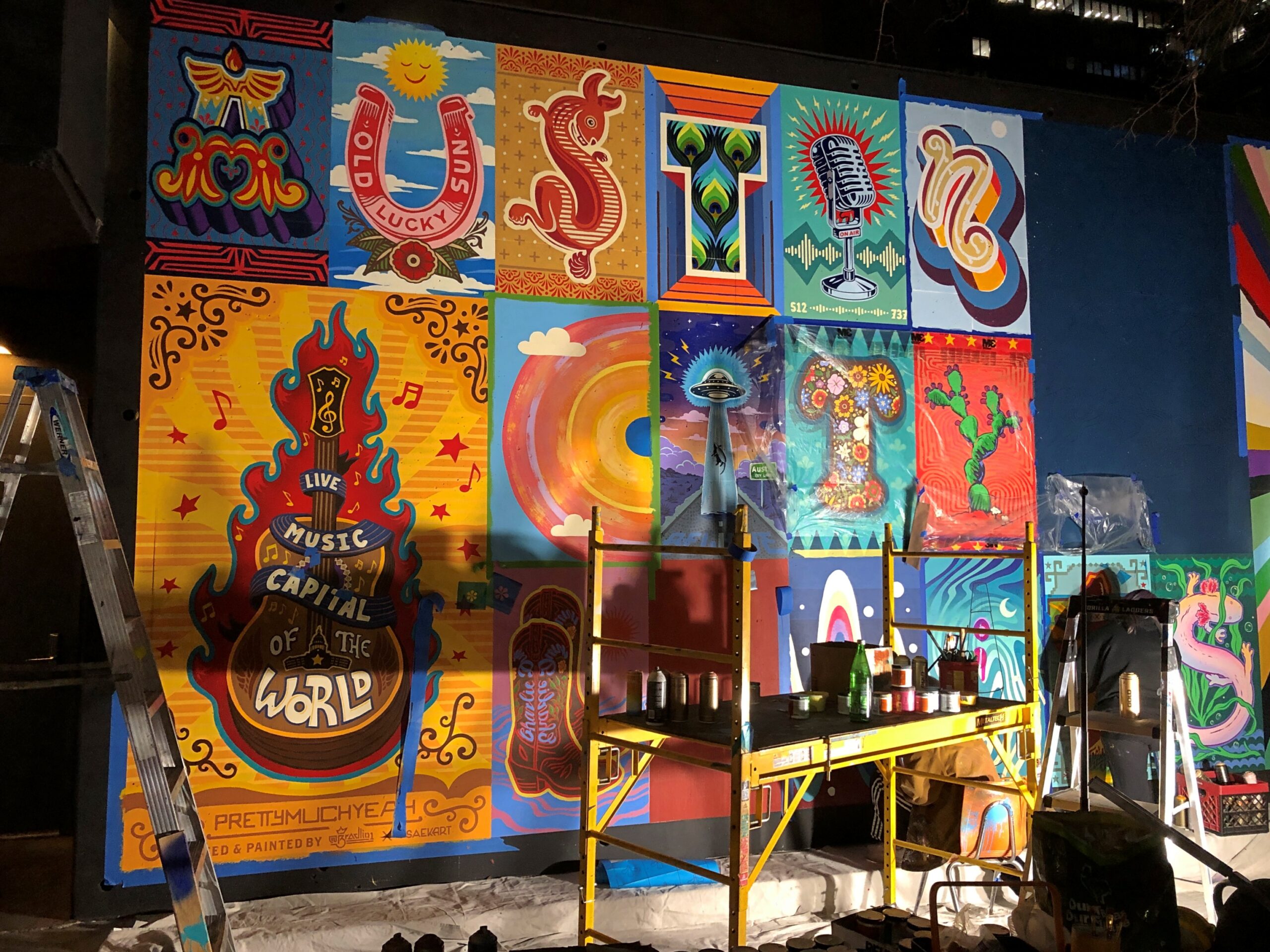
Saw a mural being created: honoring Austin City Limits, looks like.

More Austin, But No Moon Towers This Time

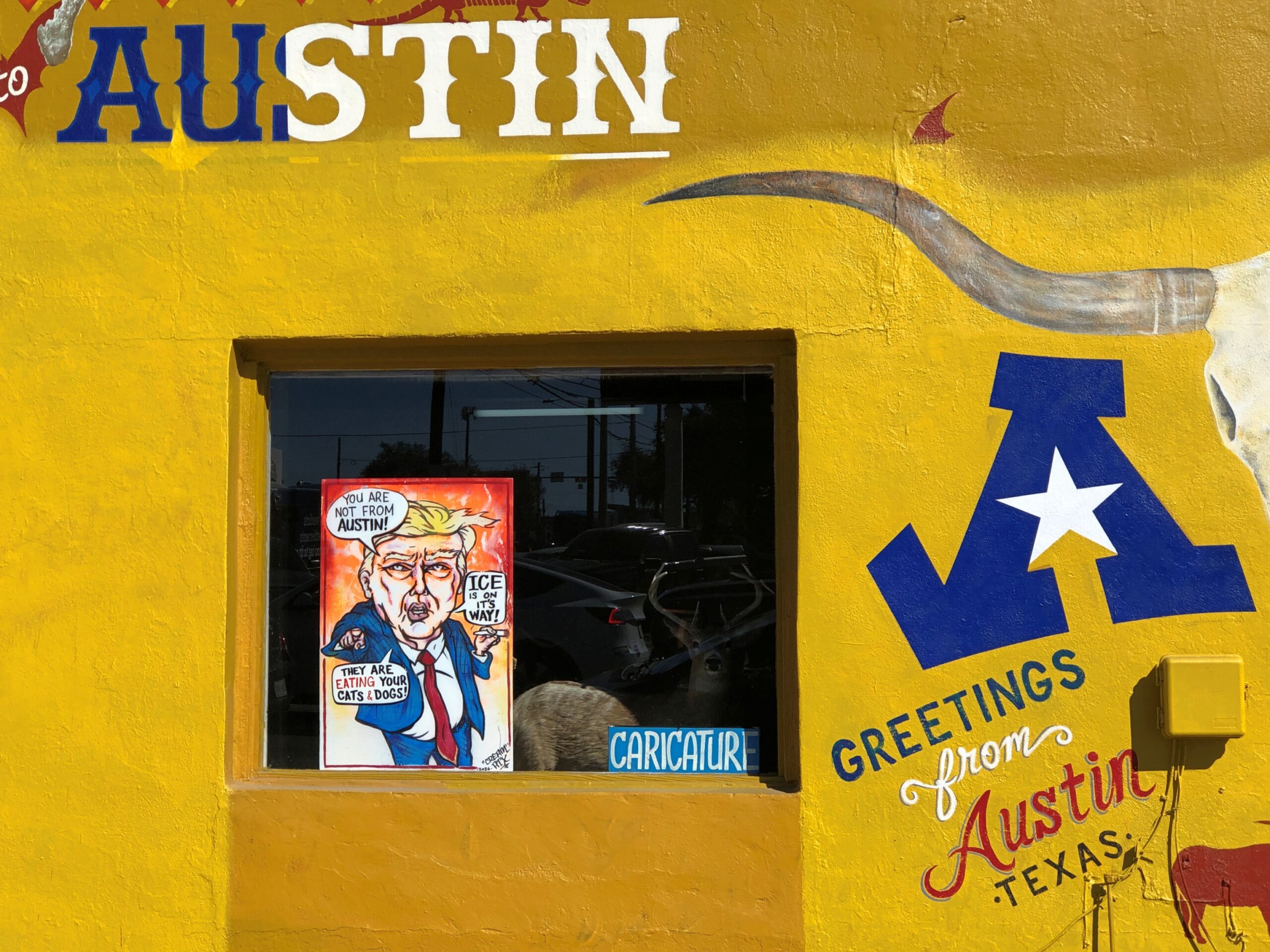
Austin 2026
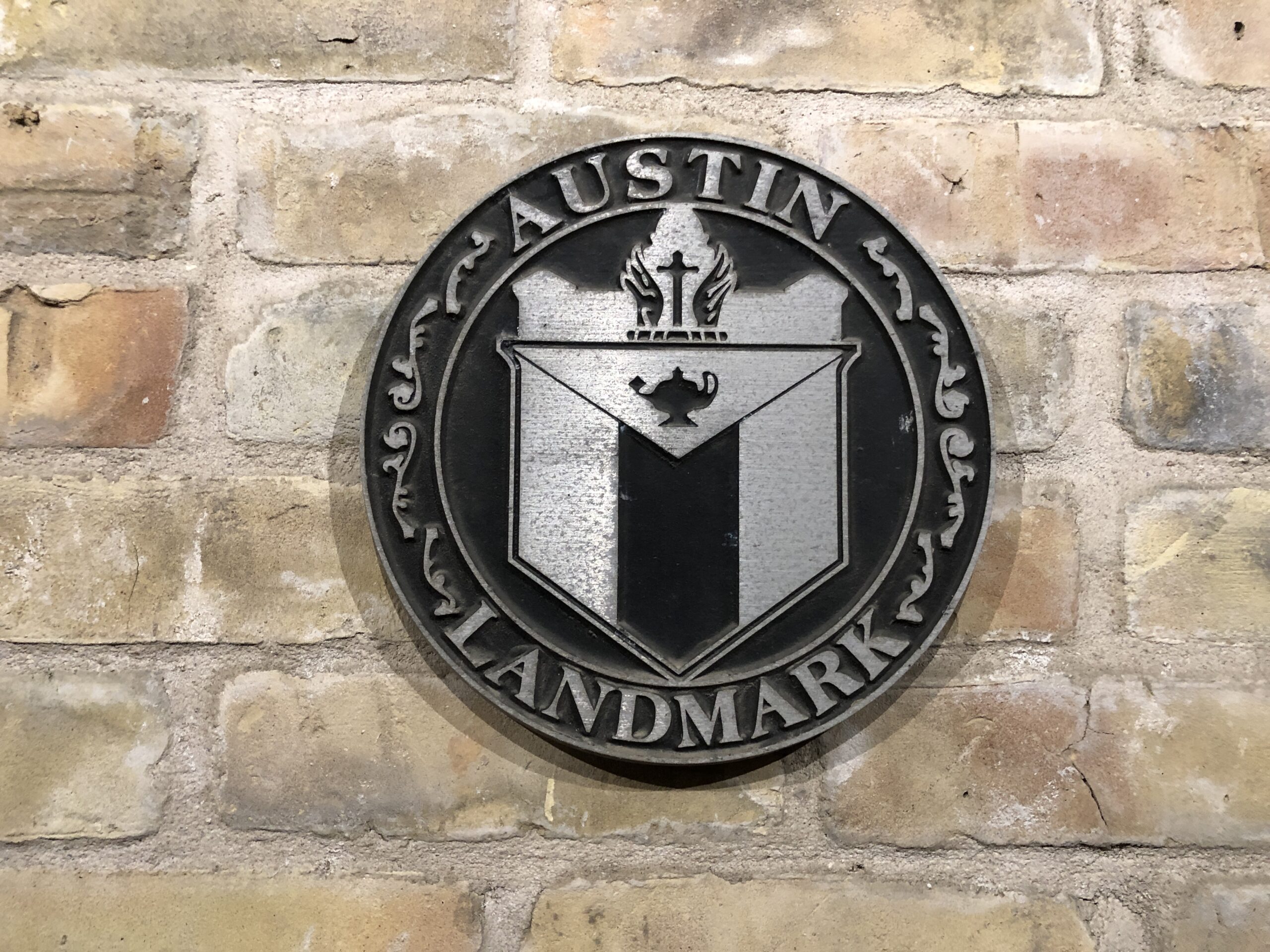
Austin Landmark Sign 2026

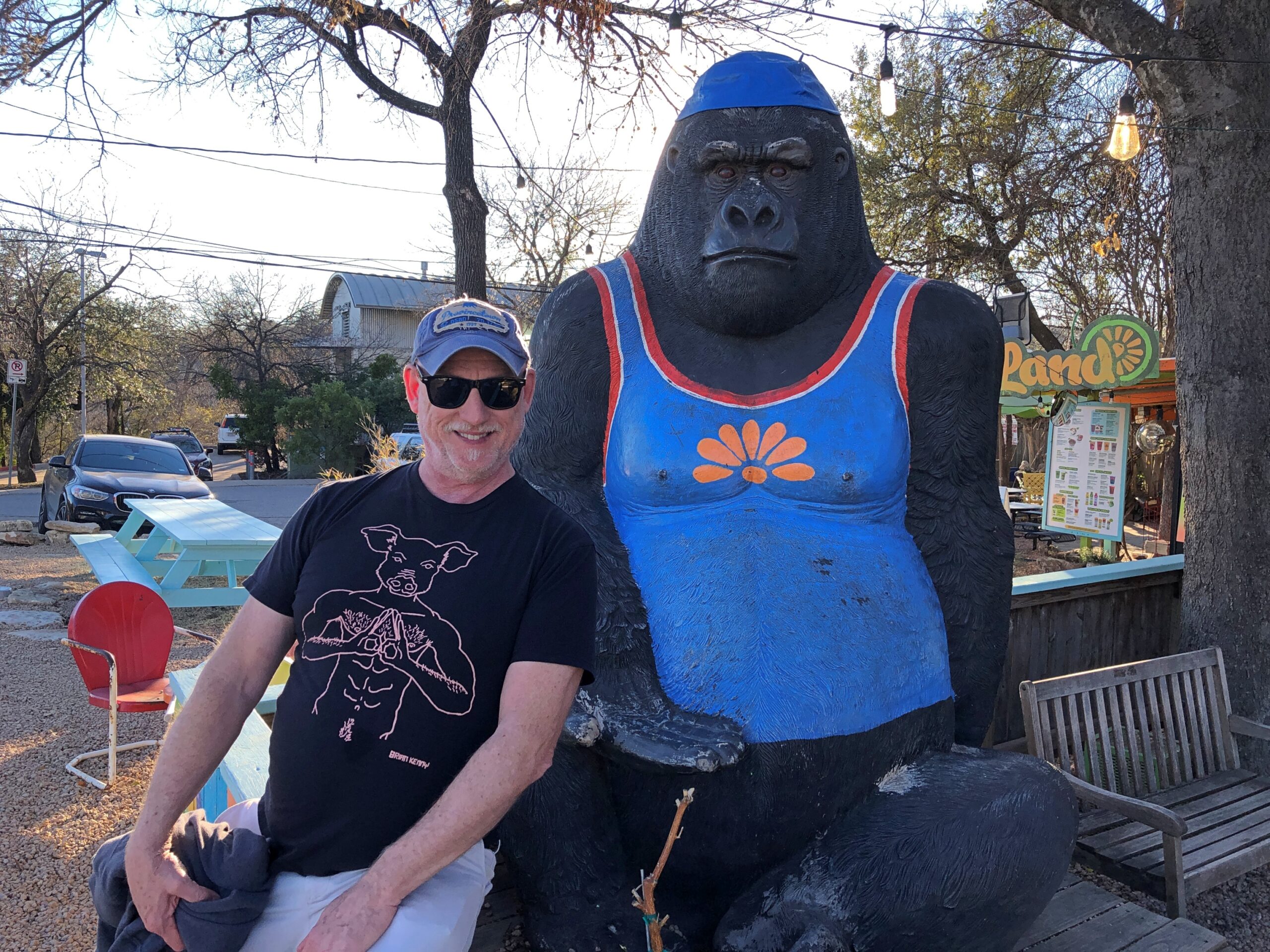
Popped into a joint called JuiceLand for refreshing beverages during my visit. One of many such locations in Austin, Houston and Dallas, the kind of place that has an “Our Ethos” subpage on its web site: “Our veggies and add-ins are always organic, and we source healthy, high-quality, sustainable ingredients to provide our guests & crew with progressive, healthy, uniquely tasty food and drinks.” All that aside, they served some good concoctions. Guess it’s good to have an ethos.

Not photobombing per se by Tom, but who could resist a photo op with the JuiceLand Gorilla?

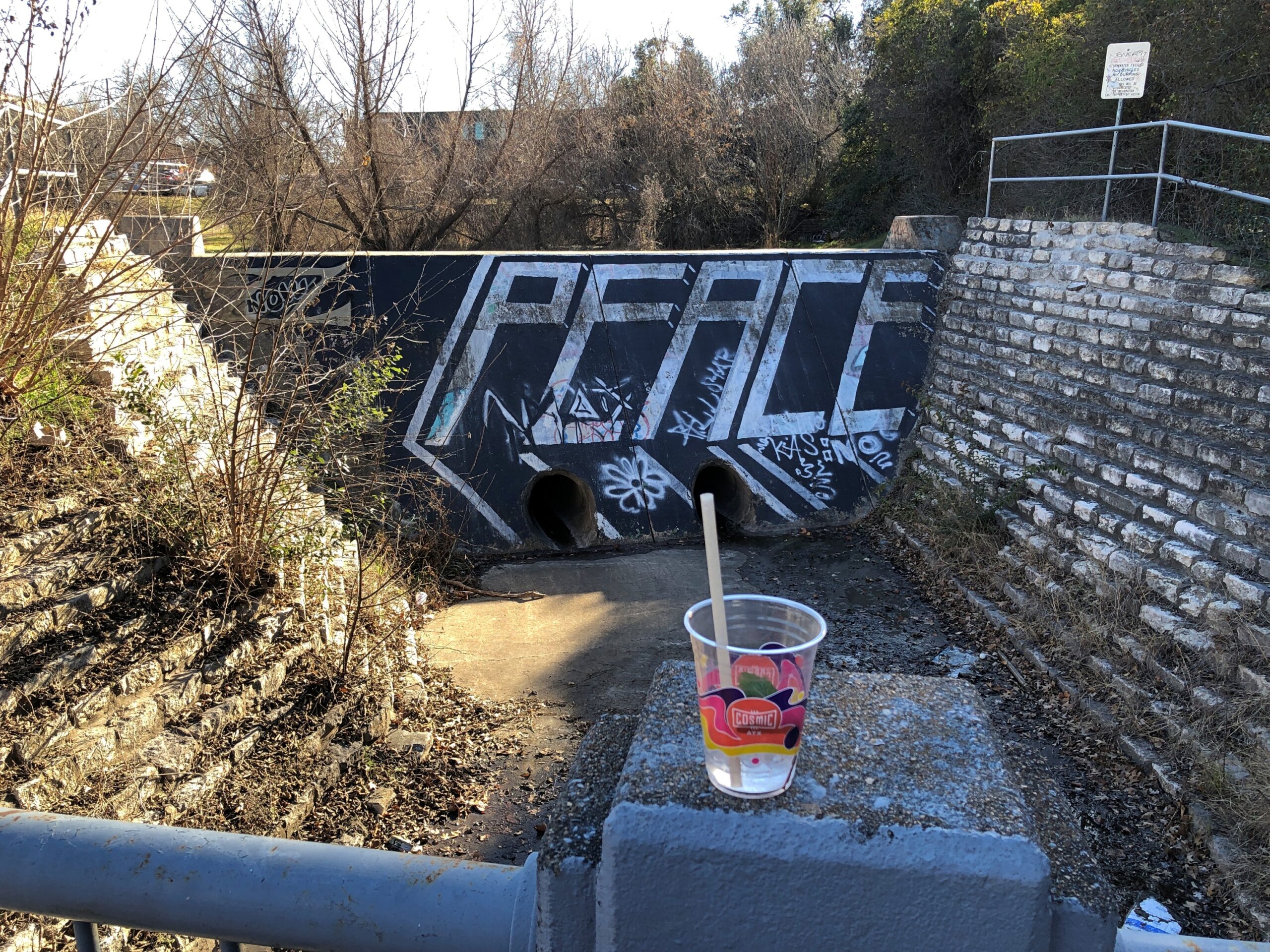
Yet another walk took us near local infrastructure. The plastic cup was mine, a recent souvenir of Cosmic, a wonderful outdoor food and beverage venue just off South Congress. If it isn’t an Austin institution, it ought to be.
I’d like to say I wasn’t surprised, but somehow I was.

Five More Texas Courthouses, 2026

The Republic of Texas started out with 23 counties, with more carved out of those in the years afterward, until the most recent establishment, Kenedy County, in 1921. In our time, there are 254 counties, including (slightly) infamously, Loving County, pop. 64 last time I checked. If you go looking for a county with fewer people anywhere in the entire United States, you’ll be out of luck. Loving is it.

Strictly as a tourist proposition, county courthouses have a lot to recommend them. In all but the largest cities, they’re usually easy to find, on a square ringed by smaller buildings, and pretty much in the middle of their towns. They’re free, but not always open. Some have small museums; a few former courthouses are themselves more sizable museums. A good many date from the golden age of U.S. courthouse building, which I’d put from the end of the Civil War to the beginning of World War I.

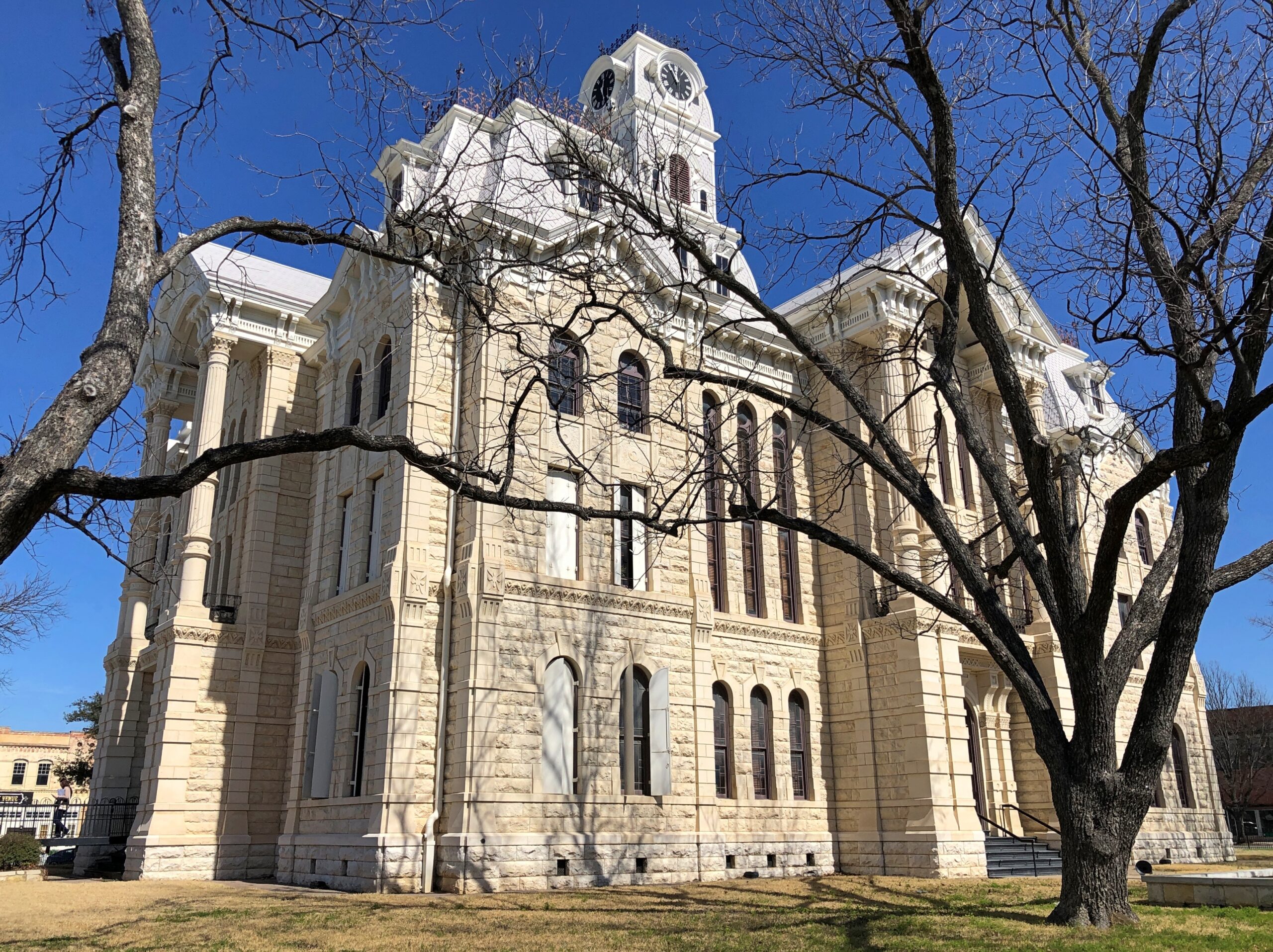
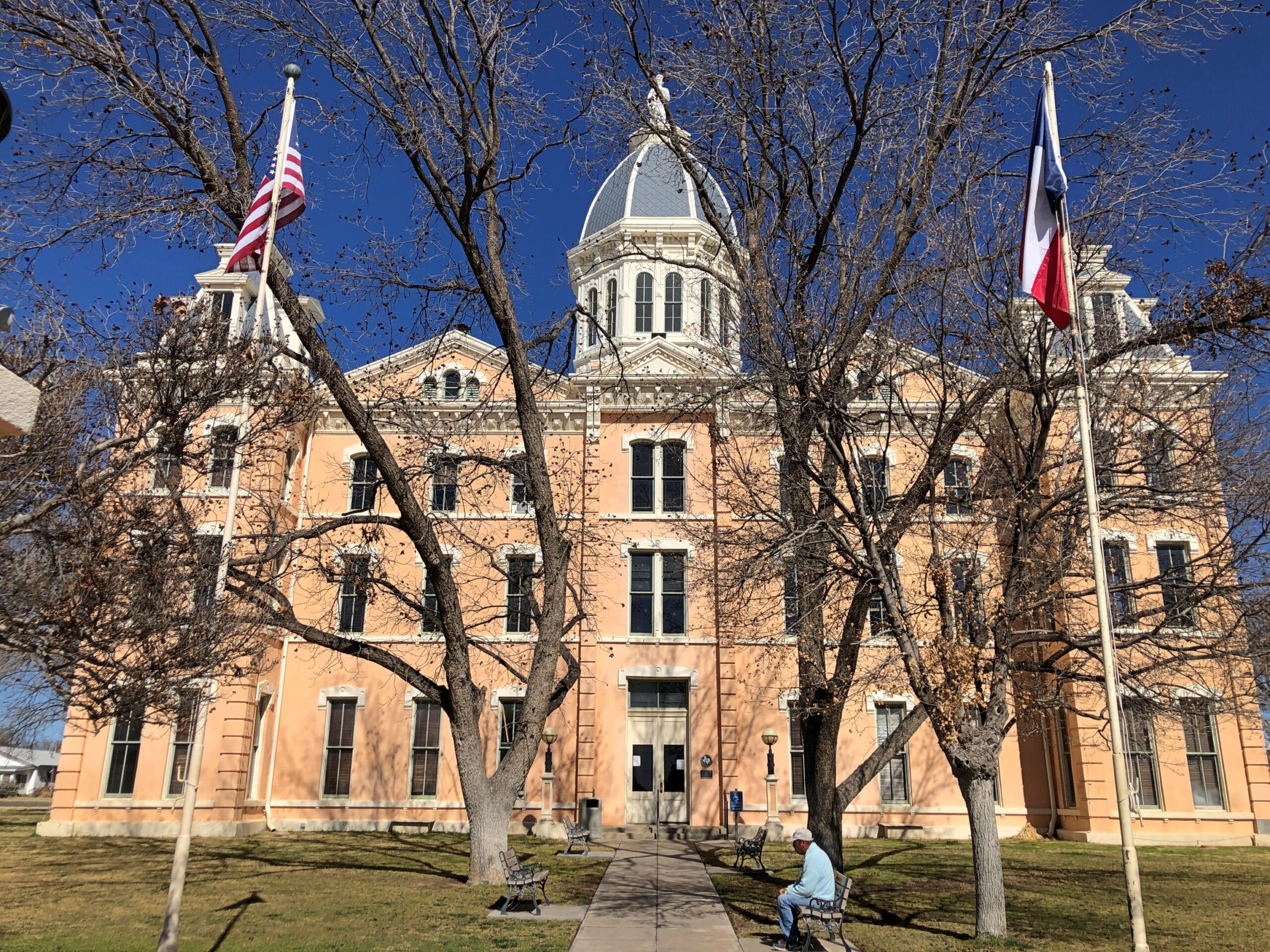
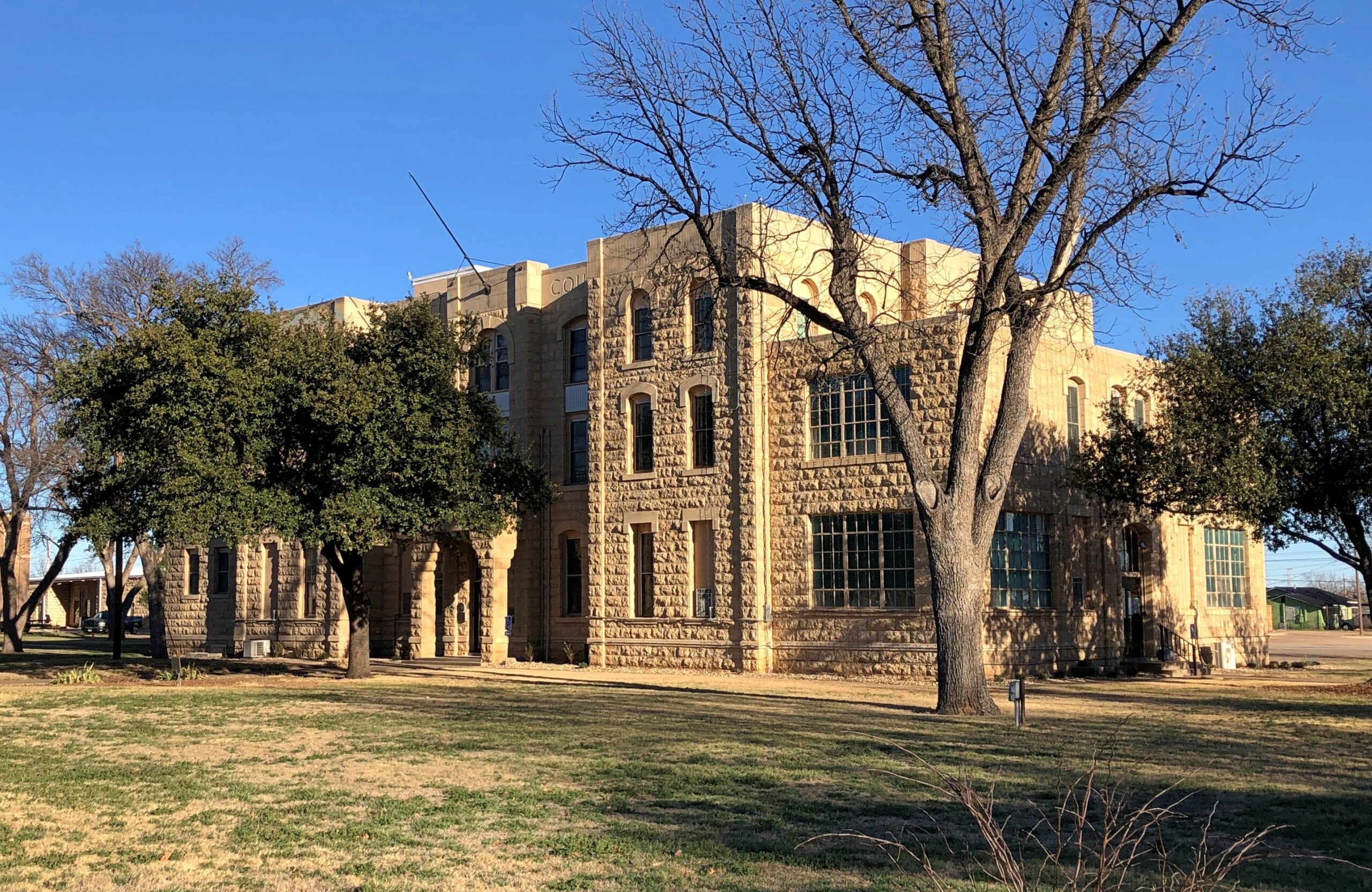
With all that in mind, the following are five more Texas county courthouses I saw this time around.

Hill County, Hillsboro, Texas.

Presidio County, Marfa, Texas.

Runnels County, Ballinger, Texas

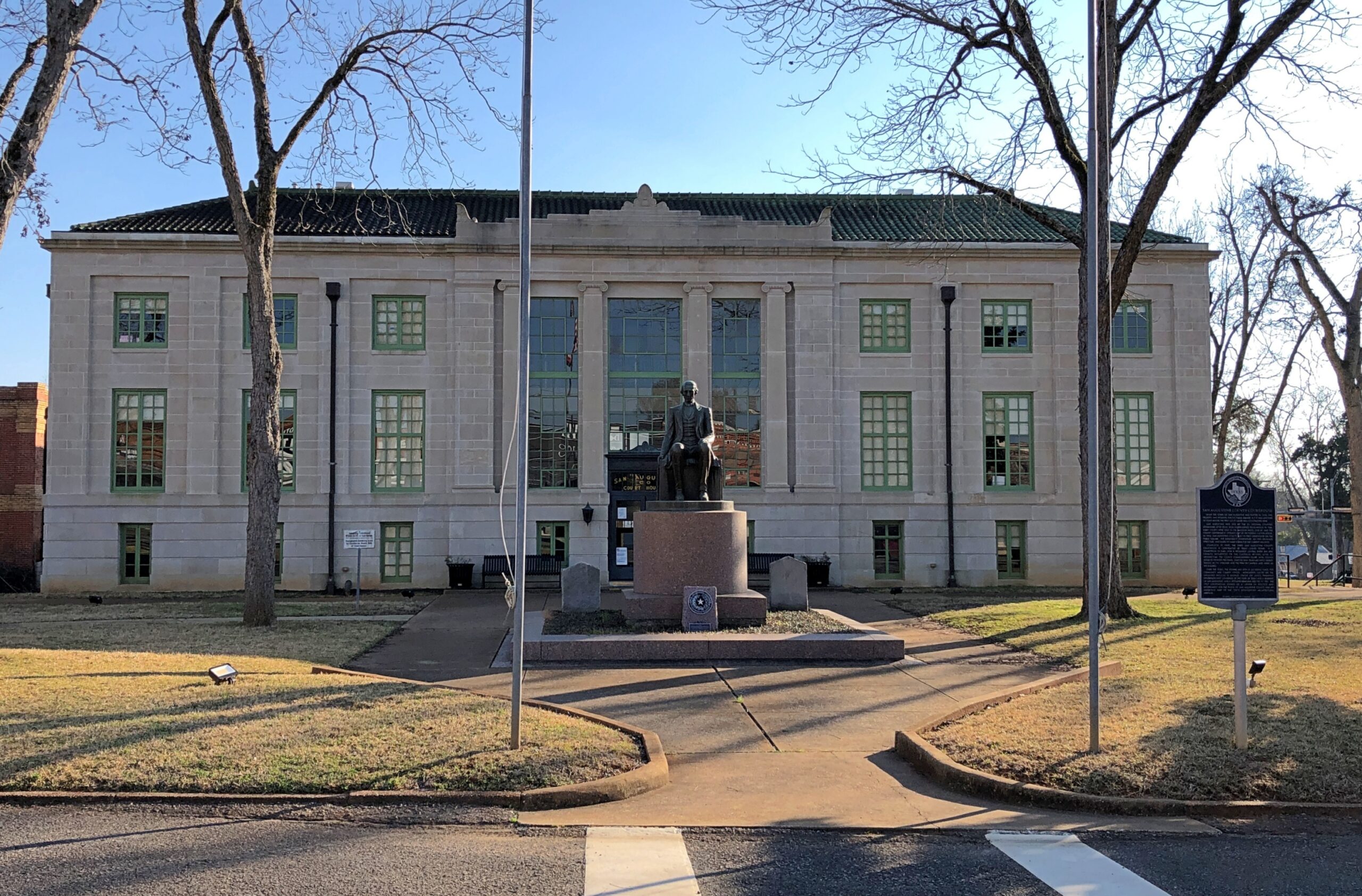
San Augustine County, San Augustine, Texas.

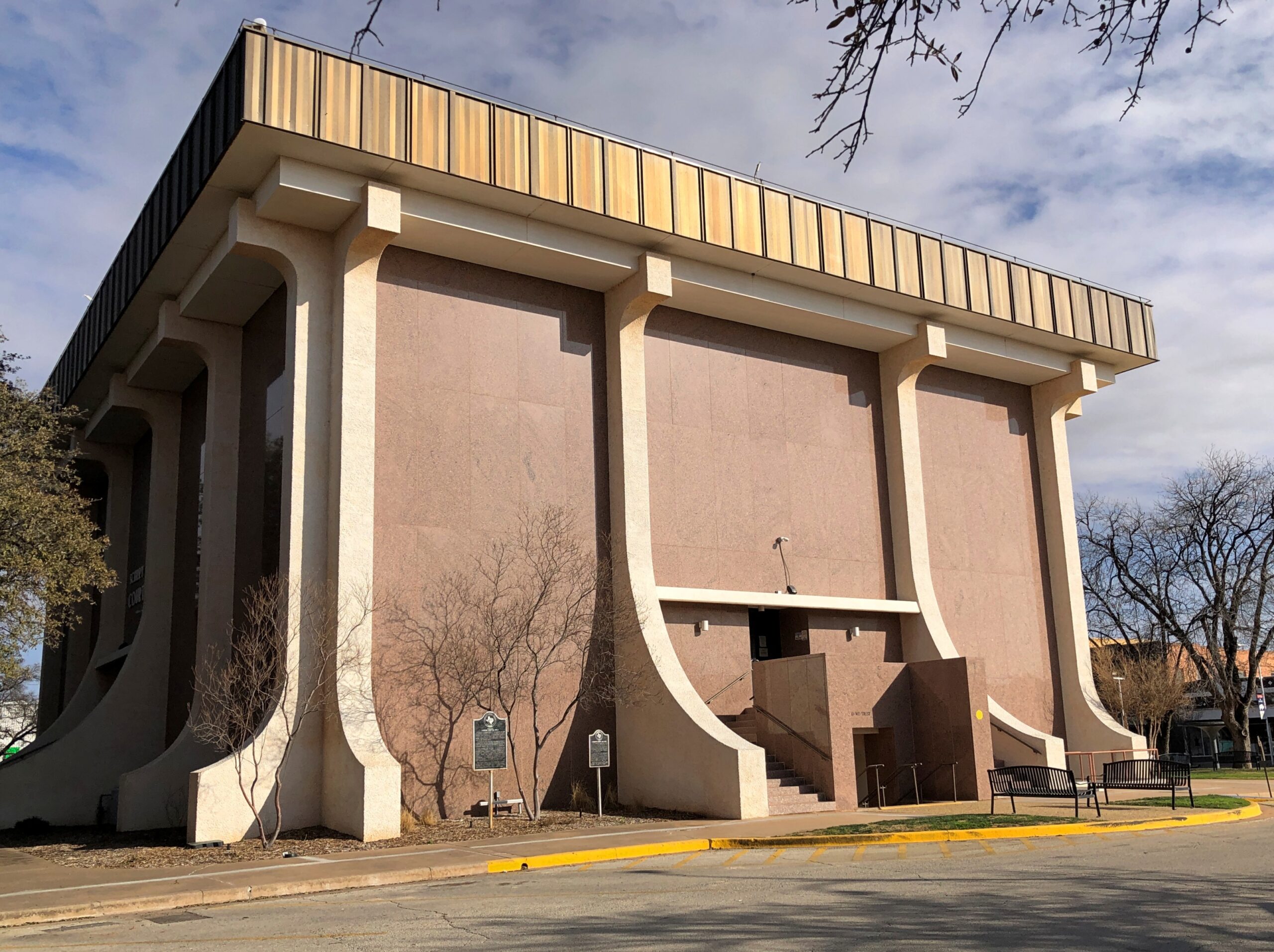
Scurry County, Snyder, Texas.

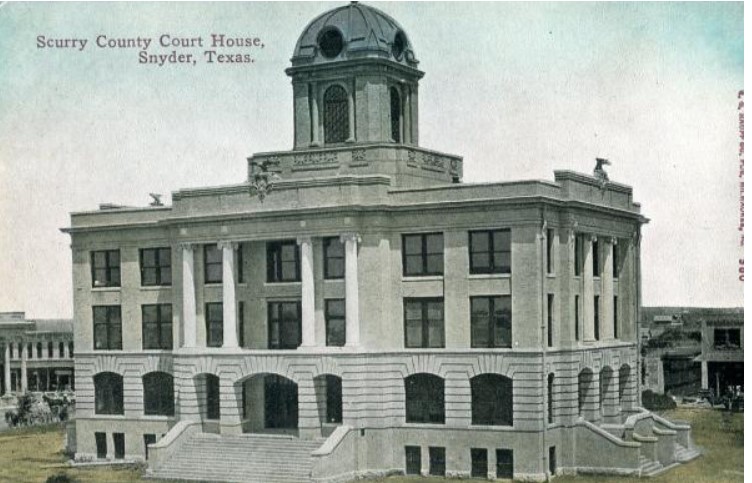
My maternal grandparents grew up in Scurry County. The courthouse I saw wasn’t the one grandpa would have seen as a young blade. That would be this.
My idle musing about visiting every 254 Texas courthouses was no mere musing for an architect who did exactly that, and blogged about it. About the modern Scurry County courthouse, he said, “Without a doubt, the 1972 alteration of the historic Scurry County courthouse is the most offensive desecration of a Texas courthouse to date. It’s truly sad.”
“These redesign plans are — interesting. Where are the windows?”
“Window are passé.”

Another resource for courthouse (and postcard) enthusiasts: Courthouse History, a collection of postcards depicting every county and parish in the United States. Now that’s an epic project.

Five Texas Courthouses, 2026

The first time I remember making my mother laugh was in the courthouse square in Denton, Texas, seat of Denton County. Kids make their parents laugh sometimes, unless the parent is completely sour on life, and then woe be to the child. We’d gotten out of church one Sunday noonish when I was maybe six. After church, it was our habit to drive over to the courthouse square to visit a small store for sodas and snacks. A highlight of the day, as you’d think. I remember the long outline of that store, and the rows of candy I explored.

The streets were crowded, maybe more than usual, and it probably meant that we, my mother that is, temporarily couldn’t find for a parking space. “The Baptists must have just gotten out of church,” she said, referring maybe to a specific church, or to the fact that many Baptists tended to be out and about on Sunday, this being Texas. (Quotes are reconstructions, because of course.)

“Do they know we’re Episcopalians?” I said.

That day or any other that I saw it in the mid-1960s, the Denton County Courthouse was a hulking presence, the focus of attention for blocks around, and, for a young kid, a mysterious place. Obviously an important place, but what goes on inside?

Last month, now in my own mid-60s of age and armed with a somewhat better knowledge of civics, I stopped to take a look at 10 or more county courthouses in Texas along the routes of my travels.

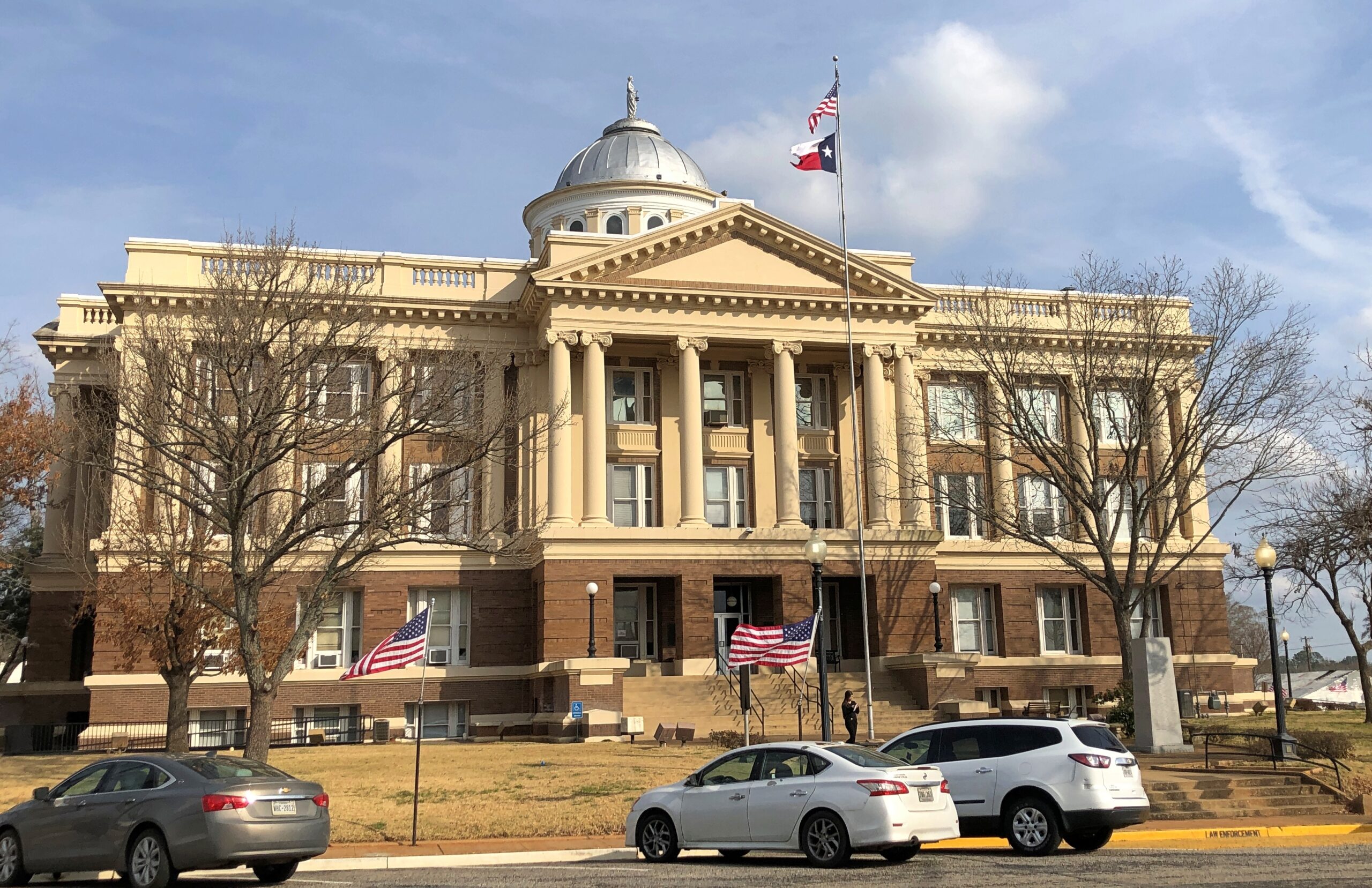
Anderson County. Palestine, Texas.

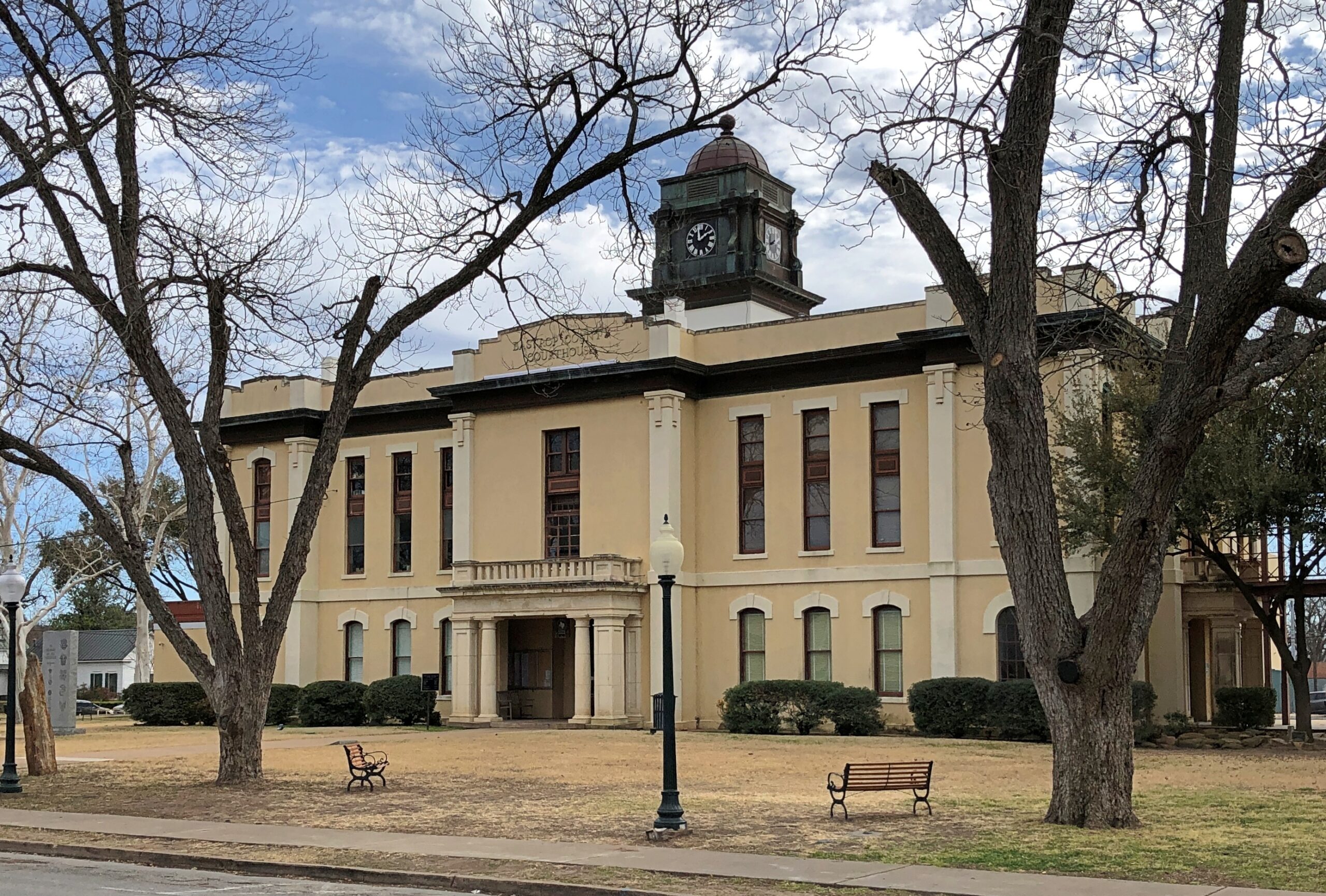
Bastrop County. Bastrop, Texas.

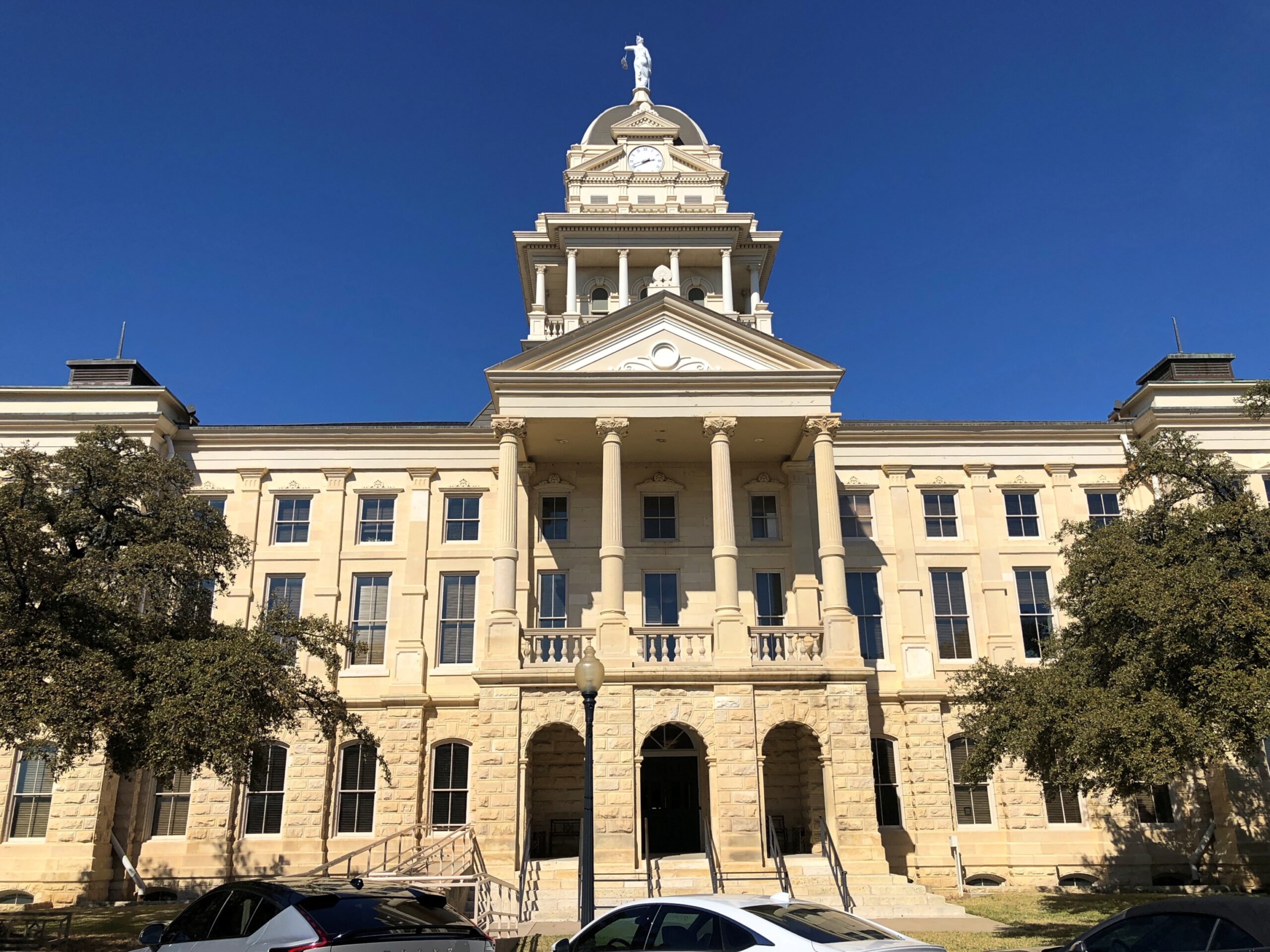
Bell County, Belton, Texas.

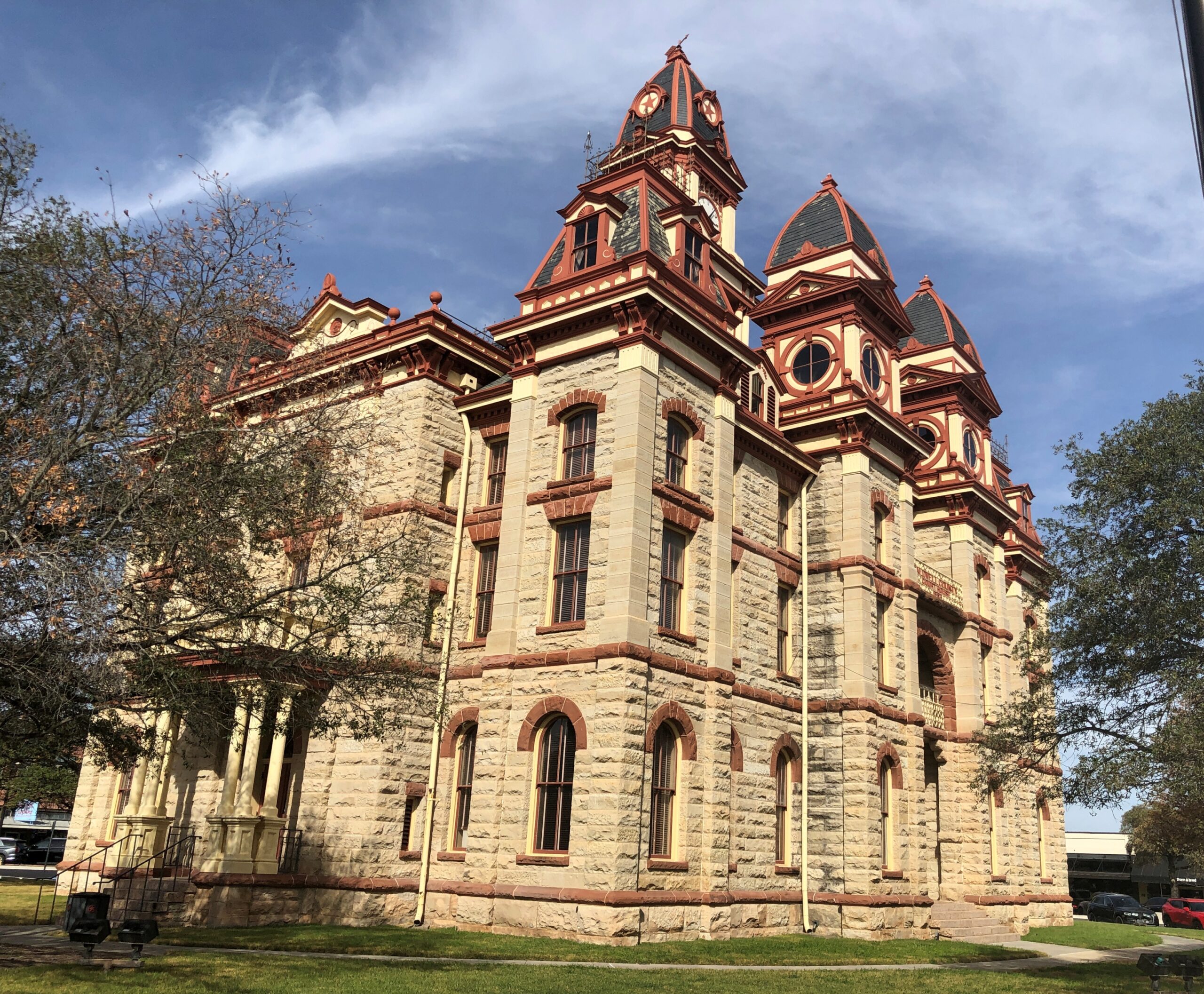
Caldwell County. Lockhart, Texas.

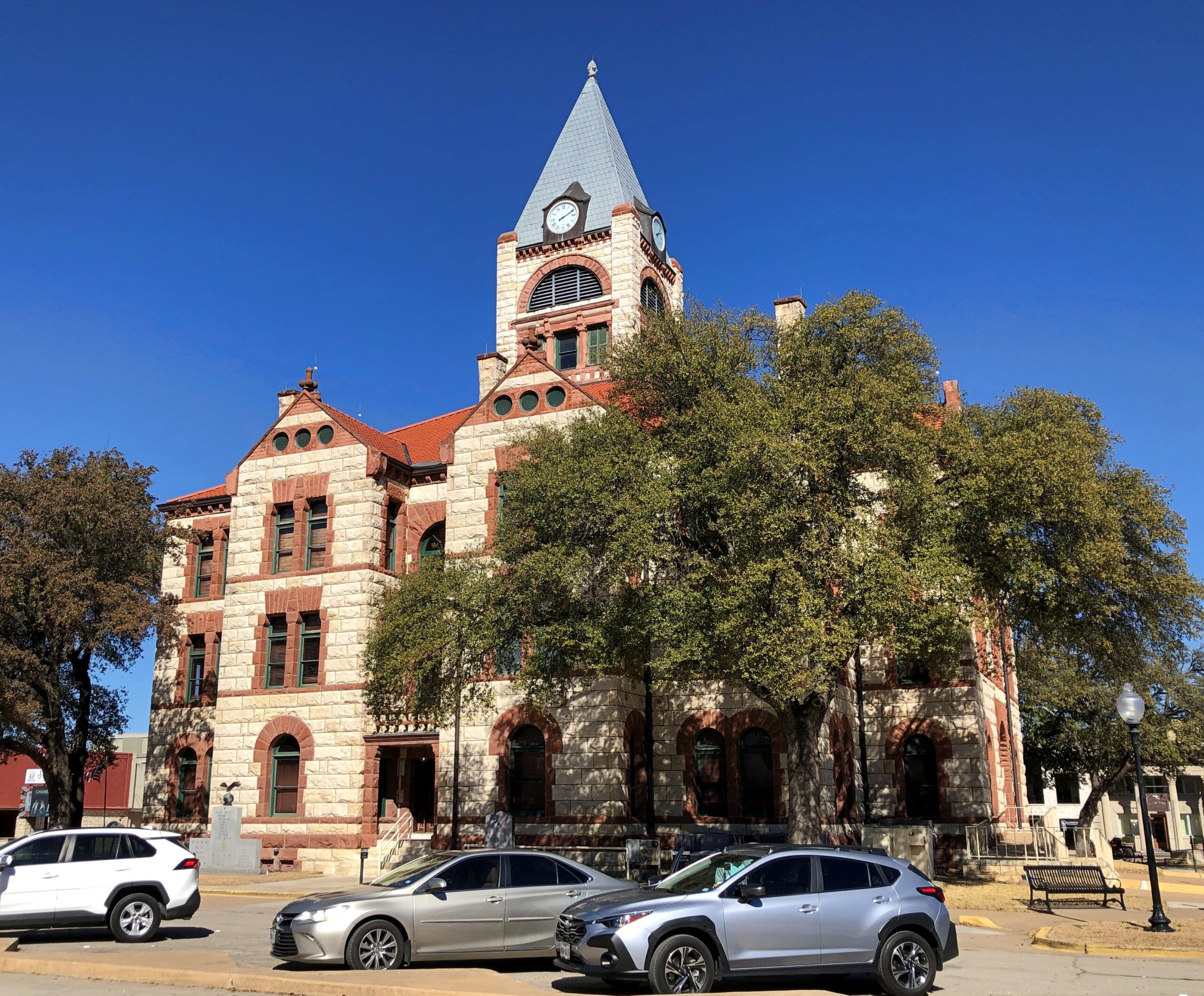
Erath County. Stephenville, Texas.

Sometimes I could get in, sometimes the building was closed. With one or two exceptions, I managed to walk all the way around the courthouses. There’s a niche travel blog for you (and I’m not the man to do it): circumambulate all 254 Texas county courthouses. Why? Because they’re there.