A number of flags hang near the Viking under its protective structure in Geneva, Illinois. As “Bob” our guide told us, they represent flags associated with the ship and its voyage. Its ultimate destination is represented by the modern Stars and Stripes near the bow. Not to be nitpicky — sometimes I want to be, though — a 44-star flag would have been more appropriate, being current in 1893.
There are also a couple of Norwegian flags.
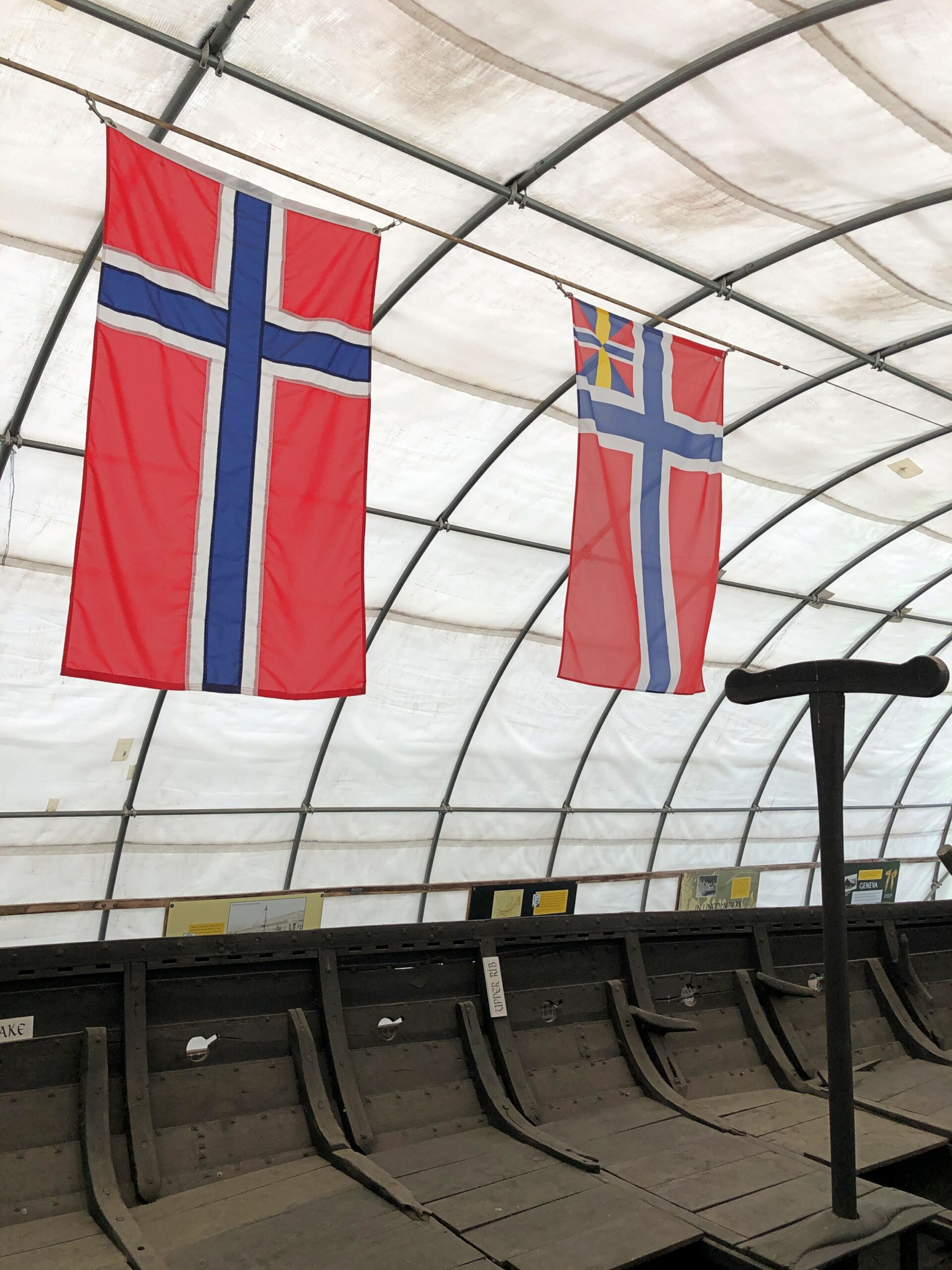
The current flag is to the left, of course. To the right, the flag that the ship actually flew, is the Norwegian flag bearing the union mark of Norway and Sweden. I don’t believe I’d ever seen that one before, and for good reason: the union mark was removed toward the end of the 19th century at insistence of the Norwegians, even before the union itself was dissolved in 1905.

Other flags associated with the ship (some retroactively) are behind the stern.
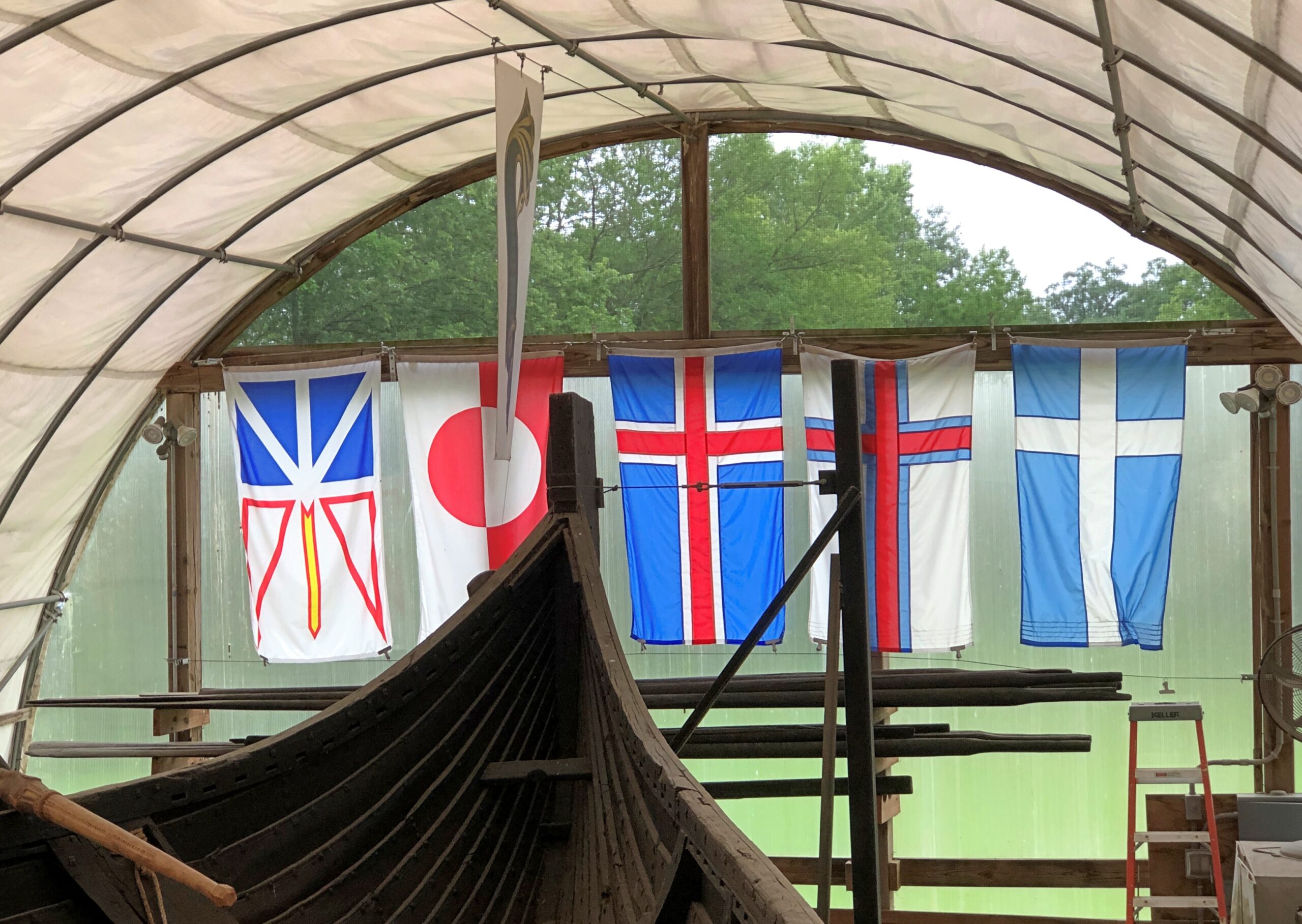
Left to right: The flag of Newfoundland and Labrador – really retroactive, considering it was adopted in 1980 – Greenland (even more retroactive, 1985), Iceland, the Faroe Islands and the Shetland Islands.
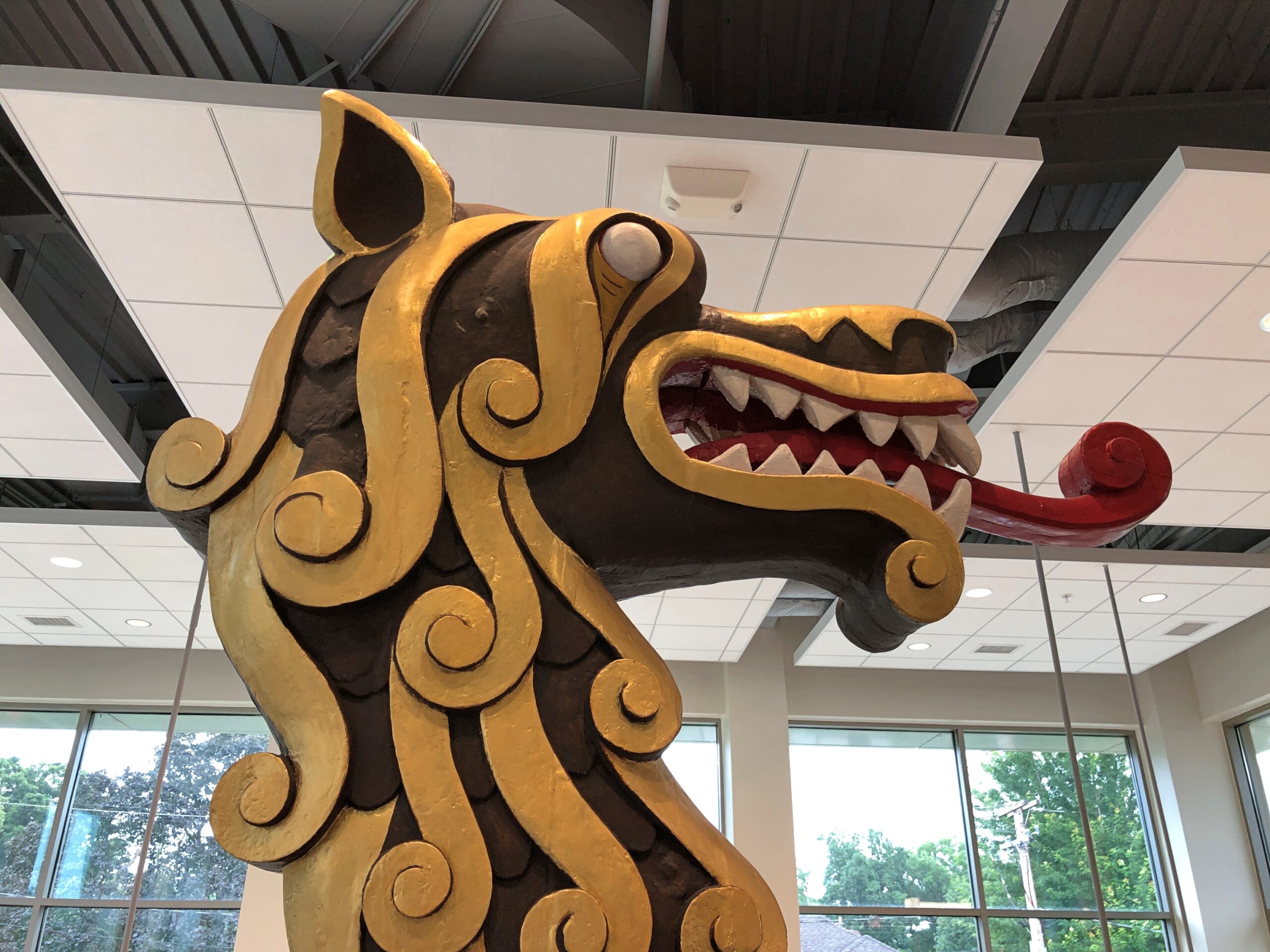
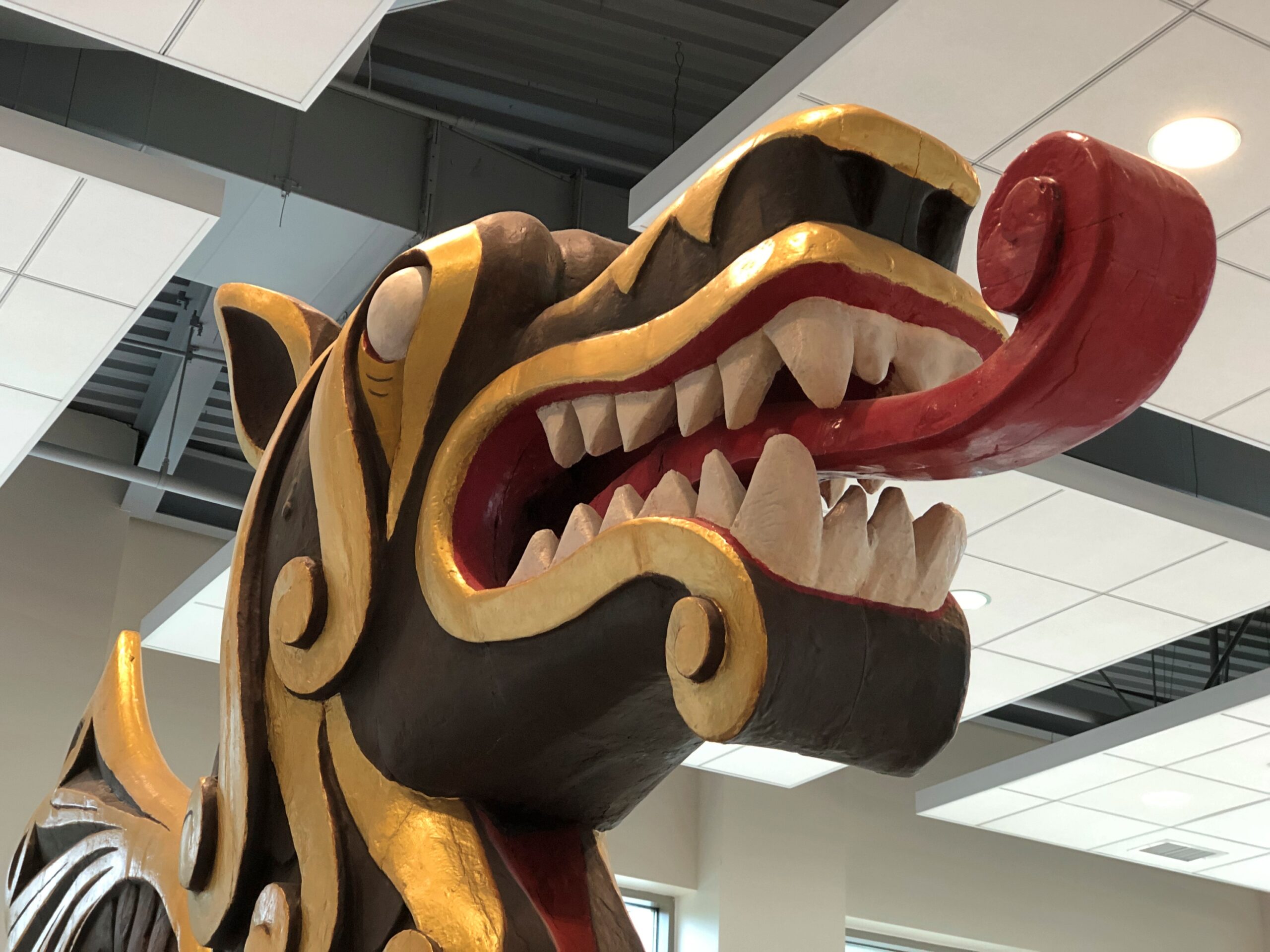
When we left the ship-shed, we weren’t quite done with the Viking. Turns out the ship’s figurehead, depicting the goddess Freya, isn’t attached to the ship, even though the same nonprofit owns it. For now, Freya is on display at the Geneva Public Library. We had to go see that.

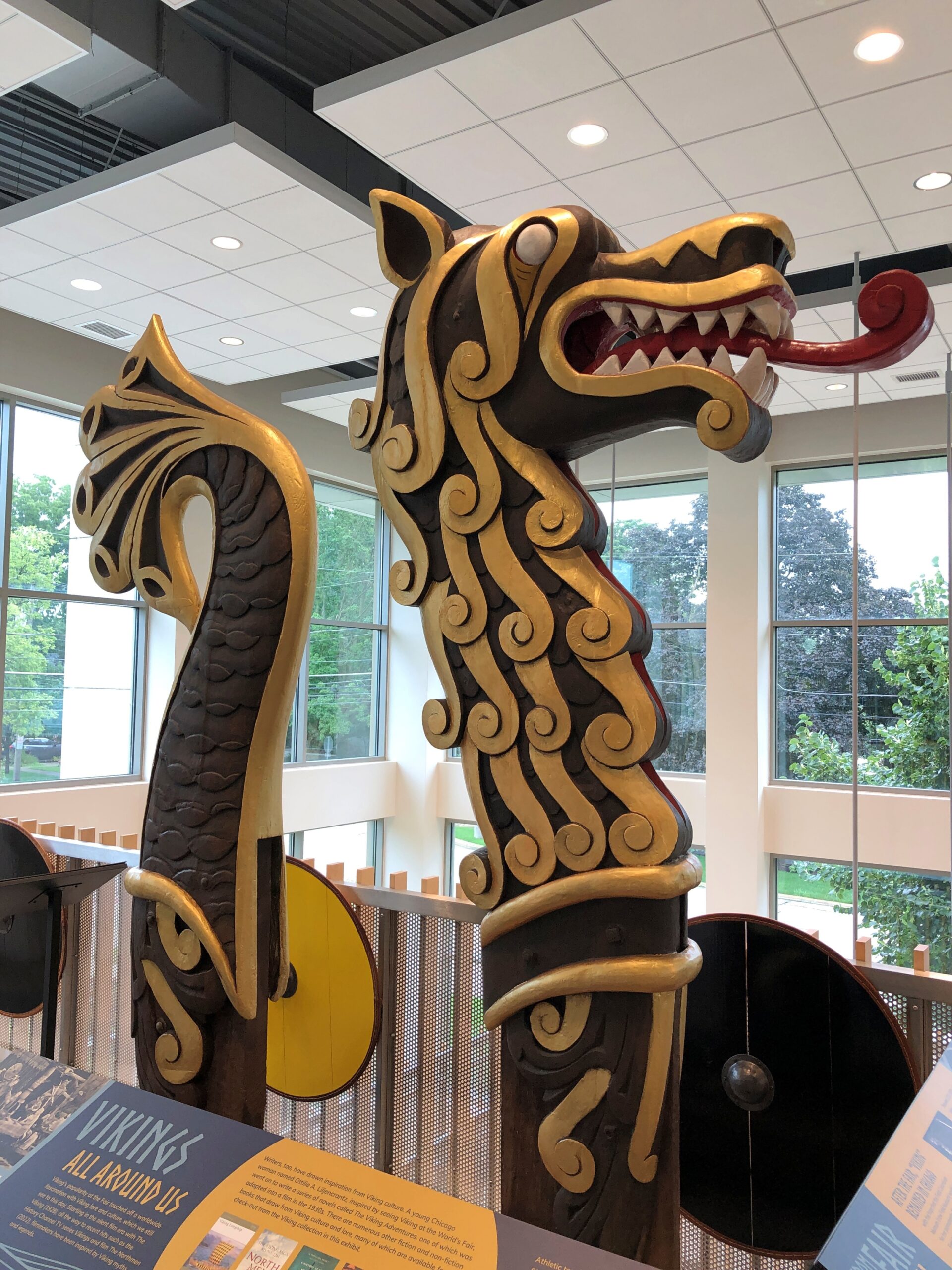
The figurehead has been restored to its 1893 painting scheme. Freya, it seems, had acquired a number of coats in the decades after the fair. Currently, she stands on the second floor of the library, along with the — figuretail? — which attaches to the stern, anyway.
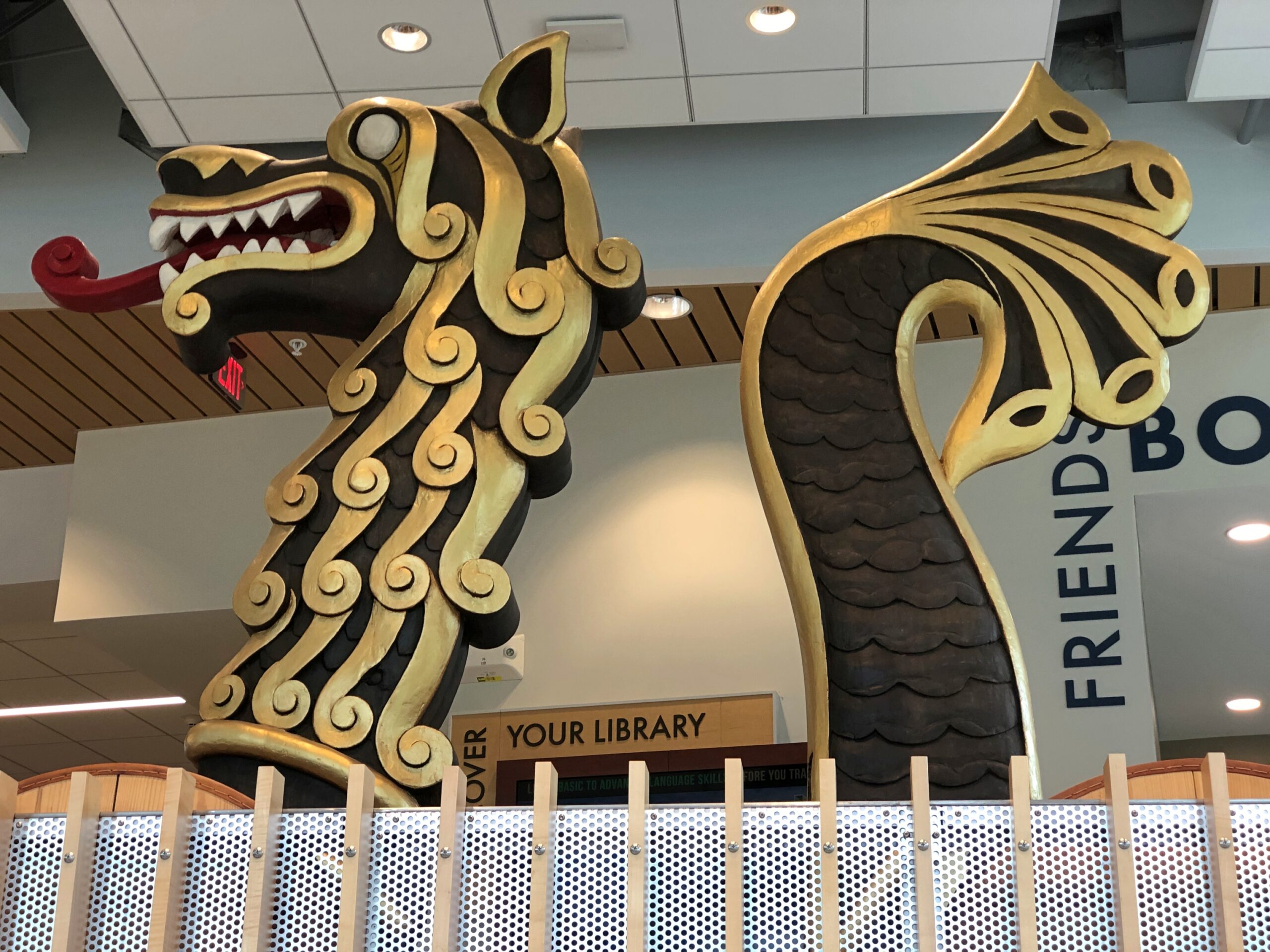
An impressive bit of work.
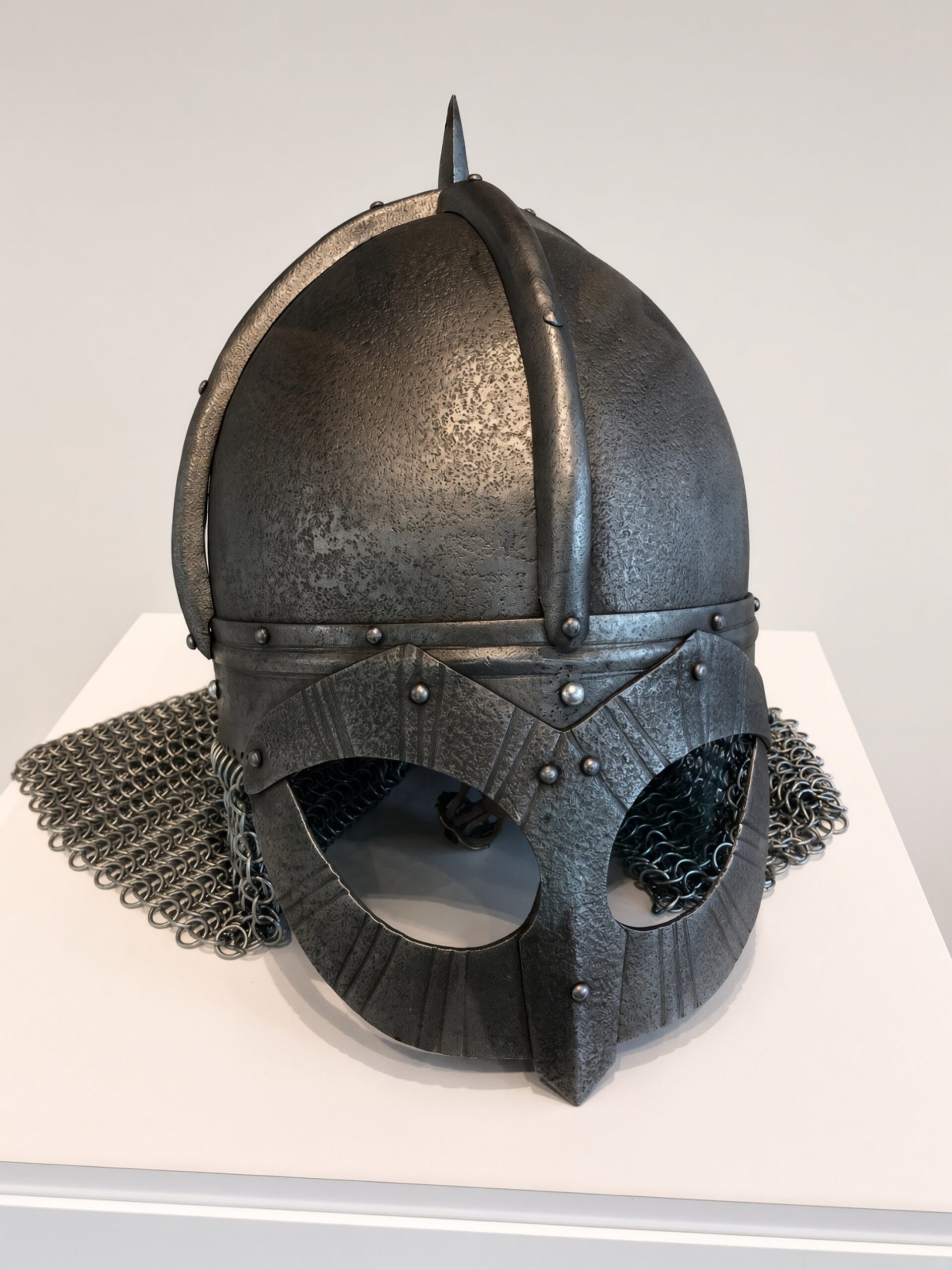
Nearby are a few Viking-related items behind glass. For my purposes, I had an AI image program remove the glass and its glare, but I left the artifacts looking the same. Such as the helmet. No horns, of course.
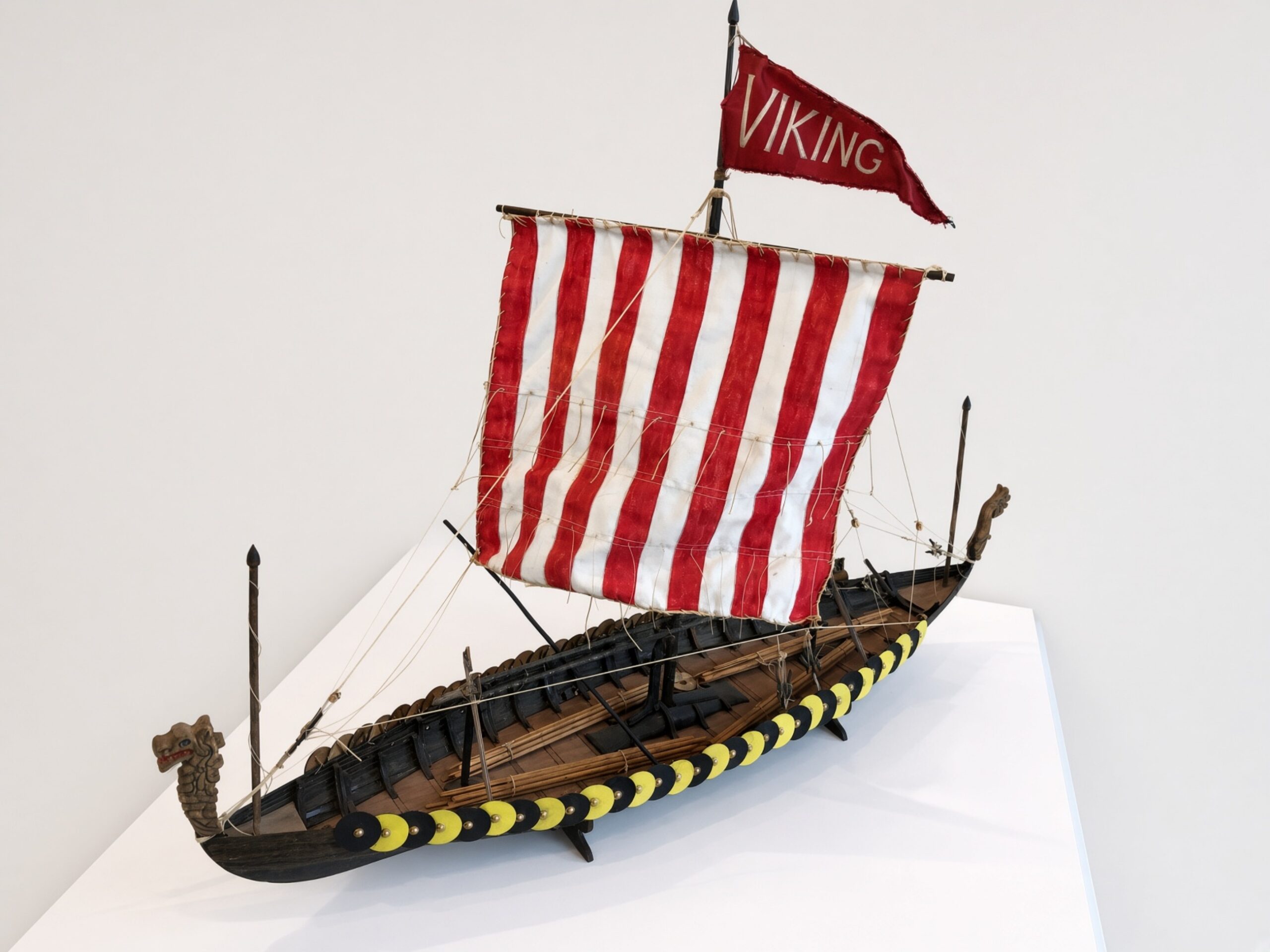
A model of the ship.
A copy of The Thrall of Lief the Lucky: A Story of Viking Days (1902) by Chicagoan Ottilie A. Liljencrantz (d. 1910). There’s an AI animation doable for the cover of this book, but I don’t feel like spending any credits on it. This is the script: The thrall, whom I assume is the dark-haired fellow, says, “In the final chapter, I die of typhus.”
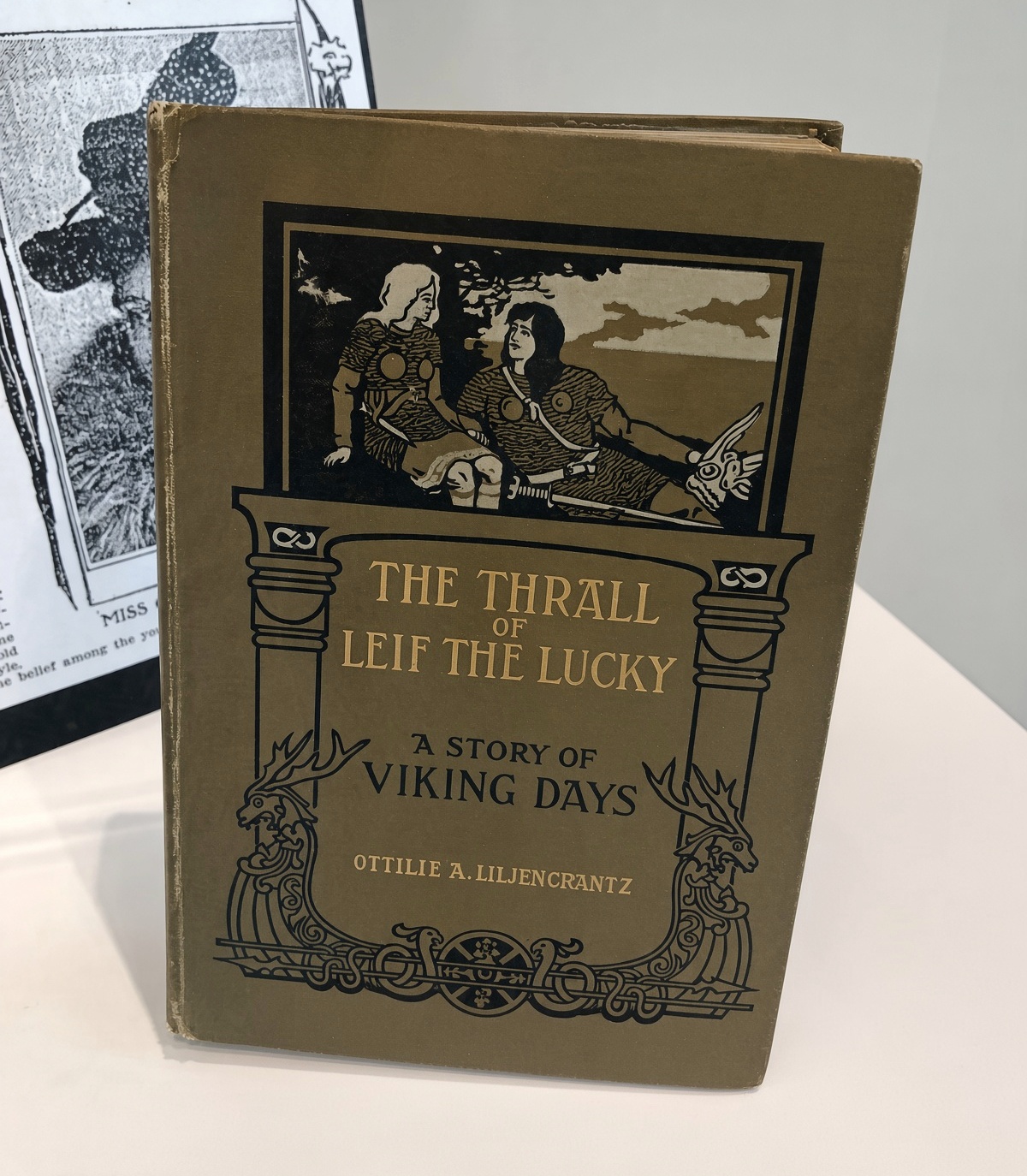
Naturally, I’d never heard of Liljencrantz (who has?), but she wrote a number really popular of Norse-themed historical novels in the early 20th century, taking inspiration from her own Swedish heritage but also from visiting the Viking in 1893 as a teenager. She did much to popularize Viking stories in modern America, as did the visit of the ship itself – just another instance of the World’s Columbian Exposition being one of the founts of the modern world. I believe we have the fair to thank for Ernest Borgnine, among others, being a Viking (briefly), for the inanity of Hägar the Horrible, and for Donald Duck going to look for the Golden Helmet and the deed to North and South America.
For its part, The Thrall of Lief the Lucky was made into The Viking (1928), a Technicolor silent. Since the book is now well in the public domain – and available at Project Gutenberg – time for a gritty film reboot. If The Odyssey can do well at the box office, so can Lief; tough men in wooden ships are tough men in wooden ships, eh?
Just for fun, I took a dive into the Project Gutenberg posting of The Thrall of Lief the Lucky. File it under they for sure don’t write ’em like that anymore (unless AI does). Three more-or-less random samples:
Egil laughed, a hateful gloating laugh, and settled himself against a tree to see the finish. As Helga’s arm was flung up the second time, the thrall leaped upon her and tore the whip from her grasp and broke it in pieces. He would that he might have broken her as well; he thirsted to,—when he caught sight of the laughing Egil, and everything else was blotted out of his vision. Without a sound, but with the animal passion for killing upon his white face, he wheeled and leaped upon the Black One, crushing him, pinioning him against the tree, strangling him with the grip of his hands.
The attraction proved to be a chattering brown ape that some sailor had brought home from the East. Part of the spectators regarded it as a strange pagan god; part believed it to be an unfortunate being deformed by witchcraft; and the rest took it for a devil in his own proper person,—so there was great shrieking and scattering, whichever way it turned its ugly face. It happened that Sigurd was better informed, having seen a similar specimen kept as a pet at the court of the Norman Duke; so the terror of the others amused him and his companion mightily. They stayed until the creature put an end to the show by breaking away from its captor and taking refuge in the rigging.
Then both became silent, for Leif had faced about and was awaiting their full attention before announcing the next move. “I dislike to see brave men disgrace their beards with bondmaids’ gabble,” he said sternly. “Fix in your minds the shame that was spoken of Biorn Herjulfsson because of his lack of enterprise. The same shall not be said of us. Rolf Erlingsson and Ottar the Red and three others shall follow me; and we will walk inland until the light has entirely faded from the highest mountain peak yonder, and the next point below is yellow as a golden fir-cone. The others of you shall follow Valbrand for the same length of time, but walk southward along the shore, since it may be that something of interest is hidden behind these points—”































.svg)