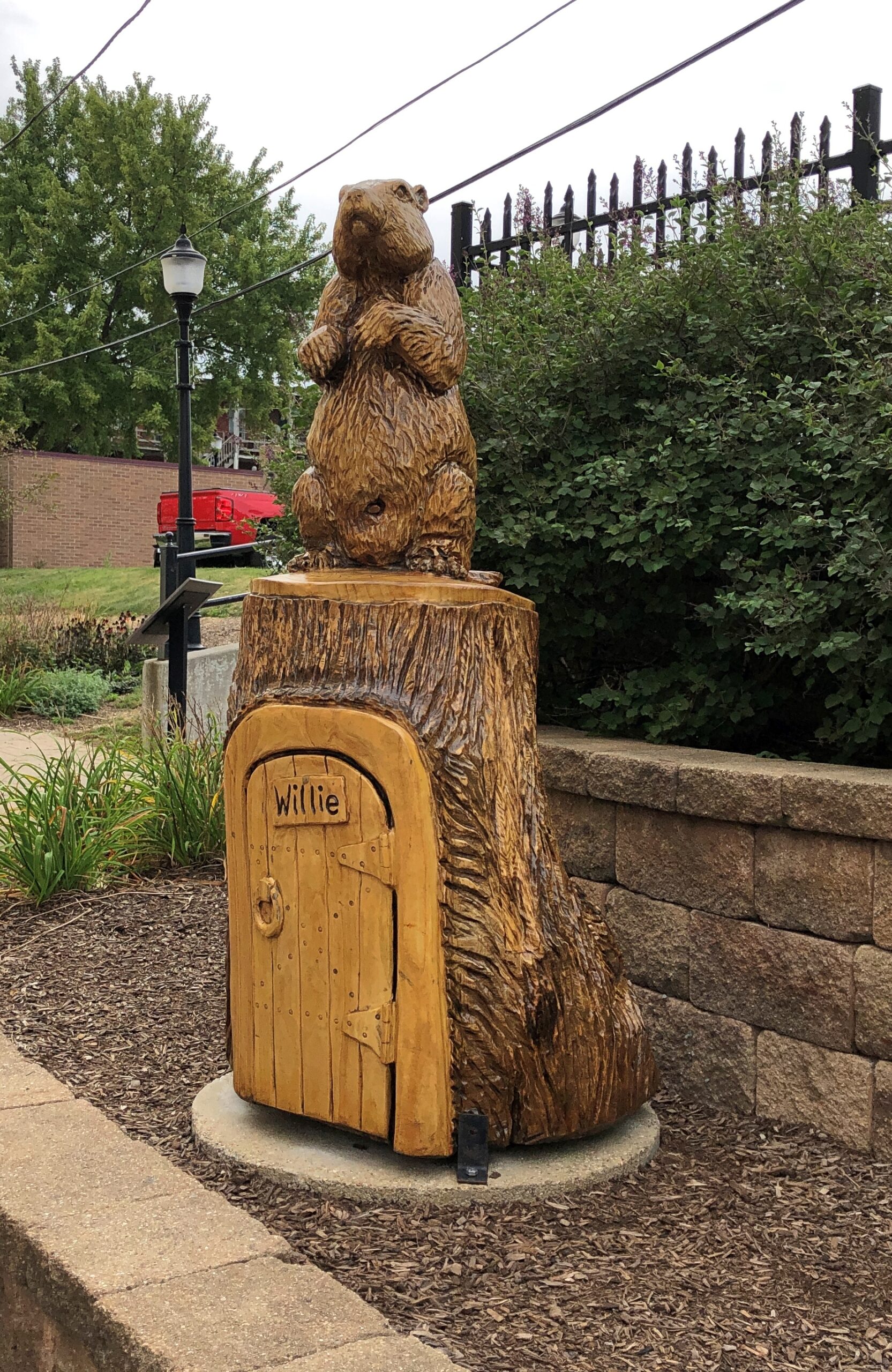
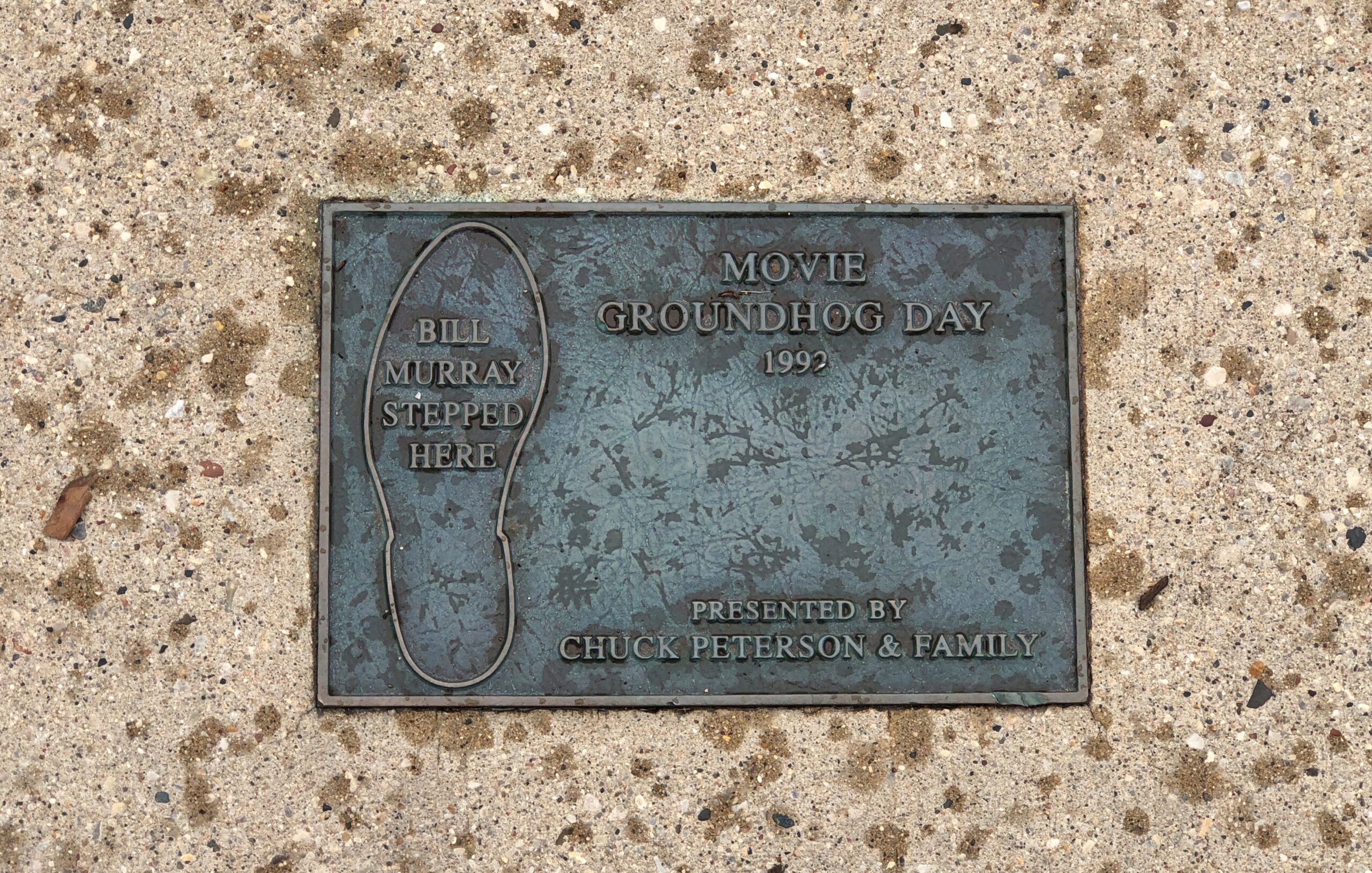
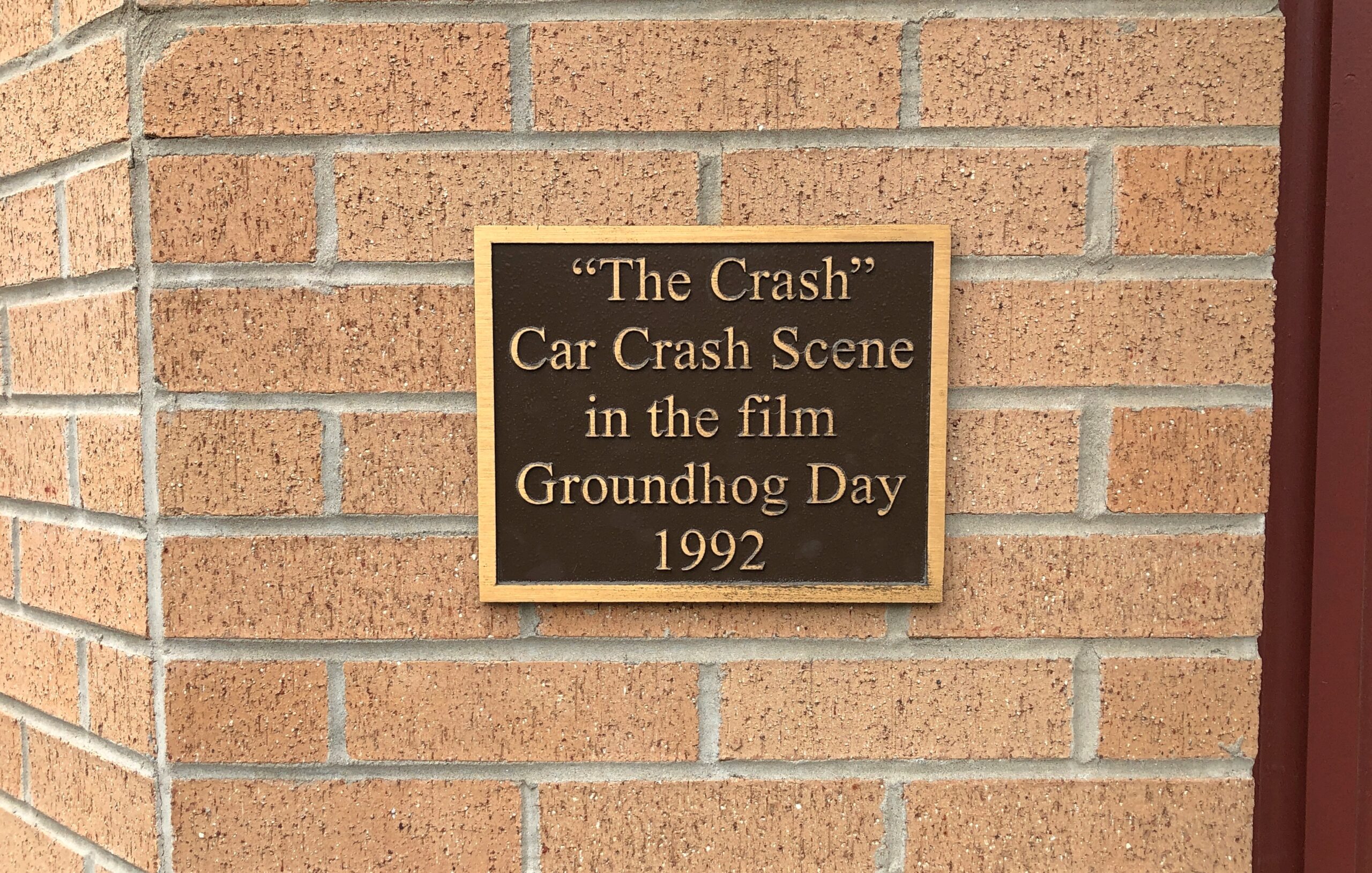
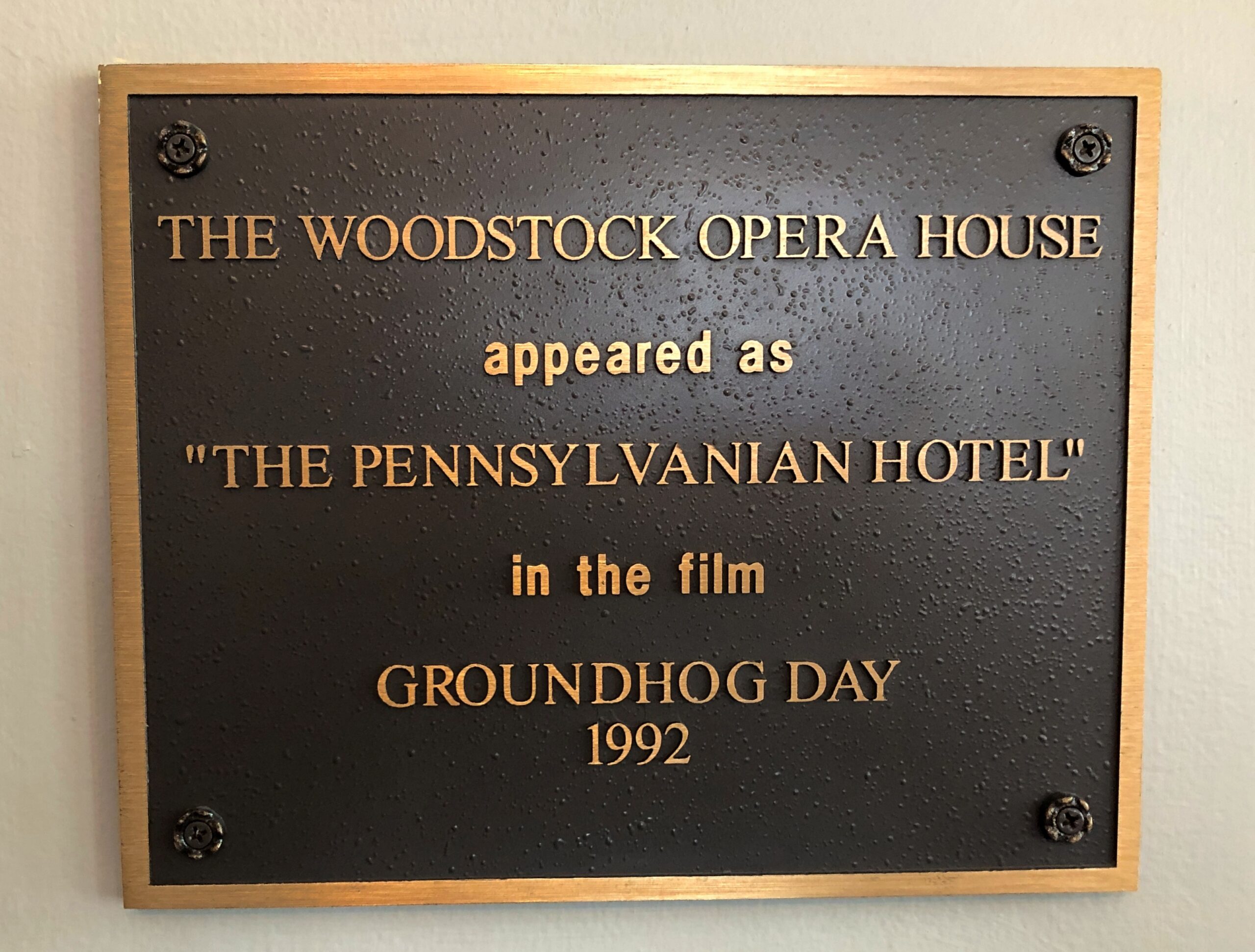
As mentioned before, Punxsutanwney, Pennsylvania, has gone a long way to let the world know about its groundhog and its celebration of things groundhoggish. Of course, that town isn’t the only place to do so, just the best known. I’ll bet few people south of the U.S.-Canada line know about Wiarton Willie. I didn’t know myself until I passed through Wiarton, Ontario, a couple of years ago, because travel is broadening, you know.
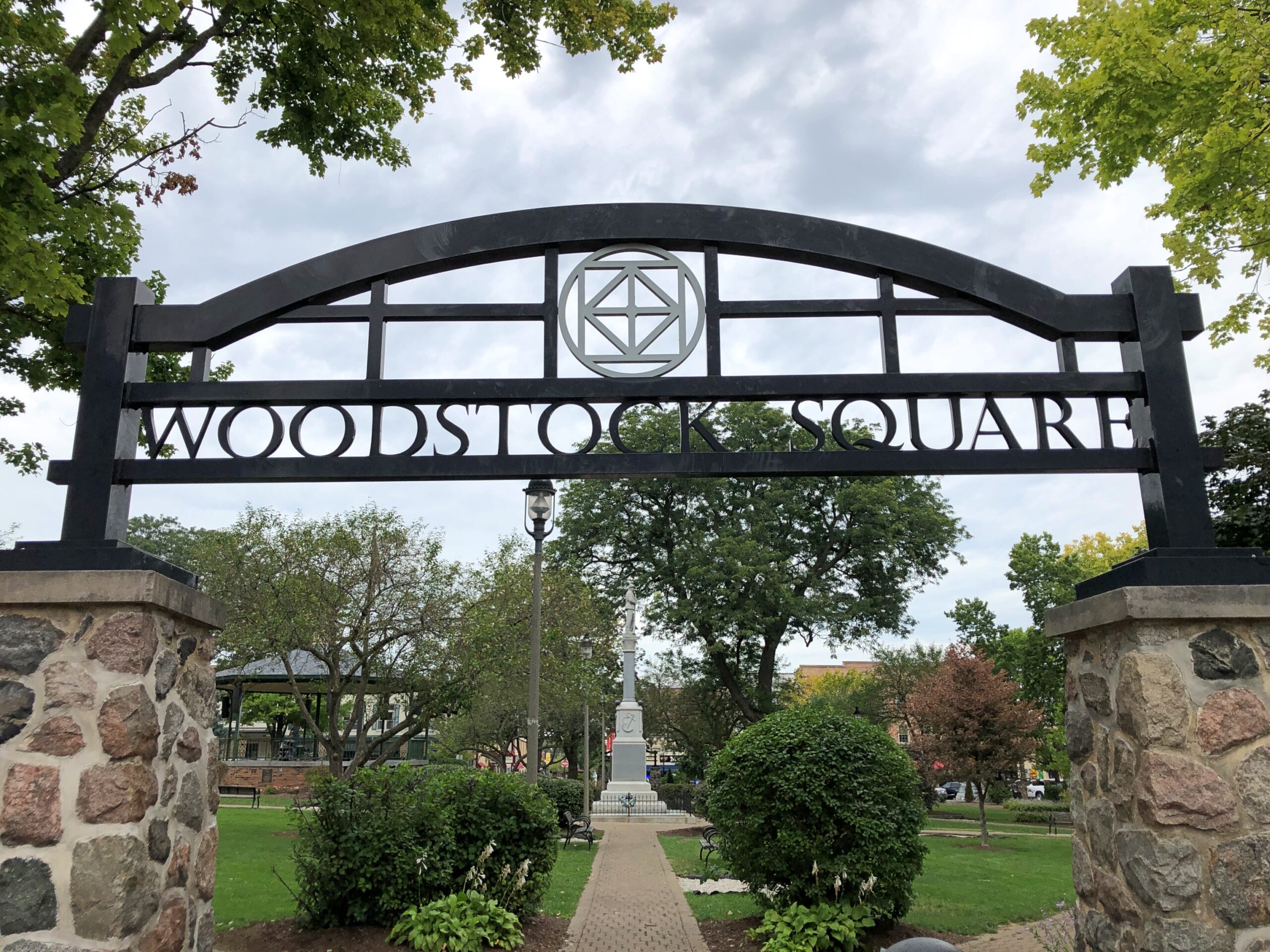
Back in the U.S., there is an up-and-coming town for celebrating groundhogs, and it’s less than an hour’s drive from where I live: Woodstock, Illinois. Yuriko and I made that drive on Saturday and spent a few hours in Woodstock’s pleasant downtown. The town has no history of imported northern European folk customs associated with rodents, but of course director Harold Ramis’ decision to film the many Groundhog Day exteriors in Woodstock did the trick.
Since I was there last, a new acknowledgment of the movie has been added in Woodstock Square, which is the hub of the historic downtown.
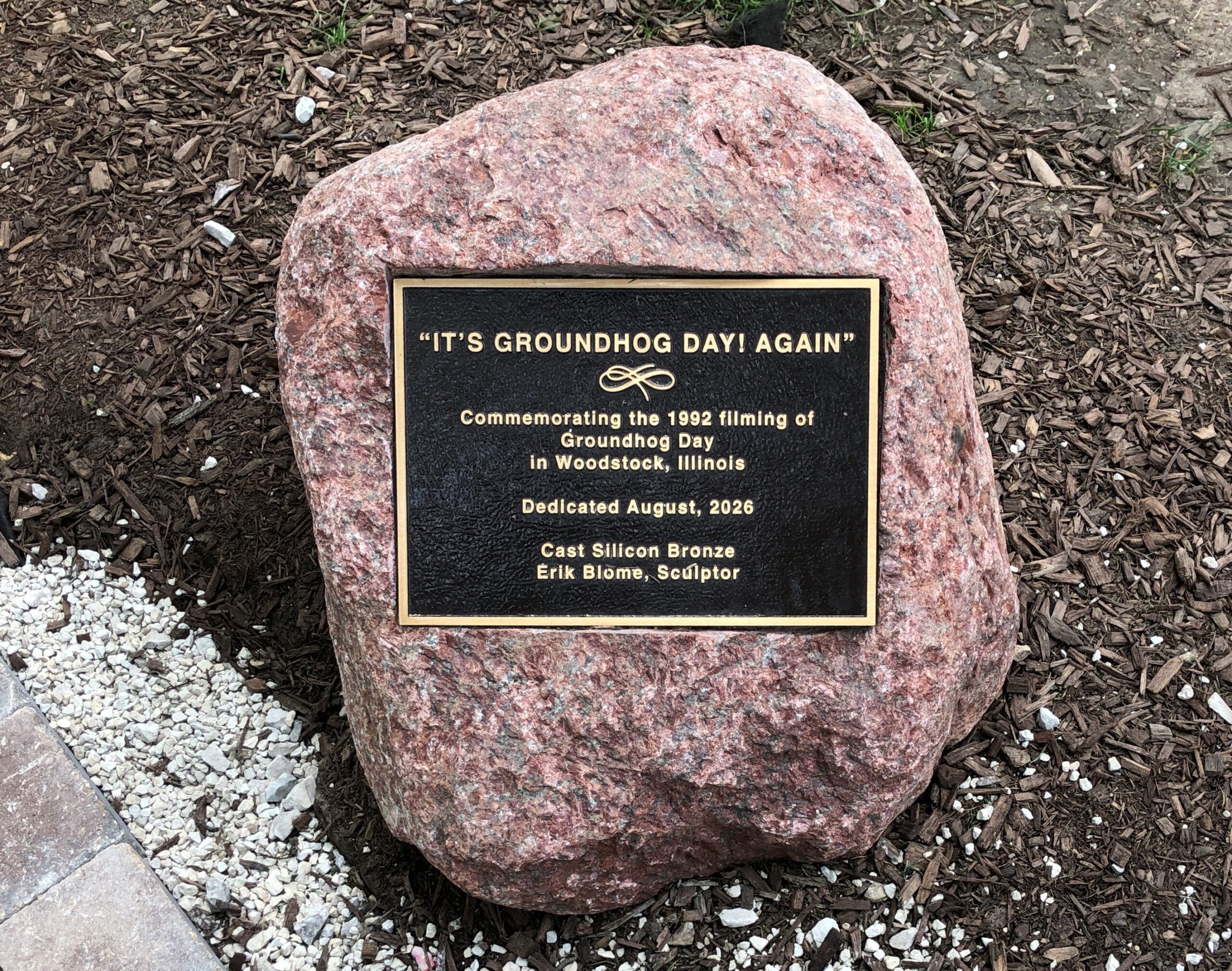
Very new, as in added earlier this month. In fact, on August 2 – six months ahead or behind February 2.
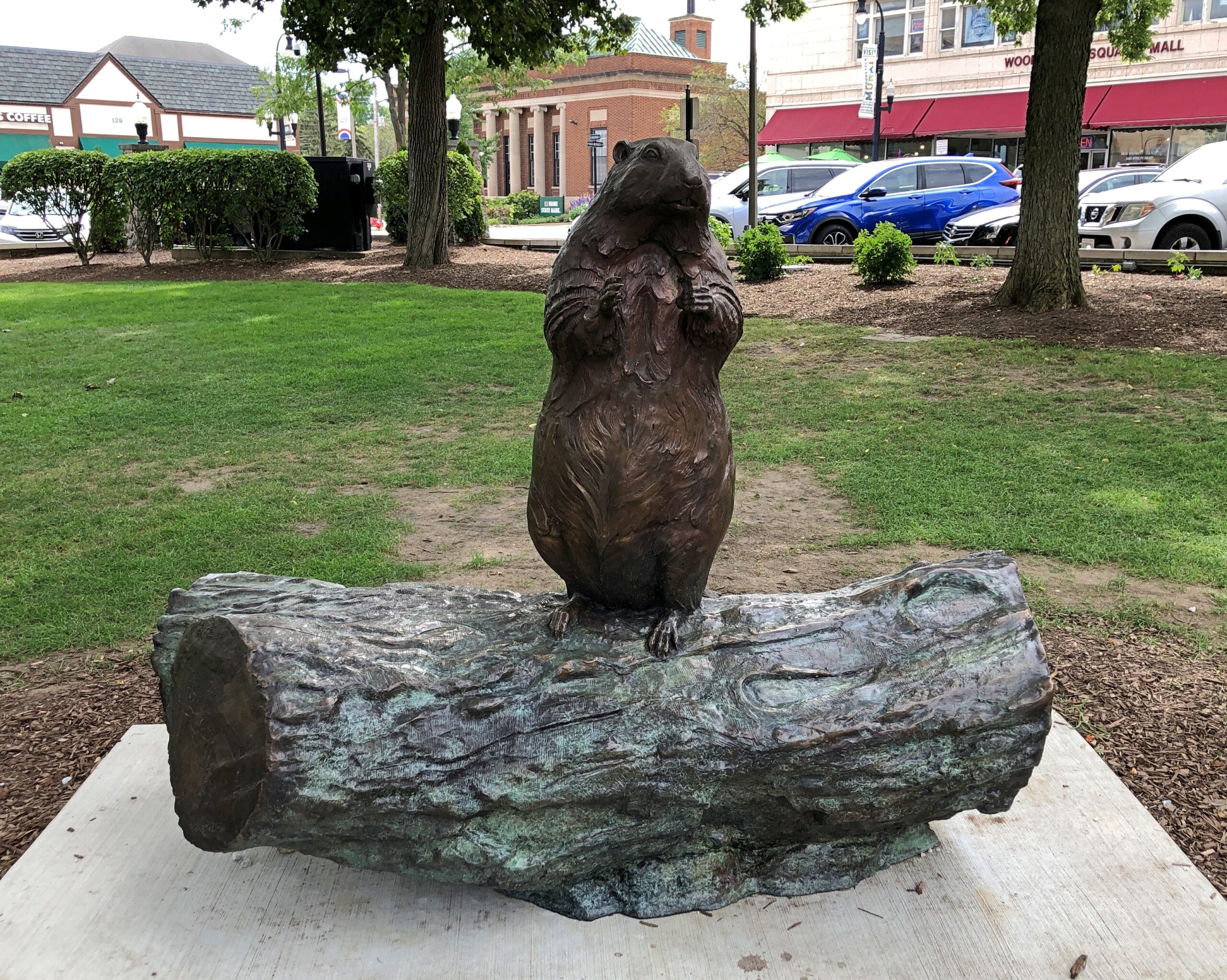
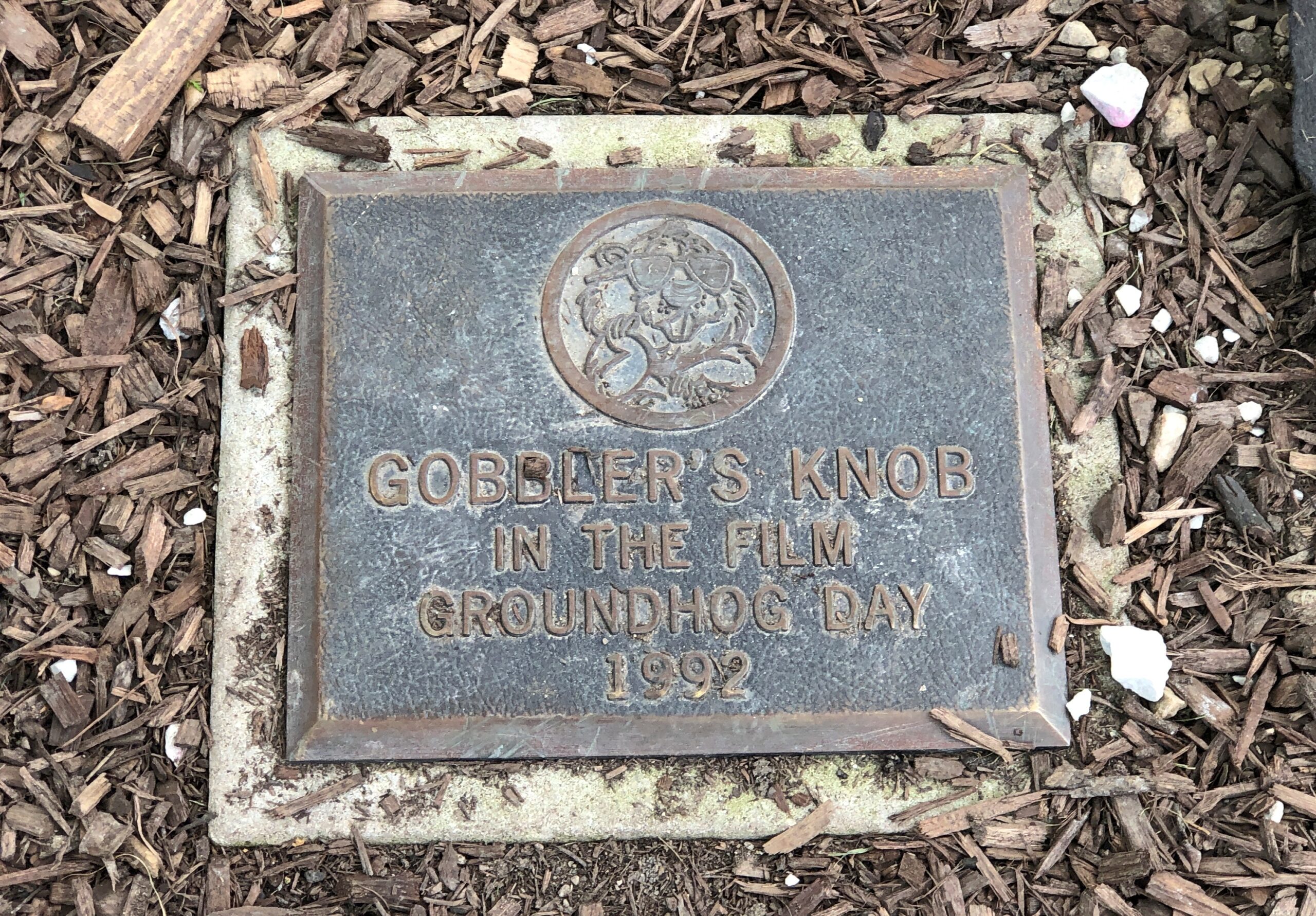
There is a newer plaque, and an older one, near the latest Woodstock Willie statue.
Not far from the square, behind the town movie theater, is an older Willie.
Woodstock has its own groundhog fest, and this is the place from which Willie emerges. I assume that it – cage isn’t the word, maybe temporary pen – is moved to Woodstock Square for the February 2 event, though it’s unlikely I will be at that event to see for myself.
Other local plaques refer to the movie. This one has been in place for quite a while.
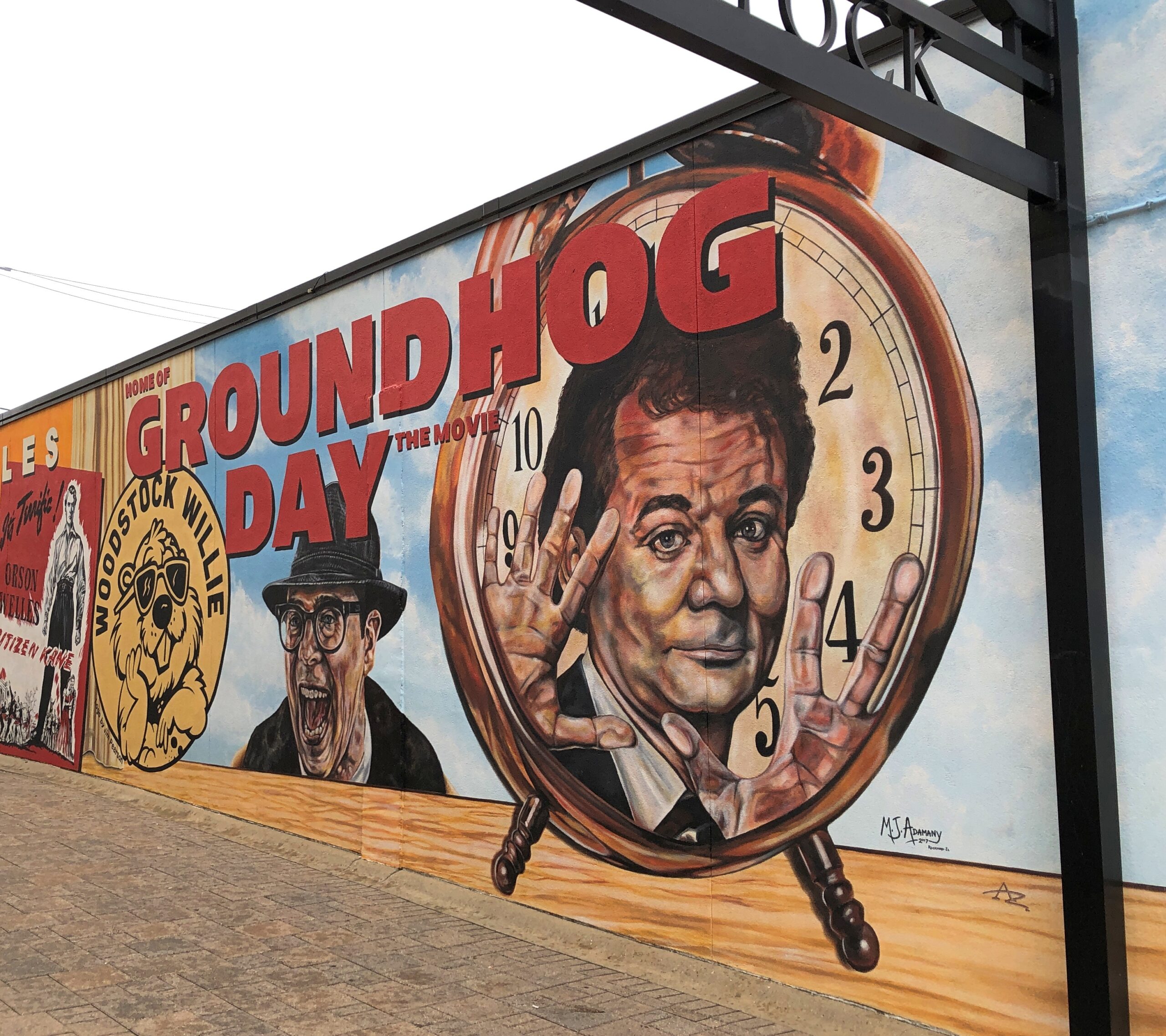
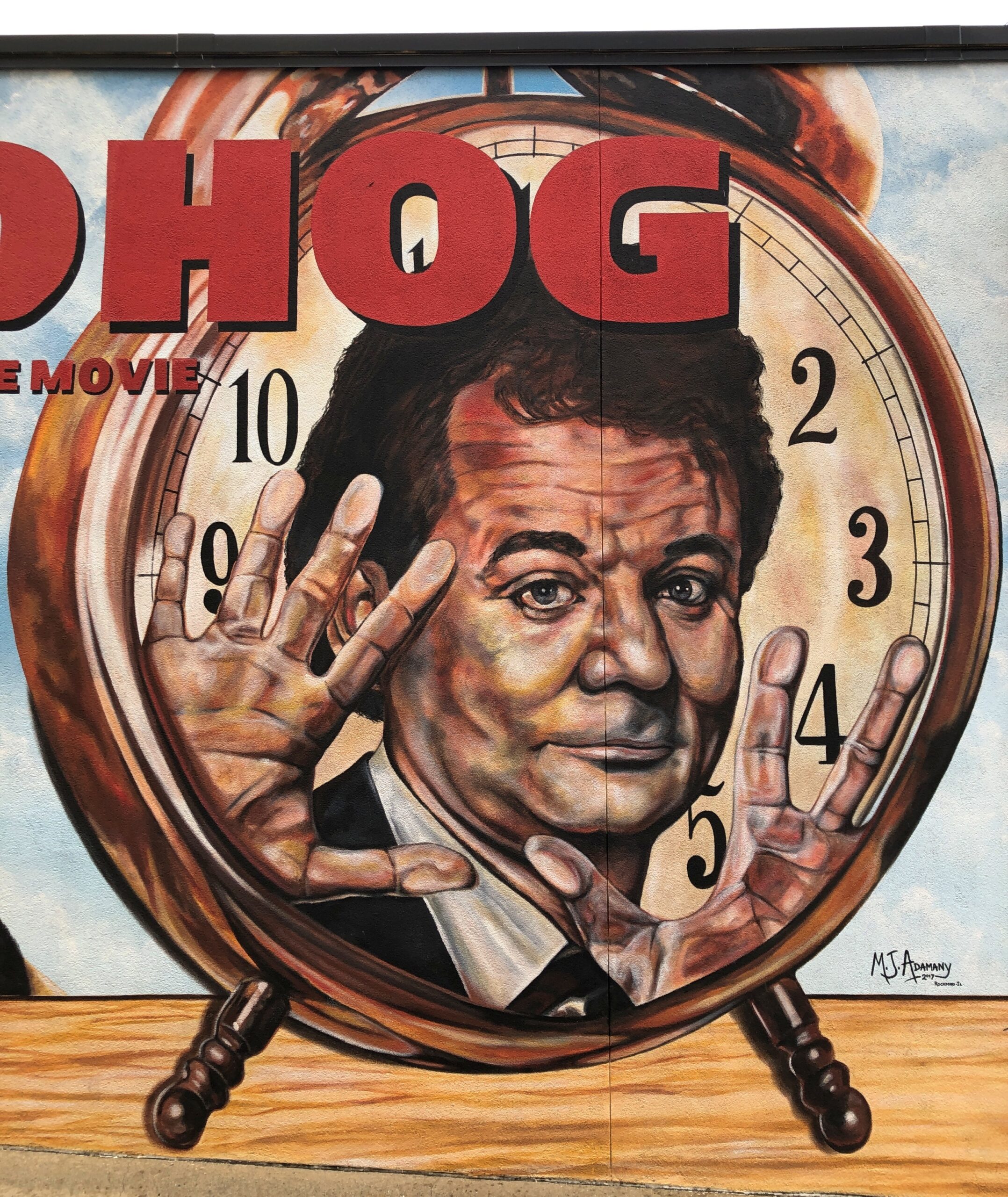
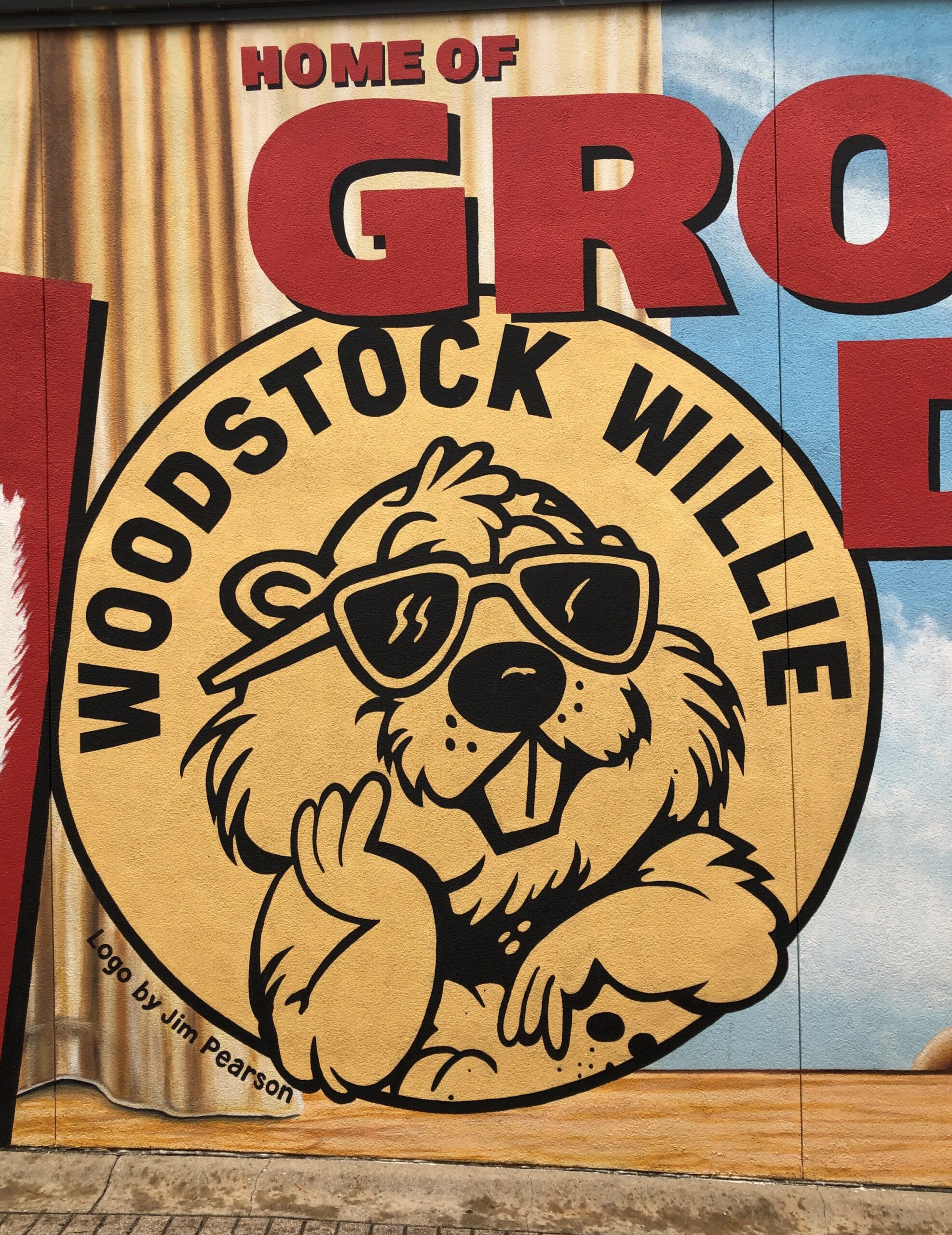
Also near the local movie theater is a Groundhog Day mural, evoking the movie’s promotional materials, and adding Woodstock Willie retroactively.
A good mural, but how is it Ned Ryerson (Stephen Tobolowsky) rates a spot? It is a funny bit and all, but I’d much rather see the fetching Rita Hanson (Andie MacDowell) there.
The run of days from Juneteenth to July 4 at least, and even better to Nunavut Day (July 9), would be a fine time to slow down, like between Christmas and New Year’s Day, only warmer and without the mad runup to December 25. Back to posting around July 6.
Thousands of impressions flitter by on the road, most instantly forgotten when literally on the road – driving, you need to be in the moment, or else – or quickly forgotten, when “on the road” means you’re out and about somewhere that isn’t home. Still, a handful of details stick, even without photos. But photos help.
Maine
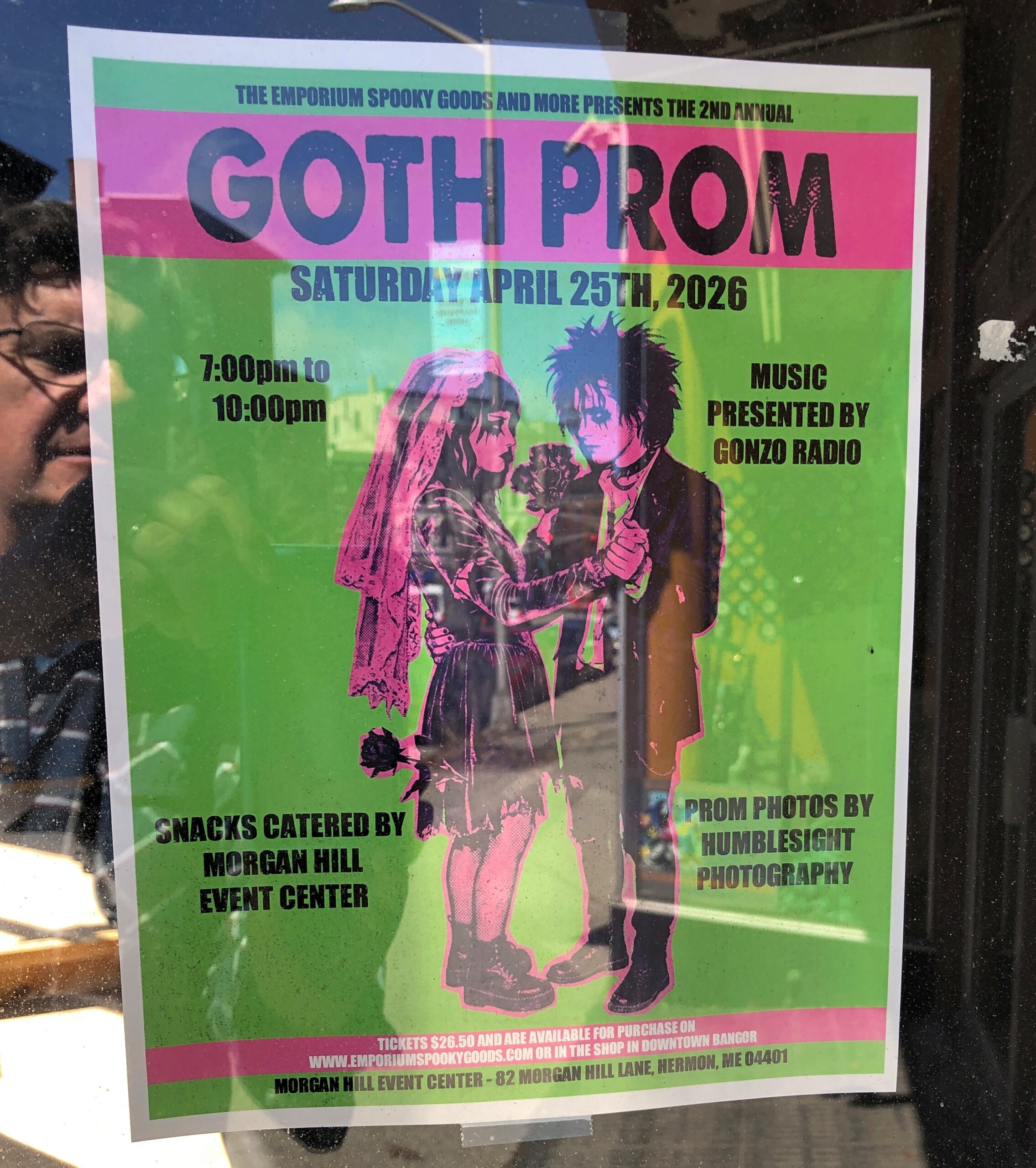
I call it “Self-portrait with Goth Prom.” Poster spotted in downtown Bangor.
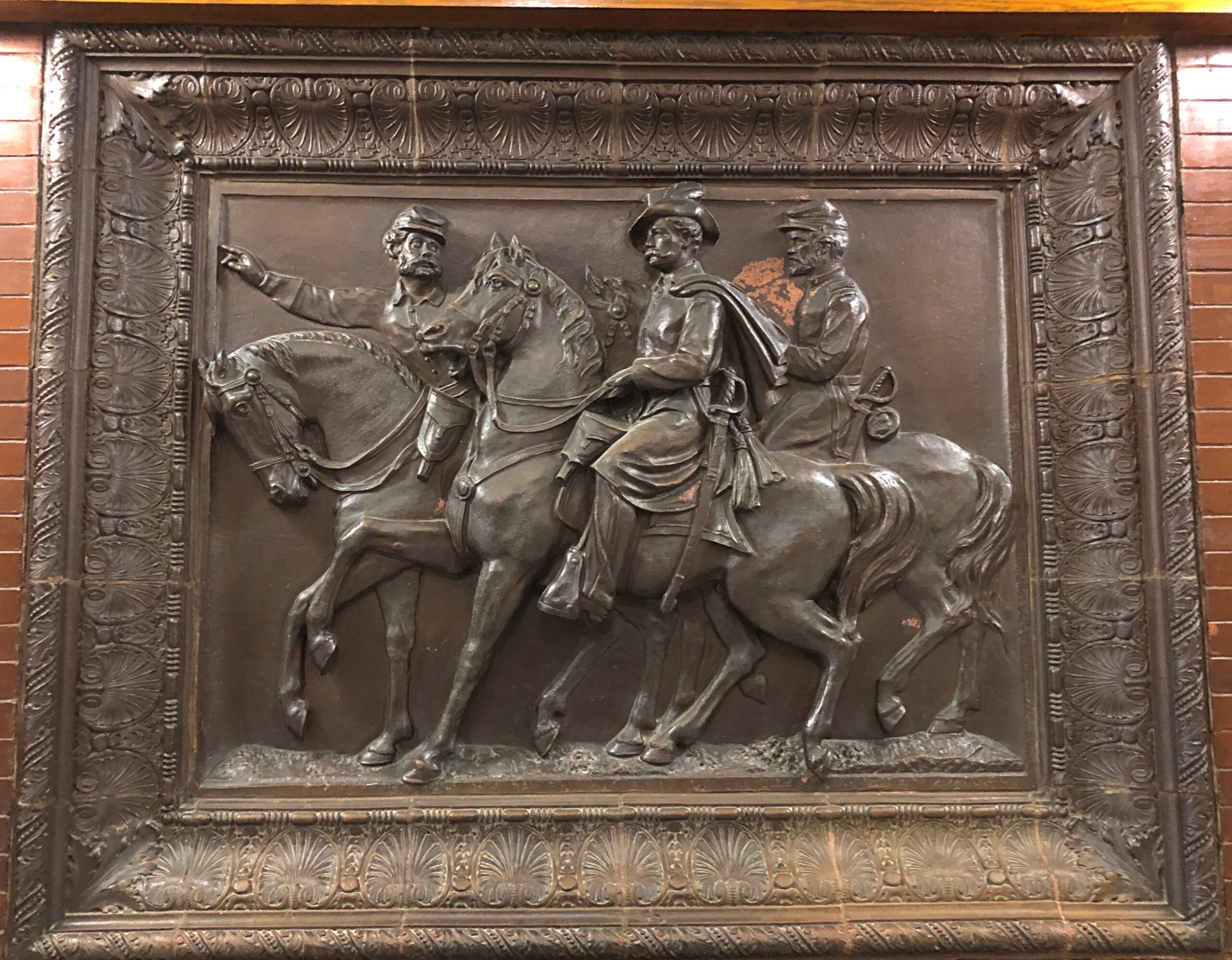
In the Maine Statehouse, a flat-ish object of a different kind.
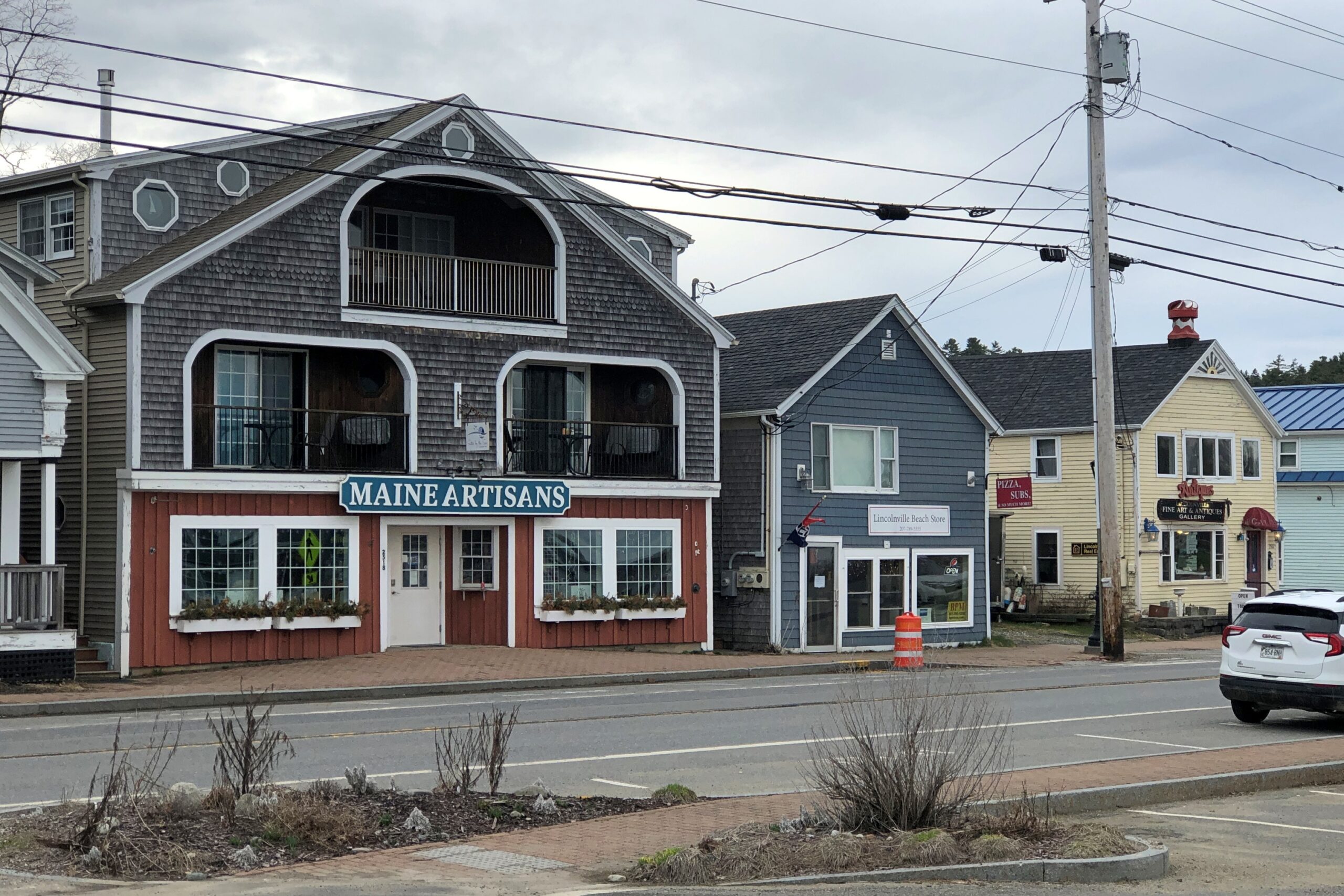
Lincolnville, on the coast of not far from Belfast.
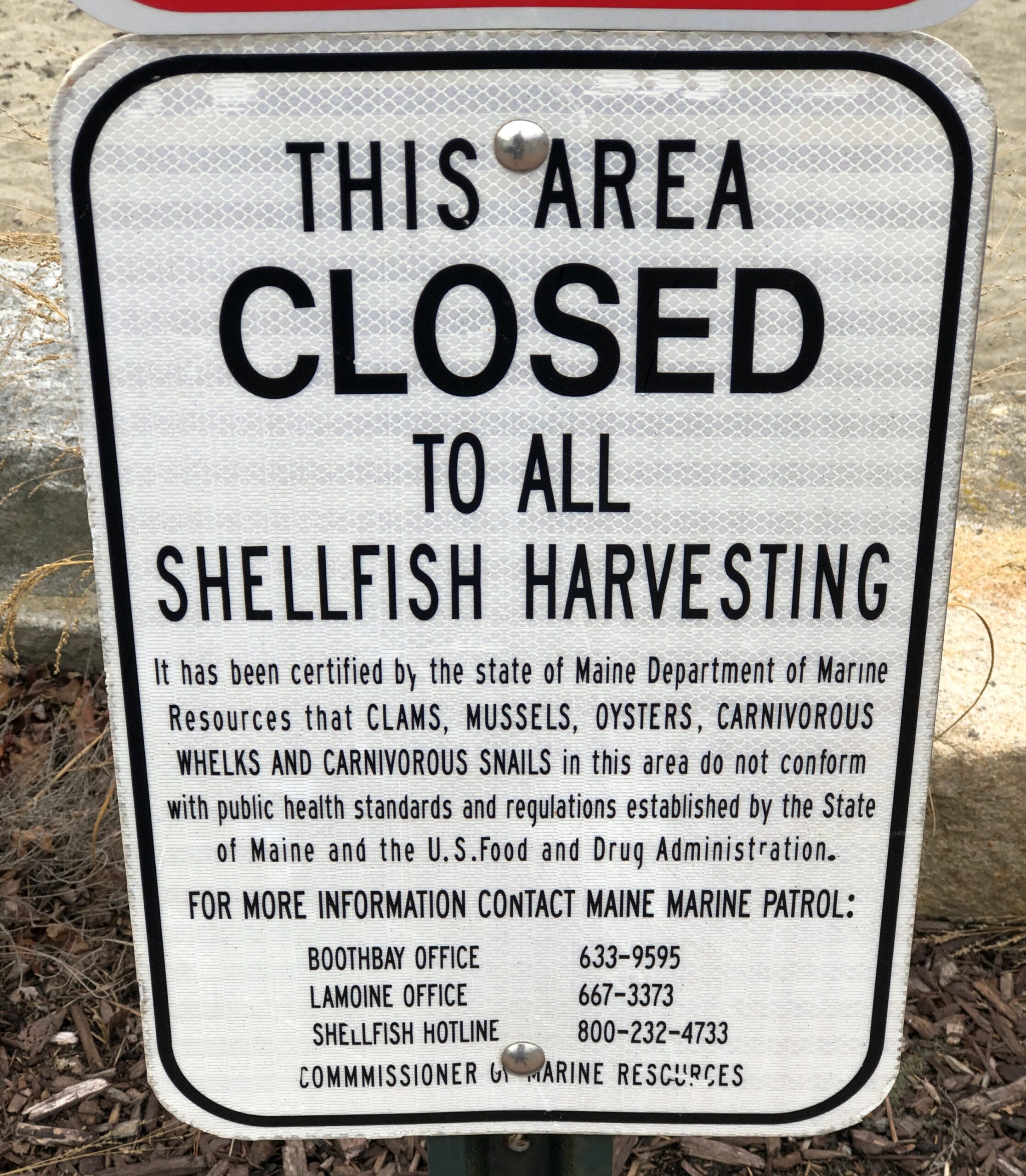
Carnivorous whelks. I was frankly ignorant about carnivorous whelks, and glad to learn a little about them. Because what a great name for a snail.
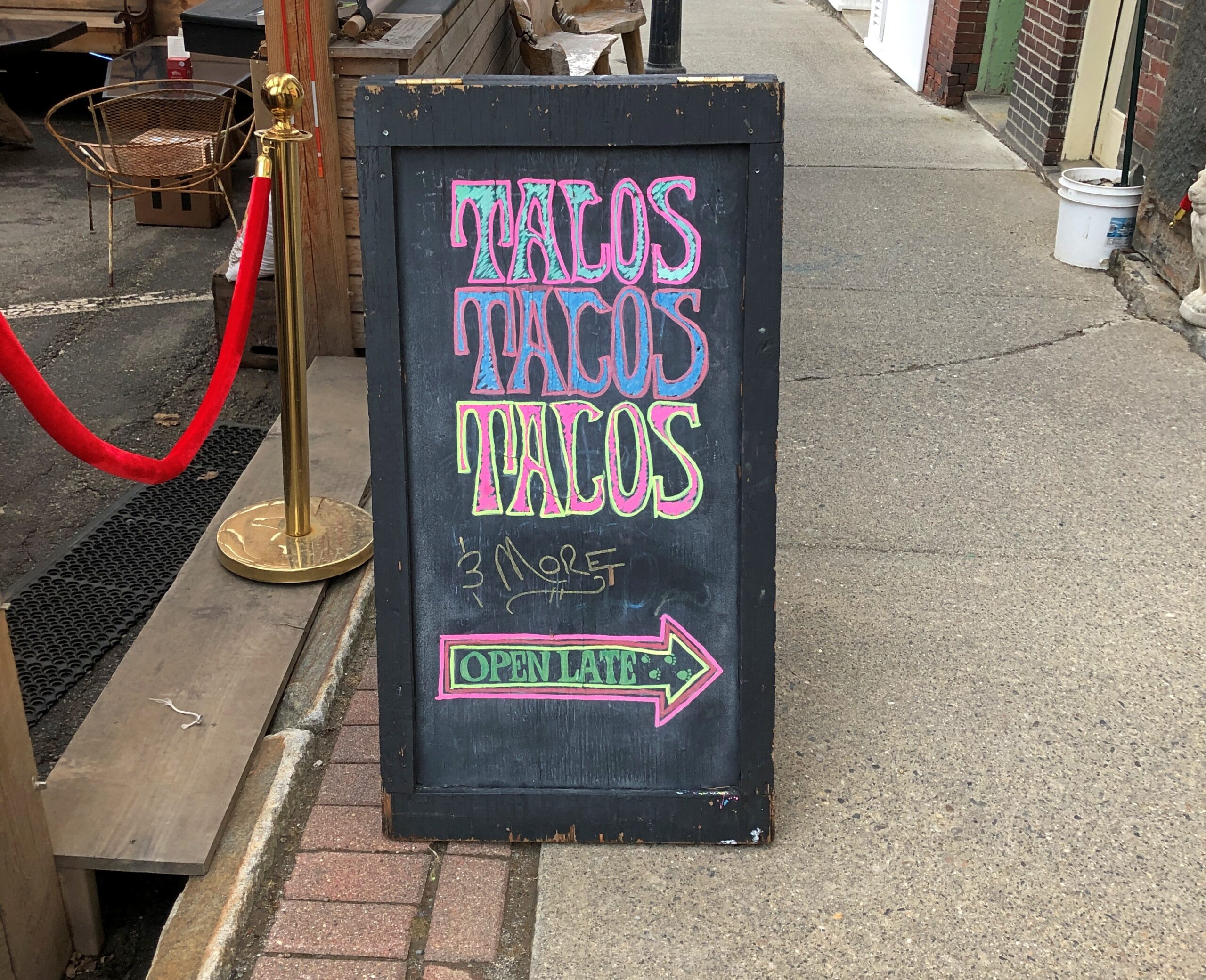
Too bad I wasn’t hungry in Belfast. I’d have had tacos.
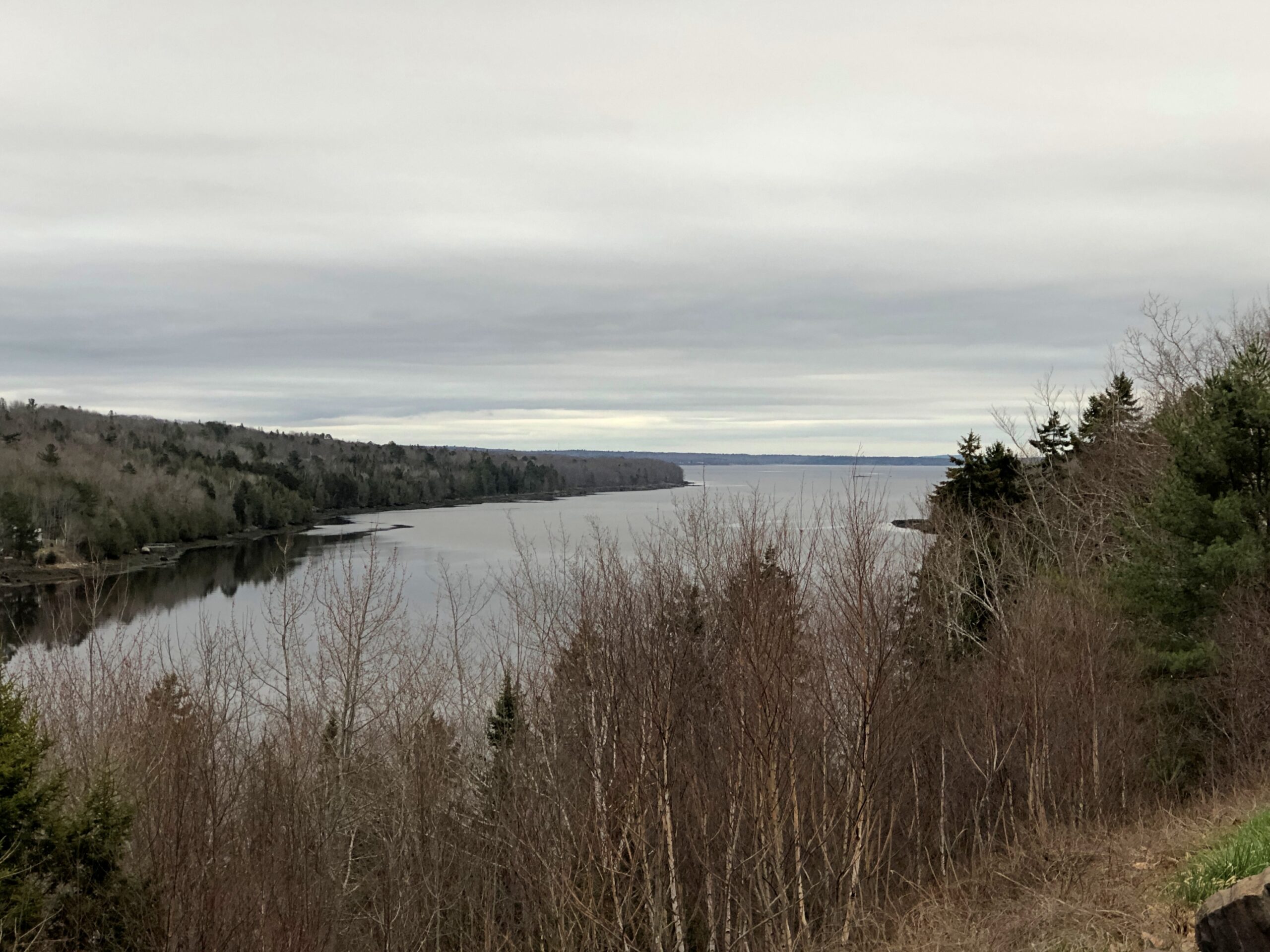
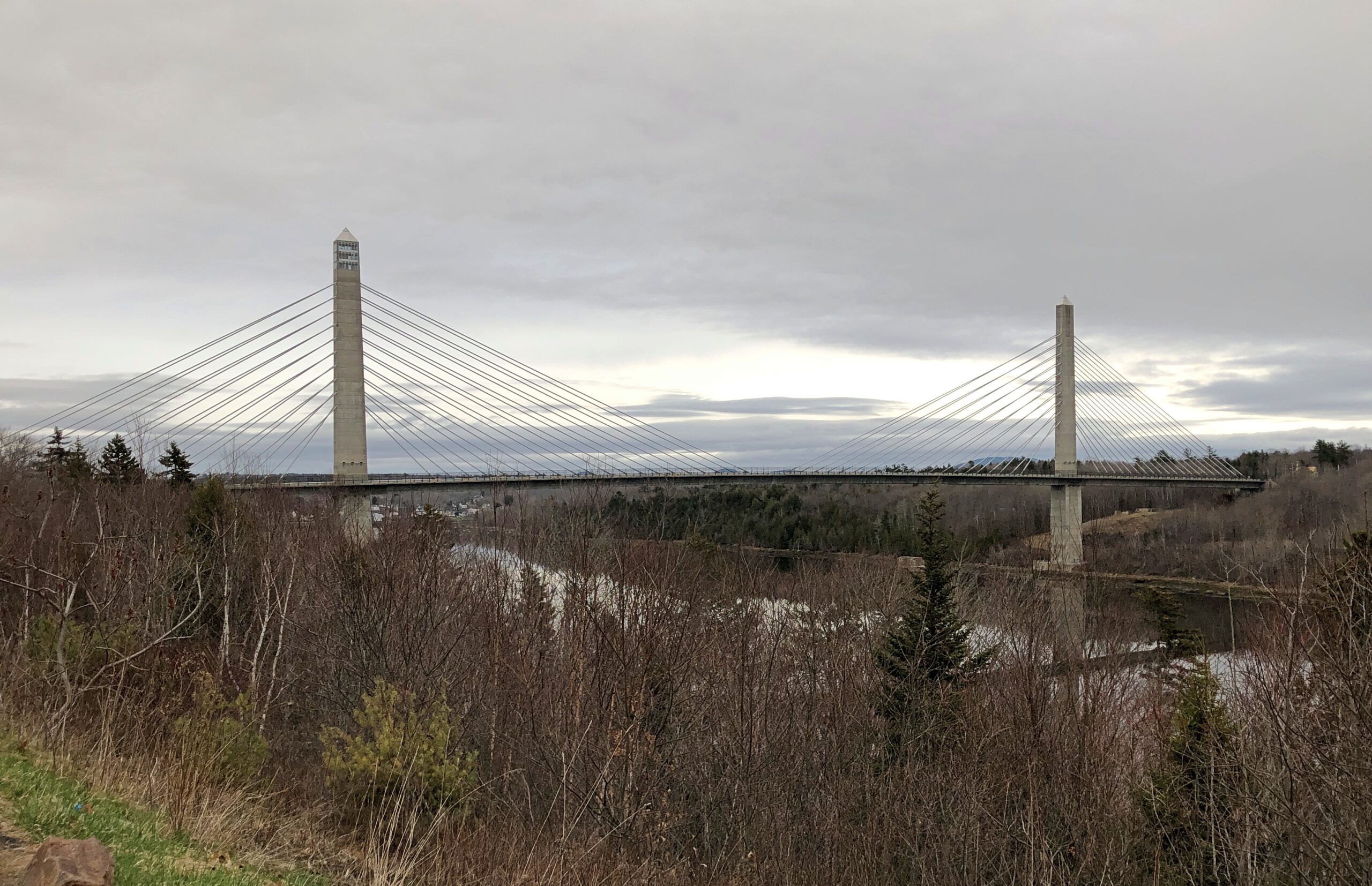
The Penobscot River and the Penobscot Narrows Bridge. A literal and scenic highpoint on that part of US 1 as it winds through near-coastal Maine. The bridge includes an observatory, unfortunately not open in April. Driving over the bridge itself was another pleasure of coastal Maine.
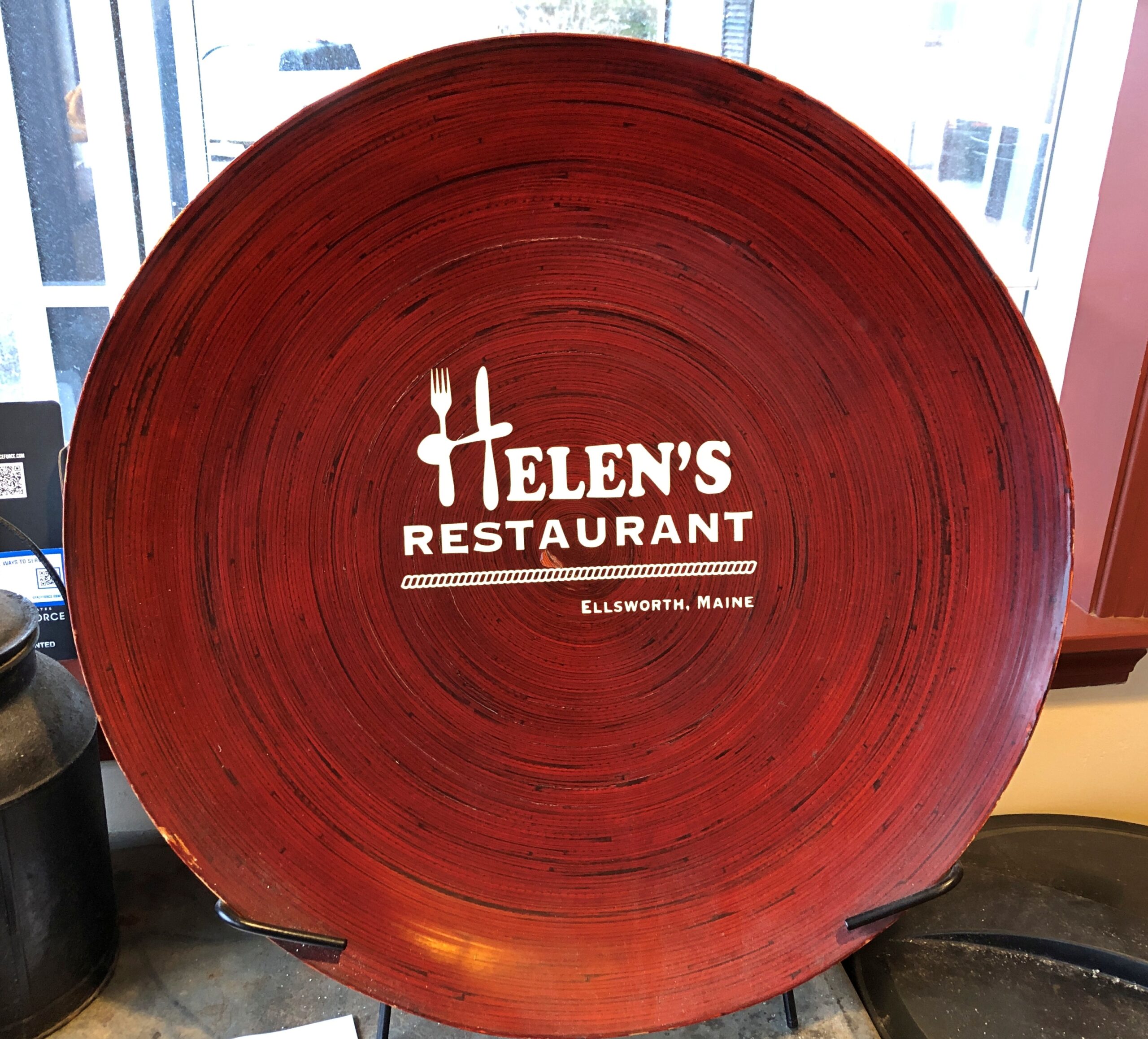
Helen’s Restaurant in Ellsworth. Tasty fish and chips. Haddock, specifically. What do you take for a haddock? “Well, sometimes I take-a aspirin, sometimes I take-a calomel.” It was some years before I learned that calomel was something I’d never take in a million years.
Massachusetts
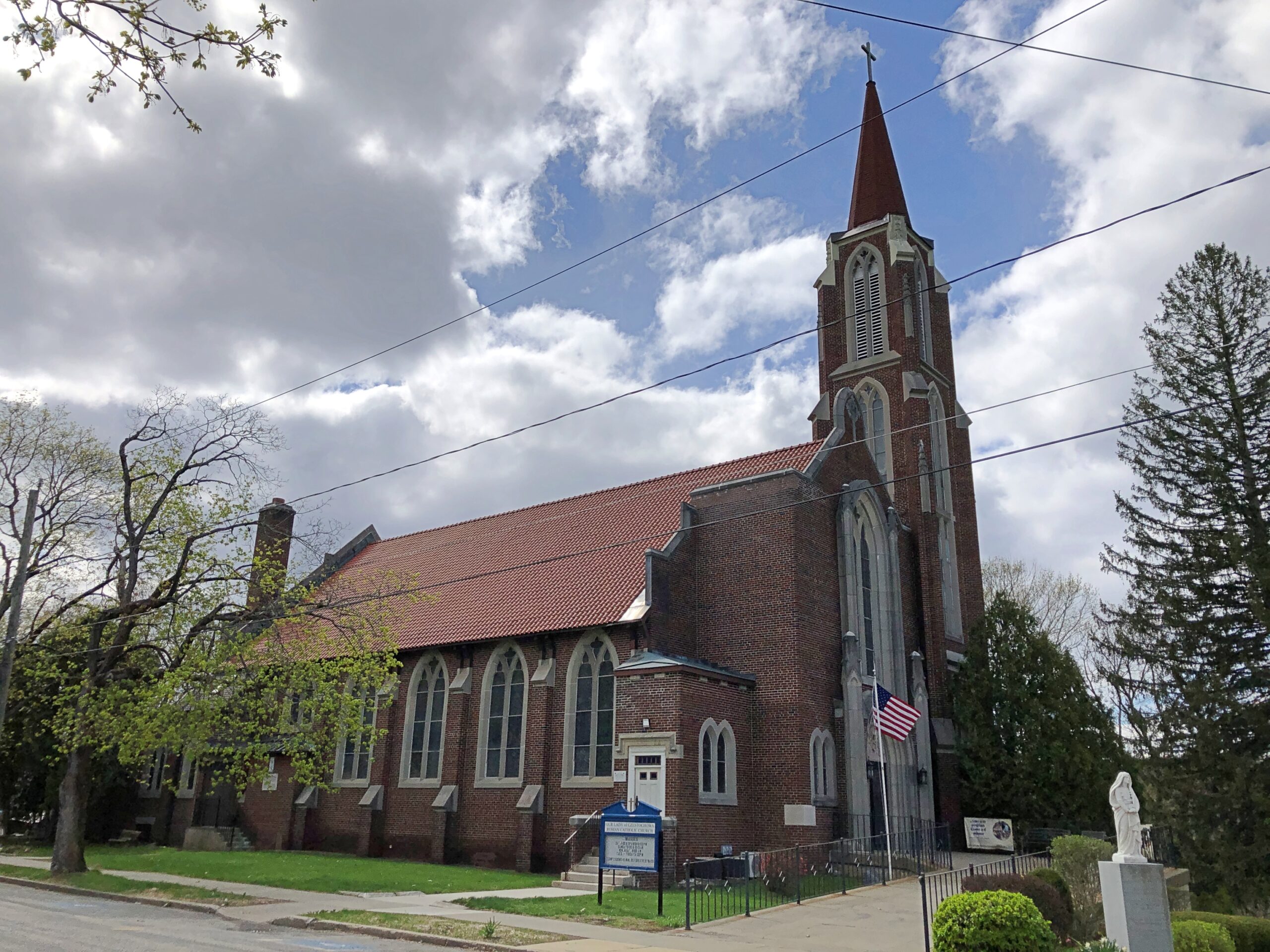
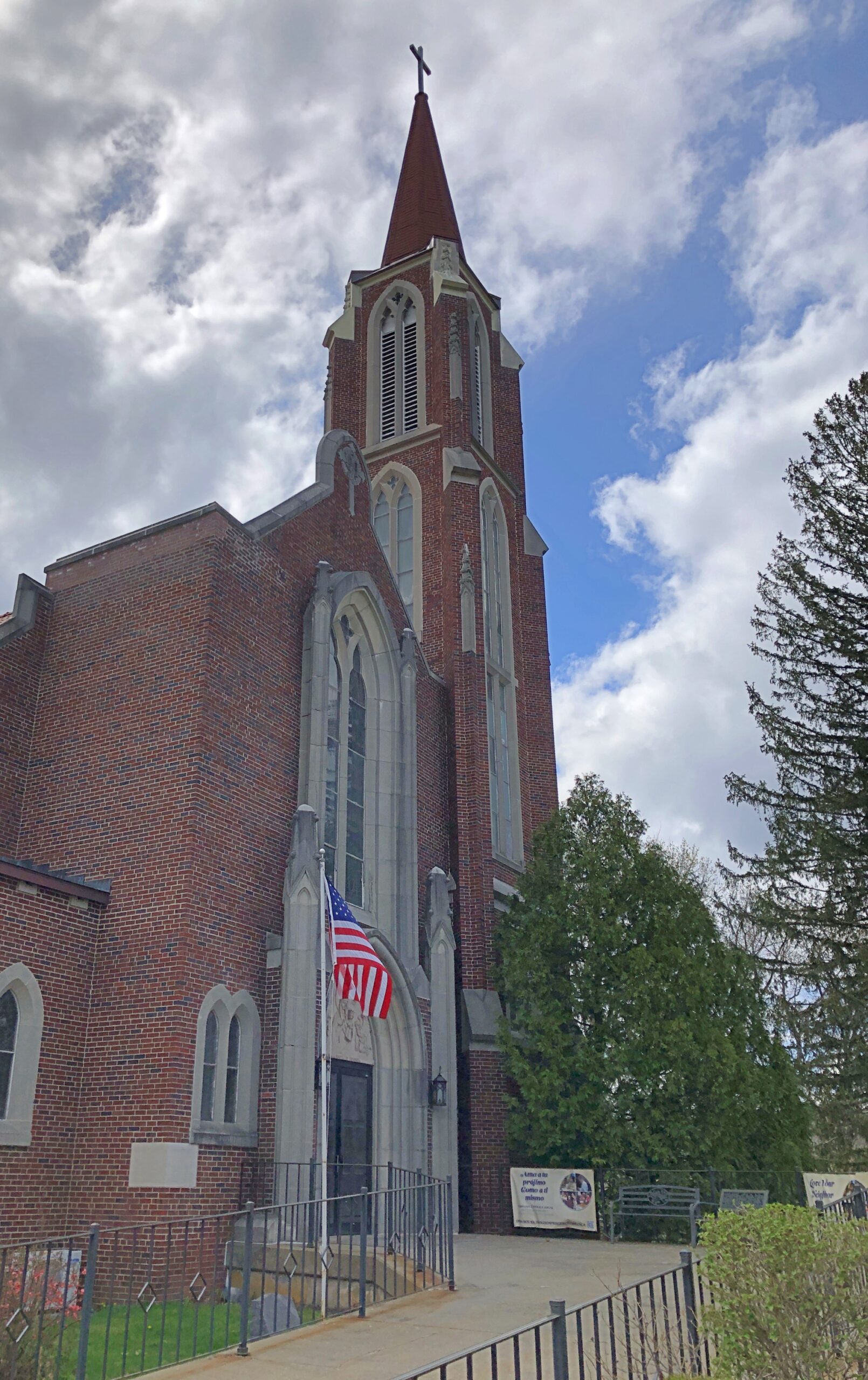
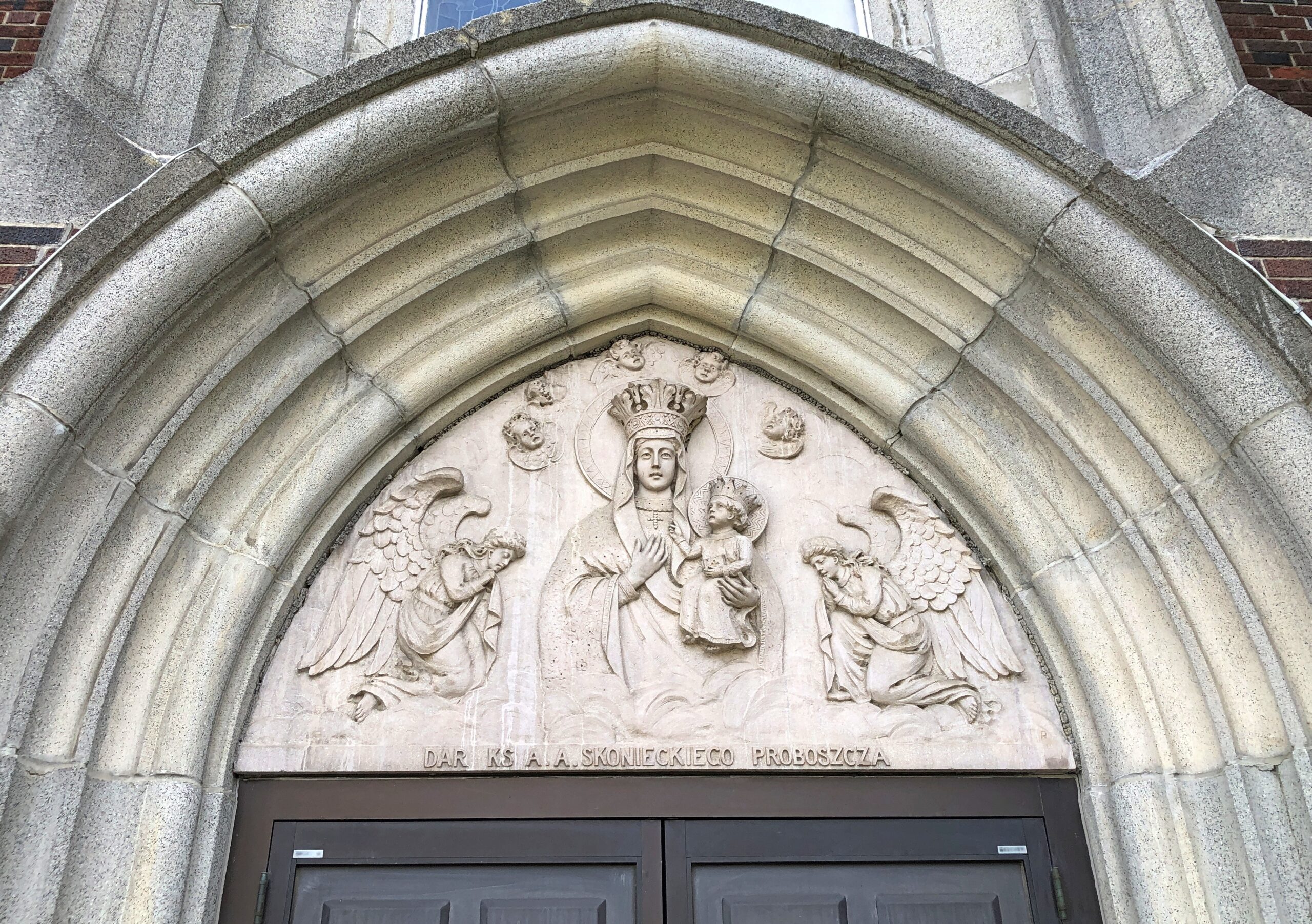
Our Lady of Czestochowa Parish, Turners Falls.
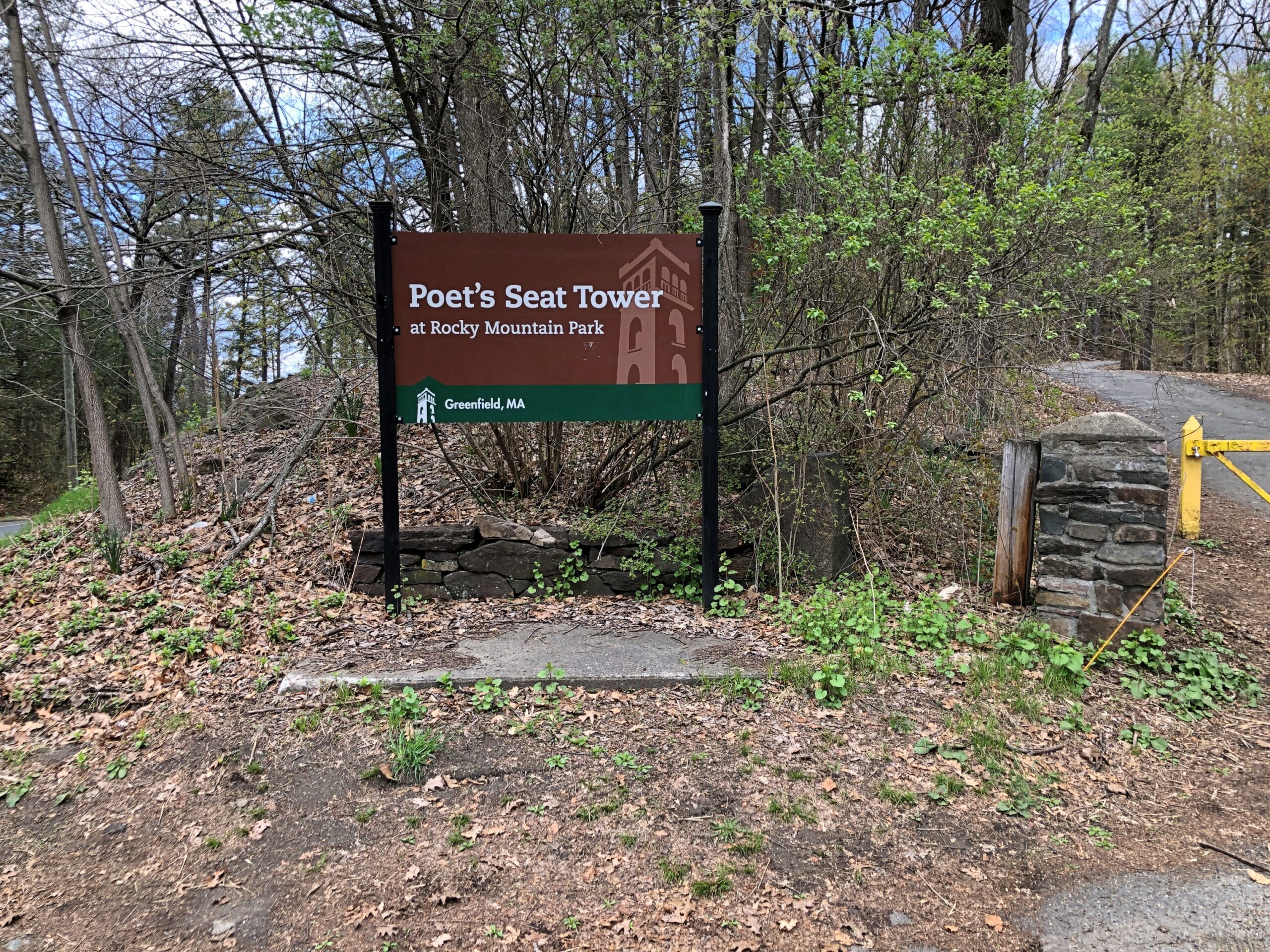
The church was closed. So was Poet’s Seat Tower.
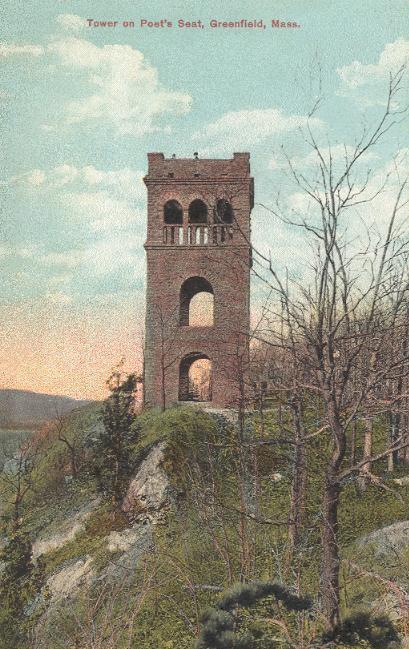
As the tower appeared more than 100 years ago.
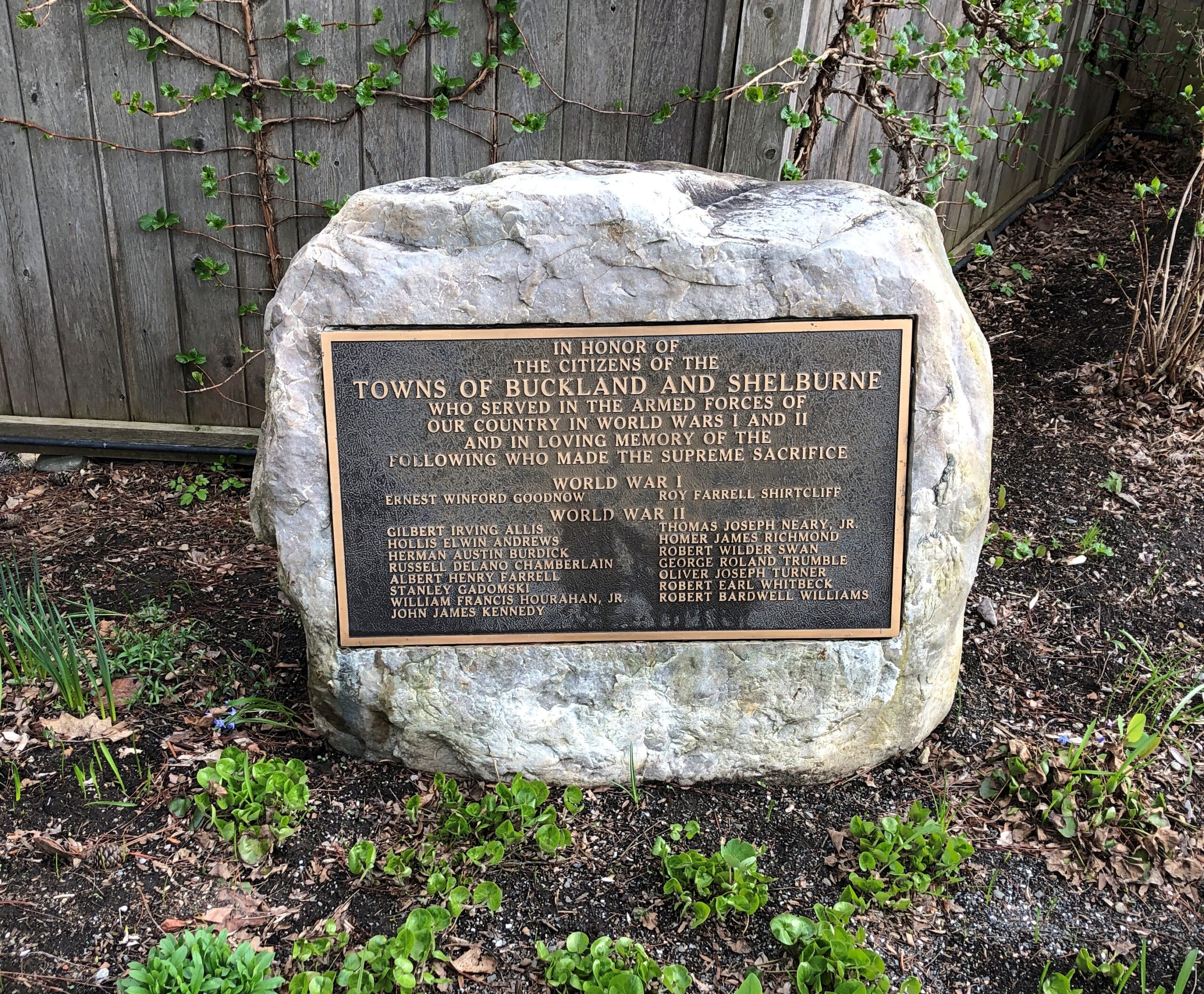
Shelburne.
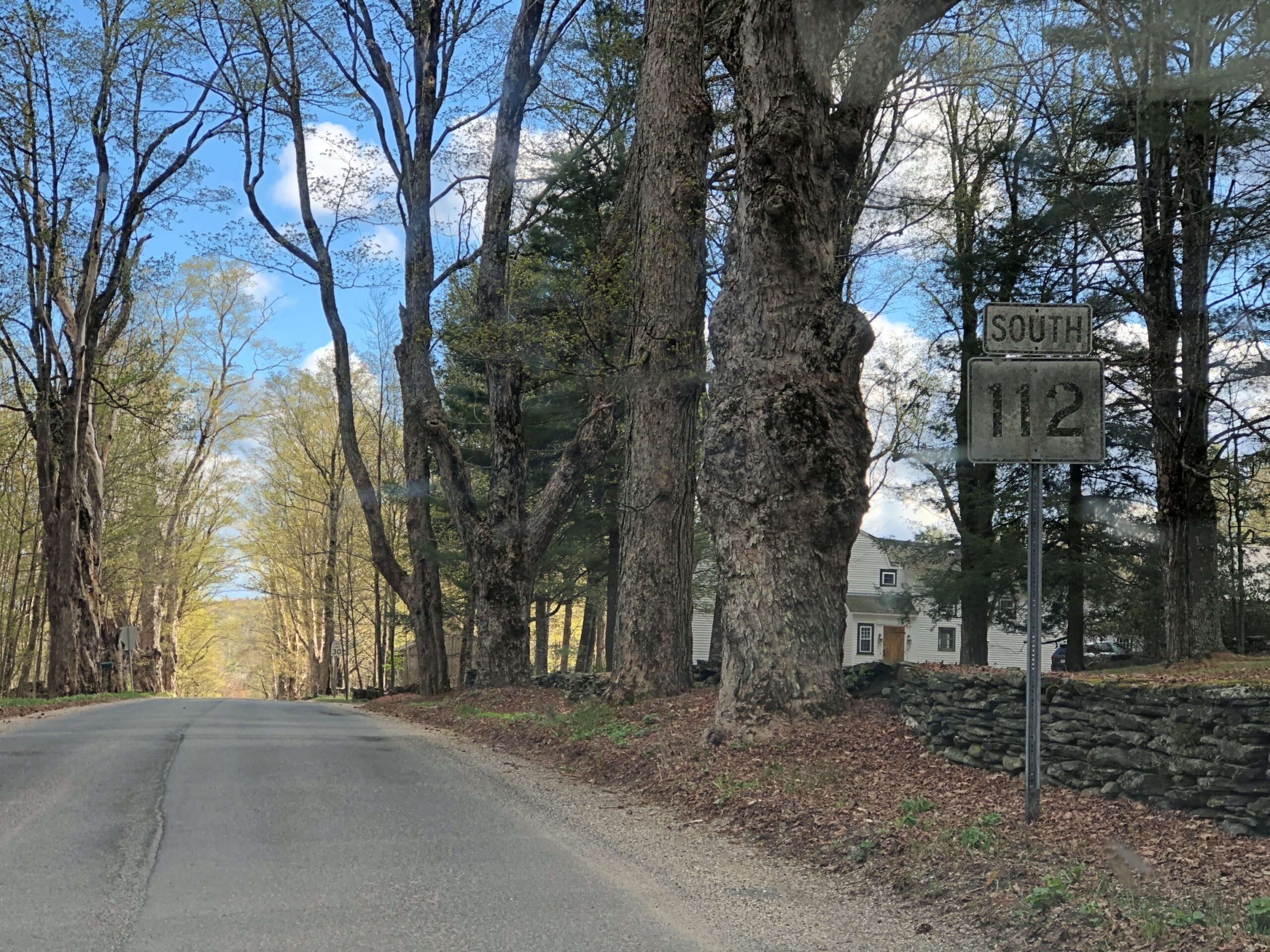
Massachusetts 112 (Route 112) in Hamilton County. Car commercial driving.
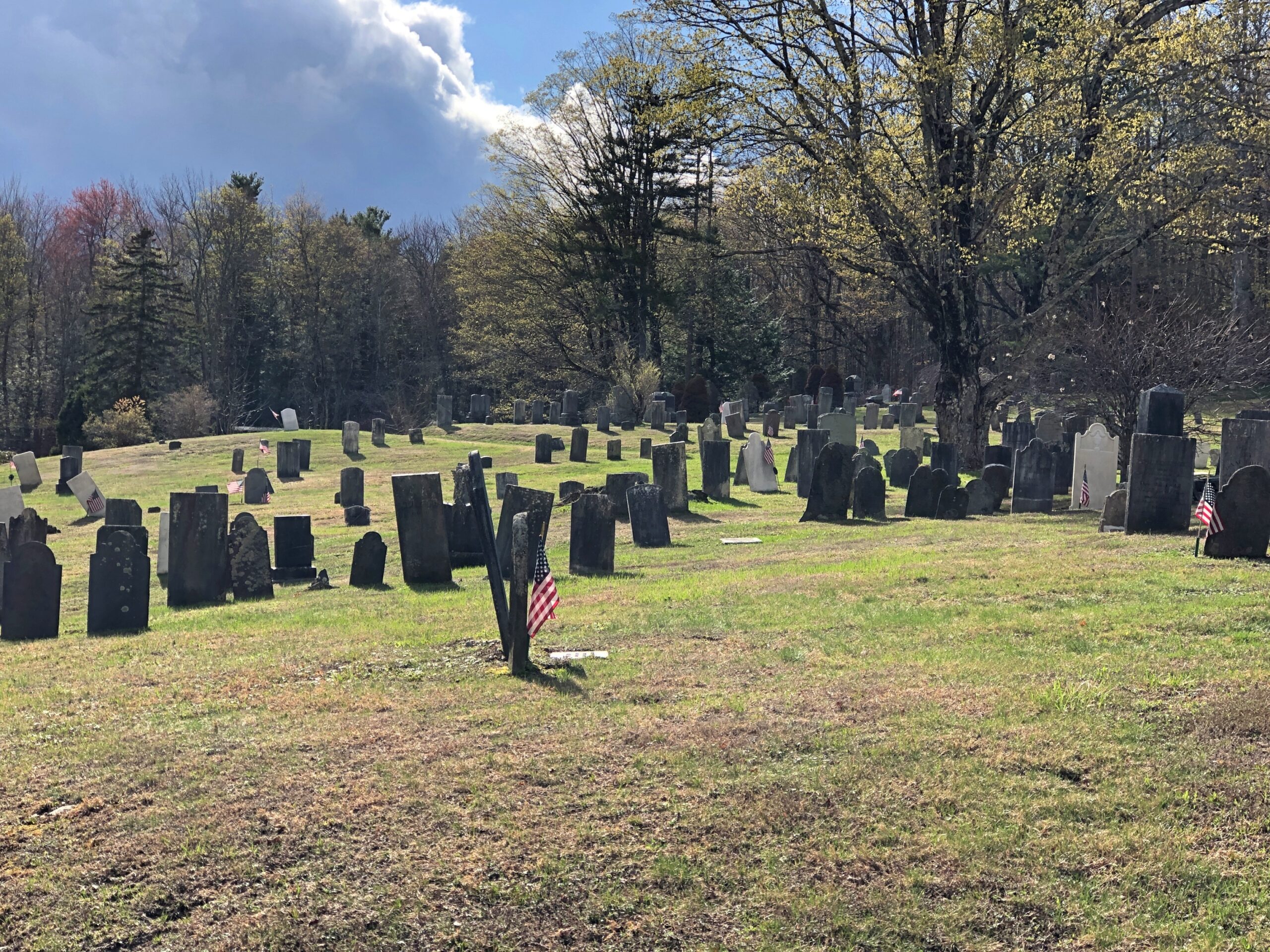
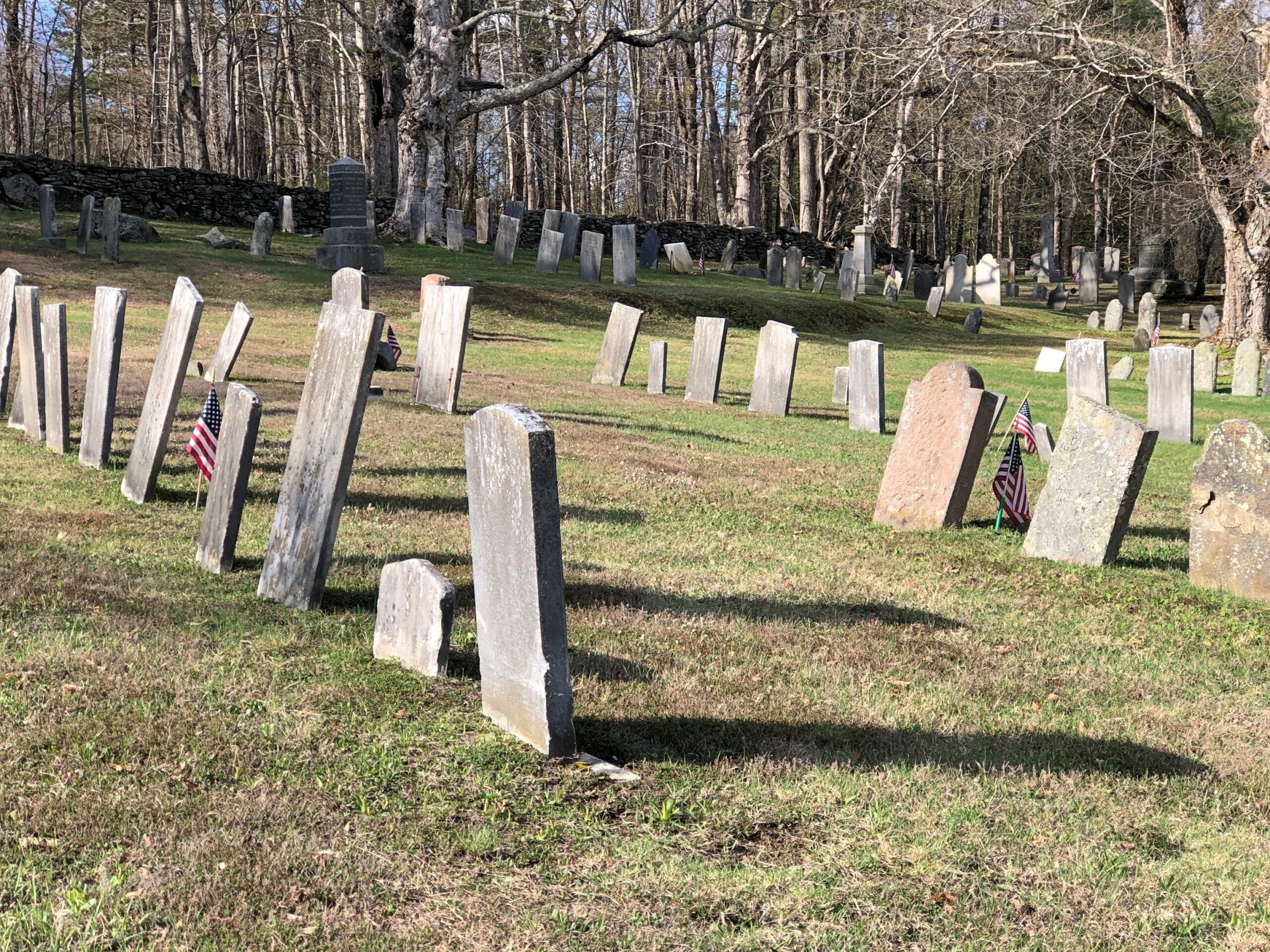
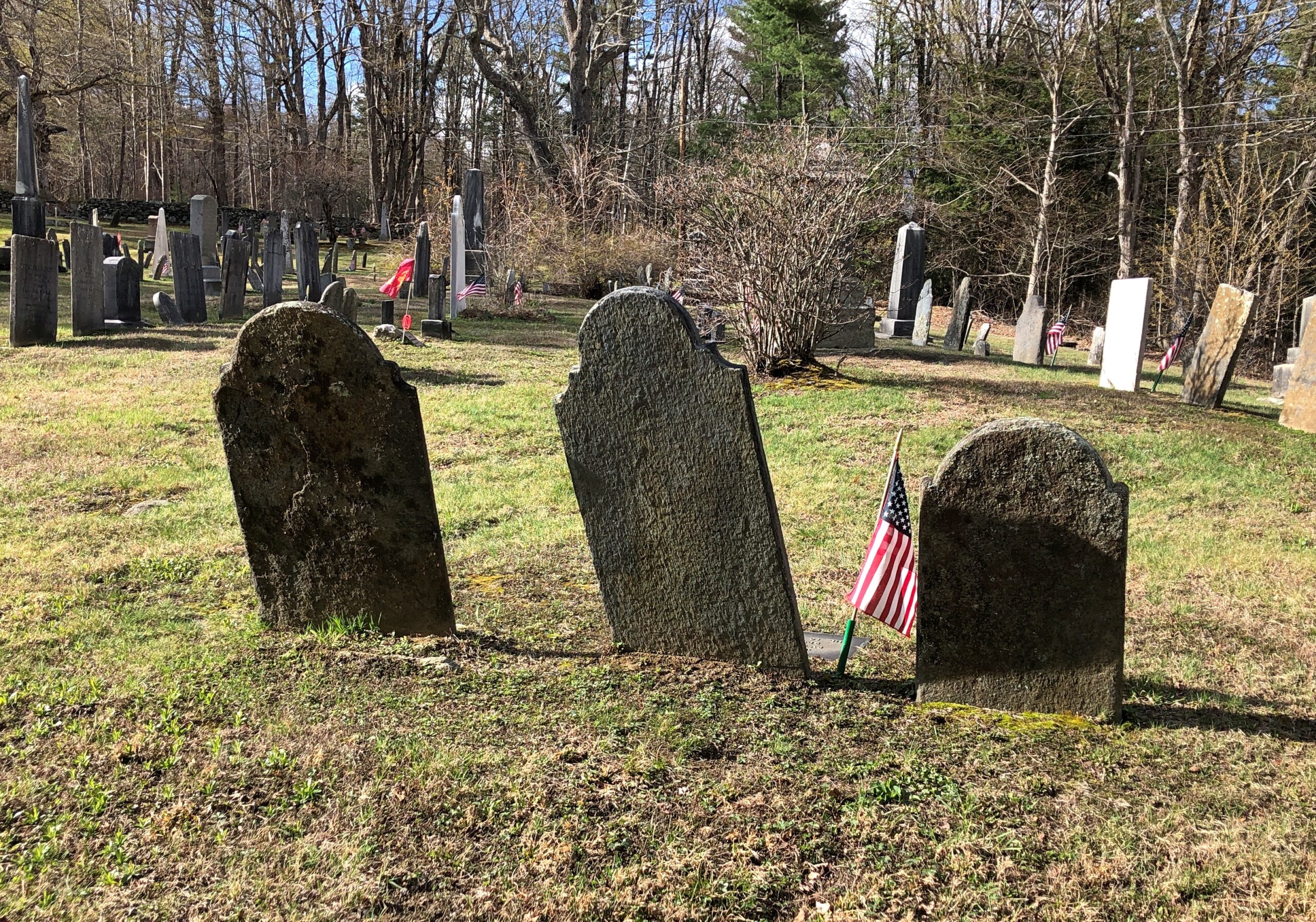
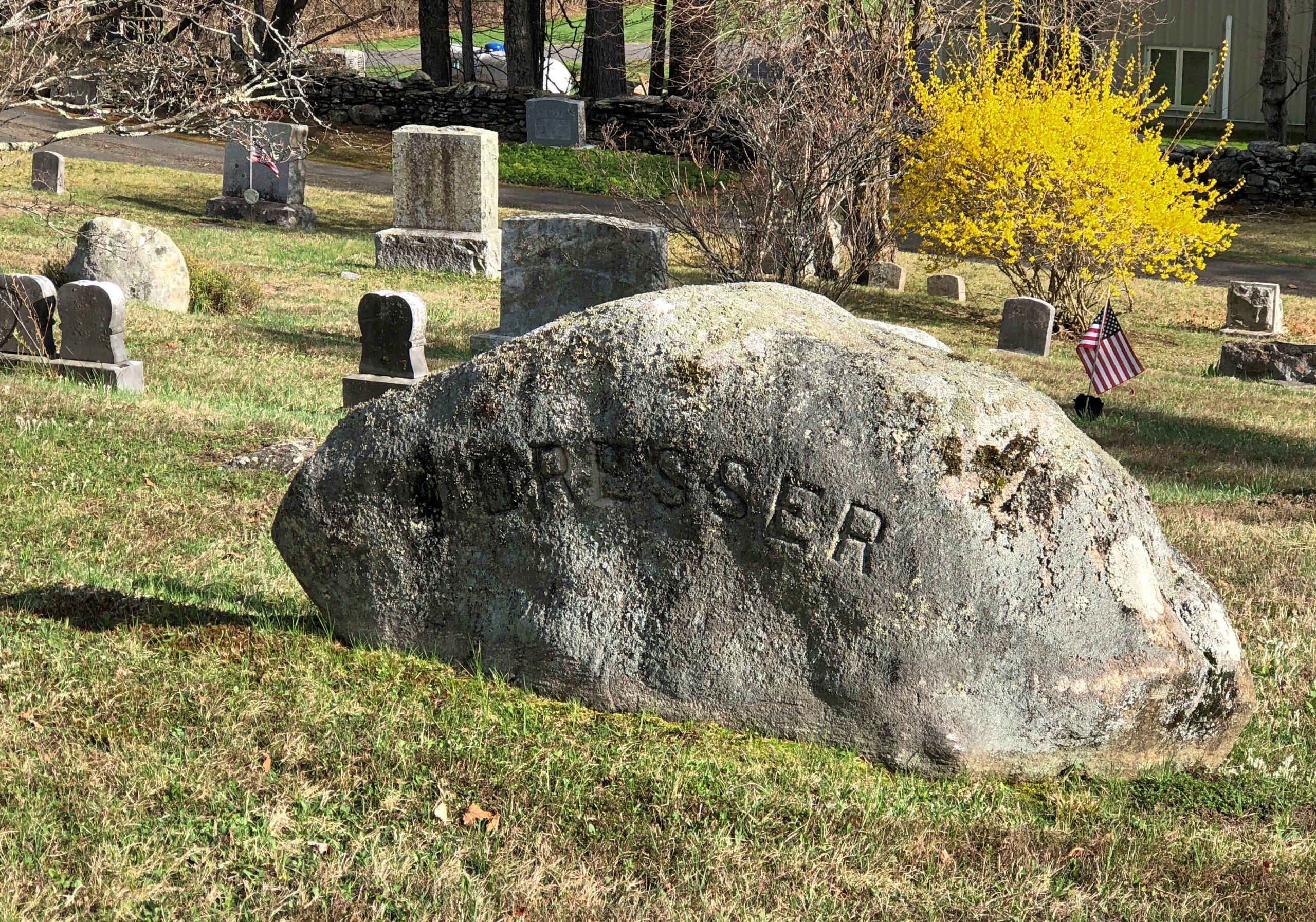
Goshen Cemetery, just off Route 112.
Ohio
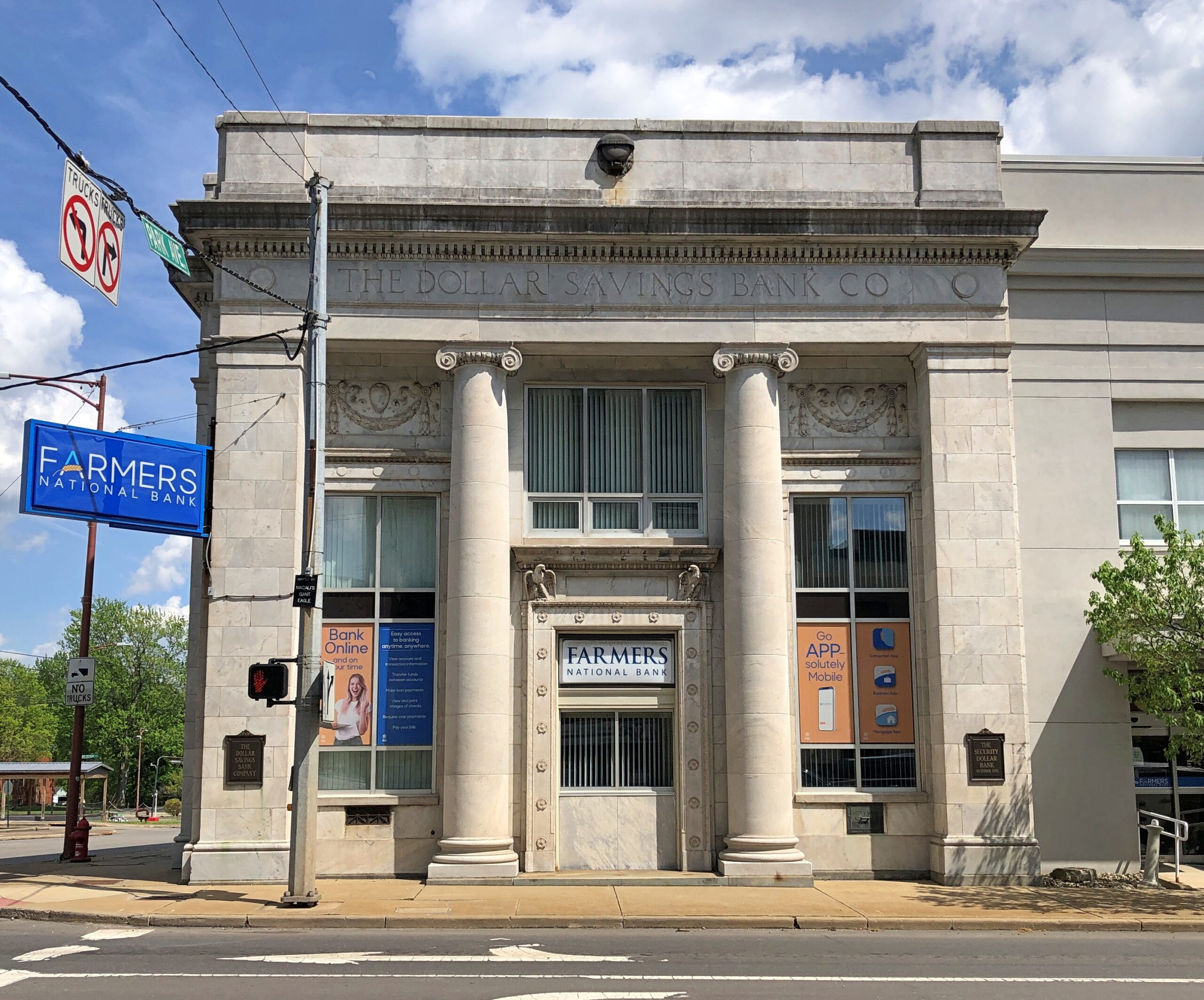
A solid bank building in Niles, across the street from where William McKinley was born. The Dollar Savings Bank Co. sounds like the kind of place that George Babbitt would mention, but distain in favor of a bank with longstanding ties to the best business men in Zenith.
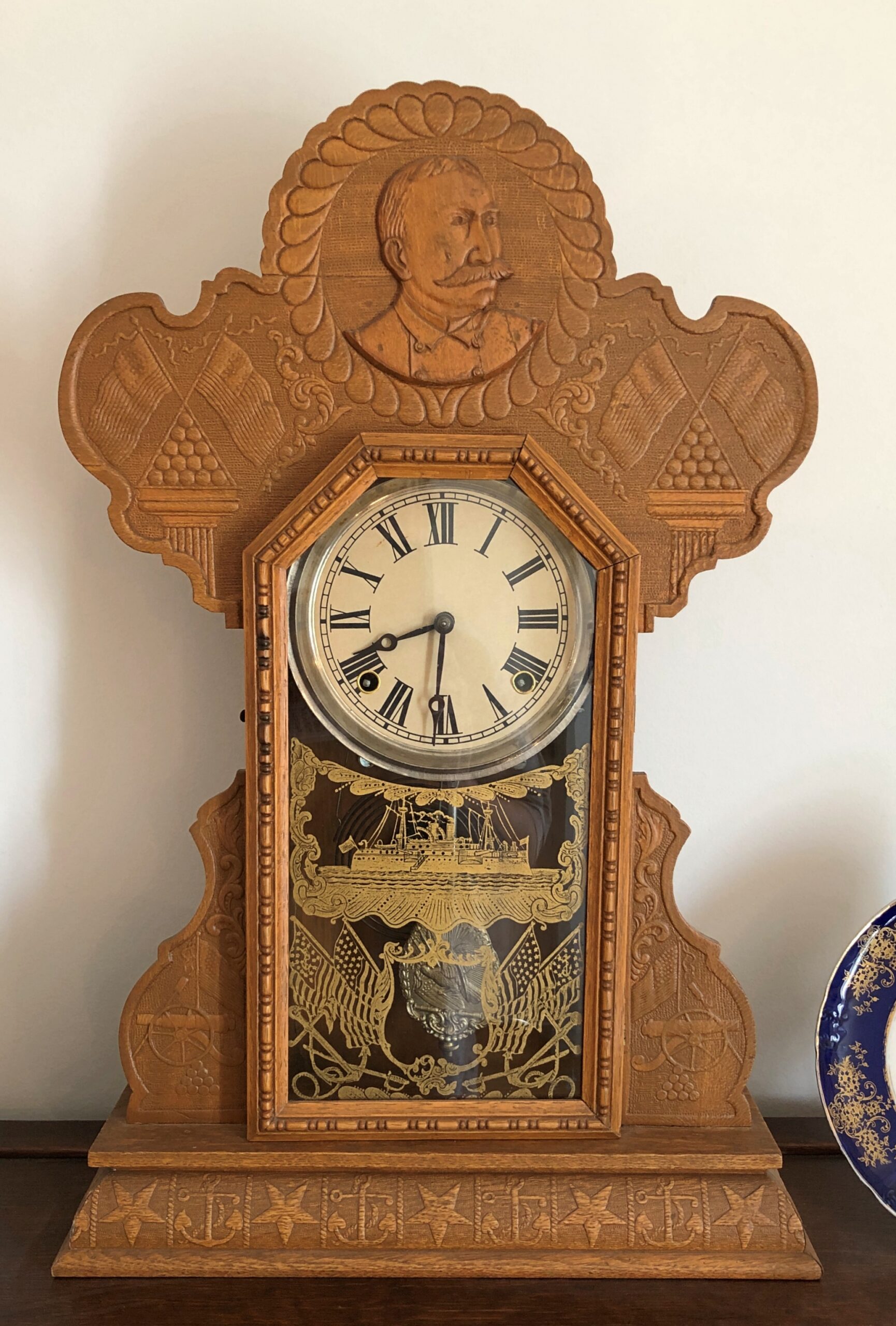
An Admiral Dewey clock at the McKinley Birthplace Museum. A textbook case, that Dewey, of how fleeting fame usually is.
Passing through northeast Ohio intrigued me greatly about that part of the state. Akron, Canton, Youngstown, Austintown — all places I can imagine going, and enjoying the visits. See ’em before the reverse migration really gets underway.
Further west, the drive on the Lincoln Highway (US 30) was a pleasure: mostly four lanes, rarely crowded. The flat farmlands don’t qualify as conventionally scenic, but the budding springtime fecundity has a lot to recommend it, even as a strictly visual pleasure: the bright greens of new leaves, the brown and grays of the fields recently plowed, small roads heading off usually at right angles to the main road, a run between Upper Sandusky and I-75 near Lima with few buildings of any kind, except distant farm structures.
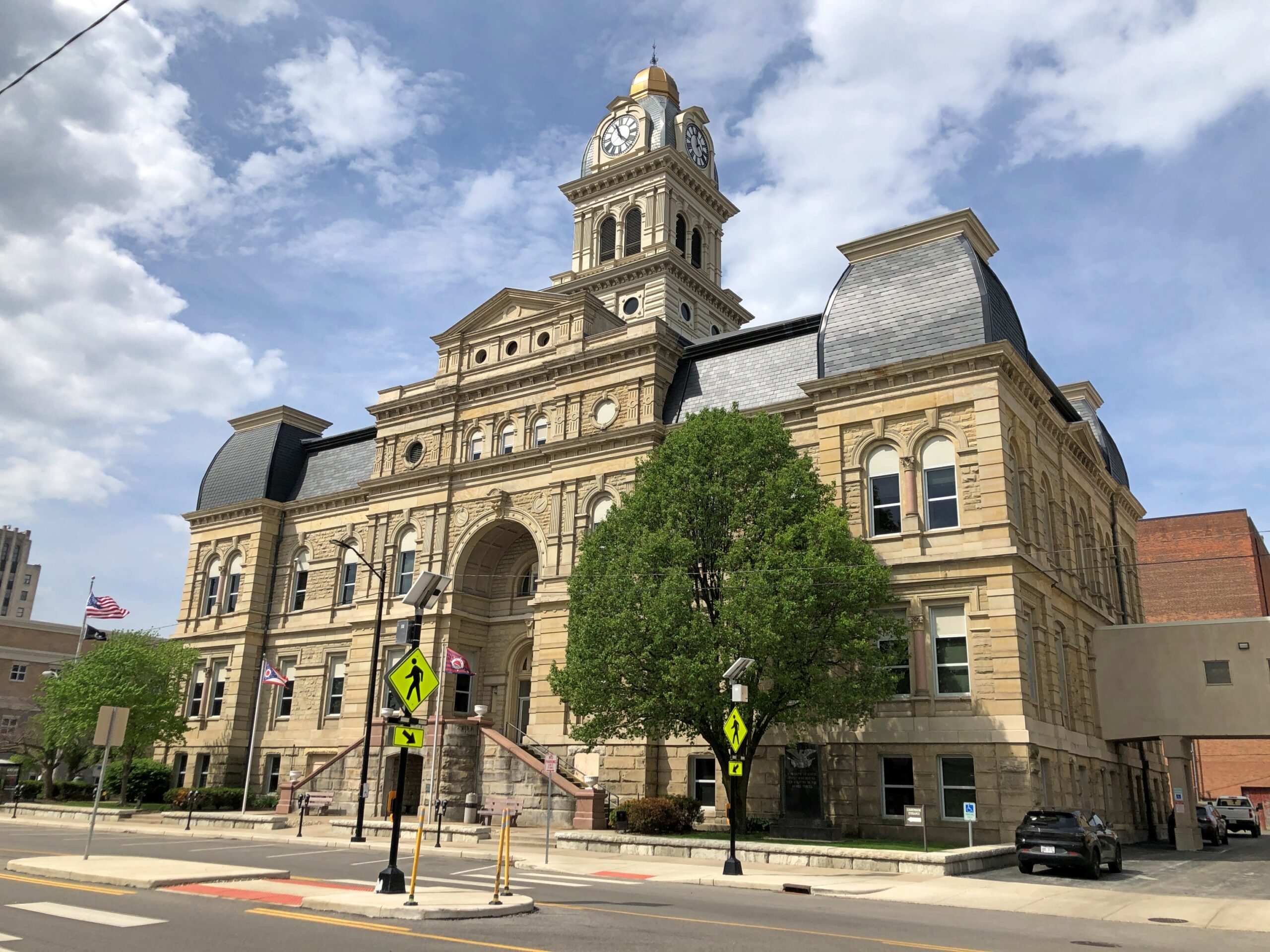
Downtown Lima: the Allen County courthouse, seen from North St.
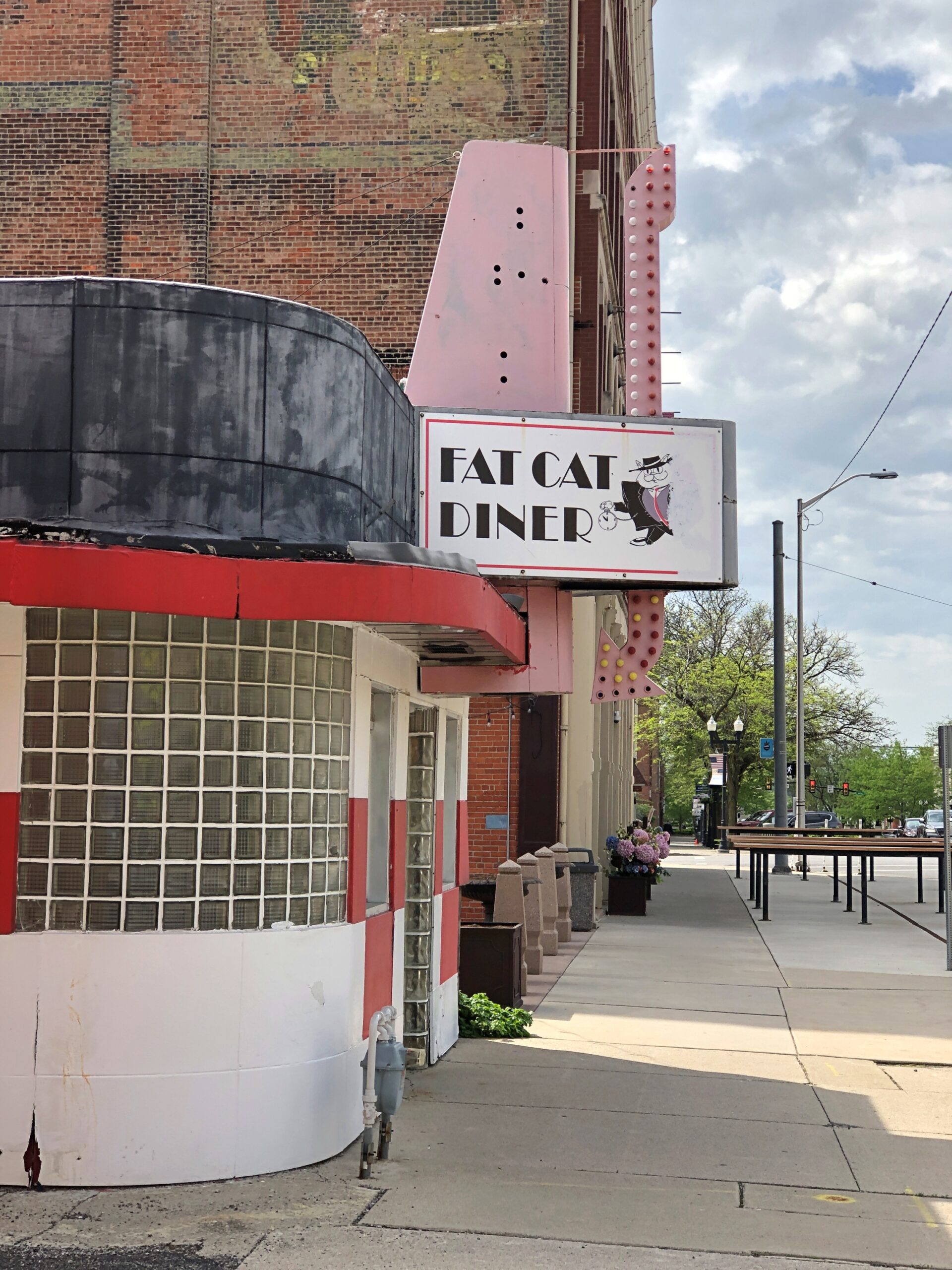
Looks like my kind of breakfast place. Closed on Sunday anyway.
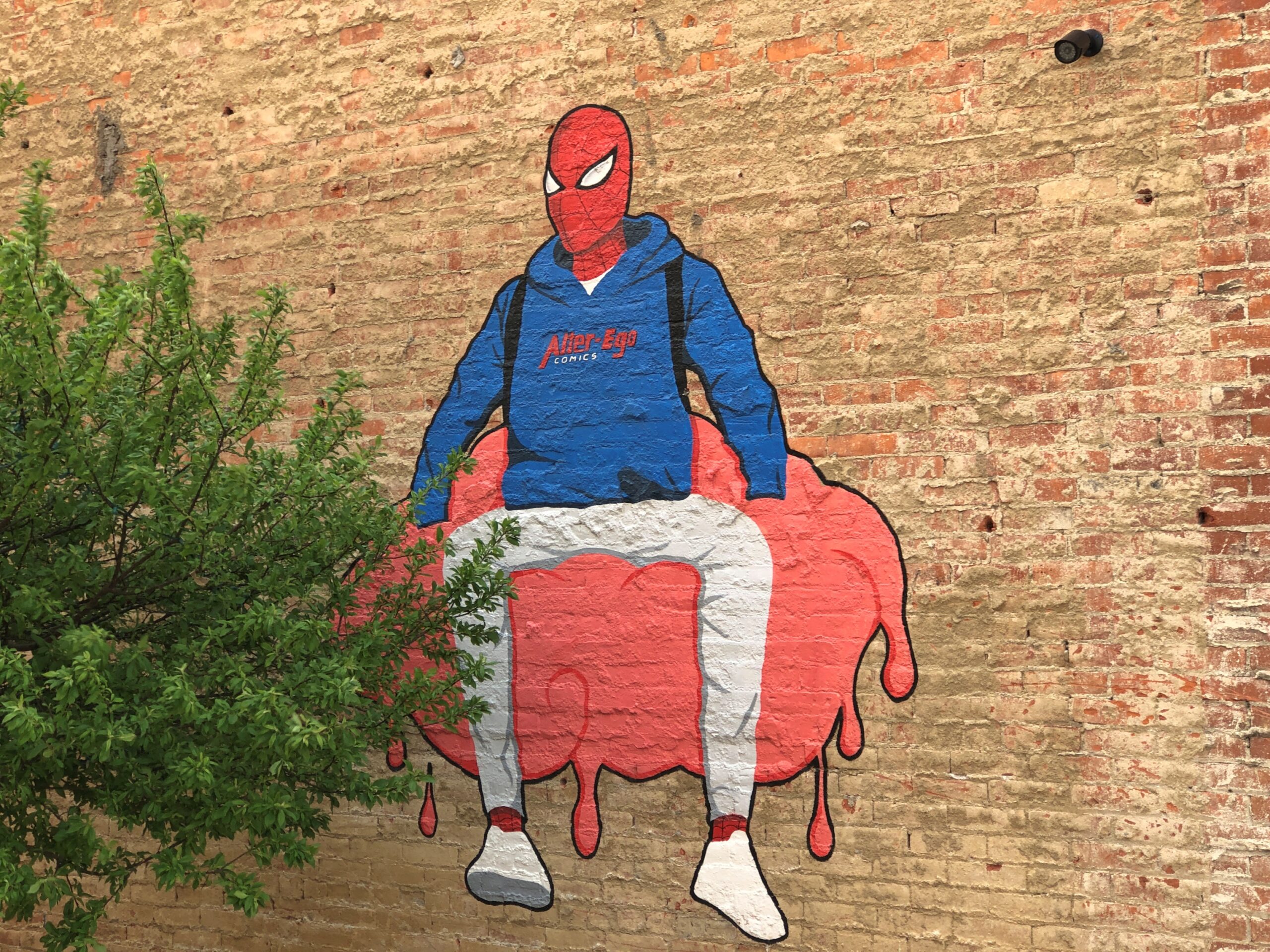
Another North St. detail. Spiderman sitting on — something. A large scoop of strawberry ice cream?
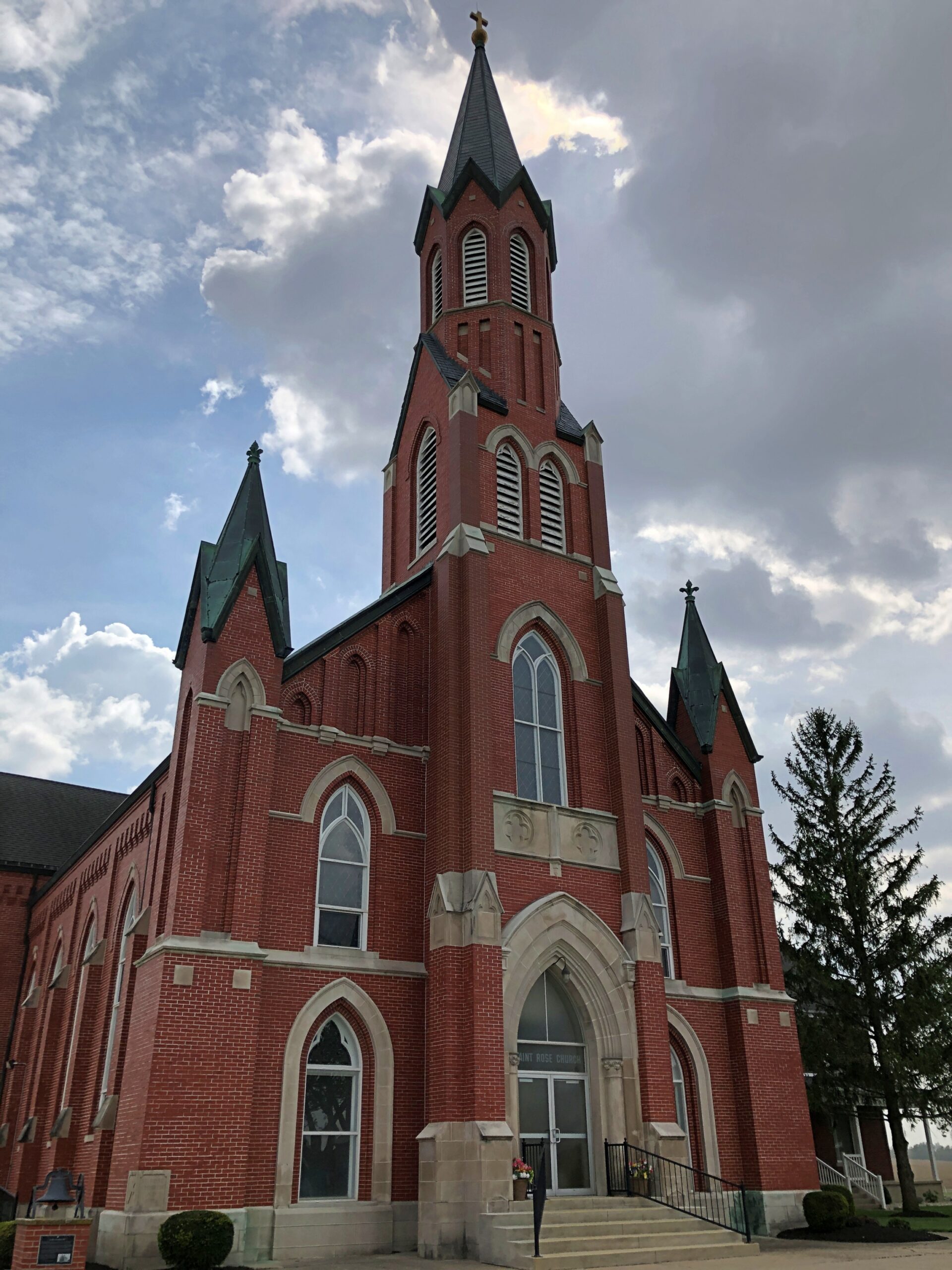
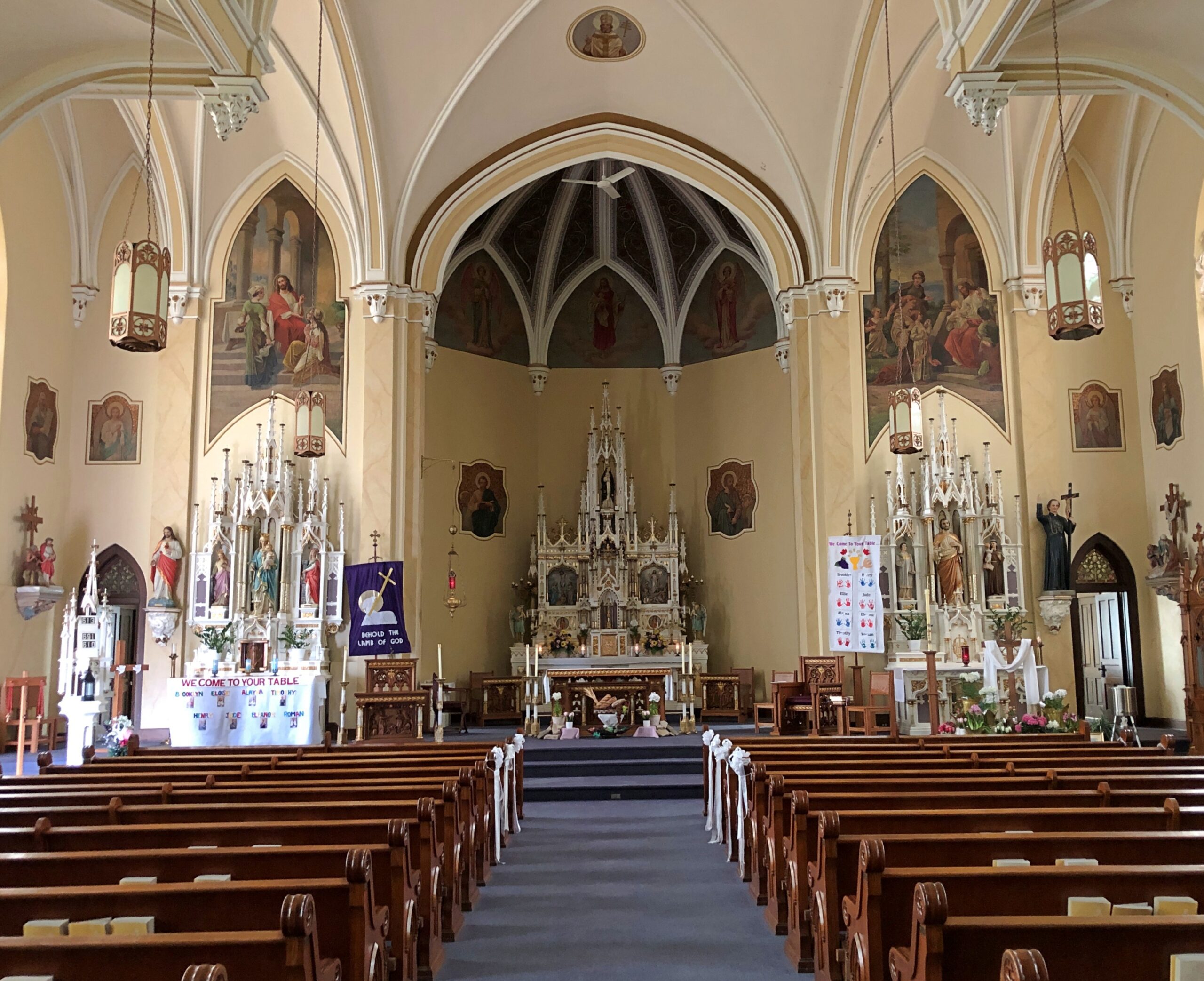
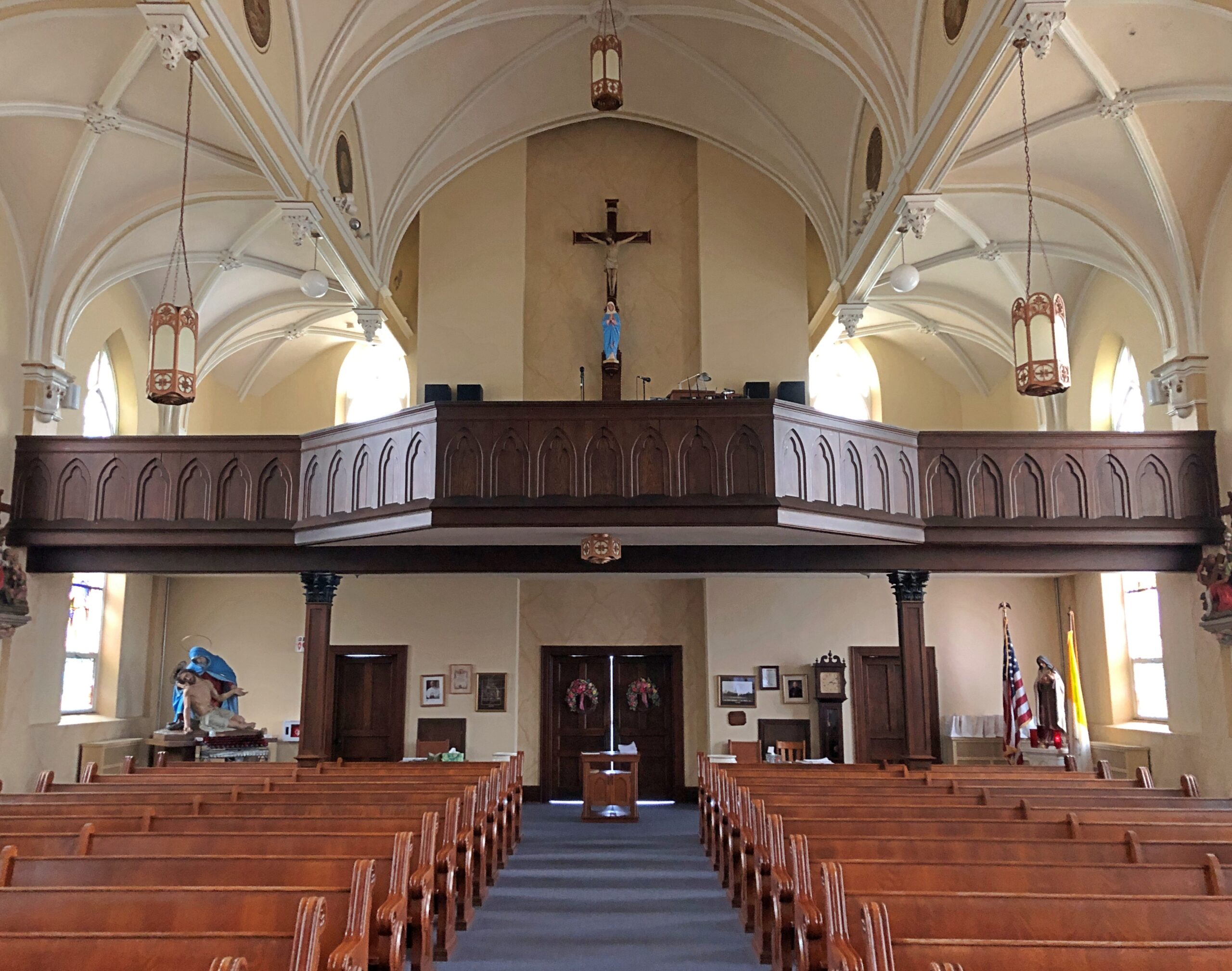
Saint Rose Church in the hamlet of Saint Rose, not far east of the Ohio-Indiana line. A Cross-Tipped Church.
Pennsylvania
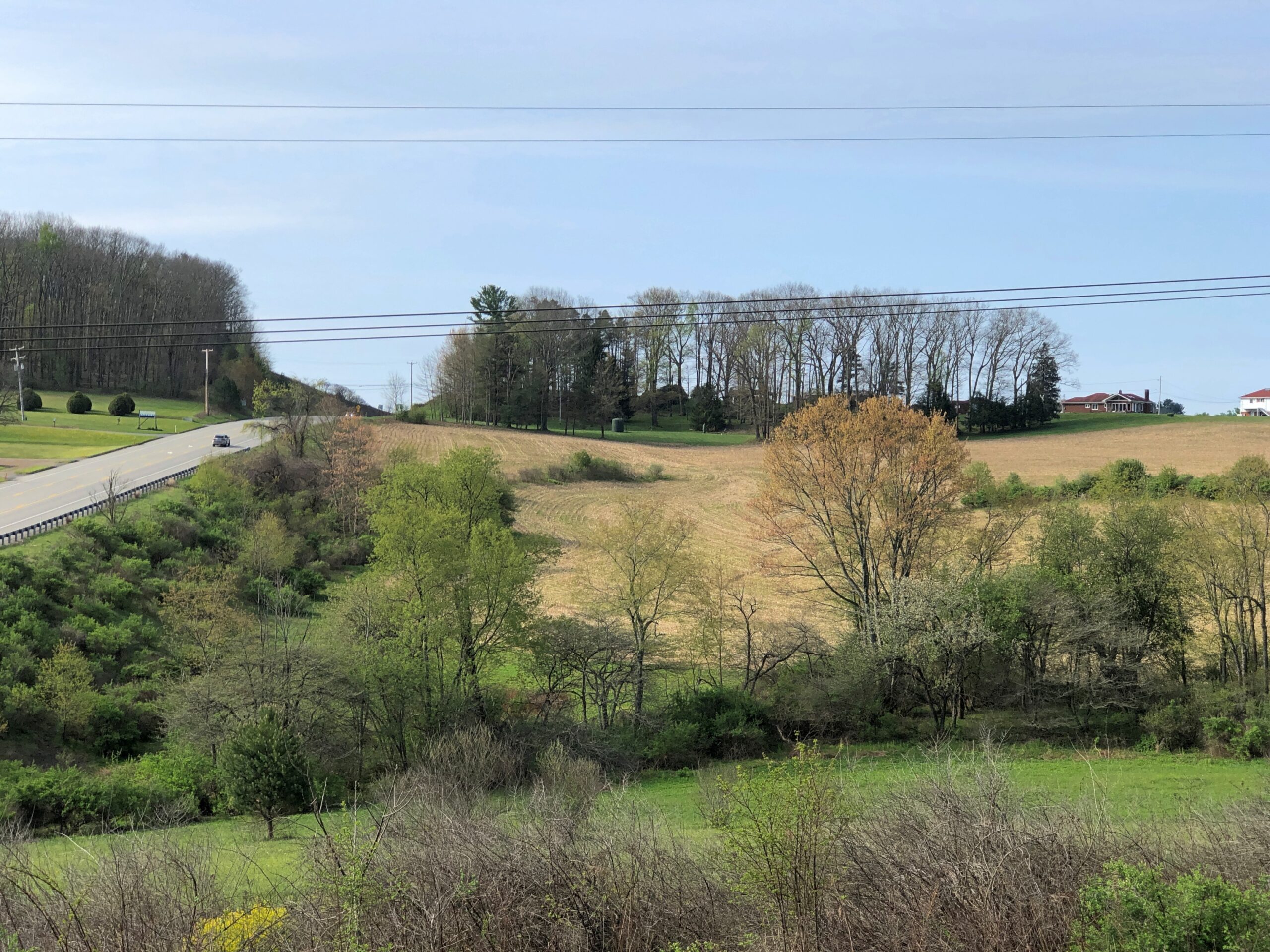
The hills at the edge of Punxsutanwney.
The drive west across Pennsylvania began across the Delaware River from Port Jervis, NY, taking US 209 southwest through part of Delaware Water Gap National Recreation Area. Bet the straight-ish, two-lane road is busier in peak recreation season in the Recreation Area, but in April, I booked along without encountering much in the way of traffic. Trees were still budding, but it wouldn’t be long before some stretches of the highway would pass through green tunnels. The sunlight was already casting green leaf shadows on the road.
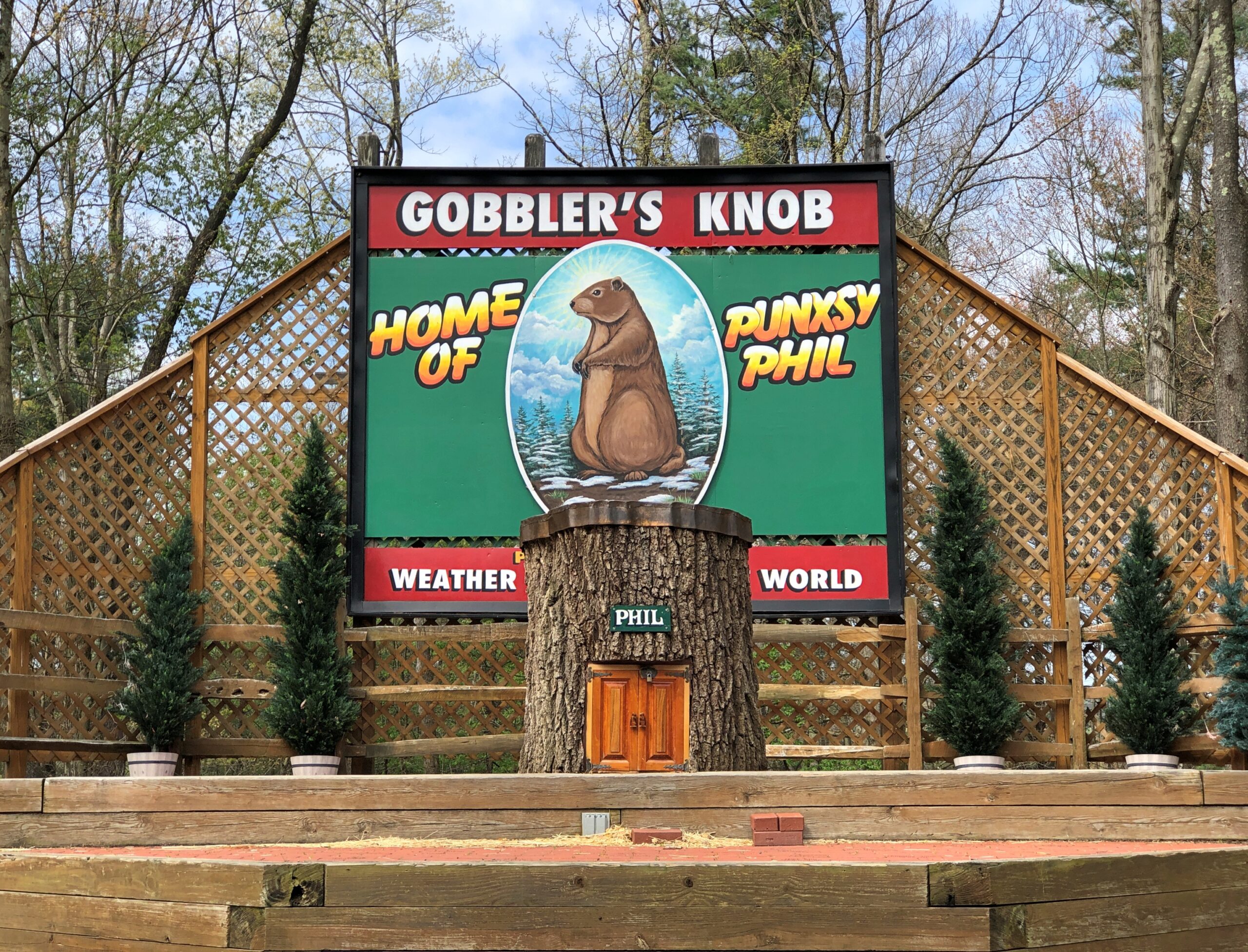
Watch Groundhog Day, and the impression is that the festivities are held in the center of town — which they are, in the Punxsutanwney stand-in of Woodstock, Illinois. Go to Punxsutanwney itself and learn that the February 2 fest is a few miles from town in a place called Gobbler’s Knob.
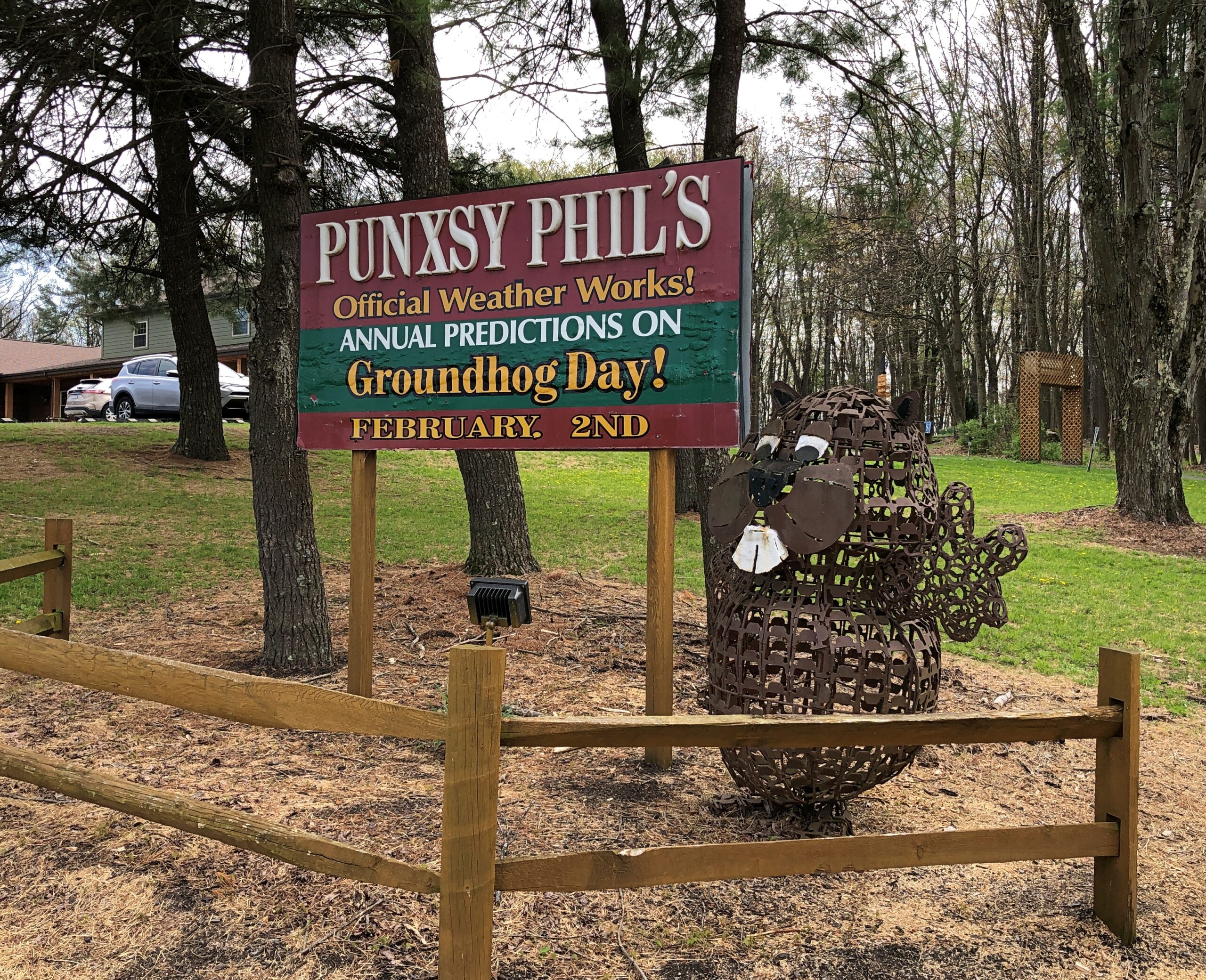
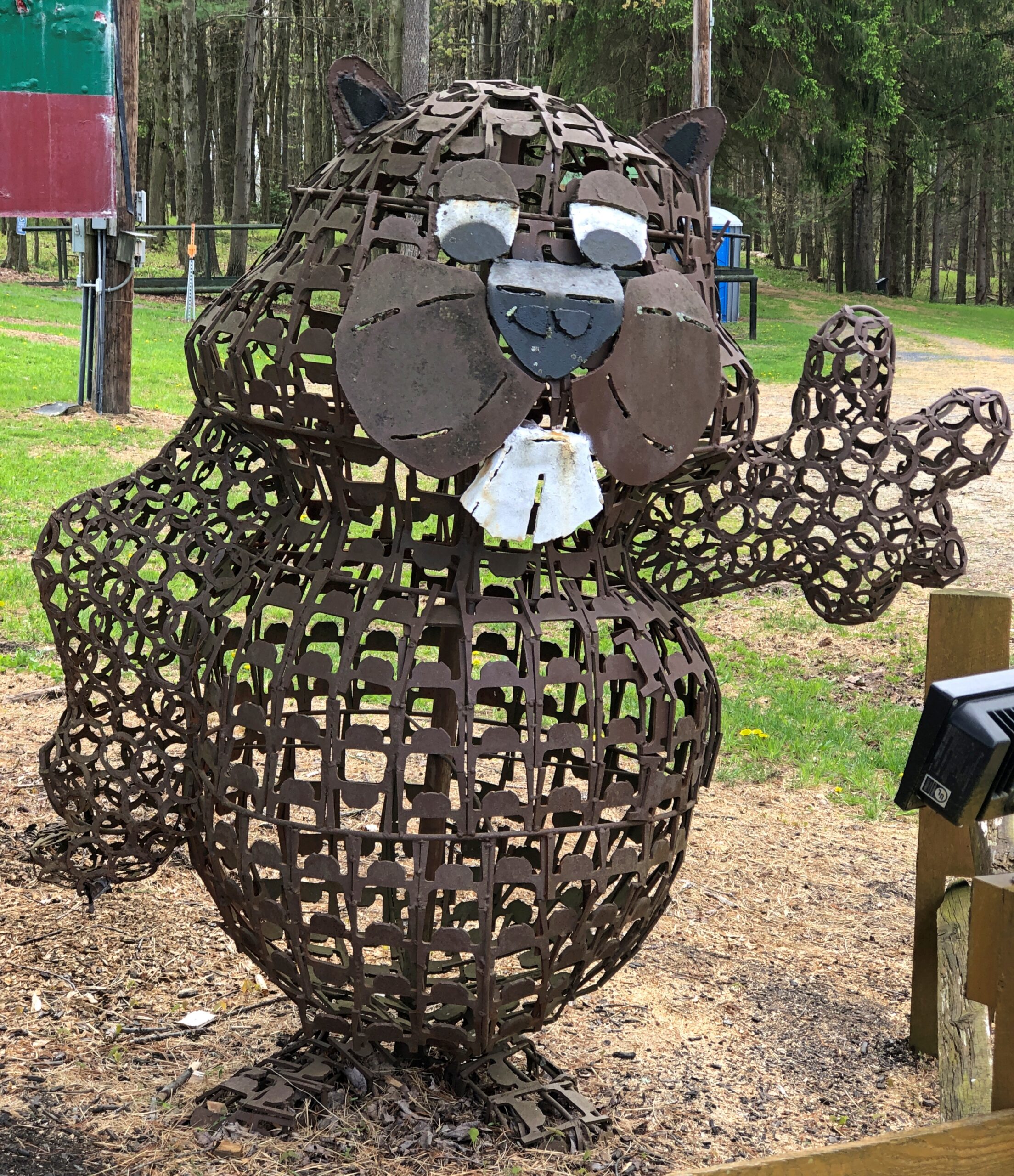
One more Phil. Iron Phil.
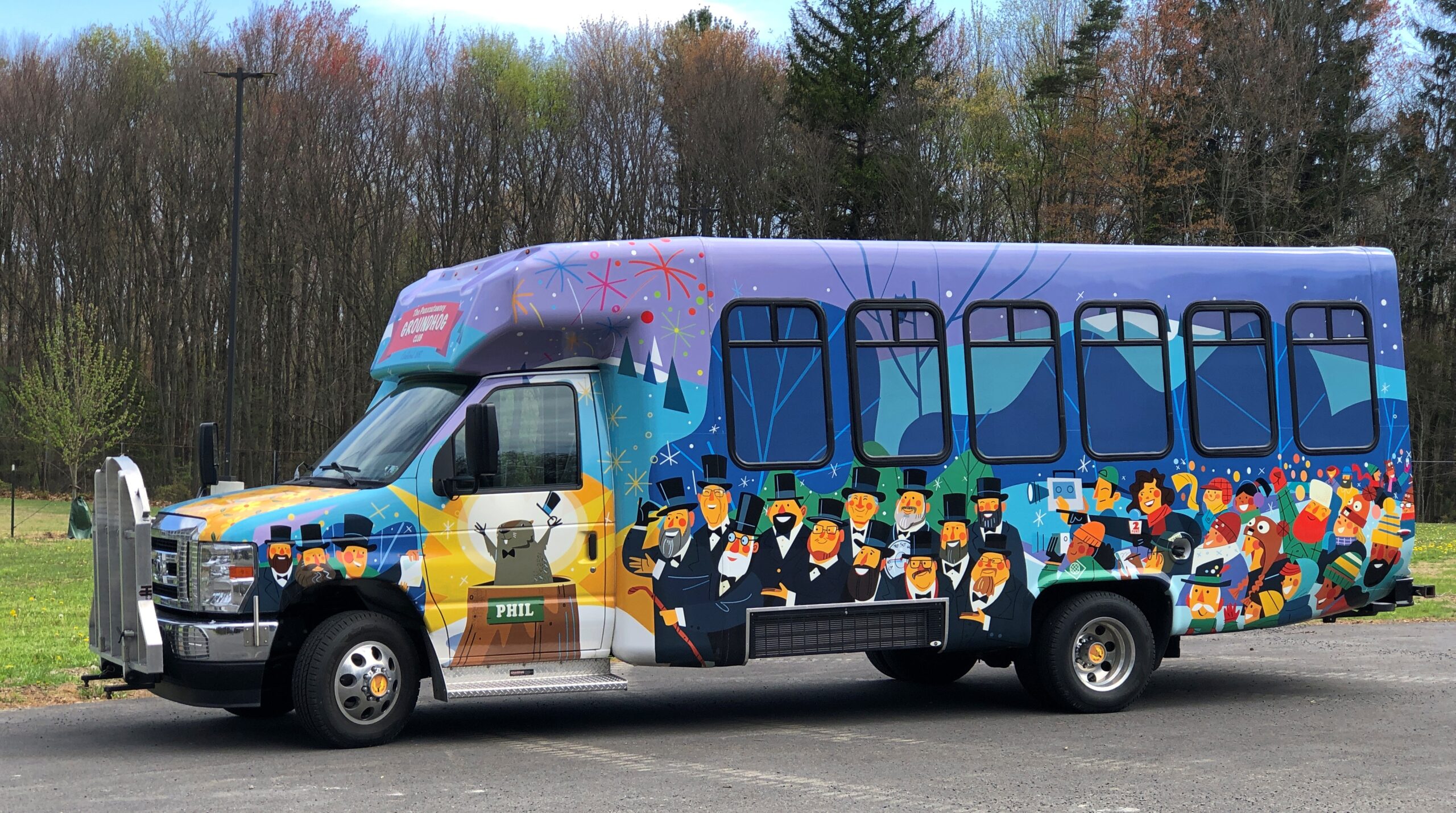
The clerk at the Gobbler’s Knob gift shop took pains to let me know that the site, and the festivities, were overseen by a nonprofit, not the commonwealth. Outside is the nonprofit’s bus, or at least I assume that, probably used to ferry people from town to GK and vice-versa, to help deal with the popularity of the event.
I like a good local festival as much as anyone, but February 2 is a deal-breaker. Can’t Phil come out again on August 2 to predict how much longer summer is going to last?
One More (Indiana)
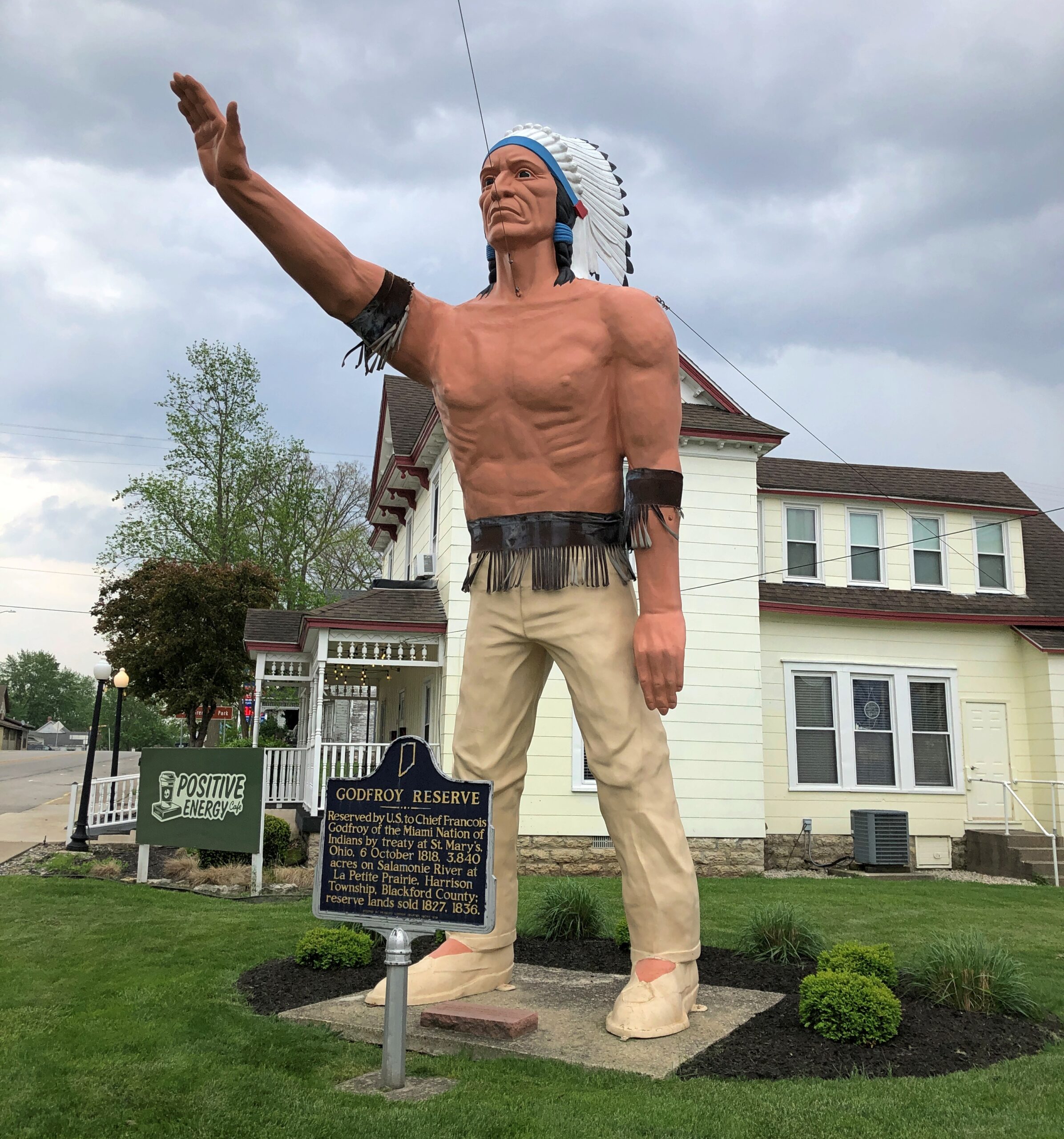
Miami Chief Francois Godfroy stands at the corner of Main Street and Huntington Street/Indiana 18 in Montpelier. Well, maybe it’s supposed to remind passersby of the chief more than actually depict him.
A Daughters of the American Revolution historical marker says: Reserved by U.S. to Chief Francois Godfroy of the Miami Nation of Indians by treaty at St. Mary’s, Ohio, 6 October 1818. 3,849 acres on Salamonie River at La Petite Prairie, Harrison Township, Blackford County: reserve lands sold 1827, 1836.
Waymarking says: “The statue was made in Venice, CA in 1960 for the Tom Wood Pontiac dealership in Indianapolis. Later it was in front of the Indian Museum at Eagle Creek Park In Indianapolis. After the museum closed, the statue (of more a plains Indian than a NE Indiana tribe) was obtained by Chief Larry Godfroy — a descendant who presented it to the City of Montpelier and they erected it as a monument in 1984.”
The strange thing about Groundhog Day, to me at least, isn’t its taproots in northern European folklore or even that weather forecasting based on mammal movements has been known for centuries if not millennia. Or that Germans brought its celebration to North America and that the event morphed in various ways, or that it became more widely known internationally because of a certain very good movie. Or even that the town of Punxsutanwney, Pennsylvania, has capitalized on Groundhog Day.
What mystifies me is why, among all the possible folkloric-flavored immigrant quasi-holidays, Groundhog Day has consistently been featured on calendars for longer than I can remember. It puzzled me as a kid, since I wasn’t sure I’d ever seen such a creature, and what I heard about the day involved some nonsensical thing in faraway Pennsylvania. That might have been childish provincialism at play, but even now it still strikes me as odd that so many Americans pay attention to the day, or at least have heard of it.
Just for grins – because I knew I wouldn’t get a compelling answer – I asked ChatGPT, “When did Groundhog Day start appearing on calendars?” I’ll boil the answer down for you: “Dunno. That’s just the way it’s been for years, Jack.” Maybe that’s how educators can get around AI cheating: assign essays on questions that don’t really have any answer. How many pancakes does it take to shingle a doghouse?* – that kind of thing. The learning isn’t in the finding an answer, but in the writing.
* Actually there is an answer: 42. Because oranges can’t fly, submarines have no doors and ice cream has no bones.
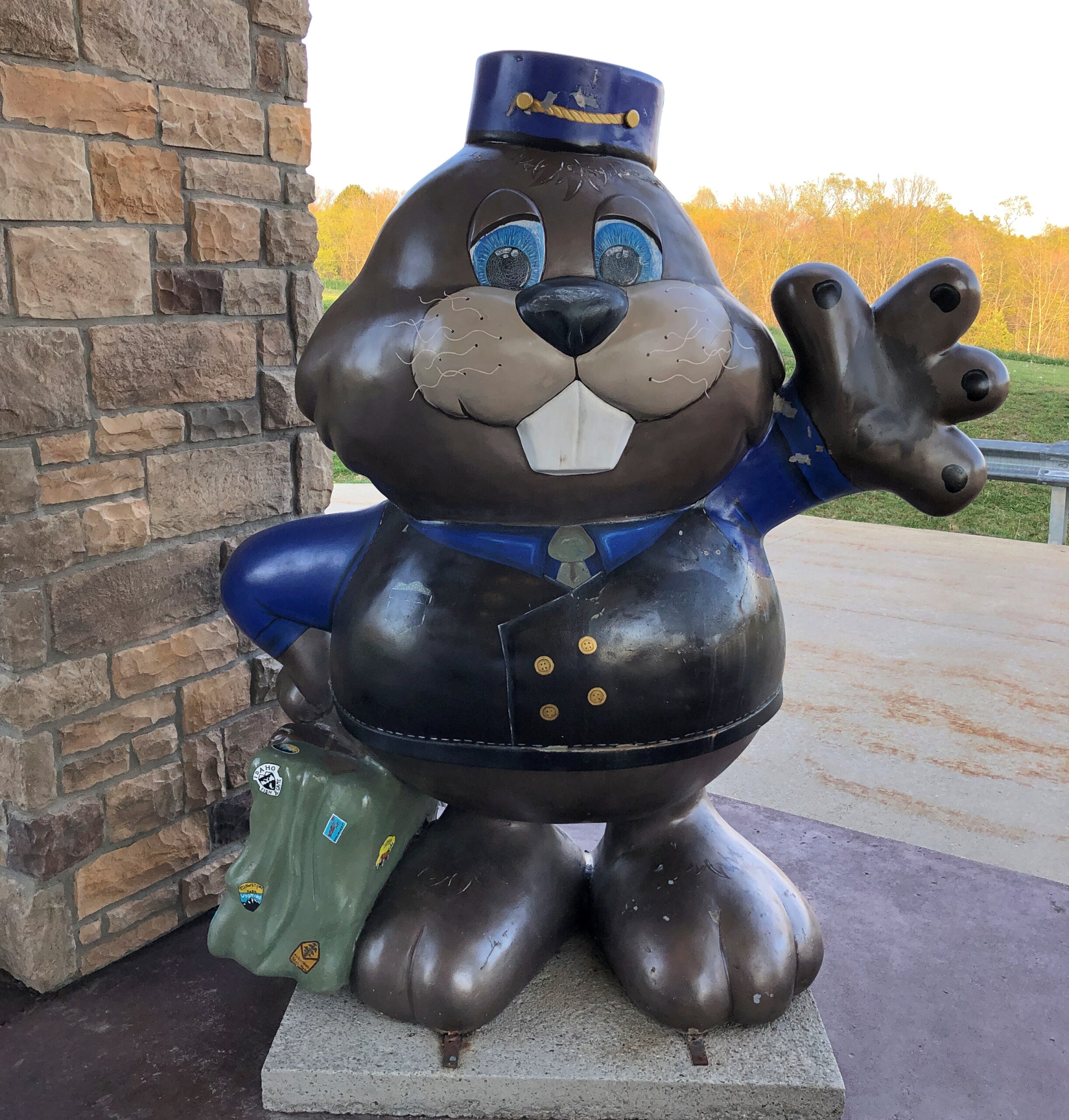
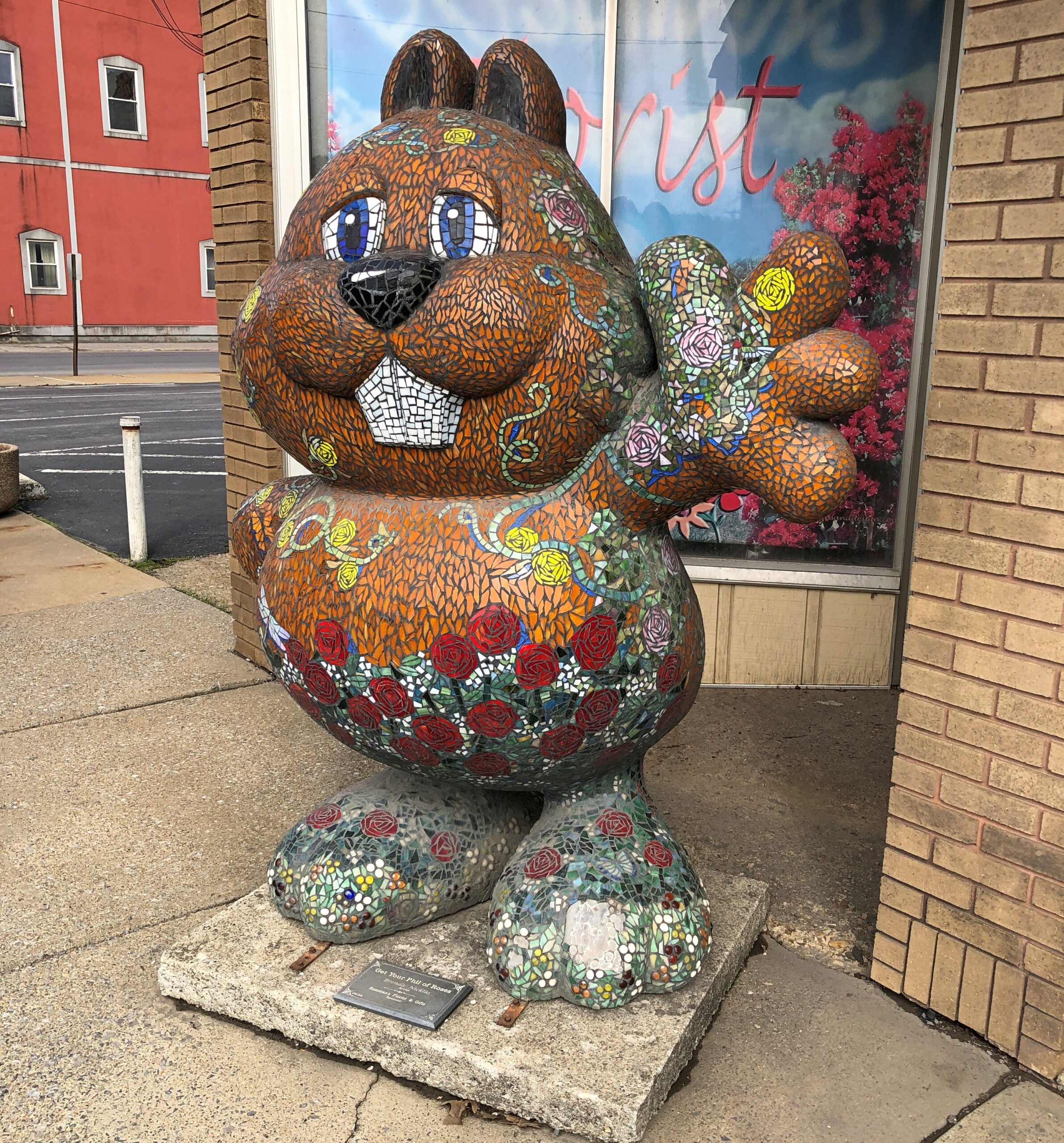
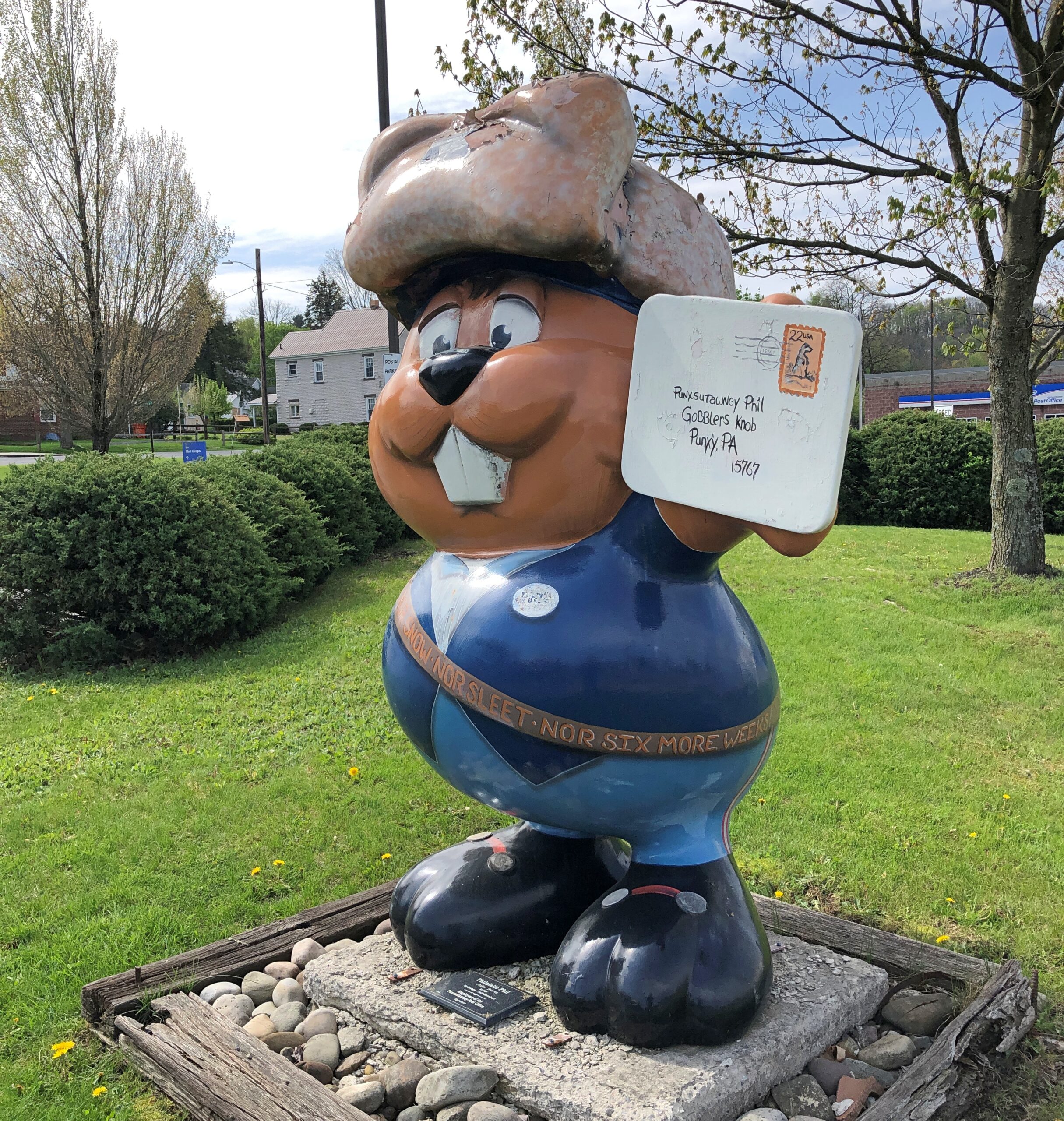
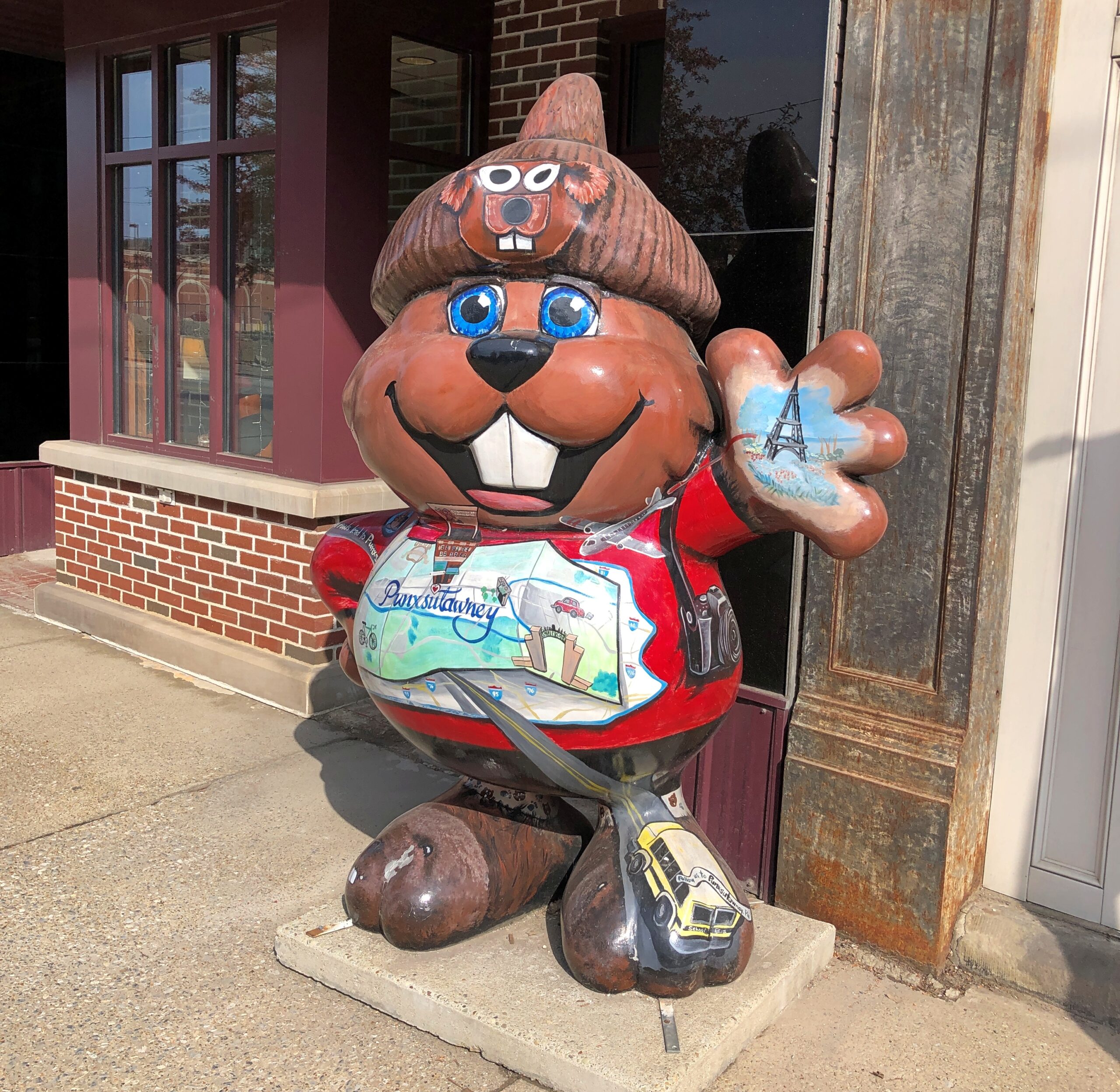
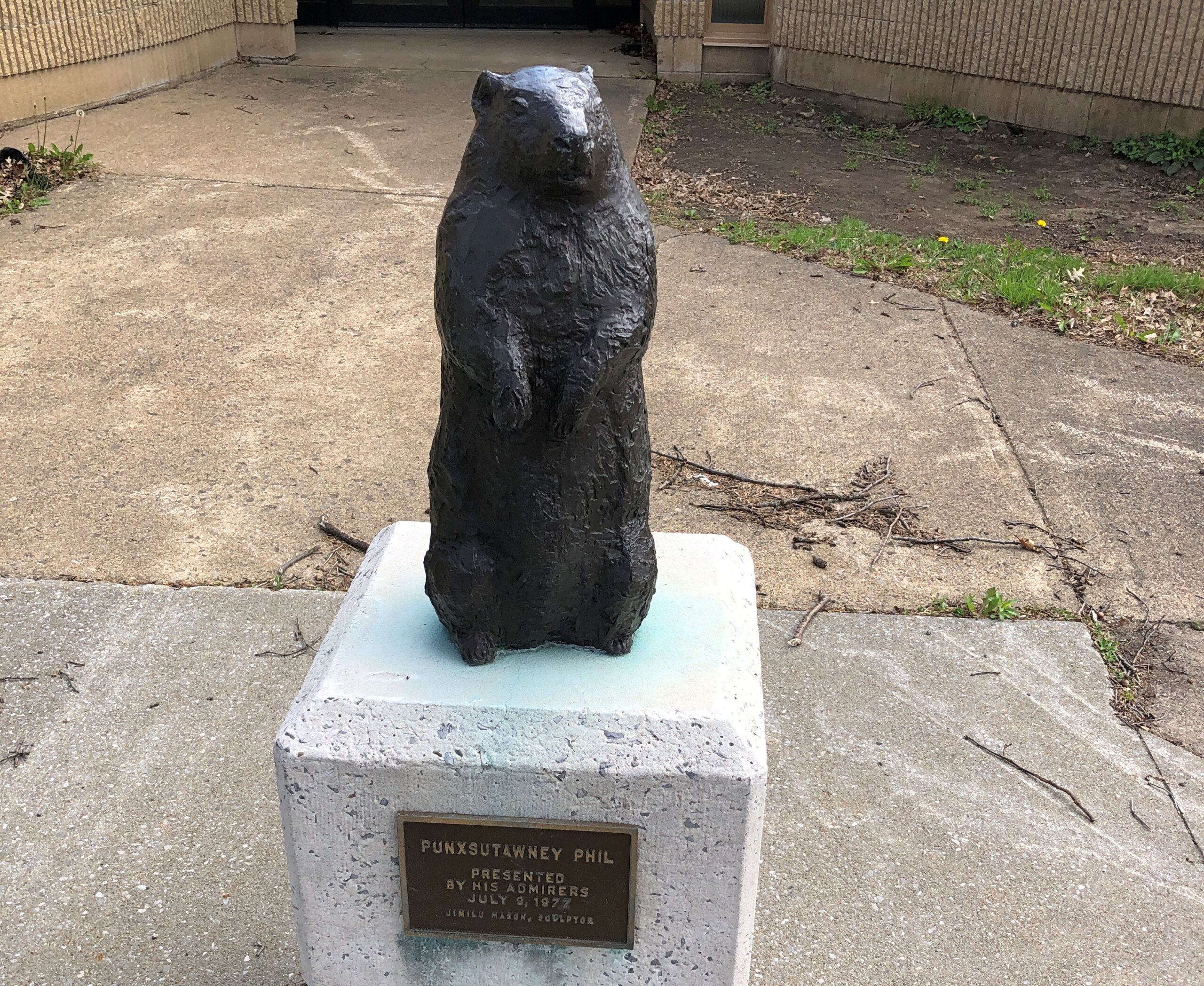
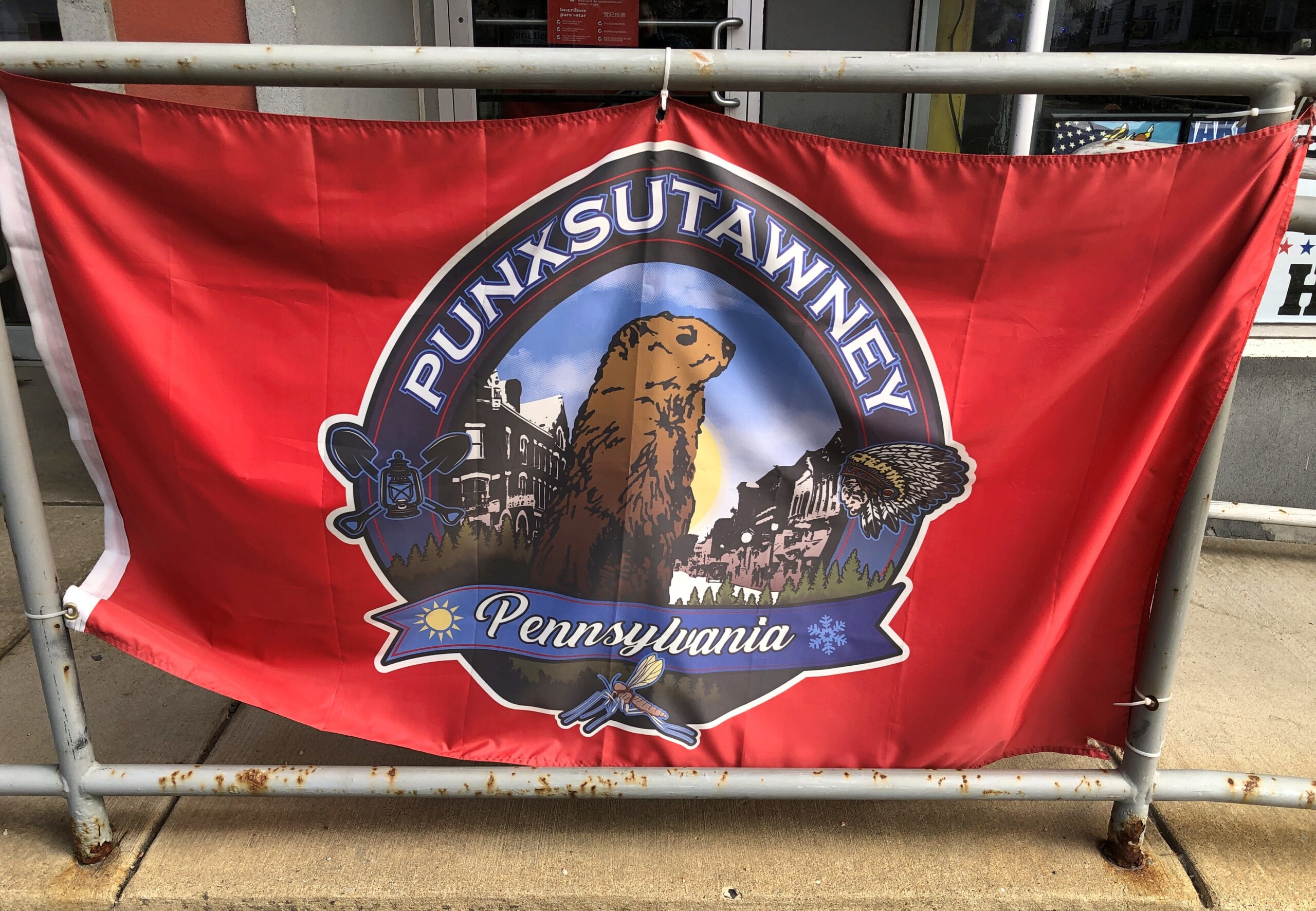
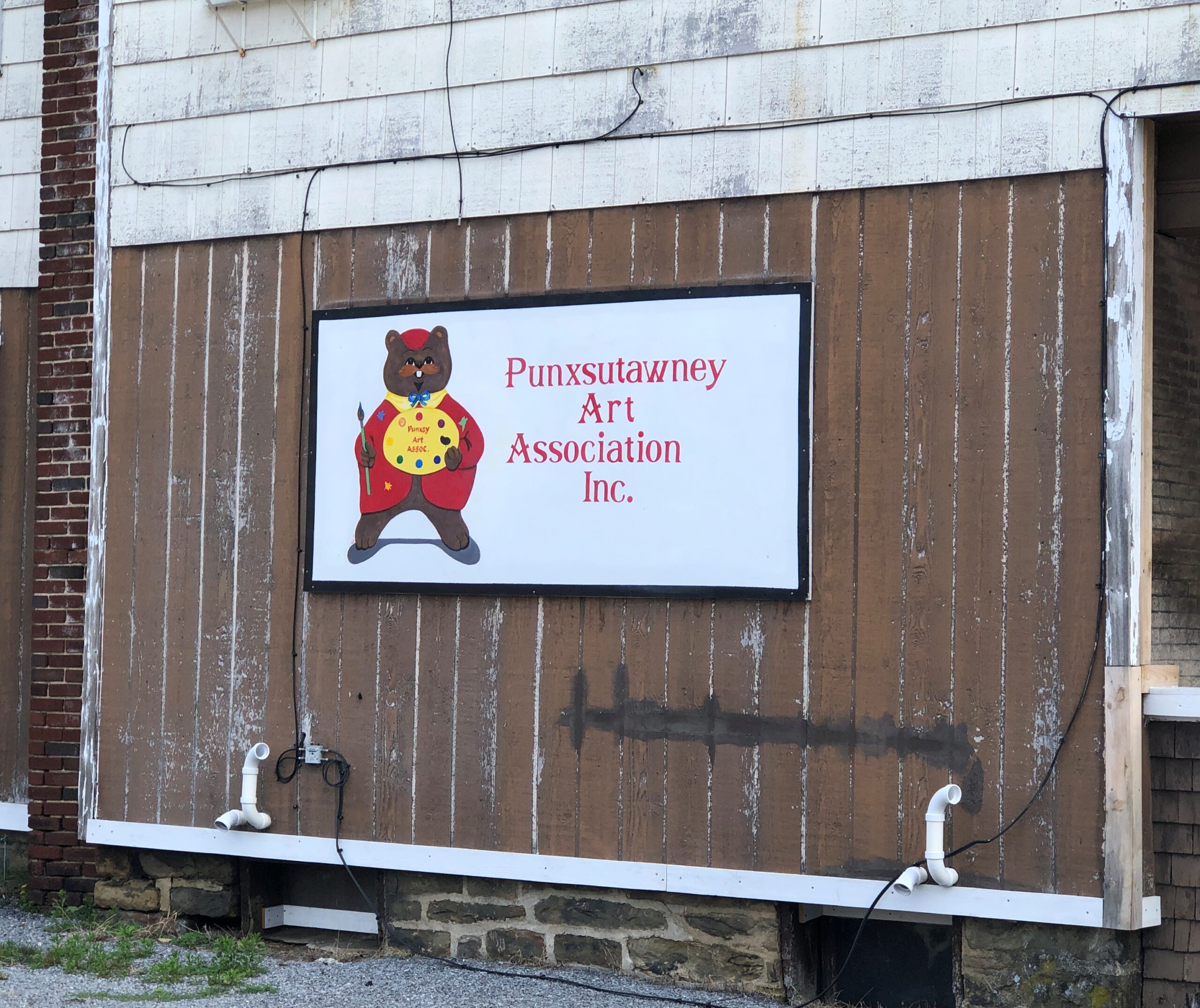
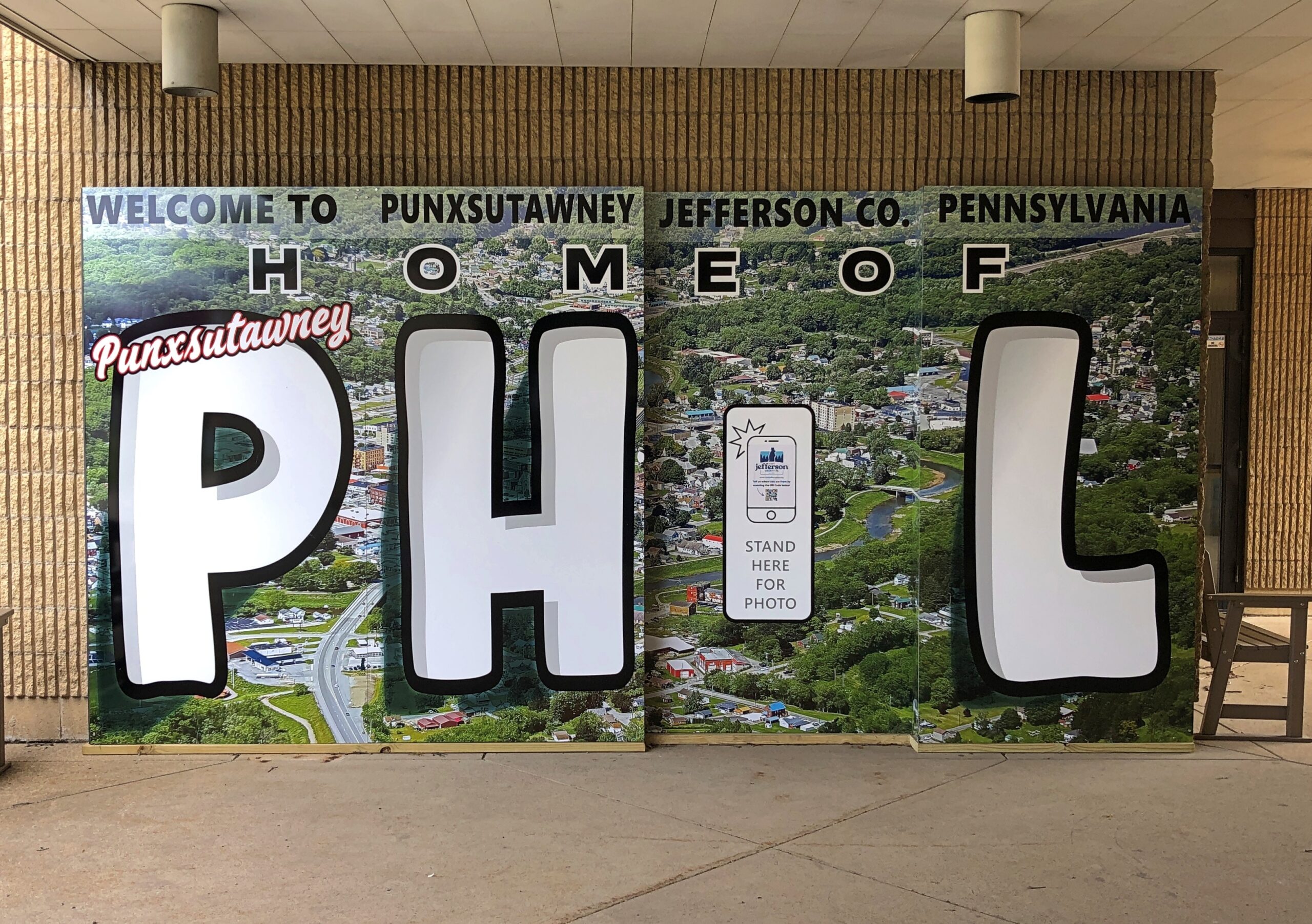
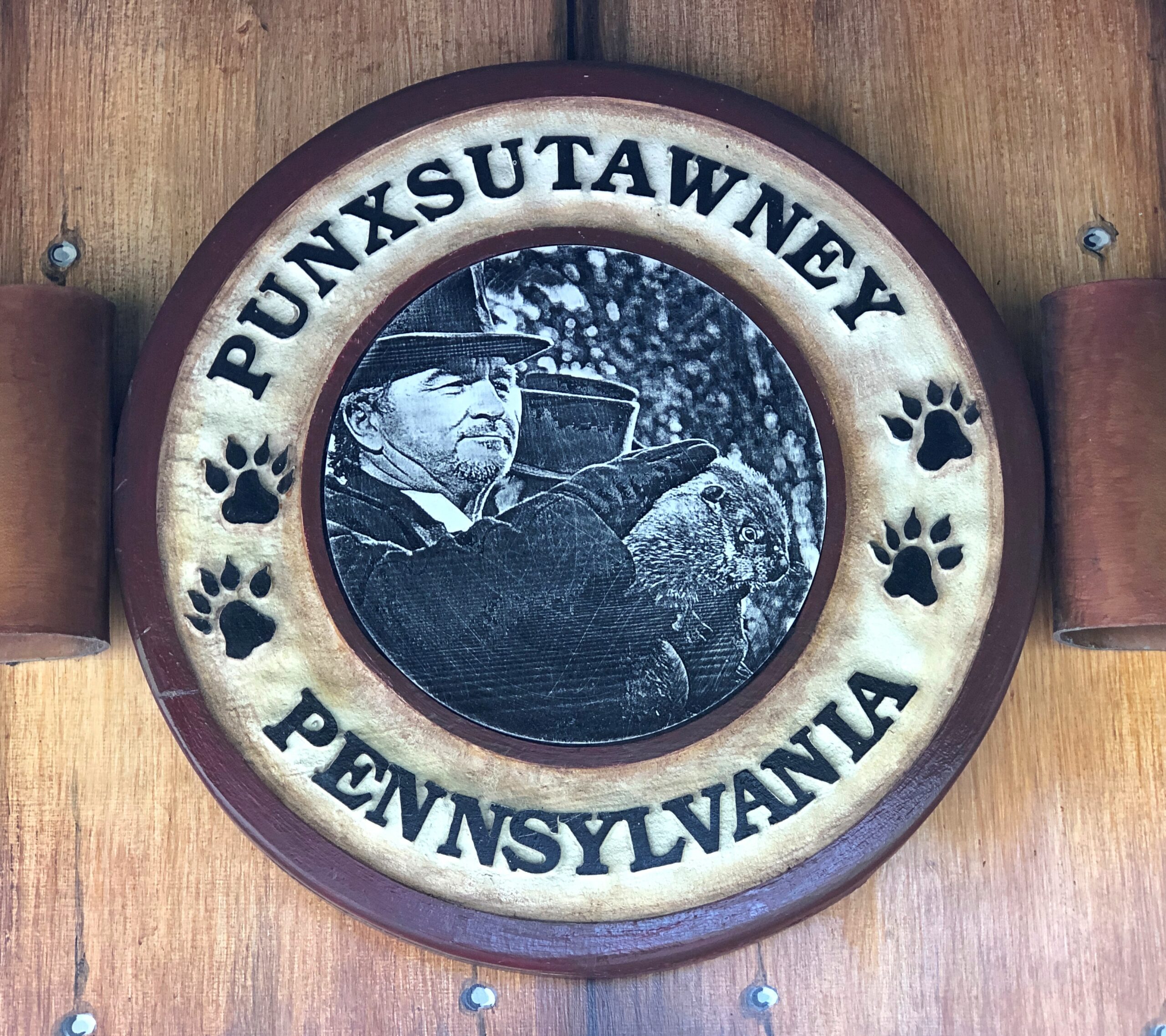
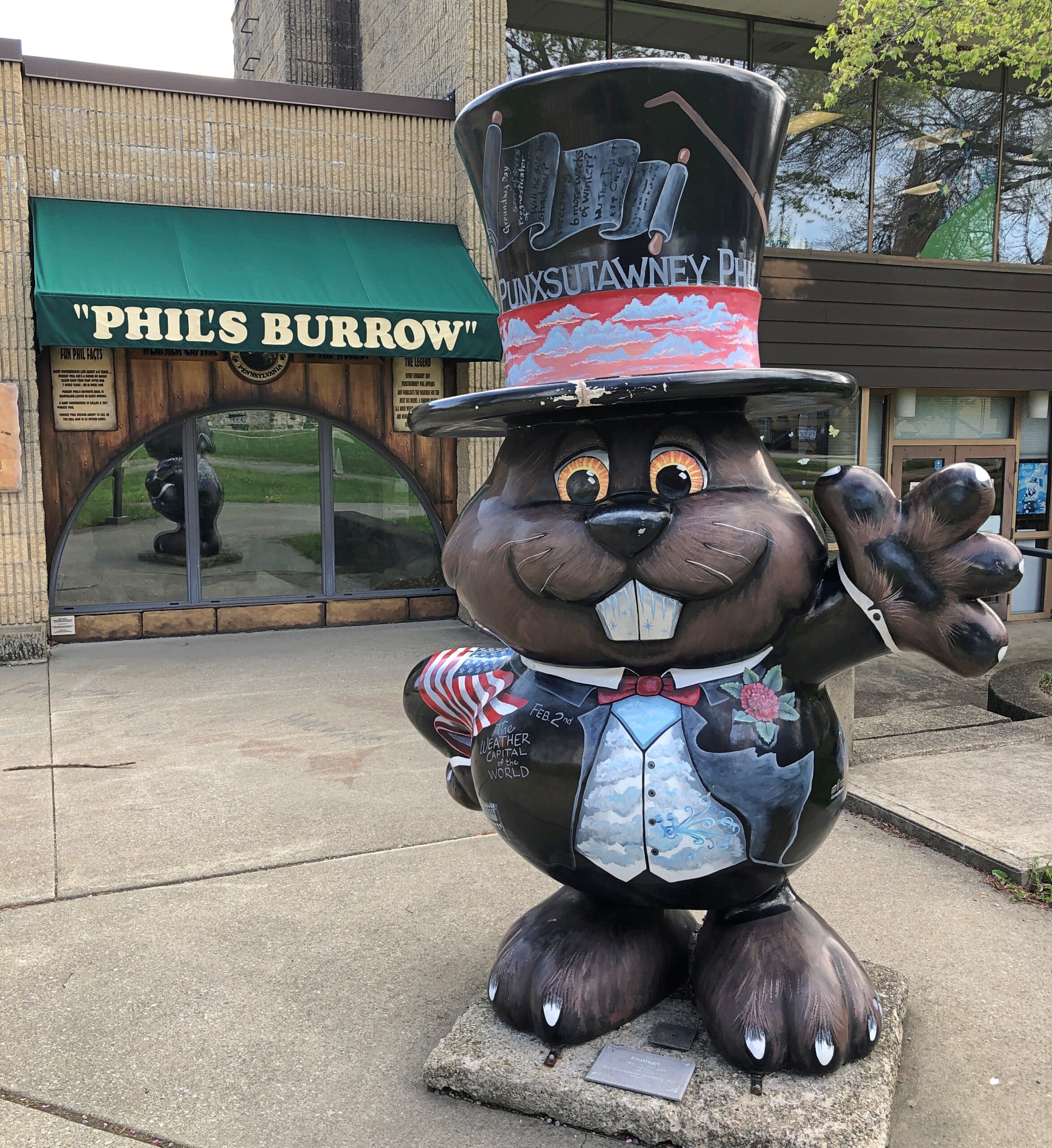
On the way home in late April, I spent the night in Punxsutanwney and had a gas the next morning looking for as many depictions of Punxsutanwney Phil as I could find. It’s an endless pursuit, something like looking for all the Lincolns in Springfield, Illinois.
This one was the closest to my motel. It was at my motel.
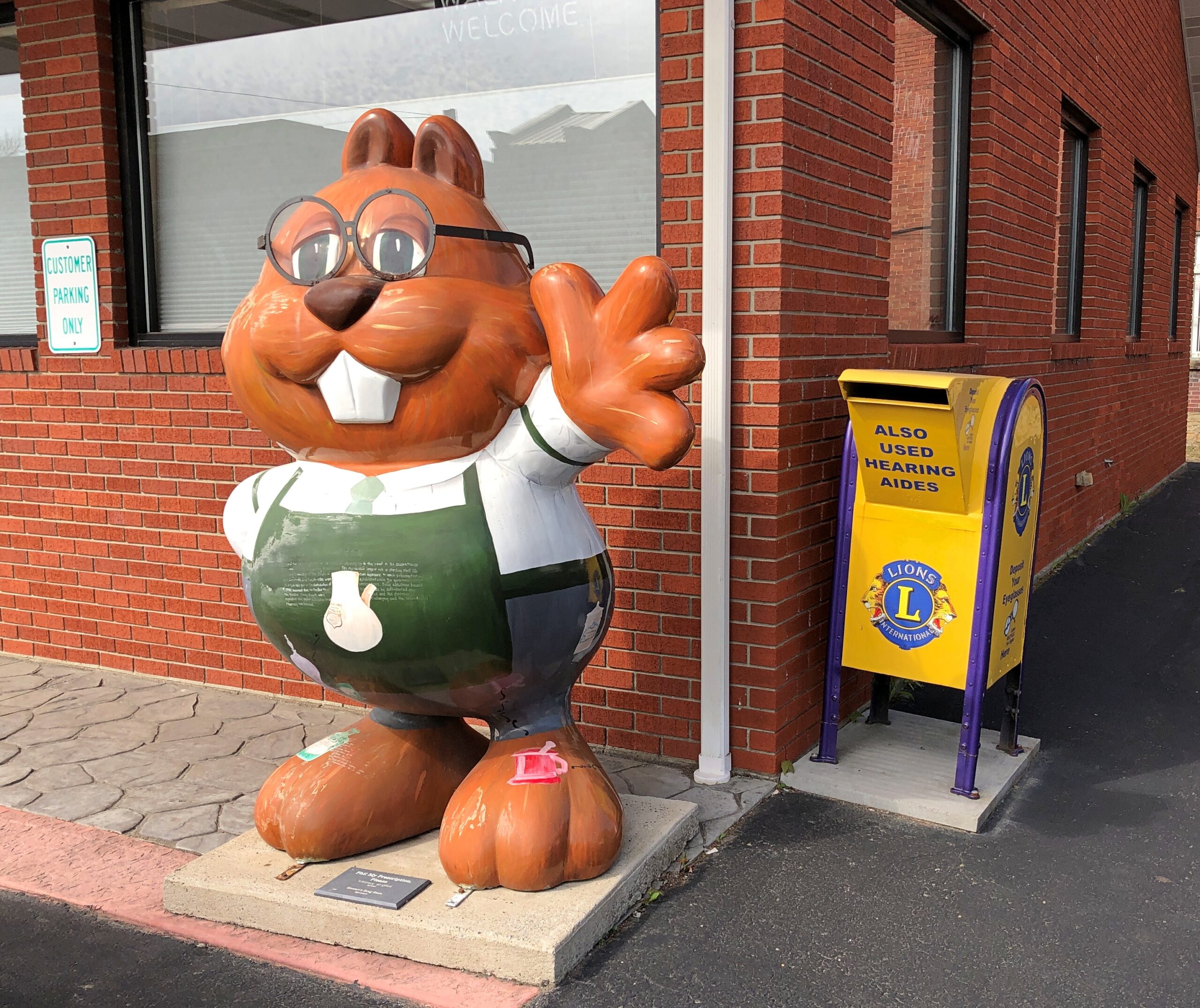
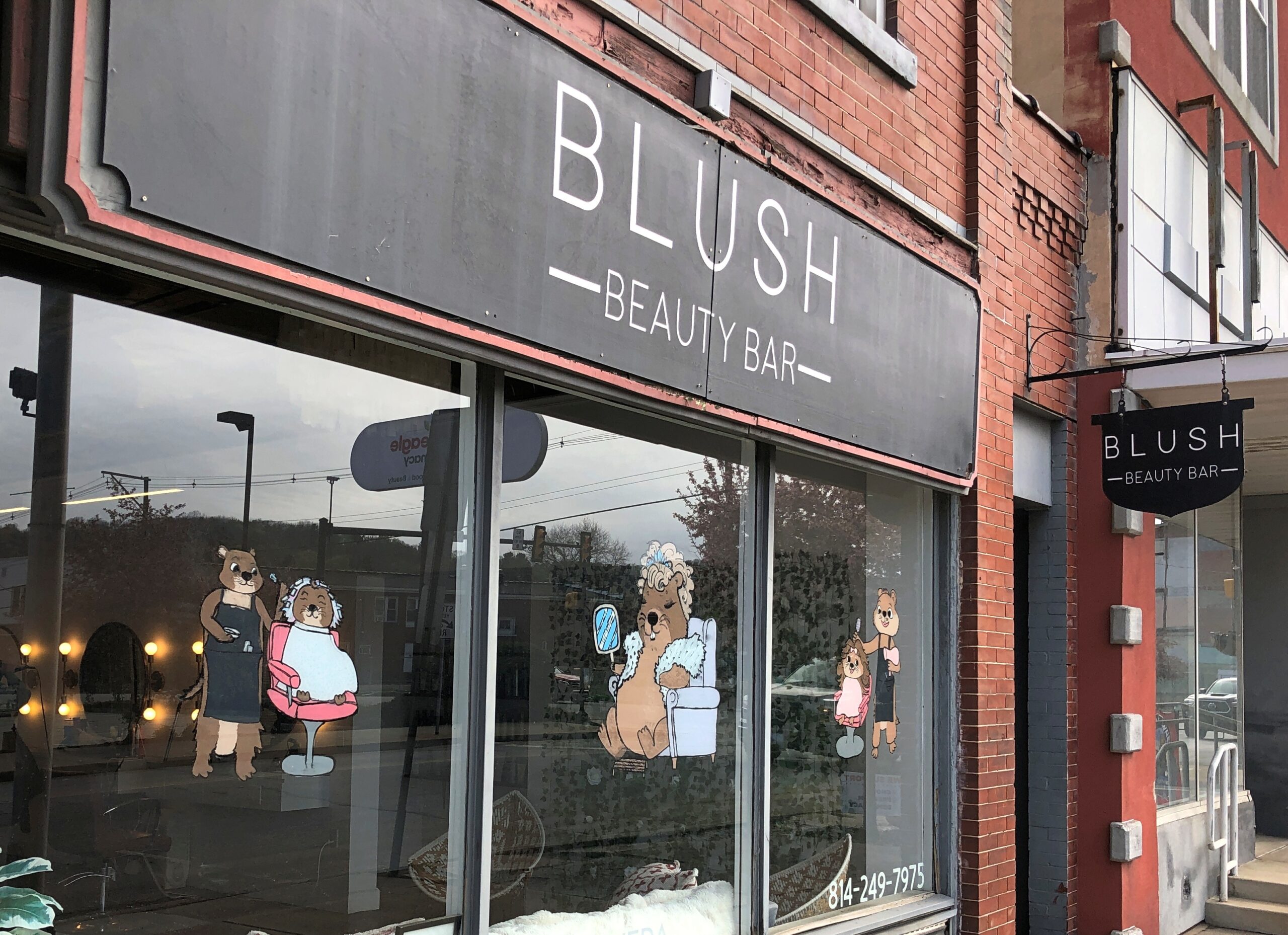
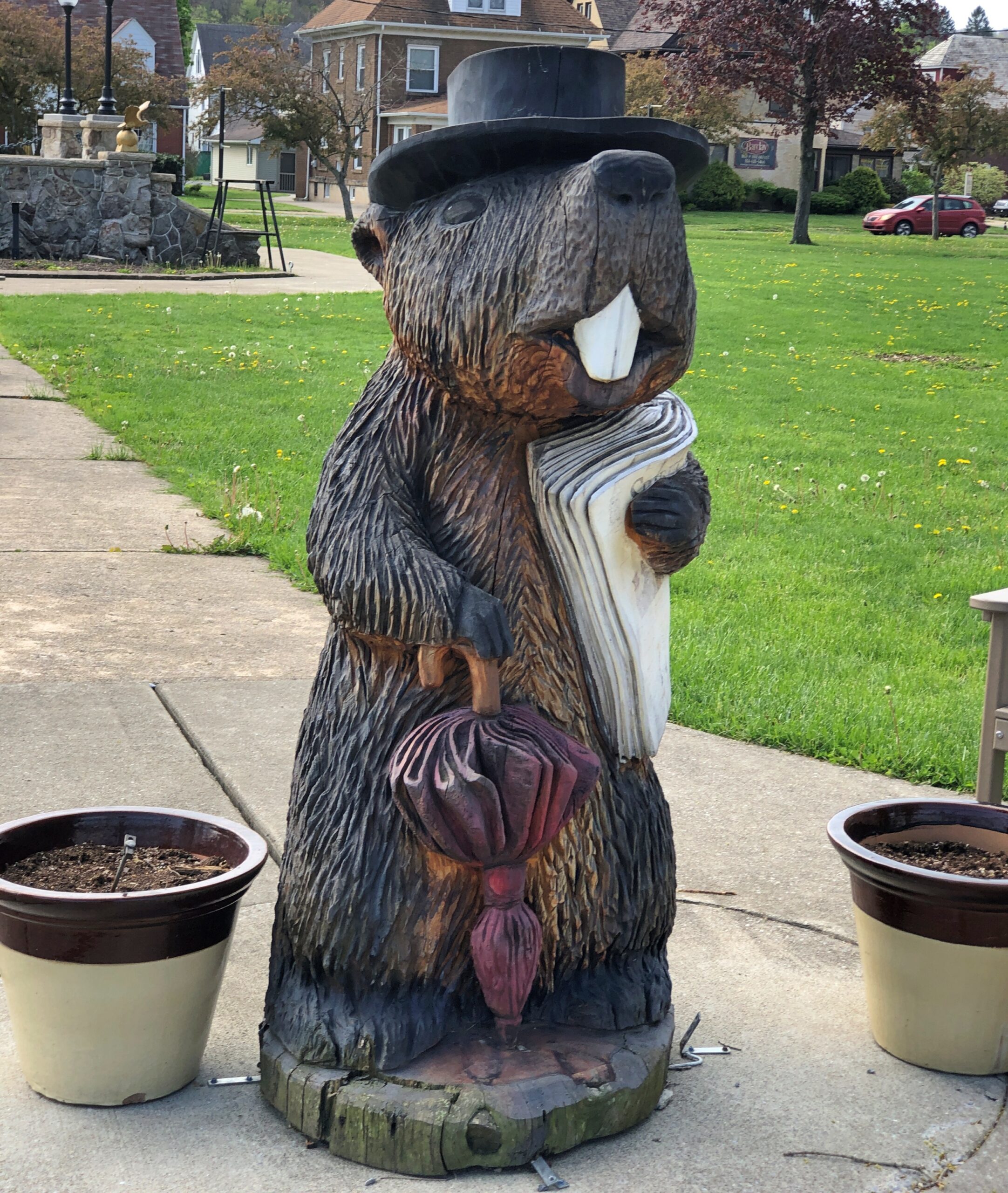
Downtown Phils, such as in front of a florist and an optometrist and a “beauty bar.”
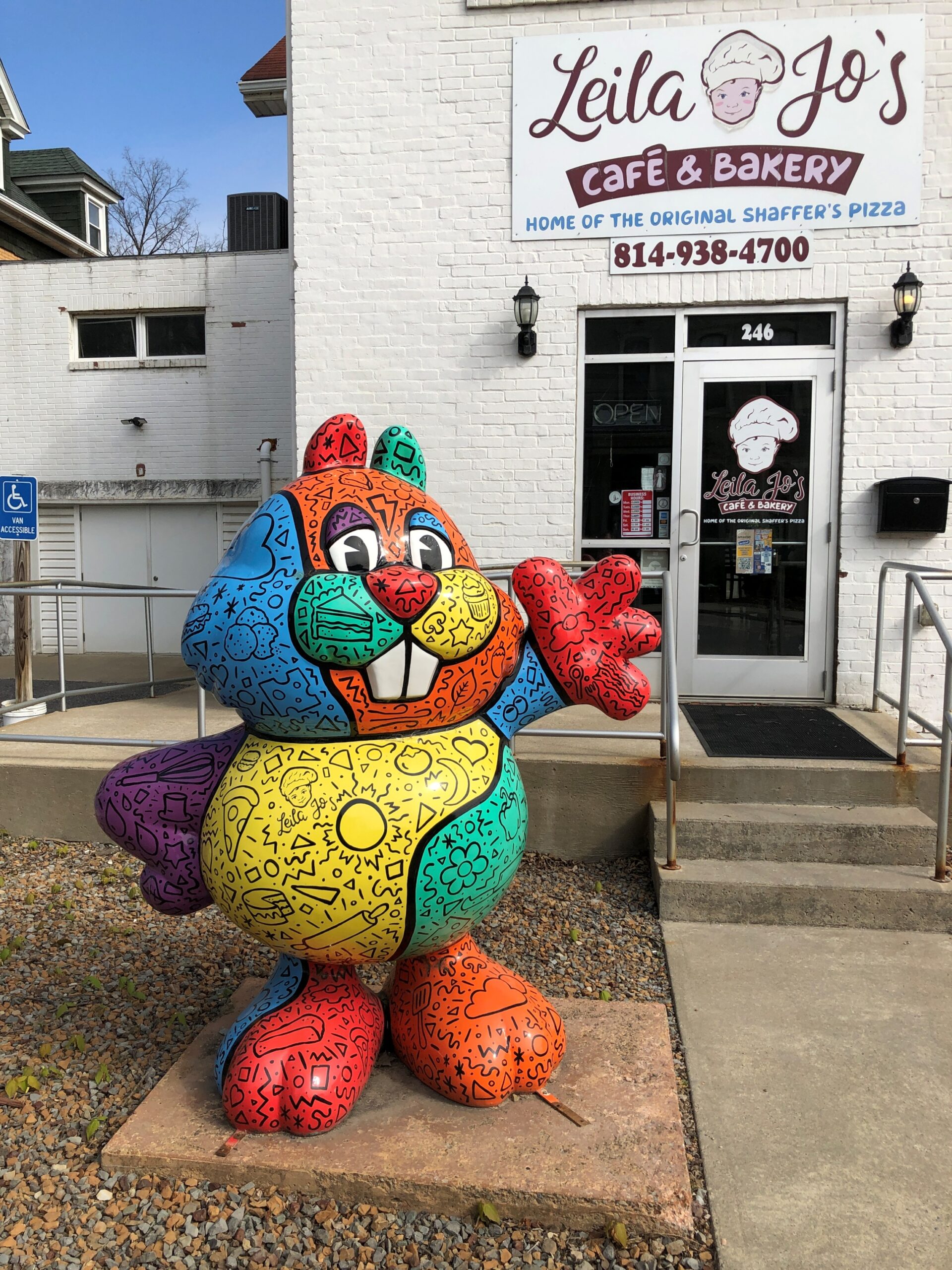
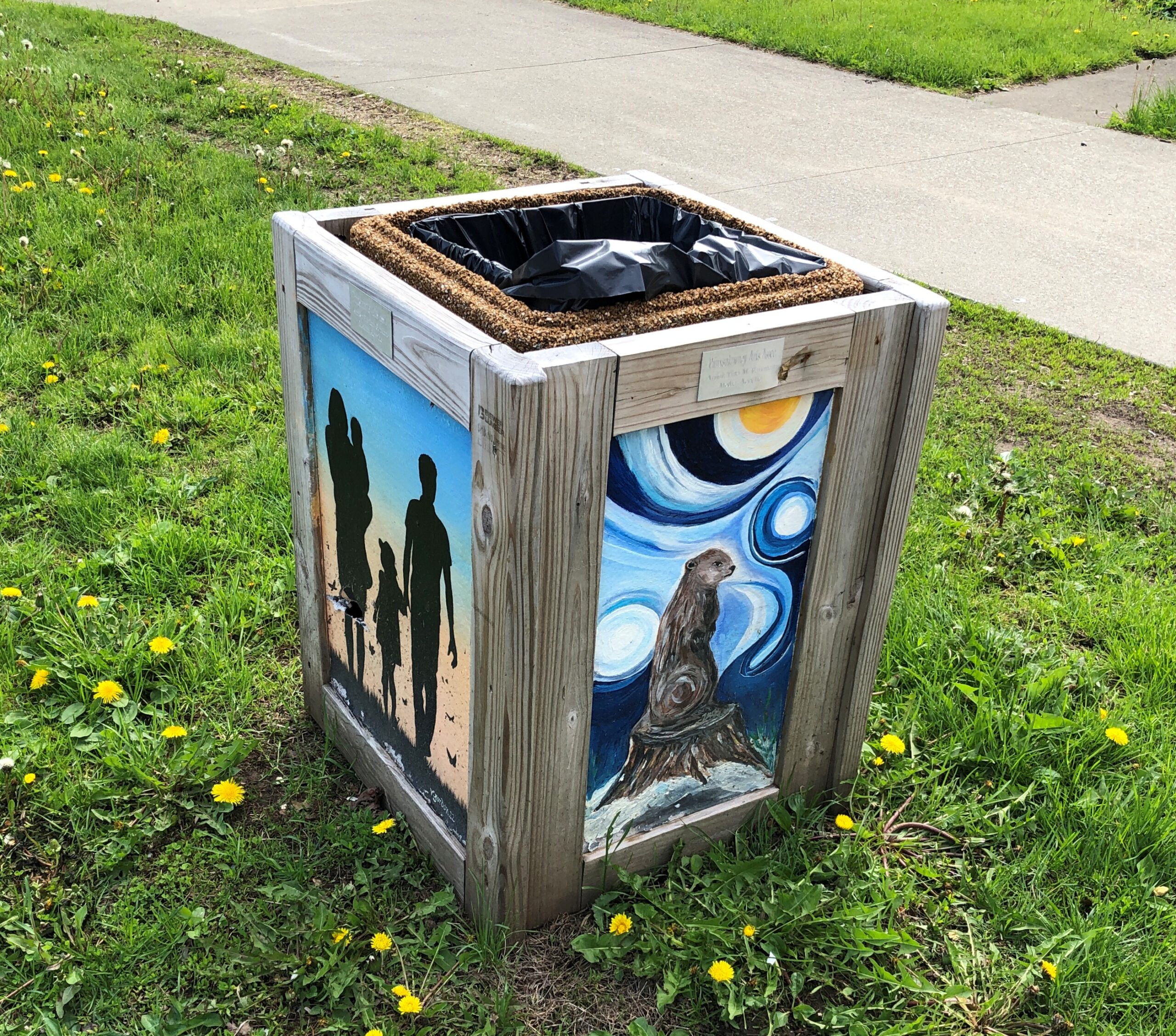
In front of a bakery and on a trash can and at the post office.
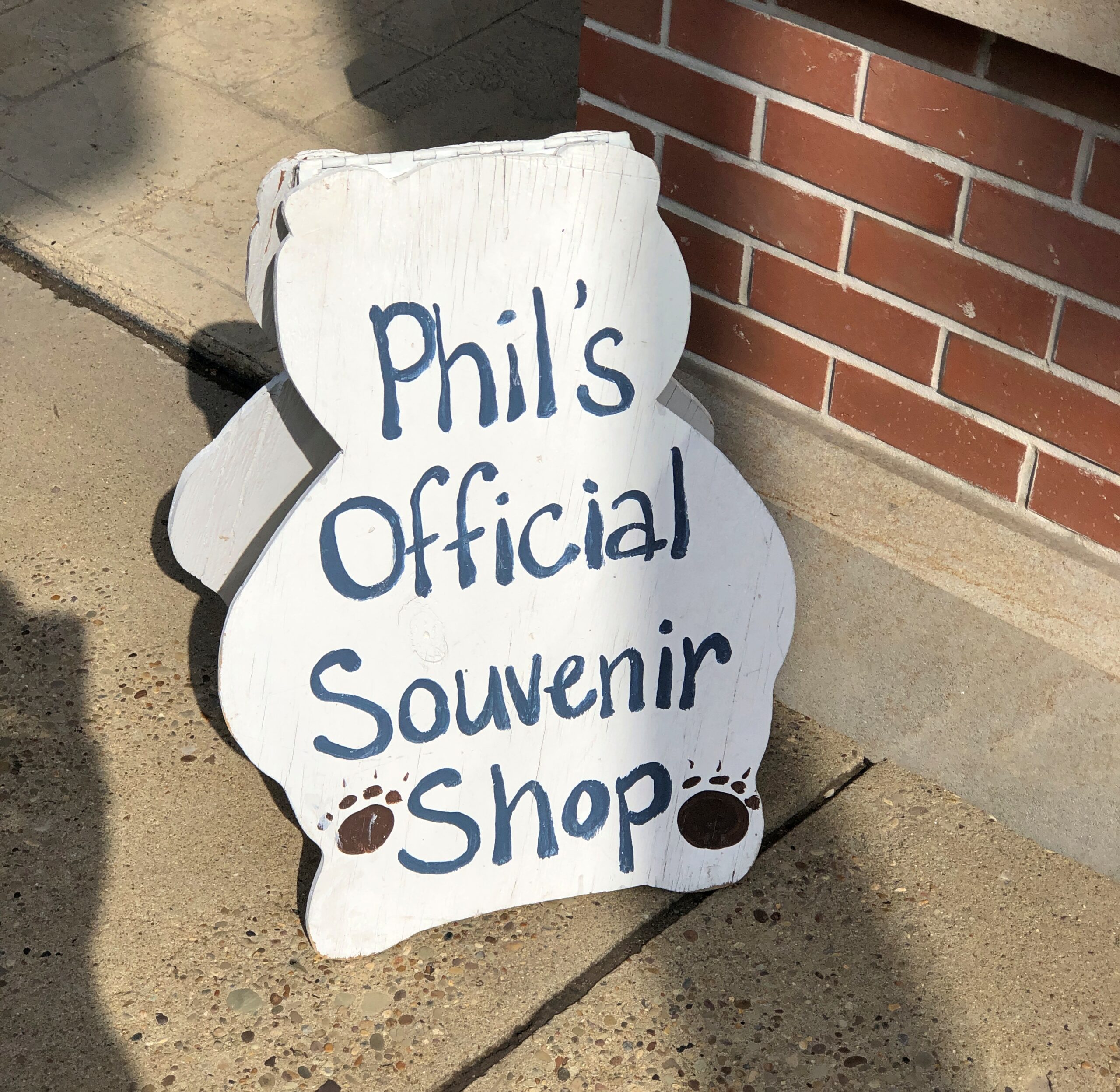
Of course he had his own shop. I bought postcards there.
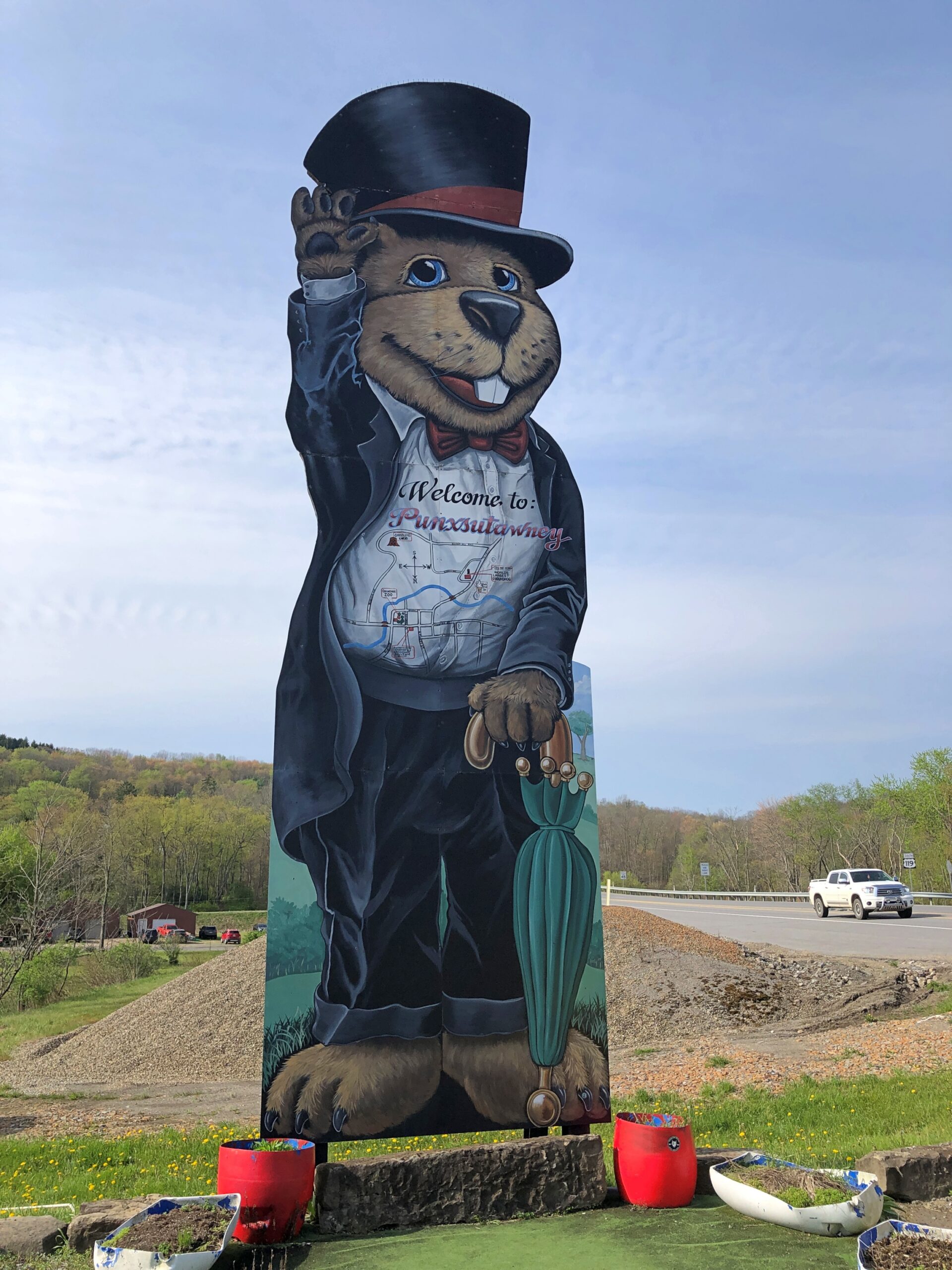
The tallest Phil, I think. I had to park the car to get a good look.
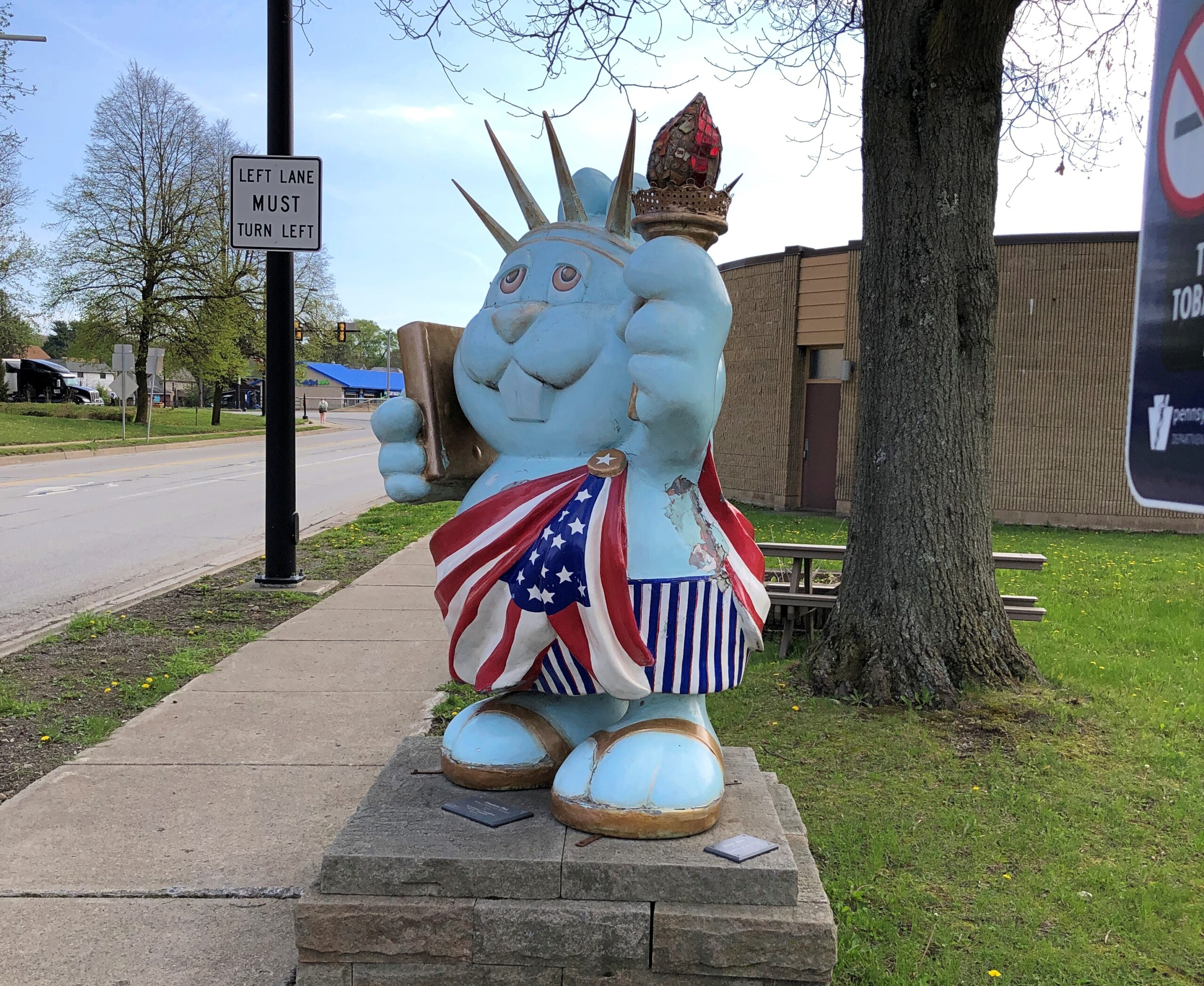
Patriotic Phil. We could do worse for the semiquincentennial.
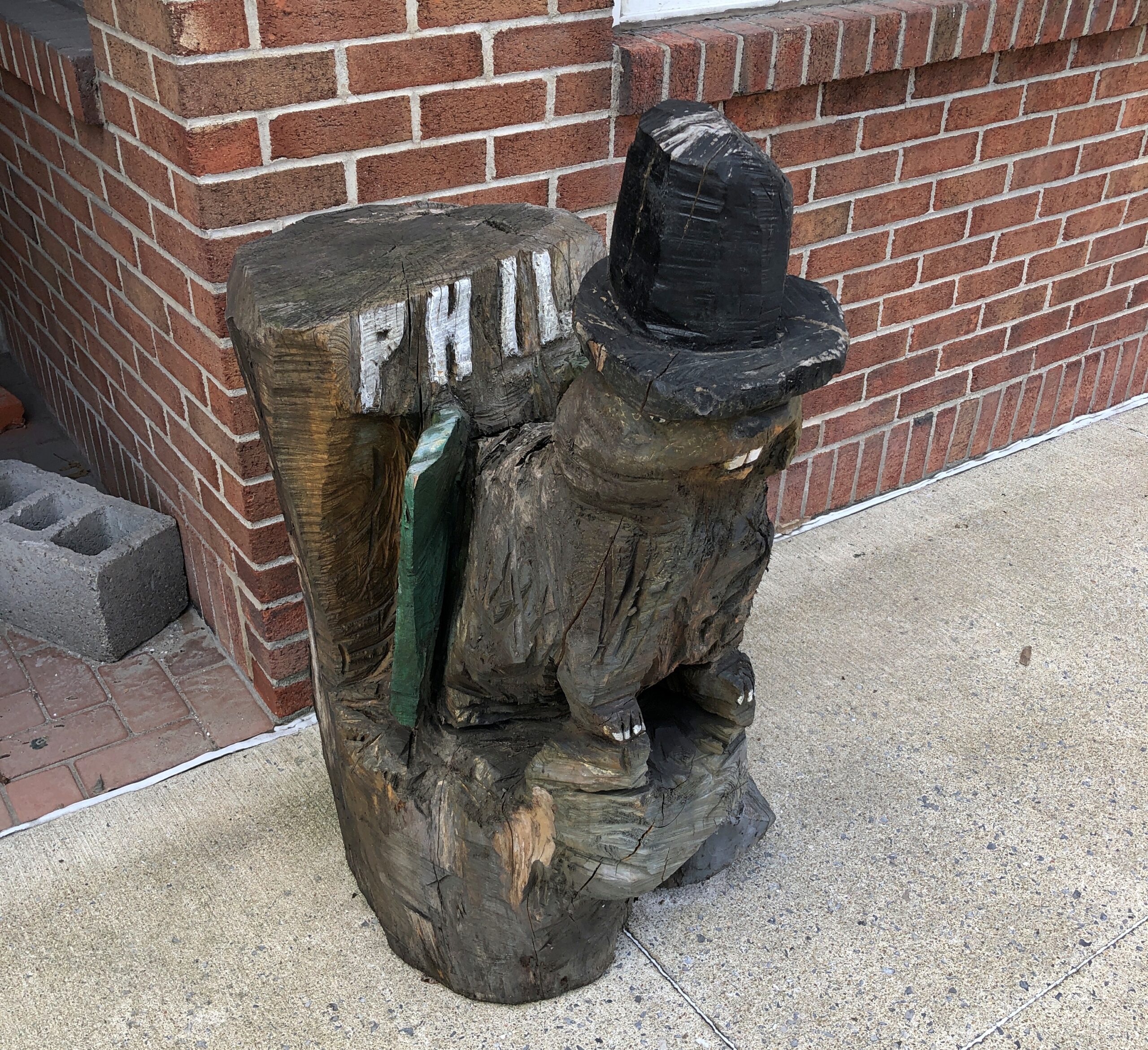
Phil carved from wood.
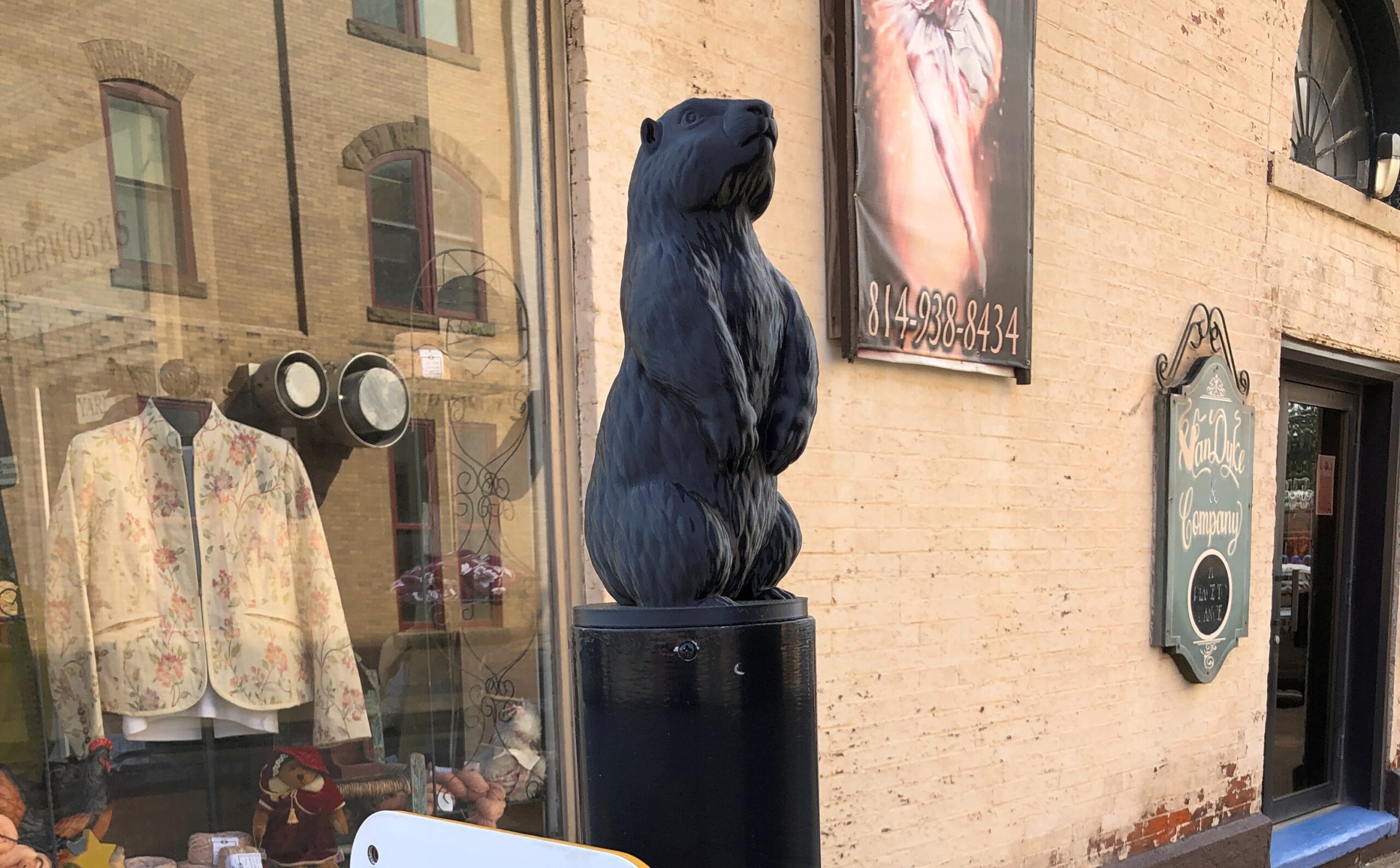
Metal Phil, one of four at some of the crosswalks that included a switch on the pole to let the lights know you were waiting.
Serious Phil.
The city flag.
Actually, this one looks more like a cartoon bear. But I’ll bet it’s Phil anyway.
He’s everywhere.
Then there’s official Phil. He and mate Phyllis live behind glass, in the “burrow.”
The groundhog clearly counts as Punxsutanwney’s spirit animal, a concept that seems to be elastic enough to include mascot and whatever else you care to pack in. More towns ought to have them.
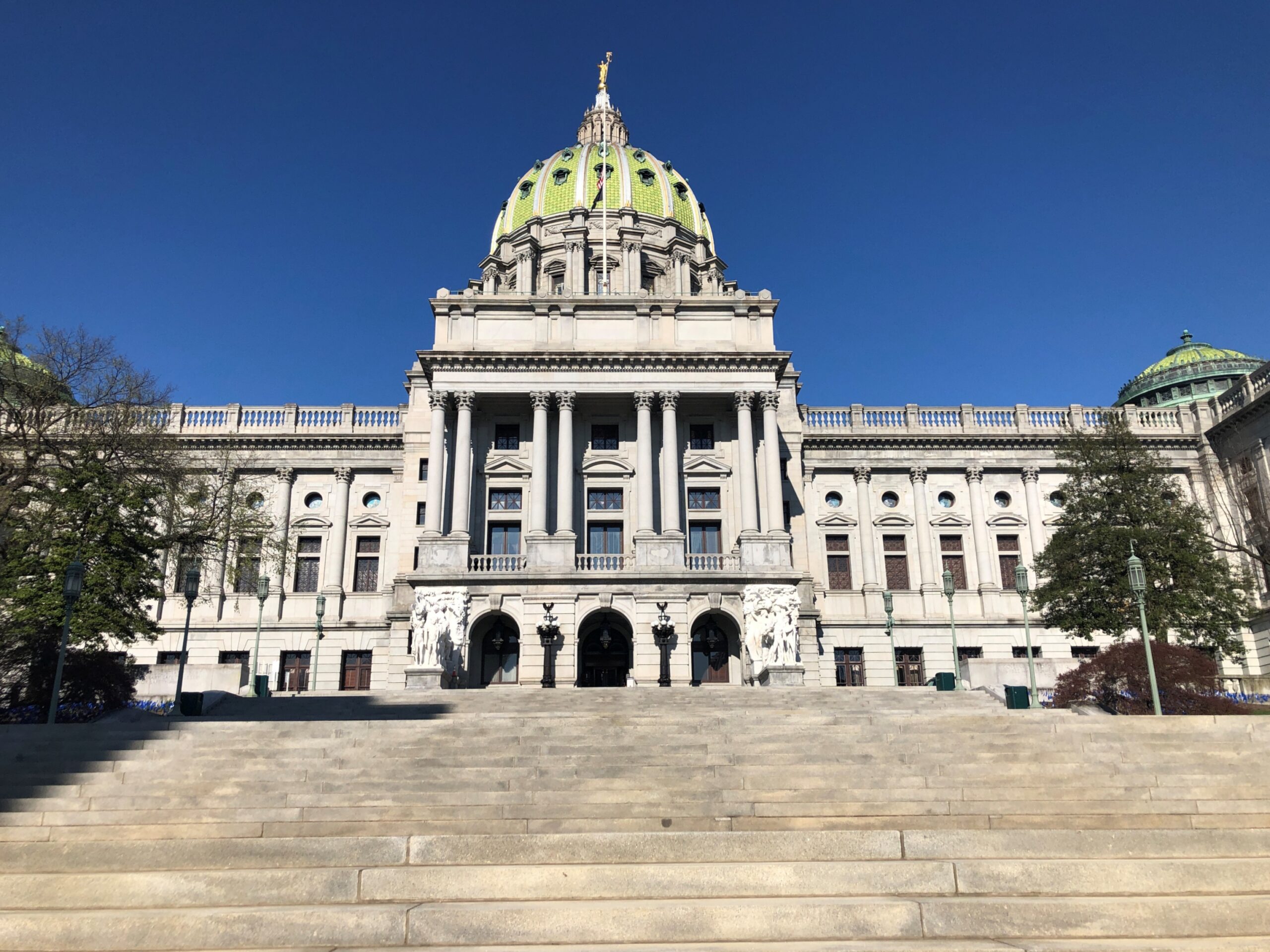
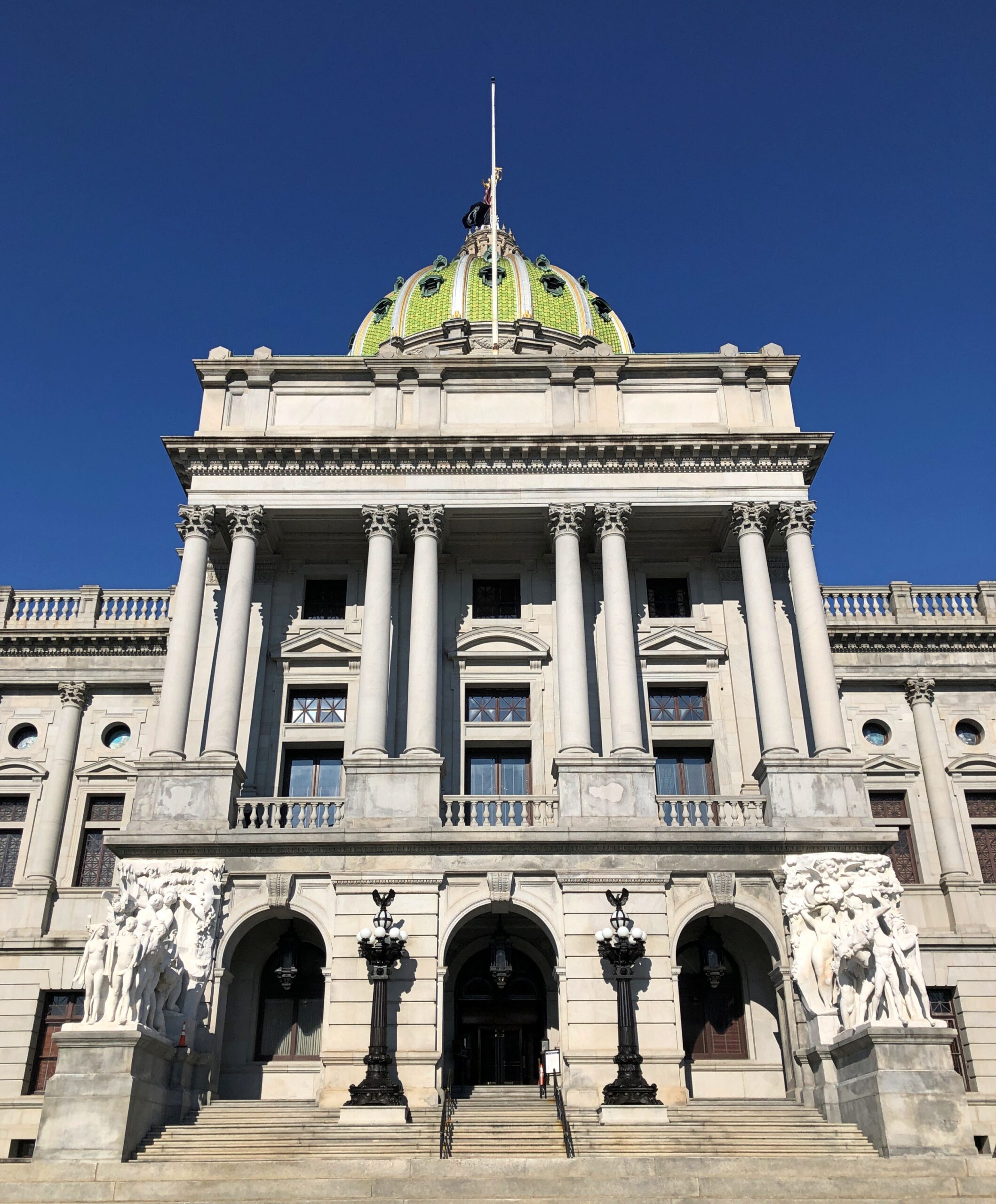
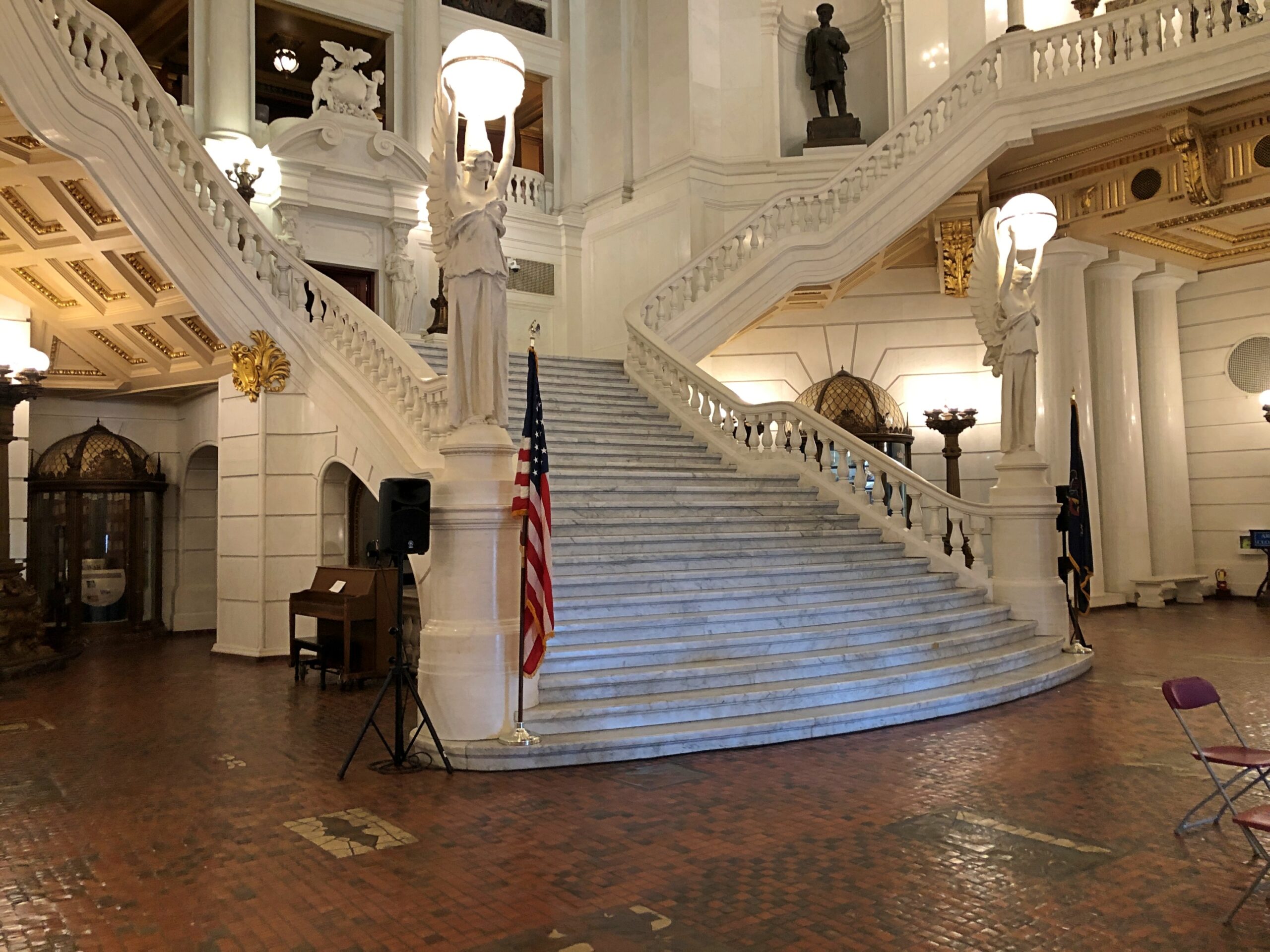
Pennsylvania has a handsome capitol, no doubt about it. At its dedication in 1906, TR called it “the handsomest building I ever saw.”
That must have been satisfying for the architect, Joseph Huston (d. 1940), to hear, or hear about.
But he didn’t have long to bask in the glory of his design. A few years later, Huston was in prison. Specifically, Eastern State Penitentiary in Philadelphia, back when that was a functioning stony lonesome.
“Huston eventually was charged with conspiracy to defraud the State of Pennsylvania by accepting bribes for the work on the Capitol and by charging the State more than was proper for the contracts required to complete the structure,” says Philadelphia Architects and Buildings. “Convicted on 29 April 1910, and after an unsuccessful attempt to mount a new trial… he served six months and 20 days in prison but was paroled on 20 December 1911 and returned to an architectural practice which was significantly affected by his legal difficulties.”
I’ll bet his practice was affected. An unusual tale for an architect, something you’d associate more with a contractor, but I suppose the temptation was too great for Huston and besides, grand buildings throughout the ages all had cost overruns, right? All the way back to the Ziggurat of Ur. That clearly didn’t cut any ice with the jury.
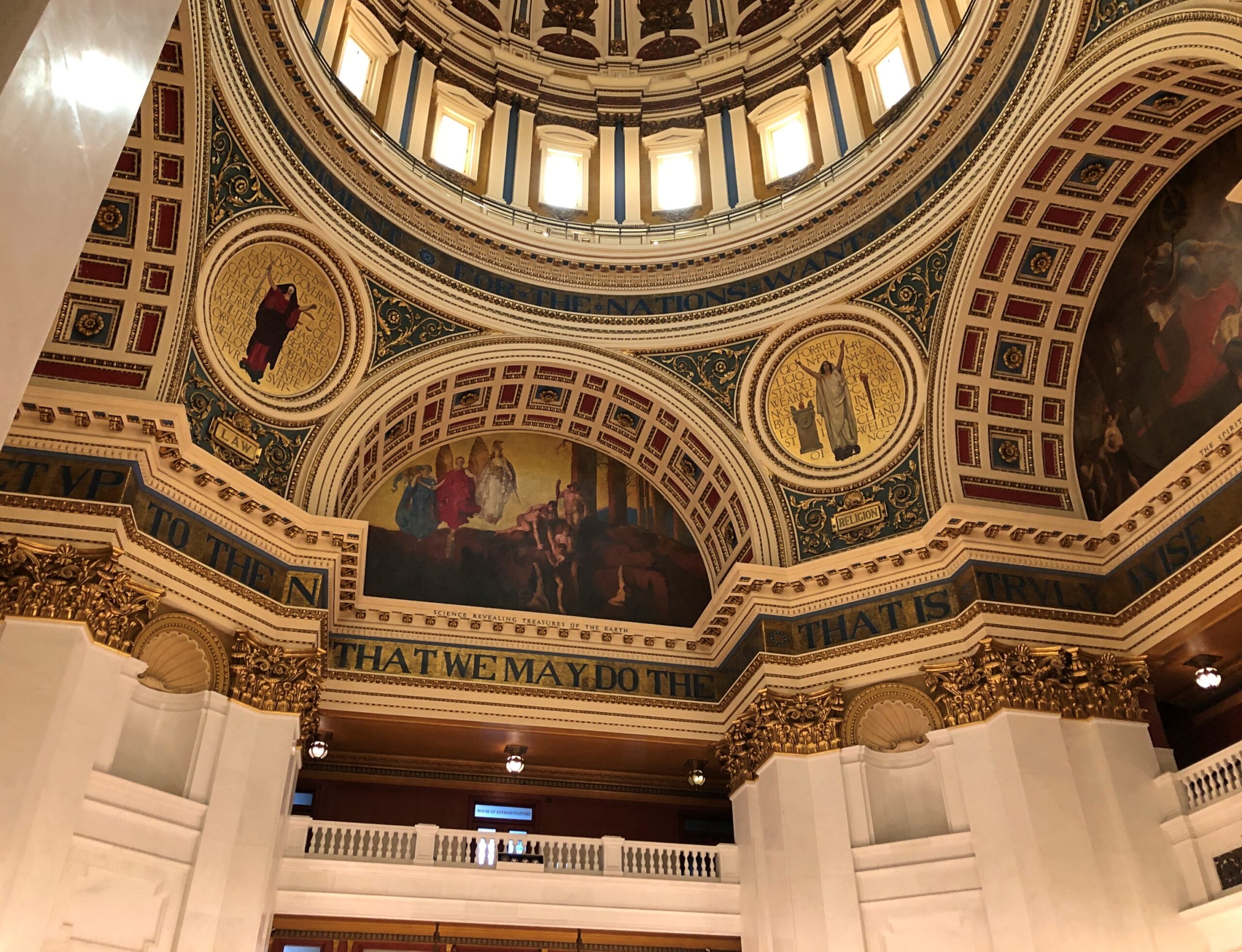
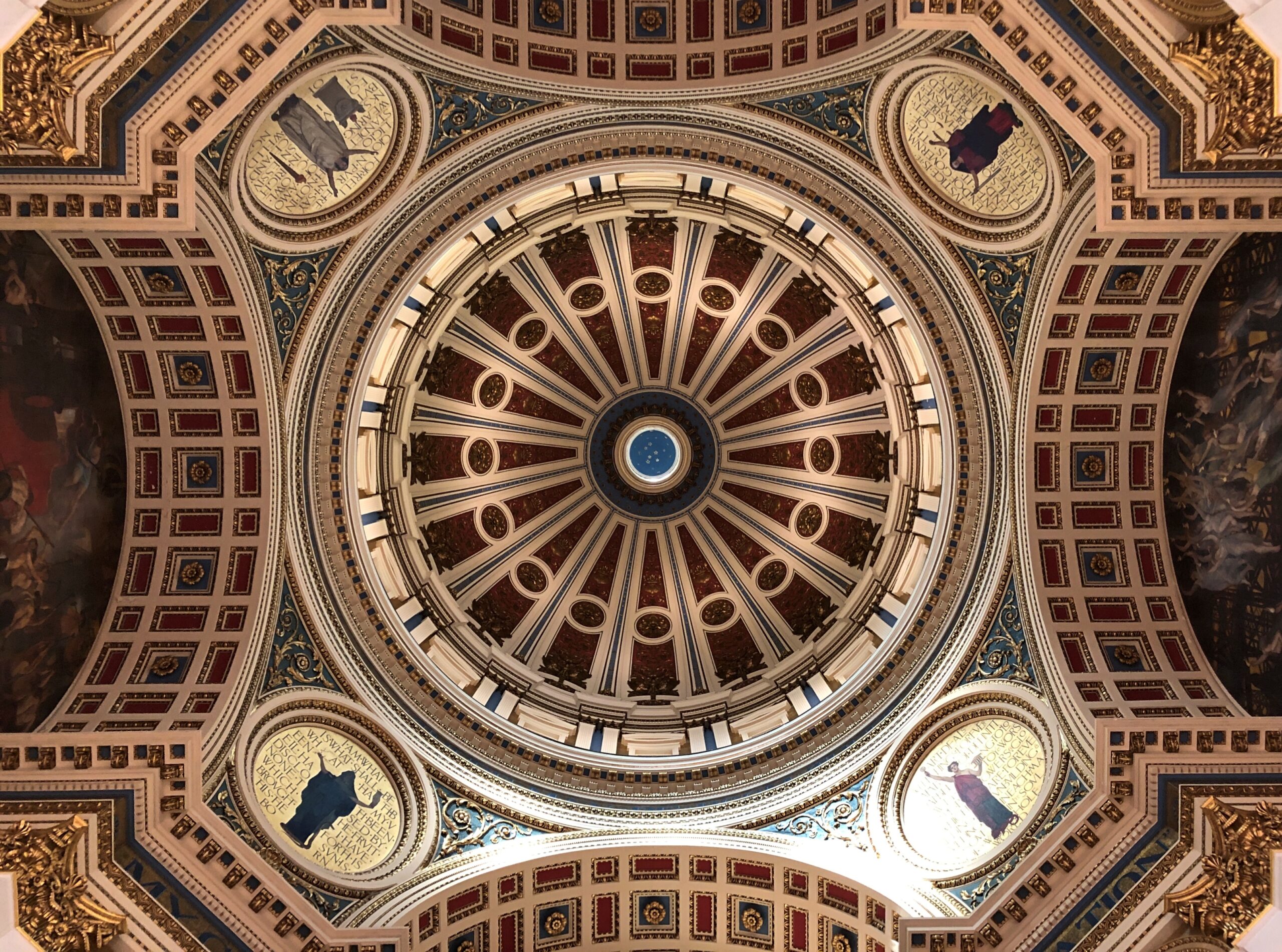
Whatever his side interests, Huston promised a palace of art to the commonwealth, and he delivered.
I arrived in Harrisburg fairly late in the afternoon of April 8, on my second day driving east. Pennsylvania is a long drive across, and I’d started in Cleveland, with the goal of reaching Trenton, New Jersey that evening. I did, but it didn’t leave much time to stop and see things. I was glad to learn that the capitol building was open until 6 pm, so I made time for it.
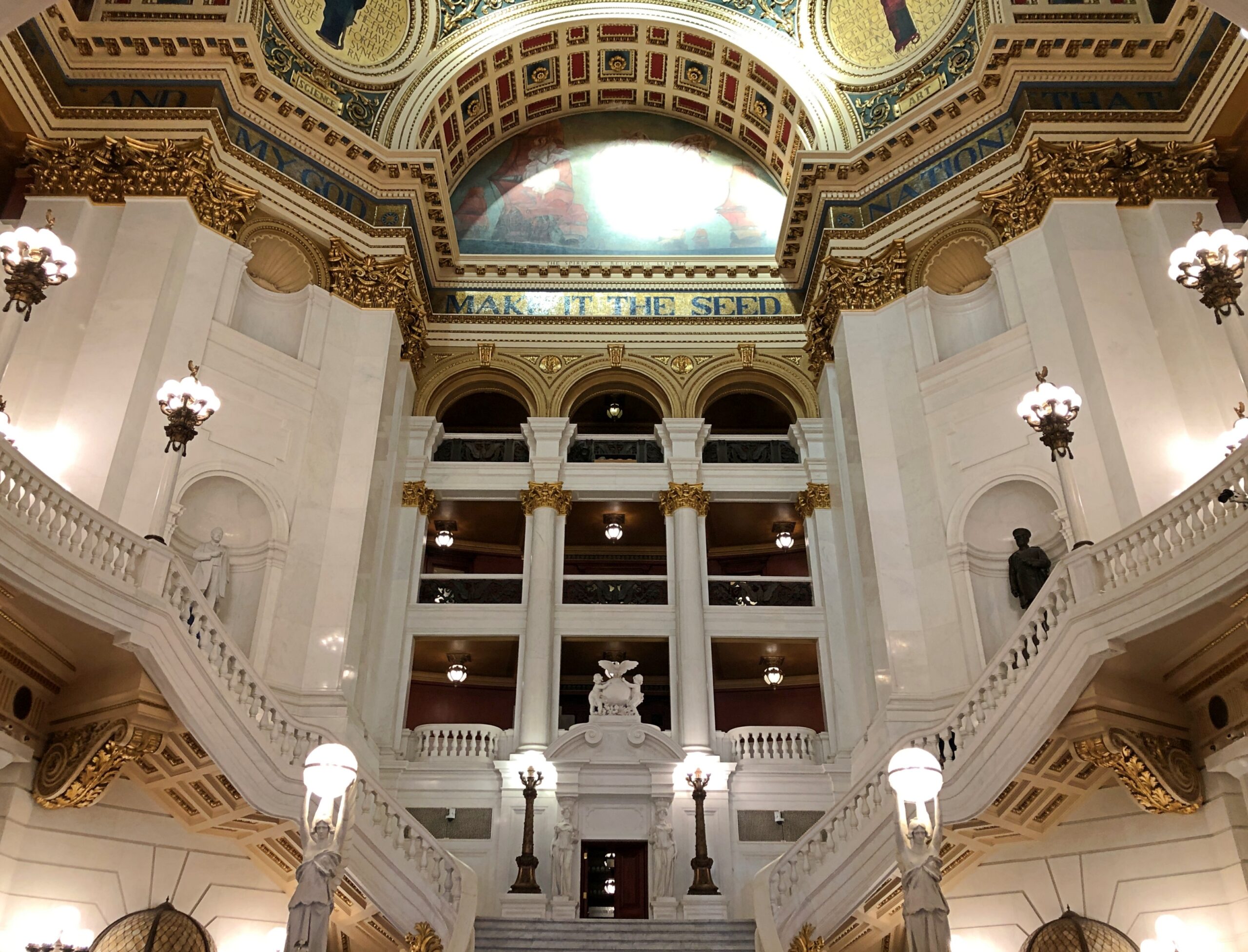
The grand staircase, flowing down to, or up from, the distinctive tile floor under the rotunda.
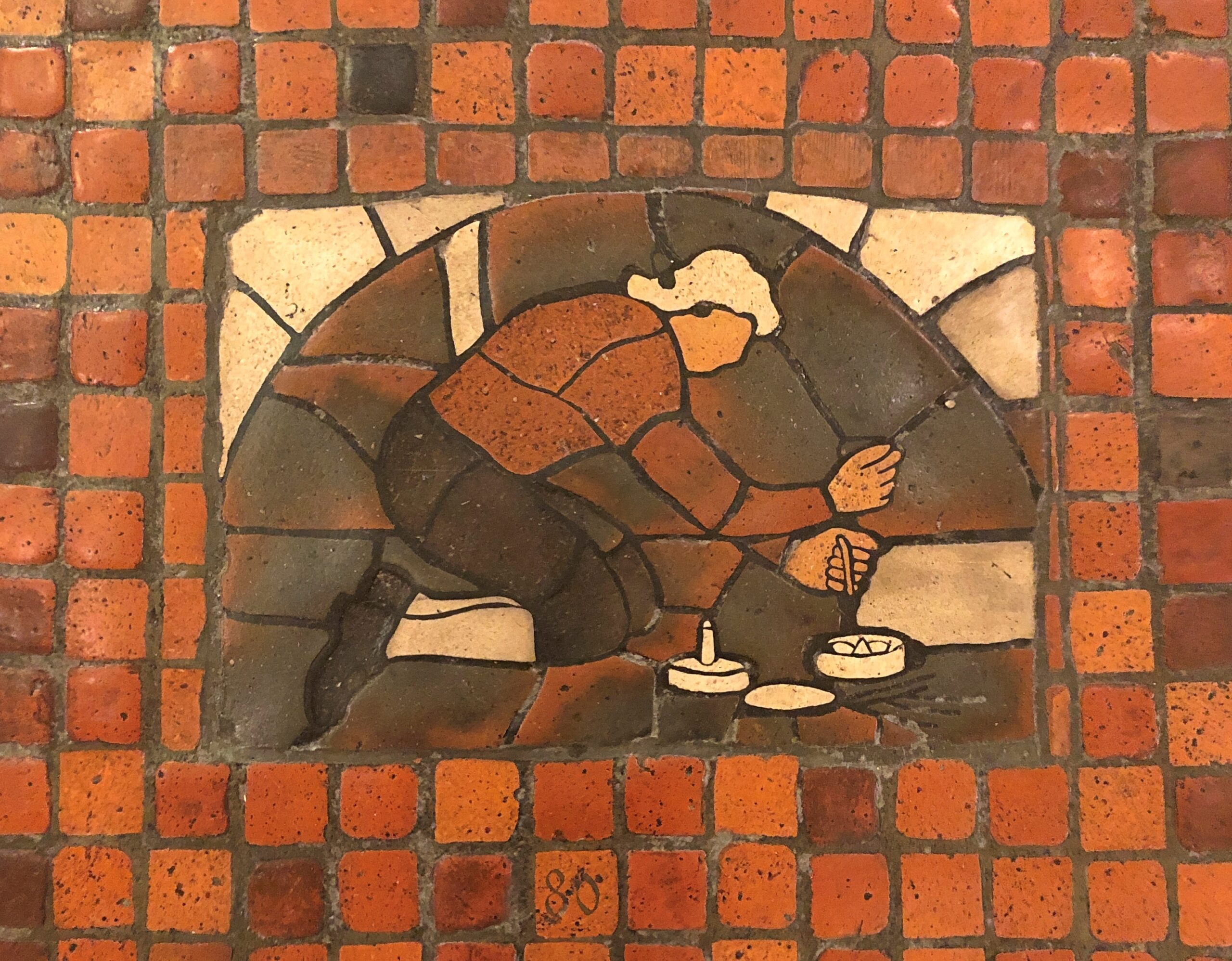
Art flourishes not just on the vaulting dome or the ornate walls, but even underfoot.
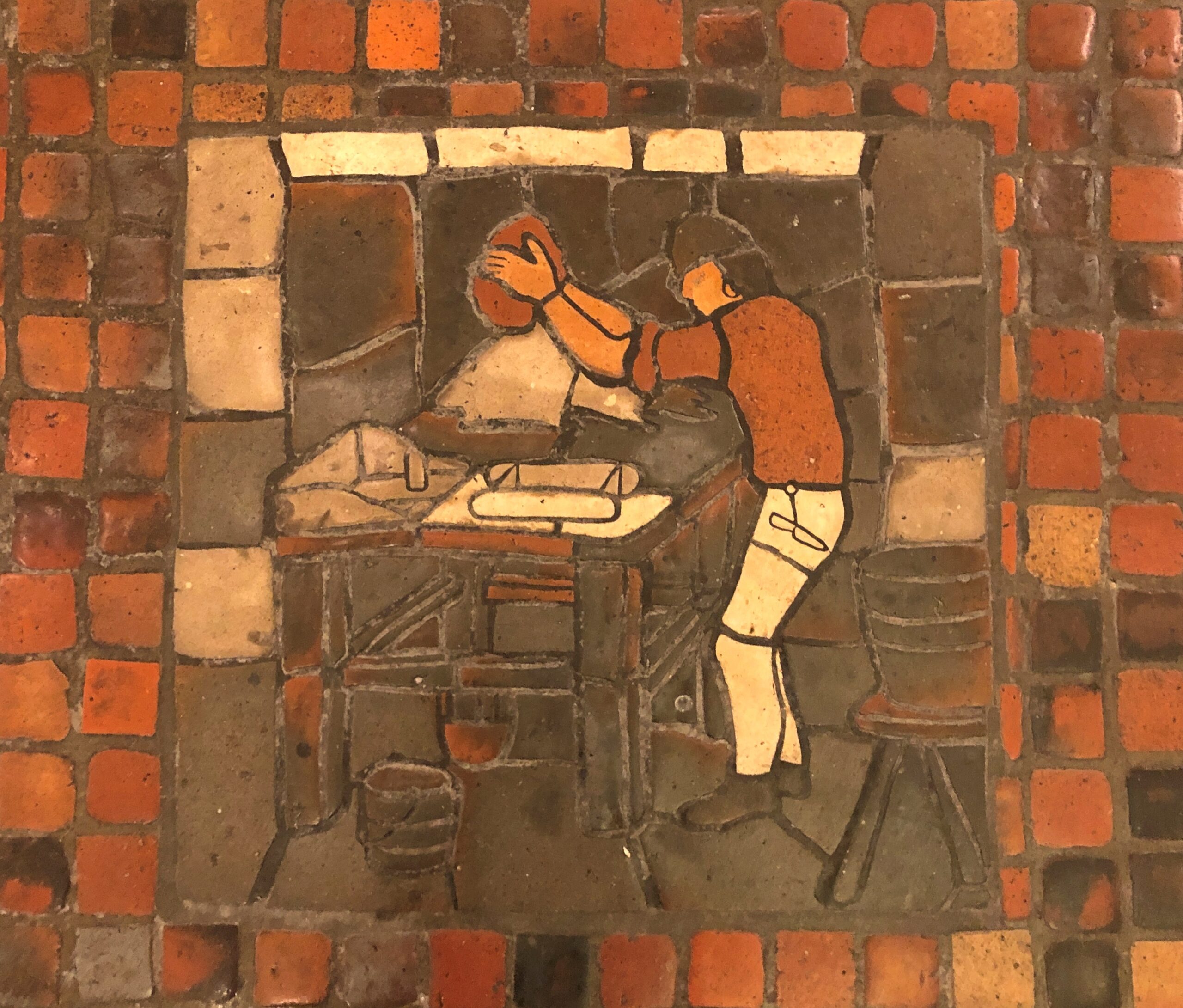
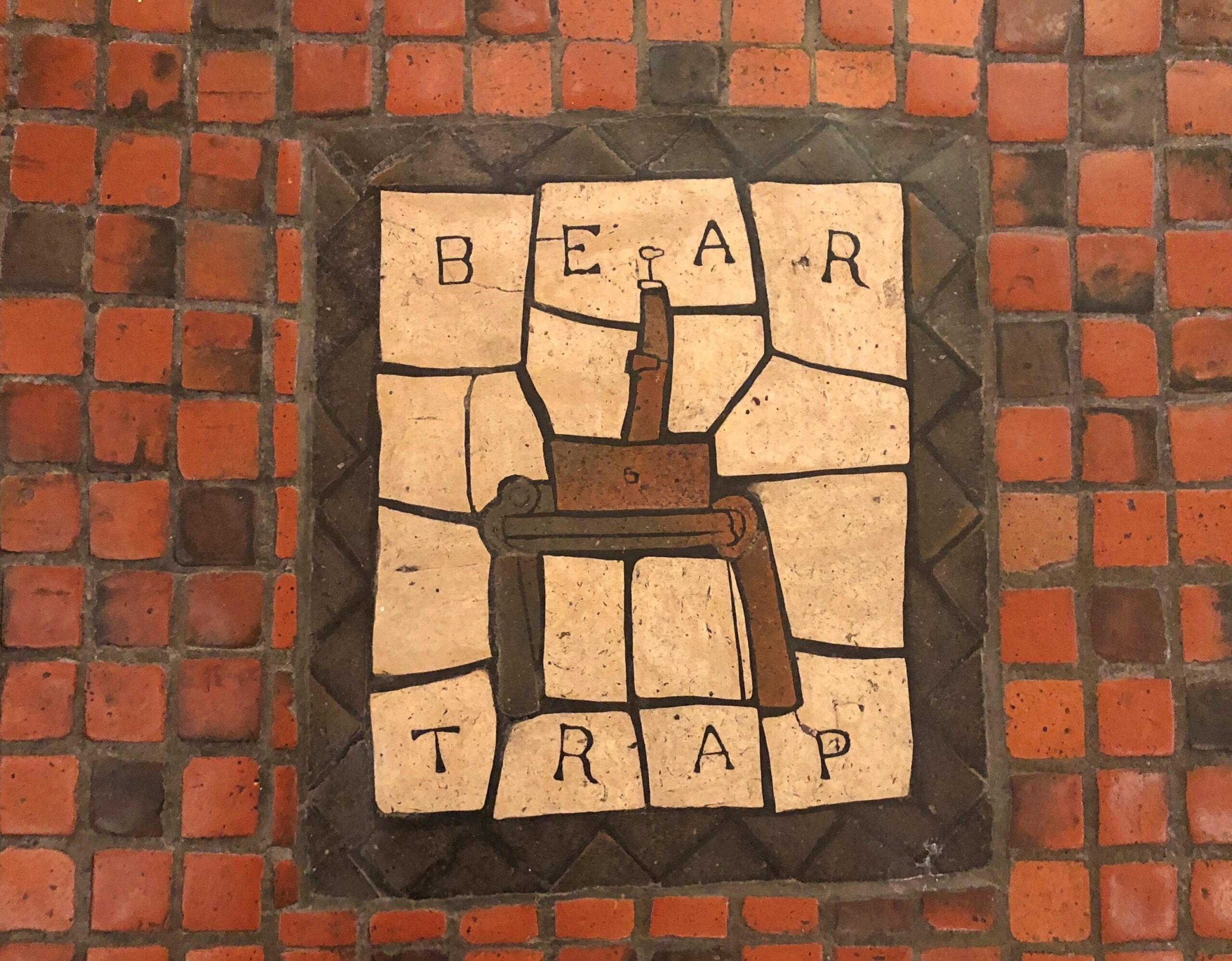
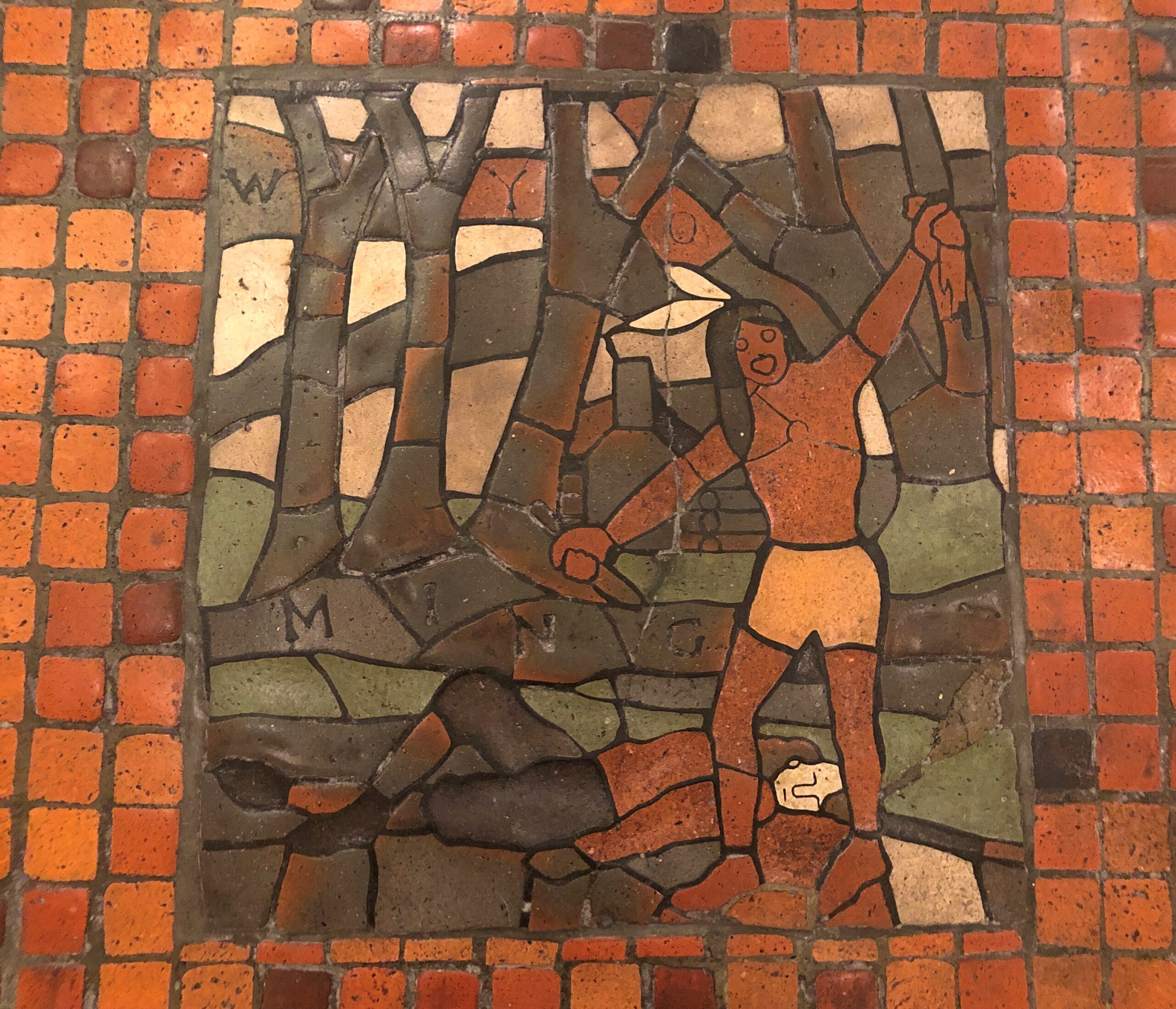
Henry Chapman Mercer, a Pennsylvania artist, did the mosaics grouted into the floor – scenes from the history of the commonwealth, from pre-history to the dawn of the 20th century. A good introduction to Mercer, one of the more interesting people I’ve first heard about lately. Among other achievements, he left behind his home, Fonthill; the Mercer Museum; and the Moravian Pottery and Tile Works, all in Doyleville, Pa., which is suburban Philadelphia these days. As if I needed another reason to revisit metro Philly.
A lot of scenes, it turns out, more than I could photography or even see. Including one that might not have made the cut in later times.
The House and Senate chambers weren’t open late that afternoon. I understand they are important parts of the art palace. More can been seen here about the decorative arts of those rooms, and the rest of the capitol.
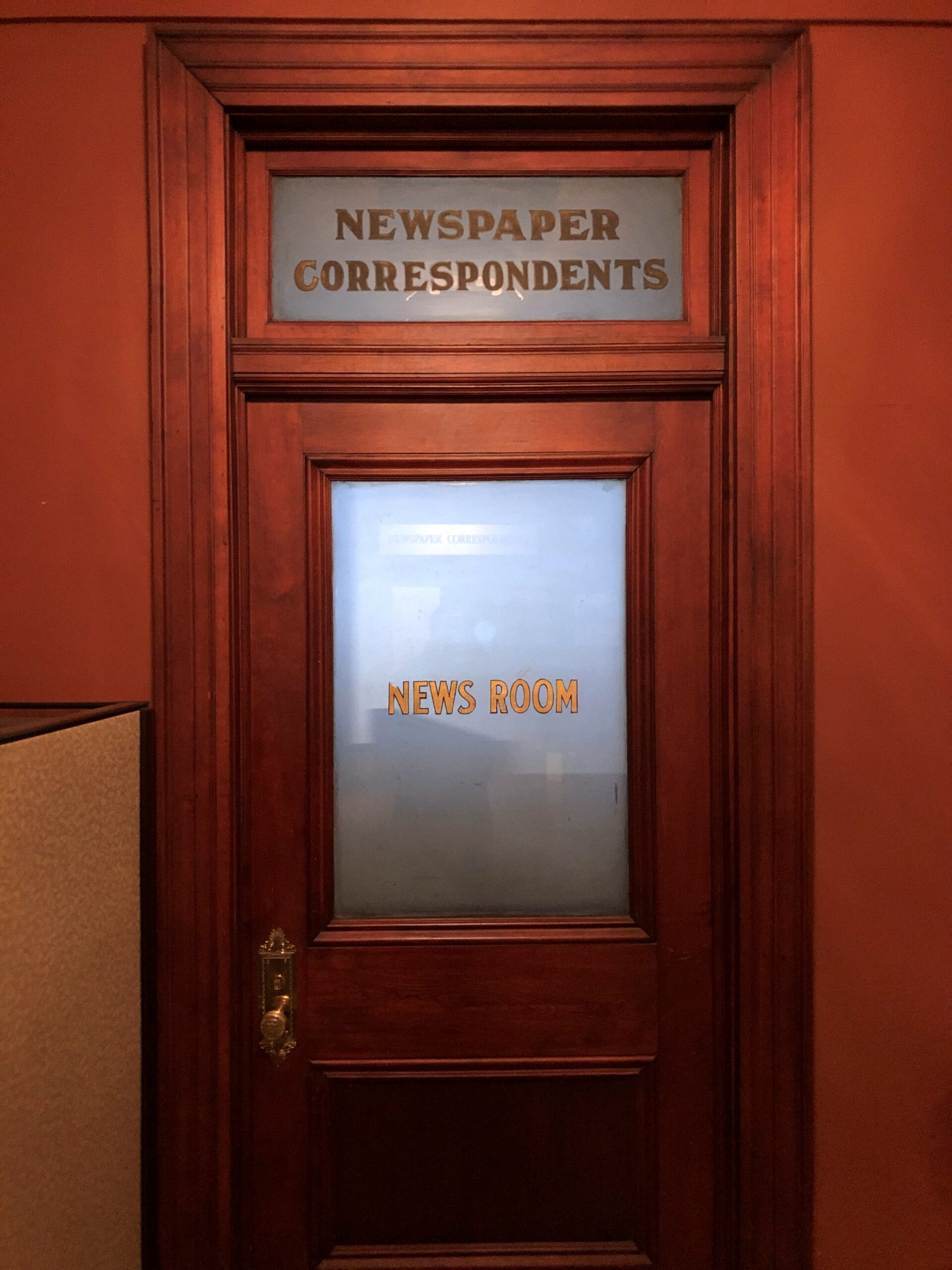
Not art, but this was good to see. I figure it isn’t literally for newspaper reporters any more, but I like to think when you open the door, you step into the press room of The Front Page.
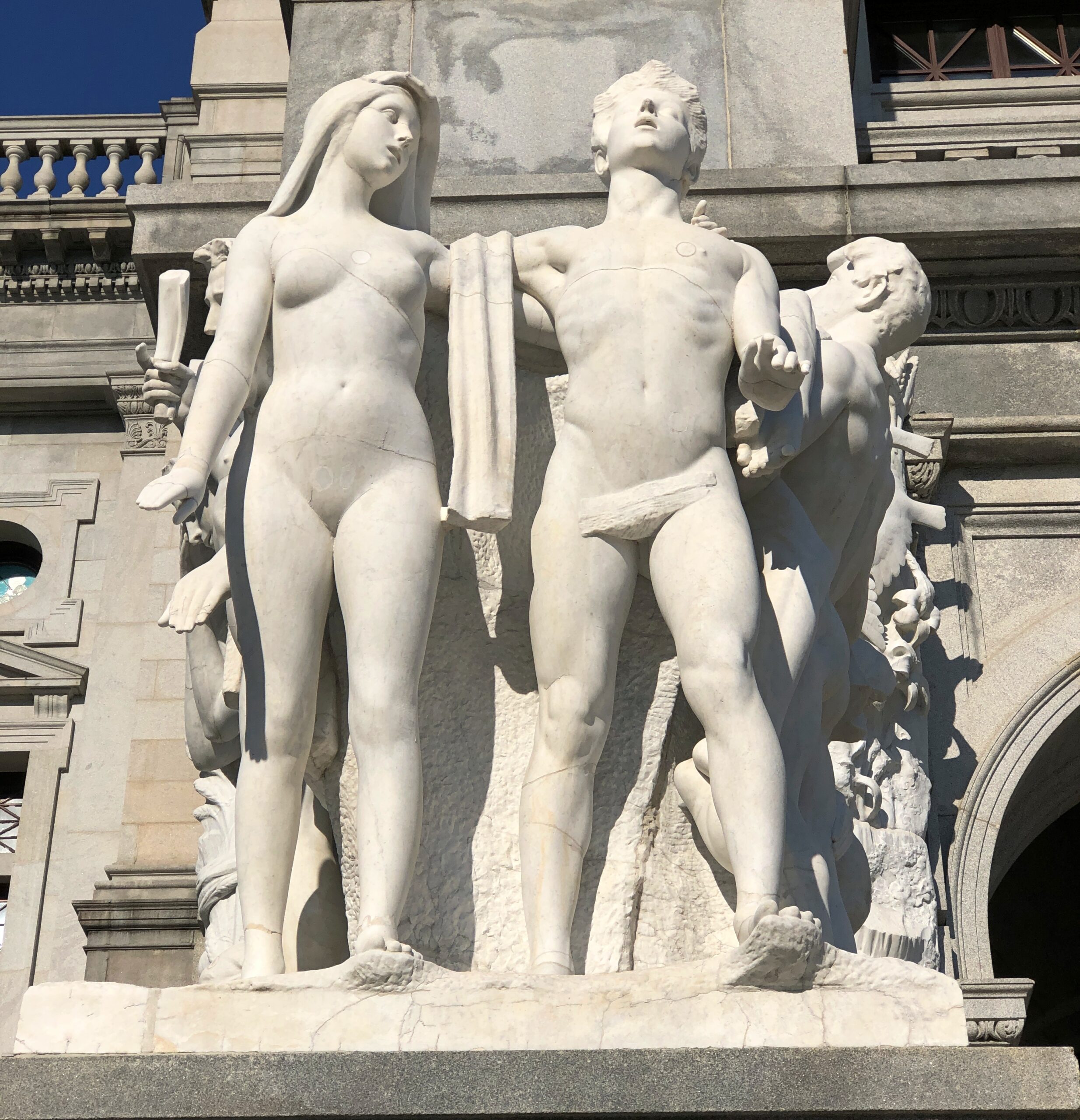
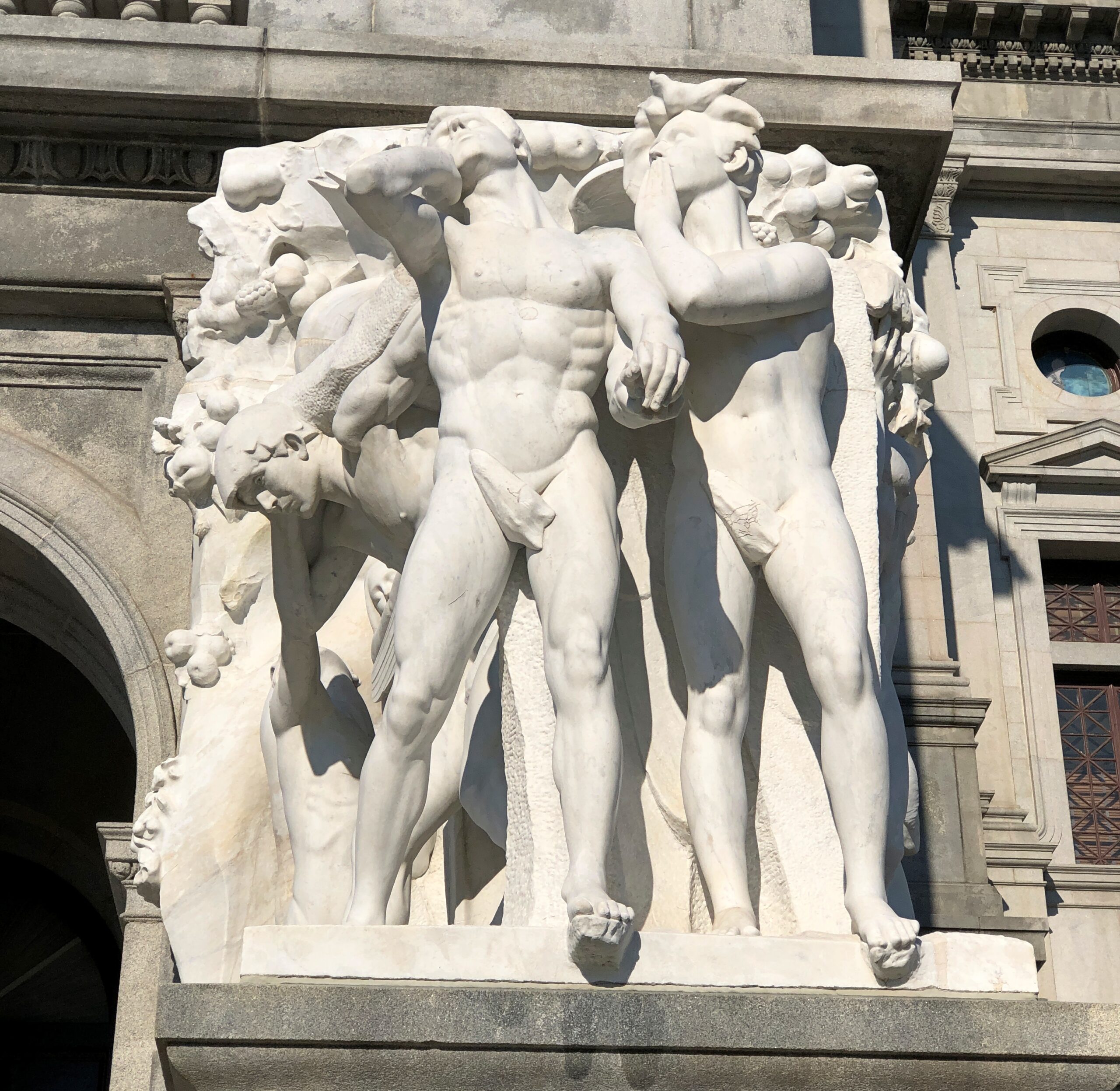
Statuary out front: two groups consisting of 27 figures. The artist in this case is George Grey Barnard (d. 1938), born in Pennsylvania, but I believe Chicago can claim him. Wouldn’t be a palace-of-art from 100+ years ago without larger-than-life statues in profusion. I’m glad the commonwealth has seen fit to keep them clean.
The upper couple would seem to be Adam and Eve; and wags might call the other couple Adam and Steve.
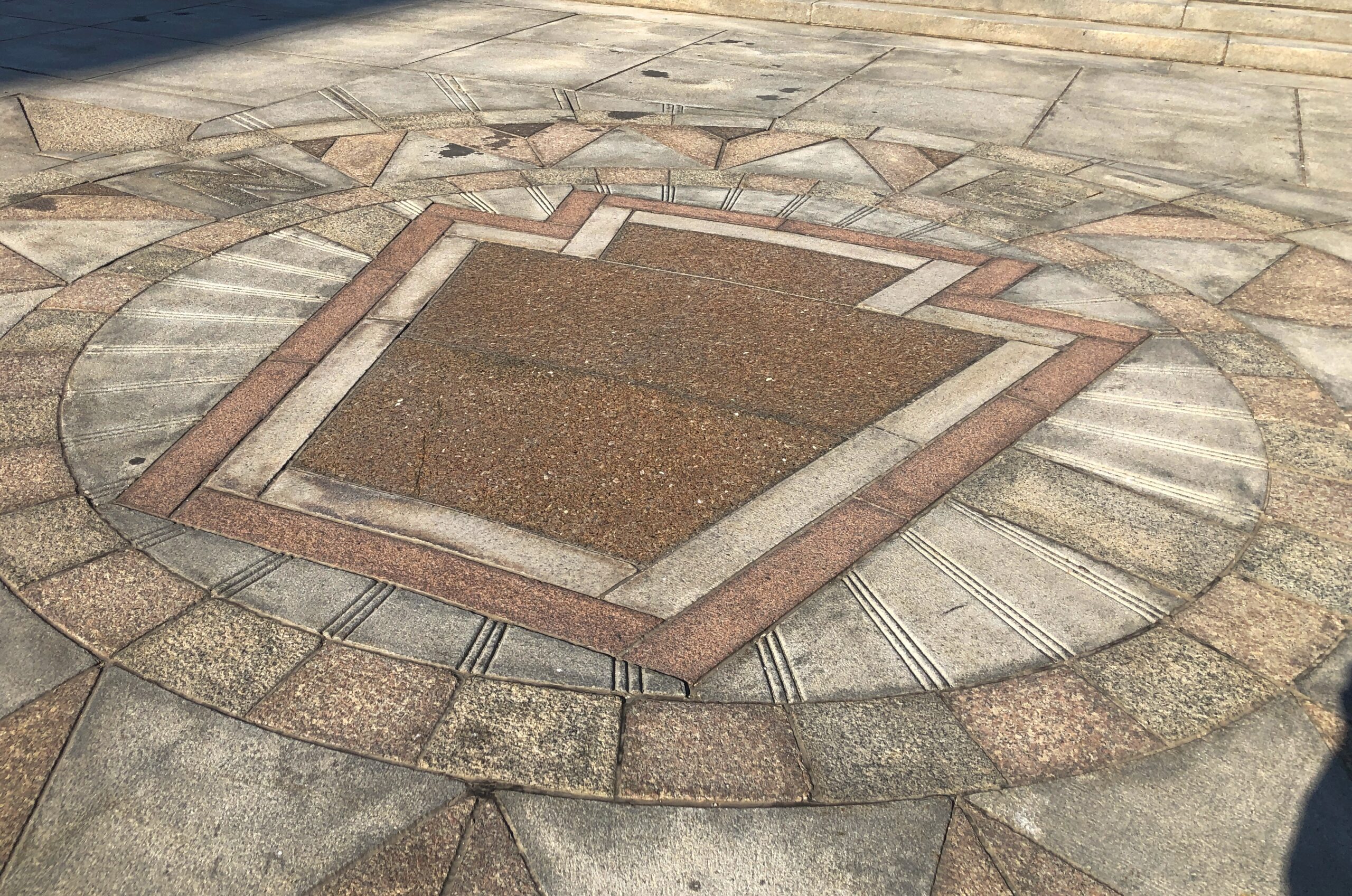
In the sidewalk in front of the capitol: The Keystone. You can see that in various parts of the state, but I remember it most from the keystone-shaped signs in Pennsylvania that tell you that a garage will do state inspections for your car.
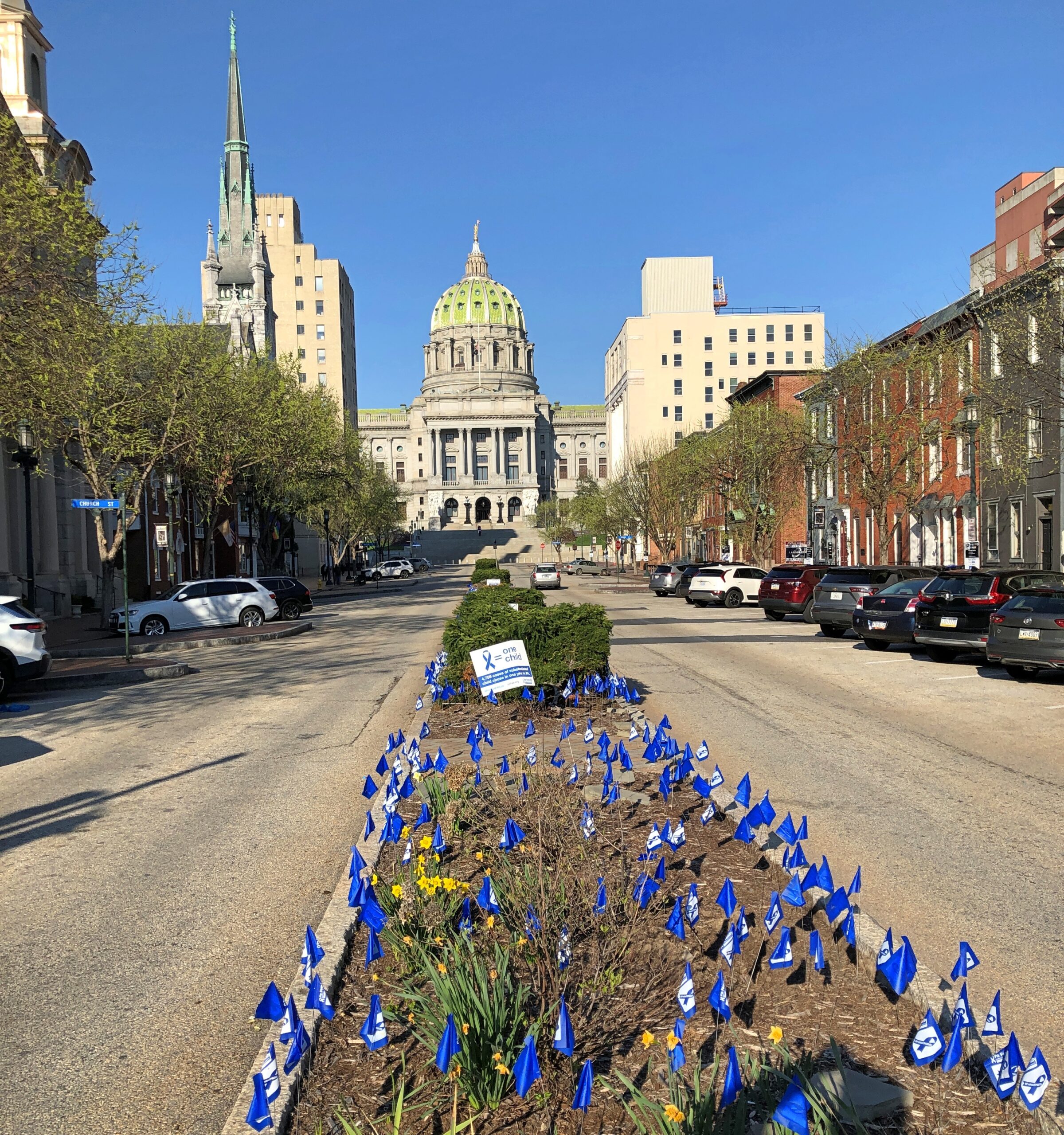
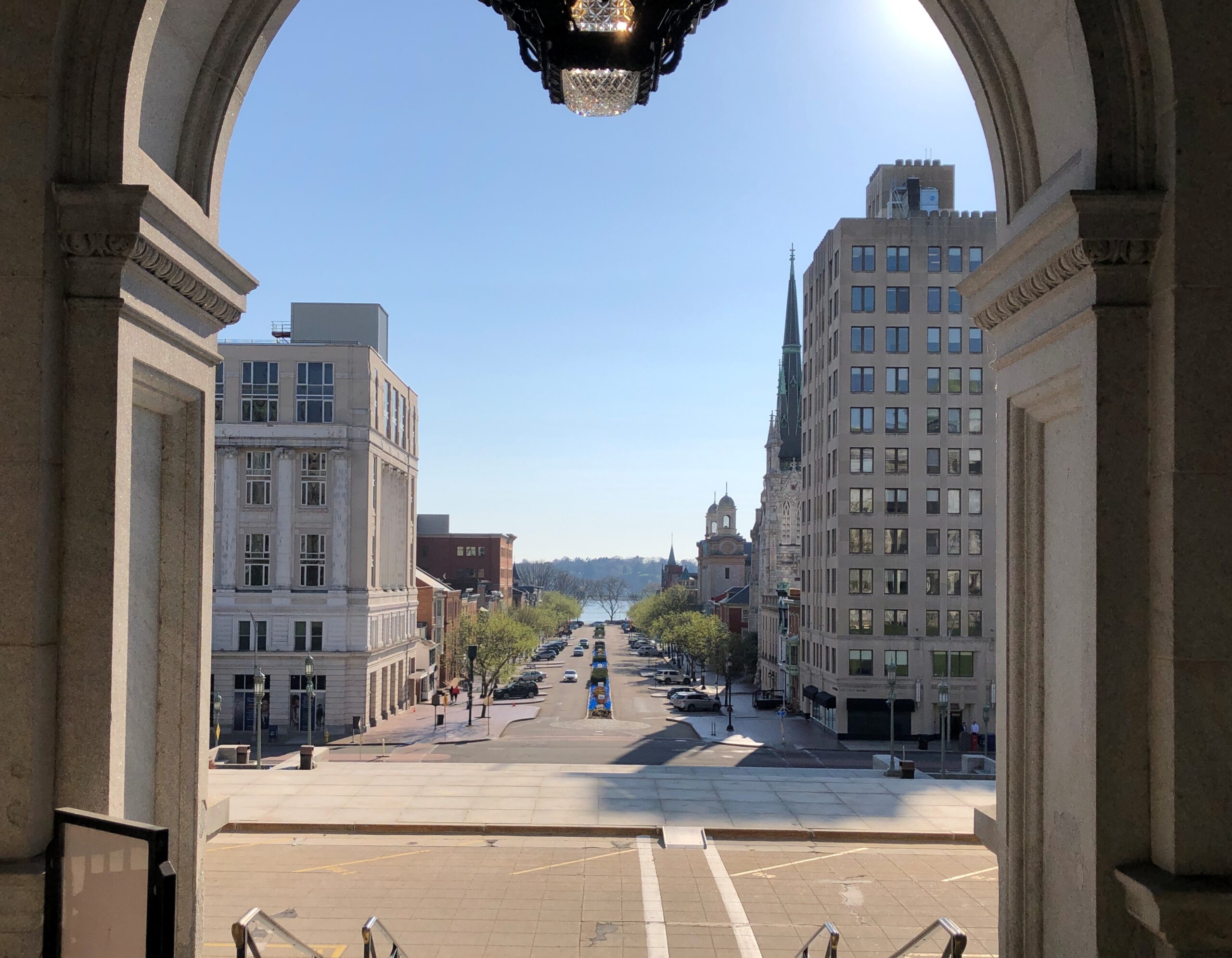
The view down State Street from the entrance. Off in the distance, the Susquehanna.
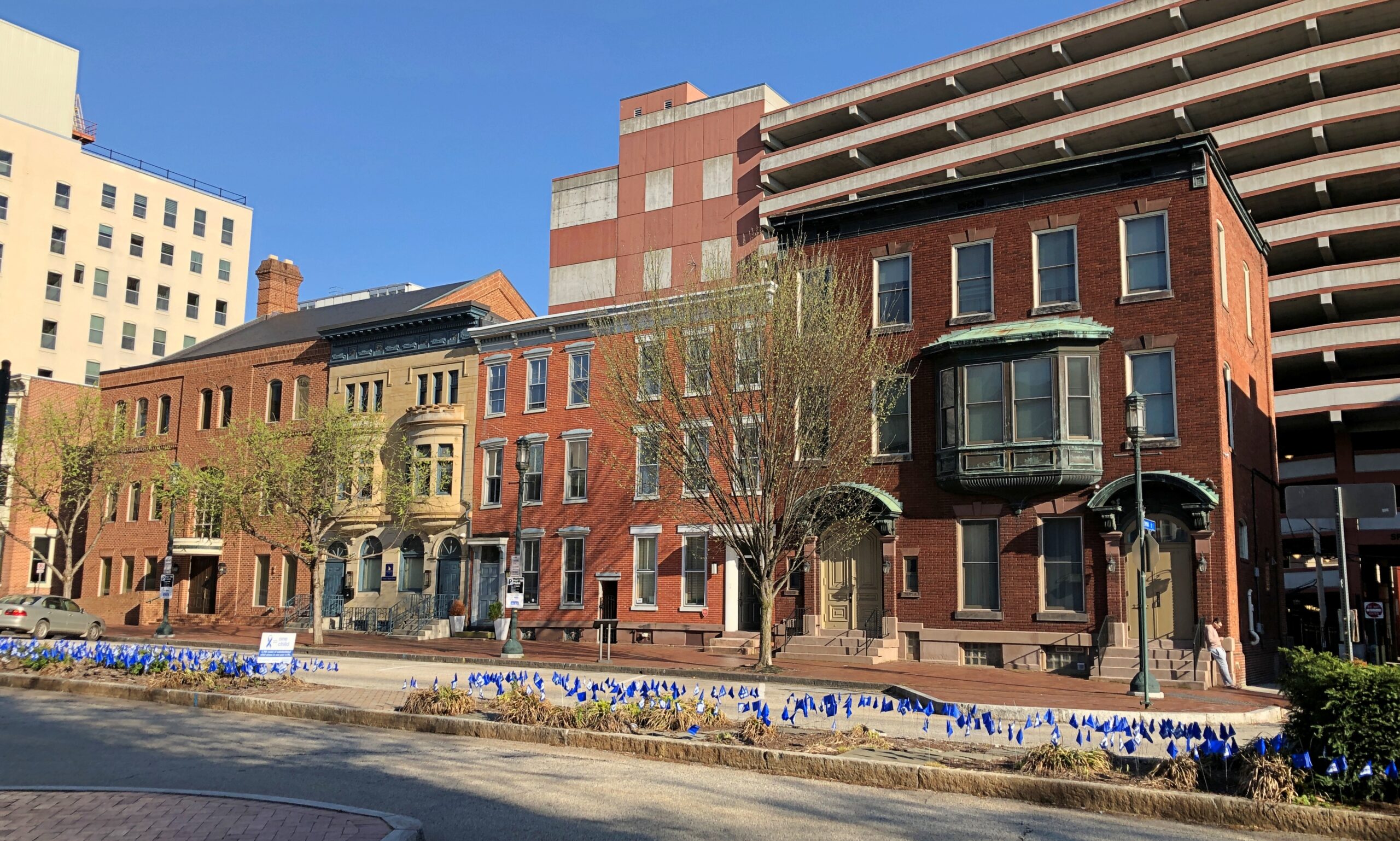
Couldn’t very well leave Harrisburg without a stroll down that street.
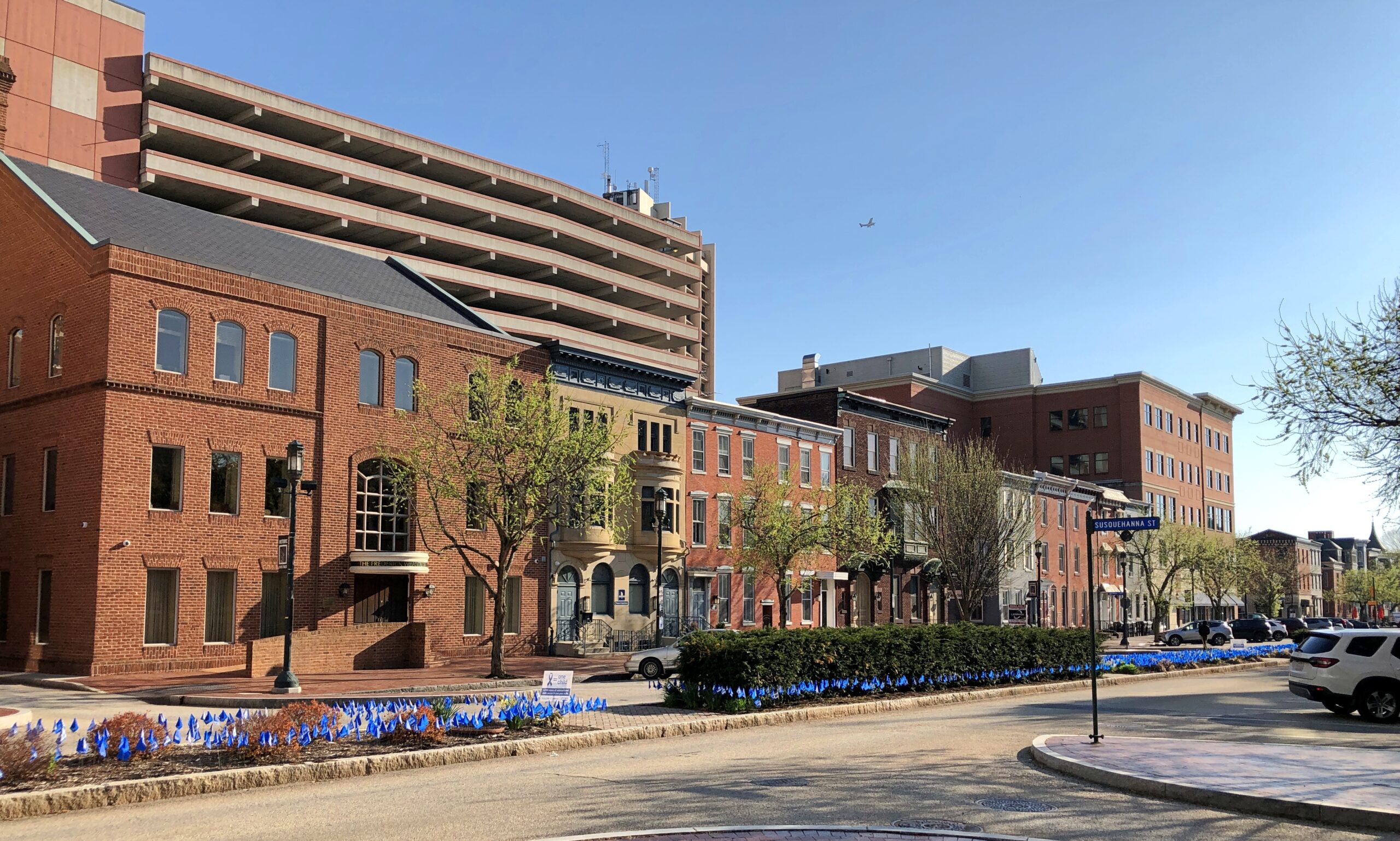
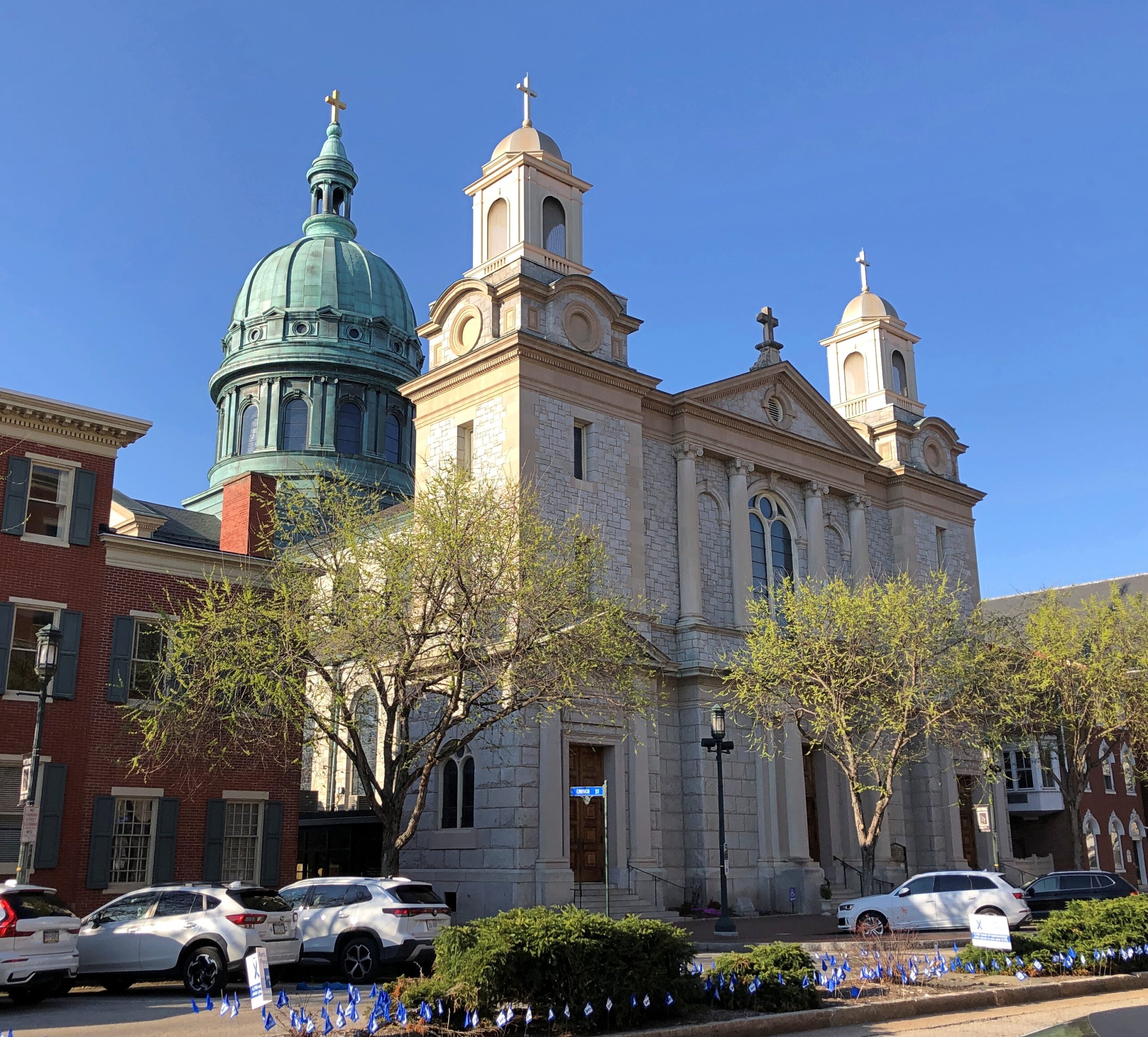
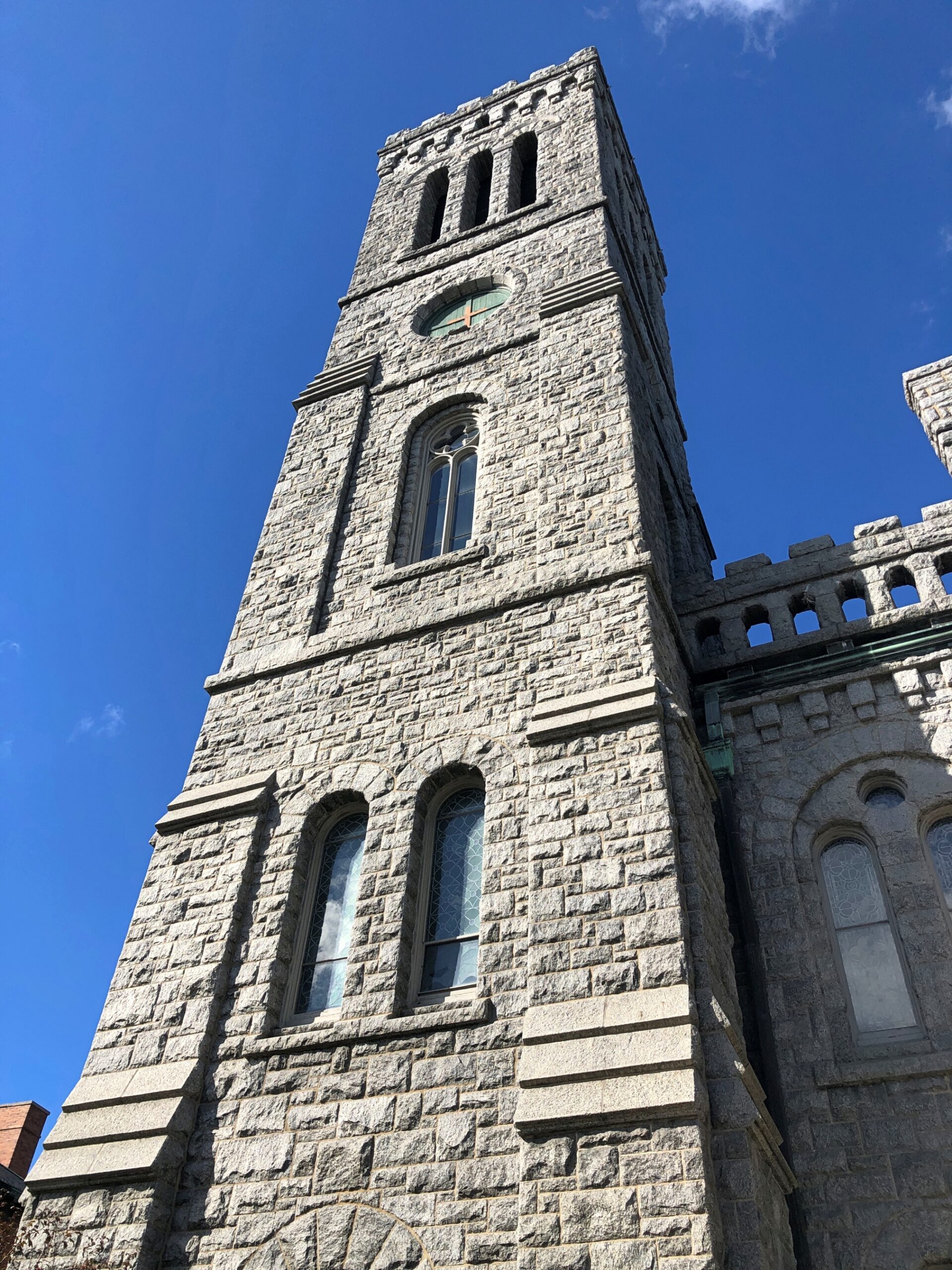
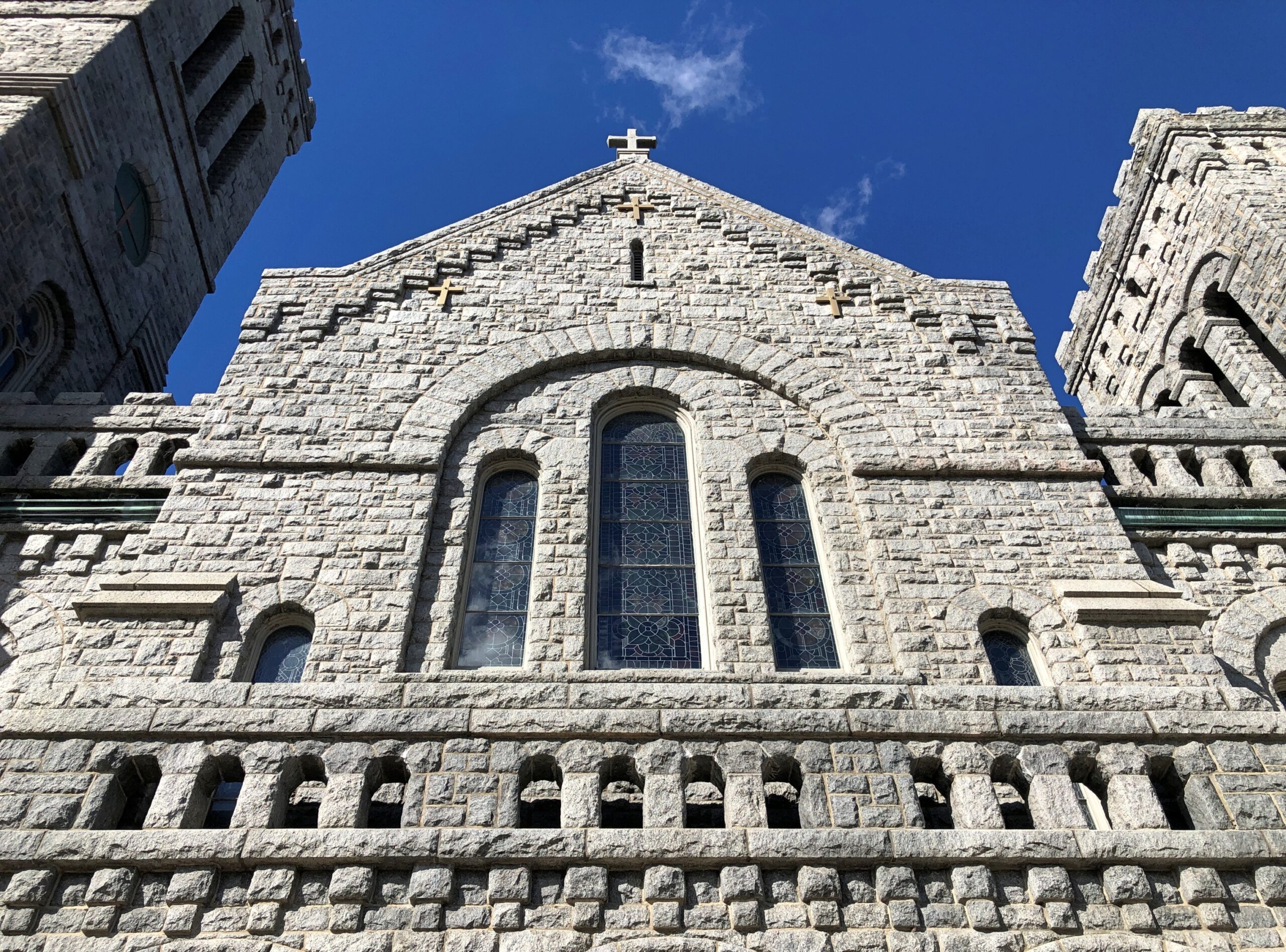
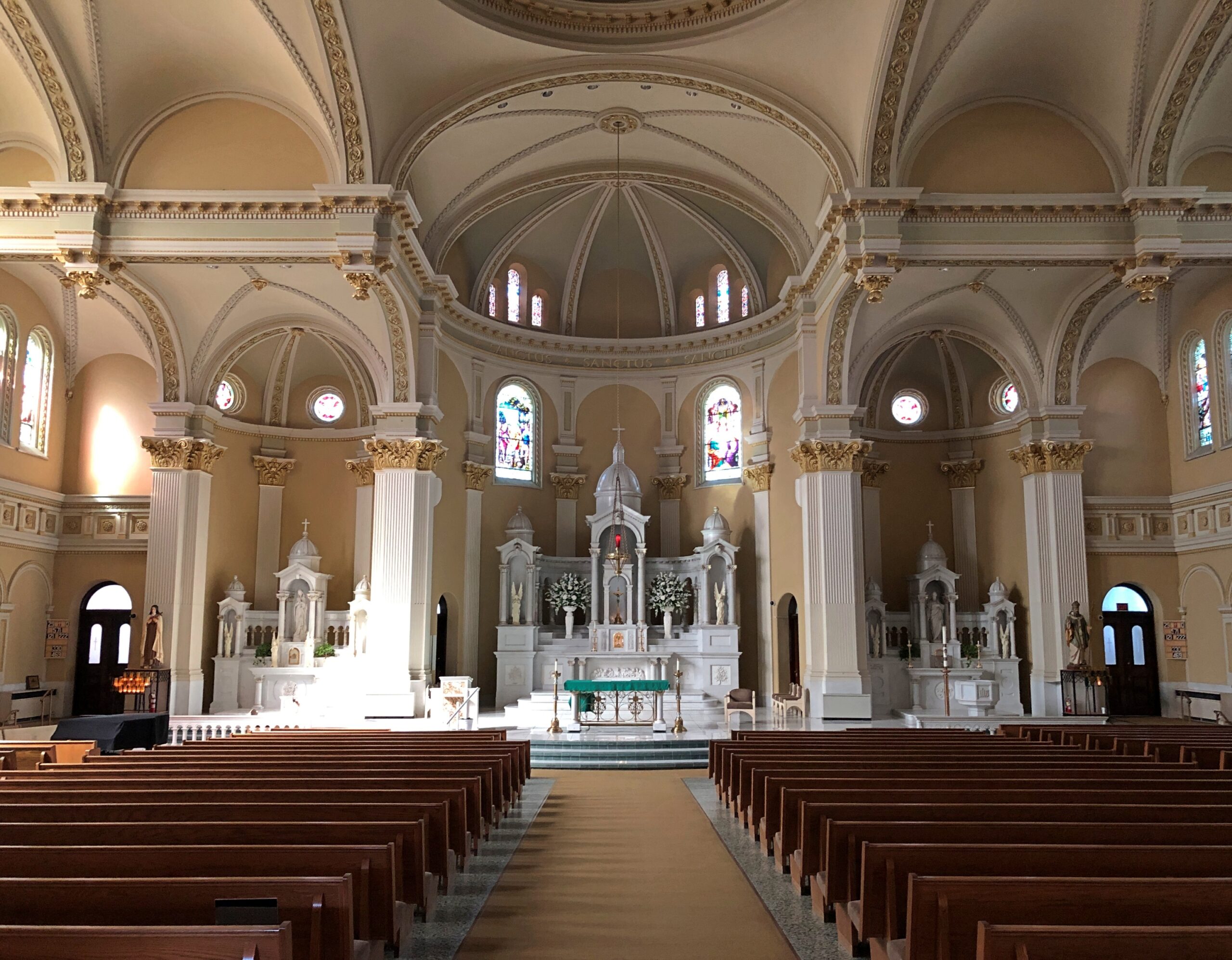
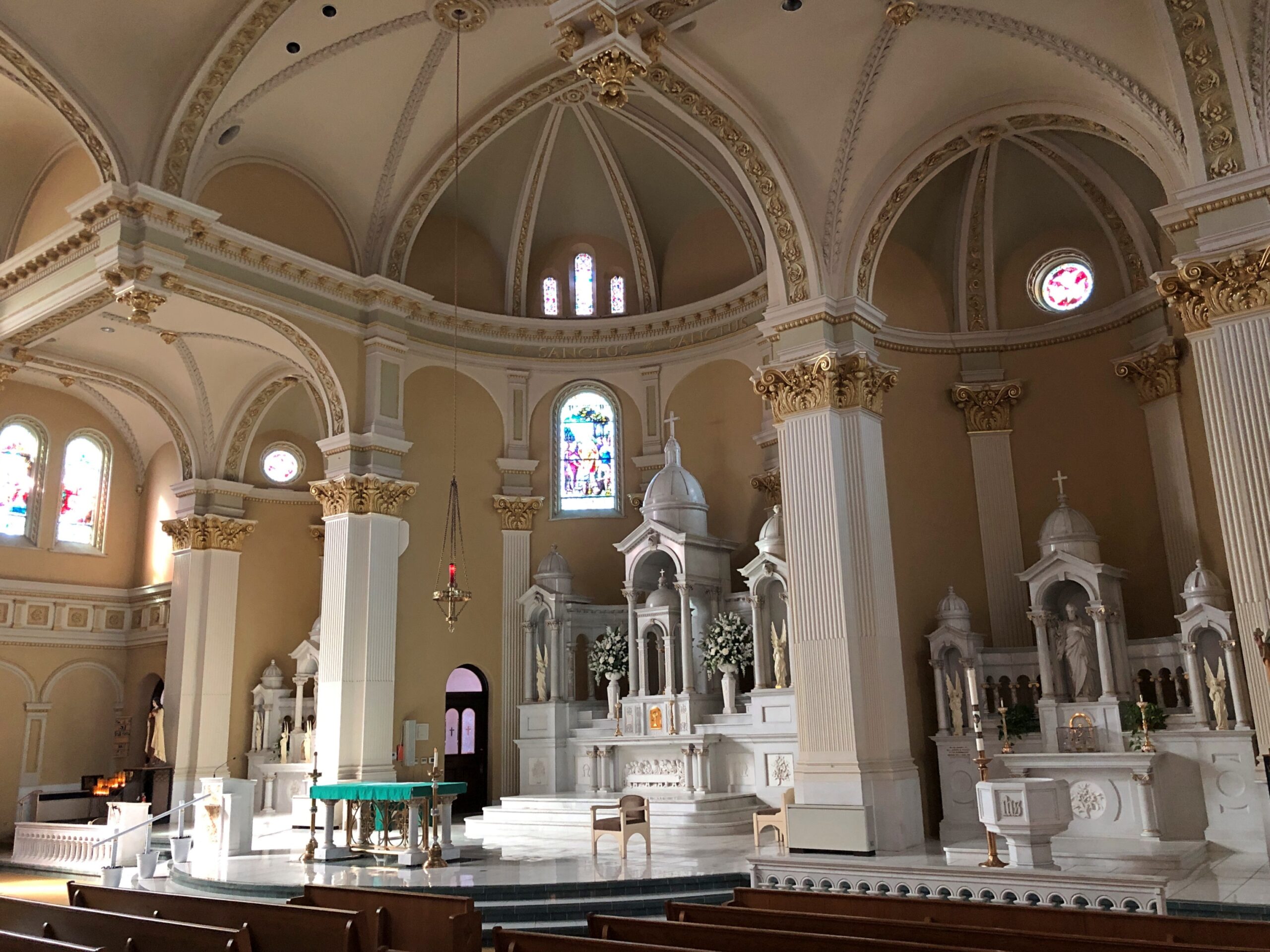
Two monumental churches rise on the street. The Cathedral Parish of Saint Patrick.
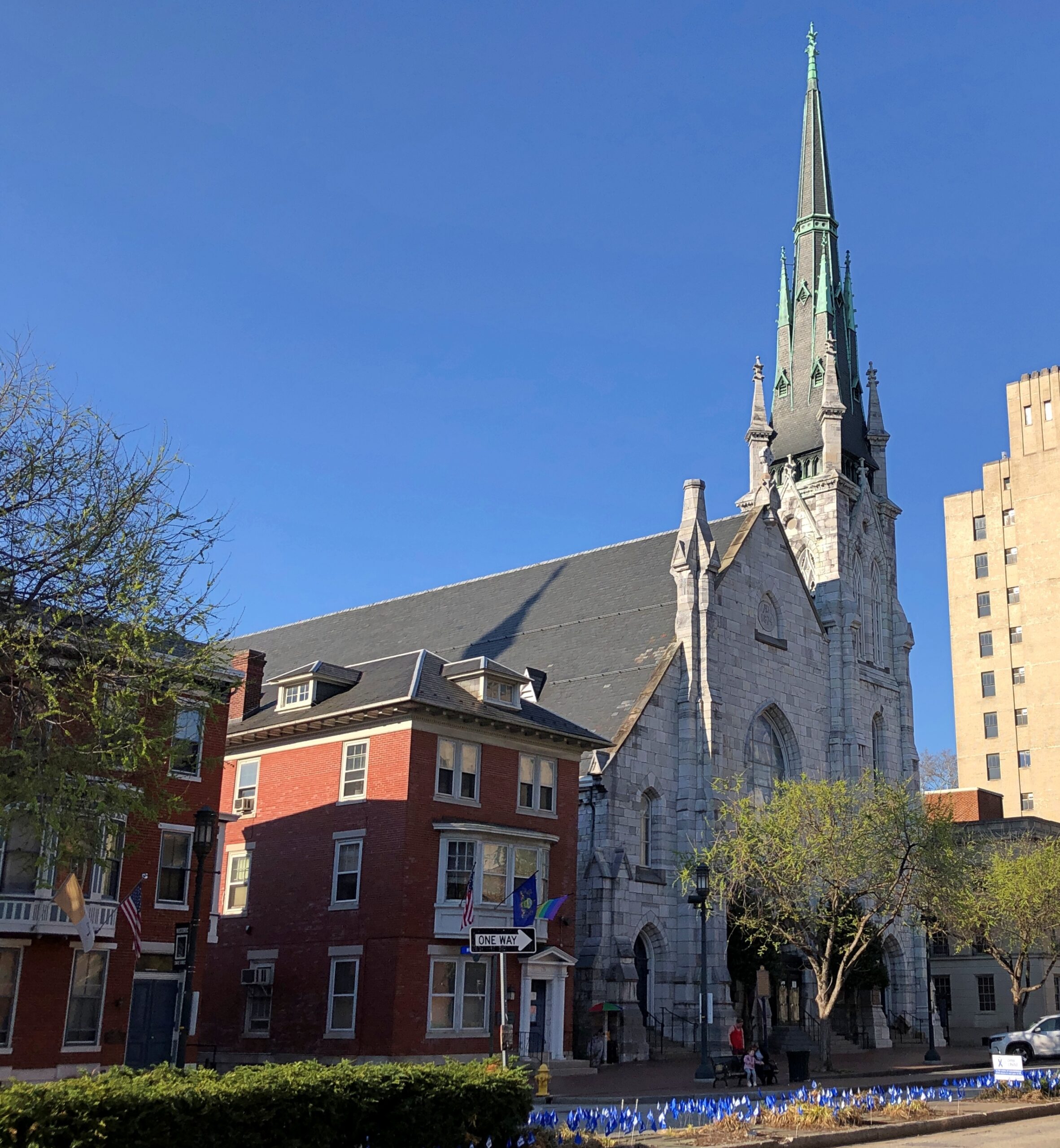
Grace United Methodist Church.
I had to be on my way afterward. But any trip that starts off with a grand capitol is going to be a good one.
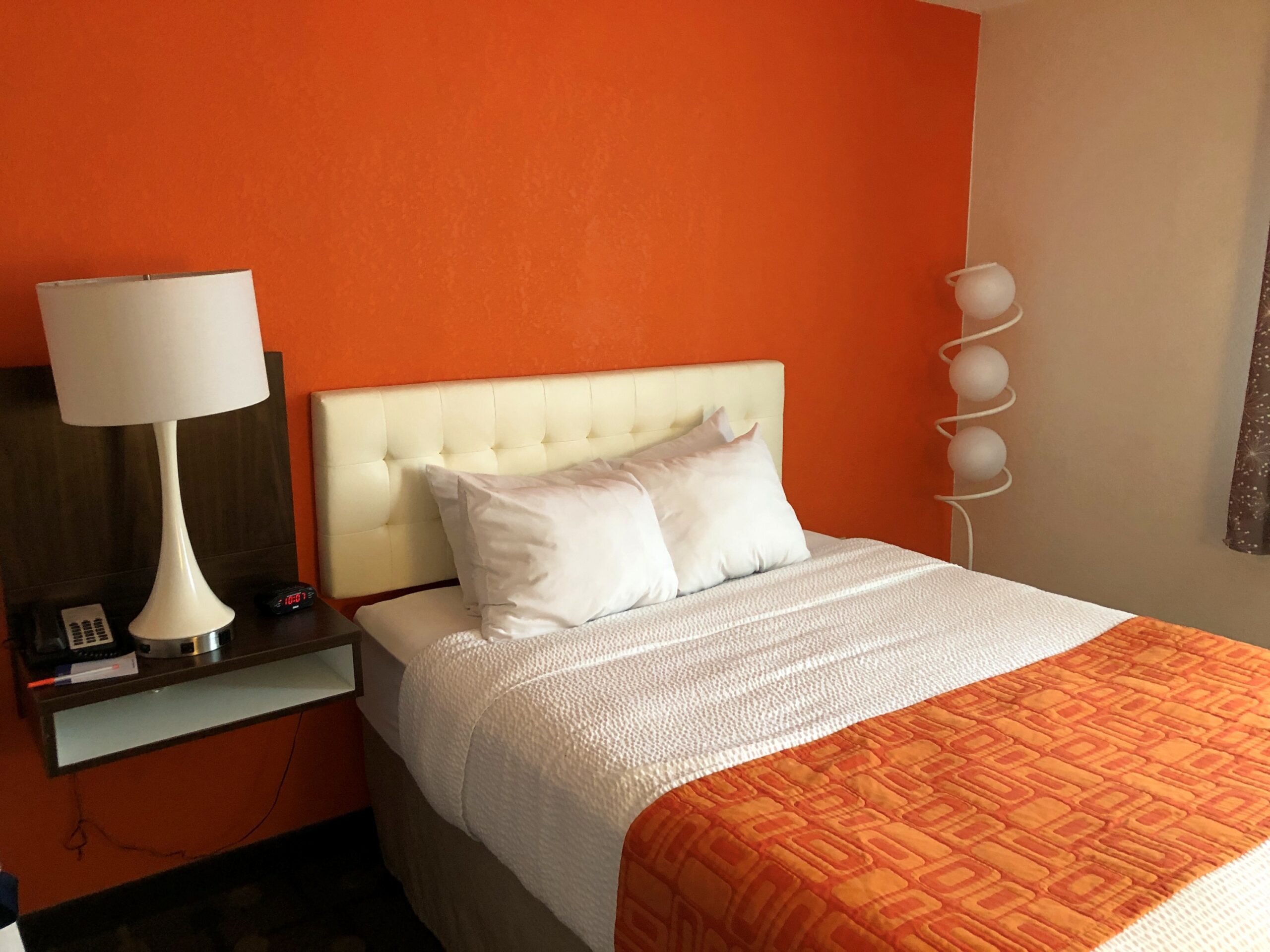
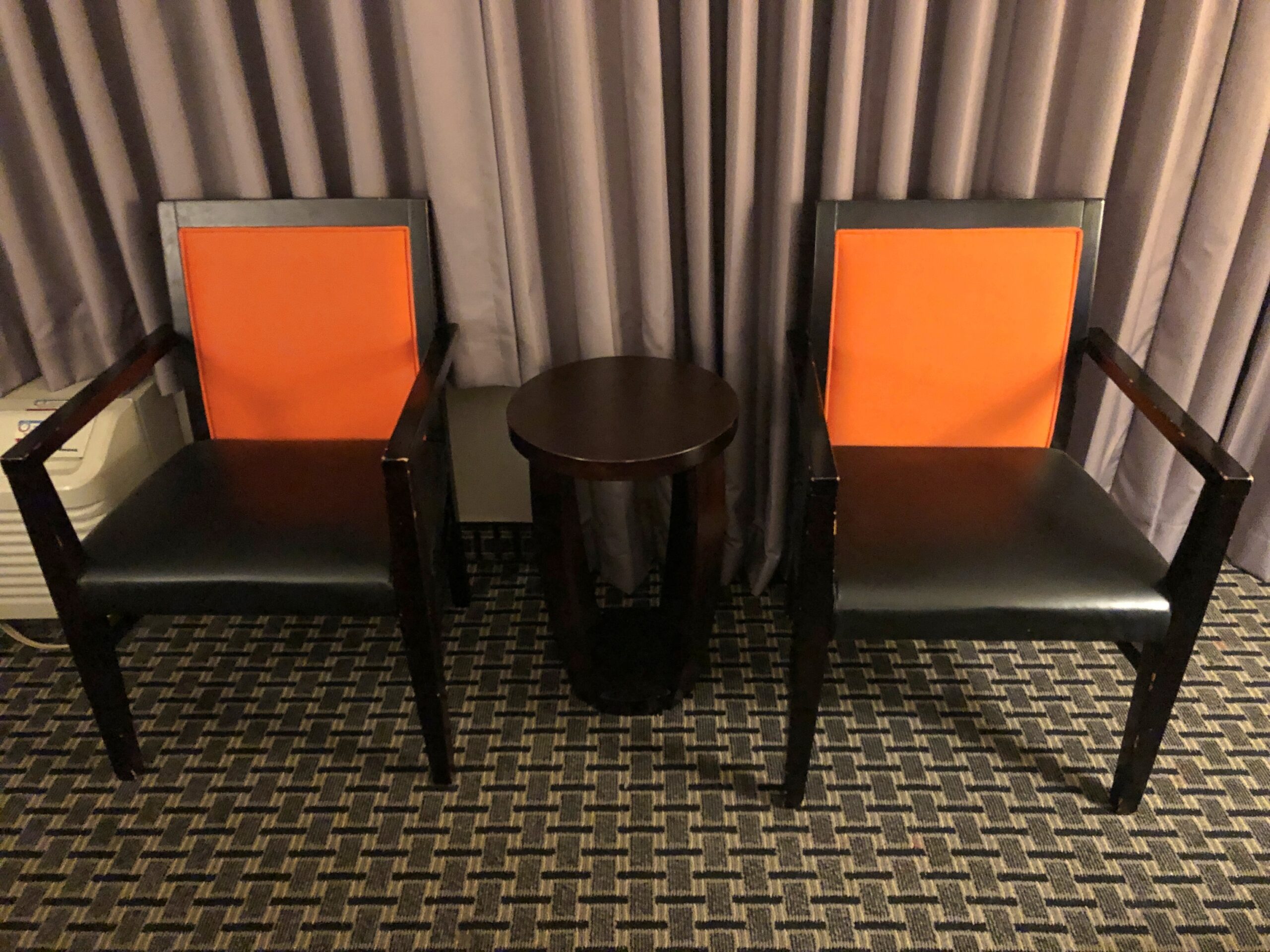
Howard Johnson, it turns out, is serious about renovating its rooms retrostyle. What says Howard Johnson midcentury, the heyday of the much-diminished chain, better than orange? – a lot of orange.
I’m just old enough to be nostalgic for midcentury motels. Maybe I’m just the right age, since as a kid, I didn’t have to concern myself with the details of getting to the motels or paying for them. I was along for the ride and the stay. I did, however, starting with the Cave Vacation of 1972 at age 11, concern myself with packing – my own stuff, but also the items everyone would need, put in the trunk of the car. To the mild amazement (I think) of my mother.
The Portsmouth, New Hampshire Howard Johnson, whose full brand name these days is Howard Johnson by Wyndham, checked a lot of the other boxes besides raw orange overload.
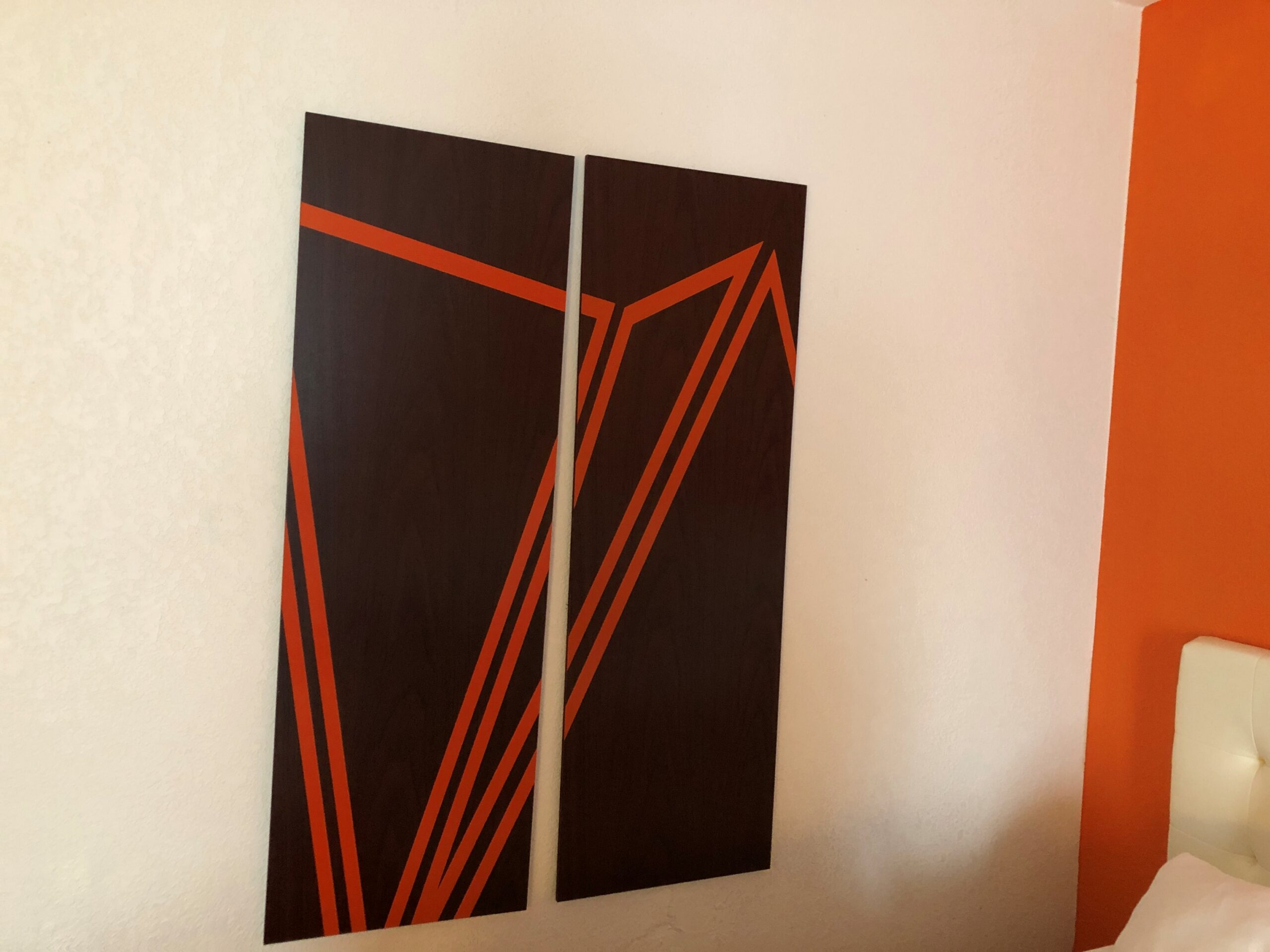
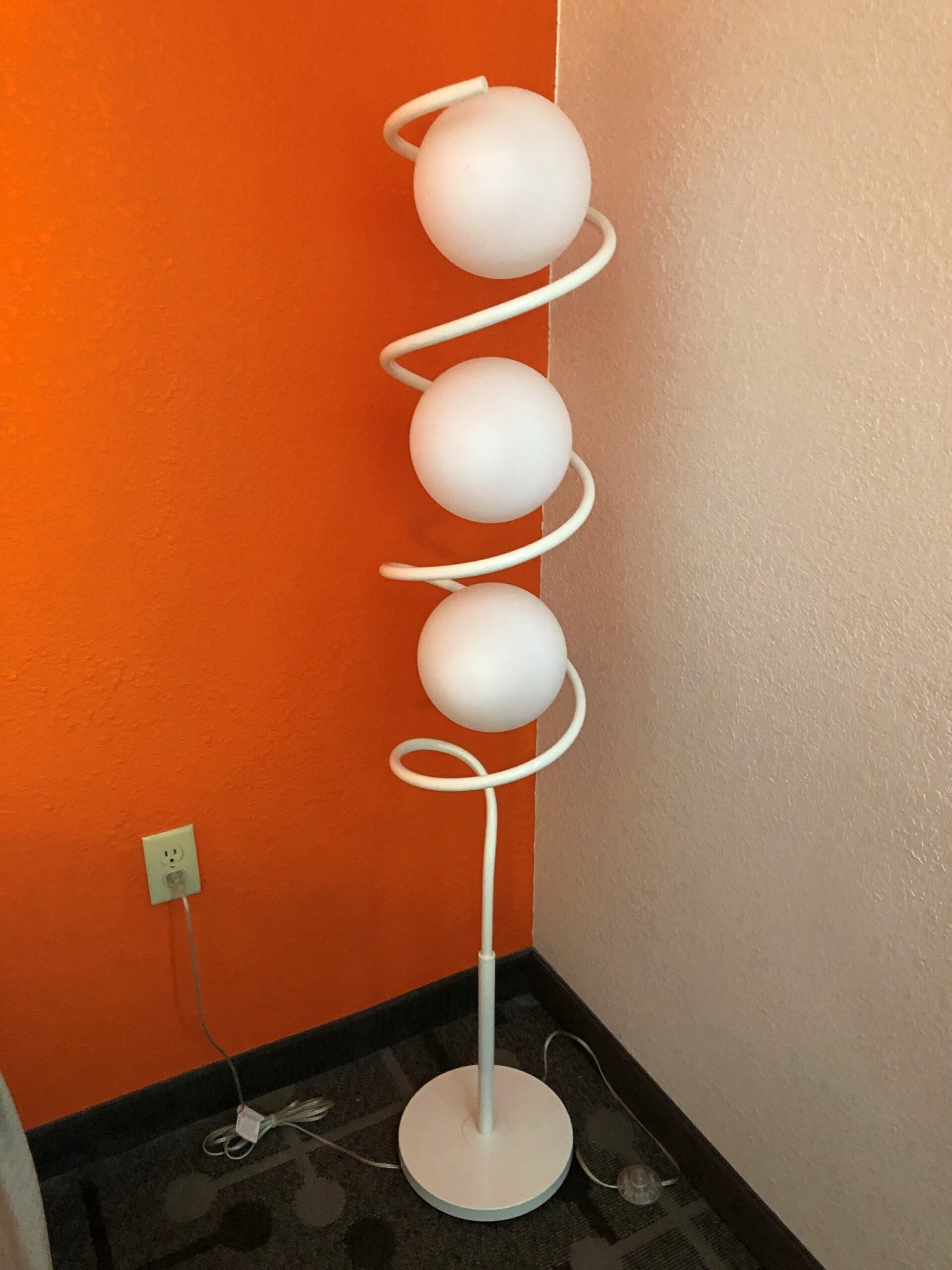
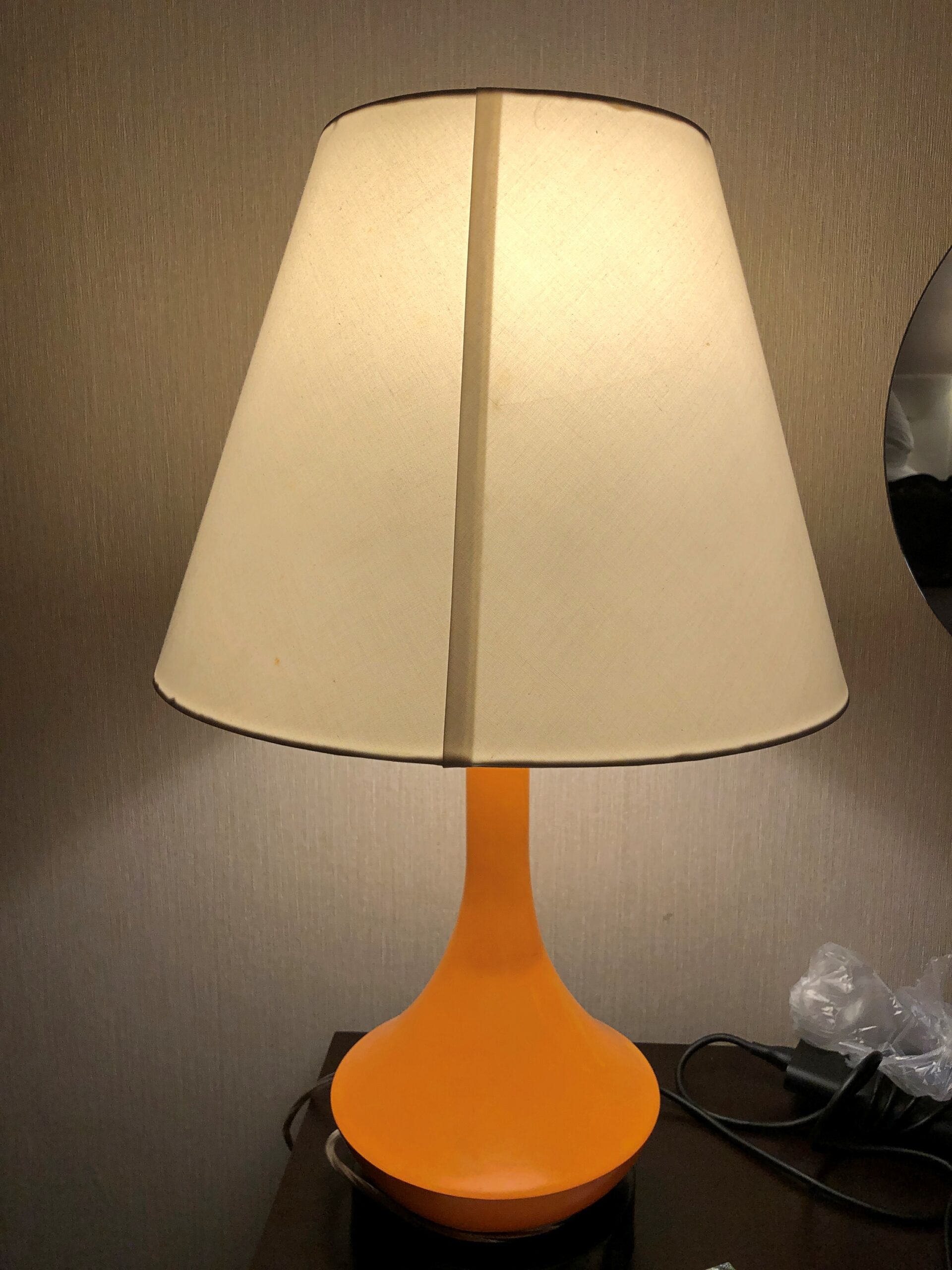
Not sure if these are precisely period lamps, but they remind me of the period.
The room had a modern TV, naturally, and as befitting our time, a lot of outlets, including USBs. Unfortunately, there was no bottle opener attached under the sink. Or a gossamer paper ribbon around the toilet announcing that it had been sanitized for my protection. Just quibbles. The room had the right feeling.
I found myself in New Hampshire in mid-April headed east to Maine. Some days earlier, on April 7, I’d left metro Chicago by car for the Northeast again. I returned on April 24 after 3,499 miles on the road. Dang, I should have gone that extra mile we’re always hearing about.
After visiting the Northeast last October, I hadn’t intended to return quite so soon. Then Lilly and Dan scheduled their engagement party for April 11, 2026, in Midtown Manhattan, which meant a return to New York City at least. The easier (and cheaper) thing to do would have been for all of us to fly there, spend a few days, and then fly home.
I wanted to go to the party, of course, but that approach to getting there didn’t appeal – so I drove by way of Indiana, Ohio, Pennsylvania and New Jersey, where I squeezed a day into my schedule to look around. Yuriko and Ann flew in the day before the event, and we attended the party in the upstairs Manhattan Manor room of Rosie O’Grady’s on 51st, between 6th Ave. and 7th Ave. I’d never heard of the place before, but eventually learned that Rosie O’Grady’s is a sentimental favorite of Lilly and Dan’s when they visit New York. That only goes to show that one’s children have, or should have, aspects of their lives you know nothing about.
We had a large time that evening, meeting members of Dan’s family and many of his friends, and seeing many of Lilly’s friends for the first time or the first time in years. My nephew Dees was able to attend from Austin and my nephew Robert and his fiancée Meredith came from Brooklyn.
That wasn’t quite it for NYC – my nth visit, Yuriko’s third and Ann’s first – since we had another day and a half to kick around. We spent time strolling in a budding springtime Central Park and at MoMA and in a couple of Greek diners and one of the locations of the delightful Angelina bakery. All in all, an enjoyable time, all too short. Yuriko and Ann flew home, but I made my trip just a little longer.
Namely, I had another large time, this one in Boston, with my friends Rich and Lisa and Steve. That was slated for a week after the party, so I had a few days to spend between NYC and Boston. Where to go? Maine. Geographically not between those major metros, but nothing is that far apart in New England, as all drivers who grew up in Texas know.
After my visit with my Boston friends on the weekend of April 18-19, I took a (fairly) slow drive home, passing through western Massachusetts and stopping in upstate New York long enough to visit historic places I couldn’t in October because the federal government shutdown. From there, I traversed Pennsylvania, Ohio and Indiana again, along a somewhat different route than I’d come. Of course.
The last night of the trip, I stayed at another Howard Johnson. It had the location I wanted, in western Ohio, and the price wasn’t bad, but I was also curious how orange it was going to be. The answer: not quite as much as the Portsmouth property, but more than most places.
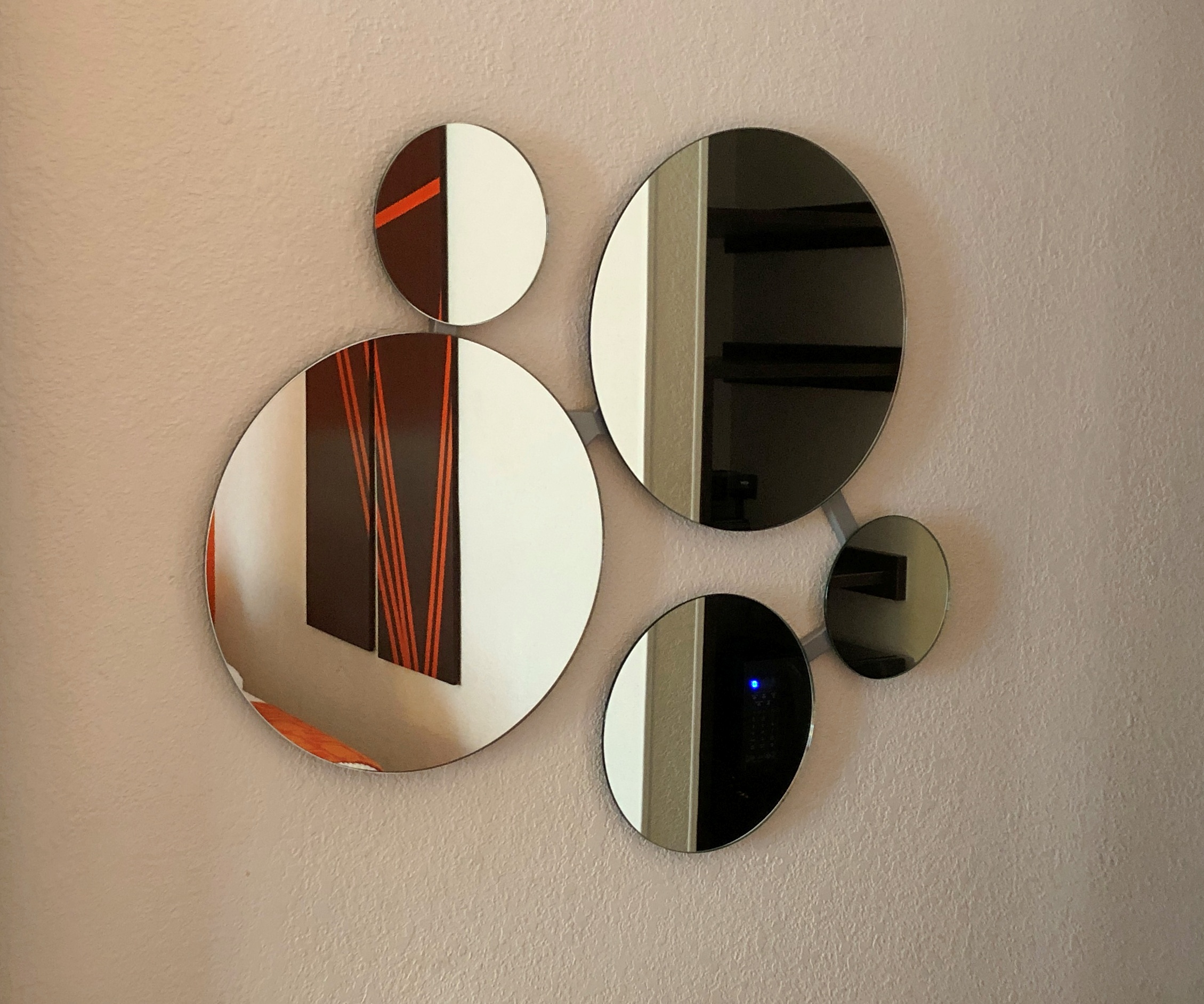
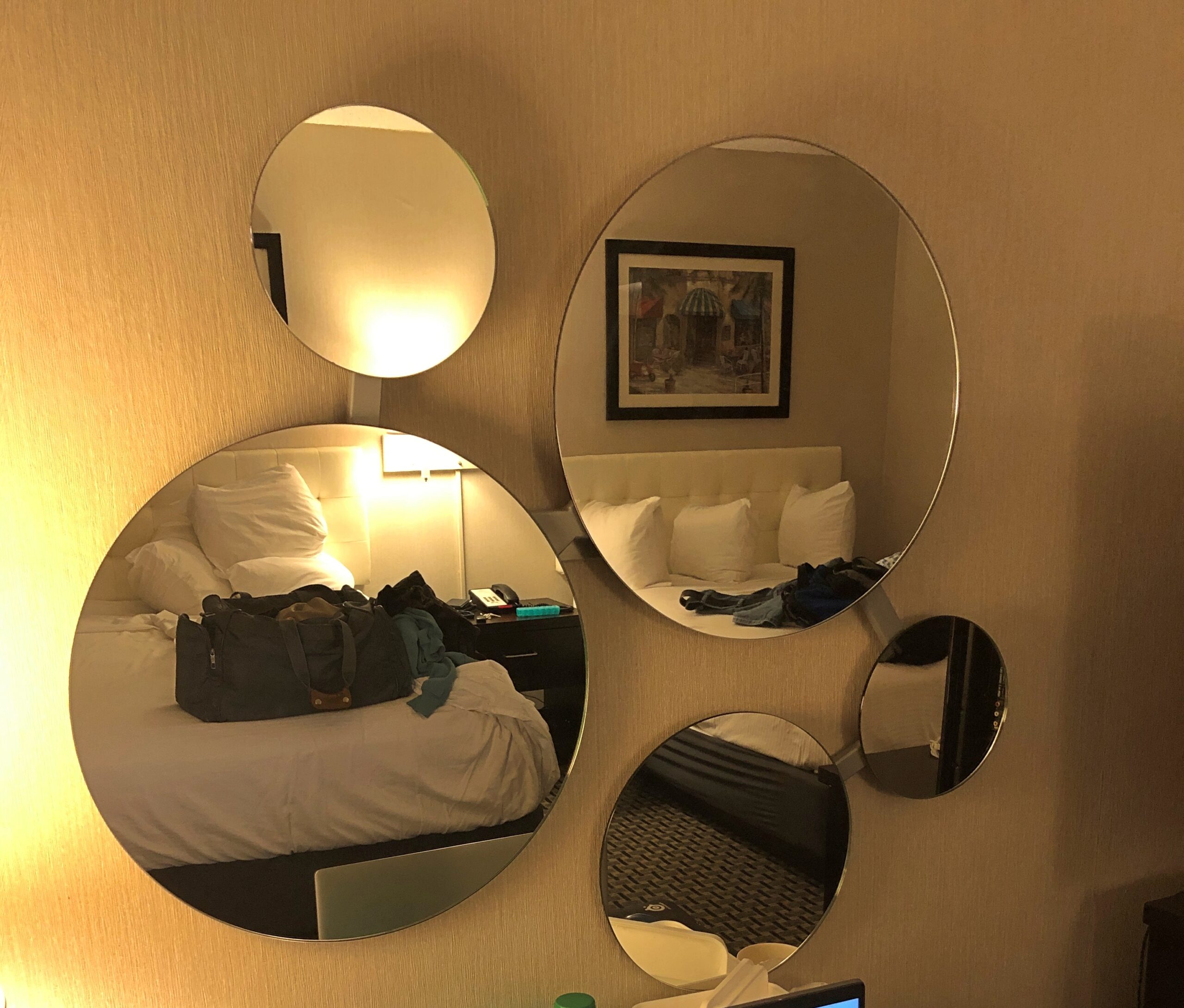
Including the same circular mirror array. Wyndham must have gotten them in bulk.
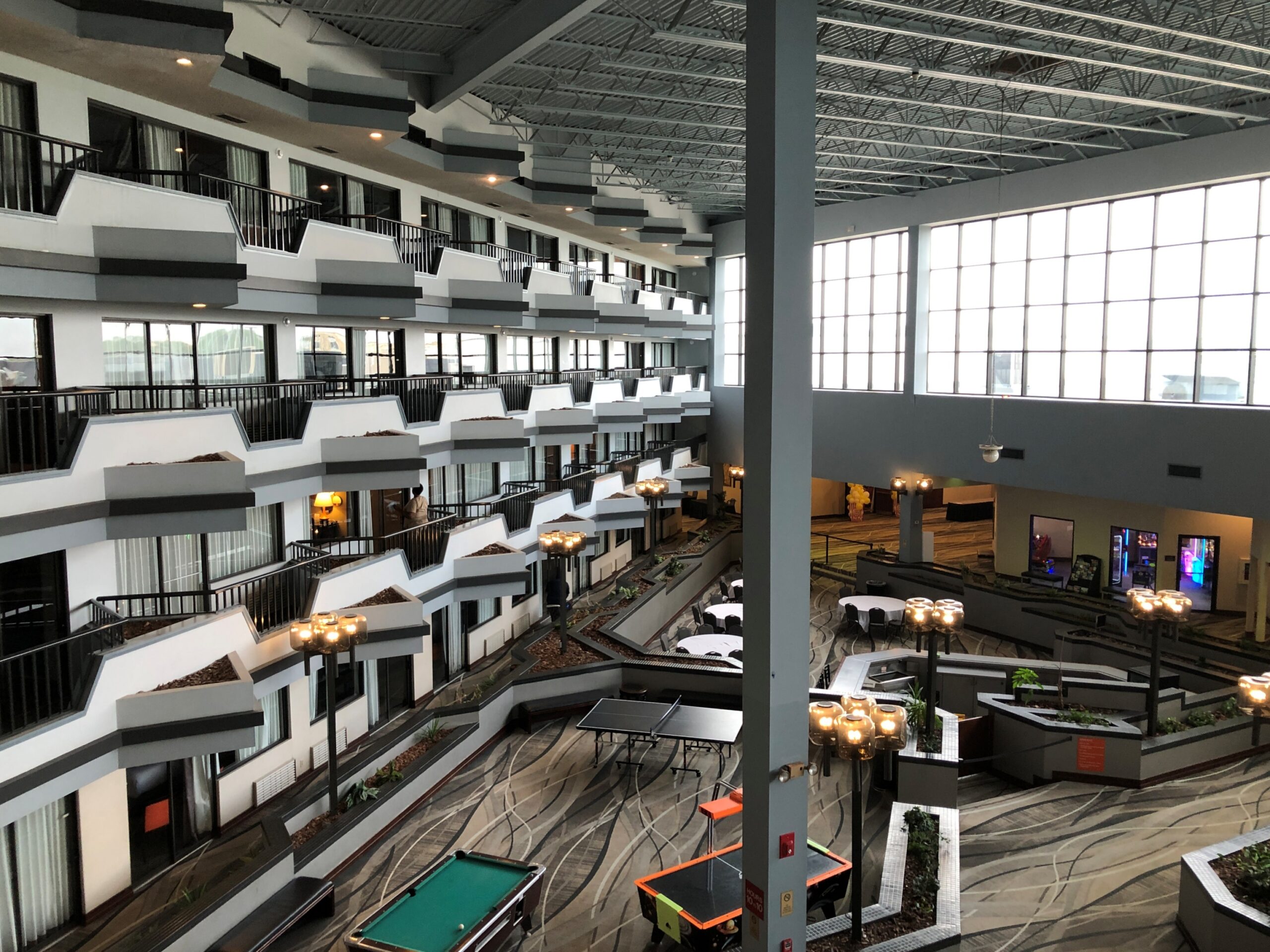
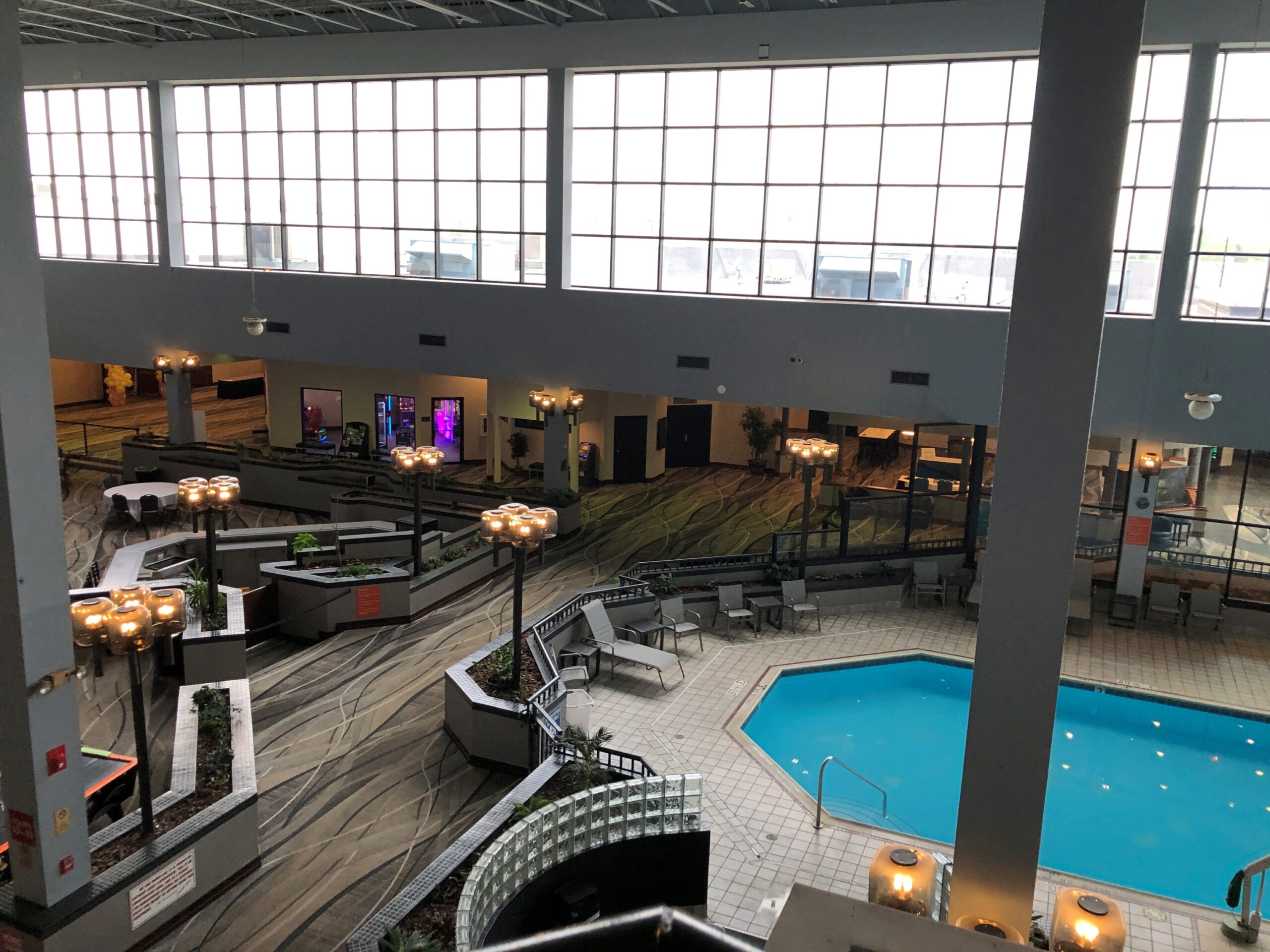
The unusual thing about the Lima, Ohio Howard Johnson is its sizable enclosed atrium — visible from my room’s balcony, also unusual in a limited-service hospitality property.
I asked the clerk if the property had been something else, once upon a time, and she said it had, offering a name I didn’t recognize and don’t remember, though I expect it might have been an independent property trying to make a go of it. Tough going in Lima, I bet.
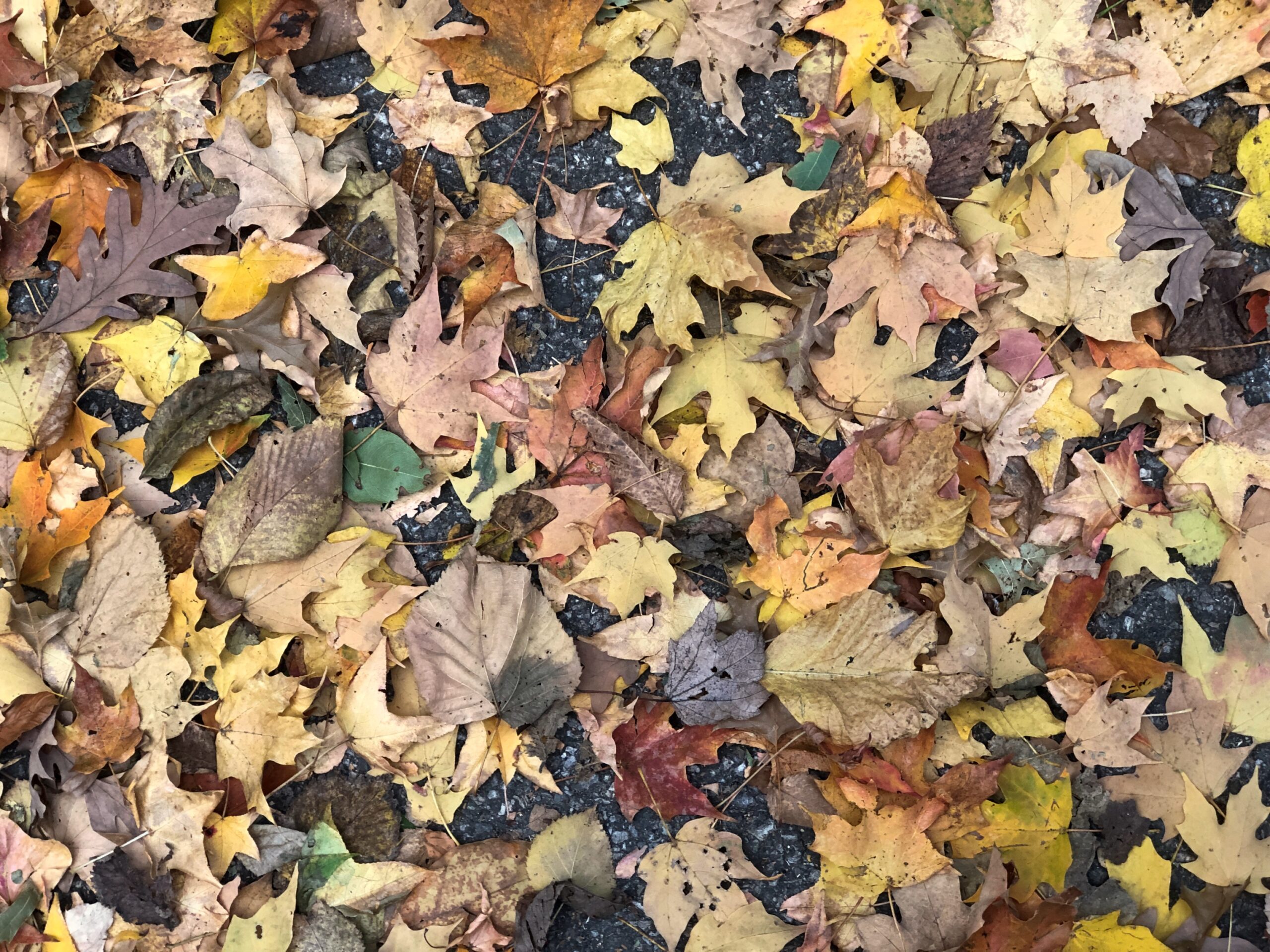
Our first winterish weather blew through early this week, but we’re back to cool days. For now. Some leaves seem to be clinging a little longer than usual, but most are accumulating on the ground, as expected for November. A scattering of Christmas decorations are already up, and I don’t mean in stores, where they’ve been for weeks. Let November be November, I say.
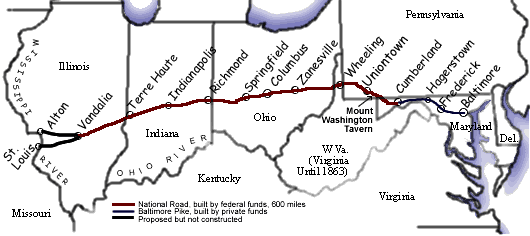
Much of my return from the East Coast generally followed the westward course set by the National Road, though I didn’t use much of US 40, which has that nickname. If you want to make decent time, you take I-68 through Maryland and then I-70 across Ohio and into Indiana, which pretty much parallels the National Road.
The Interstate is designed for just that kind of efficient travel. On the whole, it delivers. The four-lane highways also deliver boring drives, to hear some tell it. That’s an erroneous assumption, to hear me tell it. The Interstate has its fine stretches, such as I-68 in October, a gloriously colorful drive. Winding and hilly, too, through Maryland’s peculiar panhandle.
A rest stop near Hancock, Maryland, offers views to the north, so most of what you see is Pennsylvania.
The rest stop is at Sideling Hill, an enormous rise gouged by an enormous cut for I-68 to go through. An impressive feat of engineering, completed only in the 1980s. Then again, blowing up mountains is a thing that happens in this part of the country.
The narrowest part of the Maryland isn’t far away. At its narrowest, there is less than two miles are between the Potomac and the Mason-Dixon Line. So if you picked up Maryland by the panhandle, it would surely break at that narrowest point.
I filled my gas tank off the highway in the last town in Maryland, Friendsville (pop. 438), at a station whose enclosed retail space (between a few pumps) seemed little bigger than a walk-in closet, and yet there was a clerk manning the place on Saturday just before dark. Rotund and massively bearded, he was playing a video game when I opened the door to pre-pay. He might have been a little surprised to encounter a customer, at least one who didn’t pay at the pump.
From there, I continued into West Virginia, then took I-79 north into Pennsylvania, then headed west on I-70, which crosses West Virginia’s odd panhandle – more like a periscope – before reaching Ohio. After overnighting in Cambridge, Ohio, I bypassed Columbus but stopped in Springfield, near Dayton but with a distinct geographic identity. Alcor to Dayton’s Mizar, you might say.
Downtown Springfield was practically devoid of pedestrians that Sunday, and not that many cars drove through either. A few buildings rise high enough to suggest a more prosperous past, but look too closely and some of them seem to be as empty as the streets, or at least underutilized.
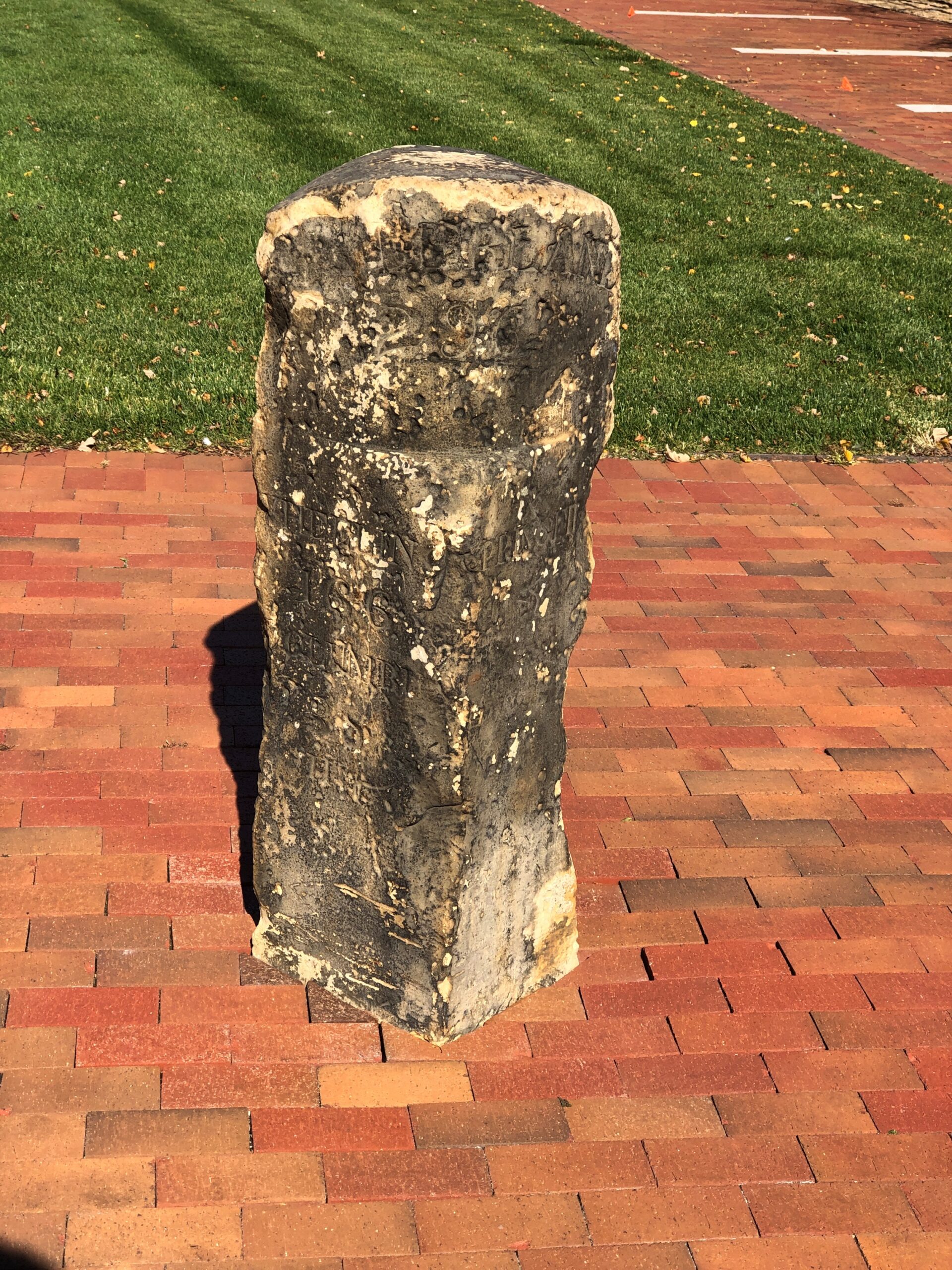
The National Road went, and still goes through Springfield, in the form of US 40. A milestone in Springfield marks the point at which the federal government quit paying for further westward expansion of the road. Anything else would be on the states, namely Ohio, Indiana and Illinois.
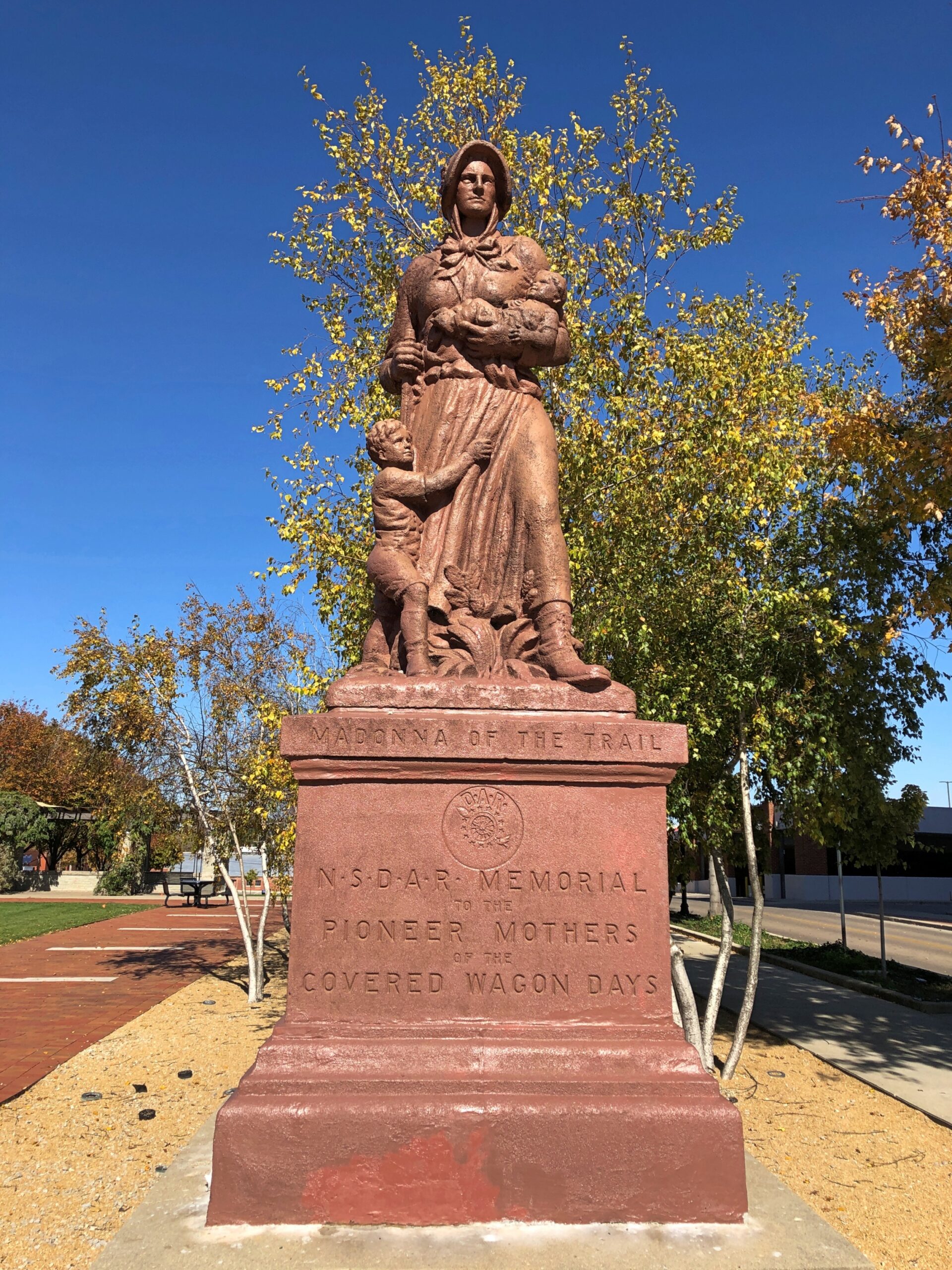
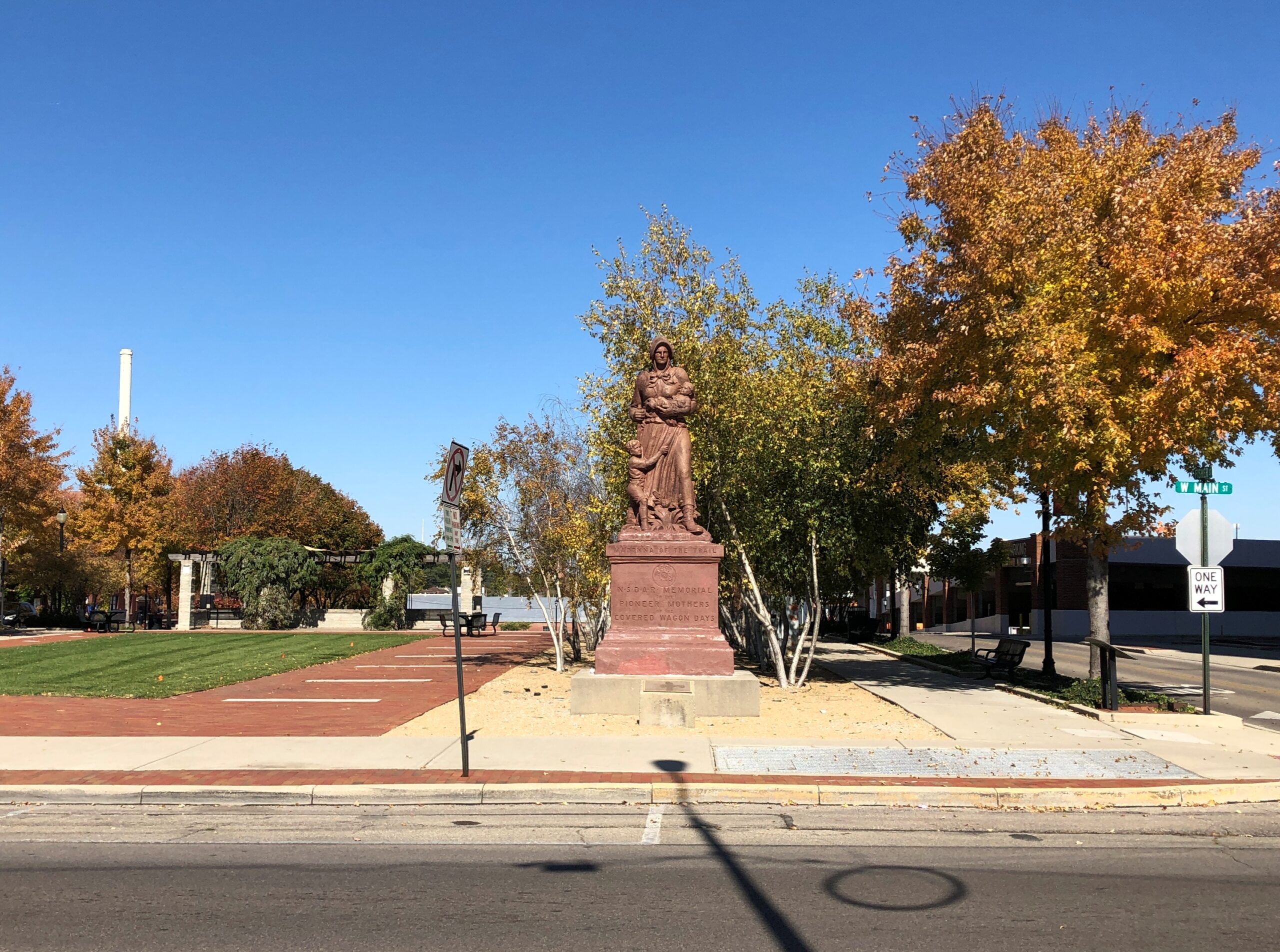
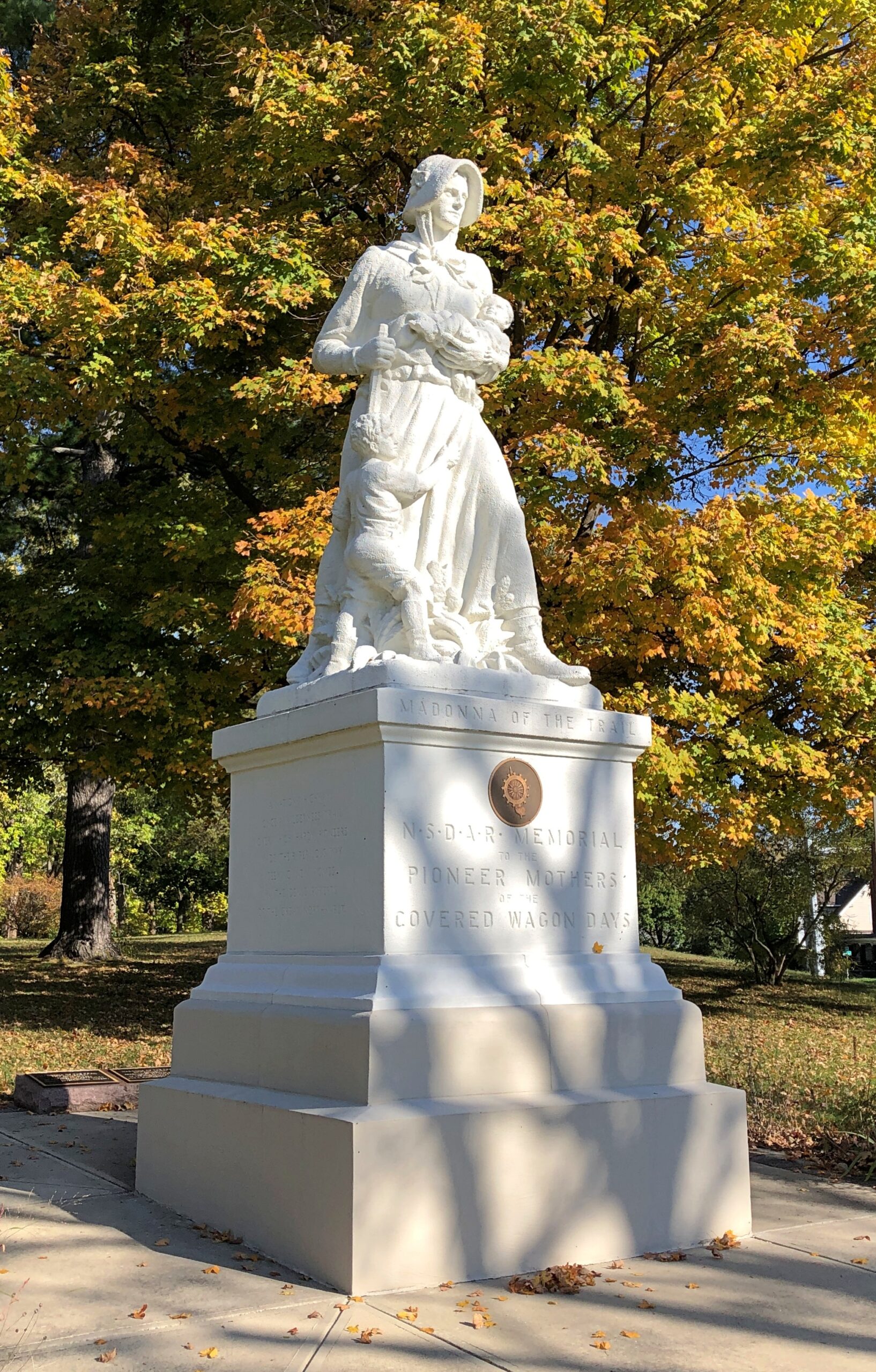
Later, after the National Road had become History, the Daughters of the American Revolution erected a series of statues along the route, and others to the west: “Madonna of the Trail.”
There are 12, with the easternmost of them along the National Road. Erected in the late 1920s, the Springfield one was renovated about 20 years ago.
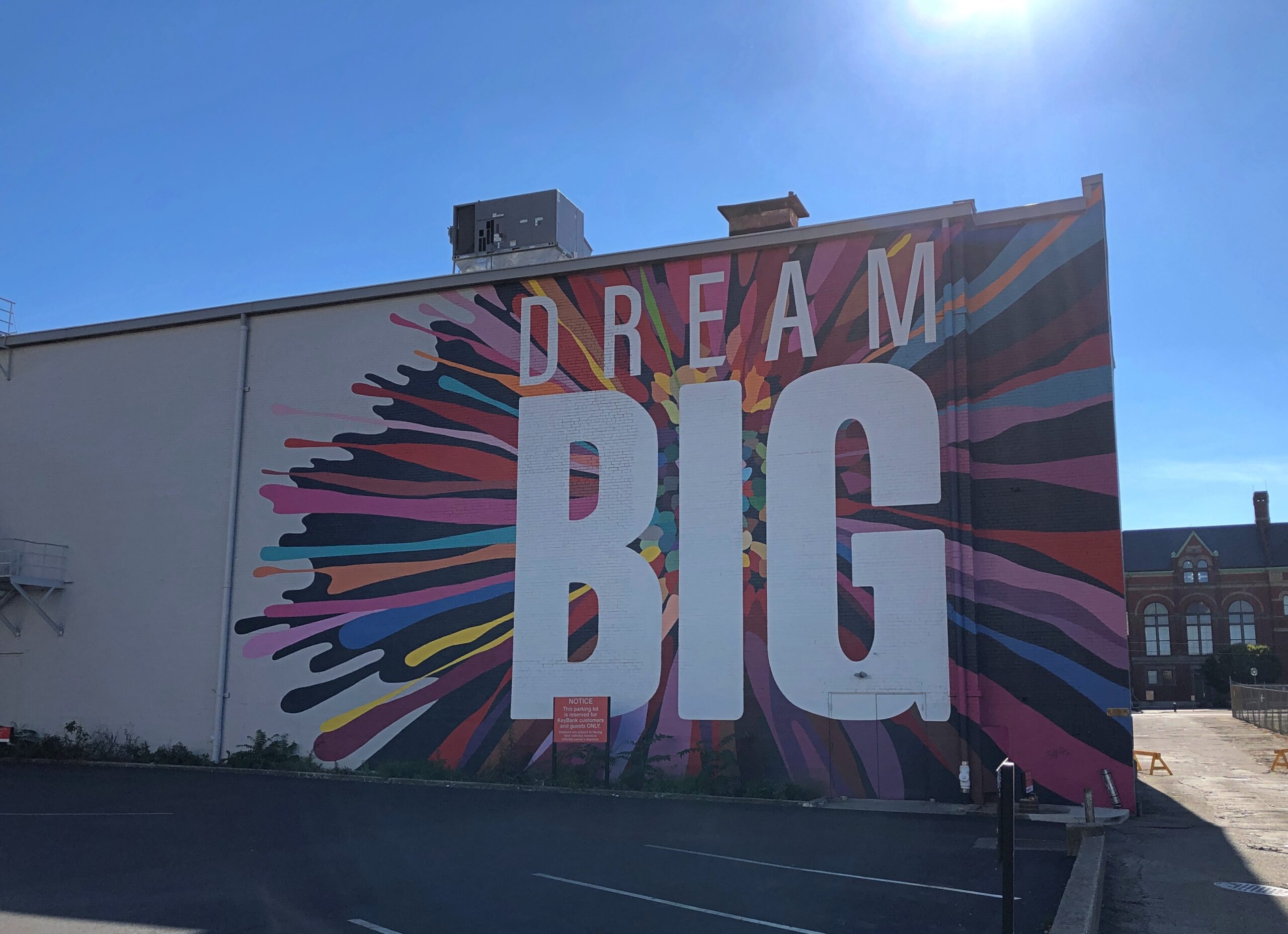
Nearby, passersby are urged to Dream Big.
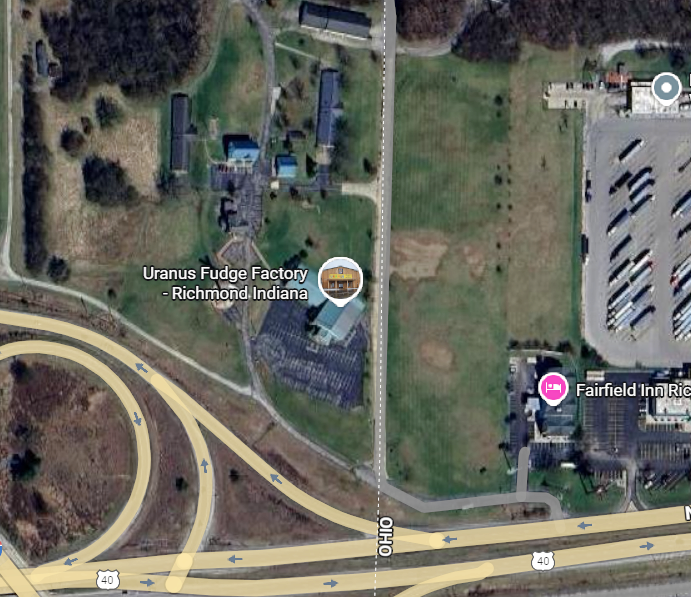
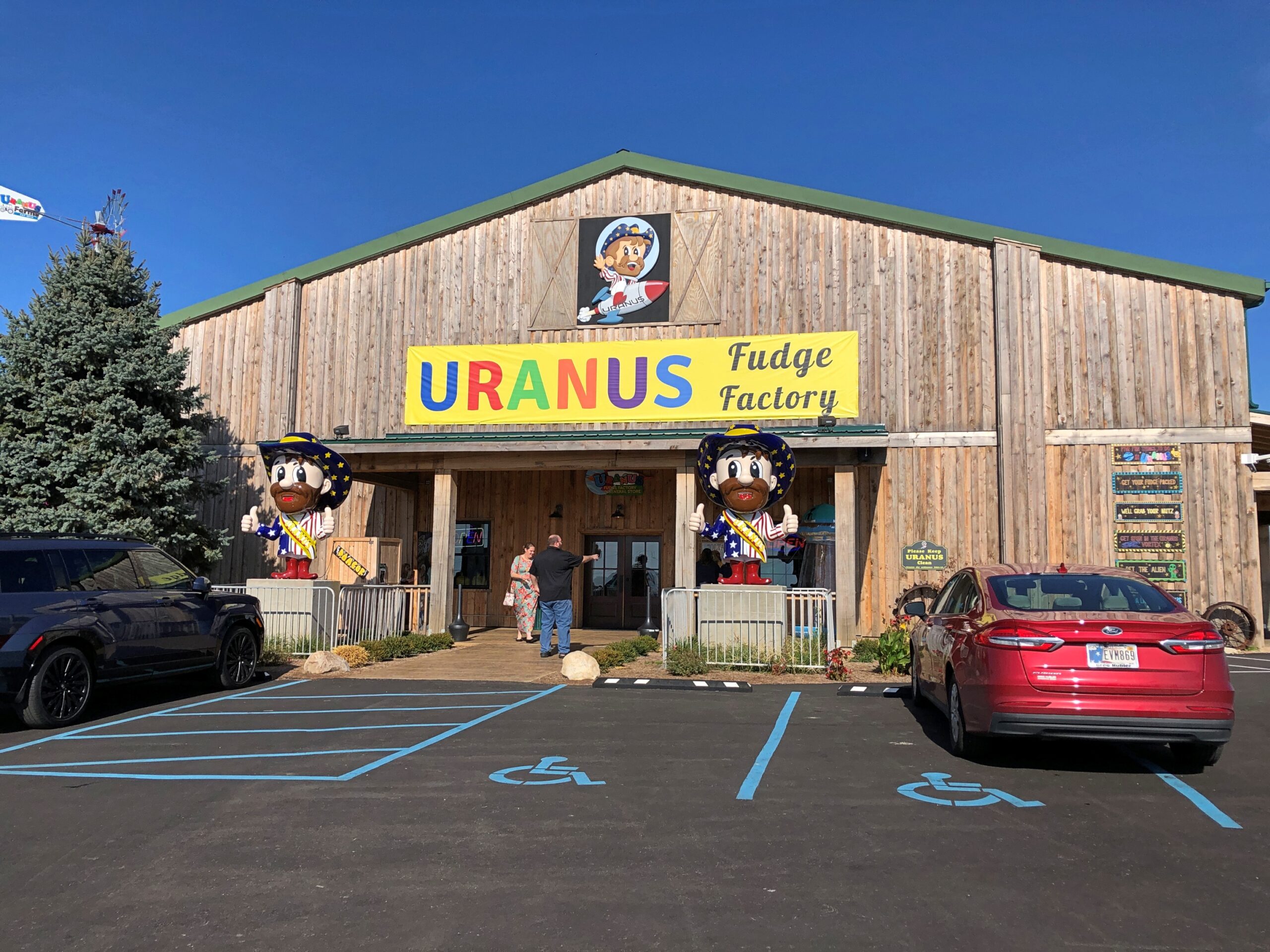
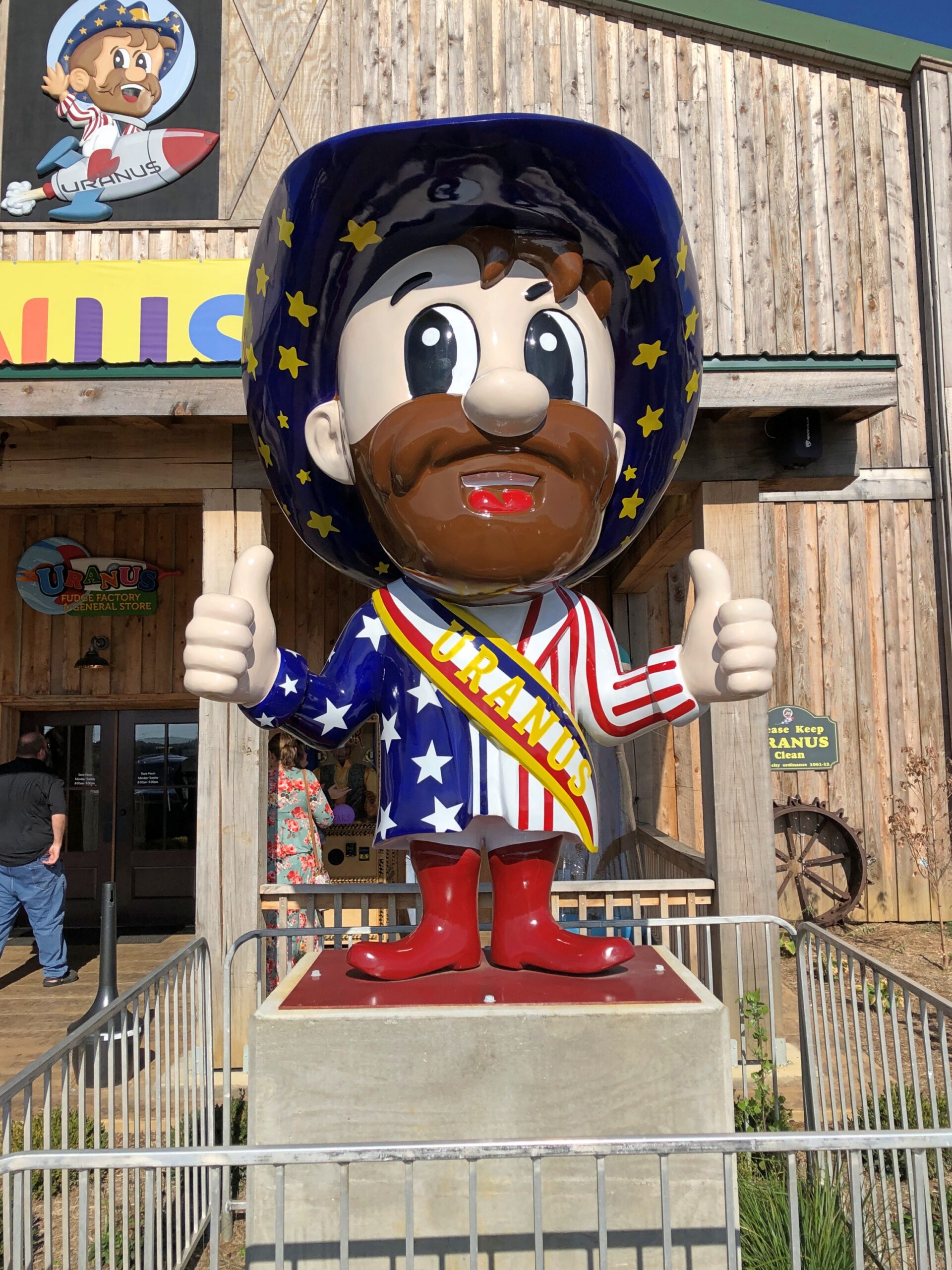
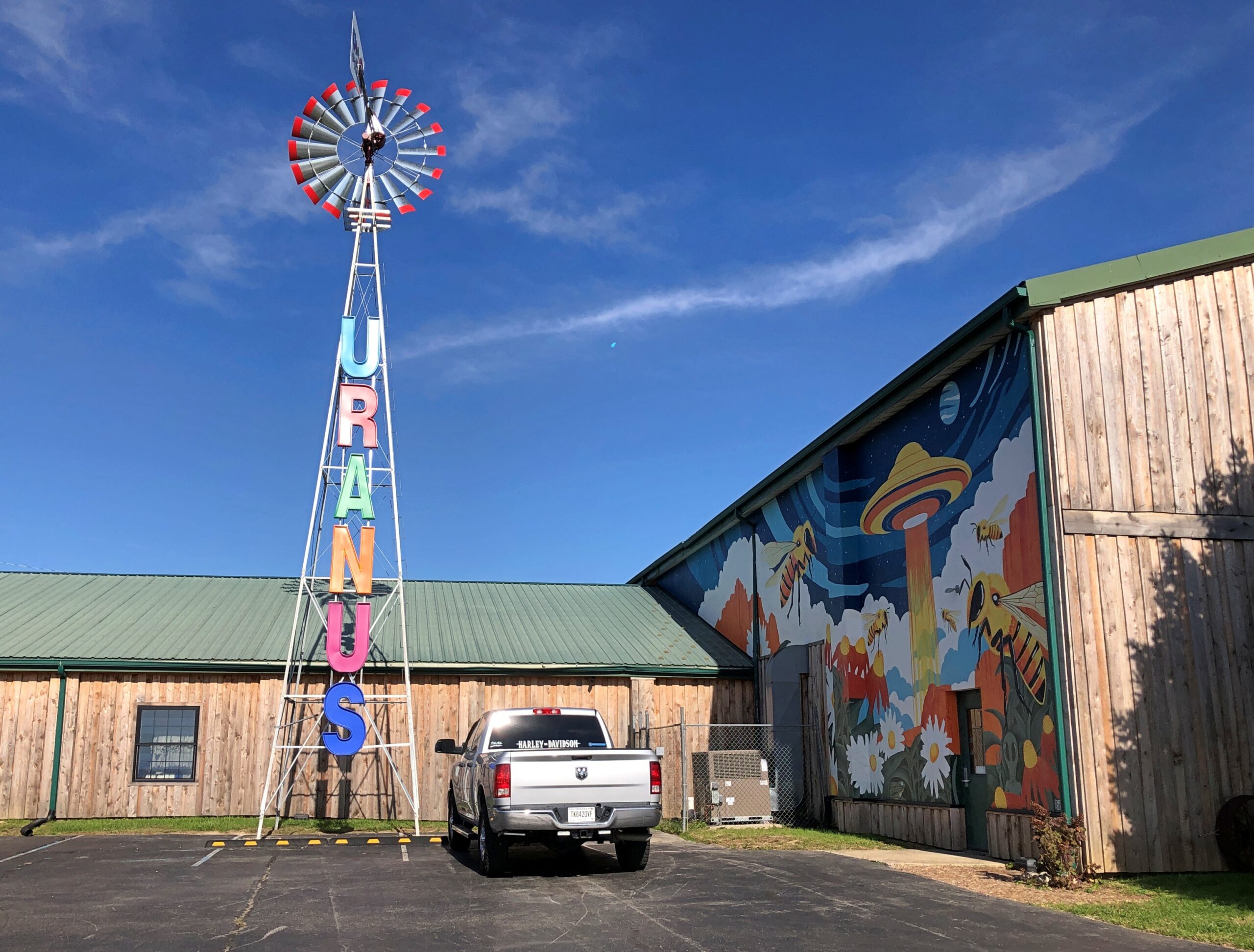
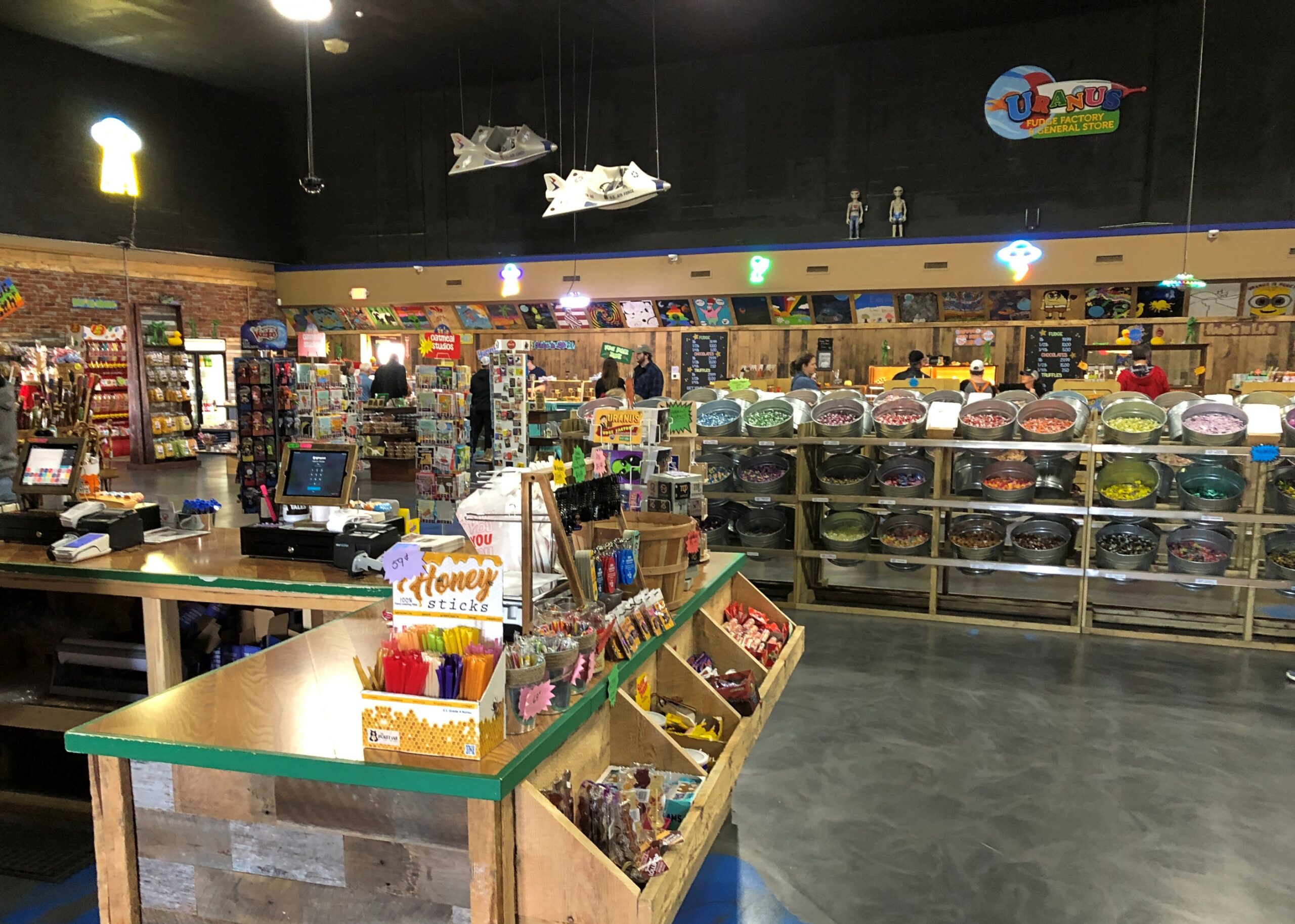
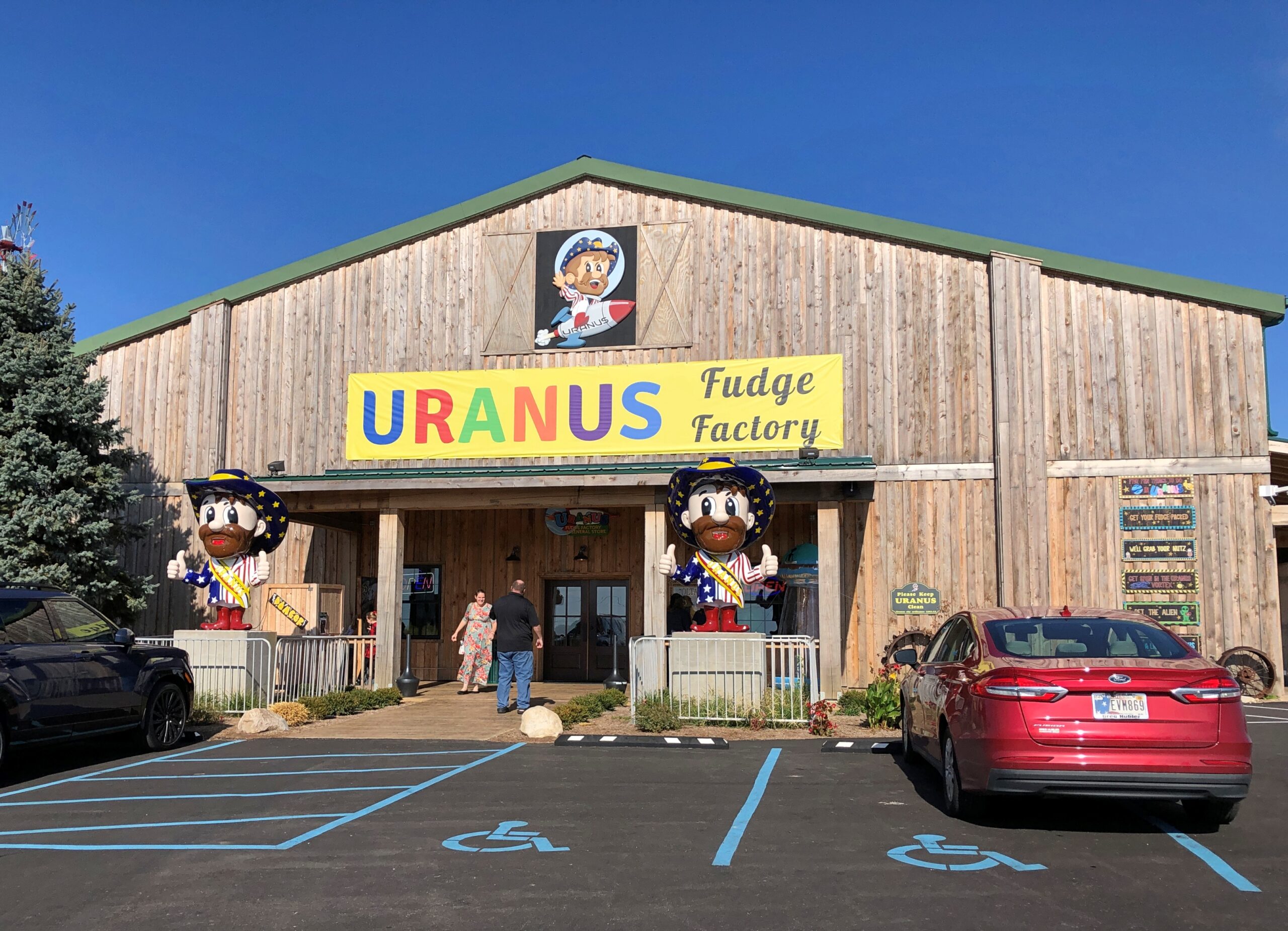
About an hour west of Springfield, at the border of Ohio and Indiana on I-70 – just barely inside Indiana – is the Uranus Fudge Factory. I had to stop for that.
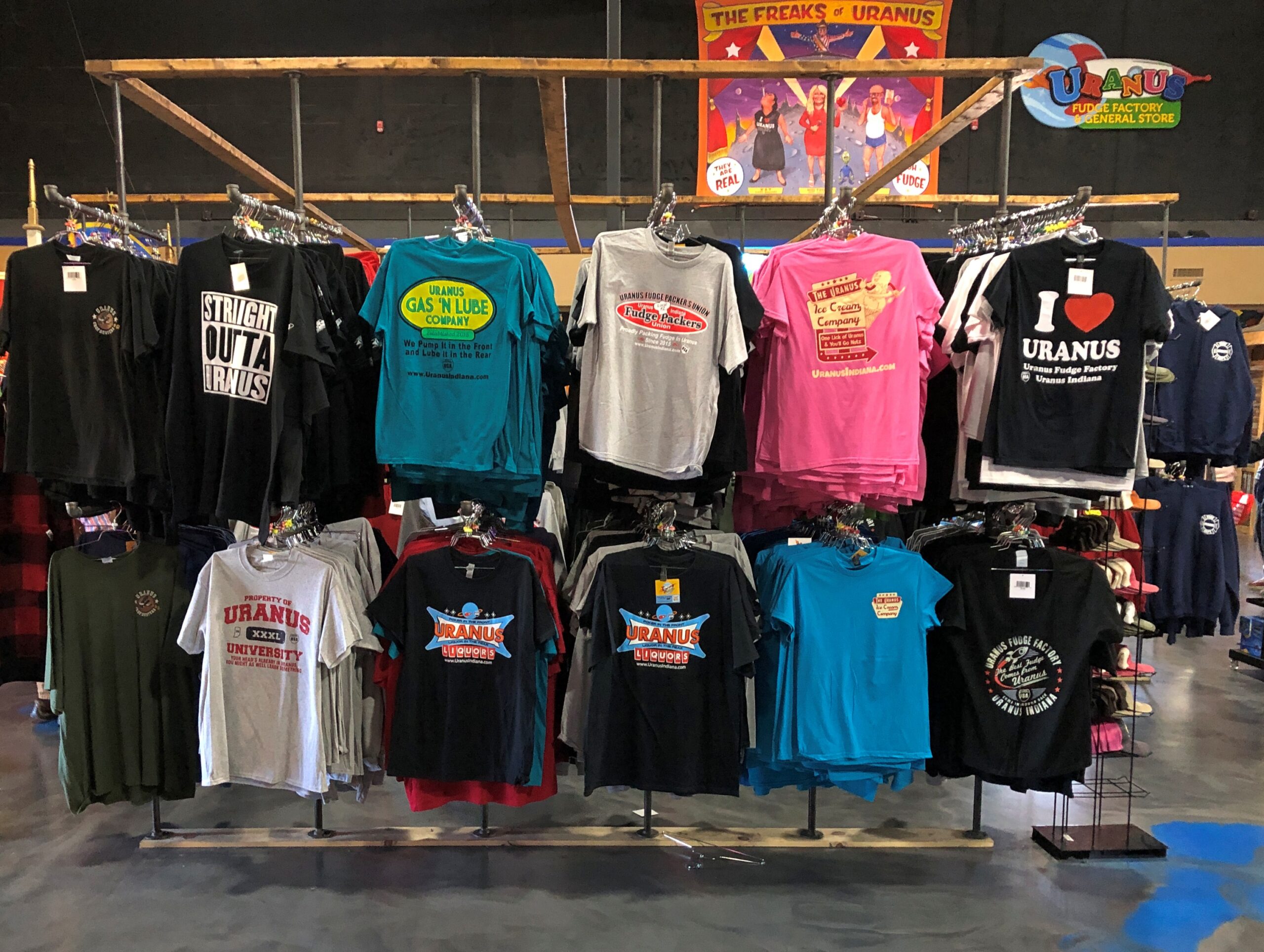
Sure, there’s fudge in there somewhere, but also a lot of gags involving the word Uranus(Your-anus). Examples can be found in the newspaper — an honest-to-God paper newspaper — that the store produces, The Uranus Examiner, and gives away. I have a copy. My kind of souvenir.
Sample front-page headlines from the Summer 2025 edition:
Breaking News: You Can Explore Uranus In Three Locations
Eating Their Way Through Uranus
Get A Lick Of Uranus
Sink Your Balls In Our Putt Holes
The second of those stories was about the 2nd Annual Eating Uranus Fudge Galactic Championship held at the Anderson, Indiana location in March. Apparently it was a Major League Eating-sanctioned event, and apparently MLE is a real thing. One Patrick Bertoletti won the 2nd championship at Uranus, putting away a bit more than nine pounds of fudge in about as many minutes.
Fudge is one thing, but mostly Uranus sells stuff. A lot of stuff.
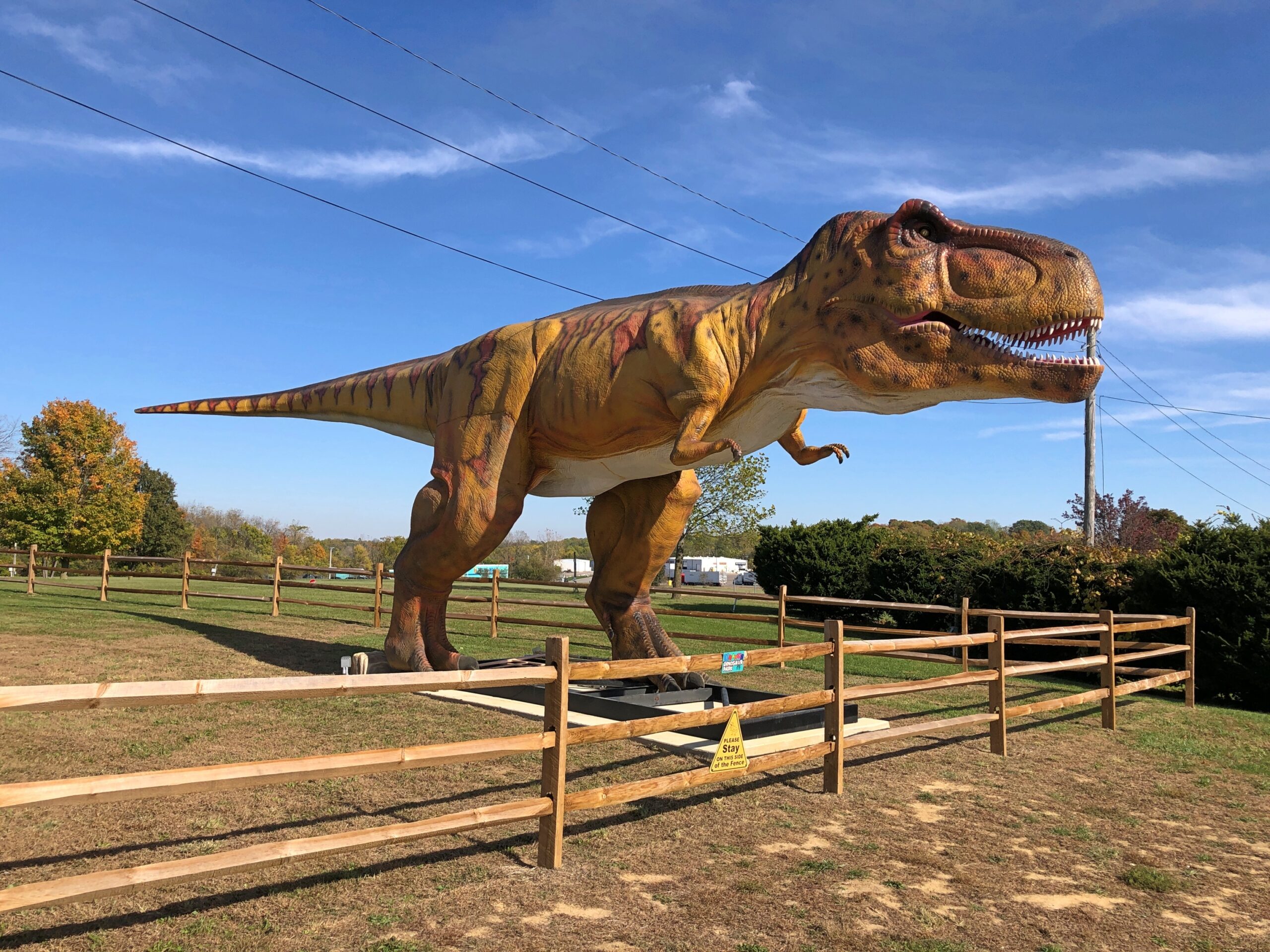
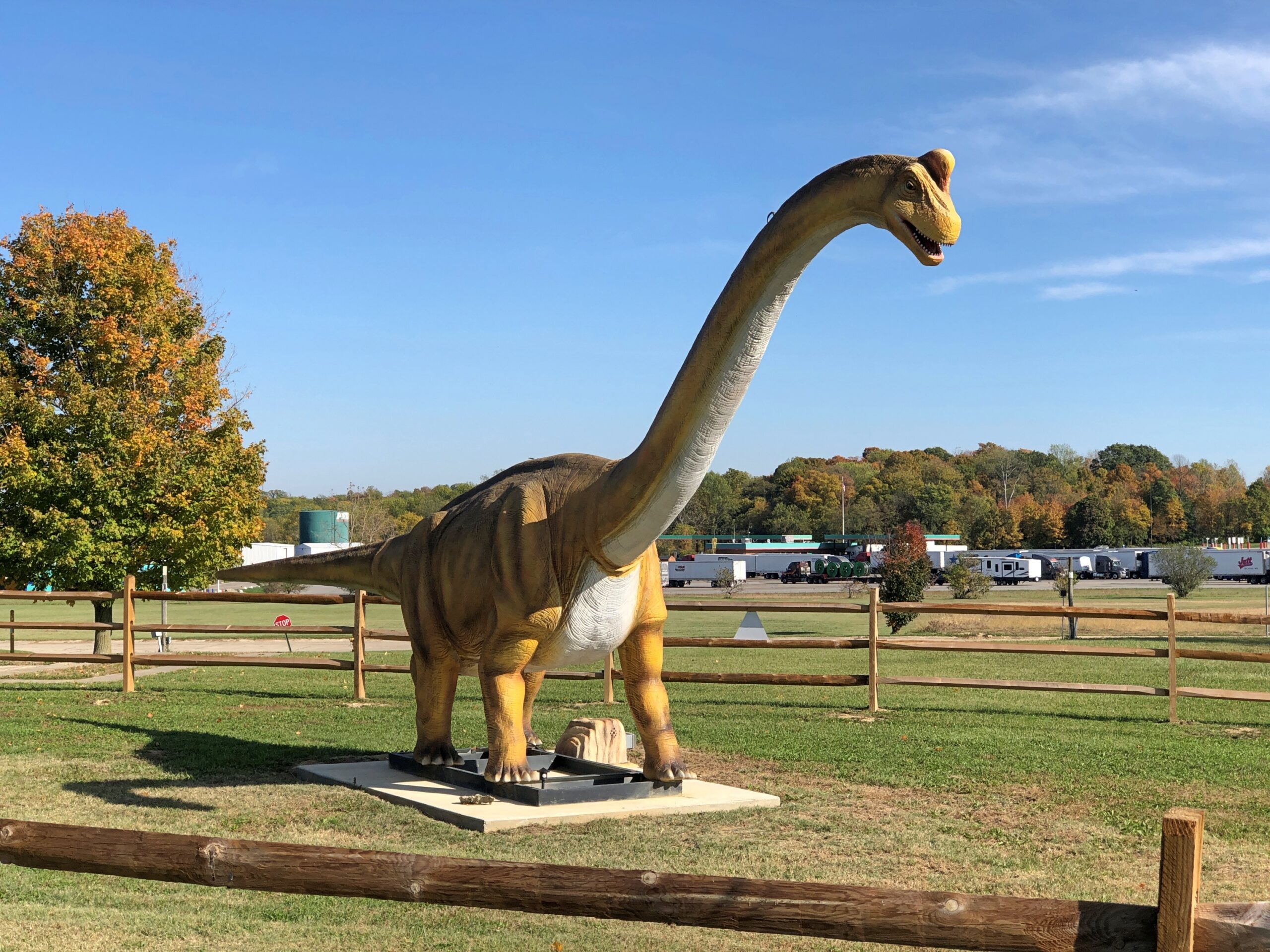
The Richmond, Indiana location is the third of three for Uranus, and I think the only one with dinosaurs —
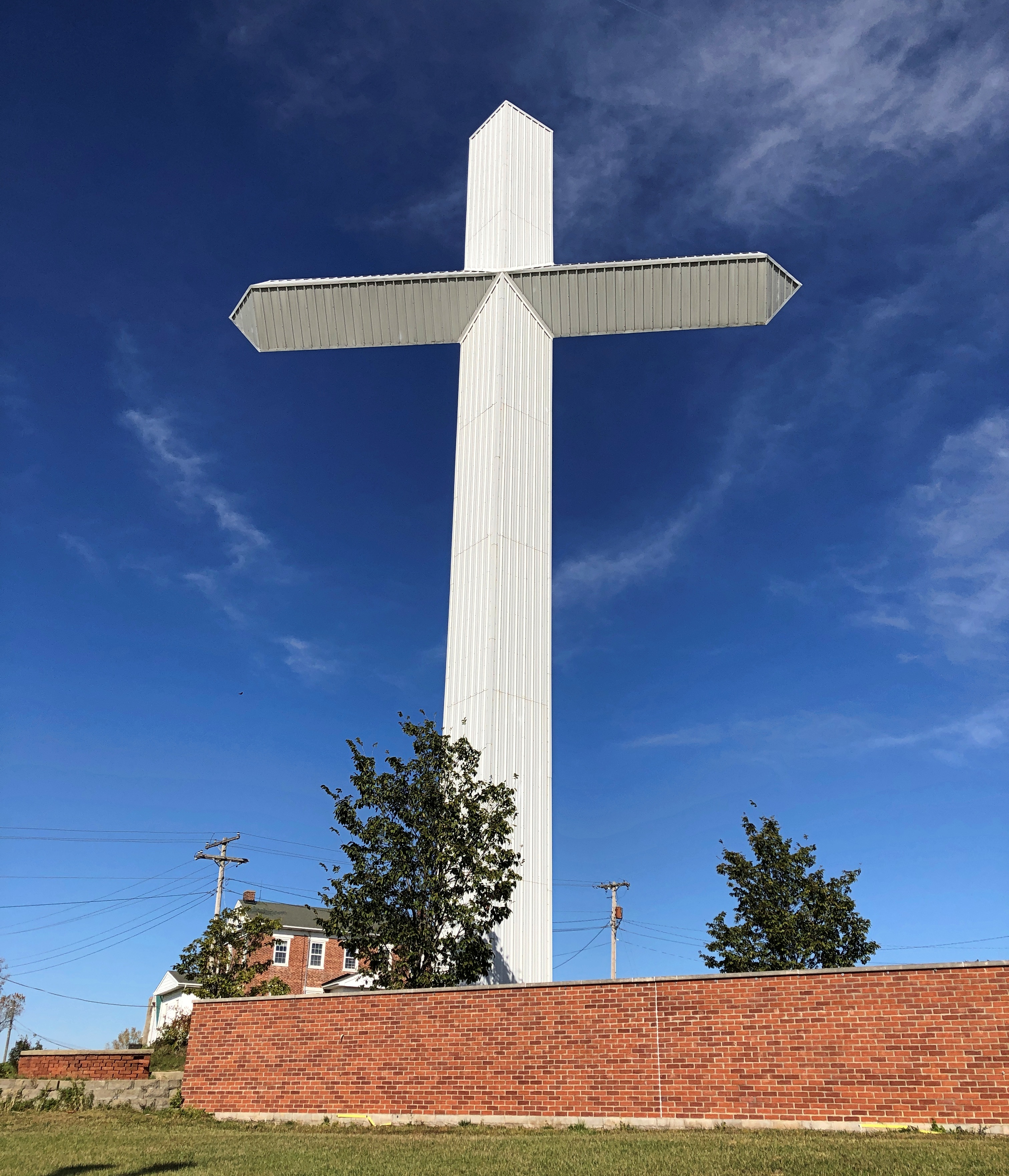
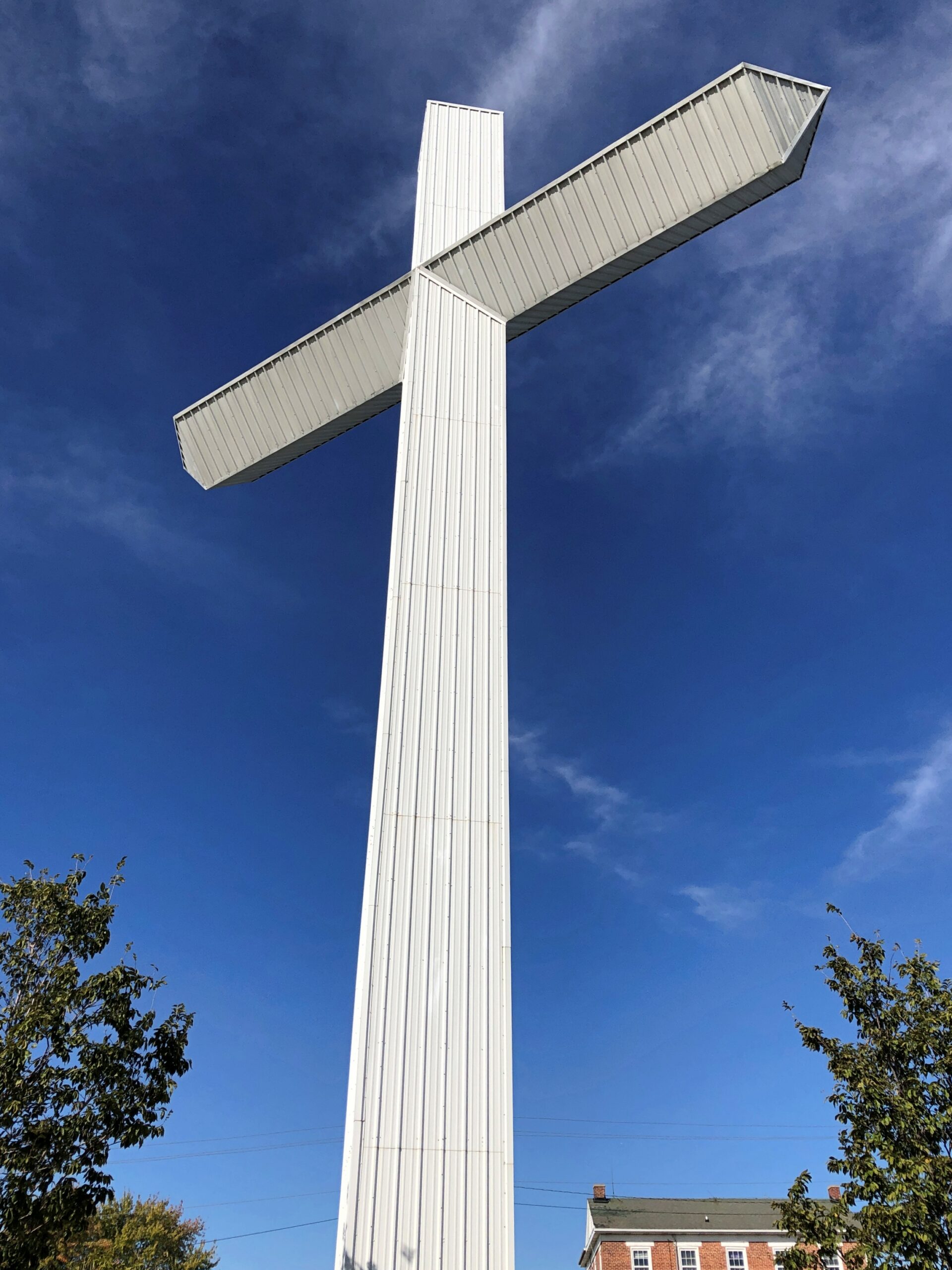
— and a 100-foot cross of corrugated steel over a metal frame.
Until about 10 years ago, the property belonged to New Creations Chapel, which also included a church building, boarding school for troubled teens and a Bible college. The ministry, for reasons its web site explains in some detail, sold the property to Uranus, including the cross.
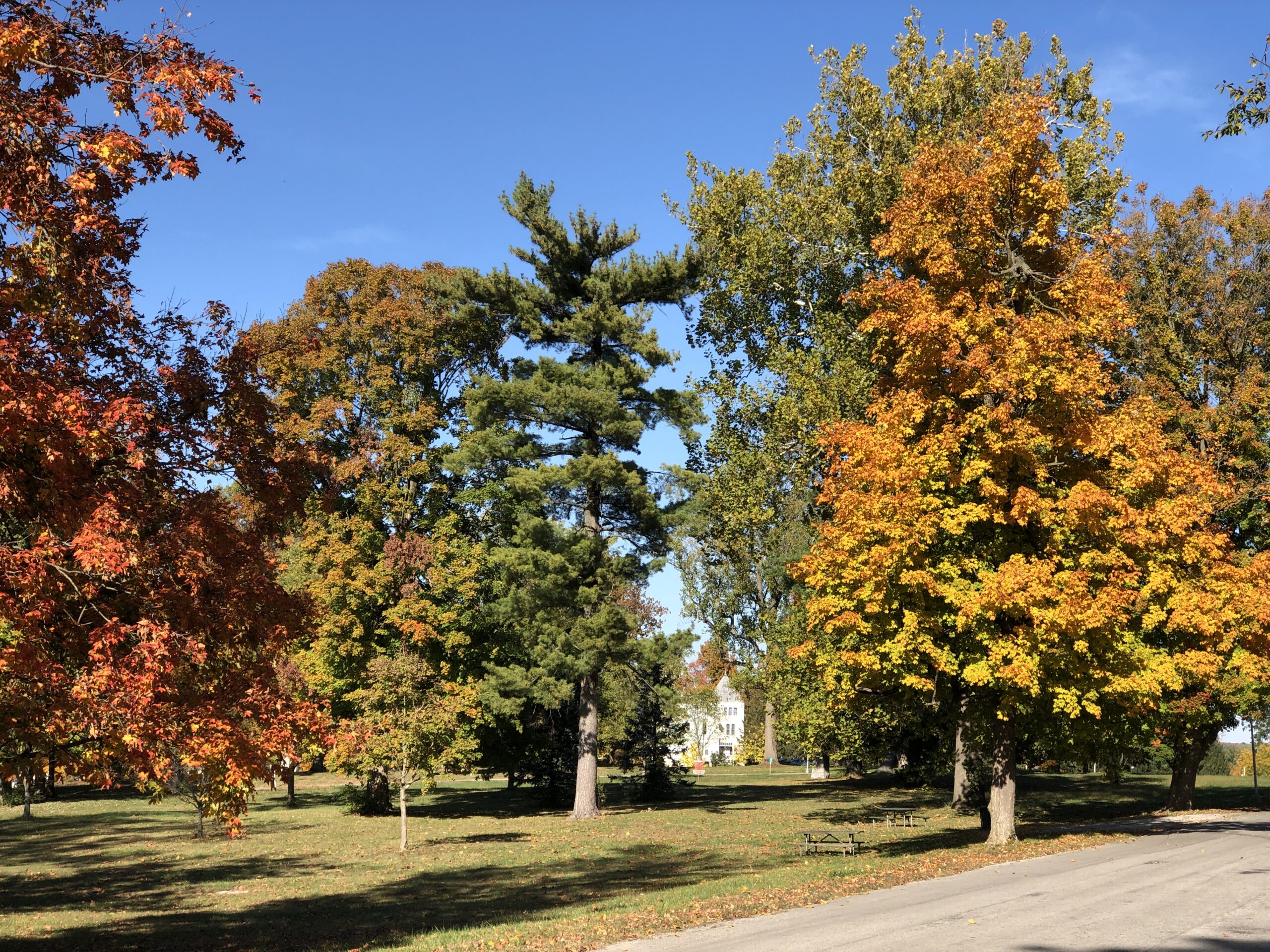
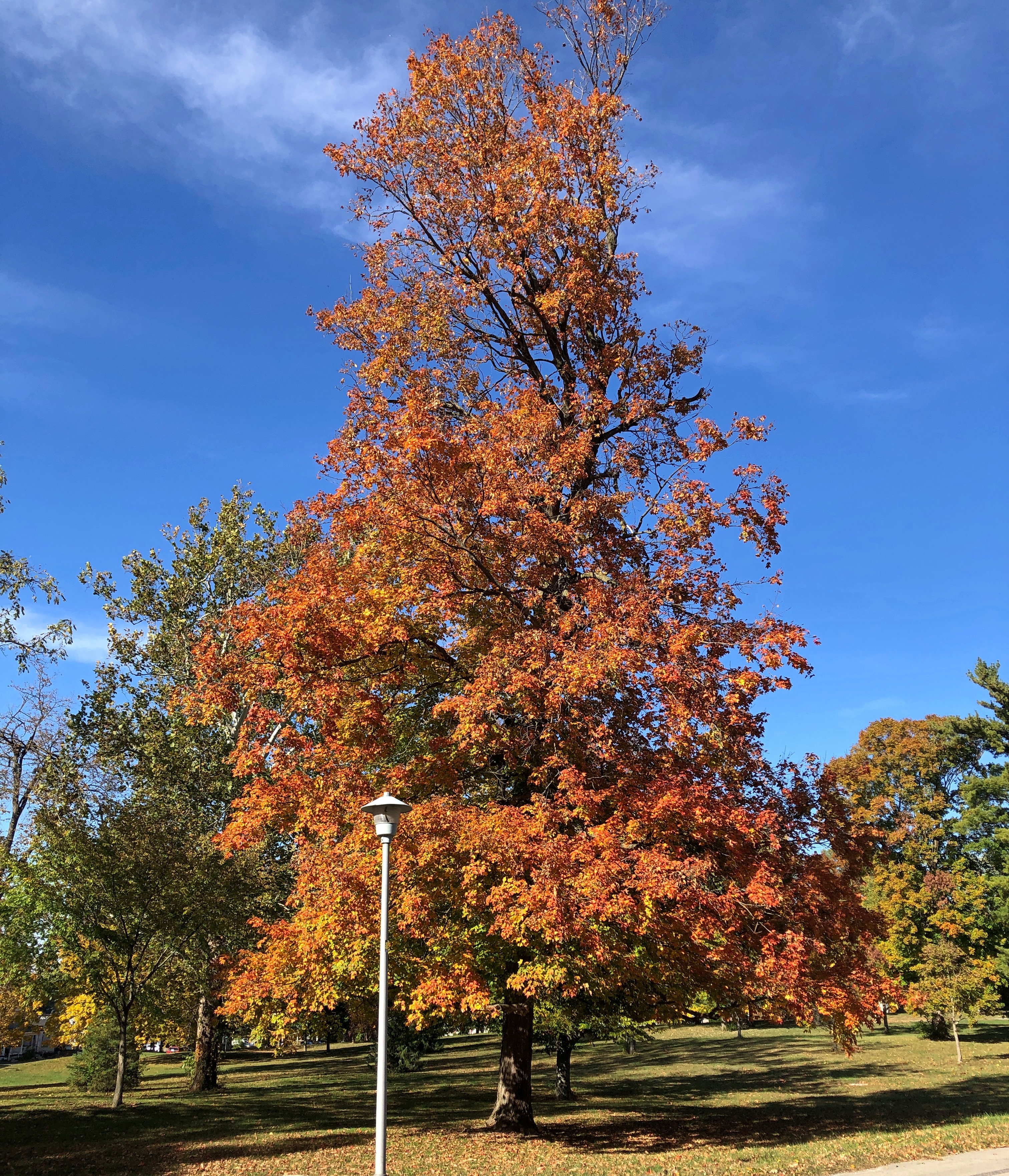
Heading through Richmond, Indiana, I stopped at an entrance to a large park to check my map. Glen Miller Park. A colorful spot in October.
Not named after the bandleader, which would be Glenn Miller Park. “Glen Miller Park was established in 1885 and was named for Colonel John Ford Miller, who was a railroad executive during the late 1860s,” the city of Richmond says. “Colonel Miller bought the land from Nathaniel Hawkins in 1880, with the intention of transforming the land into a park.”
So Glen Miller as in glen, a term that evokes pleasant Scottish valleys. I was just about to be on my way when I noticed a statue.
It was another of the 12 Madonna of the Trail statues, located at the edge of the park, where it meets US 40. Unlike the earlier one in Springfield, I hadn’t sought it out. It was just there. One’s travels, like life, can be strange sometimes.
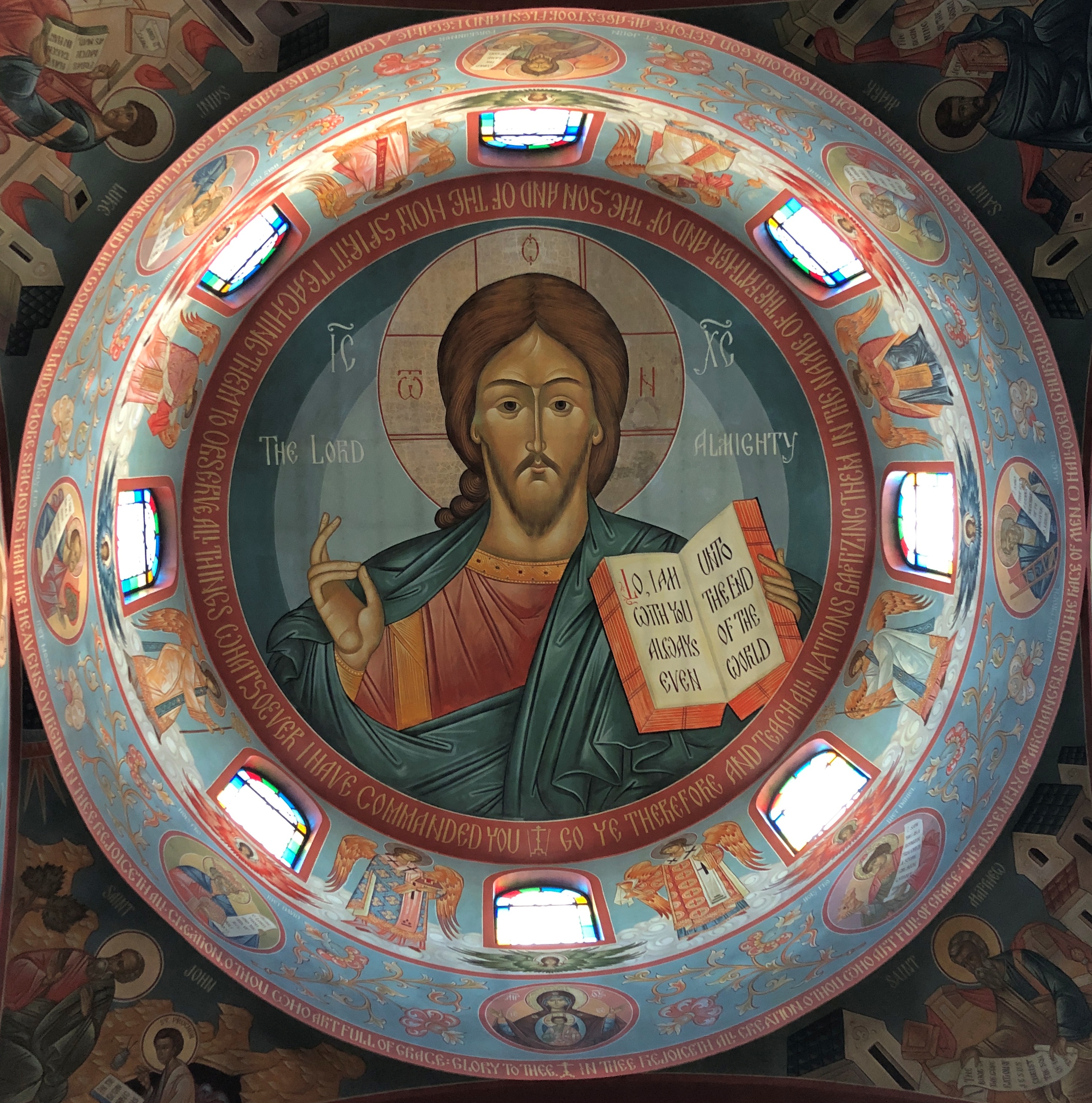
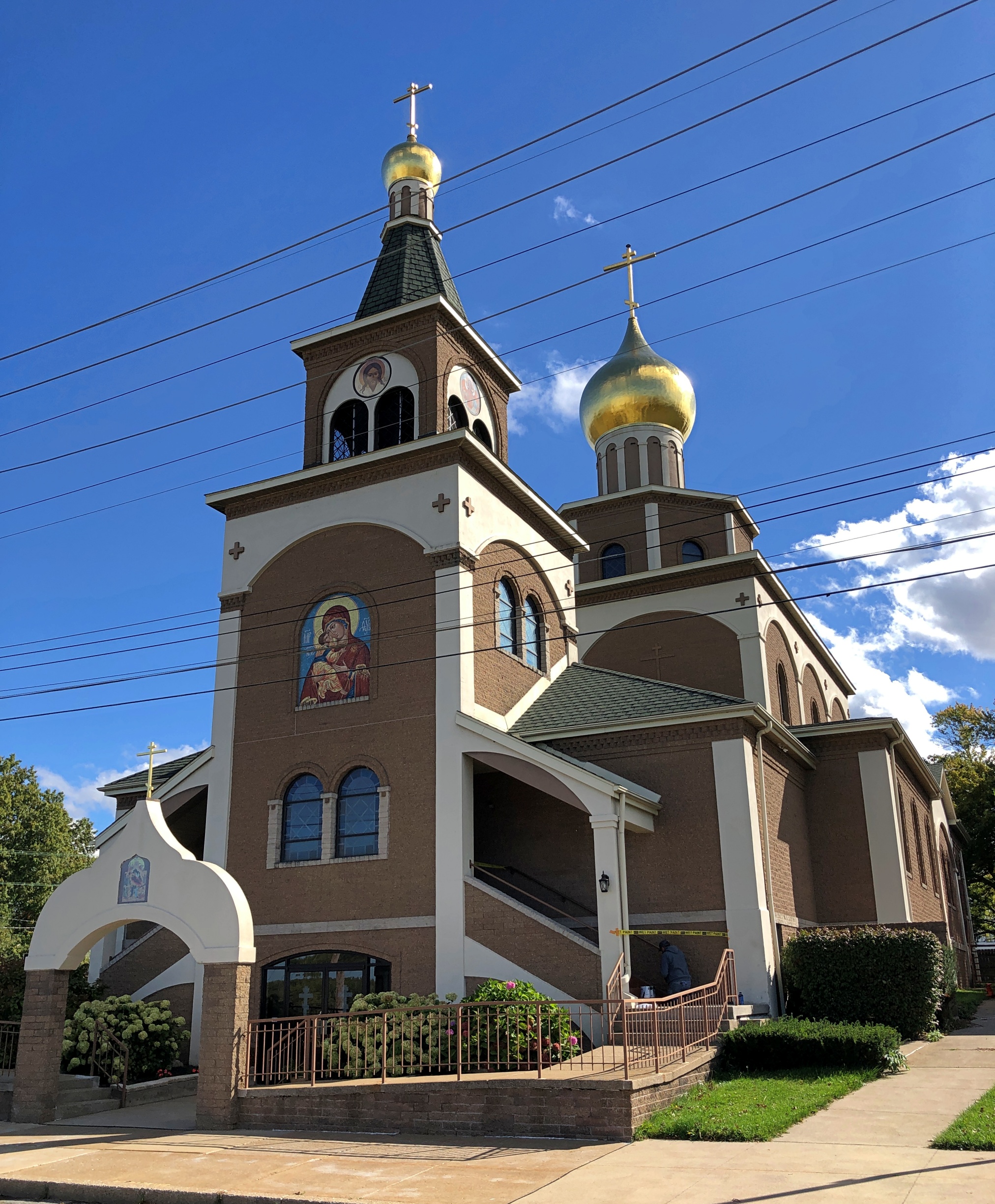
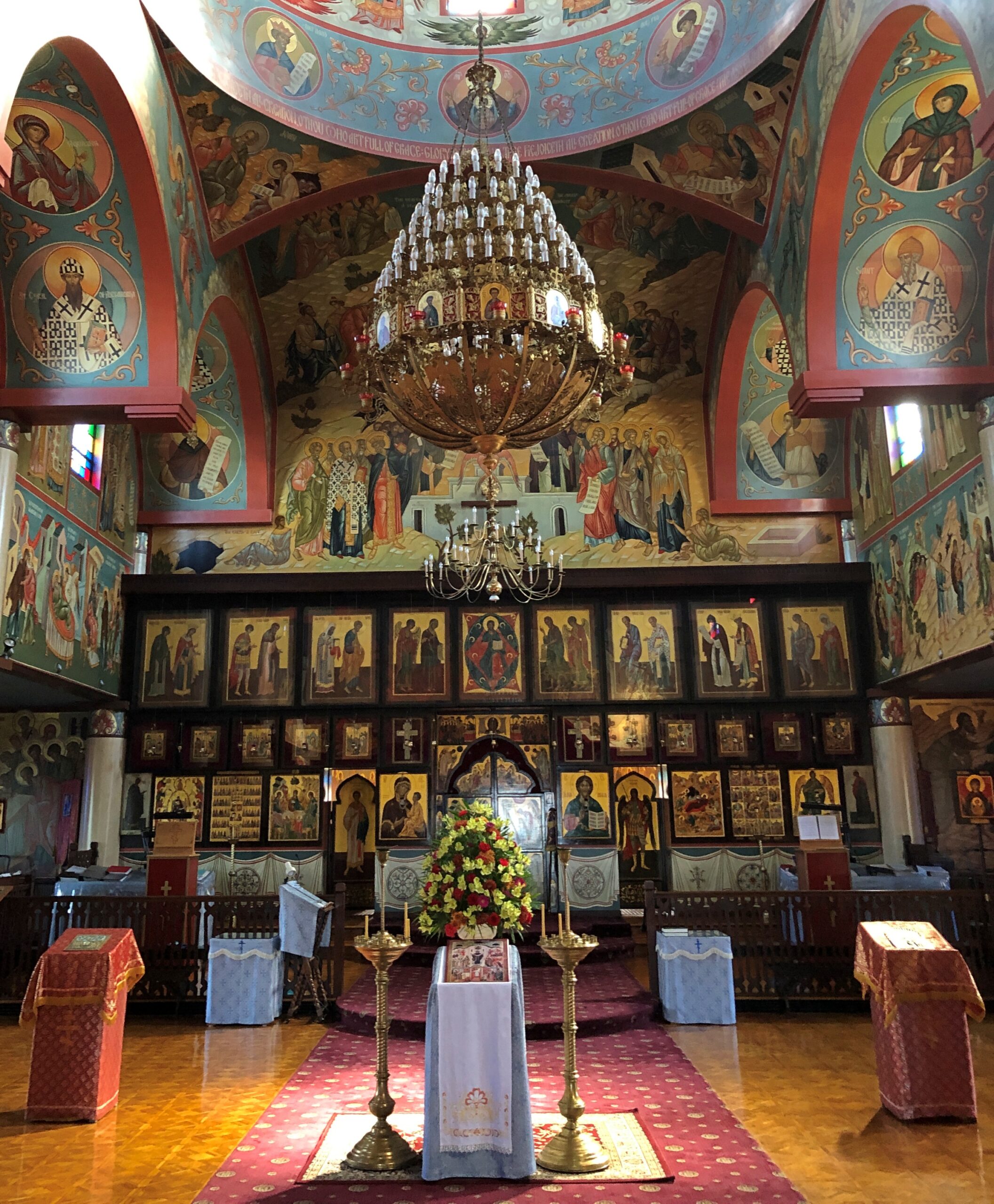
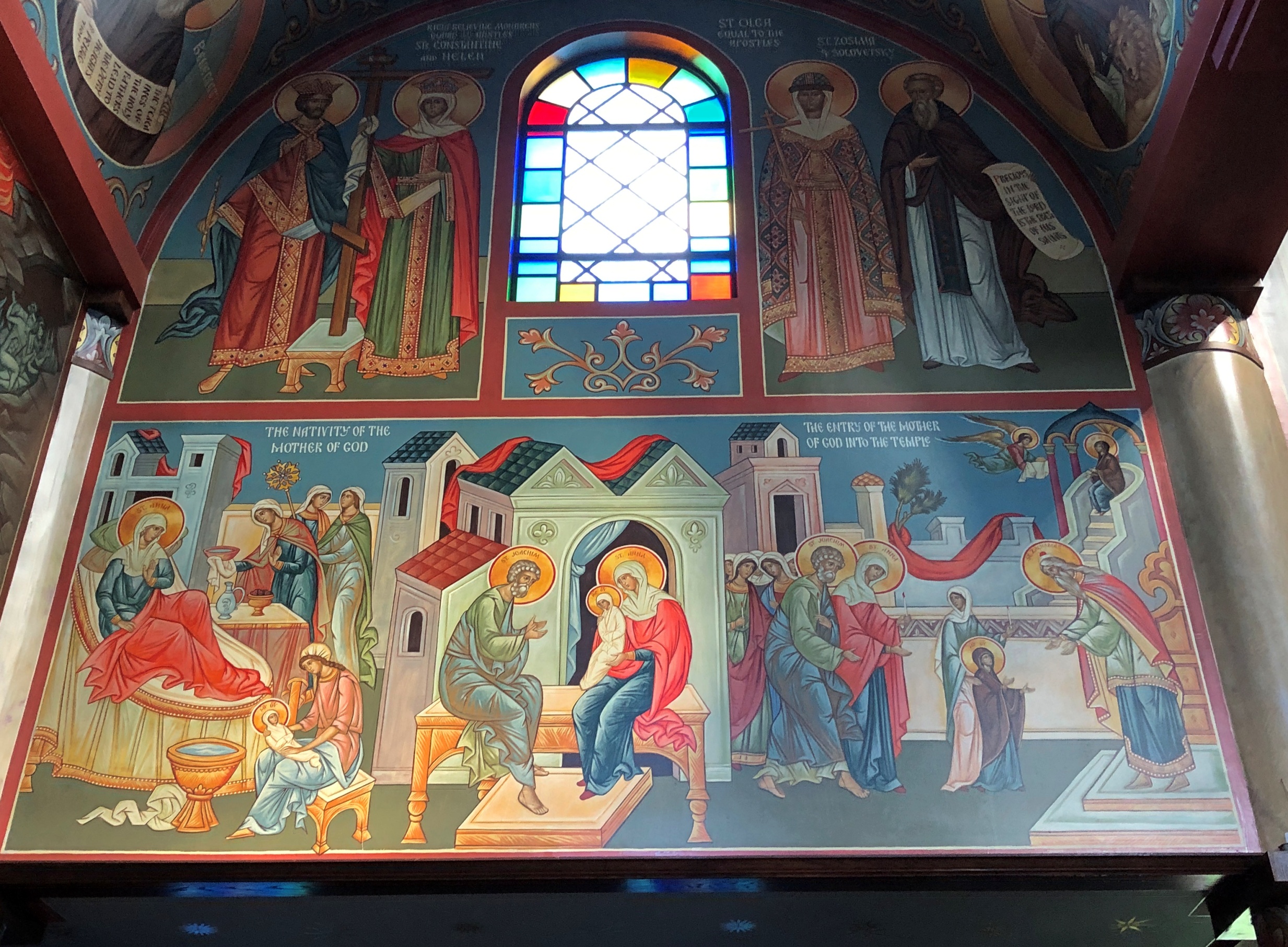
This artwork needs a proper name, and I can suggest one: The Erie Christ, or Christ the Almighty of Erie, though that last one sounds like the Lord has taken up residence in northwestern Pennsylvania.
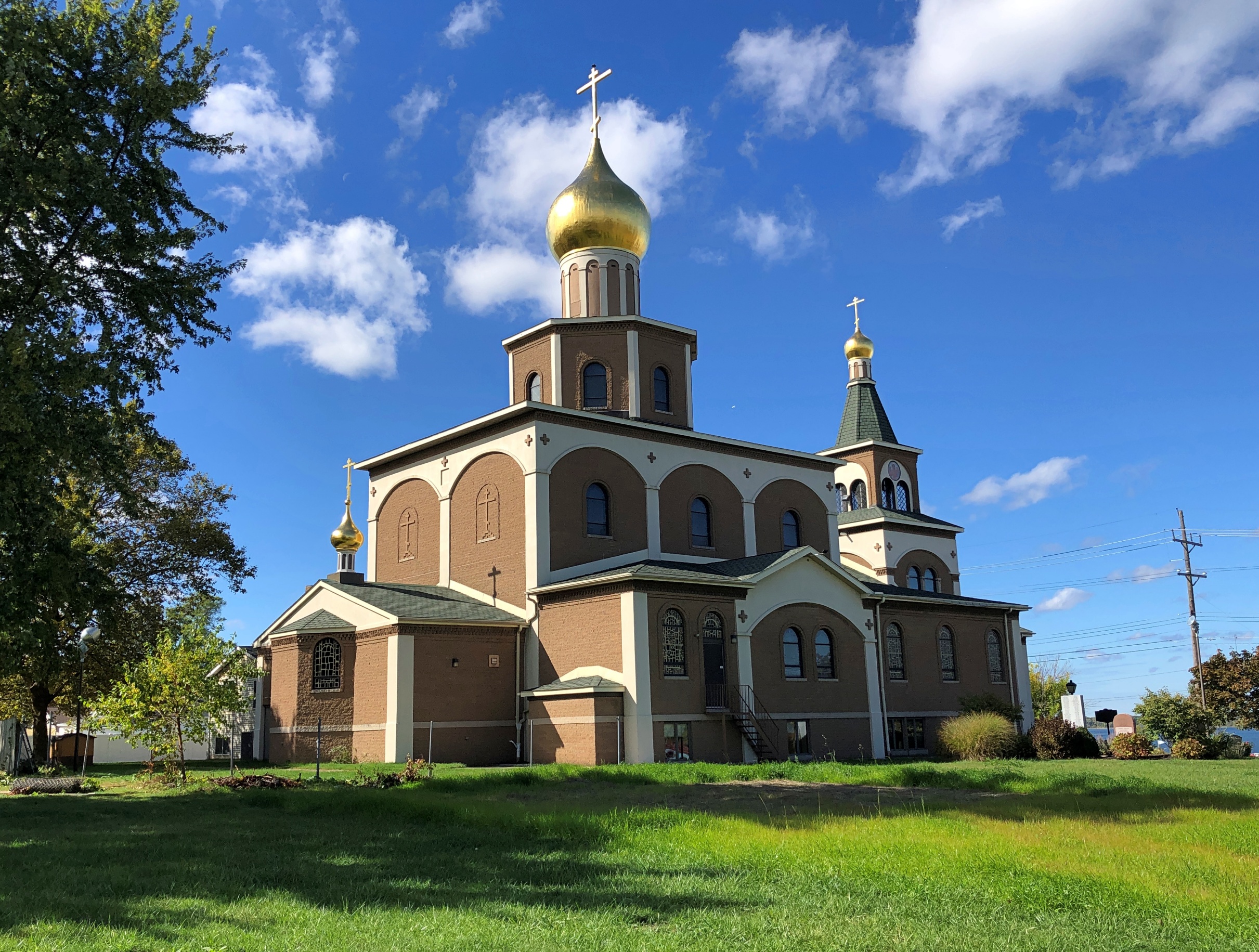
The striking Erie Christ can be found in Erie, Pennsylvania. More specifically at the Church of The Nativity, Russian Old Rite Orthodox in Erie. My brother Jay tipped me off about its presence, though I might have seen the church anyway, since it stands prominently on a rise facing the bayfront, its gilded onion domes easily catching the eye from a distance.
It is a handsome church, outside and inside. I arrived late on the morning of October 15.
Russian Old Believer immigrants came to the United States in numbers in the late 19th and early 20th centuries, finding work in Eire on the ore and pulp docks. I’ll bet the climate suited them too. Just like home, with all the lake-effect snow a Russian might want. Their first church was completed in 1919. In the fullness of time (1983), the parish joined the Russian Orthodox Church Outside of Russia. Bygones be bygones and all that.
In a twist that’s more late 19th century than late 20th, that structure burned down in 1986. Of course, buildings still burn, including churches. The parish rebuilt, with a local outfit called Building Systems Inc. doing the work.
The Church of the Nativity was my second stop that day. The city’s spot on the map has long intrigued me, so I’d come to Erie late in the morning on the second day of the recent trip.
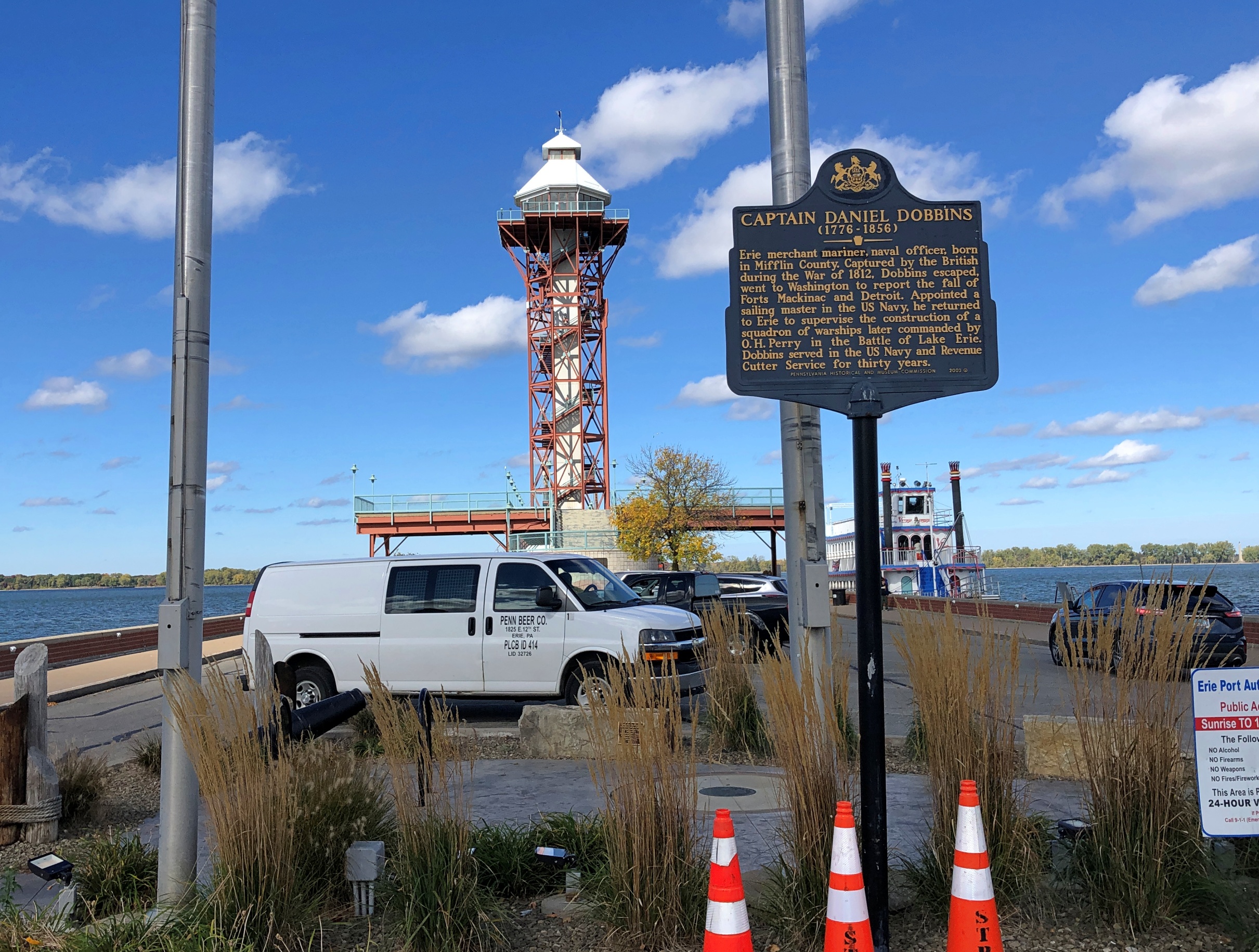
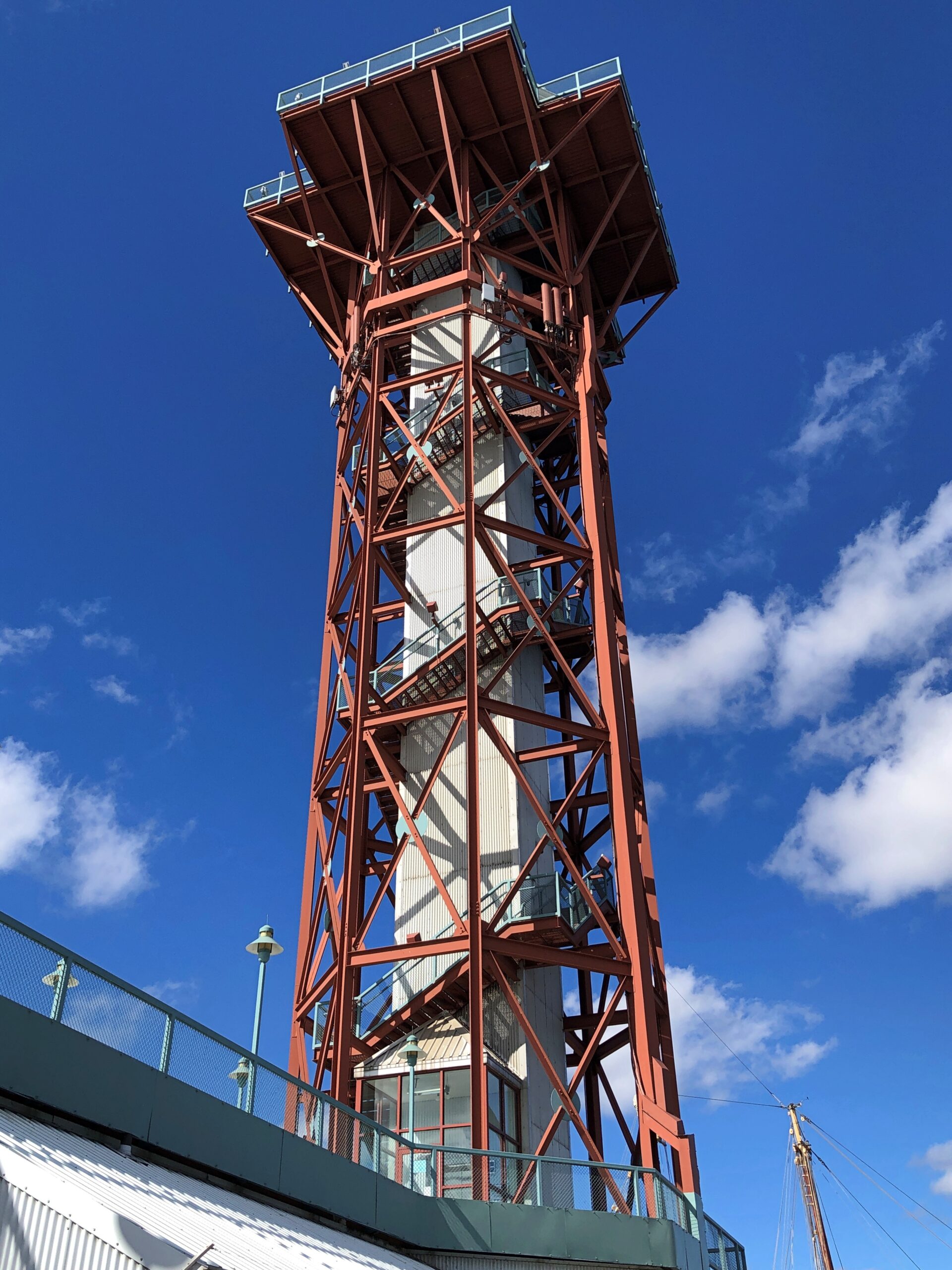
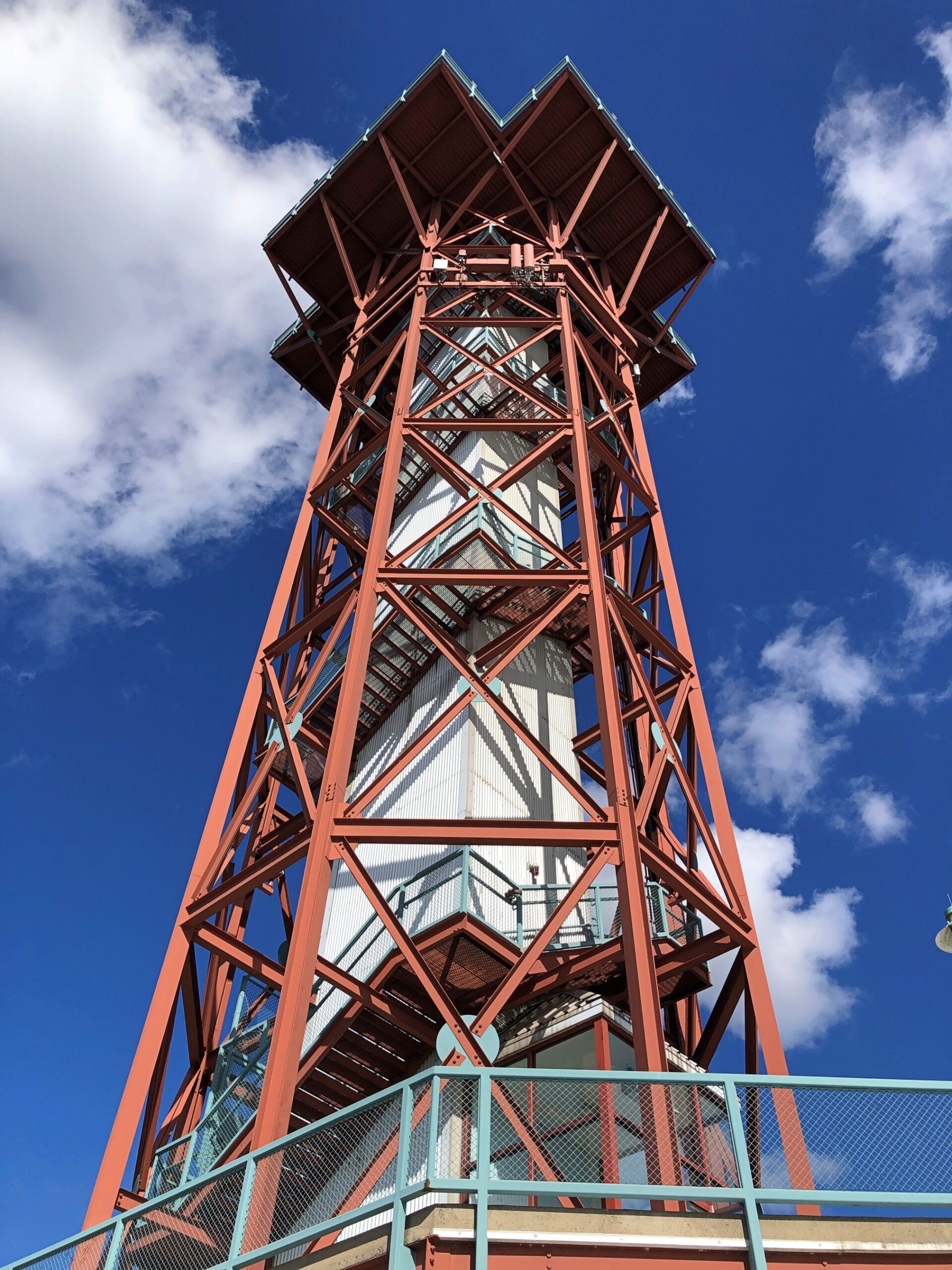
Upon arrival in the city, after a brief stop at a Tim Horton’s, I first went to Erie’s bayfront, threading my way through the massive reconstruction project of the streets in the area. That was the first, but hardly the last major street construction briar patch that I’d encounter in the Northeast. My reward for the effort: a chance to stand under Erie’s Bicentennial Tower.
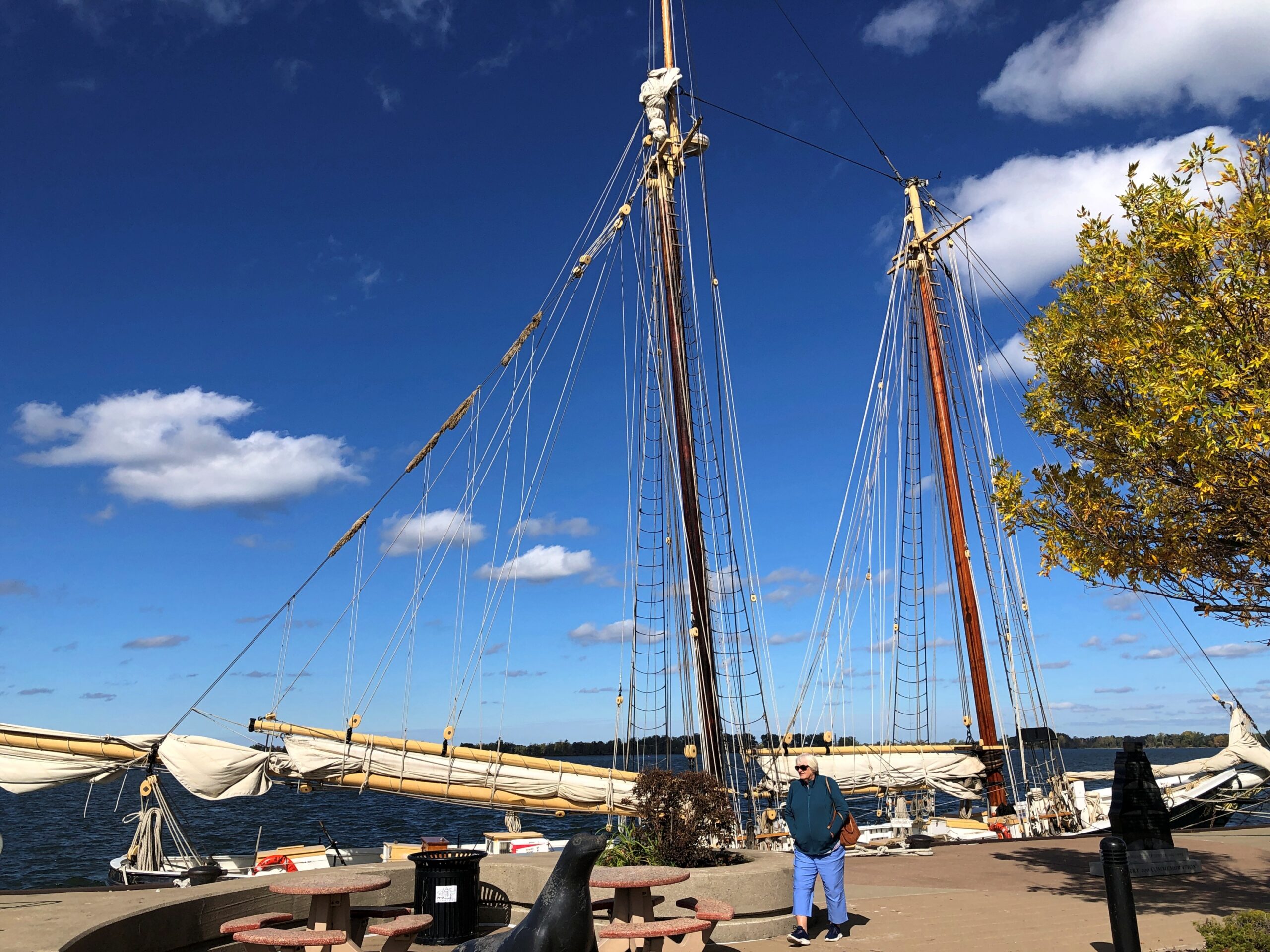
Built not for the U.S. bicentennial that we all remember so – fondly, but rather the 200th anniversary of the city of Erie, about 20 years later. Regardless, I was looking forward to the vista: the city, the bay and Presque Isle State Park. But no. Closed. Even so, I got a good look at the area, including the tower but also the U.S. Brig Niagara, which was instrumental in Oliver Hazard Perry winning immortal fame. Or would have been, if the Battle of Lake Erie were taught in schools any more.
The battle might have rated a mention in my high school history classes 50 years ago, but I don’t remember for sure. I expect it’s still taught in Pennsylvania high schools, just as the Battle of San Jacinto is in Texas. At least, that’s what I assume. That’s what I hope.
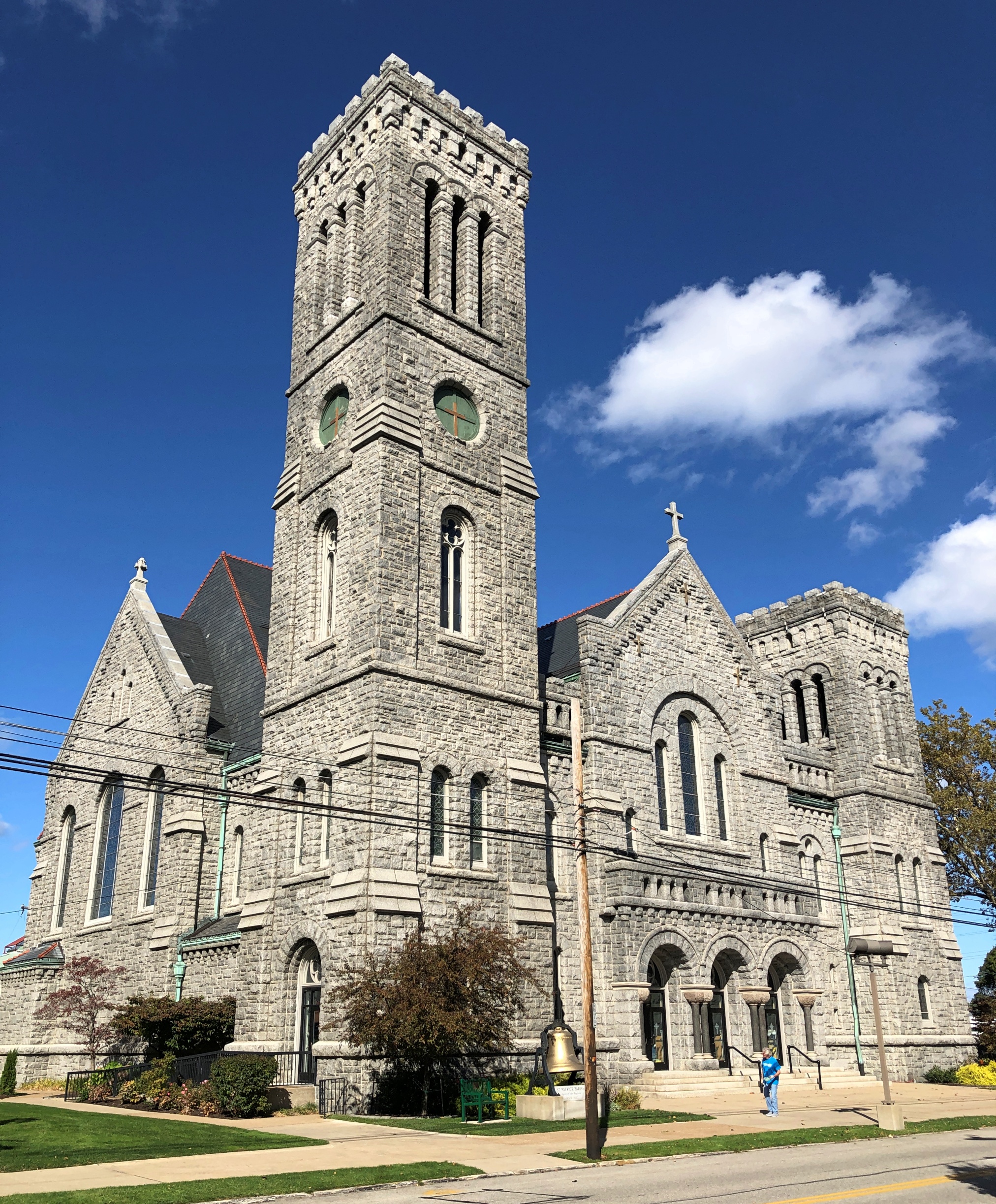
After my look-see down by Presque Isle Bay, I went to Holy Nativity, but that wasn’t quite enough. Always handy Google Maps directed me to St. Patrick’s Parish, not too many blocks away. Winter might be harsh in these parts, but that day was one of those brilliant warmish fall days we get in the North sometimes, and ideal for poking around a port city on the Great Lakes. (And eventually I left town by driving down State Street, a fairly active place of vintage buildings and newer shops.)
St. Patrick’s is on a not-so-busy neighborhood street.
While Russians were forming their immigrant community, Irish were doing the same not far away. One product of that immigrant ferment was St. Patrick’s, completed just after the turn of the 20th century. The history of the building is told with admirable clarity and detail in this recent video.
I didn’t realize until last night that I’d driven through some geographic oddities over the last two weeks, on my way to the Northeast and back. Actually state border oddities, such as the Erie Triangle in Pennsylvania, the curious division of the Chesapeake Peninsula, and the panhandle of Maryland.
Except they aren’t really oddities. They just look that way when you’re a kid (or an adult) poring over U.S. maps or putting your state puzzle map together for the nth time. How is it that Pennsylvania has that small chimney? Why didn’t Delaware get more of the Chesapeake Peninsula? What’s the deal with the western extension of Maryland, which narrows to only a few miles at one point?
There are historic reasons for all the shapes, both rational and arbitrary, which are the subject of books and at least one TV show. Lands were granted and claimed, borders were surveyed and quarreled over, and deals and court cases and Congress eventually settled the shapes.
The border oddities may have local and legal significance, but they’re also there to enjoy. Regular borders aren’t nearly as much fun. Sure, it’s interesting that Colorado and Wyoming look about the same, but I always liked the fact that New Mexico has a stub and Idaho tapers to meet Canada, just to name two Western examples, because not all the fun shapes are in the East. Just most of them.
To reach these border areas, I drove 2,853 miles, starting October 14, from northern Illinois to the East Coast and back, through (in order) Indiana, Michigan, Ohio, Pennsylvania, New York state (and city), New Jersey, New York (city and state) again, Connecticut, Massachusetts, Rhode Island, Connecticut again, New York state (and city) again, New Jersey again, Delaware, Maryland, West Virginia, Pennsylvania again, West Virginia again, Ohio again and Indiana again, arriving home today. I got tired just typing all that out.
The original impetus for the trip was to visit New York City during its Open House event. Unlike a rational person, who would have flown there and back, I decided to drive, and let Yuriko fly there and back. NYC is achievable from metro Chicago in two driving days. I decided not to do that, either, and stretch things out to fill in some travel lacunae of mine.
For instance, I wanted to visit Eire, Pa., because I’ve always bypassed it, and many Americans can say the same. I wanted to look around Long Island, or at least part of it, for the same reason. I wanted to spend the night in both Rhode Island and Delaware: the last two states in which I’d never done so. I wanted to see the capitols of New Jersey, Delaware and Maryland, toying with the idea of Pennsylvania too, though I decided it was out of the way. I wanted to see historic sites associated with a number of presidents along the way, and maybe a battlefield or two.
I really wanted to visit a friend in New York, and my nephew Robert, and friends in the Boston area. I’m glad to report that I did so. This has been a year of visiting old friends and relations. I’d like every year to be that way.
I had a much longer list of places to visit, and added to it every time I looked at a map, paper or electronic, since I now use both, and when I was driving — so many possibilities. But there are only so many hours in the day and so much energy in my aging body. Still, I did much of what I set out to do, with one major exception due to forces beyond my control. National Park Service sites were off the table, for reasons all too obvious and not worth rehashing here. So the homes of FDR and TR, along with Antietam and Harper’s Ferry, went unvisited. Some other time, I hope.
No matter. I visited a good number of cities and towns, drove roads large and small, empty and insanely crowded, and enjoyed a few exceptional meals and many very good ones. I saw churches and cemeteries, some historic places not managed by the federal government, and encountered the largest of the many No Kings events. I read plaques. I chatted with strangers and clerks in stores. I took a swim in Massachusetts and long walks in New York. I hadn’t planned to walk across the Brooklyn Bridge again, but Yuriko had that idea, and across we went. I listened to a lot of terrestrial radio, good, bad and indifferent. I burned gas priced between about $2.70 and $3.30 a gallon. I paid entirely too many tolls, because the Northeast is lousy with toll roads and bridges — but driving across some of those bridges, especially the Bay Bridge in Maryland, was a grand experience, and surely worth the toll.
Something I didn’t anticipate, but which improved the trip immensely, was fall color. I should have anticipated it, but I suppose I had other things on my mind. When I got to New York state, driving west to east, it became clear that I’d accidentally designed myself a fall foliage excursion. The trees were gorgeous there, and in NYC (especially Prospect Park), Long Island, and parts of New England, and in Delaware and Maryland all the way across its panhandle. Even Ohio and Indiana had some nice color when I got there, and here at home too.
One more thing: unexpected oddities along the way. It’s important to watch out for those.
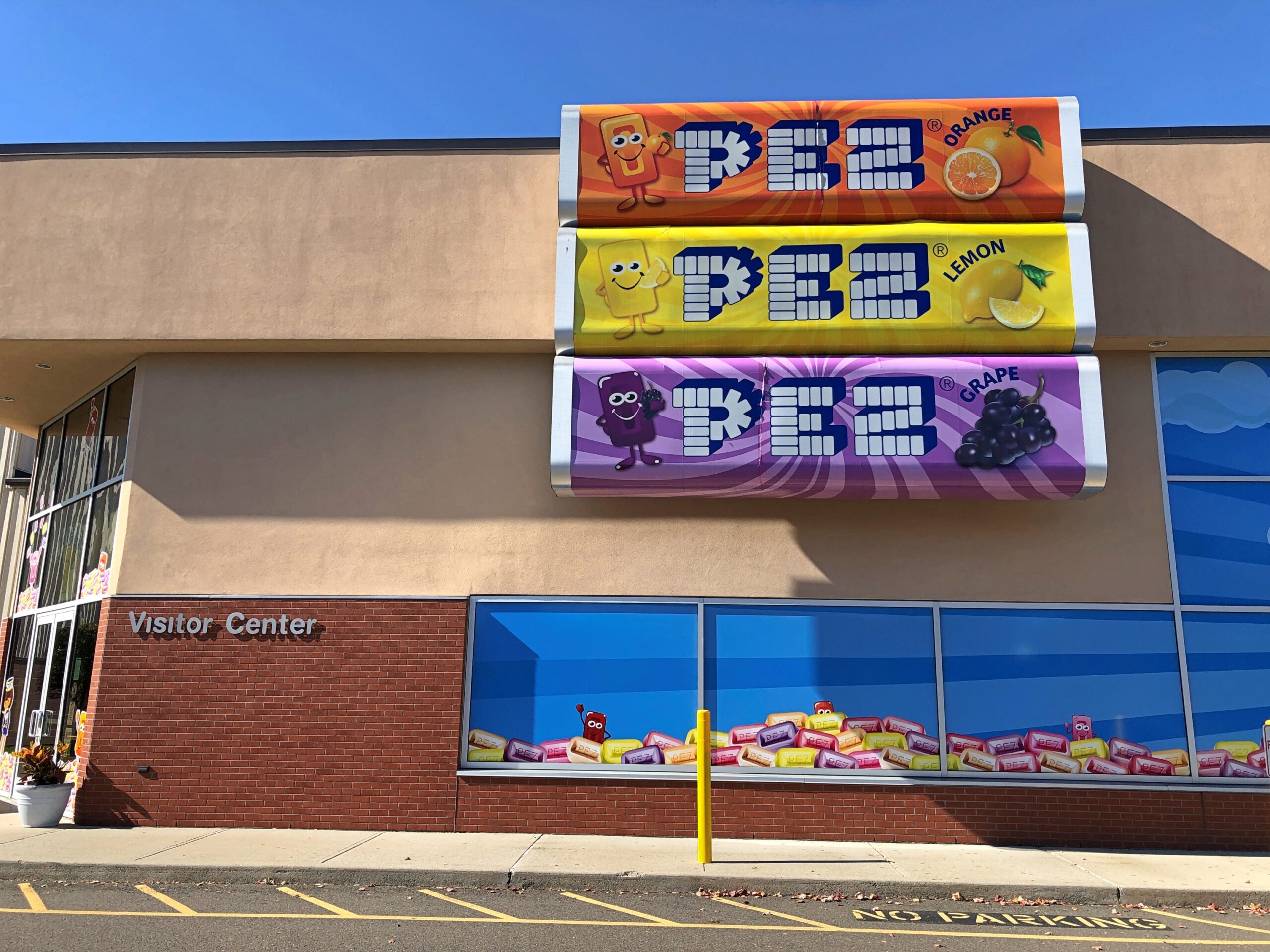
In Orange, Connecticut, I noticed a sign for the Pez Visitor Center. I had to see that.
Earlier today, at the border between Ohio and Indiana, I noticed Uranus. I had to stop.
Turns out there’s more than one; I’d only ever seen the one in Missouri (the original) in passing, never stopping. But I did this time. Now I can say I’ve been to Uranus.
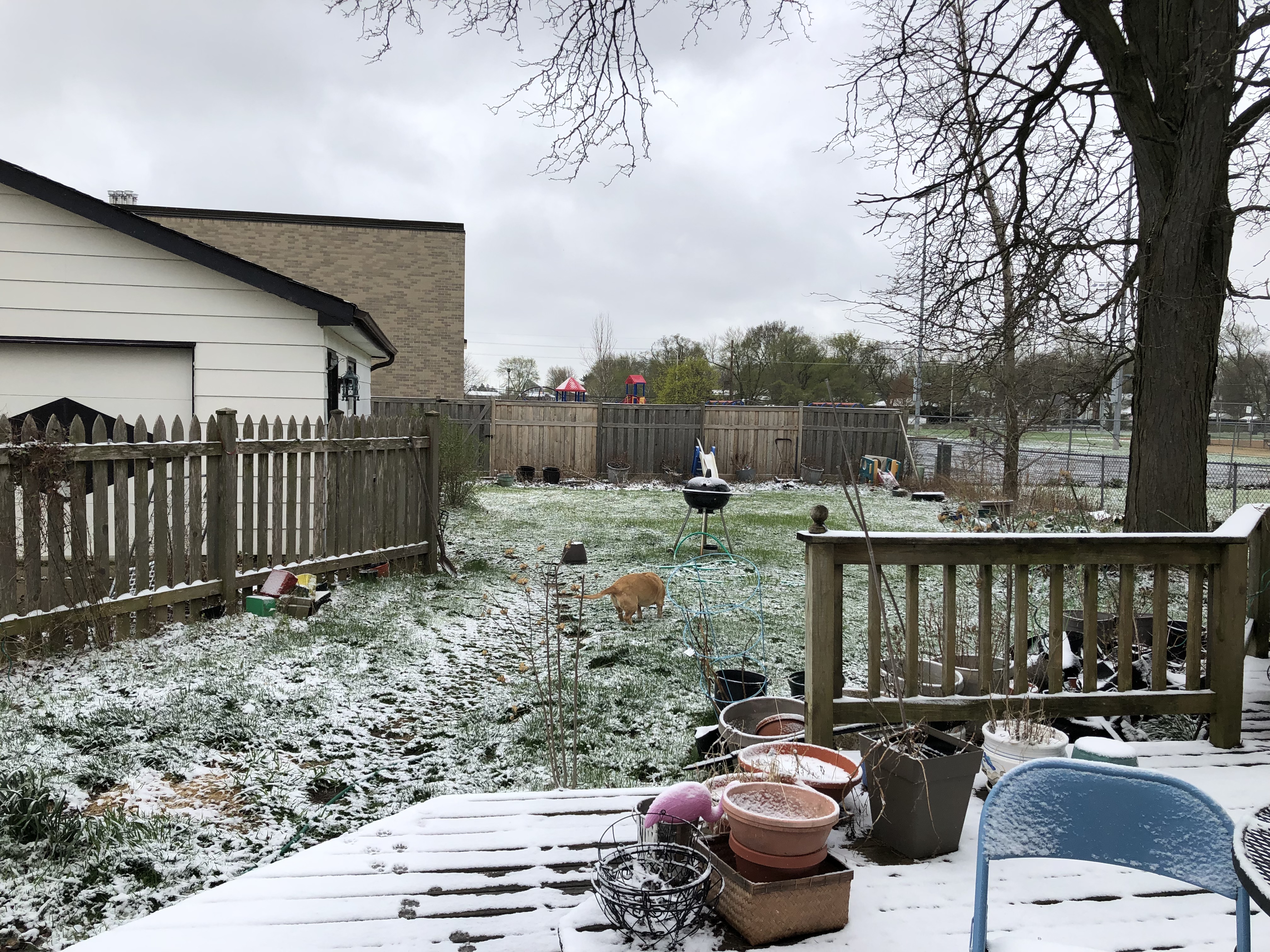
Fitting somehow for Monday morning. Of course, the snow didn’t even last till noon, though it remained chilly all day.
For days before, the warm version of spring had been ascendant, creating conditions for a number of enjoyable meals on the deck. Cold spring returned on Sunday, got worse on Monday but eased somewhat today. Warm tomorrow, then rain, then cold again. Such is the spring cycle.
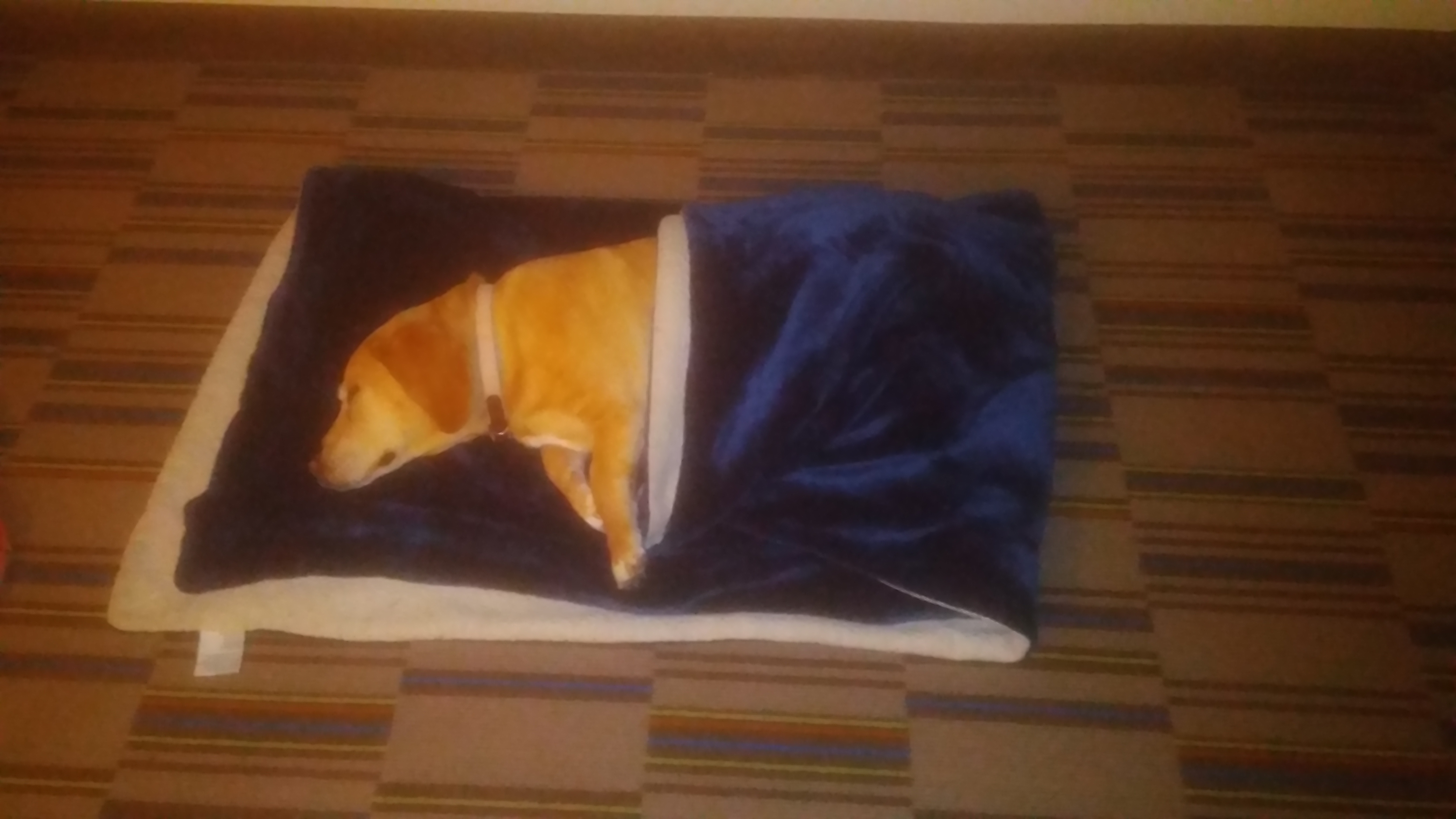
I almost forgot – because who wants to remember? – that the first night we were in the Uniontown, Pa., area last month, at a upper-mid hotel chain, the fire alarm went off at about 8 p.m. Yuriko had gone to the pool and I was in the room with the dog.
Those alarms are loud. I knew that in some abstract sense, but listening to BLAT! BLAT! BLAT! while you get the dog ready to go, grab an extra jacket for yourself and your wife, and make sure you have all your valuables on your person – it focuses the mind, and not in a good way.
I didn’t think to bring the good camera, which was tucked away. So all I had was my phone, which I use as a phone and to call up maps, but usually not as a camera. Because it takes crappy pictures.
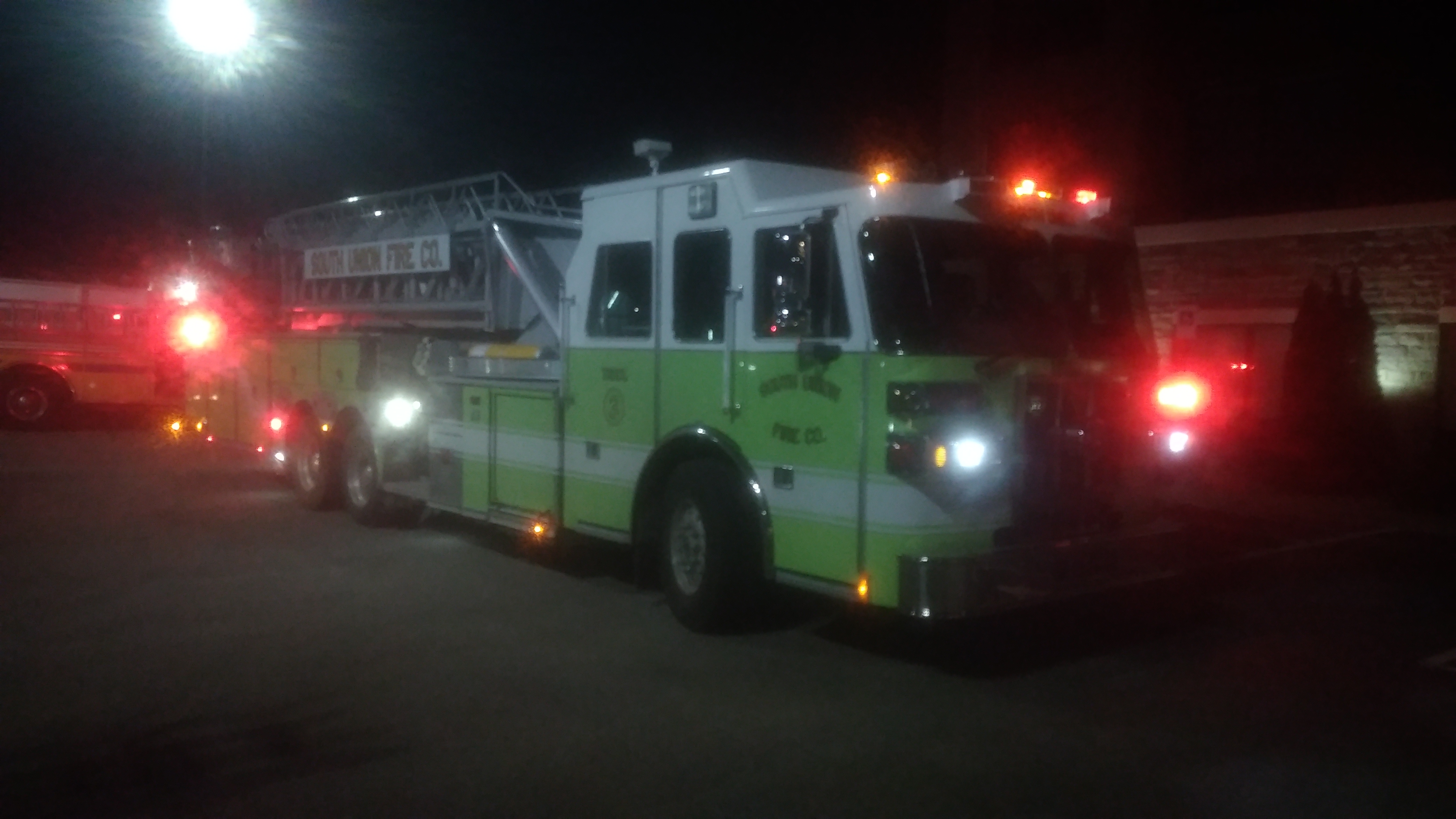
Got to see the South Union Fire Co. in action. Not much action, since there was no fire. Mostly we waited around in the parking lot until we noticed people going back in after about 20 minutes. How did they know the emergency was over? Not because the desk clerk said anything. But I was able to confirm from a passing fireman that it had indeed been a false alarm.
Our most recent trip took us to fully 25% of the nation’s commonwealths, to celebrate a famed example of a distinction without a difference.
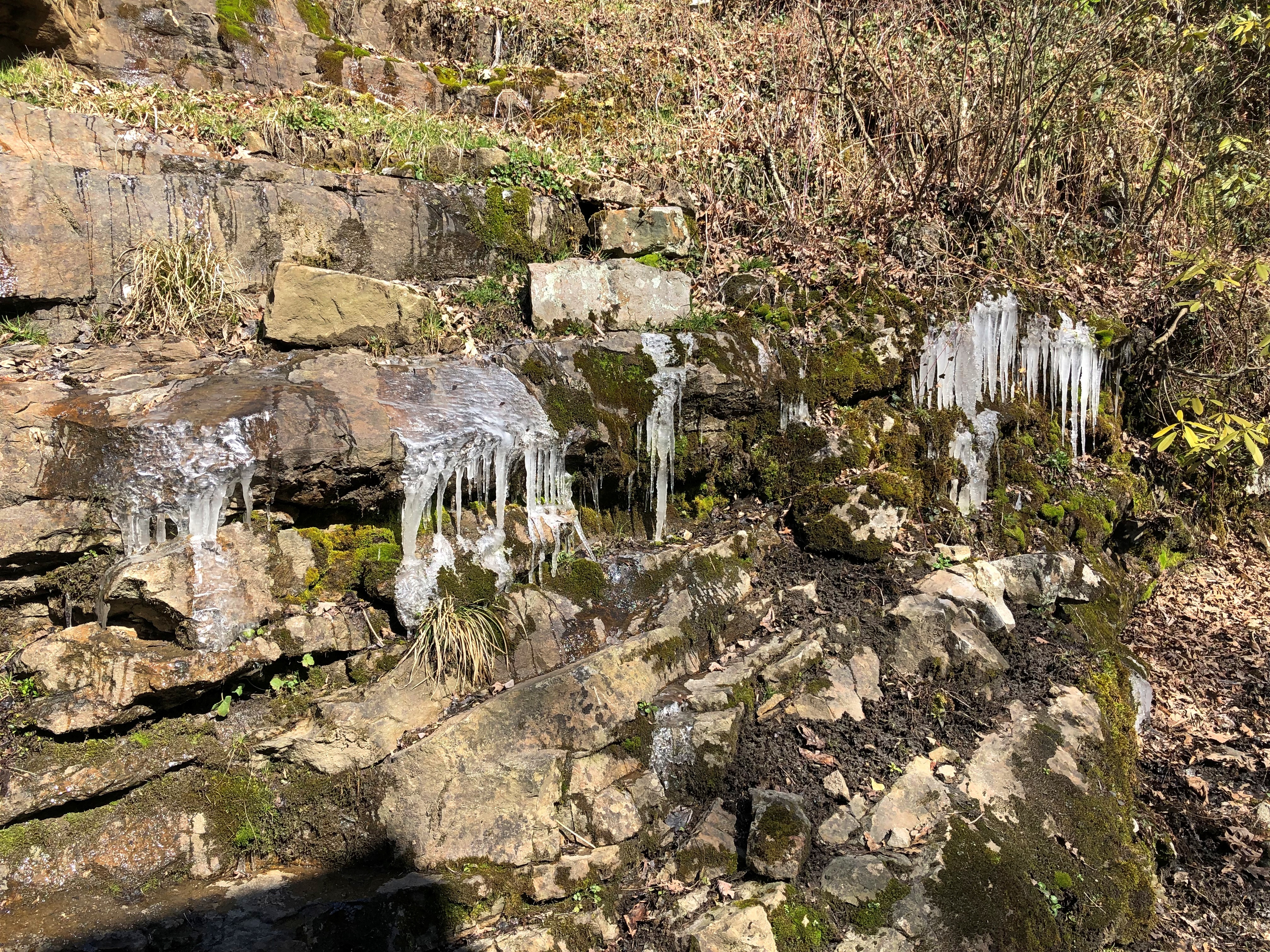
It wasn’t quite full spring in Pennsylvania last month, but warm enough most of time.
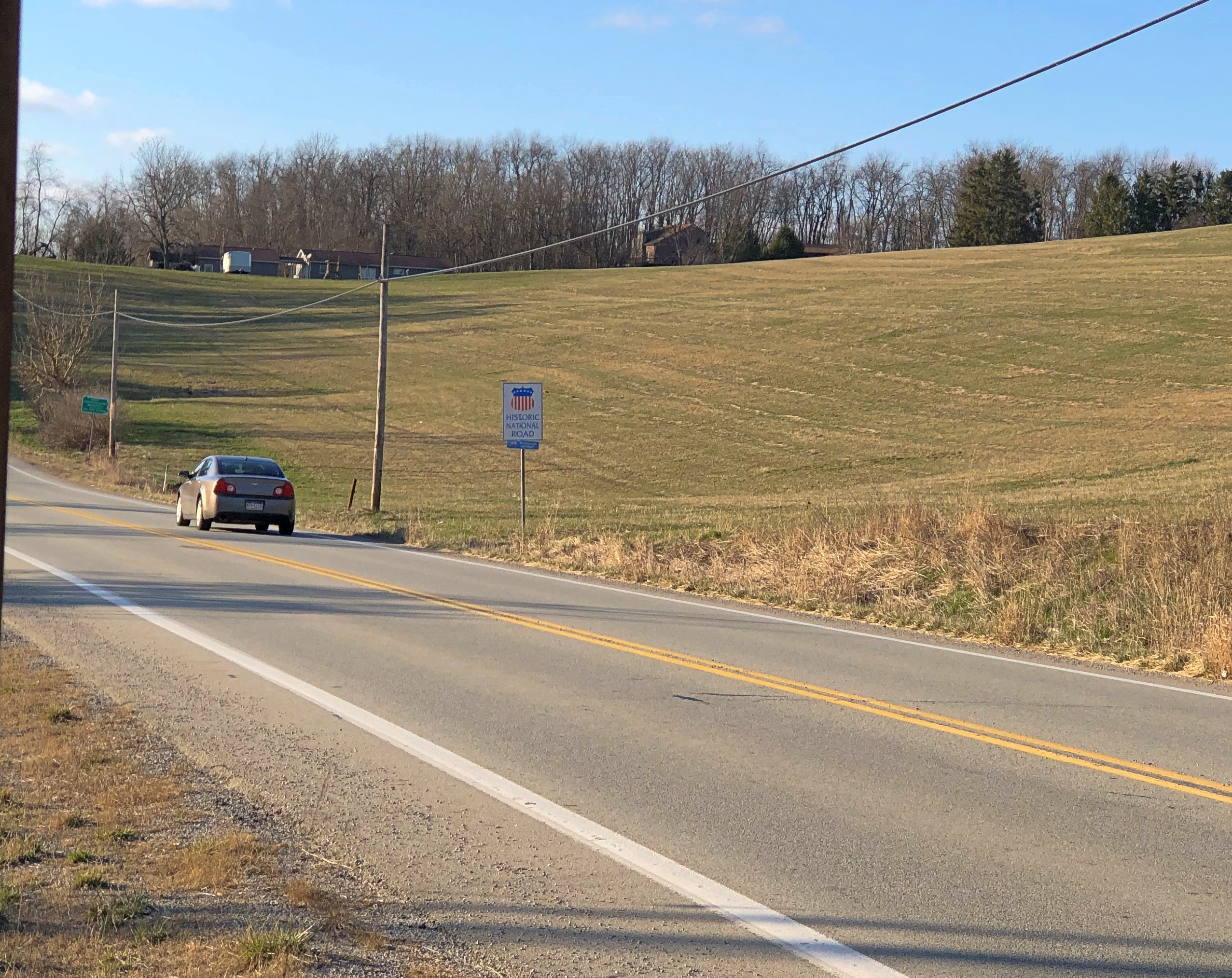
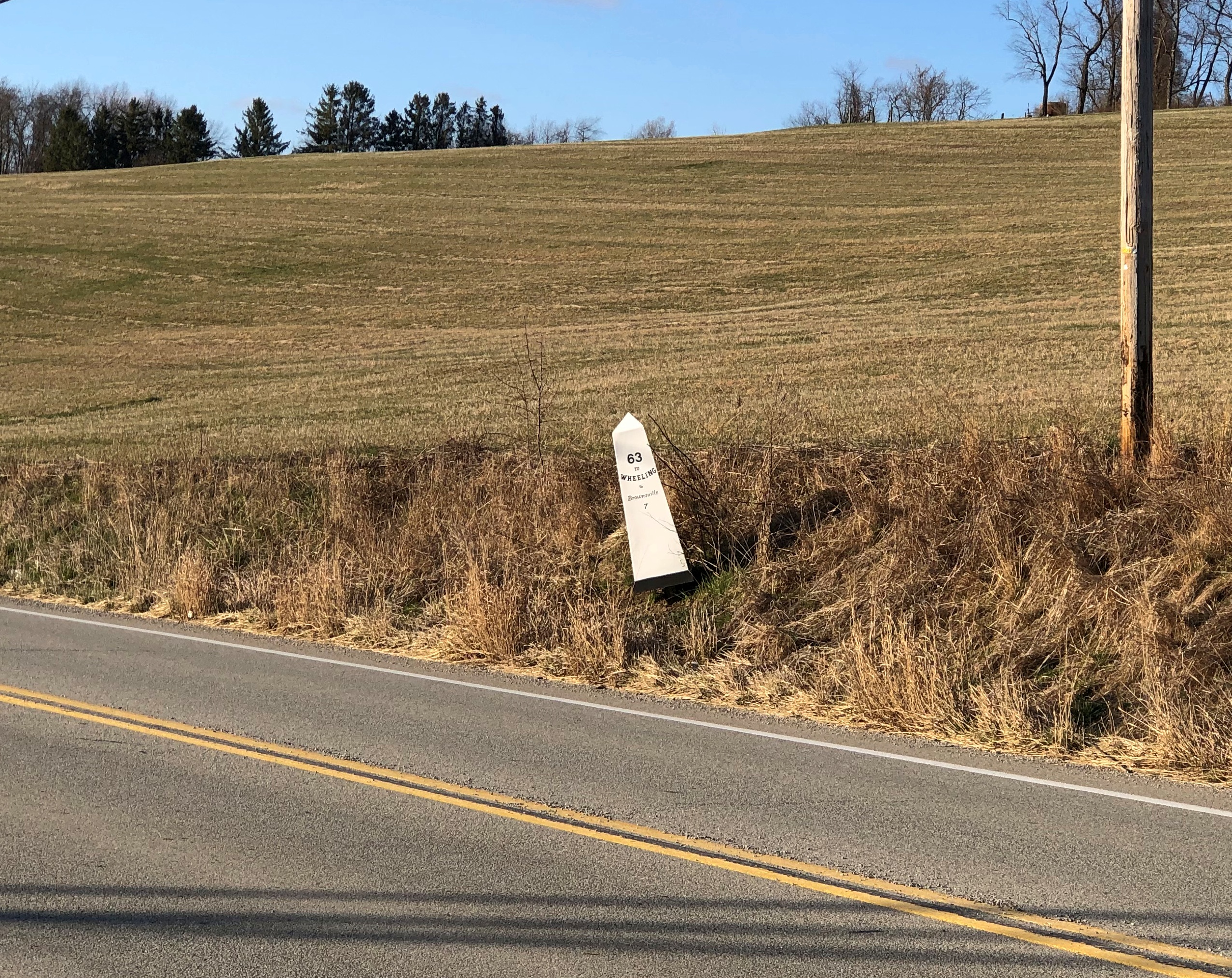
We drove the National Road (U.S. 40) in Pennsylvania, from where it crosses the border near Wheeling, through to Uniontown, and later drove the segment that goes into Maryland.
Didn’t quite make it to the eastern terminus, in Cumberland, Maryland. Once upon a time, maybe a small detour during a late ’90s return from Dallas, we saw the western terminus in Vandalia, Illinois.
One minor landmark along the way.
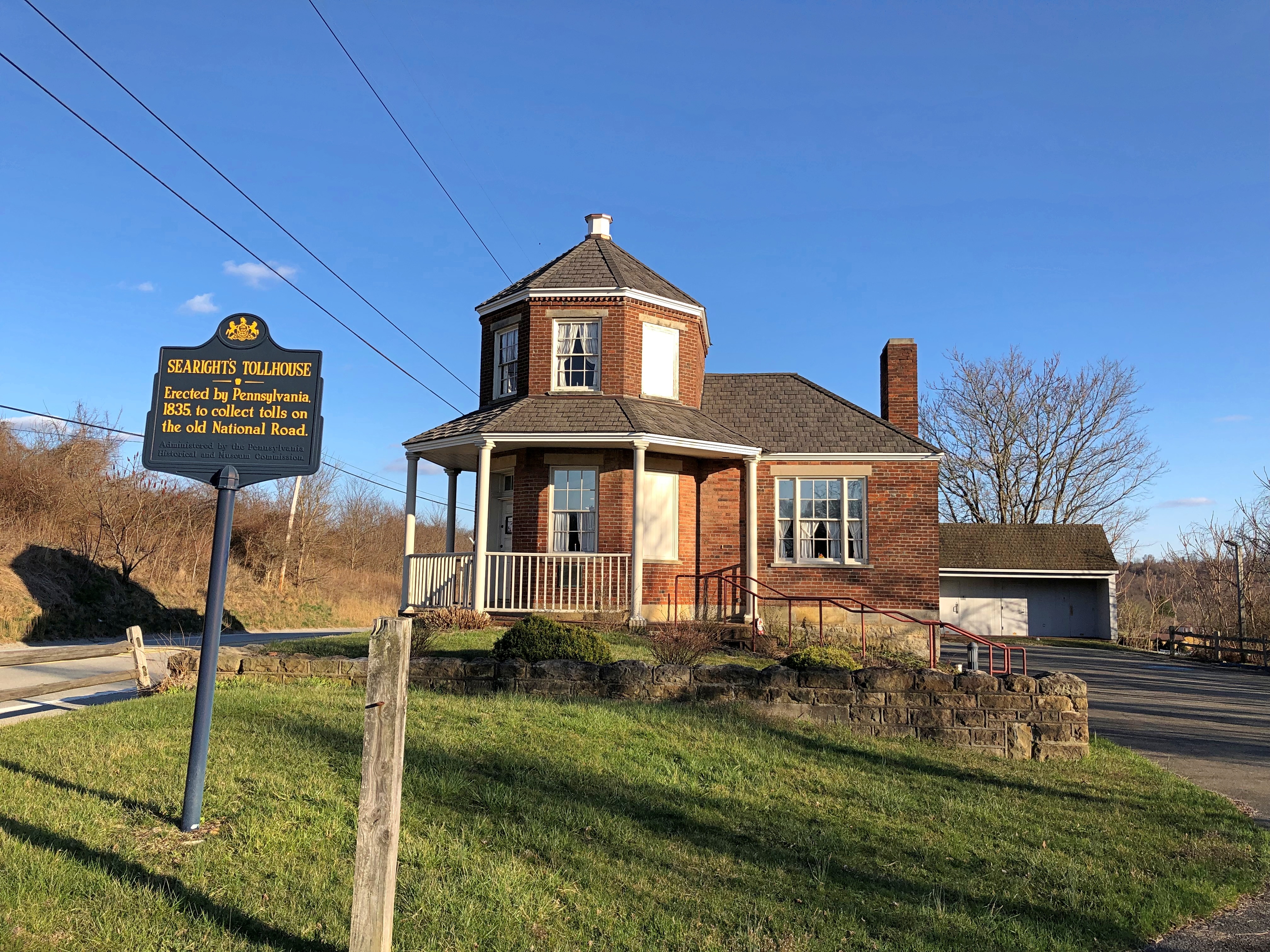
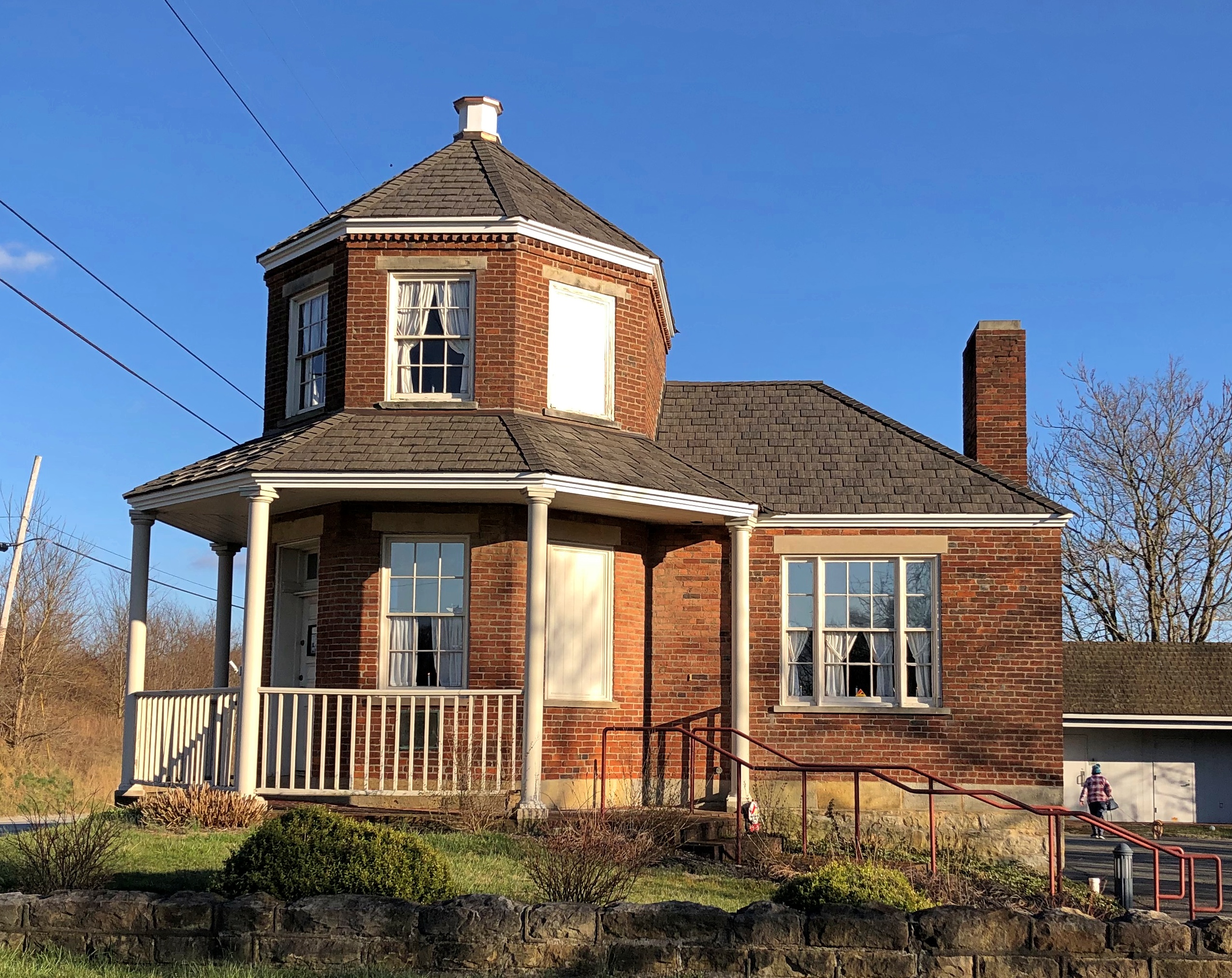
Searight’s Tollhouse, built in 1835 by the commonwealth of Pennsylvania to collect tolls, since the federal government had turned the road over to its various states that year. The structure, near Uniontown, is one of two surviving tollhouses, out of the six built. No tolls have been collected there since the 1870s.
The structure was built near the tavern of William Searight, the state commissioner in charge of the roadway, per Wiki.
Barman and toll collector. There’s an idea for a Western revival limited series on streaming: Will Searight, Frontier Toll Collector. I’m thinking a comedy, in the same Shakespearean writing style as Deadwood, but no one gets killed.
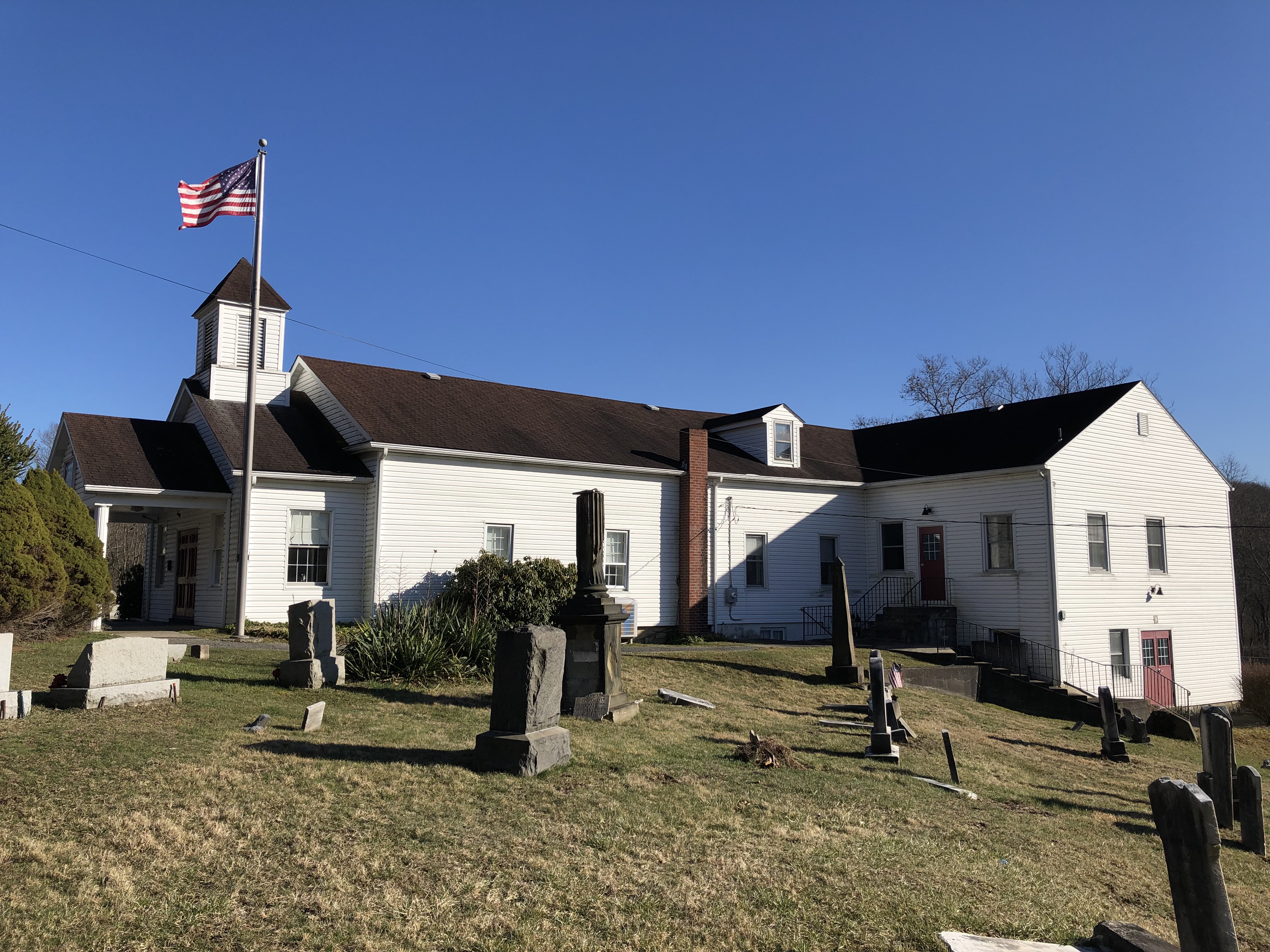
A church on the National Road, east of Uniontown: Mount Washington Presbyterian, founded in 1842.
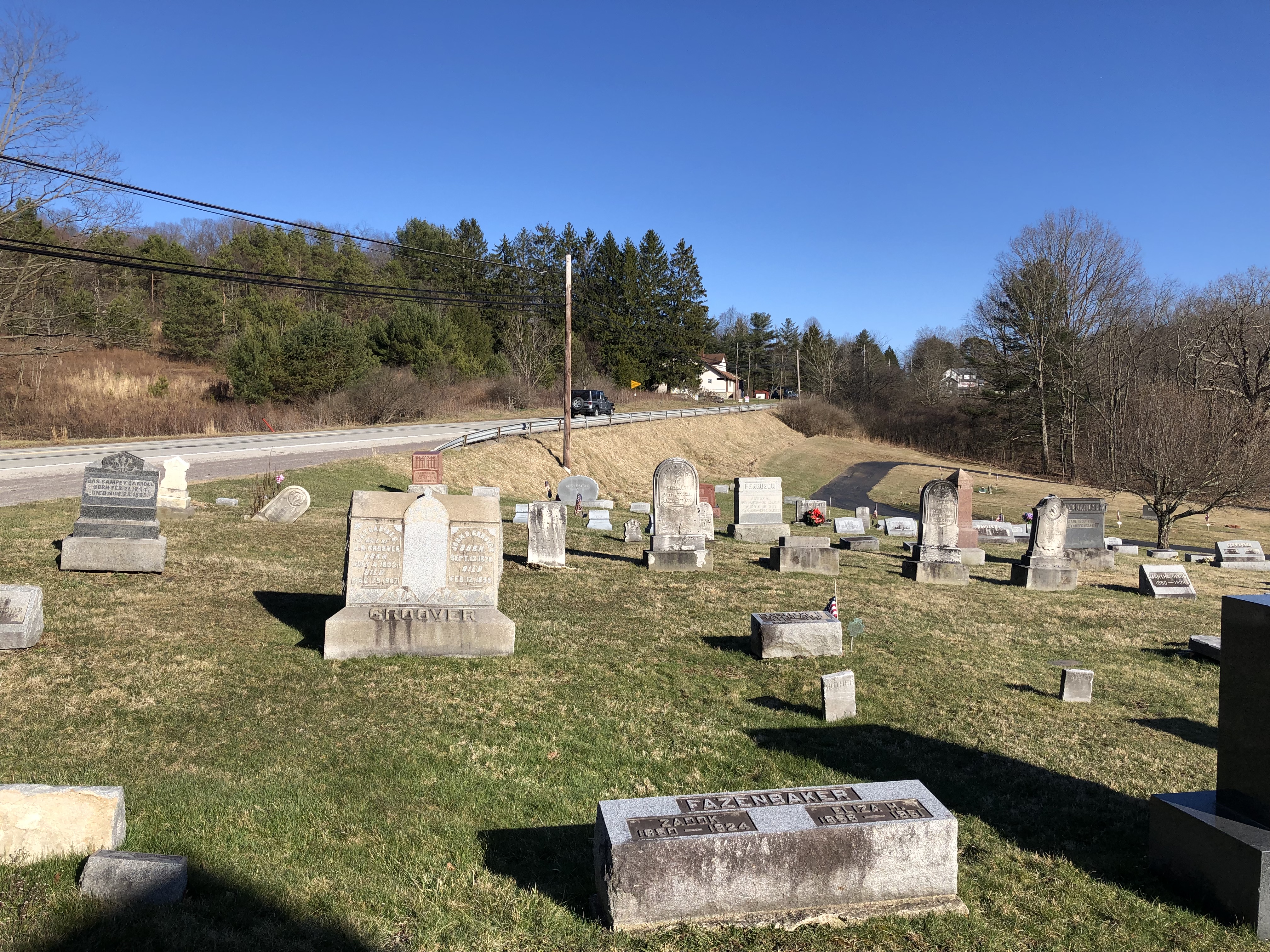
The church cemetery provides a view of the National Road.
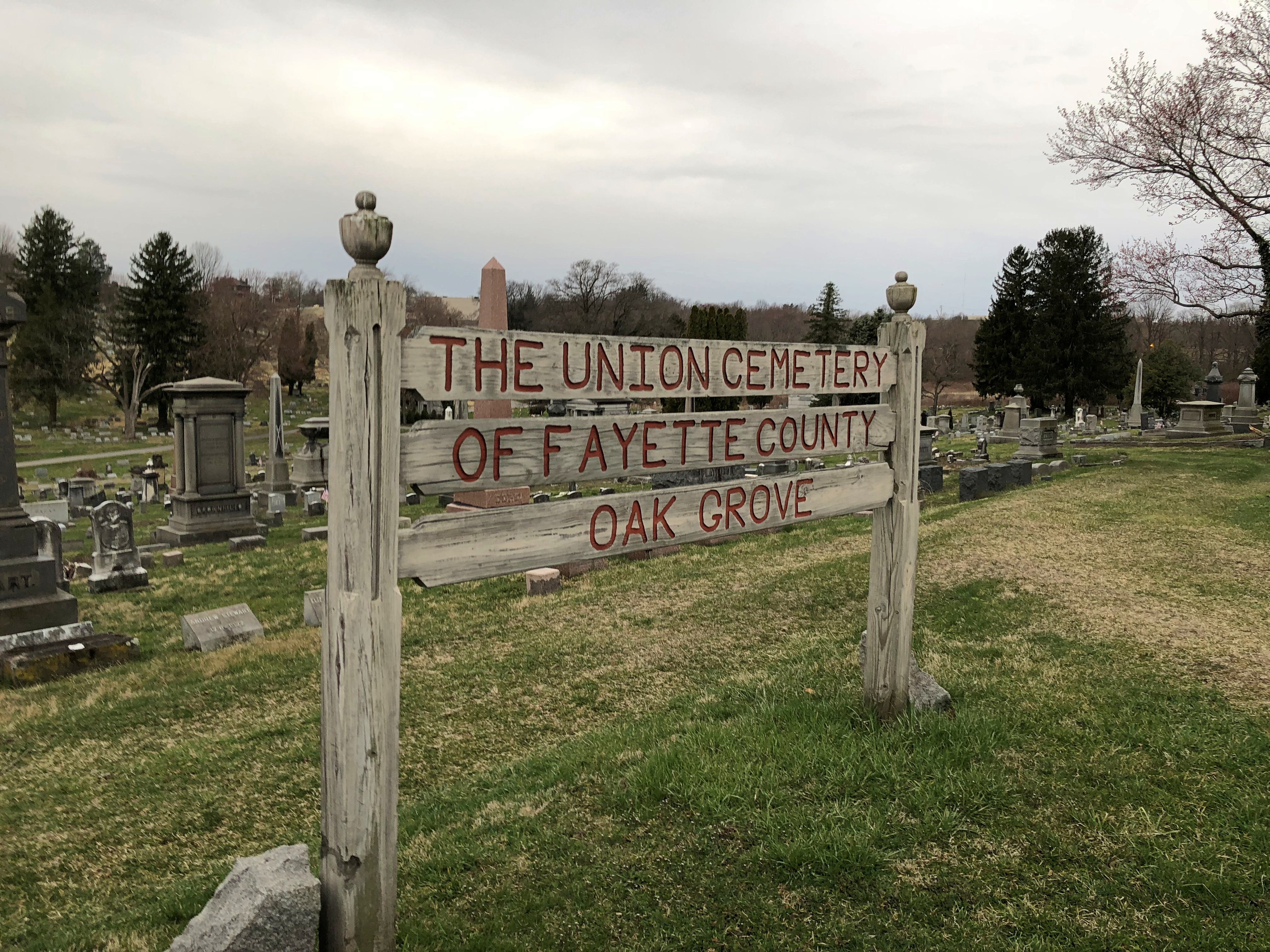
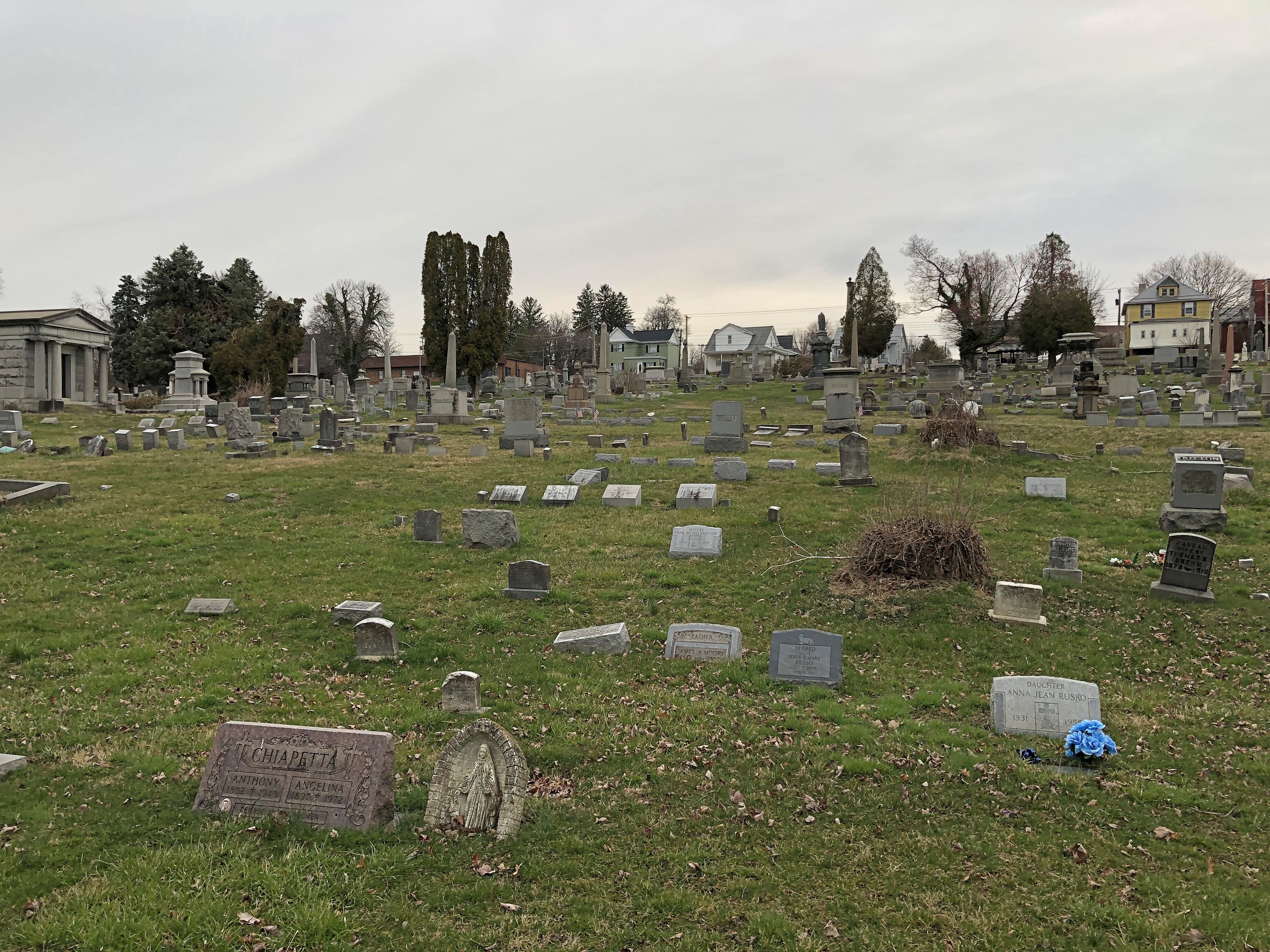
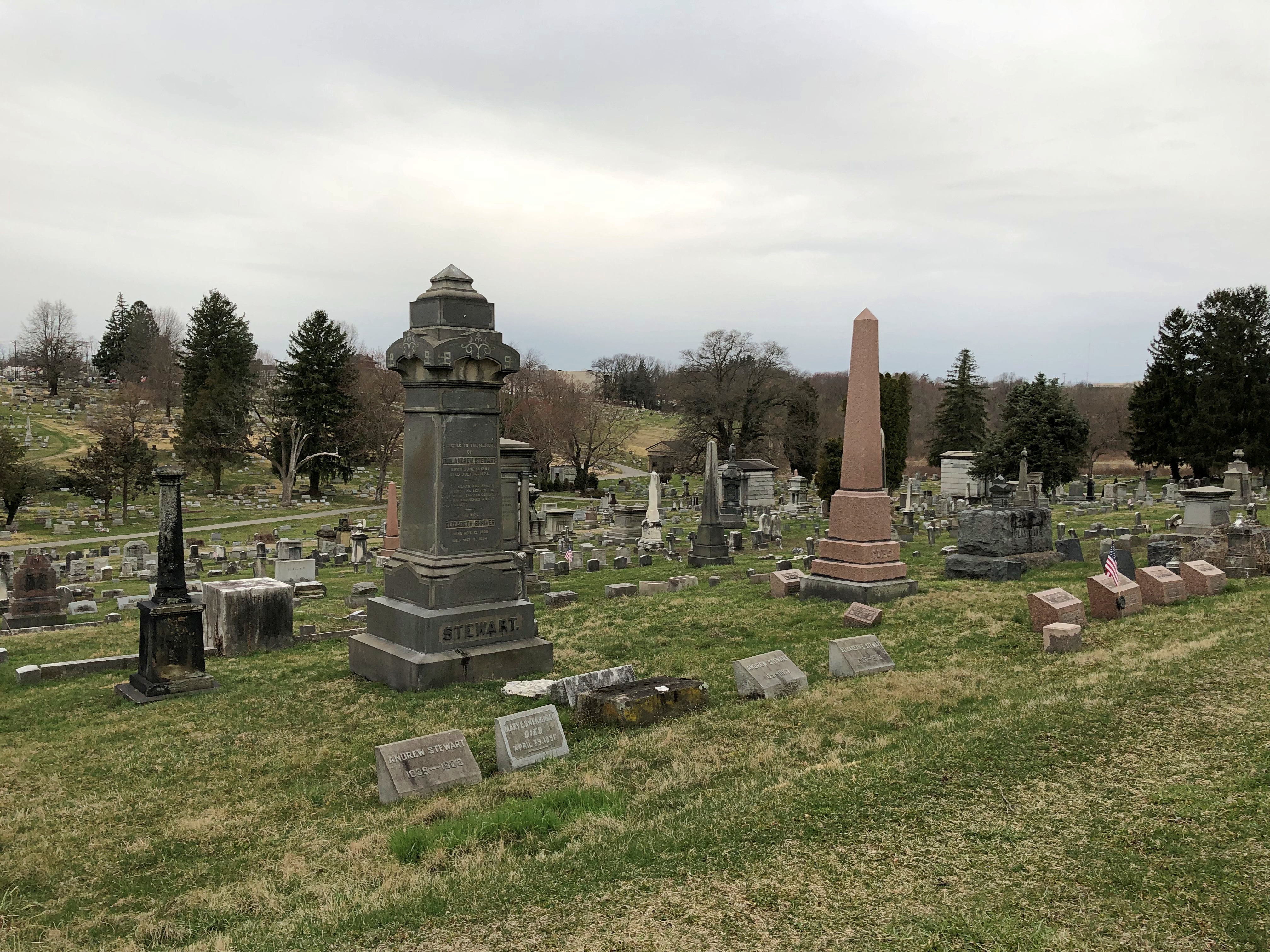
In Uniontown itself, I stopped by briefly at Oak Grove Cemetery, originally the Union Cemetery of Fayette County, which has been accepting permanent residents since 1867.
Famed permanent residents? I checked with Find-A-Grave (just now), and the pickings are slim: mostly forgotten members of the U.S. Congress, though there is a Civil War officer, Silas Milton Bailey (d. 1900). I just made his acquaintance. Quite a story. Uniontown jeweler in civilian life; solider that didn’t let getting shot in the face keep him from action for long.
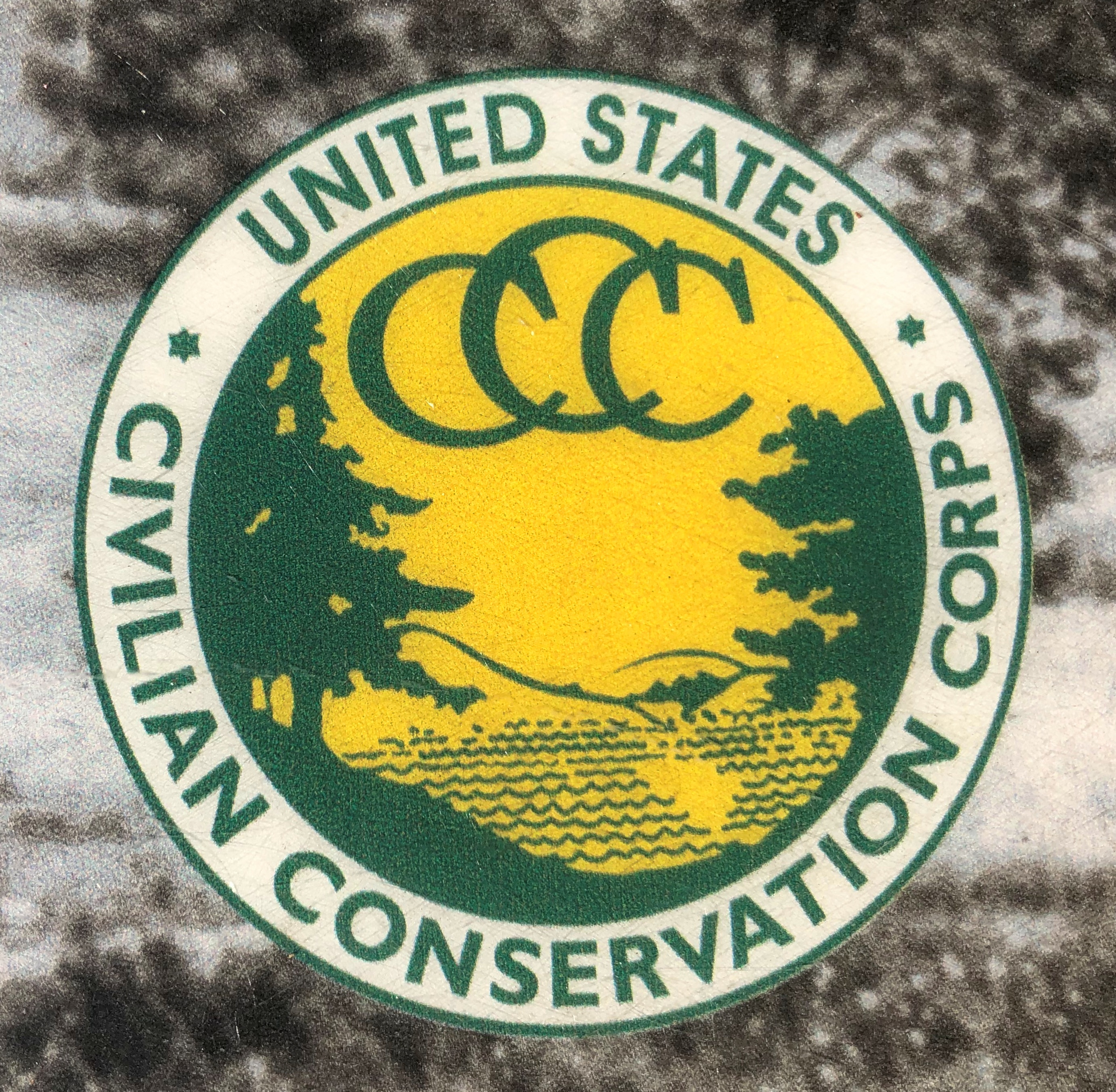
Fort Necessity is just off U.S. 40 and thus the National Road. Something I noticed there, featured on a park service educational sign. Of course. How could they not be involved?
The camp, Pennsylvania SP-12, existed from 1935 to ’37, with about 800 men, planting trees and laying out trails and roads. This is the first time I’ve seen the CCC seal depicted at any of its sites, though of course the men sometimes rate bronze recognition. There is evidencethat the seal dates back to the active period of the corps.
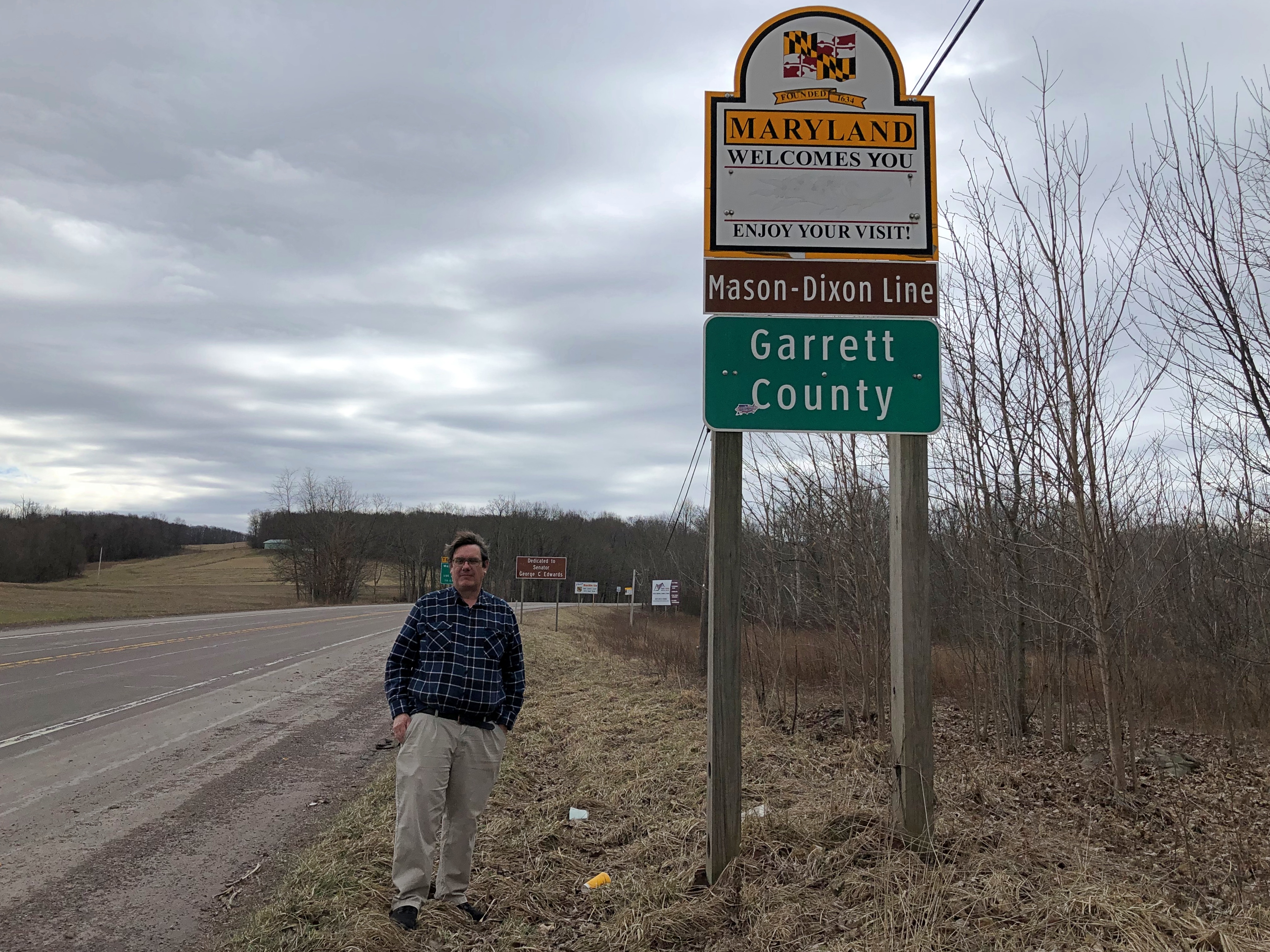
Just as we left Pennsylvania for the last time, I was able to stop at the border with Maryland on U.S. 219, just south of Salisbury, Pa. Not just any border, but the Mason-Dixon Line. It’s one thing to cross it, as I have who knows how often. It’s another thing, according to my eccentric lights, to stand on it.
Yuriko had never heard of it. I explained a little about its history and its wider but not quite literal meaning as a line between free and slave, North and South, but she didn’t find it all that impressive.