Quincy Adams Wagstaff Elementary has started classes for the year. I know that because I saw a mass of students and parents waiting outside the school this morning just before classes begin, as has been the first-day practice for many years. I went there myself, with daughters, from 2003 to 2014.
In 1893, a curious ship arrived in Chicago during the World’s Columbian Exposition.
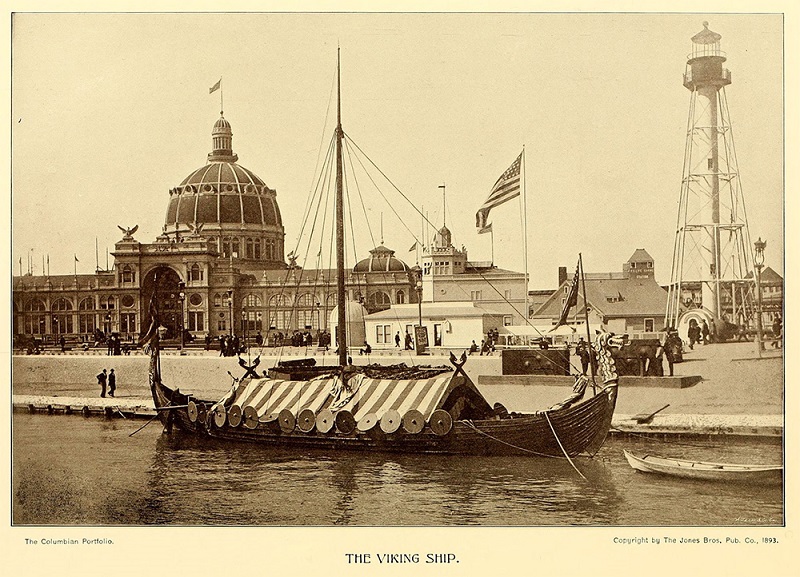
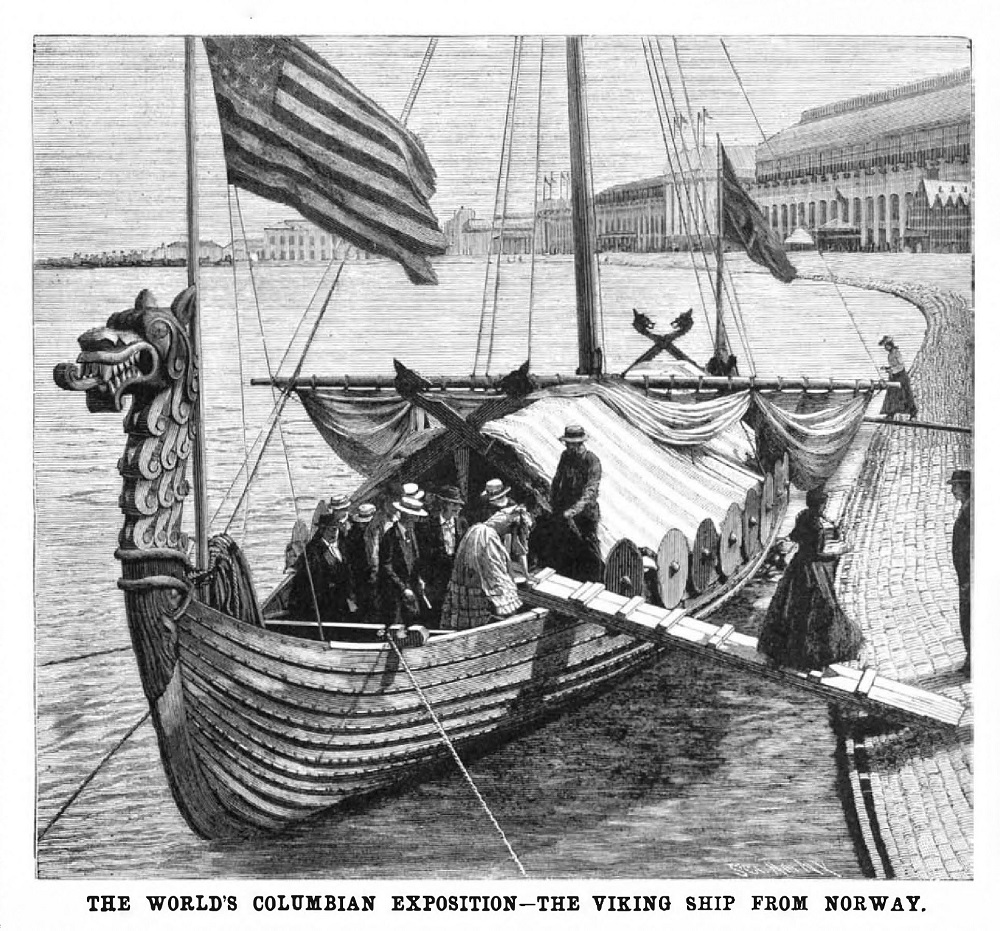
That same ship, in 2026, can be found under a temporary, Quonset-like structure in a field in Geneva, Illinois, not far from the Fox River.

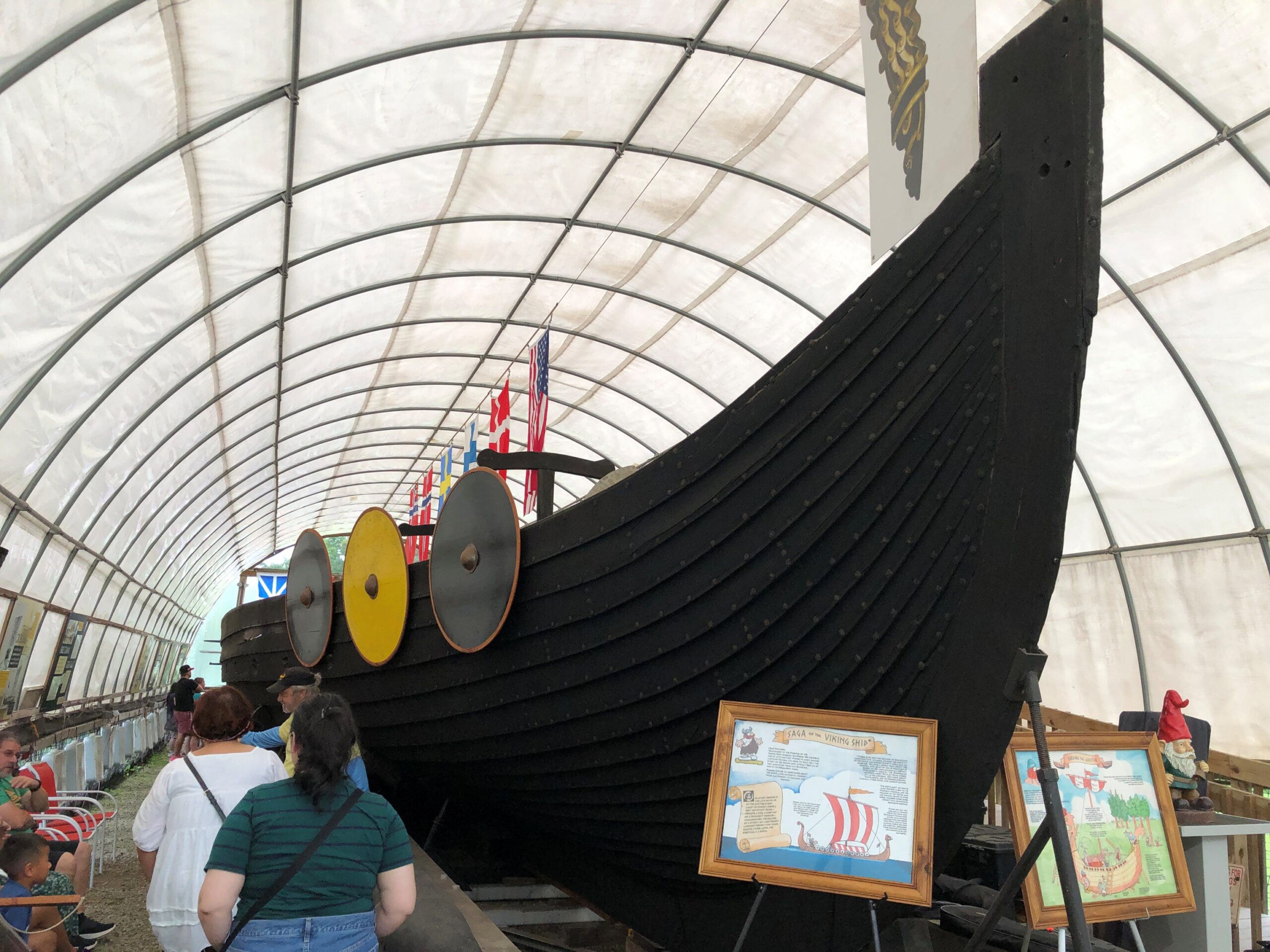
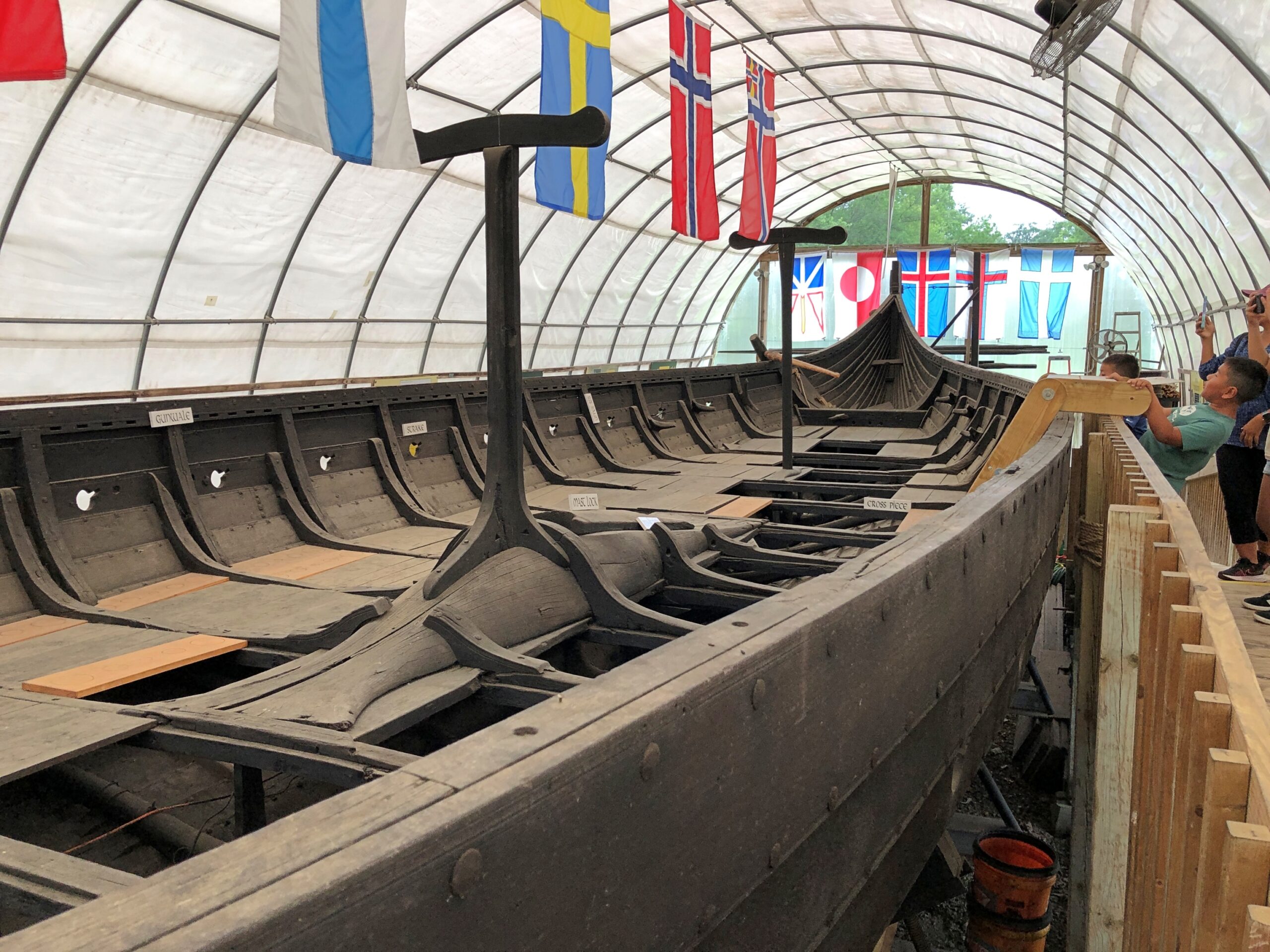
Once a month during the warm part of the year, the ship is open for tours, and we arrived on Saturday in the warm drizzle to take one. I knew about it because, examining Google Maps one day recently, I saw Friends of the Viking Ship.

Say what? It is a storied ship, and has good friends these days, since one of the first things the guide told us was that the nonprofit Friends of the Viking Ship recently acquired a site on which a permanent museum will be built to house the ship, whose formal name is the Viking.
“Christen Christens’s Frames Shipyard in Sandefjord, Norway built the Viking in 1892-1893 after the ancient Viking ship Gokstad,” notes the web site of the park that is currently home to the ship. “In 1893 the Viking sailed from Norway to Chicago, via the Erie Canal and the Great Lakes, to the World’s Columbian Exposition and now displayed at Good Templar Park.”
Good Templar Park in Geneva is a whole other kettle of fish: a park owned by a temperance society. But for now, more about the ship. How did it happen that a replica of a 9th-century Viking ship sailed across the wild North Atlantic in the days before wireless communication, ice patrols or weather reports? Apparently they did have 1890s navigation equipment – a compass, quadrant and barometer, for instance – so it wasn’t quite like the voyages of historic Vikings. Close enough, though, as it was undertaken in an open ship (with a tent) powered by sail and, sometimes, a dozen men pulling oars.
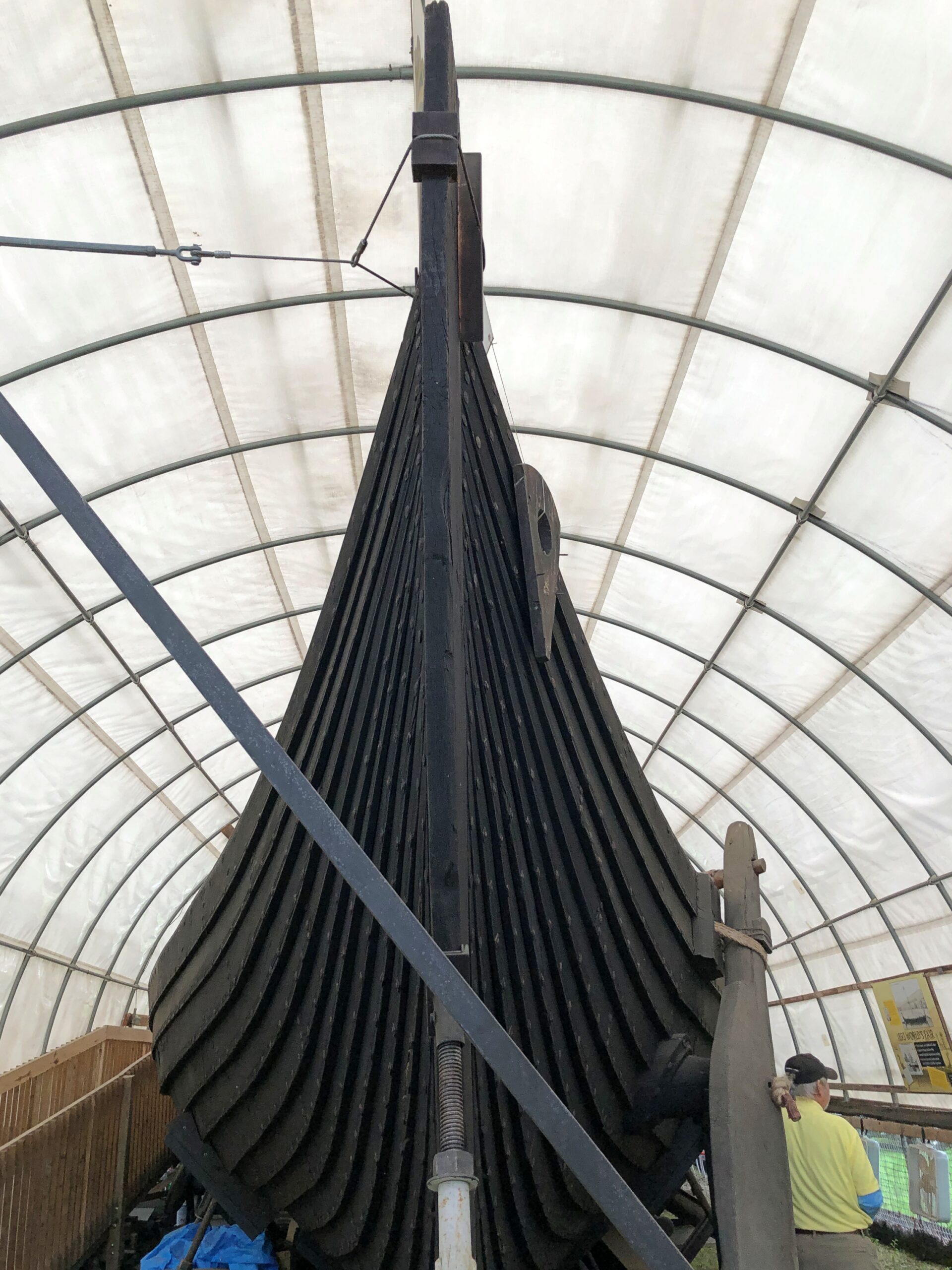
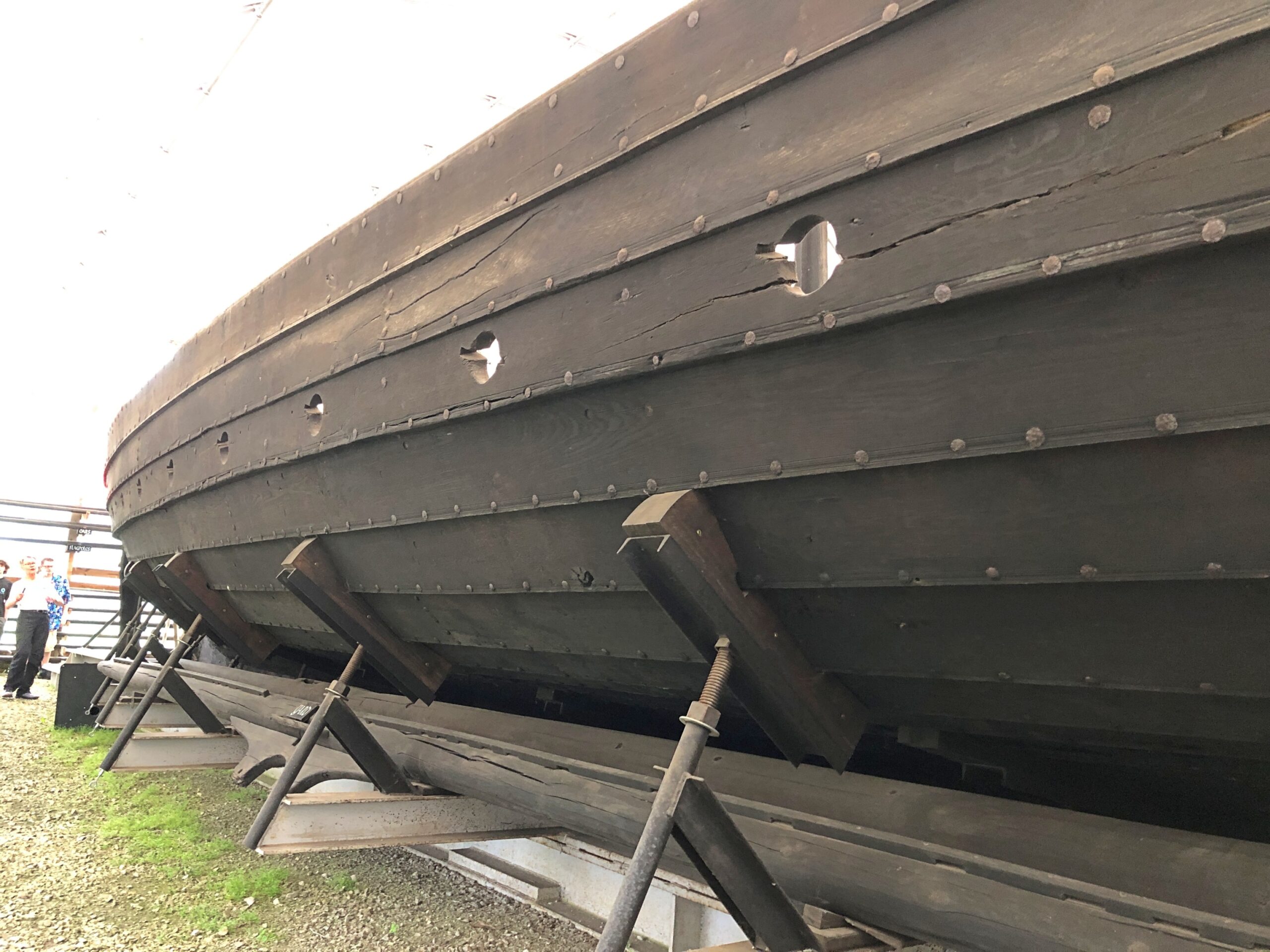
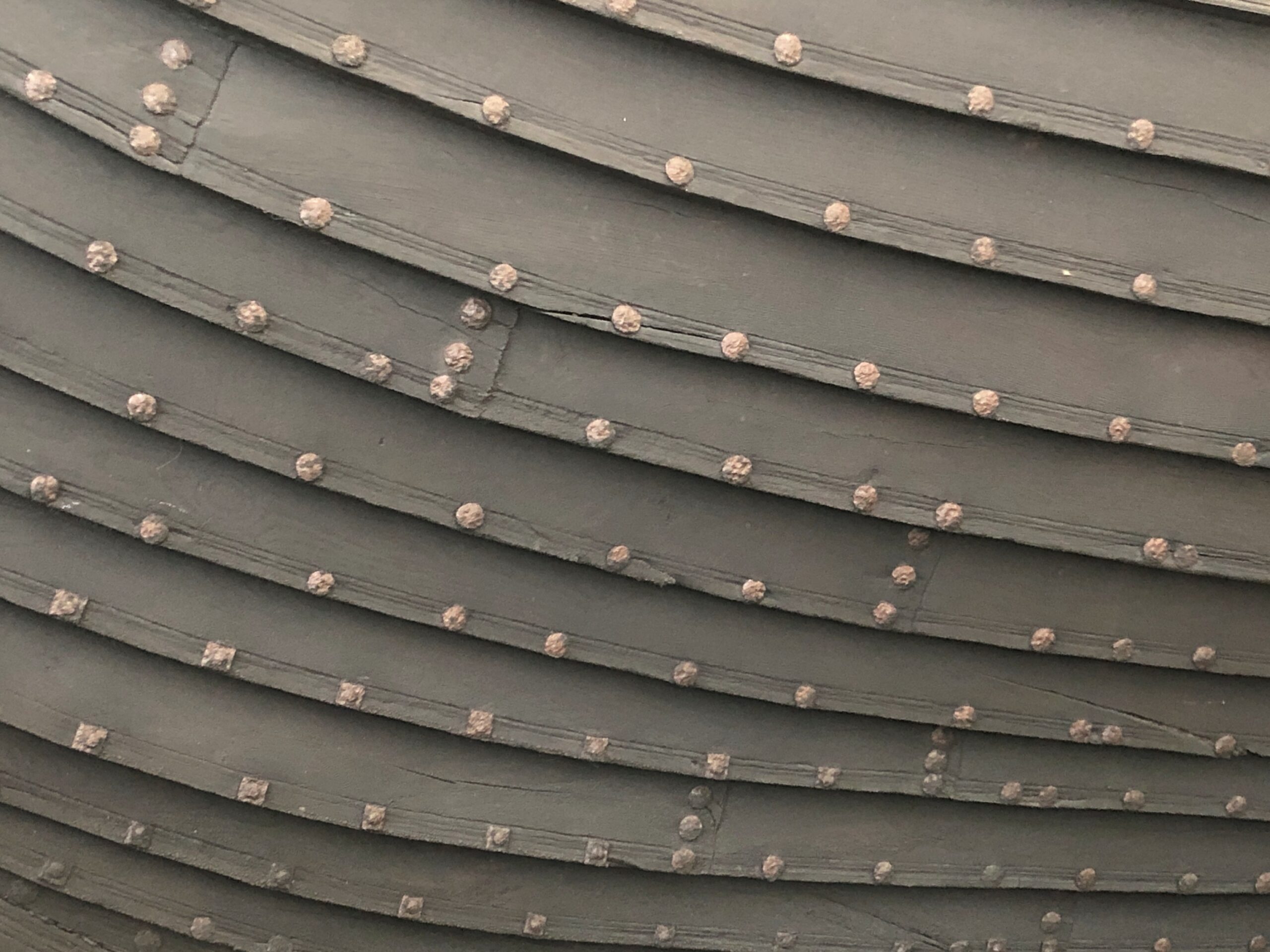
The tour involved a volunteer (let’s call him Bob) leading visitors all the way around the ship on a platform that allows you to look into, but not go onto, the vessel. Still, it’s a close look.
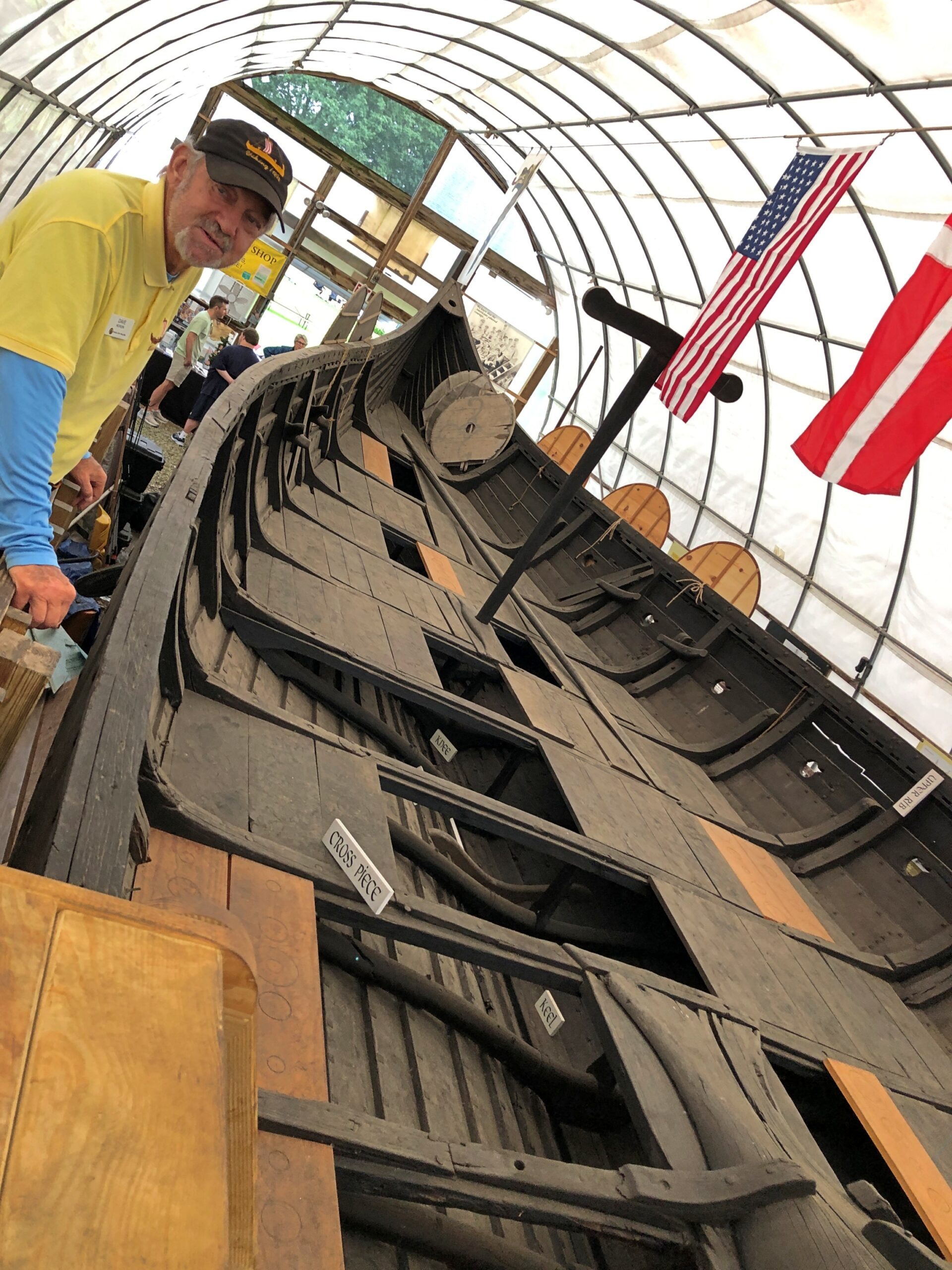
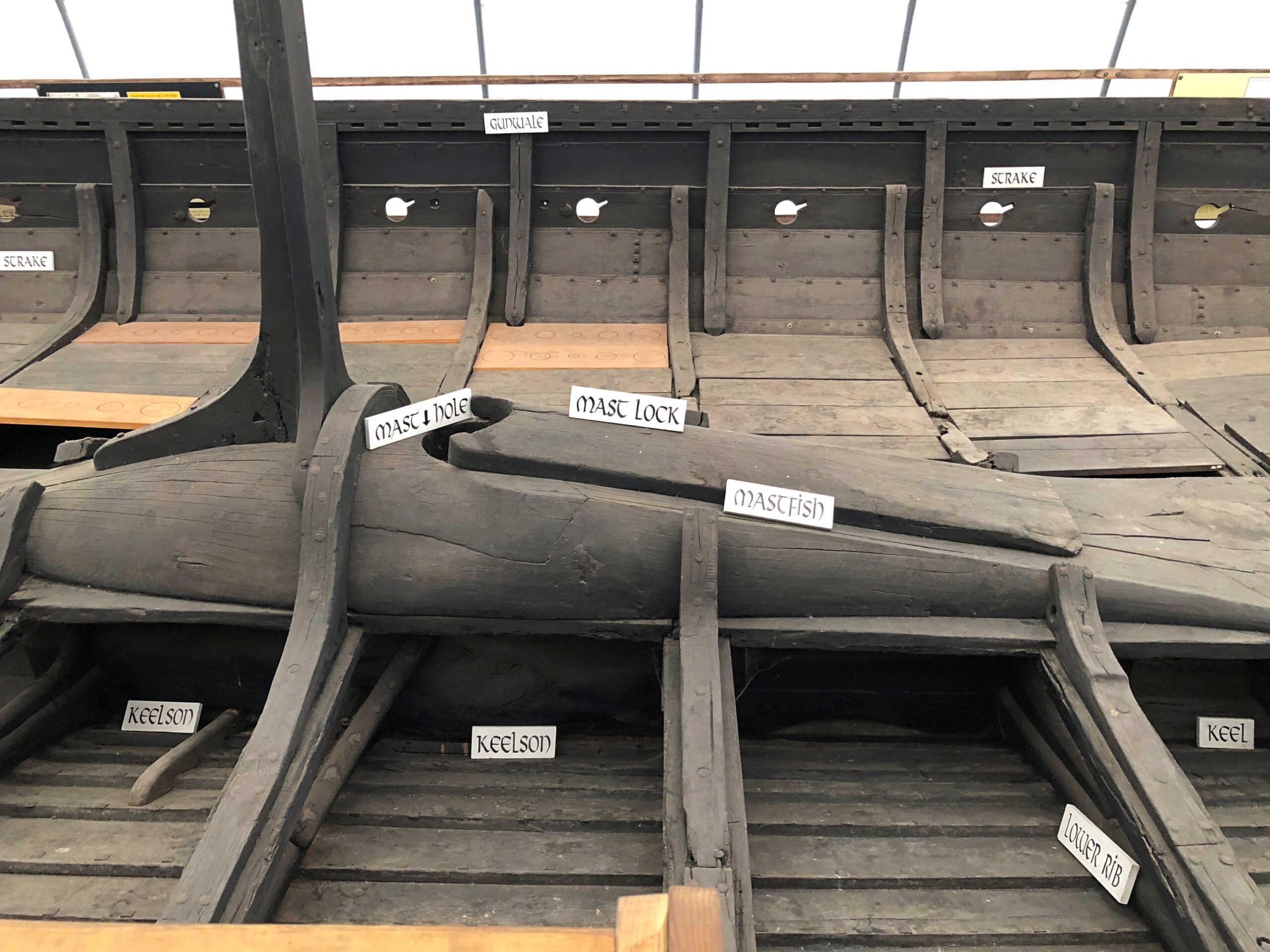
The why of it seems to be nascent nationalism on the part of Norwegians in the late 19th century, though that isn’t quite how Bob put it. Replicas of the famed (by 1893) Nina, Pinta and Santa Maria were due to visit Chicago – towed across the Atlantic from Spain – for the world’s fair. Who arrived in the New World long before Columbus? Plucky Vikings, of course, so a replica of a recently discovered Viking ship was built to sail to the fair under its own power. Norwegian pride, yes; and to upstage the johnny-come-lately Spaniards, too.
“The assertion had been frequently made that the Norsemen in their frail, lightly built galley could never have crossed the stormy Atlantic,” one Professor Hjalmar Hjorth Boyesen of Columbia College wrote in The Chautauquan in 1894.
“It so happened that an old Viking ship was unearthed at Gokstad, near Sandefjord, twelve years ago, in the grave or tumulus of an ancient chieftain. The idea occurred to Captain Magnus Anderson, the editor of the Norwegian Seaman Gazette, that if an exact reproduction of this ship were made, he would undertake to sail her across the Atlantic and thus give an incontrovertible demonstration that the Norsemen, at least, could have discovered America…
“An invitation was issued for a national subscription and the required amount [to build the ship] was procured, mostly in the small sums of ten, twenty-five, and fifty cents. The undertaking, I am told, was not popular with the upper classes, while it appealed strongly to the imagination of the seafaring population which readily kindles at an enterprise with a touch of heroism. It was first proposed to christen the ship Leif Ericson; but for some reason the name The Viking was preferred. In every particular, even to the minutest detail, she was made to conform to her ancient model.
“She is clinker-built, of solid oak planks, is 78 feet long, 16 feet beam, draws 4 feet of water, and carries 200 yards of canvas. She has no real deck, but a loose bottom, which tends to give her that elasticity when striking the waves.”
The ship sailed for Chicago on April 30, 1893. “On May 10, when north of the Orkneys, she was caught in a heavy gale… That stanch little craft kept bravely ahead, though she shipped several seas, and the crew was kept busy bailing, until their horny hands were sore and the blood oozed forth under their finger nails. But not once did they think of turning tail; for they were all buoyed up by the thought that they had the honor of Norway in their keeping, and that, in a measure, they were to prove her claim to the glory of having first discovered the New World.”
When the Viking did reach the New World, its crew were feted on the Eastern Seaboard and elsewhere, and of course in Chicago. Ah, but fame is fleeting, etc. In the early 20th century, the ship was on display at the Field Museum but later suffered the indignity of being basically forgotten and in storage, owned by the Chicago Park District. The marvel is that she survived at all. Stabilization and restoration have been underway since the 1990s.
I was happy to do my little part – admission to the tour, and buying a few postcards – to put the ship in a proper museum, for its remarkable story, and the fact that it is probably the largest existing artifact of the World’s Columbian Exposition.