The Nevada State Capitol & Carson City

When visiting a place like Carson City, Nevada, you wonder how many other places are named after Kit Carson. That’s the kind of fleeting question that occurs to me, anyway, and sometimes I remember to look it up later.

I like the conciseness of Britannica on the matter, though it’s short on facts: “Carson’s name is preserved variously throughout the Southwest, including Nevada’s capital at Carson City; Fort Carson, Colorado; and Carson Pass in California.”

The National Park Service has naught to say about the mountain man’s naming legacy, so of course the place to go is Wikipedia. All easily checked facts, grouped in one place.

“Carson National Forest in New Mexico was named for him, as well as a county and a town in Colorado. A river and valley in Nevada are named for Carson as well as the state’s capital, Carson City. The Carson Plain in southwest Arizona was named for him.

“Kit Carson Peak, Colorado in the Sangre de Cristo range, Kit Carson Mesa in Colfax County, New Mexico, and Carson Pass in Alpine county, California, were named for him.

“Fort Carson, Colorado, an army post near Colorado Springs, was named after him during World War II by the popular vote of the men training there… Innumerable streets, businesses, and lesser geographical features were given his name.”

Apparently, so was Kit Carson Park in Taos, NM, and a recent move to change it was defeated for interesting reasons.

In Carson City, you can see the bronze Kit. He passed this way in the early 1840s, when he was guiding John C. Fremont.Carson City
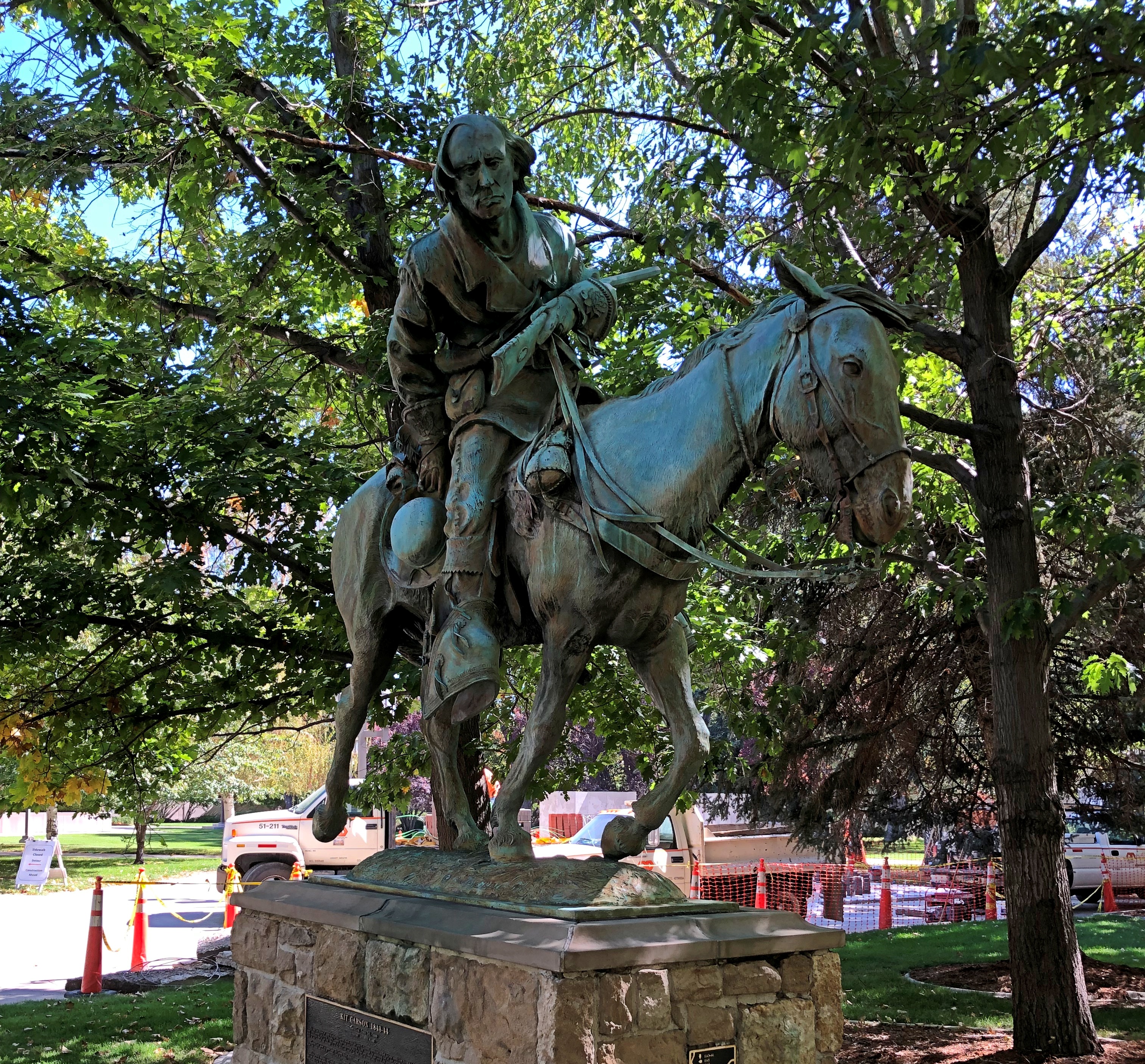
The inscription: 1843-44, Kit Carson by Buckeye Blake, Commissioned by Truett and Eula Loftin. The Loftins, former casino owners in Carson City, donated the work to the state in 1989.

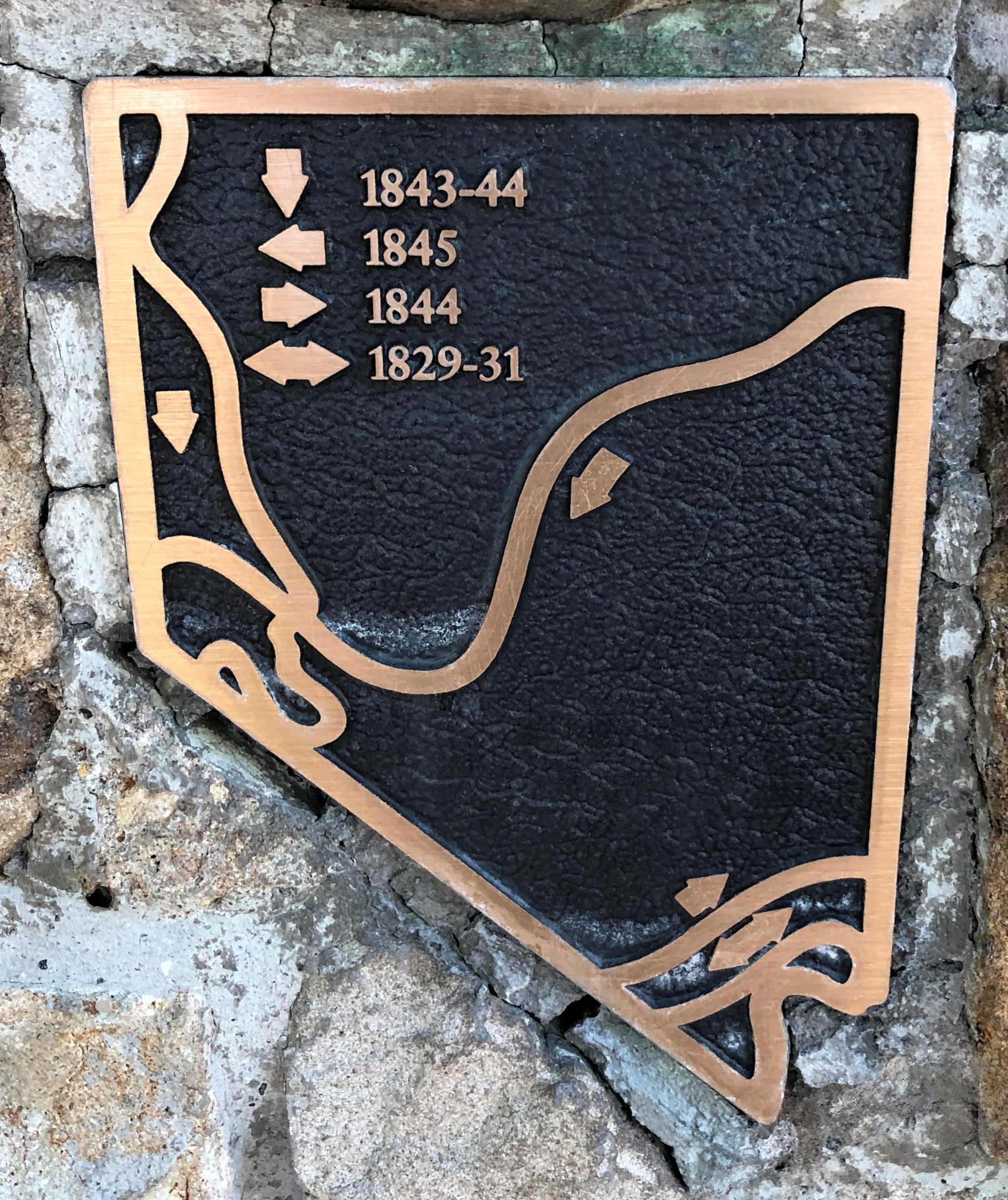
The statue is on the grounds of the Nevada state capitol, along with an unusual plaque imparting geographic information about Carson’s visits to the future state of Nevada.Carson City
Nearby is a man without any national fame, Abraham Curry.Abe Curry
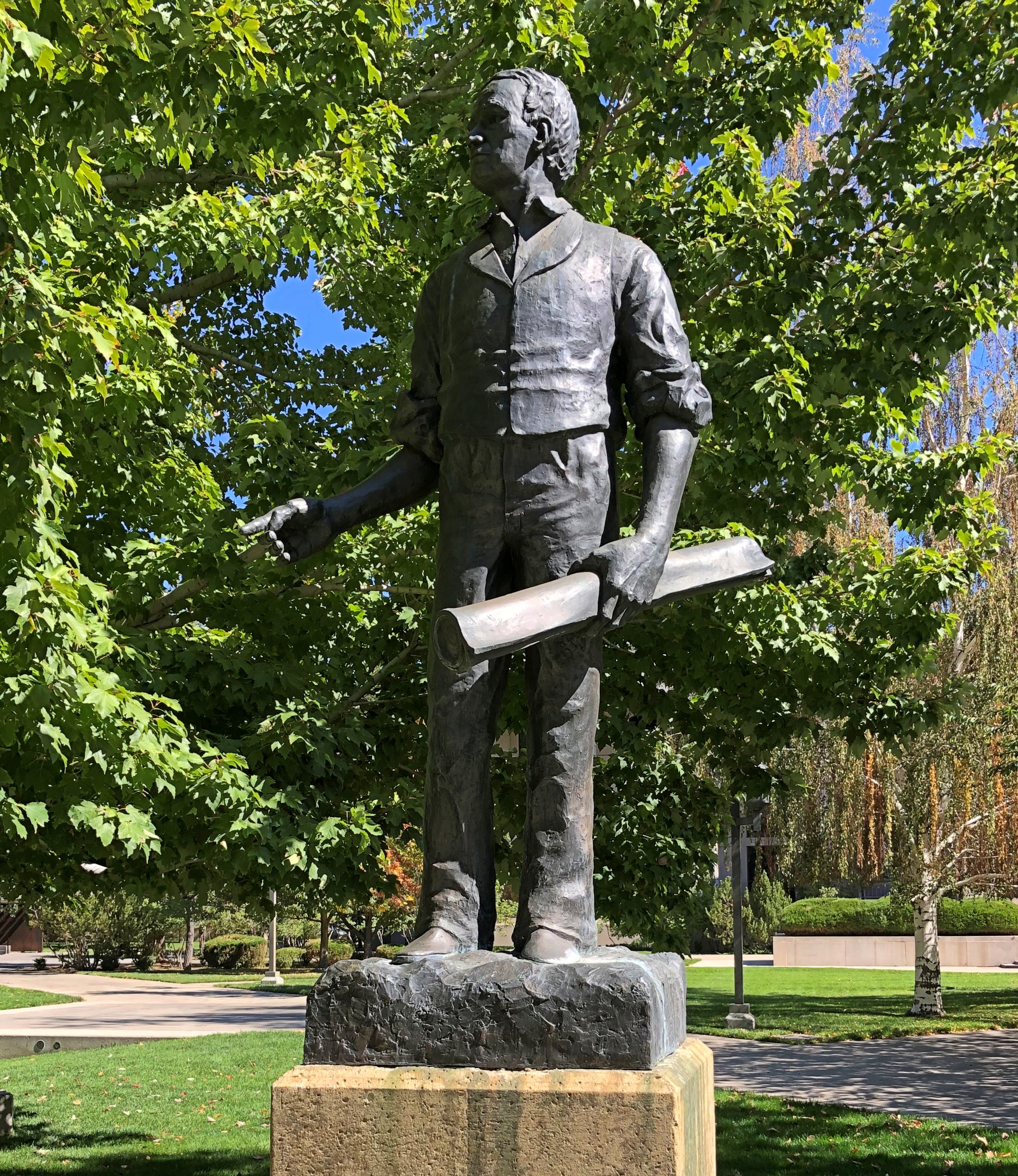
His nickname locally is the “Father of Carson City.” Kit might have passed this way, but Curry stayed. Among many other things, he gave the state the 10 acres on which the capitol stands.

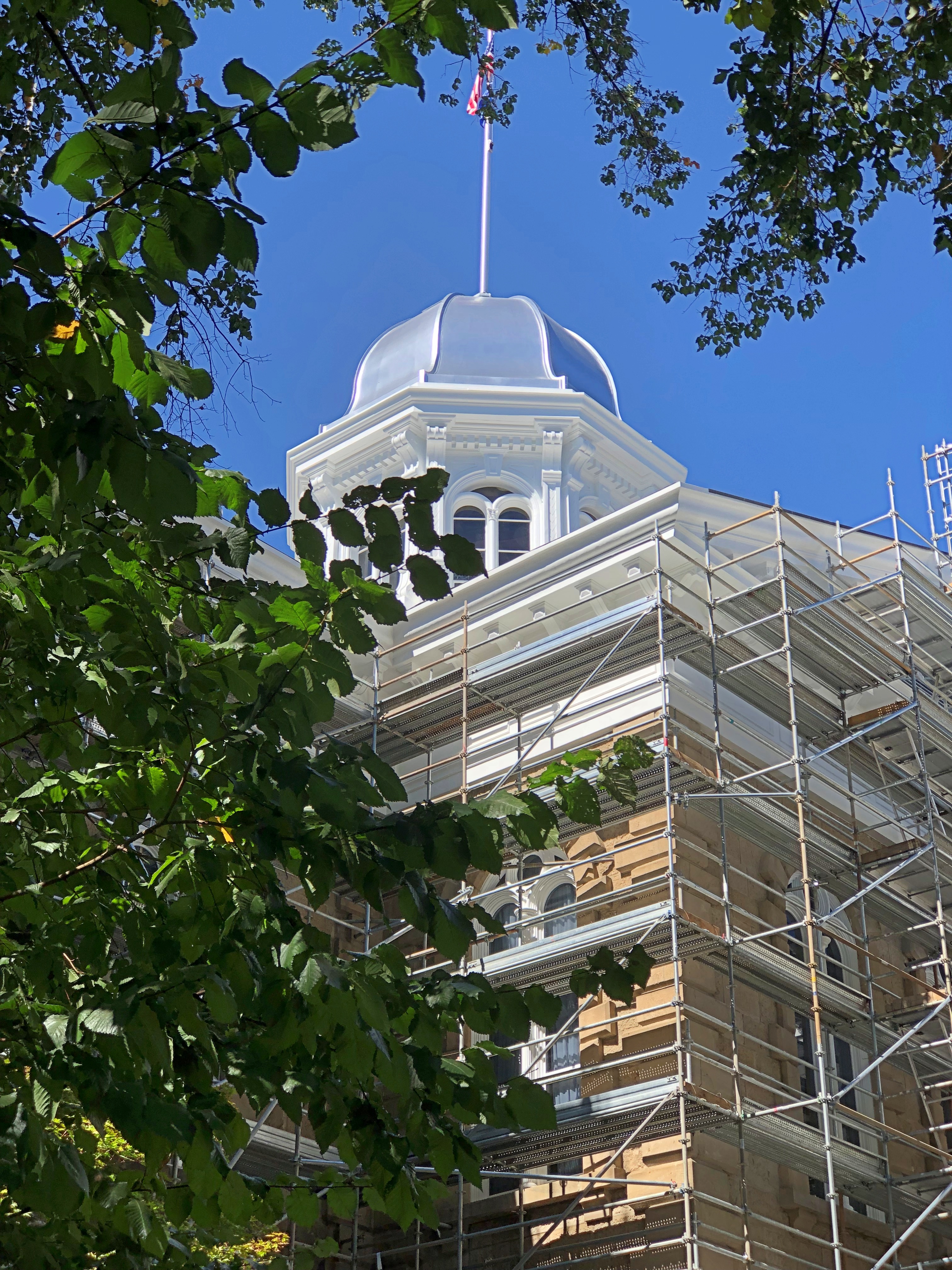
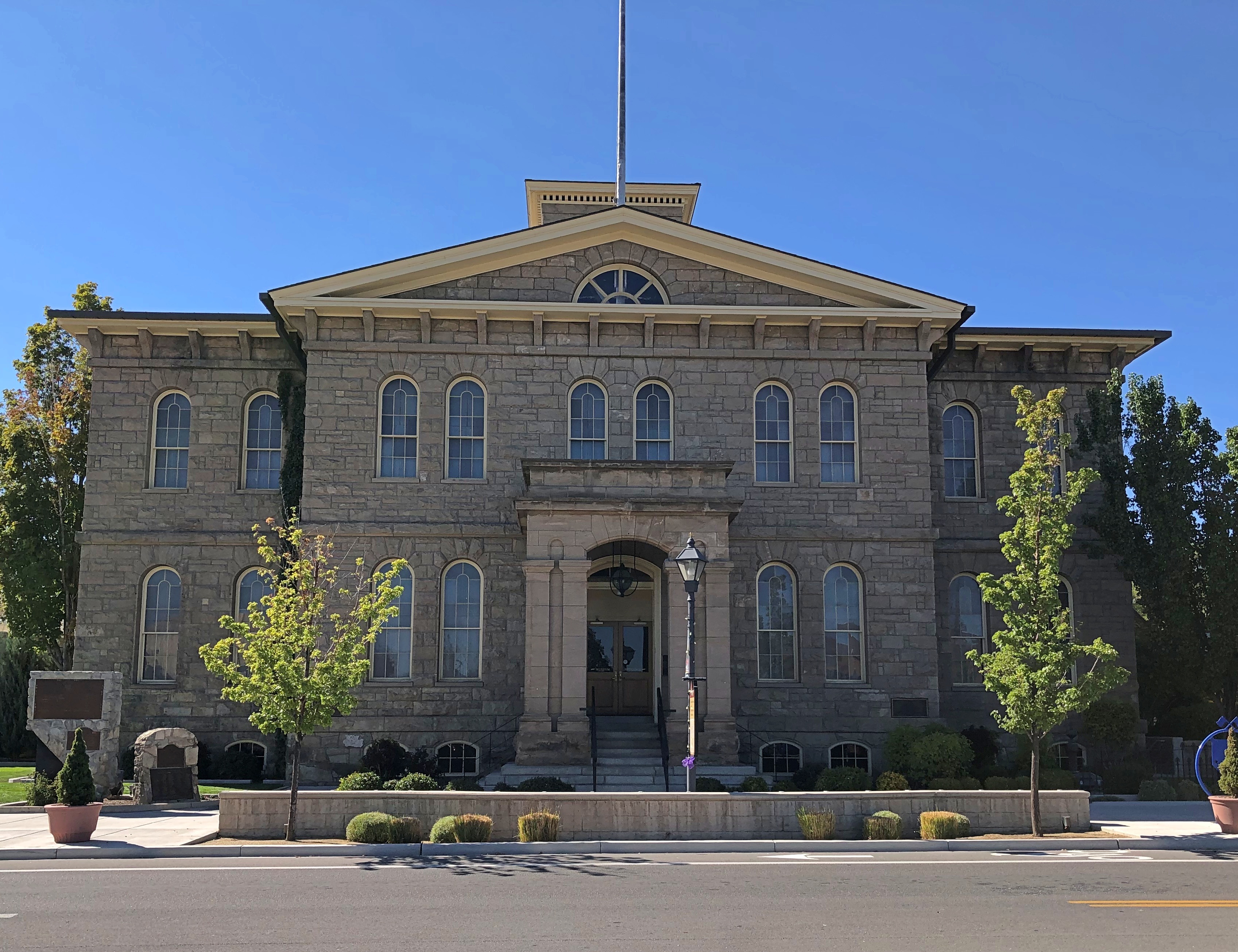
The capitol is a handsome structure, and wouldn’t look out of place as a county courthouse back east. If it were behind scaffolding.Nevada State Capitol
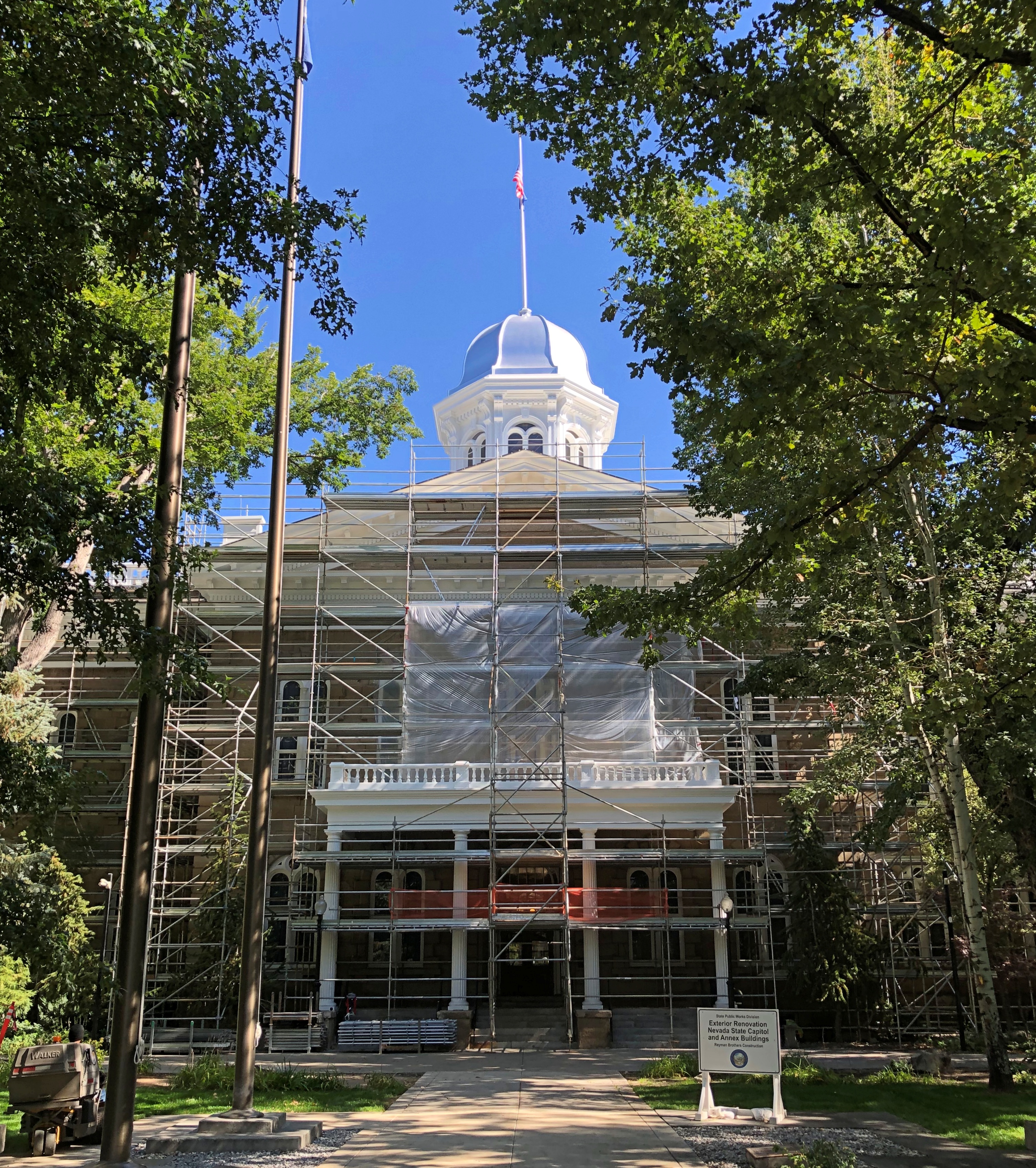
The landscaping is unusual for a capitol, which tend to be clear of trees. Not so for Nevada.Nevada State Capitol Nevada State Capitol
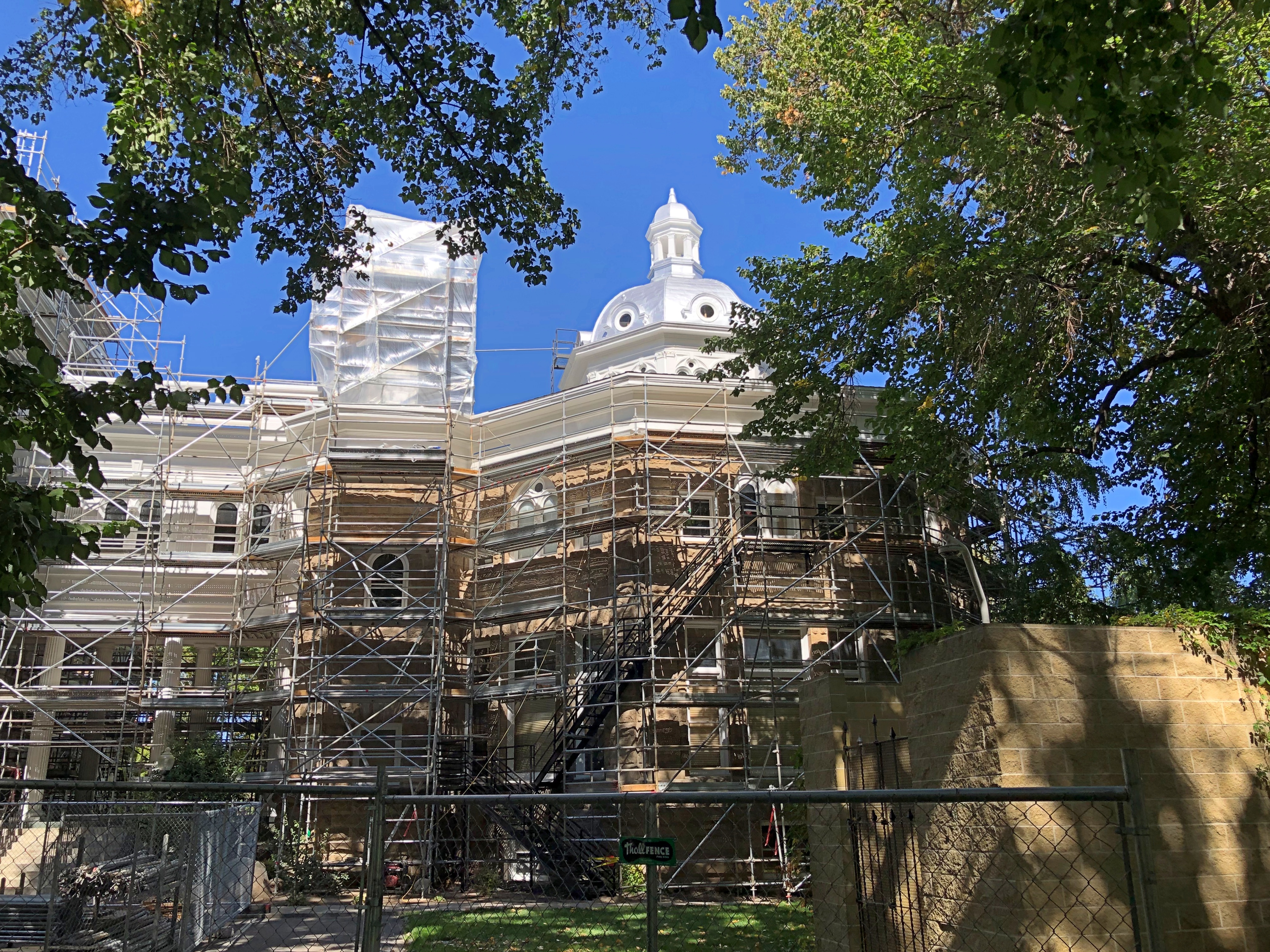
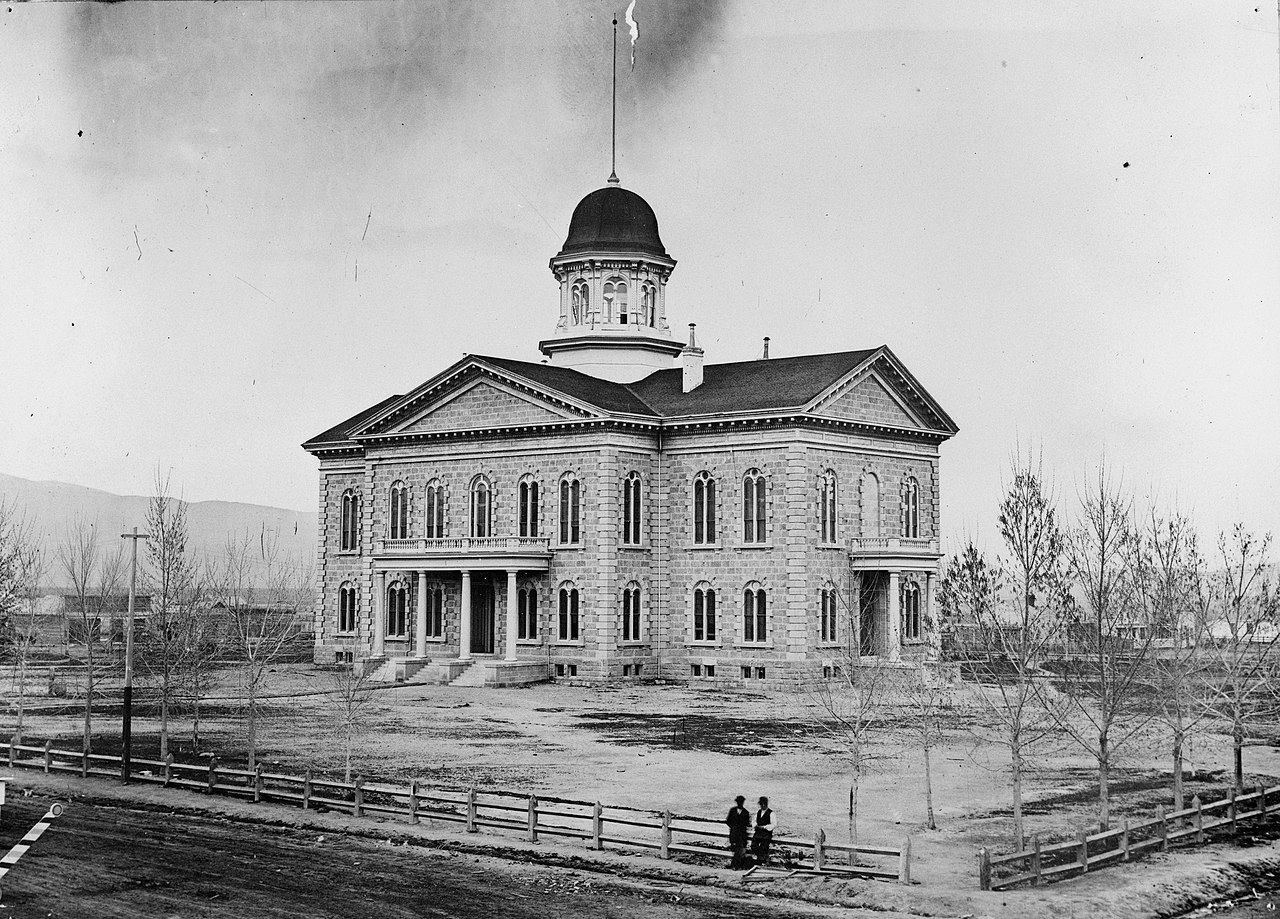
Designed by Joseph Gosling of San Francisco, who is known for a scattering of works. The capitol, completed in 1871, wasn’t always surrounded by trees, such as about 150 years ago.
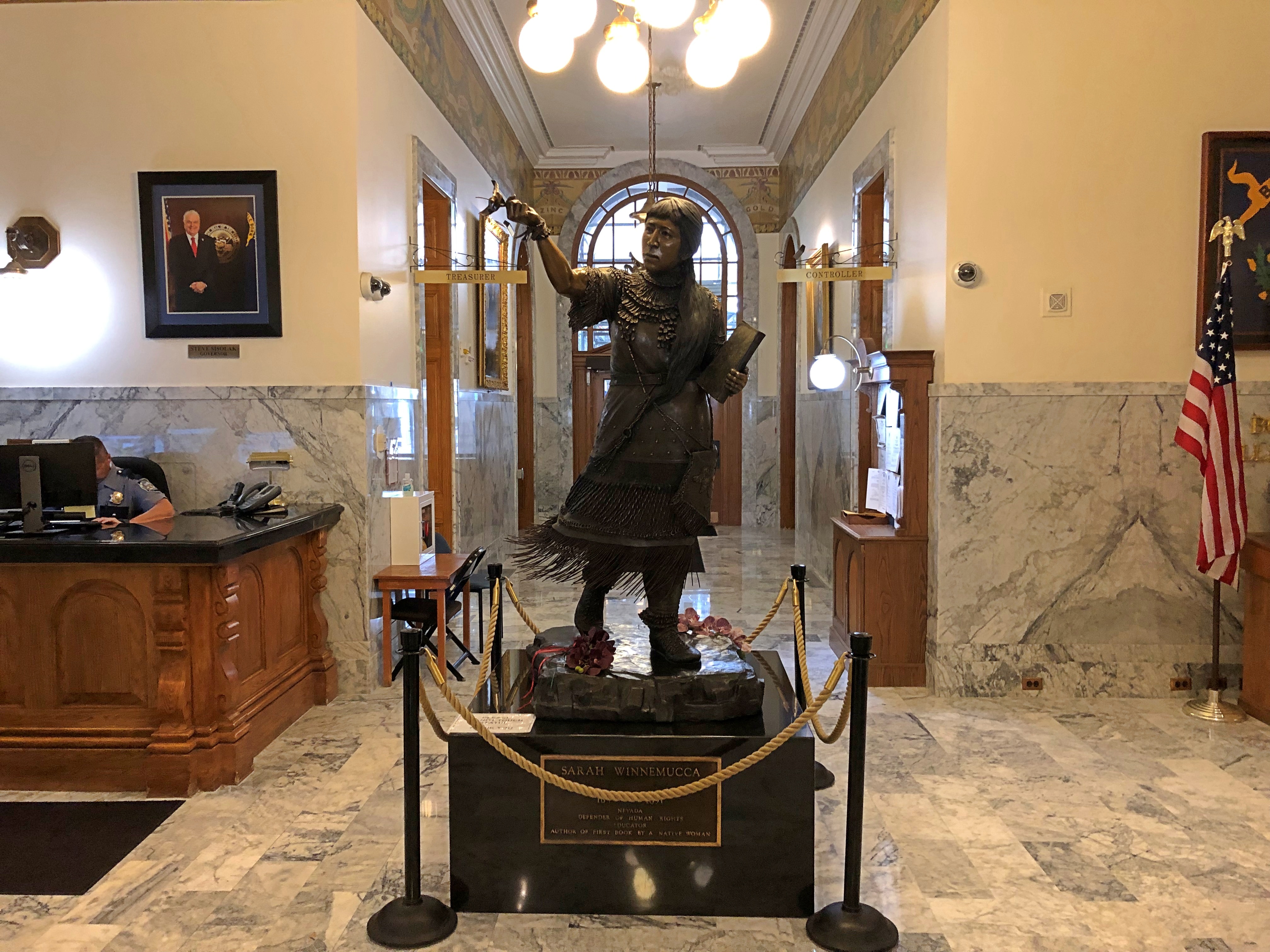
Inside, no metal detectors, though there is a uniformed officer at the desk. There’s also a bronze of Sara Winnemucca Hopkins.Nevada State Capitol
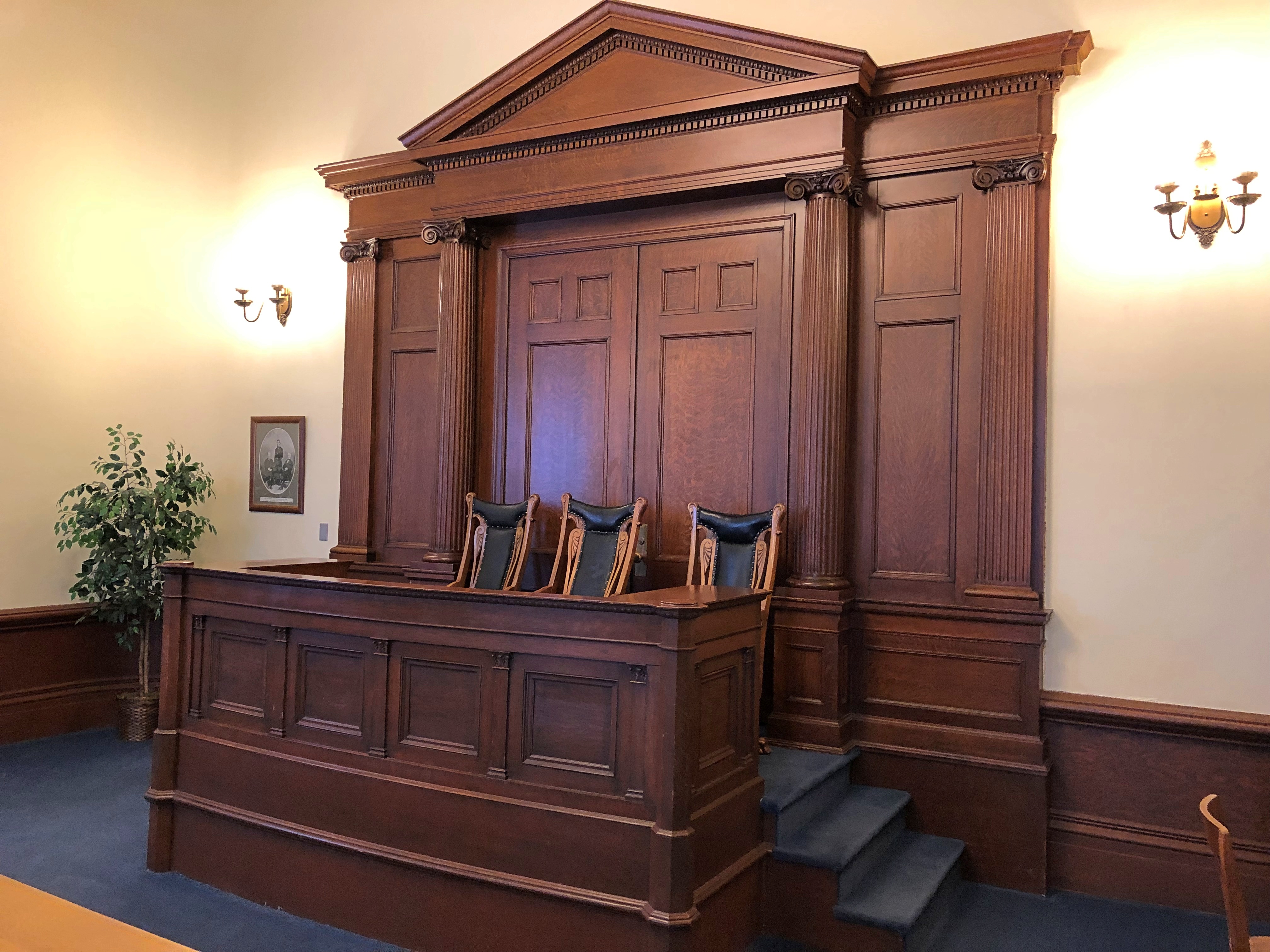
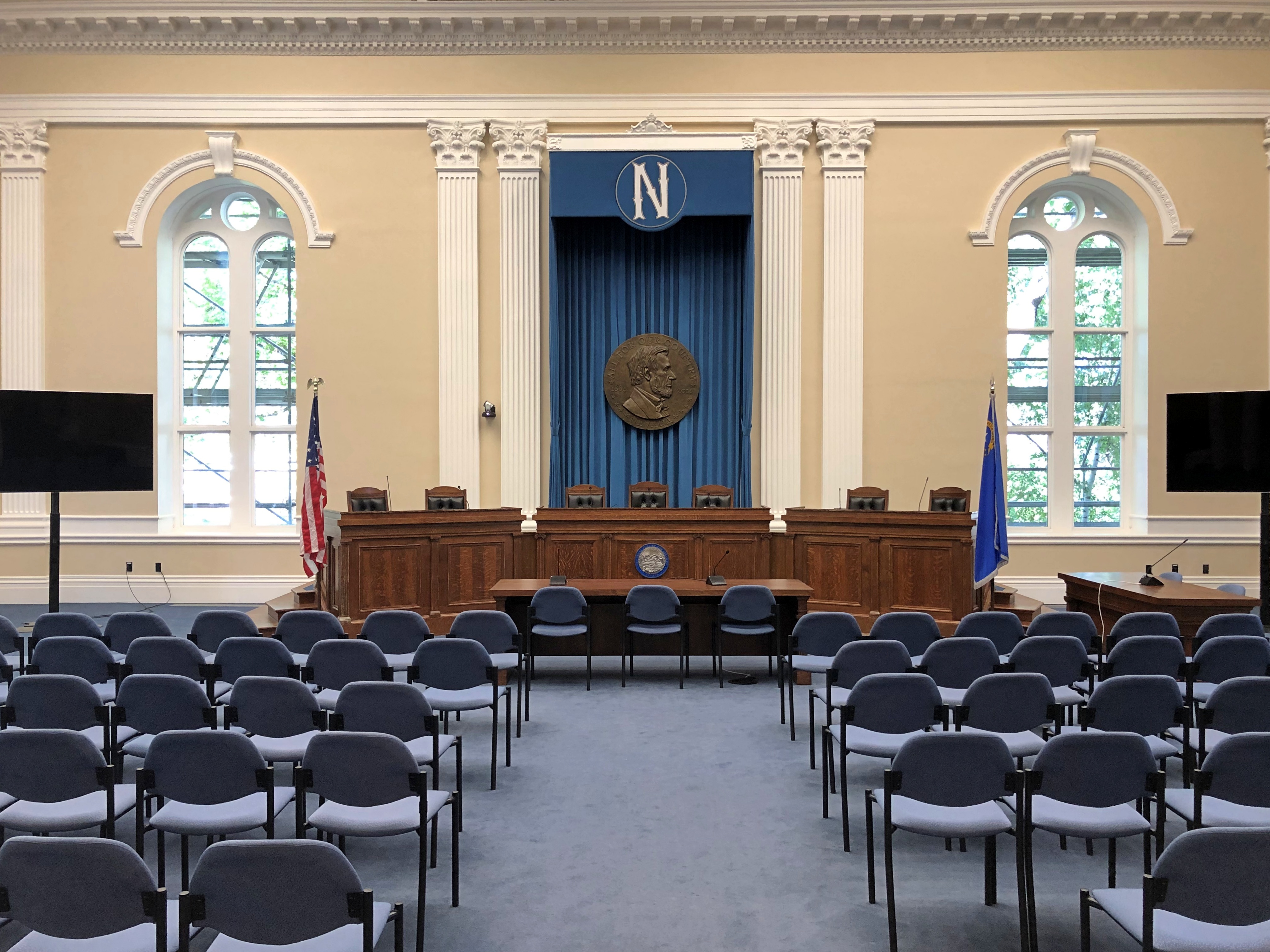
There are a few of the design elements you see in U.S. capitols, but on the whole the capitol is restrained.Nevada State Capitol Nevada State Capitol
One space is given over to museum exhibits.
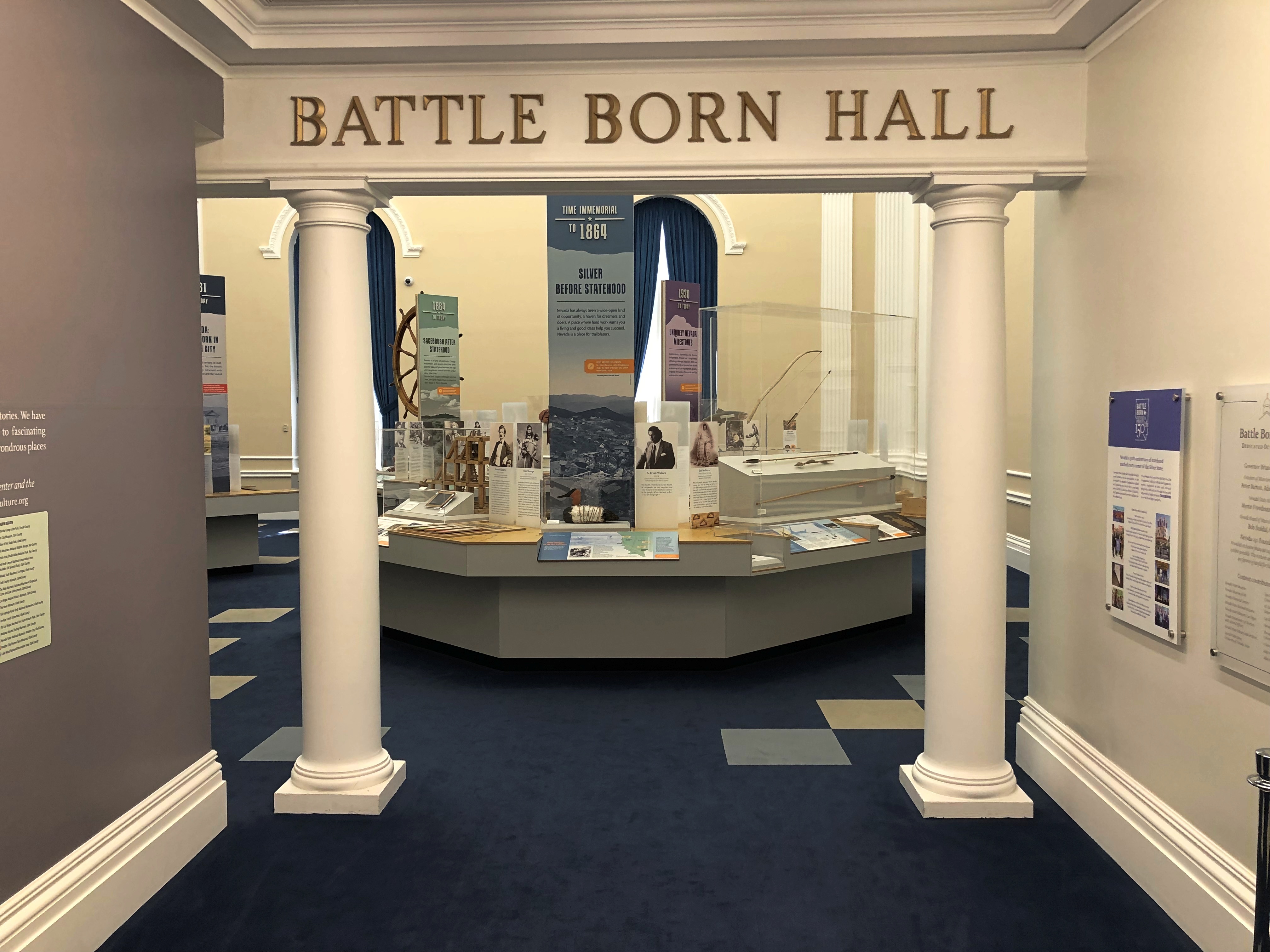
Nevada State Capitol

Featuring a number of artifacts you aren’t likely to see anywhere else.
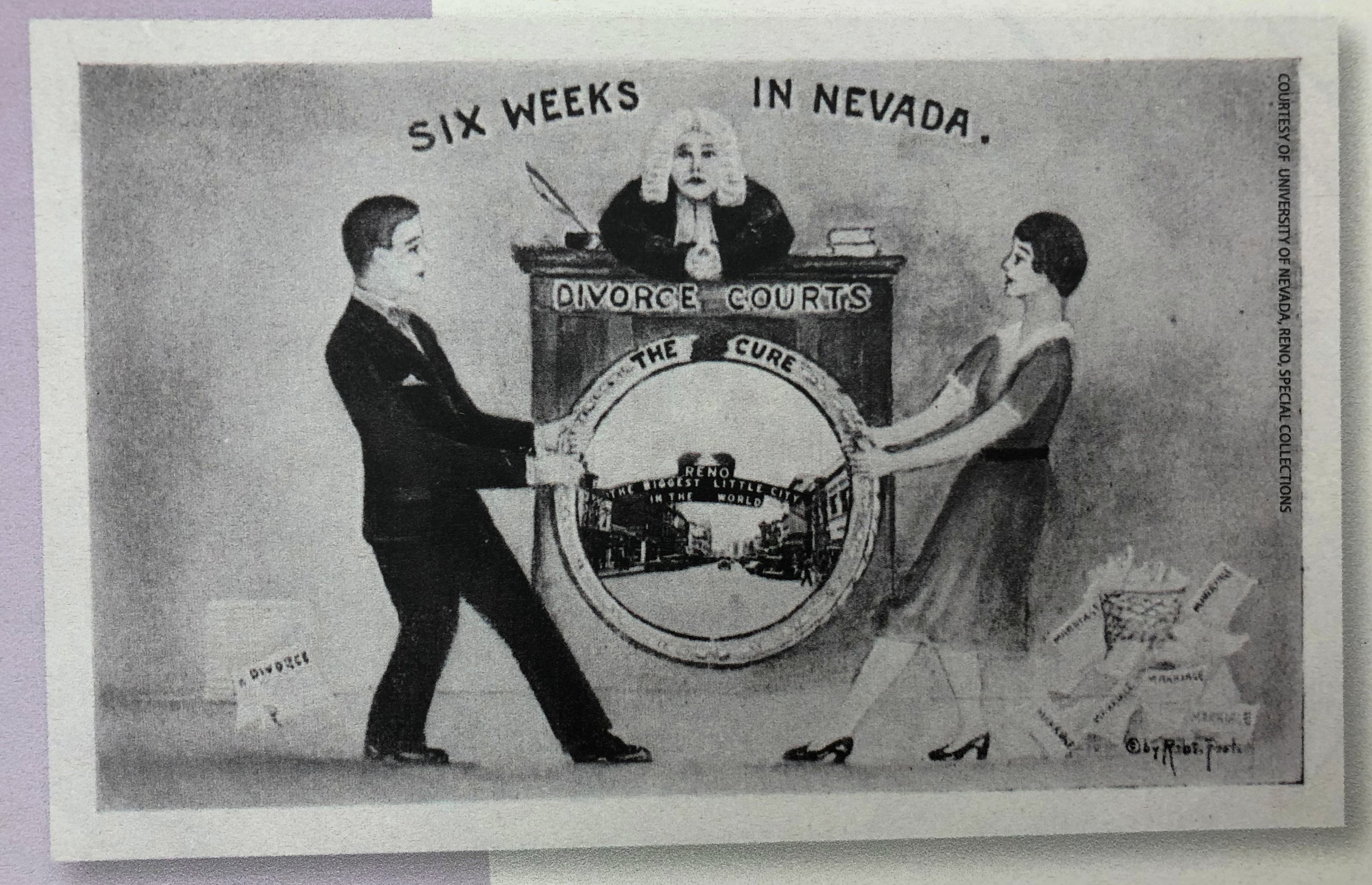
Nevada State Capitol

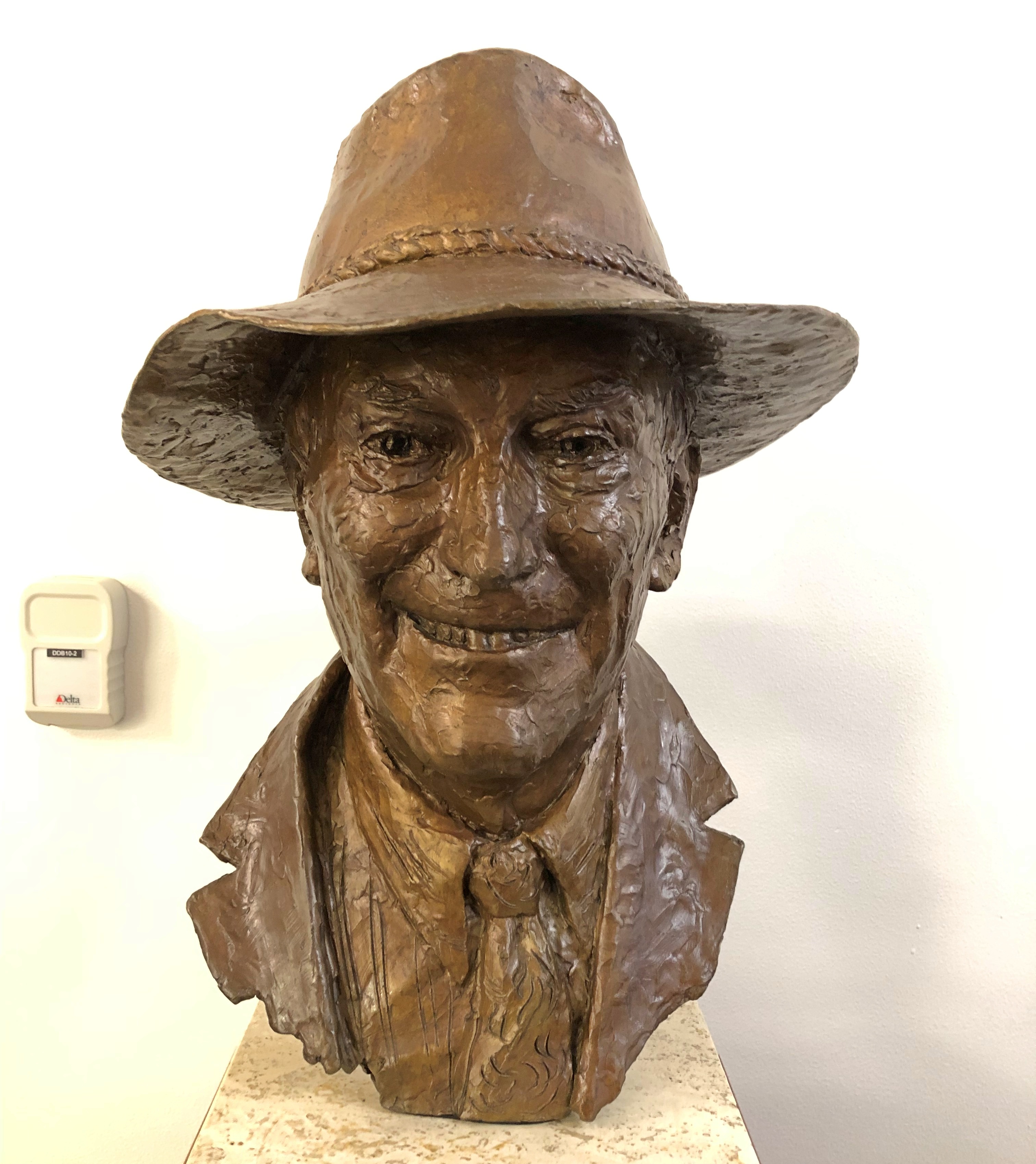
This is Guy Shipler (1913-96), once dean of the capitol press corps. Good to see a journalist honored.Nevada State Capitol
The capitol is on N. Carson St. I took a stroll down that street and a couple of connecting streets. A number of state buildings cluster around Carson St. These days, this building houses the Nevada Department of Tourism.Carson City
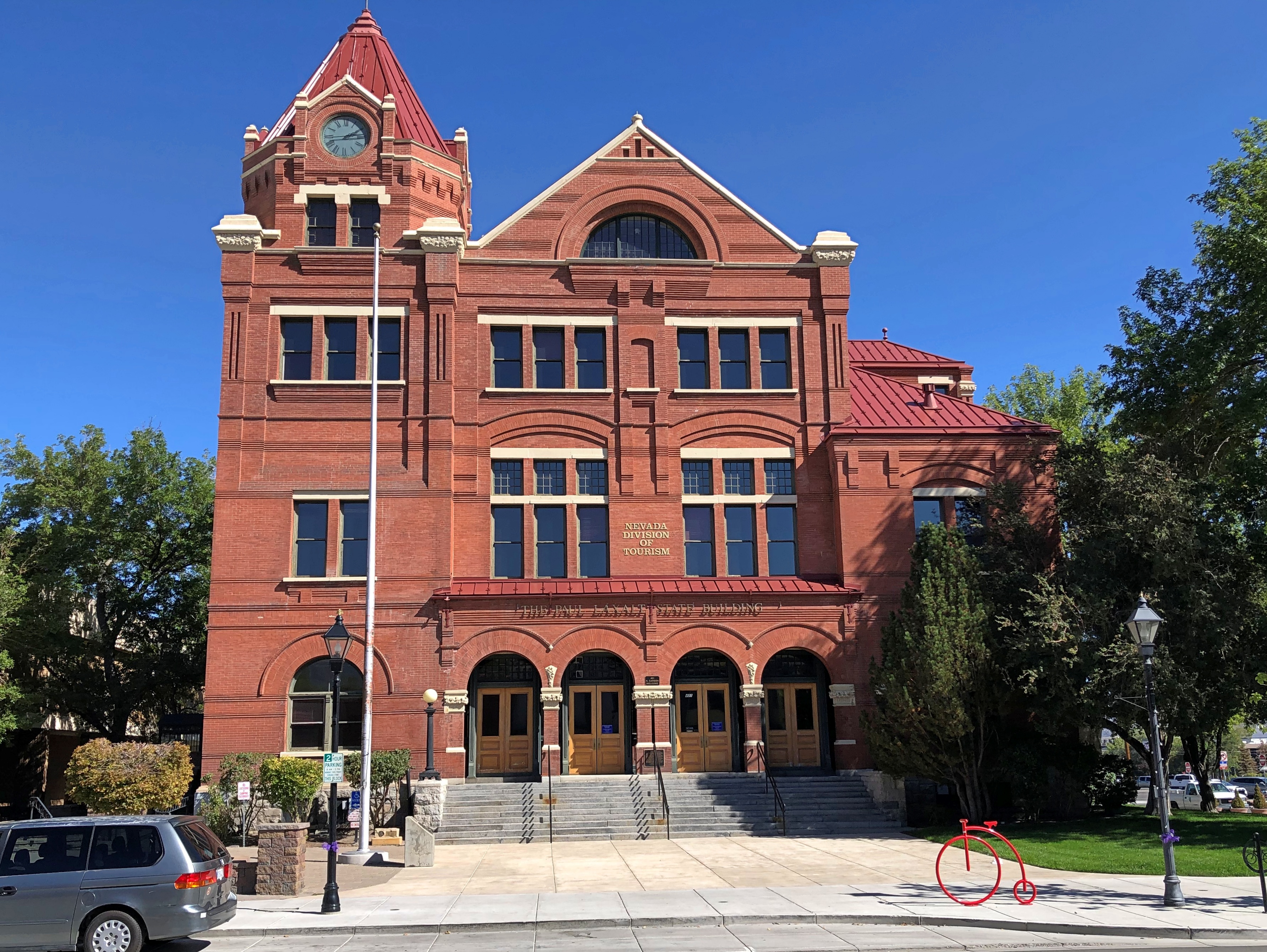
Dating from 1891 as a federal edifice, it has variously been home to the Carson City Post Office, Land Office, Weather Bureau and U.S. District Court.

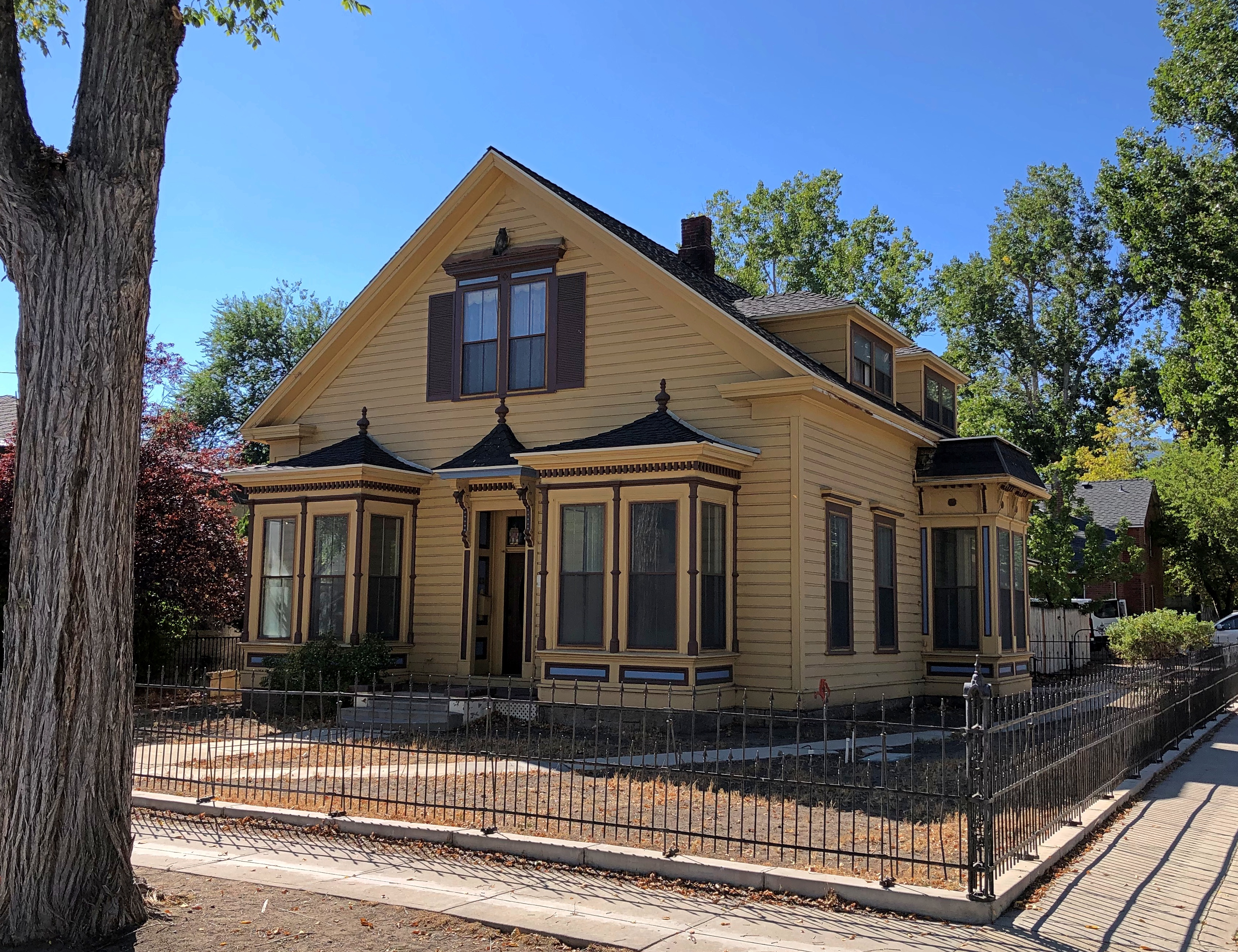
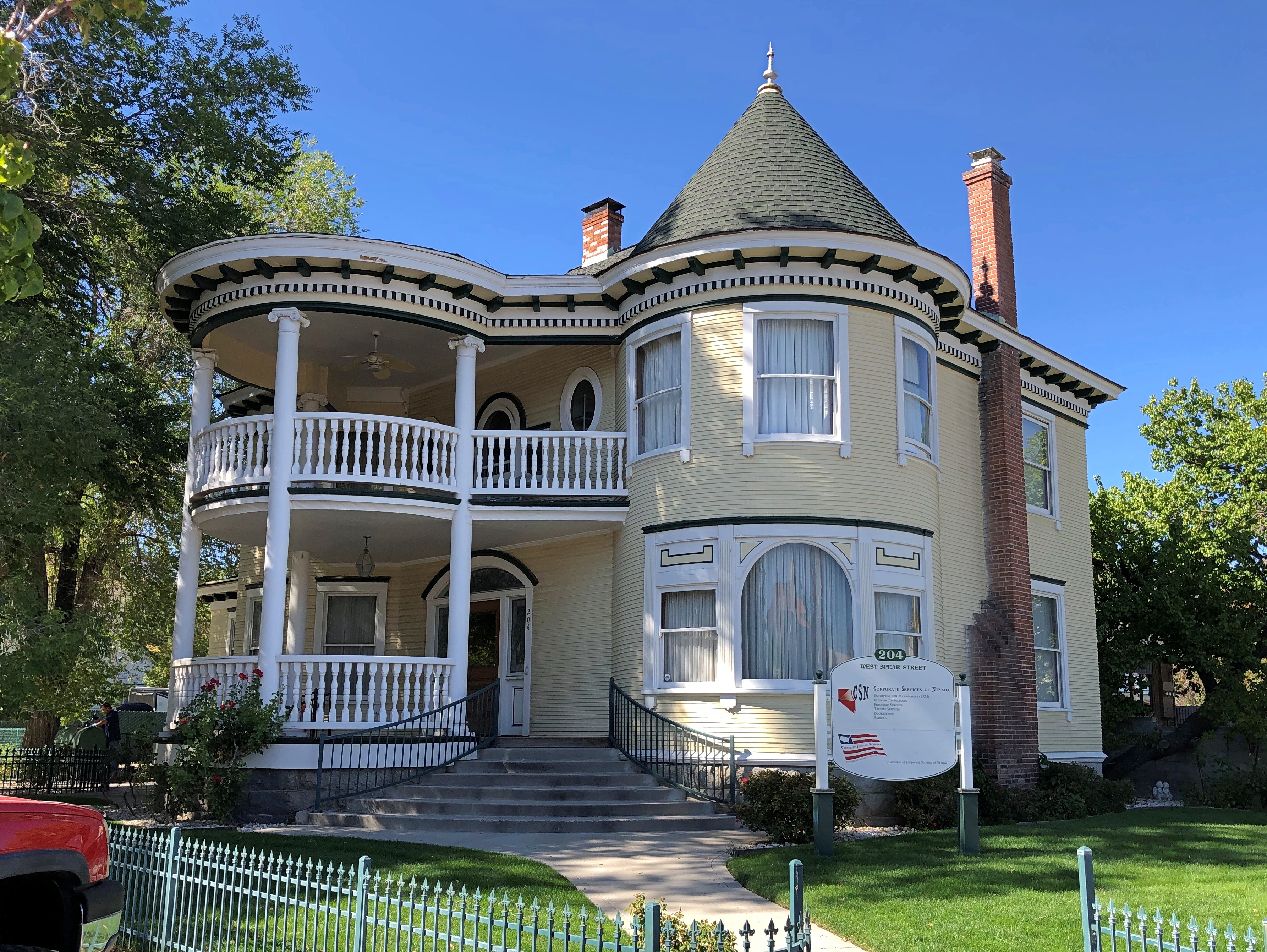
A few other Carson City buildings pleasing to the eye.Nevada State Museum Nevada State Museum
The Nevada State Museum includes this building, the former Carson City Mint. It was closed for Monday.Nevada State Museum
It’s important (to me) to list the coin types made there from 1870 to ’93. In silver: Seated Liberty dimes, 20-cent pieces, Seated Liberty quarters, half dollars, and dollars, Trade dollars and Morgan dollars. In gold: Half Eagles, Eagles and Double Eagles.
Small Insects, Big Rocket

A really pleasant evening to start September. I could sit out on the deck in a t-shirt and be quite comfortable late into the evening. These nights will be fewer and fewer in the weeks ahead.

Crickets are signing their little hearts out. Wait, do insects have hearts?

Insect Cop says: “Insects do have hearts, but they look very different to our own. The insect heart is a long, tubular structure that extends down the length of the insect body, and delivers nutrient-rich blood to the organs and tissues.

“Insects also have their own version of blood, called haemolymph. Unlike human blood, insect haemolymph does not carry oxygen and lacks red blood cells.”

Back to posting on September 6. It’s good to take Labor Day seriously and not work. We ought to have two labor days, come to think of it — add May 1 as a springtime holiday.

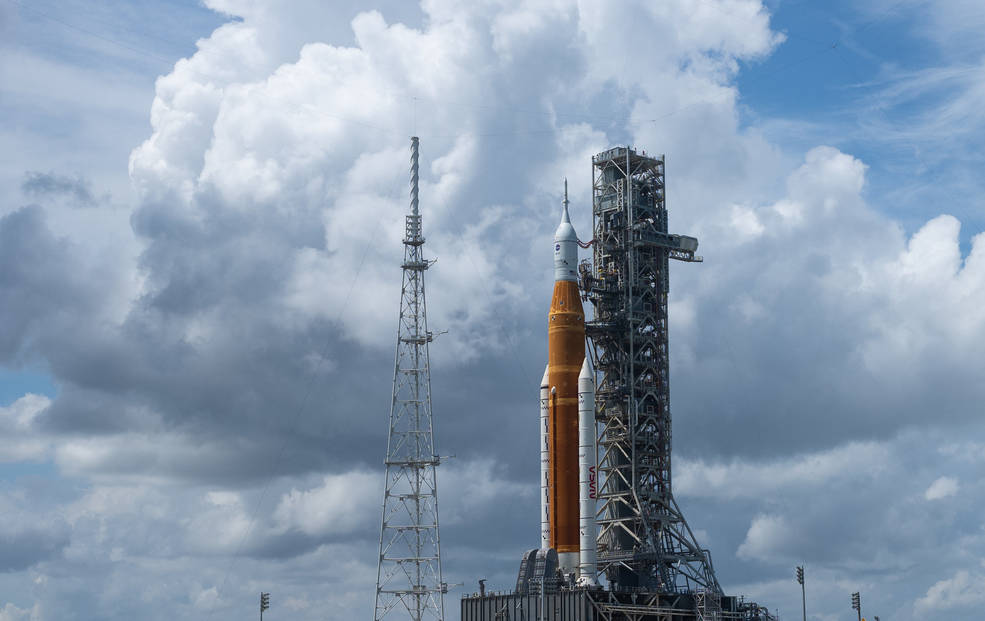
A public domain shot, lifted from NASA. Photographer: Joel Kowsky.

Hope all goes as planned. Yet I can’t help thinking — how is it so different from the Saturn V? An improvement in any way, after 50 years? Hard to say.

Why orange? Black and white were good enough for the Saturn V, after all. Turns out it’s a weight issue, and with Moon rockets, every ounce counts.

“The orange color comes from insulation that covers the vehicle’s liquid hydrogen and oxygen tanks,” noted an article published by the Planetary Society about seven years ago.

“This is the same reason that the Space Shuttle’s external fuel tank was orange. The first two shuttle flights, STS-1 and STS-2, in 1981, featured tanks painted white to protect the shuttle from ultraviolet light while sitting on the launch pad. But after engineers concluded the protection was unnecessary, the white paint was discarded, freeing up 600 pounds of weight in the process.”

One more thing, NASA. Get a better name for the rocket. Artemis and Orion are good; they go together in history and lore. But Space Launch System? That just doesn’t have the panache of Saturn.

Gas Giant Thursday

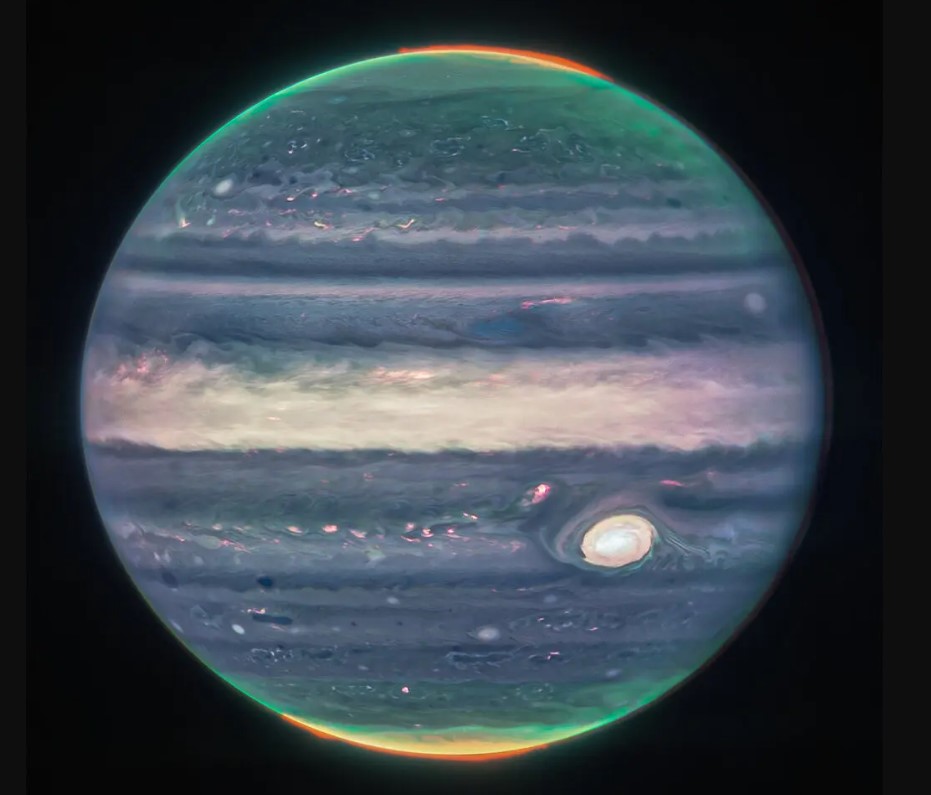
Now that’s an image. It’s been getting some attention, and for good reason. Marvel of the age. Posted here.
The entire caption, for form’s sake, since I’m not going to further investigate the technical specs of the filters:

Webb NIRCam composite image of Jupiter from three filters – F360M (red), F212N (yellow-green), and F150W2 (cyan) – and alignment due to the planet’s rotation. Credit: NASA, ESA, CSA, Jupiter ERS Team; image processing by Judy Schmidt.

I saw a video clip about these Webb images today — produced by some local news outfit — and Jupiter was called “fifth rock from the sun.” Had a nit to pick with that, right away. Pretty big nit, actually, consider that Jupiter’s equatorial diameter is about 88,900 miles. The planet isn’t called a gas giant for nothing.

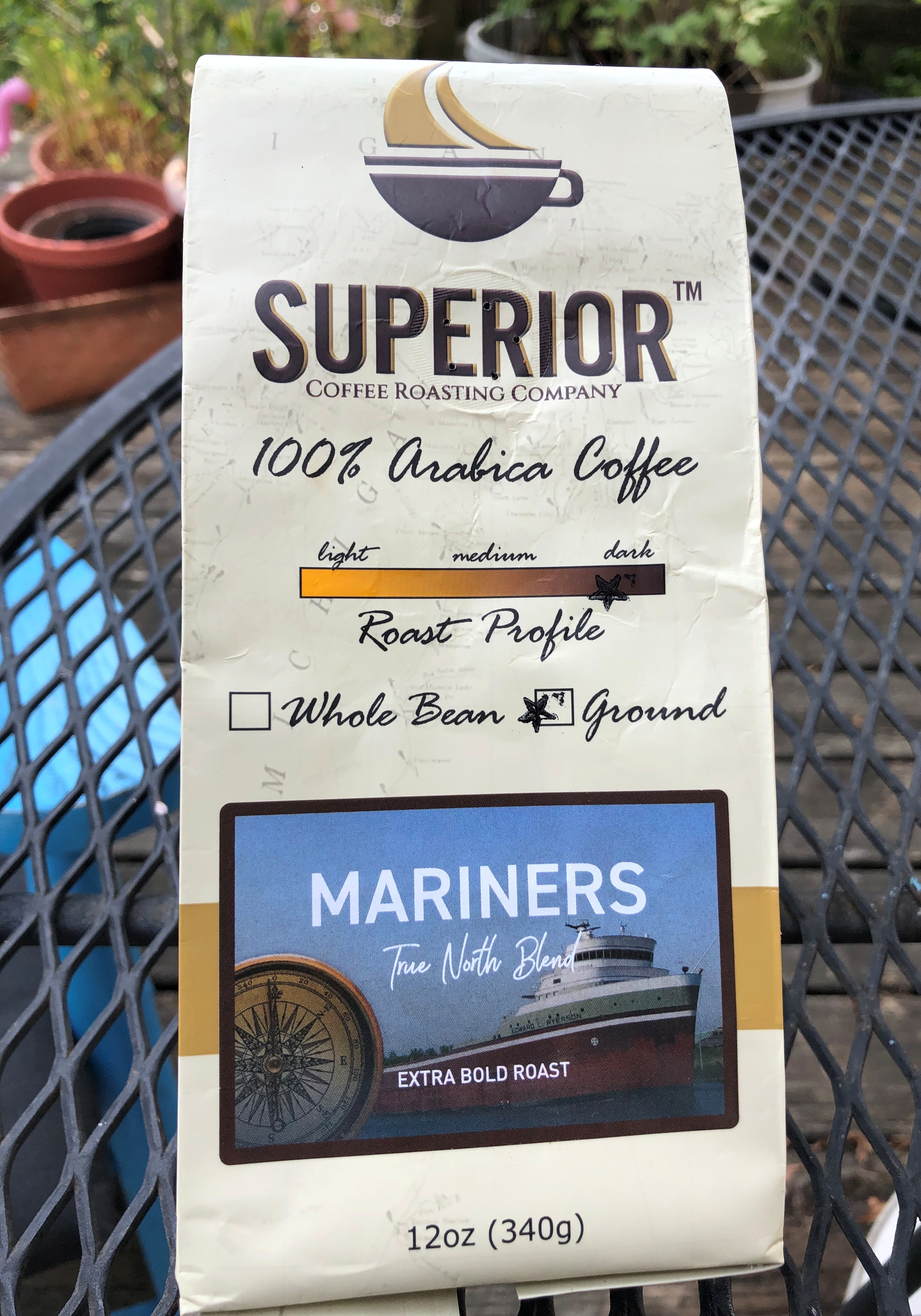
The following are couple of physical leftovers from the Michigan trip, acquired at grocery stores along the way. In both cases, my friends left the unused portion behind with us, and we’ve used them up in the weeks since. Such as the ground coffee. They said it was good, and Yuriko agrees.

Superior Coffee Roasting Co. is in Sault Ste. Marie, state of Michigan side.

The coffee bag got me thinking. Just how many ore carriers are their plying the Great Lakes these days? The Great Lakes Shipwreck Museum didn’t mention that, or at least that I saw. But the answer isn’t hard to find in our Internet-linked times.

More than 100 freighters transport iron ore across the Great Lakes, a combination of U.S.- and Canadian-flagged, and international carriers, according to an article published by the Great Lakes Seaway Partnership in 2019.

Citing the Iron Mining Association of Minnesota, the article also notes “more than 80 percent of the nation’s iron is mined in Minnesota, and that ore accounts for nearly 60 percent of shipments leaving the Duluth port. Iron ore led the port’s exports in the last year [2018], with 21.5 million tons shipped — the most transported from Duluth-Superior in a single season since 1995.”

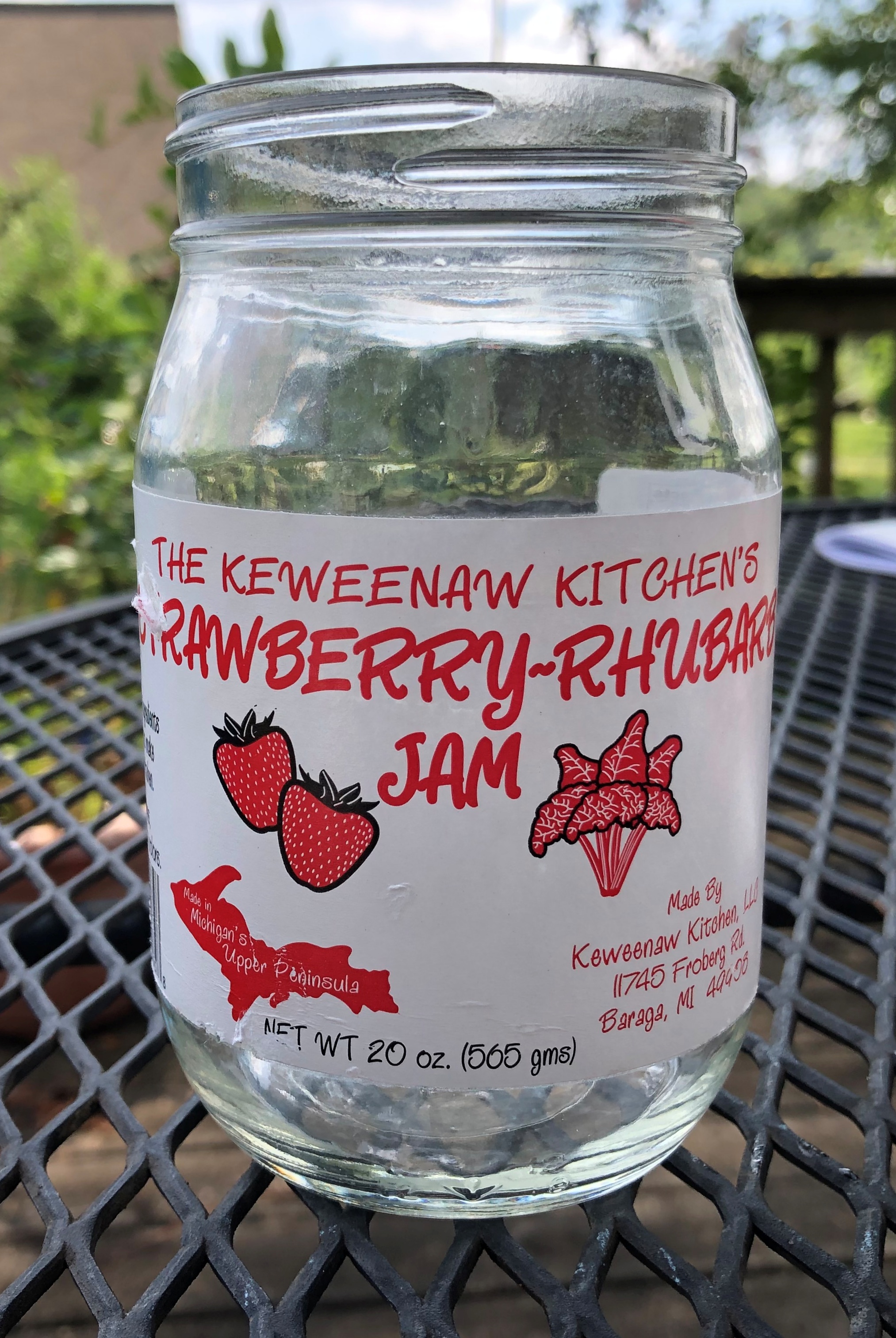
Next, strawberry-rhubarb jam. Gone, as you can see. Much of it put on my breakfast breads this month. Wonderful sweetness. From Keweenaw Kitchens of Baraga, Michigan, on L’Anse Bay on Lake Superior.

Good travel writing can be hard to find. I came across this text the other day, when looking for useful information about a particular small U.S. city, Z.

Are you ready to explore some of the most AMAZING things to do in Z?

All caps doesn’t inspire confidence, but let’s carry on.

The perfect blend of unrivaled nature and diverse culture, Z is one of [state name]’s most vibrant and eclectic towns.

Interesting choice of adjective to go with “nature”: unrivaled. I’ve never been to this city, but I’m sure its “nature” is interesting enough, maybe even beautiful. Much else surely rivals it, though.

As a buzzing college town, Z offers an abundance of events and activities as well as being the perfect melting pot of different states from across America.

The only bit of useful information in that sentence is the fact that Z is a college town; but I already knew that, and so do many other people.

Not only is Z a hive of activity and excitement, the town also offers some of the most spectacular nature to be found in [state name].

This unique town is one not to be missed and with so many things to do in Z, you will certainly want to stop by.

“I’m looking for the hive of activity and excitement,” you say to the clerk at the Information booth in Z’s airport. “Could you tell me where that is?”

Well, it’s easy to mock this paint-by-numbers intro, but I might go through the slide show anyway, despite the fact that I’d support this kind of bad writing in some small way by adding to its clicks. Why? You can learn even from bad sites. I don’t know the city that well, so I’m bound to notice someplace I might want to see.

Sure enough, I did. More than one place.

Light Years Ahead

Fifty-three years ago, Armstrong, Aldrin and Collins were on their way to the Moon, an occasion to recall each July, not only for those who remember, but also those who do not. Not long ago, I happened across this remarkable video about a very specific, and well known interval of only a few minutes in that mission: the Eagle’s final approach to the lunar surface.

More specifically, the video is a lecture about what the guidance computer was doing and why during those fraught minutes, including a lot of detail that isn’t that well known. Posted by the National Museum of Computing, I was skeptical I would make it all the way through. I was wrong.

One Robert Wills, a software engineer with a clear enthusiasm for the computing that made the Apollo missions possible, tells the tale in simple enough terms — but not too simple — that a non-specialist like me can understand much of it, if not everything. No mean feat, as attested by the non-trivial number of teachers and professors who cannot do so.

I knew a fair amount of the story, but hardly all of it, and the video filled in a lot that I didn’t know. That should be the goal of any video with any claims to being educational, I believe.

An Urban Ruin Explorer

Almost a warm day. Certainly not a cold one, which felt like a relief. I didn’t have as much time outside as I wanted, though we had a good dog walk at dusk and I spent time after dark on the deck, drinking tea. Much cooler by then, but no wind at all. With a coat and cap, not bad for half an hour.

Just discovered Chris Luckhardt. A talented photographer and videographer with a specialty in urban ruins. At least, that’s my estimation of him after watching his video about looking around the abandoned City Methodist Church in Gary, Indiana. Quite a wander. I plan to watch some more of his work.

Trepidation would probably keep me from going to exactly the sort of places he goes, but I understand the impulse. A healthy sense of exploration that involves the near as much as the far.

Globes on the Move

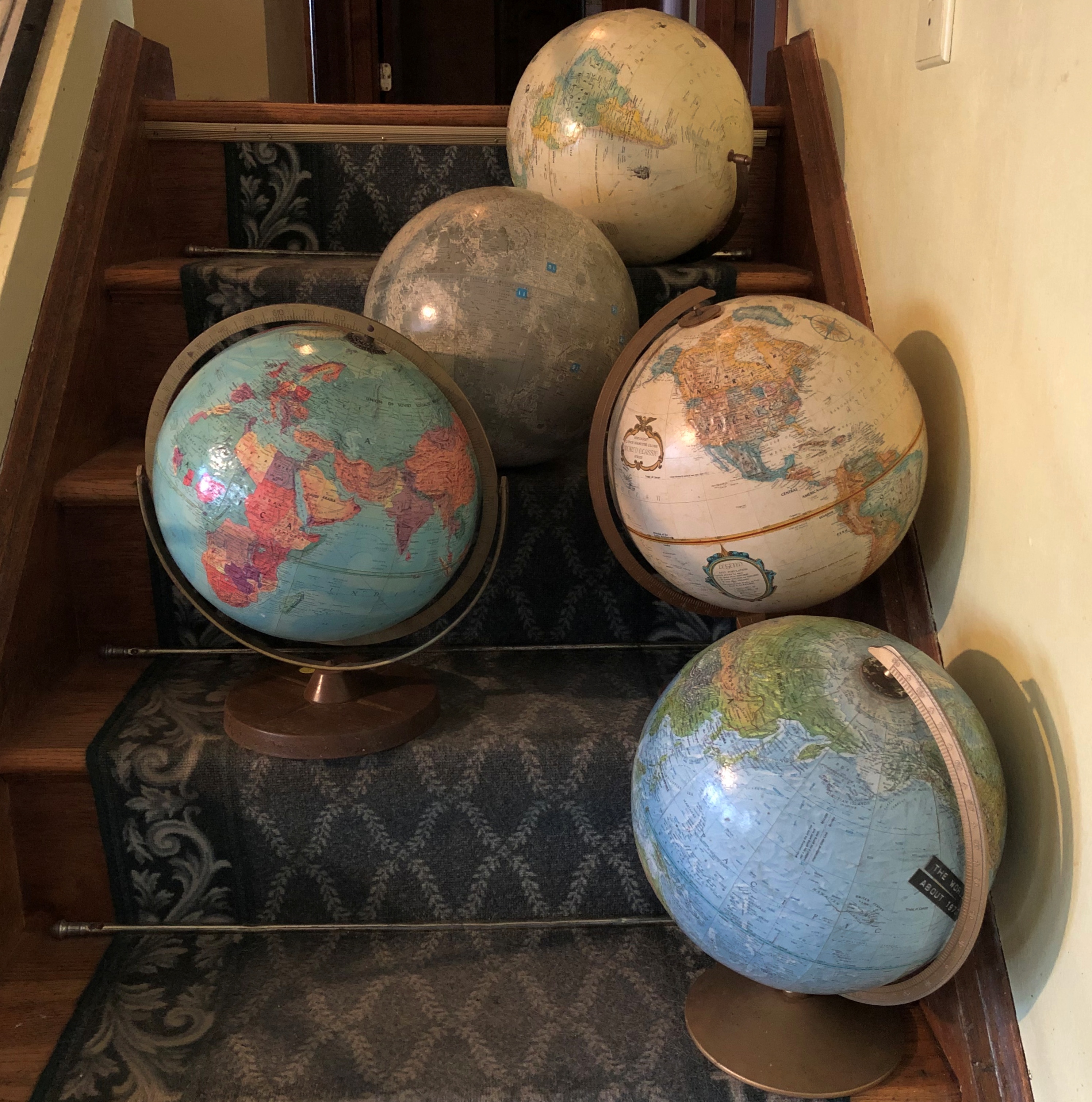
My globes migrated upstairs the other day. Five in all, acquired over the years.

Even the newest of them isn’t so new anymore, ca. 2000, missing features such as South Sudan and East Timor. The oldest globe dates from the late 1950s, including as it does a divided Germany, independent Ghana, but also French West Africa.

Another is ca. 1970, featuring most of the newly independent states of Africa, but also the Afars and the Issas and, elsewhere, East Pakistan. Yet another is from that brief window after the reunification of Germany but before the dissolution of the Soviet Union.

The Moon globe is special, acquired for me during the Apollo era. Many of the craters and other features are unnamed, but some craters have names informally given to them by Apollo astronauts, such as two honoring Charles Bassett and Elliot See. The International Astronomical Union Working Group for Planetary System Nomenclature did not, alas, retain those two, at least according to the Gazetteer of Planetary Nomenclature.

The Edsel & Eleanor Ford House

Major thunderstorm last night, especially around 10:30, when I had a mind to take out the trash. Soon my phone started making a racket. It was sounding a tornado warning. That and the lightning and the heavy rain persuaded me to postpone my outdoors task until around midnight, when the storm had blown over. Naperville, a good ways to the south, had the worst of it.

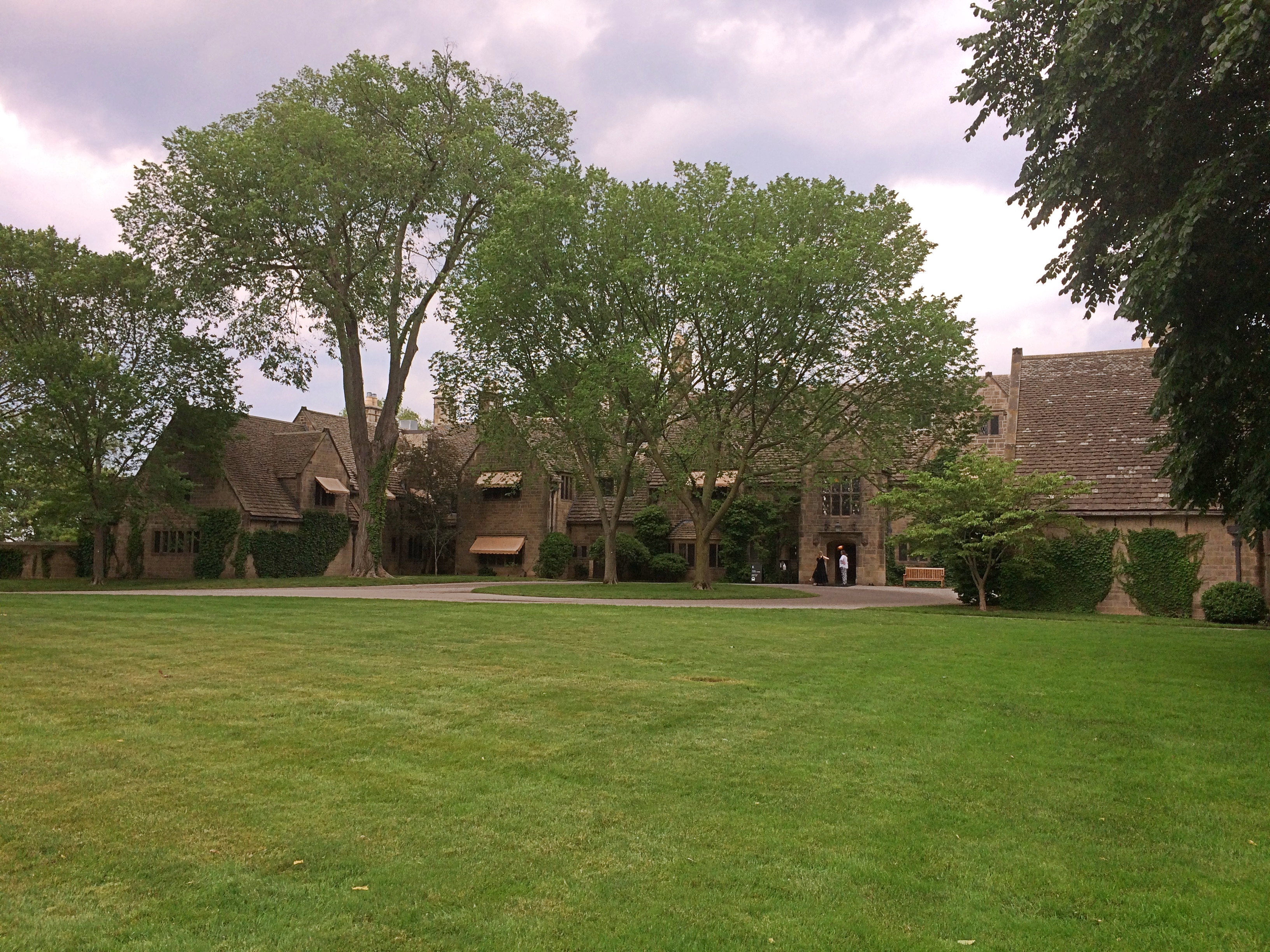
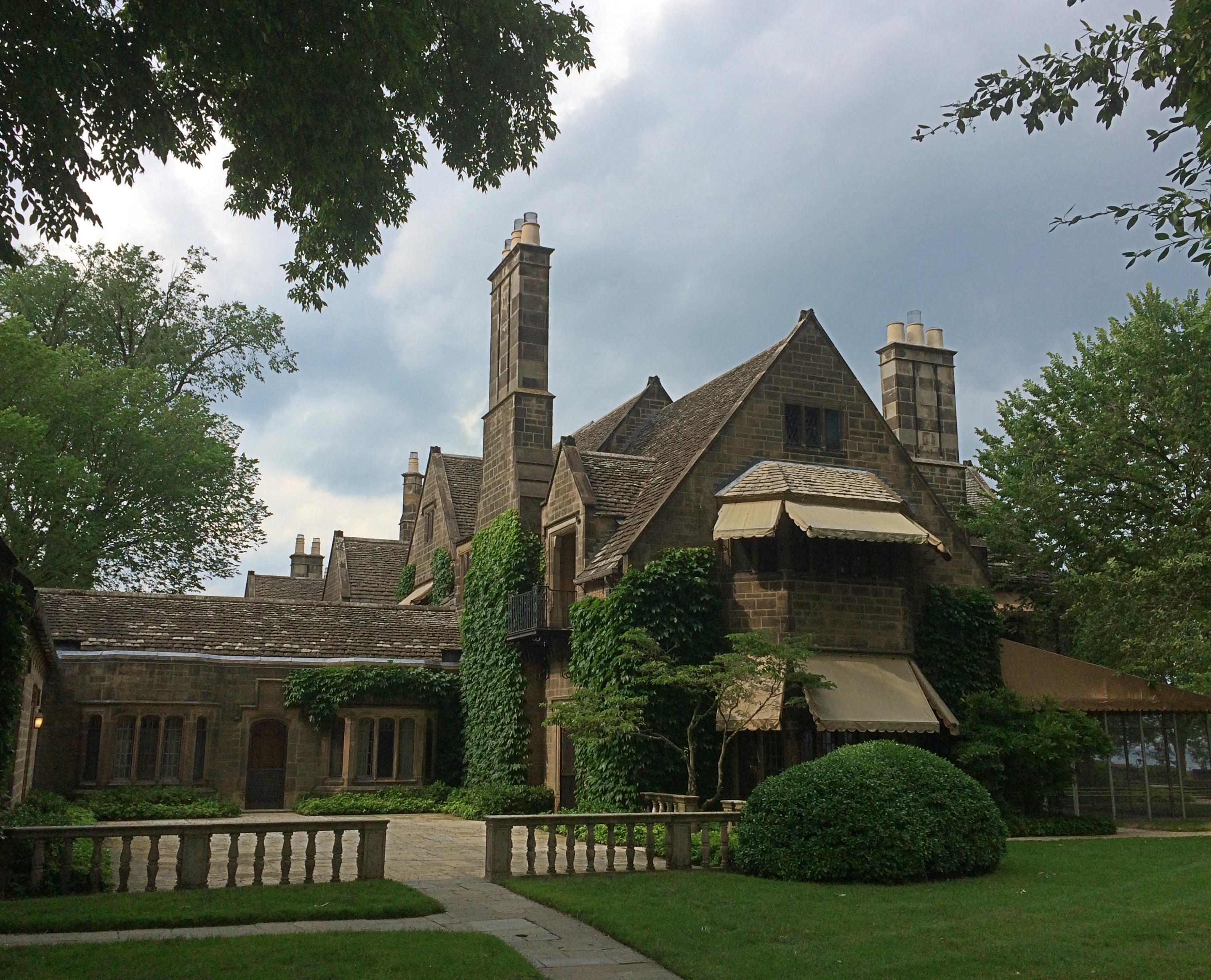
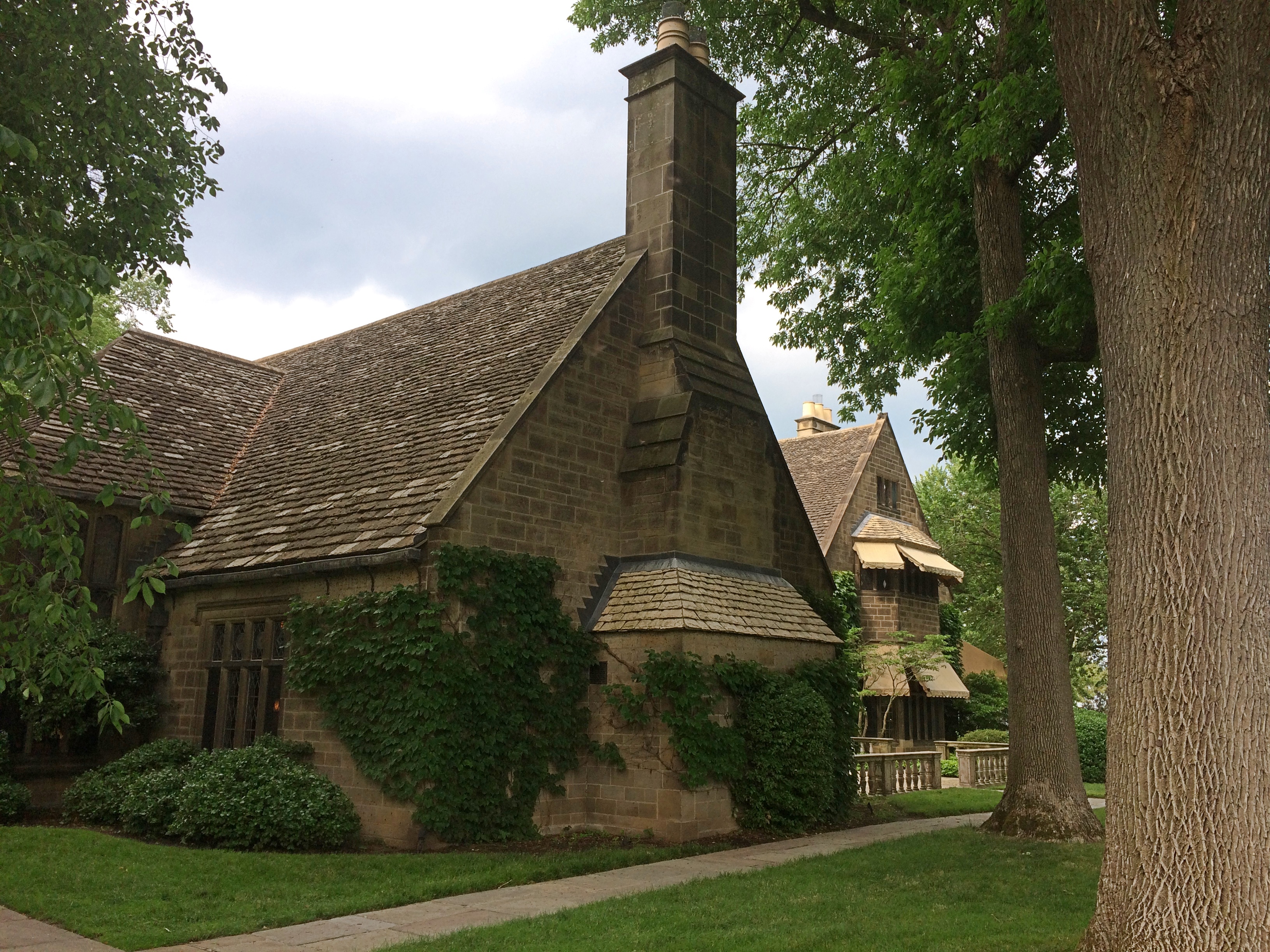
Last Friday afternoon in greater Detroit, we made our way to Grosse Pointe Shores to see the Edsel & Eleanor Ford House, a 20,000-square-foot mansion on the shore of Lake St. Clair completed in 1928. The Fords hired Albert Kahn, who seems to have done everything in metro Detroit, to design the place.Ford House, Michigan

Ford House, Michigan

Ford House, Michigan

The Fords had liked the cottages they’d seen in England, especially in the Cotswolds, including such features as stone roofs, vine-covered walls and lead-paned windows. Not only did the Ford House design reflect English inspiration, the Fords had paneling, fixtures and other bits and pieces of Old England brought over for installation in the new mansion, back when that sort of thing was possible.

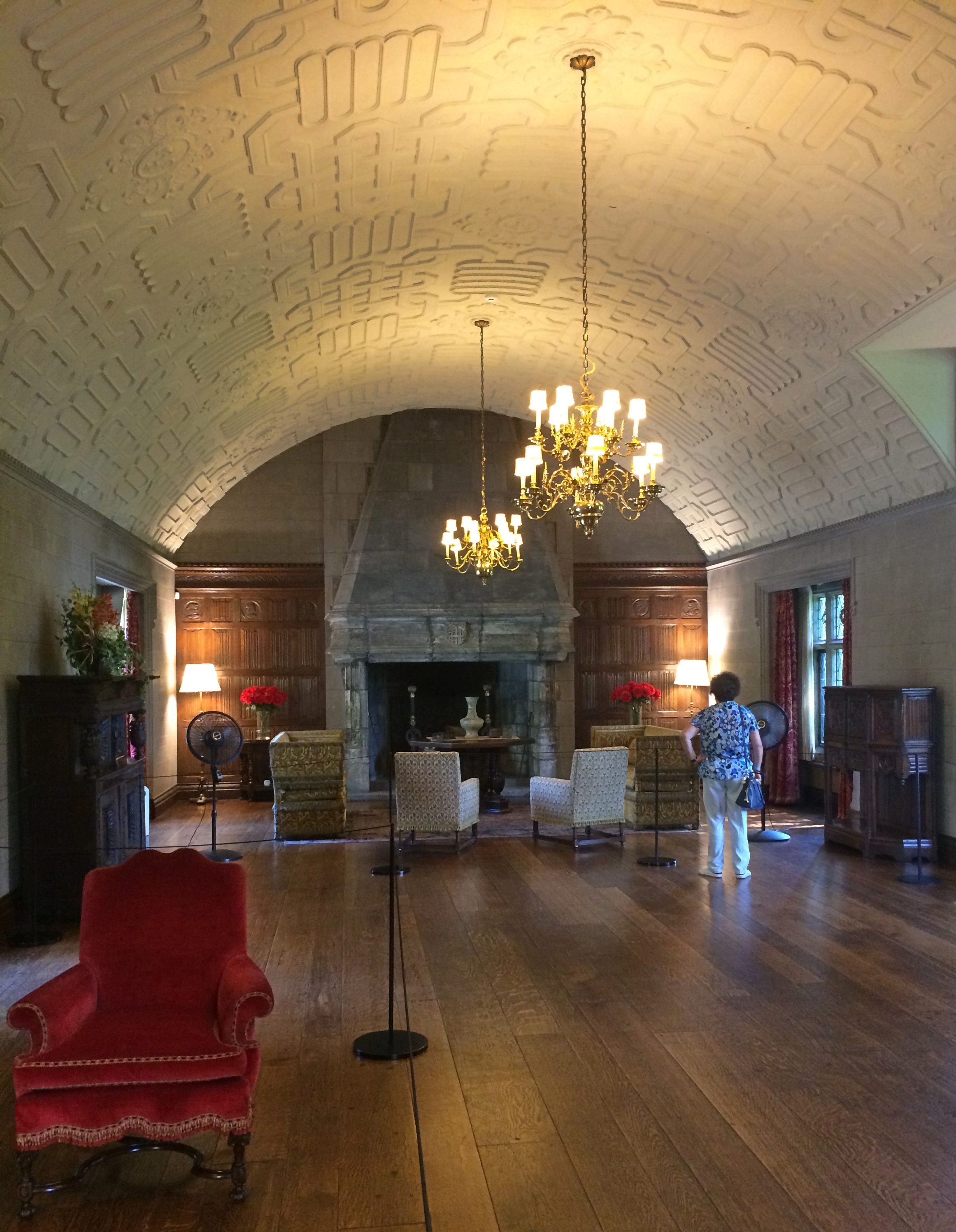
All in all, a handsome set of rooms to wander through. Such as barrel-vaulted Gallery, the largest room in the house. Sizable events were (and are) held here.Ford House, Michigan
“The Gallery… is paneled with sixteenth-century oak linenfold relief carved wood paneling,” notes Wiki. “Its hooded chimneypiece is from Wollaston Hall in Worcestershire, England; the timber-framed house had been demolished in 1925 and its dismantled elements and fittings were in the process of being dispersed… [the] barrel-vaulted ceiling for the Gallery was modeled on one at Boughton Malherbe, Kent, England.”

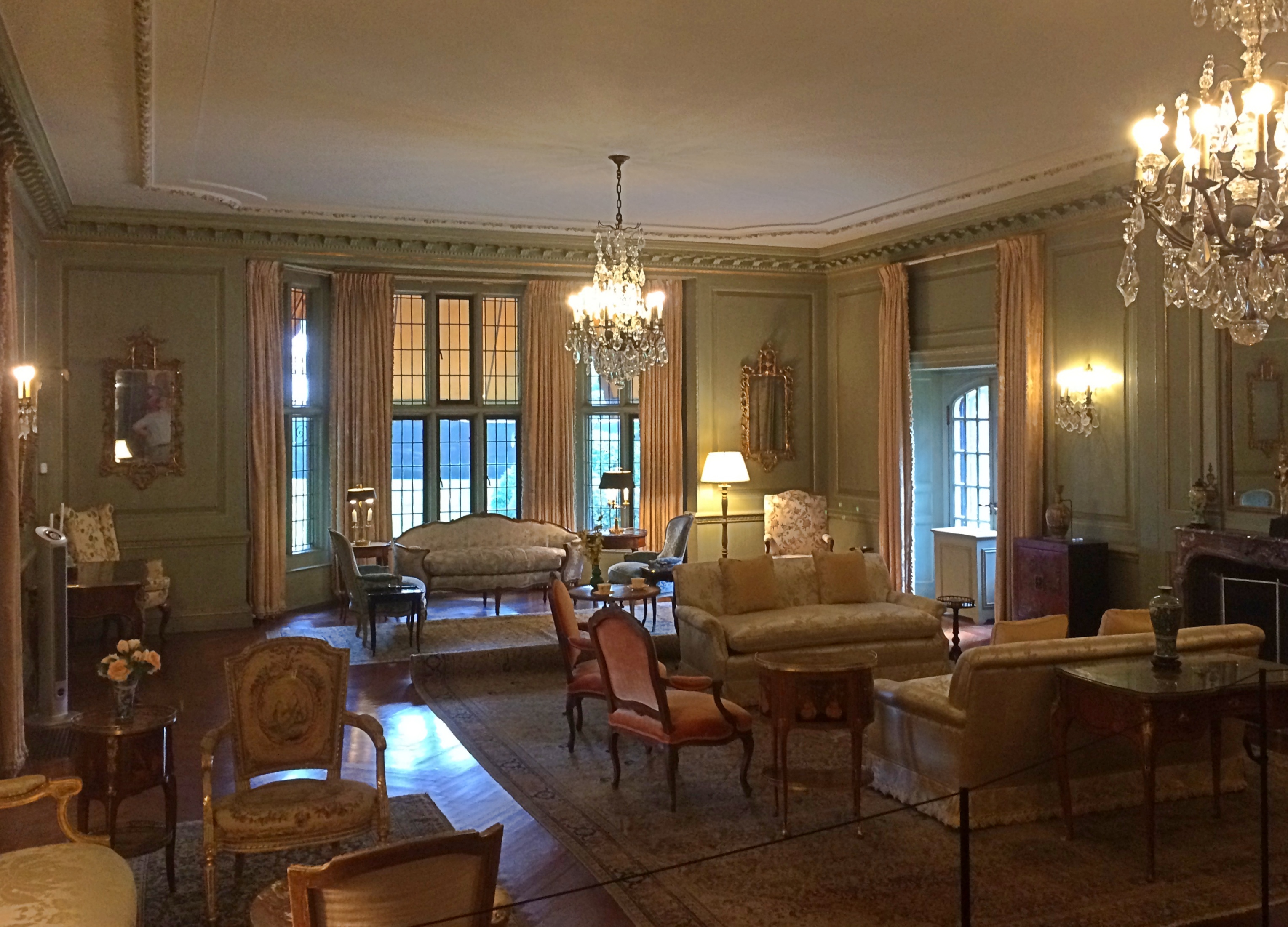
A handsome living room. Too handsome ever to be a living space, I think, and no doubt clutter wasn’t allowed, or at least the staff made sure it disappeared.
Ford House, Michigan

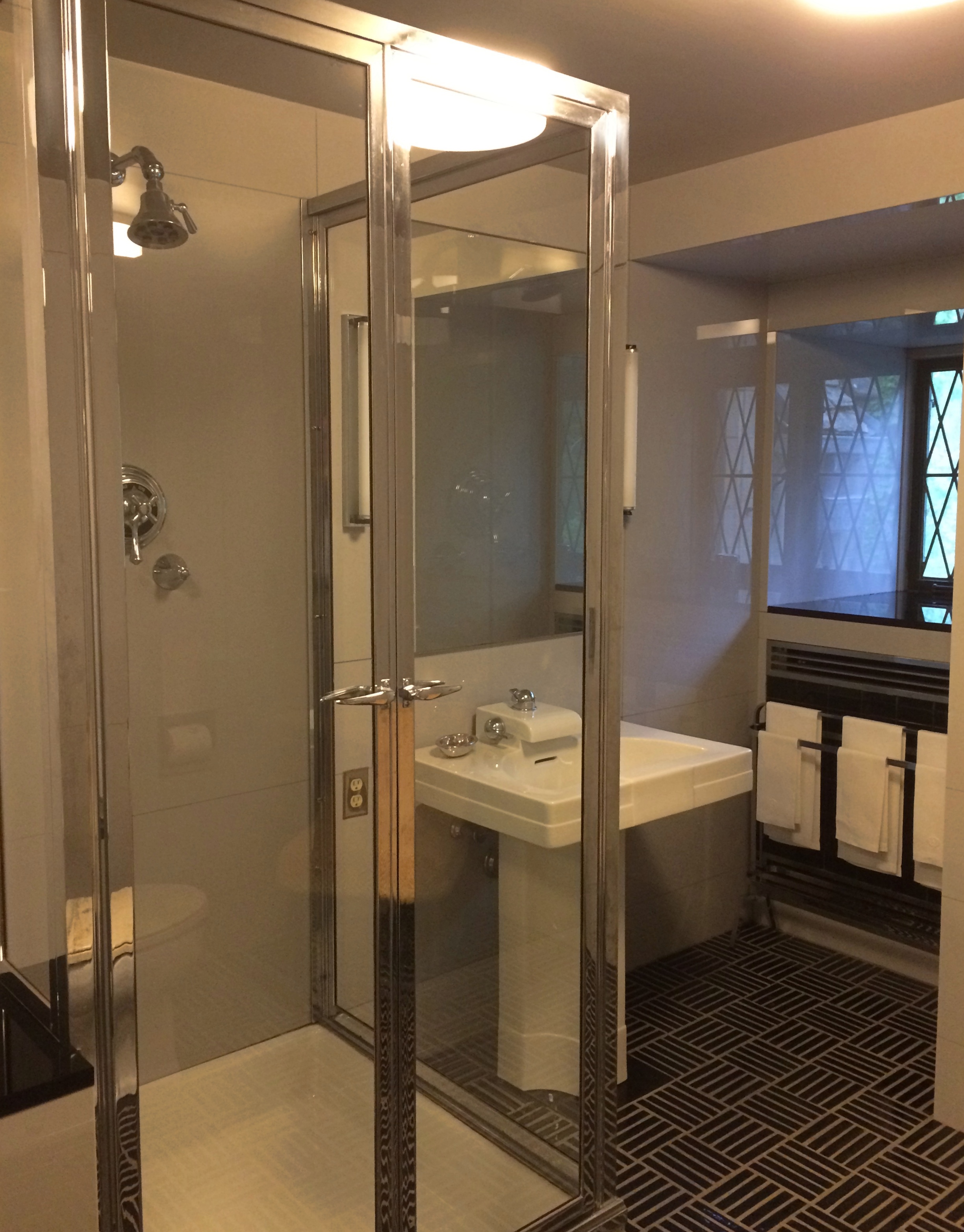
This looks more livable: an upstairs art deco bedroom, one of the more modern rooms designed by Walter Dorwin Teague. You can imagine leaving newspapers and magazines and books lying around in a room like this, with a globe or two sitting around as well. Not visible in my picture are the number of radios the Fords had built into various pieces of furniture.

Ford House, Michigan
An attached complementary bathroom.

Ford House, Michigan

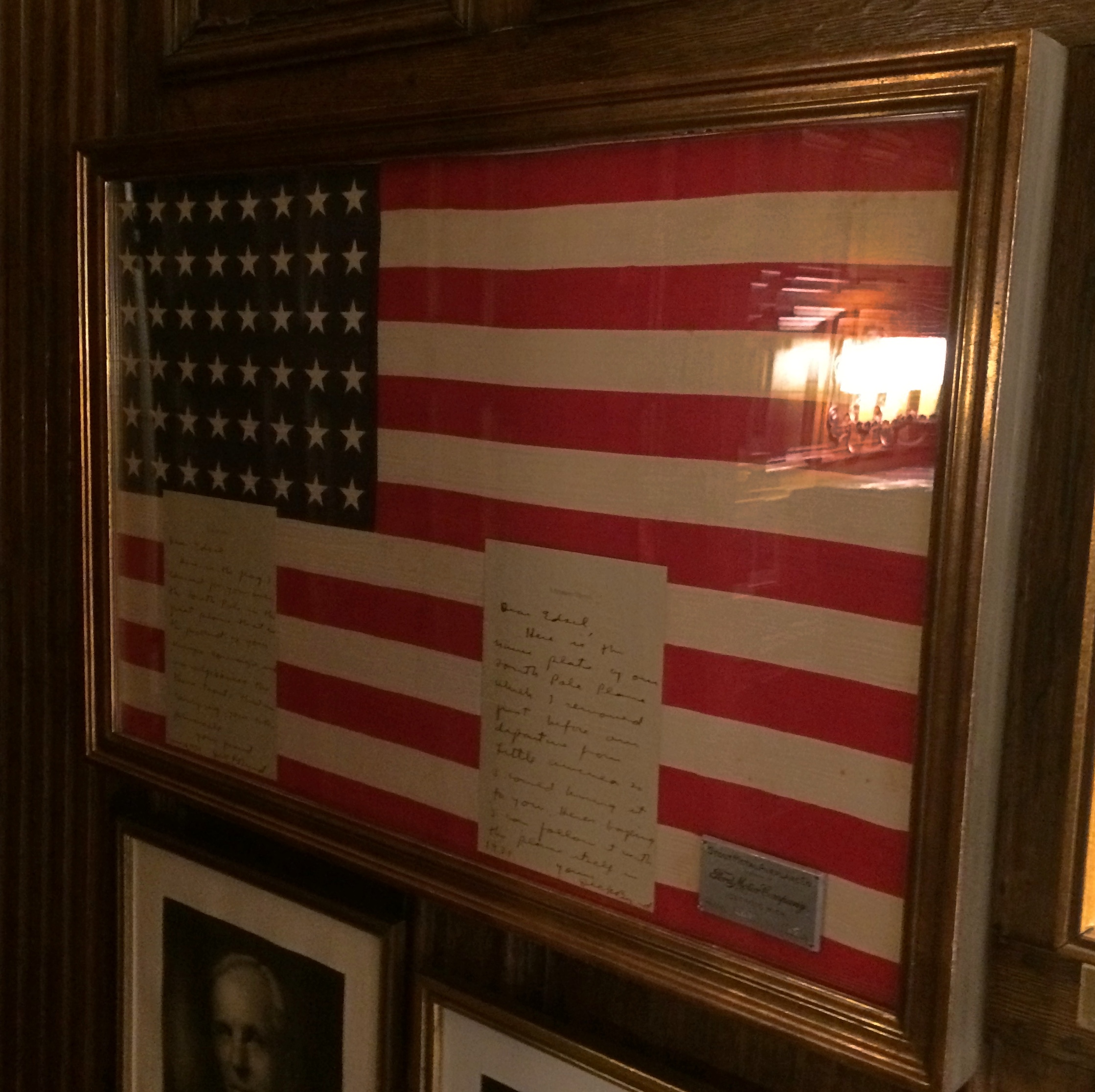
In Edsel Ford’s private office, I noticed a flag behind glass.
Ford House, Michigan

Adm. Byrd had taken the flag with him on his flight over the South Pole, and gave it to Ford — who had supported Byrd’s expedition, besides being the president of the company that built his airplane, a Ford trimotor — along with a handwritten letter. In another part of house is a flag Byrd took with him on his North Pole expedition.

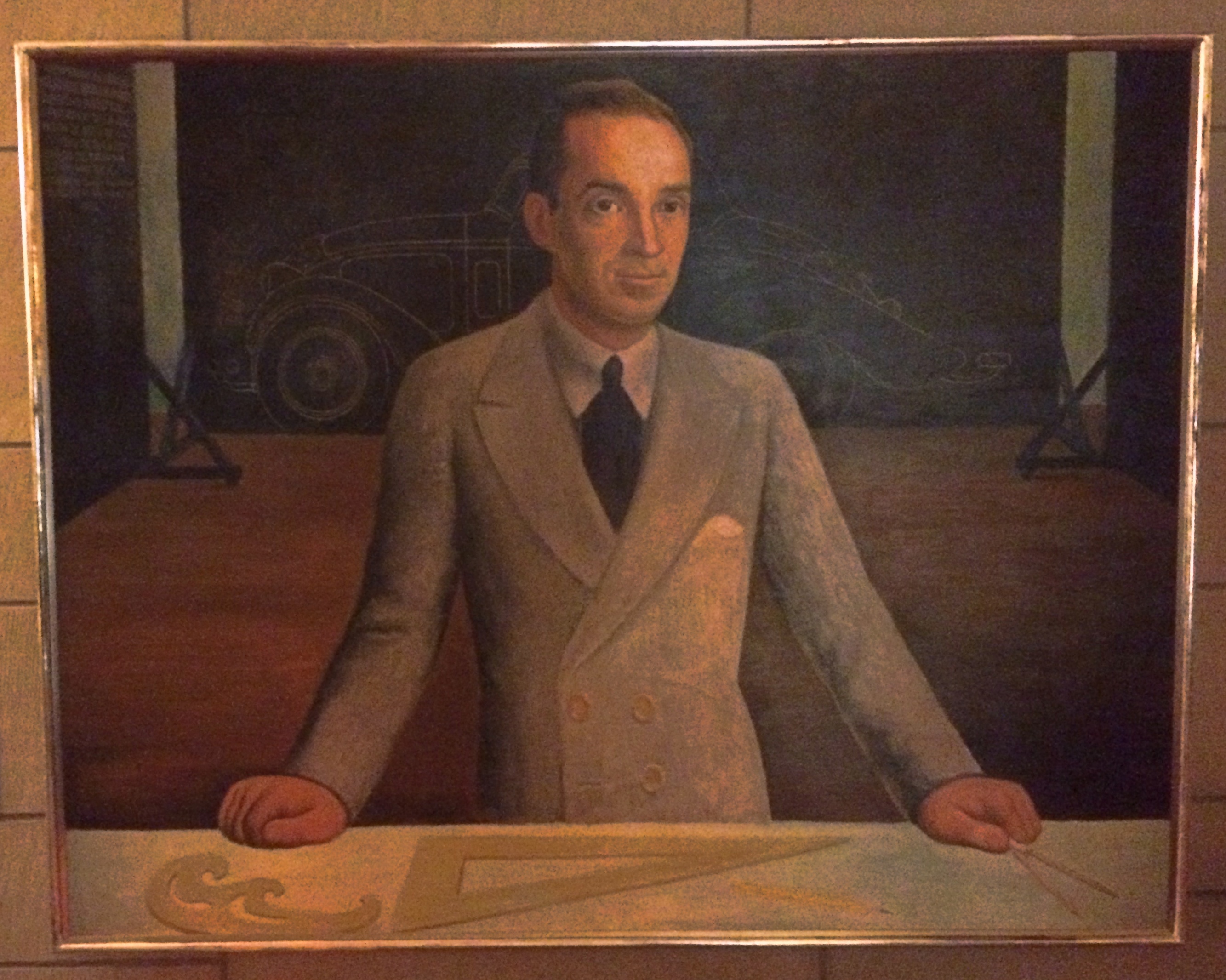
One more item inside the house: a copy of a portrait of Edsel Ford by Diego Rivera. The artist wasn’t so much of a red that he wouldn’t take money from a leading captain of industry.Ford House, Michigan

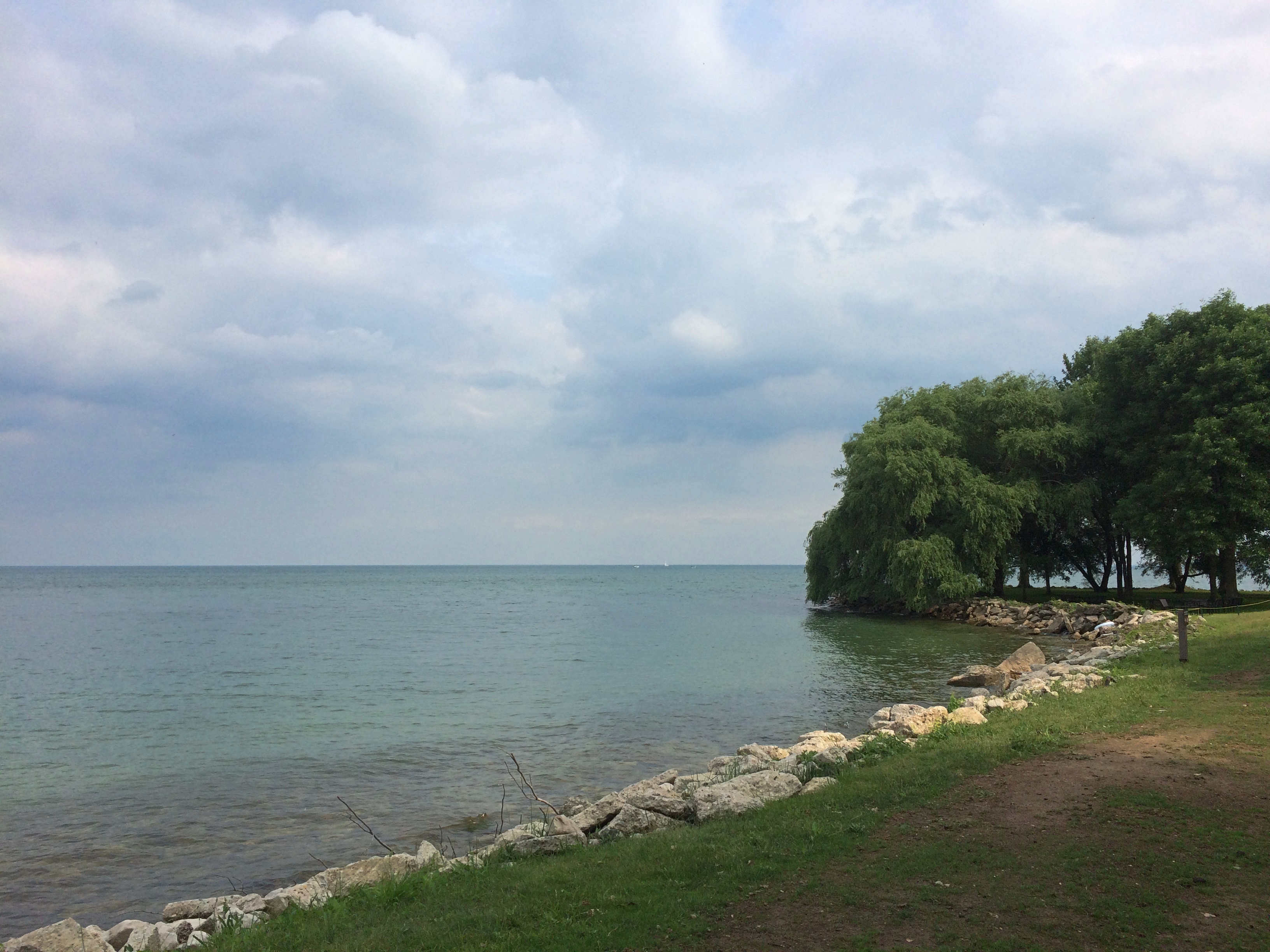
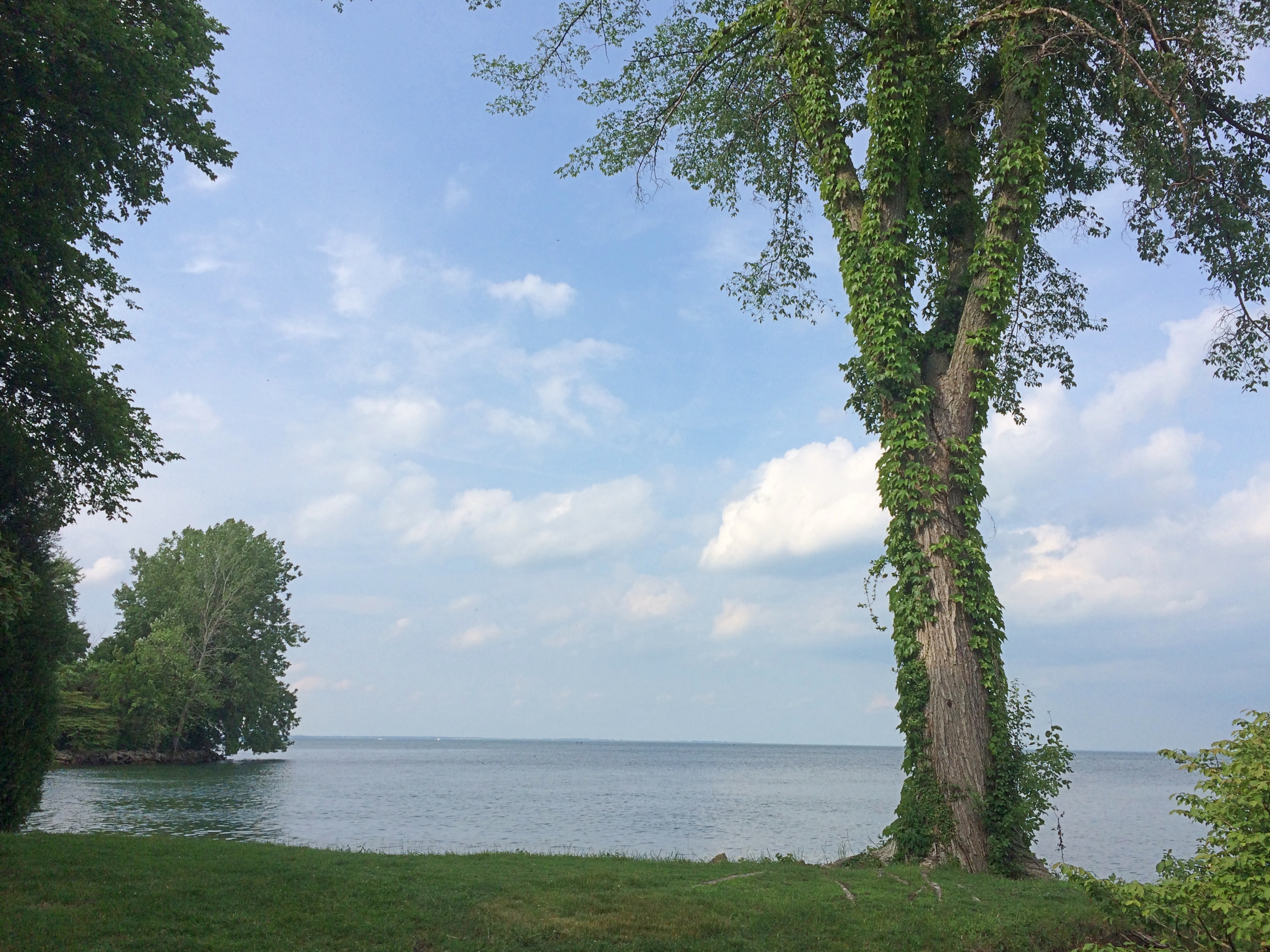
Outside, as you’d expect, the house has an expansive view of the lake.Ford House, Michigan Ford House, Michigan Ford House, Michigan

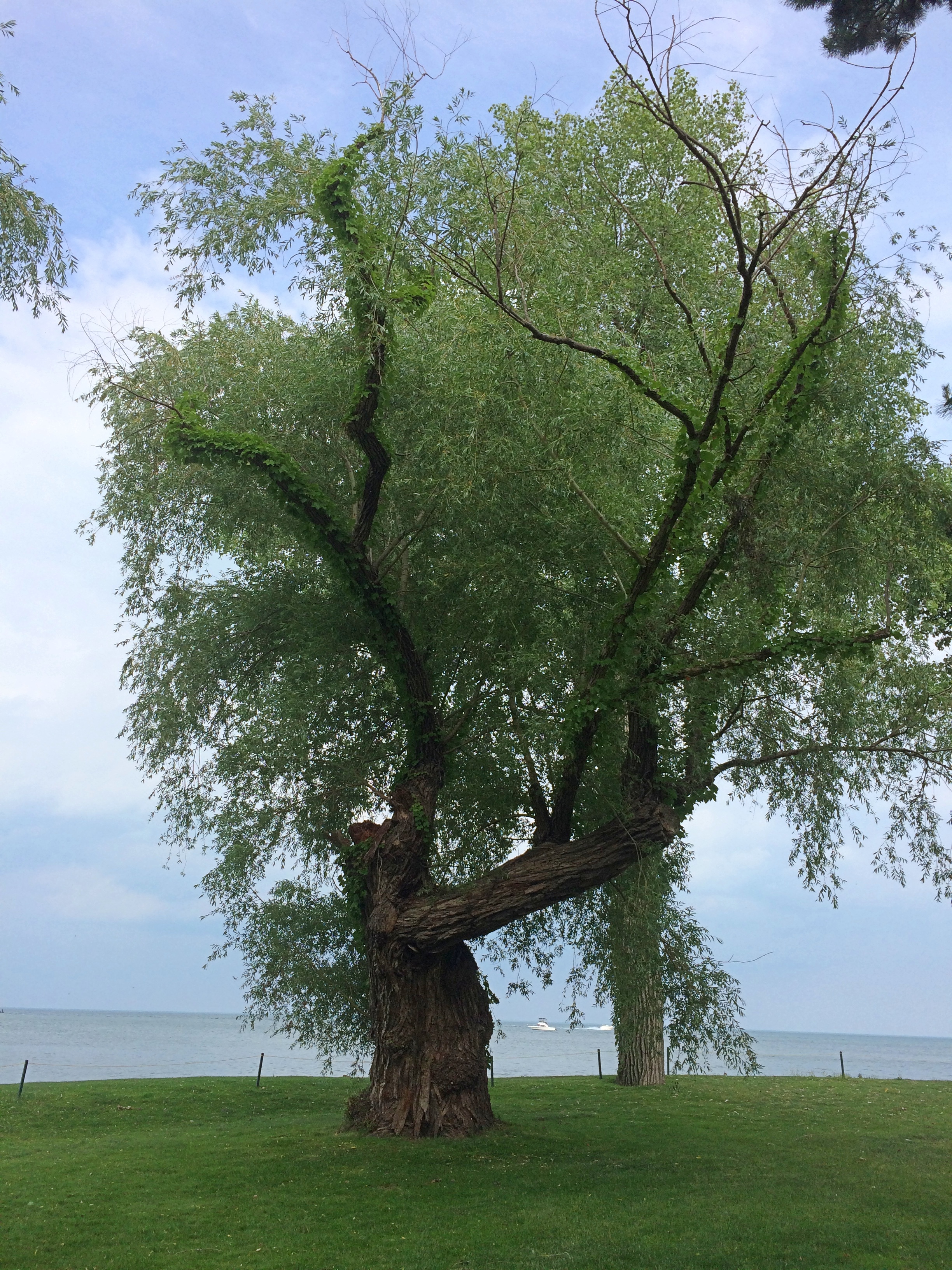
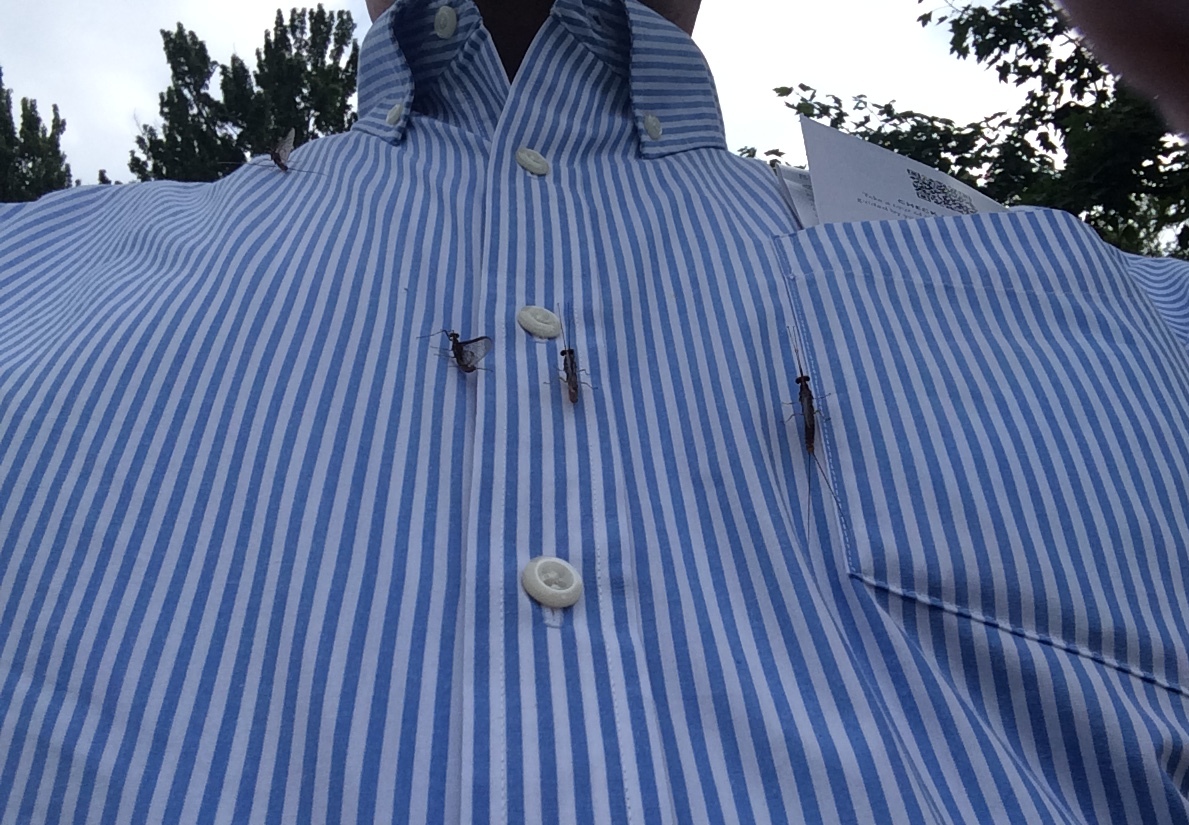
Plus swarms of mayflies, some of which decided to land on my shirt. They didn’t bite or do anything but appear in large numbers in my vicinity.

Ford House, Michigan

We asked a Ford House worker about them, learning that they’re known locally as fishflies. This is their high season, when they are most likely to swarm.

Thursday Kibble & Bits

Sunny day, but not much meltage. Bitter cold night ahead, and another half-foot of snow forecast for the weekend. Before that, we’ll get Thai takeout at Ann’s request on Friday, and a birthday pie, to make staying at home more pleasant.

Earlier this month, when we were in Naperville, we came across a small park: Central Park. Among other things, there’s a weatherworn obelisk to memorialize local soldiers from the Black Hawk War, the Mexican War, the Civil War and the Spanish-American War. It looked like new wars had been chiseled in as time passed.

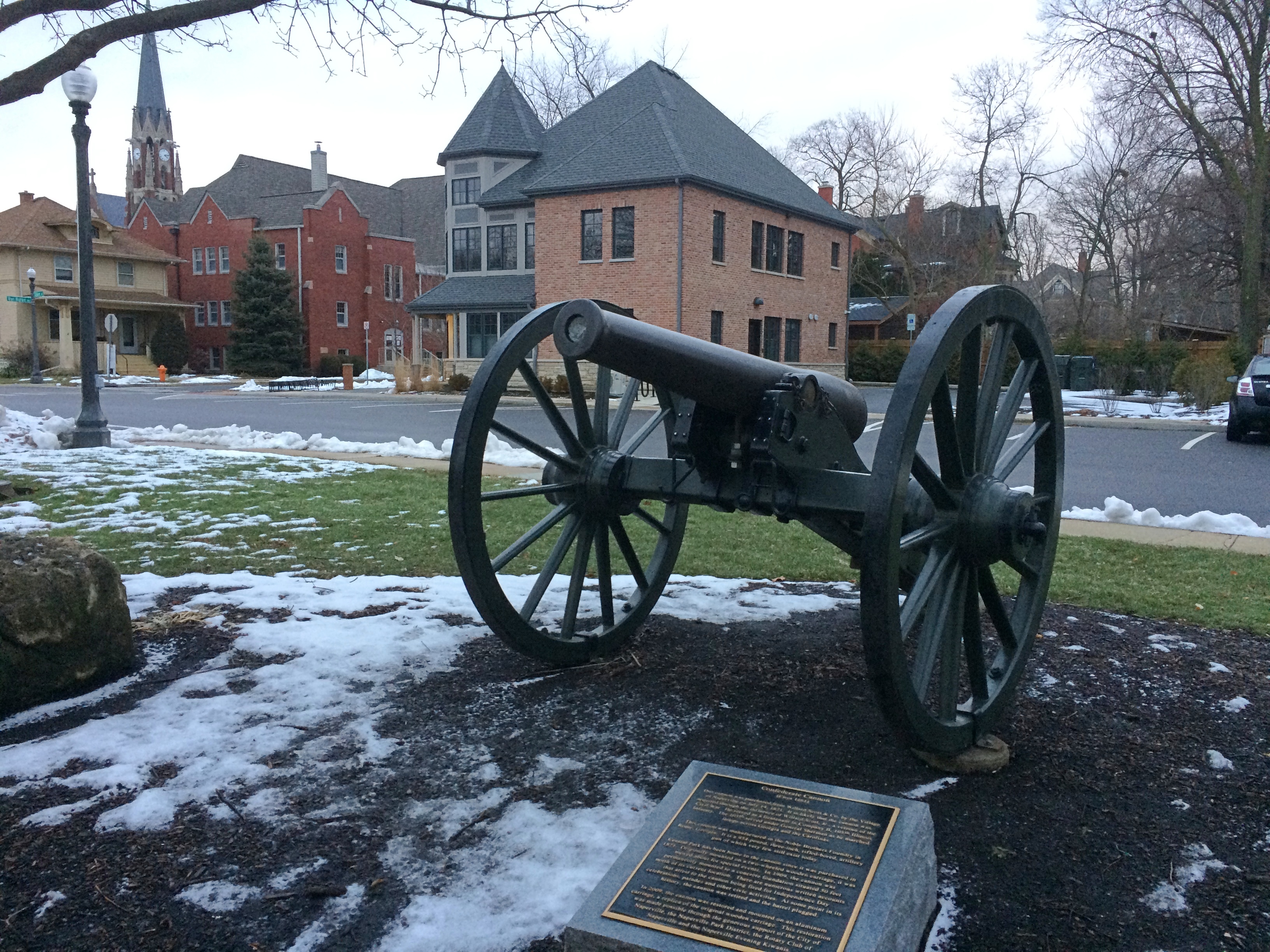
Not far from that was a Civil War cannon, looking pretty new, because it was refurbished in this century.
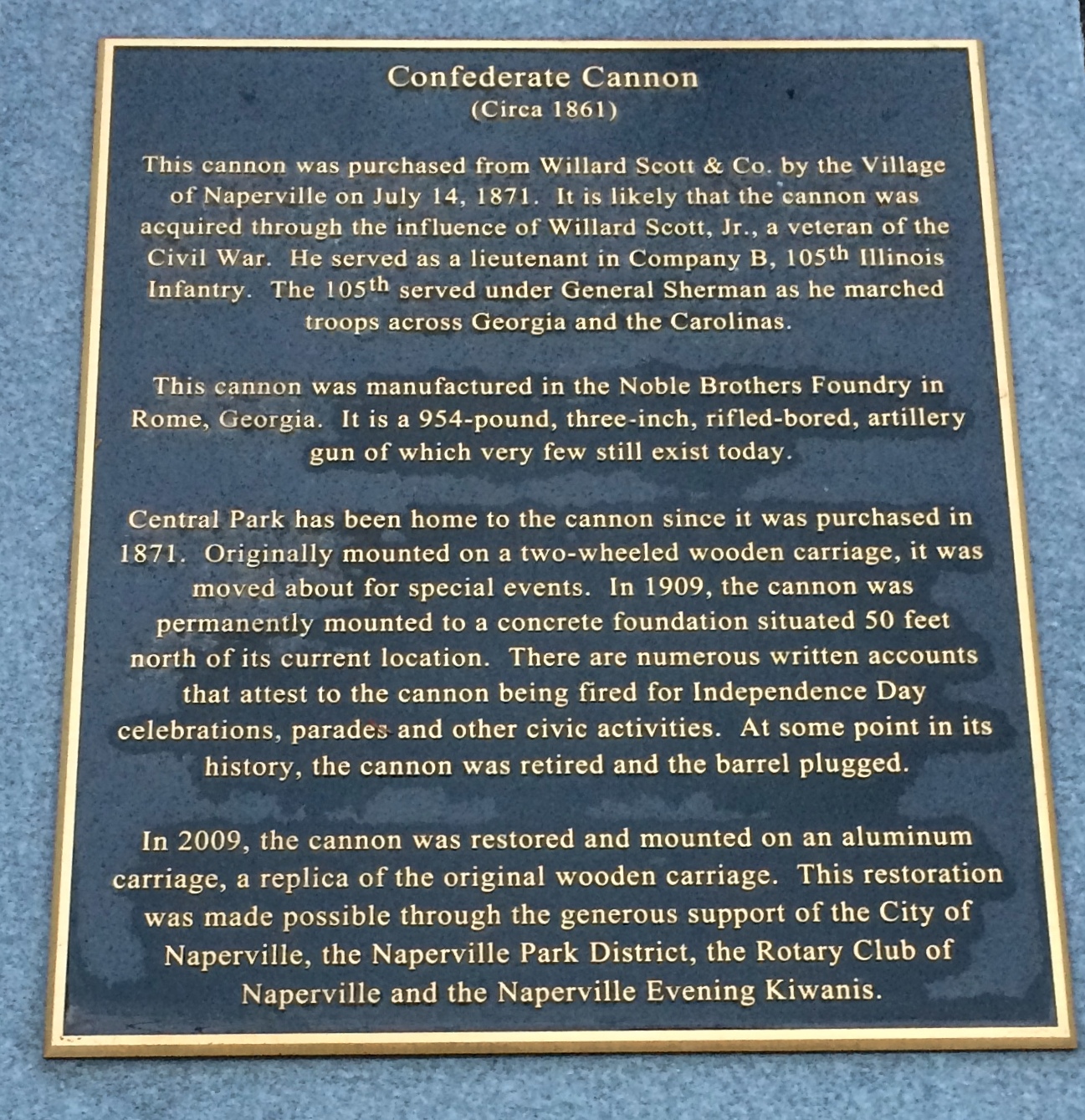
Central Park Naperville cannonIt’s a Confederate cannon.
Central Park Naperville cannonA prize of war, in other words, formerly shot off by the people of Naperville for “Independence Day, parades and other civic activities” in a less safety-conscious (-obsessed?) time. That’s what we could use a little more of in our time, though I suppose in some places edgy folks might mistake it for hostile gunfire, and maybe they’d be right to.

Willard Scott Jr. was this fellow, no relation to the weatherman, it seems. Among other things, this Willard Scott marched through Georgia, doing his bit to invent modern total war.

Shucks. No evidence of life in the clouds of Venus.

Google “Venus floating platform” and one of the first hits is about the Venus Atmospheric Maneuverable Platform (VAMP) at the Northrop Grumman web site. My estimation of that company just went up a notch. It’s at least thinking about flying a plane over Venus.

“The Venus Atmospheric Maneuverable Platform (VAMP) air vehicle is an aeroshell-less hypersonic entry vehicle that transitions to a semi-buoyant, maneuverable, solar-powered air vehicle for flight in Venus’ atmosphere,” NG says. “VAMP AV will be transported to Venus by a carrier/orbiter spacecraft… It is then released and enters the atmosphere, floating down toward the planet almost like a falling leaf.

“During the flight phase, the AV flies in the Venus upper- and mid-cloud layers and collects science data for transmission to Earth. VAMP AV will be capable of orbiting the planet for a long duration — up to a year.”

Of course, the company is no stranger to space, having built the Lunar Module and Pioneer 10, just to name two marquee projects. These days its marquee project is the James Webb Space Telescope, which can’t get into space fast enough, as far as I’m concerned.

Recently I’ve been getting press releases that say these sorts of things:

X will teach you how to:
Reframe your life experiences as growth opportunities
Rewire your mind-set and embrace spirituality as a lifestyle
Connect to your higher self and integrate healthy lifestyle practices
Tap into universal energy and transmute pain into power
Manifest your new reality and claim your authenticity
Change the world!

***
For your upcoming stories on female disruptors, please consider Y, Founder of Z, helping visionaries reconnect to SOUL, and Live FREE to become their most successful, influential and positively impactful versions. Y teaches women to embody the energy of money and become a vibrational match so it flows consistently and predictably.

Hm. My name seems to be drifting onto all sorts of lists, at some distance from commercial real estate. Though I do like that phrase, “energy of money,” and the idea of it flowing “consistently and predictably” certainly has appeal.

Sparta, Wisconsin

After leaving La Crosse on September 6, we spent time driving some picturesque Driftless Area roads, but soon we were feeling the pull of lunch. That is, we wanted to find a place to eat. We arrived in Sparta, Wisconsin, and started looking around. Doing it the old fashioned way — not with a search engine or an electronic map, but by keeping our eyes peeled as we drove.

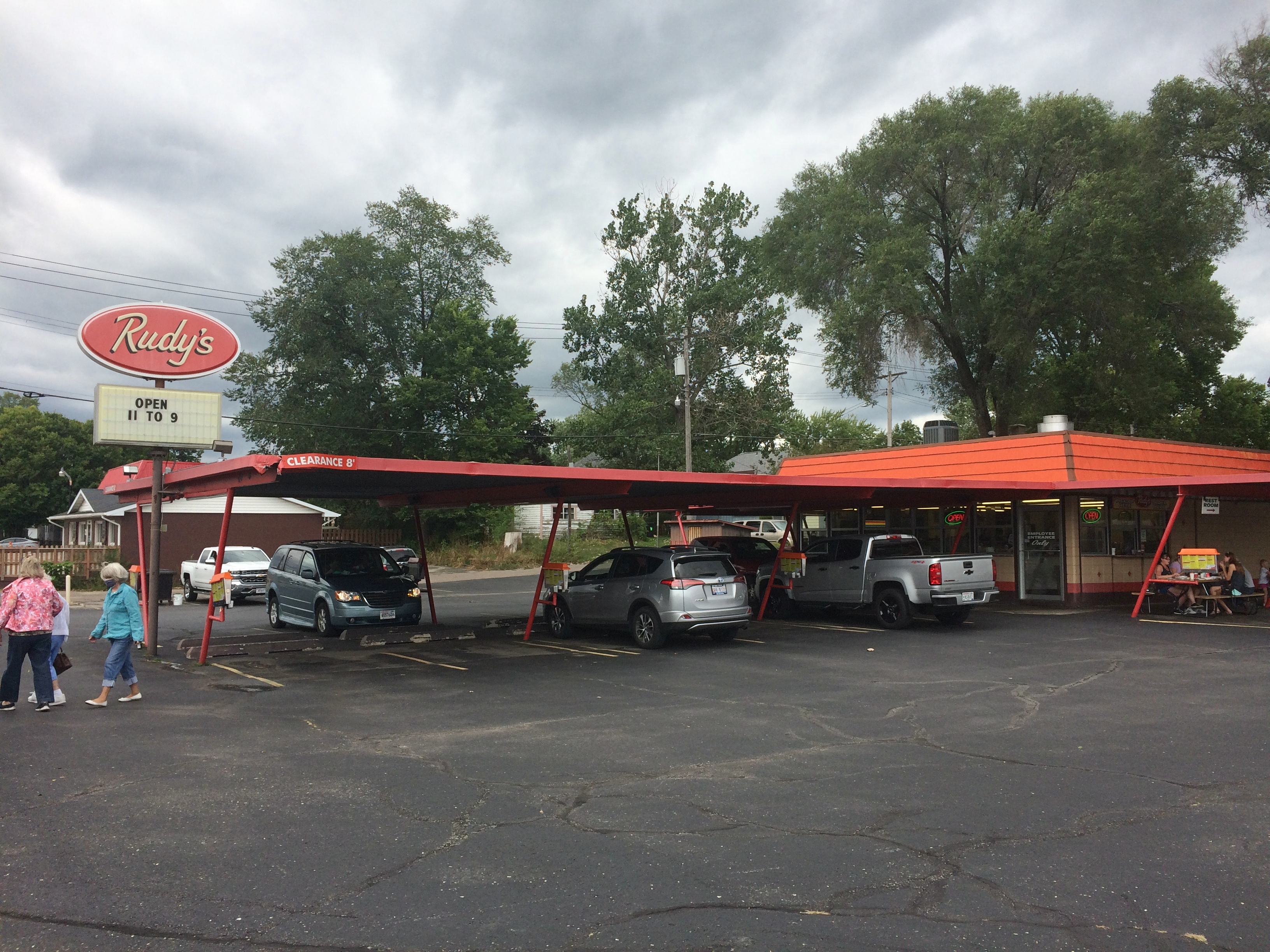
Sometimes you get lucky. Right in the middle of town, on W. Wisconsin St., we found Ruby’s. We stopped right away.Ruby's Sparta Wisconsin

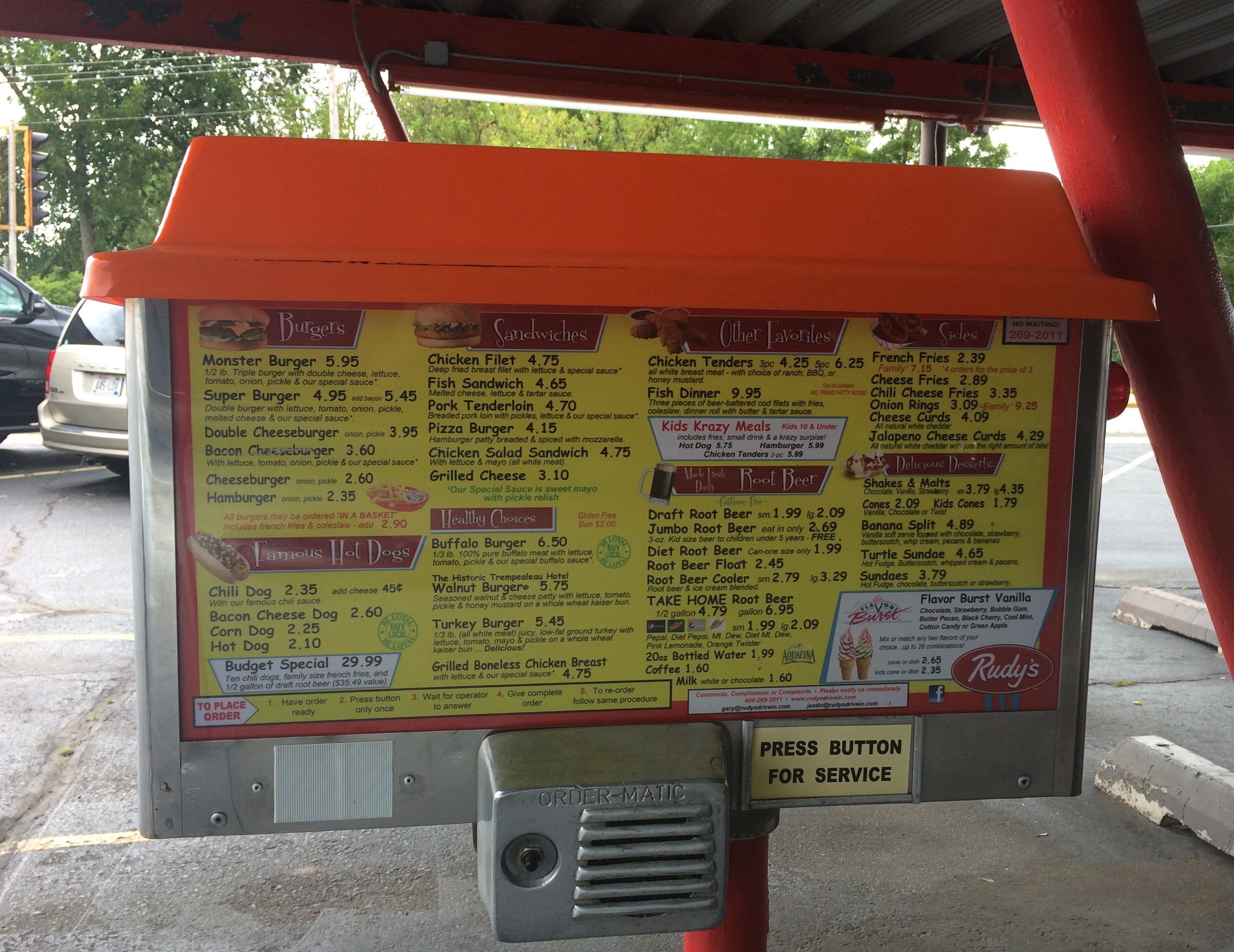
Ruby’s has a most traditional drive-in menu, with one exception.
Ruby's Sparta WisconsinBetween the three of us, we ate a satisfying drive-in lunch: a chili cheese & onion dog, a grilled cheese sandwich, onion rings, cheese curds (this is Wisconsin, after all) and the unusual item: a walnut burger.

As the menu explains, it’s “seasoned walnut & cheese patty with lettuce, tomato, pickle & honey mustard on a whole wheat kaiser bun.” I had a bite. It was tasty. The menu also notes “the Historic Trempealeau Hotel” above the Walnut Burger description, presumably as its provenance. Naturally, I looked it up. The boutique hotel, dating from the late 19th century, is still around, on the Mississippi upriver some distance from La Crosse in a burg called Trempealeau.

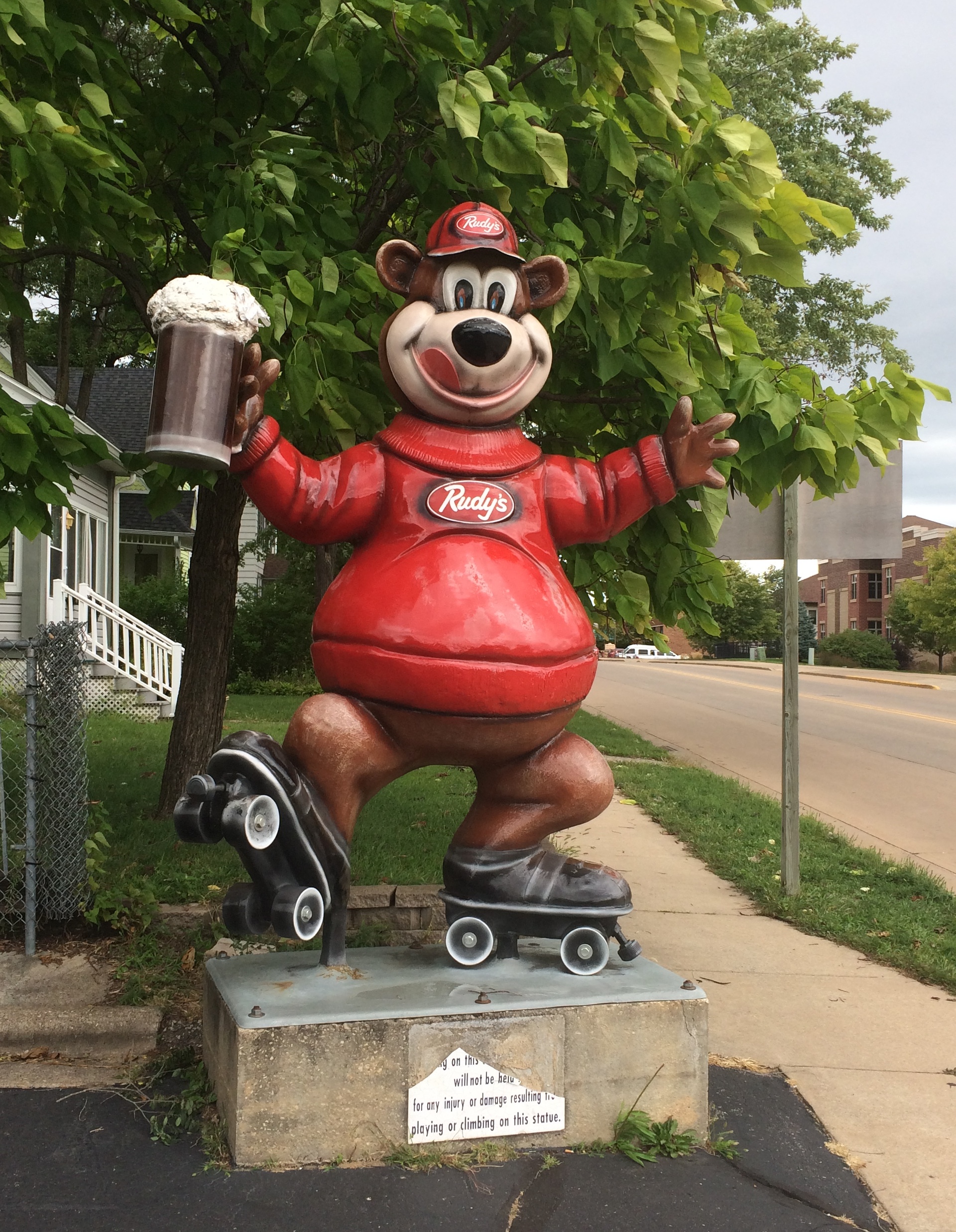
Rudy’s also sports a fiberglass statue. A bear on roller skates.
Ruby's Sparta WisconsinUnlike Gambrinus, I suspect the bear is holding a mug of root beer. Rudy’s has a special section for that on the menu, including a root beer float, but not beer.

While we ate, I noticed another statue, much larger — or at least taller — than the bear. It was across the street catercorner from Ruby’s, in a park.

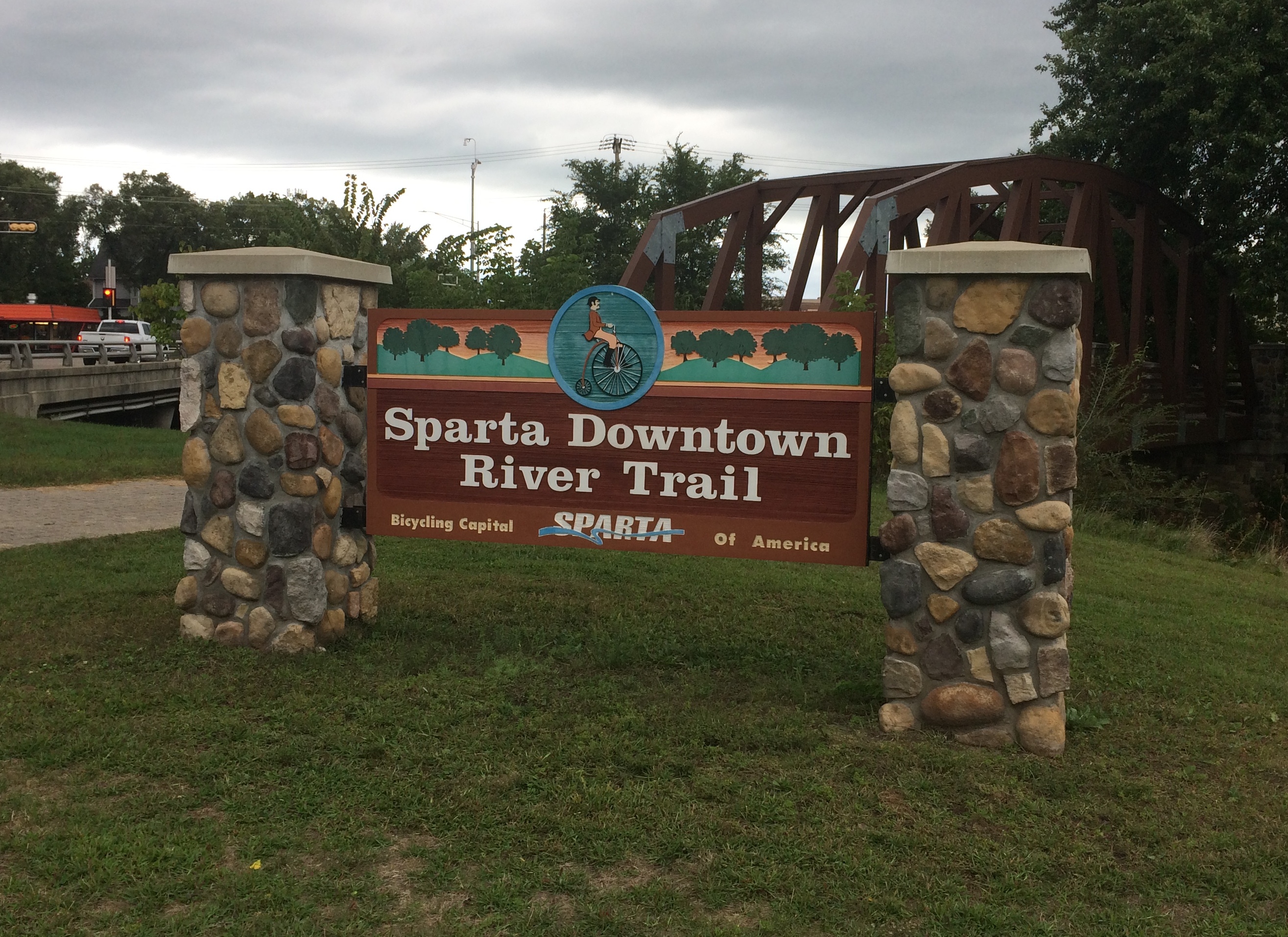
Of course I had to go see that, after we ate. The Sparta Downtown River Trail runs through the park.
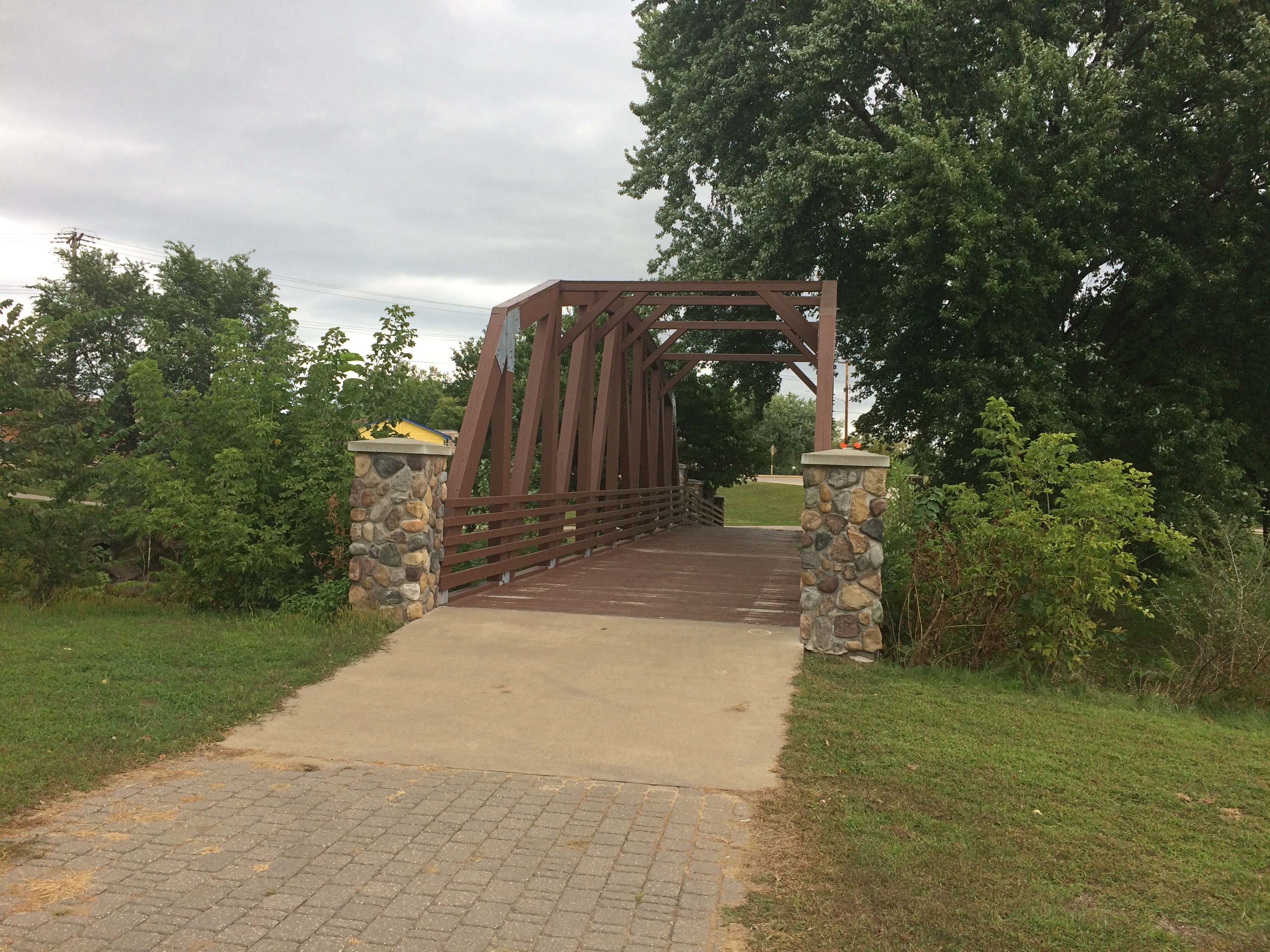
river trail Sparta WisconsinAt this point, a footbridge crosses the small La Crosse River, which eventually empties into the Mississippi in the city of that name.
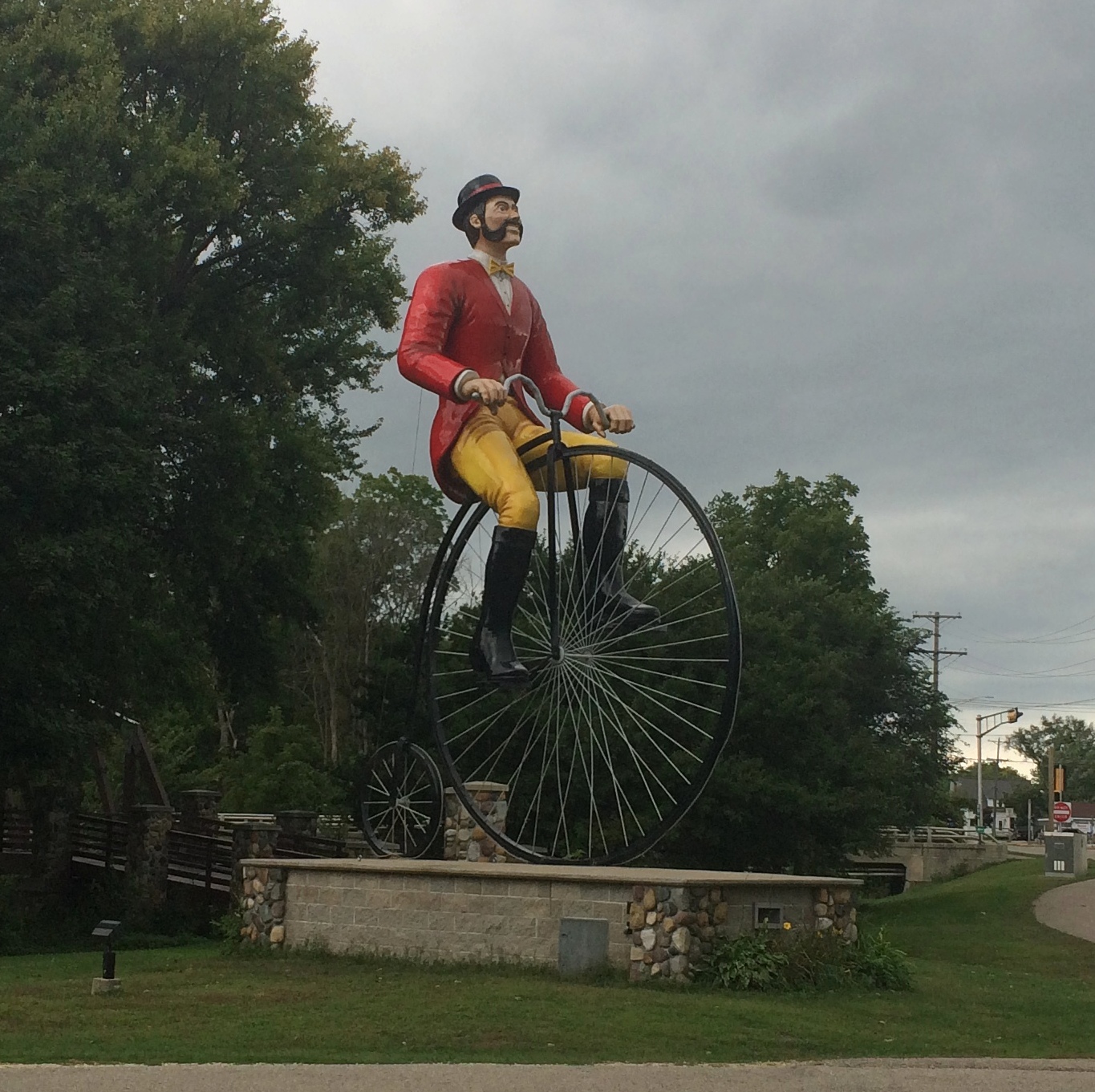
river trail Sparta WisconsinOn the other side of the bridge is the statue I saw from across the street.Ben Bikin' Sparta Wisconsin

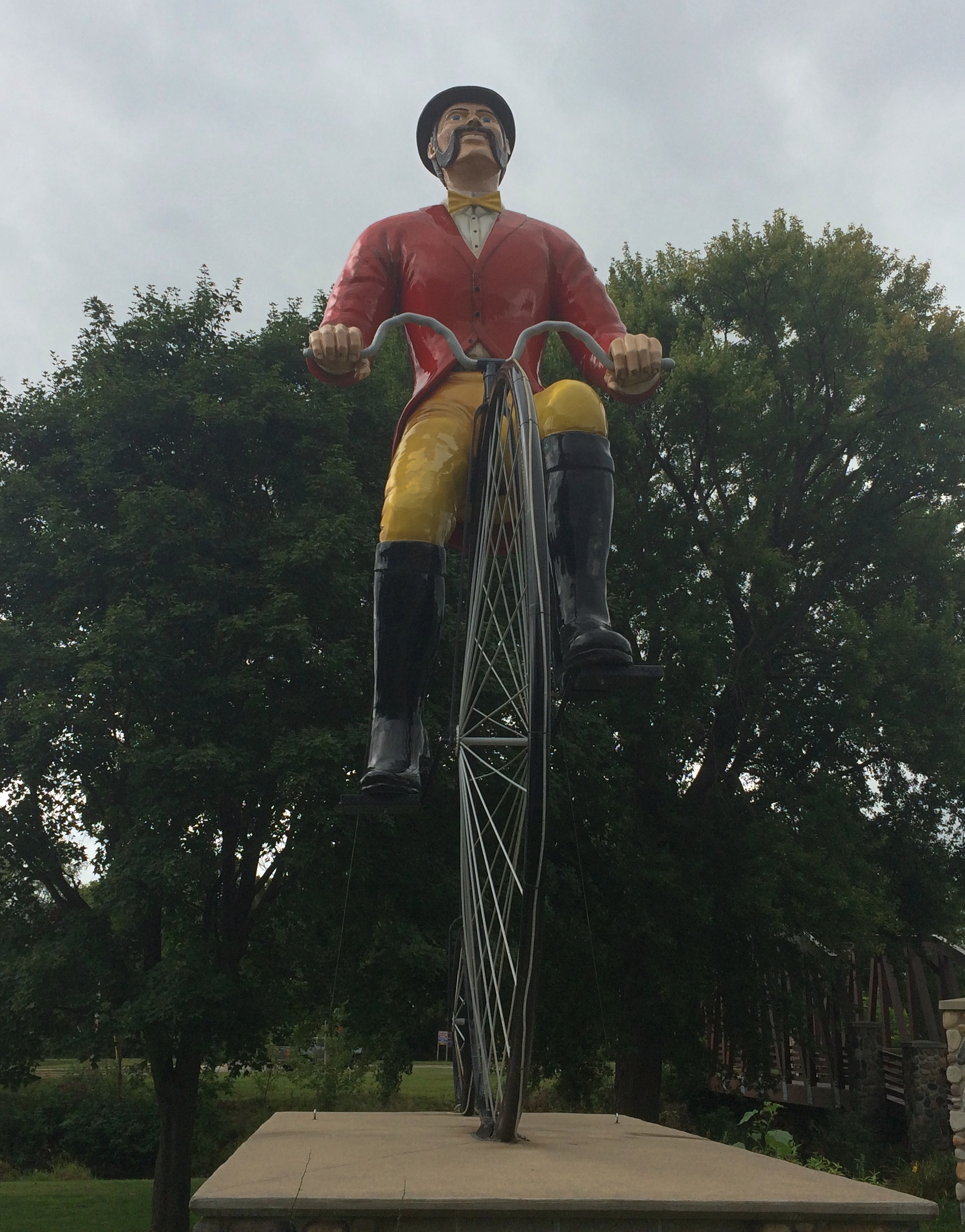
Ben Bikin' Sparta WisconsinIt has a name: Ben Bikin’. Sparta, pop. just shy of 10,000, is the self-proclaimed Bicycling Capital of America. A nice local distinction. I imagined that Sparta might have been a bicycle manufacturing town at one time, maybe as long ago as the bicycle craze of the ’90s that popularized the modern bike. The 1890s, that is.

But no. “Sparta’s claim as the ‘Bicycling Capital of America’ is based upon the first rail bed in Wisconsin to be converted to bike trails between Sparta and Elroy,” says the city’s web site. That trail was completed in 1967, so fanciful penny-farthing statues aside, the town sobriquet isn’t that old.

In fact, I don’t remember seeing any more bicycles in Sparta, or dedicated bike lanes, than in any other small town. That is to say, not many. There is, however, a bicycle museum in town.

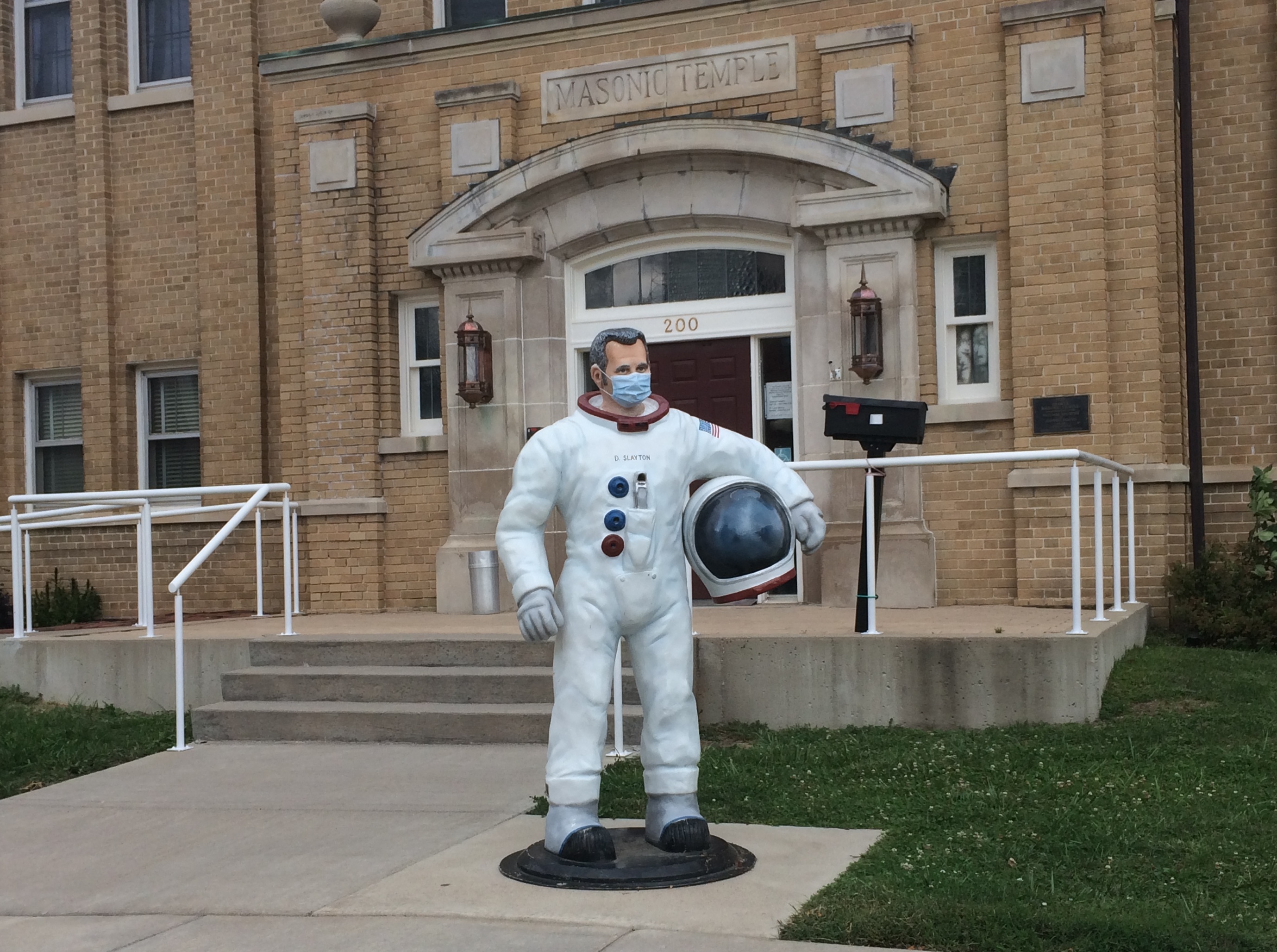
More than that: the Deke Slayton Memorial Space and Bicycle Museum. I knew it was closed, but we drove by before leaving town anyway.
Deke Slayton, Sparta WisconsinSlayton, the only Mercury astronaut who never flew in a Mercury capsule, grew up on a farm near Sparta. So he’s the town’s other attenuated claim to fame. The thinking must have been, best to combine the two into one (slightly) larger museum. Well, why not?

Apollo 12 & Artemis 3 & Europa Clipper

Just today I thought, it’s almost the 50th anniversary of Apollo 12, isn’t it? So I checked. Yes. The launch, best known for lightning striking the Saturn V seconds into the flight, was 50 years ago today. It was fitting to celebrate Apollo 11 this year, but the other missions deserve a mention (and yet, I forgot Apollo 10).

It was a Saturday morning, so instead of cartoons — which is what I usually watched — I watched the launch. I didn’t think it was any less great simply for being the second try at a manned landing on the Moon. This video is roughly what I would have seen — minus any color at all — on our black-and-white TV, though it’s the raw feed to London. T-minus zero is at nearly 22 minutes into the video.

I remember the primitive animation that kicked in during all of the launches when the rocket was high enough. In the case of Apollo 12, that was after the rocket disappeared into the clouds, which was pretty soon. I also remember thinking about the fate of the cameras positioned right under the rocket during the launch. Were they completely destroyed, as you’d think, or shielded in some clever way?

Now I know: “The challenge of placing cameras under the F-1 engines was a team effort,” Space News says about the Apollo 8 launch, but the cameras — 37 and 39 — were there for each later launch.

“It included special help from Corning Glass to produce a port that would survive conditions worse than being on the sun. A thick cylinder of steel bolted into the Pad A concrete reinforcement was also built to hold the cameras.

“The project was accomplished successfully in a few weeks with only one problem: the ports had to be replaced for every launch. The black ceramic on the adjacent flame deflector vaporized and coated the surface – after they had done their job of providing a view like no other.”

Apollo 12 was eventful besides being hit by lightning — for the flawless LM landing on the Moon, the examination of Surveyor 3 by the moonwalkers, the reported camaraderie of the crew (as ably dramatized in From the Earth to the Moon) and the long-lasting package of experiments left behind.

A short video history of the flight by NASA.

Naturally, all this reading about space led me to recent news about the Artemis program. I hadn’t heard that NASA actually has a year in mind for a manned — make that woman- and manned — Artemis 3 landing near the south pole of the Moon, namely 2024.

Oh, really? The excited eight-year-old that watched the Apollo 12 launch wants it to be so. The late middle-aged man I am now is a little more skeptical. Has full funding for such a venture even been appropriated?

Besides, as I understand it, two missions on an as-yet unflown giant rocket — the dully named Space Launch System — have to go perfectly before a Moon landing: one without a crew, one with a crew, but not to the surface of the Moon. Well, maybe, is all I can say.

Except I can also say that Artemis is a good solid name for it. Sister of Apollo. None of this focus-group-style naming, which produces namby-pamby names like New Horizons or InSight. Orion is likewise a good choice for the capsule, since he hunted with Artemis — both were hunters — in Crete.

More likely to launch in the mid-2020s is Europa Clipper. That’s a good name, too. It has a very specific mission: find out more about the watery world of Europa.

“Scientists are almost certain that hidden beneath the icy surface of Europa is a saltwater ocean thought to contain about twice as much water as Earth’s global ocean,” NASA says. “It may be the most promising place in our solar system to find present-day environments suitable for some form of life beyond Earth.

“Slightly smaller than Earth’s Moon, Europa’s water-ice surface is crisscrossed by long, linear fractures, cracks, ridges and bands. The moon’s ice shell is probably 10 to 15 miles (15 to 25 kilometers) thick, beneath which the ocean is estimated to be 40 to 100 miles (60 to 150 kilometers) deep. Like Earth, Europa is thought to also contain a rocky mantle and iron core.”

The Ocean of Europa. Sounds like the title of story in a SF pulp from a bygone period. The 21st-century reality of exploring Europa is cooler by far.