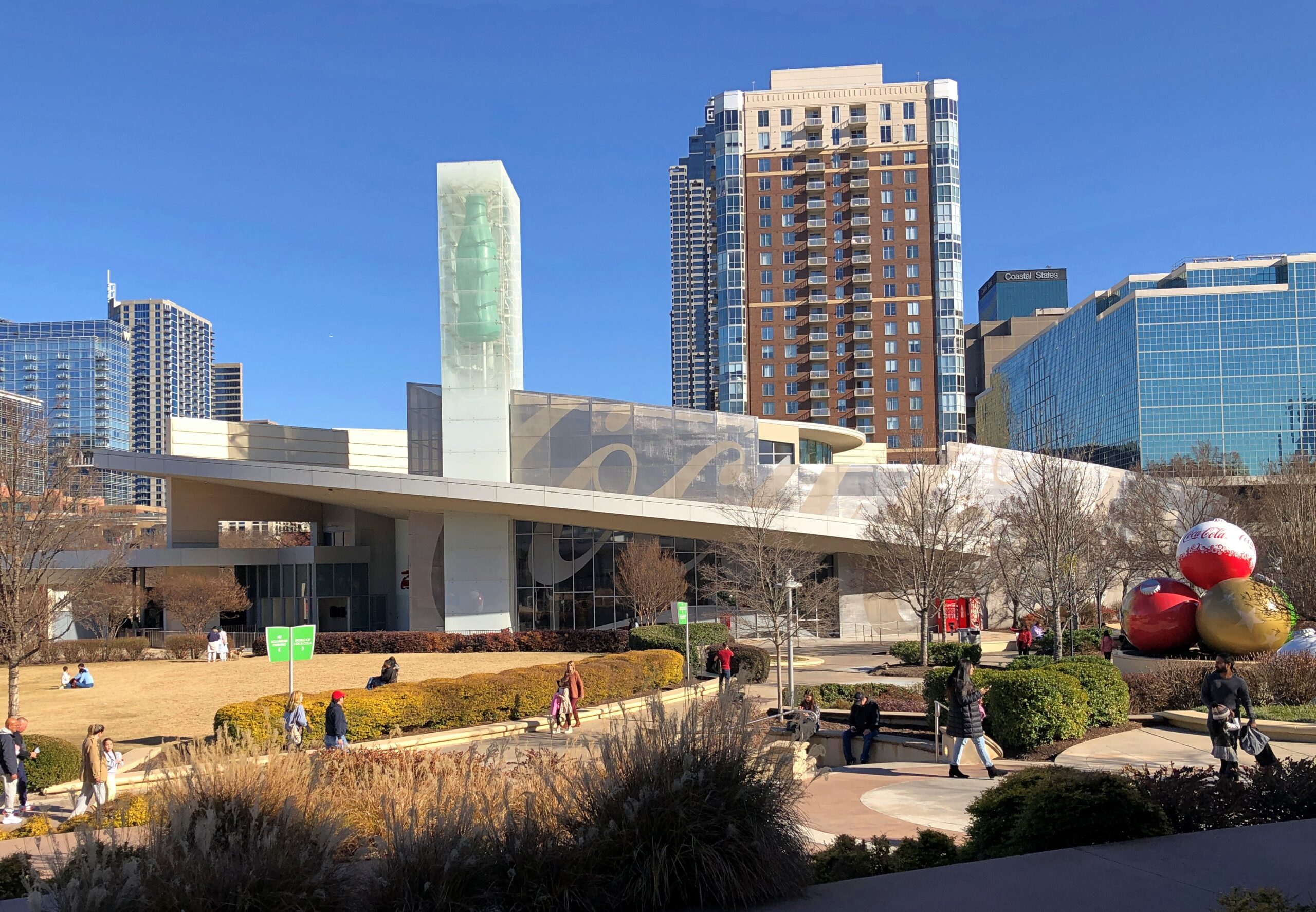
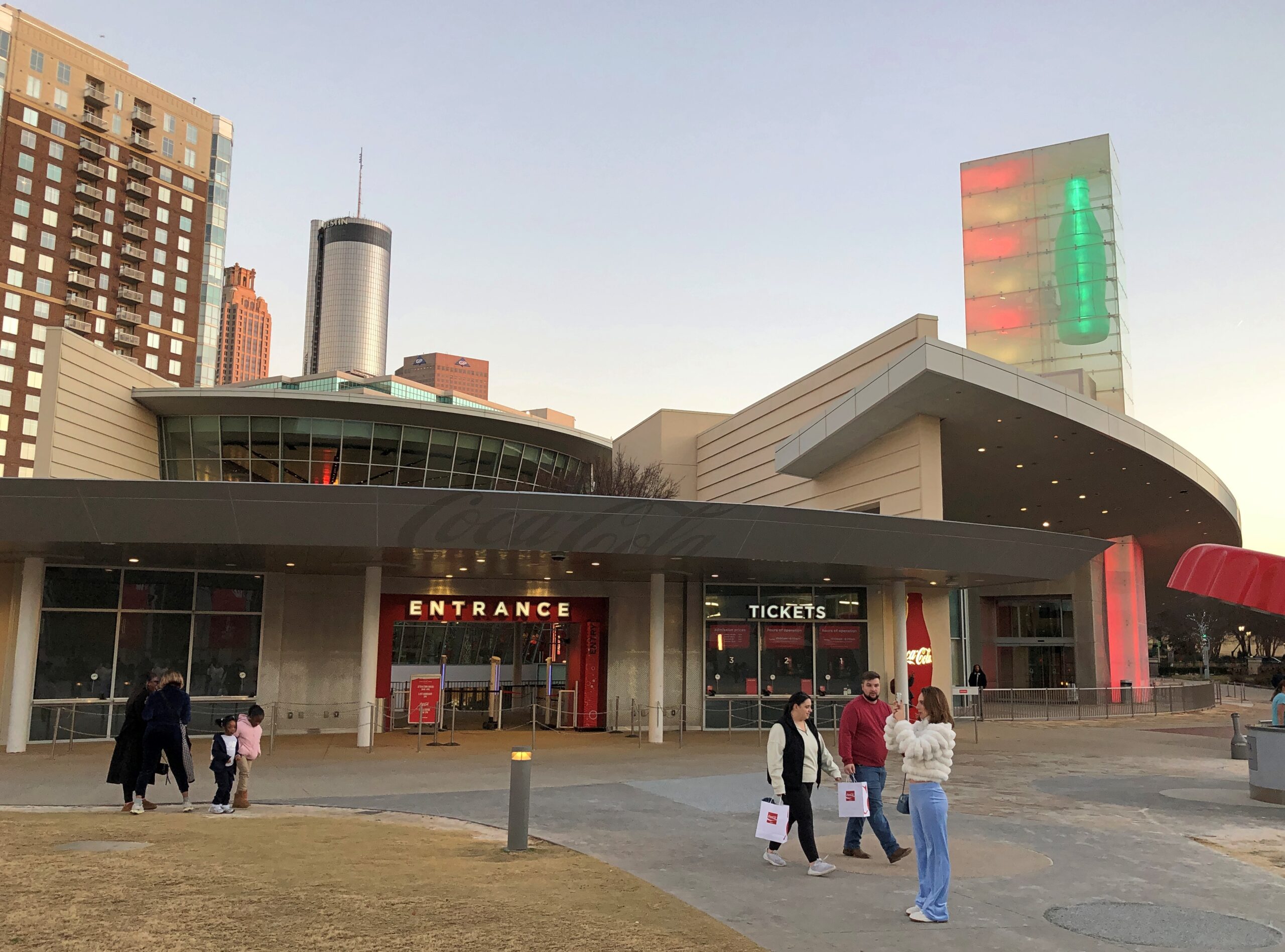
World of Coca-Cola

Years ago, when we visited the Spam Museum in Austin, Minnesota, I noted with satisfaction that Monty Python’s Spam Sketch was playing on demand in one of the exhibit rooms. I understand the museum has moved to a different location in Austin since then, but I hope they still play the sketch.

As far as I noticed, there was no clip of One, Two, Three playing at the World of Coca-Cola in Atlanta last month. The scene I’d pick is the back-and-forth about Soviet scientists’ efforts to replicate Coca-Cola without its famously secret formula: “Even the Albanians wouldn’t drink it.”

I’d have this clip playing, too.

Or even the jingle scene from The Coca-Cola Kid. Nice jingle.

The World of Coca-Cola shares a plaza with the Georgia Aquarium. Pemberton Plaza, named for the doctor who invented a particularly successful “brain tonic,” back in the days when enterprising doctors and druggists did that sort of thing. Interestingly, the museum doesn’t play up Lt. Col. John Pemberton’s military service for the CSA, or his morphine addiction, which drove him to experiment with a new wonder drug, cocaine, to kick his habit. That didn’t work out, but he did leave a lasting soft drink legacy.

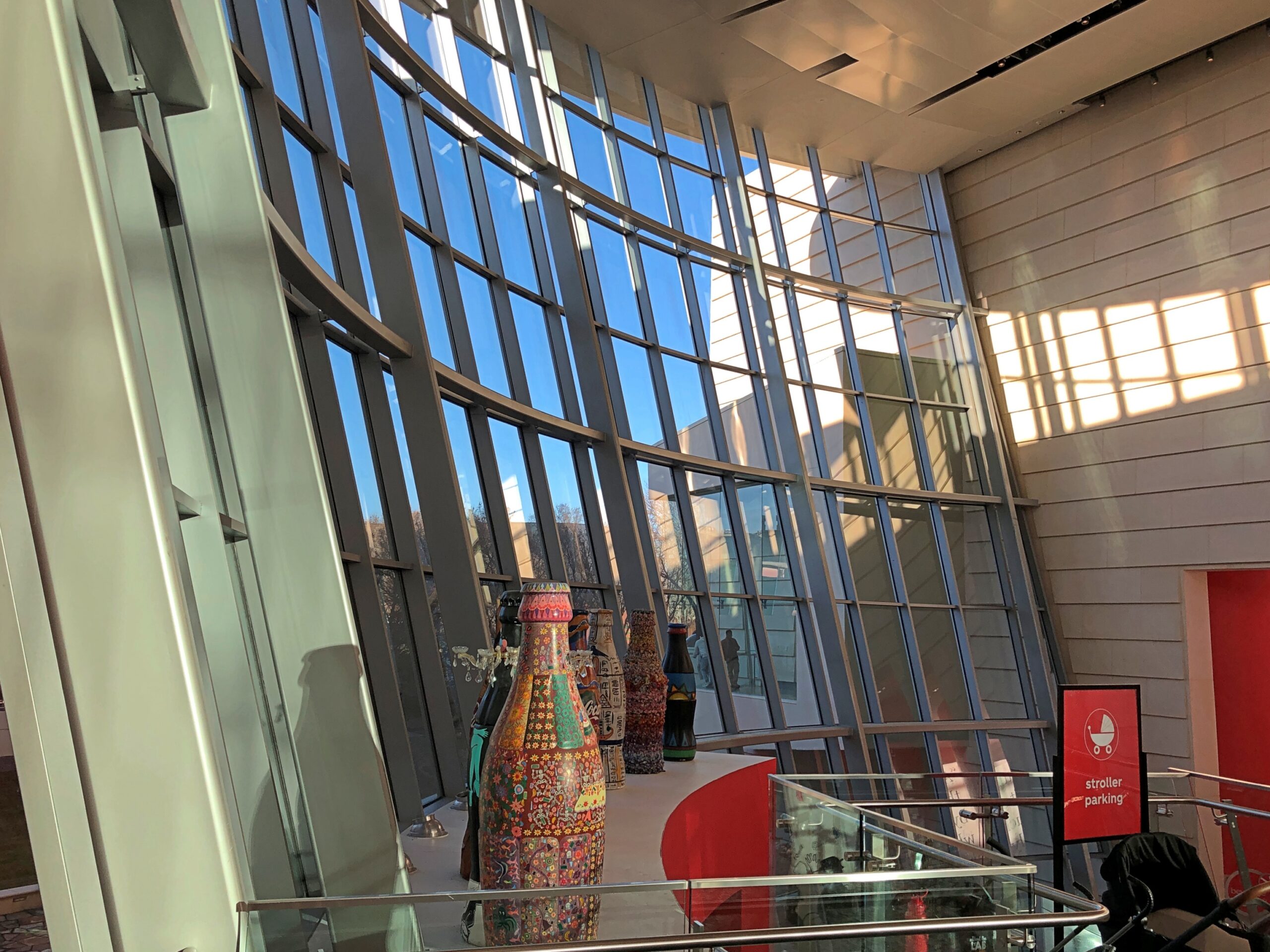
At 300,000 square feet, the museum is expansive, a 1990s design by architectural firm Jerde.

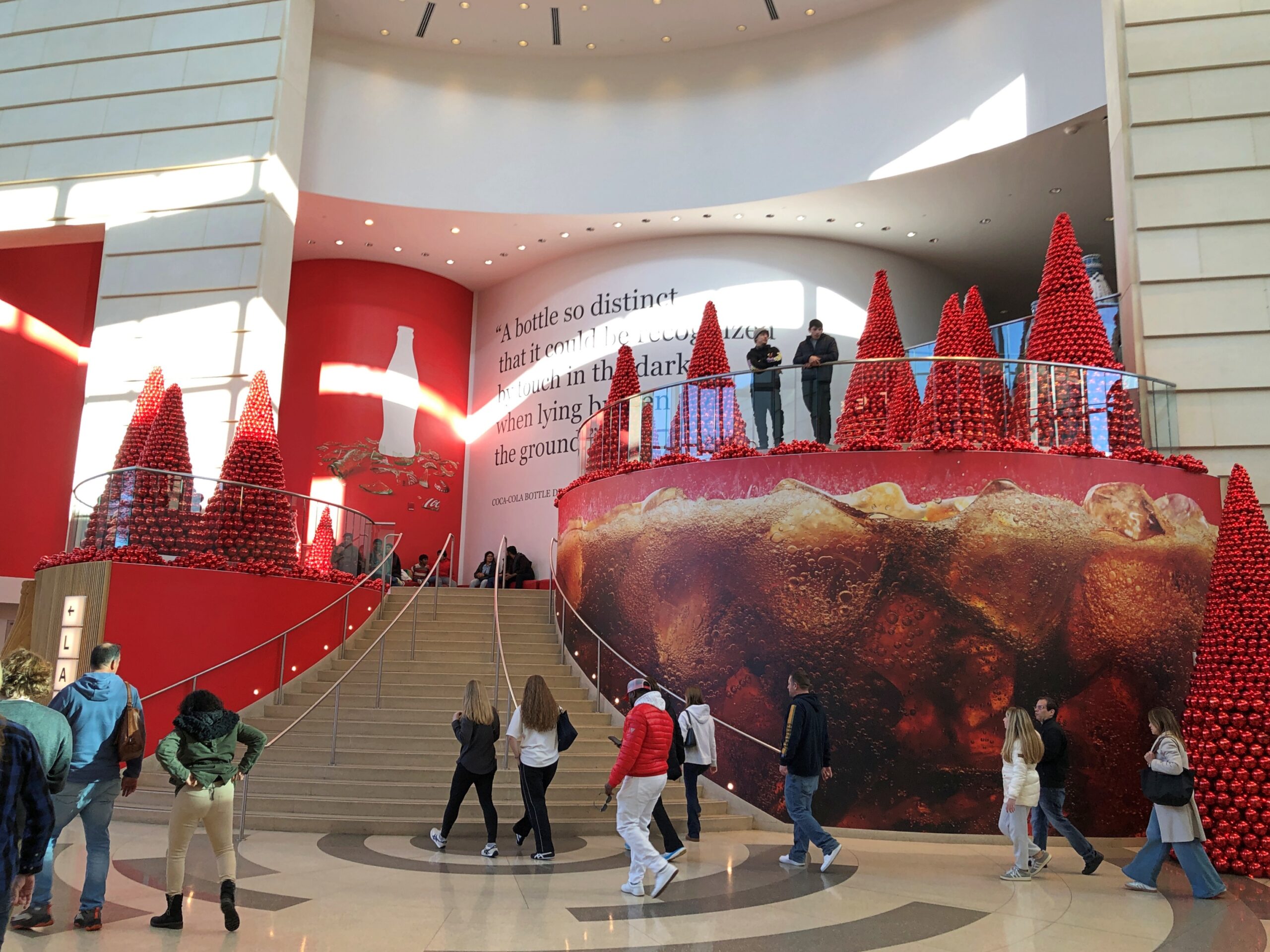
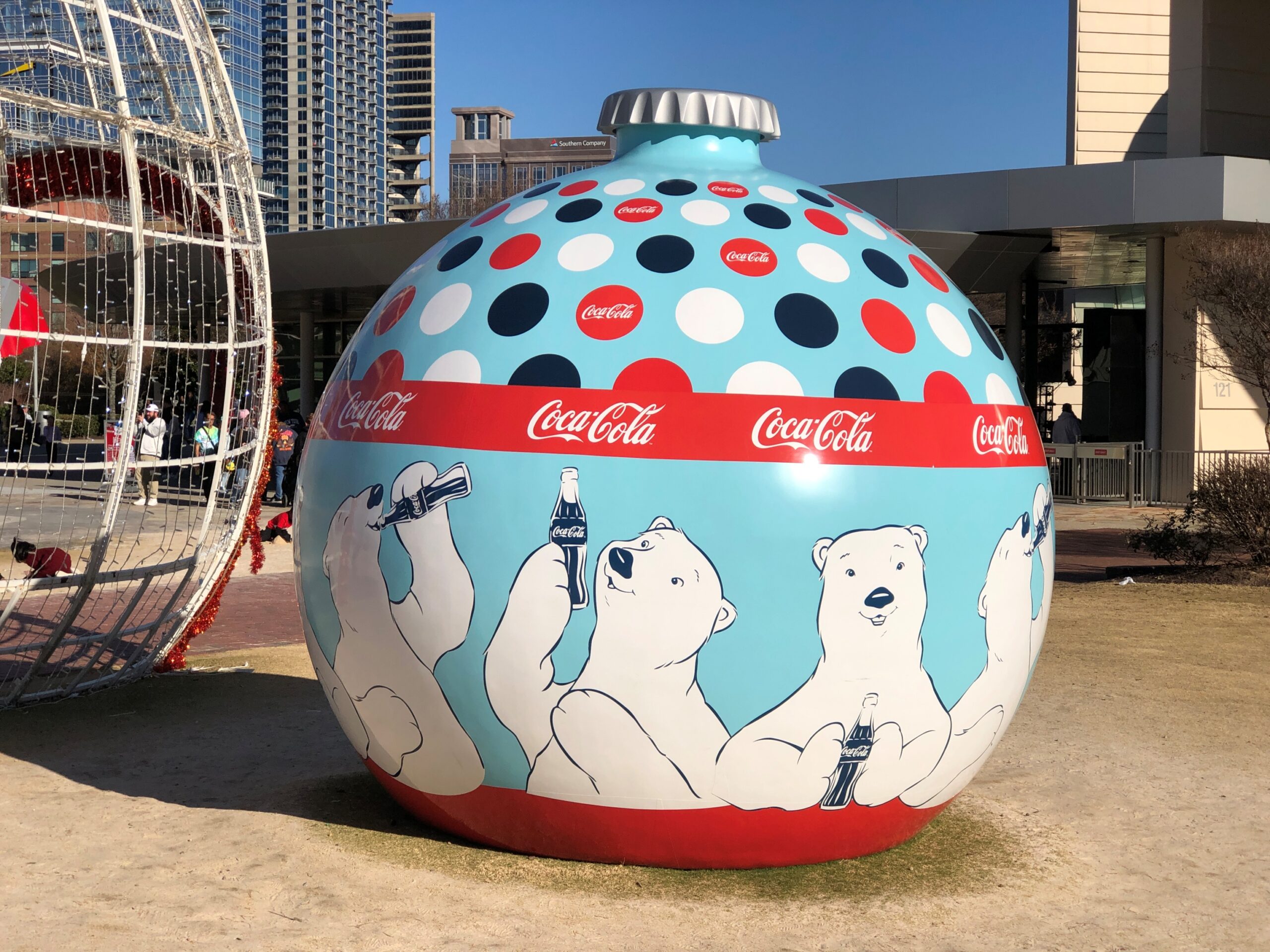
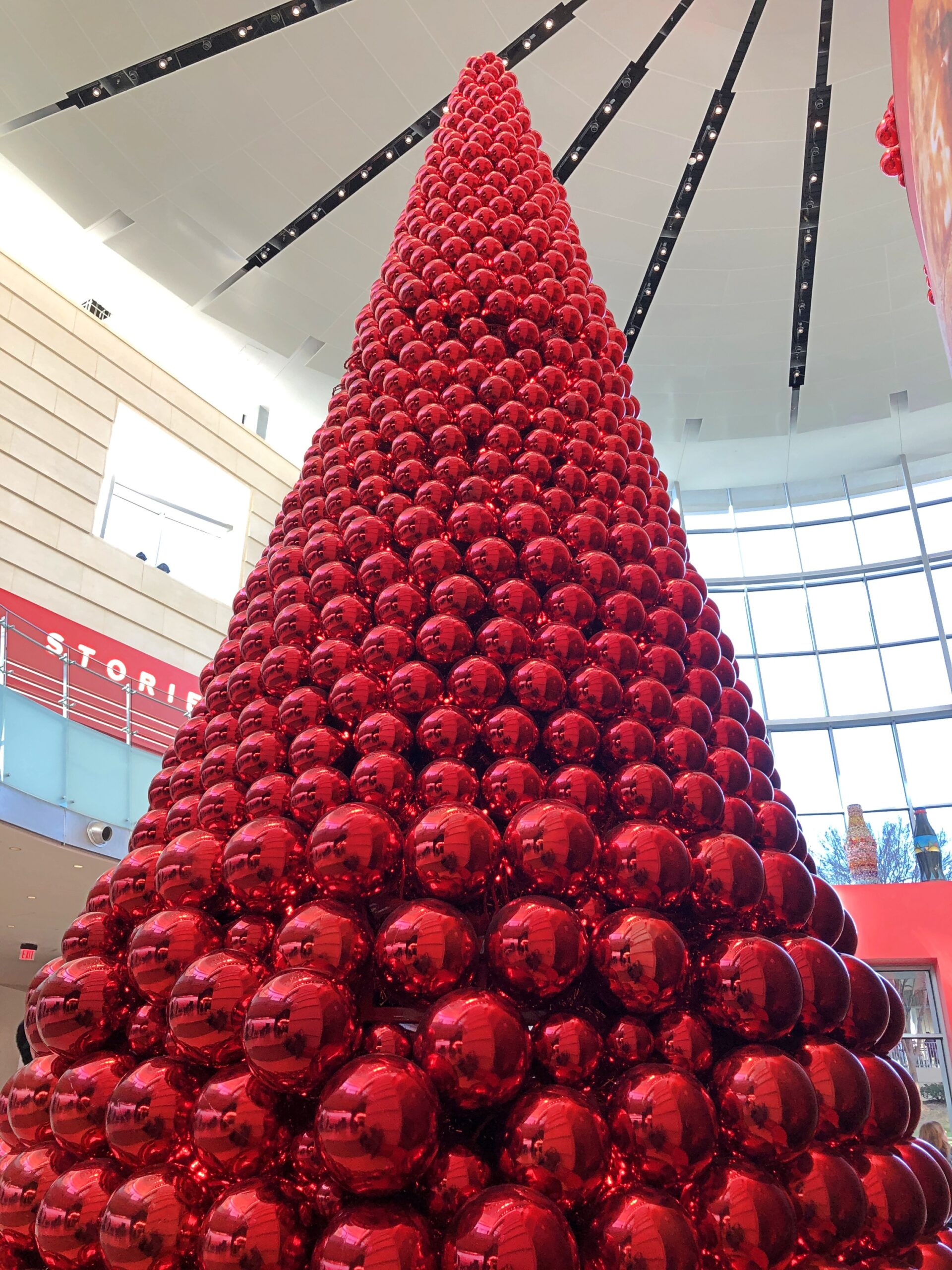
In December, decorations outside and in.

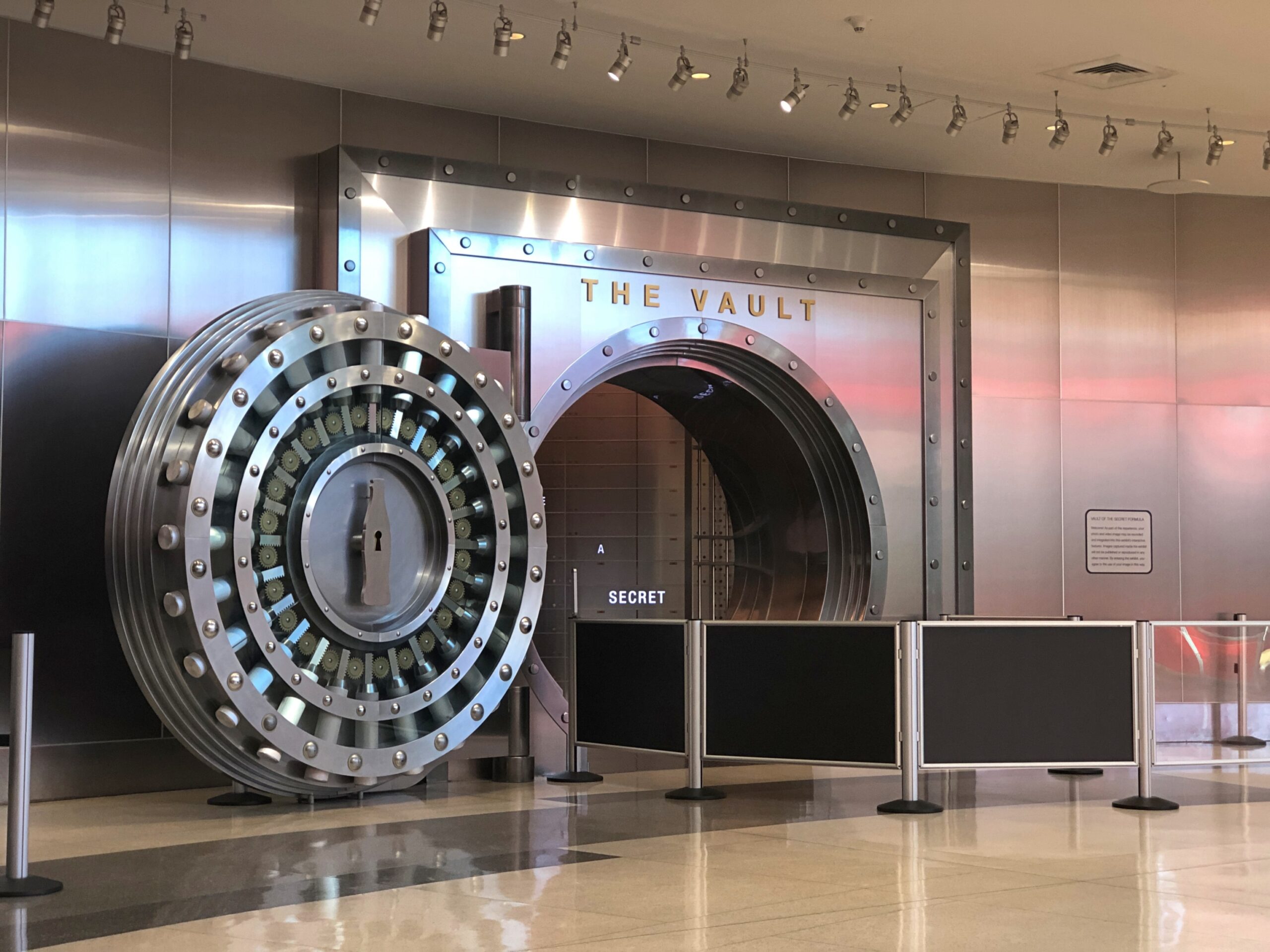
As a museum, the place includes a number of interactive exhibits and activities, starting at the Coca-Cola Theater with a six-minute commercial. I mean, a short history of Coke. You can also see the vault where the secret formula supposedly resides —

— check out various smells associated with the cola-making process, “explore Coca-Cola’s iconic influence on art, music, fashion, sports, and entertainment,” and “engage with interactive displays and AI magic that bring Coca-Cola’s legacy to life in new, unforgettable ways,” the museum explains. You can even, if you register – maybe with some app? – stand in line to have your picture taken with a person in a polar bear suit.

“The Coca-Cola Polar Bear… became truly iconic in 1993 with the launch of the ‘Always Coca-Cola’ campaign. In the famous ‘Northern Lights’ commercial, created by Ken Stewart, animated bears gather to watch the aurora borealis while enjoying Coca-Cola — a scene that brought the Polar Bear to life and captured the hearts of viewers worldwide,” the museum notes.

Does it rise to the level of icon? Somehow the Coca-Cola Polar Bear had made only a faint impression on either of us, so we took a pass on it. Also, there was a line. And it cost extra? Always with the revenue streams. But I did enjoy the more standard sort of museum exhibits on offer at World of Coca-Cola.

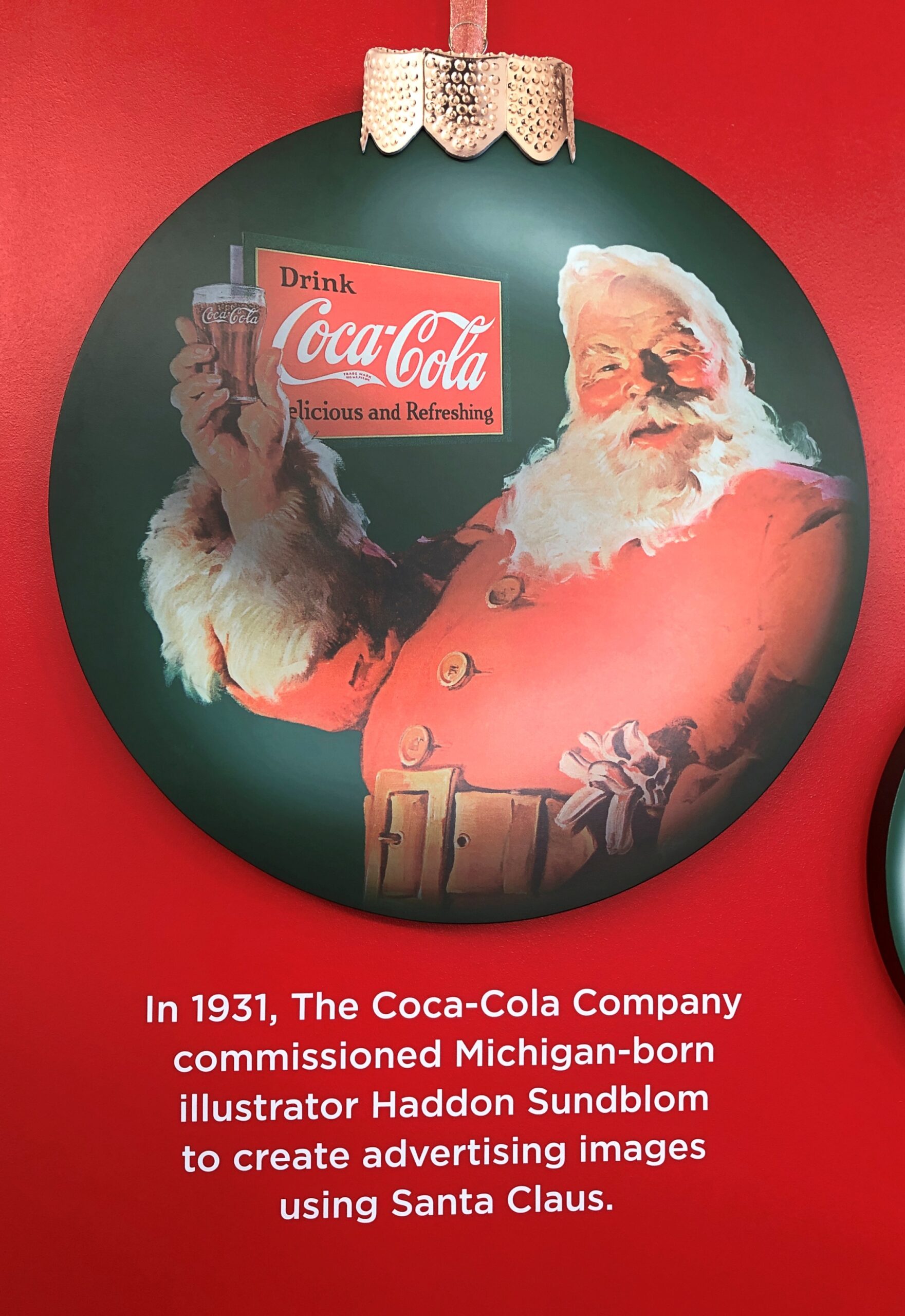
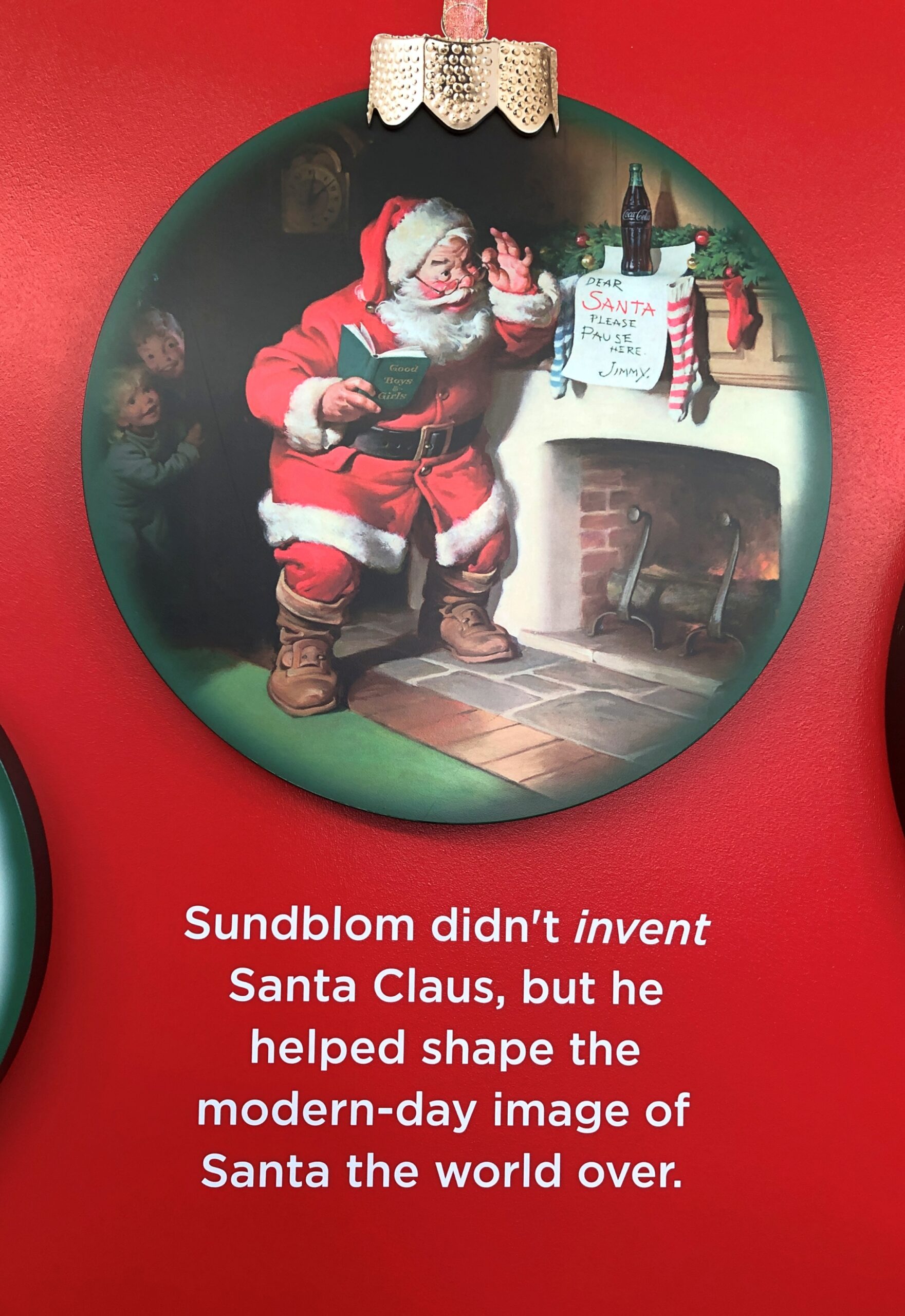
A seasonal observation.

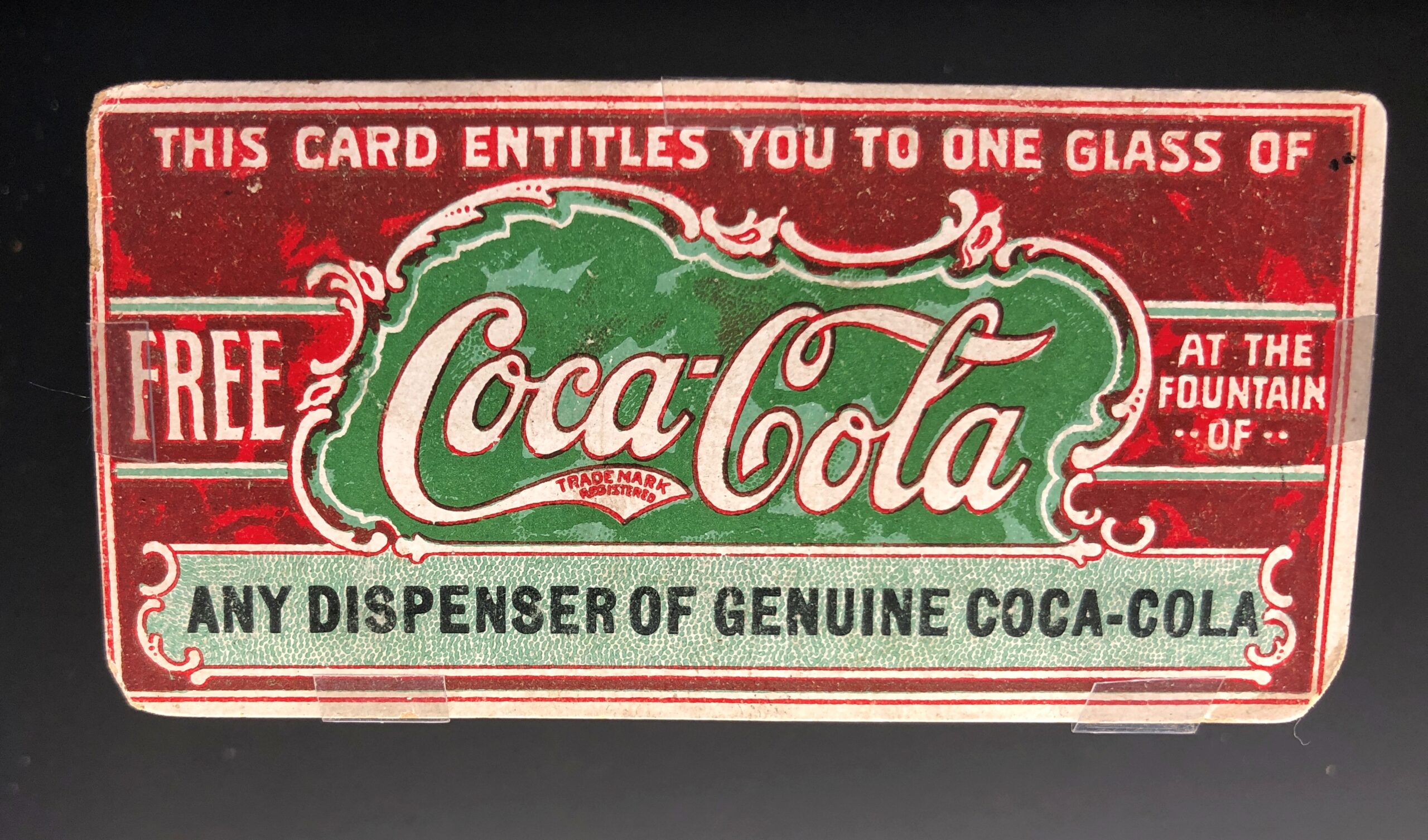
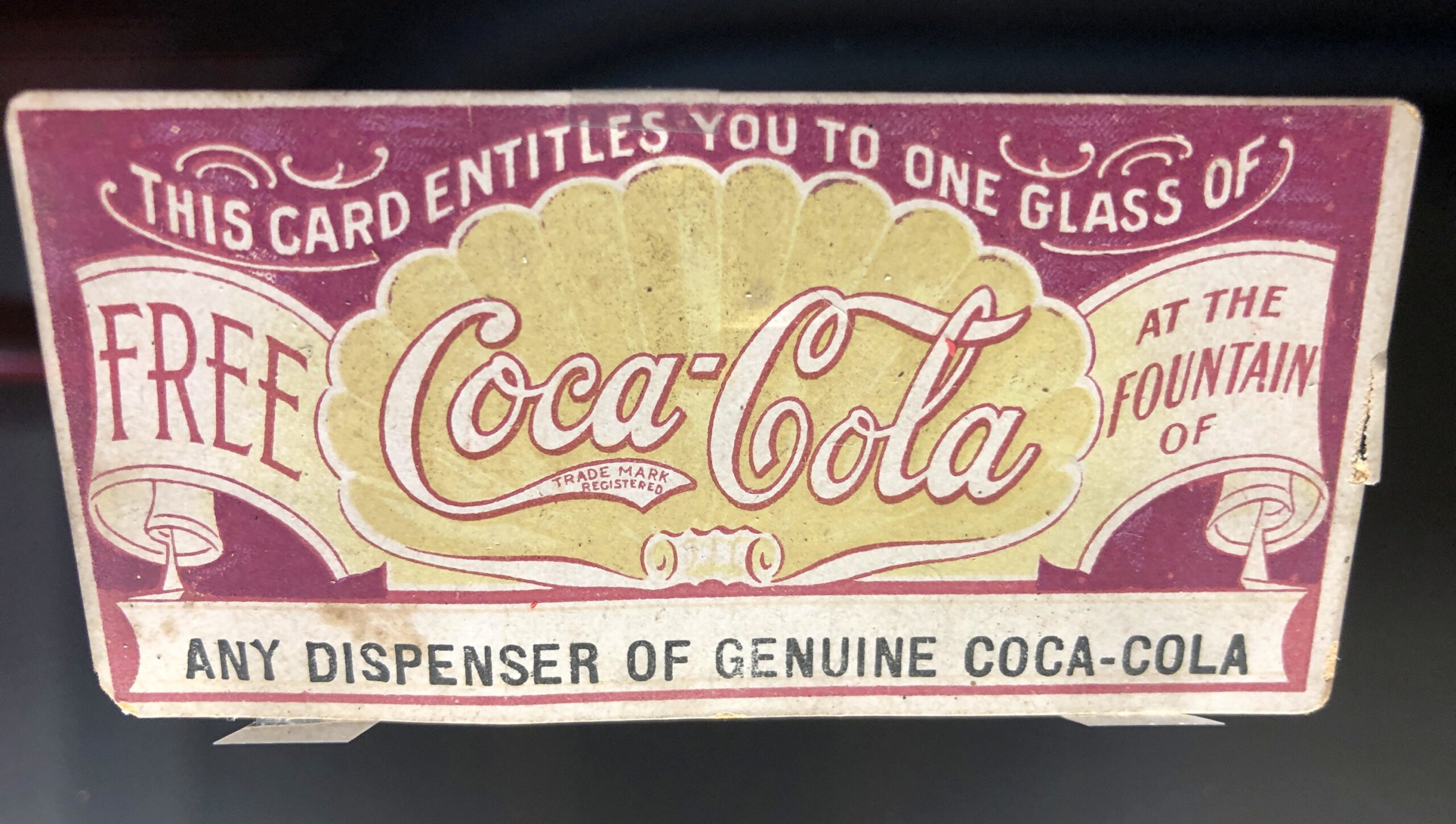
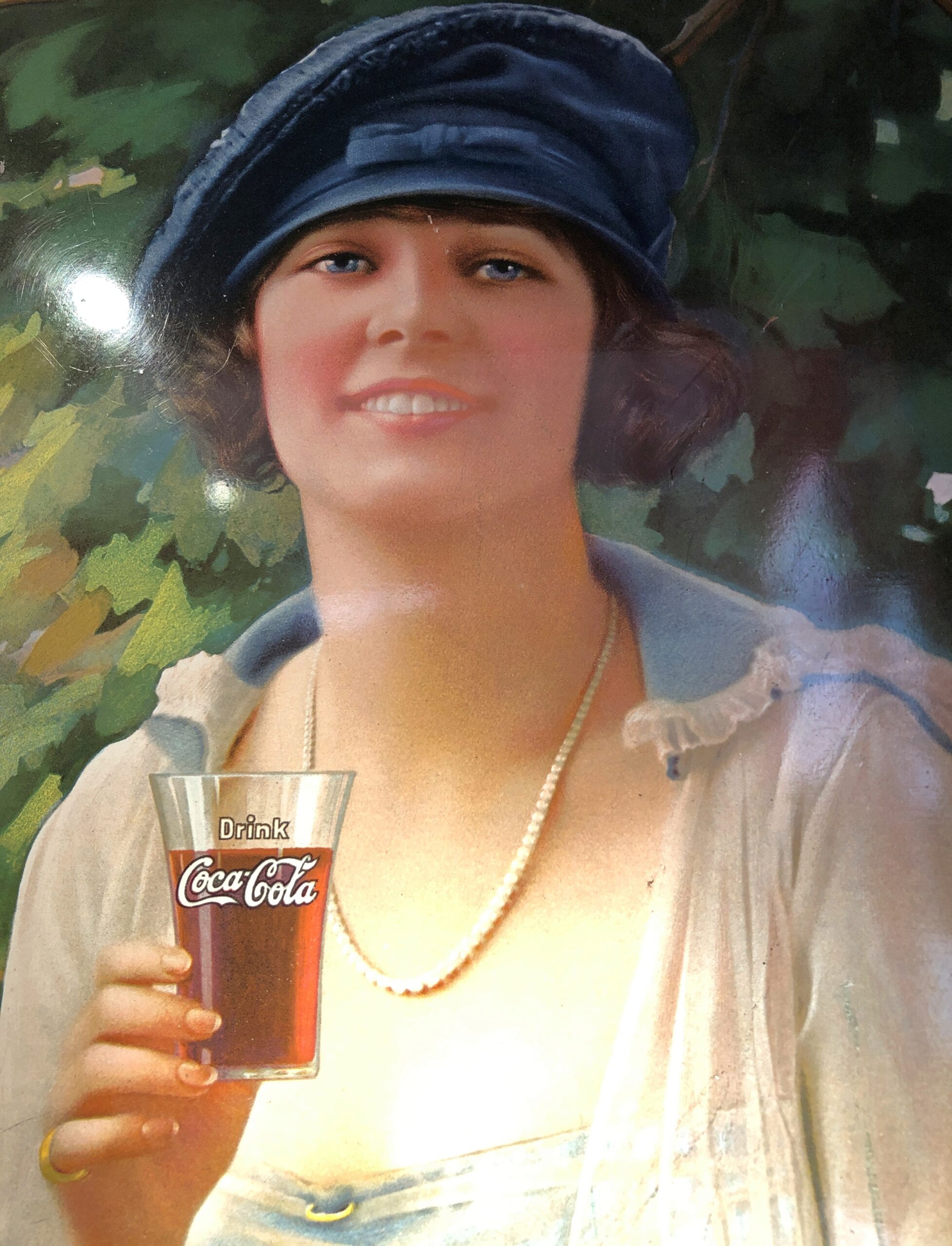
Artifacts from long ago.

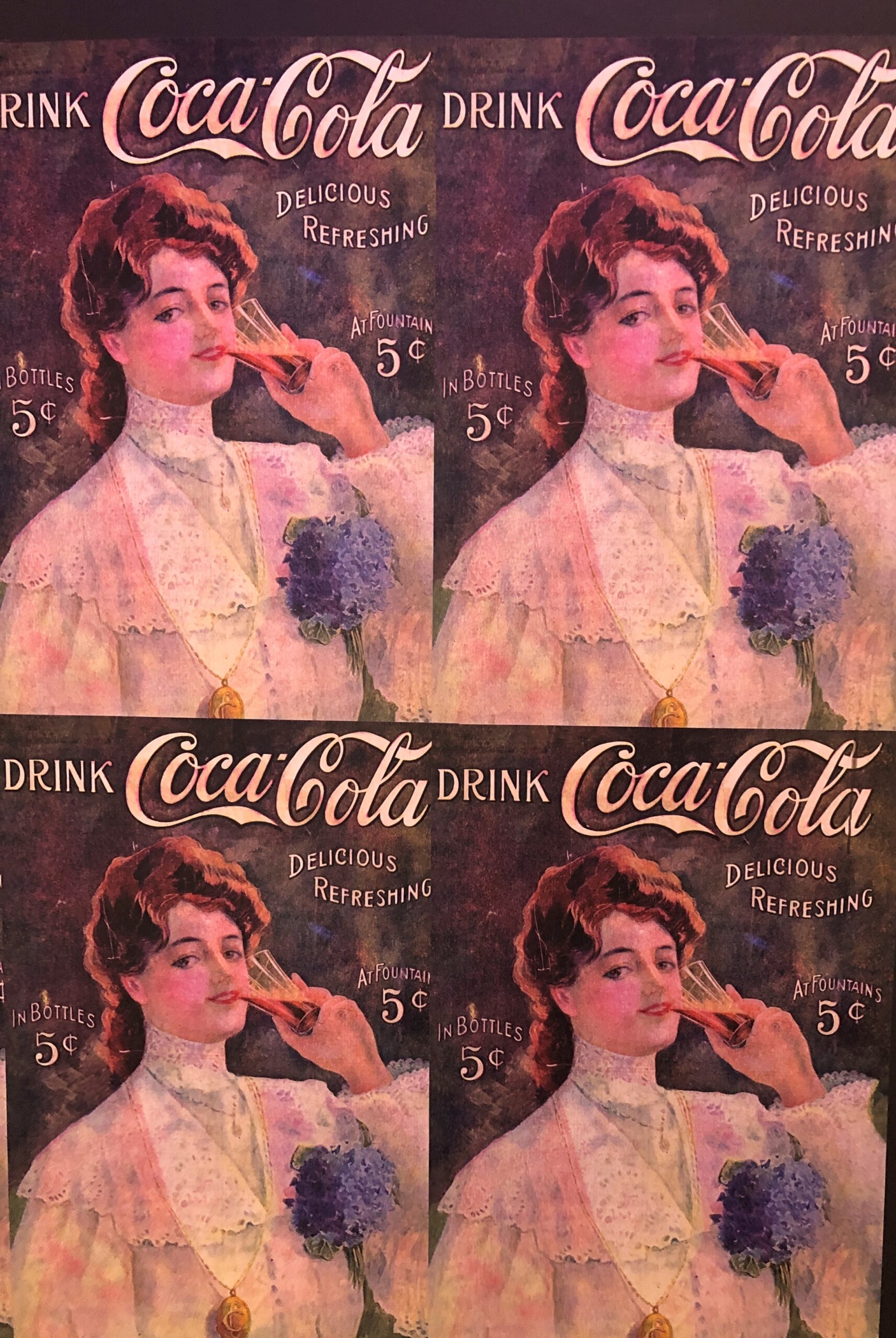
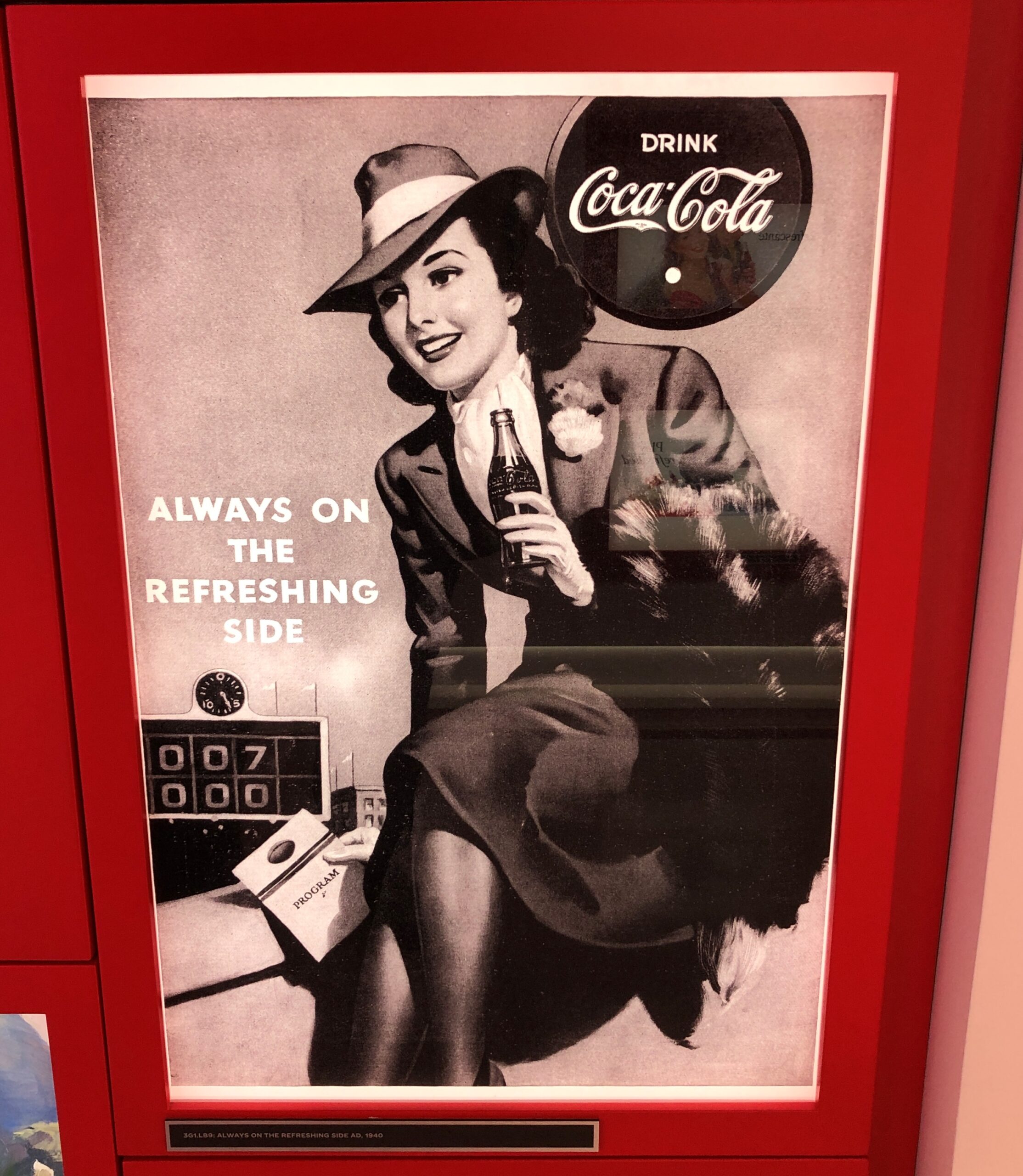
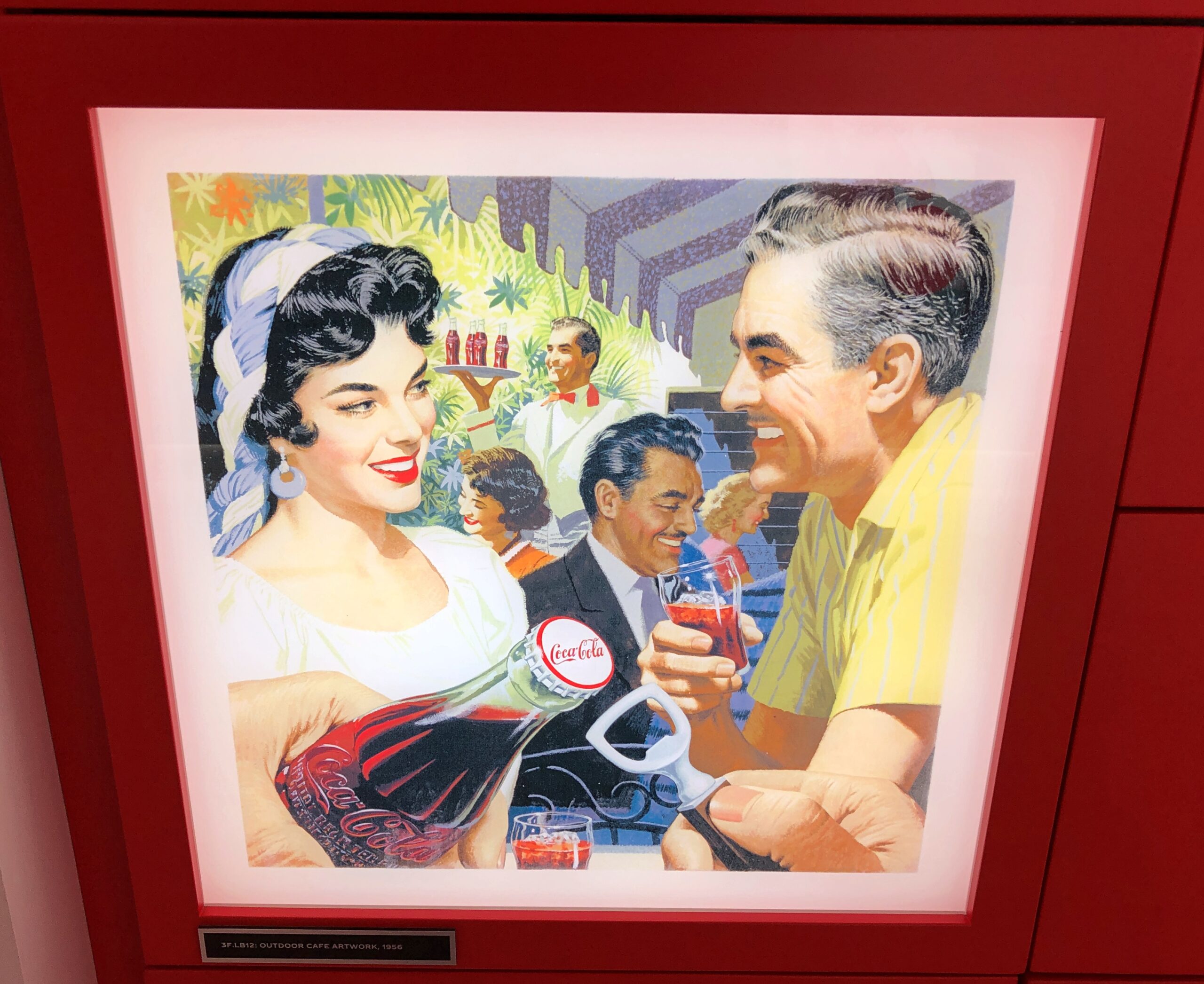
Ads from long ago.

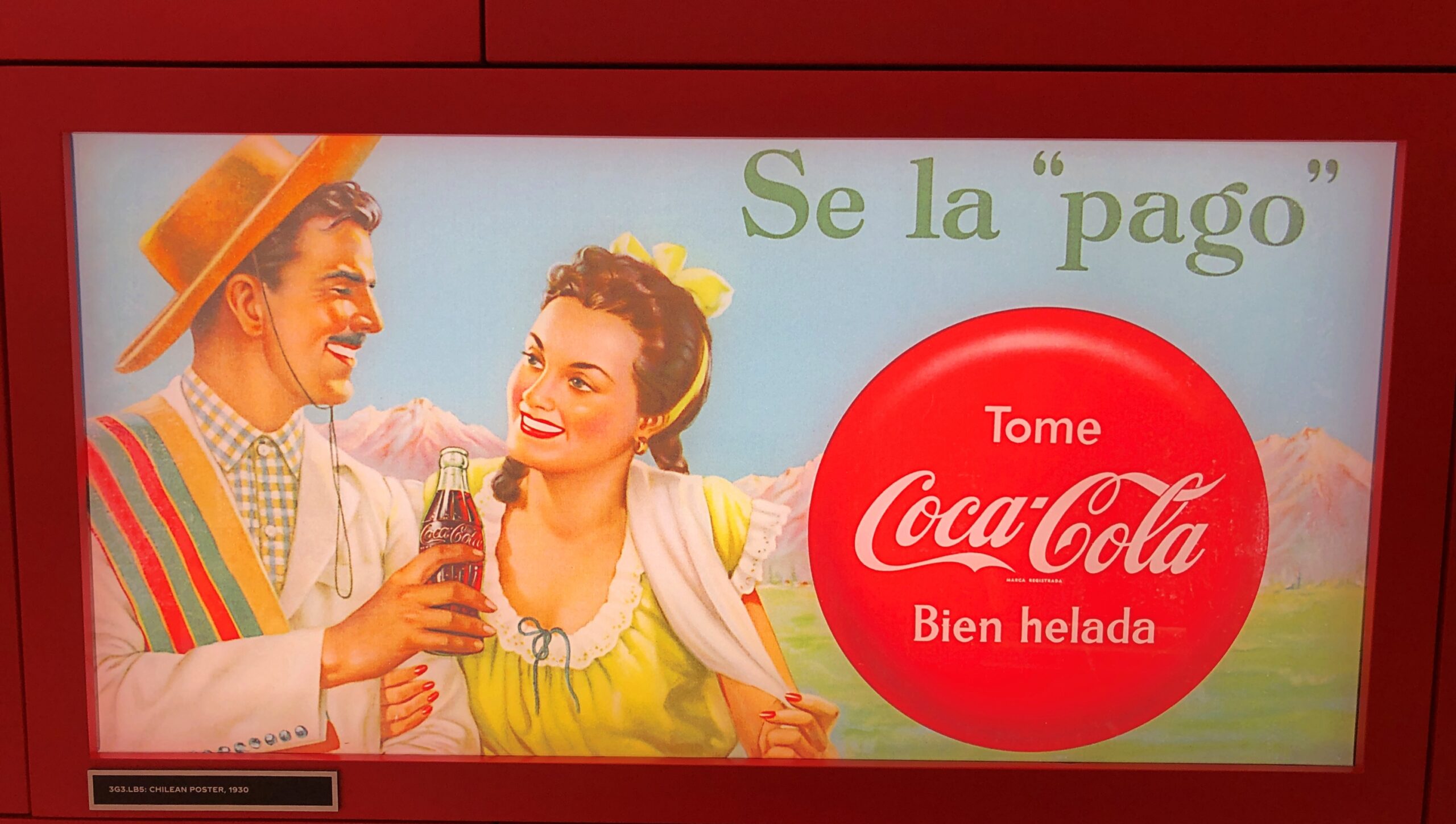
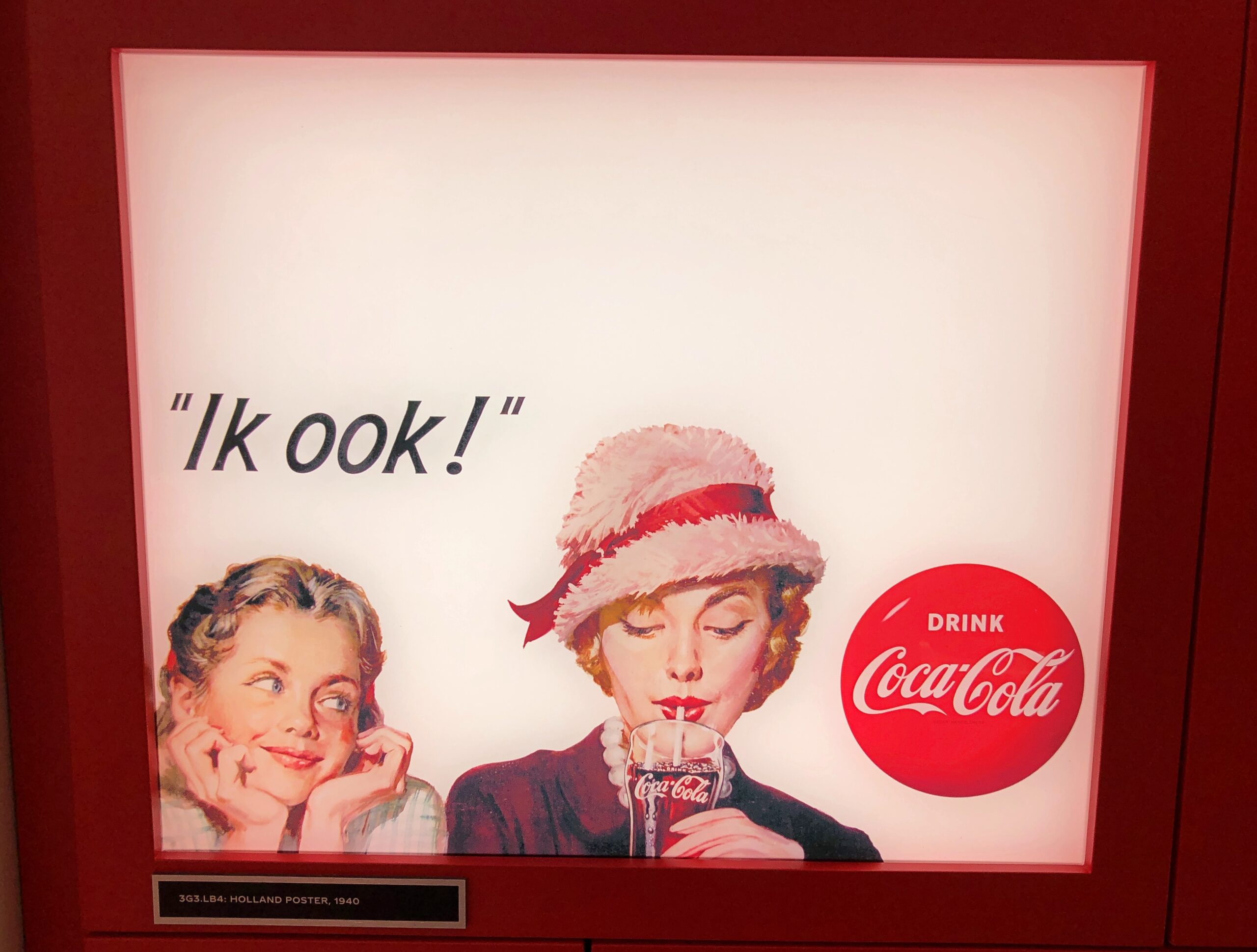
And from distant places.

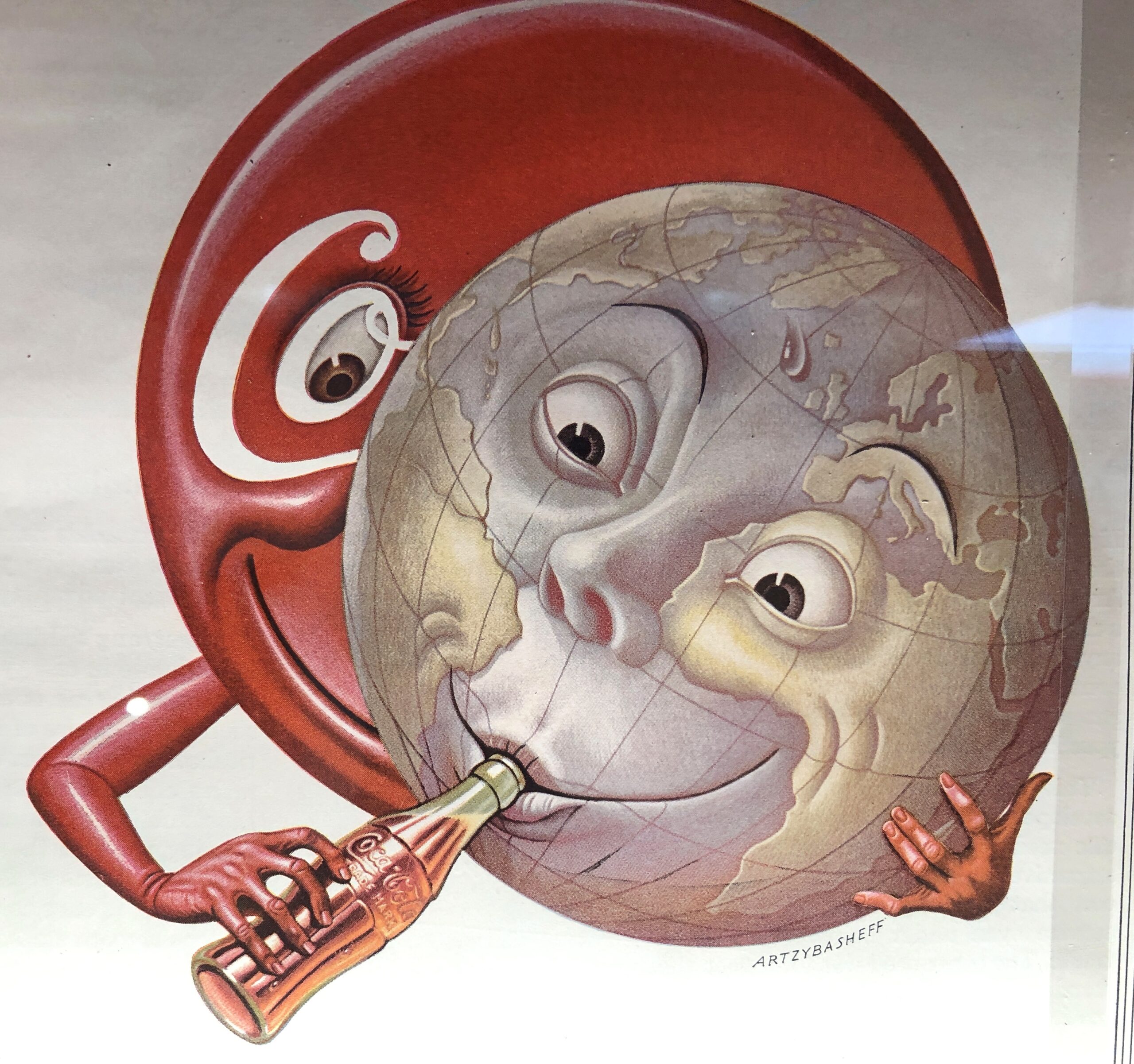
I seem to remember a similar political cartoon of featuring the Earth being nursed back to health after the ravages of WWII, but I can’t quite place it.

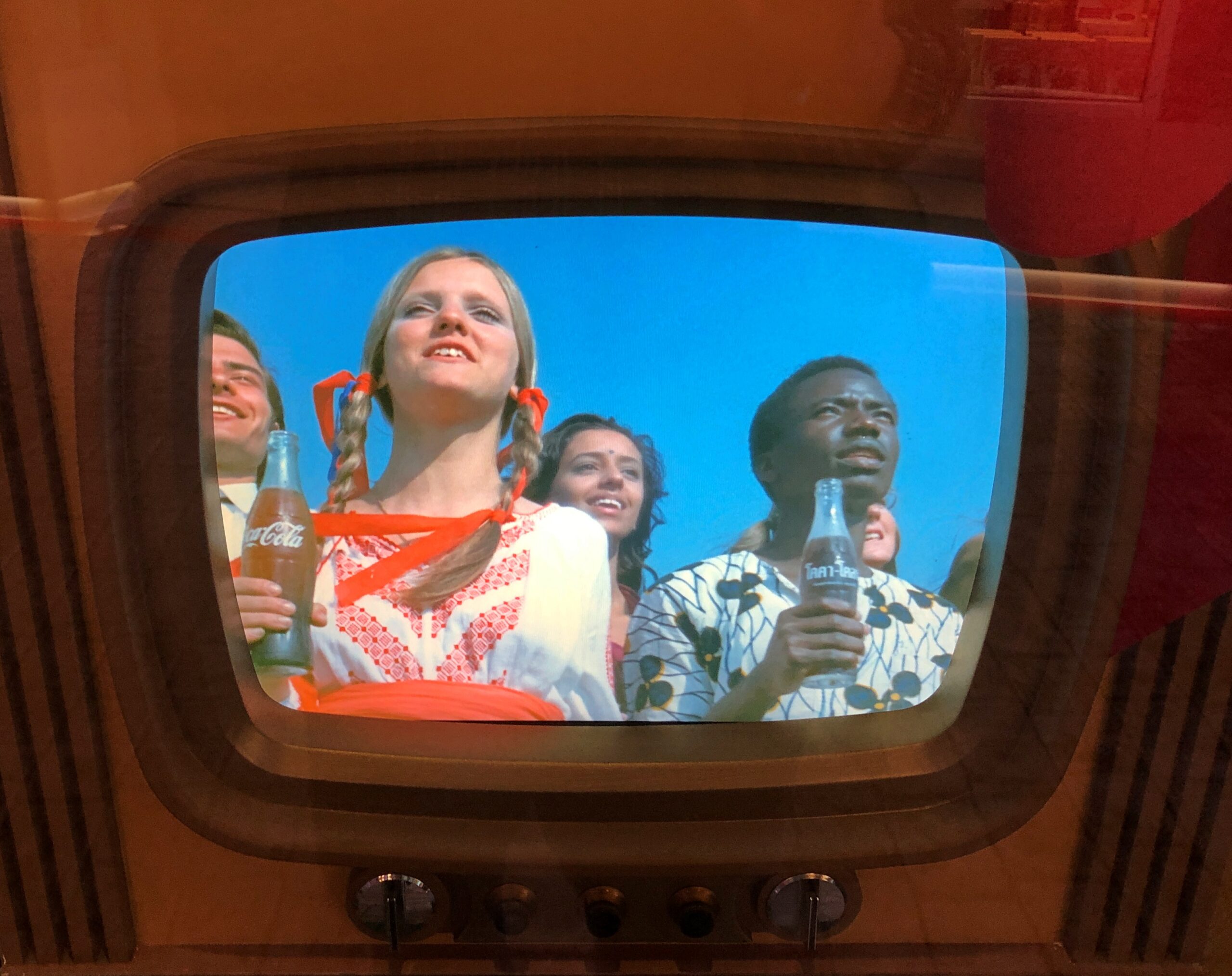
There were video clips, including of course the “Hilltop” commercial. That, I remember. Many people old enough do too, which naturally gave the final moment of Mad Men its punch.

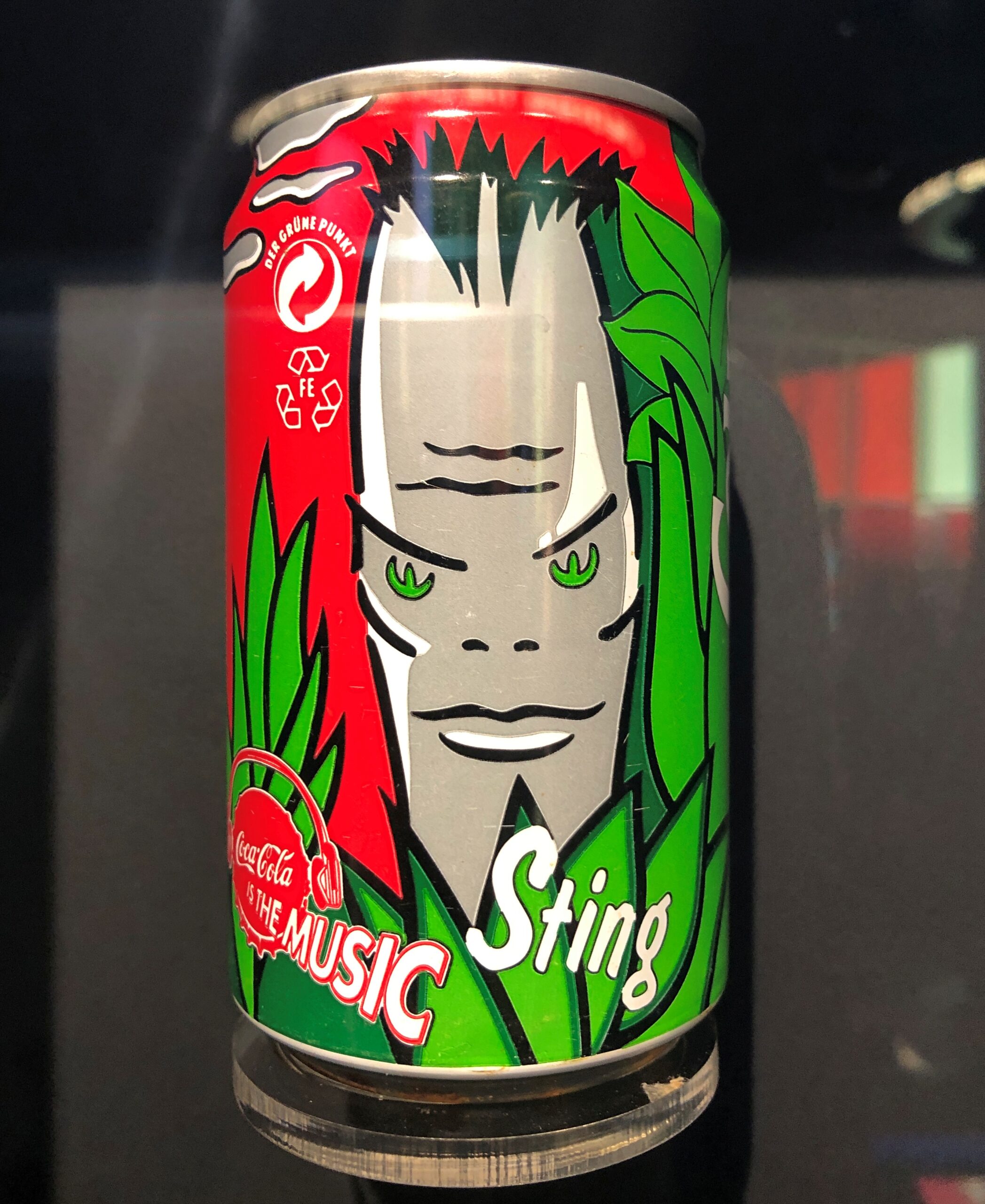
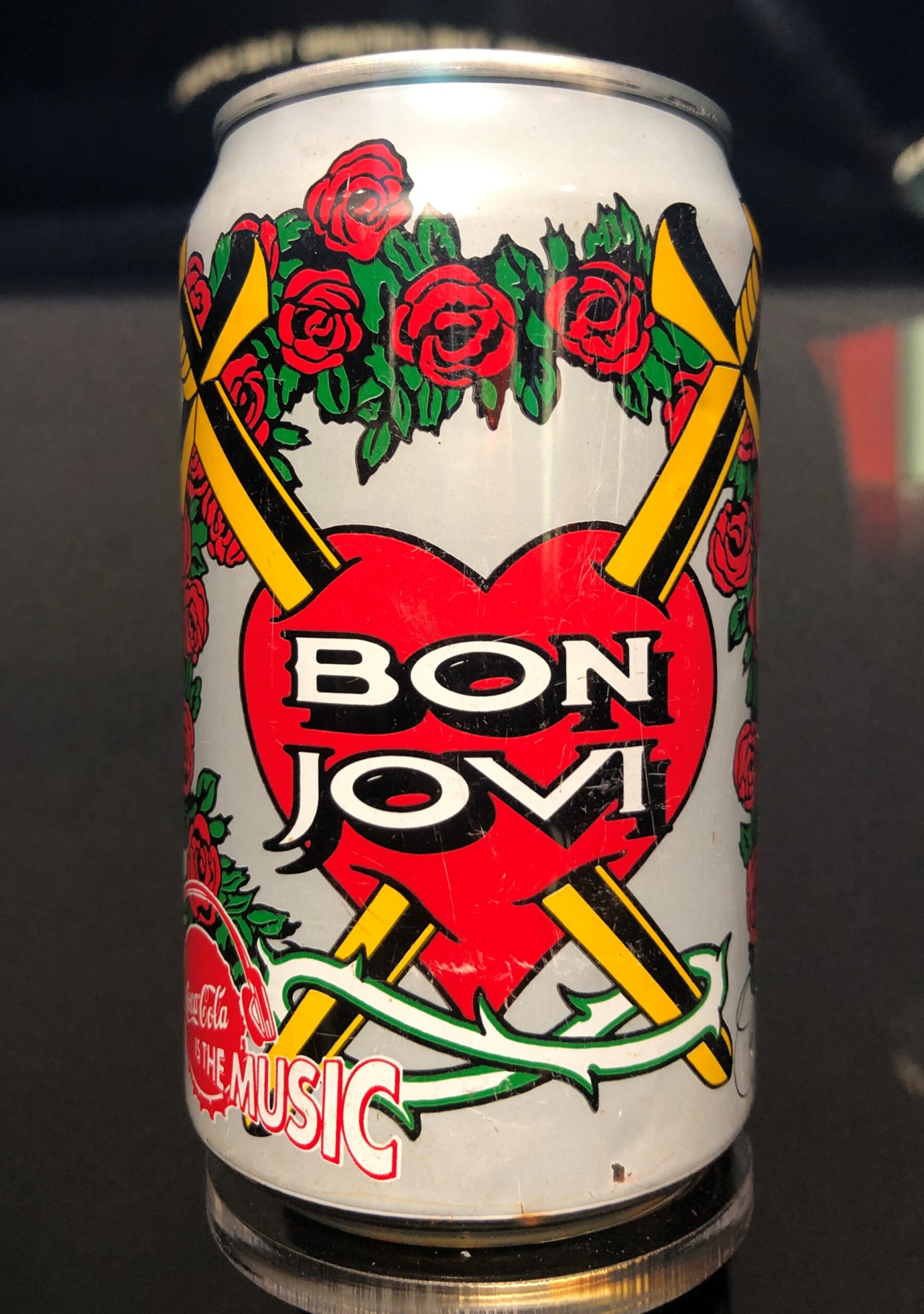
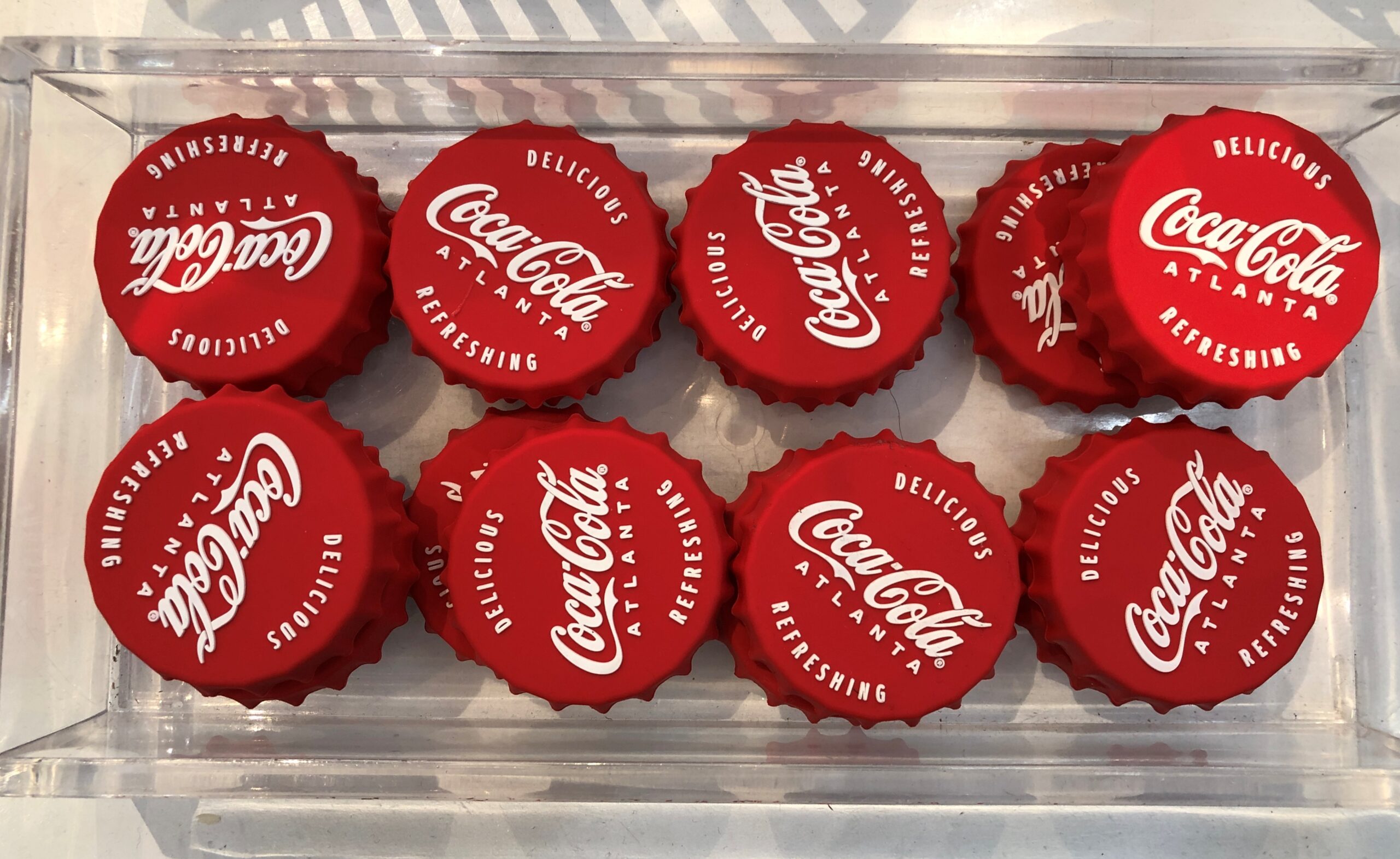
The museum also featured Coke product cans and bottles of various kinds (but not a collection of caps that I saw), many more than you see in everyday grocery stores. For instance, Sting and Bon Jovi had their own cans at one point, as part of a musician series.

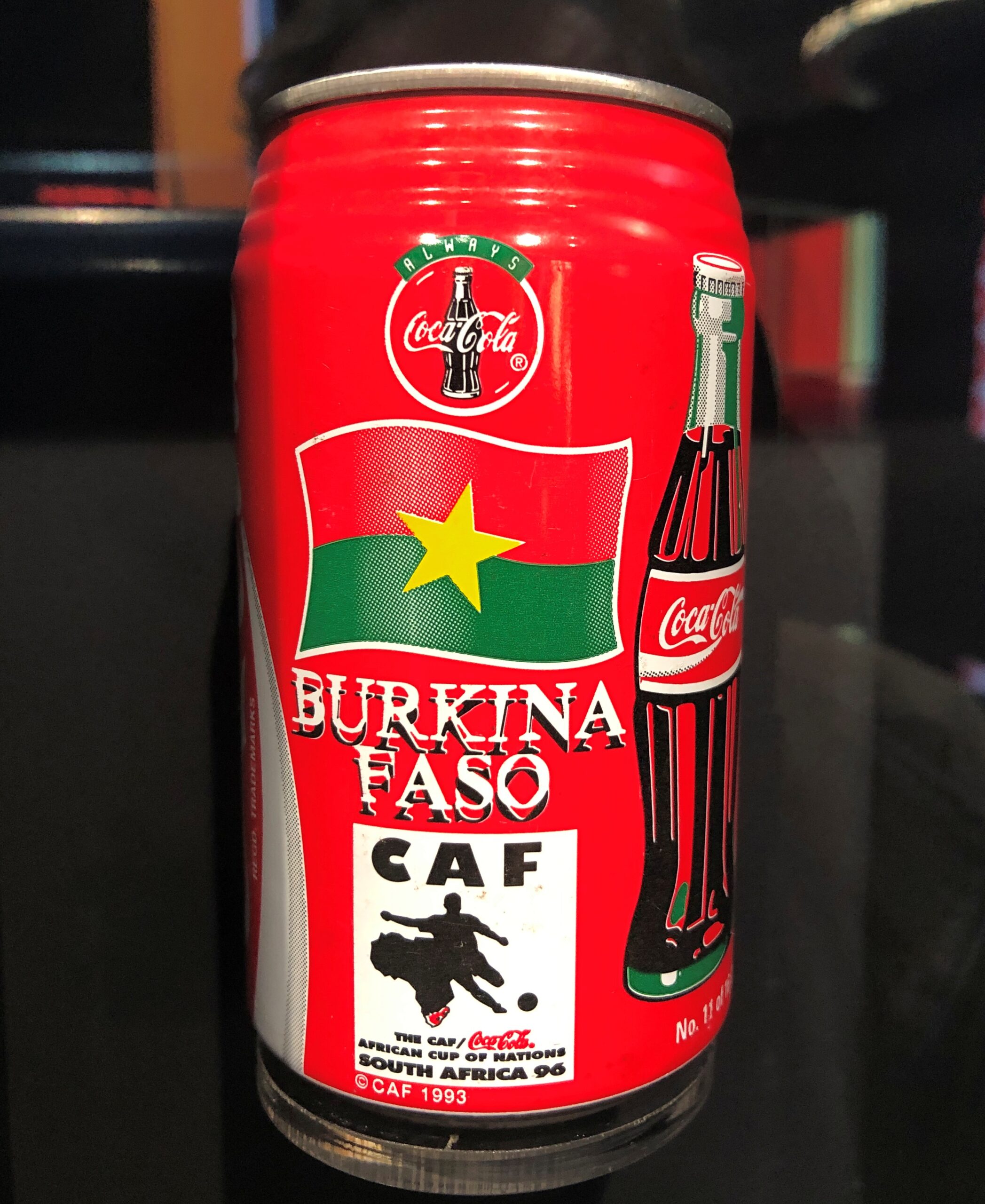
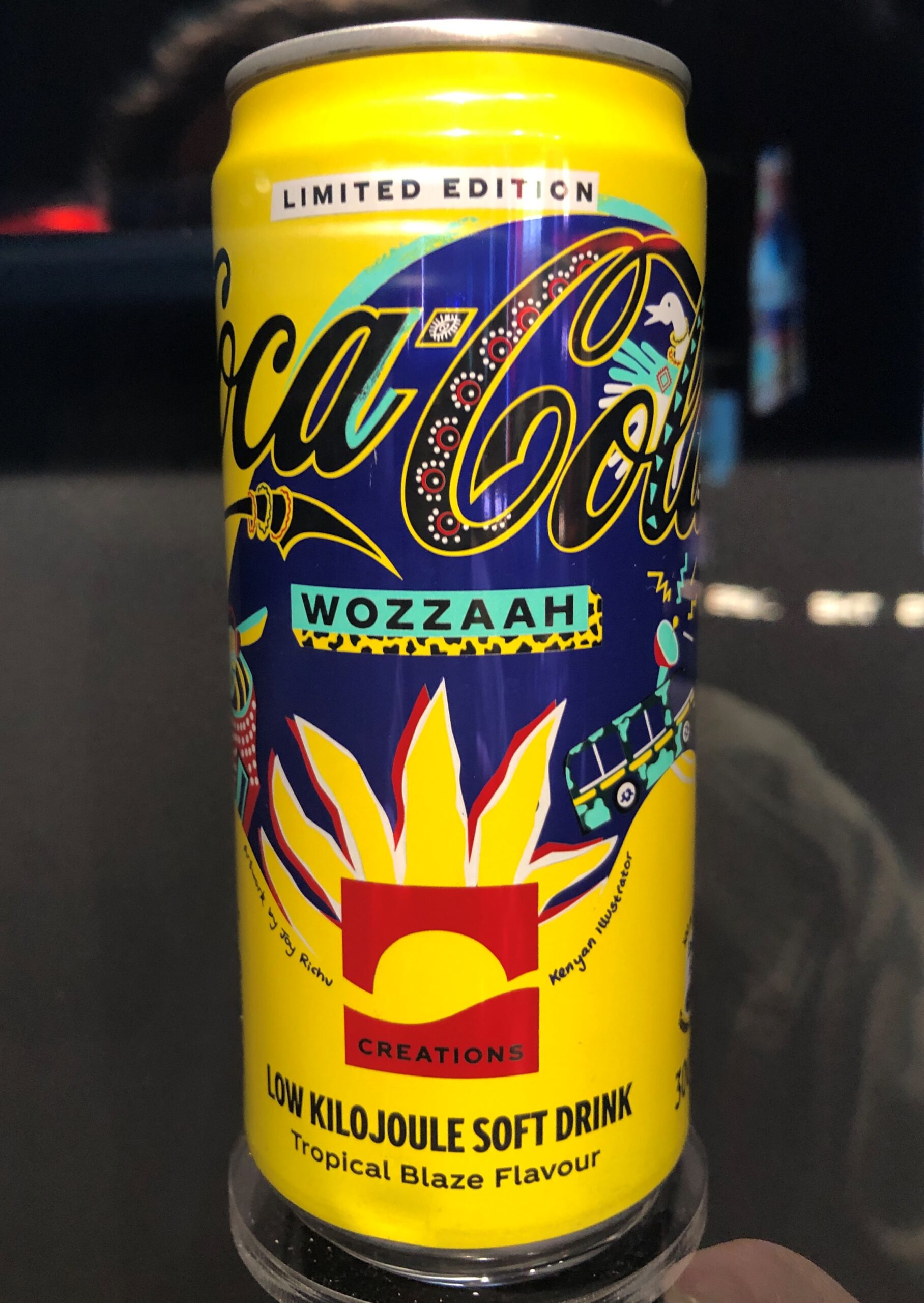
Cans from around the world.

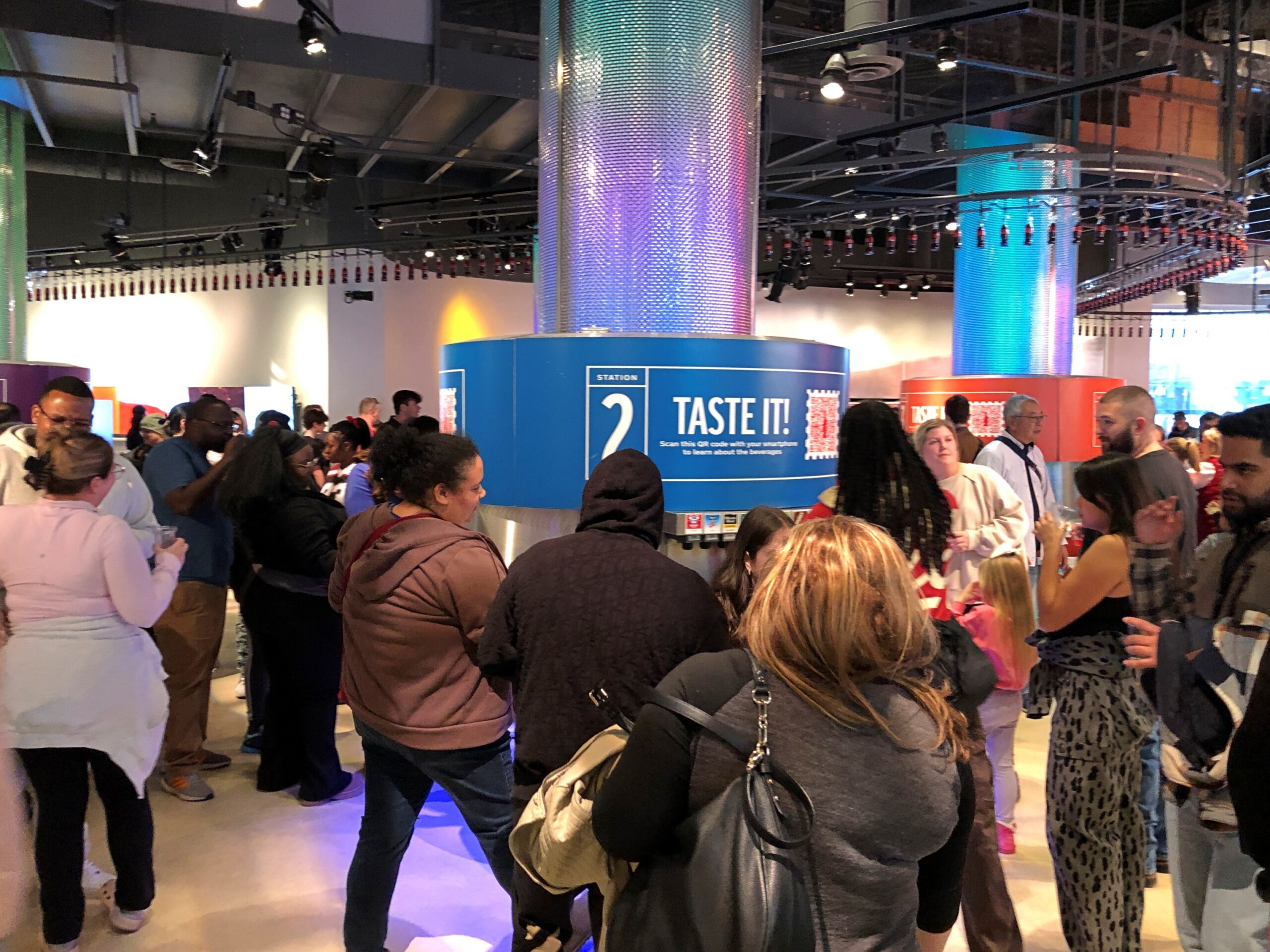
A very crowded room includes soda and water dispensers that allow visitors to sample Coca-Cola products from around the world. We went to town trying the various concoctions, as did a lot of people, and eventually I found my favorite: Bonbon Anglais, a wonderful fruit drink from Madagascar.

The web site Madagasikara tells us: La boisson gazeuse Bonbon Anglais est fabriquée à Madagascar, un pays reconnu pour ses produits naturels et son savoir-faire artisanal. I would expect no less.

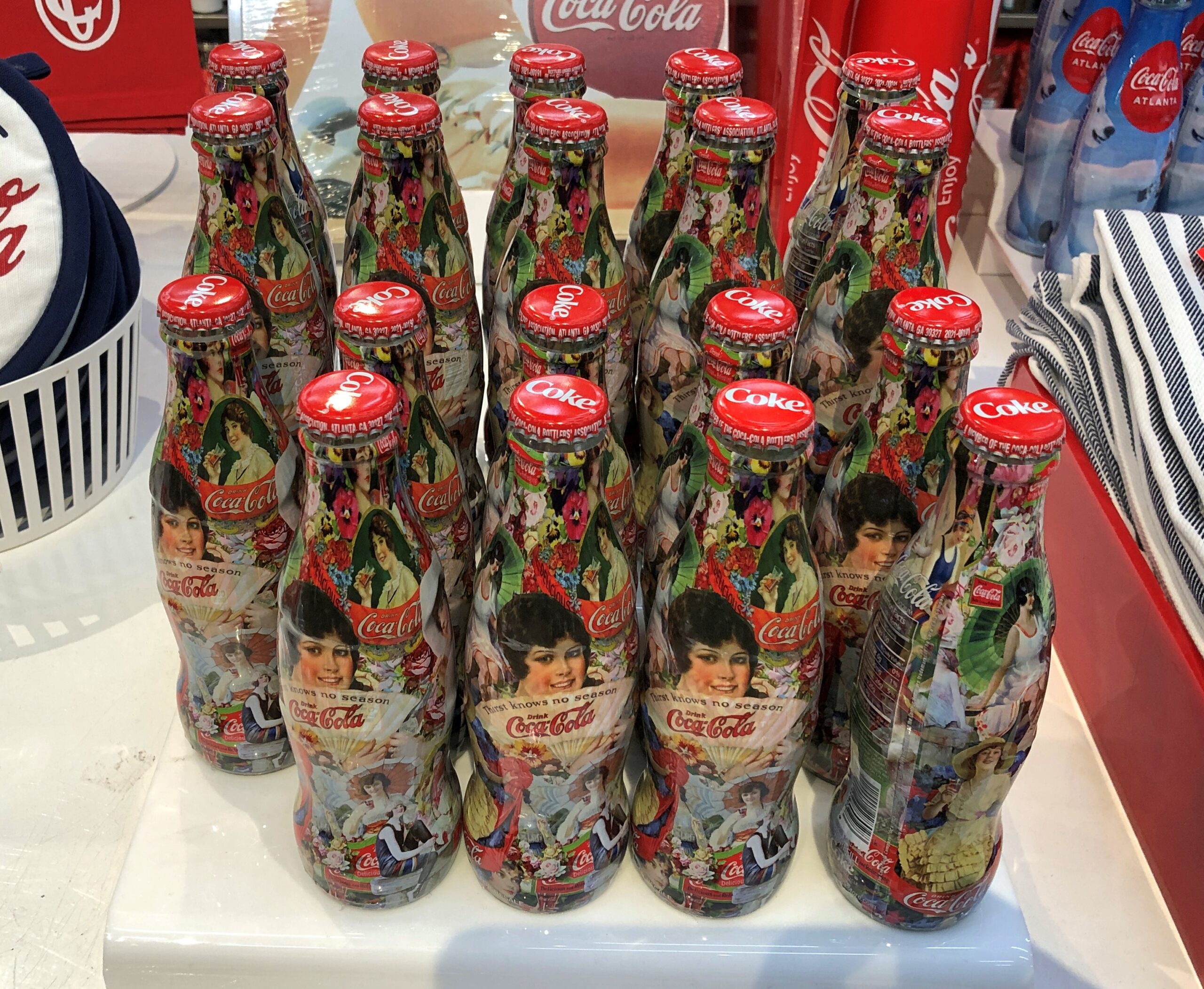
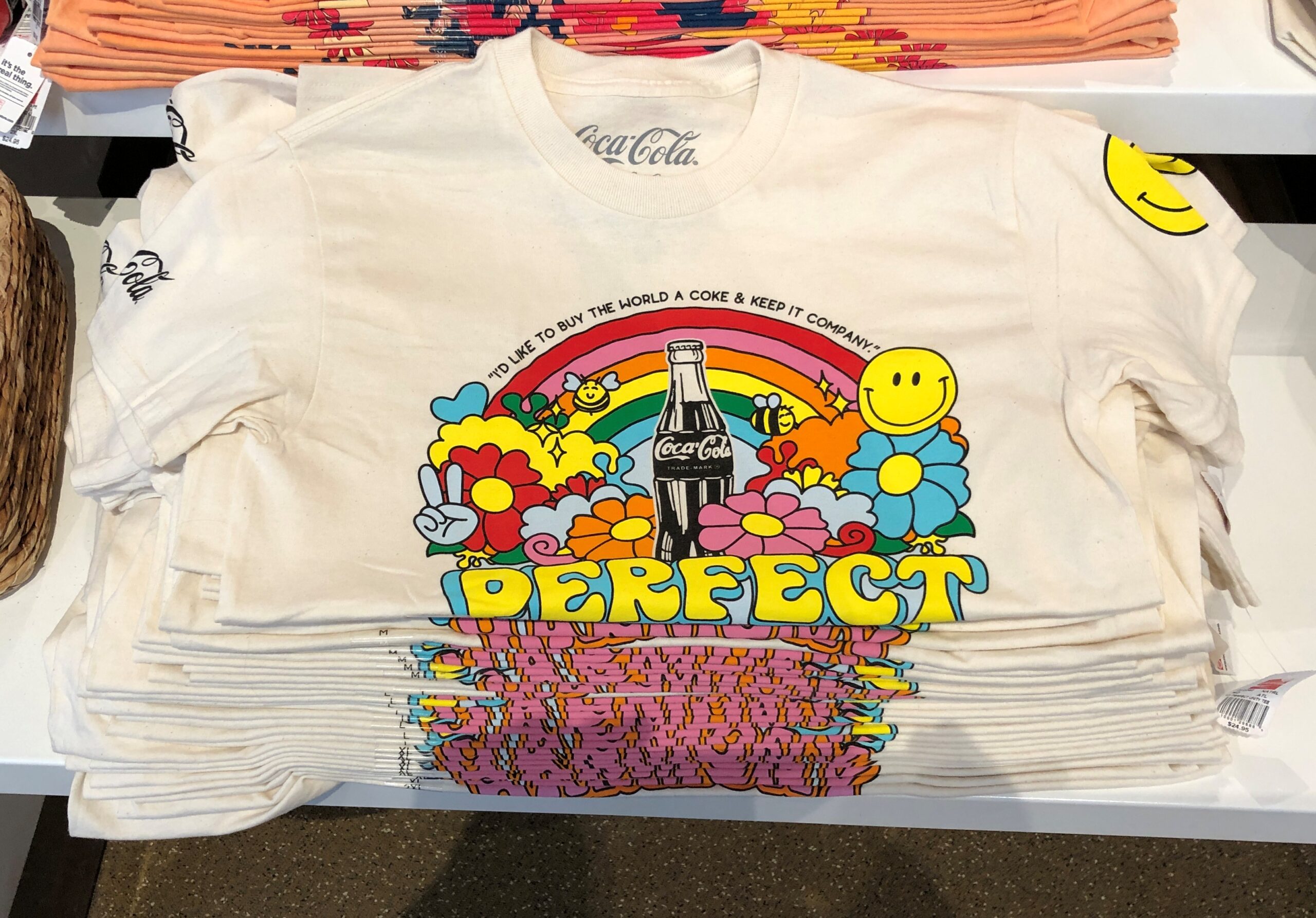
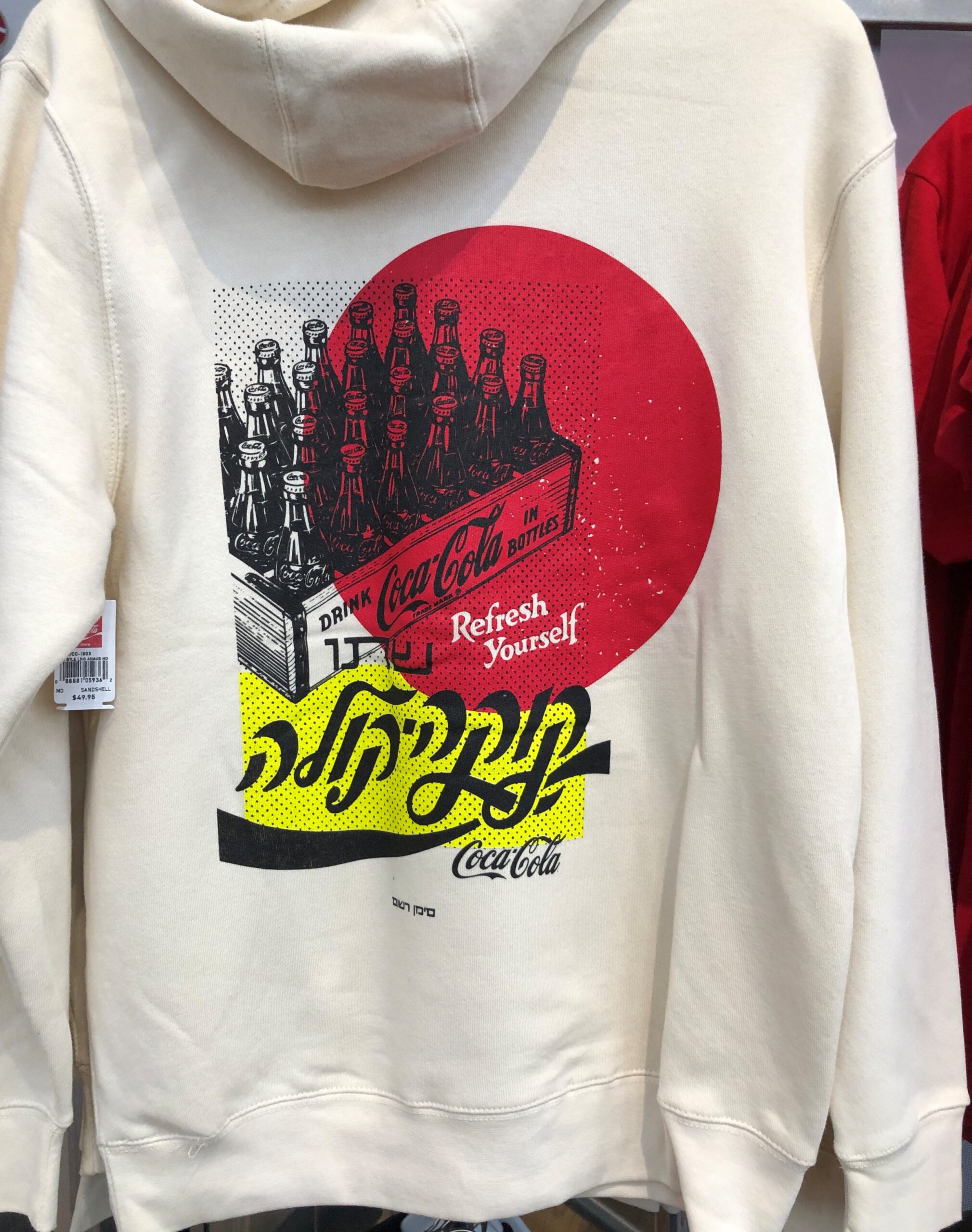
The gift shop was crowded, too. I took pics but bought no Coke merch. (I might have bought a postcard, but found none.)

To my way of thinking, the Coca-Cola Co. should pay me – even a little – to advertise its products on my person. Also, while I’m on that particular hobby horse, the World of Coca-Cola shouldn’t charge admission, especially not as much as a standard museum.

I ran the numbers, and World of Coca-Cola admission costs more than twice as much as admission to the Taj Mahal. Sure, Georgia isn’t Uttar Pradesh, but it’s galling that you’re paying at all, just to be marketed to. Obviously Middle America disagrees with me – and Yuriko didn’t mind paying for both of us – so that idea will just have to be a quixotic hobby horse of mine.

Amazon Fresh, Adieu

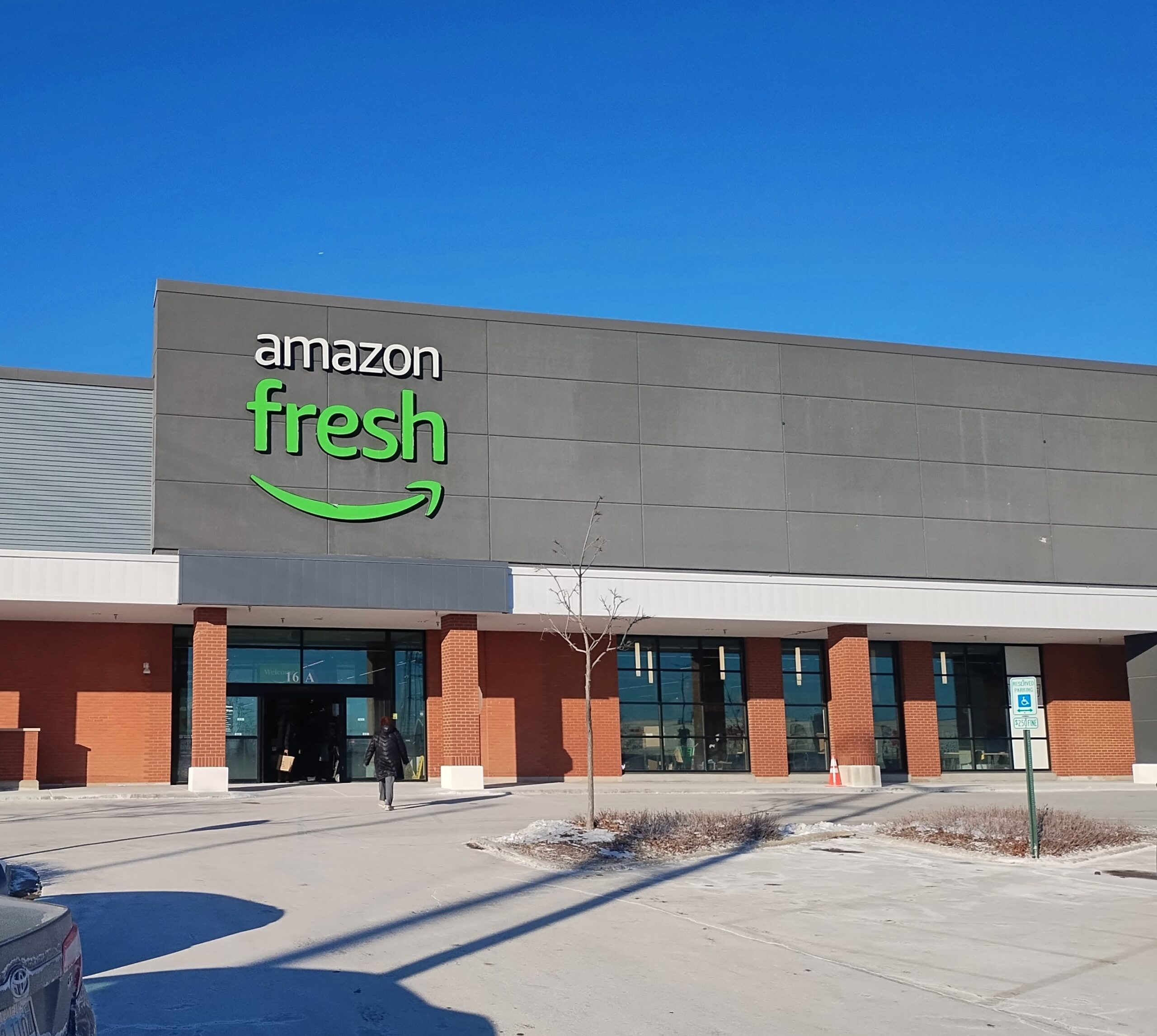
Yesterday, behemoth retailer Amazon announced that its Amazon Fresh grocery stores are closing. All of them, about 70 locations, and closing soon, as in Sunday. I read about that this morning, and happened to mention the fact to Yuriko early this afternoon, so we decided to mosey over to the closest Amazon Fresh, about a 10-minute drive from our home here in the northwest suburbs.

We’d been there. In the store’s early days especially, a few years ago, weekly fliers came in the mail offering coupons that could, if used right, mean 40 percent or even 50 percent discounts. That was worth some visits. After a few months, however, the coupons got progressively more miserly or disappeared all together.

That was no surprise. The coupons’ main function was to get you in the door, and acquainted with the store, and ideally form a good opinion that inspires return visits. A good marketing plan, even if it relies on something as analog as paper coupons, and it might have worked but for one thing: there was very little distinctive, to an ordinary shopper, about Amazon Fresh.

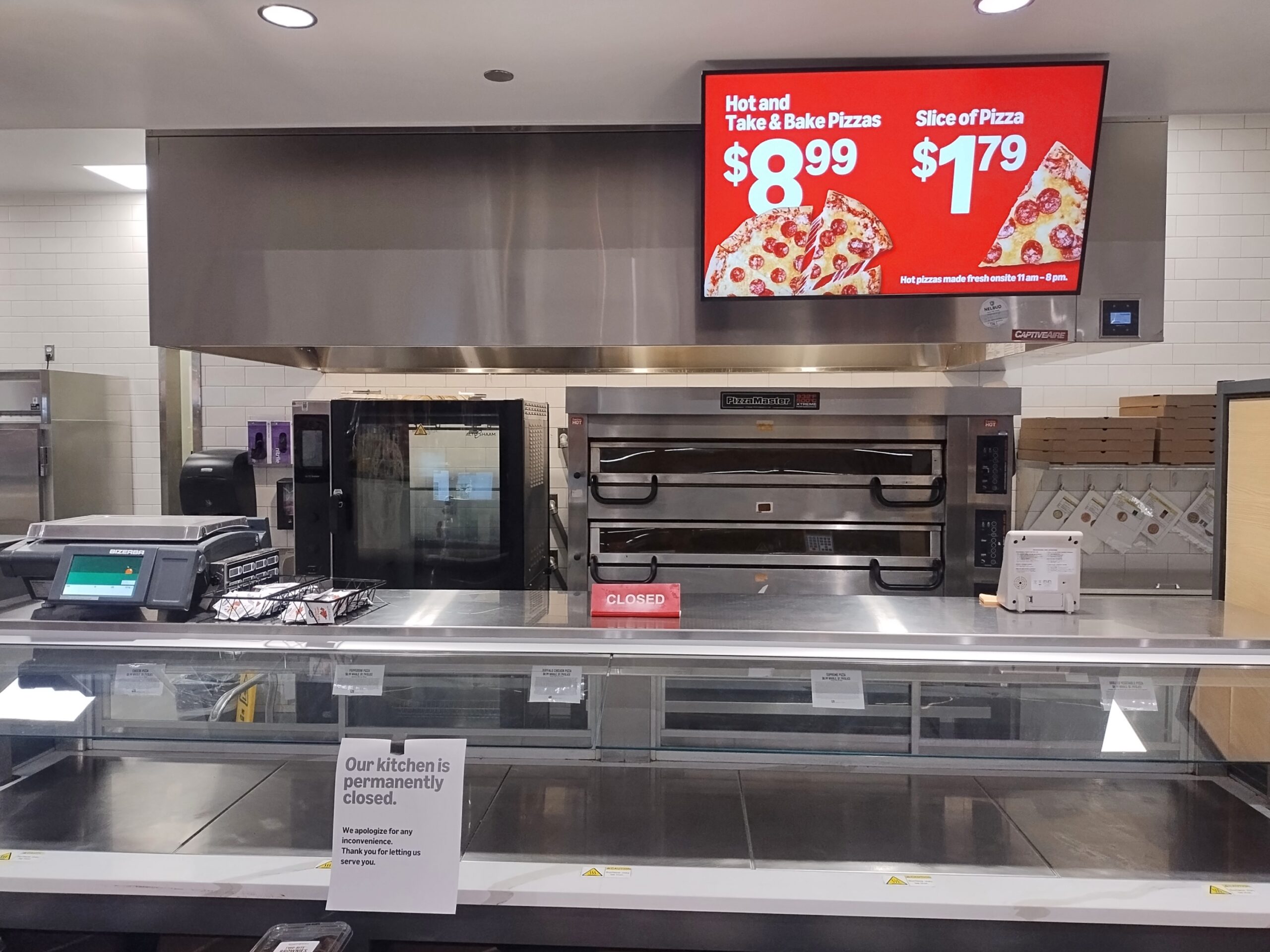
The store promised to be something of a discounter, and sometimes it was. Until recently, for example, it sold sizable and reasonably good pizzas for $9 a pie or less than $2 a slice – entirely competitive. Other items were sometimes discounted as well, but in that the store was no different from any other store in the area.

Even that might not been a discouragement, if the store had competed on selection. By current standards, the NW suburban Amazon Fresh is mid-sized, so isn’t going to be able to offer everything under the sun. But even smaller stores can pull off a remarkable selection, if they try. Such as Trader Joe’s. Or even Aldi, whose more recent iterations are about the same size as the Amazon experiment in grocery stores.

But no. The Amazon Fresh selection is good enough, and certainly would be a boon in a food desert, or even at the edge of one. But the NW suburbs are the opposite of a food desert: we have hyperstores, warehouse stores, standard supermarkets of considerable size, discount grocers, and plenty of ethnic specialty grocery stores of varying sizes, all within a fairly reasonable driving radius. There are even dollar and convenience stores thrown into the mix, and every variety of take-out food that you can imagine. These parts are a highly competitive retail grocery and food & beverage environment, is what I’m saying.

And what did Amazon Fresh bring to the table in such an environment? A lot of meh.
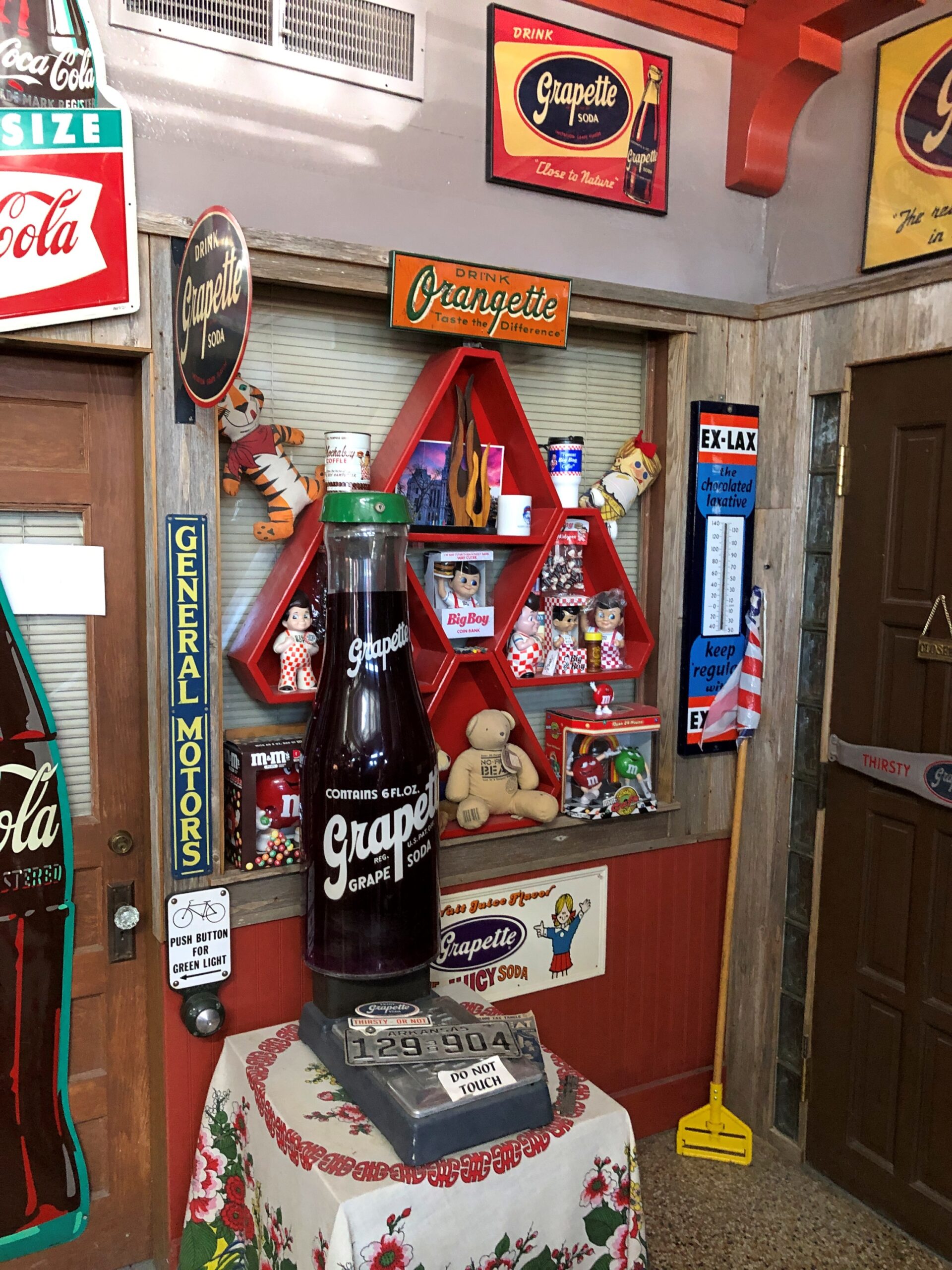
Then there was this business of “Dash Cart.” Amazon Fresh made a big deal about how technically advanced the stores were, because you could “Skip the checkout line. Scan, bag and pay – right from your cart.” Well, OK. Some of the carts had consoles for self-scanning.

Did Amazon actually want its customers to adopt Dash Cart, or was it just showing off? I ask because any hint of any instruction about how to use the thing was lacking. Call it an engineers fallacy: this tech is so cutting-edge, so impressive, so neat that people will be eager to learn it. People will not. Maybe had there been an employee whose job it was to school us old timers, we might have been interested, but of course that costs money, and just wait until customers don’t even have to deal with checkout clerks, how much that will cut labor costs!
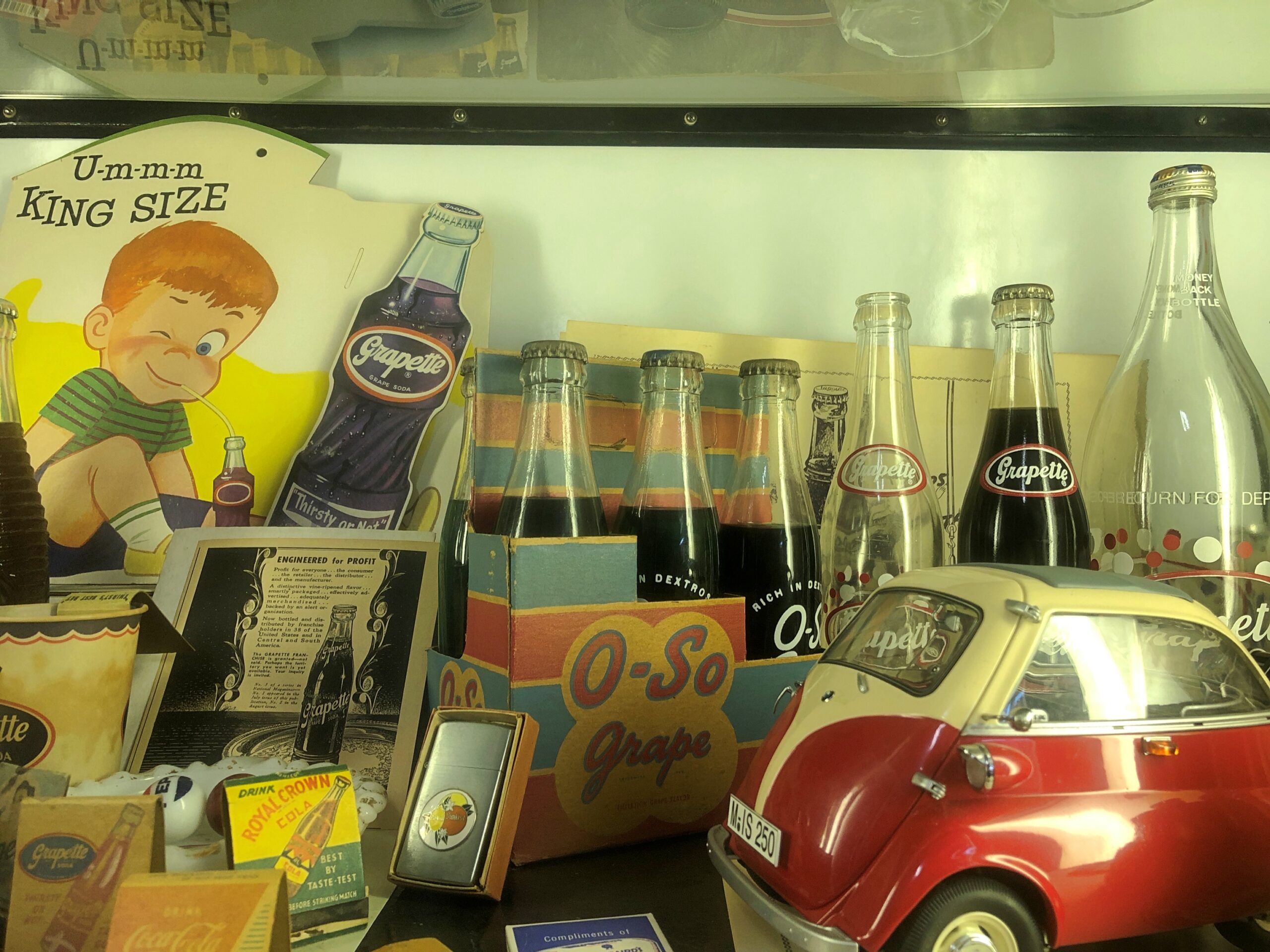
Besides, you still have to do the work the store should be doing – scanning your items – for free. That is the essential irritation of any self-scanning scheme. Turns out self-scanning isn’t going to completely replace clerks anyway, for various reasons, and I’m glad.

How could Dash Cart and its ilk actually work? One: activate the cart with a debit or credit card. No messing around with some app, no inputting some code that comes to your phone, or any of that nonsense. Two: the cart itself automatically scans items as you put them in, and shows in a highly visible way how much you’re paying, so that the price jibes with the price on the shelf. Three: That’s it, you leave. You are charged a total – again, a highly visible total – as you leave, just as you would be otherwise.
Is all that technically possible? How should I know, but I’m leaning toward yes. Or it could be.

Never mind all that, we figured the store might be knocking off 10 or 20 percent in the face of its demise. The first indication that we were wrong was the store parking lot, which was as crowded with cars as I’d ever seen it. The second clue was the lack of shopping carts outside — at all, including in corrals in the parking lot or next to the entrance. No shopping carts inside the door, either.

Hand baskets were available, and Yuriko started with that, her initial goal being vegetables. I waited inside the door (since it was about 15 F outside) and after a few minutes, got a cart that was being returned. While I was waiting, a store employee announced at the front of the store that checking out, even self-check, would involve and hour or hour-and-a-half wait. It was a thing that makes you go hmmmm.

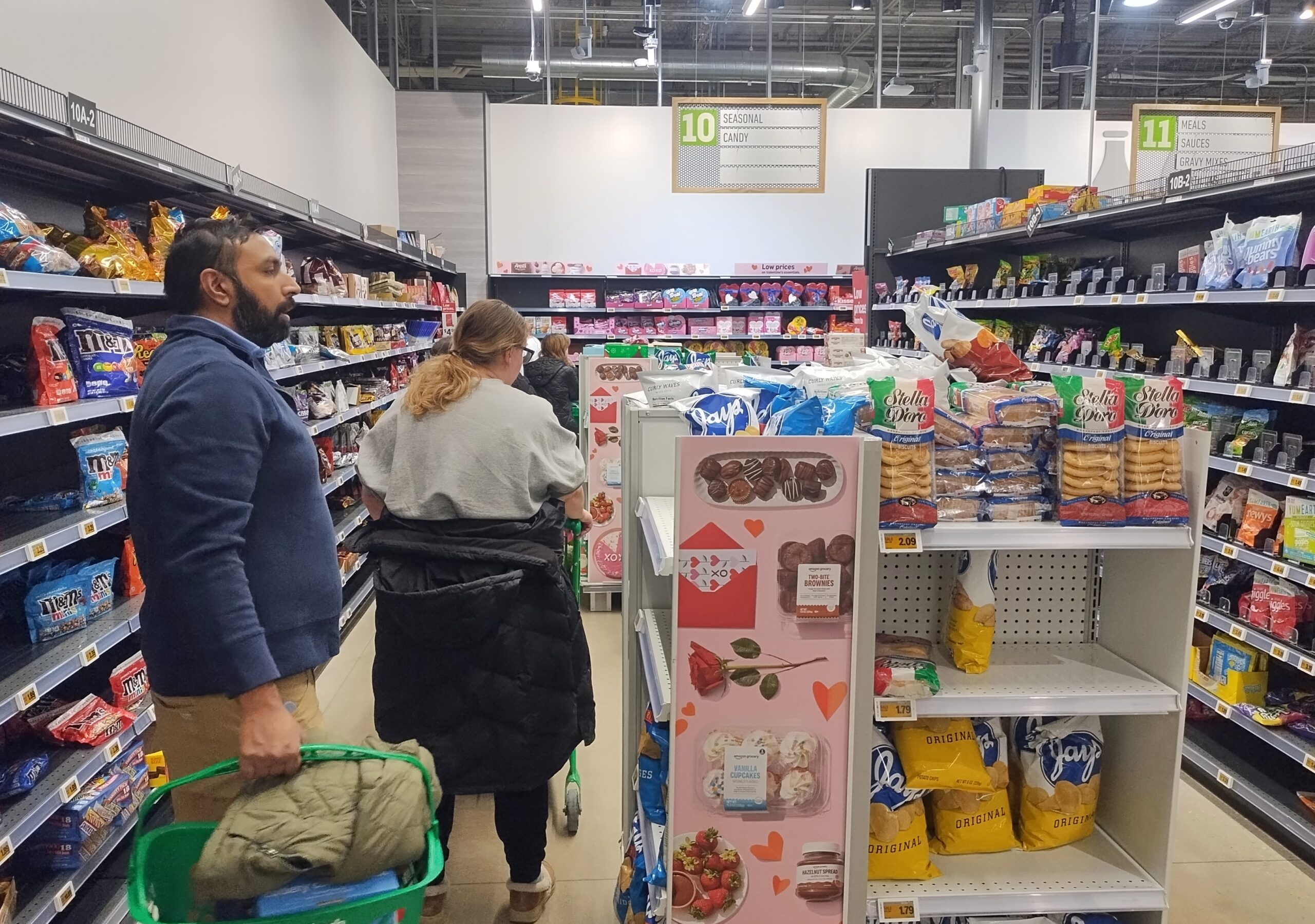
Shopping cart delivered to Yuriko, I set out to investigate. The first thing I found out: the place was crowded. An entire large cross-section of the population of the nearby Chicago suburbs was loose in the store, younger and older, families with little kids, single shoppers, people whose ancestors (sometimes pretty recently) had come from Central Europe, East Asia, the Indian subcontinent, Latin America and more. Put them all in the store and it was Supermarket Sweep time. I’ve never seen a grocery store so crowded or so many carts piled so high.

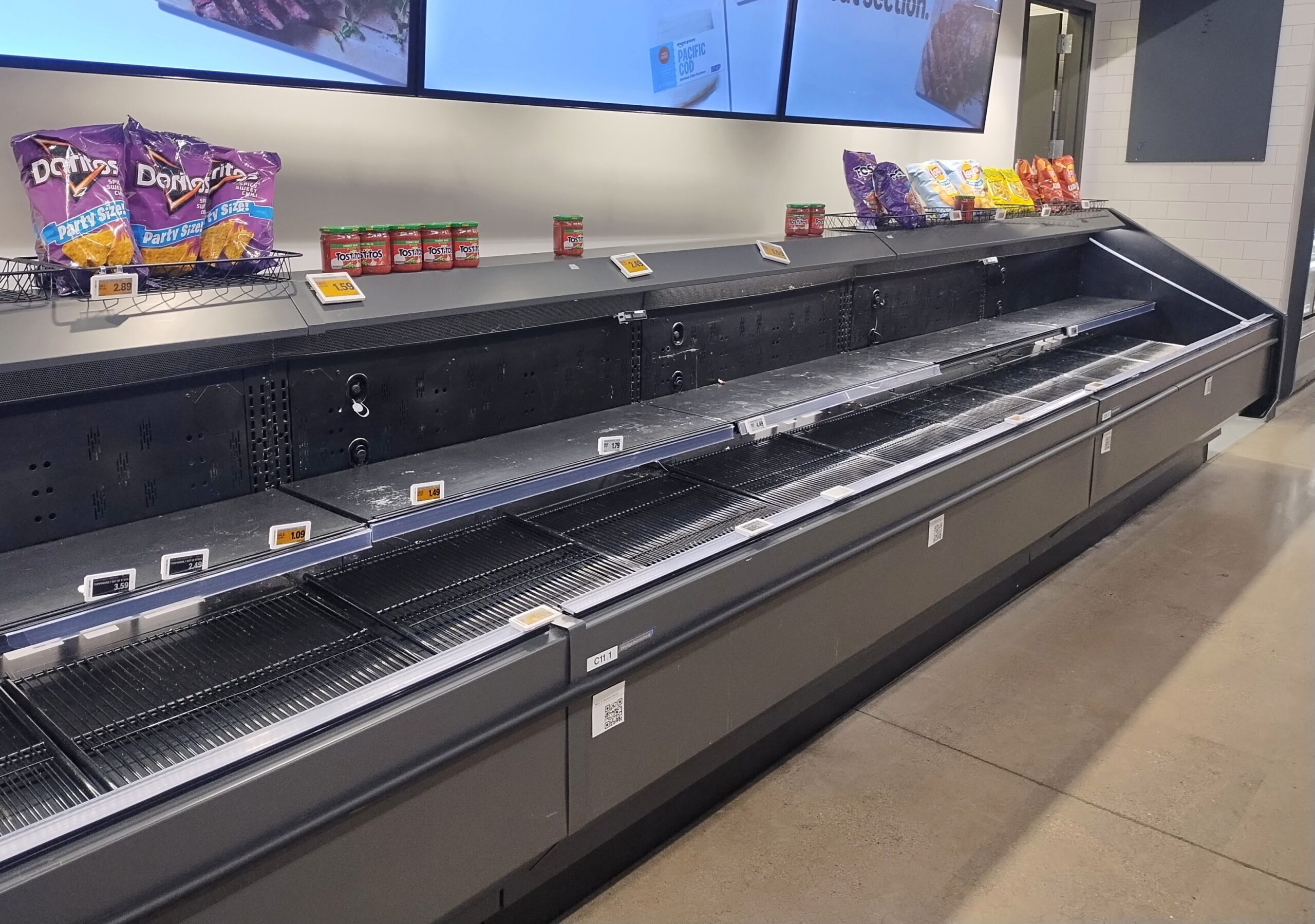
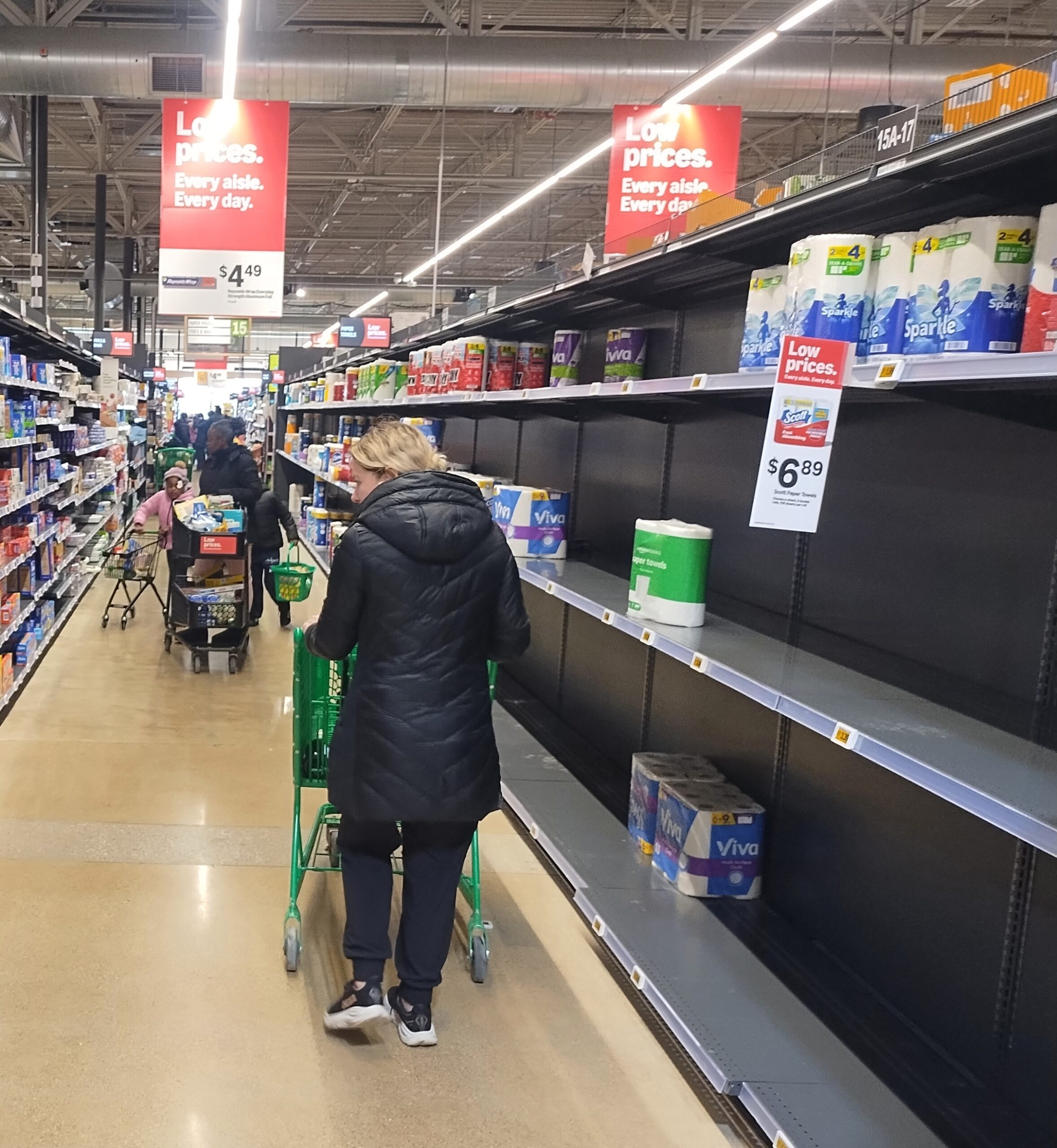
That resulted in some empty shelves, especially in the meat aisle and paper goods.

Sorry to say, the kitchen had already been closed permanently, its ovens cold and its workers presumably left to take their talents elsewhere, if possible. I’d wanted a slice of pizza at less than $2 just one more time, but no go.

But I’d misrepresent things if I left it at that. Many of the aisle and shelves still held the bounty of American agriculture and the never-ending efforts of food technologists.

What brought the crowd? Deep discounts, of course. It didn’t take long to work that out. Later I did some back-of-the-envelope calculations and determined that nominal prices were back to late 1990s levels. Thirty years of inflation, slow and then fast, poof. That’ll pack ’em in. We joined the fun.

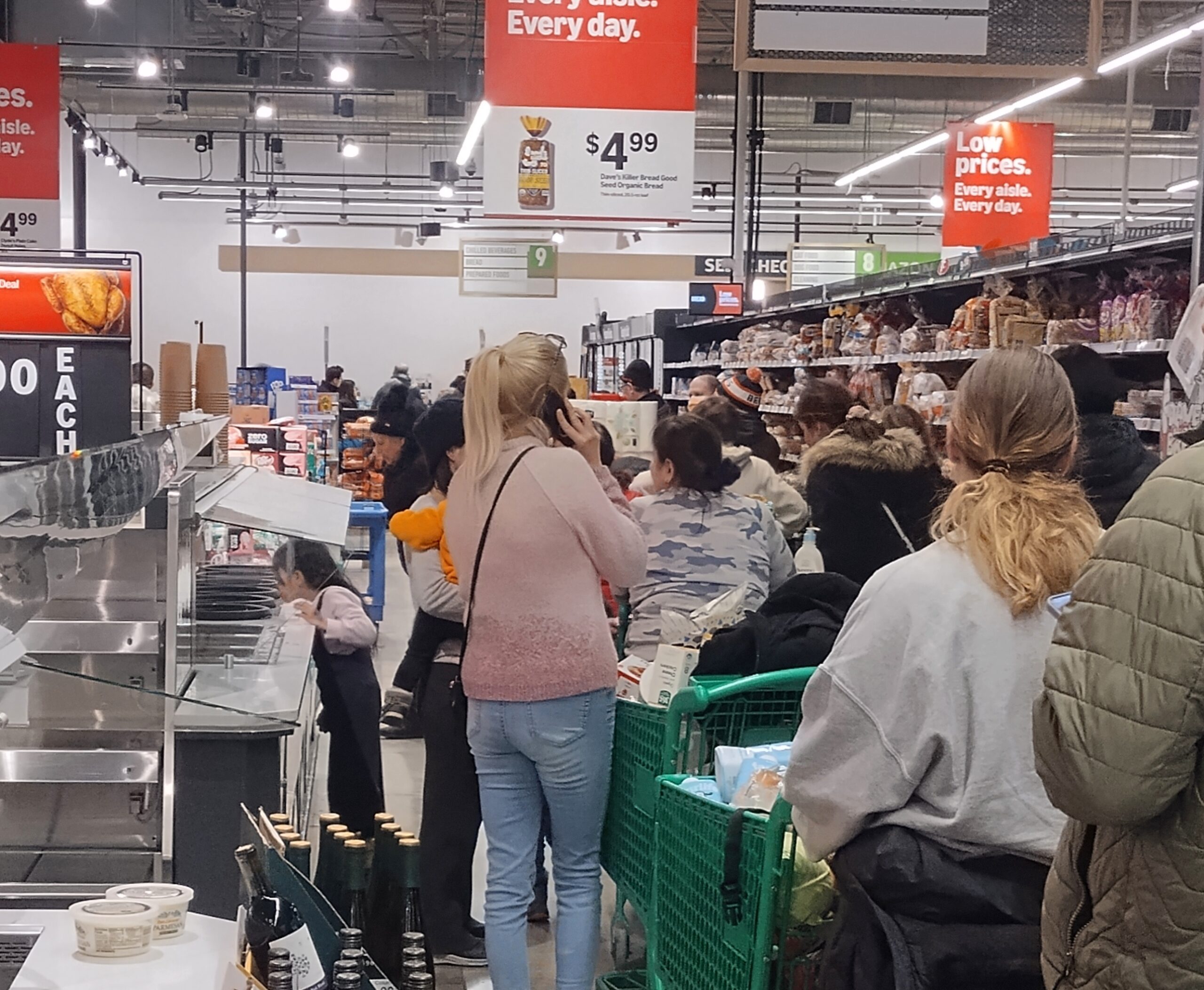
But the woman wasn’t kidding about the wait. The checkout line went back along the right-side aisle to the back of the store, turned a corner and went along the back aisle (dairy and such), and then turned a corner again at the left-side aisle, and ended about halfway back to the front of the store. Later, the line grew to go all the way around the store, back to the checkout area.

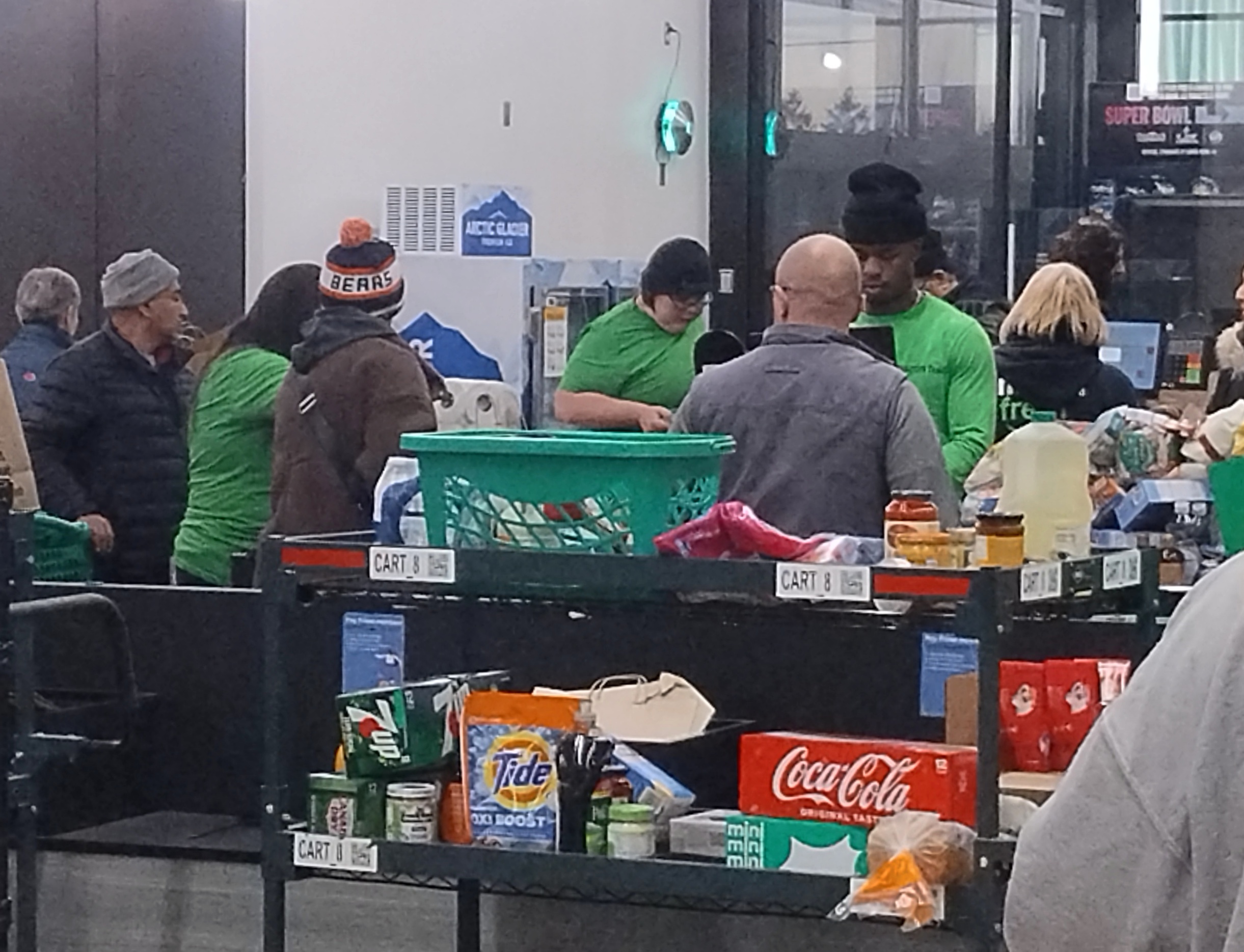
Before that happened, I got in line with the cart and Yuriko went out scouting for items, and later sometimes I did. This was a strategy employed by a number of couples in line. A view from the line:

I also went out to the car and re-arranged the items in the back, in anticipation of a large influx. Which happened, eventually, once we filled our cart – to the top – and got through checkout.

Checkout, which indeed had taken more than an hour to reach, was an anticlimax. It was just like any checkout, except more stuff than usual. Still, this is worth noting: We spent a shade over $250 on items that listed a few days ago for around $500. Definitely a deal, whatever you think of the behemoth retailer or its failed experiment in Amazon-branded supermarkets.

Scottsville, Kentucky & Red Boiling Springs, Tennessee

I have to admit it, we bought gas at Buc-ee’s more than once on our trip to Florida. Turns out that the chain’s gas prices are comparable with Costco. That is, 20 to 30 cents cheaper per gallon than most standard gas stations. Costco tends to be on main thoroughfares in densely populated places, which is sometimes convenient, sometimes not. Buc-ee’s is the flip of that, tending to be on major highways at some distance from densely populated places. Sometimes convenient, sometimes not.

We gassed up at the Smiths Grove, Kentucky Buc-ee’s just off I-65 on December 5, early in our trip. We had to make a decision on how to proceed from there. One choice: continue on I-65 to Nashville, take I-40 east from there roughly to Cookeville, Tennessee, and take smaller roads into Jackson County, to reach our friends’ home in the holler. Or: take smaller roads across southern Kentucky and into Tennessee, bypassing metro Nashville and going through towns and hamlets and farmland and woods we’d never seen before, ultimately connecting to the appropriate small roads in Jackson County. It isn’t too hard to guess what we did.

Kentucky 101

It so happened that exiting from Buc-ee’s in Smiths Grove takes you to Kentucky 101, a two-lane highway that can either take you back to I-65 or south through Warren and Allen counties. Coming from the crowds of Buc-ee’s, people and cars, the contrast of heading south on Kentucky 101 is clear.

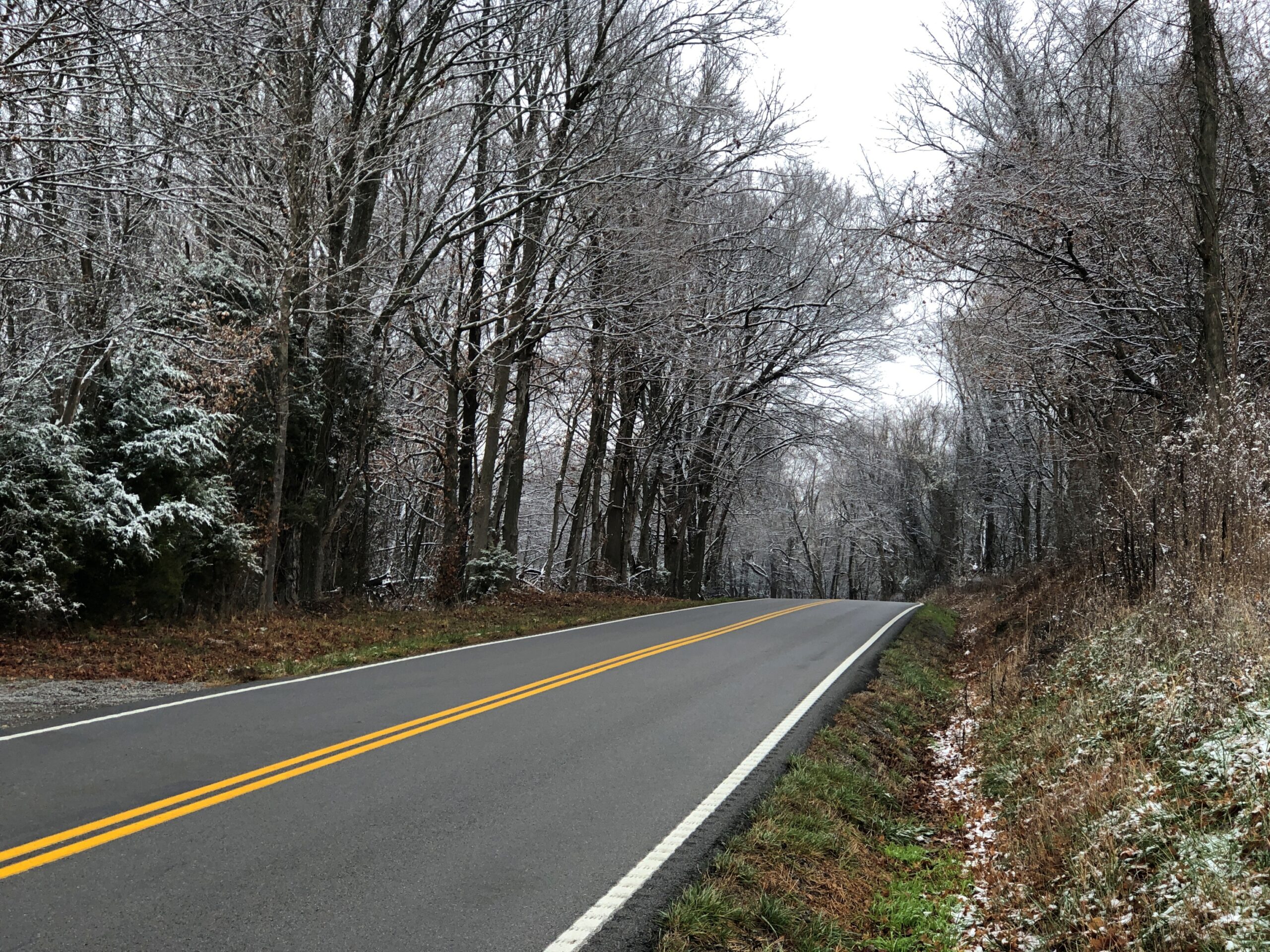
Ky highway 101
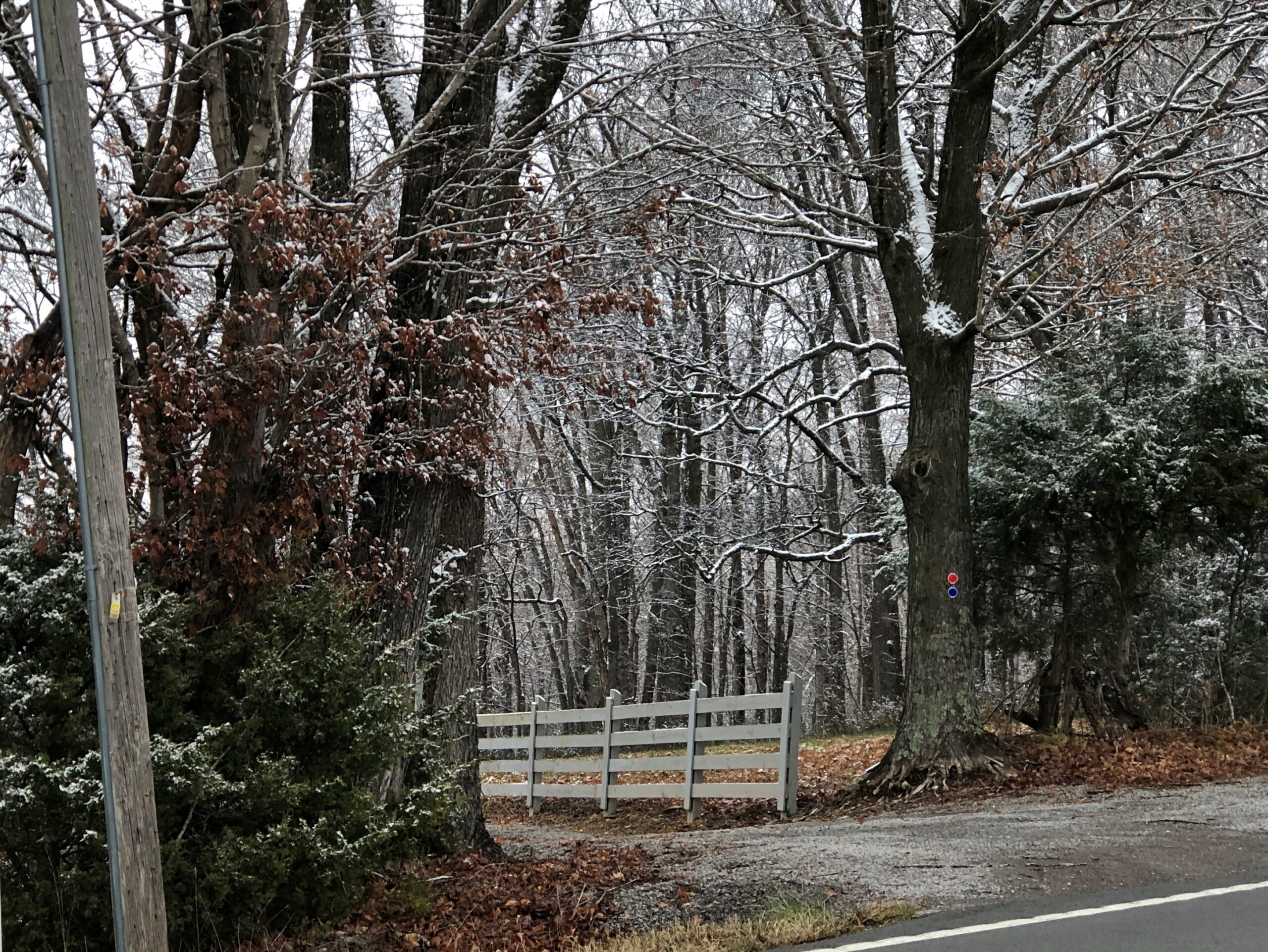
Ky highway 101

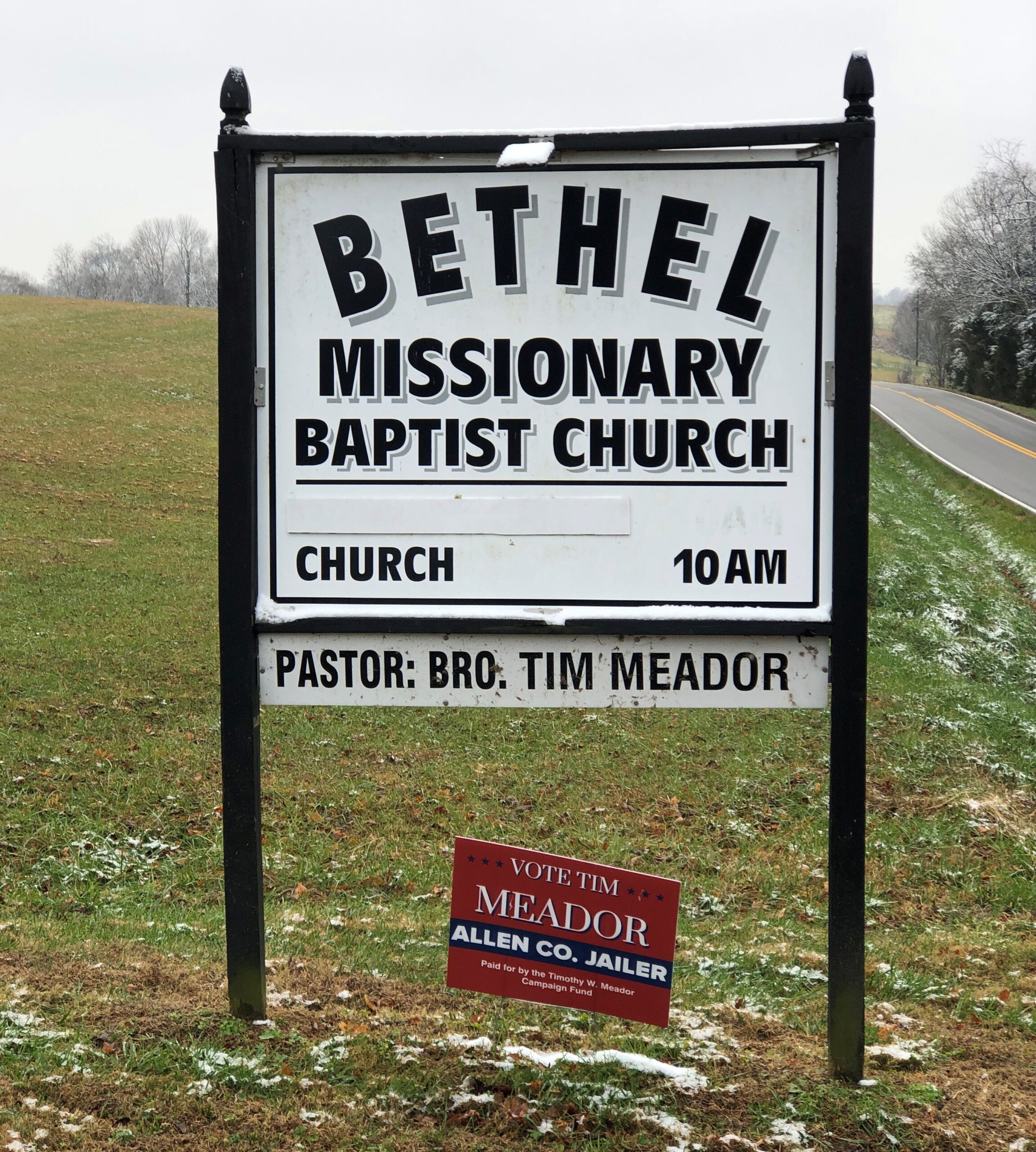
As of now, at least, Bro. Tim Meador is the Allen County Jailer, so I assume he won the most recent election.

Ky highway 101

I know that’s a county job that probably involves a fair amount of paperwork. Still, I picture the Jailer as an official who, like in a movie, puts offenders in the jug himself, turning a skeleton key (one of a few jangling on a big ring) to lock the cell.

Scottsville, Kentucky

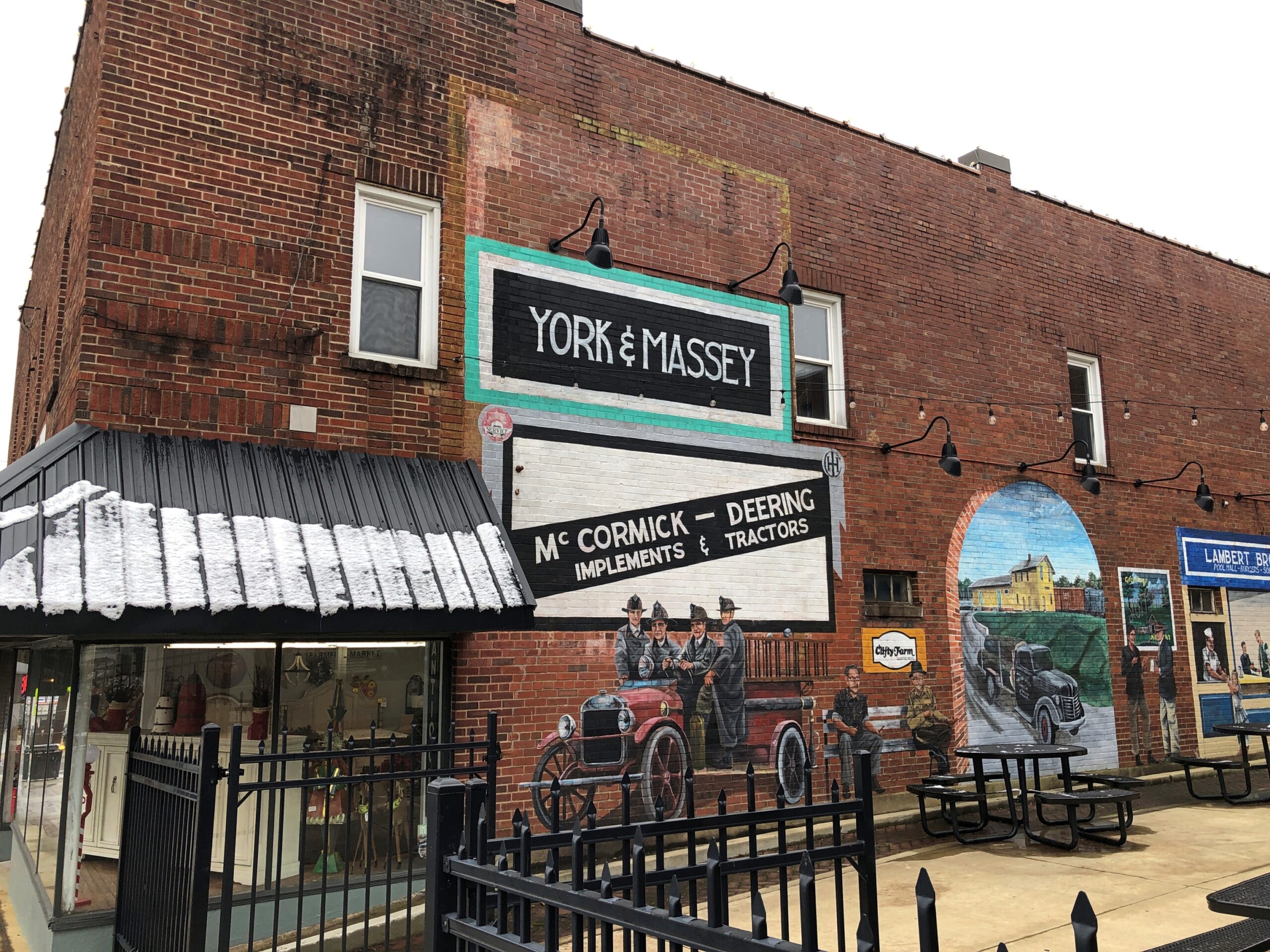
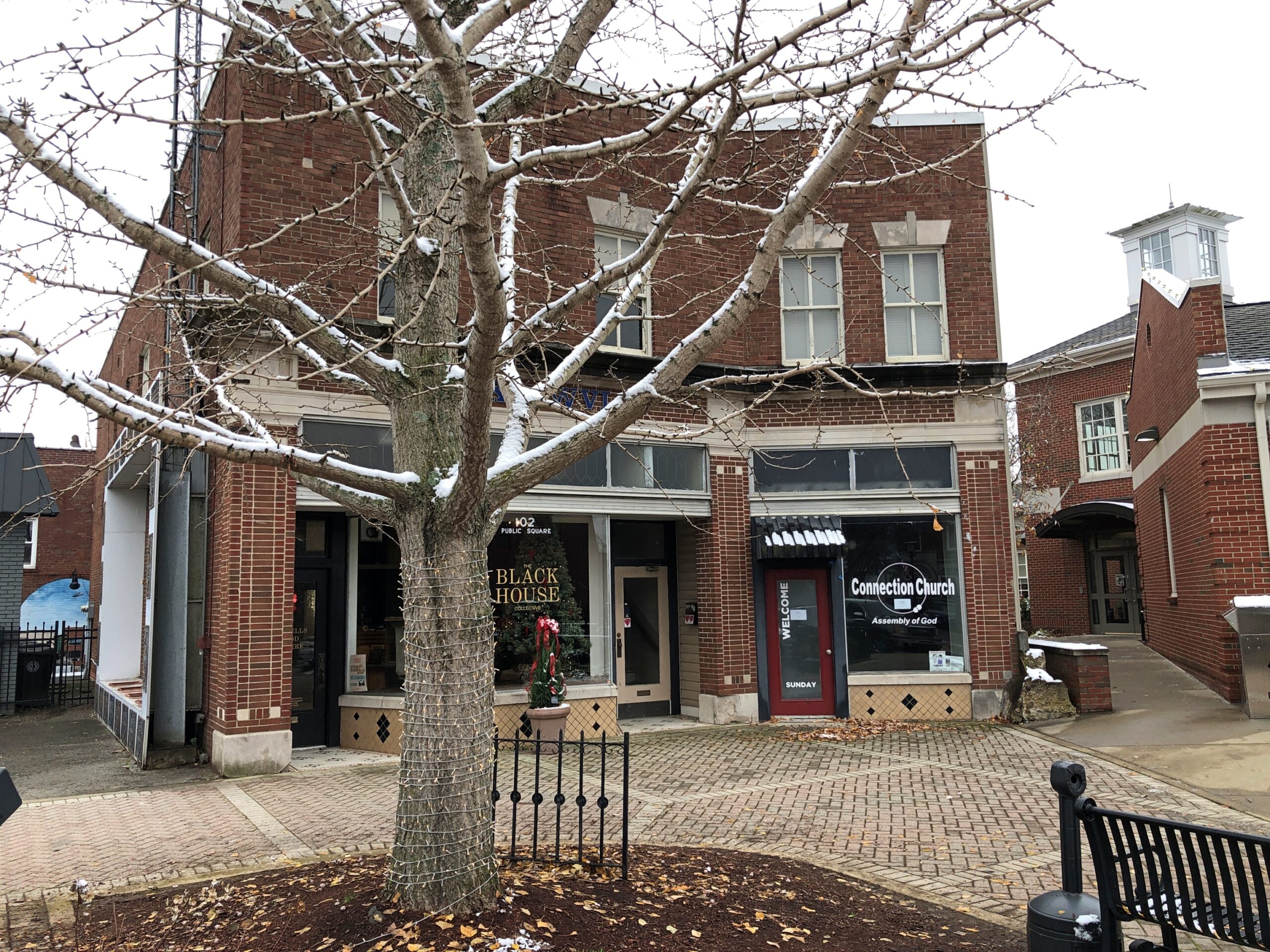
The main traffic hub of Scottsville (pop. 4,300), the seat of Allen County, is the junction of Kentucky 101 and 98, known as Main and Court streets locally. Instead of a county courthouse, the hub is in the form of a square with businesses around it and a lot of traffic passing through. More than I would have guessed.

Scottsville, Ky
Scottsville, Ky

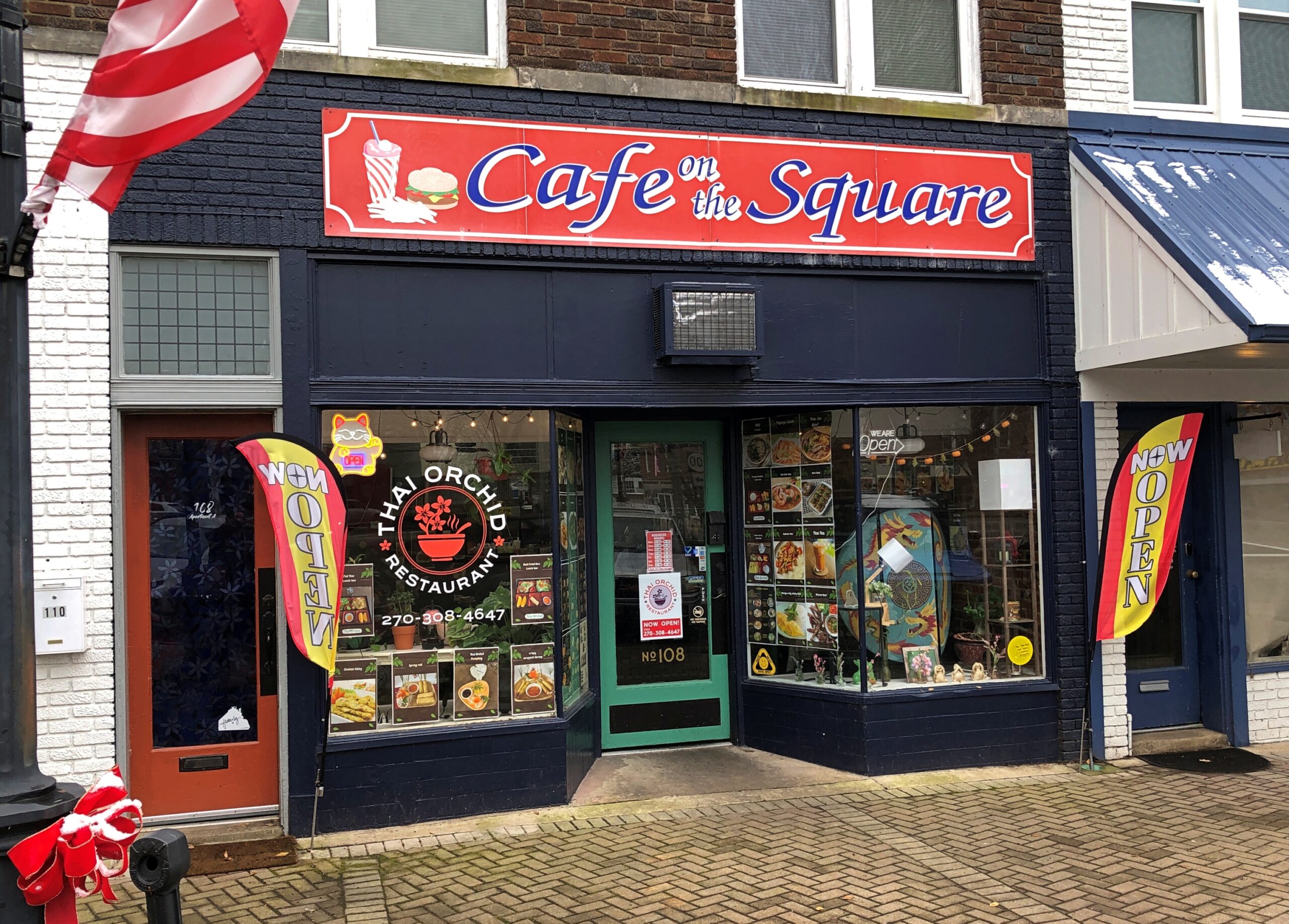
It was lunchtime. I can report that Thai Orchid is as good as you might find in a larger town. In our time, Thai has pretty much joined the tapestry of American cuisine as thoroughly as Chinese or Mexican food did in previous generations.

Scottsville, Ky

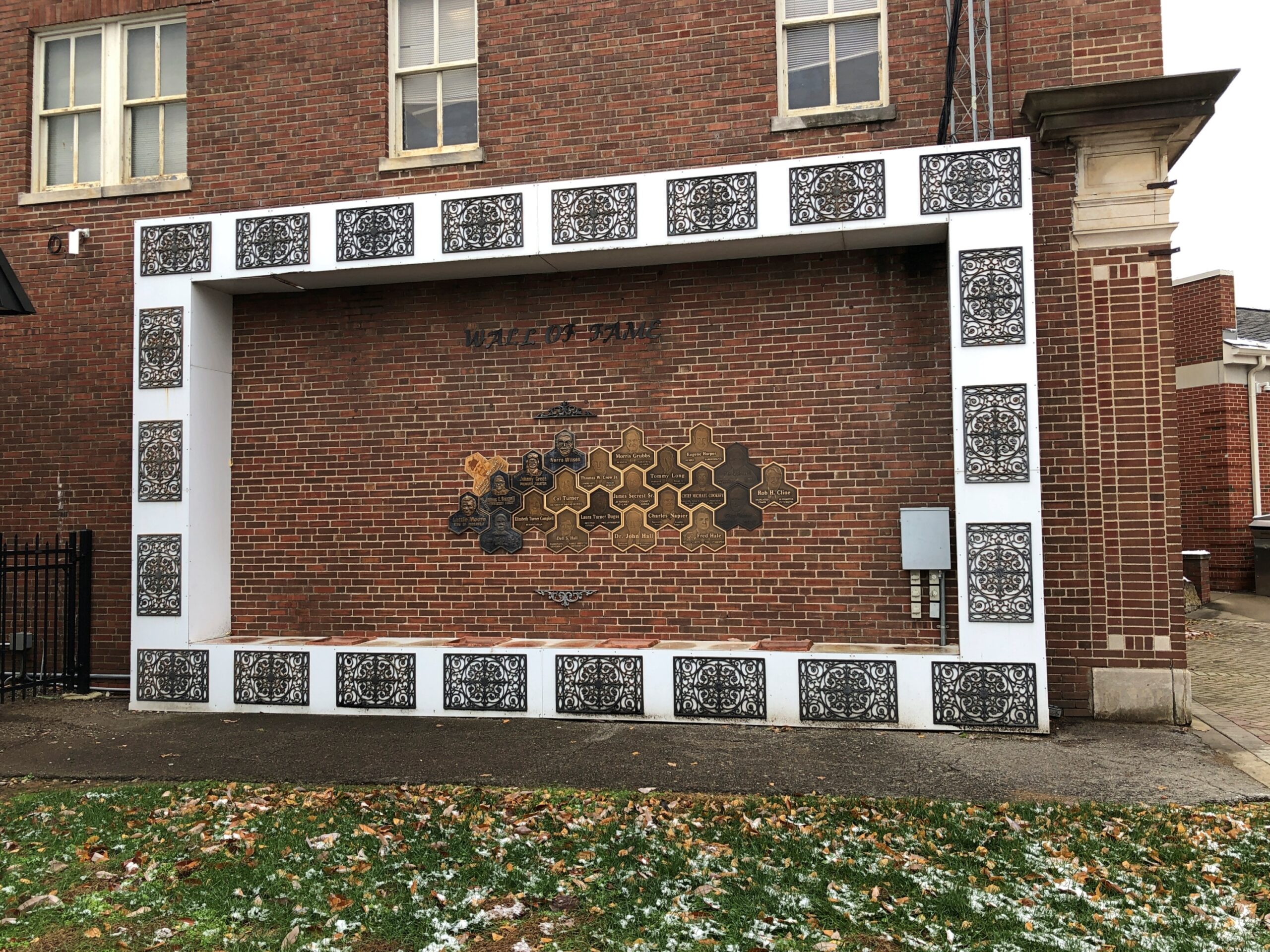
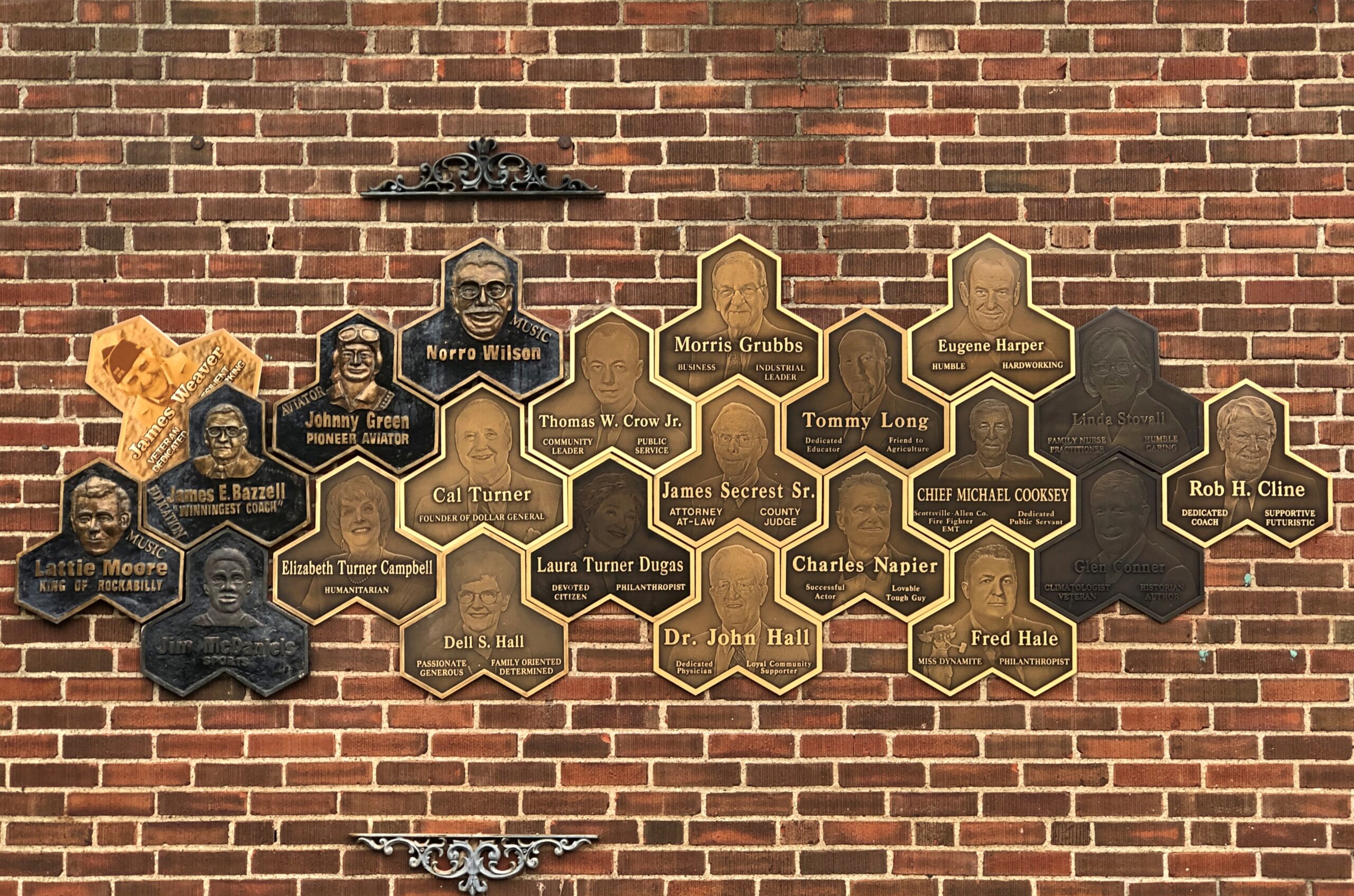
The main public library is near the square, sporting a local Wall of Fame.

Scottsville, Ky
Scottsville, Ky

The names include Lattie Moore, who sang, “I’m Not Broke but I’m Badly Bent,” a song with pretty much the same theme as Al Dexter’s “Wine, Women and Song.”

I won’t look all the names up, but the Scottsville Wall of Fame also includes Johnny Green, pioneer aviator, who did the first commercial flights between Florida and Cuba, apparently.

Red Boiling Springs, Tennessee

We drove on Kentucky 98 east to the near-border town of Gamaliel, pop. 391, still on the Kentucky side of the line. A lesser-known Biblical name, but I also can’t help thinking of the G. in Warren G. Harding.

South from there, Kentucky 63 turns into Tennessee 56 after a few miles. There’s no sign marking the border, just one announcing the Tennessee highway number. Pretty casual for a line that might have been an international border, had the secessionists had their way (unless, of course, Kentucky left the old US).

Besides a cool name, Red Boiling Springs (pop. 1,205), Tennessee, has a history. As the name suggests, people took the waters there.

“As recently as 1920, Red Boiling Springs had about a dozen places in which visitors could stay,” The Tennessee Magazine reported a few years ago. “The largest was the Palace Hotel, which had 180 rooms. Over the next several generations, business declined… and… a 1969 flood destroyed large parts of the town. However, three of the Red Boiling Springs resort hotels are still open. They were in (nearly) continuous operation throughout the 20th century and still reflect more of the lifestyle of the late 19th century than they do the 21st.”

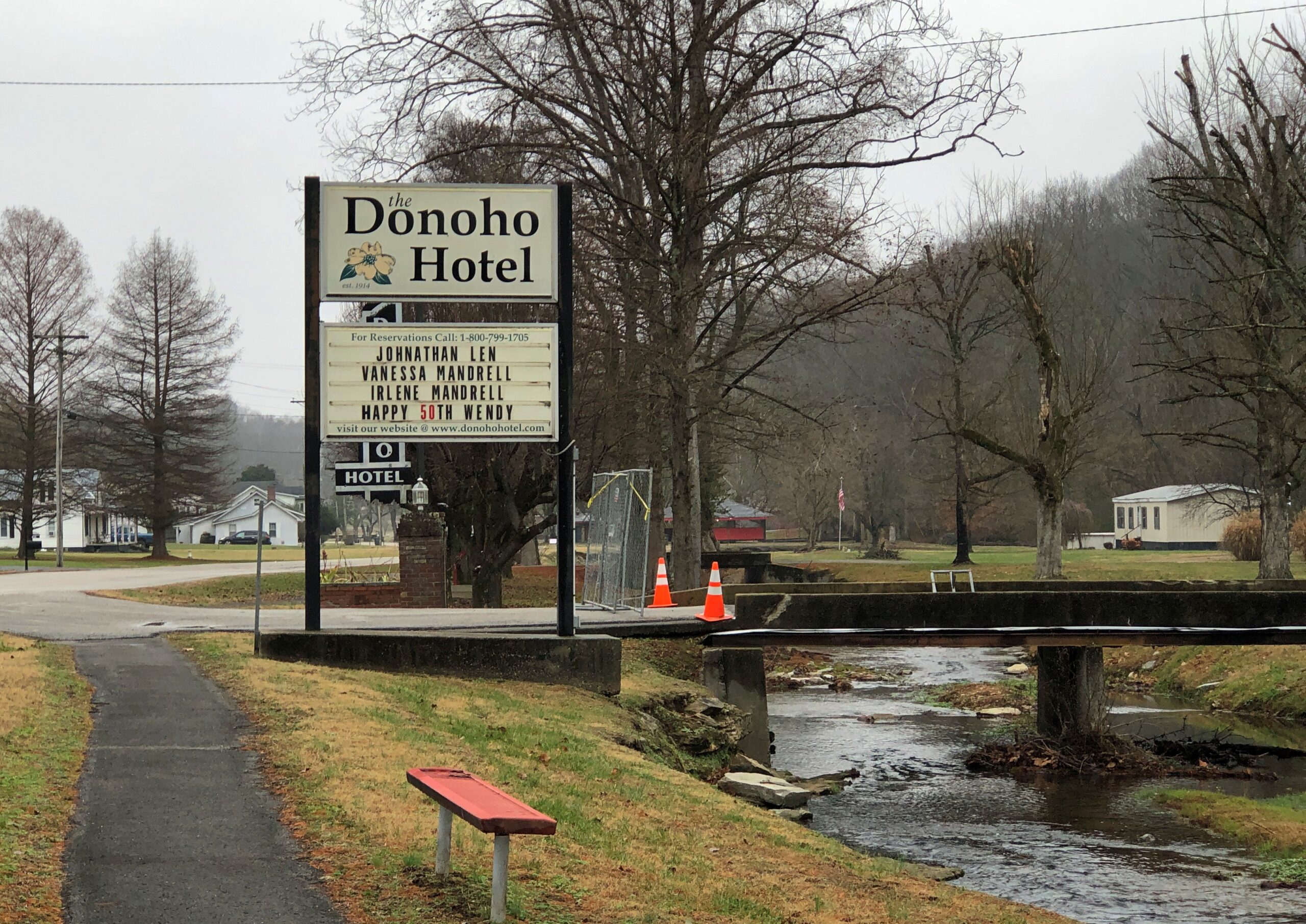
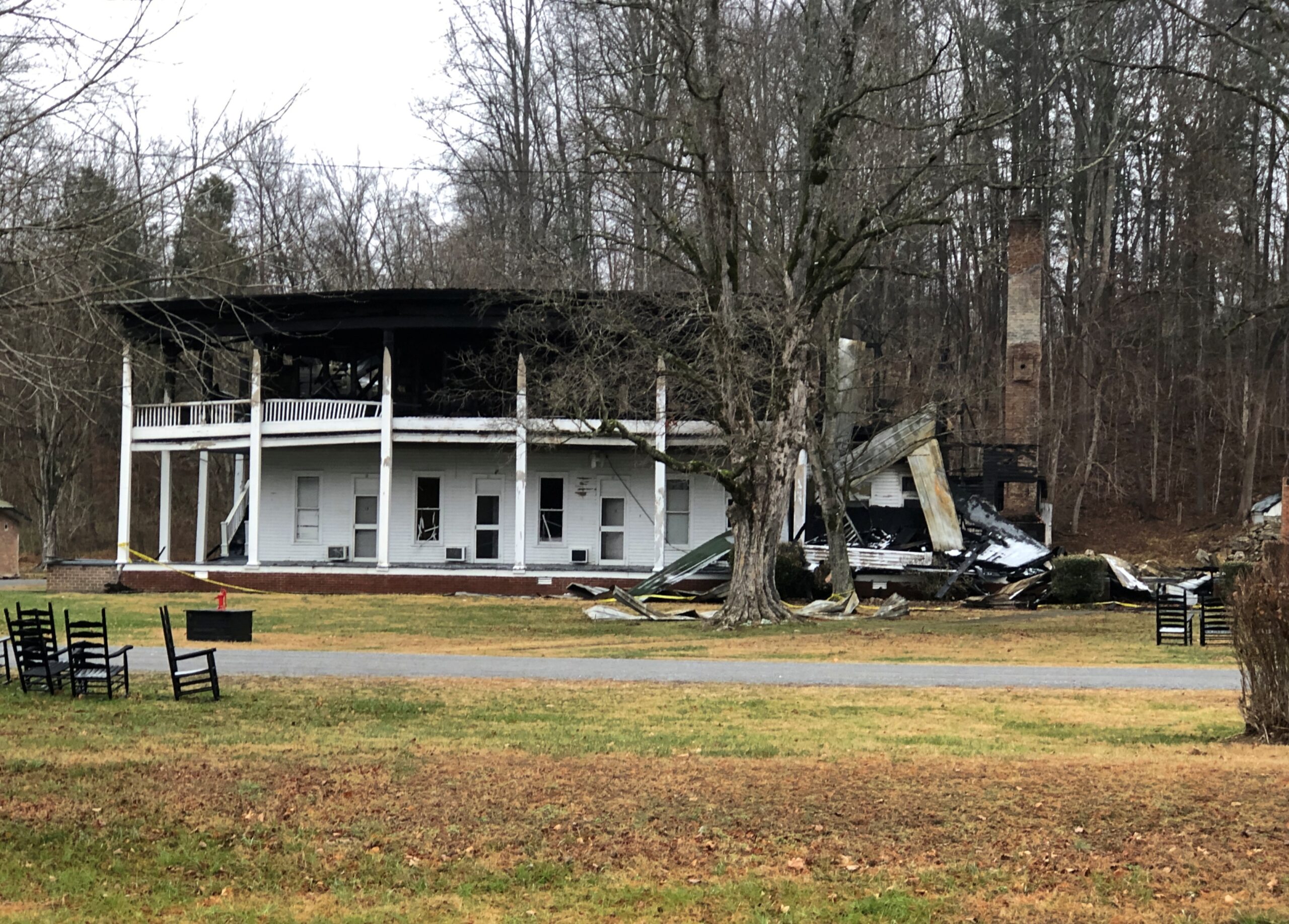
Make that two hotels. One of those mentioned in the article, the Donoho, burned down in November.

Red Boiling Springs, TN

The gray, chilly day somehow fit the scene of a wrecked historic hotel.

Red Boiling Springs, TN

Damned shame. I can’t leave it at that. Soon after passing through Red Boiling Springs, we arrived at our destination in eastern Middle Tennessee. The next day, we enjoyed a Tennessee hootenanny.

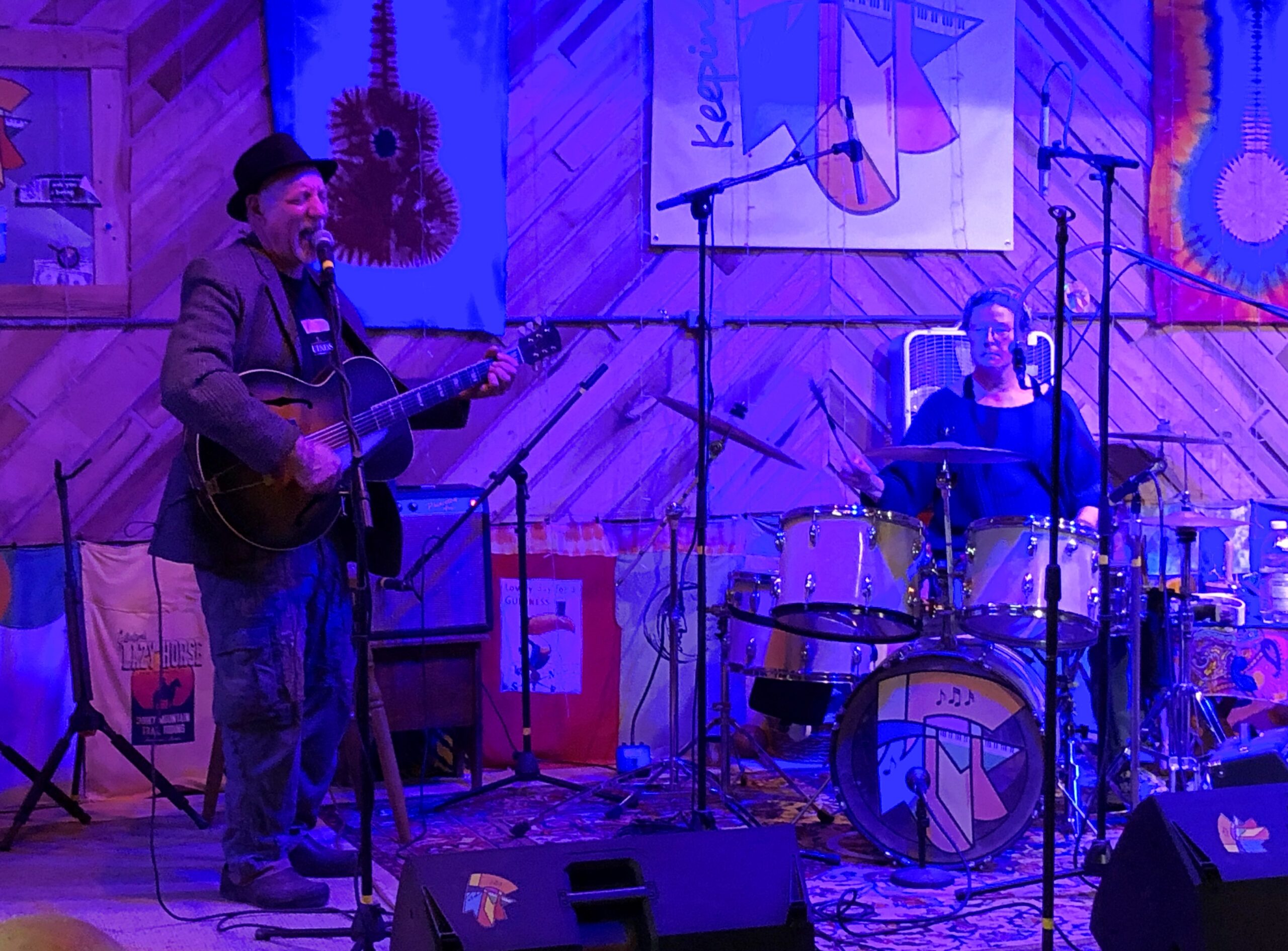
Our hosts, Dave and Margaret, on guitar and drums.

Three Missouri Museums Along the Way

At least a foot of snow covers the ground outside, so it’s good to be inside. Winter has fully returned, but at least the early part, when the holidays are yet to come, and not the post-New Year grind of January or the interminable days of February, the alleged shortest month.

Thanksgiving was low key. I expect that’s actually true for most people, however many anecdotes there are about fractious Thanksgivings. Low key doesn’t get into sitcoms or in real or made-up tales on a Thanksgivingishell subreddit.

Back to posting after Christmas, maybe the first Sunday after. Got a lot to do before then.

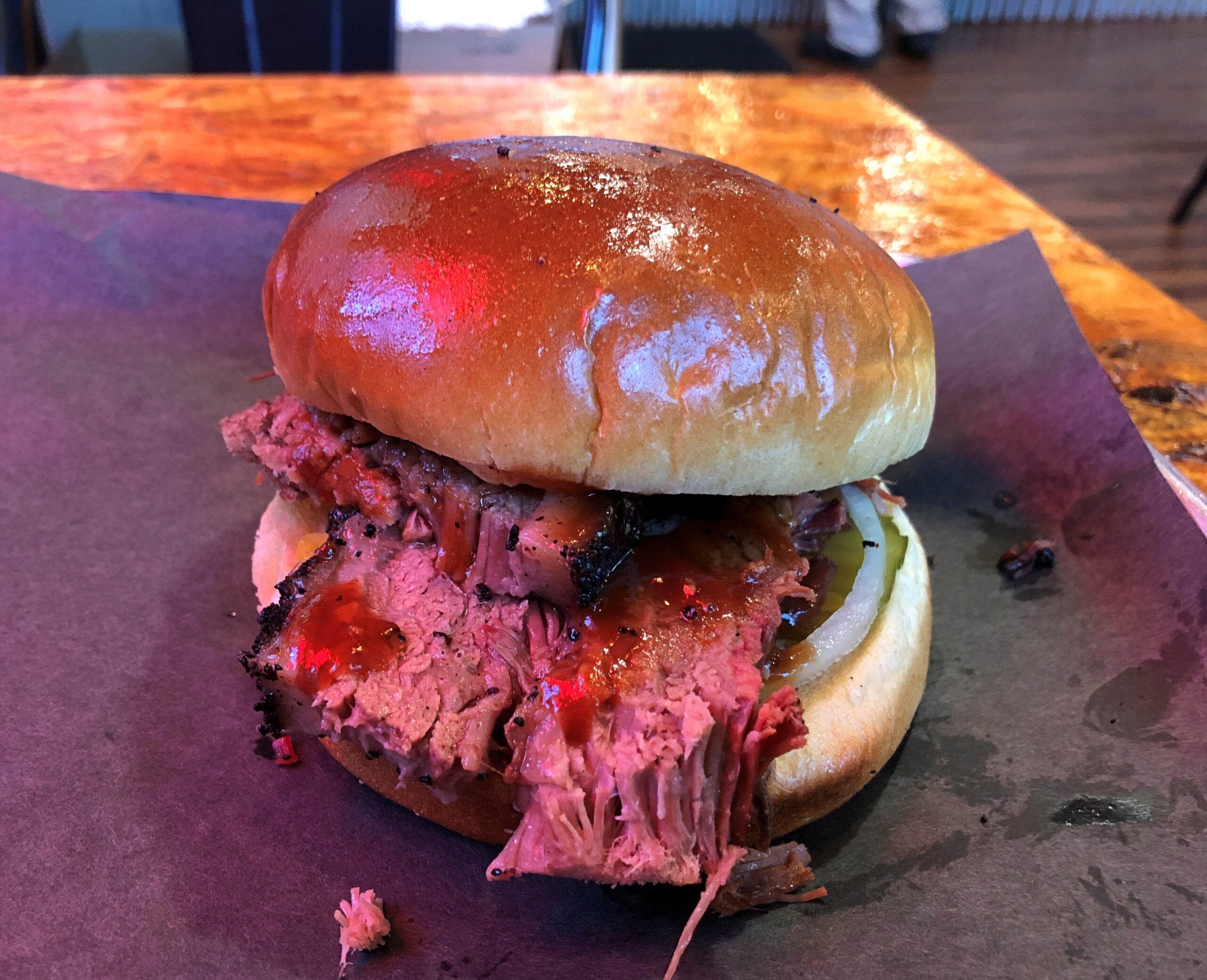
One more note about Kansas City in September. Besides the World War I Museum and Memorial, there was one more place I wanted to be during my visit: Arthur Byrant’s, for the barbecue I remembered so fondly from the late 1990s. Good ‘cue has sustained AB long after the pitmaster of that name died in 1982.

Kansas City

I’d go again.

After I left KC, I headed not too far northeast to the Jesse James Birthplace Museum.

The birthplace museum, like the house, isn’t a large place, but it does convey some of the life and times of the famed outlaw, with some good artifacts and reading. Posters, too. I hadn’t realized that Jesse James was a character in the very last Three Stooges theatrical release, The Outlaws is Coming (1965), but there was the poster, along with ones advertising better-known biopics or Jesse James-adjacent movies. Somehow I missed that Stooges picture on TV as an impressionable kid, though I saw the likes of The Three Stooges Meet Hercules.

Jesse used to be buried at the homestead.

But at some point he was moved to Mount Olivet Cemetery in nearby Kearney, Missouri. Jesse receives rocks and flowers and coins from visitors 140+ years after his assassination by the Coward Robert Ford (“coward” capitalized, because the word is welded to his name in popular memory). As for Jesse, not a bad posthumous haul for a train robber.

Just as an example, do the Newton Boys get that kind of attention? No, they do not.

“The Newton boys were a criminal gang composed of brothers Willis, Joe, Jess and Wylie (Doc), who operated mostly in Texas during the 1920s,” says Texas State Historical Association. “Willis ‘Skinny’ Newton robbed over eighty banks and six trains from Texas to Canada with his brothers and other outlaws, including the single biggest train robbery in United States history. By the time they were captured, they may have stolen more money than all other outlaws at that time combined.”

I liked Mount Olivet. Got some stones of yore.

Aunt Duck had to have been a character.

Further east, along U.S. 36 in Hamilton, Missouri, is the two-roomed JC Penney Library and Museum. The town library is in one room, the museum in the other. Most of the Penney artifacts are under glass. A wax JC Penney stands in front of a portrait of the department store mogul.

In Laclede, Missouri, is the Gen. John J. Pershing Boyhood Home State Historic Site. A fine museum about the General of the Armies, including an exhibit on something unknown to me, the Twenty-Fifth Infantry Bicycle Corps — the Iron Riders. The Army tested long-distance bicycling in 1897 as a strategy for troop movement, with the corps riding from Missoula, Montana to St. Louis. Pershing wasn’t involved in that effort, but it did happen during his time in the military. Quite a story. Deserves to be better known.

One the last day of my driving, I didn’t want to stop for much, but I did spend a while in Nauvoo, Illinois.

There’s a LDS temple there now. It wasn’t the last time I came this way, in 1997. I couldn’t go in, of course. For that you’d have to join the club.

Durango, Colorado

“Good morning.”

“Good morning,” Walter said in response to me, but in a hushed tone that somehow made his Austrian accent more distinct. “Do you want to see some bears?”

Yes. I followed him out to the large deck off the large common room of the Country Sunshine B&B. Outside we met with cool air, bright morning sun, and the strong smell of pine. The deck was a floor above the grassy ground, which sloped downward away from the bed and breakfast, shaded by a small copse of enormous pines.

We’d just spent the night at Country Sunshine B&B, the first of three for our visit to Durango, Colorado, a place I’d wanted to visit since the moment, years ago, when I heard Garrison Keillor describe the place in the engaging way that he had. I’d come out of our room – one of the three or four bedrooms off the common room – ahead of Yuriko, to examine the breakfast spread at the main table when Walter asked me about bears.

Under one of the tall pines, and among the many pine cones dotting the ground, was something dark and much larger: a bear.

Durango, Colorado

“He isn’t the only one,” Walter said, pointed upward. Another sizable bear was perched part way up the largest pine. I didn’t say anything, or maybe I did. Something along the lines of, How about that. When I spend time on my deck, squirrels are about as large as the animals get, except occasional rabbits and raccoons.

Durango, Colorado

“Look way up,” Walter said.

Two more bears – smaller bears, though I wouldn’t want to be face-to-face even with them – clung to the branches toward the top of the tree. They were hard to see, and my photos barely show them, but they were there, not moving a bit.

Durango, Colorado

Soon Yuriko, and some other guests, had come to the deck to see the bears and take pictures. Every few minutes while we watched, the largest of the bears, the one on the ground, would start shimmying up the tree. The bear in the tree snarled at his approach, and, after pausing for a few moments, the first bear returned to the ground.

We were about 10 miles north of Durango, where the human settlement is fairly thin, and bears known to prowl the mountains on either side of the single road, US 550.

In the two decades of so that Walter and his wife Jodi have owned the B&B, he said bears had been sighted. Of course they had. Get careless with closing an outdoor garbage receptacle and bears will make an appearance in the neighborhood. During dry spells, they come for the creek waters near the property, and Walter pointed out that this summer had been fairly dry in the region.

But this was a first, Walter said: probably a male bear out to do harm to some cubs, a female bear standing in his way — a bear drama playing out in the tree near the B&B.

Late that afternoon, we returned to the B&B. Papa Bear, as everyone was calling him now, still lingered under the tree. Mama Bear still watched him from the lower branches, and the cubs still clung to the upper branches. Papa Bear had mostly quit trying to climb the tree, Walter said, but he was still waiting around.

The bears stayed in place through that evening, but when I went to the breakfast table the next morning to examine the bagels and spreads and fruit and hot drinks, the bears – I checked from the deck – they were not to be seen. After their one-day show (from a human point of view), they’d taken their drama somewhere else,

We spent that first day (September 16) wandering around town and nearby. In downtown Durango, small buildings that have endured for more than a century line Main Street.

Durango, Colorado
Durango, Colorado
We spent that first day (September 16) wandering around town.

Or not so small. Such as the magnificent Strater Hotel, built in 1887.

Strater Hotel, Durango

The sort of place where presidents stay, or used to. Did any? The hotel web site doesn’t say. I’d ask ChatGPT, but it would probably tell me that FDR stayed there during his Grand Western States Whistle Stop Tour in 1939, a wholly fictional event. Wiki says Gerald Ford stayed there. Louis L’Amour did too, and now has a room named after him.

A competitor. Named for this fellow, Union (brevet) brigadier general and railroad man, who co-founded the Denver and Rio Grande RR.

General Palmer Hotel

Downtown Durango is well supplied with retail.

Lunch options, besides burgers and empanadas or a liquid lunch, included the likes of the Diamond Belle Saloon, Seasons of Durango, Chimayo Stone Fired Kitchen, Steamworks Brewing Company, and Eolus Bar & Dining. All very nice, I’m sure, but we chanced on something more to our tastes at that moment: the Durango Diner. In business for 60 years.

Durango Diner

Durango started not so much as a mining town, but a railroad node that served the mines further up the line. Silverton, for instance. One reason Durango is where it is: the Animas River. These days, the river is accessible to pedestrians in a number of places in town. One was near the Durango Library, also the location of a shady sculpture garden.

At this place, the tracks of the Durango & Silverton Narrow Gauge RR run along the river.

Animas River, Durango

That was also true at the 29th Street Park, though the tracks were on the other side of the river.

Animas River, Durango

We waved. A few waved back.

Crestone, Colorado

North America is vast and contains multitudes. There’s no doubt about it. How else to account for Crestone, Colorado?

Spiritual Travels tells the tale: At 7,500 feet in elevation and ringed on three sides by mountains, Crestone is both beautiful and isolated, subject to extremes of weather, wind, and temperature. It includes an amazing array of spiritual sites: more than two dozen ashrams, monasteries, temples, retreat centers, stupas, labyrinths, and other sacred landmarks. There’s even a ziggurat, a structure modeled on the temples of ancient Babylon.

Beautiful yes, but not so isolated these days: we drove in via two-lane, high-quality paved roads, Including, on the highway Colorado 17, past the UFO Watchtower, regrettably closed at that moment. I’d pay five bucks a head to take a look at that.

Crestone began as a mining town, as so many others did in Colorado. After the mines played out by the early 20th century, the area around the town was given over to ranching. That seems reasonable, considering its location in the sprawling San Luis Valley, though the town itself is hard up against the Sangre de Cristo Mountains.

Spiritual Travels continues: Maurice Strong, a Canadian businessman and United Nations diplomat, and his wife, Hanne Marstrand Strong, purchased a large tract of land in the Crestone area [in the 1970s]. It had been subdivided for use as a retirement community, but the Strongs changed their plans for it after a wandering mystic told them that the land had unique spiritual qualities (a message echoed later by Native American elders).

So the Strongs decided to give free land to religious groups that agreed to establish centers there.

A wandering mystic told them? That’s an incident that could use a little more elaboration. Visiting Mormons and Jehovah’s Witnesses and even a weirdly masked devotee of Dahn Yoga have all come to my door, but I’ve yet to have any wandering mystics show up, at least along the lines of a sadhu or a strannik or a sufi. That I know of. Maybe one of those home repair outfits who are “doing work in your neighborhood” are really mystics, offering soul remodels.

We arrived in Crestone on September 14 after our visit to Great Sand Dunes NP. Mystical insight is one thing, but we were looking for a late lunch. The town itself isn’t large, with a permanent population of 140 or so, but I’m sure it expands and contracts. Such as during events like the Crestone Energy Fair. We added ourselves temporarily to the population during the tail end of that event on that Sunday afternoon.

Crestone Colorado

We bought a few things at the town’s grocery store, Elephant Cloud Market – small and aiming at what Whole Foods might have been in its earliest days – and I asked the checkout clerk about the Energy Fair. As in renewable energy?

He looked a little puzzled for a moment. “Sure. But it’s more about psychic energy.”

So, wind turbines of the soul, geothermal from the heart. But I’d guess mindful yet small modular reactors wouldn’t be part of the discussion. I didn’t say that any of that, of course. I just said, “Oh.”

Crestone Colorado
Crestone Colorado

Next to the grocery store was a small eatery, the Cloud Station. We’d arrived just in time to order before closing: a couple of most delicious panini. While waiting for the order, I had time to study the rules.

Crestone Colorado

Afterward, we spent time looking around the few streets of Crestone.

Crestone Colorado
Crestone Colorado

You never know what you’ll see. Enough reason to come.

Crestone Colorado

Something not mentioned in the tourist literature: the Crestone Free Box. Leave stuff, pick up stuff, no medium of exchange involved.

Crestone Colorado
Crestone Colorado

I’d argue that in the widest interpretation of spirituality, and Crestone is pretty wide in that regard, the Crestone Free Box counts as a spiritual site. It is, after all, about freely giving of yourself to the wider world. Squint hard enough, and that fits.

As for the other spiritual sites, except for a handful of mainline Christian churches, most of them are not in the town of Crestone proper. Rather, the land grants inspired by that wandering mystic sprawl to the south of the town’s small street grid, along a warren-like network of roads up and down the foothills of the Sangre de Cristo Range – mostly gravel roads, if our limited experience is any guide.

I had the idea that exurban Crestone was dotted with temples and shrines and other such places. But as we drove along, and especially as I studied the map, I came the realize that most of the establishments are retreats, such as Blazing Mountain Retreat Center, Chamma Ling, Crestone Mountain Zen Center, Crestone Retreat Center, Dharma Sangha, Dharma Ocean, Haidakhandi Universal Ashram, Shumei International Institute, Sri Aurobindo Learning Center, Vajra Vidya Retreat Center and Yeshe Khorlo USA. The sort of place that might briefly tolerate, but not really appreciate, casual visitors. More importantly for me, not the kind of religious – I mean, spiritual – sites that I tend to seek out.

Crestone Colorado

I will say this for the area, facing as it does the Sangre de Cristo: wow. The Strongs picked a striking setting.

The Stupa of Enlightenment had the advantage of being not that far from town, besides not involving admission to a retreat.

Crestone Colorado

Always good to visit a Tibetan stupa.

Crestone Colorado
Crestone Colorado

I wanted to see the Crestone Ziggurat, deep in the warren. I like a good ziggurat as much as the next guy, and they’re hard to come by in North America. But as we drove along, and up and down the twists, the road crunching and pinging our undercarriage with little stones and kicking up dust, I lost my enthusiasm to find it.

Visible for miles, the Crestone Ziggurat rises from a rocky hill on the southeast edge of the Baca Grande, notes Atlas Obscura. After purchasing the land in 1978, American businessman and father of Queen Noor of Jordan, Najeeb Halaby, commissioned the ziggurat as a private place for prayer and meditation.

Today, the ziggurat is open to the public. Visitors can climb the spiral ramp to the top, which offers stunning views of the surrounding area, making it a perfect spot for reflection and quiet contemplation. Visitors are encouraged to arrange rocks in a personal design at its base as a form of meditation and intention setting.

Note also that the twisty roads also serve a residential population, living in homes suitable (I hope) for a semiarid climate, with many properties xeriscaped to emphasize the point.

The religious – I mean, spiritual – sites of Crestone would take a full day at least to examine, considering the ground you need to cover. Who knows, I might be back. For now, I stand in admiration of the place. It’s easy to make fun of some of the New Age pretentions of the town, and sometimes I give in to that urge (and occasionally, of course, out-and-out cultists show up nearby). But no: Crestone represents fine threads added to the tapestry that is North America and an inspired bit of placemaking.

Alliance, Nebraska

The highway Nebraska 2 passes through the town of Alliance, as do the BNSF railroad tracks paralleling the highway. During my drive across the Sandhills, I saw train after train headed east from Alliance. Long trains, the seemingly endless sort, even though they’re going the opposite direction you are, so they’re passing by at your speed plus their speed: well over 100 mph probably.

Every single one was a coal train. The industry isn’t what it used to be, but it isn’t dead, and much extraction takes place in the Powder River Basin, with rail from there converging in Alliance and then heading to the markets in the east. For a fairly small place, Alliance (pop. 8,150 or so) has a large rail yard.

Back up a little further, and the region reveals clear signs of circle-pivot irrigation.

In ag terms, most production in Box Butte County – a favorite of mine among county names – is actually livestock, raised on non-irrigated grassland, which you can also see driving in. As for the irrigated places, that’s corn and wheat, with a smattering of alfalfa, beans, sunflowers and sugar beets. Somewhere up north is a rock formation called Box Butte, a name that I understand the railroads were using in promoting settlement this way, before it was ever official.

I didn’t come to town to learn all that, but I did later. Mainly I came to see Carhenge. The weather that day, September 7, was clear and very warm, which inspired some further looking around. First stop, Alliance Cemetery.

Alliance Cemetery
Alliance Cemetery
Franks & Beans

“Bury me in old Box Butte County.” There’s a western swing title in that.

Alliance Cemetery

Something I’d never seen on a gravestone before: Scooby-Doo.

Go figure. Maybe Richard “Red” Hardy is the one who wanted it on the stone, since he would have been almost 10 when that cartoon premiered (September 13, 1969), and that’s about the right age to get hooked on such a thing. Then again, I was eight — saw the first episode myself — and yet somehow I’ve remained immune to its charms.

As for the Huskers, I saw them on some other stones in this cemetery. Hardly the only example of fandom from the grave.

I’ve seen cowboy churches and I’ve seen cowboy graves.

The cemetery is east of downtown Alliance, but not that far away. The Box Butte County Courthouse is on Box Butte Ave.

Box Butte County Courthouse

Along with a number of other vintage buildings. Newberry’s Hardware Co., once upon a time, which seems to be 1888 and then maybe an enlargement in 1914? Looks like it needs an occupant.

The 1927 Fraternal Order of Eagles Building.

FOE Building, Alliance NE

Slacker that I am, I didn’t take many detail shots, but one of this particular building is available (public domain) that shows how seriously the local FOE took its eagles about 100 years ago.

Hardware Hank is a hardware cooperative. New to me, but that only means I need to get out more.

More murals.

Alliance NE

Rhoads’ was a local department store. Gone but not forgotten, at least if you read the mural, which looks refurbished recently. The tag at the bottom says it was a gift of the Alliance High School Class of 1962.

An art deco theater. Nice.

Alliance NE
Alliance NE

A really cheap way to advertise.

You never know when (and where) Dali will show up. Enigmatic fellow.

And who is poor Jerry?

Antique shop within? A simple desultory Google search doesn’t reveal much. Street View puts the sign’s appearance between 2007 and 2012 (Google didn’t come that much to Alliance.) Even the Library of Congress wants to know.

I found lunch in Alliance that day at Golden Hour Barbecue, which promised (and provided) Texas-style ‘cue. I enjoyed it thoroughly. Same league as Salt Lick, though a little expensive, considering how close the cattle are. Then again, everything seems expensive these days, and it was such a large lunch that I barely needed to eat that evening in my room in Scottsbluff, so that mitigated the upfront cost.

Before heading to the big rocks near Scottsbluff on the morning of the 8th, I took a look around that town as well.

Scottsbluff NE

Can’t have too many art deco theaters. When I’ve done image searches for Scottsbluff, the Midwest theater comes up often as not.

A car to match. At least that morning.

Scottsbluff NE

Another former small department store, now private offices.

Just outside Scottsbluff is a single grave.

The grave of Rebecca Burdick Winters (d. 1852) She died a faithful Latter-Day Saint, her stone says, on her way to Utah. Officially, it is Rebecca Winters Memorial Park.

“Seven miles northeast of Scotts Bluff National Monument lies a solitary grave,” says Find a Grave. “This site marks the final resting place of Rebecca Winters, who died of cholera on August 15, 1852. Rebecca was only one of thousands of people who succumbed to disease as they made their way west on the overland trails, but her grave is one of only a few that remains identifiable today.”

Prospect Park Ramble ’25

Put this in the Those Were Different Times file: “In the early evening, I made it to the beginning of the National Association of Real Estate Editors convention. I mentioned to some colleagues of mine, who happened to be Manhattanites, that I’d spent part of the afternoon in Prospect Park — you know, in Brooklyn. Judging by their reaction, I might as well have said that I’d popped over to Outer Mongolia for a quick visit.”

I wrote that my June 2002 visit to New York included, as mentioned, time in Prospect Park. It is every bit a great park as Central Park, and I knew I wanted to return someday for a longer walk. After lunch in Chinatown in Manhattan on October 19, that’s what Yuriko and I decided to do. We took the subway to the Prospect Park station on the east side of the park, and began our wander.

Near that entrance was the Diwali Festival of Bites.

Despite the name, the food tents had a large international variety for sale, not just Indian food. Not important for us anyway, since we’d just eaten.

Prospect Park Oct 2025

We headed deeper into the park. Maybe it was a matter of species choice, but there seemed to be more coloration than in Central Park the day before.

Prospect Park Oct 2025

The handsome Prospect Park Boathouse.

Prospect Park Oct 2025

A popular setting for weddings, and in fact one was taking place when we visited. Two women were exchanging vows.

Prospect Park Oct 2025

The Prospect Park Waterfall.

Prospect Park Oct 2025

Not a vast torrent, but a pleasant gurgling. It is a slice of the park’s interior waterways. Prospect Park’s watercourse is a beautiful collection of waterfalls, pools, streams and a 60-acre Lake, and is one of the shining achievements of Park designers Olmsted and Vaux’s design, says the Prospect Park Alliance.

The deeper in, the fewer people.

Prospect Park Oct 2025

So few, sometimes, to almost make you forget you’re in a metro surrounded by about 20 million people.

Prospect Park Oct 2025

But not for long.

Dog walkers and their tethered dogs roamed the park in numbers. Some come to the Prospect Park Dog Beach.

Prospect Park Oct 2025

I wasn’t exactly sure where I’d been in 2002, but near the northern edge of the park, we came across what was probably the field, the sort of mildly rolling terrain, open short grassland ringed by wooded areas, that exists throughout the park. A summer Saturday in these fields draws a crowd, but a generally cheerful one, playing volleyball, attending to grills, picnicking, throwing frisbees or just lying around. An autumn Sunday is a little less active.

Fall has a more scattered vibe, but no less congenial than summer to the thinned out crowd.

Kenosha Walkabout, Featuring Franks’ Diner & Simmons Memorial Library

Always good to see their beaming faces.

The poster is on a window at Franks’ Diner, formerly an exterior window, but with an expansion of the diner many years ago, now facing the added section, where Ann and I had lunch on a late July Friday. Kenosha, home of Franks’, was another stop in our recent rambles around southeastern Wisconsin.

Finding Franks’ Diner was no serendipity. We’d been there, back in 2012. The Stooges, back in 1946. I’ll bet they were playing the nearby Kenosha Theater, which is still standing, but in need of restoration.

Not only is the 99-year-old Franks’ still there, it’s still dishing up dandy diner fare at popular prices. Back then, I wrote:

The place had that diner smell: eggs and meats and hash browns and coffee. It also had that diner sound: the murmur of conversation, workers calling to each other, silverware scraping plates, metal clinking metal, the hiss of the griddle.

It was packed. A row of people sat at the counter, while others were at booths in the small room added to the counter room. A line of people waited for their seats in a long row behind the people at the counter.

That’s exactly the same as our July visit, except that people waited outside, since it was summer instead of winter and (of course) prices were higher. Once seated, I had the Garbage Plate. I’d skipped it last time, and I wasn’t about to miss it this time around.

2012: The star of the show is its Garbage Plate, a concoction of hash-brown potatoes, eggs, green peppers, onions, jalapeños (if you want them), and a choice of three or fewer meats (or including no meat). The thing is seriously large. The standard Garbage Plate has five eggs.

The restaurant also supplies some reading material.

After lunch, we went a few blocks away and parked the car in the shade of large trees in Library Park. Ann waited in the car with the windows down – it was very warm, but not too warm for a few minutes of that – while I wandered around the immediate area, including a couple of streets of storefront retail in vintage structures.

Houses across the street from where we parked.

The nearby St. Matthews Episcopal Church.

Kenosha

The inevitable welcome mural. The 1970 Gremlin is an unusual touch. But they were made in Kenosha, so not that unusual.

Kenosha

At the edge of the park, a seated Lincoln. Sculptor Charles Niehaus (d. 1935) did the work. Just one of many that he did all over the place. The president has been sitting there since 1909, centennial of his birth, with restoration work done in more recent decades.

Kenosha

Nearby in the park, Kenosha’s Civil War memorial, called “Winged Victory” on electronic maps, a name that gets right to the point.

Kenosha

It’s Library Park because of the Gilbert M. Simmons Memorial Library, a branch of the Kenosha Public Library system, dominating its side of the park. It has a little more heft than most municipal branch libraries.

Kenosha

When it opened in 1900, the building formed Kenosha’s main library. Daniel Burnham designed it.

Kenosha

The Civil War veterans have their memorial outside. Great War vets are honored inside the library.

Kenosha
Kenosha
Kenosha

We’d happened on the Library Park Historic District, surrounding Library Park. The park itself goes back to the early years of Kenosha, when the land was a New England–style town commons. Forty-two properties, built from 1843 to 1930, form the district. A diner and an historic district: just the thing for a warm summer day stroll.

Downtown Waukesha

The other day I wondered how long it would take to count a million dollars’ worth of nickels and dimes a million times. That’s one of the dream images from “Minnie the Moocher.” Not just a dream, but an opium dream. After all, no sooner does Minnie learn to kick the gong around, does a vivid dream of wealth begin, all shiny and metallic, ending with:

She had a million dollars worth of nickels and dimes

And sat around and counted them all a million times

Let’s say half the dollar value is nickels, half dimes. That would be 5 million dimes and 10 million nickels. So 15 million individual coins. Let’s also say it takes a second to count each, just to keep it simple. That would be 15 million seconds, or 0.475 years (roughly, I shaved off a few places). Counting them a million times would thus be (roughly) 475,000 years.

Of course, if it’s an opium dream, the niceties of time and such don’t apply. Still, it sounds like a hellish task of a Sisyphean kind. But maybe it would be a heavenly task, if you have no sense of the passage of time.

I didn’t sit down to figure all that out until I was at my desk, but the question came out of nowhere during a short interstate drive just before the end of July, up in the southeast corner of Wisconsin. One destination that day, a Sunday, was downtown Waukesha, an outer suburb of Milwaukee, but a place with a distinct history of its own, where people came to take the waters once upon a time.

We spent some time near the five-pointed intersection of Main, Broadway and Grand, focal point of a handsome streetscape.

Waukesha, Wisconsin
Waukesha, Wisconsin

Now this is a set of buildings.

Waukesha, Wisconsin

The Almont Building, whose original name was the Robinson Block.

“The core of the downtown, prior to 1856, consisted of freestanding wooden frame buildings, but a new era began after a massive fire nearly destroyed this northern section of Main Street,” the Waukesha County Historical Society & Museum says. “The Robinson Block was built in 1857 with fireproofing in mind and is the first Five Points building to use Waukesha limestone.”

The Nickell Building, as it looked recently, and long ago.

“Built by Addison J. Nickell, local businessman and jeweler, the first floor housed the U.S. Post Office from 1902-1914,” notes the WCHS&M. “The work of Waukesha architect C.C. Anderson, this Queen Anne displays a projecting oriel and corner turret capped by a domed roof: both are covered by pressed metal.”

Being mid-day, one bit of business to take care of: lunch. We soon found the friendly joint called Joey’s Diner.

Joey likes Betty.

Joey’s is next to an Italian restaurant, similarly casual, that I think was owned by the same fellow. He was everywhere at once all the time — running a restaurant is nothing if not busy, and he seemed to be running two — but toward the end of our meal, asked how it was. I answered enthusiastically to the positive about my simple but also delicious hamburger. He responded by giving us a slice of chocolate cake, on the house. Thanks, Joey.

The street has other (many other) examples of places found here and nowhere else.

Been a while since I’d seen a joke shop. Closed.

Waukesha, Wisconsin
Waukesha, Wisconsin

The last one might have been Uncle Fun in Chicago, which closed some years ago. Too bad about that, but at least Jest For Fun Joke Shop, which has been at this Waukesha location more than 40 years, is keeping the retail tradition alive.