Downtown Bangor

“If you’re taking pictures of buildings, you should take one of that building over there,” an old man said to me, pointing at a building partly obscured behind the curve of the street. I had been taking pictures of buildings. A spring day had come to Bangor: the air was a pleasure, so was the friendly warm sun, and I was out and about among the short downtown blocks.

“Thanks,” I said, adjusting my position on the sizable downtown plaza, so that the building came into view.

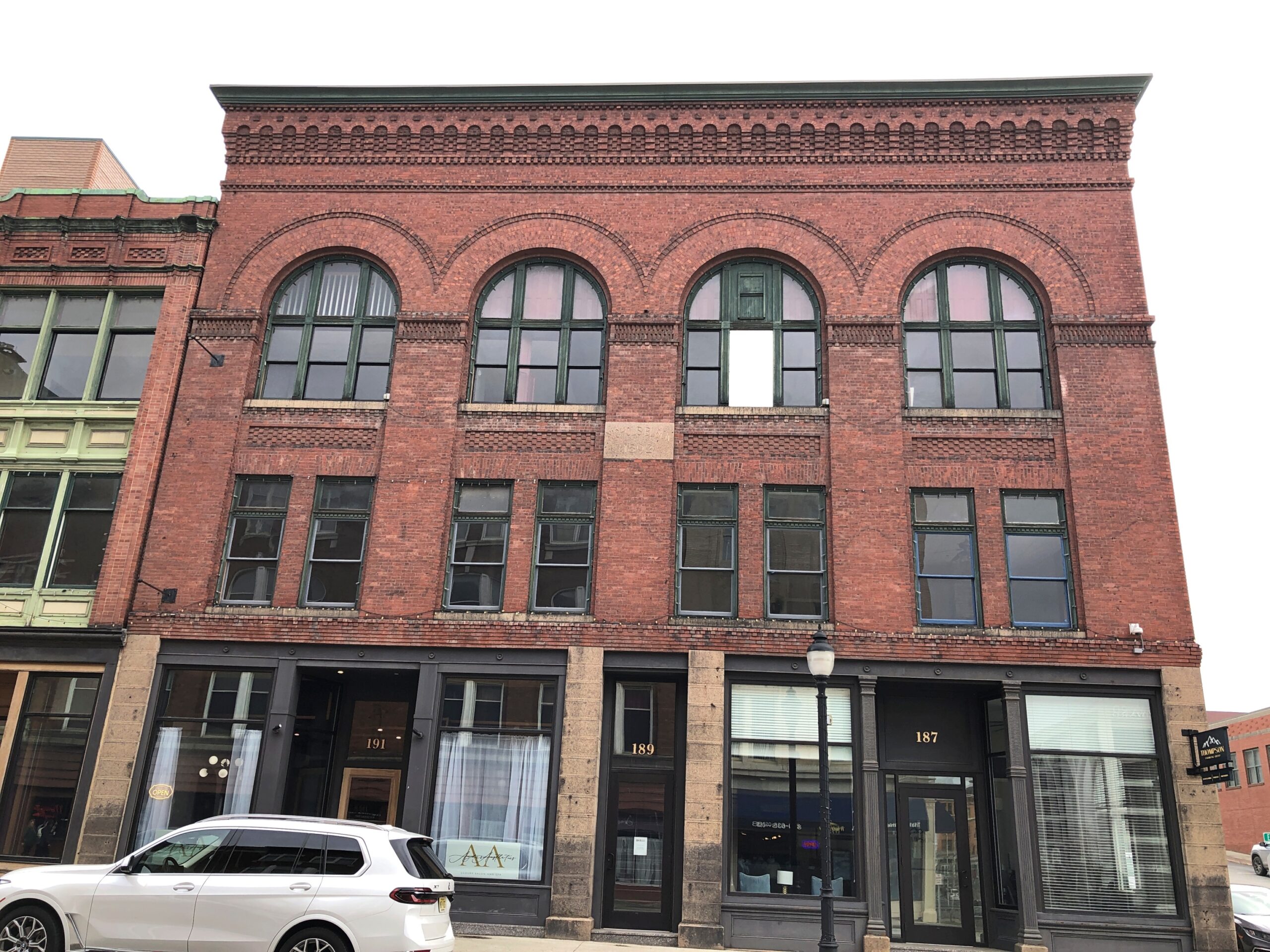
Wow. As I often do, I looked into the building later. A little gem of the brick arts known as the Circular Brick Building, a no-nonsense Maine sort of name, or the Merchants National Bank building, after a long-time occupant. Part built in the 1900s, part in the 1920s, a bank till the 1980s, a mix of apartments and ground-floor retail since the 2010s, after some decades vacant.

A random old man’s recommendation was a winner. He was idling on a bench in the plaza, so I went back and told him I agreed that it was an impressive building. The man could have been from central casting: Get me an old Mainer in ordinary but not shabby clothes, and don’t forget the bushy white beard and pale pink face. It was a missed opportunity when I asked him whether he’d lived in Bangor his whole life. The comic Mainer answer would have been, “Not yet.”

Instead the old Mainer told me he had. Wouldn’t live anywhere else. Couldn’t imagine living anywhere else. Didn’t want to go anywhere else. He implied he’d had enough of that during his time in the Army, exact years unspecified, and I didn’t ask when, though there’s a distinct chance a shooting war was going on then. That doesn’t mean he was anywhere near it, however. For all I know, he could have been a PFC excrement sanitation specialist (PFC-ESS) in Louisiana, to put it in the way the cinematic Patton didn’t, but the ’60s Army might have.

Anyway, he asked me where I was from, and long experience has taught me to say “Chicago,” and not something in any detail like, “Texas, but I haven’t lived there in a long time, and then I lived some other places like Nashville and Osaka, yes, the place in Japan, but it’s been Chicago for a long time now, except I actually live in the northwest suburbs.” Few people would hear any of that. Everyone pays attention when I’ve said Chicago (or Texas, the times I’ve said that). Somewhere years ago, I think it was a pudgy middle-aged Briton – you know, he looked a little like Benny Hill – who asked me where I was from. At hearing “Chicago,” he pantomimed shooting a Tommy gun.

When old man Mainer heard Chicago, he told me that soon after his discharge from the Army, he found himself in Chicago, in fact at the lakefront. He threw his Army ID into Lake Michigan. “Felt great to be out, but it was a problem, since that was the only ID I had right then,” he said. Obviously he made it back to Bangor.

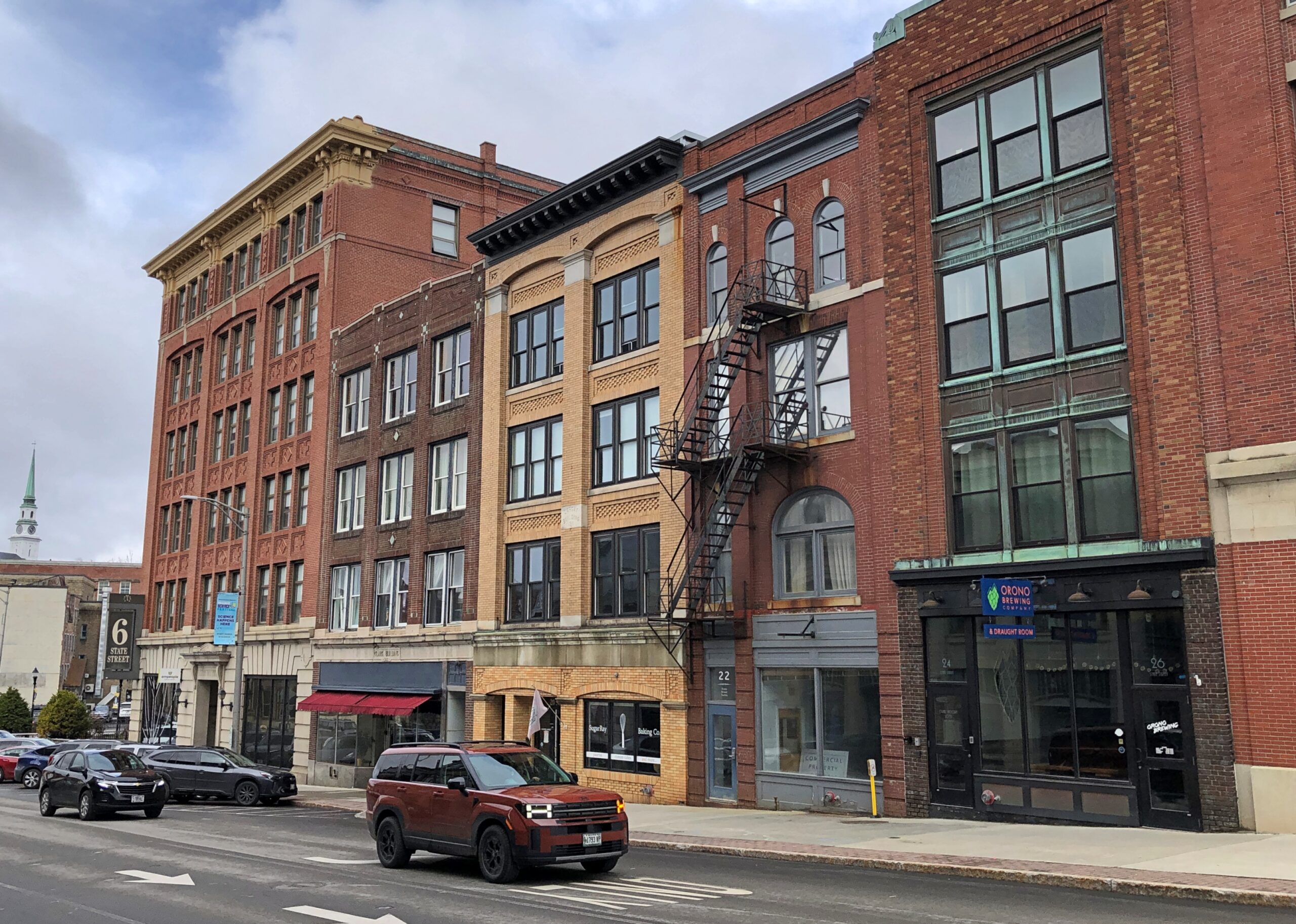
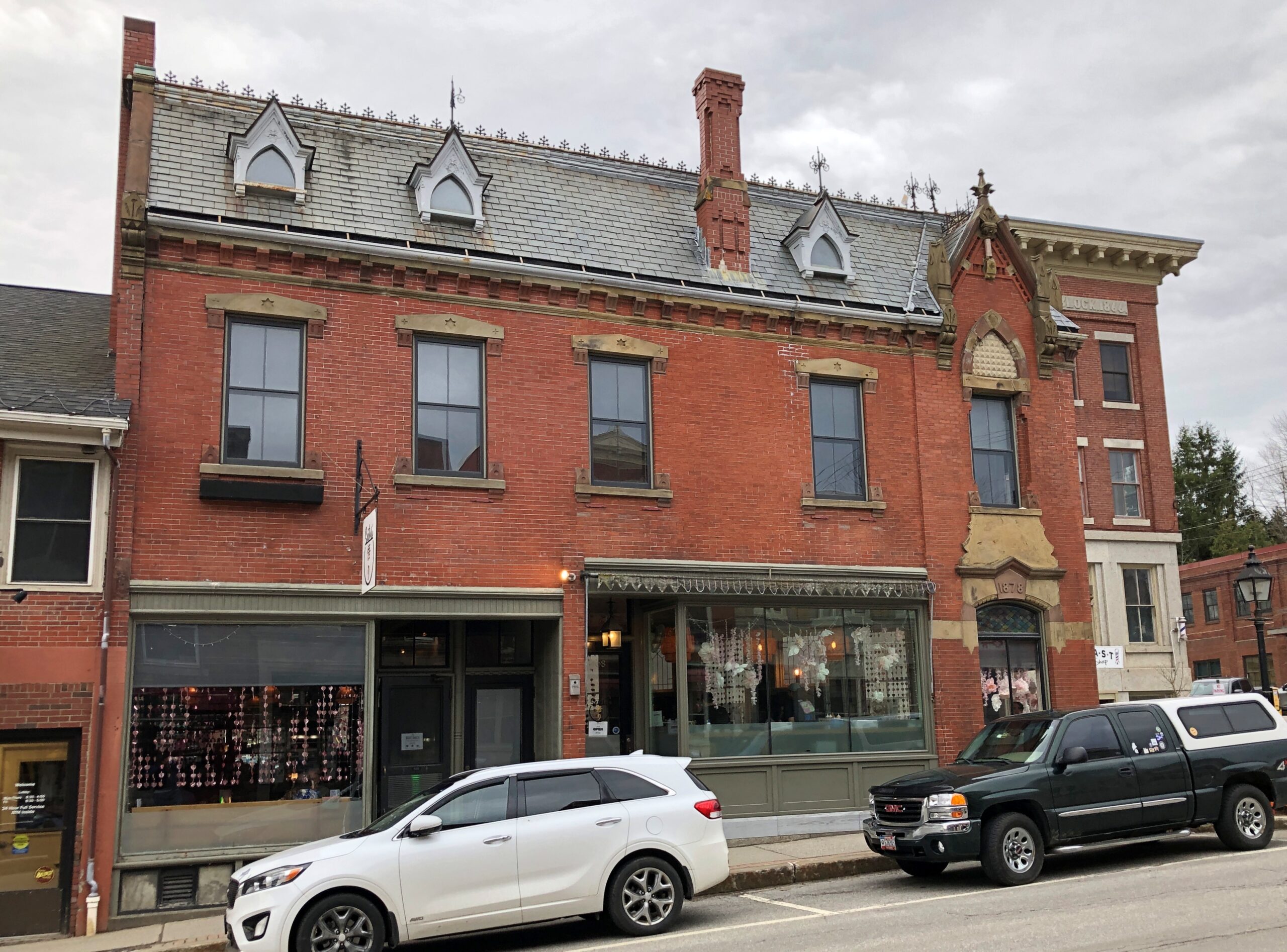
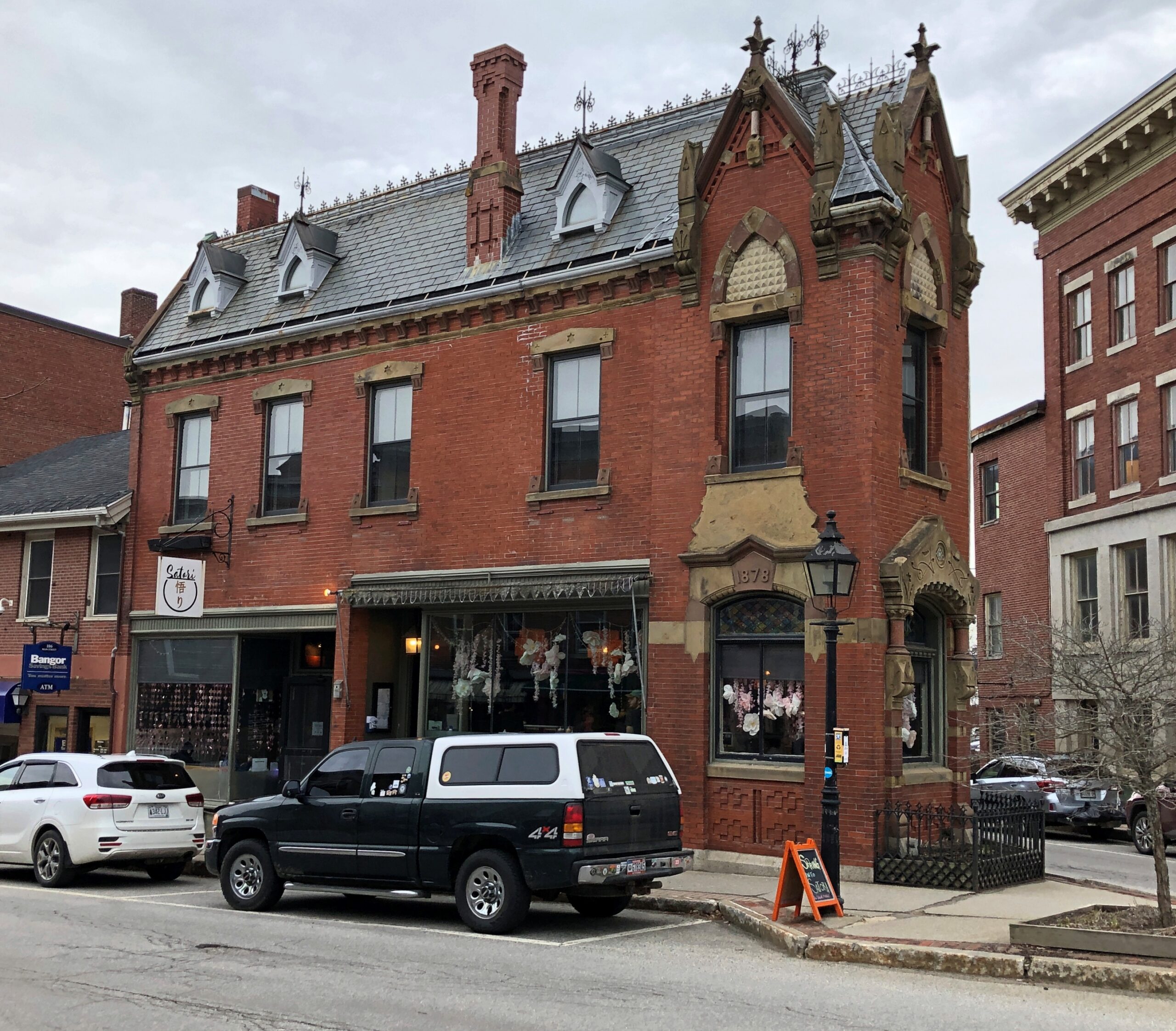
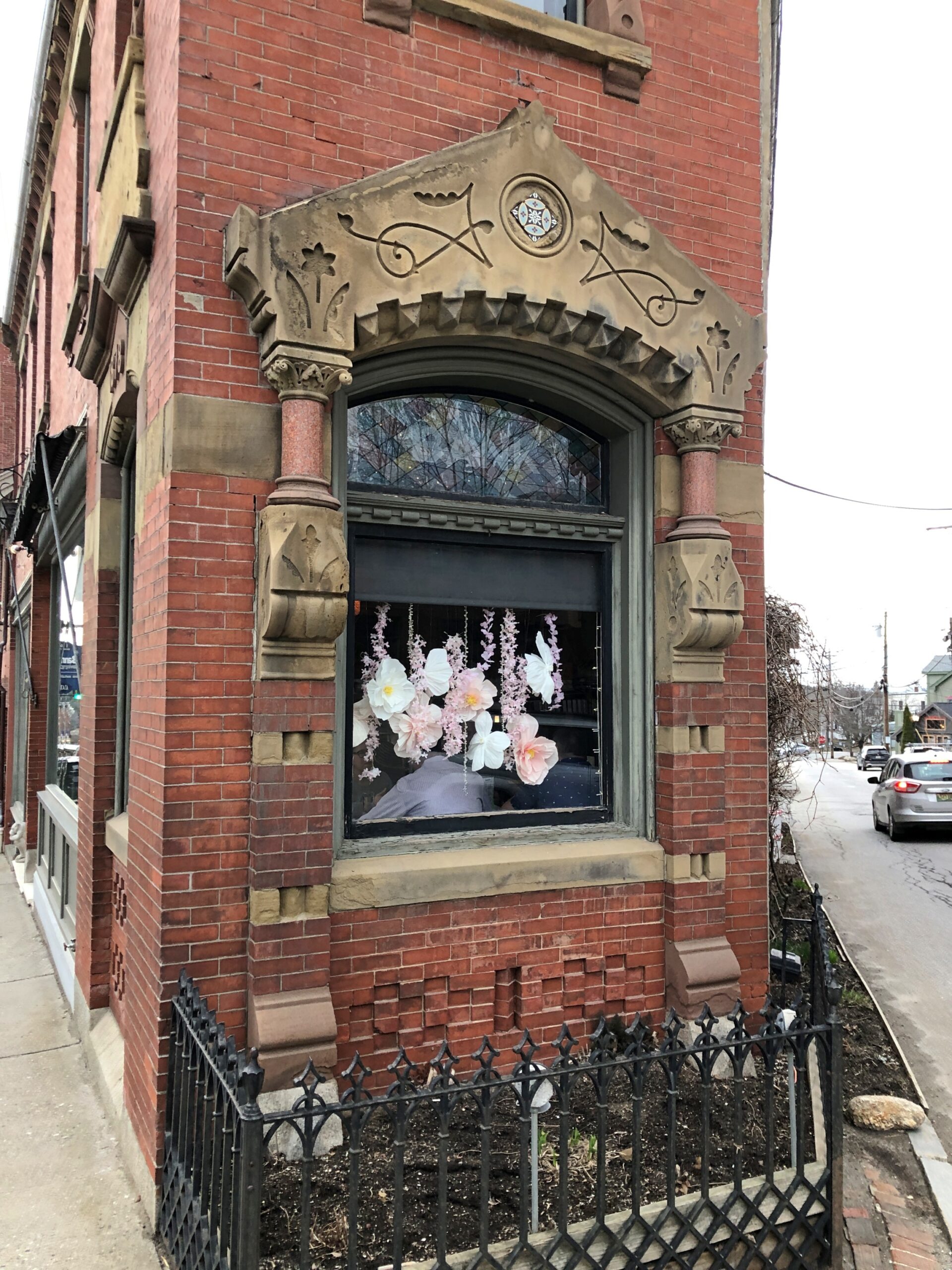
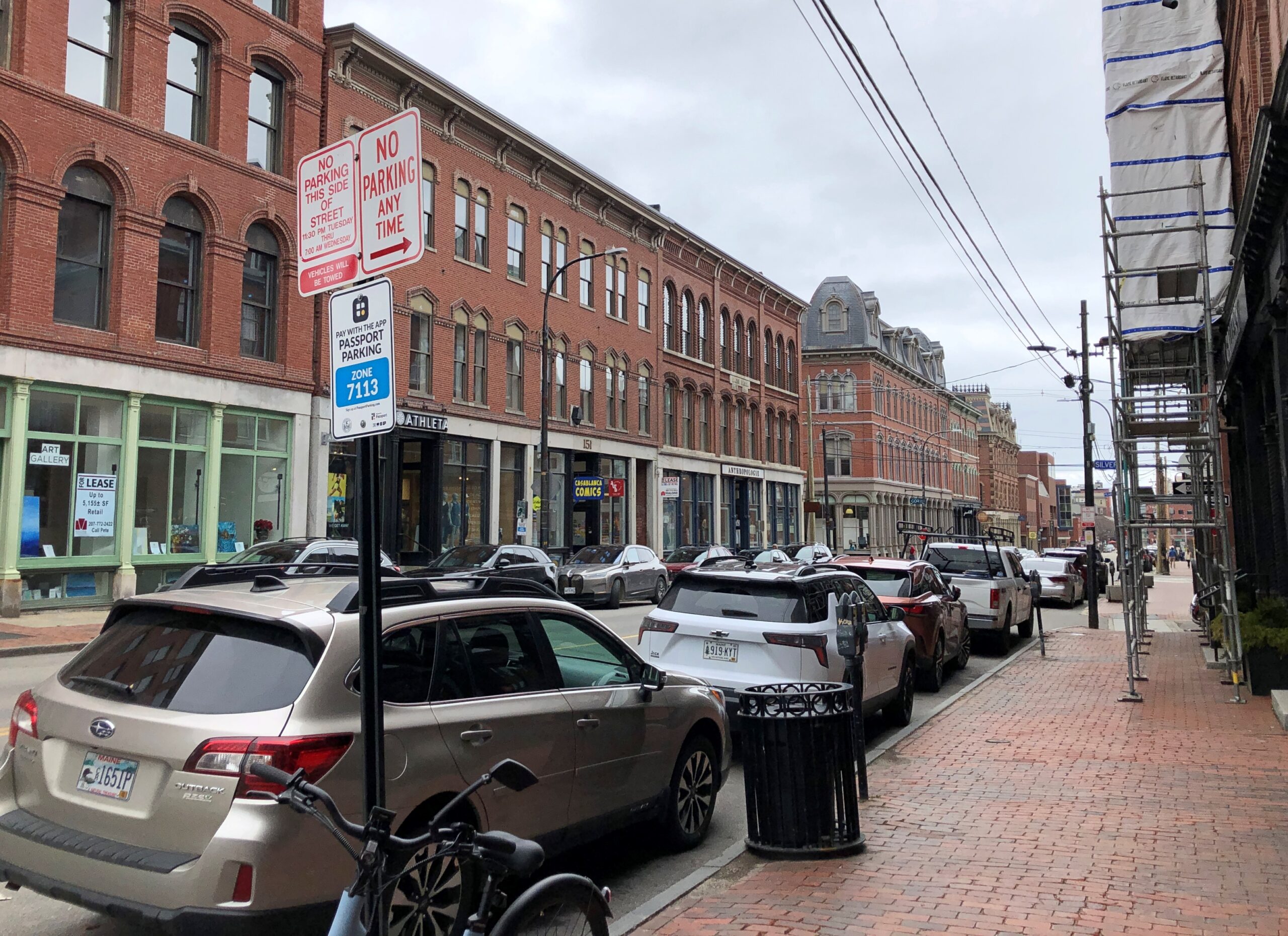
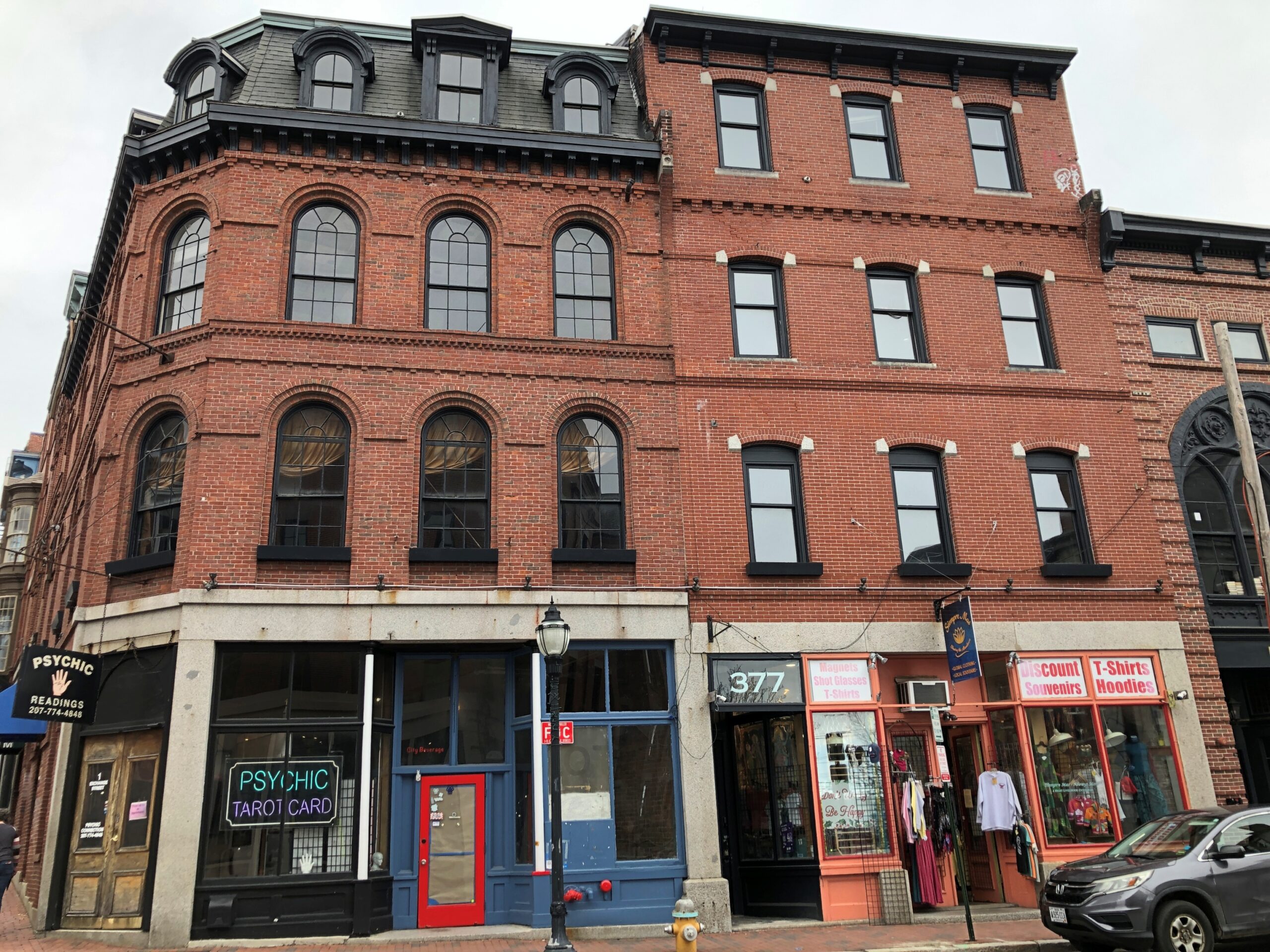
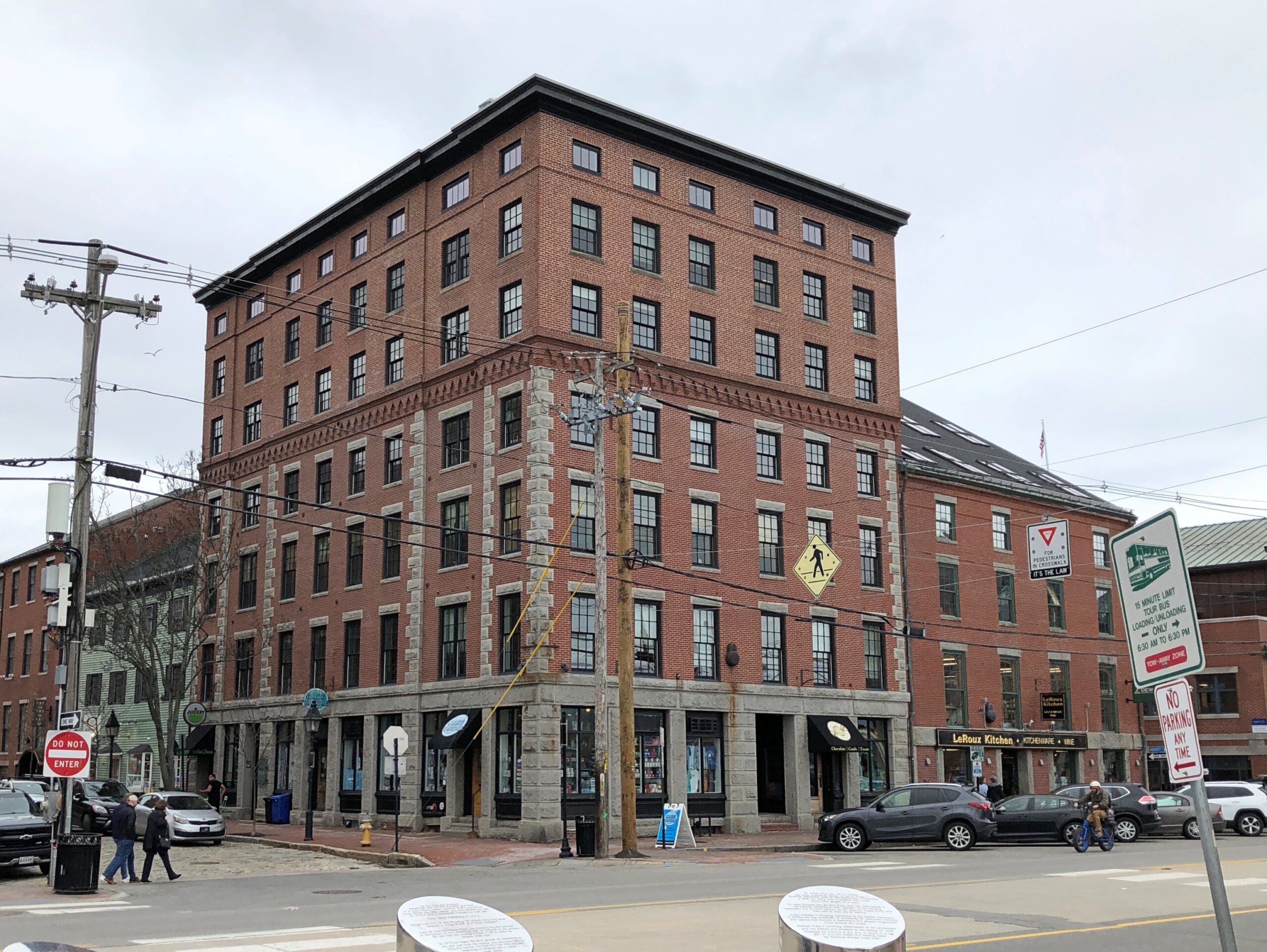
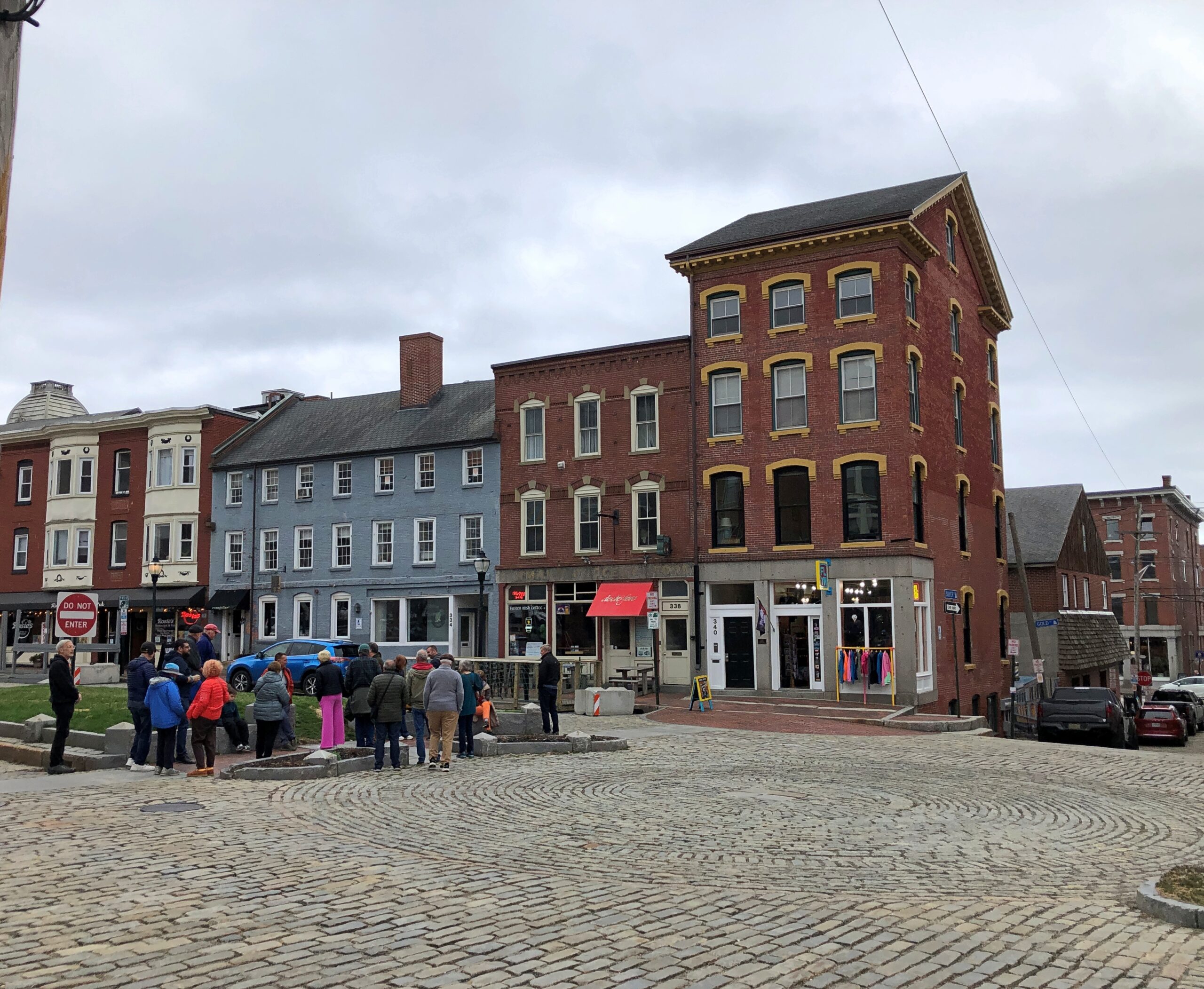
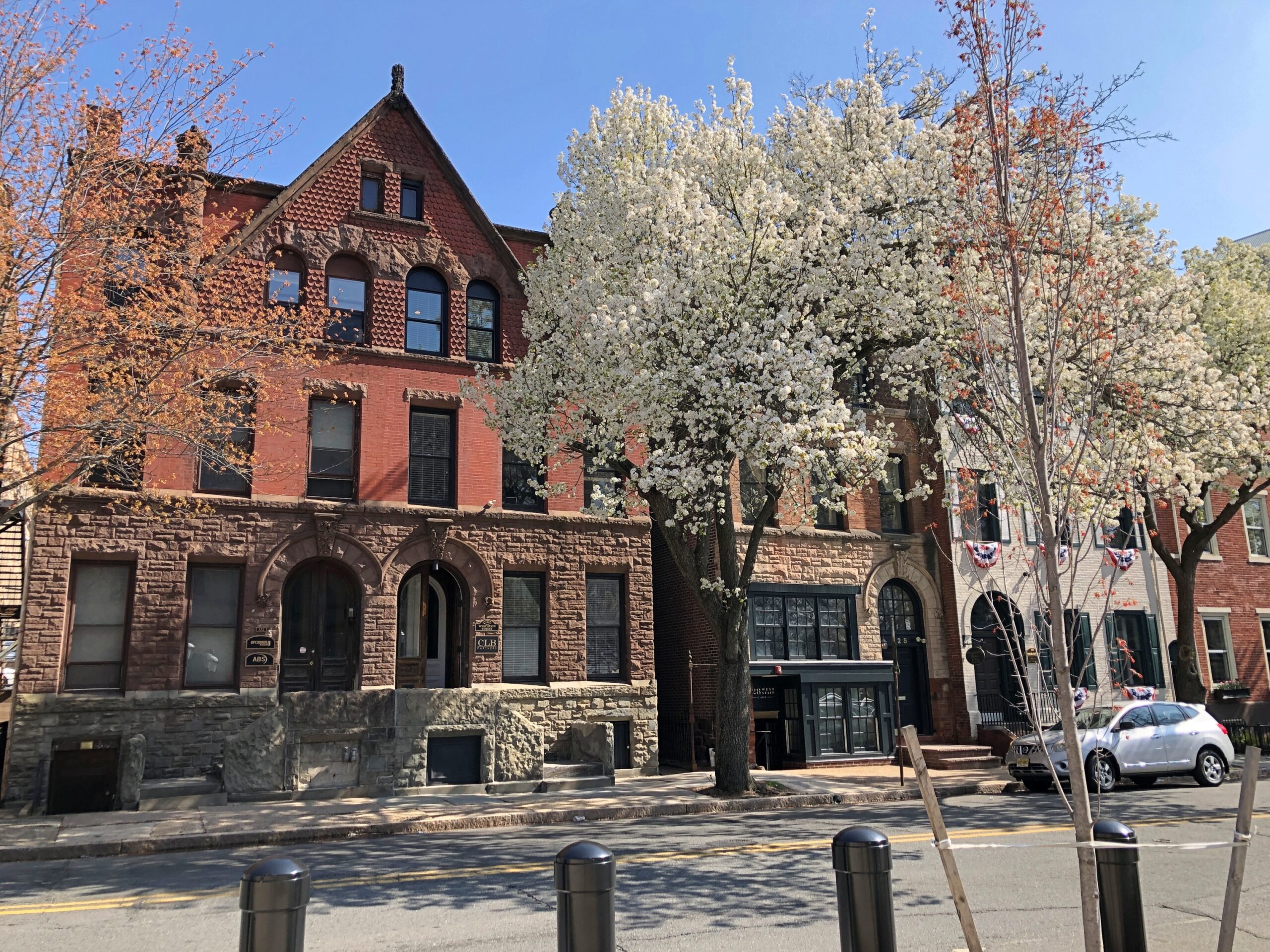
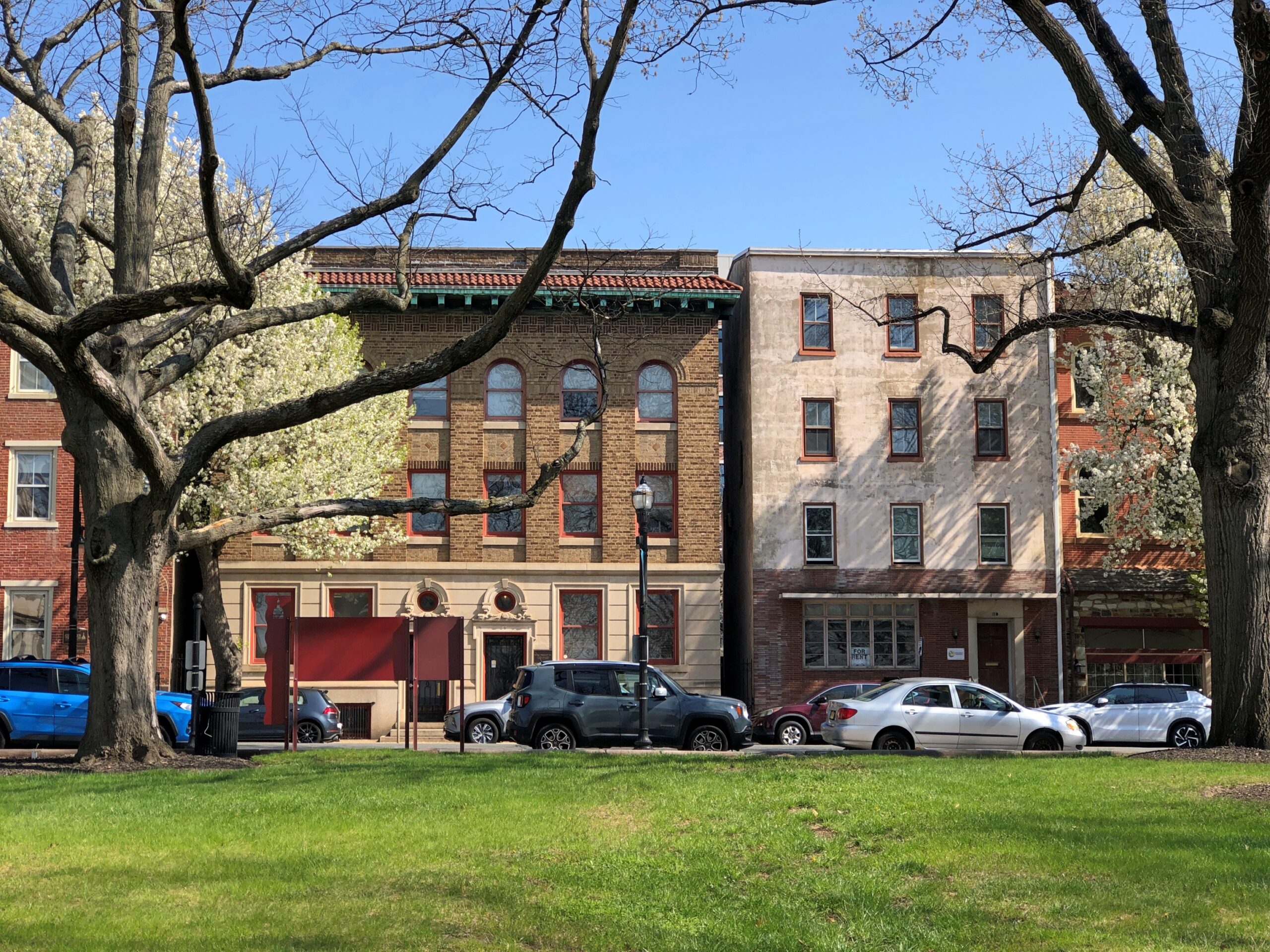
The city’s got some fine streetscapes.

Some other handsome Bangor blocks and buildings.
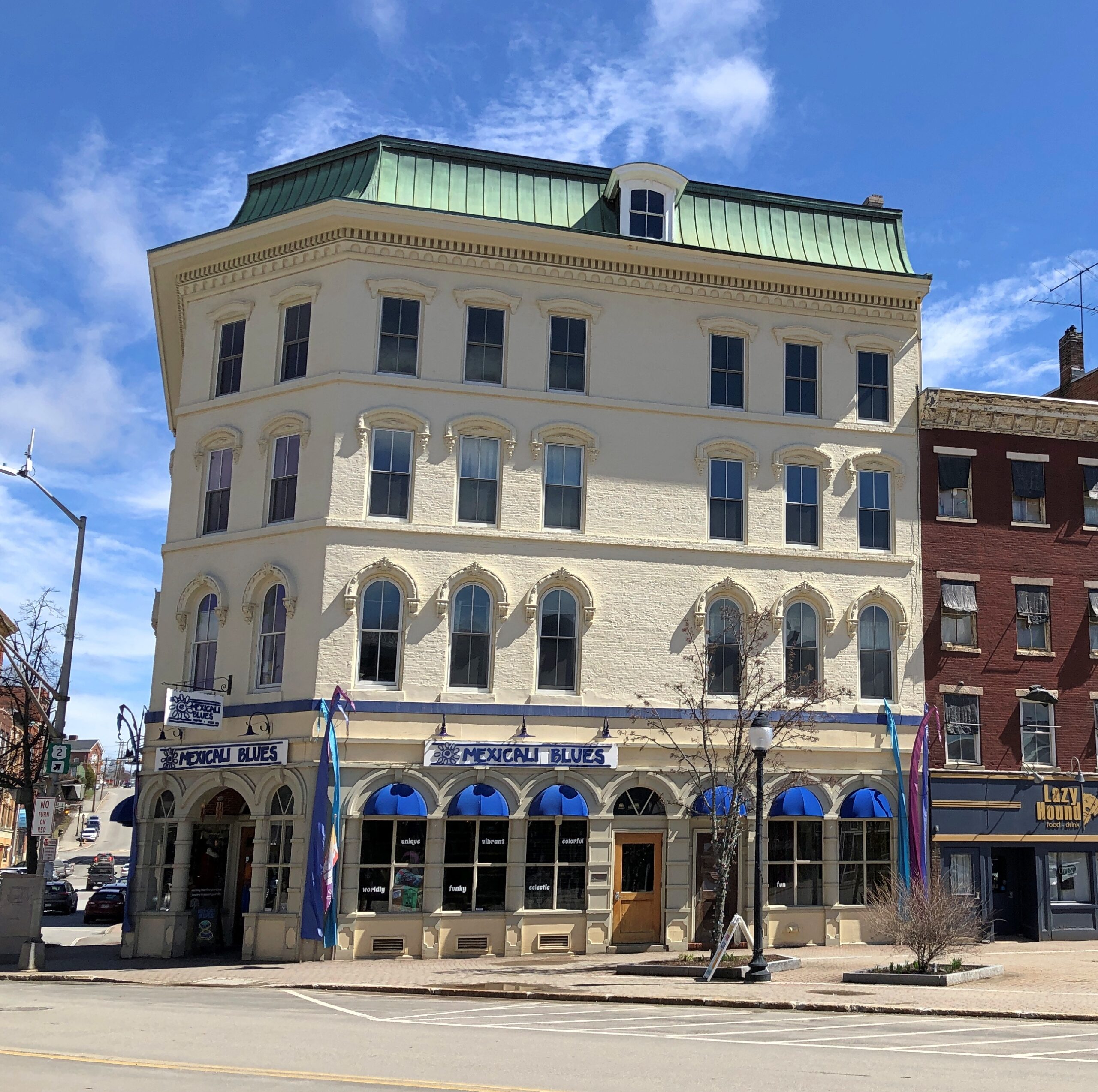
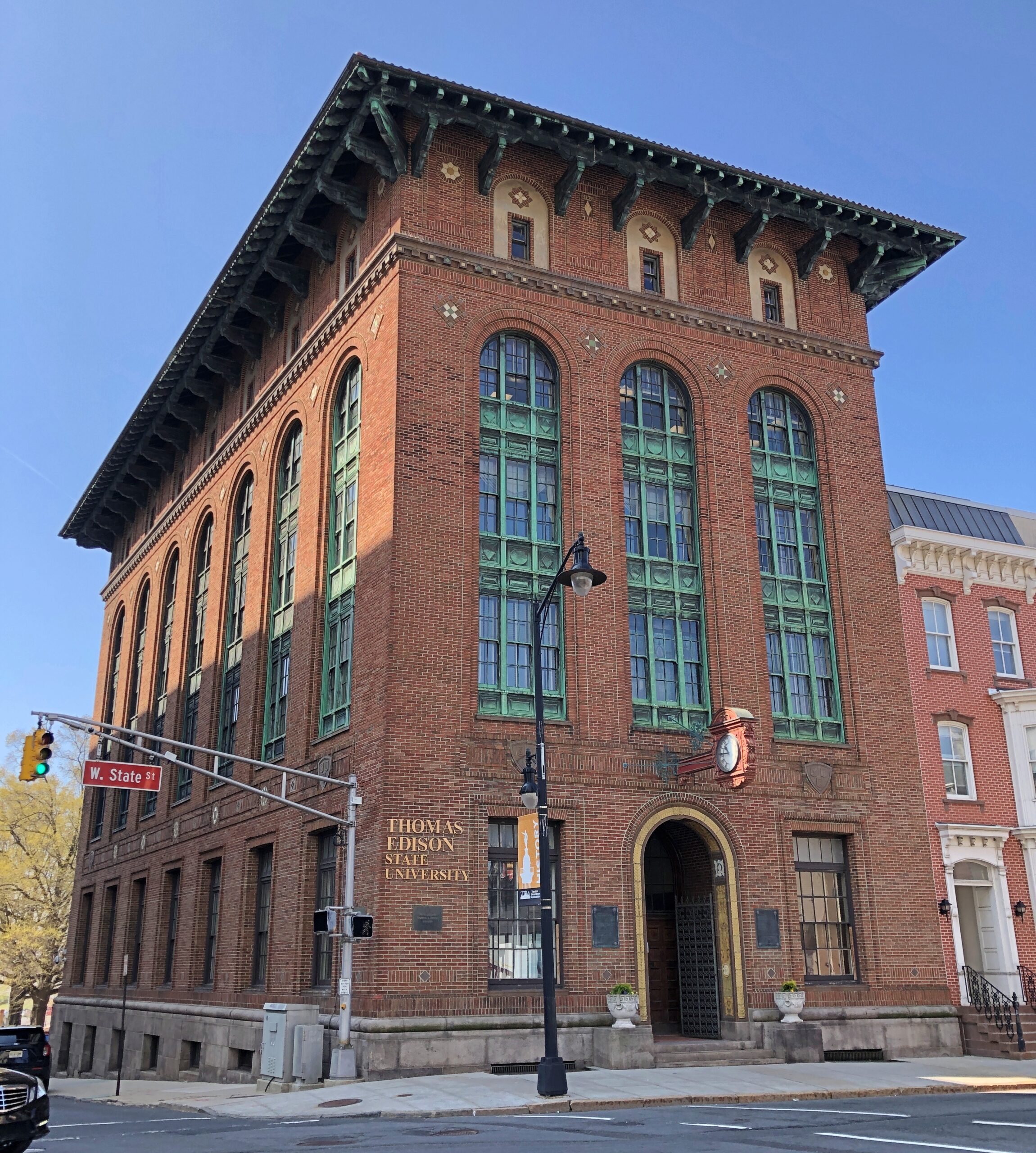
Early examples of the art of the steel-framed highrise.

Paul Bunyan isn’t the only mural subject. This one is bees.
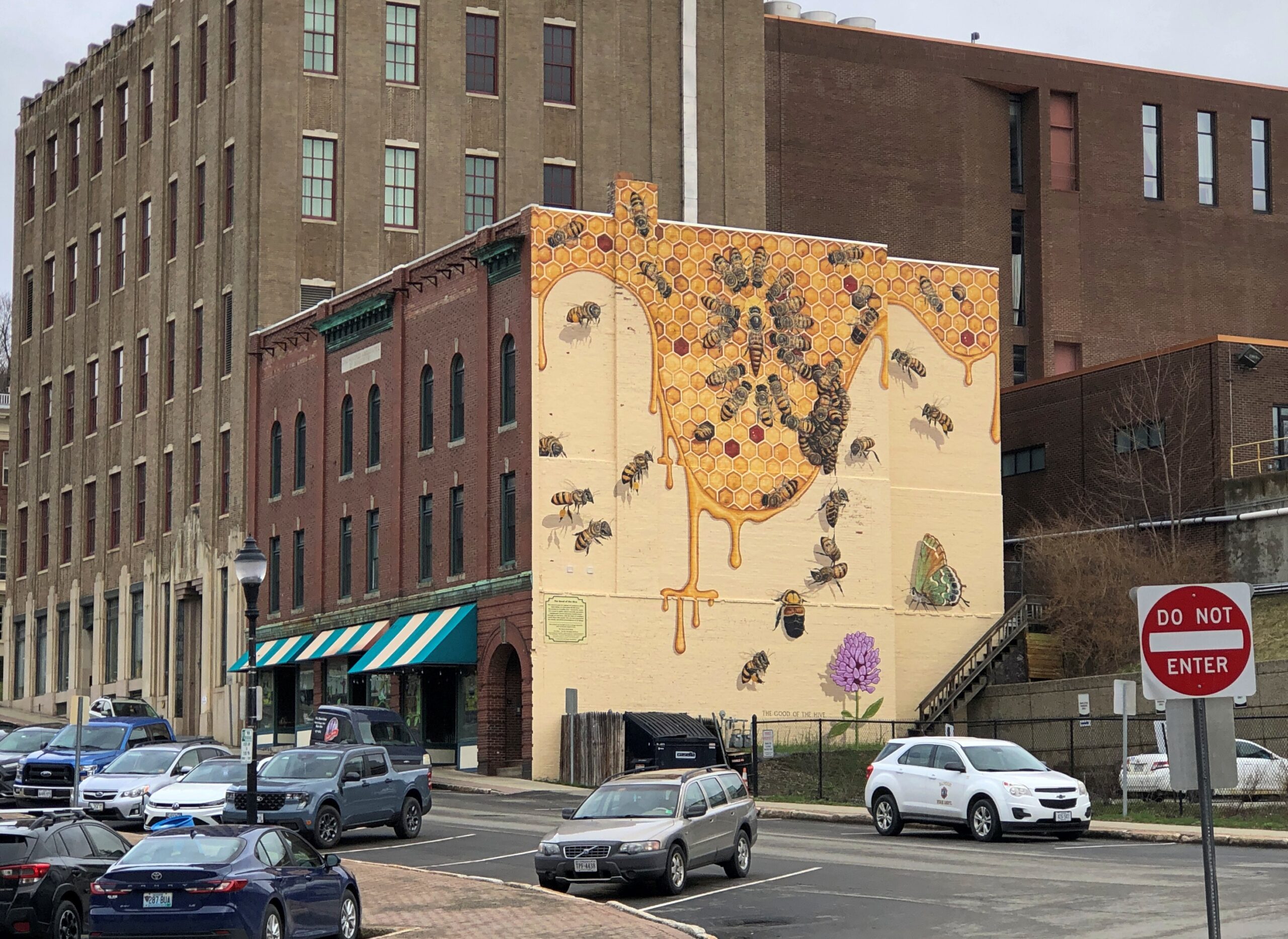
Because Bangor is known for honey production? I had to check and probably not much, the sort of thing that gets lumped in with “other” in the ag census for Penobscot County. These bees are bees for the sake of being bees. (Try that three times fast.)

“Bangor Beautiful partnered with Bangor Greendrinks to create a large bee-themed mural in Downtown Bangor during the summer of 2023,” notes the nonprofit Bangor Beautiful.”The artist Matt Willey is the founder of The Good of The Hive, a global mural project with the goal of hand-painting 50,000 honey bees, the number in a healthy, thriving hive. He has painted bee murals all over the world, including at the Smithsonian.”

I knew I got out of bed for a reason today: to find out that there is an artist whose obsession is bee murals. More than 11,780 painted bees so far, according to the artist. Eccentricity of the first order, and I salute it.

You can’t call Bangor bustling, but I’ve seen plenty more vacant downtowns. Business details, former and existing.

Temple of the Feminine Devine, eh? Not to be confused with the Temple of the Devine Feminine, an outfit in Seattle. I could make a Life of Brian reference here, but if you know that reference, you’ve already thought of it.

The unofficial Maine flag, and variations.
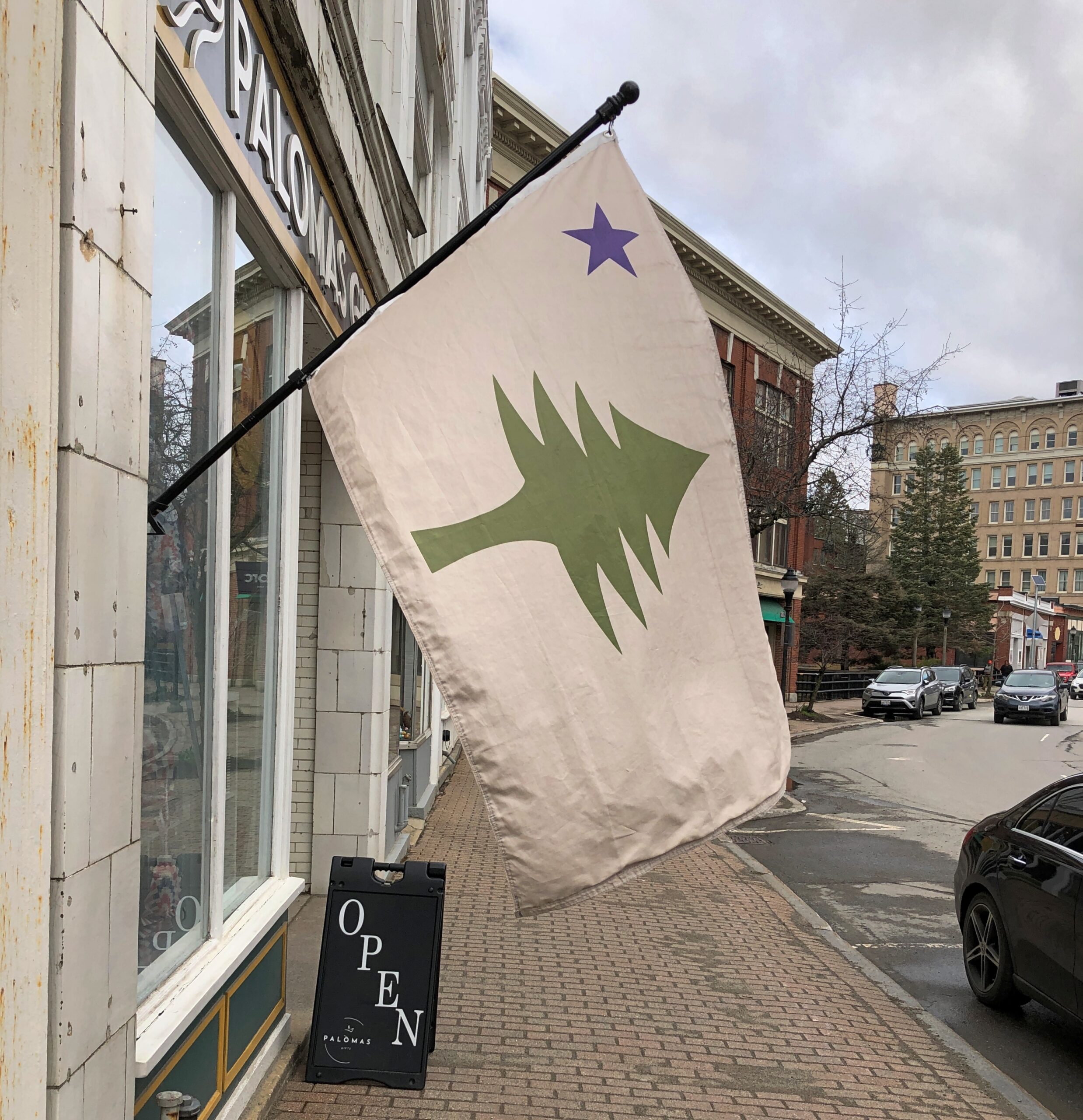
That flag failed to become official in the last election in a ballot question. No one in Maine cares what I think, but I think it should be made official again, but without disestablishing the current flag. Co-official, you could say. Maine would be unique that way. Also, no fixed pattern beyond a single pine tree and a single star to the upper left. Let a loose a proliferation of lone pine flags begin.

Bangor as a whole hugs the Penobscot River, but downtown clings to the much smaller Kenduskeag Stream, a tributary of the Penobscot.

A small island in the stream is a park.

The park sports a cannon captured at Fort Toro, Guantanamo Bay, Cuba in 1898.
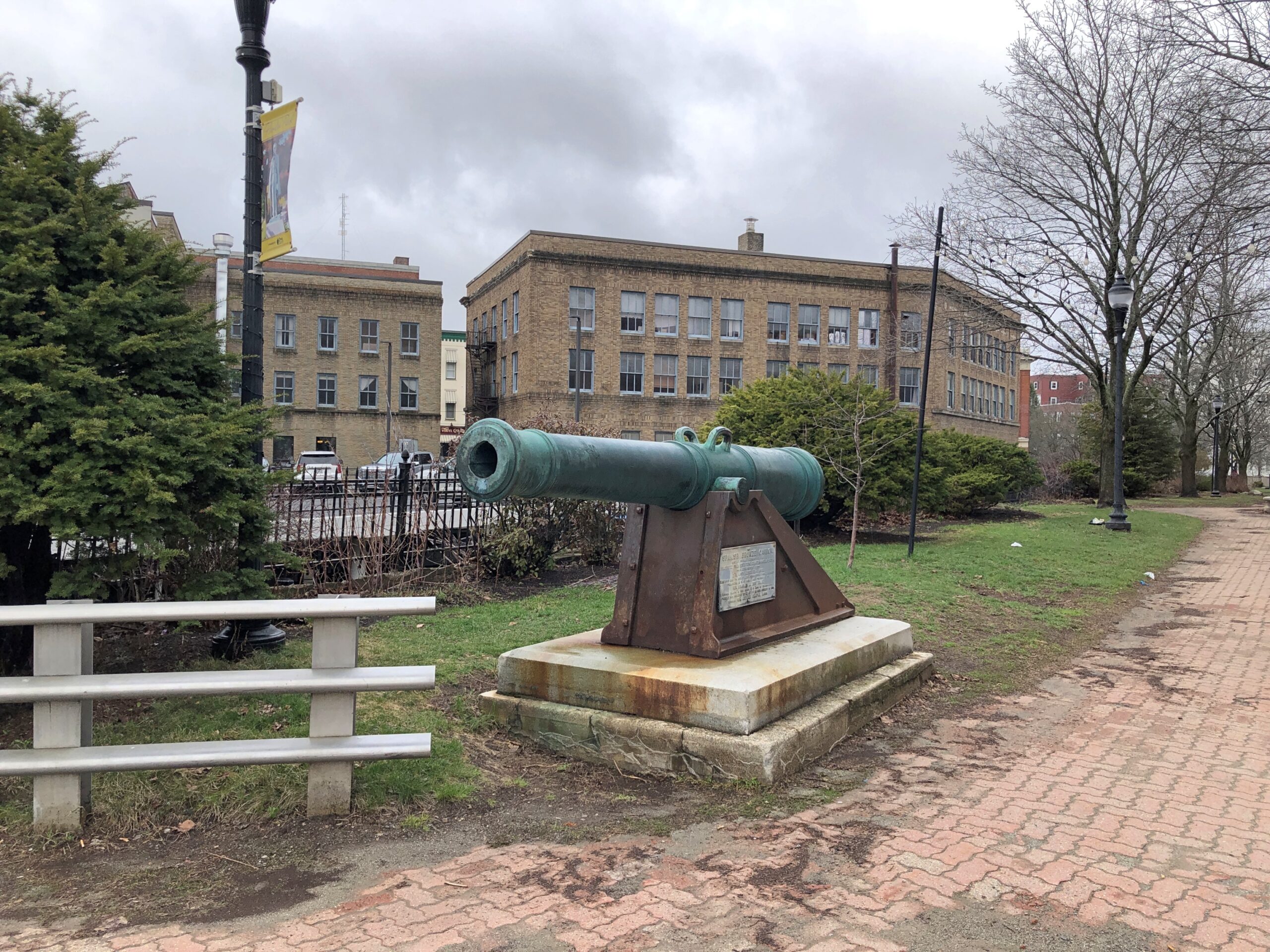
It so happened that Rep. Charles A. Boutelle was the chairman of the Committee on Naval Affairs in the U.S. House at that moment, facilitating the war prize cannon’s permanent move to Bangor. Quite the career Boutelle had, per Wiki: “American seaman, shipmaster, naval officer, Civil War veteran, newspaper editor, publisher, conservative Republican politician, and nine-term Representative to the U.S. Congress from the 4th Congressional District of Maine.”

That’s not all. Vice President Hannibal Hamlin, Bangor favorite son, stands in bronze not far from the cannon.

“After Lincoln took office and even with the outbreak of the Civil War, however, Hamlin had almost no role in the administration, as was common for this period in history. Hamlin despised his new position as vice president. He missed being part of the political process and controlling patronage but felt it was his duty to serve. He also found presiding over the Senate boring and was frequently absent. Still, he was disappointed when the Republican Party dropped him from the ticket in 1864.” A curious, but all too familiar quirk of human psychology, in that last sentence.

The “diplomat” on the plinth refers to his posting to Spain in the early 1880s, named to the job during the brevity of the Garfield administration.
Belfast, Maine

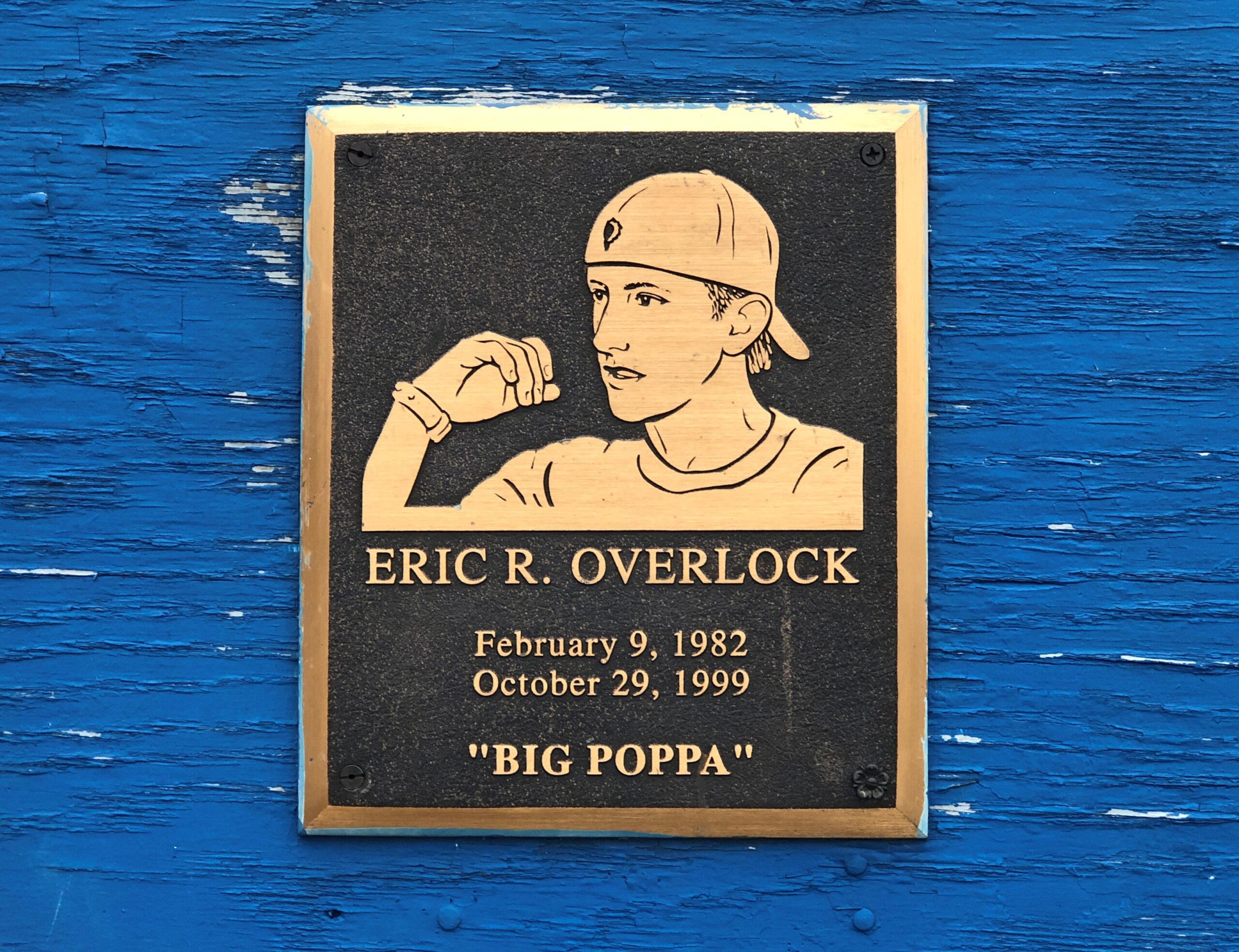
You can’t call it an obituary exactly, but not many people get a writeup like Eric R. Overlock, who died at 17 in Belfast, Maine, in 1999. The entire thing is worth a read, as are the two other entries on a Substack by one Matthew Hurley.

Eric Overlock was the toughest kid in Belfast, Maine. He was also the coolest. We grew up skateboarding. He was talented and sponsored in the ’90s when that was a big deal. His nickname was Big Poppa, like The Notorious BIG. He could fight, smoked cigarettes, and was dropping acid at 15…

I learned a lot from Eric, but it was from him I first learned that anyone, and eventually everyone, can and does die.

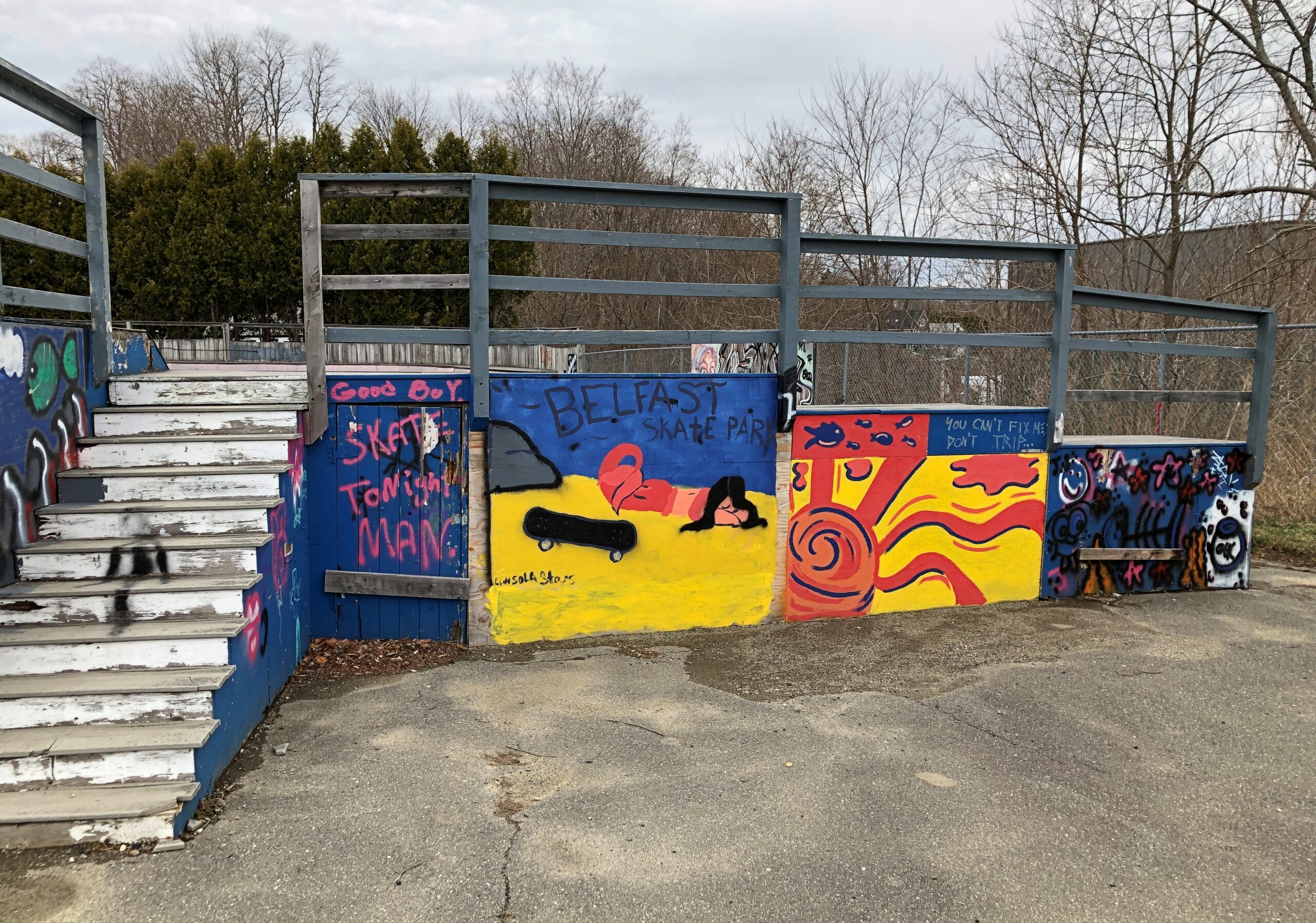
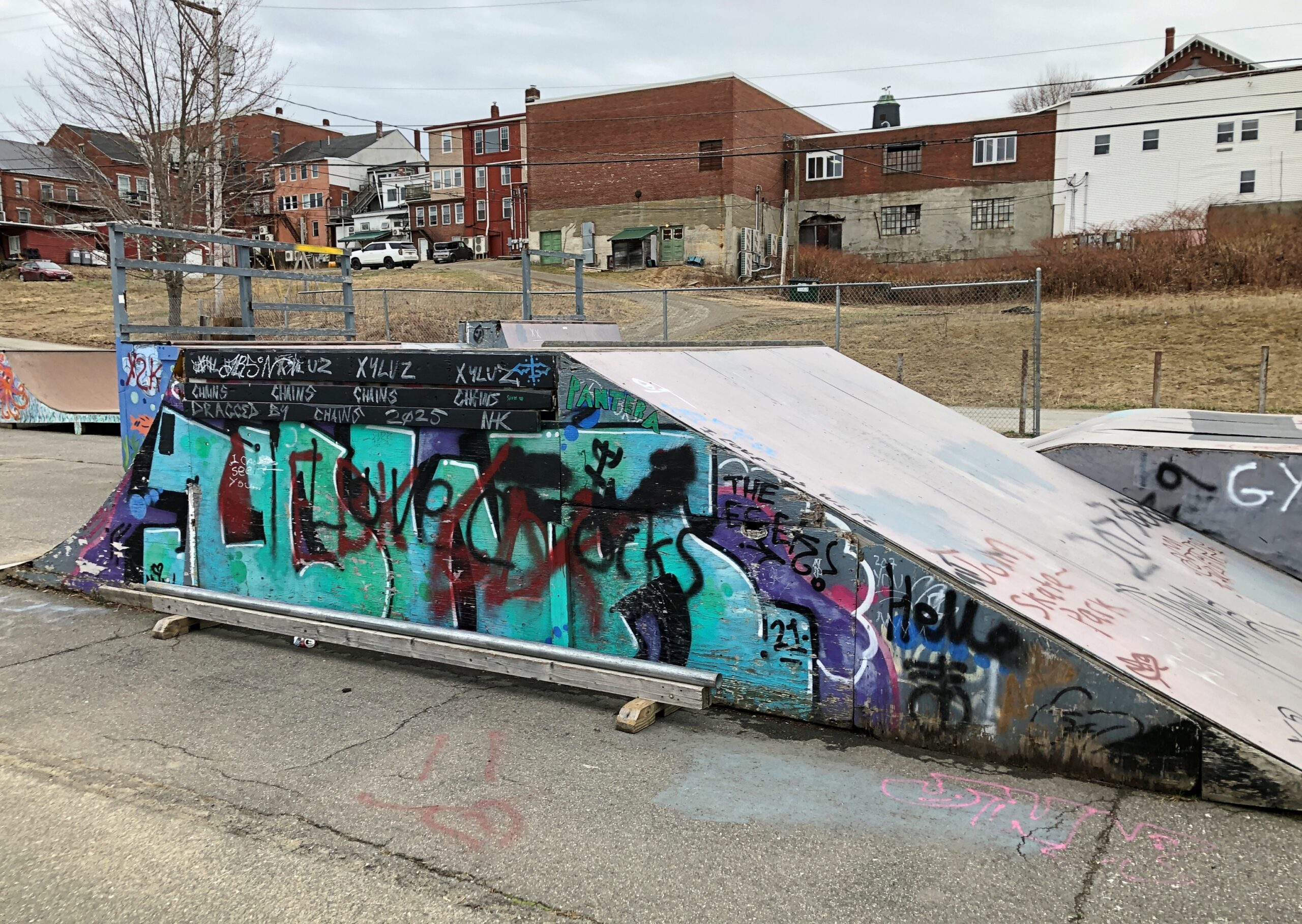
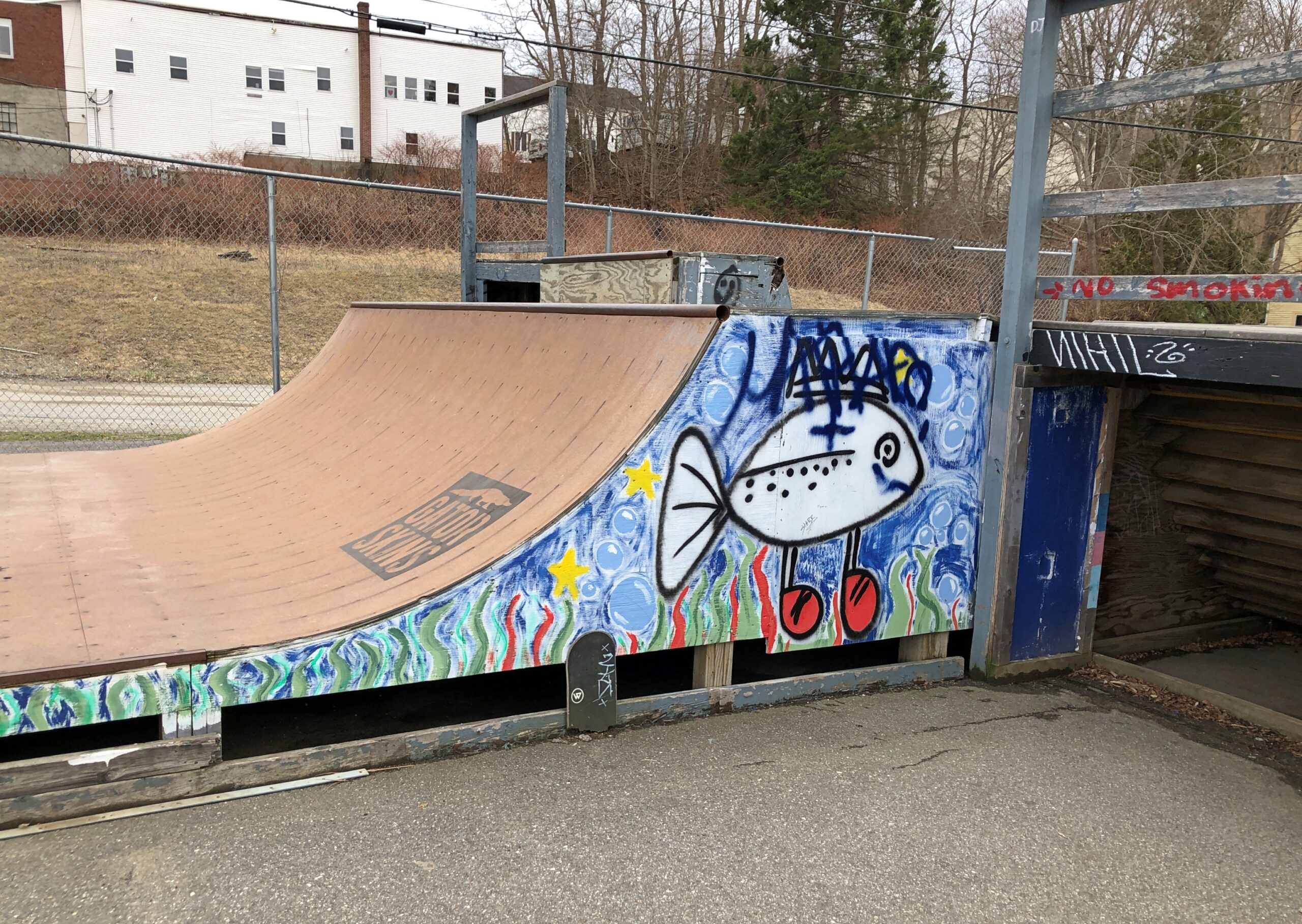
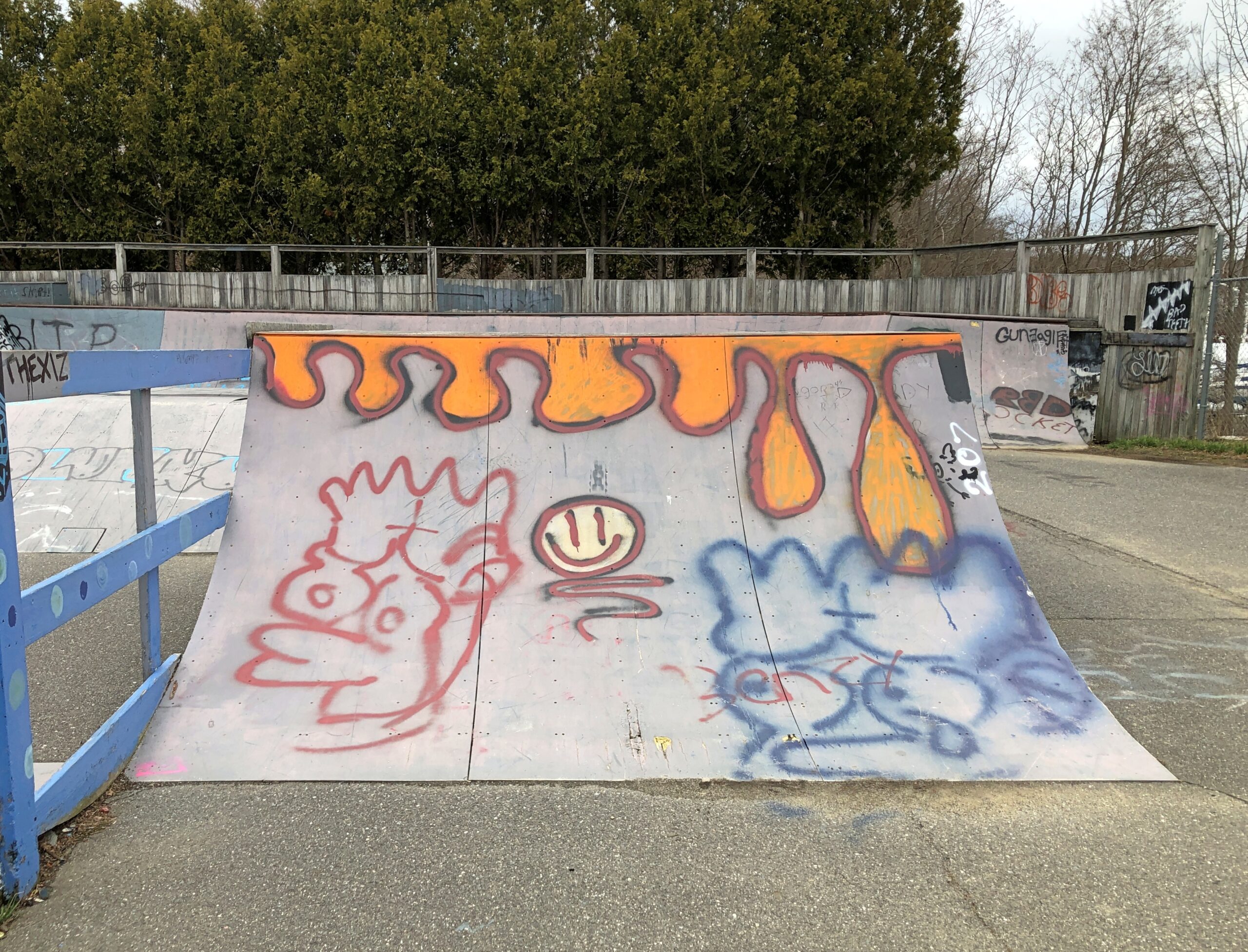
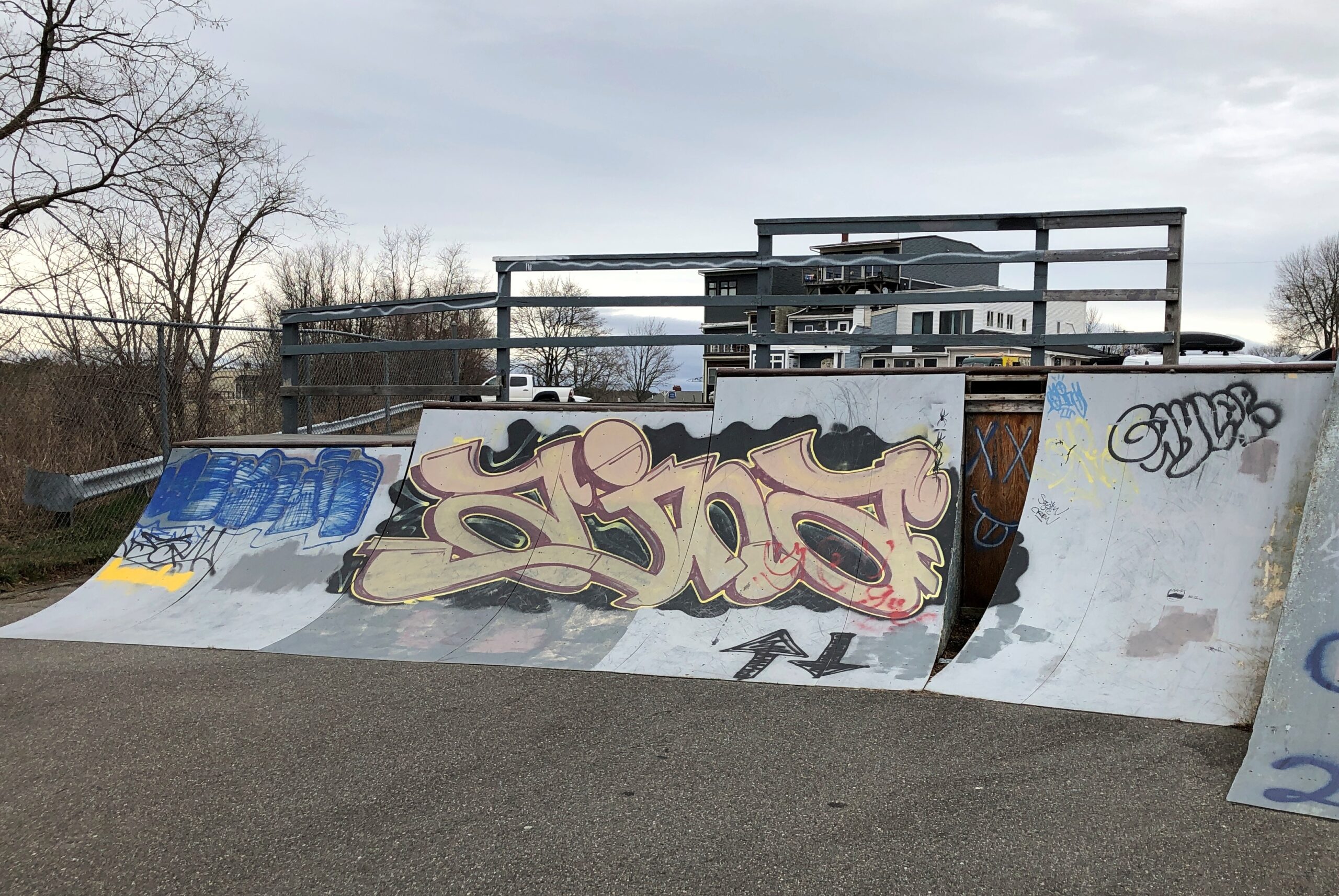
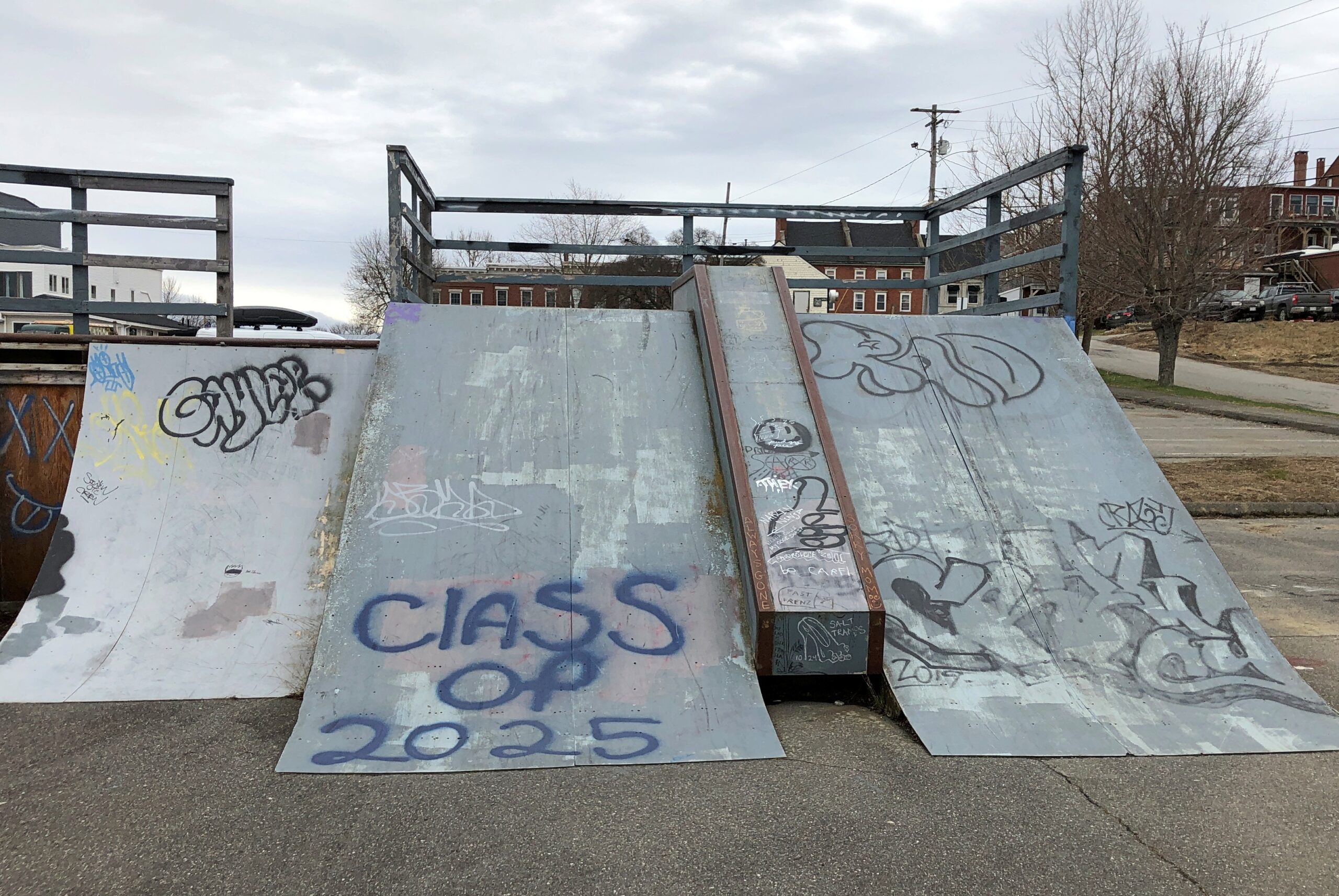
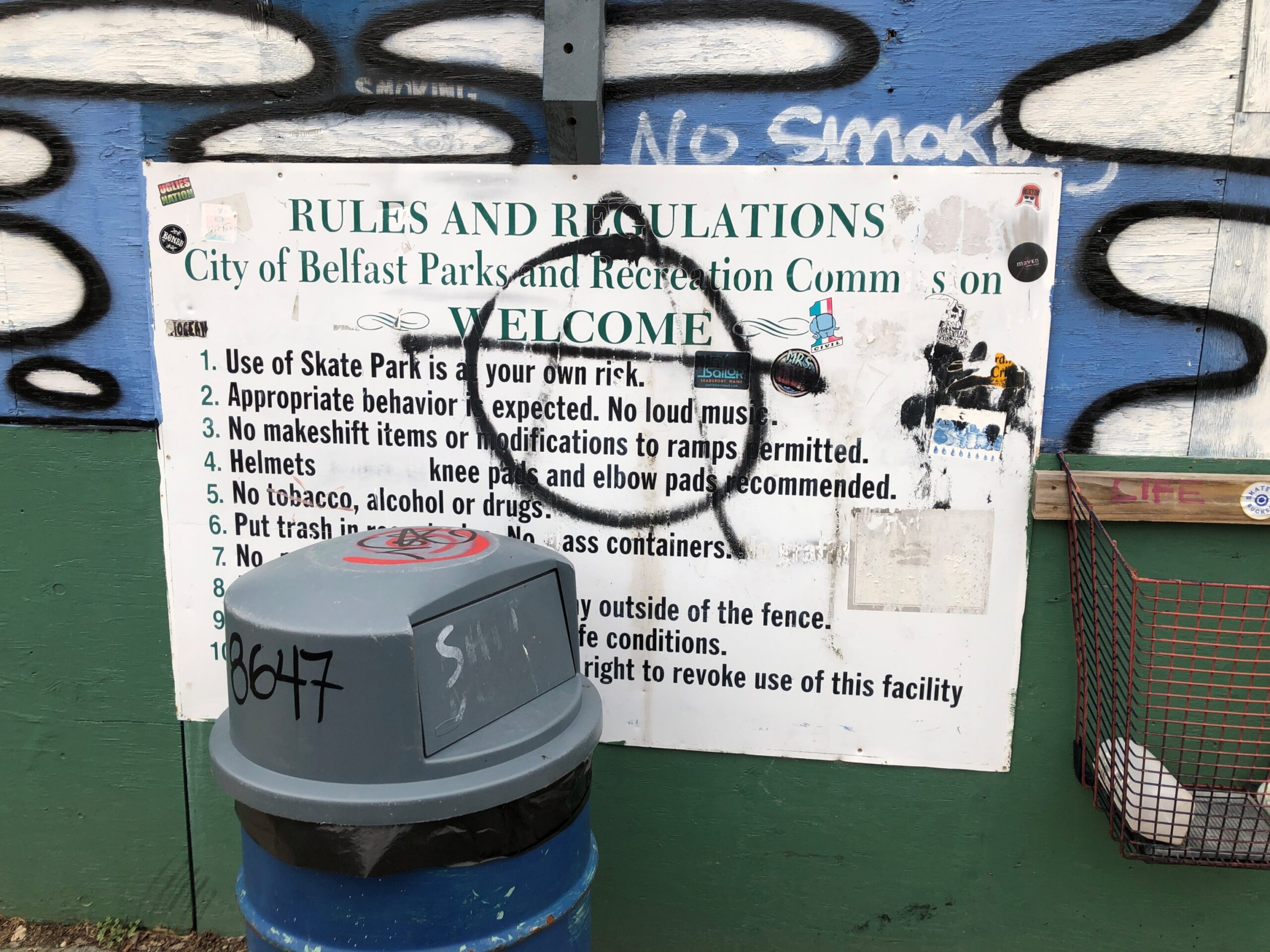
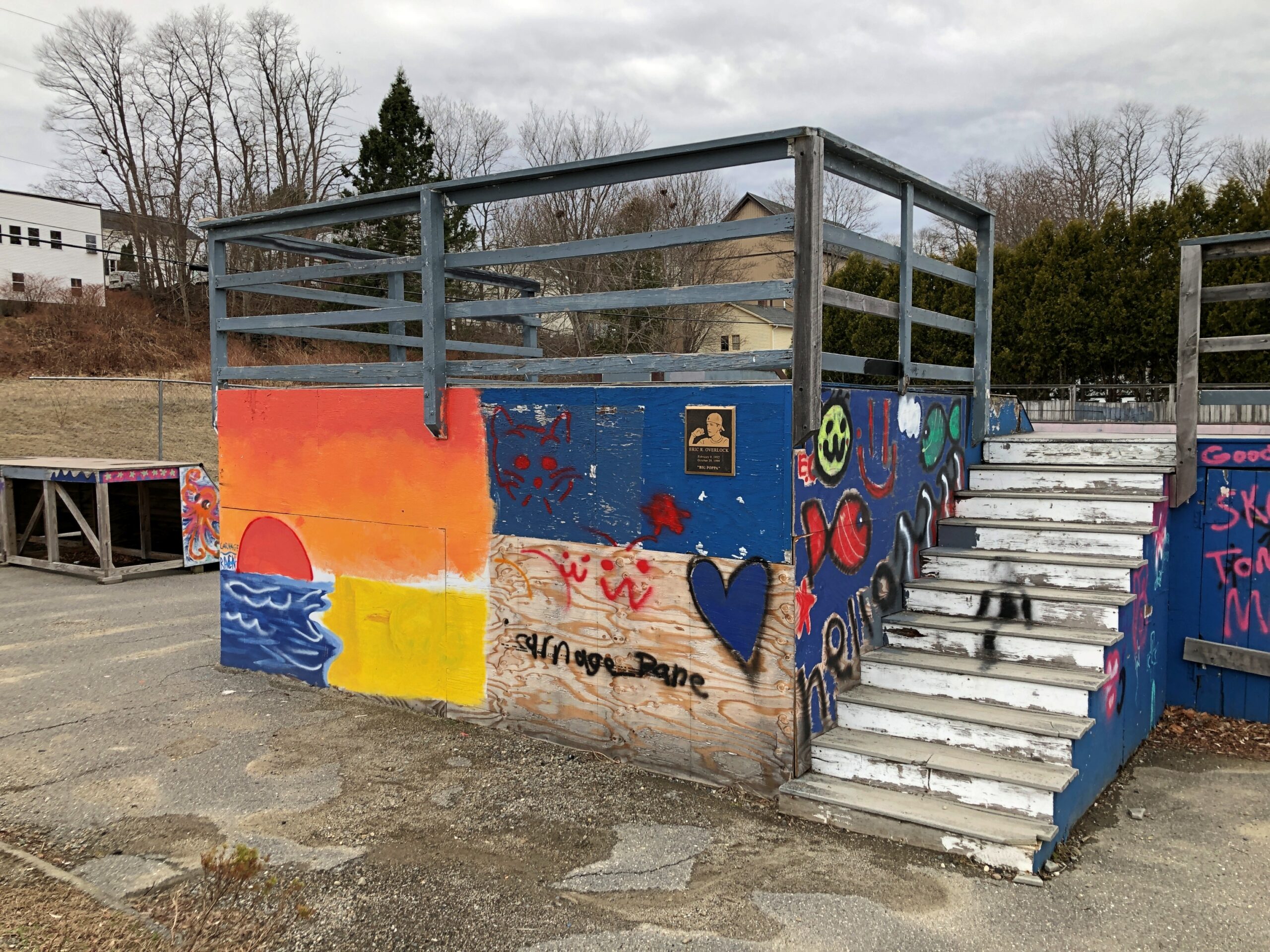
When I arrived in Belfast on April 15, a sign directed me to a public parking lot off Main Street. Next to the parking lot is the Eric J. Overlock Memorial Skatepark, marked by Eric’s plaque.

No one else was around, so I spent a leisurely few minutes documenting the skatepark at that moment in time. Like the Cadillac Ranch, I figure it changes according to the whims of Belfast graffitists.

Whatever the paint job, a world as strange to me as parallel bars or luge or the flying trapeze. How again does anyone learn it without serious bone breaks?

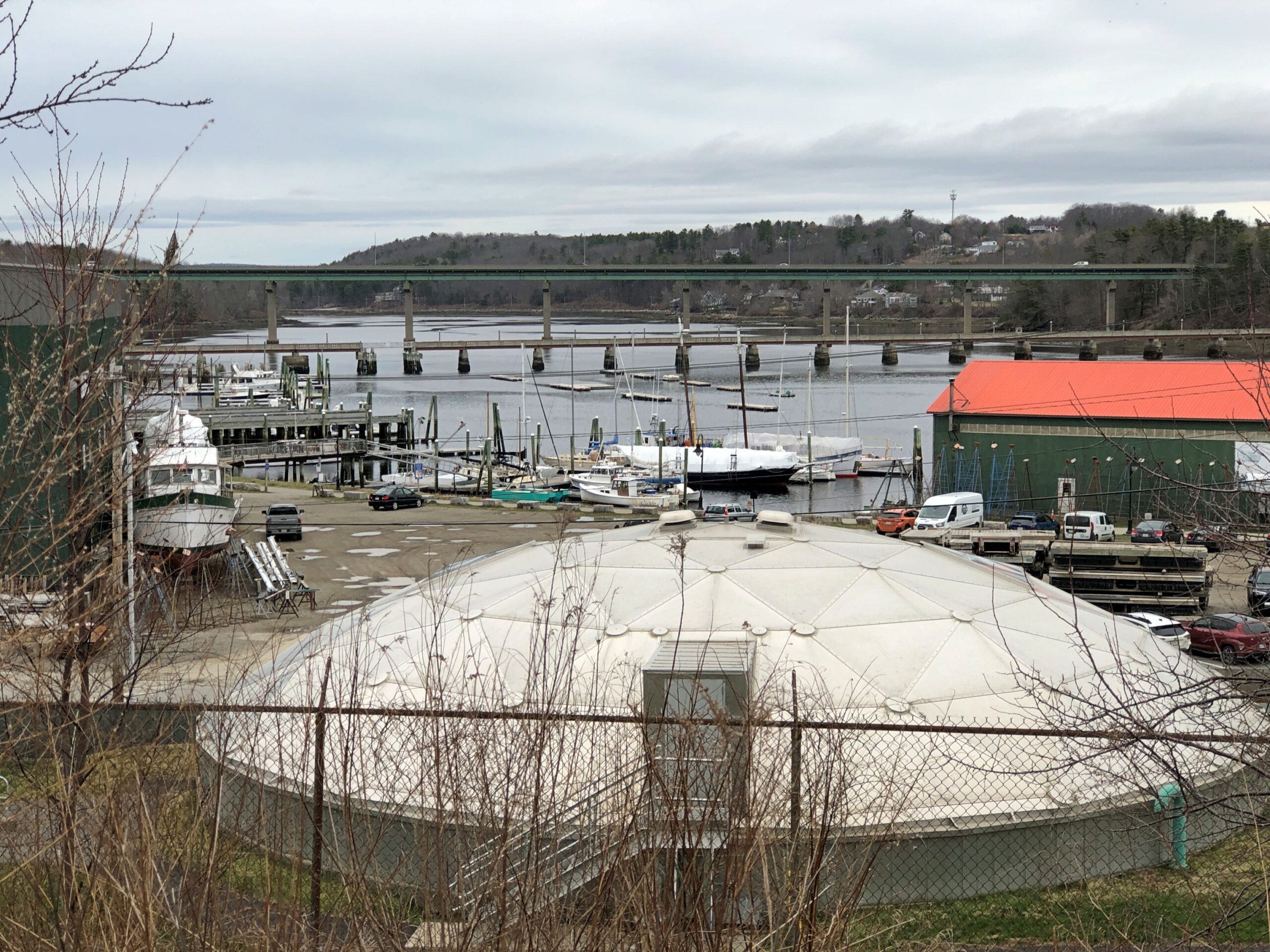
The skatepark and parking lot are on a long slope to the Passagassawakeag River. According to the Piscataquis Observer, “The Voice of Rural Maine,” it’s pronounced puh-SAG-uh-suh-WAH-keg. Which is just fun to say, once you get the gist. Wonder whether there’s a clipped version locally.

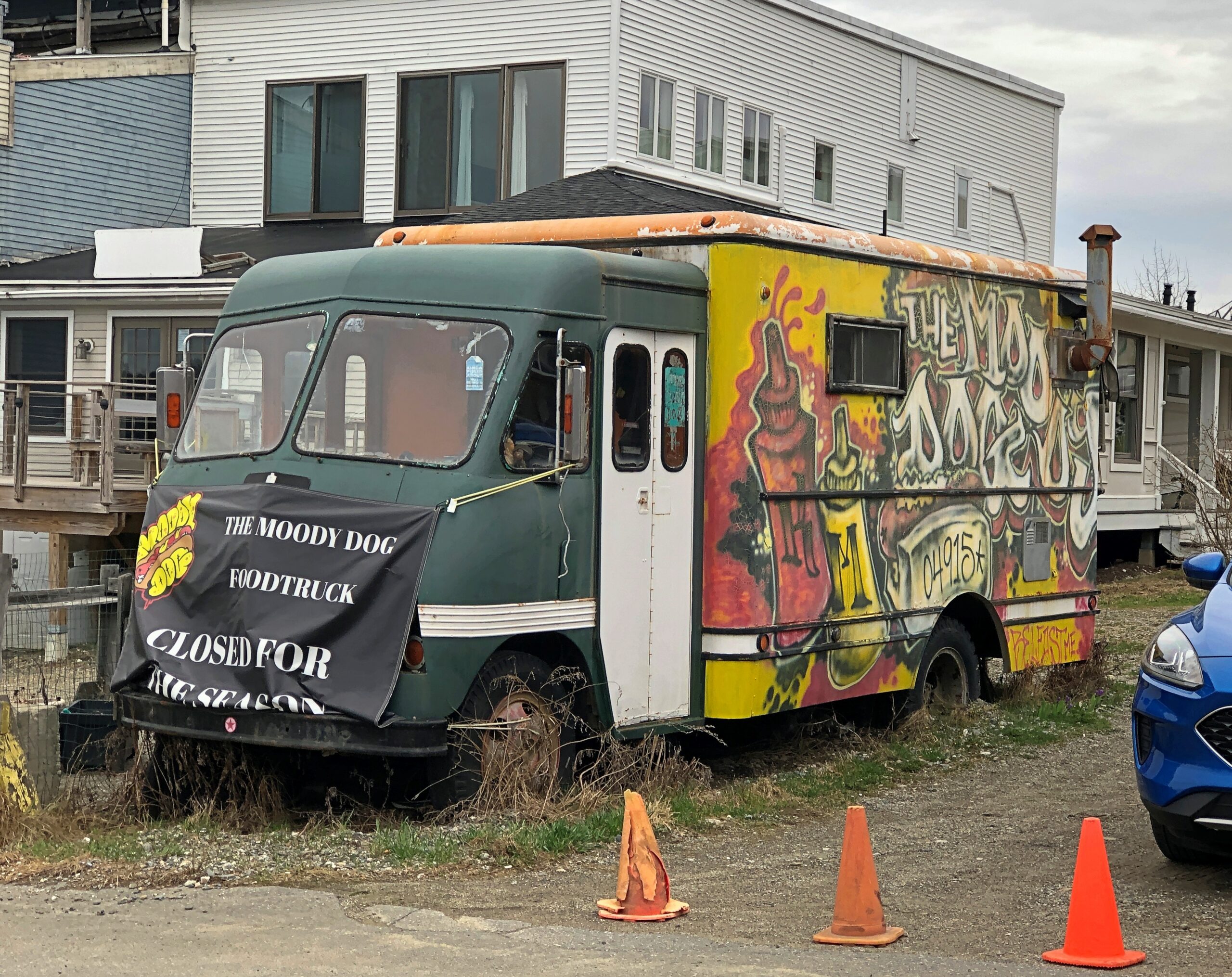
Main Street retail wasn’t quite closed for the winter, but mostly so for the chilly shoulder season. I expect the Moody Dog is gearing up for the summer season even now.

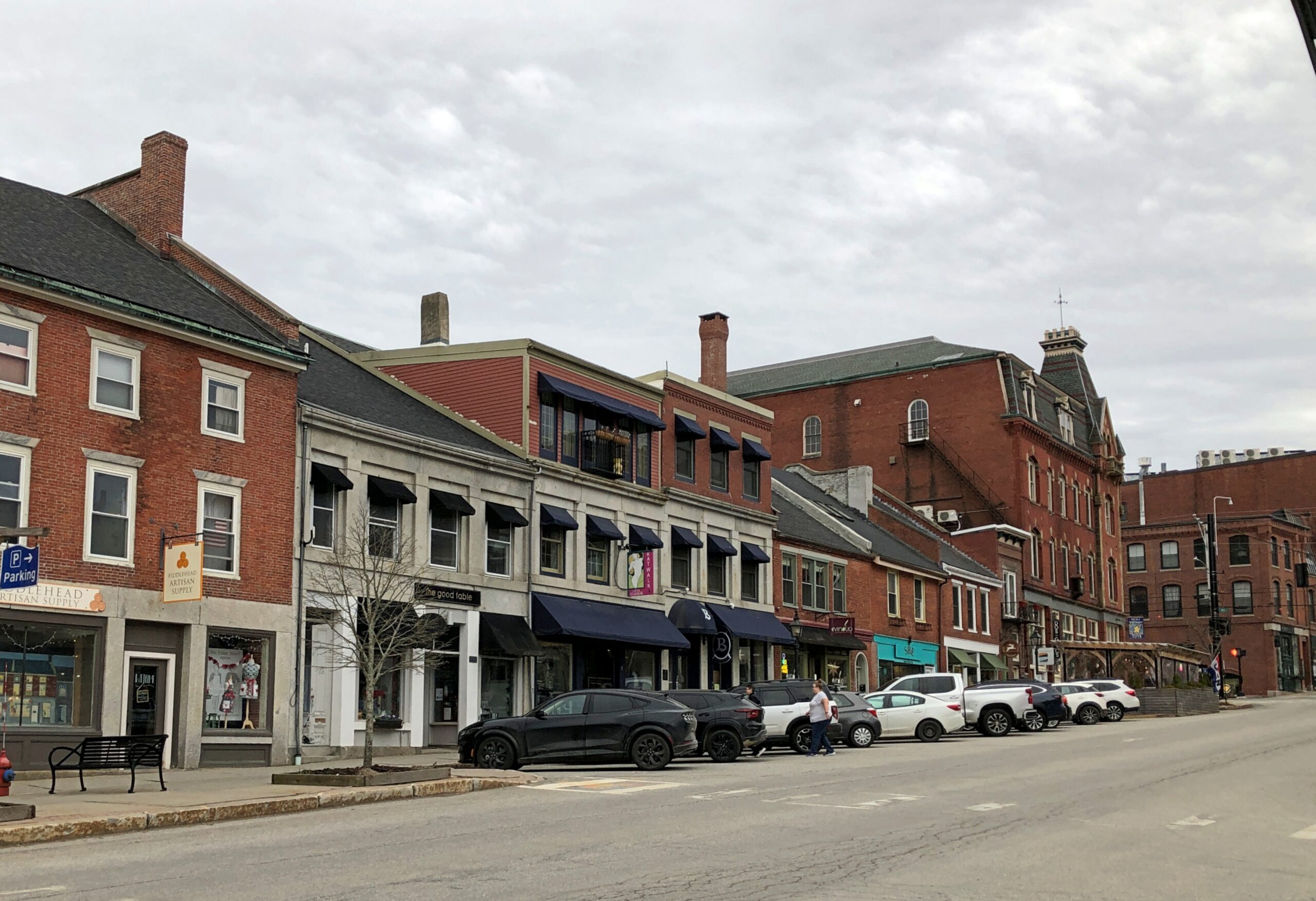
Main Street was very much worth a look anyway.

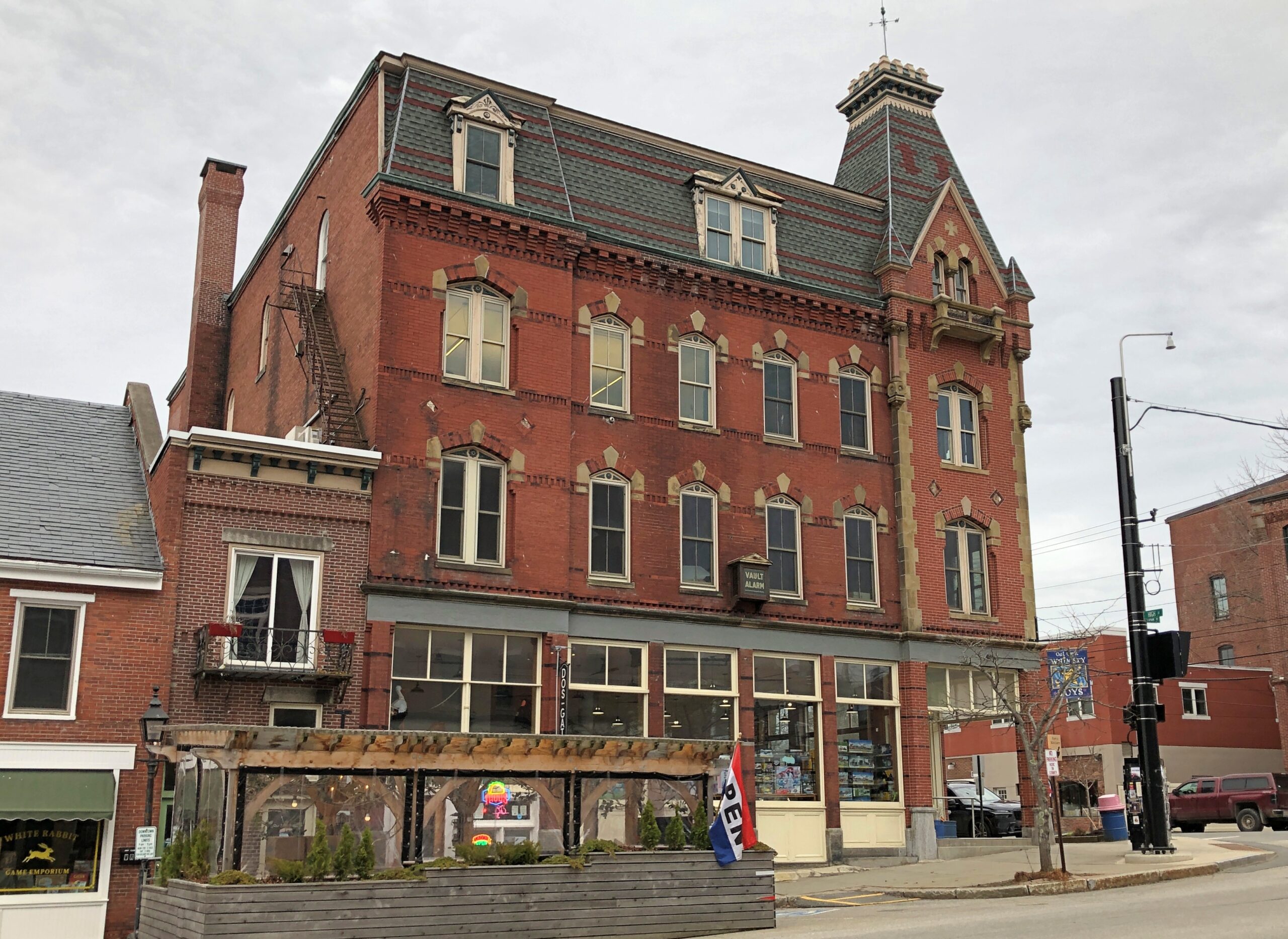
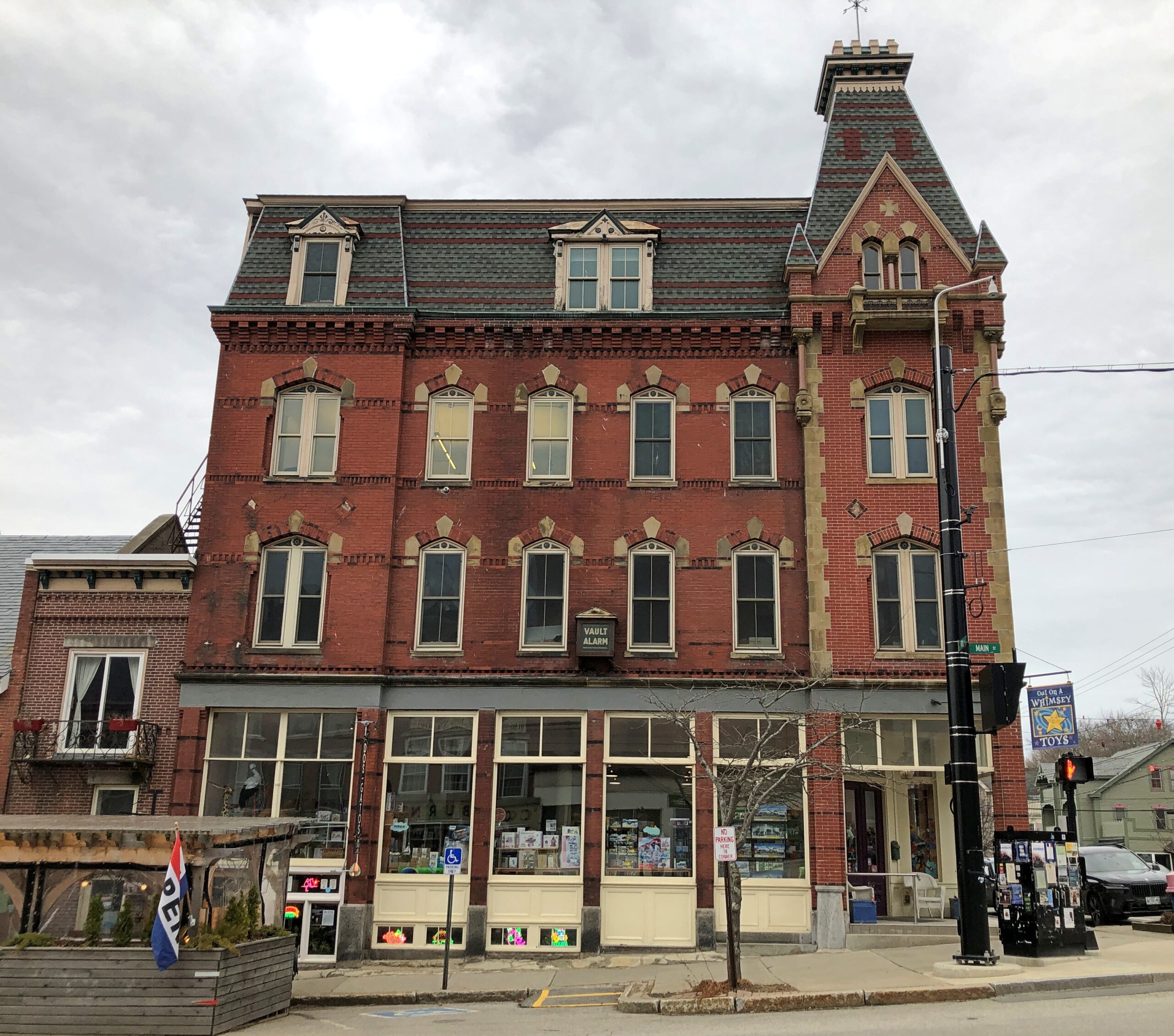
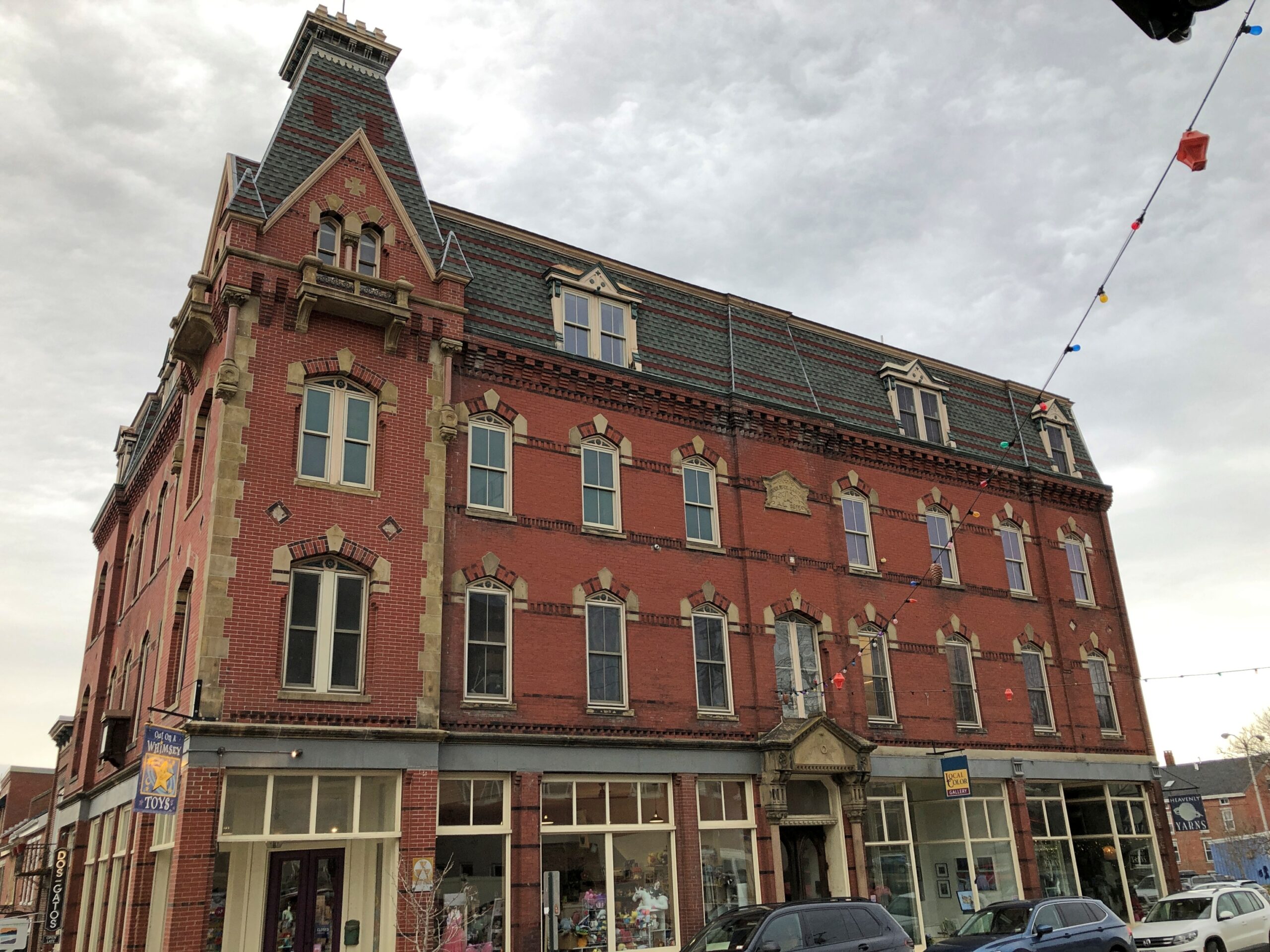
A handsome edifice at Main and High Streets. Maine seems to have, or had, a way with bricks.

As a settlement, Belfast is old enough to have been burned by British forces during the Revolution. Afterward, revivals and declines have come and gone, as industries cycle through the decades: shipbuilding, seafood processing, railroading, shoe making, poultry, credit card processing, shipbuilding again and tourism.

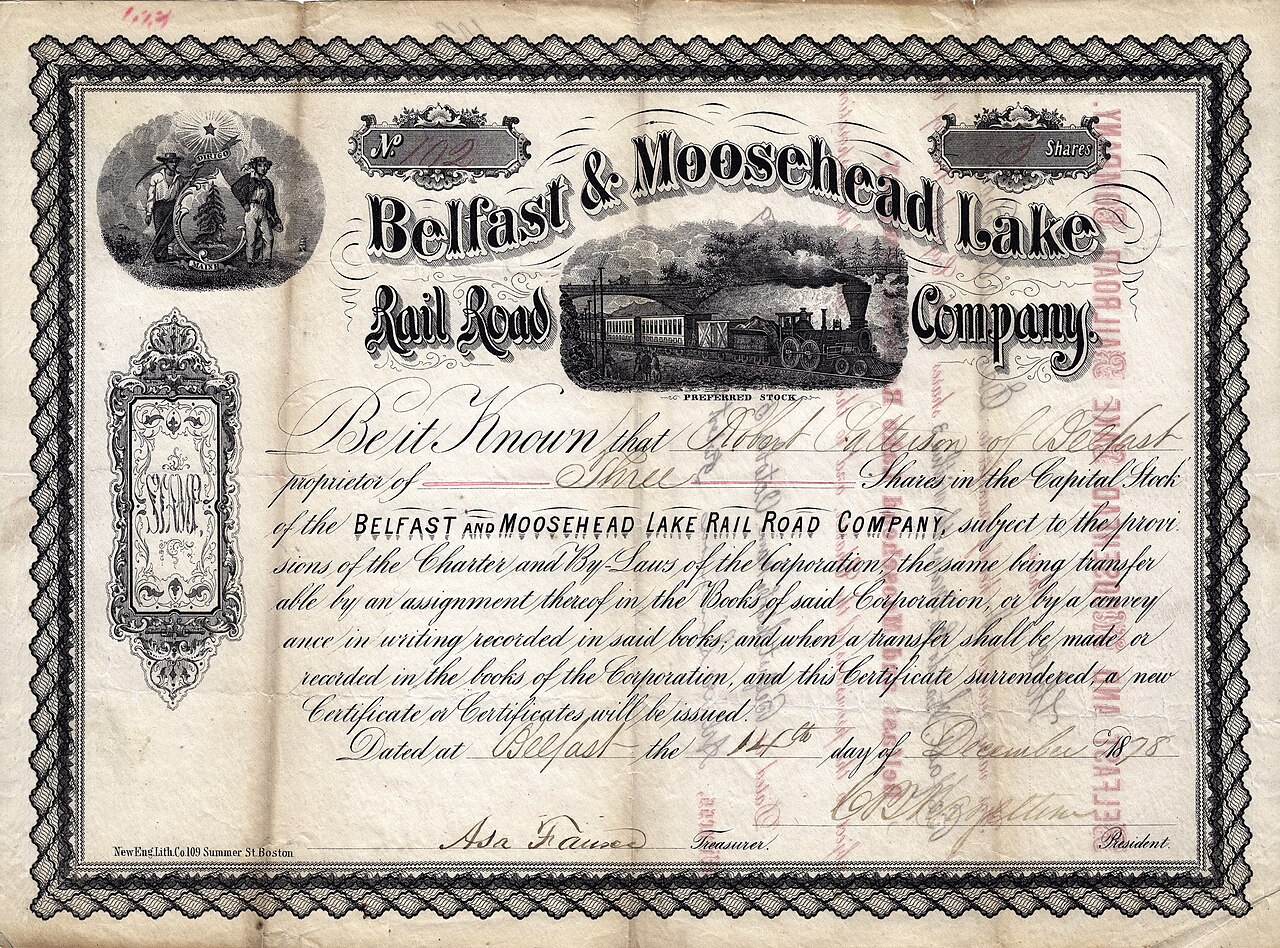
The Cooper Collection of US Railroad History

The building at the five-street intersection of Main, Church and Beaver Streets.

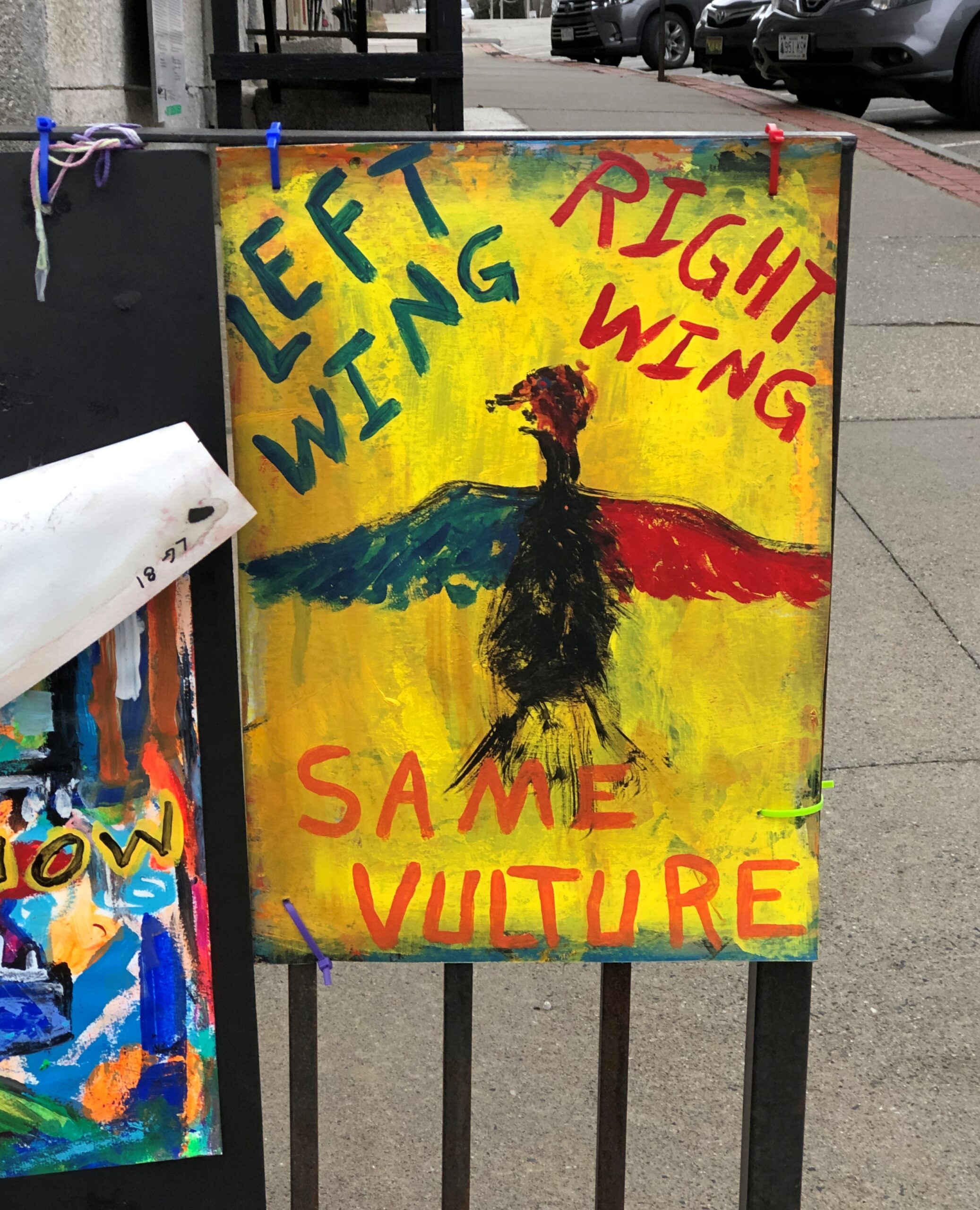
Details. Is Belfast a hotbed of anarchism?

But you can mock a two-faction system without being an anarchist. But note, back at the skatepark.

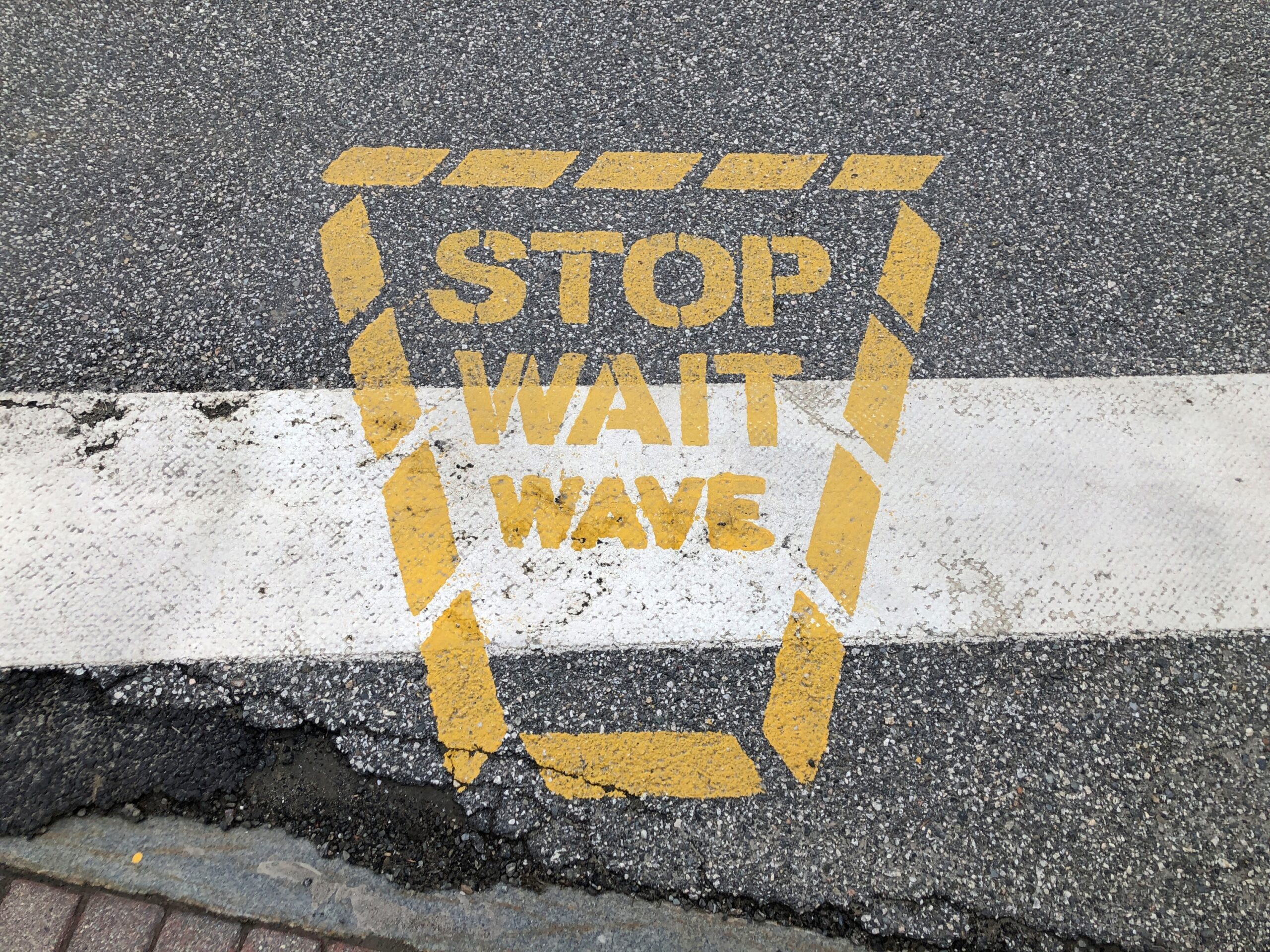
How about nanny-statism? I don’t know that you can plausibly accuse Maine of that, but still. A crosswalk example.

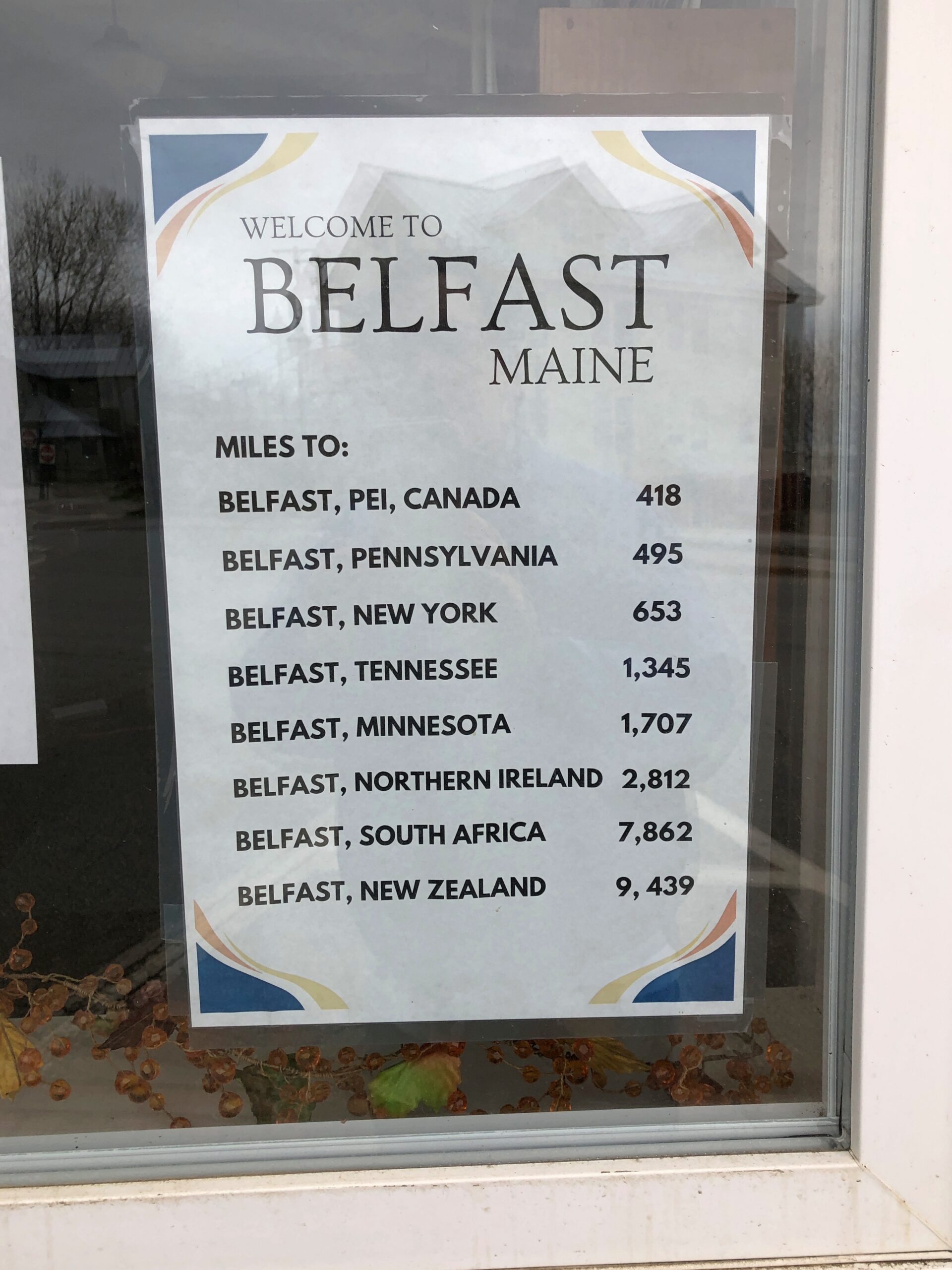
In case you were wondering.

What do you know, Maine was my first ever Belfast, not counting the HMS Belfast.

The Original Portland

More of my idiosyncratic logic: Before last month, I’d been to Portland, Oregon, but I’d never been to Portland, Maine, and that would never do. I rectified the situation early on the afternoon of April 15 as I traversed Maine near the coast, partly on US 1. It was a short visit, so I focused on the historic downtown of Portland, known as the Old Port, even though I understand it still has elements of a working port.

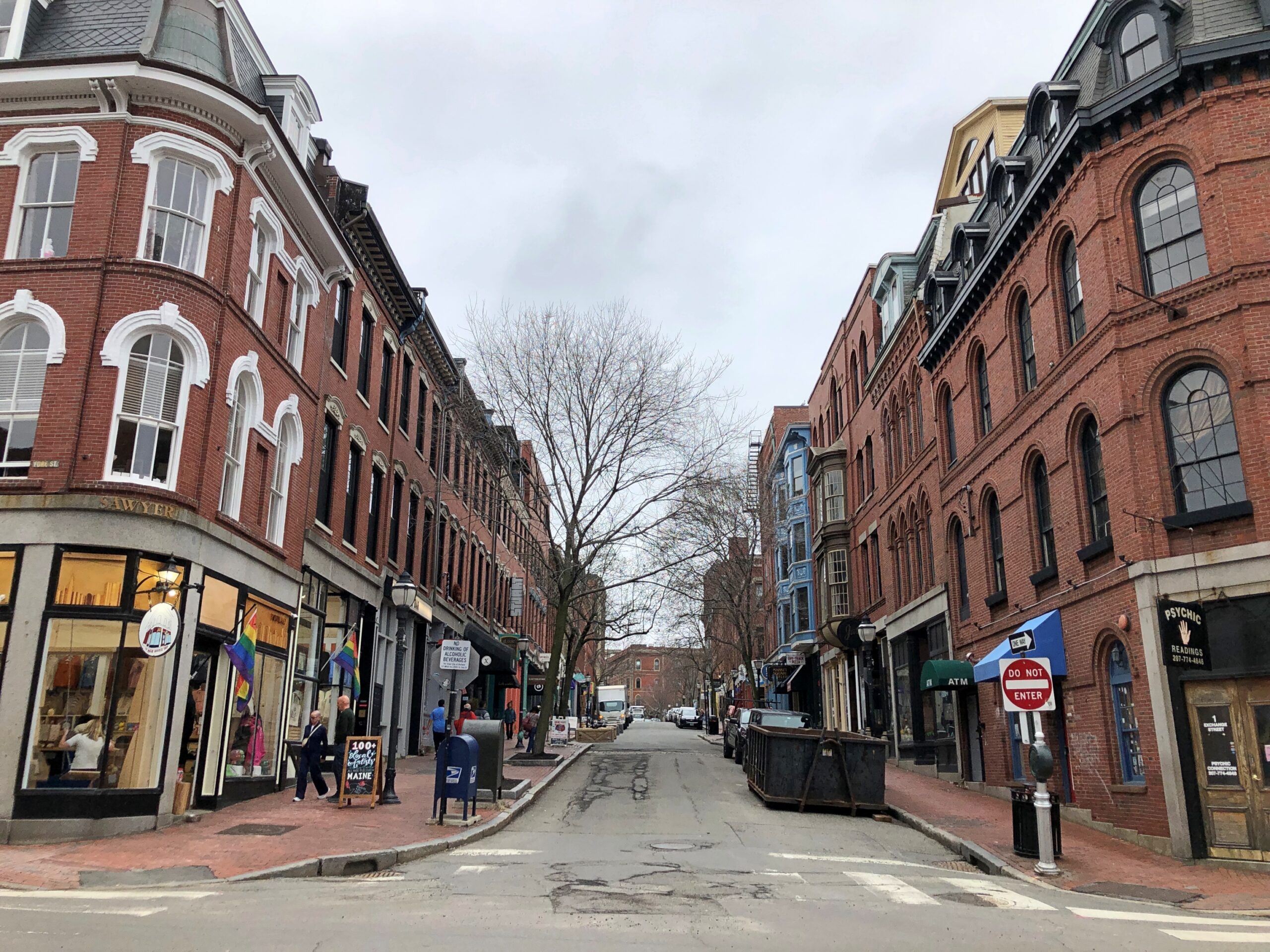
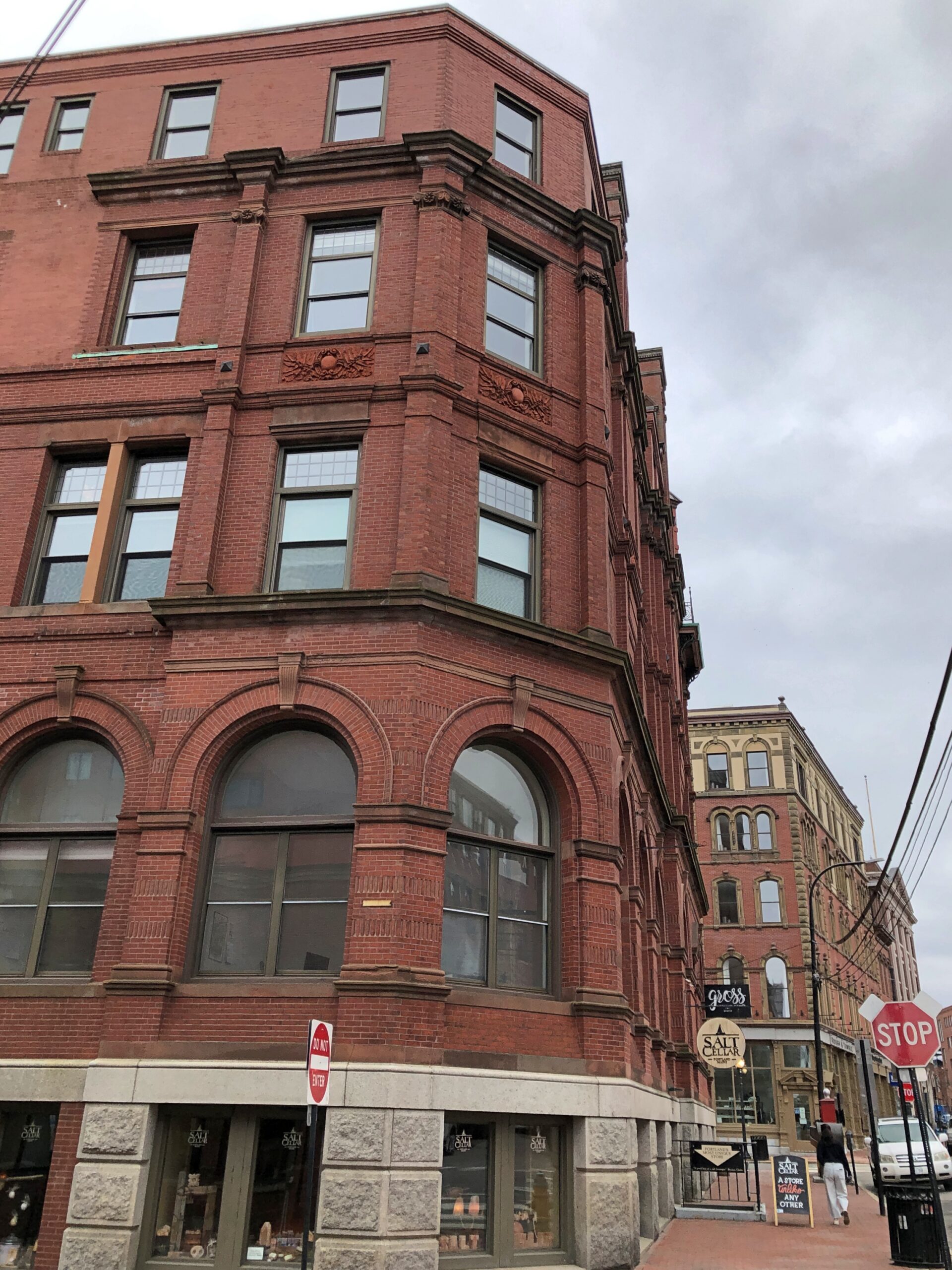
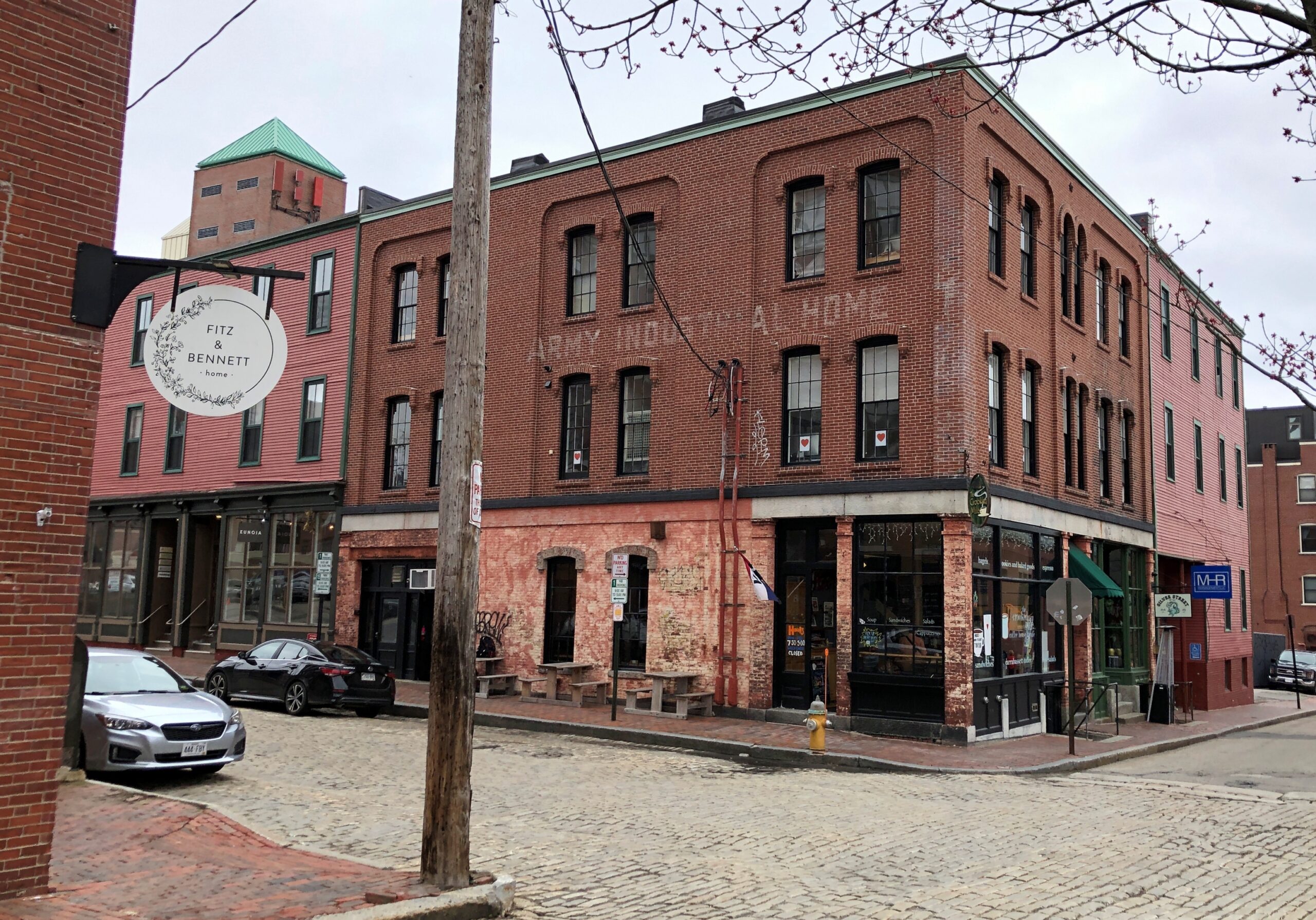
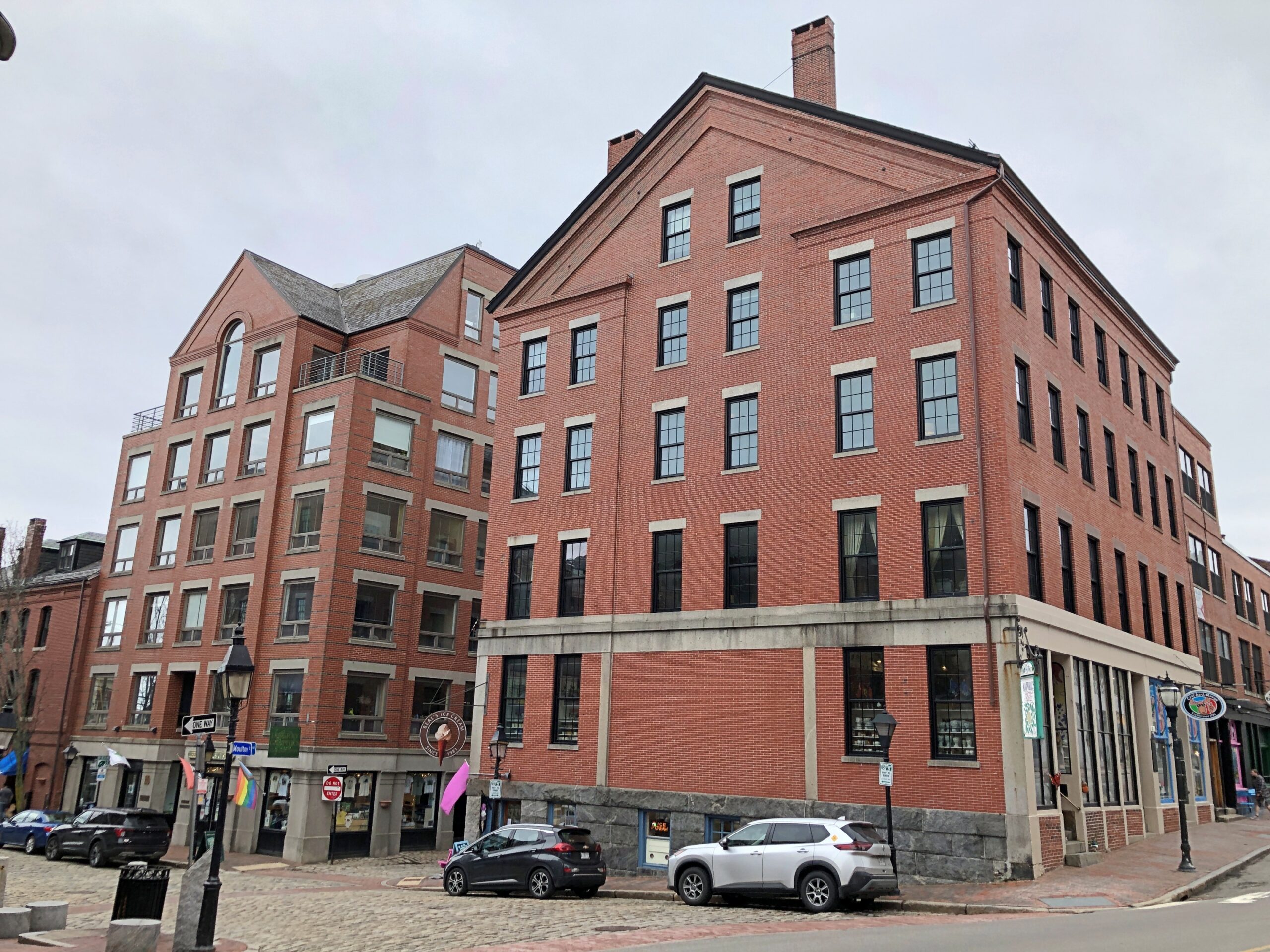
Still, much of the Old Port is indeed old buildings, many handsomely repurposed in our time for one sort of retail or another. Wander around only a short time, and the overall impression is bricks. Everywhere bricks. Buildings of various sizes and shapes, made of bricks.

Even buildings of various vintages, made of bricks. Most are older buildings, or course, built one brick after another by masons themselves long gone. But their expert brickwork abides.

There are newer brick buildings too. At least, I think they’re newer — some of these buildings might be a combination of older structures with newer additions. It’s a little hard to tell. But anyway, more bricks.

Portland, Maine
Portland, Maine

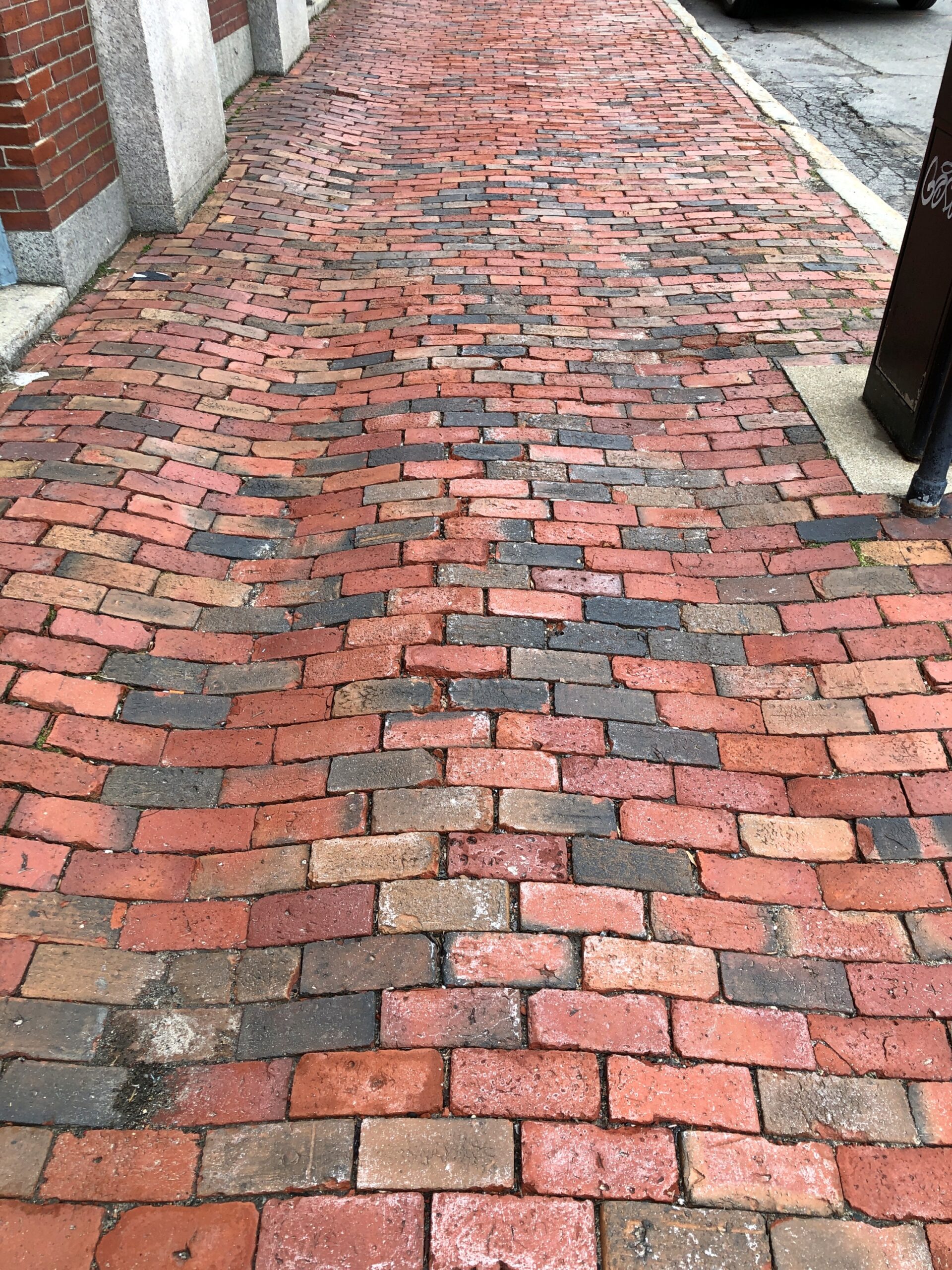
Streets paved with bricks.

Sidewalks paved with bricks.

That one was a little tricky to walk. But I was paying attention.

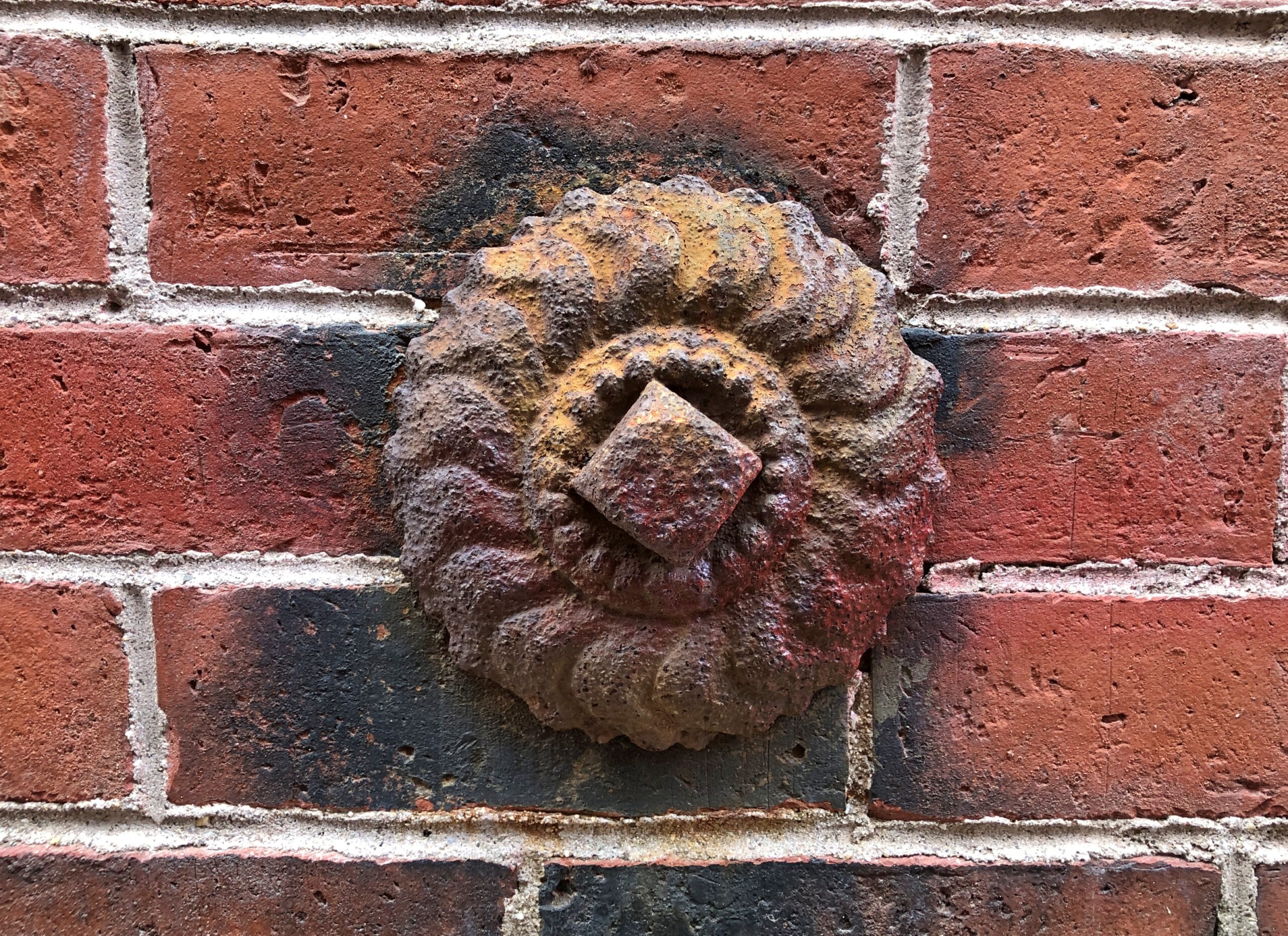
Among the bricks and other hard surfaces, other details.

It was in Portland that I began to get a sense of the strength of Maine’s regional identity. Growing up in Texas, I know expressions of regional identity when I see them, and I saw a lot in Maine.

Portland, Maine

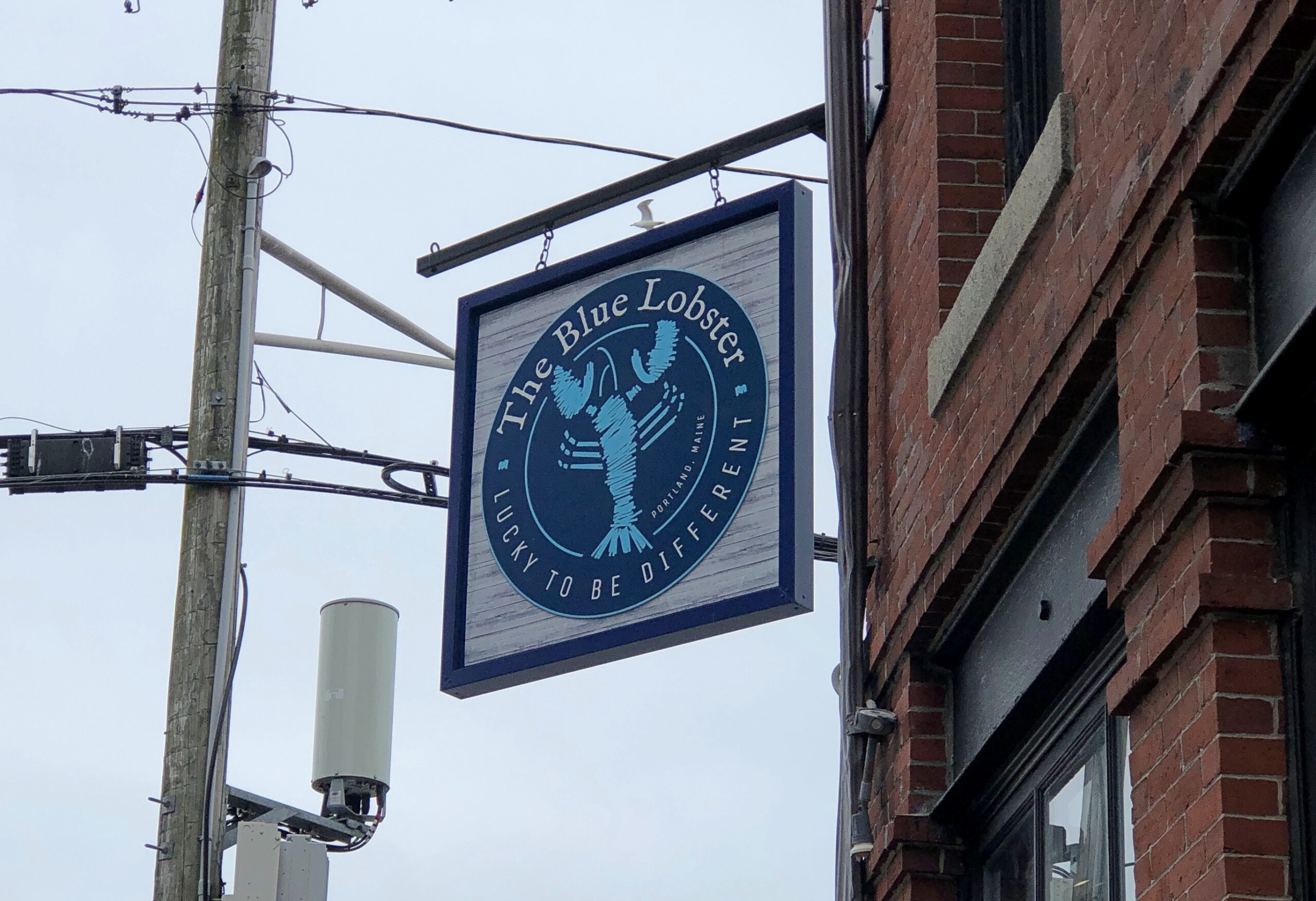
Texas has the longhorn. Maine has the lobster.

US 1 New Jersey

Driving the entire length of US 1 is more logistics that I want to take on at the moment, or maybe ever, but I figure I get a little of the same satisfaction doing it in sections. US 1 from Trenton to Newark, which I drove the afternoon of April 10, isn’t what anyone would call a scenic road, but that I’d say it’s better than the New Jersey Turnpike, whose main scenery is tail lights of other cars.

US 1 in New Jersey is four or six lanes most of the way through, generally is a divided highway, passing large cross streets, retail agglomerations, railroad tracks paralleling for a time, car dealerships, sporadic stretches of forested or other undeveloped land, thick traffic through New Brunswick especially, more than a few Jersey lefts and an uptick in spaghetti interchanges the closer you are to Newark. Stops were for traffic lights, but not too much for simple congestion. Take that, New Jersey Turnpike.

During the drive, I chanced on a radio call-in show that asked callers for stories about crashing wedding receptions, sneaking into off-limits places or other common enough rule infractions, such as taking food into movie theaters. One man claimed to have crashed a reception with a couple of friends, none dressed for the occasion; the father of the bride took a cotton to them and made sure they were well fed and good and drunk before long. One woman claimed to take entire meals to the movies and eat them there, and never being asked to leave. Now this was local radio, a real New Jersey thing to talk about.

Jan had told him many times, “It was you to me who taught:
In Jersey, anything’s legal as long as you don’t get caught.”

“Tweeter and the Monkey Man”, a group effort but clearly a Dylan song, is a brilliant example of a pseudo-ballad. A ballad tells a story, right? A pseudo-ballad seems to tell a story, but at some point near the end of the song, you wonder just what happened. Lyrically, not all of the pieces of the puzzle are available. “Crime and other weird behavior in New Jersey” is about a specific as you can get in this case.

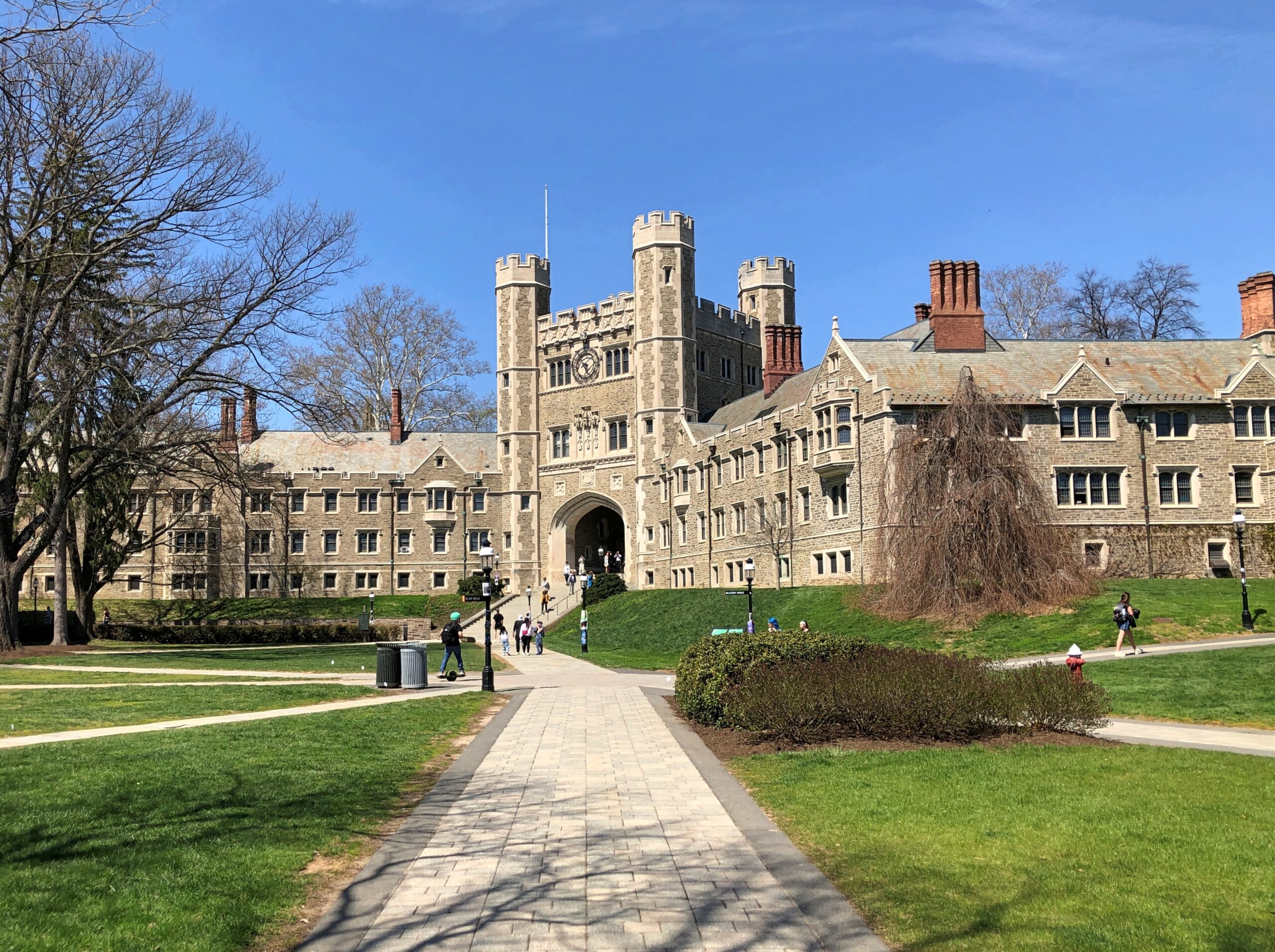
In October, I’d spent a few hours wandering Yale’s stately lawns and buildings and the nearby cemetery. So it only stands to reason – if I’m the one doing the reasoning – that I also visit Princeton, a short way off US 1 not far from Trenton.

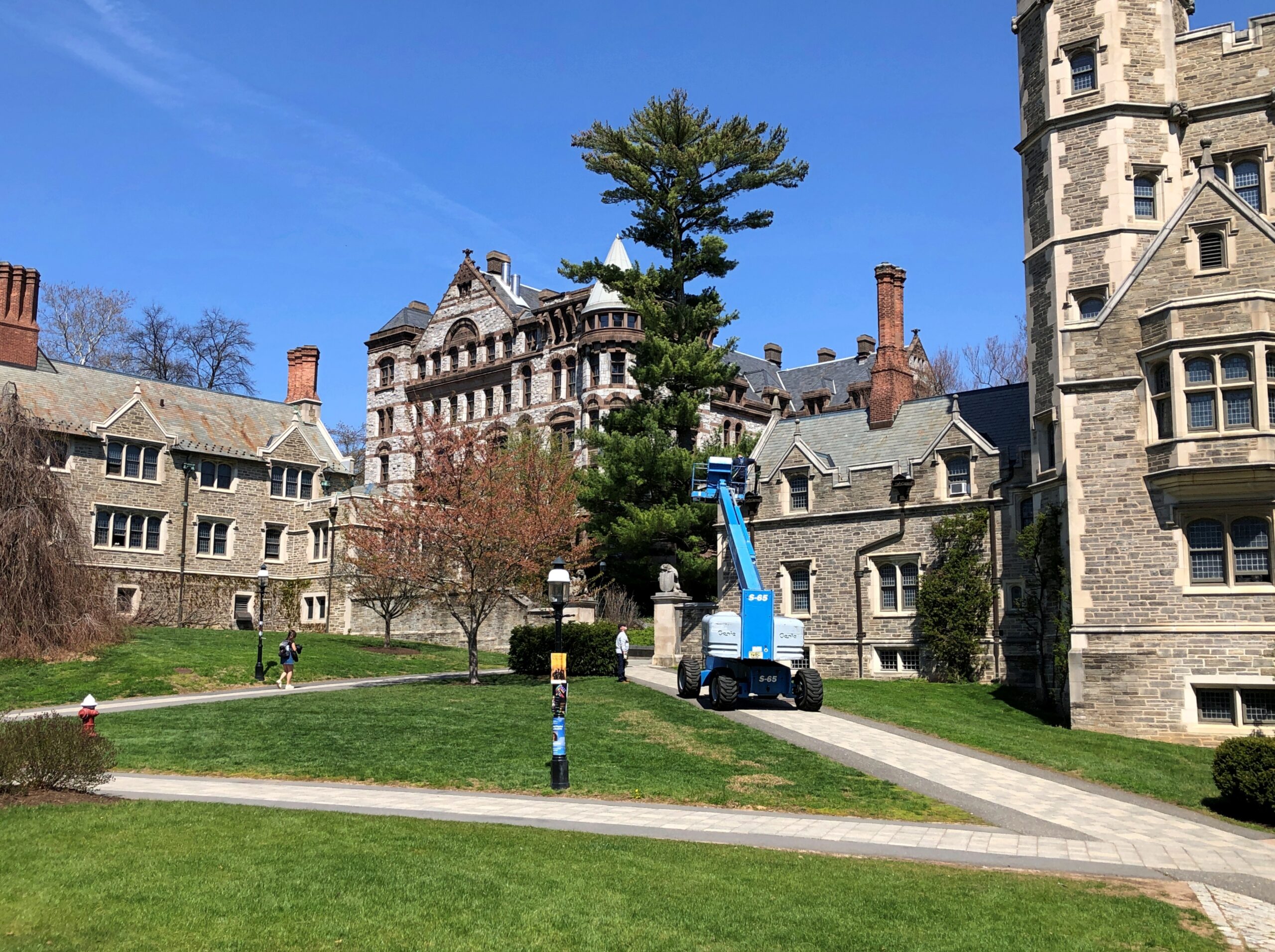
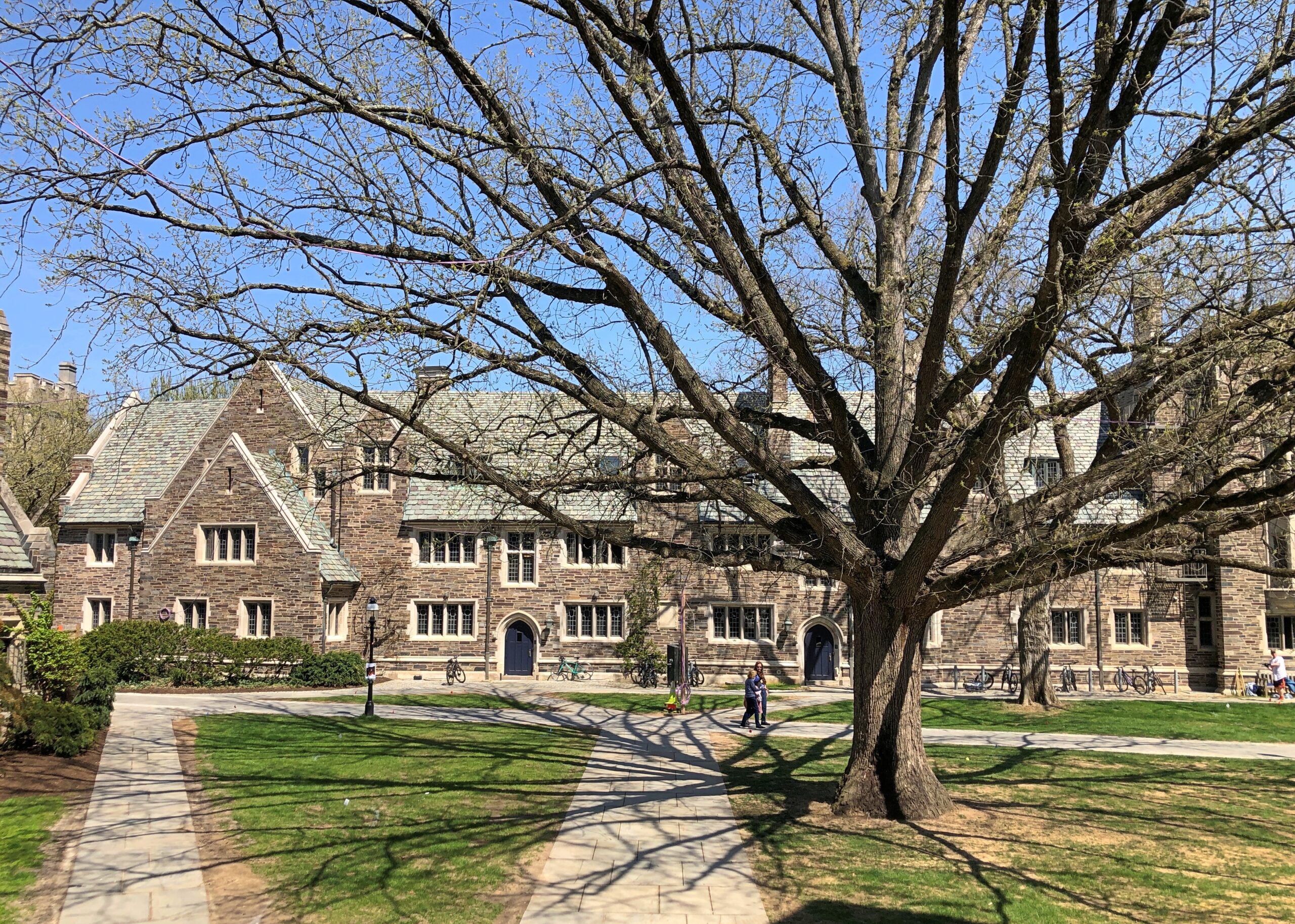
Stately buildings.

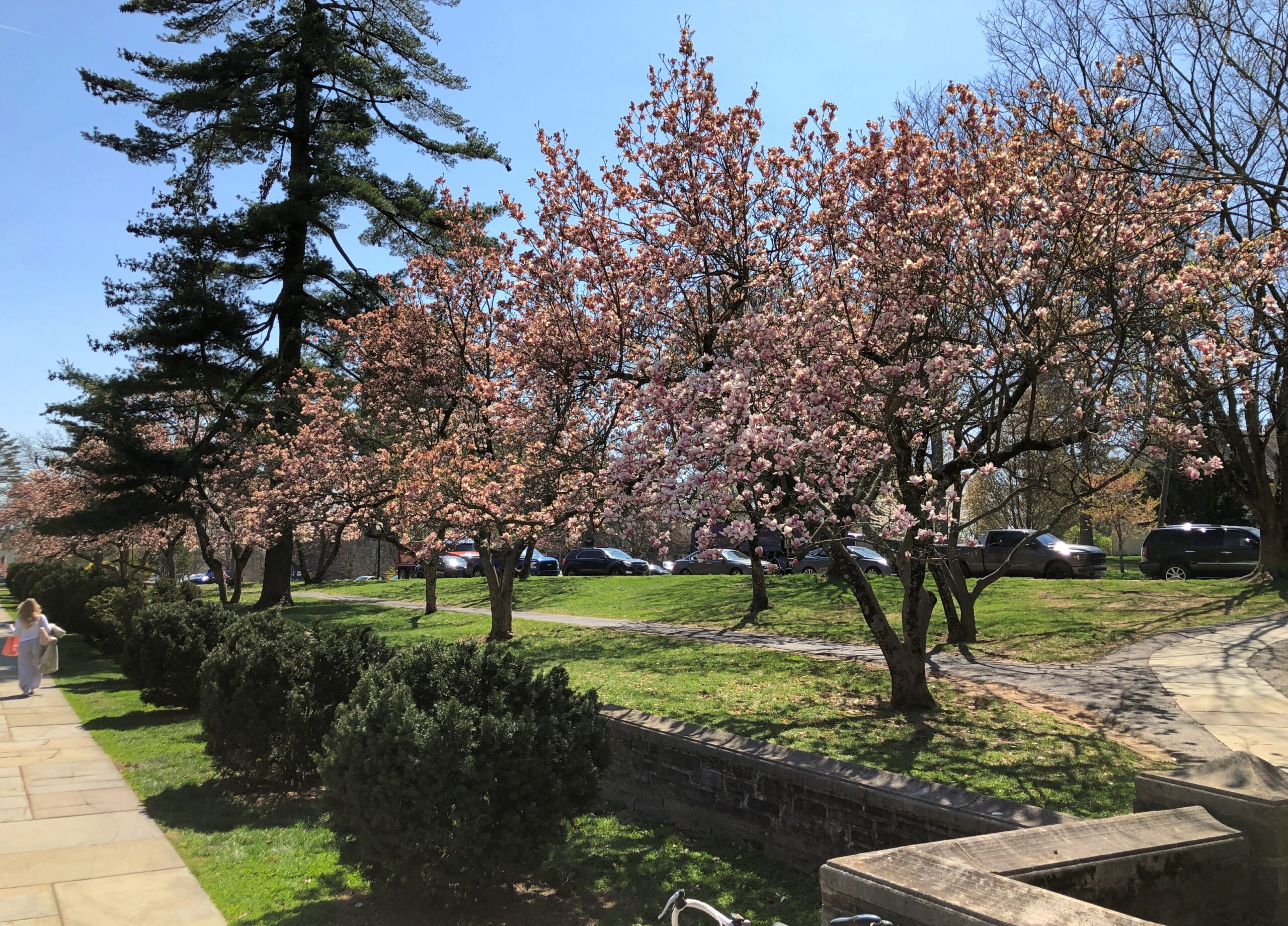
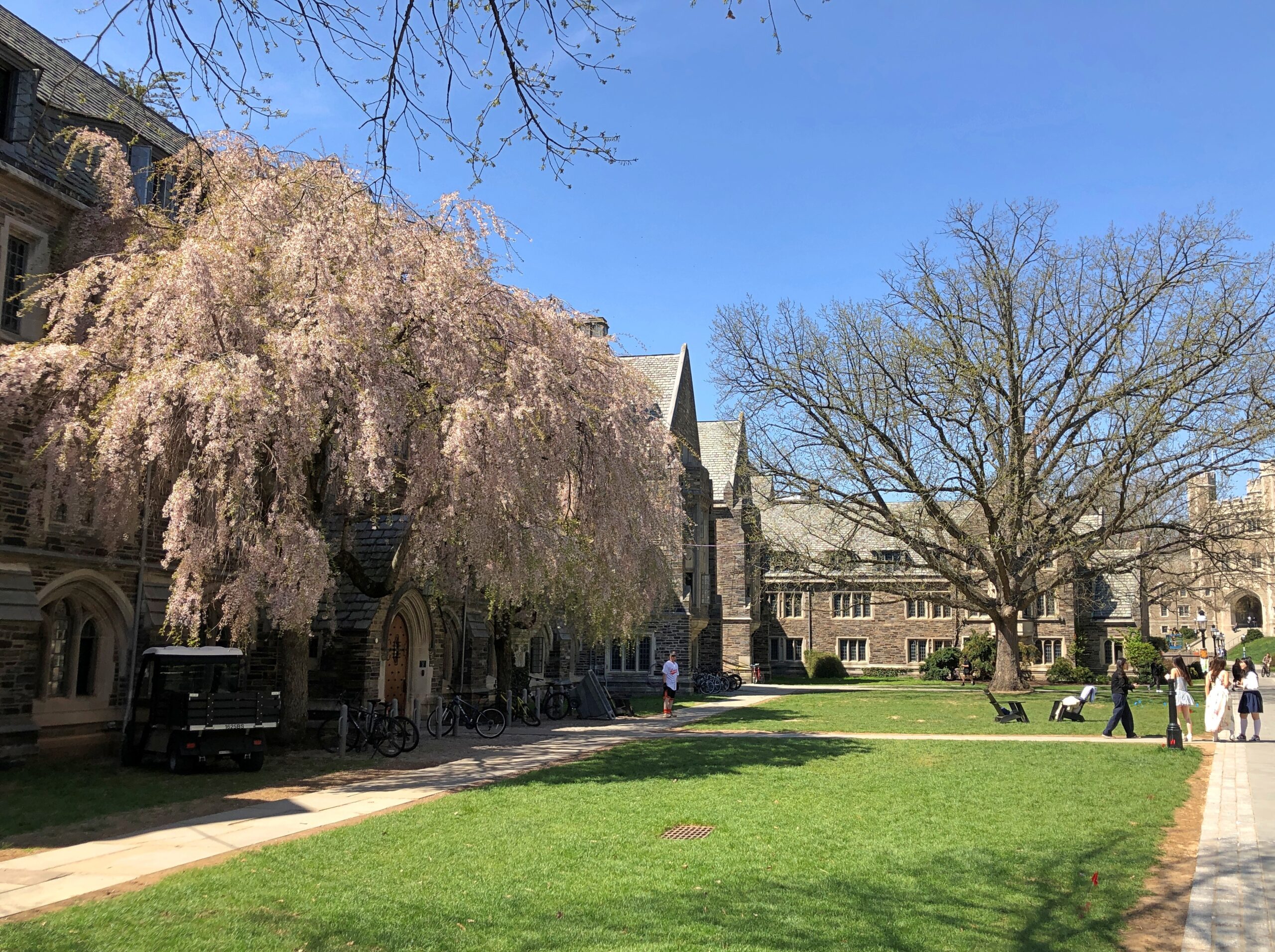
Early spring on the stately lawns.

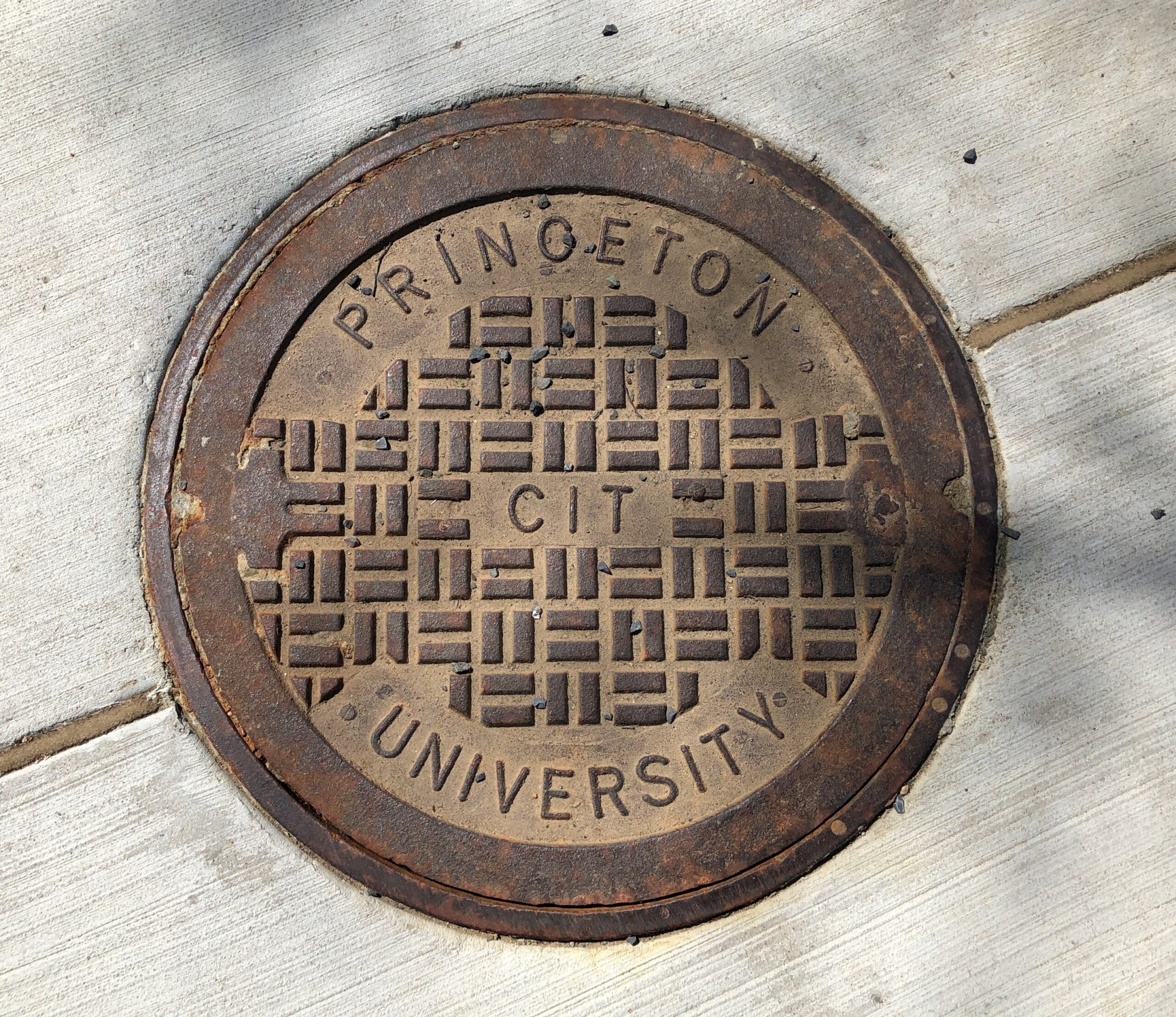
Not the best collegiate manhole cover I’ve seen – that would be at Olivet Nazarene University in Bourbonnais, Illinois – but not bad.

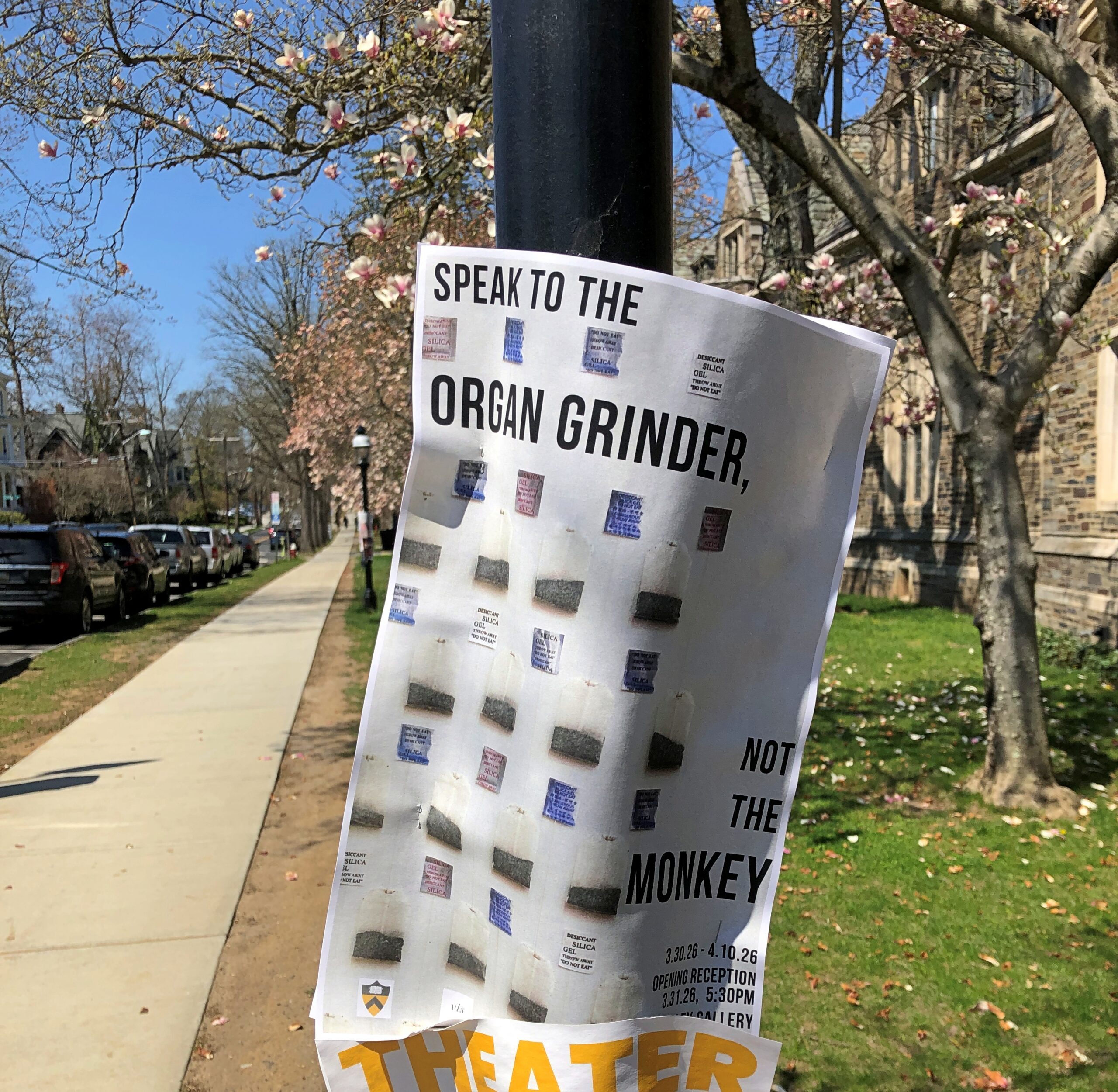
Speak to the organ grinder, not the monkey.

A variation on, “Never hold discussion with the monkey when the organ grinder is in the room,” which is widely attributed to Winston Churchill.

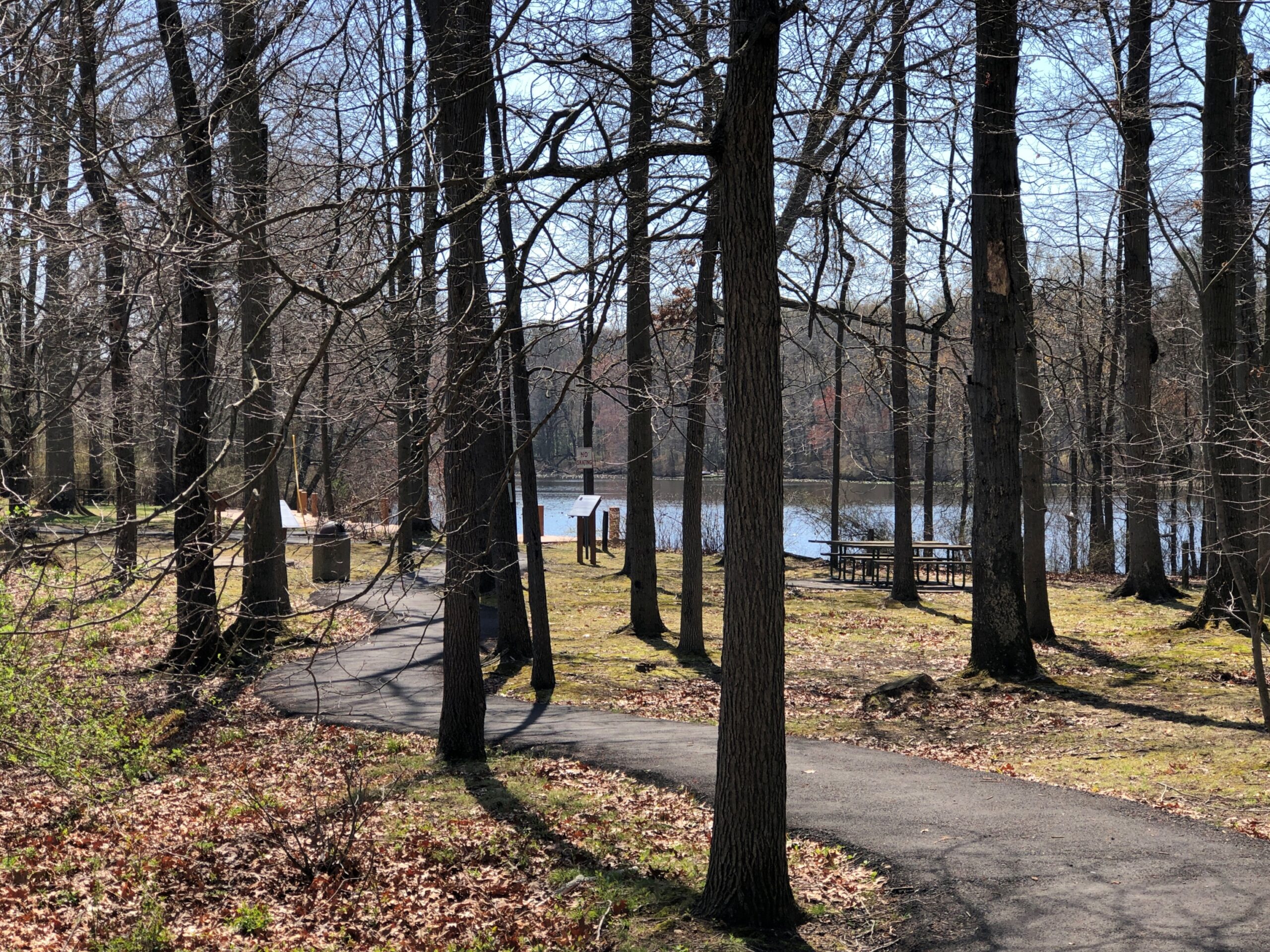
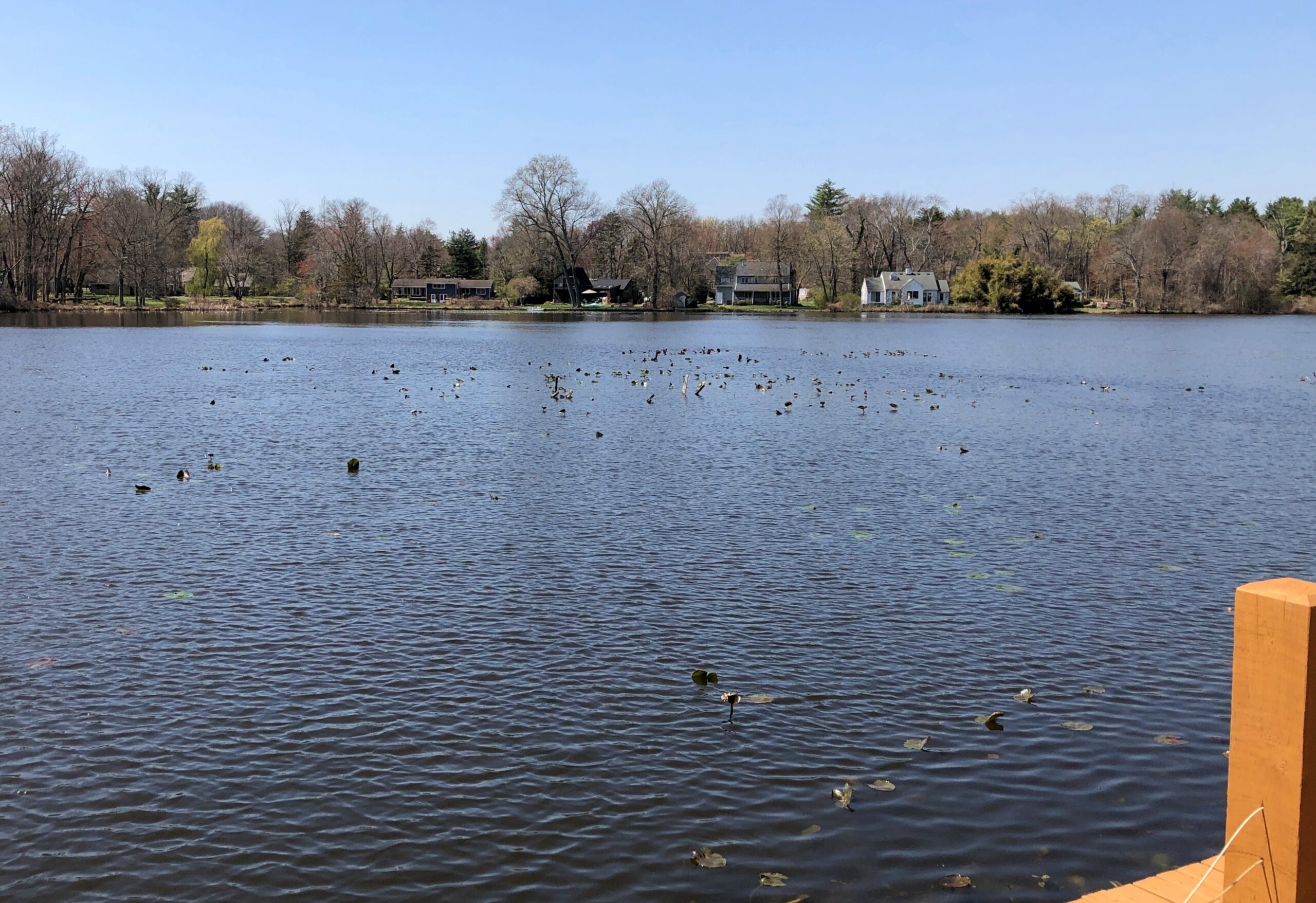
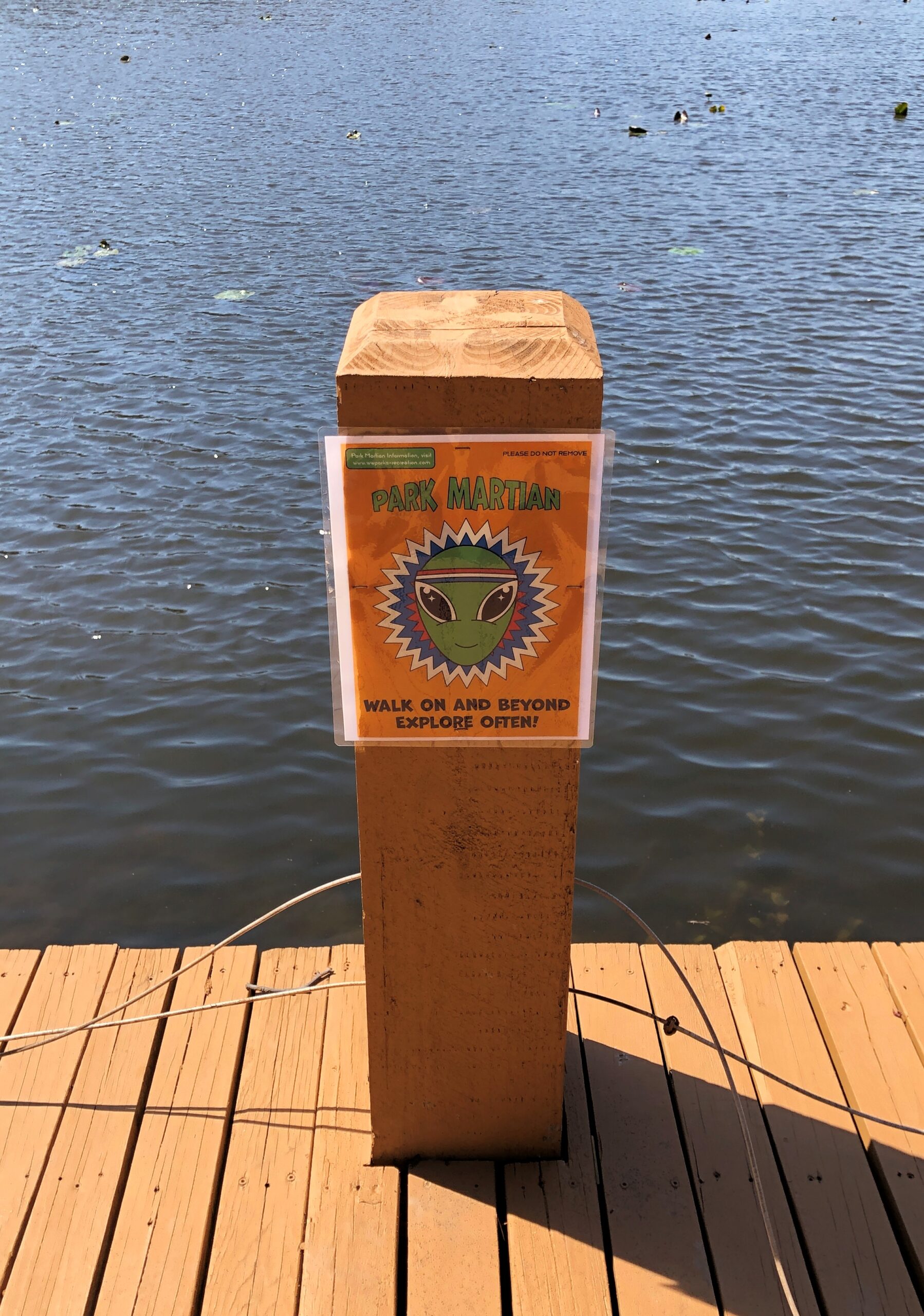
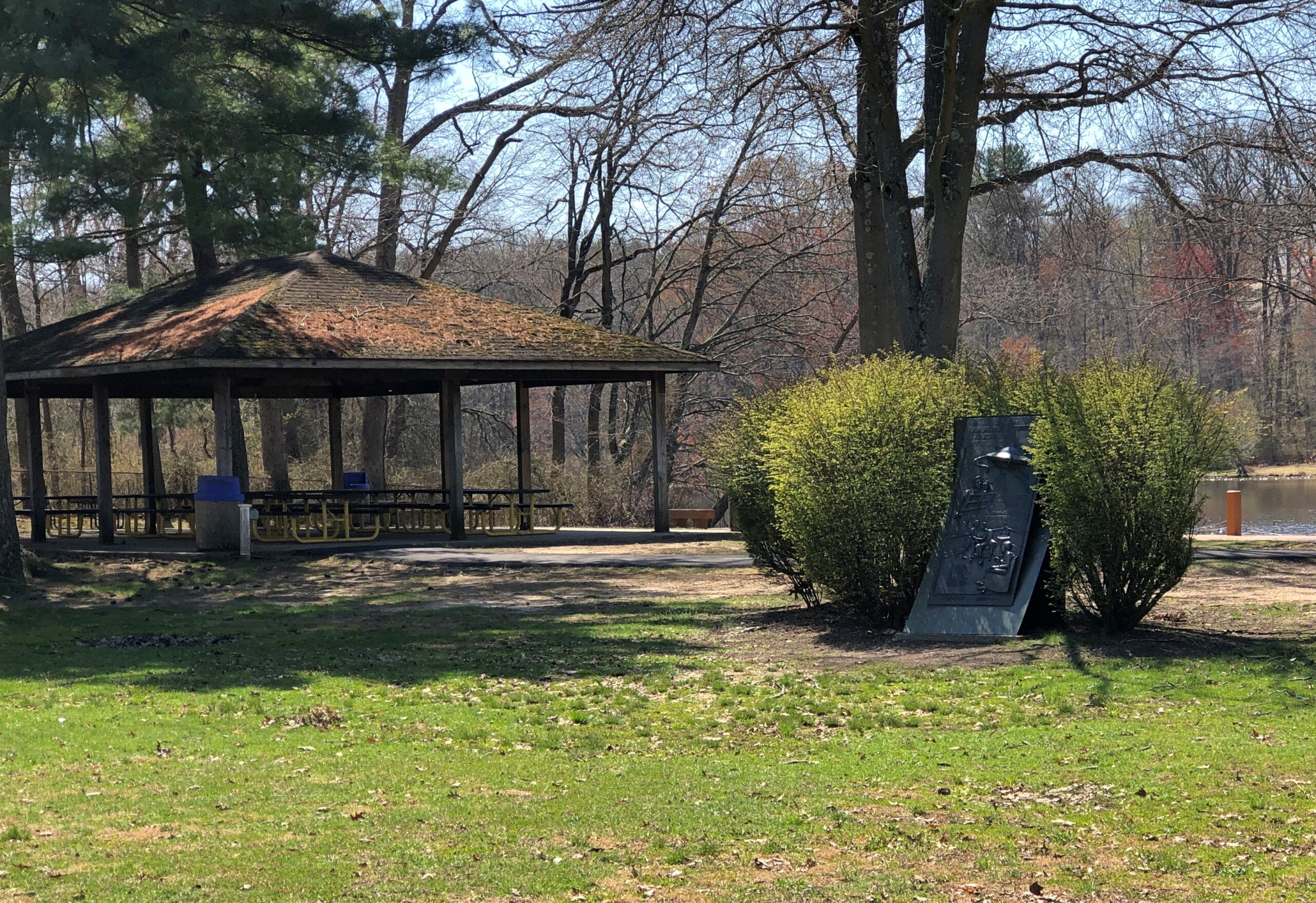
Princeton is west of US 1; Grovers Mill, New Jersey is to the east, also not far. I had to go there, too. Specifically, to a small park on a small lake in the unincorporated Grovers Mill. A short park trail includes information about Grovers Mills’ claim to fame: in Orson Welles’ version of War of the Worlds, it was the first place the Martians landed.

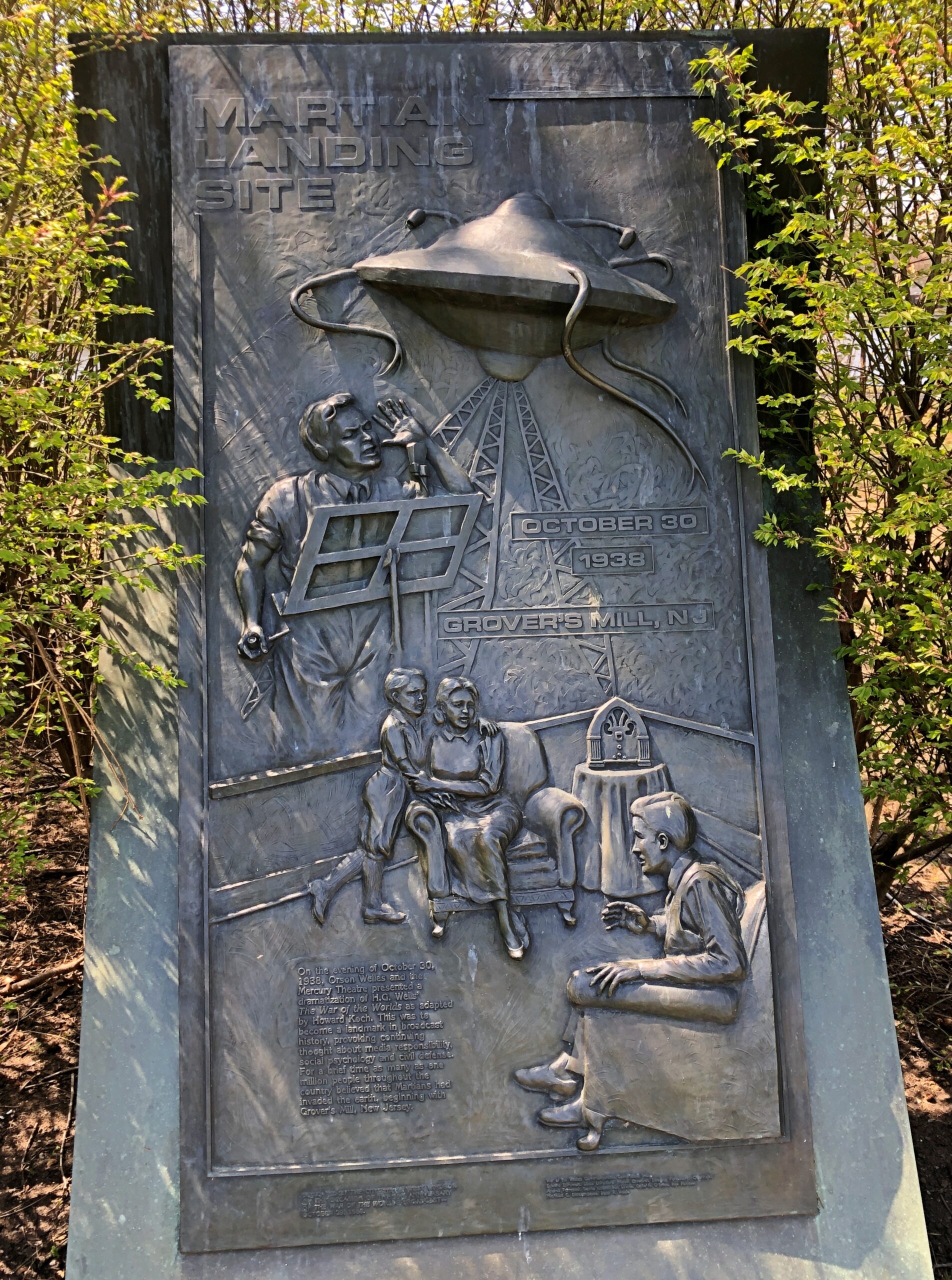
There’s a sizable plaque, a little bit hidden away, but I found it.

The township of West Windsor, in an unusual display of municipal imagination, erected the memorial in 1988, on the occasion of the 50th anniversary of the broadcast. Sculptor Thomas Jay Warren did the relief.

The entire script is on line.

Ladies and gentlemen, I have a grave announcement to make. Incredible as it may seem, both the observations of science and the evidence of our eyes lead to the inescapable assumption that those strange beings who landed in the Jersey farmlands tonight are the vanguard of an invading army from the planet Mars. The battle which took place tonight at Grovers Mill has ended in one of the most startling defeats ever suffered by any army in modern times; seven thousand men armed with rifles and machine guns pitted against a single fighting machine of the invaders from Mars. One hundred and twenty known survivors. The rest strewn over the battle area from Grovers Mill to Plainsboro, crushed and trampled to death under the metal feet of the monster, or burned to cinders by its heat ray. The monster is now in control of the middle section of New Jersey.

The New Jersey State House

At the appointed time, I waited in a hallway whose entrance was off the New Jersey State House complex courtyard, expecting the tour to begin there. I started wondering about that assumption after a few minutes, and no one else, official or tourist, joined me in the room. But soon a capitol employee, a woman roughly my age, said she would take me to the beginning of the tour, which was through a couple of closed doors and down a stairway. We made small talk along the way. She asked, without using the word specifically, whether I was a capitol enthusiast. I said yes.

“I’ve been inside more than 40 state capitols,” I said. “And this one is the most like a fortress.”

I think she had a wry smile, as if to say, I’ve heard that a lot. If not quite in those words.

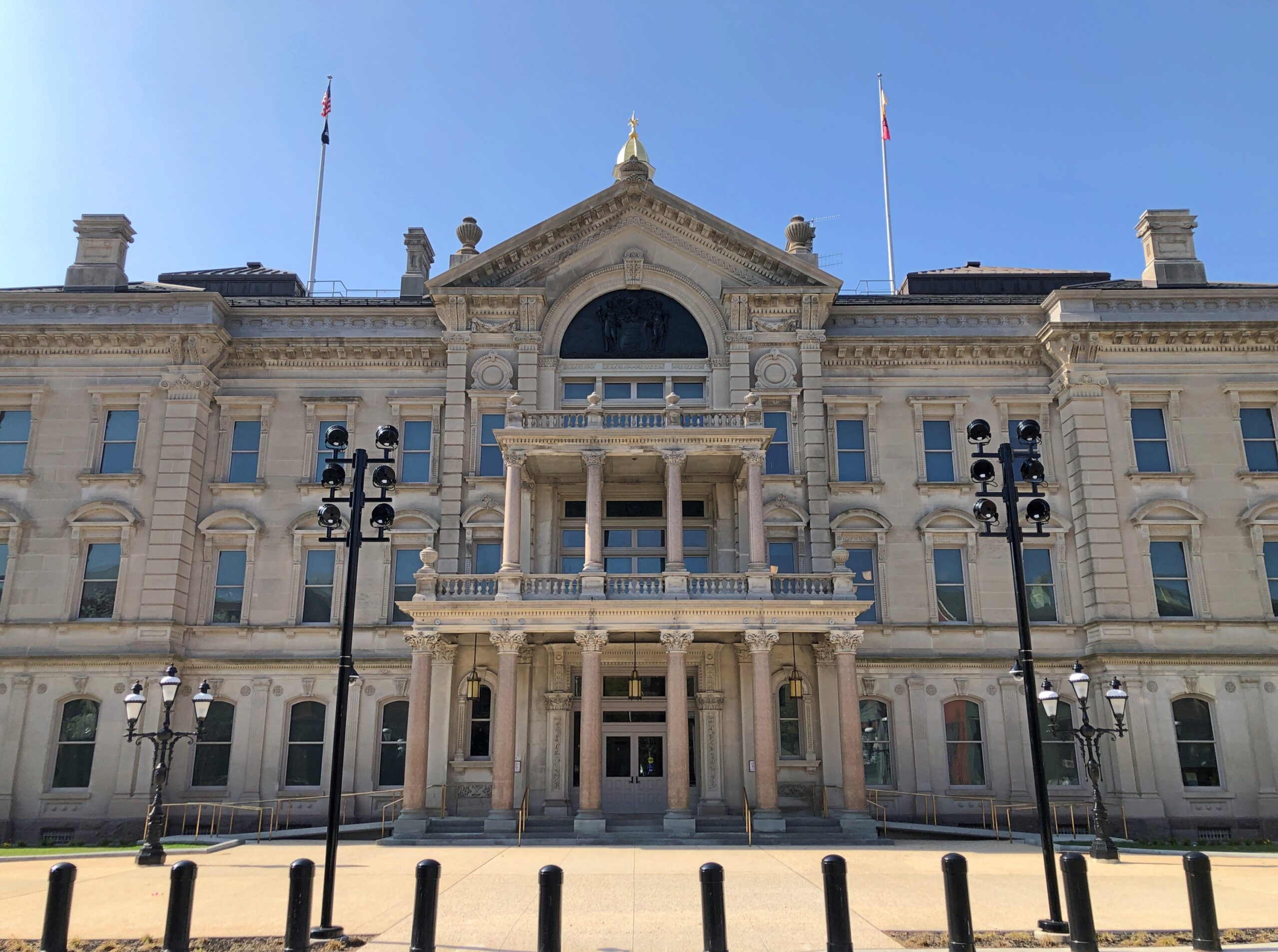
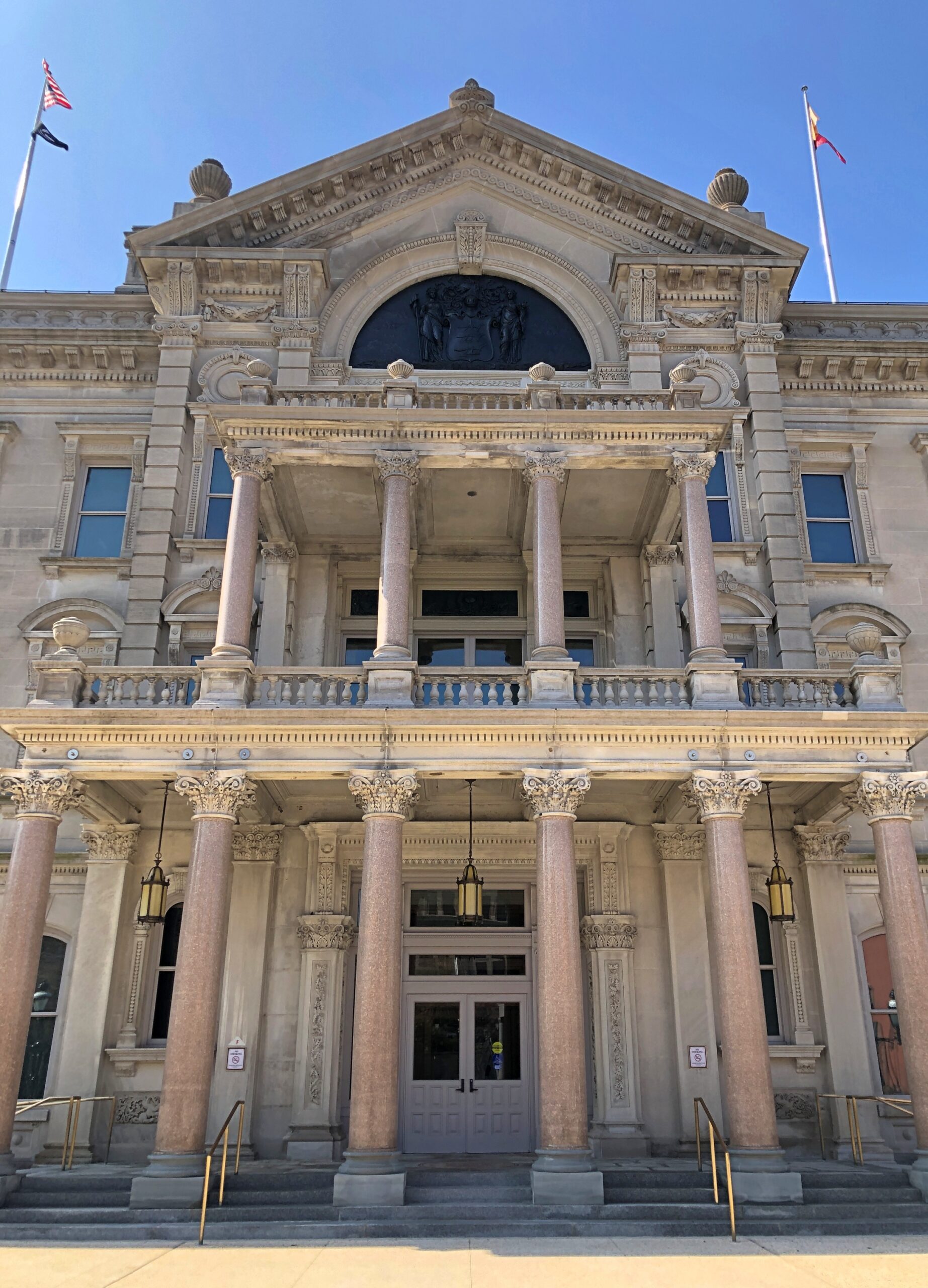
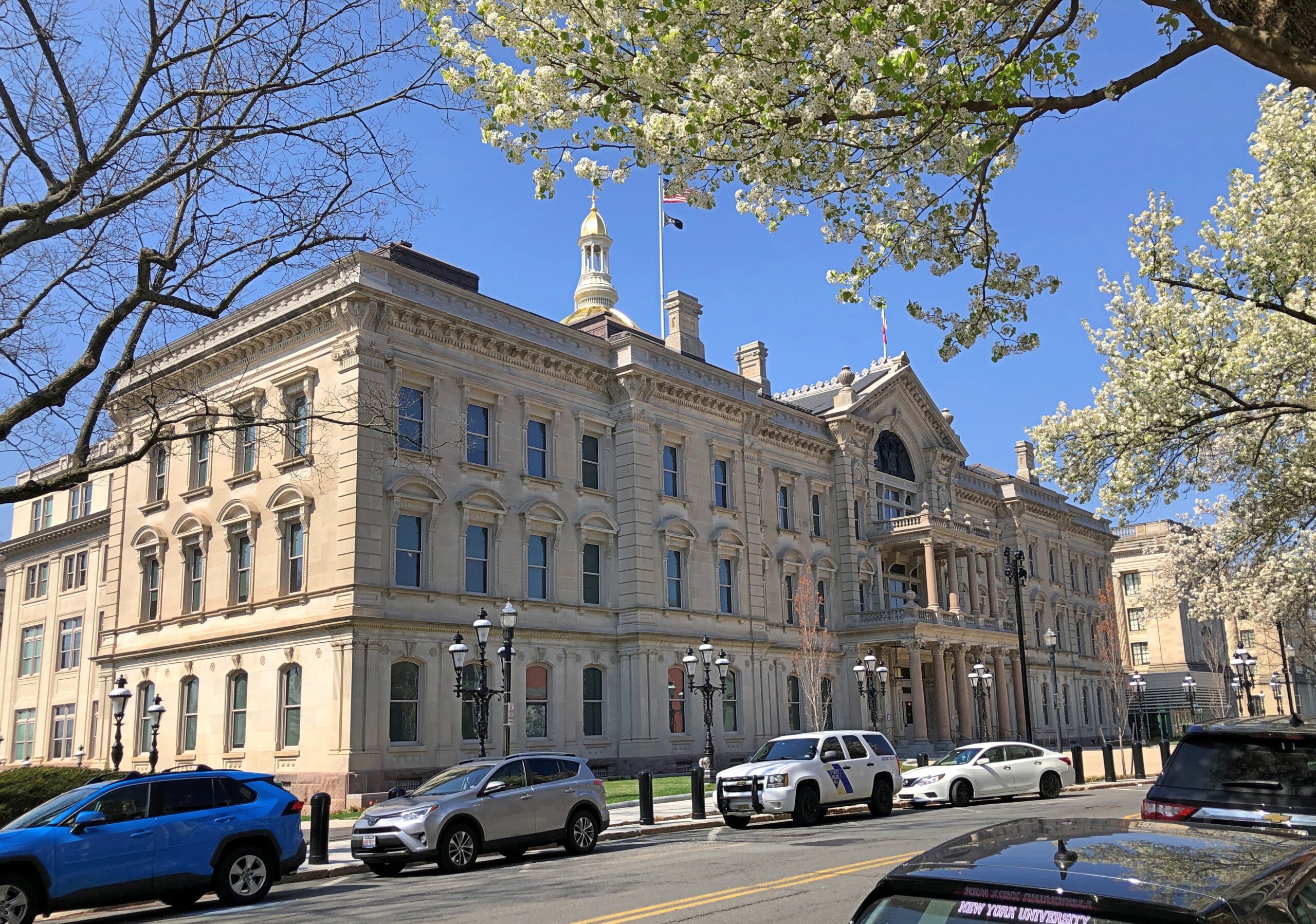
I’d made the 11 am tour of State House on April 10. The capitol building is impressive, as capitols tend to be, and directly fronting a sizable city street, as they tend not to be.

About an hour earlier, I’d wandered into what looked like a public door on State St. in downtown Trenton.

An imposing kind of place, but for those of us used to standalone capitol domes, the New Jersey State House is an odd duck.

A security guard pushing my age told me that casual visits to the capitol were not allowed, off limits and strictly verboten. Actually, he didn’t exactly say any of that, but he made it clear I had to go to the visitor center entrance about a half a block away and register there for a tour, as my only option for seeing the interior of the State House. He was pleasant enough, but I think a little annoyed at having to explain that for the nth time. A sign explaining all that outside the entrance would be the way I’d have handled that informational task, rather than putting the onus on a bored security guard, but I’m not from New Jersey.

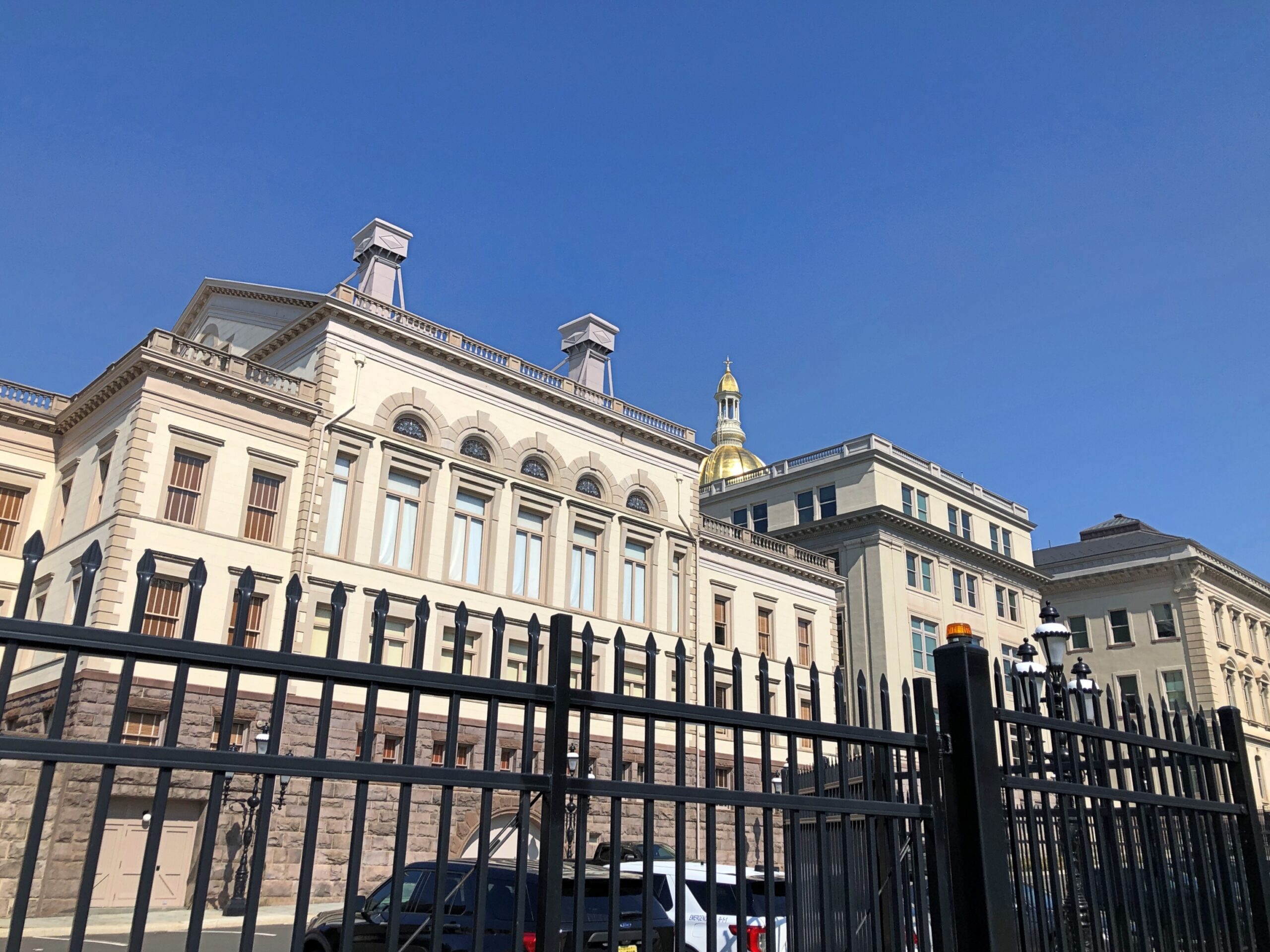
I went to the visitor center. The next tour was at 11, nearly an hour in the future. That allowed me time to go look for the capitol dome. I knew there was one, but it mostly wasn’t visible from State St.

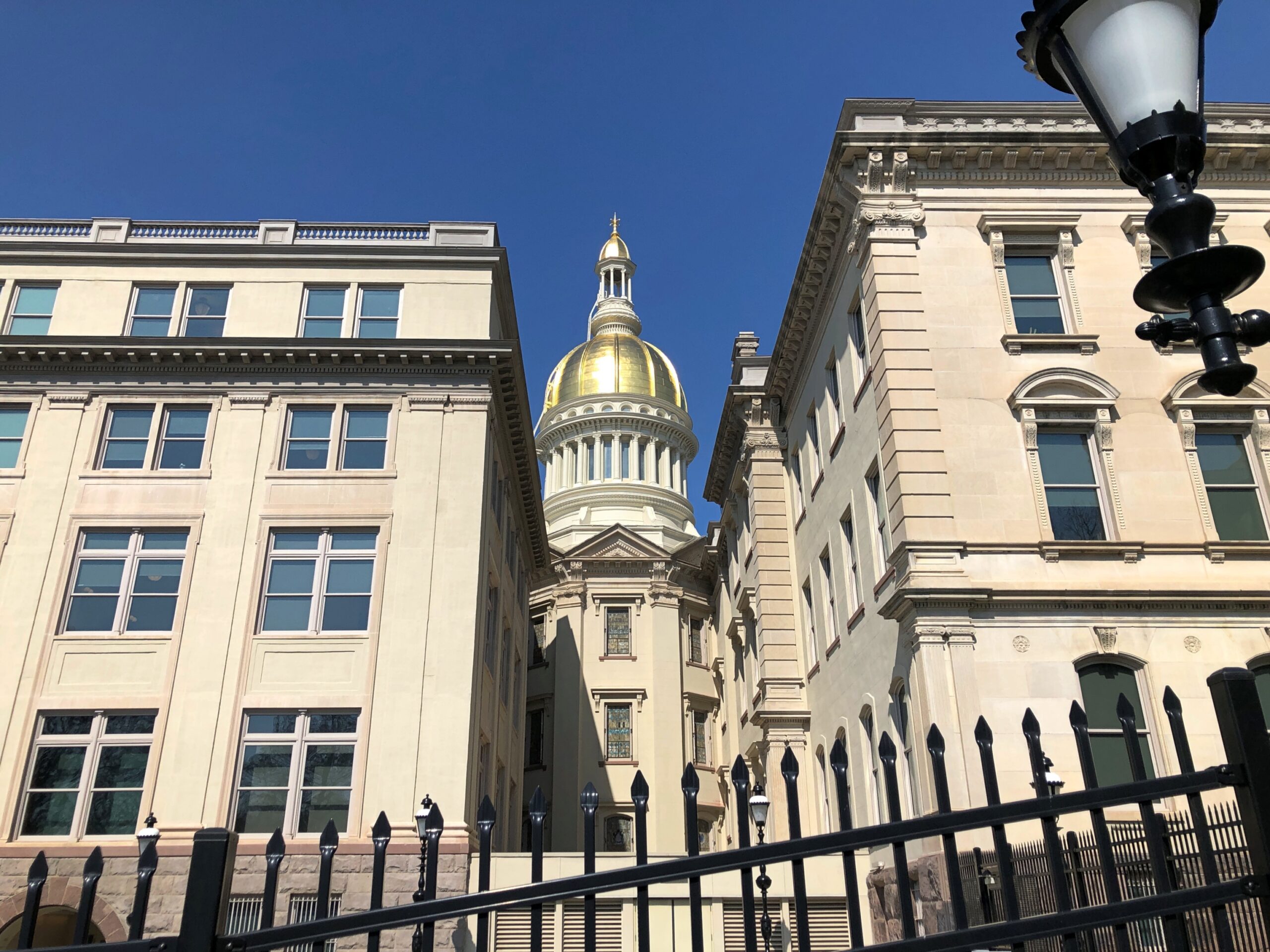
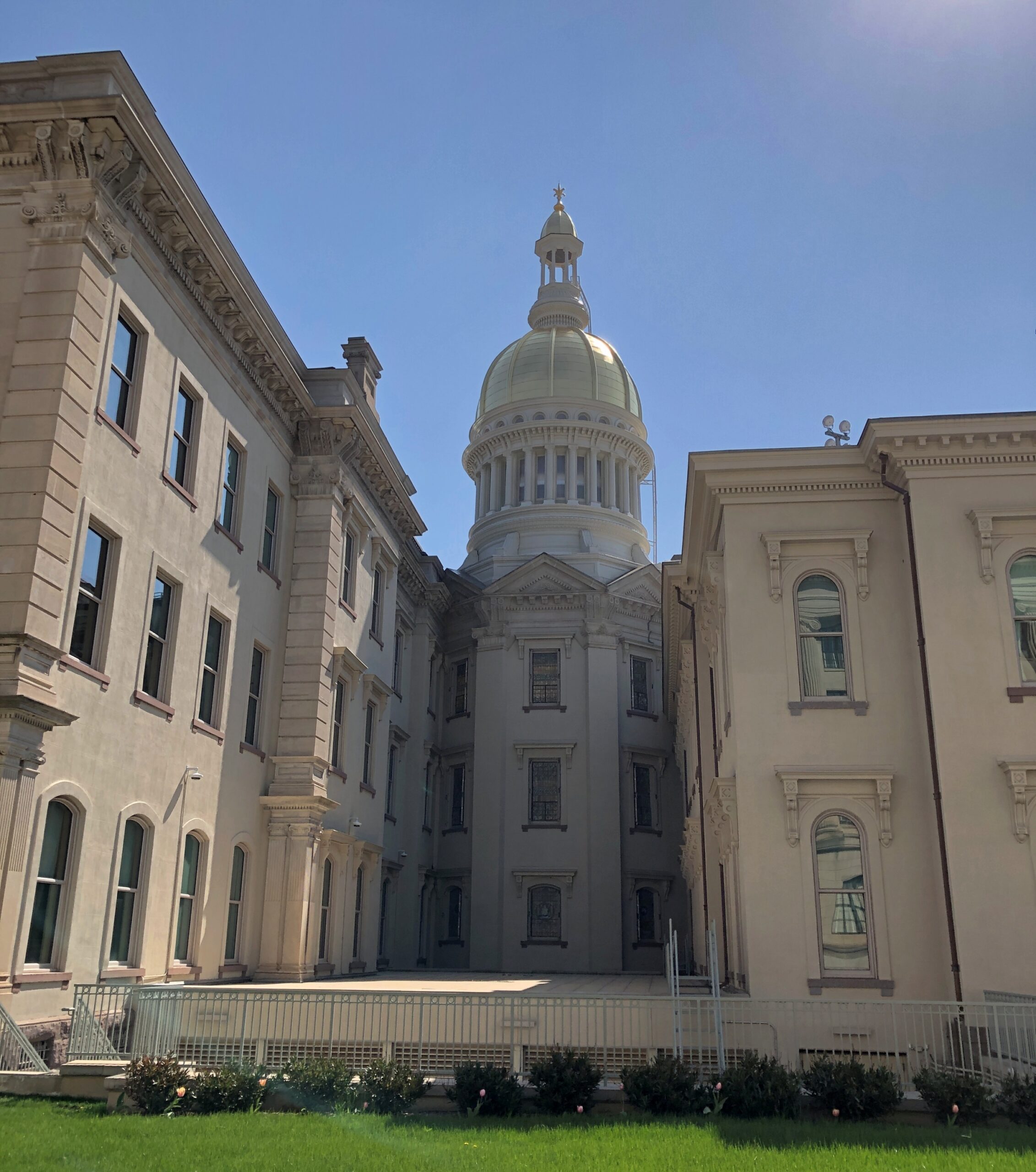
I took a stroll around the capitol grounds – the complex – or better yet, the compound. Eventually, I spotted more of the golden dome. Even then, it seemed hemmed in.

I also had time to stroll the block on State St. near the capitol. Nice.

Back at the visitors center, I was escorted through the complex’s courtyard. There, I was told, was the best view of the dome. It still seemed a little distant.

Then came my short wait in the hallway. Regarding my comment about this capitol being like a fortress, the woman leading me to the group acknowledged that security was indeed tight, had been for a long time, and by law the state police (I think) were in charge of it – even the governor had to abide by its dictates.

I joined the tour group and spent the next hour or so in the State House. From what the guide (a different woman) said, and what I saw, I’d say the Wiki text about the capitol is spot on:

The State House has experienced numerous expansions and renovations to meet the growing needs of the state since its original construction. Designed by Jonathan Doane, the original structure has seen architectural inputs from other notable architects across the centuries….

The New Jersey State House is unusual among state capitol buildings in the United States, the majority of which are reminiscent of the U.S. Capitol. The building consists of two parallel structures connected by the dome-capped rotunda, resembling the letter H, with its long arm parallel to State Street. A long portico wing, added by [architect John] Notman and subsequently enlarged, extends west from the rotunda toward the Delaware River. To this portico, a number of architecturally dissimilar, unusually shaped structures have been added. These structures have been the subject of subsequent renovations to blend them with the original wing.

The practical upshot of the agglomeration that is the New Jersey State House is that it’s hard to find your way around inside. That’s my assumption, anyway, as we wandered the corridors and took stairs here and there. Guess a guide was a good idea, after all.

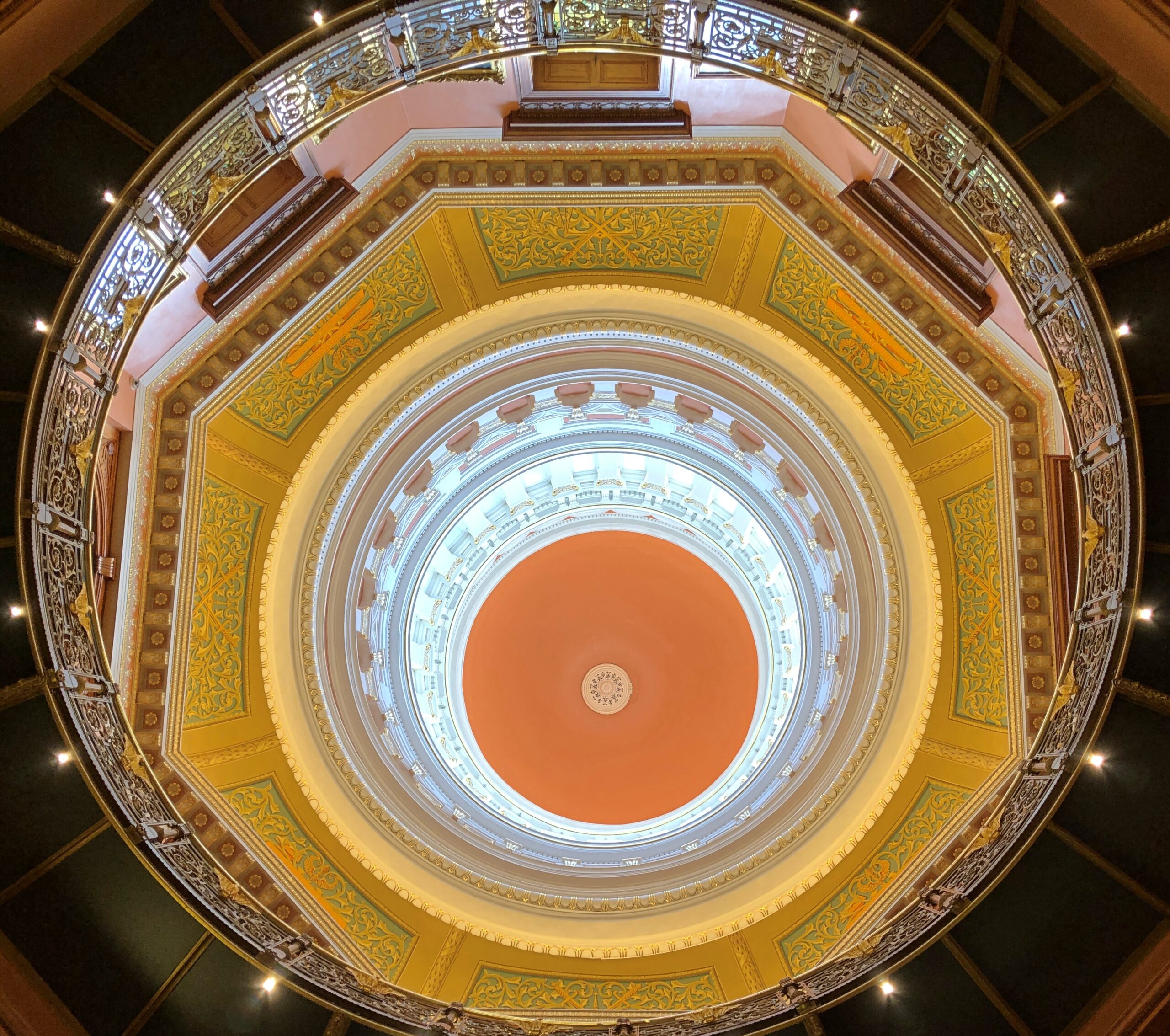
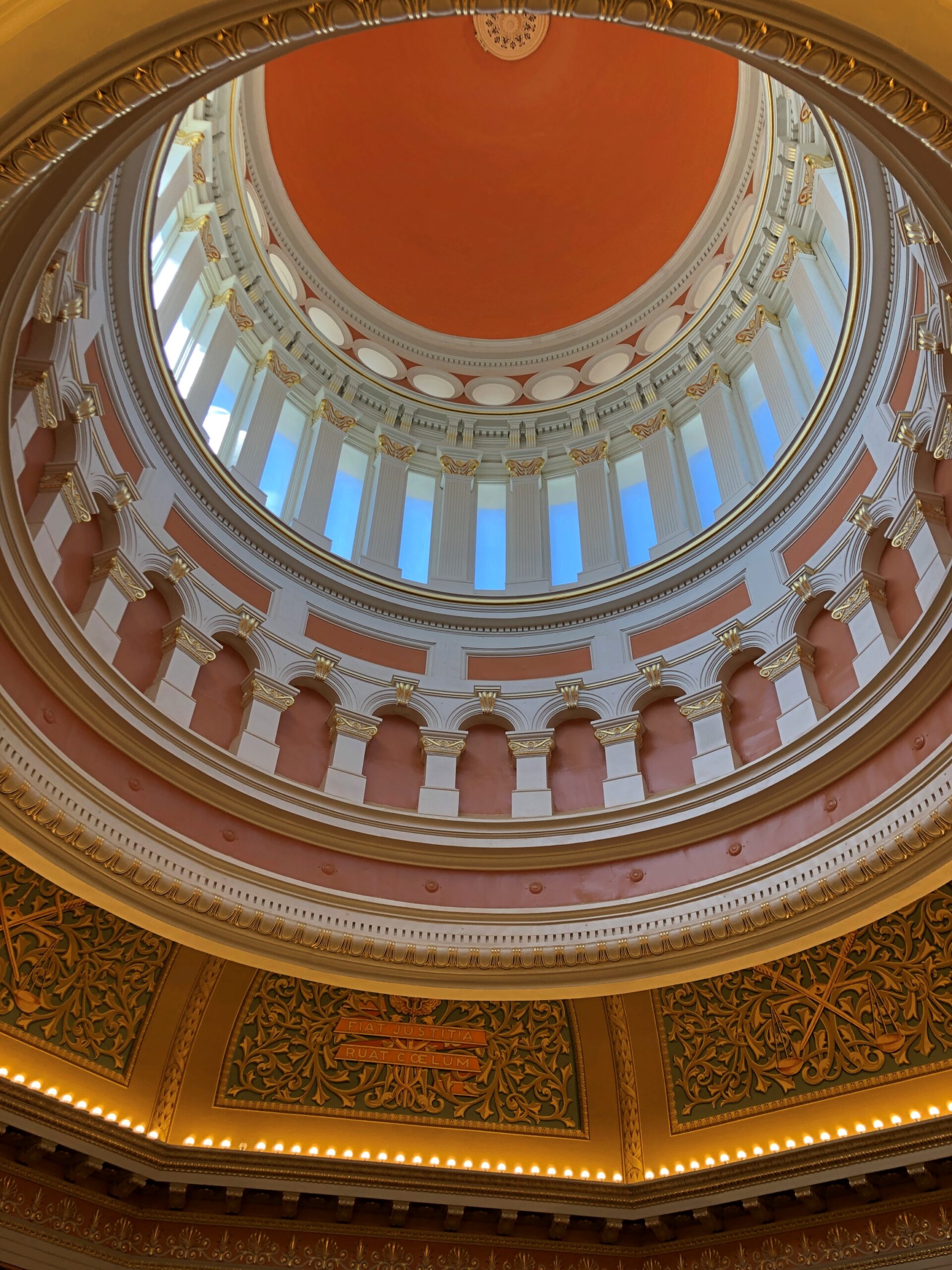
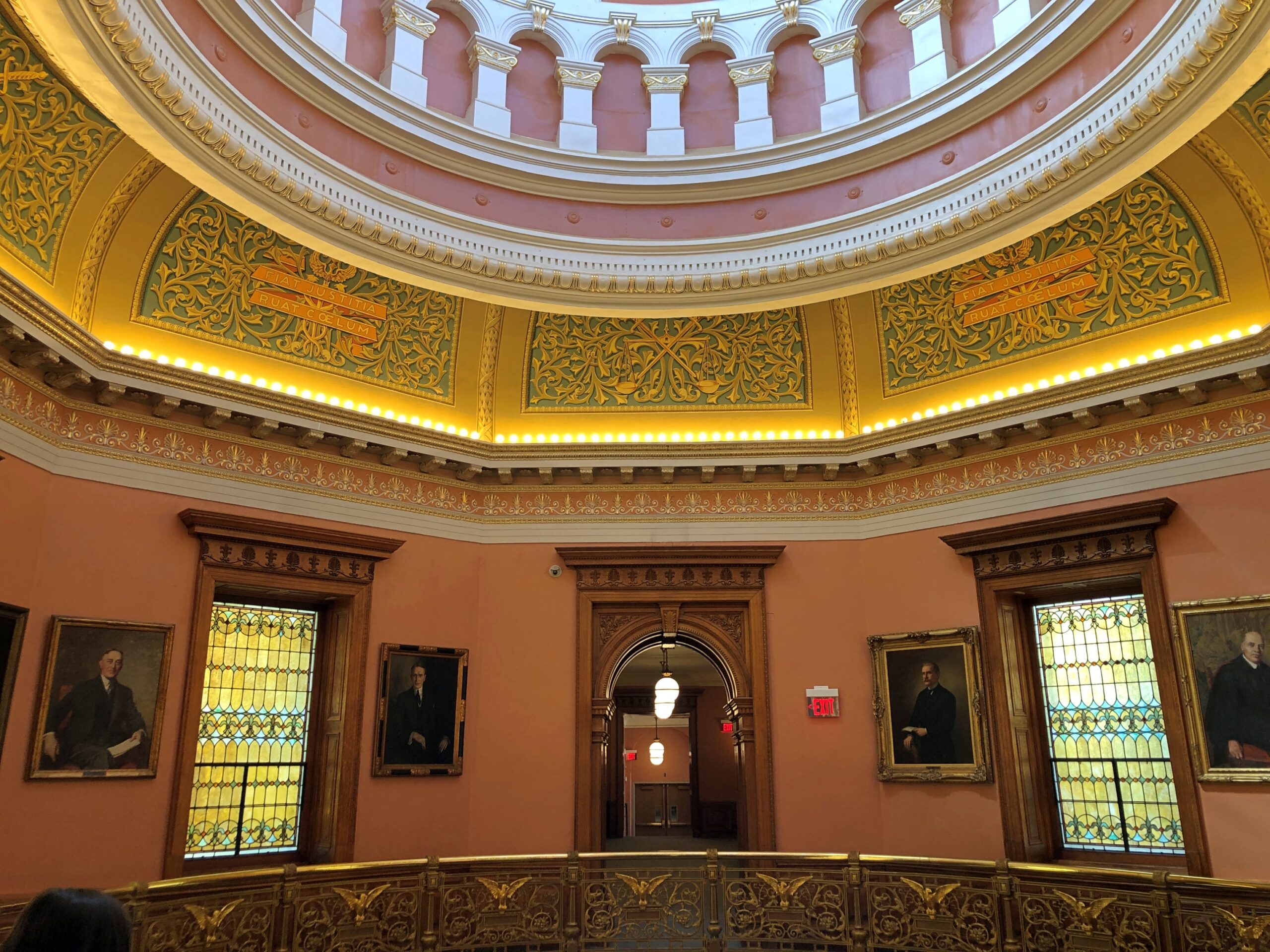
The best way to see the dome is stand under it.

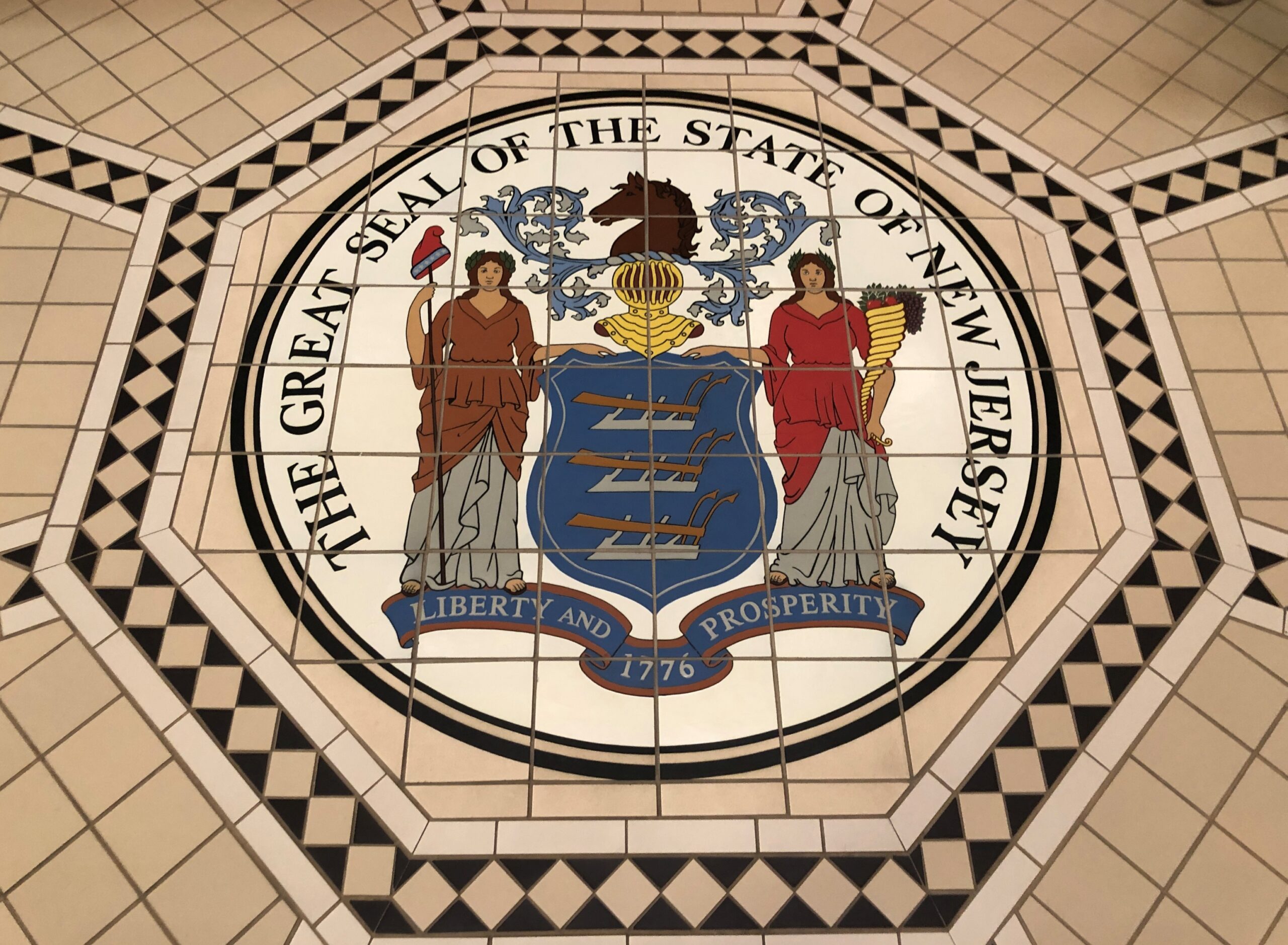
The floor under the dome. Note that Liberty has a Phrygian cap, just as Prosperity (Ceres) has a cornucopia. Also, Liberty and Prosperity look the same. A cogent argument could be made that they are indeed twins: go or come, buy or sell, be drunk or sober, as you please.

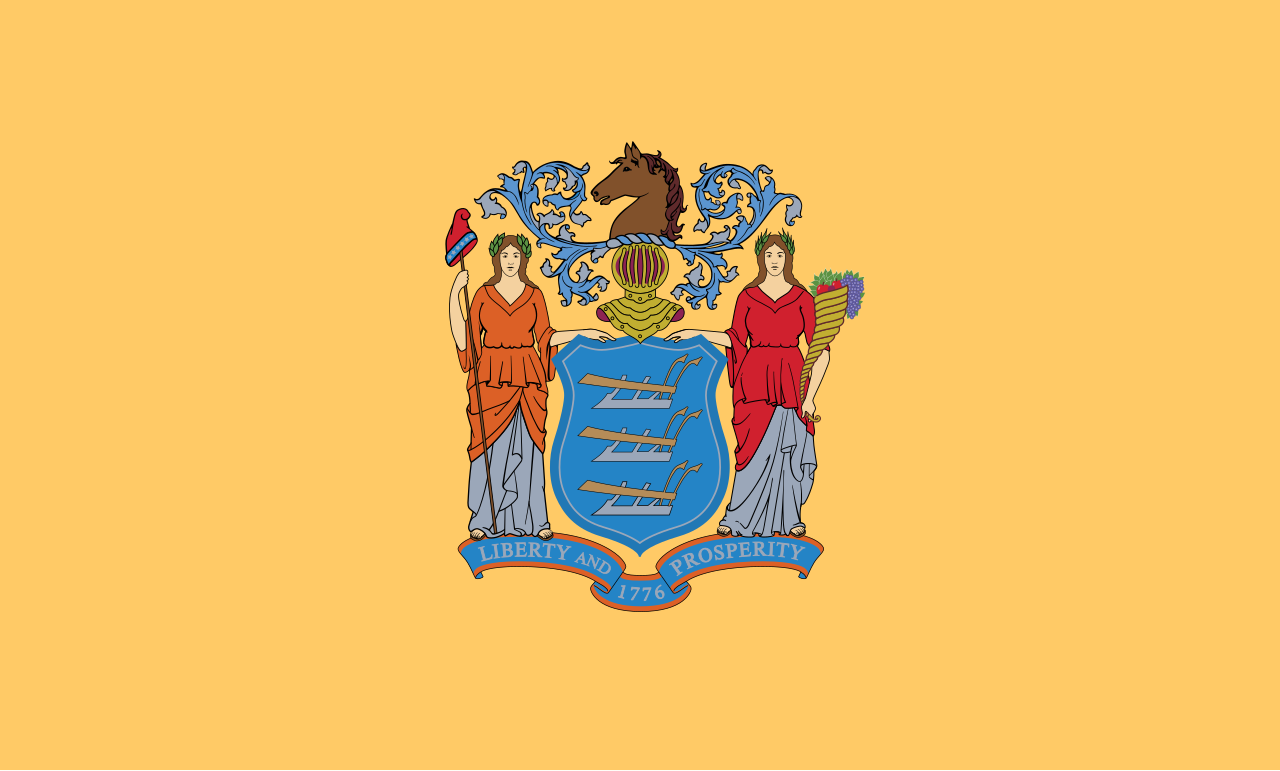
It’s a nice design for a state seal. Less so for a state flag, which I saw flying almost nowhere. At least it isn’t a state seal on a blue bedsheet.

About 10 years ago, this design won a competition for a new flag for New Jersey.

It’s a better flag, but does it really say New Jersey? Maybe the state’s distinctive outline, instead of a star? Anyway, the legislature hasn’t acted on flag redesign as yet.

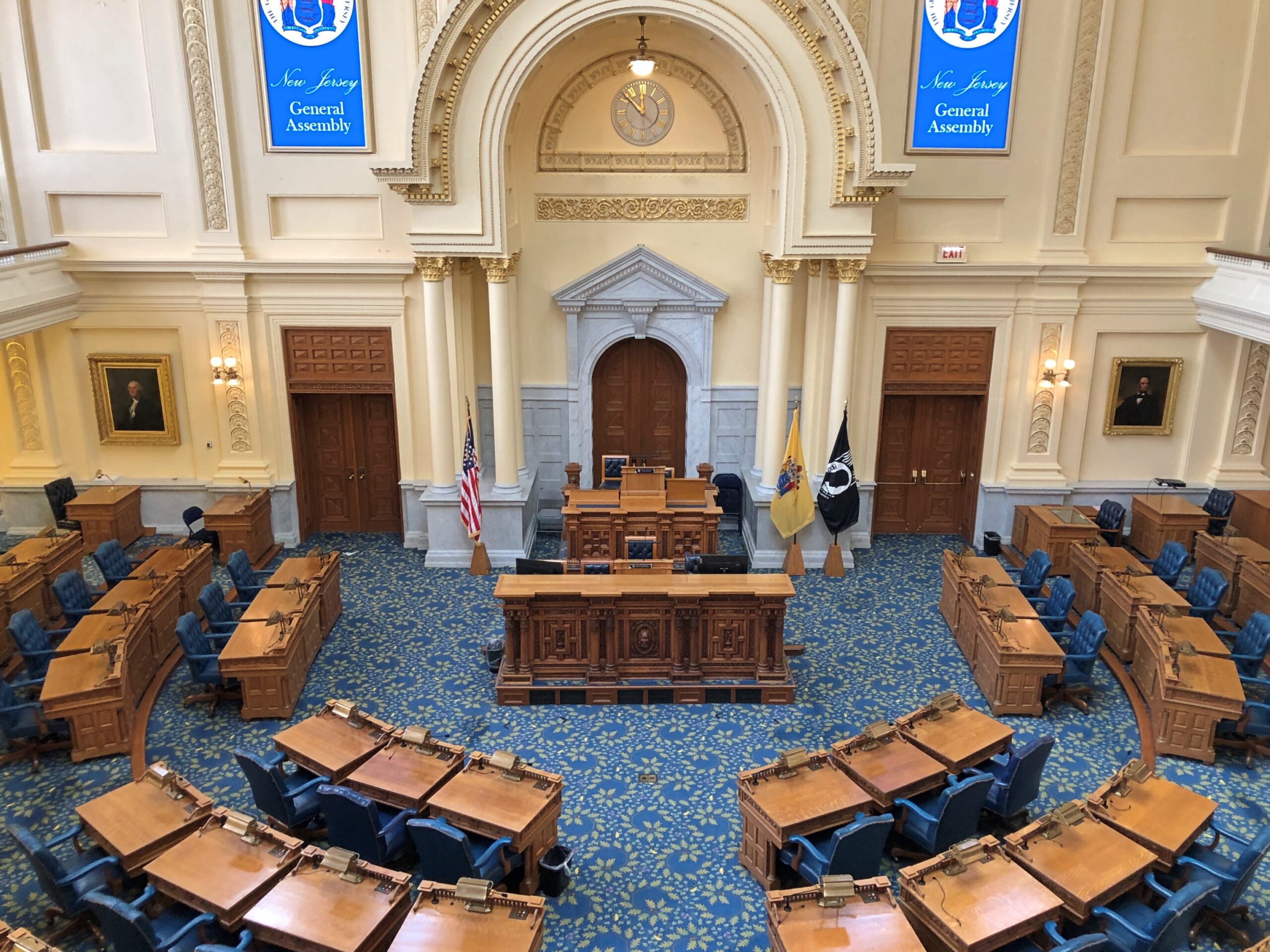
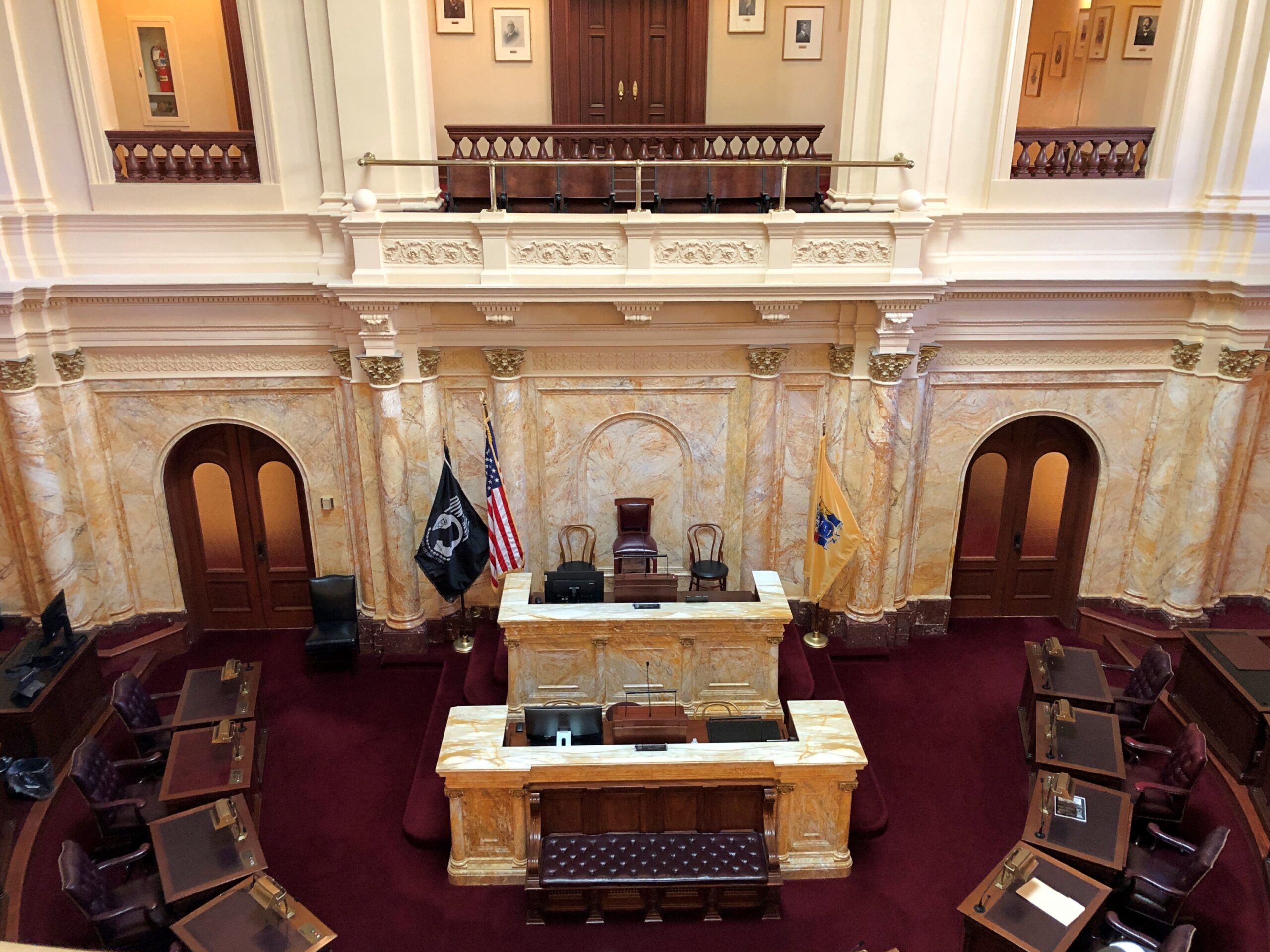
The state General Assembly.

The state Senate.

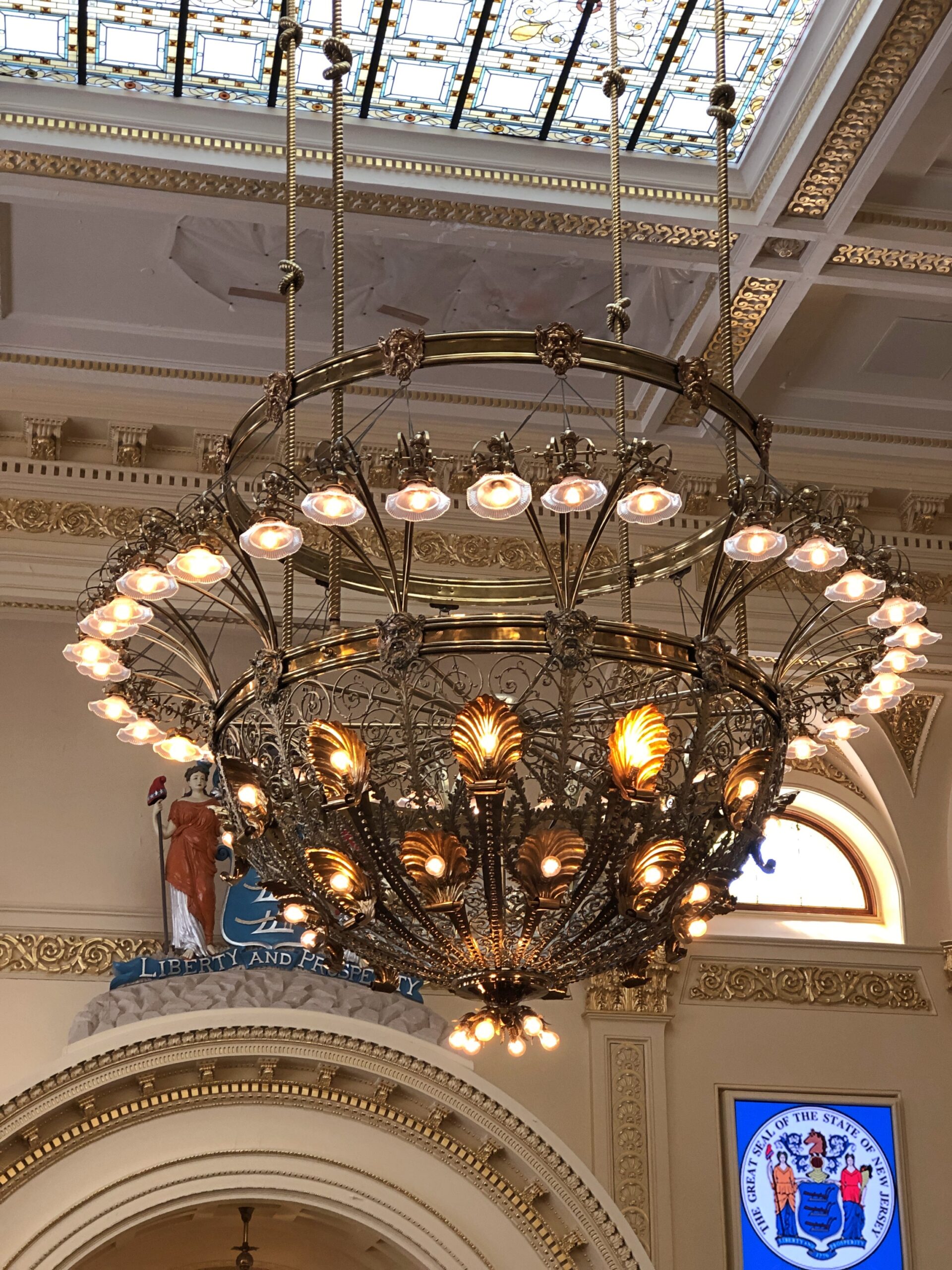
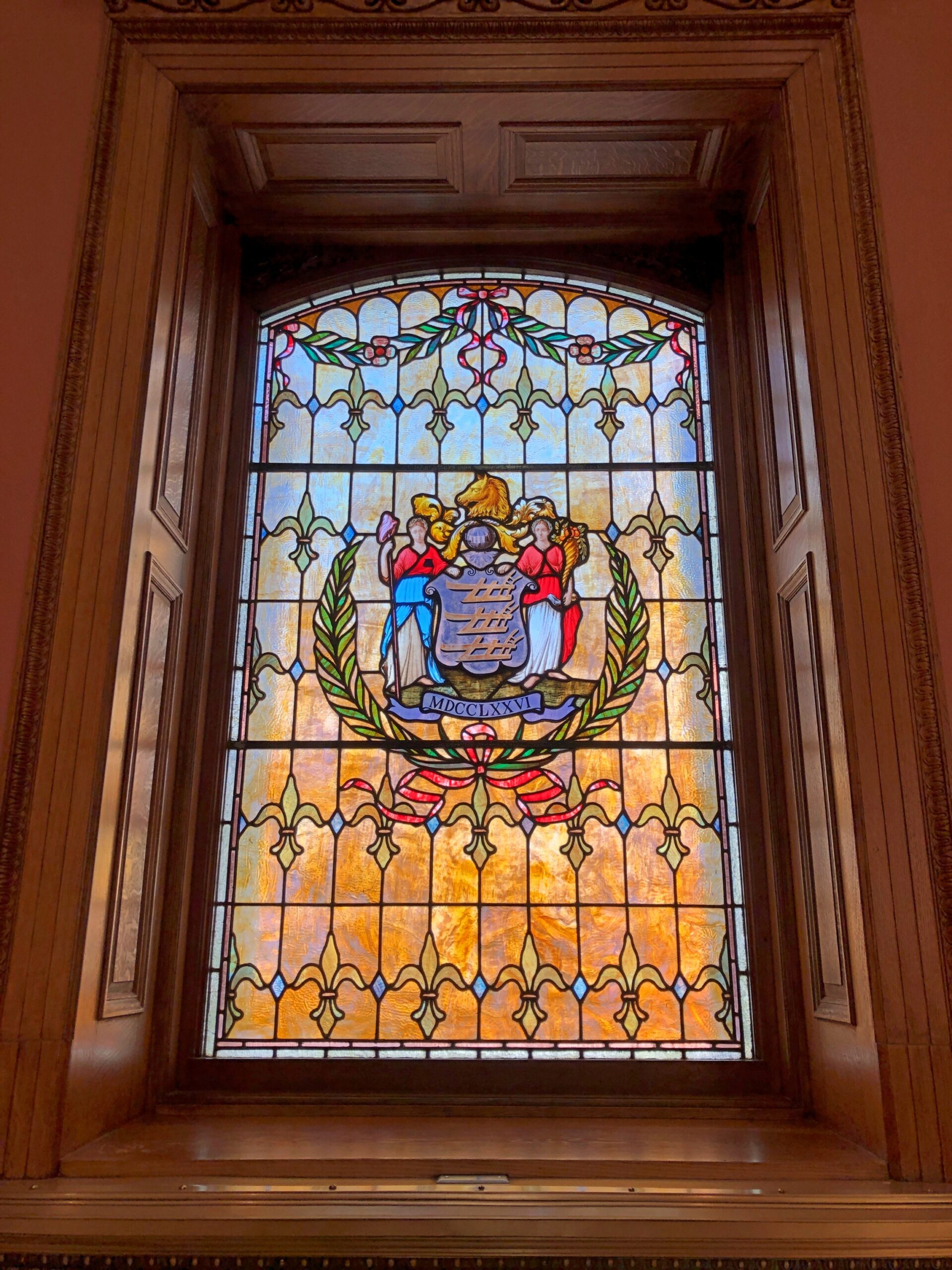
More details from the capitol, such as fine secular stained glass, with a variation on the seal.

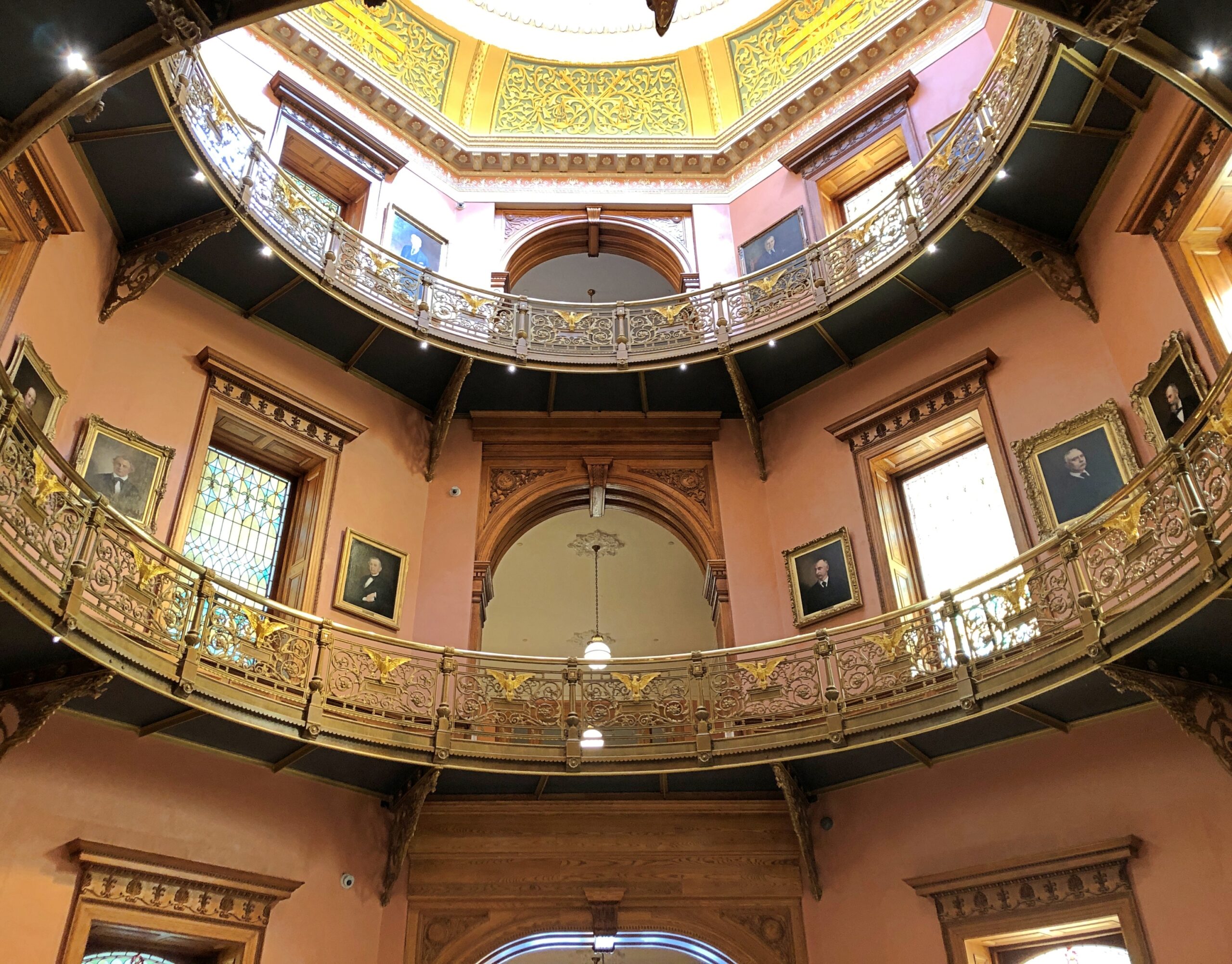
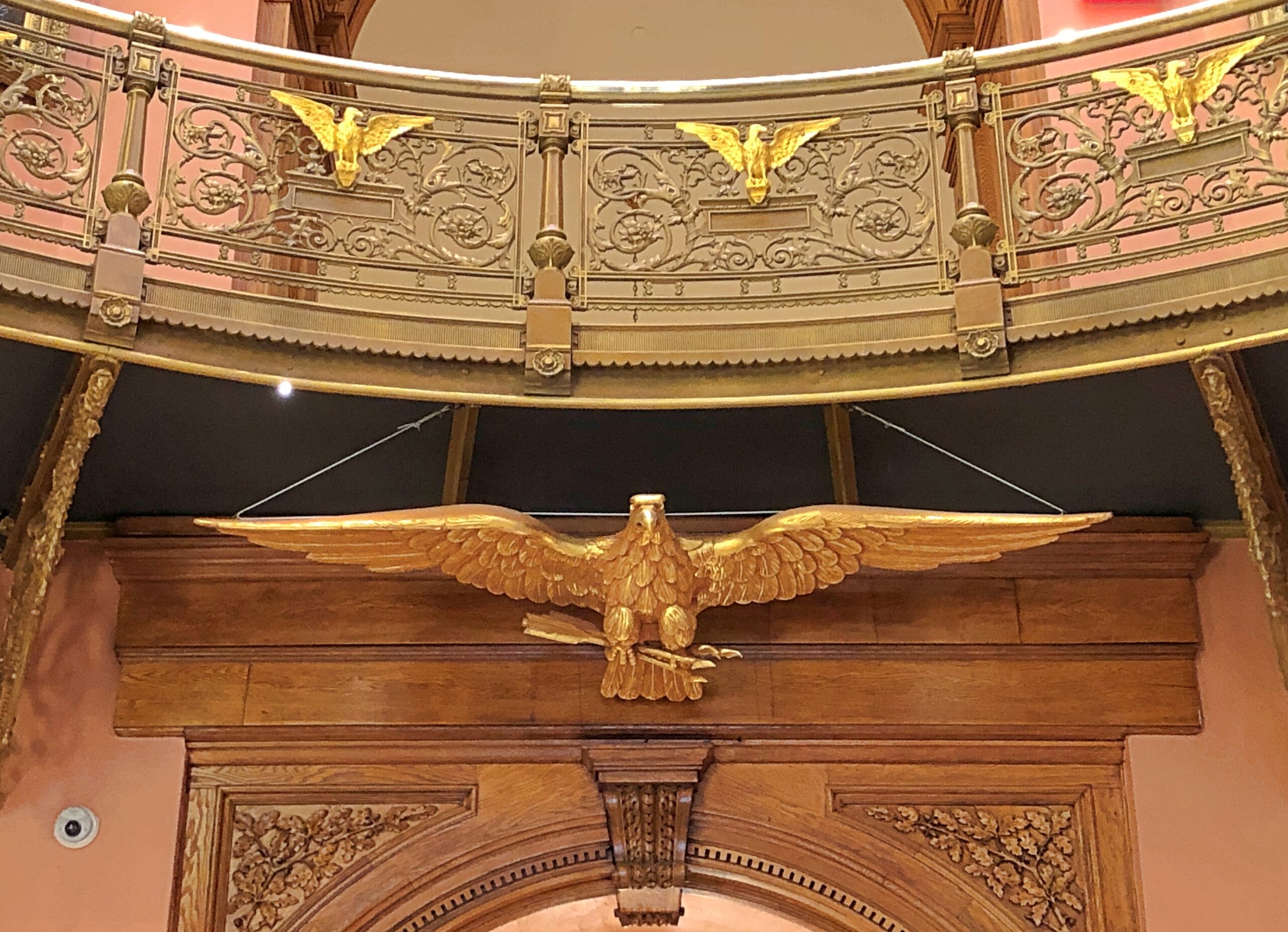
Many eagles.

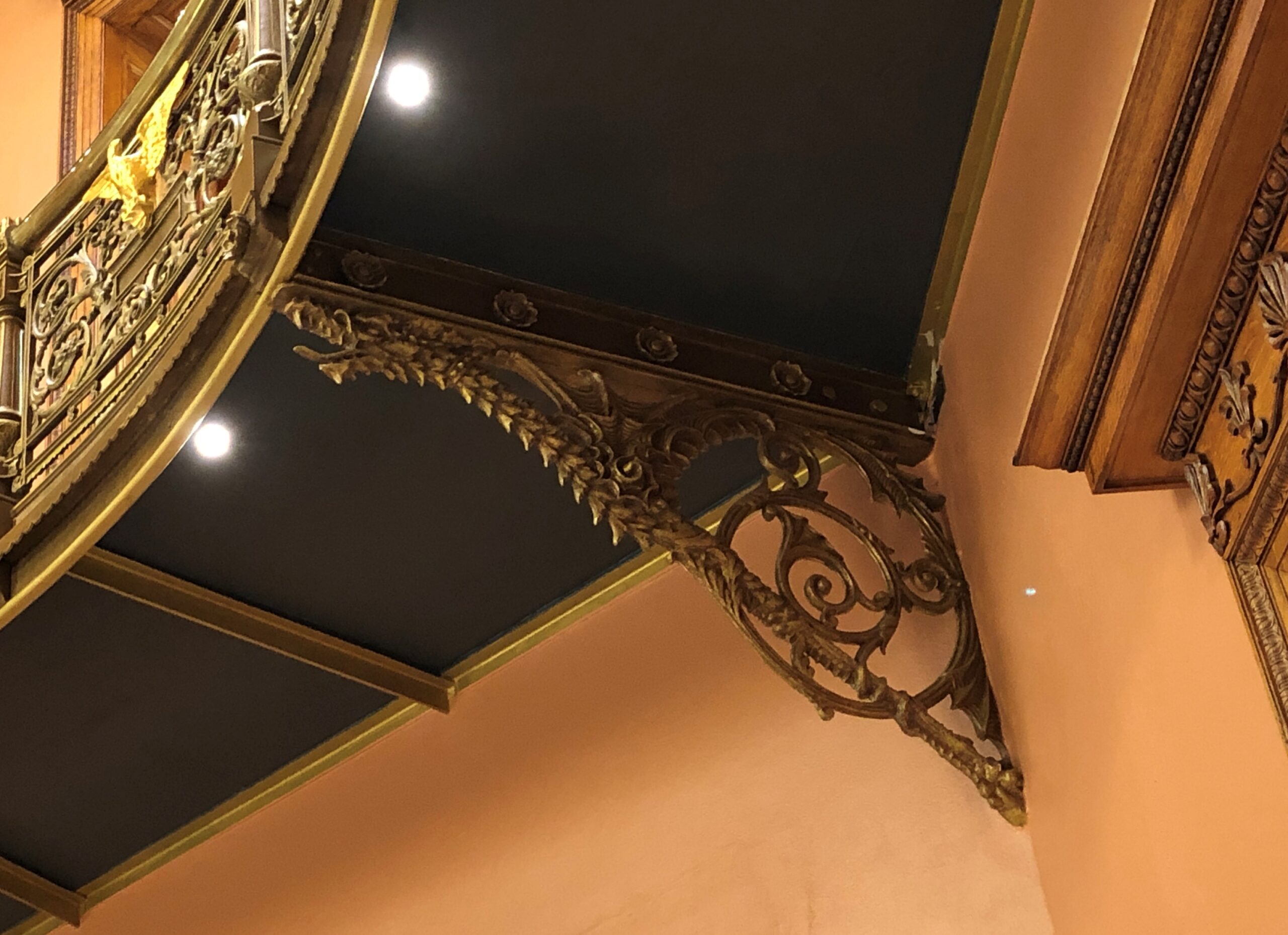
Dragons supporting the balconies. Dragons?

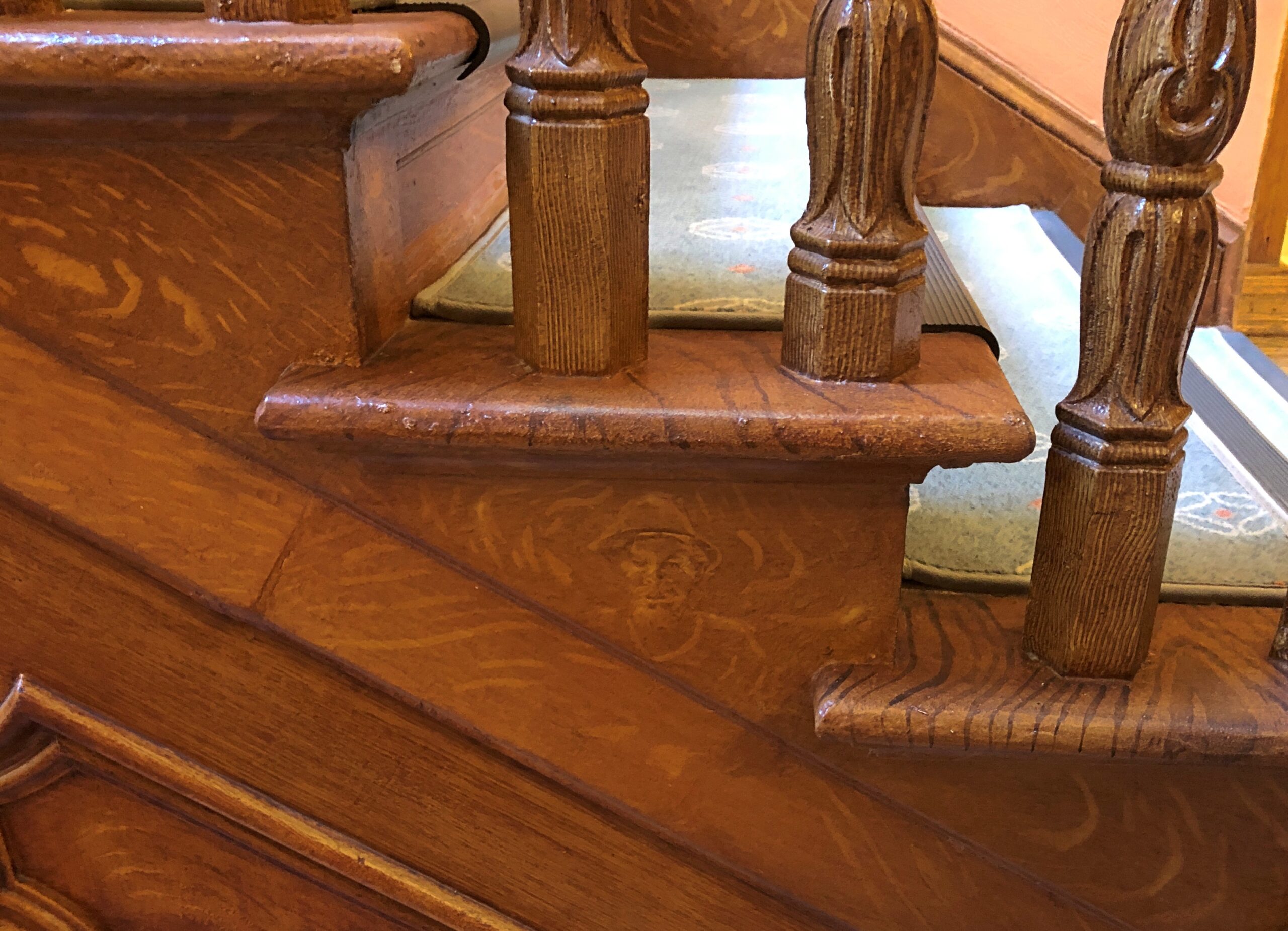
Our guide also pointed out some capitol Easter eggs, to use a term the creators of such eggs – artisans whose names are lost to time – would not have used.

Such as an homage to a Great War solider, there on a staircase.

Atlantic City

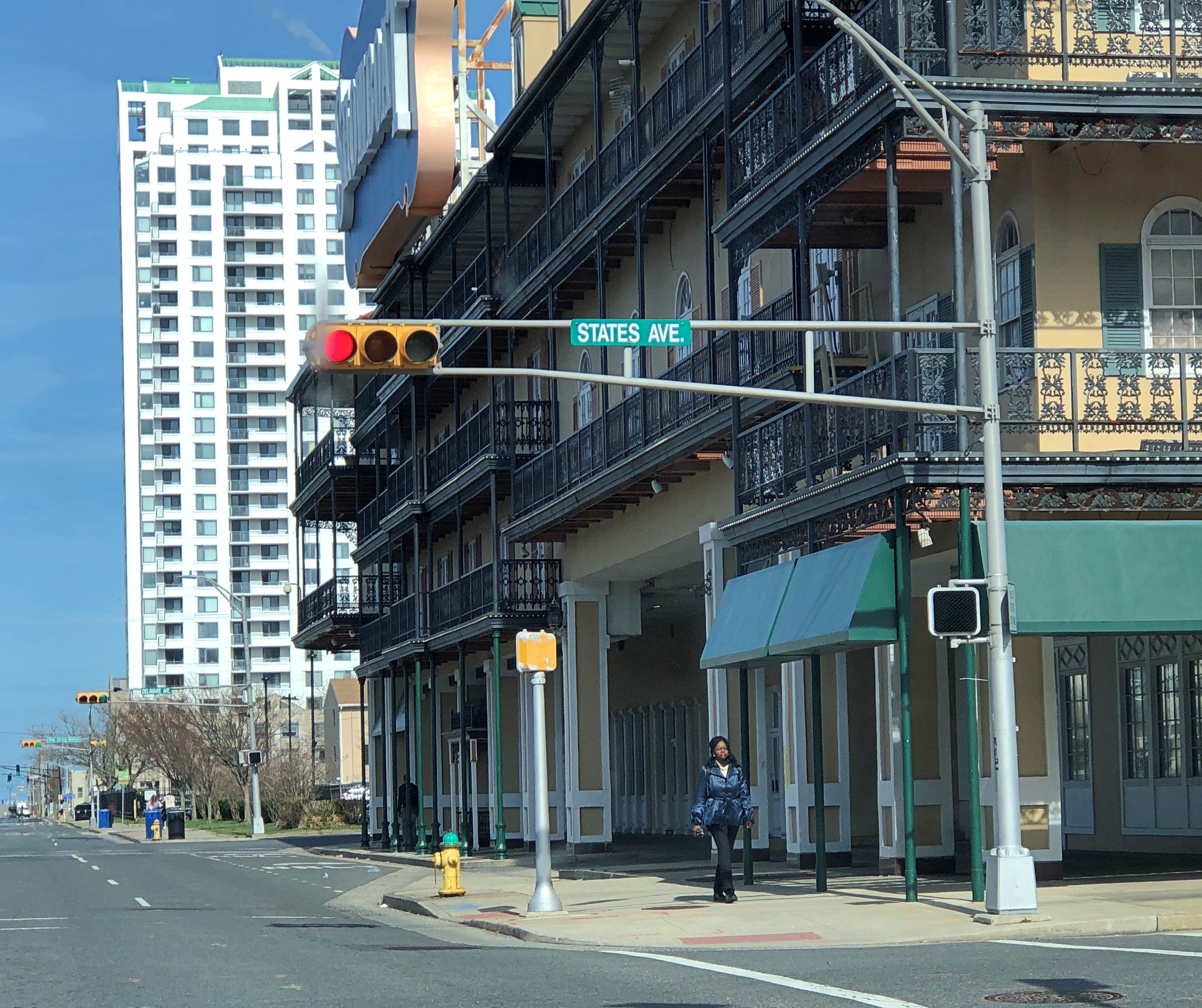
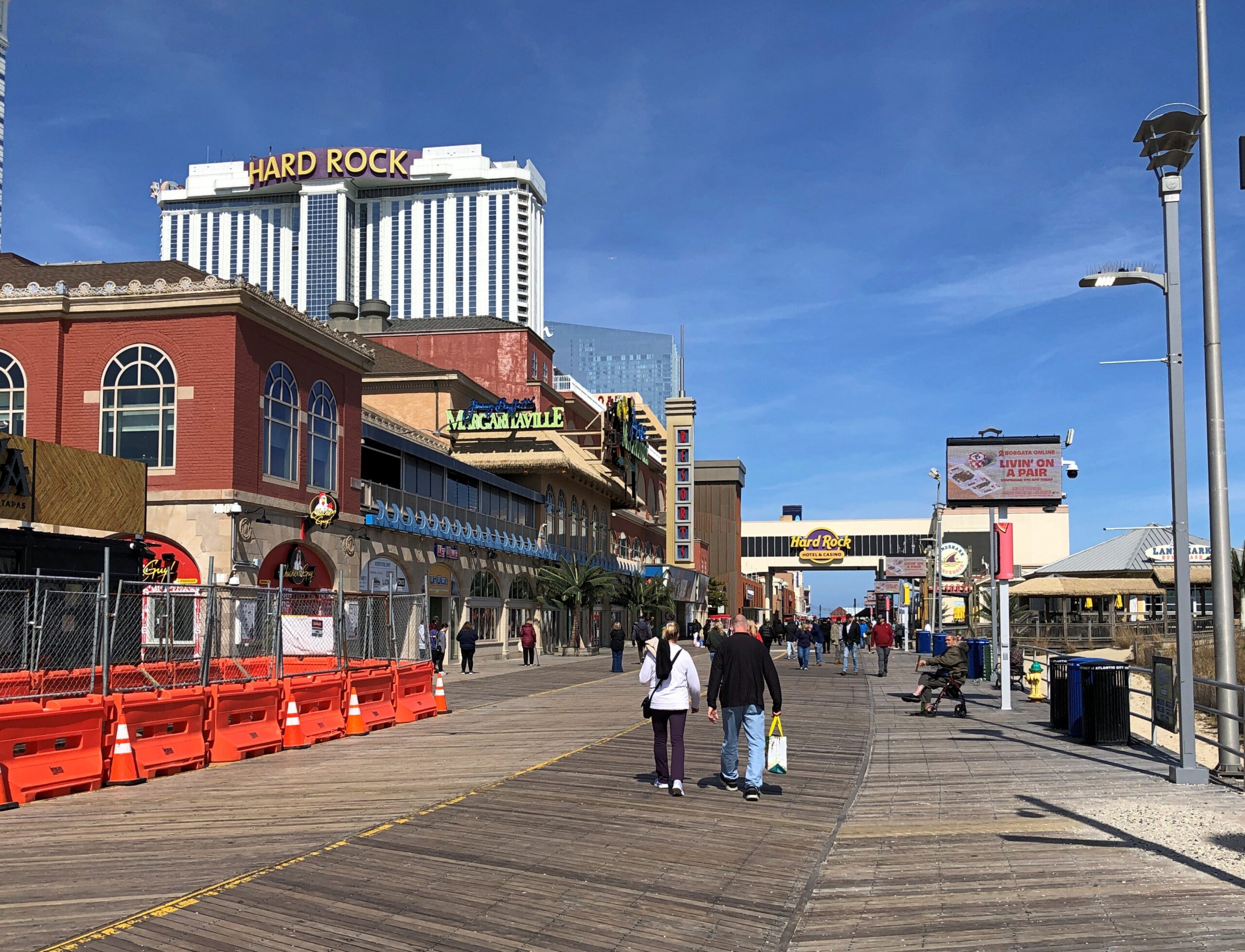
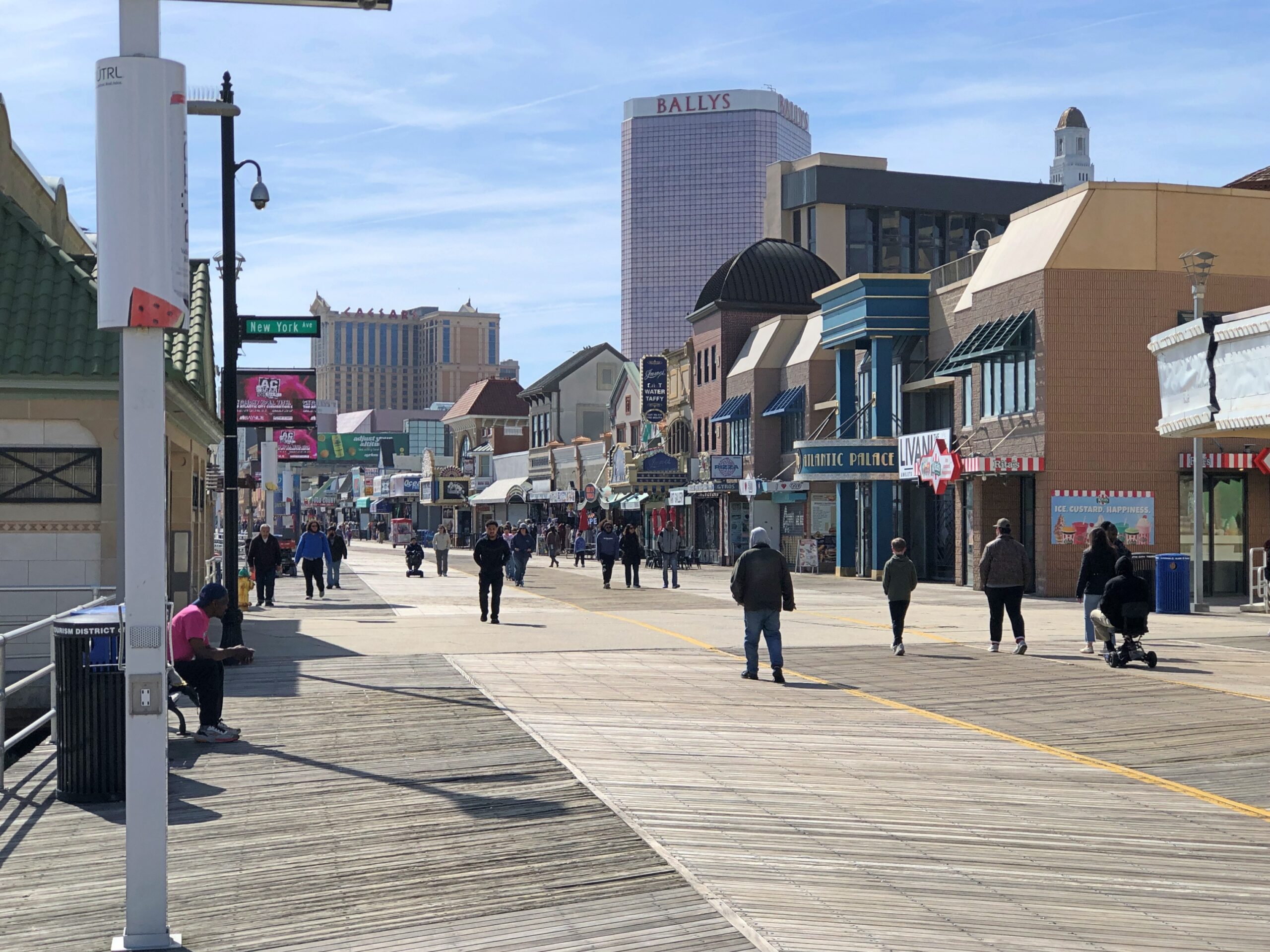
People come to Atlantic City for the casinos, such as they are. For the entertainment, such as it is. To walk on the boardwalk. For the history? Probably not so much. Does anyone come for the minor thrill of driving, or walking, on streets as familiar as Atlantic Ave., Ventnor Ave., Mediterranean and Baltic? Virginia, Pennsylvania and North Carolina avenues? St. Charles Place and States Ave.?

Somebody must have done that. Yes, and of course put it on YouTube. Still, spotting Monopoly properties while in Atlantic City isn’t going to be a priority, or even a passing thought, for most people. I didn’t have a methodical approach myself, but if you drive around much in Atlantic City, you will see some of the streets.

For the city, it’s a missed opportunity. The street signs are white on green, as street signs usually are. More artful honorary signs could acknowledge the game, including the appropriate colors. Or would Hasbro object? Could Hasbro object, legally speaking? A question well beyond my abilities to answer, but object? That company, owner of Parker Bros.’ intellectual property, ought to share the cost of the signs. Ought to pay for them, considering the long-lasting and absolutely unique form of advertising that would represent.

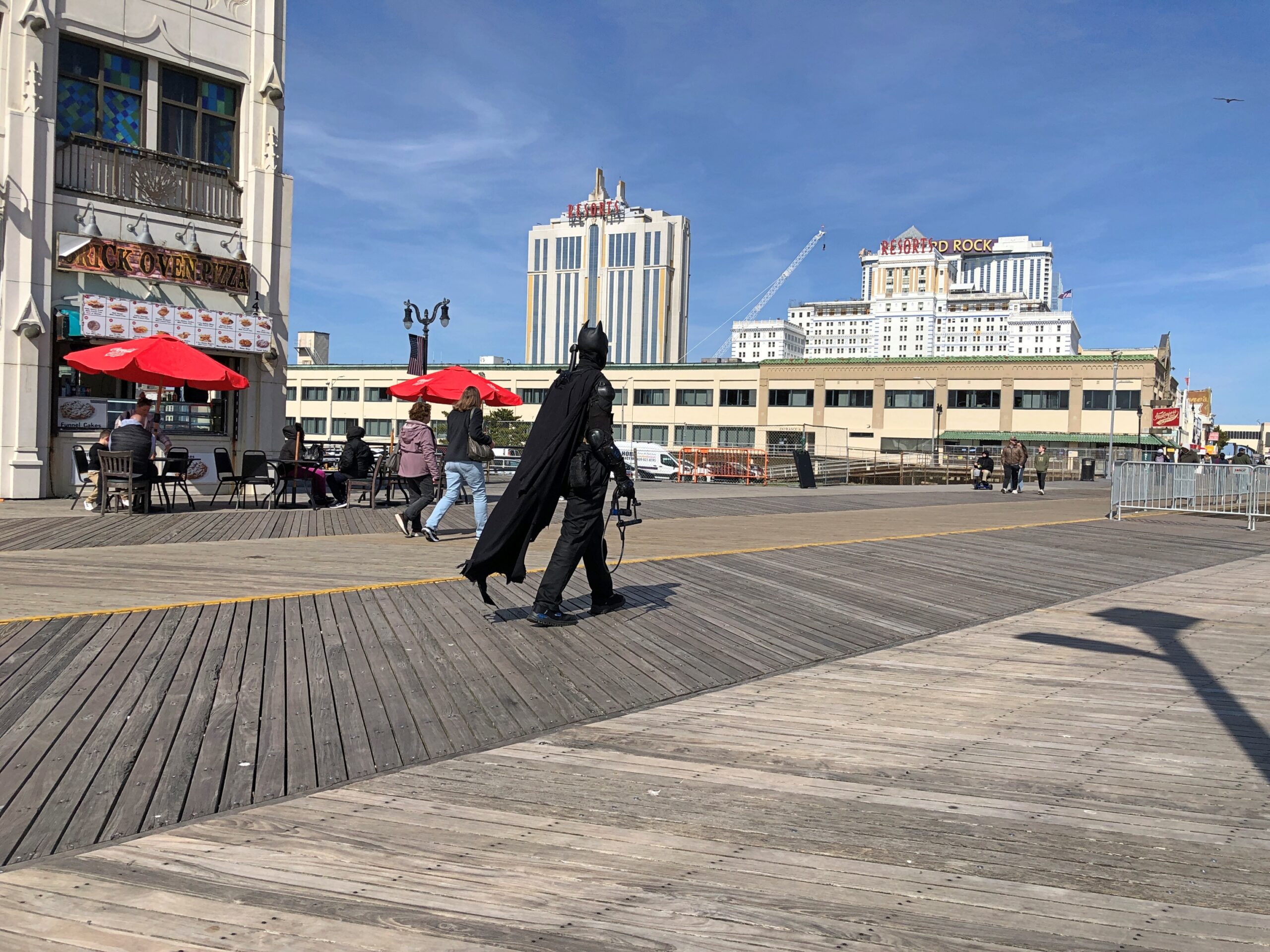
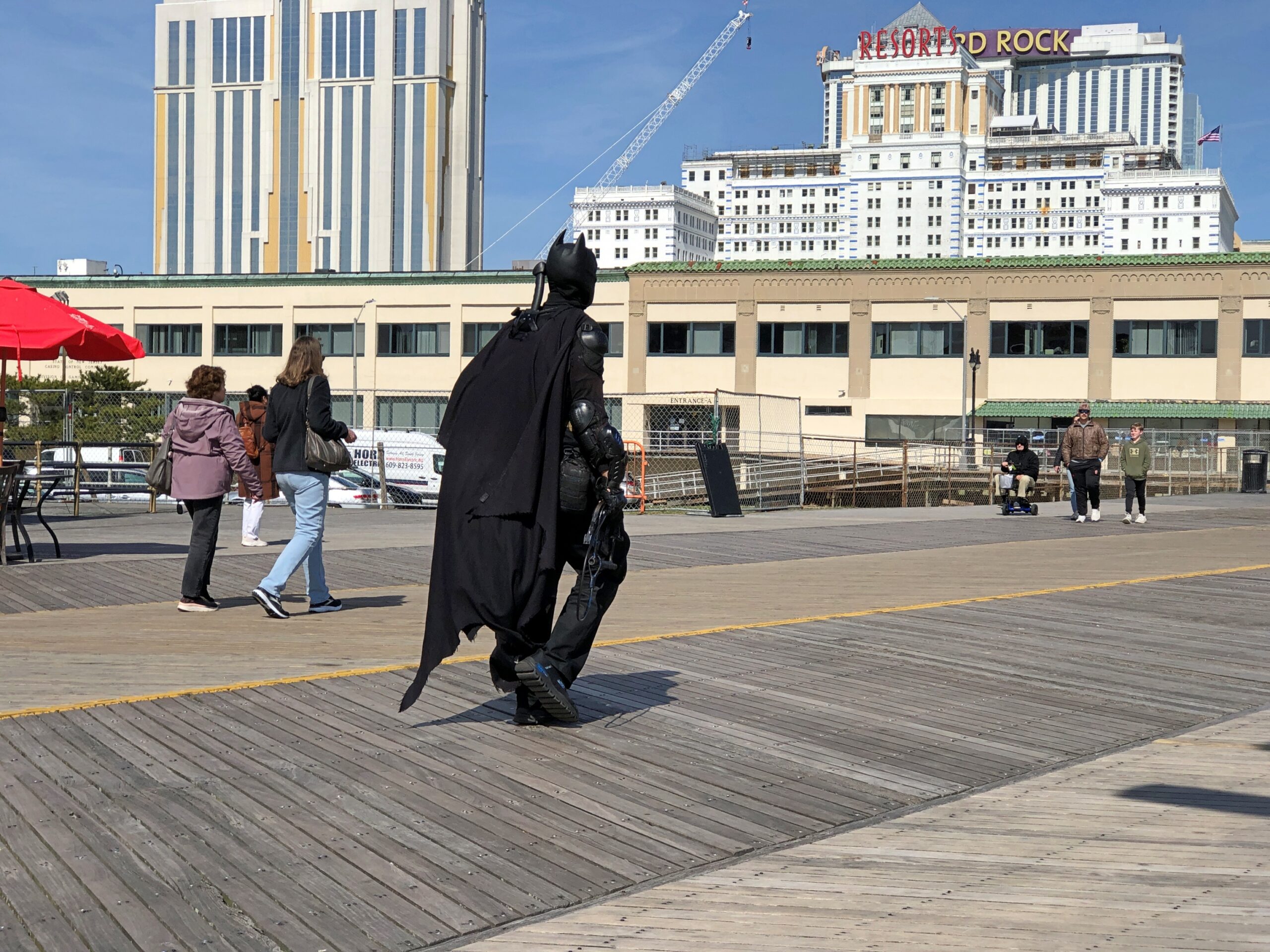
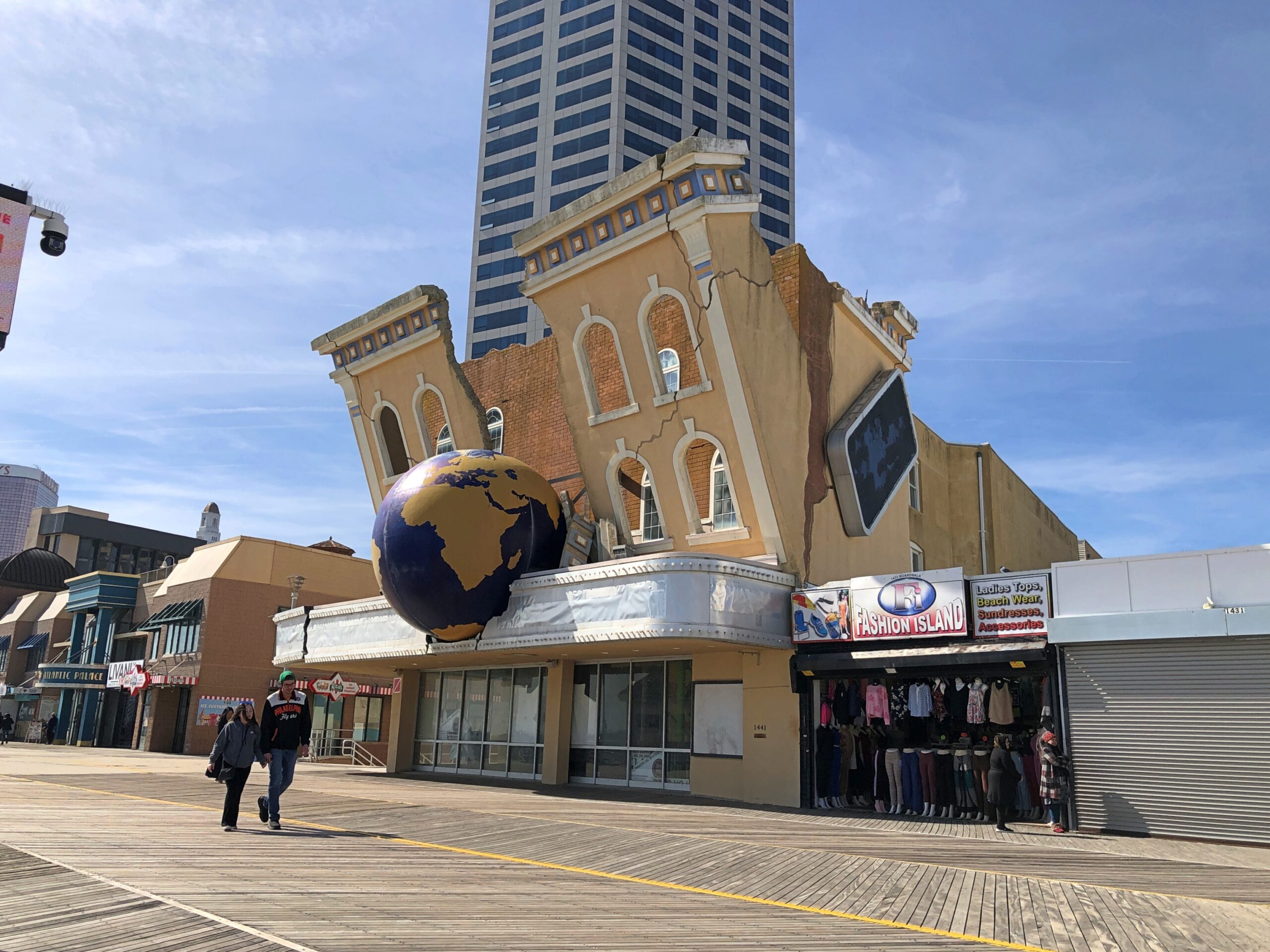
City of Missed Opportunities. There’s a nickname that suits Atlantic City. Not that I didn’t enjoy my early spring (April 9) walk along the Boardwalk or, for that matter, the long drive down a lightly traveled Atlantic Ave. The town might not be the louche upmarket place it was when Steve Buscemi ran it, but here in the 21st century, it still has its tattered charms. And unexpected sights, such as Batman on the Boardwalk.

There I was, resting a bit on a bench, and along came the Caped Crusader.

He was an anomaly. The thin ranks of passersby that day on the boardwalk pretty much blended in with each other. The walk itself is impressively long and wide.

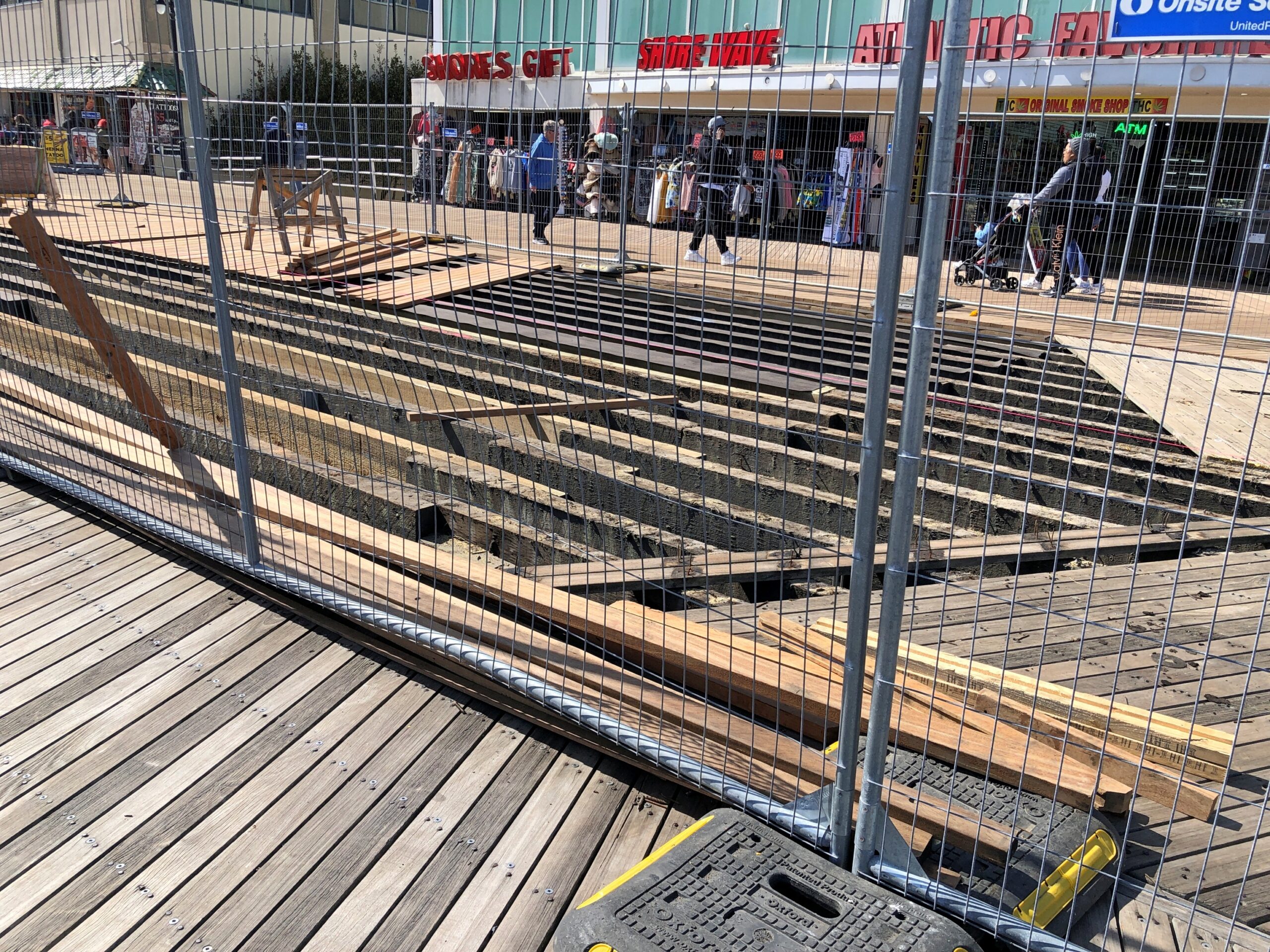
Like a lot of things, the boardwalk is always under construction somewhere.

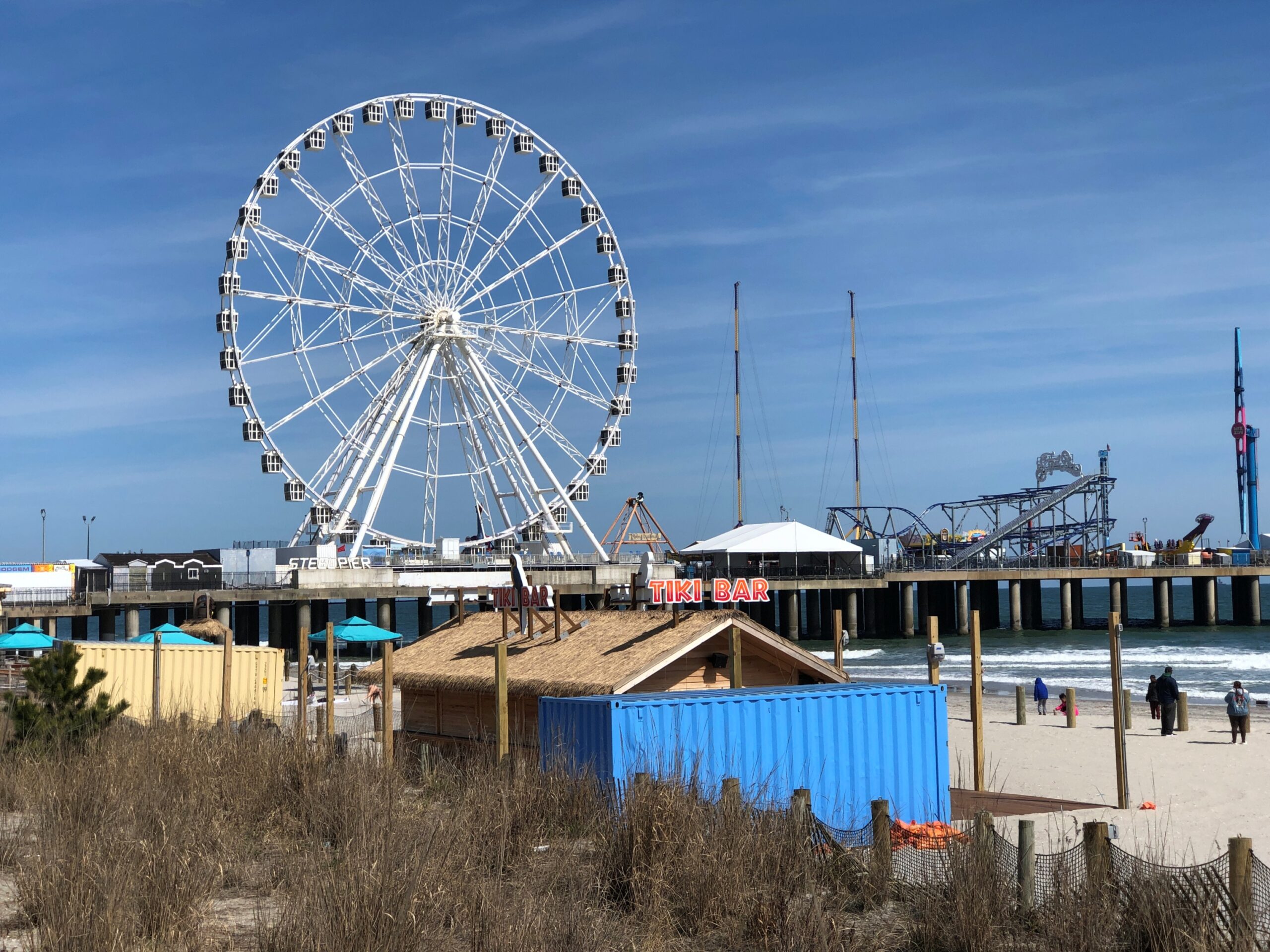
Steel Pier. Counts as an amusement park.

There’s an actual beach out there, though the chill of the day left it even emptier than the boardwalk.

Atlantic City, NJ April 2026, not 1926

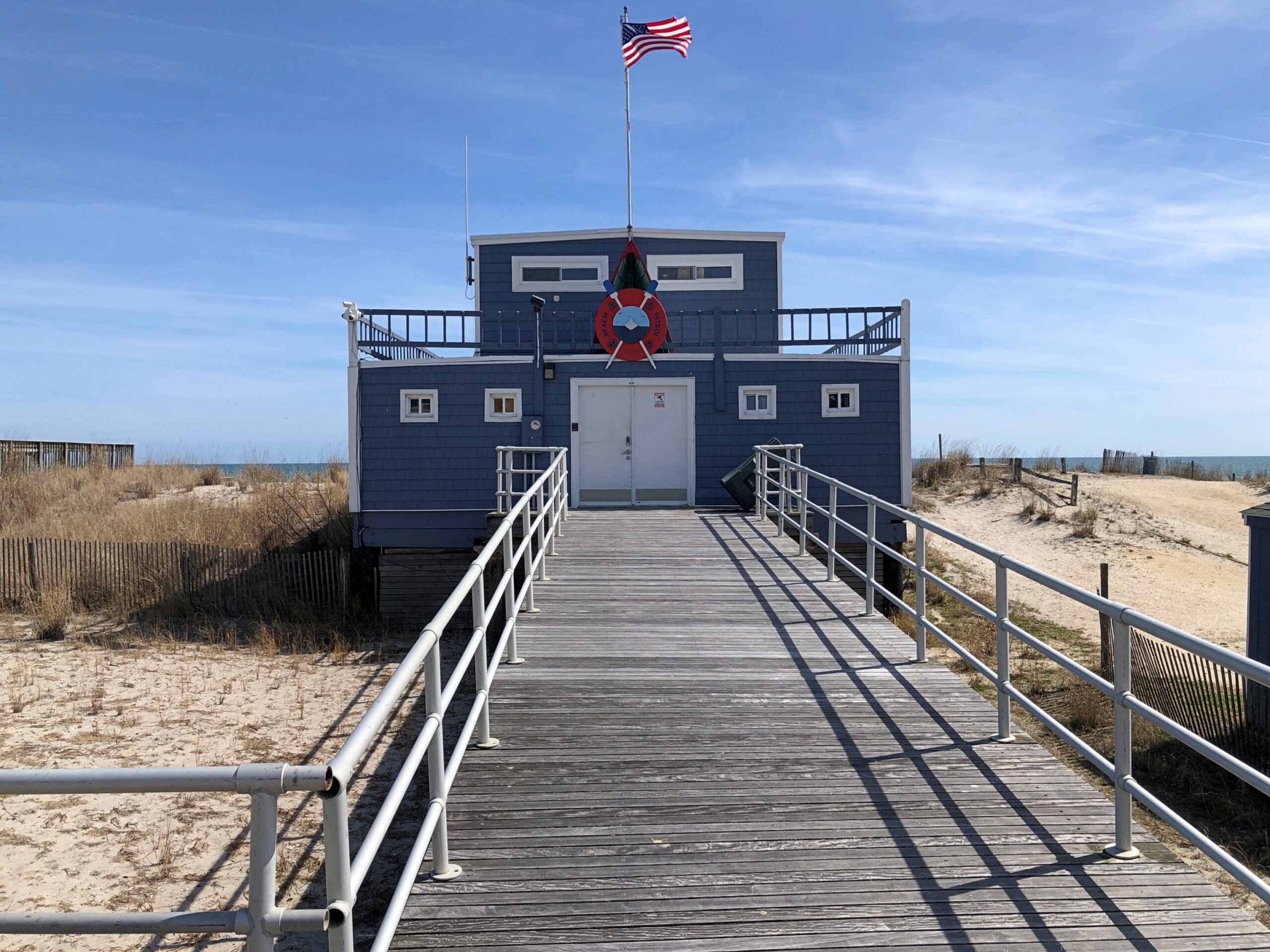
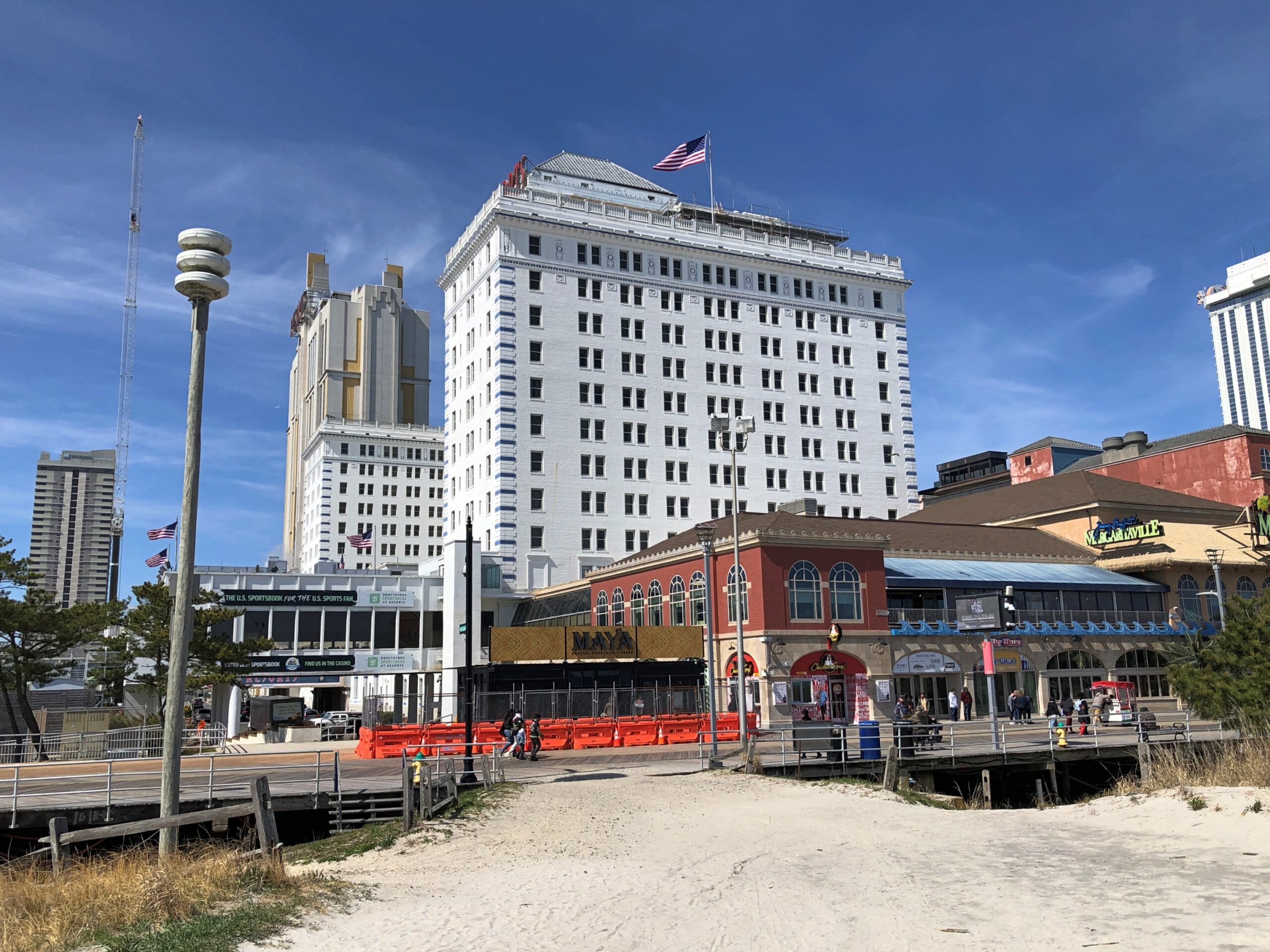
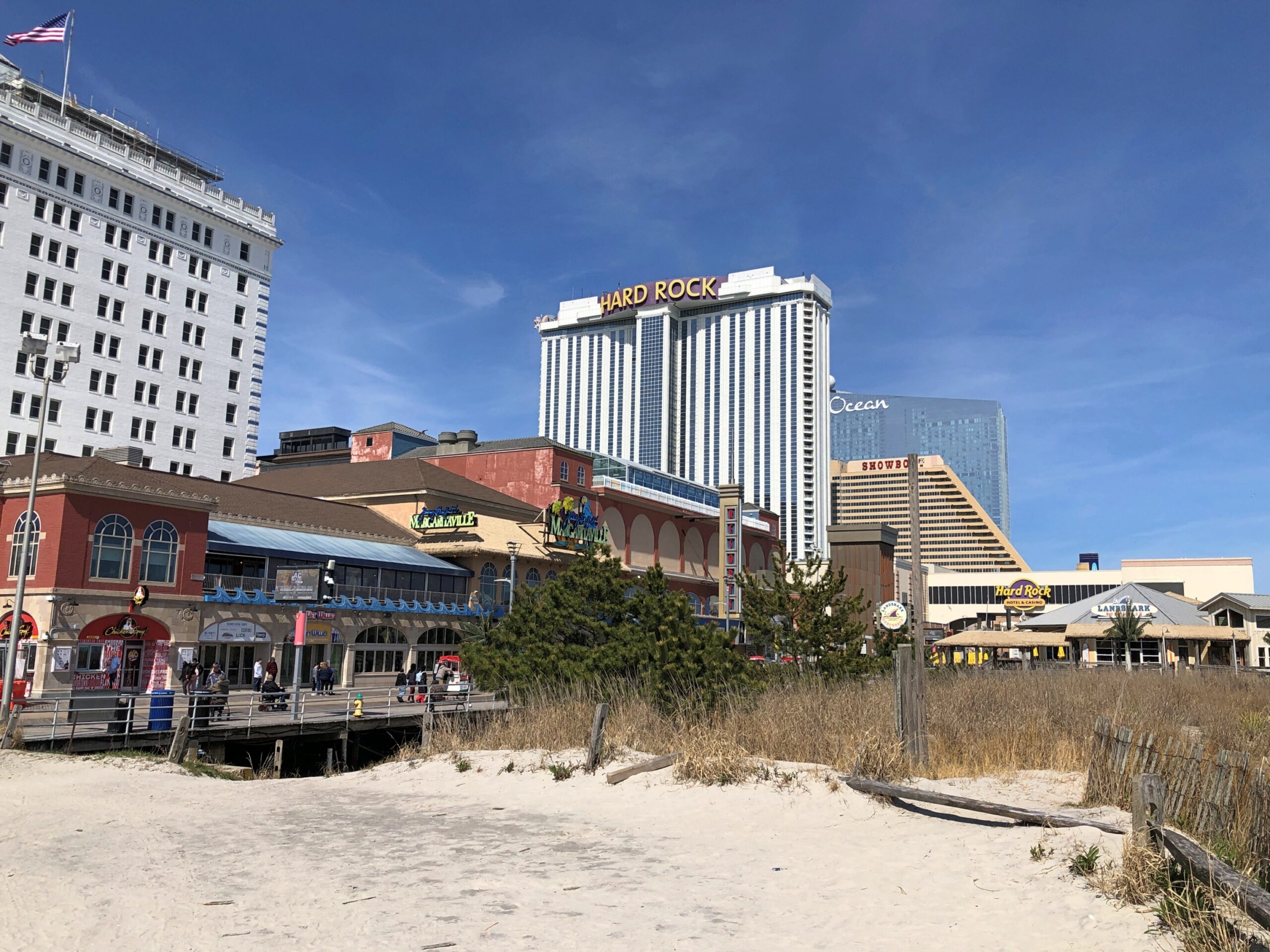
I didn’t venture very far out on the beach myself, though far enough to enjoy views of the skyline, such as it is. Mostly casinos.

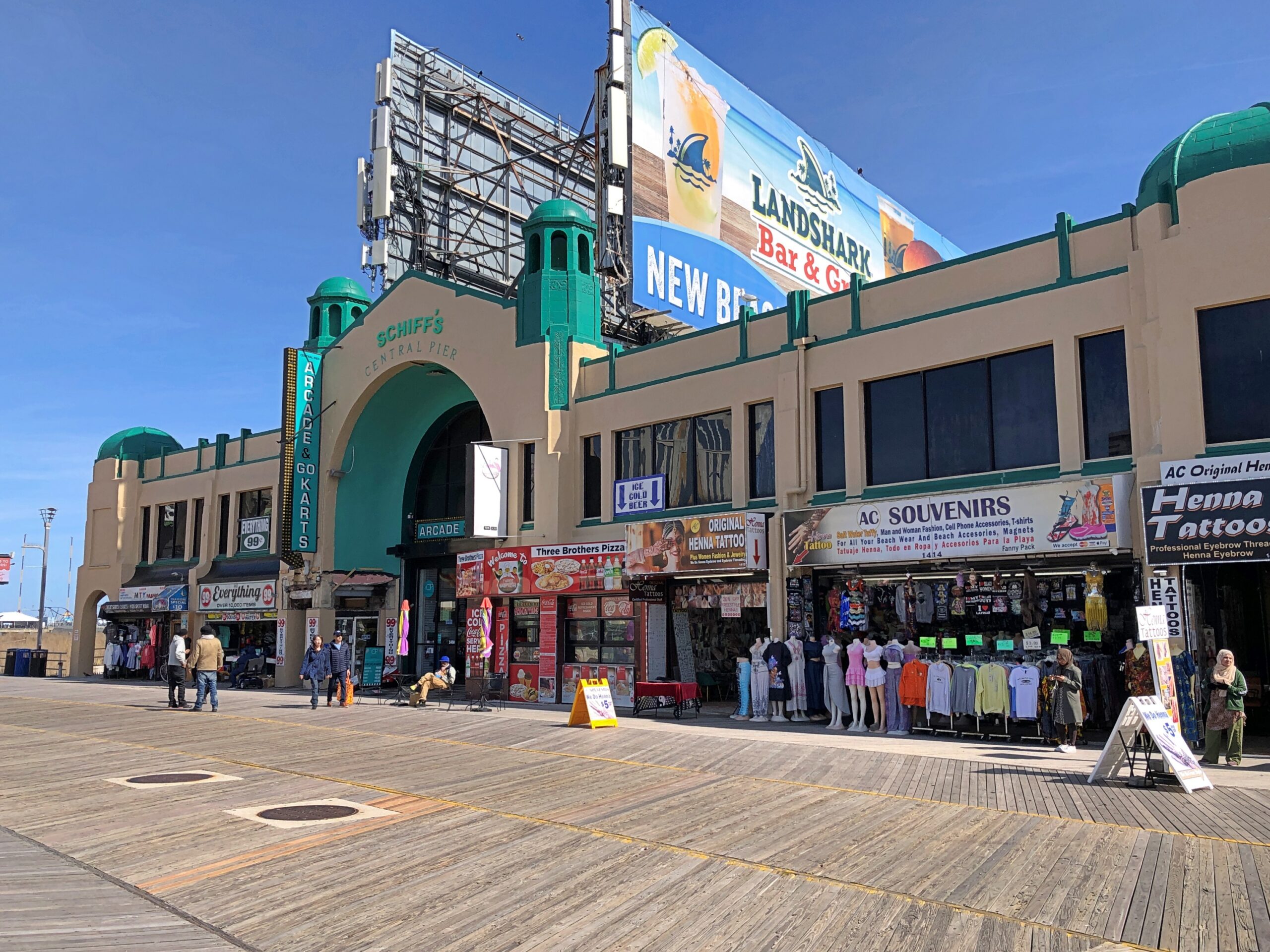
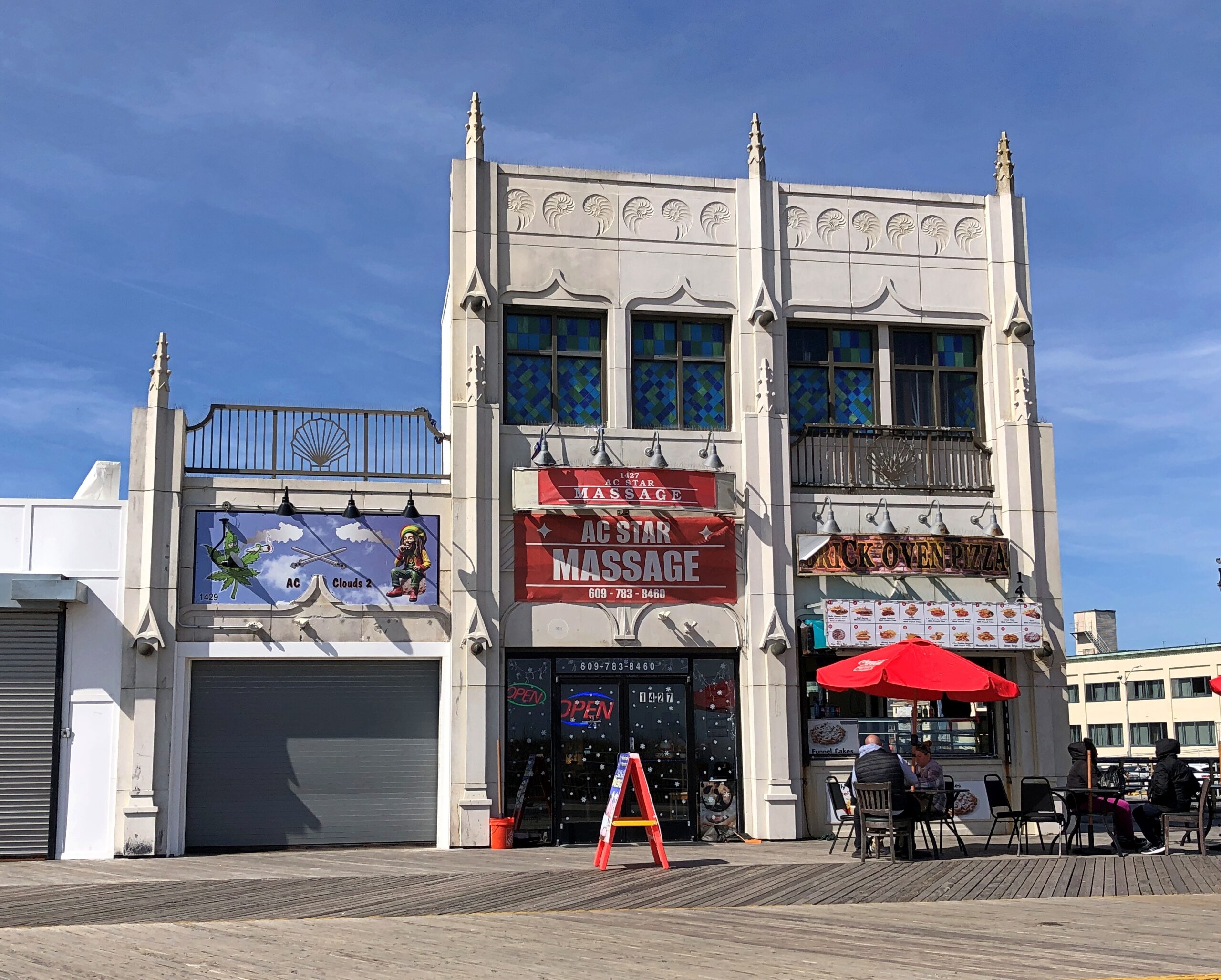
Vestiges of earlier Atlantic City iterations still line the boardwalk.

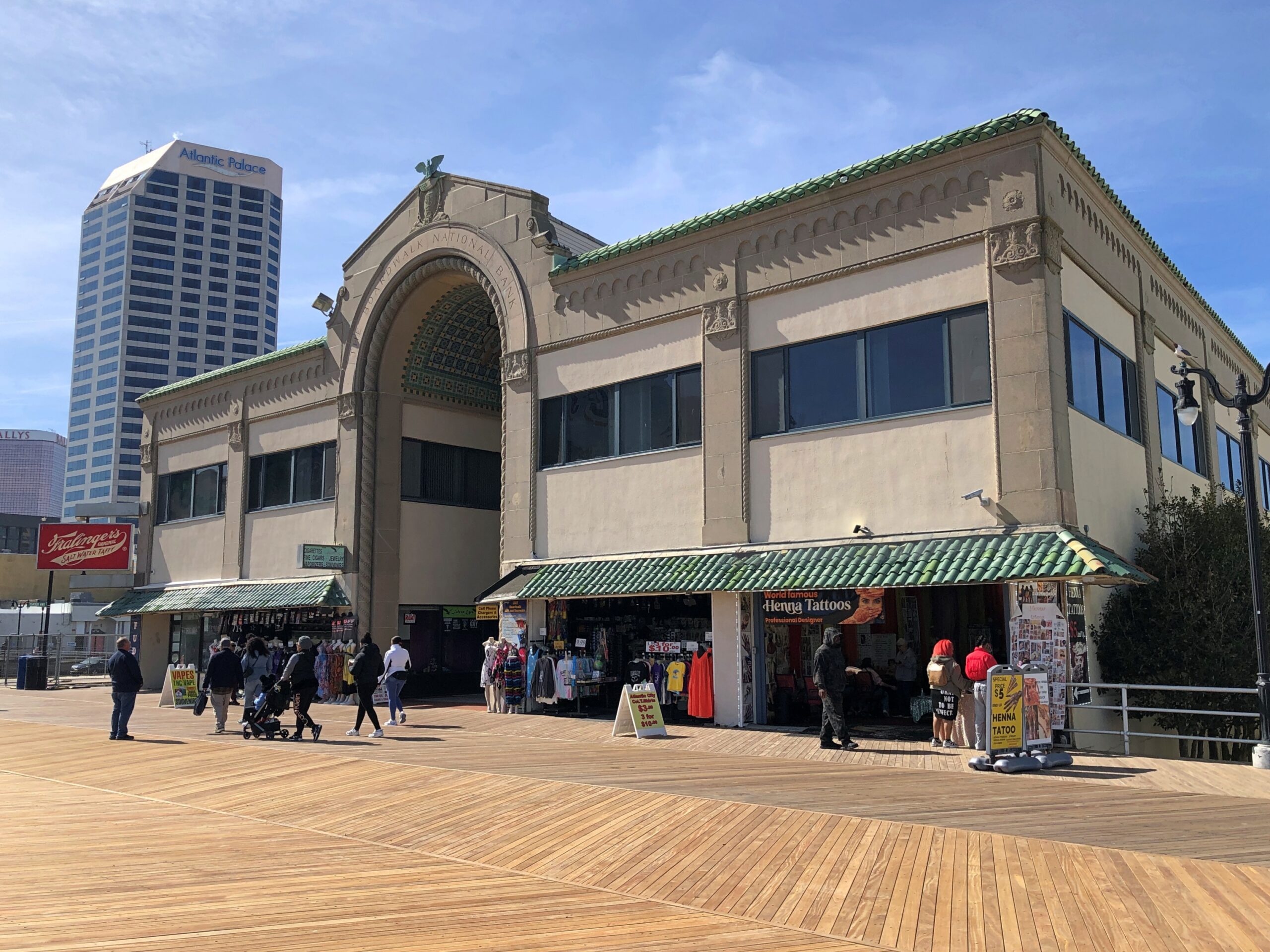
This one had a special flair.

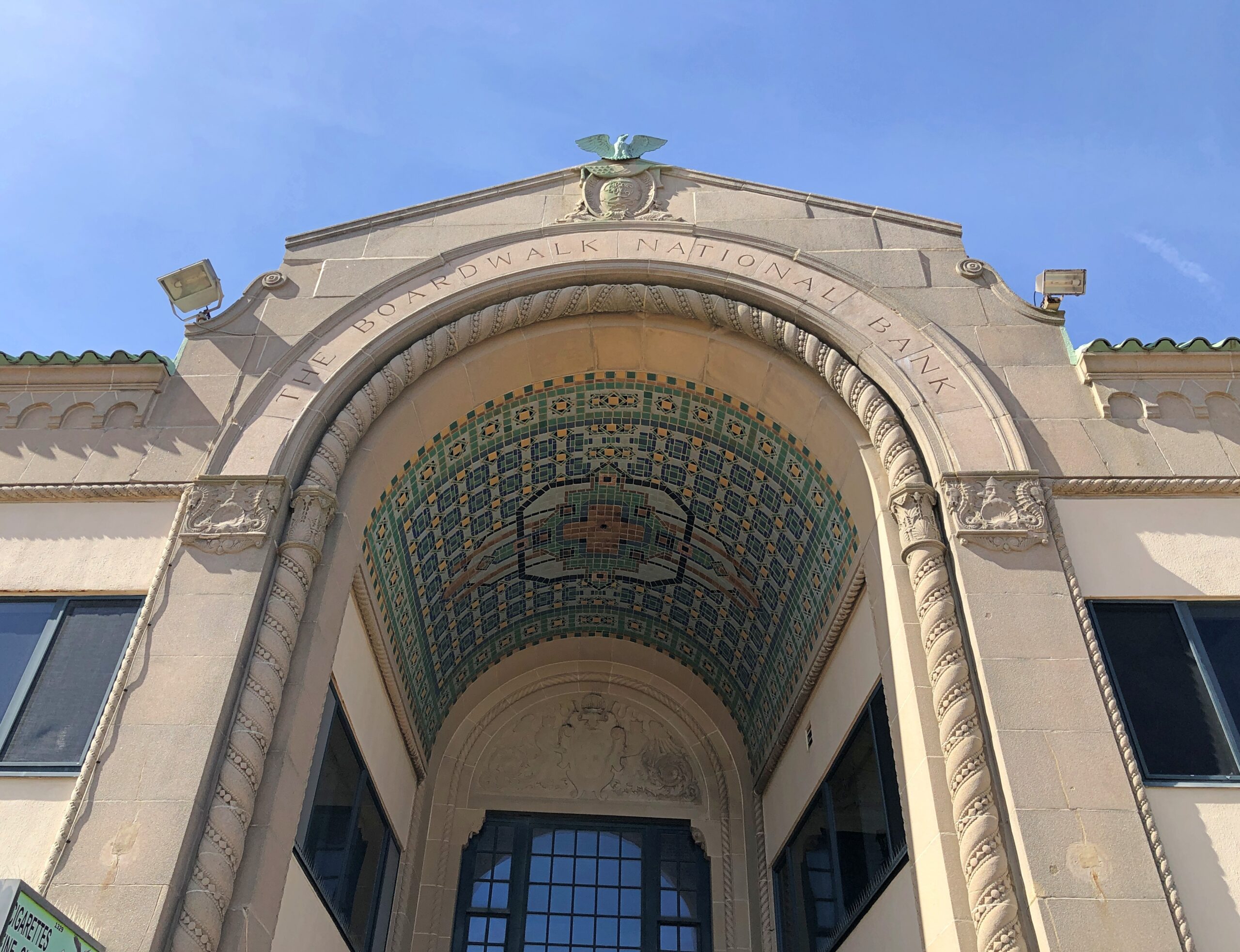
The Boardwalk National Bank? Known as the Arcade Building. These days, HQ of the New Jersey Casino Control Commission. The commission’s web site tells us: “The Boardwalk Arcade Building was built in Atlantic City’s roaring heyday before the Great Depression. The bustling Boardwalk National Bank had outgrown its space in a local hotel and decided to build a new headquarters at Tennessee Avenue and the Boardwalk. It was a time when the boardwalk was a major vacation and entertainment hub – the place to see and be seen.

“The two-story high, barrel-vaulted arch at the boardwalk entrance defined the building. The bank’s name is permanently embedded in the terrazzo and if you look closely, you can also see the coat of arms with the initials ‘BNB,’ held by two figures that could be King Neptune.”

More.

The boardwalk is only a part of Atlantic City, a fairly small place (pop. 38,400) that — away from the boardwalk — manages the ragged, urban look of larger places. Actually there’s a bit of that on the boardwalk itself, but at least the place isn’t overrun by mall-suitable chain stores.

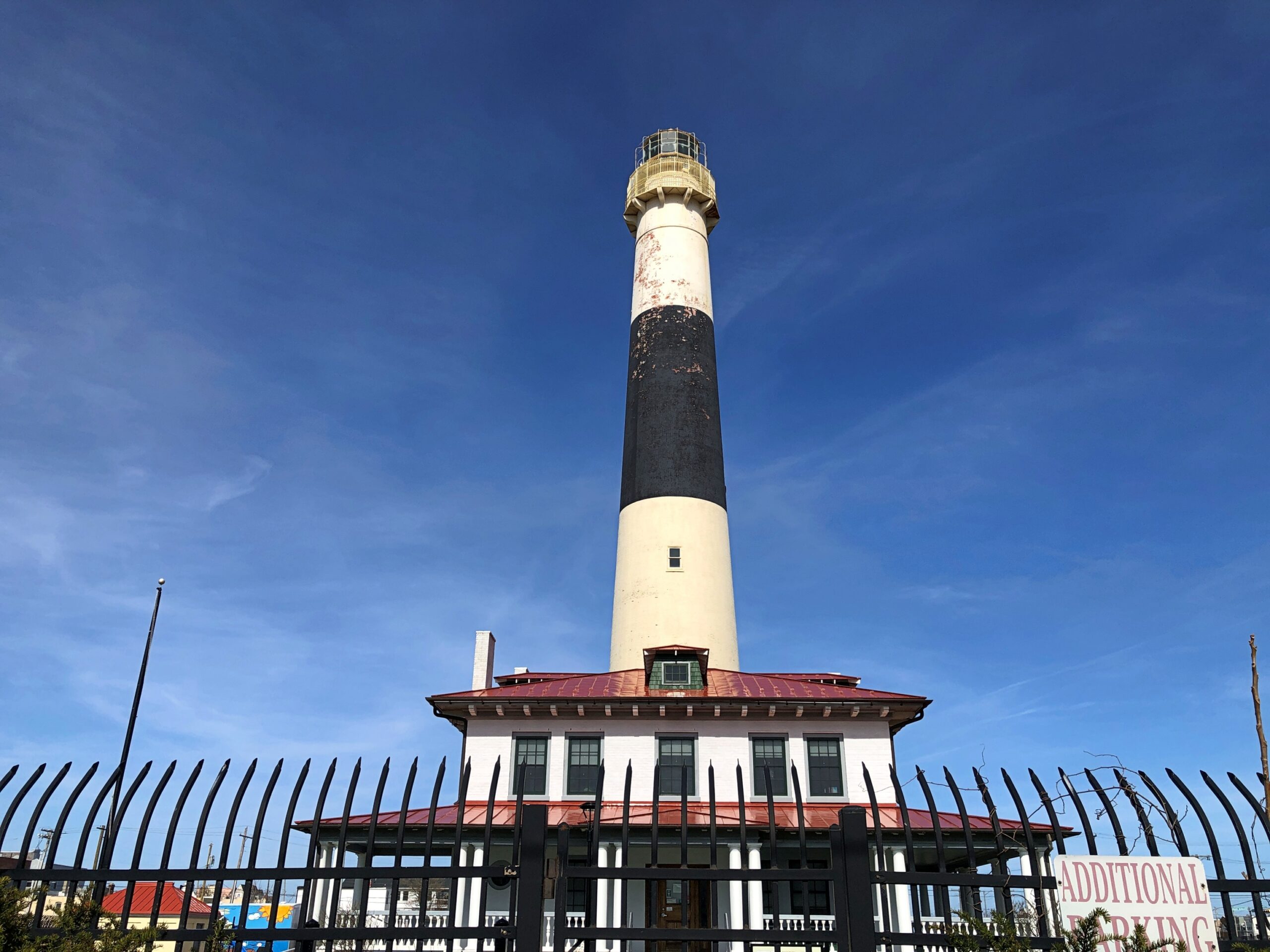
Headed for the causeway out of town, I made a stop at the Absecon Island lighthouse.

I might have known it, but I’d forgotten the city is on a barrier island, like Galveston: Absecon Island. At 171 feet, the lighthouse, dating from the 1850s, is the tallest in New Jersey. Not used for navigation any more, but a museum. Closed for the day. In some other draft for the Monopoly game board we know, was the Absecon Island Lighthouse a property?

The Pennsylvania State Capitol

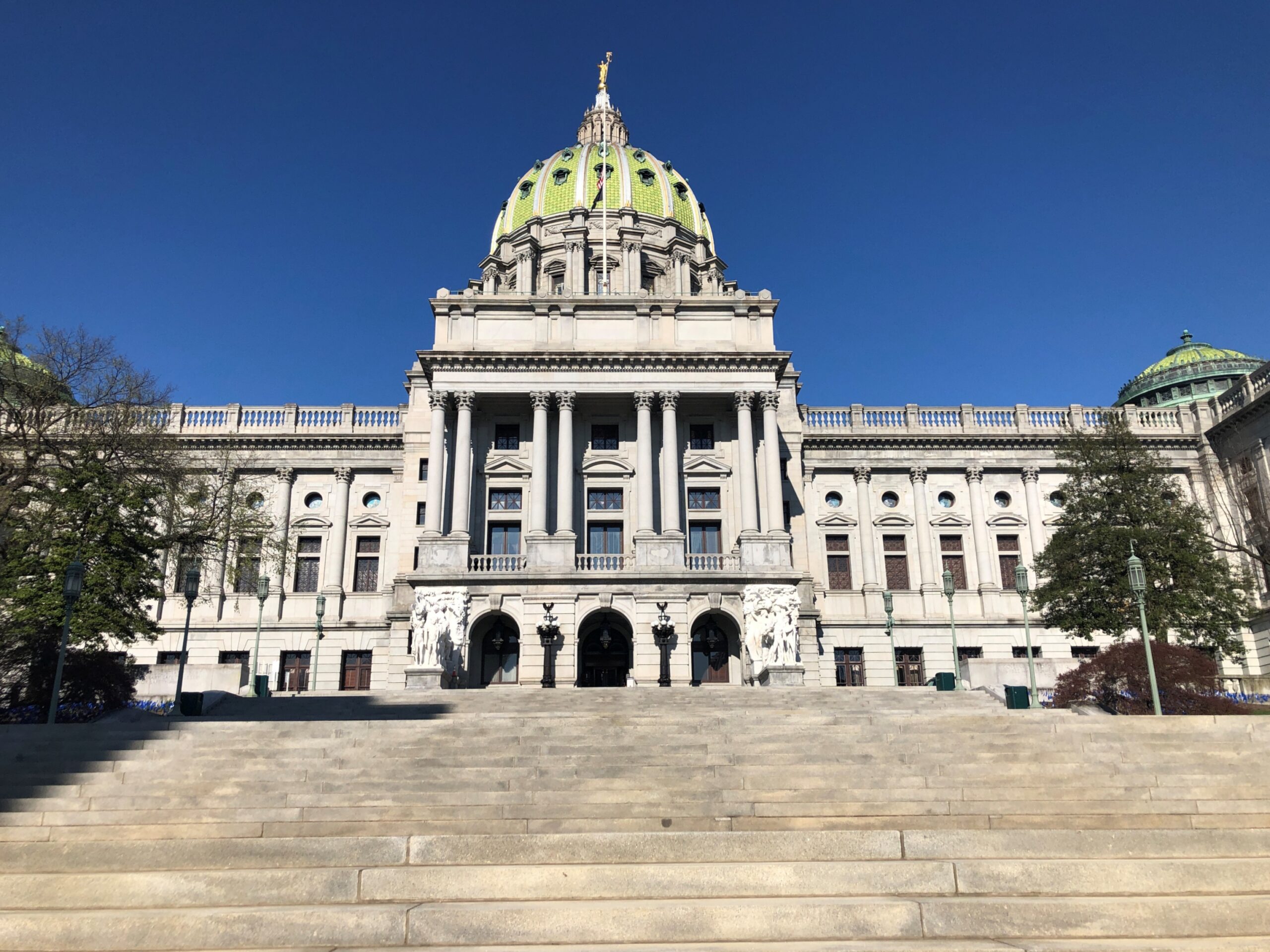
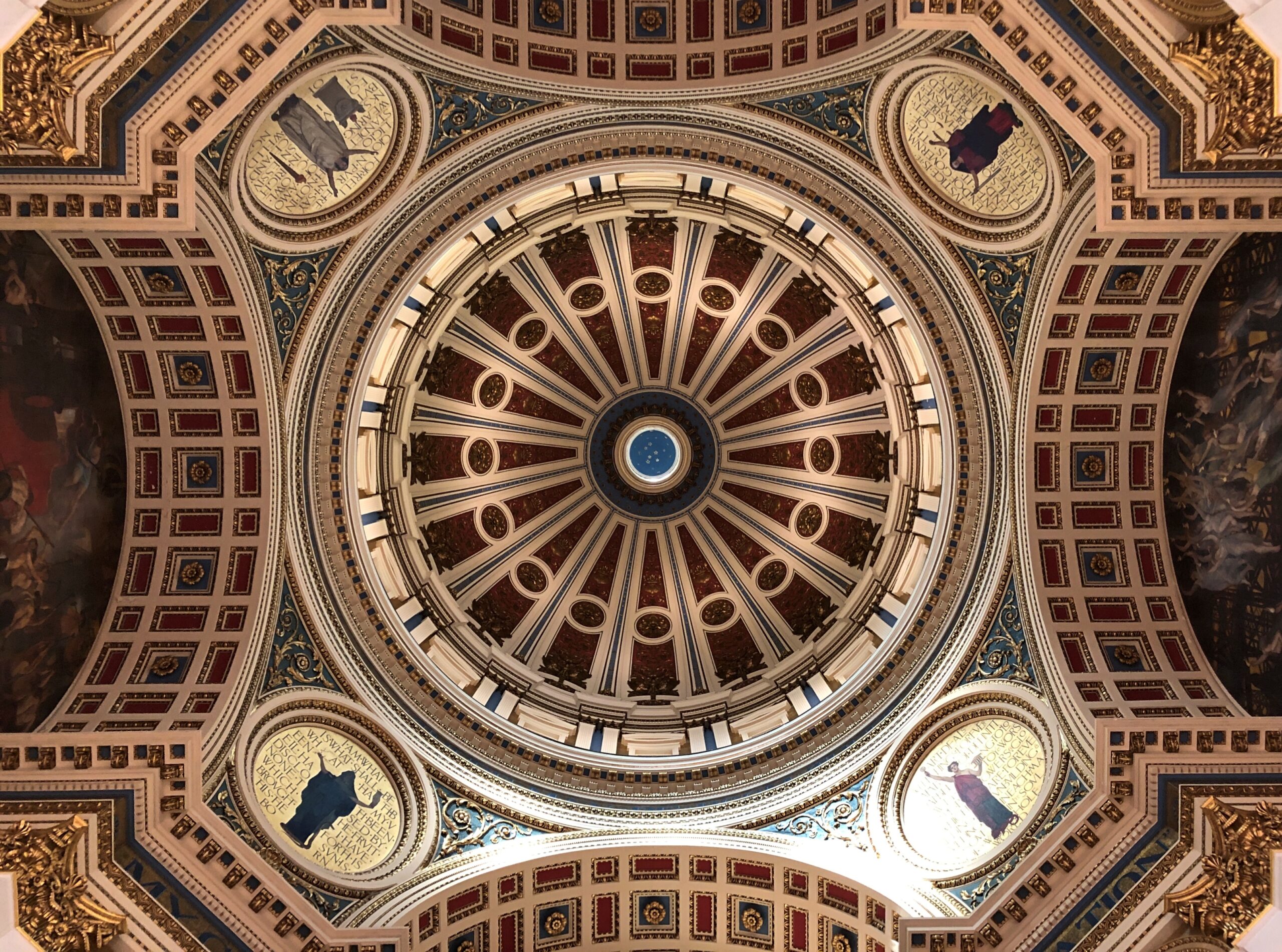
Pennsylvania has a handsome capitol, no doubt about it. At its dedication in 1906, TR called it “the handsomest building I ever saw.”

That must have been satisfying for the architect, Joseph Huston (d. 1940), to hear, or hear about.

But he didn’t have long to bask in the glory of his design. A few years later, Huston was in prison. Specifically, Eastern State Penitentiary in Philadelphia, back when that was a functioning stony lonesome.

“Huston eventually was charged with conspiracy to defraud the State of Pennsylvania by accepting bribes for the work on the Capitol and by charging the State more than was proper for the contracts required to complete the structure,” says Philadelphia Architects and Buildings. “Convicted on 29 April 1910, and after an unsuccessful attempt to mount a new trial… he served six months and 20 days in prison but was paroled on 20 December 1911 and returned to an architectural practice which was significantly affected by his legal difficulties.”

I’ll bet his practice was affected. An unusual tale for an architect, something you’d associate more with a contractor, but I suppose the temptation was too great for Huston and besides, grand buildings throughout the ages all had cost overruns, right? All the way back to the Ziggurat of Ur. That clearly didn’t cut any ice with the jury.

Whatever his side interests, Huston promised a palace of art to the commonwealth, and he delivered.

I arrived in Harrisburg fairly late in the afternoon of April 8, on my second day driving east. Pennsylvania is a long drive across, and I’d started in Cleveland, with the goal of reaching Trenton, New Jersey that evening. I did, but it didn’t leave much time to stop and see things. I was glad to learn that the capitol building was open until 6 pm, so I made time for it.

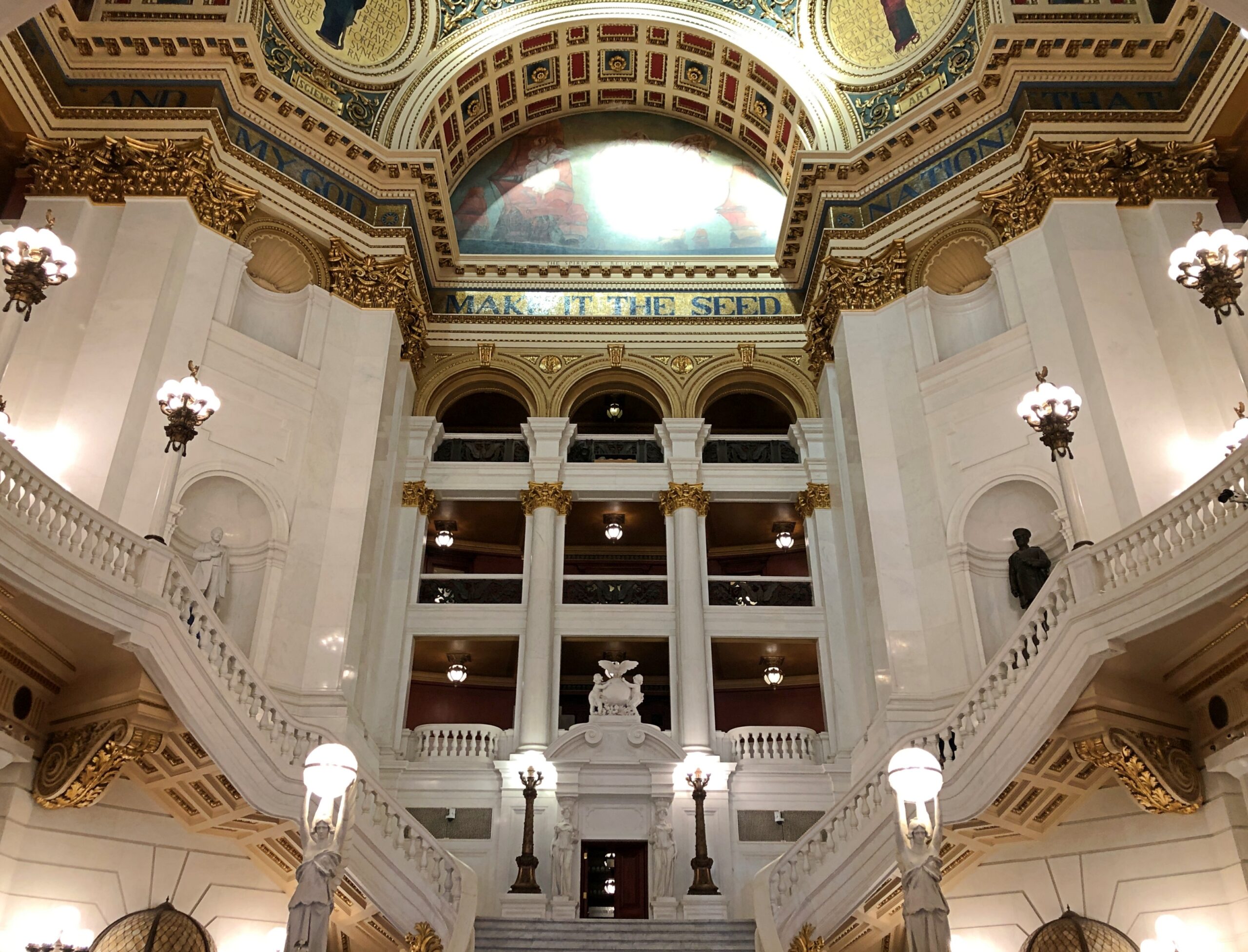
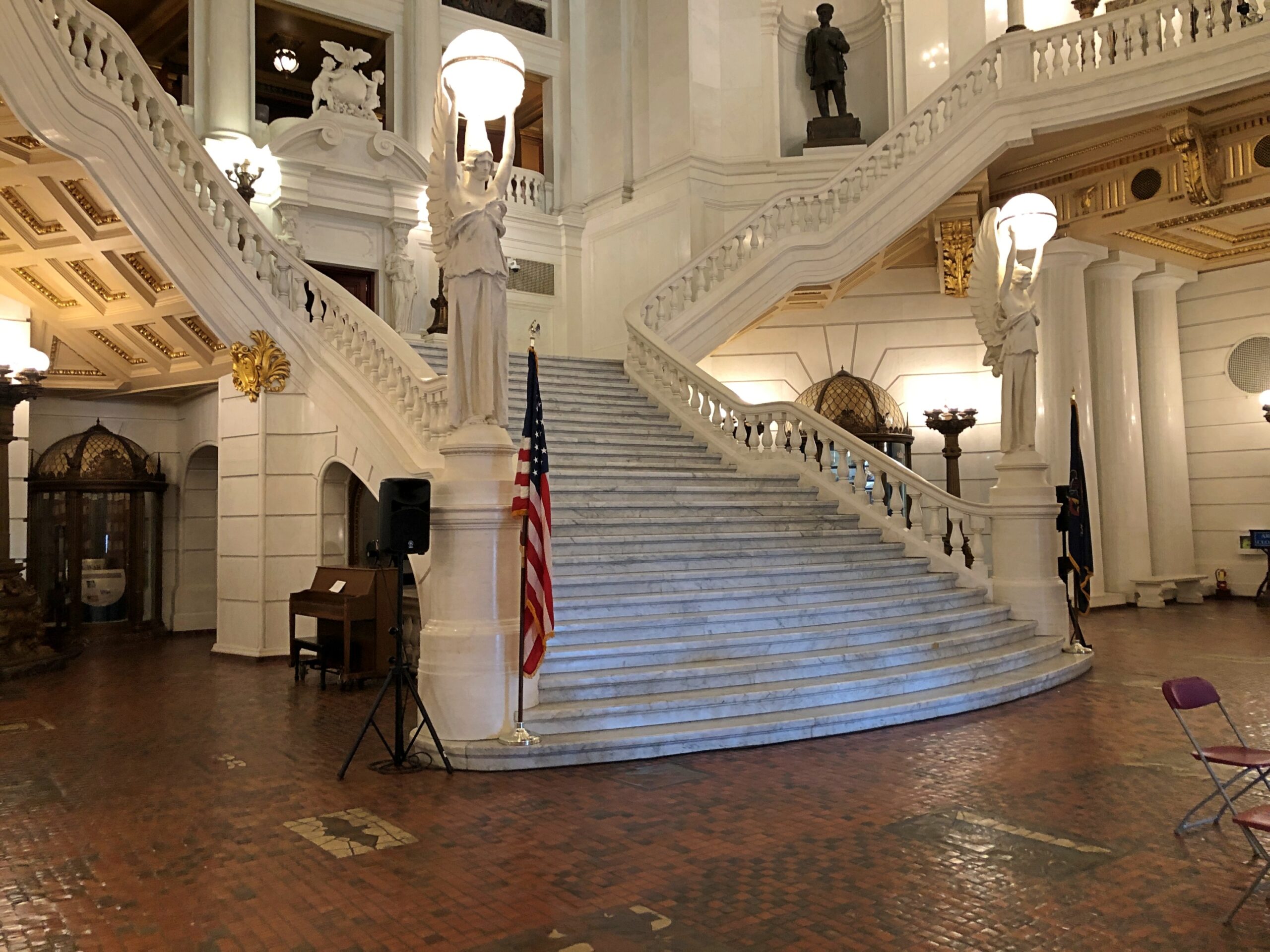
The grand staircase, flowing down to, or up from, the distinctive tile floor under the rotunda.

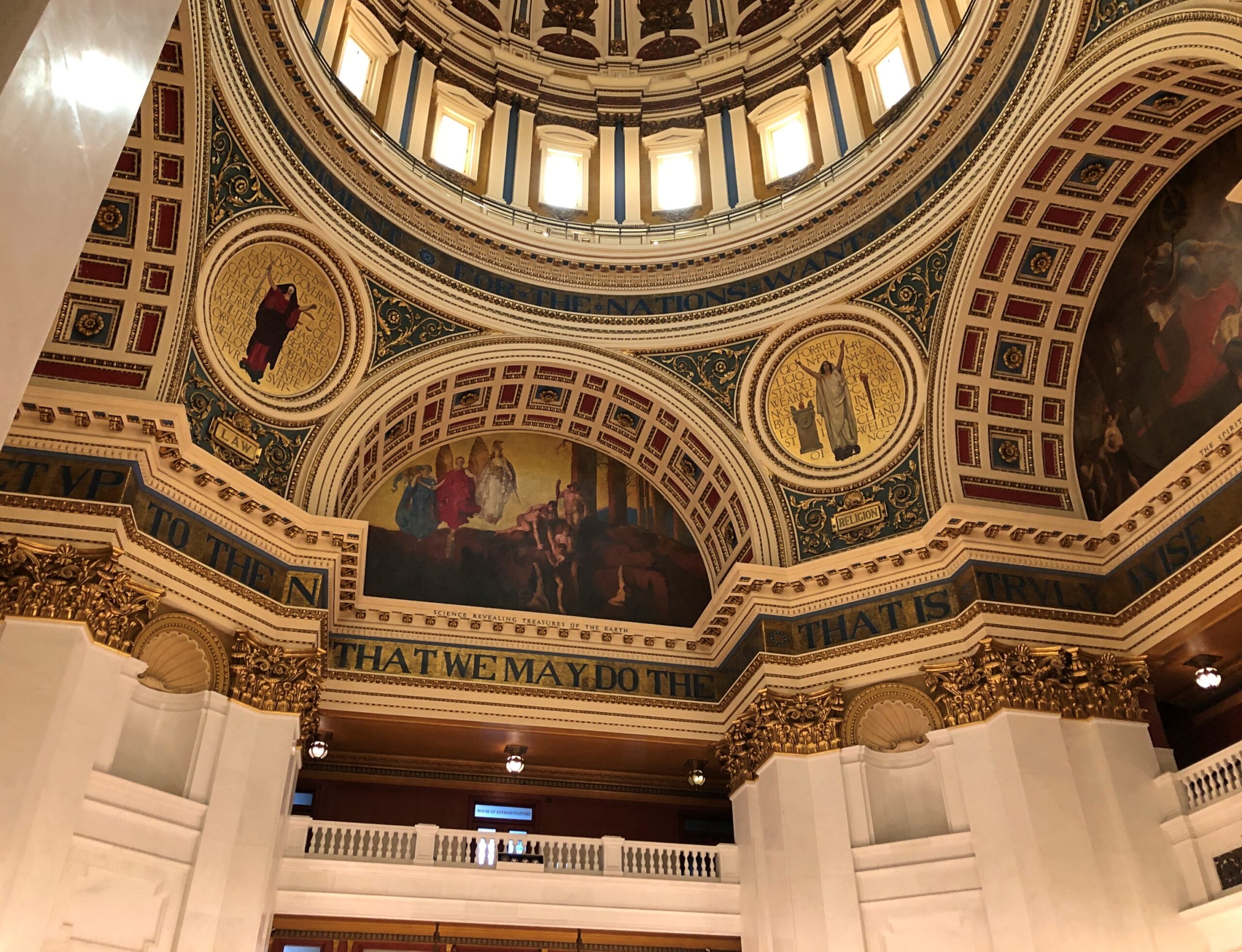
Art flourishes not just on the vaulting dome or the ornate walls, but even underfoot.

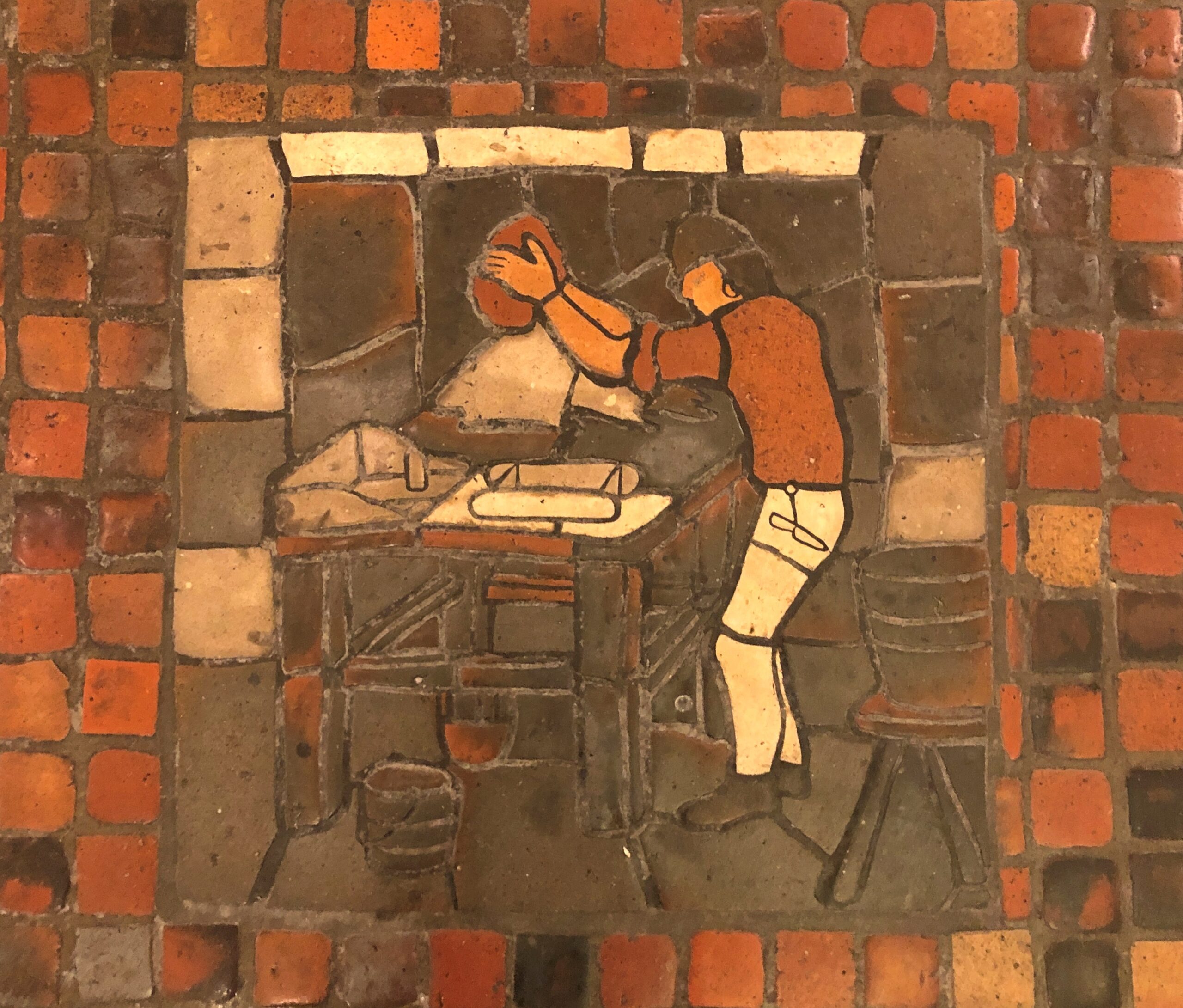
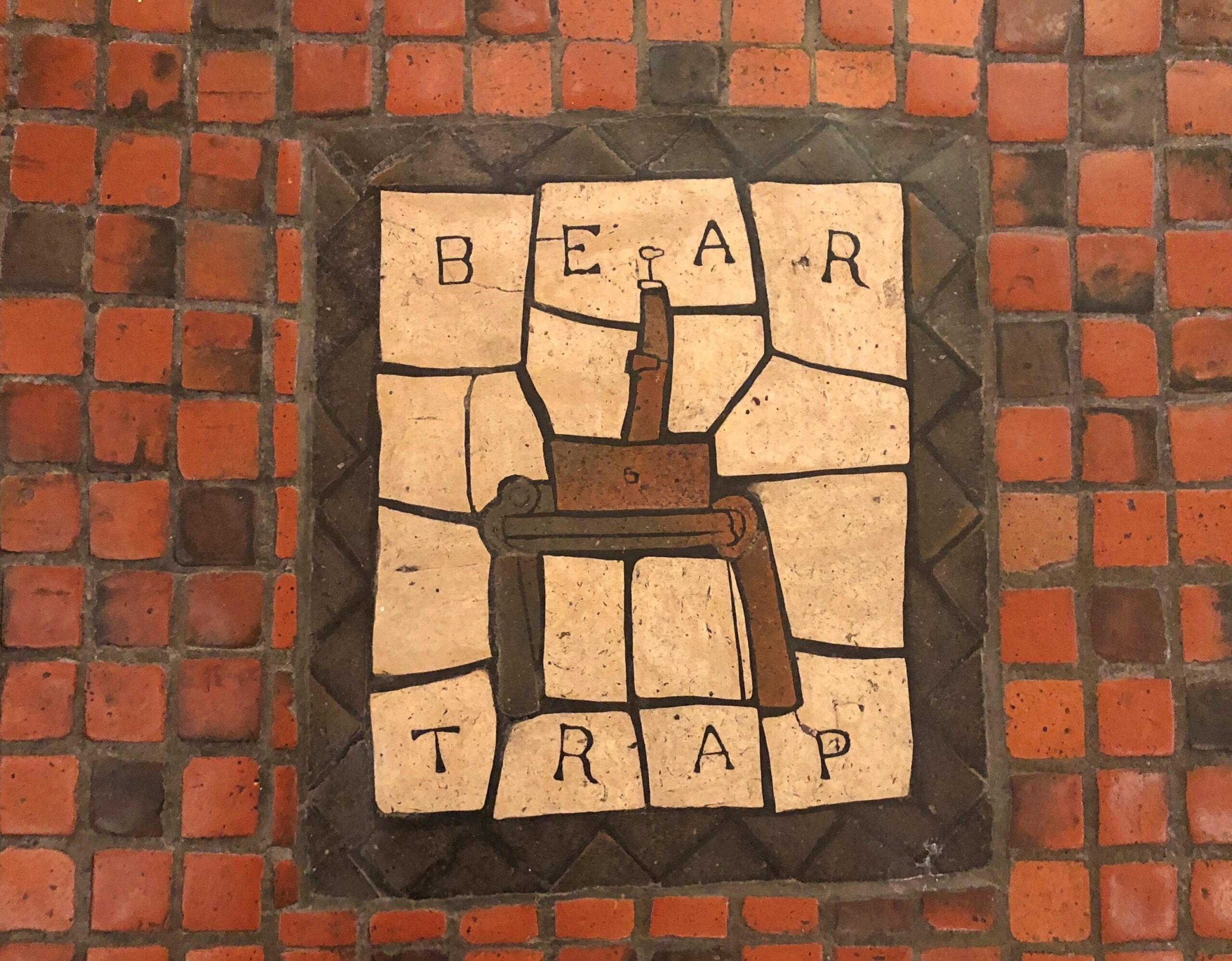
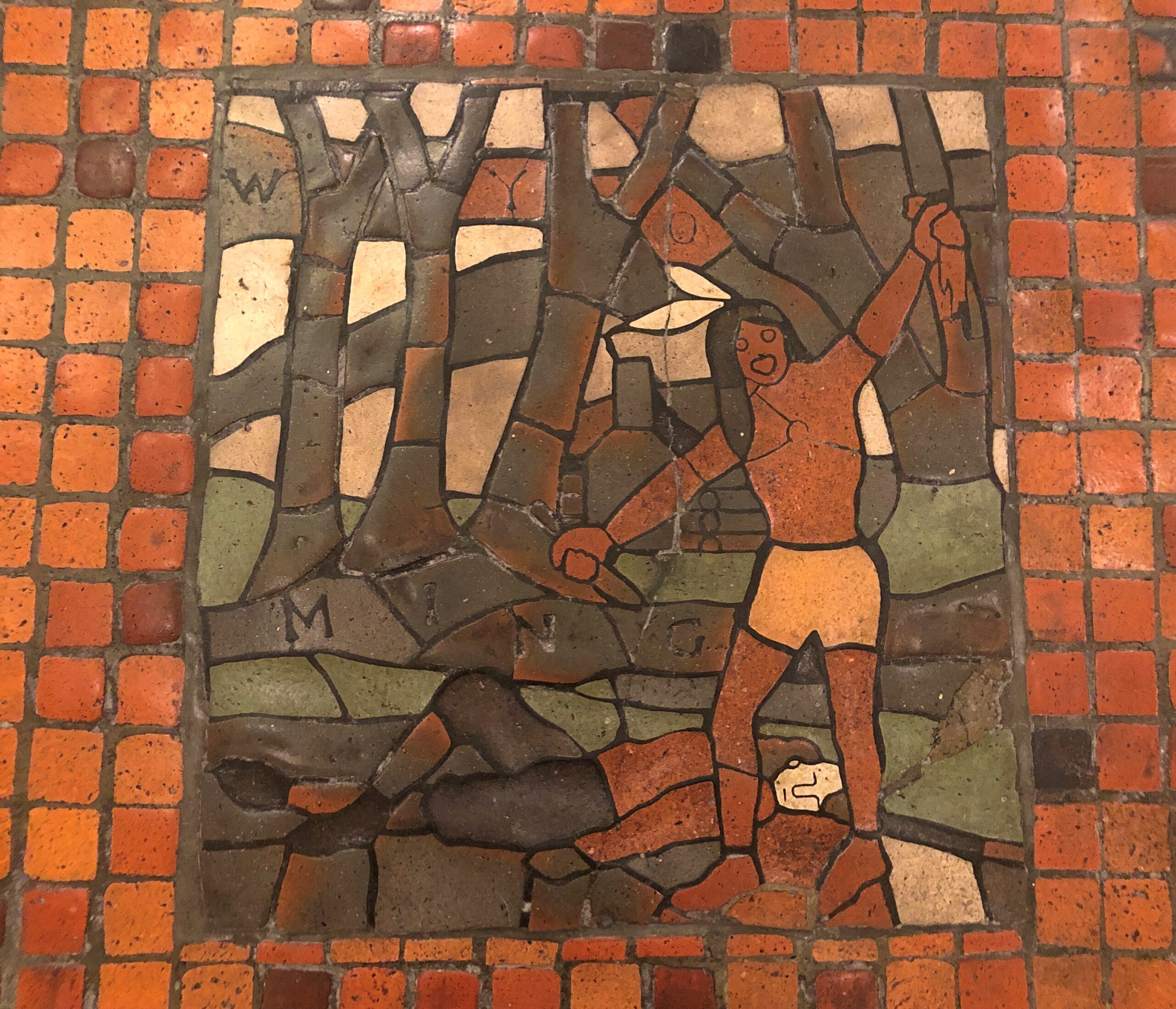
Henry Chapman Mercer mosaic

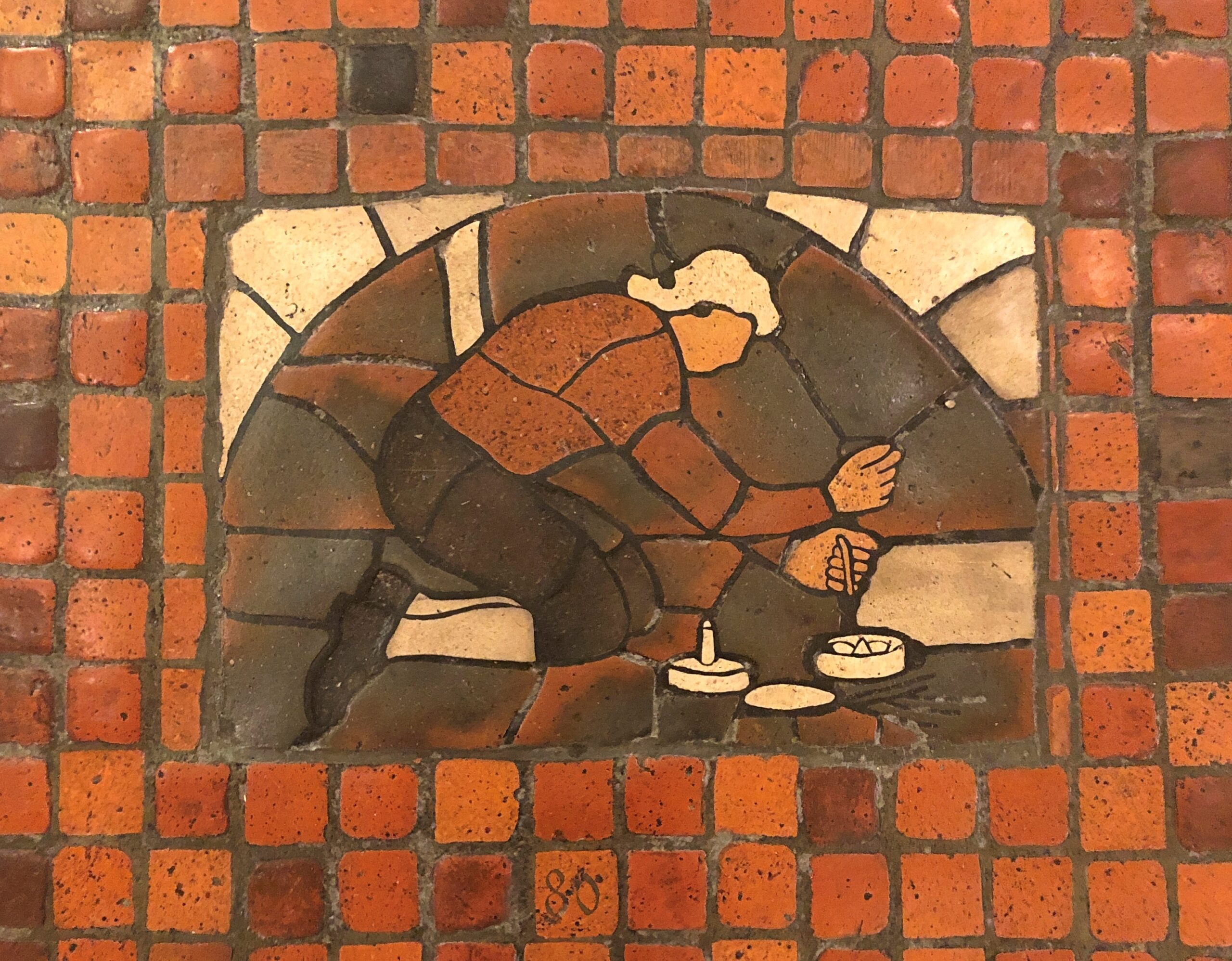
Henry Chapman Mercer, a Pennsylvania artist, did the mosaics grouted into the floor – scenes from the history of the commonwealth, from pre-history to the dawn of the 20th century. A good introduction to Mercer, one of the more interesting people I’ve first heard about lately. Among other achievements, he left behind his home, Fonthill; the Mercer Museum; and the Moravian Pottery and Tile Works, all in Doyleville, Pa., which is suburban Philadelphia these days. As if I needed another reason to revisit metro Philly.

A lot of scenes, it turns out, more than I could photography or even see. Including one that might not have made the cut in later times.

The House and Senate chambers weren’t open late that afternoon. I understand they are important parts of the art palace. More can been seen here about the decorative arts of those rooms, and the rest of the capitol.

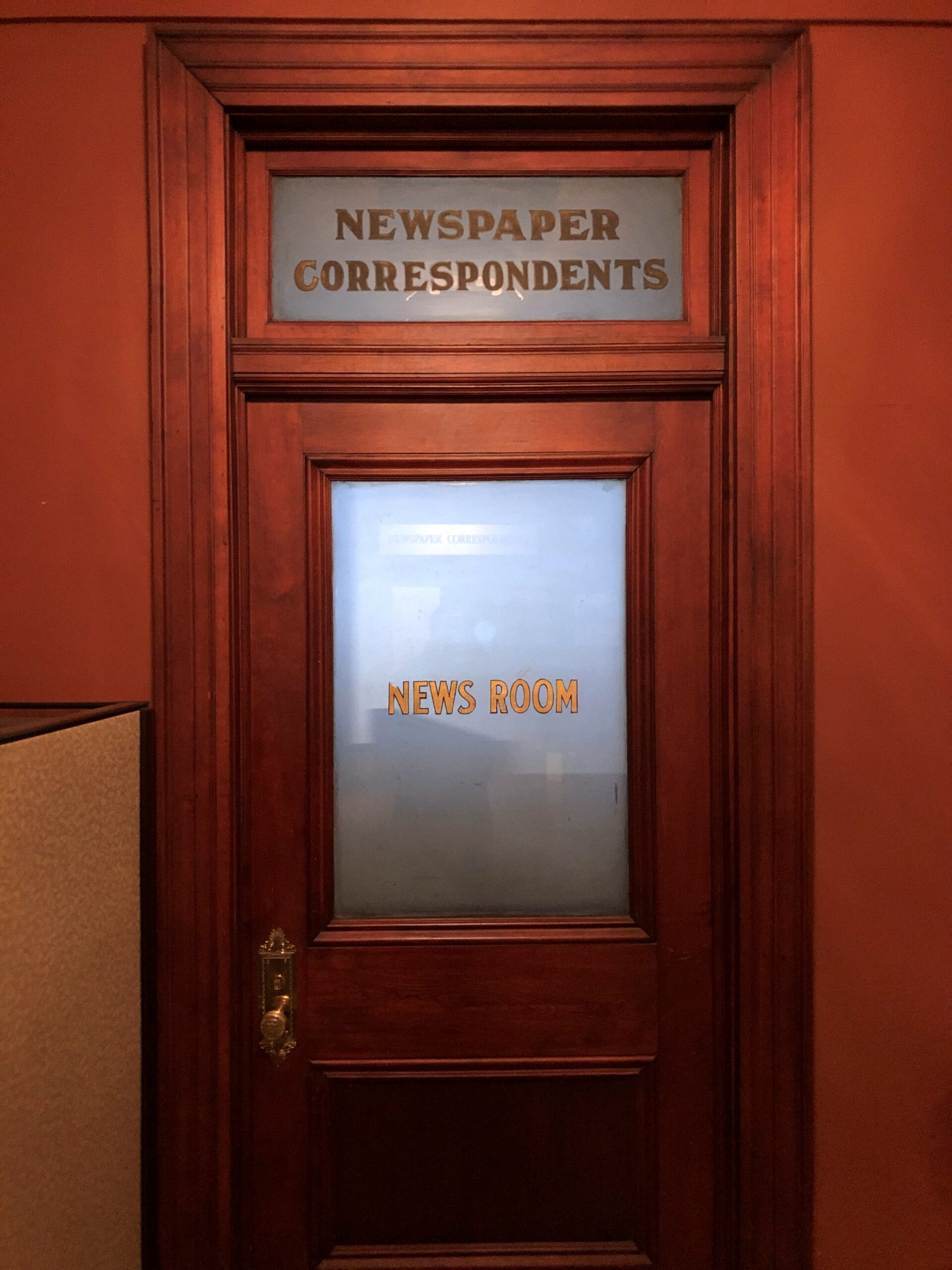
Not art, but this was good to see. I figure it isn’t literally for newspaper reporters any more, but I like to think when you open the door, you step into the press room of The Front Page.

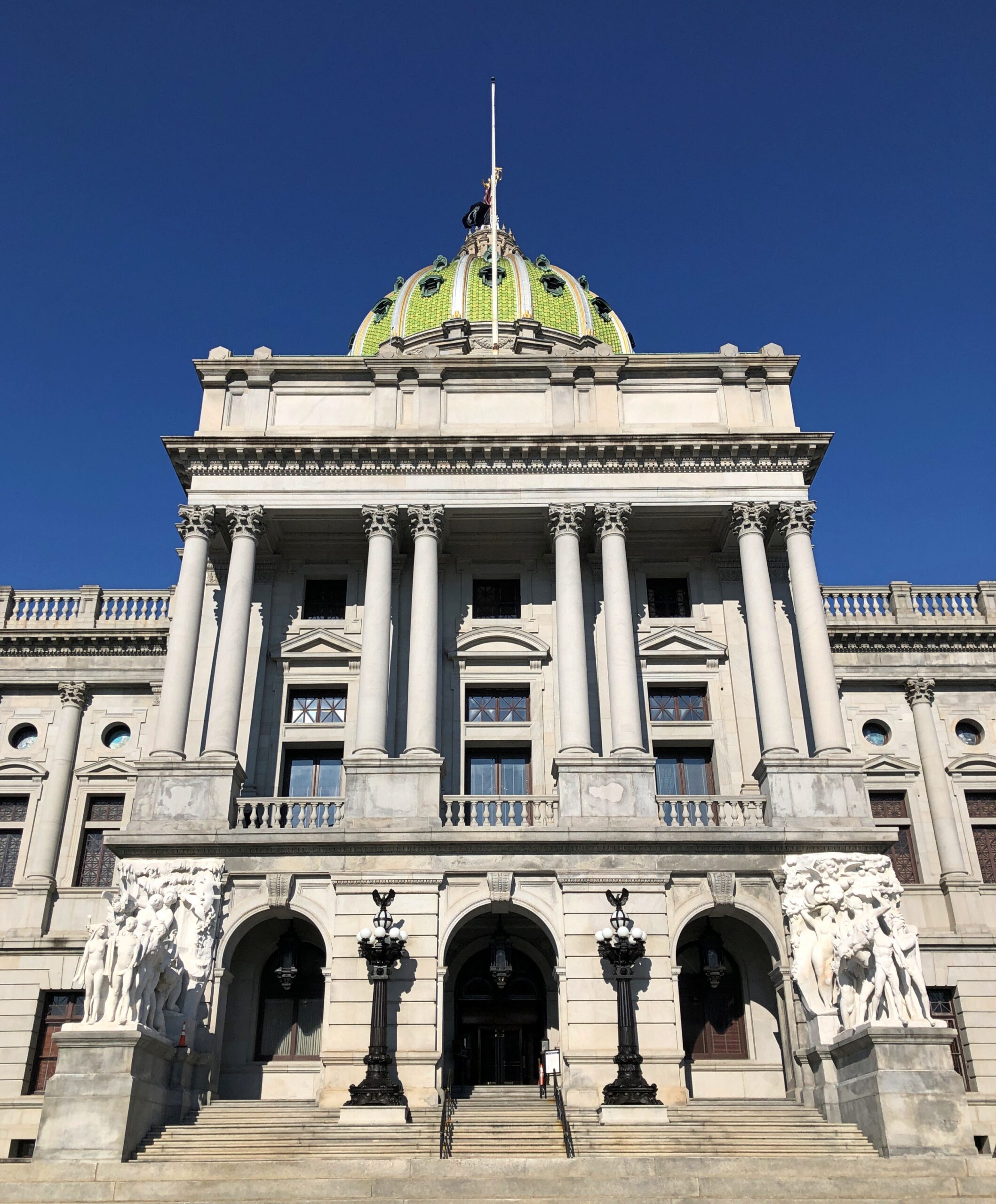
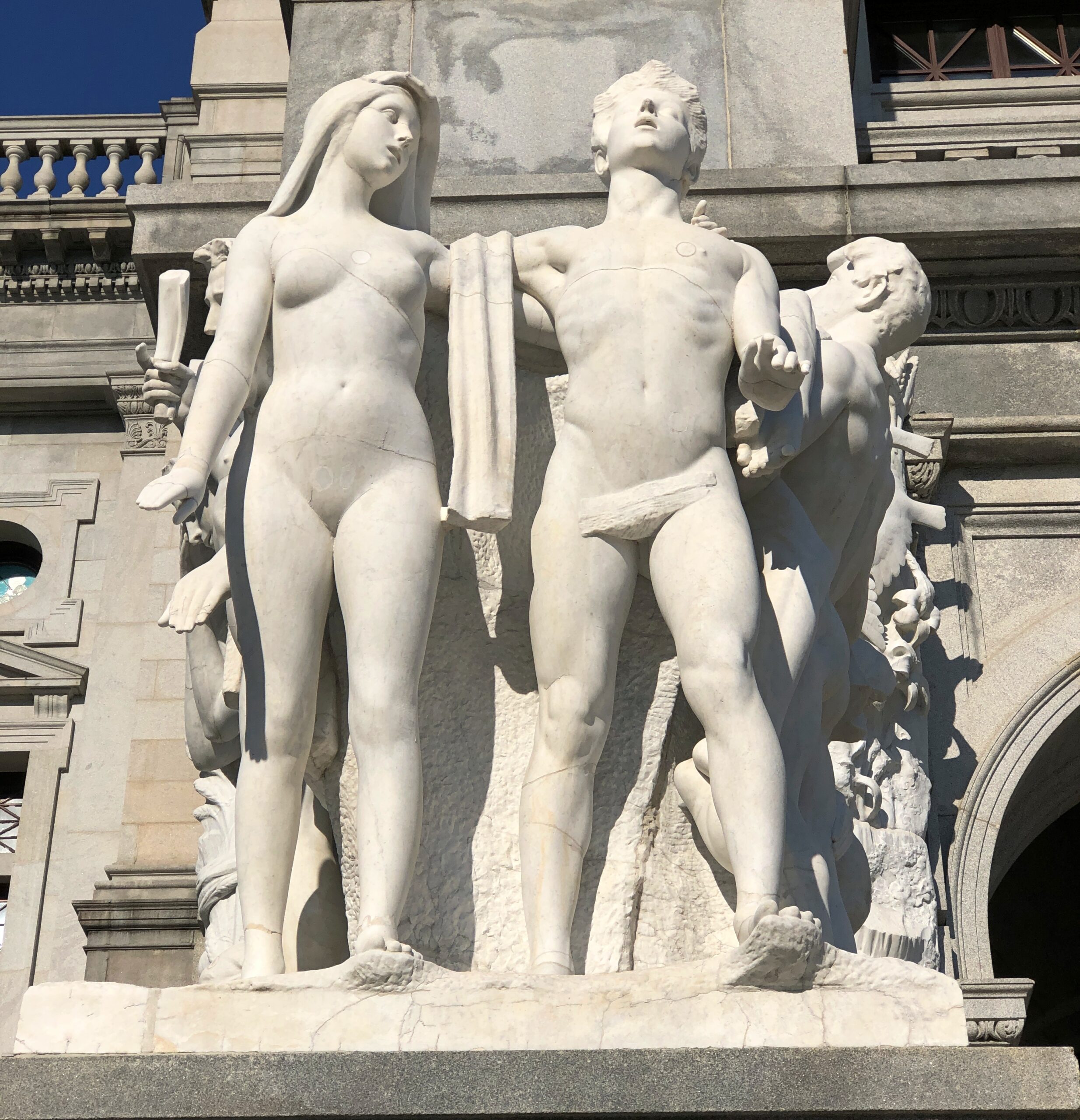
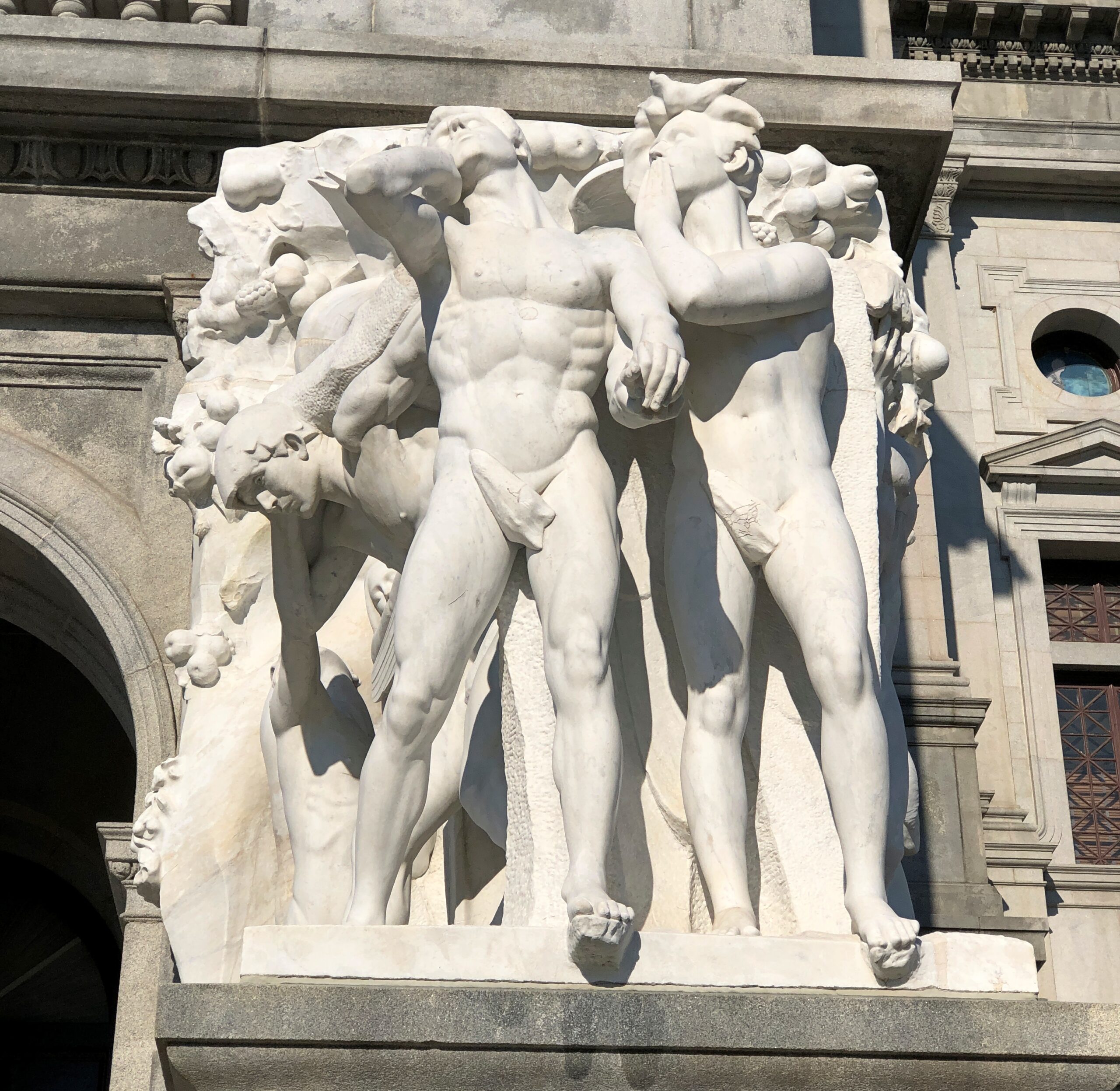
Statuary out front: two groups consisting of 27 figures. The artist in this case is George Grey Barnard (d. 1938), born in Pennsylvania, but I believe Chicago can claim him. Wouldn’t be a palace-of-art from 100+ years ago without larger-than-life statues in profusion. I’m glad the commonwealth has seen fit to keep them clean.

The upper couple would seem to be Adam and Eve; and wags might call the other couple Adam and Steve.

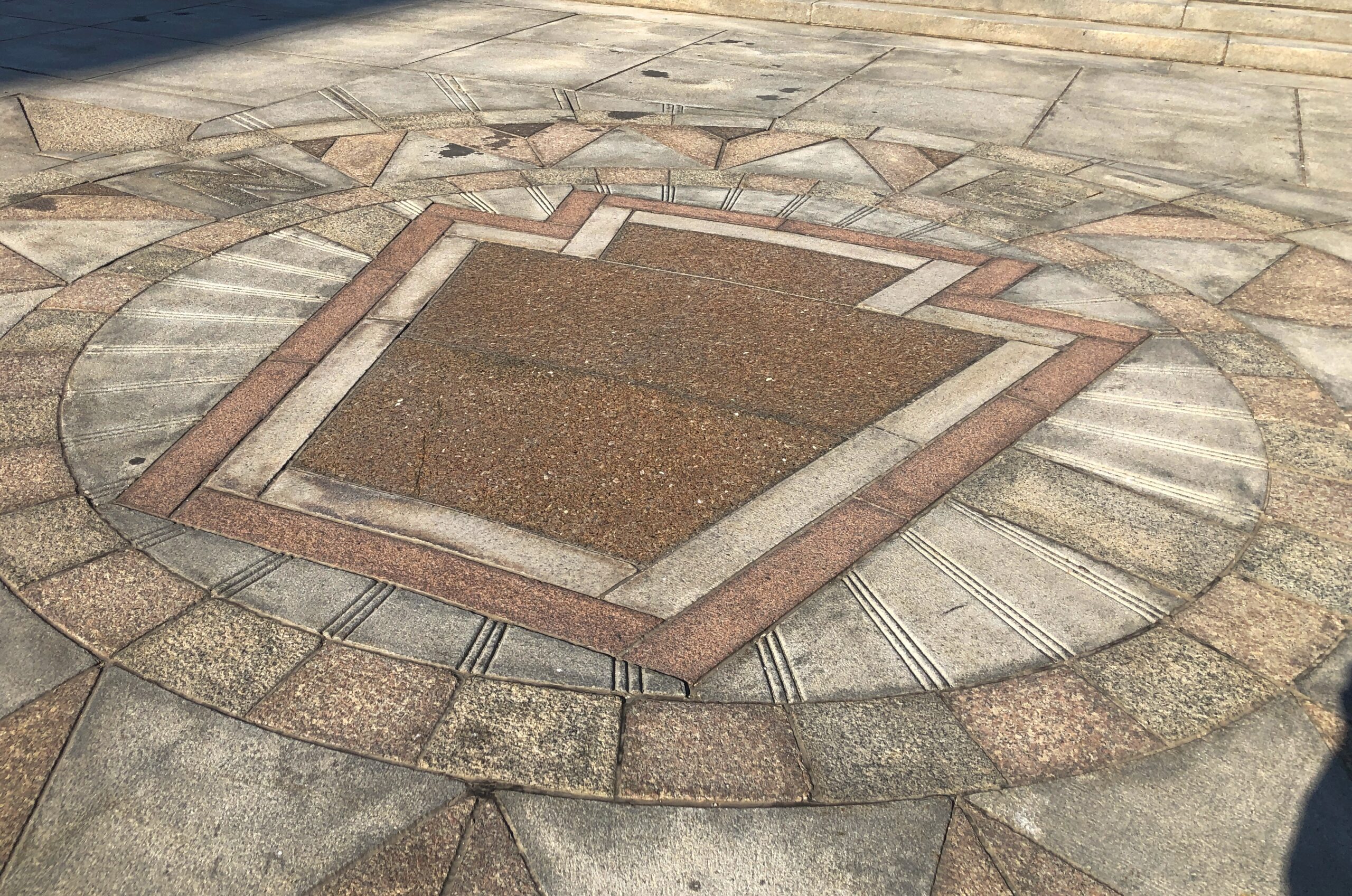
In the sidewalk in front of the capitol: The Keystone. You can see that in various parts of the state, but I remember it most from the keystone-shaped signs in Pennsylvania that tell you that a garage will do state inspections for your car.

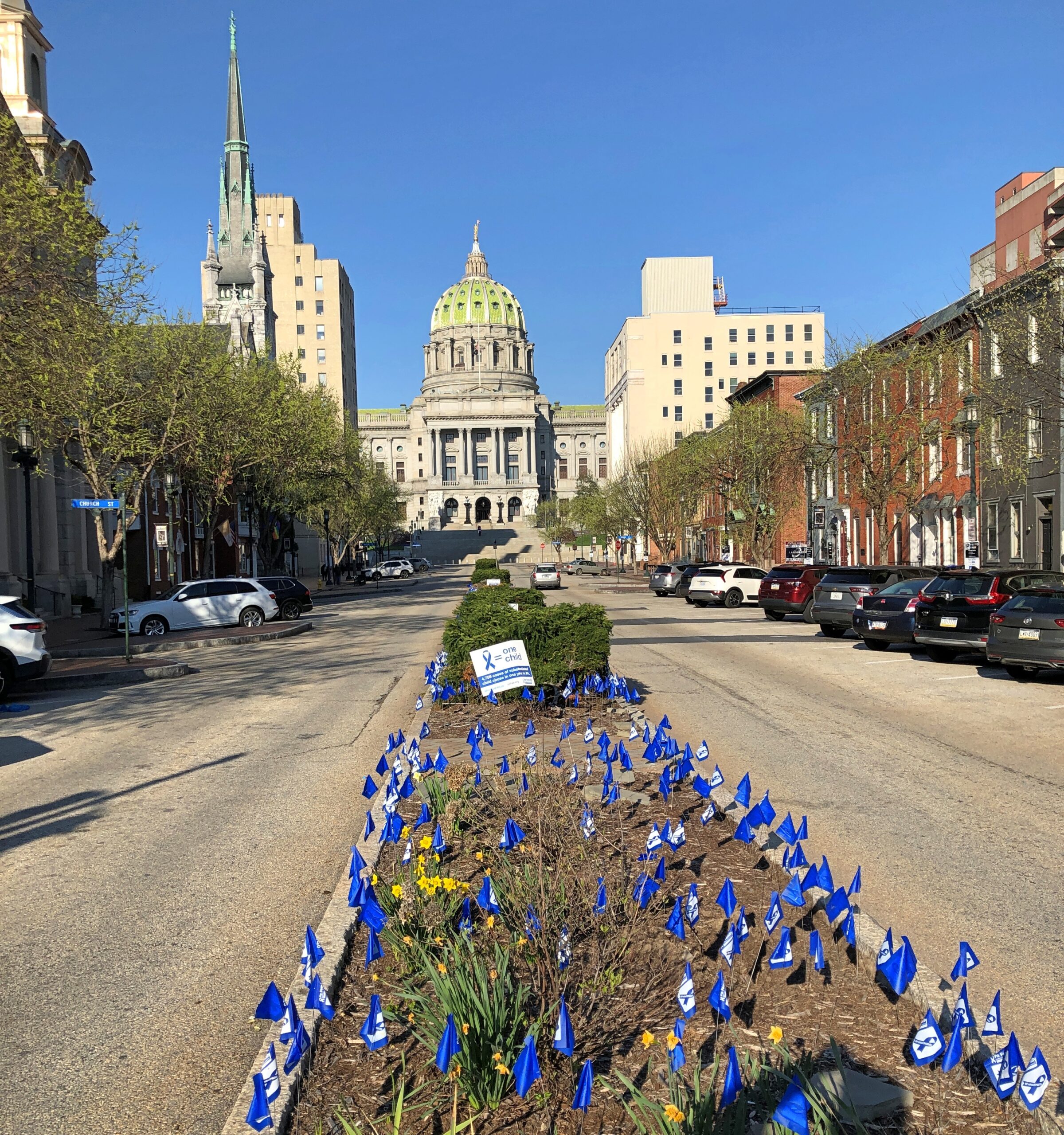
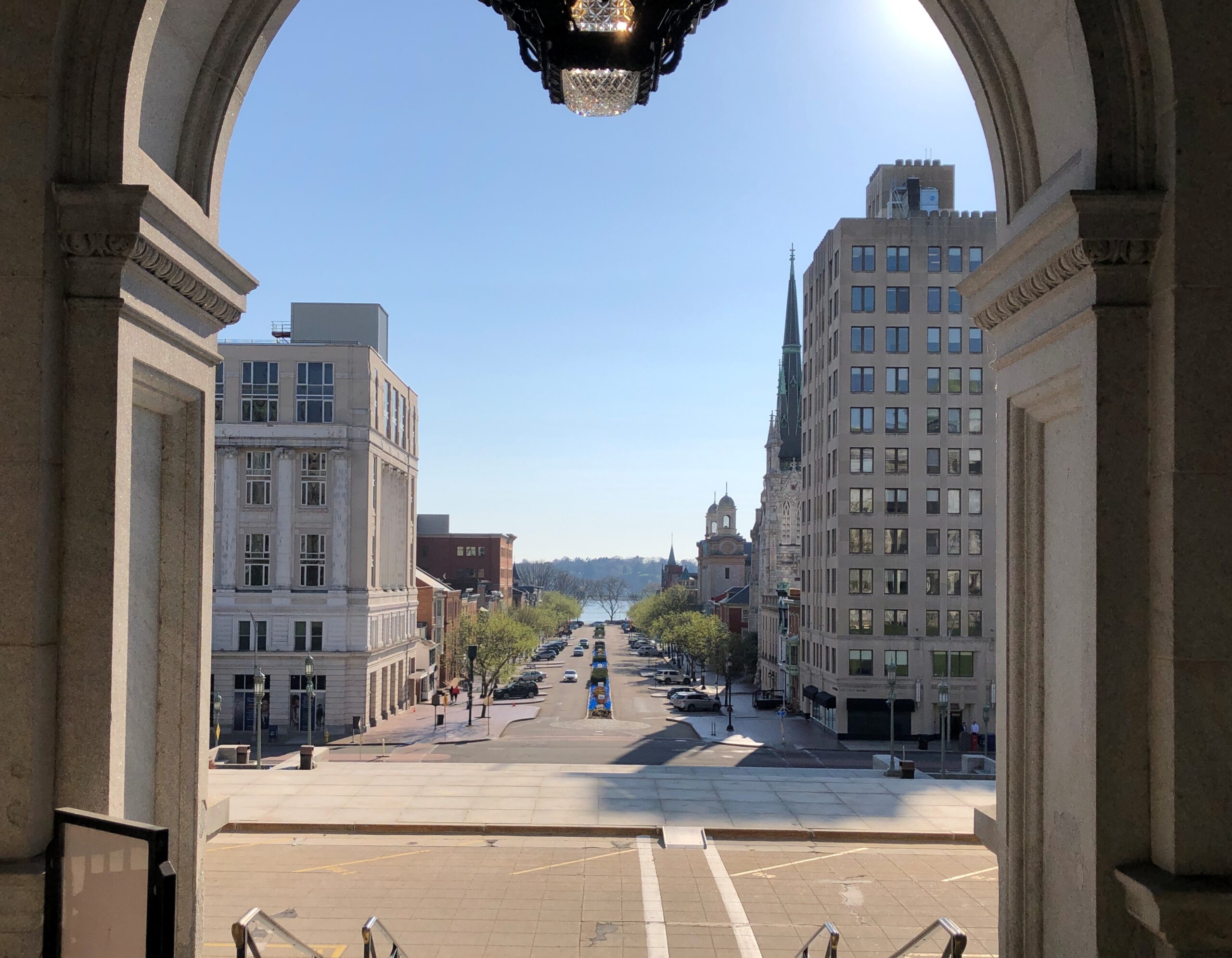
The view down State Street from the entrance. Off in the distance, the Susquehanna.

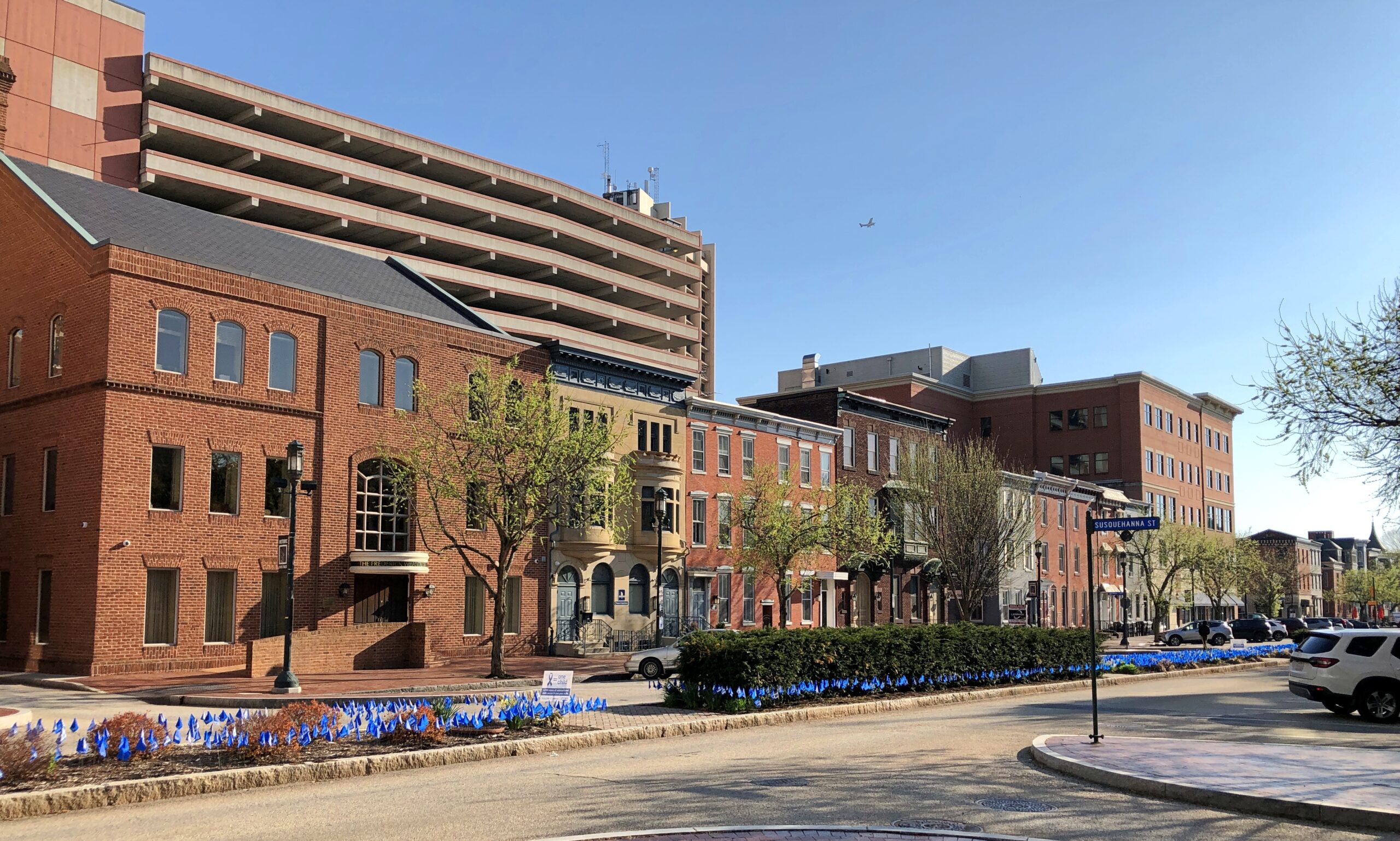
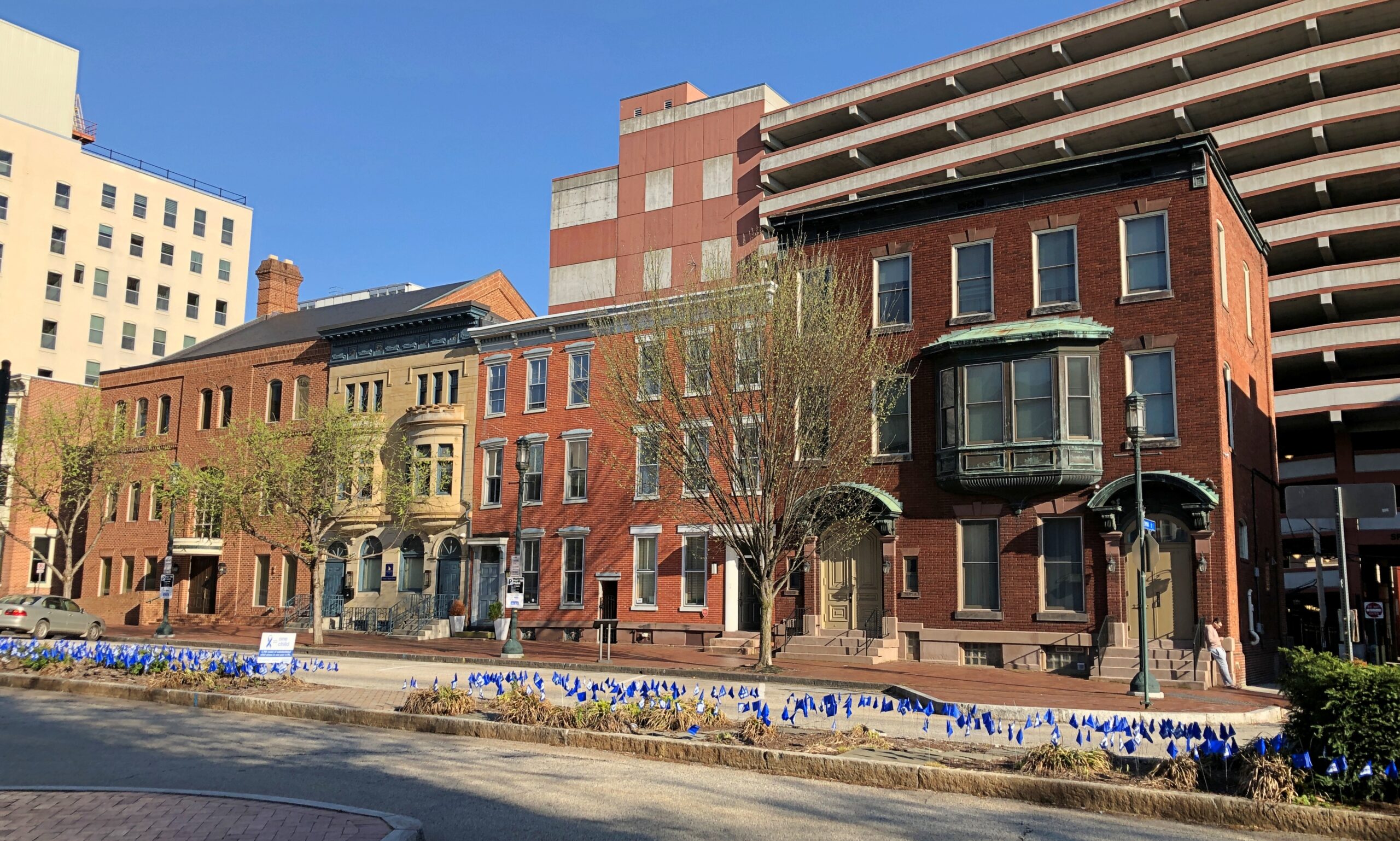
Couldn’t very well leave Harrisburg without a stroll down that street.

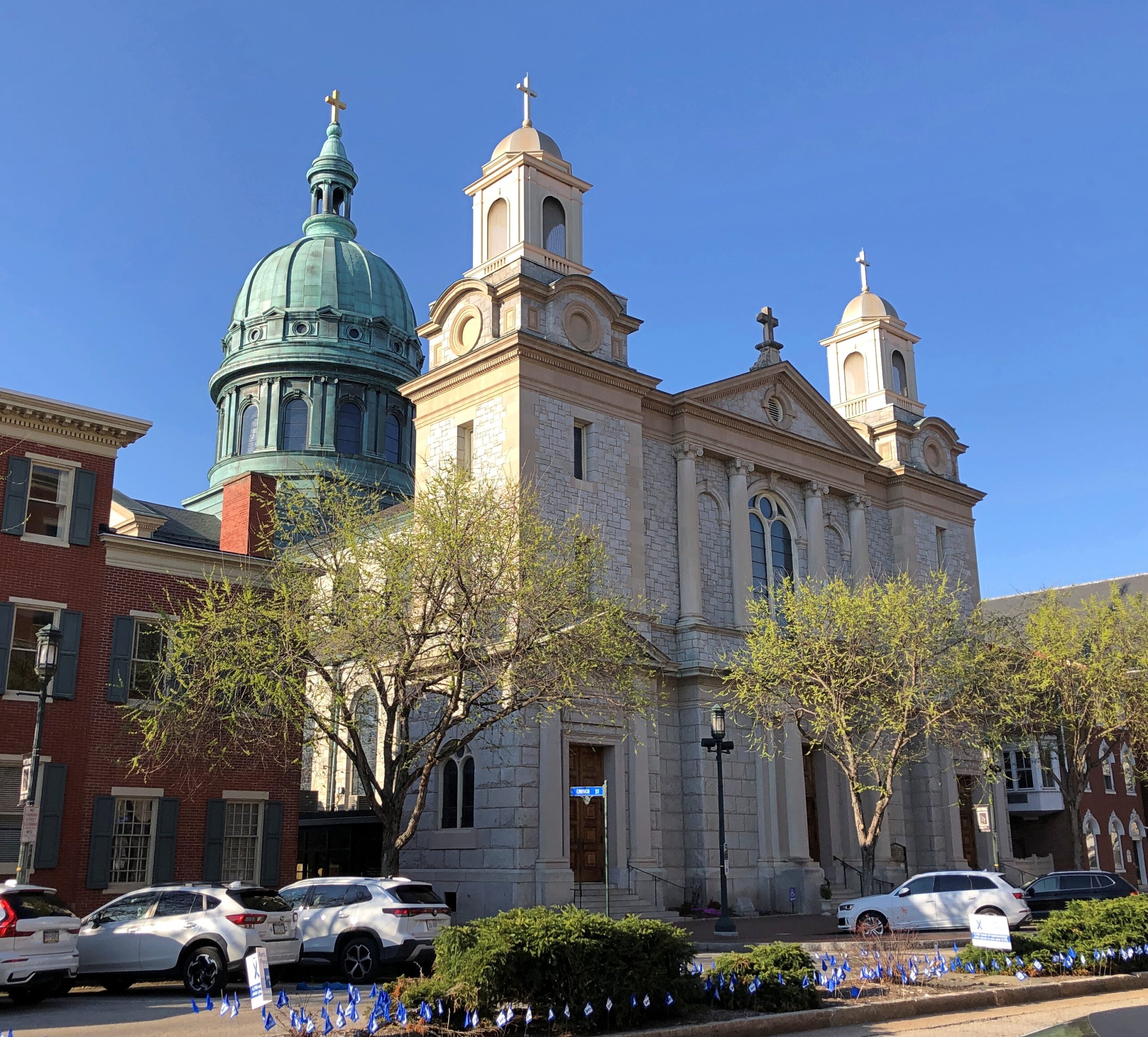
Two monumental churches rise on the street. The Cathedral Parish of Saint Patrick.

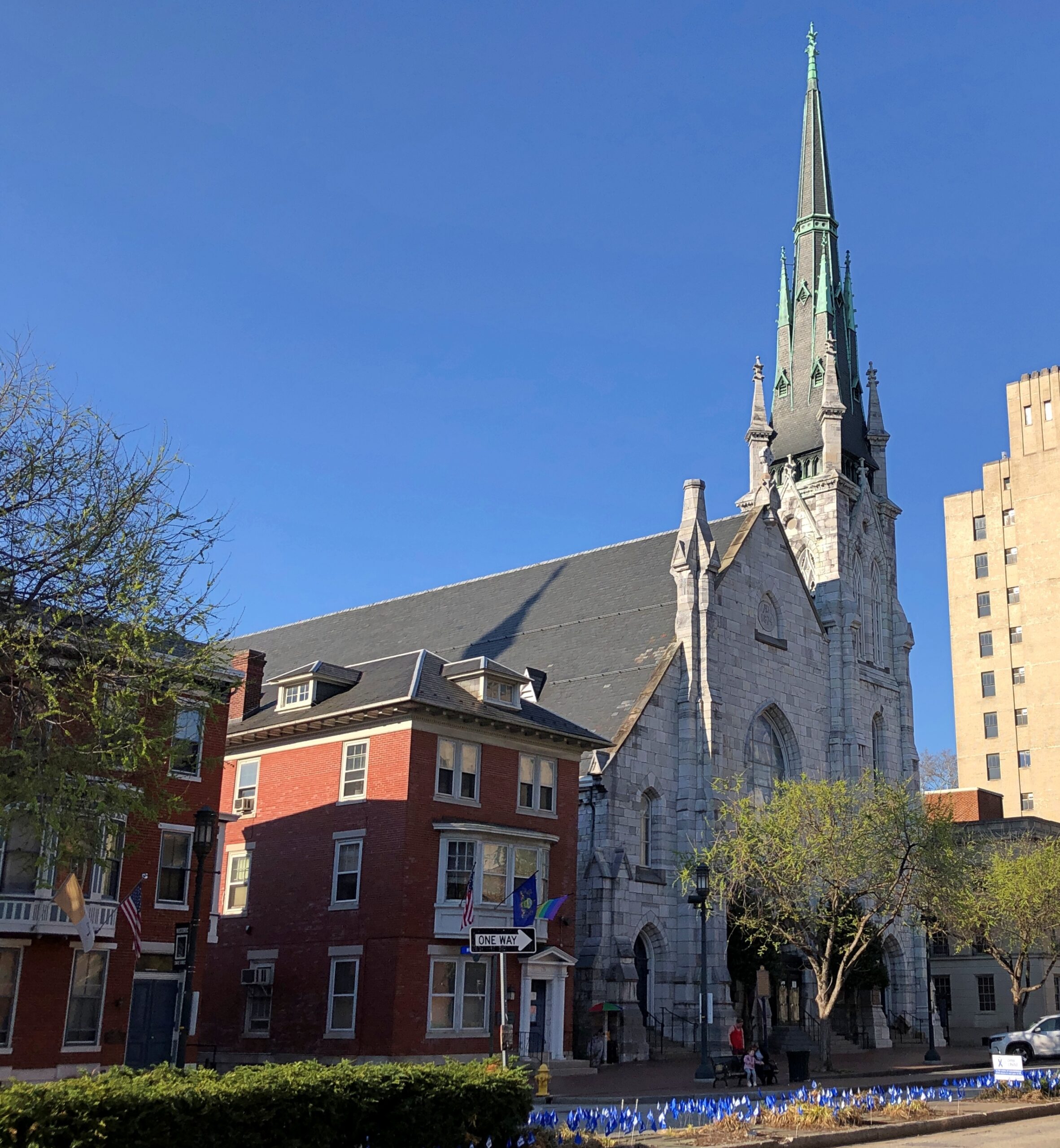
Grace United Methodist Church.

I had to be on my way afterward. But any trip that starts off with a grand capitol is going to be a good one.

GTT ’26 Details

Time for spring break. Back to posting around April 26, when it might actually be spring in northern Illinois. There have been a few days recently when I’ve been able to sit out on my deck comfortably, which is my idea of spring, but not that many.

The recent trip to Texas seems like a while ago now. As usual, though, there were many details. A lot more than I can convey, but here are a few more.

Faces

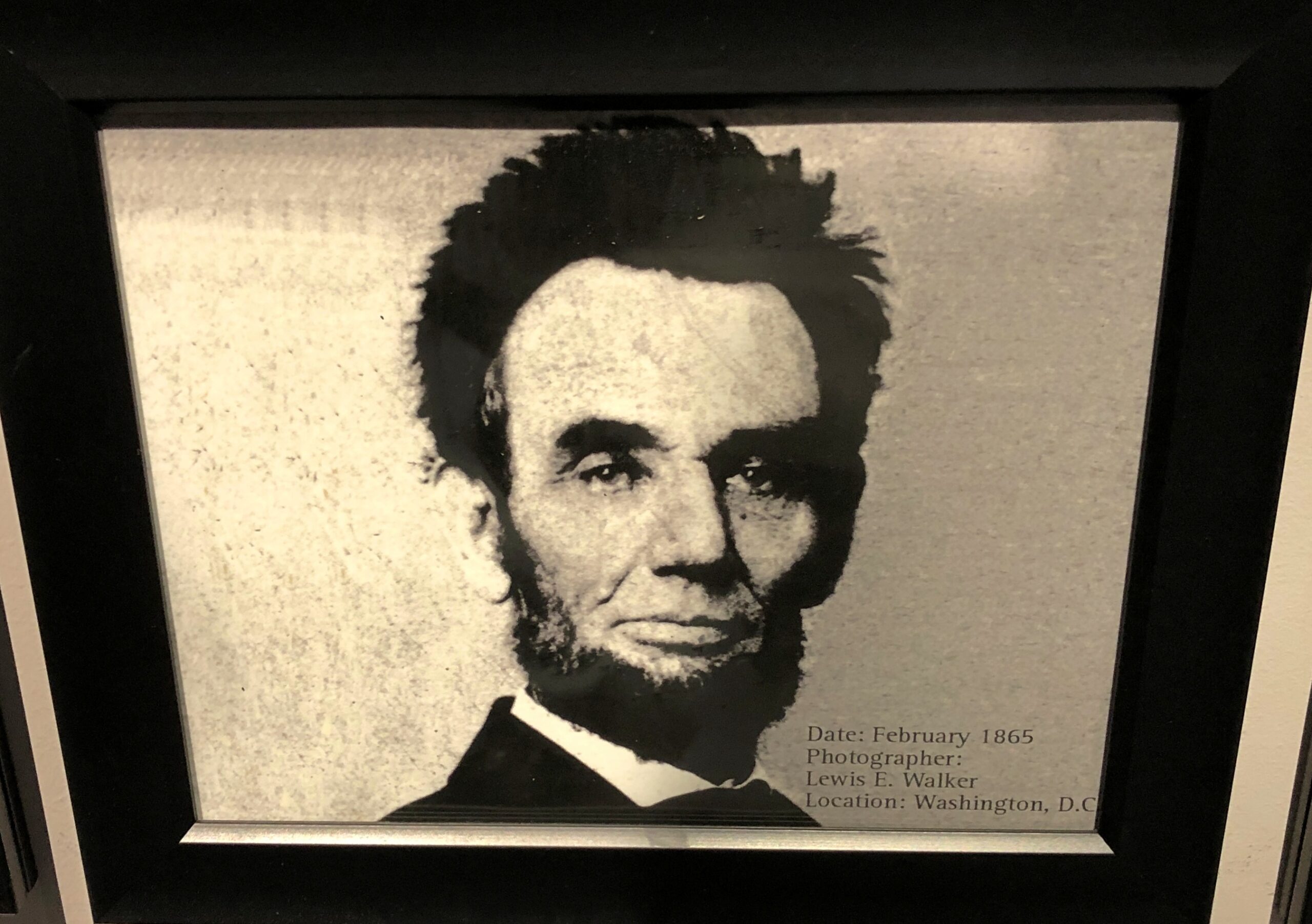
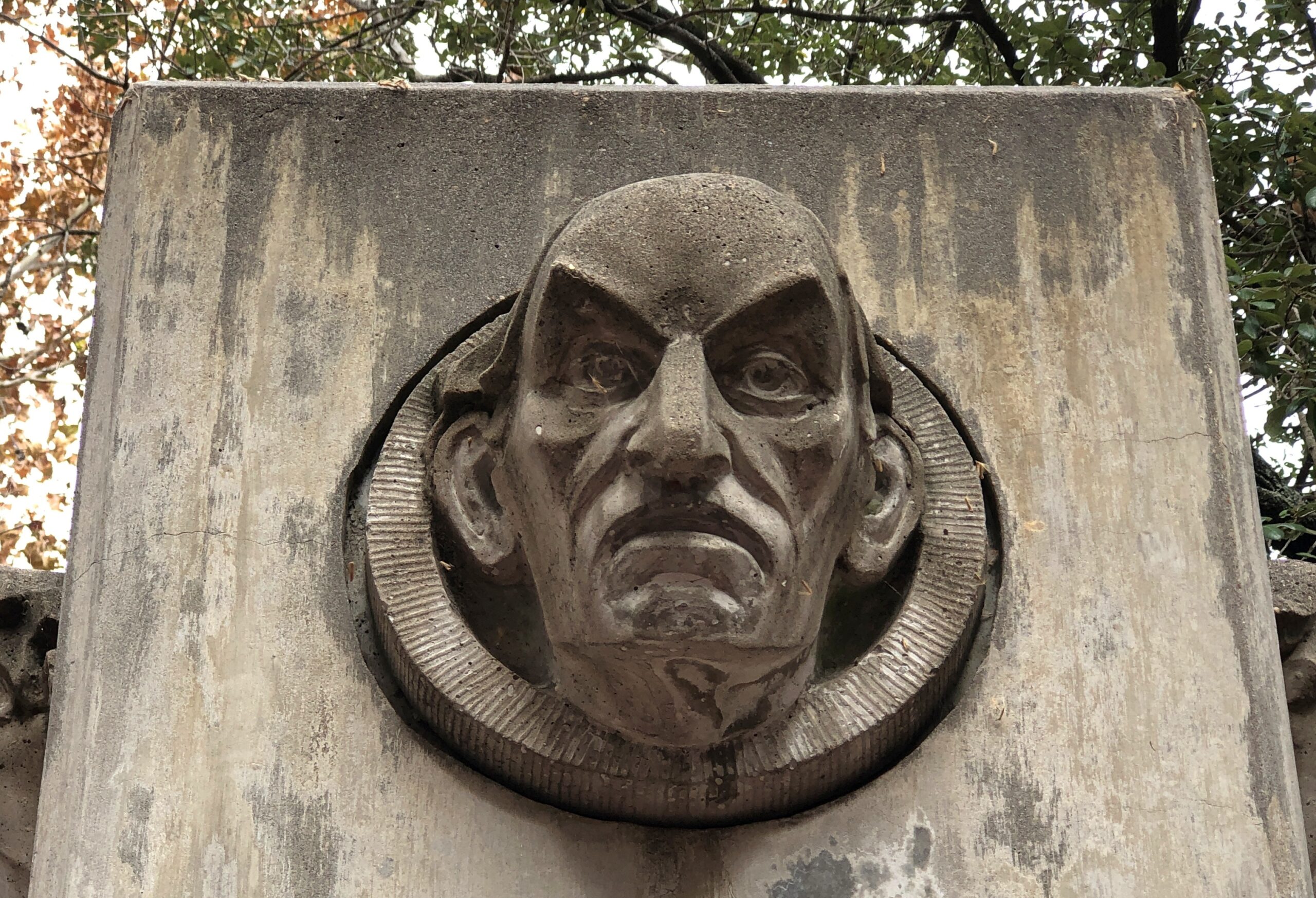
At the National Funeral Museum in Houston, one display featured, chronologically, 20 photographs of Abraham Lincoln. The third to last one, from February 1865, is one you don’t see much.

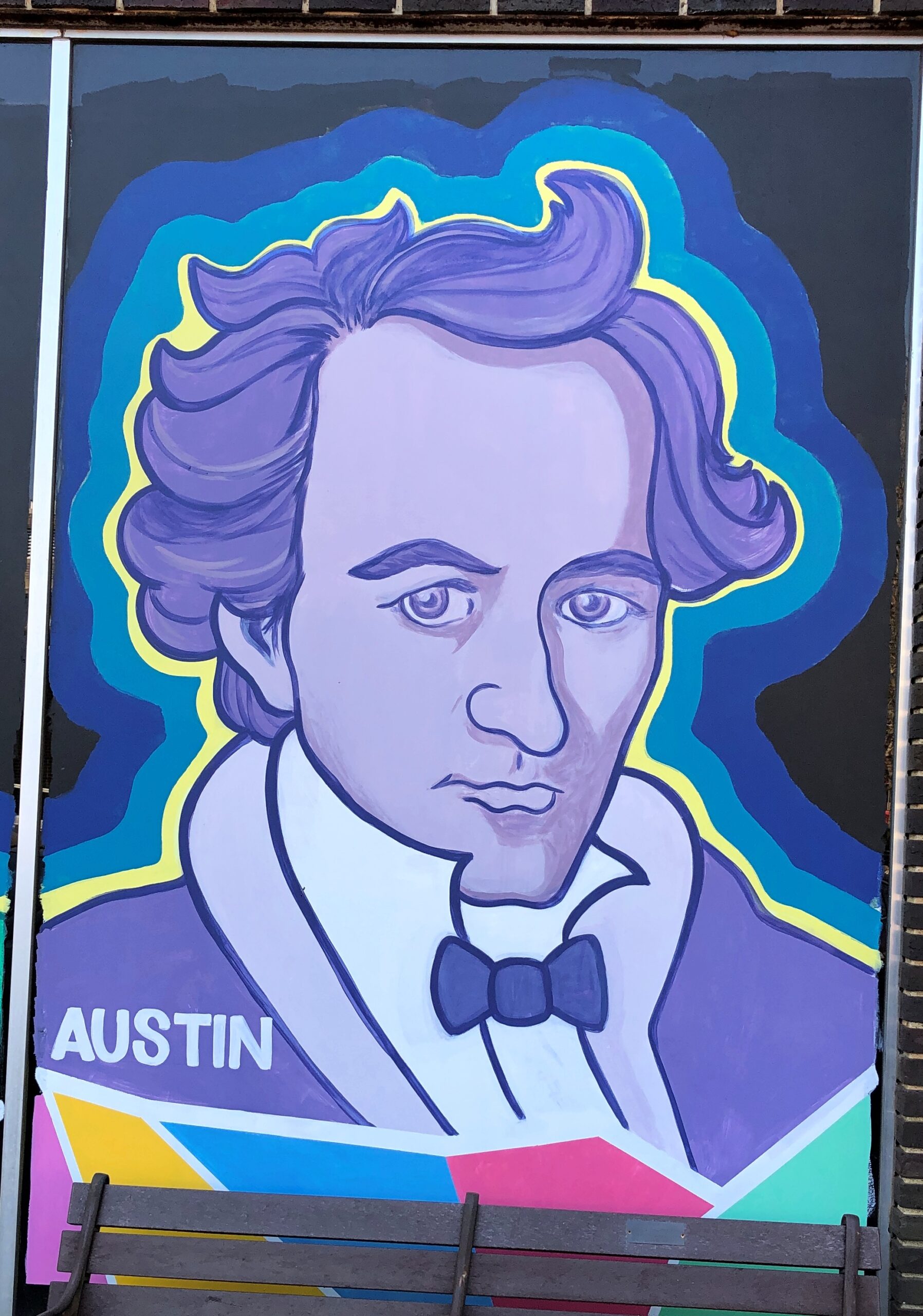
On a wall in downtown Nacogdoches, familiar figures from Texas.

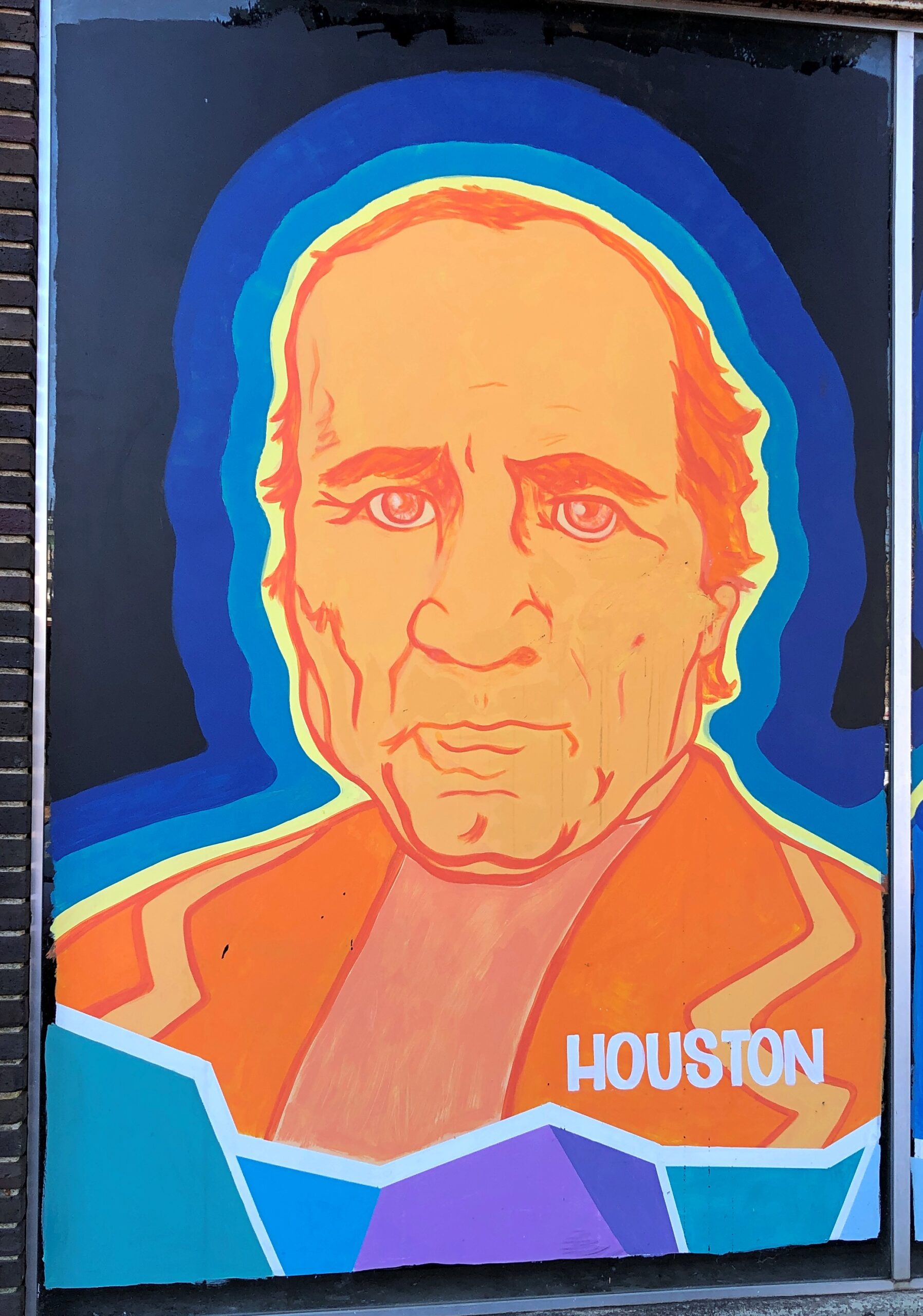
I didn’t work out who this was supposed to be, in downtown Houston. Better that way, I think.

Signs

This place in Austin, well known to Tom, serves most delicious tacos.

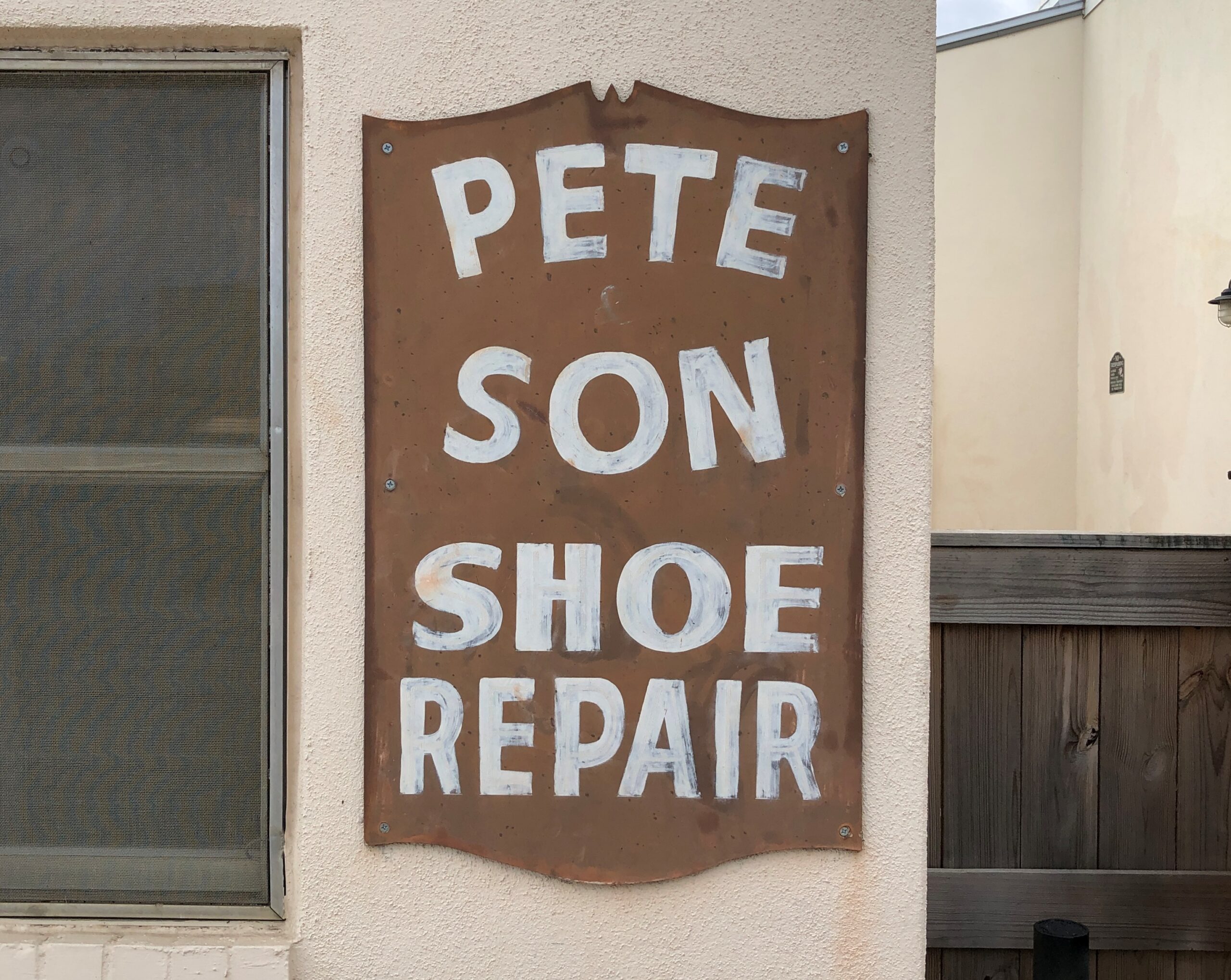
Bastrop: Cobbling runs in the family.

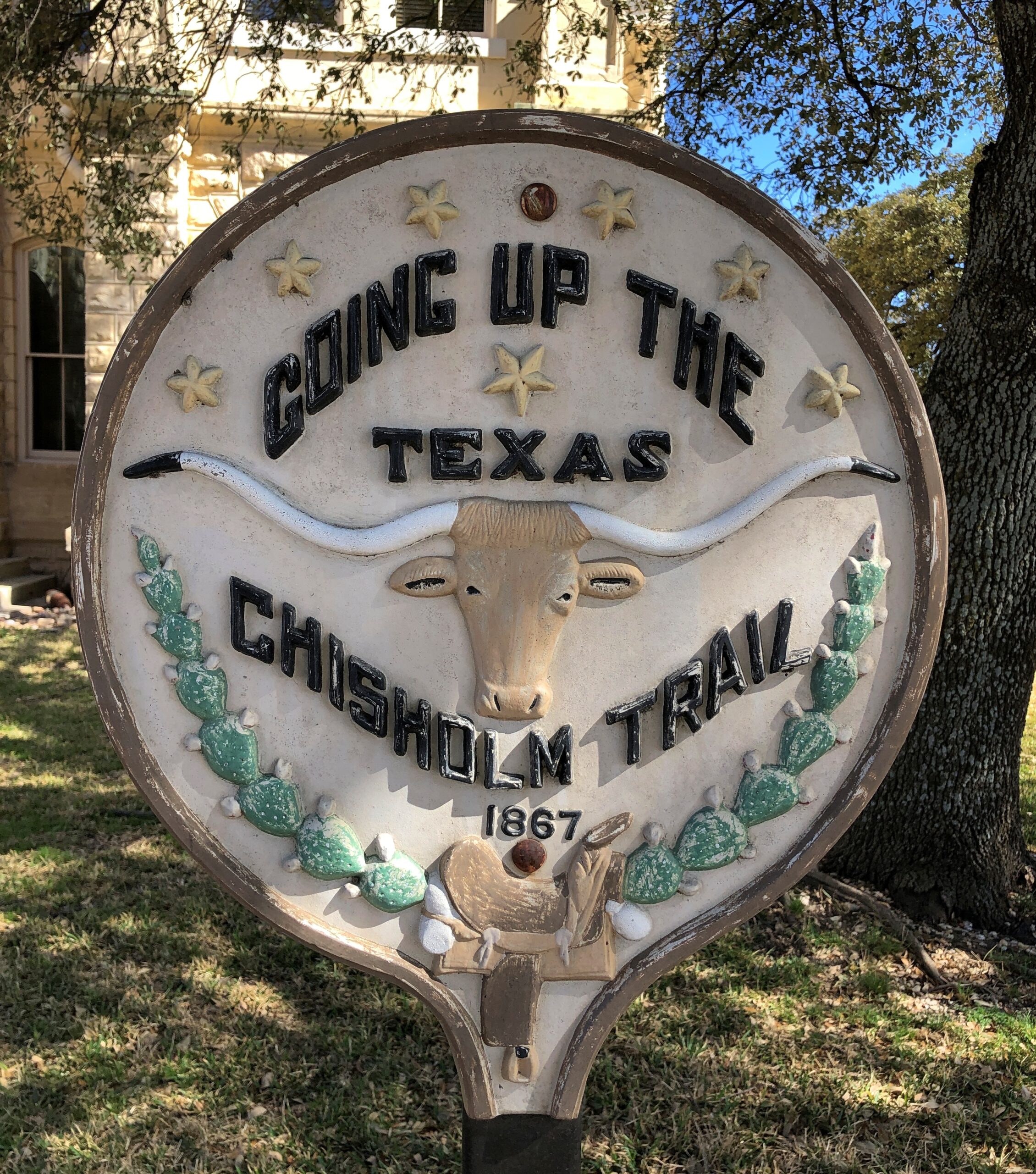
Belton.

Structures

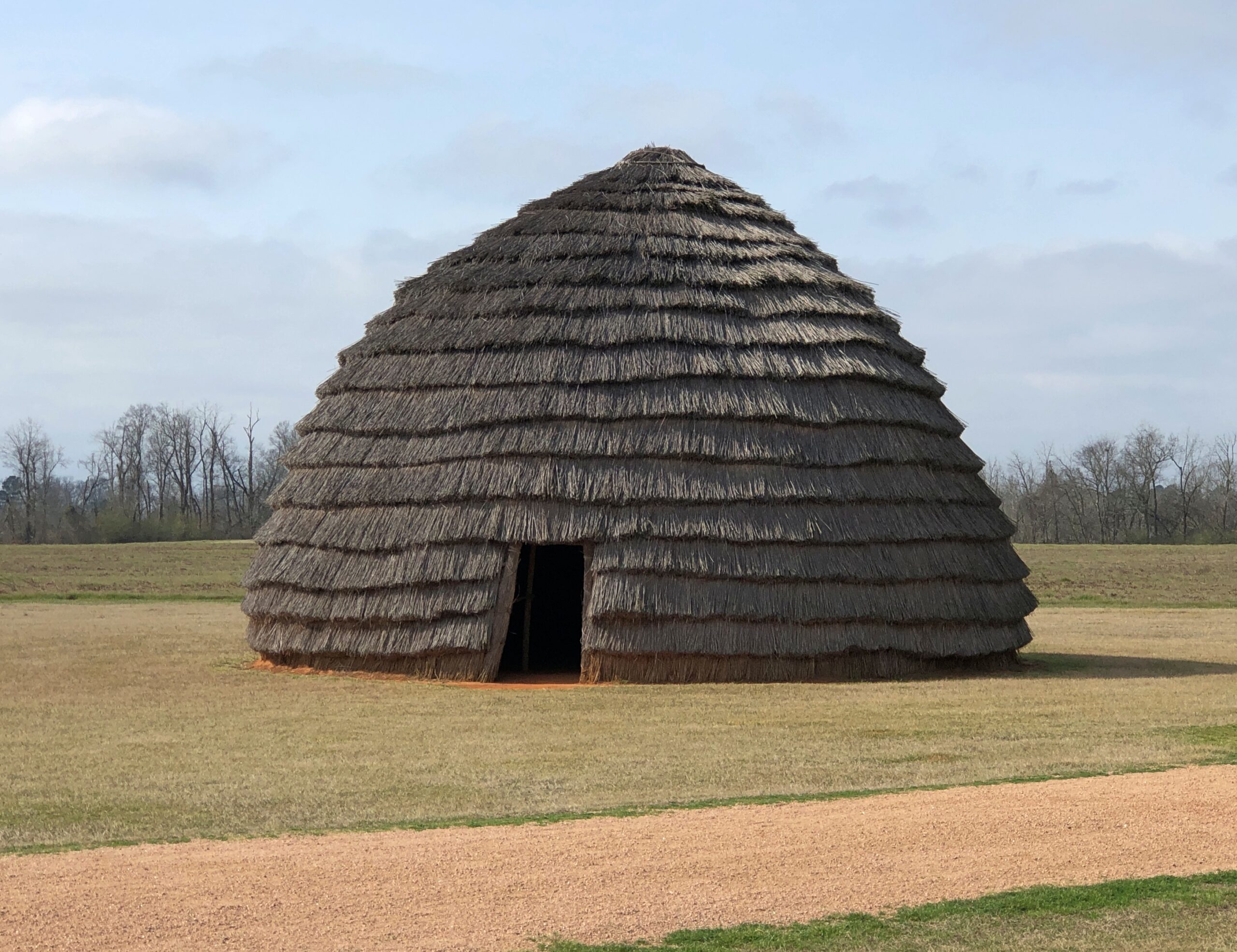
A re-creation of an ancient Caddo home.

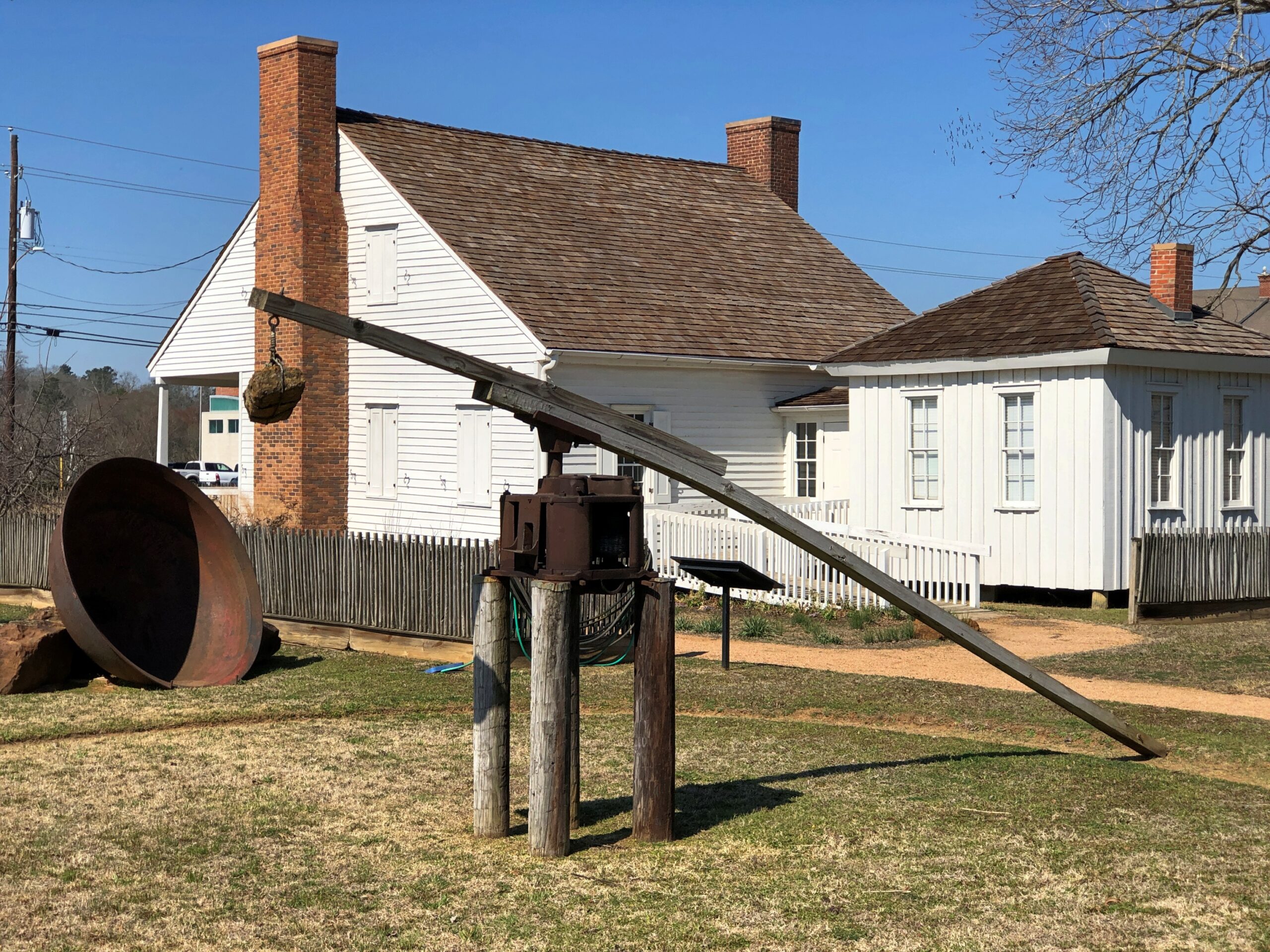
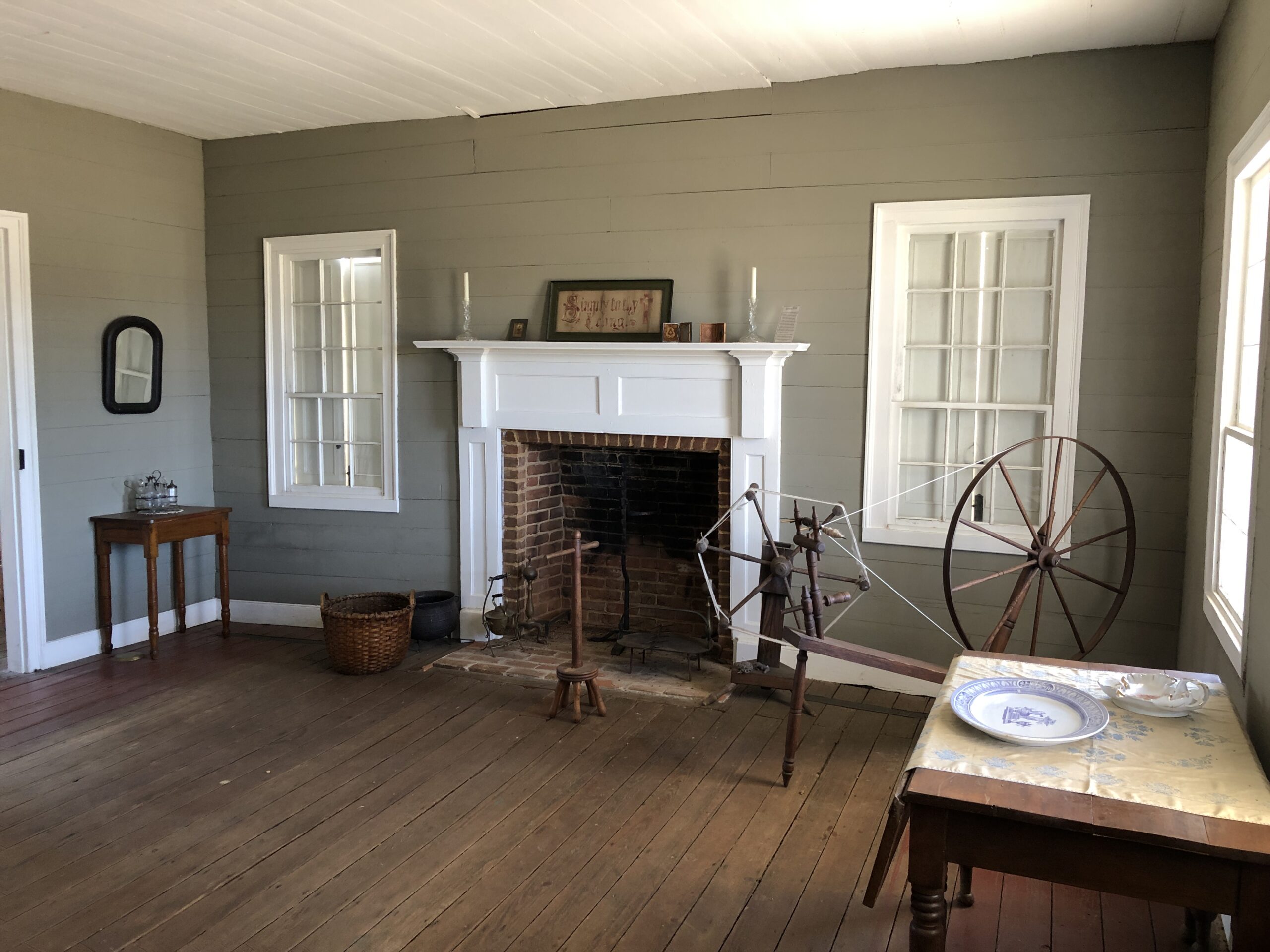
Durst-Taylor Historic House & Garden in Nacogdoches.

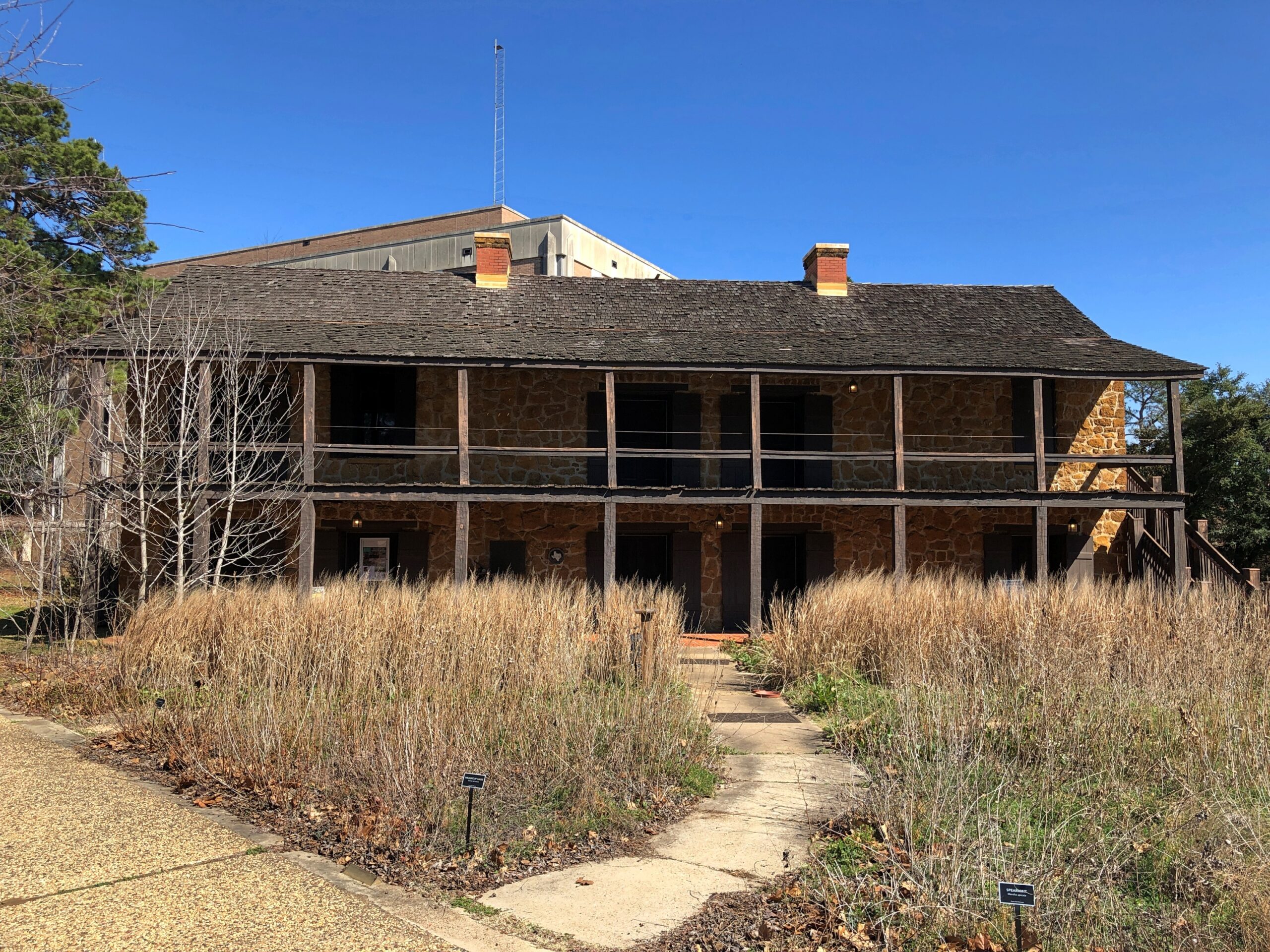
The Old Stone Fort Museum in the same town, which is made of stone, but was never a fort. On the campus of Stephen F. Austin State University. Recommendation to the university: if you want people to visit the place, provide just a little unrestricted parking. A little visitor parking anywhere on campus would be good.

Then again, the university seems determined to move the structure anyway — which might mean taking it apart, and then not putting it anywhere where because such a move would cost too much.

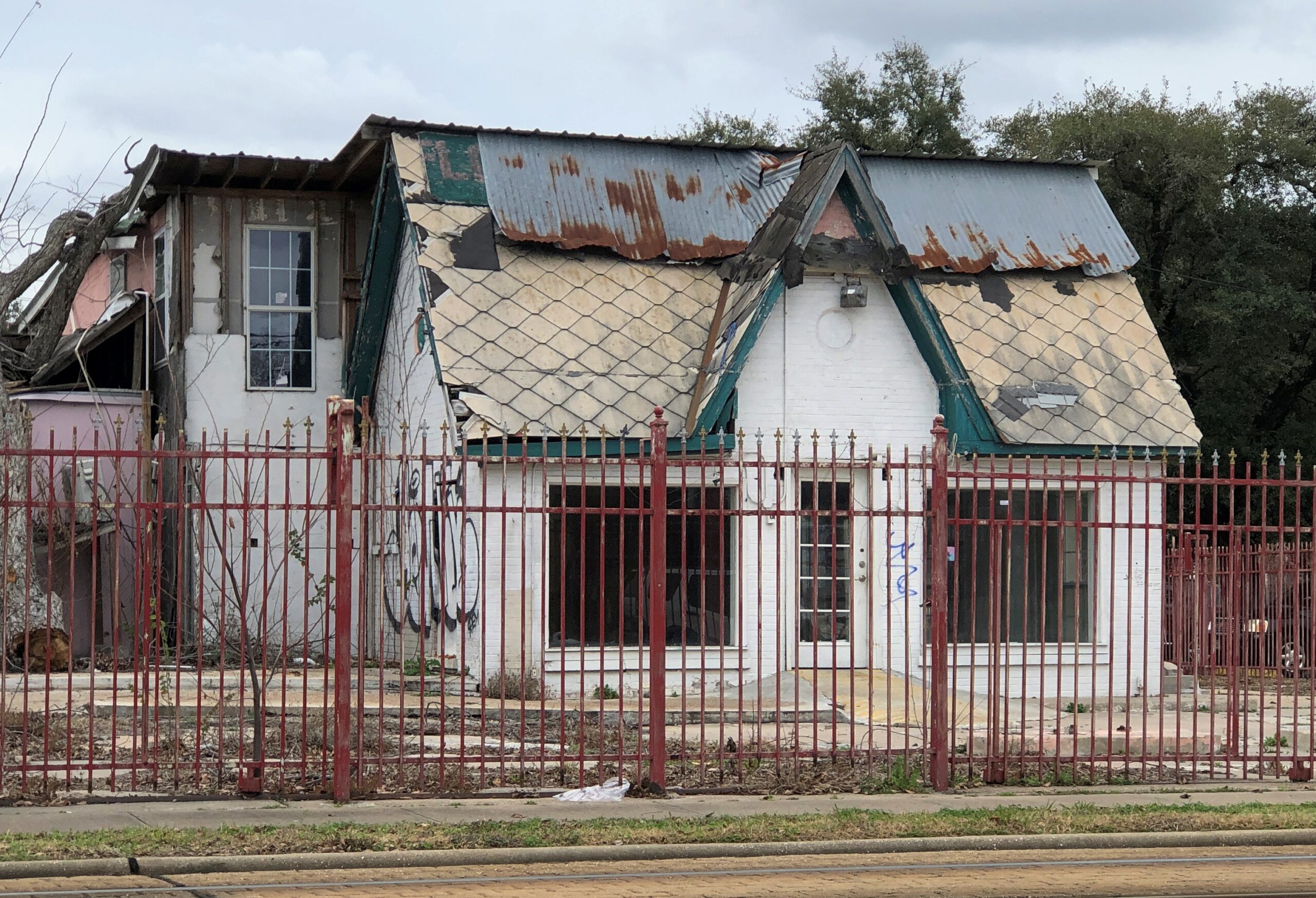
A place that has seen better days in Houston.

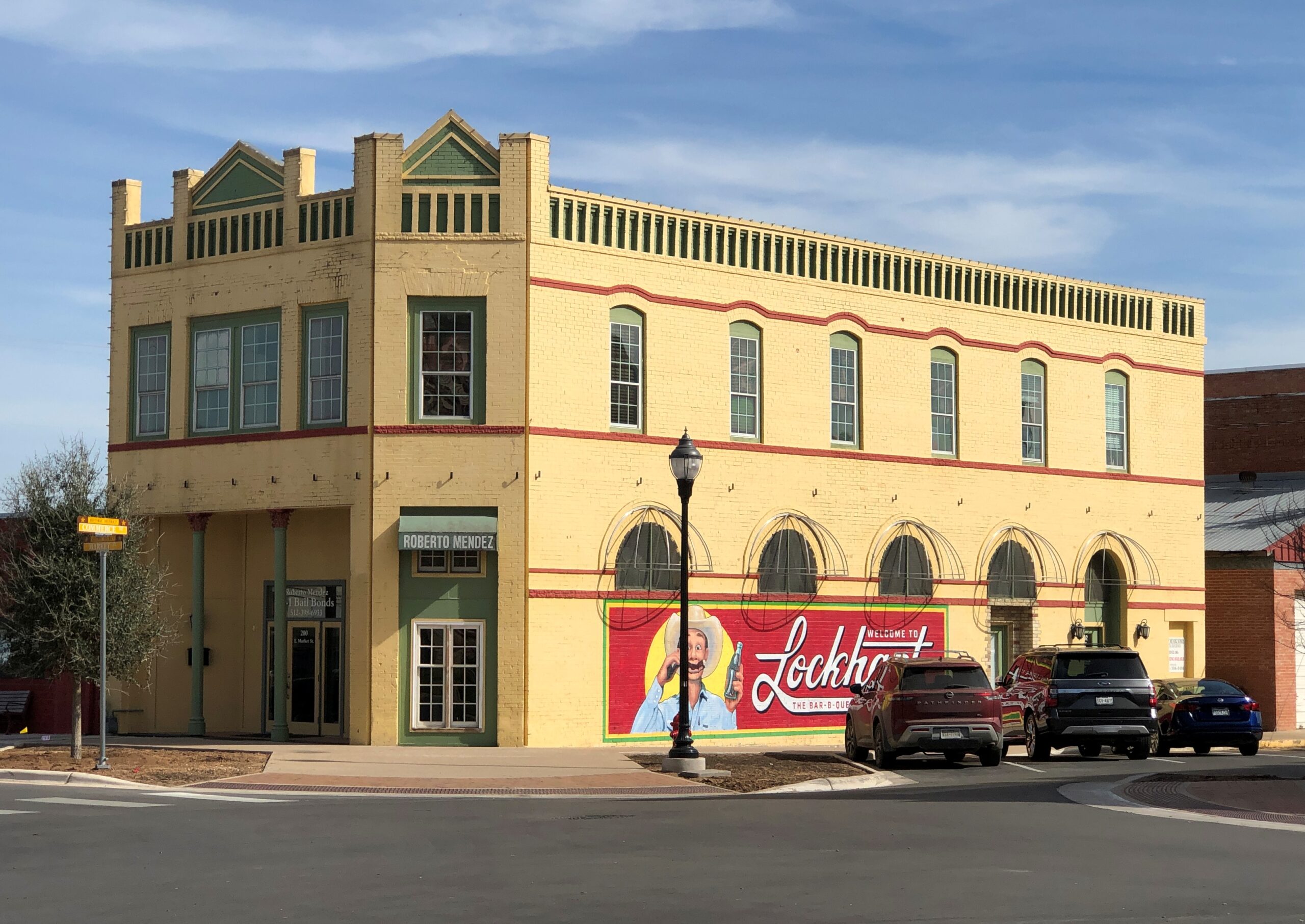
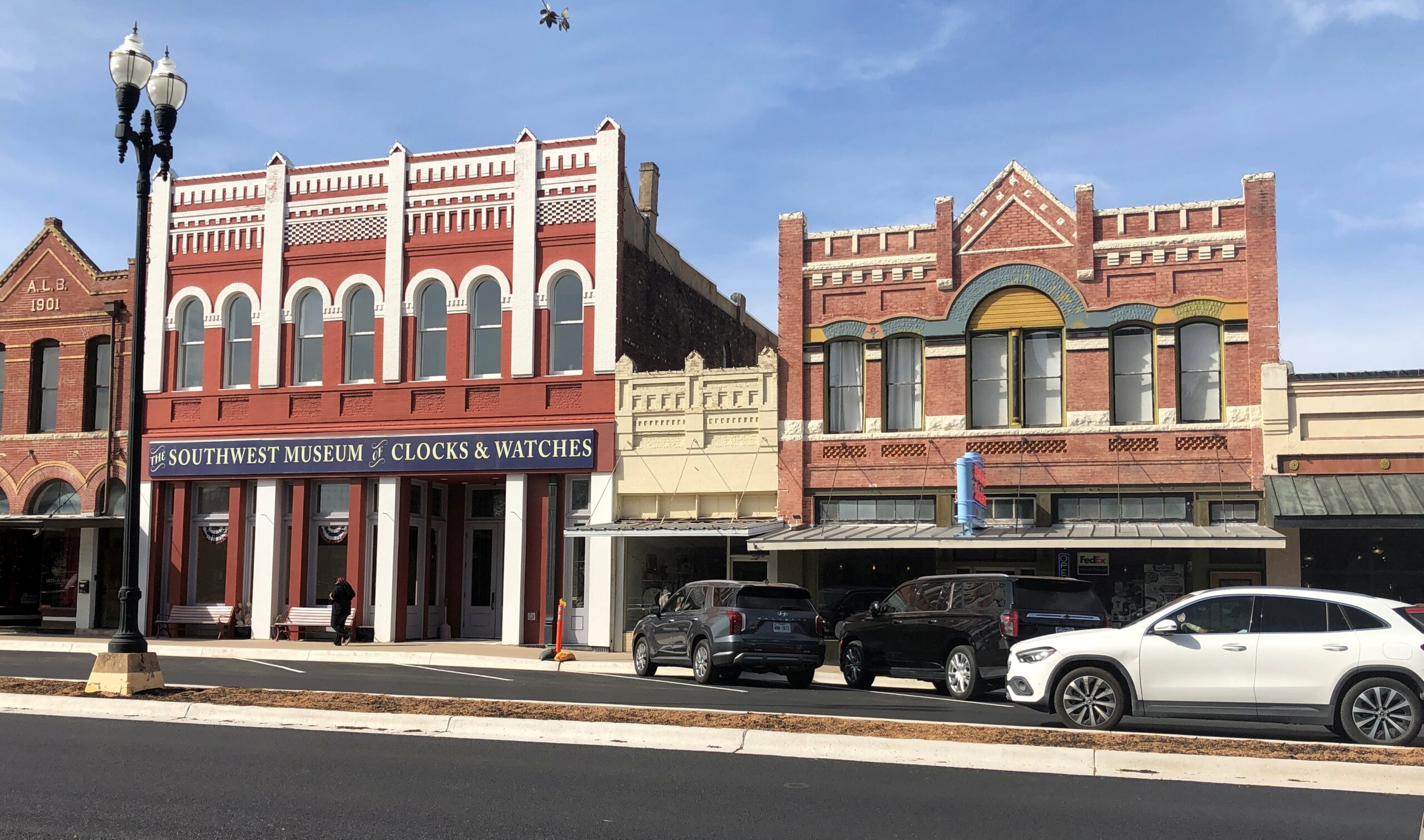
Downtown Lockhart.

The Southwest Museum of Clocks & Watches is permanently closed, alas.

Items

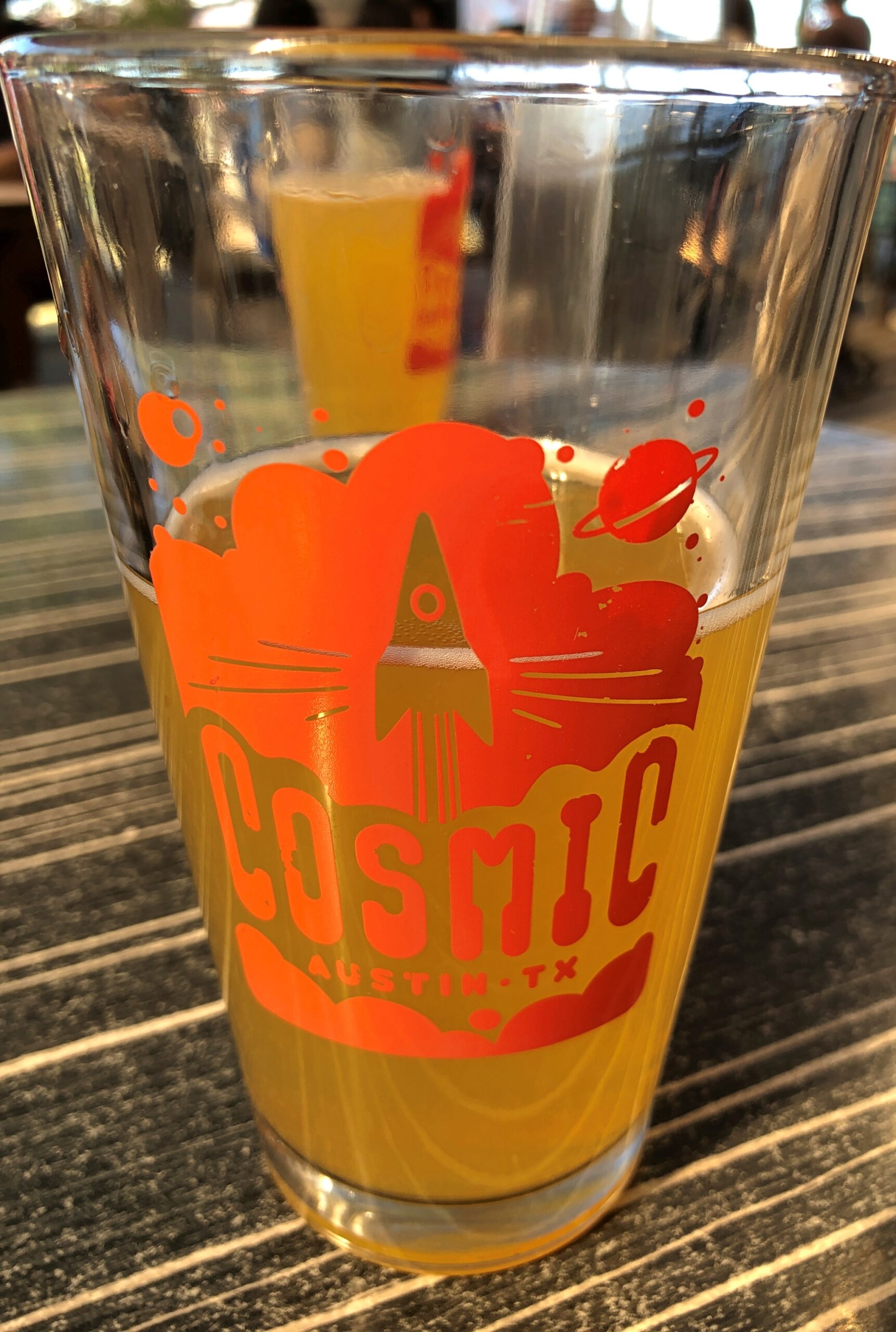
Cosmic in Austin is a bar and a collection of food trucks that surround an informal plaza with a lot of tables and chairs and shade. It’s a very pleasant place, and within walking distance of Tom’s home.

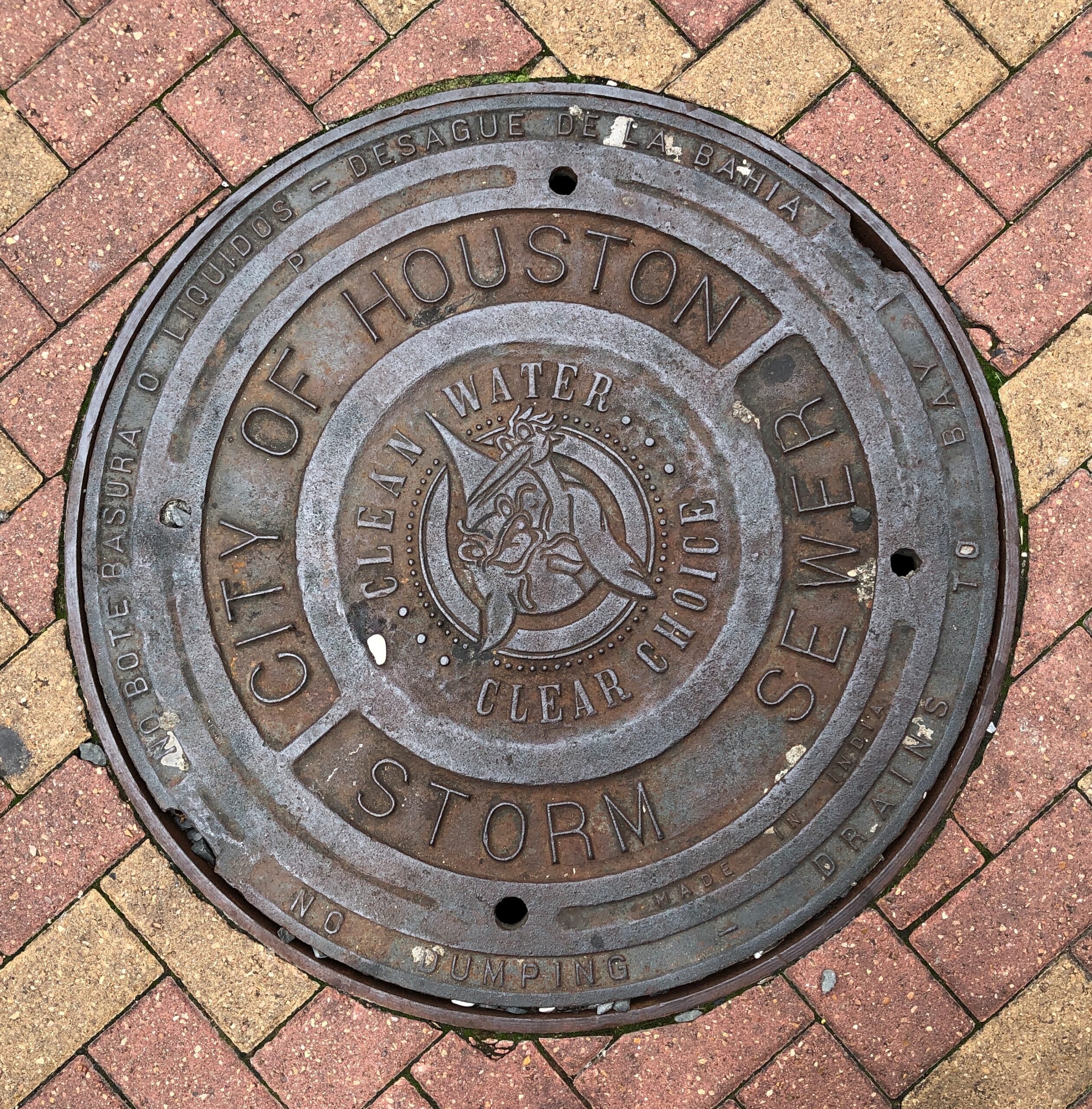
Houston manhole covers.

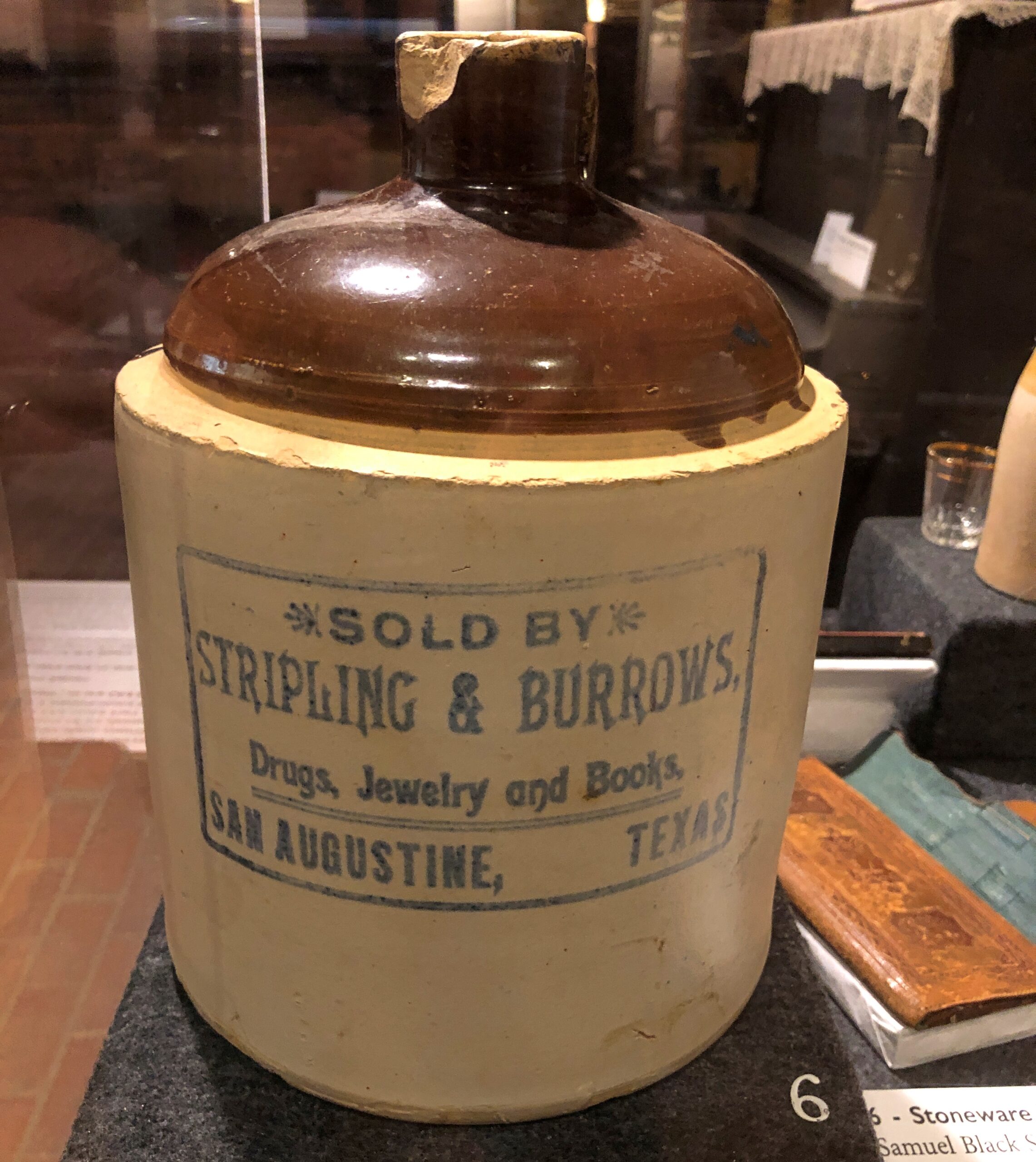
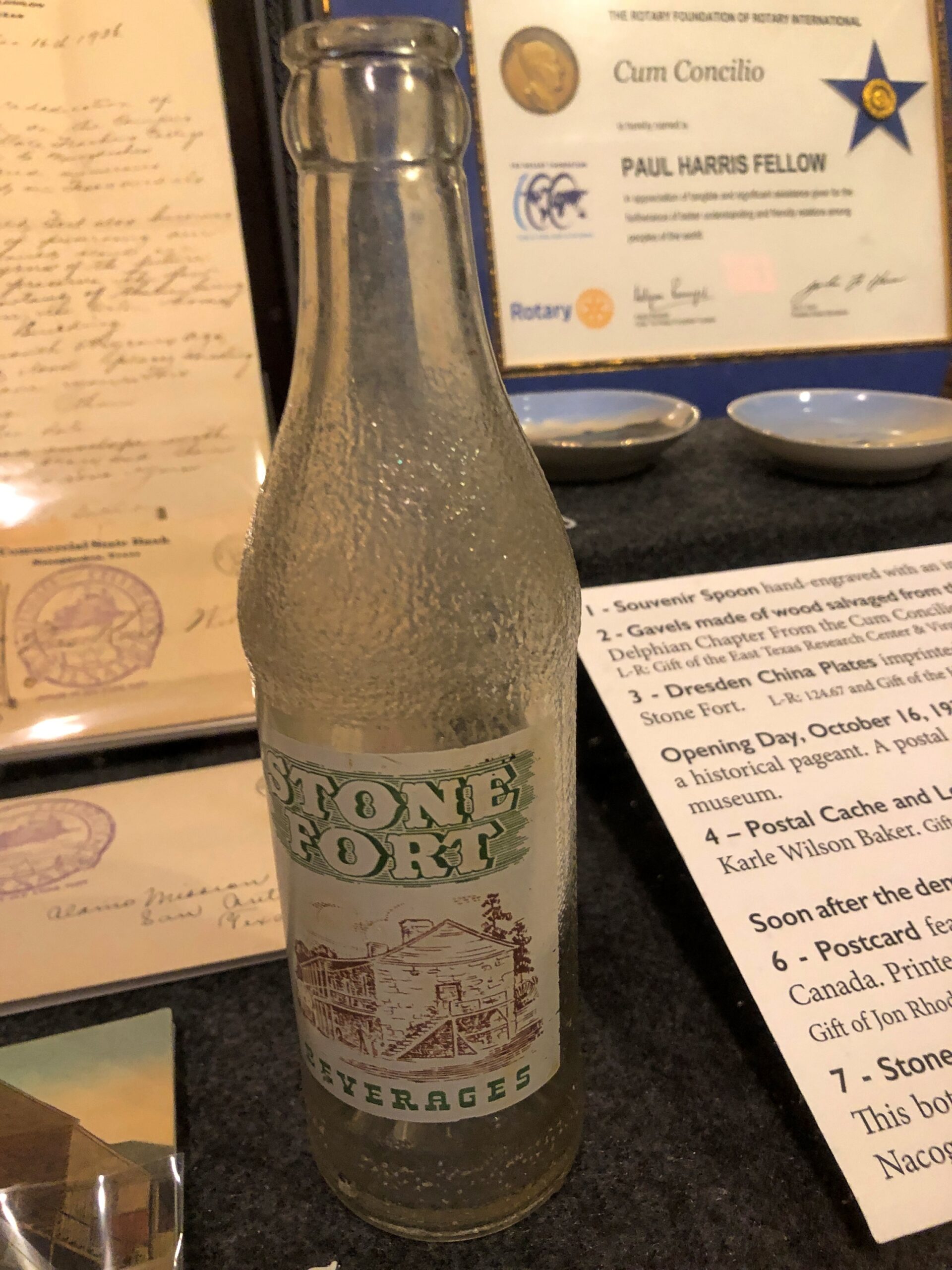
An artifact at the Old Stone Fort, but from San Augustine, and a hyperlocal soda bottle.

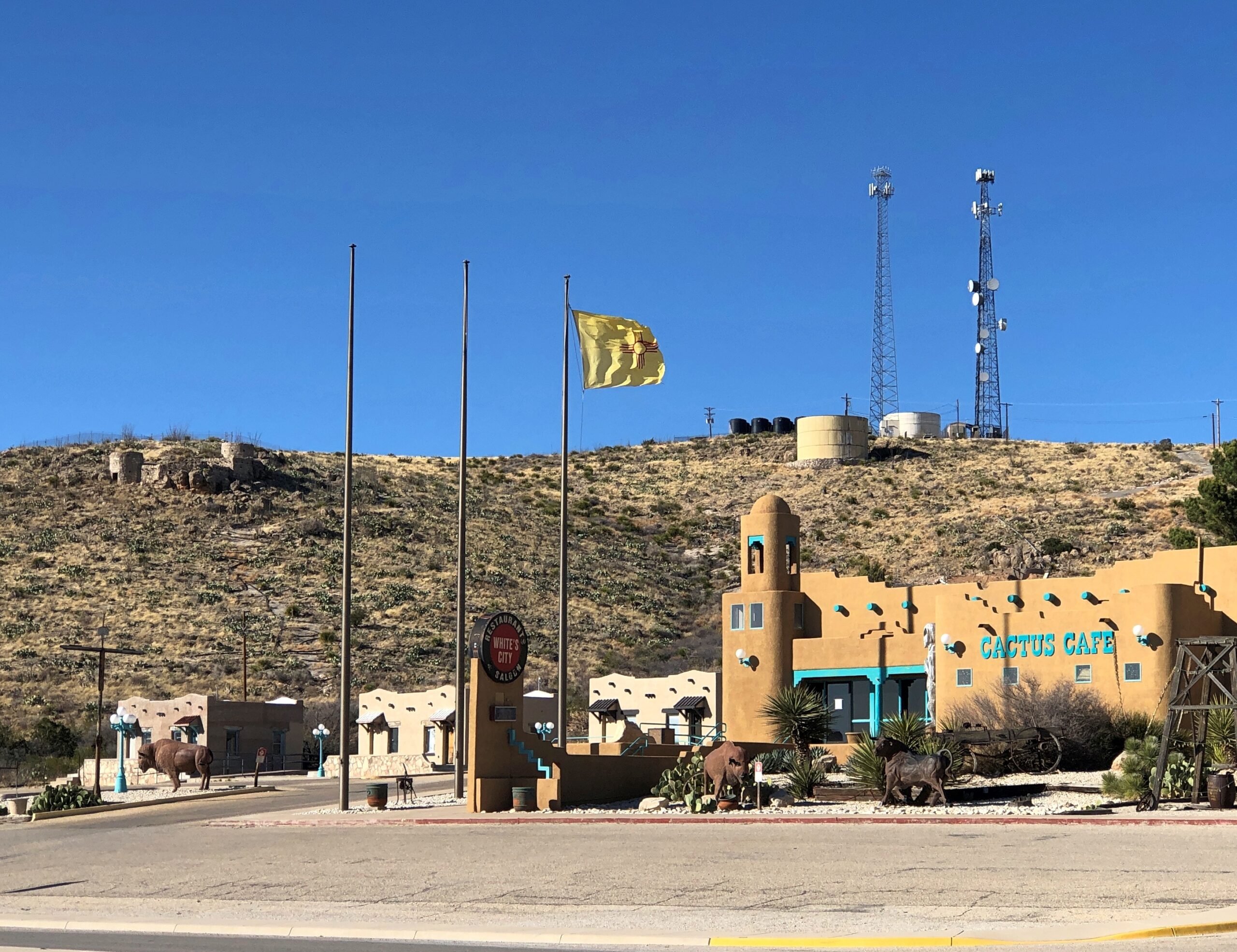
The New Mexico flag near Carlsbad NP.

Landscapes

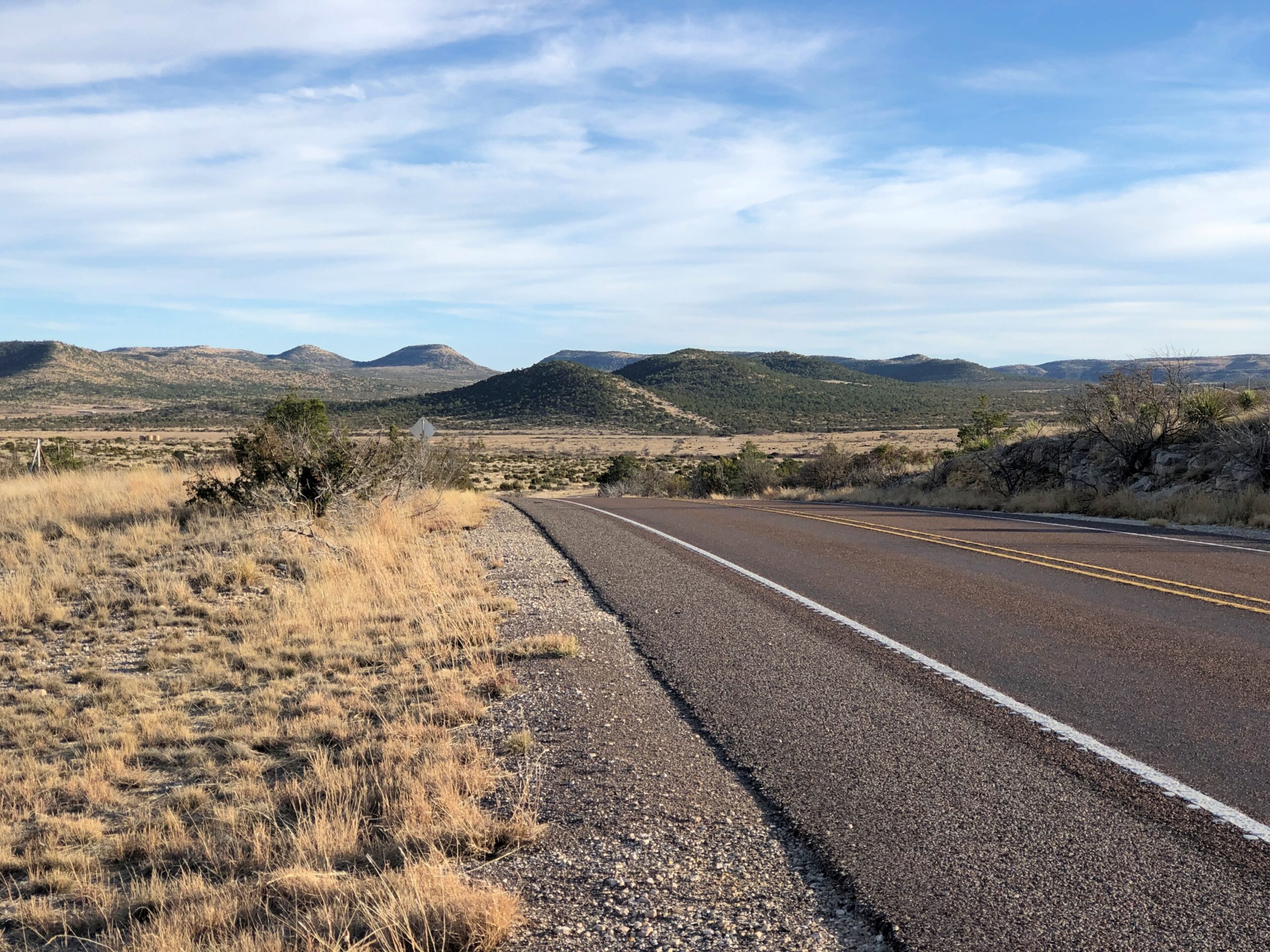
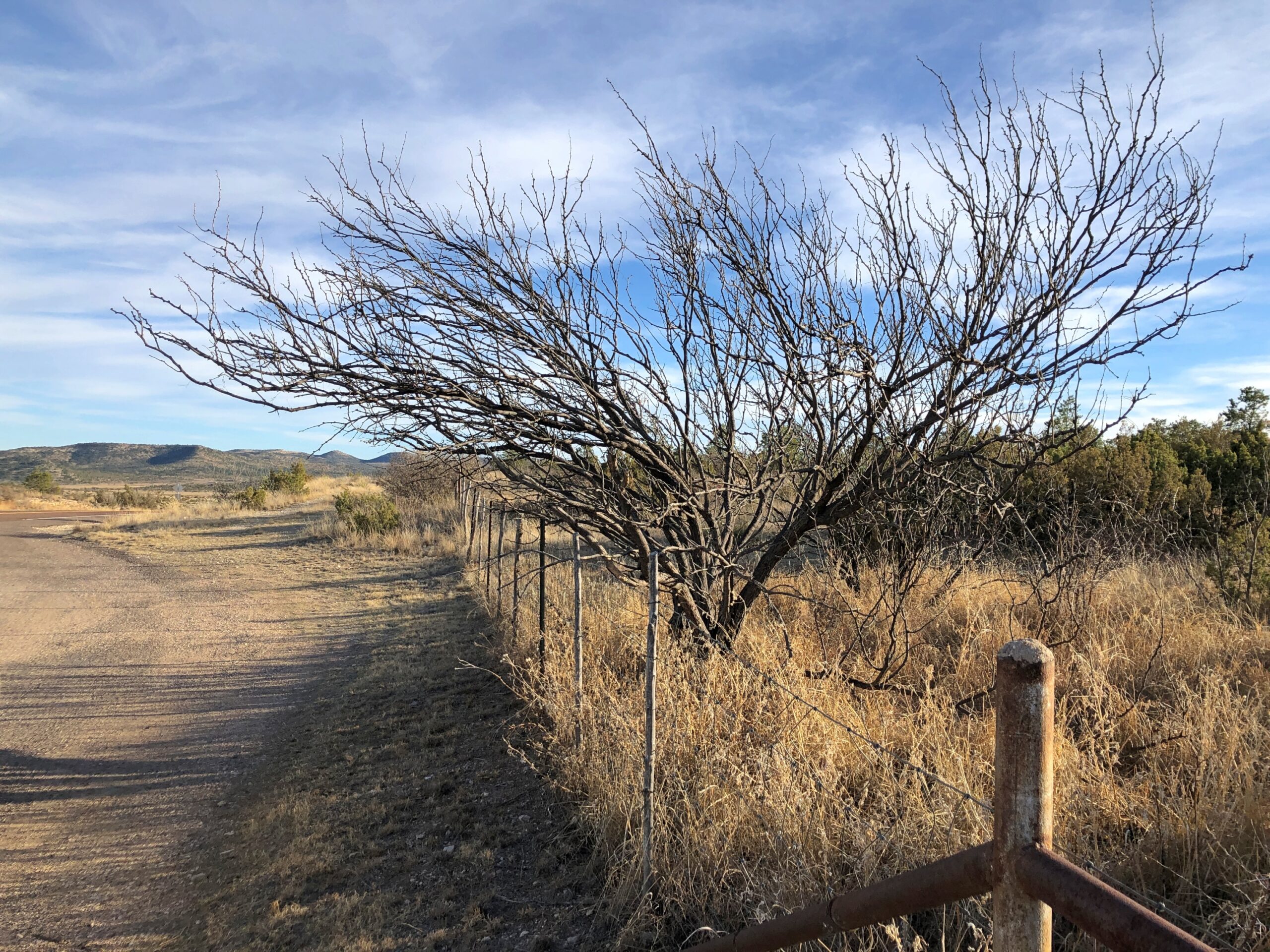
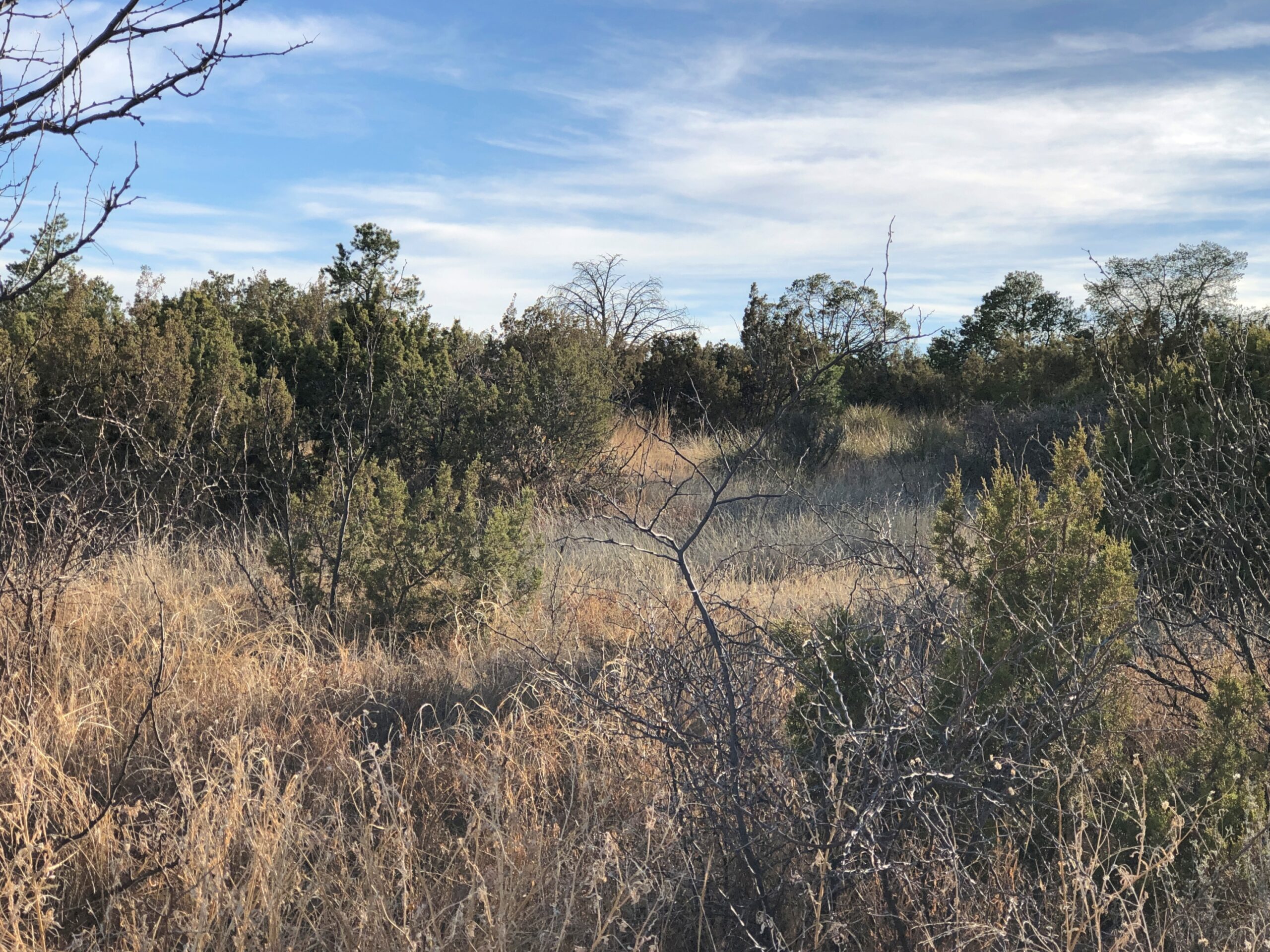
Not just any landscapes, but within the Sierra Madera Astrobleme in West Texas. US 385 cuts right through the ancient crater for about eight miles, on the way to Marathon. You’d never know but for signs telling you that you’re entering the astrobleme, and one telling you that you are leaving it.

Memorials

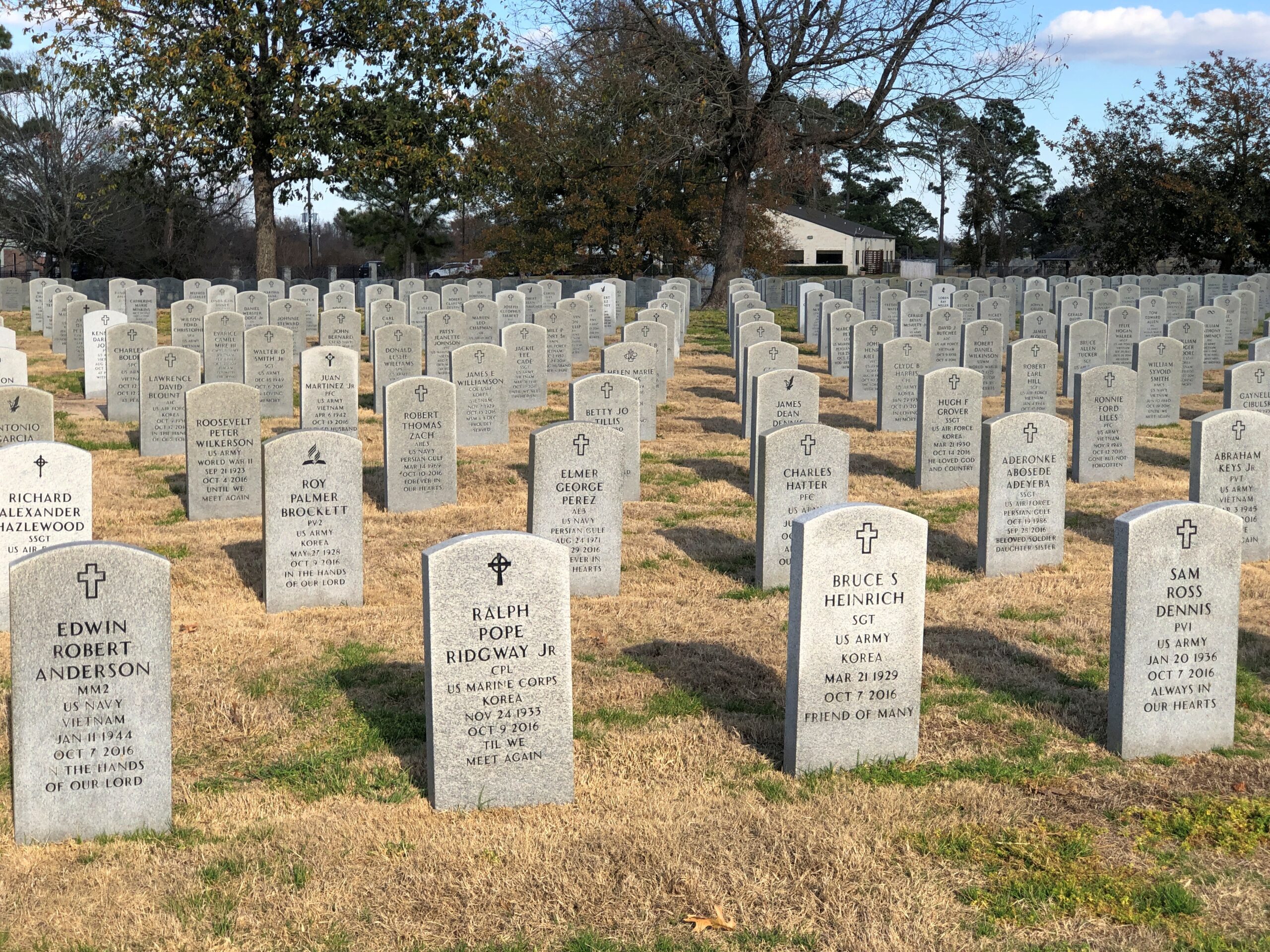
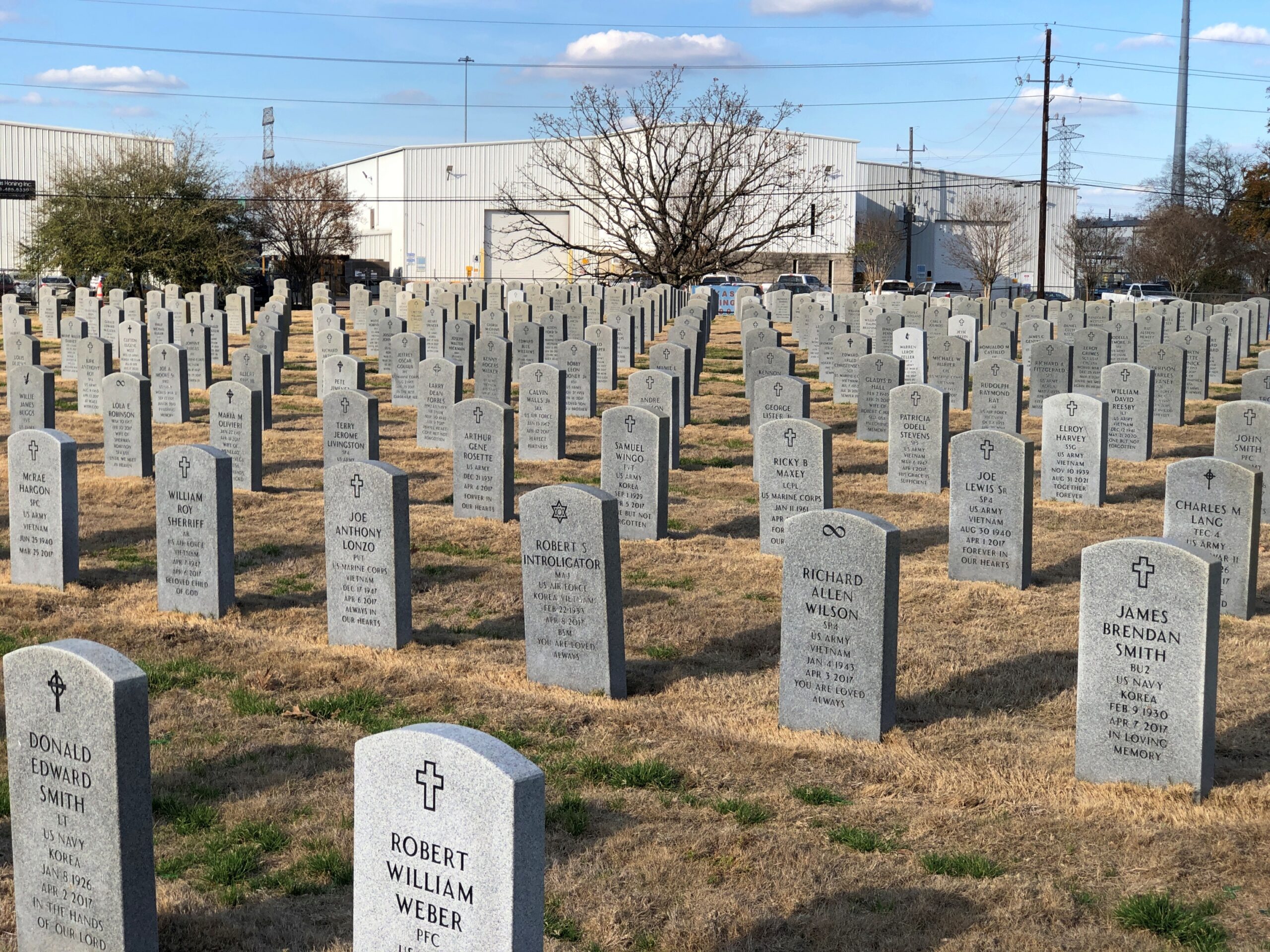
The Houston National Cemetery.

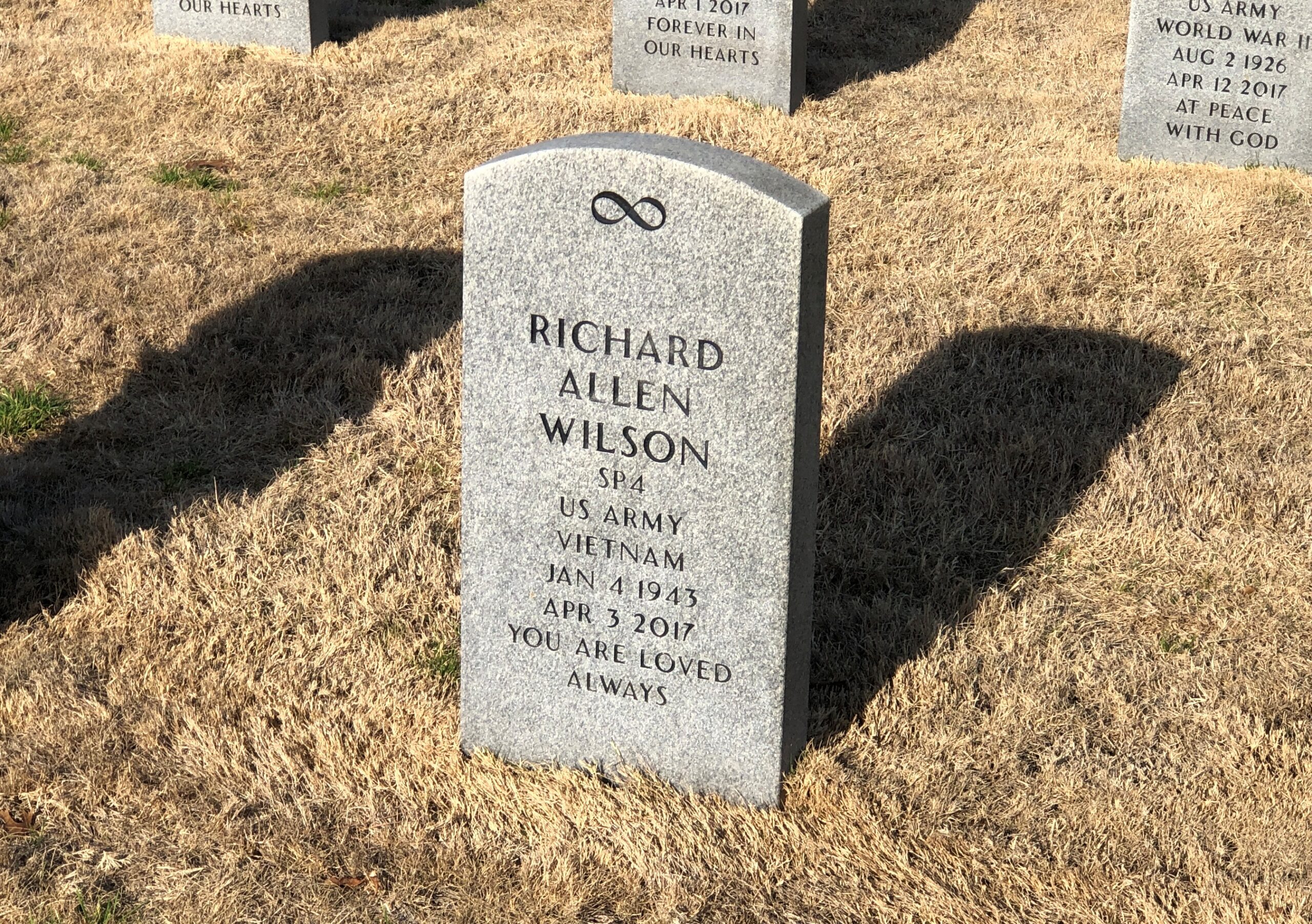
RIP, Richard Allen Wilson. I don’t think that I’d ever seen an infinity symbol on a national cemetery stone. That, of course, made me curious, and I checked: it is one of the 98 various symbols that the National Cemetery Administration allows. The list is here.

I’m familiar with most of them, but not quite all of them, such as the Church of World Messianity, which is a Japanese new religion – it’s hard to keep track of all of those – and the Aaronic Order Church, which may or may not be part of the LDS movement, but in any case is an American sect. Hard to keep track of all those, too.

The NCA says: “No graphics (logos, symbols, etc.) are permitted on Government-furnished headstones or markers other than the available emblems of belief, the Civil War Union Shield, the Civil War Confederate Southern Cross of Honor, and the Medal of Honor insignias… Emblems of belief for inscription on Government headstones and markers do not include social, cultural, ethnic, civic, fraternal, trade, commercial, political, professional or military emblems.”

So (for example) symbols for the Loyal Order of Moose or some odd emoji or maybe a grawlix will not be considered, though as a comment about the Army, the latter would be funny.

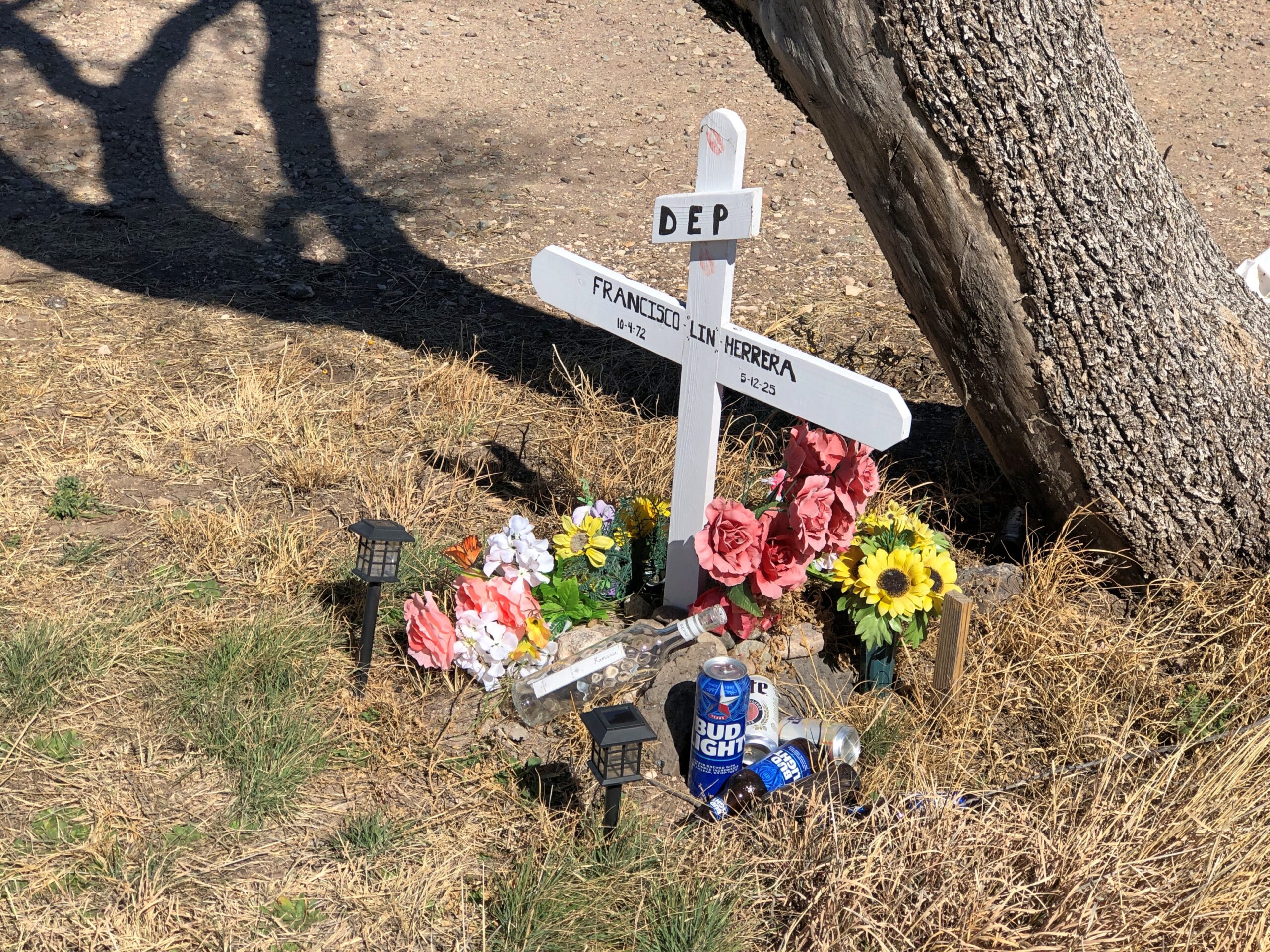
Finally, a less formal memorial, but I’m sure just as heartfelt.

A memorial for Francisco Lin Herrera happens to be near the Giant paintings outside of Marfa. He died in an accident along that stretch of US 90. RIP, Francisco.

More Marfa

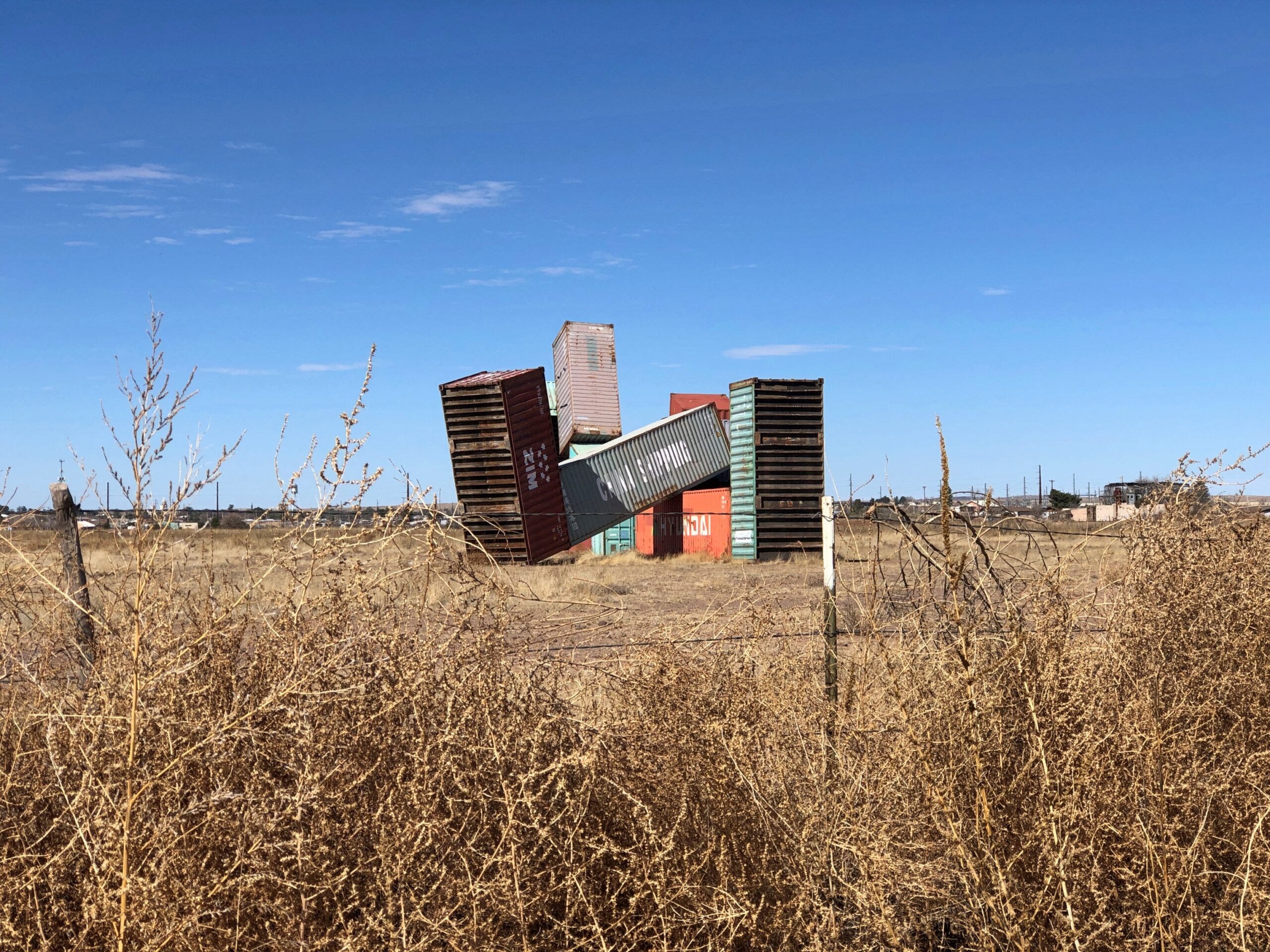
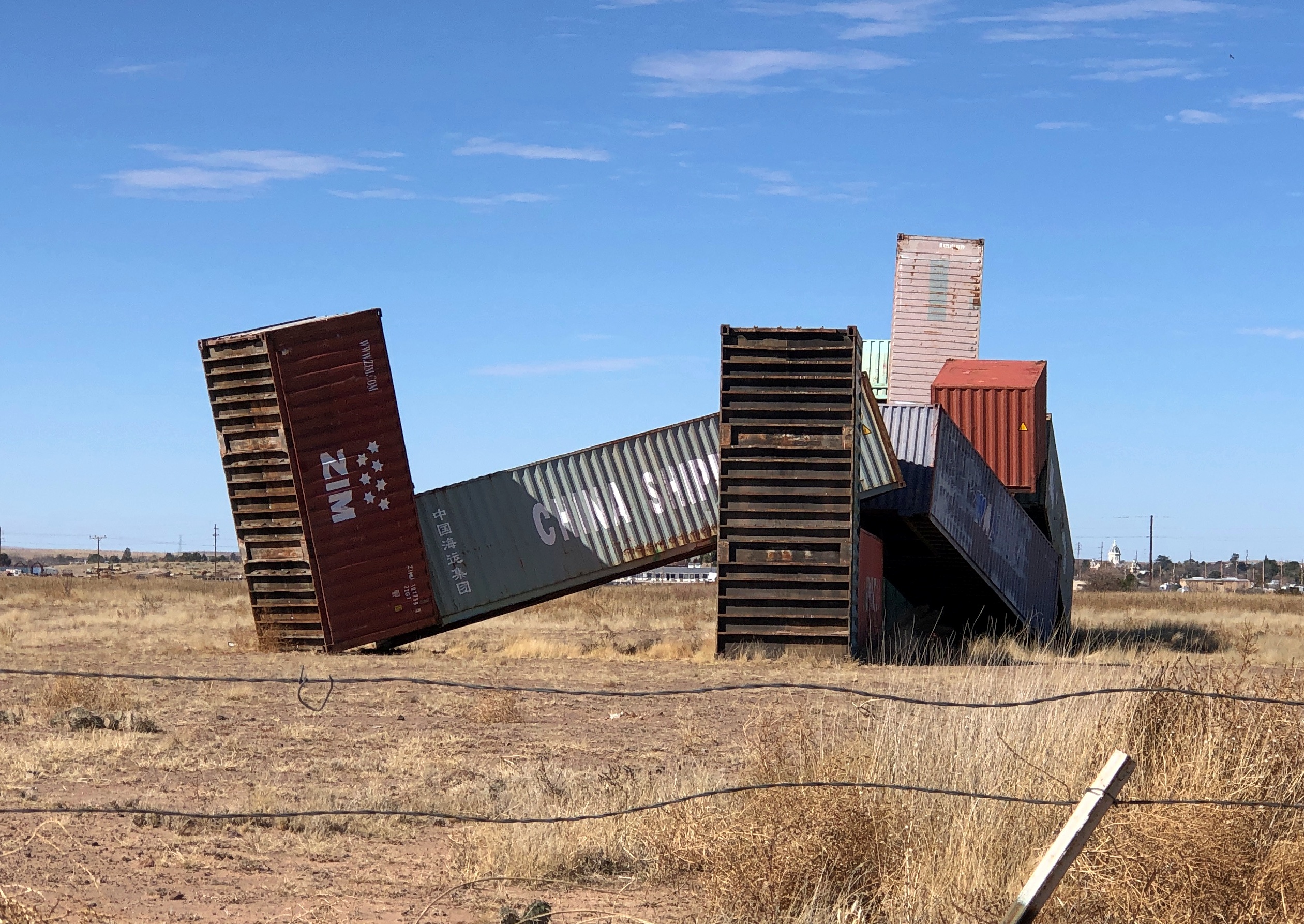
Entering Marfa, Texas, from the east on US 90, I spotted this off to the side of the road.

A side road offers a view but not, as far as I could see, access to the site.

Also no signage, which I took to be a bonus. Like the Cadillac Ranch, the thing was just there. It can be looked up later, of course, to reveal that it’s a large bit of sculpture called “Sleeping Figure” by Los Angeles-based artist Matt Johnson and only moved to Marfa in 2024 from its original place in the Coachella Valley.

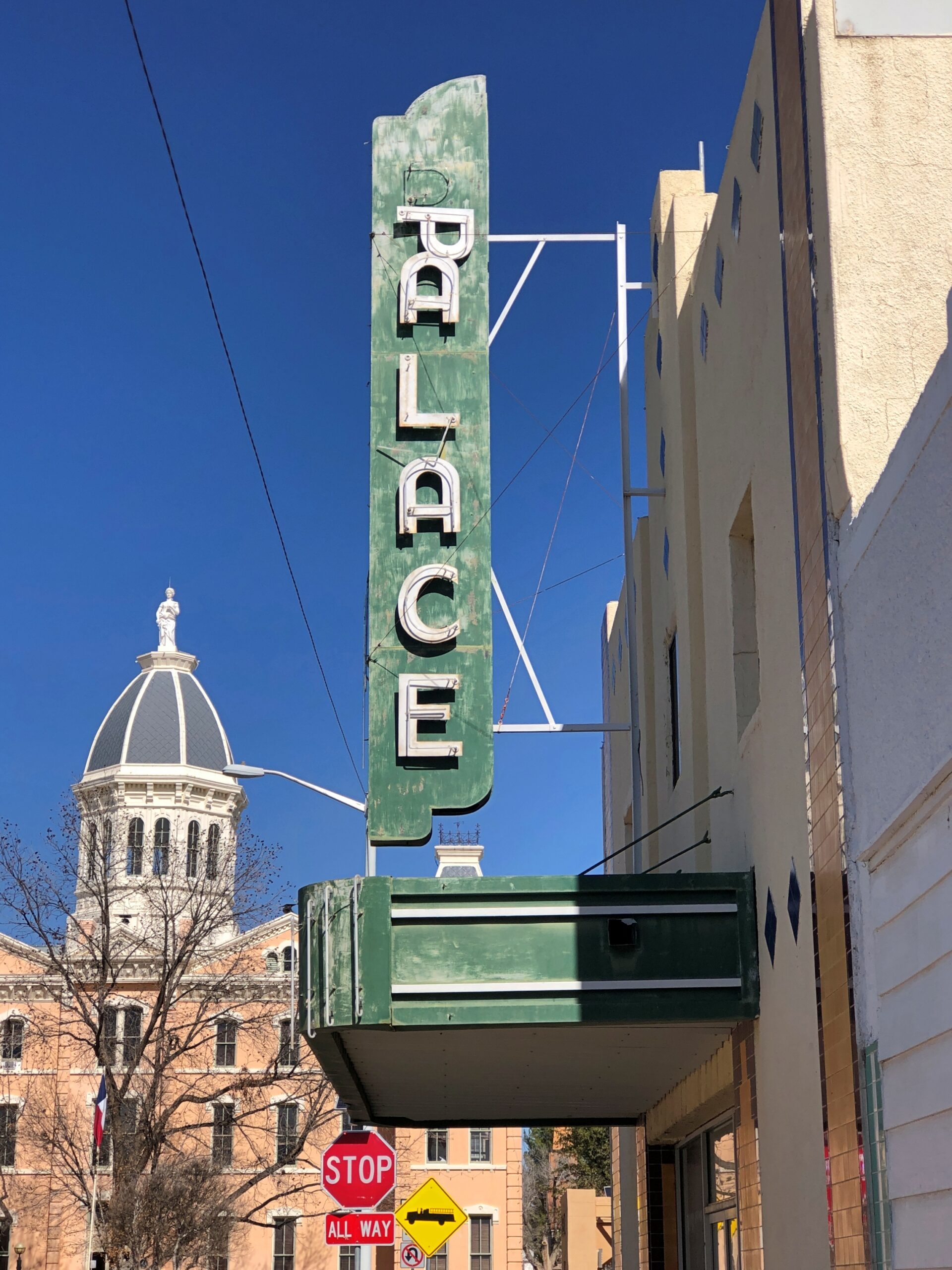
In town, we took a stroll down Highland Ave. and around the courthouse. The former Marfa Opera House.

Later the Palace Theater. Various sources, which seem to be copying each other, say that the theater closed in the 1970s, which is probably accurate, and that an artist uses it as his studio now, which I’m less certain about, since there place looked wholly vacant. Still, as an art town, you’d think Marfa would use the space for something closer to its original uses – live events, maybe standard theater and movies, but also popup performance art from time to time.

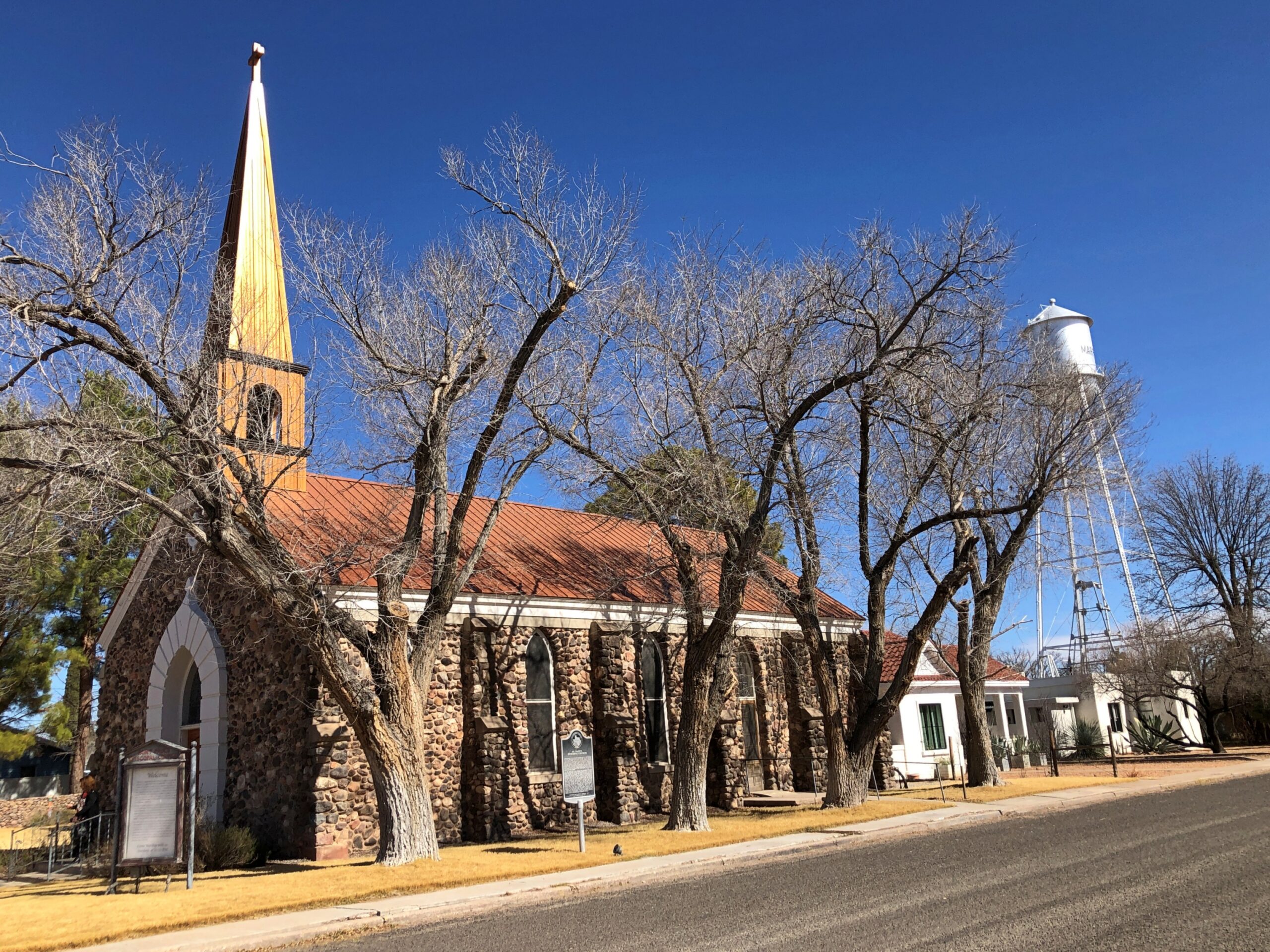
A number of churches ring the courthouse. St. Paul’s Episcopal.

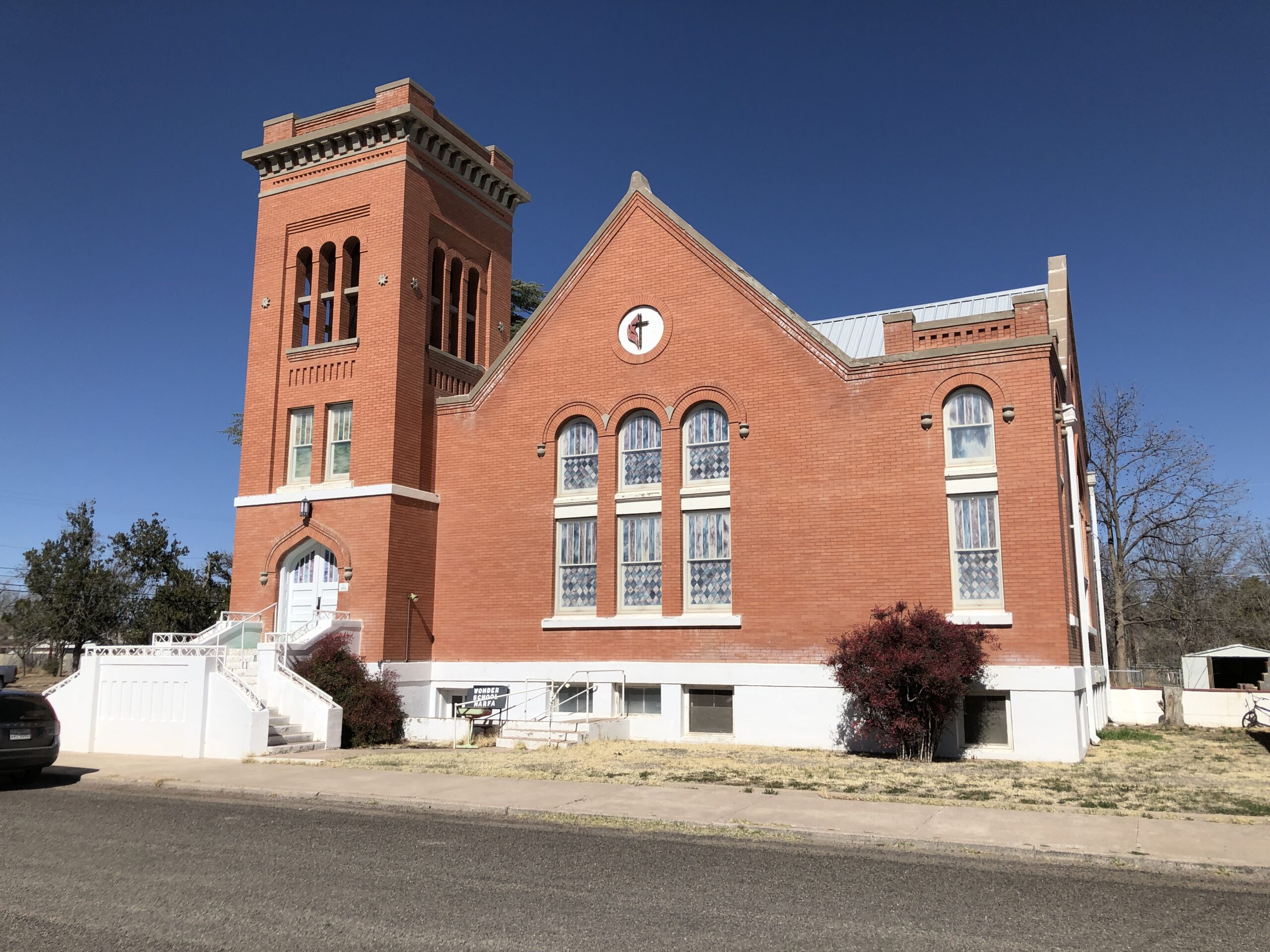
First United Methodist.

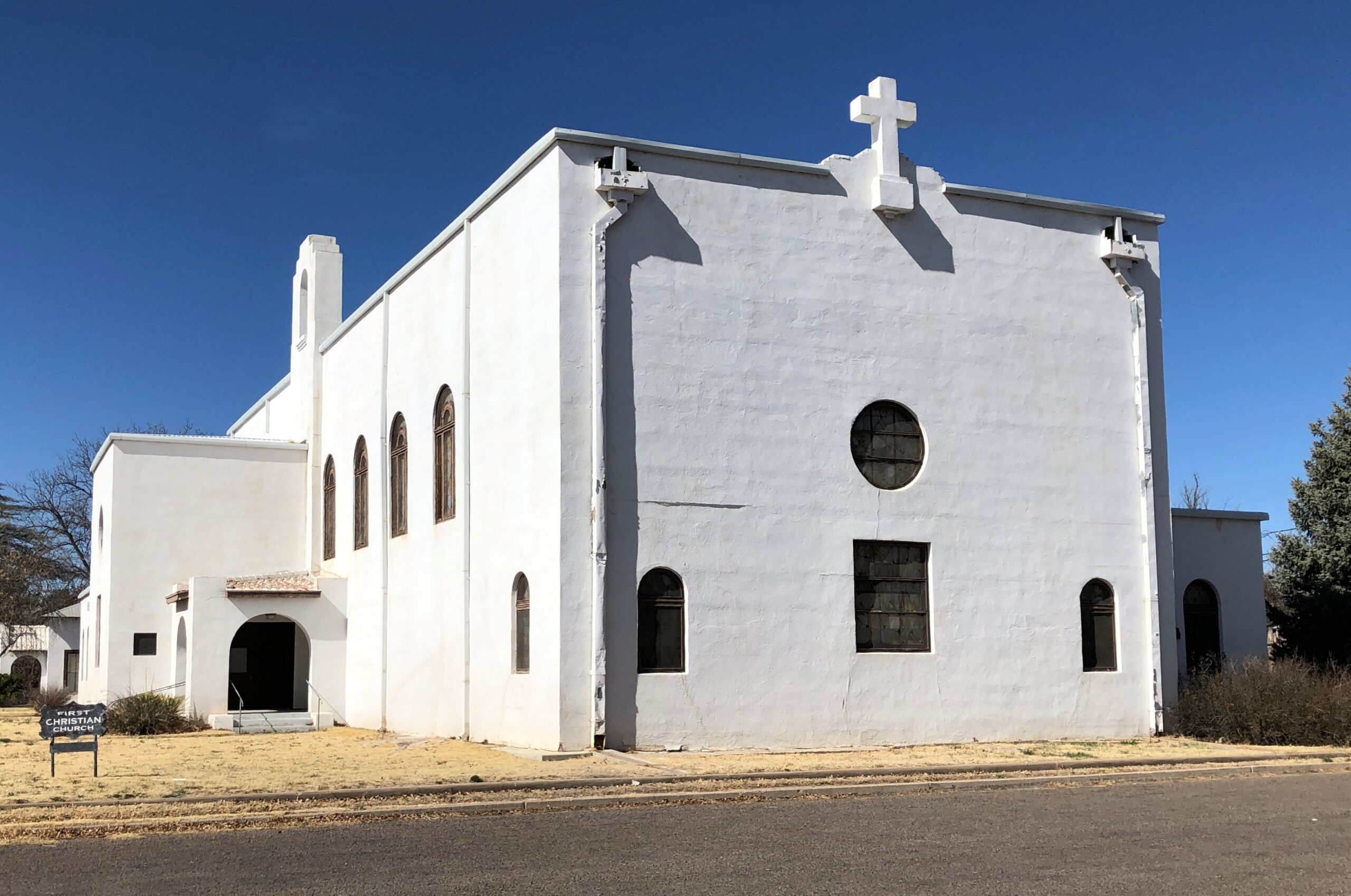
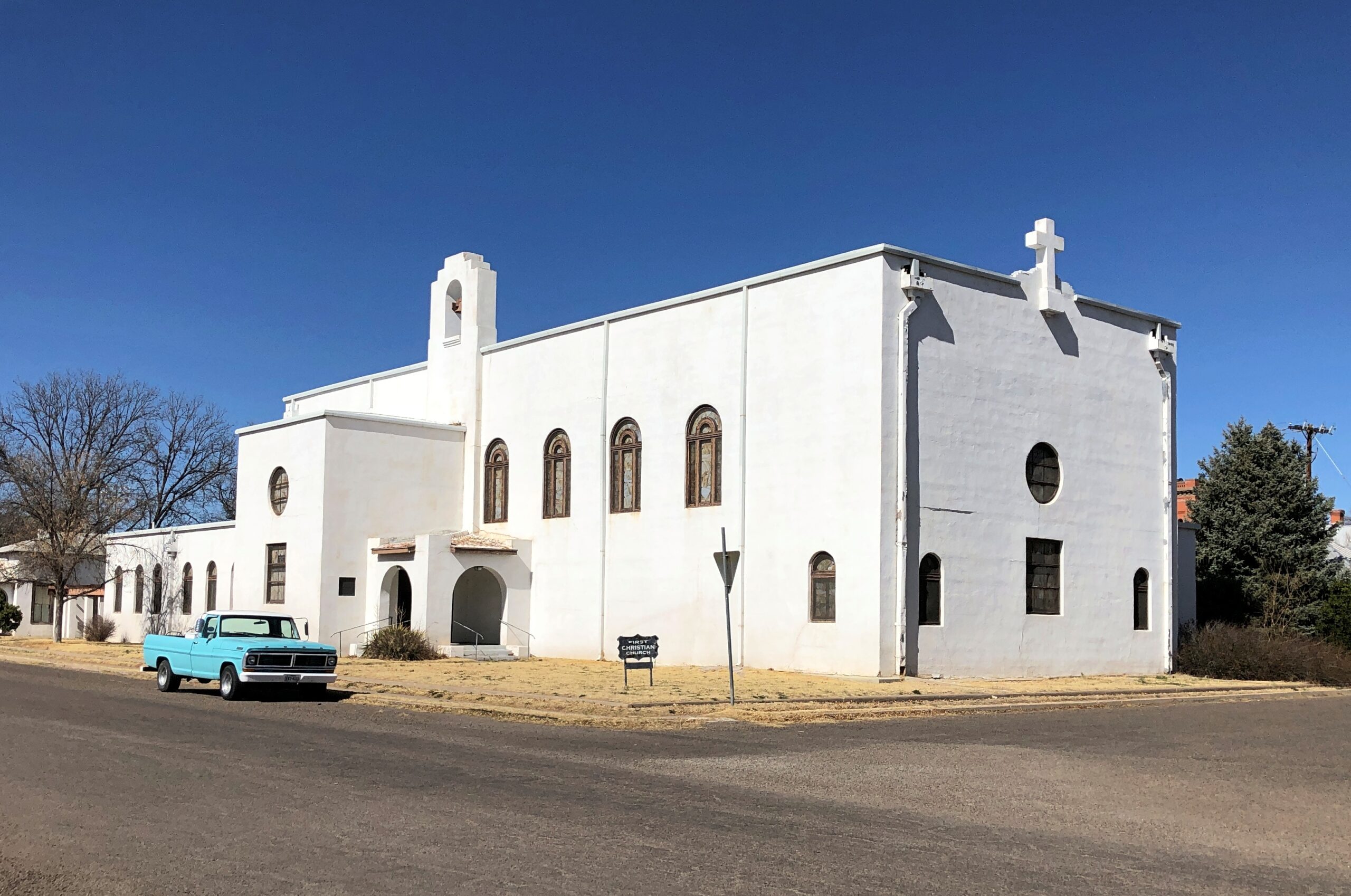
First Christian Church.

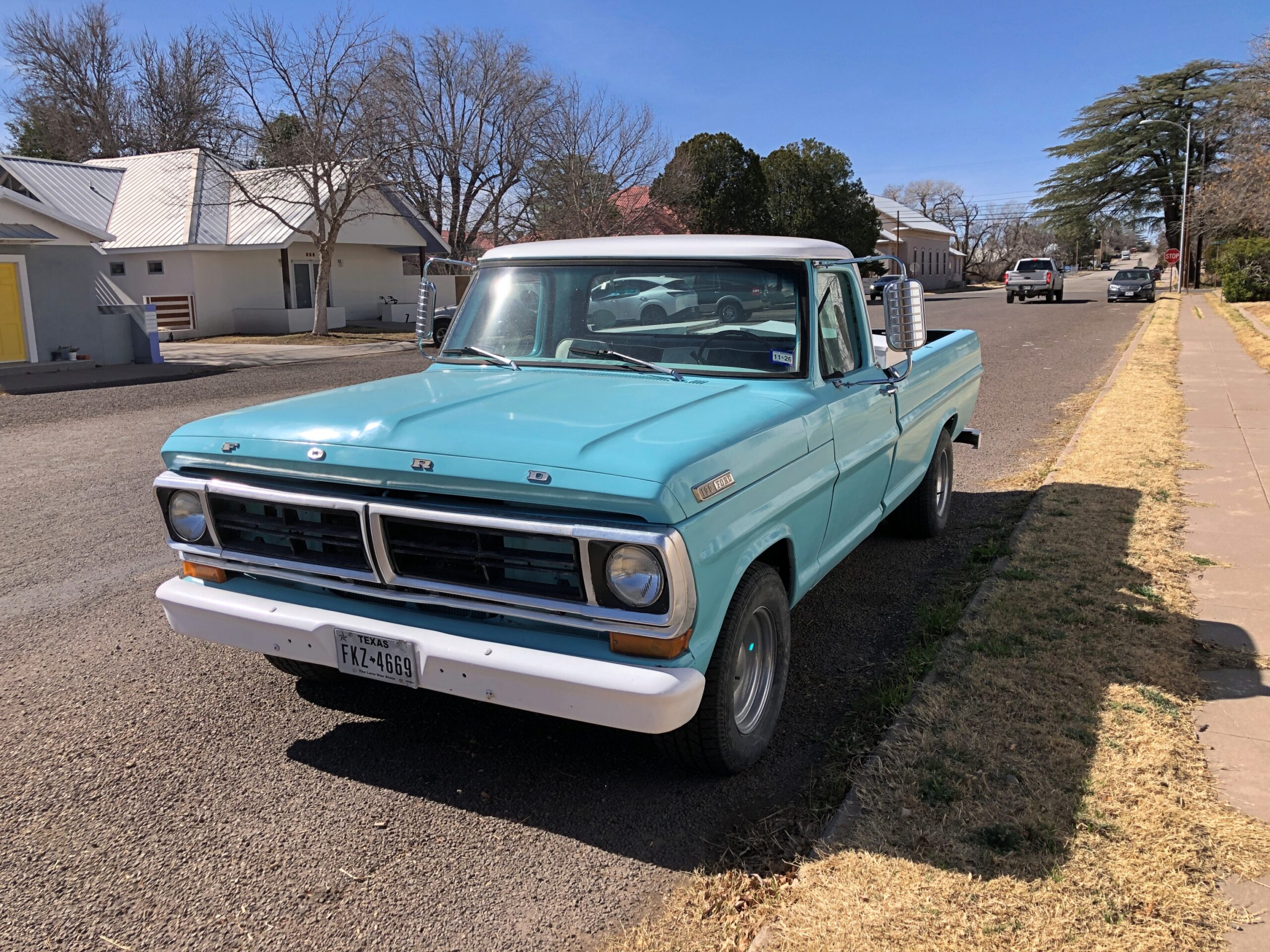
It’s a coincidence of placement, probably, but it still looks like the church and the pickup truck are a set. An answer to the longstanding theological question, WWJD, What Would Jesus Drive?

Marfa Texas

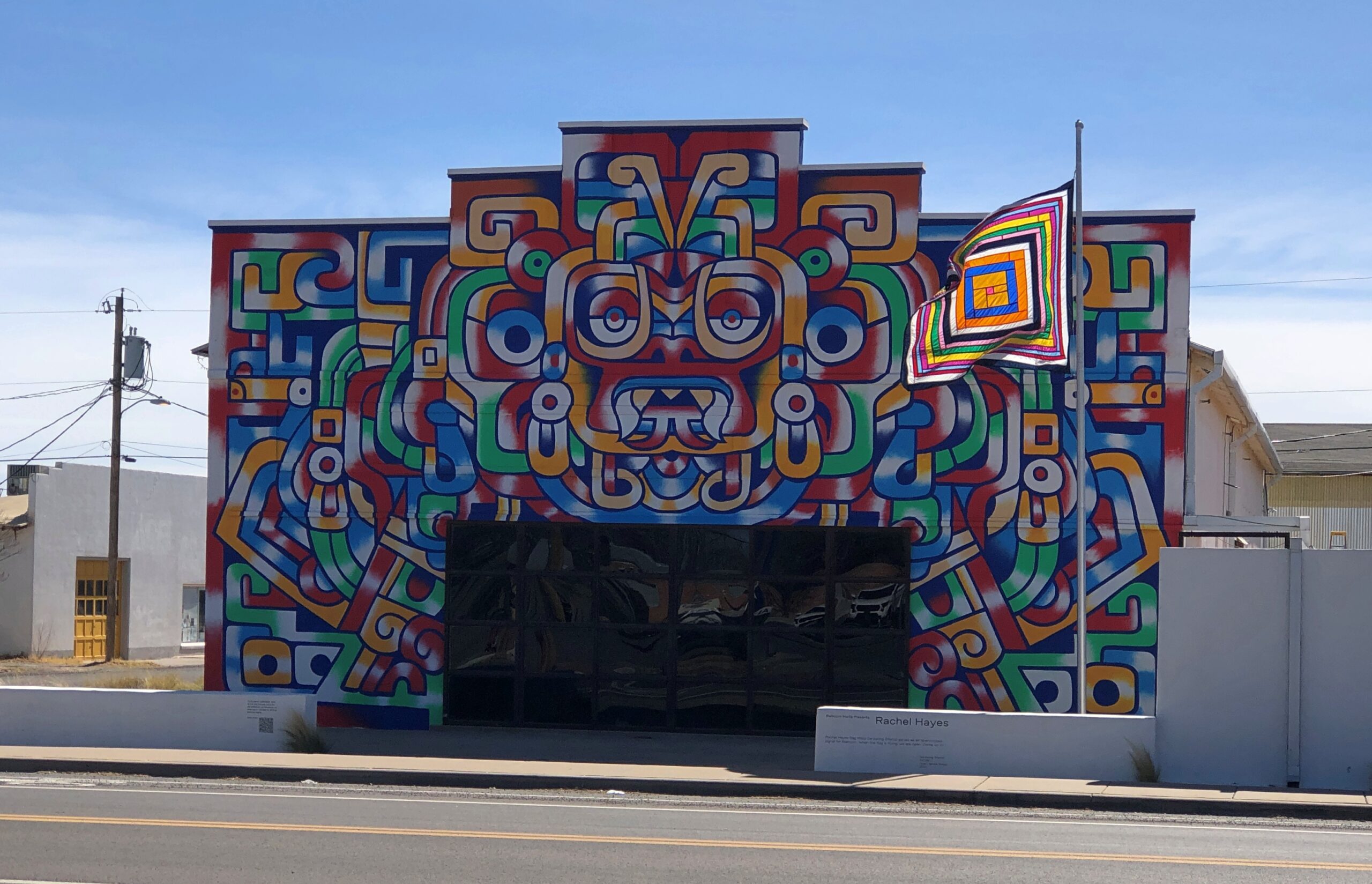
Elsewhere in Marfa, an example of something you see when doing something else – in this case, buying gas.

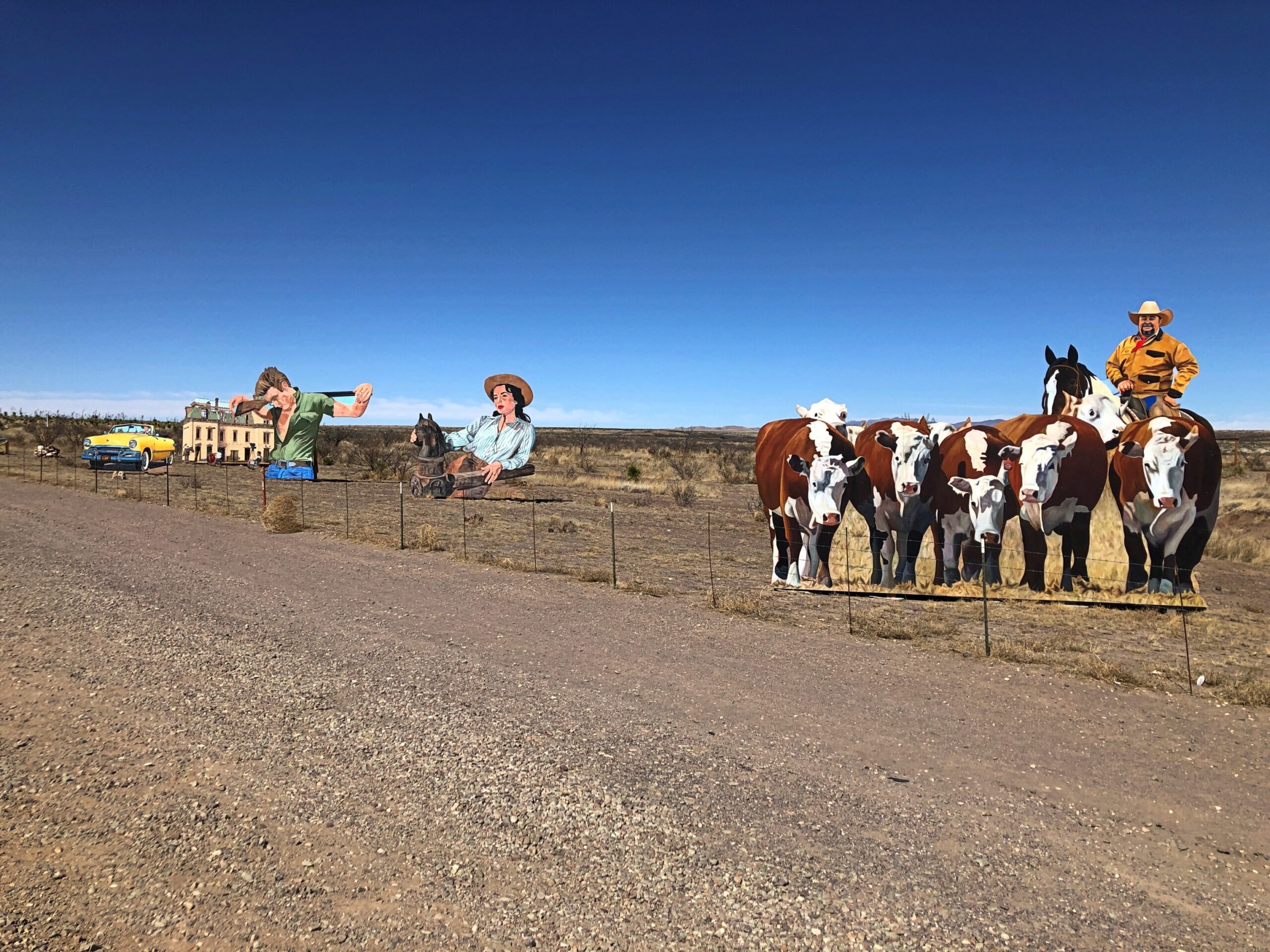
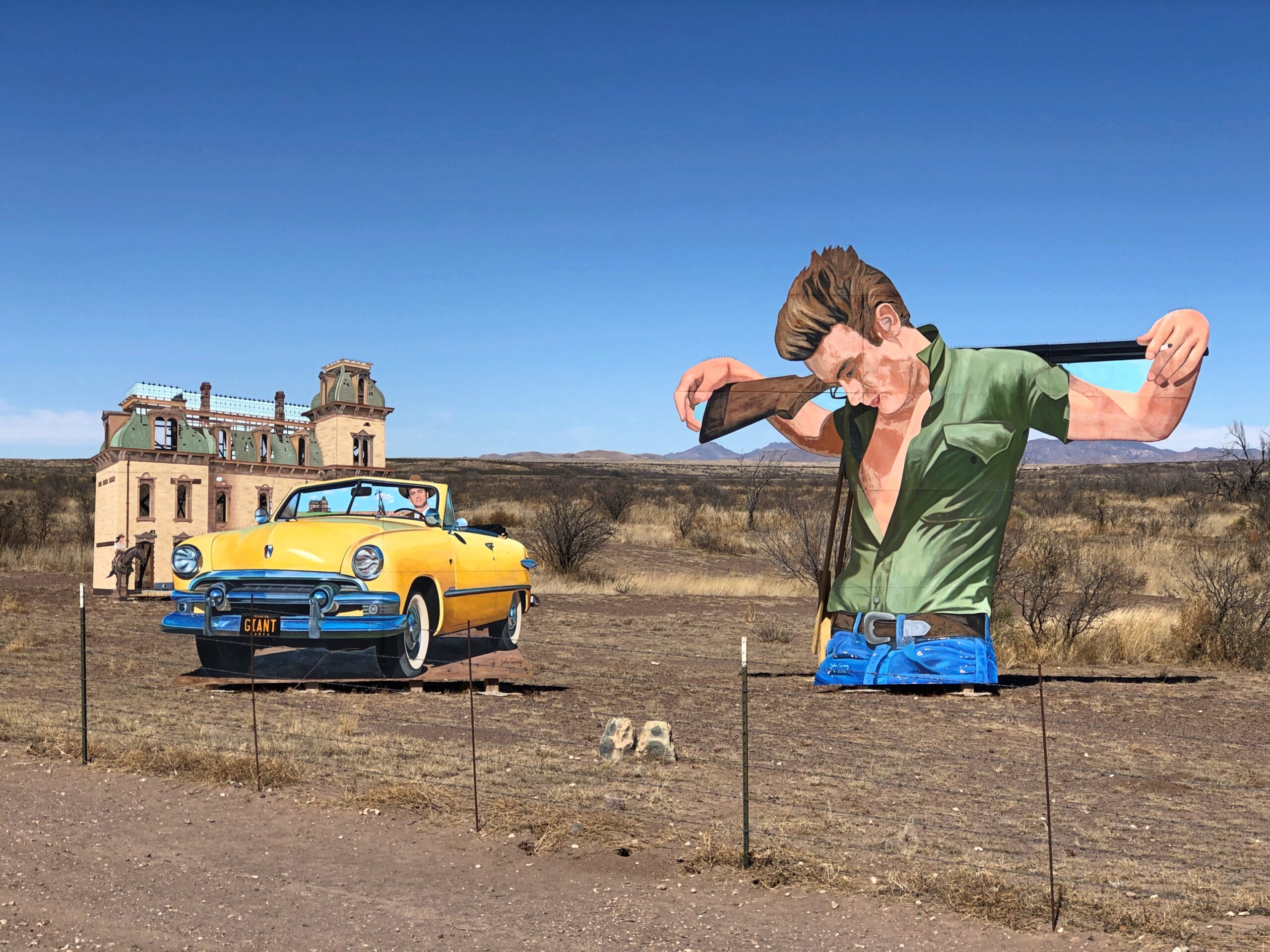
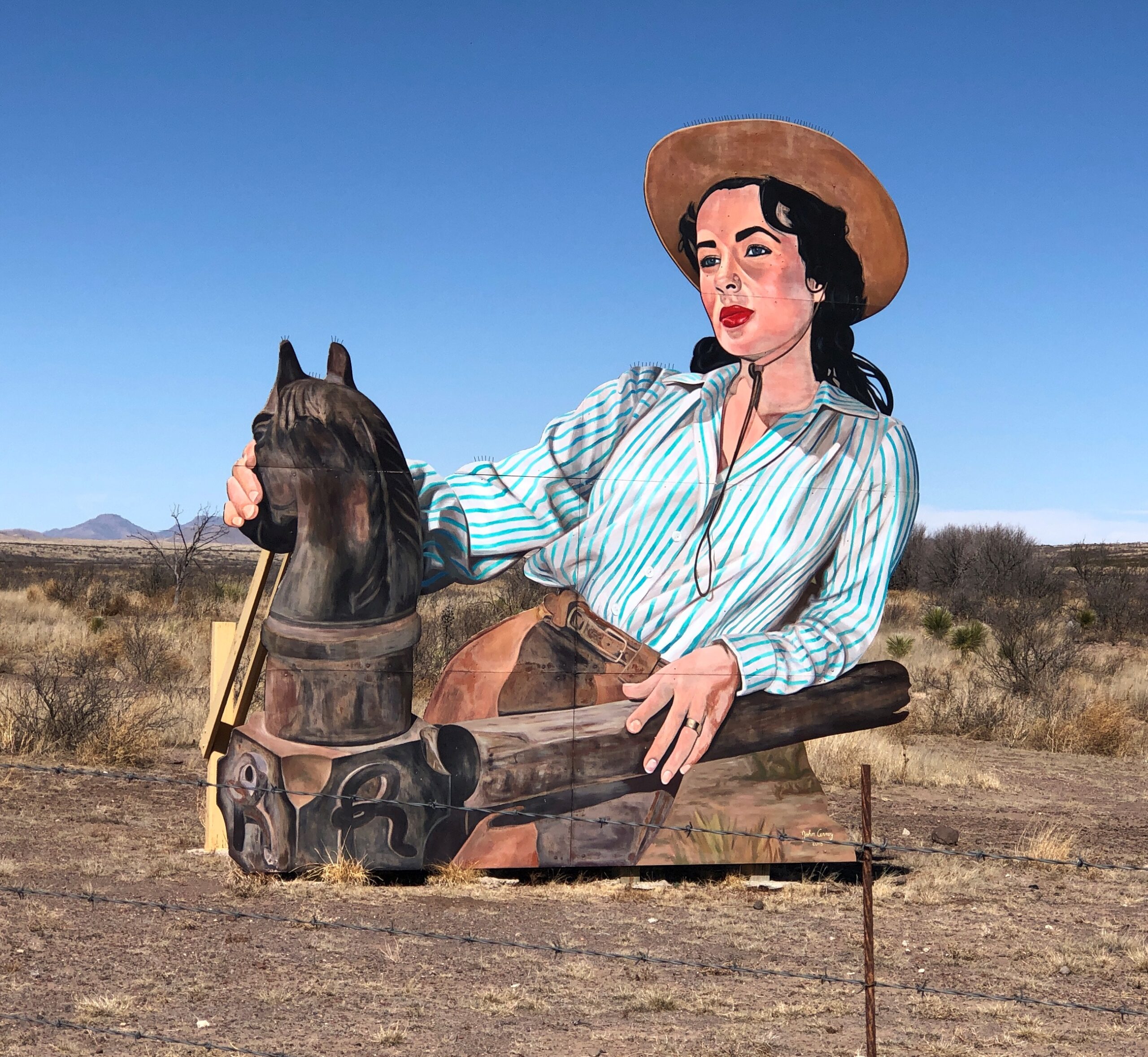
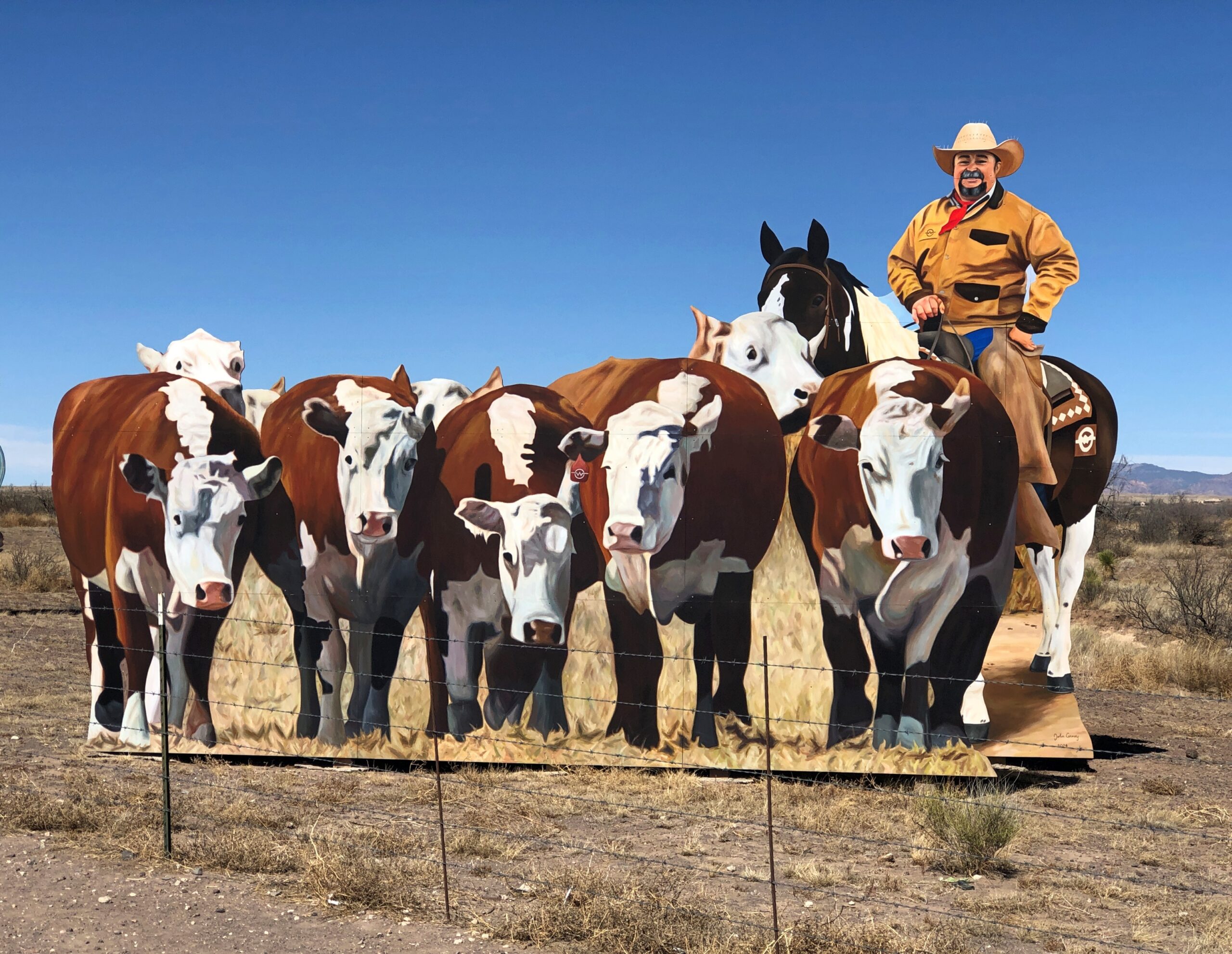
West from Marfa on US 90, on the road to Valentine and Van Horn, are characters from the last of James Dean’s three movies, the one in which he implausibly grows old. Some of that movie was filmed in the area – on the ranch behind the barbed wire, in fact.

“A donation to the city of Marfa, the mural by artist John Cerney honors the movie Giant (1956), which was partially filmed in this small west Texas town,” says Texas Time Travel. “The mural is a collaboration with singer/songwriter/musician Michael Nesmith who made possible the addition of an audio element to the mural installation. The sounds of Nesmith and his First National Band Redux play continually on a loop from hidden speakers near the automobile in the scene.”
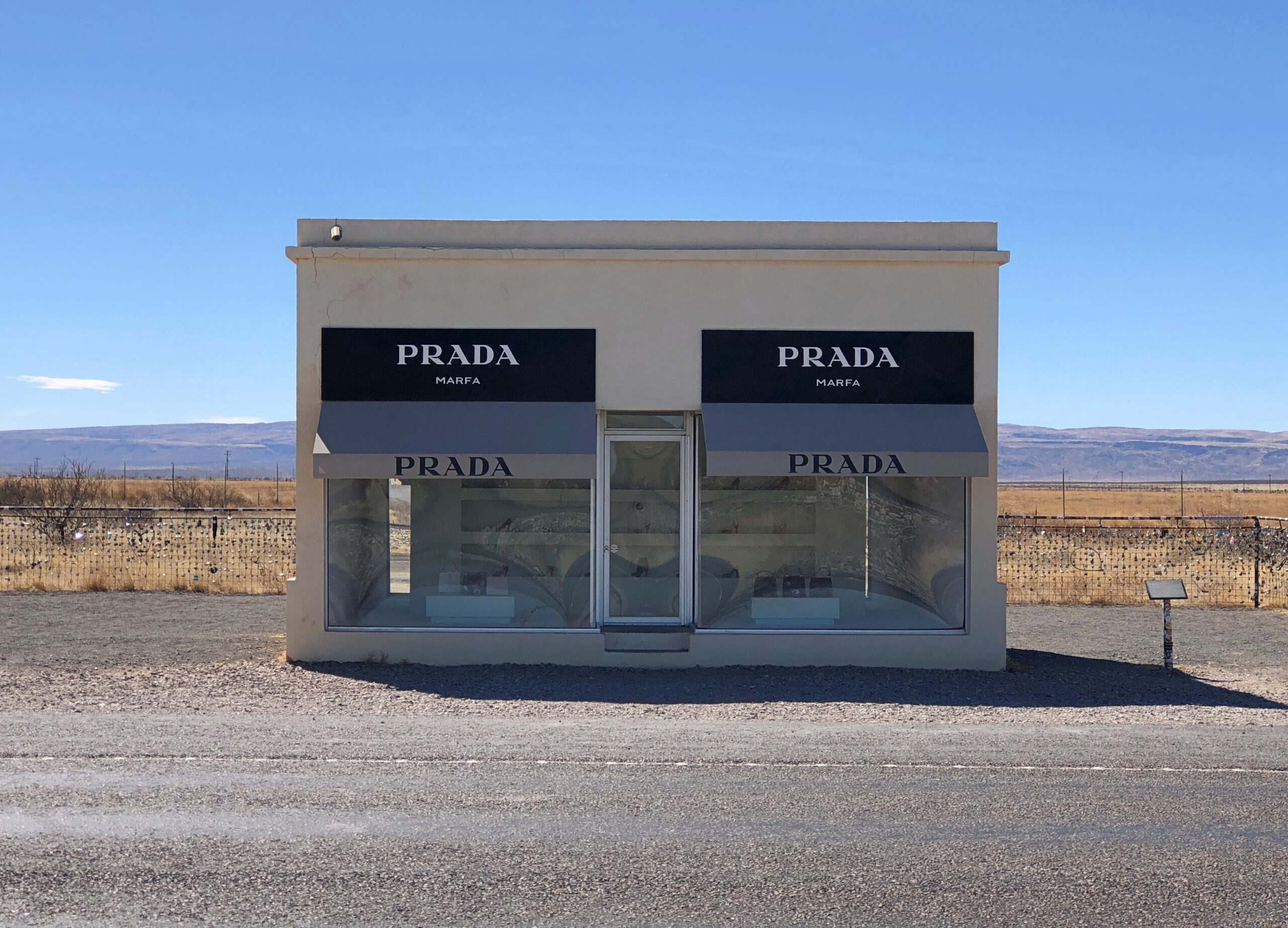
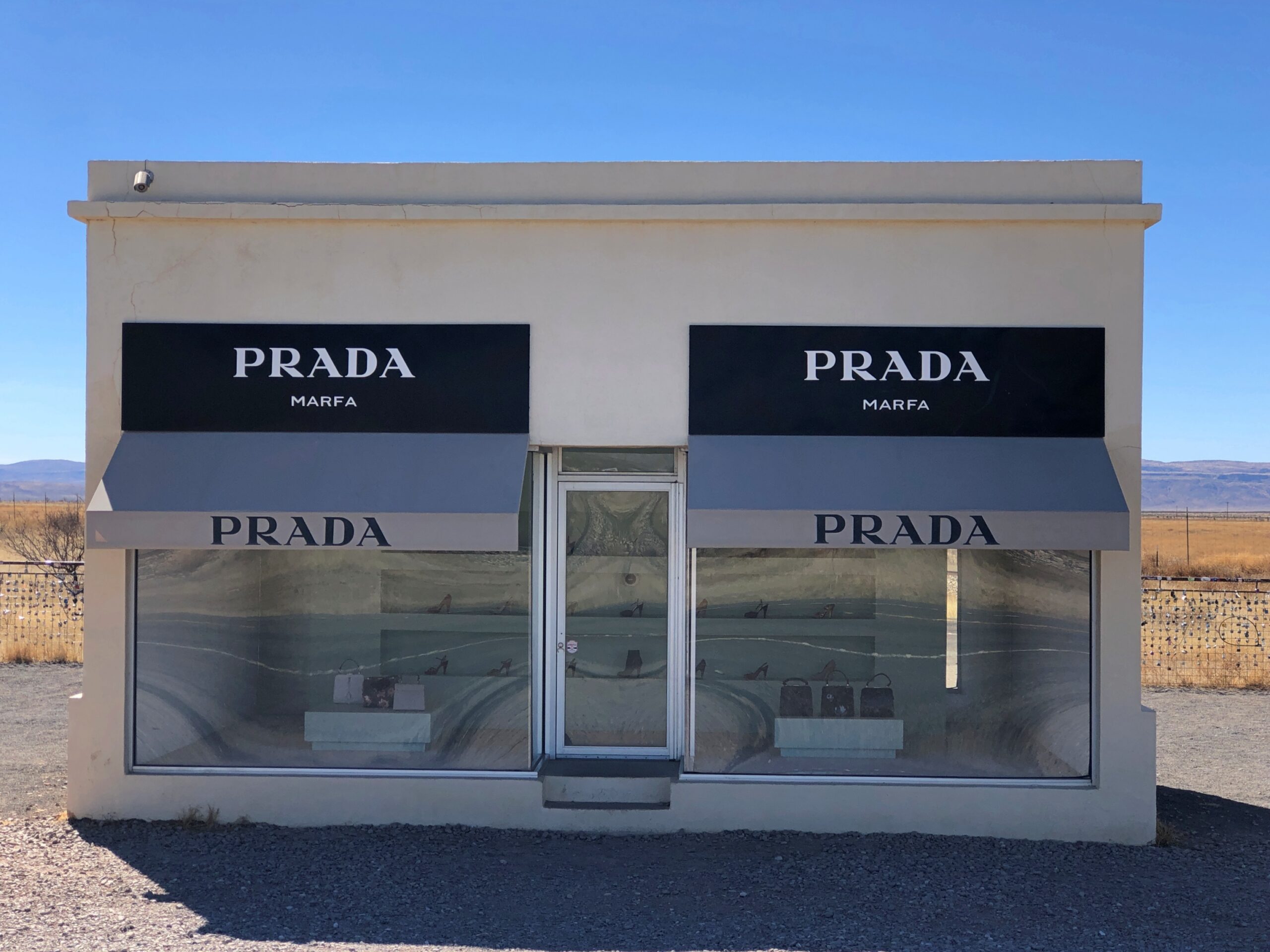
Further down the same road, in fact close to the hamlet of Valentine, is the Marfa Prada. Not the Valentine Prada, because who has ever heard of Valentine, Texas (pop. 217)?

Texas Time Travel again: “Prada Marfa is a site specific, permanent land art project by artists Elmgreen & Dragset, commissioned by Art Production Fund and Ballroom Marfa. Modeled after a Prada boutique, the sculpture houses luxury goods from the famed brand’s fall 2005 collection of bags and shoes.”

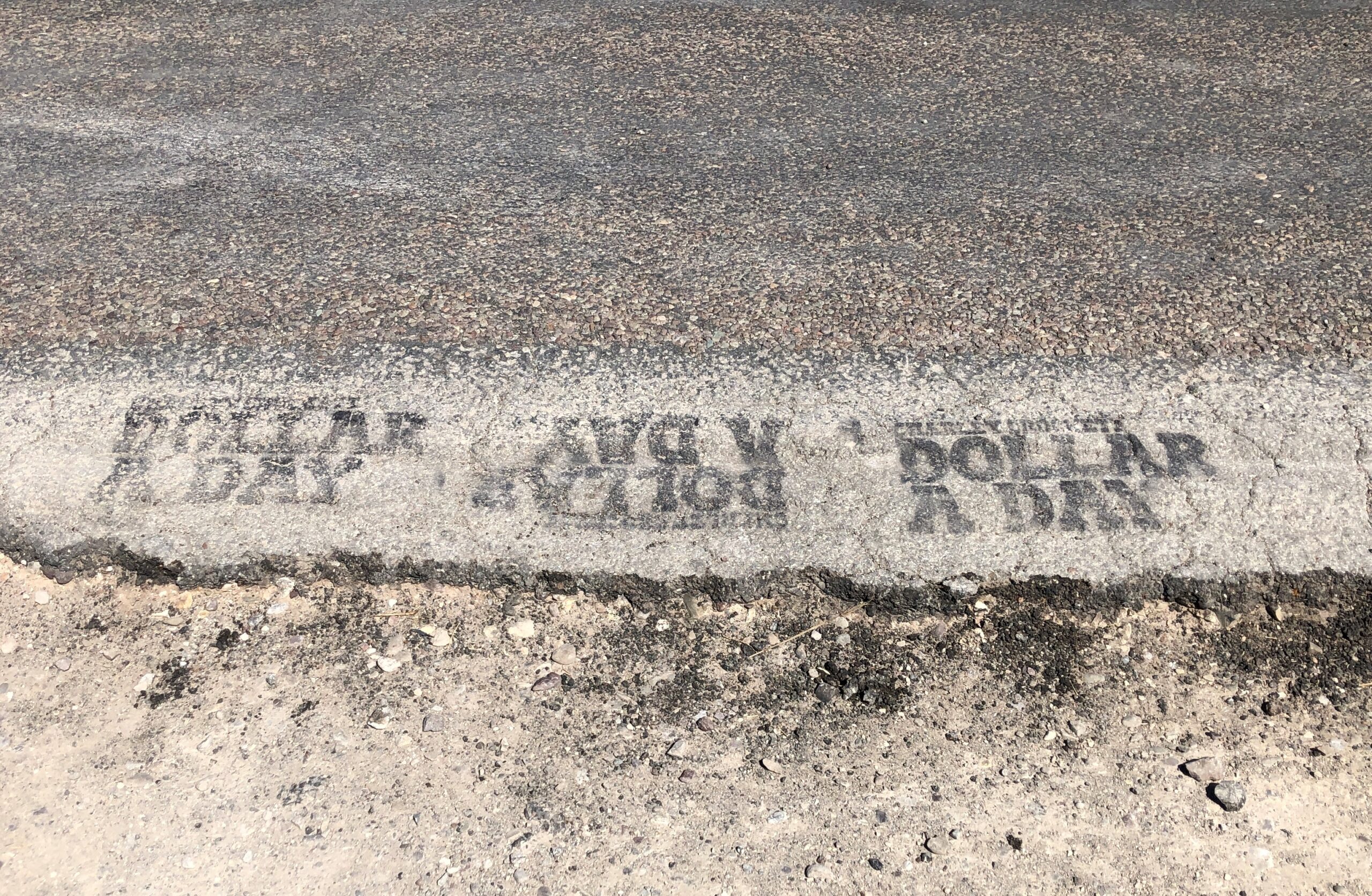
Detail near the road. Not sure if it was added by the artist or someone else.

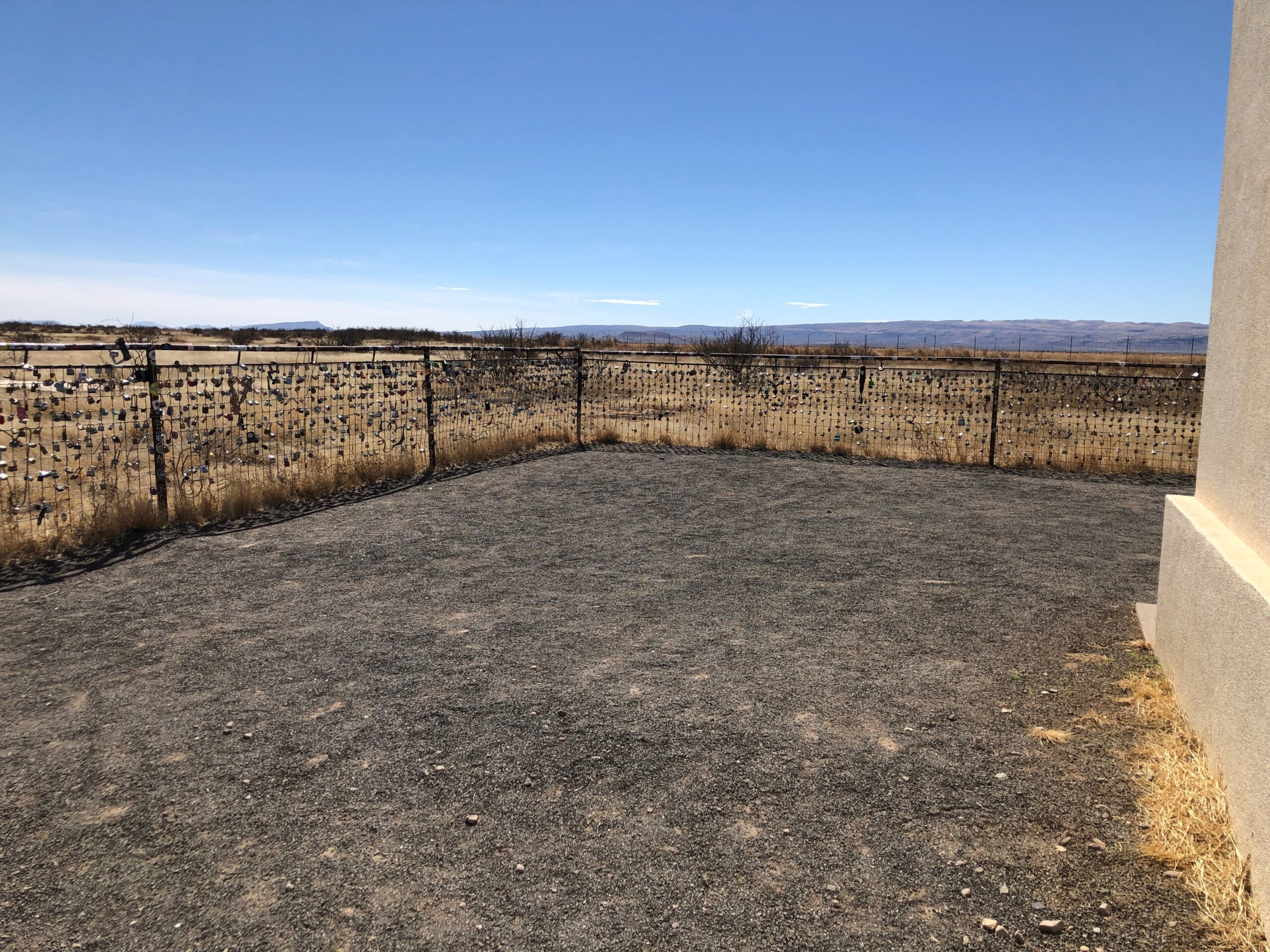
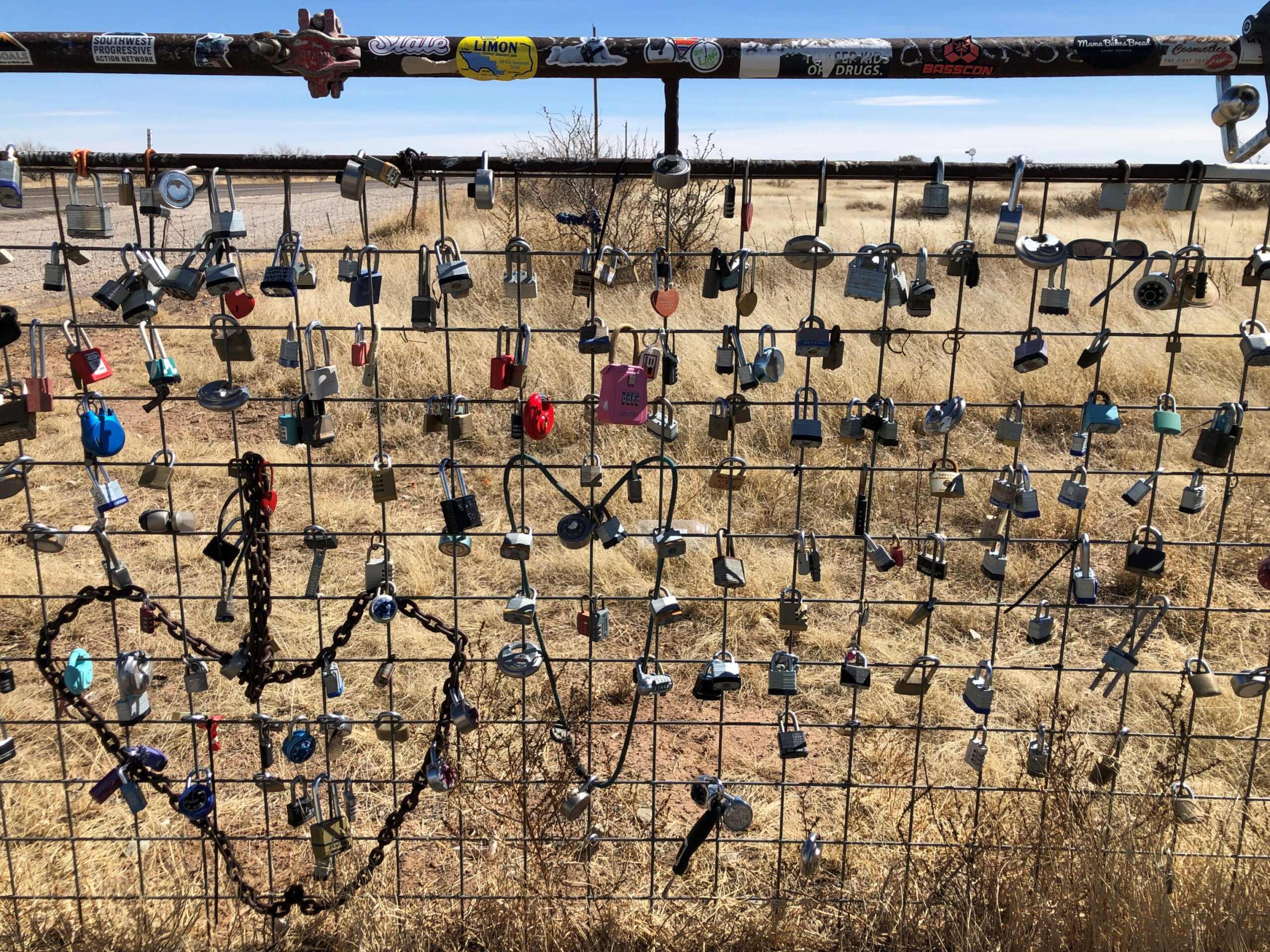
The fence partly around the locked building is festooned with love locks.

And a love chain? For a more spicy time.

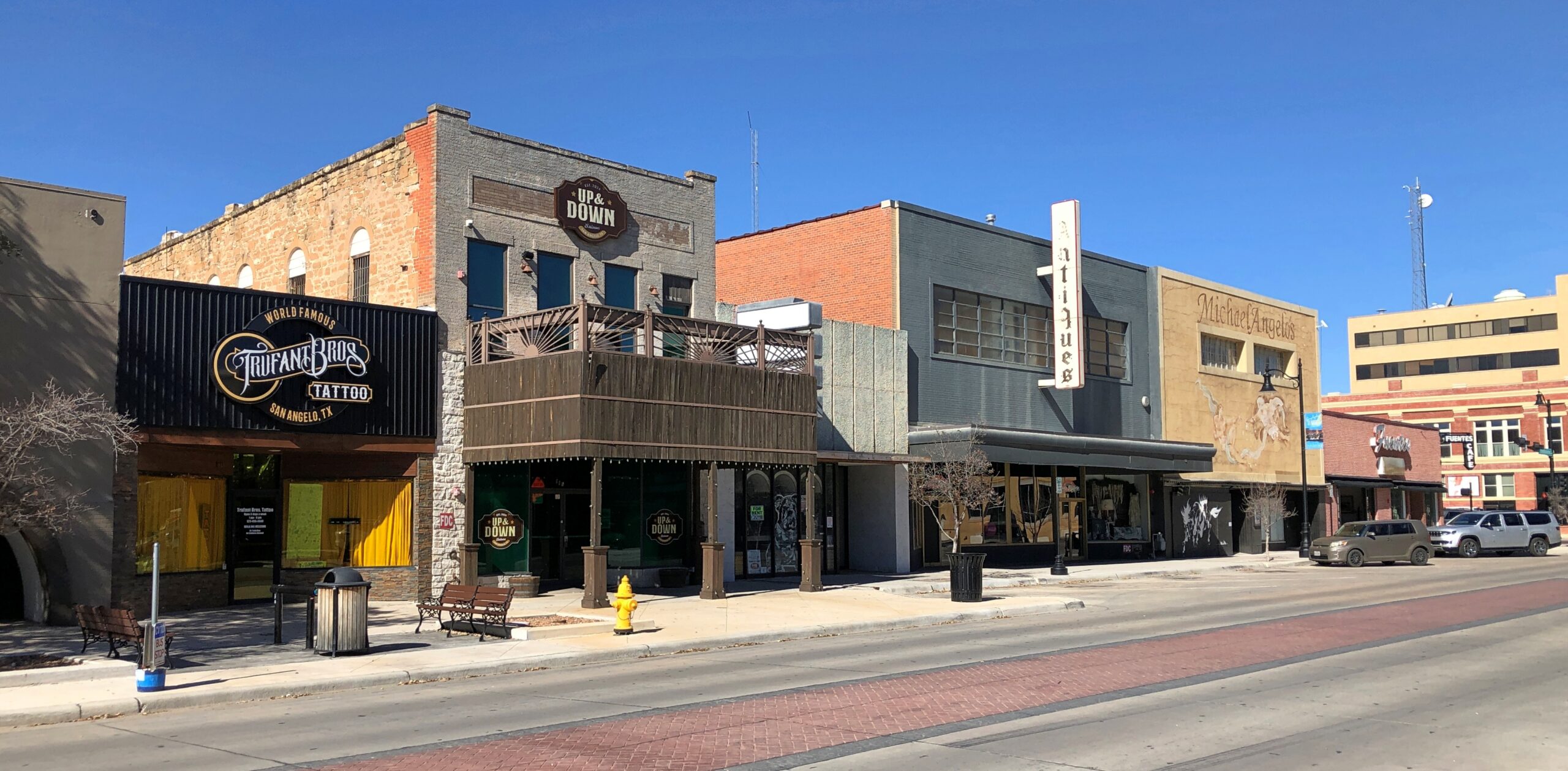
Downtown San Angelo

I had a fondness for maps as a kid, and few were better than the Texas State Highway Maps produced by the Texas Highway Department, a predecessor agency of the Texas Department of Transportation (TxDOT). One of the maps’ features was a small stroke of genius – one later dropped, of course – that put the very largest urban areas in yellow, mid-sized ones in green and relatively small cities in brown. At a glance you could size up the size of a place you might be driving, if you didn’t happen to know.

Under that scheme, San Angelo, Texas, came in green, if I remember right. Not in the same league as yellow Houston, Dallas, San Antonio or Austin, or even El Paso and Waco, but bigger than places like Pampa, Killeen or Orange, again if I remember right (the old maps are tucked away in San Antonio). Why was there a mid-sized city in San Angelo’s location, I don’t ever remembering asking.

Easy enough to find out now: a frontier fort at confluence of two sizable rivers whose town grew as nearby cattlemen prospered, and oil services took root. In our time, there are also other usual-suspect major employers, such as schools and hospitals, and the military never left, considering the presence of Goodfellow Air Force Base, which managed to survive the wave of base closures and consolidations in recent decades (unlike some).

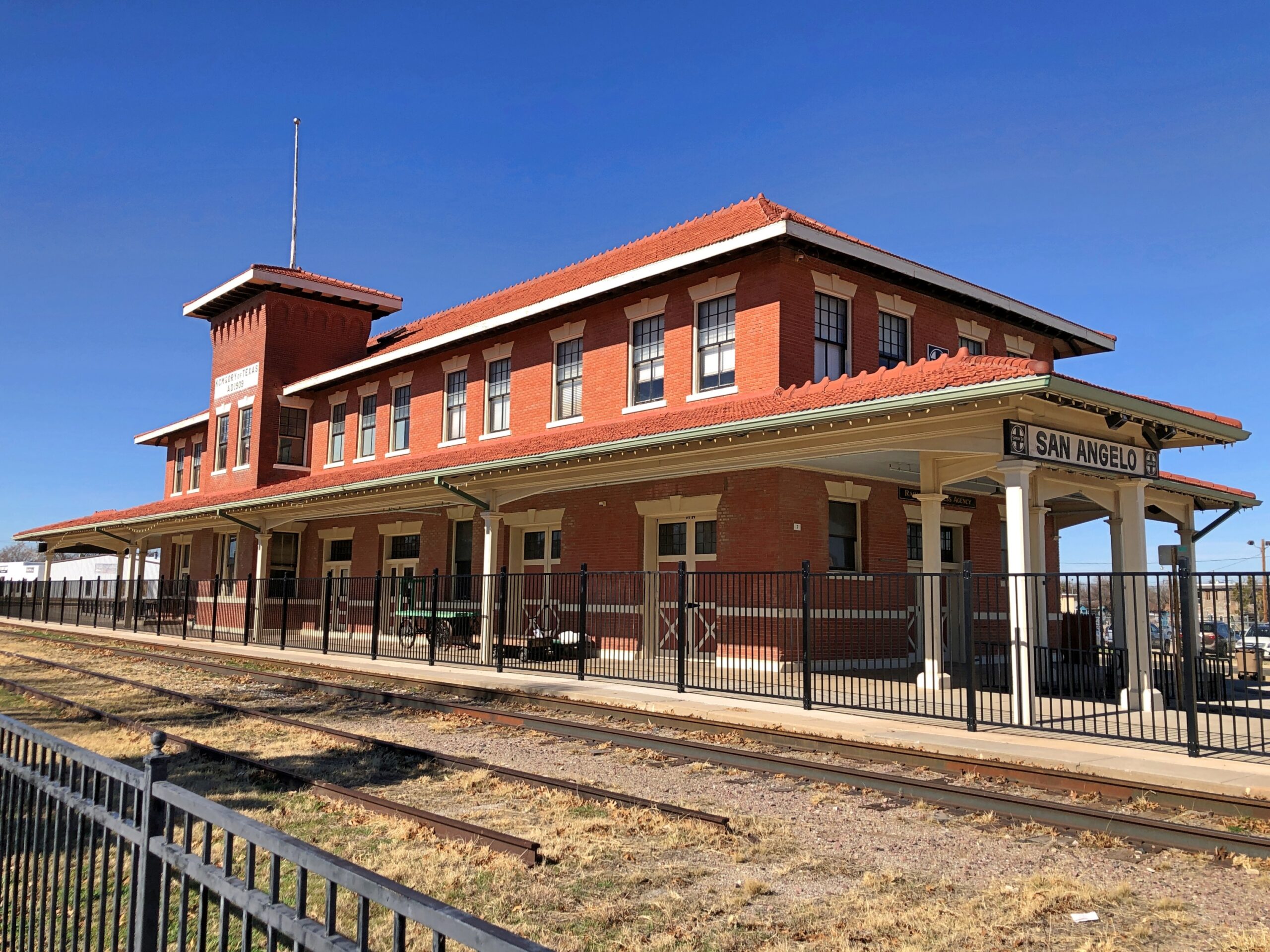
On a drive from DFW to West Texas, San Angelo seemed like a good place to stop for a night, and we arrived just before dark. The next morning, we took a look around, especially downtown. First, a handsome train station.
Mostly, San Angelo isn’t a high-rise city.

With some small-city exceptions, such as the Hotel —– building.

Street art.

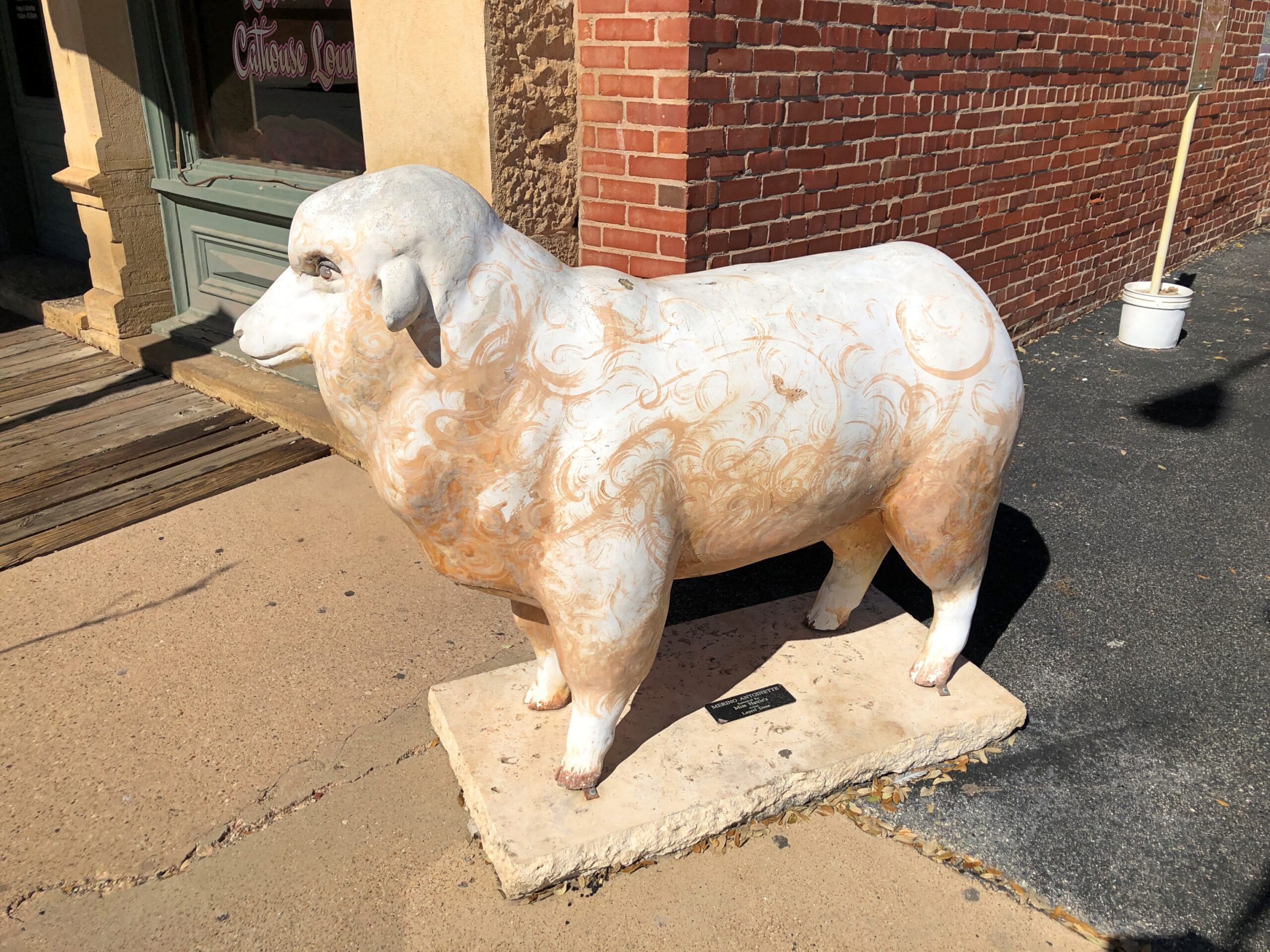
Chicago has cows, San Angelo sheep. Back the USDA for ag stats: cattle are by far the most common livestock in Tom Green County, with $49.5 million in sales in 2022. But there are a fair number of sheep, with sheep, goats, wool, mohair and milk selling $4.2 million that year. For cattle production, the county comes in at only the 30th highest sales volume in Texas; but for sheep etc., the county ranks fifth statewide.

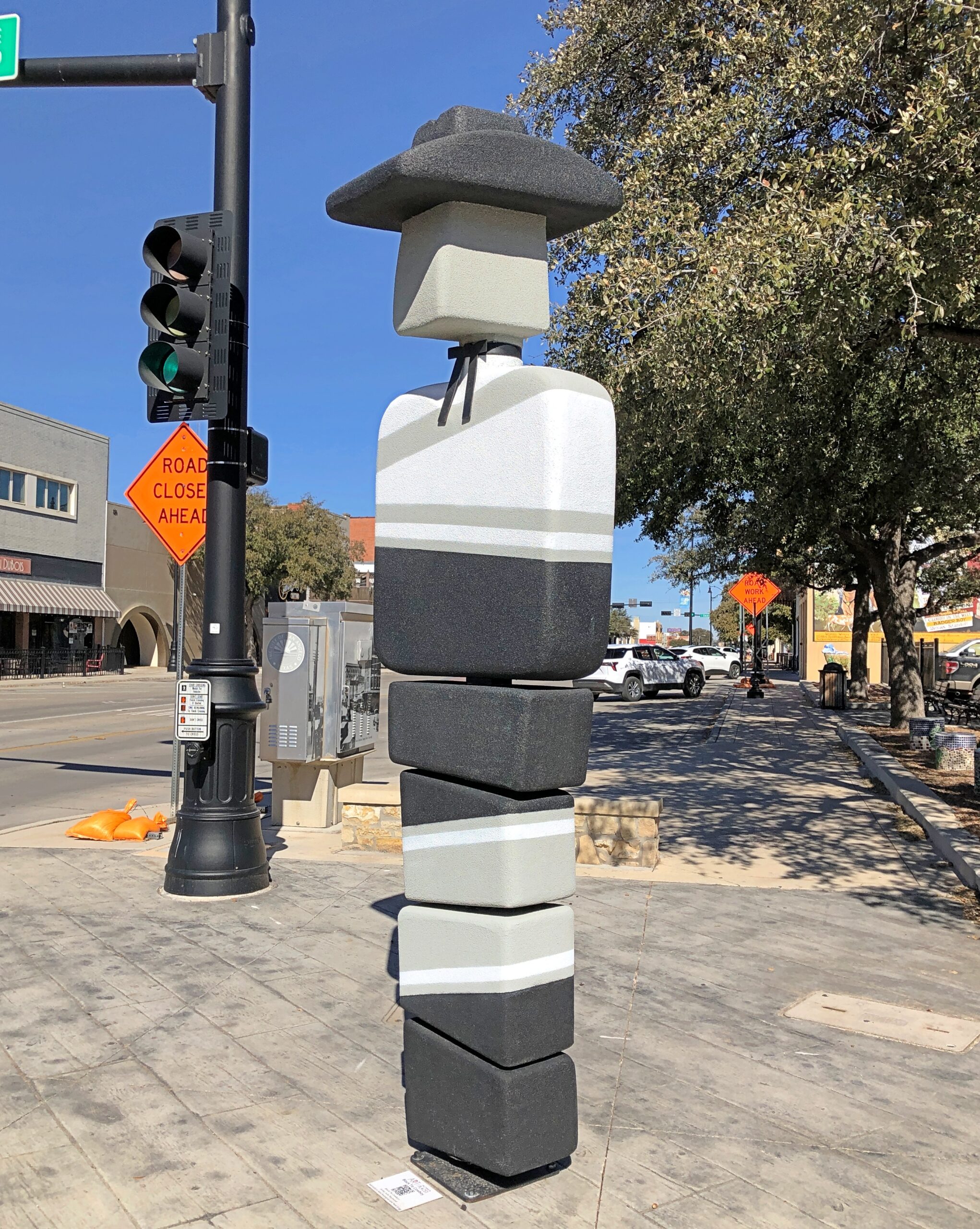
Again with the overrepresentation of cowboys. If there are art sheep on the streets of San Angelo, why no art shepherds? Then again, a modern shepherd probably looks a lot like a modern cowboy, so maybe that is a shepherd.

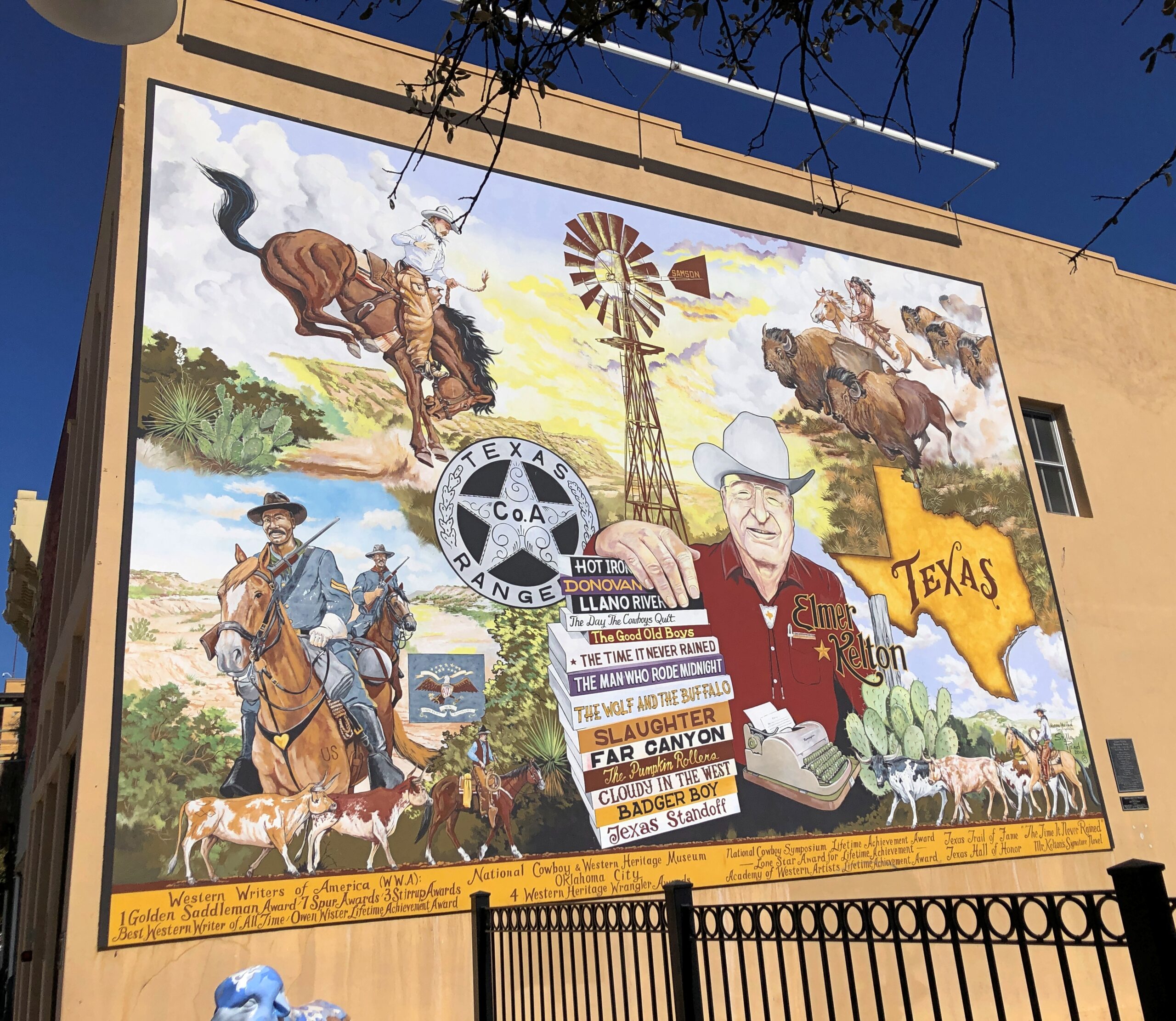
I had to look him up. Elmer Kelton (d. 2009), San Angelo resident, wrote a lot of Westerns.

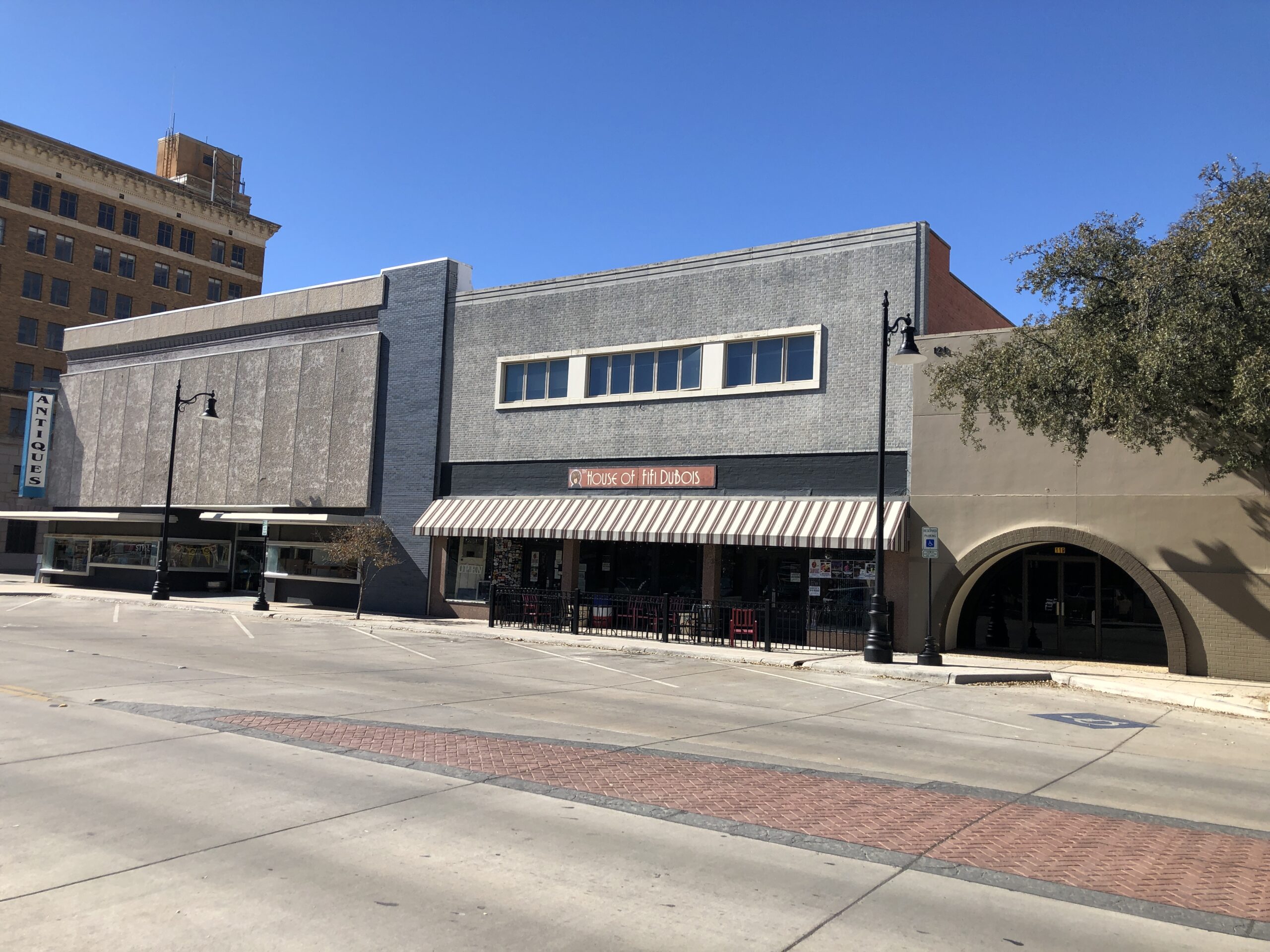
An unassuming exterior, but a fair amount going on inside, at least most evenings. I had to look up FiFi DuBois, too. The association of the San Angelo establishment with New York entertainer isn’t quite clear — is Fifi an owner or part owner, or is there some kind of licensing agreement?

Anyway: “The House of FiFi DuBois in downtown San Angelo is on the market for $1.3 million as its owners seek a new buyer to continue its legacy,” San Angelo Live reported in February.

“The property is located at 123 S. Chadbourne St. and is approximately a 16,250-square-foot building that includes the ground-floor bar and venue, an Airstream trailer feature, plus a massive upstairs loft and additional rentable spaces that offer potential for multiple income streams, such as office use, short-term rentals, or expansion.
“The business remains open, thriving, and operating normally, according to information found online…”

Now I’m repeating information “found online.” But it’s probably reasonable to assume that the House of Fifi DuBois, with a lineup like this, is alive and well. Looks like the joint has both kinds of music, country and western, and plenty of drag shows. Cowboys and drag shows: now that’s West Texas variety, if you asked me.
Airstream feature? Tucked away in the venue is an Airstream that can be rented separately, it seems.

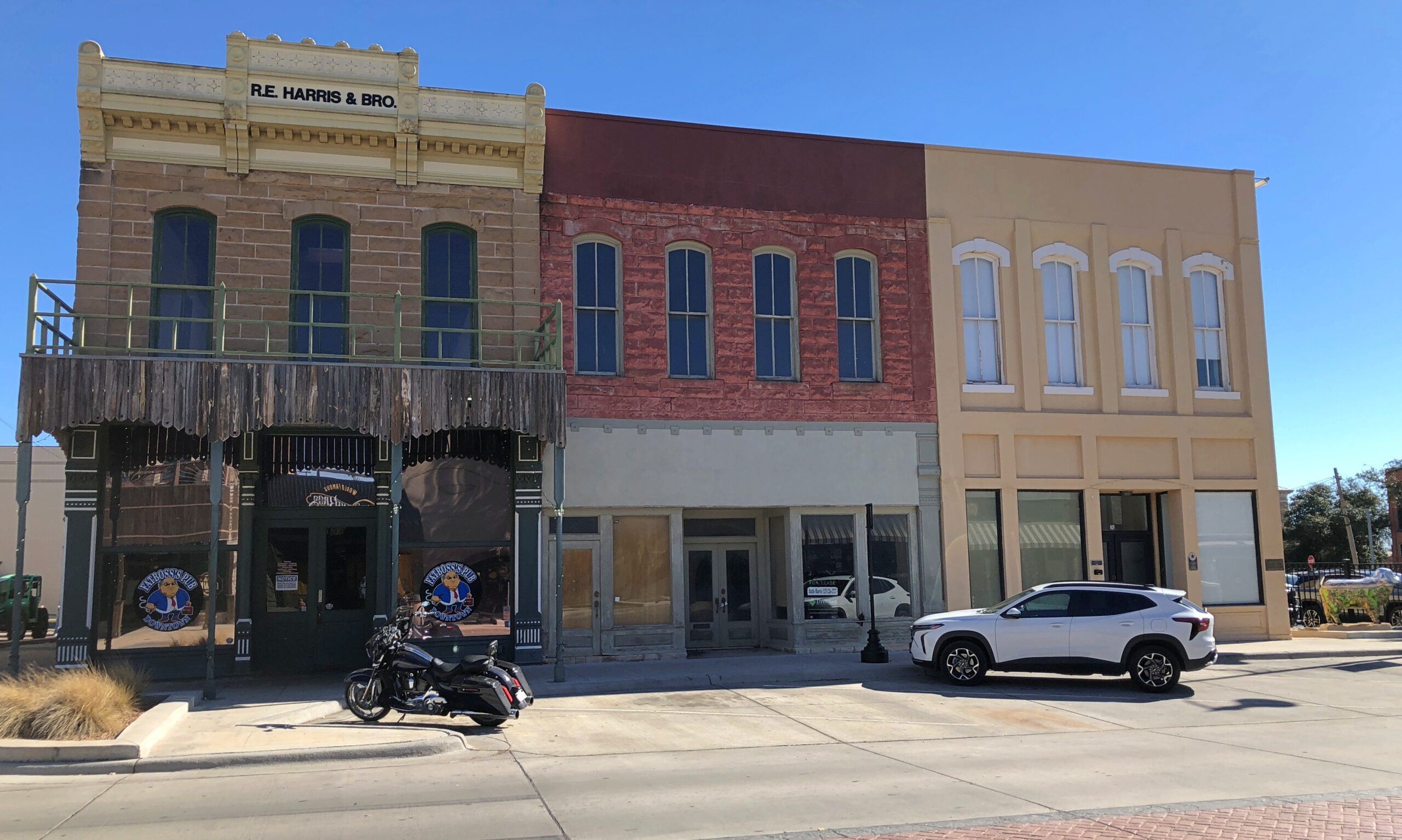
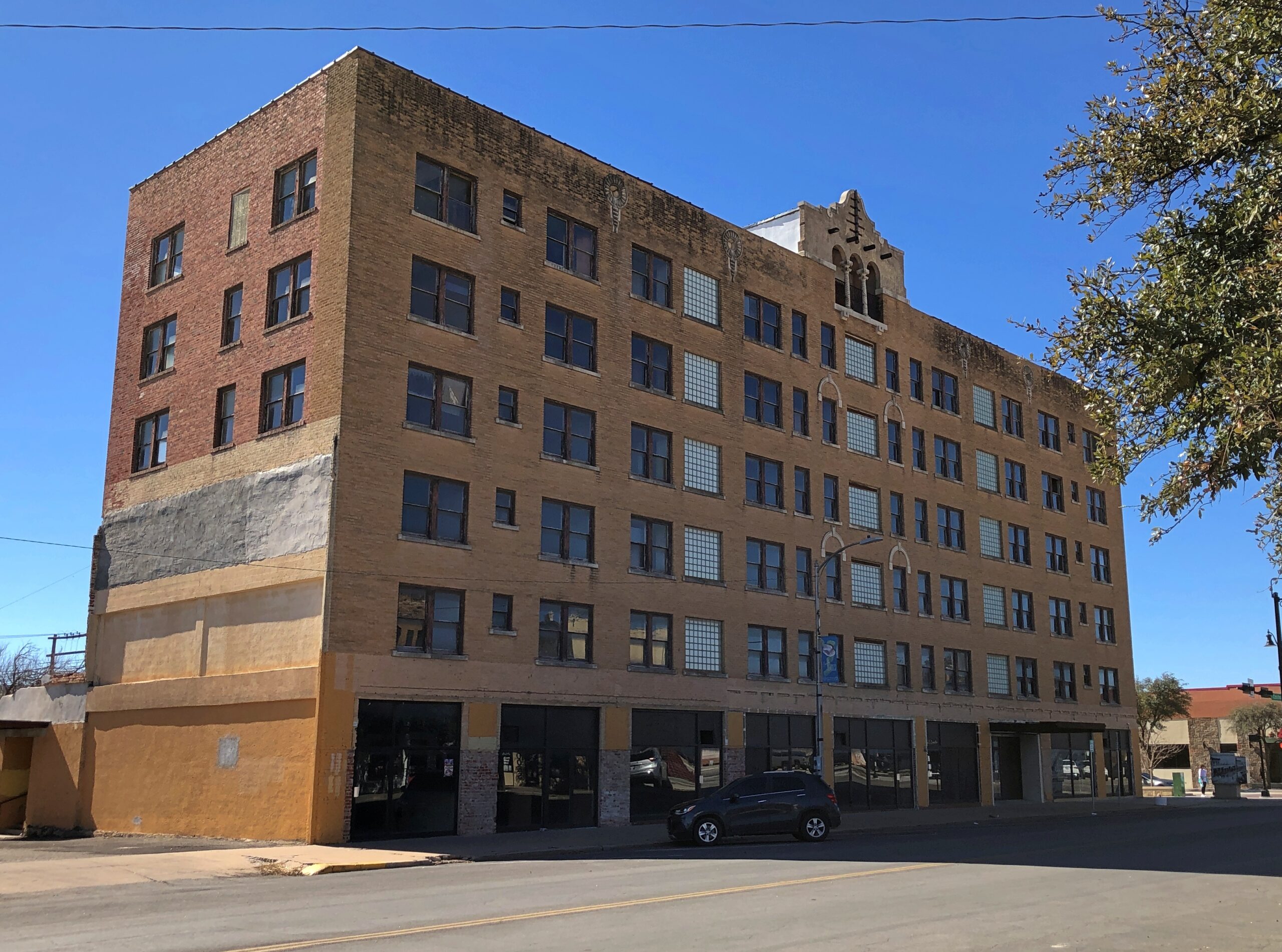
Meeting Chadbourne St. at the perpendicular is Concho Ave., named for the river, which was named for its bounty of shells. Near that intersection is a building that looks a tad underutilized.

I’ve interviewed too many real estate developers not to think, man, if that building could only be teleported to Brooklyn – or even Scott’s Addition

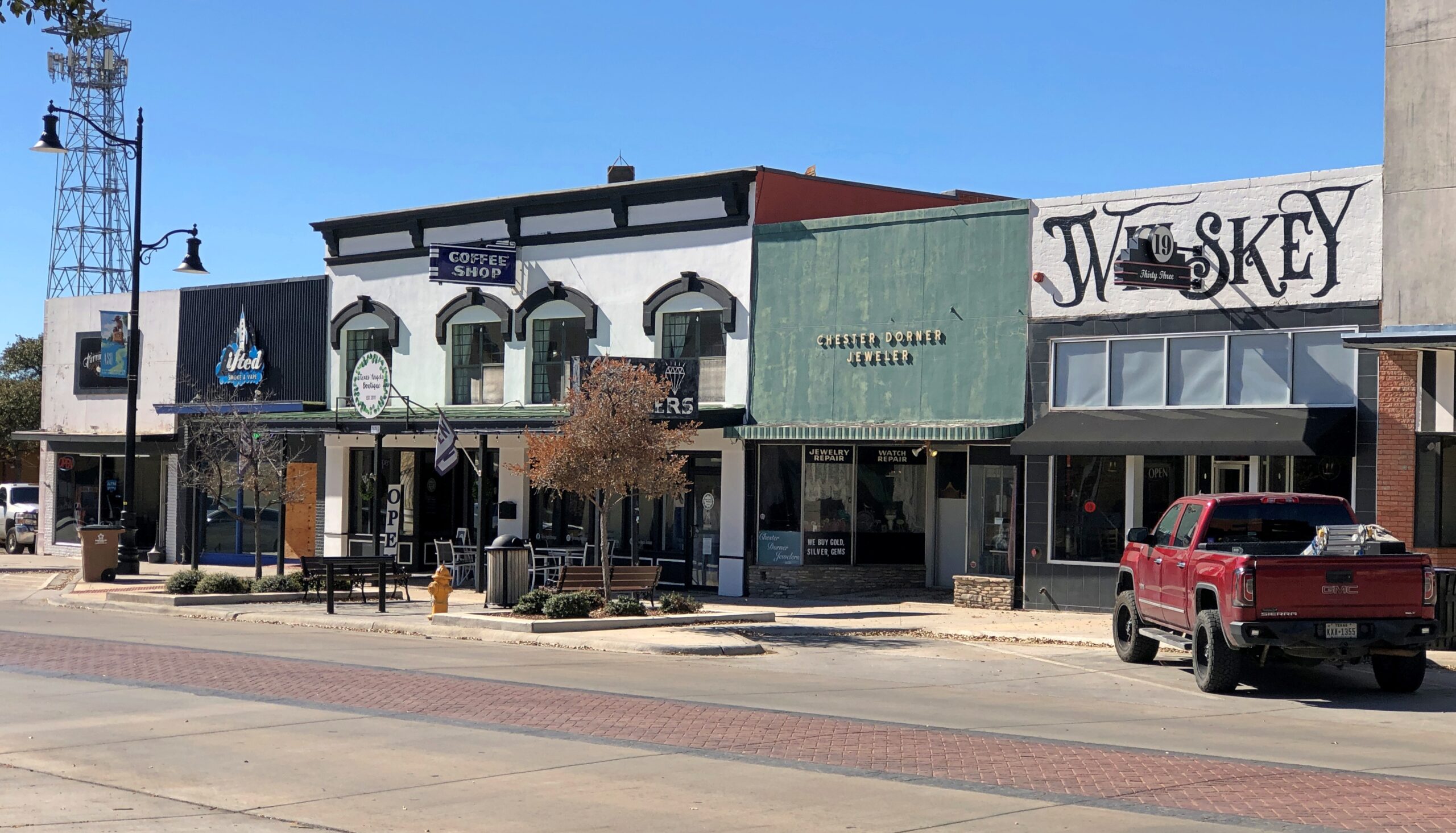
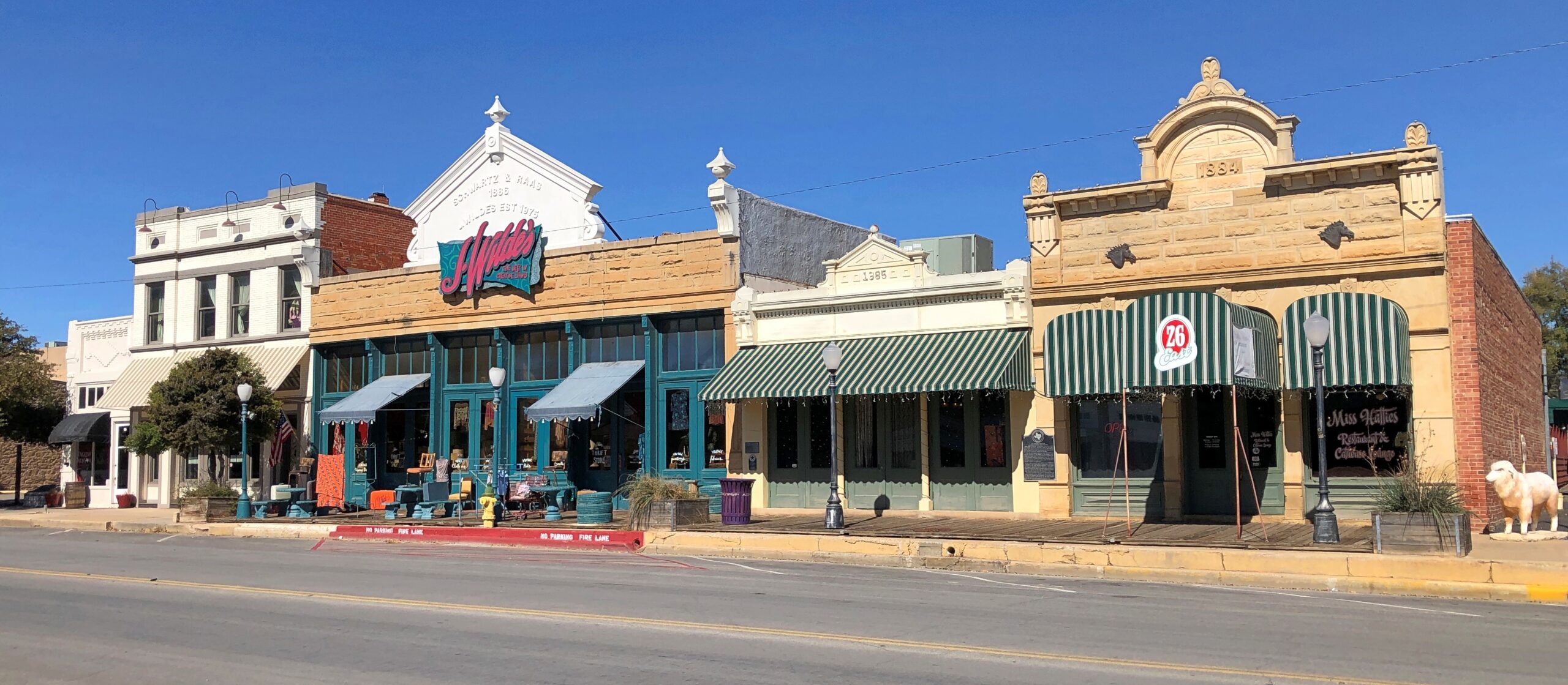
The nearby block is mostly occupied, however. With local shops.

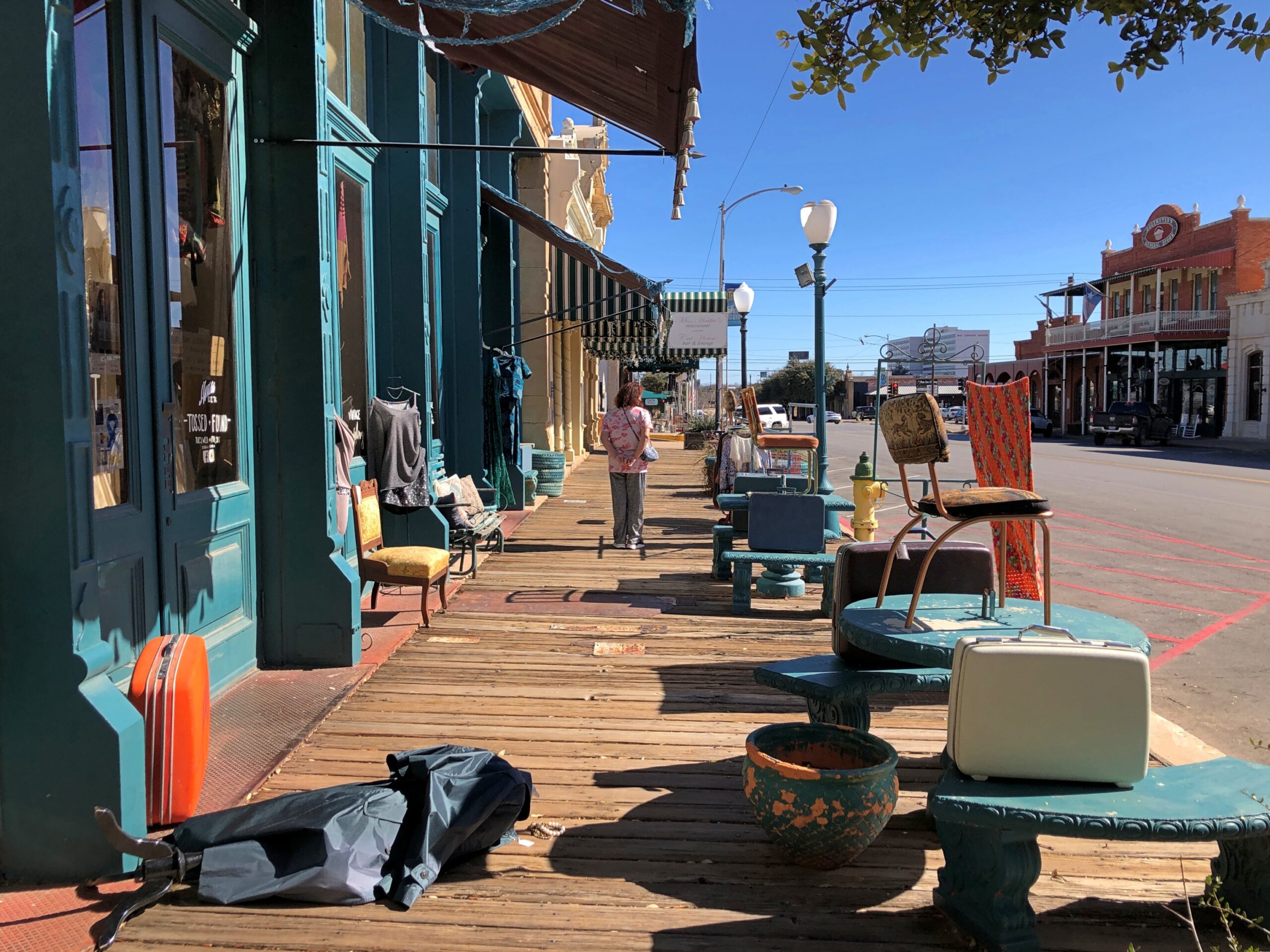
Also, it sports a stretch of raised, plank sidewalk.

The plates are flush enough with the boards not to be a trip hazard, fortunately.

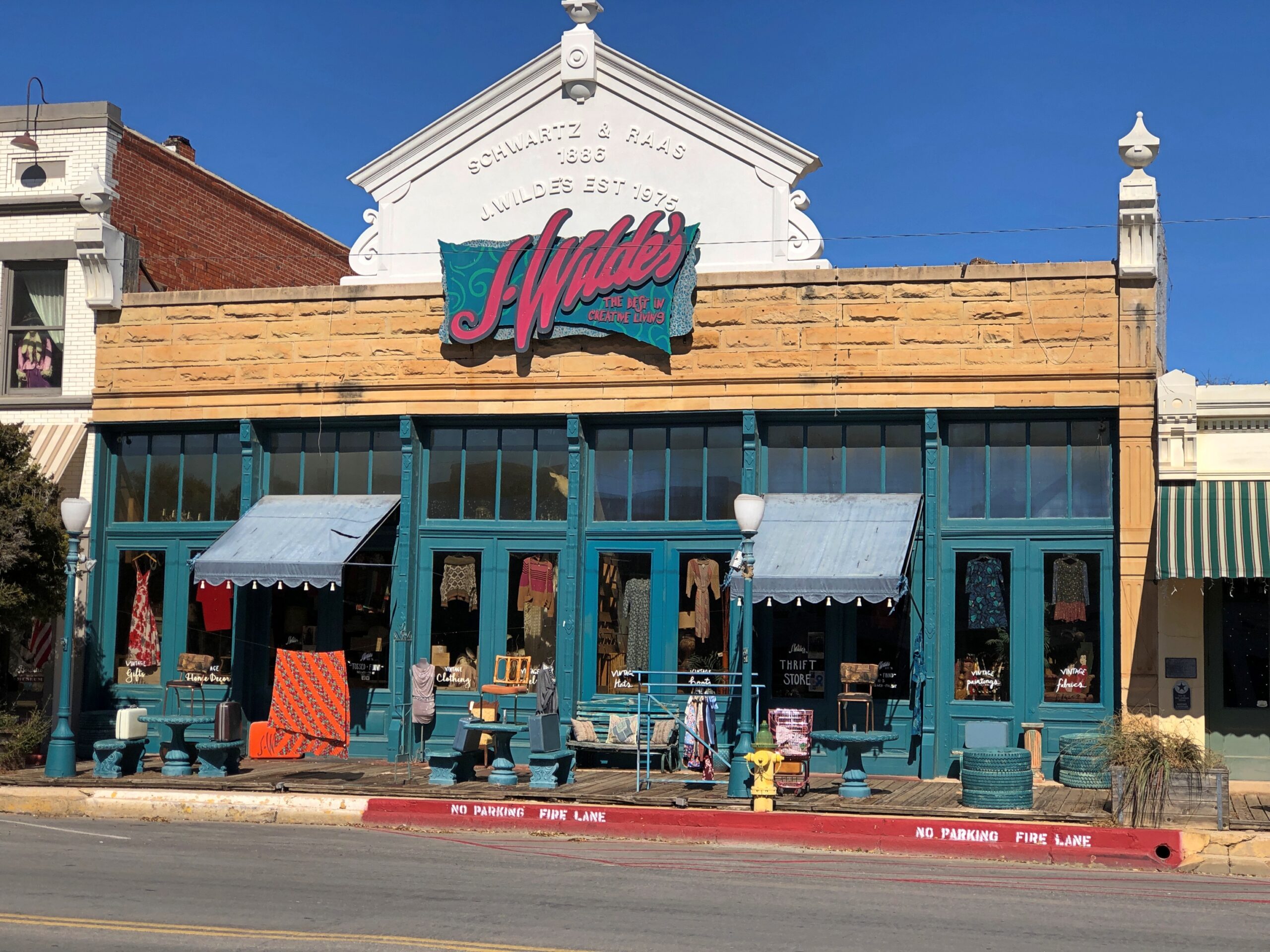
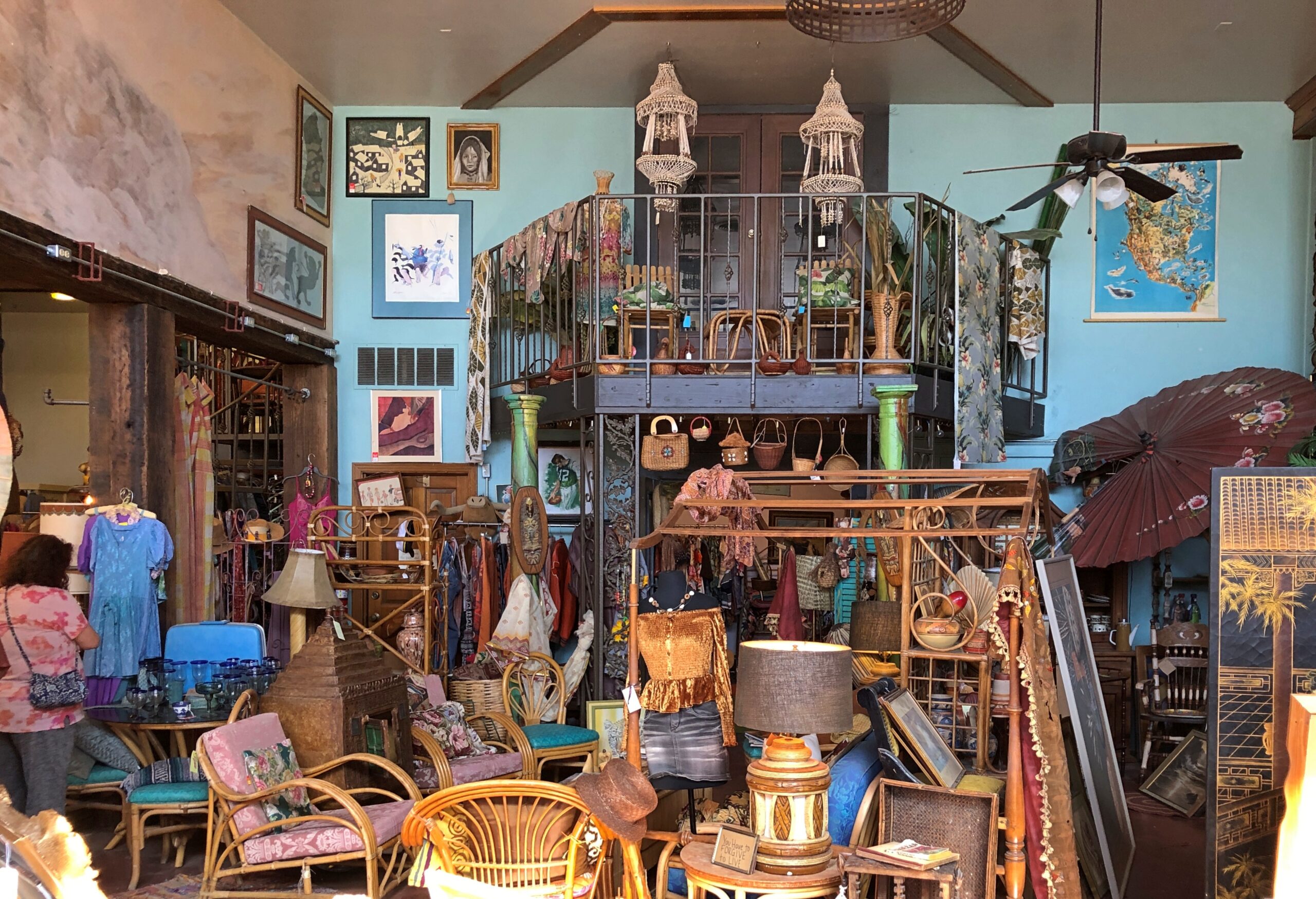
A stuff shop: J. Wilde’s.

San Angelo Texas

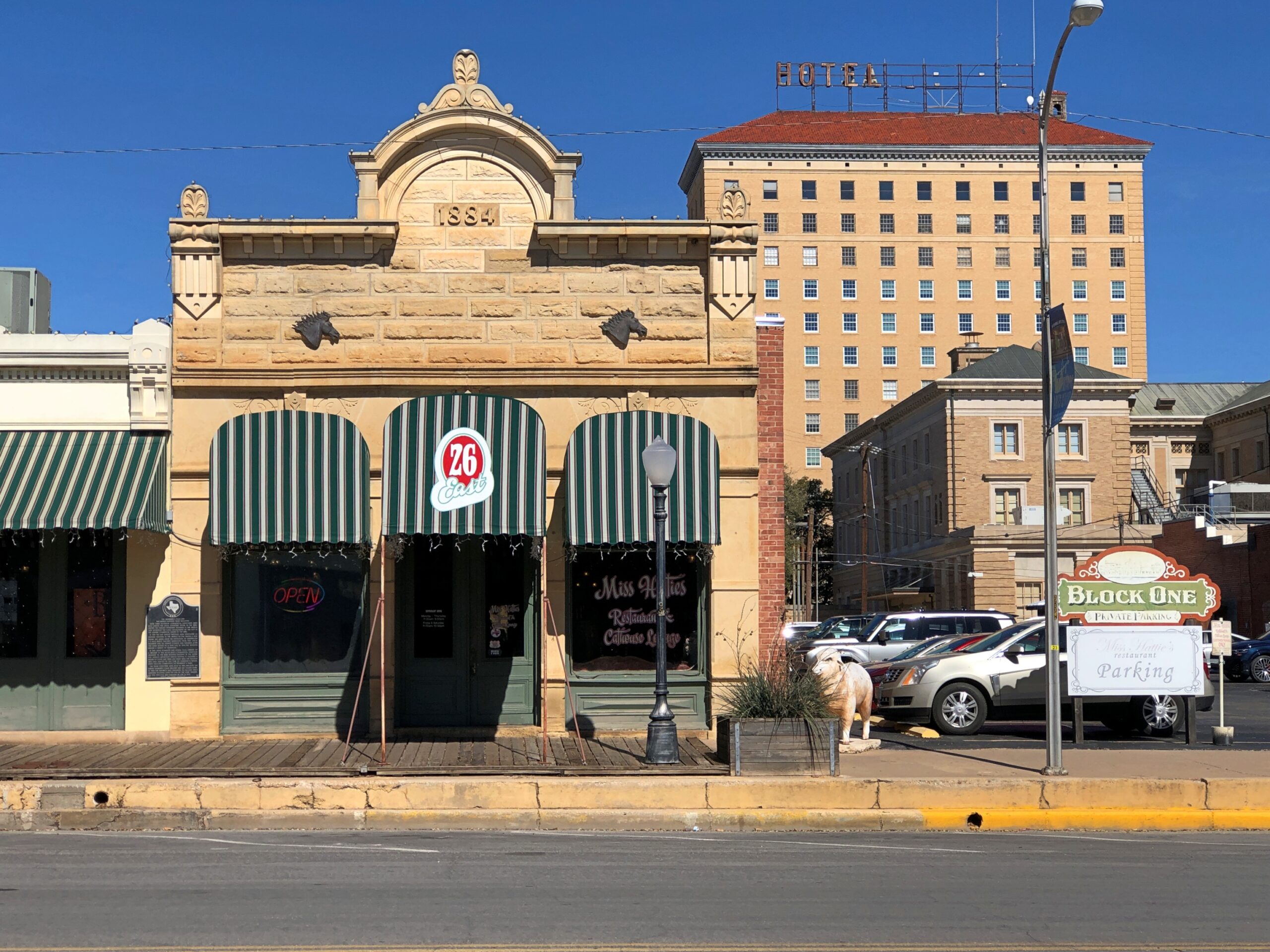
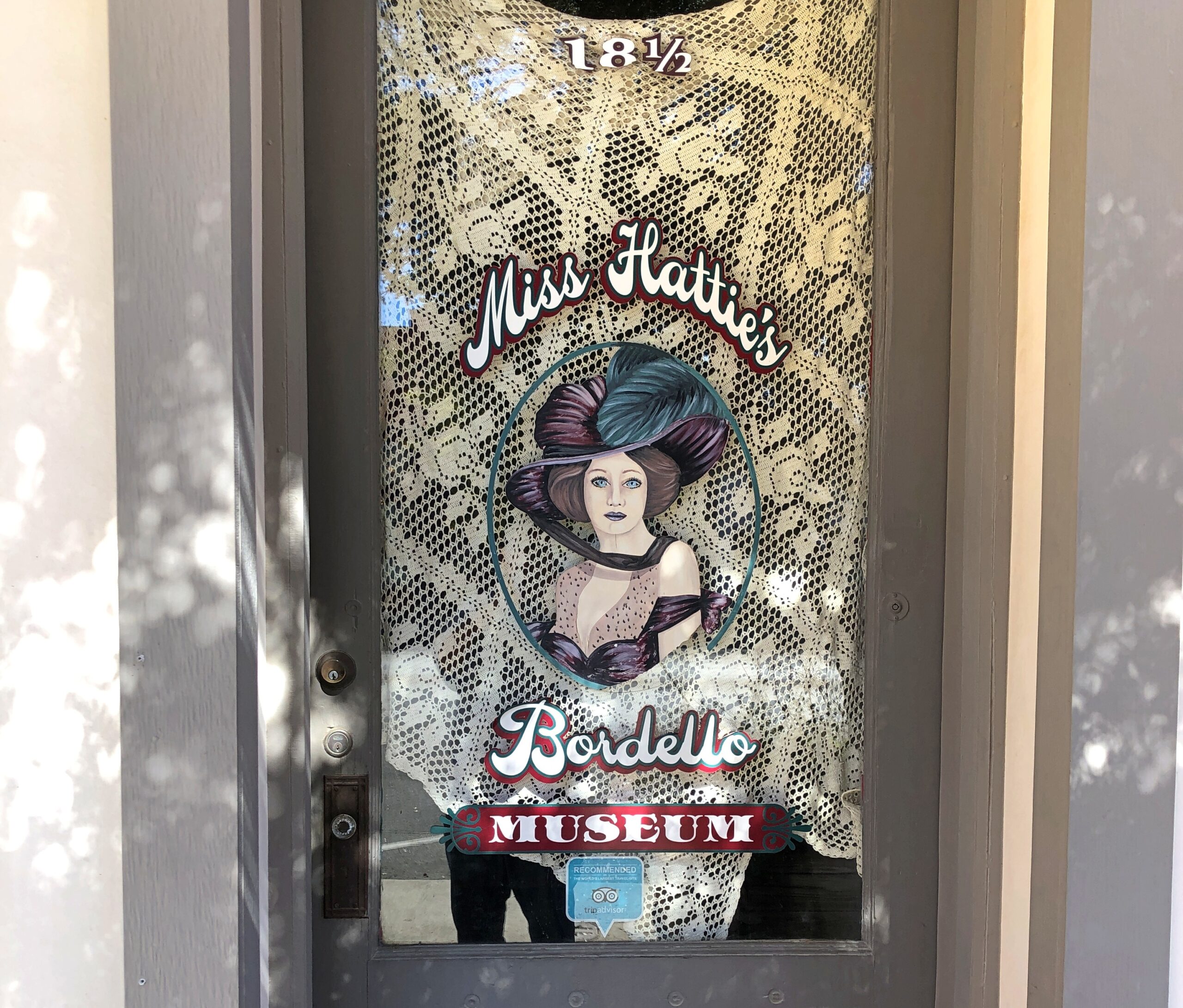
Is Miss Hattie’s a serious museum about underrepresented local history or a commercial venture romanticizing 19th-century prostitution? I don’t know. Miss Hattie’s, like Fifi’s, was closed at that moment.

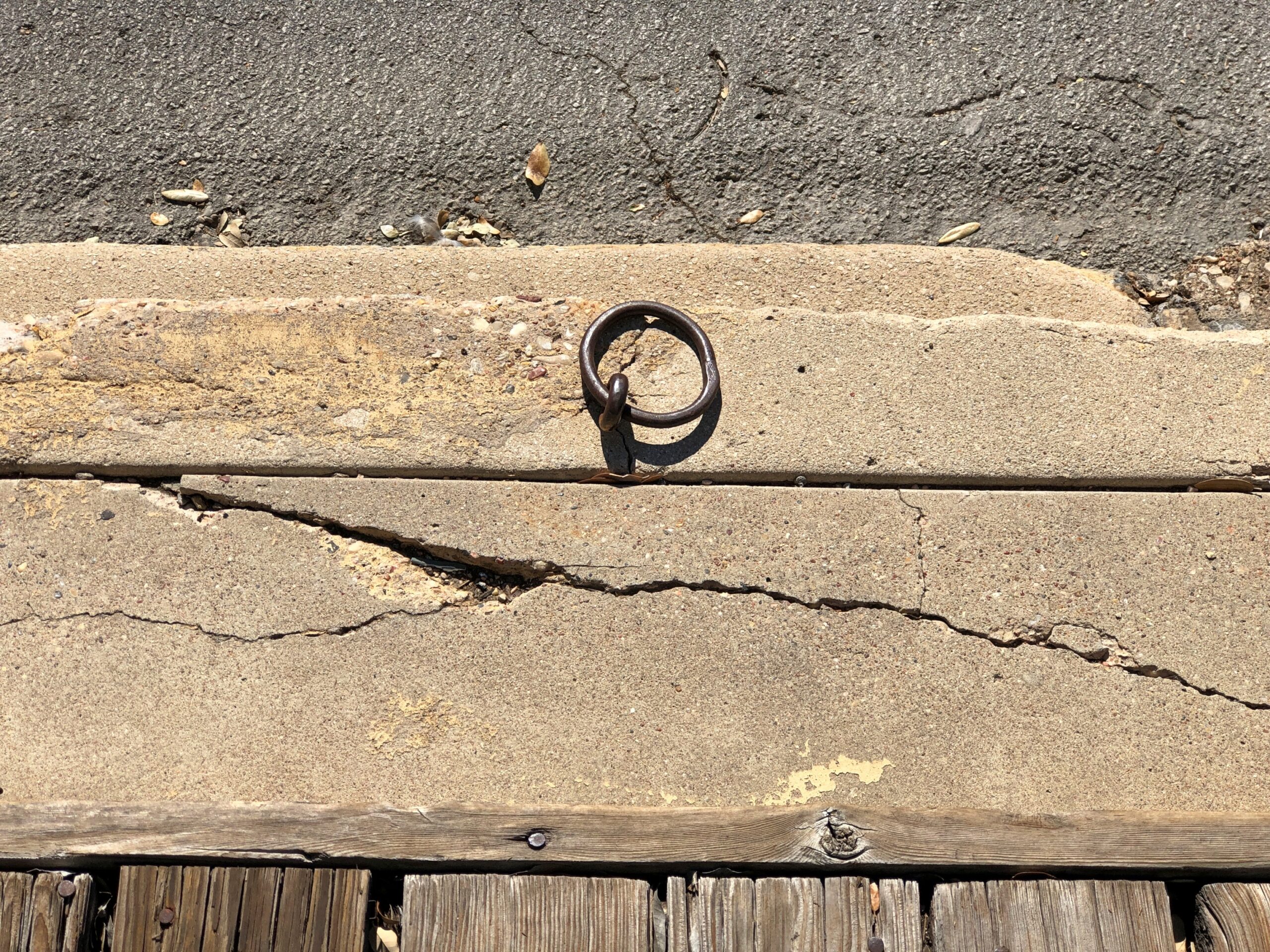
One more detail from Concho Ave.

The only reason I know what that is, is that St. Paul’s Episcopal Church in San Antonio, a place I knew well, was founded before the advent of the motor-car. As such, a few iron rings were mounted in the curb in front of the sanctuary – exactly like the ring pictured above. A place to tie up your horse. I might have asked about the feature, or my mother might have pointed it out, but anyway I learned about the iron rings. Does it matter to us auto-mobile drivers that we know this? No. But it adds just a touch of hyperlocal color.