Though state capitols tend to be grand buildings with opulent fixtures and decorous memorials, small surprises outside the official scheme sometimes await casual visitors. Such as rocking chairs at the Maine State House.
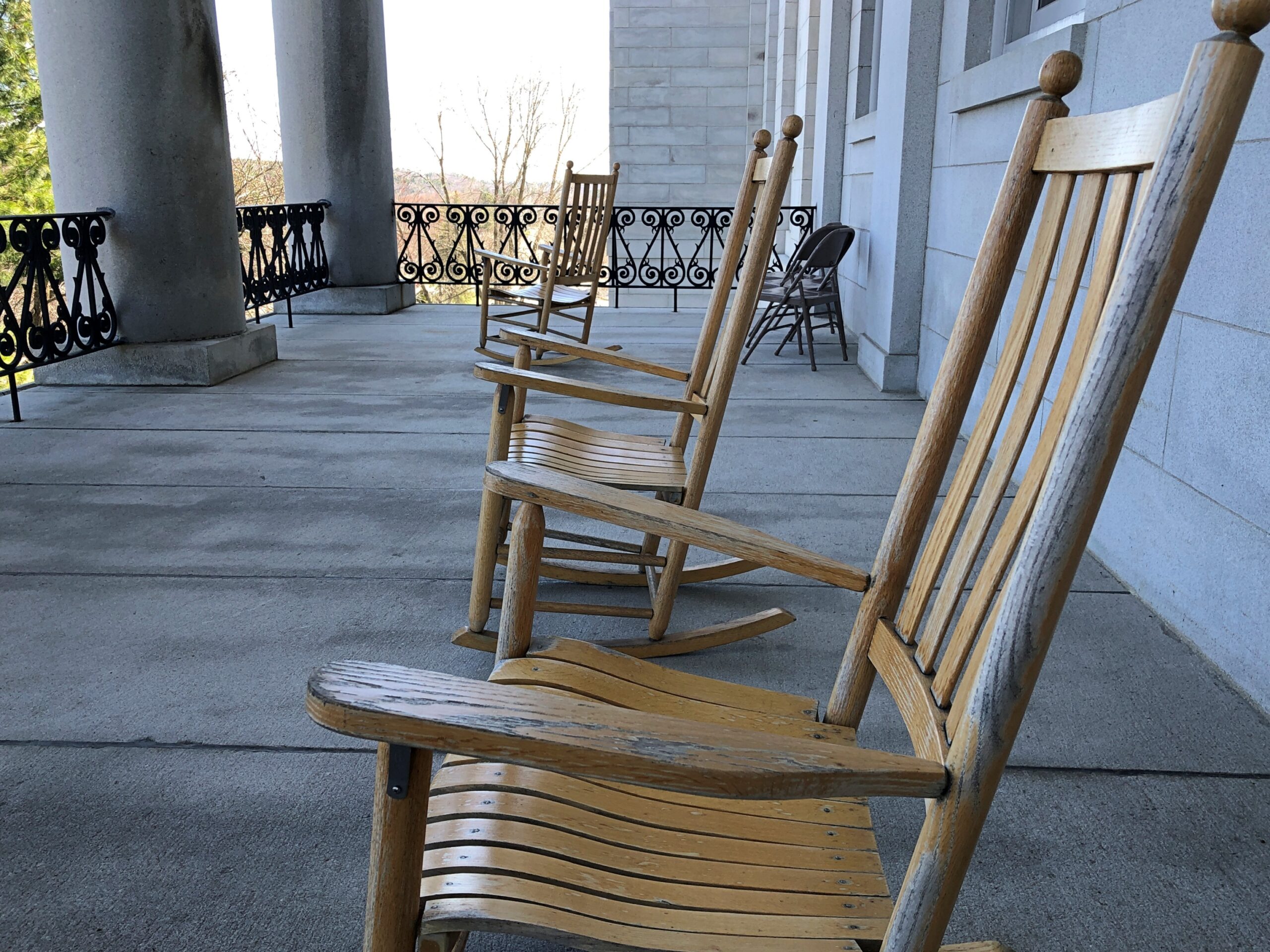
The building is perched on a hill, as capitols sometimes are, with a sizable porch with a long view. Obscured off in the distance is the Kennebec River.
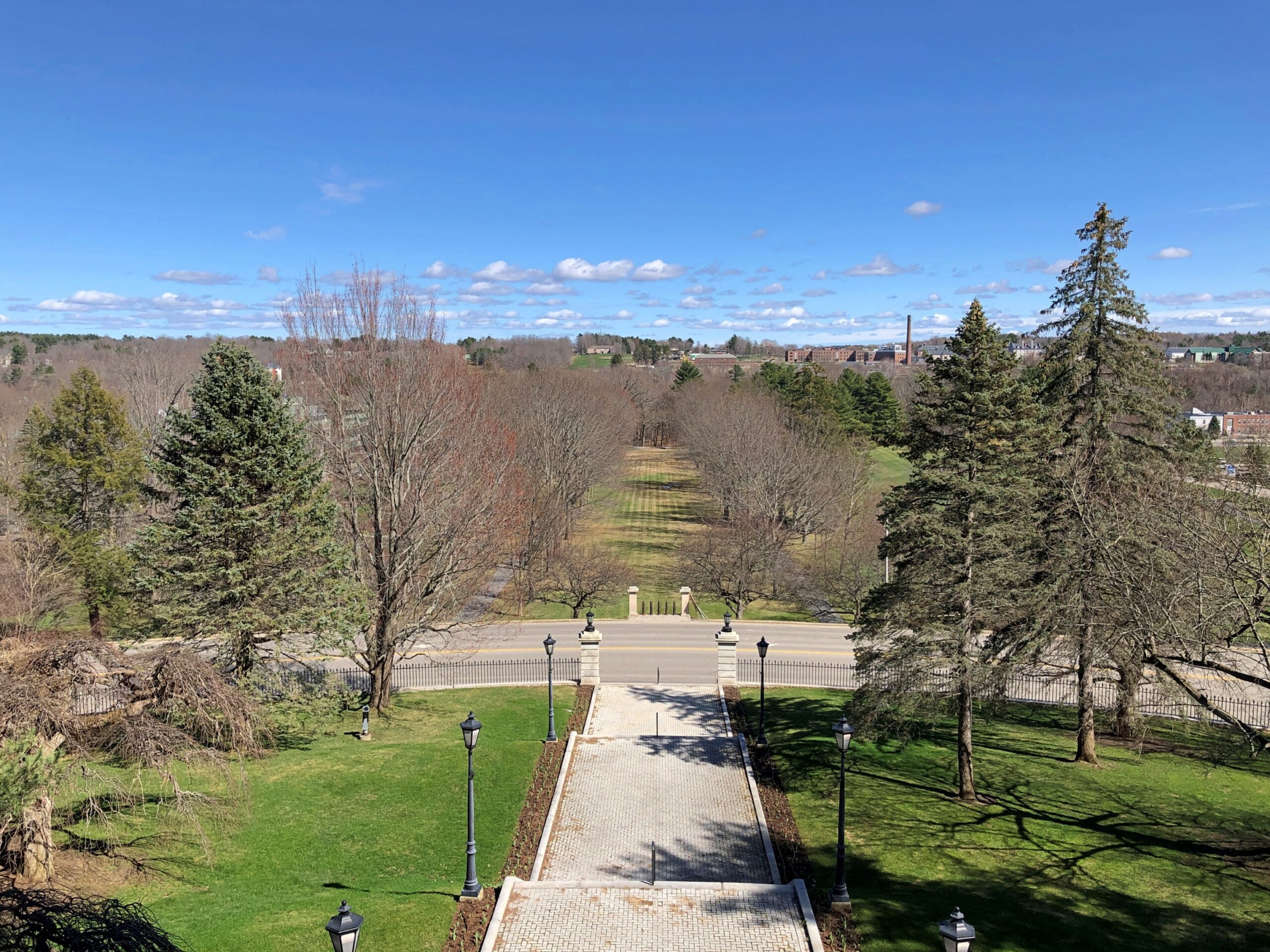
That porch is a good place for rocking chairs, someone thought at some point; someone associated with the capitol in some way that made it a reality, so I suppose in that sense, the chairs are as official as memorial busts or portraits. I had a seat. I couldn’t very well ignore the obvious thing to do in a place where rocking chairs aren’t an obvious thing to have. Also, I get tired more easily than I used to. I took in the view.
Augusta was the last place I visited in Maine last month. I could hardly miss it on my way out of the state. For one thing, I’d been to Augusta, Ga. less than a year earlier. Mostly, I had a new state capitol to visit. A box to check. Thinking of it that way might perturb travel purists who insist that travel is about “expanding your horizons,” or “living like the locals” or some other vague nonsense. There’s nothing wrong with a few lists to consult along the way. Think of them as “goals.” Gives a little structure to an interest, and I’ve long had an interest in state capitols.
In this case, I was committed to meeting my friends that evening in suburban Boston, so as interesting as Augusta looked – especially the busy State St. on the way to the capitol – I only had time for one thing. The Maine State House was it.
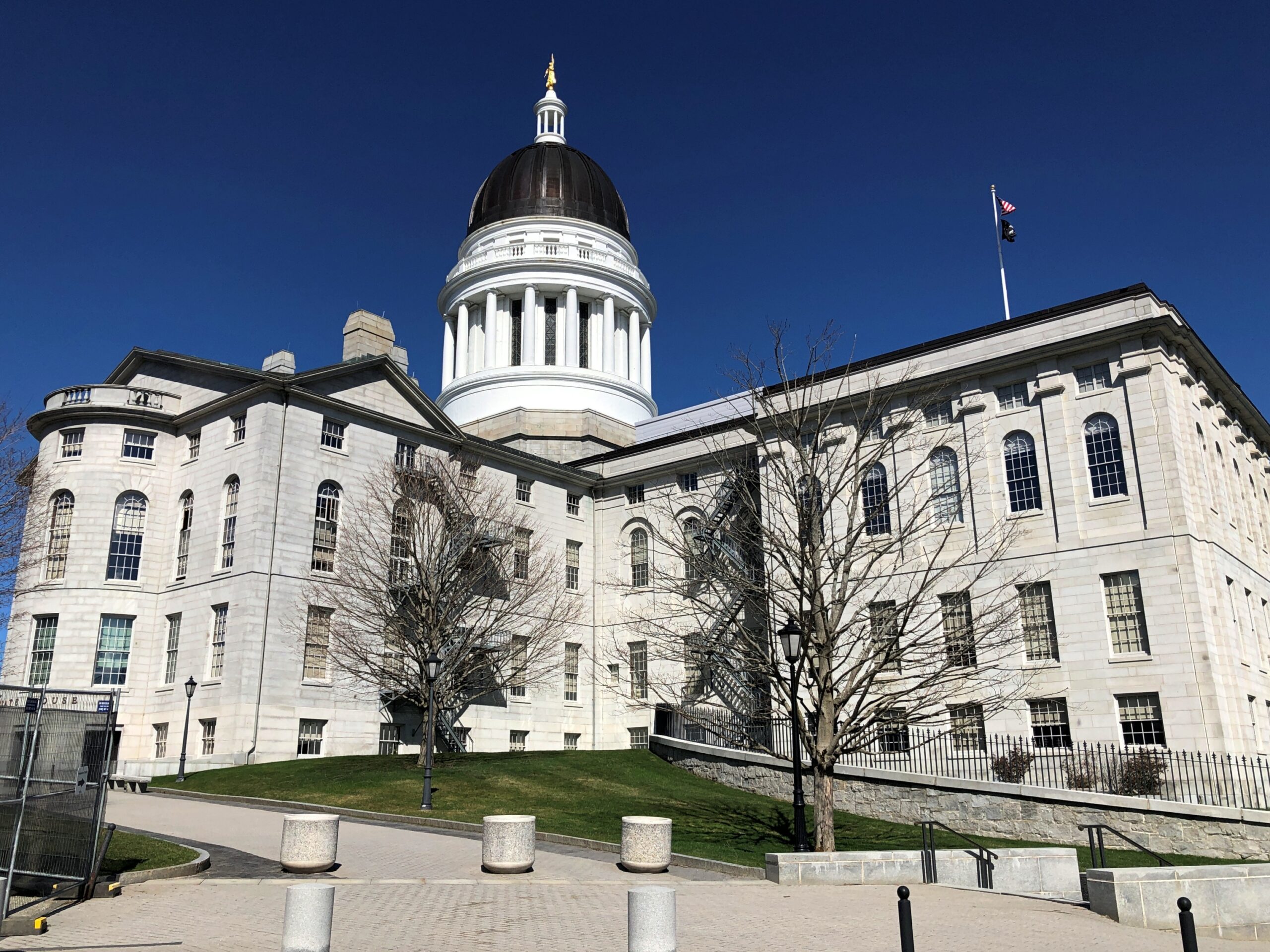
Maine statehood was a process that “took 28 years… six referendums and a war before the District of Maine escaped the rapacious grasp (to some) of Massachusetts,” according to the New England Historical Society. But once the doughy Mainers had broken away, they needed a capital and a capitol. The more-or-less central Augusta for the former, and a design by Charles Bulfinch (d. 1844) for the latter. Bulfinch, who also designed the Massachusetts State House, was an architect of the early Republic, maybe the architect of the early Republic, as the starting point of Federal style.
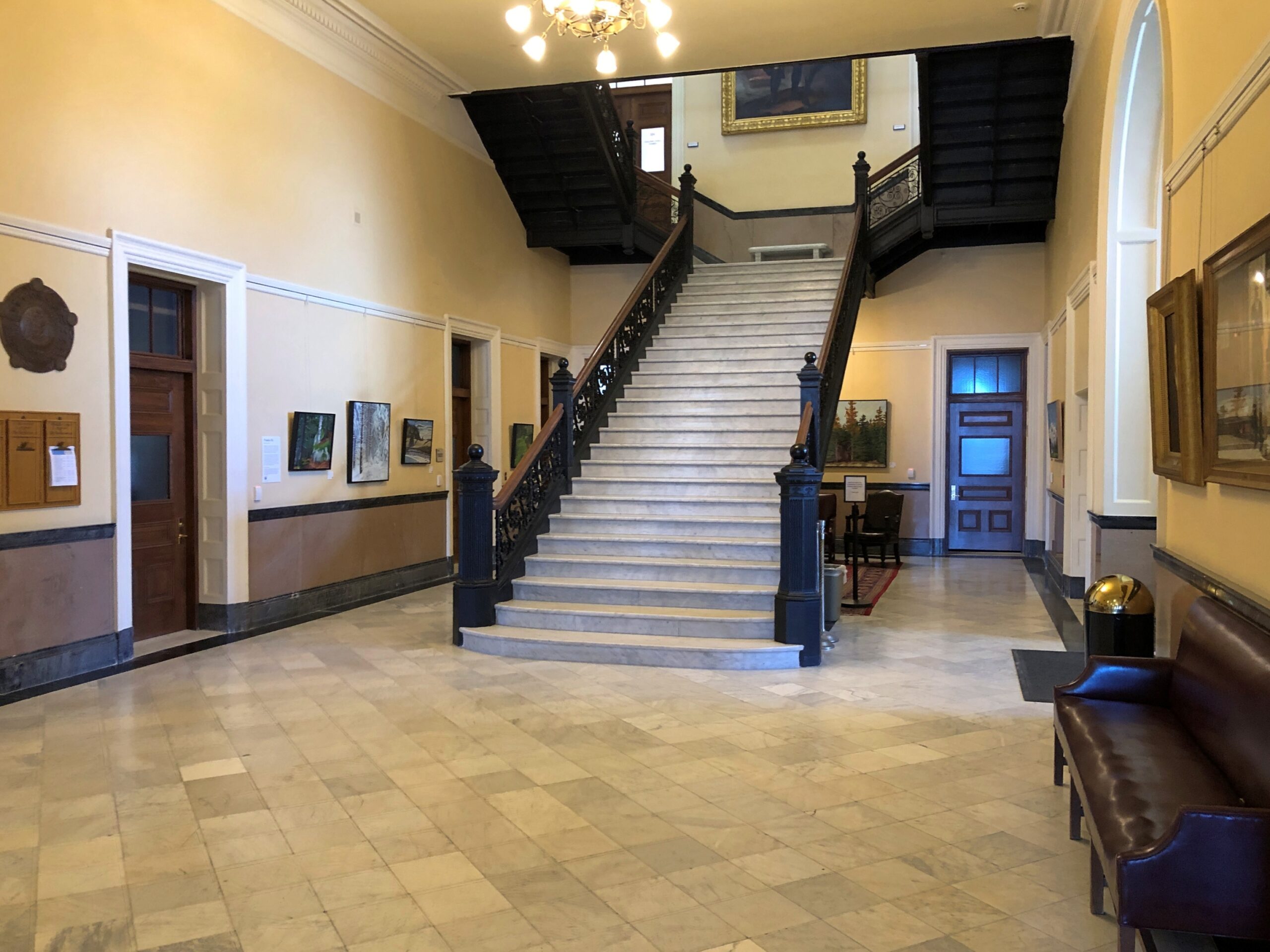
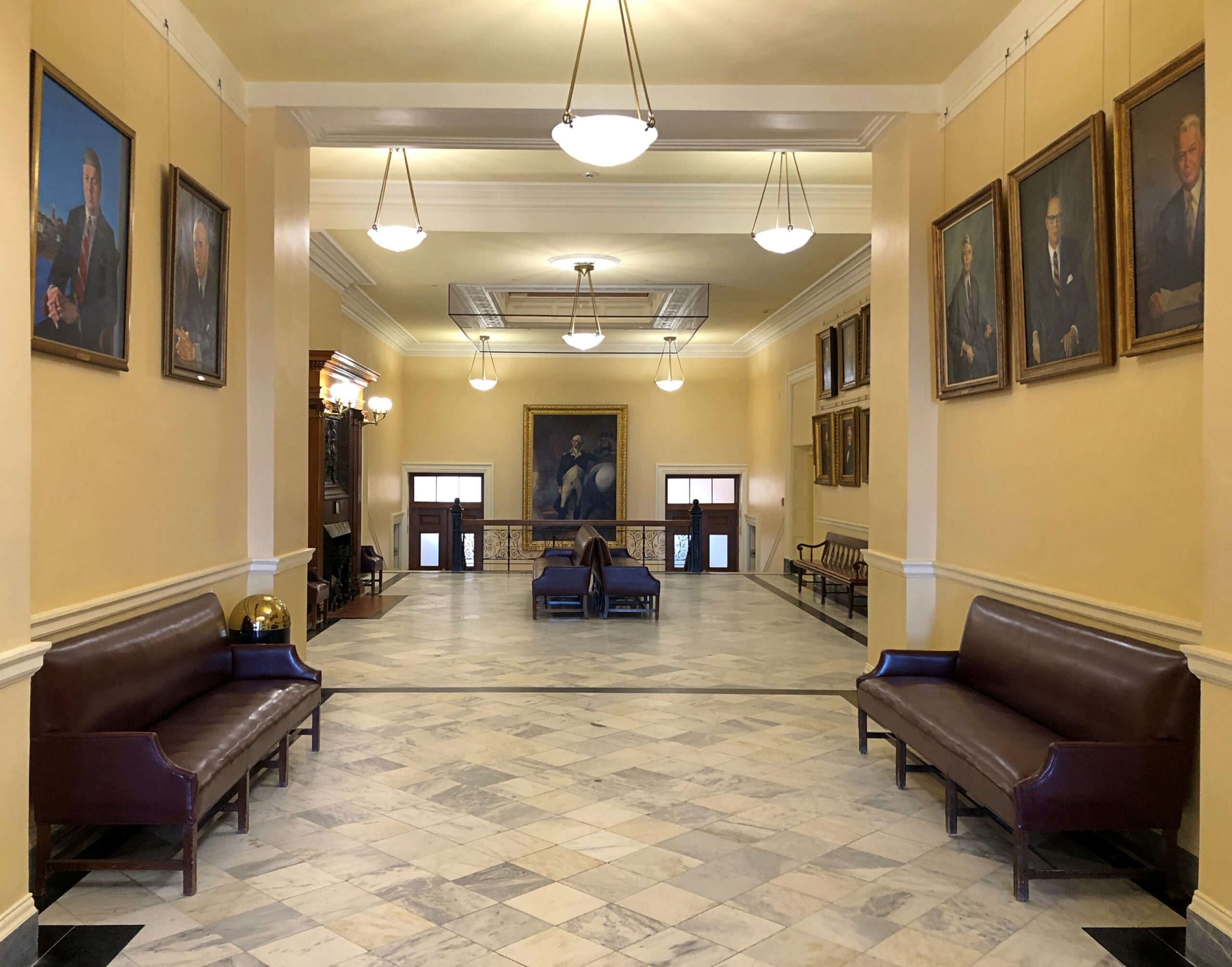
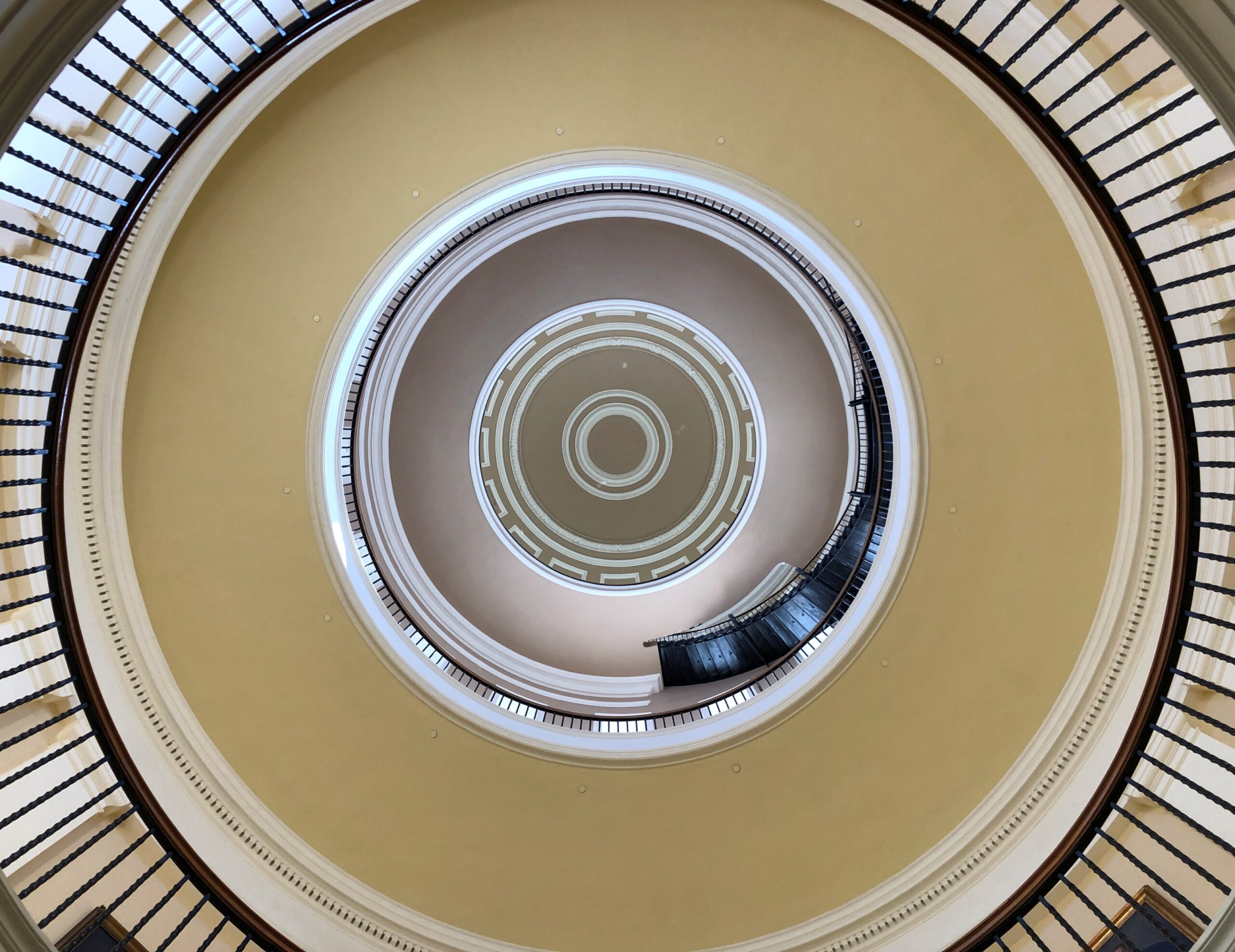
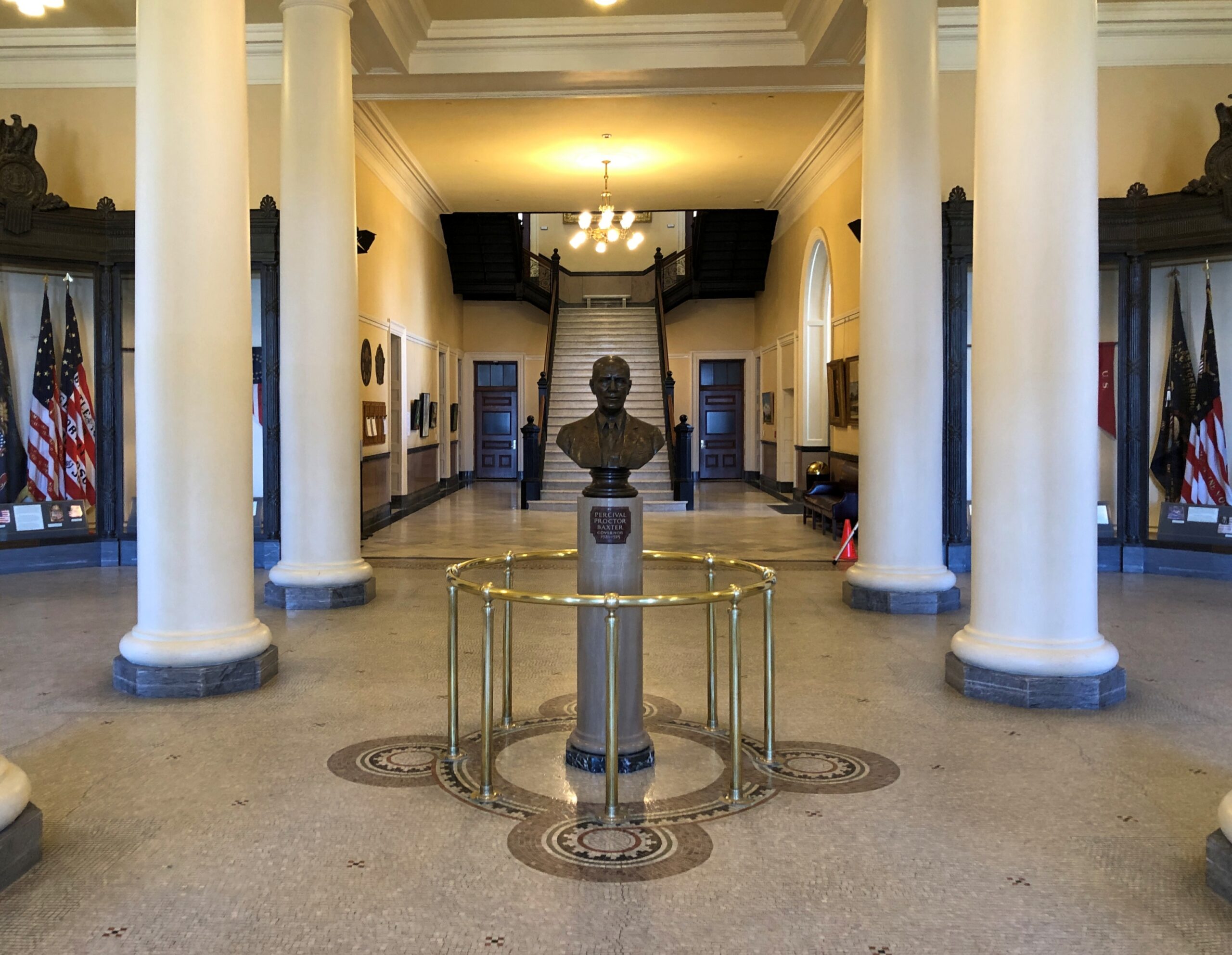
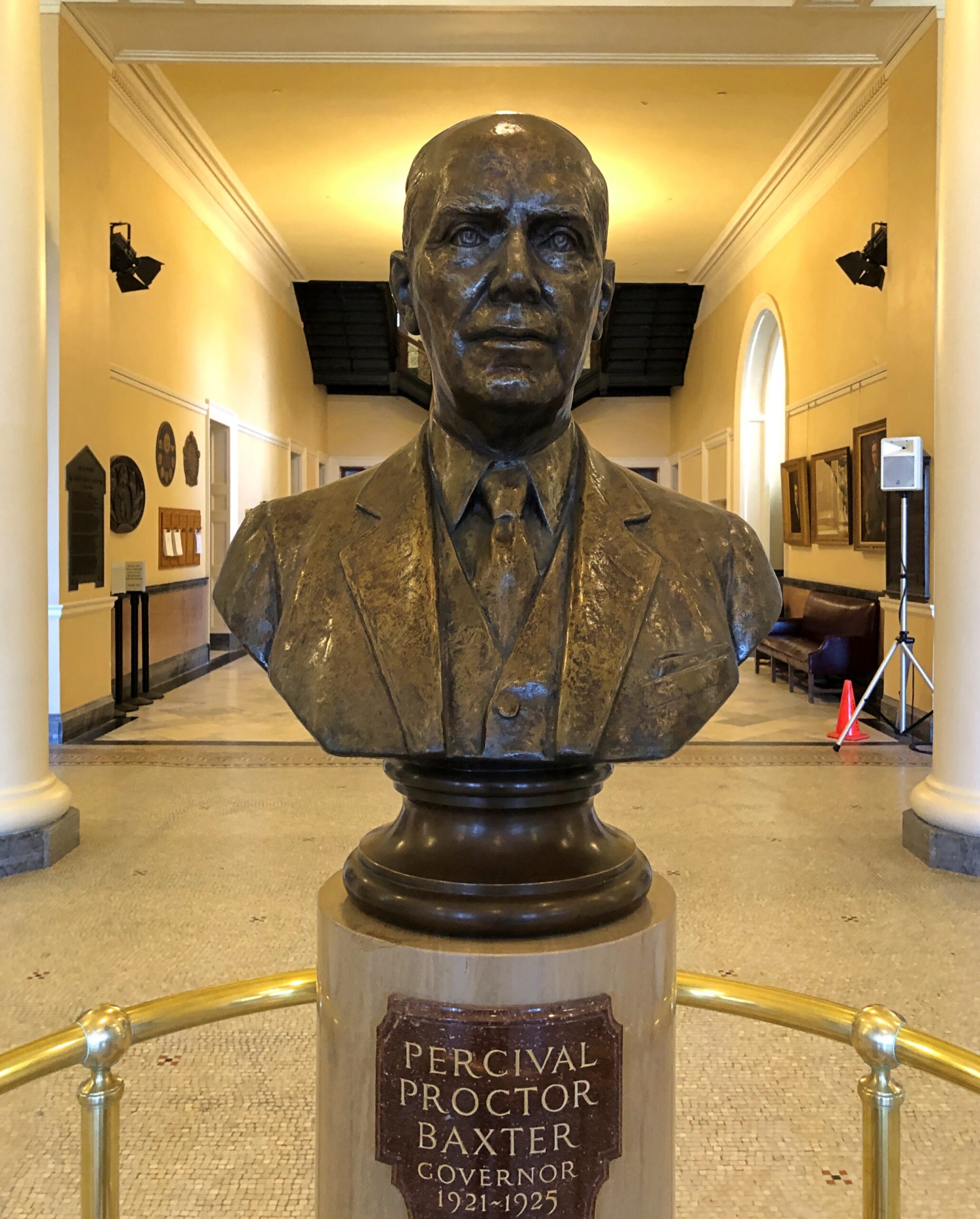
Not the most ornate of capitols, but a pleasant design. Mainers of yore are honored in various spots, but a special place of honor is for Gov. Percival Baxter (d. 1969), who sounds like an all-around swell fellow. Baxter State Park way up in the northern wilderness is named for him, and for good reason: being personally wealthy, he was able to acquire the land for the park himself, which he gave to the state.
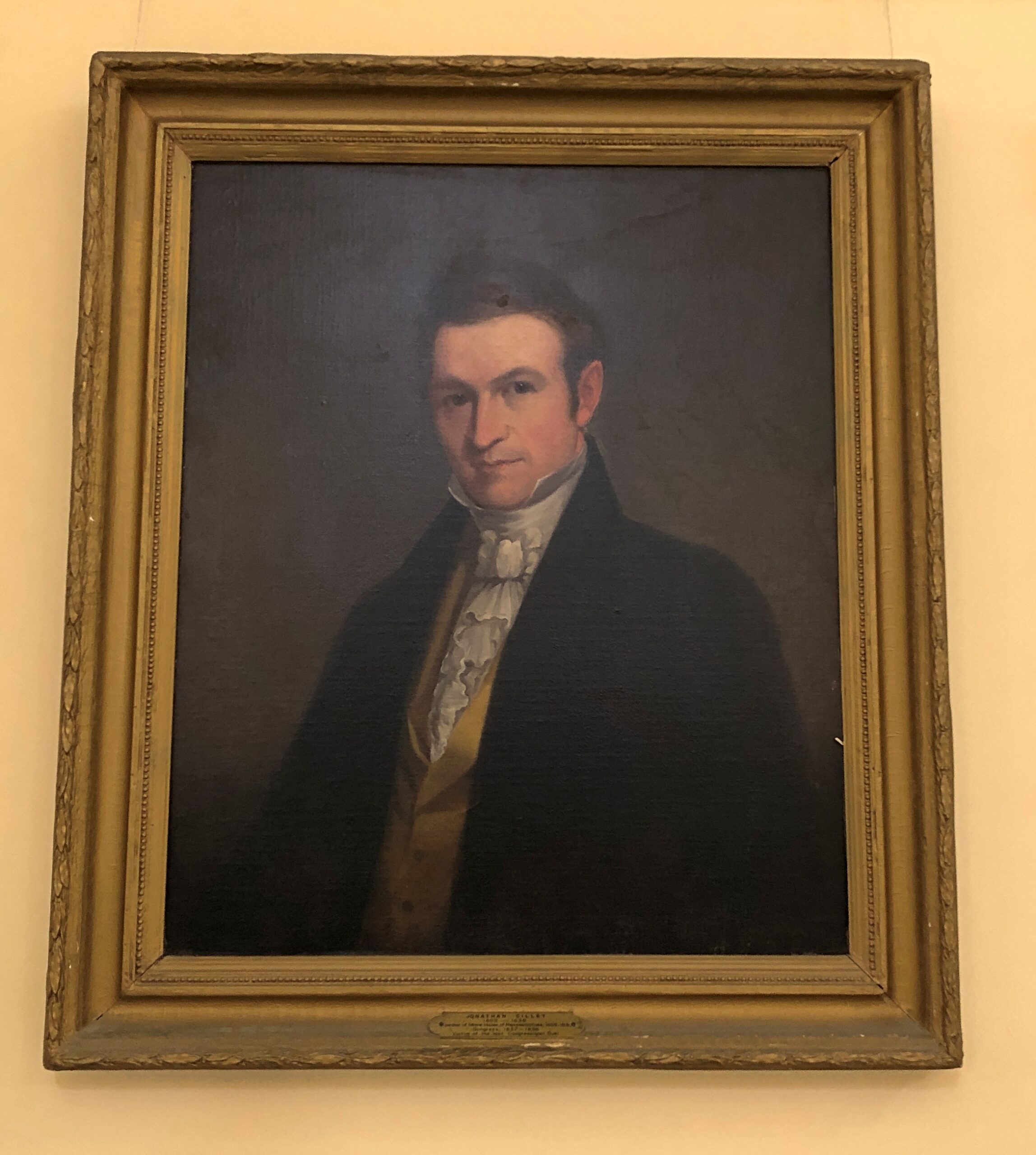
A number of portraits hang on the wall, also as usual for a capitol. One intriguing one: Jonathan Cilley (d. 1838). A Congressman from Maine who, as the sign under the painting says, was “victim of the last Congressional duel.” Shot by fellow Congressman William Graves over some arcane point of honor, he was. Quite the story.
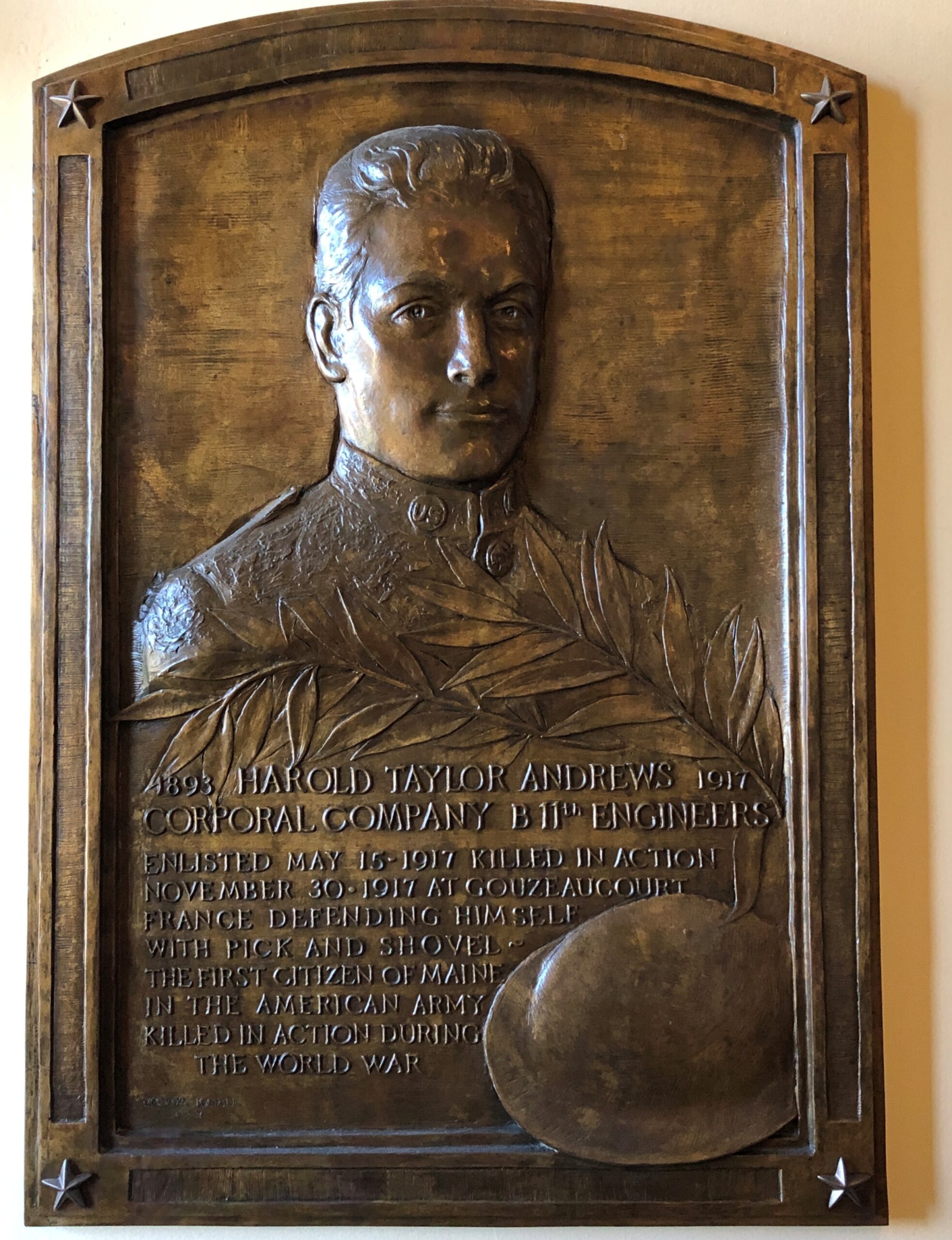
Another story on the wall: Sgt. Harold Andrews, the first U.S. soldier from Maine to die in the Great War (November 30, 1917). An exact contemporary of my grandfather, and an engineer as well. Grandpa returned from France to have descendants, Andrews did not.
If for no other reason than to make the acquaintances of Gov. Baxter and Rep. Cilley and Sgt. Andrews, the Maine State House was a good box to check.
The thing about state capitols, though, is there aren’t many new ones left for me to visit. Got a few more provincial capitols — parliament buildings — however.
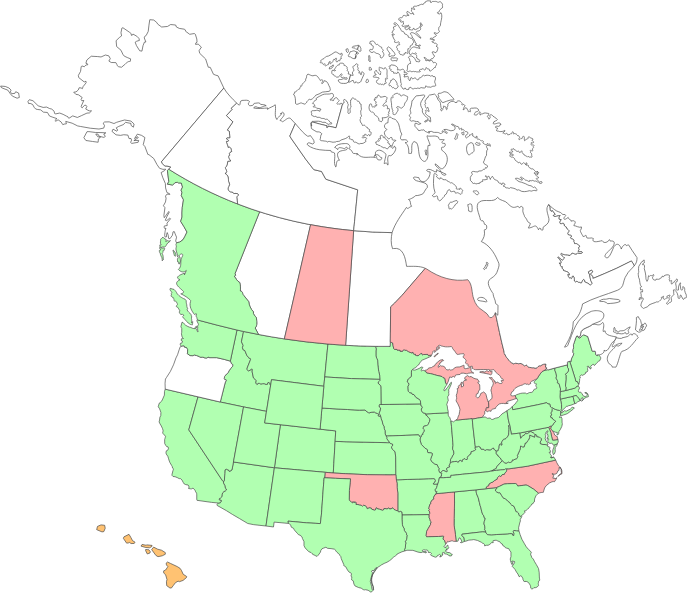
Green: interior visits. Orange: exterior visit only. Gold: uncertain. White: more boxes to check.