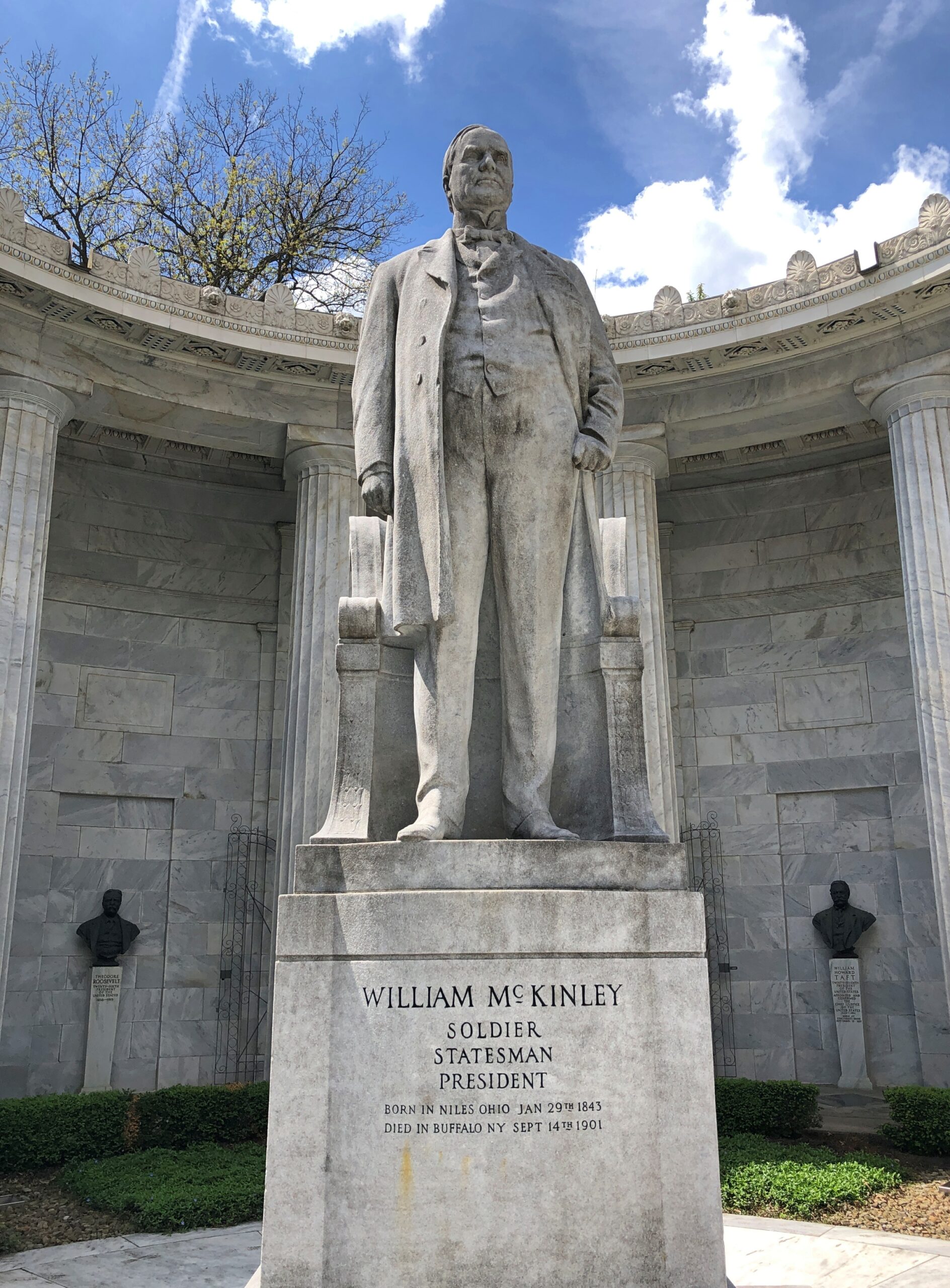
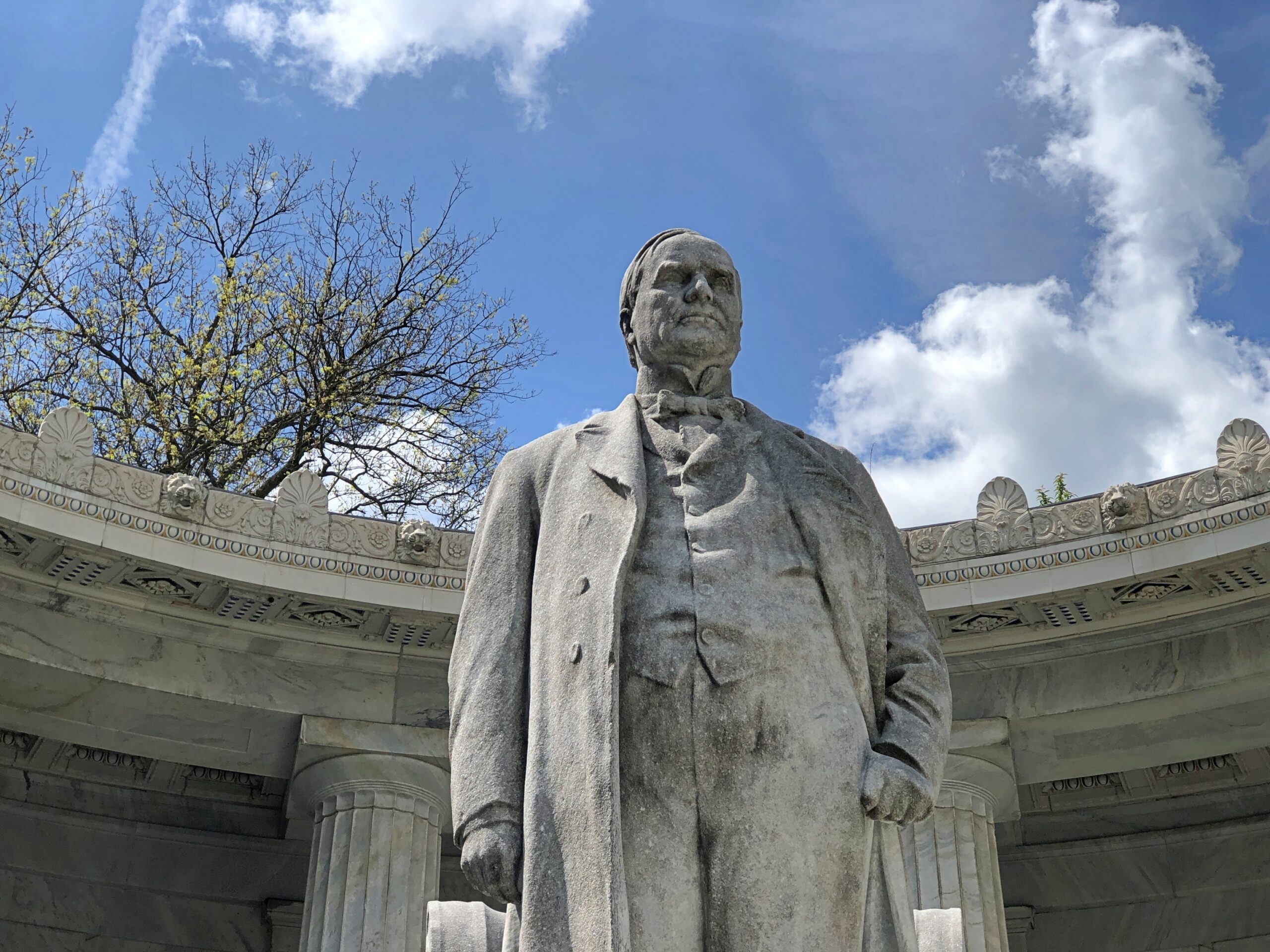
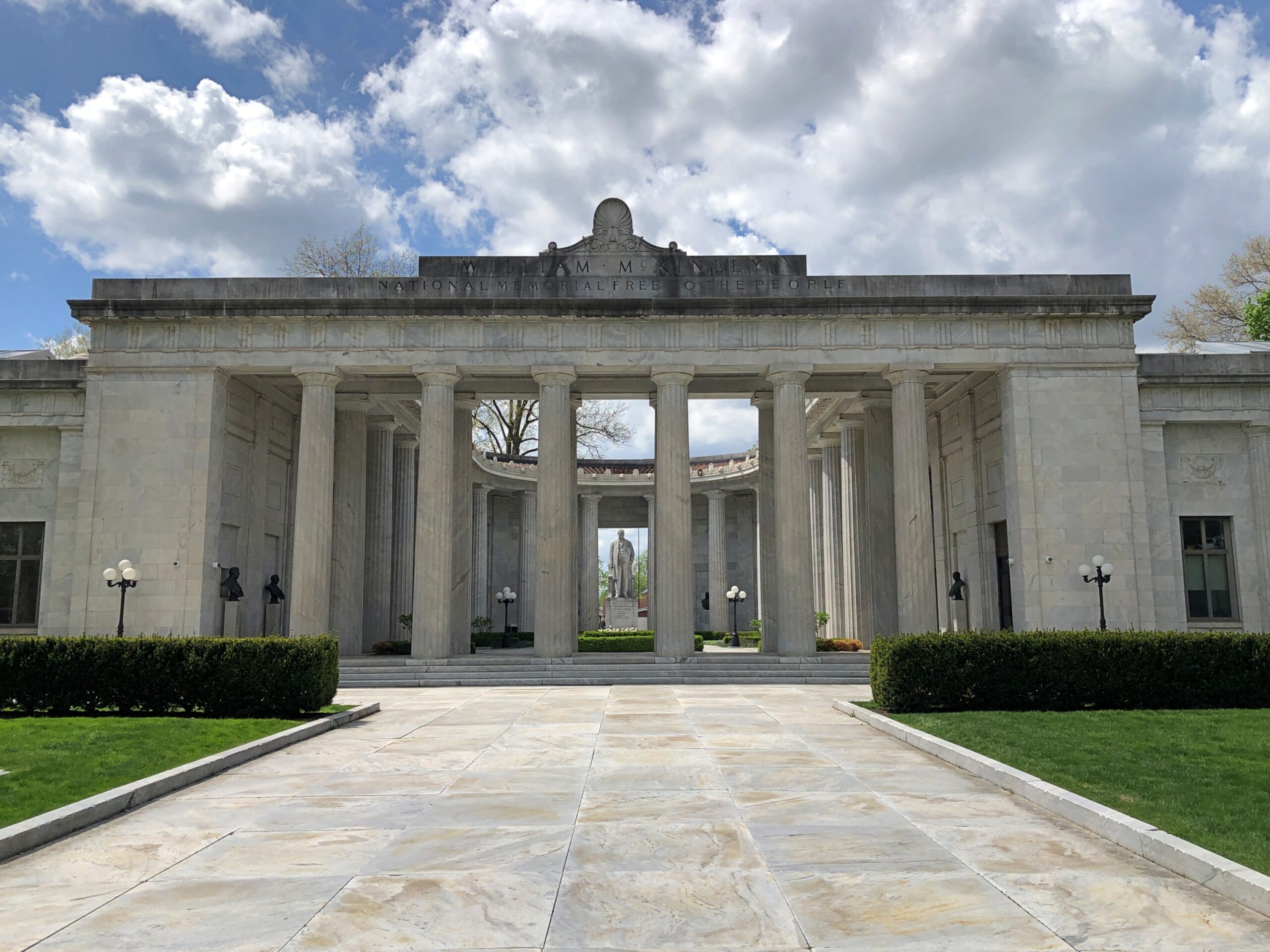
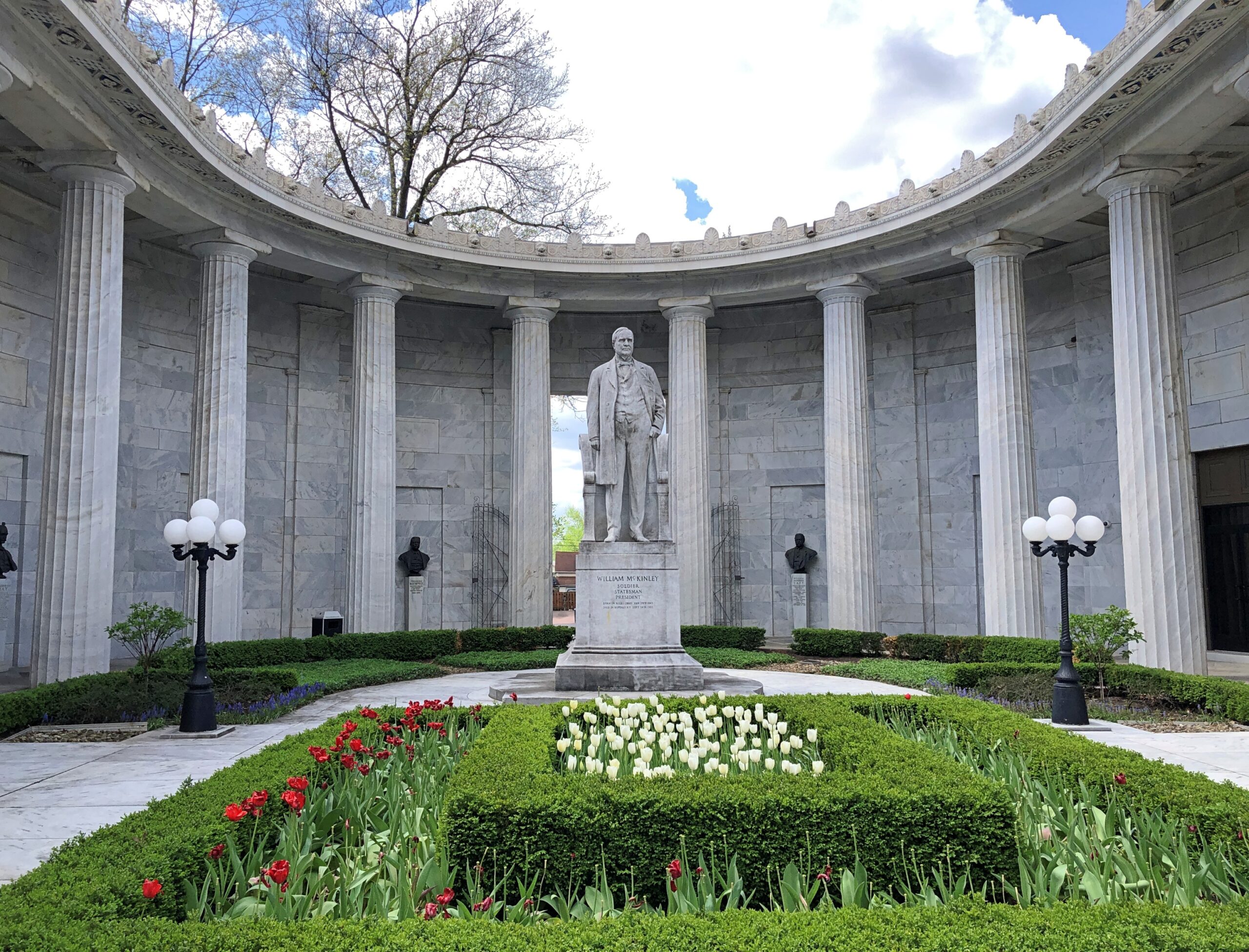
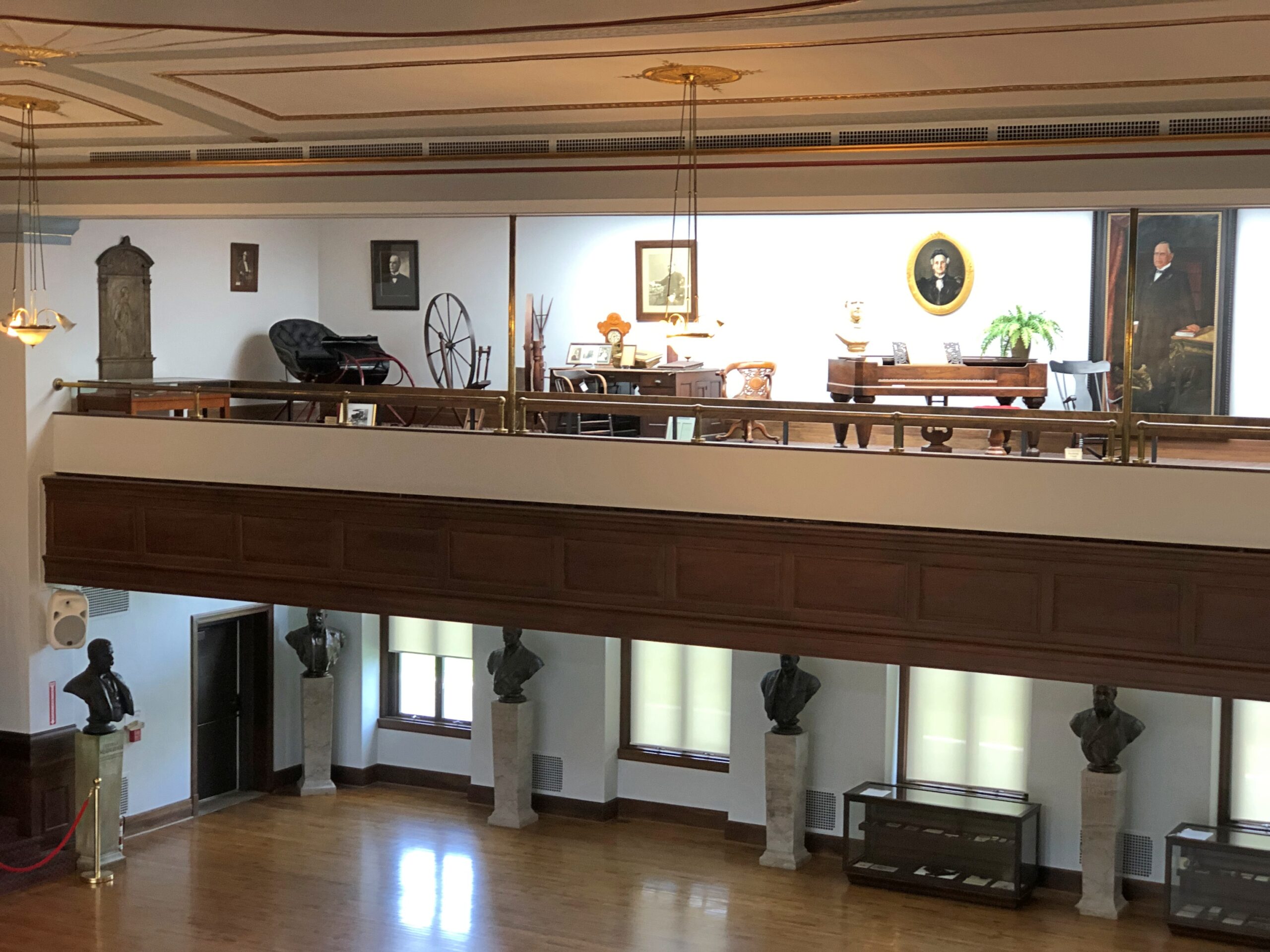
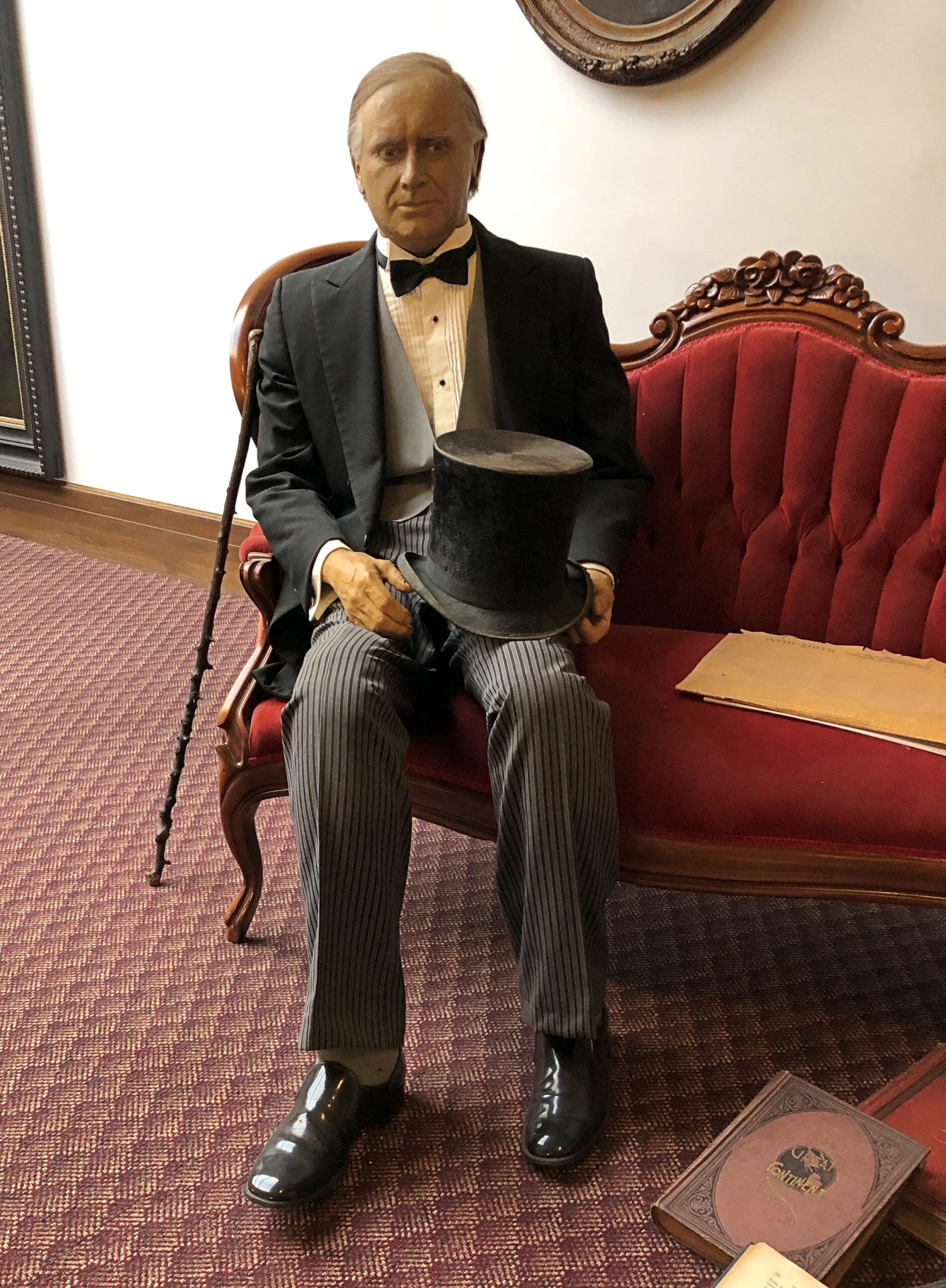
Recently in Niles, Ohio, I had an encounter with one of the four assassinated presidents. If you go to the right place in that town (pop. 18,400), you can’t miss him.
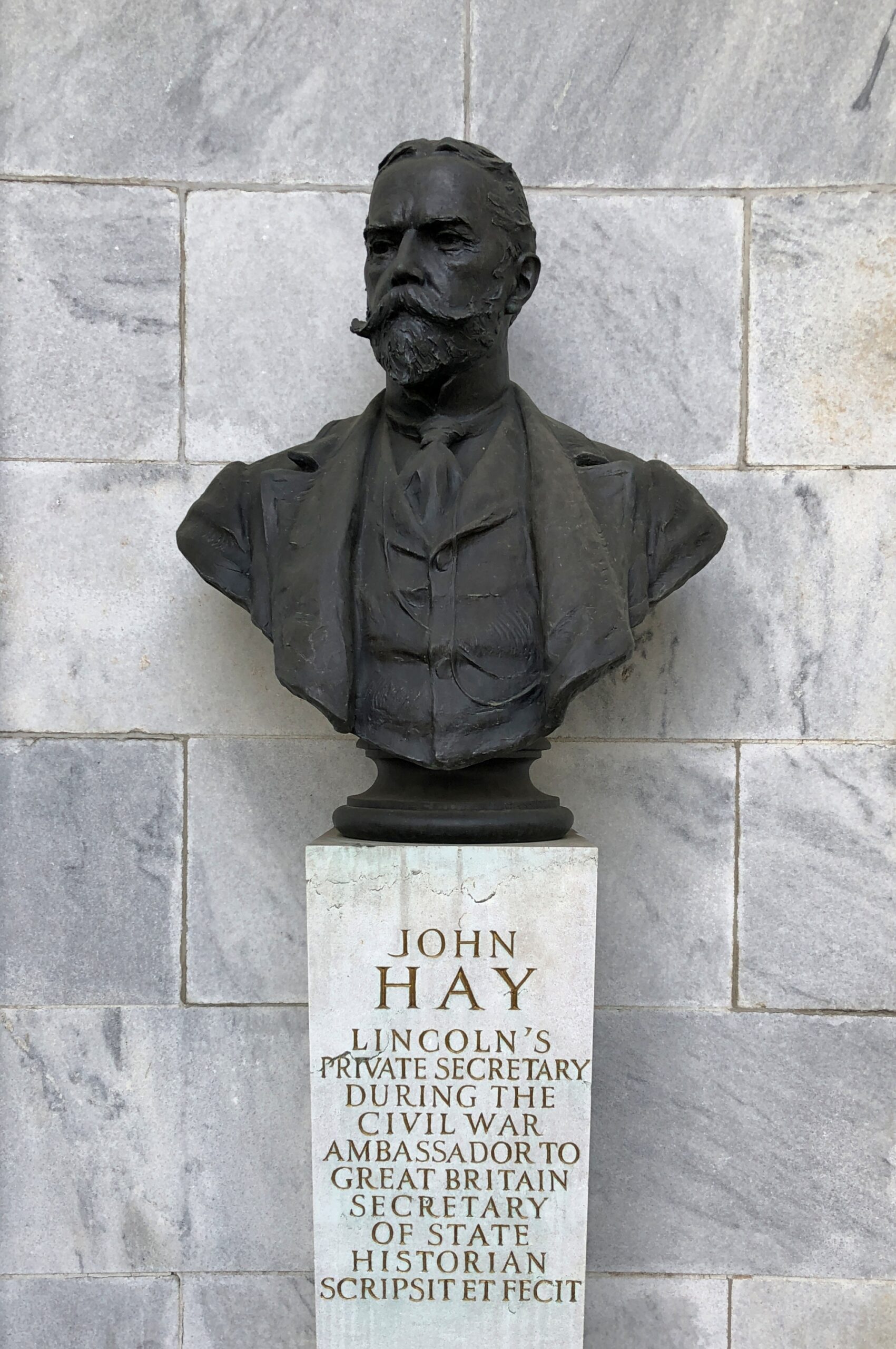
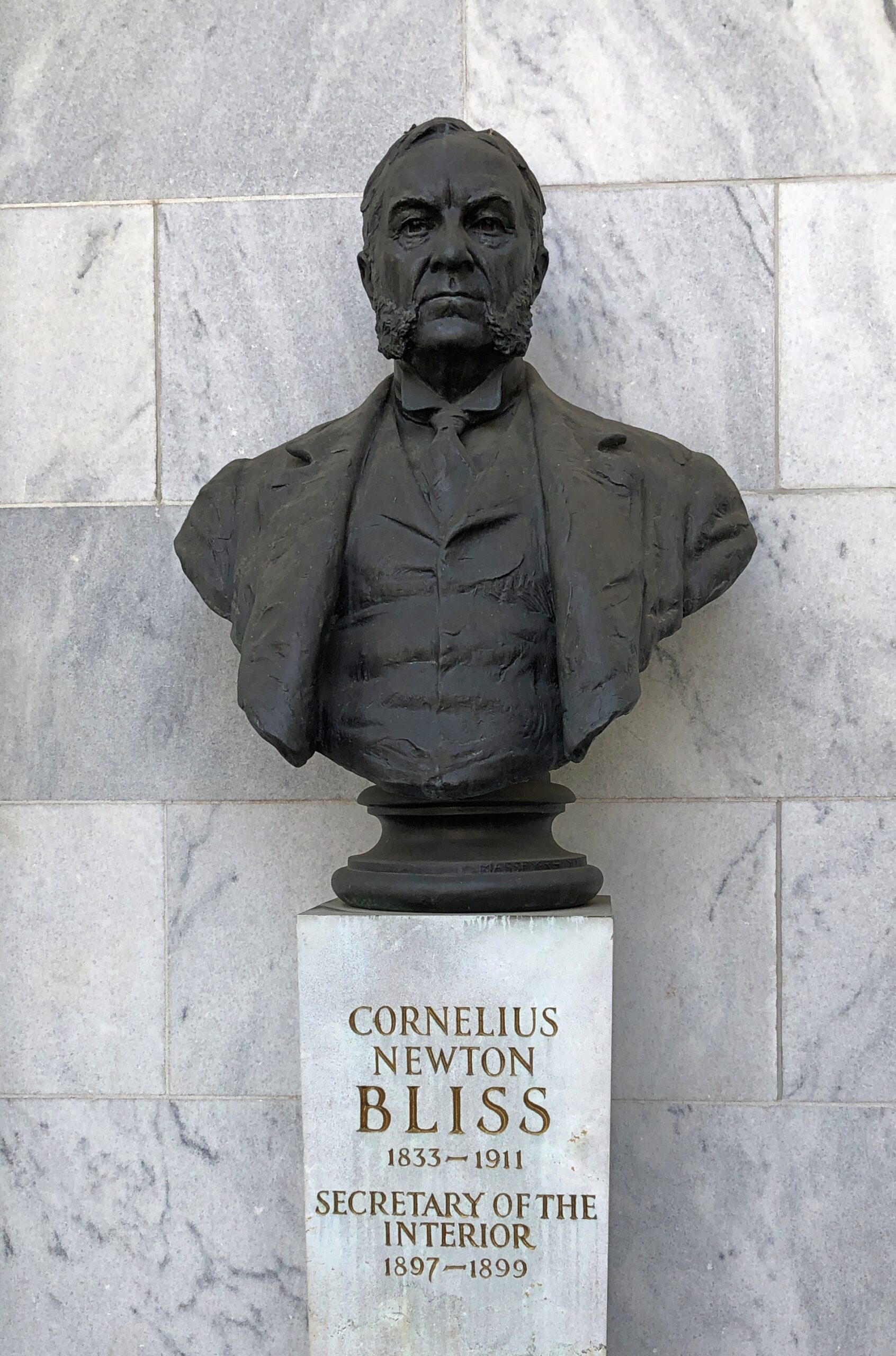
Not just him either. Note the busts surrounding President McKinley, who are men associated with him in one way or another. Hay I knew; Bliss I had to look up.
The most direct route between Punxsutawney, Pa. and Lima, Ohio, passes pretty close to Niles. I had a little extra time, by design, on the second-to-last day of my recent trip. Niles happens to be the birthplace of William McKinley, and in our time, home of the National McKinley Birthplace Memorial and the McKinley Birthplace Home and Research Center – that’s two entities, a block apart.
The Birthplace Memorial is imposing and grand, another edifice designed by McKim, Mead & White.
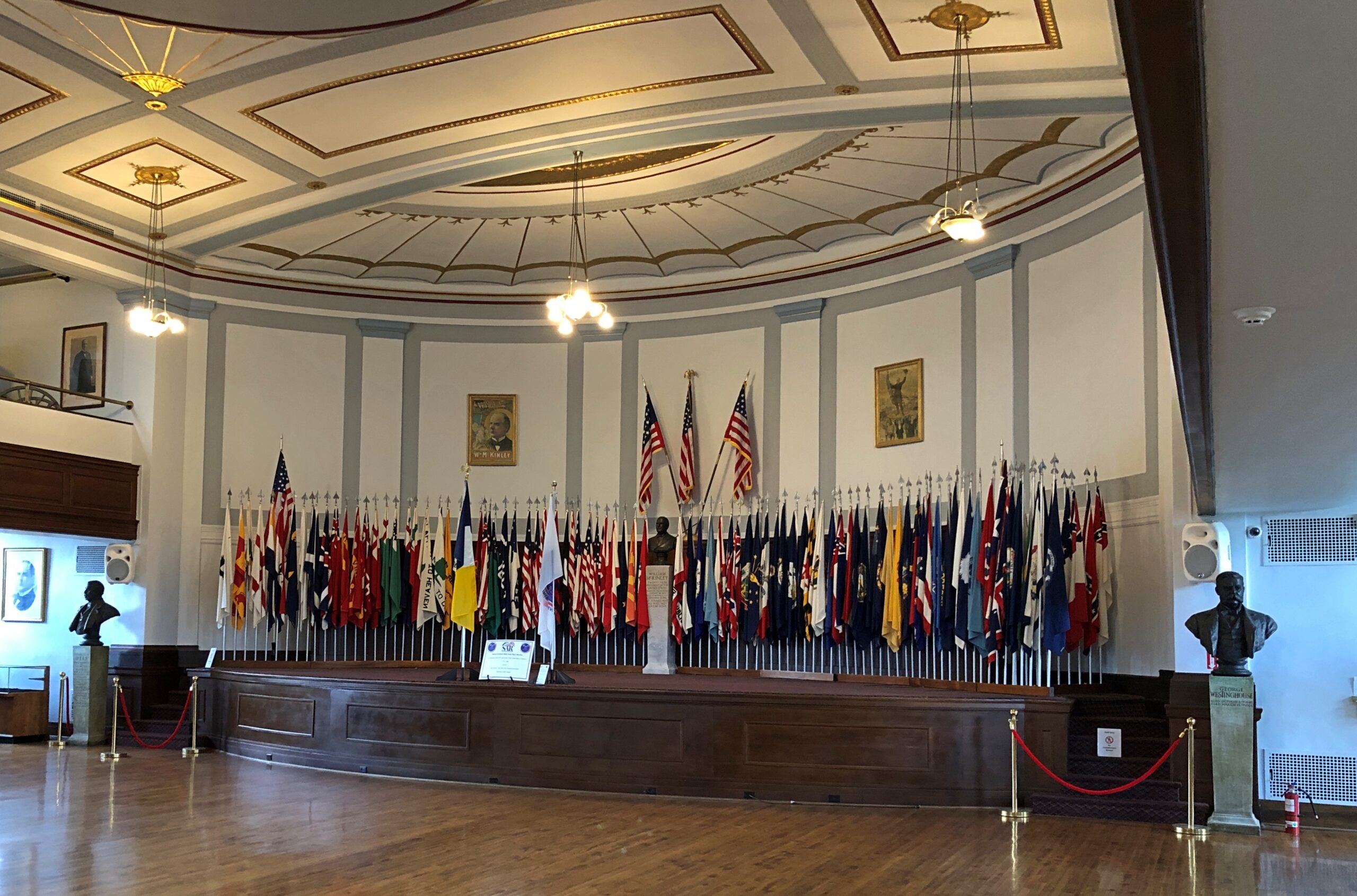
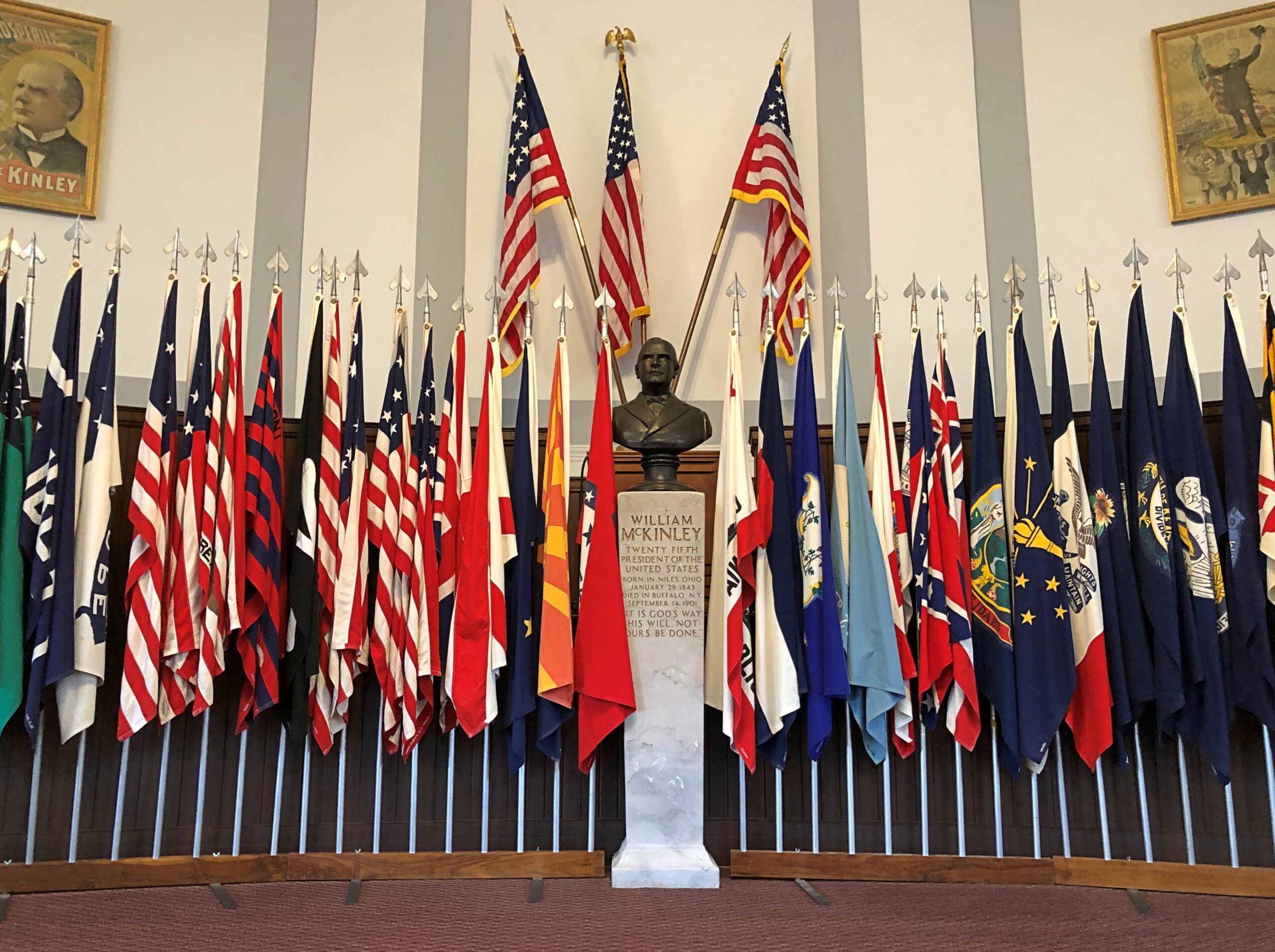
The memorial has two wings, one a public library, the other an auditorium sporting McKinley artifacts, and a collection of flags.
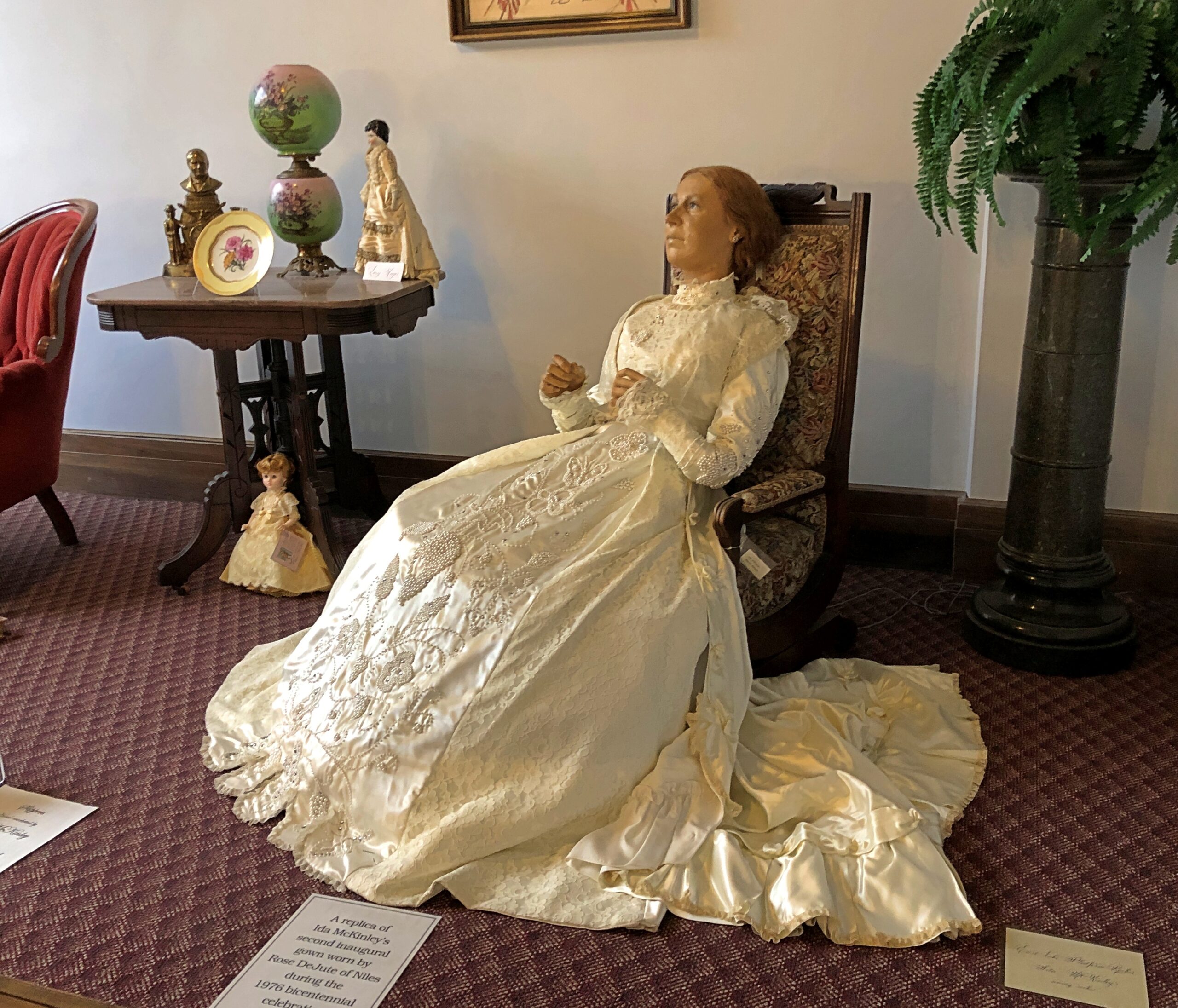
William and Ida dressed, I believe, for his second inauguration in 1901.
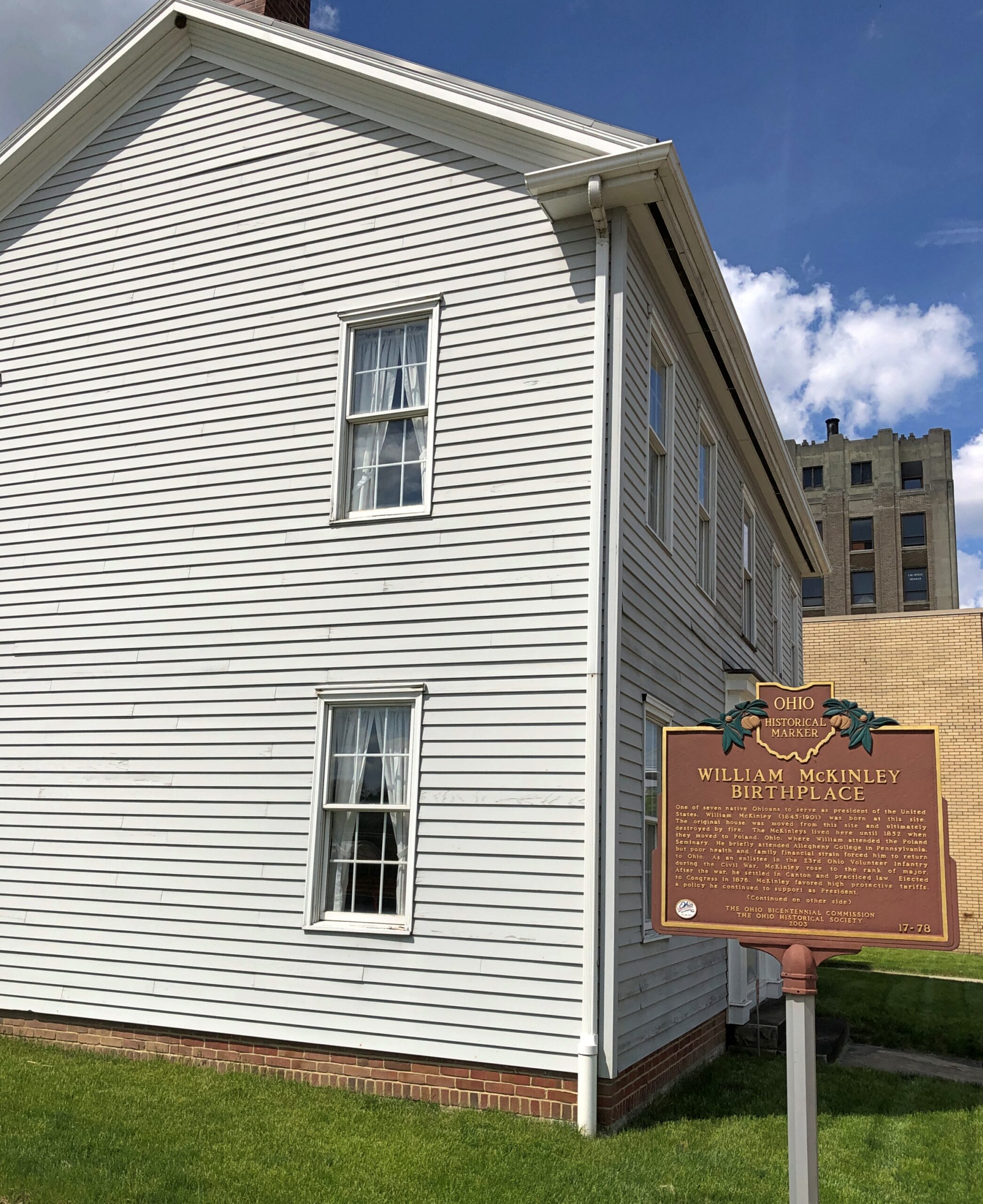
As mentioned, the McKinley Birthplace Home and Research Center is a block from the memorial. It’s considerably more modest.
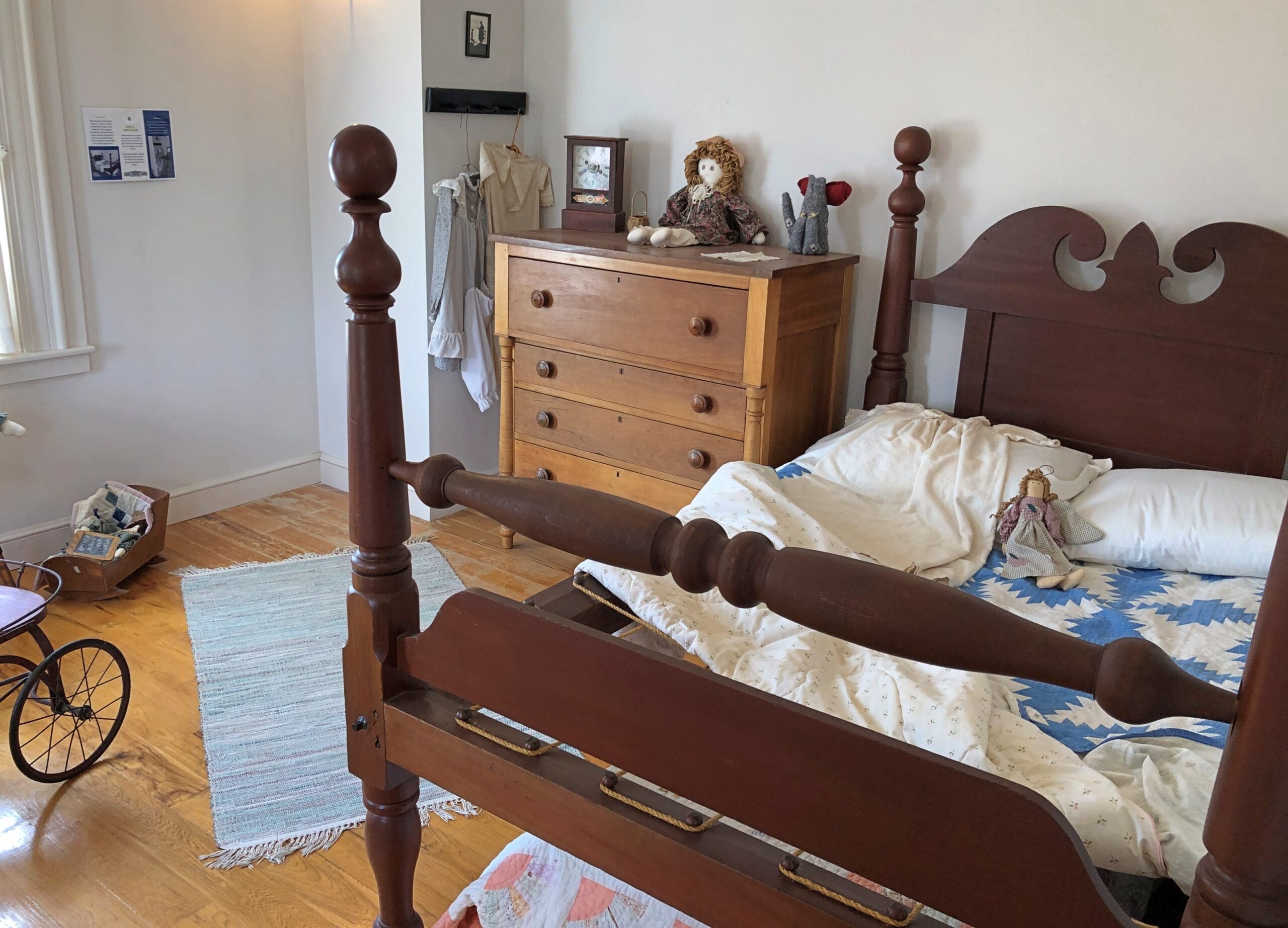
It’s also a replica, and apparently not a very close one, the original house having burned down almost 90 years ago. Still, looks are free (like at the memorial), so I had a look.
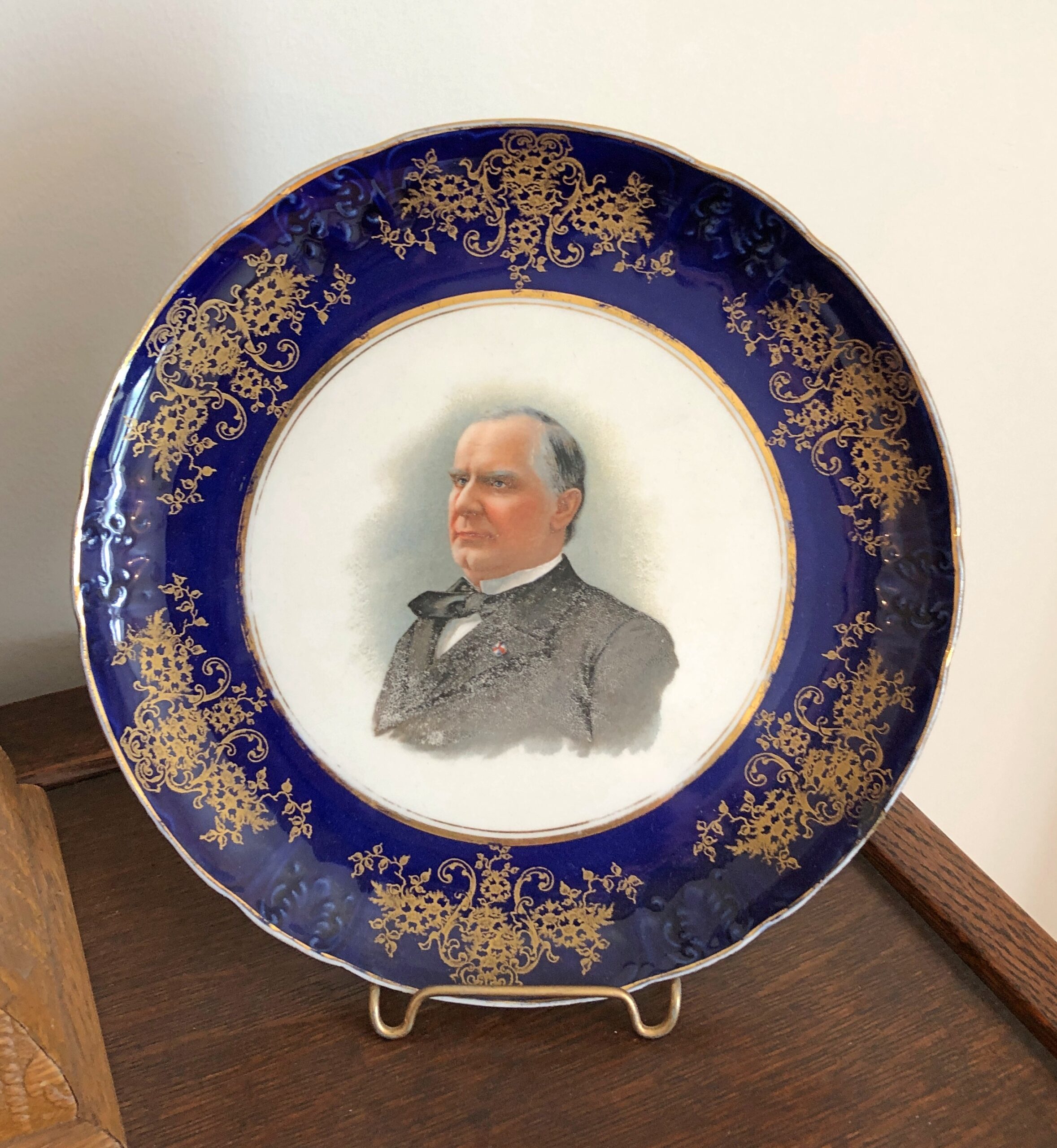
On display are a number of McKinley-adjacent artifacts. I liked the plates especially. One features the president himself.
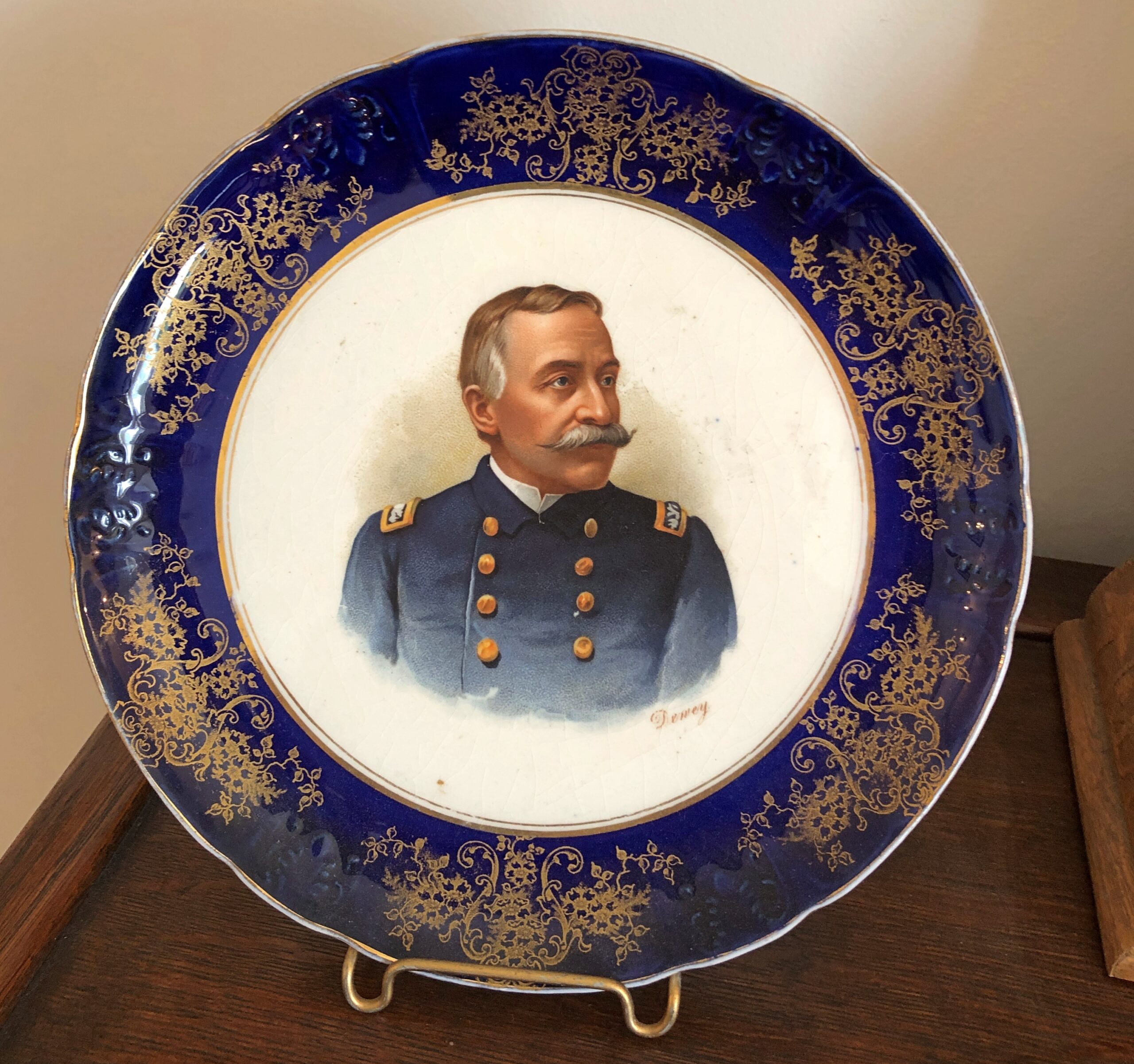
Another features Admiral Dewey. How often do you hear about him any more? Even less than McKinley.
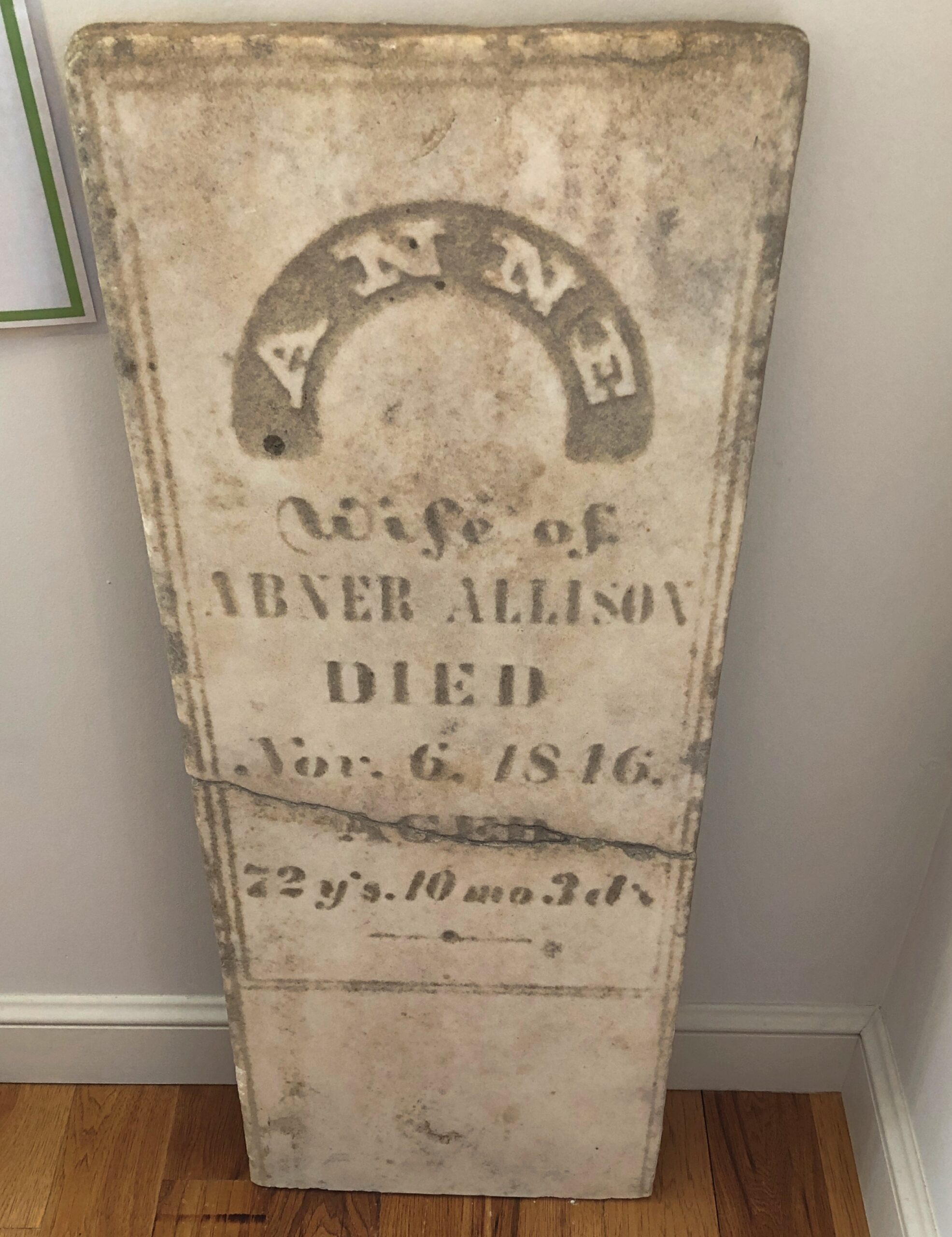
The president’s maternal grandmother’s gravestone is propped up against a wall. I suppose it was at risk of completely falling apart wherever it was, and (I hope) it was replaced in situ.
I liked this as well.
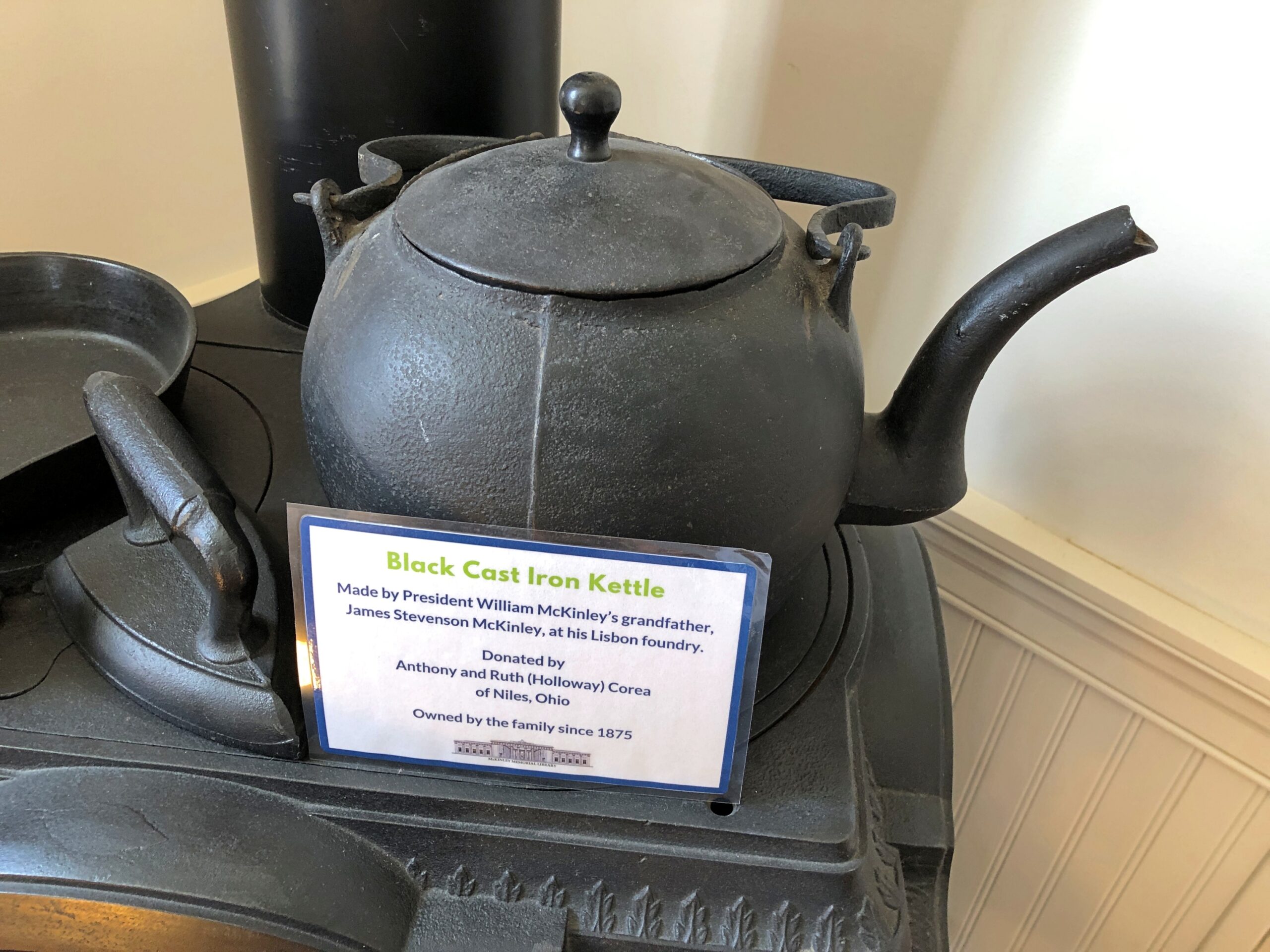
I looked up James Stevenson McKinley (d. 1847) on Find a Grave and that inspired me to look a little further into the McKinley ancestry. James’ father was David “The Patriot” McKinley (d. 1840). David’s father was John “The Wagonmaster” McKinley (d. 1779). John’s father was David “The Weaver” McKinley (d. 1760). That David’s father was James “The Trooper” MacKinlay (d. 1760), back in Ireland, at which point the nicknames peter out.
The strange thing about Groundhog Day, to me at least, isn’t its taproots in northern European folklore or even that weather forecasting based on mammal movements has been known for centuries if not millennia. Or that Germans brought its celebration to North America and that the event morphed in various ways, or that it became more widely known internationally because of a certain very good movie. Or even that the town of Punxsutanwney, Pennsylvania, has capitalized on Groundhog Day.
What mystifies me is why, among all the possible folkloric-flavored immigrant quasi-holidays, Groundhog Day has consistently been featured on calendars for longer than I can remember. It puzzled me as a kid, since I wasn’t sure I’d ever seen such a creature, and what I heard about the day involved some nonsensical thing in faraway Pennsylvania. That might have been childish provincialism at play, but even now it still strikes me as odd that so many Americans pay attention to the day, or at least have heard of it.
Just for grins – because I knew I wouldn’t get a compelling answer – I asked ChatGPT, “When did Groundhog Day start appearing on calendars?” I’ll boil the answer down for you: “Dunno. That’s just the way it’s been for years, Jack.” Maybe that’s how educators can get around AI cheating: assign essays on questions that don’t really have any answer. How many pancakes does it take to shingle a doghouse?* – that kind of thing. The learning isn’t in the finding an answer, but in the writing.
* Actually there is an answer: 42. Because oranges can’t fly, submarines have no doors and ice cream has no bones.
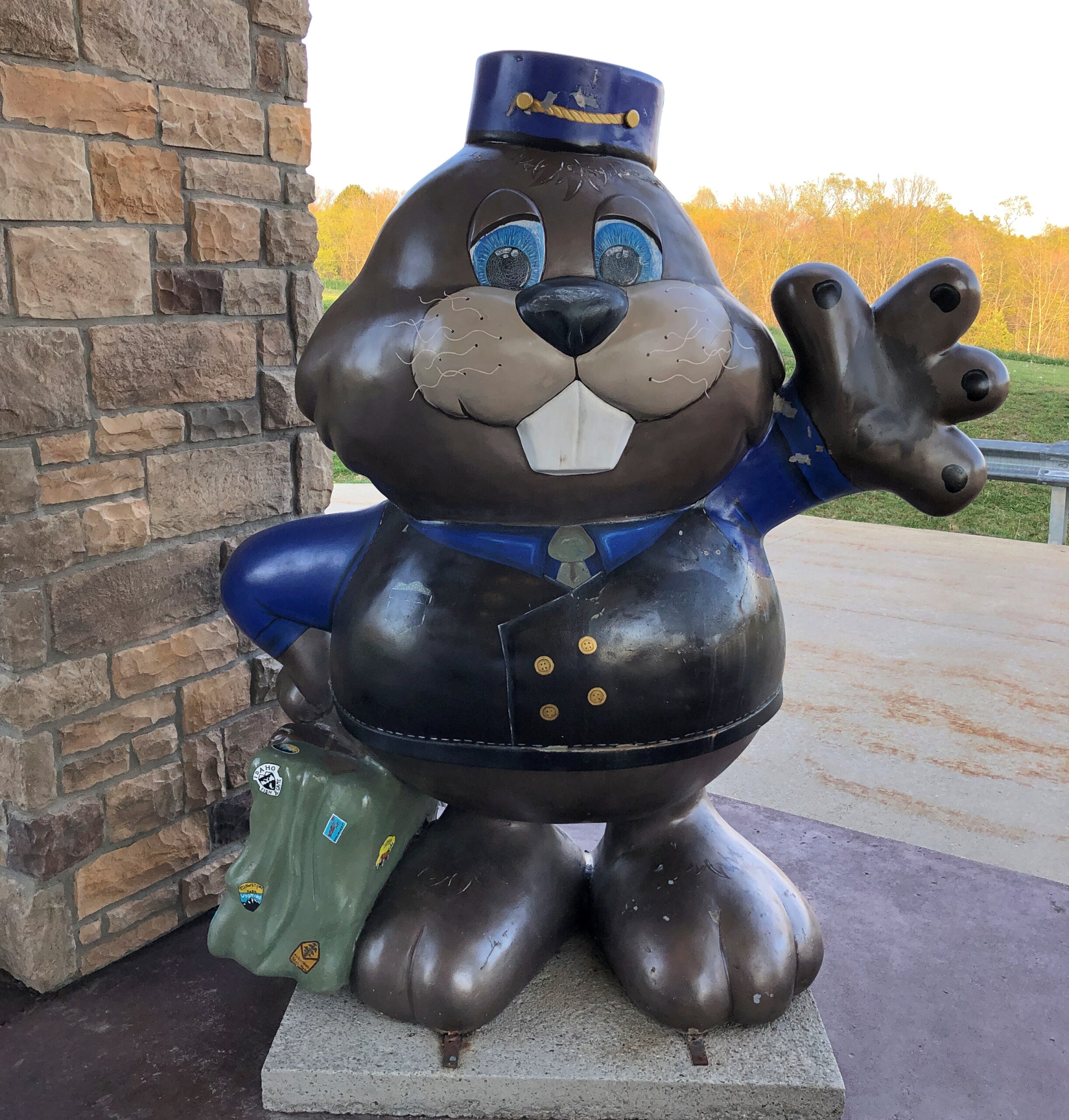
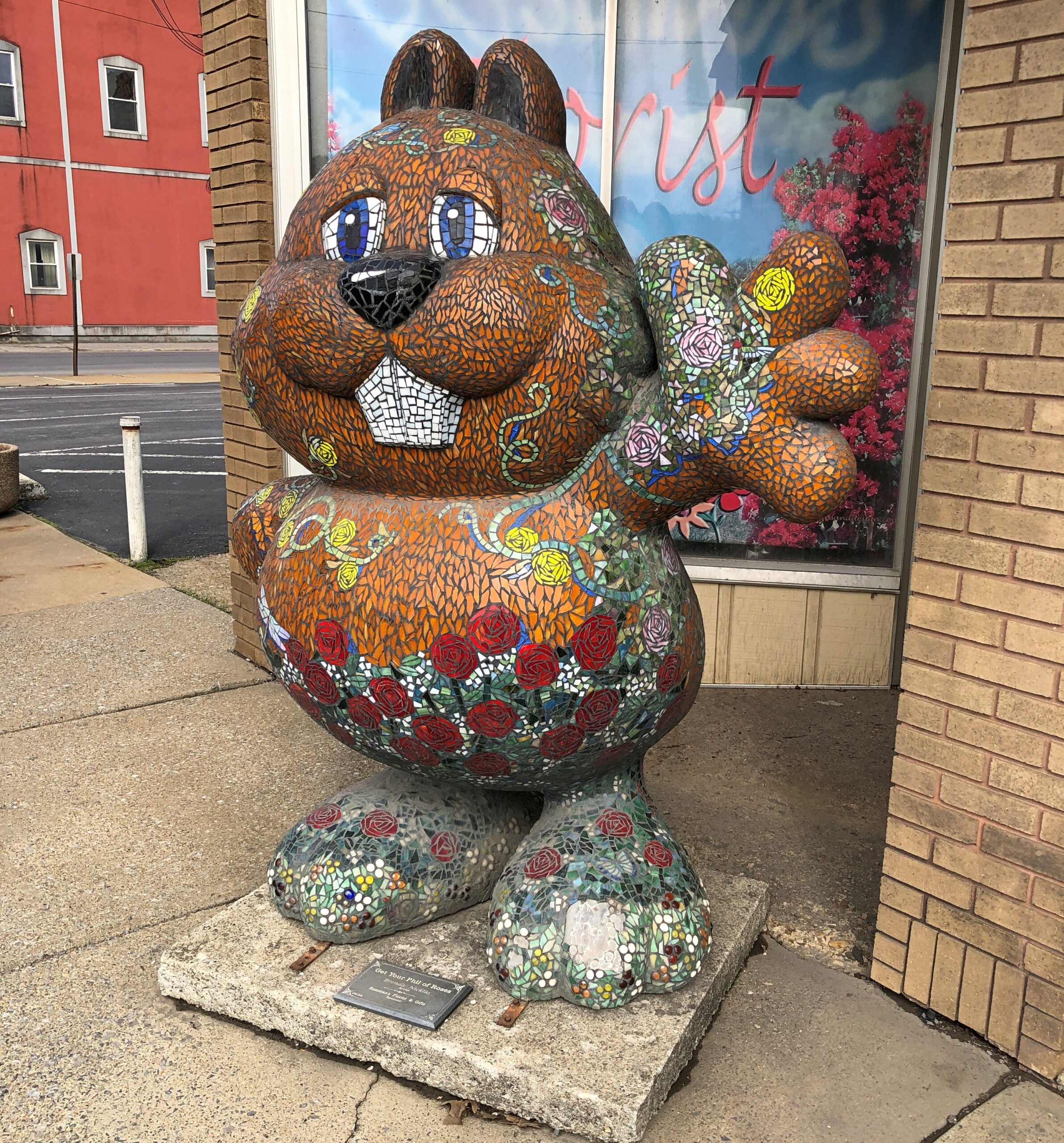
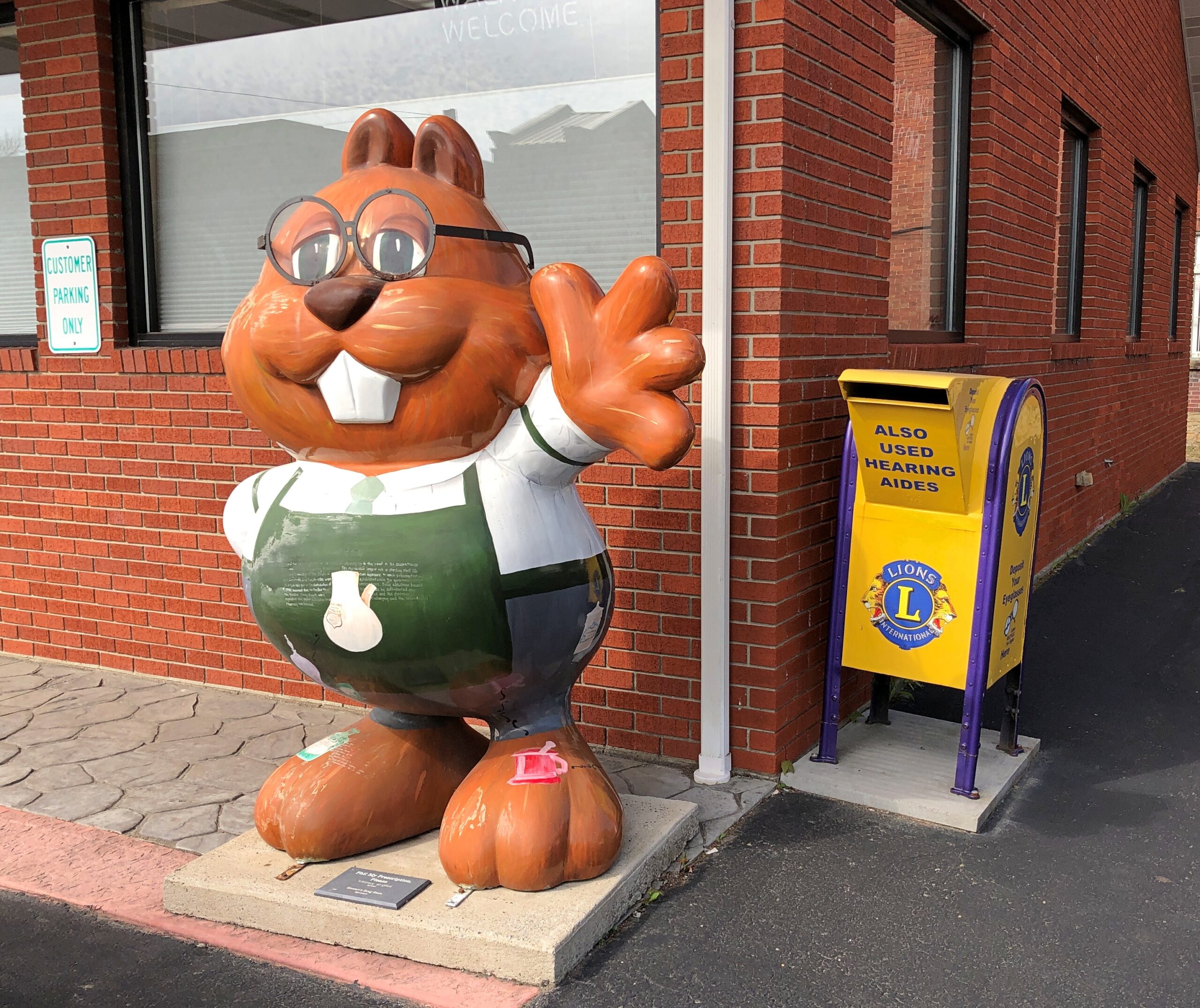
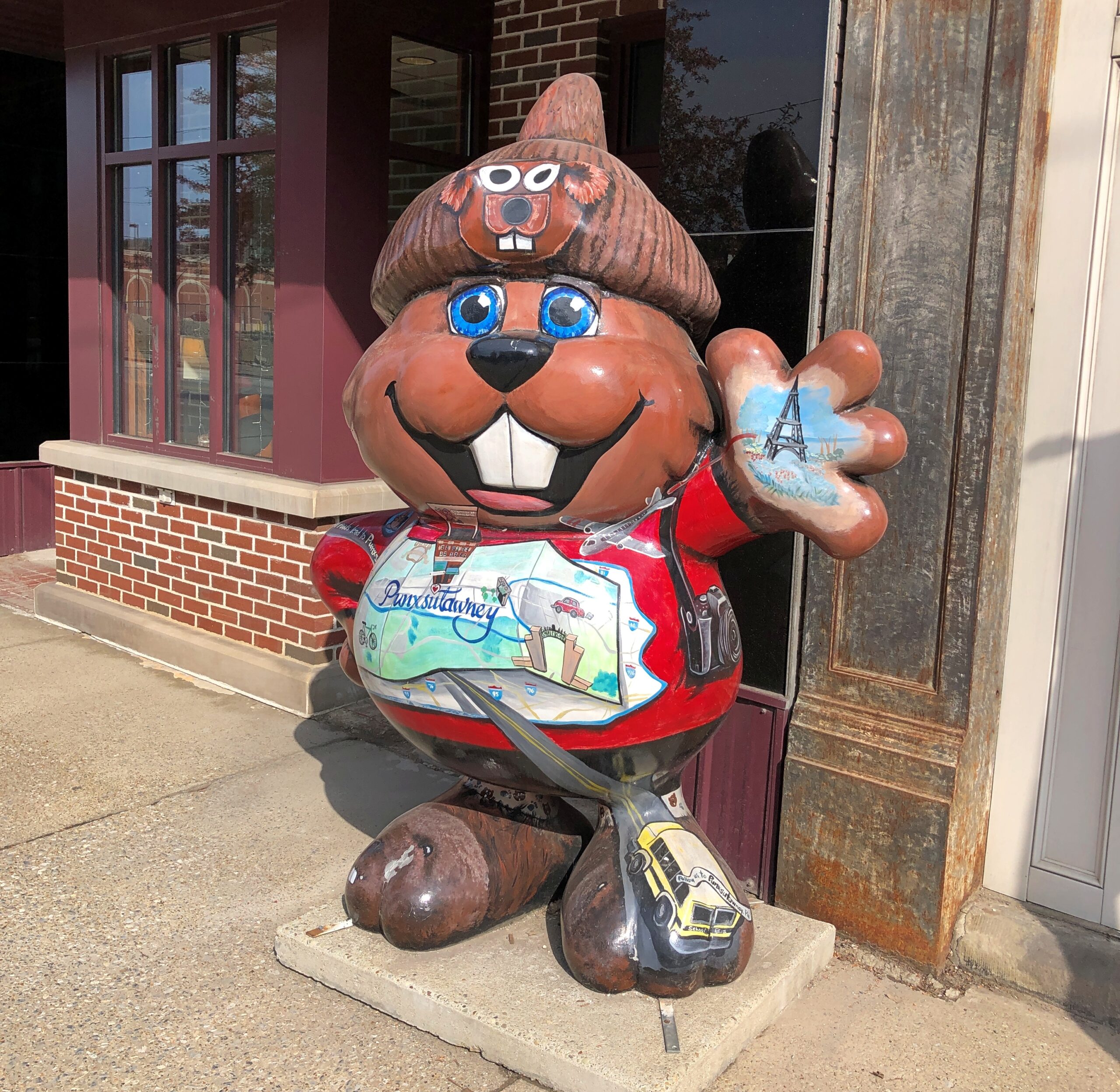
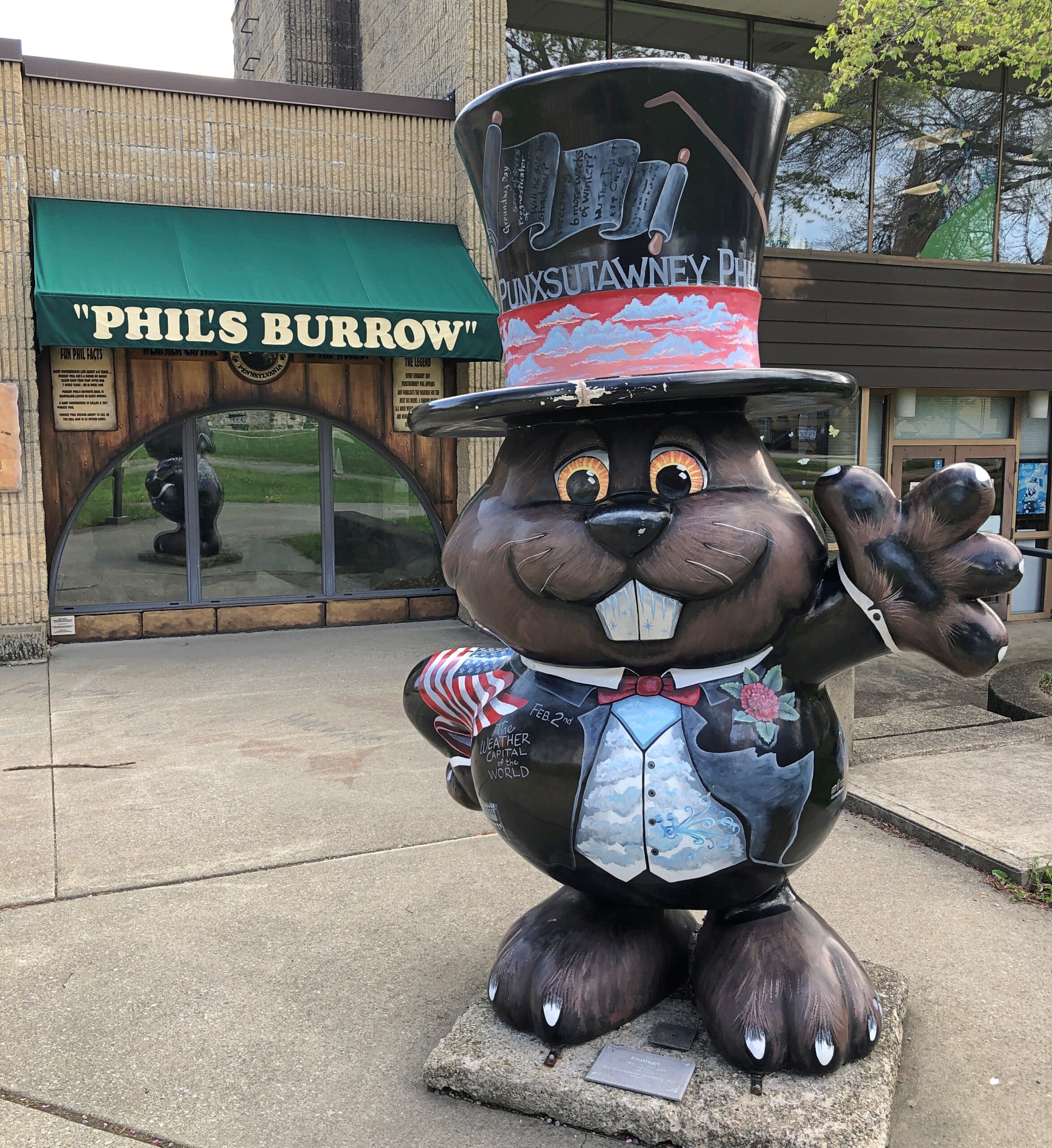
On the way home in late April, I spent the night in Punxsutanwney and had a gas the next morning looking for as many depictions of Punxsutanwney Phil as I could find. It’s an endless pursuit, something like looking for all the Lincolns in Springfield, Illinois.
This one was the closest to my motel. It was at my motel.
Downtown Phils, such as in front of a florist and an optometrist and a “beauty bar.”
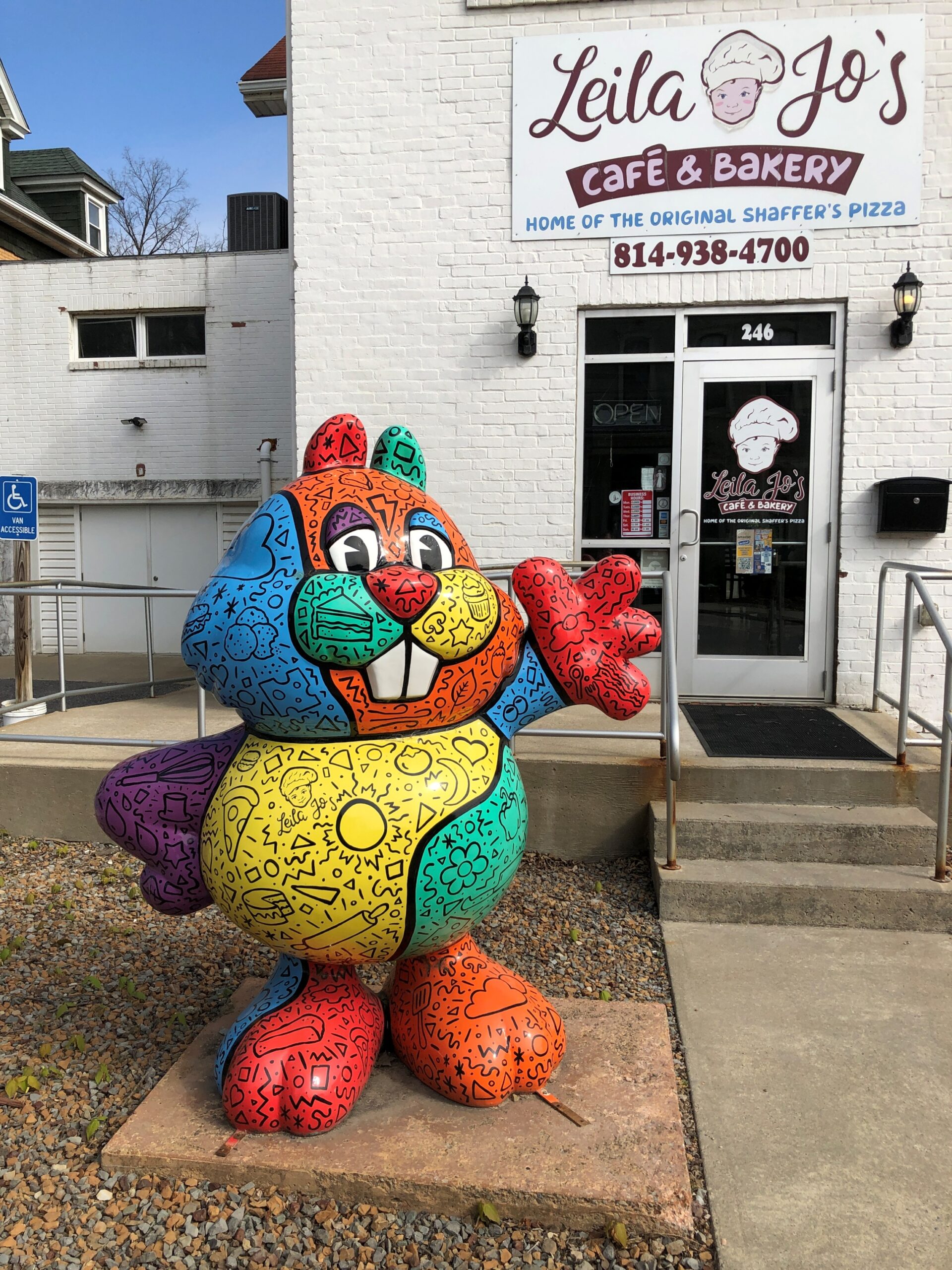
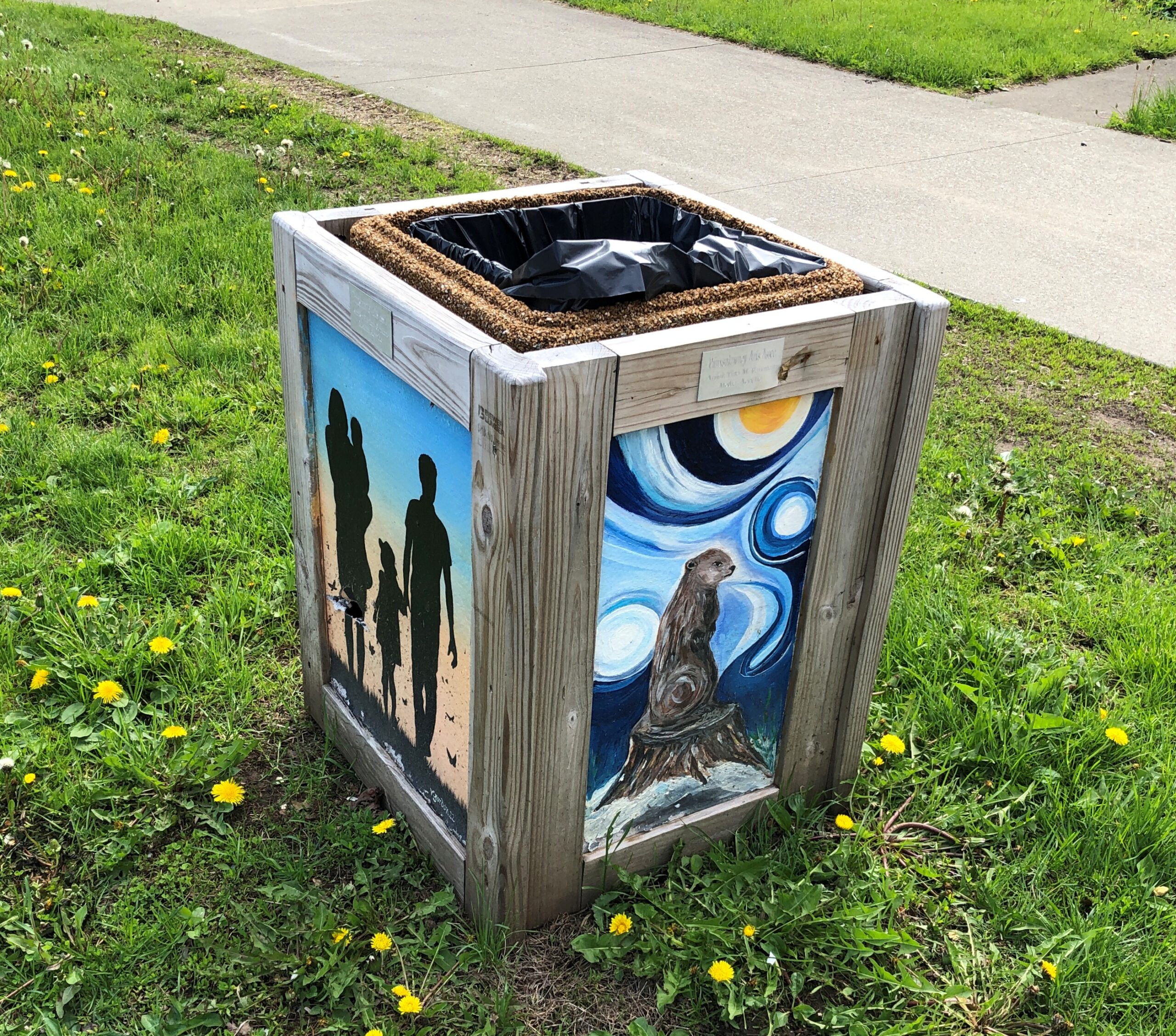
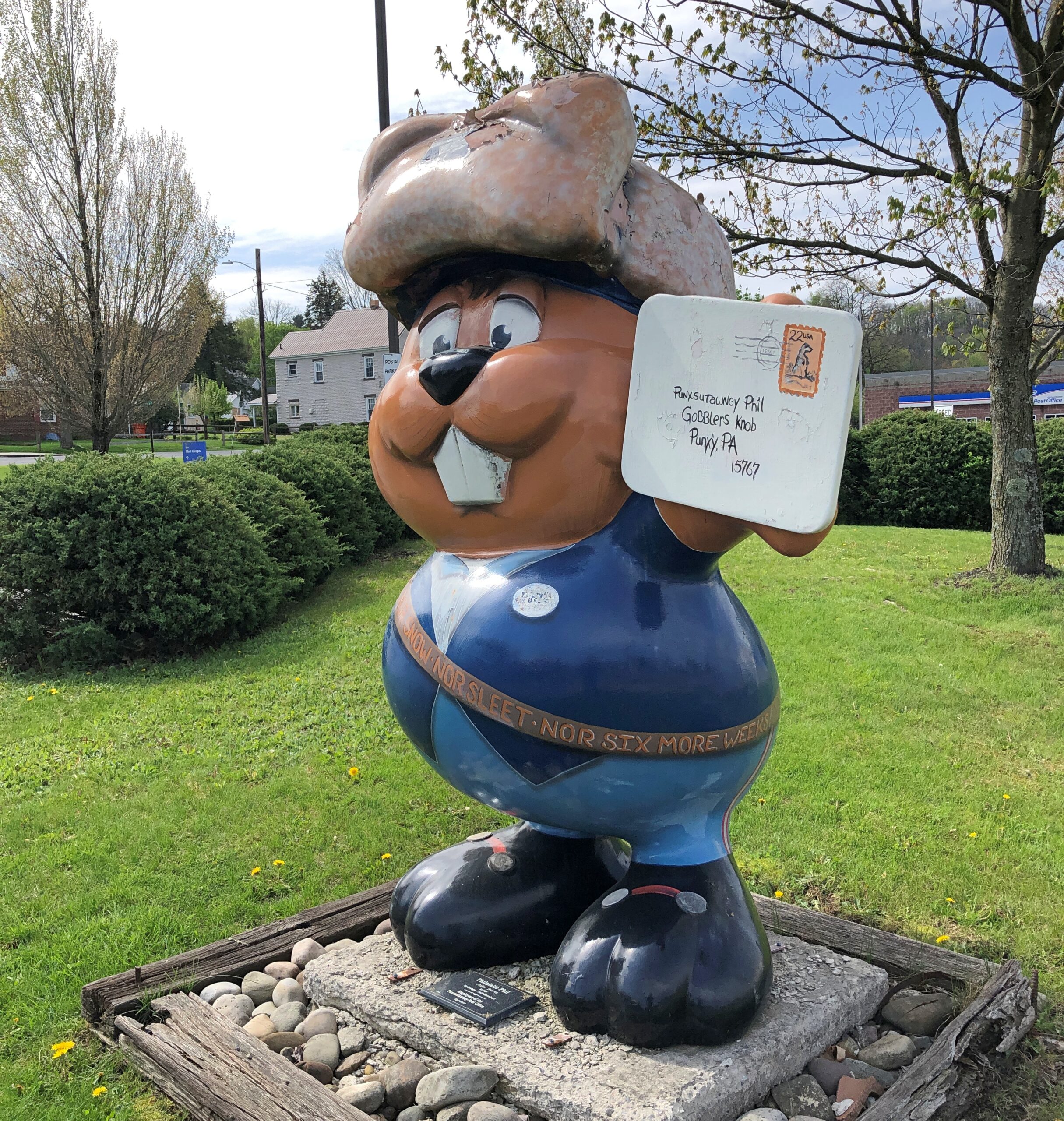
In front of a bakery and on a trash can and at the post office.
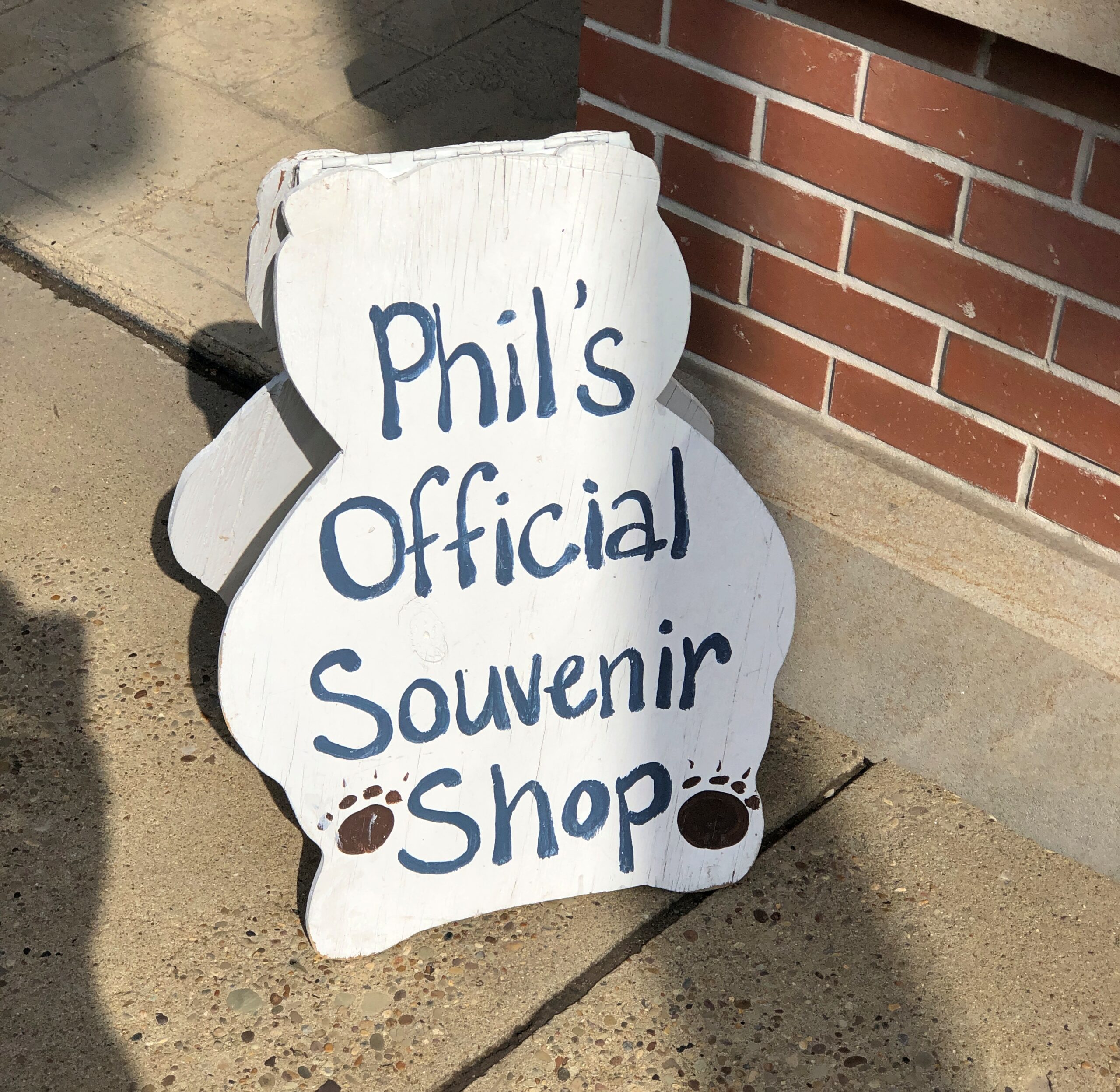
Of course he had his own shop. I bought postcards there.
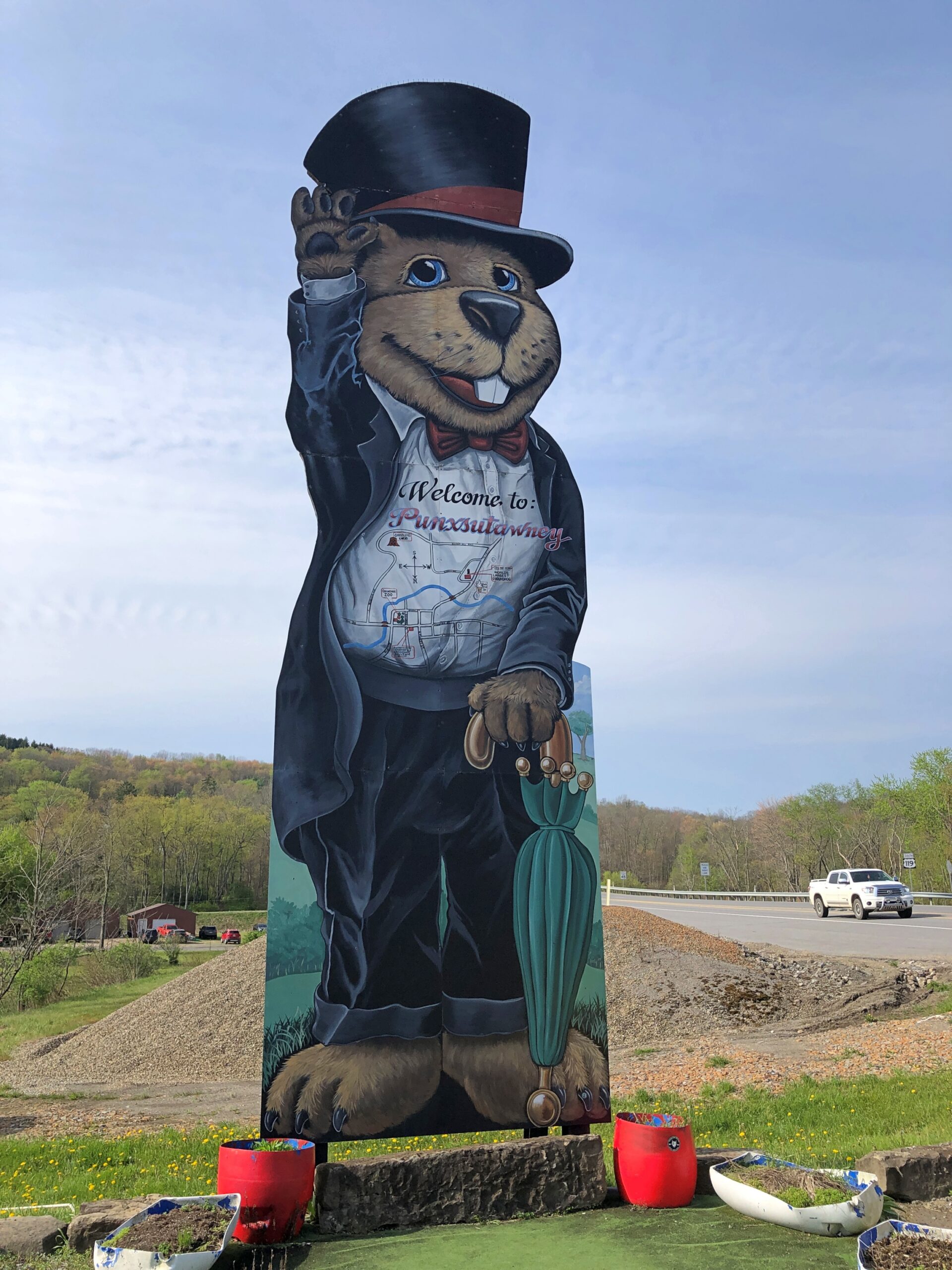
The tallest Phil, I think. I had to park the car to get a good look.
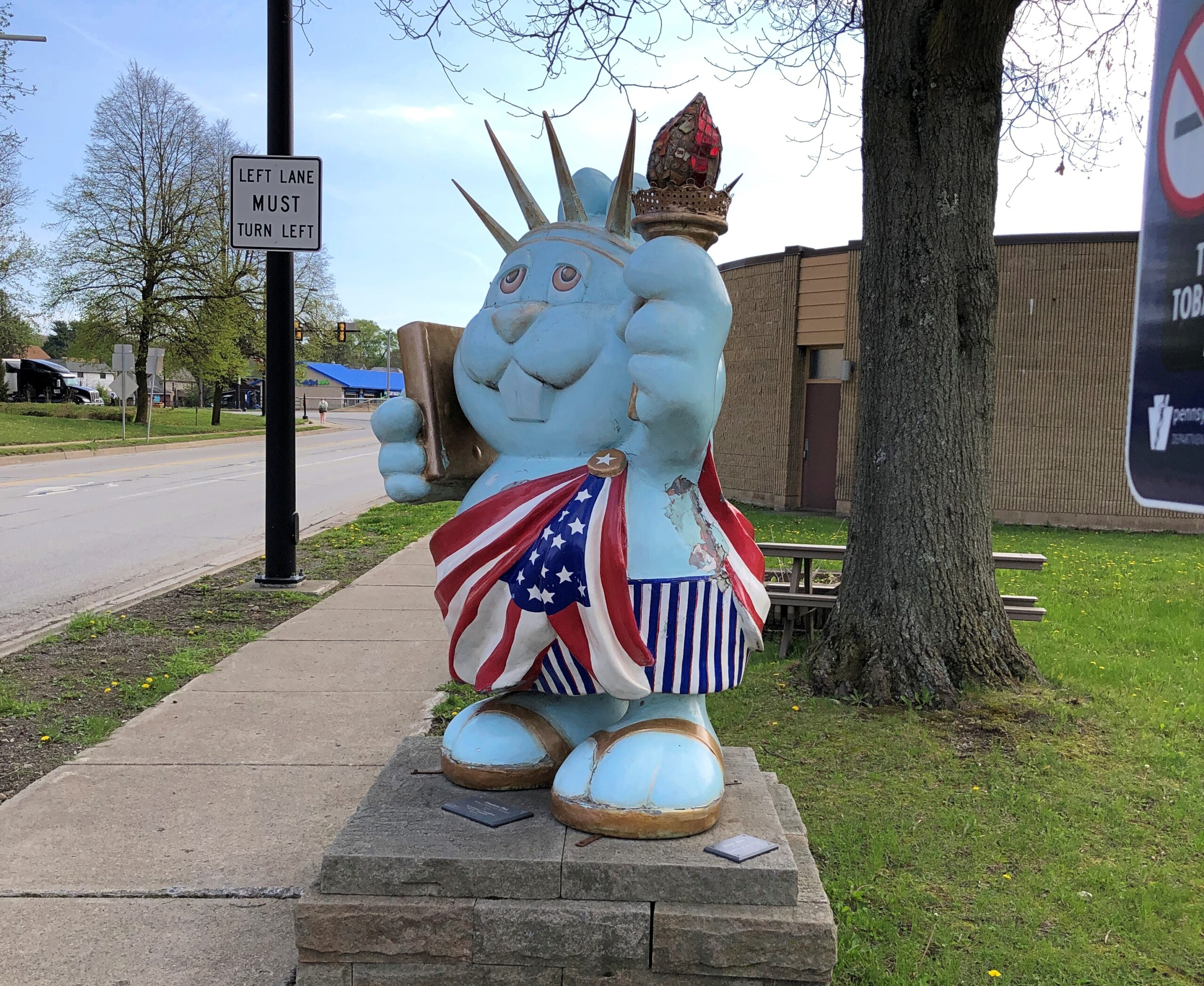
Patriotic Phil. We could do worse for the semiquincentennial.
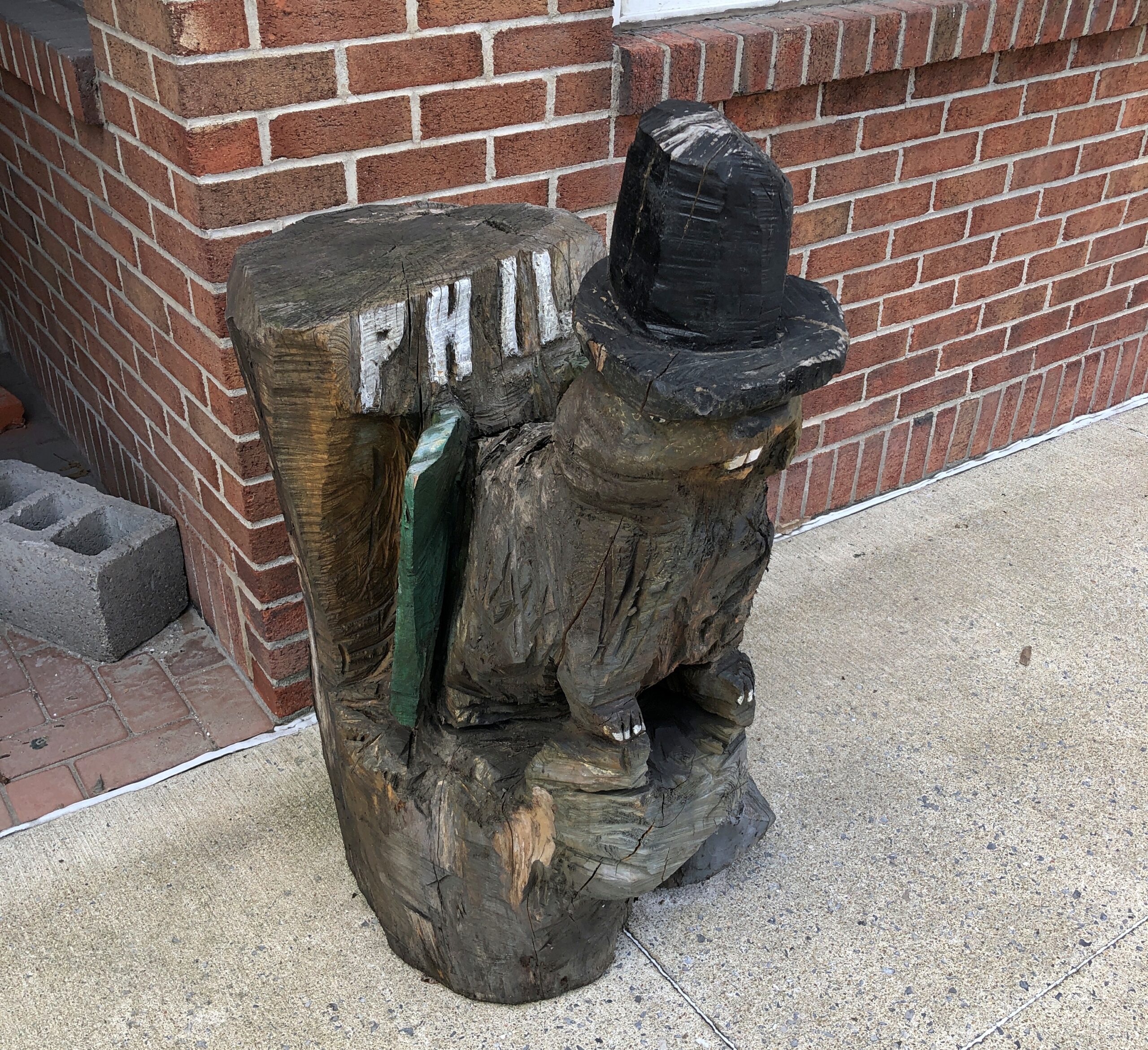
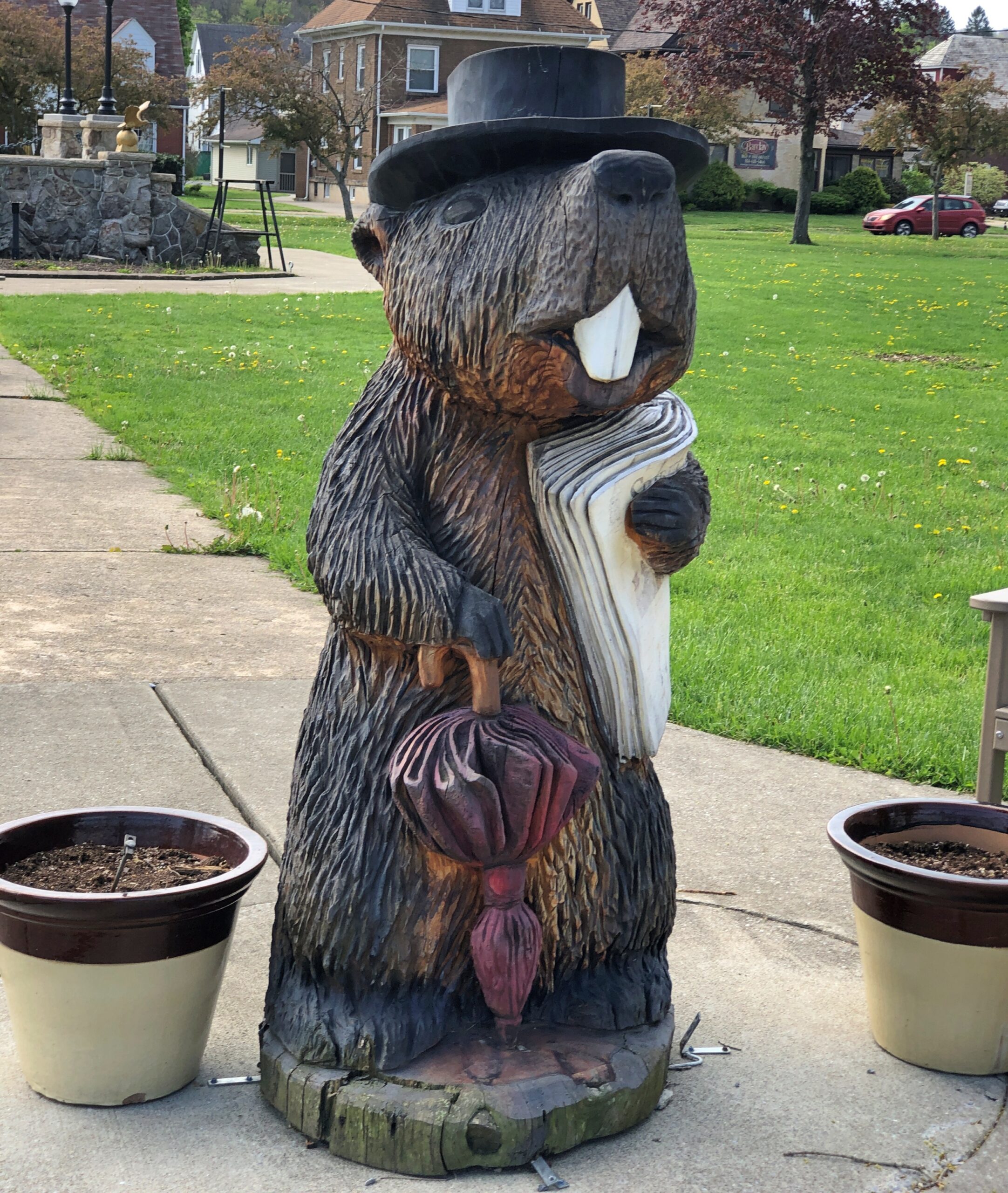
Phil carved from wood.
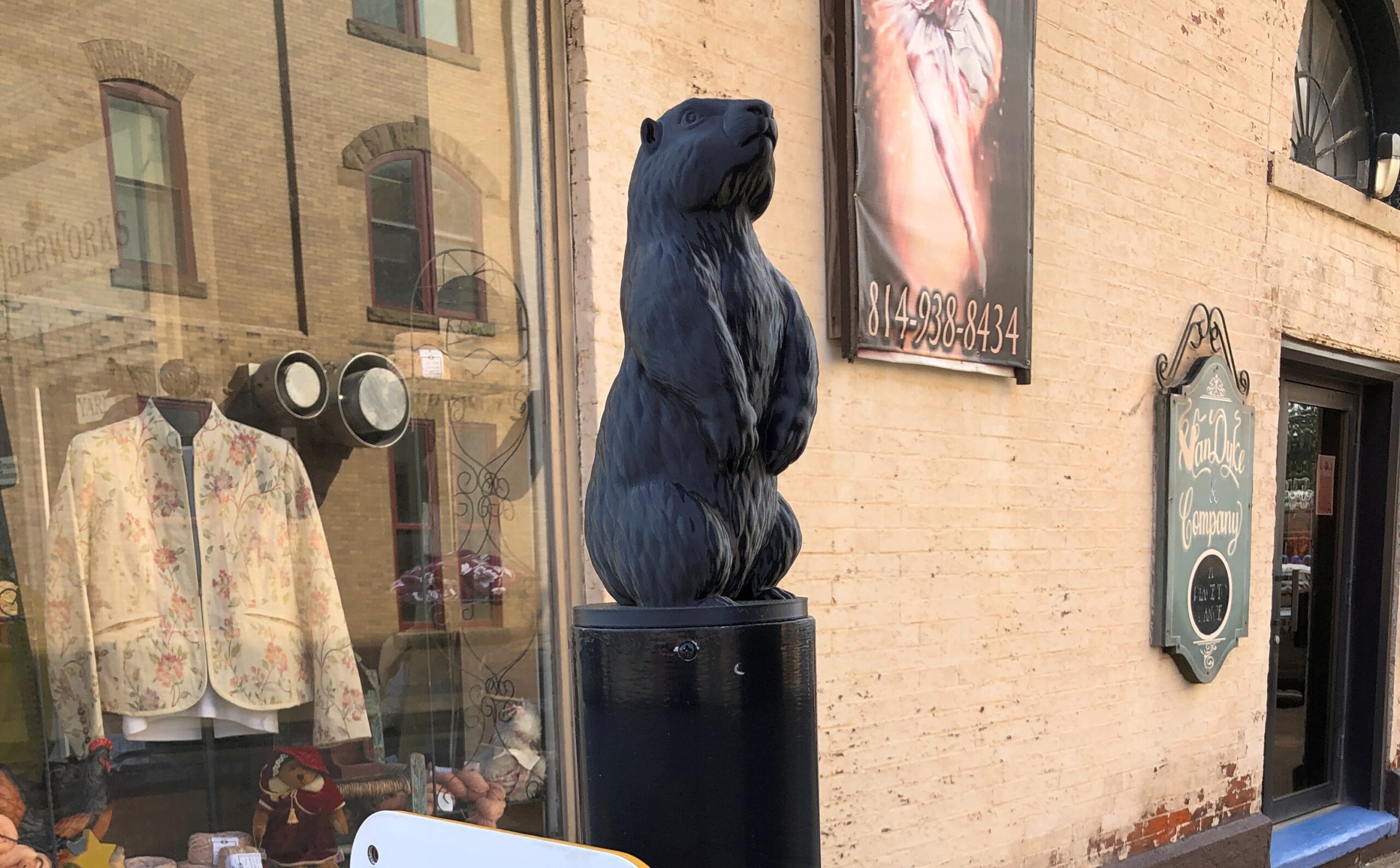
Metal Phil, one of four at some of the crosswalks that included a switch on the pole to let the lights know you were waiting.
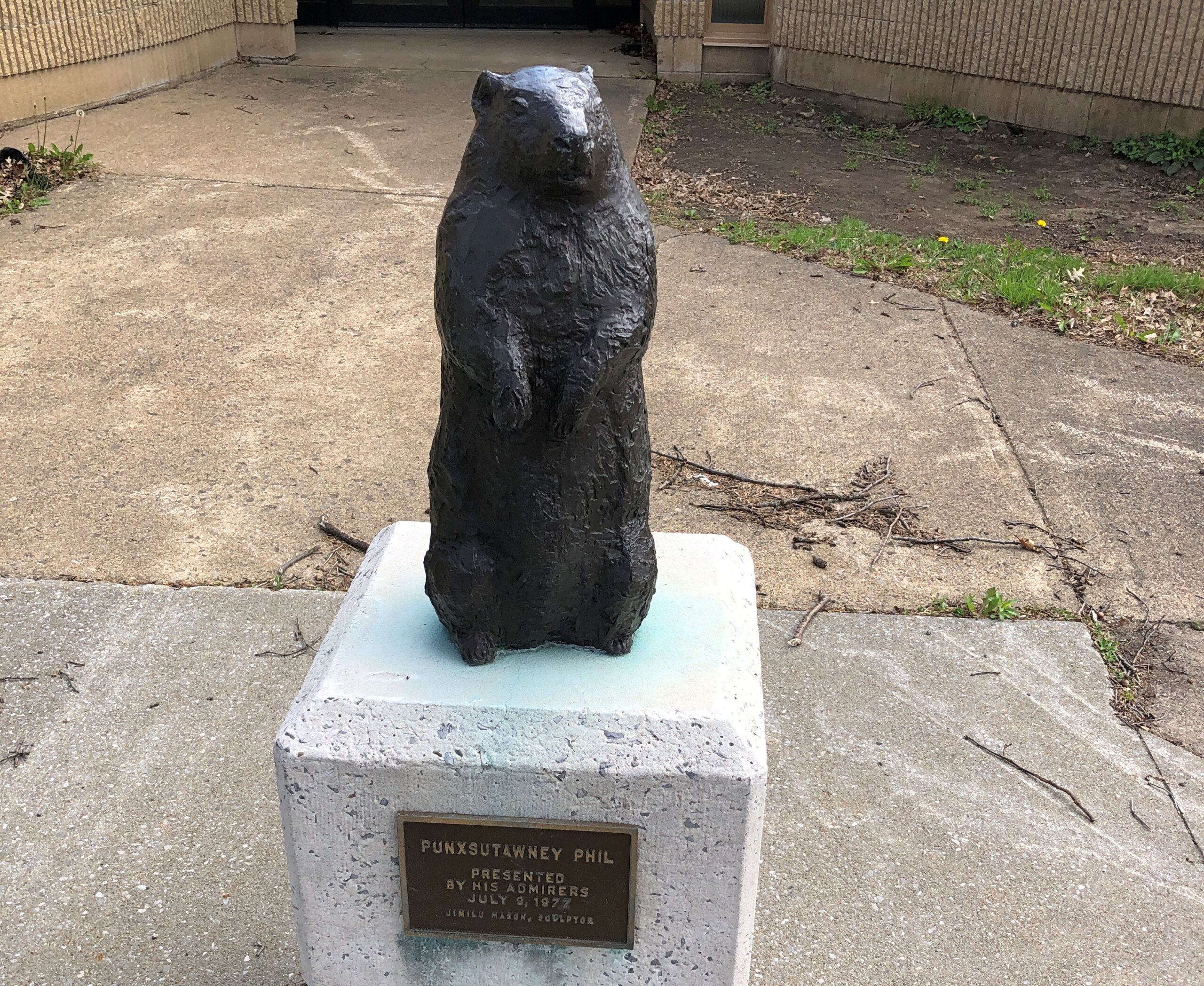
Serious Phil.
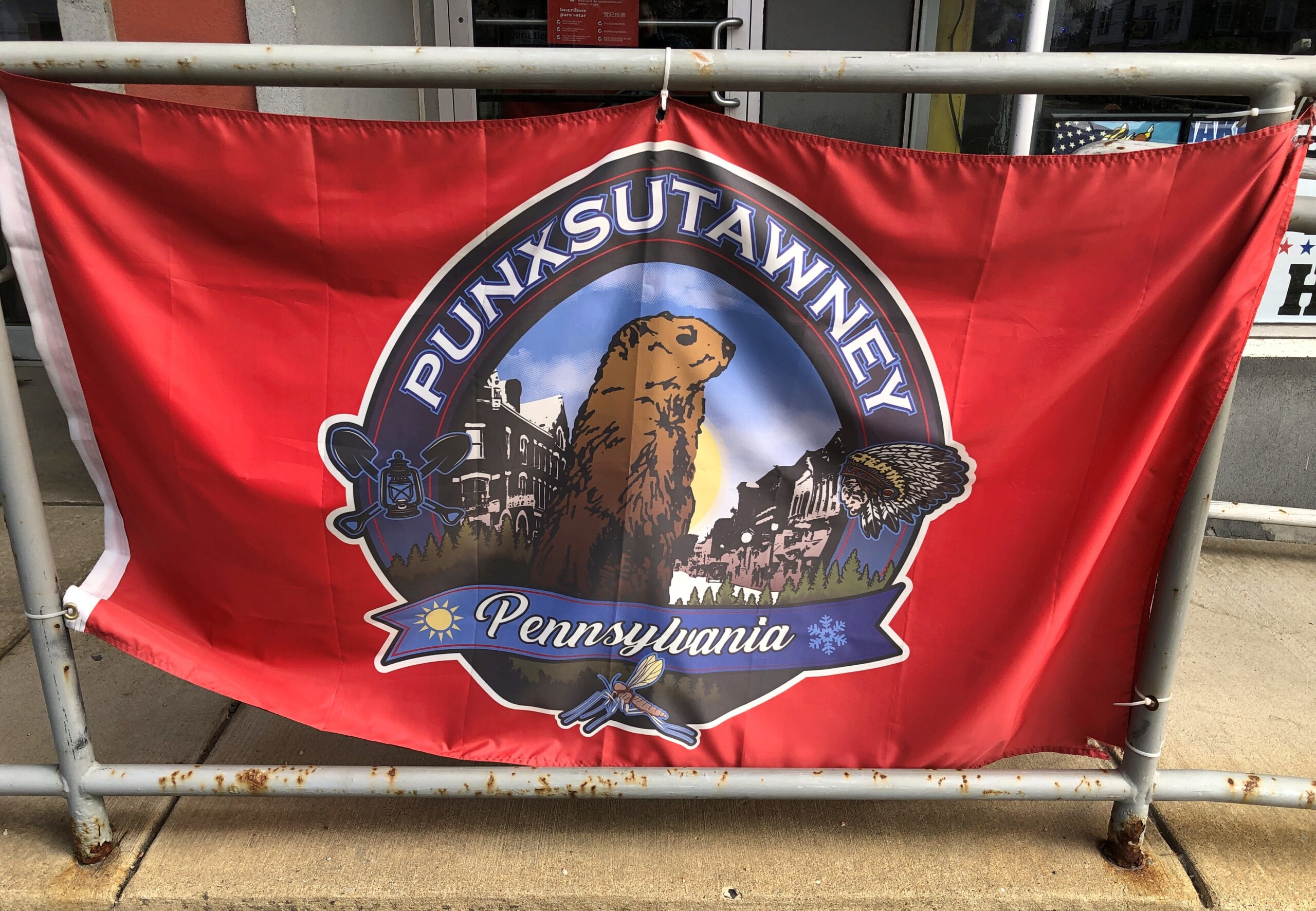
The city flag.
Actually, this one looks more like a cartoon bear. But I’ll bet it’s Phil anyway.
He’s everywhere.
Then there’s official Phil. He and mate Phyllis live behind glass, in the “burrow.”
The groundhog clearly counts as Punxsutanwney’s spirit animal, a concept that seems to be elastic enough to include mascot and whatever else you care to pack in. More towns ought to have them.
A lot of museum artifacts are behind glass. Some really old, brittle and famous items are encased in an atmosphere of nitrogen, the better to extend their existence, I understand (and nitrogen anoxia sounds like an unfortunate accidental way to die). That might have been the case with the underwhelming display of the overwhelmingly historic Book of Kells. But in any case, glass interferes with our right as iPhone-carrying tourists to take really good pictures with almost no effort.
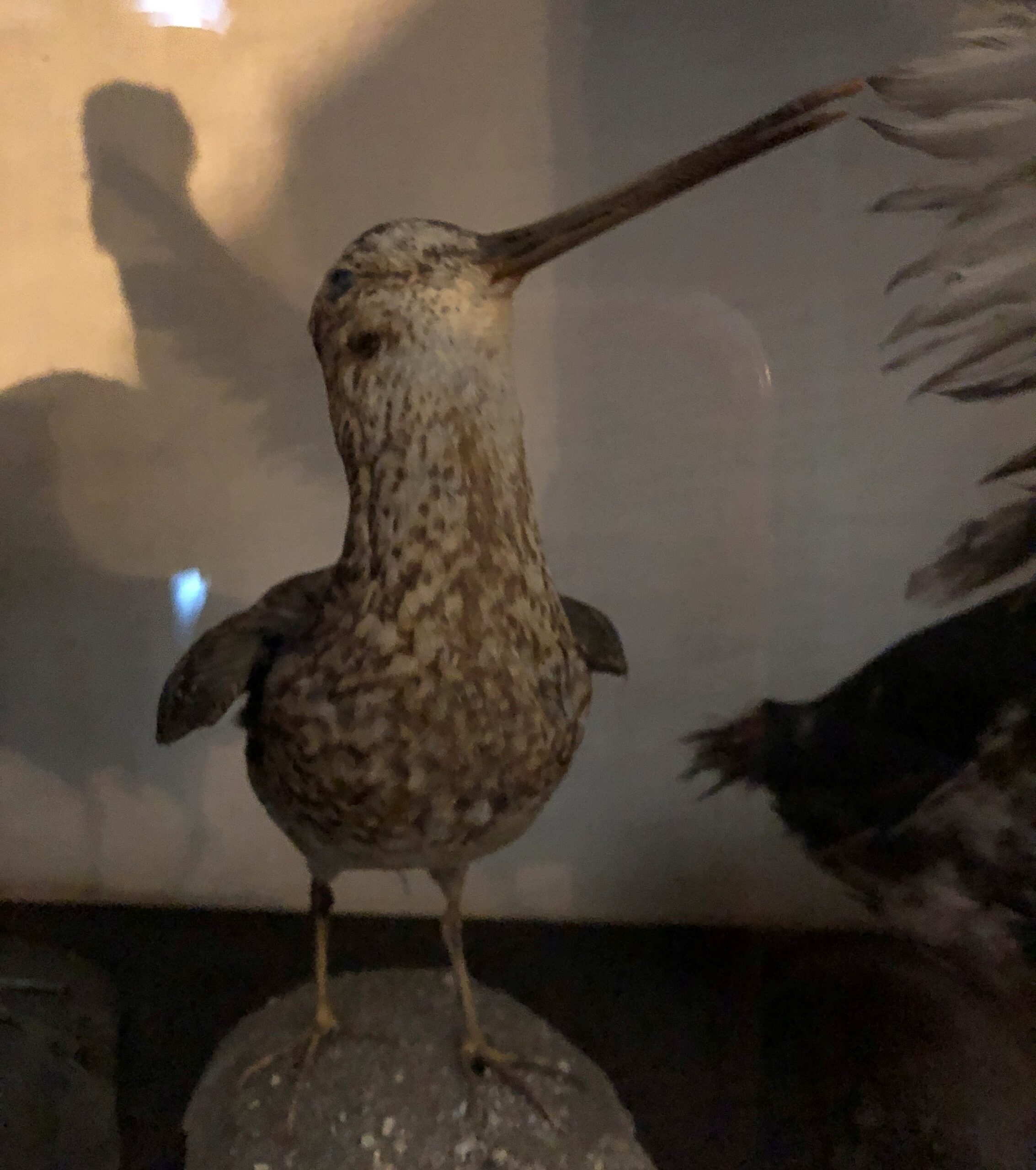
An example: a stuffed bird I saw in April.
The picture might be lousy due to the glass, but the artifact – and some other stuffed birds in the same case – did something a history museum ought to do: teach. I learned, looking there at a bird dead more than a century, that as a boy in the early 1890s Franklin Delano Roosevelt pursued a taxidermy hobby.
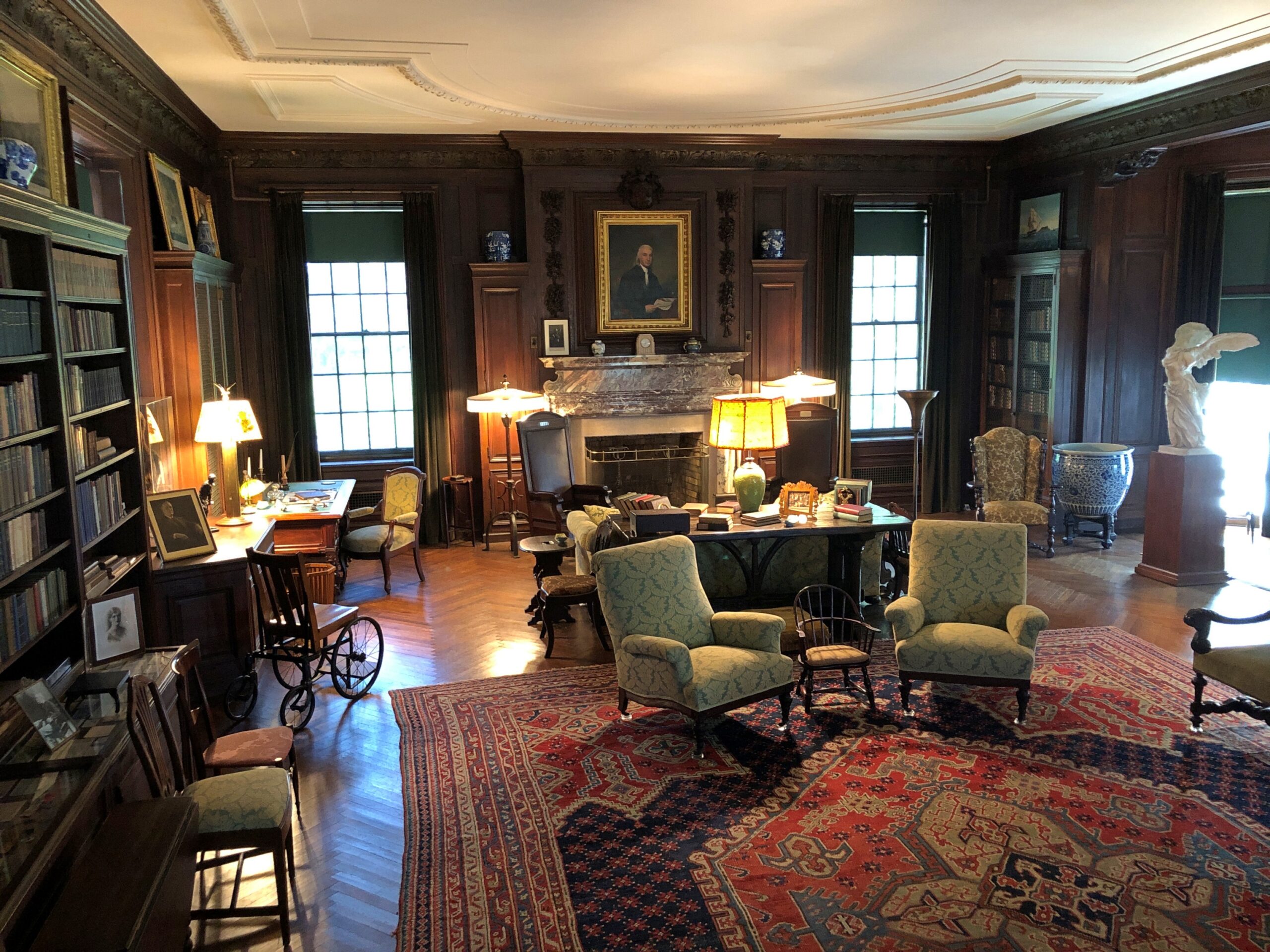
I’d come to Home of Franklin D. Roosevelt National Historic Site in Hyde Park, New York, the flush of spring, on my way home from the Northeast. I made time for the site because a visit had been impossible in October.
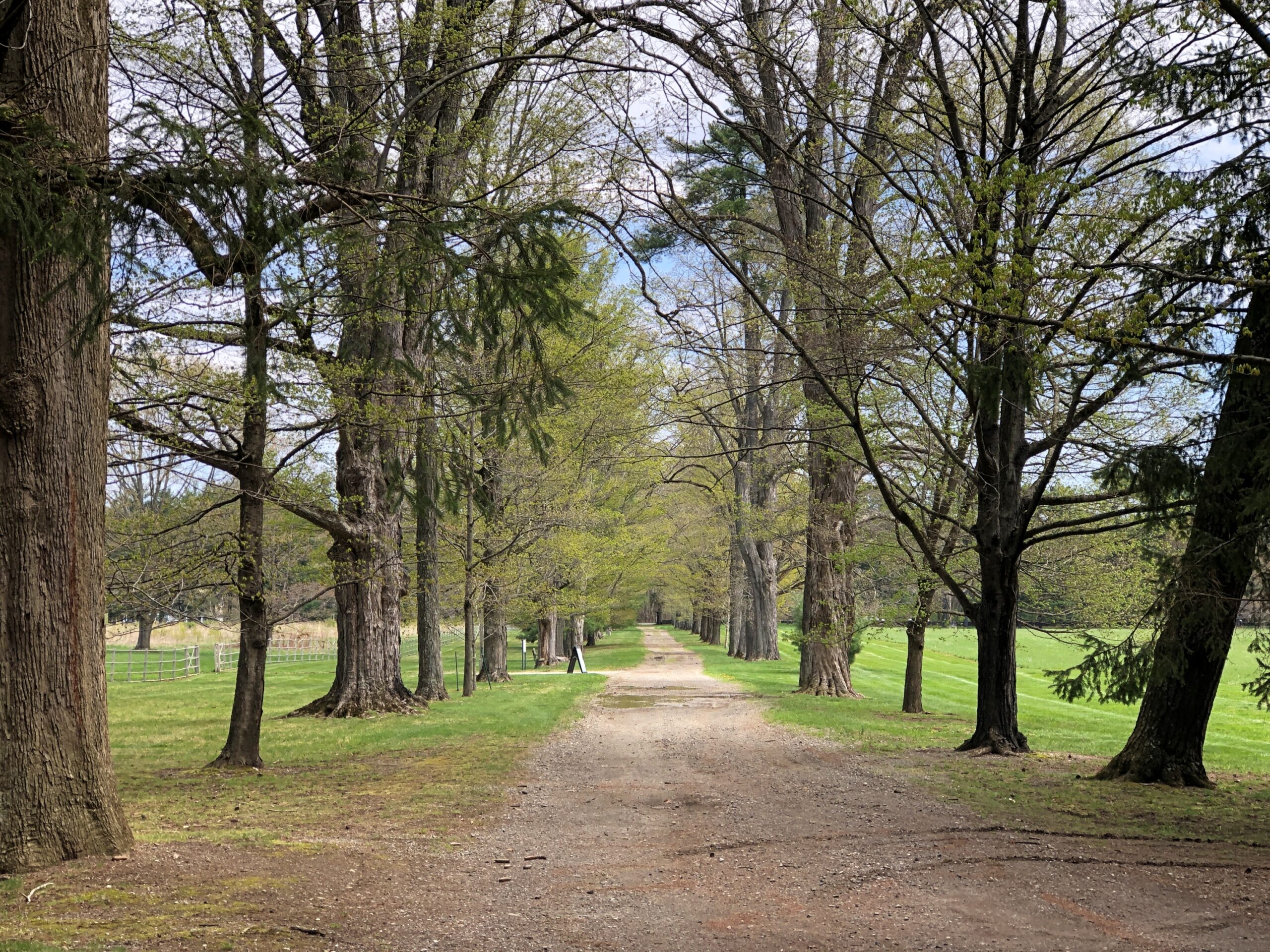
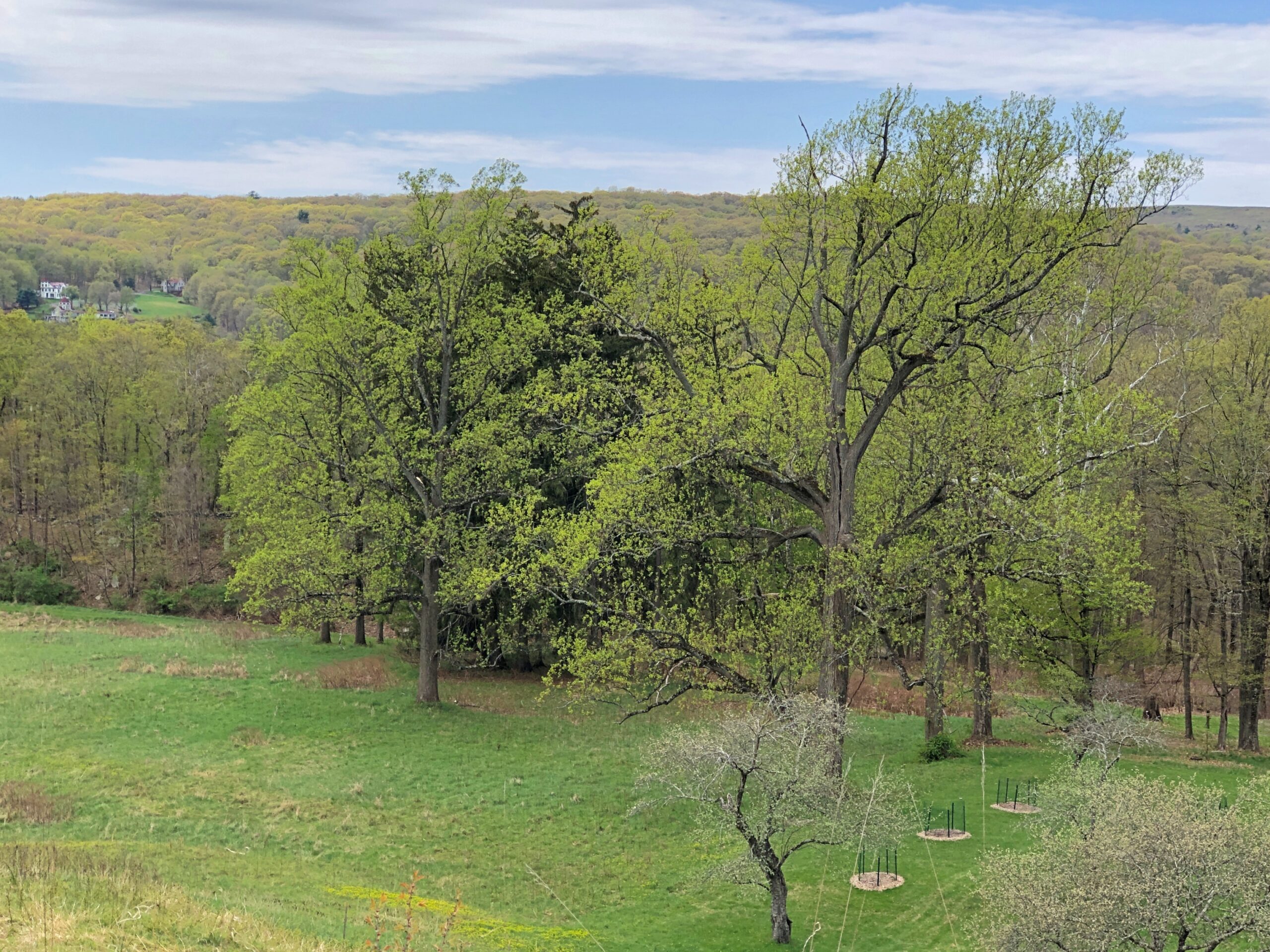
I understand that during FDR’s boyhood, the place wasn’t quite as wooded, but even so the trees (and thus birds) must have been plentiful. One of the paths on the grounds.
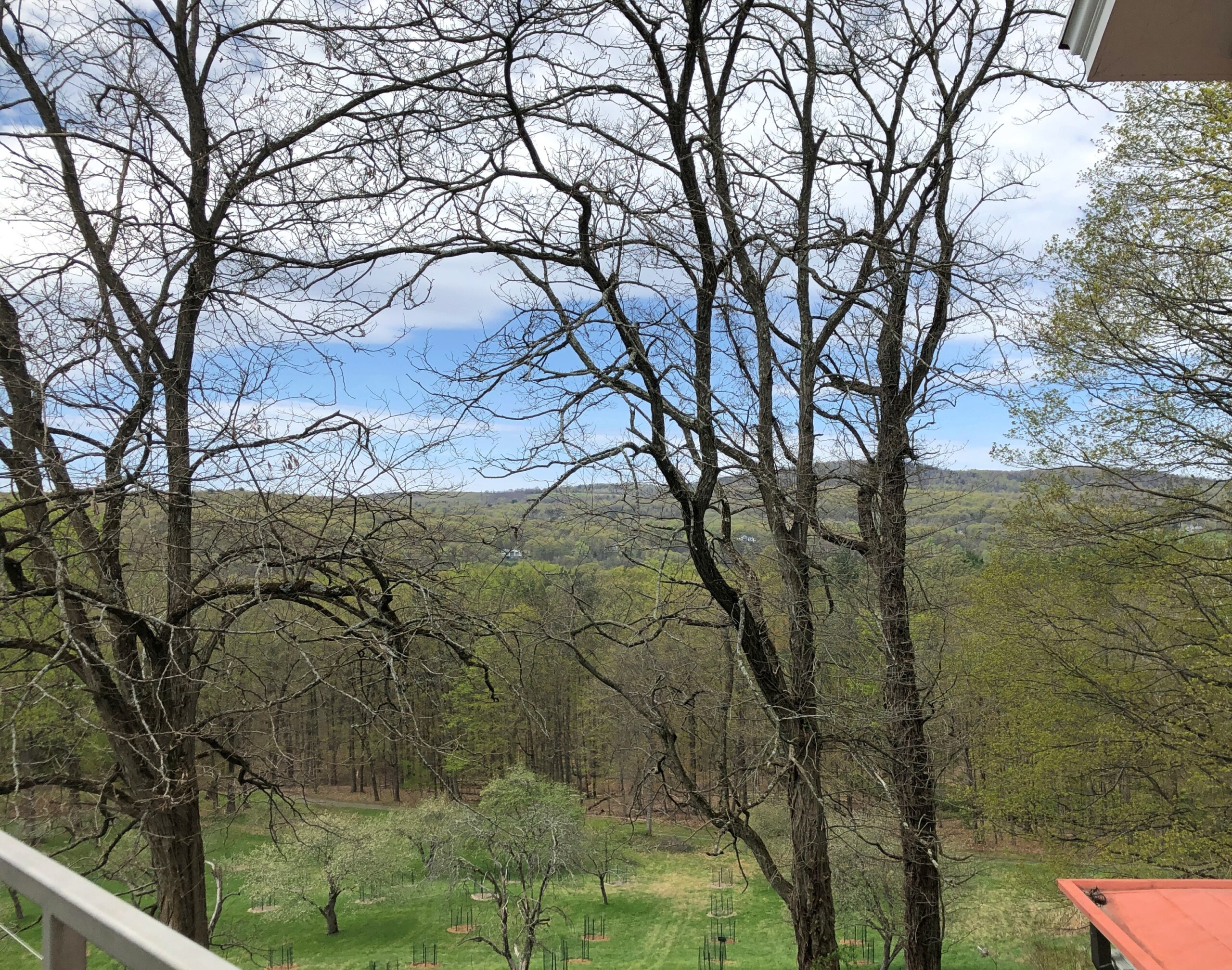
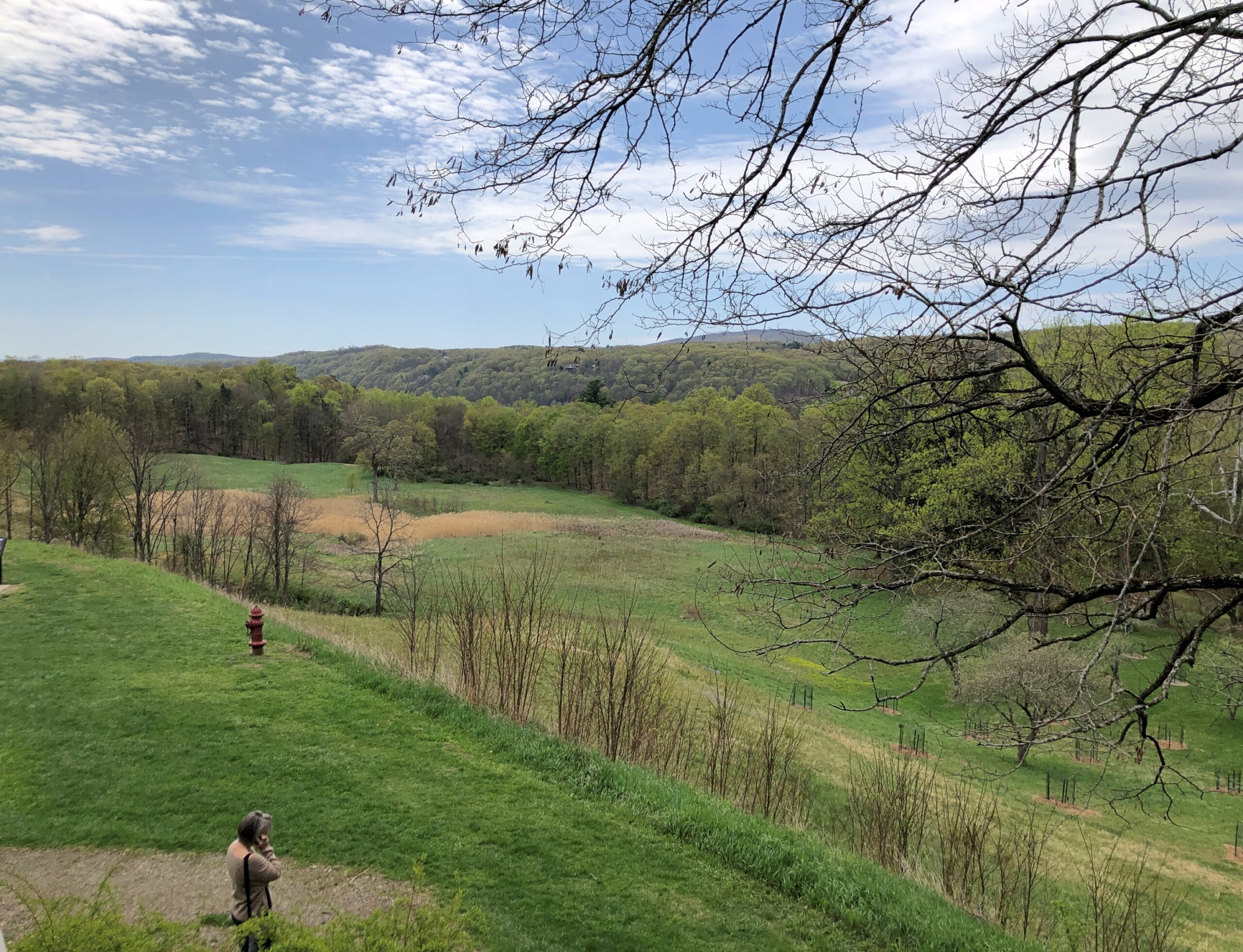
Views from the second story of the mansion.
Though the greenery obscures the splendid Hudson River, even a short look around gives you some idea why James and Sara Roosevelt thought building a residence here was a good idea, and why Franklin was deeply attached to the place all his life.
Is it important to know that boy FDR shot and stuffed birds (though he later had them stuffed professionally)? In and of itself, maybe not. I’ve heard about him all my life, read books about him and seen documentary films, and visited the FDR D.C. memorial, and somehow that detail never came up. Knowing about his short-lived taxidermy hobby doesn’t help me understand the New Deal or World War II any better, in as much as I know about those big-picture events.
Still, it’s a humanizing detail, and I believe that’s good to know about figures as famed and studied and lionized as FDR. It also allows for a bit of informed speculation about Franklin, a rich only child with an overbearing mother. By the time he was old enough to tote a gun, he probably needed to get away periodically from the mansion and its familial confines. Shooting birds out on the sprawling grounds of Hyde Park on the Hudson was just the ticket.
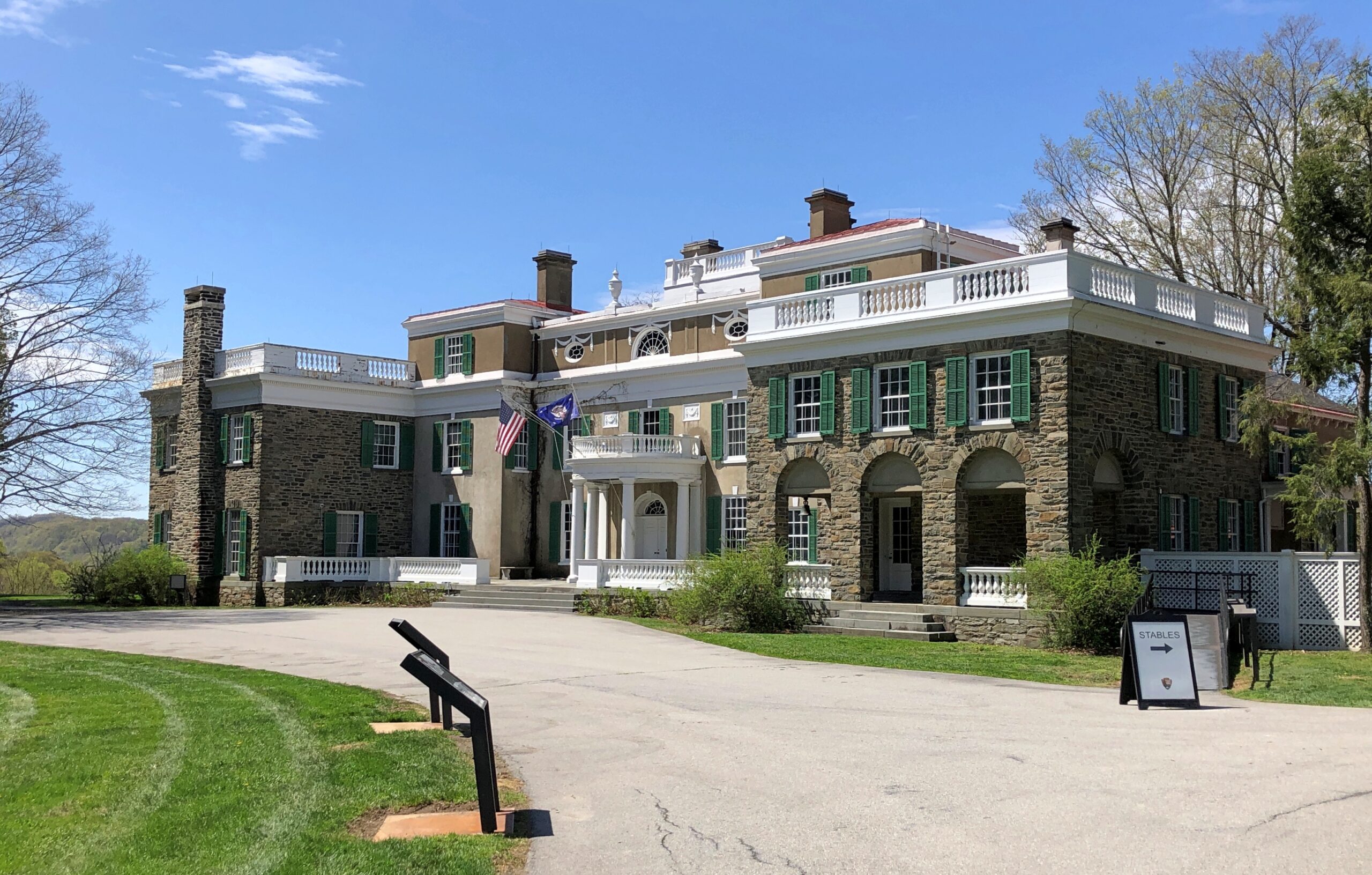
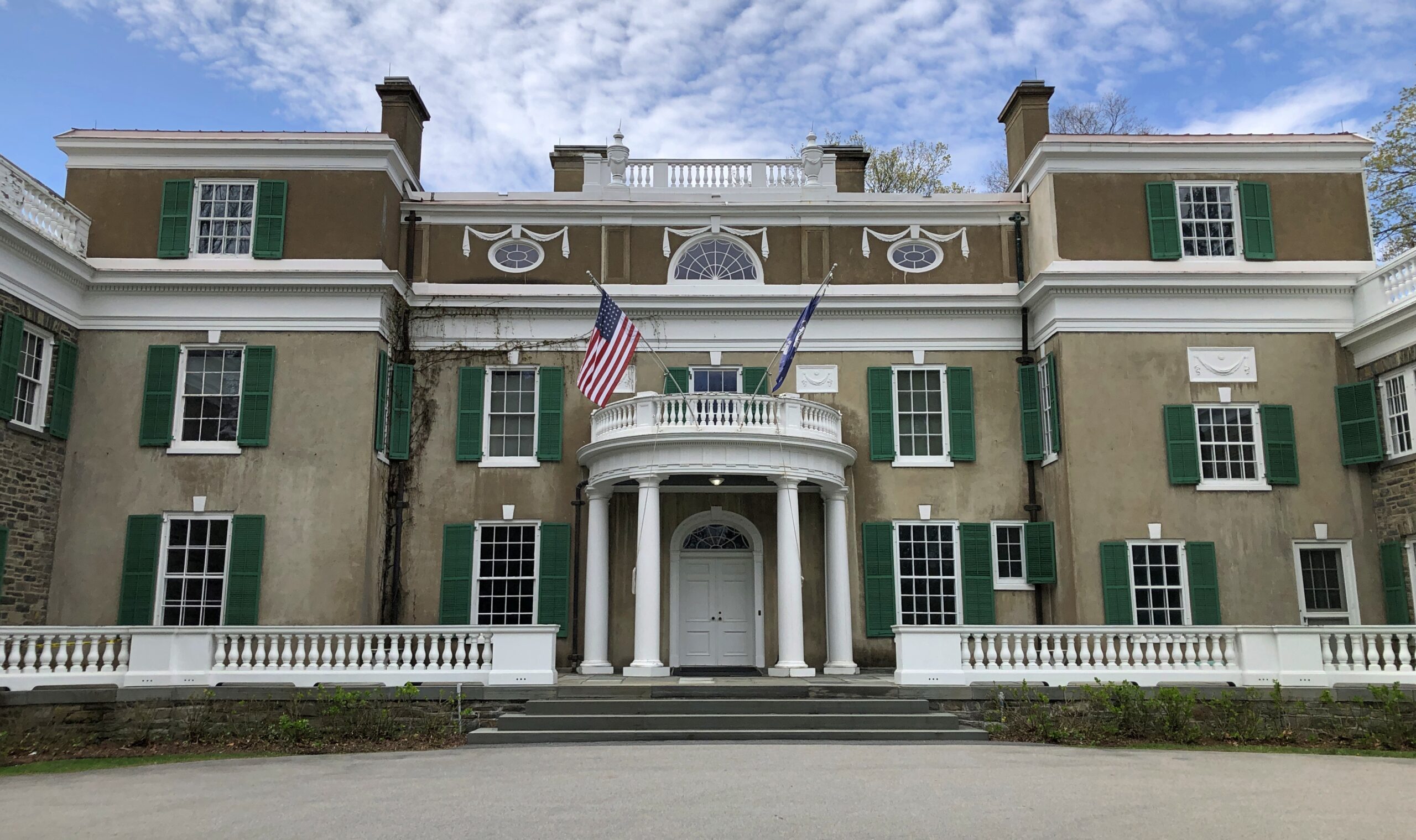
The Home of Franklin D. Roosevelt National Historic Site, which is the official National Park Service designation for the place, includes the mansion (Springwood, by name) and grounds, but also a presidential museum and library. The mansion is a mansion without being a Gilded Age exercise in ostentation.
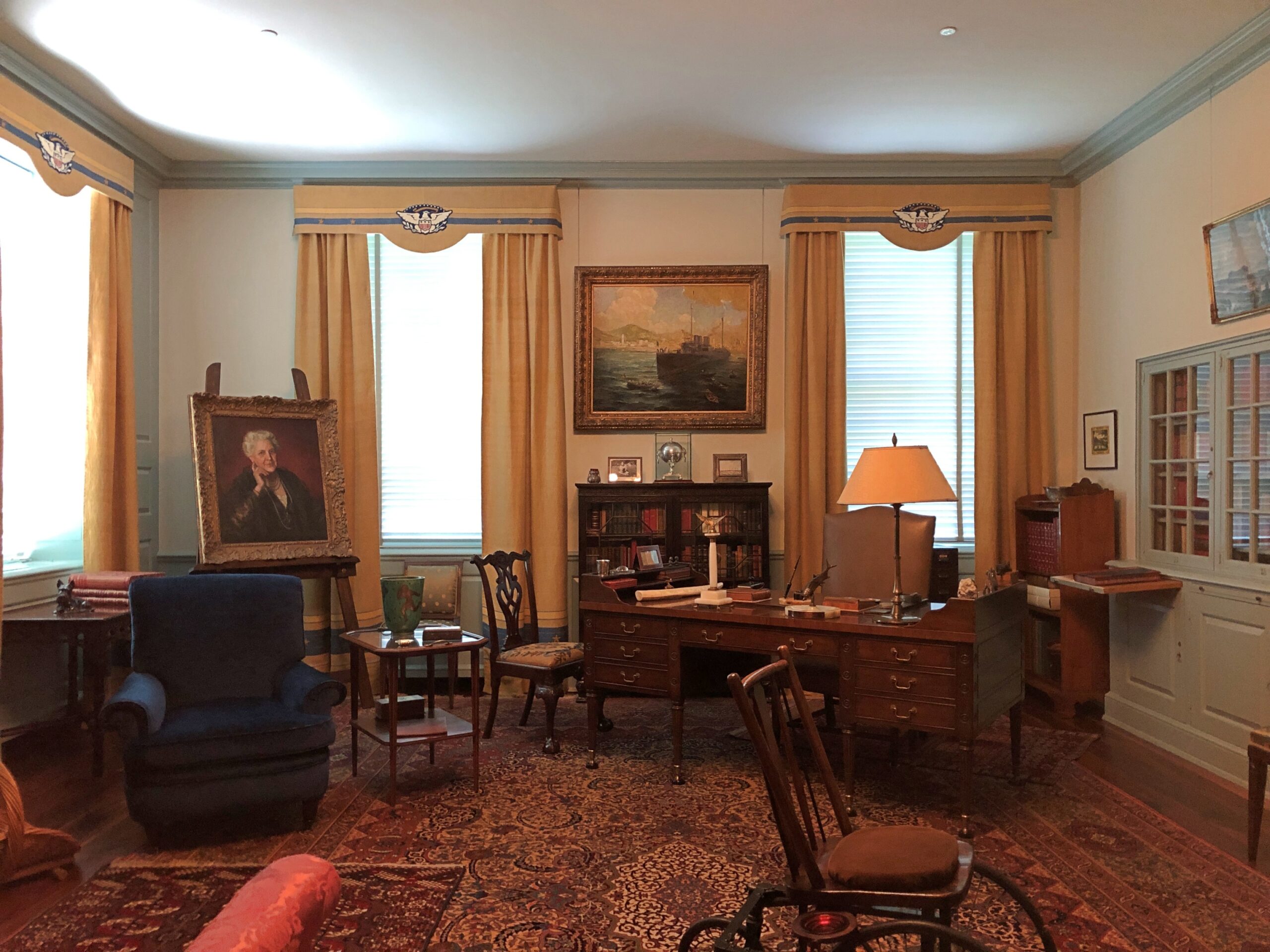
It’s a big place, lots of rooms and some elegant décor (and stuffed birds), all original artifacts, so there’s no doubt it was a wealthy household. Still, even though it’s literally a museum in our time, in FDR’s time I doubt it felt like a museum at all, unlike some Gilded Age exercises in ostentation – and I’m thinking of the Vanderbilt mansion nearby, more about which later.
Best not to jump to too many conclusions based on the vibe of the mansion, but it does dovetail with the generally understood notion that FDR was self-assured and at ease in the upper class. No need for him to show off, any more than James and Sara did.
Speaking of James and Sara.
Note: the tour guide – you need to be on a tour to see the inside of Springwood – was perfectly forthcoming about the well-known fact (to historians) that the Delano fortune was built on opium.
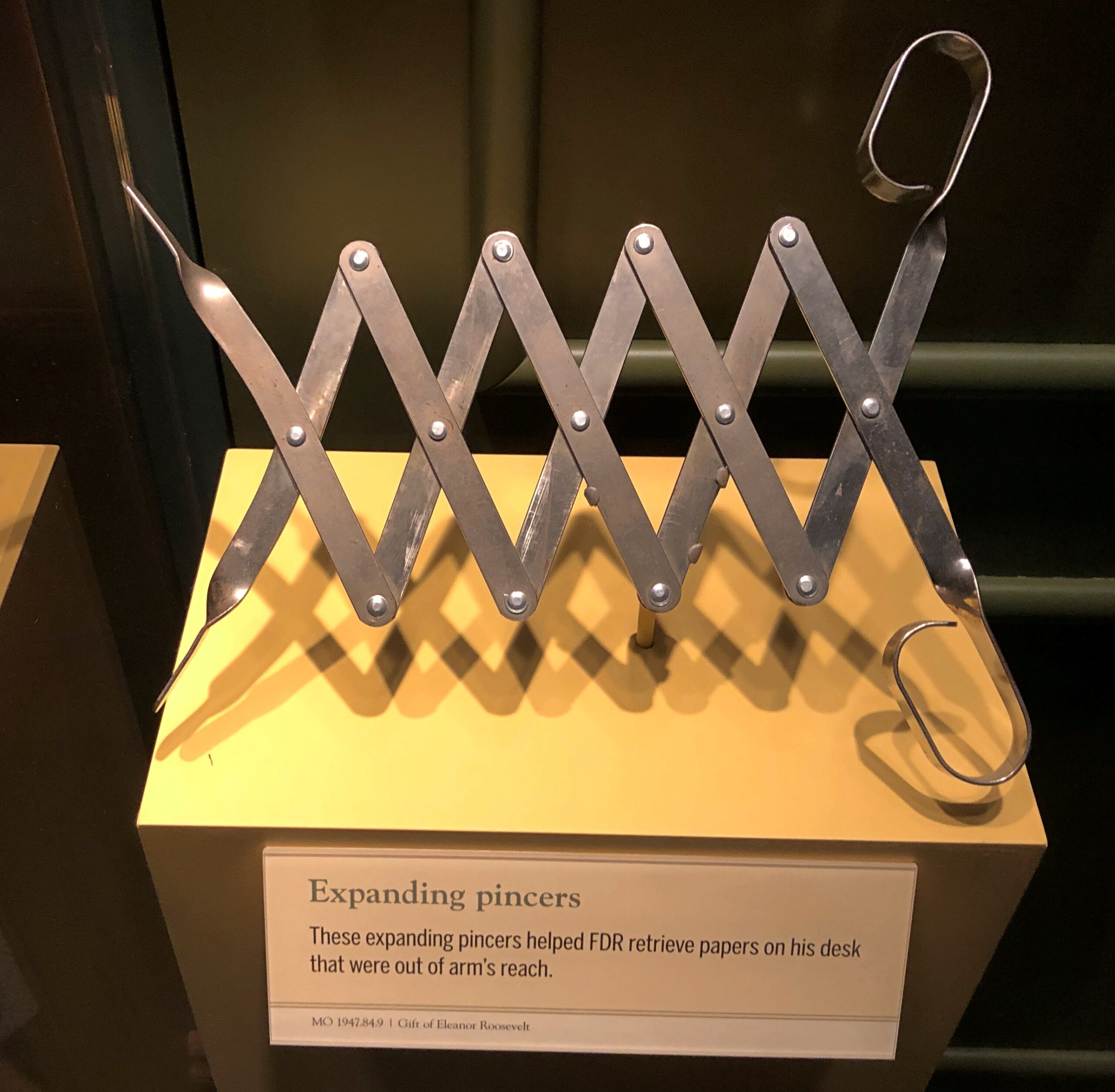
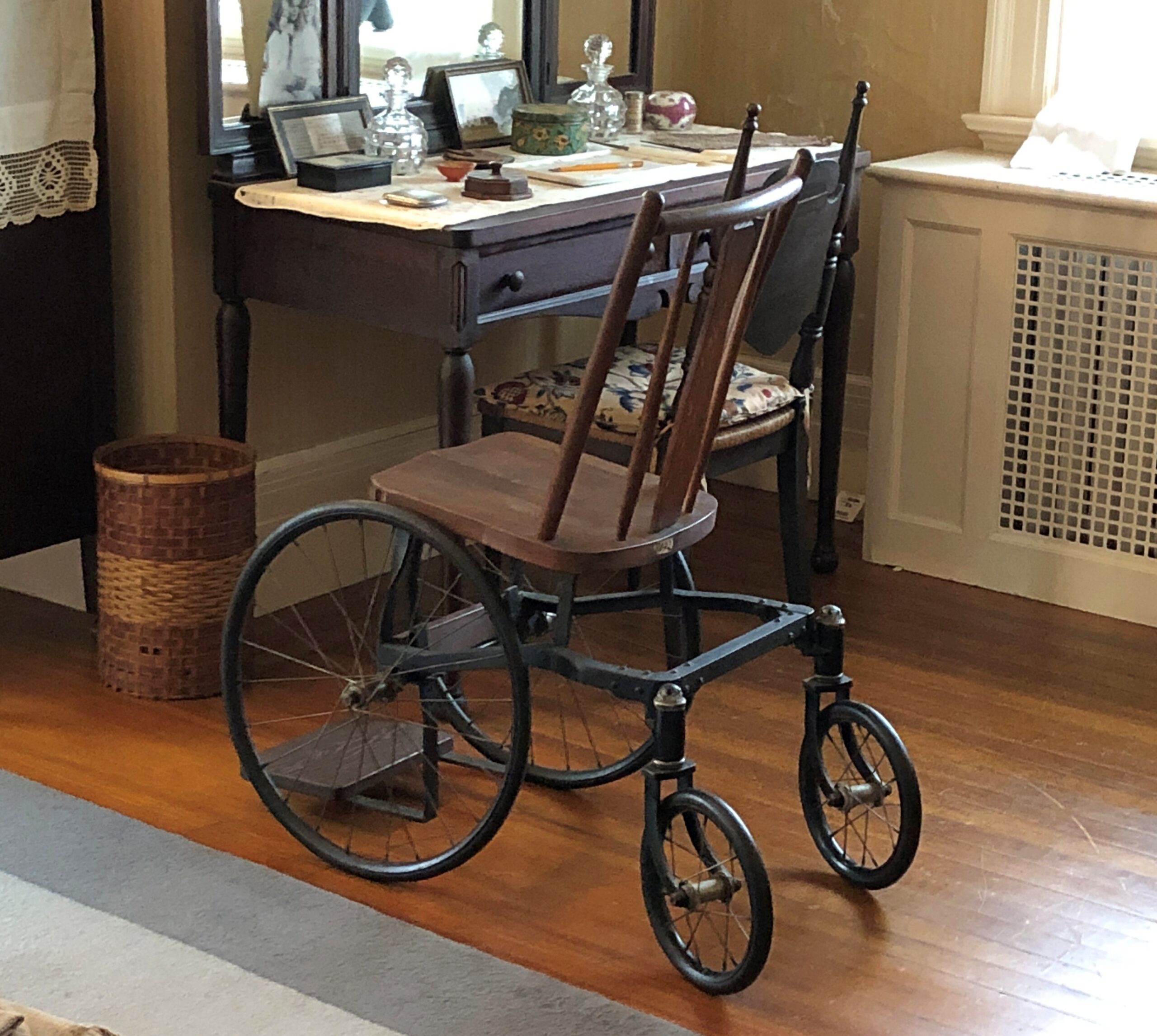
Other artifacts of note included some of the president’s coping mechanisms — literal mechanisms — for his handicap.
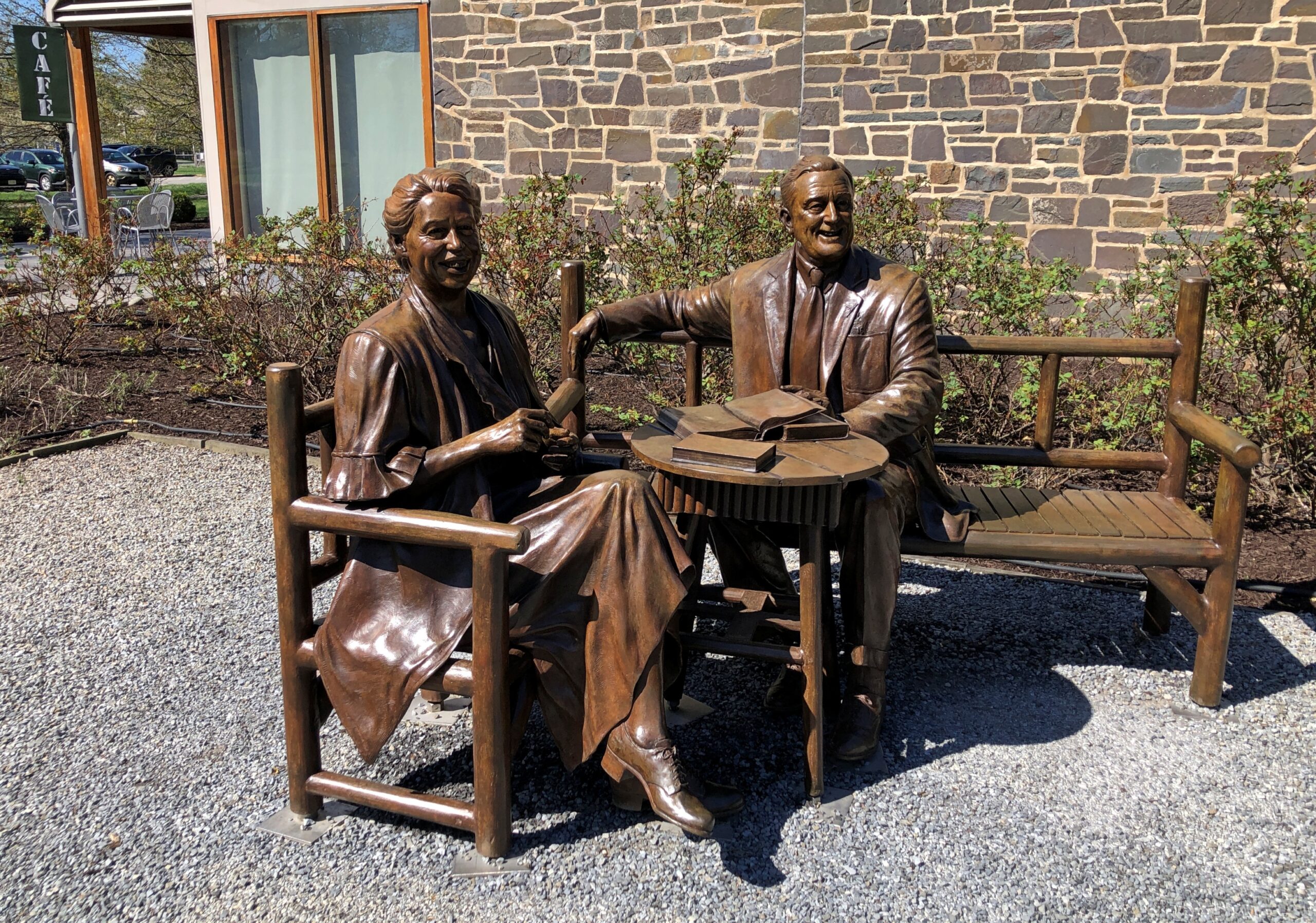
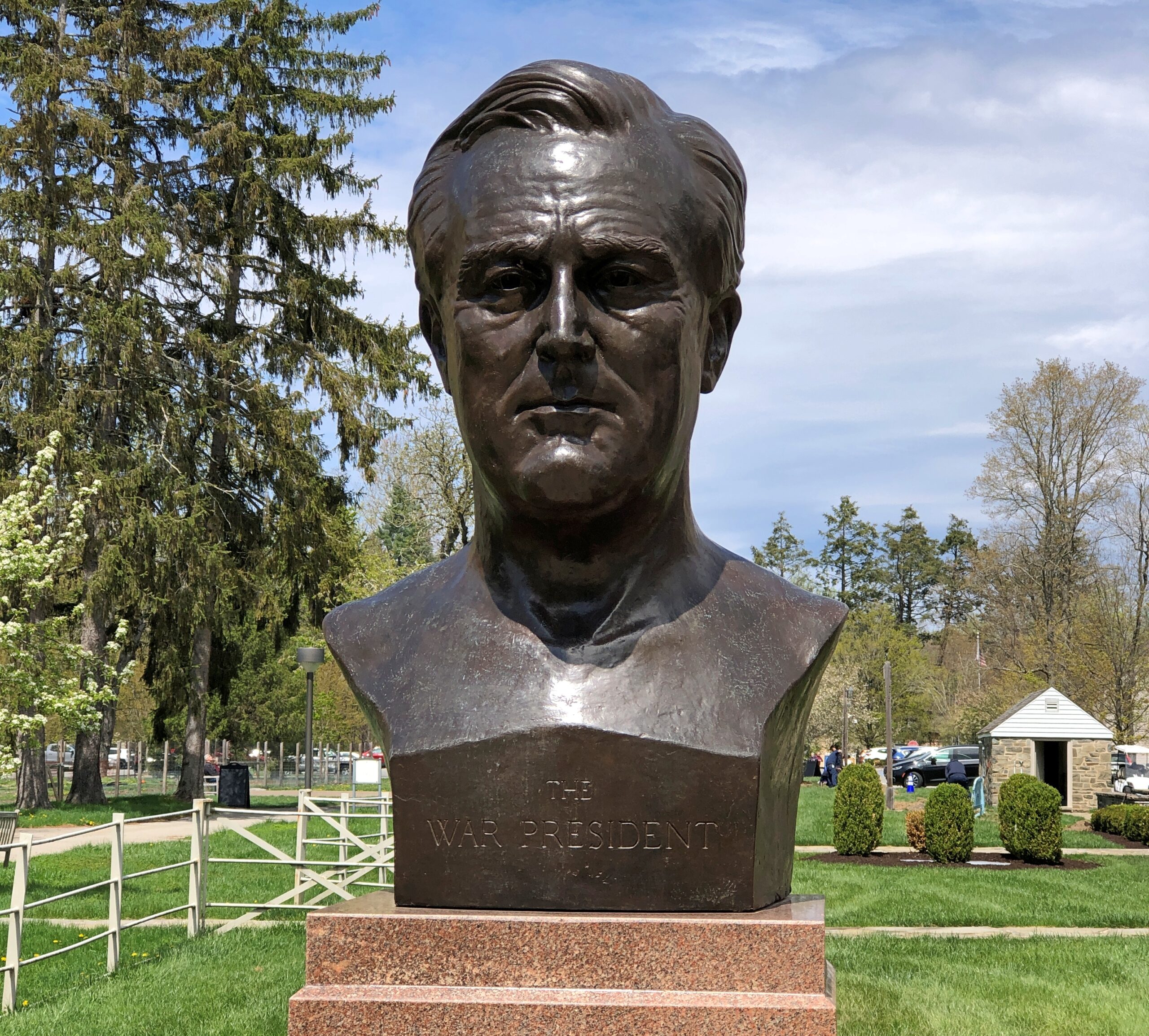
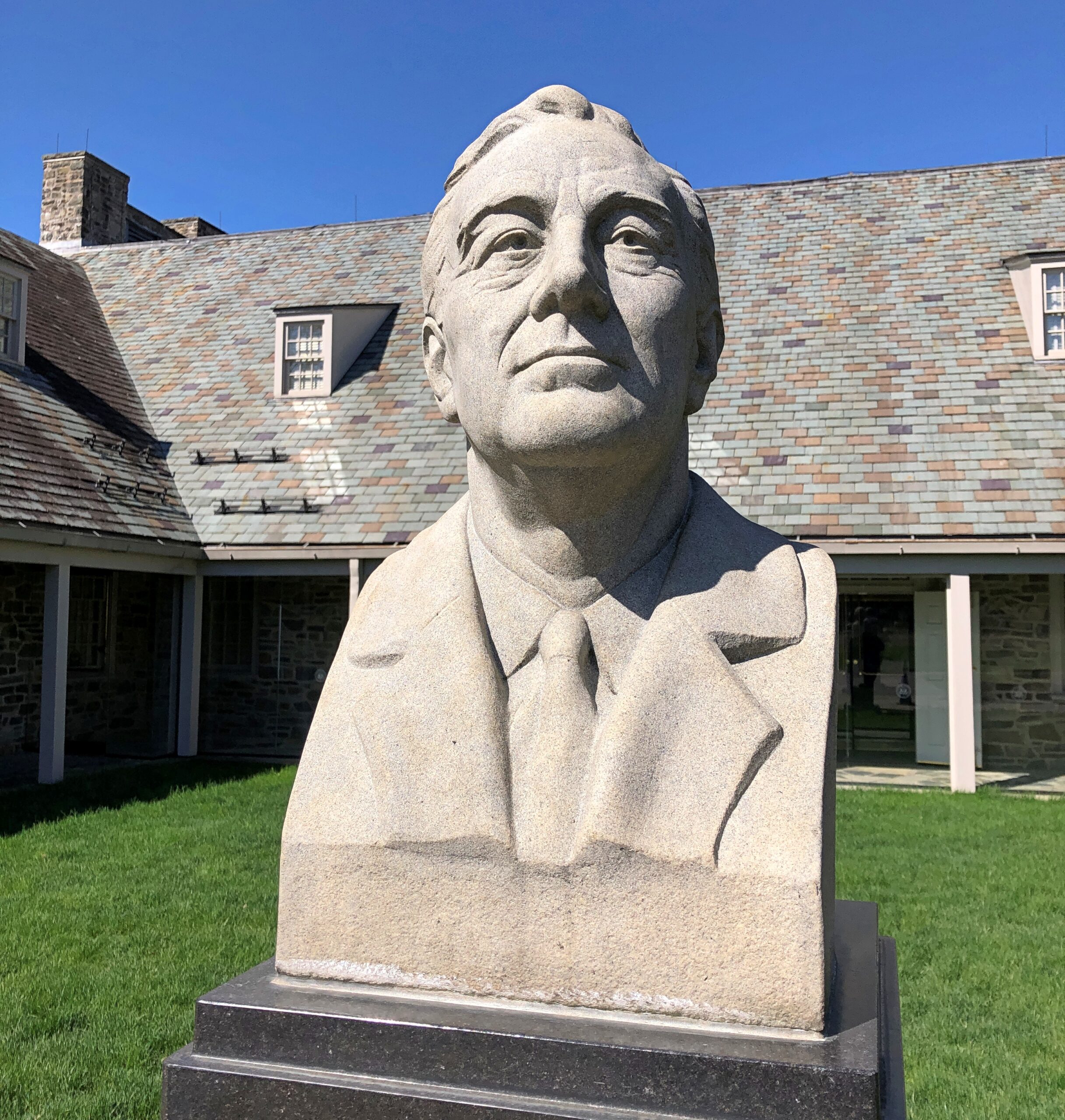
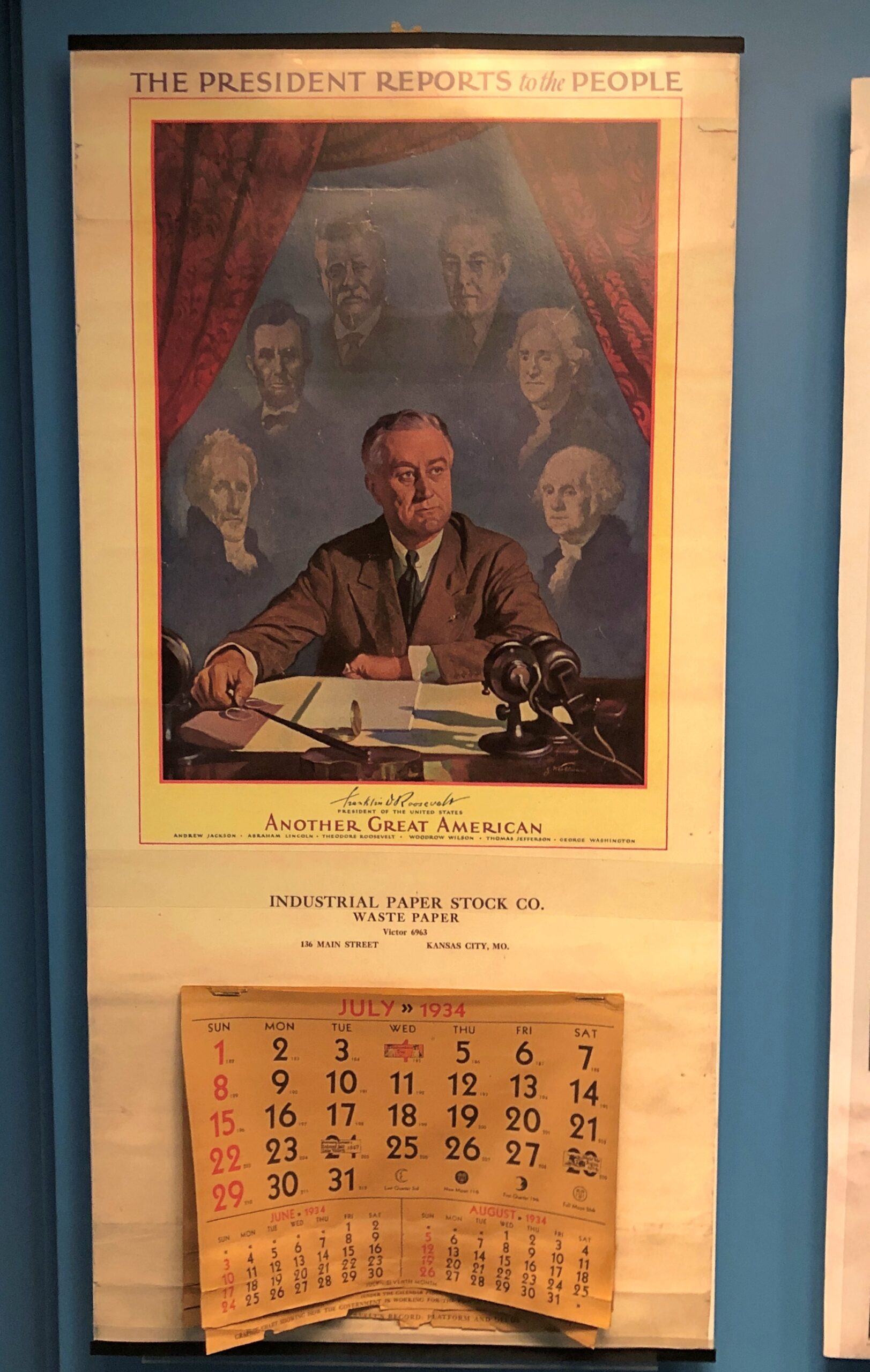
The historic site also includes many, many depictions of FDR, as one would expect. Such as Franklin and Eleanor in bronze. Or just Franklin in bronze, or other materials.
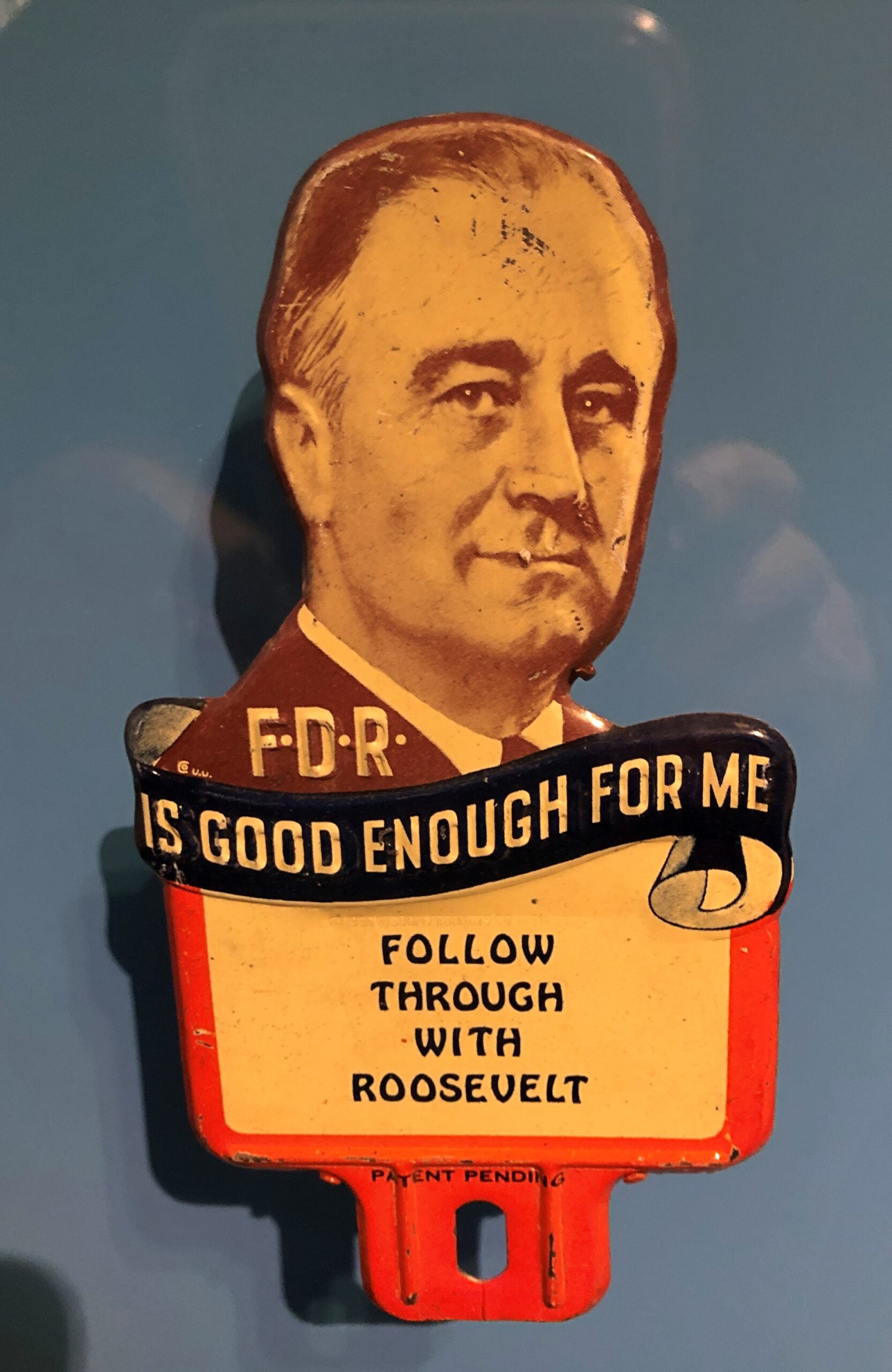
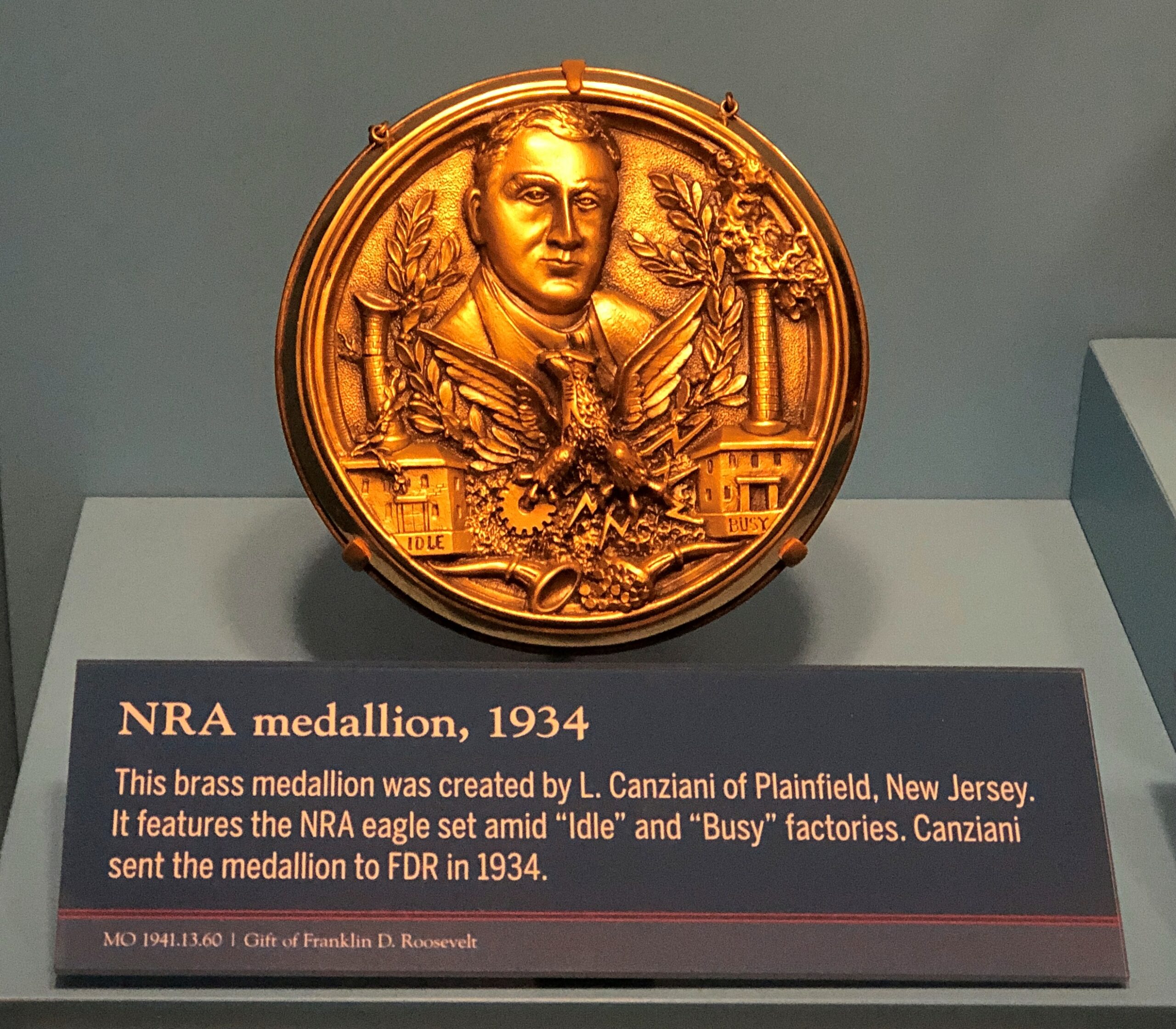
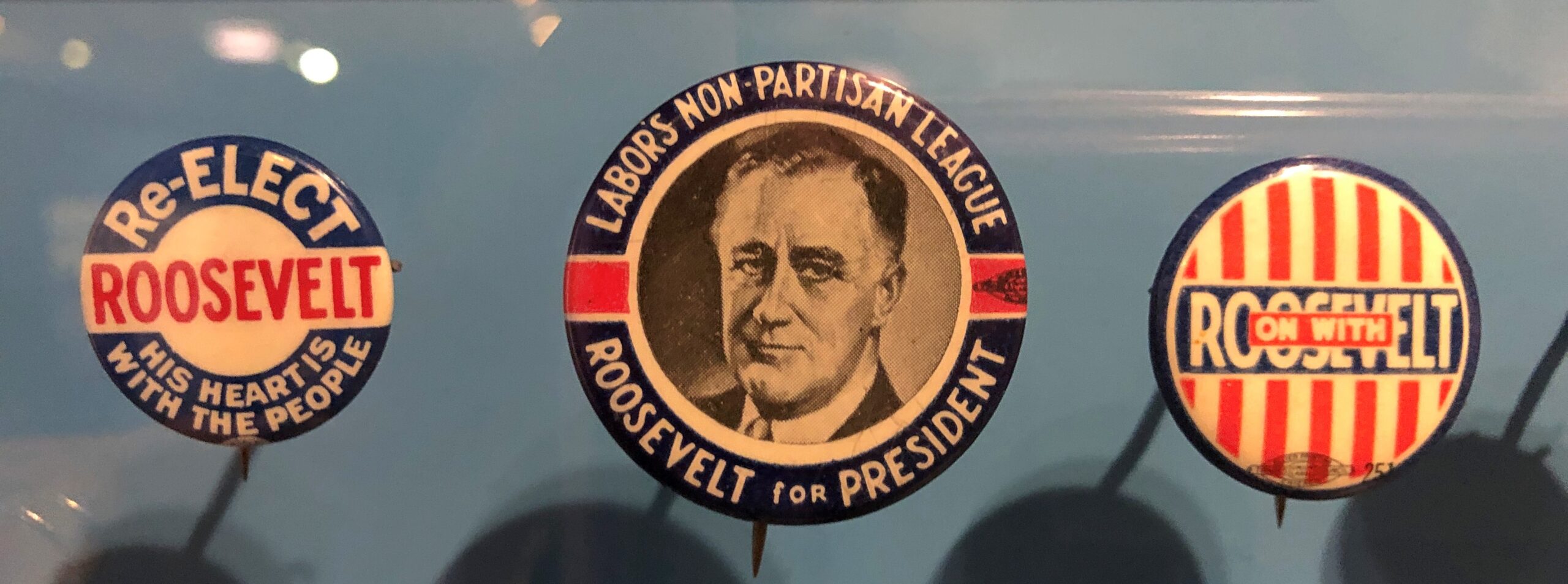
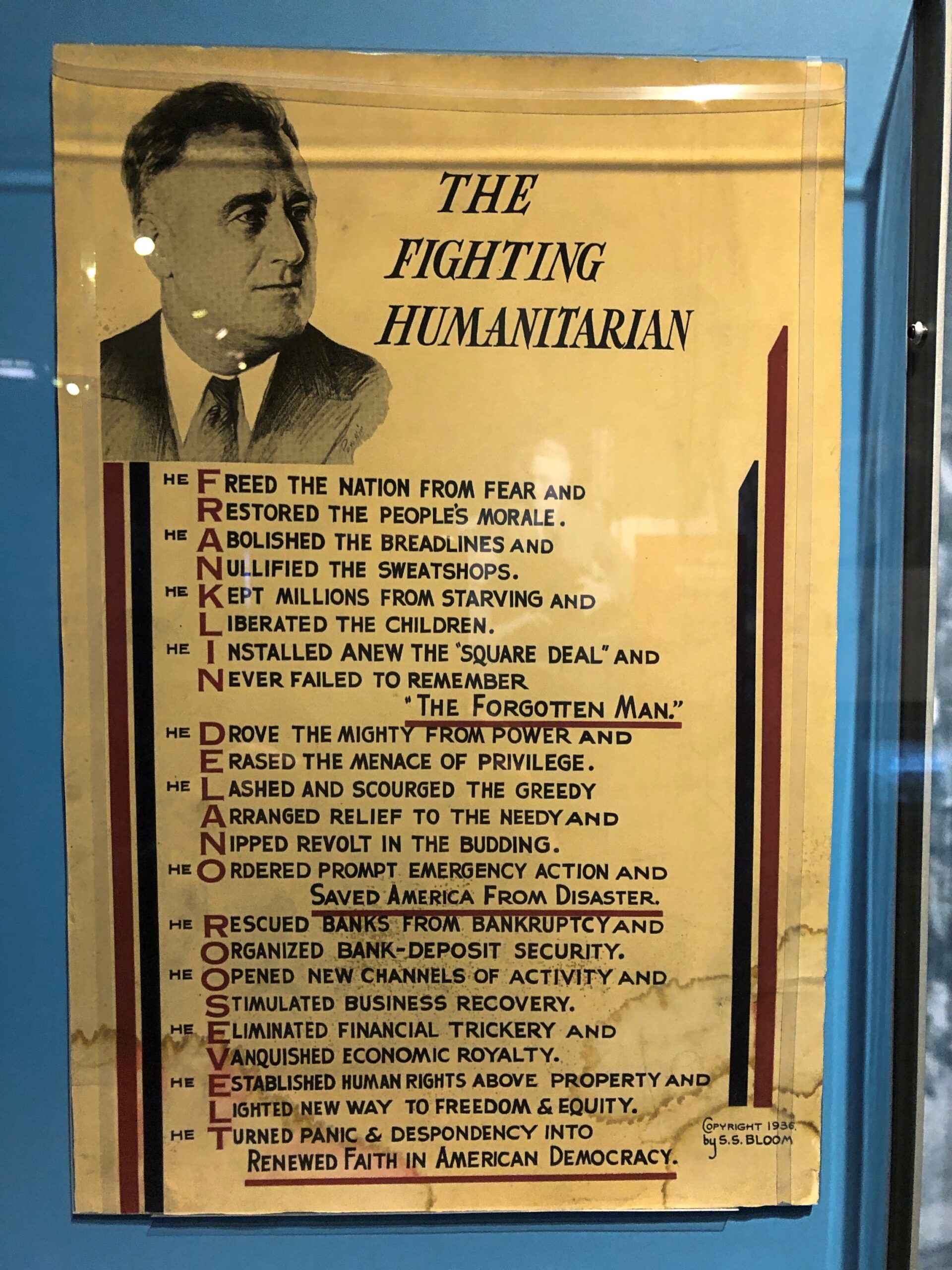
Campaign material and other laudatory items are well represented in the museum.
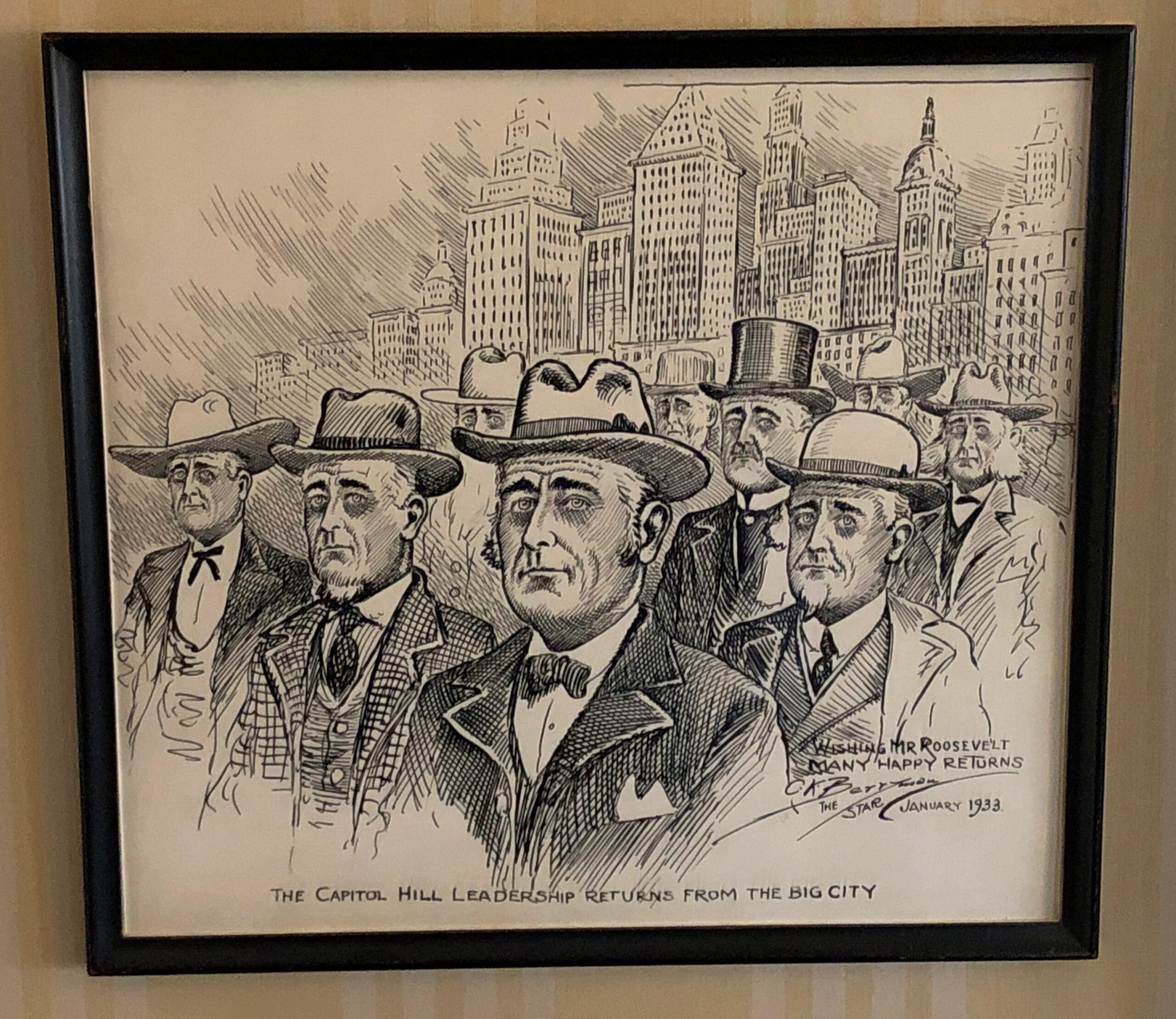
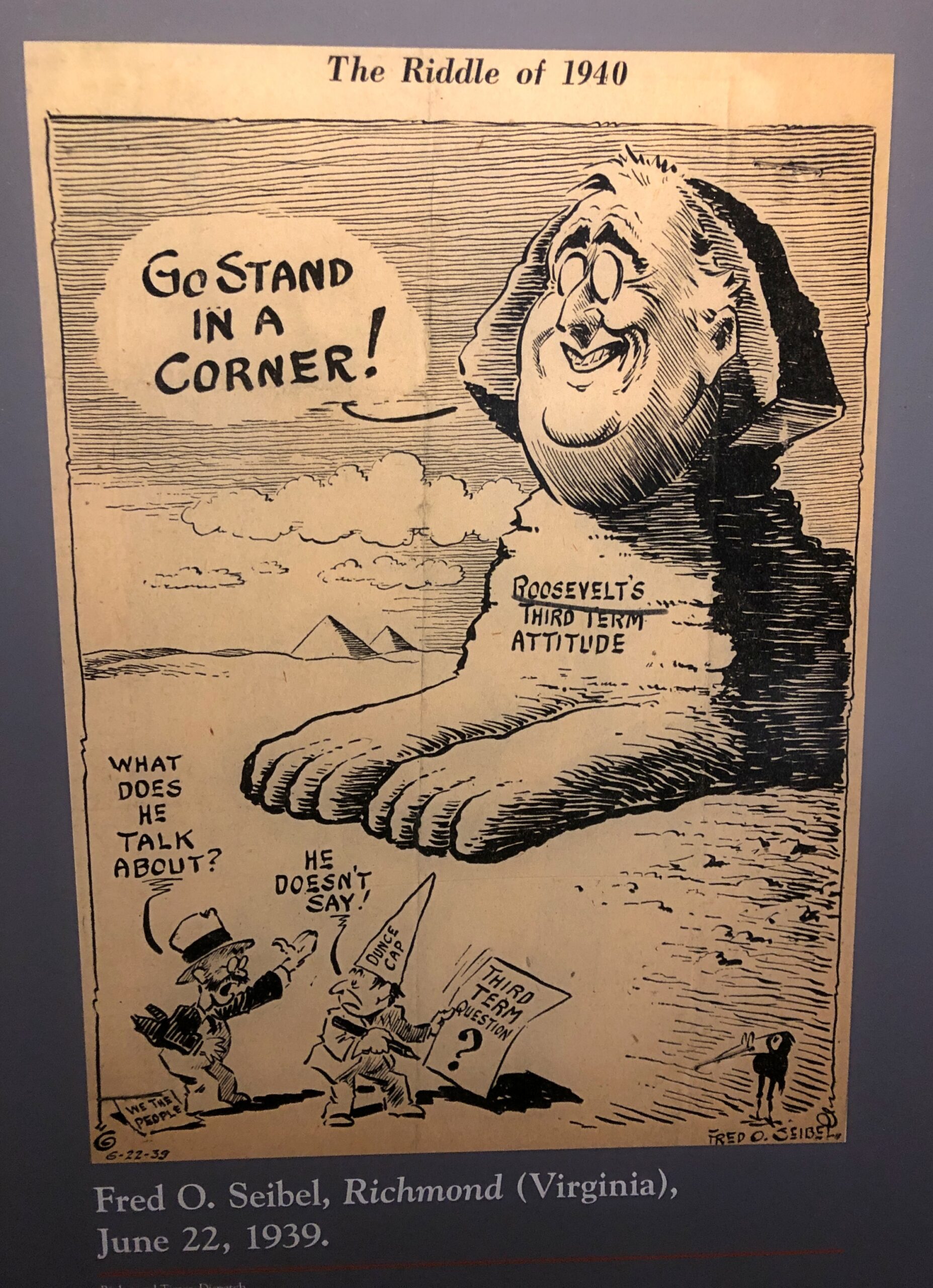
Editorial cartoons. The president as a sphinx was especially amusing.
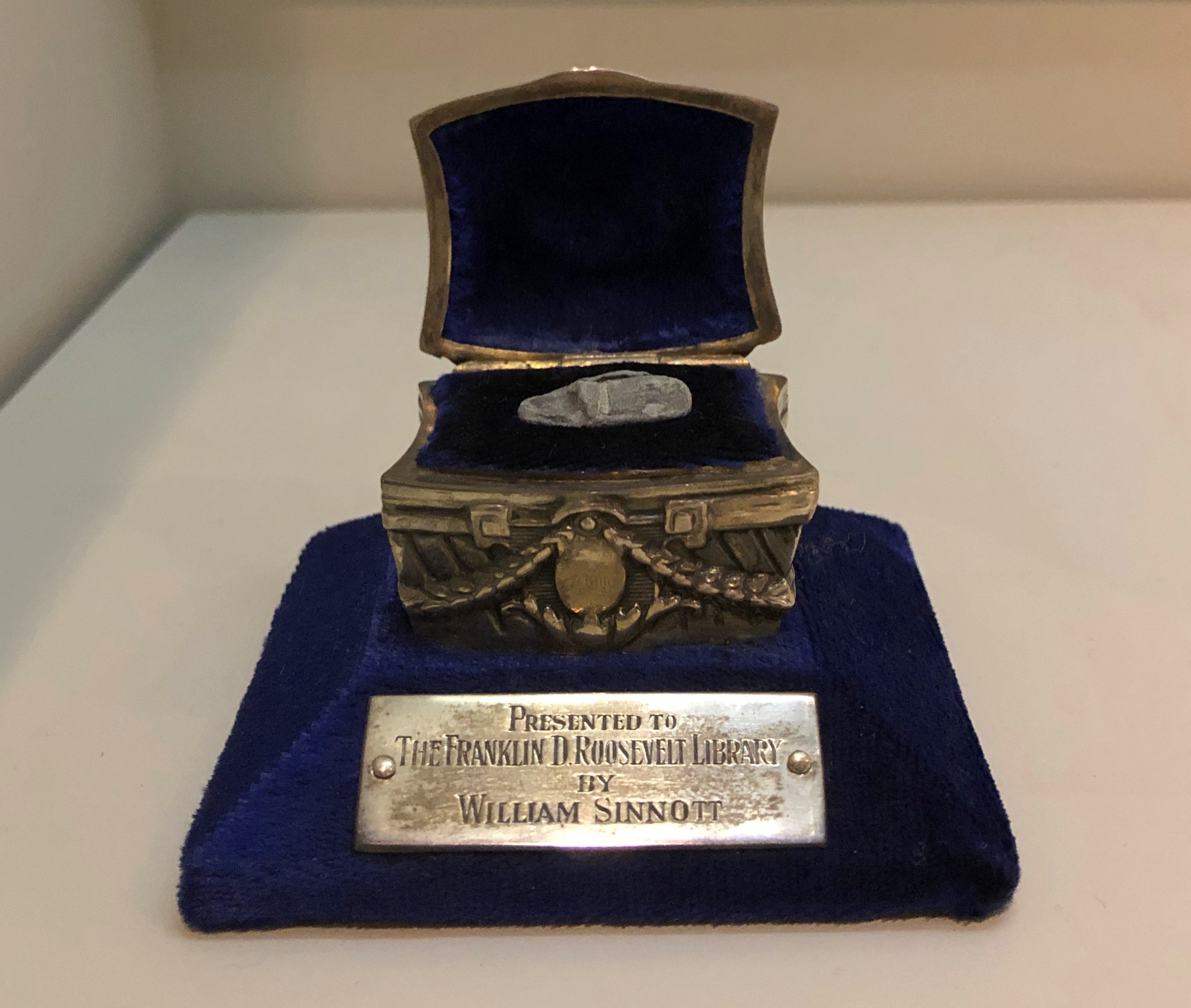
A chilling artifact: a fragment of a slug meant for FDR, fired at him on February 15, 1933 by Guiseppe Zangara.
“One of the wounded was William Sinnott, a detective who had frequently acted as Roosevelt’s bodyguard in New York City,” says In Roosevelt History. “Sinnott had just moved to Miami earlier that week when he was called to assist FDR’s security staff.
“The bullet fragment pictured above was removed from Mr. Sinnott’s wounded head. Ten other fragments from the bullet that struck him remained in his body. When visiting Sinnott in the hospital, FDR said, ‘You couldn’t hurt him, bullets just bounced off his skull.’ Mr. Sinnott was awarded the Congressional Gold Medal in 1940 in recognition of his service that day. In 1946, Mr. and Mrs. Sinnott donated the bullet fragment in this specially designed presentation case made by Lambert Brothers Jewelers to the FDR Library.”
Historians don’t generally adhere to the Great Man school of history any more, but it’s nevertheless a fertile source of speculation to imagine how different things might be for the nation and the world had it been Roosevelt and not Anton Cermak who died in 1933.
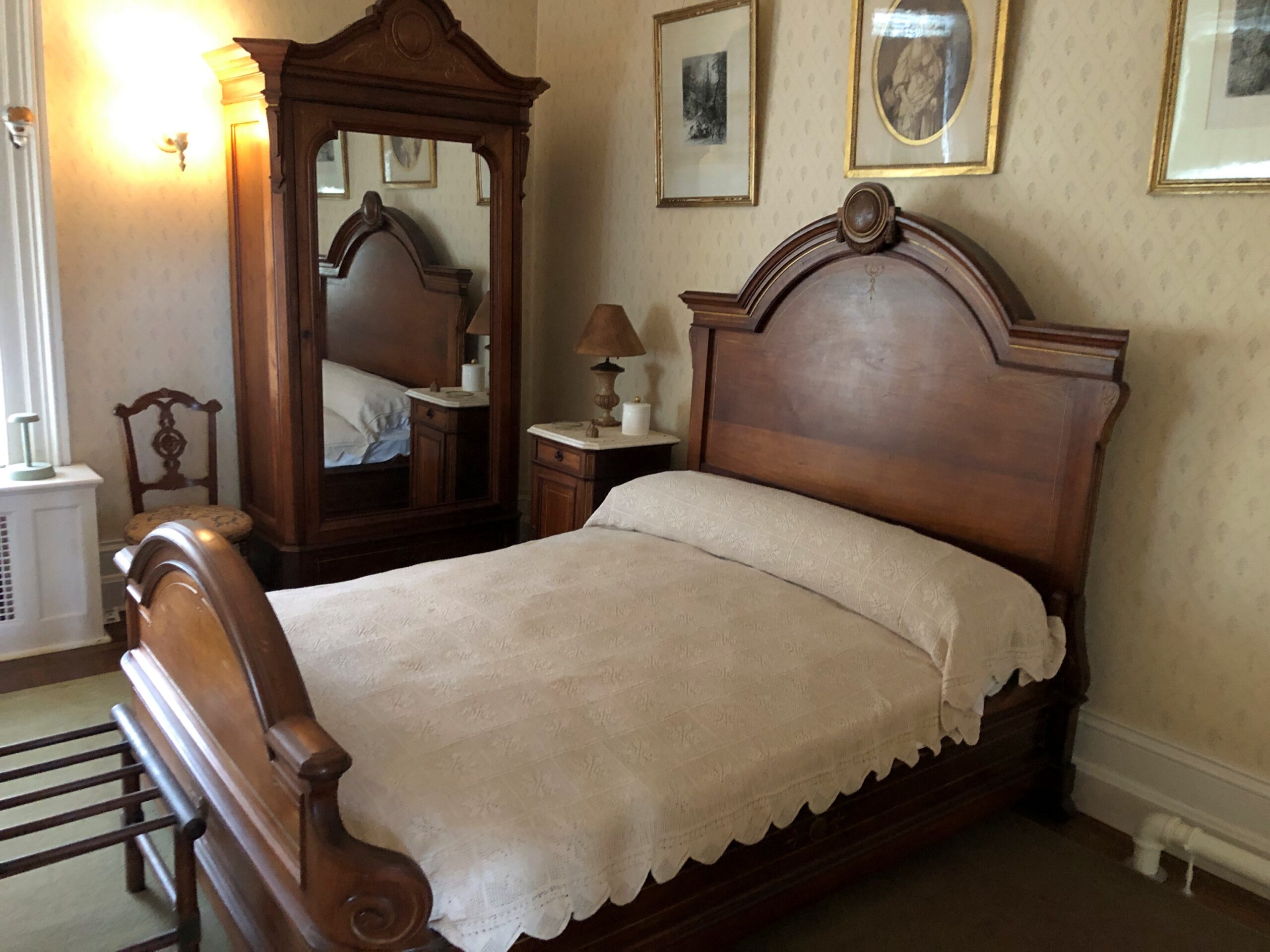
Though he eventually died away from home, in Georgia — ah, another presidential site I must see — FDR came full circle to Hyde Park. First, the bed in which he was born.
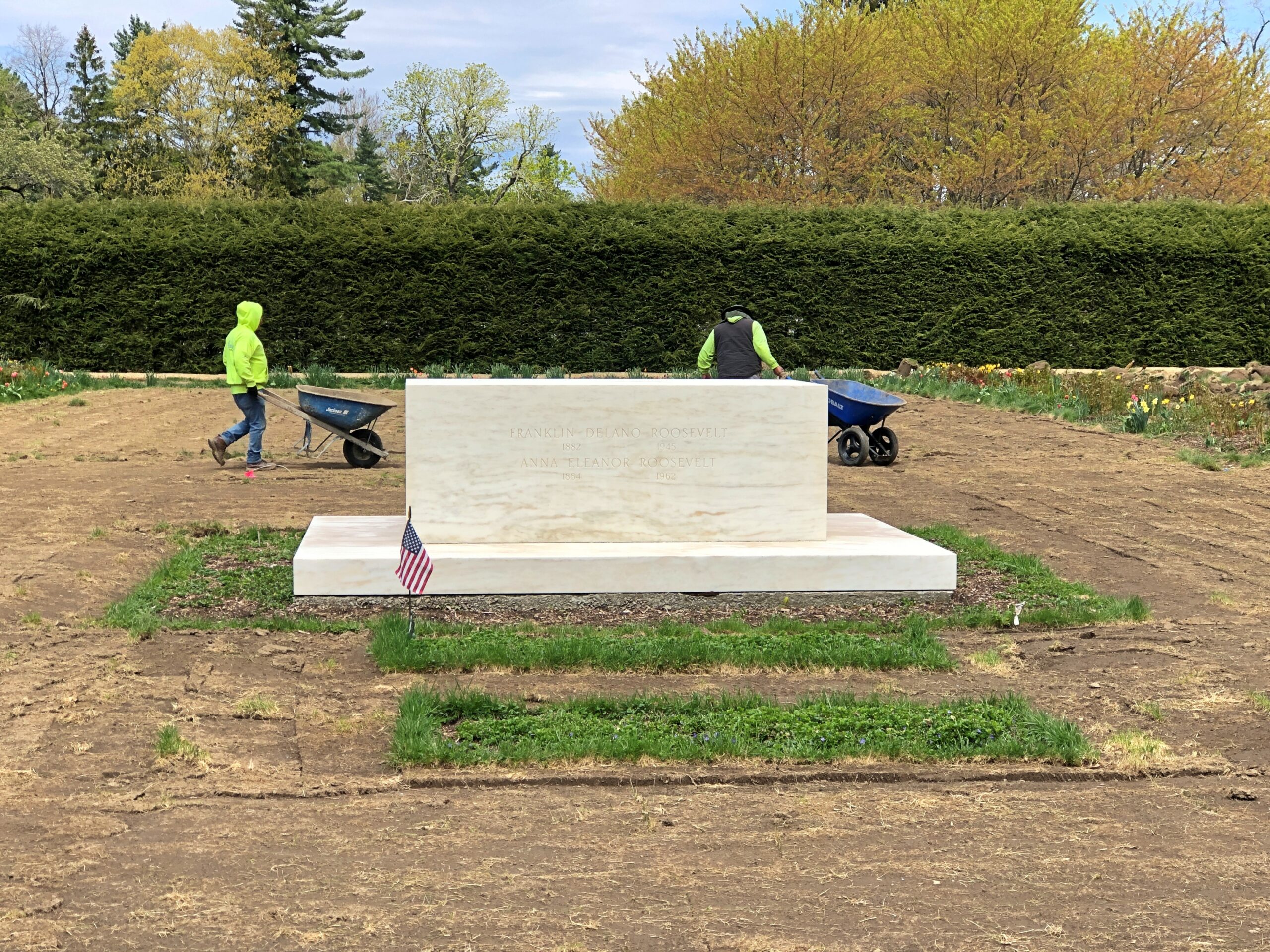
Ultimately, his final resting place is on the grounds, along with Eleanor. Gardening had just begun when I paid my respects.
I heard by chance that the Spurs are in the playoffs, again. NBA games are on the list of things I don’t care about, but this is the Spurs we’re taking about, so Go Spurs. I’m old enough to remember when pro sports were considered a modest-priced entertainment, which would have been the days when the Spurs huffed along in the ABA. When that league went under, that paved the way for the basketball monopoly we now enjoy.
I remember a print ad for the Spurs from their early NBA days. A basketball, mostly in shade, set against a pitch black background; a small but bright light is emerging from a crack in the basketball; the tag line says, In the Arena, Everyone Can Hear You Scream. Brilliant.
Here we go again with the incongruous Massachusetts place names: “The village of Shelburne Falls is located partly in Shelburne and neighboring Buckland,” notes Wiki.
So I suppose I visited Shelburne Falls the whole time when I visited Shelburne and walked across a bridge to Buckland, and then back to Shelburne on a different bridge.
Interesting that a town in the United States is named for Lord Shelburne, a British prime minister when the Revolution was still ongoing. On the other hand, it was on his short watch – at the end of that war – when the British government said, enough already, be independent if you want it so much. So there ought to be something named for him on this side of the Atlantic (and there’s another in Vermont, besides one in Ontario).
The Bridge of Flowers
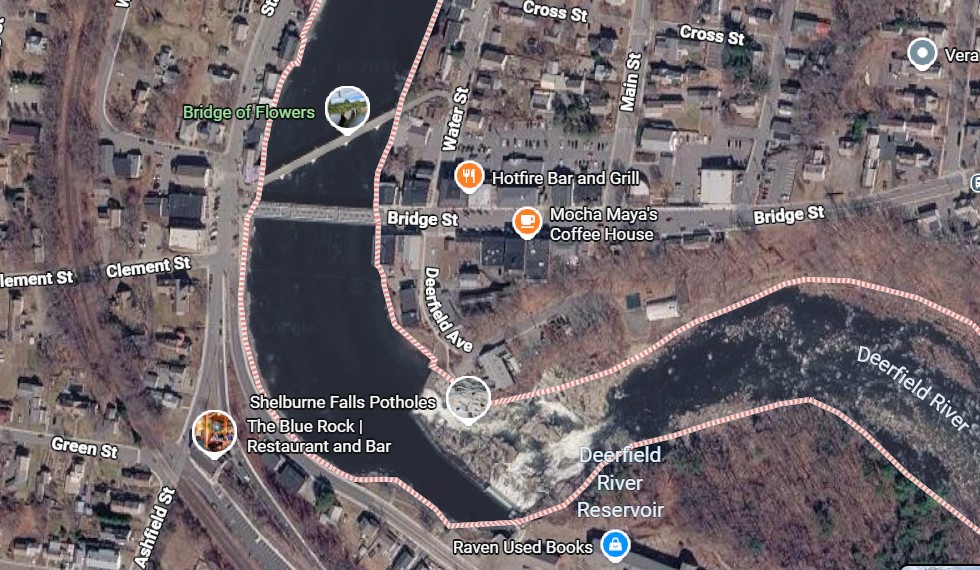
I had good weather for my return to the Midwest from the Northeast, beginning on a clear, warm day in Massachusetts. Large towns hang like pearls on Route 2, and while I would have made a selection of them to visit even in chillier weather — and spend time on foot in those towns — the spring warmth was one of those travel bonuses you can appreciate right away. Pop off Route 2 in Franklin County and you’re in Shelburne.
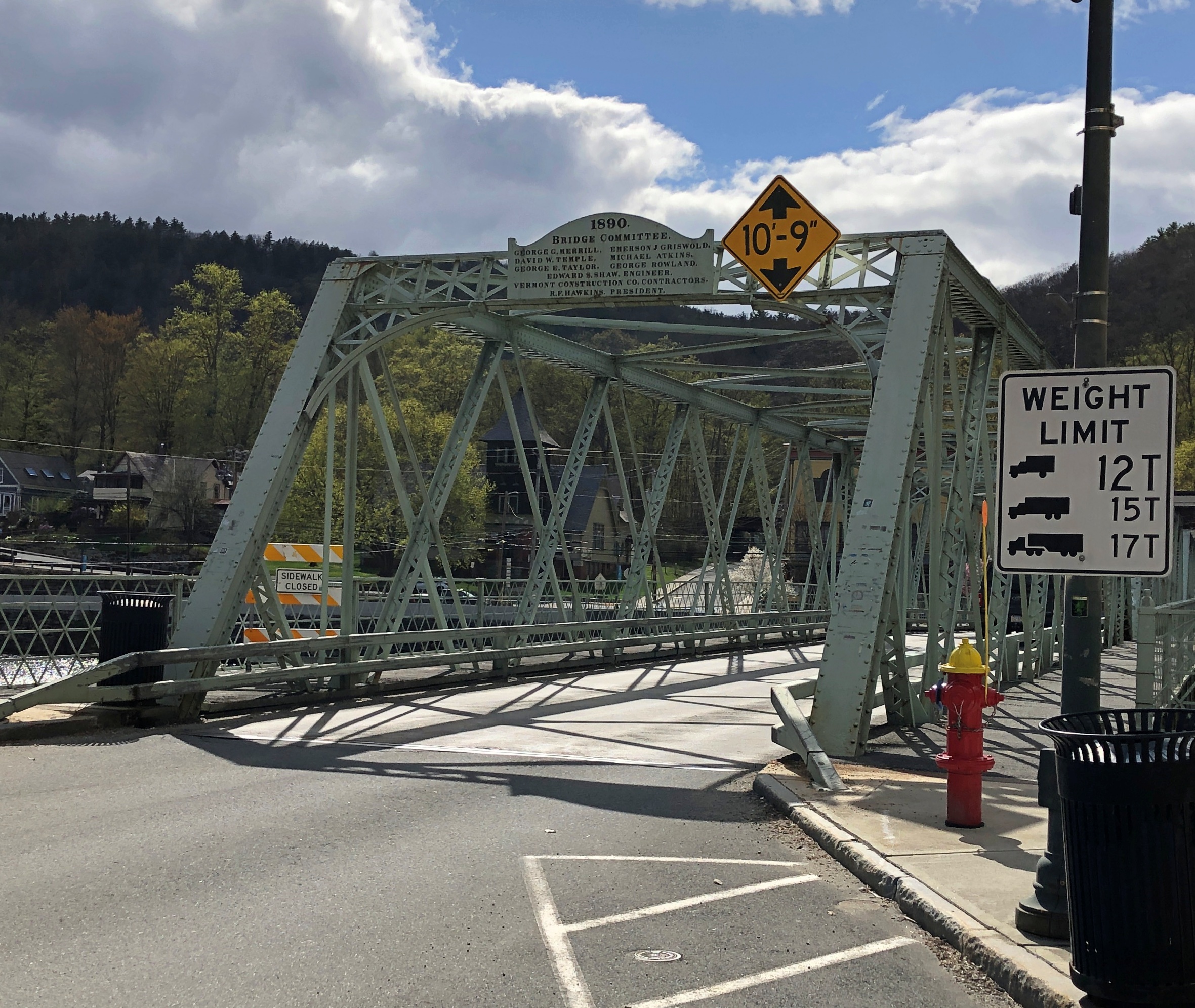
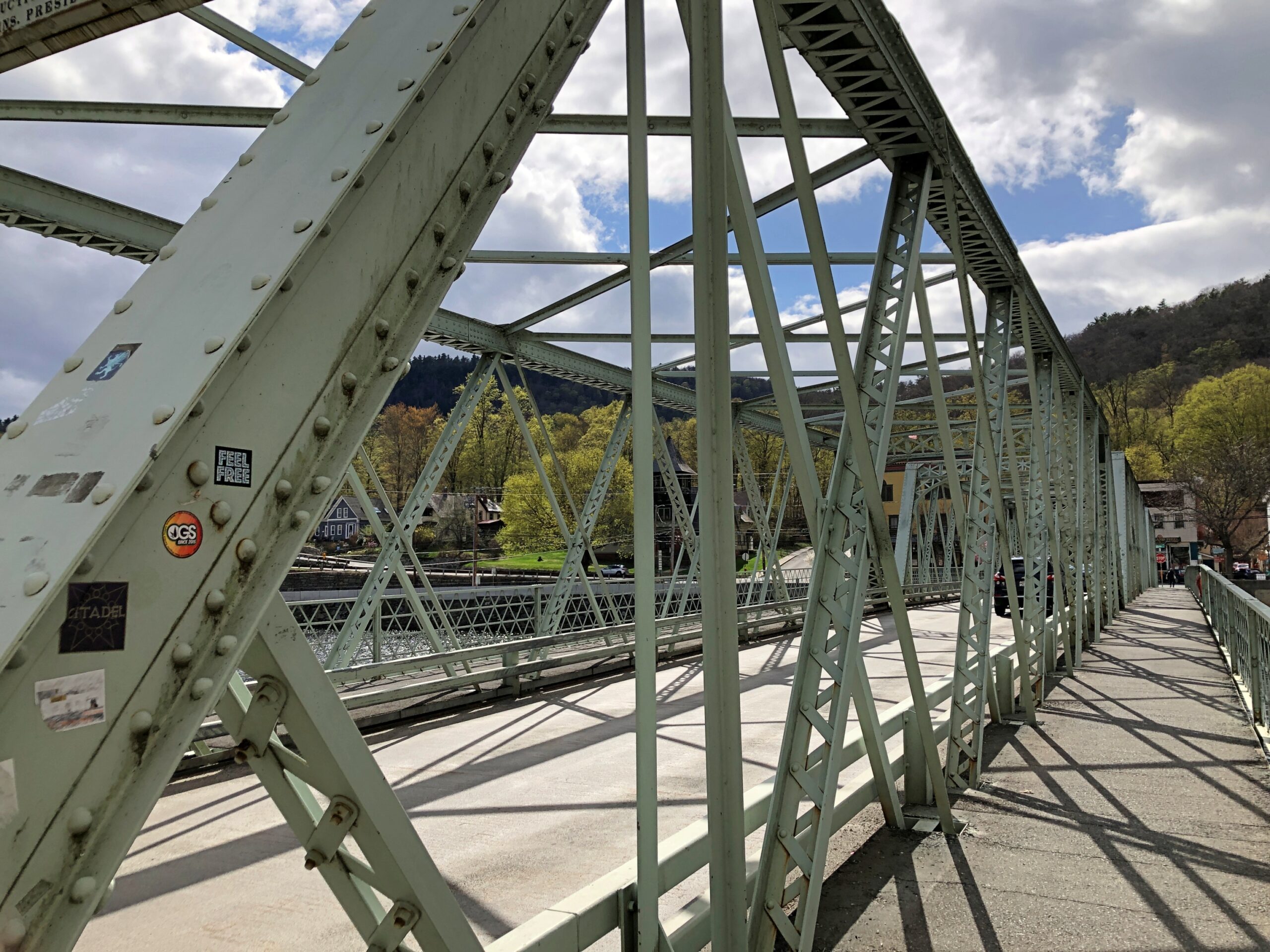
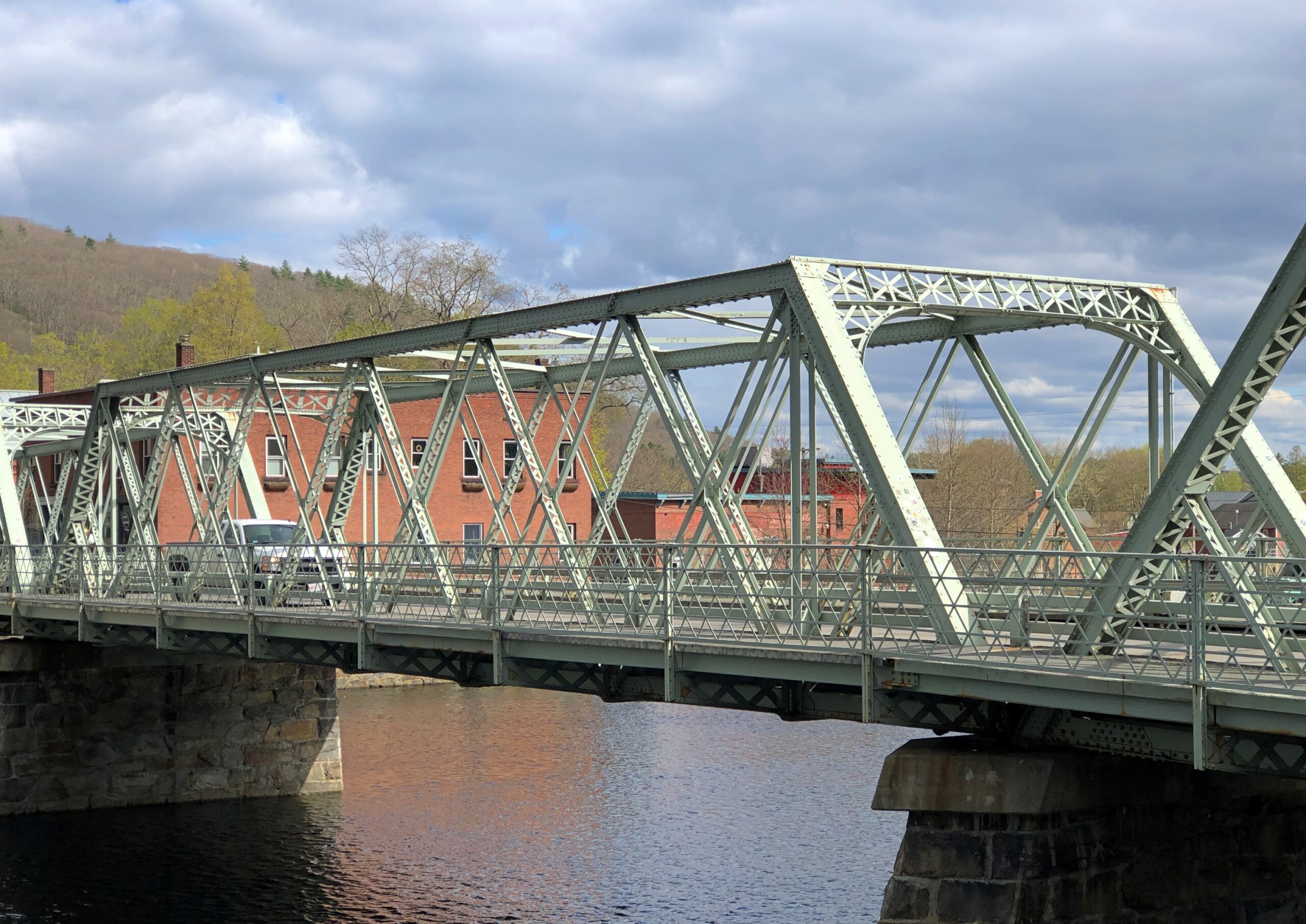
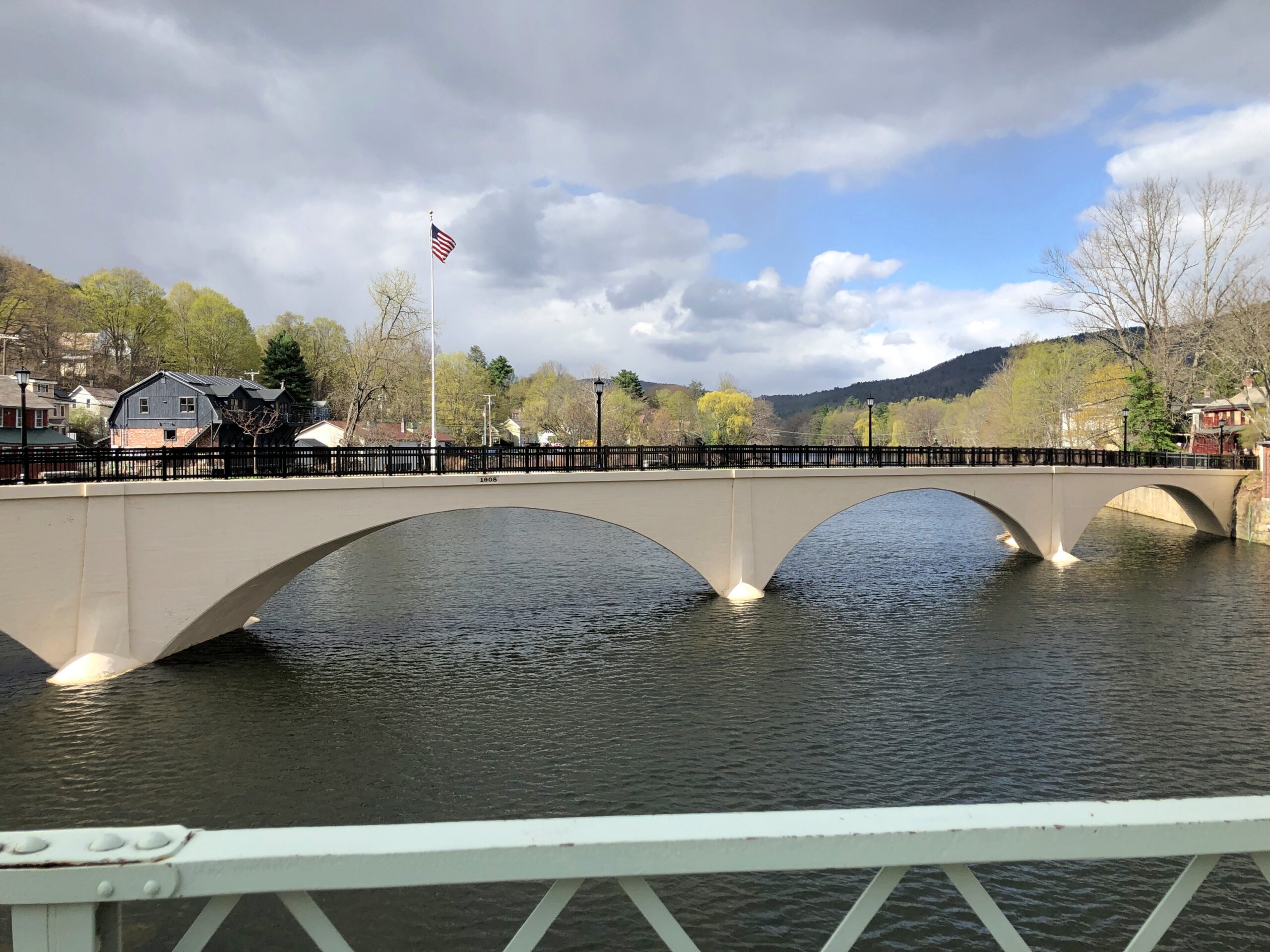
Shelbourne hugs the Deerfield River, so Shelbourne needs bridges. You can still drive across one erected in 1890, which the city fathers of the time signed like it was a work of art. As well they should have. Better, you can walk across the structure, which is known locally as the Iron Bridge. Bridge Street goes across it.
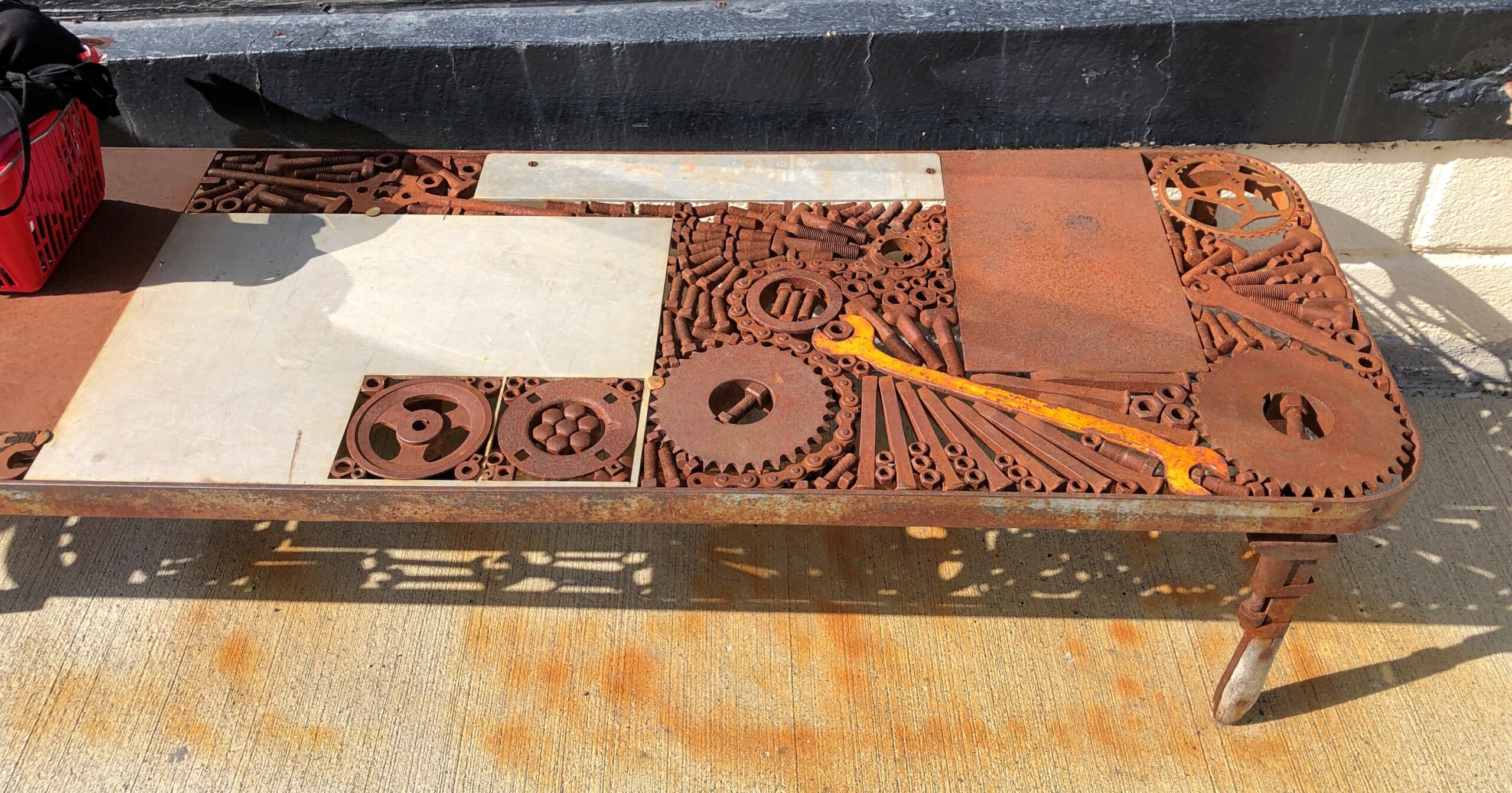
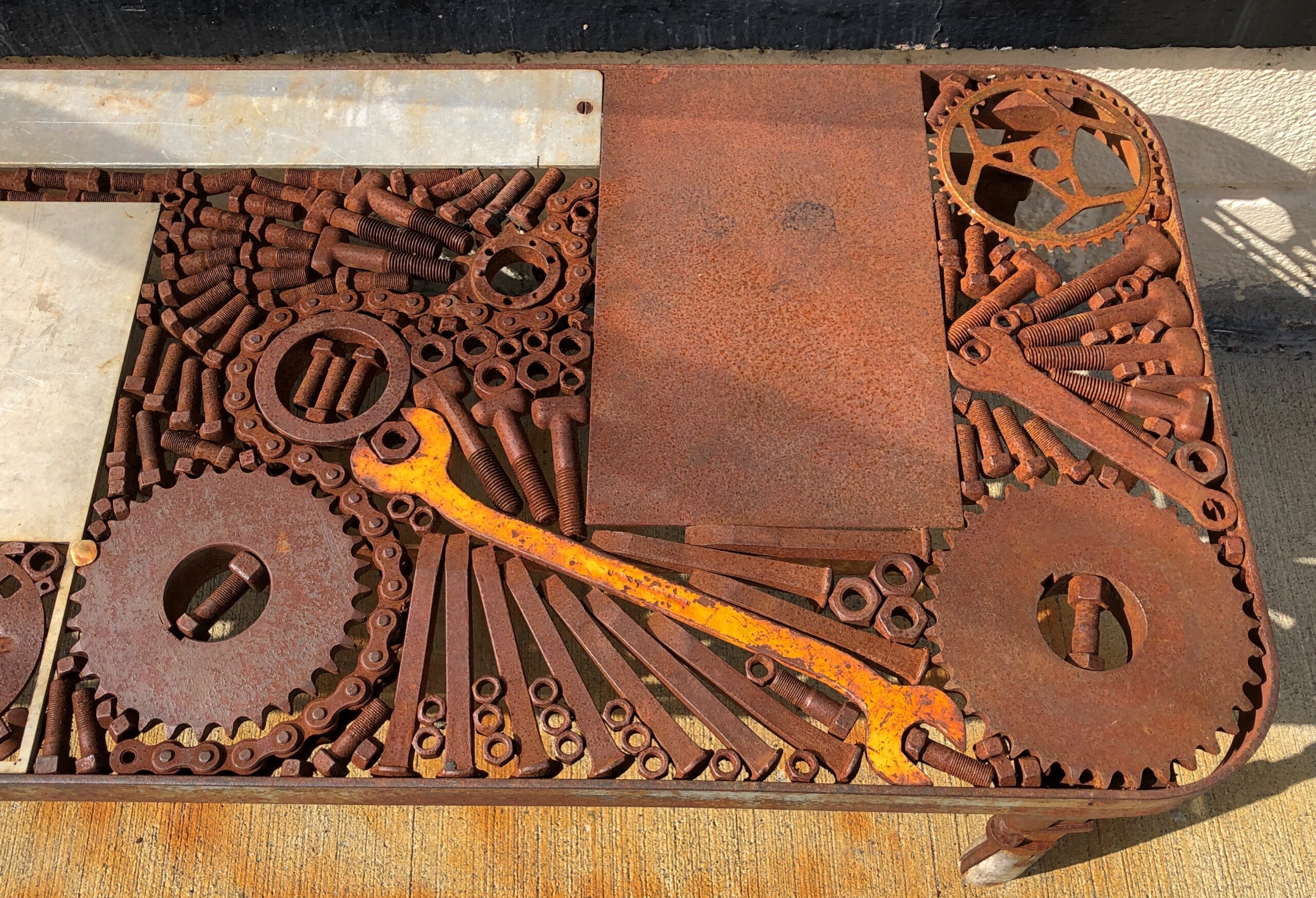
One of the more unusual metal benches I’ve encountered, just off the Shelburne entrance to the Iron Bridge. More iron. Yes, you can sit on it.
The Dearfield, major tributary of the Connecticut.
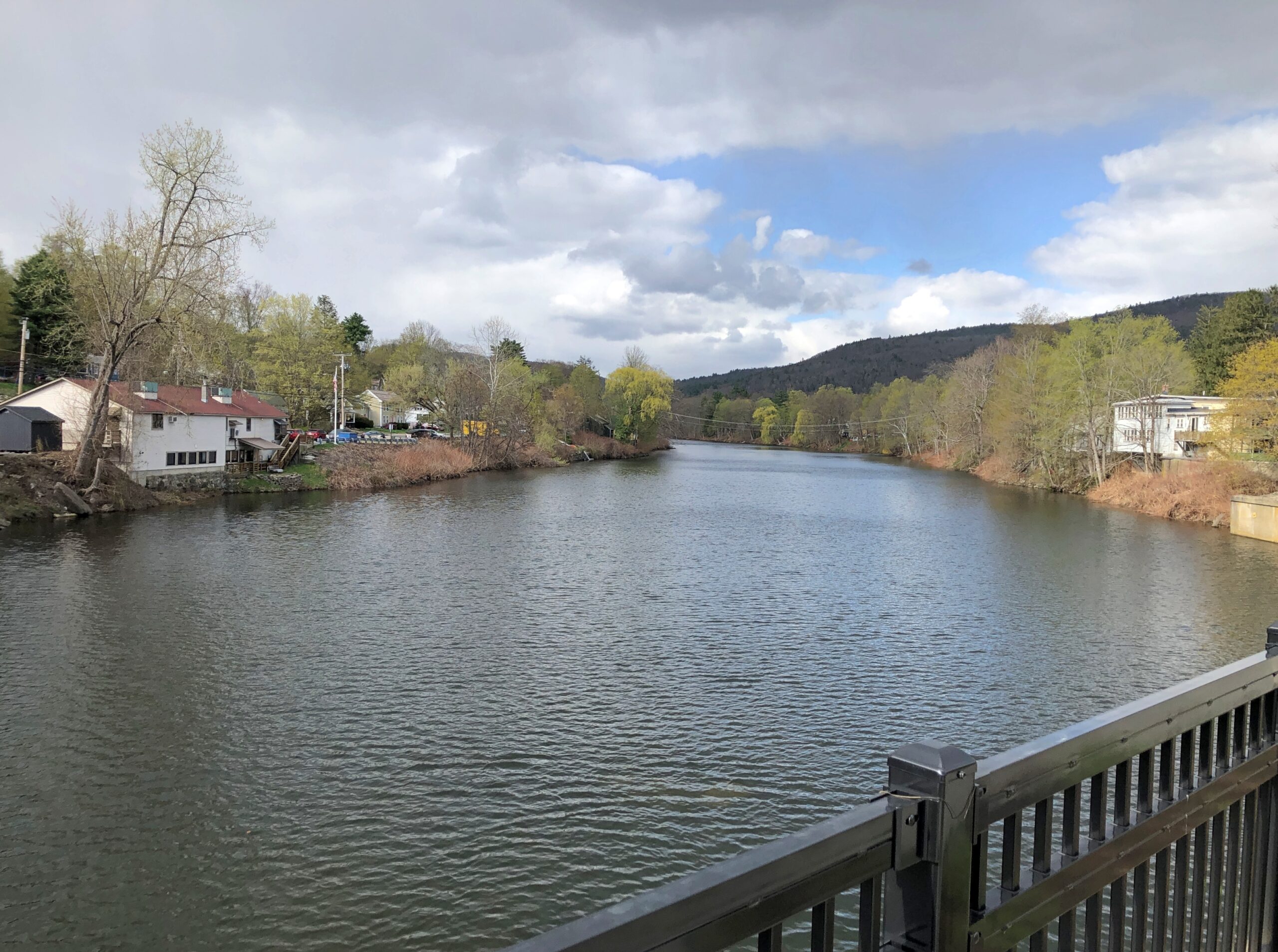
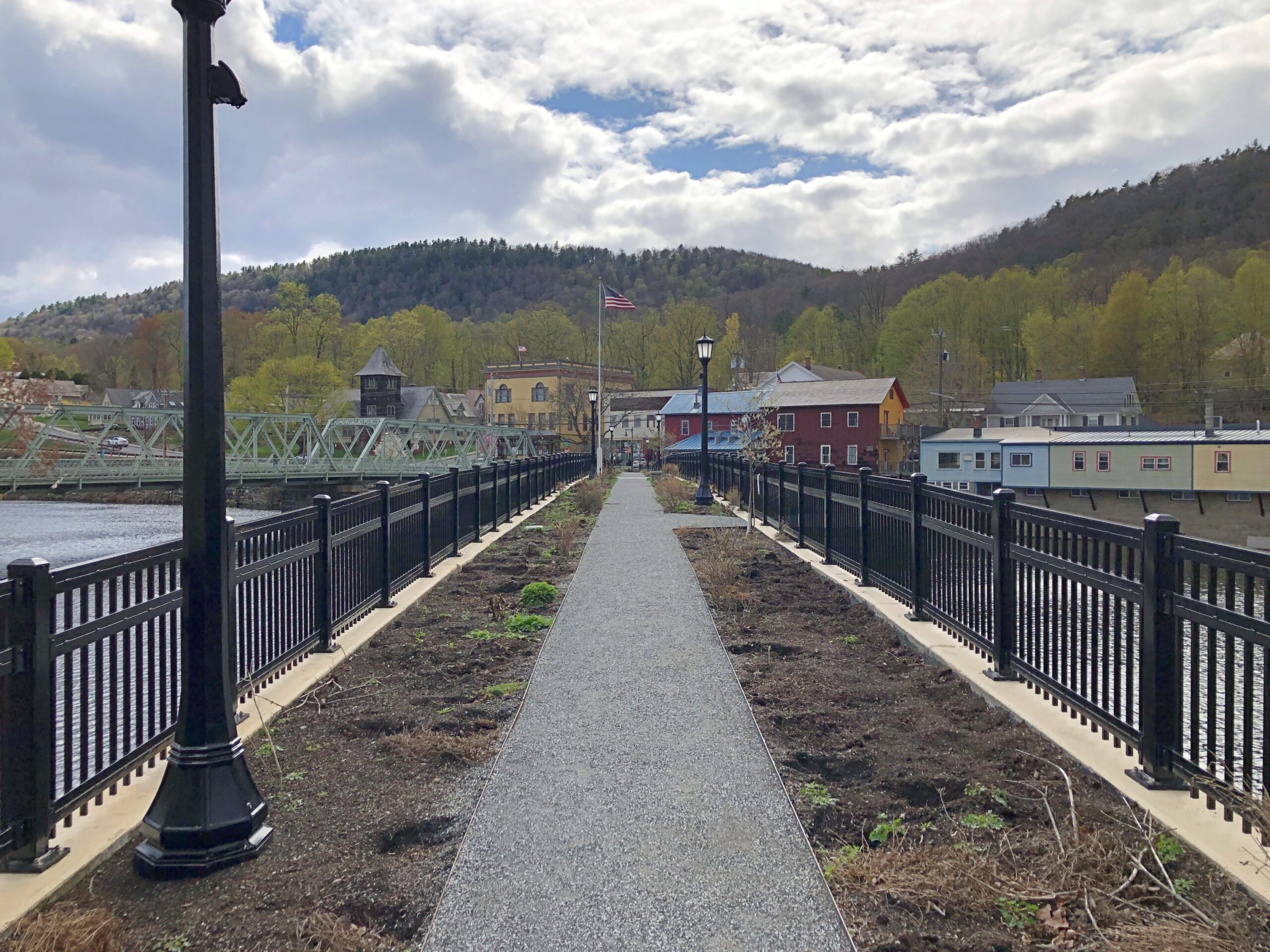
The Iron Bridge takes you to Buckland, though I guess you’d still be in Shelburne Falls, but anyway, a few steps along river – and I mean that literally, maybe 20 or 30 steps – is the Bridge of Flowers. The view looking back across at Shelburne.
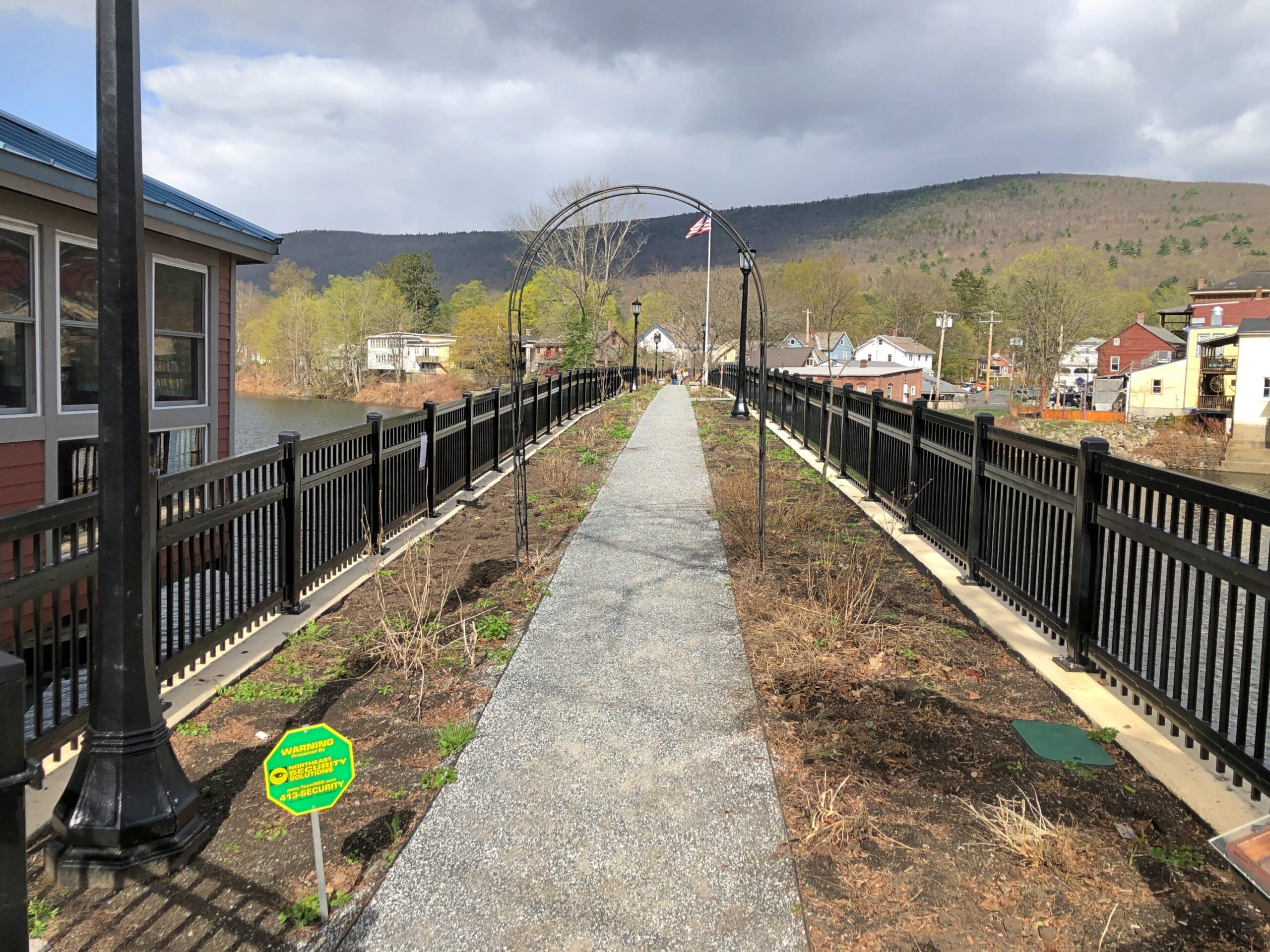
Not many flowers at that moment, but replanting was underway. Long ago the narrow bridge carried a trolley, but after that business went bust in the late 1920s, the Shelburne Woman’s Club facilitated its transformation into a linear garden.
Mid-way across the Bridge of Flowers. Even though not flowering (much), a bridge very much worth crossing.
The view looking back at Buckland.
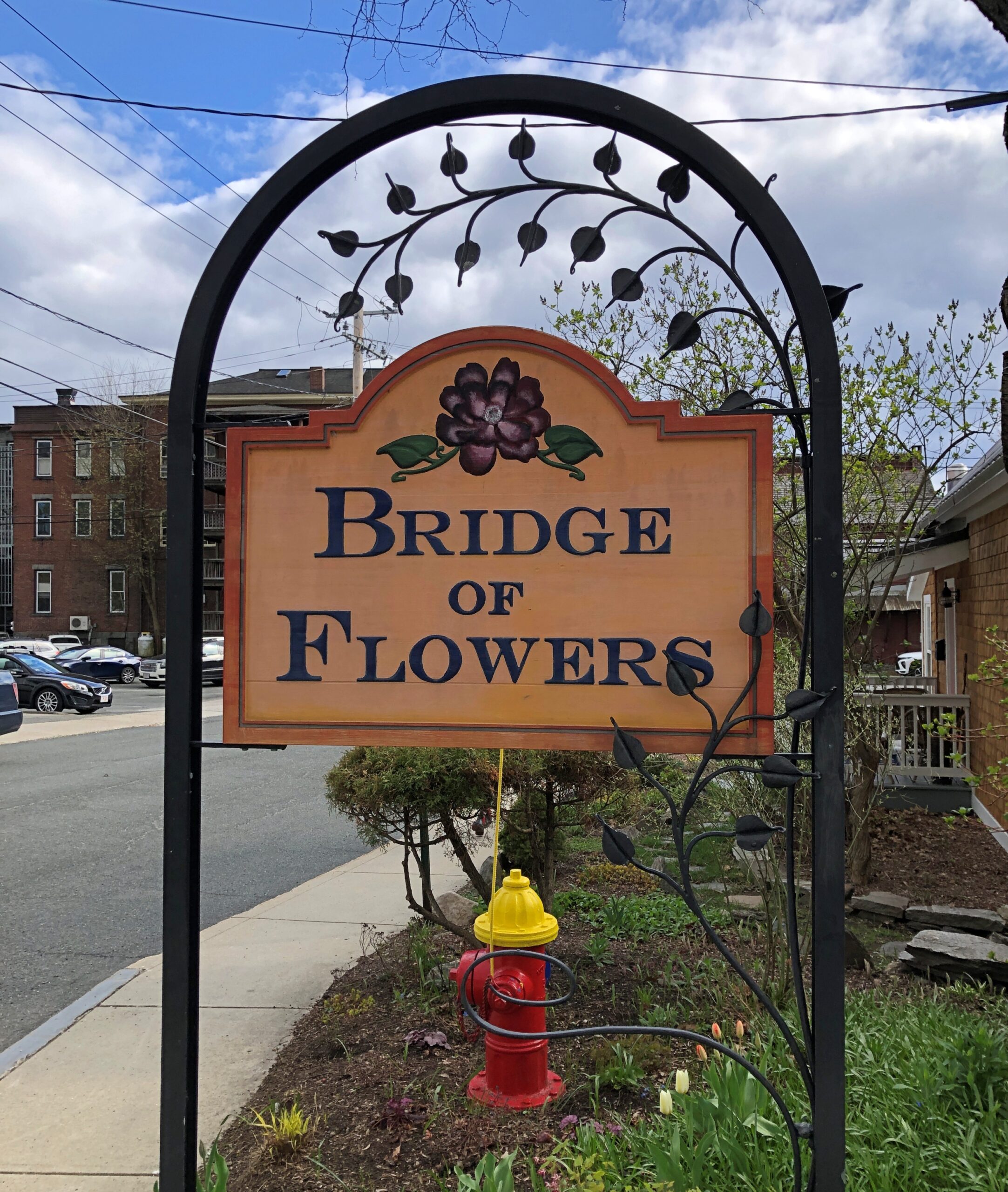
The sign on the Shelburne side.
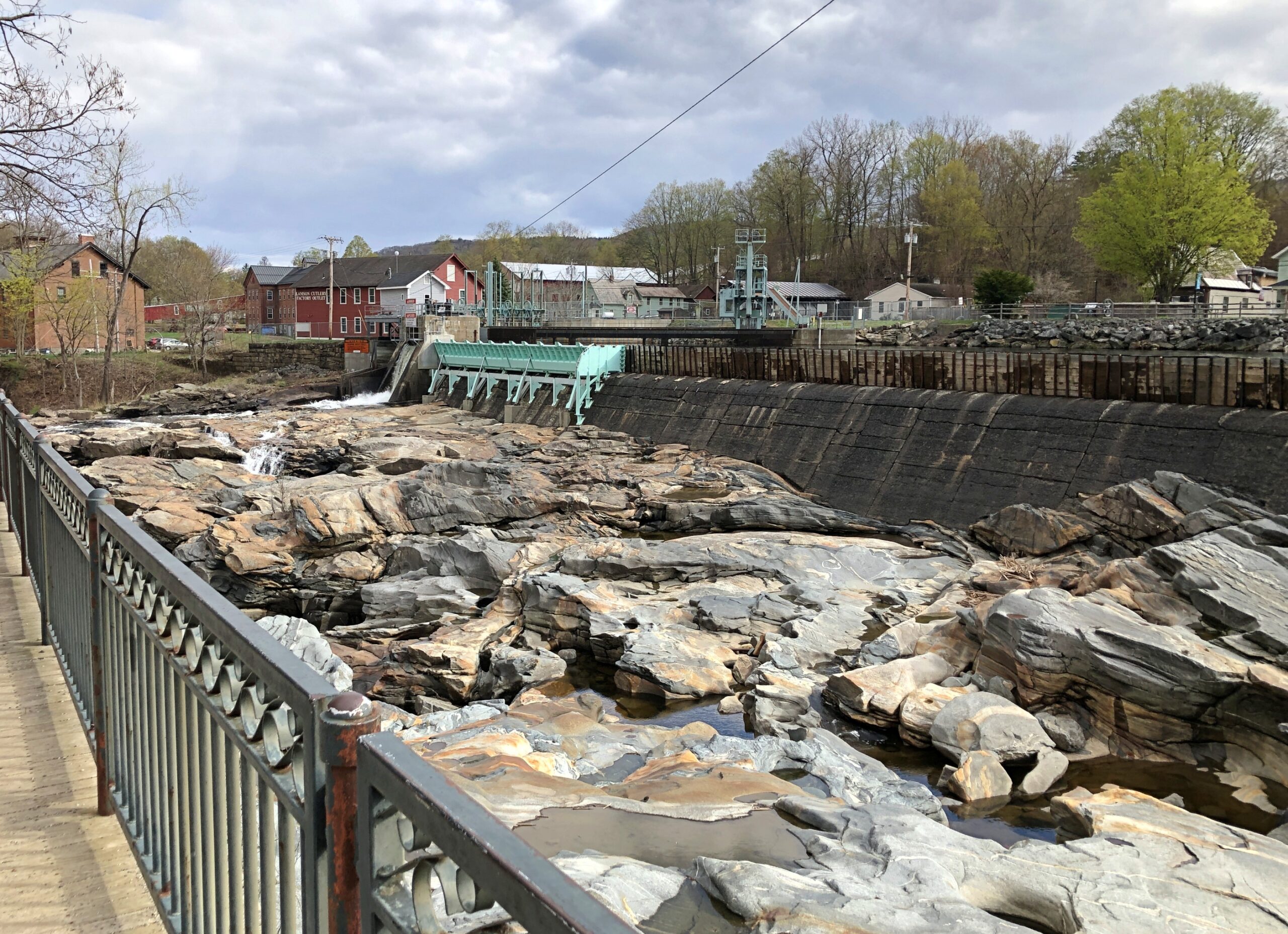
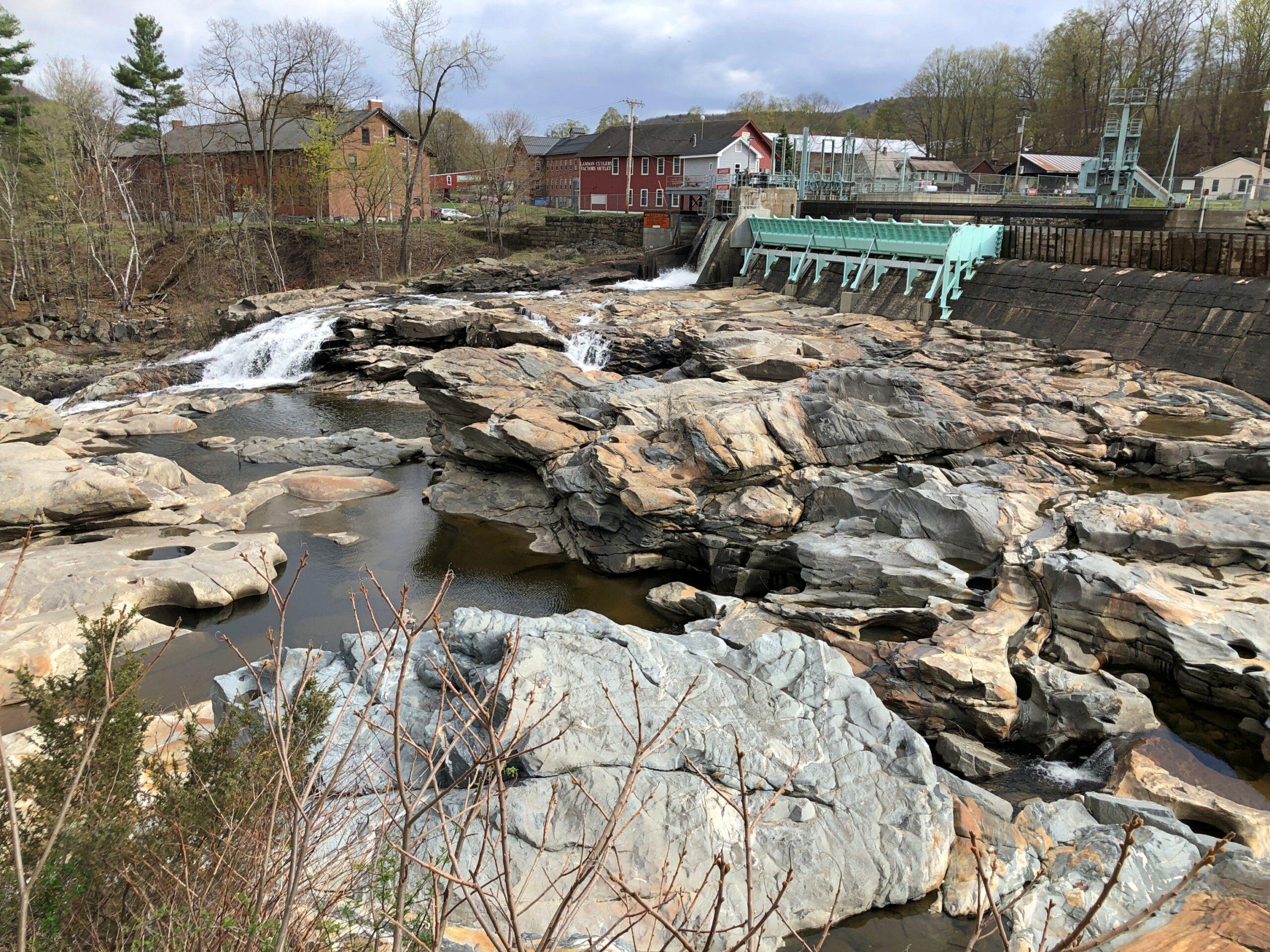
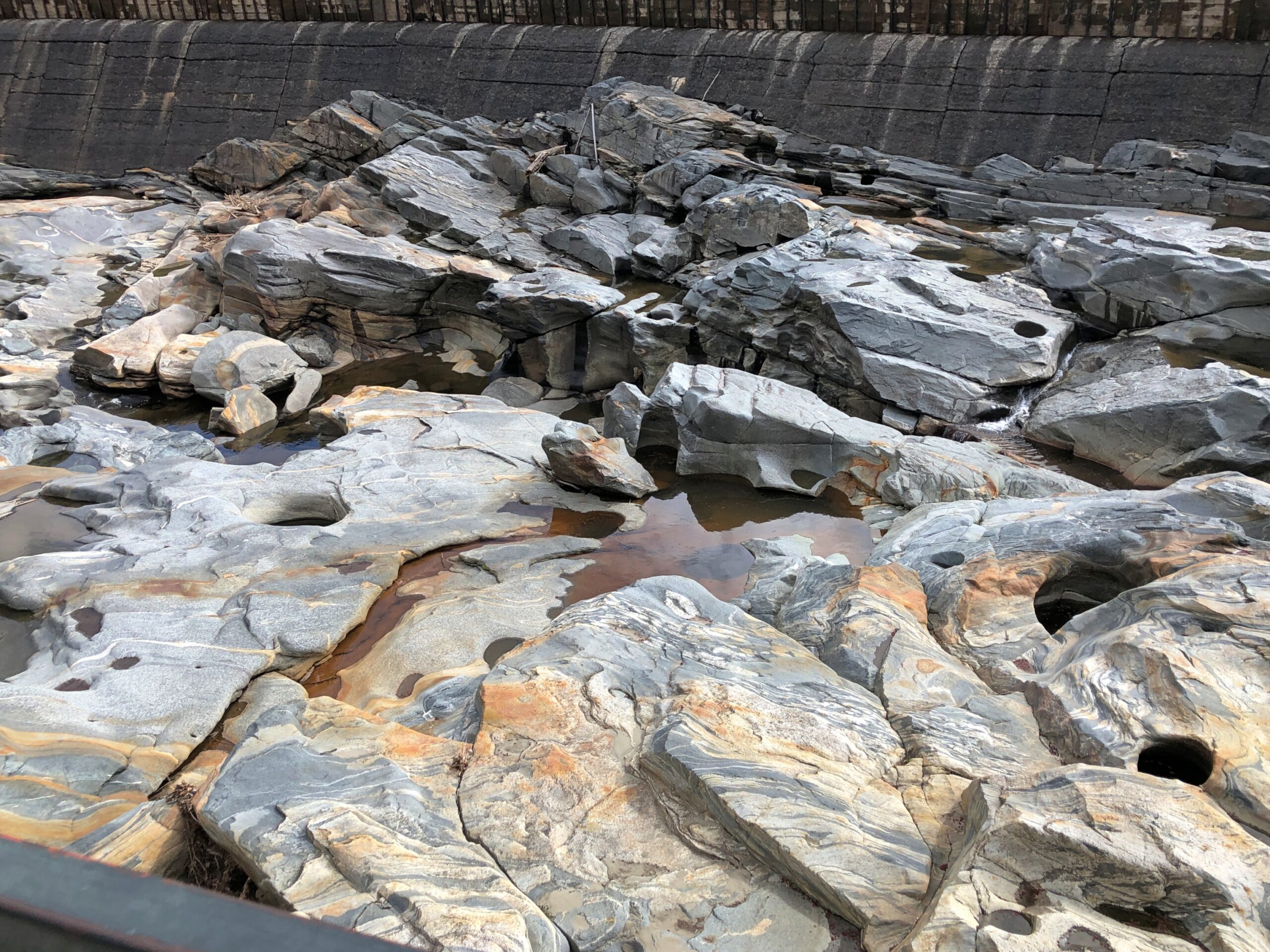
Nothing is far apart in Shelburne, so a short walk takes you to a geological oddity.
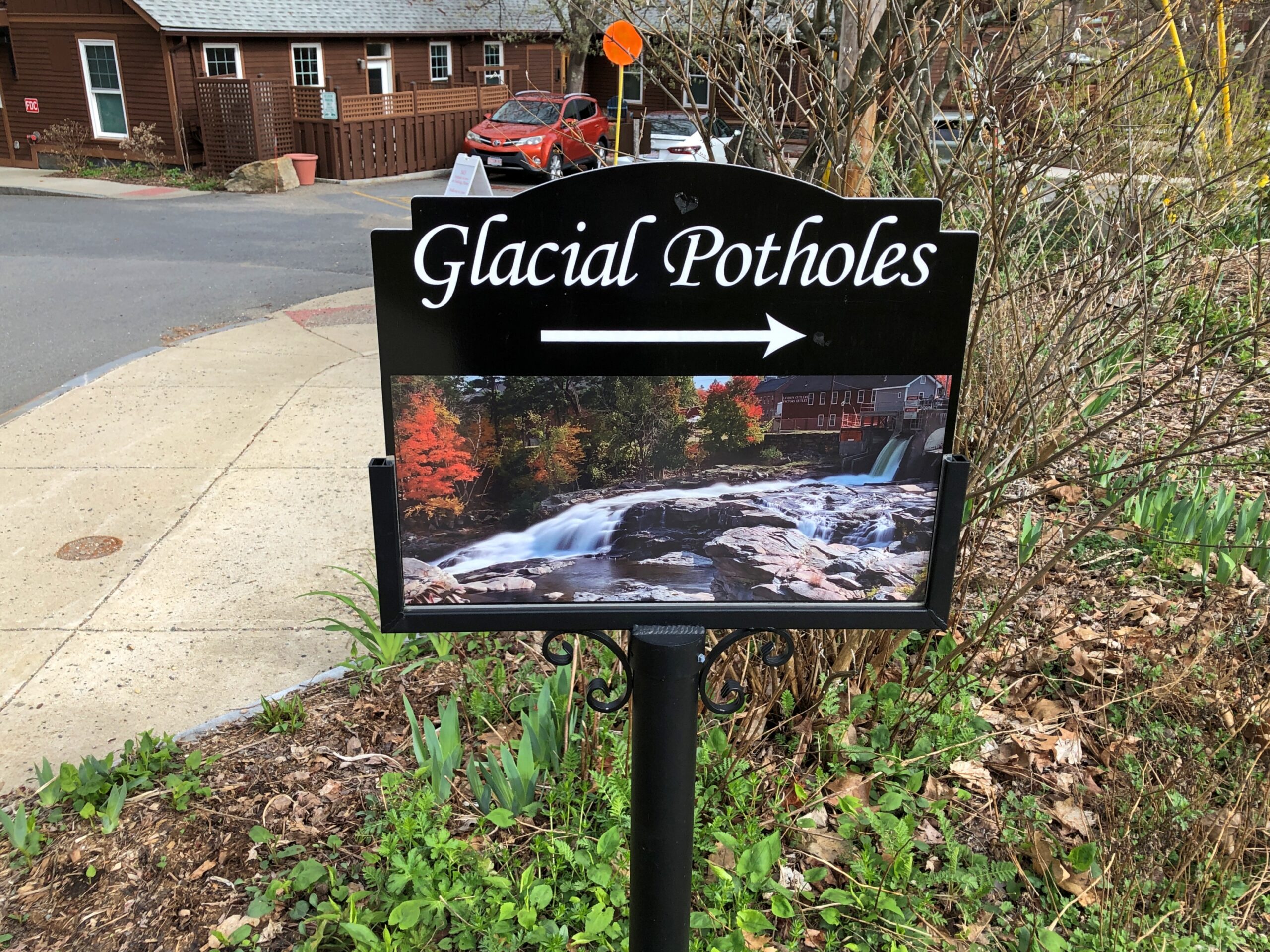
Glacial Potholes
Another sign.
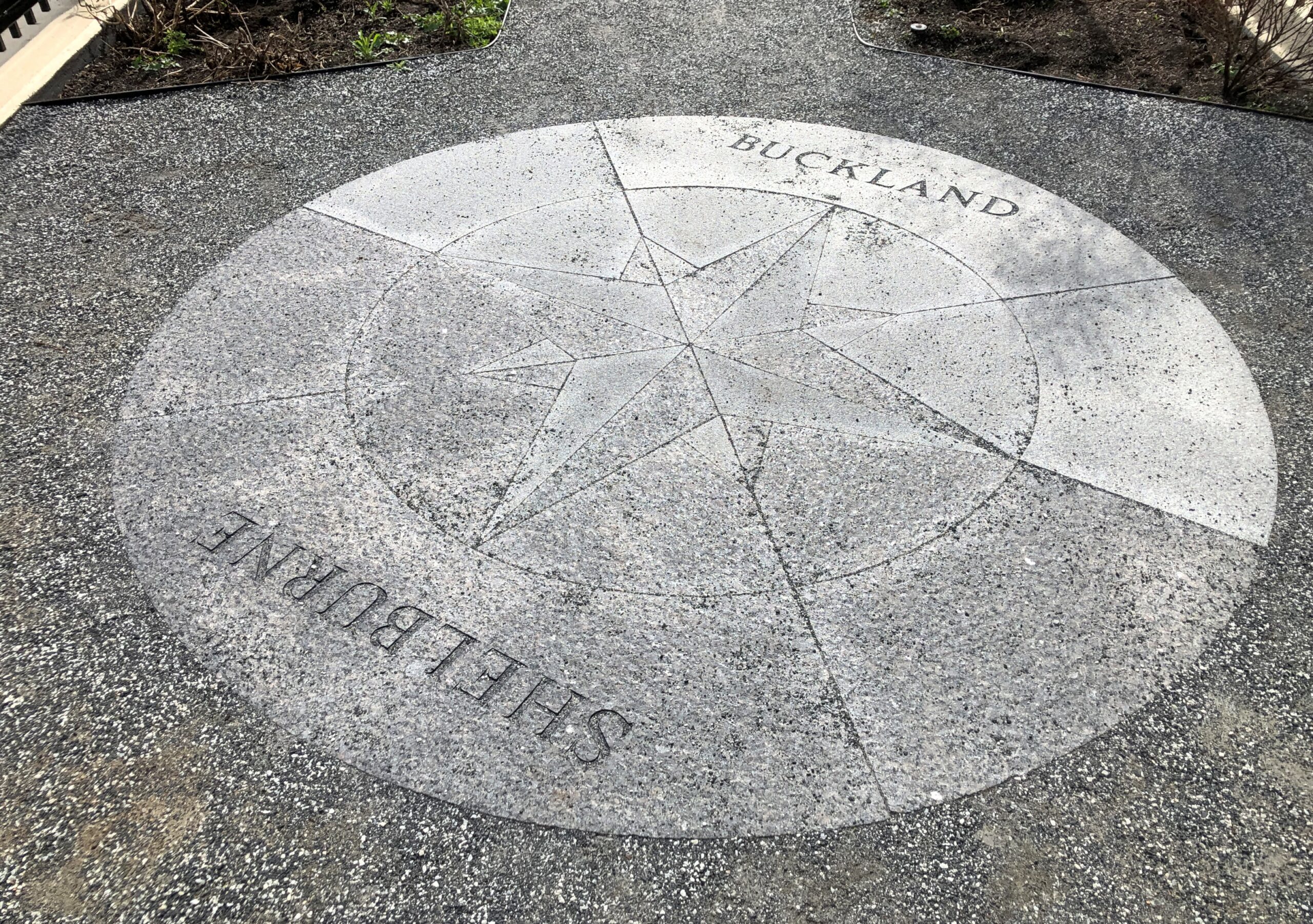
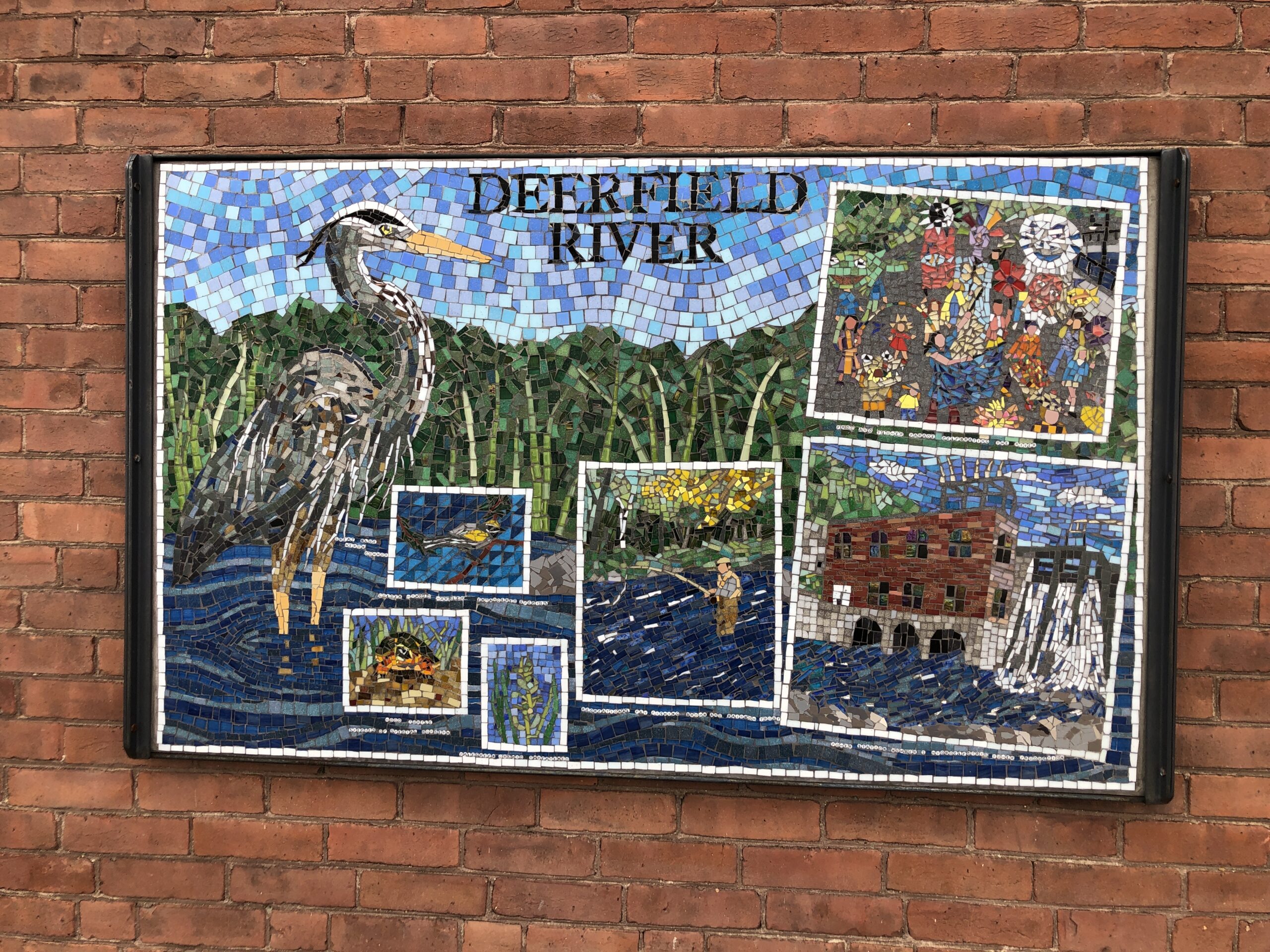
Follow the arrow and you pass a mosaic celebrating the locale. A high-quality image of this would make a good postcard.
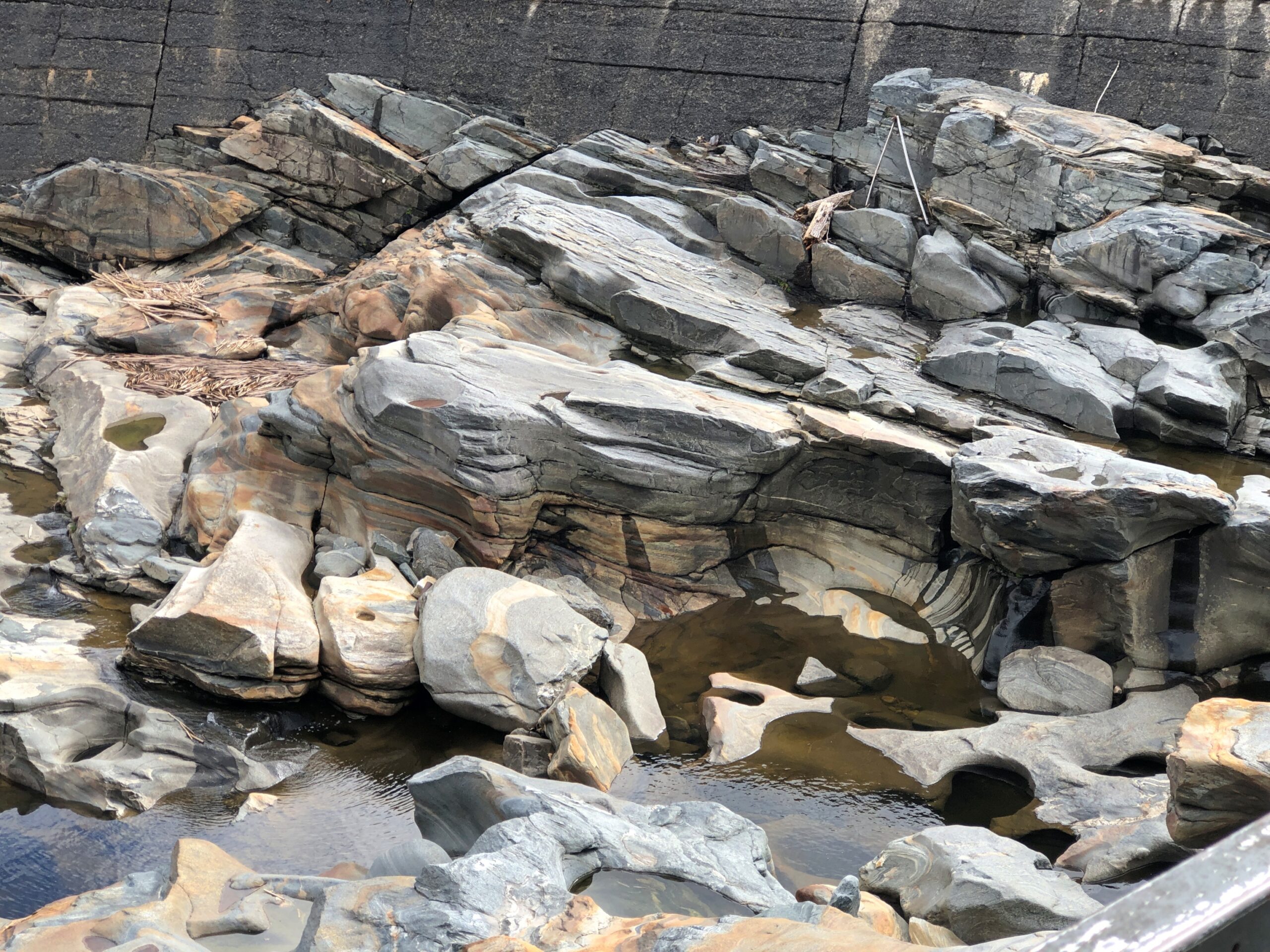
Different in details — stone and coloration and process — but erosion as much as Sioux Falls in Sioux Falls. Or on the Bruce Peninsula. Or the coast of Maine, for that matter. Water doing its grind beyond the timescales of humanity.
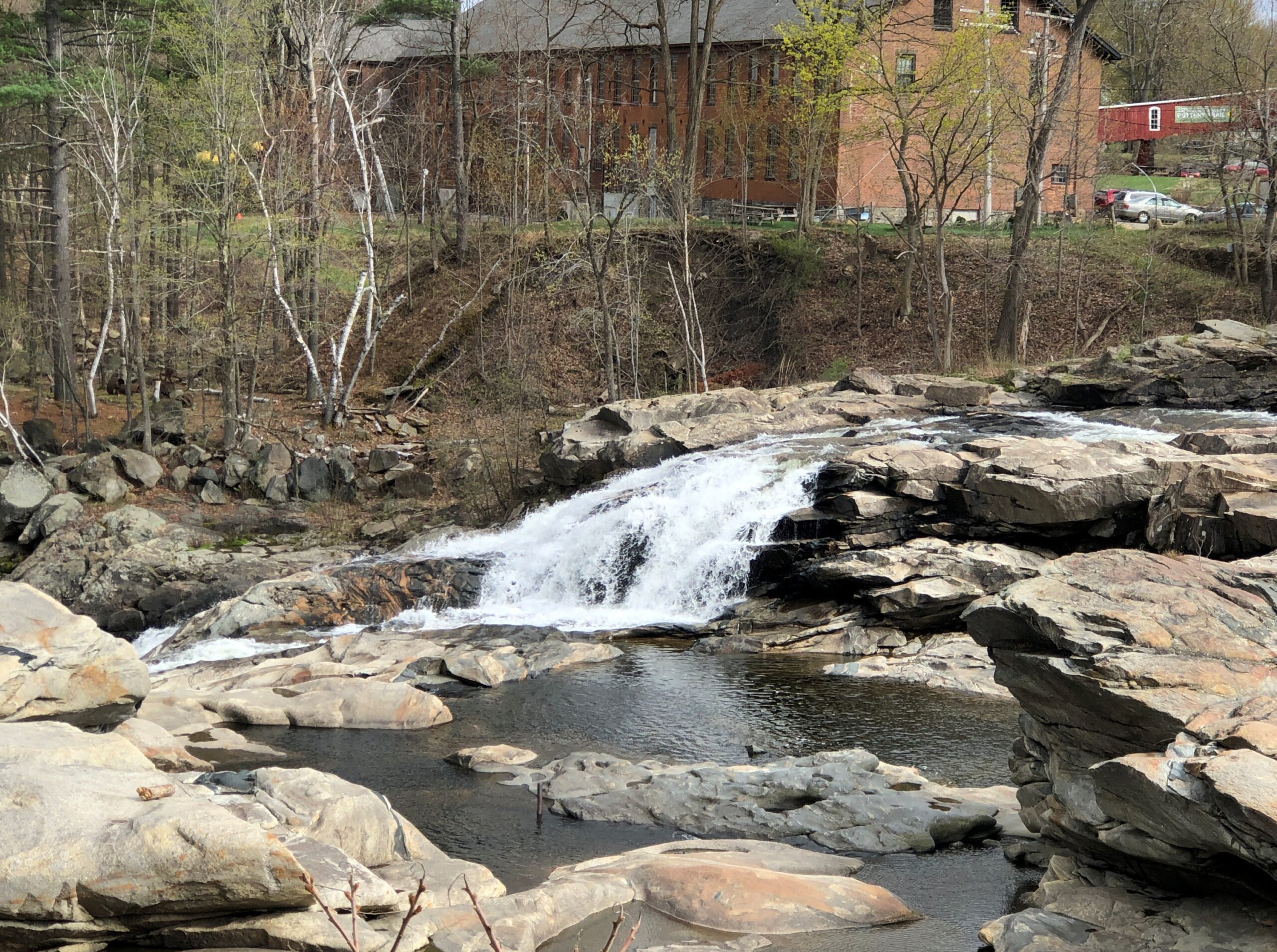
The spillway was busy. It had been a rainy day before.
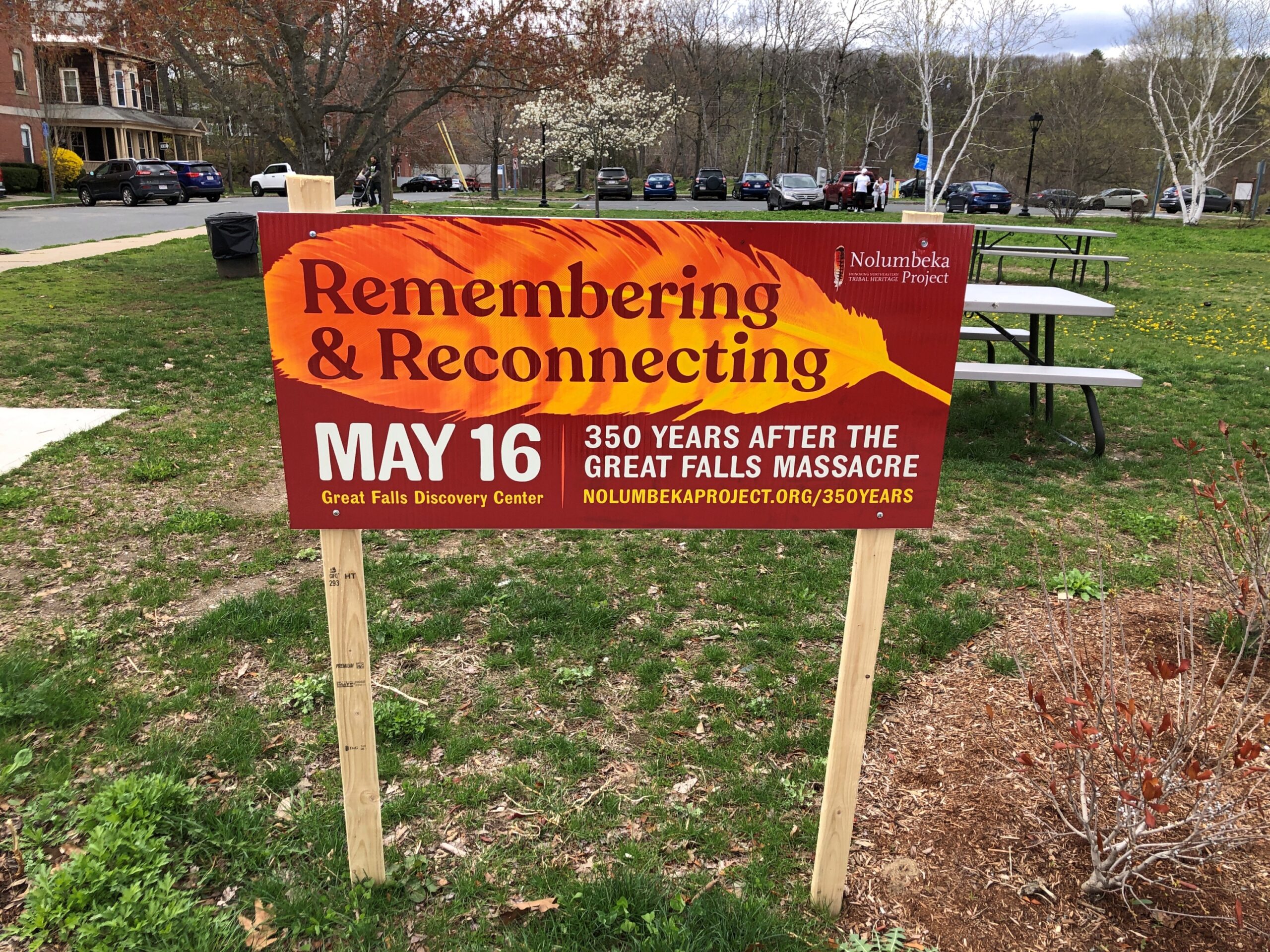
The first thing I saw on Avenue A in Turners Falls, Massachusetts, in mid-April was this sign. A small reminder of a bloody incident in a bloody war, all but forgotten – and I mean the incident and the war – outside of regional historians and eccentrics like me and, unsurprisingly, the descendants of the Algonquian tribes who were on the receiving end of a surprise attack by men under the command of Capt. William Turner in 1676 during King Philip’s War. Most of the Indians slain, mainly Nipmuc, were non-combatants, as neither side tended to make that distinction in that vicious war. Turner’s attack did not, however, go unanswered in real time: as he and his men were pulling back, they were beset by counterattacking warriors, who managed to turn the retreat into a rout, killing Turner, among many others.
All that I looked up later. In the moment I took a stroll on down the avenue, which is the main street of Turners Falls, an unincorporated village in the town of Montague. So it’s actually a neighborhood? Peculiar nomenclature, these New Englanders have, since I think of a village as a village and a town as a town, and one doesn’t get to be in the other.
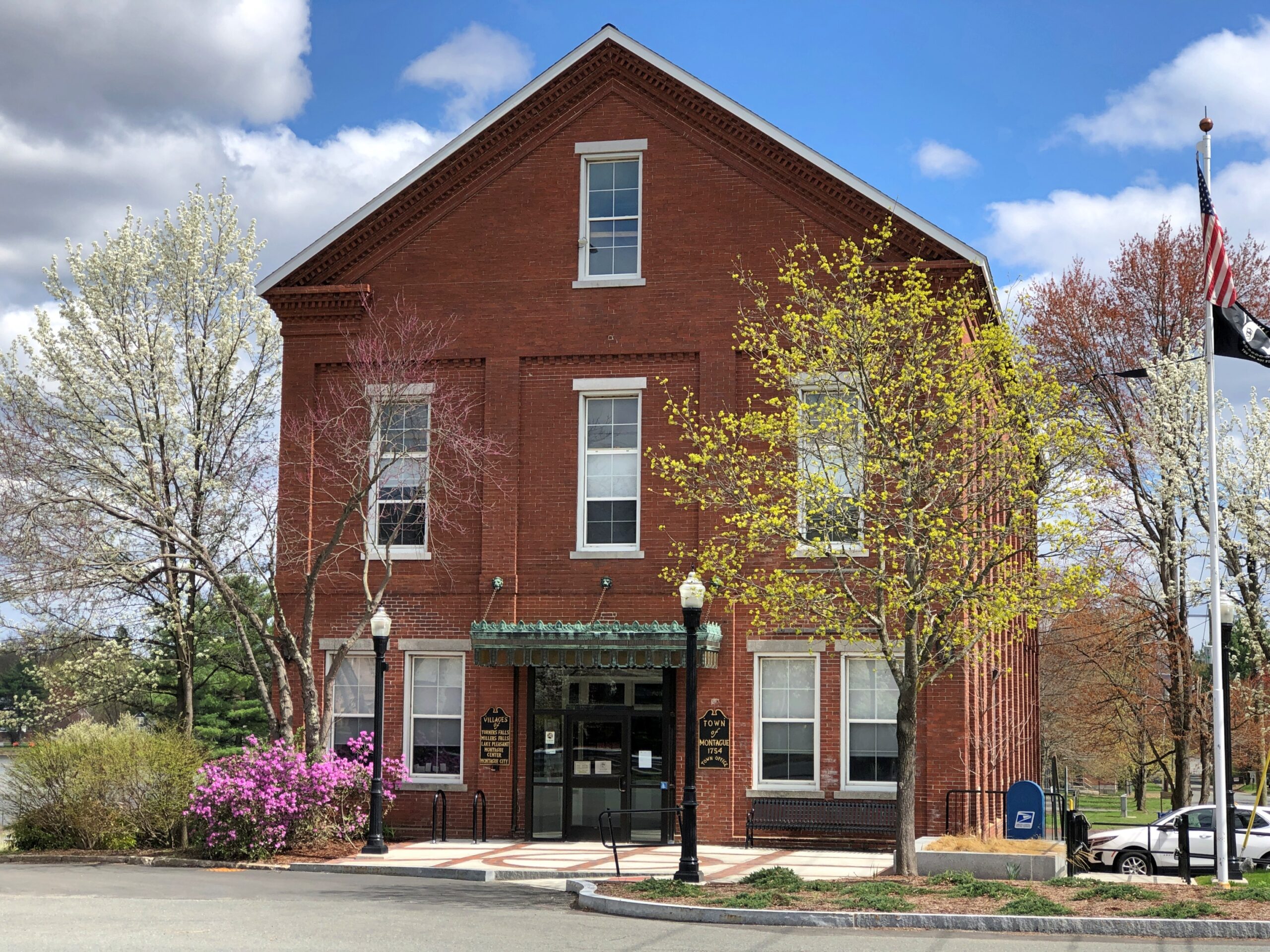
According to the sign on the town office (above), the other villages in Montague are Millers Falls, Lake Pleasant, Montague Center and Montague City. So – Montague City is within the town of Montague? Massachusetts is just a little strange with its names, but never mind.
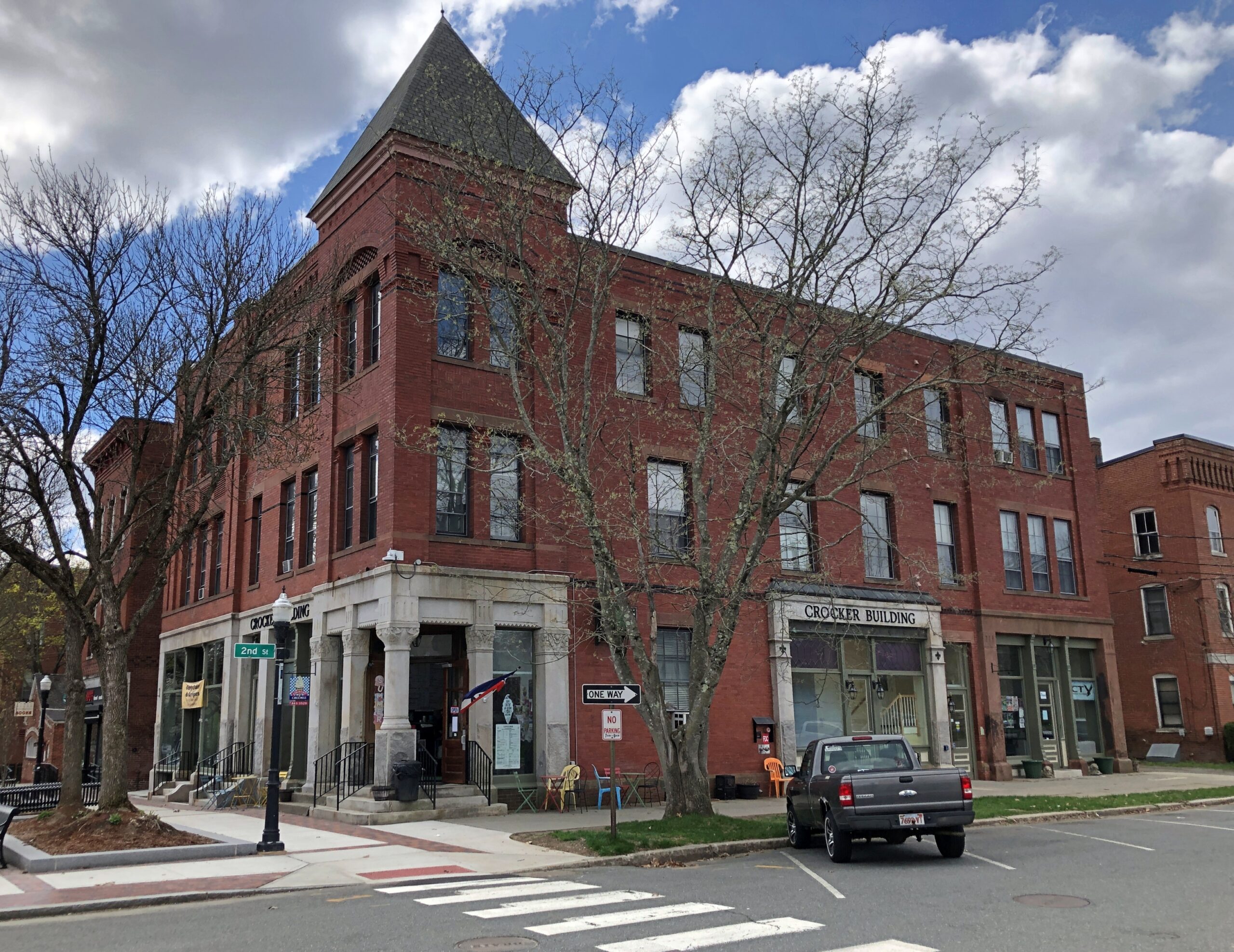
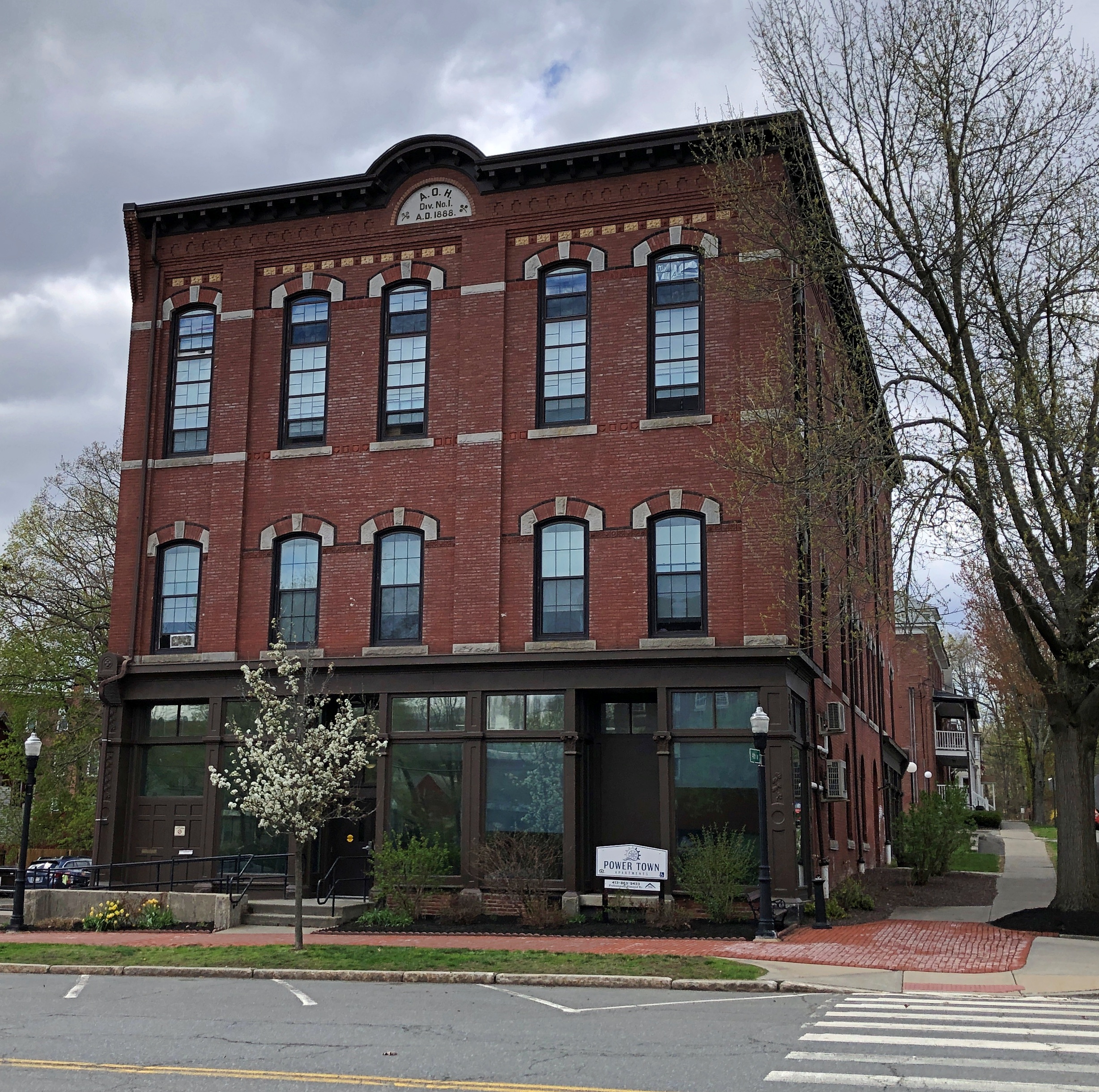
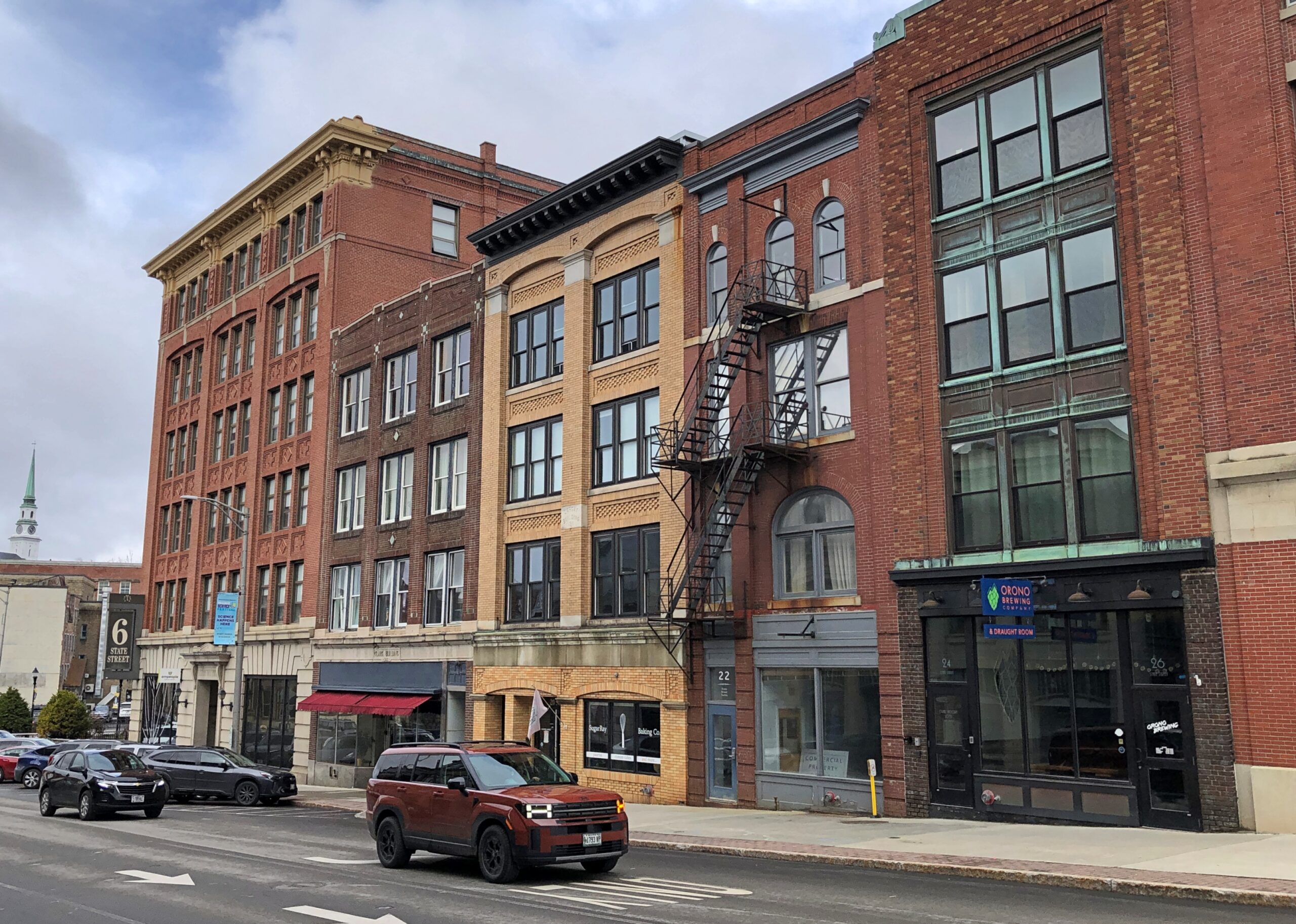
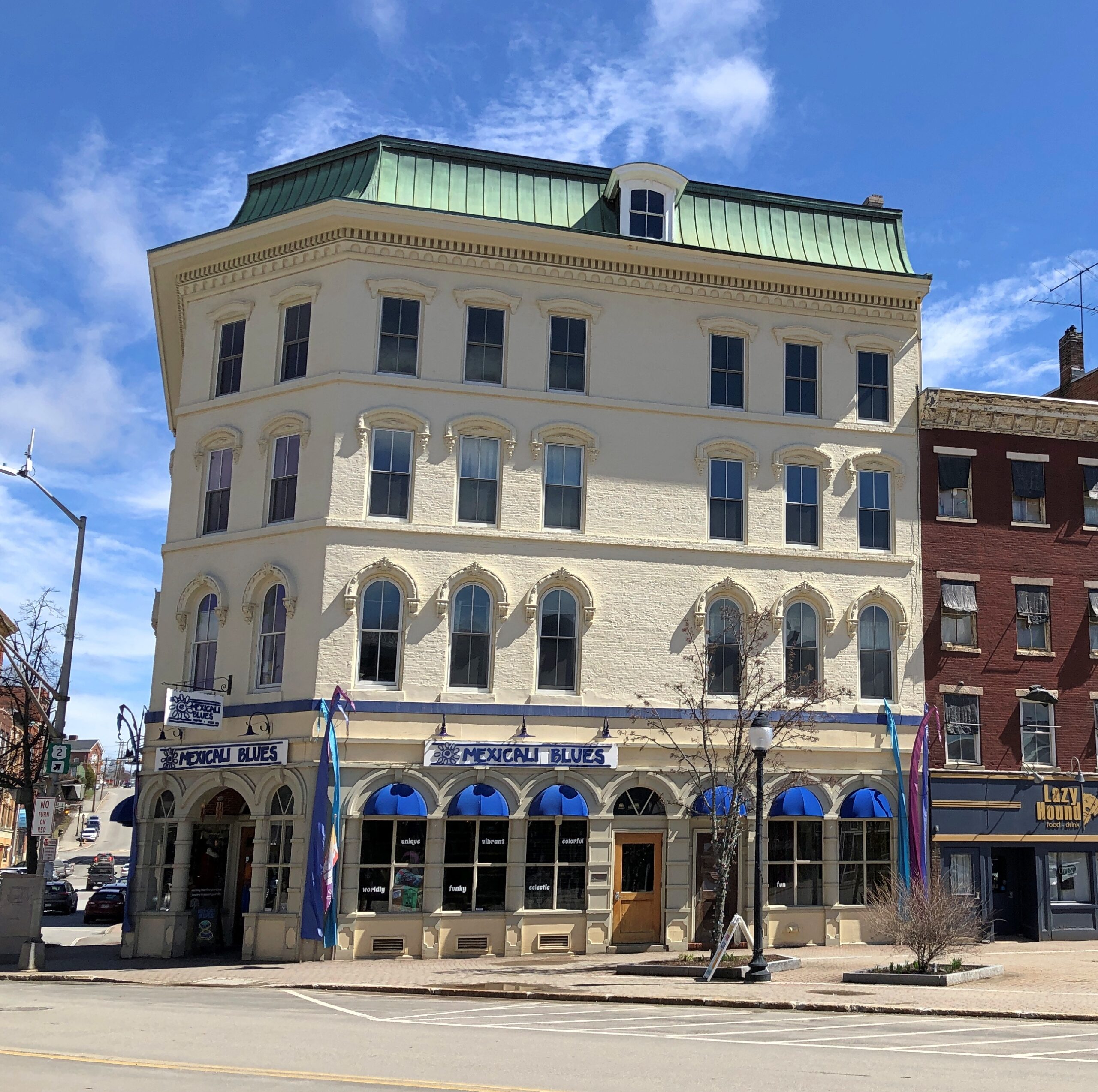
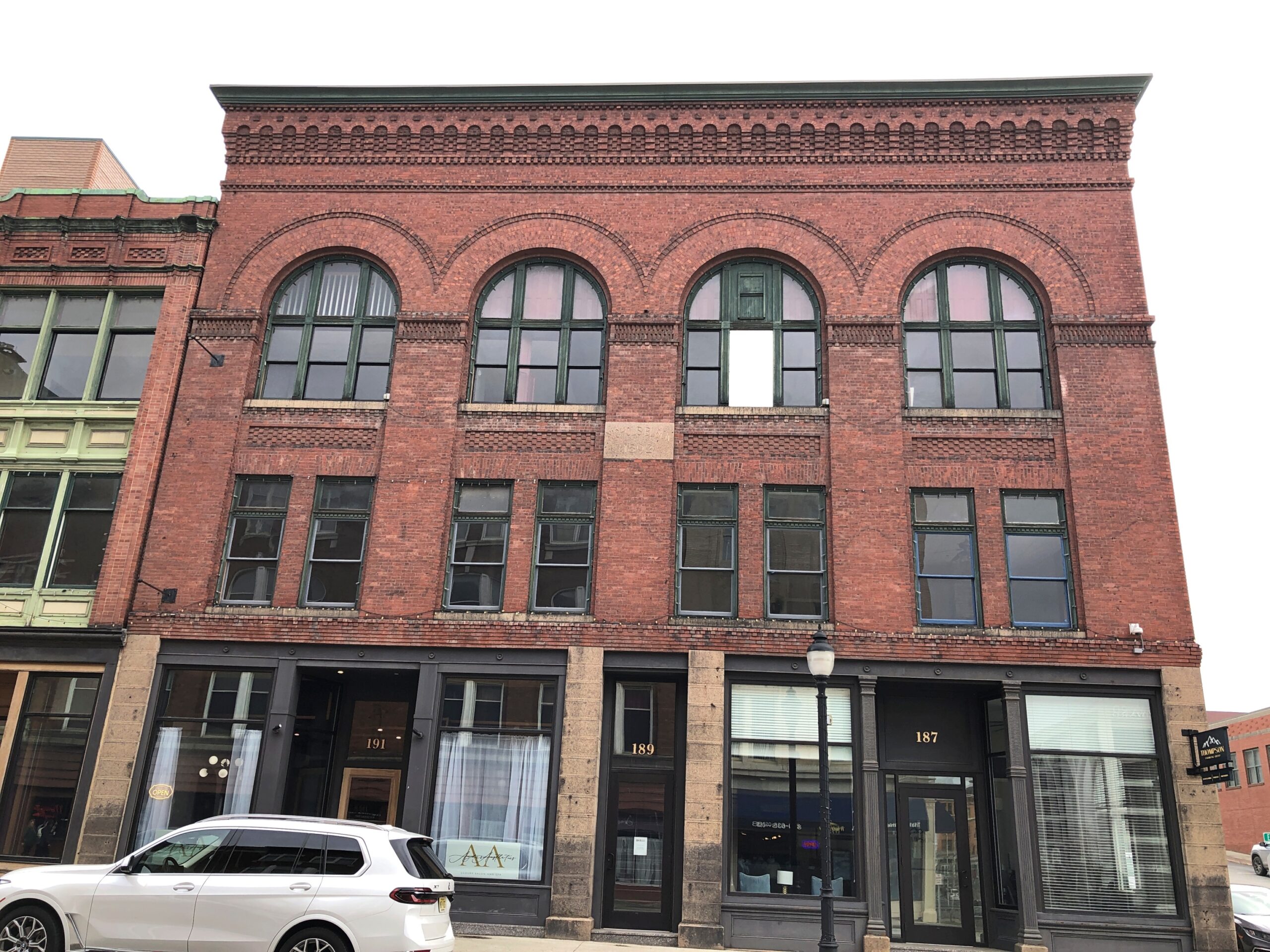
As a main street, Avenue A is lined with some handsome older buildings.
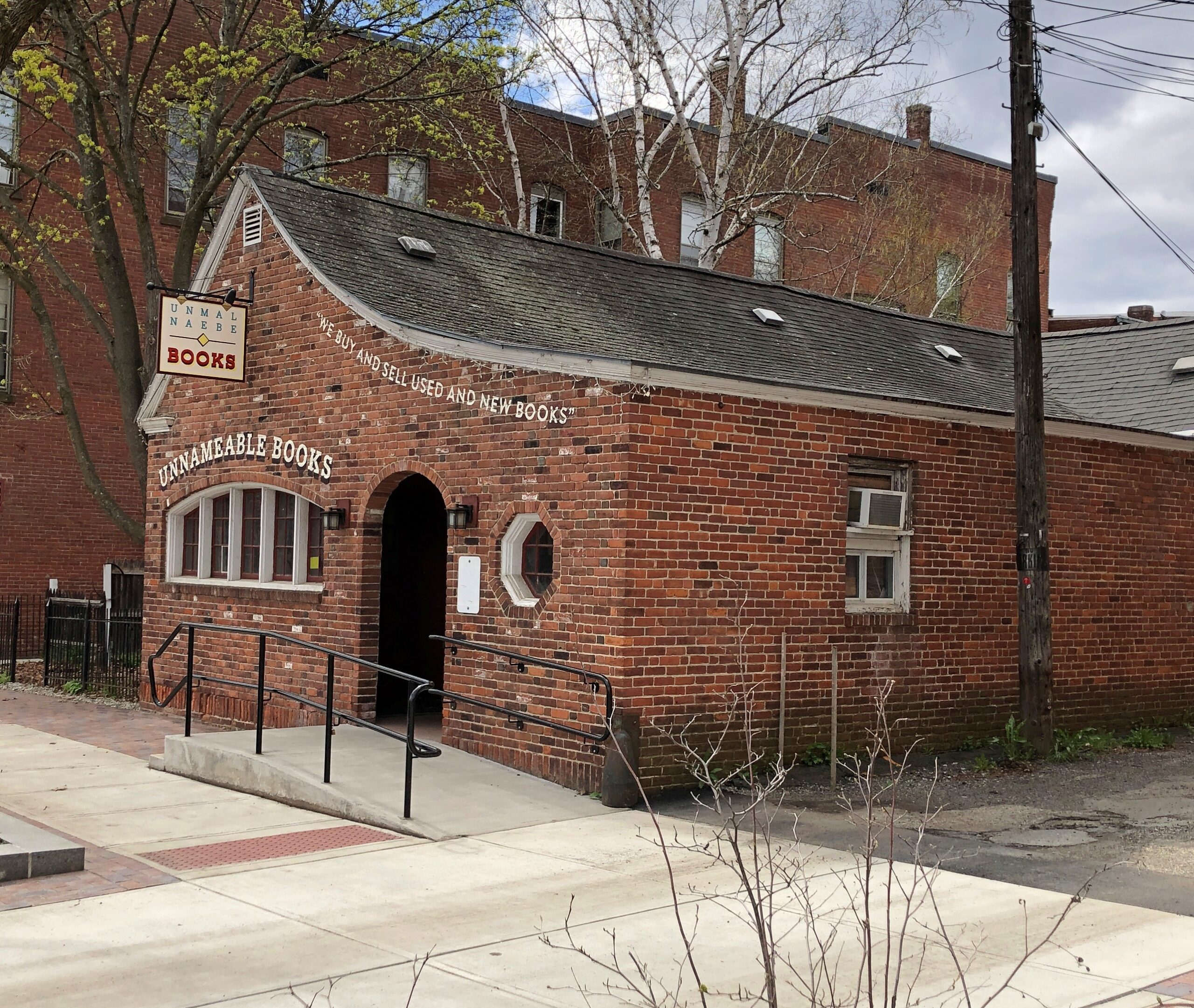
Good to see a small bookshop.
Other nearby retail includes Ed’s Barber Shop, the Country Creemee (ice cream), Ce Ce’s Chinese Restaurant, Kharma Salon, Booska’s Flooring, Waterway Arts, Mystic Pinball and the Upper Bend Cafe. Not exactly a day-trip retail selection, but elements of it are there.
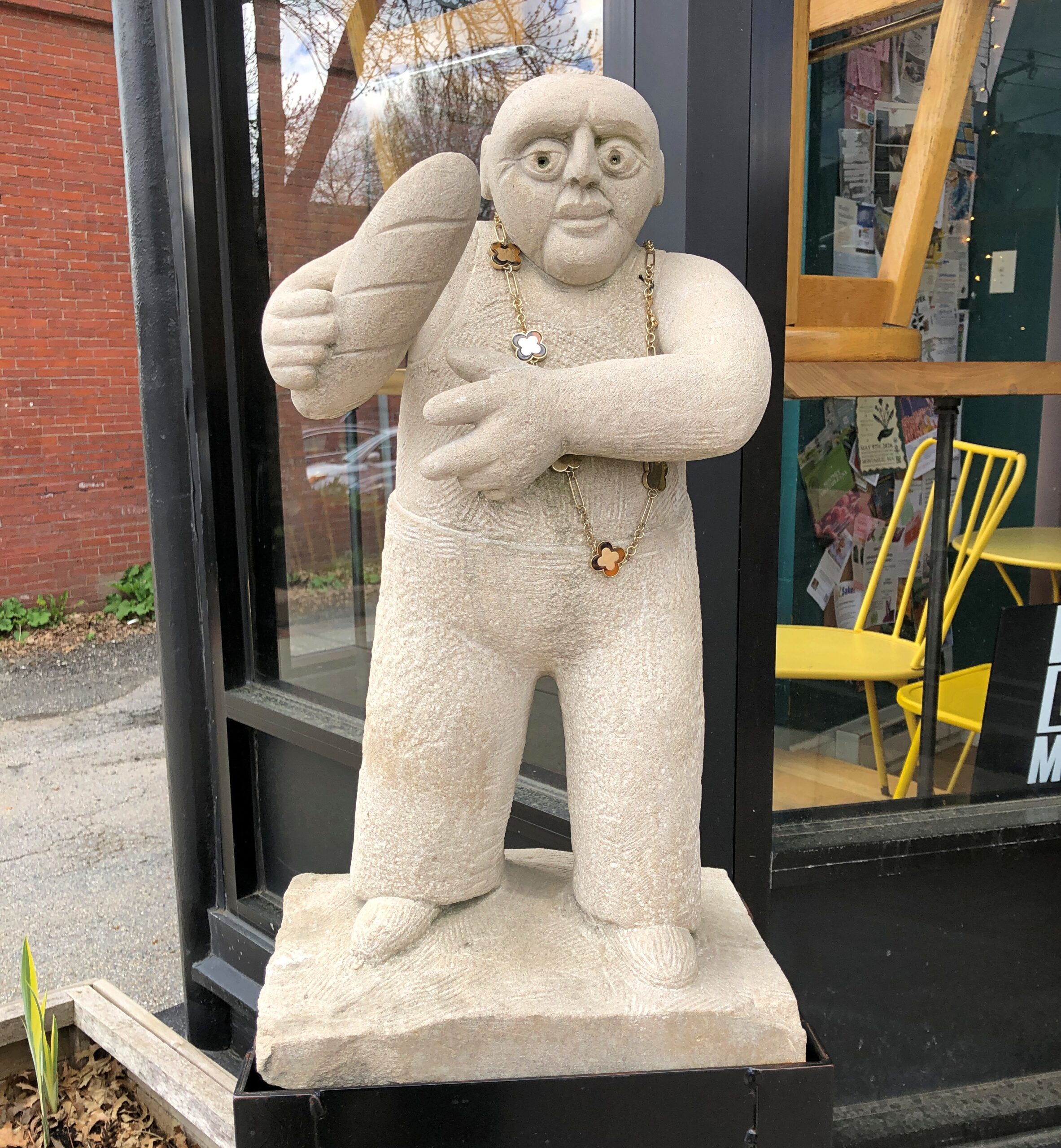
Commercial artwork.
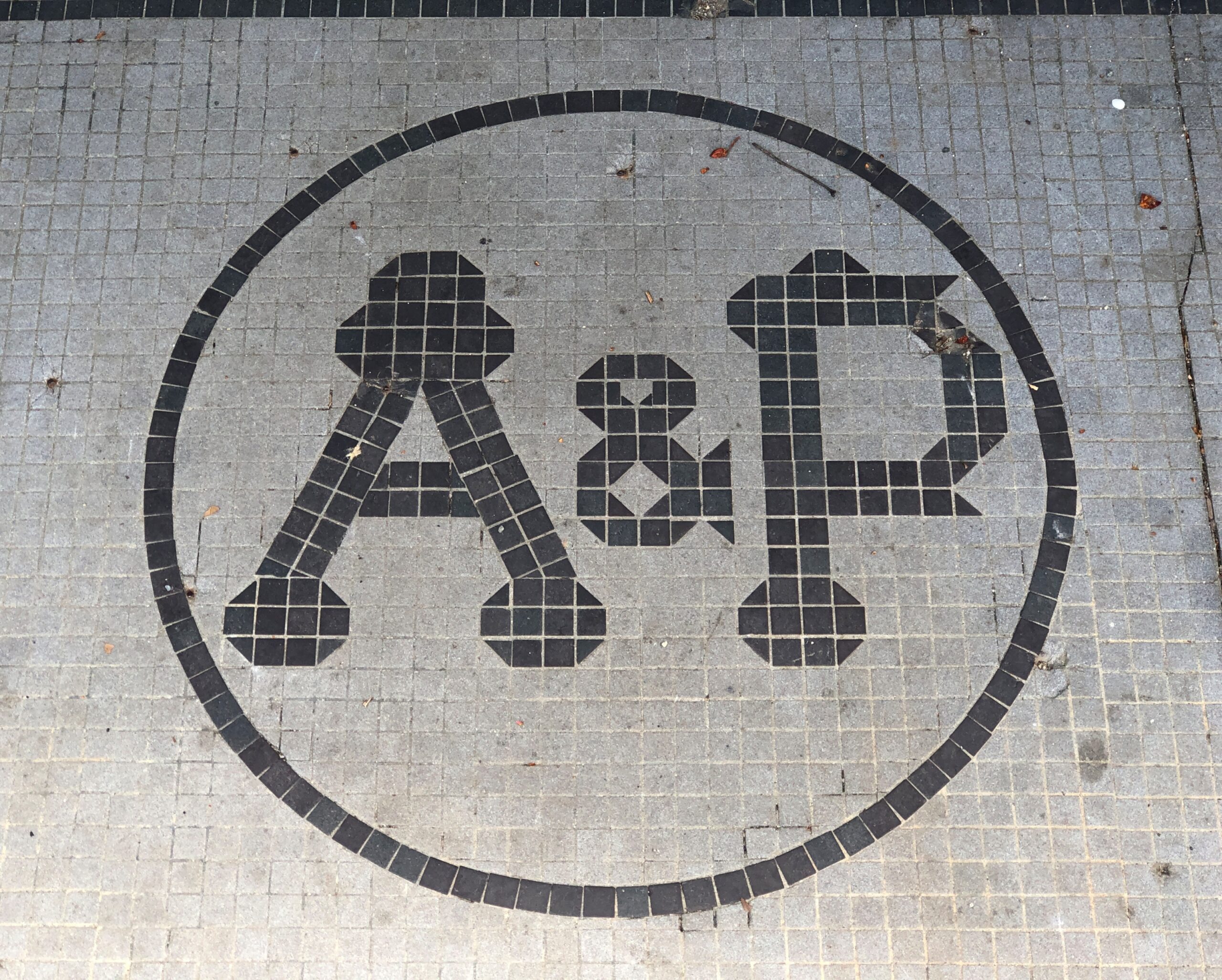
A relic of a commercial establishment long gone. About 100 years ago, A&P operated about 15,000 locations, including presumably one in Turners Falls.
Which only goes to show that retail empires rise and fall as surely as political empires, and are as little remembered as most of them. Keep that in mind next time you’re in a Walmart.
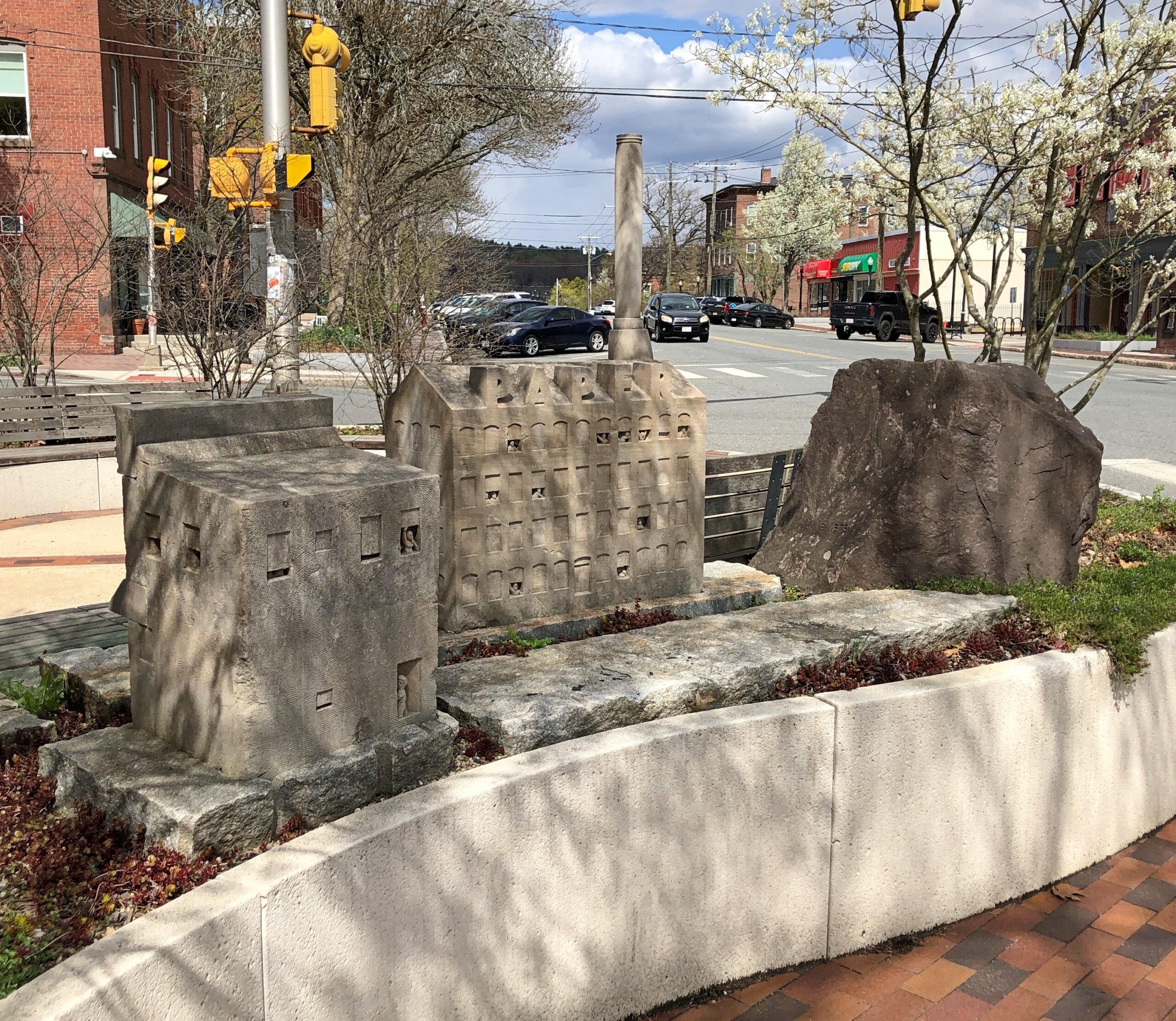
Public art: “Rock, Paper, Scissors” (2017). by Tim de Christopher, who used local red sandstone for the rock and Indiana limestone for the paper mill and barber shop — paper and scissors — evoking the town’s industrial and social history. (The barber shop is on the right, the mill in the middle, and the rock on the left.)
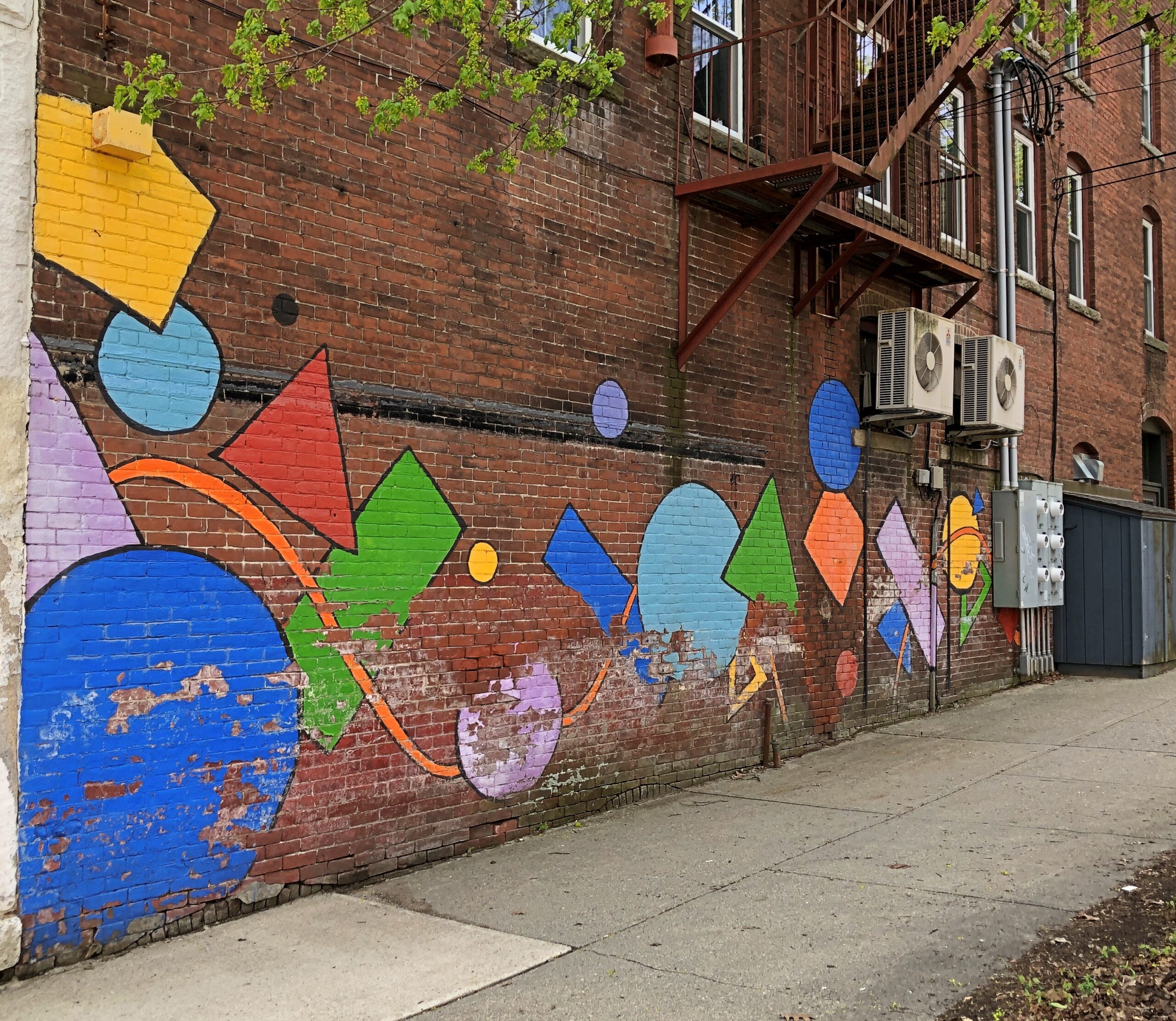
A geometric mural.
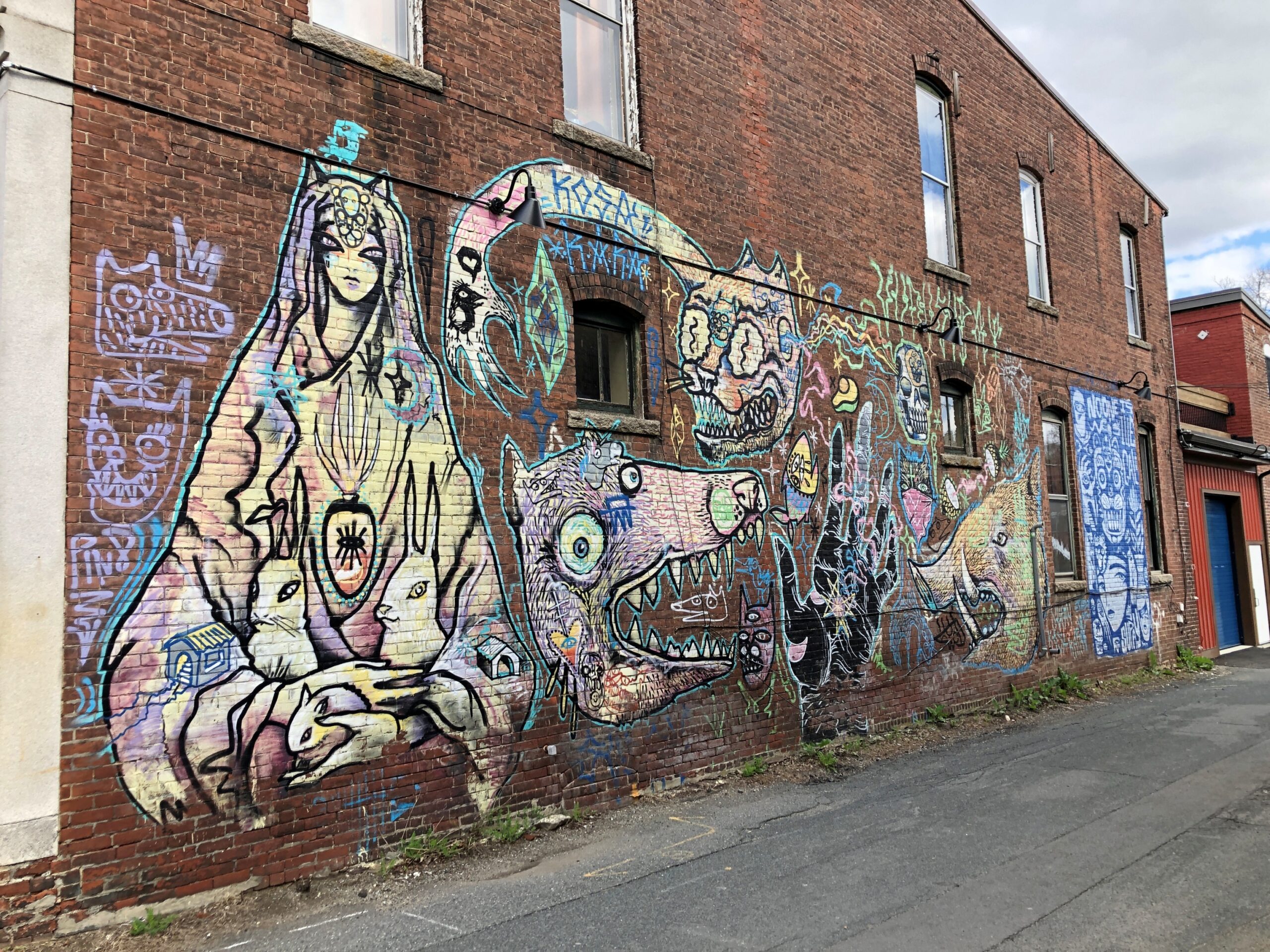
An elaborate graffiti-style mural.
Or maybe actual graffiti. Details.
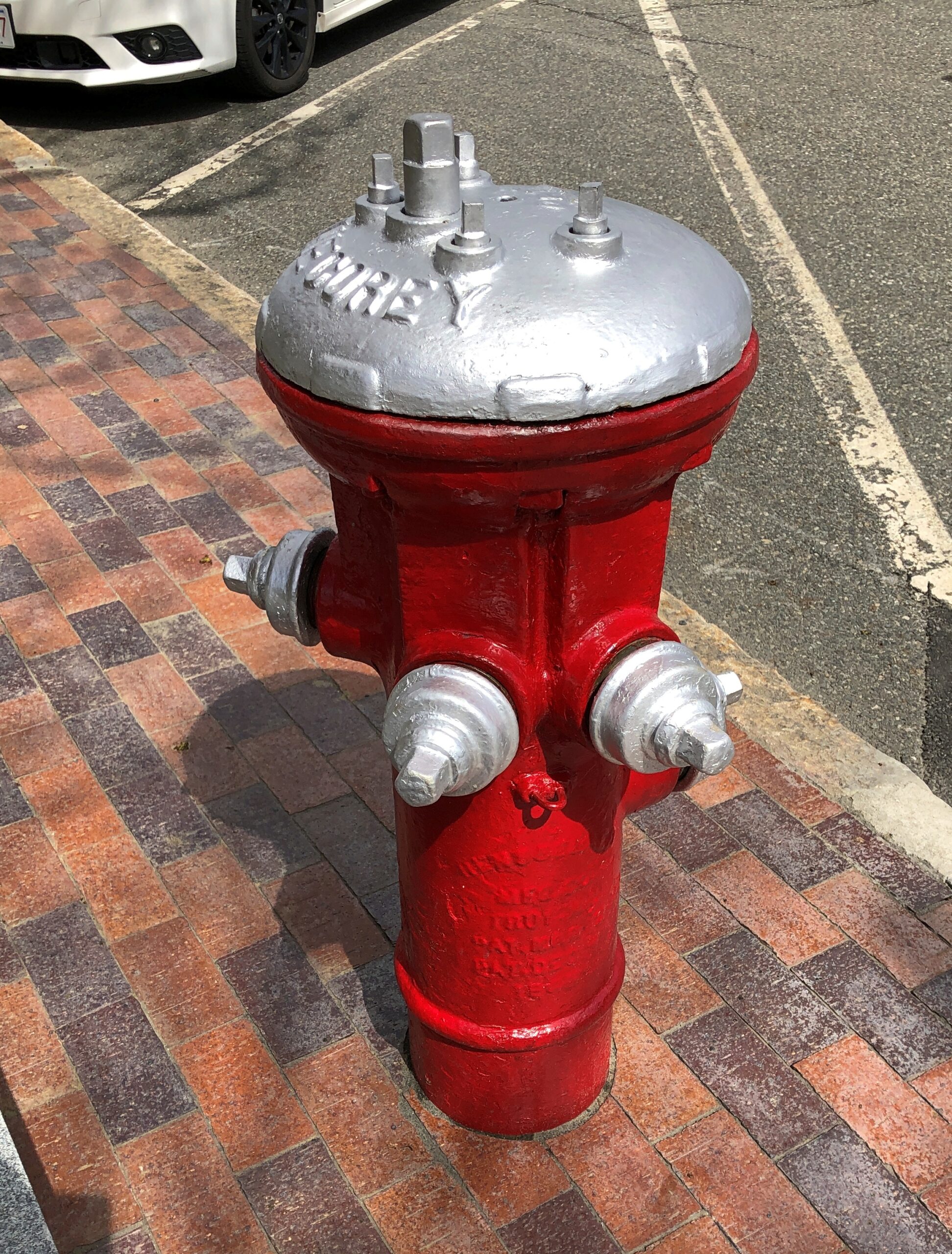
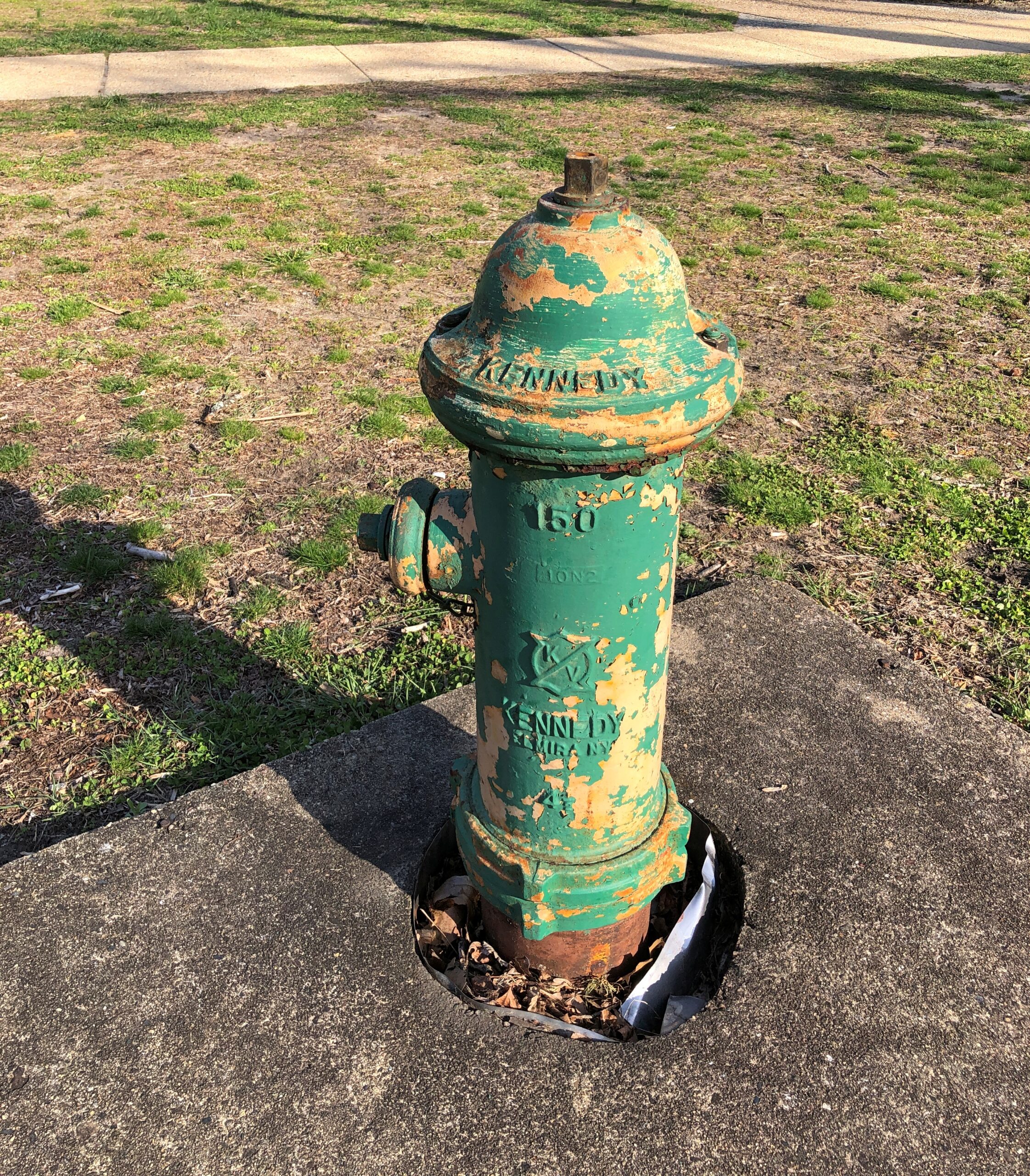
And a fire hydrant.
As peculiar as the local nomenclature. A metal udder.
“If you’re taking pictures of buildings, you should take one of that building over there,” an old man said to me, pointing at a building partly obscured behind the curve of the street. I had been taking pictures of buildings. A spring day had come to Bangor: the air was a pleasure, so was the friendly warm sun, and I was out and about among the short downtown blocks.
“Thanks,” I said, adjusting my position on the sizable downtown plaza, so that the building came into view.
Wow. As I often do, I looked into the building later. A little gem of the brick arts known as the Circular Brick Building, a no-nonsense Maine sort of name, or the Merchants National Bank building, after a long-time occupant. Part built in the 1900s, part in the 1920s, a bank till the 1980s, a mix of apartments and ground-floor retail since the 2010s, after some decades vacant.
A random old man’s recommendation was a winner. He was idling on a bench in the plaza, so I went back and told him I agreed that it was an impressive building. The man could have been from central casting: Get me an old Mainer in ordinary but not shabby clothes, and don’t forget the bushy white beard and pale pink face. It was a missed opportunity when I asked him whether he’d lived in Bangor his whole life. The comic Mainer answer would have been, “Not yet.”
Instead the old Mainer told me he had. Wouldn’t live anywhere else. Couldn’t imagine living anywhere else. Didn’t want to go anywhere else. He implied he’d had enough of that during his time in the Army, exact years unspecified, and I didn’t ask when, though there’s a distinct chance a shooting war was going on then. That doesn’t mean he was anywhere near it, however. For all I know, he could have been a PFC excrement sanitation specialist (PFC-ESS) in Louisiana, to put it in the way the cinematic Patton didn’t, but the ’60s Army might have.
Anyway, he asked me where I was from, and long experience has taught me to say “Chicago,” and not something in any detail like, “Texas, but I haven’t lived there in a long time, and then I lived some other places like Nashville and Osaka, yes, the place in Japan, but it’s been Chicago for a long time now, except I actually live in the northwest suburbs.” Few people would hear any of that. Everyone pays attention when I’ve said Chicago (or Texas, the times I’ve said that). Somewhere years ago, I think it was a pudgy middle-aged Briton – you know, he looked a little like Benny Hill – who asked me where I was from. At hearing “Chicago,” he pantomimed shooting a Tommy gun.
When old man Mainer heard Chicago, he told me that soon after his discharge from the Army, he found himself in Chicago, in fact at the lakefront. He threw his Army ID into Lake Michigan. “Felt great to be out, but it was a problem, since that was the only ID I had right then,” he said. Obviously he made it back to Bangor.
The city’s got some fine streetscapes.
Some other handsome Bangor blocks and buildings.
Early examples of the art of the steel-framed highrise.
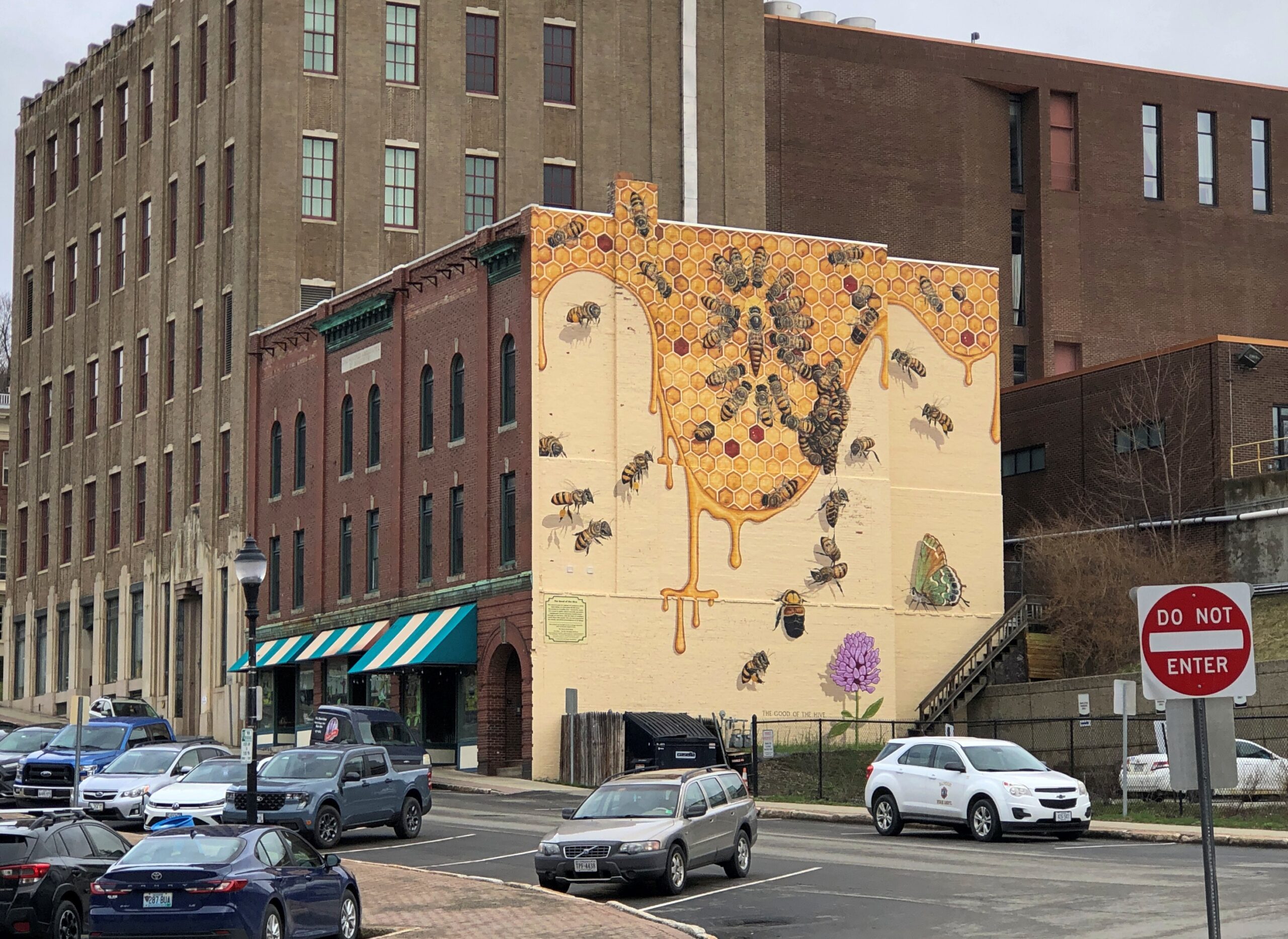
Paul Bunyan isn’t the only mural subject. This one is bees.
Because Bangor is known for honey production? I had to check and probably not much, the sort of thing that gets lumped in with “other” in the ag census for Penobscot County. These bees are bees for the sake of being bees. (Try that three times fast.)
“Bangor Beautiful partnered with Bangor Greendrinks to create a large bee-themed mural in Downtown Bangor during the summer of 2023,” notes the nonprofit Bangor Beautiful. “The artist Matt Willey is the founder of The Good of The Hive, a global mural project with the goal of hand-painting 50,000 honey bees, the number in a healthy, thriving hive. He has painted bee murals all over the world, including at the Smithsonian.”
I knew I got out of bed for a reason today: to find out that there is an artist whose obsession is bee murals. More than 11,780 painted bees so far, according to the artist. Eccentricity of the first order, and I salute it.
You can’t call Bangor bustling, but I’ve seen plenty more vacant downtowns. Business details, former and existing.
Temple of the Feminine Devine, eh? Not to be confused with the Temple of the Devine Feminine, an outfit in Seattle. I could make a Life of Brian reference here, but if you know that reference, you’ve already thought of it.
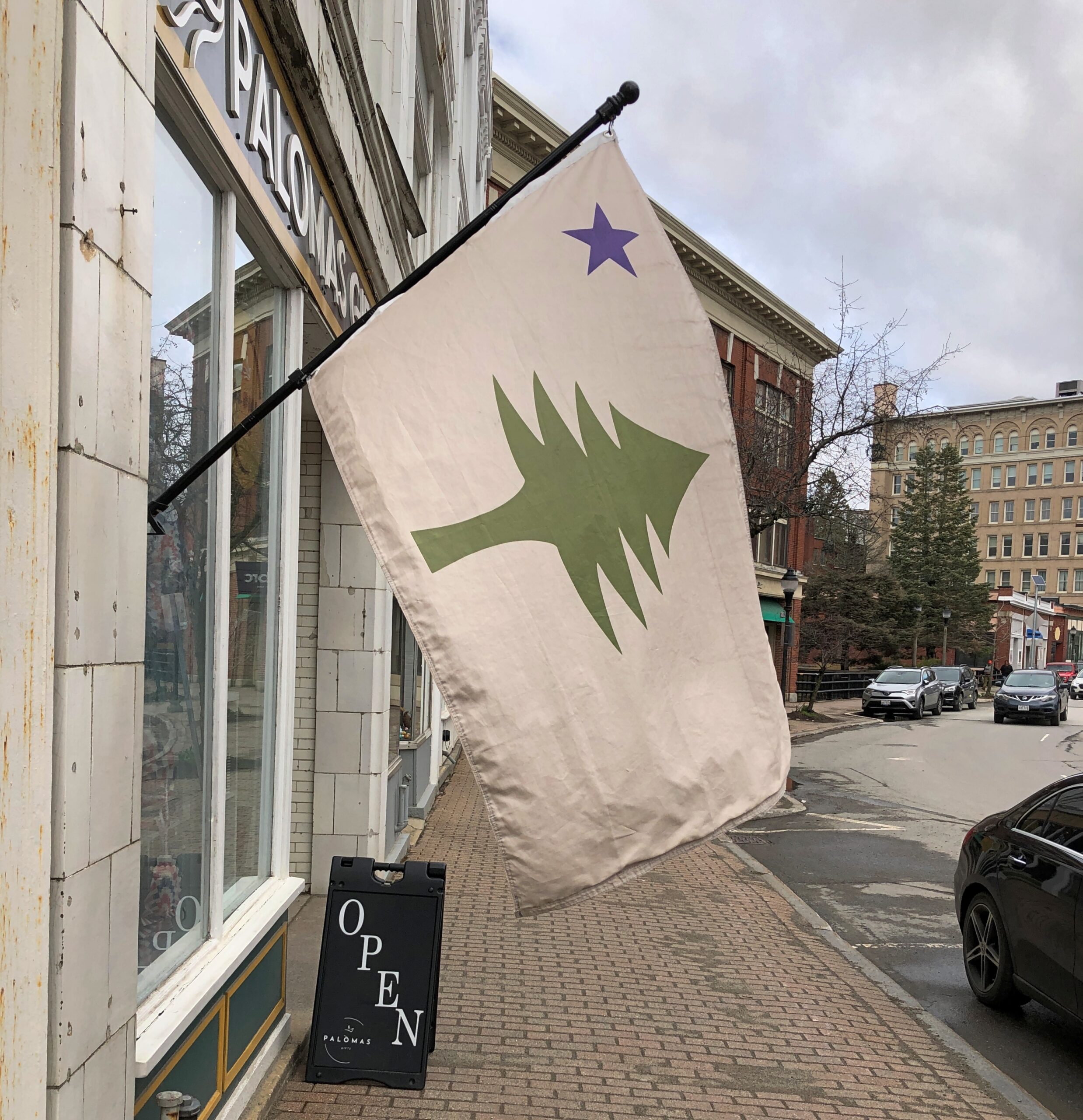
The unofficial Maine flag, and variations.
That flag failed to become official in the last election in a ballot question. No one in Maine cares what I think, but I think it should be made official again, but without disestablishing the current flag. Co-official, you could say. Maine would be unique that way. Also, no fixed pattern beyond a single pine tree and a single star to the upper left. Let a loose a proliferation of lone pine flags begin.
Bangor as a whole hugs the Penobscot River, but downtown clings to the much smaller Kenduskeag Stream, a tributary of the Penobscot.
A small island in the stream is a park.
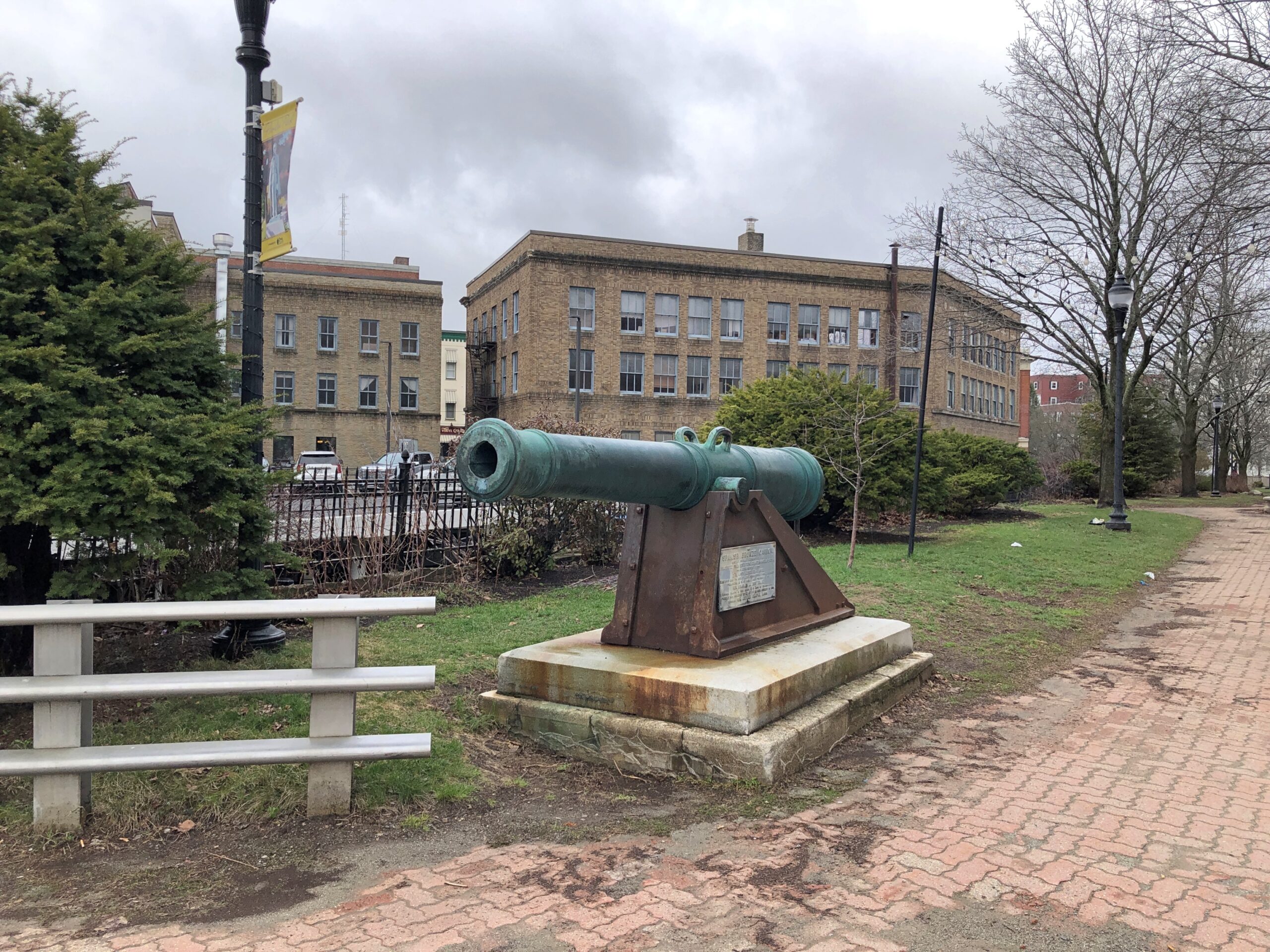
The park sports a cannon captured at Fort Toro, Guantanamo Bay, Cuba in 1898.
It so happened that Rep. Charles A. Boutelle was the chairman of the Committee on Naval Affairs in the U.S. House at that moment, facilitating the war prize cannon’s permanent move to Bangor. Quite the career Boutelle had, per Wiki: “American seaman, shipmaster, naval officer, Civil War veteran, newspaper editor, publisher, conservative Republican politician, and nine-term Representative to the U.S. Congress from the 4th Congressional District of Maine.”
That’s not all. Vice President Hannibal Hamlin, Bangor favorite son, stands in bronze not far from the cannon.
“After Lincoln took office and even with the outbreak of the Civil War, however, Hamlin had almost no role in the administration, as was common for this period in history. Hamlin despised his new position as vice president. He missed being part of the political process and controlling patronage but felt it was his duty to serve. He also found presiding over the Senate boring and was frequently absent. Still, he was disappointed when the Republican Party dropped him from the ticket in 1864.” A curious, but all too familiar quirk of human psychology, in that last sentence.
The “diplomat” on the plinth refers to his posting to Spain in the early 1880s, named to the job during the brevity of the Garfield administration.
The good people of Bangor, Maine, want a word with the wider world about how to pronounce the name of the city. Or rather, they want to sing!
I have to say I’ve been careless myself about how I say “Bangor” all these years, including during college, when it was the punchy part of a running joke. The thing is, I don’t remember the joke, or who told it – me, sometimes, I guess – or under what circumstance. Just that it sounded like a funny name, which we were probably mispronouncing. Funny especially when you’re chemically enhanced, as college students are known to be.
But even said soberly, and correctly, it sounds a little funny, as some words are. There’s a town in Wales of the same name, which I assume lent its name to the settlement in Maine, and if you dig deep enough into the Welch, it means “wattled enclosure.”
On April 17, I wrapped up my visit to Maine and headed back toward Massachusetts. By way of Bangor, of course. I had to go there, considering my vague recollections that put it on my personal map of the world.
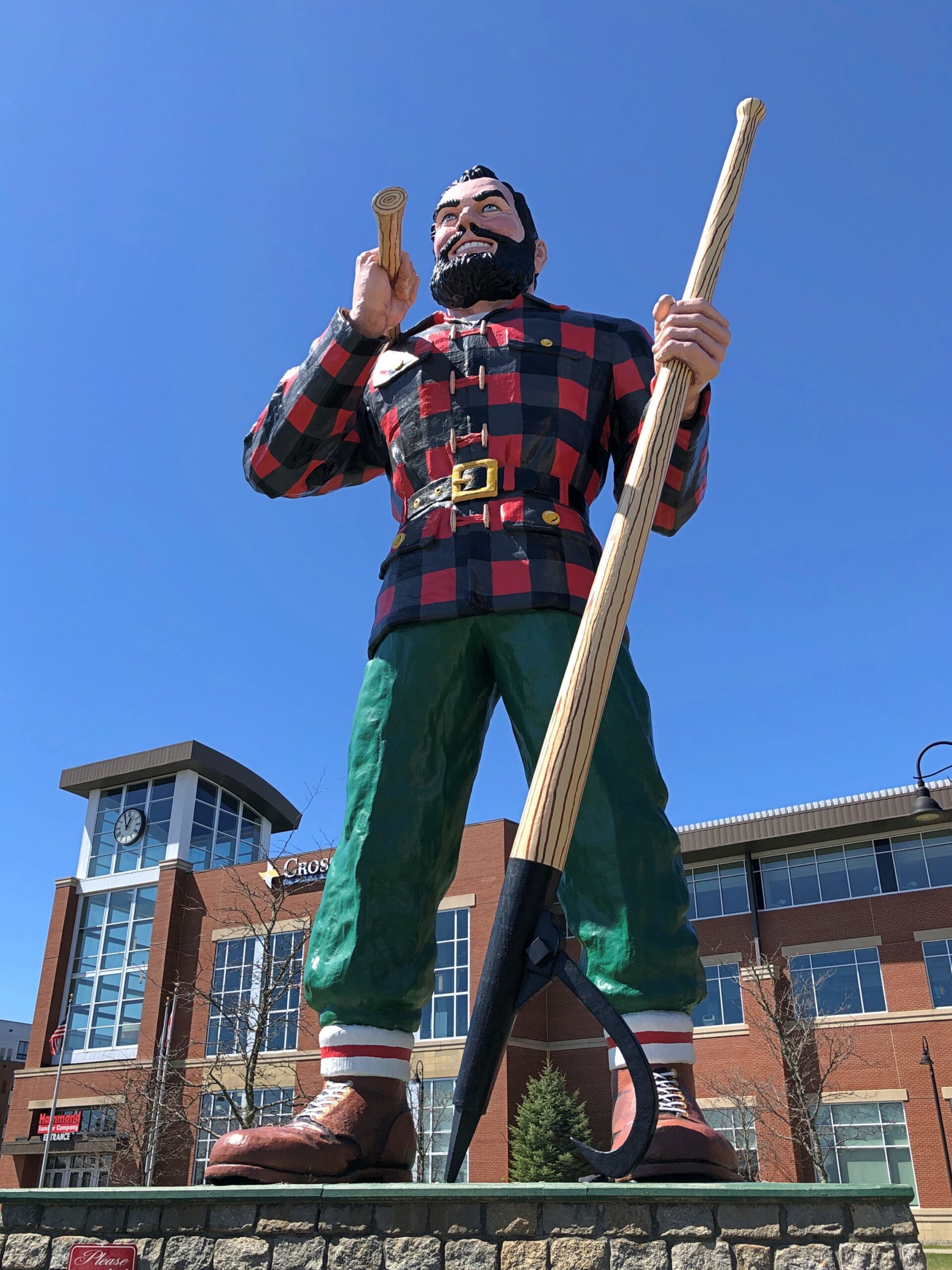
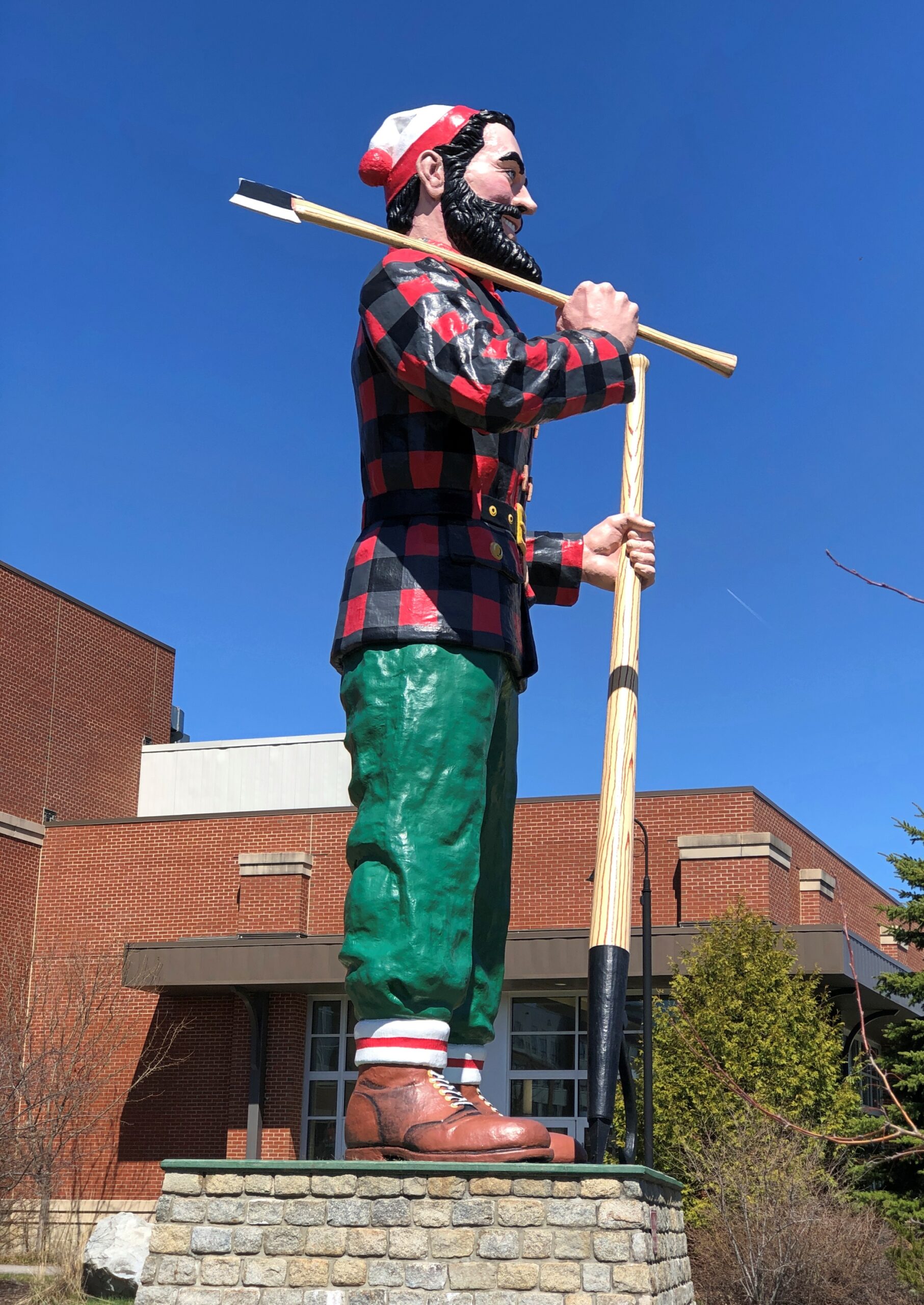
At the very least, I had to see Bangor’s Paul Bunyan. One of a surprising number of such statues.
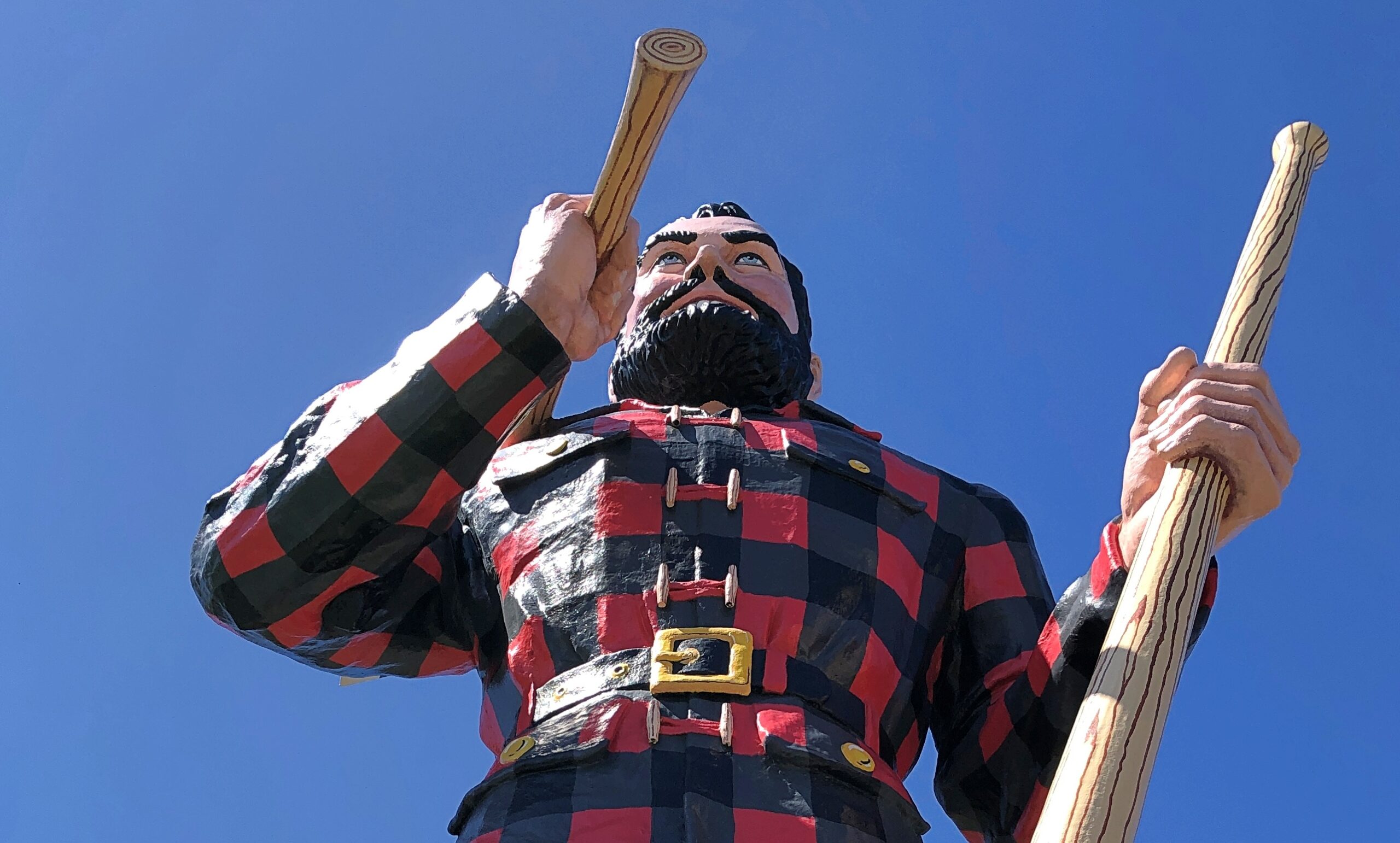
Bangor claims the folkloric-ad man-created lumberjack as its own, and why not? Once upon a time, Bangor was a lumber town to beat all. The 31-foot statue looks pretty good, considering it has enduring Maine weather since its erection in 1959 on Main St. a short distance from downtown. Bangorian civic pride won’t let it fall into disrepair, no doubt. A local artist, J. Normand Martin (d. 2021) designed it and a New York company, Messmoor & Damon, built the statue.
Messmoor & Damon has a remarkable story of its own. The company was best known for its animatronic dinosaurs.
“In 1924, the model-making company Messmore & Damon of New York unleashed their masterpiece: the Amphibious Dinosaurus Brontosaurus, a moving, breathing, roaring animatronic dinosaur, based on displays in the American Museum of Natural History,” wrote Chris Manias, a historian at King’s College London.
“This commercial company constructed a whole menagerie of prehistoric automata and sought to take advantage of the growing appeal of paleontology and prehistory. Messmore & Damon presented dinosaurs and prehistoric animals through ever-evolving displays and in a range of contexts, and these were seen by hundreds of thousands of people in the United States, Canada, and France. Their creations were designed to mix commercial spectacle, novel technology, and narratives of life’s development.”
And Messmore & Damon did, one should add, Paul Bunyanof Bangor, who is still seen by many passersby to this day, unlike Amphibious Dinosaurus Brontosaurus, as awe-inspiring as it must have been.
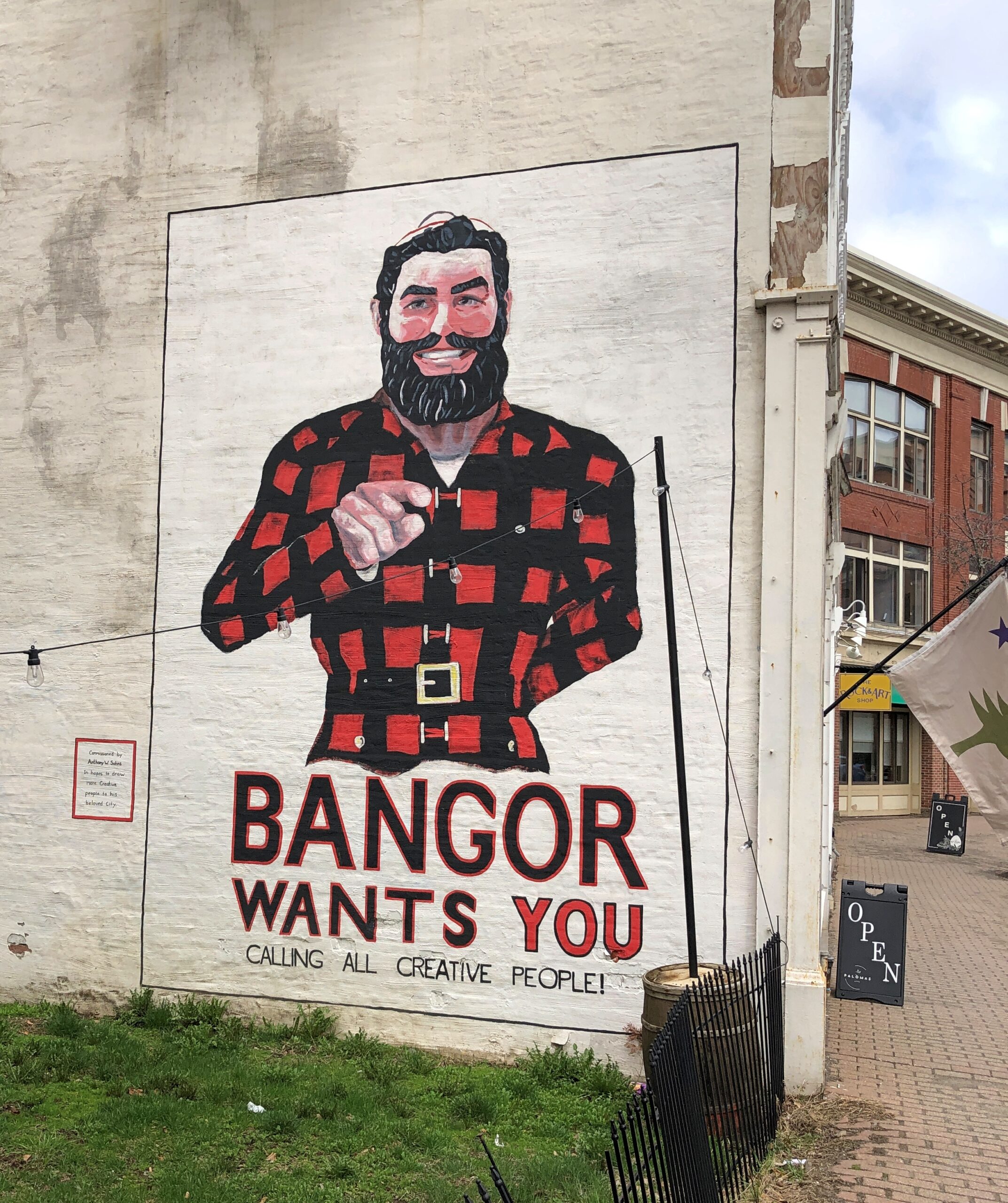
A more recent depiction of Paul in Bangor – a variation of the statue, in fact – is a downtown mural.
Another local artist, Annette Sohns-Dodd, completed the work in 2021, including the slogan. Note that Paul’s not carrying the tools of the lumbering trade, but he seems eager to do his modern job as a Bangor booster.
Driving the entire length of US 1 is more logistics that I want to take on at the moment, or maybe ever, but I figure I get a little of the same satisfaction doing it in sections. US 1 from Trenton to Newark, which I drove the afternoon of April 10, isn’t what anyone would call a scenic road, but that I’d say it’s better than the New Jersey Turnpike, whose main scenery is tail lights of other cars.
US 1 in New Jersey is four or six lanes most of the way through, generally is a divided highway, passing large cross streets, retail agglomerations, railroad tracks paralleling for a time, car dealerships, sporadic stretches of forested or other undeveloped land, thick traffic through New Brunswick especially, more than a few Jersey lefts and an uptick in spaghetti interchanges the closer you are to Newark. Stops were for traffic lights, but not too much for simple congestion. Take that, New Jersey Turnpike.
During the drive, I chanced on a radio call-in show that asked callers for stories about crashing wedding receptions, sneaking into off-limits places or other common enough rule infractions, such as taking food into movie theaters. One man claimed to have crashed a reception with a couple of friends, none dressed for the occasion; the father of the bride took a cotton to them and made sure they were well fed and good and drunk before long. One woman claimed to take entire meals to the movies and eat them there, and never being asked to leave. Now this was local radio, a real New Jersey thing to talk about.
Jan had told him many times, “It was you to me who taught: In Jersey, anything’s legal as long as you don’t get caught.”
“Tweeter and the Monkey Man”, a group effort but clearly a Dylan song, is a brilliant example of a pseudo-ballad. A ballad tells a story, right? A pseudo-ballad seems to tell a story, but at some point near the end of the song, you wonder just what happened. Lyrically, not all of the pieces of the puzzle are available. “Crime and other weird behavior in New Jersey” is about a specific as you can get in this case.
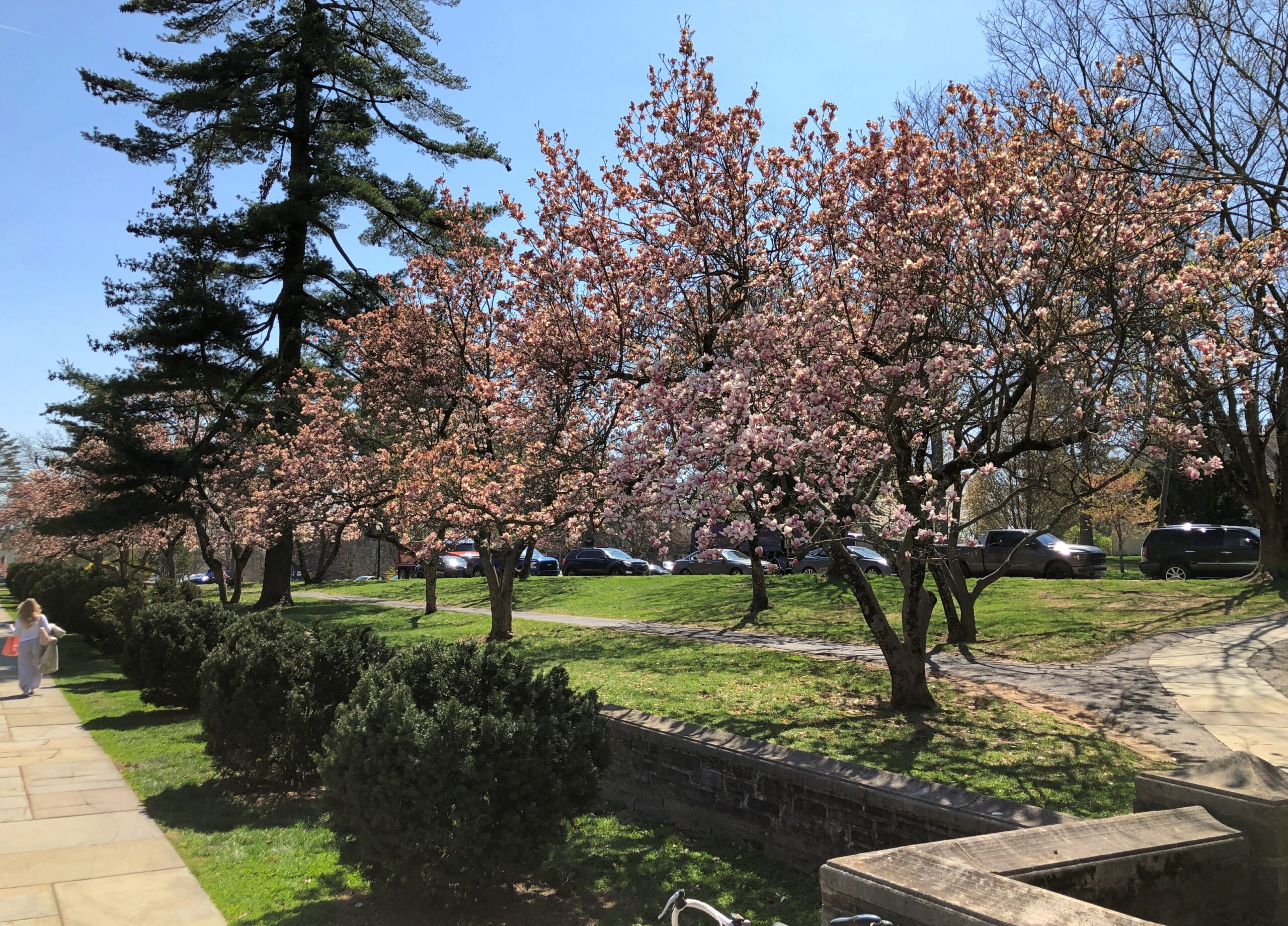
In October, I’d spent a few hours wandering Yale’s stately lawns and buildings and the nearby cemetery. So it only stands to reason – if I’m the one doing the reasoning – that I also visit Princeton, a short way off US 1 not far from Trenton.
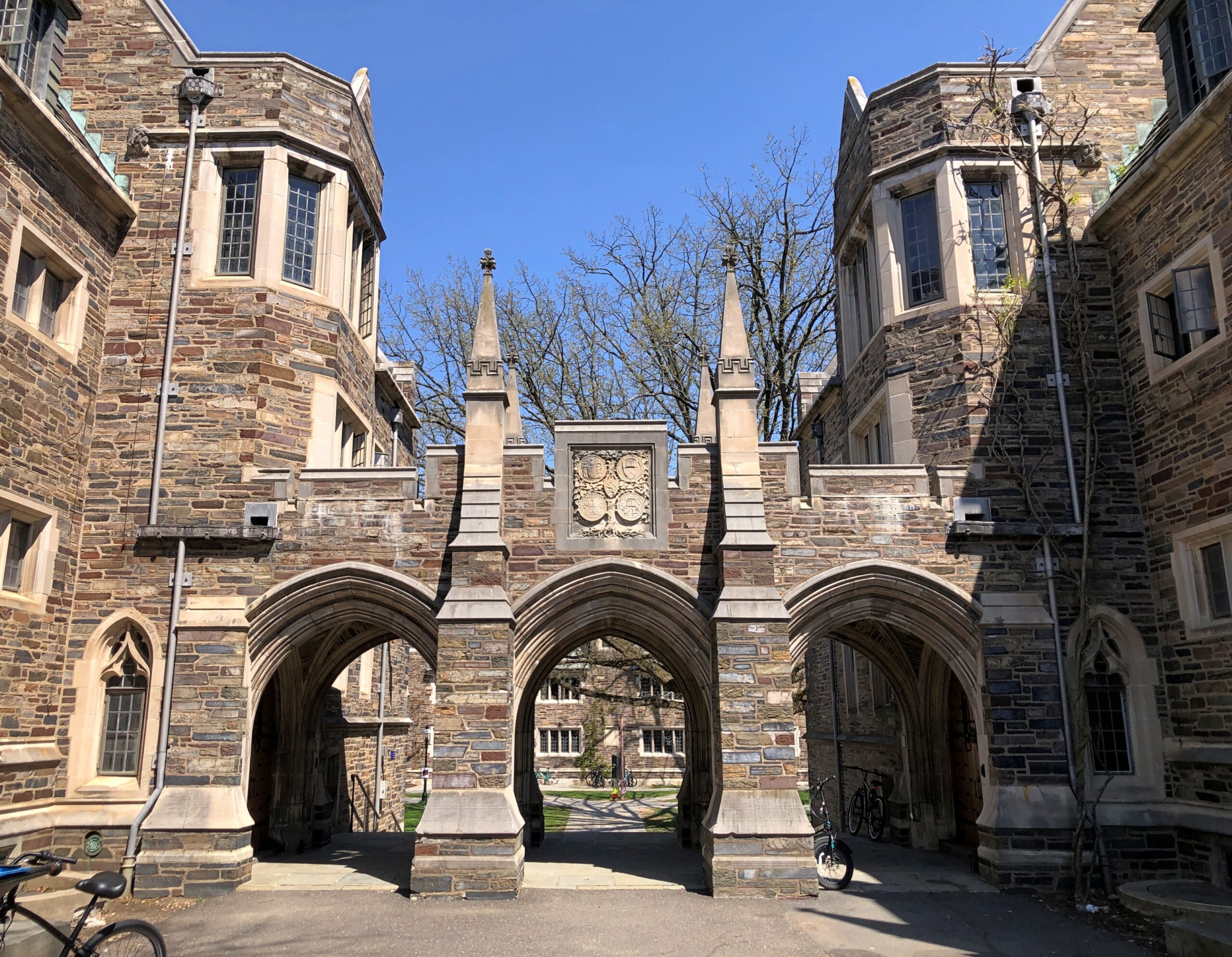
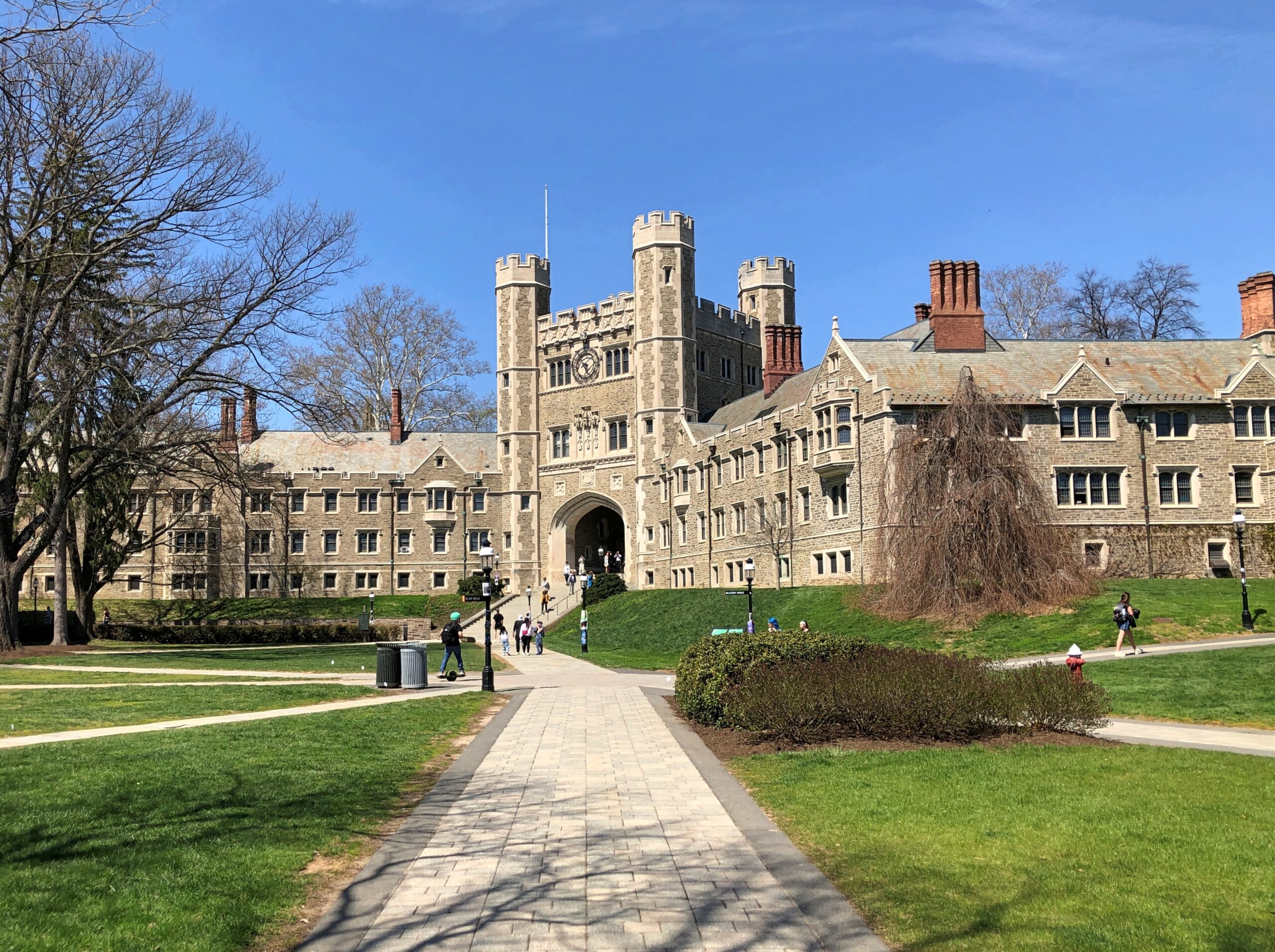
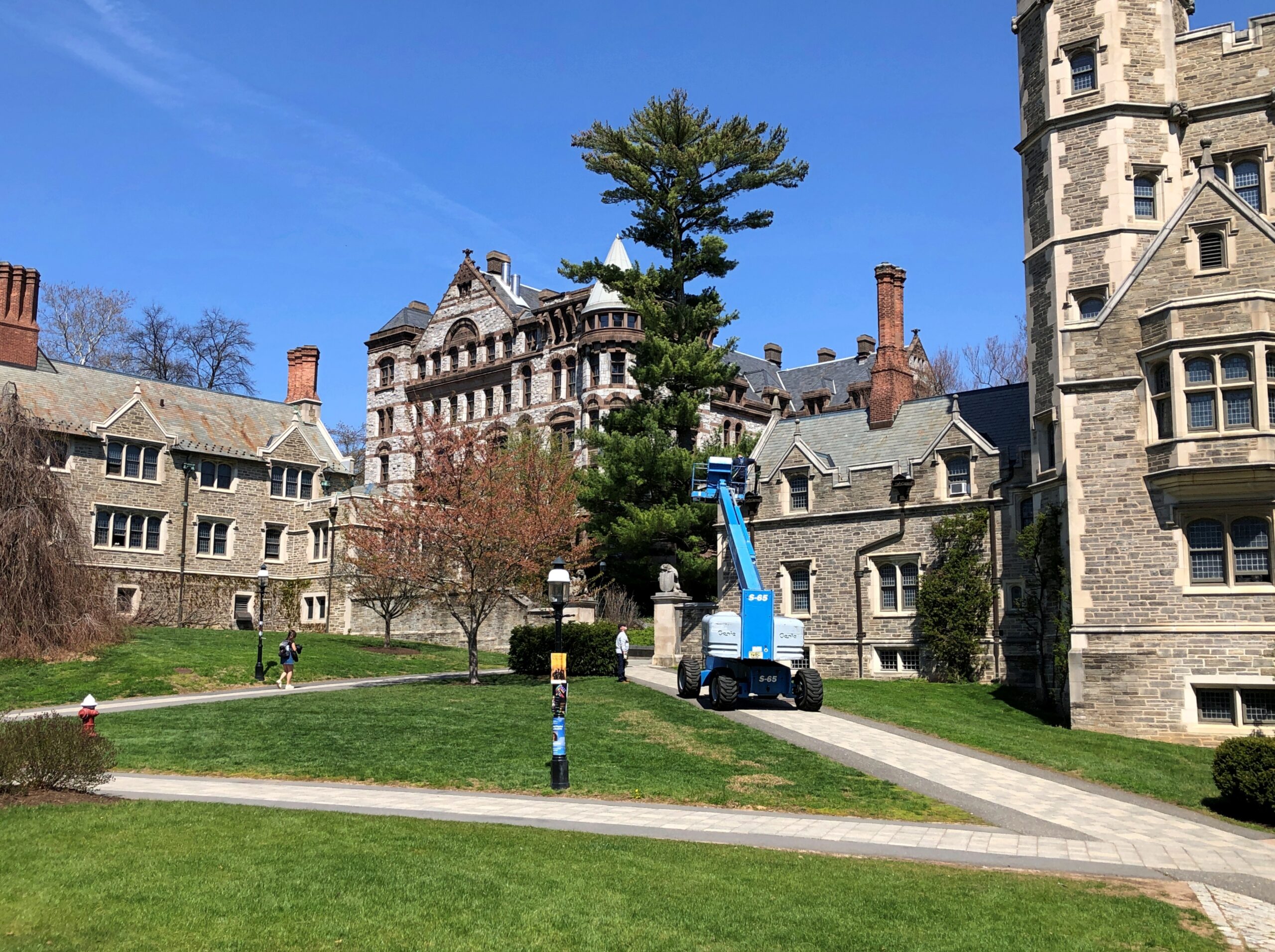
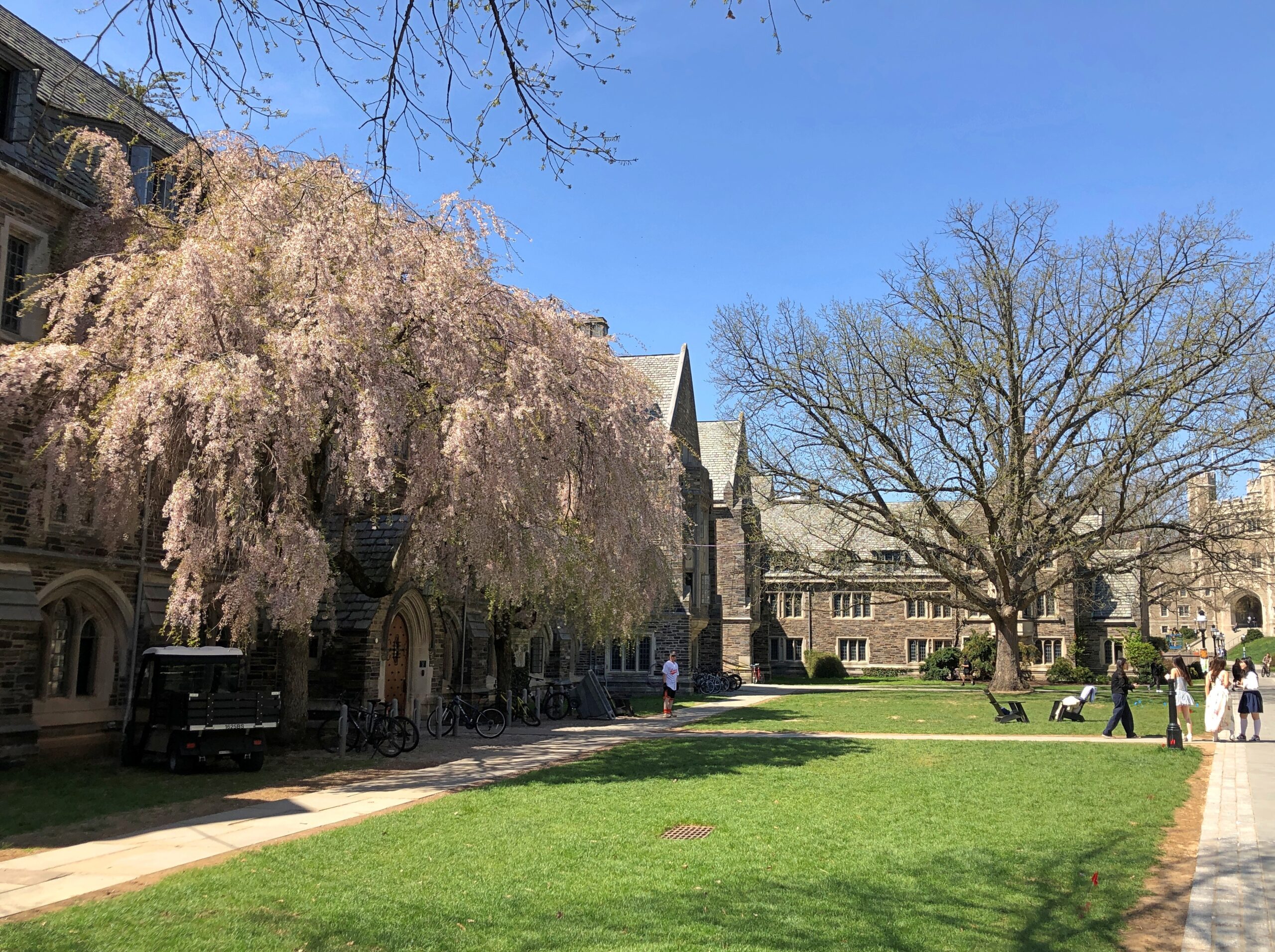
Stately buildings.
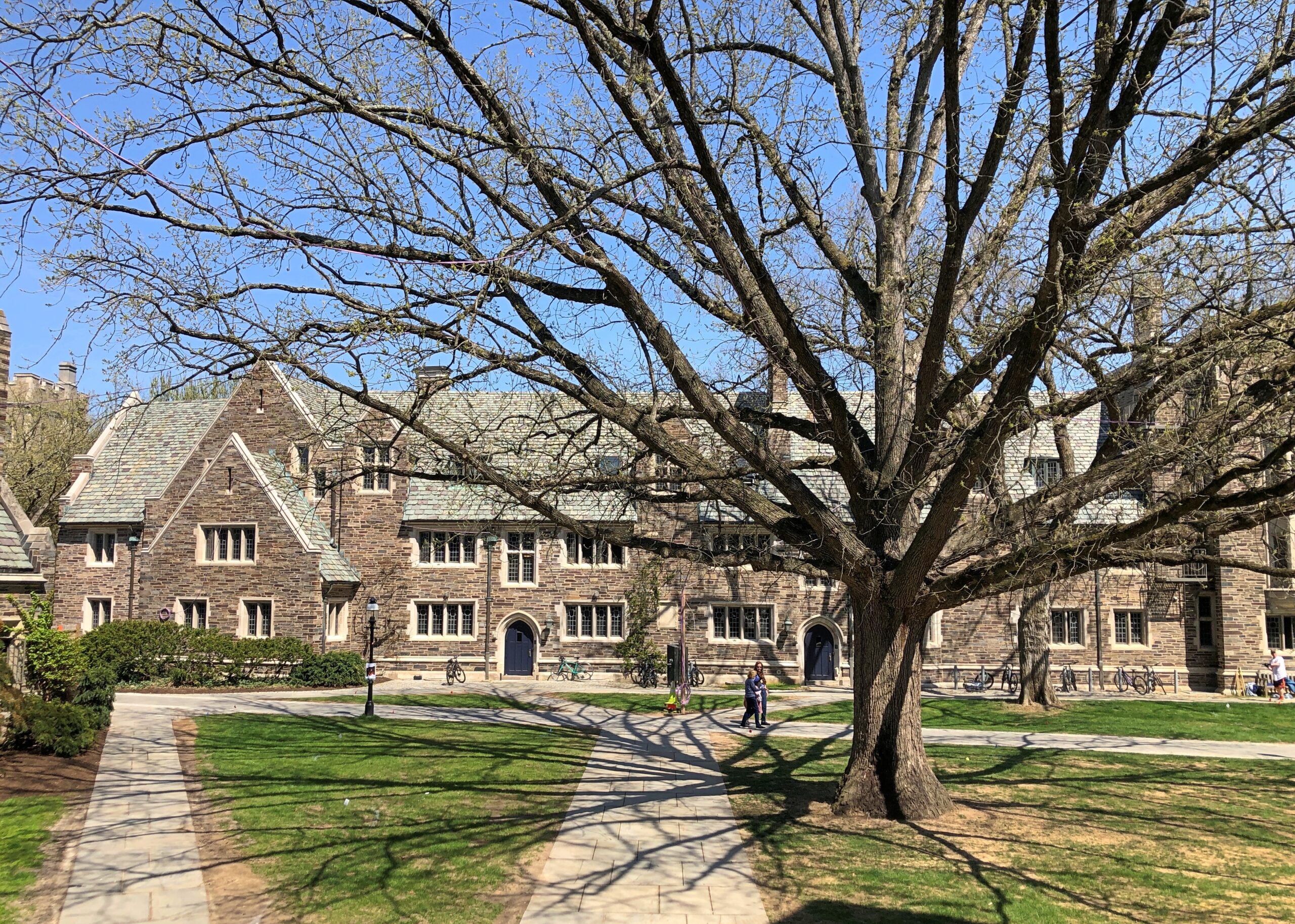
Early spring on the stately lawns.
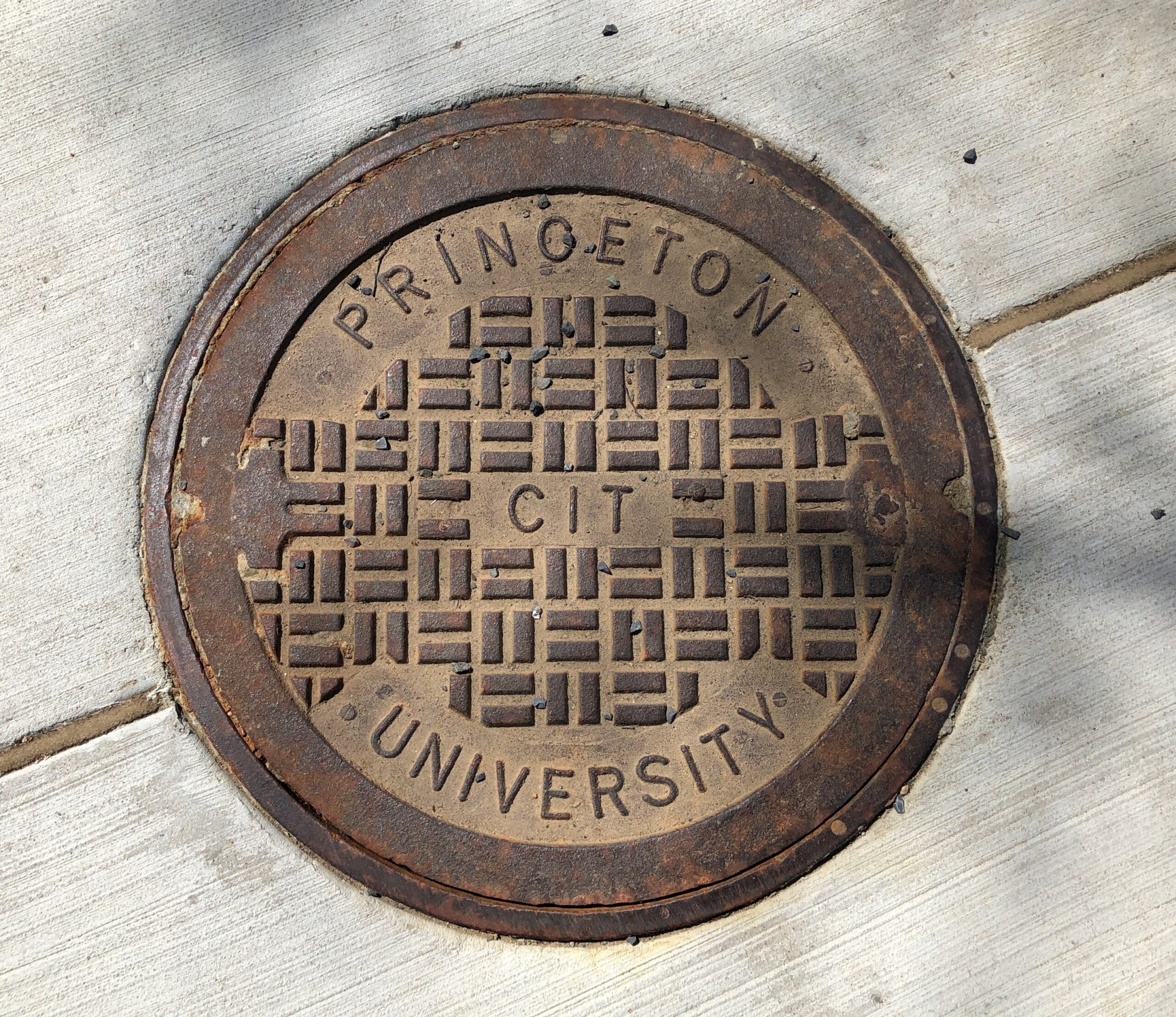
Not the best collegiate manhole cover I’ve seen – that would be at Olivet Nazarene University in Bourbonnais, Illinois – but not bad.
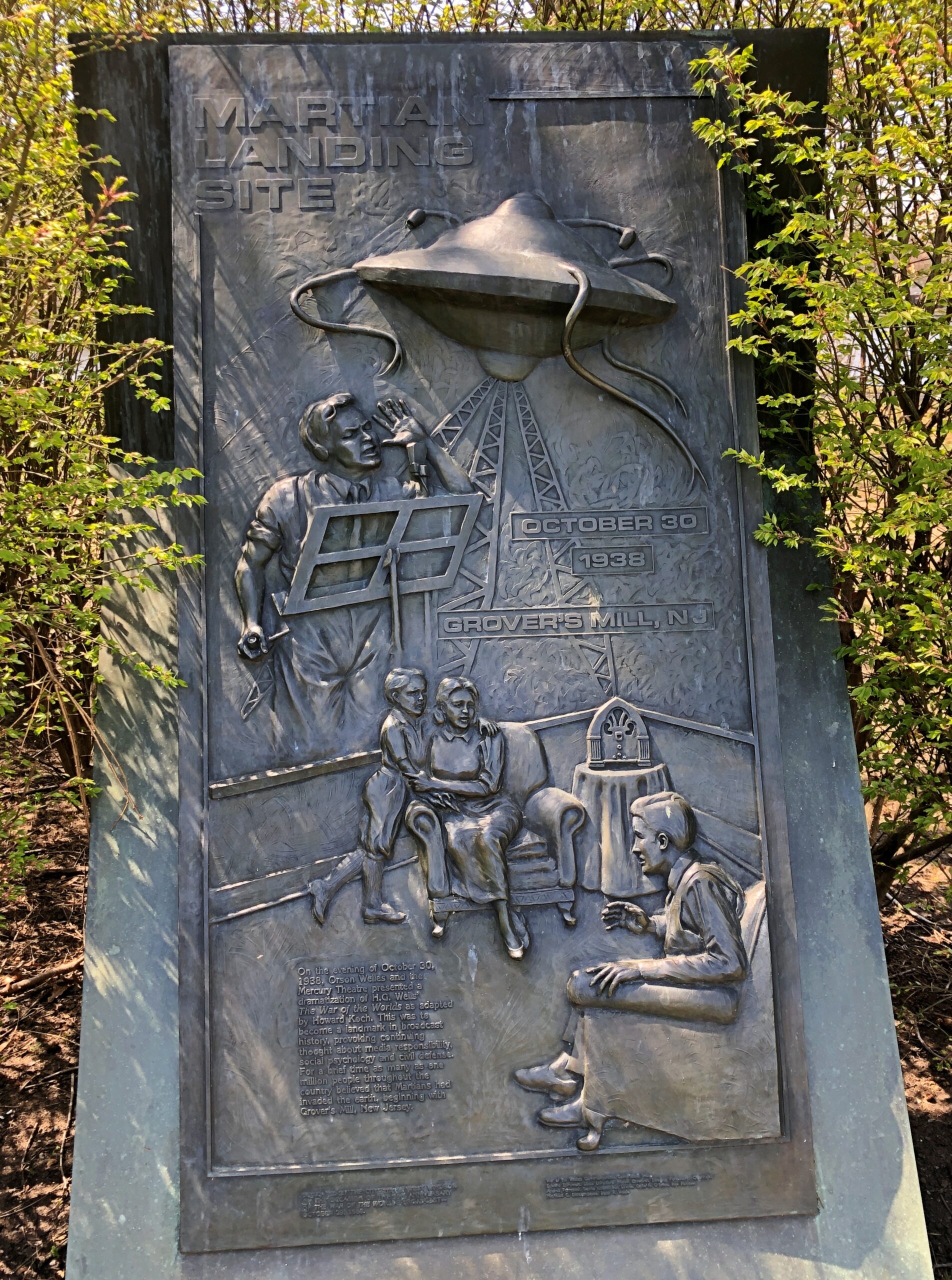
Princeton is west of US 1; Grovers Mill, New Jersey is to the east, also not far. I had to go there, too. Specifically, to a small park on a small lake in the unincorporated Grovers Mill. A short park trail includes information about Grovers Mills’ claim to fame: in Orson Welles’ version of War of the Worlds, it was the first place the Martians landed.
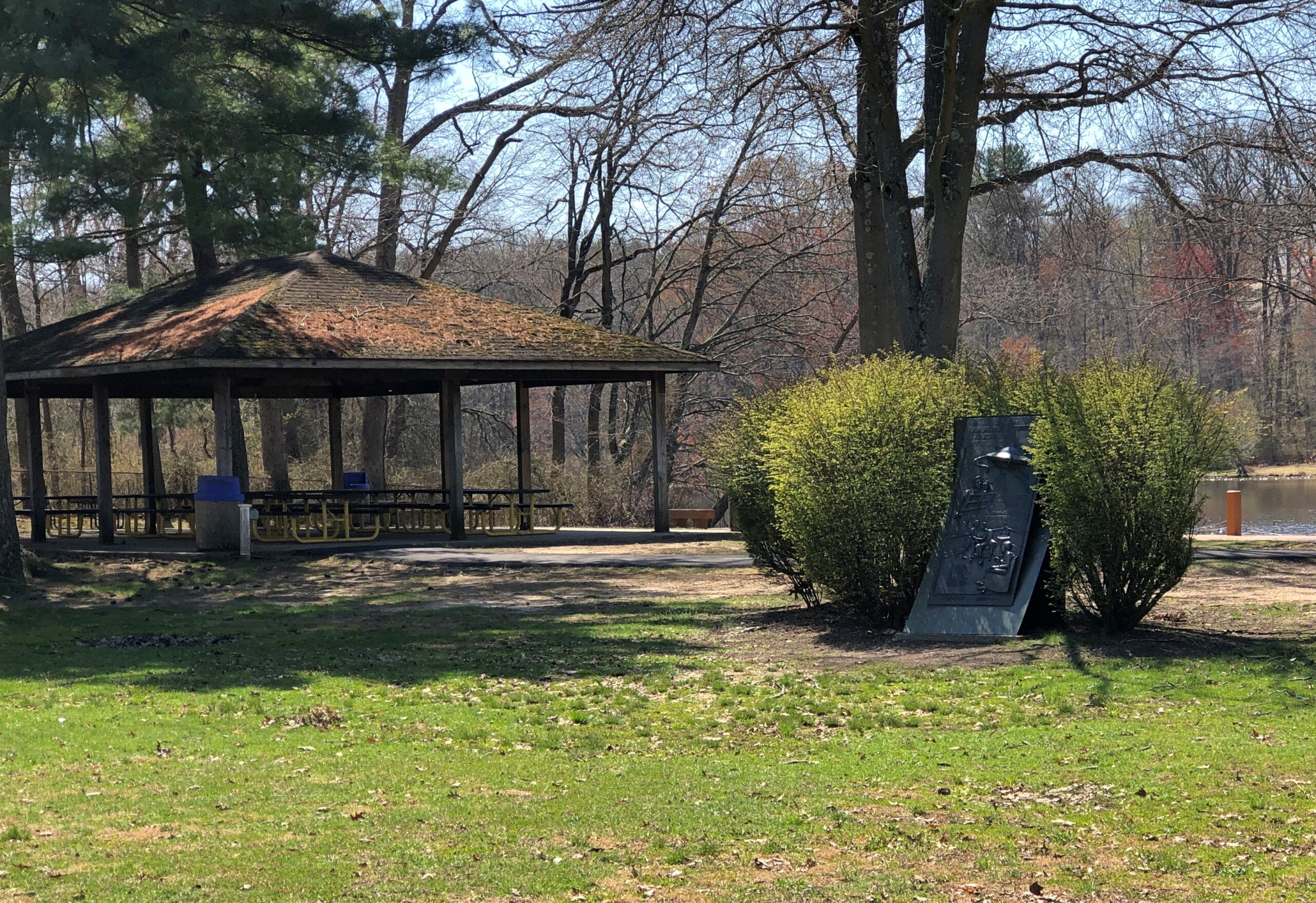
There’s a sizable plaque, a little bit hidden away, but I found it.
The township of West Windsor, in an unusual display of municipal imagination, erected the memorial in 1988, on the occasion of the 50th anniversary of the broadcast. Sculptor Thomas Jay Warren did the relief.
Ladies and gentlemen, I have a grave announcement to make. Incredible as it may seem, both the observations of science and the evidence of our eyes lead to the inescapable assumption that those strange beings who landed in the Jersey farmlands tonight are the vanguard of an invading army from the planet Mars. The battle which took place tonight at Grovers Mill has ended in one of the most startling defeats ever suffered by any army in modern times; seven thousand men armed with rifles and machine guns pitted against a single fighting machine of the invaders from Mars. One hundred and twenty known survivors. The rest strewn over the battle area from Grovers Mill to Plainsboro, crushed and trampled to death under the metal feet of the monster, or burned to cinders by its heat ray. The monster is now in control of the middle section of New Jersey.
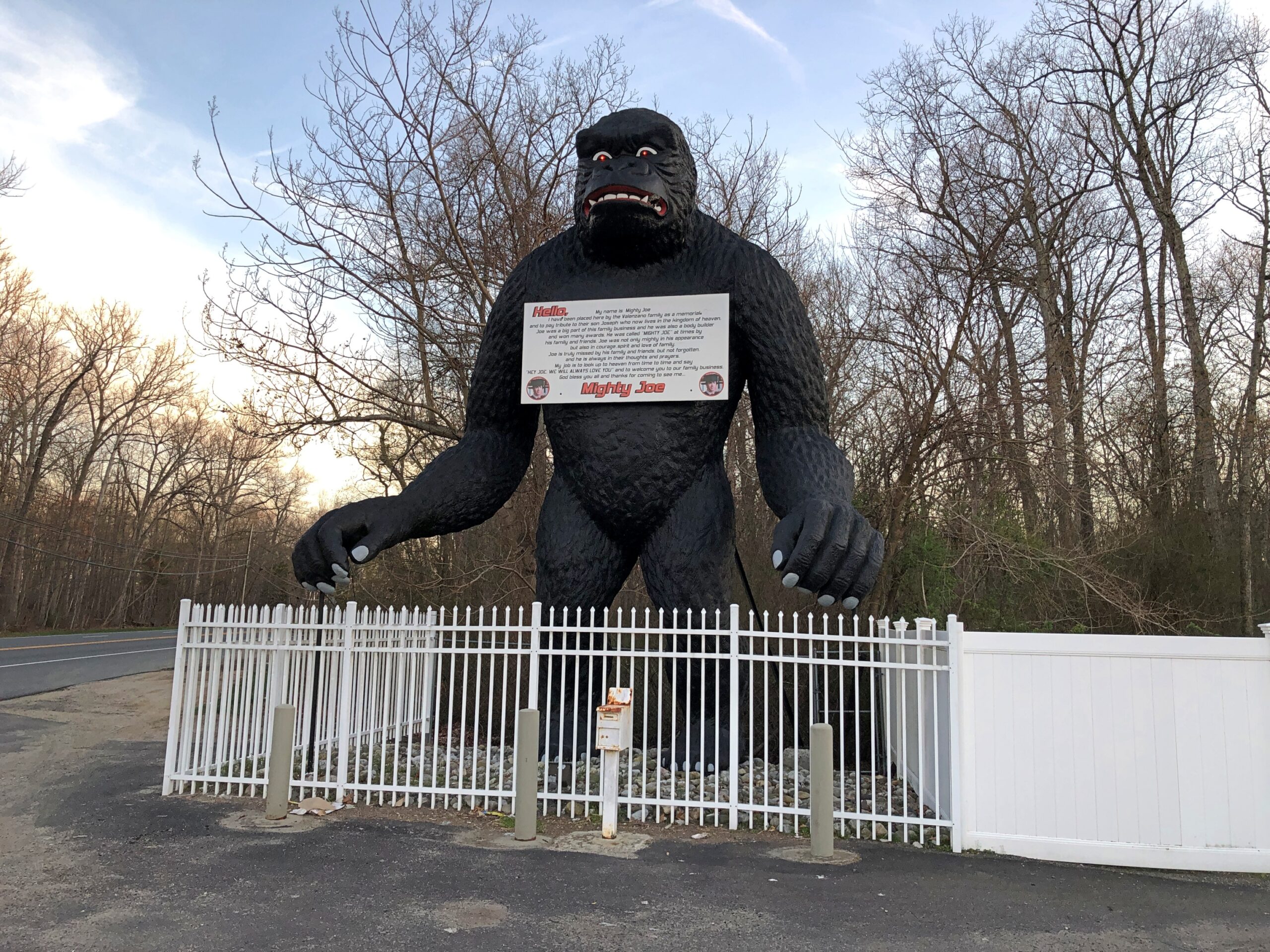
Down in South Jersey earlier this month, I didn’t see the Jersey Devil. I did see Mighty Joe.
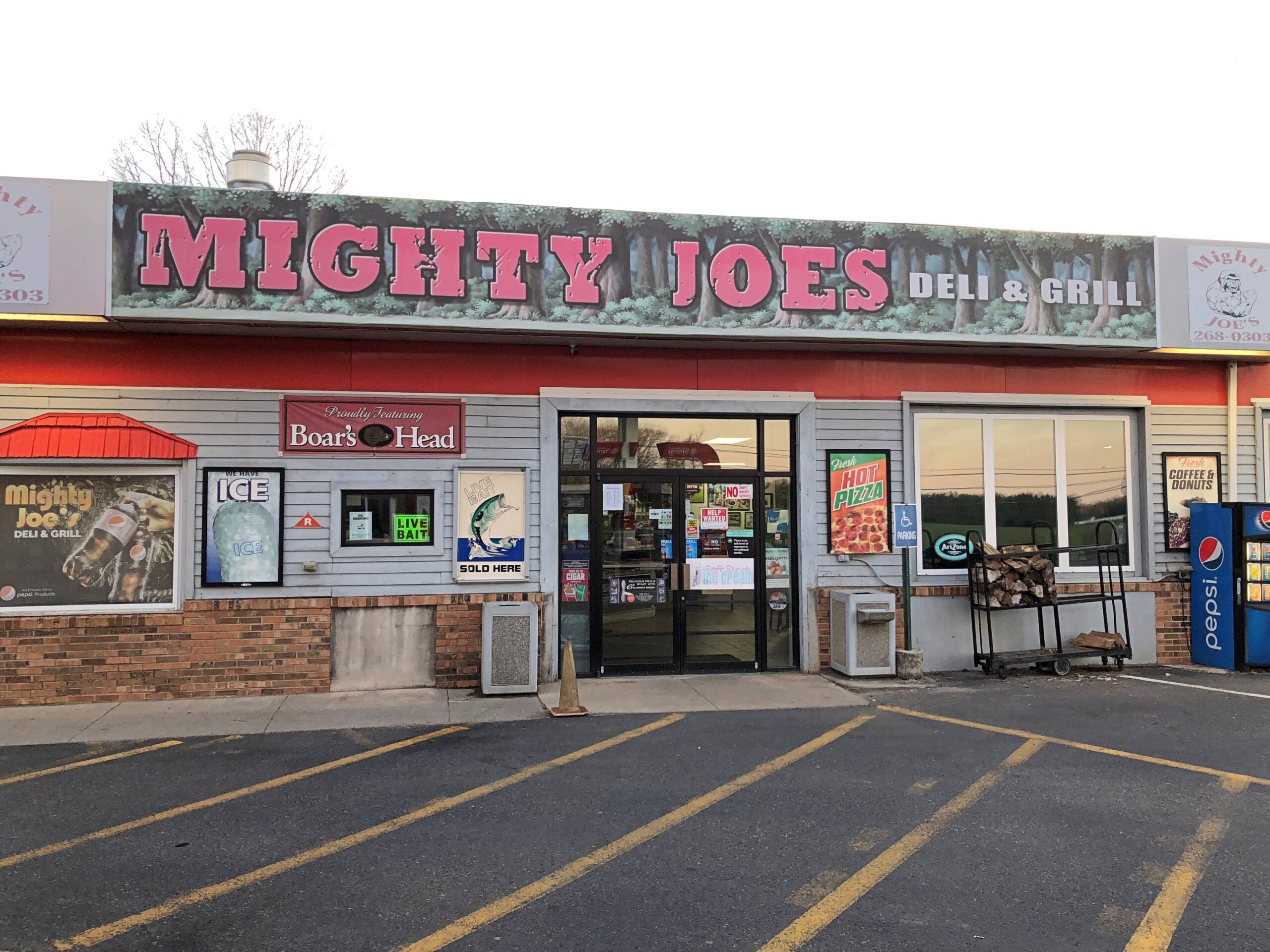
He counted as my introduction to the Pine Barrens, standing at a convenience store on US 206 in Indian Mills, Shamong Township, New Jersey. His story, which Roadside America tells well, began in Spain – really? – though immigrant Mighty Joe apparently has spent most of his existence in New Jersey as a commercial mascot of one kind or another. He’s still that, but also a memorial to the son of the store’s owner, Larry Valenzano, according to the sign on the gorilla’s chest. The younger Valenzano, a body builder nicknamed Mighty Joe, died of cancer in 1999.
I didn’t stop for Joe heading south on US 206. Can’t stop for everything. I figured I wouldn’t see him on my return to Trenton either, since I was planning to return on smaller roads through the heart of the Pine Barrens, after visiting Atlantic City. All went according to plan, until I actually got into the heart of the Pine Barrens fairly late in the afternoon of April 9.
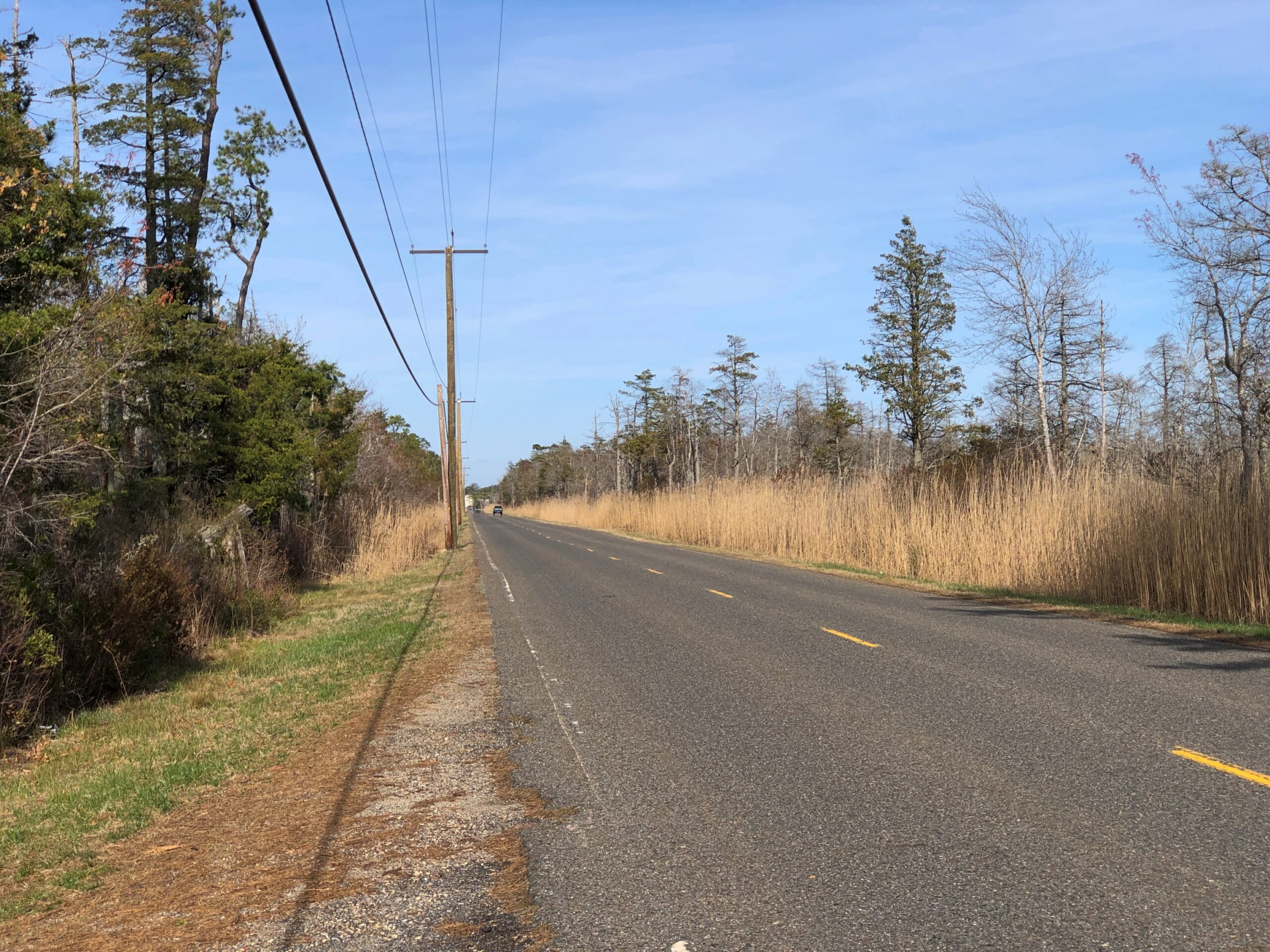
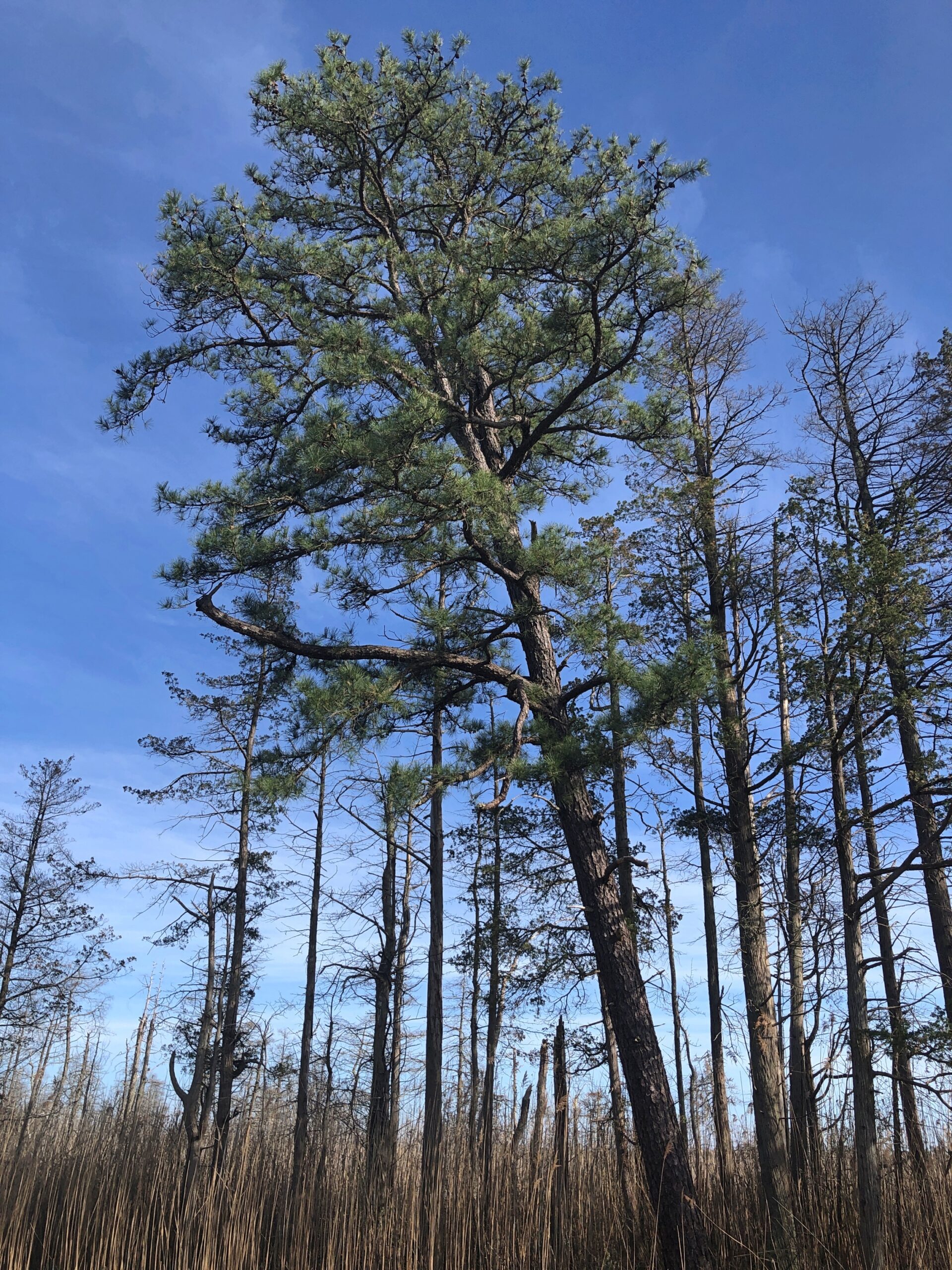
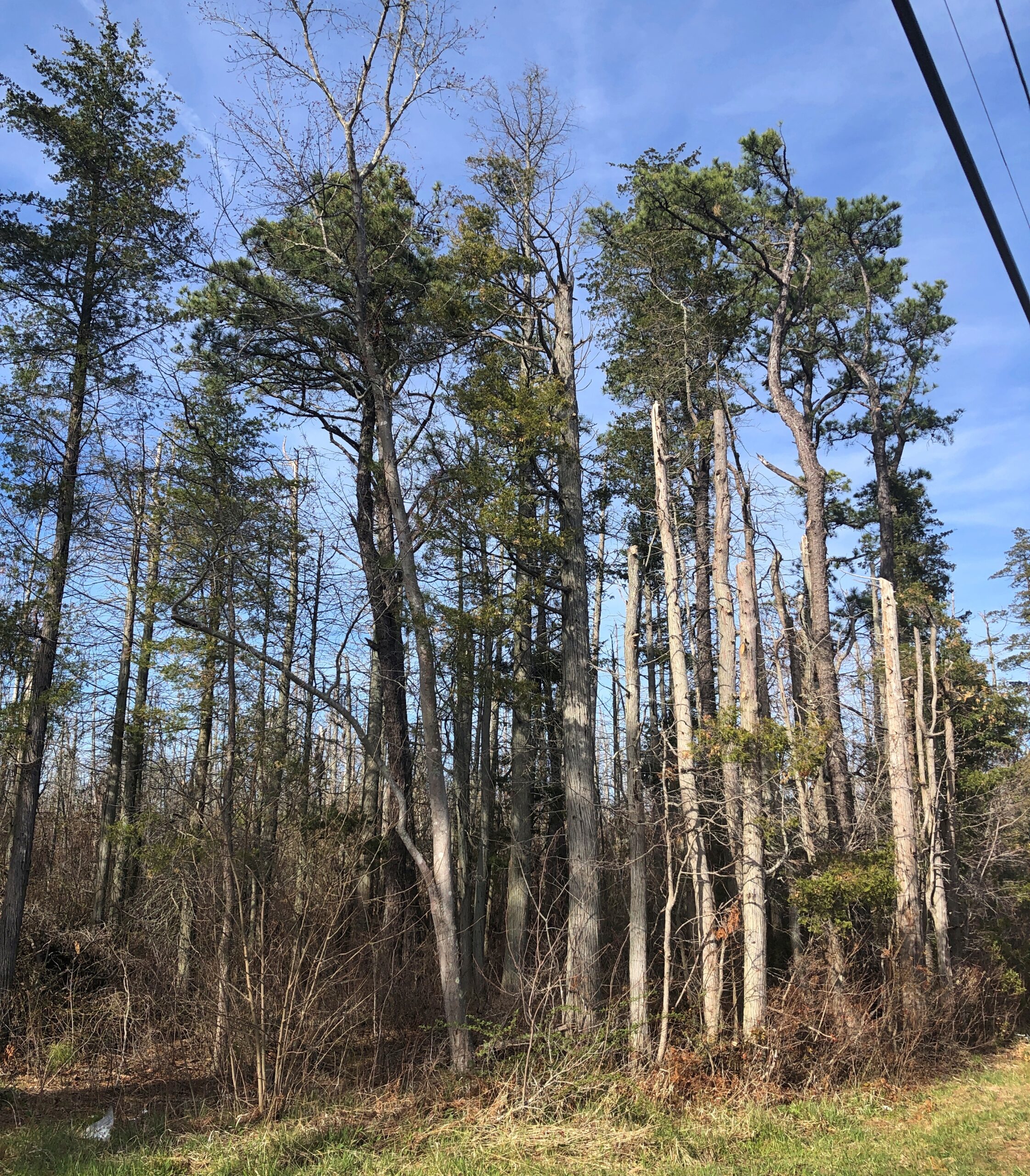
Considering how close you are to Philadelphia and New York, it’s remarkable how remote the Pine Barrens feel. The region, I understand, is the largest surviving forest on the Eastern Seaboard south of Maine’s North Woods, totaling over 800,000 acres.
The region is also called the Pinelands. It certainly fits.
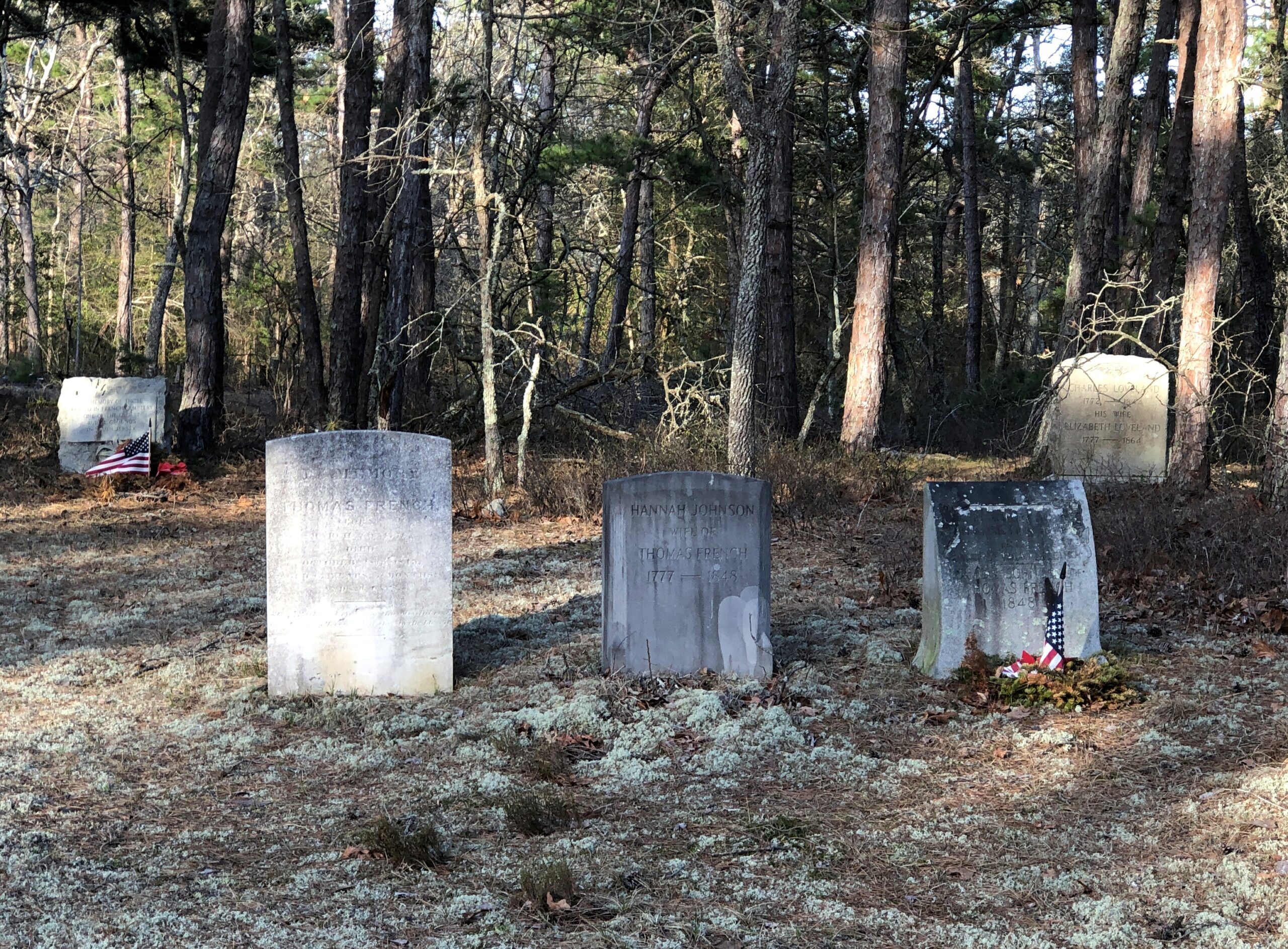
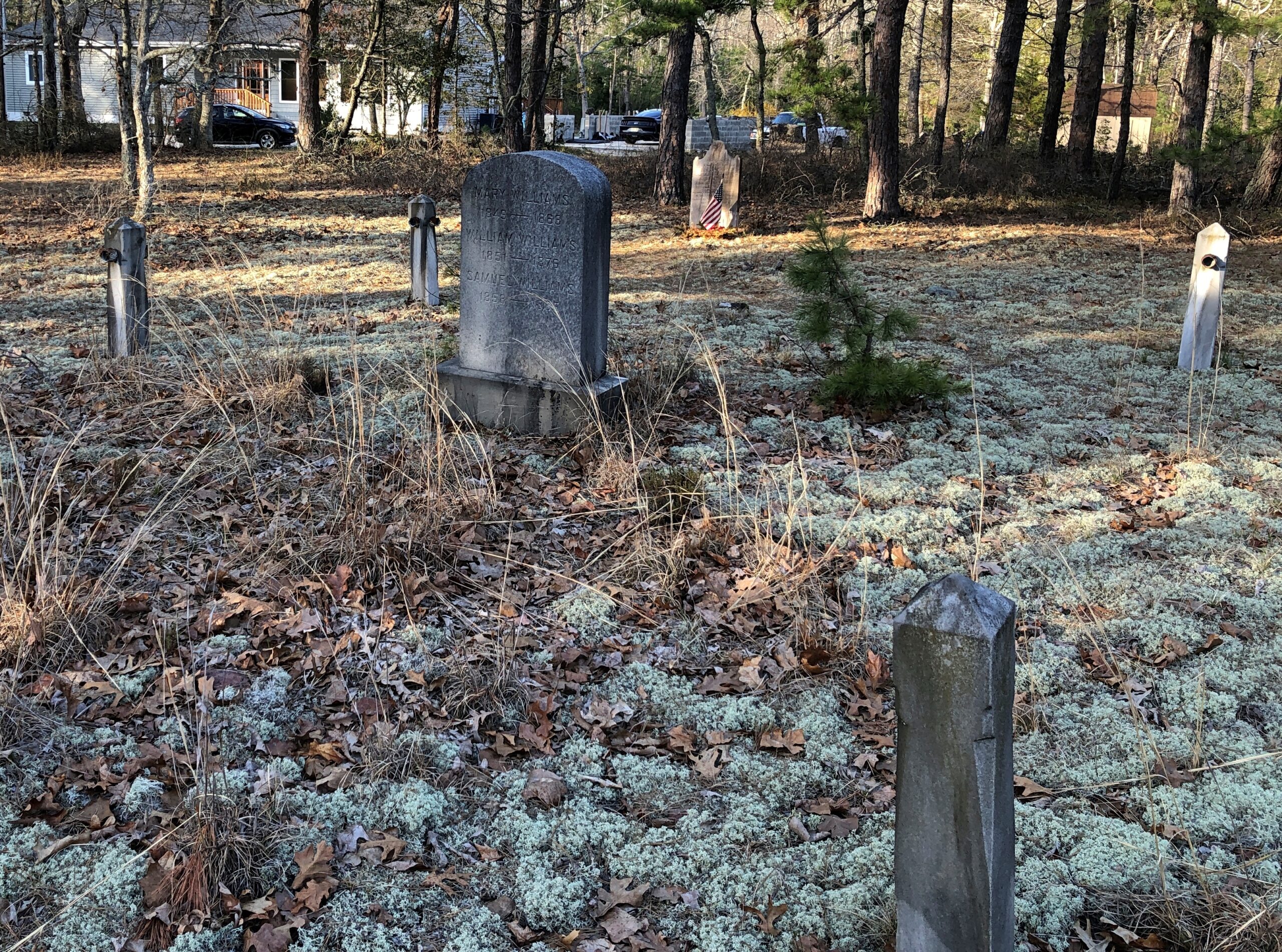
Remote, maybe, but still plenty of signs of human habitation, past and present. I stopped to take my bearings at a wide place in the road, and noticed gravestones.
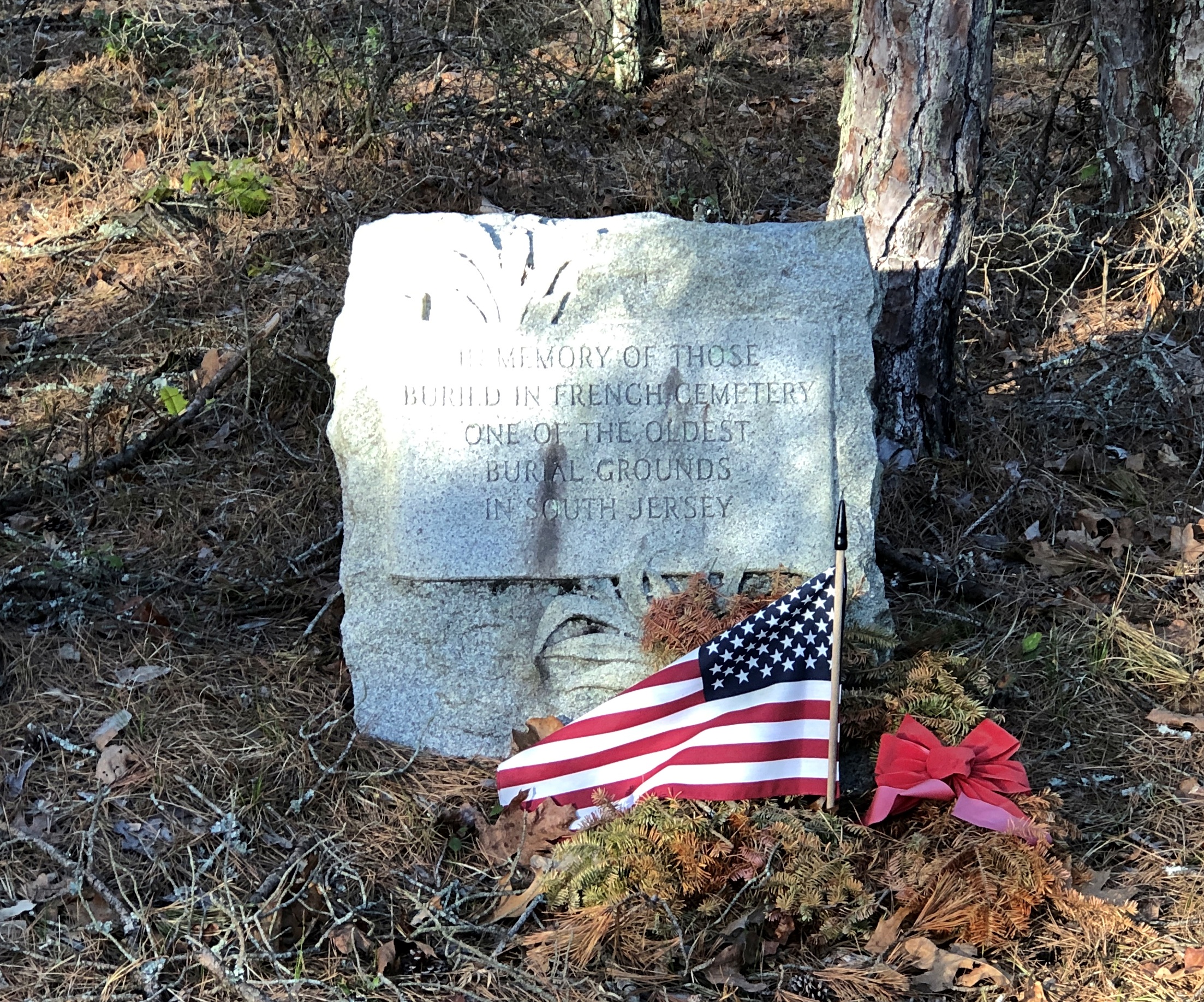
French Cemetery, named for a number of people buried named French, not for their nationality. “One of the oldest burial grounds in South Jersey,” the stone asserts. Could be, but I have no way to check that.
Interesting little spot anyway, northeast from Egg Harbor City and past the Mullica River and near the Wading River. Or was that the actual location? I was traveling on marked county roads, but pretty soon I started seeing county road signs covered with black plastic bags, next to newer signs. I can only guess, but I think that meant a recent change in the numbering of the county roads.
That further meant that both my paper and electronic maps were wrong – in as much detail as they had anyway, which wasn’t a lot. “Lost” is too strong a word, but I’d say I was disoriented in a web of meandering, ill-marked roads. I stopped more than once among the pines of the Pinelands to try to figure out a better course.
Then it occurred to me: I remembered seeing some of the exit numbers on highways near Trenton had been changed, too. I’m speculating, but I think that had something to do with my GPS going just a little funny in the head the night before. Damn it, New Jersey.
Eventually I worked my way back toward Egg Harbor City, a sizable town on US 30, which connects with US 280, which goes straight back to Trenton; the way I’d come. That’s how I was able to stop to see Mighty Joe.
Even so, I happened across a few places in the Pinelands to stop, especially Batsto Village, site of the former Batsto Iron Works.
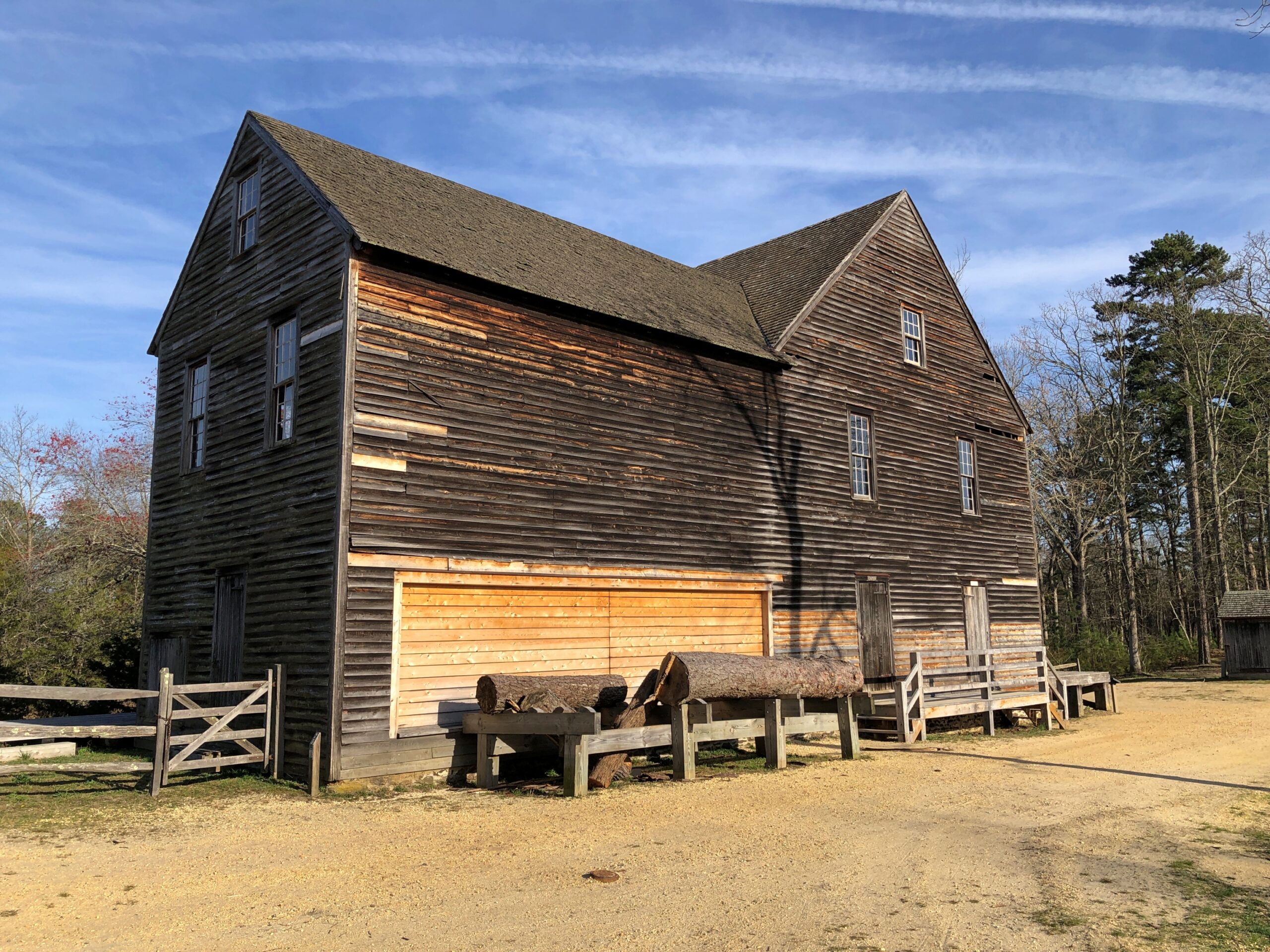
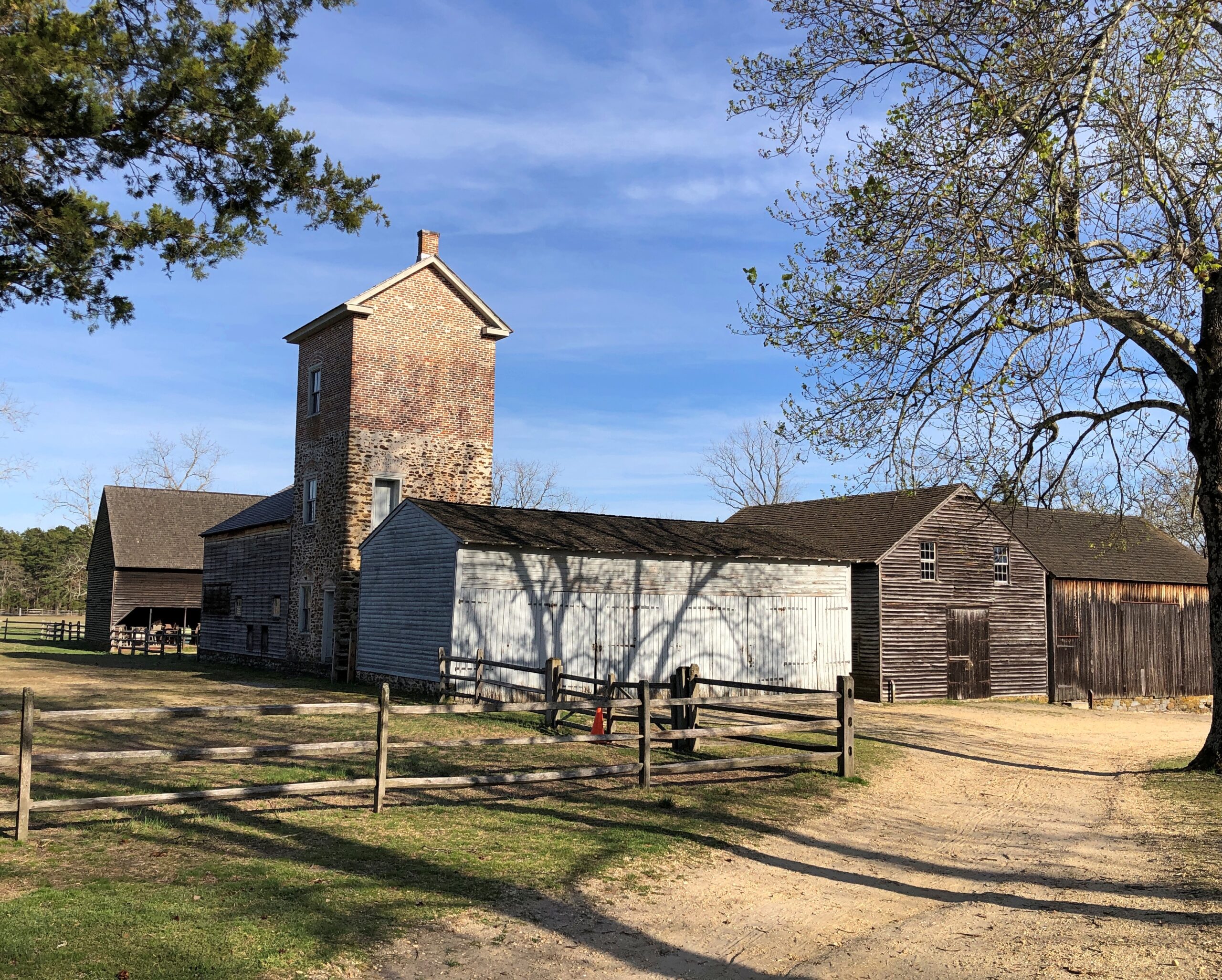
Most of the open-air museum buildings are 19th century, but the Batsto Iron Works had roots that went back to Colonial times. Some enterprising early NJ settlers found bog iron in the area. By the 19th century, the iron smelting was doing well enough to support a company town, including of course the boss’s house.
The company store.
The company paid in script until the workers were organized enough to demand legal tender for their labor. Unlike at Fayette Historic State Park in Michigan, the actual industrial facility, the 19th-century blast furnace, is long gone. The place has a good-looking lake, however. Created by a small dam on Batsto River to harness the water for the sawmill.
A vista that says New Jersey? Yes, but not the New Jersey of song and story.
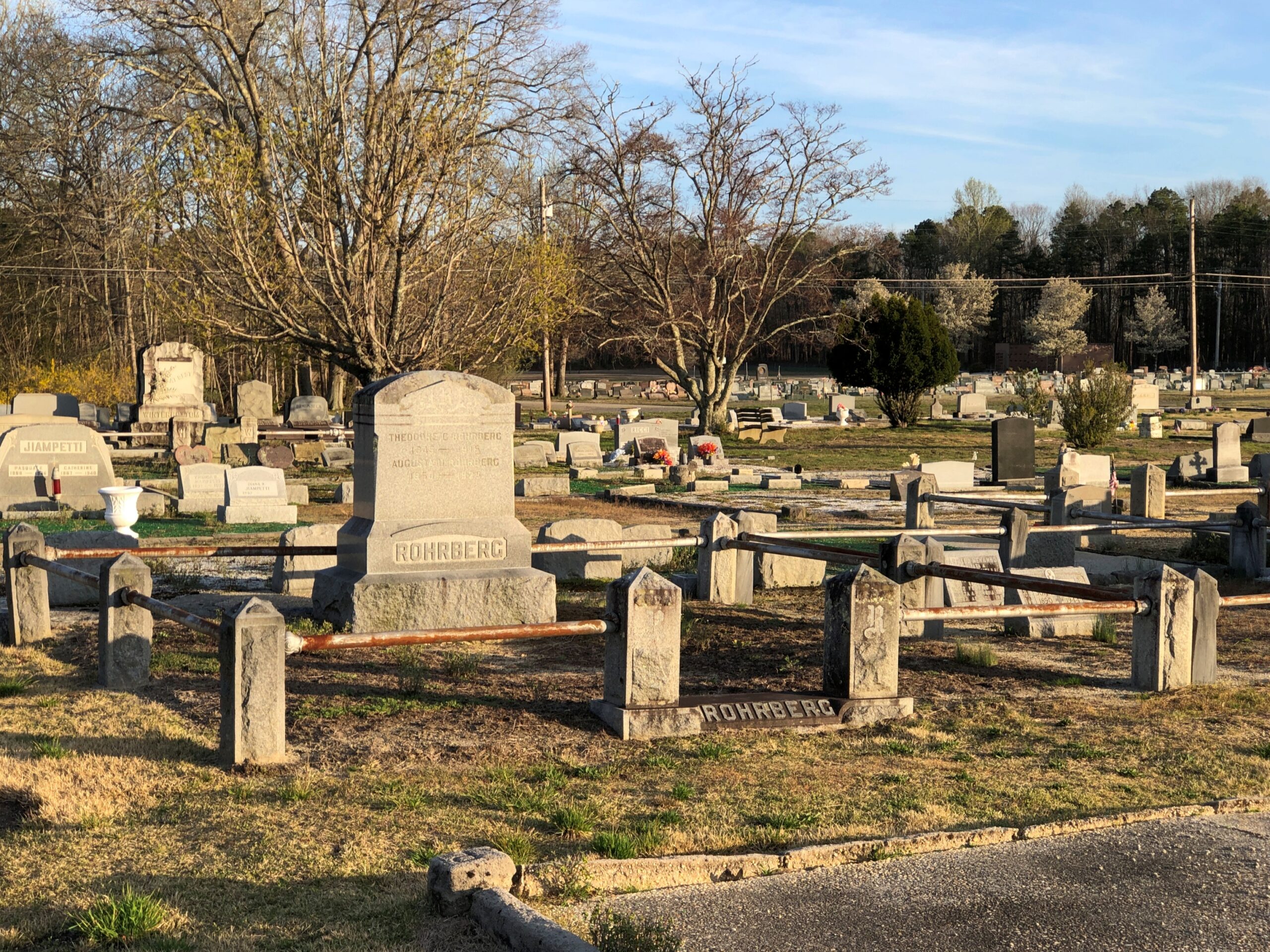
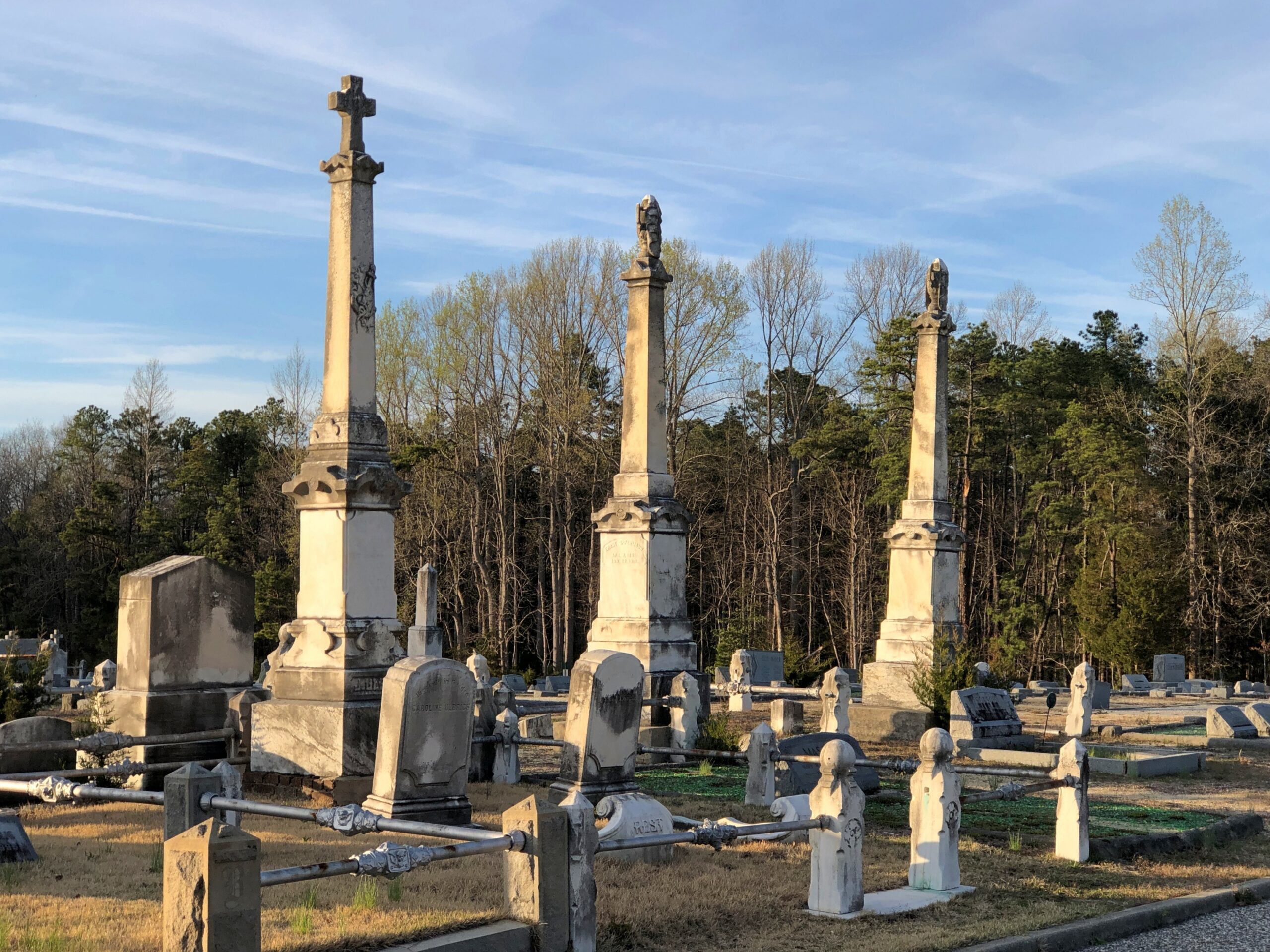
Back in Egg Harbor City (pop. 4,442), I chanced across the Egg Harbor City Cemetery – another reason to leave the GPS inactive most of the time. If the box tells you where to go, you’ll miss minor misdirections that take you to unexpected places.
I’ve come up with my next approach to traversing the Pine Barrens. There will be a next time, provided my health holds out. That’s always a contingency these days, but anyway the approach can’t be as rational as trying to plot oneself on a map, or even follow the directions from a machine.
The region isn’t that large. That is, provided your car is gassed and in good running condition, since walking out of the Pine Barrels, even following surfaced roads, seems like a bad idea unless you’ve prepared yourself to do so. Assuming you drive, pick a direction – say east, toward the morning sun – and head that way, hewing to the direction as much as possible. It won’t be too long before you come to a reliably numbered state or US highway. Or in that case, the Garden State Parkway.
Sounds doable. Unless you encounter the Jersey Devil.
New Jersey flummoxed the GPS system I use occasionally in my car. Twice.
And I mean occasionally: only twice on this trip of nearly 3,500 miles through nine states, both times in New Jersey, and both times the Garden State proved too much for mere trilateration to distant satellites. Later, during a disorientation in Poughkeepsie, NY, I would have done well to use the system, but was too hardheaded for it by that point.
Most of the time, I don’t need it. My alternating use of paper and electronic maps is generally enough. However, GPS can simplify the task of trying to find a specific place – a motel, usually – in an unfamiliar urban area after dark. Provided, it seems, you’re not in New Jersey.
Approaching Trenton on the evening of April 8, I figured that would be the time to turn over navigation to the system. For a while, it seemed to give good directions. Then it told me to enter one of the local expressways, which I did at the point indicated. A few seconds later, the machine gave directions that absolutely made no sense: turn left at the next light. What? I was on an entry ramp of a limited-access expressway. A few more directions bore no relation to reality on the road, so I switched it off, went to the next exit, and found a place to stop and consult Google Maps. I’d been sent away from Trenton.
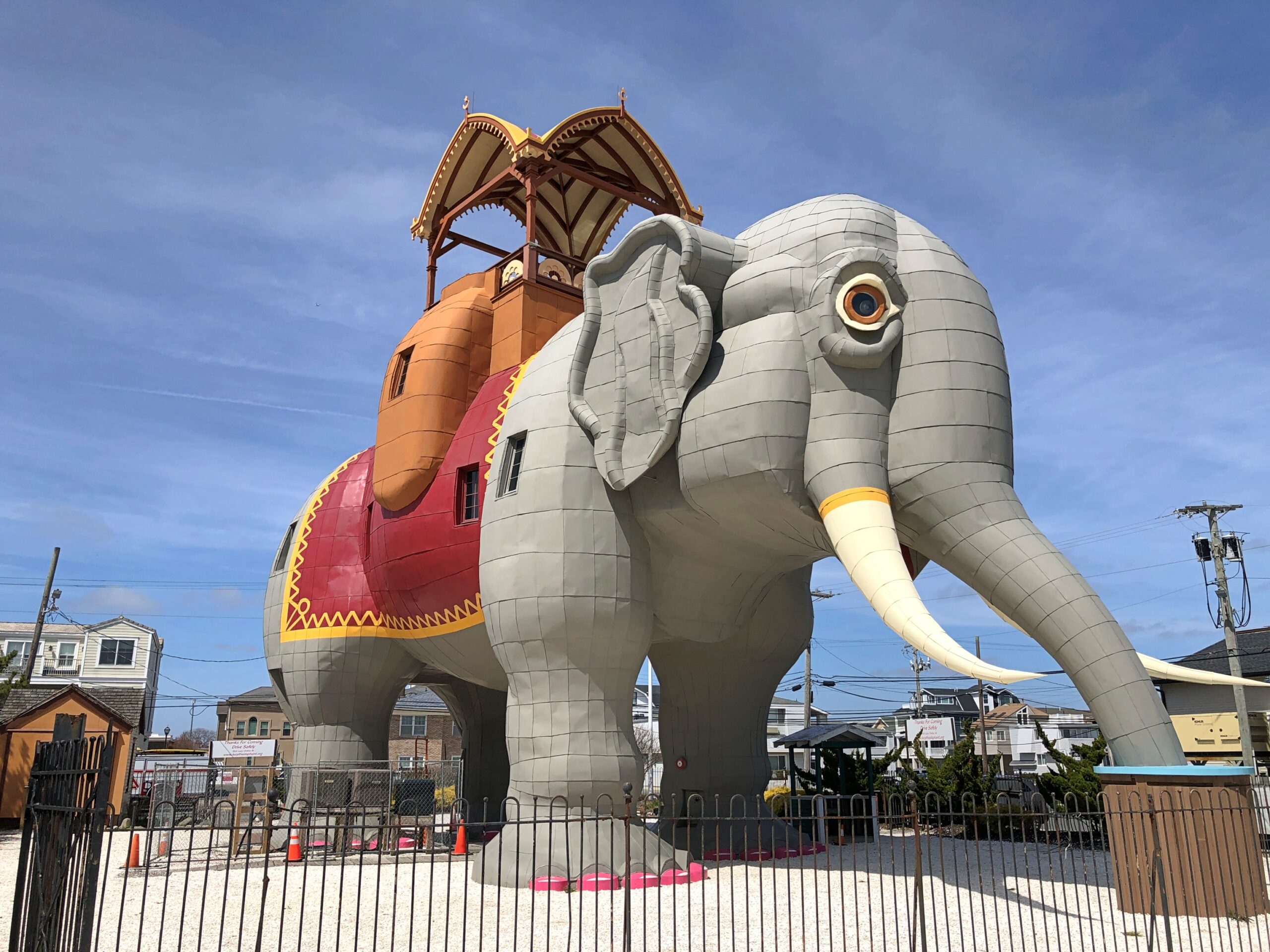
All that was just an unpleasant memory on the morning of the 9th, as I made my way using paper and electronic maps to the Jersey Shore. It wasn’t until later, during another misdirection in New Jersey, that I got an inkling of what might have happened. Never mind that for now. Eventually – and not too long, New Jersey isn’t that big – I passed through Atlantic City and headed south to my first destination that day: Lucy the Elephant.
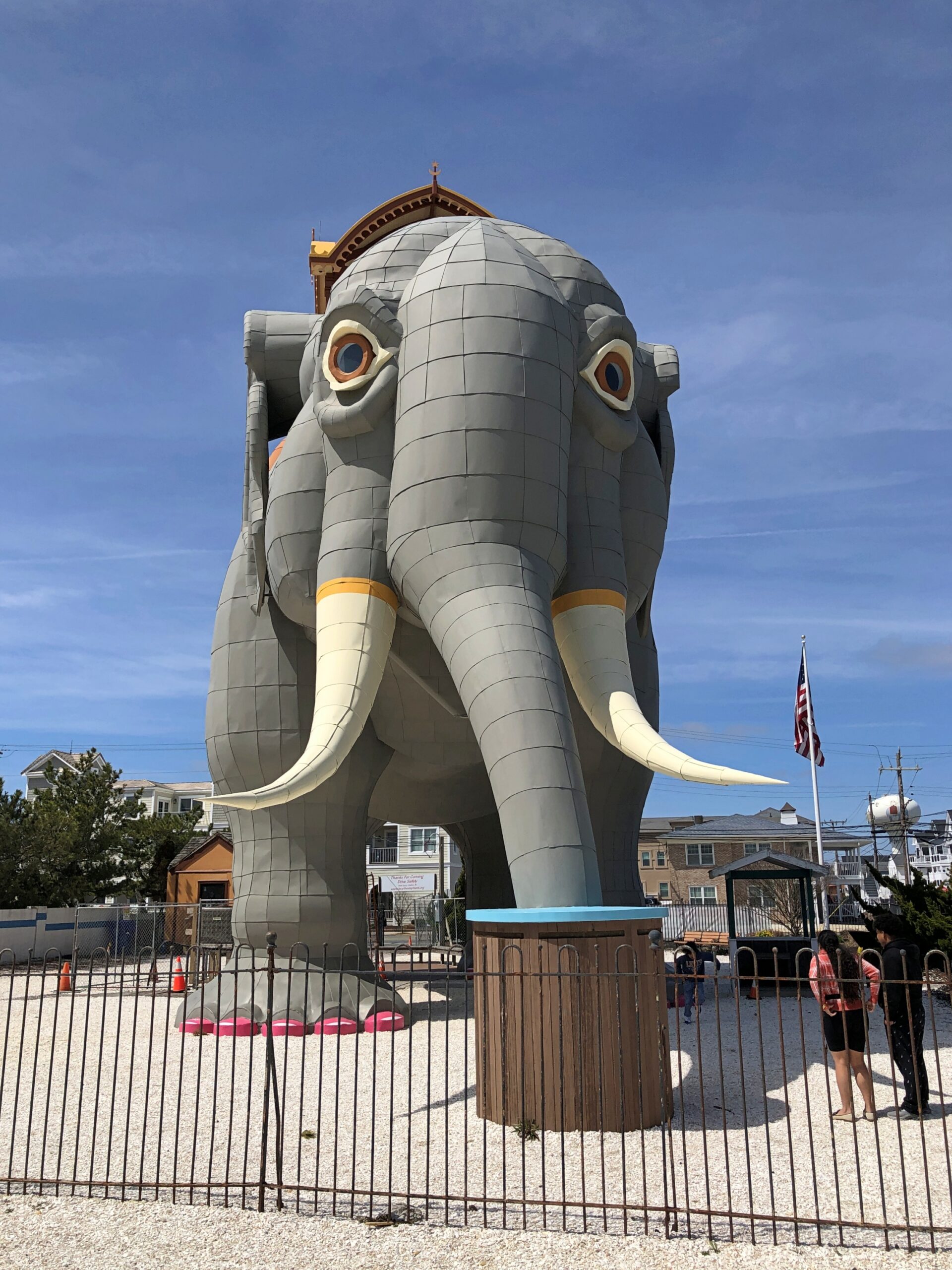
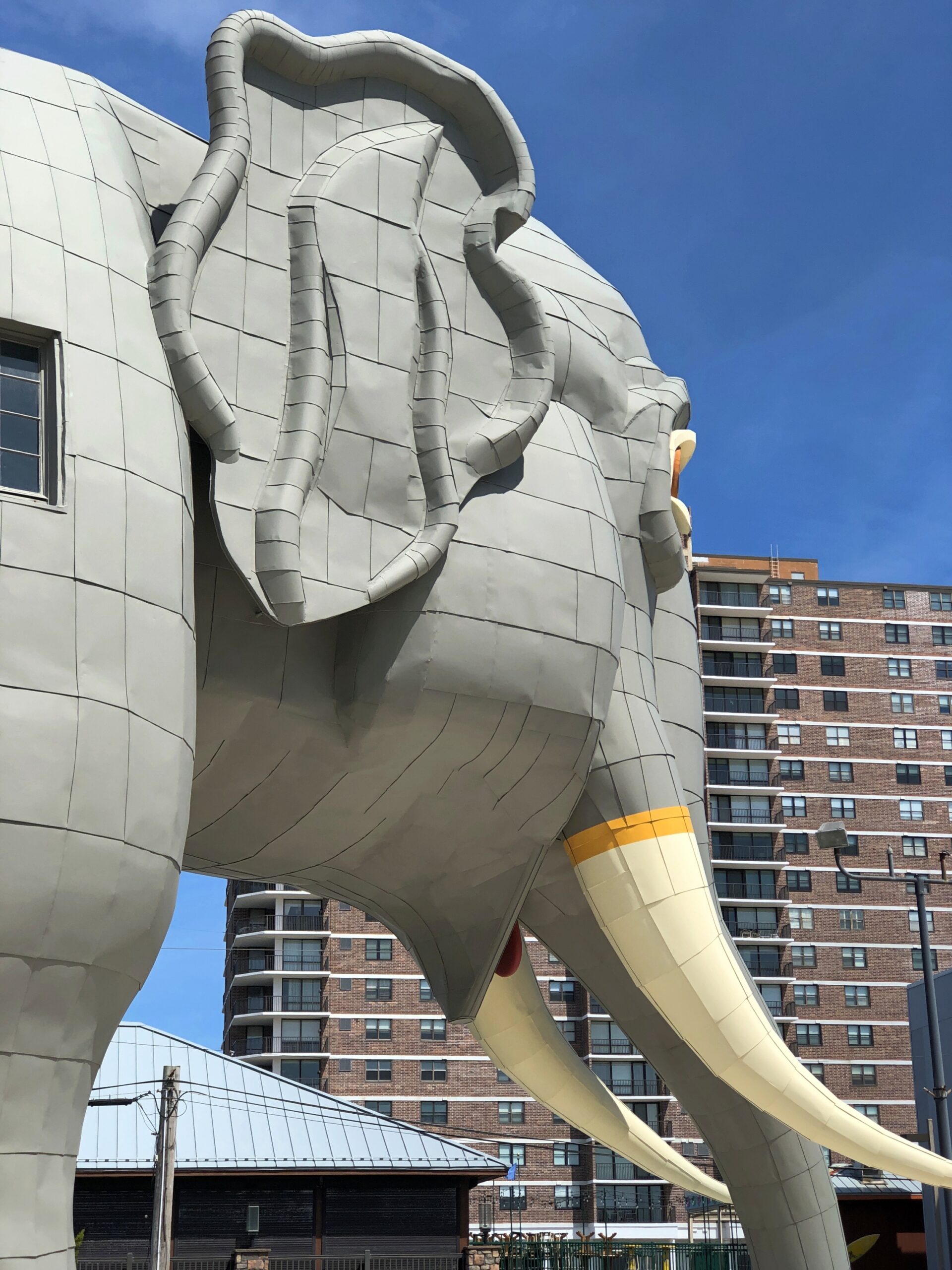
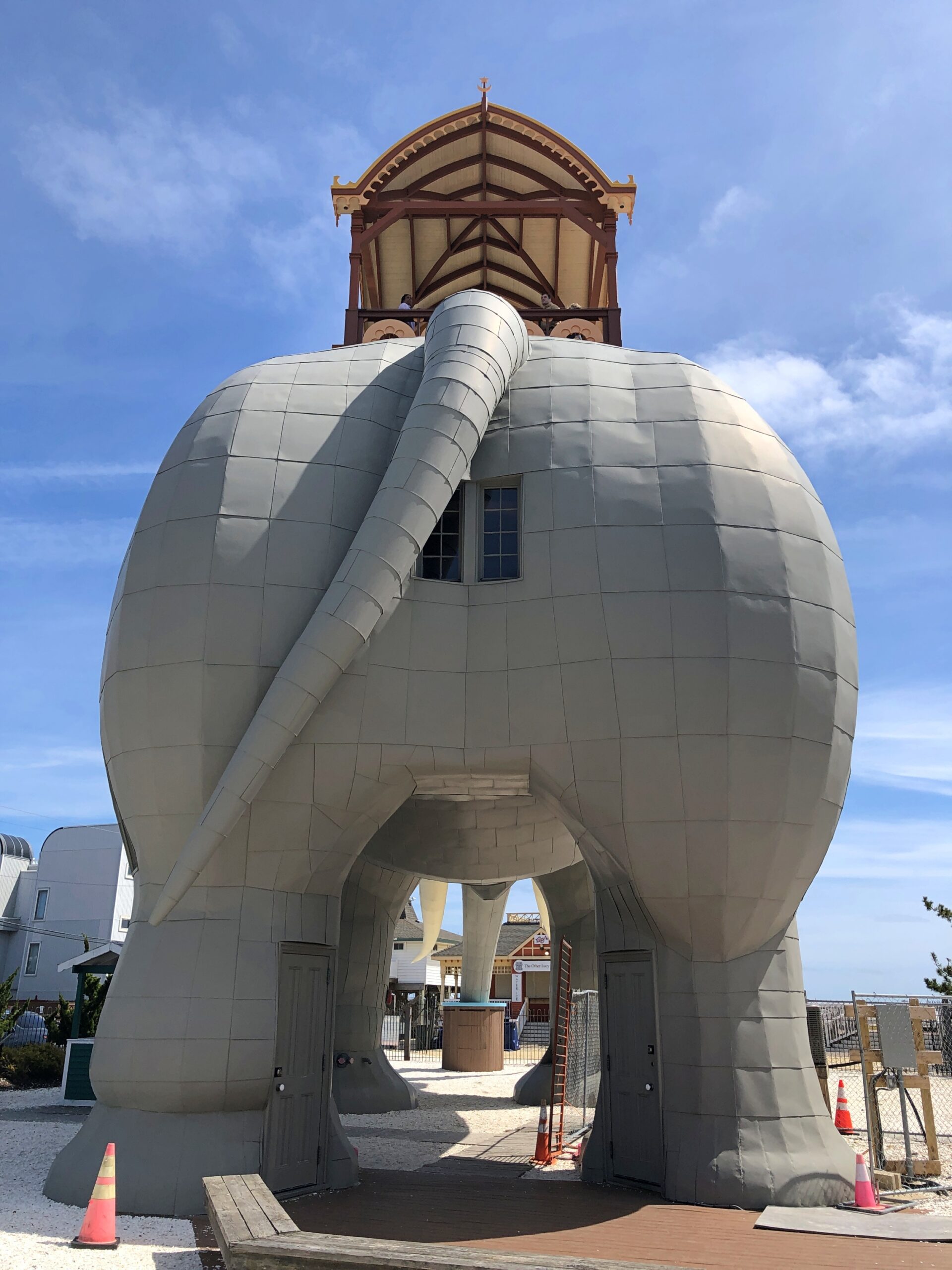
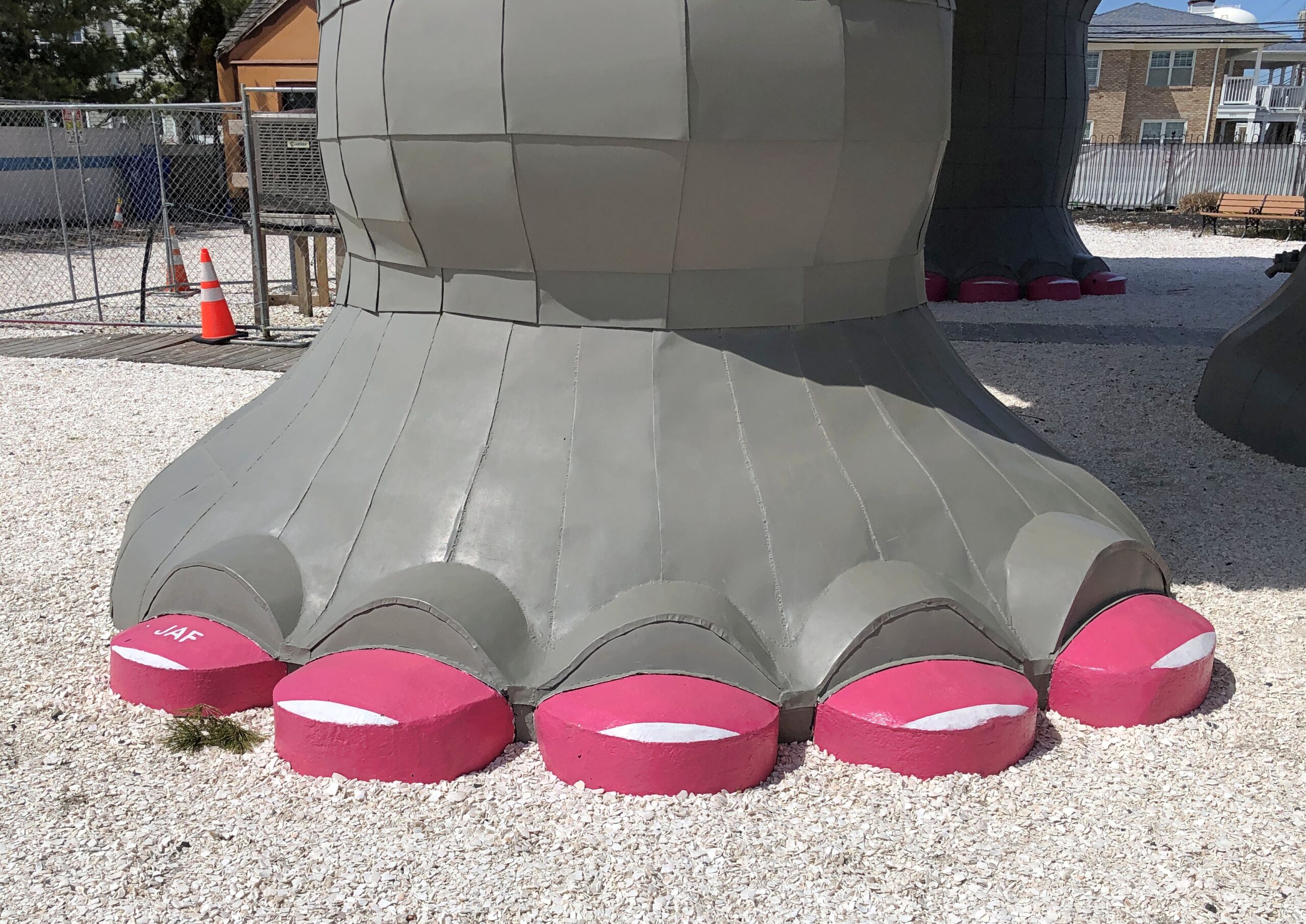
“Built of tin and wood in 1882 by James V. Lafferty as a publicity stunt, Lucy was modeled after Jumbo, P.T. Barnum’s real life ‘Largest Elephant on Earth,’ ” notes Atlas Obscura. “Lucy is much larger than Jumbo was, and stands 65 feet high, 60 feet long, 18 feet wide, is made of nearly one million pieces of wood, and weighs about 90 tons.”
Not just a publicity stunt, but a seminal one by a real estate developer, so much so that he was awarded a patent for the structure. “Land speculator” is perhaps more descriptive, but anyway Lafferty had a chunk of ocean-adjacent property he was looking to peddle south of Atlantic City, itself only a pup of a resort at the time, but certainly an up-and-comer.
Never mind real estate, Lafferty is pretty much remembered for the marvel that is Lucy. As he should be.
“Most of South Atlantic City at that time was a combination of scrub pine, dune grass, bayberry bushes and a few wooden fishing shacks,” says the Lucy web site. “Once Lafferty hit upon the Elephant idea he enlisted the aid of a Philadelphia architect named William Free to design this unusual structure he felt would attract visitors and property buyers to his holdings… Lafferty always claimed that before the work was finished the cost skyrocketed to $38,000.
“By 1881 Lafferty was placing advertisements in area and Philadelphia newspapers offering building lots in ‘fast booming South Atlantic City.’ Lafferty eventually extended himself too far in his land deals both at the Jersey Shore and in New York and by 1887 sought to unload his South Atlantic City holdings. He offered the Elephant and other property for sale and found a willing buyer in Anton Gertzen of Philadelphia.”
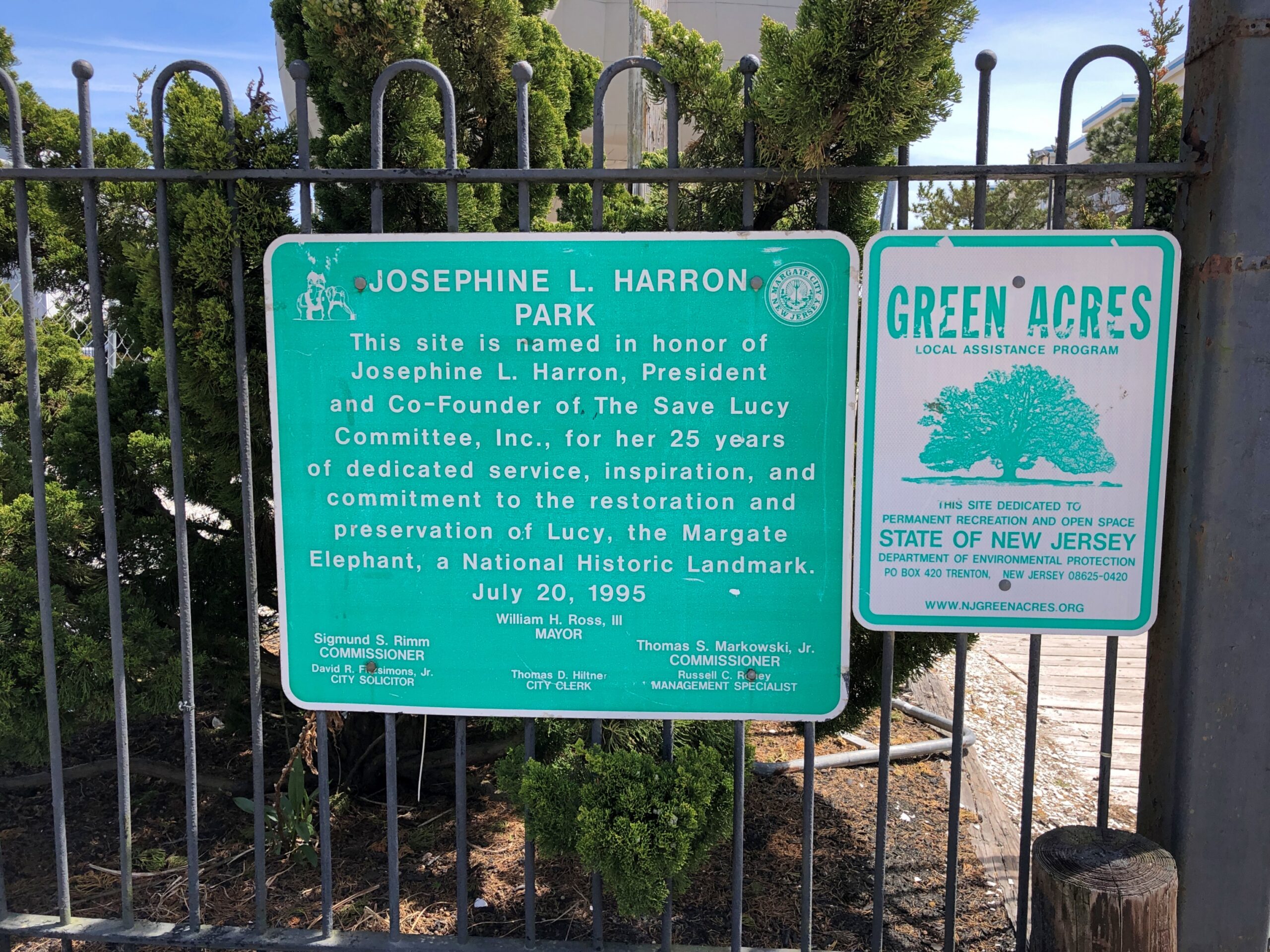
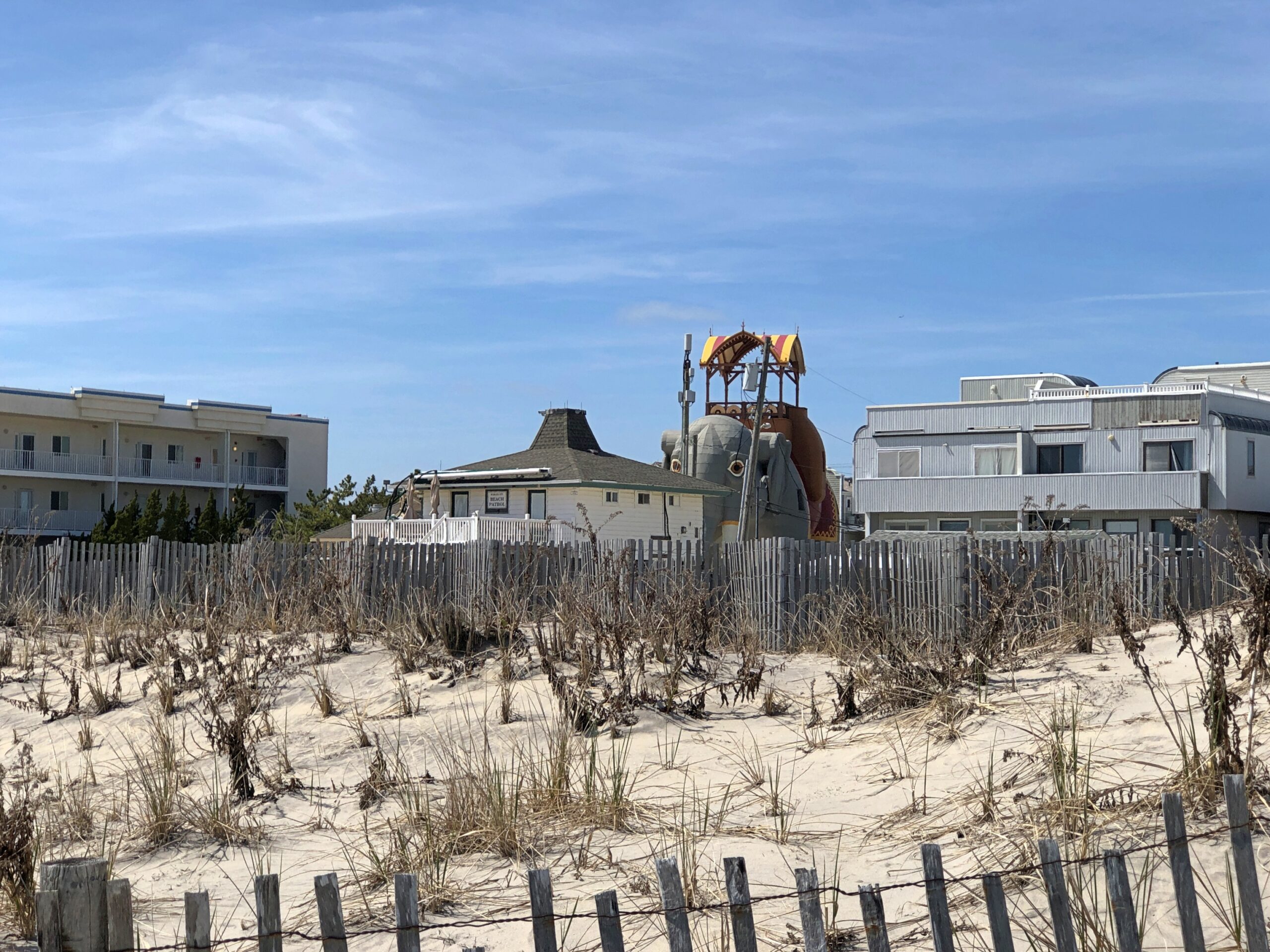
Lucy wasn’t the only elephant for Lafferty: he had others, even larger, built for Coney Island and Cape May, but they didn’t survive, and one proposed for the Columbian Exhibition in 1893 that was never built. Lucy almost didn’t survive to our time either, following a familiar arc of survival to the mid-20th century in an increasingly dilapidated state, then facing demolition. Citizen activism saved Lucy, setting up a nonprofit and finding the money for restoration, and now she attracts roughly 40,000 visitors a year.
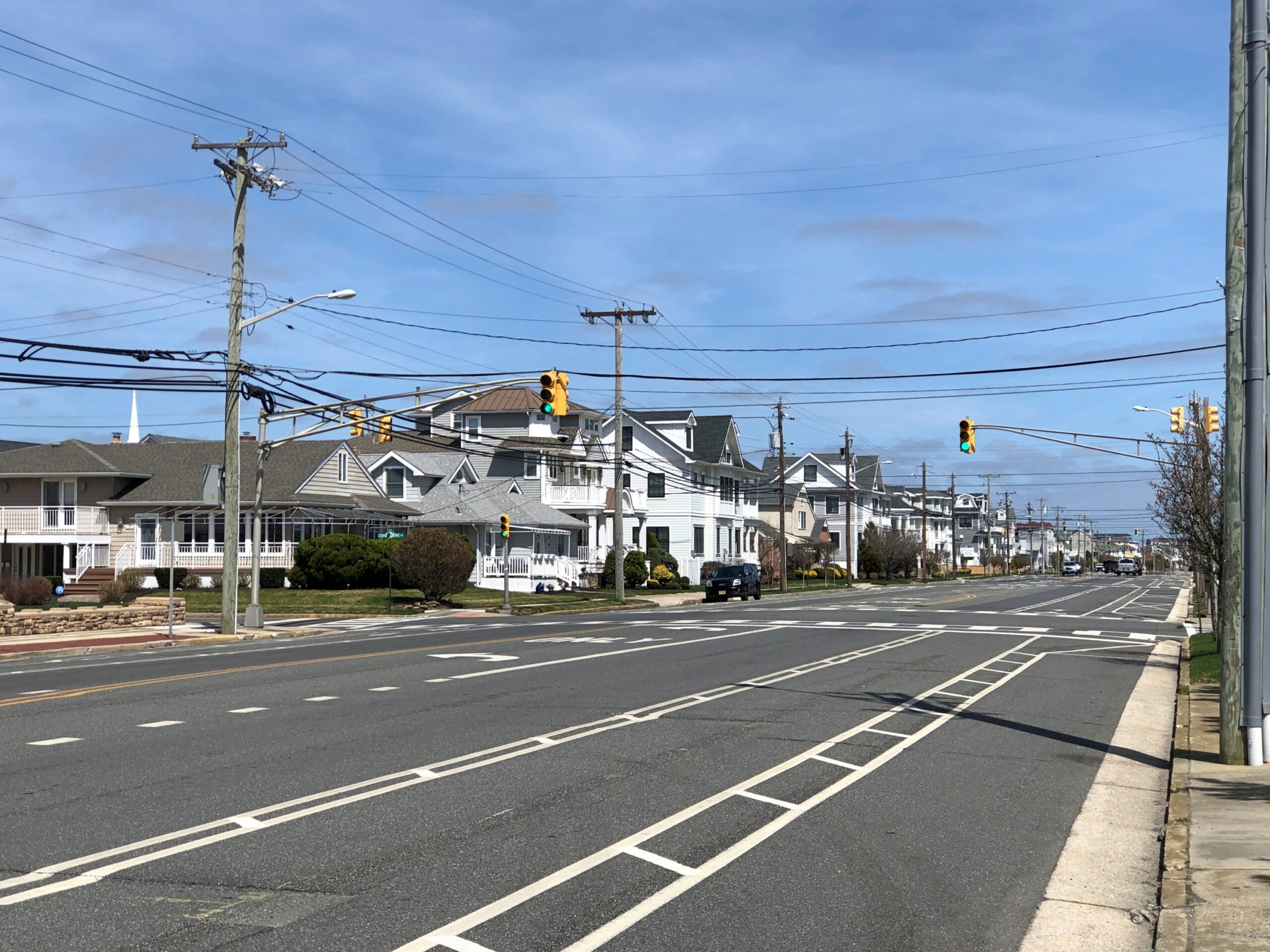
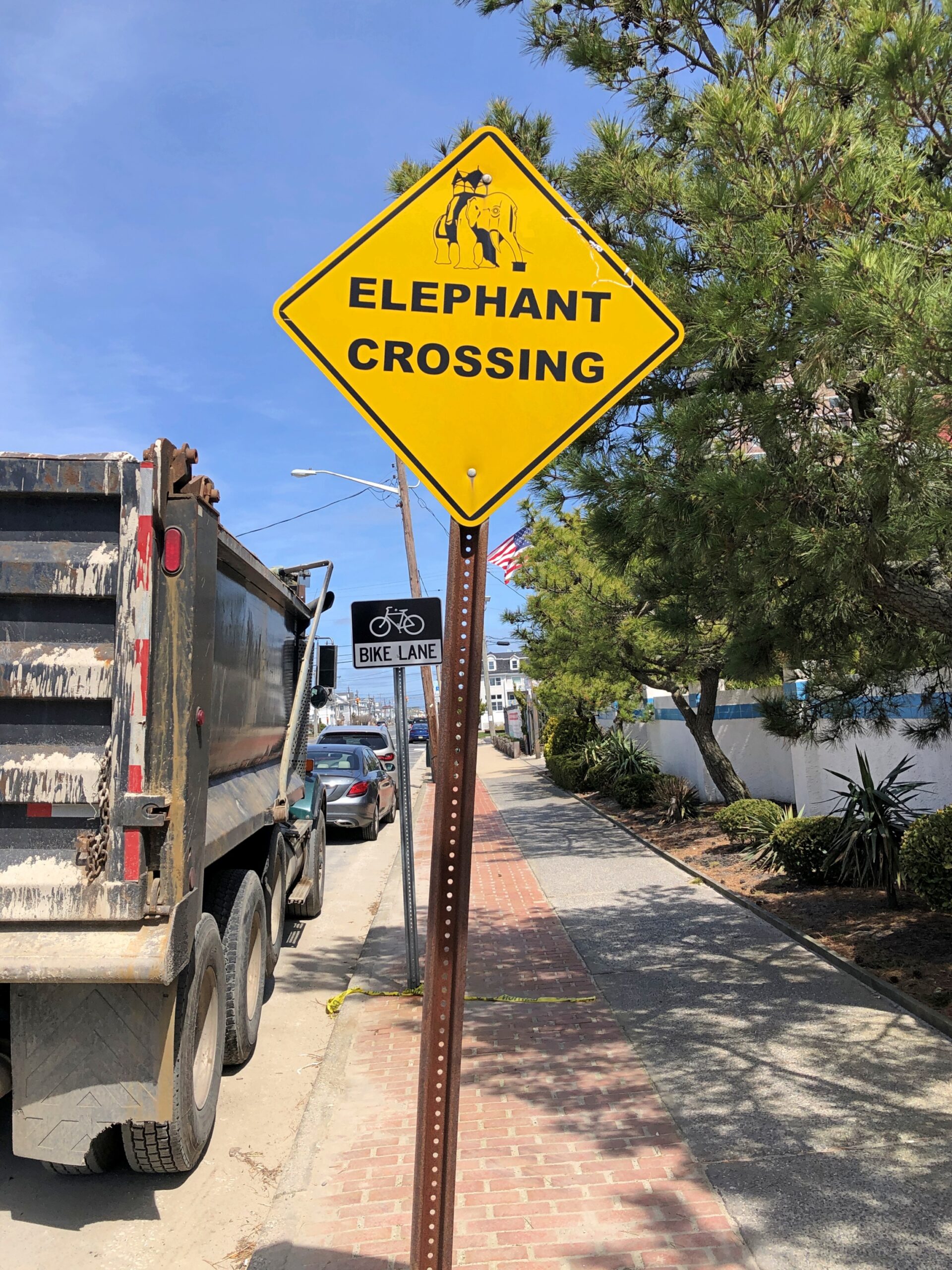
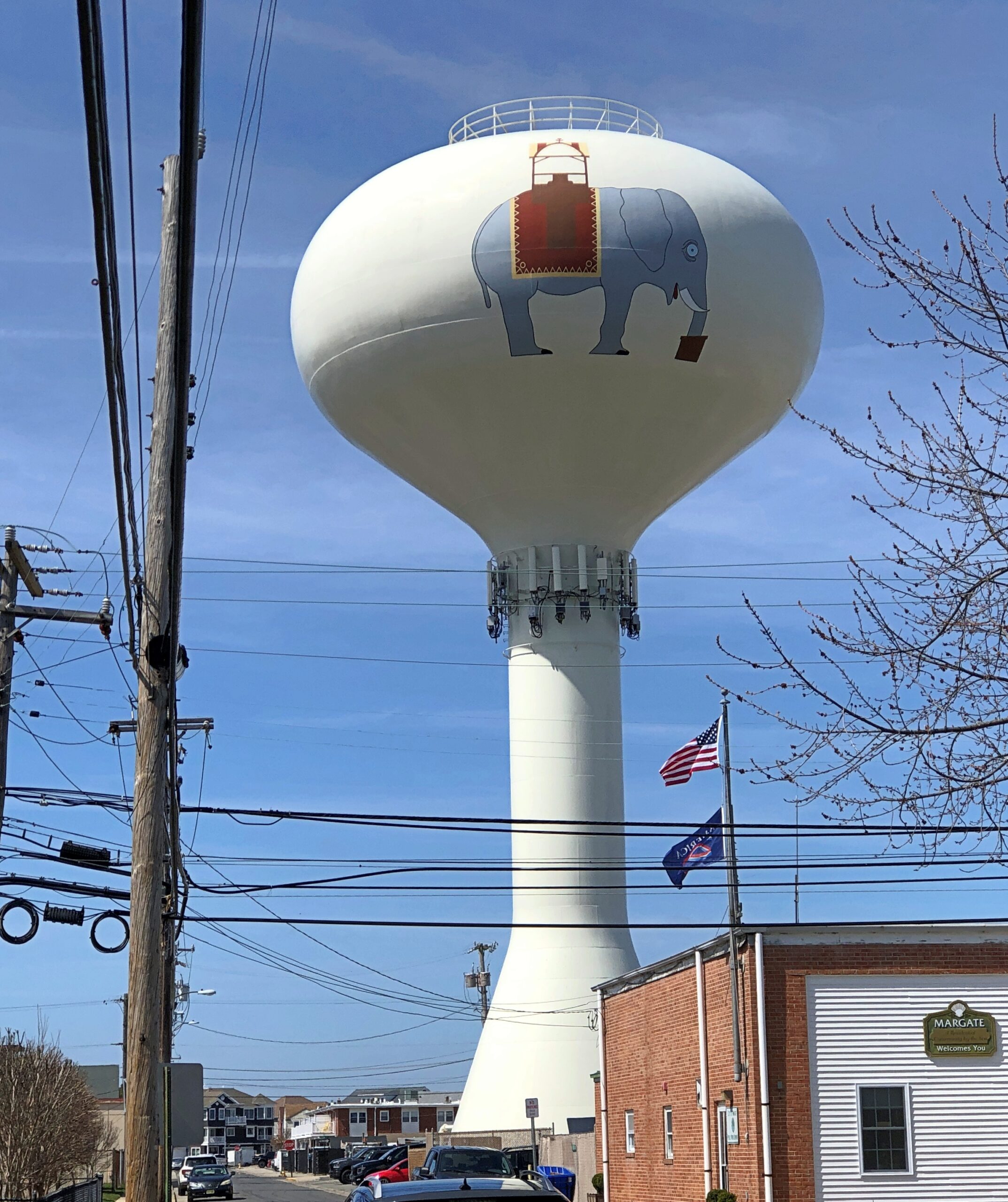
She stands on Atlantic Ave. in Margate City, NJ. A fairly ordinary street but for a few details.
Looks, I’m glad to report, are free from the street and from the grounds. An interior visit at Lucy has an admission. While I didn’t do that, I supported Lucy through the purchase of postcards and a magnet across the street in the gift shop.
Margate seems happy these days to have Lucy around.
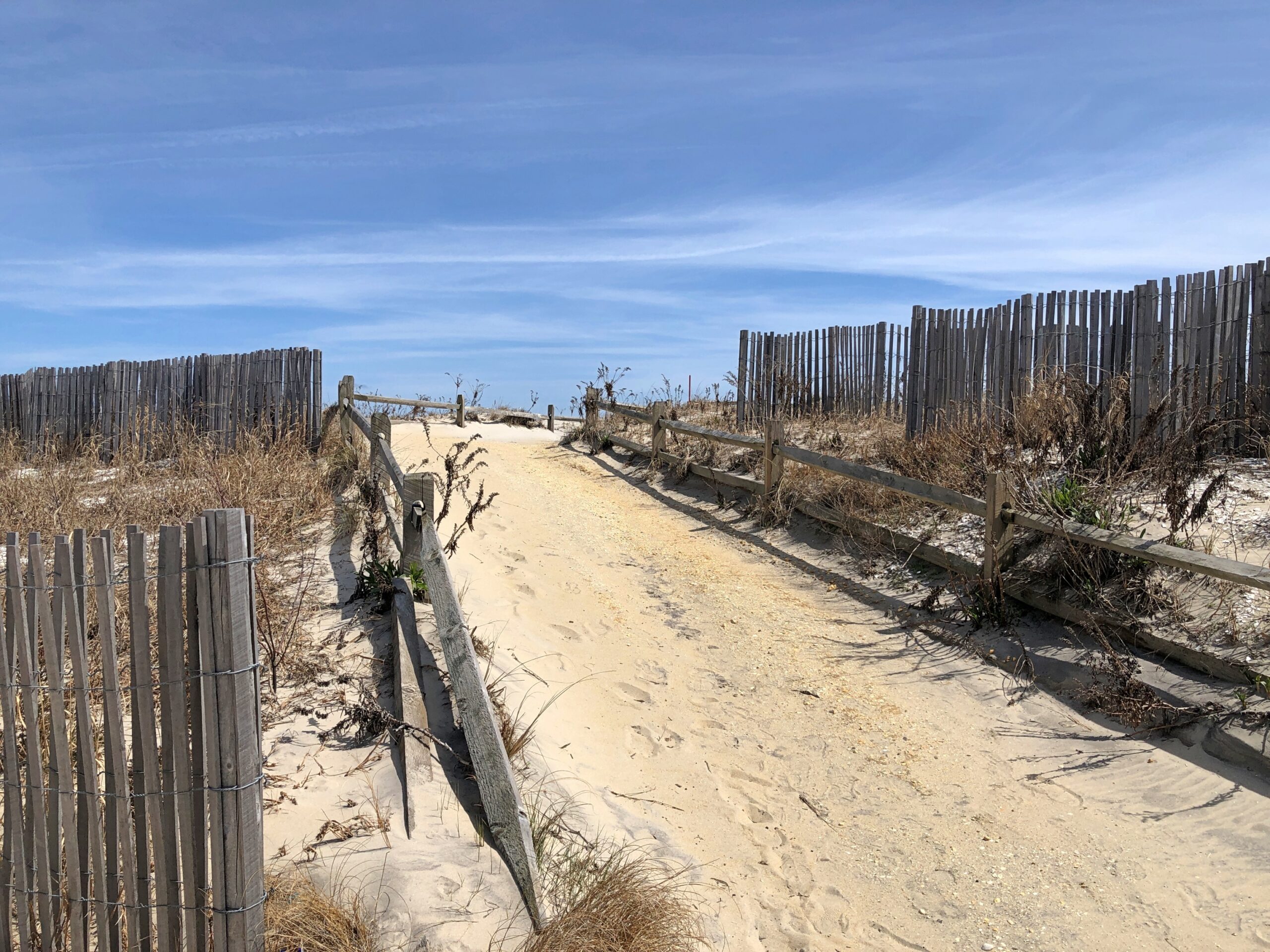
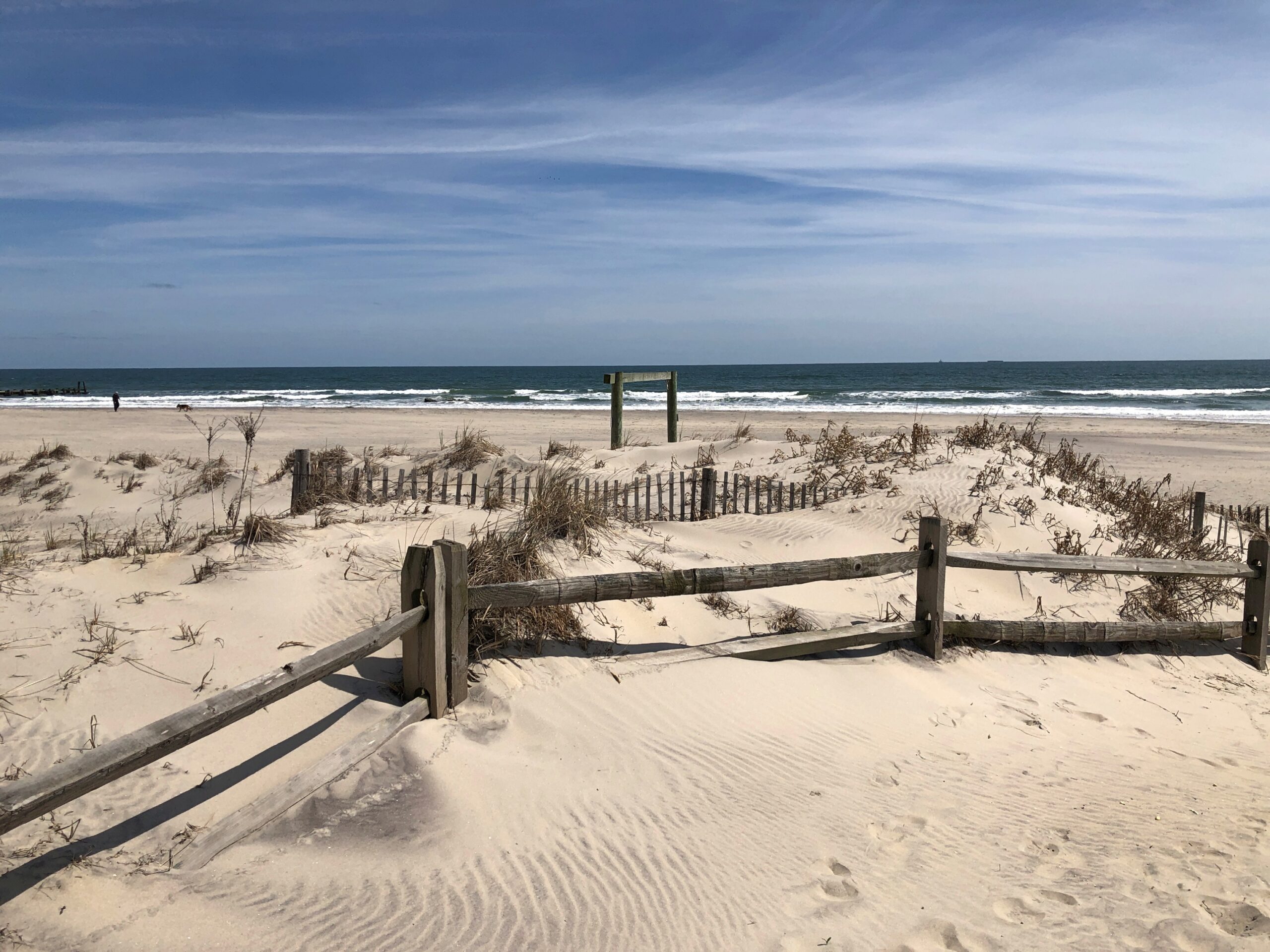
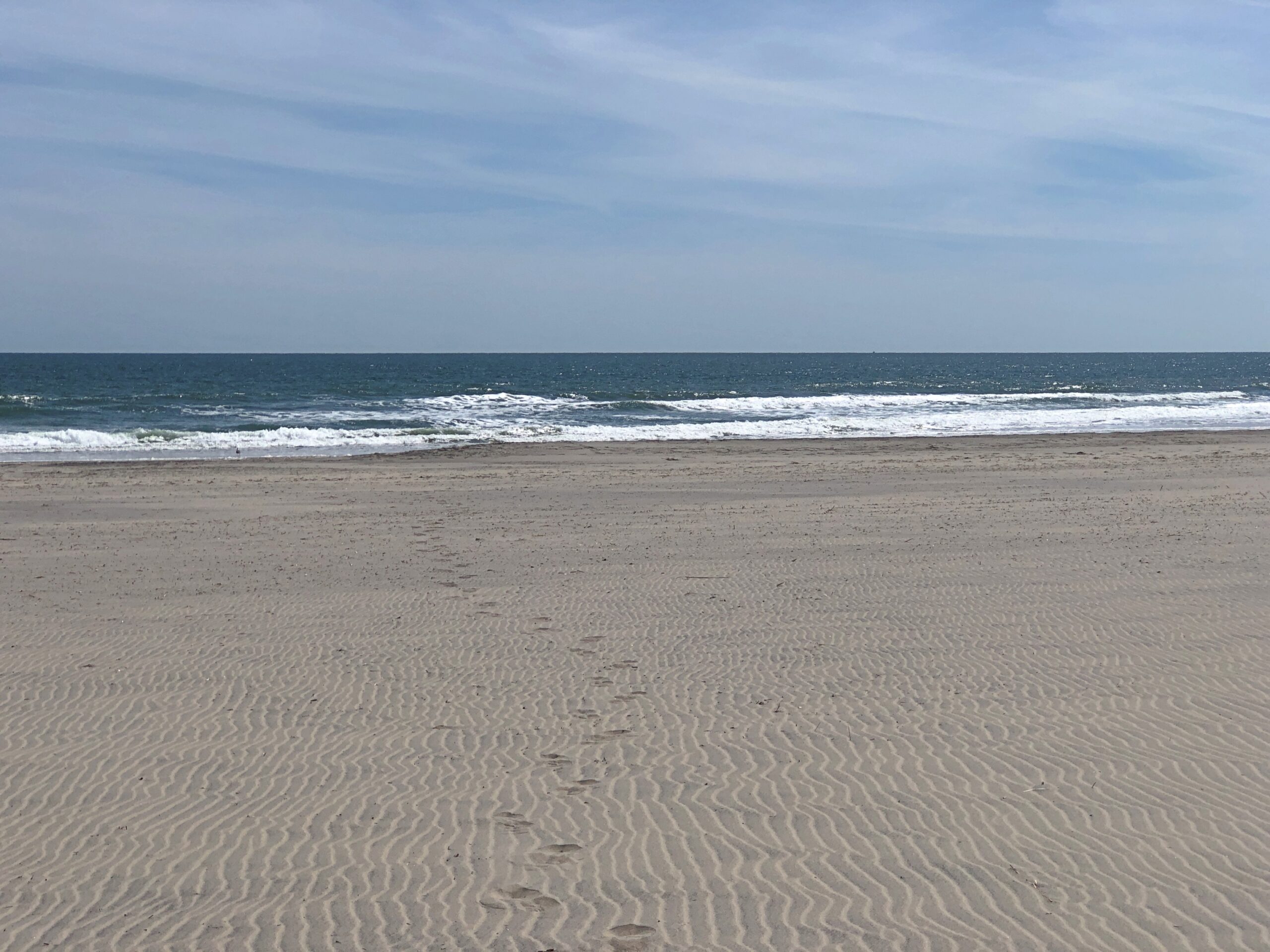
Lucy is a stone’s throw from a pretty nice beach.
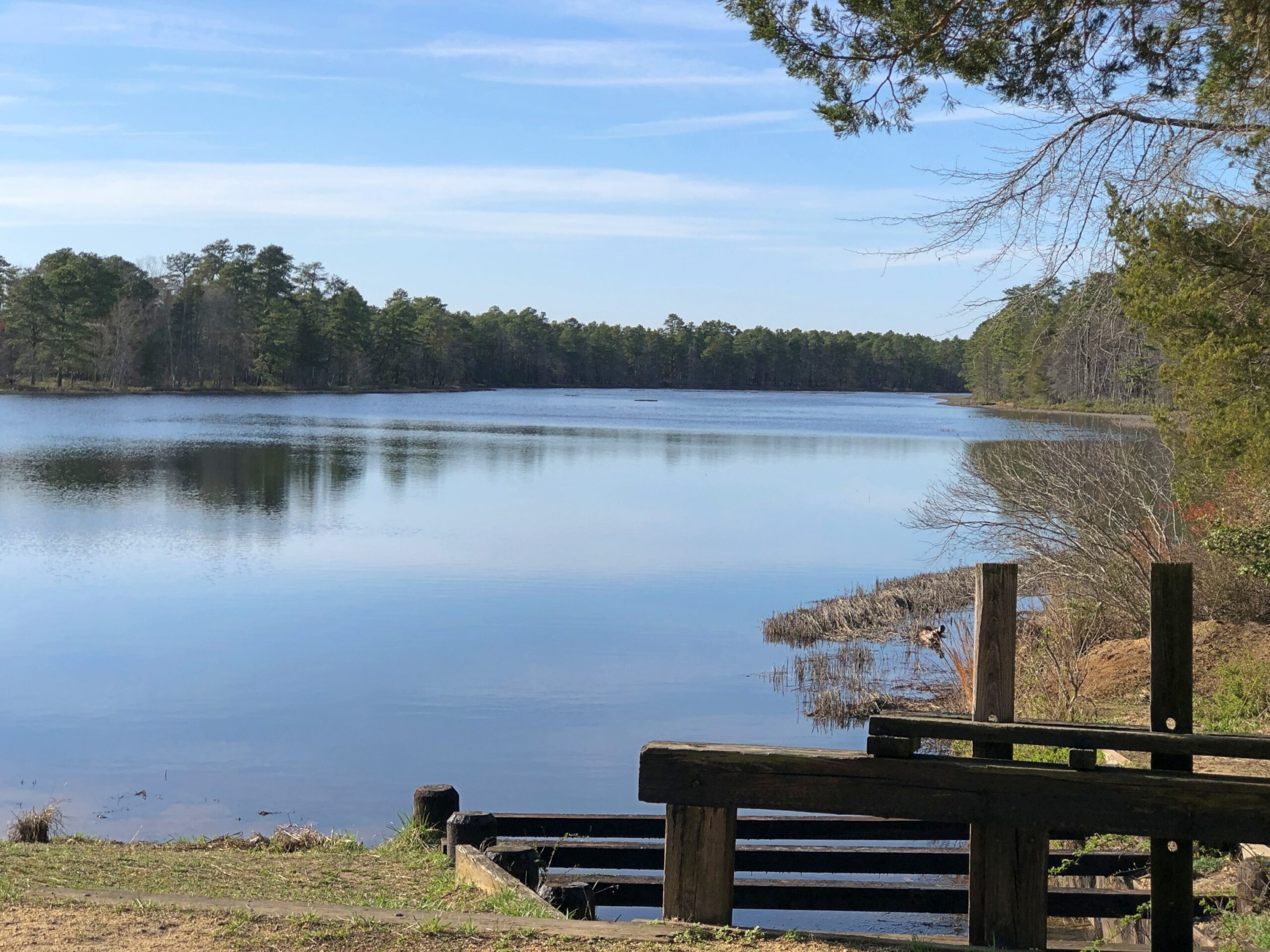
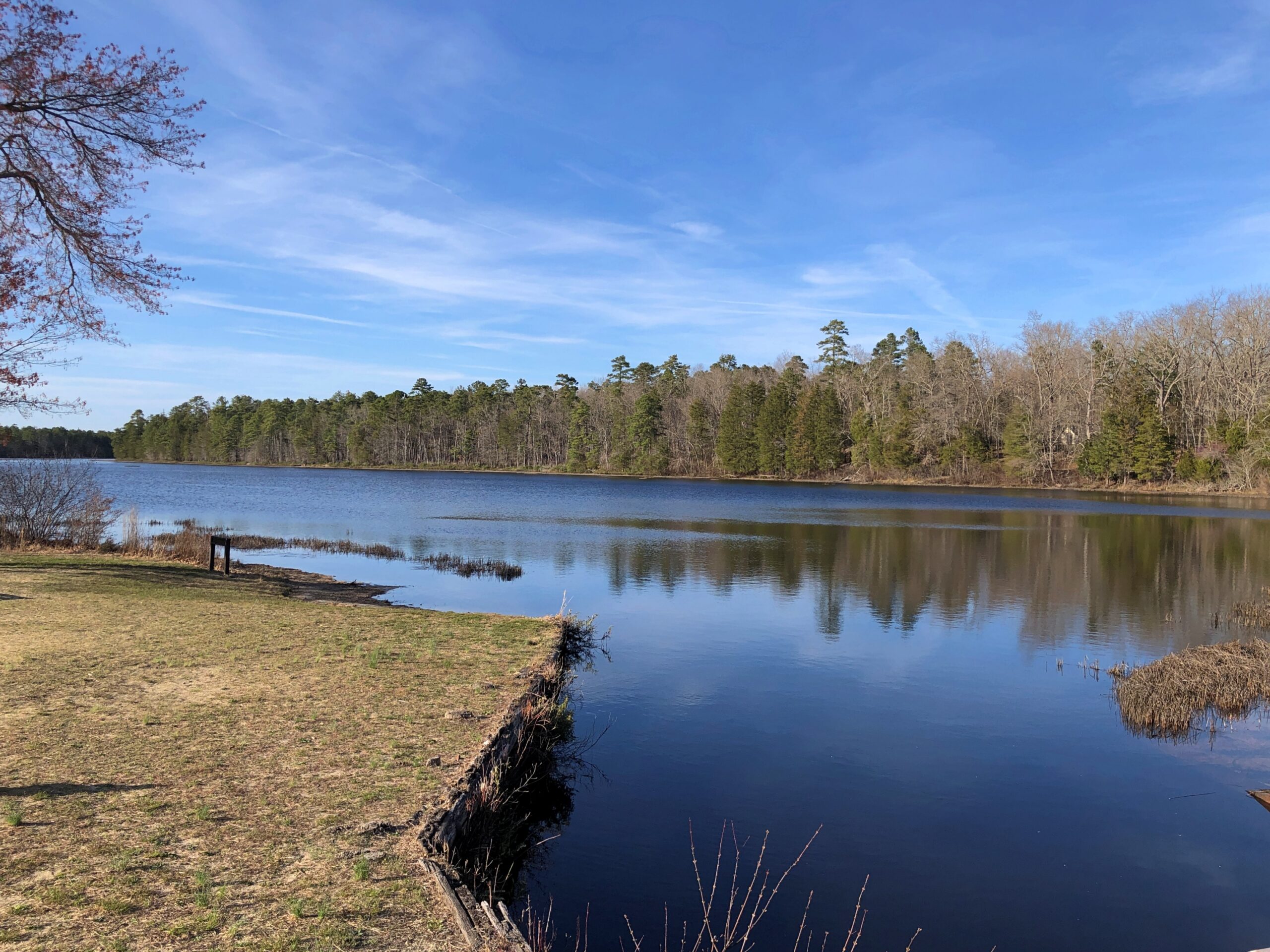
Sunny that day, but a mite chilly. So I had the place practically to myself on a Thursday. Once upon a time, I understand that Margate had a boardwalk, like Atlantic City and a lot of other Jersey Shore towns, but the Great Atlantic Hurricane of 1944 destroyed most of it, and Ash Wednesday Storm of 1962 finished it off.