Columbia, SC, is centrally located in its state, the result of a post-Revolutionary (1786) decision by the new state legislature to move from Charleston to somewhere more central, namely the area around the confluence of the Saluda and Broad Rivers, which merge at Columbia to form the Congaree River. The South Carolina State House is now centrally located in that centrally located city, and on the way back west from Myrtle Beach, I decided it was high time I saw it.
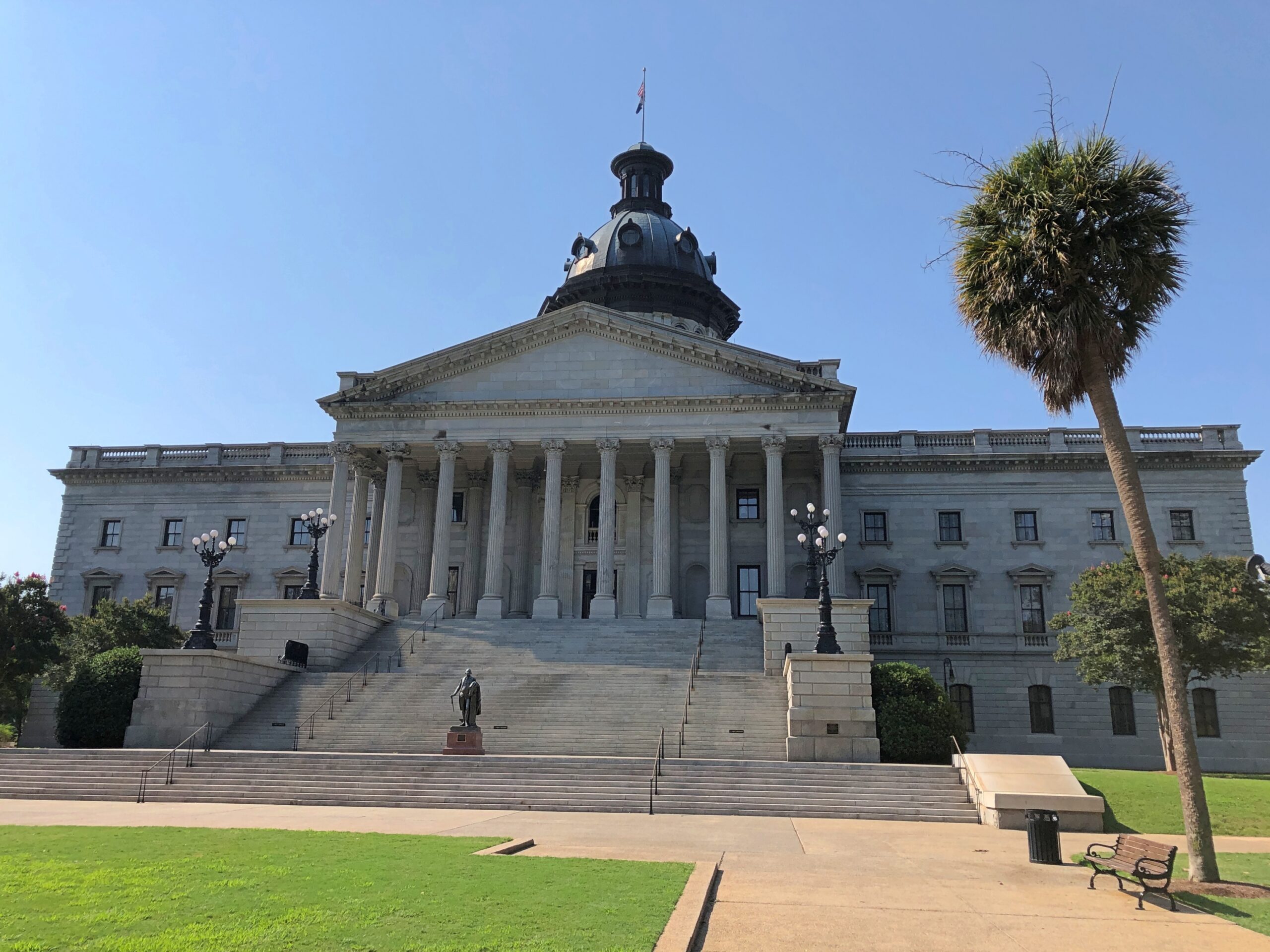
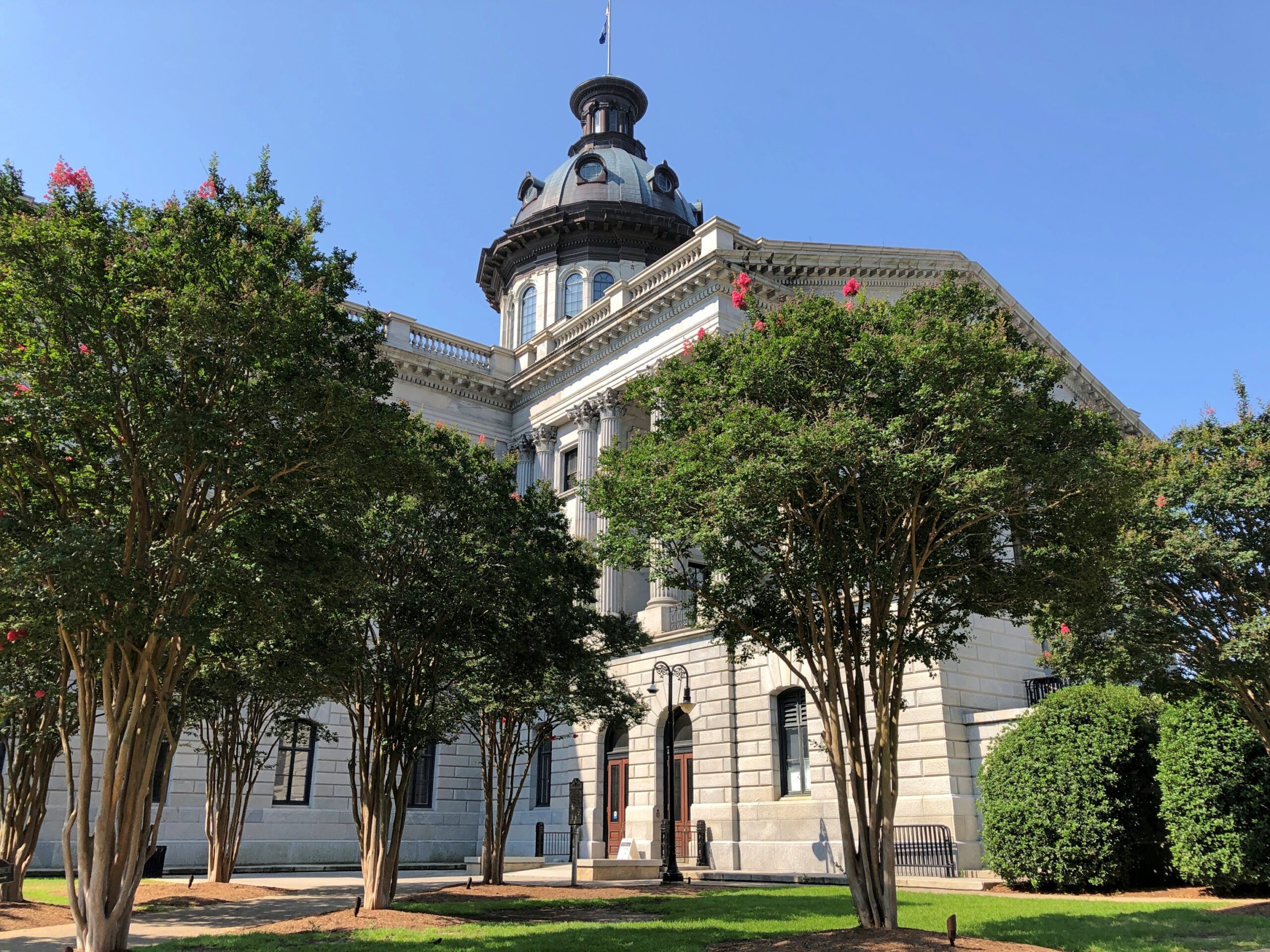
Washington stands in front. Work on the building started in the 1850s from a design by John Rudolph Niernsee (d. 1885), but what with one thing and another – the burning of Columbia in 1865, for instance – finishing the capitol took more than 50 years, and indeed its final design work was overseen by Niernsee’s son, Frank, and other architects.
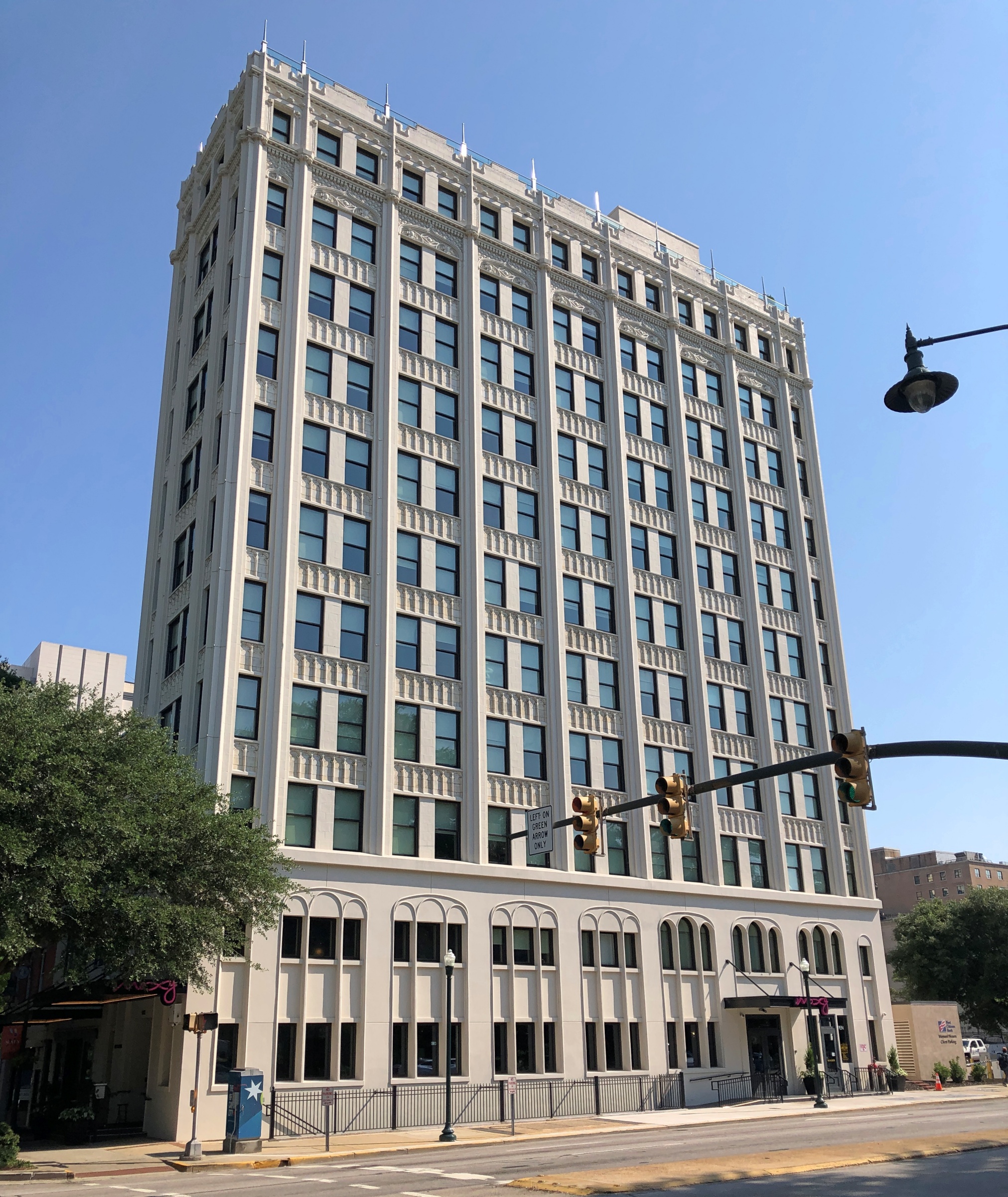
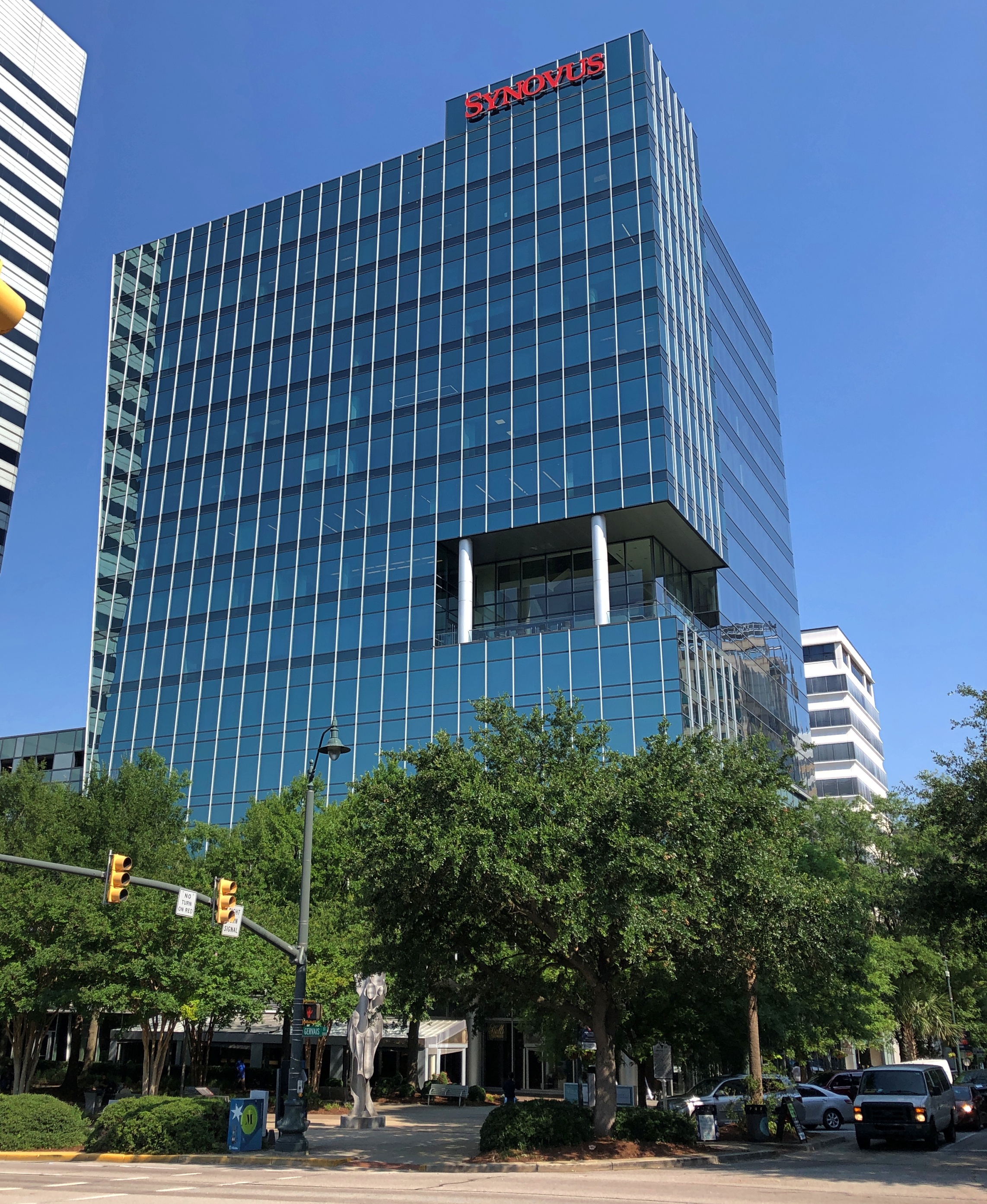
Other downtown structures tower nearby, but the capitol is set back fairly far, as capitols tend to be.
The memorial to the Confederate dead is prominently placed in front of the capitol.
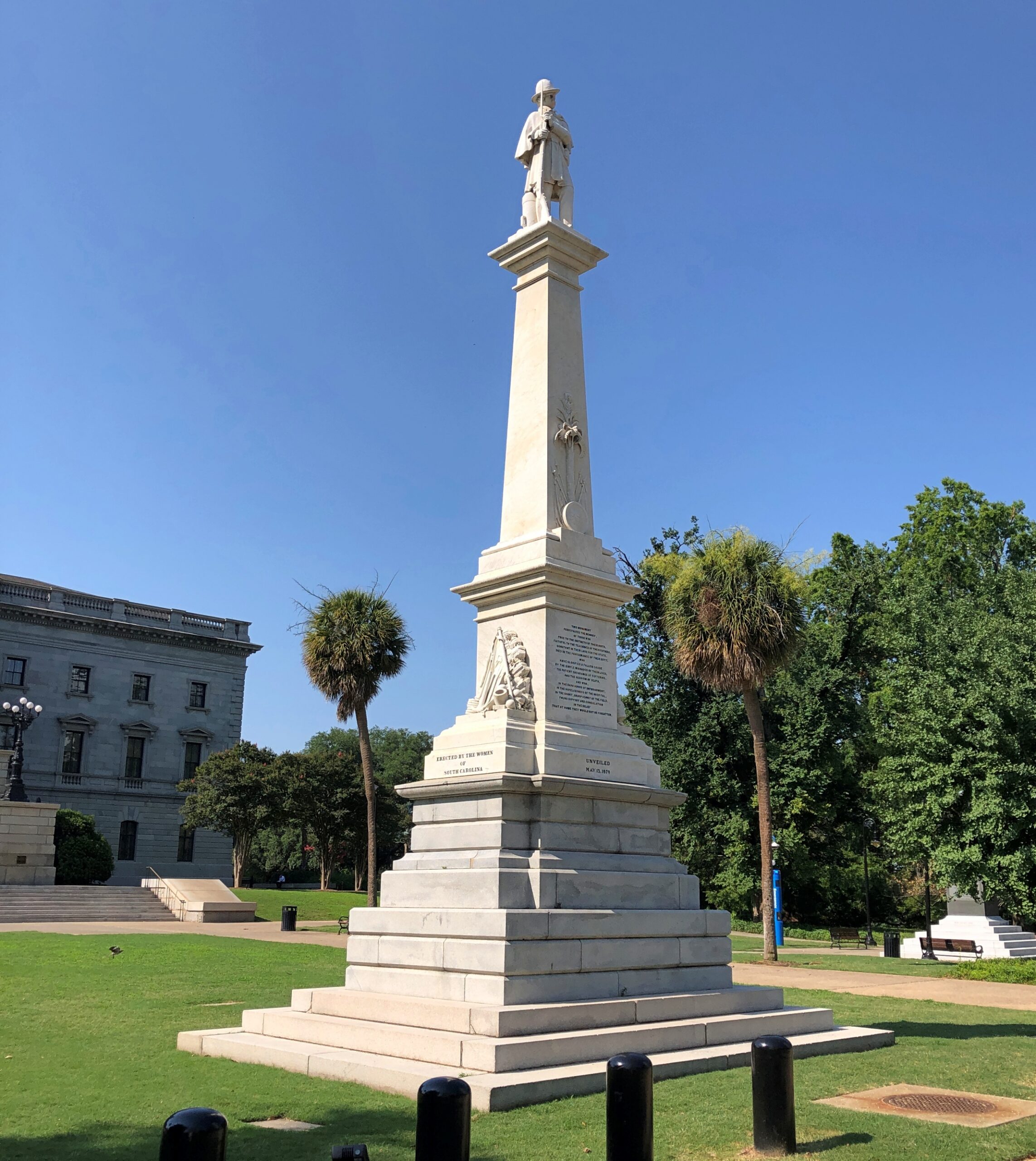
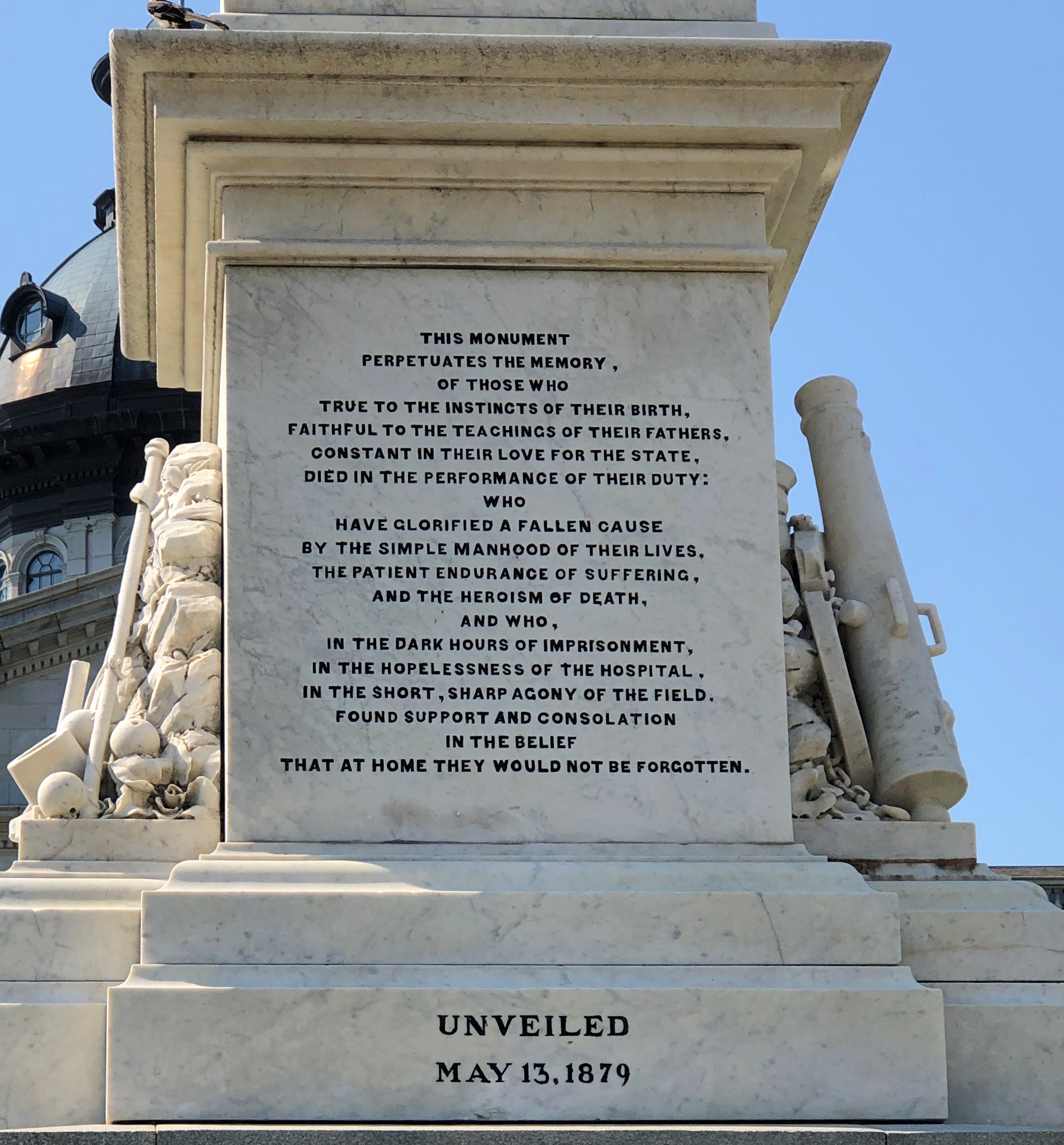
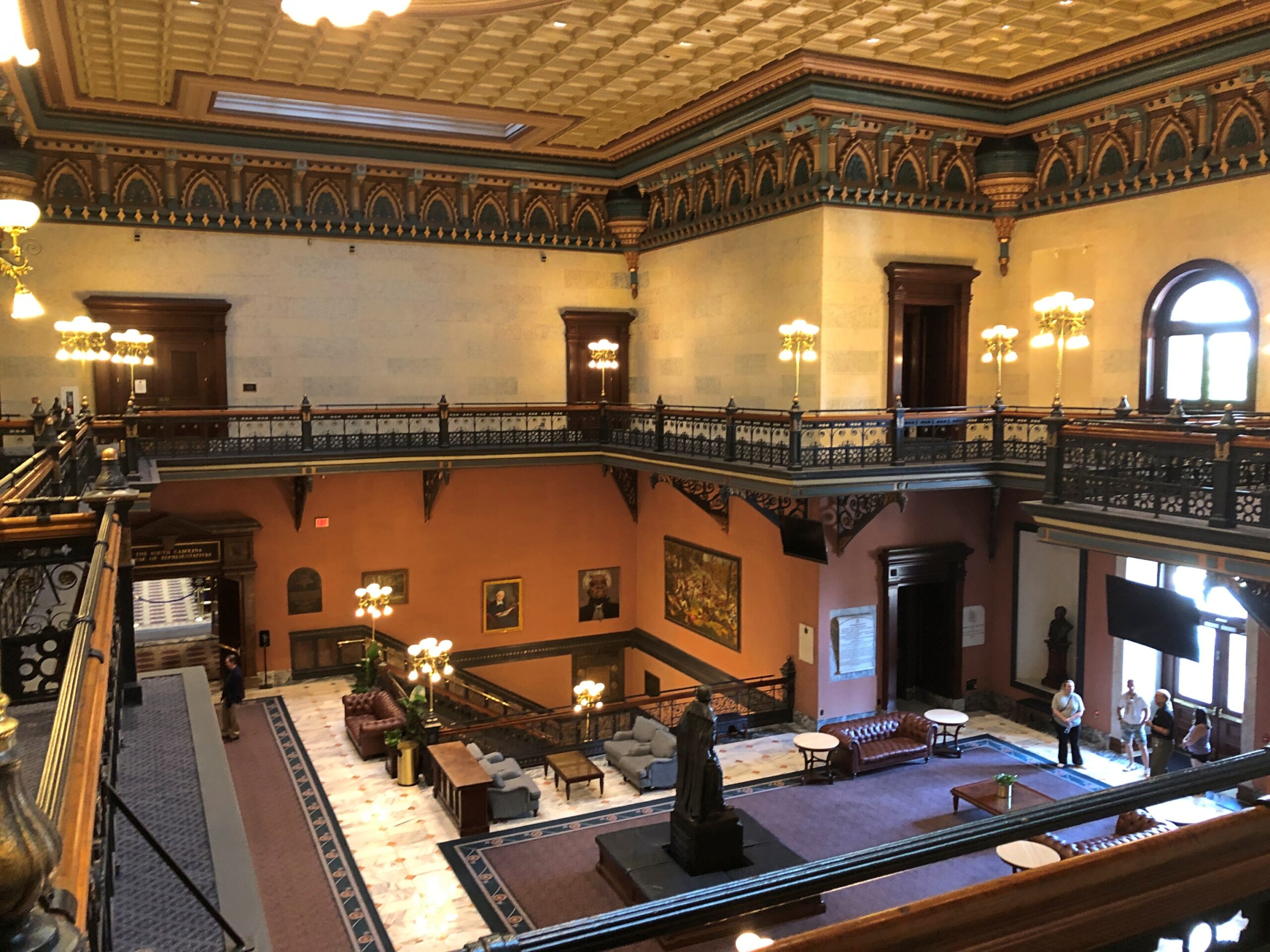
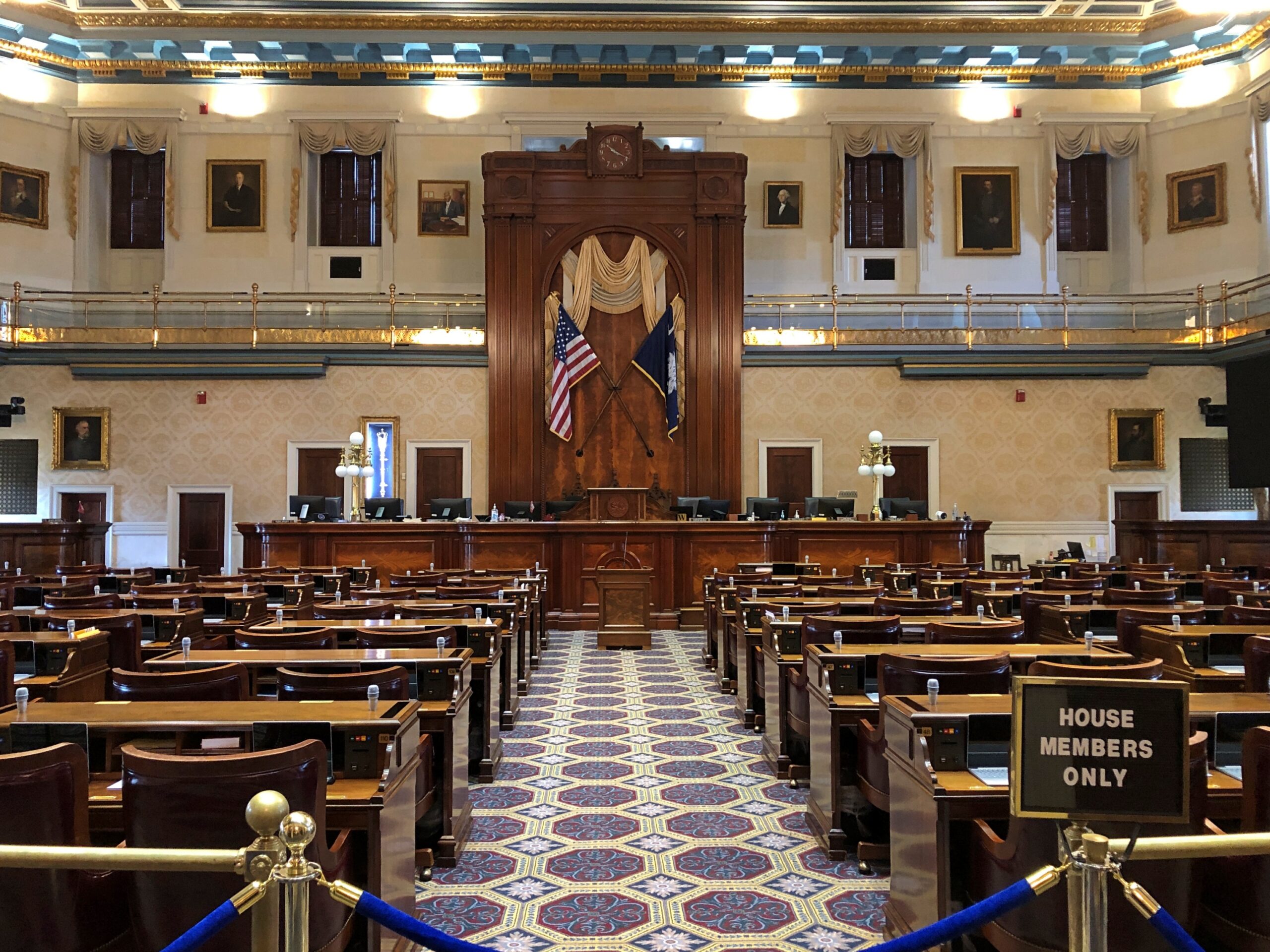
Plenty of other memorials stand on the grounds, such as a unique one honoring the Palmetto Regiment of Volunteers of South Carolina, memorializing SC participants in the war with Mexico, but I saw few, since the heat of the day encouraged me to head inside. There I found a resplendent interior indeed.

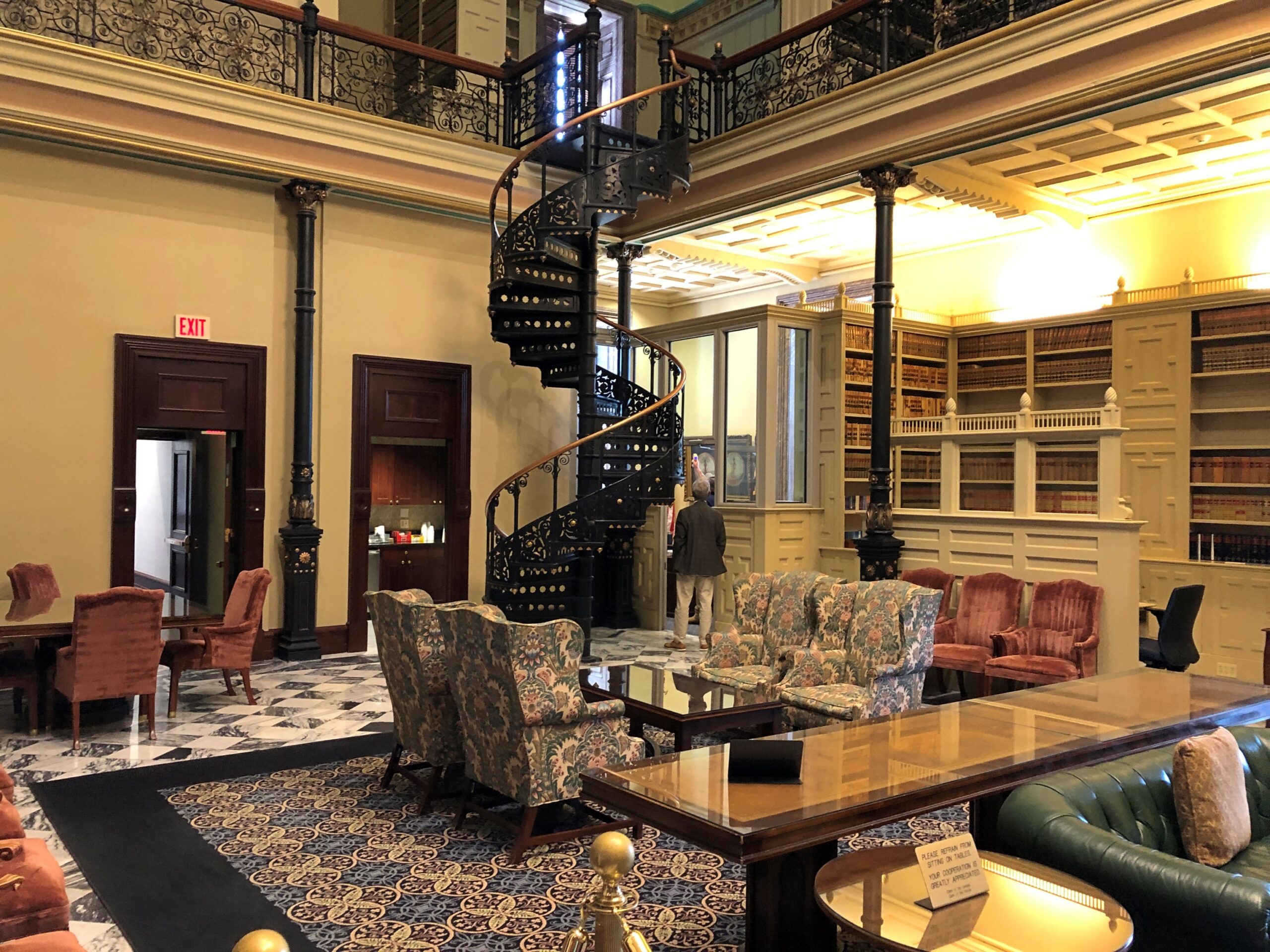
Including the capitol library.
The interior of the dome.


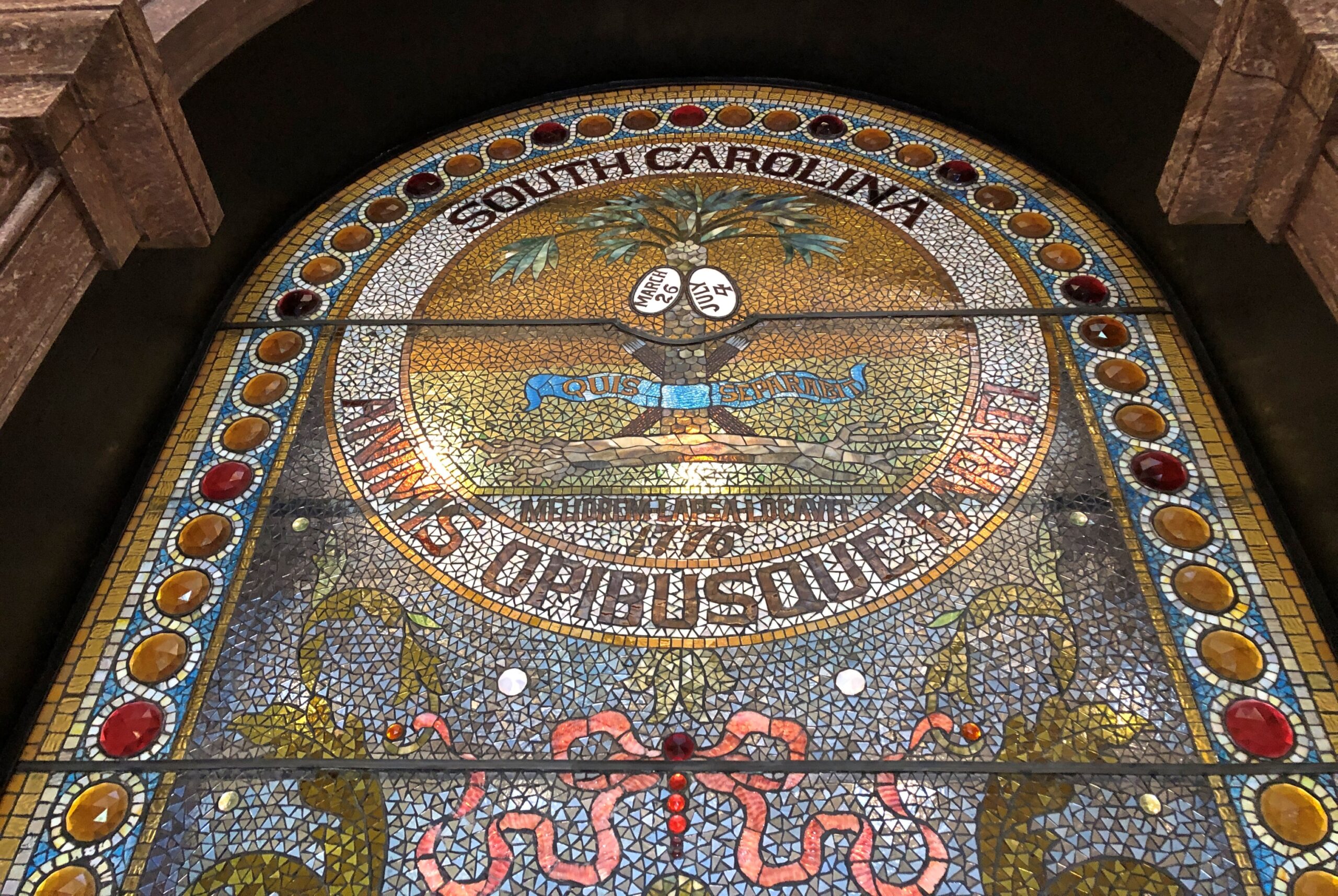
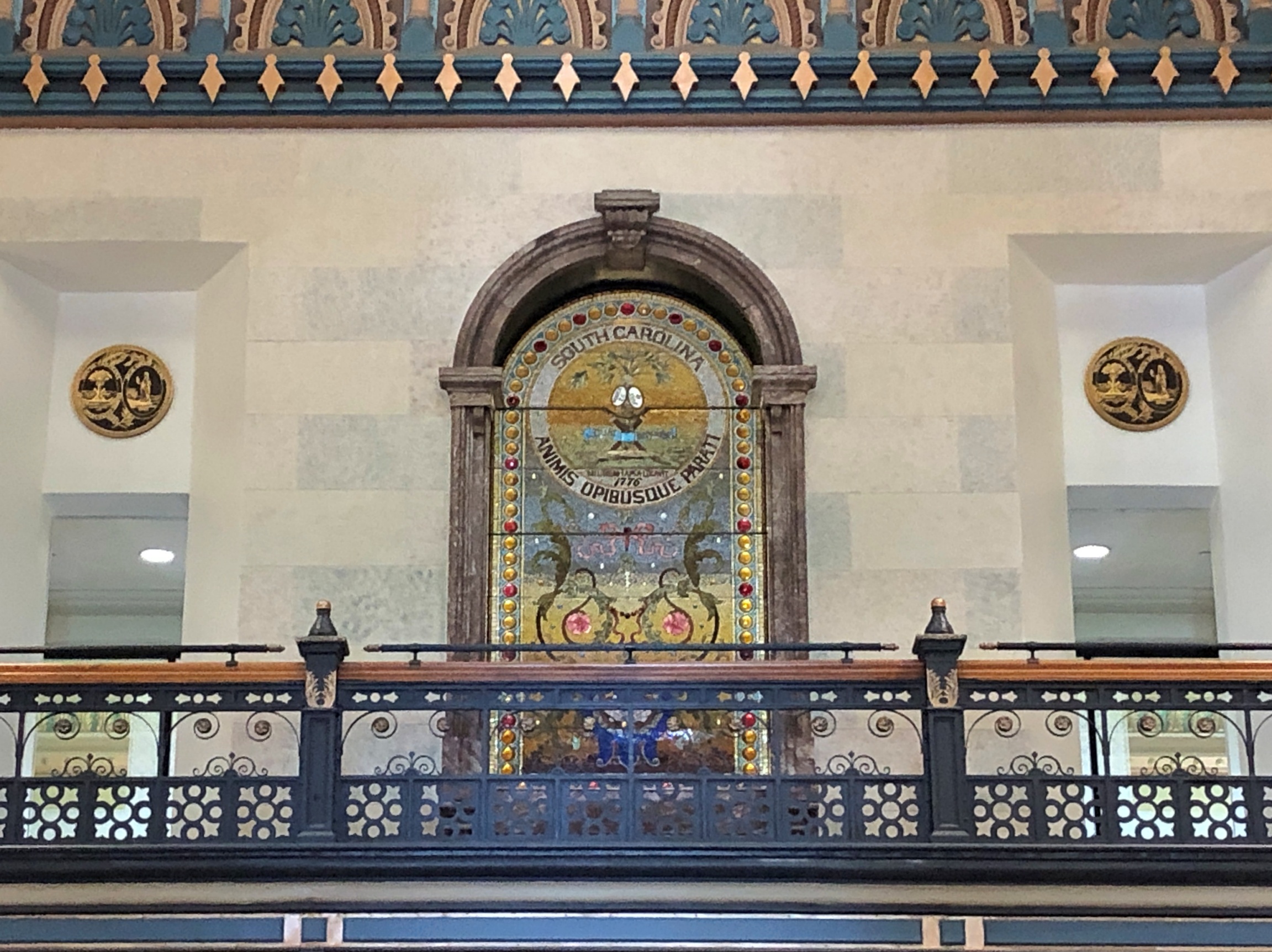
Other unique-to-South Carolina detail.
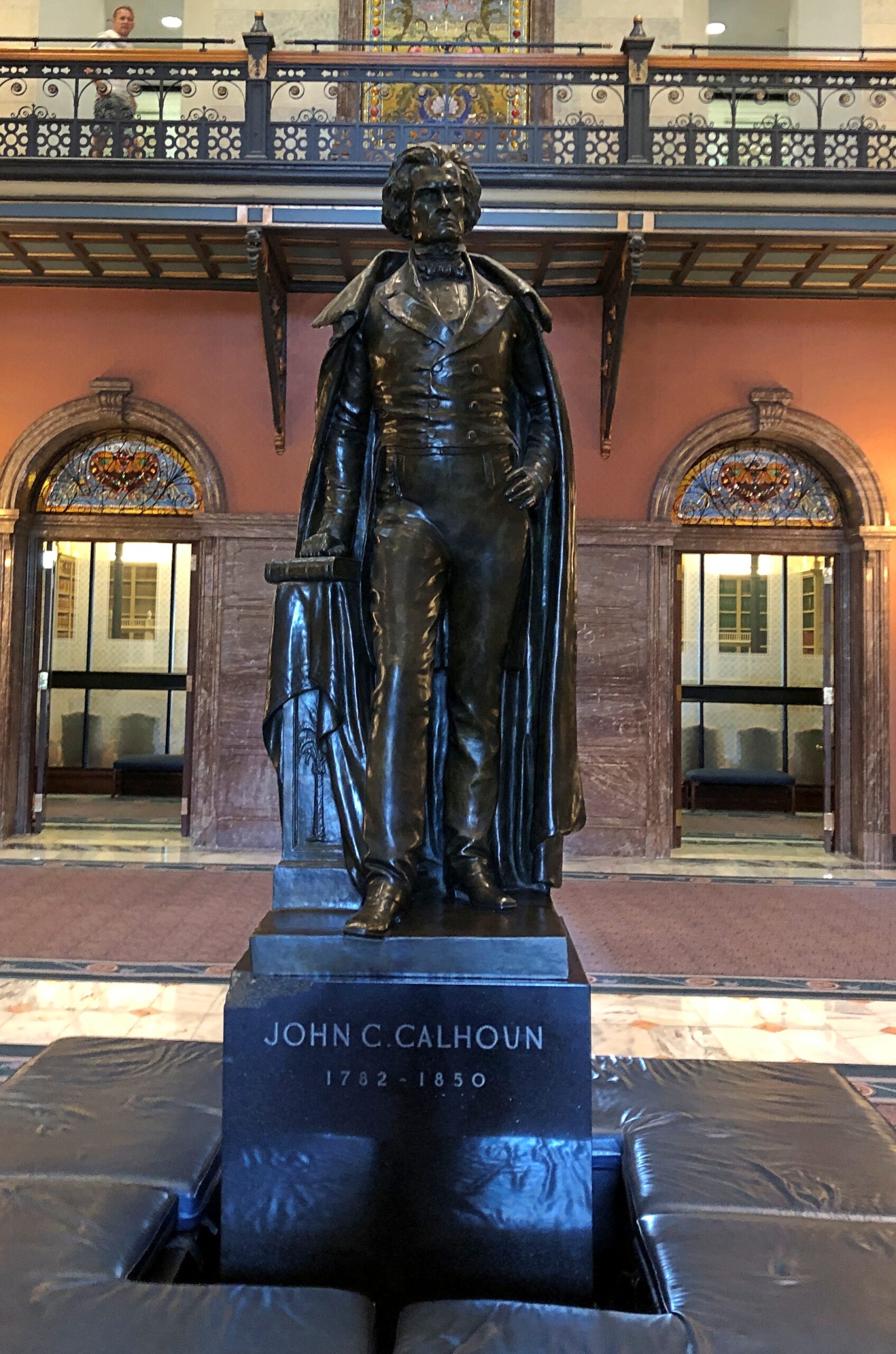
John C. Calhoun rates a prominent bronze in the rotunda and a painted portrait in the Senate chamber. His likeness went down in Charleston, I understand, but not at the capitol just yet.
An unusual memorial hints at the state’s awful experience with yellow fever in pre-modern times.
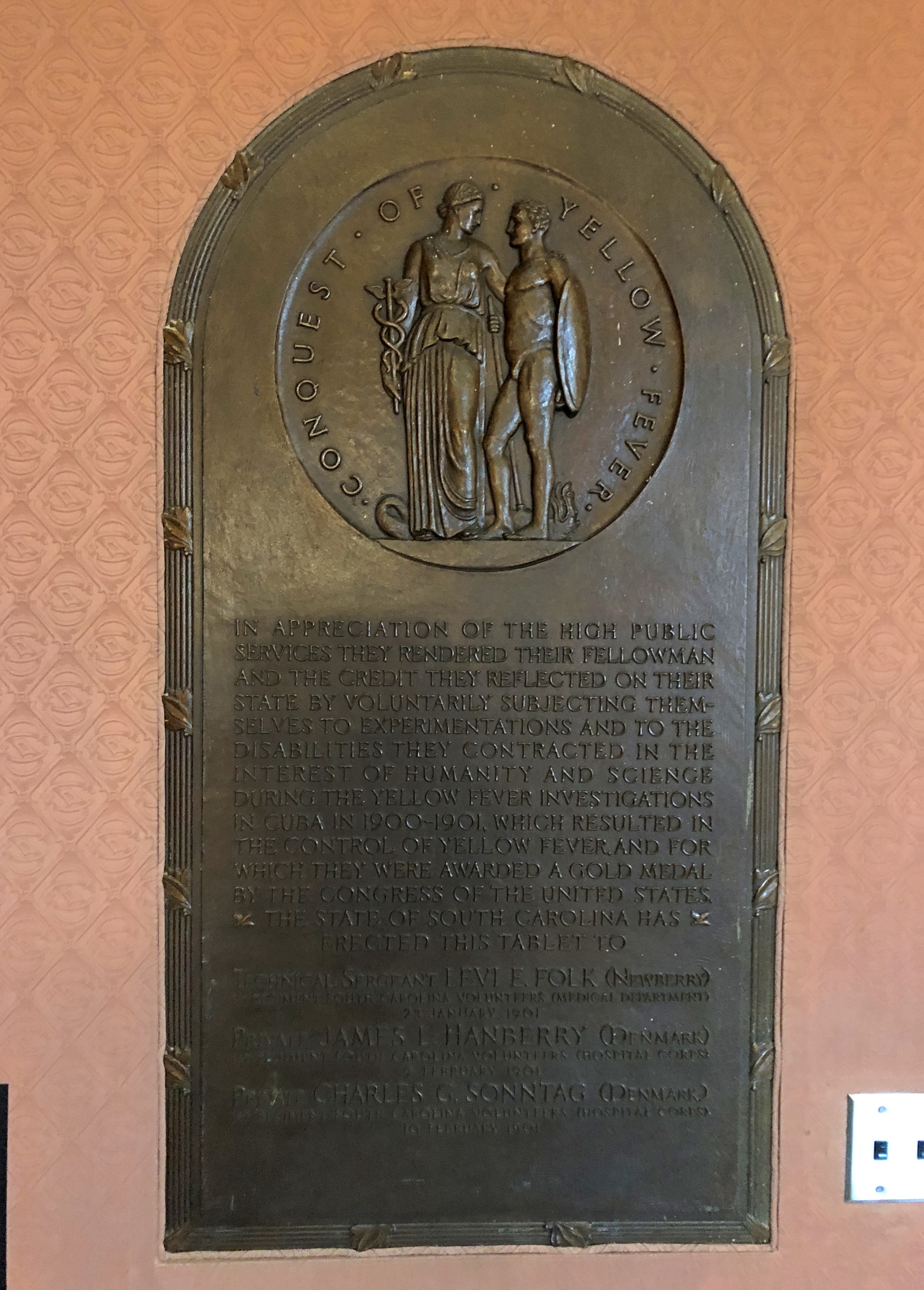
It’s hard to read, but the plaque memorializes three U.S. soldiers from South Carolina, TS Levi E. Folk and Privates James L. Hanberry and Charles G. Sonntag. They were among the 30 or so soldiers who volunteered to be bitten by yellow fever-infected mosquitoes in the famed (used to be famed, anyway) experiments conducted by Maj. Walter Reed in 1900-01 in Cuba that once and for all proved mosquitoes to be the vectors.
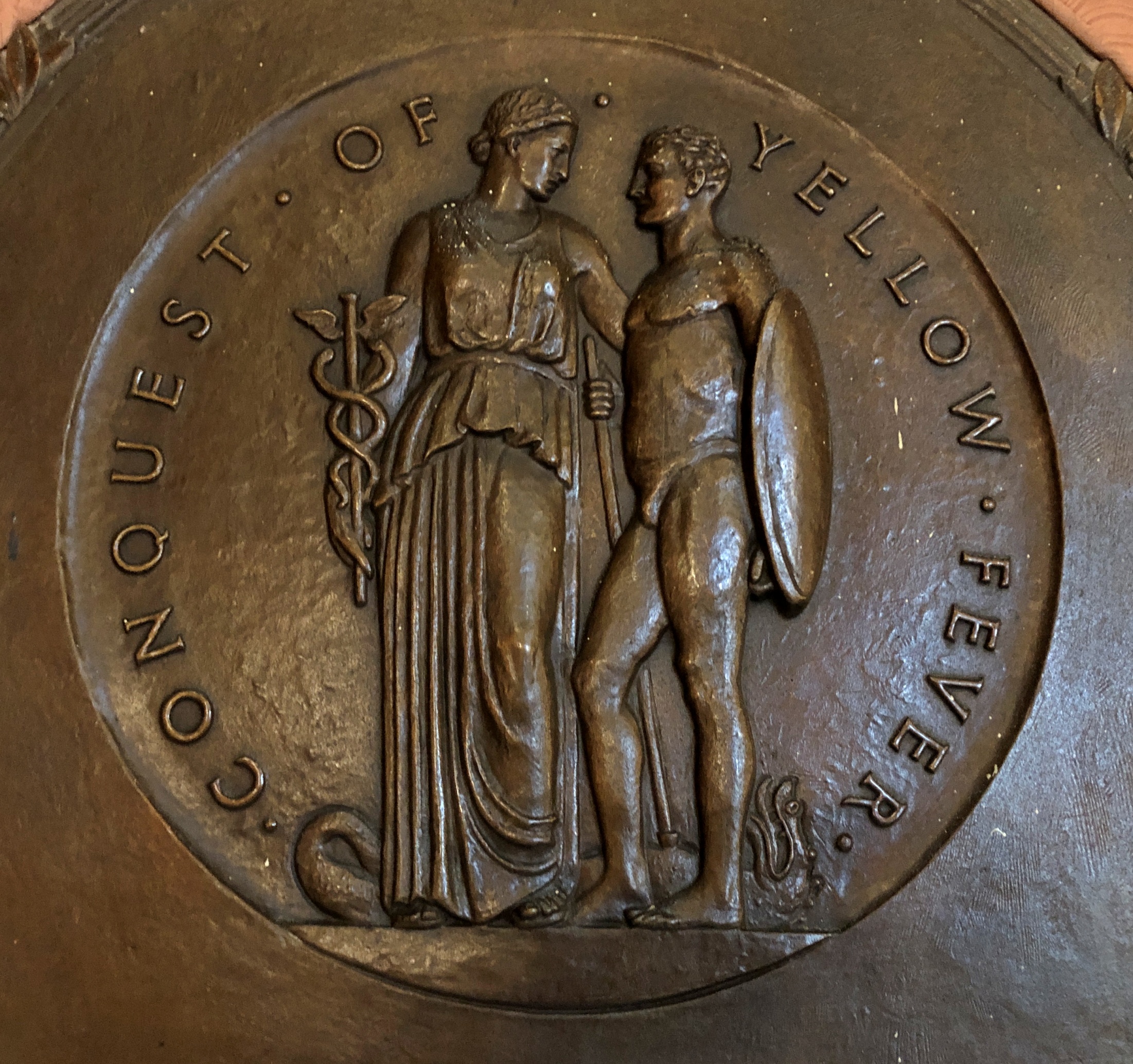
Before the 20th century, yellow fever plagued South Carolina relentlessly. The Encyclopedia of South Carolina on the disease: “Yellow fever, like falciparum malaria, was introduced into South Carolina as a result of the African slave trade. The first major epidemic struck Charleston in 1699, killing about fifteen percent of the population, including many officials. At least five and perhaps as many as eight major epidemics occurred between 1706 and 1748. The disease was probably present in several other years as well. For several decades after 1748 no large epidemics occurred, although it appeared sporadically in some years. Between the 1790s and 1850s Charleston hosted numerous epidemics.”
Glad all that is over here in North America. Unless it isn’t.