The tale of the CSS Neuse, an ironclad ram intended for use in the Confederate re-capture of New Bern, NC, in 1864 is a long one, marked by construction delays, an accidental grounding, and an ultimate failure to serve much military purpose (and the Federals held New Bern). Shortages of men and materiel, which bedeviled the Southern war effort from beginning to end, eventually meant that the ship’s wartime fate was to be burned to the waterline on the Neuse River to keep it out of Union hands. A detailed description of its brief existence as a warship is told by North Carolina Historic Sites.
What is left of the Neuse is now housed in a modern museum in Kinston, NC, after roughly a century buried in river mud and some decades of conservation elsewhere. Dan and I visited the museum after spending much of the previous day – a warm, sunny somewhat breezy day – sailing on his boat on the waters near New Bern. The day we saw the Neuse was a much colder, rainier day, just right for indoor activity.
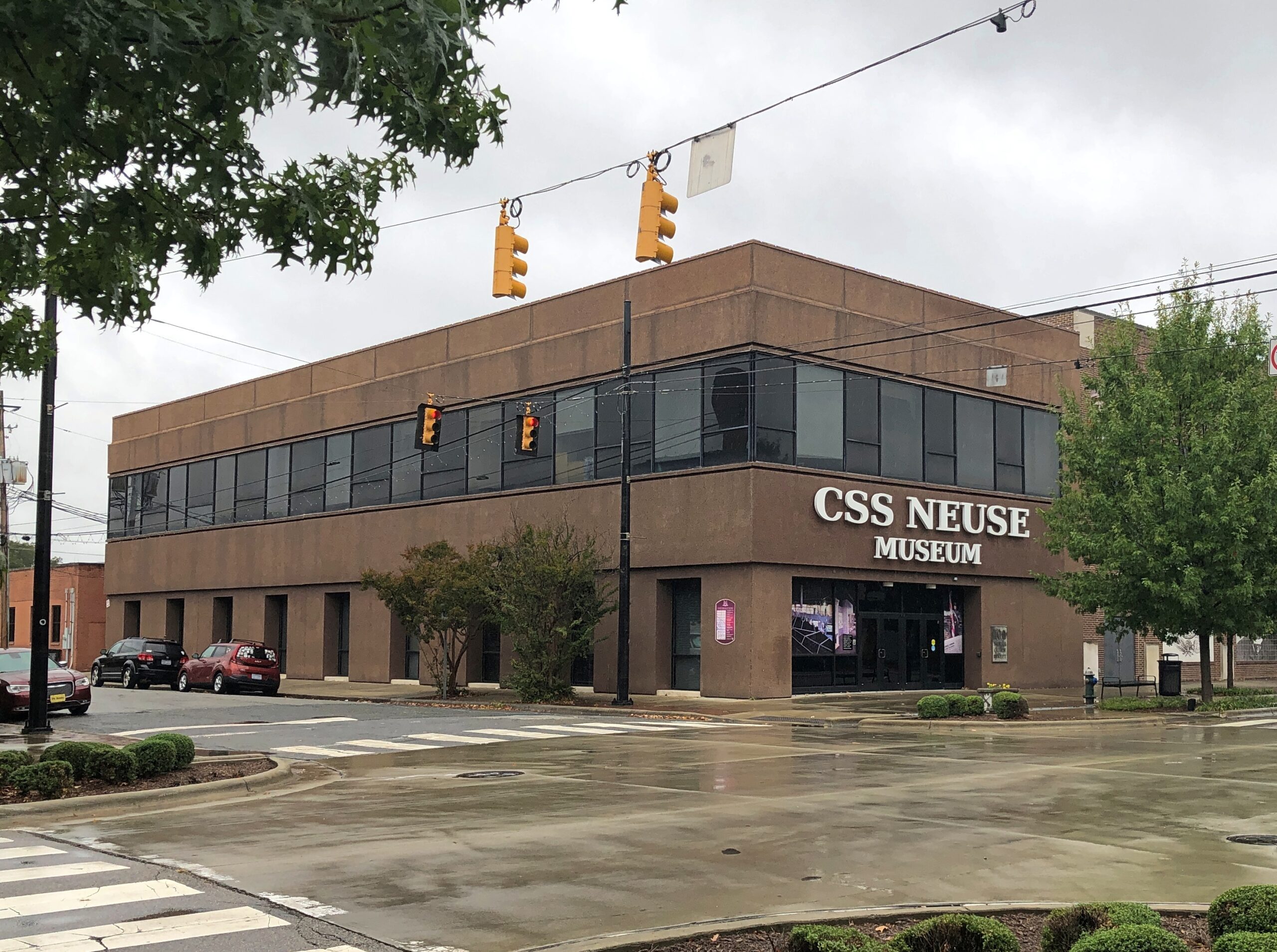
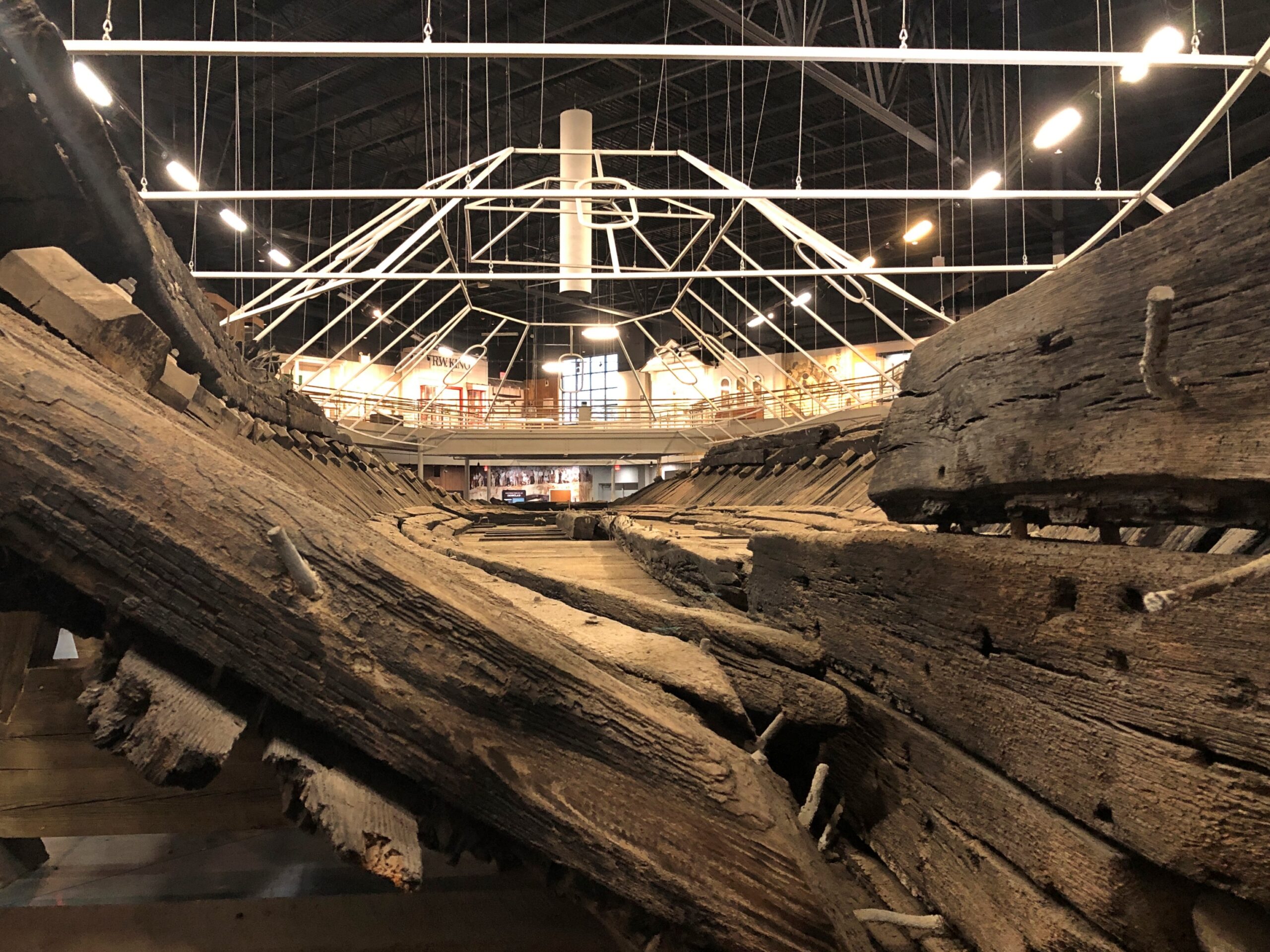
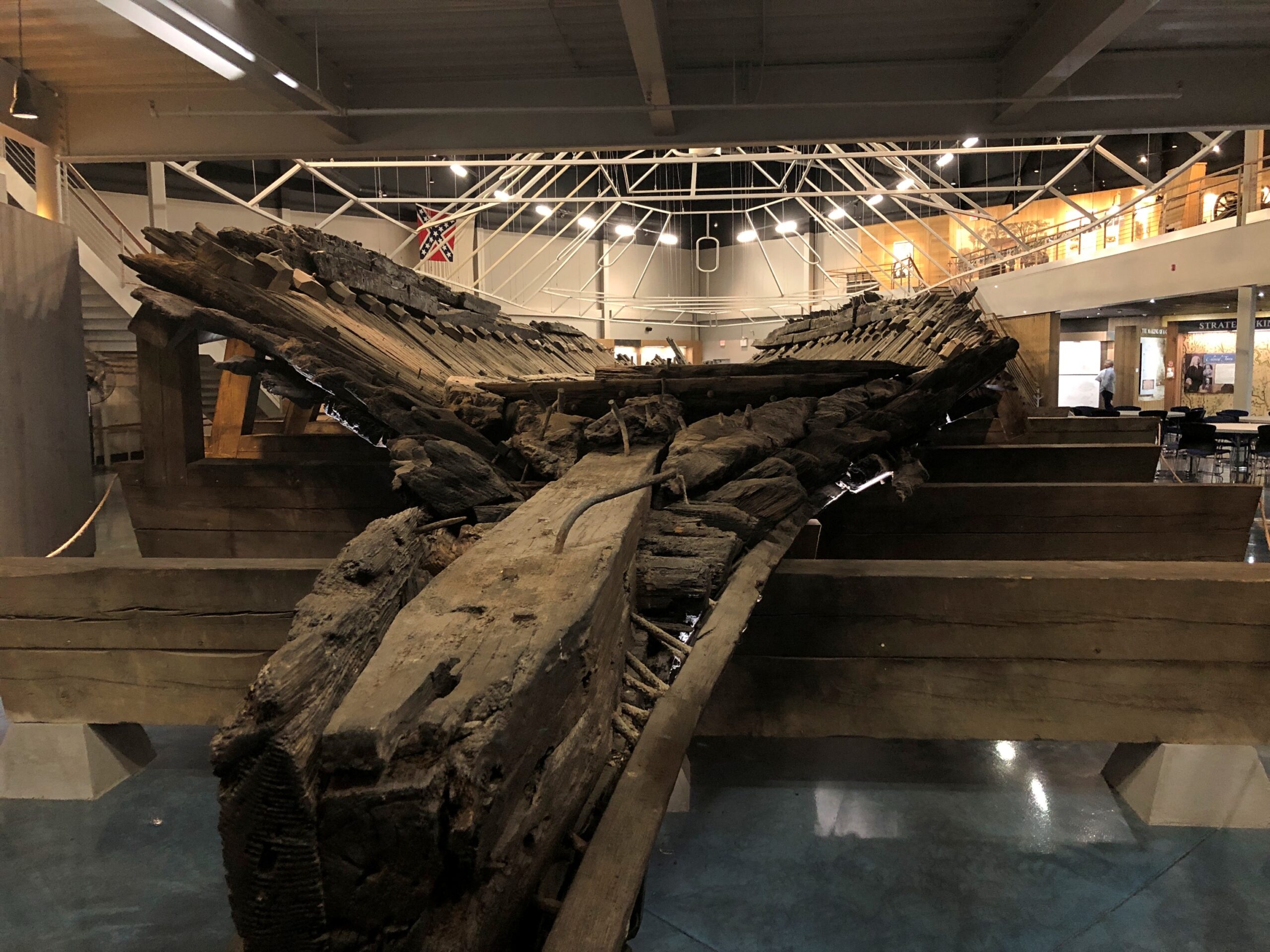
The building is mostly a single room, large enough to hold the wreck. The best views are from a second floor gallery that rings much of the way around the ship.
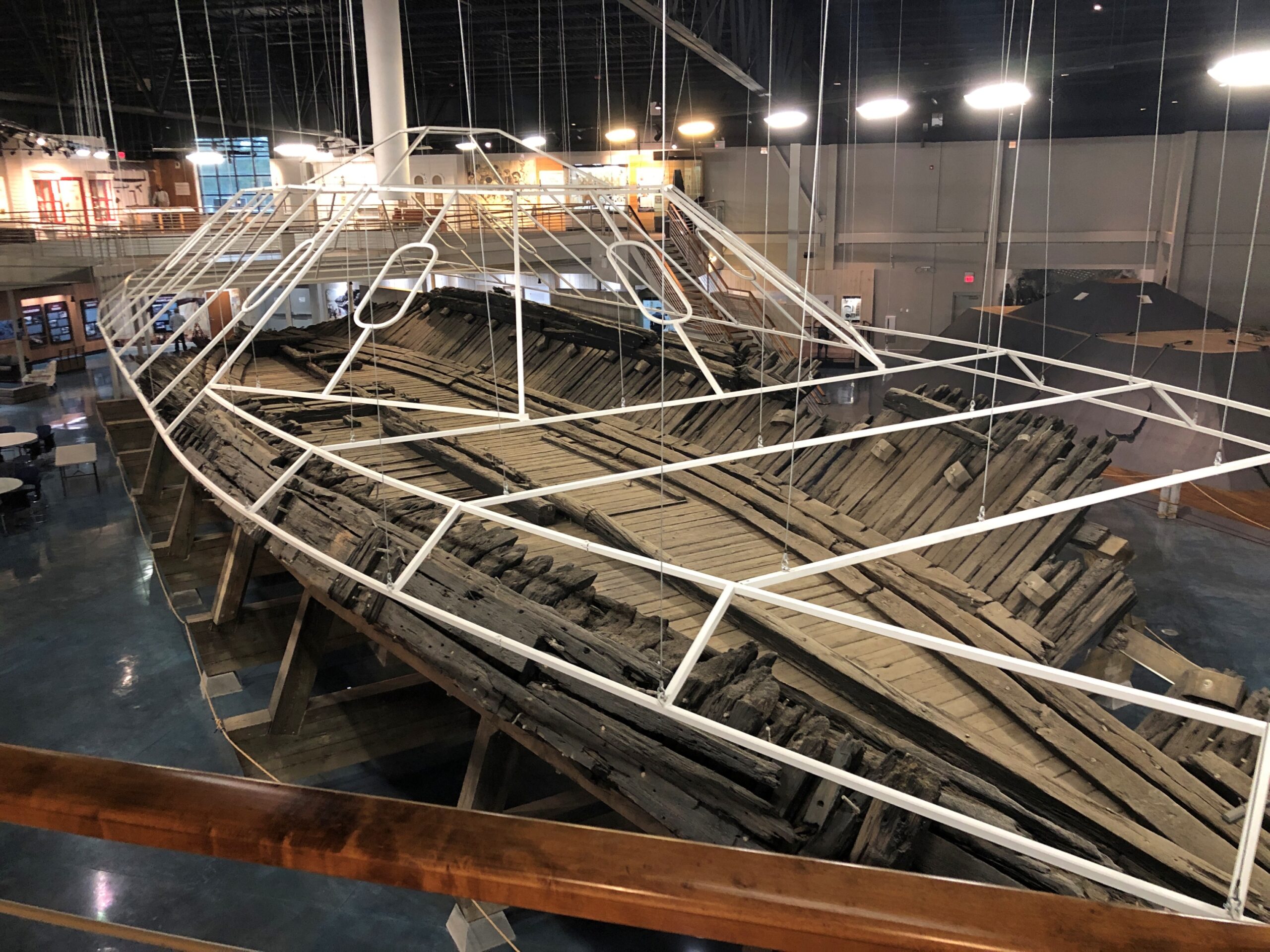
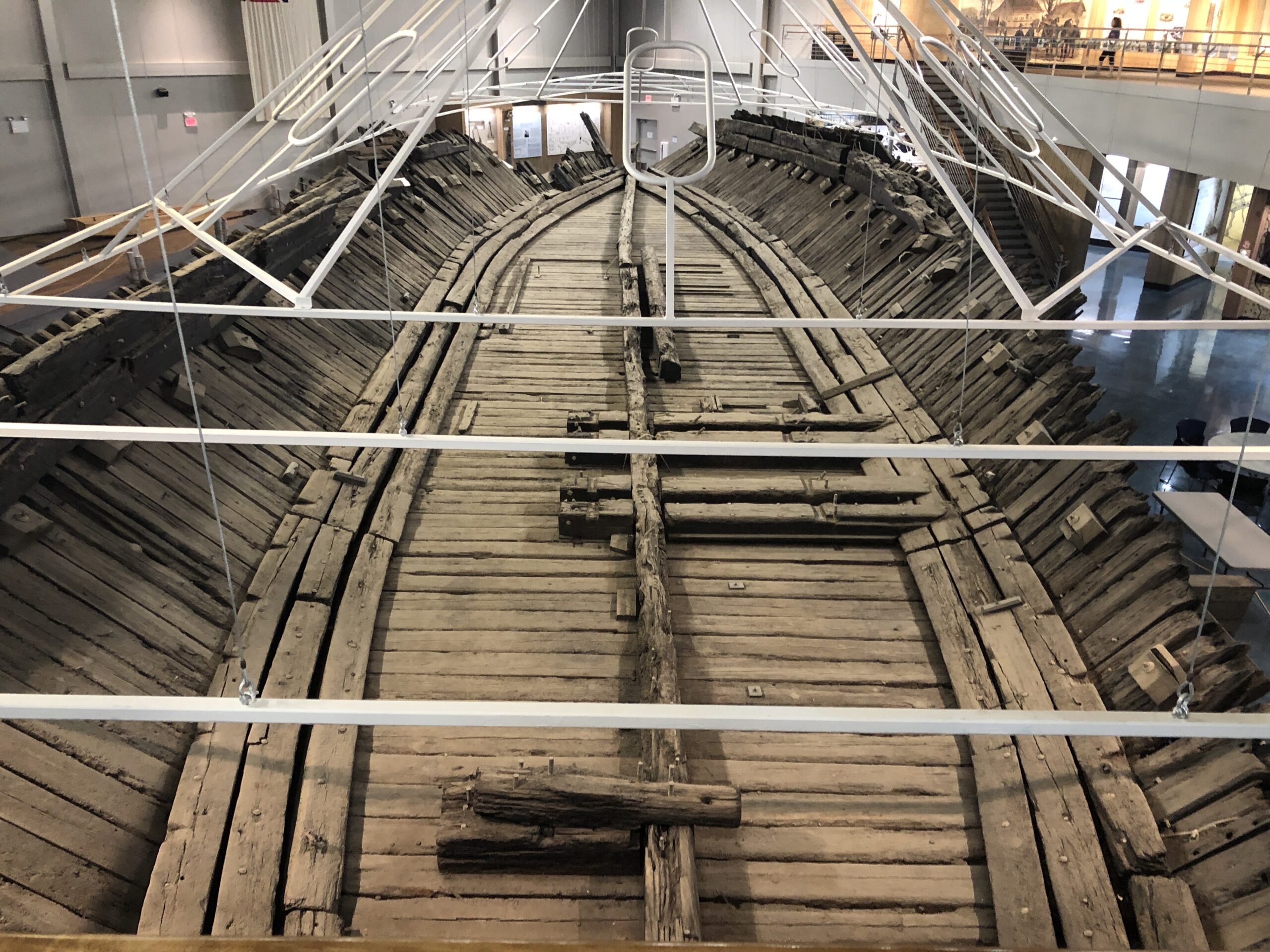
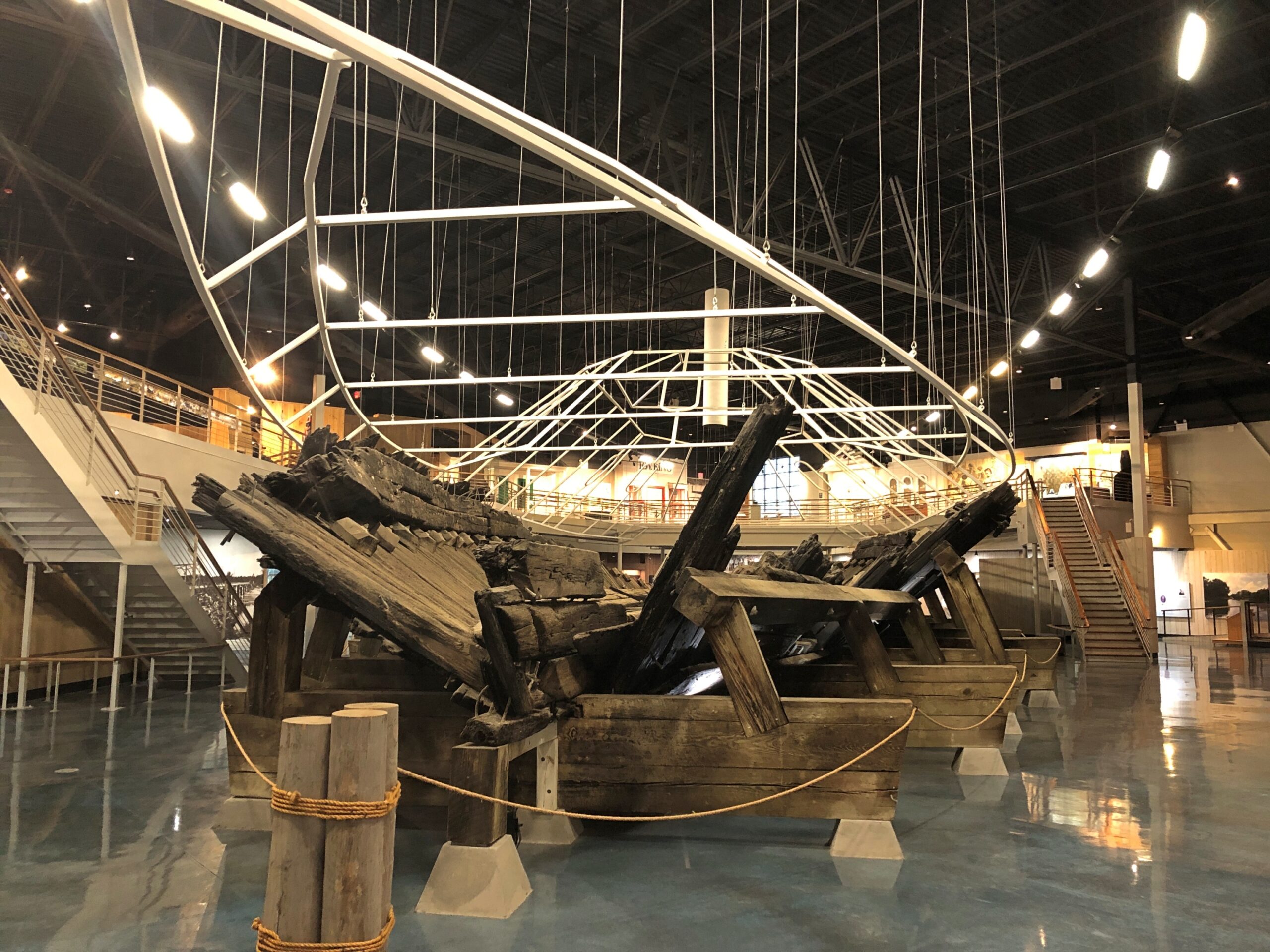
The white metal structure hanging over the wreck indicates the full size and shape of the ship, which is pretty large. That’s also the sense you get standing next to what’s left of the hull.
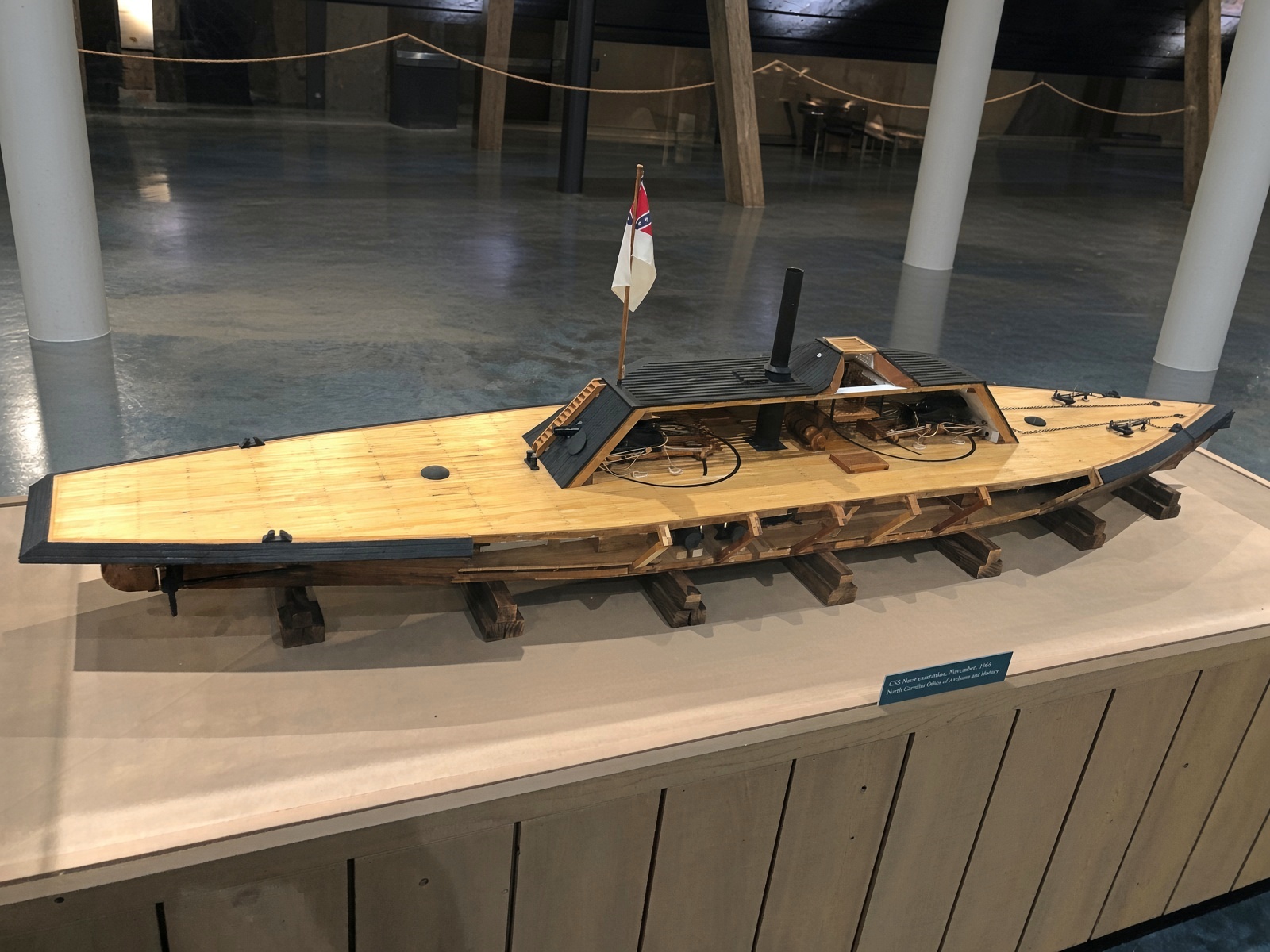
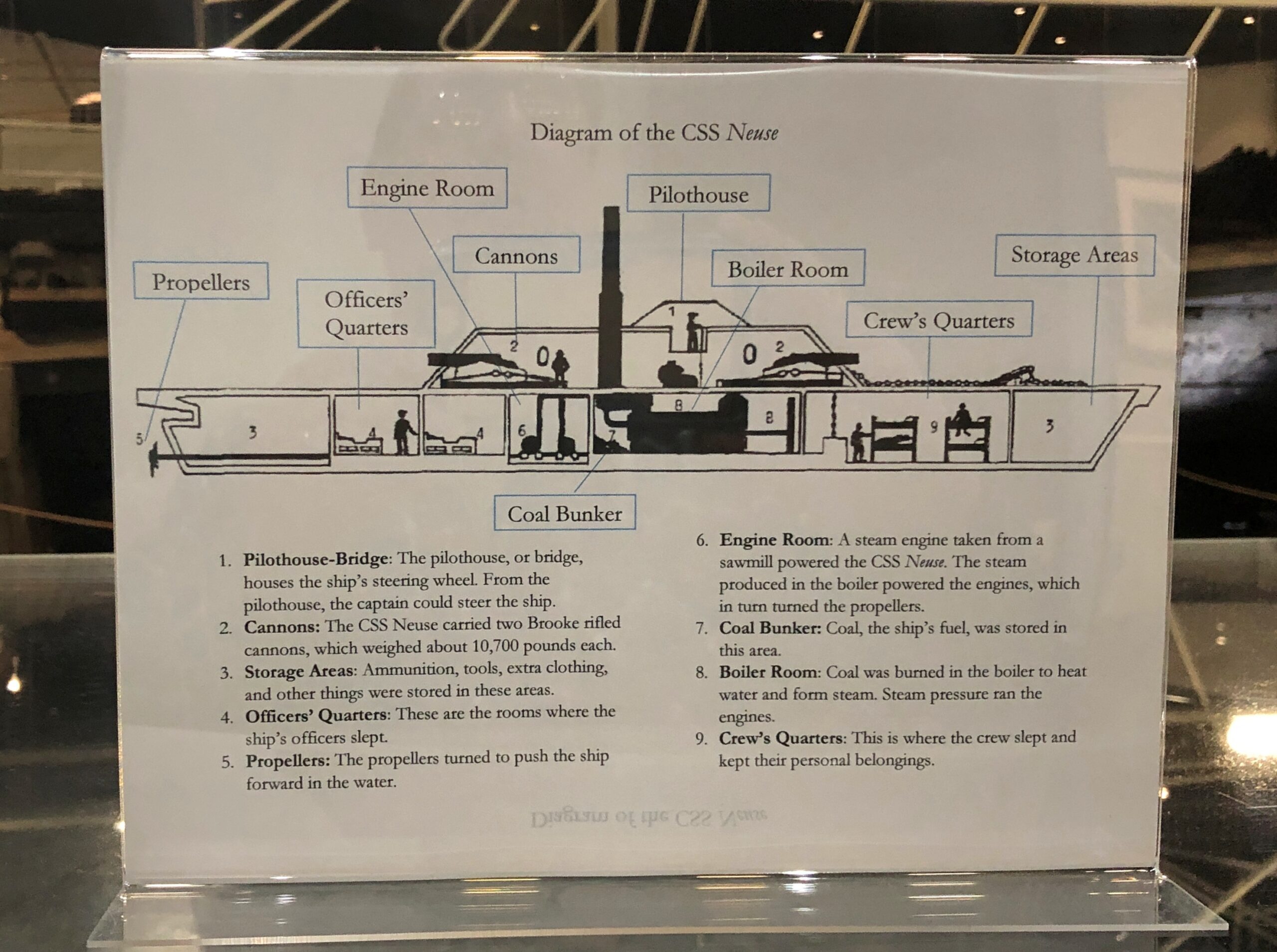
A model of the ship (with the glass removed by AI) and a diagram. It would have been formidable in its time and place, had things gone a little differently.
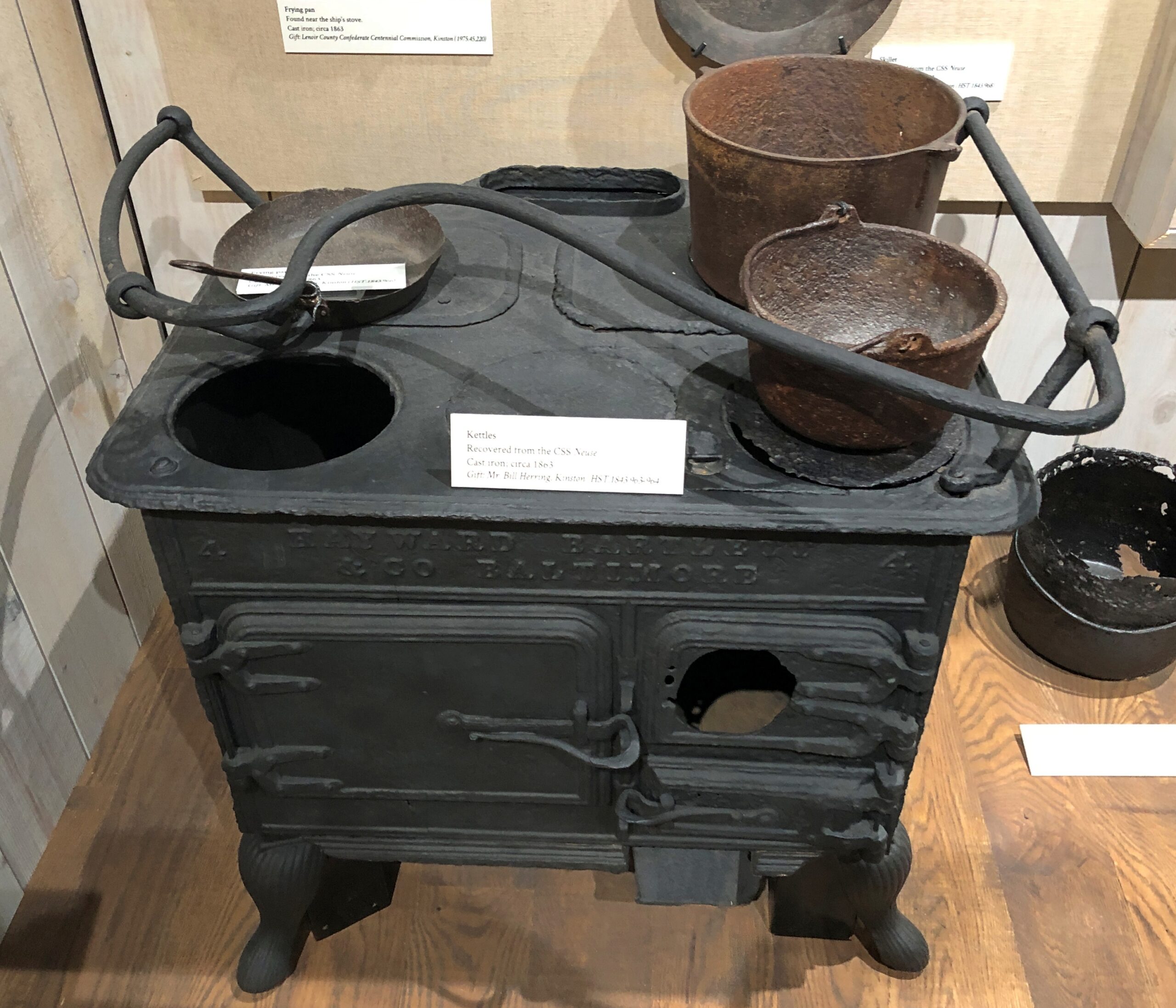
The museum has a number of artifacts associated with the Neuse, large and small. Such as its iron stove. It must have been buried fairly deep, to avoid salvage efforts immediately after the war, when such iron as the ironclad had — not as much as planned, due to shortages — was stripped away.
Confederate banknotes, formerly belonging to the Neuse’s captain, Joseph Price. They look crisp and uncirculated. He’d probably rather had had U.S. gold or silver.
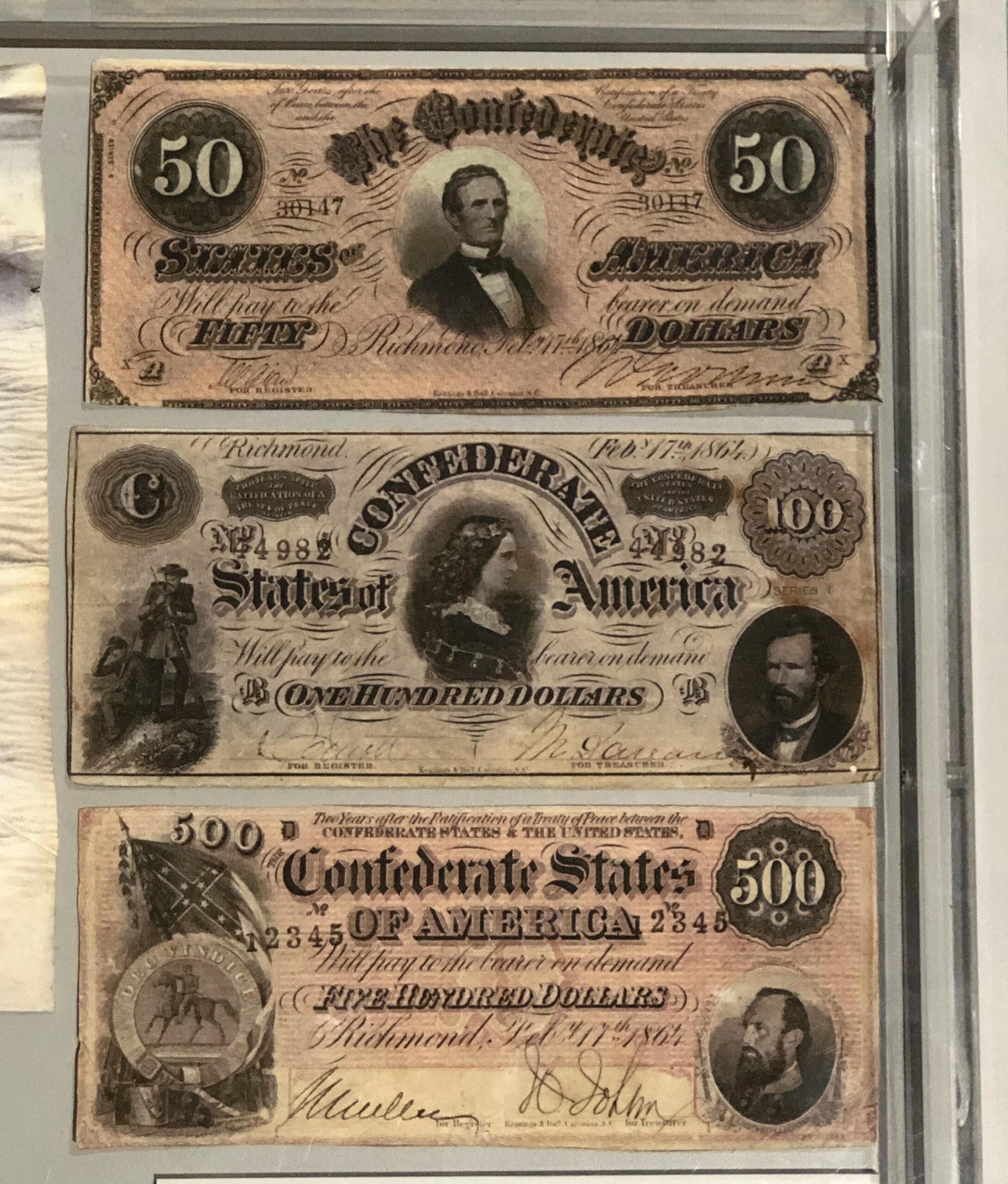
One of the notes features Lucy Pickens, who was as much of a socialite as the Confederacy had. Odd choice, but those were freewheeling days for banknote design, and not just in the CSA.
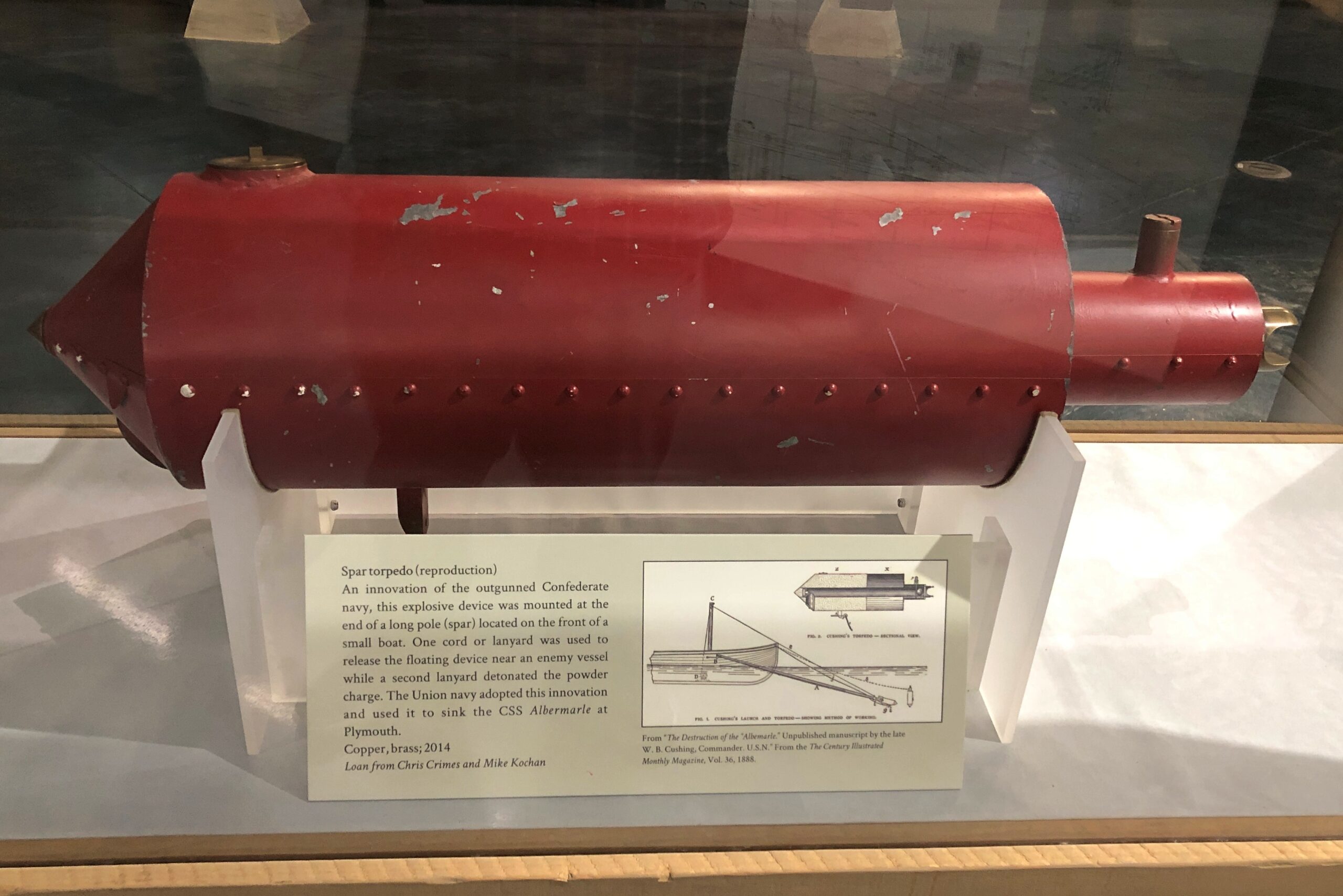
A replica torpedo, in the mid-19th century meaning of the term. That is, an explosive charge to be attached to a spar in front of the ship. It worked (at least once) for the ill-fated H.L. Hunley.
Kinston is a town (pop. 20,000) west of New Bern. Two days before Dan and I visited, I passed through myself and took a short look around. I’d been advised that Mother Earth was in town, and I found its two properties.
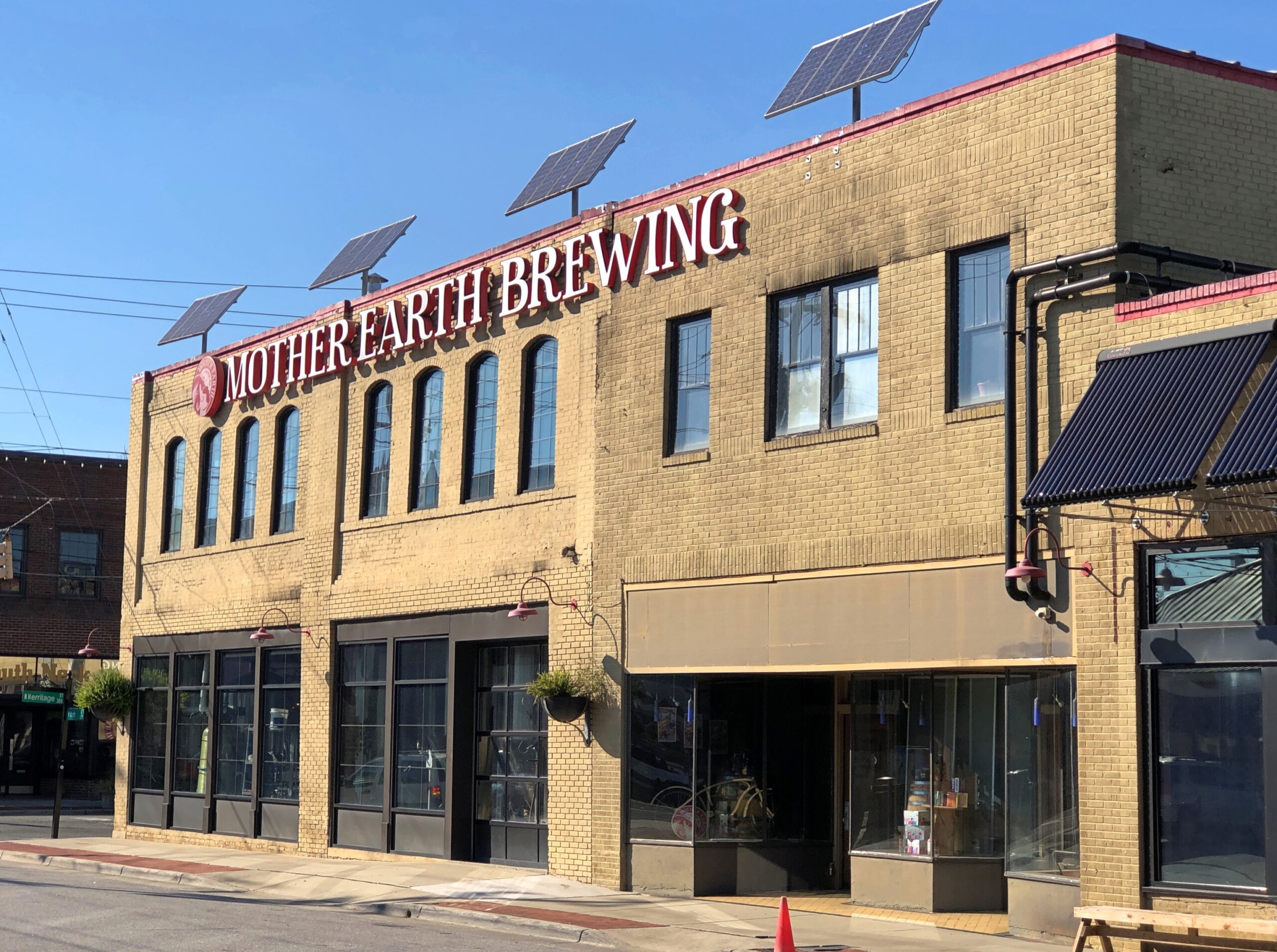
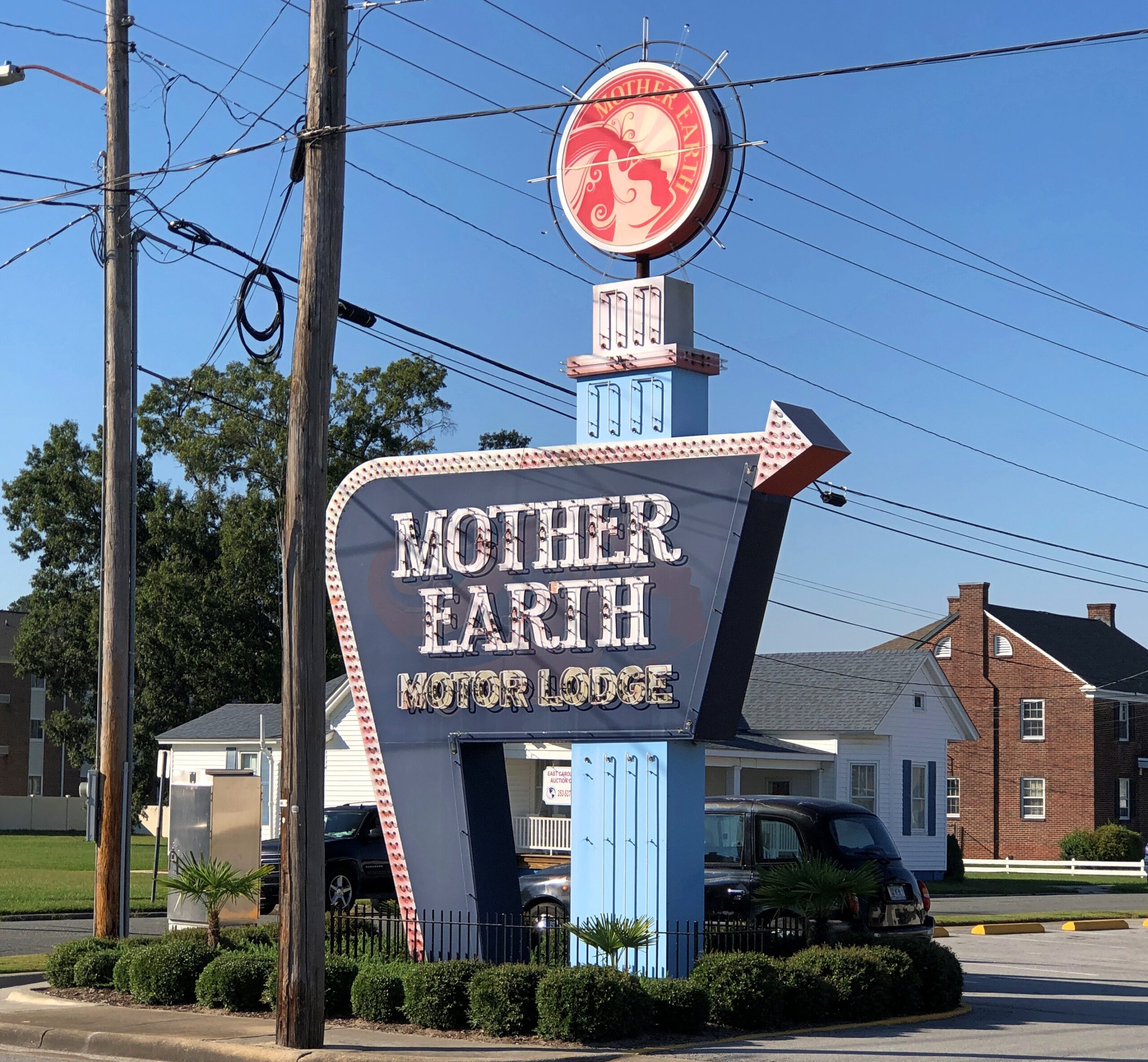
Mother Earth Brewing means that hipsters are discovering Kinston. Not sure what the Mother Earth Motor Lodge signifies, but I like that Holiday Inn-esque sign.
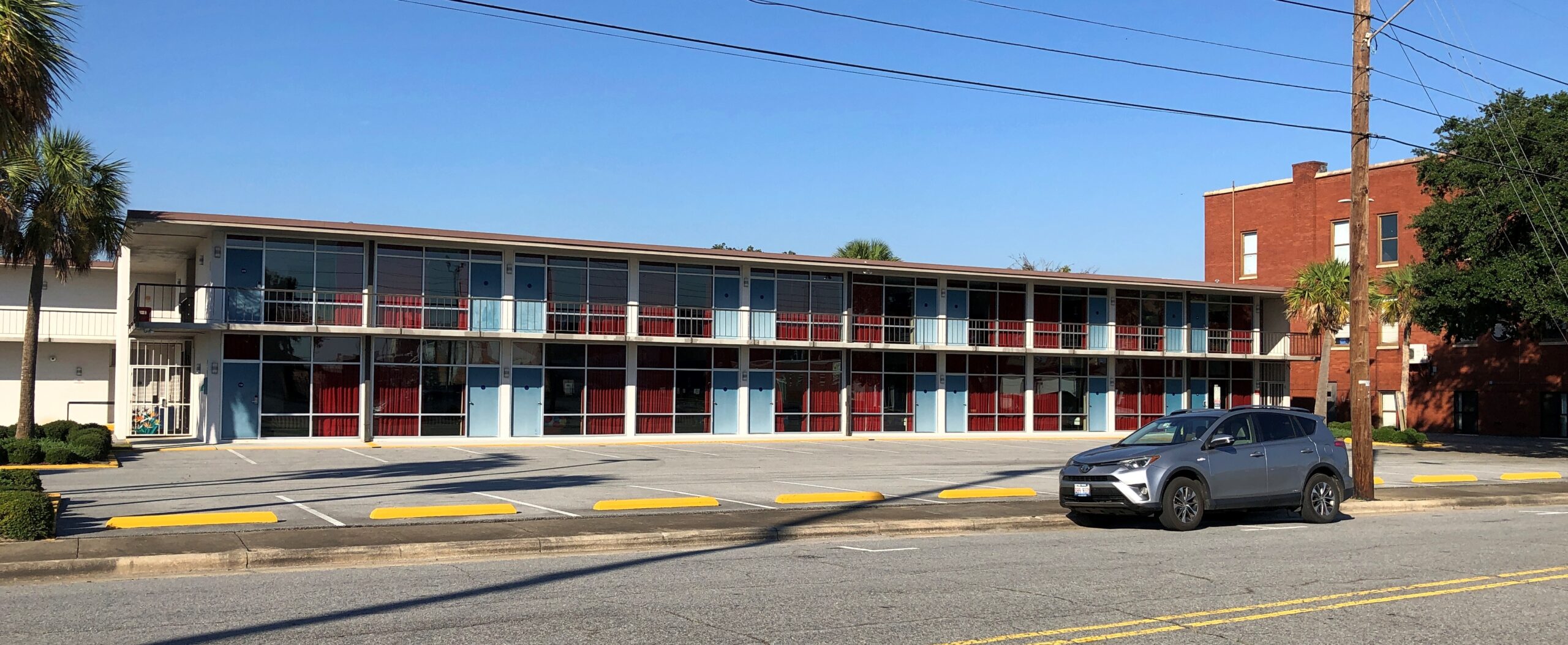
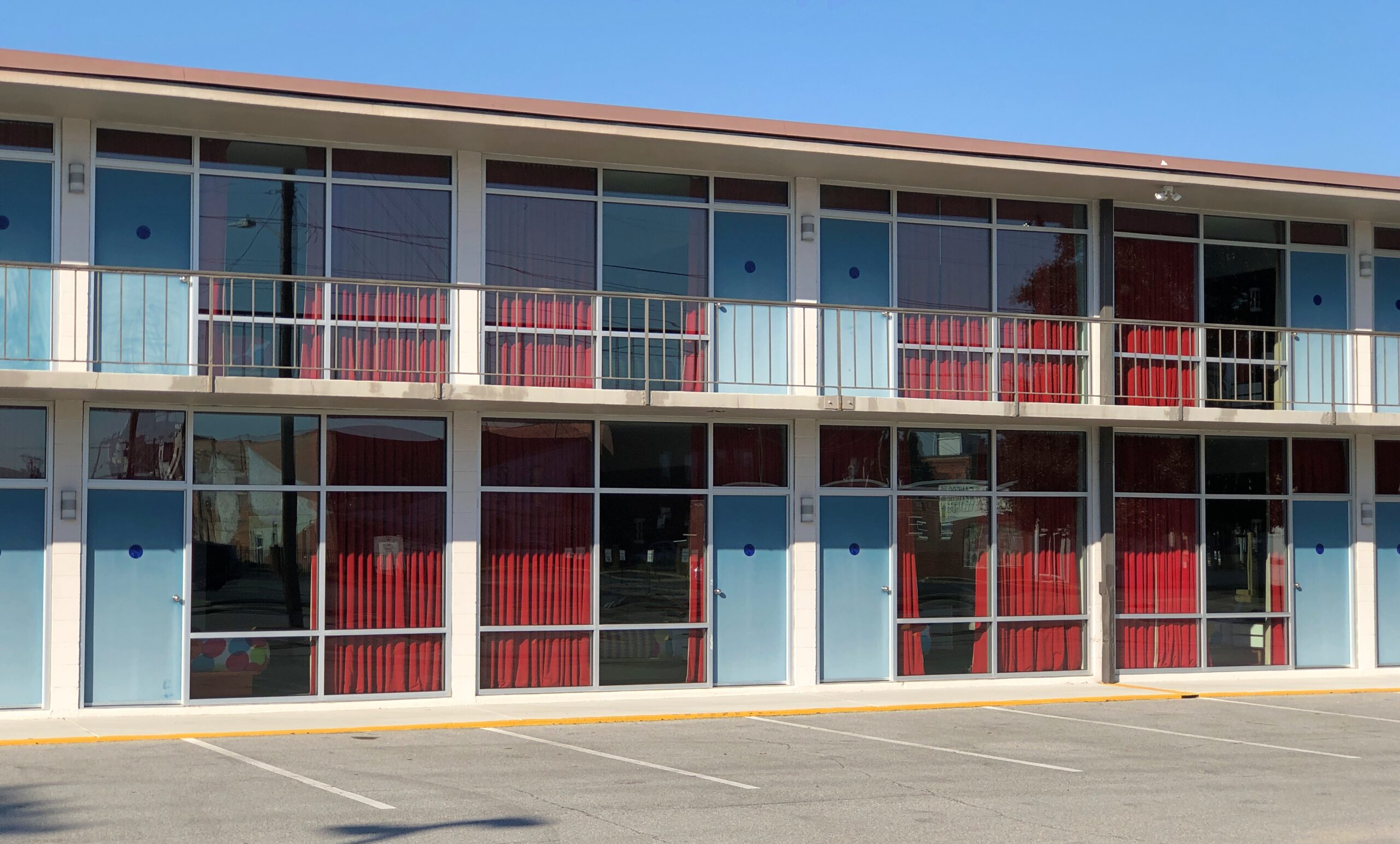
Also the fact the the Motel Earth Motel is, on the outside anyway, about as mid-century as can be.