On December 11, I took this picture.
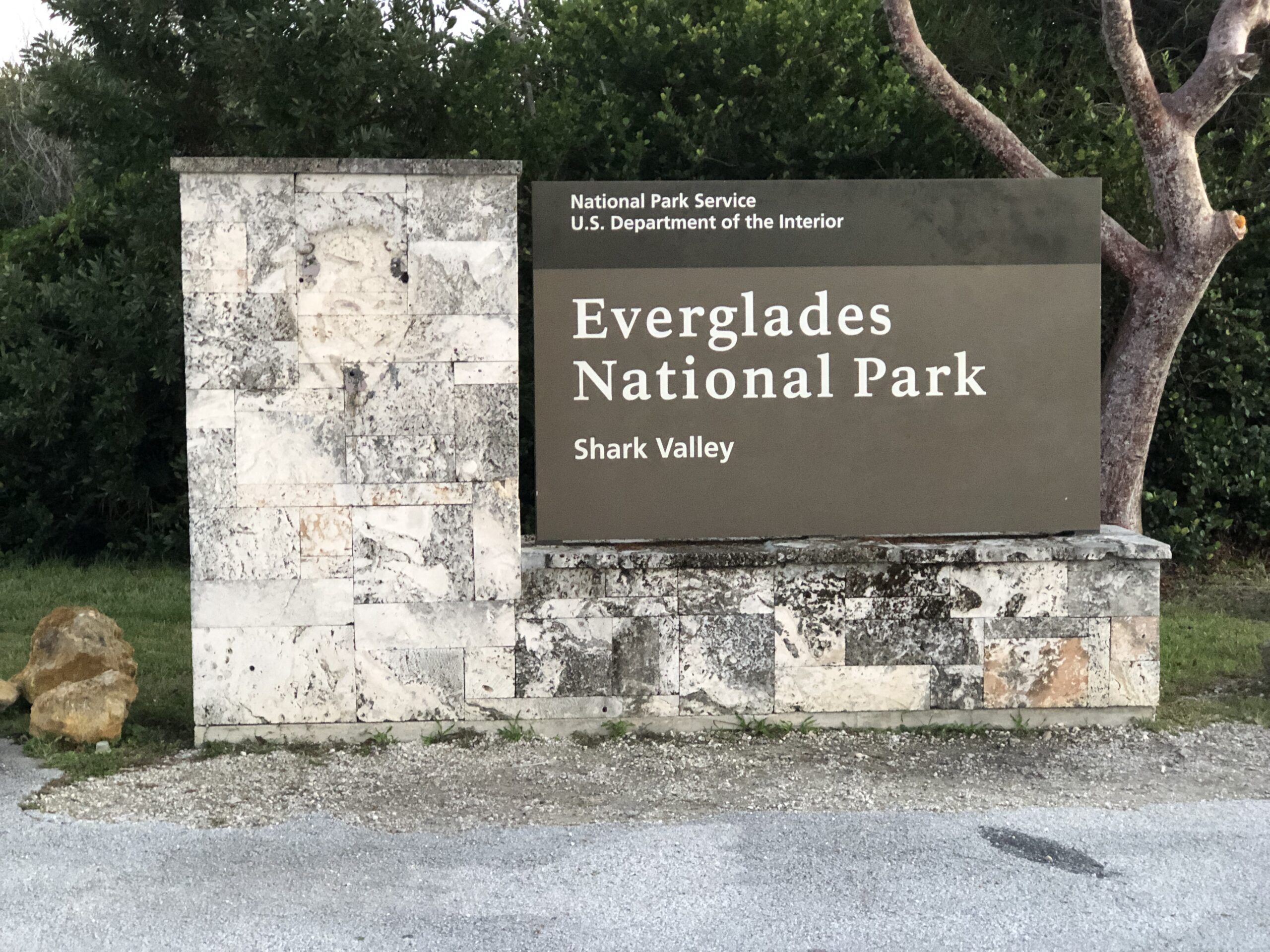
Text to a friend, along with the image: Now, what’s the bump in the water? Ah, it’s an alli AHHHGH
Reply from friend: Ha. Ha.
I thought it was funny, even though the joke depends on an alligator canard. As Bob the alligator wrangler told us the next day after our boat tour of the northern reaches of Everglades National Park, the creatures are actually “pretty chill.”
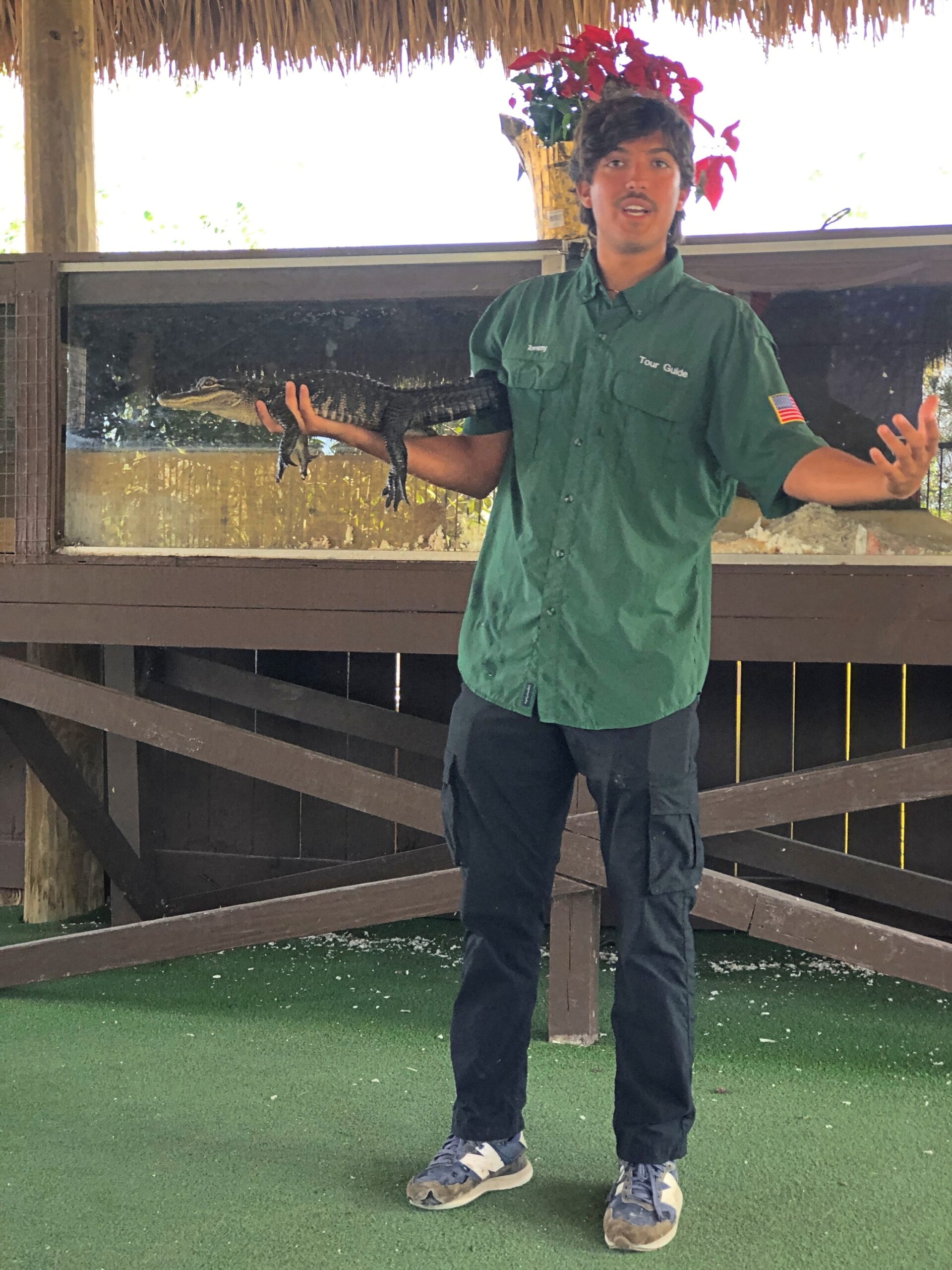
It’s those lowlife crocs that will attack you for no good reason and, I have to report, south Florida is one of the few places where alligators and crocodiles share a habitat. Of course it is. Bob worked for Coopertown Airboats, which is on US 41 and whose tours ply the nearby sawgrass waters, and have since 1945.
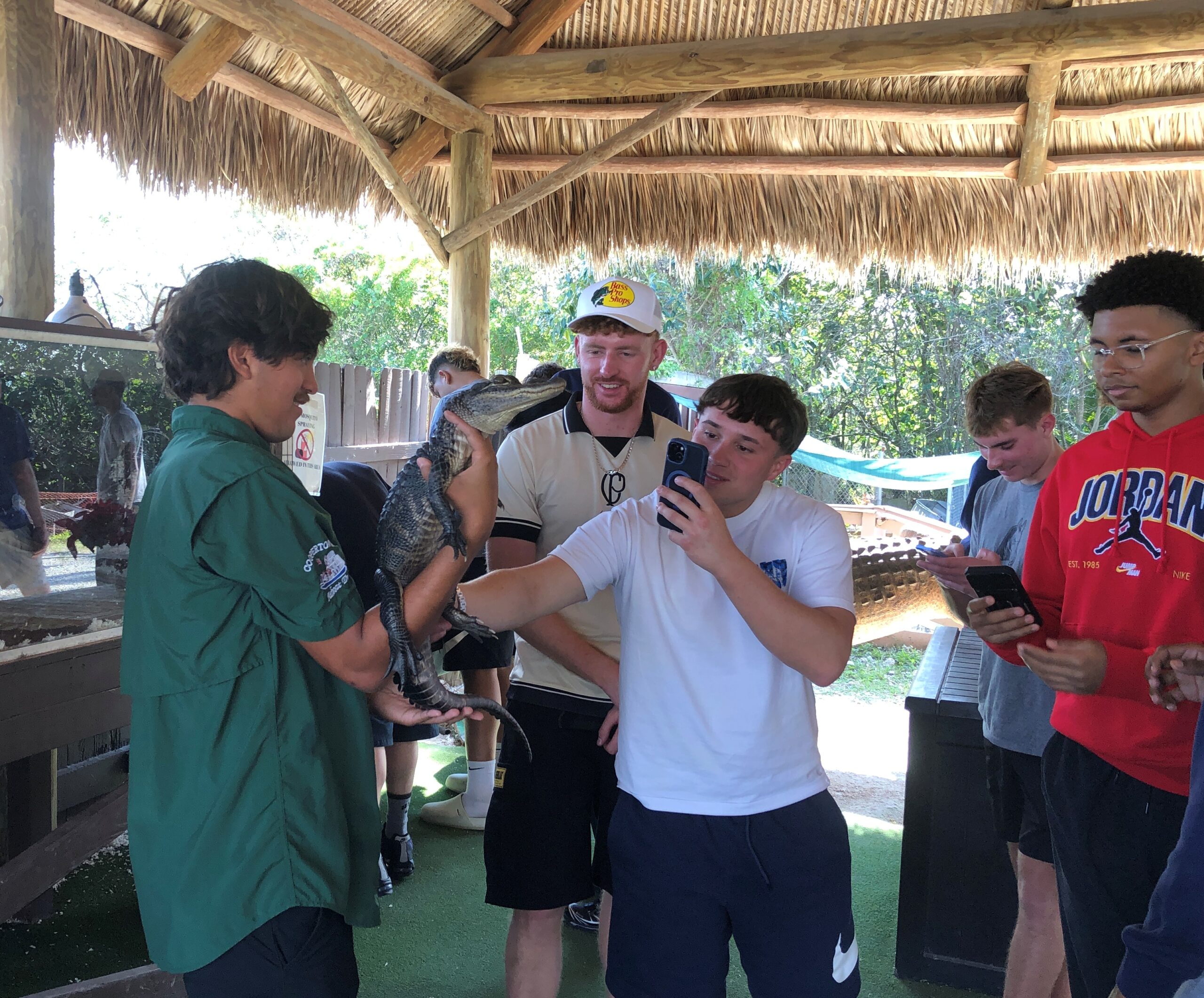
The company also has a few alligators lounging around the grounds in cement ponds, and some baby gators, one of which Bob handled with no problem. “Just keep you fingers away from his mouth,” he said, inviting us to touch the alligator. I don’t know why I was surprised to find that a living alligator’s skin feels pretty much like an alligator skin purse or wallet.
Behind glass at Coopertown was the Everglades’ real menace, anyway, a fat, pale ugly-as-can-be python, an inert reptilian Sydney Greenstreet whose countless cousins have claimed much of the biomass of the Everglades as their own, one nightmarish swallow at a time. The python is king of invasive species in Florida, which is saying quite a lot.
The Coopertown gators weren’t hard to find.
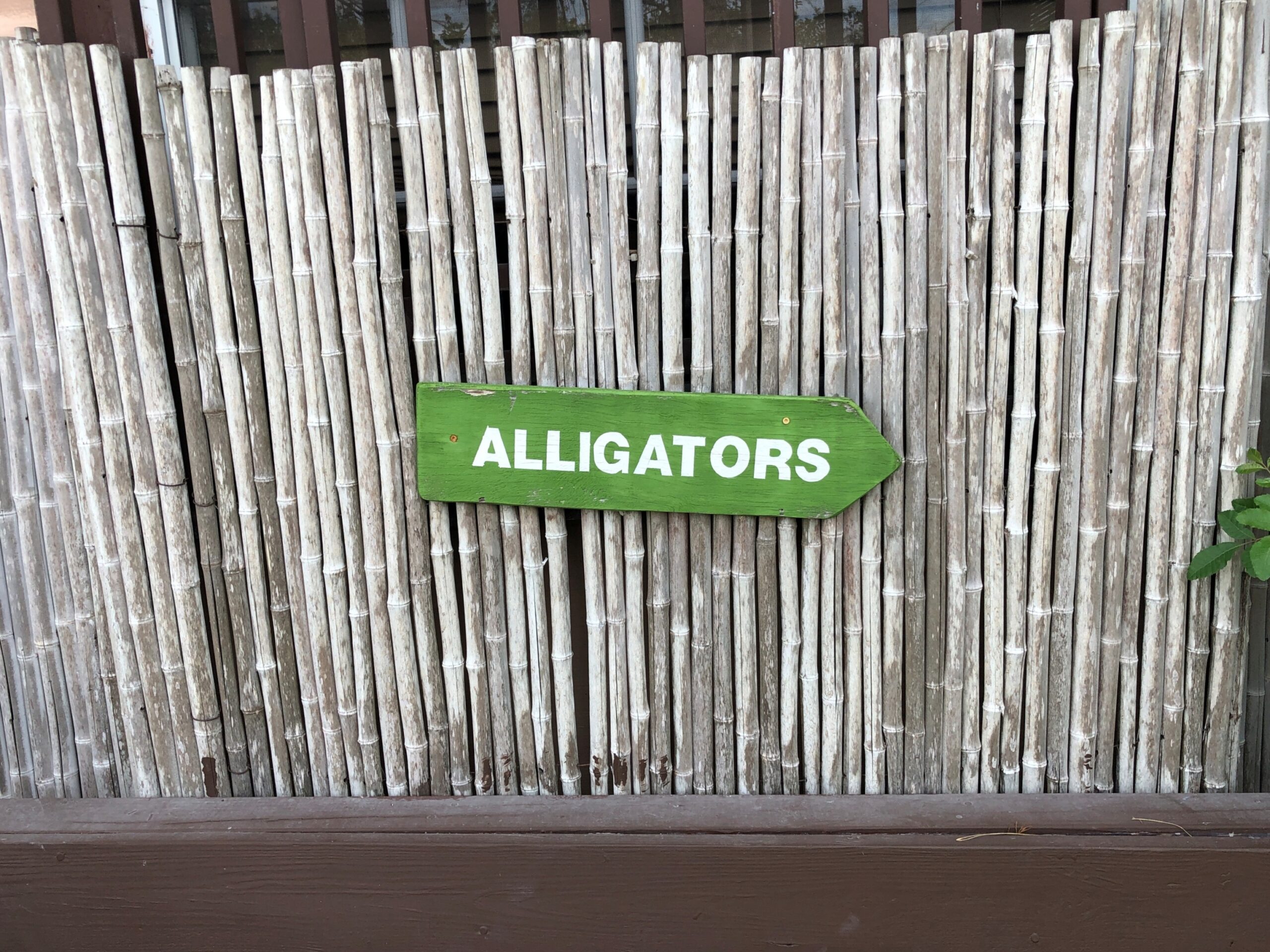
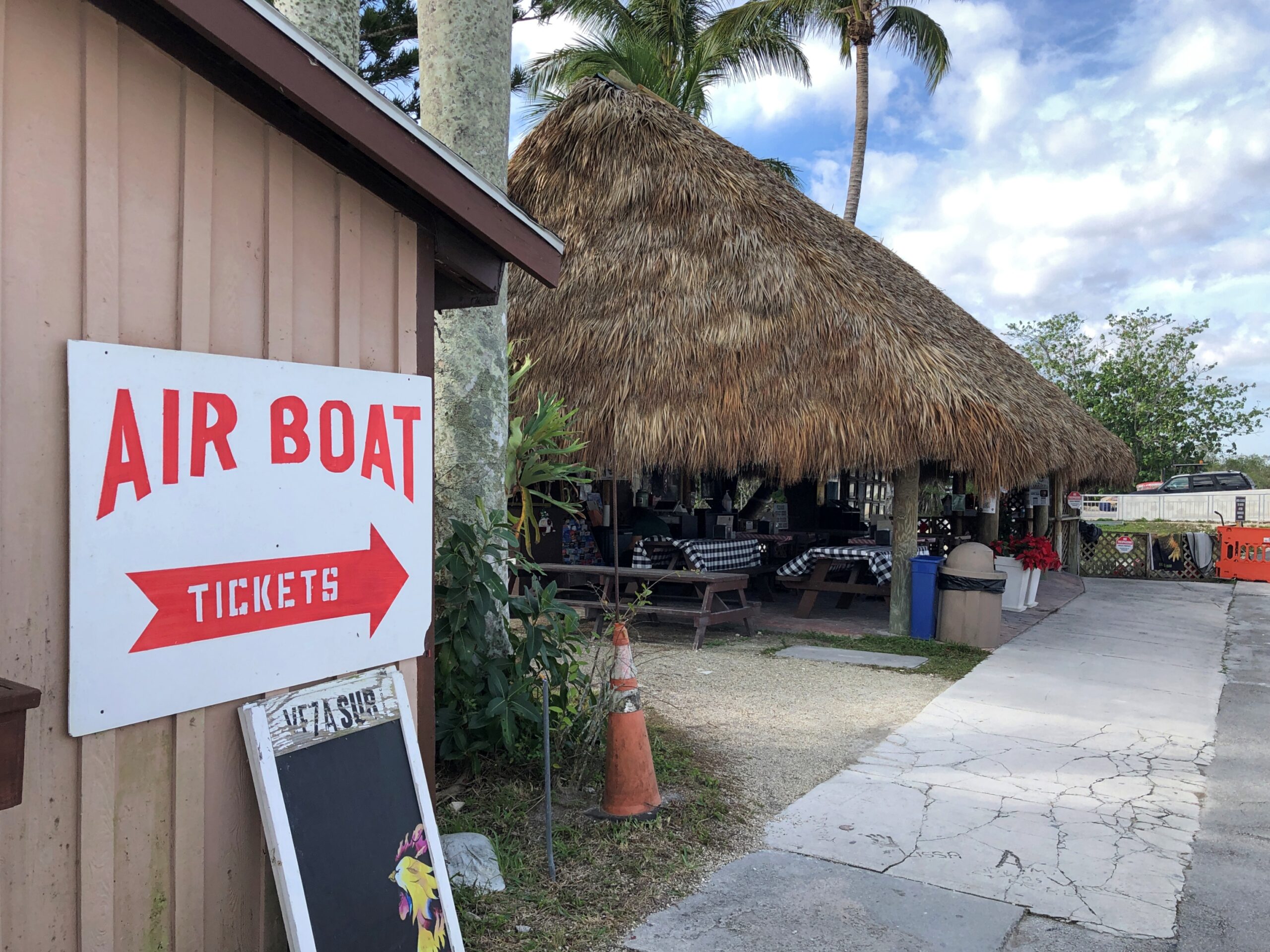
Neither were the boats. Nice, simple wayfinding.
I expected the tour boat to look something like this, which was tied up at one of the docks.
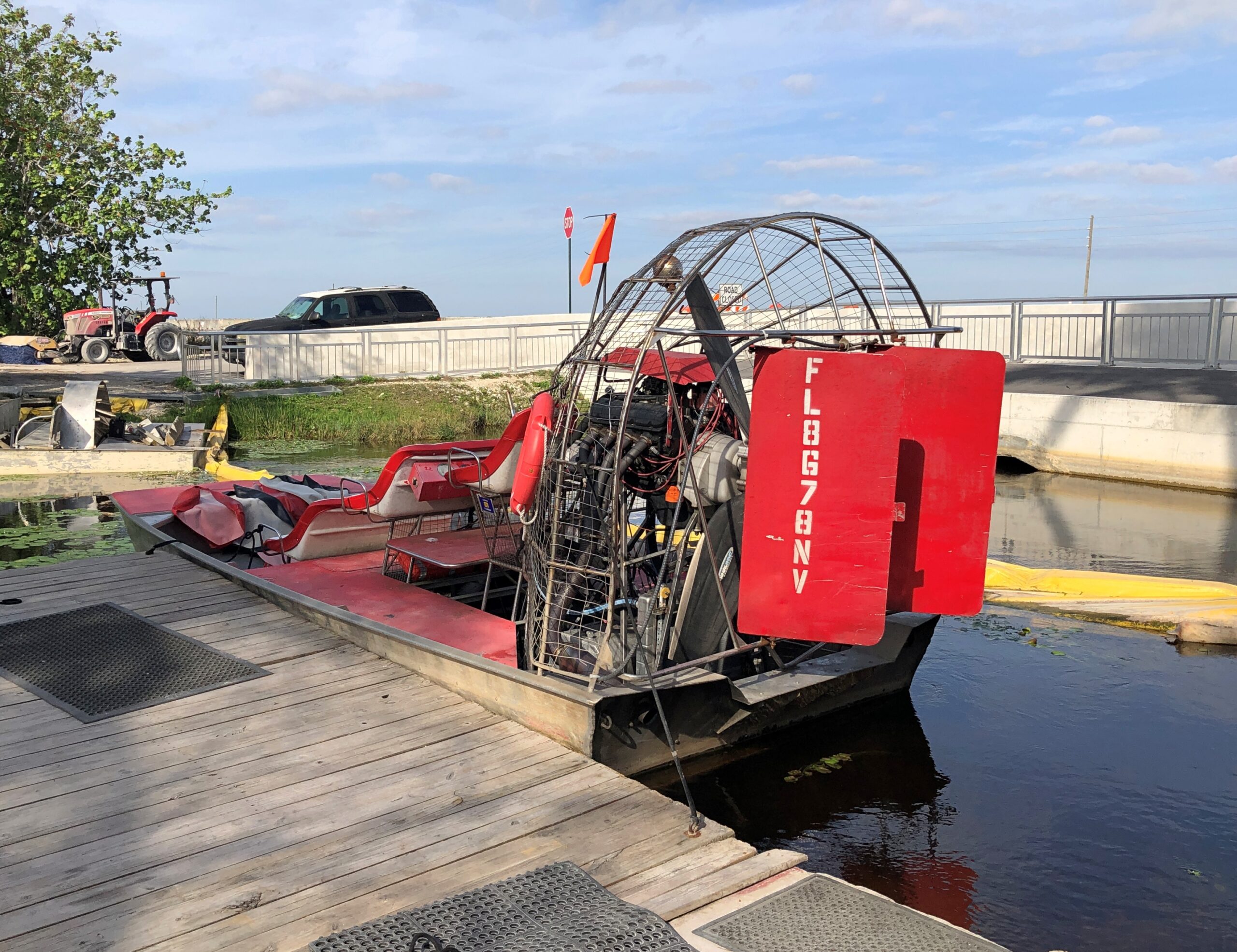
The kind you see, or used to see, on TV. The sawgrass and alligator encounters made me think (a few days later) of Flipper for the first time in many long decades. It wasn’t a show we watched much in our house in the mid-60s, but I have a very vague memory of it, maybe from repeats but also reinforced by the saccharine theme song as included on one of the TV Toons records I owned in the ’80s. Reading about the show, I found that it was set in the Keys and not the Everglades, and the characters tooled around in a more standard motorboat. Still, it might have been the first time I ever heard about the Keys.
Those spiffy airboats are for the more expensive tours, I think. Ours was a larger flatbottom with a few rows of metal benches for regular tourists.
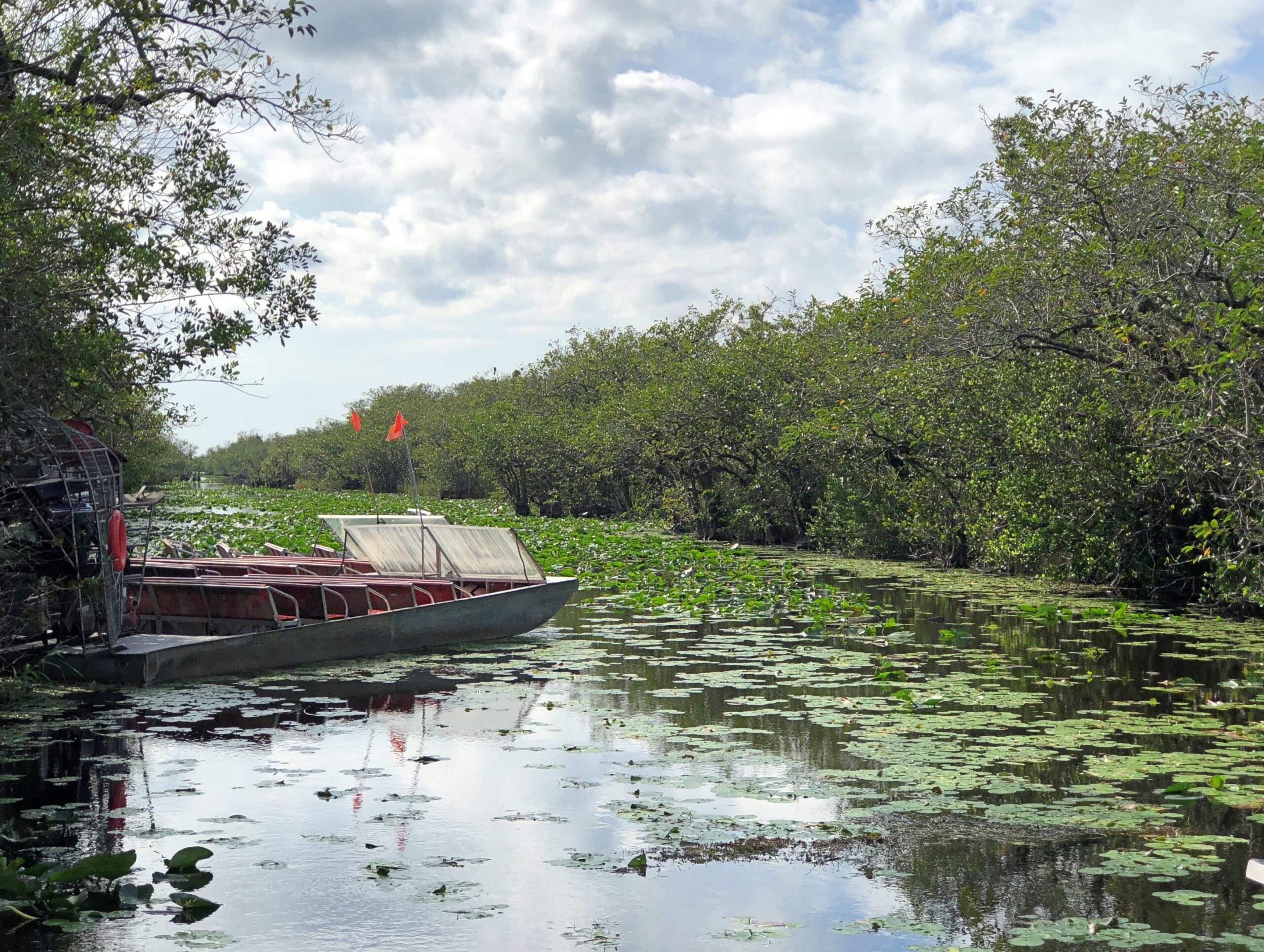
But it was pretty good seating for the half hour or so, especially since we got the front row.
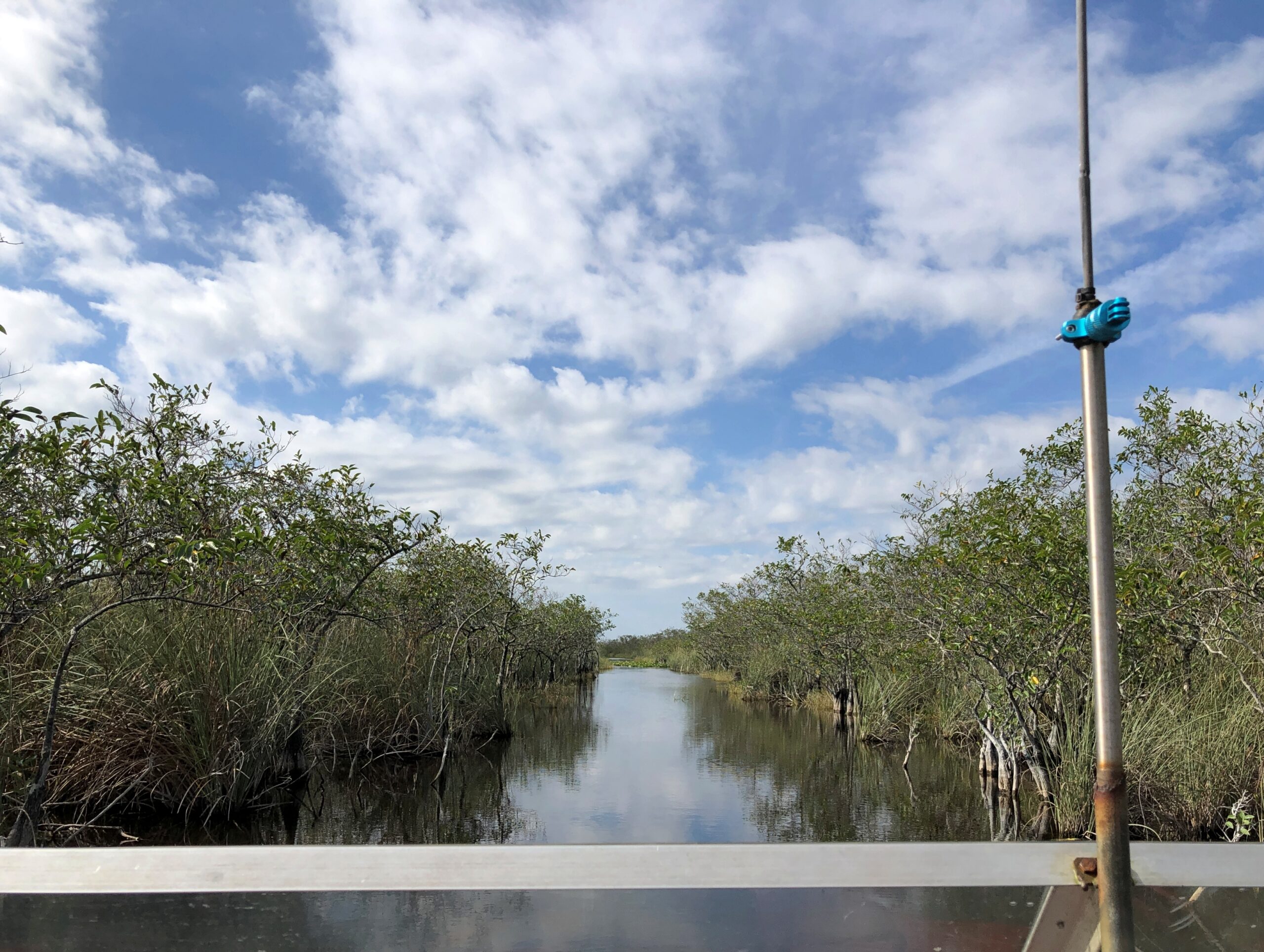
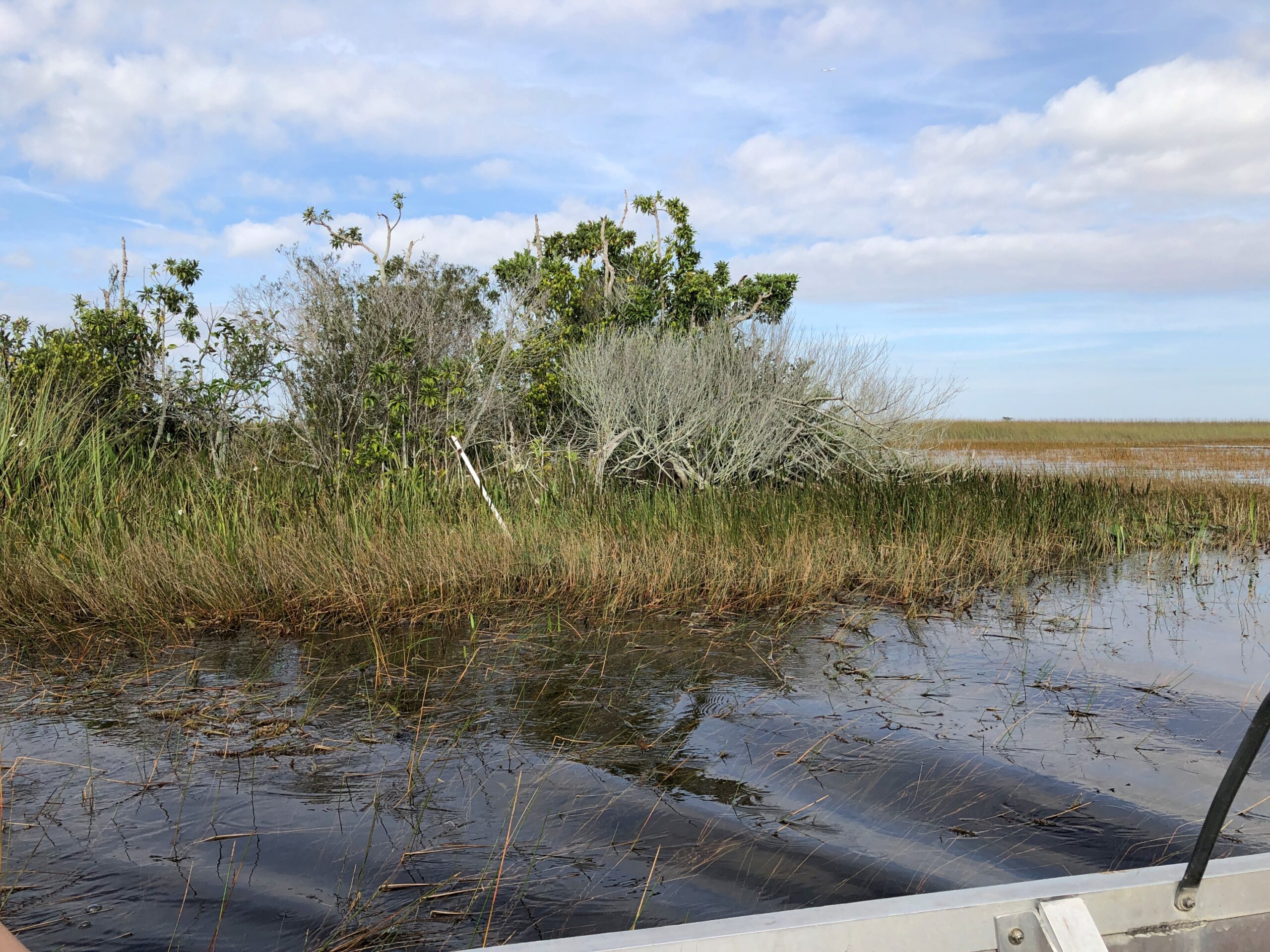
Off we went into the grassy water, dotted by quasi-islands sprouting trees. Soon the scenery looked like this.
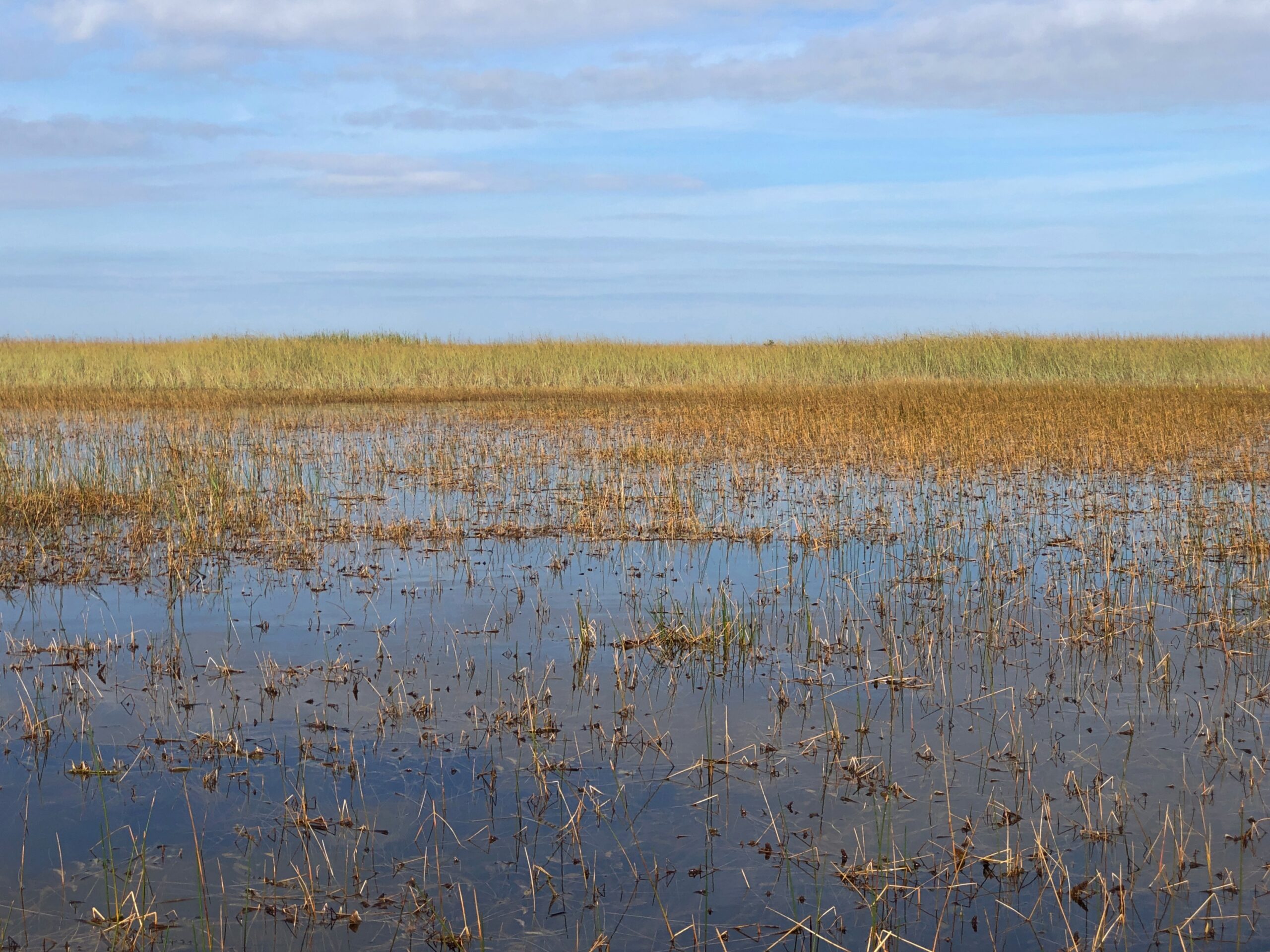
And this.
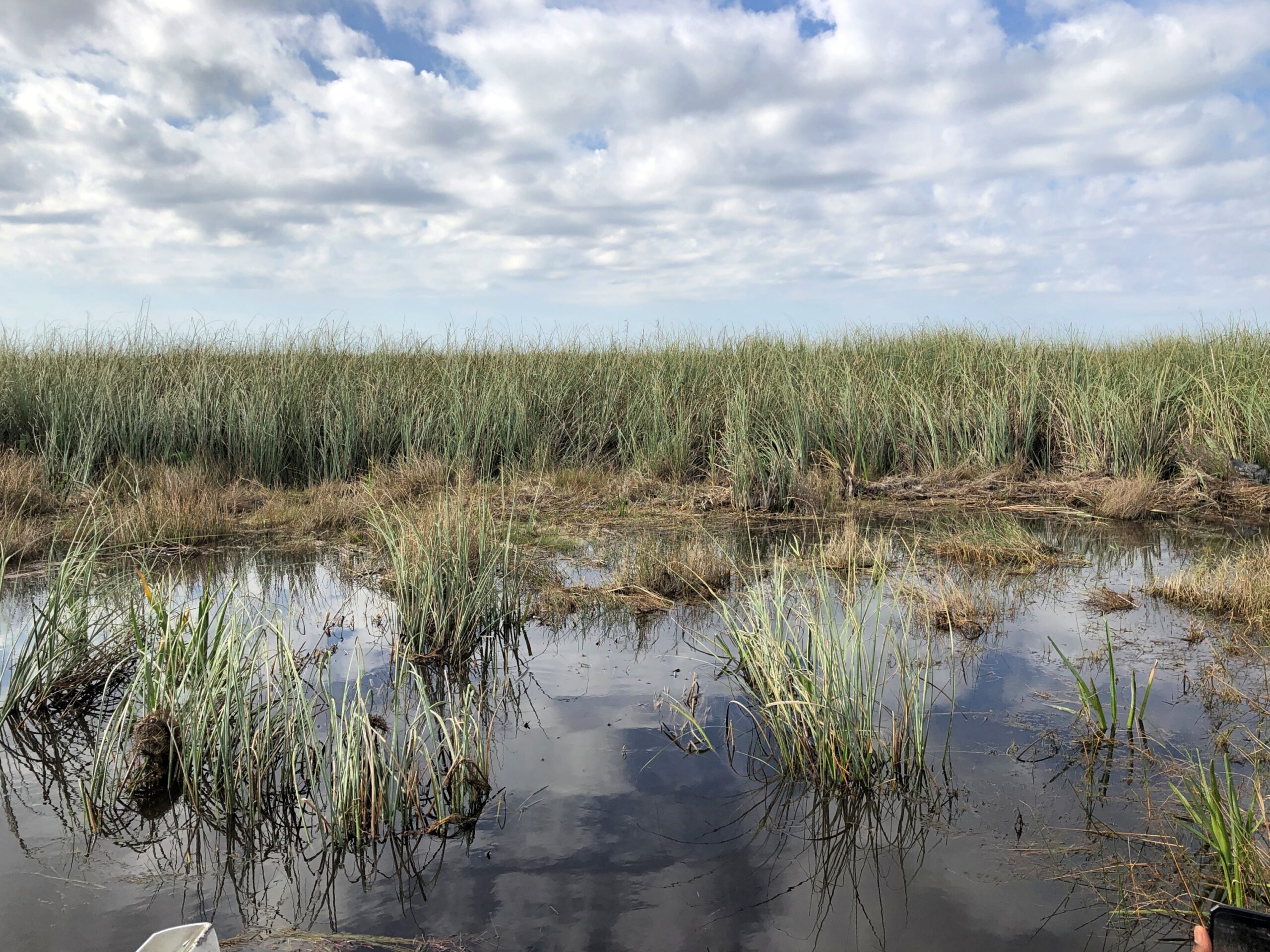
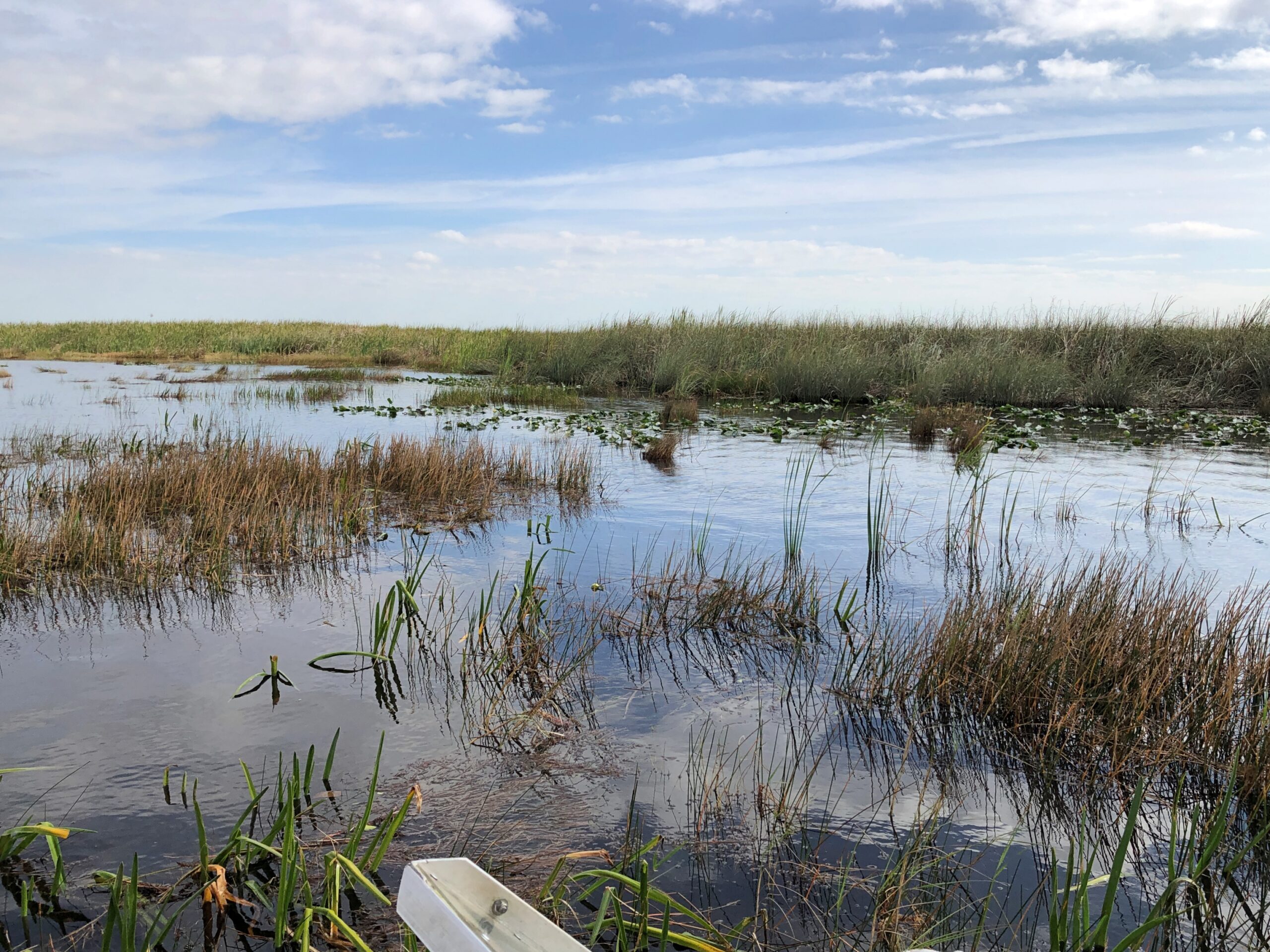
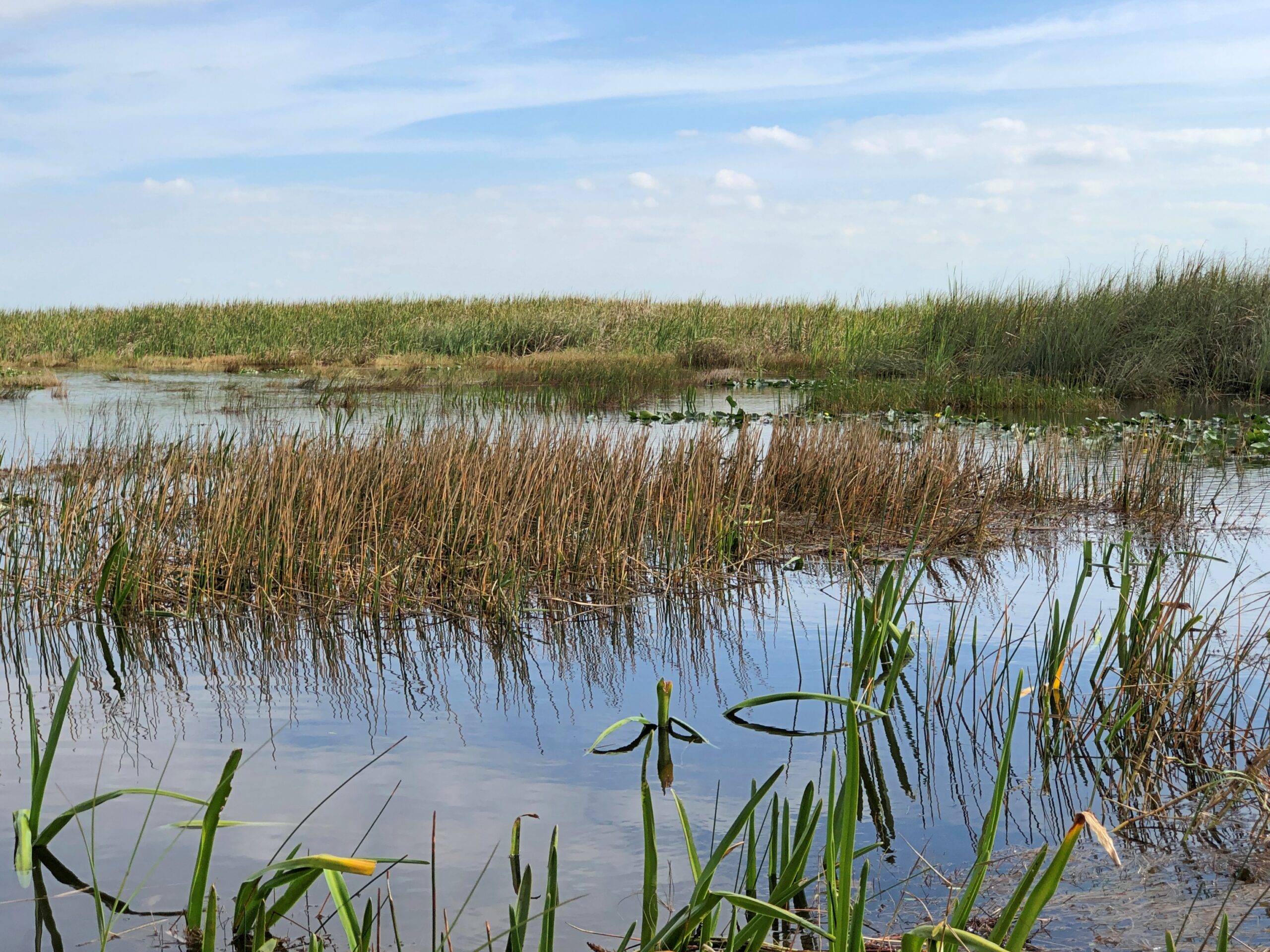
Leaving me to wonder, I’m glad the guide knows his way around, because I’d be lost instantly. The boat guide wasn’t Gator Bob, incidentally, but an older fellow perched in the pilot’s cage.
Before long, we found a lounging alligator in the wild.
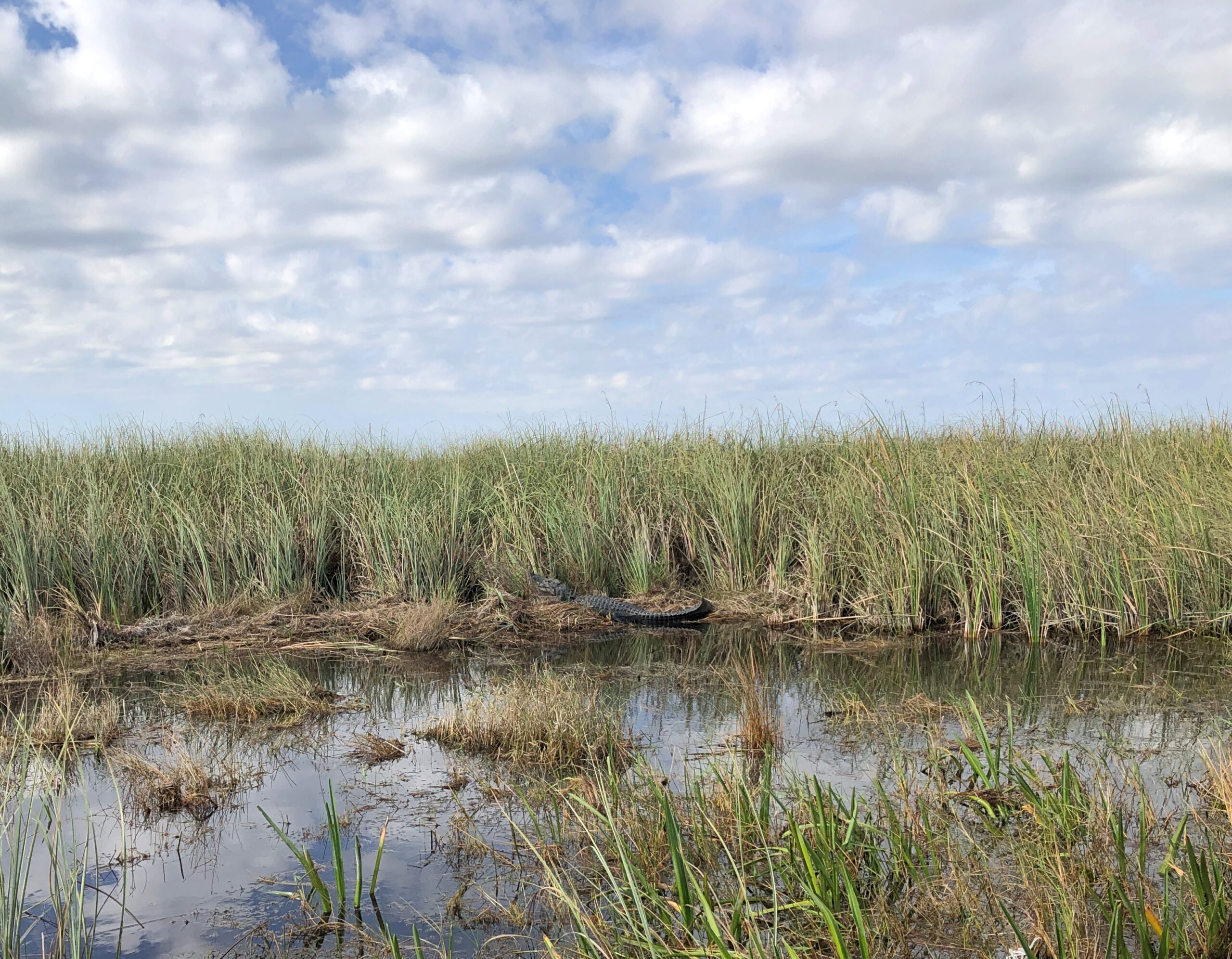
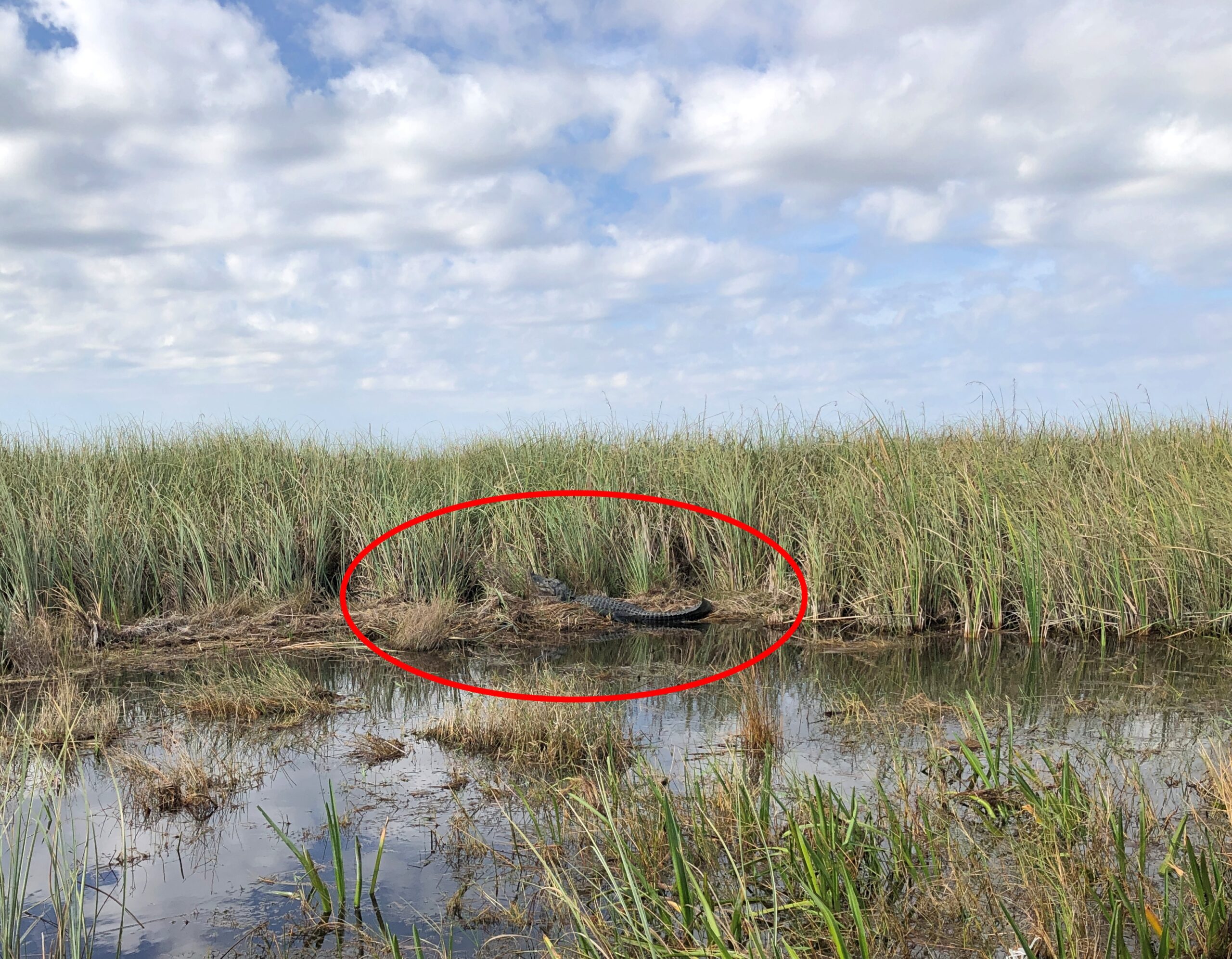
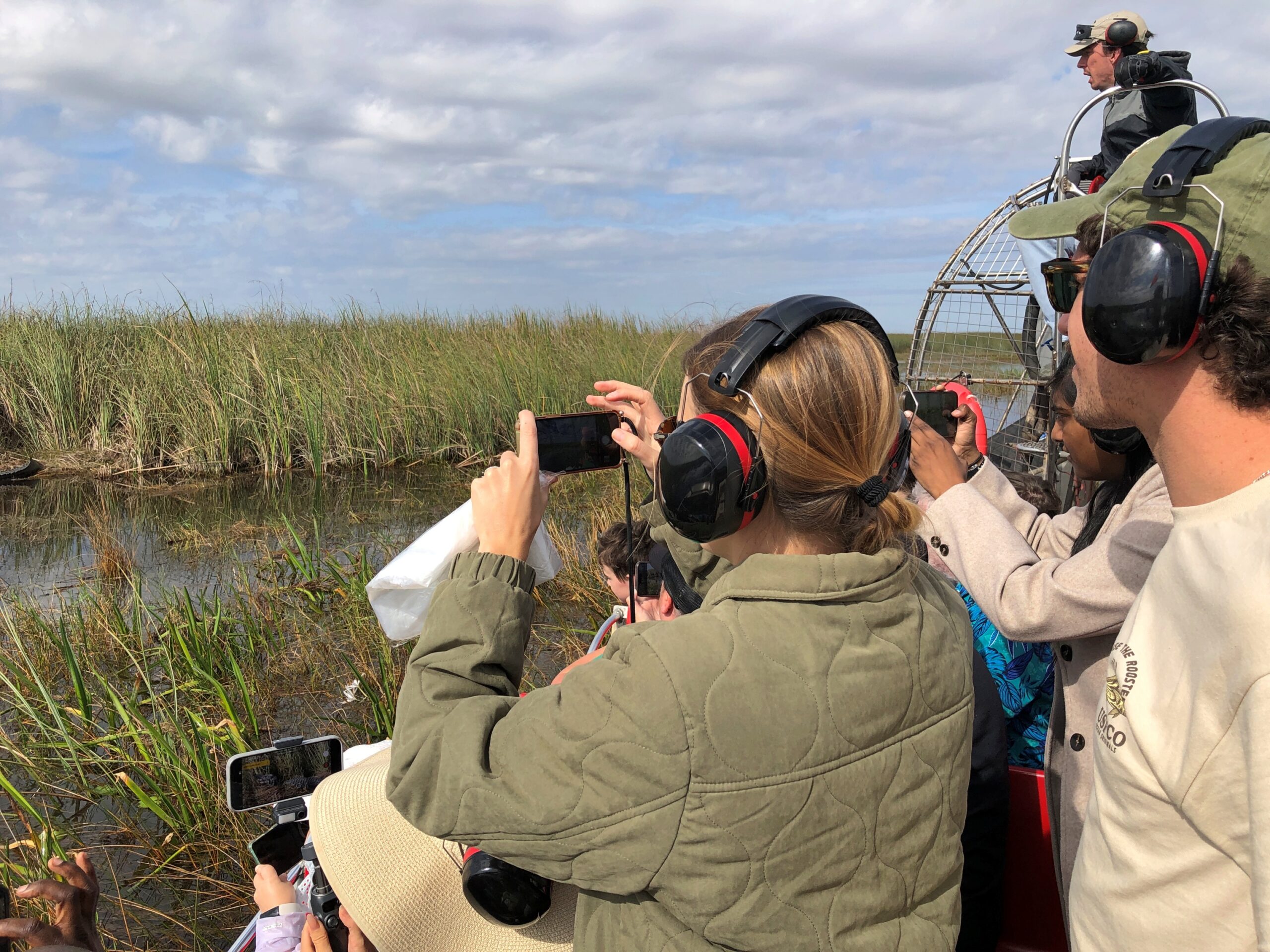
December is part of the sluggish season for local reptiles, the guide explained. Not too cold for alligators, naturally, but cool enough that lying around in the sun is a good option for them. Regardless, the gator – let’s call him Bob – had his own paparazzi for a few moments.
Our return took us through thick patches of lily pads. They moved aside without tangling or anything complicating that would happen if I were piloting the boat.
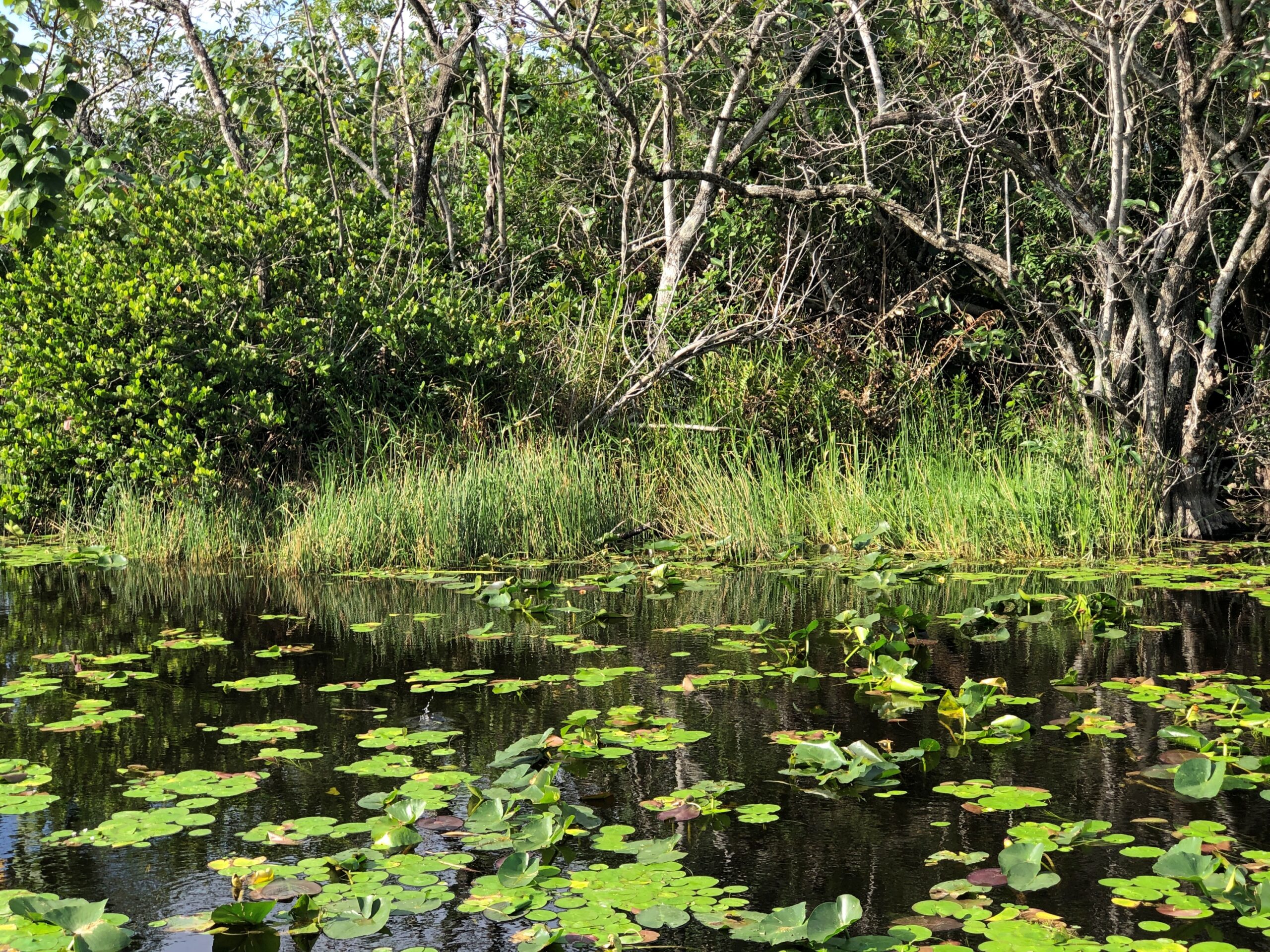
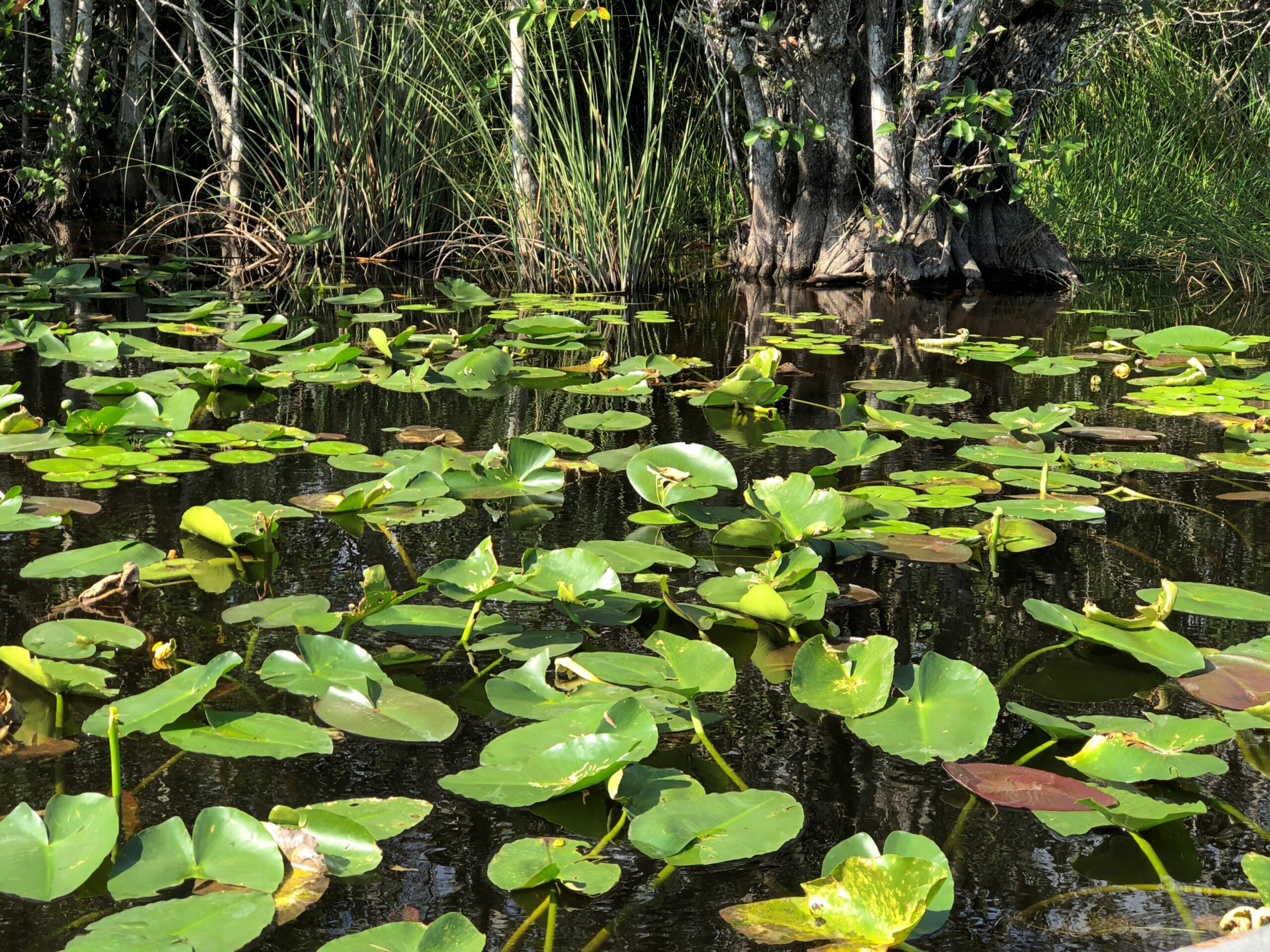
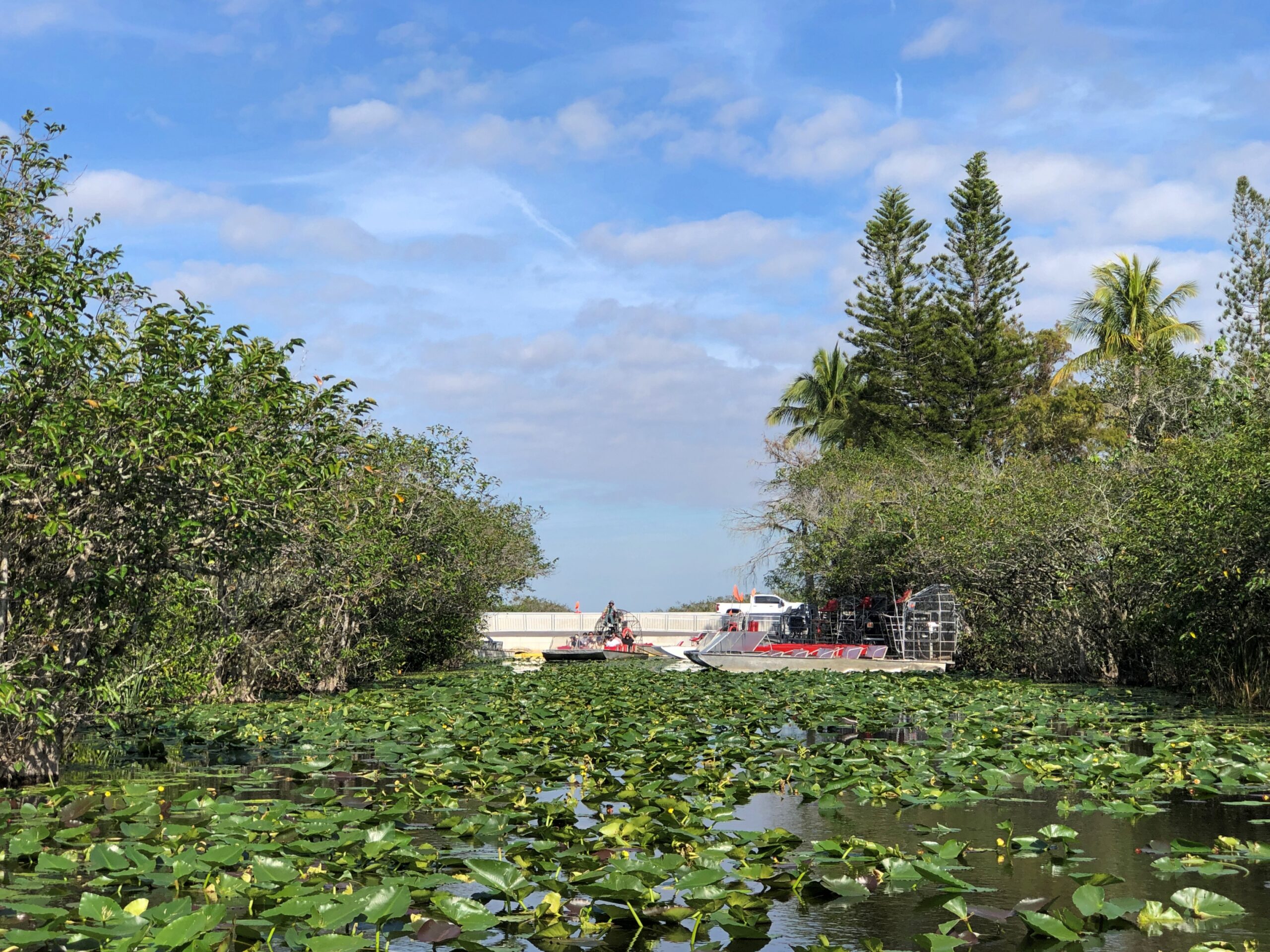
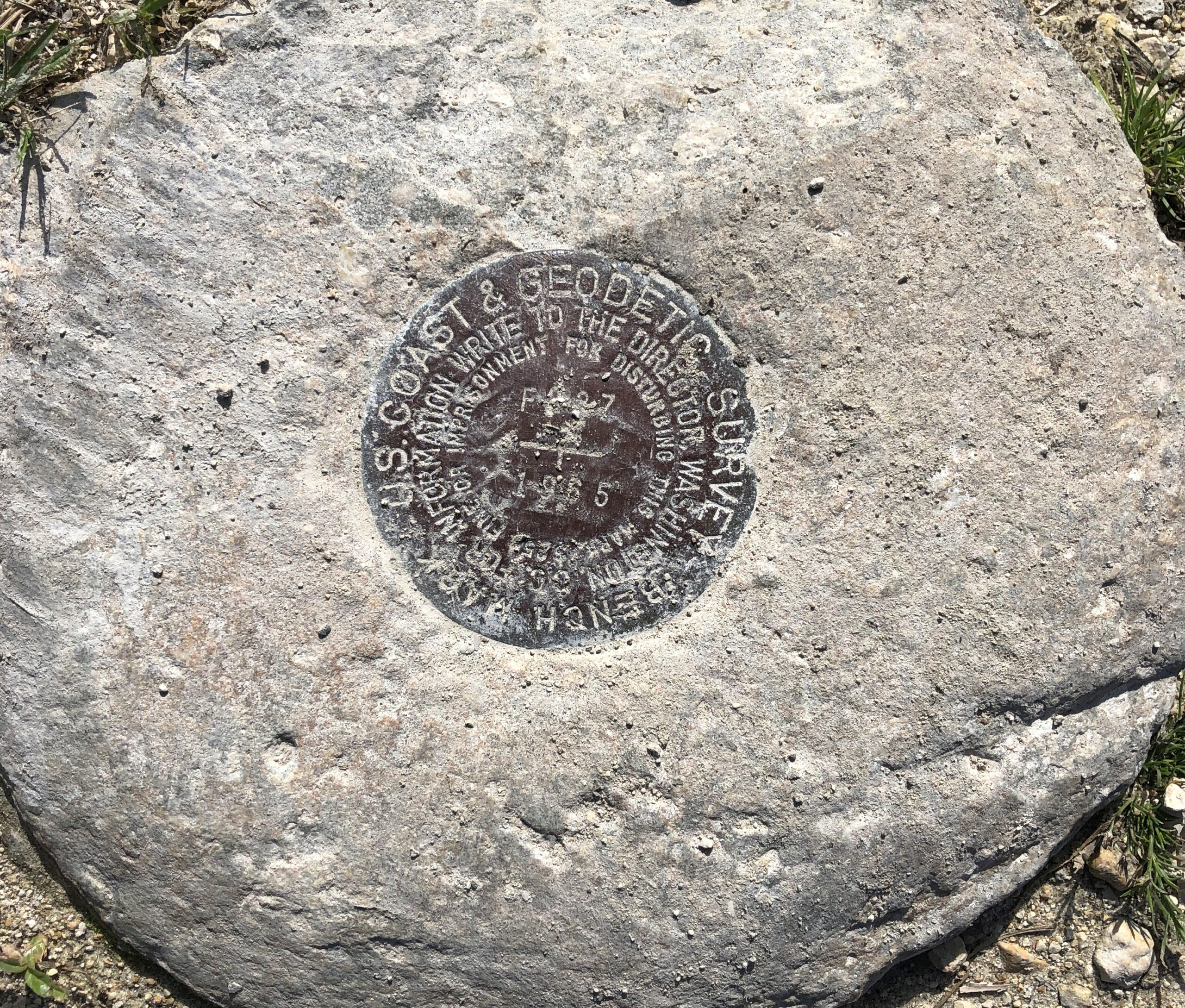
Bonus at Cooperville, out near the parking lot. A US Coast & Geodetic Survey Bench Mark, dating from 1965 if I read that right.
Another bonus: A World Heritage Site plaque, complete with comments by birds.
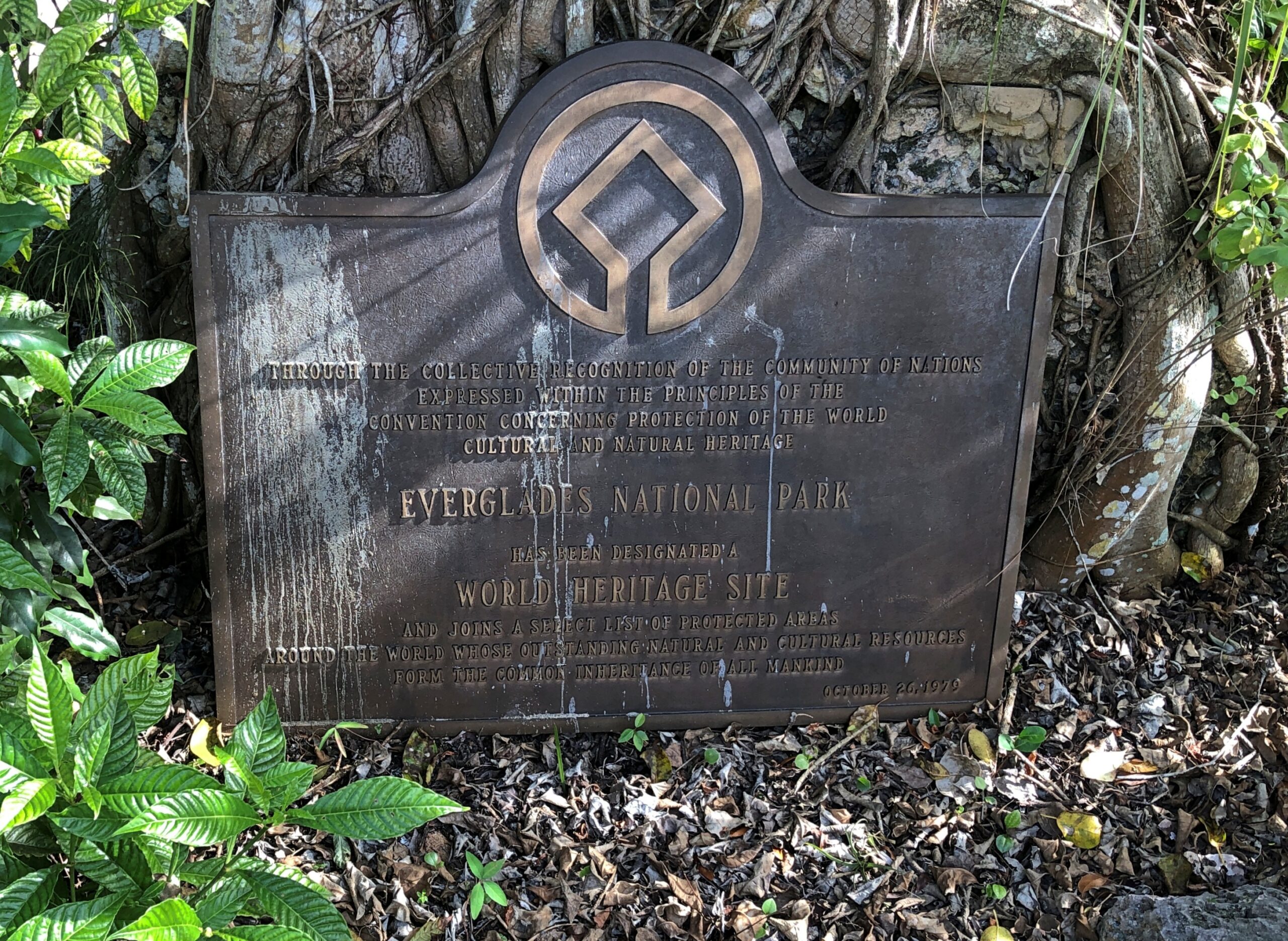
“Everglades National Park is the largest designated sub-tropical wilderness reserve on the North American continent,” UNESCO says. “Its juncture at the interface of temperate and sub-tropical America, fresh and brackish water, shallow bays and deeper coastal waters creates a complex of habitats supporting a high diversity of flora and fauna. It contains the largest mangrove ecosystem in the Western Hemisphere, the largest continuous stand of sawgrass prairie and the most significant breeding ground for wading birds in North America.”
Good old wading birds. Still, that isn’t what people come to see. That would be gators. How do I know this? Consider a scene from a souvenir shop I visited later in our trip.
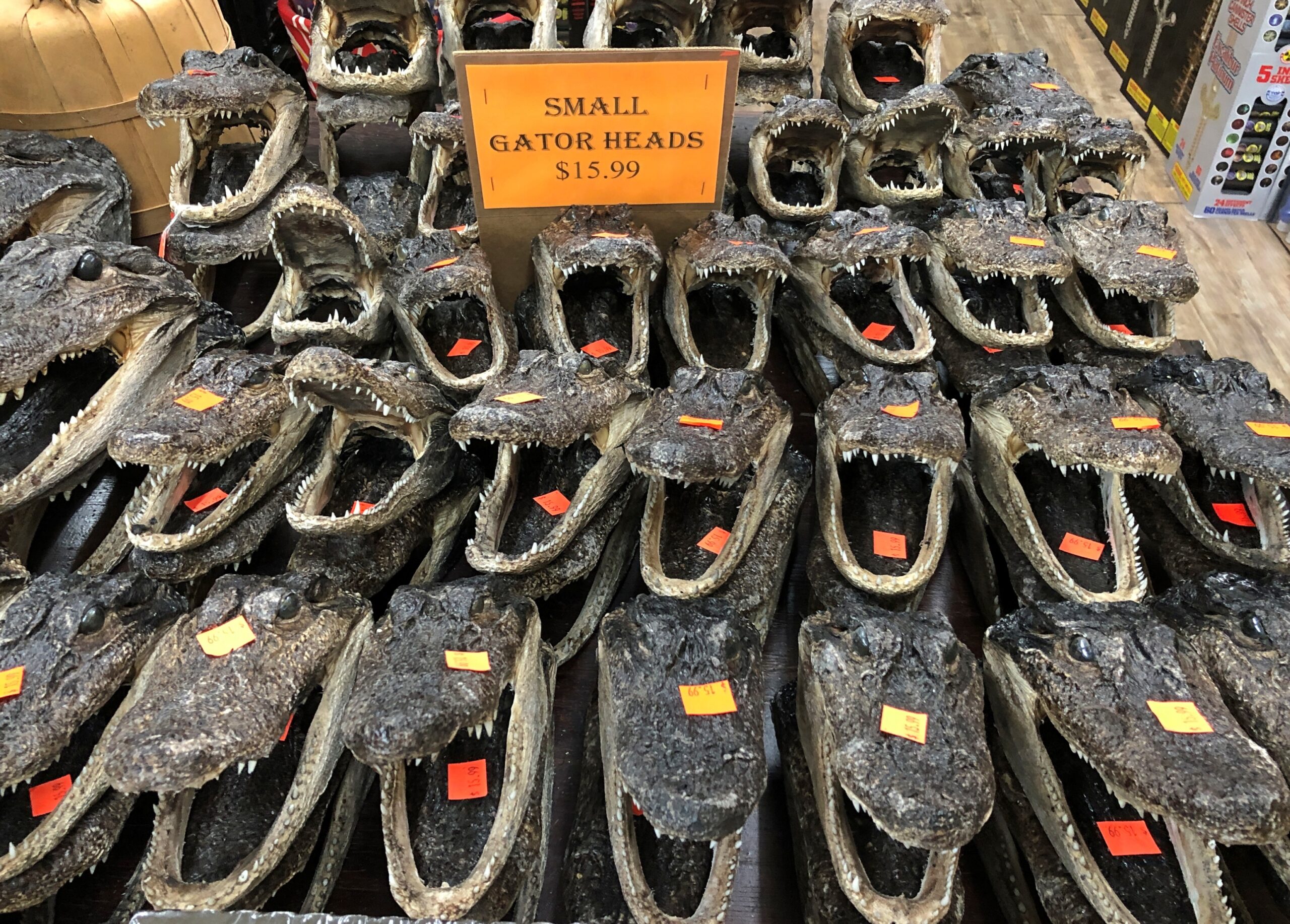
It was much further north, but still Florida.