“How many of you came because you’ve read some of his books?” our guide at the Earnest Hemingway House in Key West asked our small group. We’d paid our entrance fee, waited outside the house for a few minutes, then started on the tour. I was in that group. Most of his books, in my case.
“OK, some of you. How about because someone else dragged you here?”
A few more hands went up. I don’t think he was taking a survey, exactly, just kicking off the tour in an interesting way.
“What about to see the cats?” Hands went up. Some laughter.
Yuriko came for the cats, mostly, though she told me Hemingway is a writer than isn’t hard to read in the original English. We’d come to Hemingway House after our Duval Street stroll. It was about as pleasant a day as possible for such a walk. Everything is a short distance in Key West, so we arrived after a short walk.
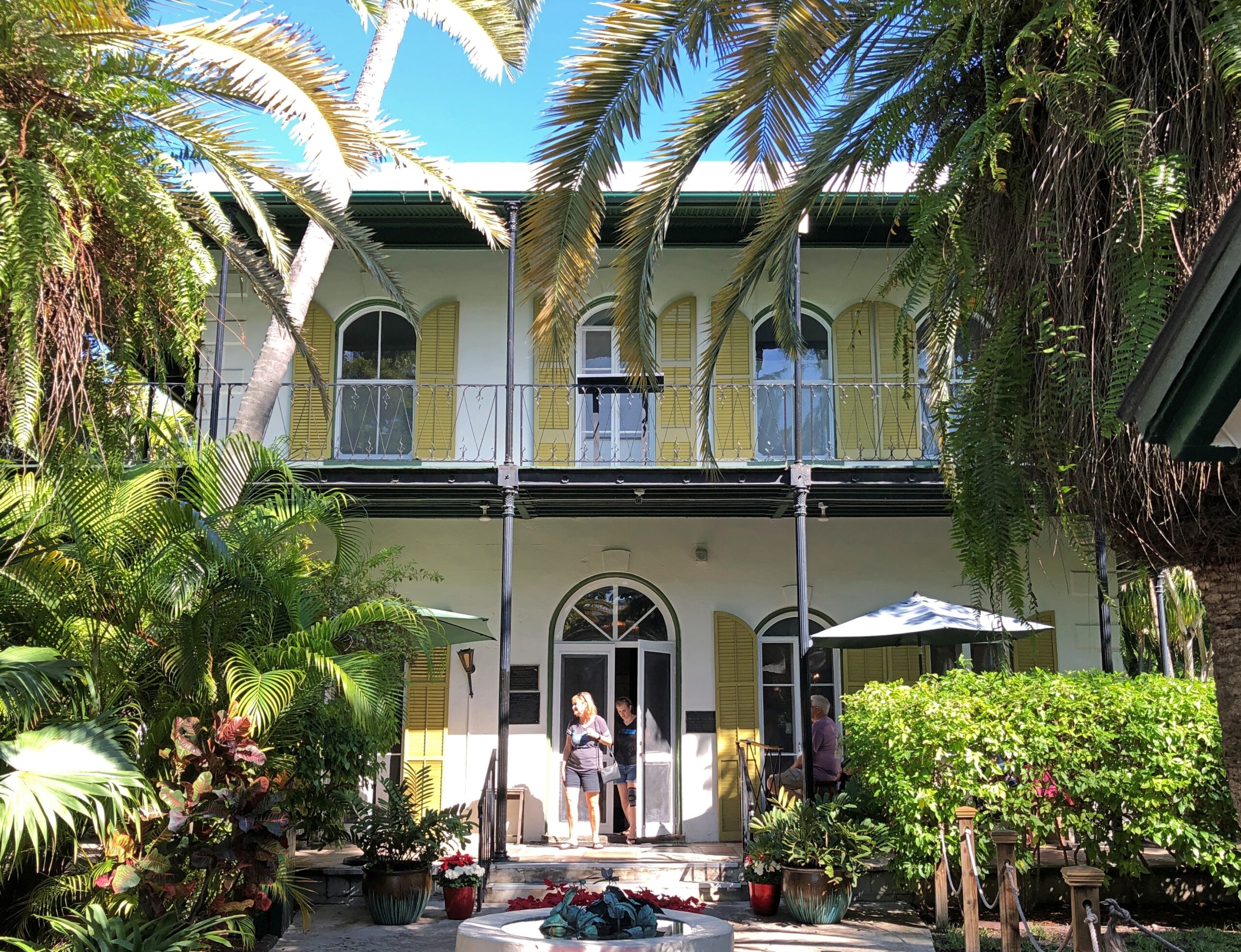
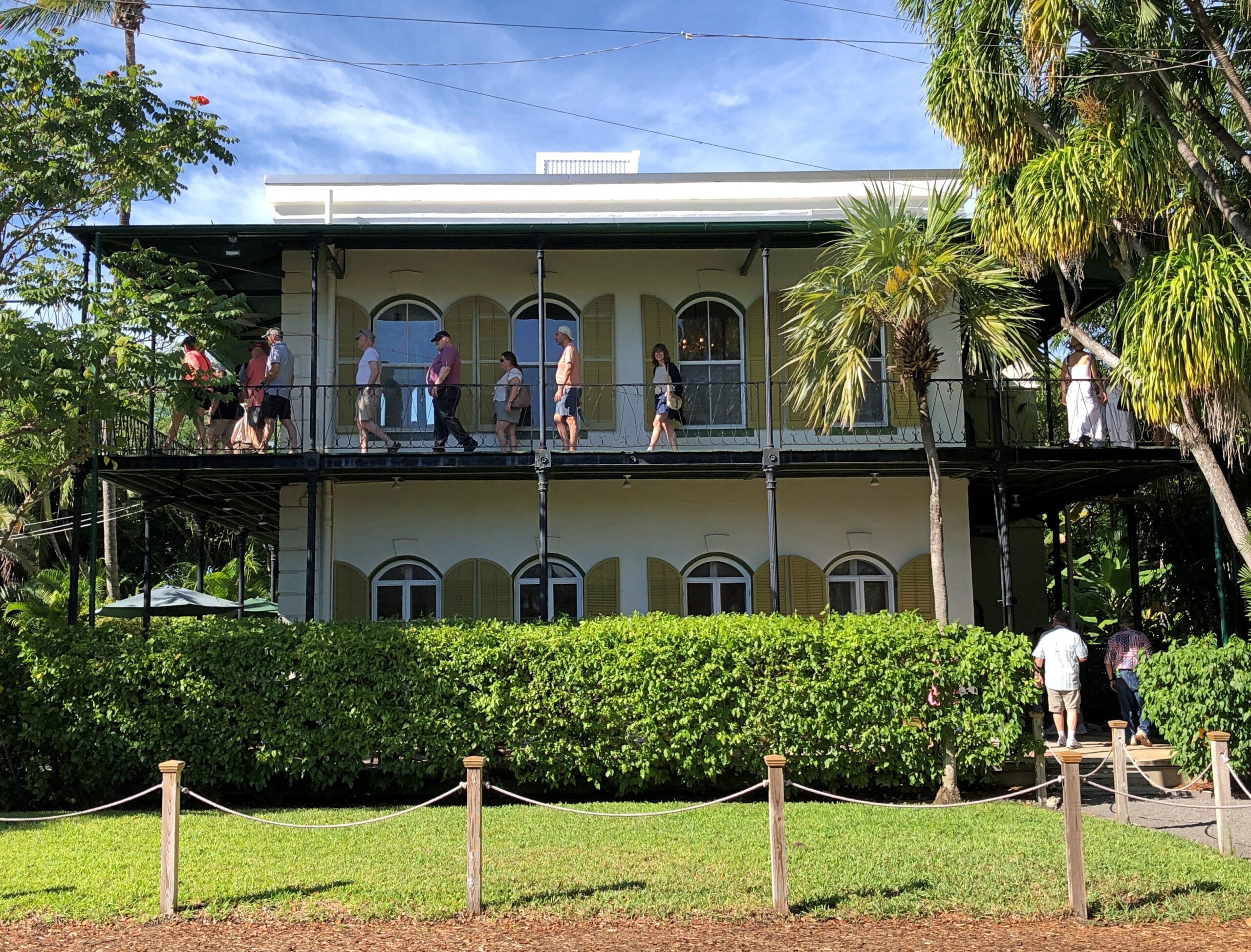
The house is a block off Duval, on as high a spot as Key West provides, and in the shadow of a lighthouse about a block away. The grounds are lush, the house itself a handsome two-story legacy of one of the 19th-century Key West booms. One Asa Tift, a Key West wrecker, completed the house in 1851.
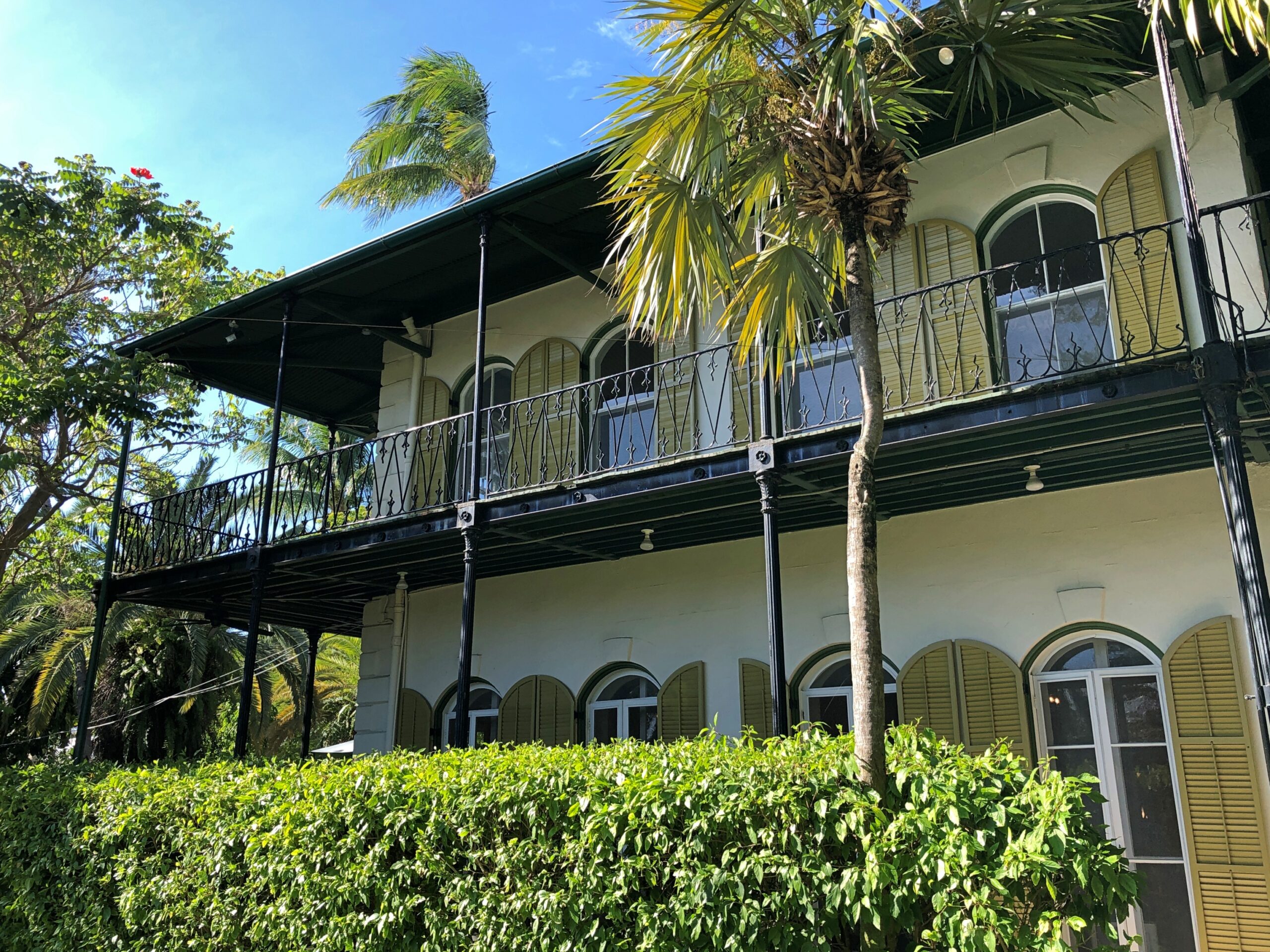
Tift was one of the more successful wreckers, looks like: a man who led small boats out from Key West to the nearby hazardous reefs when ships foundered there. Wreckers were eager for valuable salvage from these vessels, and if the Hemingway House is any indication, the rough-and-tumble of salvage — and you know the process was dangerous, full of natural hazards, but especially other violence-prone wreckers out for the same prize — nevertheless produced at least few men of means in isolated, pestilential Key West.
Emphasis on pestilential. Just ask Asa Tift, whose sizable family, for whom the house was built, were carried away in that all too common 19th-century way, by communicable disease.
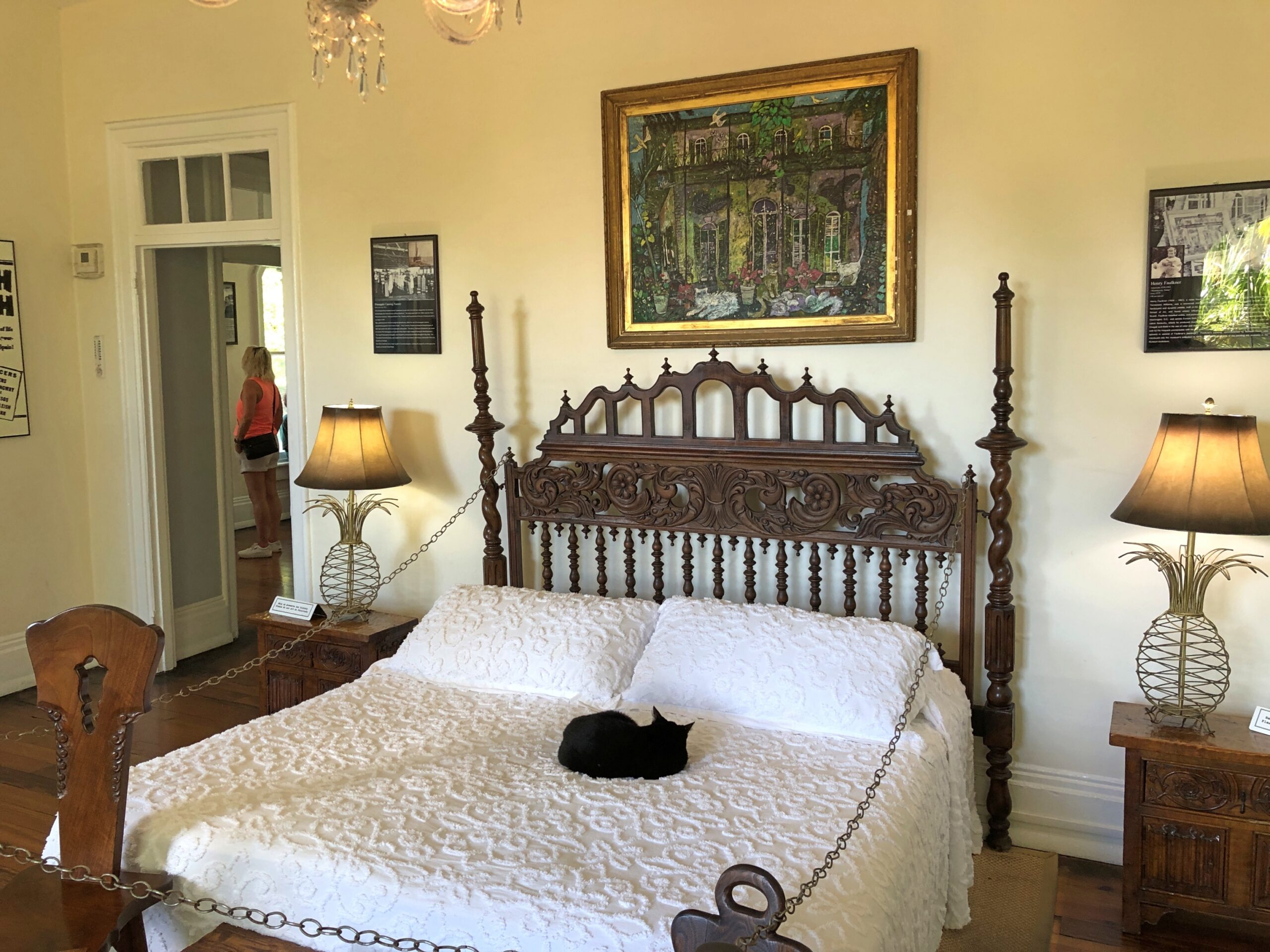
The Hemingways showed up some decades after old man Tift died, acquiring and renovating the property using her family’s money. They did what they did, and these days the house is a museum to their presence.
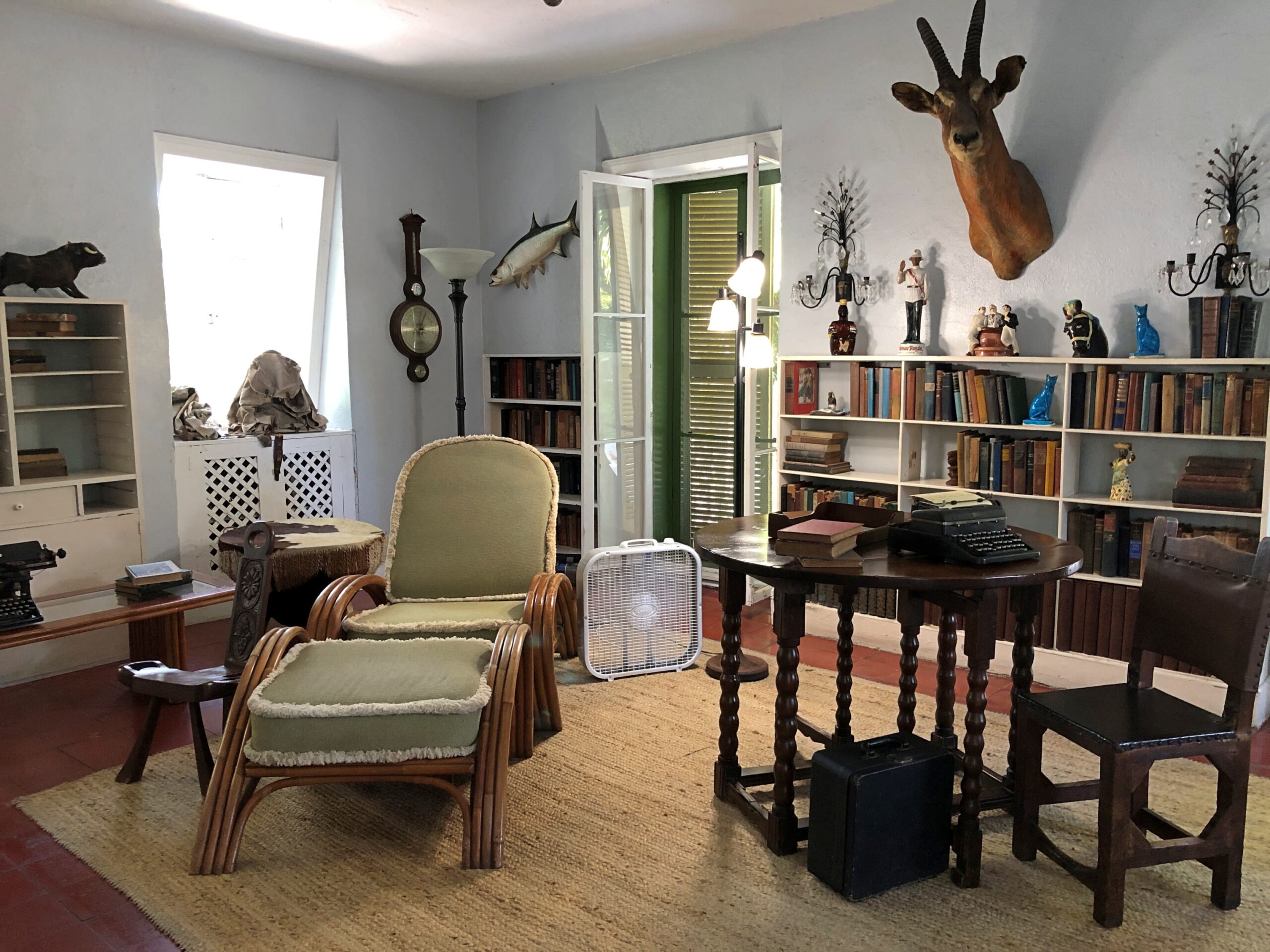
No one lives there anymore. No hefty, dark-mustachioed man staggers home from Sloppy Joe’s bar good and drunk and flops to bed there, or goes to the upstairs office-studio and bangs out famed literature during sober periods, or argues with his wealthy wife under the sub-tropical shade trees – quarrels whose root seemed to be Hemingway’s roving eye, with a dash of alcoholic irresponsibility added to the mix.
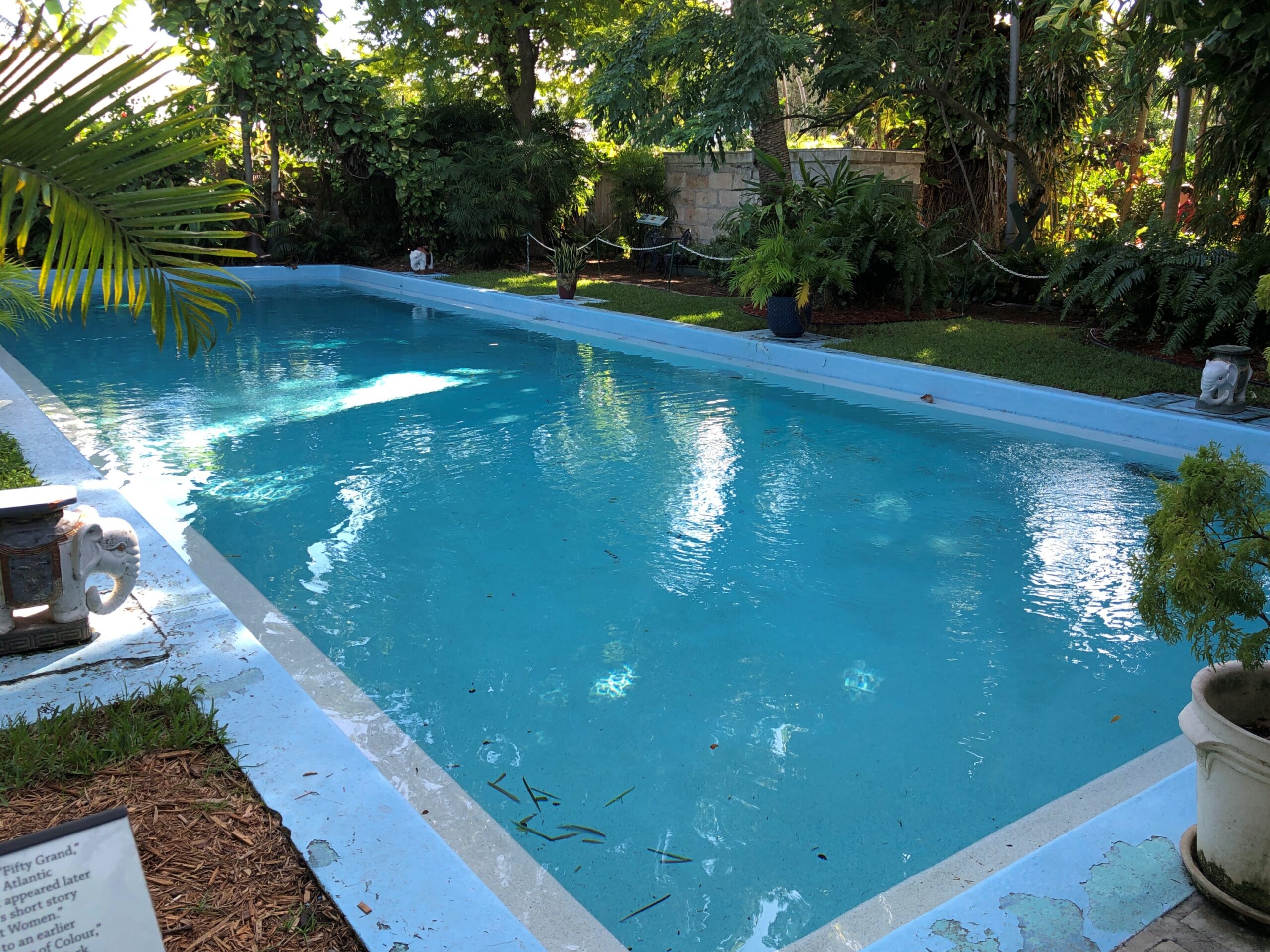
The pool was an addition by his wife, Pauline Pfeiffer, which caused consternation for Earnest. Something about taking the place of his informal boxing ring on the same site, done while the author was out gallivanting somewhere. Terrific writer he might have been, and I certainly admire his talent for gallivanting, but he also seems to have been a touchy bastard.
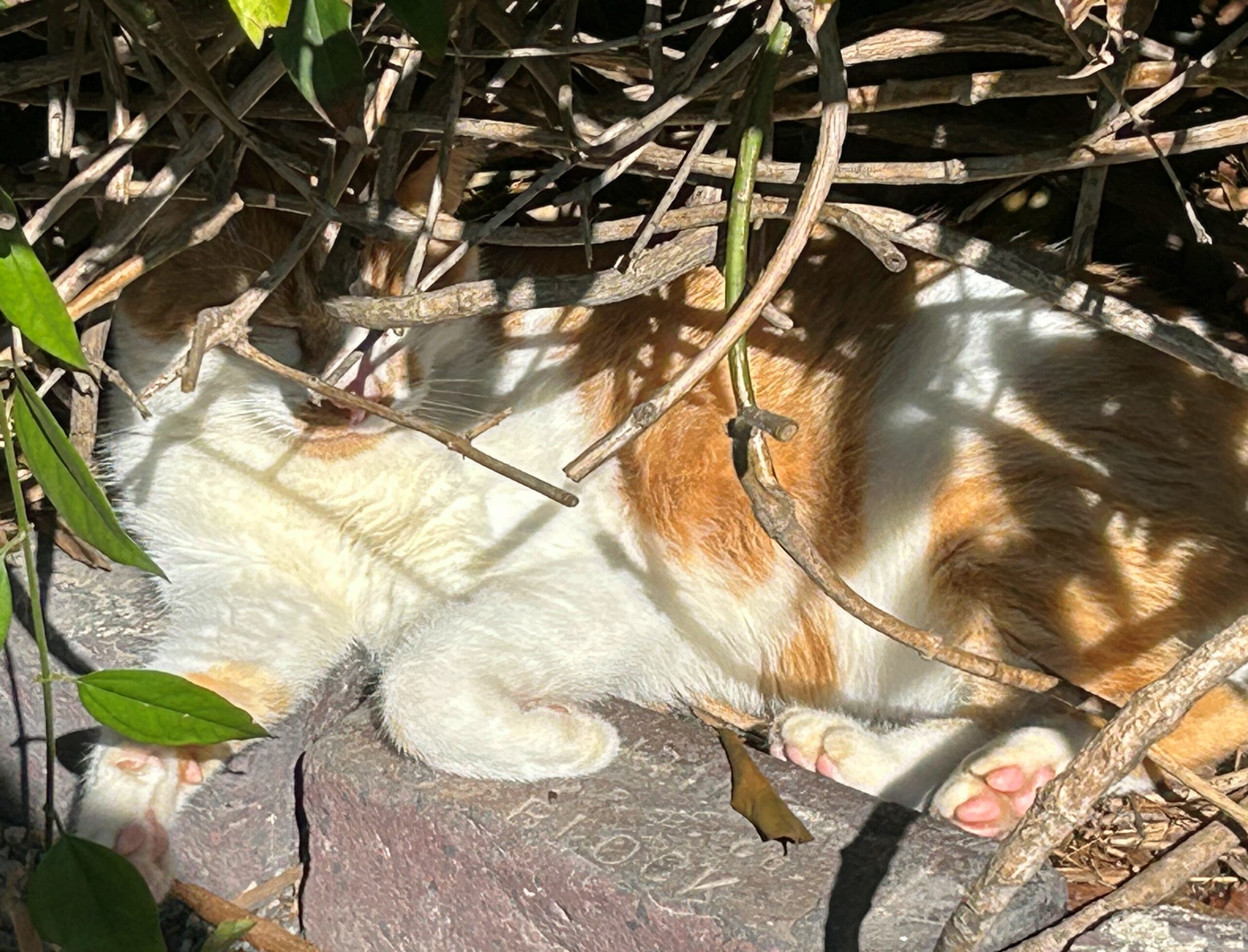
Tourists and staff come and go, but in our time, only cats live at 1301 Whitehead St., a property enclosed by sturdy brick walls. Said the be the descendants of Hemingway’s son’s six-toe cat, the herd is large. Our guide told us how many, though I can’t remember the exact number now. In the range of dozens, beyond the dreams of even the most thoroughgoing cat ladies.
They are everywhere.
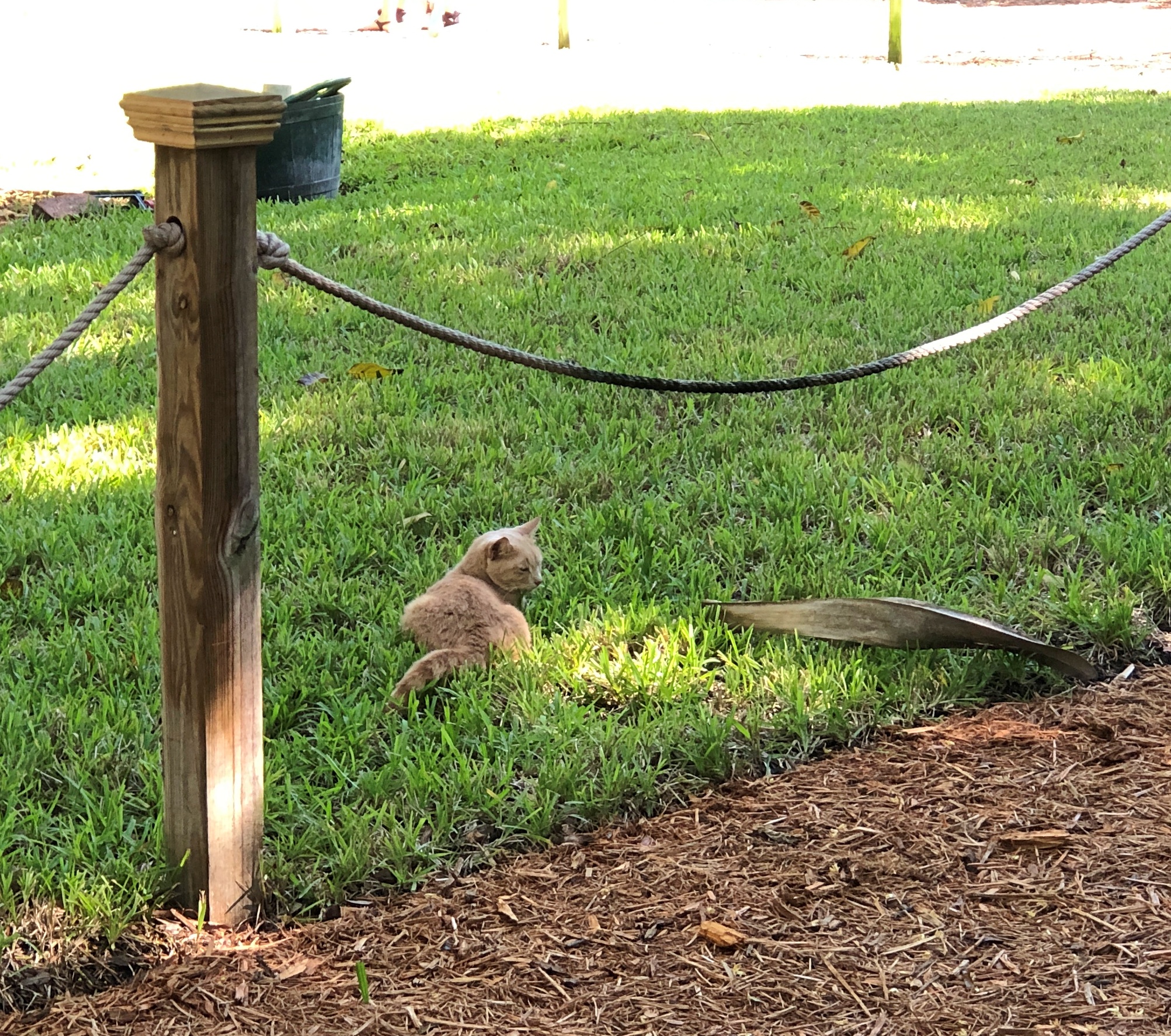
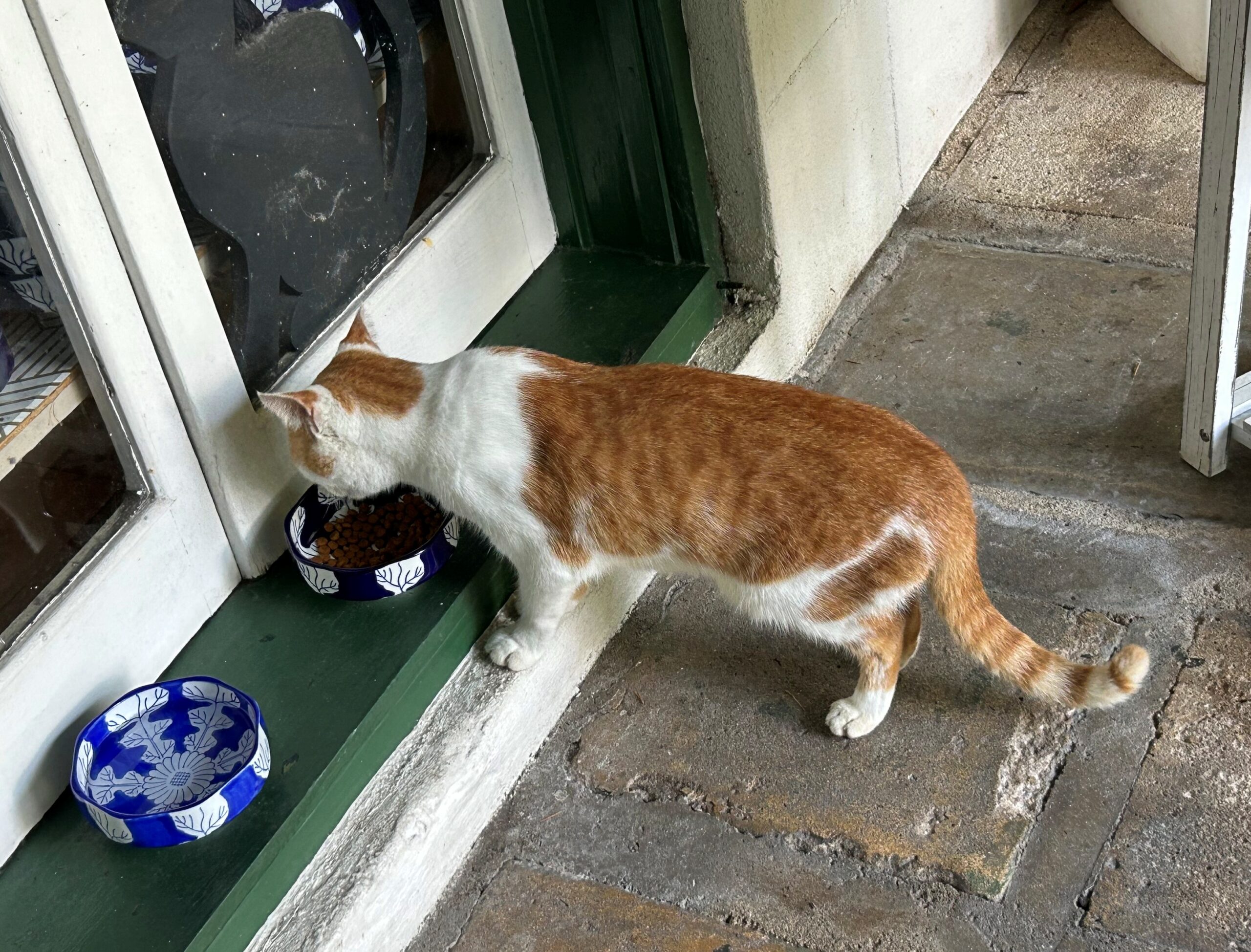
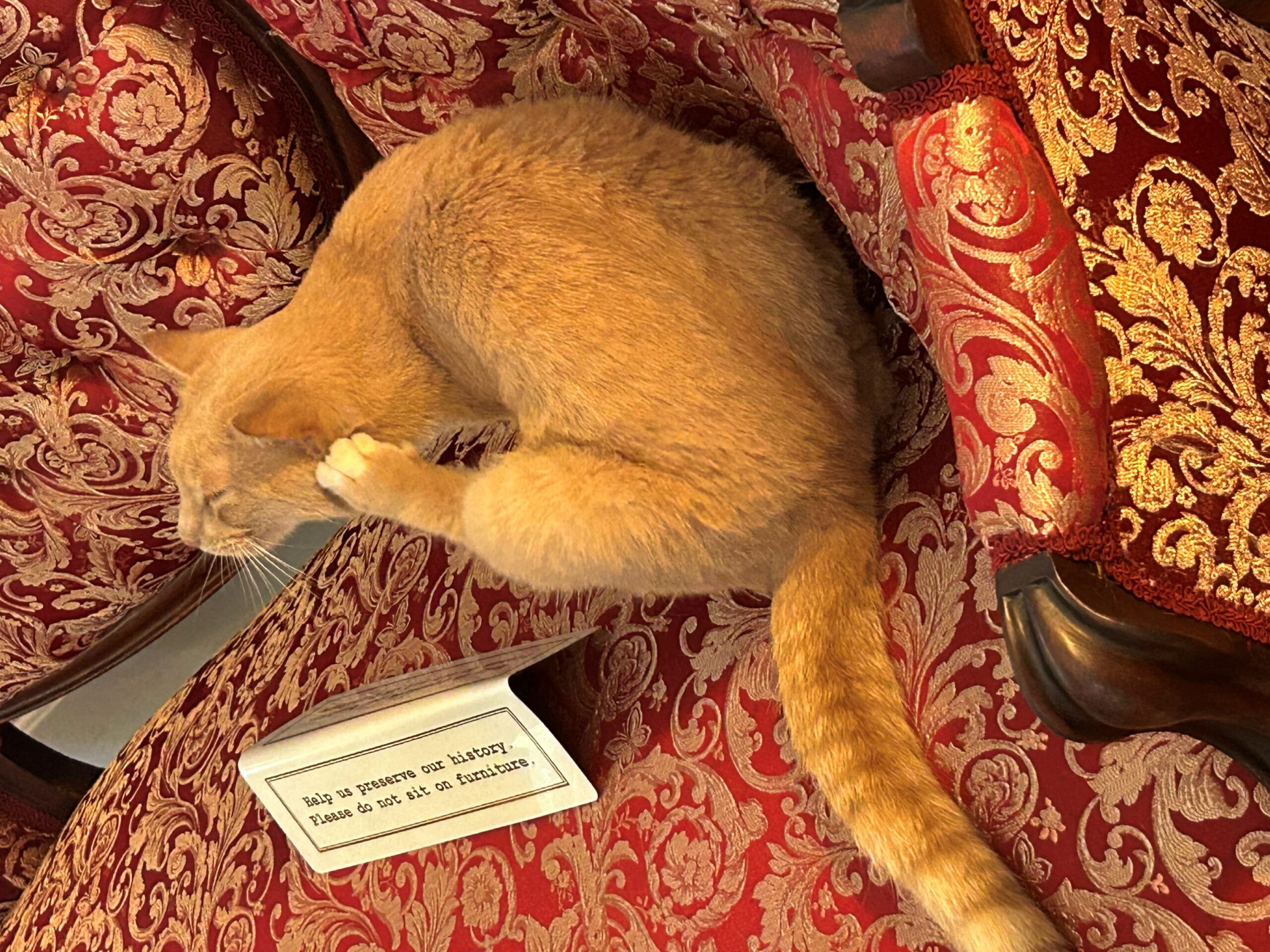
I mean everywhere, except maybe the pool.
My favorite story about the house doesn’t involve cats. The guide didn’t tell it this time, but I heard it before. By the mid-1930s, Hemingway was already a Famous Author, and without even telling him, the local chamber-of-commerce or the like put the house on a pamphlet given to tourists, as one of the local sights. Inevitably, people started showing up at odd and inconvenient hours, or entered expecting a tour. The brick wall all the way around the house is a legacy of that situation.