The in-motel breakfast on September 24 in Salina, Kansas (pop. 46,800 or so) had been less than satisfactory, so Google Maps guided me to a doughnut shop on one of the wide, lightly traveled streets of downtown Salina. I ate in the car parked on just such a street, and soon started out for the highway (I-70) to head east.
Then I noticed Sacred Heart Cathedral.
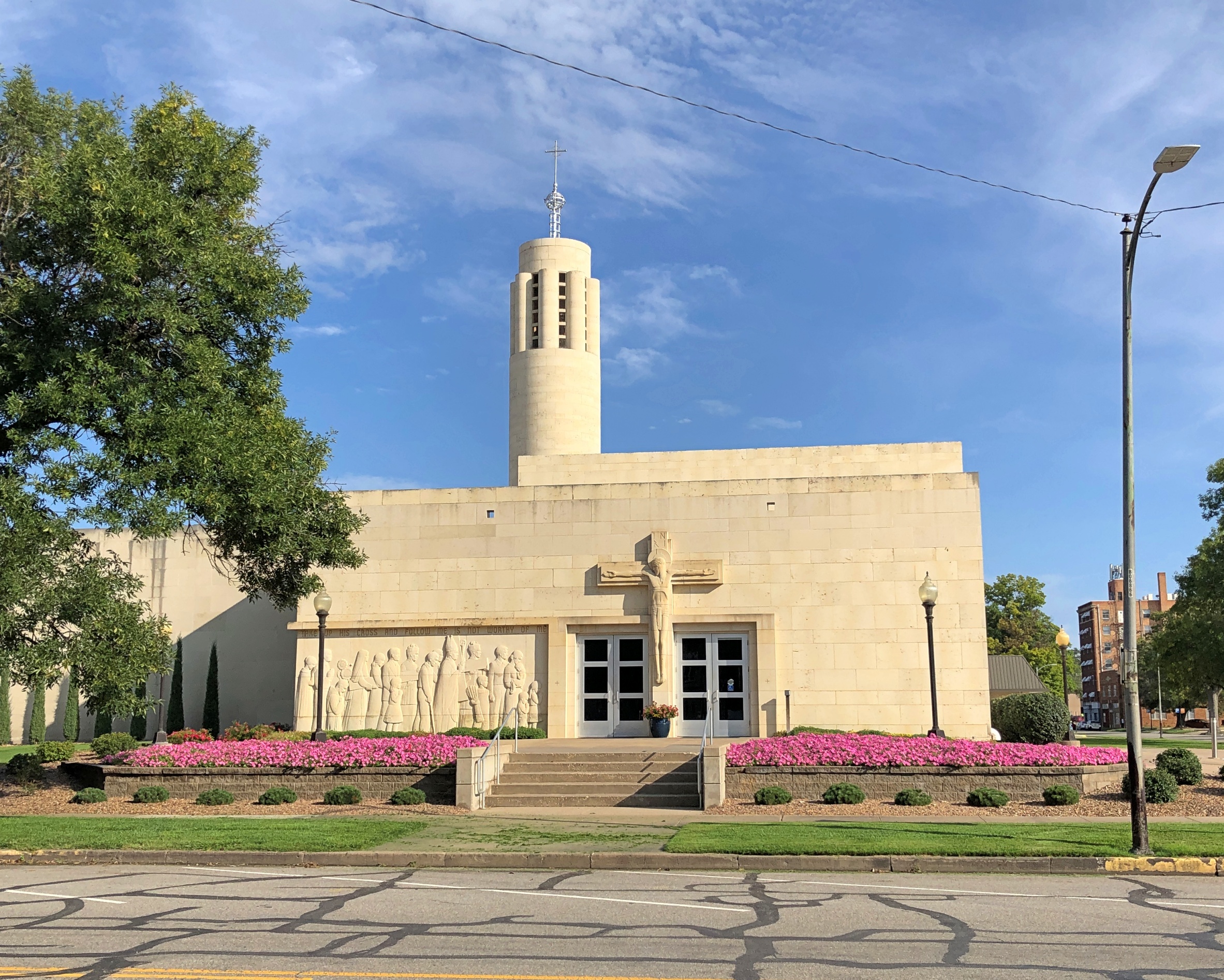
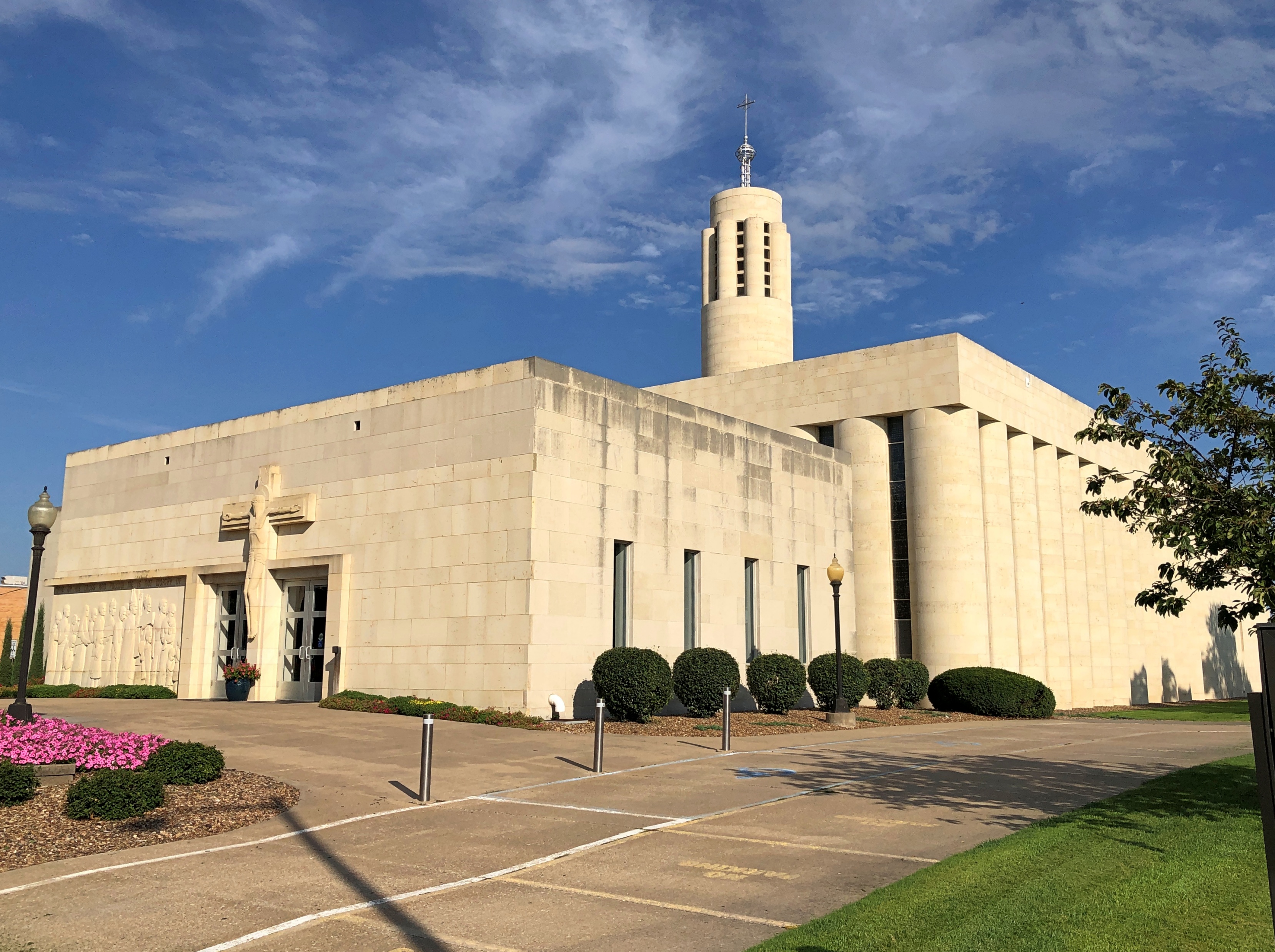
I had to take a closer look.
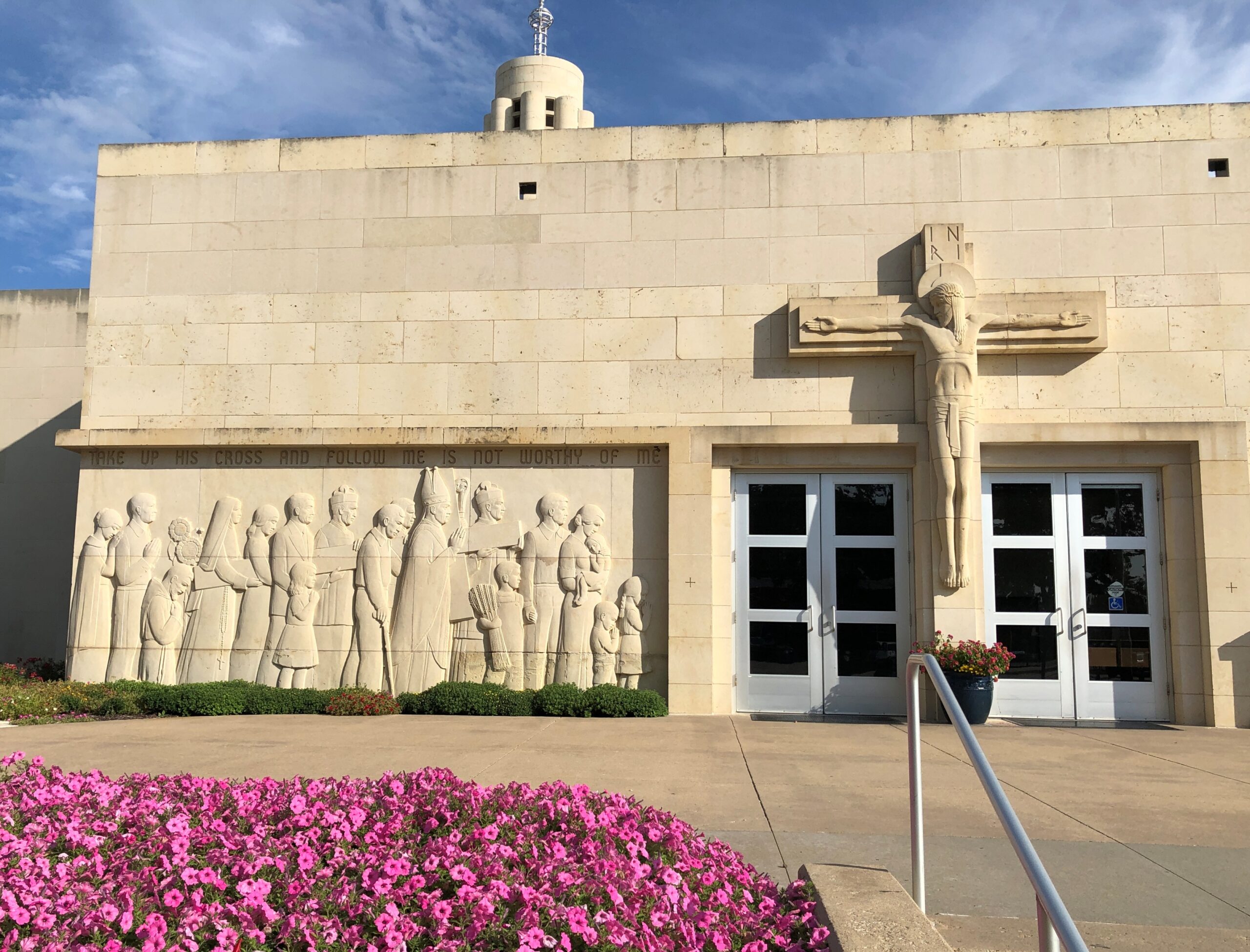
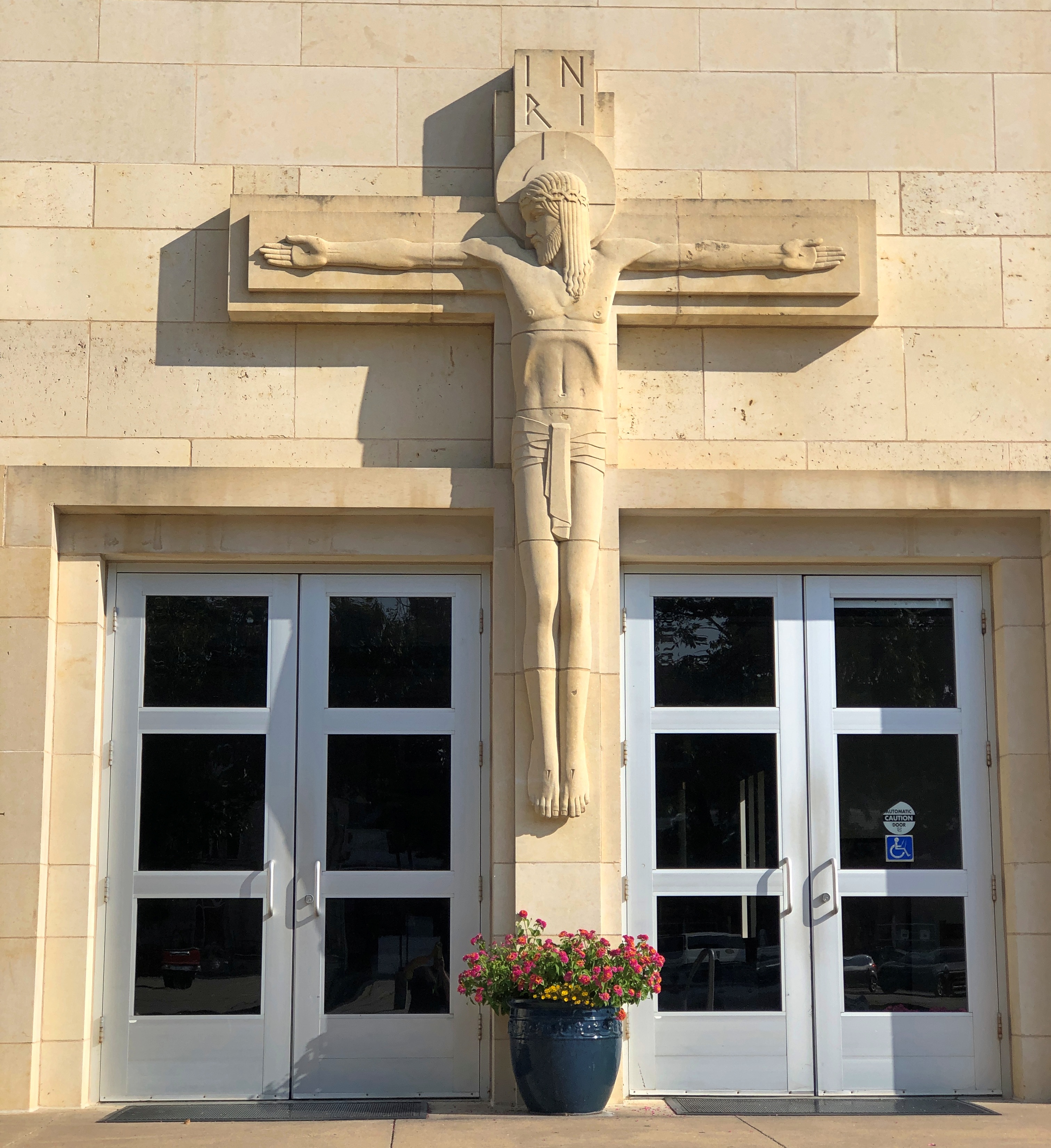
If that structure doesn’t say midcentury, I don’t know what would. Indeed, the cathedral was built in the 1950s. But it isn’t quite like any other church building I’ve seen, even of that period. Also, it isn’t mid-century concrete, which it looked like from a distance, but limestone.
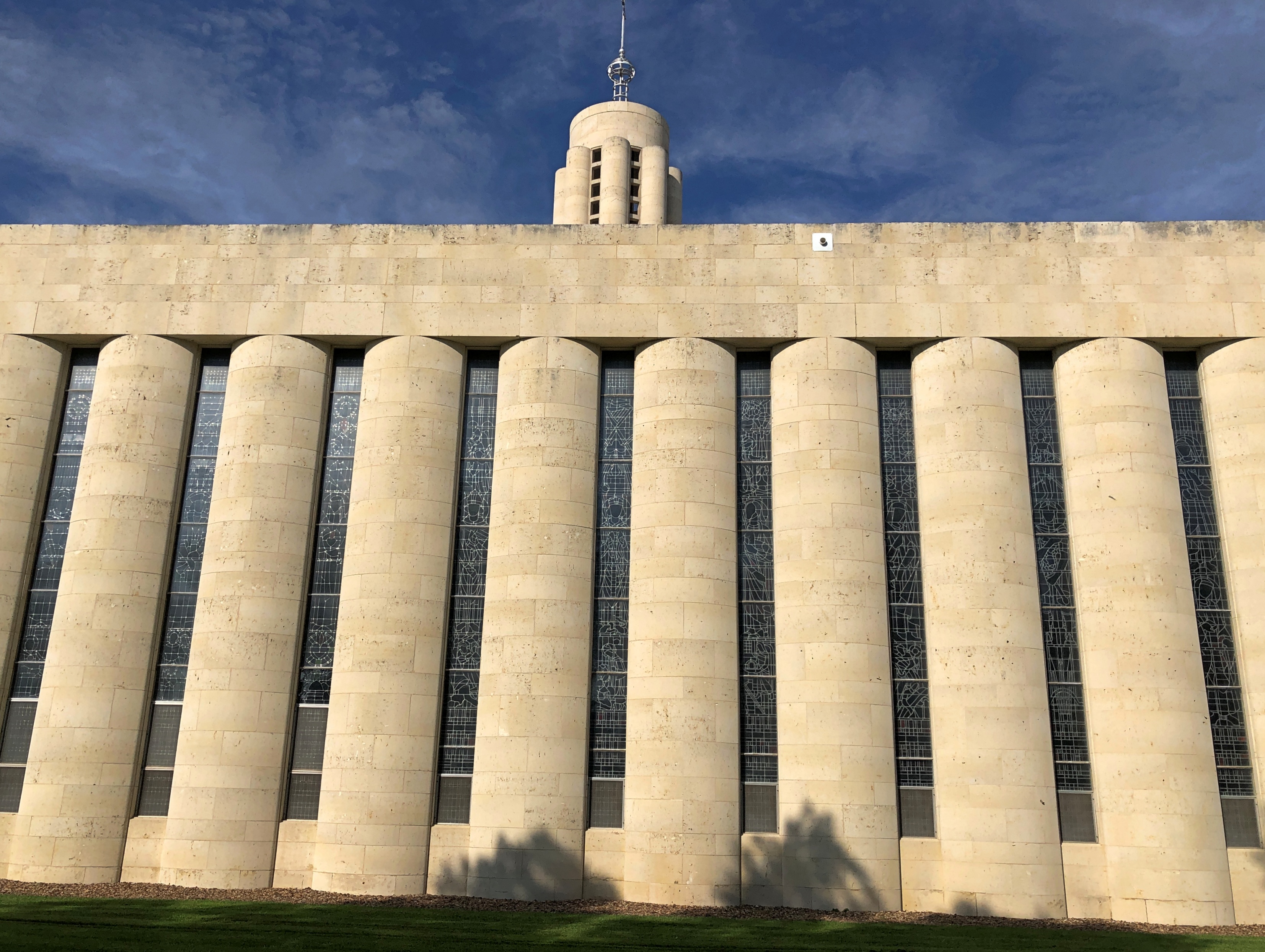
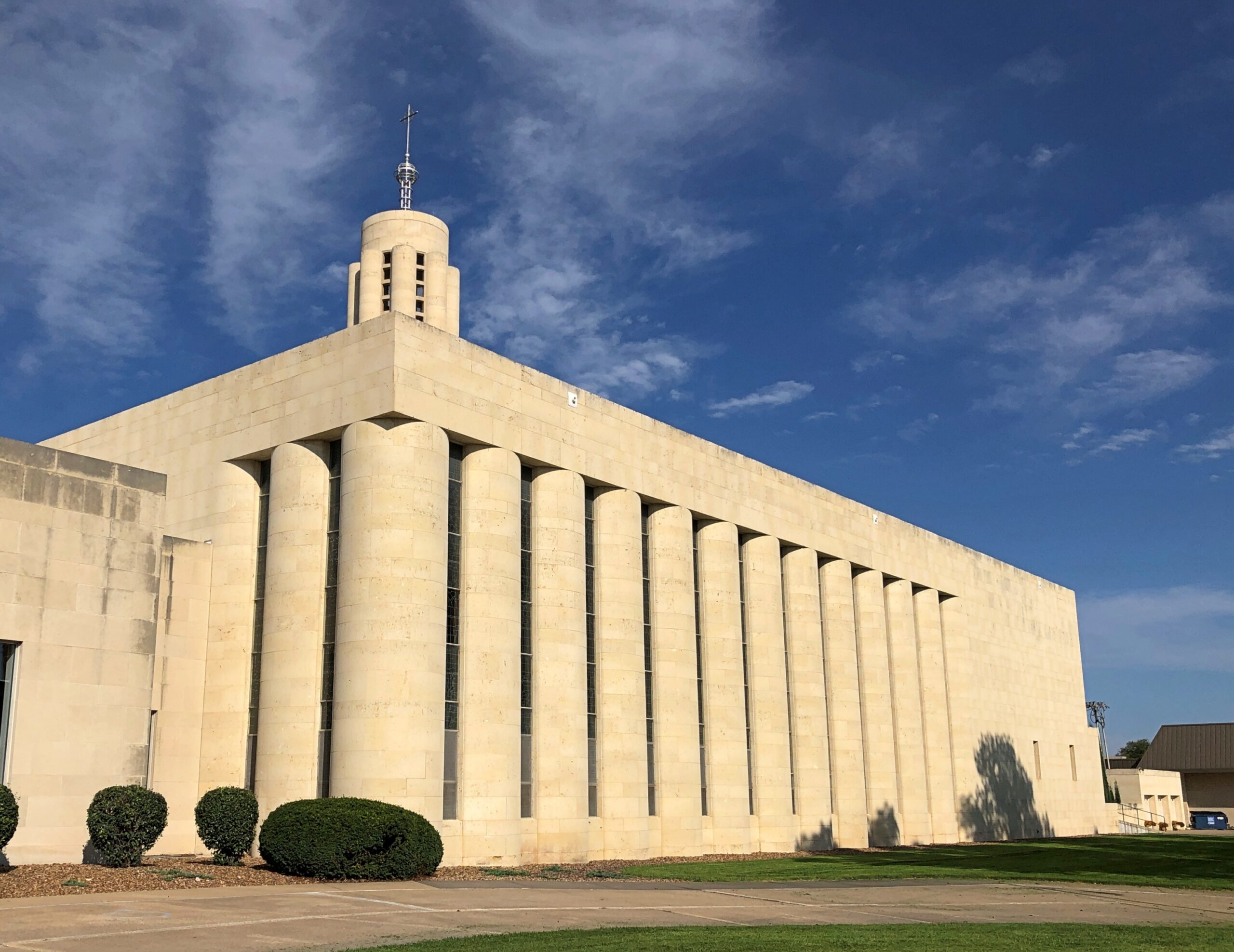
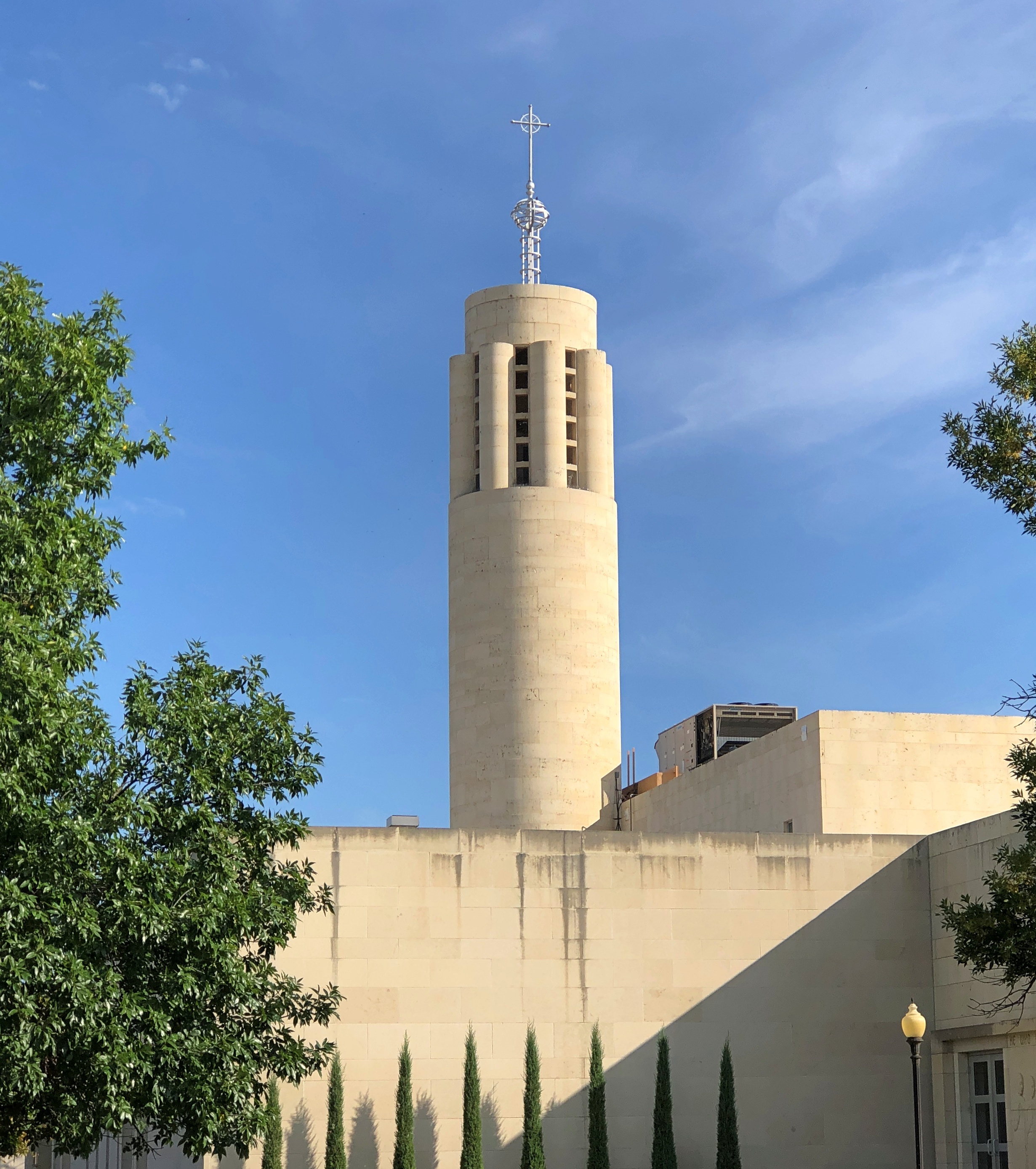
Note the Kansas elements.
The cathedral’s web site says: Sacred Heart Cathedral is a distinctive building that draws upon rural Kansas imagery and uses it in the service of Christian mythology. It is a noteworthy example of the work of Edward J. Schulte [d. 1975], a prolific designer of Catholic facilities across the Midwest through the greater part of the twentieth century.
Its most striking features are what appear to be a row of cylinders thirty feet in circumference extending the full height of the eastern and western facades, which resemble the grain elevators that dominate the skyline of most towns in western Kansas.
The allusion to grain elevators helps to link the church to its place in Kansas. It can also be seen as a symbol — the Cathedral is a place where the faithful come to receive the sustenance of the Eucharist.
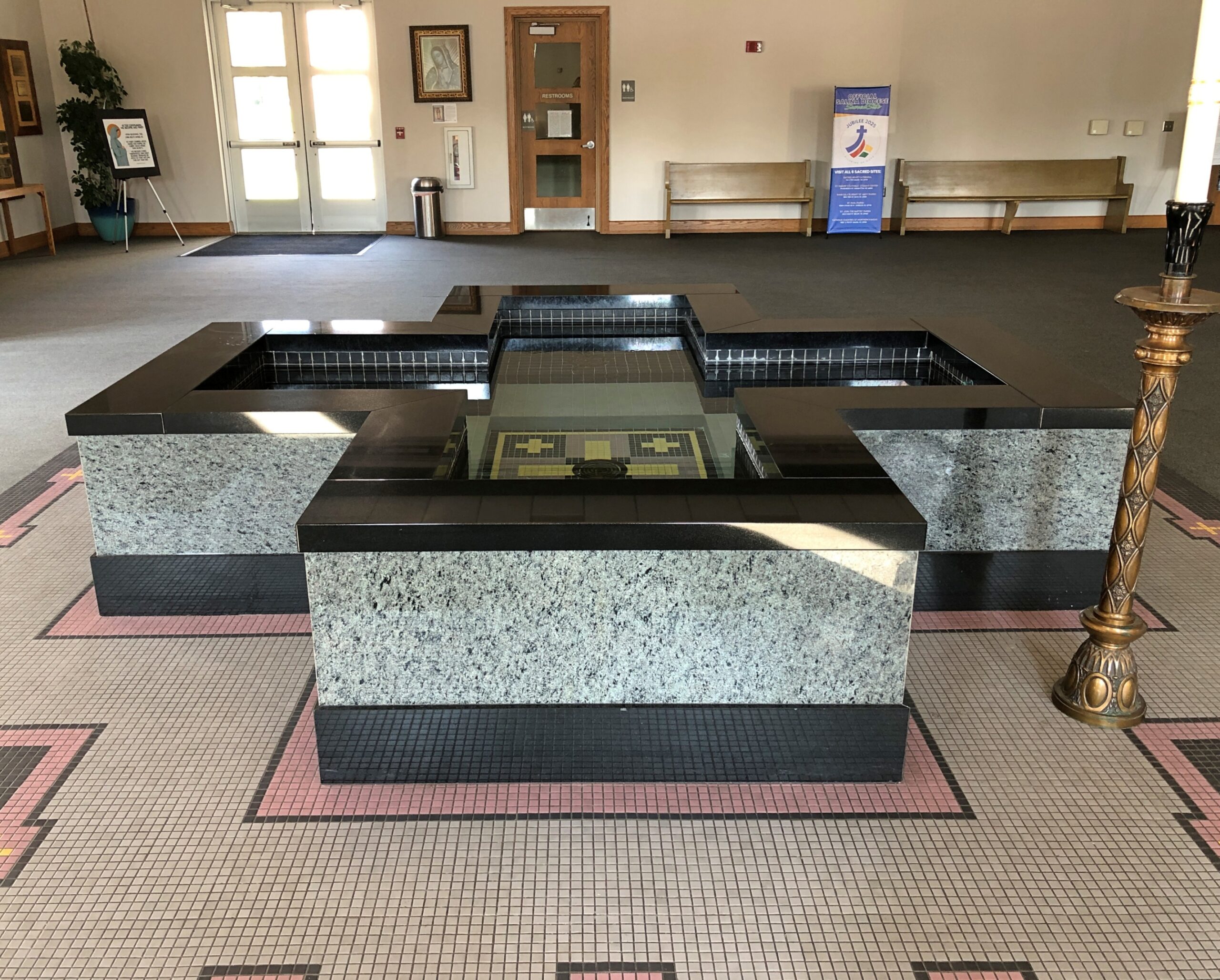
It was open. That was unexpected, but I didn’t let the opportunity pass.
The baptismal font in the narthex.
The nave.
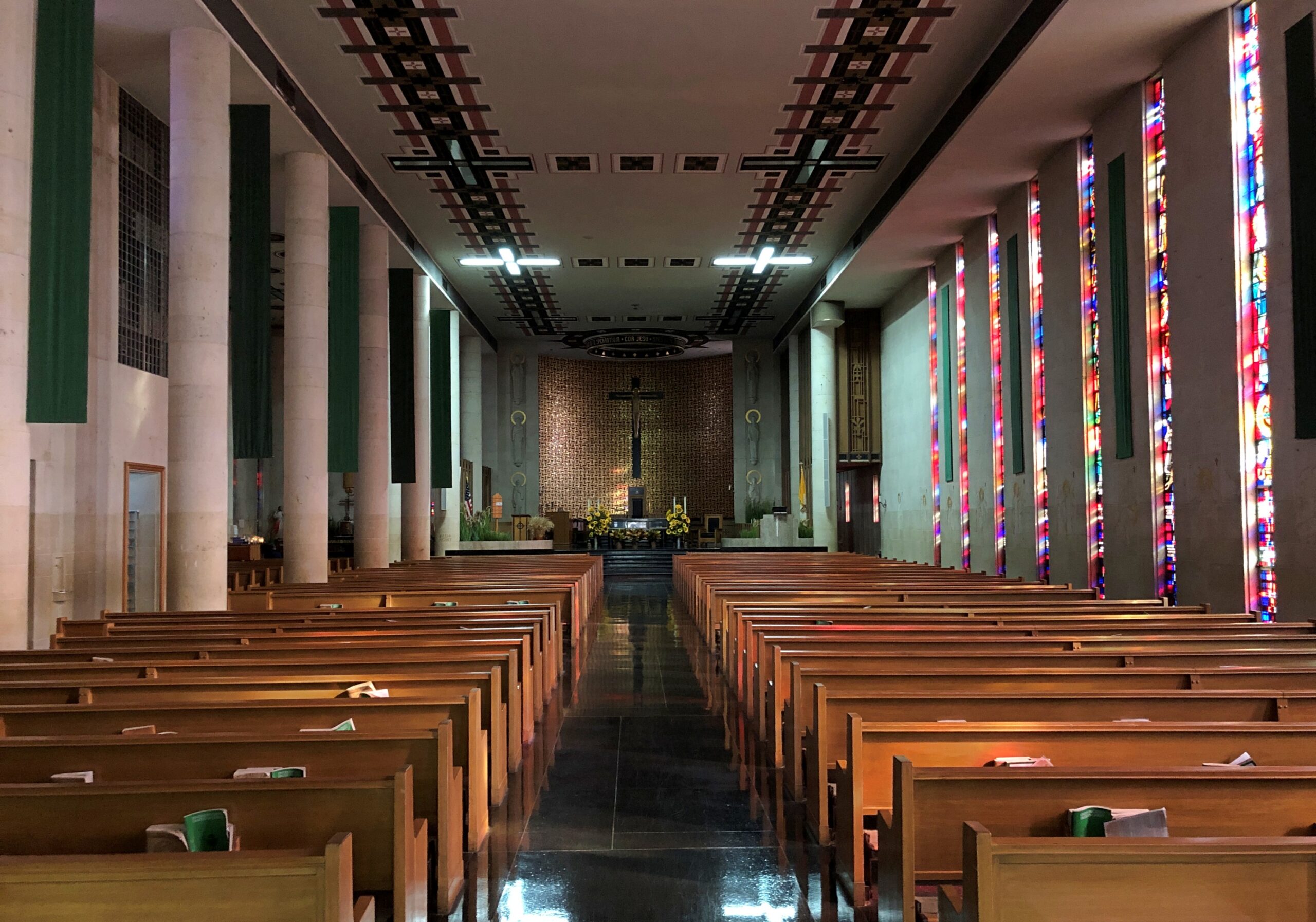
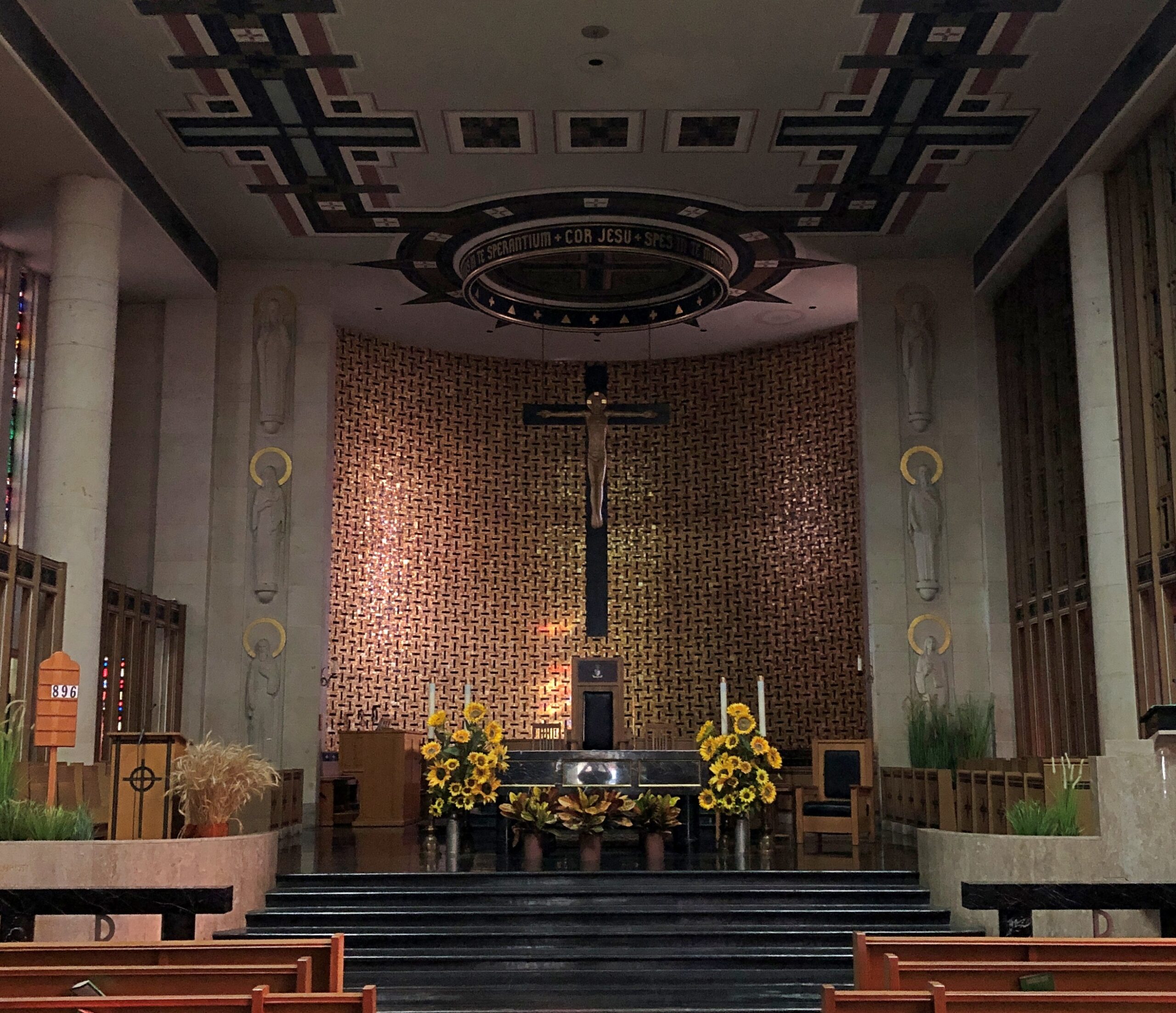
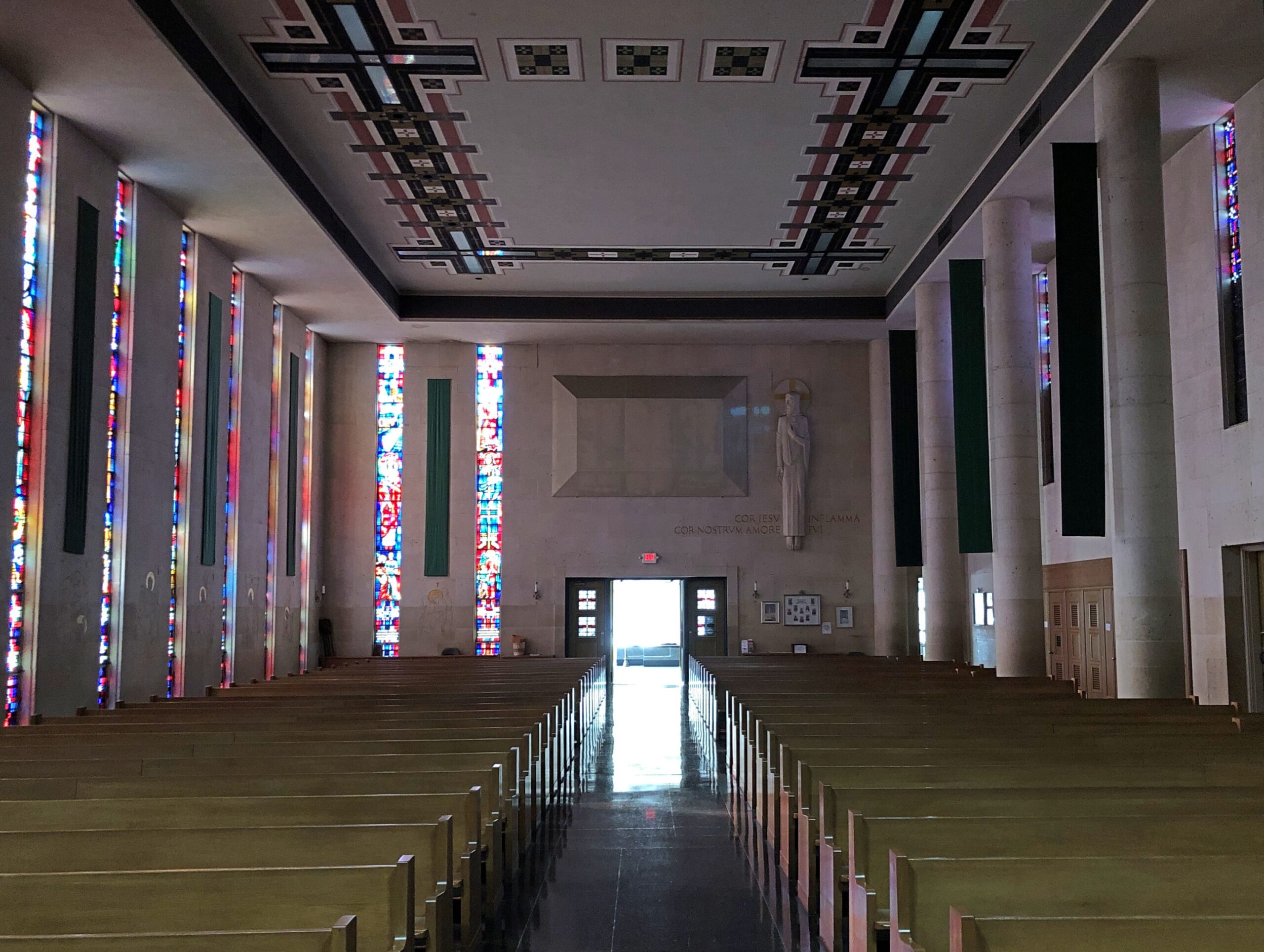
That part of downtown Salina was thick with churches. Another is First United Methodist, across the street from Sacred Heart.
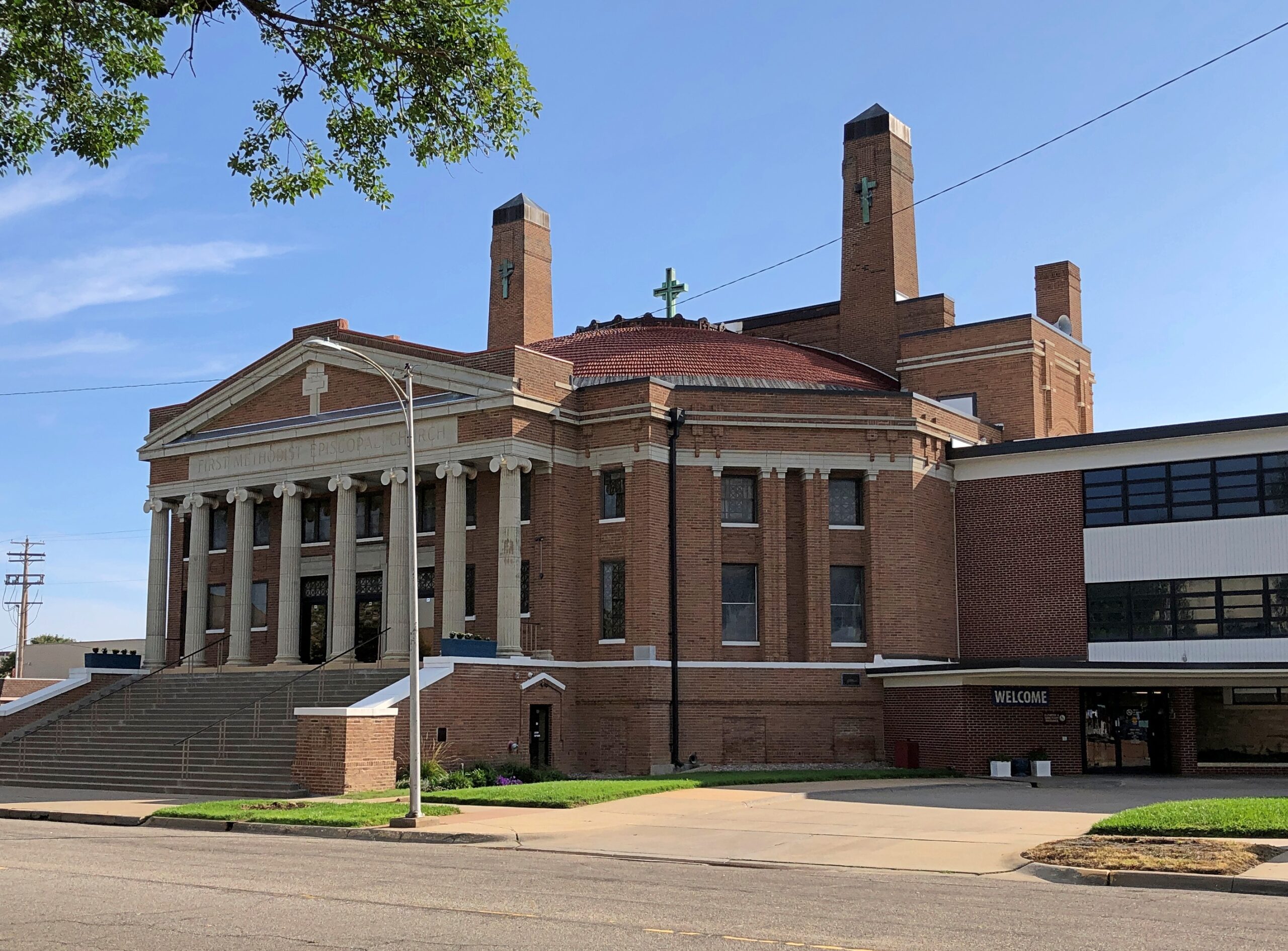
About a half block away, Christ Cathedral Episcopal. The other churches weren’t open.
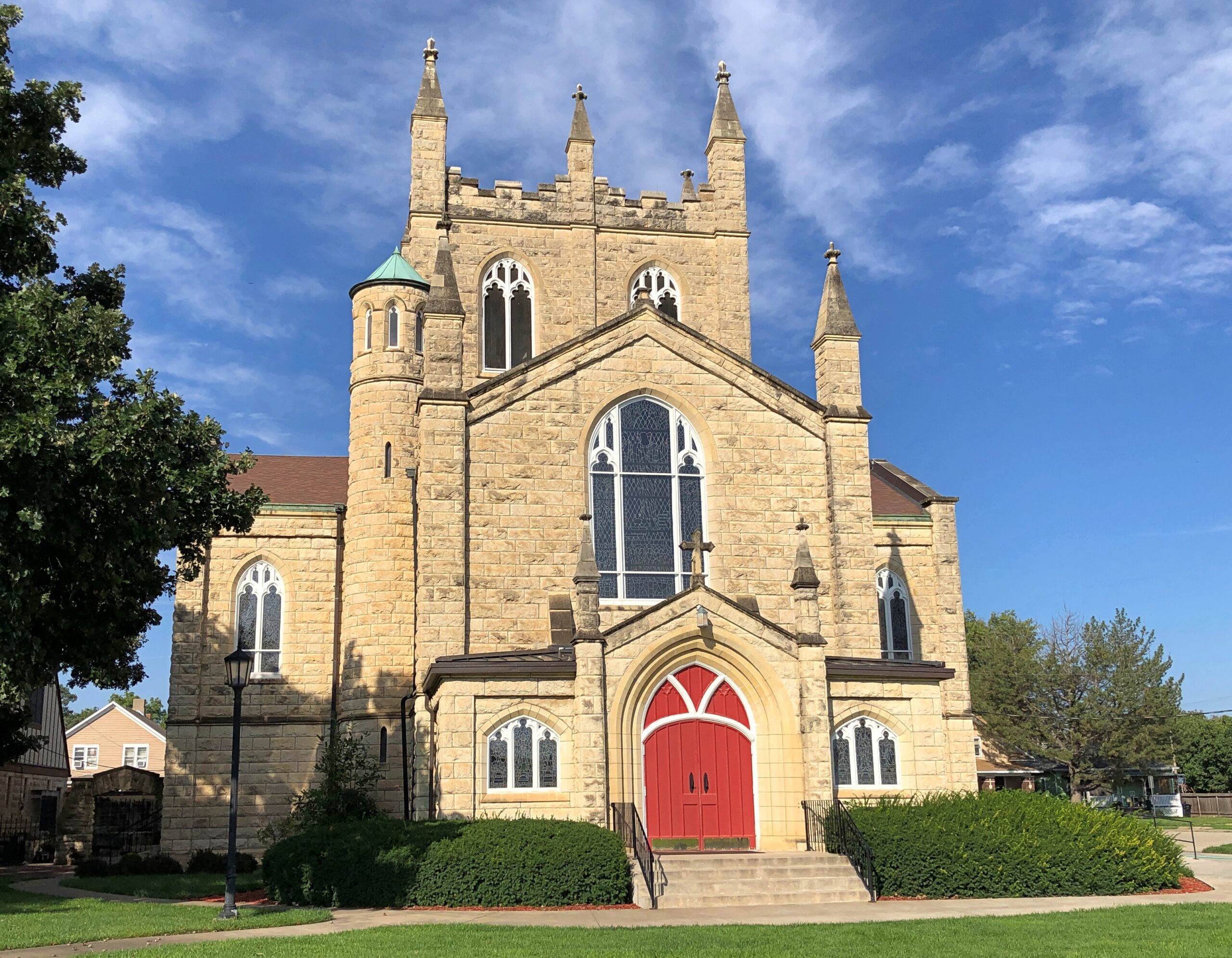
Later that day, at an exit just east of Abilene, I went looking for one more church — a kind of church I’d only ever driven by before.
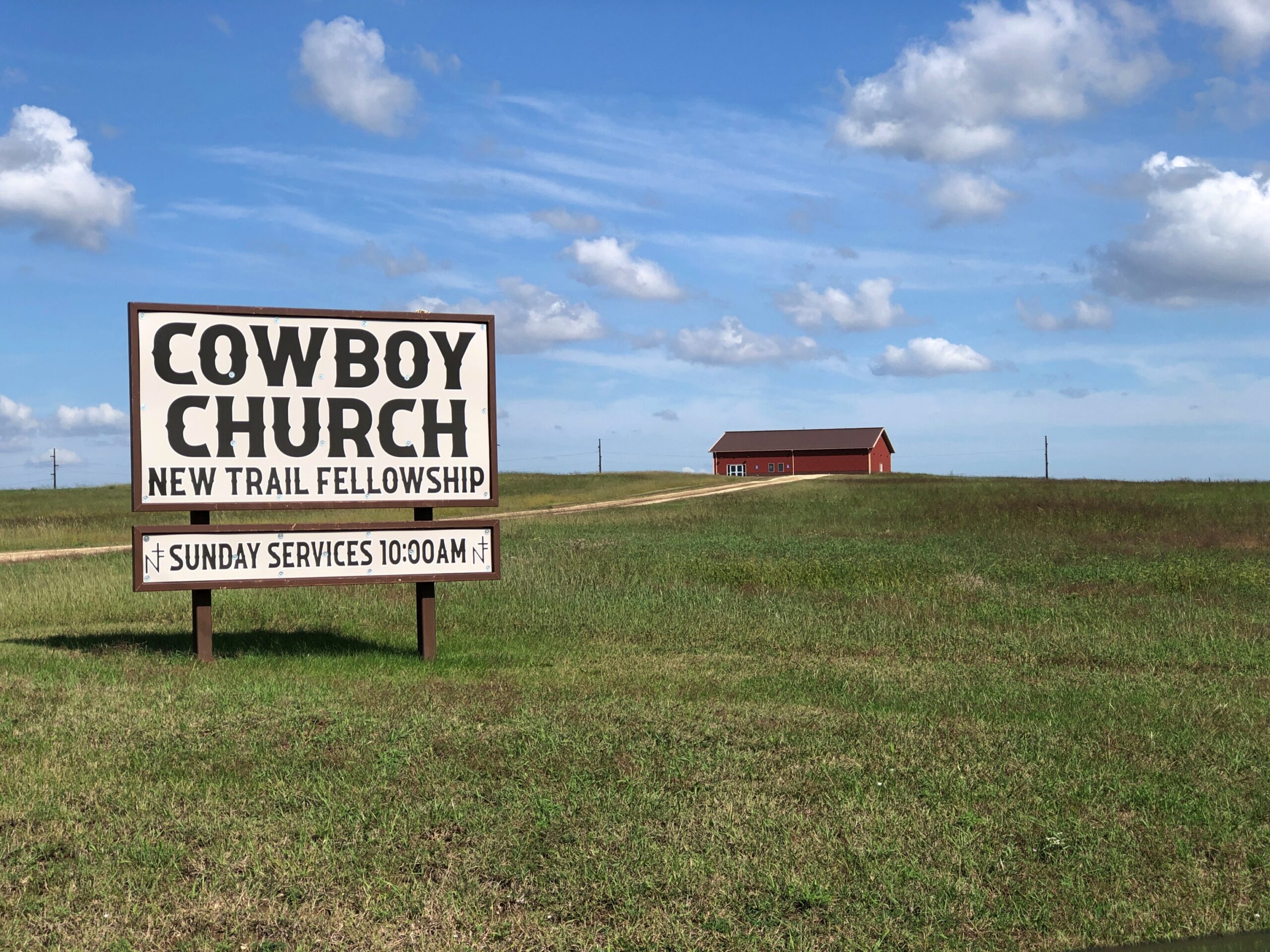
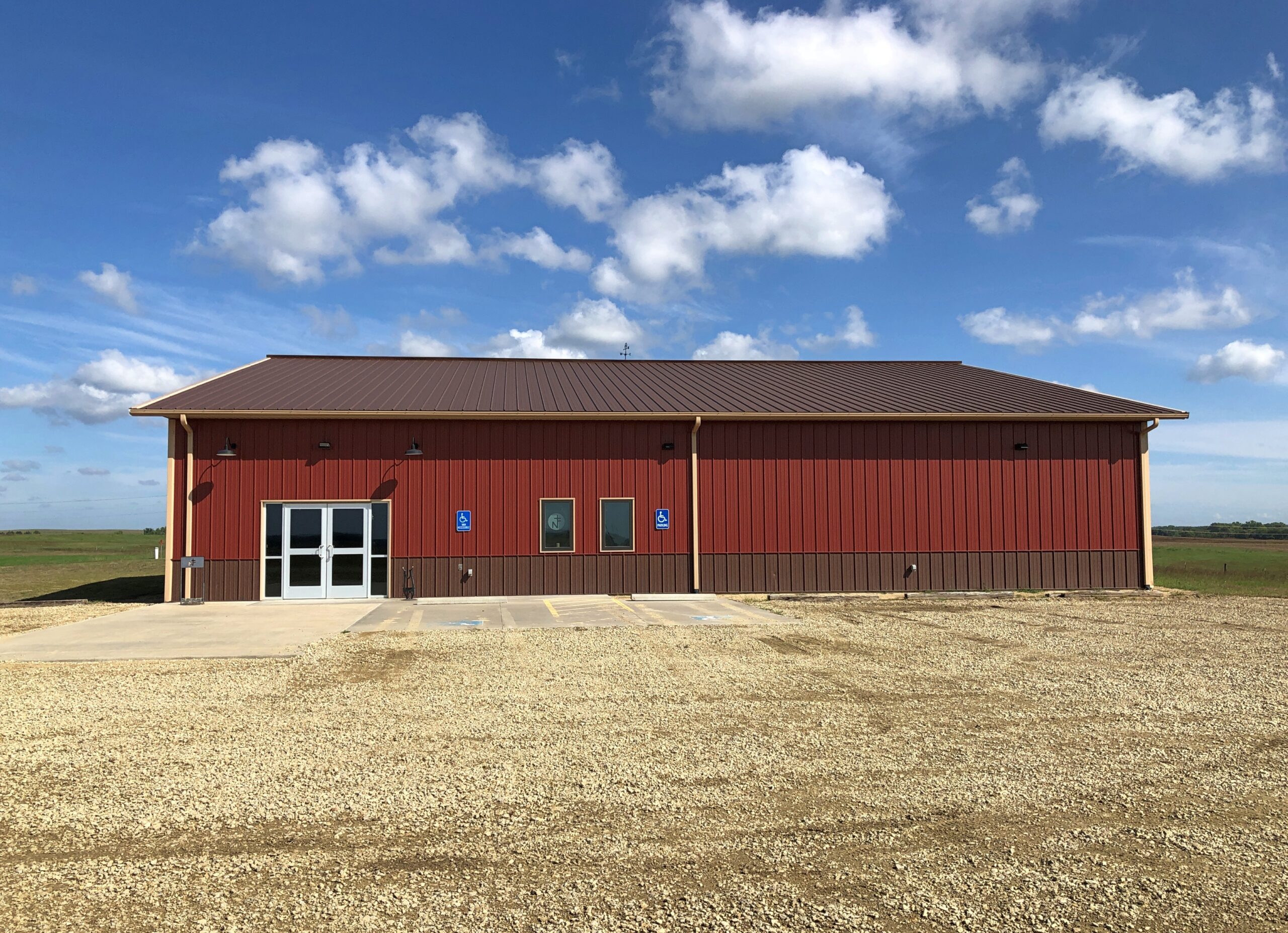
Google Maps told me that this Cowboy Church was open for a few hours that day. I was skeptical, but went anyway, on the off chance that I’d get to see the inside of a Cowboy Church. As expected, it wasn’t open. Still, I got to look around in all directions.
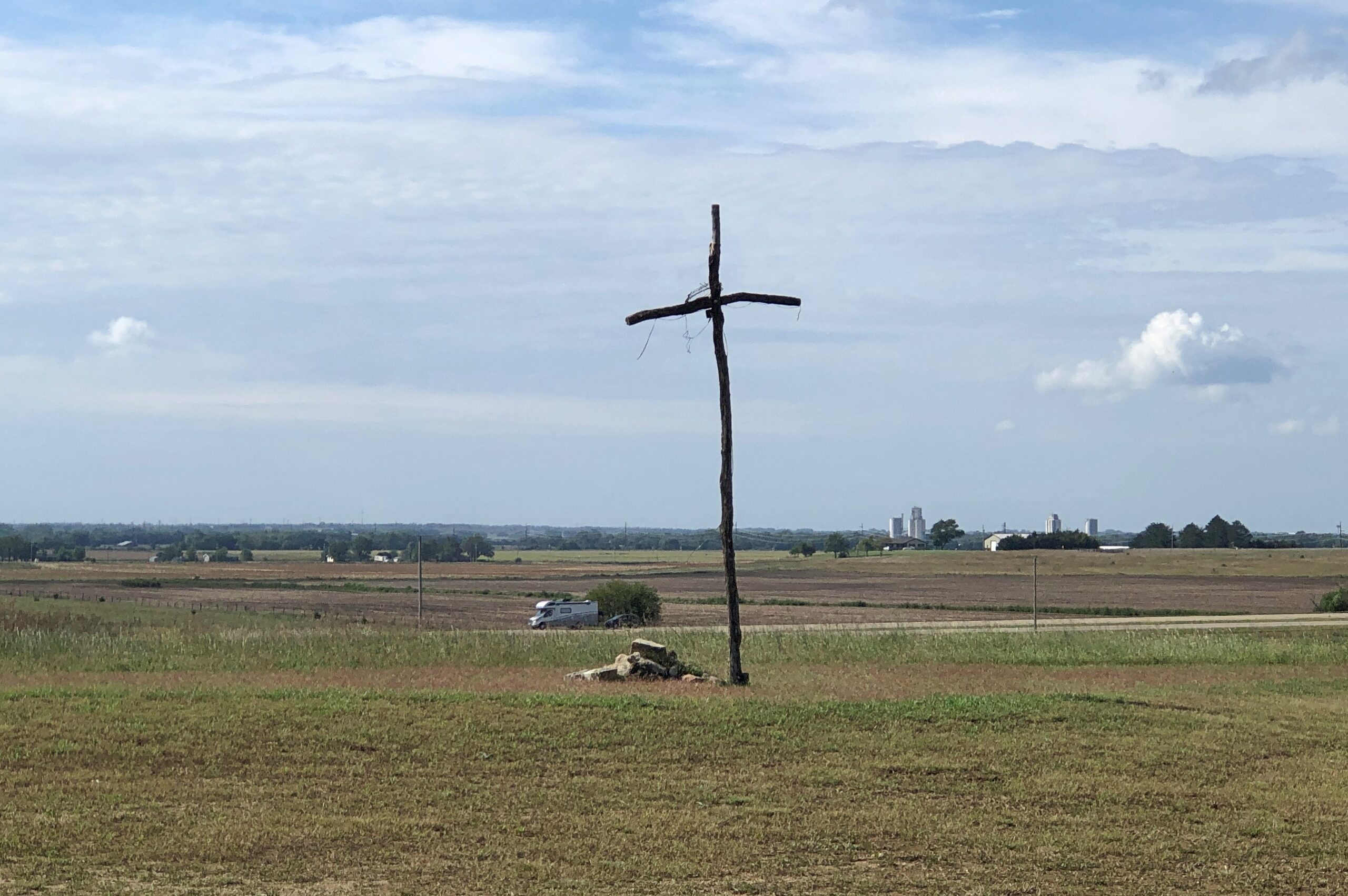
Informality, I’ve read, is important to the nondenominational Cowboy Churches, whose number seems to be large, but without an exact count. (And some individual churches are pretty large.) I can only hope that at one or more of them, somewhere and at sometime, Yippee-Ki-Yay, Lord! is part of their prayer.