New Jersey flummoxed the GPS system I use occasionally in my car. Twice.
And I mean occasionally: only twice on this trip of nearly 3,500 miles through nine states, both times in New Jersey, and both times the Garden State proved too much for mere trilateration to distant satellites. Later, during a disorientation in Poughkeepsie, NY, I would have done well to use the system, but was too hardheaded for it by that point.
Most of the time, I don’t need it. My alternating use of paper and electronic maps is generally enough. However, GPS can simplify the task of trying to find a specific place – a motel, usually – in an unfamiliar urban area after dark. Provided, it seems, you’re not in New Jersey.
Approaching Trenton on the evening of April 8, I figured that would be the time to turn over navigation to the system. For a while, it seemed to give good directions. Then it told me to enter one of the local expressways, which I did at the point indicated. A few seconds later, the machine gave directions that absolutely made no sense: turn left at the next light. What? I was on an entry ramp of a limited-access expressway. A few more directions bore no relation to reality on the road, so I switched it off, went to the next exit, and found a place to stop and consult Google Maps. I’d been sent away from Trenton.
All that was just an unpleasant memory on the morning of the 9th, as I made my way using paper and electronic maps to the Jersey Shore. It wasn’t until later, during another misdirection in New Jersey, that I got an inkling of what might have happened. Never mind that for now. Eventually – and not too long, New Jersey isn’t that big – I passed through Atlantic City and headed south to my first destination that day: Lucy the Elephant.
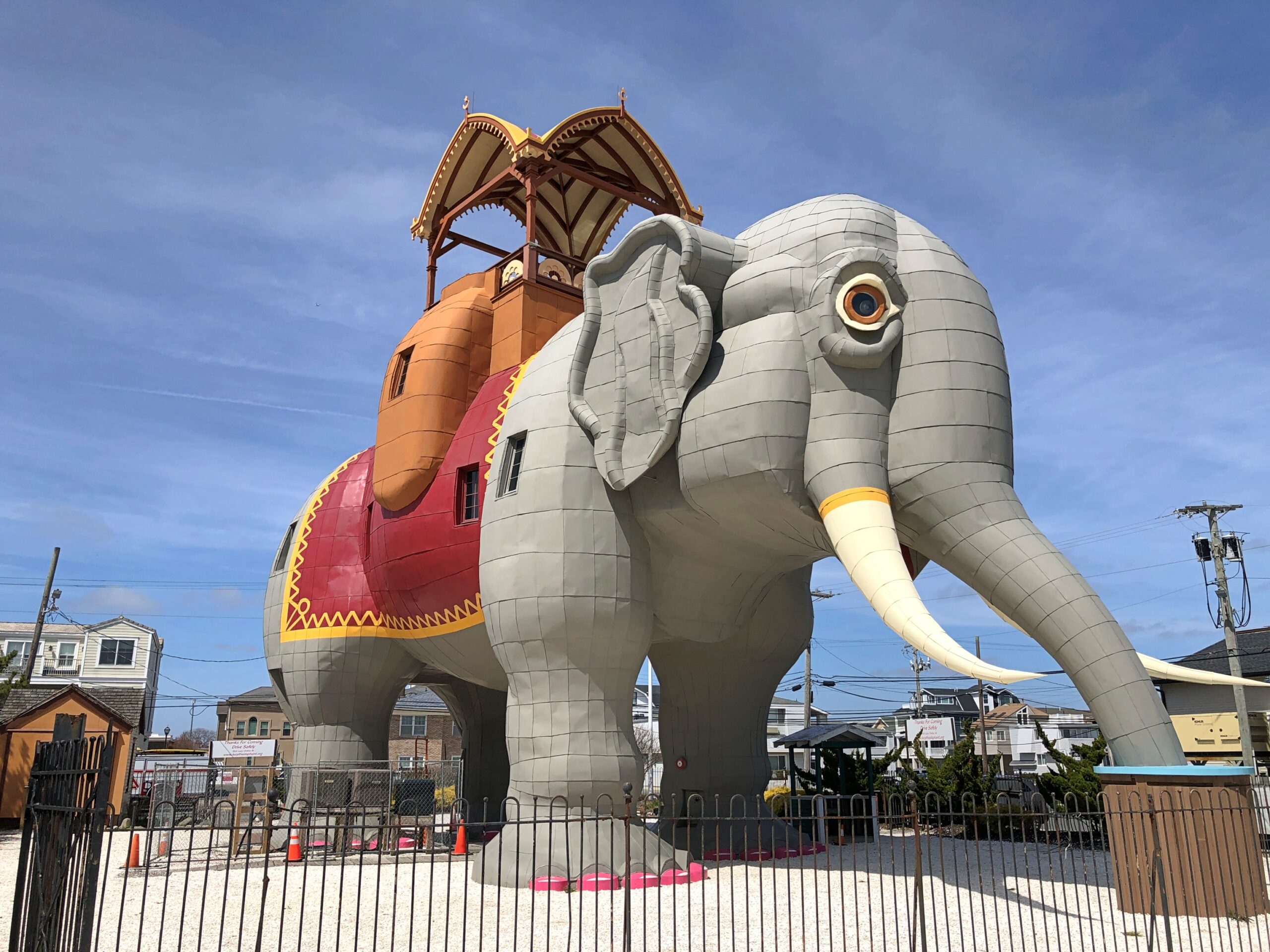
“Built of tin and wood in 1882 by James V. Lafferty as a publicity stunt, Lucy was modeled after Jumbo, P.T. Barnum’s real life ‘Largest Elephant on Earth,’ ” notes Atlas Obscura. “Lucy is much larger than Jumbo was, and stands 65 feet high, 60 feet long, 18 feet wide, is made of nearly one million pieces of wood, and weighs about 90 tons.”
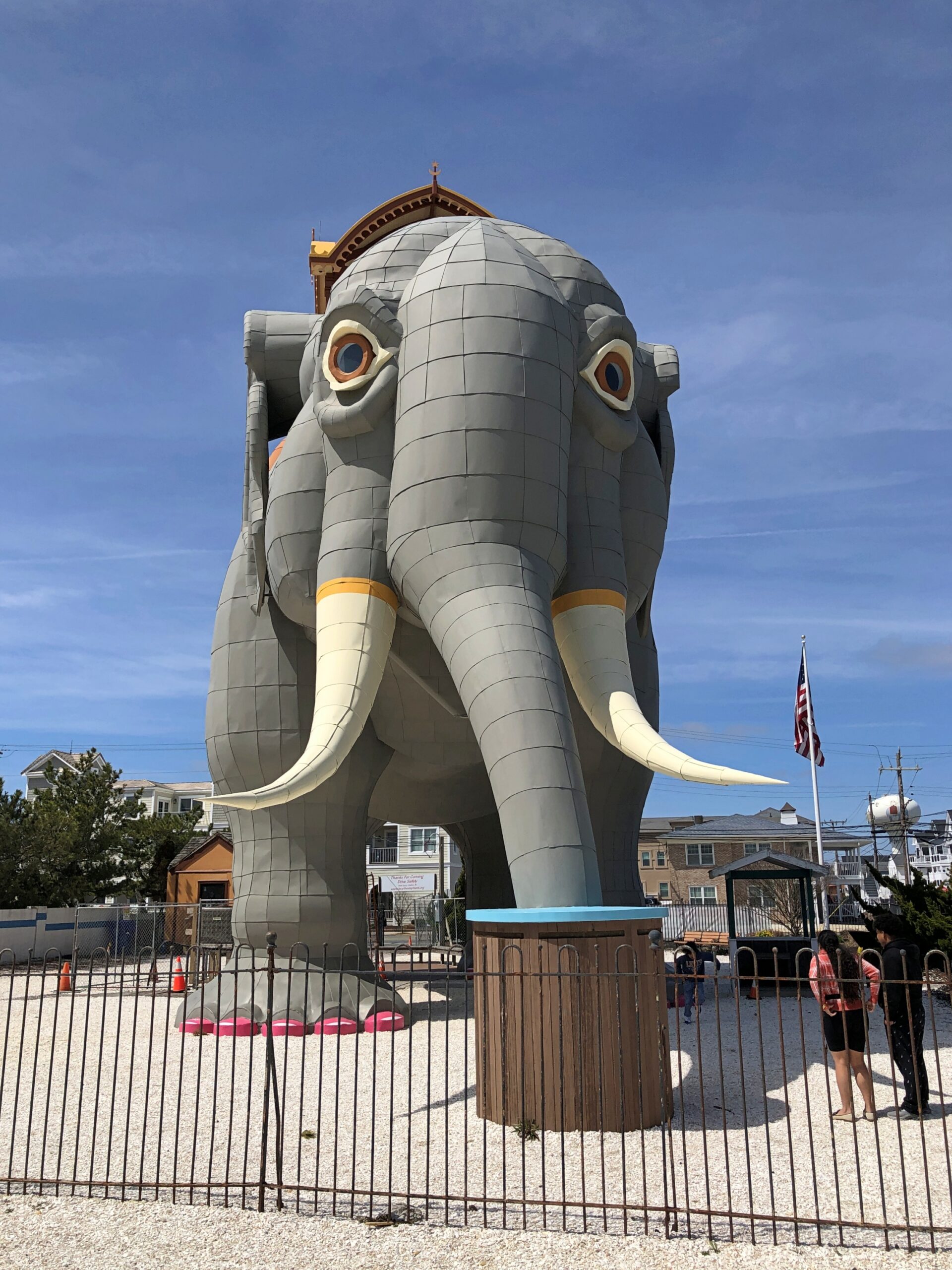
Not just a publicity stunt, but a seminal one by a real estate developer, so much so that he was awarded a patent for the structure. “Land speculator” is perhaps more descriptive, but anyway Lafferty had a chunk of ocean-adjacent property he was looking to peddle south of Atlantic City, itself only a pup of a resort at the time, but certainly an up-and-comer.
Never mind real estate, Lafferty is pretty much remembered for the marvel that is Lucy. As he should be.
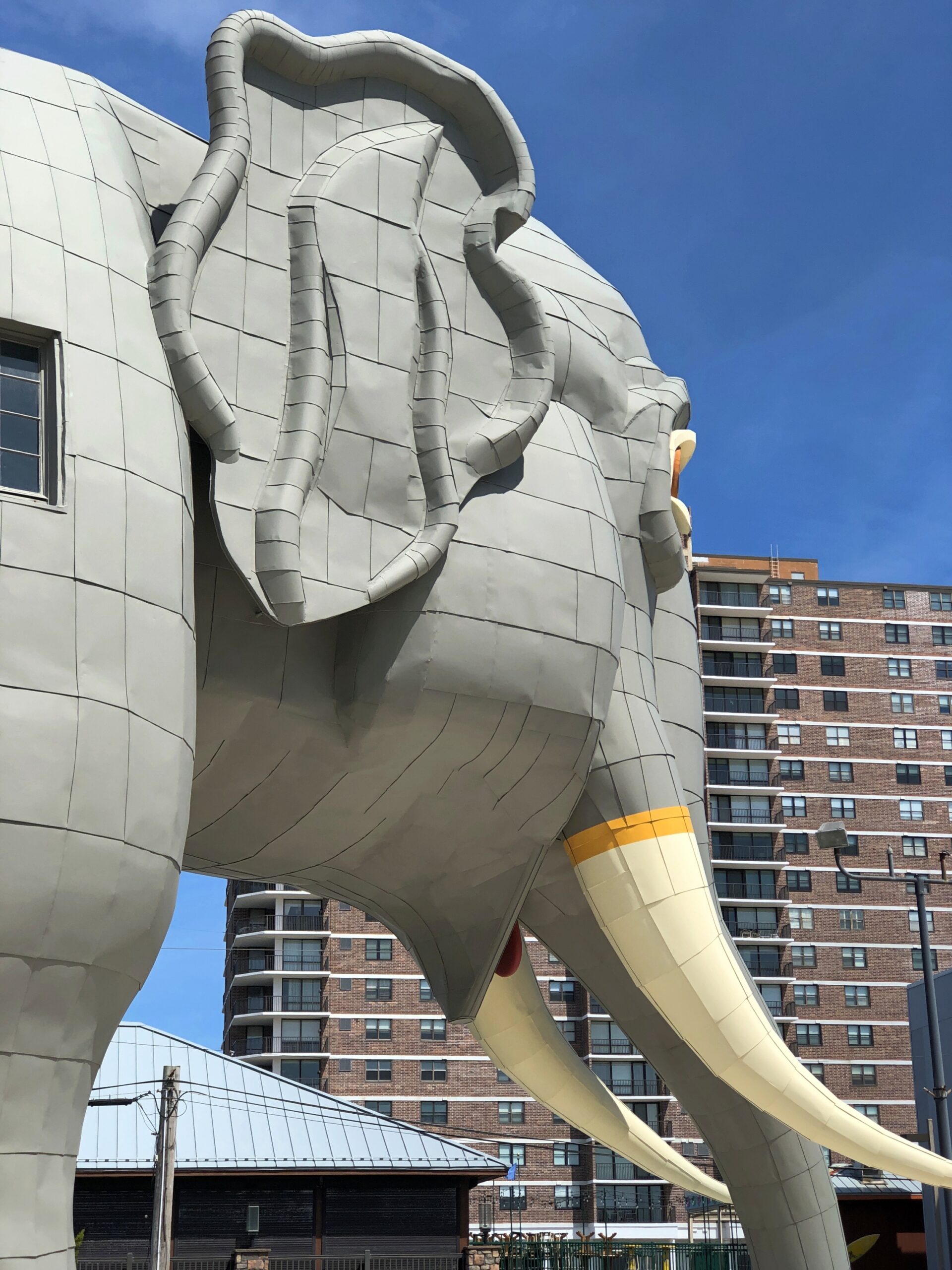
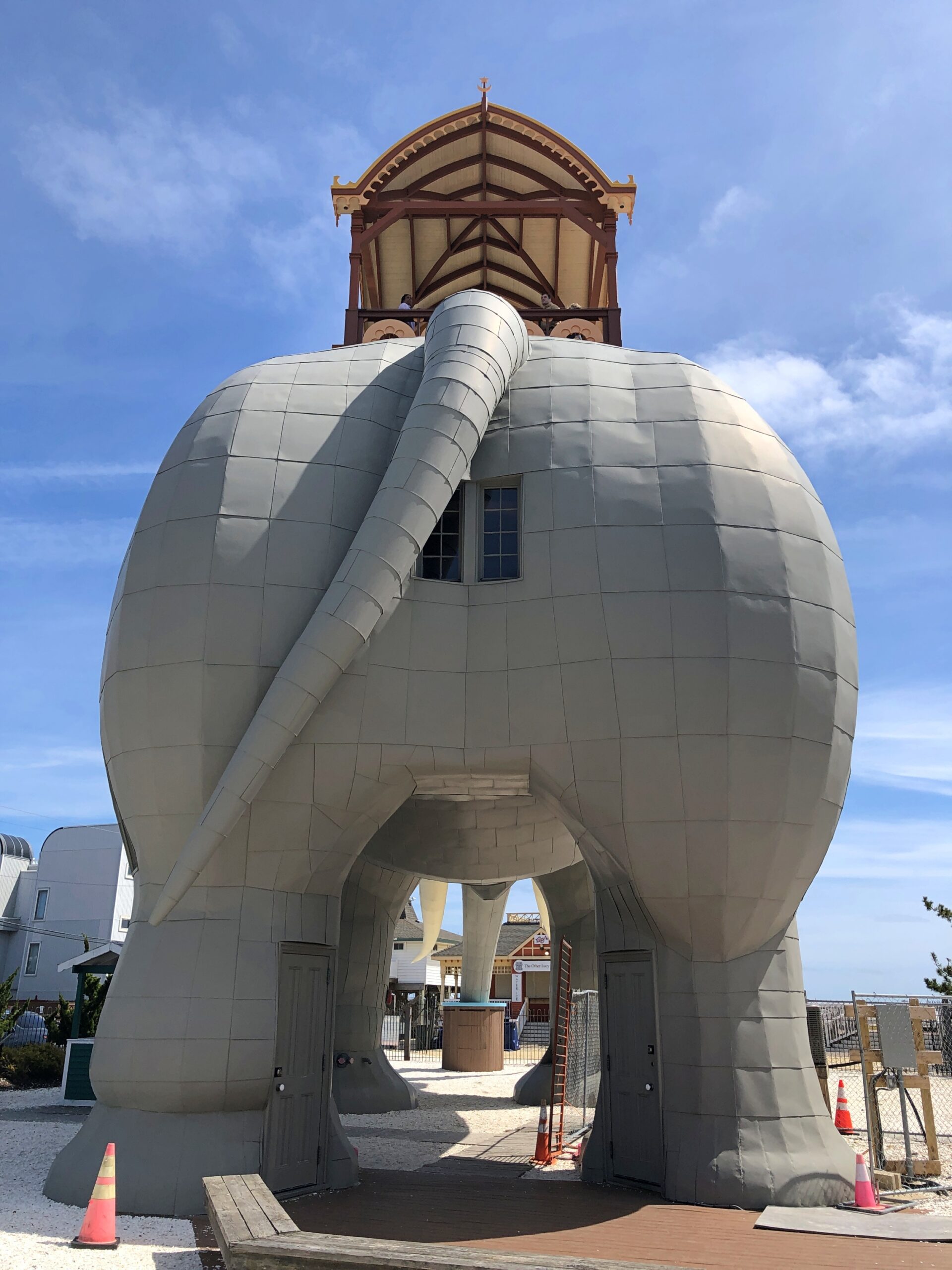
“Most of South Atlantic City at that time was a combination of scrub pine, dune grass, bayberry bushes and a few wooden fishing shacks,” says the Lucy web site. “Once Lafferty hit upon the Elephant idea he enlisted the aid of a Philadelphia architect named William Free to design this unusual structure he felt would attract visitors and property buyers to his holdings… Lafferty always claimed that before the work was finished the cost skyrocketed to $38,000.
“By 1881 Lafferty was placing advertisements in area and Philadelphia newspapers offering building lots in ‘fast booming South Atlantic City.’ Lafferty eventually extended himself too far in his land deals both at the Jersey Shore and in New York and by 1887 sought to unload his South Atlantic City holdings. He offered the Elephant and other property for sale and found a willing buyer in Anton Gertzen of Philadelphia.”
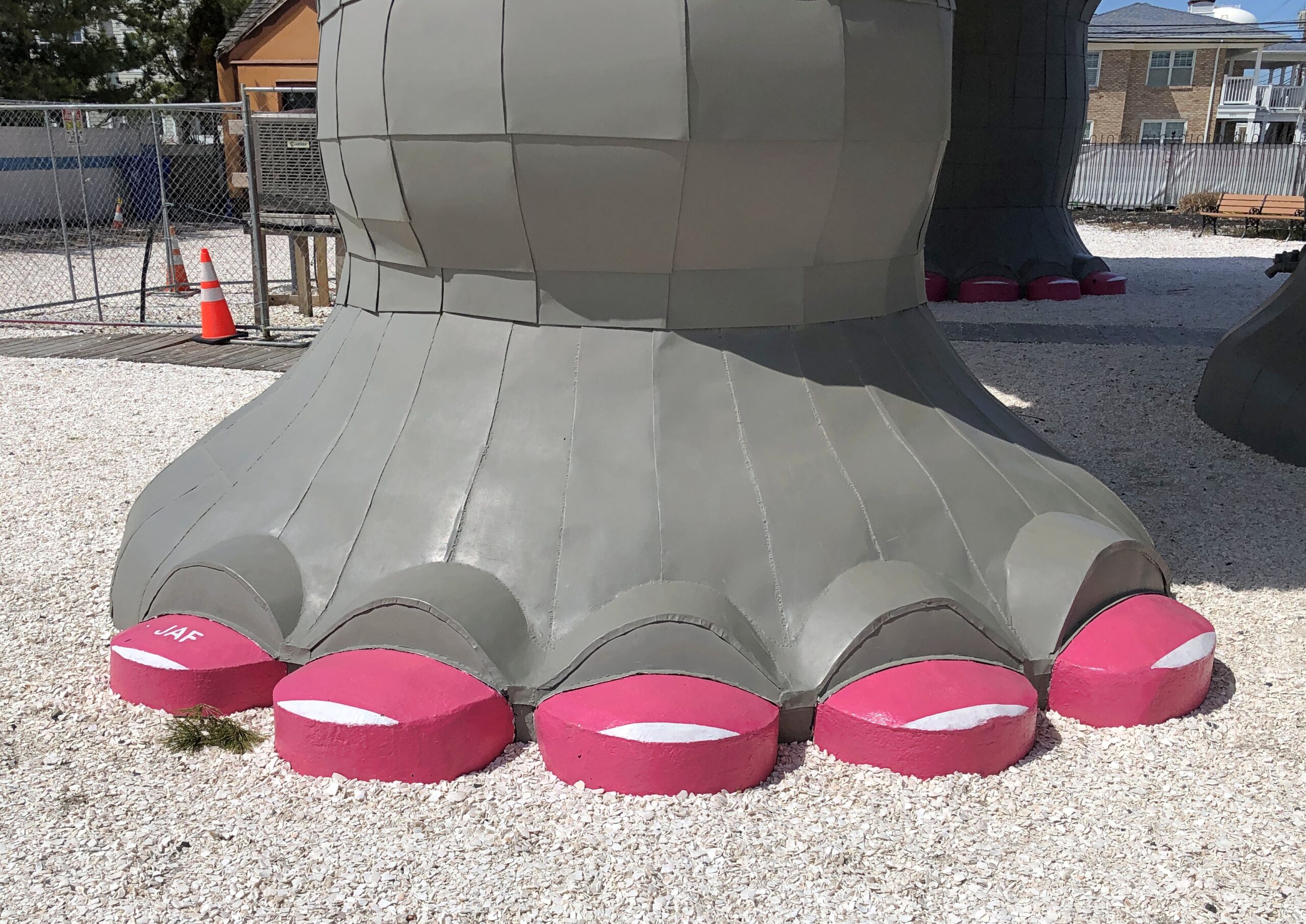
Lucy wasn’t the only elephant for Lafferty: he had others, even larger, built for Coney Island and Cape May, but they didn’t survive, and one proposed for the Columbian Exhibition in 1893 that was never built. Lucy almost didn’t survive to our time either, following a familiar arc of survival to the mid-20th century in an increasingly dilapidated state, then facing demolition. Citizen activism saved Lucy, setting up a nonprofit and finding the money for restoration, and now she attracts roughly 40,000 visitors a year.
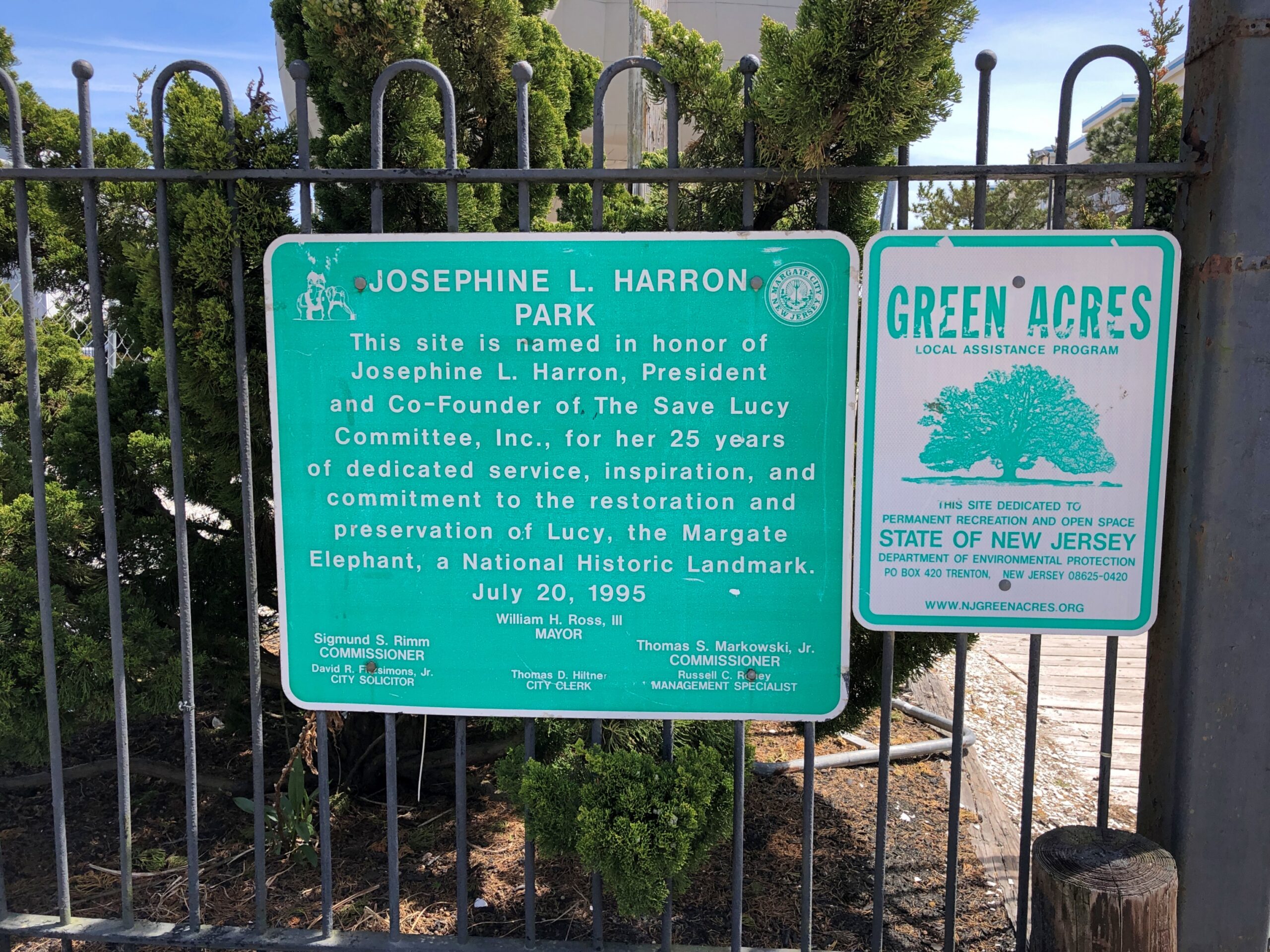
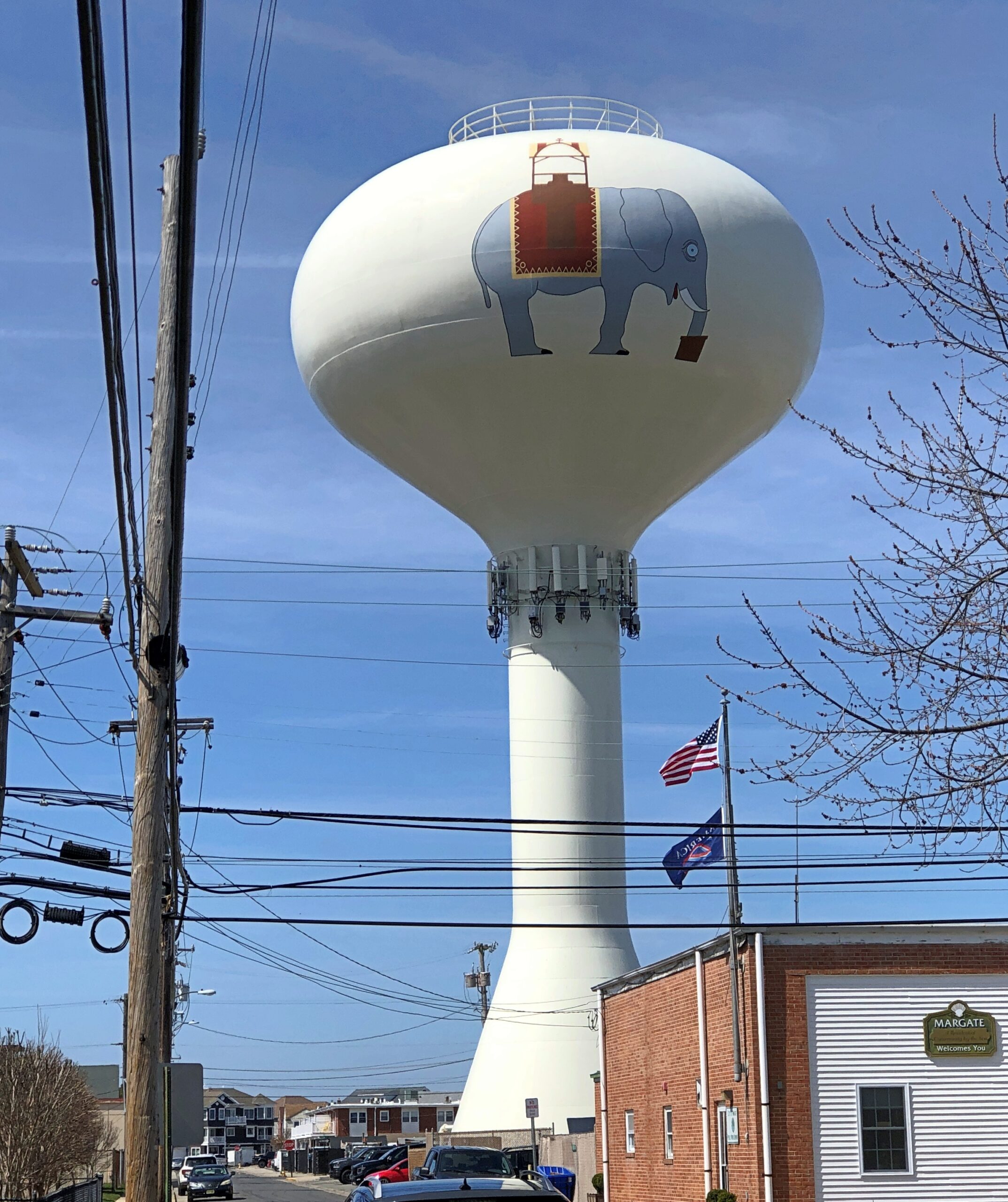
She stands on Atlantic Ave. in Margate City, NJ. A fairly ordinary street but for a few details.
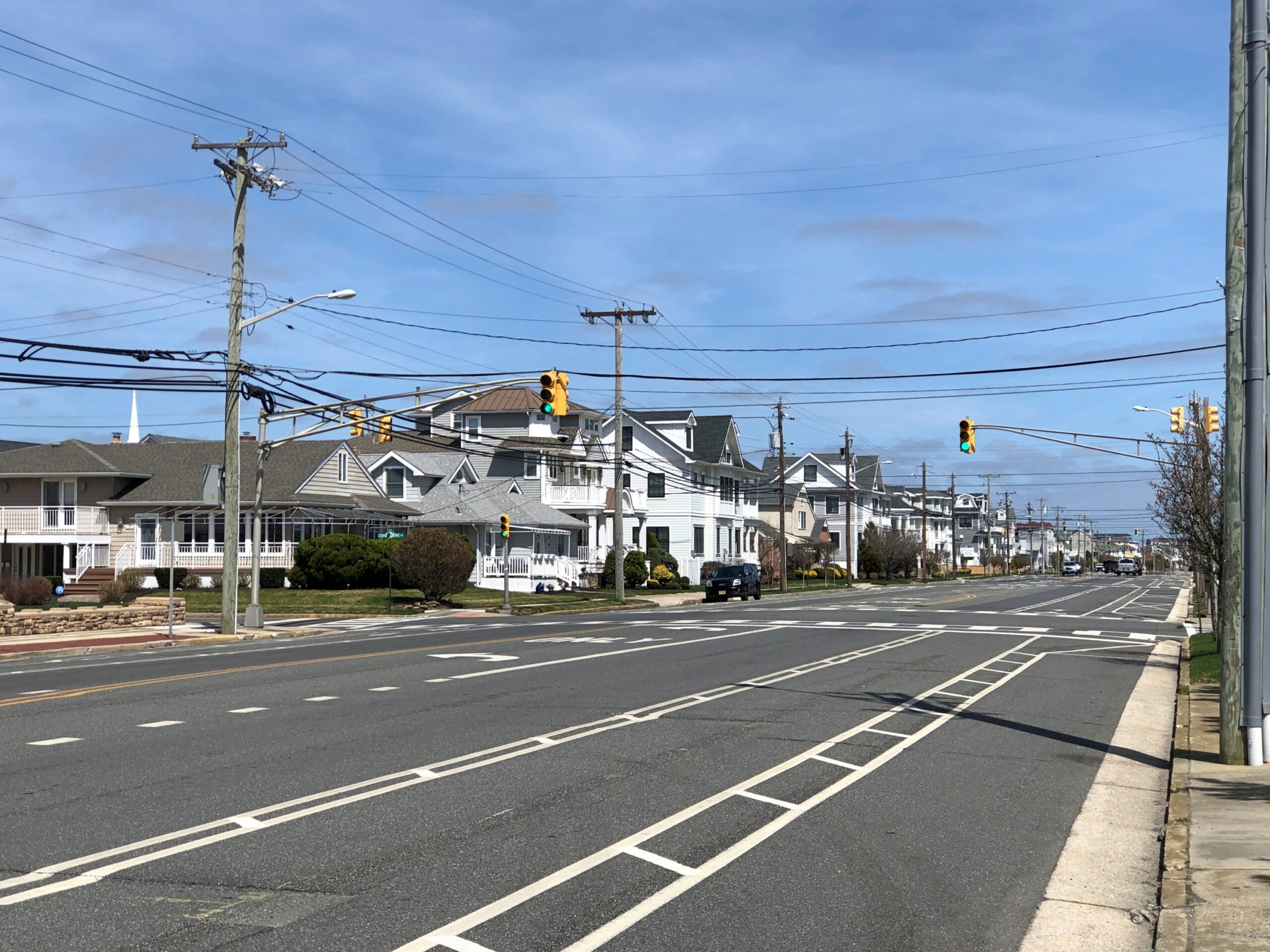
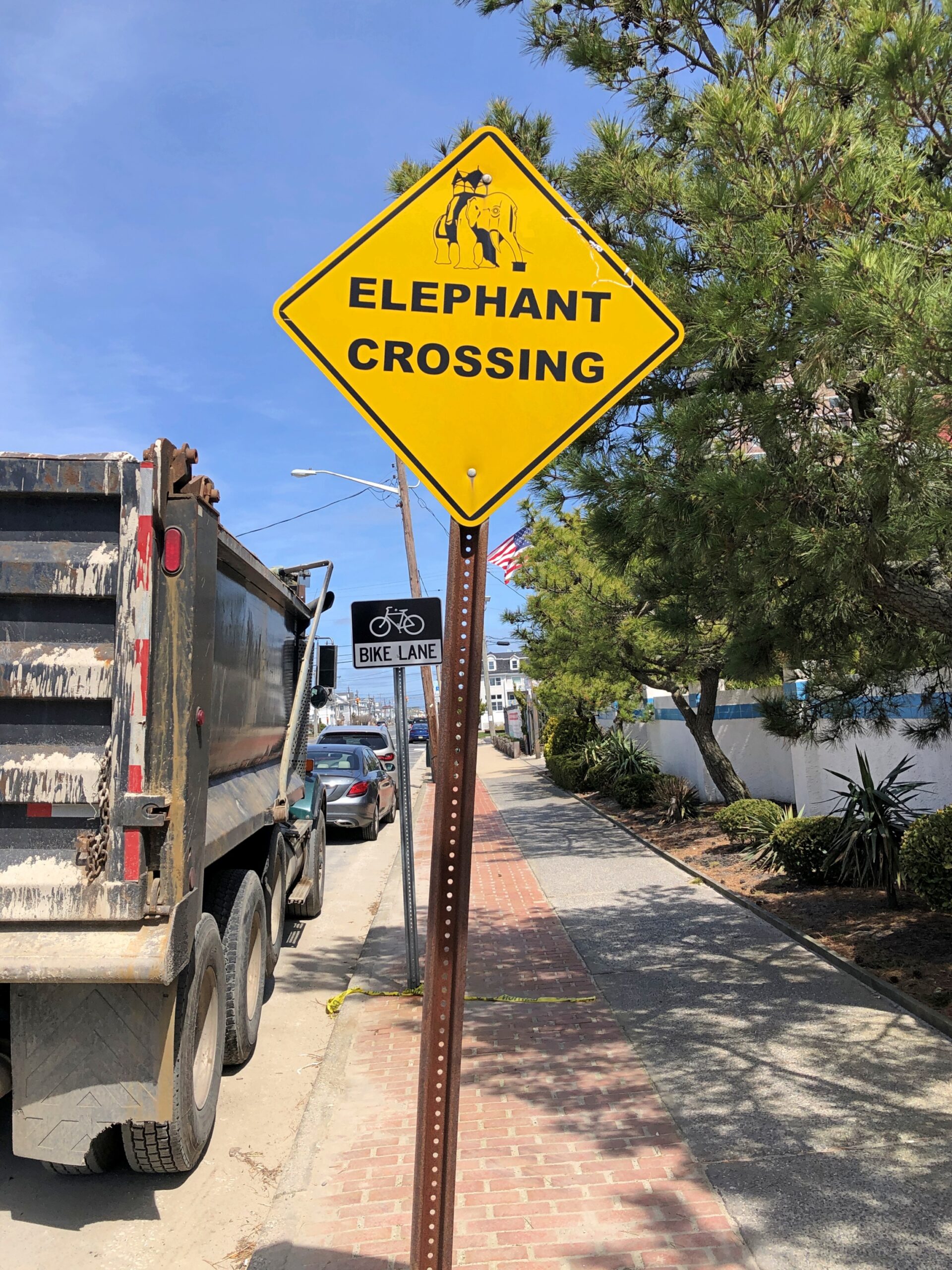
Looks, I’m glad to report, are free from the street and from the grounds. An interior visit at Lucy has an admission. While I didn’t do that, I supported Lucy through the purchase of postcards and a magnet across the street in the gift shop.
Margate seems happy these days to have Lucy around.
Lucy is a stone’s throw from a pretty nice beach.
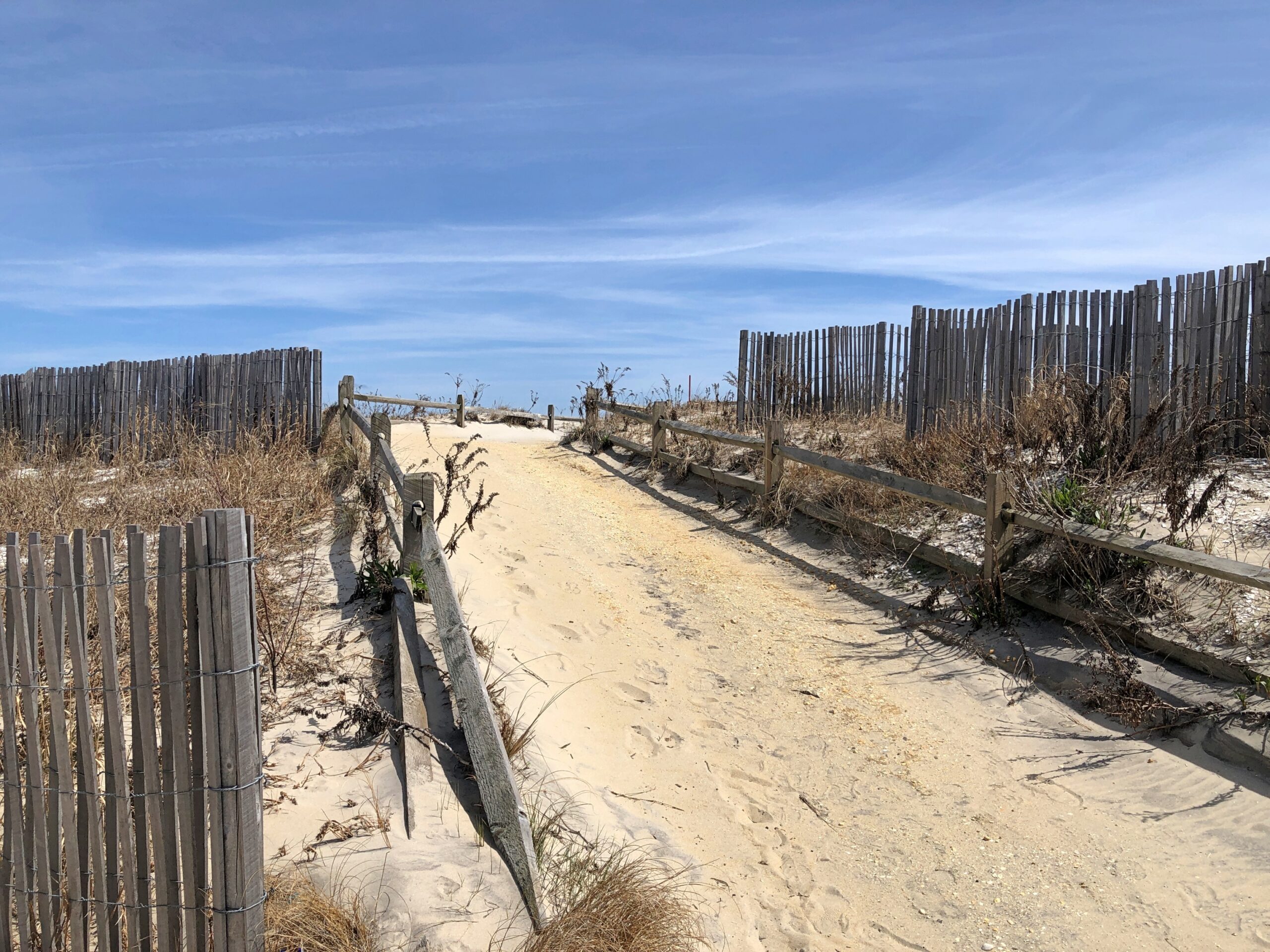
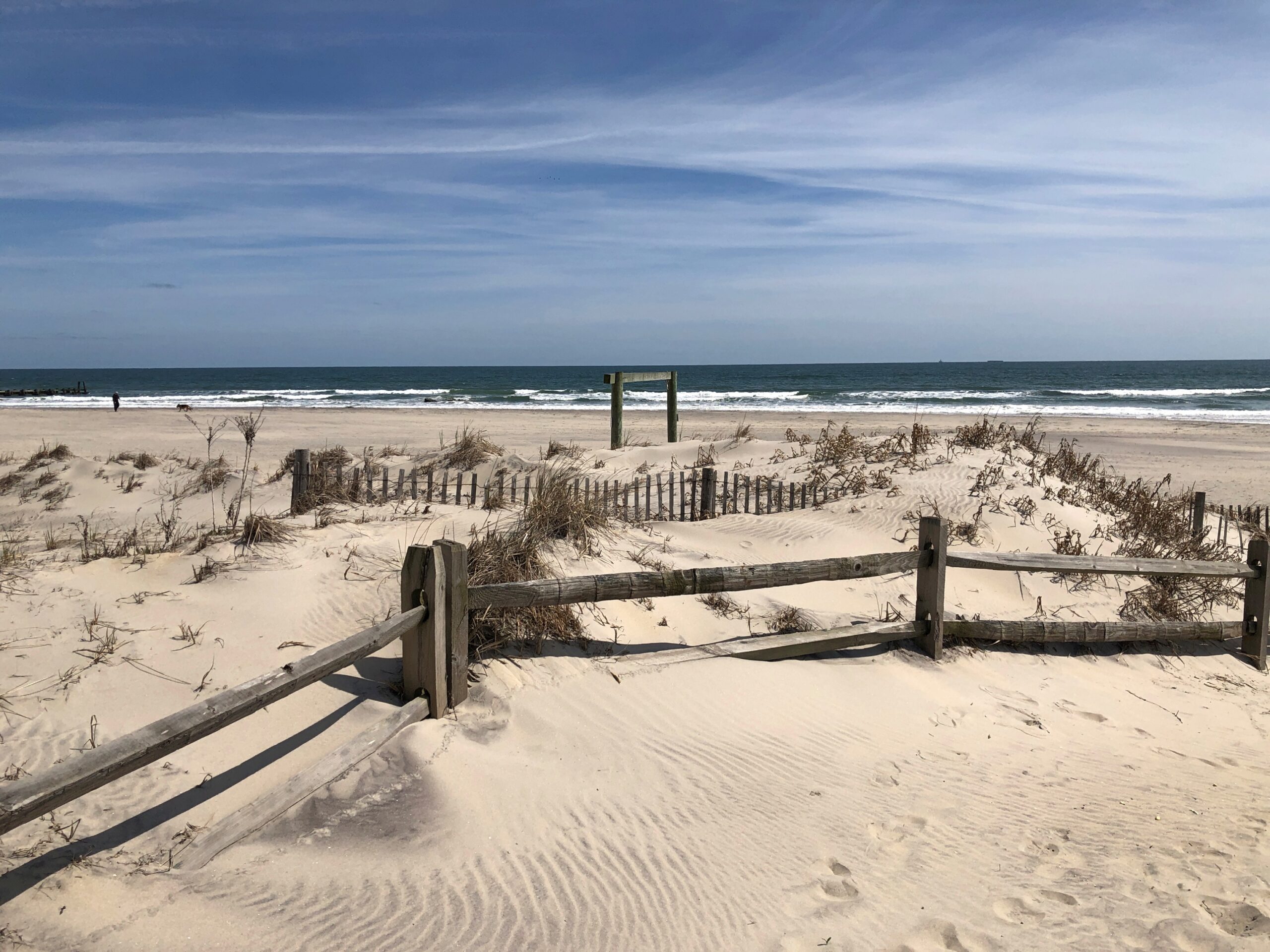
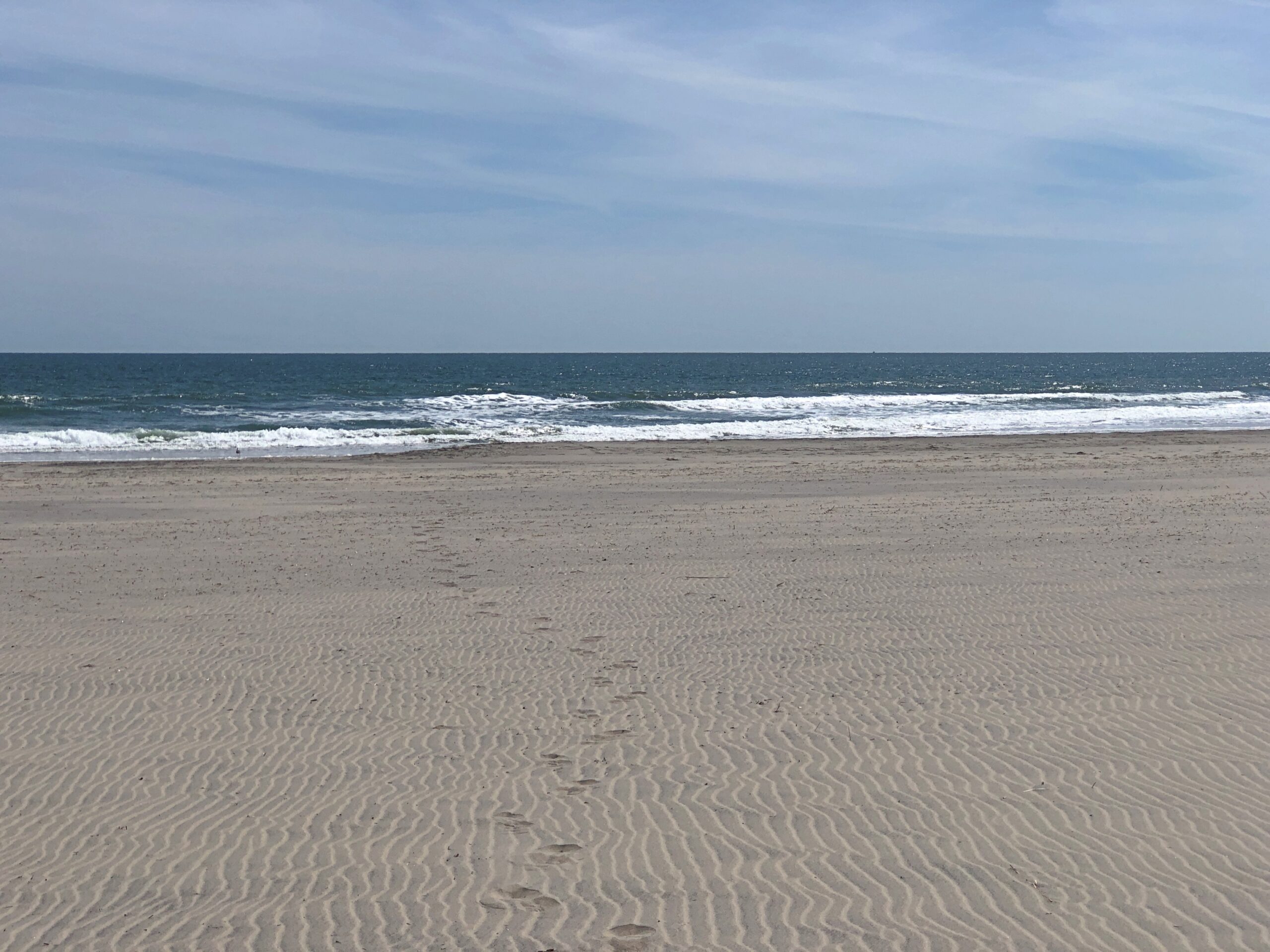
Sunny that day, but a mite chilly. So I had the place practically to myself on a Thursday. Once upon a time, I understand that Margate had a boardwalk, like Atlantic City and a lot of other Jersey Shore towns, but the Great Atlantic Hurricane of 1944 destroyed most of it, and Ash Wednesday Storm of 1962 finished it off.
Unlike the boardwalk, Lucy abides.
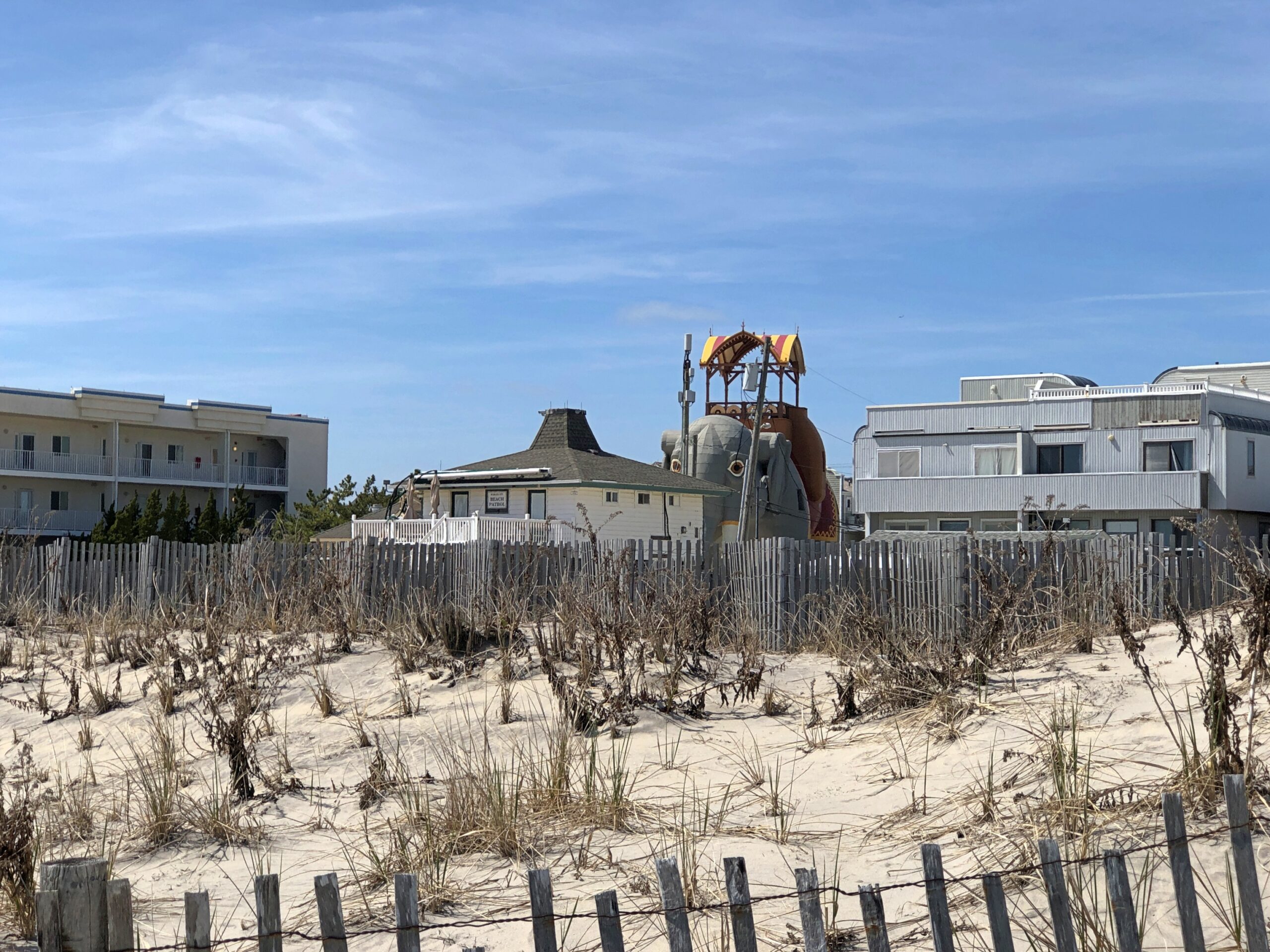
Like I said, a stone’s throw from the beach.