It’s always good to see that visitors are welcome.
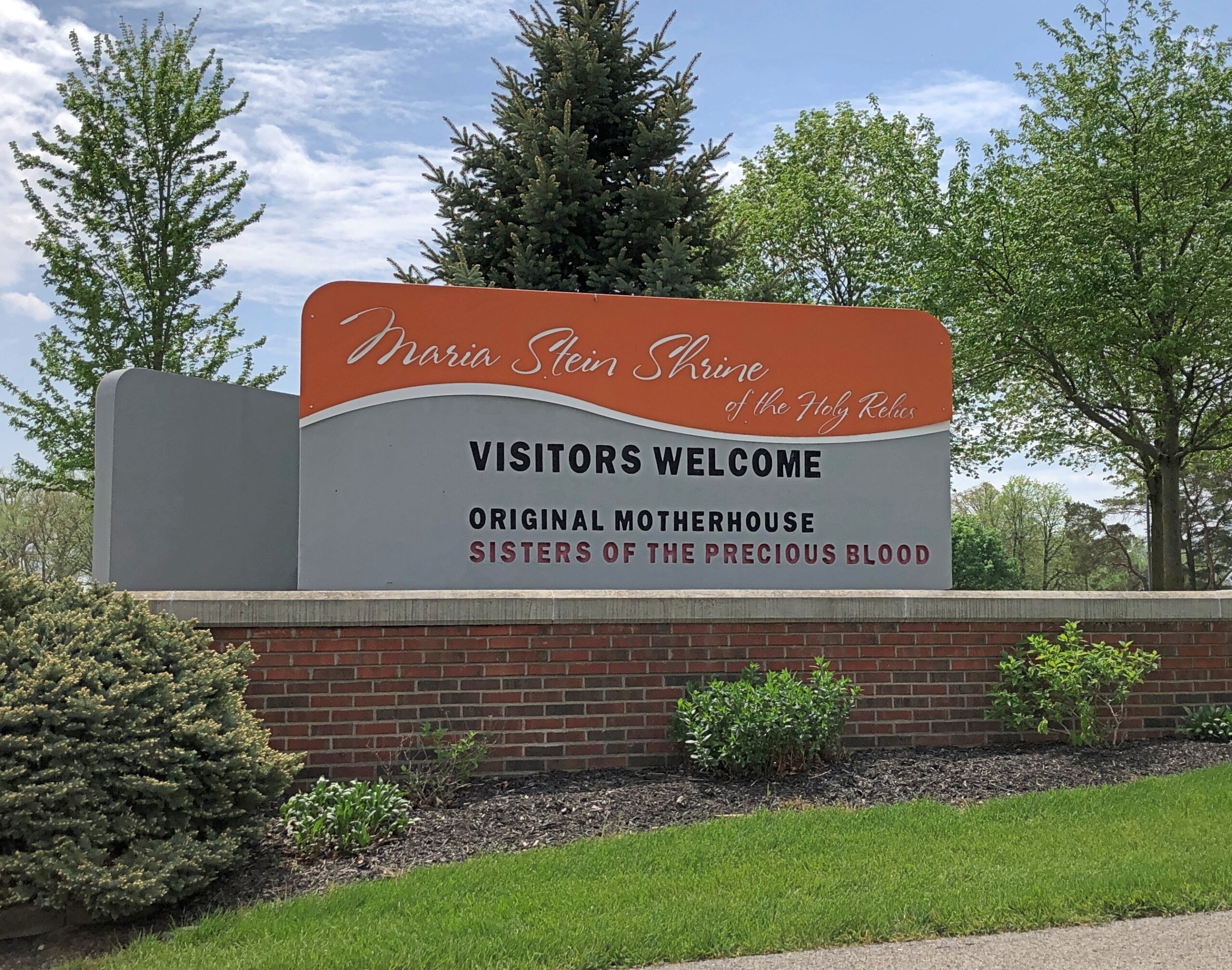
To be a visitor at the Maria Stein Shrine of the Holy Relics, however, you have to make your way to Maria Stein, Ohio, a census-designated place in Mercer County whose population is just over 1,000. As for Mercer County, its western edge is the border with Indiana and the nearest city of any size is Lima, to the northeast. The region isn’t precisely remote – this is the Midwest, after all – but it isn’t overrun with visitors.
The shrine rates a point-of-interest on my Rand McNally Road Atlas (Maria Stein Shrine, it says), and I find that kind of thing intriguing, especially when I’m going to be nearby anyway. So I visited the shrine on the last day of my trip, on the way home.
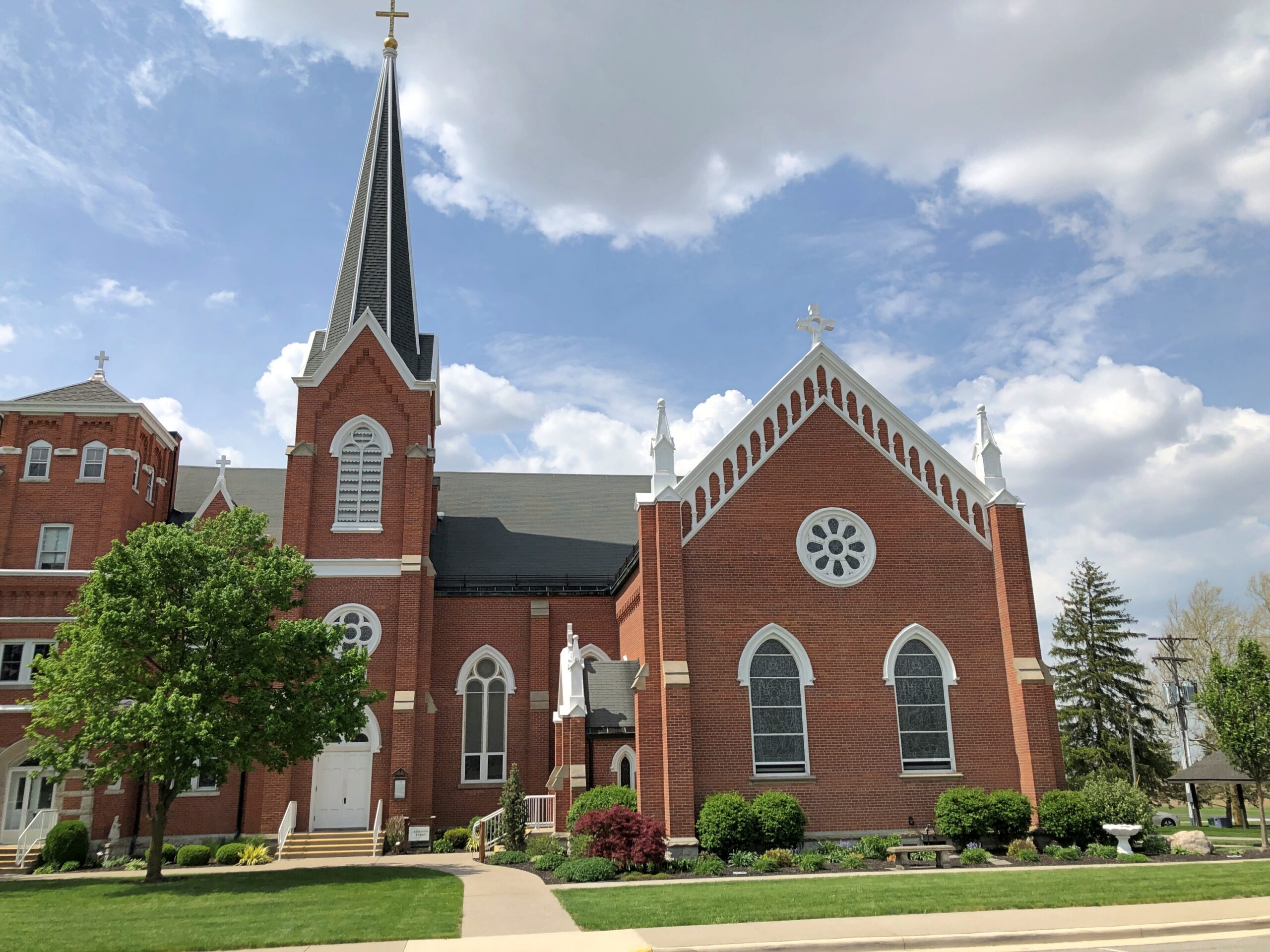
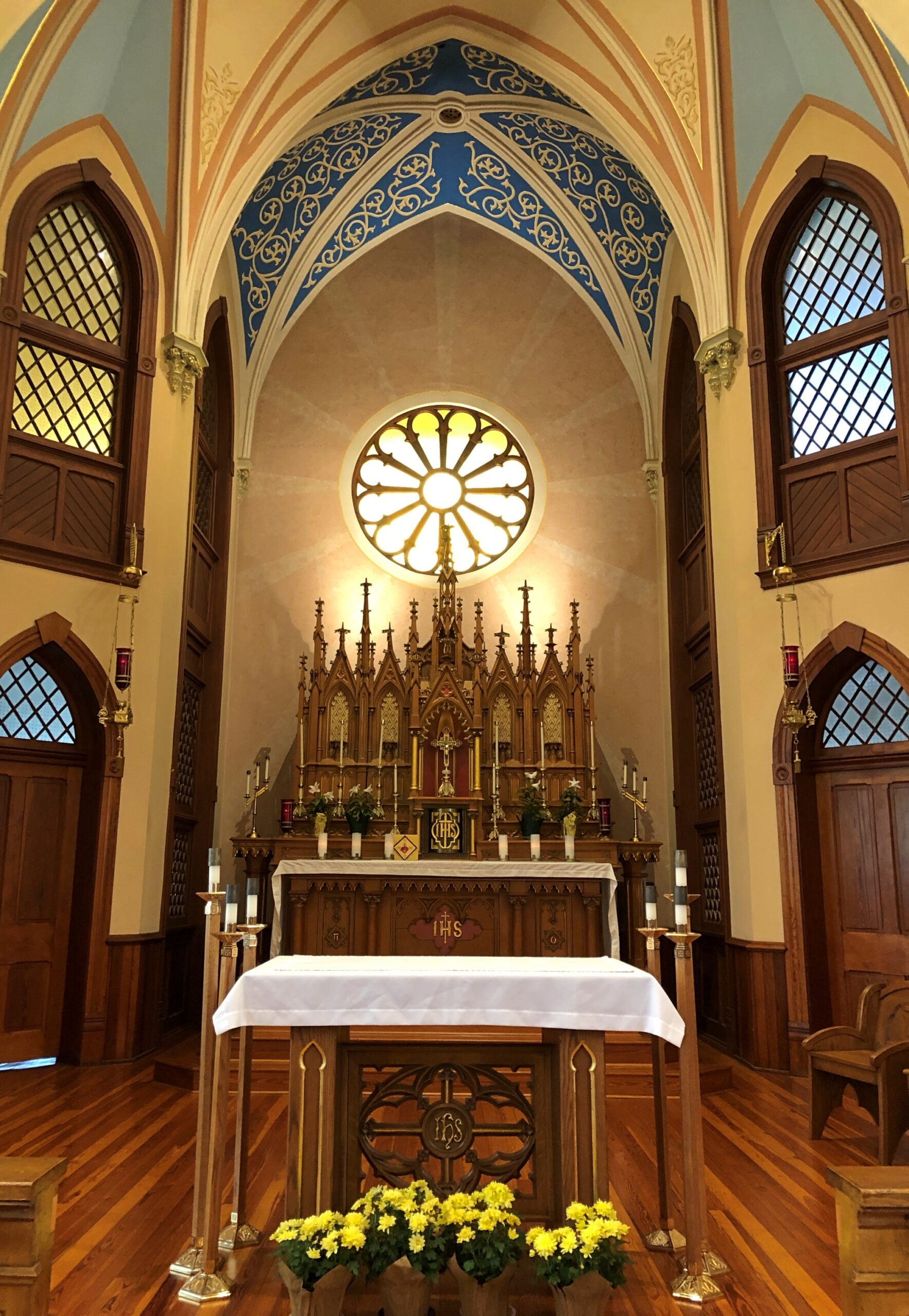
The shrine is part of the former Motherhouse of the Congregation of the Sisters of the Precious Blood (who relocated to Dayton 100+ years ago). Also part of the complex is the Adoration Chapel, where I went first.
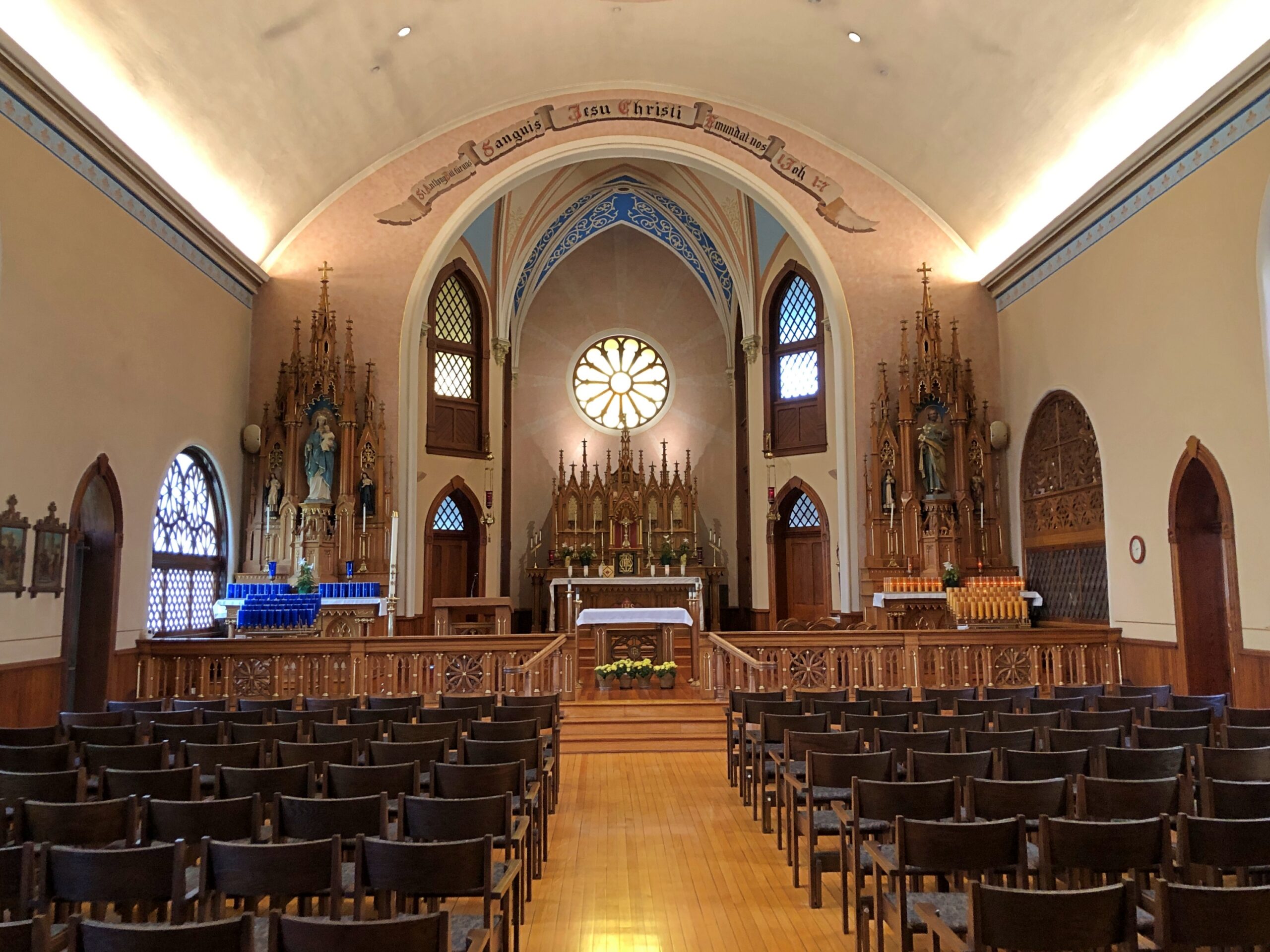
The relic shrine is adjacent to the chapel. It’s all about the relics. As it should be.
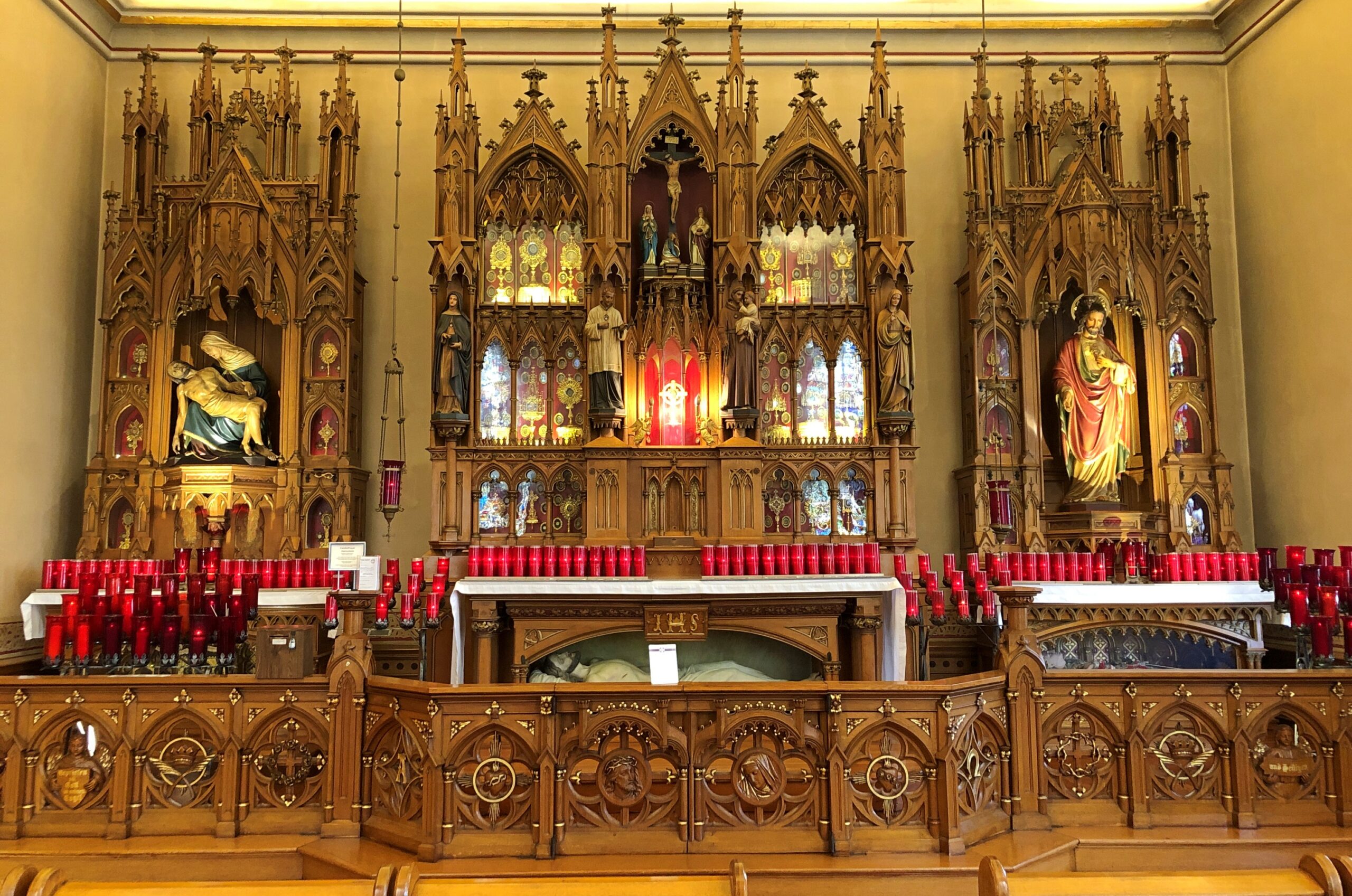
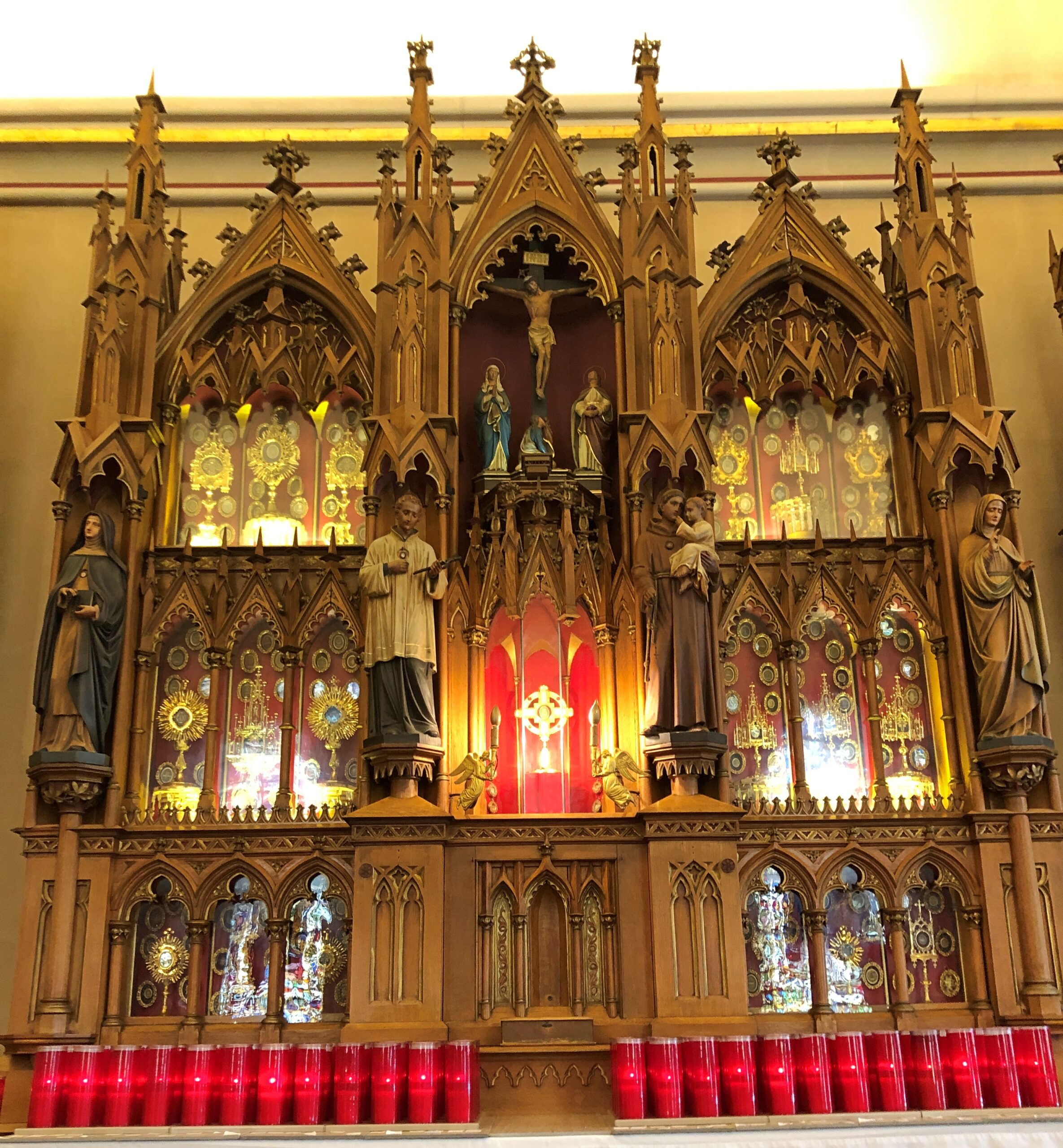
“The Maria Stein Shrine of the Holy Relics houses over 1,200 relics of the Saints and the True Cross,” says the shrine’s web site. “95% of the relics in the Maria Stein collection are First Class. The first relics were brought to the area by Fr. Francis de Sales Brunner, who founded most of the local churches and convents, bringing priests, brothers, and sisters of the Precious Blood communities to America.
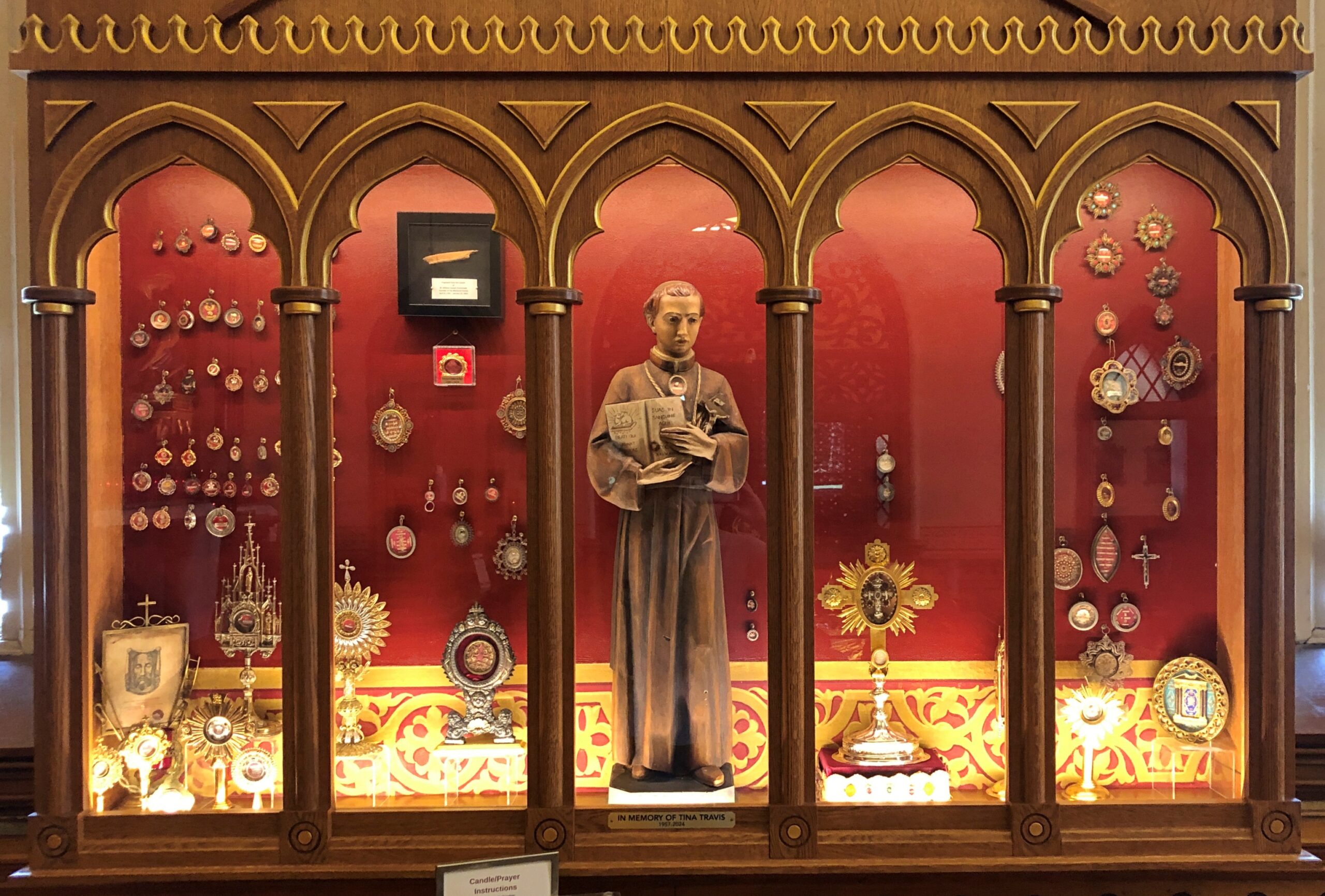
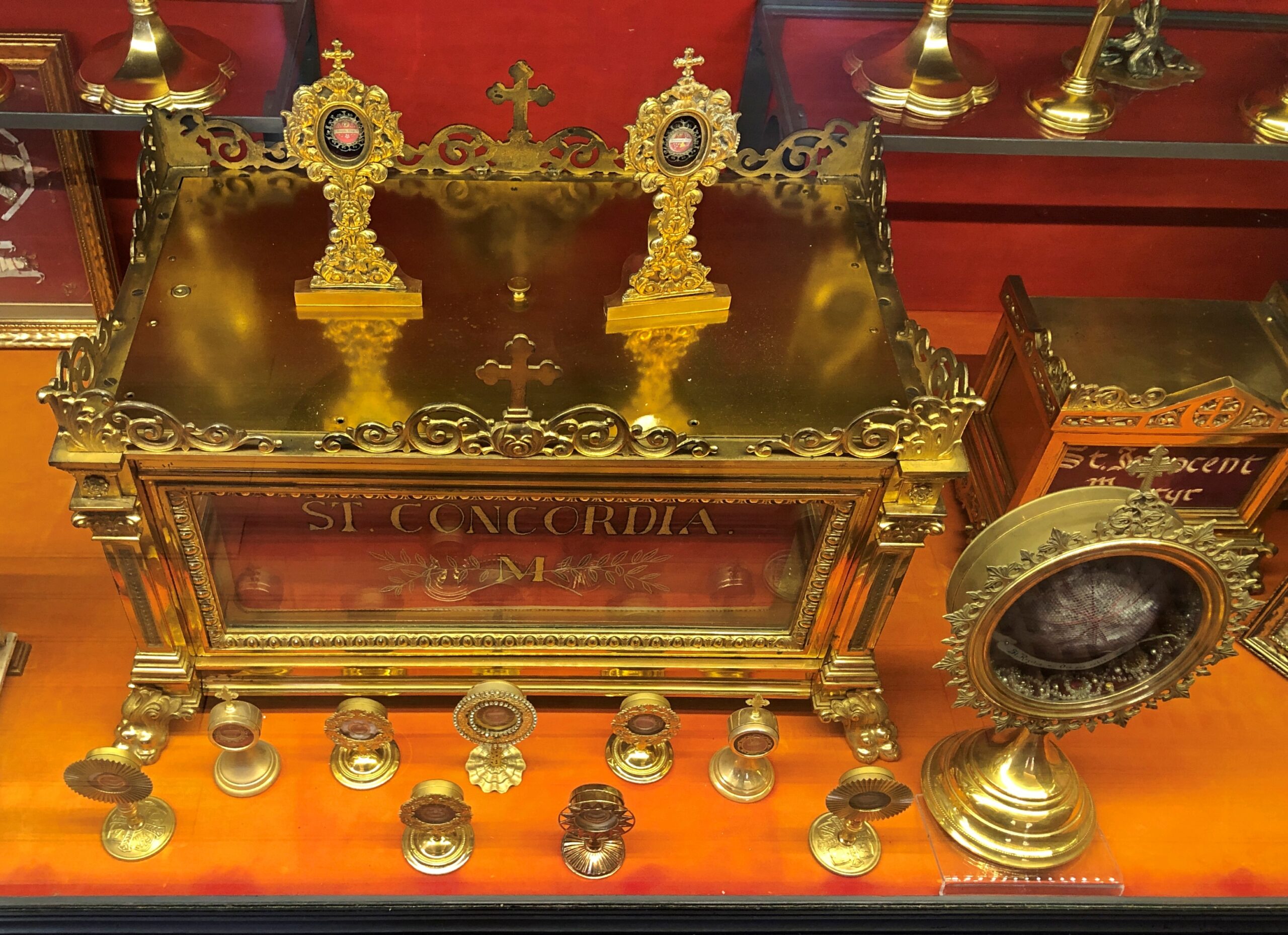
“After his death, the significant collection of his relics, including a Calendar of Relics, and the bodily remains of St. Victoria, were under the care of the Sisters. In 1872, Fr. J. M. Gartner, a priest from Milwaukee, acquired 175 relics for safekeeping in the New World. When he brought them to America, his original intent was to have a kind of traveling exhibit. But the faithful wanted them kept together and suggested finding a permanent place for the collection.
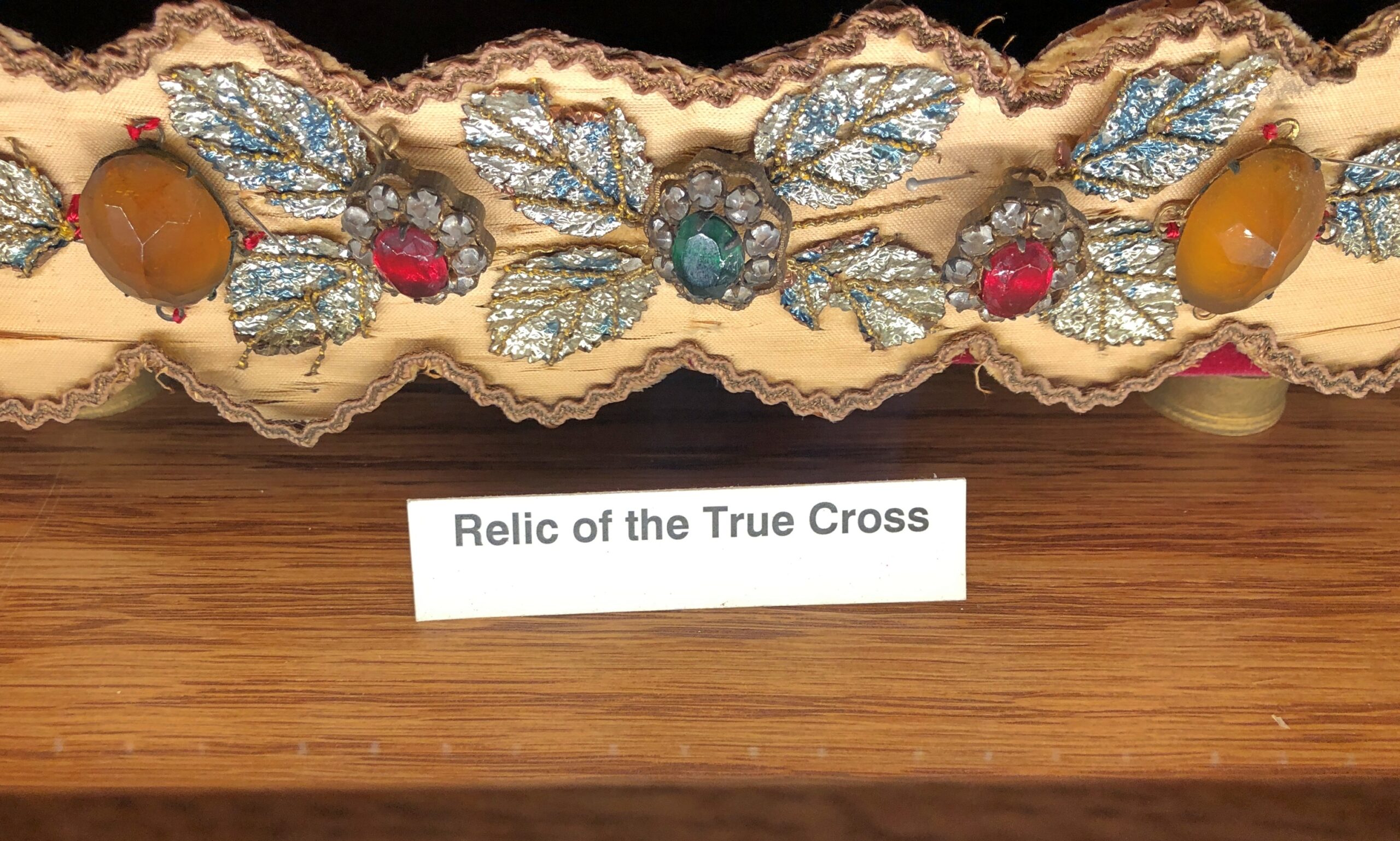
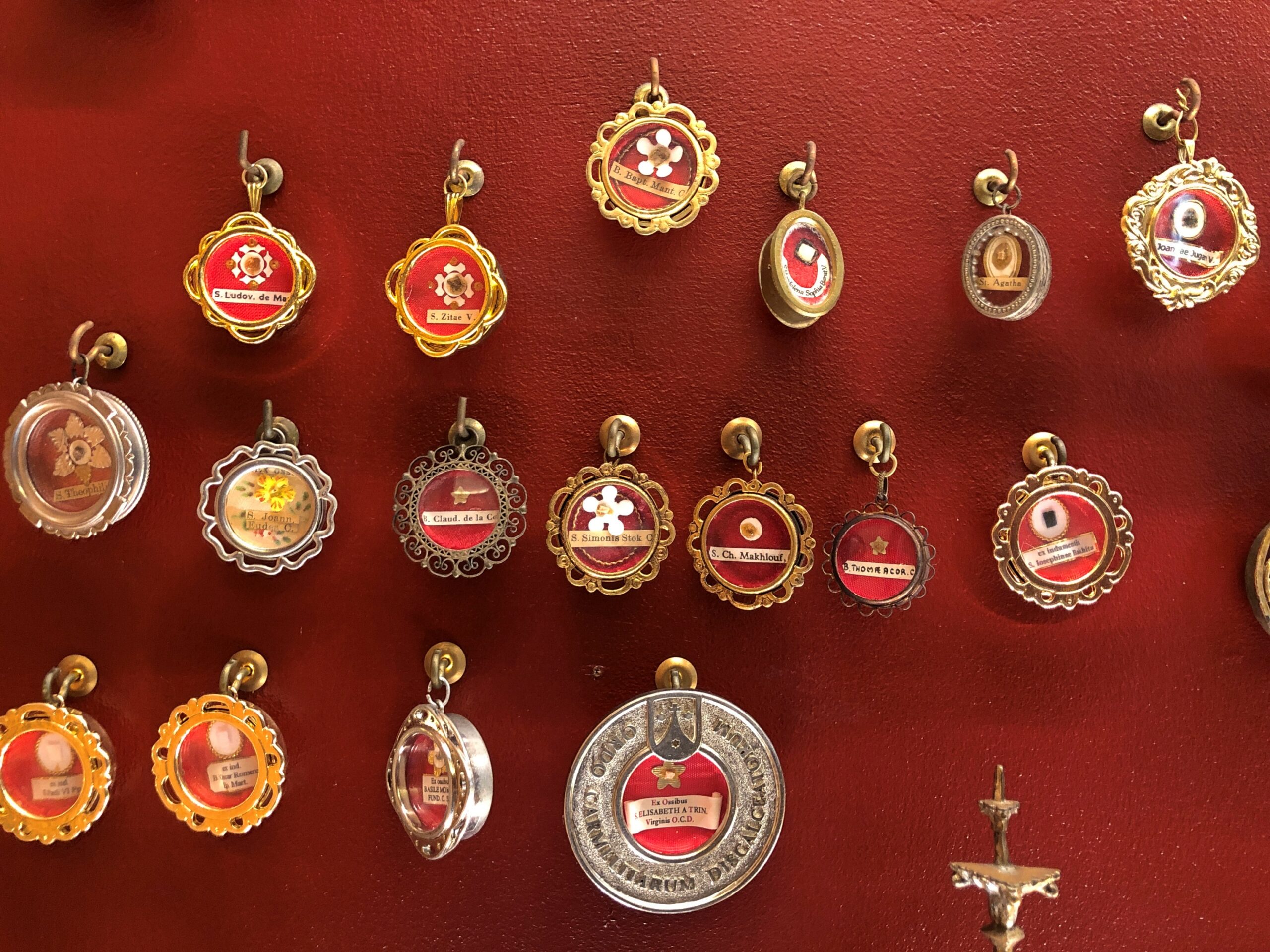
“When he heard about the many relics under the care of the Sisters of the Precious Blood, he approached the Sisters, and together they gathered all of the relics into one collection, and we became the Shrine of the Holy Relics in 1875.”
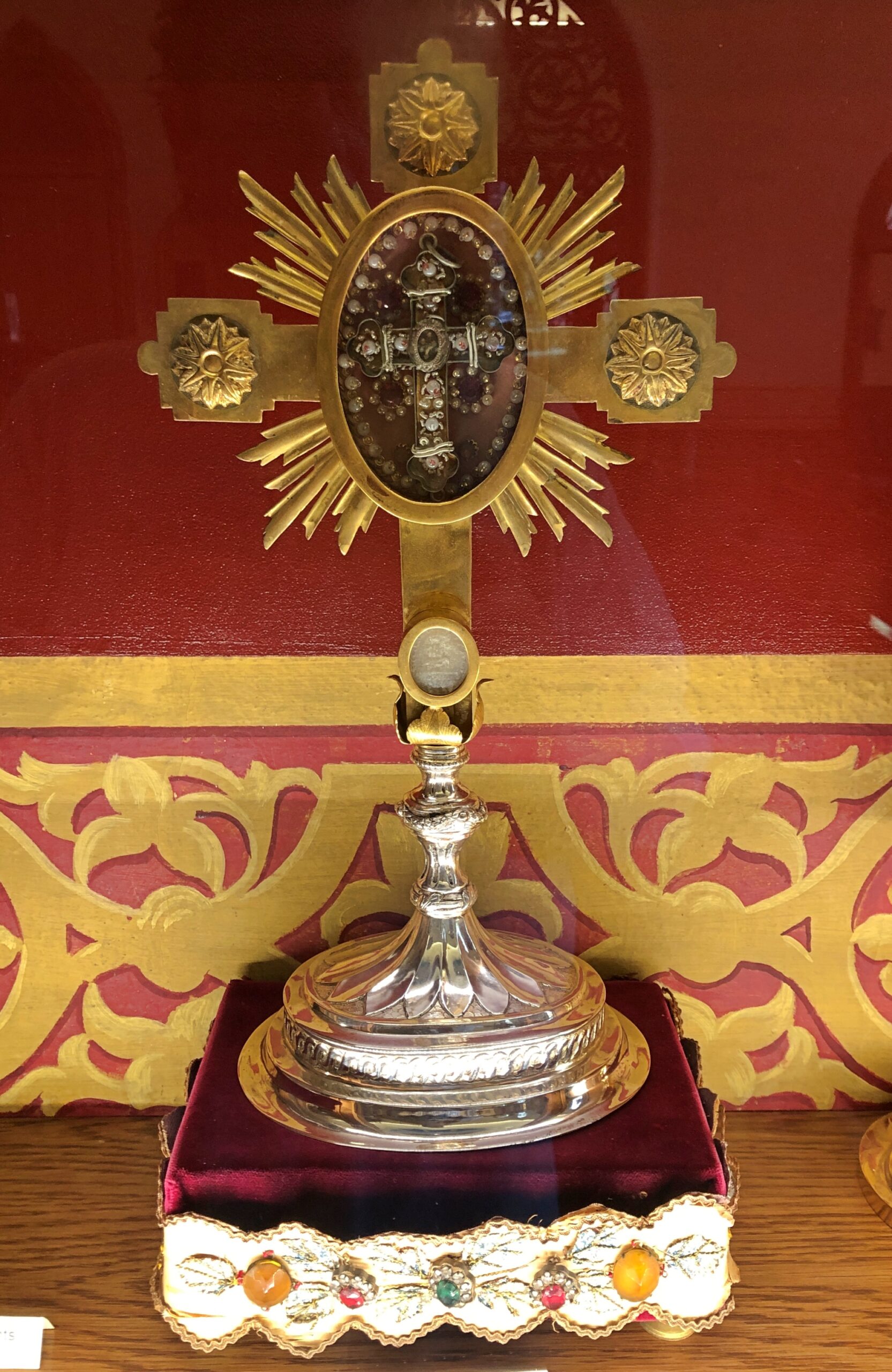
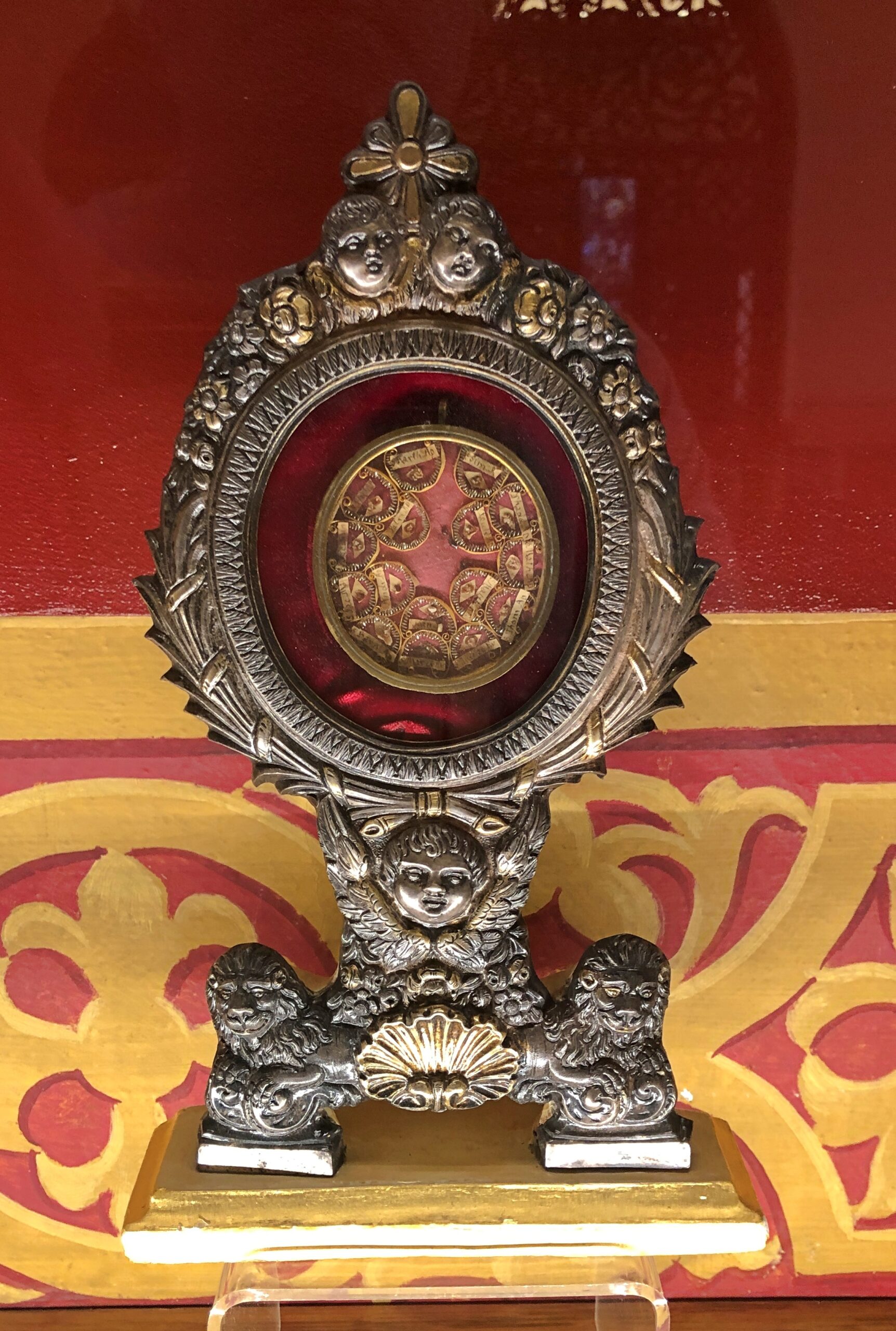
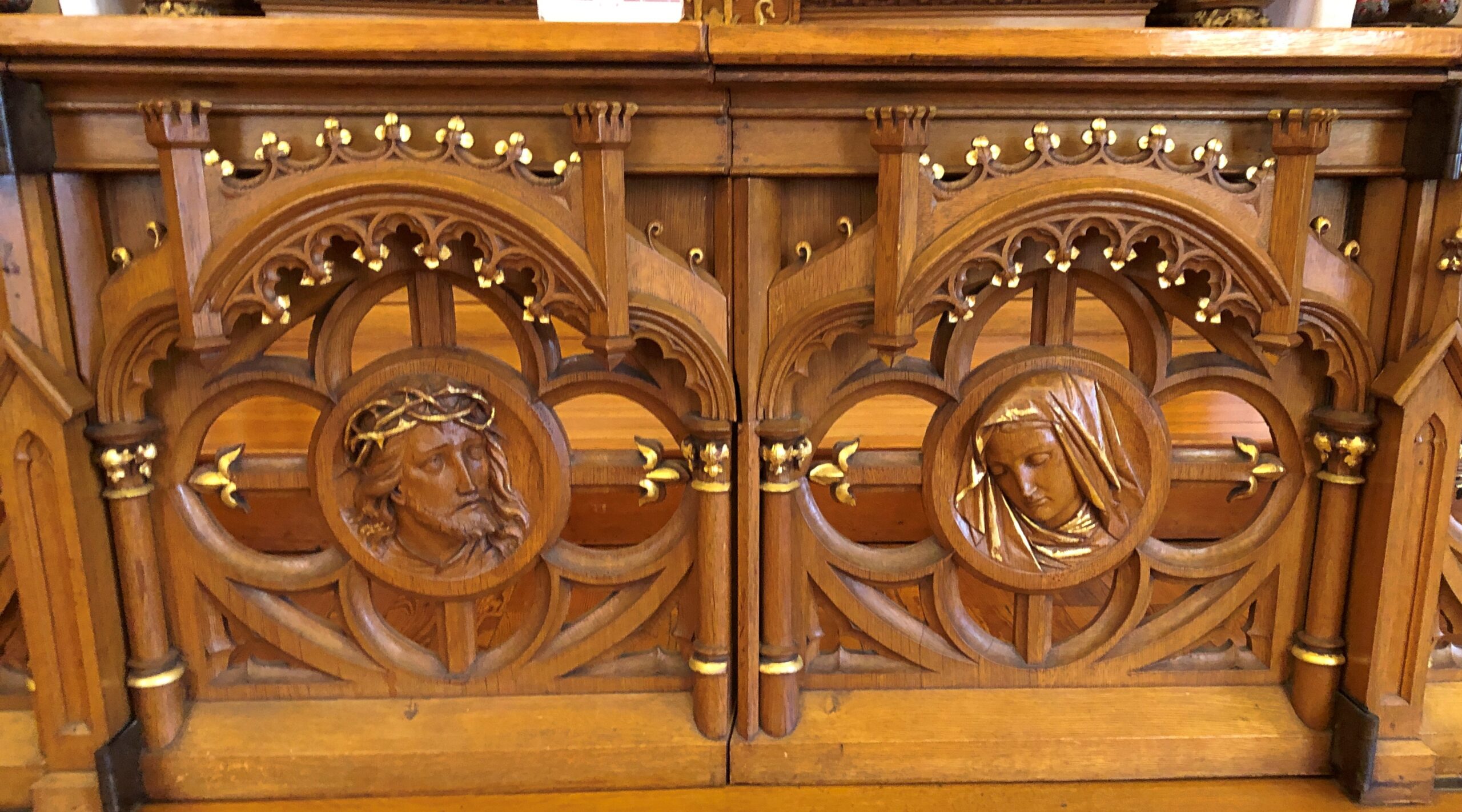
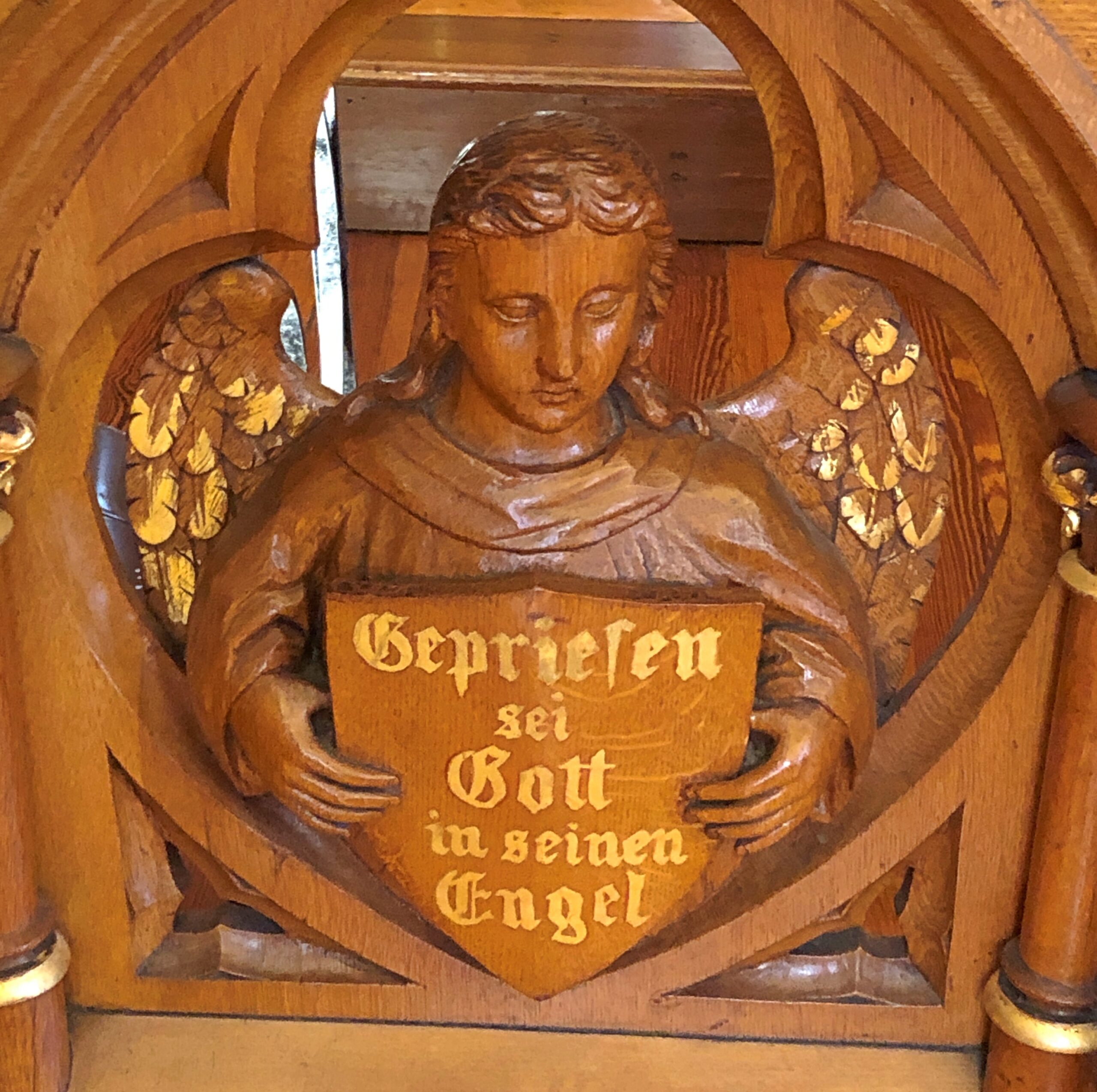
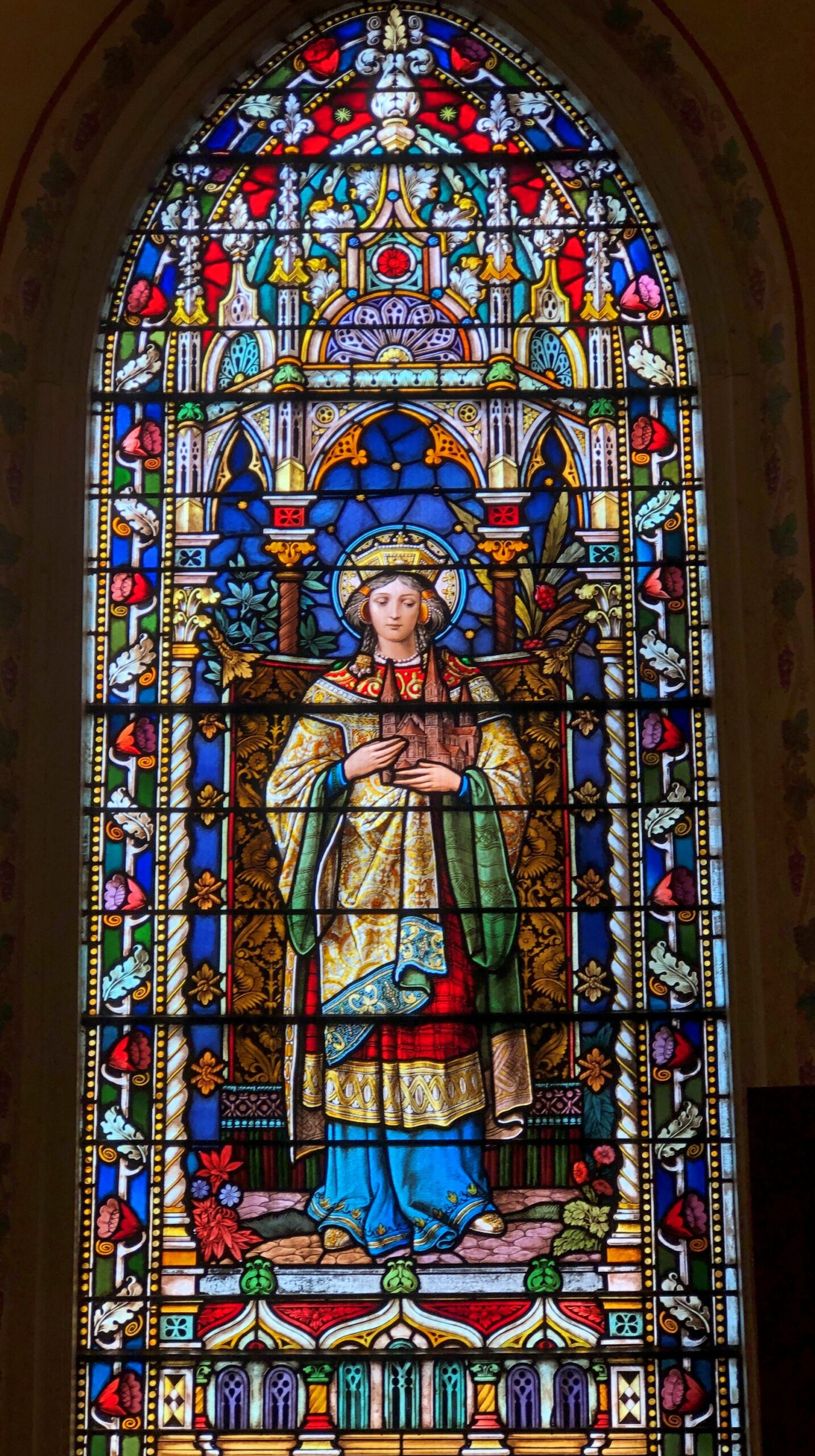
Besides reliquaries large and small, the shrine also includes some fine woodwork and stained glass.
A minute’s drive from the shrine, on the two-lane highway Ohio 119, is the site of St. John the Baptist Catholic Church. Site because it is a ruin. Or was the day in April when I visited, as it’s probably gone by now. From the looks of things, demolition was in progress.
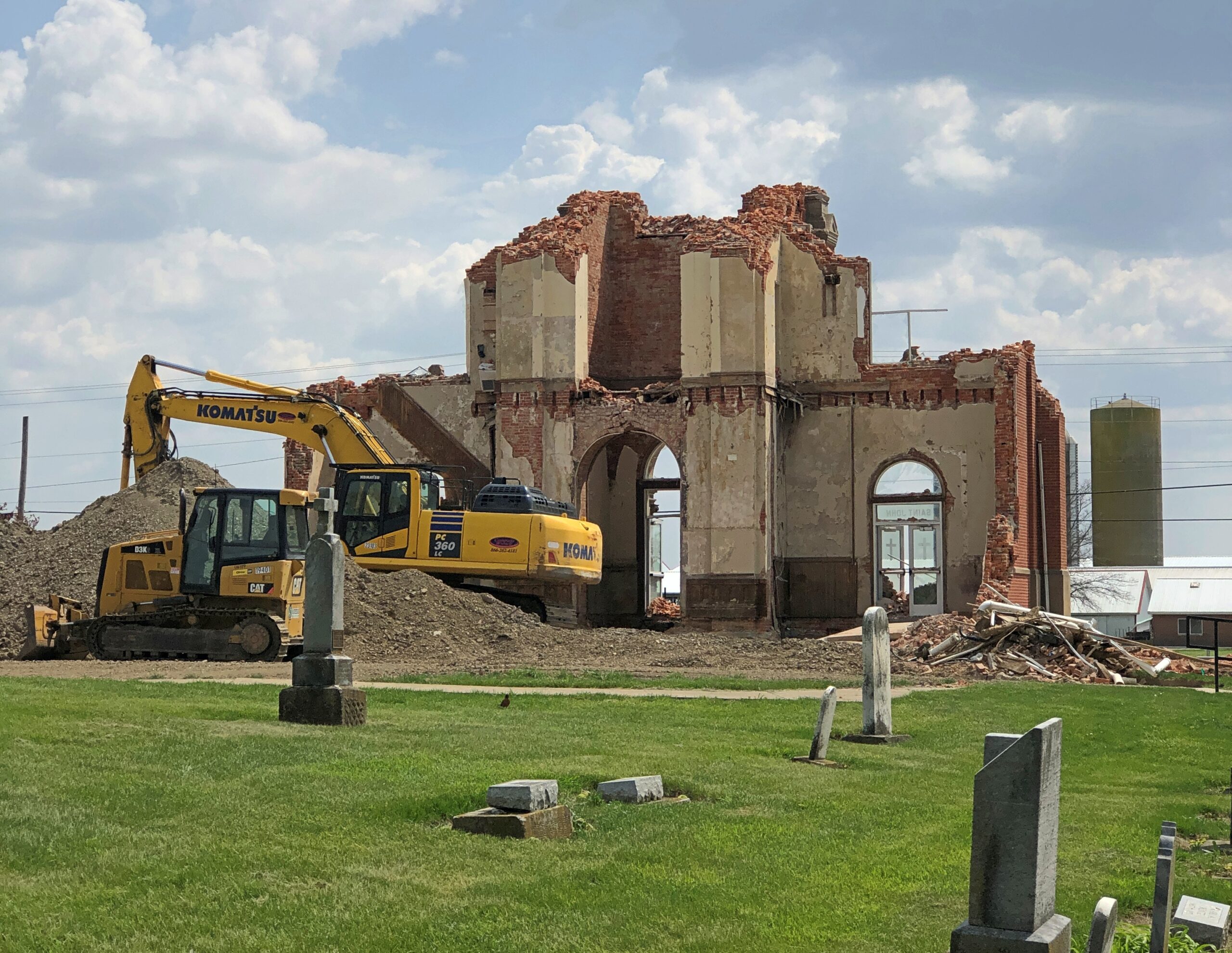
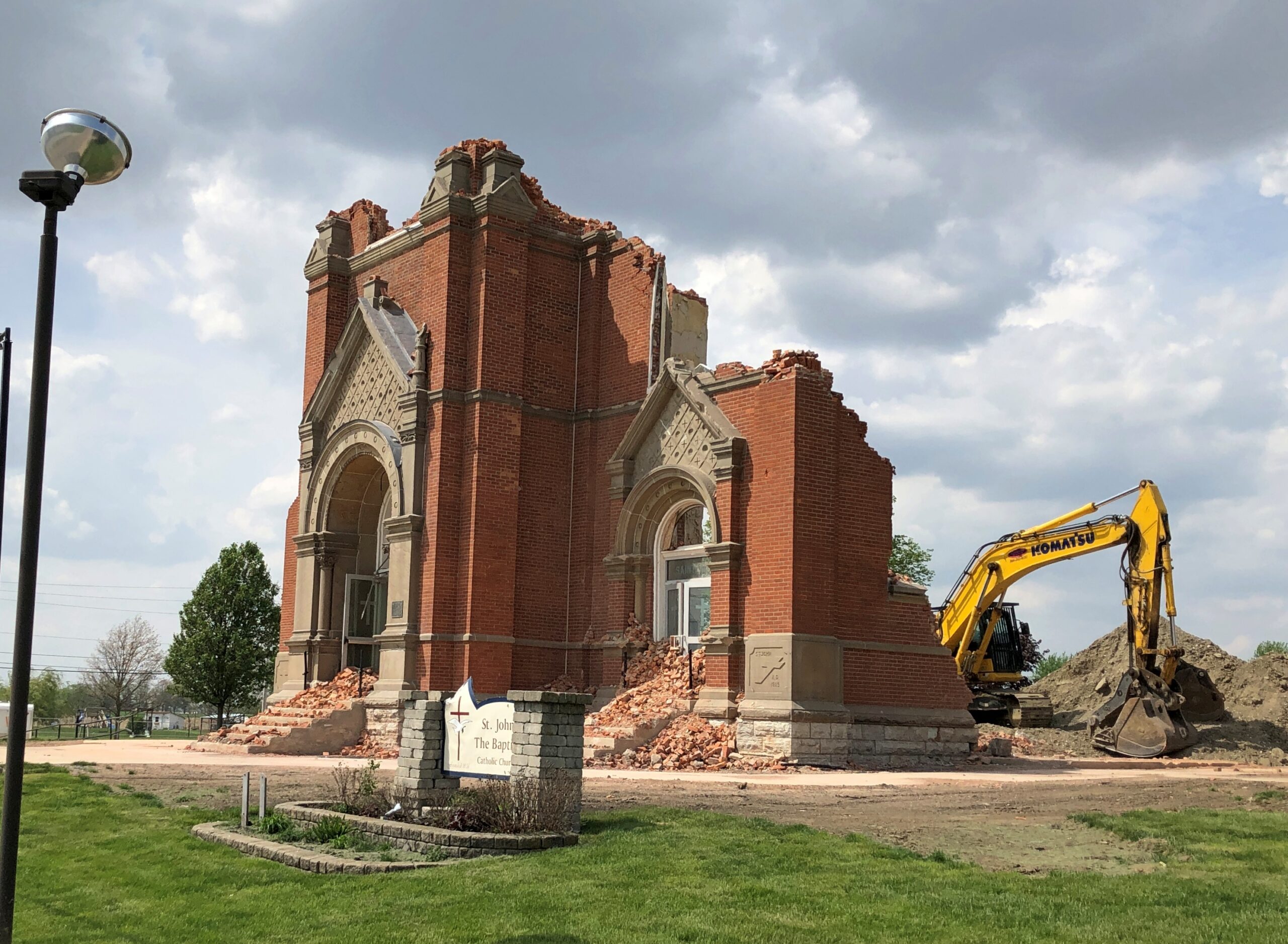
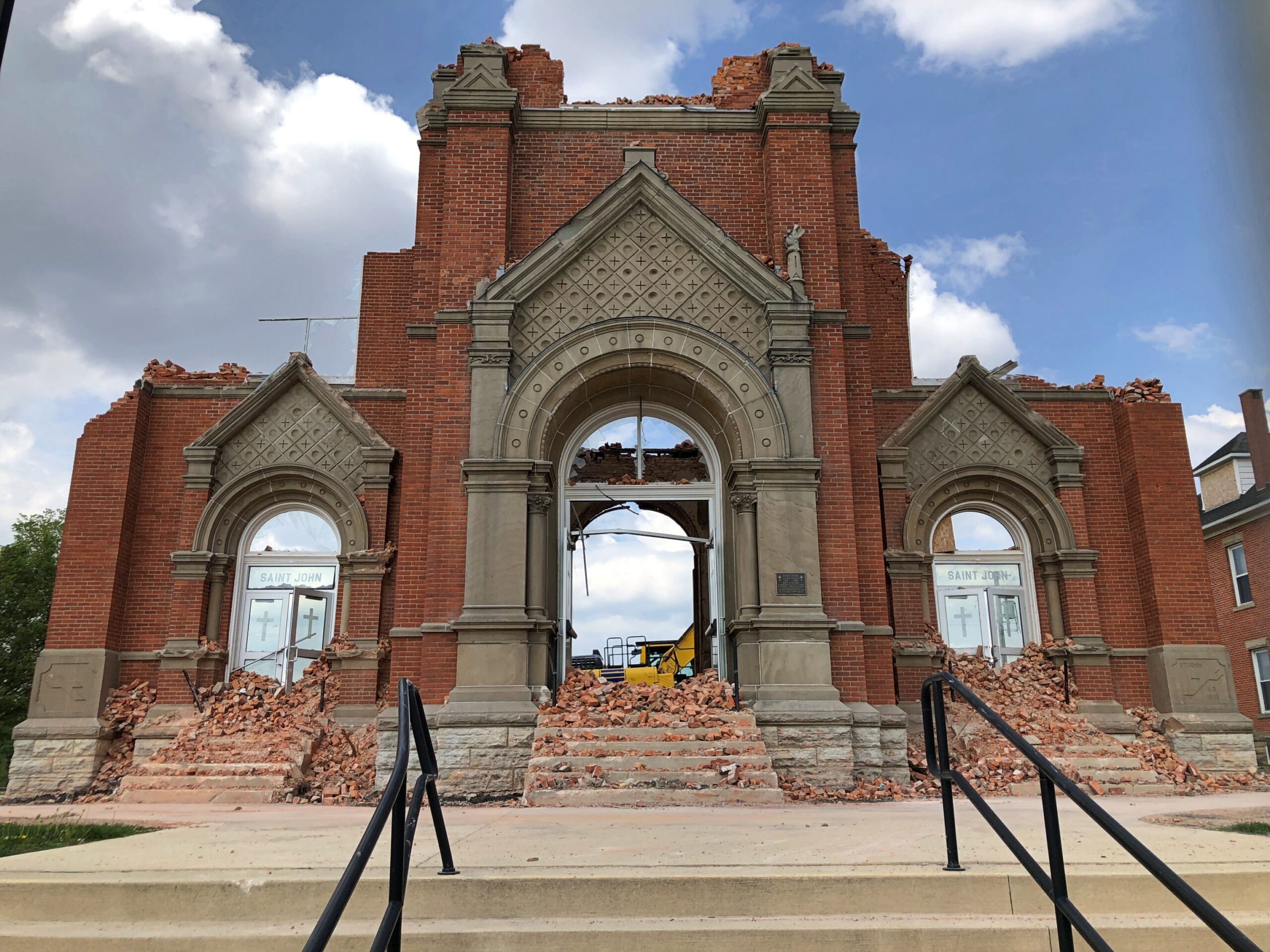
How is it that a late 19th-century brick church was being razed? I was aghast for a little while, but a posted notice told me that the church had been severely damaged by fire in May 2025.
A damn shame, but it turns out — something I didn’t know buzzing down Ohio 119, seeing church after church in otherwise tiny towns — that this part of Ohio is home to many immigrant Catholic churches, mostly tall and brick and over 100 years old. The cluster of churches even has a name: Land of the Cross-Tipped Churches. Dang, now this is another place I want to re-visit. This happens to me fairly often.