Inside the reconstructed former courthouse at Appomattox Court House National Historical Park, a small museum reminds visitors, if they think about it, that no photographer was at hand on April 9, 1865, to document any of the event. Photography was a cumbersome art at the time, after all. On the other hand, there’s no shortage of artists’ interpretations. The museum displays a number of them (I’ve removed the glare, since they are all behind glass; likewise the other behind-glass images).
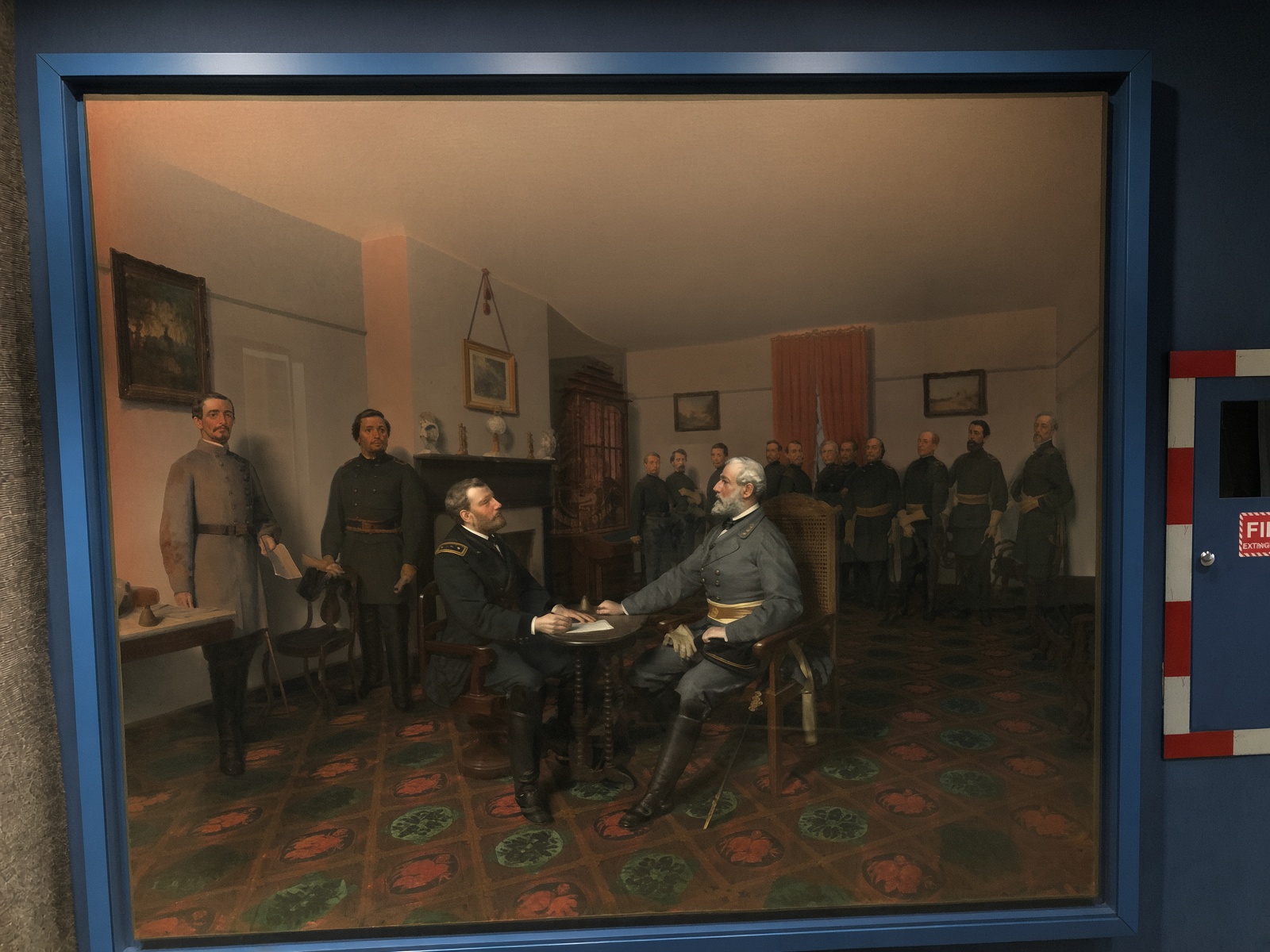
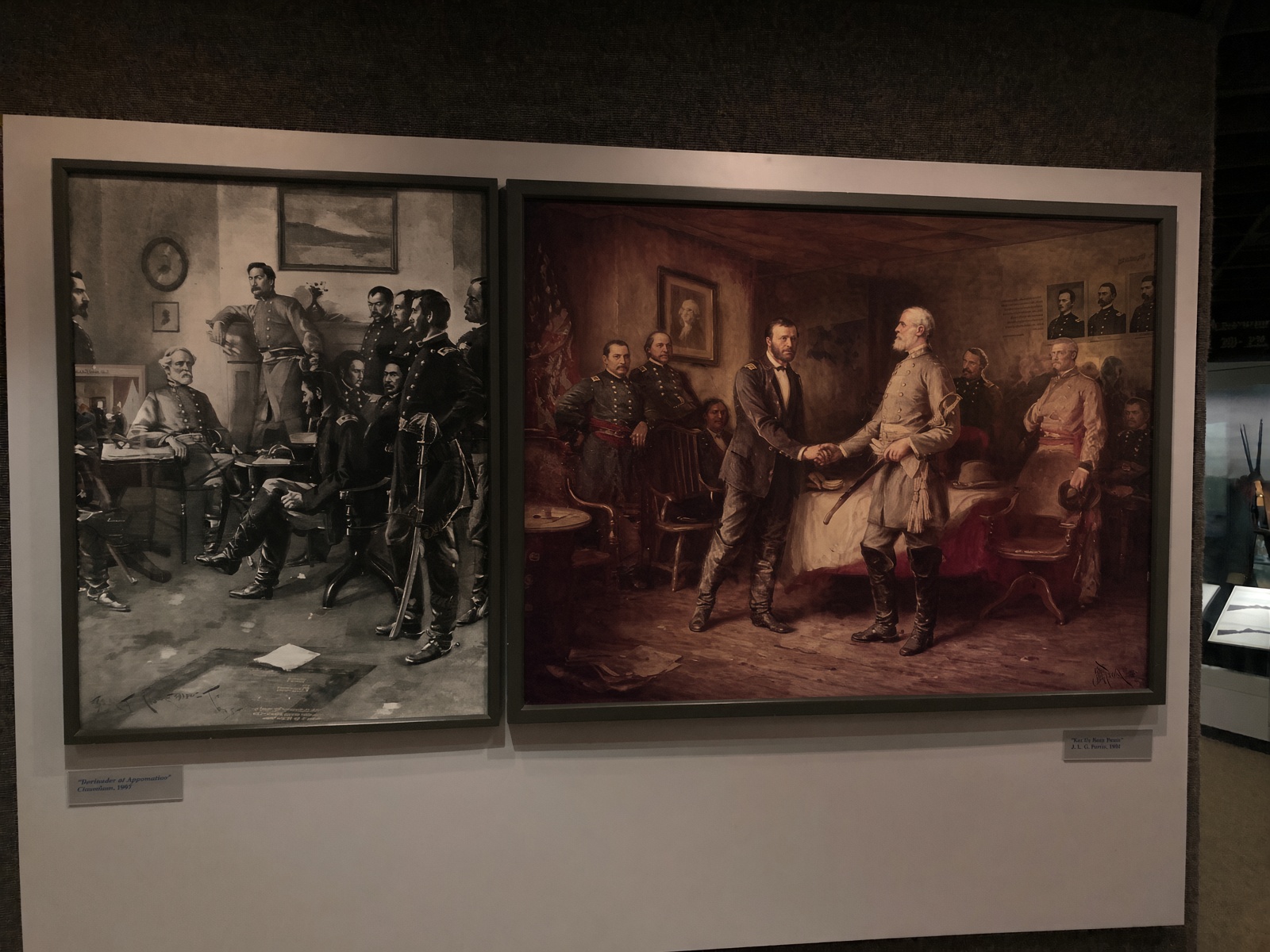
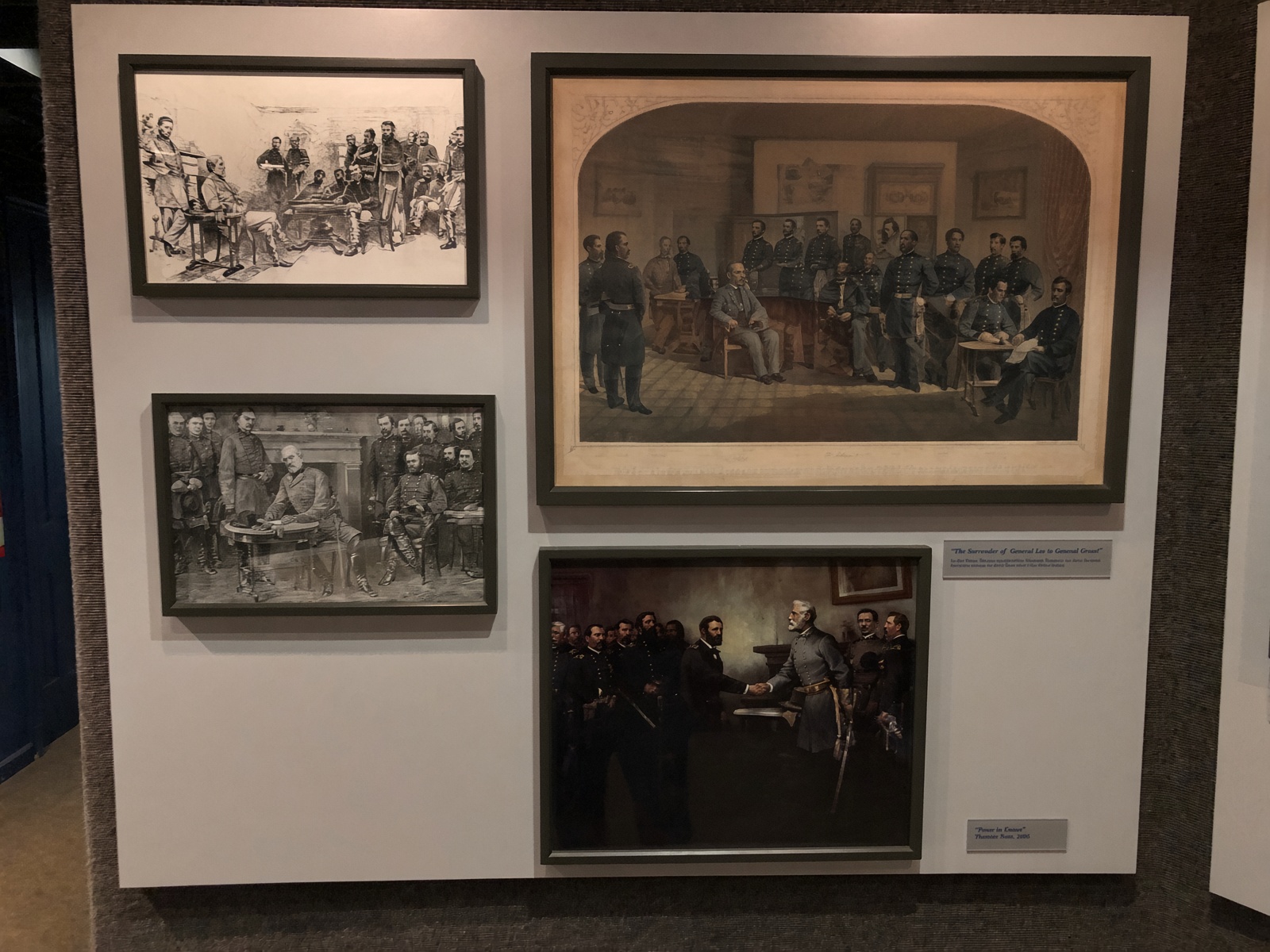
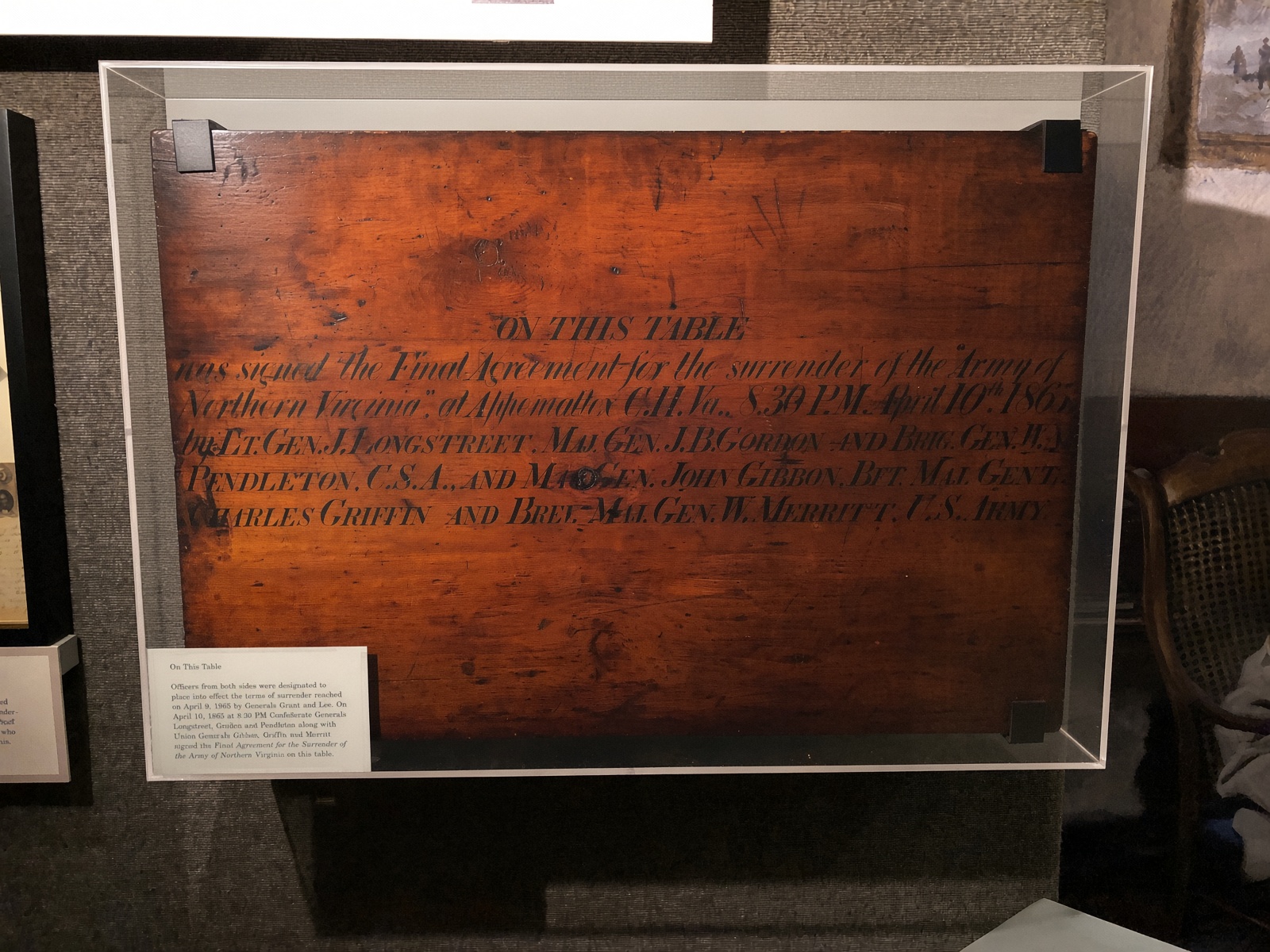
Plus a number of other artifacts, such as a desk used for the inevitable paperwork generated by the surrender of the Army of Northern Virginia, one of the Union flags, and the towel used by the Confederates as the first flag of truce on April 9, which was later annotated.
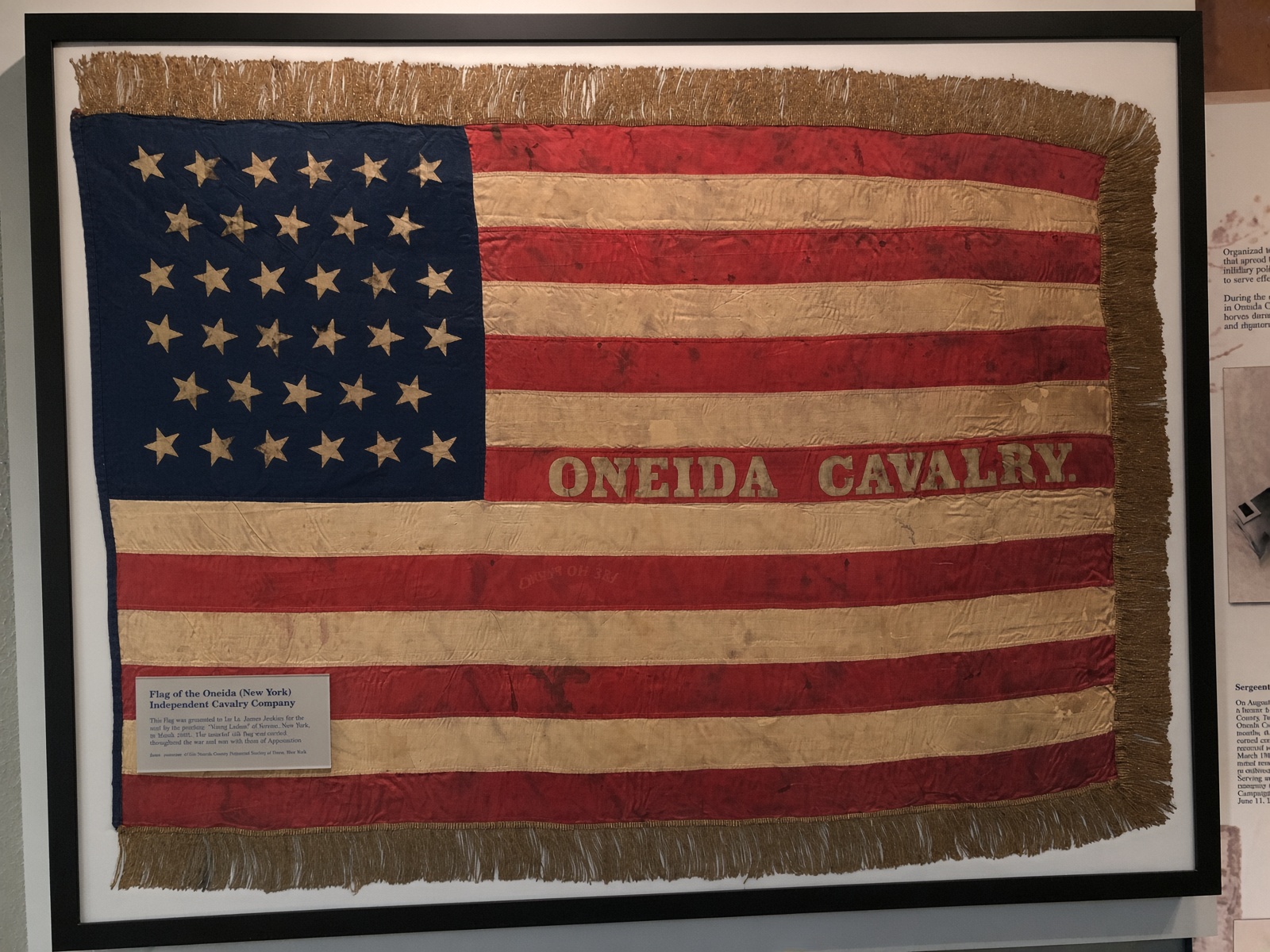
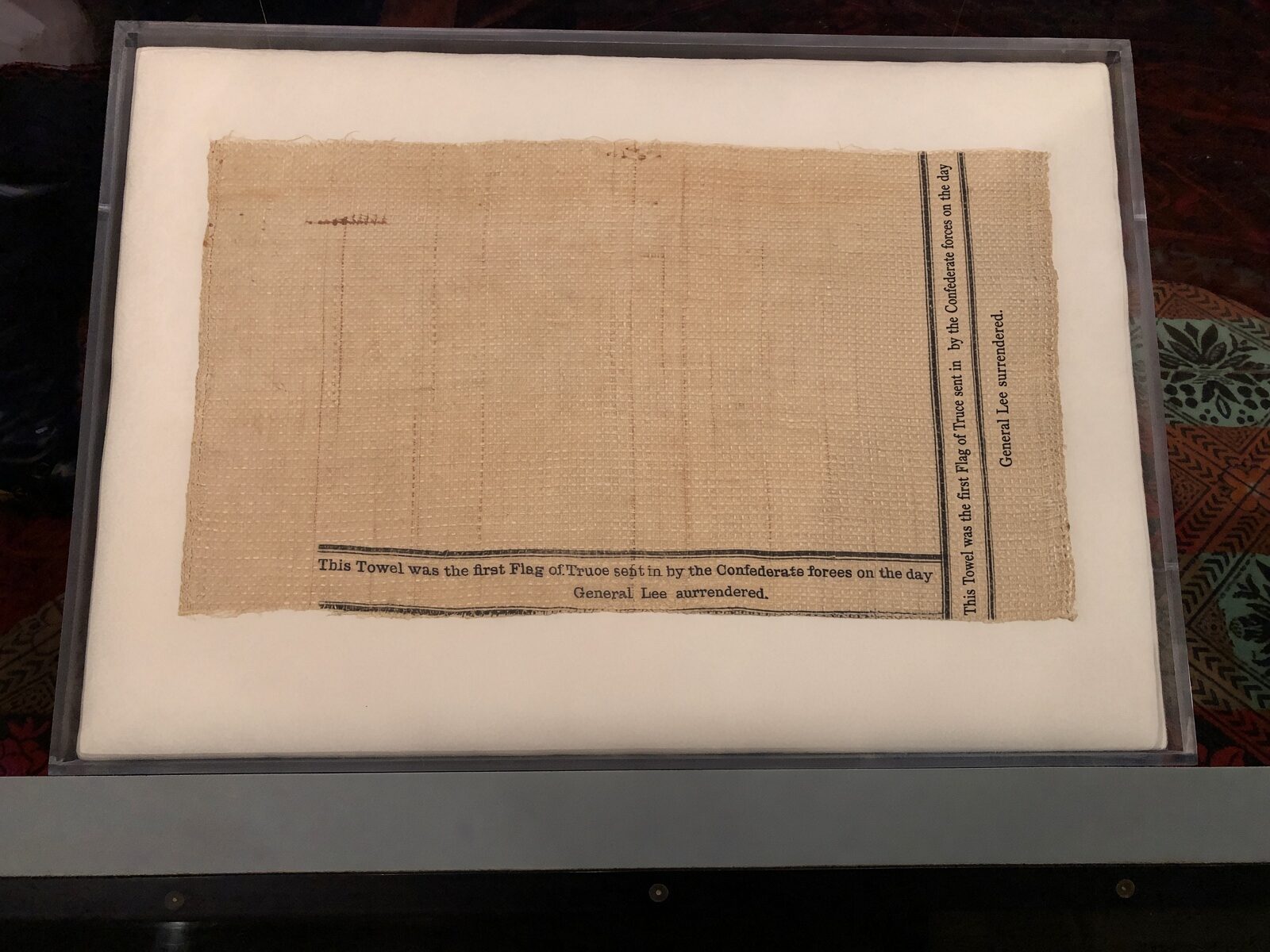
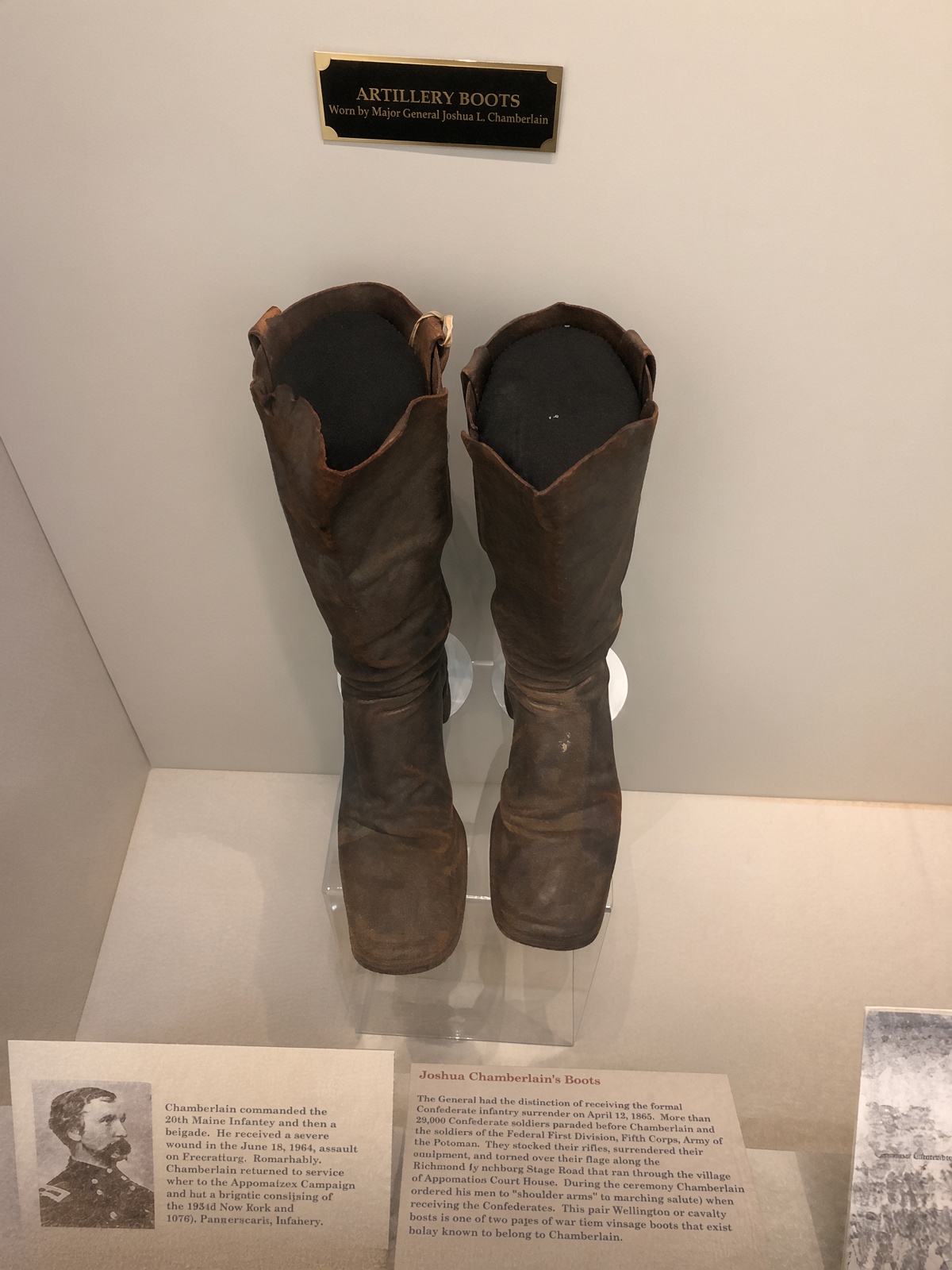
And, curiously, Joshua Chamberlain’s boots. He was there, but I’d guess he took them home. A relative must have donated them later.
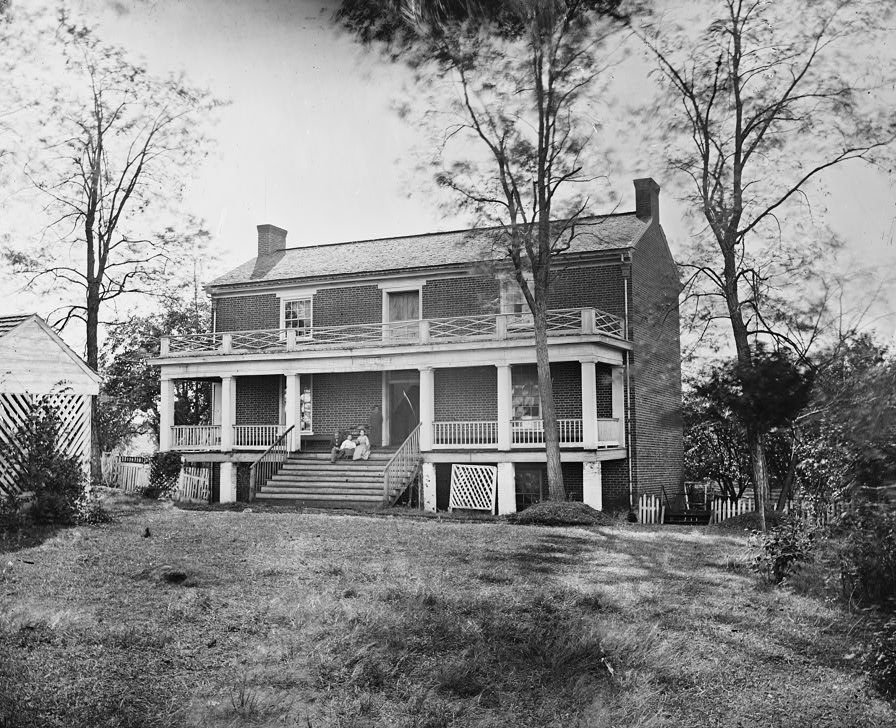
Photographers came after the main event. This is the McLean House in an image dated April 1865 by Timothy O’Sullivan, a protégé of Matthew Brady, who probably hoofed it to Appomattox Court House as fast as he could.
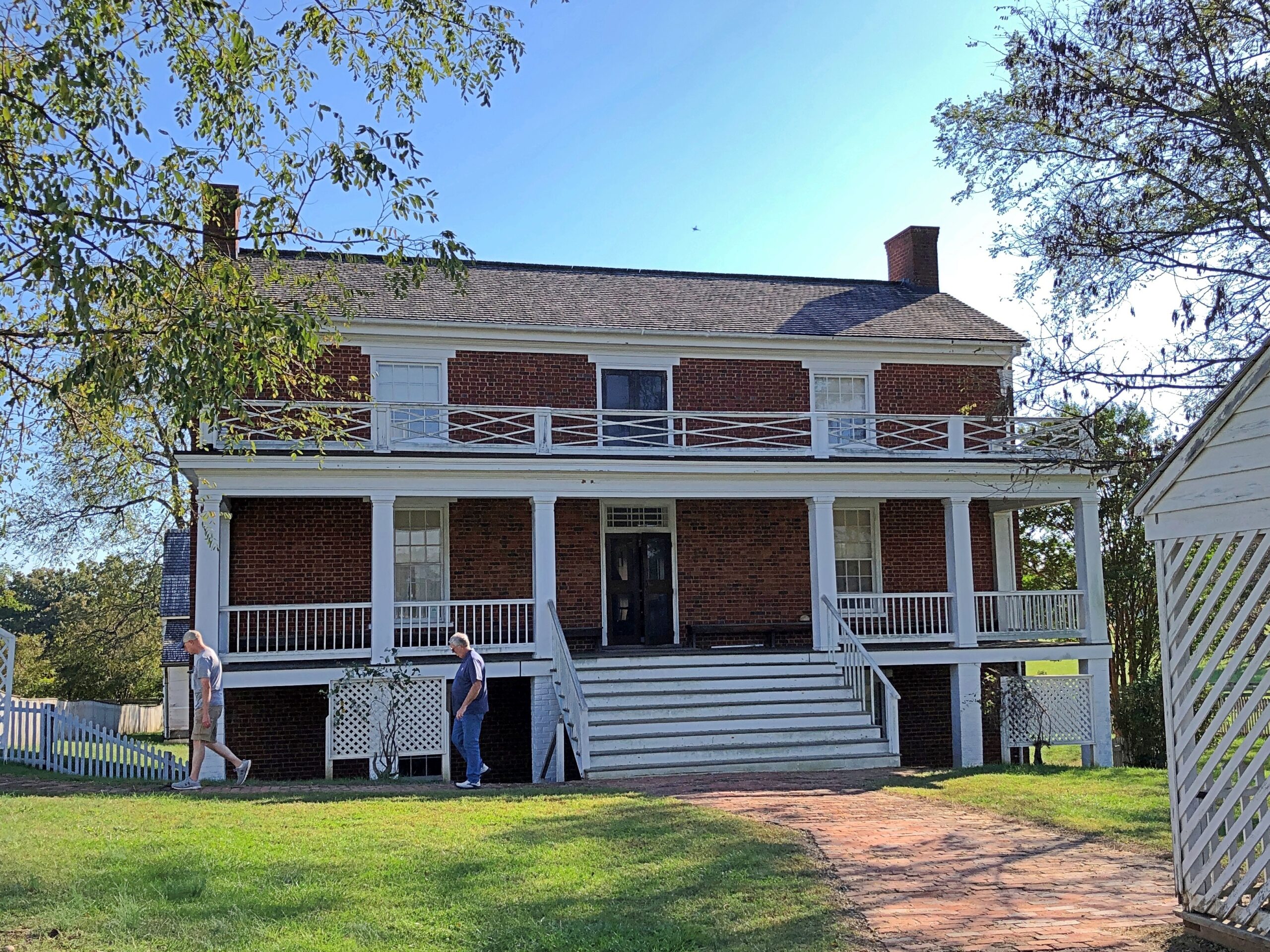
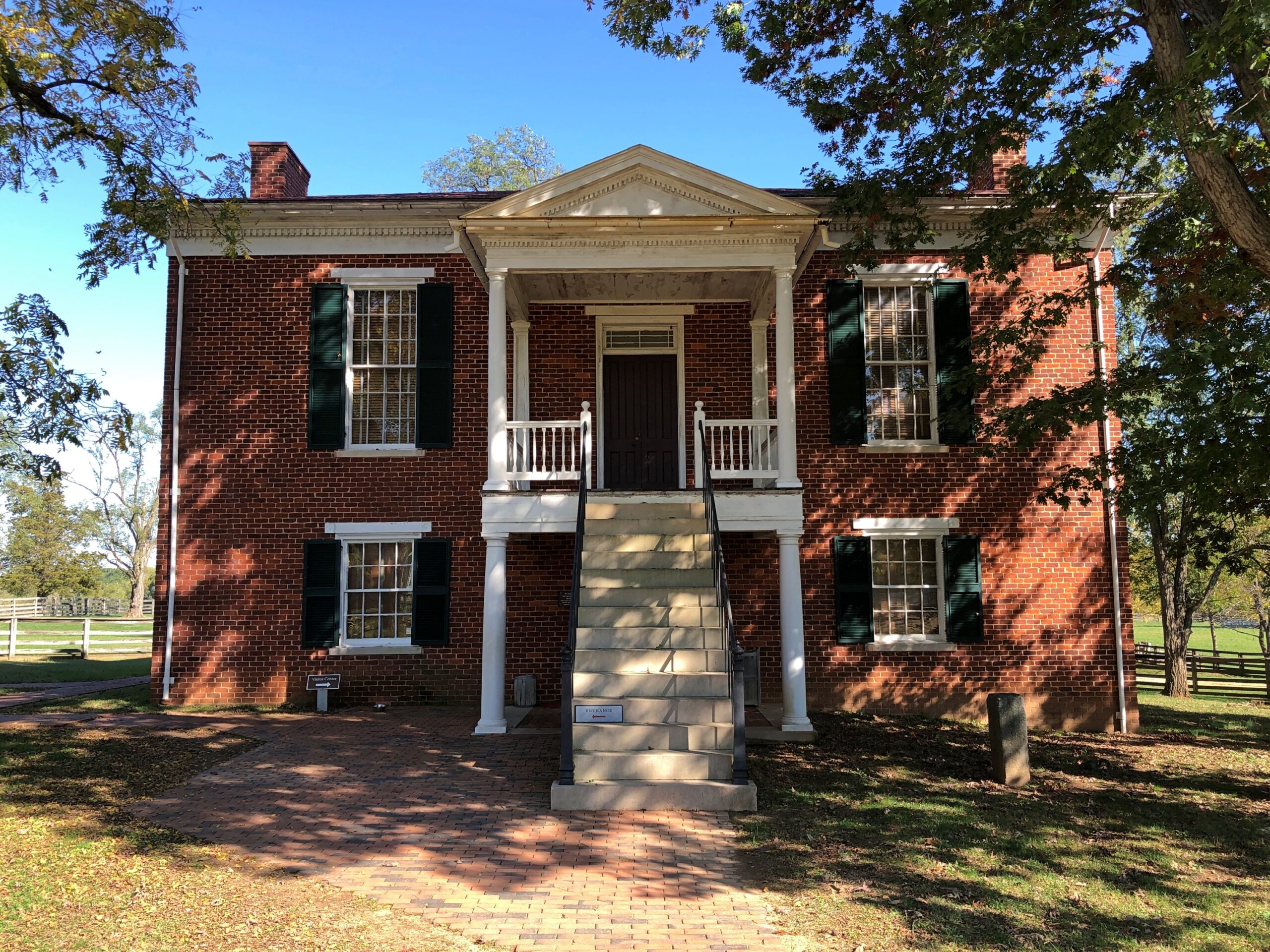
This is the McLean House – the 1940s reconstruction of it – on October 14, 2026. Unlike O’Sullivan and his contemporaries, I had no bulky equipment to haul around.
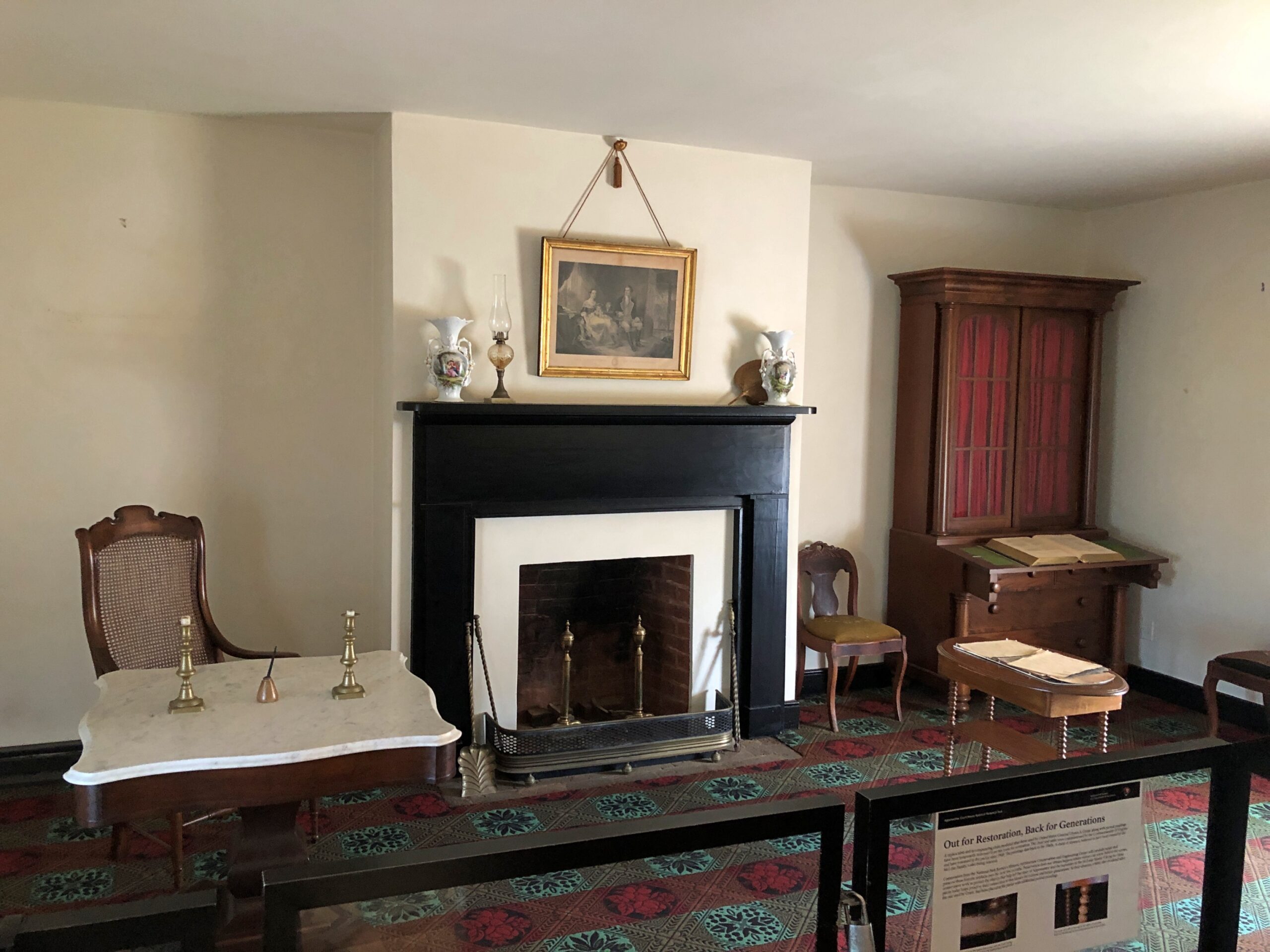
Inside, the front parlor that gained a measure of immortal fame that day as the meeting place of Grant and Lee.
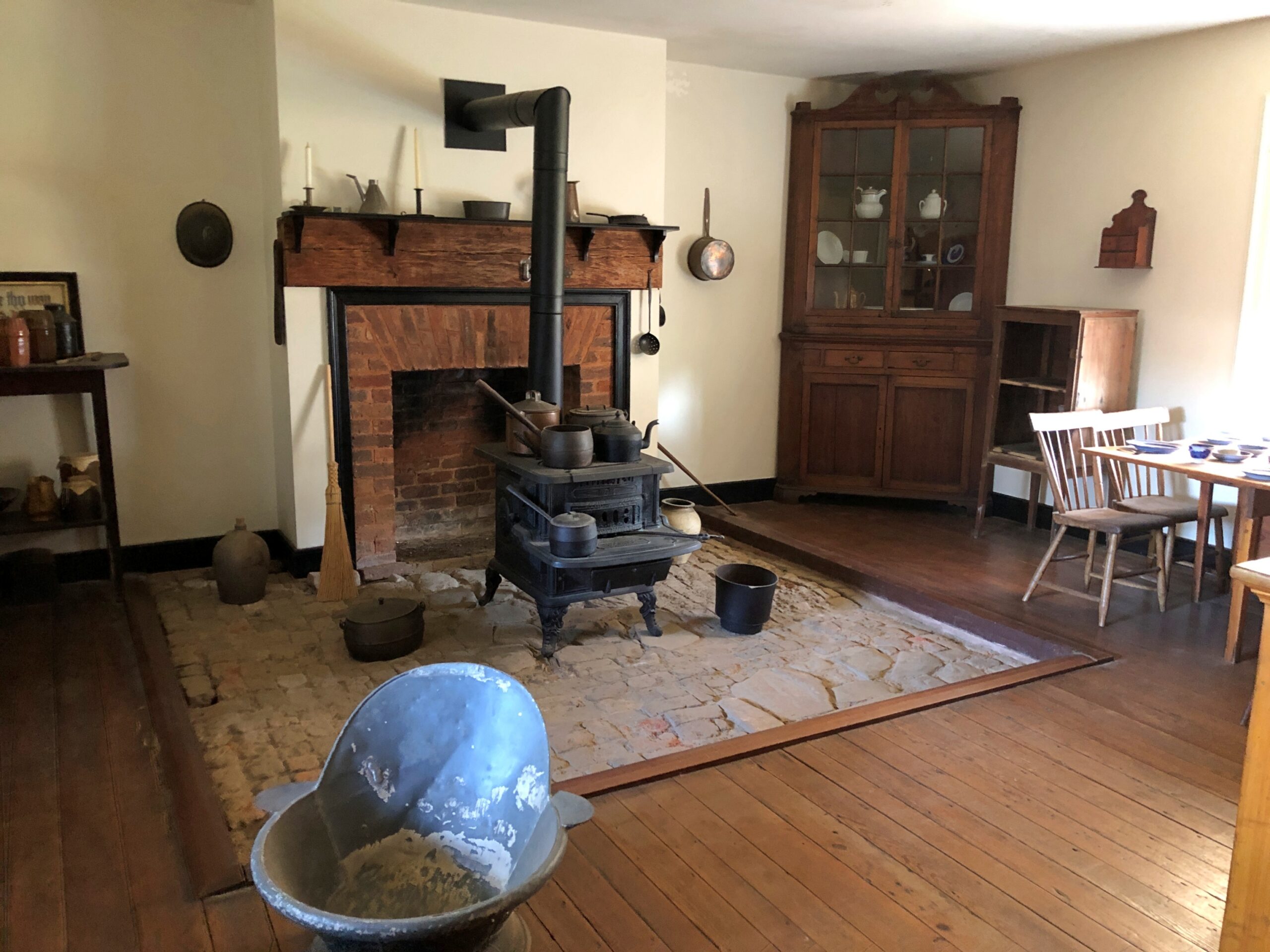
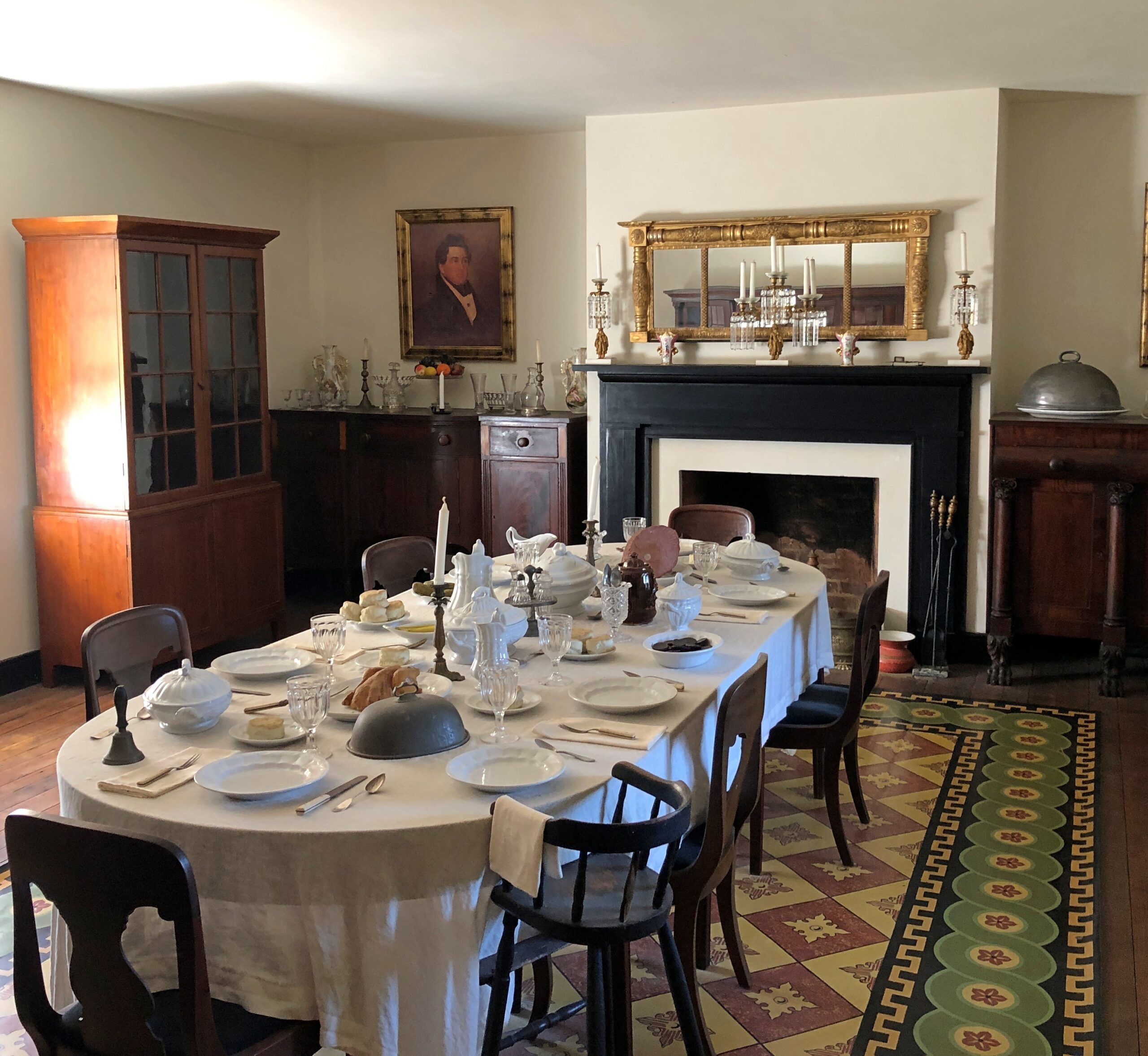
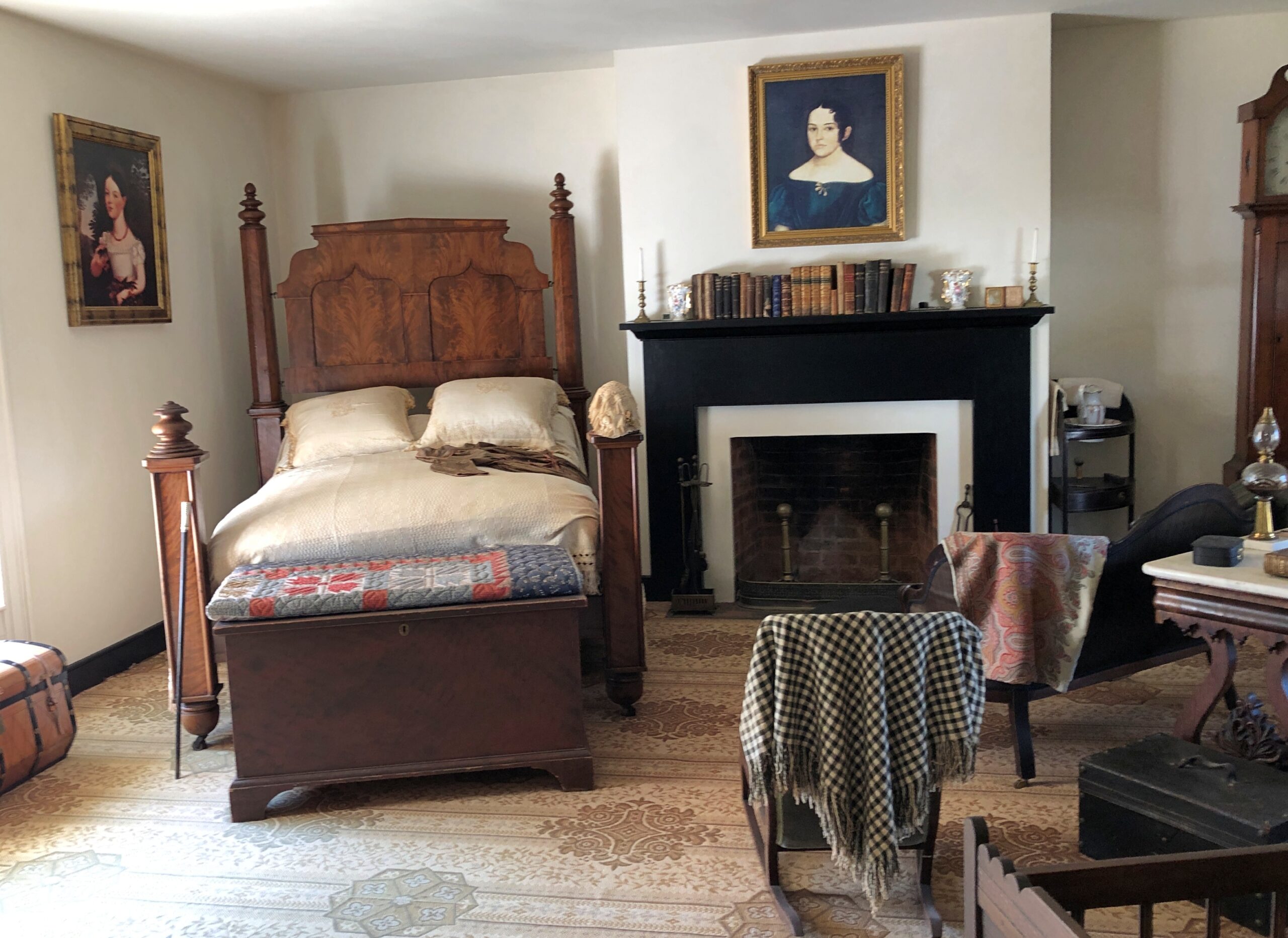
Of course, the McLeans lived in the place, so it counts as a nicely done house museum, too.
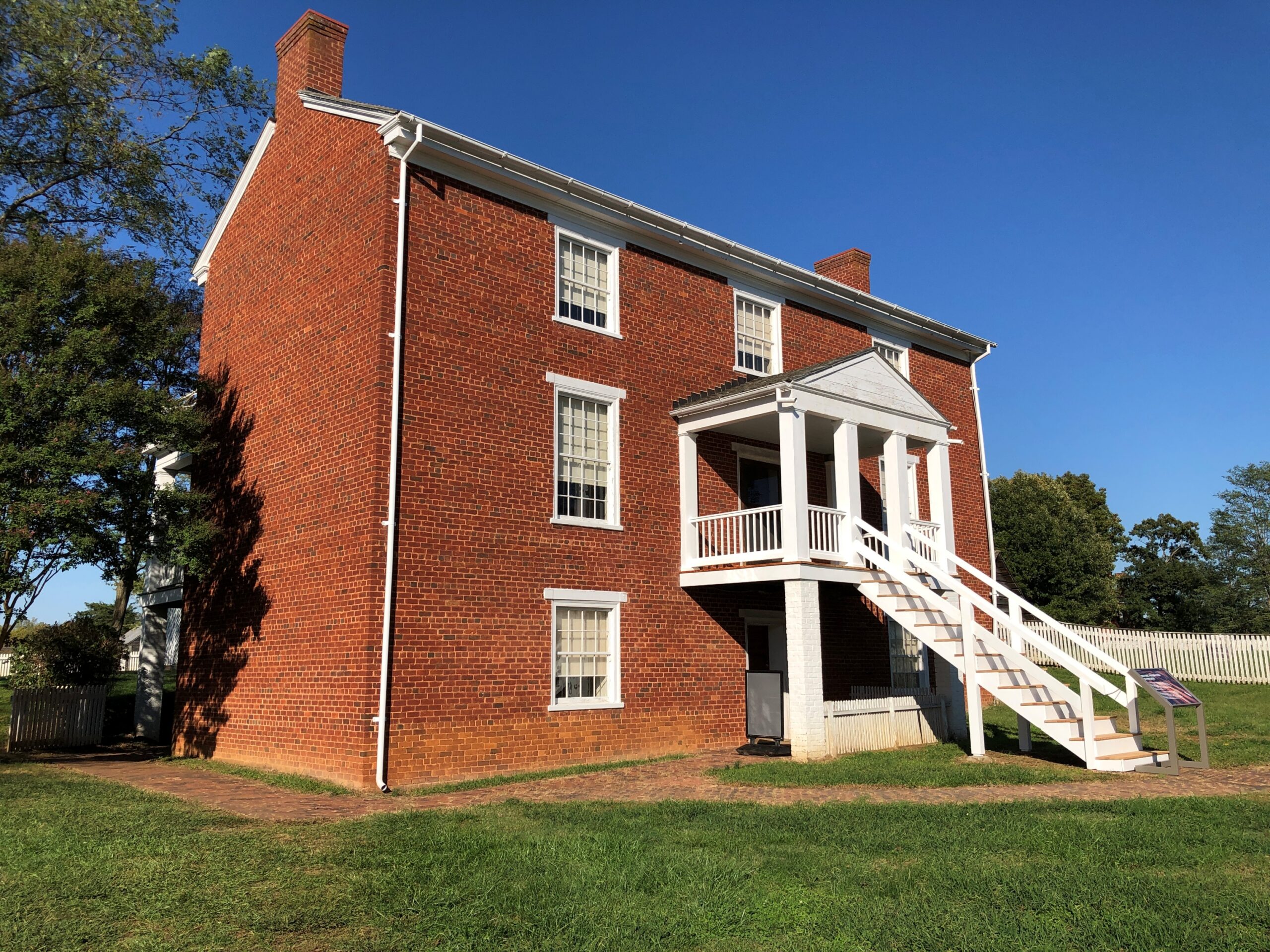
The back of the house.
The famed McLean Outhouse.
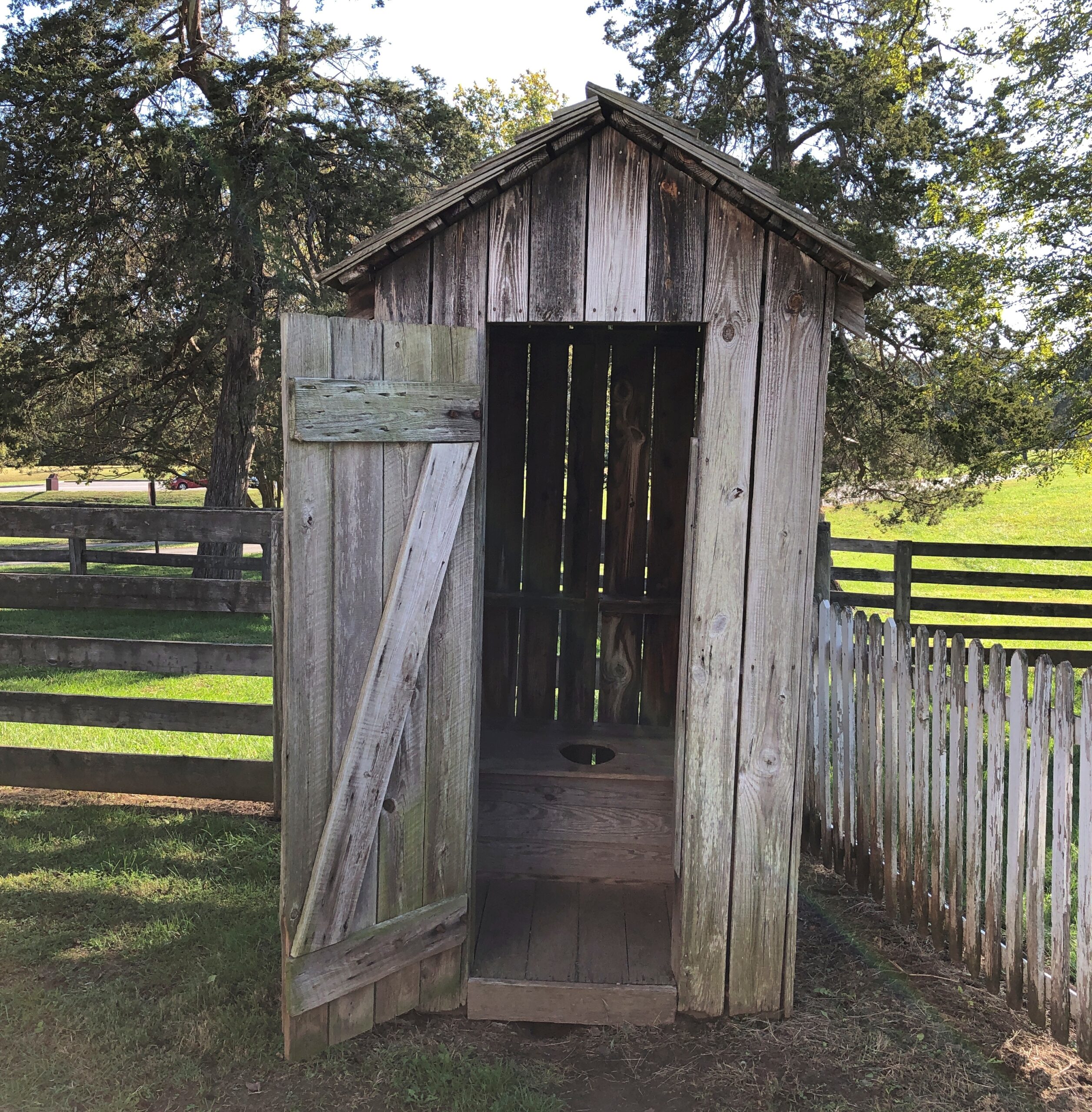
Bet has its own spot on the National Register of Historic Places as the only known facility used by both Grant and Lee. Well, maybe it’s merely evocative of the period. Glad that period is over.
I arrived at the historical park in the afternoon. I’d considered visiting Appomattox during our trip to Virginia in ’19, but had no time for it. This time I made sure I did. This is the former courthouse and current museum.
The Clover Hill Tavern, where the Federals set up a temporary print shop to make about 30,000 parole passes.
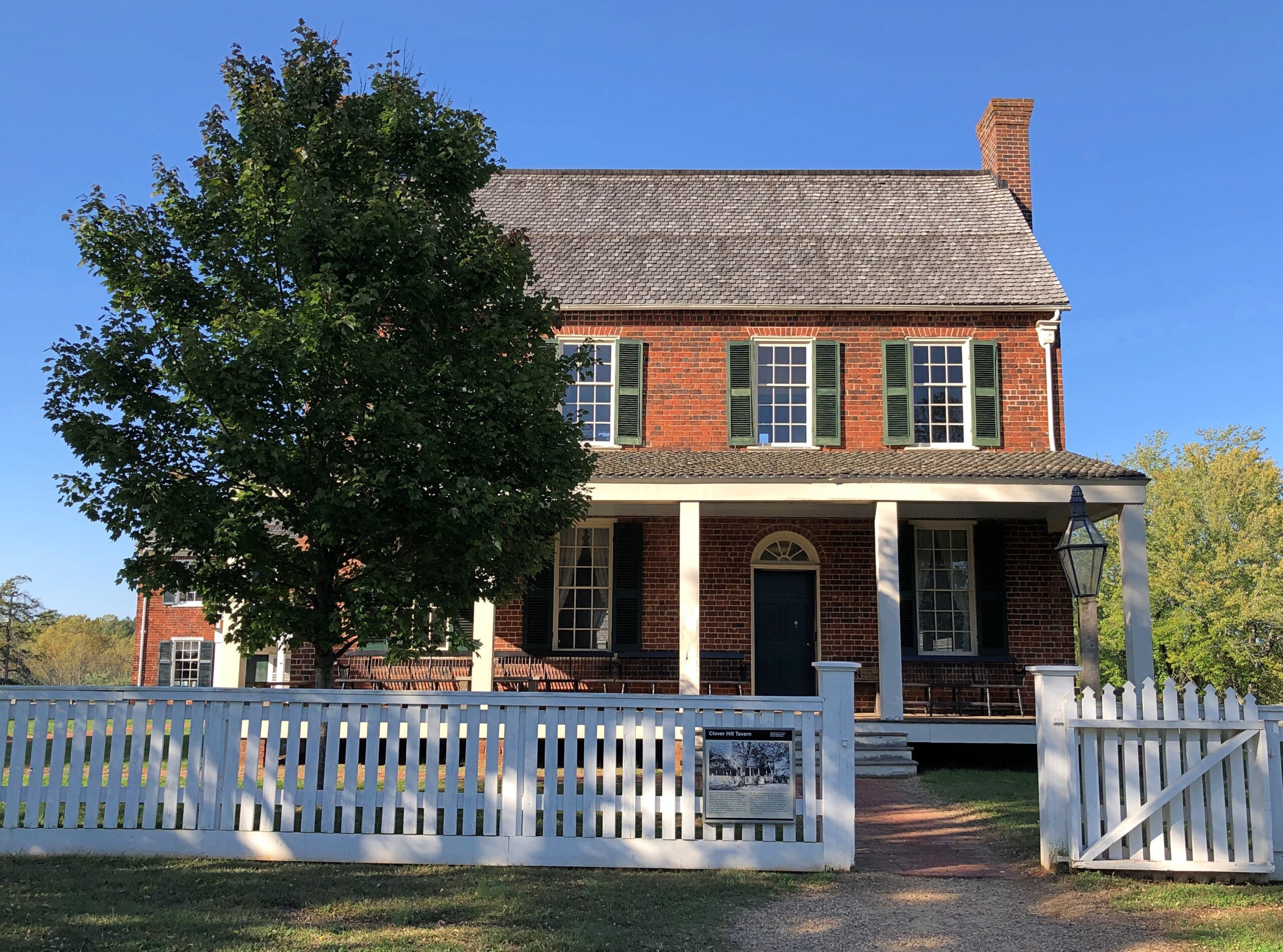
The grounds of the historical park are pleasant. A track across it evokes a lesser-appreciated aspect of the place.
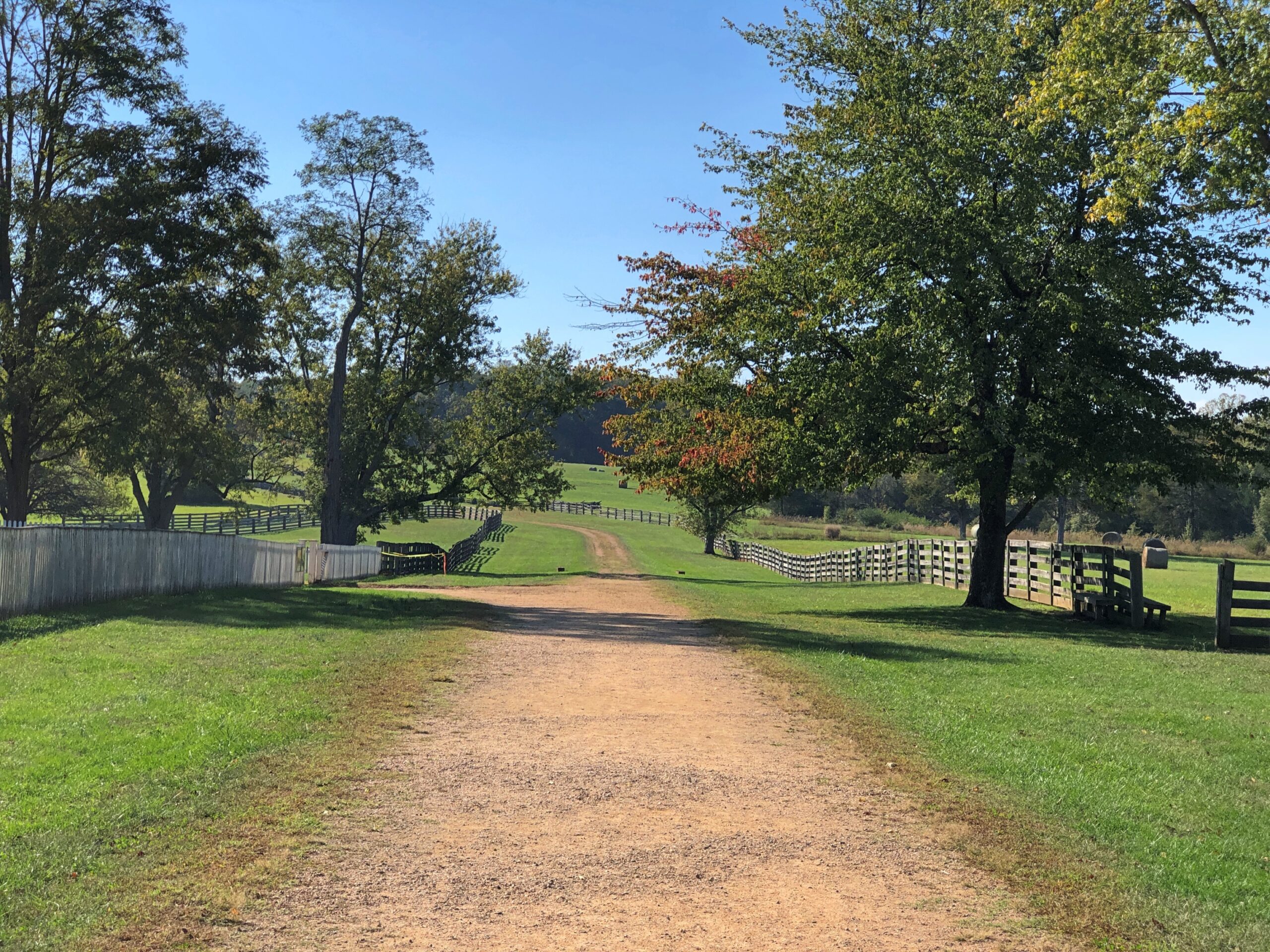
Namely, the Richmond-Lynchburg stage route. Appomattox Court House was a stopover. Obsolete roads have their fascination, at least for me. Interesting detail: by 1865, the town, never very large, was already disappearing, since the railroad had bypassed it.
A some distance from the McLean House and the other buildings is a small Confederate cemetery.
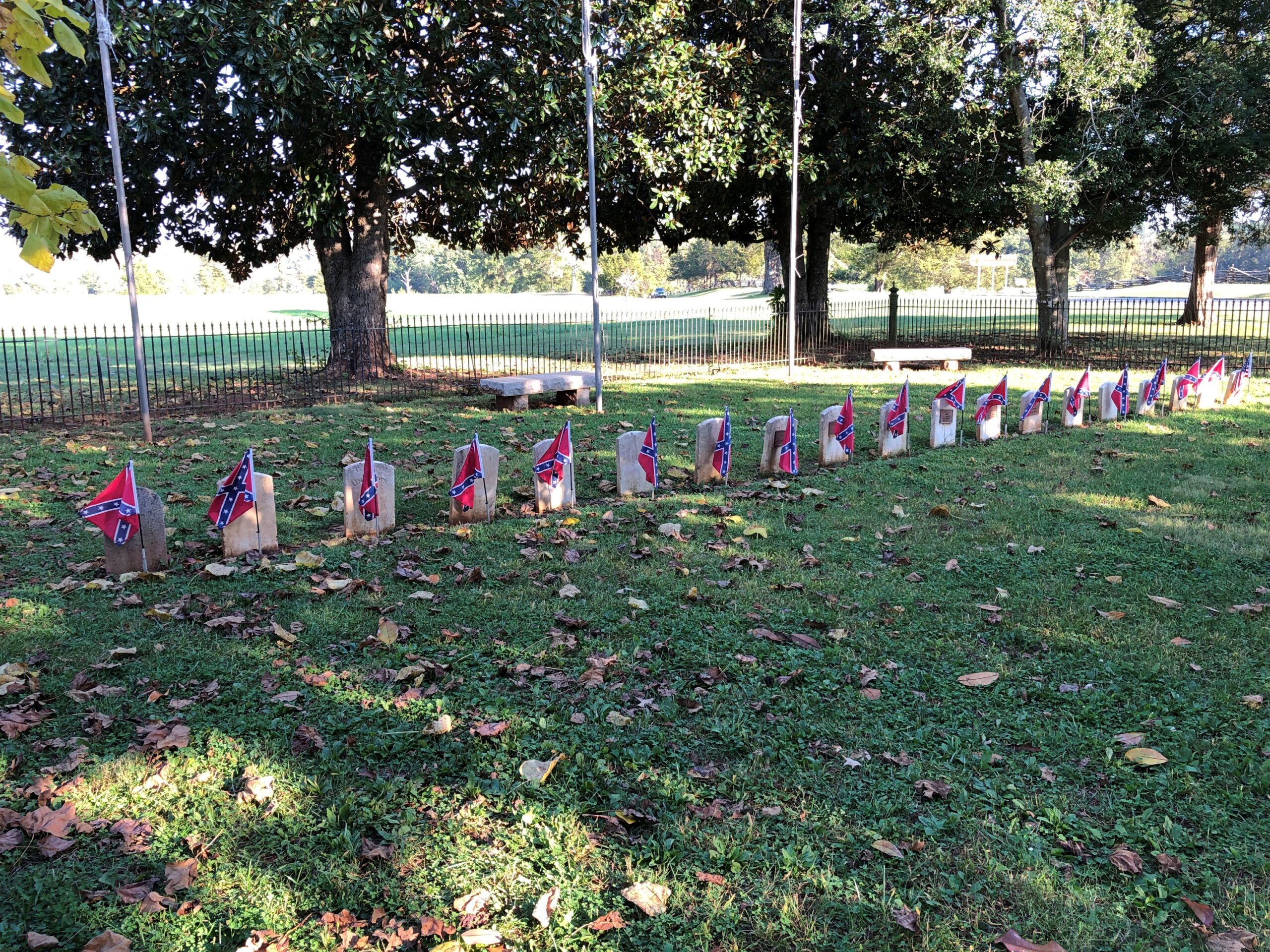
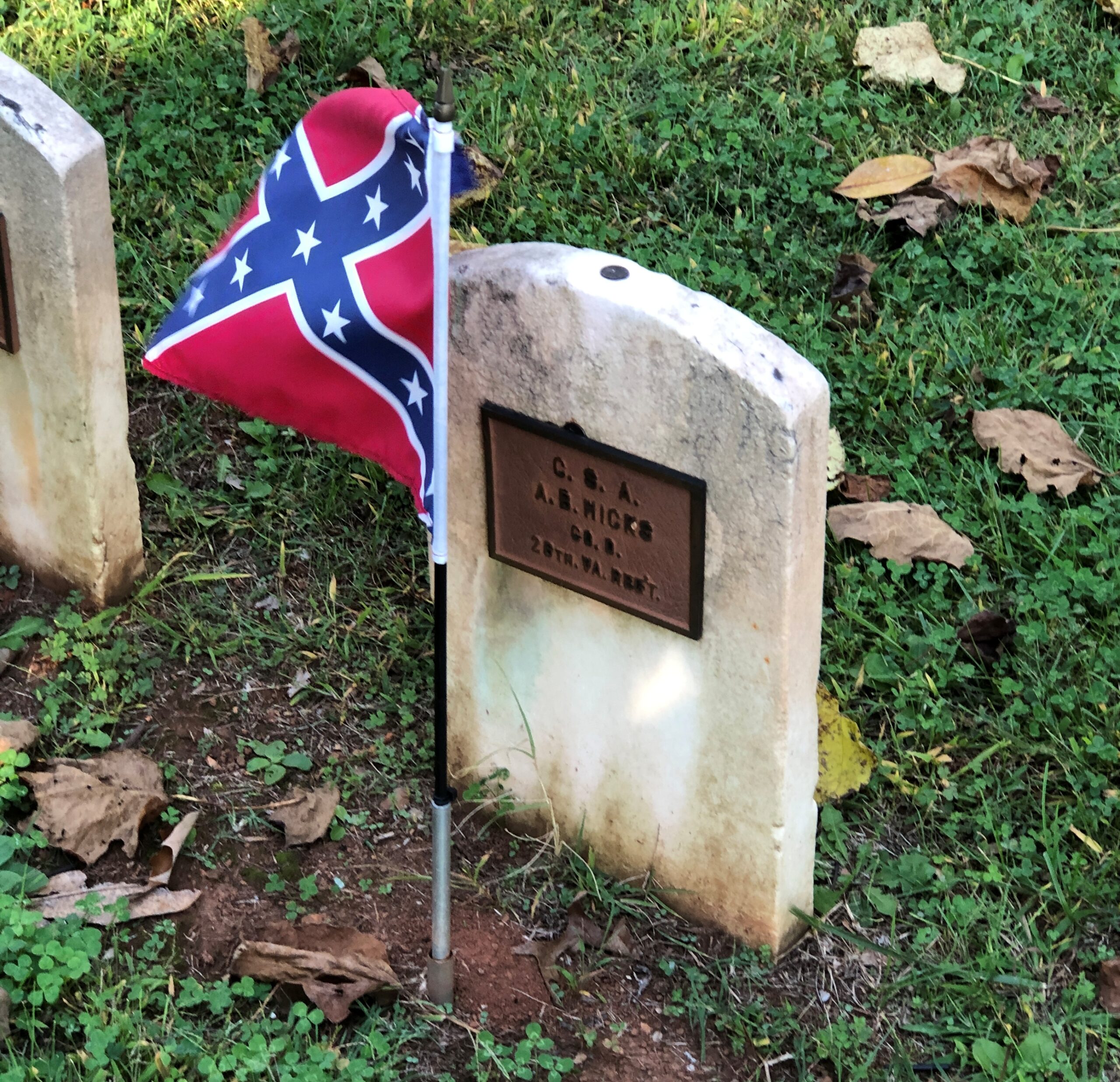
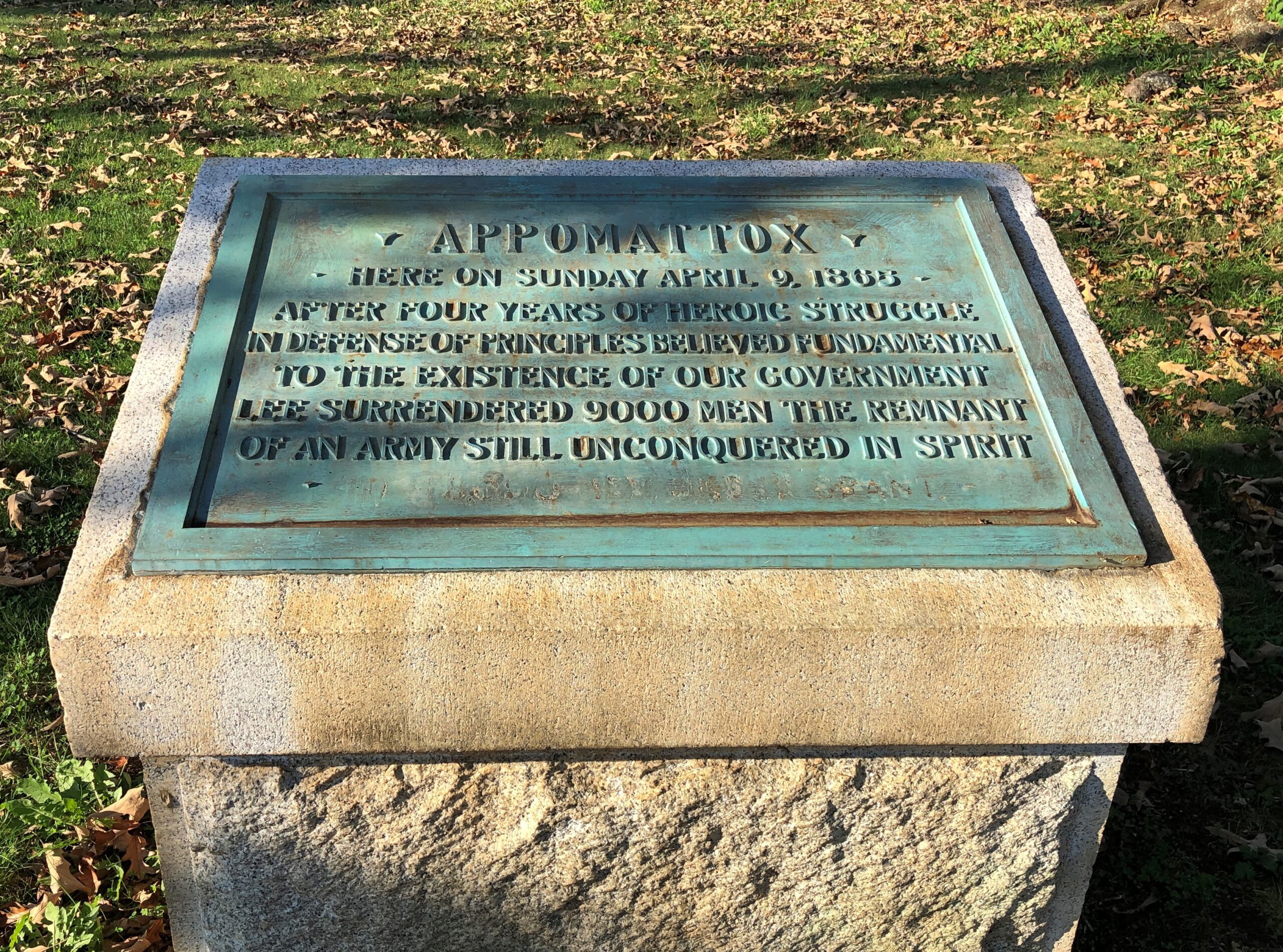
The Daughters had their say on a plaque, though note that the last line was removed at some point.
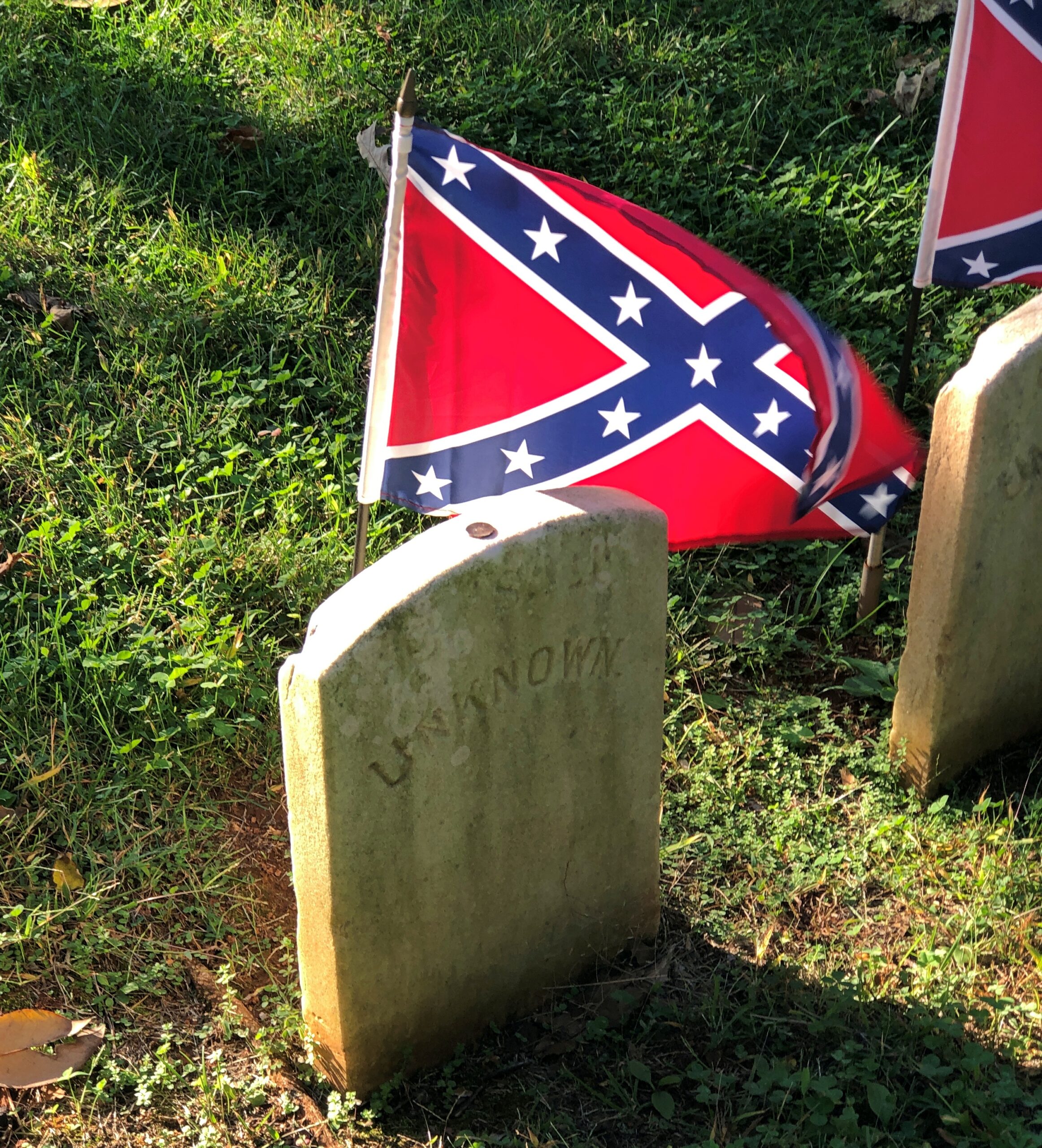
A lone Union soldier somehow ended up there as well.
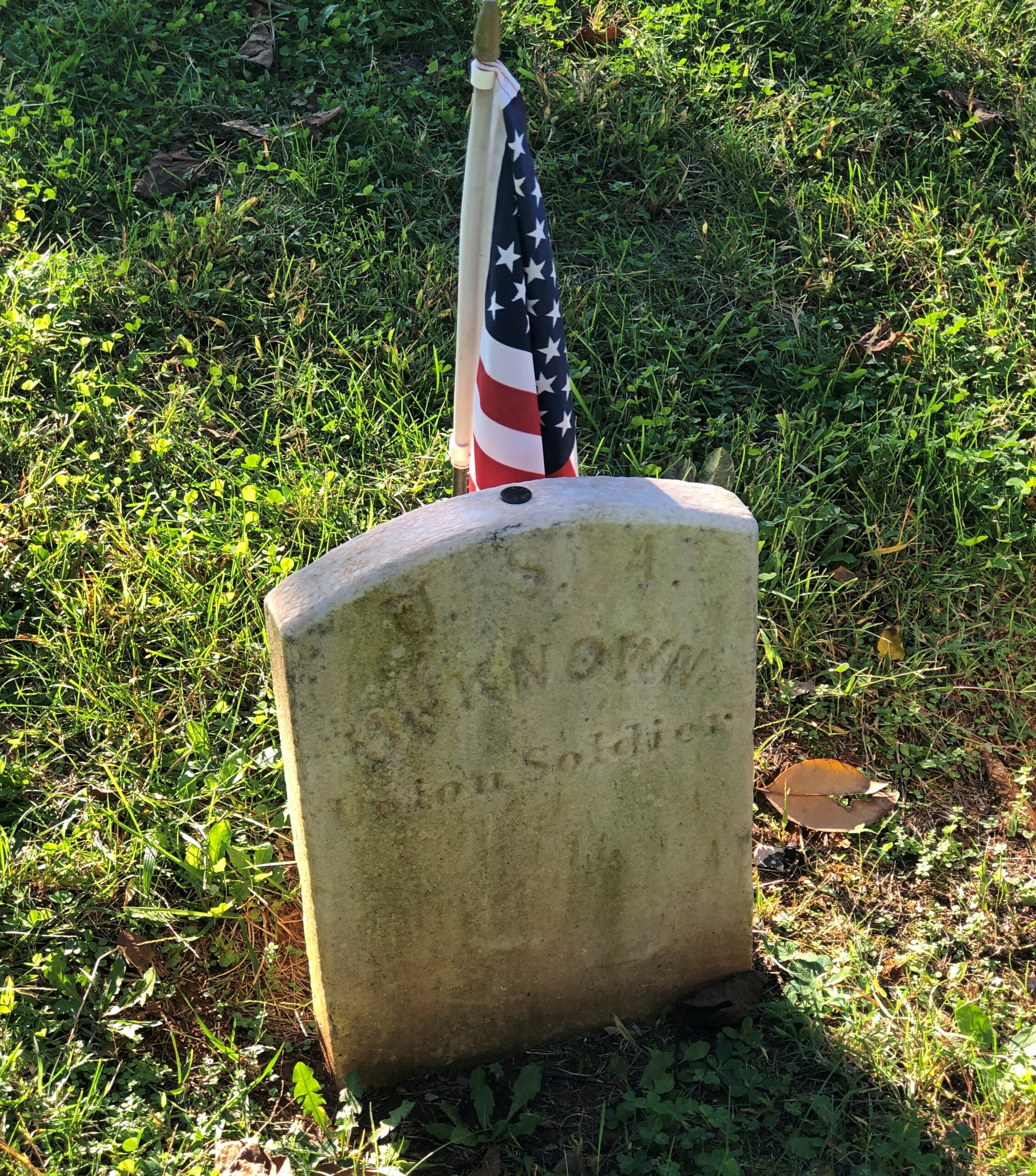
Poignantly, he and some of the Confederates are unknown soldiers.