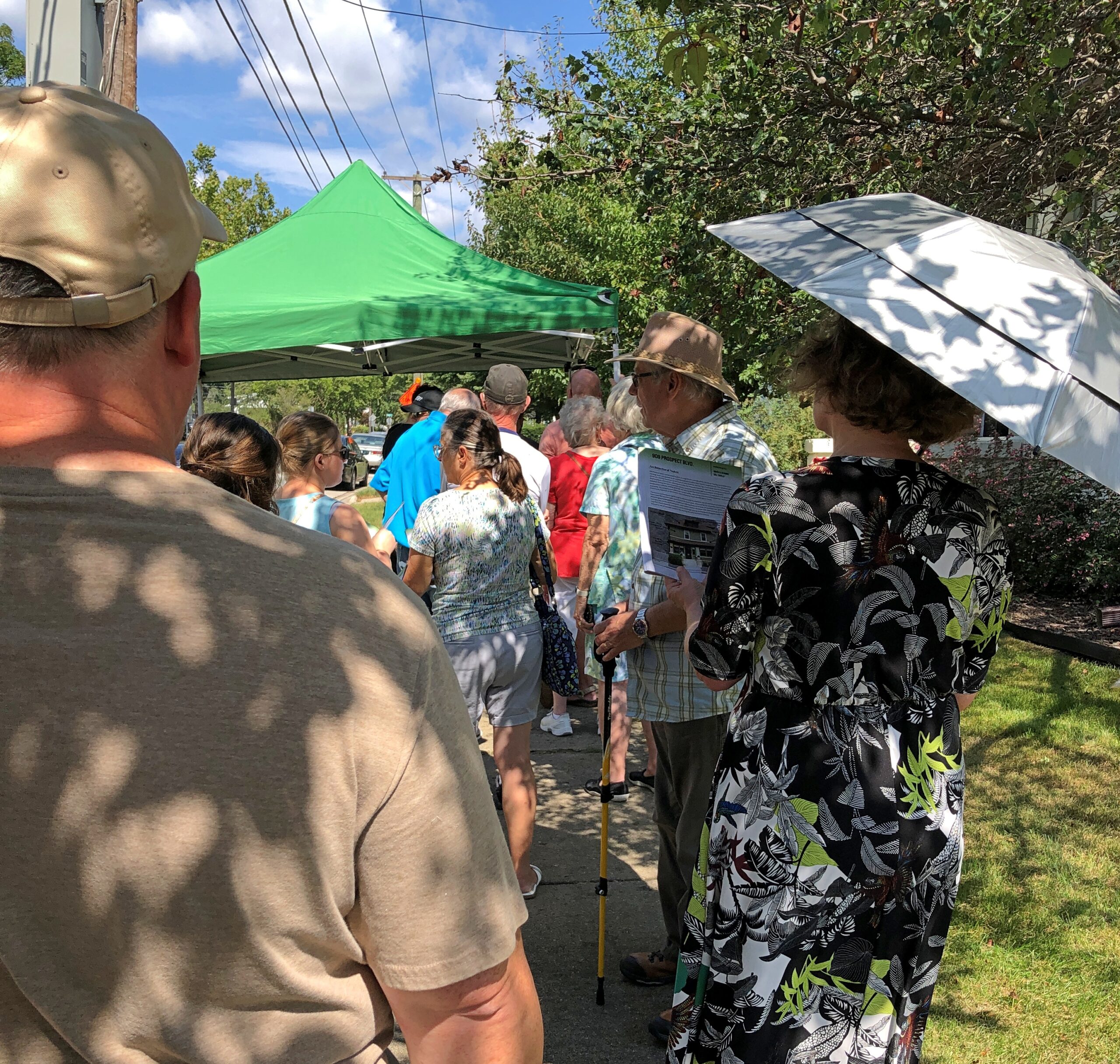
Saturday was pretty warm as we waited in line in Elgin. More than one outdoor line, in the course of the afternoon. Not dangerously hot, just a touch sweaty. We’d arrived for the Historic Elgin House Tour. We didn’t have to wait more than 15 or 20 minutes to get into each of the houses. Not a crush of people, but a healthy number for a niche interest.
Think “concrete blocks” and the first thing you think of probably isn’t a good-looking house made from them. But there it was, the first house we visited on the last weekend: 909 Prospect Blvd. in that town. “A significant example of the American Foursquare architectural typology,” our informative guide booklet says.
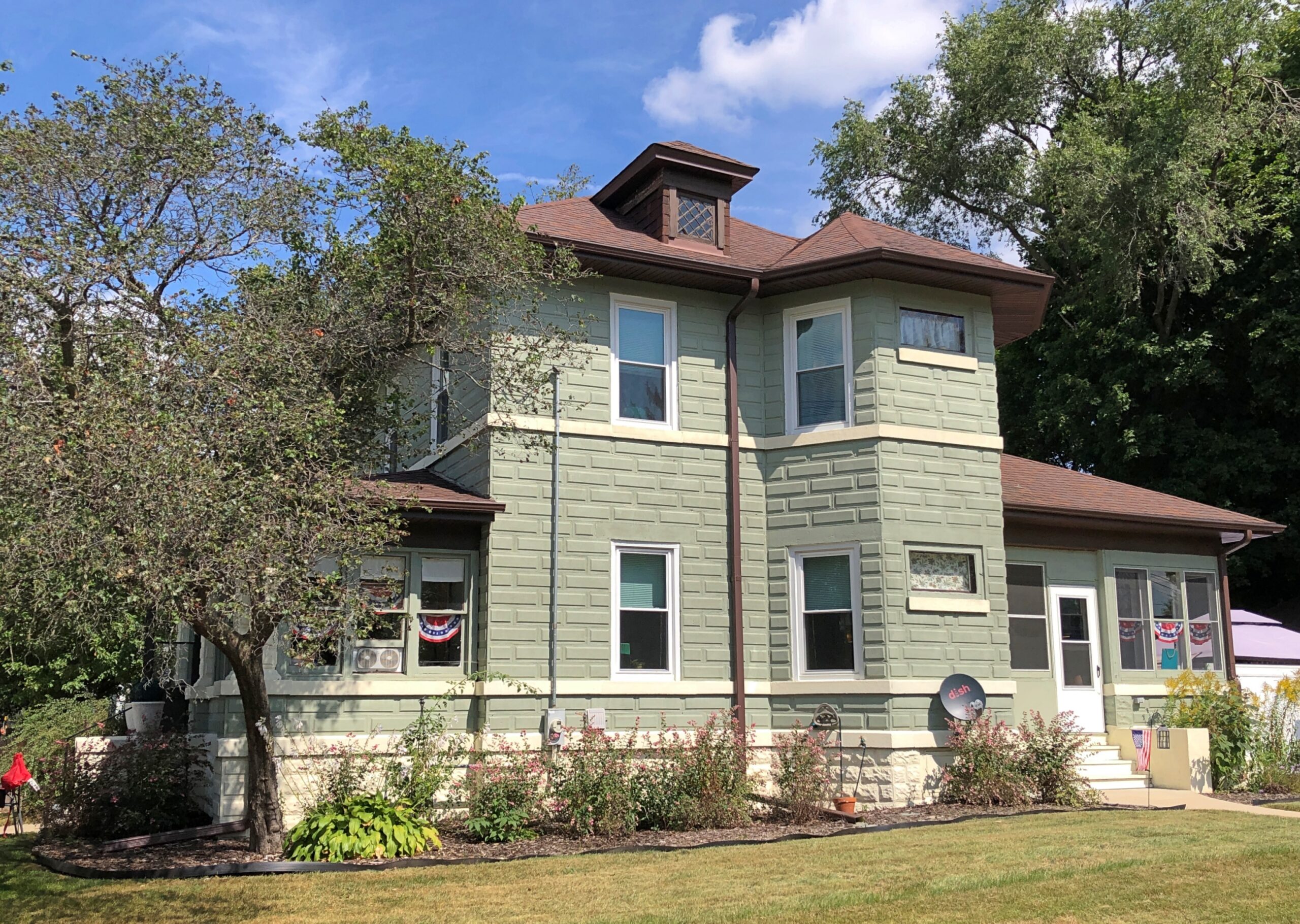
Once upon a time – in 1912, to be exact – one John McBride owned the Elgin Concrete & Structural Co., and what better way to expand your market than build a handsome house from concrete blocks? To show what could be done.
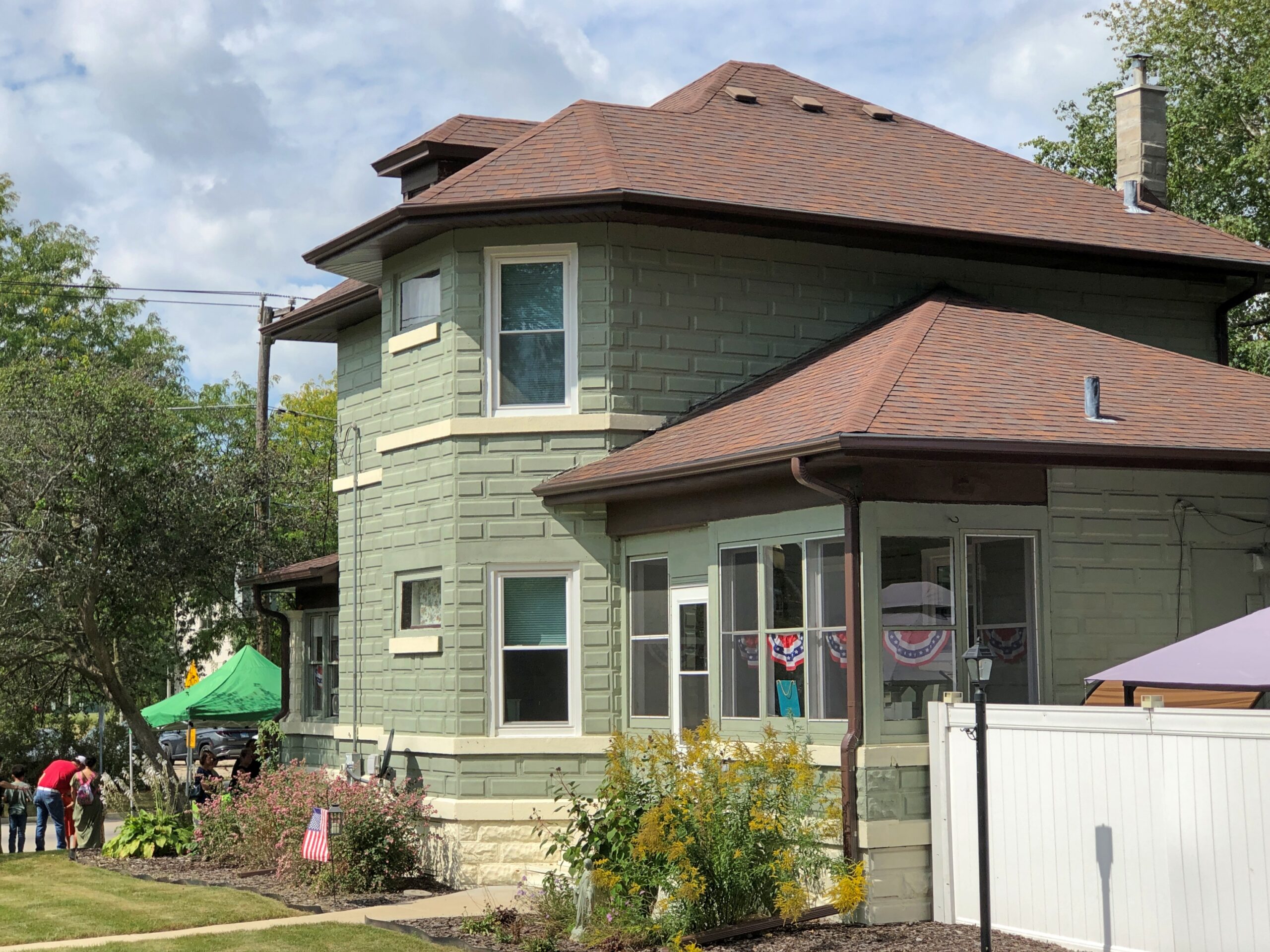
Do a Google image search for “concrete block house” and all too many of them are concrete gray. The color associated with sterile, ugly places. I understand there might be other issues with concrete block construction, ones to do with insulation or other features I’m not qualified to comment on, but concrete gray just might be one reason concrete block houses aren’t so common in North America. Doesn’t have to be that way. John McBride could produce pleasantly green concrete blocks, in a pleasing array, a step above featureless rectangles glued together, and he could do that more than a century ago.
The next house was just down the street: 840 Prospect.
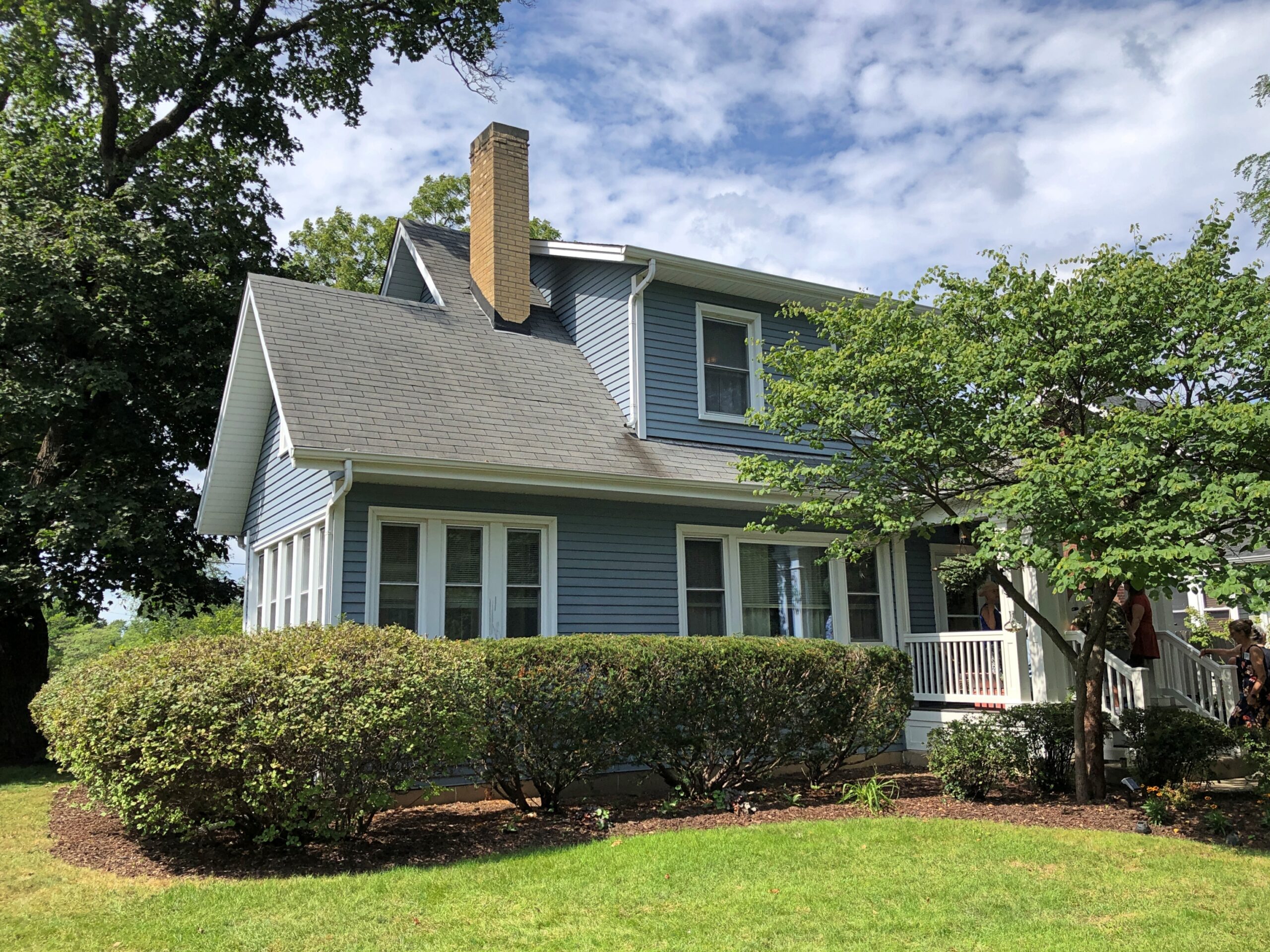
An “eclectic interpretation of Colonial Revival,” the booklet says. If you say so. Just as handsome, in its way, as the concrete structure nearby. In keeping with the history of the neighborhood, whose anchor was Sherman Hospital, the docents explained that a long-time owner was a staff anesthesiologist who sold it to the hospital in 1986 when he retired, and when the hospital was looking to expand, razing some of the nearby houses. The hospital facilities were already long in the tooth in the 1980s.
The booklet says the hospital acquired the house in 1959 and implied the residence was a benefit of employment for the anesthesiologist. But anyway, a Sherman doctor lived there for three decades or so, and a number of the other houses in the neighborhood were built for doctors or administrators, and the hospital never got around to razing any of the neighborhood, but decided to build new.
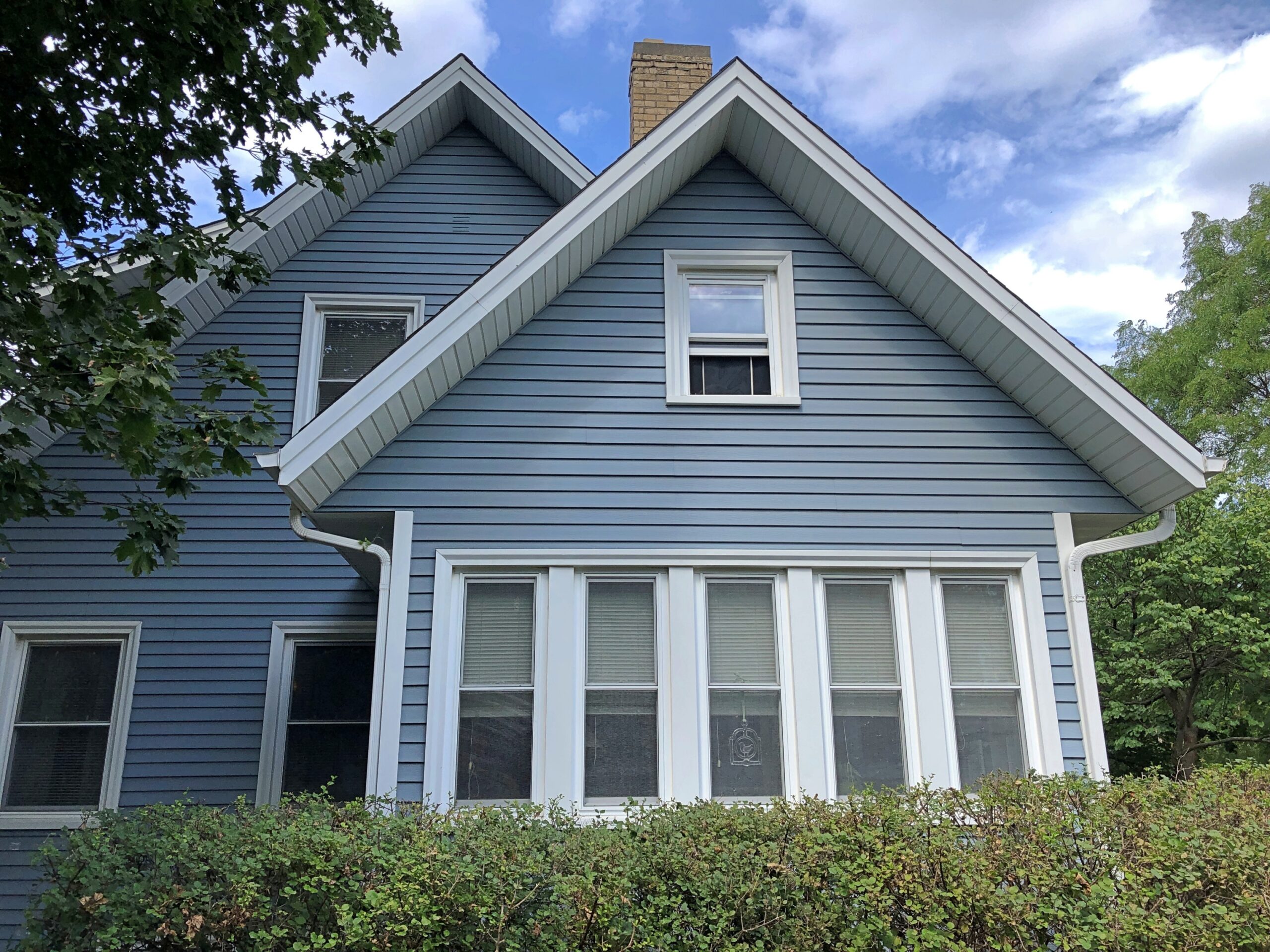
Part of the rules of the tour specified no interior photography. I can say that all the houses were to House Beautiful standards, if not quite that style: elegant or at least good-looking space, well adorned with handsome furniture and artwork and smaller household objects, yet definitely not cluttered. Still, each of them had clearly personal touches, and were better living spaces for it.
How about a tour of an architecturally interesting, yet cluttered spaces? Don’t tell me there aren’t any. I’d pay money for that, too.
The first place we actually went that day was McKinley Elementary School, where you checked in and received the well-designed and informative physical booklet. Maybe it costs extra, but no phone-based guide could be as useful, because the format is so handy. The school beats the neighborhood houses we saw for age, with the original structure built in 1886 as Prospect Street School. Collegiate Gothic, the booklet calls it. (Huxley College is known for its Collegiate Gothic, I think.)
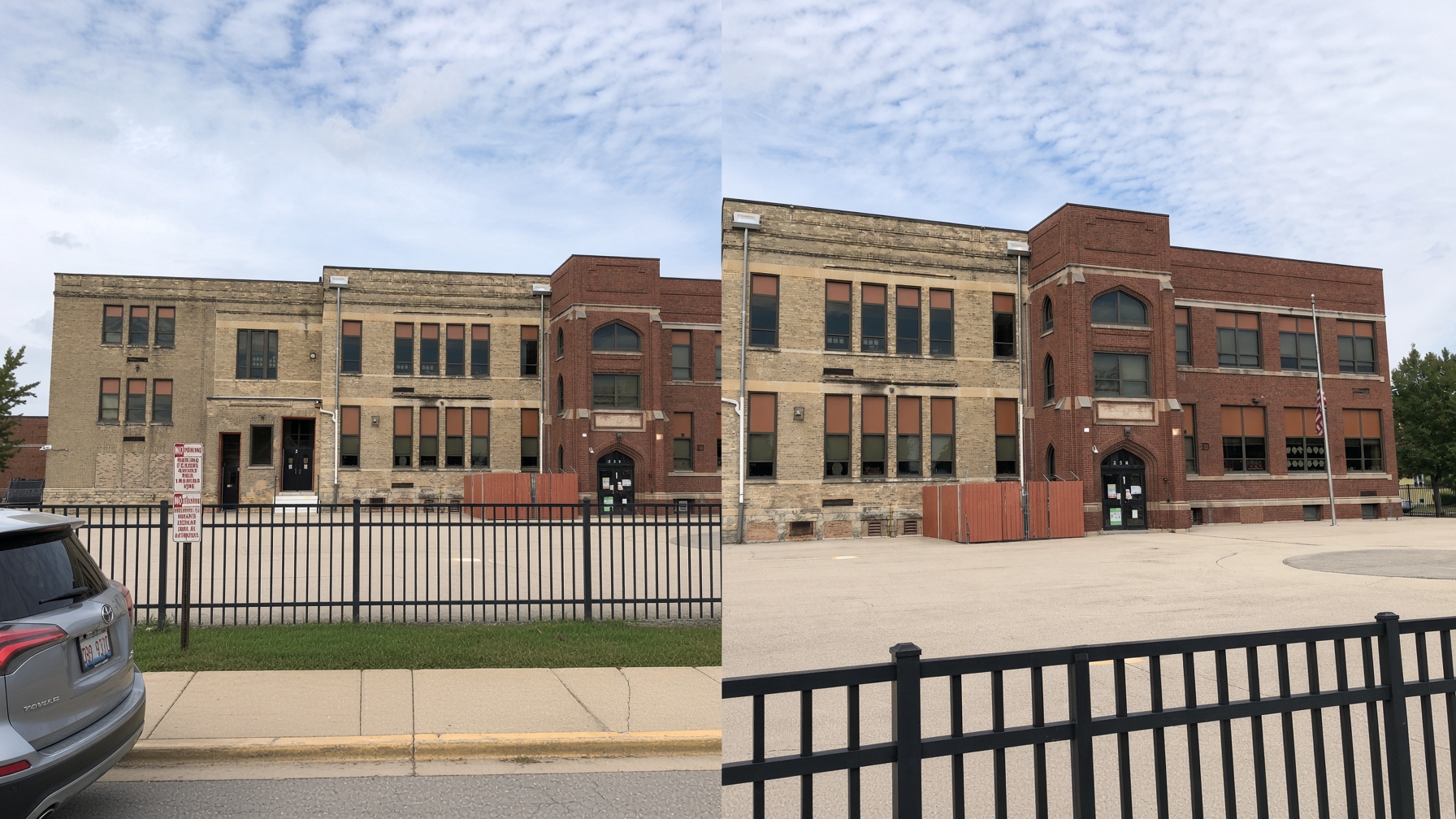
After the turn of the 20th century, there were additions, and the installation of modcons like electricity and indoor plumbing. Very soon after the turn of the century, it must have received its current name – in a nationwide spasm of school-, street- and other place-naming in honor of the slain president.
Still a school. The oldest continuously operating school building in Elgin, in fact, though I understand it will close in 2028 after a new school is completed not far away. I checked, and McKinley’s mascot is the Tigers. I’m sure they’re fond of their mascot. Still – what about the McKinley Gold Standards? Or if that’s too odd, the Goldbugs.