A month from now, Main St. in Bar Harbor is going to be a busy place, sidewalks thick with shoppers and walkers with their coffee and ice cream cones. People will gather at the well-trimmed Village Green. The park at the end of Main, Agamont Park, named for a storied 19th-century hotel on the site that burned down long ago, will be alive with the pleasant sounds of people on vacation, taking in the view of the harbor. Boats will ply the harbor. Lobsters will die en masse to make their appearance on the menus of Bar Harbor restaurants.
One place in town that will not be busy come high season, just as it wasn’t busy a month ago when I visited — and was the only living person there — is the Village Burying Ground, which is a minute’s walk from Main St., tucked away on a small slice of land between two churches, Bar Harbor Congregational and St. Saviour’s Episcopal.
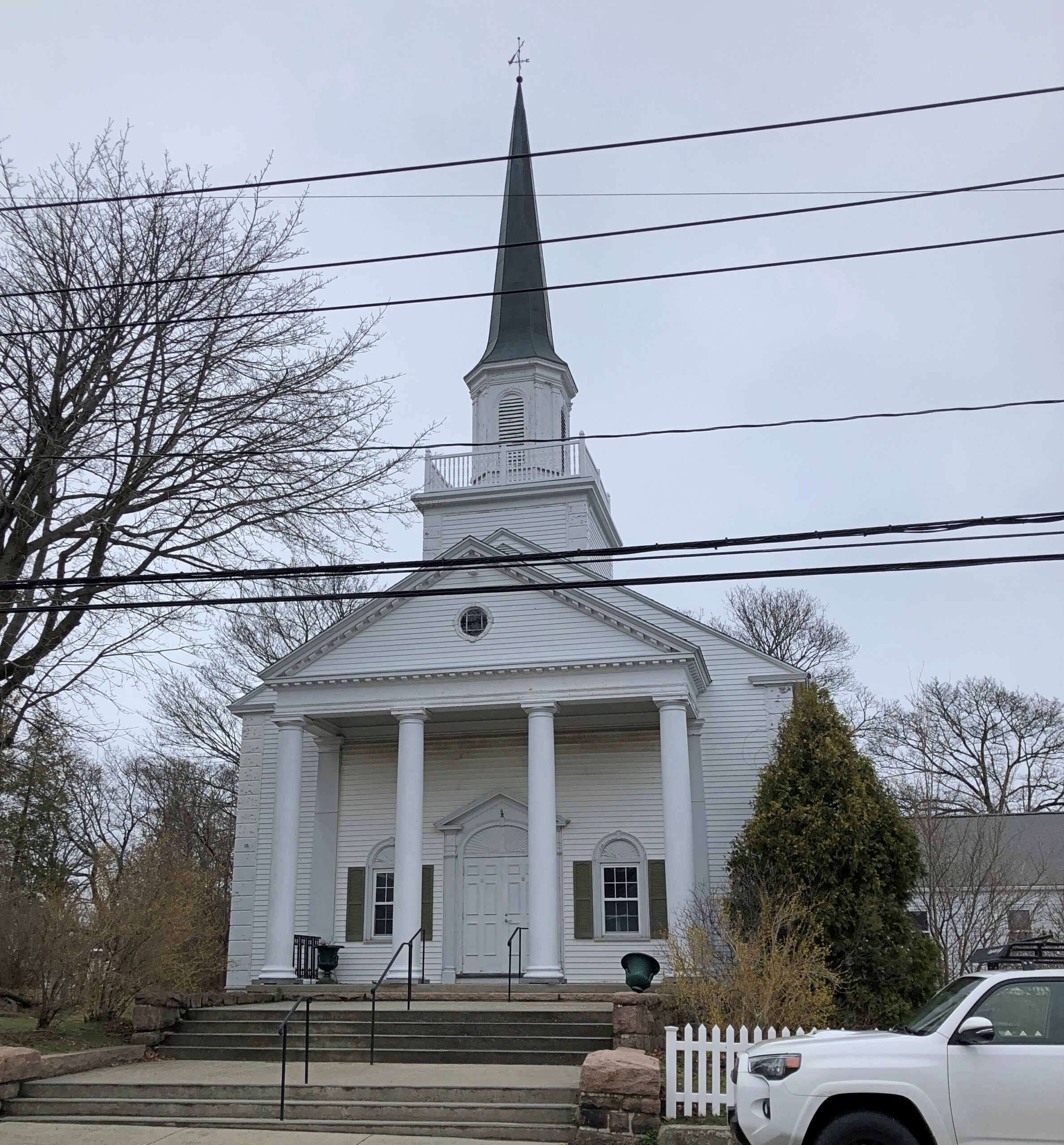
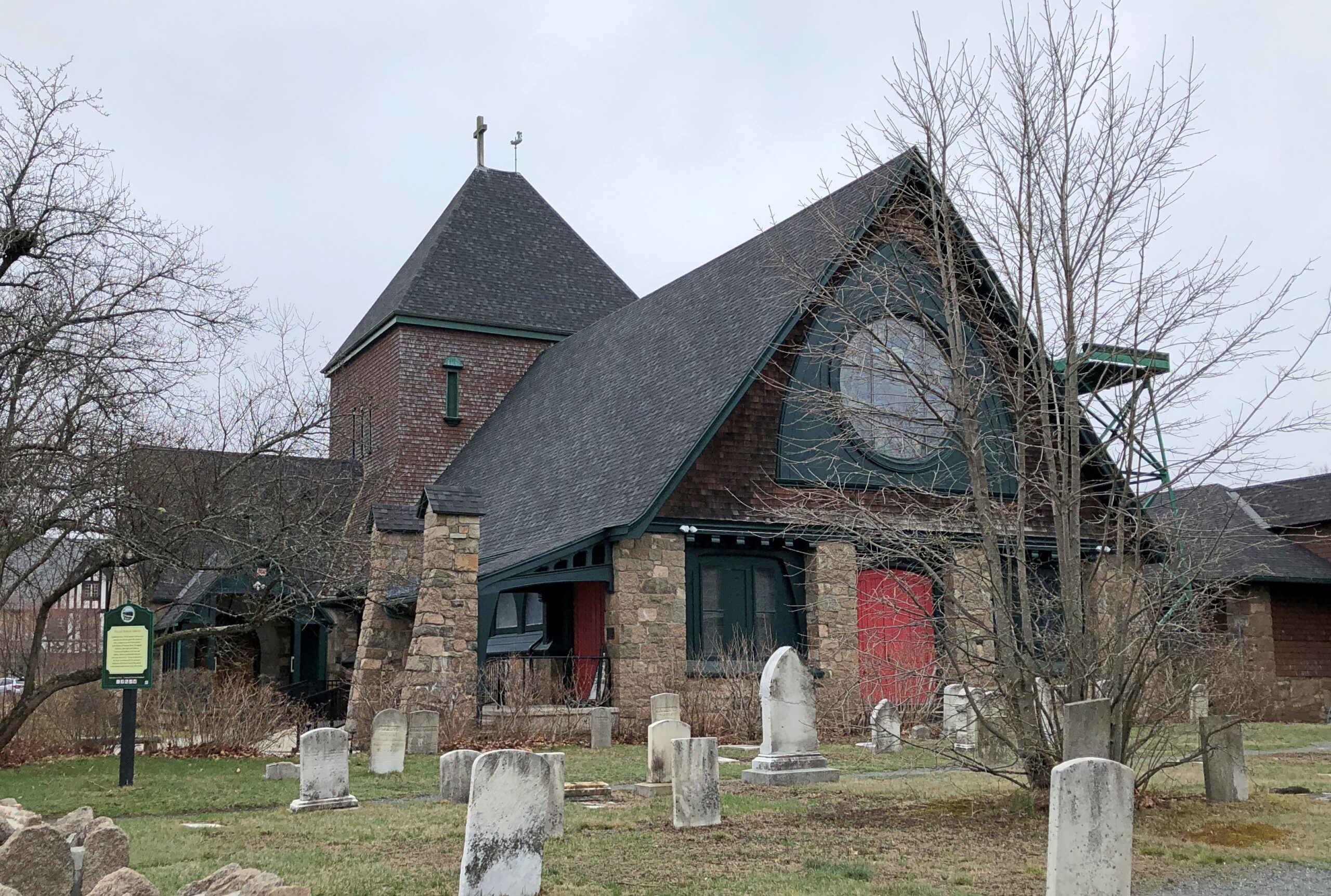
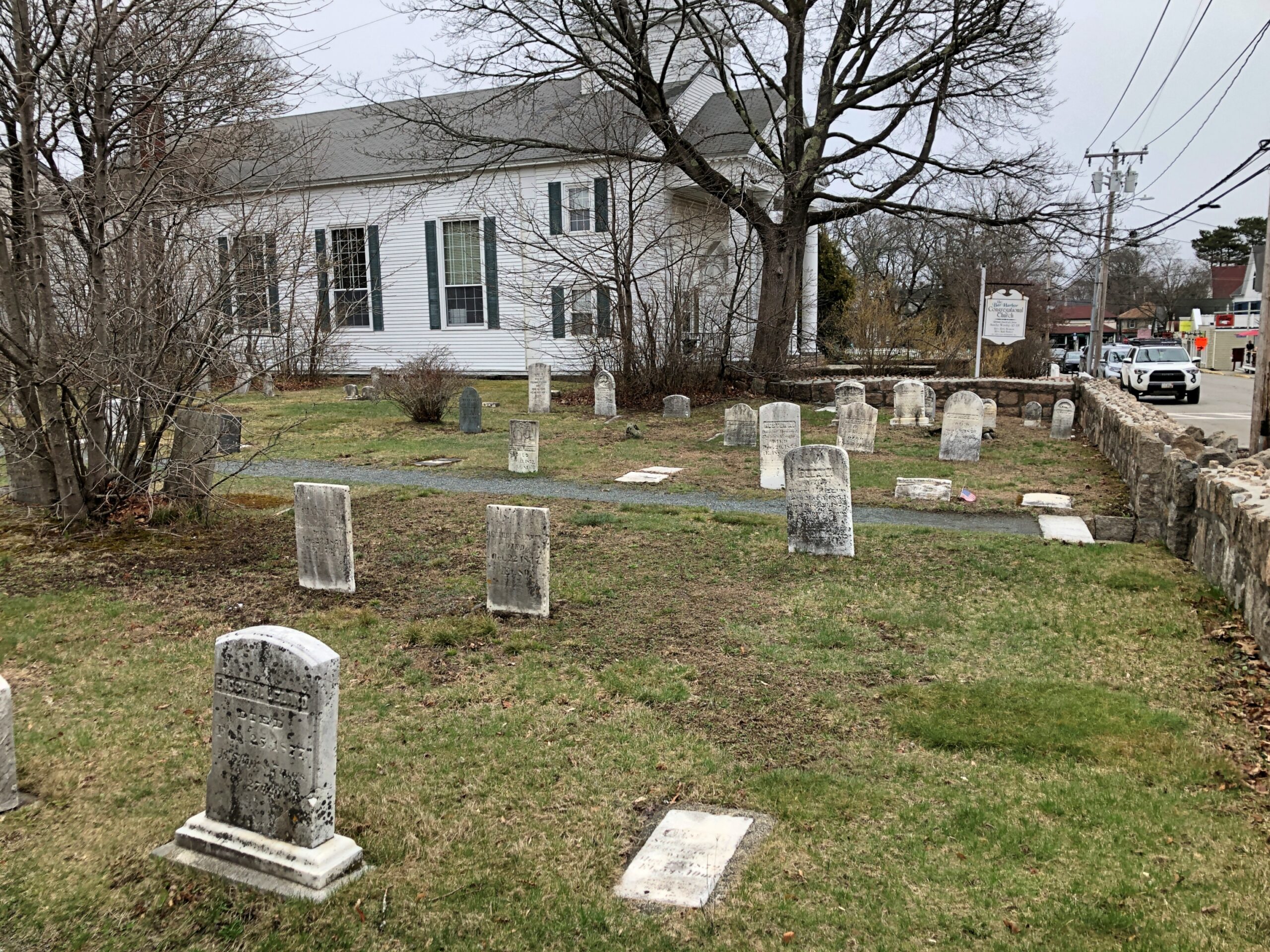
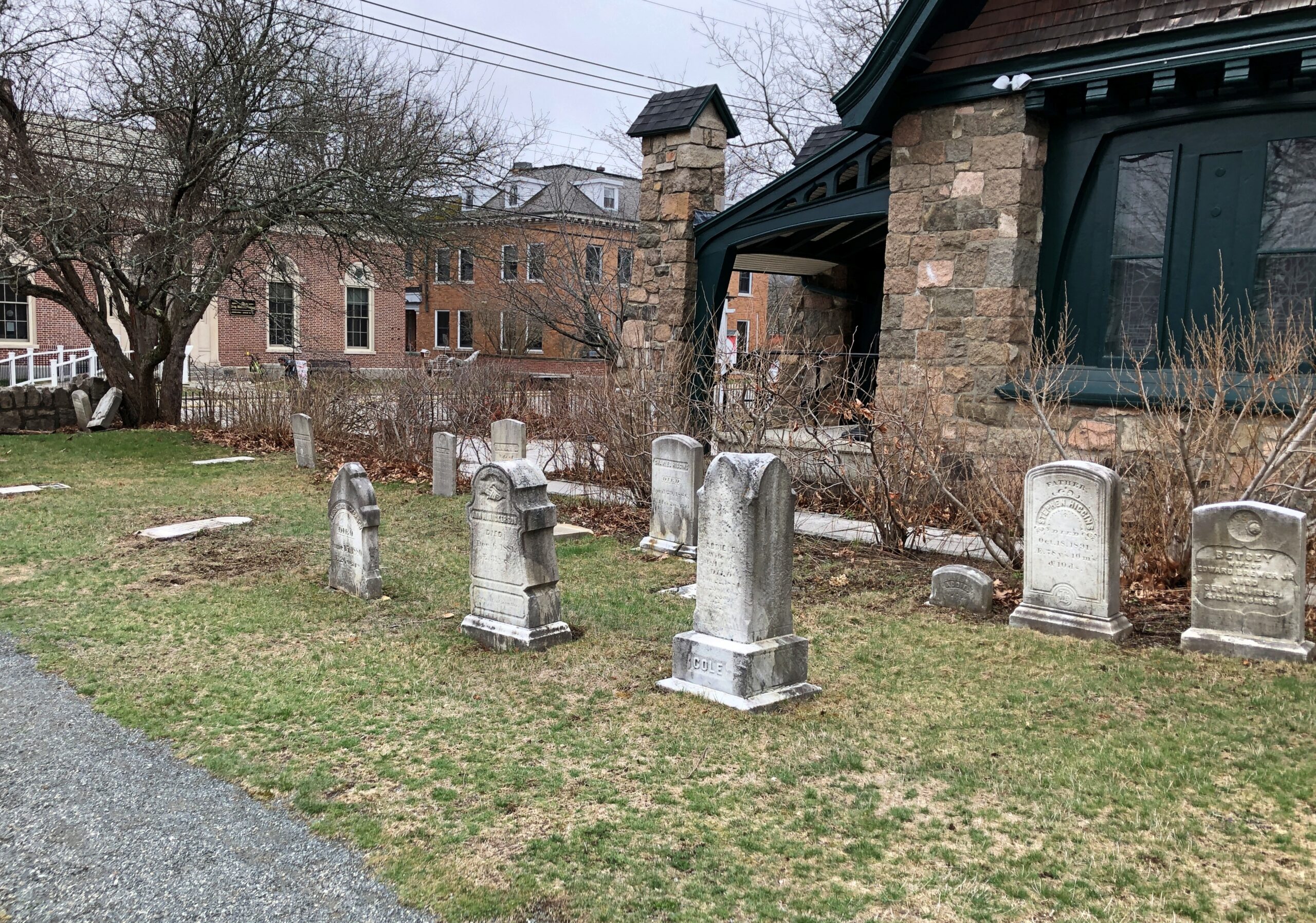
“Established before 1790, this cemetery holds in many unmarked and unknown graves the remains of those courageous men and women pioneers on the frontier of Downeast Maine,” says a sign on site, put there by the Bar Harbor Village Improvement Association.
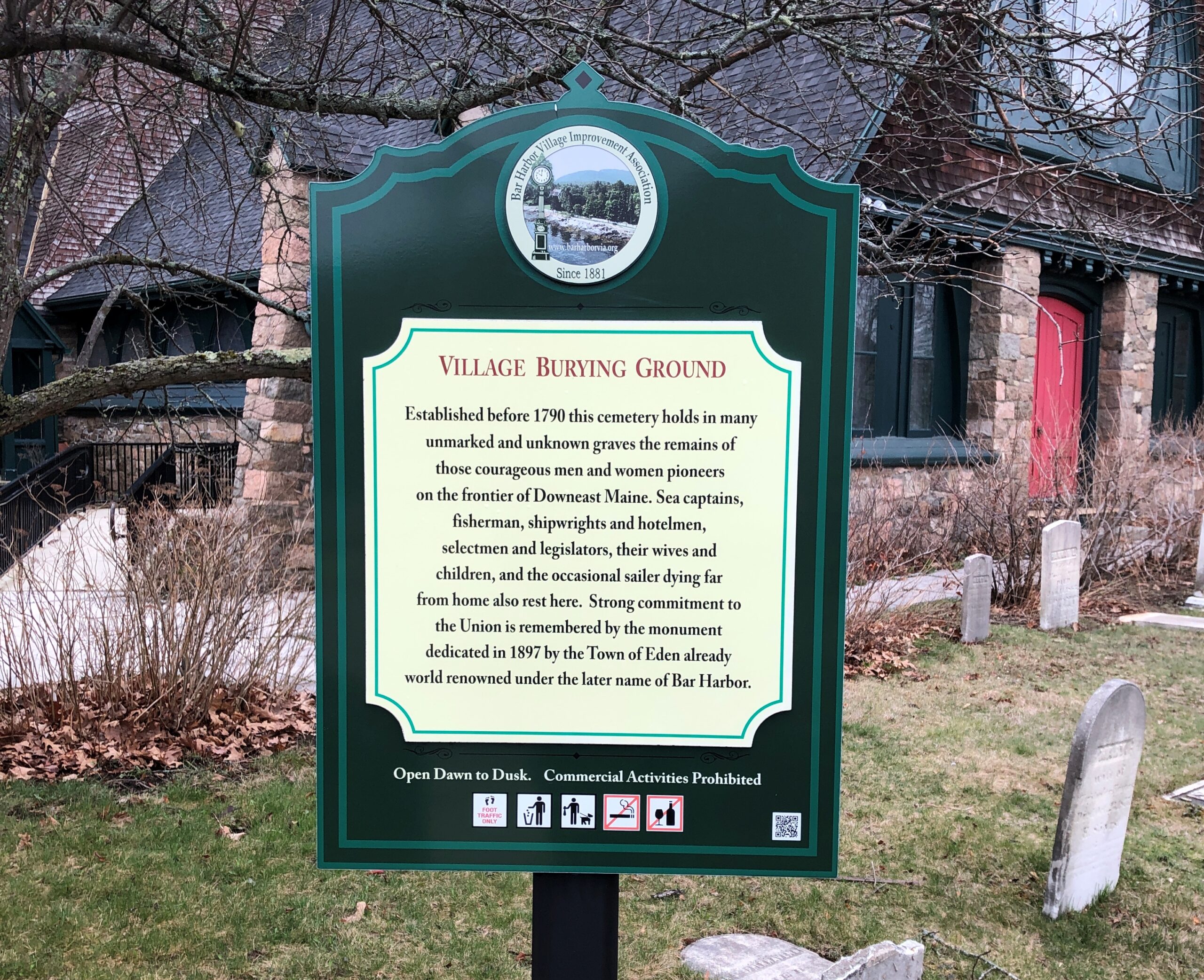
“Sea captains, fishermen, shipwrights and hotelmen, selectmen and legislators, their wives and children, and the occasional sailer [sic] dying far from home also rest here.”
One of those sea captains, Israel Higgins (d. 1823).
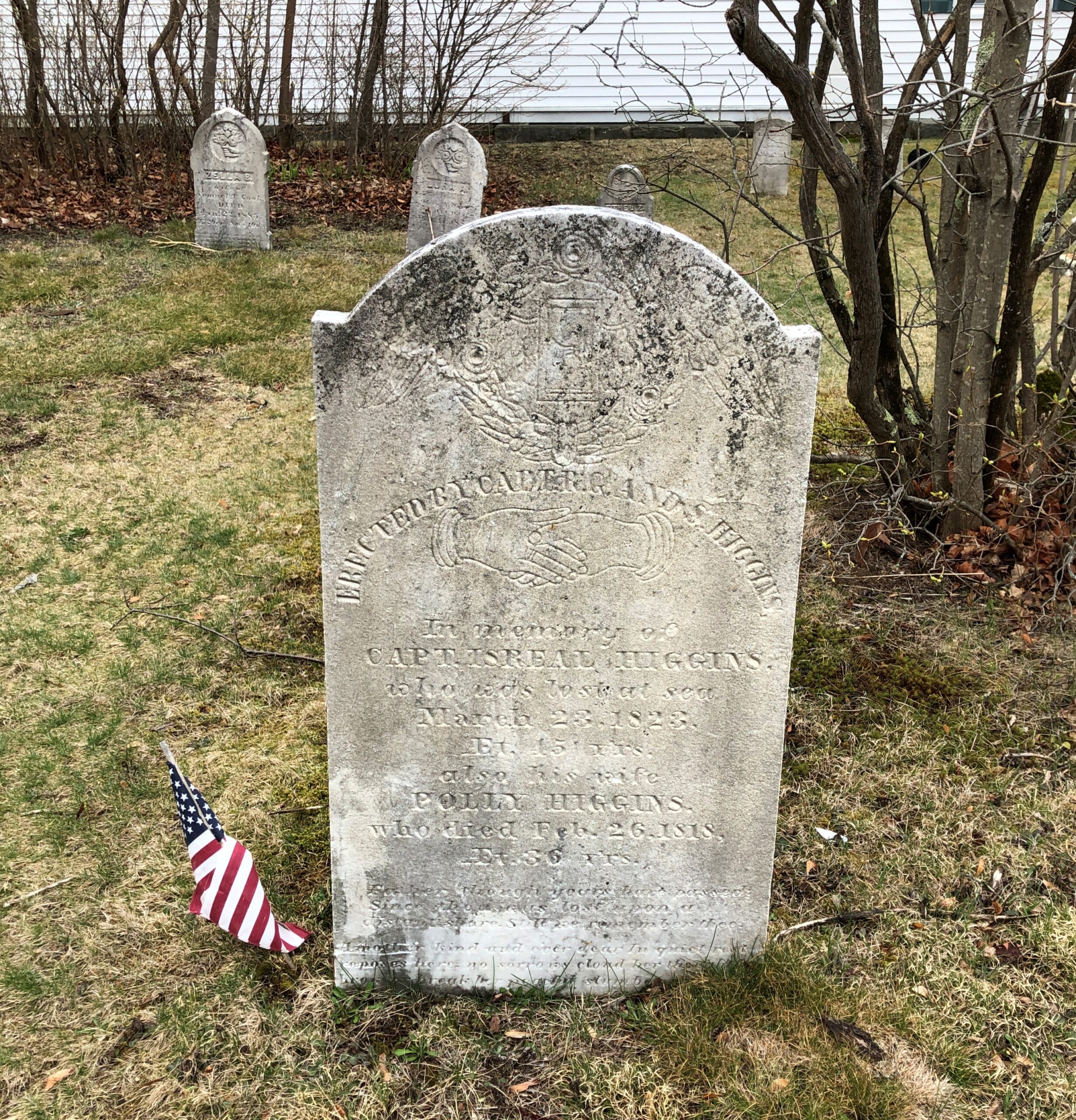
Capt. Higgins, son of Eden (later called Bar Harbor) founder Israel Higgins, was lost at sea. “Israel was considered a master mariner and served as an Eden selectman in 1802, 1803, and 1809,” notes the blog Adventures in Cemetery Hopping. “He was in command of the schooner Julia Ann (his son Seth was also aboard), thought to be the first ship built in Bar Harbor in 1809. Israel and Seth died at sea on March 29, 1823 about 25 miles south of Sandy Hook, N.J., which is about 600 miles south of Bar Harbor.”
His son Stephen seems to have escaped his father and brother’s fate. At least, no mention of perishing at sea.
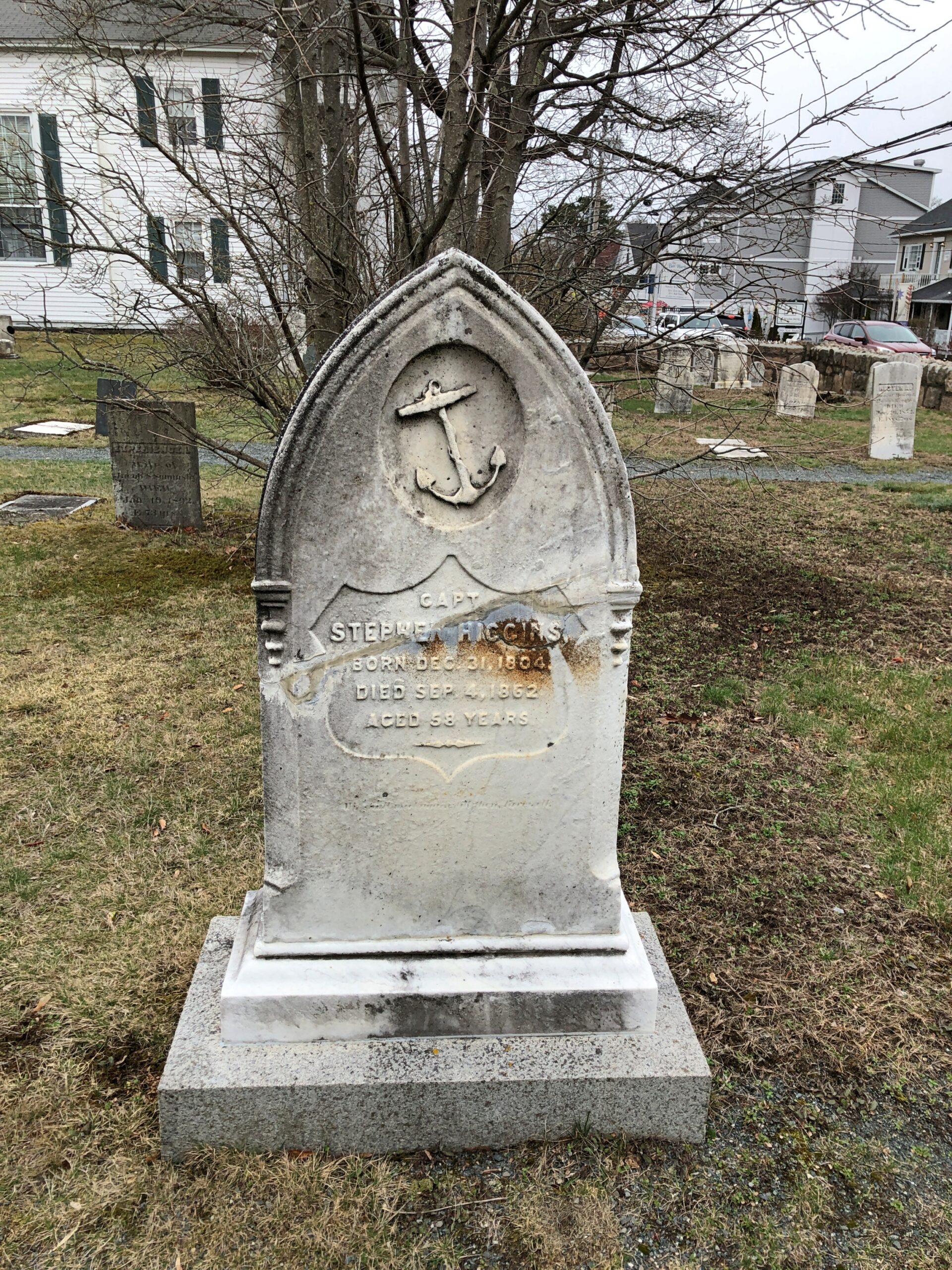
Capt. James Hamor (d. 1873).
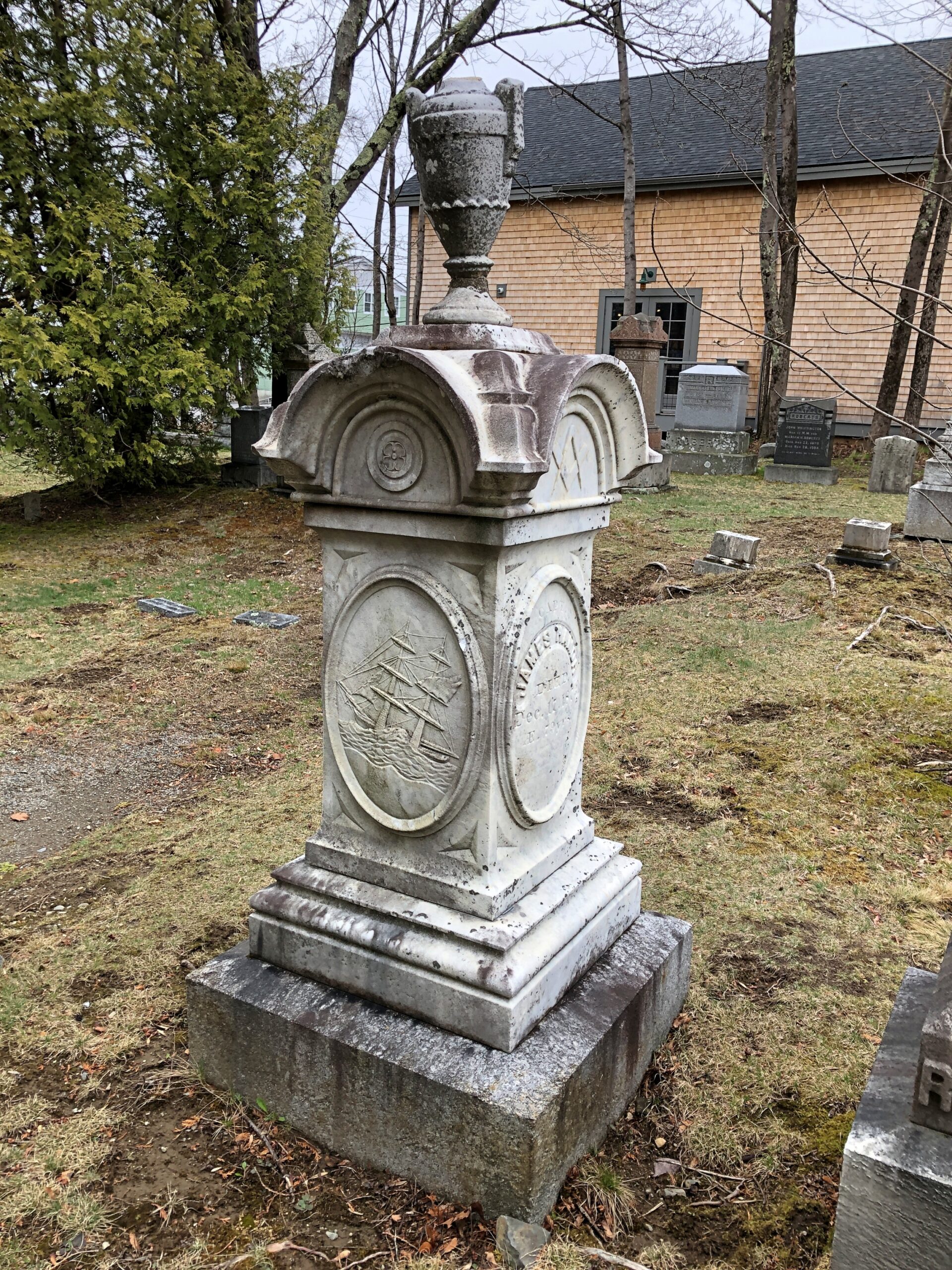
Lived to be 89. In those older days, an old sea dog who liked to hang out in the technically illegal bars in Bangor and tell harrowing and probably exaggerated stories about his seafaring youth? One of those old sea dogs who didn’t discuss the old days much? Did he regard steamships as unworthy of real seamen, or take positive joy in hearing about progress in seafaring?
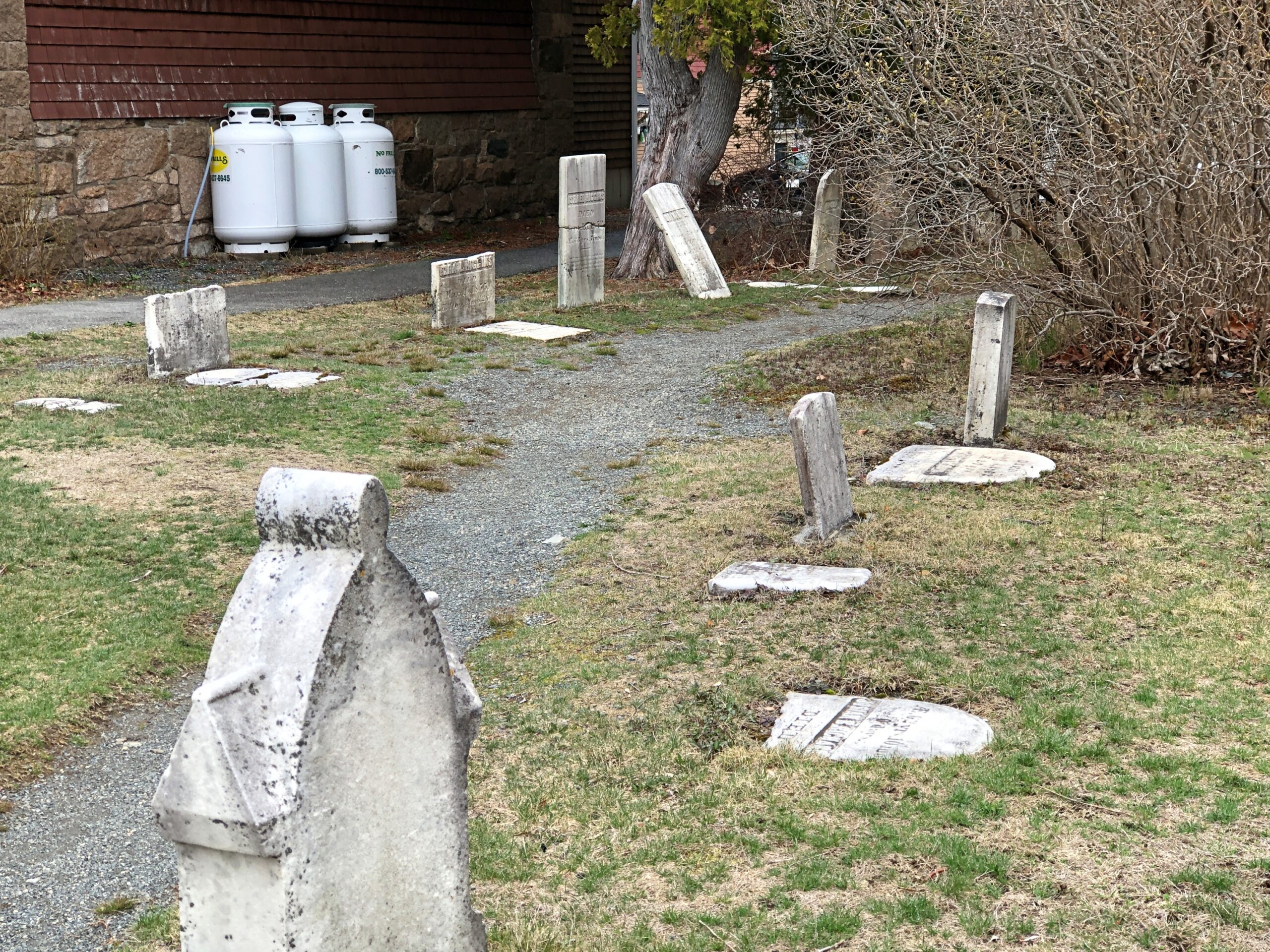
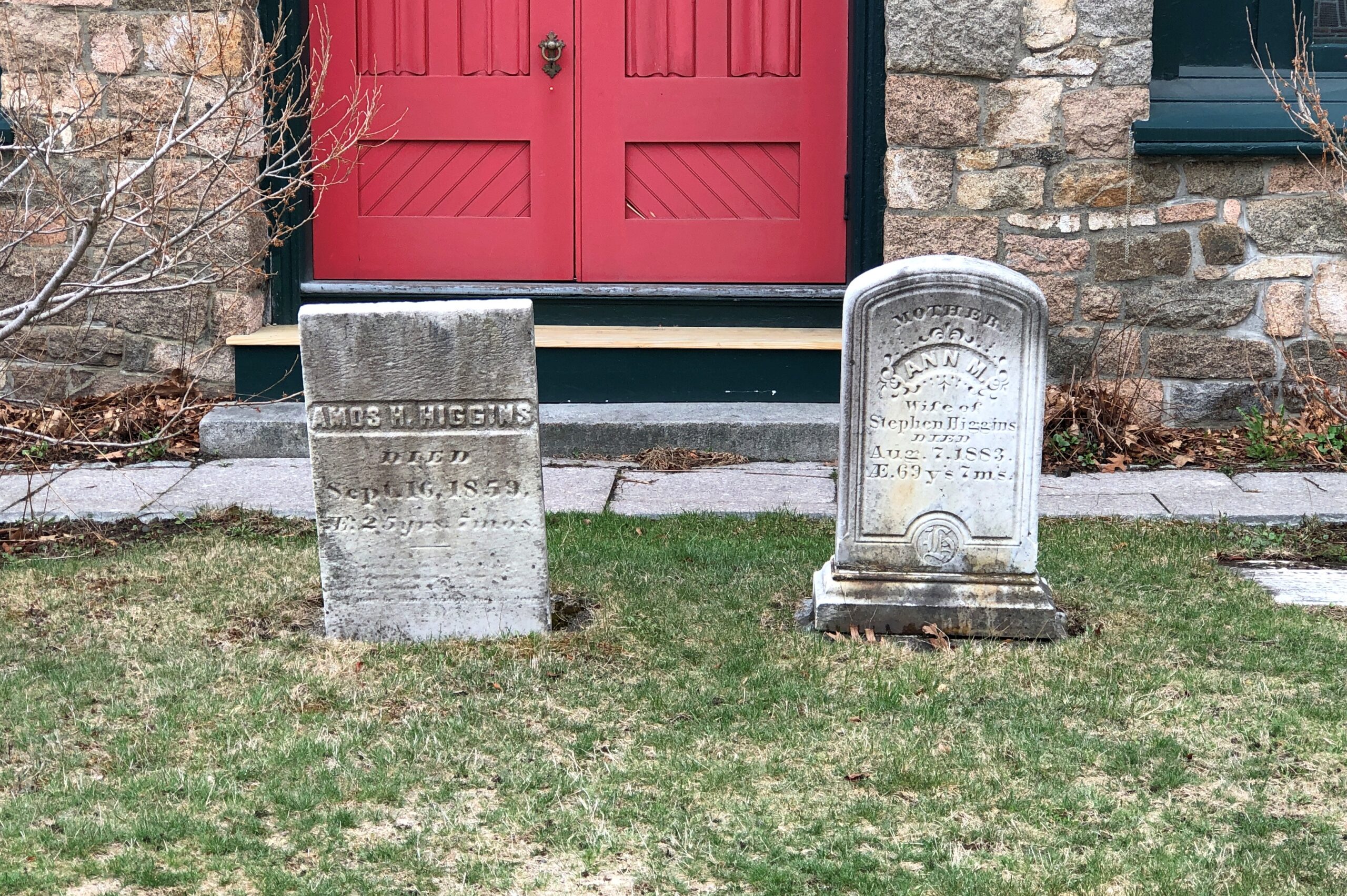
Stones two by two. Maybe not coupled in life, but they are now.
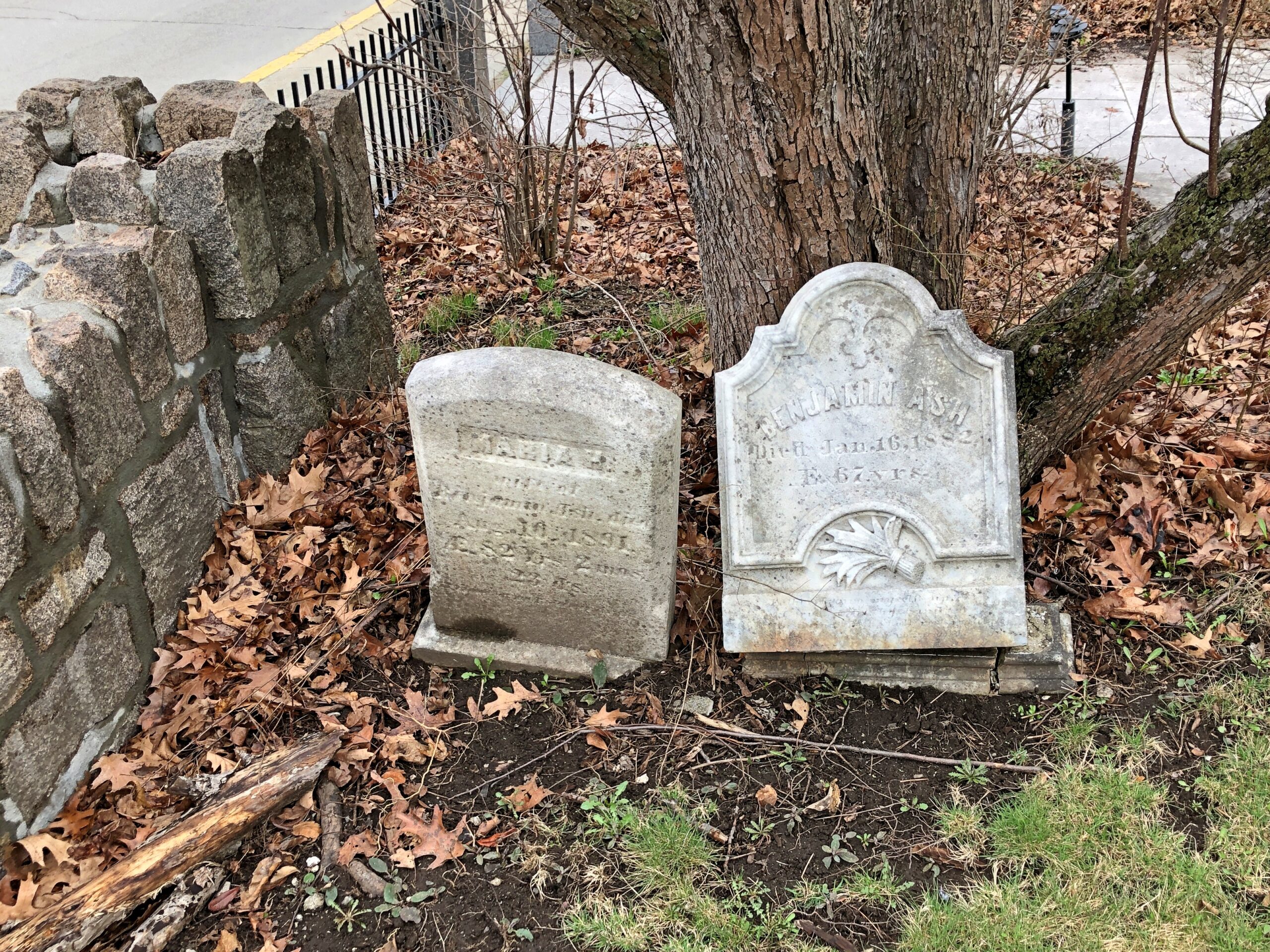
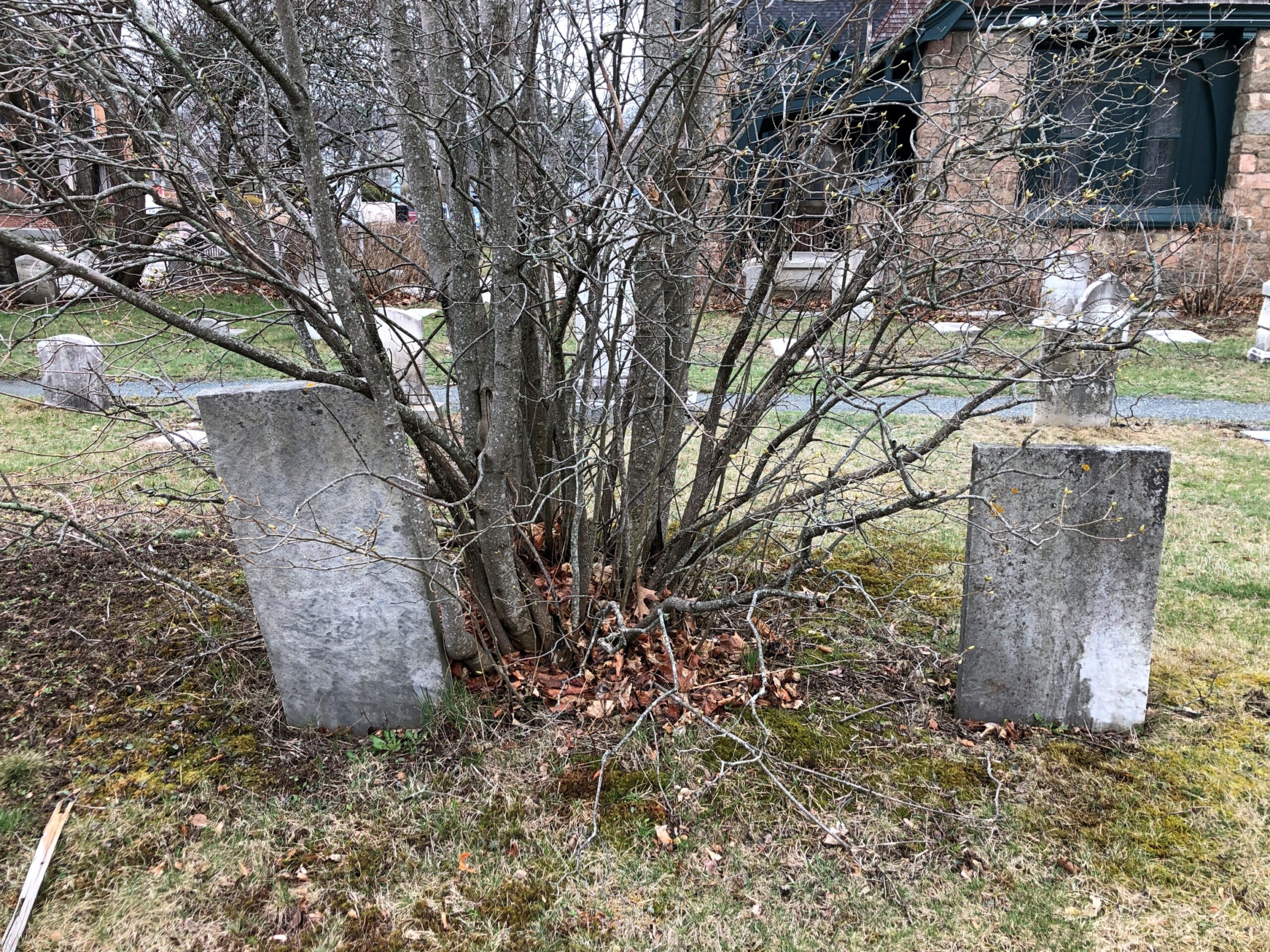
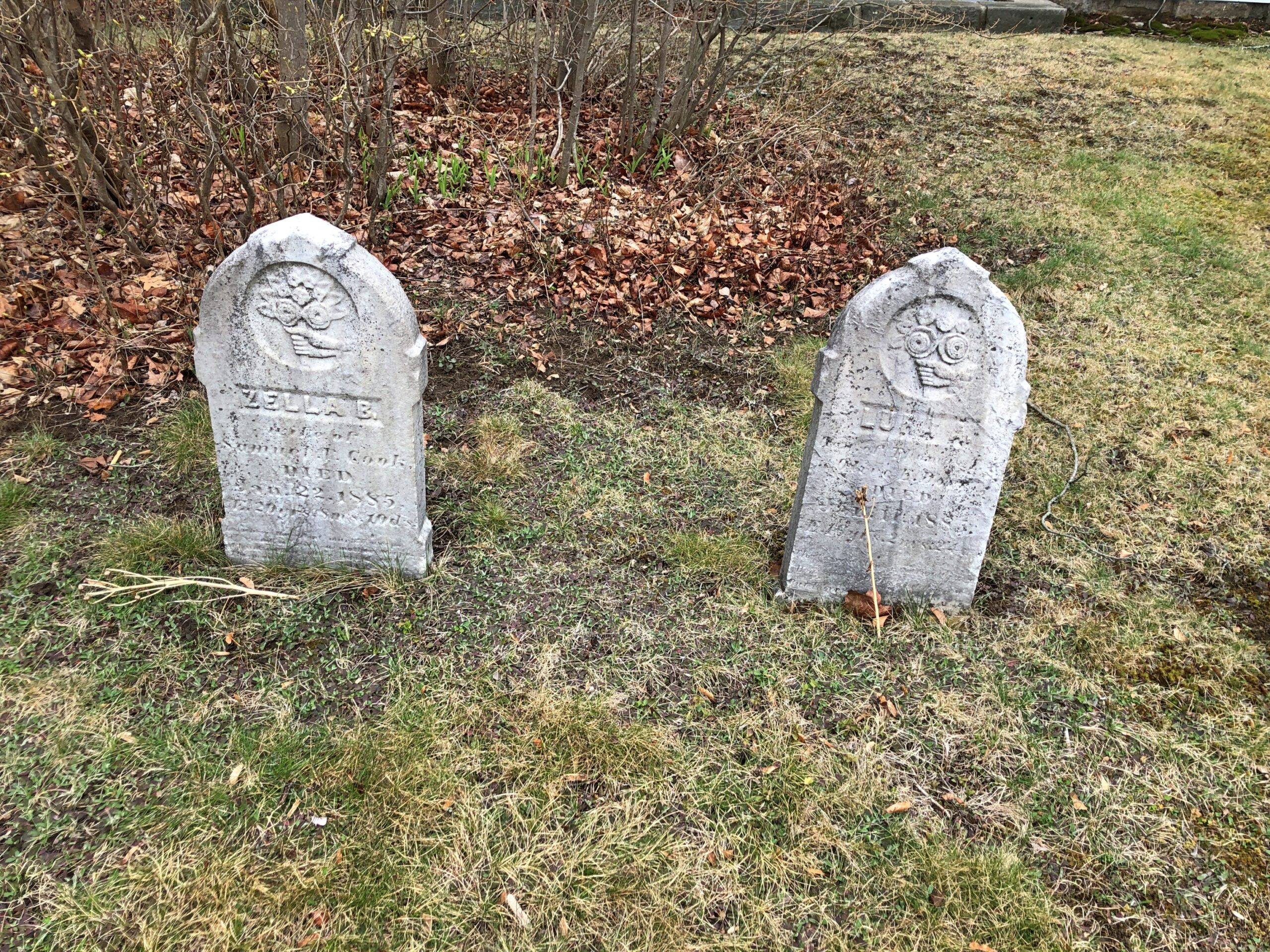
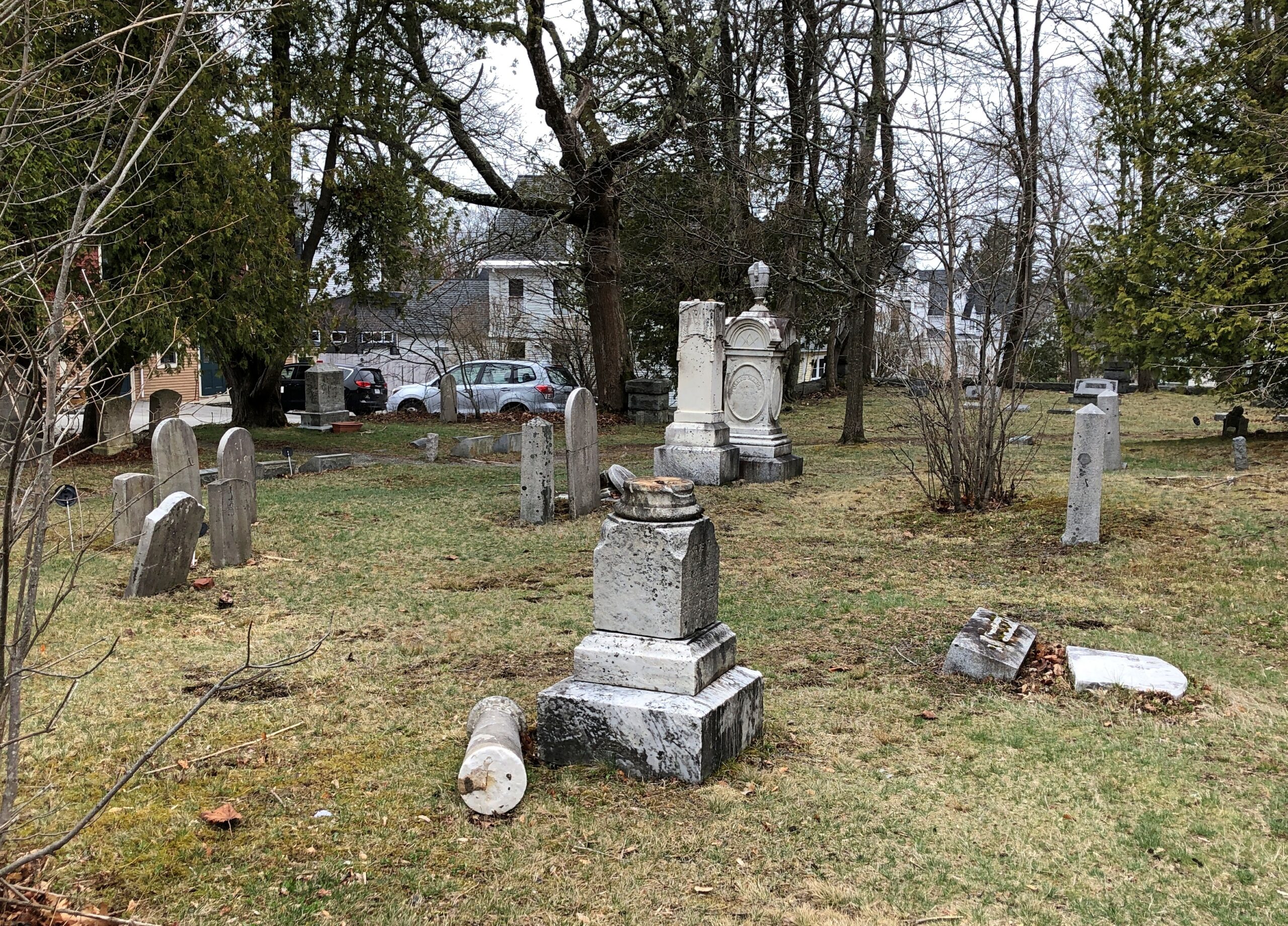
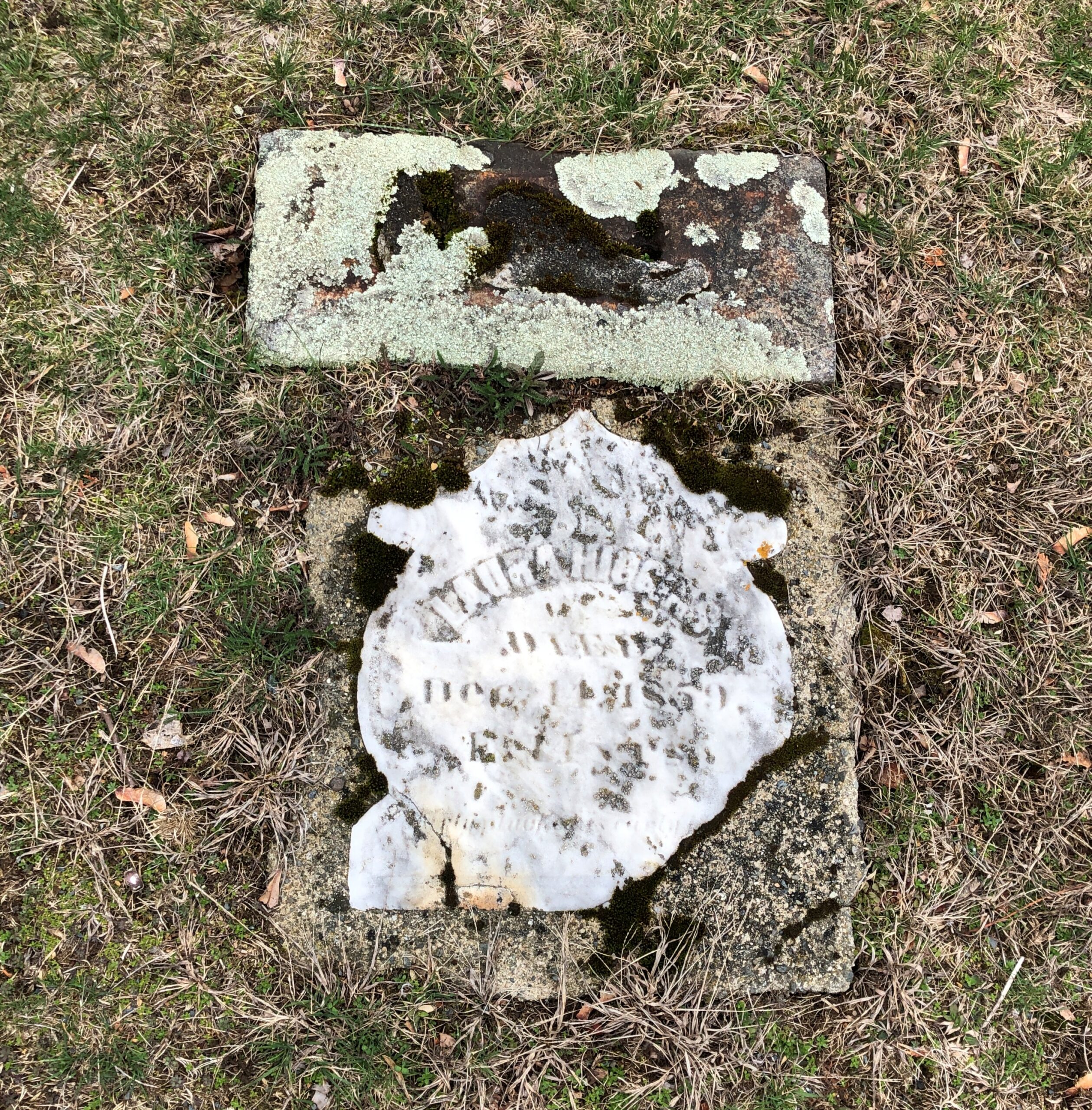
Many stones are on their way to disintegration, as usual with a cemetery that goes back this far.
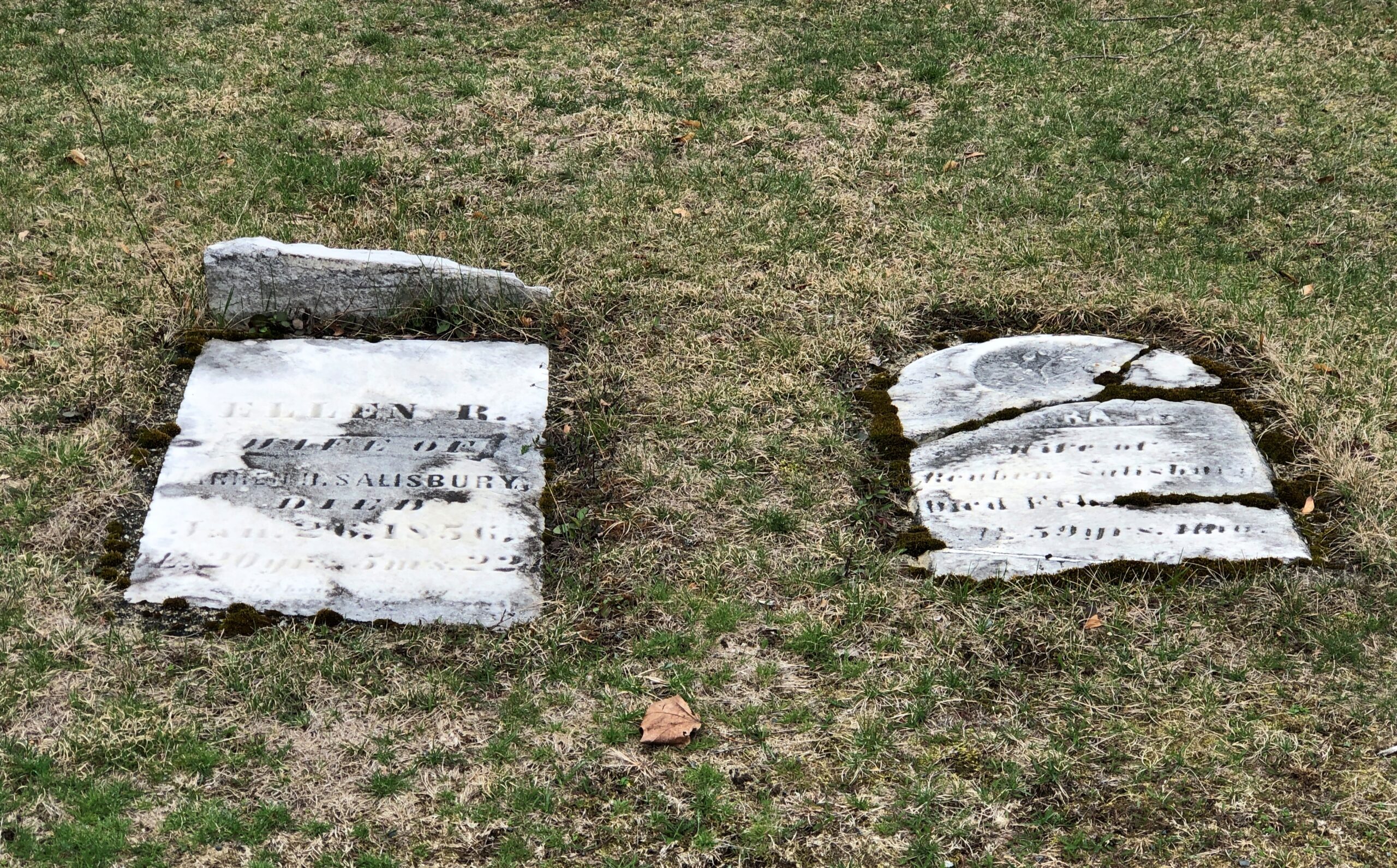
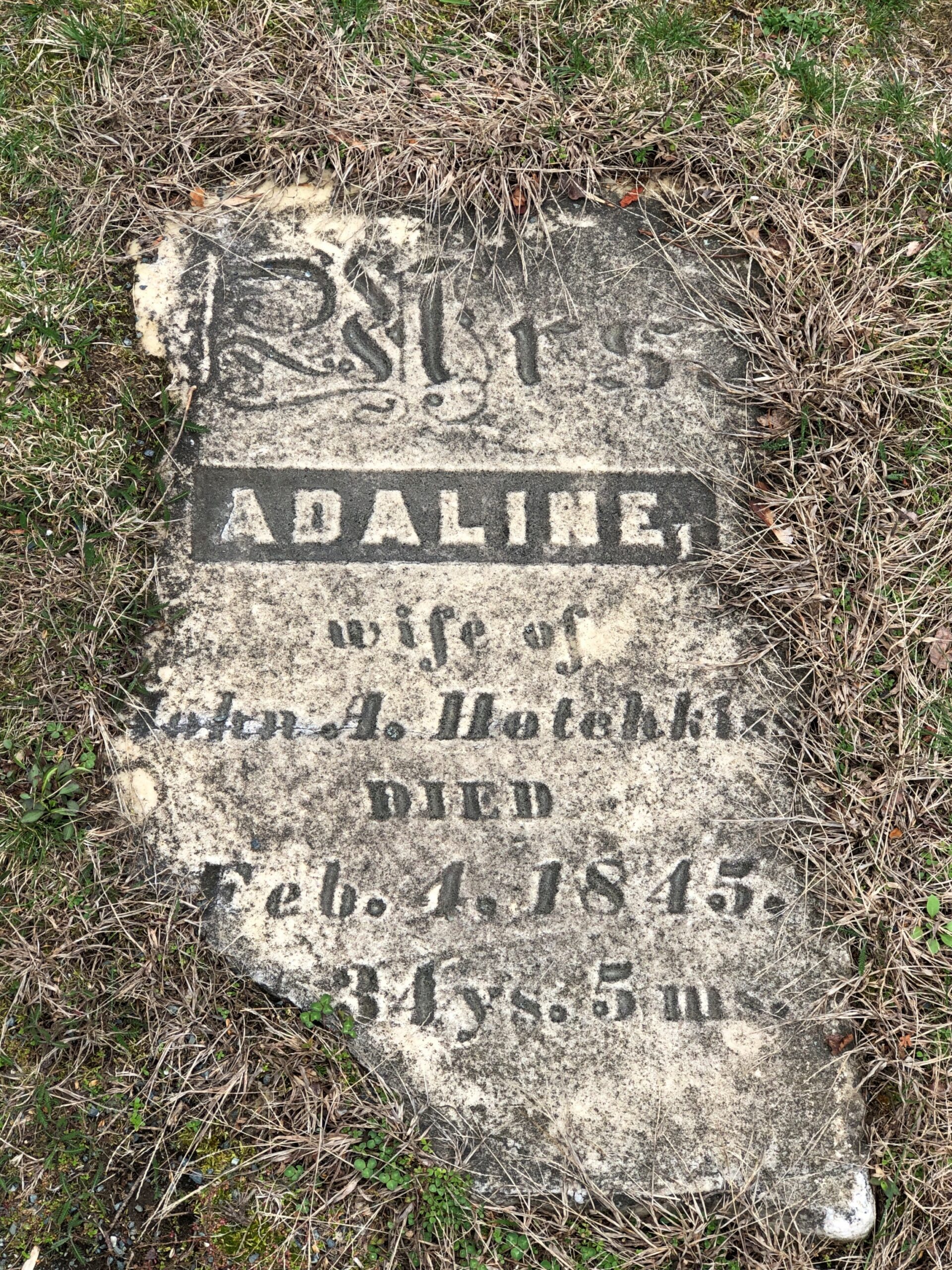
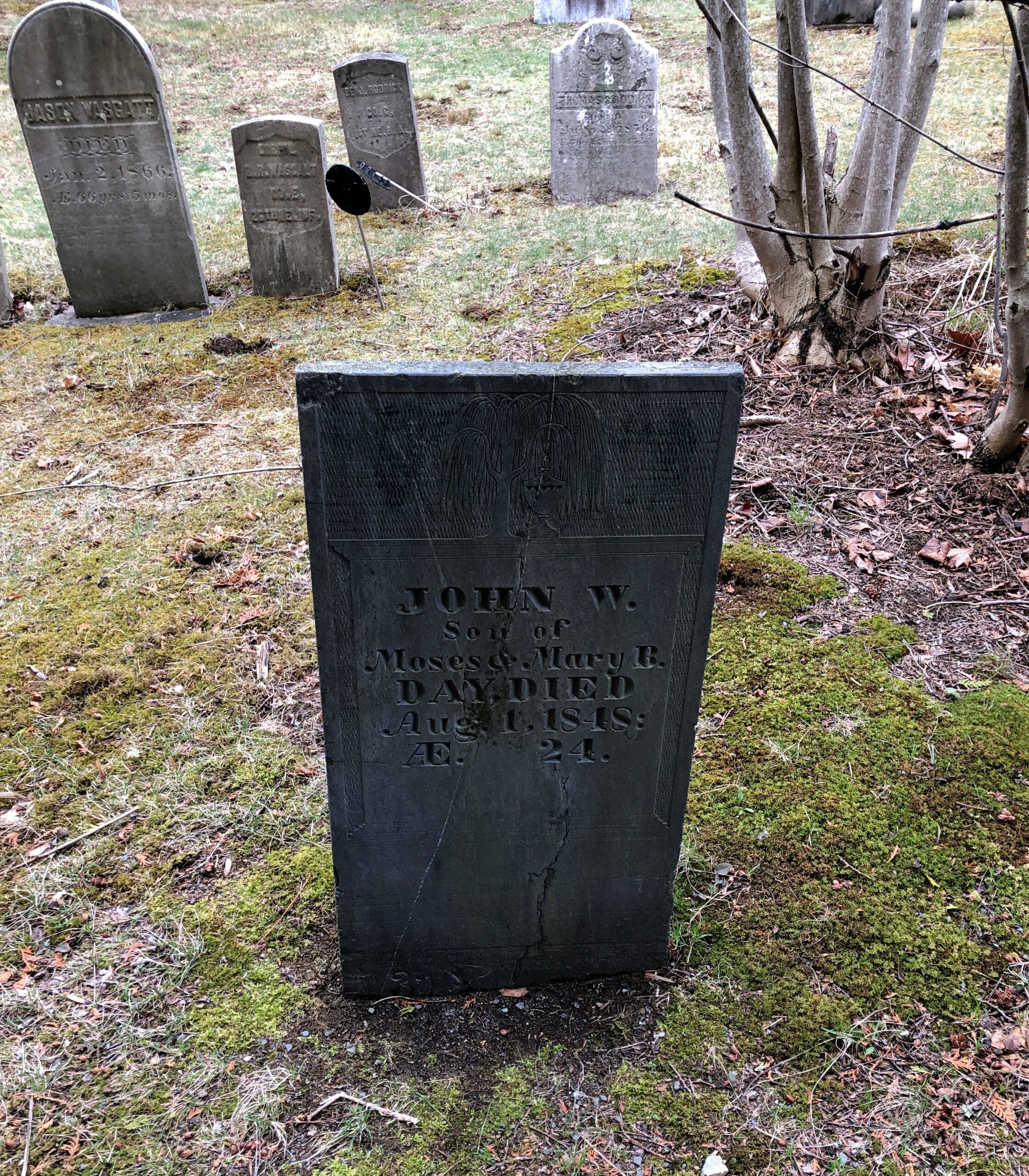
Dark rectangular slate, as seen in a lot of New England, though no others in this cemetery that I noticed, except for a handful of lighter-colored rectangles.
A memorial to Union soldiers from Eden, erected in 1897, ordered from a catalog. Attributed to Cook & Watkins of Boston, memorial makers.
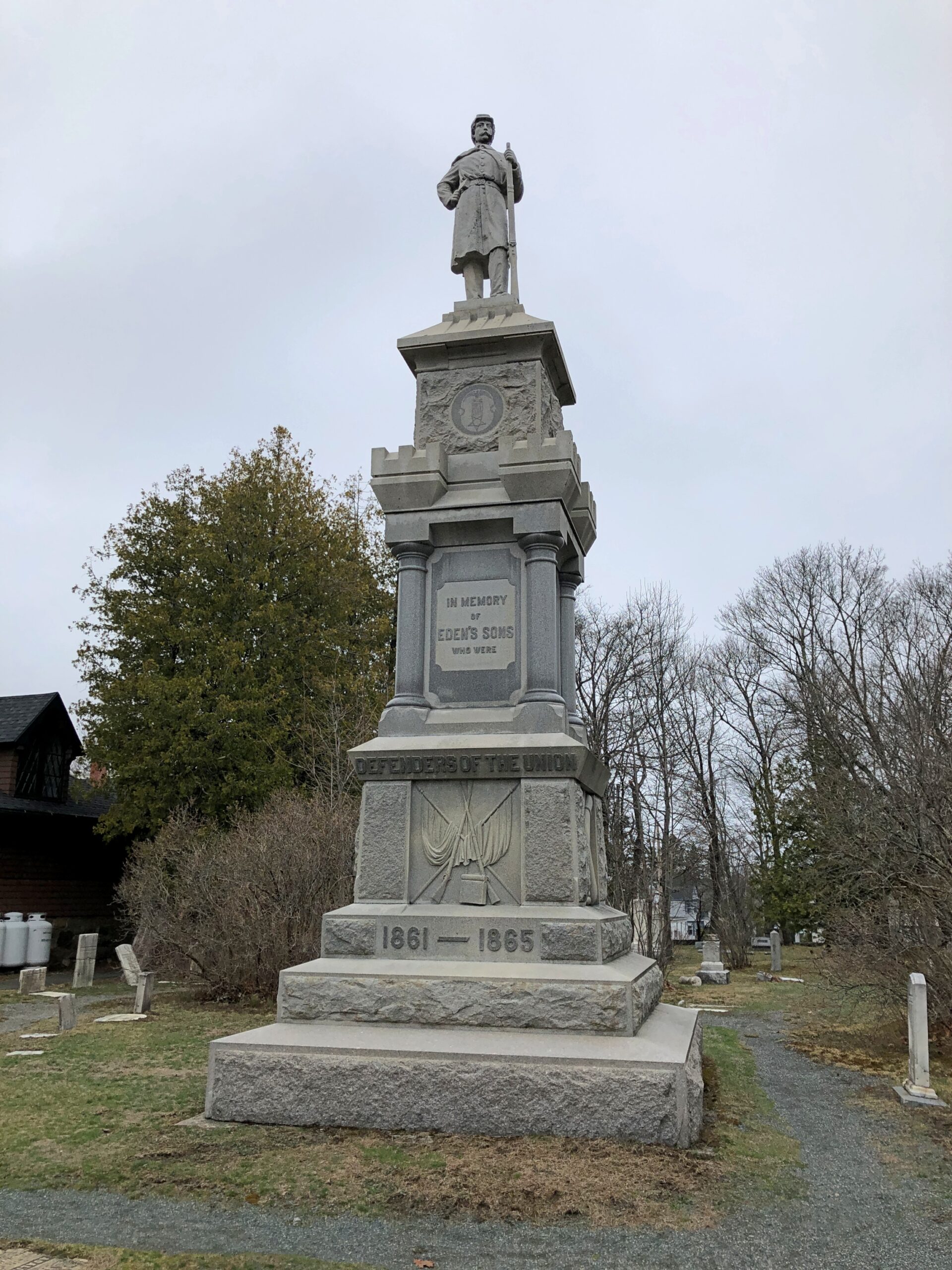
The village paid for most of it, though the public at large donated. Their efforts were probably pushed along by the idea that we’d better get around to this now, what with all the graybeard vets.