Earlier this month, entirely by chance, I saw that St. Mary’s Coptic Orthodox Church in Palatine was about to hold its annual Egypt Fest. I noticed, besides offering the kinds of things you’d find at a local festival, such as food and children’s rides, the event also offered the opportunity to visit the church building. Instantly I knew I wanted to attend. I didn’t remember ever visiting a Coptic church before. So I went that Saturday afternoon.
The church is in a prosperous neighborhood not far from a major highway that I drive often, and I knew it well, in the sense that St. Mary and the Christ Child in their glory are visible from the highway. But also as a flyby. Visiting in person, I got a better look.
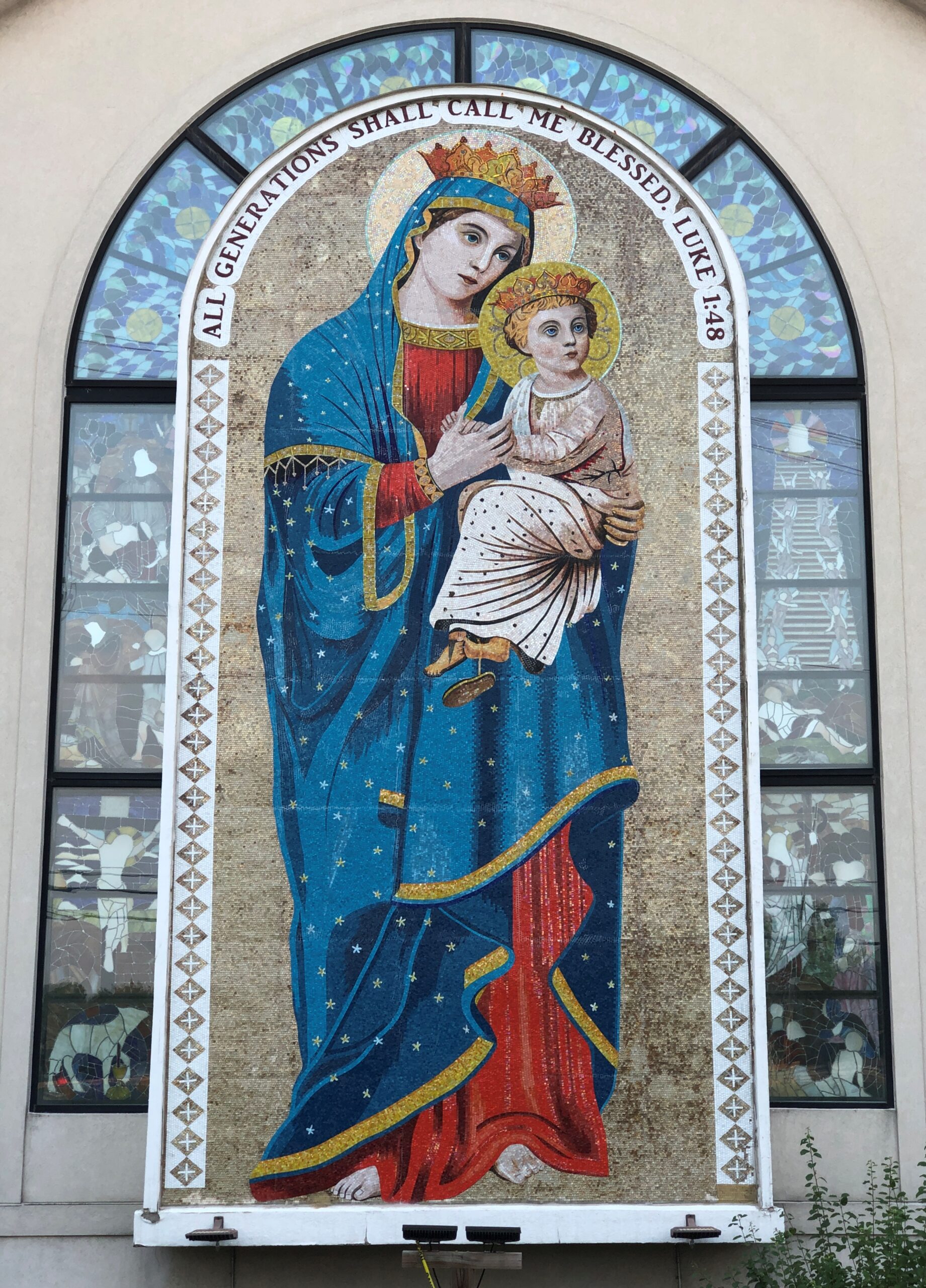
They are featured on the back wall. Facing east, if my geographic awareness is correct.
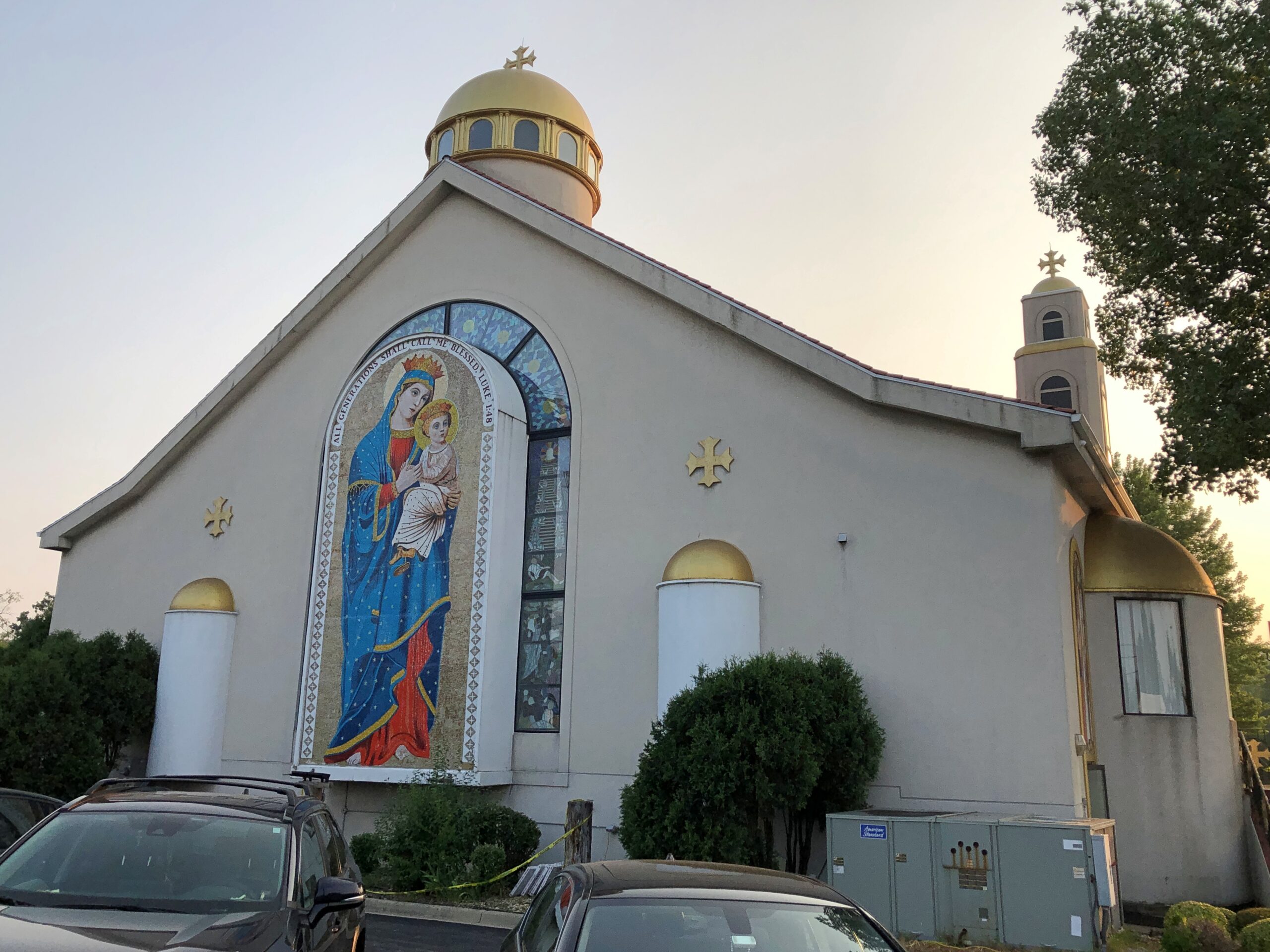
The church was indeed open. An interior detail.
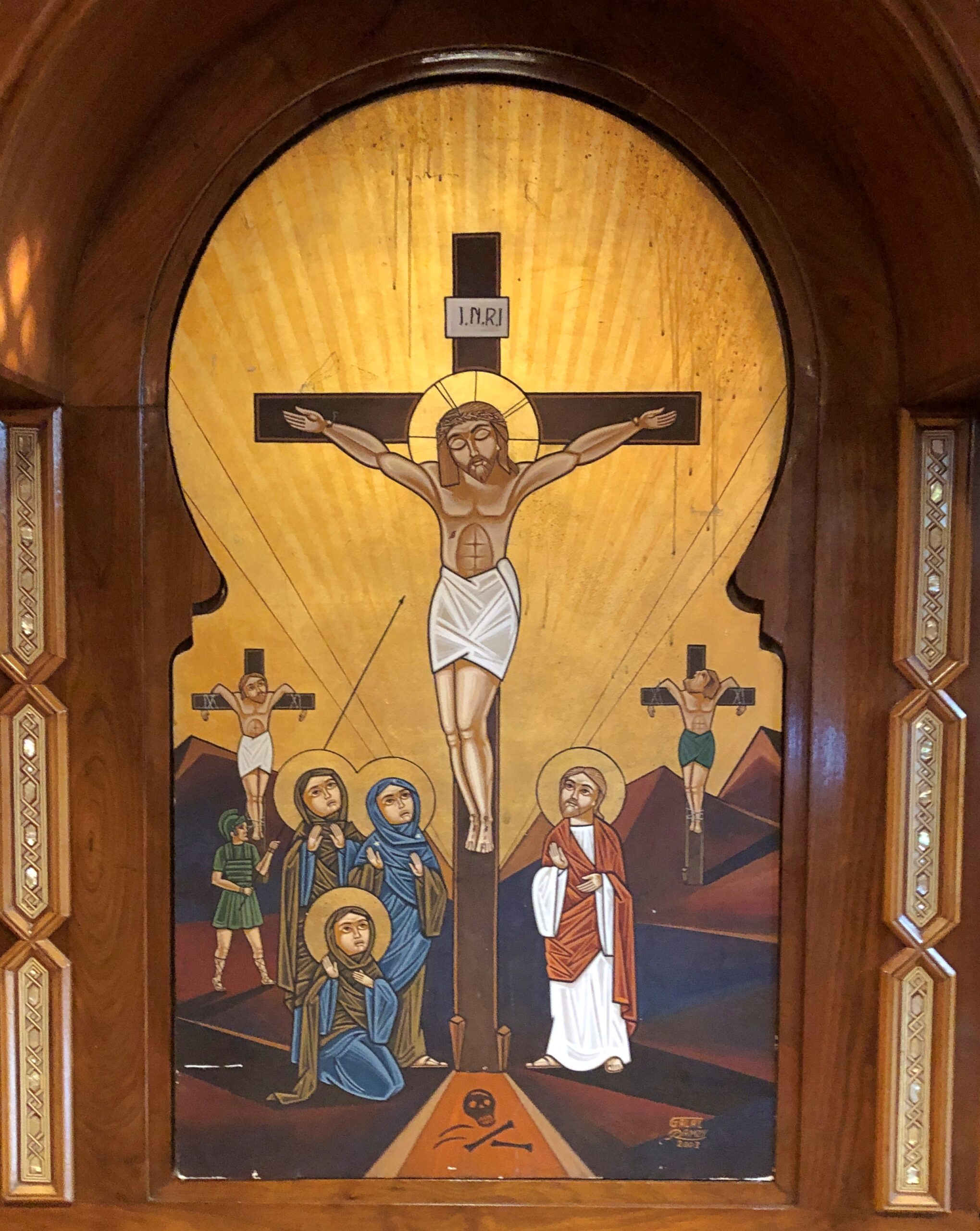
Stained glass.
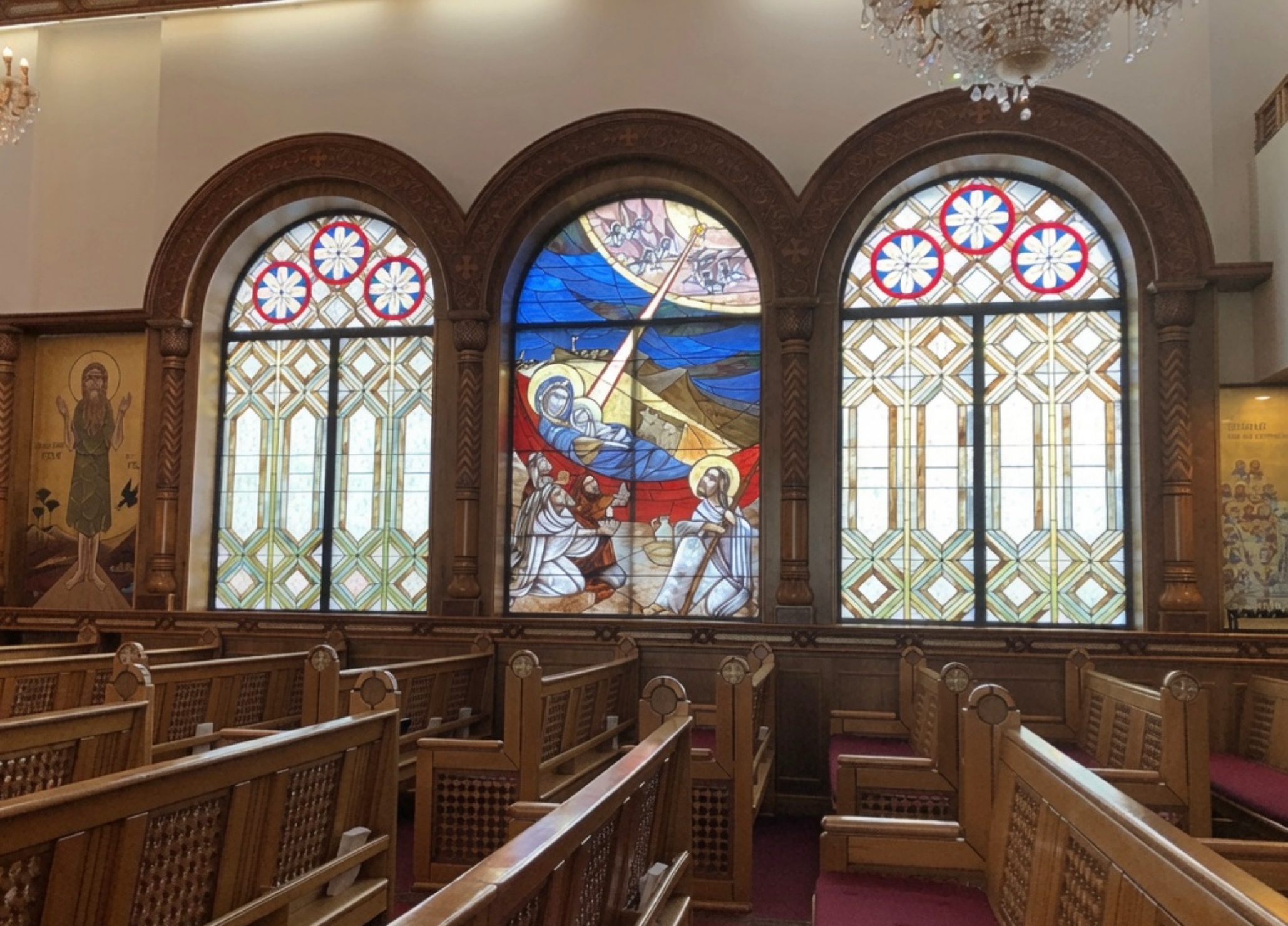
Pews and an iconostasis. Unusual, but I’ve seen it before. Priests and a few laymen were active in the sanctuary that afternoon. The prayers, which I took to be partly in Coptic, had a hypnotic quality. Text of the prayers scrolled by in English, Coptic (I assume) and Arabic.
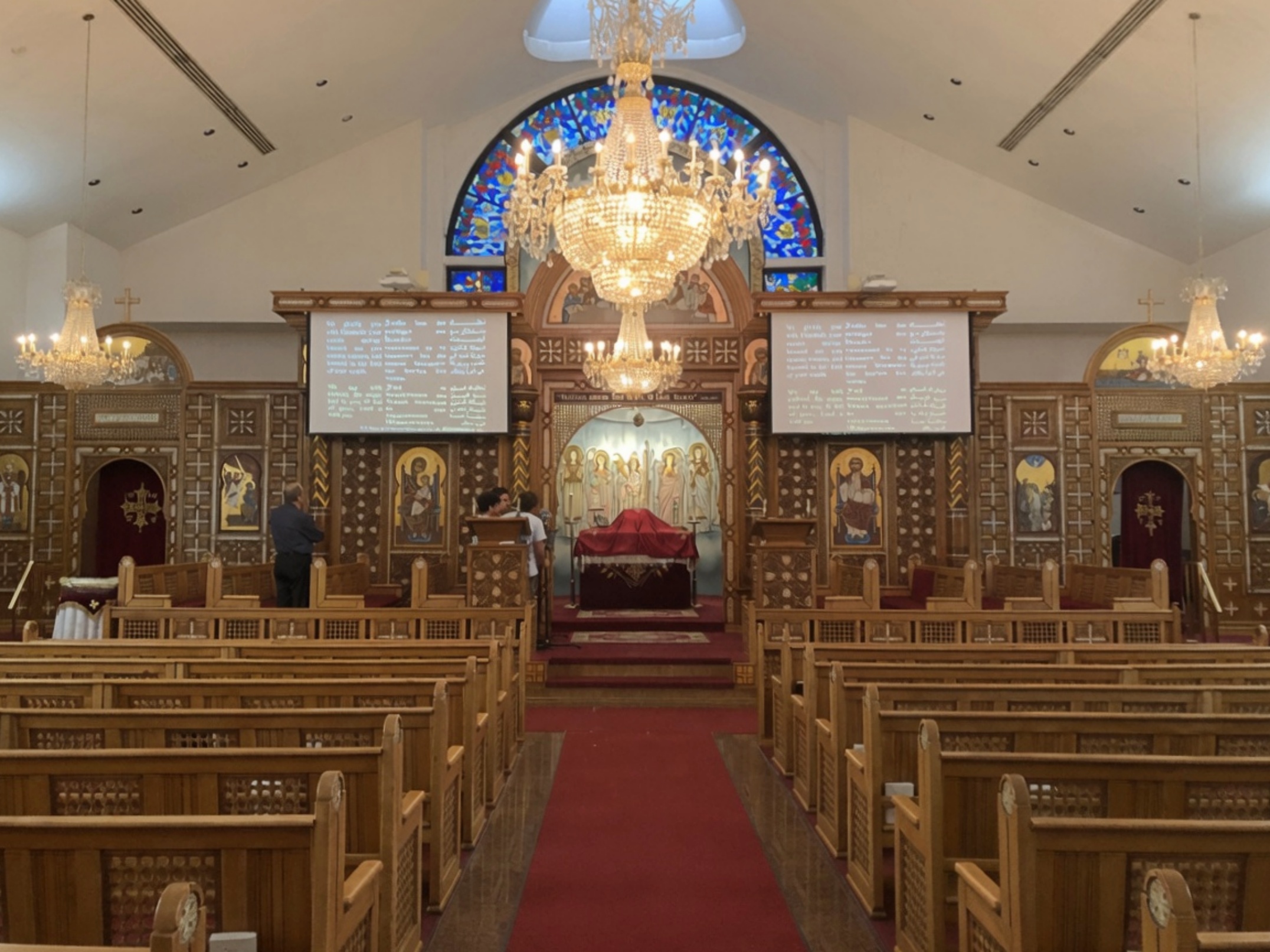
That kept me in the pews a while, as I tried to remember what I learned, many years ago, about what had caused the rupture between Constantinople and Alexandria in the 5th century. During the Council of Chalcedon. That much I remembered. The nub of the quarrel? I had to look that up later.
The nature of the Son. The sort of argument that inspired riots, once upon a time. Now I imagine even most lifelong parishioners of whichever side would shrug at the difference. The Copts have more immediate concerns anyway, such as ongoing persecution in Egypt itself. We have our issues in North America, but at least Copts can live in peace here, and maintain an elegant church in a prosperous neighborhood.