The church participants in Doors Open Milwaukee typically provided visitors written descriptions of the church and the church’s history, on actual sheets of paper. Good for them, in this over-digital age. I picked them up for future reference – as in, right now – and the one for St. Vincent de Paul Parish was rather long on the various priests associated with the parish (and two Congressmen who went to church there), with less about the church building, though it does say that the current one was completed in 1900 in a Renaissance Revival style by architect Bernard Kolpacki (d. 1900, so this was probably his last project among a number in Milwaukee).
This church, too, was originally for a Polish congregation.
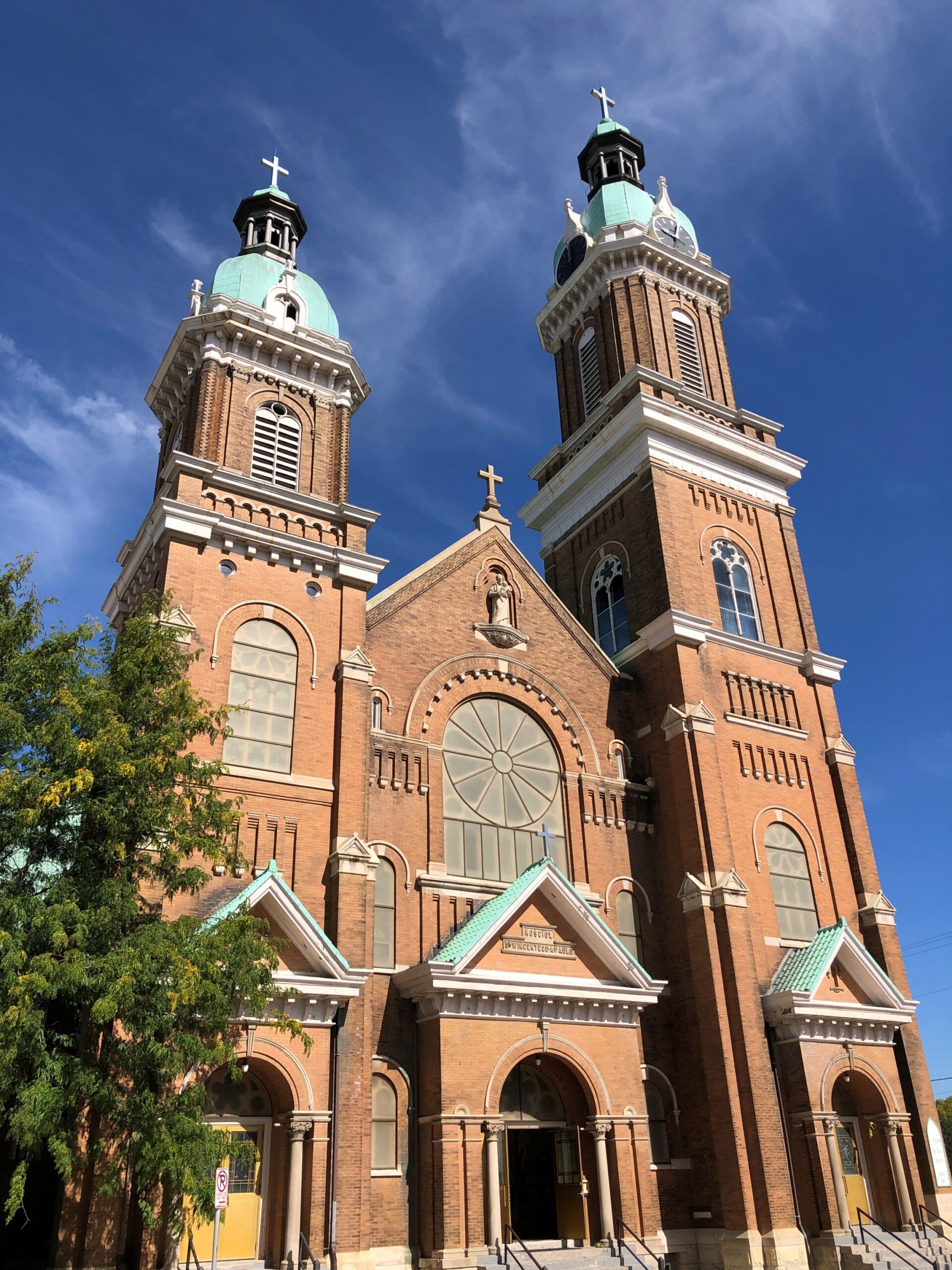
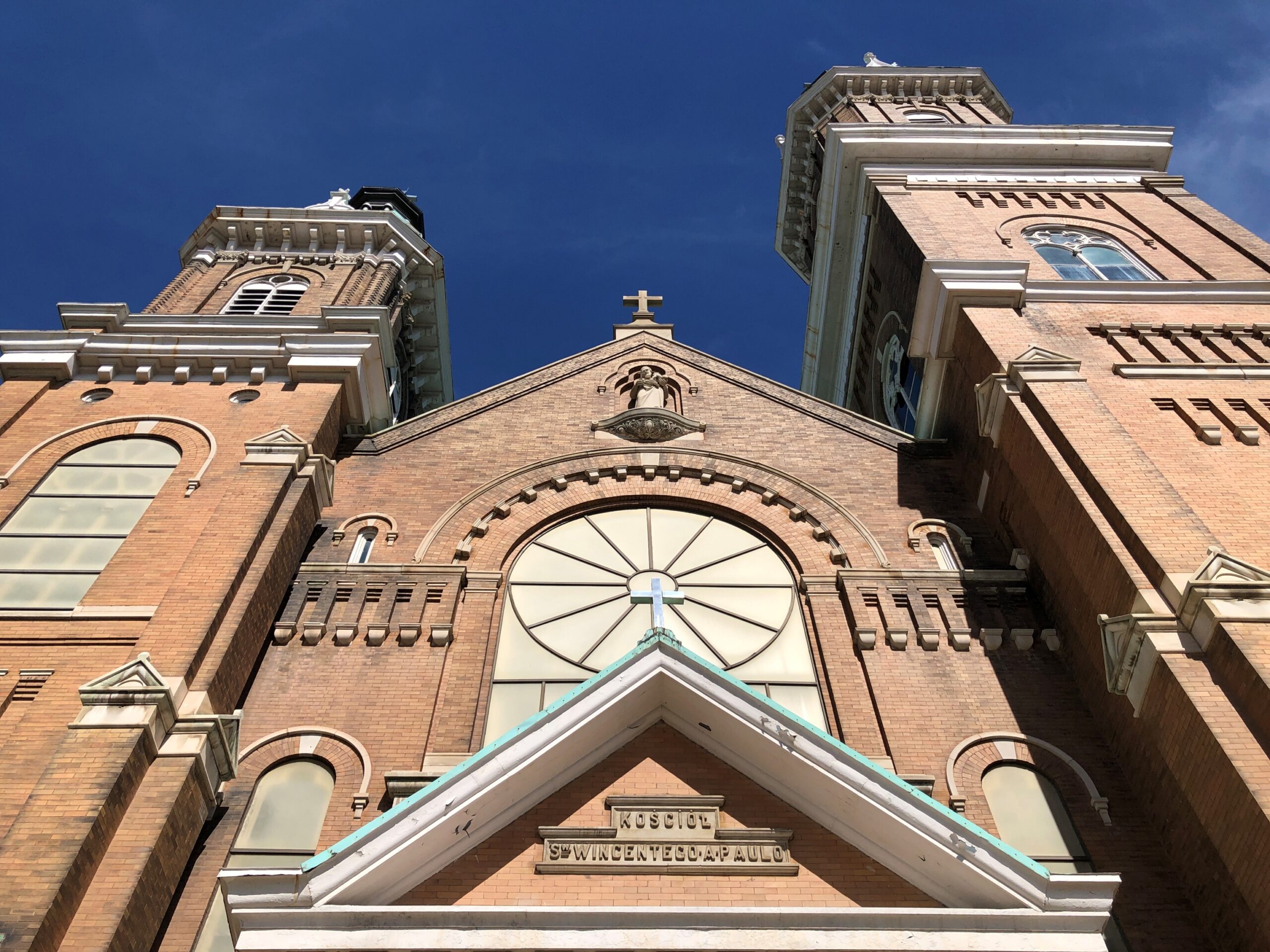
The sheet offers information about Rev. Wincenty Lewandowski (d. 1900), who founded St. Vincent de Paul Parish. He had felt it expedient to leave the German Empire in the 1870s due to Kulturkampf and all that jazz, making his way to Ohio at first. When he got there, he got to work. The sheet notes the following glimpse of something that could use a little more detail:
Bishop Richard Gilmore sent him to Toledo, Ohio, where he would found St. Hedwig Parish in October 1875, and St. Anthony Parish in 1882. For reasons unclear in the surviving records, many were opposed to Lewandowski at Saint Hedwig, his multiple reassignment requests to the bishop were denied, and the situation devolved in June 1885 into a bomb being discovered under the rectory and a riot breaking out between parishioners. Lewandowski resigned and departed for Milwaukee.
Other sources mention the 1885 church riot in Toledo, and the fact that St. Hedwig in that city was torched the next year. Religious-inspired violence is one thing, but church riots are considerably rarer on these shores. Yet Toledo isn’t the only one I’ve encountered while visiting churches – there’s also the story of the former Cathedral of All Saints of the Polish National Catholic Church in Chicago, which not only involved an ecclesiastical riot, but schism thrown in mix for that extra volatility.
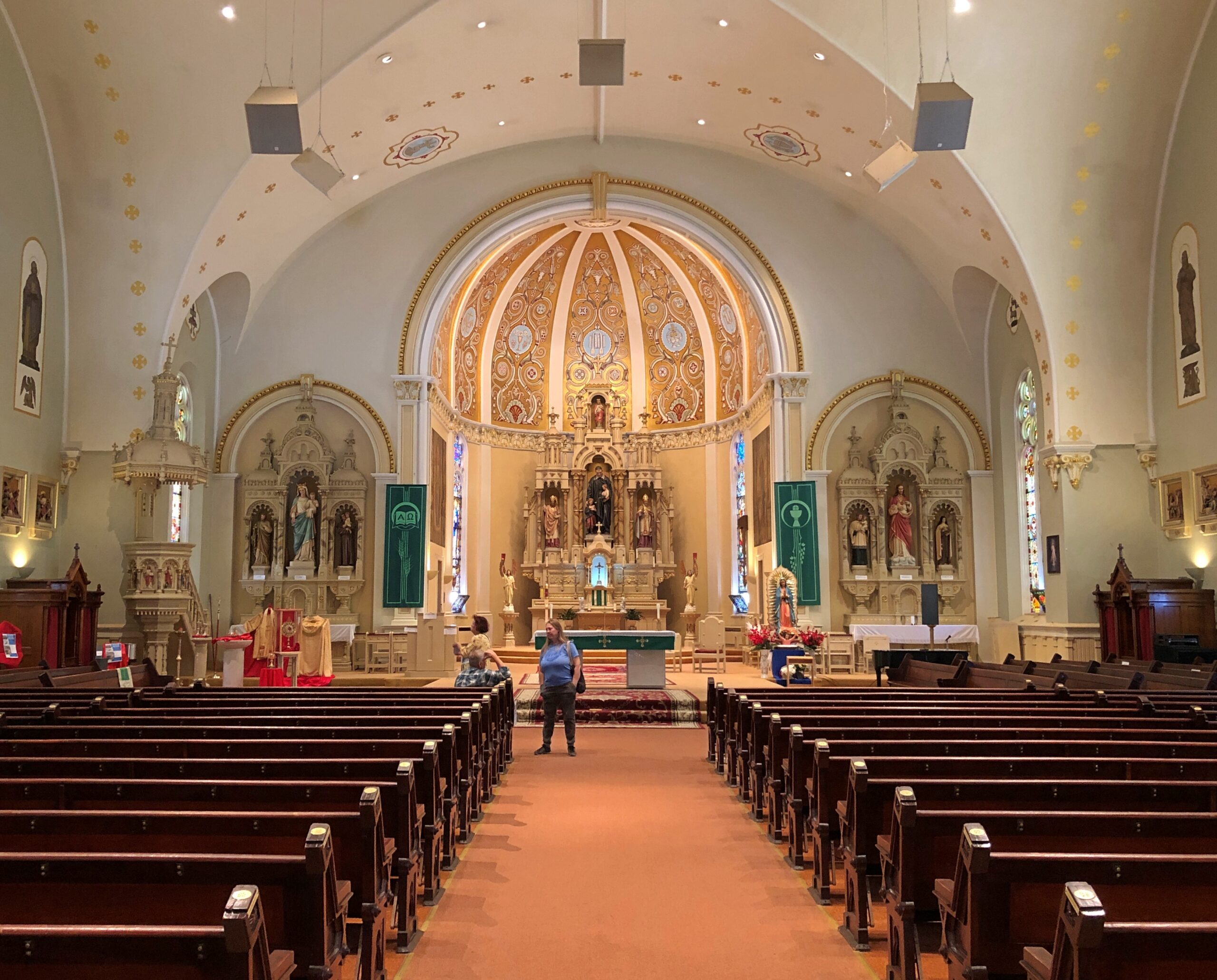
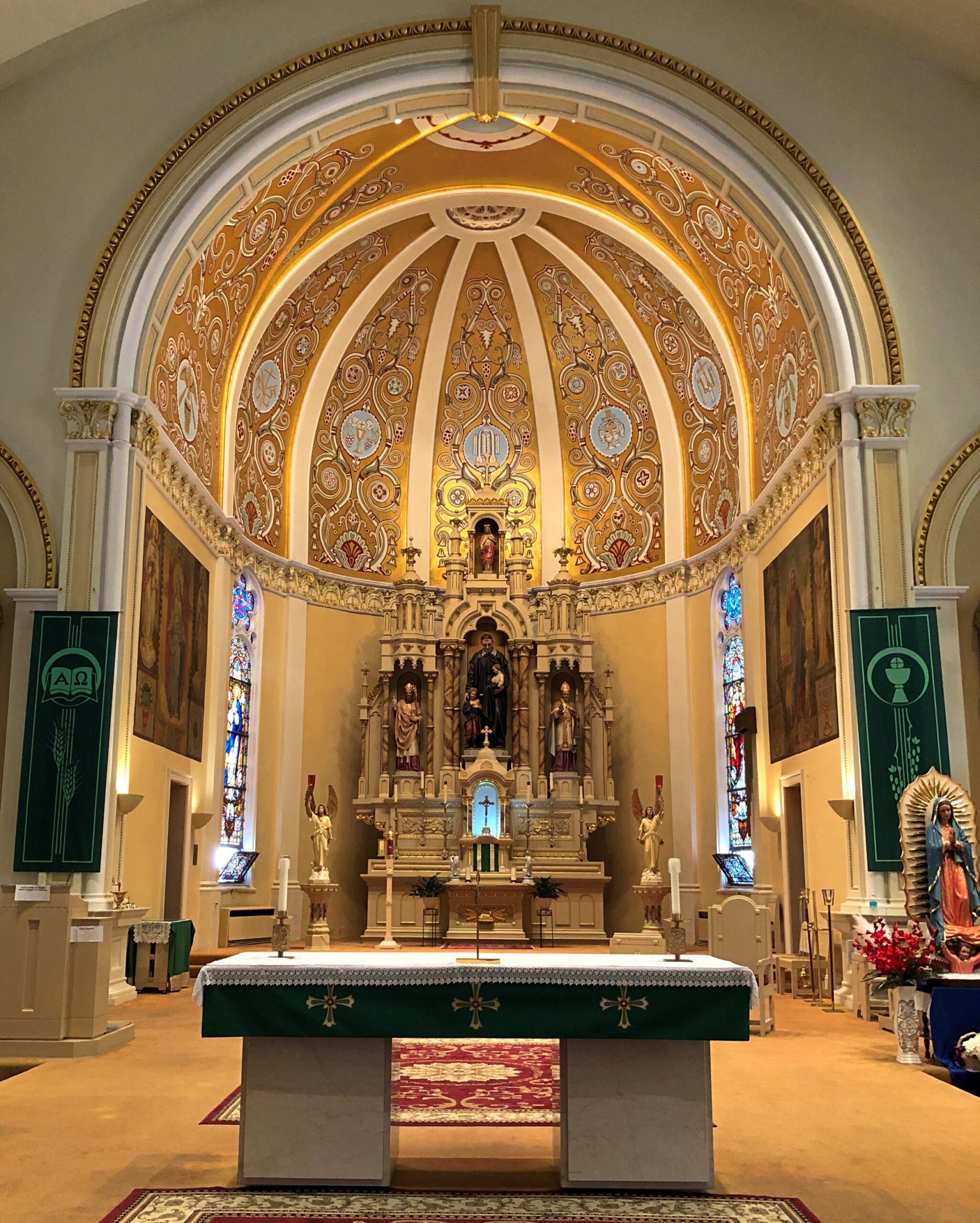
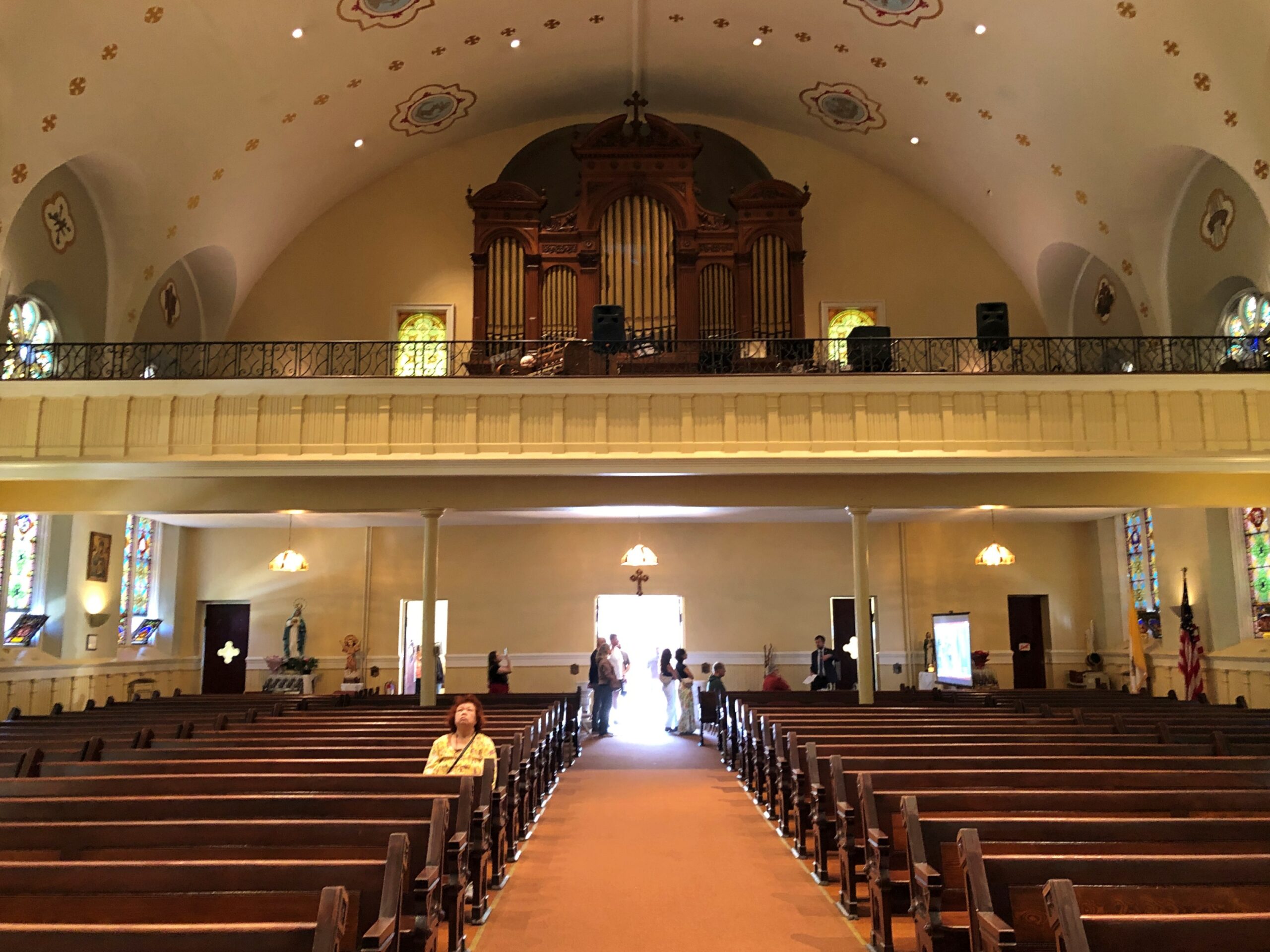
Impressive stained glass.
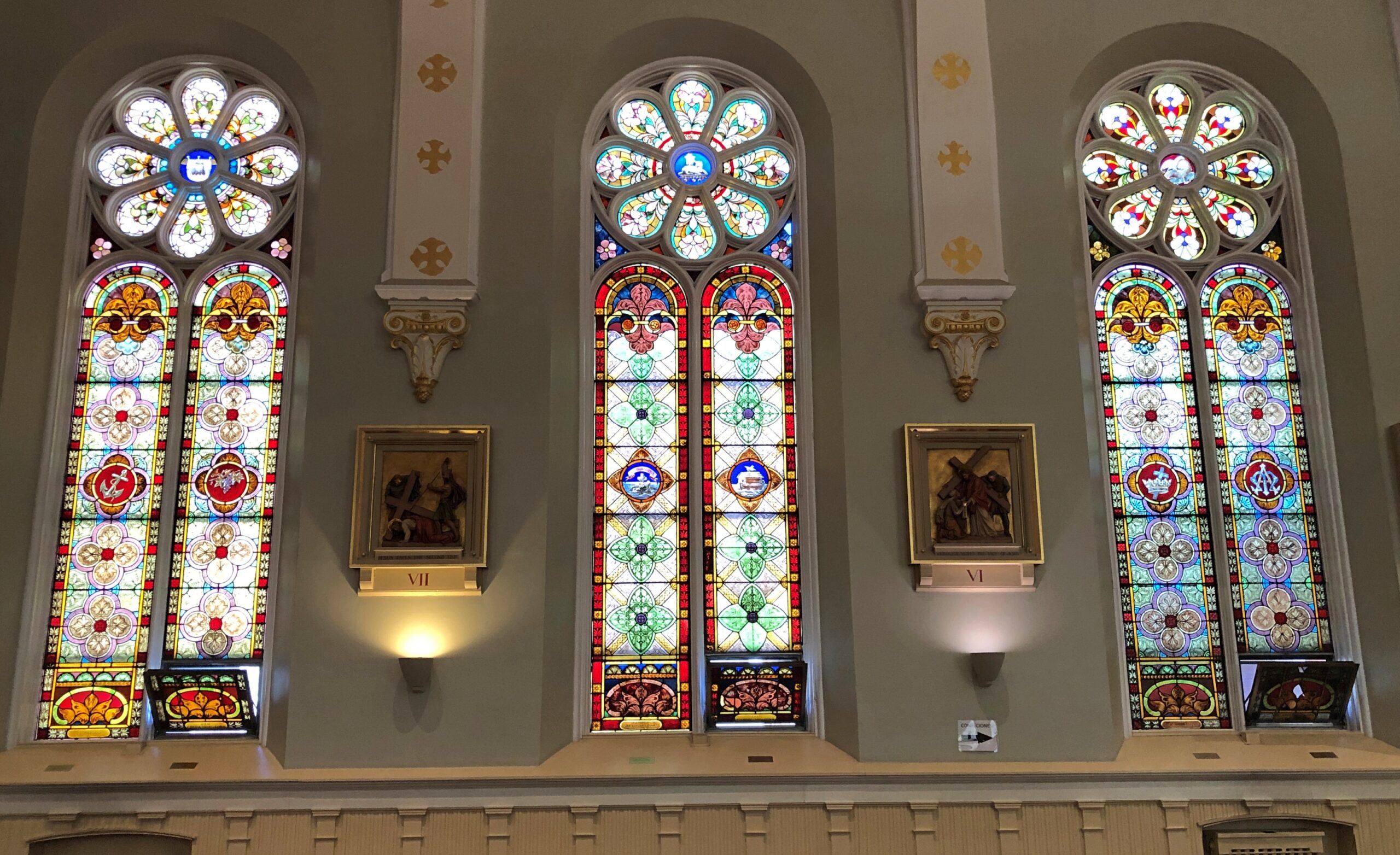
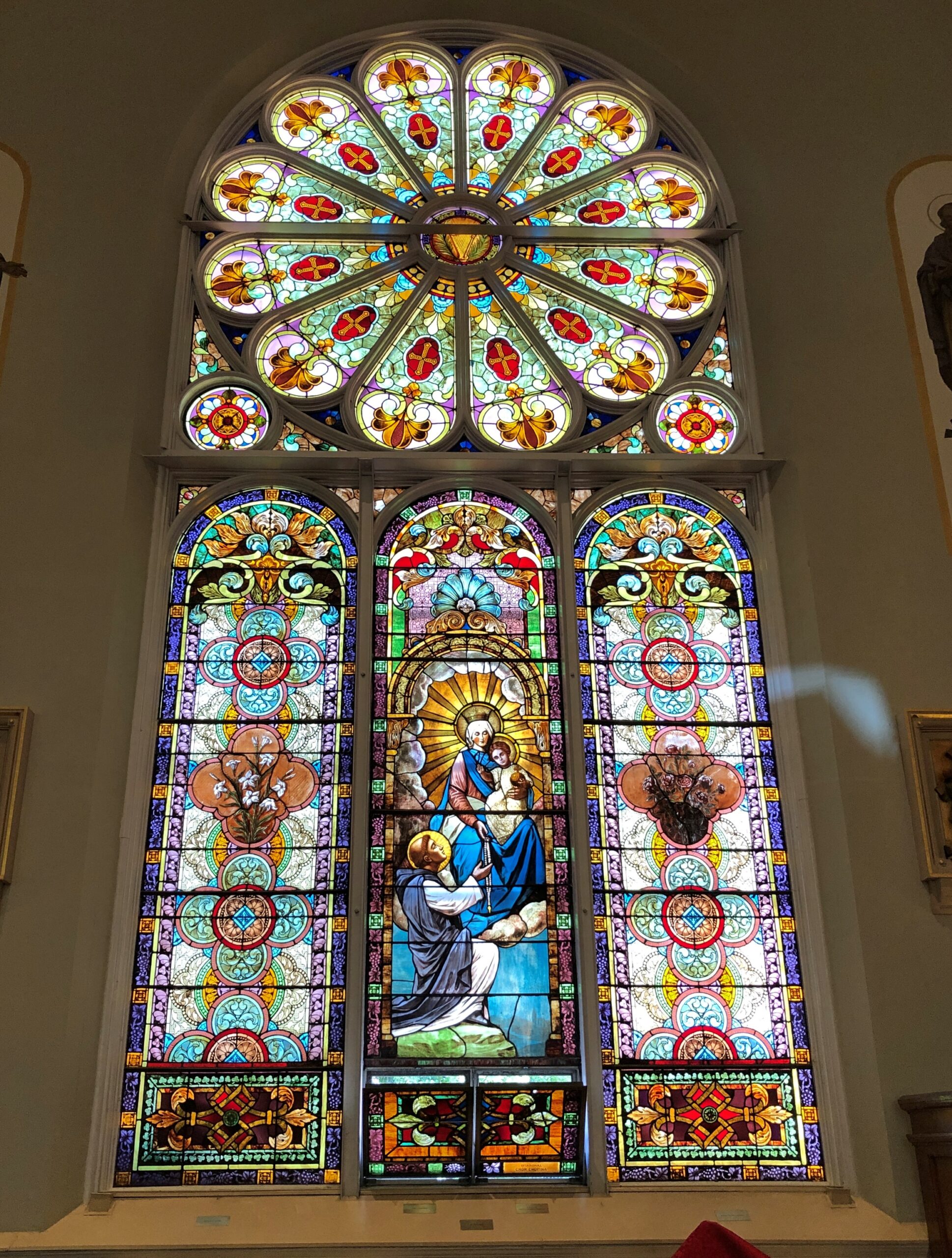
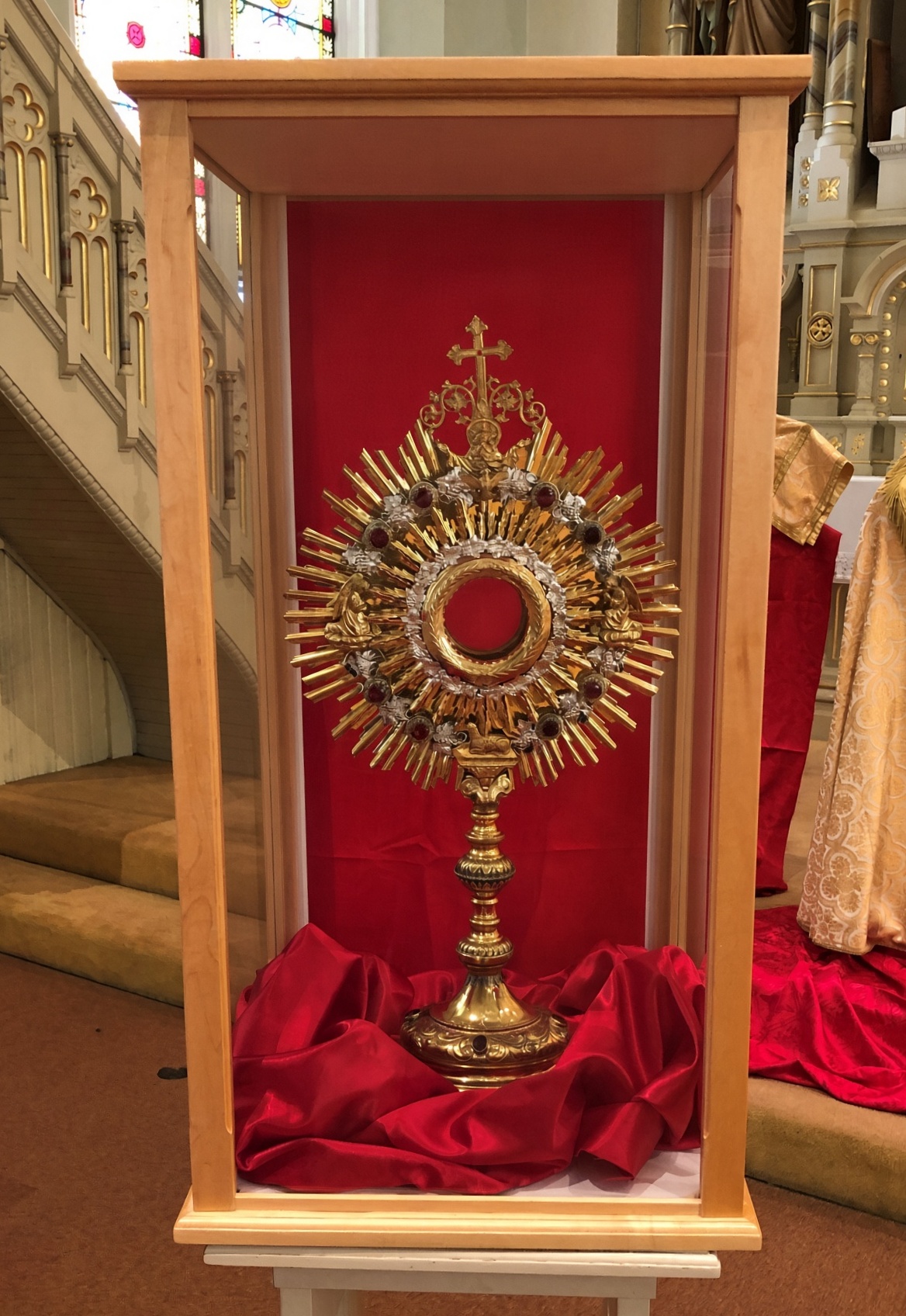
For the items below, I had my AI program remove the glare. This is one of the genuinely useful things that it can do, but I have to be careful to tell it not to change anything else in the image, because it has a tendency to “improve” things. Sometimes it does so even if I tell it not to, but for these two, nothing was changed.

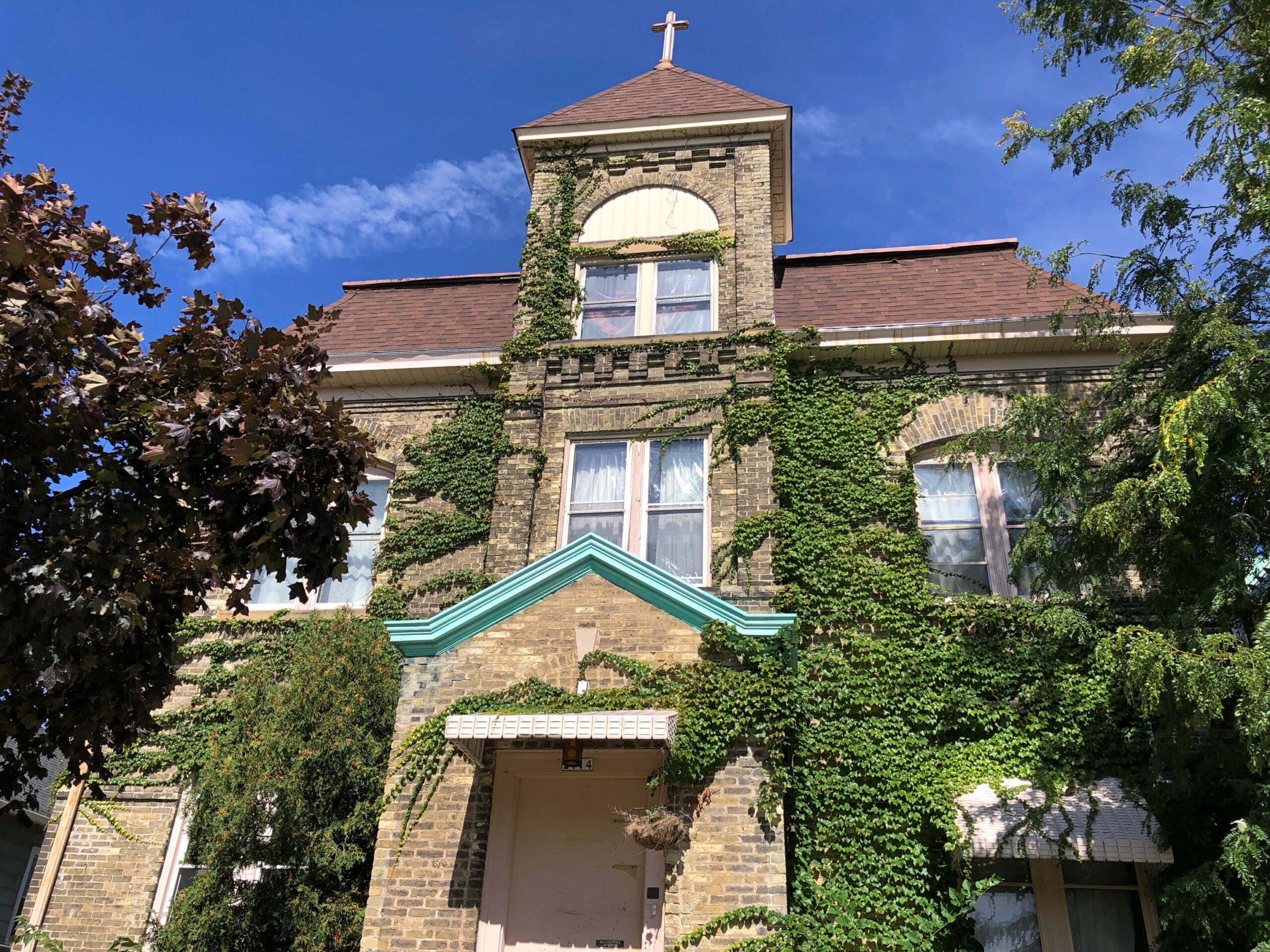
Next door. Probably the rectory. An ivy-covered rectory.
The last church of the day was Ascension Lutheran Church.
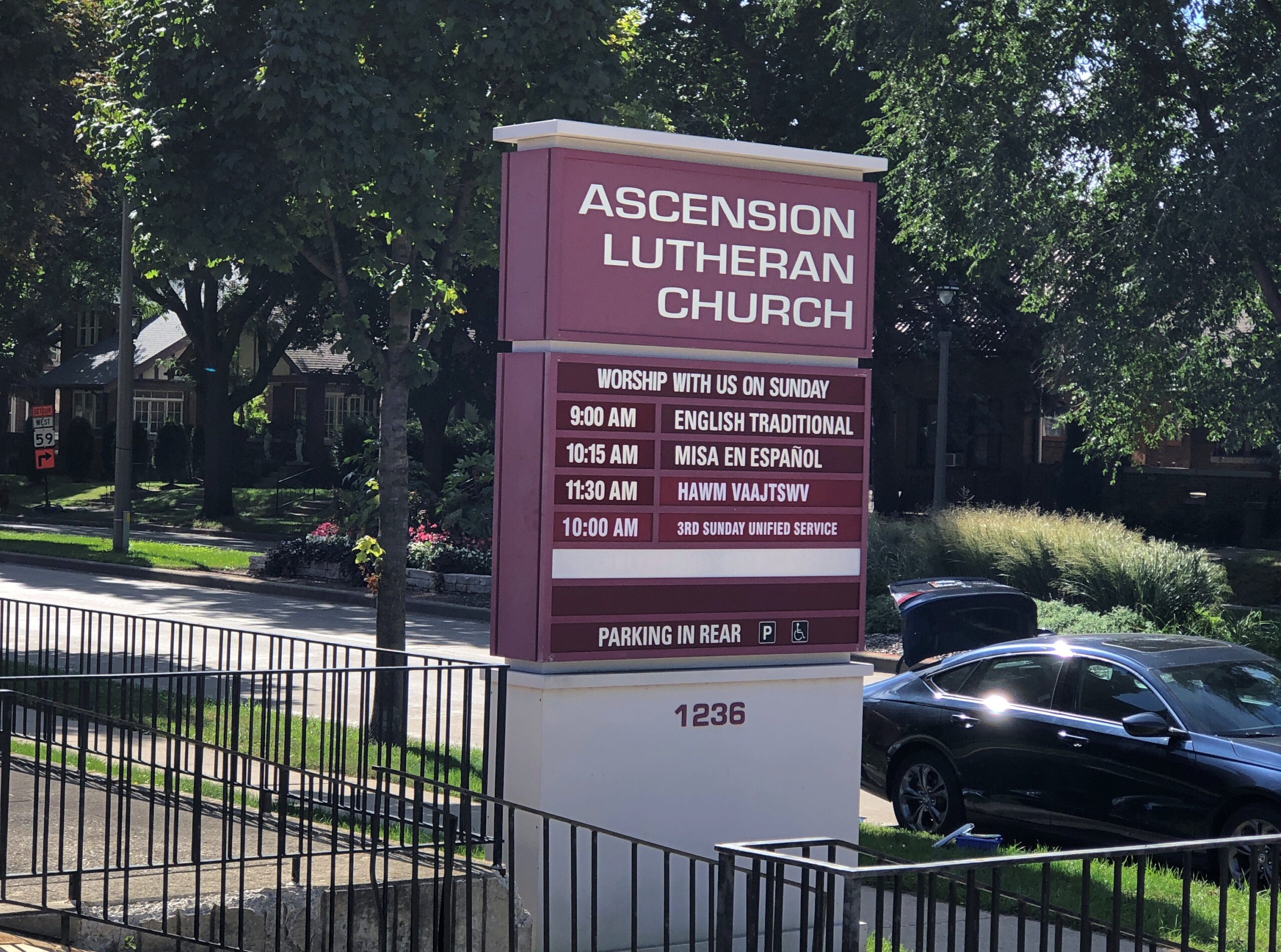
Services in English and Spanish, as you’d except. And that third one? Hmong, it turns out.
On the door.
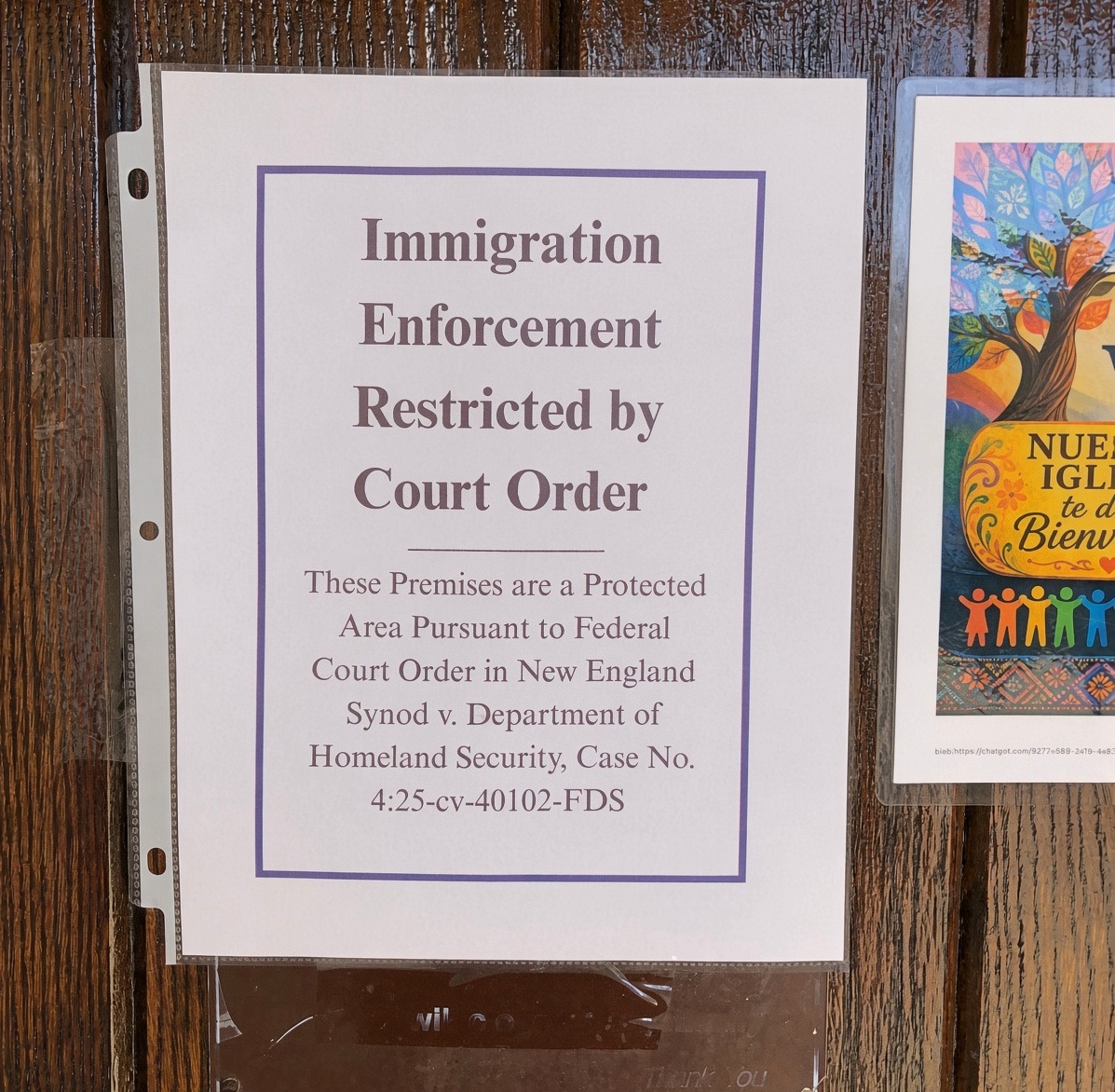
I don’t know that DHS goons would specifically be looking for Hmong – which would be an act of base ingratitude, among other things. Probably just the usual brown folk. Raiding churches: what a good way to win hearts and minds.
Ascension Lutheran dates back to the 1850s, in this case founded by Norwegians. The current sanctuary dates from 1923.
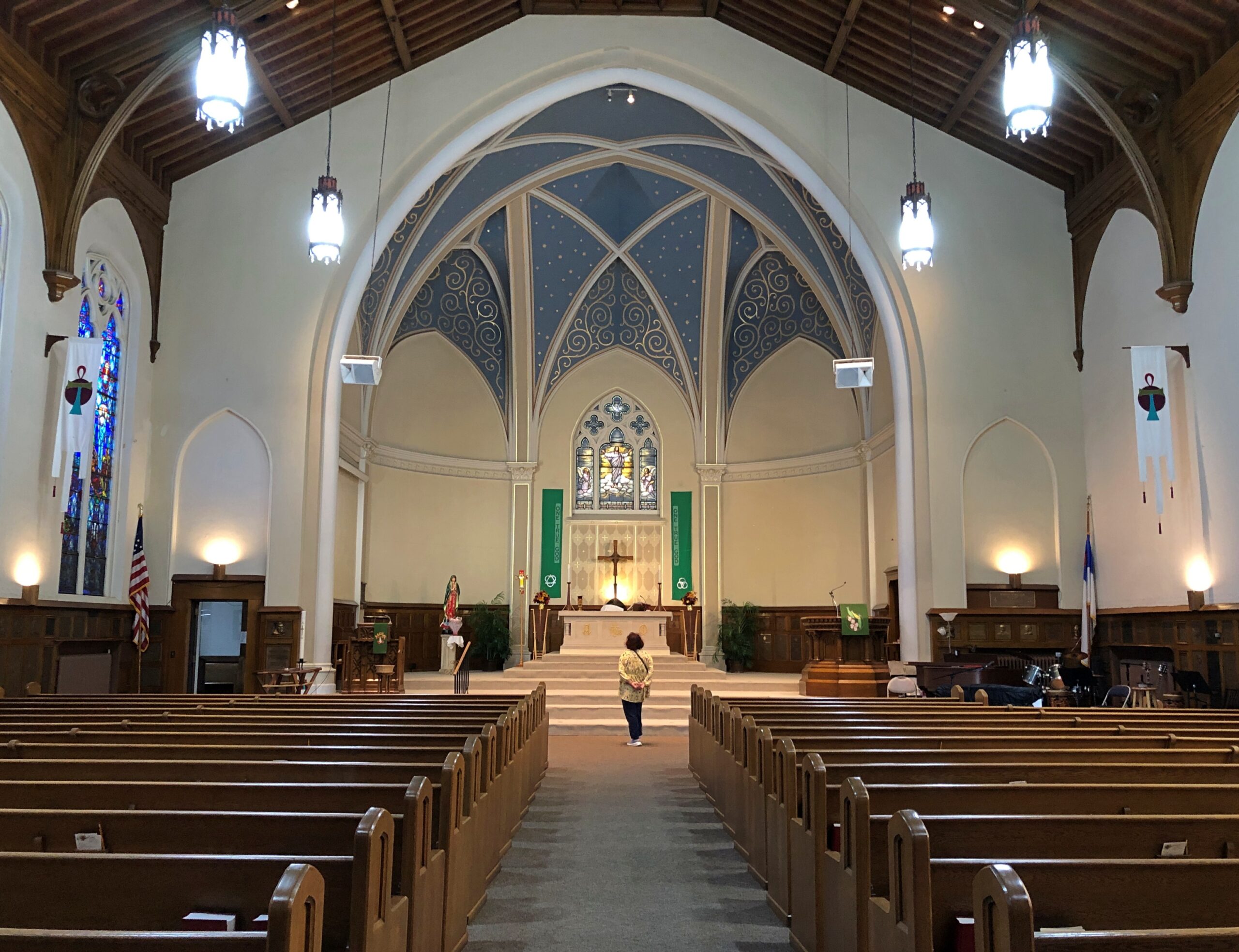
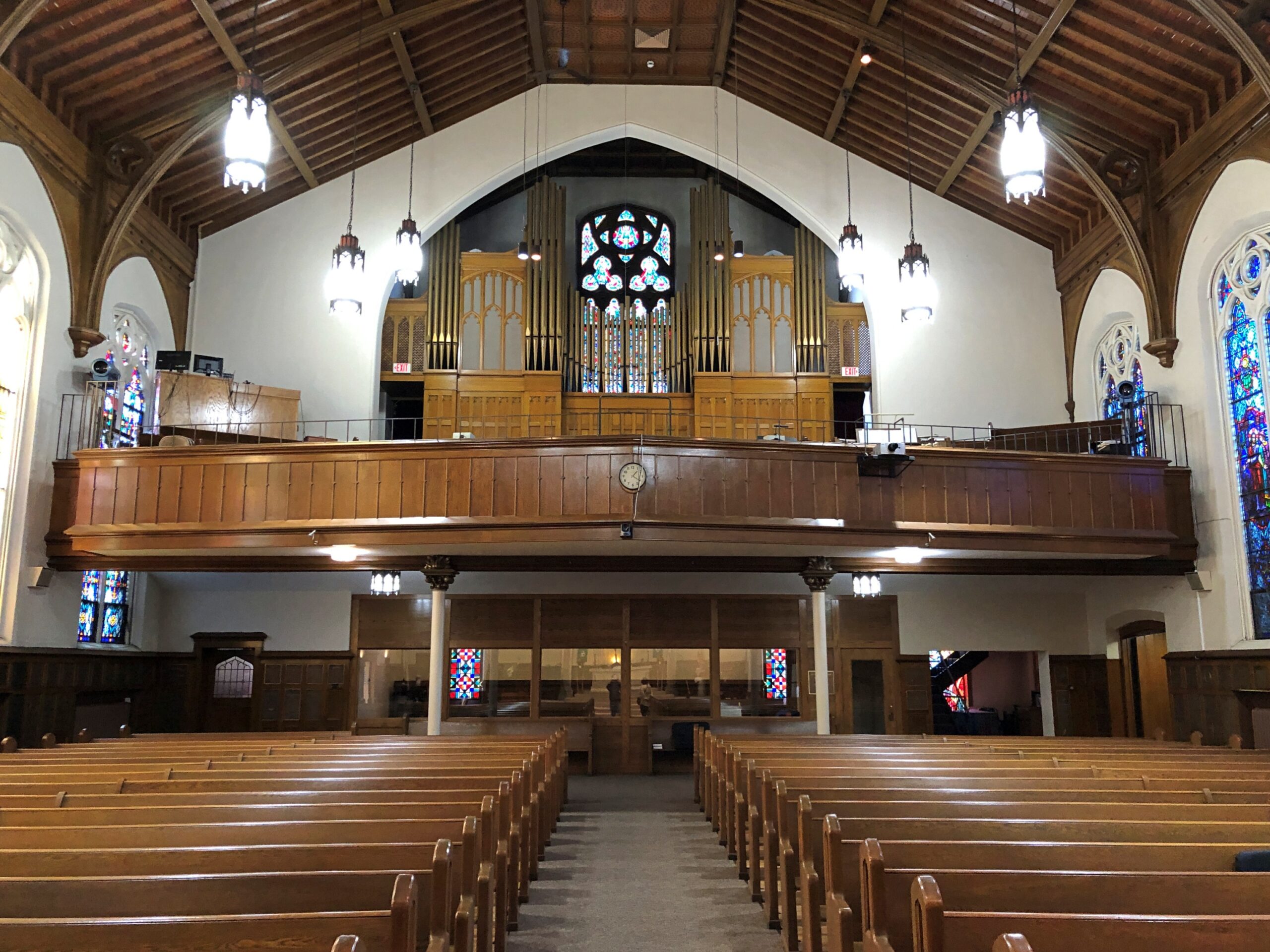
The church sports a number of memorials, as churches often do, but this pair was a little unusual.
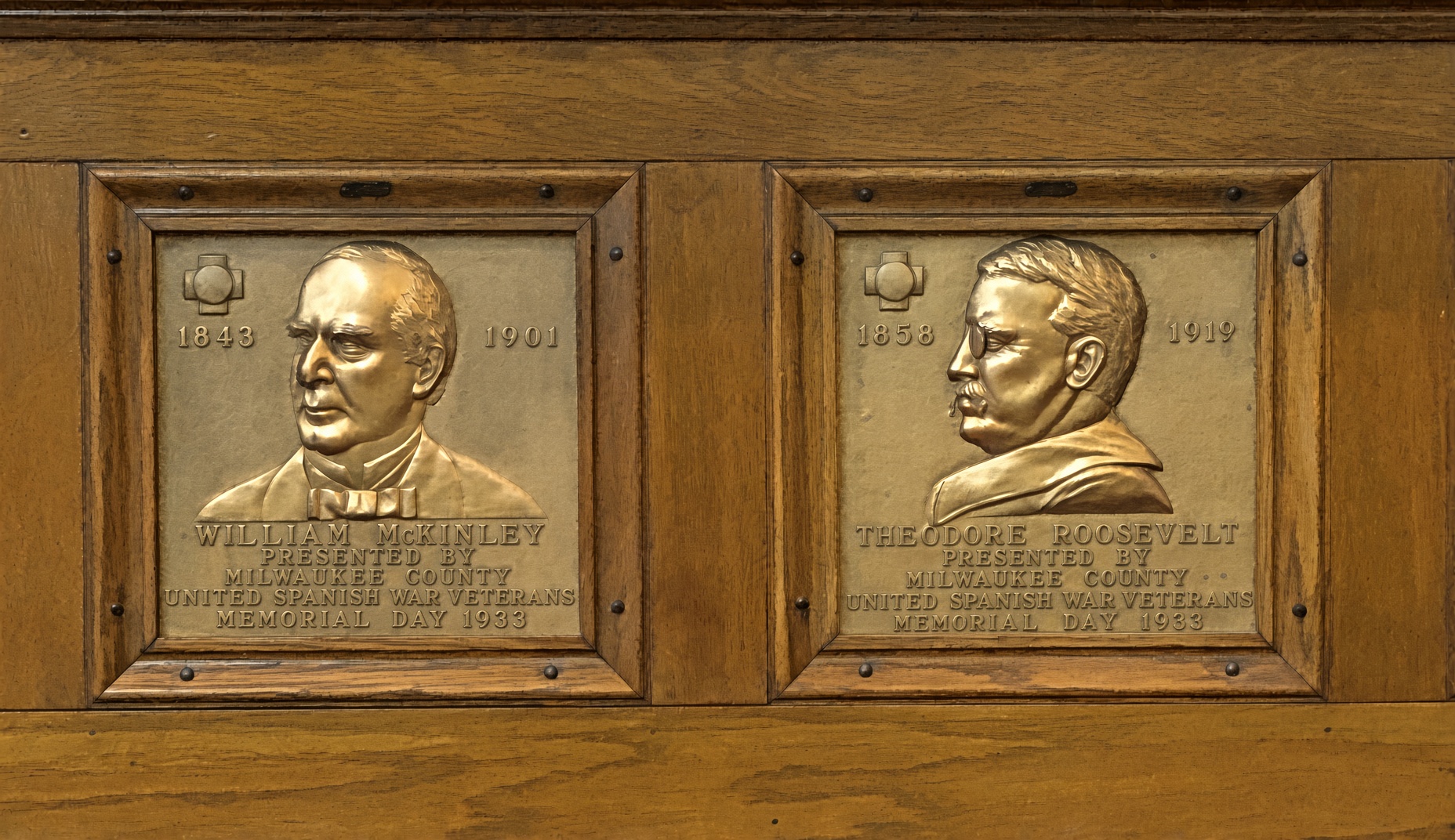
Good to see a presidential site, however minor. United Spanish War Veterans: not an organization one hears much about anymore, but it lasted until 1998, a few years after the last veteran member passed, namely Nathan Cook, U.S. Navy, who died in 1992 at 106. A successor org, Sons of Spanish American War Veterans, is still around.