Always good to learn something. I didn’t know until recently, for instance, that Venus flytrap poaching has been a problem in North Carolina in recent years.
First a little context. Everyone has seen those U-Haul murals – the ones that picture one distinctive thing or another found in all parts of the country. In the case of North Carolina, Venus flytraps are featured.
Turns out that those murals are part of a formalized corporate policy called U-Haul SuperGraphics by the Phoenix-based self-moving giant. If I’d thought about it before, I would have realized that. The company clearly is behind the murals on its property, so standardized are they. But I never gave the subject much thought, despite having seen them for years.
“Venture Across America and Canada SuperGraphics aren’t just eye catching pictures that U-Haul artists dream up and creatively place on vehicles,” the company says on the web site. “They are carefully researched rare findings, little-known facts and mysteries that exist throughout the United States and Canada.” The company characterizes the murals as “our way of giving back to the communities we serve.” In spite of being couched in corporate-speak that often signals a banal claim, the company does in fact do a service to those curious enough to look at the murals, by offering interesting bits of information about (often) far-away places.
There’s a mural for each state and the provinces of Canada, and a few others, such as ones honoring the branches of the U.S. Armed Forces. All of them are at the company web site.
As mentioned, North Carolina’s U-Haul murals features carnivorous plants — Venus flytraps and pitcher plants — and specifically mentions Green Swamp Preserve in NC, where many such plants can be found. The preserve is southwest of Wilmington and owned by the Nature Conservancy. I skirted the edge of the Green Swamp driving south on US 17, but that isn’t where I saw Venus flytraps and pitcher plants on my pass through North Carolina in October: that would be the Stanley Rehder Carnivorous Plant Garden at Piney Ridge Nature Preserve in Wilmington.
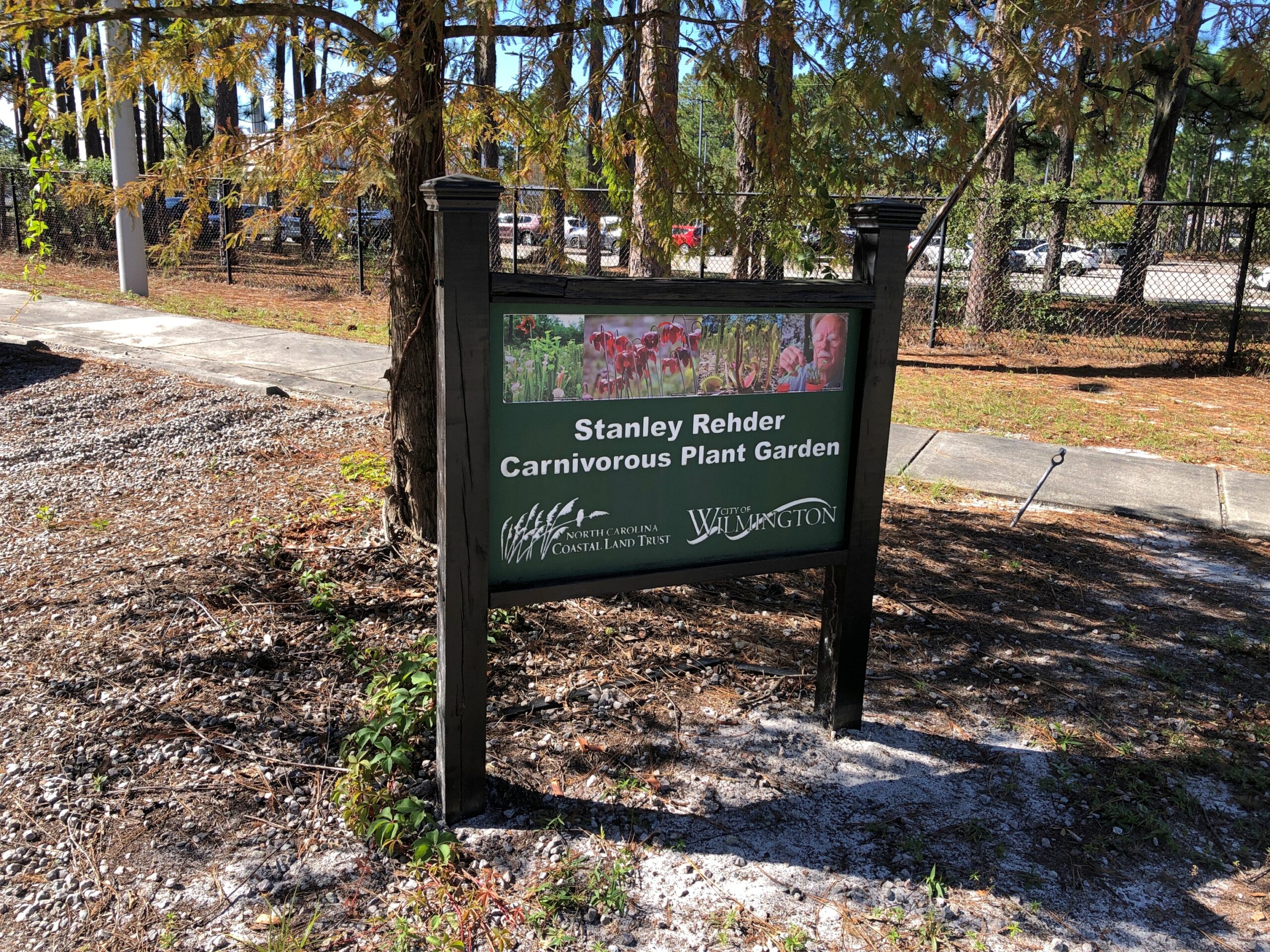
“The garden is leased to the City of Wilmington and protected by a conservation easement held by the Coastal Land Trust,” the NC Extension reports. “In 2012, the garden was dedicated in the name of Stanley Rehder, a Wilmington native who worked tirelessly for the protection of carnivorous plants.”
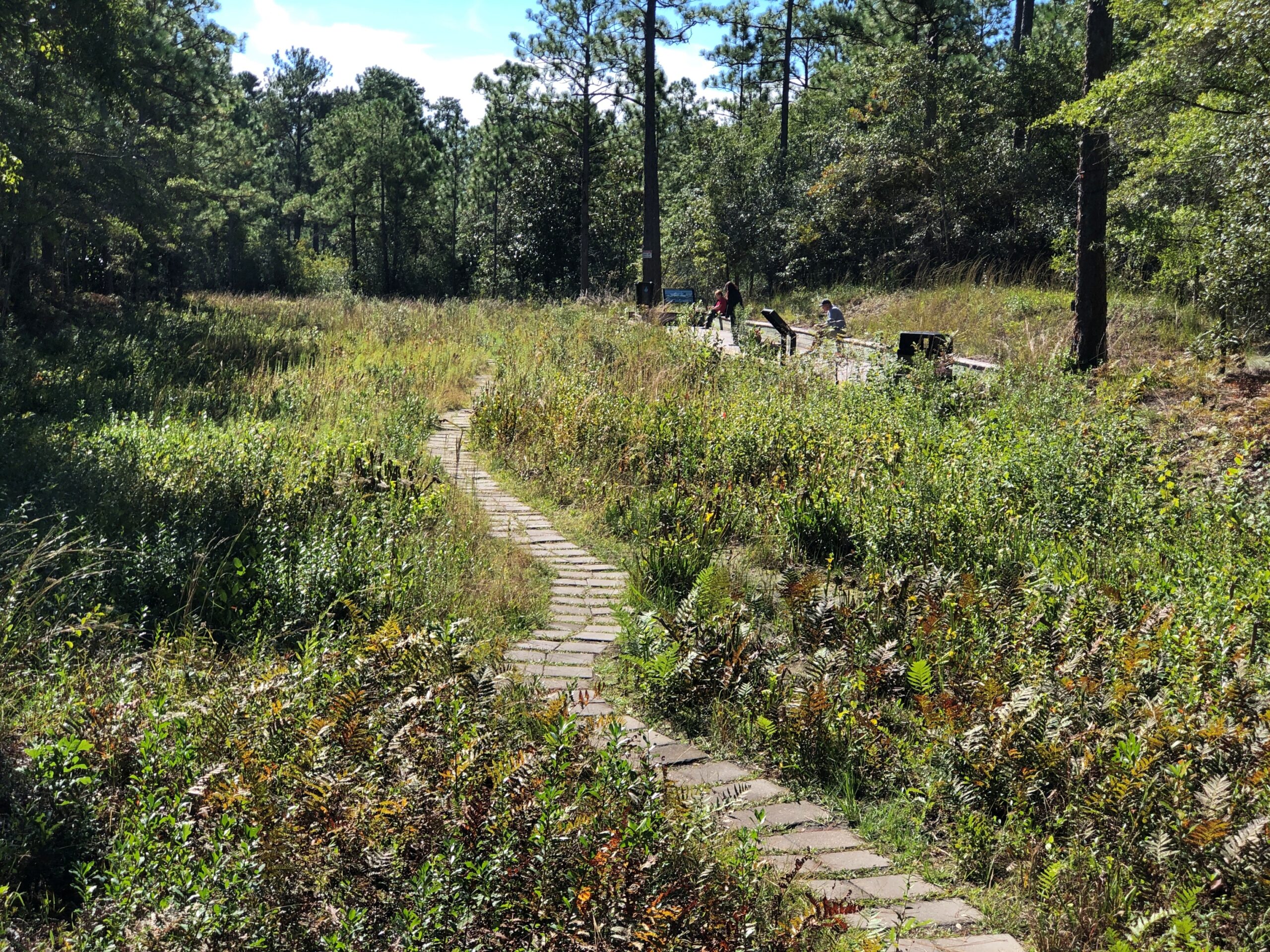
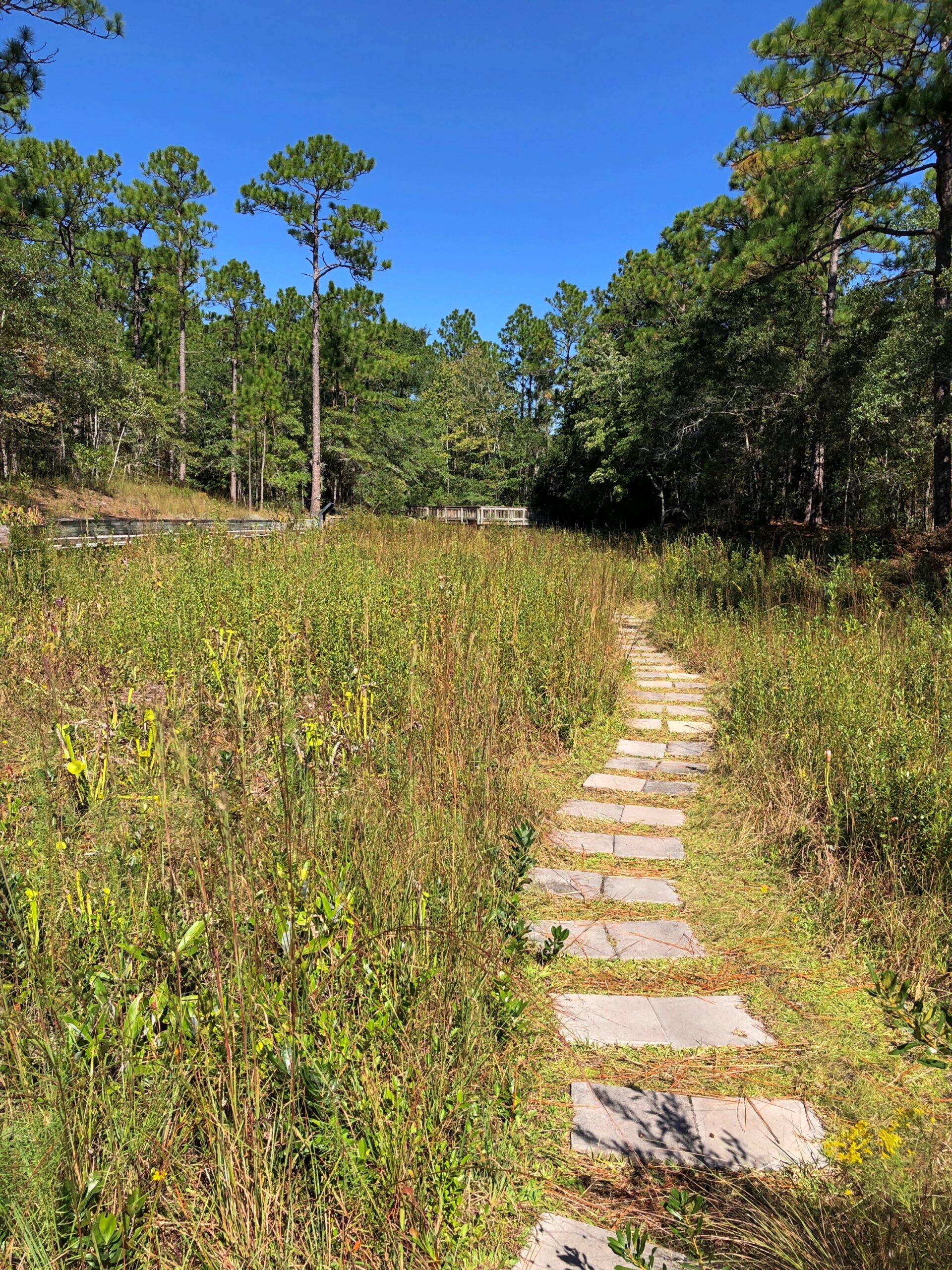
The garden is a skinny stretch of land and not particularly large, snaking its way behind an elementary school and between private properties in the suburban-like neighborhood. One could walk its length in five minutes. The most noticeable of the carnivorous plants are the various pitcher plants, with the forthright protuberances. Or as maybe the flies call them, Sweet Horns of Death.
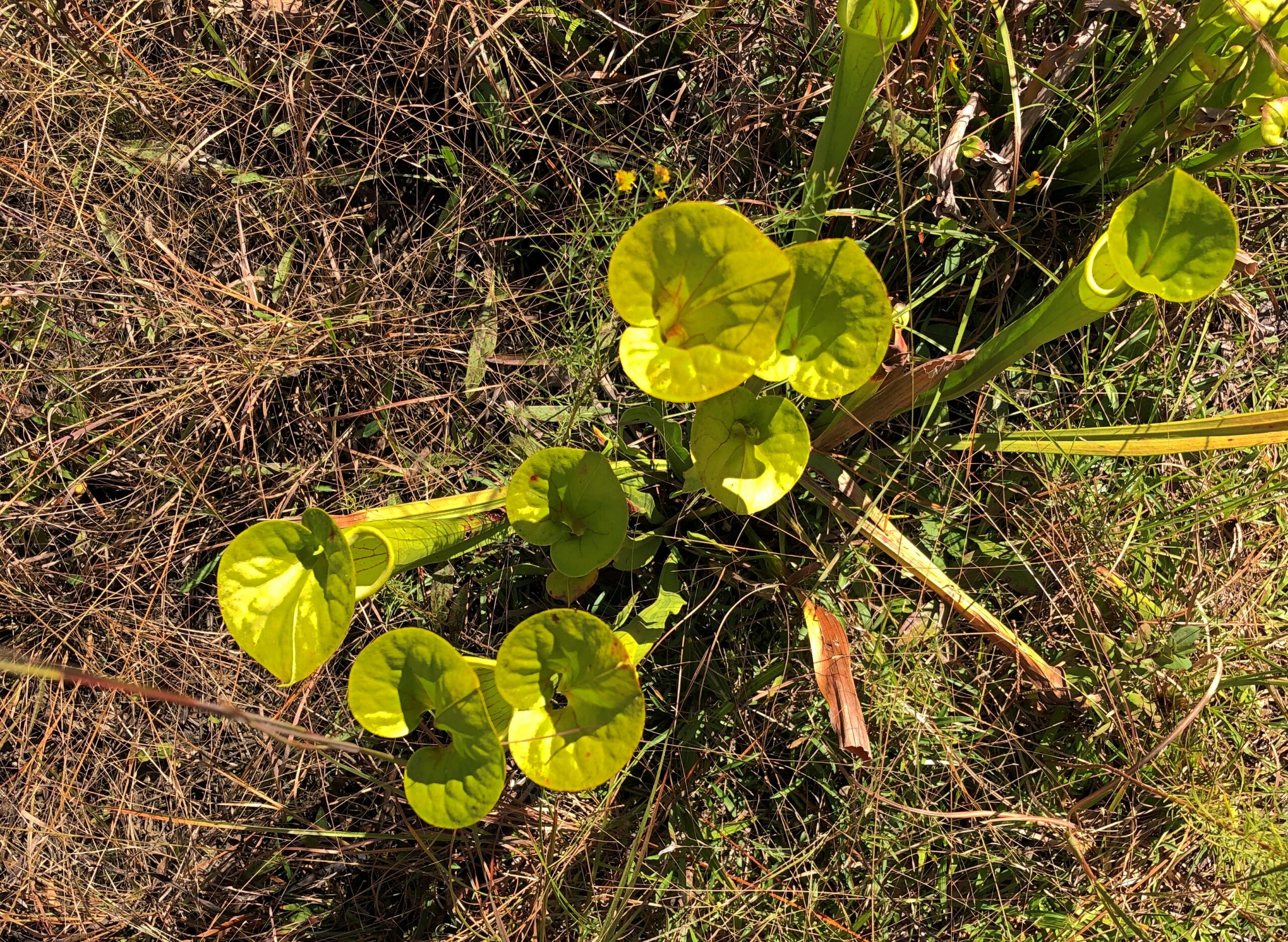
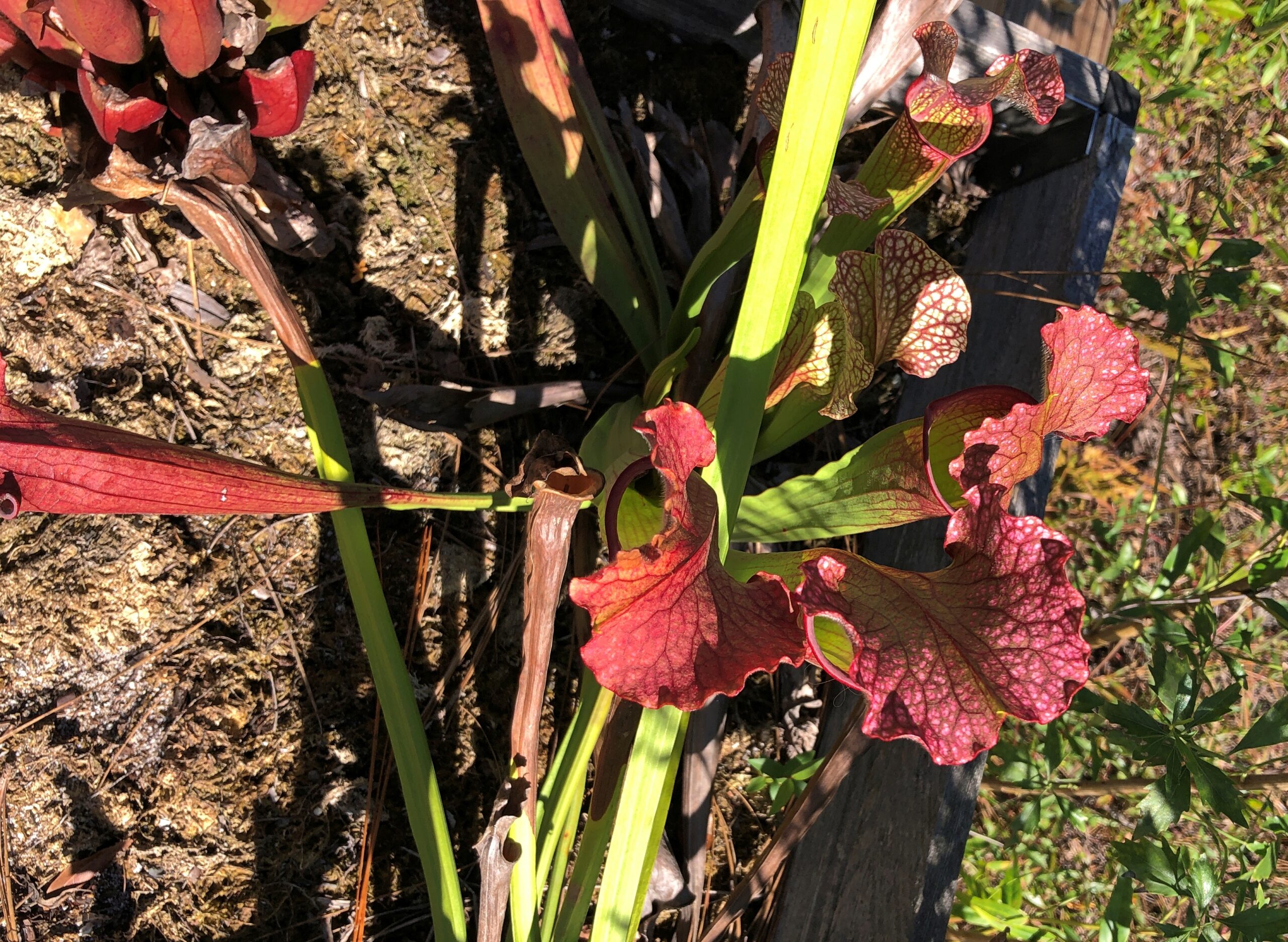
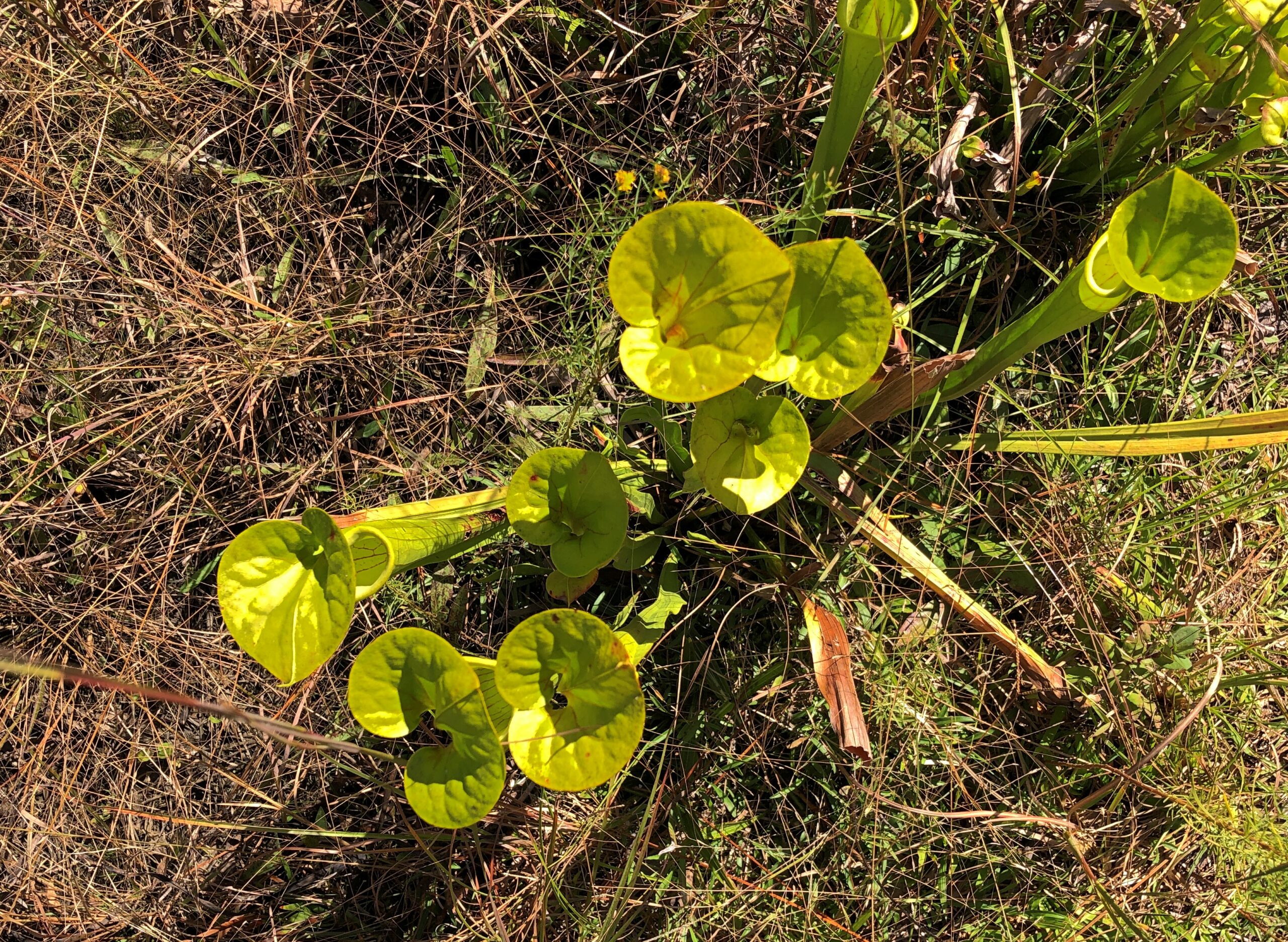
Well and good, but – I began to wonder – where are the Venus flytraps? I scanned the ground while walking along the paths, but I didn’t see their familiar shapes. I felt that it would be vaguely ridiculous of me to seek out a Venus flytrap garden and then not see any.
Maybe the season wasn’t right. I sat down and queried Google Gemini about reasons that Venus fly traps might not be easy to see. I figured I might get something uselessly vague or clear nonsense from the AI, but on the other hand, maybe a useful bit of information.
I did get a useful bit of information: Venus fly traps are really small.
Armed with that insight, I looked closer to the ground, and what do you know —
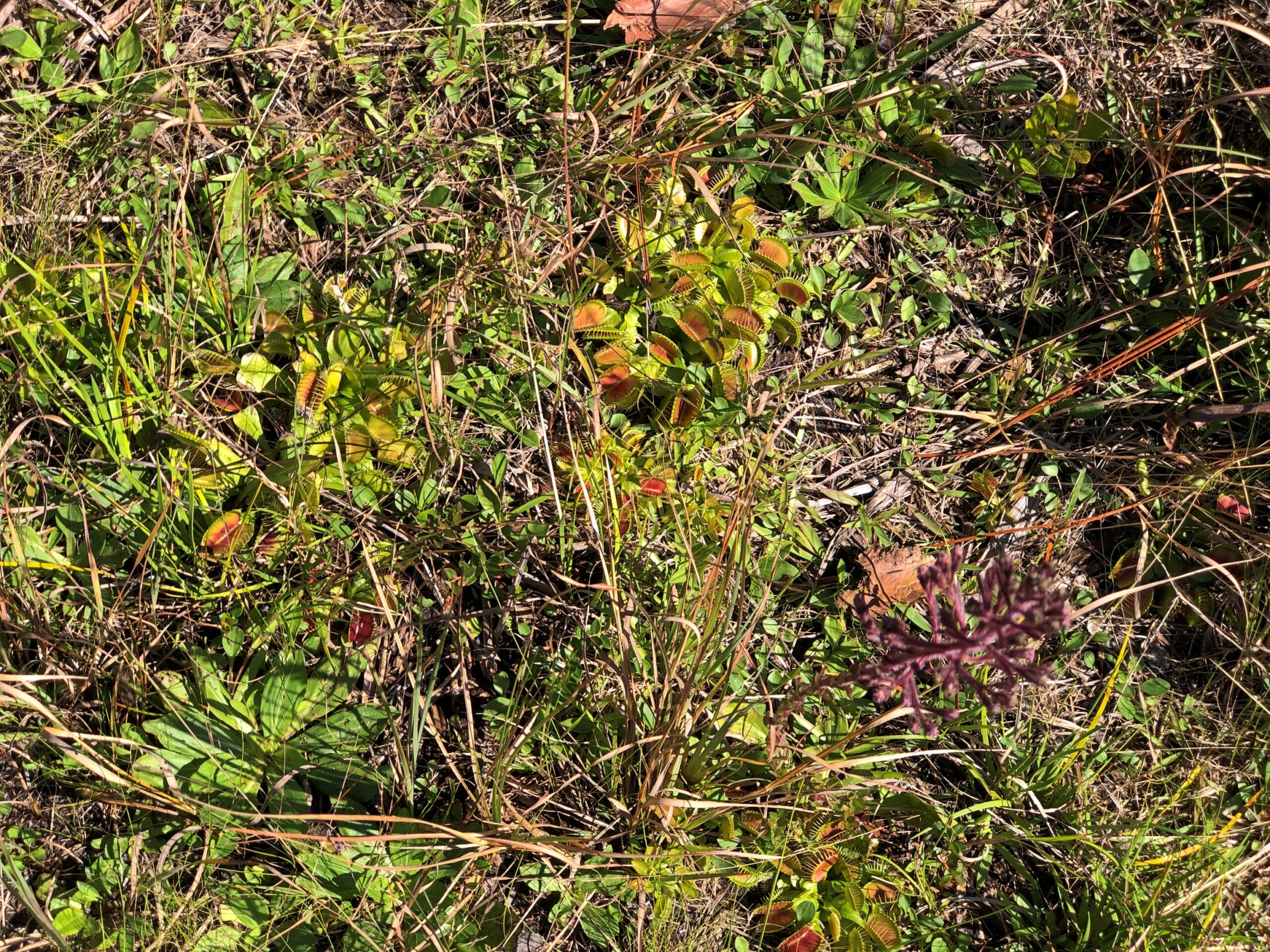
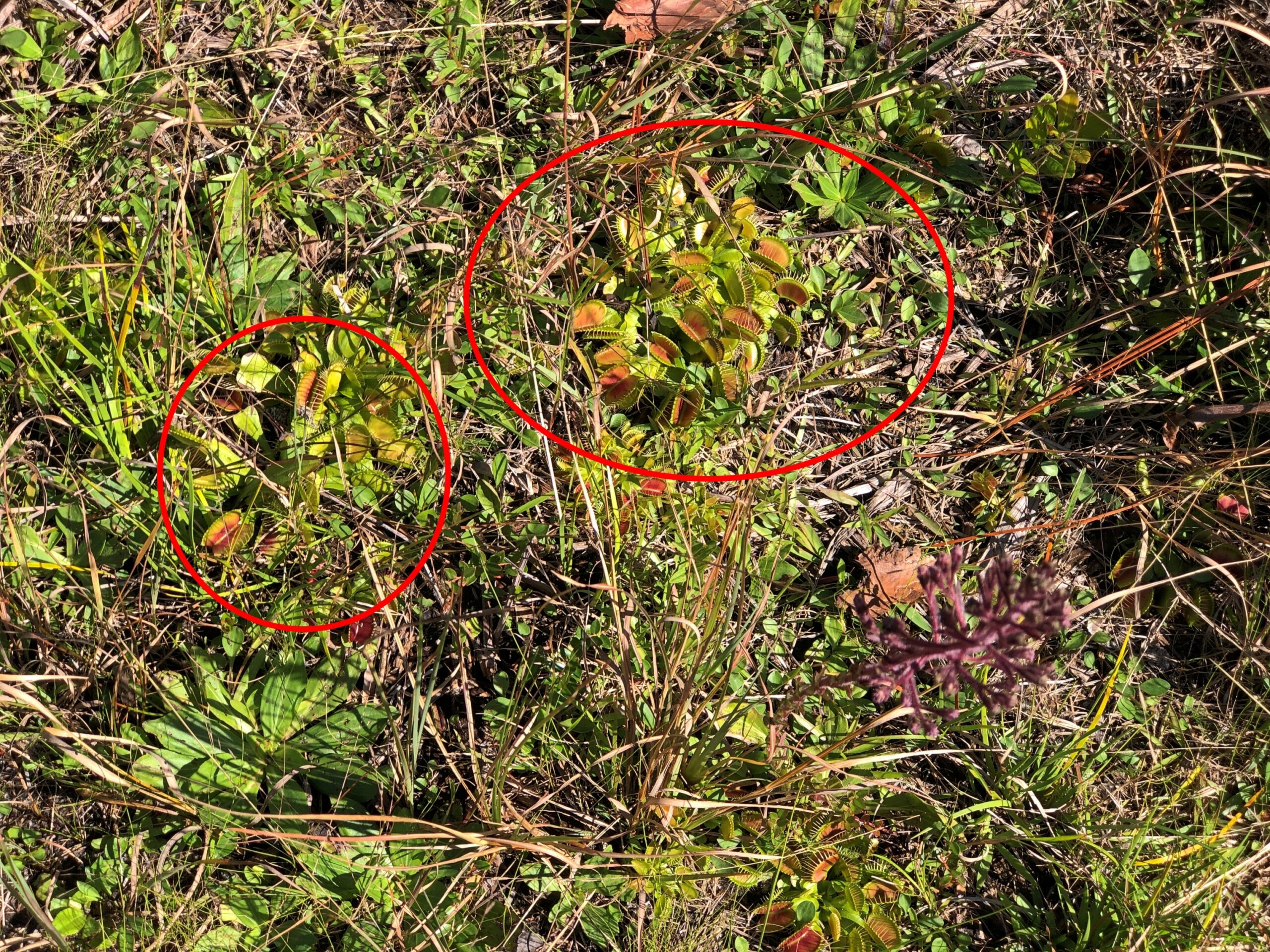
I didn’t start seeing them everywhere, but in a fair number of places. I’d arrived at the park with an unconscious assumption about Venus flytraps, namely that they are larger than they really are. Not huge, but maybe the size of a child’s hand or a Zippo lighter. I’d seen pictures. Closeups, as it turns out, distorting their size. Considering the subject, I never had any reason to learn their true size.
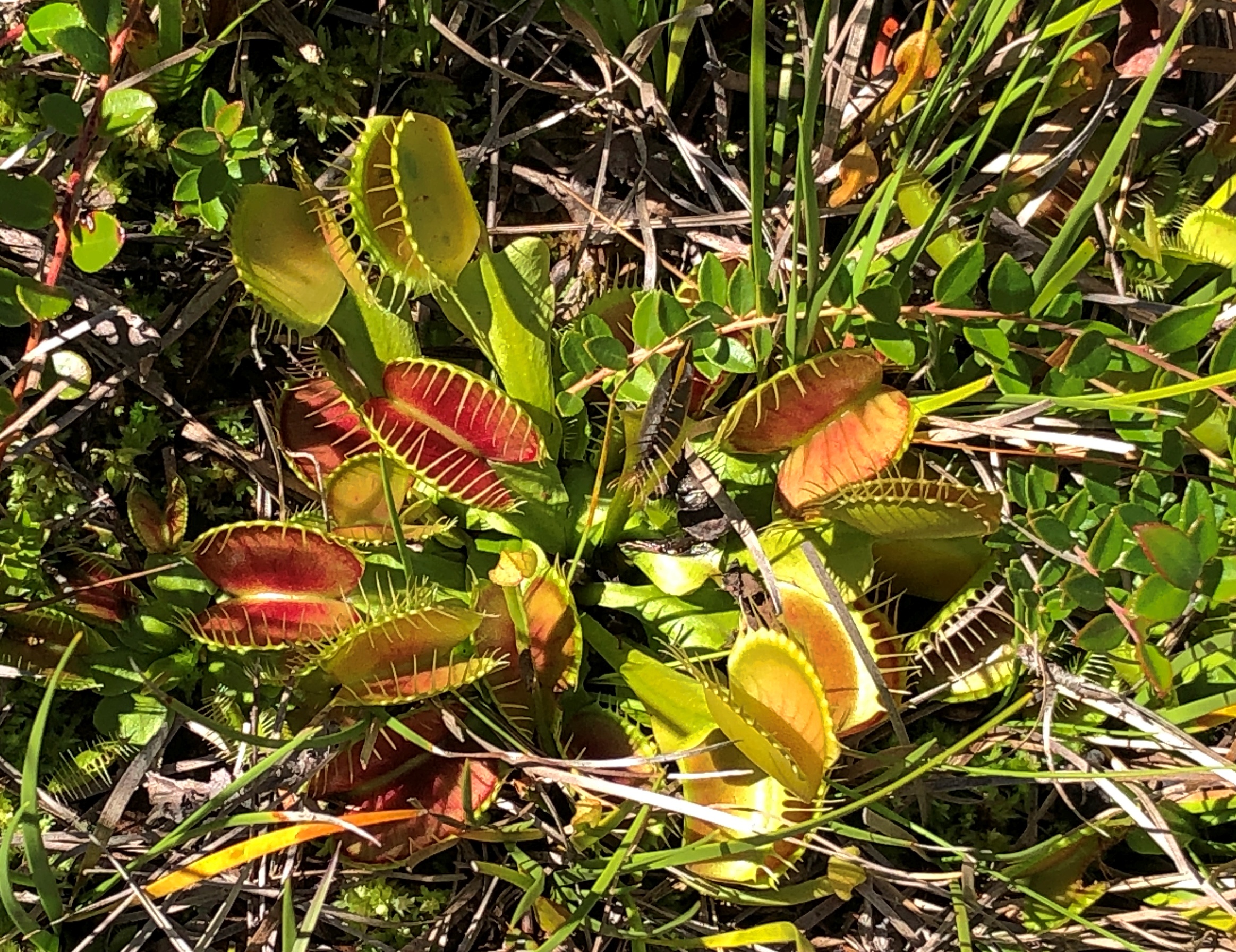
I don’t think you could get even a dime in their maws. Evolutionally, that makes perfect sense. A big flytrap would need more insects. For a tiny flytrap, a single fly is a big ol’ hunk of meat.
So I learned that. But that isn’t all. U-Haul mentioned the following on its page about North Carolina: For its exotic and wondrous reputation, people on this side of the world often wrongly assume that carnivorous plants come only from lush tropical islands and Amazon jungles. The general reasoning is that something so odd as a meat-eating plant must come from somewhere far, far away. And in the movies, carnivorous plants are usually shown as living in mysterious jungles.
But, in actuality, the Venus Flytrap, the most famous of all carnivorous plants, does not grow naturally anywhere in the world except southeastern North Carolina and a small part of adjacent South Carolina!
Again, my previous knowledge of Venus fly traps was shockingly vague and uninformed. If someone had told me they originated in the densest regions of the Amazon basin, I’d have said, “Really? Sounds about right.”
One more thing.
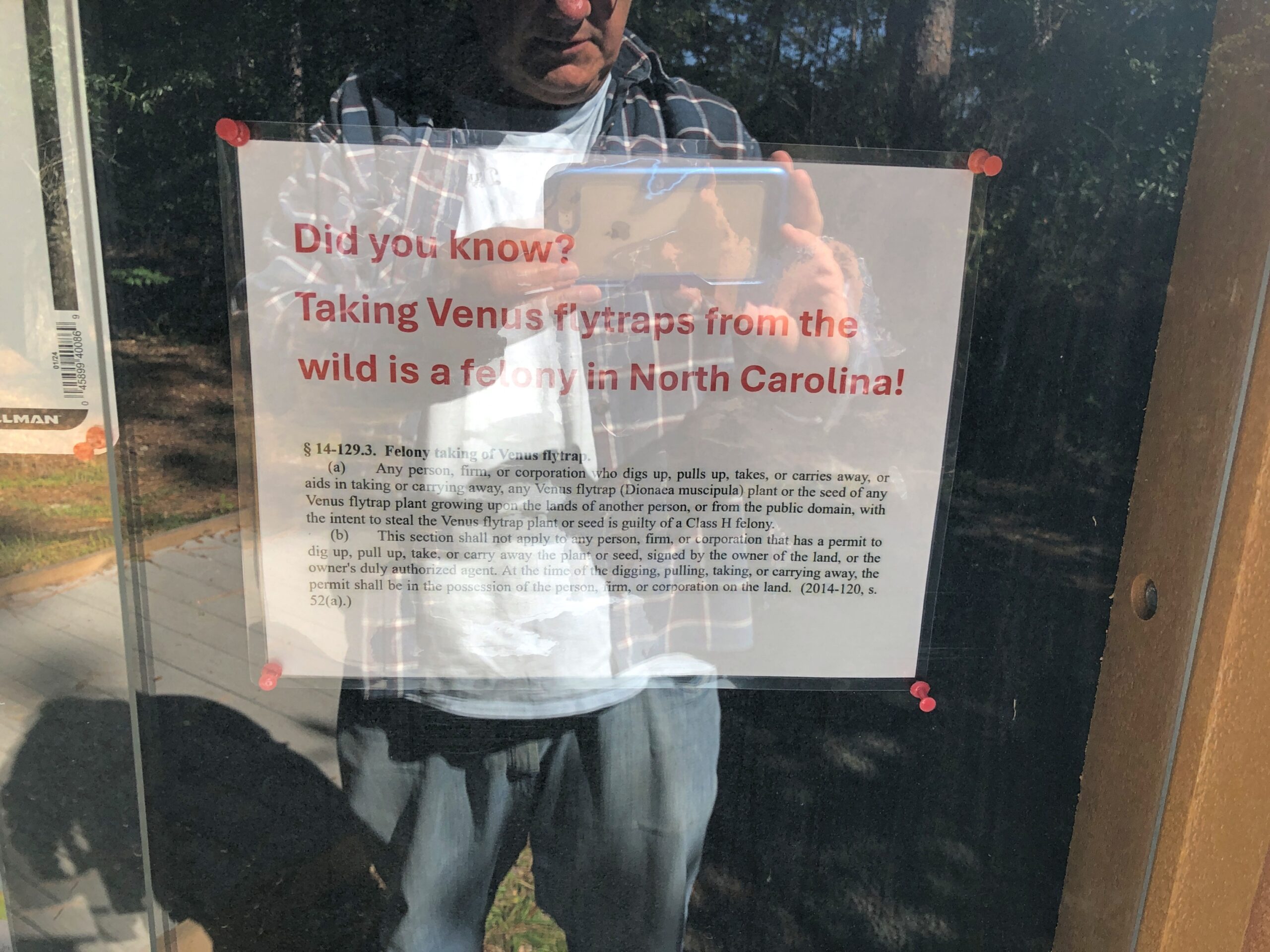
No reflection removed. Call it “Self-Portrait With Venus Flytrap Legal Warning.” In North Carolina, poaching Venus fly traps – as some thieving wankers did from the Stanley Rehder Carnivorous Plant Garden in the not-too-distant past — is a serious offense. Now I know.