Concord naturally follows Lexington. That’s just the way it is. I made the short hop between Lexington and Concord on the morning of October 23, ahead of the day’s ultimate destination in Rhode Island. The first thing I needed to know was the status of the men’s room at the Concord Visitor Center, there on Main Street. I’m glad to report I didn’t run into any “closed for the season” nonsense.
I can also report that the South Burying Place is half a block away, an irregular slice of land wedged between Main, a side street, and some basic apartments.
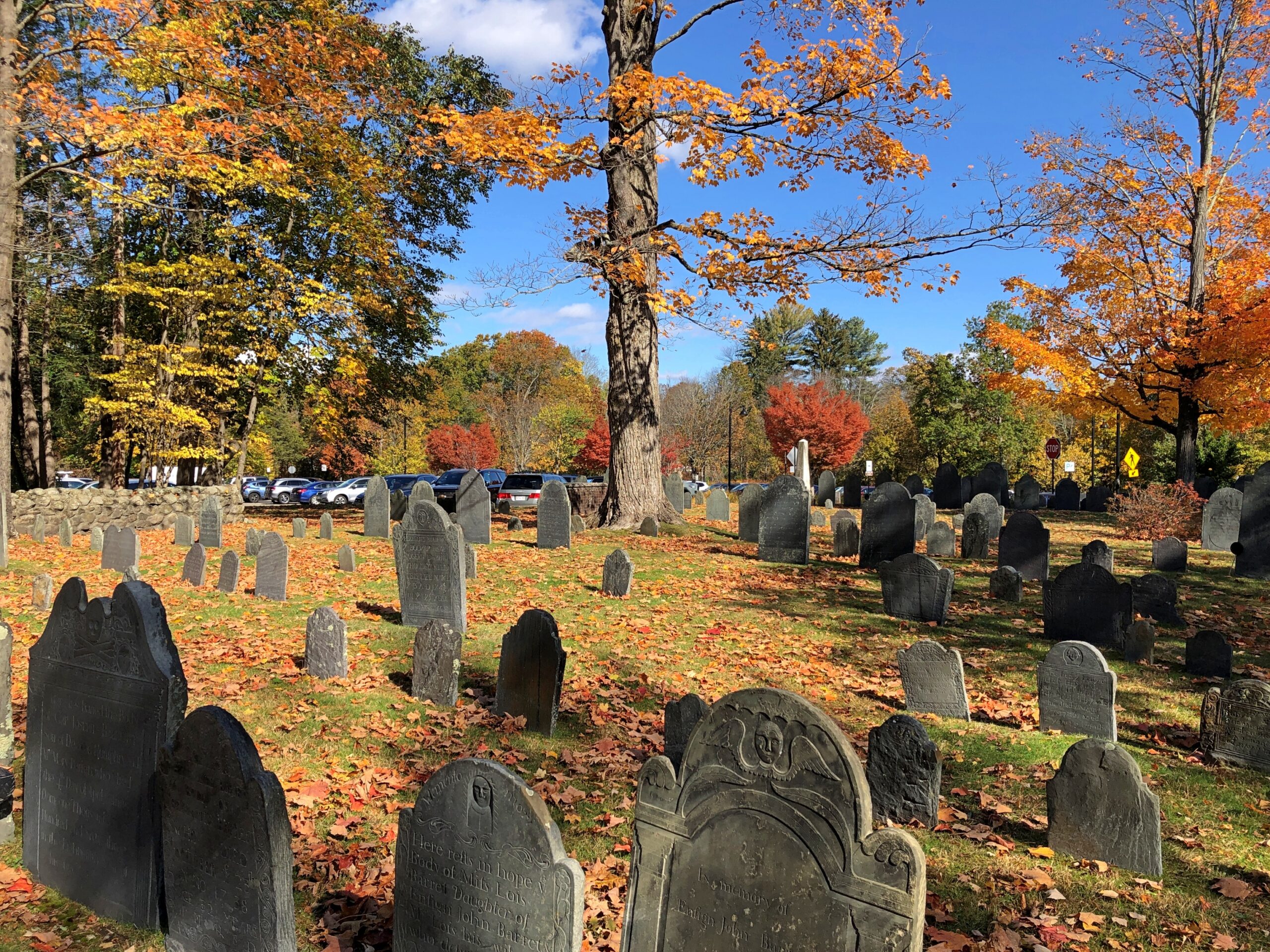
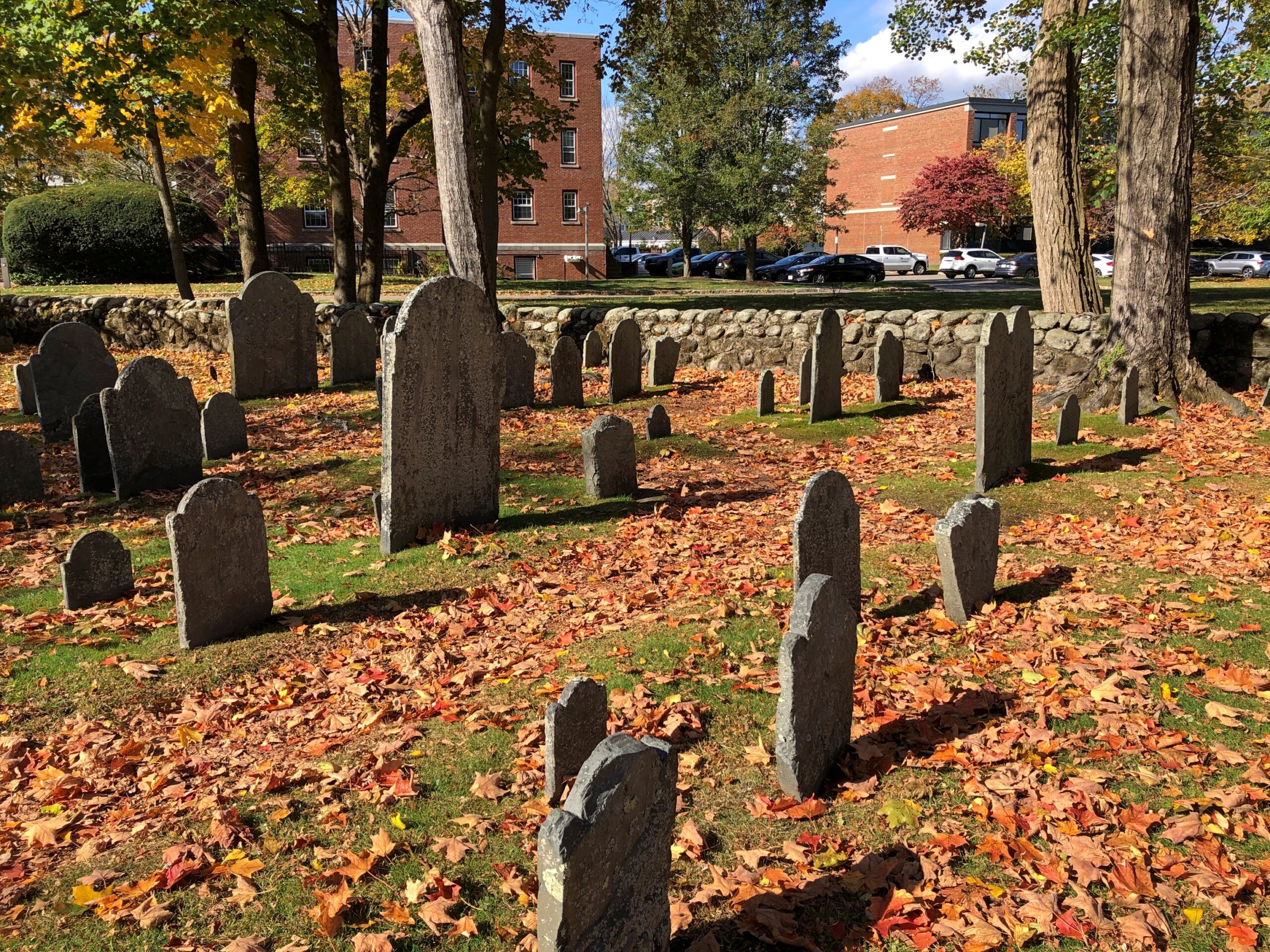
Notably similar in style to Lexington, and why would they be any different?
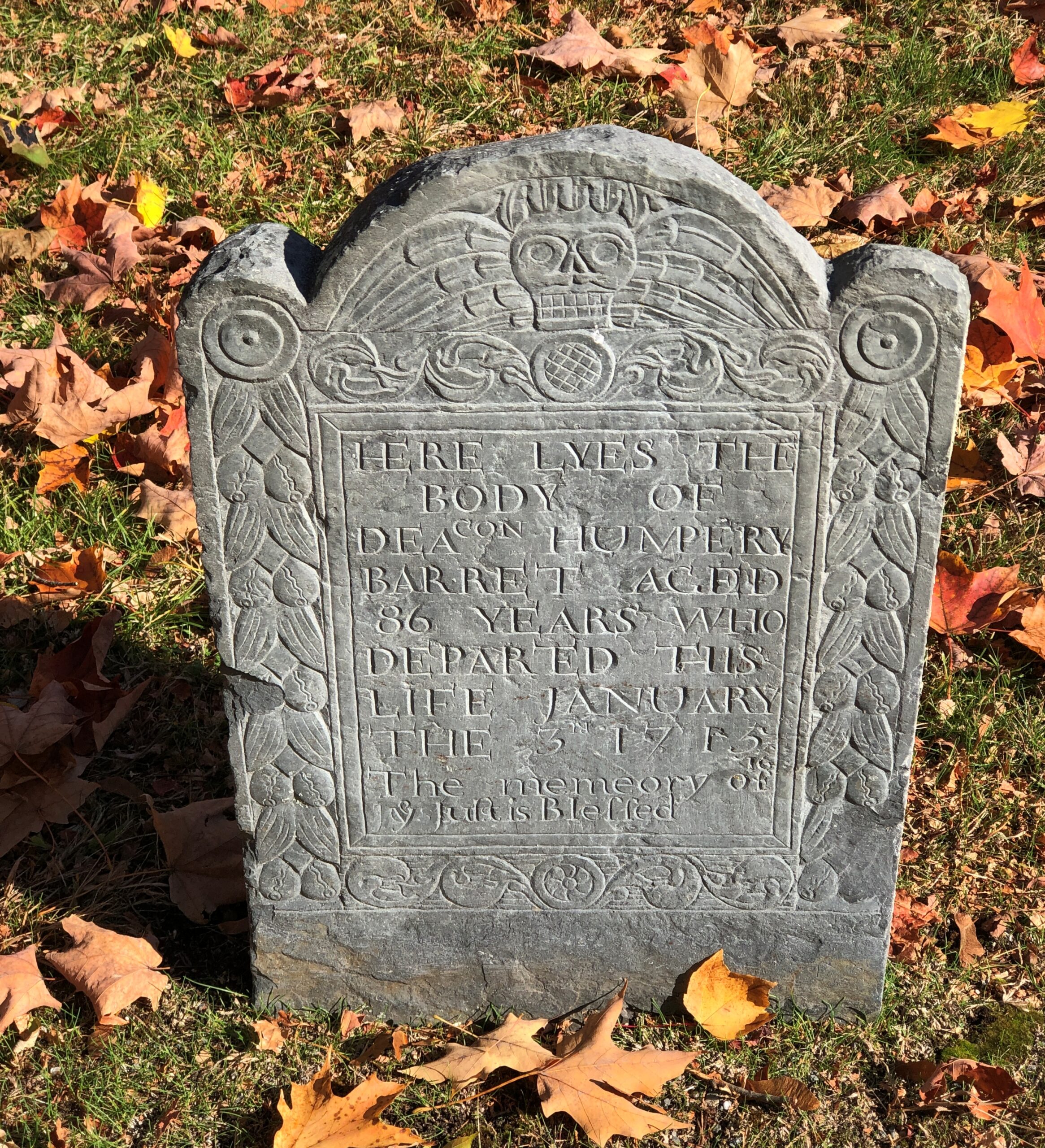
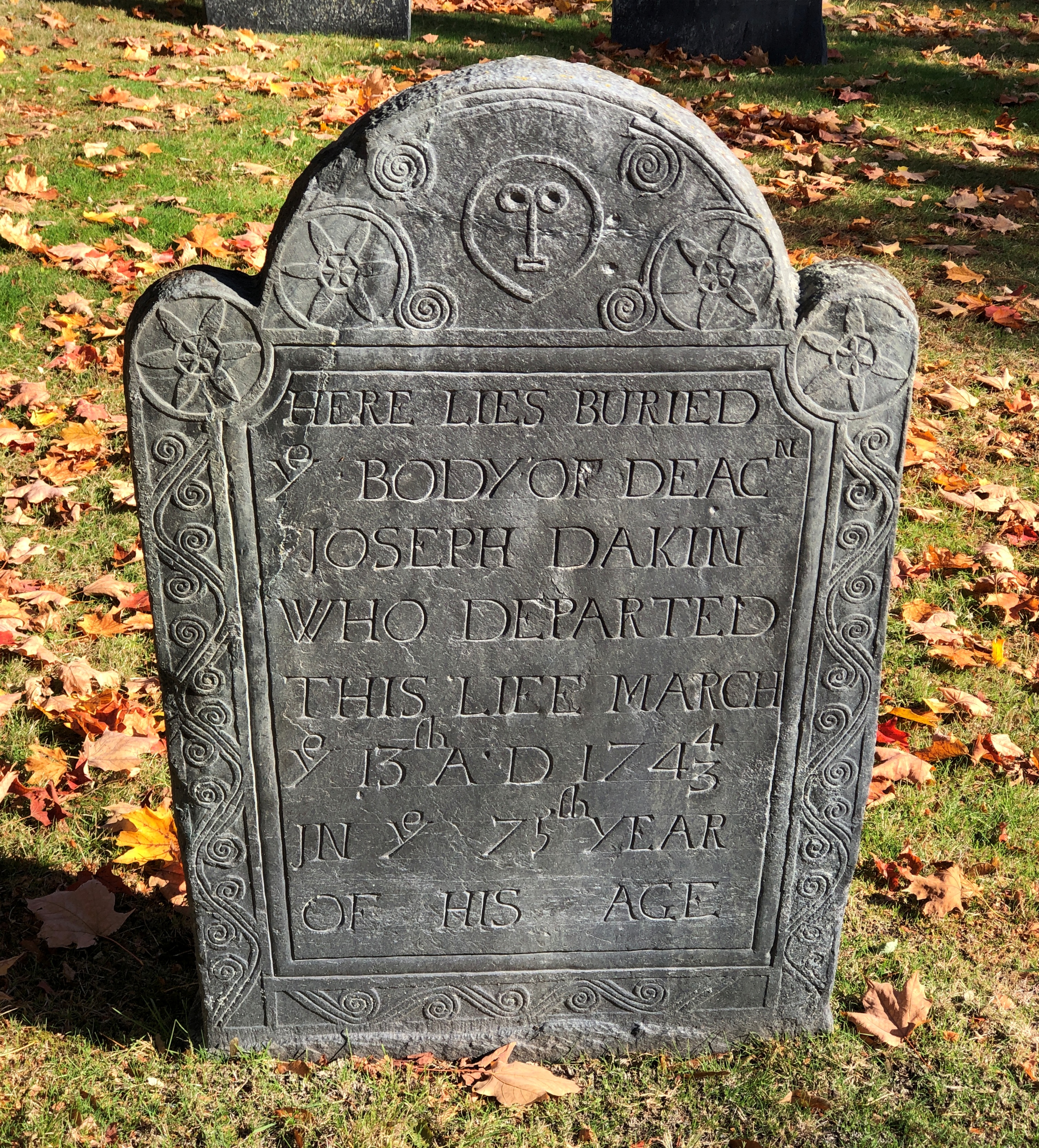
One detail on the latter stone caught my attention. It took me a few minutes to work it out.
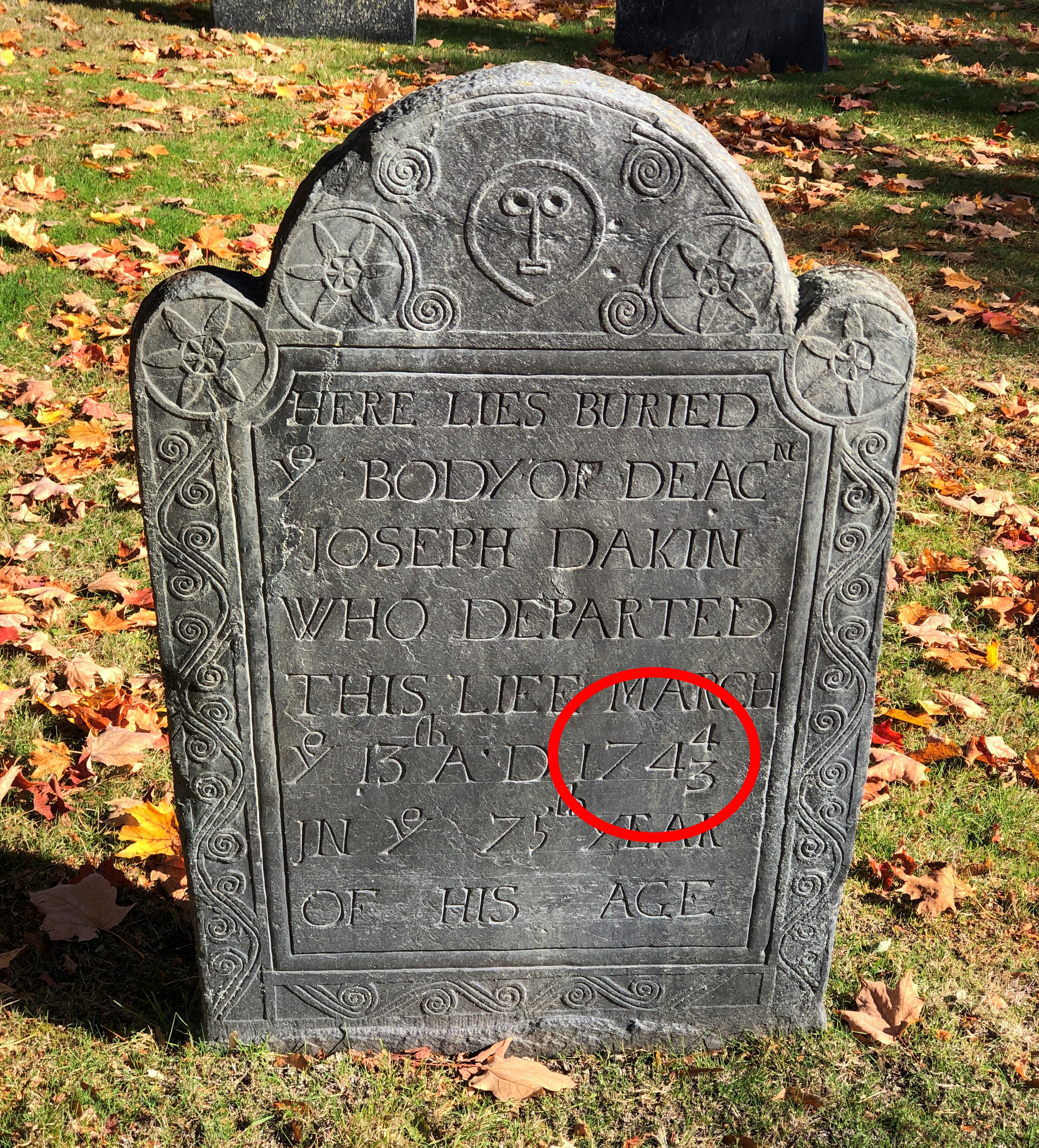
Deacon Joseph Dakin happened to depart this life on March 13, 1744/3. Ahead of the British switch to the Gregorian calendar in 1752, there were competing ideas of when New Year’s Day should be: January 1 or March 25. Most of the rest of Europe had gone to January by the 1740s, but England clung to its traditional date. He died March 13, 1743 by the the traditional reckoning; March 13, 1744 if January 1 is the first day of the year. Besides switching to Gregorian, the ’52 change fixed January 1 as New Year’s Day in the English-speaking world.
That’s the kind of detail that can make my day. A lagniappe of the visit. South Burying Place itself was a lagniappe to my travels that day. The cemetery I had in mind to see was Sleepy Hollow Cemetery, a short drive from Concord’s main retail street. Not to be confused with the one of the same name in New York state, though I have to say that one looks like it would be worth a visit.
Sleepy Hollow in Massachusetts is in a wooded hollow.
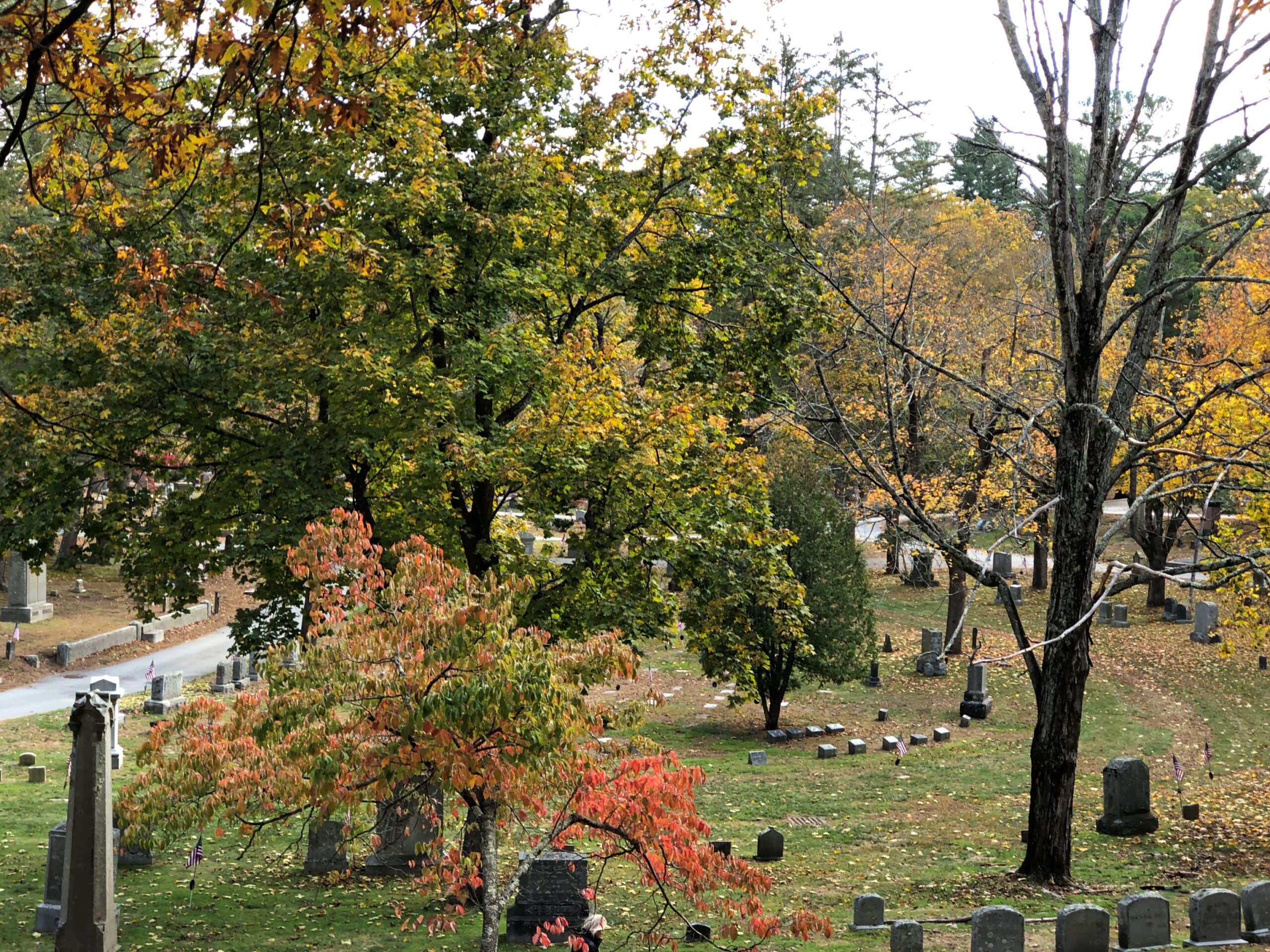
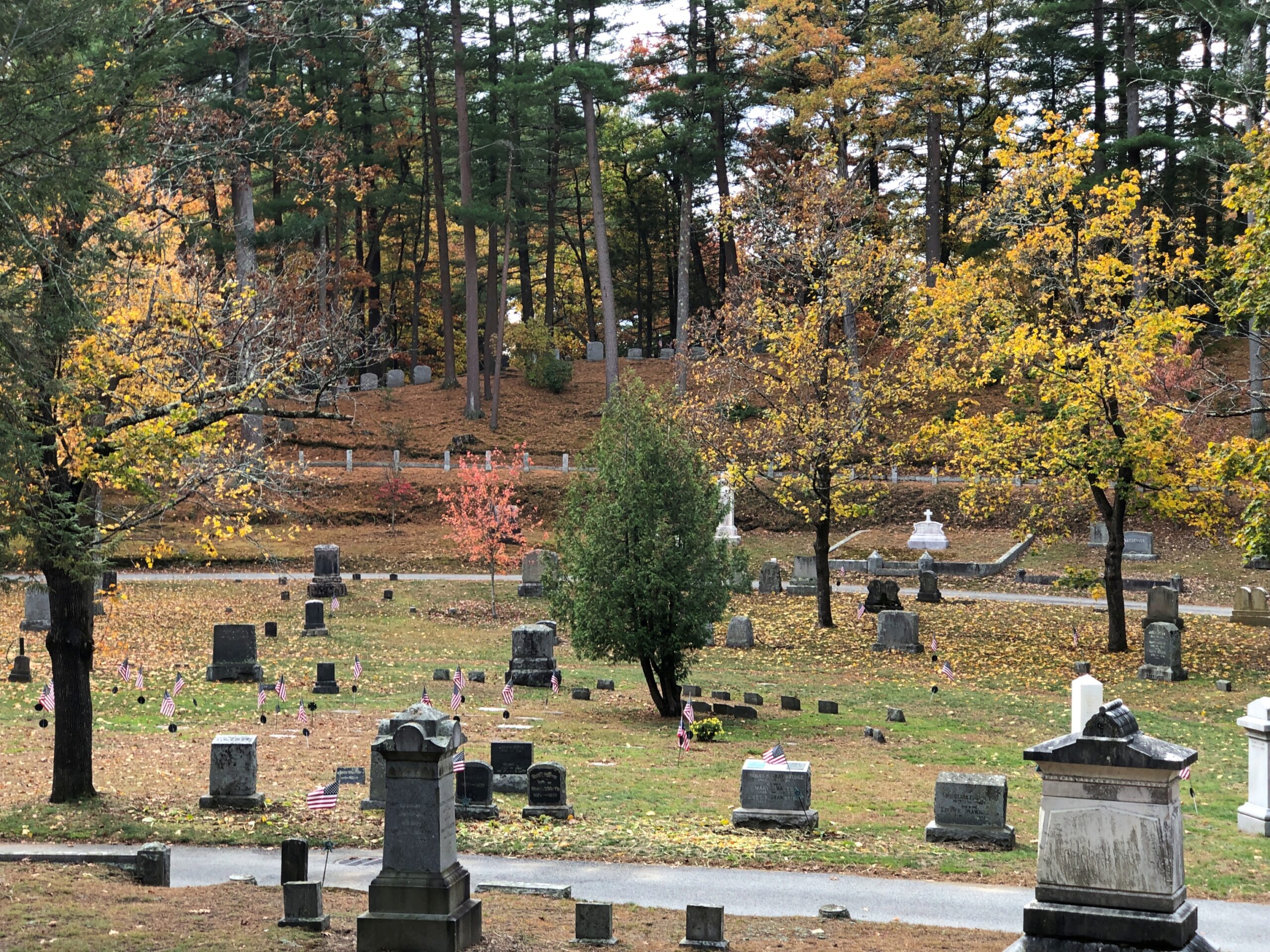
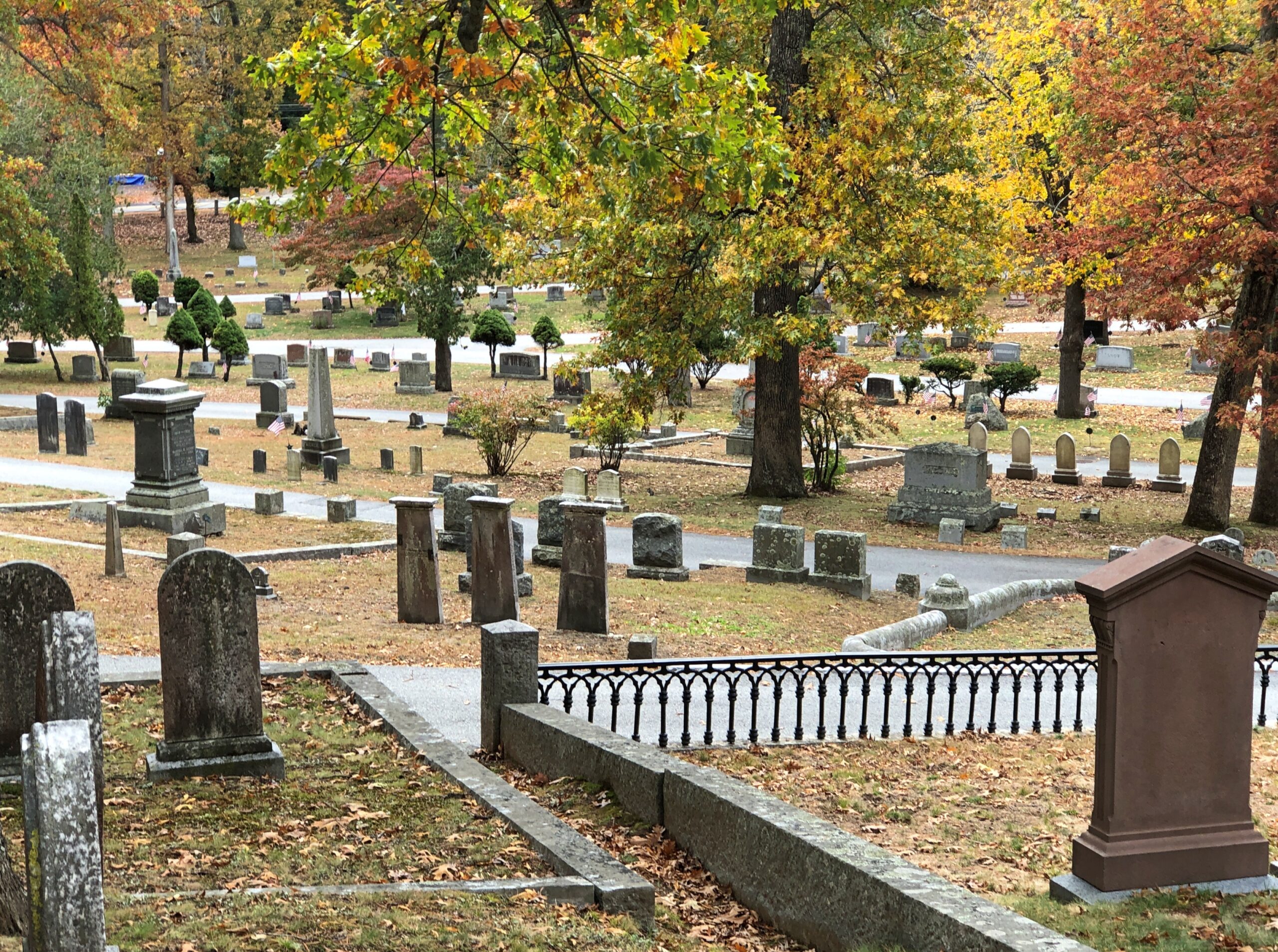
A wooded hollow. That’s a good place for a cemetery. Better yet, Sleepy Hollow is a cemetery of some age, by North American standards. Even better yet, autumn colors.
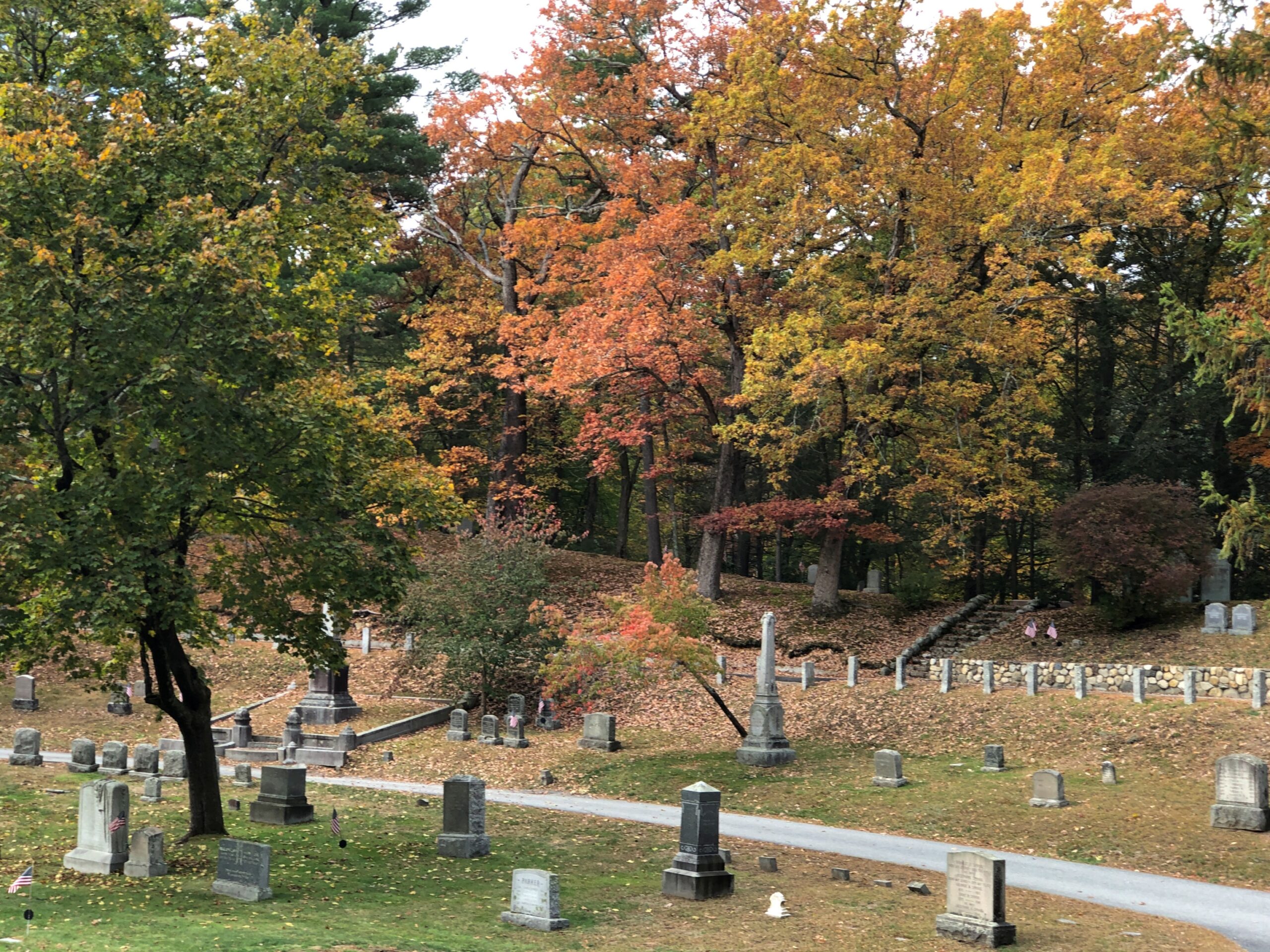
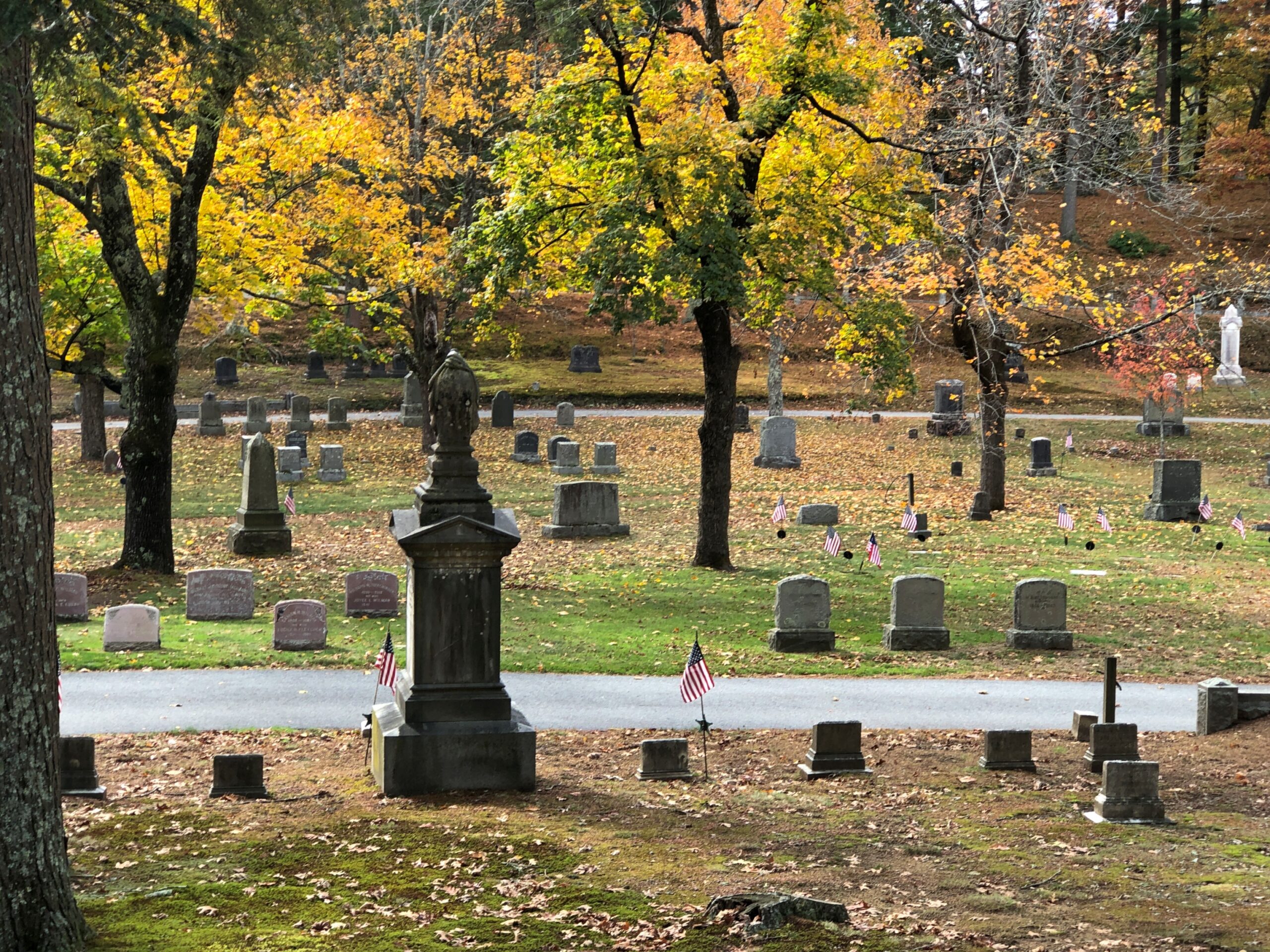
When I got there, I found I wasn’t alone among the living. A rare thing at a cemetery. A trickle of people came and went to pay their respects to a clutch of famed authors who are buried at Sleepy Hollow. They’re up on Authors Ridge. The cemetery thoughtfully built a small parking lot at the base of the ridge, to facilitate that trickle of literary pilgrims.
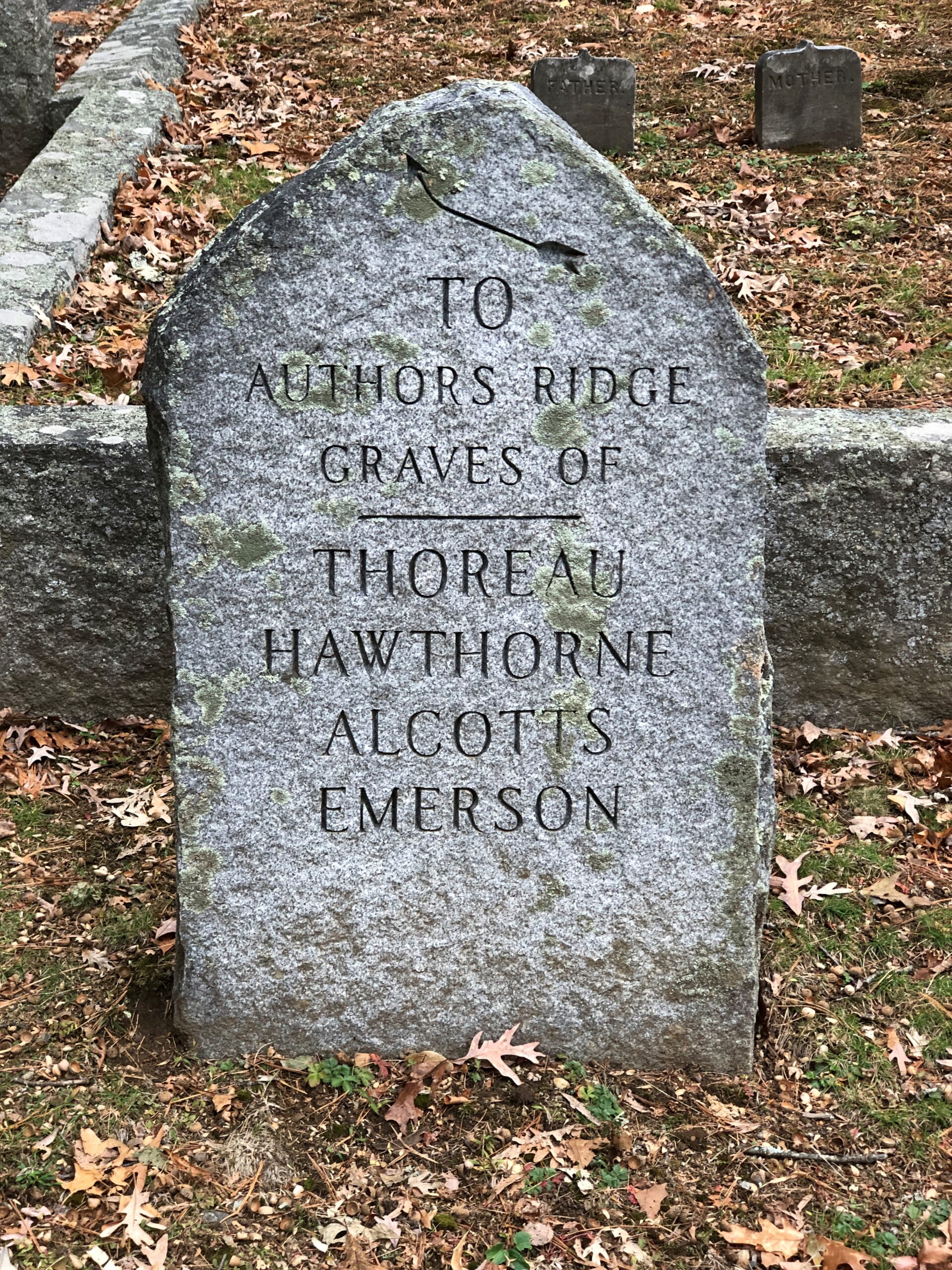
A path from the lot leads upward. At the crest of the ridge, the authors are found with other family members. In alphabetical order:
Louisa May Alcott.
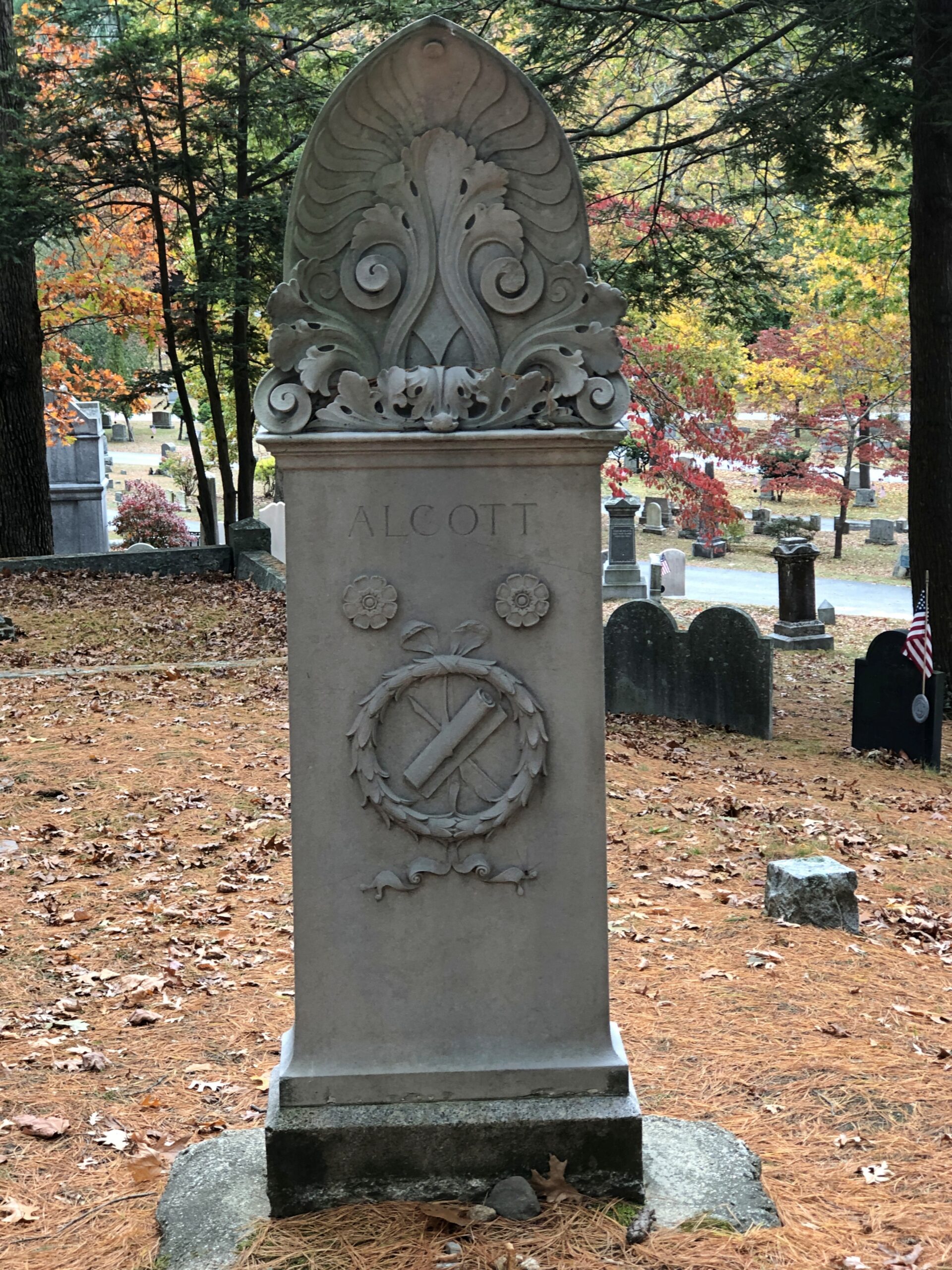
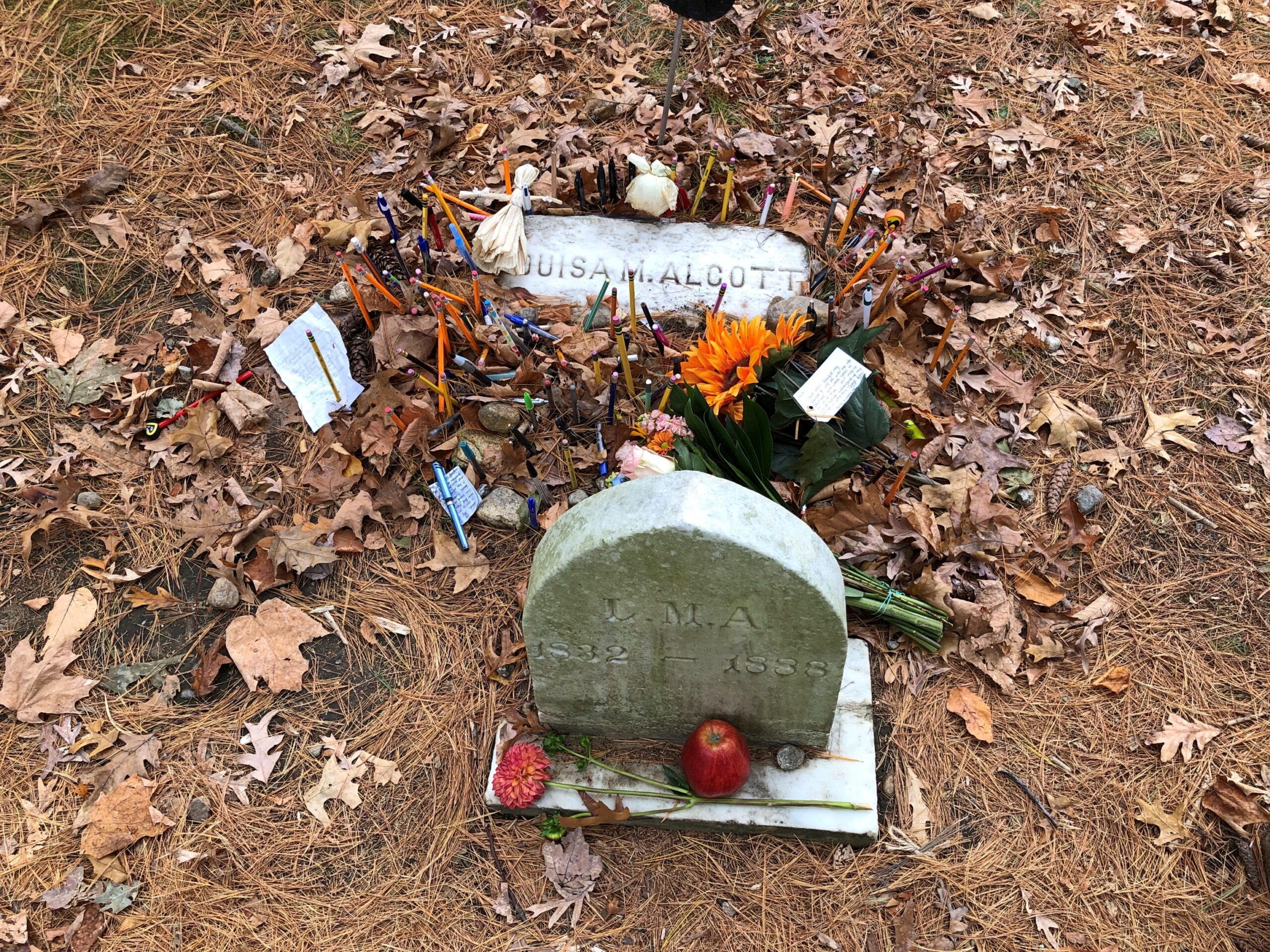
Here visitors don’t leave stones or small coins, but pencils, pens and paper. She wasn’t the only one to attract writing instruments.
Ralph Waldo Emerson.
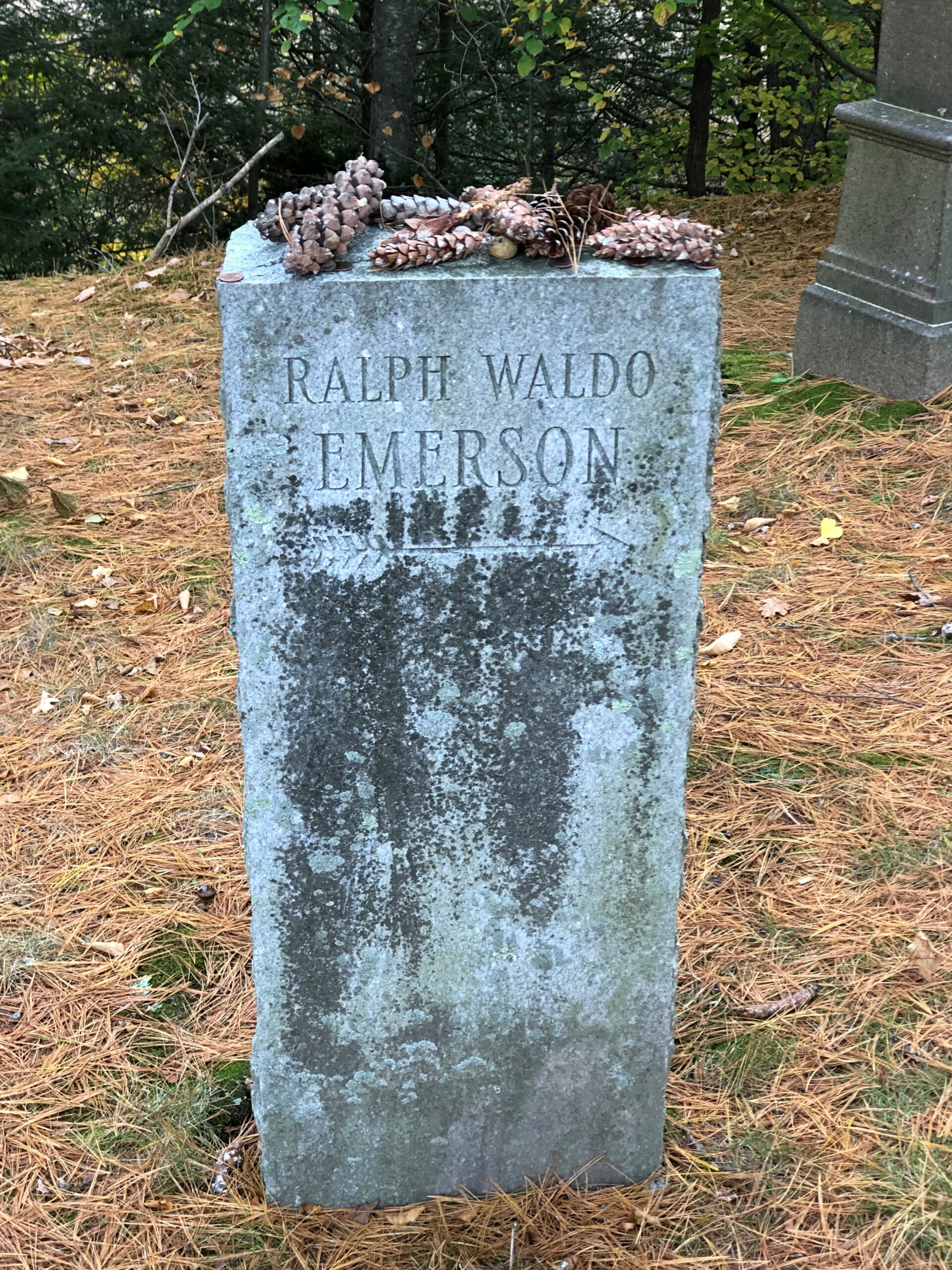
Where’s Waldo? Right there. Interesting that his memory attracted pine cones.
Nathaniel Hawthorne.
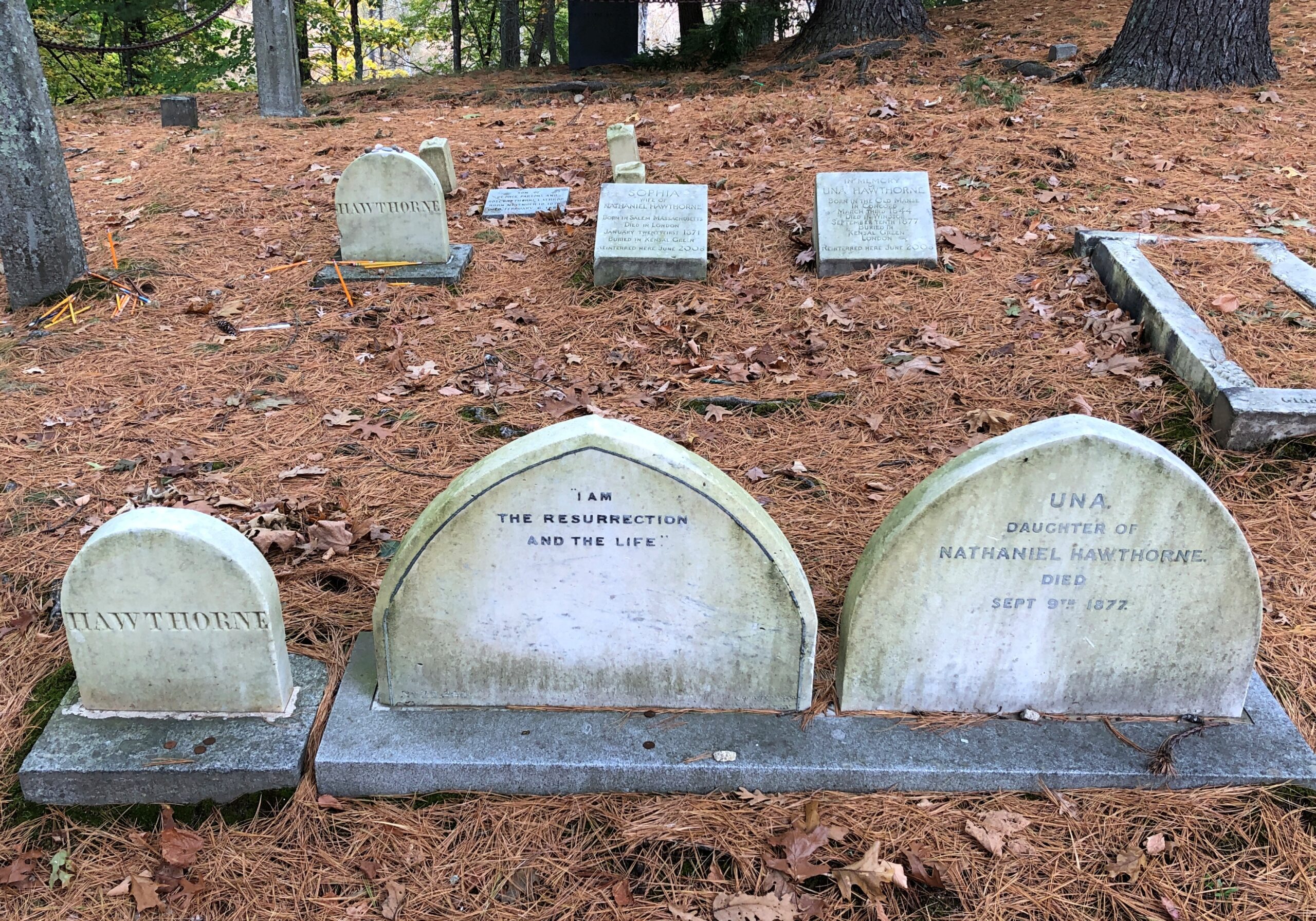
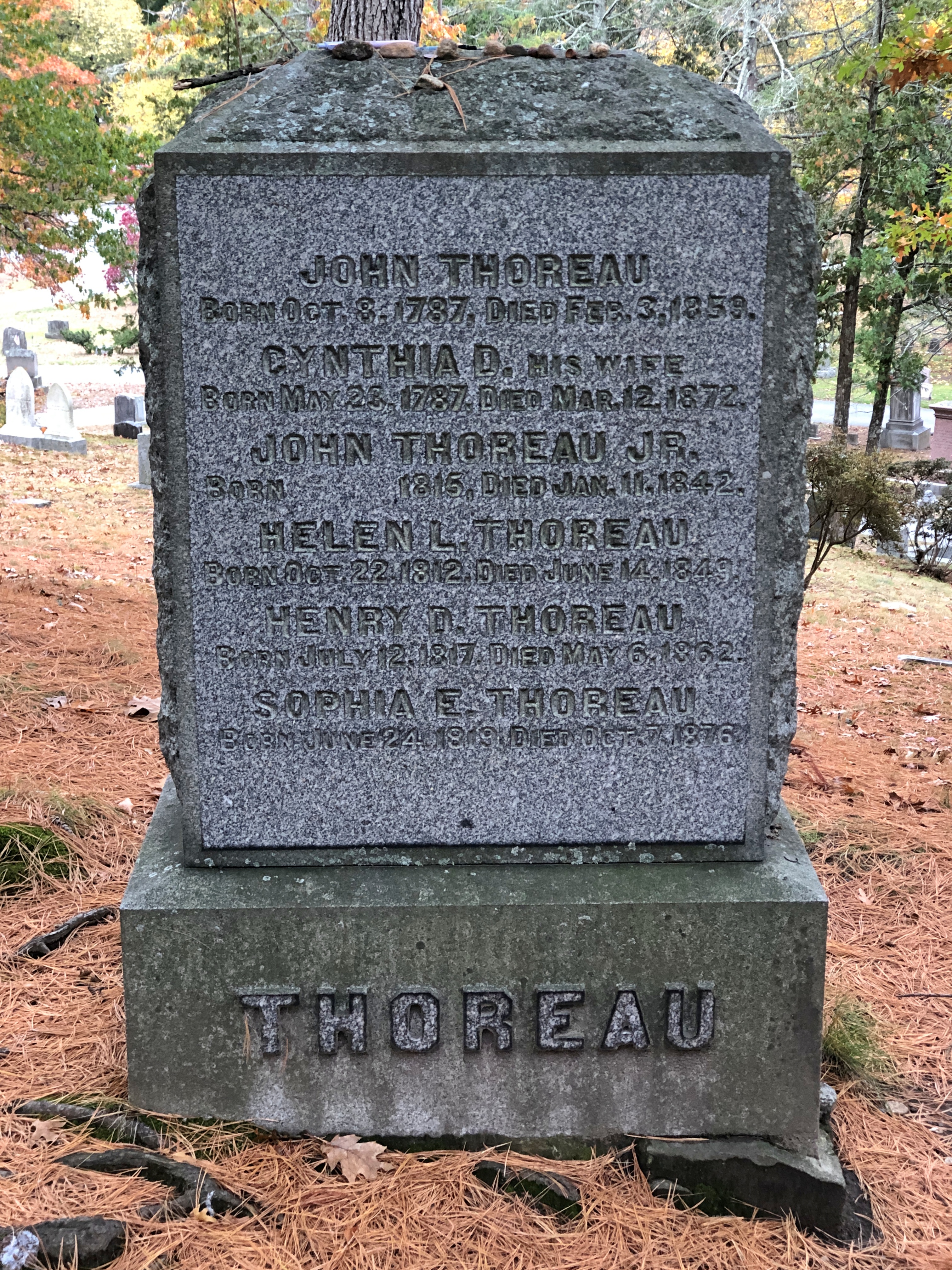
Henry David Thoreau.
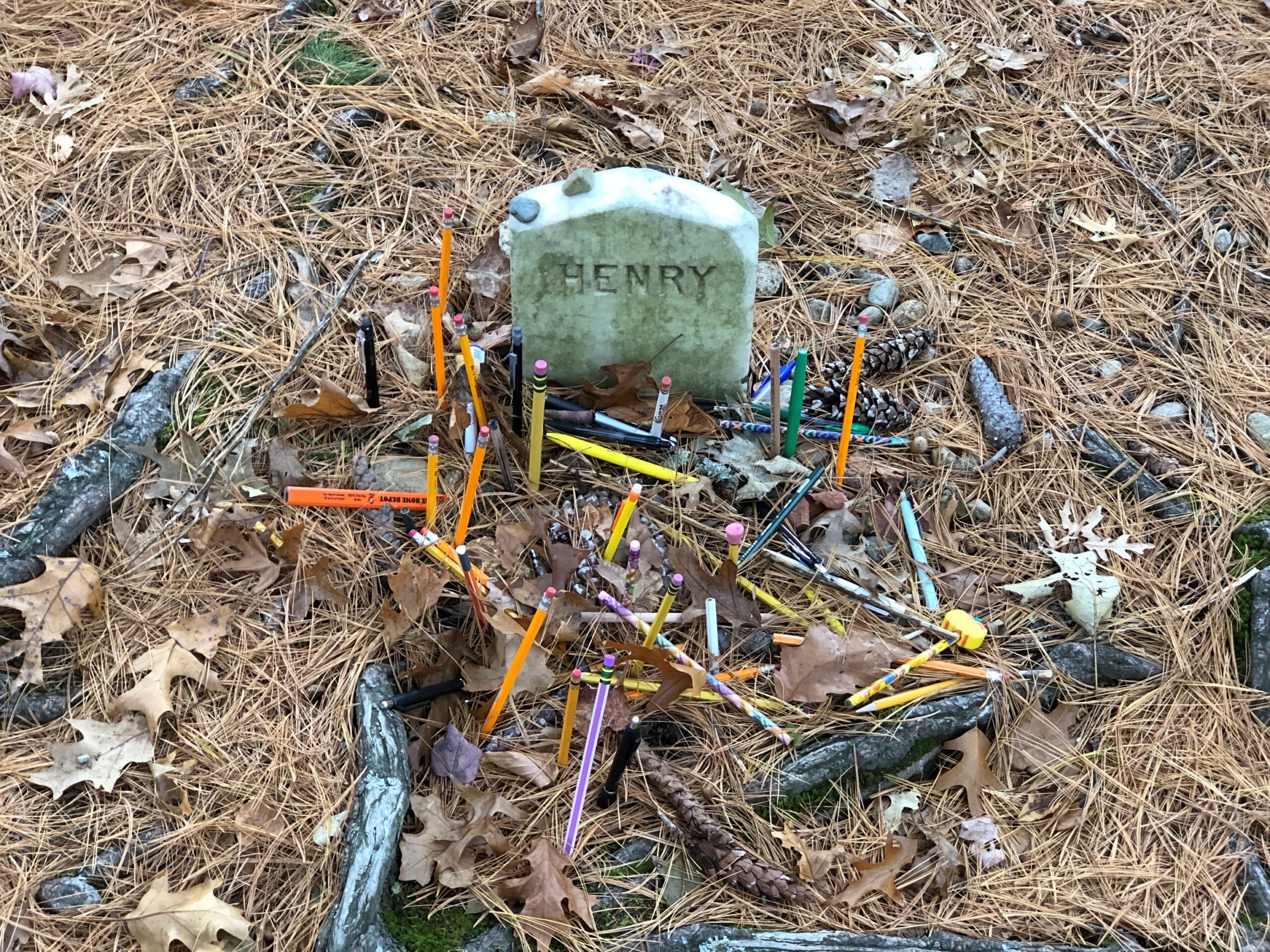
When I parked at the small lot, I noticed a group of four girls, college students would be my guess, heading up the path to Authors Ridge. I waited a few minutes in my car, since I didn’t want to interrupt their pilgrimage. Also, I wanted the ridge to myself, if possible. I guessed they wouldn’t be long, and soon they came down the path, got in their car and left.
About an hour later, when I had finished my own cemetery stroll, I was checking my maps in the car, when a middle-woman pulled up, parked, and headed up Authors Ridge, walking her small dog. The trickle was continuing.
I preferred a more leisurely inspection of the authors’ stones, and the rest of the cemetery, for that matter. Such excellent contour.
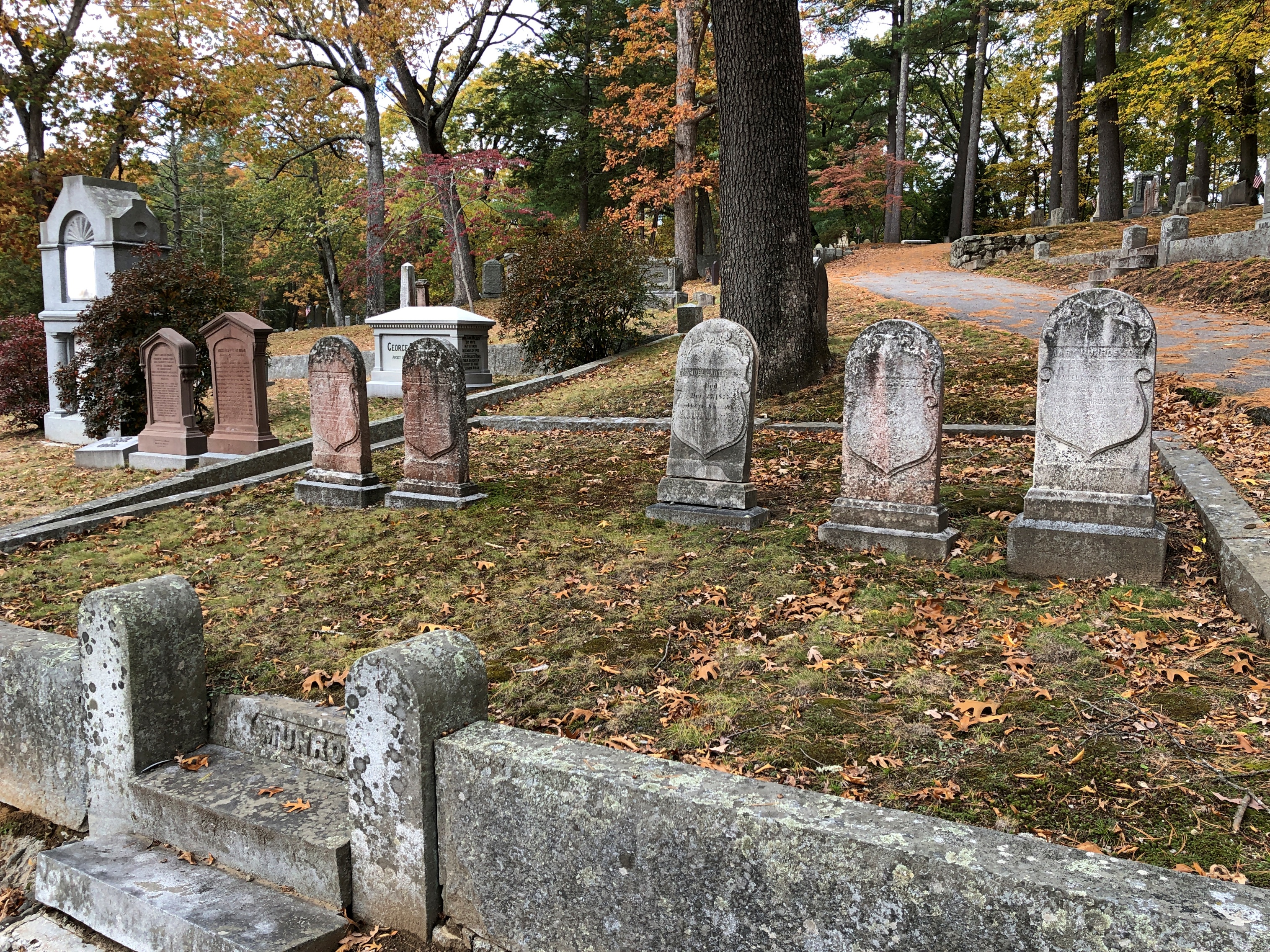
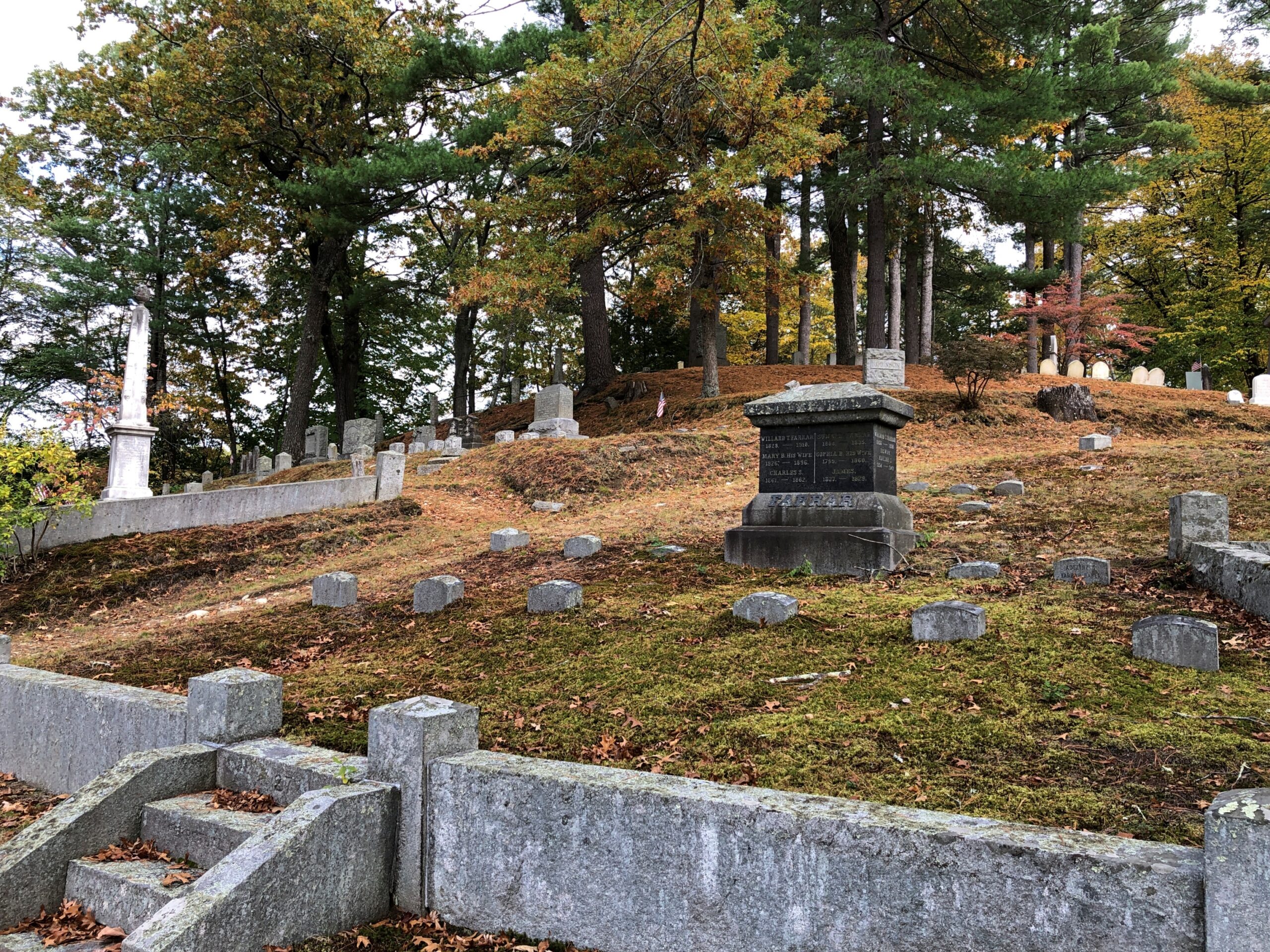
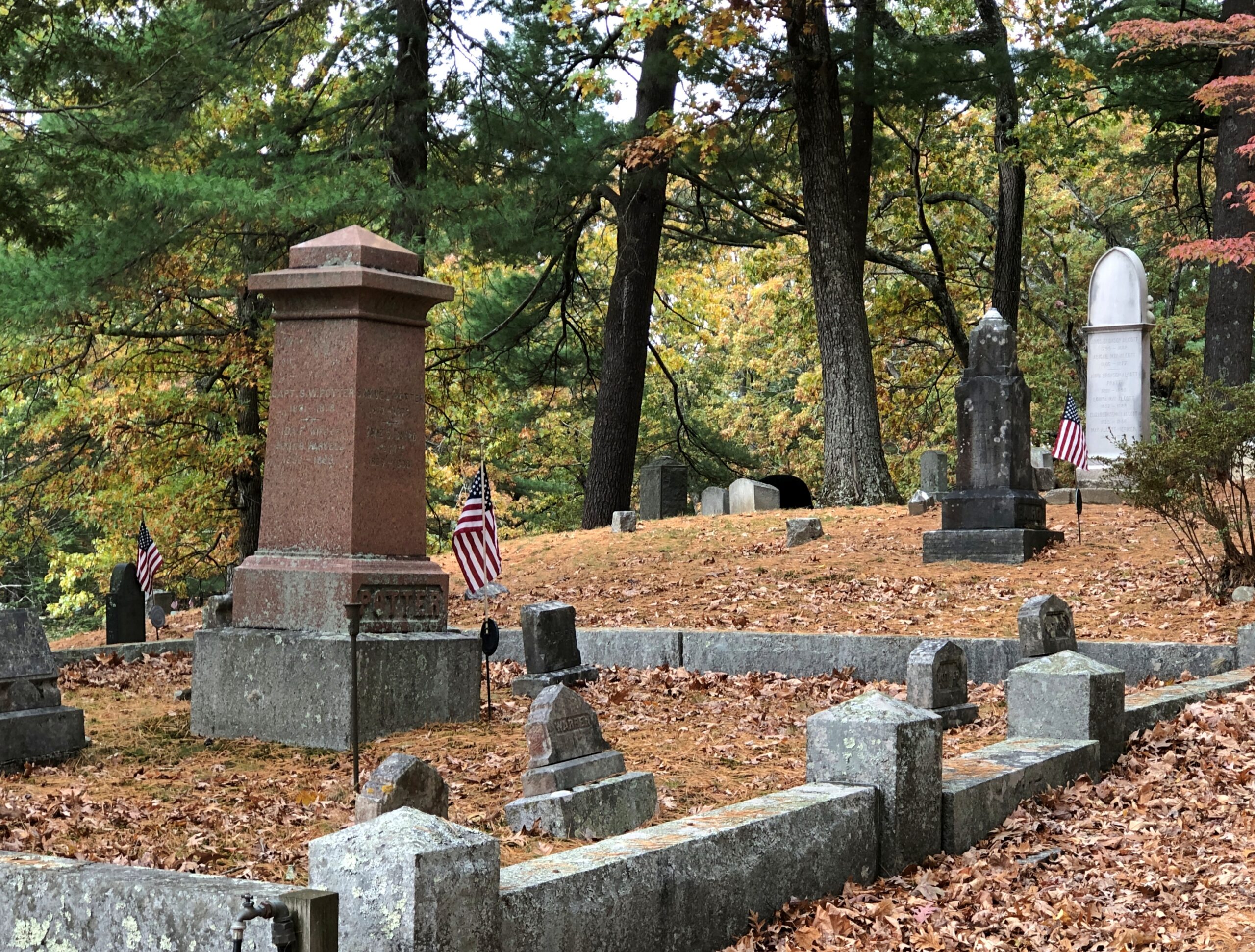
There’s also a large selection of stones for non-famous residents of this part of the world.
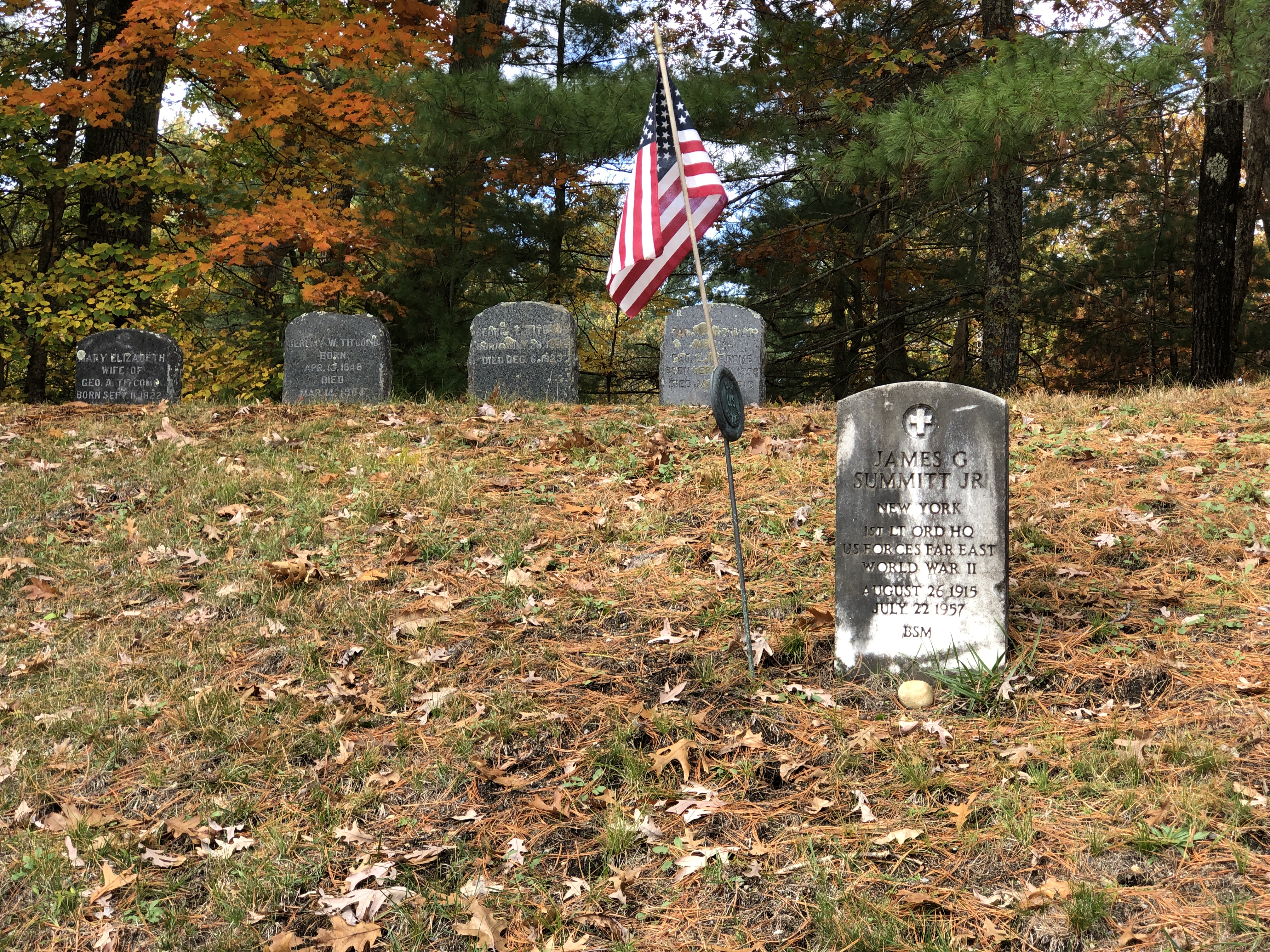
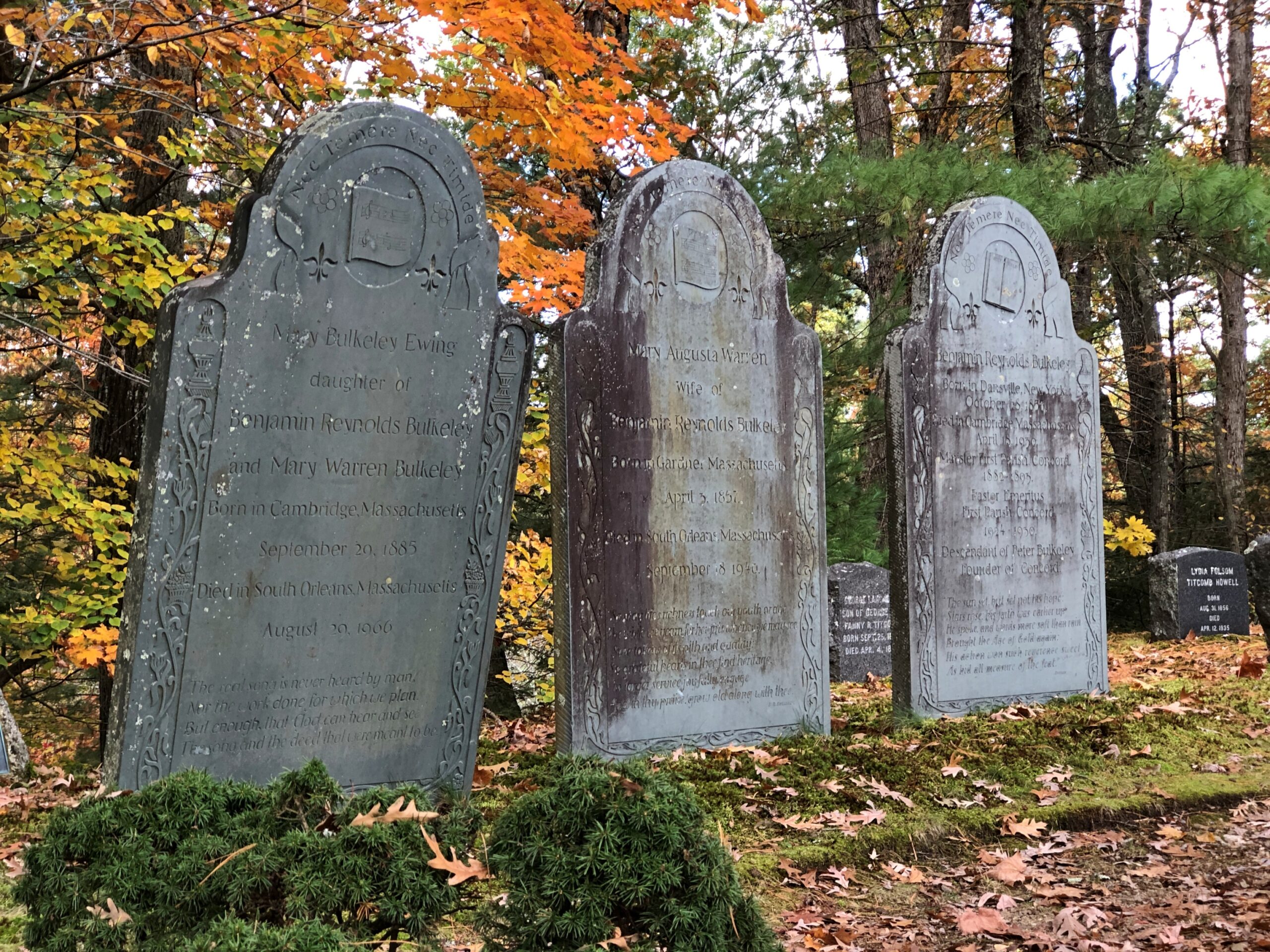
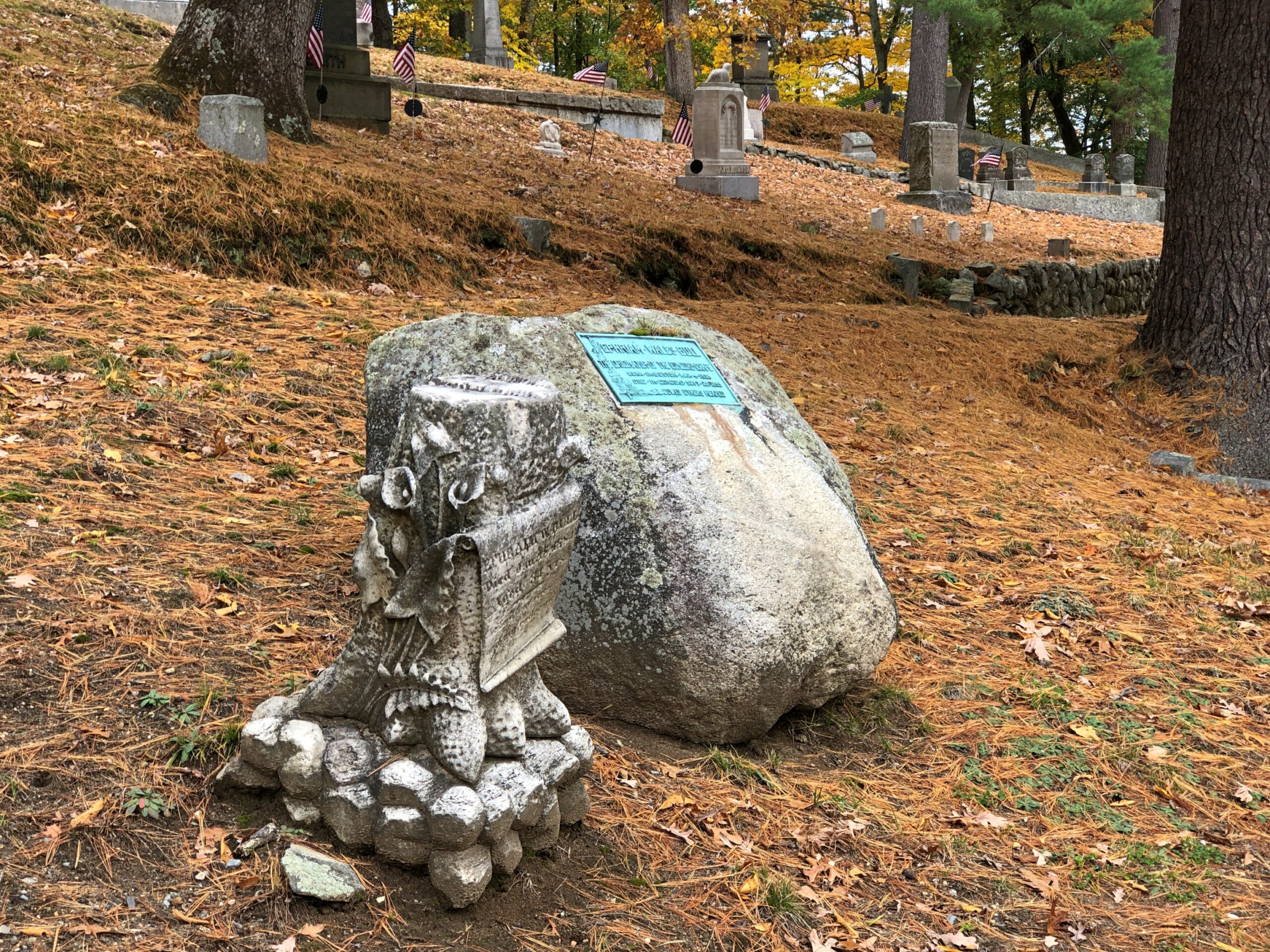
Besides, the authors aren’t the only notable burials. Here’s Daniel Chester French, sculptor of renown.
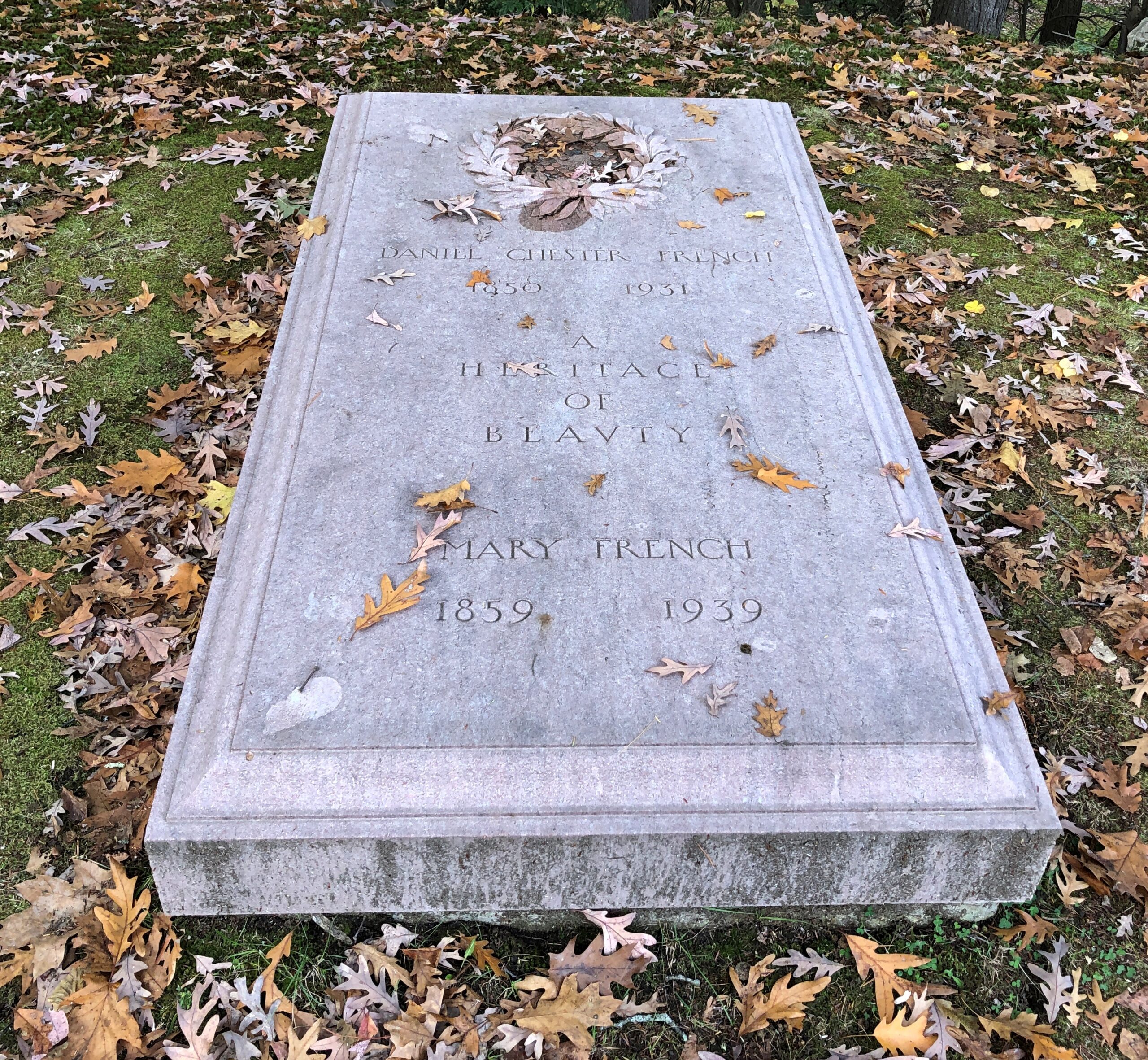
If the seated Lincoln at the Lincoln Memorial was the only thing he ever did, he’d still be remembered. But of course he did a lot more. The smaller version of “The Republic,” bright gold in color and standing even now in Chicago, is one that comes to mind. So do the allegories at the Alexander Hamilton U.S. Customs House at the southern tip of Manhattan. And Gen. Oglethorpe in Savannah.
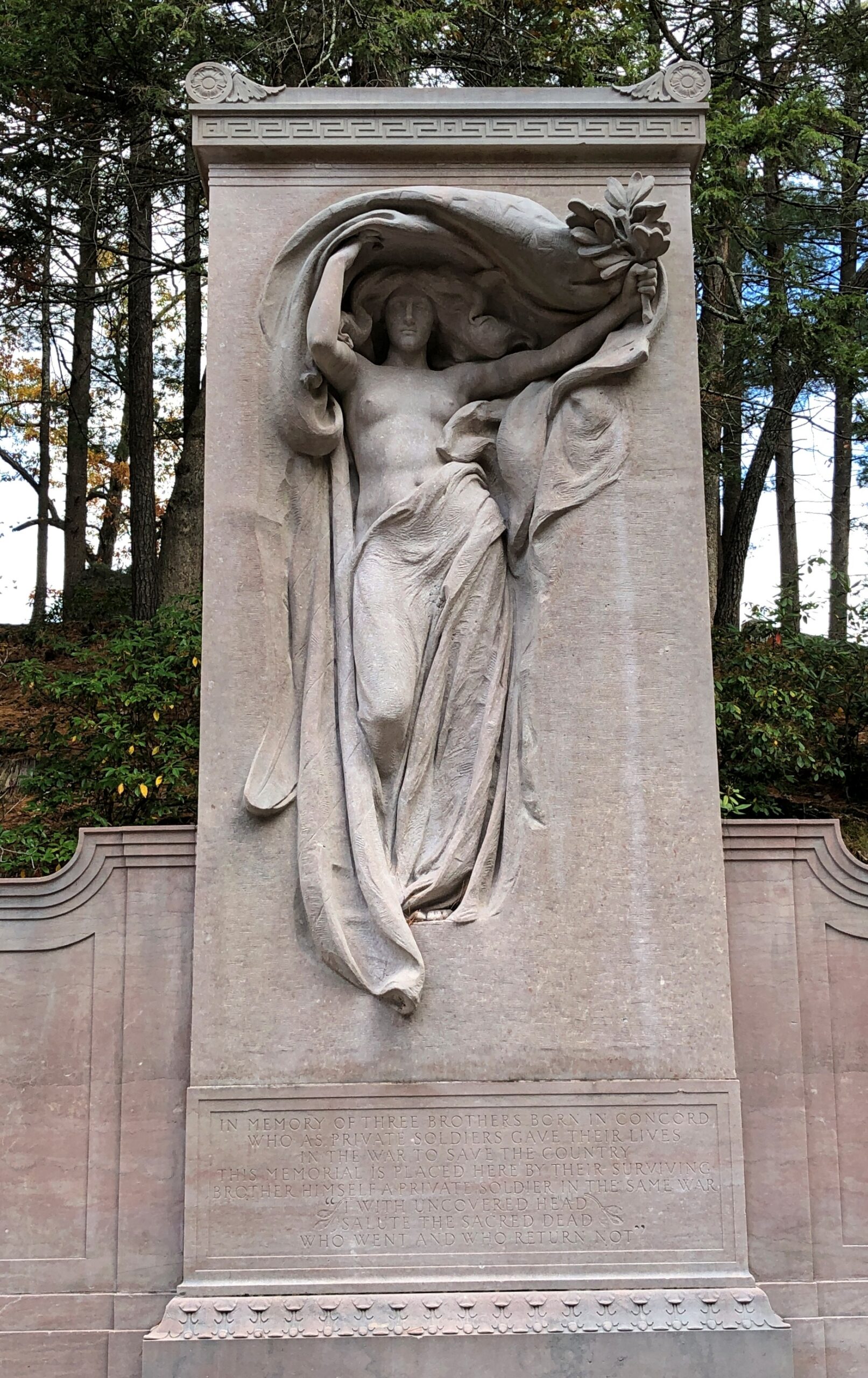
But you don’t have to go so far to find one of French’s works. Elsewhere in Sleepy Hollow is the Melvin Memorial, honoring three Concord brothers named Melvin (Asa, John and Samuel), who each gave their last full measure of devotion for the Union in ways that represent the spectrum of soldier death in that war: died in combat, of disease, and in a prison camp.
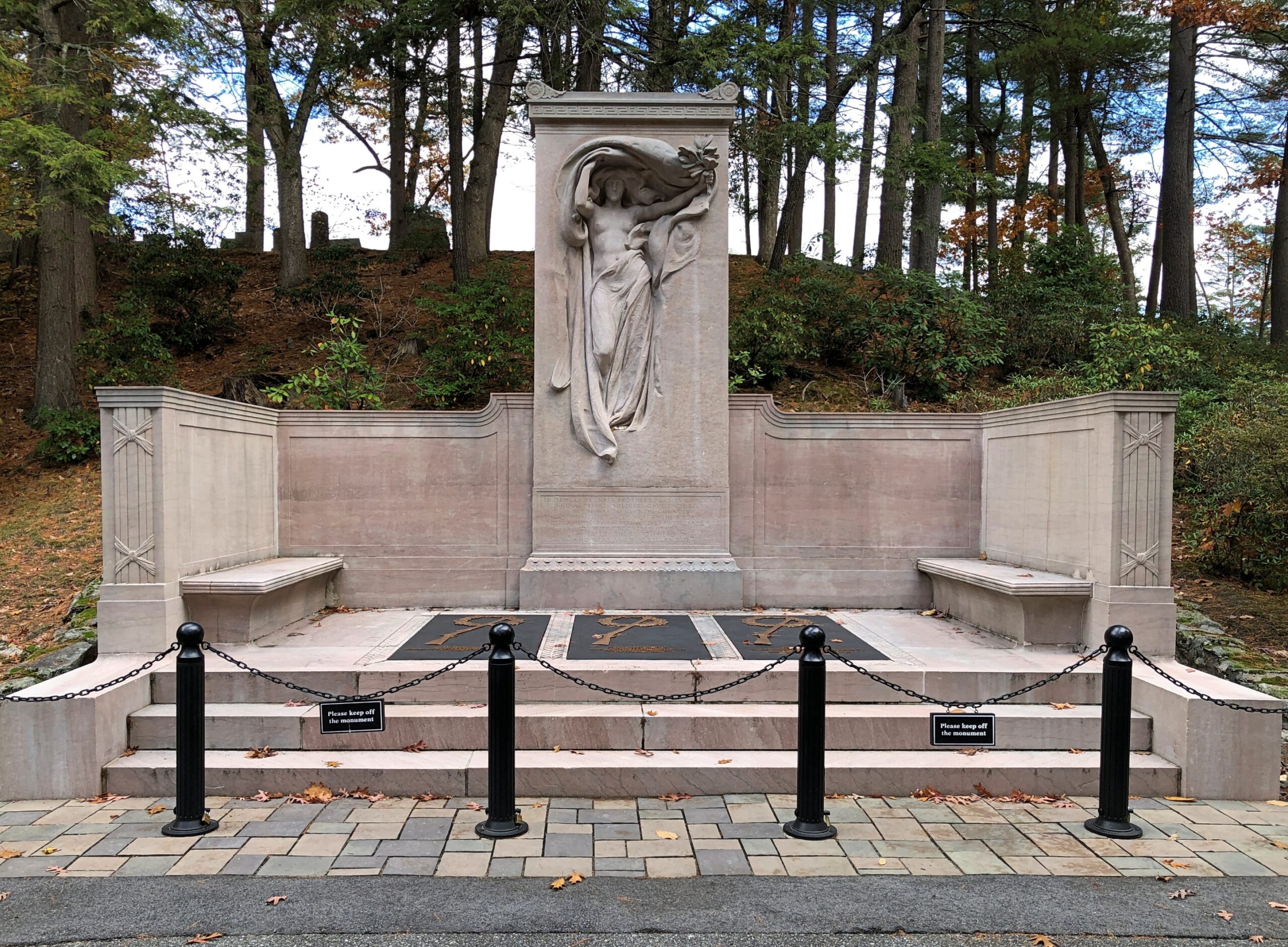
The figure is known as Mourning Victory, a version of which is held by the Met.
Another famed work of French’s is in Concord: namely, “The Minute Man” at Minute Man National Historical Park.
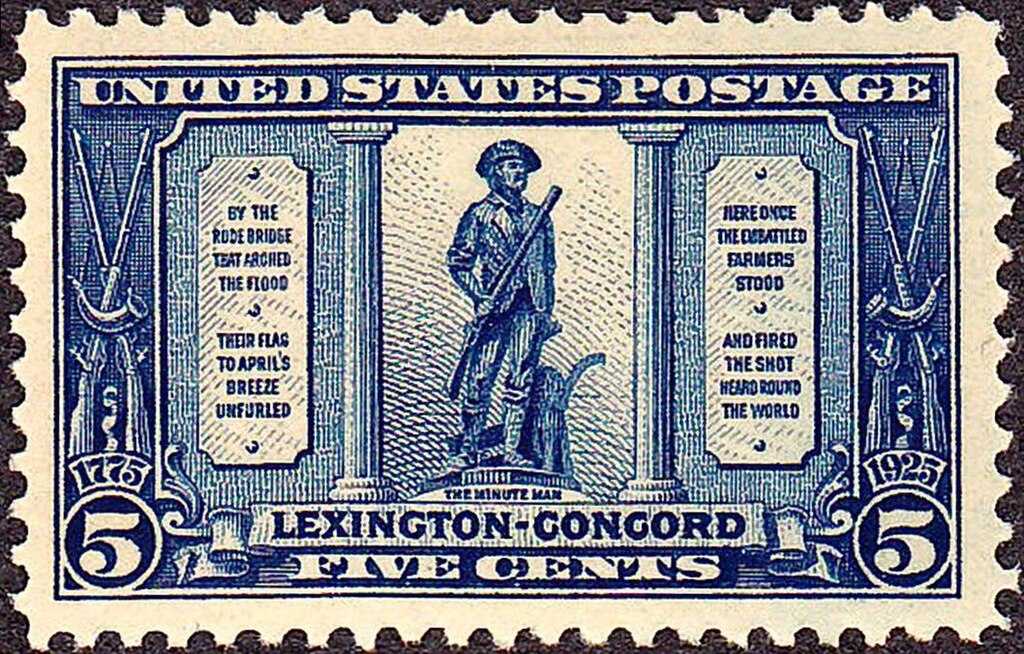
I didn’t bother with that historical park this time, since I knew it would be closed. But I did see it 30 years ago, and it’s stuck with me. Just example of French’s work standing the test — and literally standing the test — of time.