Today I let Google finish “Cathedral of the…” and got the following responses, top to bottom (capitalization sic): Sea, deep, Holy Angels, holy angels photos, forsaken, immaculate conception, incarnation, Madeleine, deep ds3, pines.
Cathedral of the Sea is La catedral del mar, a “Spanish drama series” that I’d never heard of, though I have been to Santa Maria del Mar. The Cathedral of the Deep and of the Forsaken appear to be aspects of electronic games, and the others are churches in various places.
Not on the list is the Cathedral of the Plains. But it’s out there, in central Kansas.
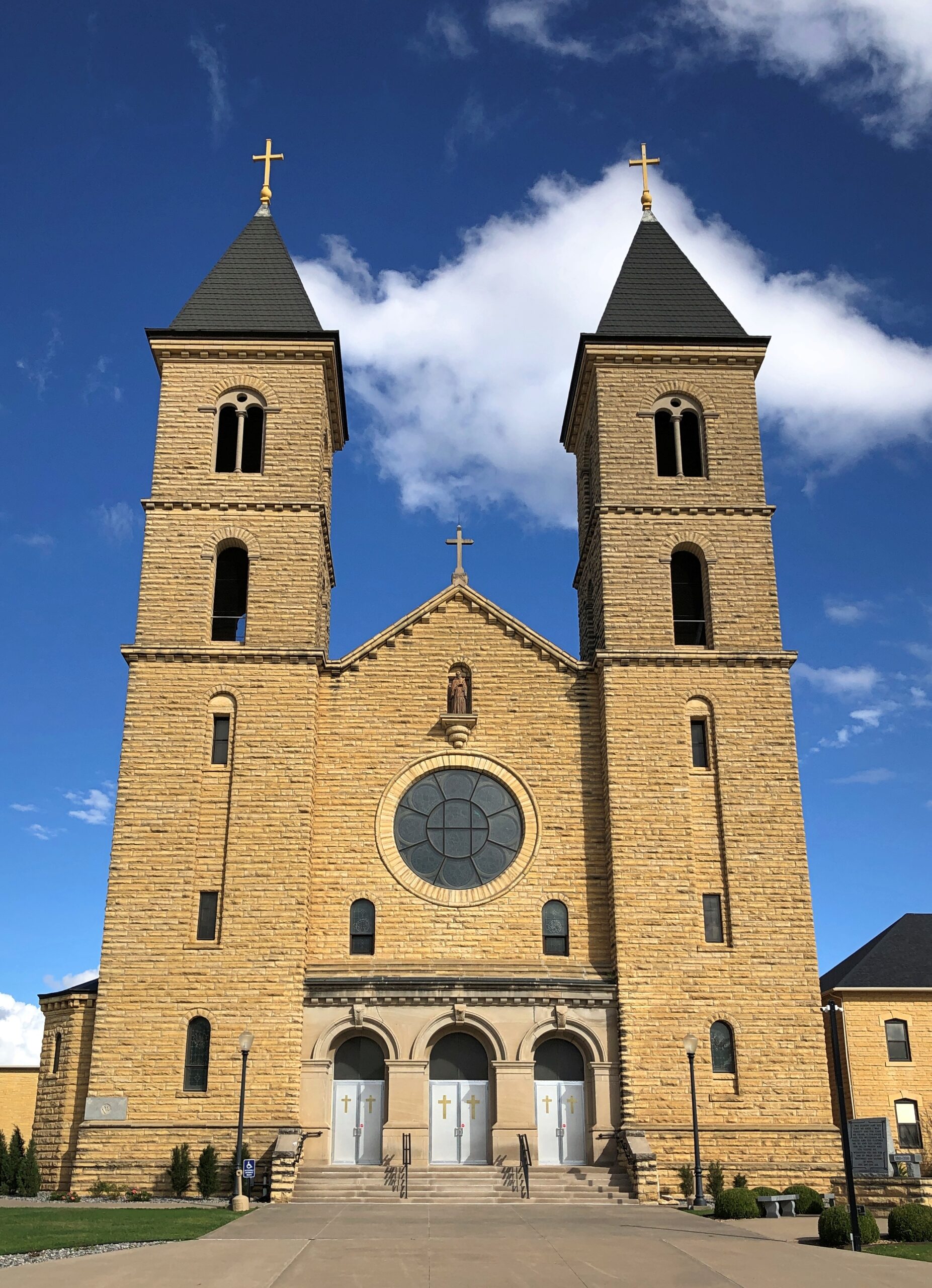
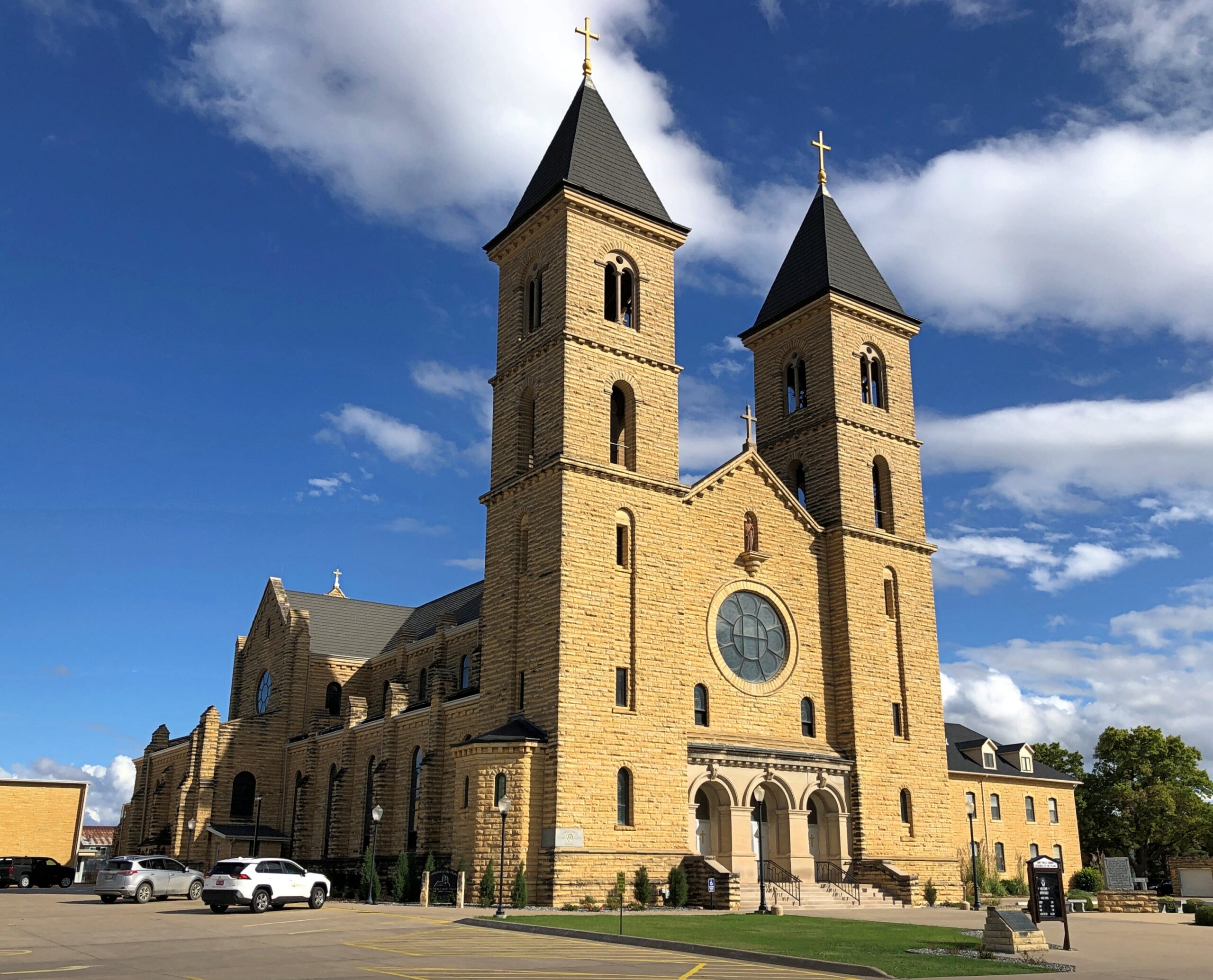
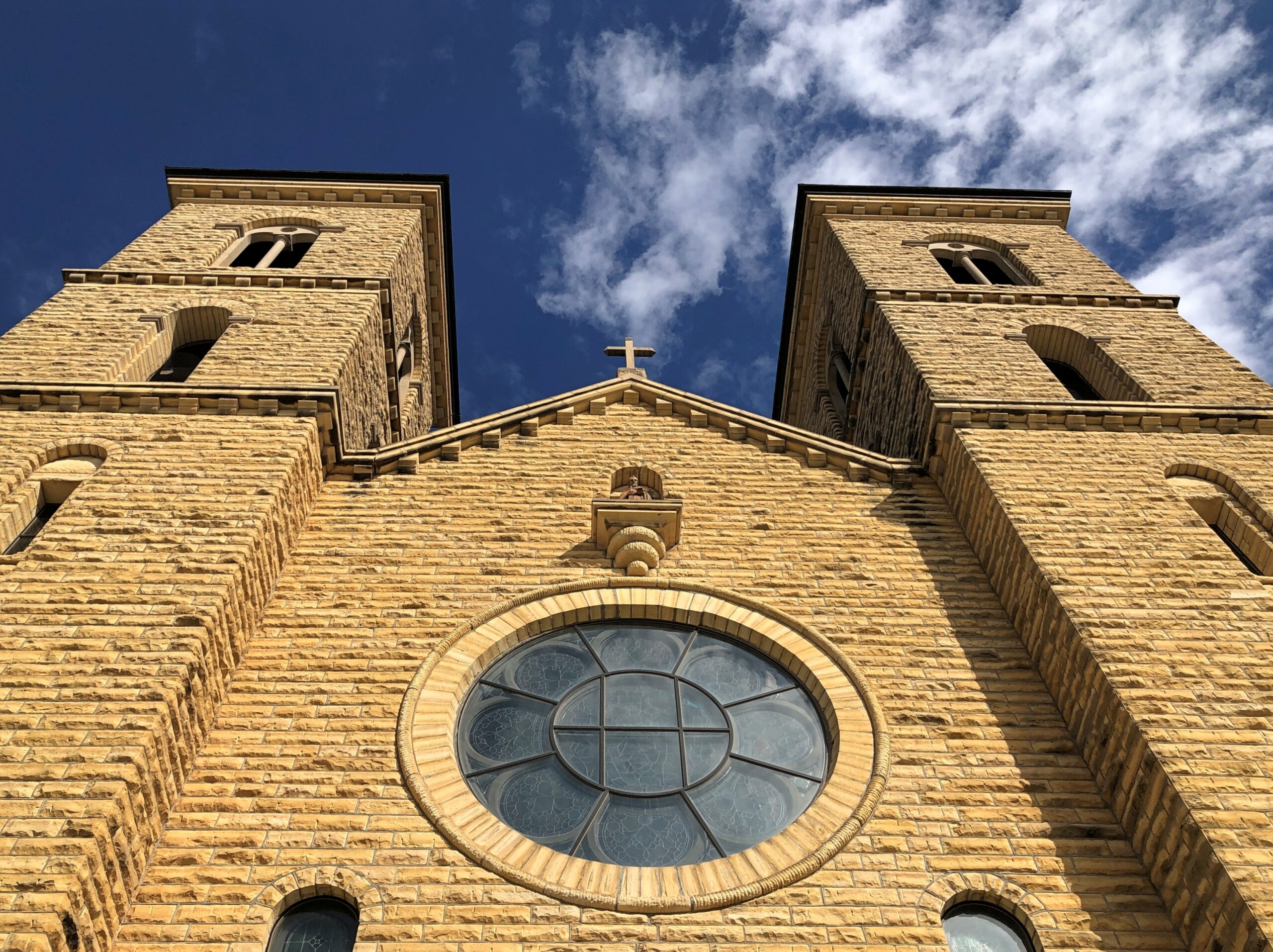
That’s a nickname, since the church isn’t actually a cathedral, but the wording does appear on its point-of-interest spot on road maps – and naturally that got my attention. Formally, the church is the Basilica of St. Fidelis, said to be the largest church west of the Mississippi by seating capacity (1,100) upon completion in 1911 in Victoria, Kansas. Conveniently (for me), some decades later I-70 was built not far away.
John T. Comès (d. 1922), a Pittsburgh architect, designed the church for a congregation of Volga German immigrants. Who had come to greater Victoria starting in the 1870s. Why Victoria? Why not? No doubt they looking for flat farmland.
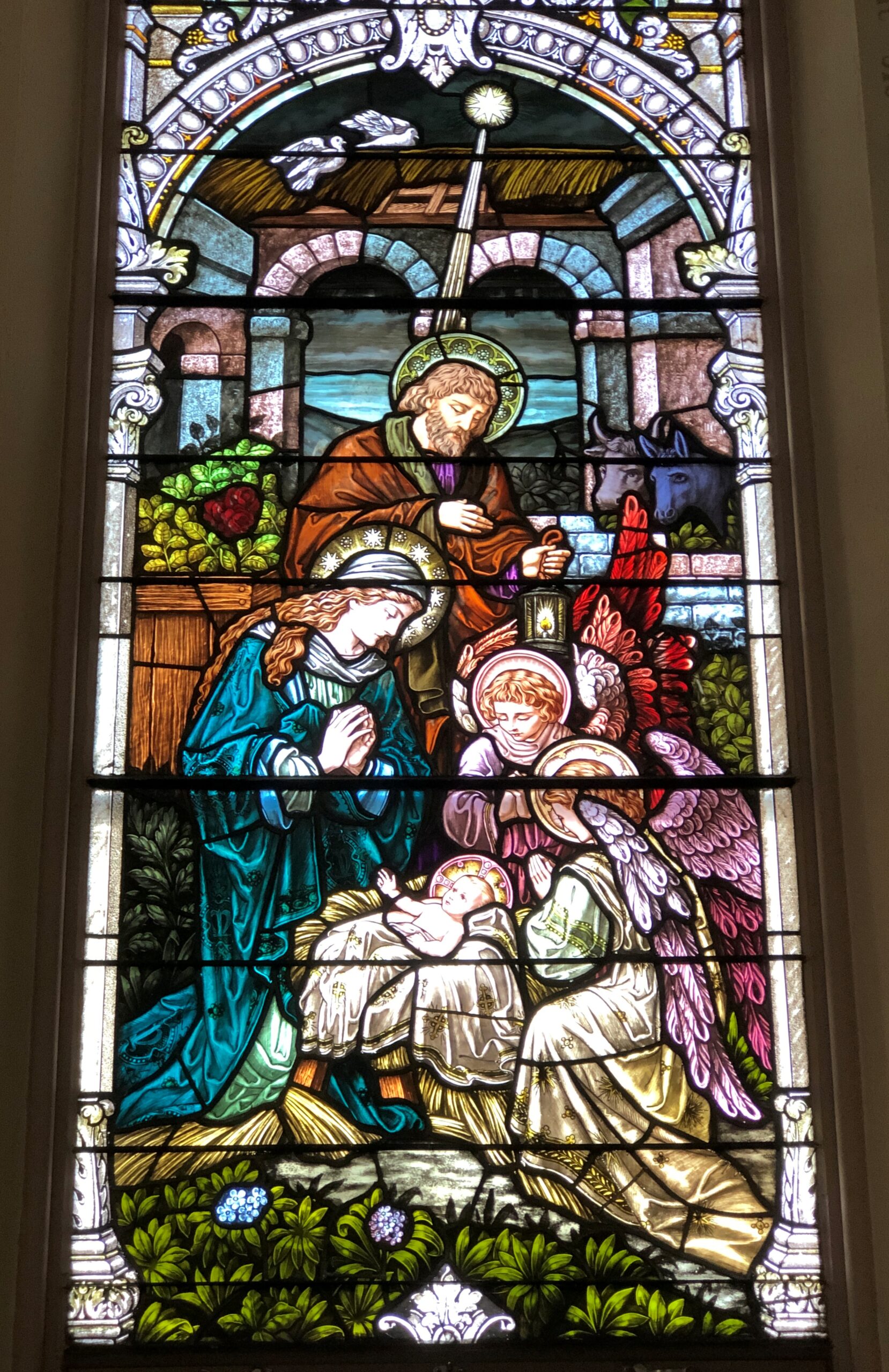
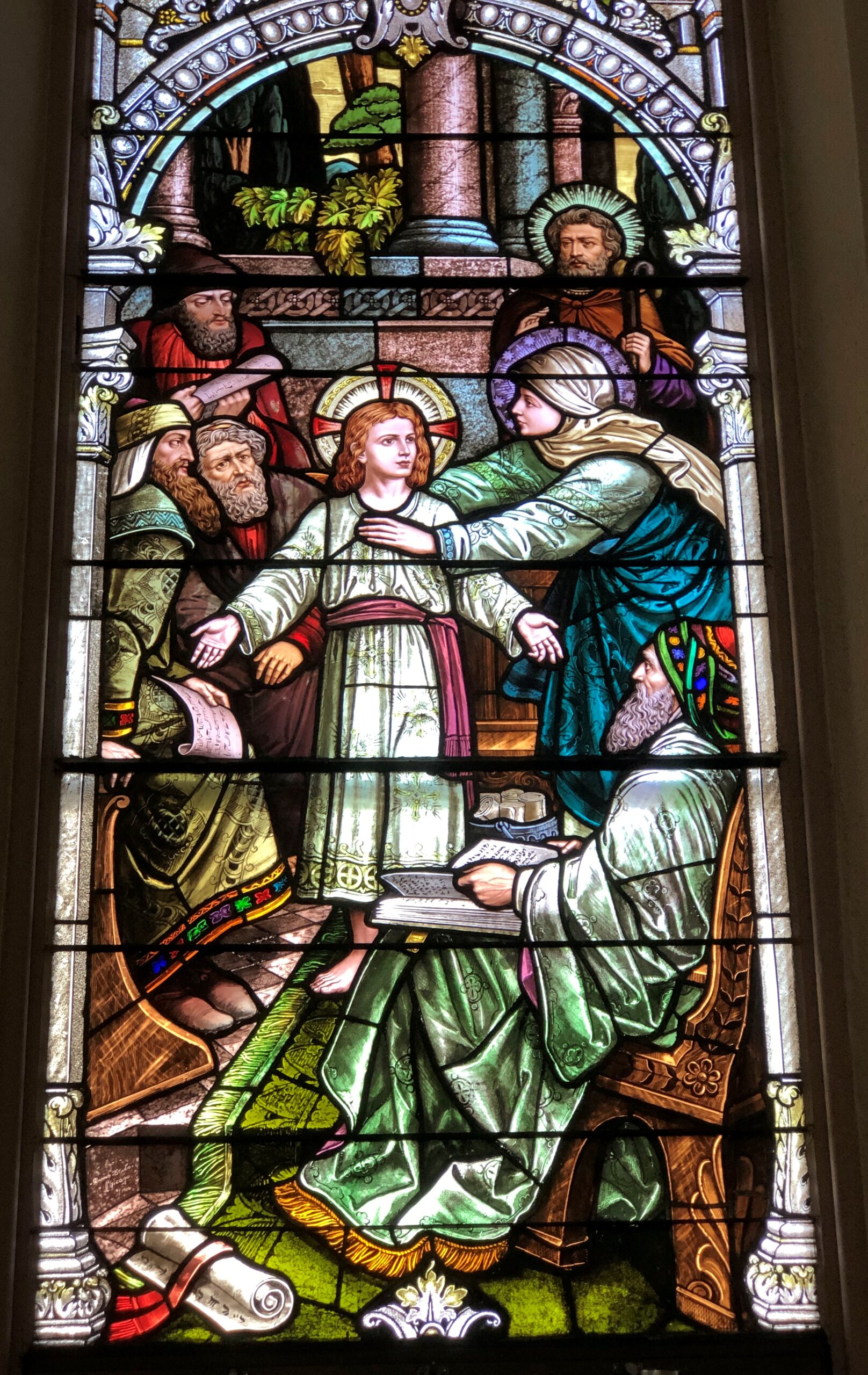
Comès, an incredibly prolific specialist in Catholic churches, did a fine job.
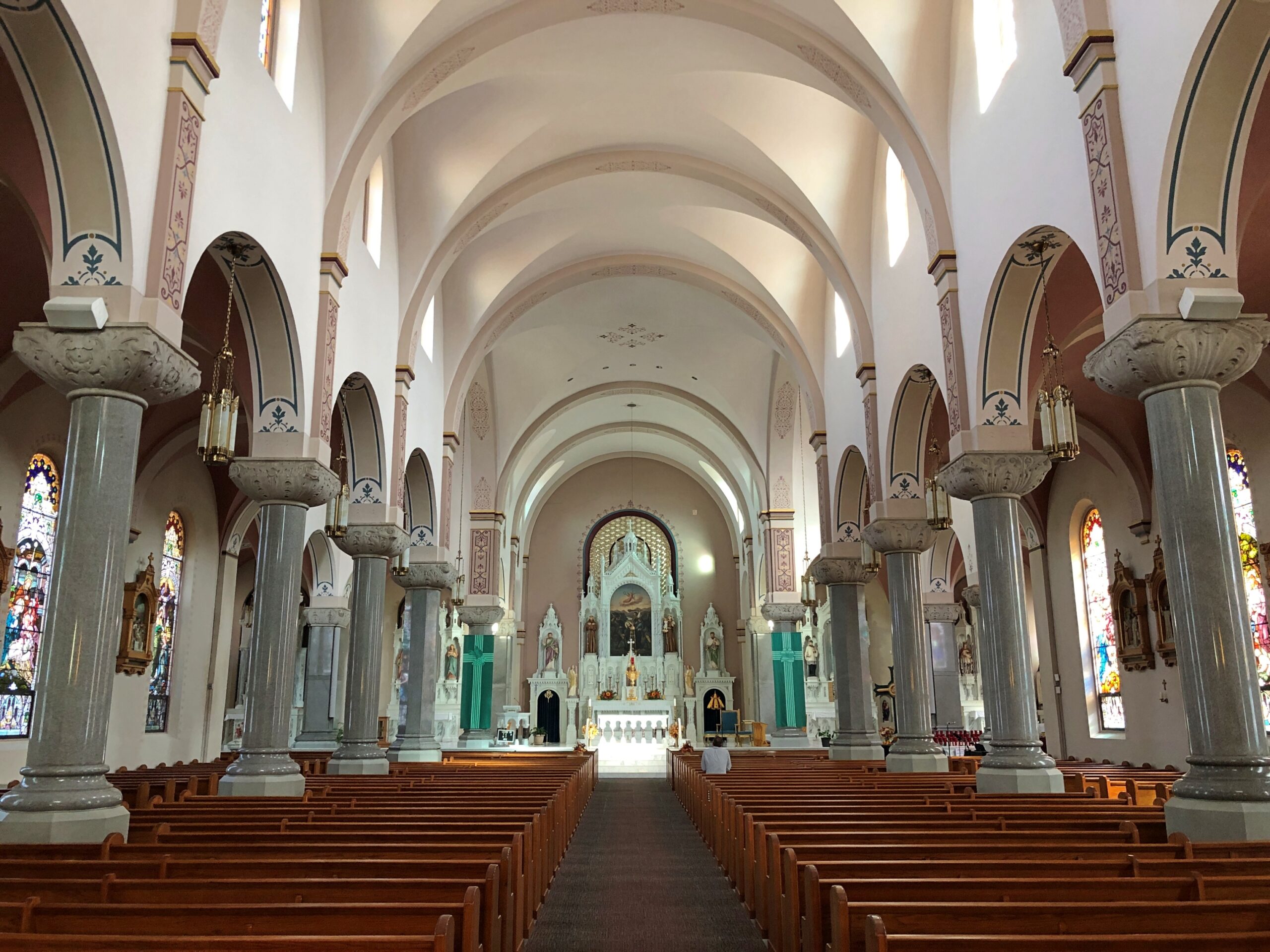
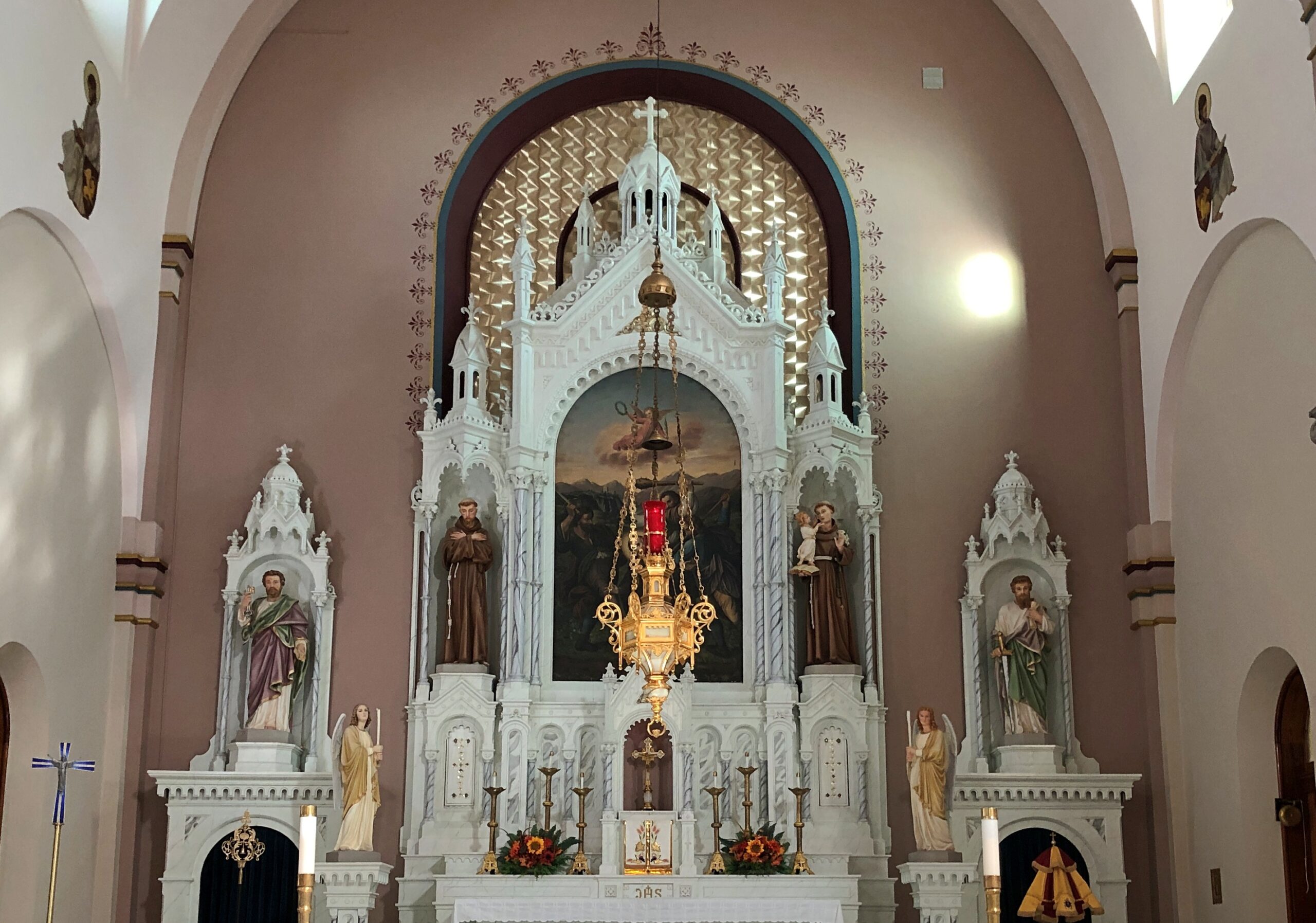
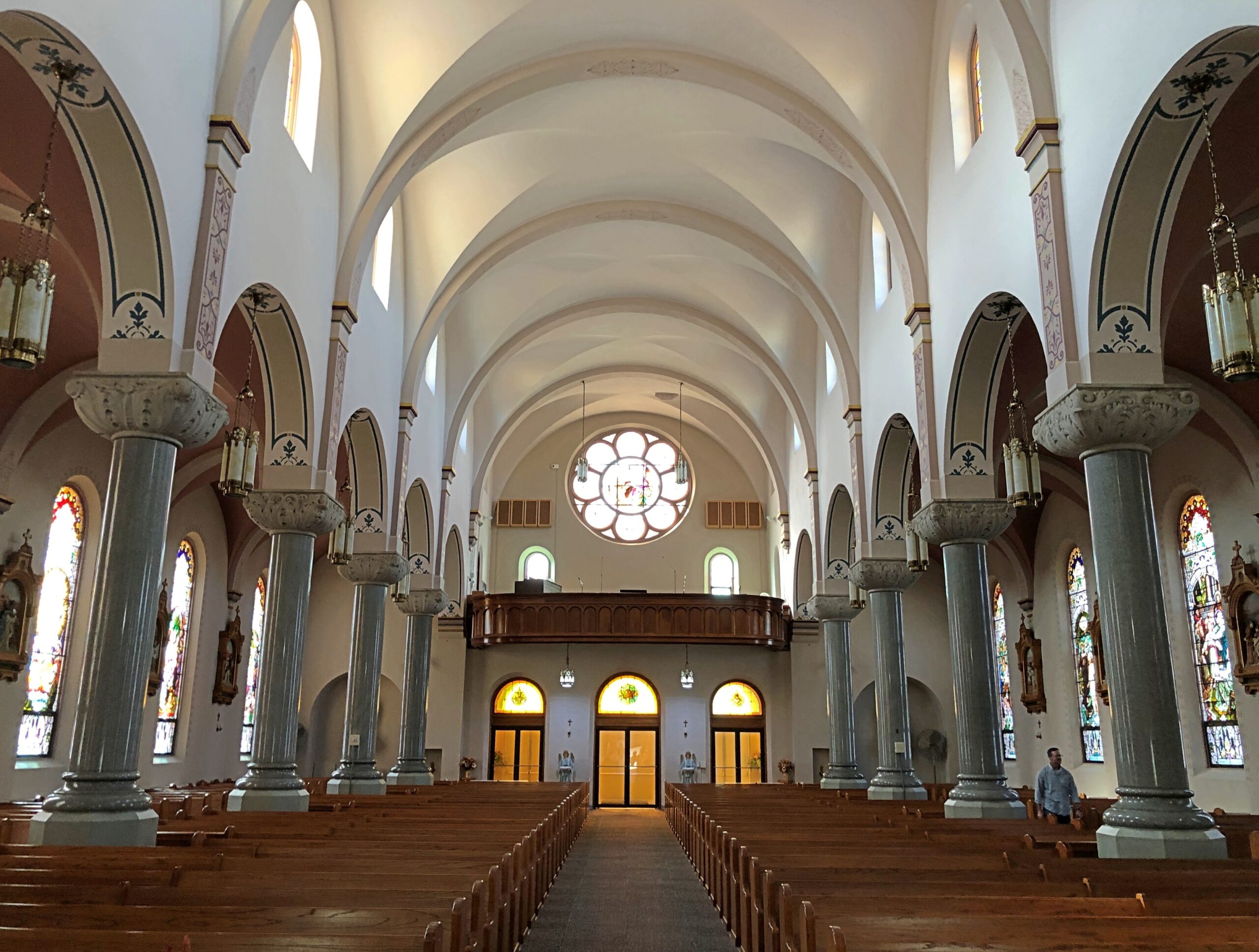
Nice.
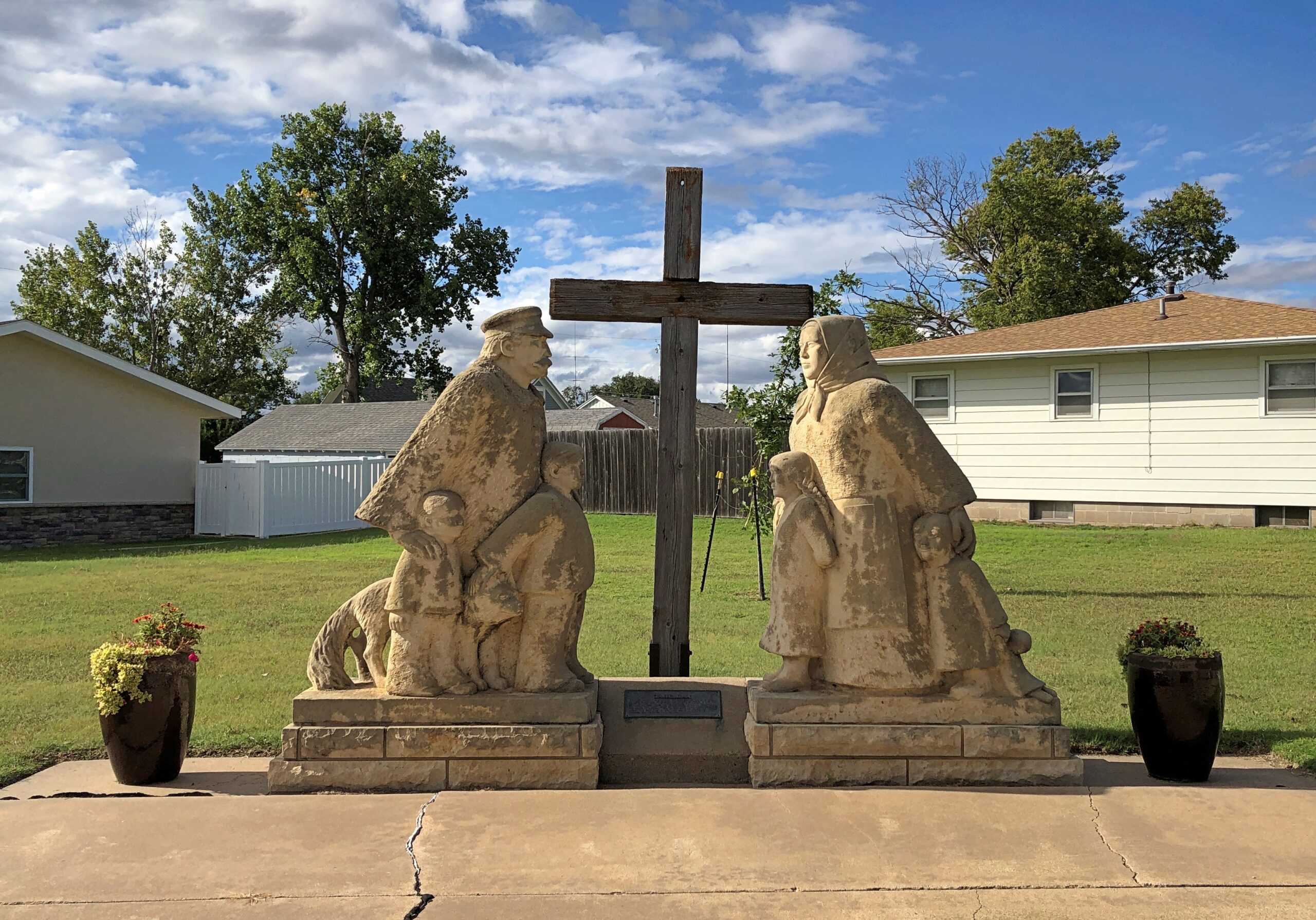
The Volga Germans aren’t forgotten. No doubt their descendants are all around this part of Kansas. In 1976, the townspeople erected a memorial to their immigrant ancestors, across the street from St. Fidelis. A work by Pete Felton, a “Kansan limestone carver,” according to this posting, which also mentions limestone fenceposts as important in Kansas — something else to look into sometime.
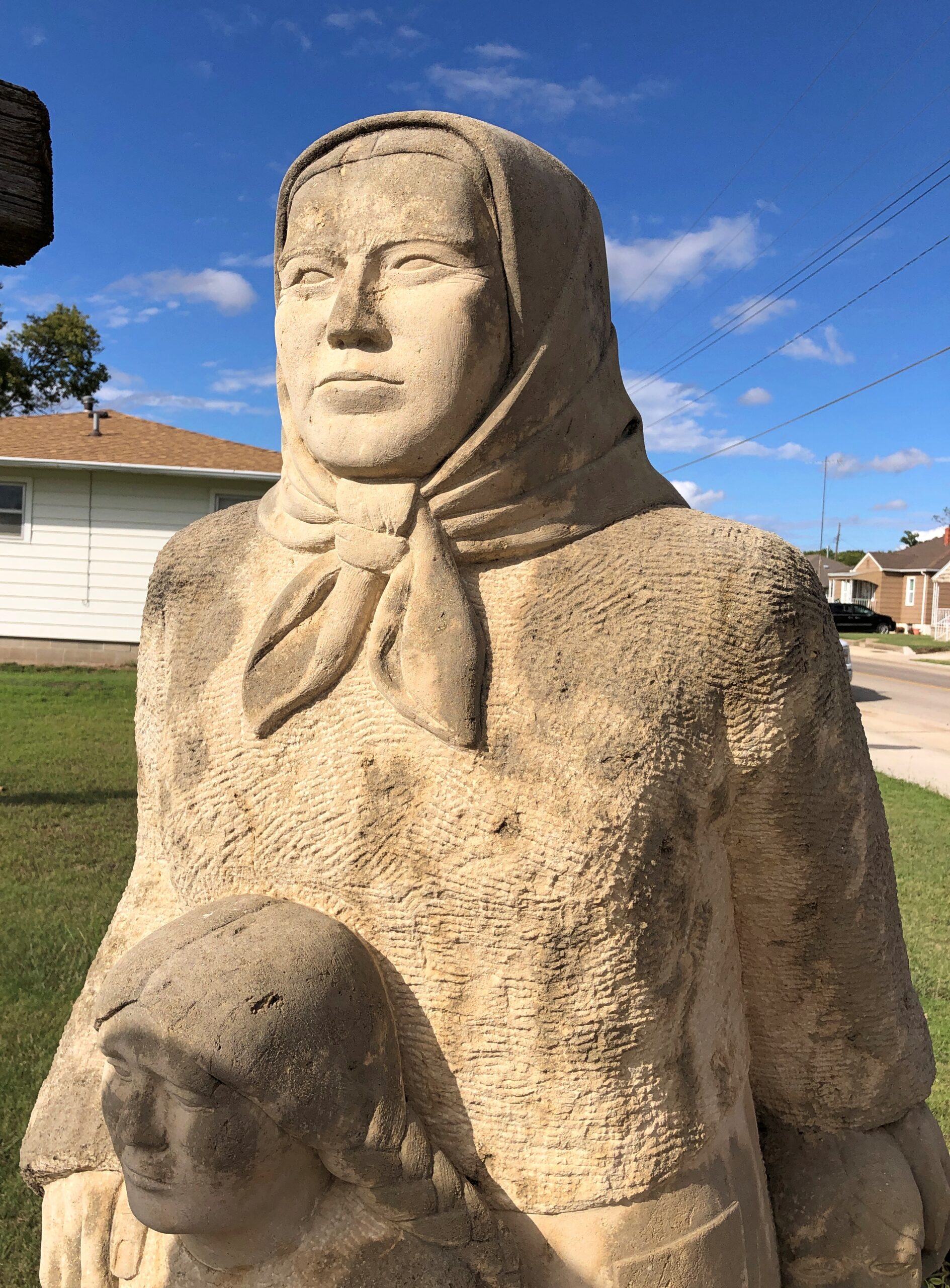
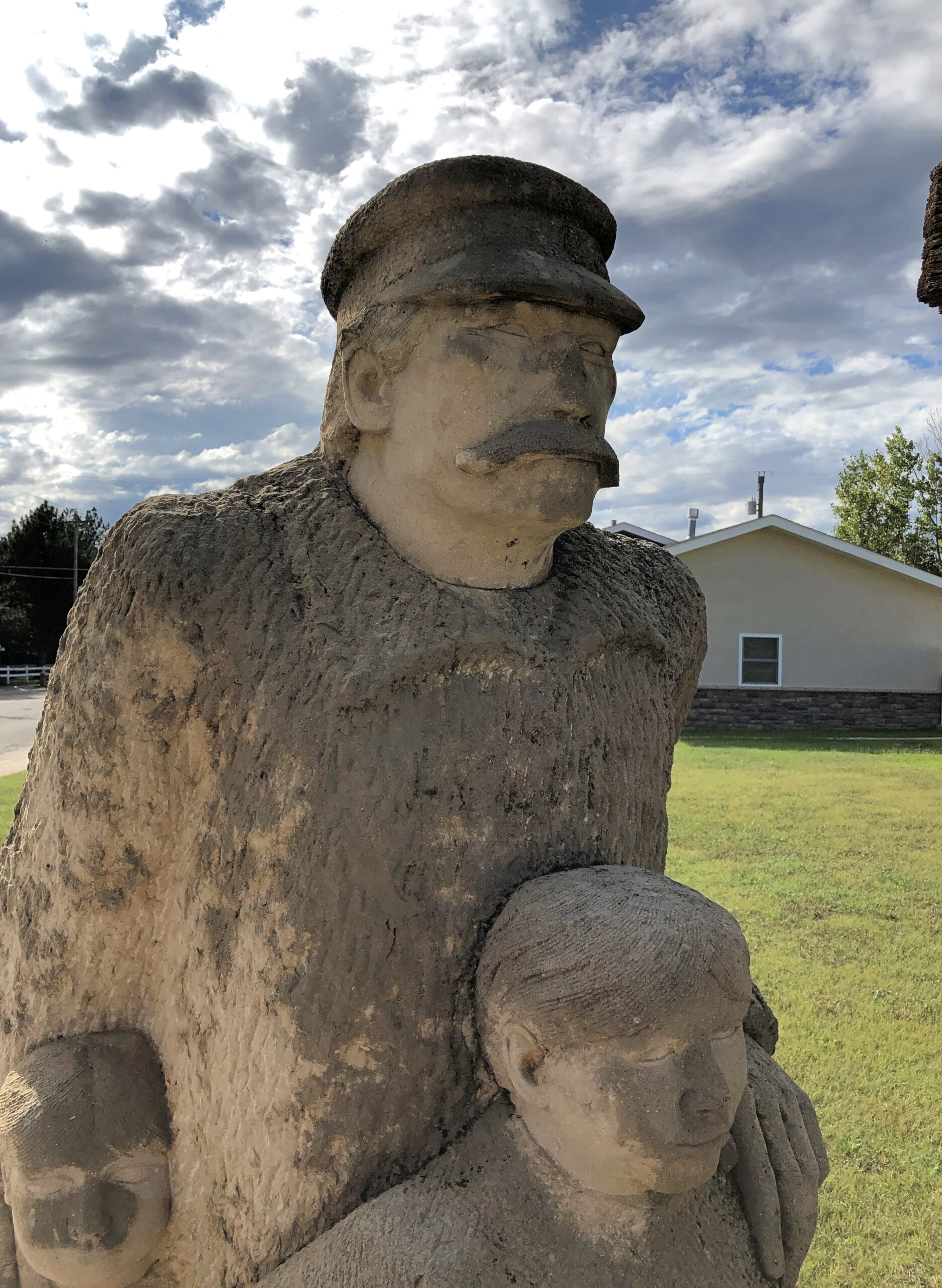
After nearly 50 years, the statues are looking a little weatherworn, but they abide.
The woman and daughters caught the light at that time of day, the afternoon of September 23.
The man and sons did not. Would sunlight have made him less – Stalinesque?
Never mind. St. Fidelis Cemetery isn’t far to the north of the basilica, and I stopped by.
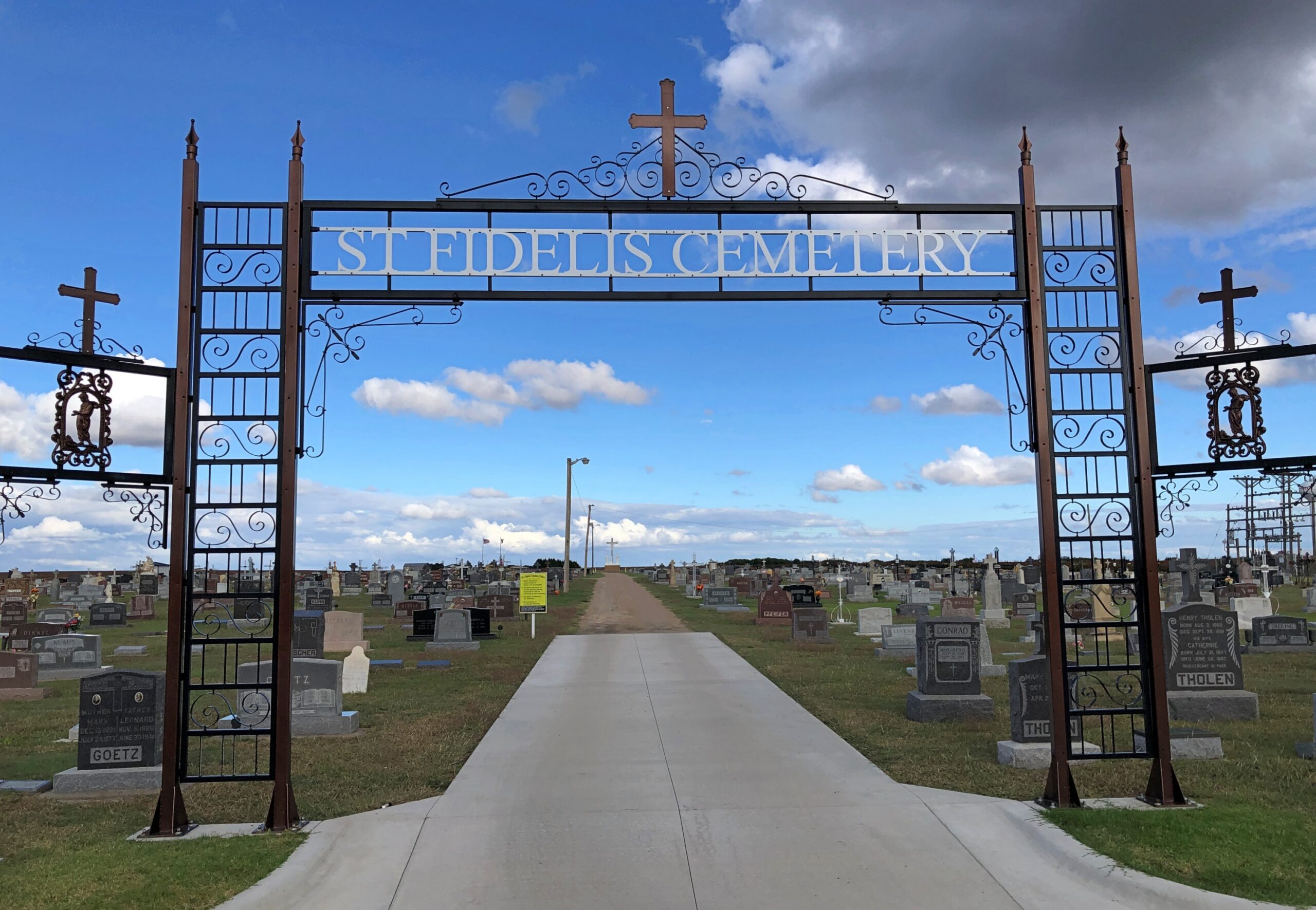
A good variety of memorials in a nice setting, even if the land lacks contour and there’s no flora beyond grass and cut flowers.
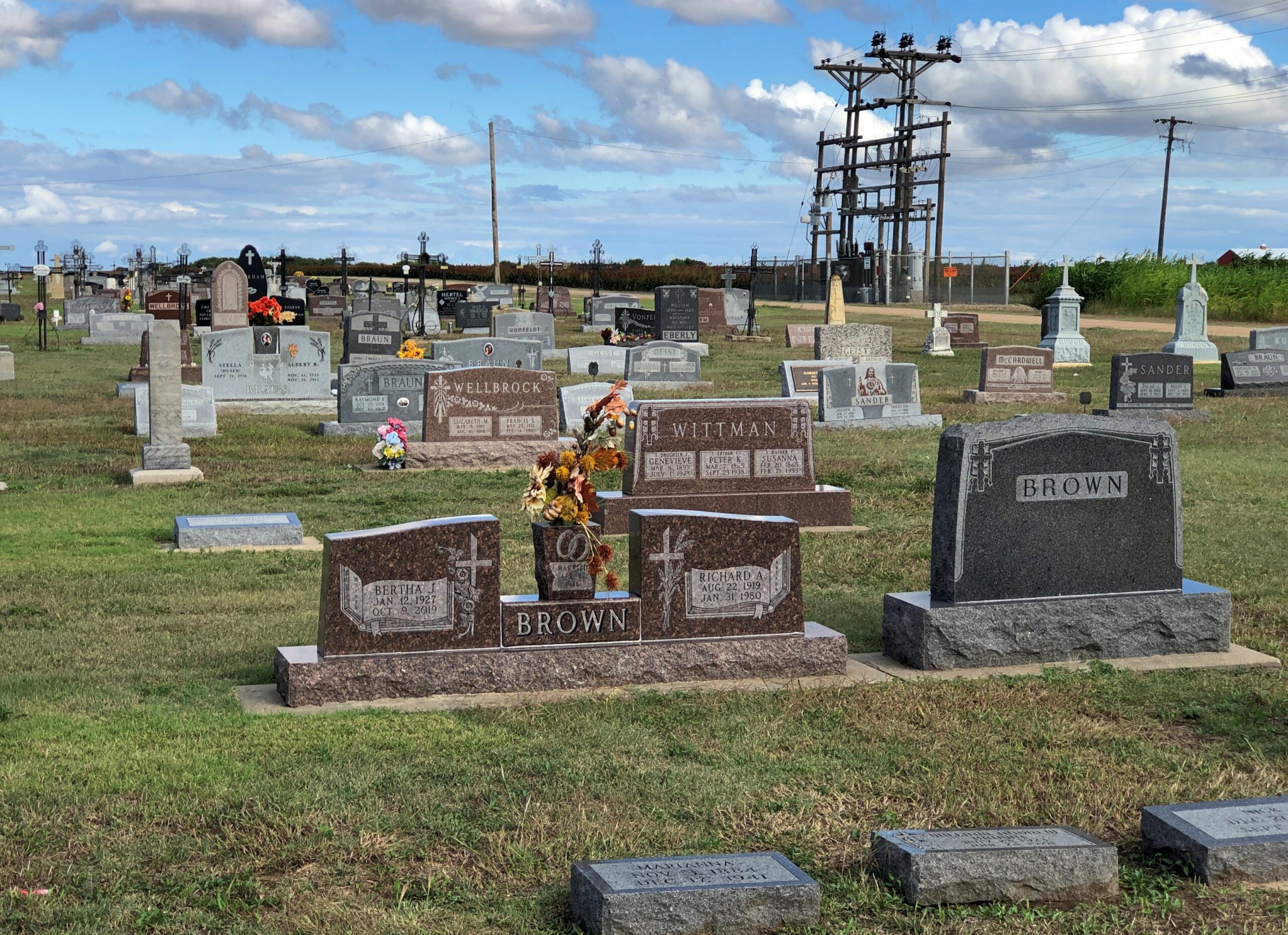
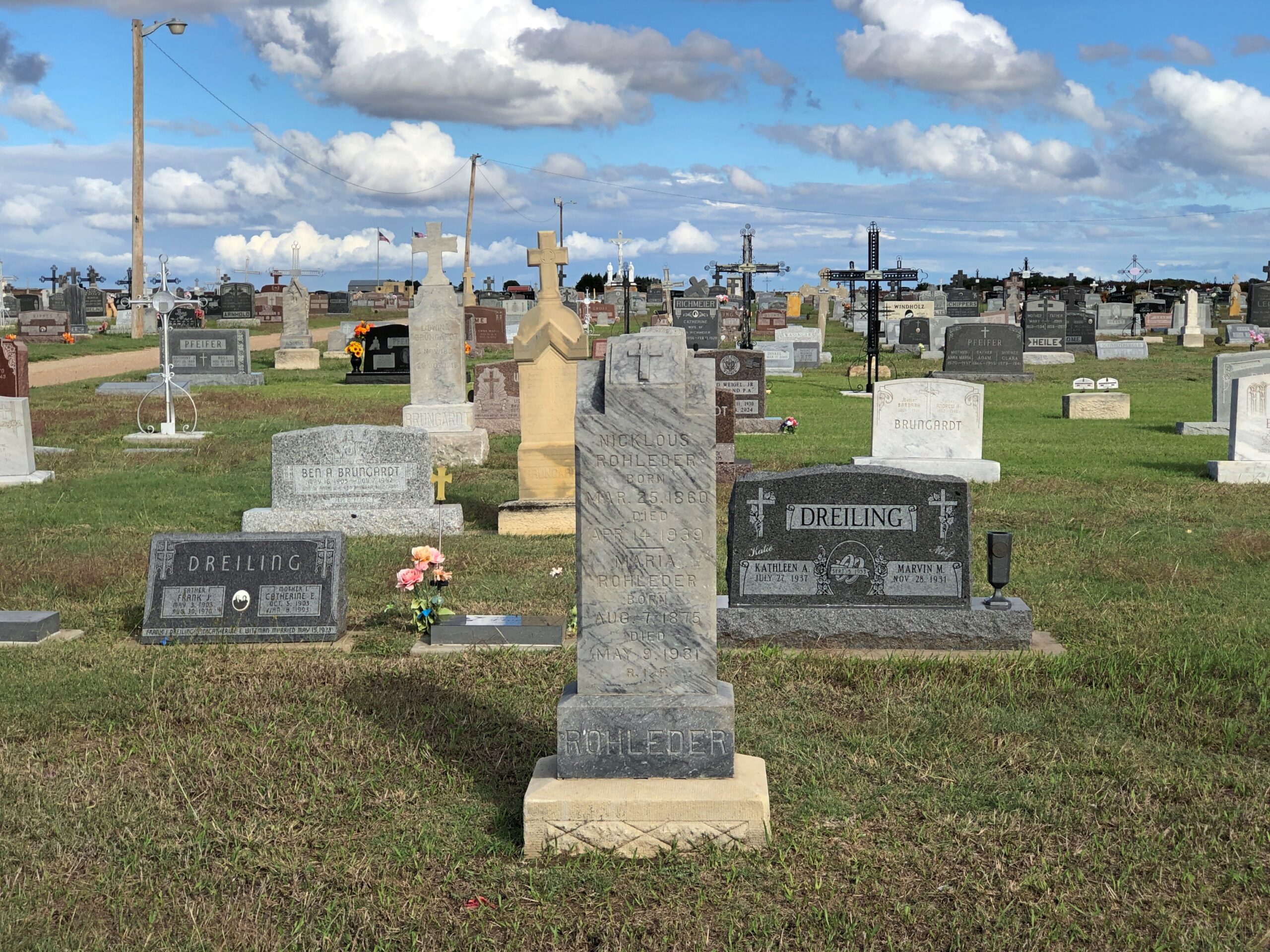
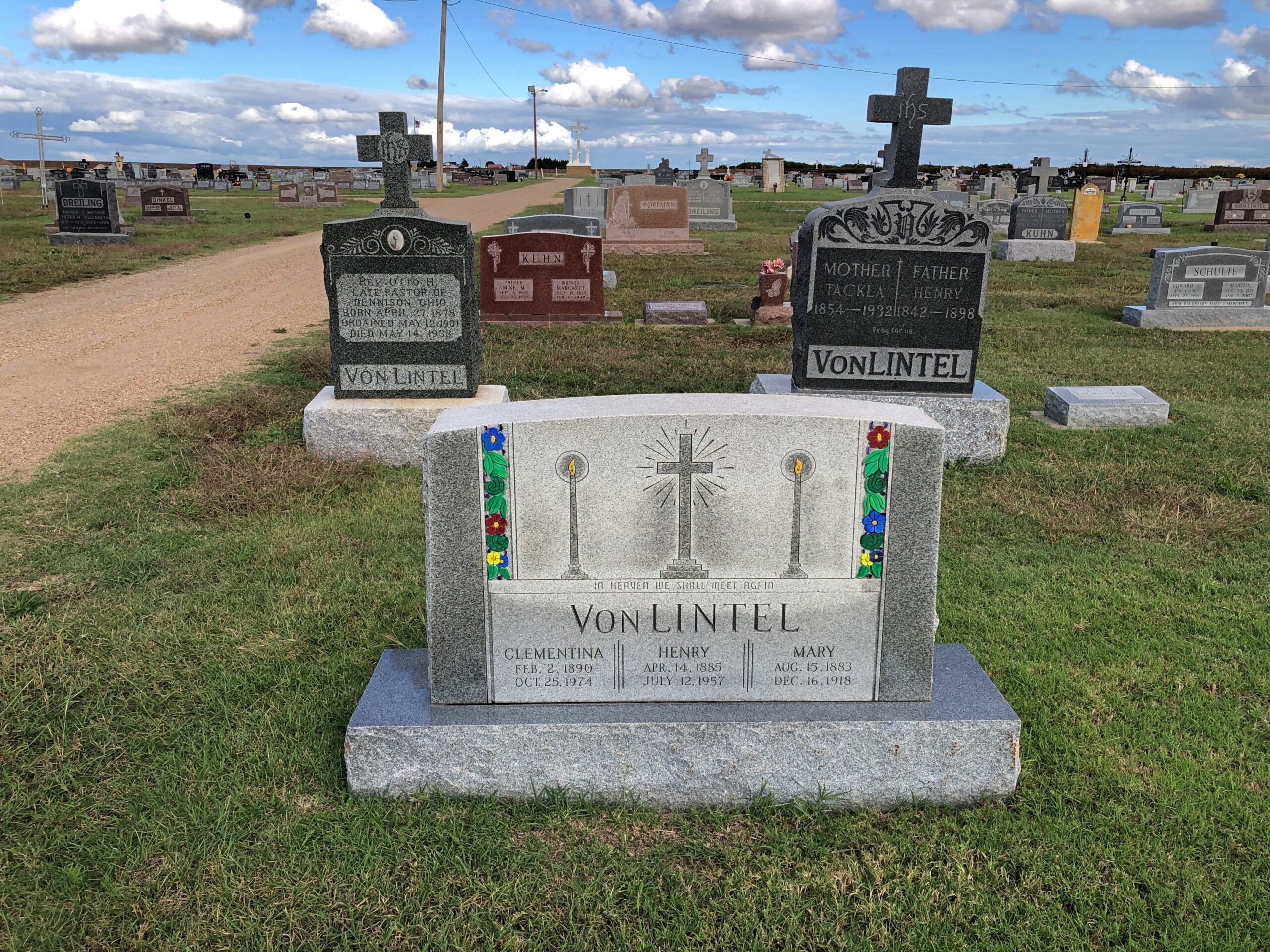
Then I started to notice iron crosses.
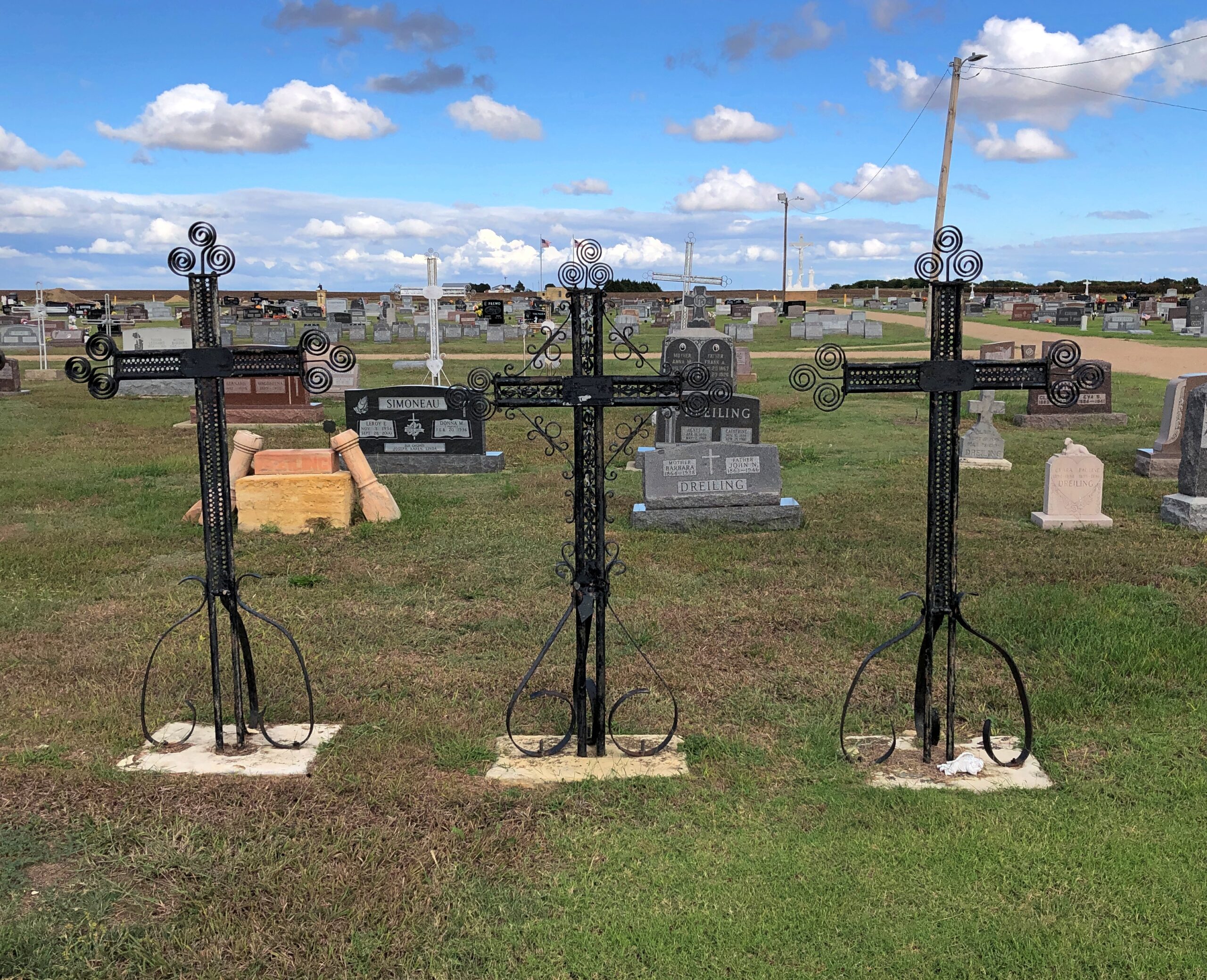
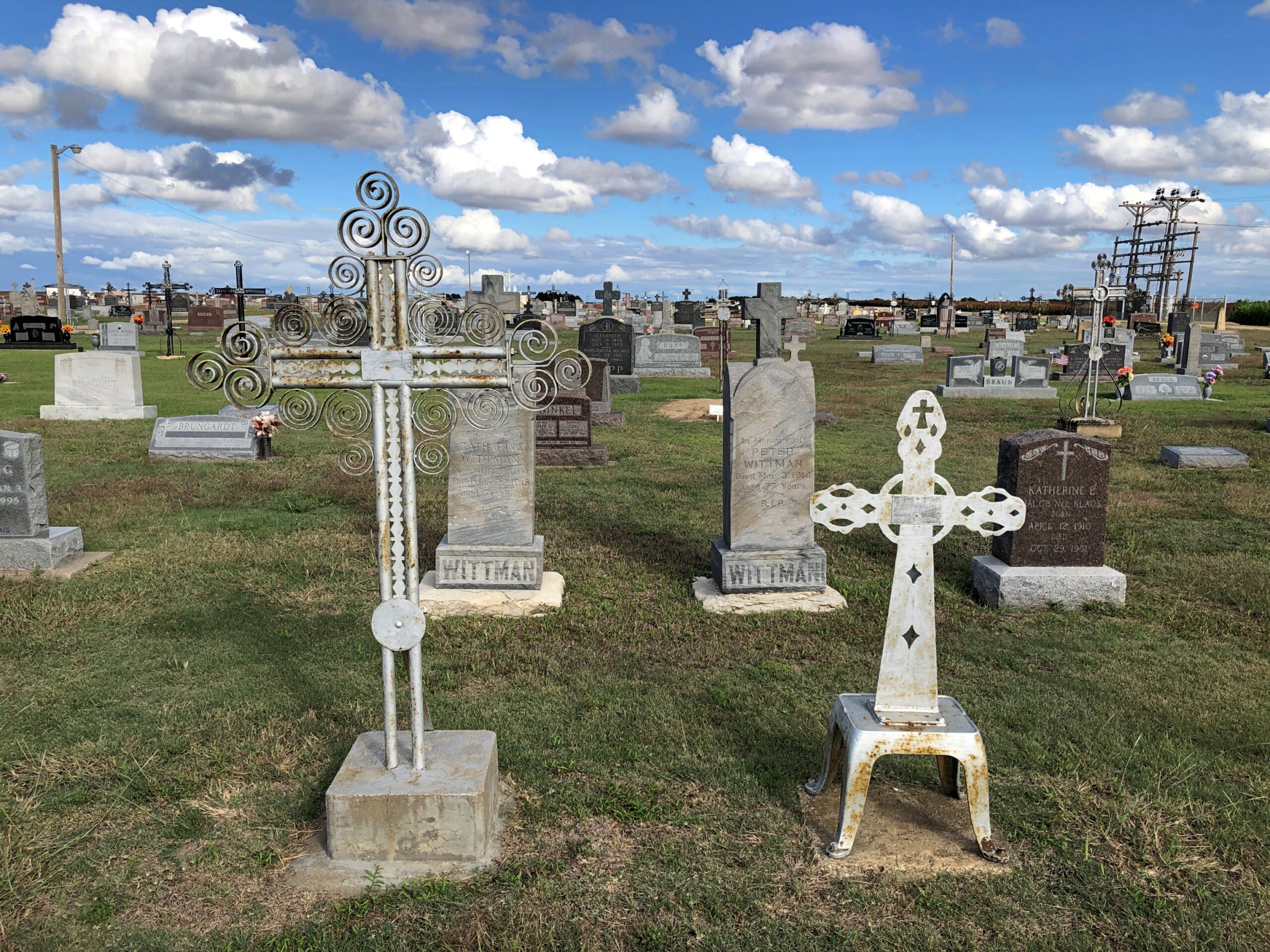
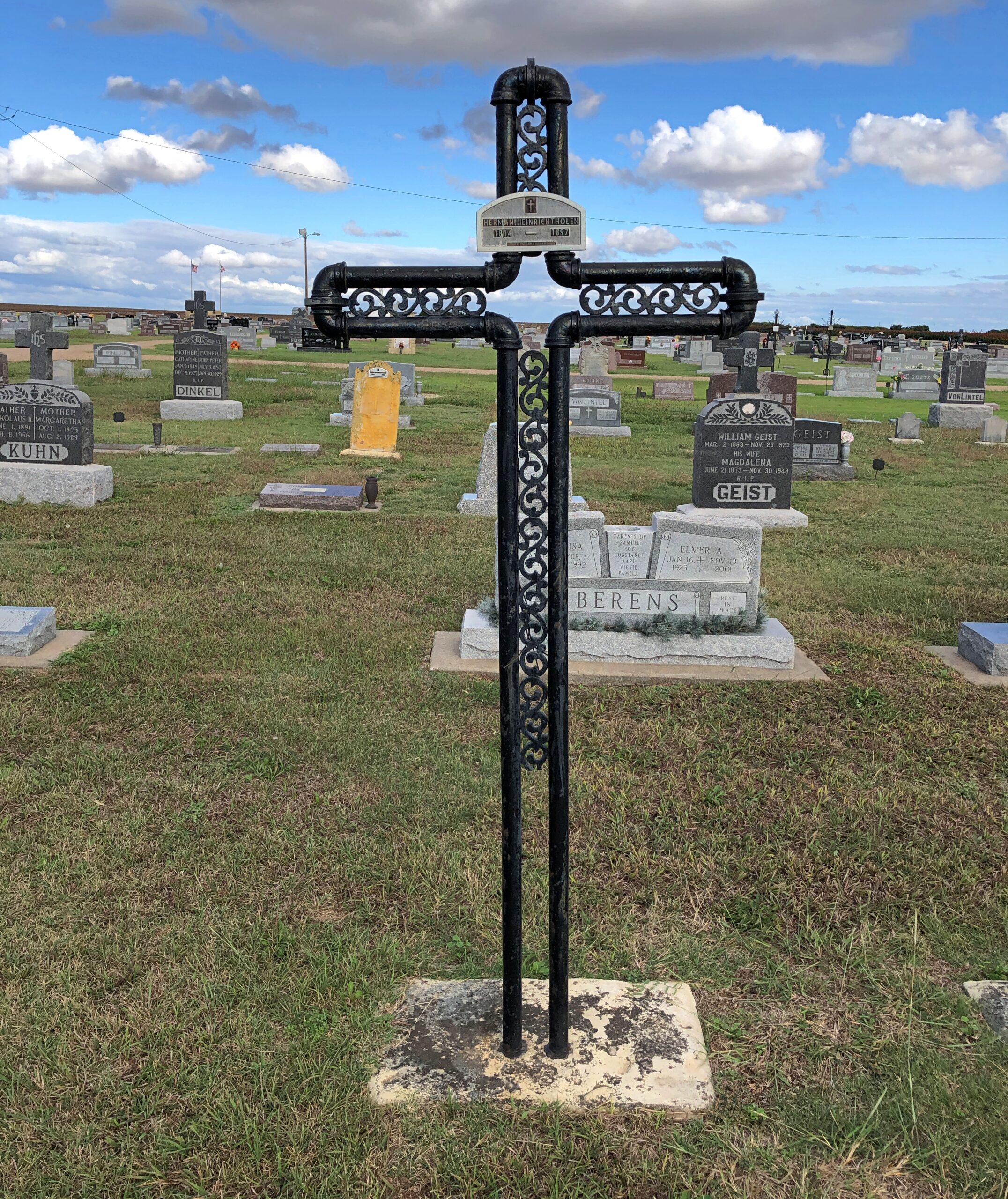
A lot of them. That called for further investigation, and it wasn’t long before I found out that Volga Germans were known for their wrought-iron crosses.
“German-Russian blacksmiths began making wrought-iron crosses in North Dakota as early as 1884,” says an article posted by North Dakota State University. “The hand-made crosses were most prevalent in central North Dakota from the late 1880s to about 1925, when marble and granite became more popular for grave marking. Most wrought-iron crosses appear in Catholic graveyards, although a few of these markers are also found in German-Russian Lutheran graveyards.”
The article talks of their crosses in North Dakota, but notes that they are also found in the “Northern Plains.” Such as Kansas, apparently.