I had a fondness for maps as a kid, and few were better than the Texas State Highway Maps produced by the Texas Highway Department, a predecessor agency of the Texas Department of Transportation (TxDOT). One of the maps’ features was a small stroke of genius – one later dropped, of course – that put the very largest urban areas in yellow, mid-sized ones in green and relatively small cities in brown. At a glance you could size up the size of a place you might be driving, if you didn’t happen to know.
Under that scheme, San Angelo, Texas, came in green, if I remember right. Not in the same league as yellow Houston, Dallas, San Antonio or Austin, or even El Paso and Waco, but bigger than places like Pampa, Killeen or Orange, again if I remember right (the old maps are tucked away in San Antonio). Why was there a mid-sized city in San Angelo’s location, I don’t ever remembering asking.
Easy enough to find out now: a frontier fort at confluence of two sizable rivers whose town grew as nearby cattlemen prospered, and oil services took root. In our time, there are also other usual-suspect major employers, such as schools and hospitals, and the military never left, considering the presence of Goodfellow Air Force Base, which managed to survive the wave of base closures and consolidations in recent decades (unlike some).
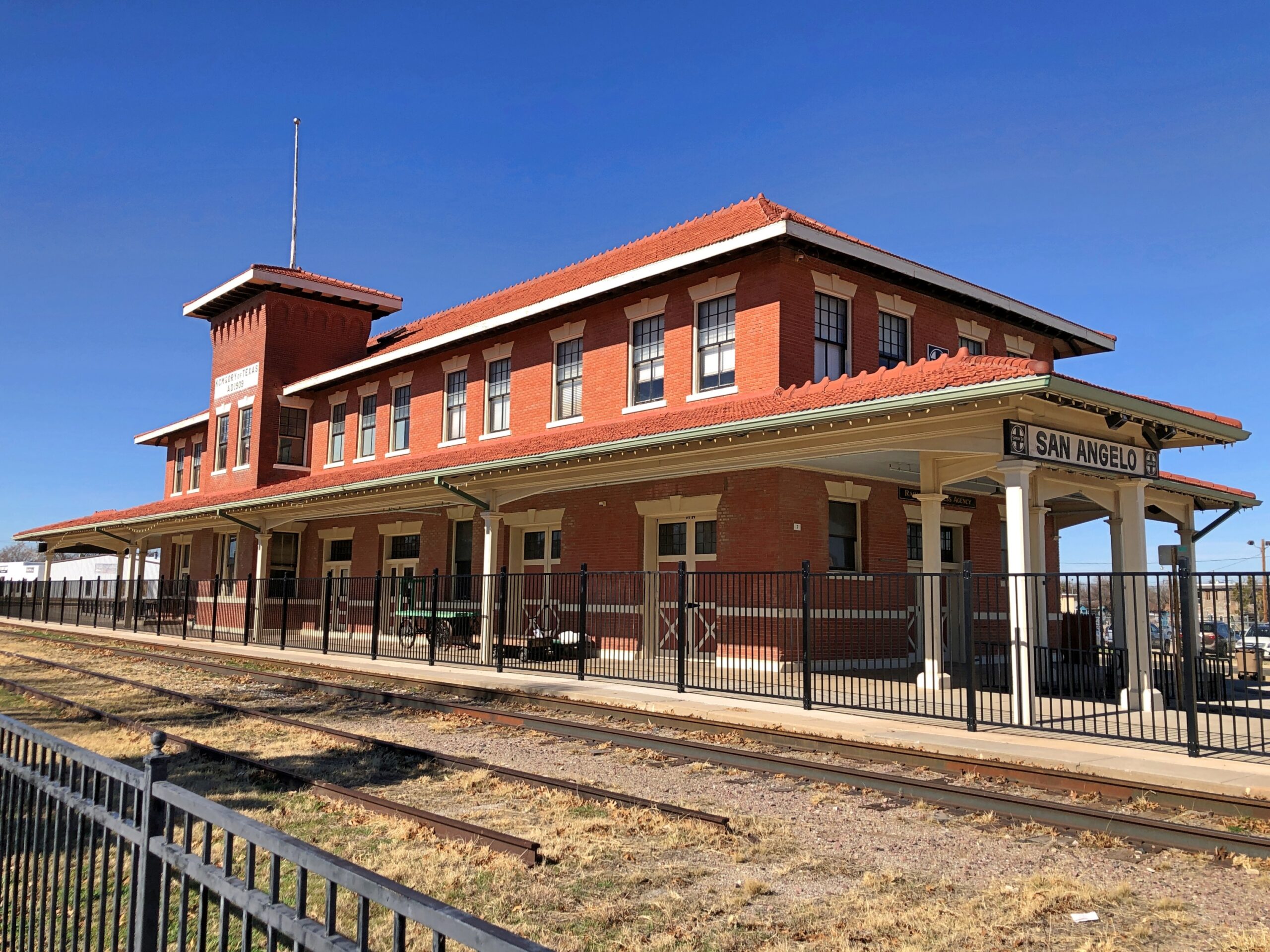
On a drive from DFW to West Texas, San Angelo seemed like a good place to stop for a night, and we arrived just before dark. The next morning, we took a look around, especially downtown. First, a handsome train station.
Mostly, San Angelo isn’t a high-rise city.
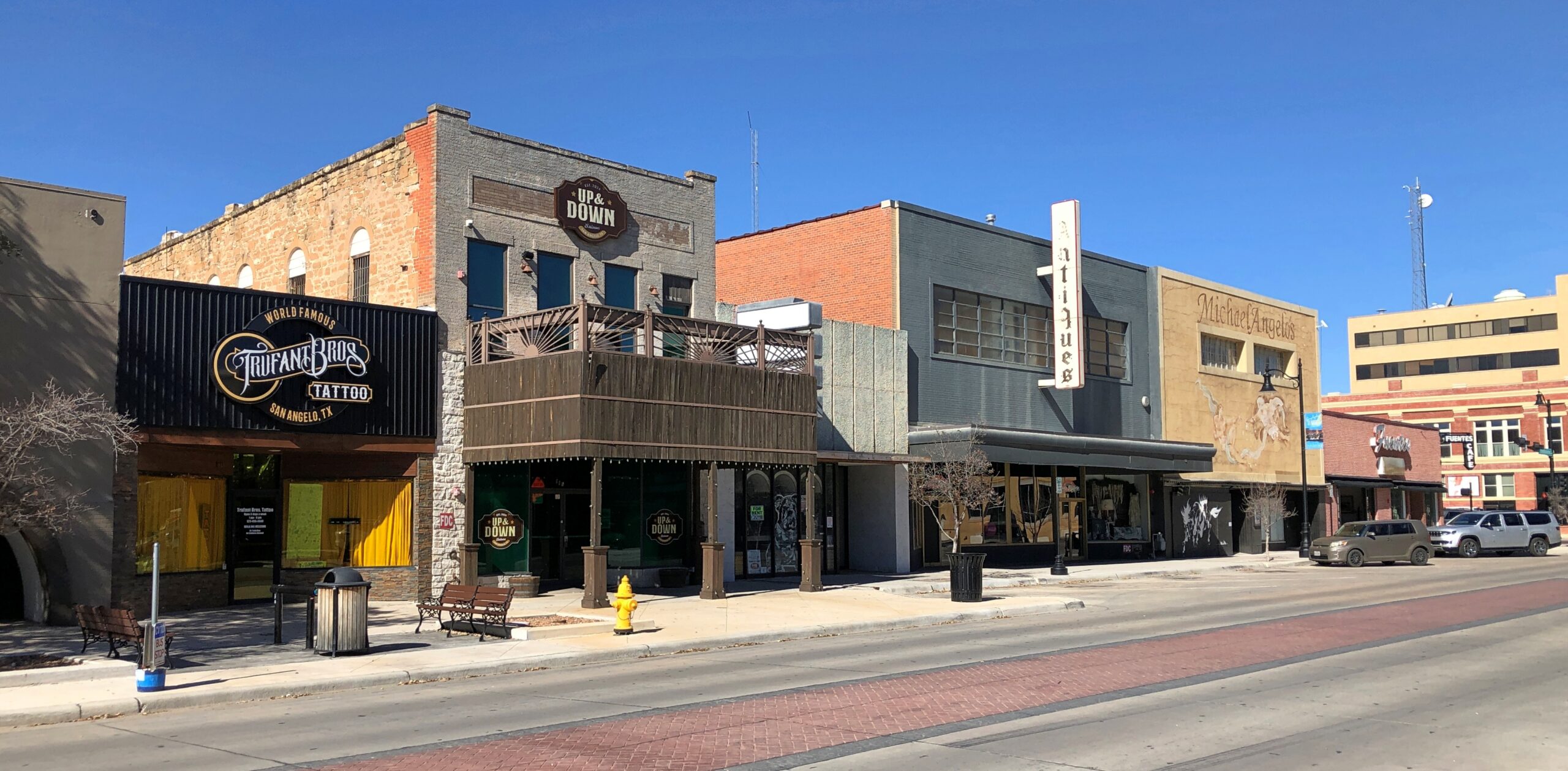
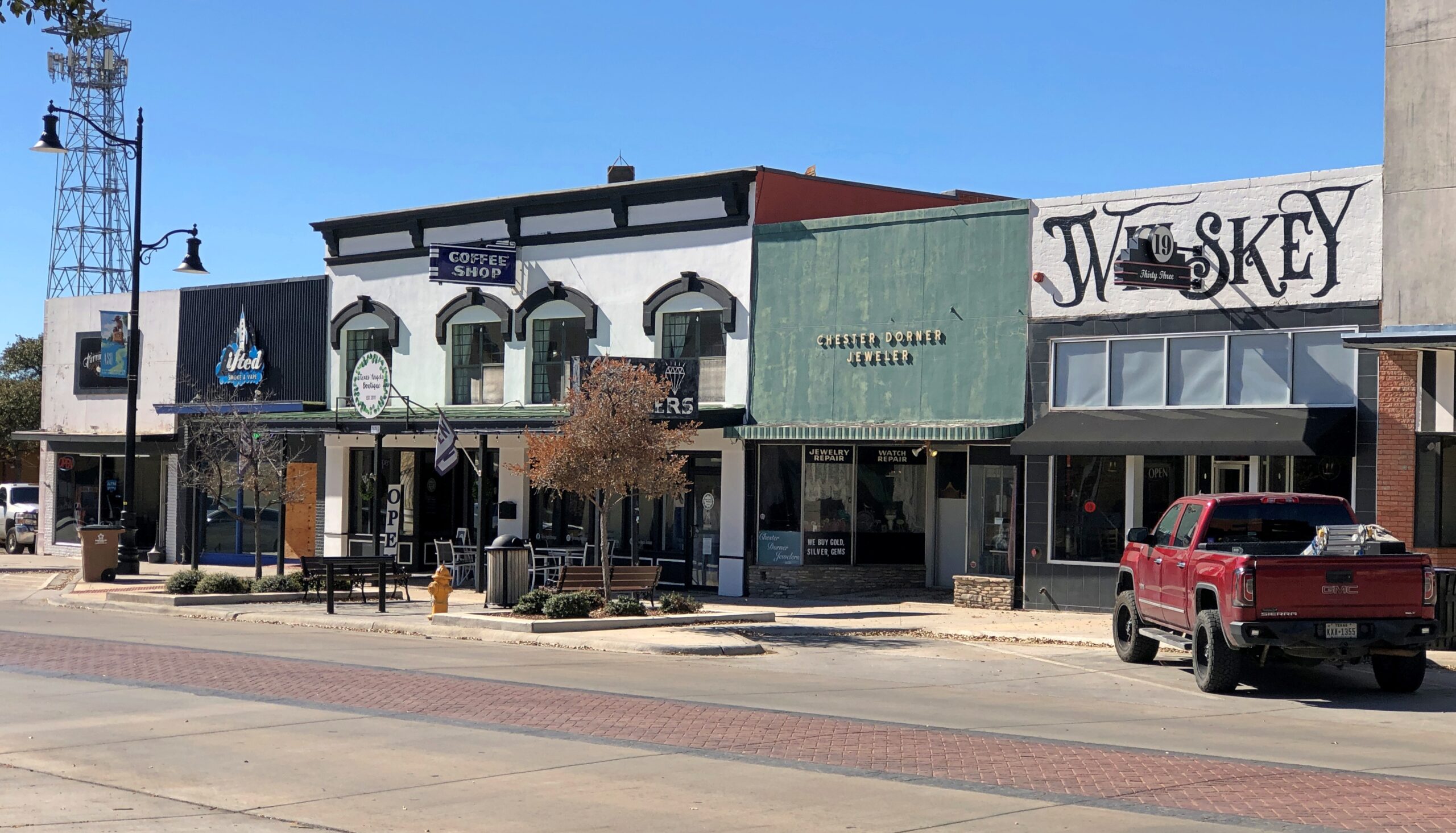
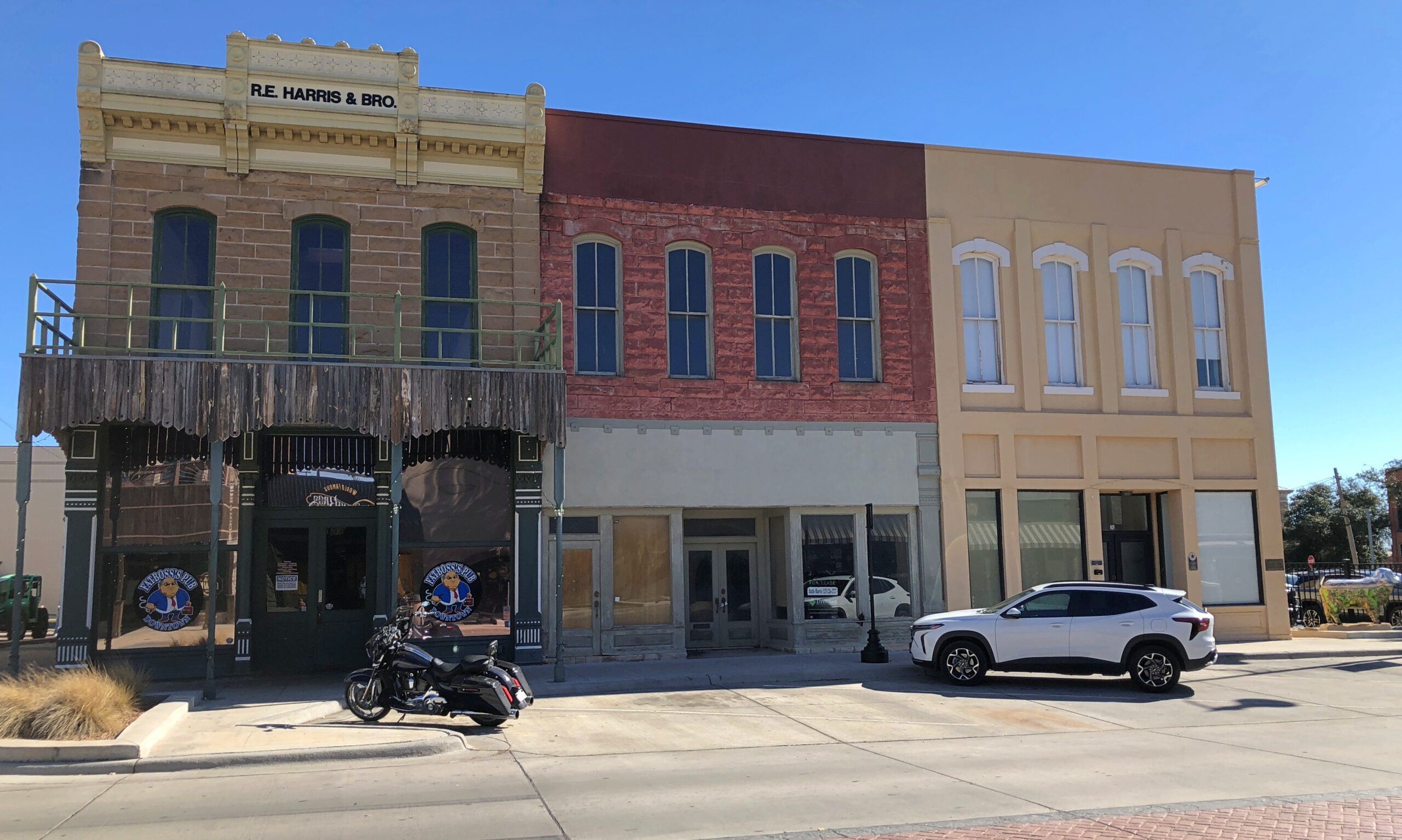
With some small-city exceptions, such as the Hotel —– building.
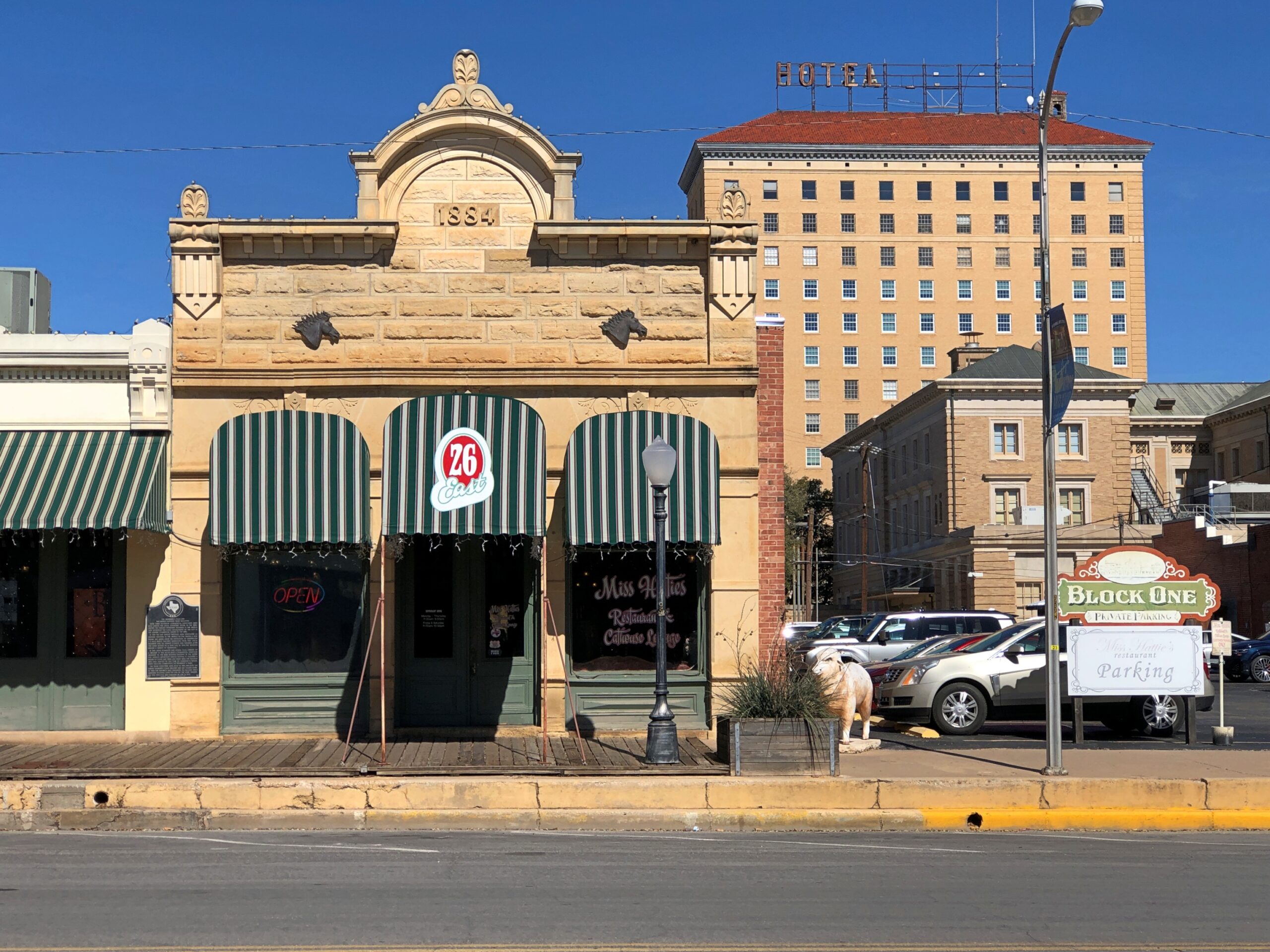
Street art.
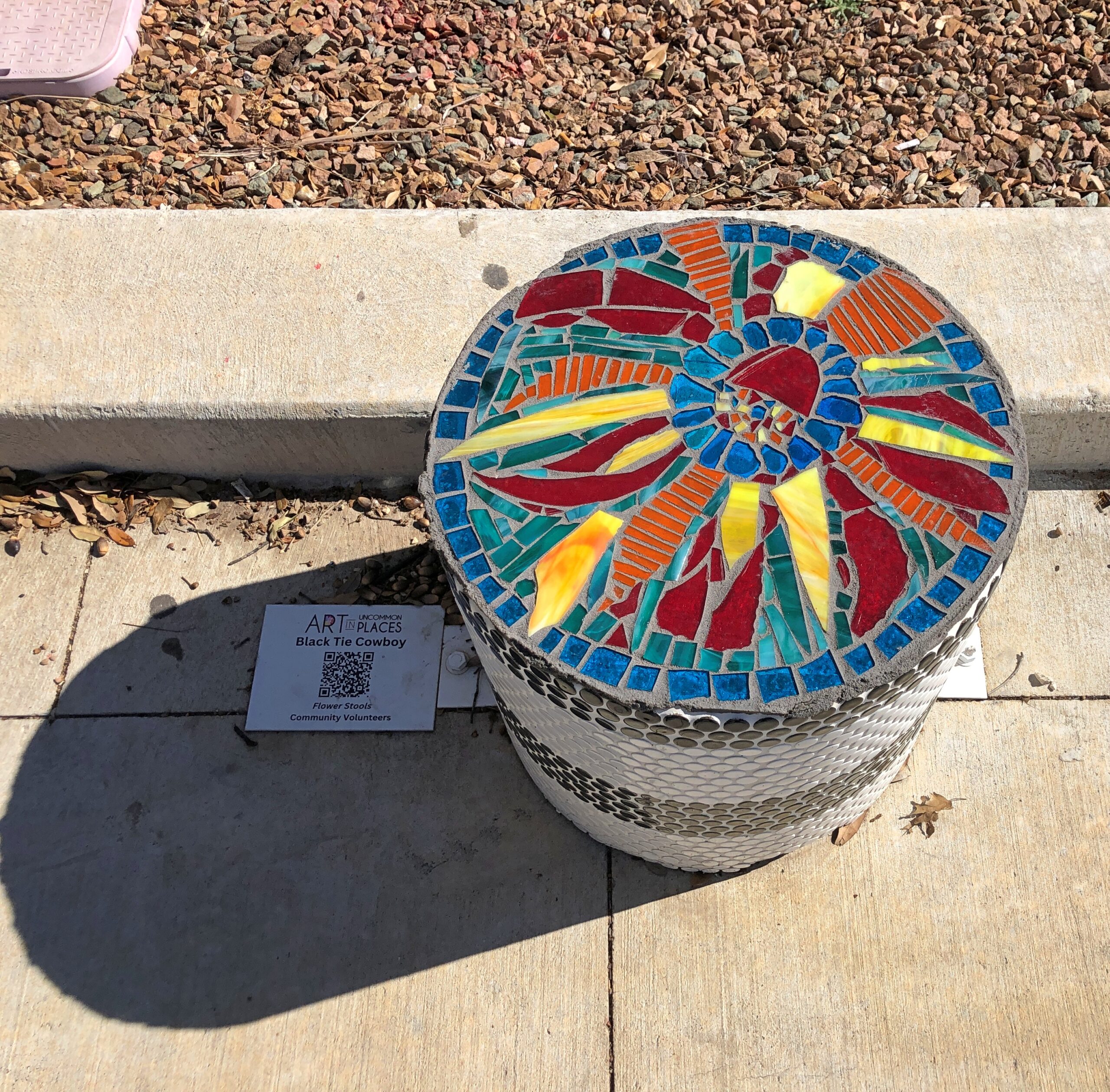
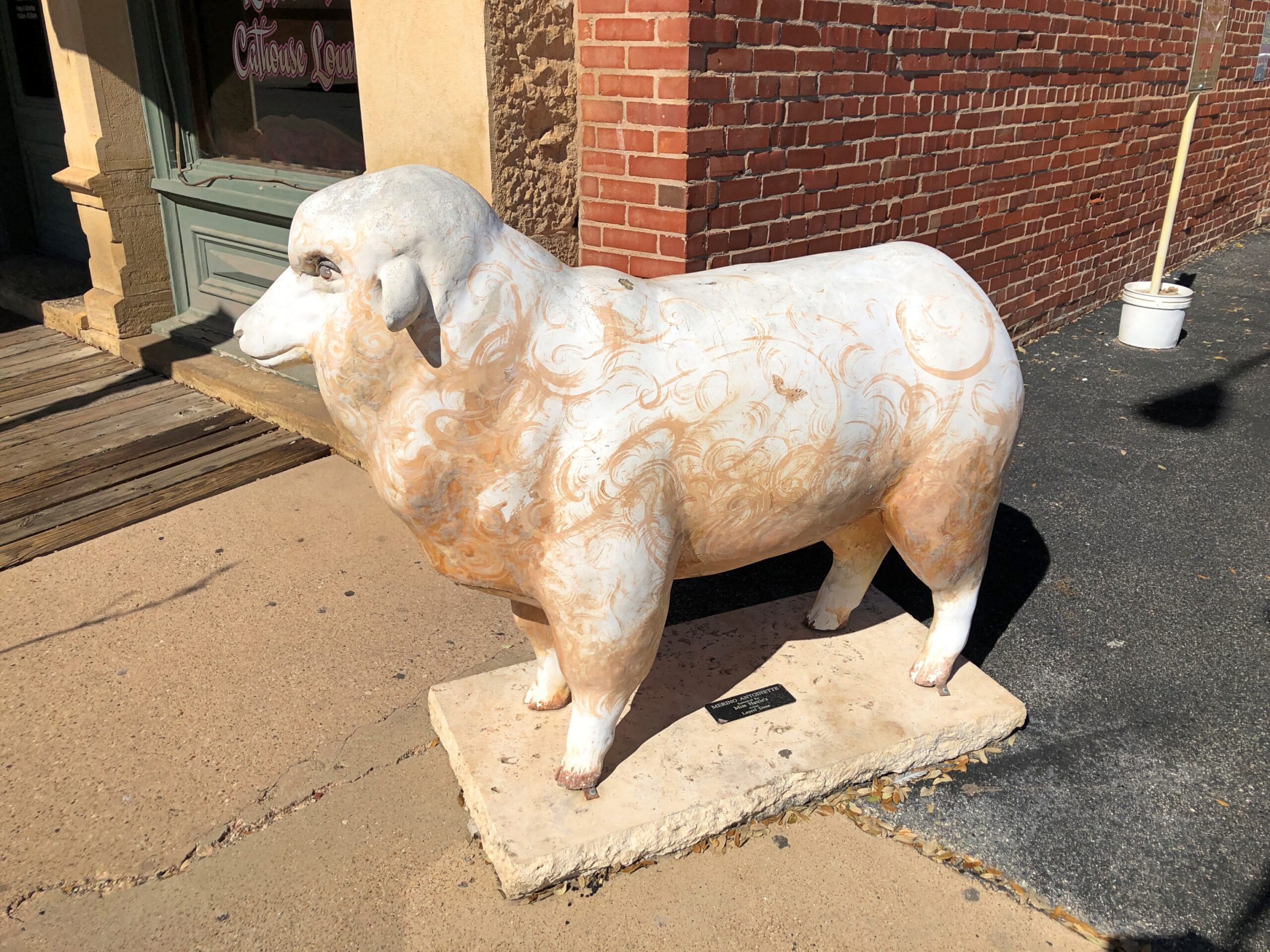
Chicago has cows, San Angelo sheep. Back the USDA for ag stats: cattle are by far the most common livestock in Tom Green County, with $49.5 million in sales in 2022. But there are a fair number of sheep, with sheep, goats, wool, mohair and milk selling $4.2 million that year. For cattle production, the county comes in at only the 30th highest sales volume in Texas; but for sheep etc., the county ranks fifth statewide.
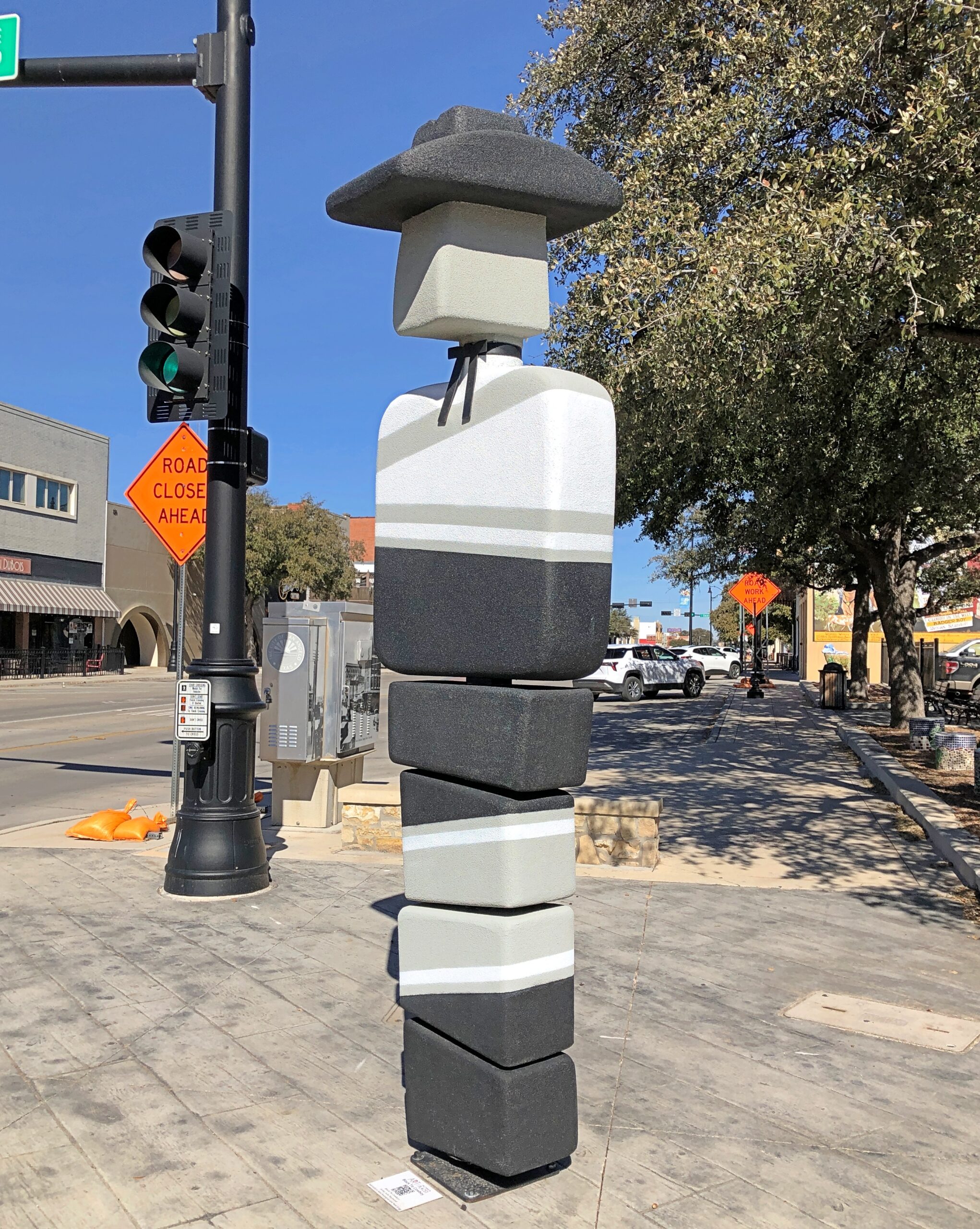
Again with the overrepresentation of cowboys. If there are art sheep on the streets of San Angelo, why no art shepherds? Then again, a modern shepherd probably looks a lot like a modern cowboy, so maybe that is a shepherd.
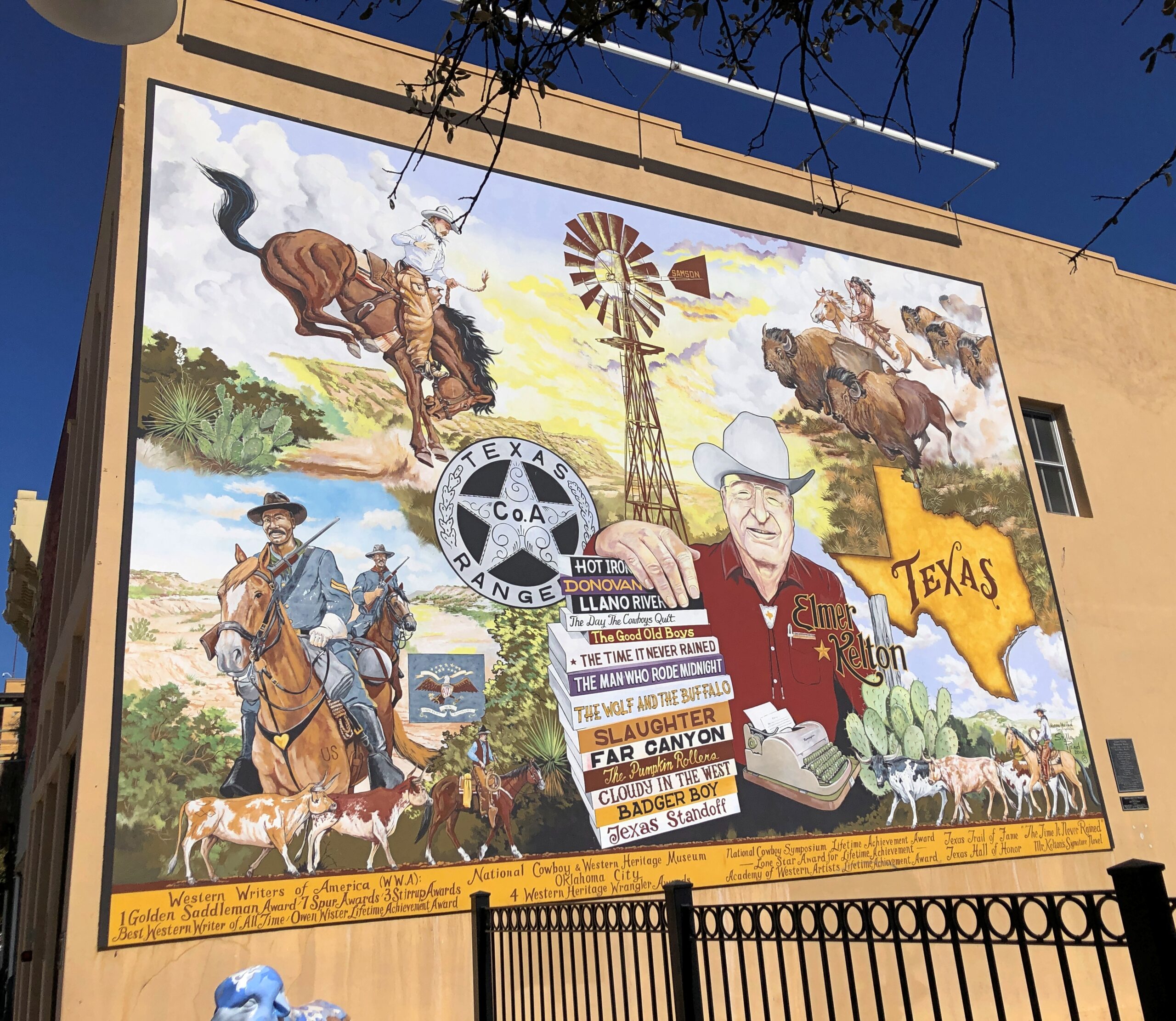
I had to look him up. Elmer Kelton (d. 2009), San Angelo resident, wrote a lot of Westerns.
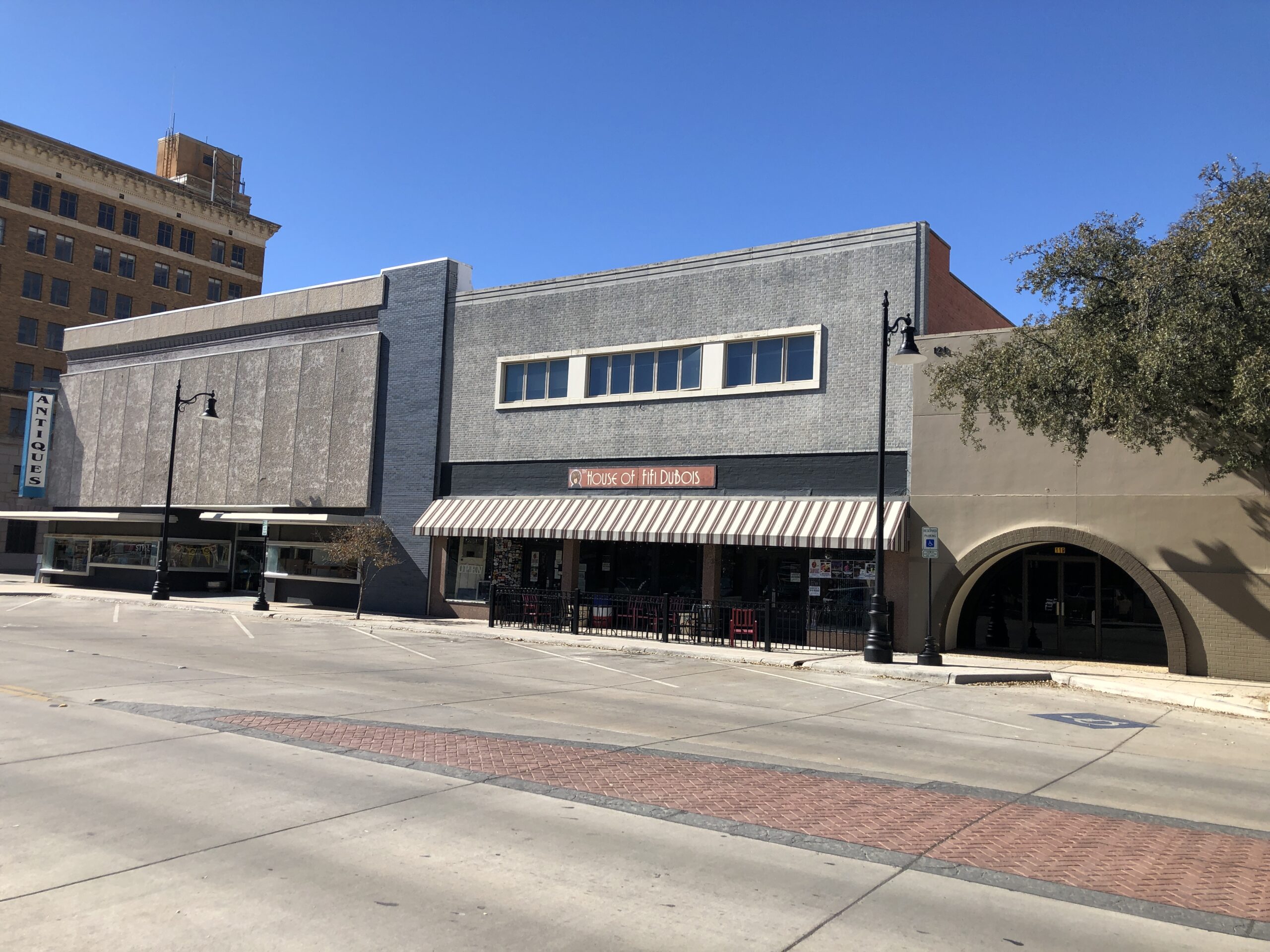
An unassuming exterior, but a fair amount going on inside, at least most evenings. I had to look up FiFi DuBois, too. The association of the San Angelo establishment with New York entertainer isn’t quite clear — is Fifi an owner or part owner, or is there some kind of licensing agreement?
Anyway: “The House of FiFi DuBois in downtown San Angelo is on the market for $1.3 million as its owners seek a new buyer to continue its legacy,” San Angelo Live reported in February.
“The property is located at 123 S. Chadbourne St. and is approximately a 16,250-square-foot building that includes the ground-floor bar and venue, an Airstream trailer feature, plus a massive upstairs loft and additional rentable spaces that offer potential for multiple income streams, such as office use, short-term rentals, or expansion.
“The business remains open, thriving, and operating normally, according to information found online…”
Now I’m repeating information “found online.” But it’s probably reasonable to assume that the House of Fifi DuBois, with a lineup like this, is alive and well. Looks like the joint has both kinds of music, country and western, and plenty of drag shows. Cowboys and drag shows: now that’s West Texas variety, if you asked me.
Airstream feature? Tucked away in the venue is an Airstream that can be rented separately, it seems.
Meeting Chadbourne St. at the perpendicular is Concho Ave., named for the river, which was named for its bounty of shells. Near that intersection is a building that looks a tad underutilized.
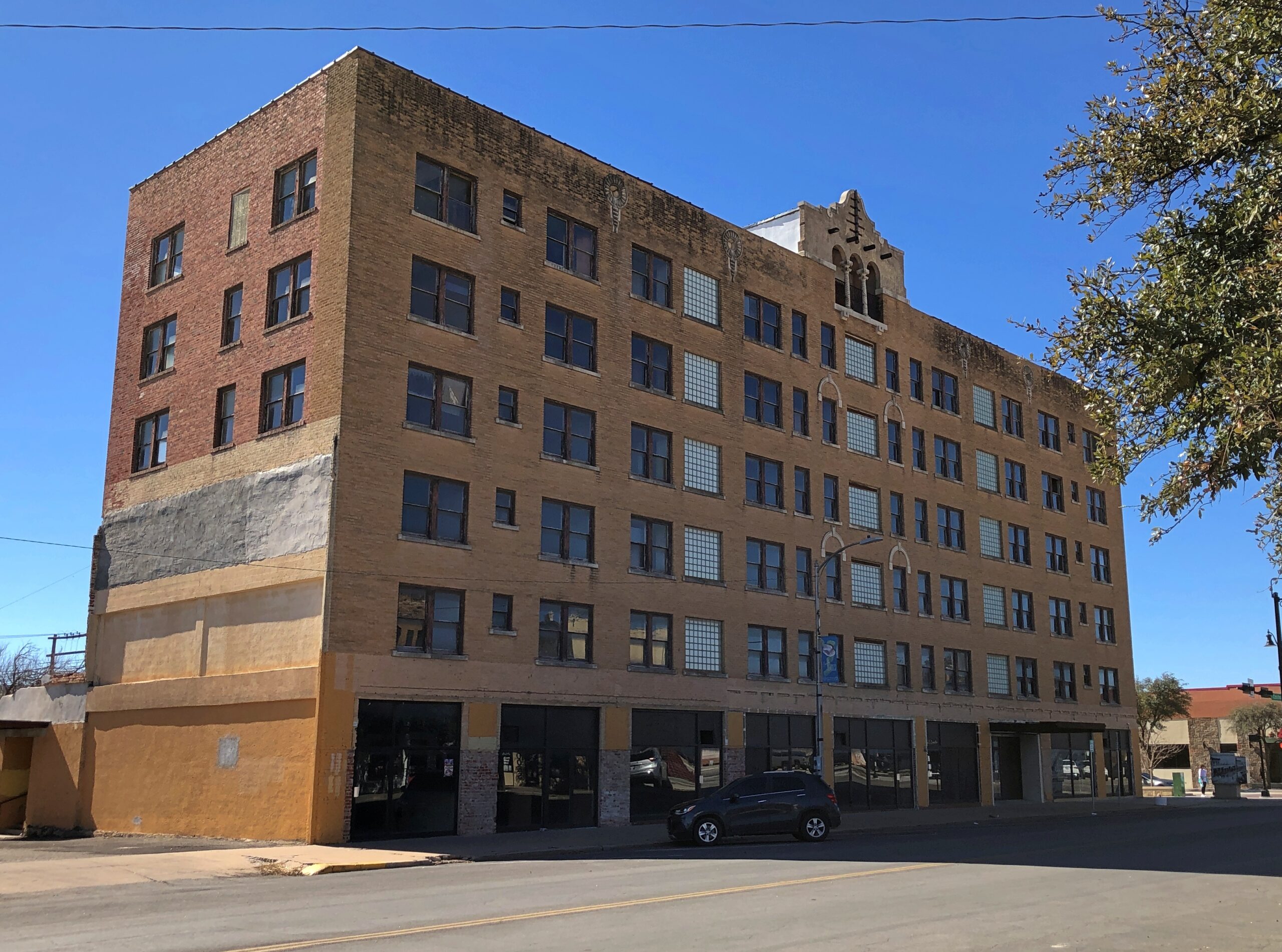
I’ve interviewed too many real estate developers not to think, man, if that building could only be teleported to Brooklyn – or even Scott’s Addition…
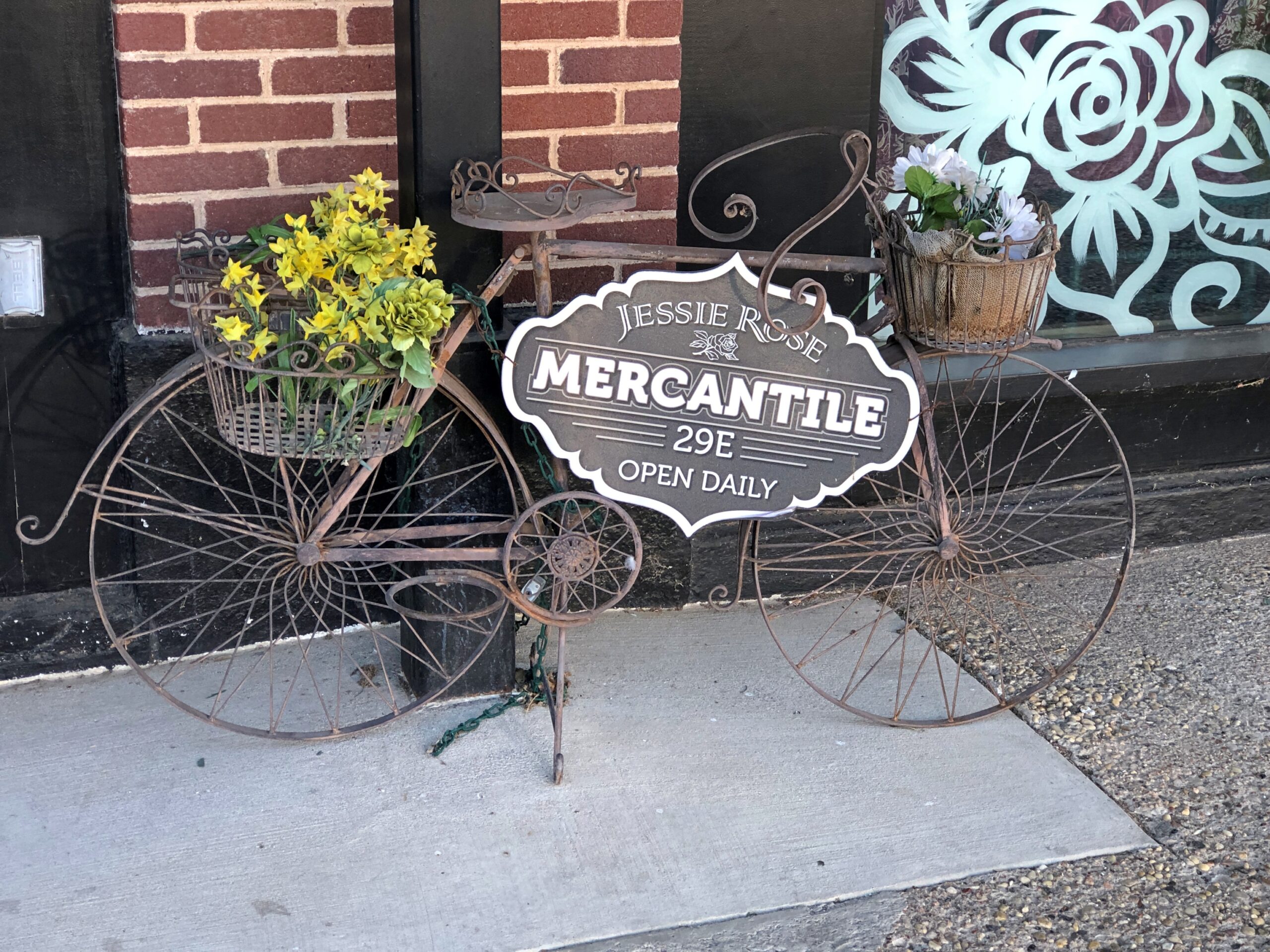
The nearby block is mostly occupied, however. With local shops.
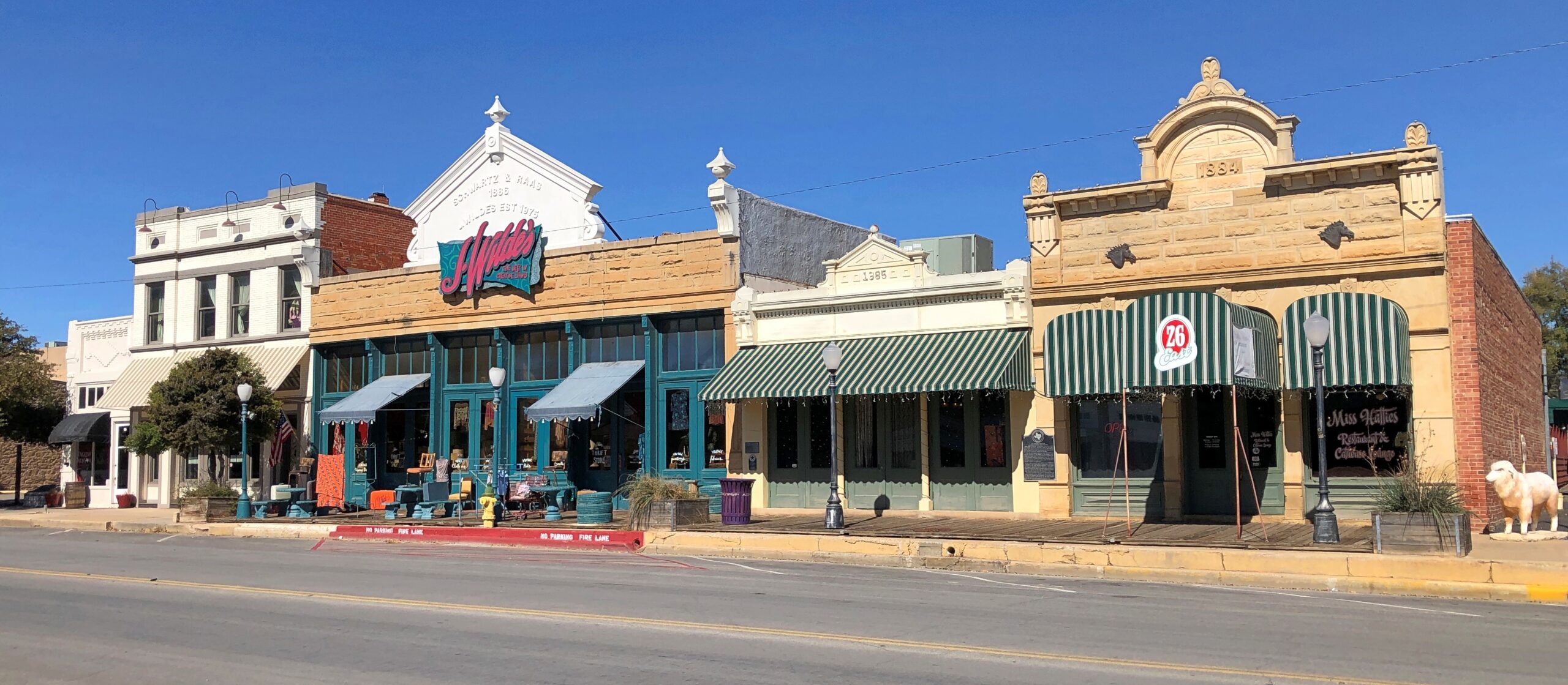
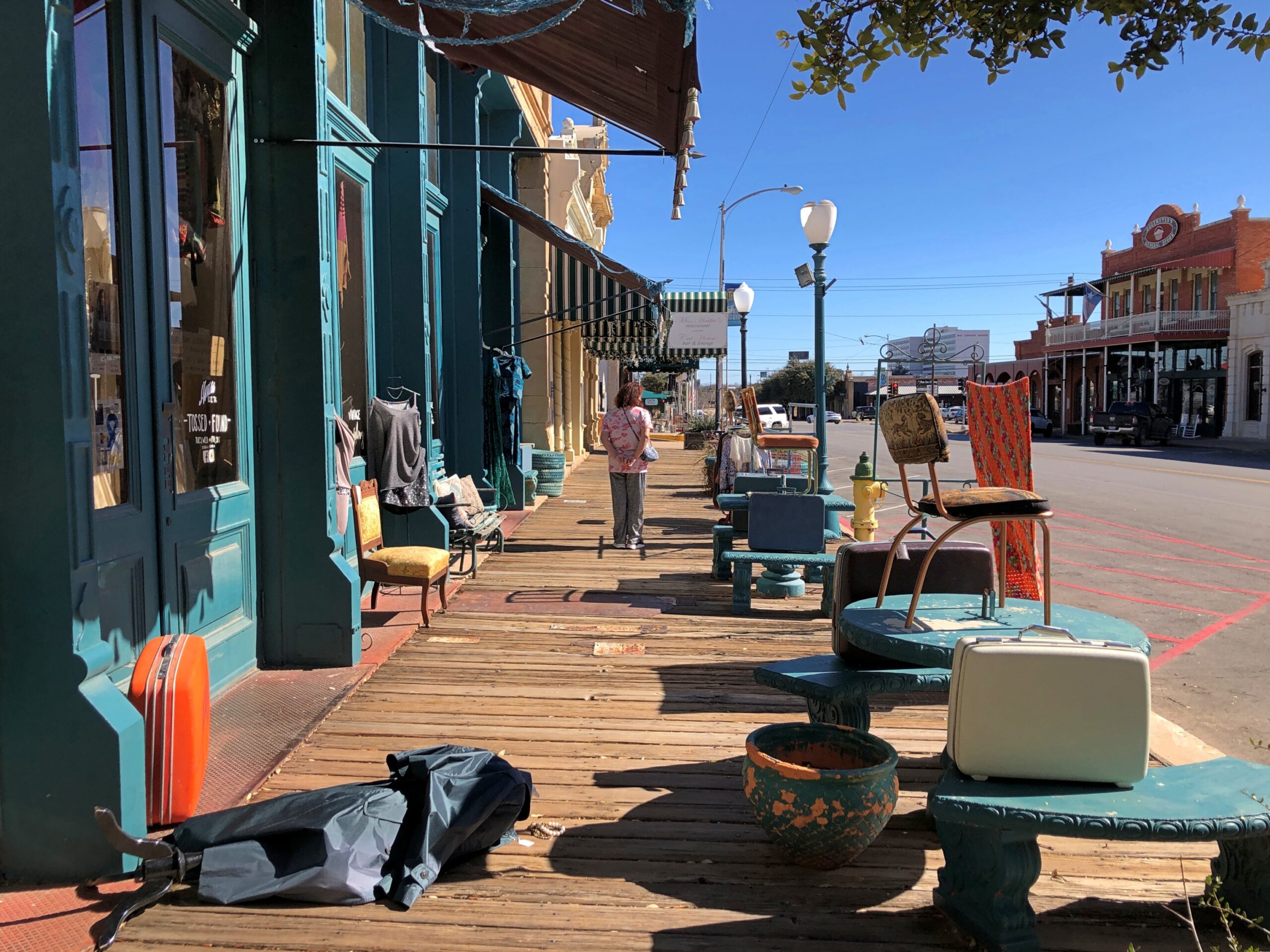
Also, it sports a stretch of raised, plank sidewalk.
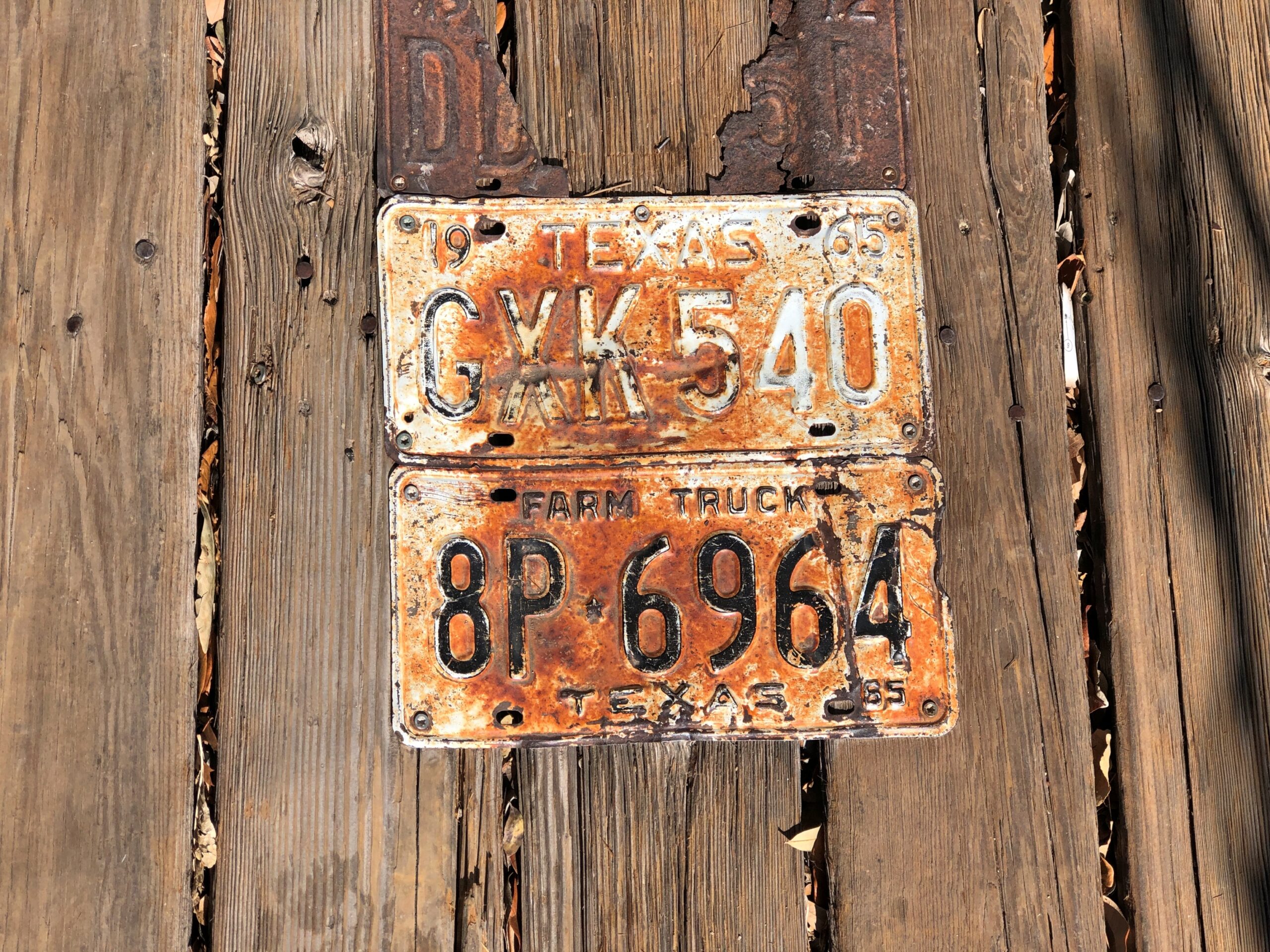
The plates are flush enough with the boards not to be a trip hazard, fortunately.
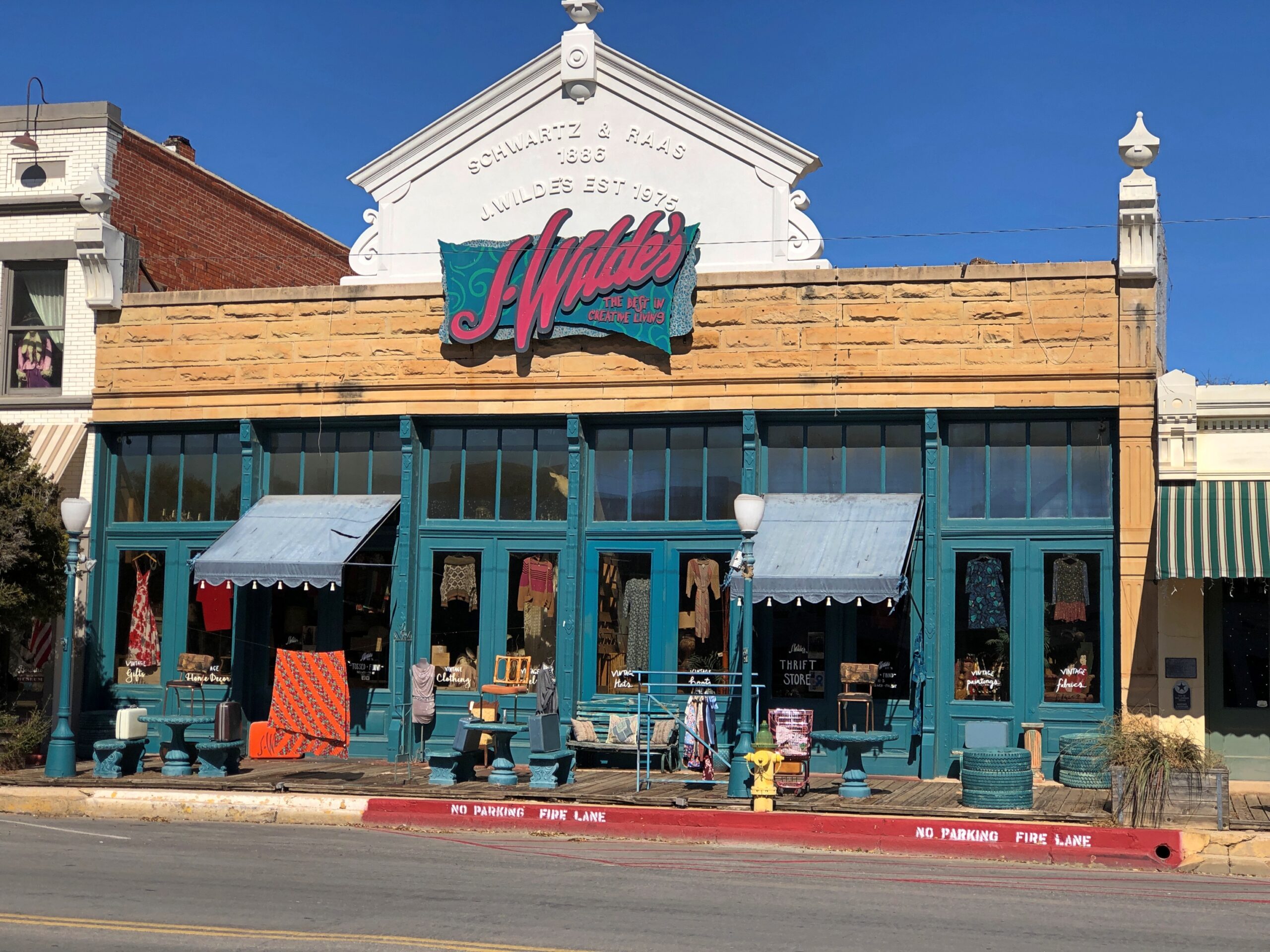
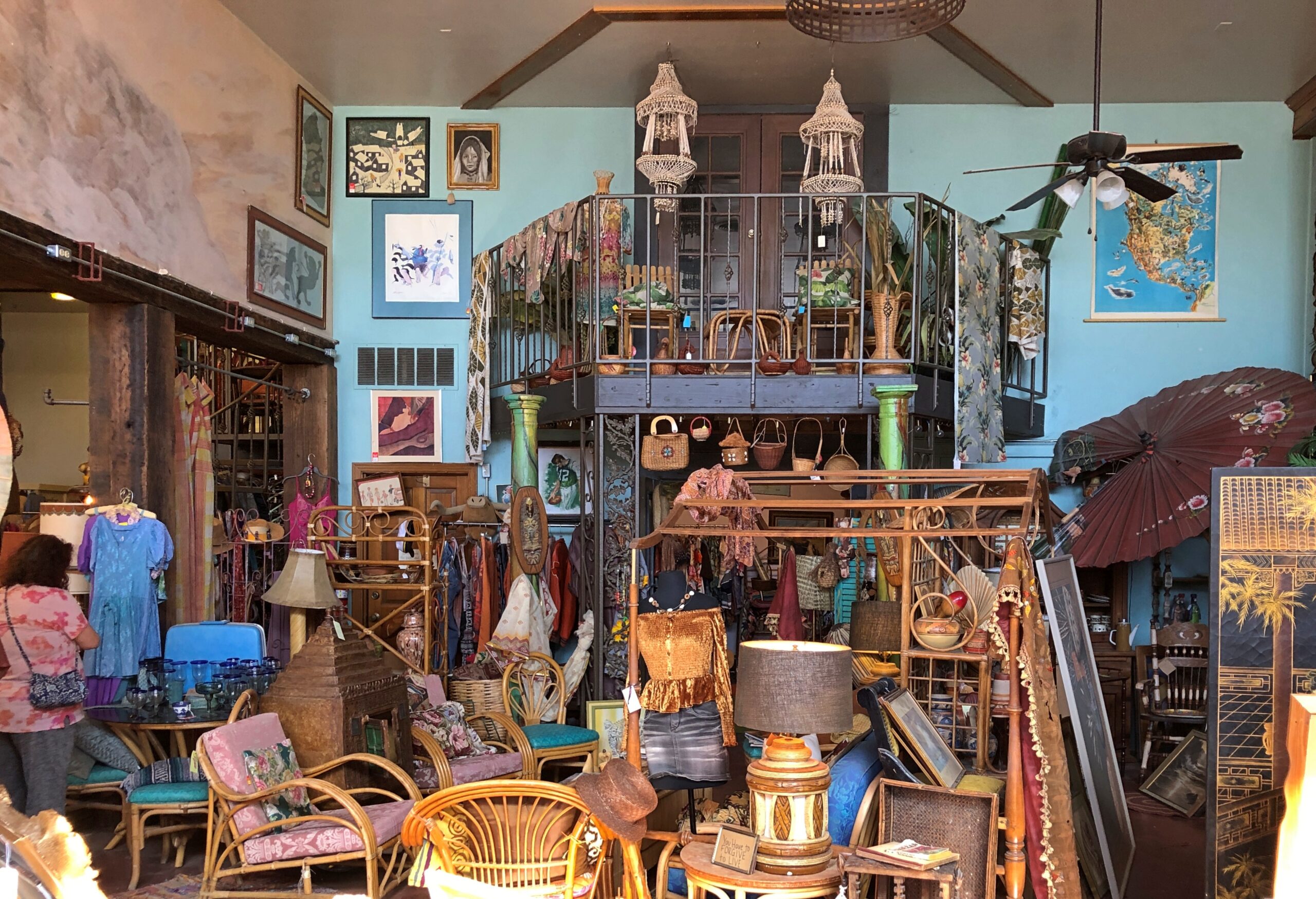
A stuff shop: J. Wilde’s.
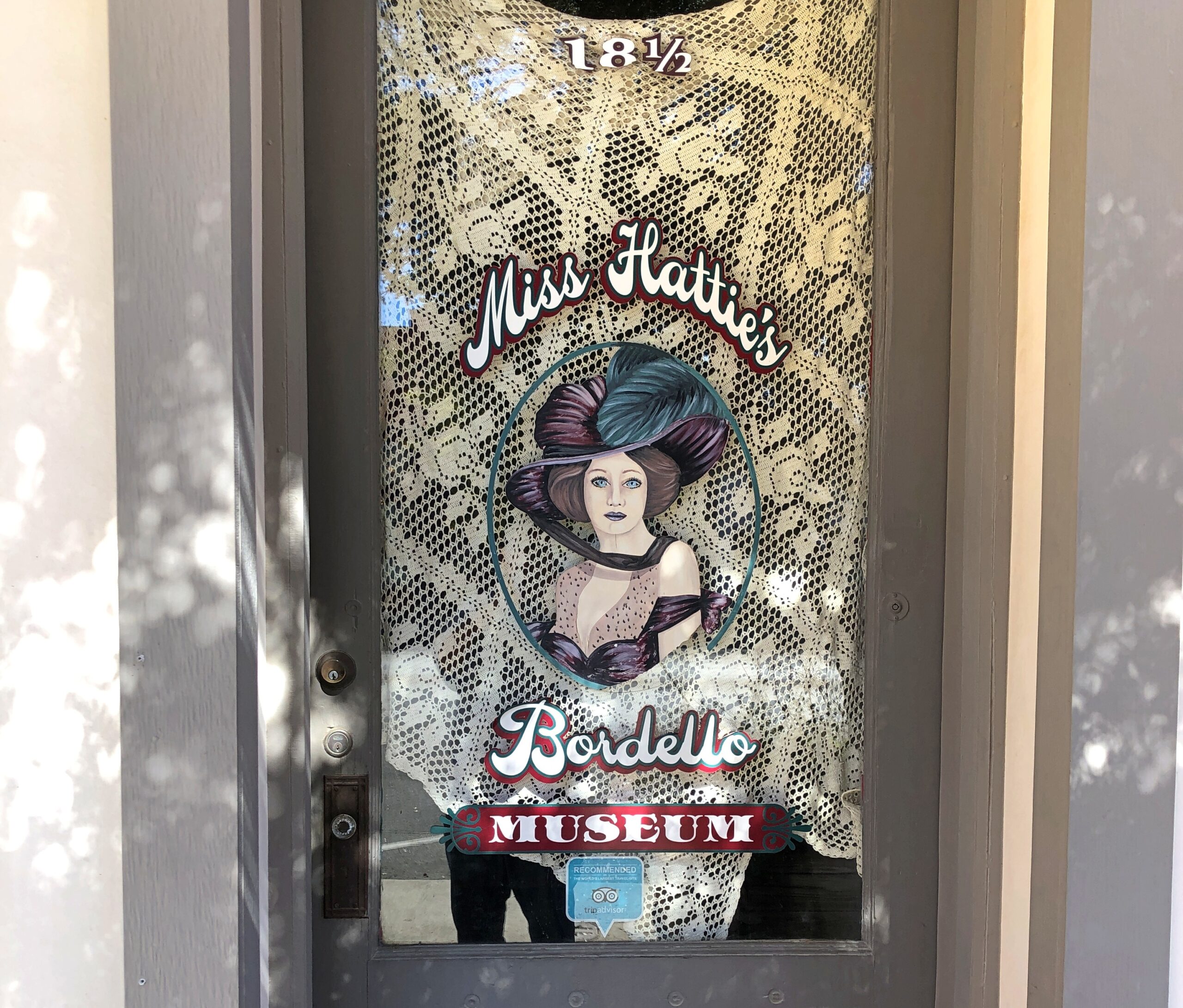
Is Miss Hattie’s a serious museum about underrepresented local history or a commercial venture romanticizing 19th-century prostitution? I don’t know. Miss Hattie’s, like Fifi’s, was closed at that moment.
One more detail from Concho Ave.
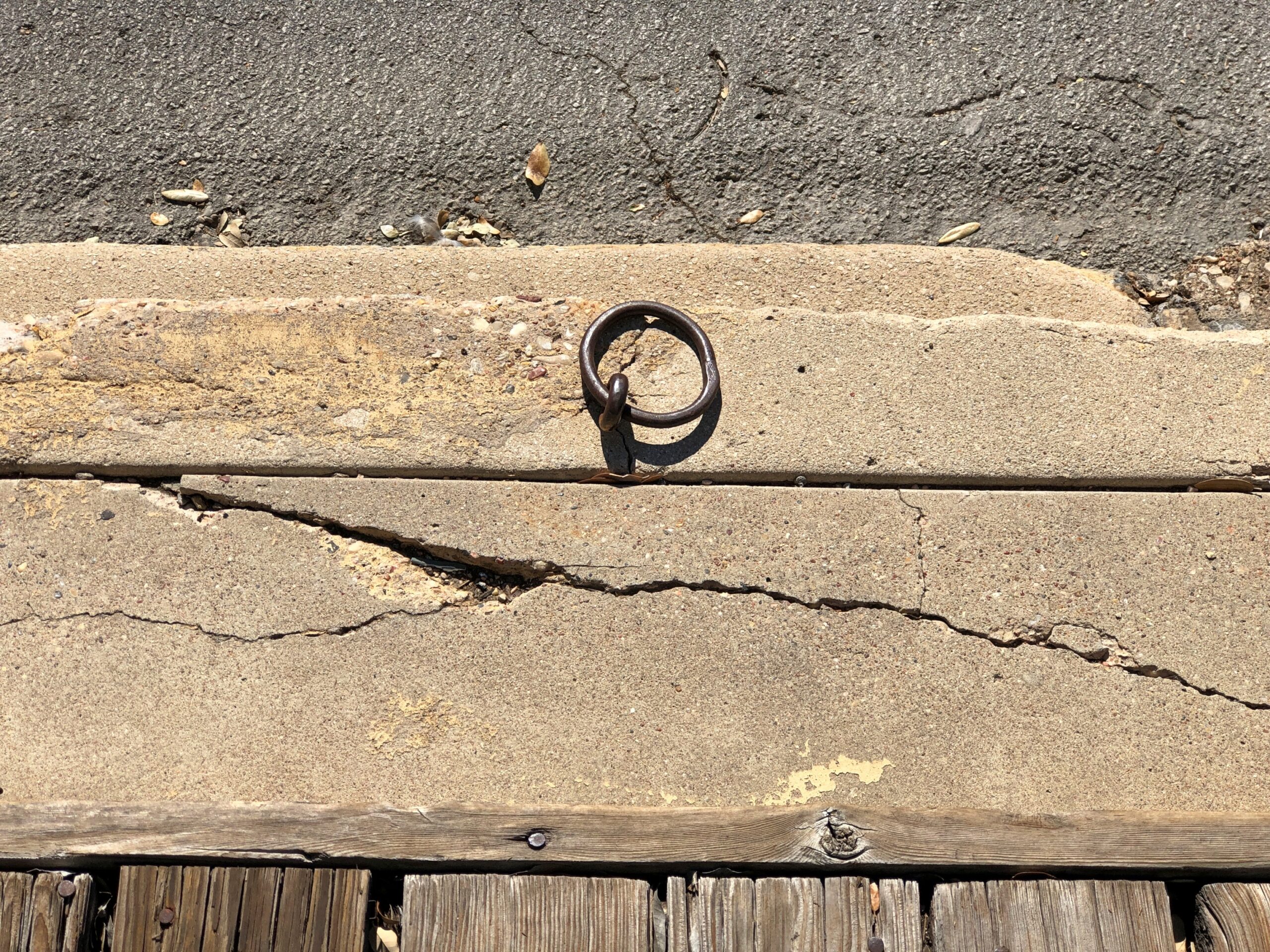
The only reason I know what that is, is that St. Paul’s Episcopal Church in San Antonio, a place I knew well, was founded before the advent of the motor-car. As such, a few iron rings were mounted in the curb in front of the sanctuary – exactly like the ring pictured above. A place to tie up your horse. I might have asked about the feature, or my mother might have pointed it out, but anyway I learned about the iron rings. Does it matter to us auto-mobile drivers that we know this? No. But it adds just a touch of hyperlocal color.