The weekend I spent with friends in Boston in April wasn’t actually in Boston most of the time, but its suburbs, and not with my friends quite all the time. On that Saturday, late morning to early afternoon, I passed some warm springtime moments by myself in the thrall of Mount Auburn Cemetery, mostly in Watertown, partly in Cambridge.
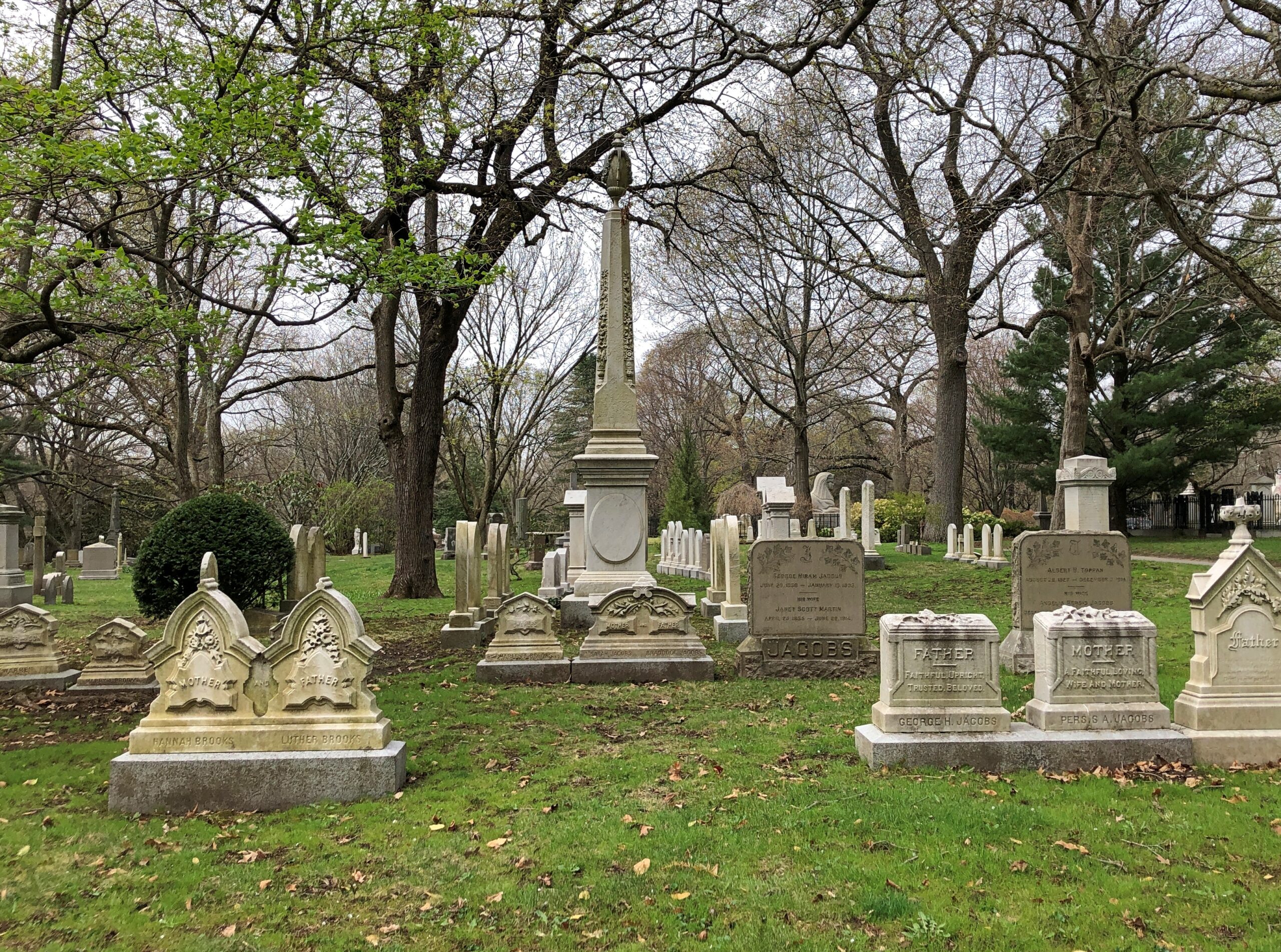
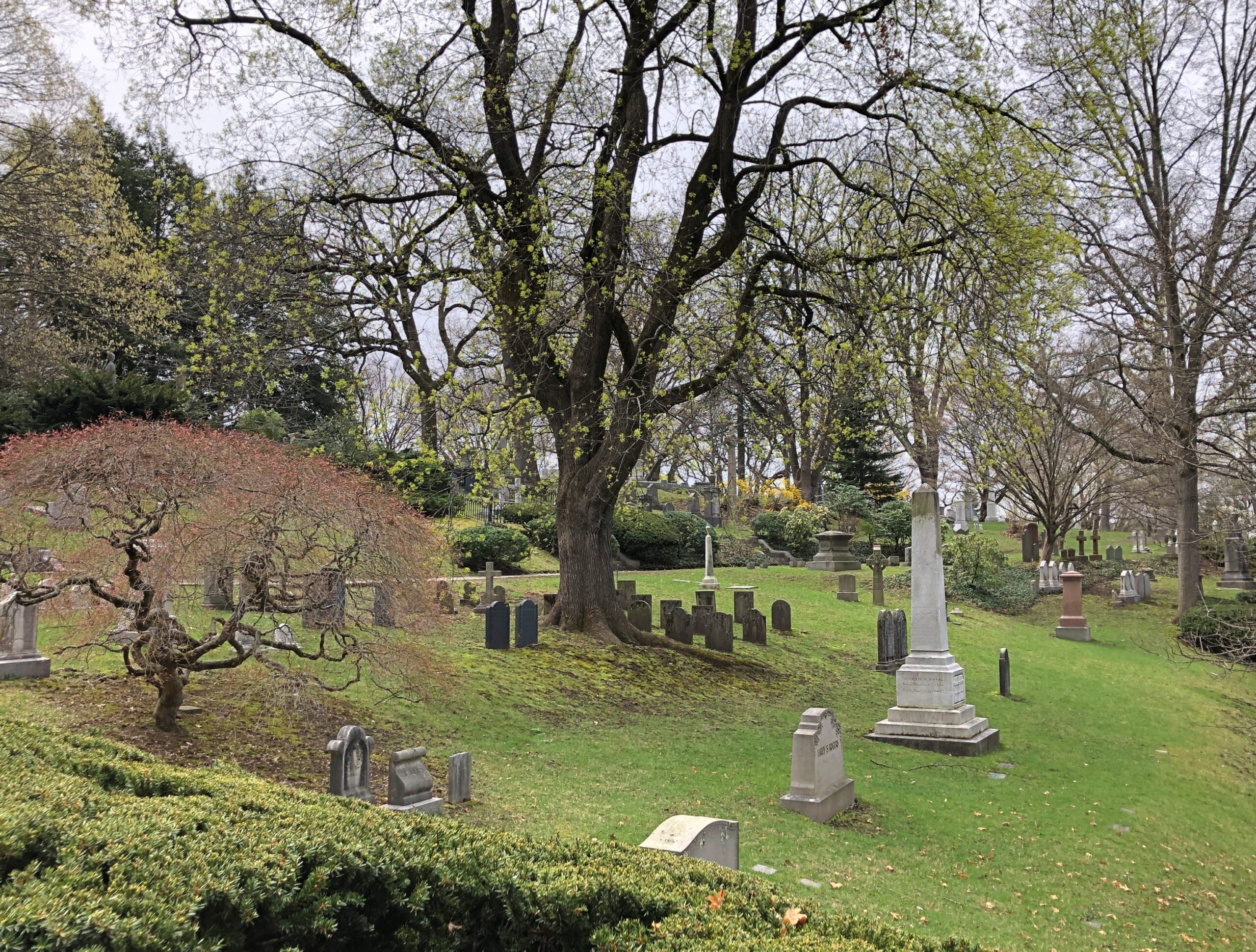
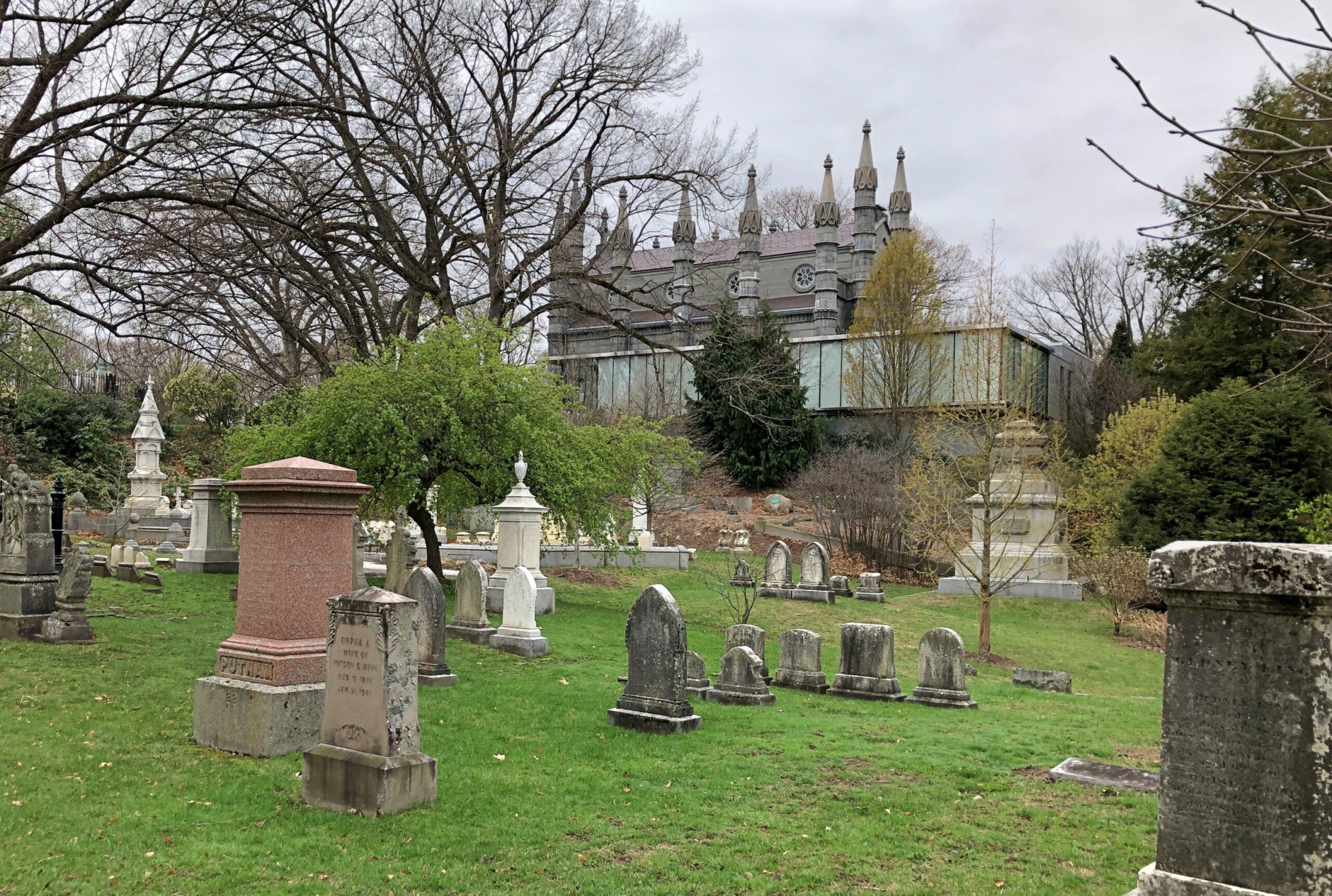
How is it that I’d never gotten around to visiting Mount Auburn Cemetery until 2026? What kind of cemetery tourist lets that one go for so long? This is the Ur of landscaped American rural cemeteries, acknowledged as the first one, established in 1831. Did I also mention that it’s drop-dead gorgeous? So to speak.
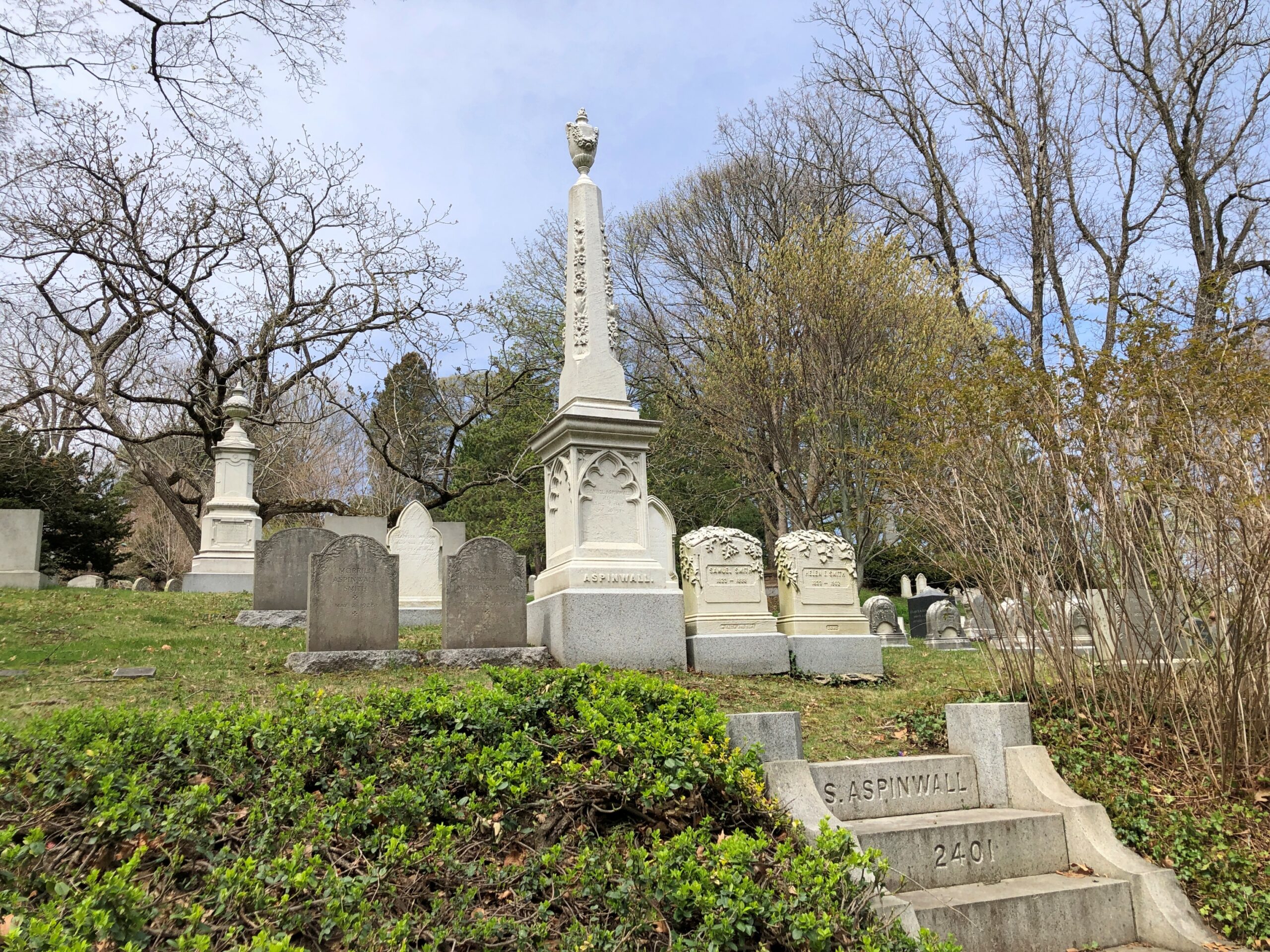
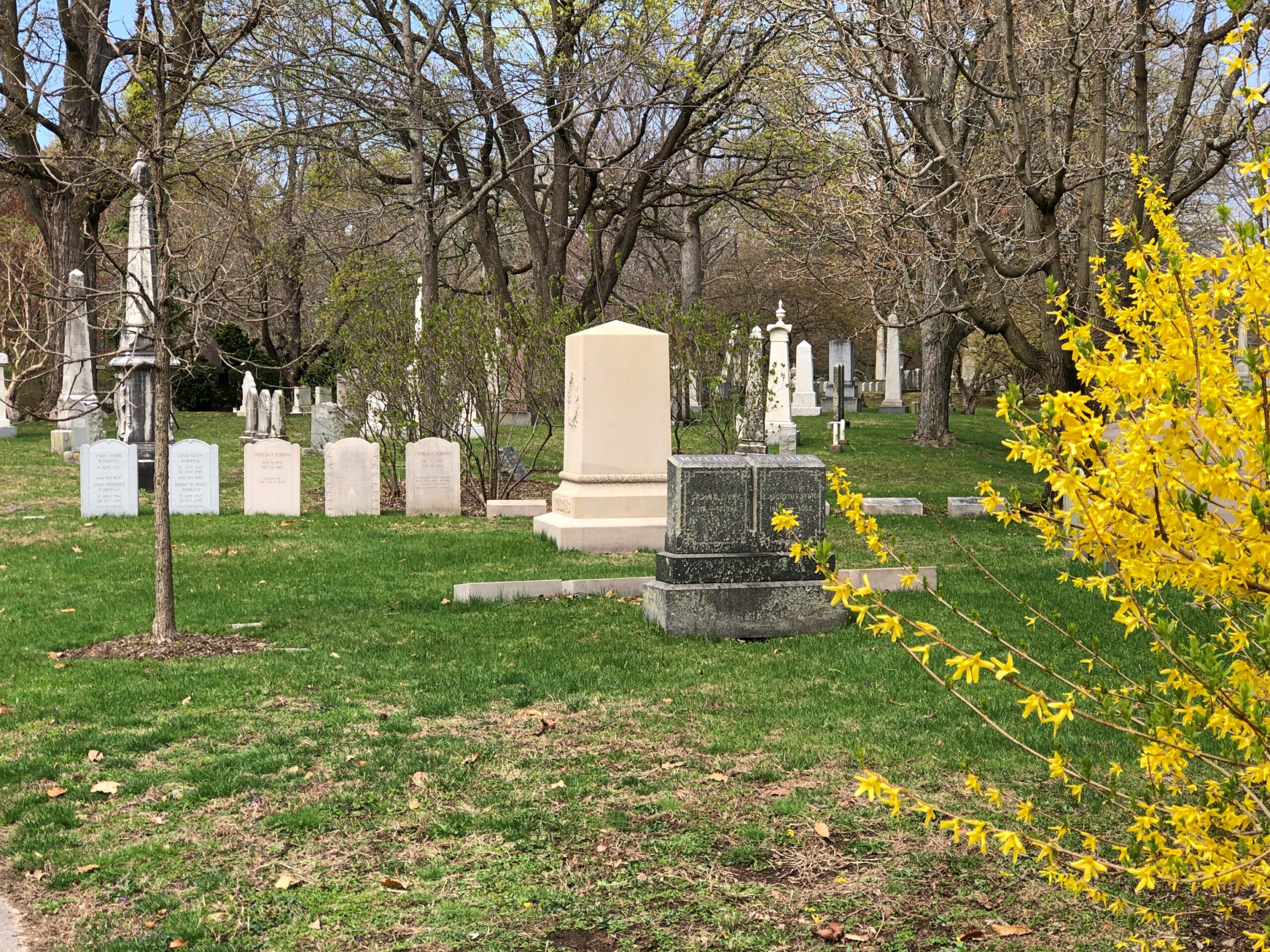
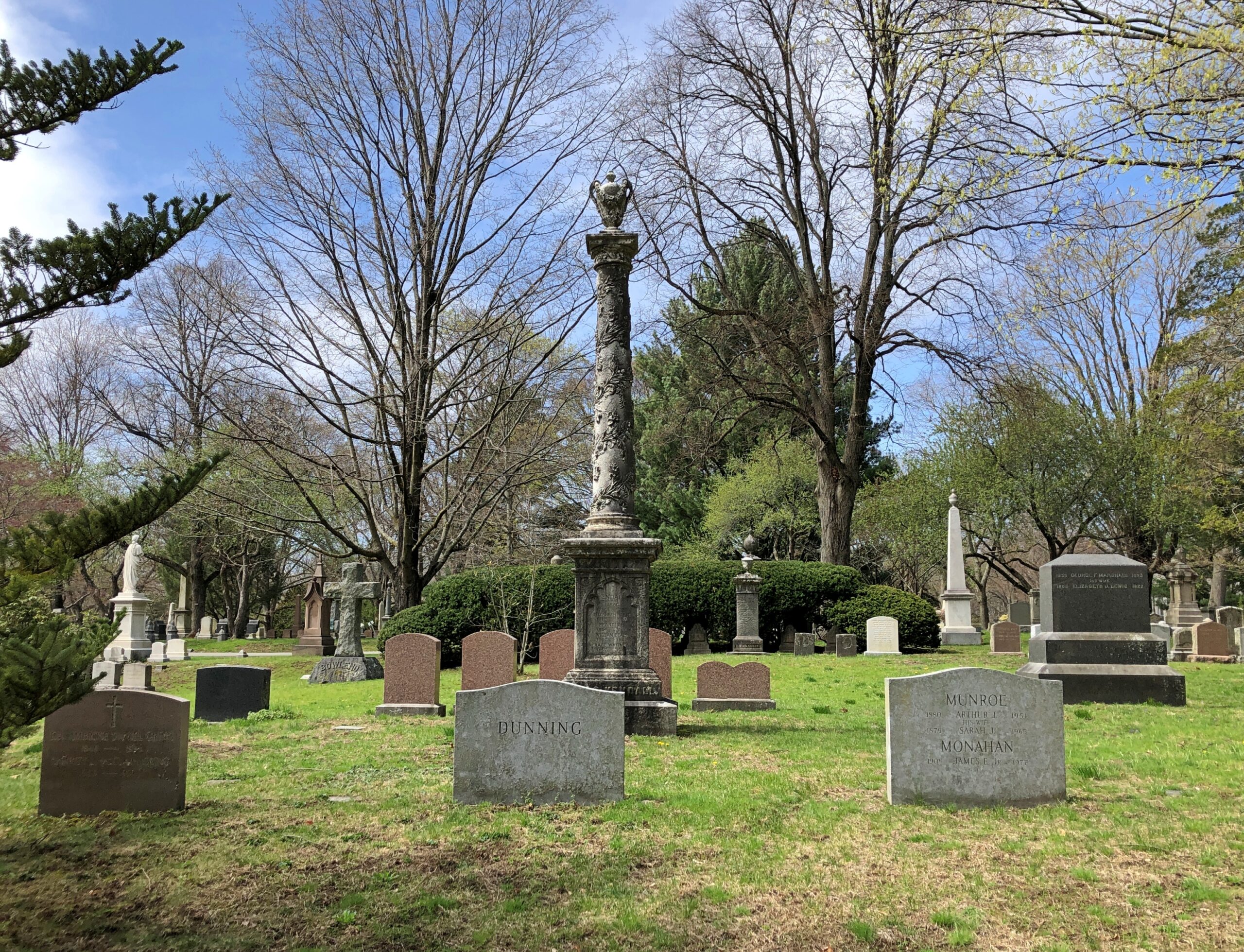
Mount Auburn is one of those rare cemeteries – like Arlington National outside DC or Saint Louis Cemetery No. 1 in New Orleans – that attracts visitors even in our time. Not a huge number, at least when I visited, but a healthy trickle. Spring, I suspect, is a popular season there.
Arlington National inspires feelings of patriotism from as deep an historical well in North America has to offer; New Orleans’ tombs are dressed in mystery and garlanded with voodoo. What does Mount Auburn have? Landscaping of the highest order. A pattern by which all the following garden cemeteries can be judged: stones of great variety, plants equally various, and an alternation of flat and hilly contour.
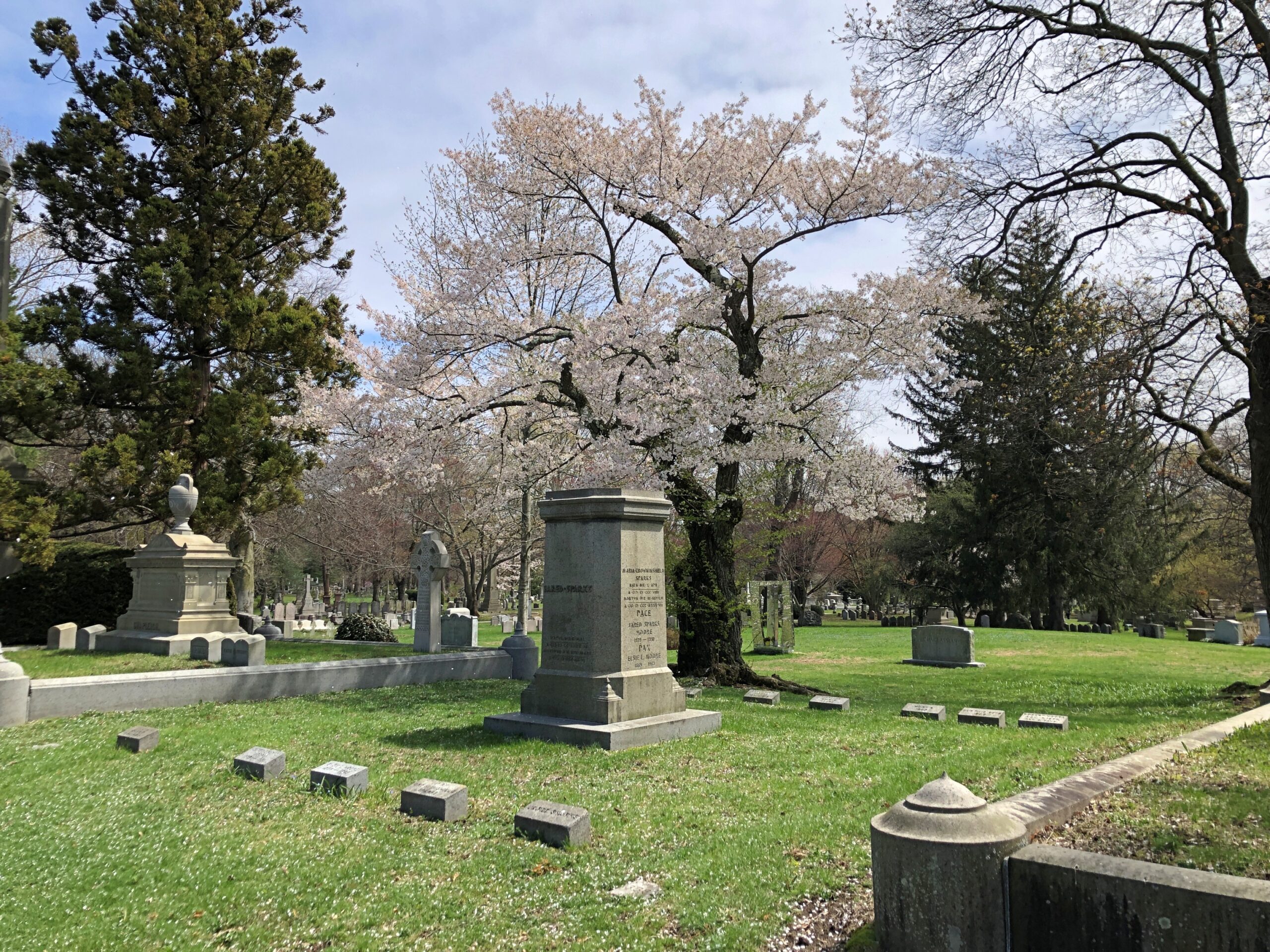
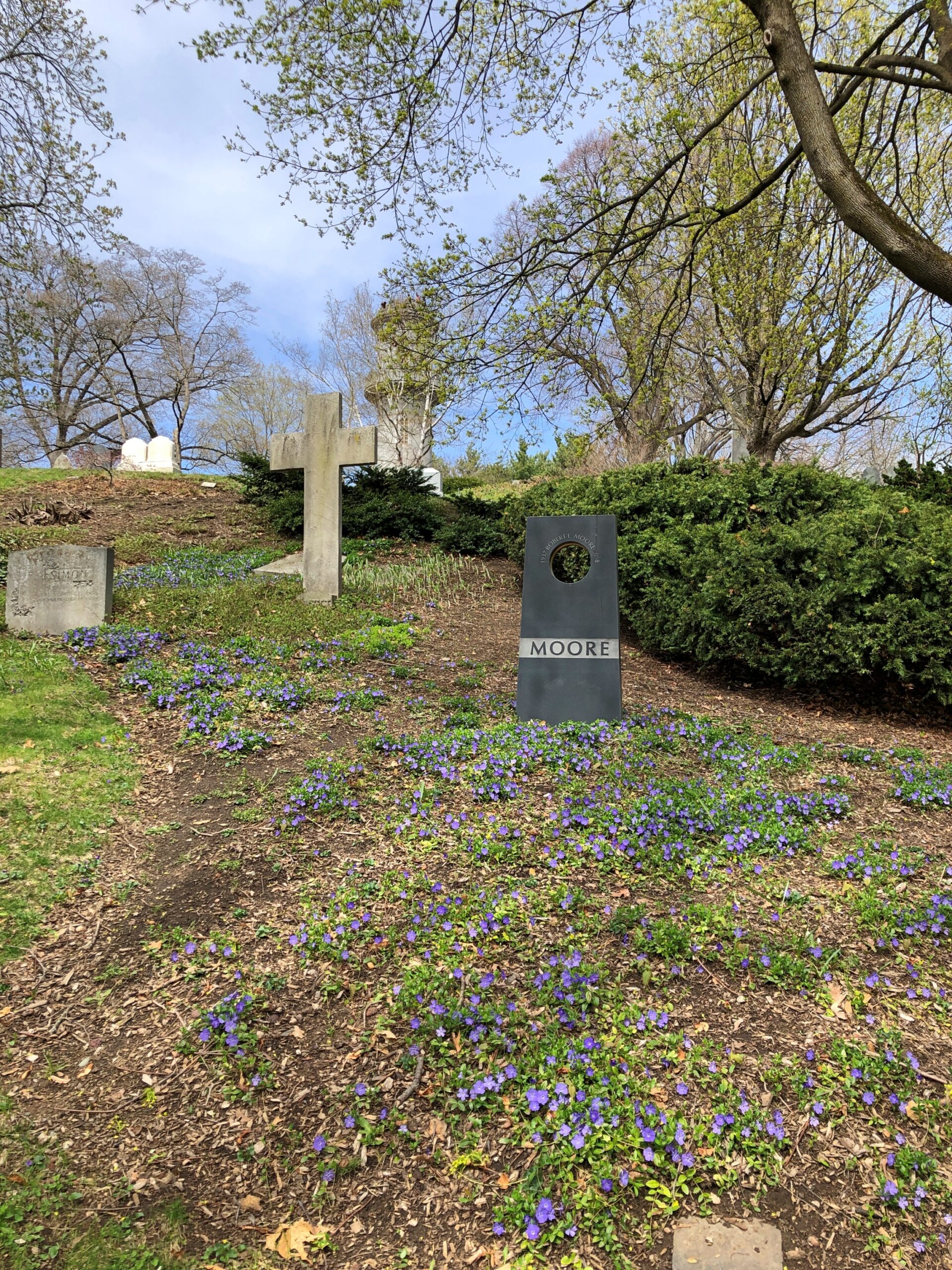
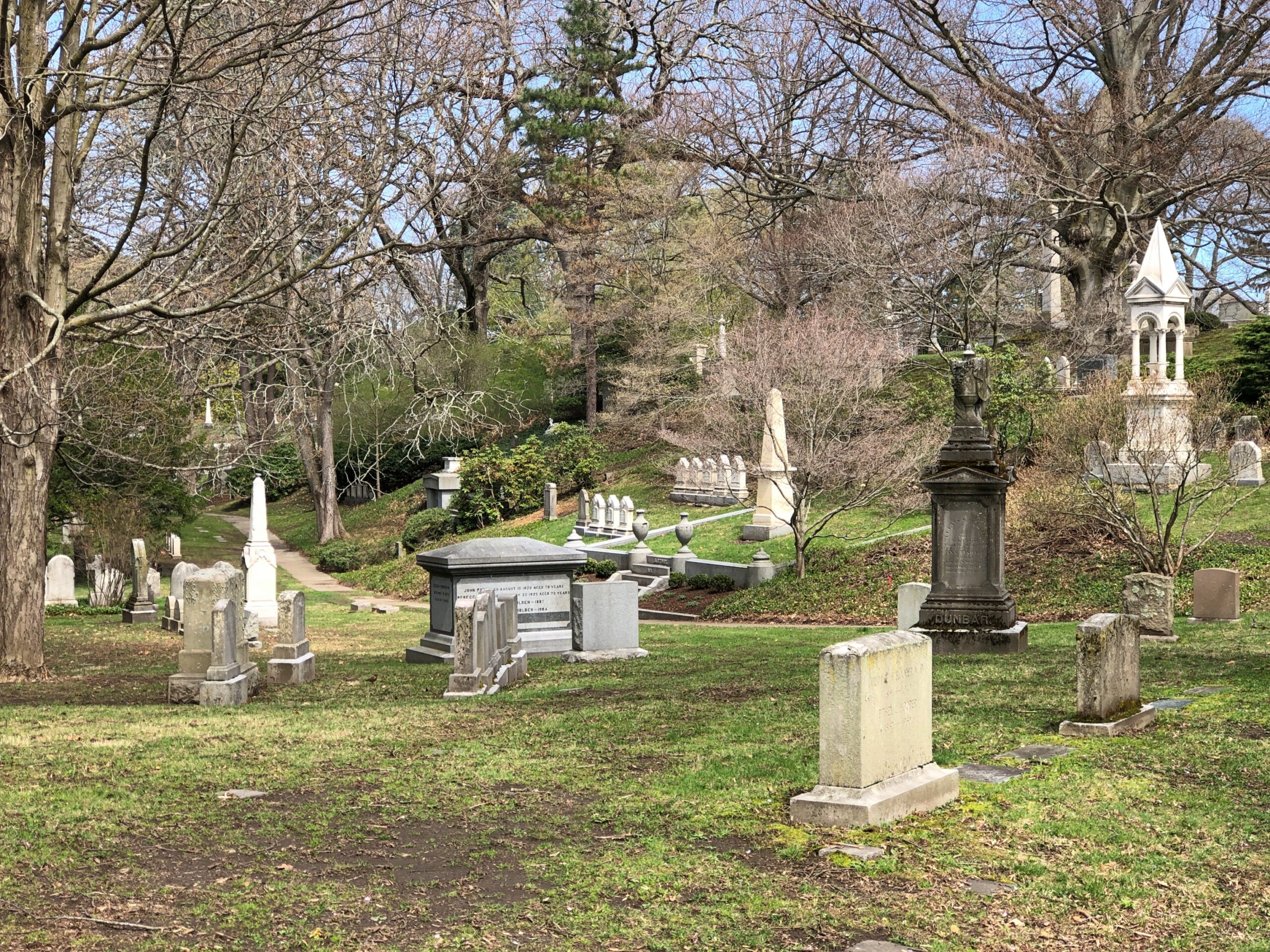
The Massachusetts Horticultural Society, itself a recent establishment by the 1830s, created Mount Auburn during a time of peace and expansion in Boston, with the violence of the Revolution barely in living memory and U.S. sectional friction deepening, but not to the strife it would become by the ’50s. The president of the society, Henry Dearborn (d. 1851), is credited with designing Mount Auburn.
The site, with its twists and minor vistas, turned out to be just the place for a revolution in burial practice. Dearborn must have had a gardener’s instinct for the reinventing the wooded hills, but he was much more than a gardener, and the cemetery is much more than a garden. And anyway, Dearborn just set the thing in motion nearly 200 years ago, in collaboration with landscape architect Alexander Wadsworth and botanist Jacob Bigelow. The cemetery, a place to recall lives that are over, is ongoing.
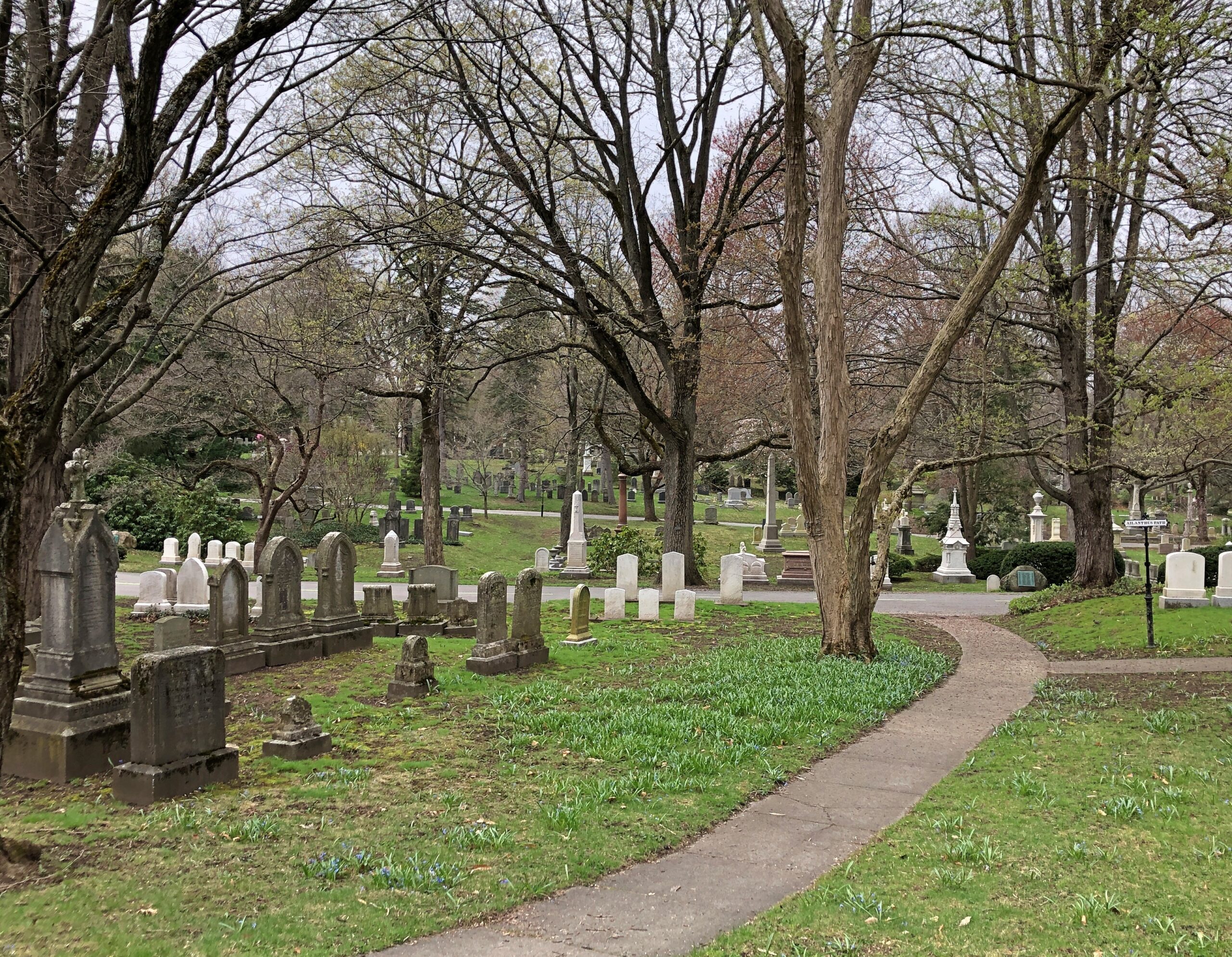
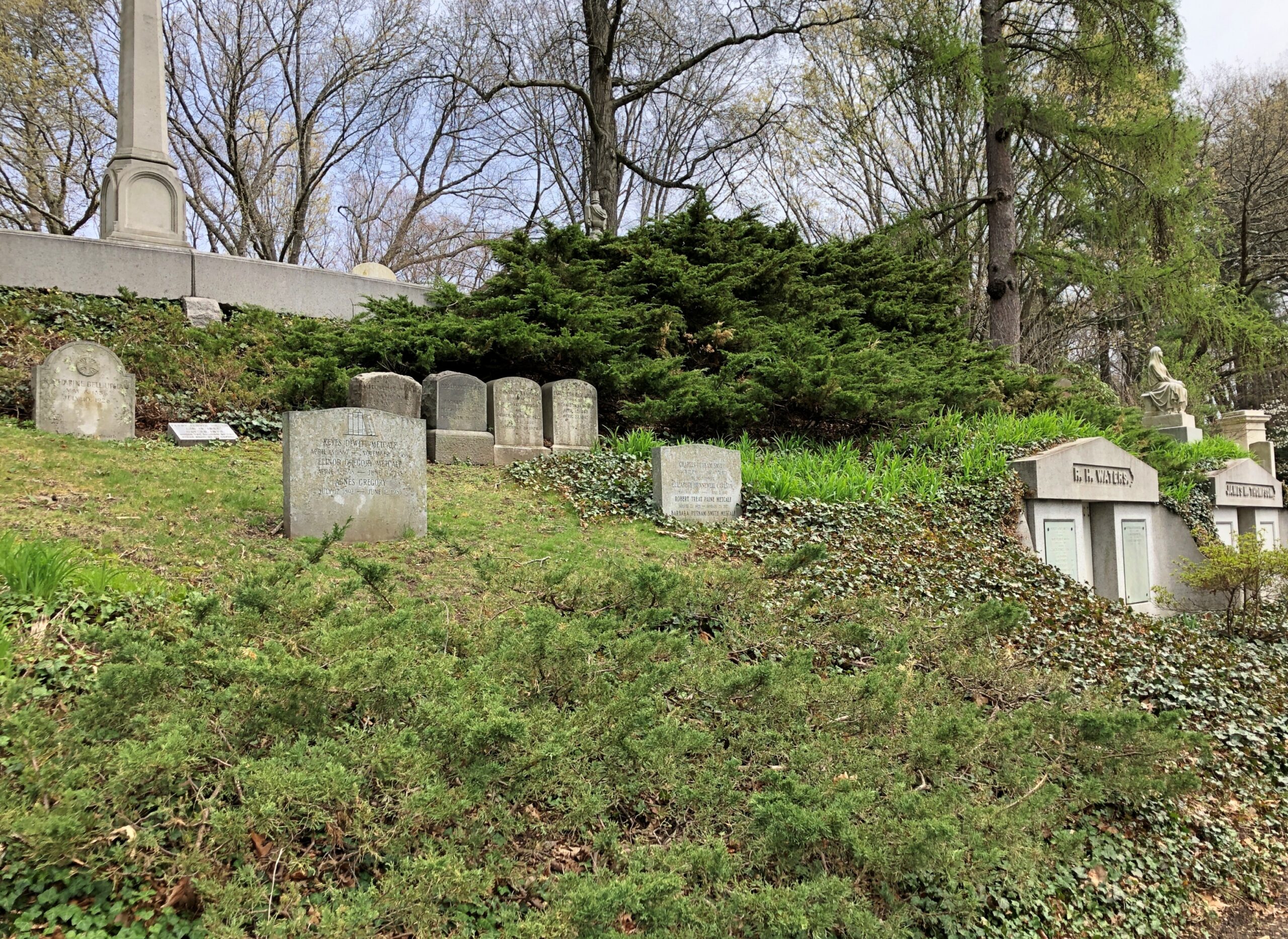
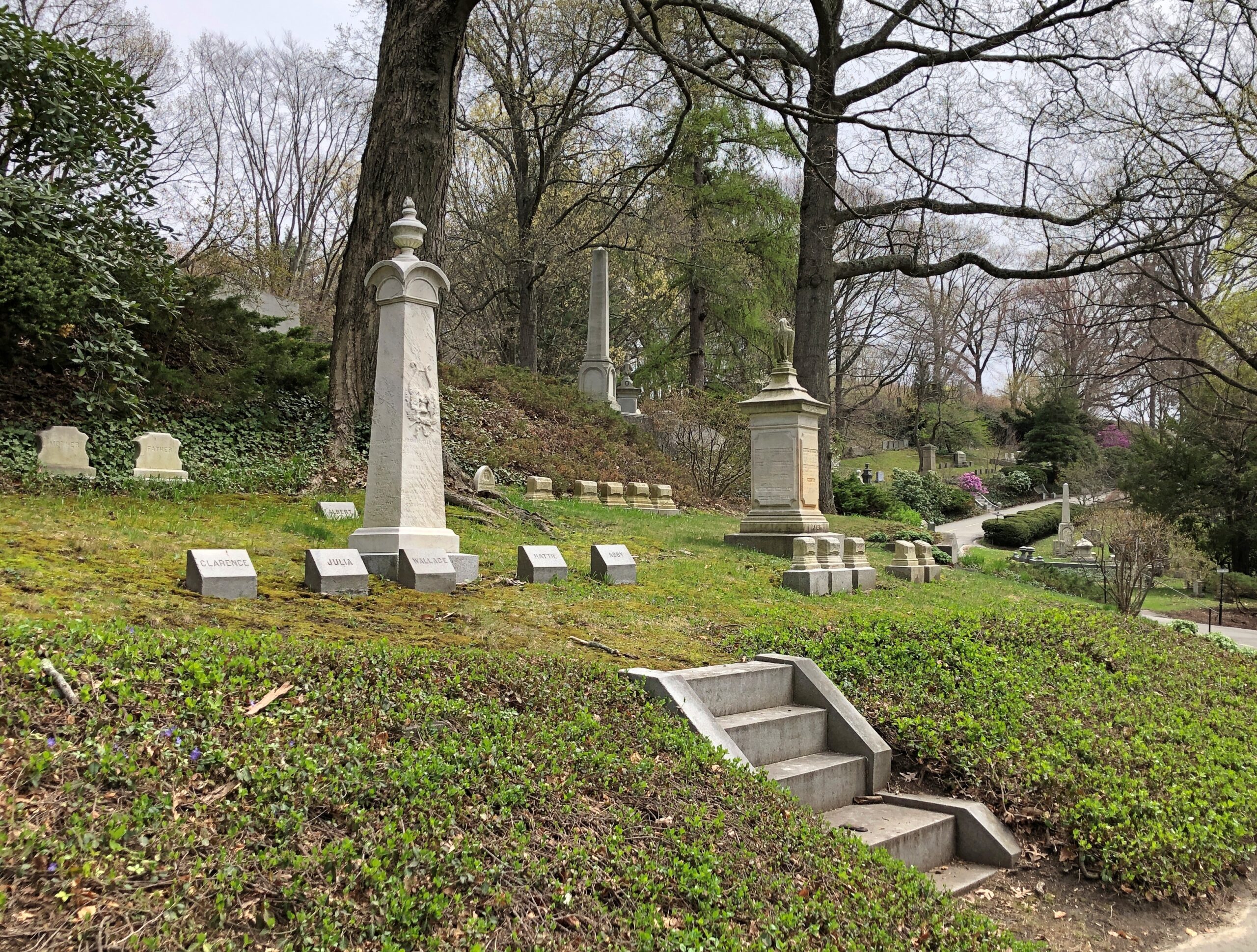
Since then, every stone, every planting, all the small decisions and actions that go into managing 174 acres with 100,000 or more permanent residents, have formed a national treasure.