I can’t say I hadn’t been warned.
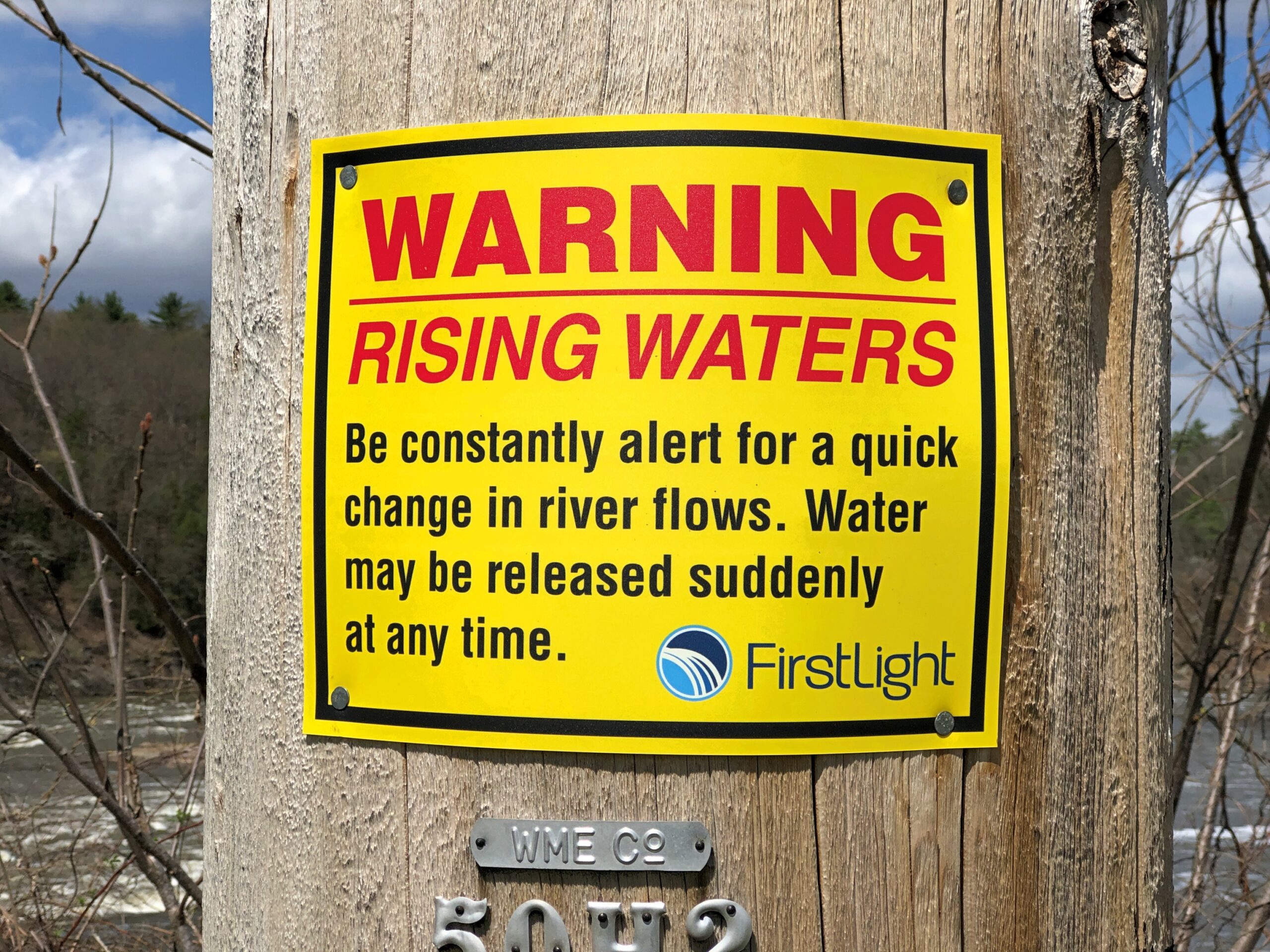
FirstLight describes itself as a “clean power producer, developer, and energy storage company.” Such as from legacy dams of the Connecticut River watershed, though some of those are coming down.
Luckily, the nearby waters didn’t make any sudden moves in the vicinity of my person that afternoon. I was near the Connecticut River at a place called Turners Falls (no apostrophe), Massachusetts. The sign is posted on a man-made island, in fact, created by a canal paralleling the river – Turners Falls Canal.
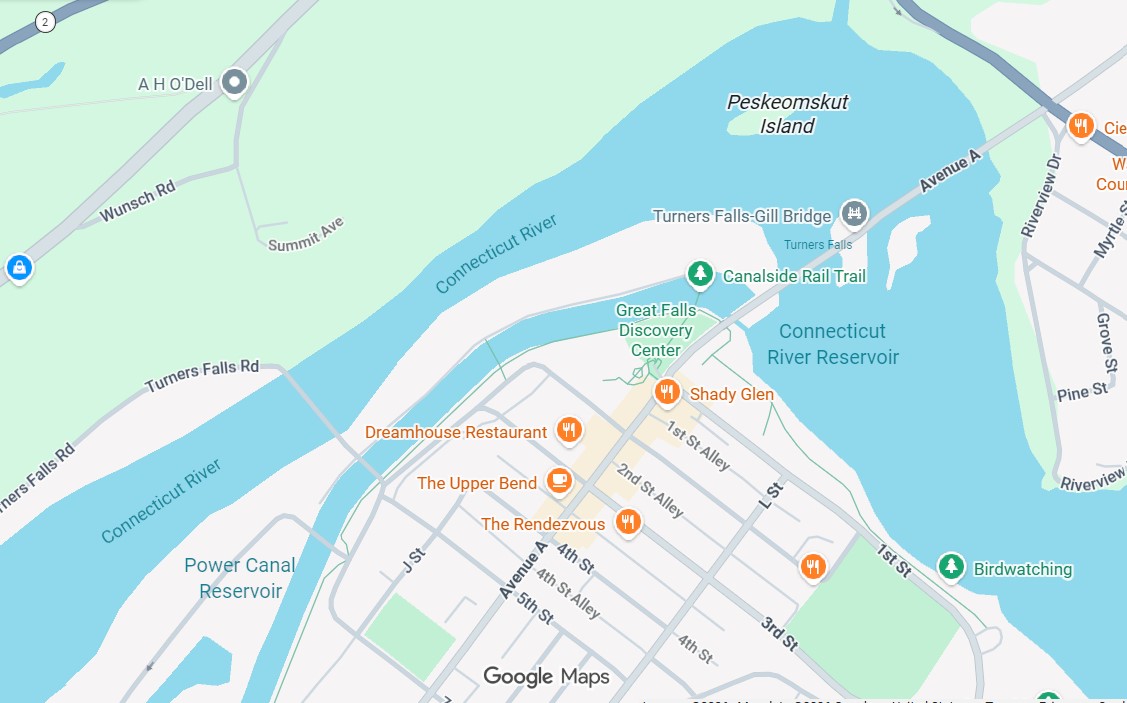
I’d crossed the Connecticut via a bridge, and the canal too, and parked on Avenue A in Turners Falls near the Great Falls Discovery Center, which is housed in restored mill buildings on the south edge of the canal.
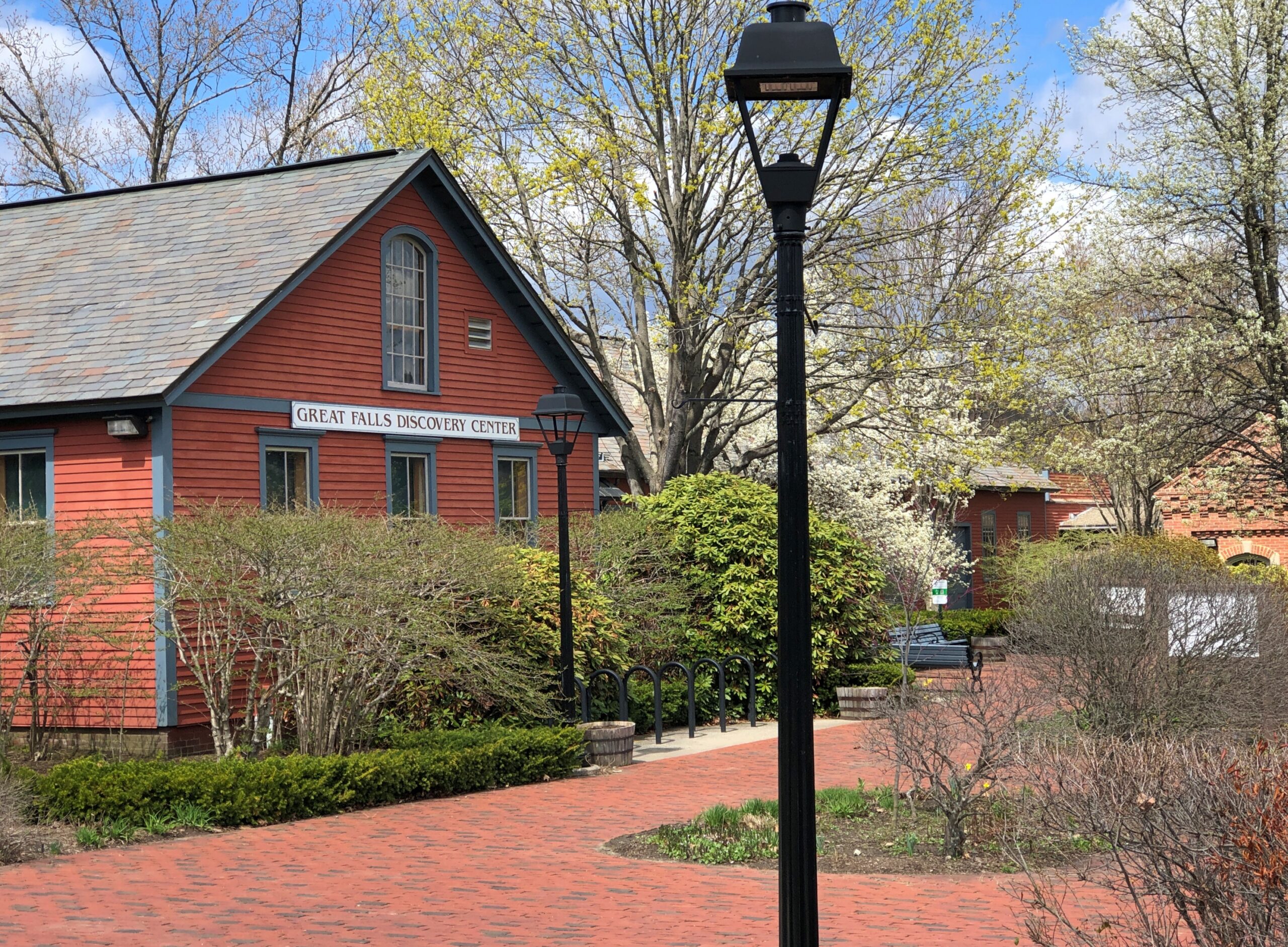
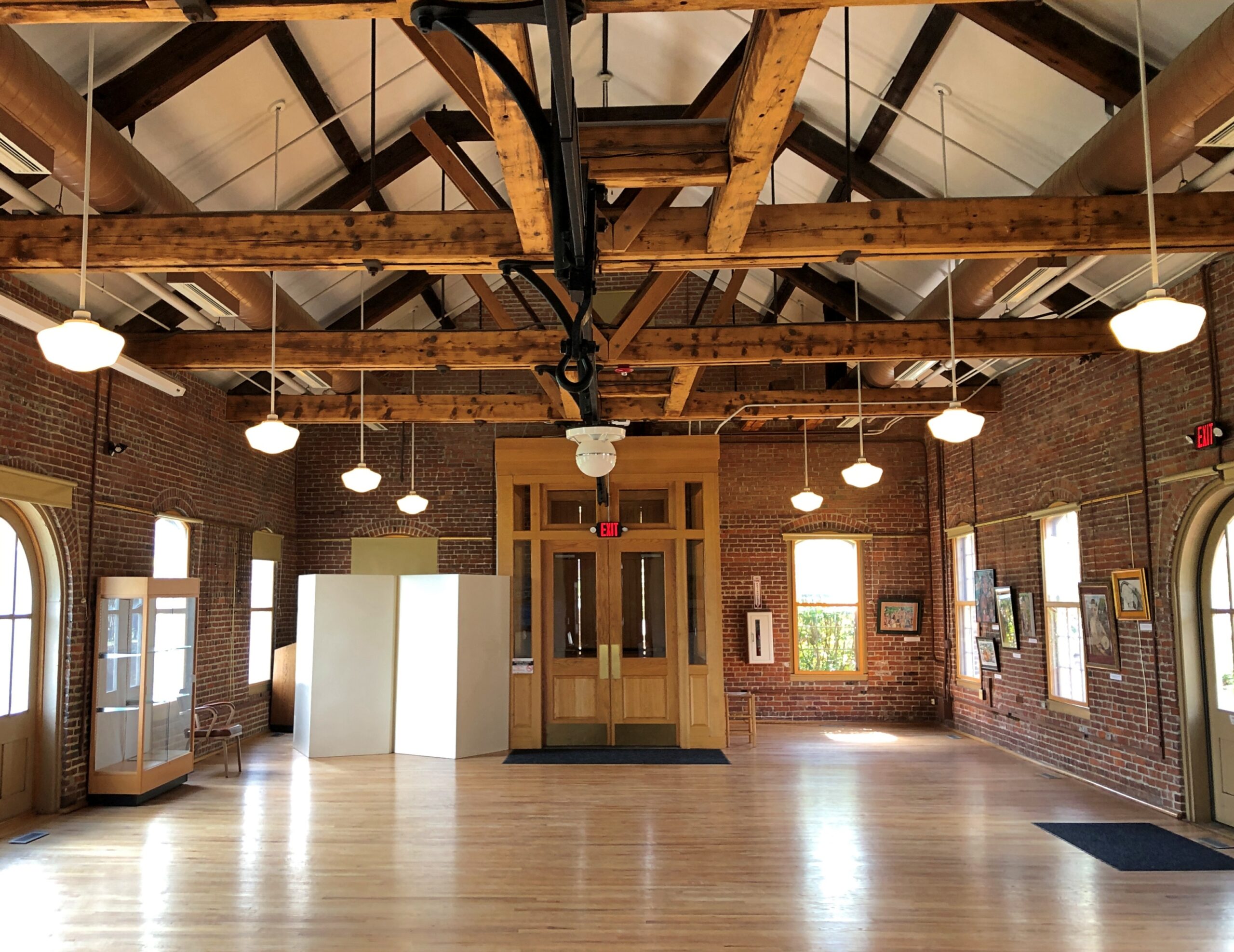
Great Falls Discovery Center, owned by the Massachusetts Department of Conservation and Recreation, includes open habitat exhibits, fish tanks, and dinosaur fossils, and is generally geared to small fry. It does have a nice, if underutilized, exhibit space in one of the restored buildings.
I understand that “Great Falls” is an earlier name of the falls, now the site of a dam, and that a fellow named Turner led an attack on a native settlement on the river 350 years ago, leading to the renaming of the falls – more about all that later. A path from the center leads to the canal.
A rusty foot bridge across the canal.
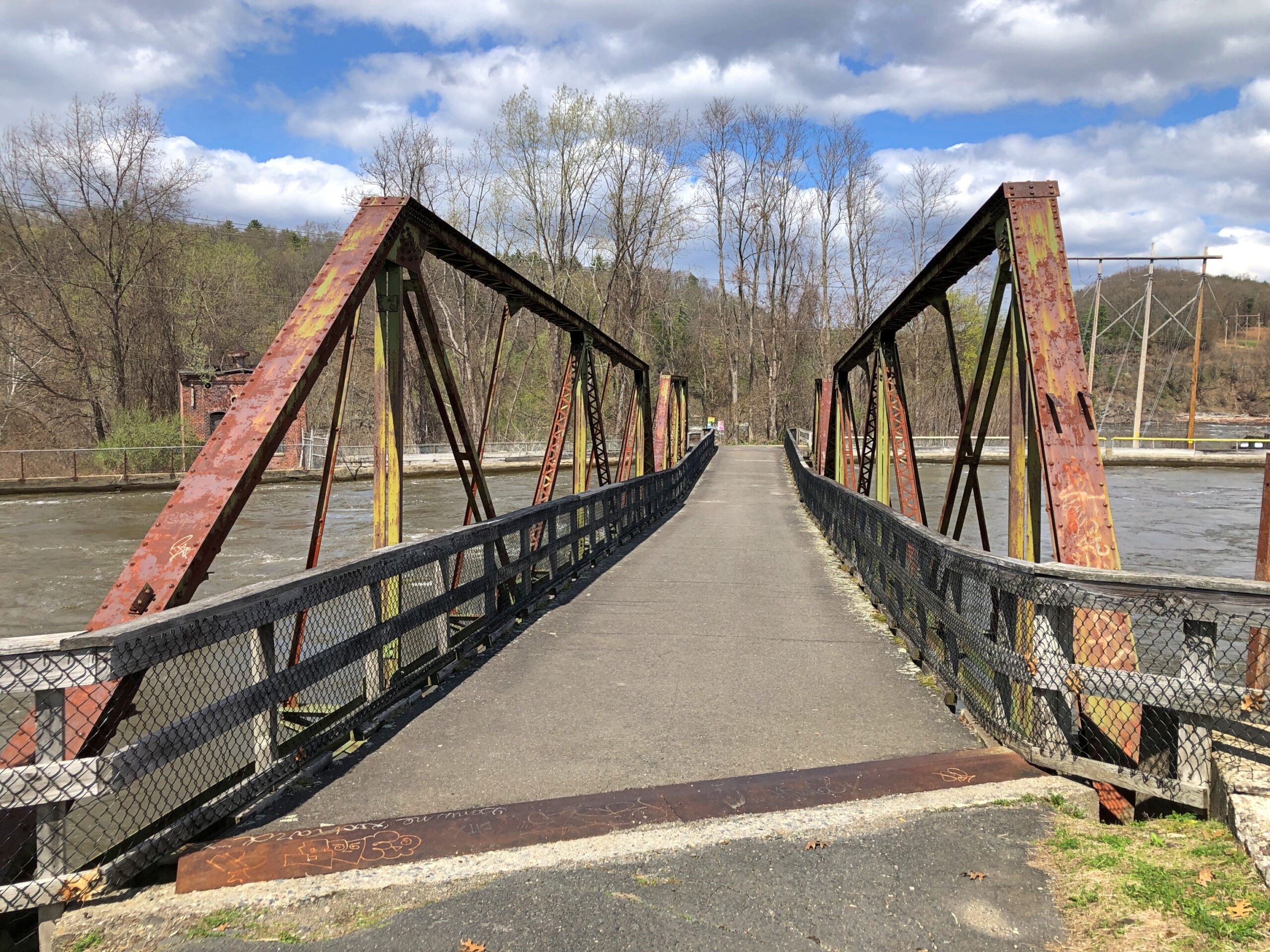
Looks a little dodgy, especially when the flow is strong, as it was that day in the wake of heavy spring rain the day before.
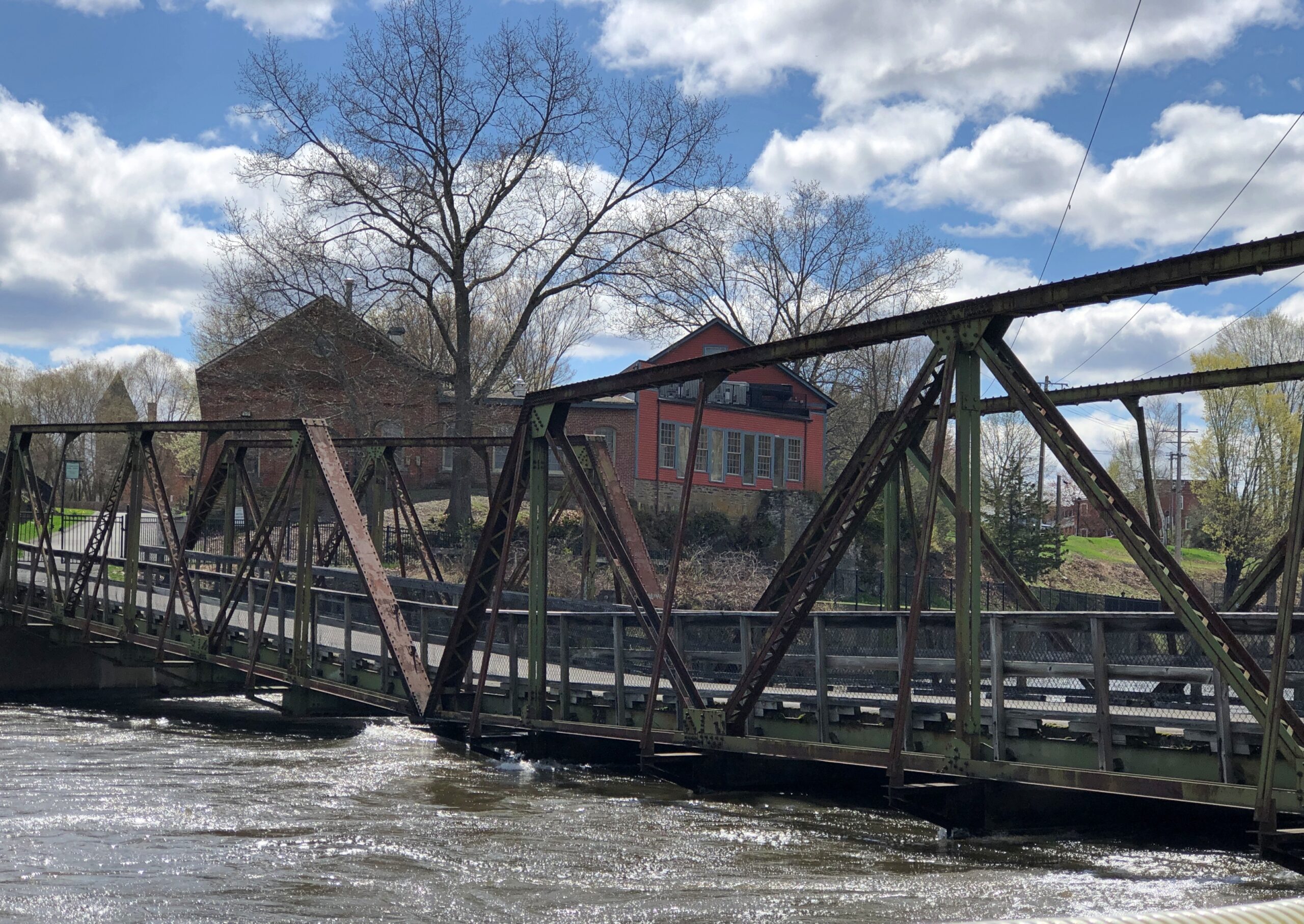
But not dodgy enough to keep me from crossing to take in the views of the canal from the footbridge.
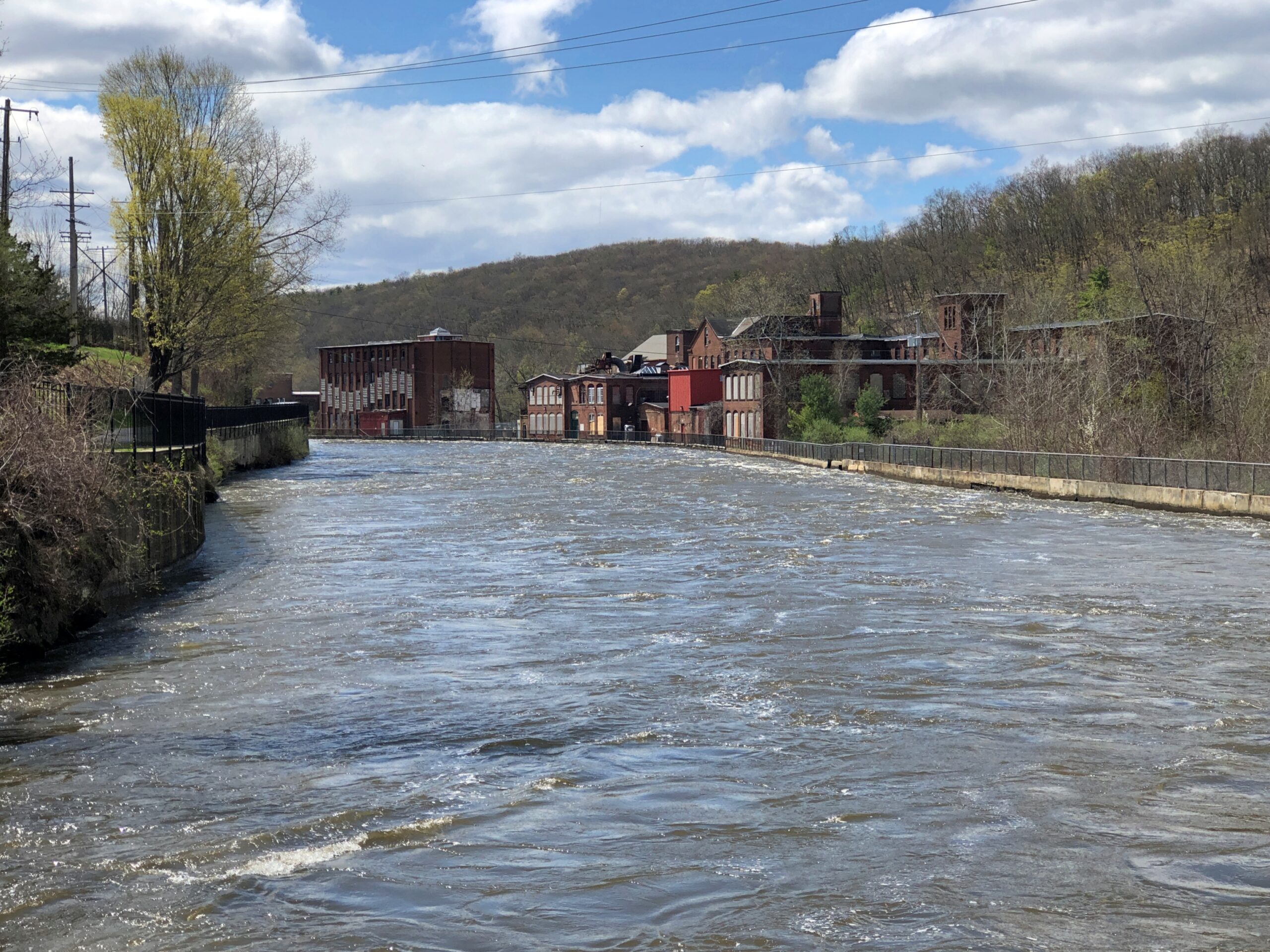
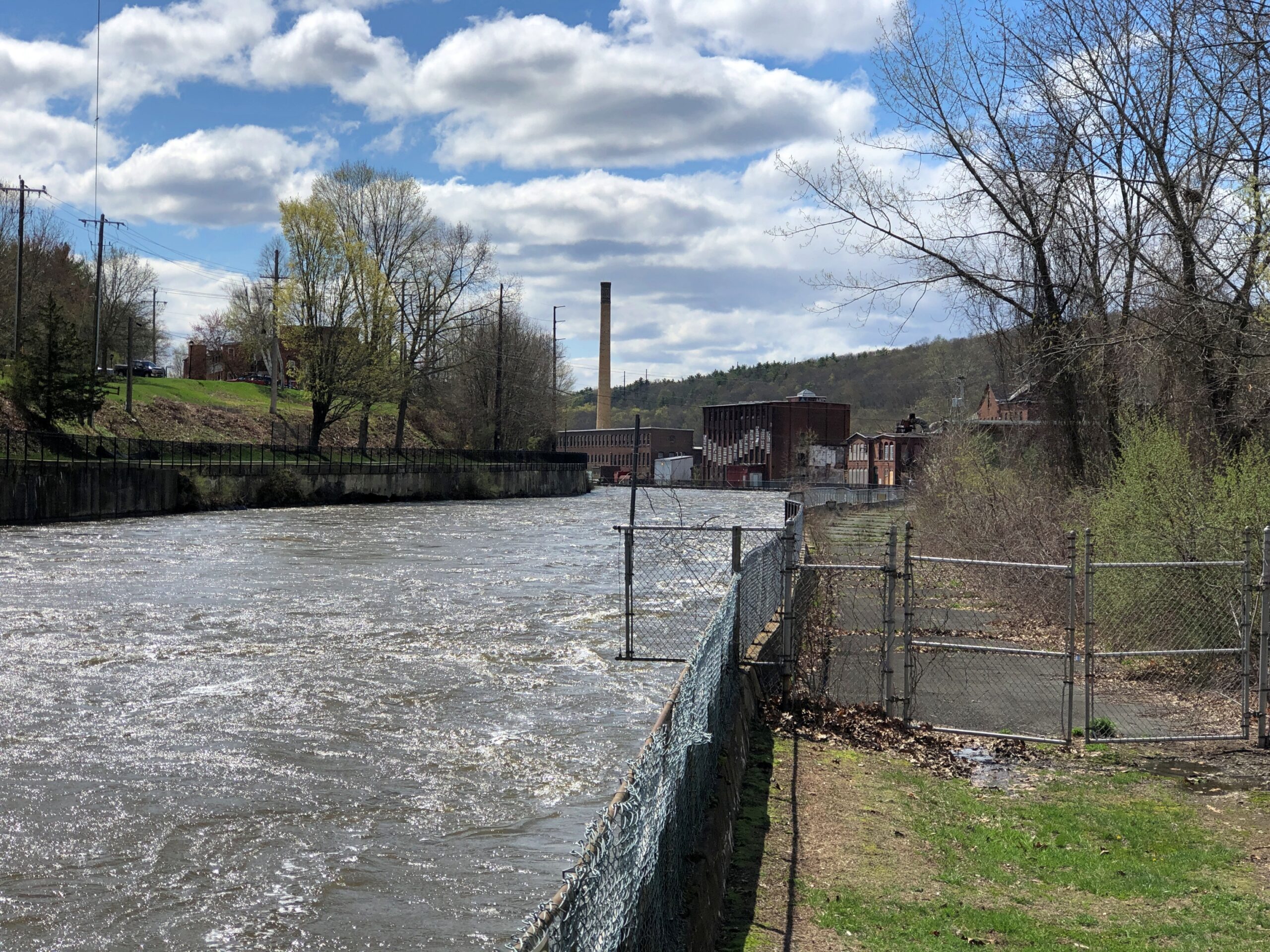
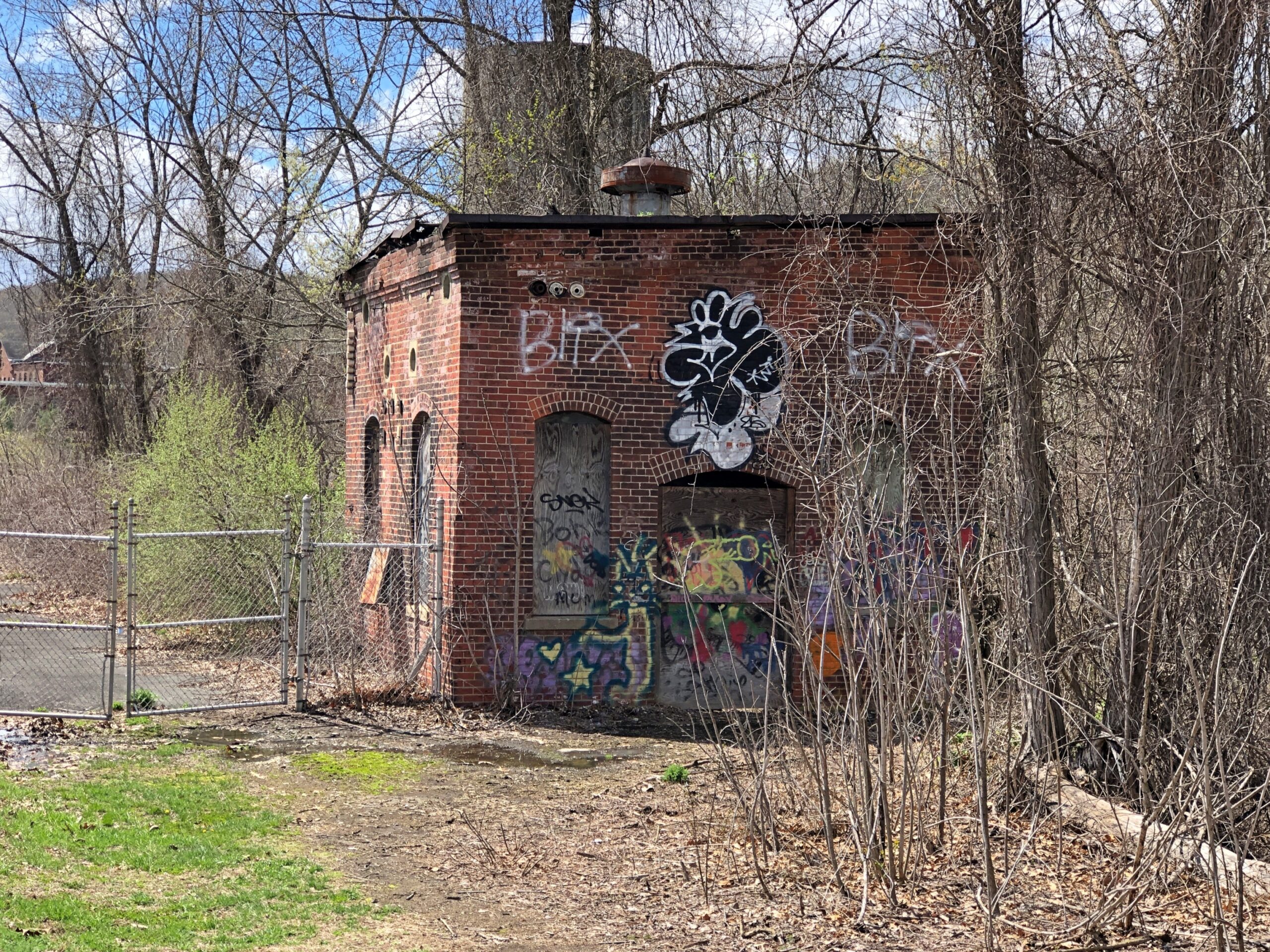
The tip of the island, while accessible at that point, is desolate. The rest of the island seemed to be fenced off.
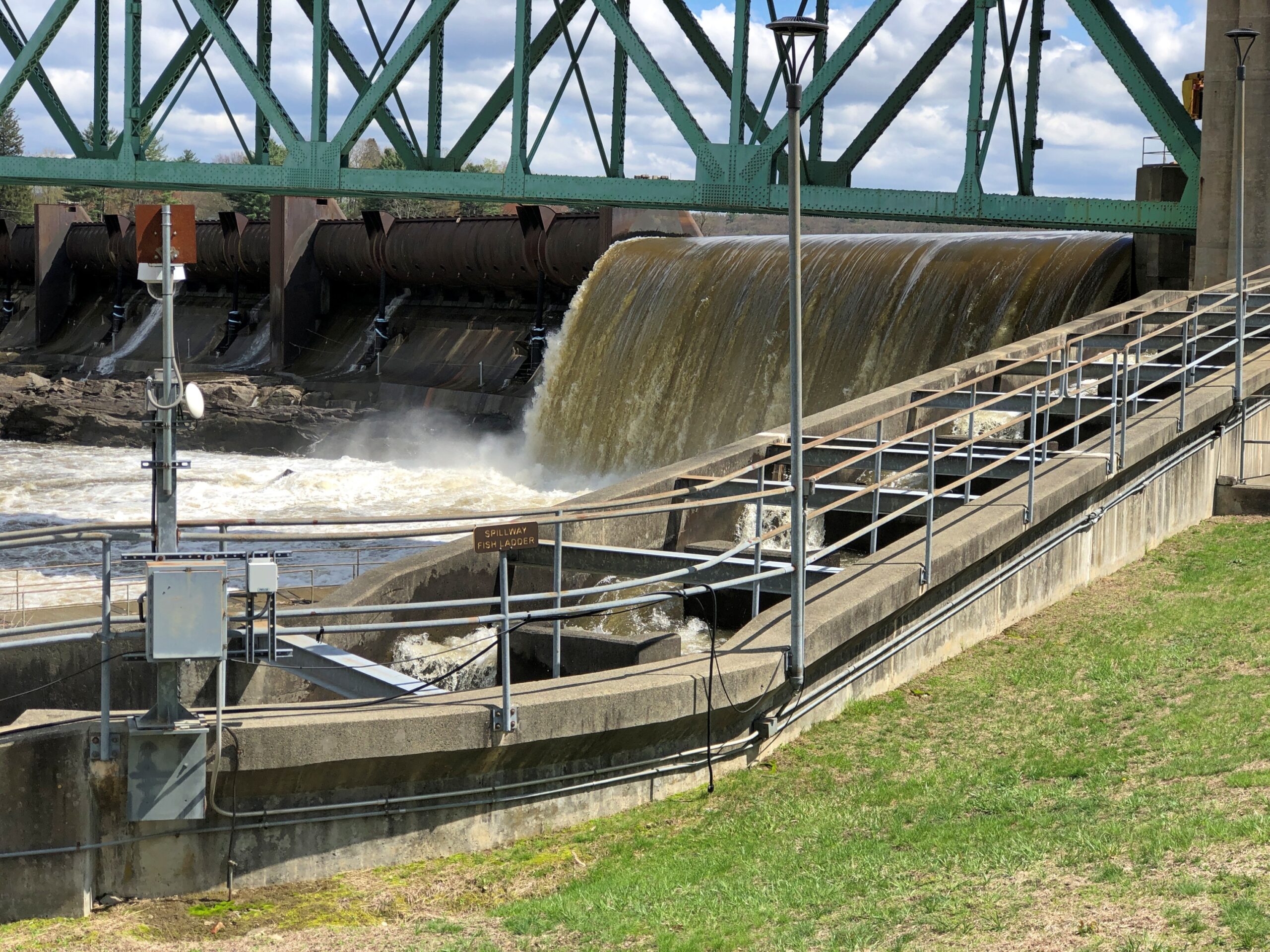
But it does offer a view of the dam and its associated fish ladder. A powerful flow that day.
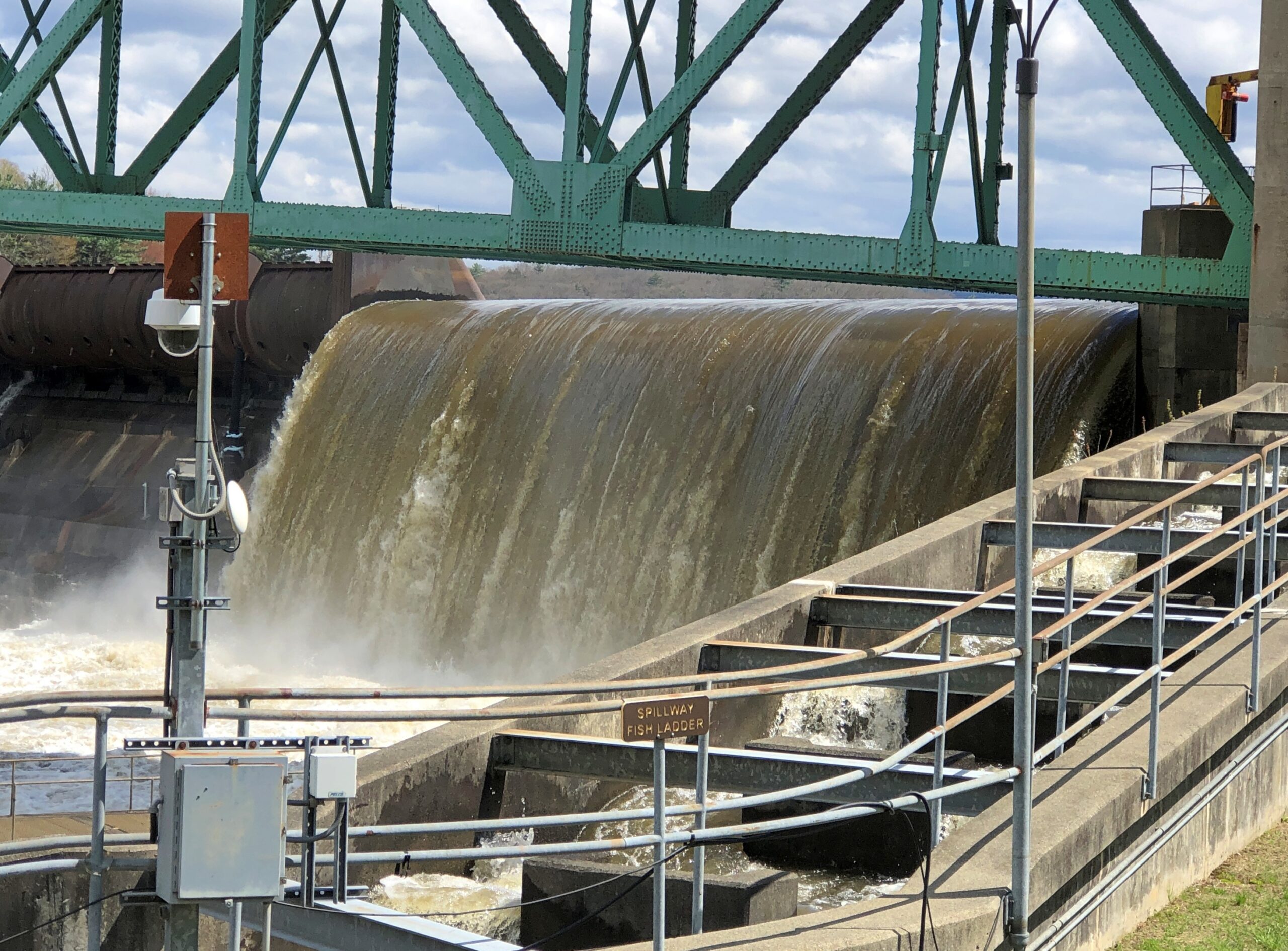
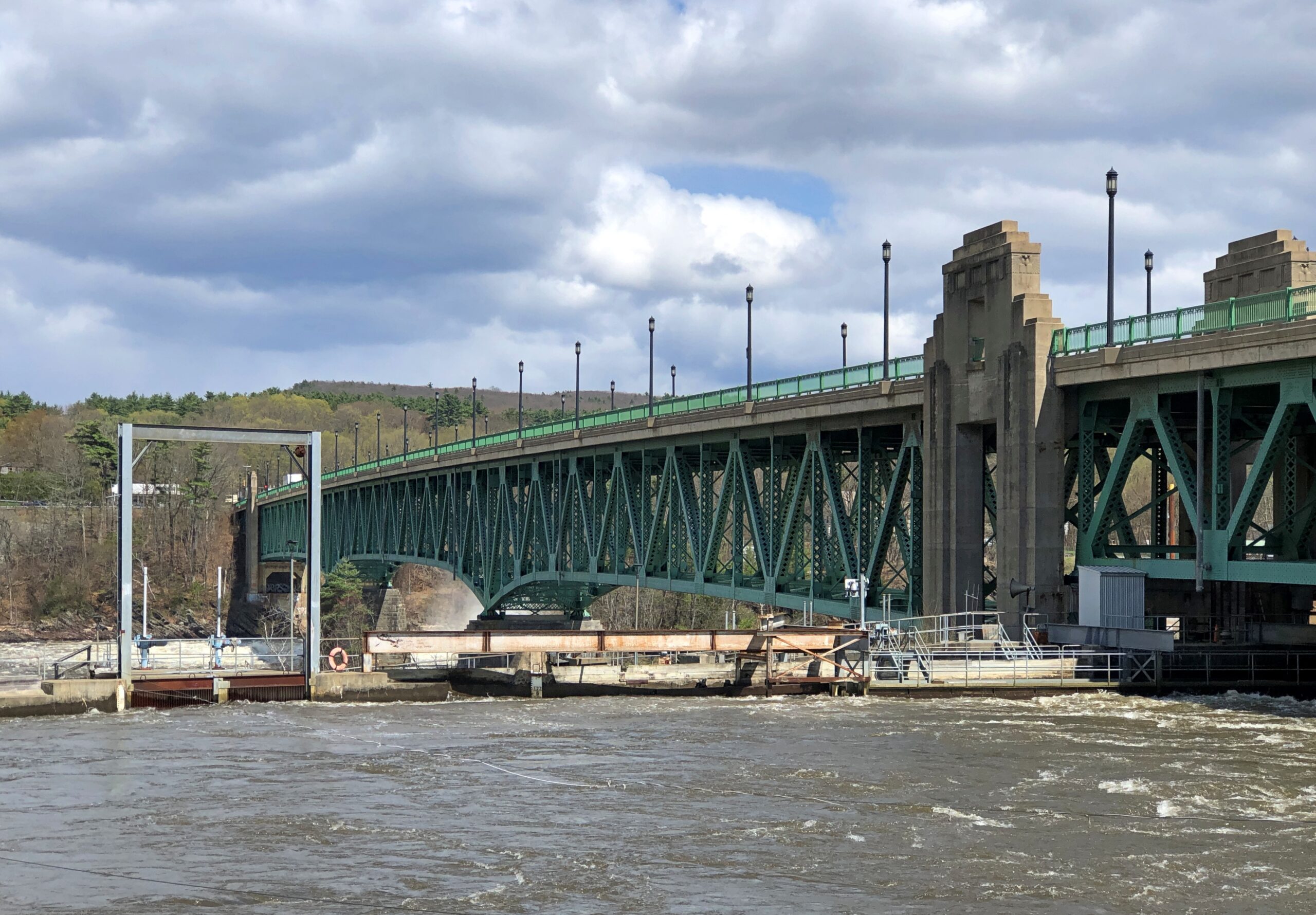
Also visible: the bridge across the Connecticut that I’d driven a little while before, the Turners Falls-Gill Bridge, completed in 1938 and renovated in the 2010s. Gill is the town on the other side.
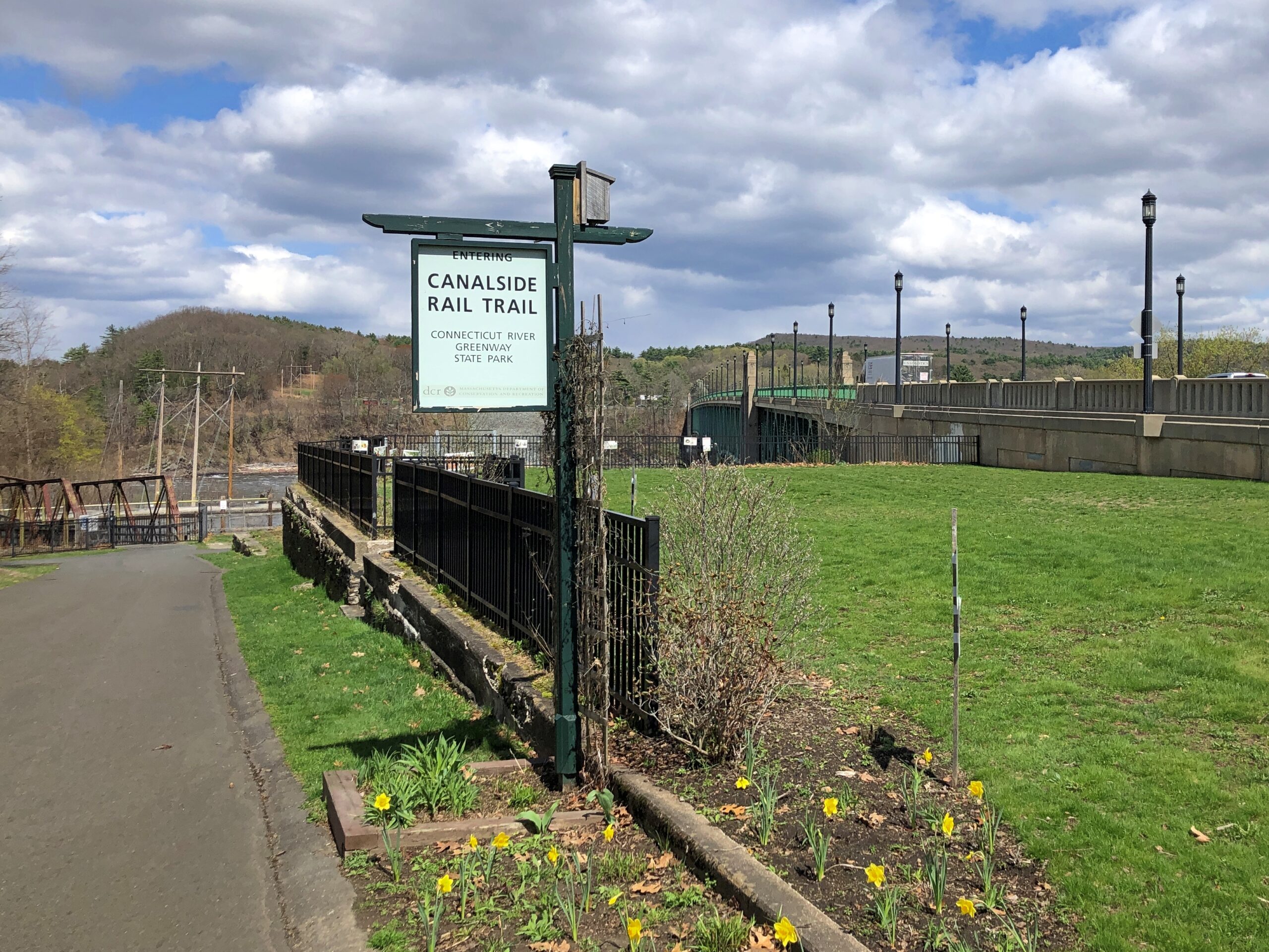
I crossed back and took a stroll down the footpath along the canal: the Canalside Rail Trail.
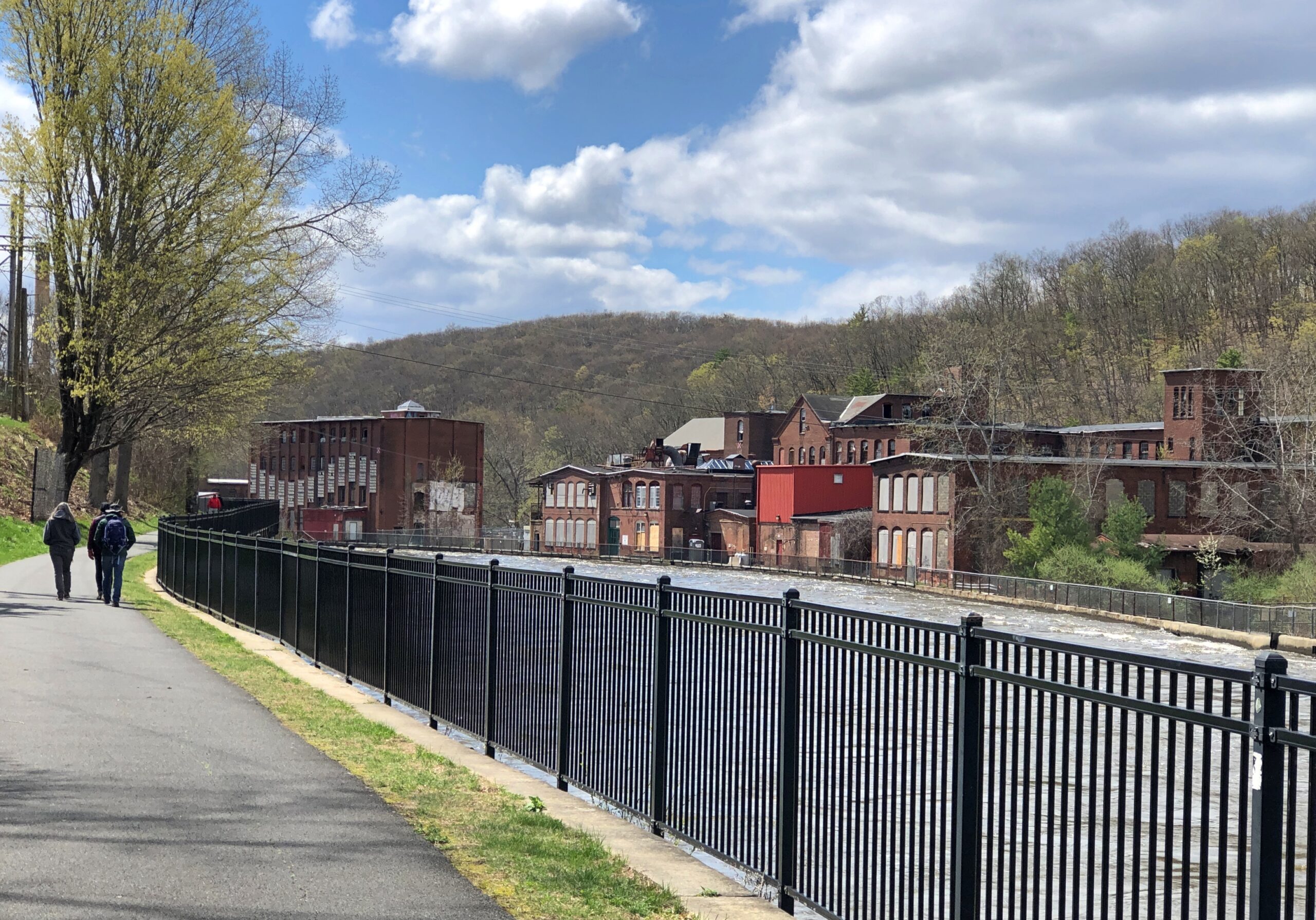
An earlier canal – dug early in the 19th century, just as the U.S. canal boom was getting underway – provided passage via locks around Turners Falls, and a boon to trade in the area. Railroads made that canal obsolete by the mid-19th century, so when the river was dammed, a different canal, a “power canal,” was created to provide water power for factories (the first canal, I believe, was submerged, but I’m not quite sure). Anyway, those factories are closed in our time, but their husks linger.
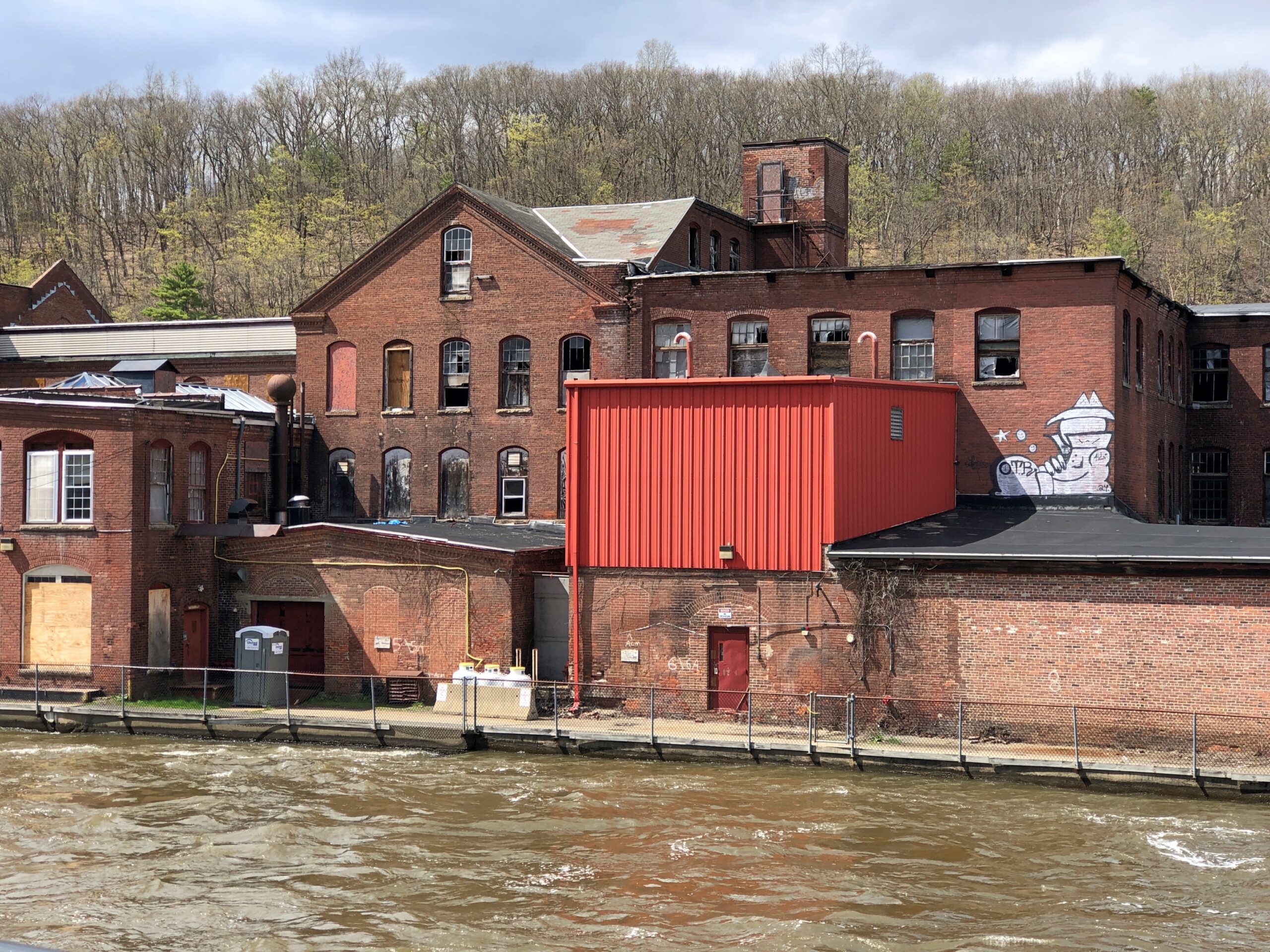
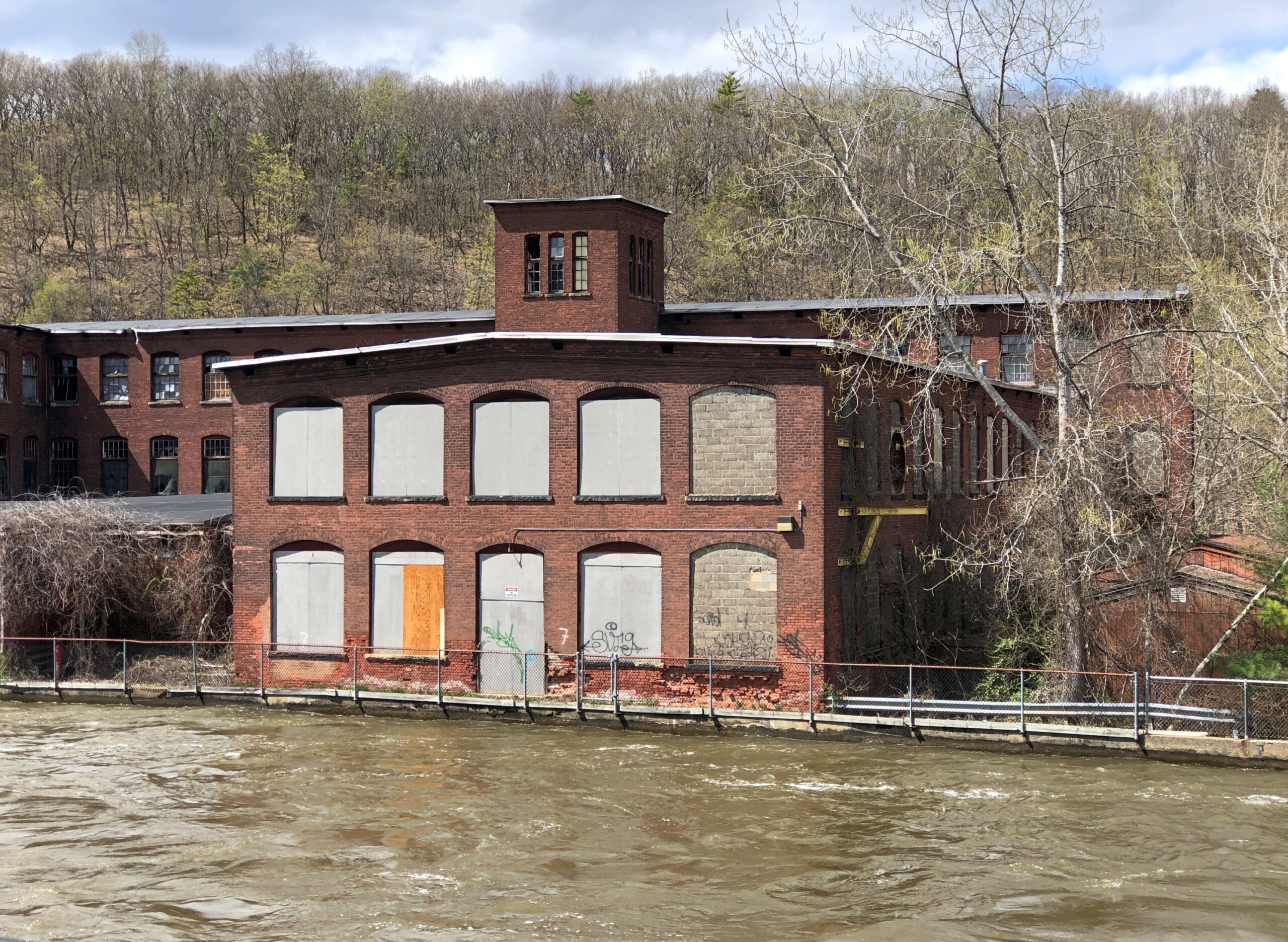
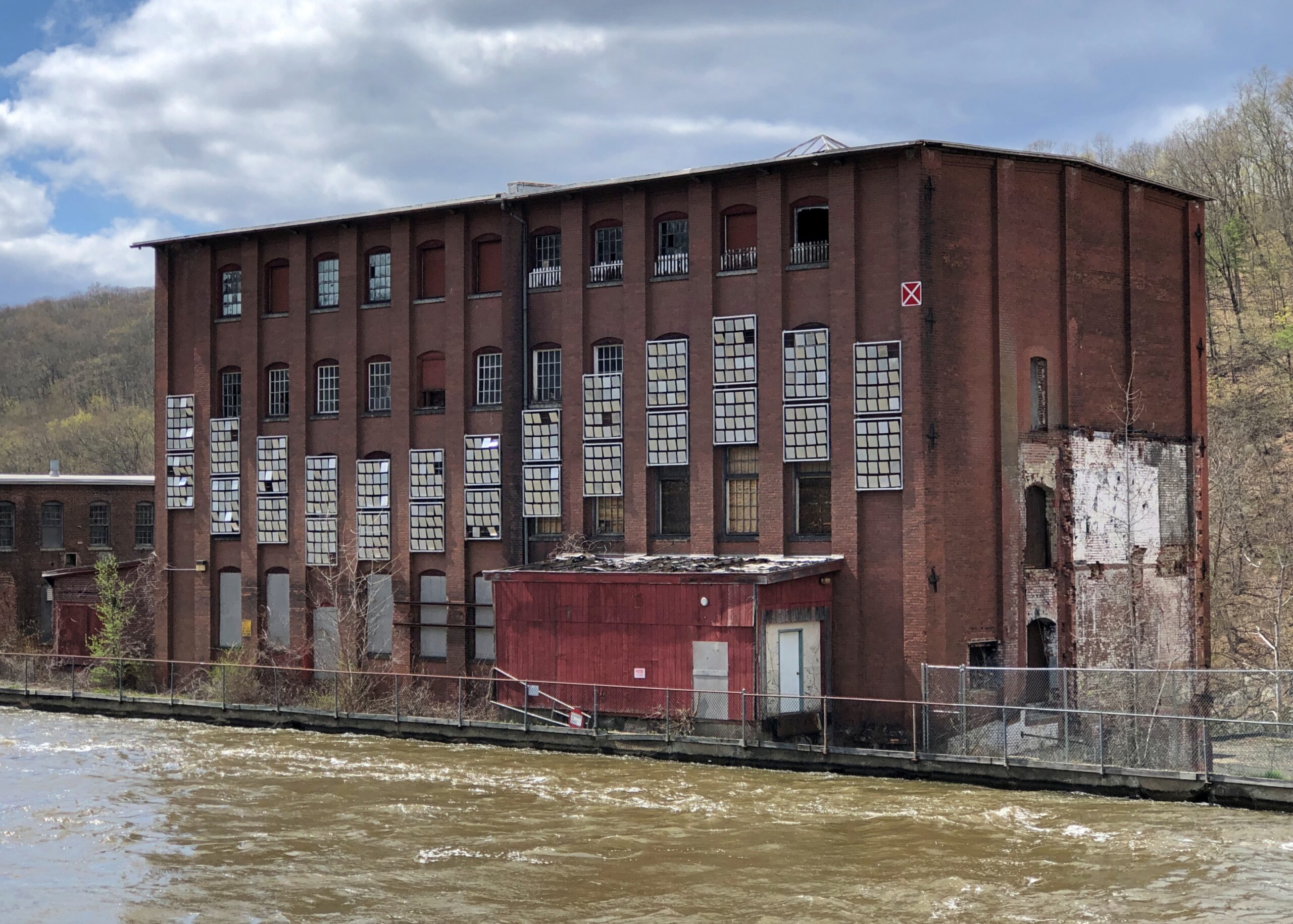
Waiting for the time when the area’s population is growing again — perhaps during a reverse migration from the too sunny South in the next mid-century — and these sturdy structures can be remade into residential properties.