Saturday was warm and we finished the day after seeing the Elgin Castle. That left three more houses on the tour. Elgin is only about 20 minutes away, half an hour in thick traffic, so we decided to return on Sunday for the last three houses, since our ticket was still valid for them. The weather had turned overcast with periods of light rain.
1100 Spring St.
My own favorite among the three, tucked away between its street and a slope leading down to the Fox River, though that view was mostly obscured by greenery this time of the year. Its yard is lush, especially near the front-yard sidewalk.
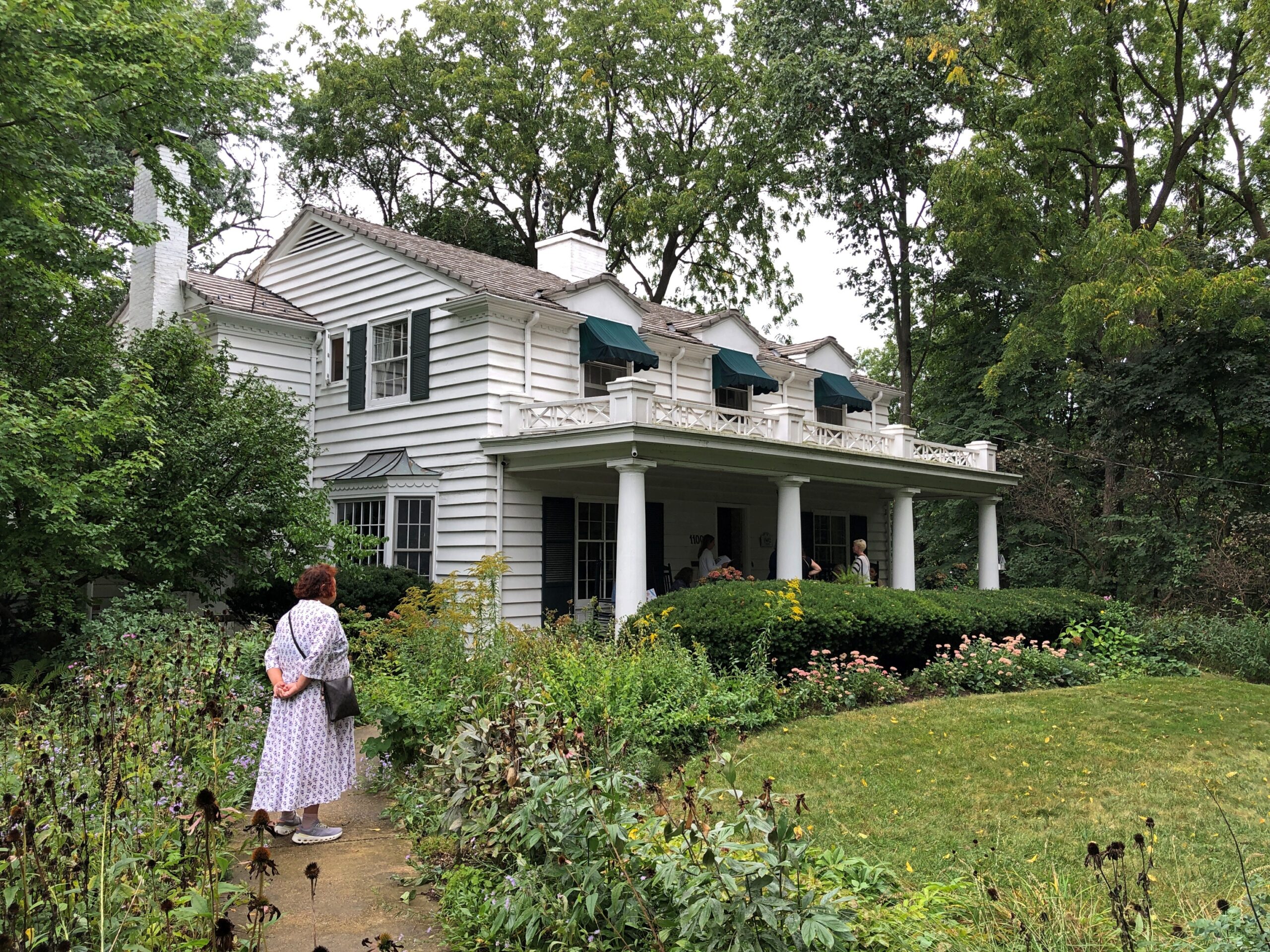
Influenced by English and Dutch Colonial designs, the booklet notes, and owned by a series of well-to-do Elginites since 1902, including a bank president, a doctor, an attorney, other local company presidents and an opera singer (the booklet doesn’t offer more detail on that last one, alas). More recently, as in now, the house belongs to an Illinois state rep and her teacher husband.
1100 Spring has a terrific picture window looking down toward the river – or will, when the leaves fall – which is a testament to expertise in glass production, and whatever kind of glass-cleaner the current residents use. Another only slightly smaller window faces the back yard. That space itself was the picture of comfort, a part-flagstone, part-grass turf punctuated by a sizable hammock strung between a couple of mature trees that lord over the yard.
259 River Bluff
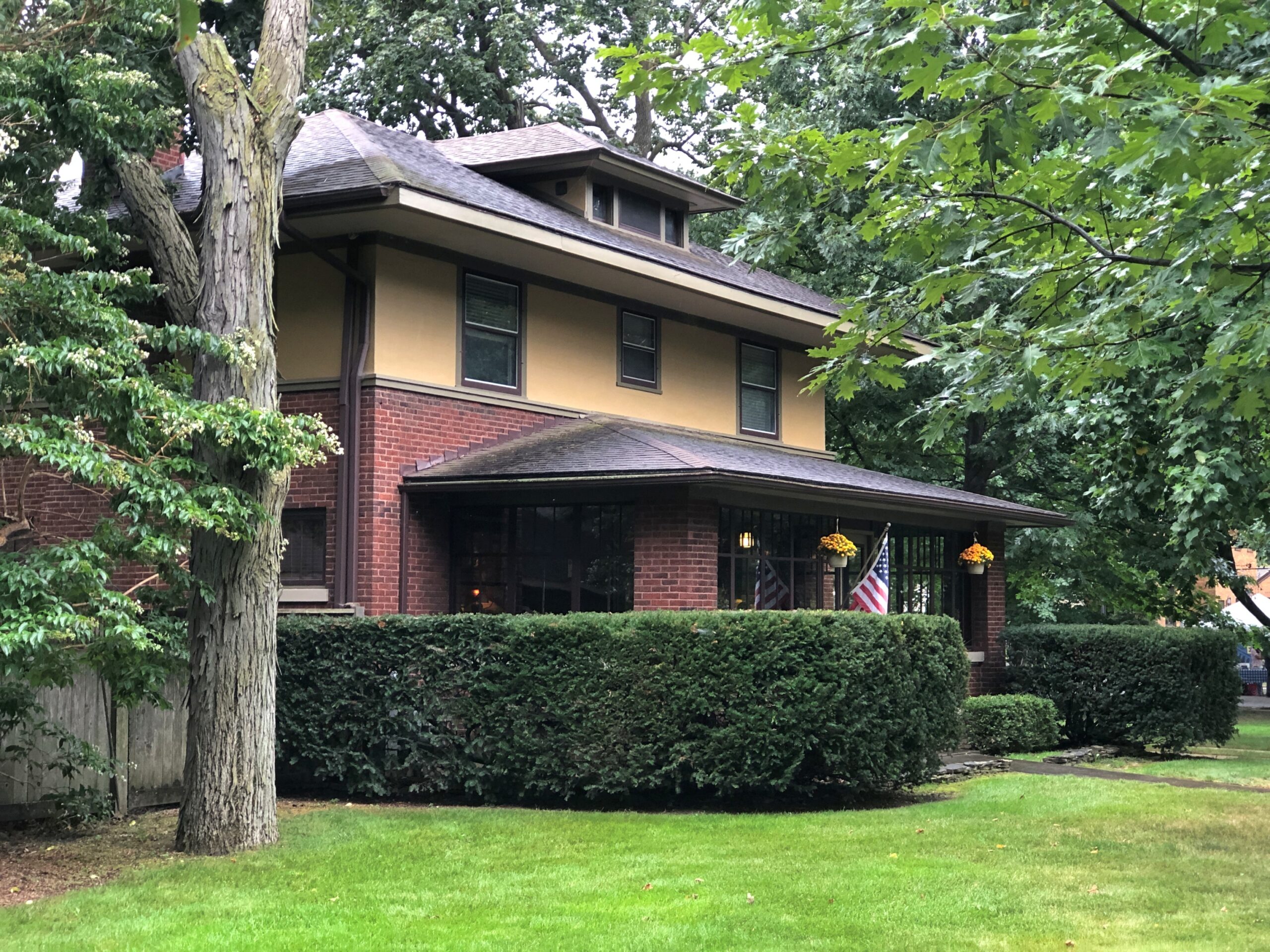
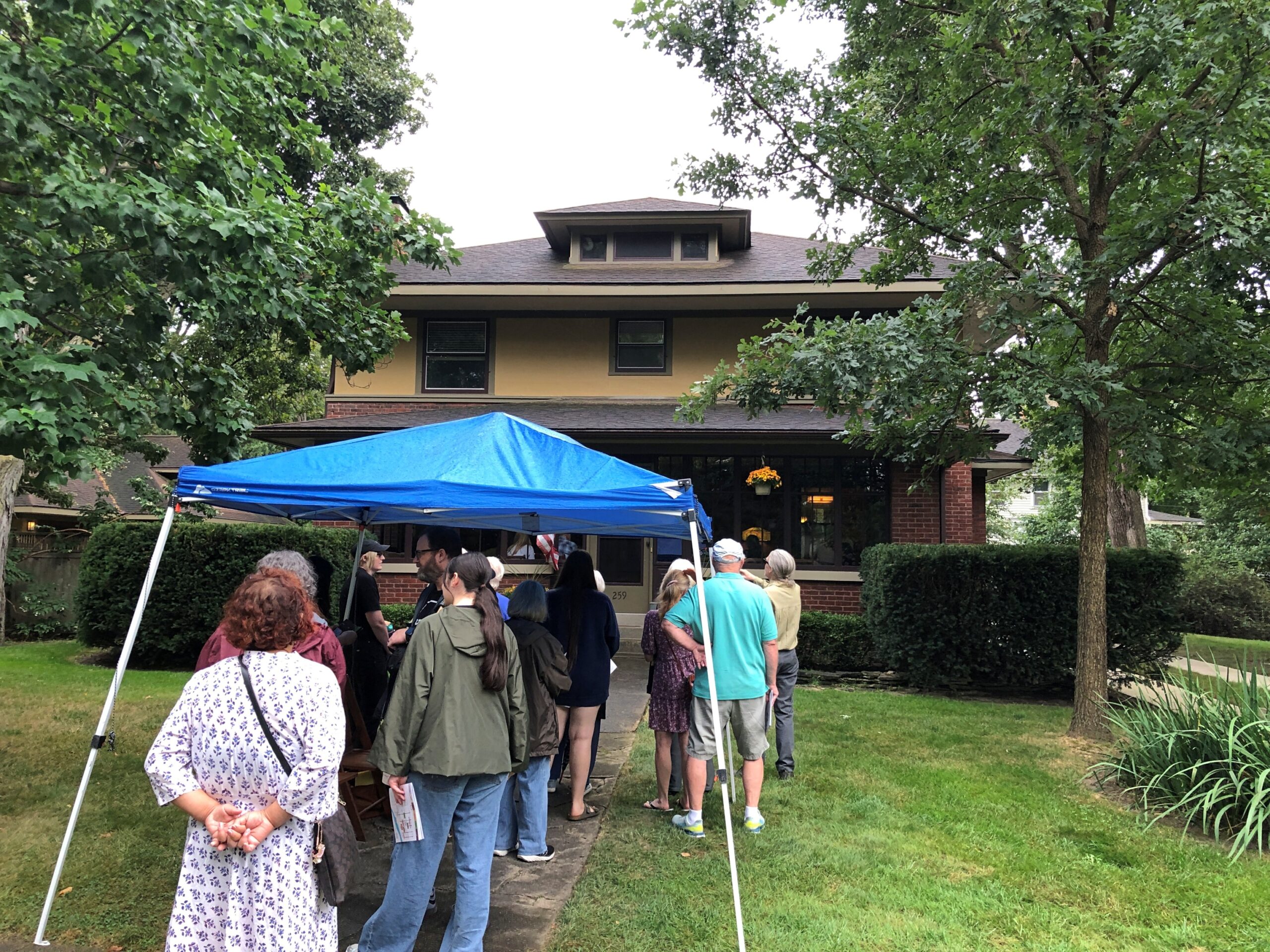
Not a FLW. But Prairie Style was a popular style in 1915, and it does echo a lot of FLW.
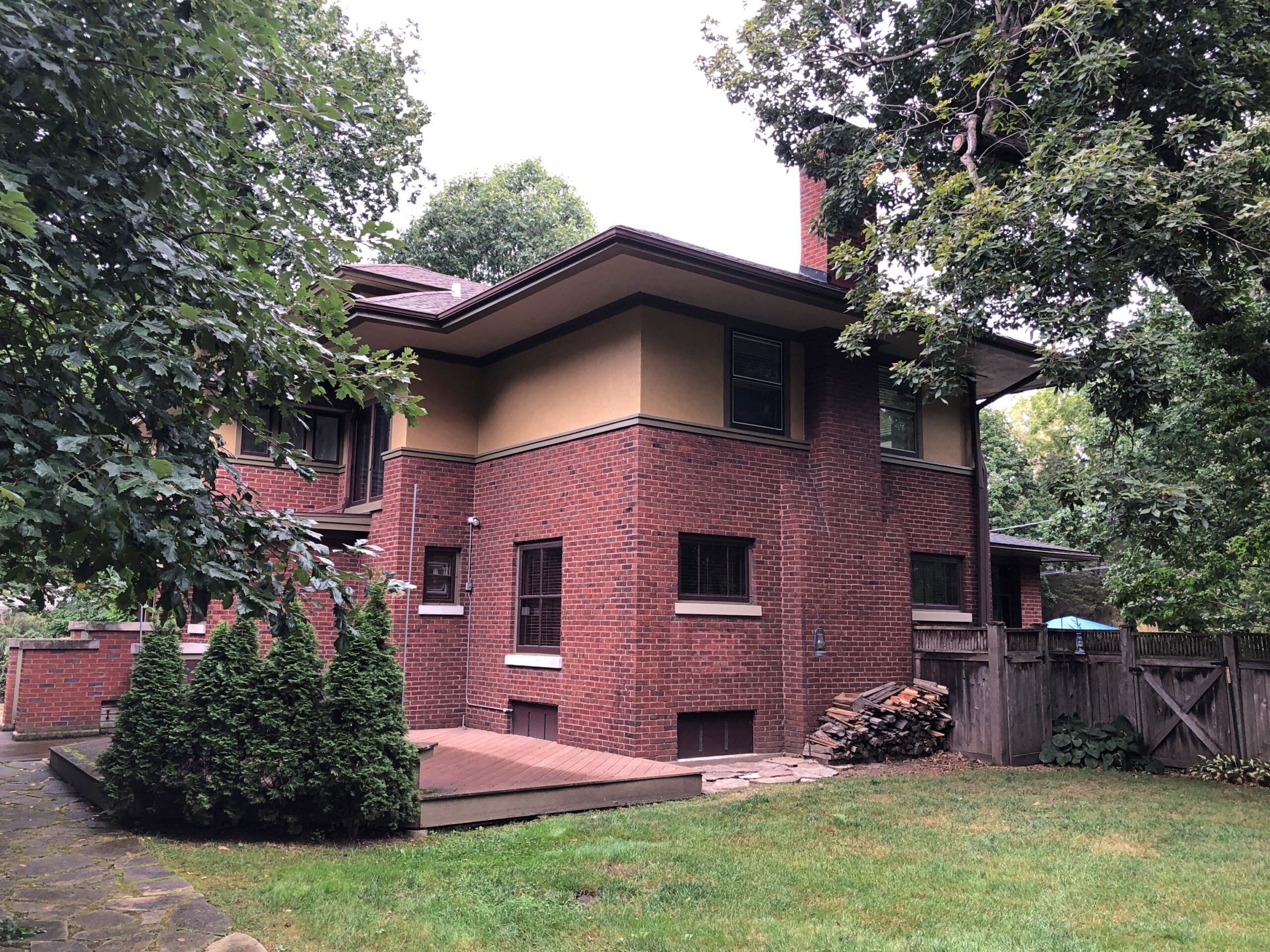
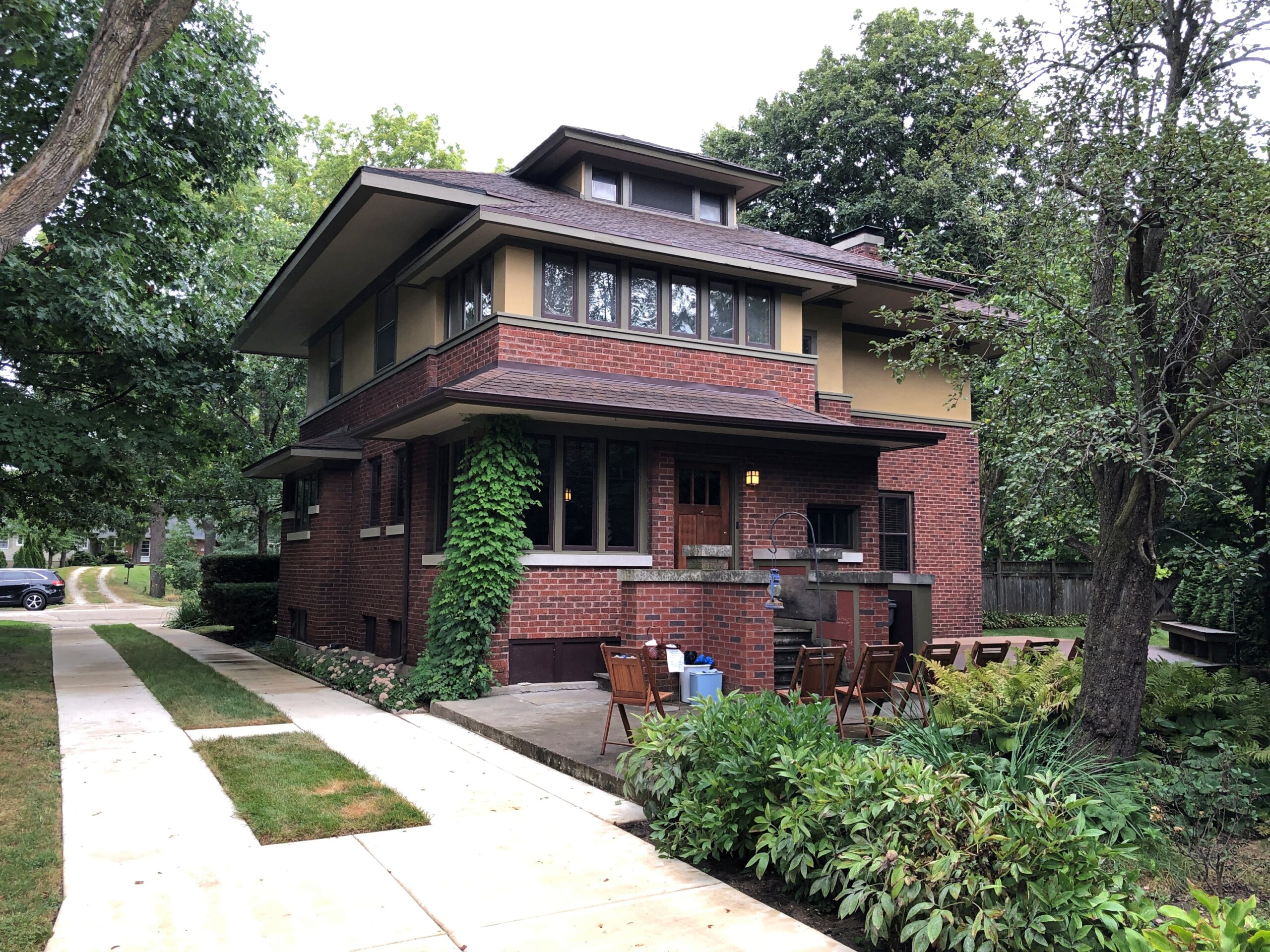
That FLW vibe applied inside as well in the long, straight lines and Wright-like geometry of the walls. We saw only the first floor, since the stairs don’t have handrails of any kind. But the first floor was enough to show that the current owner, a retired airline pilot, has put a lot of effort and money into its restoration.
1044 Center St.
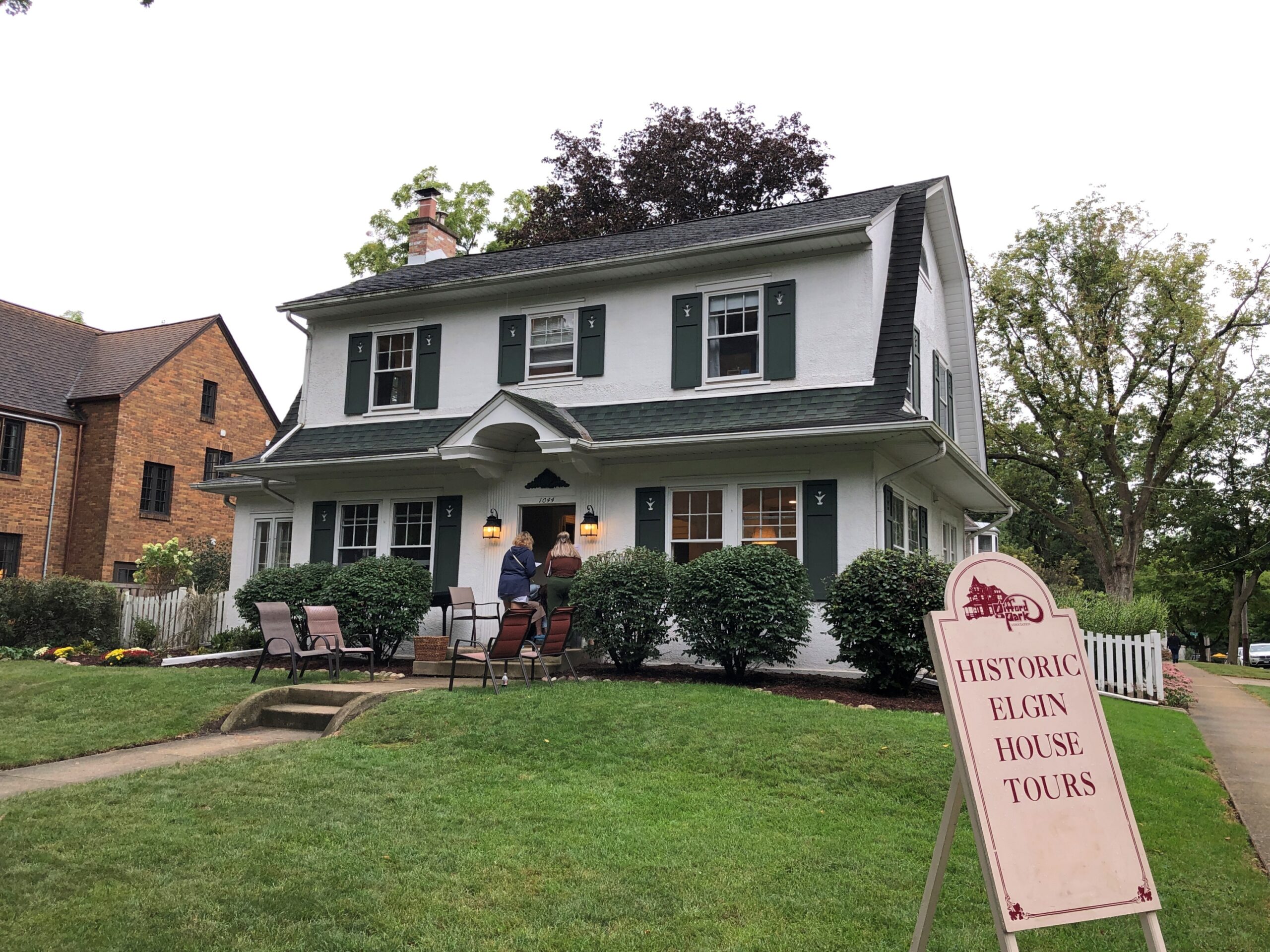
Dutch Colonial Revival, a fair way from New Netherland, both in space and time, but it does have a Dutch sort of shape.
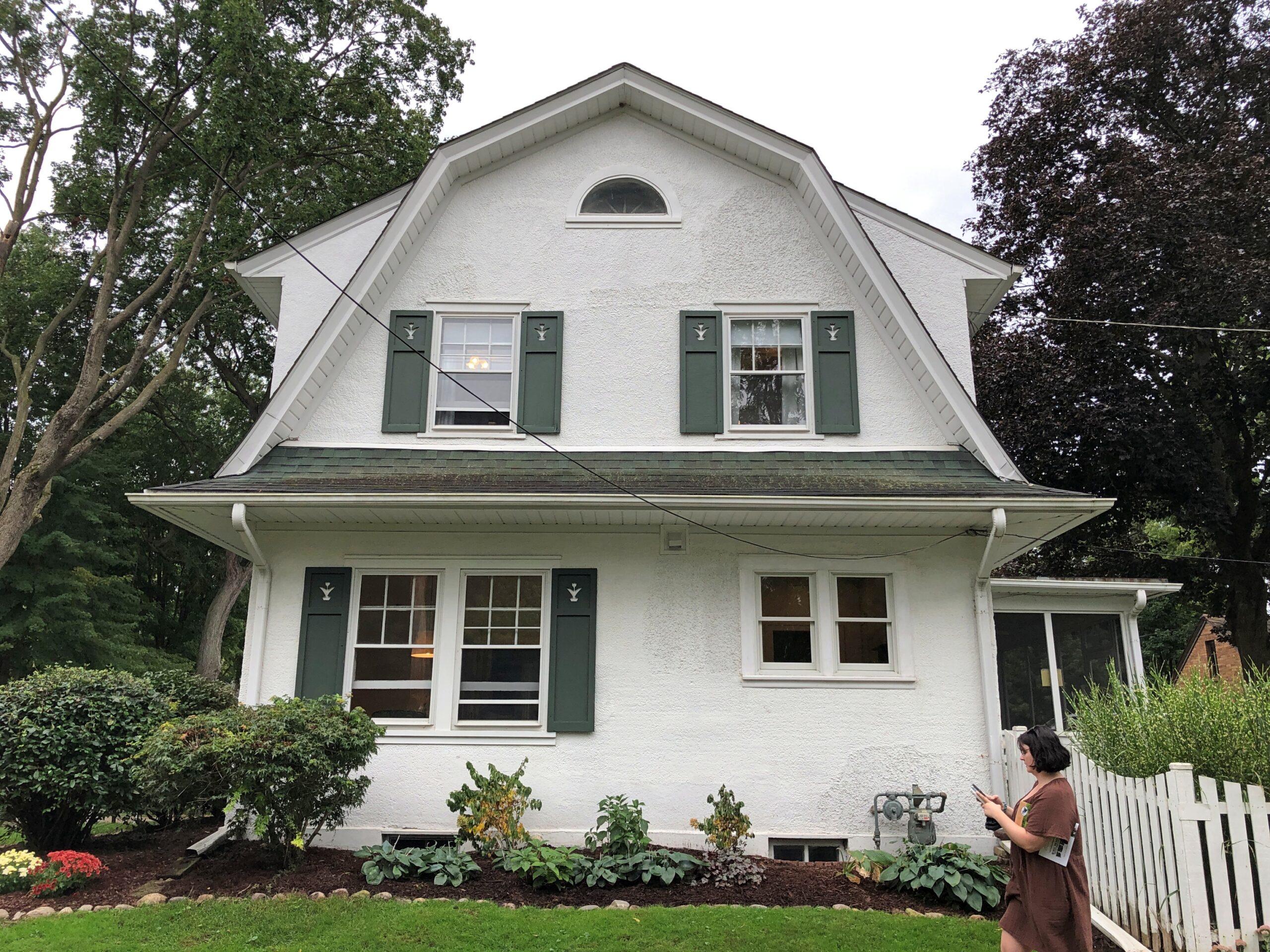
Also tended for with great care by its current owners, only there a few years now, an architect and his pastor wife.
What’s this?
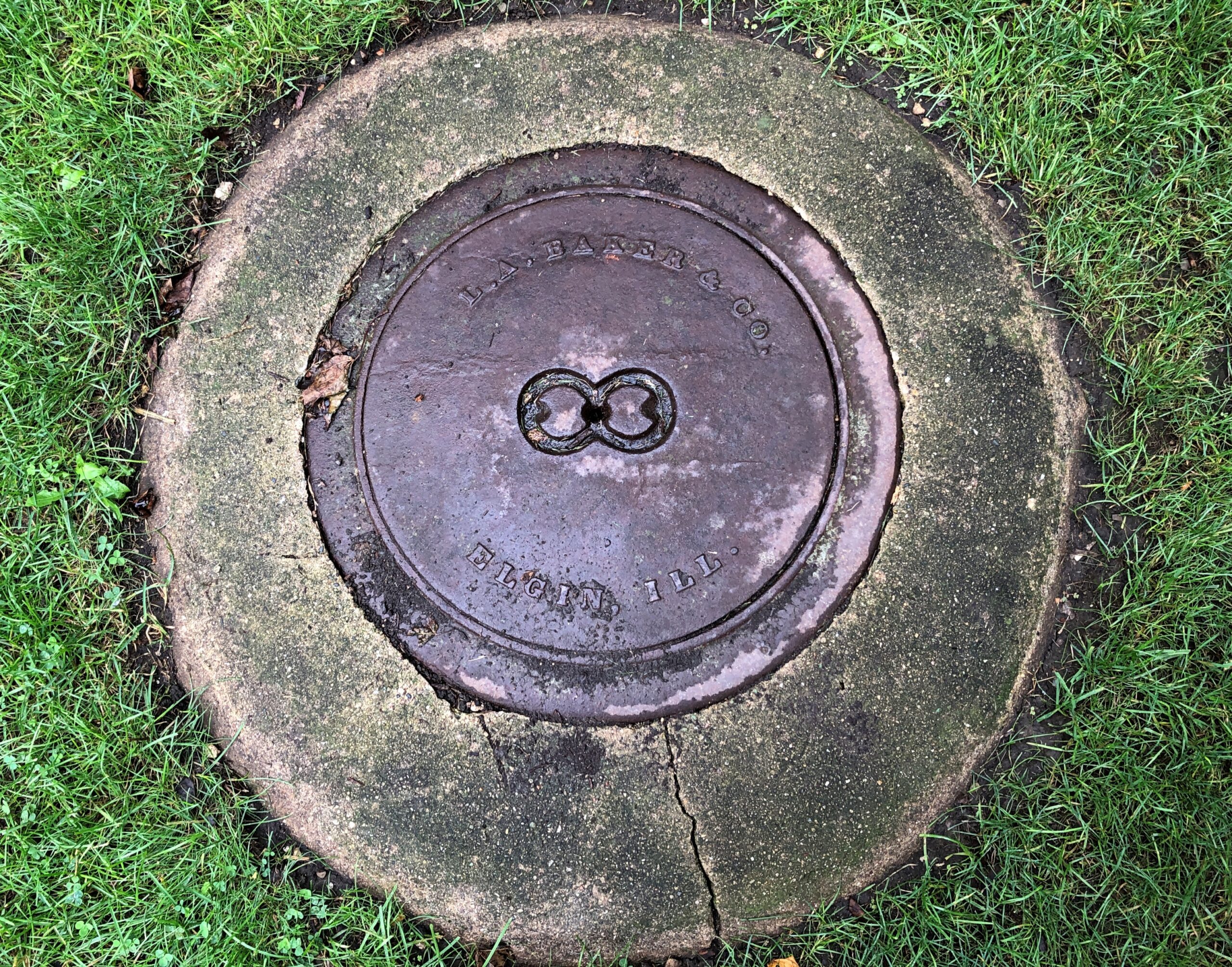
We had exited 1044 Center by way of a back door and the small backyard, partly taken up by a modest, but handsome garage. Near the sidewalk, but still on the property, was an iron disk embedded in concrete.
An enthusiastic docent, seeing us looking down at the object, told us from the screen porch not far away, “That’s a cistern. You know, to capture rain water,” she said. Adding, “They were ahead of their time. Something we should all be doing,” in a pleasant but authoritative voice.
L.A. Baker & Co., Elgin. Something else to look up. An AI search offered some reasonable but not too hard to figure out speculation, namely that the company was one of the ironmongers down near the Fox, when the valley was alive with manufacturing, and providing at least one non-bogus link to a newspaper of the 1890s mentioning the company. A short but not too shabby Google search doesn’t turn up much. I expect his name lingers here and there in local legacy ironwork, and is seldom noticed.