I heard by chance that the Spurs are in the playoffs, again. NBA games are on the list of things I don’t care about, but this is the Spurs we’re taking about, so Go Spurs. I’m old enough to remember when pro sports were considered a modest-priced entertainment, which would have been the days when the Spurs huffed along in the ABA. When that league went under, that paved the way for the basketball monopoly we now enjoy.
I remember a print ad for the Spurs from their early NBA days. A basketball, mostly in shade, set against a pitch black background; a small but bright light is emerging from a crack in the basketball; the tag line says, In the Arena, Everyone Can Hear You Scream. Brilliant.
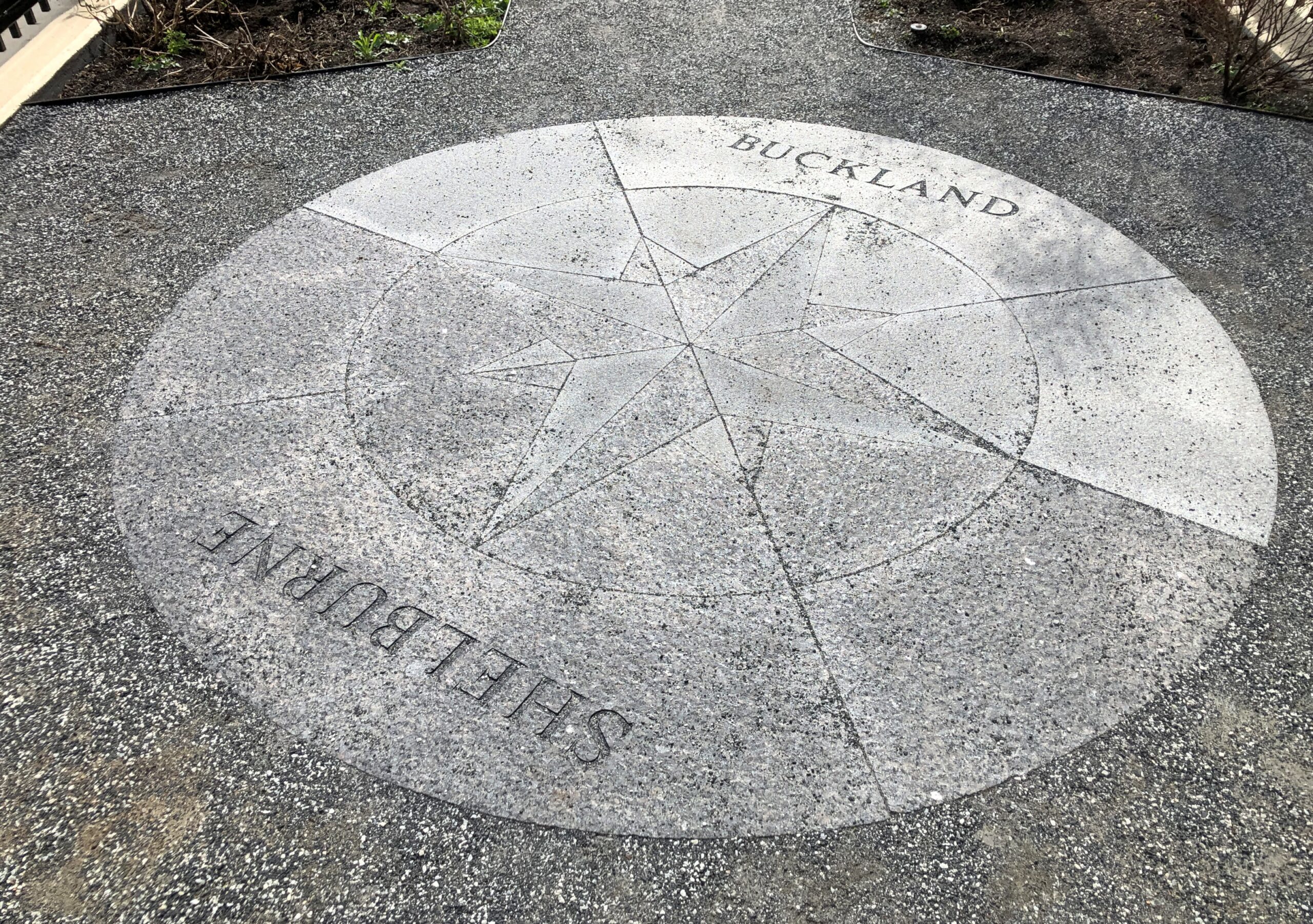
Here we go again with the incongruous Massachusetts place names: “The village of Shelburne Falls is located partly in Shelburne and neighboring Buckland,” notes Wiki.
So I suppose I visited Shelburne Falls the whole time when I visited Shelburne and walked across a bridge to Buckland, and then back to Shelburne on a different bridge.
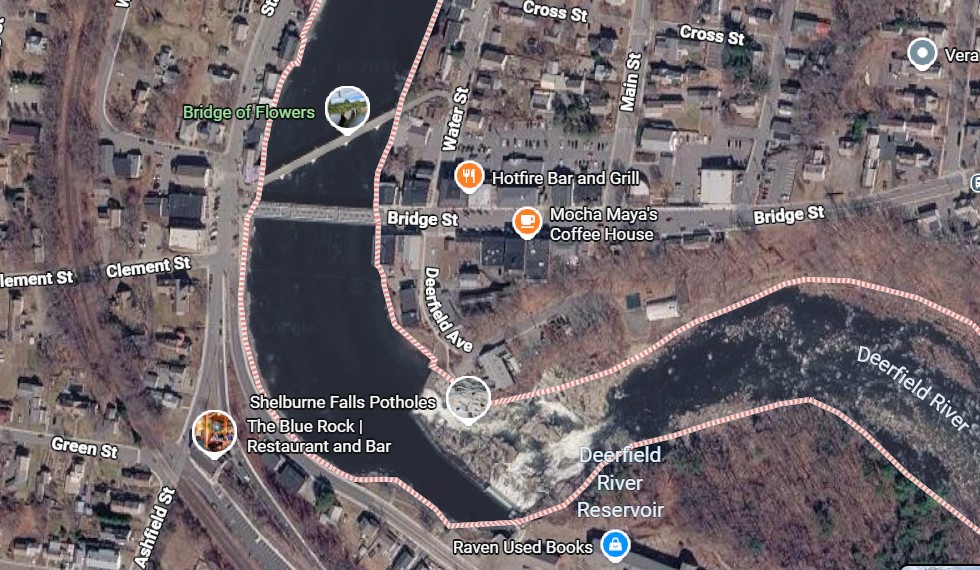
Interesting that a town in the United States is named for Lord Shelburne, a British prime minister when the Revolution was still ongoing. On the other hand, it was on his short watch – at the end of that war – when the British government said, enough already, be independent if you want it so much. So there ought to be something named for him on this side of the Atlantic (and there’s another in Vermont, besides one in Ontario).
The Bridge of Flowers
I had good weather for my return to the Midwest from the Northeast, beginning on a clear, warm day in Massachusetts. Large towns hang like pearls on Route 2, and while I would have made a selection of them to visit even in chillier weather — and spend time on foot in those towns — the spring warmth was one of those travel bonuses you can appreciate right away. Pop off Route 2 in Franklin County and you’re in Shelburne.
Shelbourne hugs the Deerfield River, so Shelbourne needs bridges. You can still drive across one erected in 1890, which the city fathers of the time signed like it was a work of art. As well they should have. Better, you can walk across the structure, which is known locally as the Iron Bridge. Bridge Street goes across it.
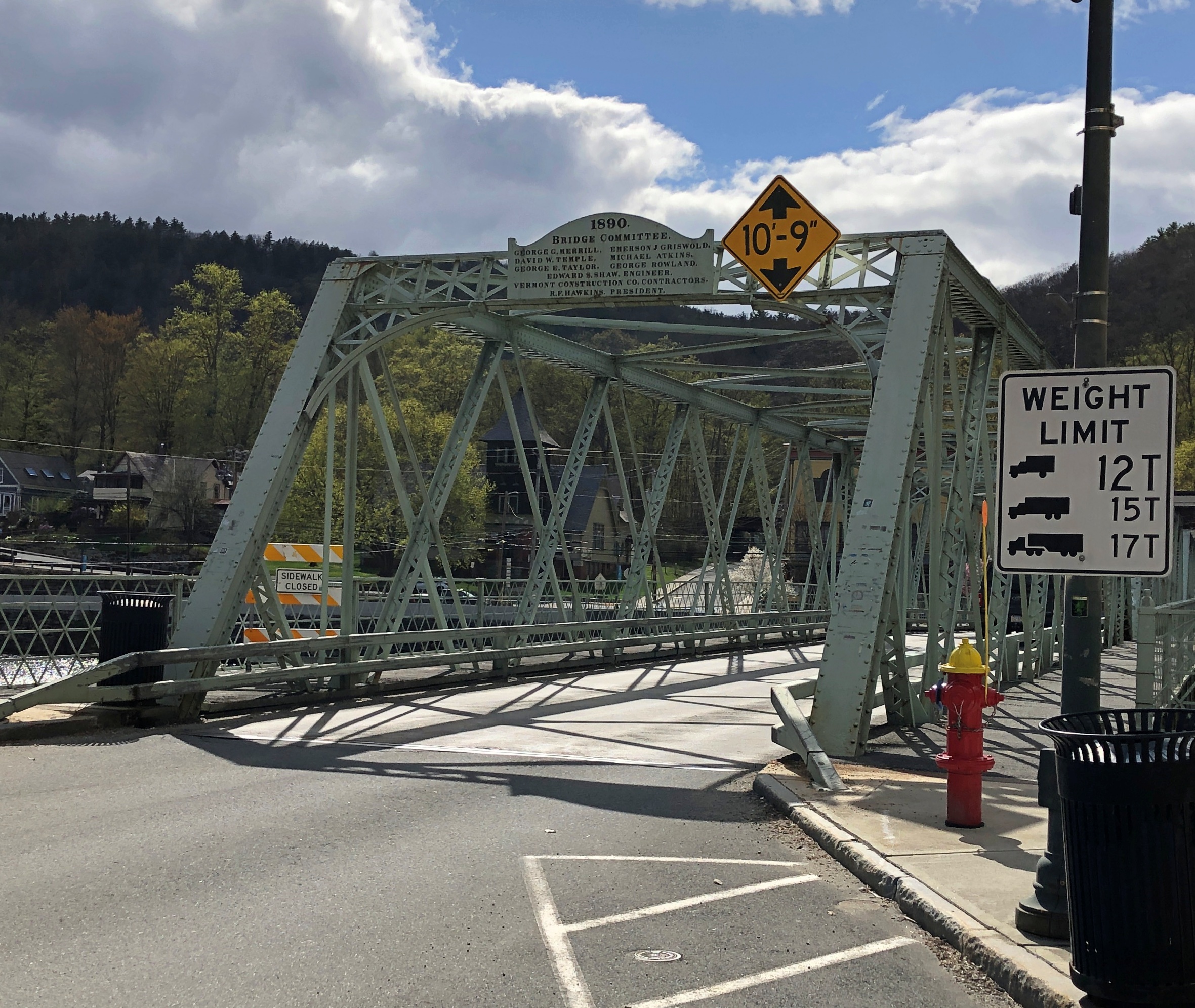
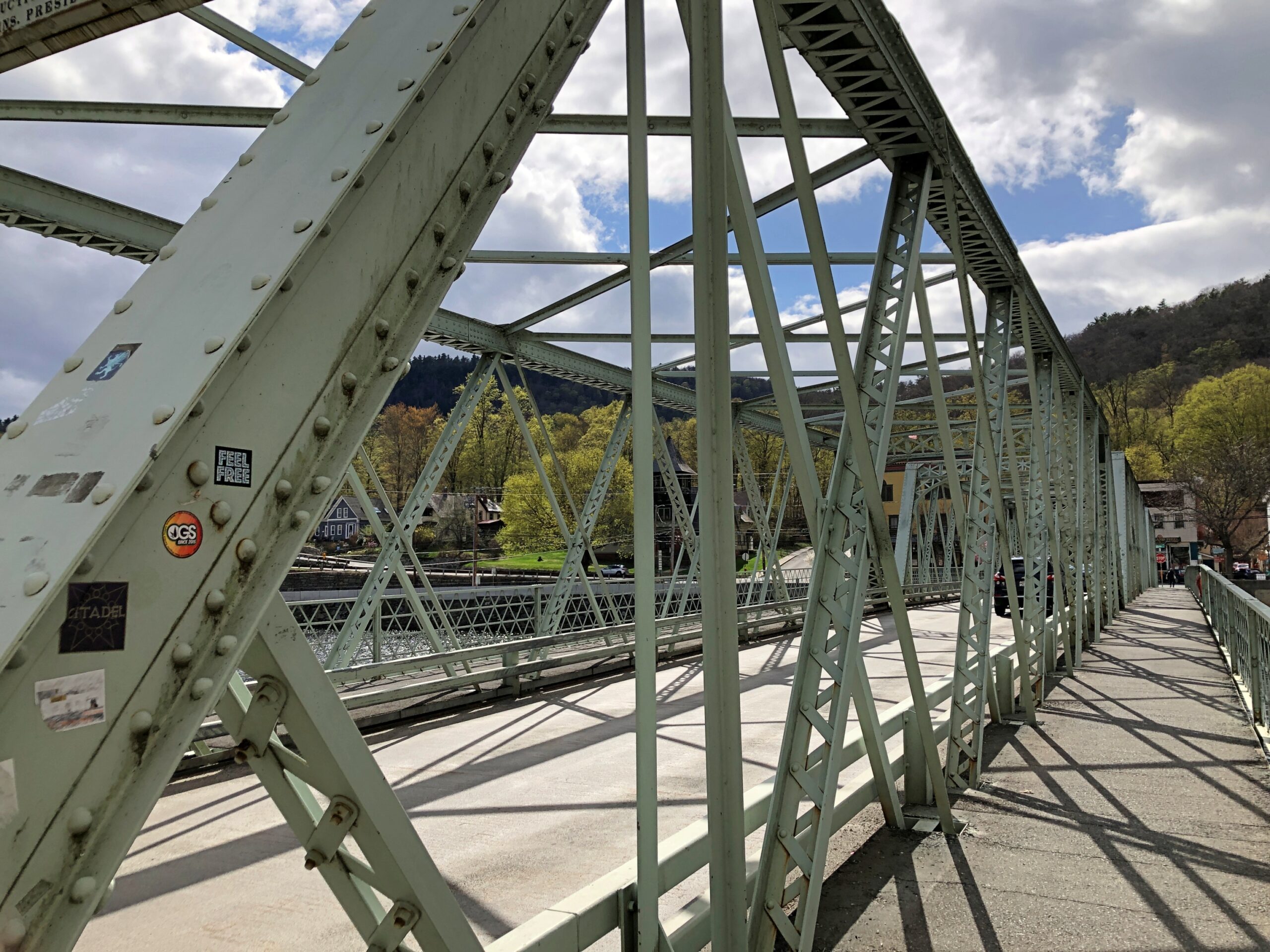
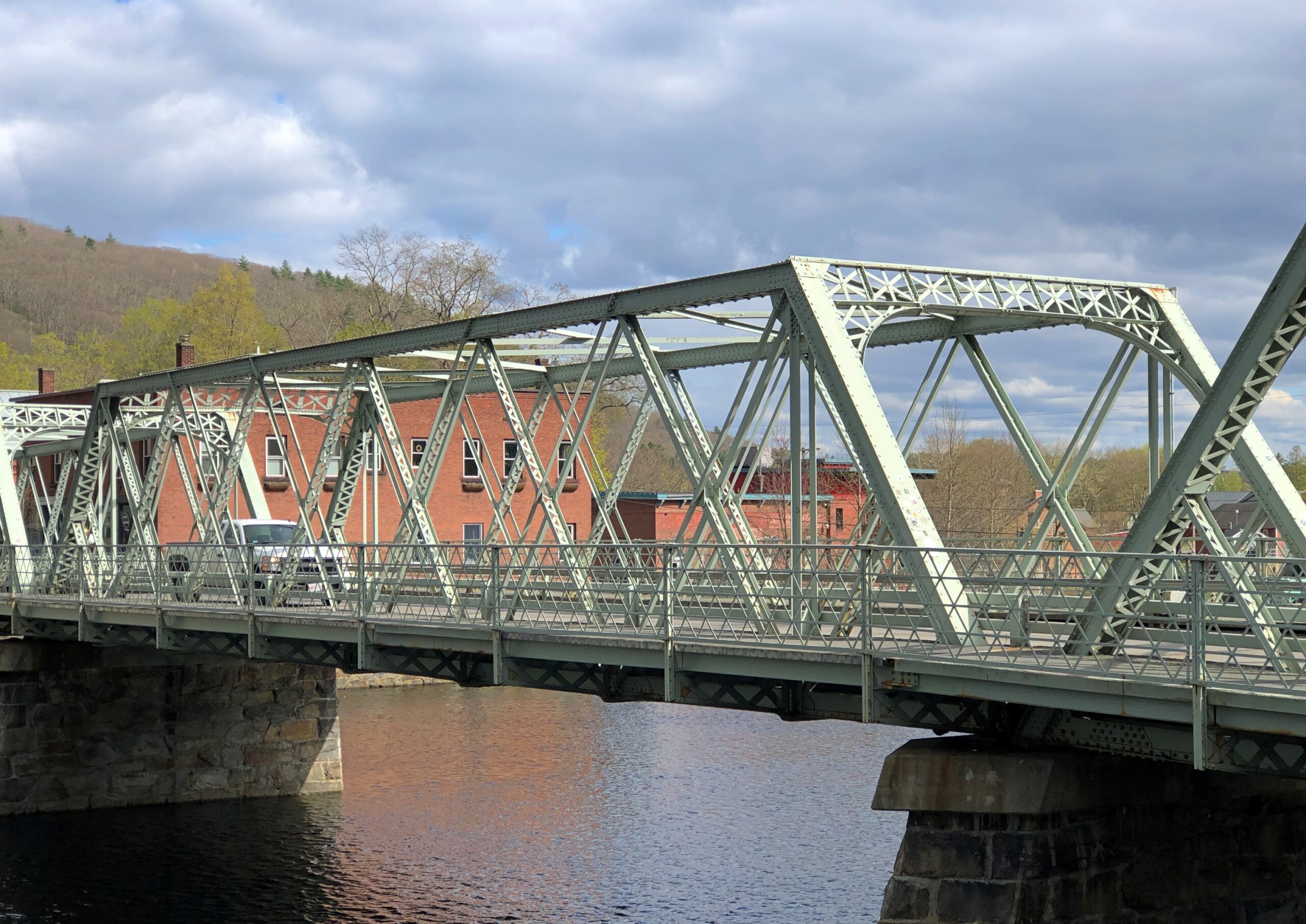
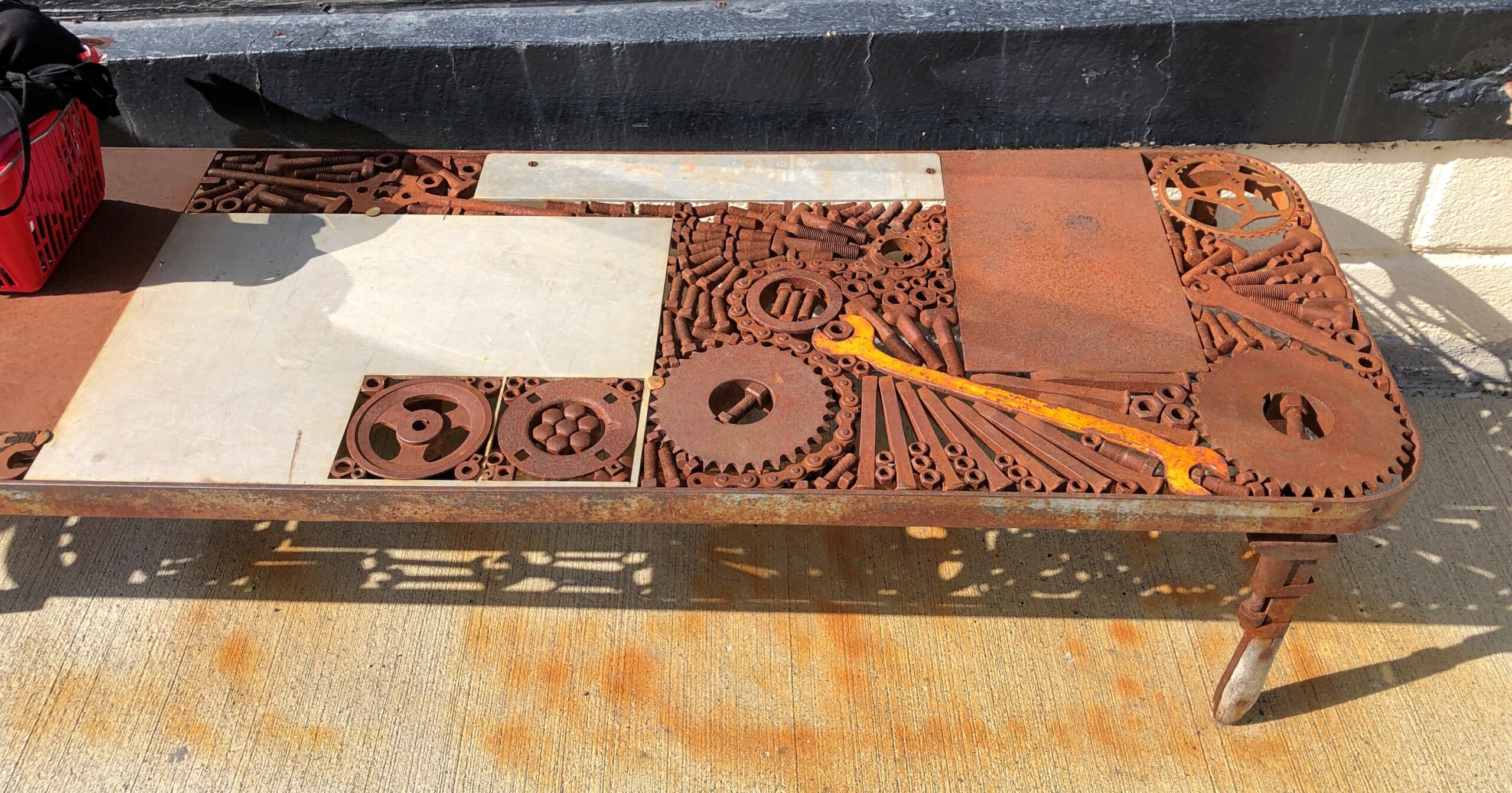
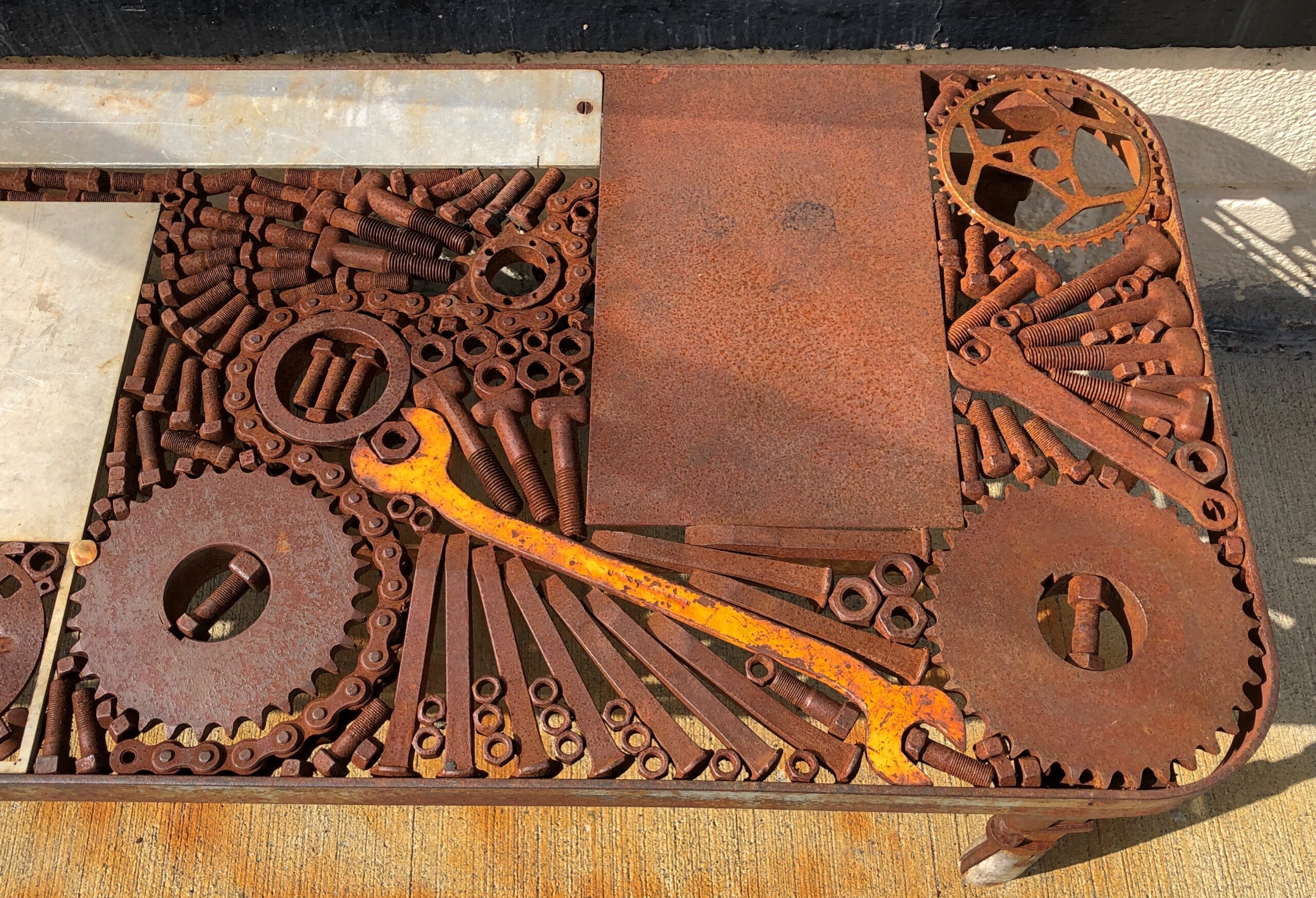
One of the more unusual metal benches I’ve encountered, just off the Shelburne entrance to the Iron Bridge. More iron. Yes, you can sit on it.
The Dearfield, major tributary of the Connecticut.
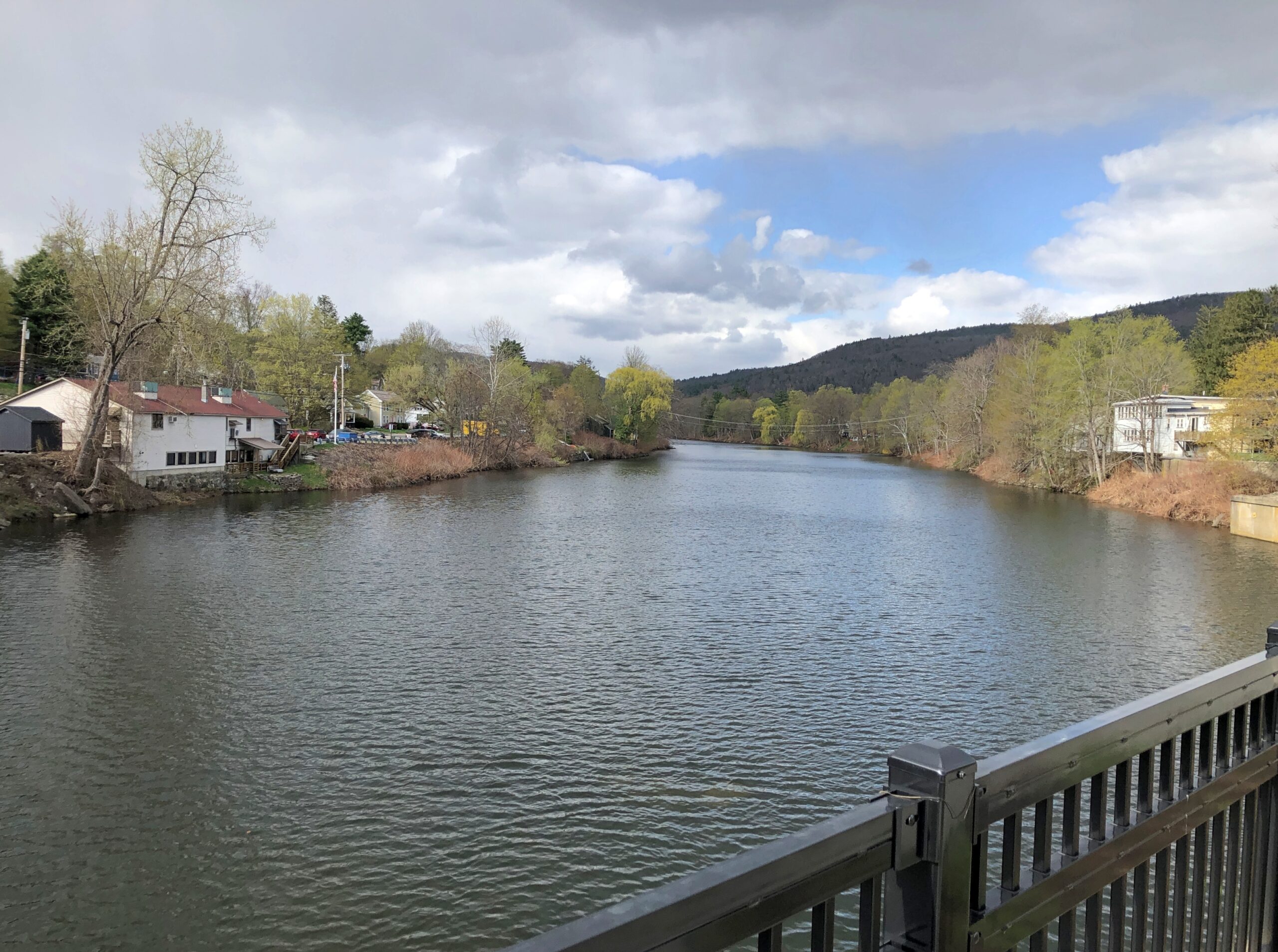
The Iron Bridge takes you to Buckland, though I guess you’d still be in Shelburne Falls, but anyway, a few steps along river – and I mean that literally, maybe 20 or 30 steps – is the Bridge of Flowers. The view looking back across at Shelburne.
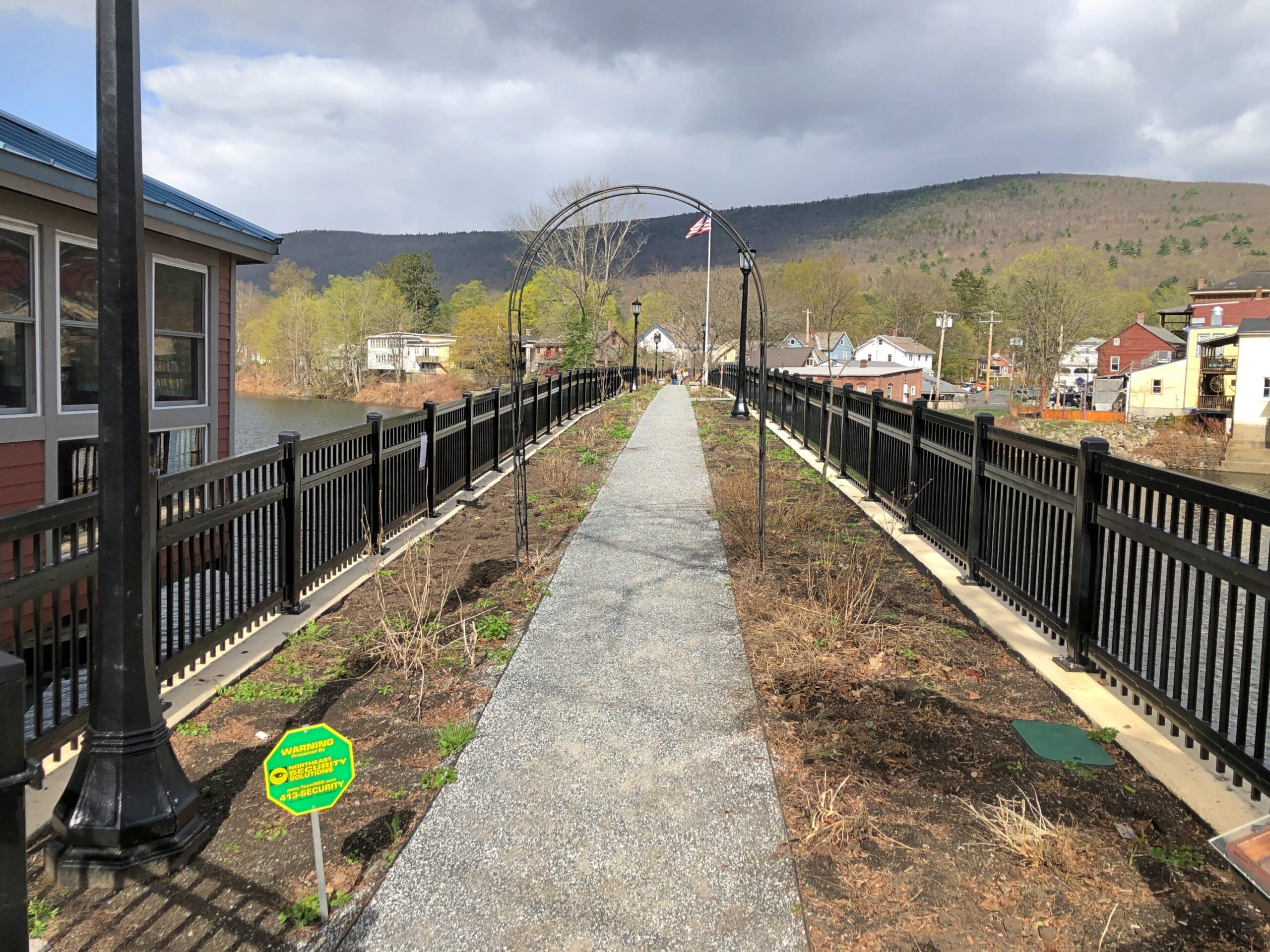
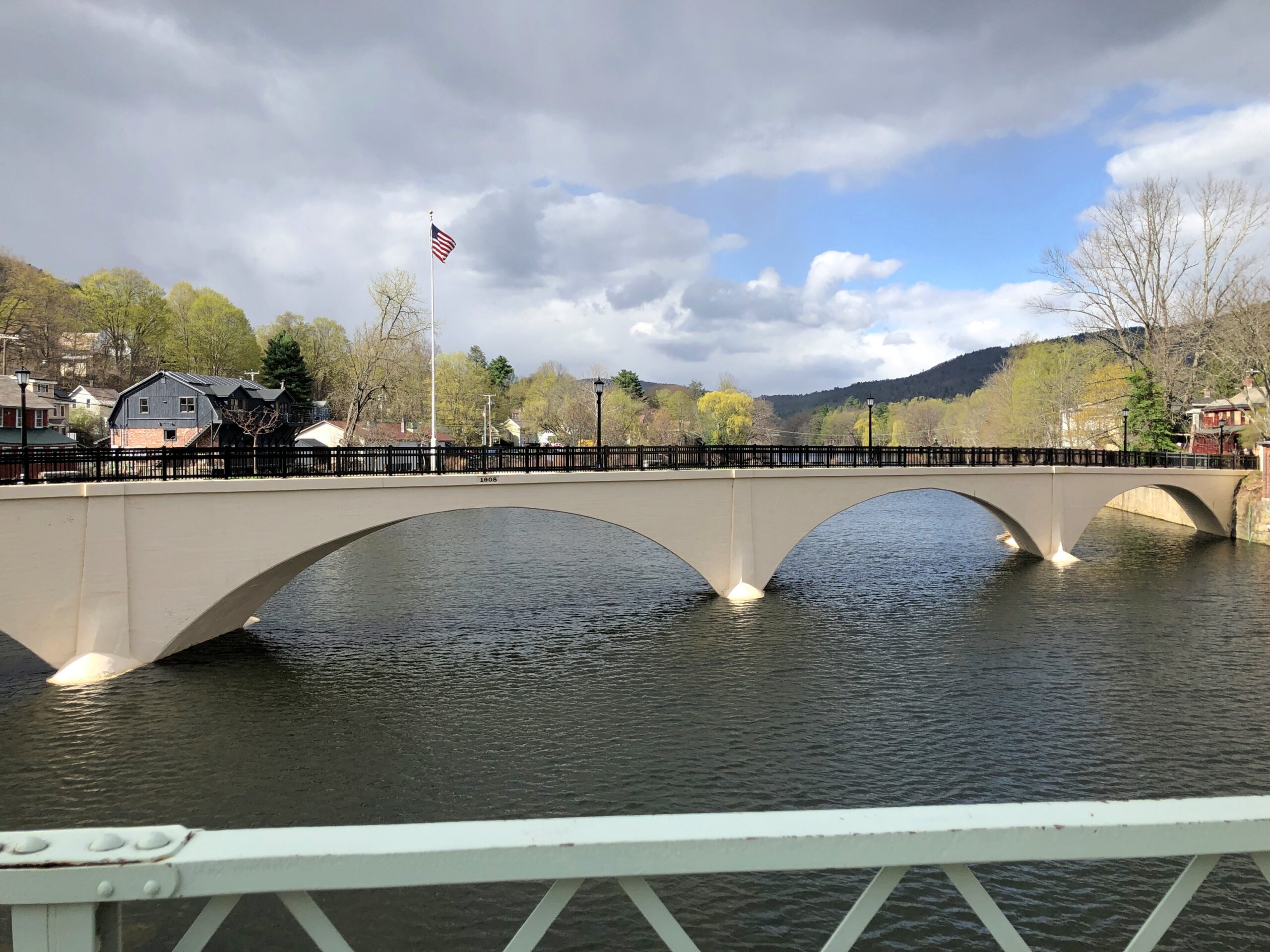
Not many flowers at that moment, but replanting was underway. Long ago the narrow bridge carried a trolley, but after that business went bust in the late 1920s, the Shelburne Woman’s Club facilitated its transformation into a linear garden.

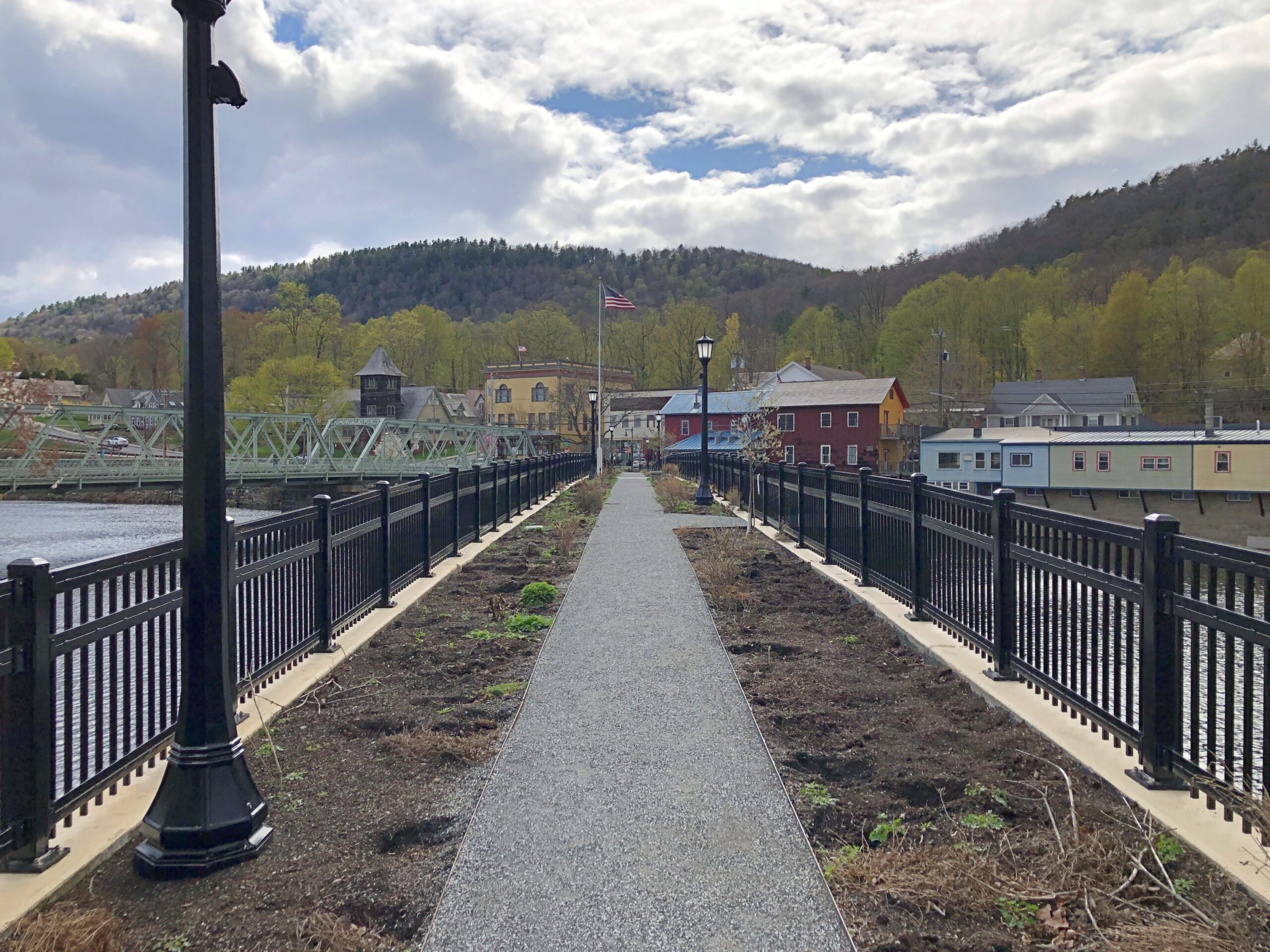
Mid-way across the Bridge of Flowers. Even though not flowering (much), a bridge very much worth crossing.
The view looking back at Buckland.
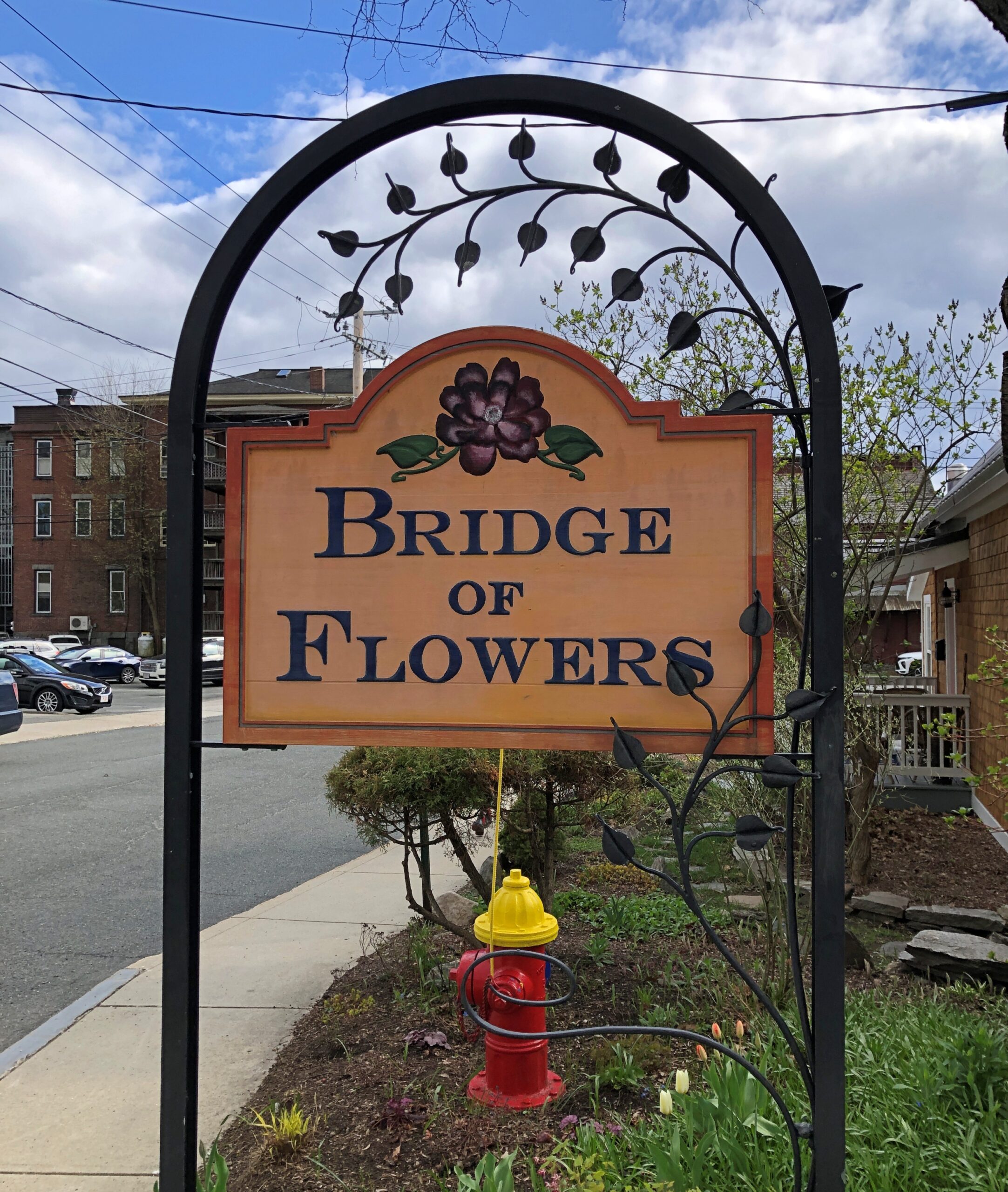
The sign on the Shelburne side.
Nothing is far apart in Shelburne, so a short walk takes you to a geological oddity.
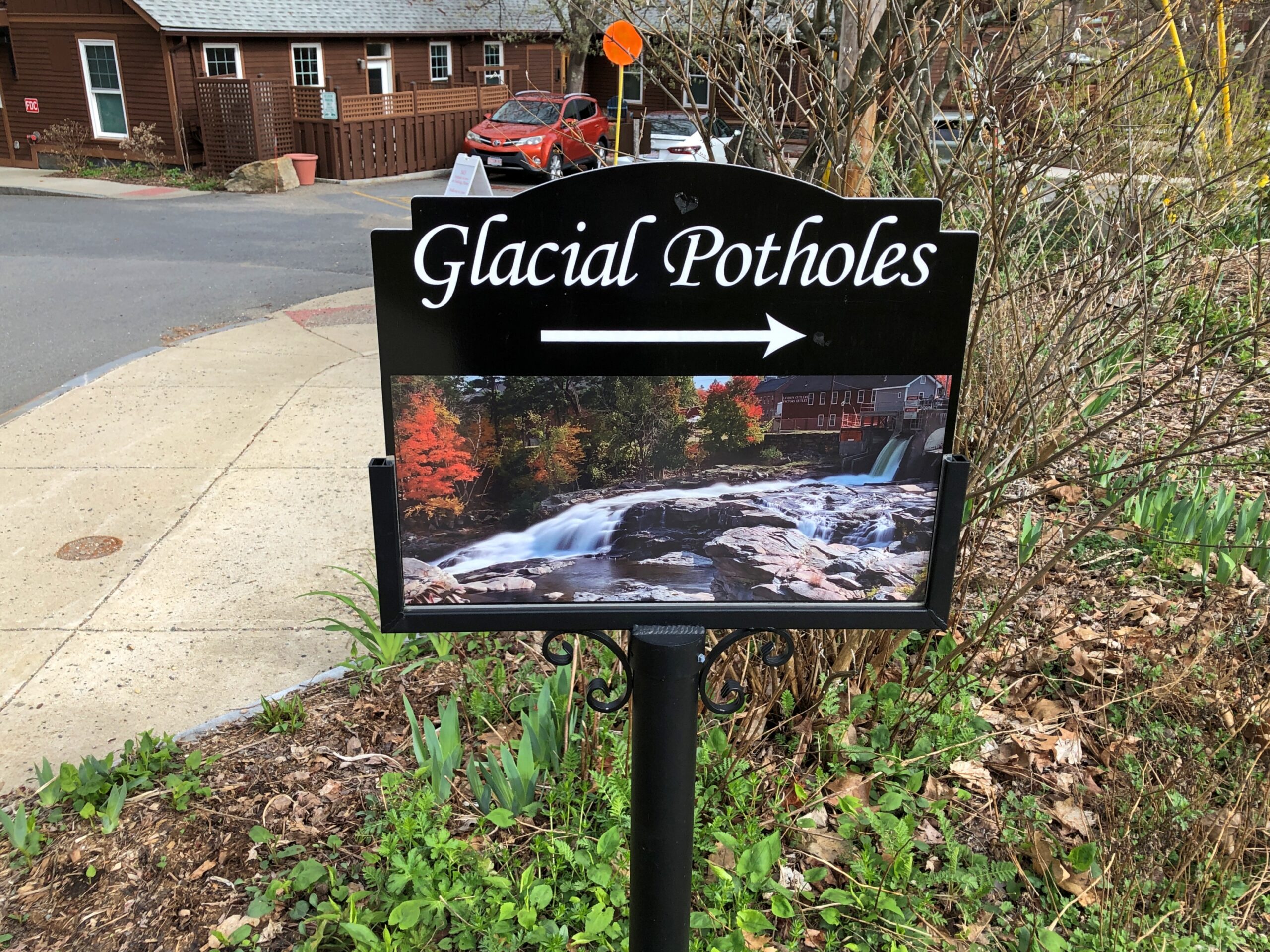
Glacial Potholes
Another sign.
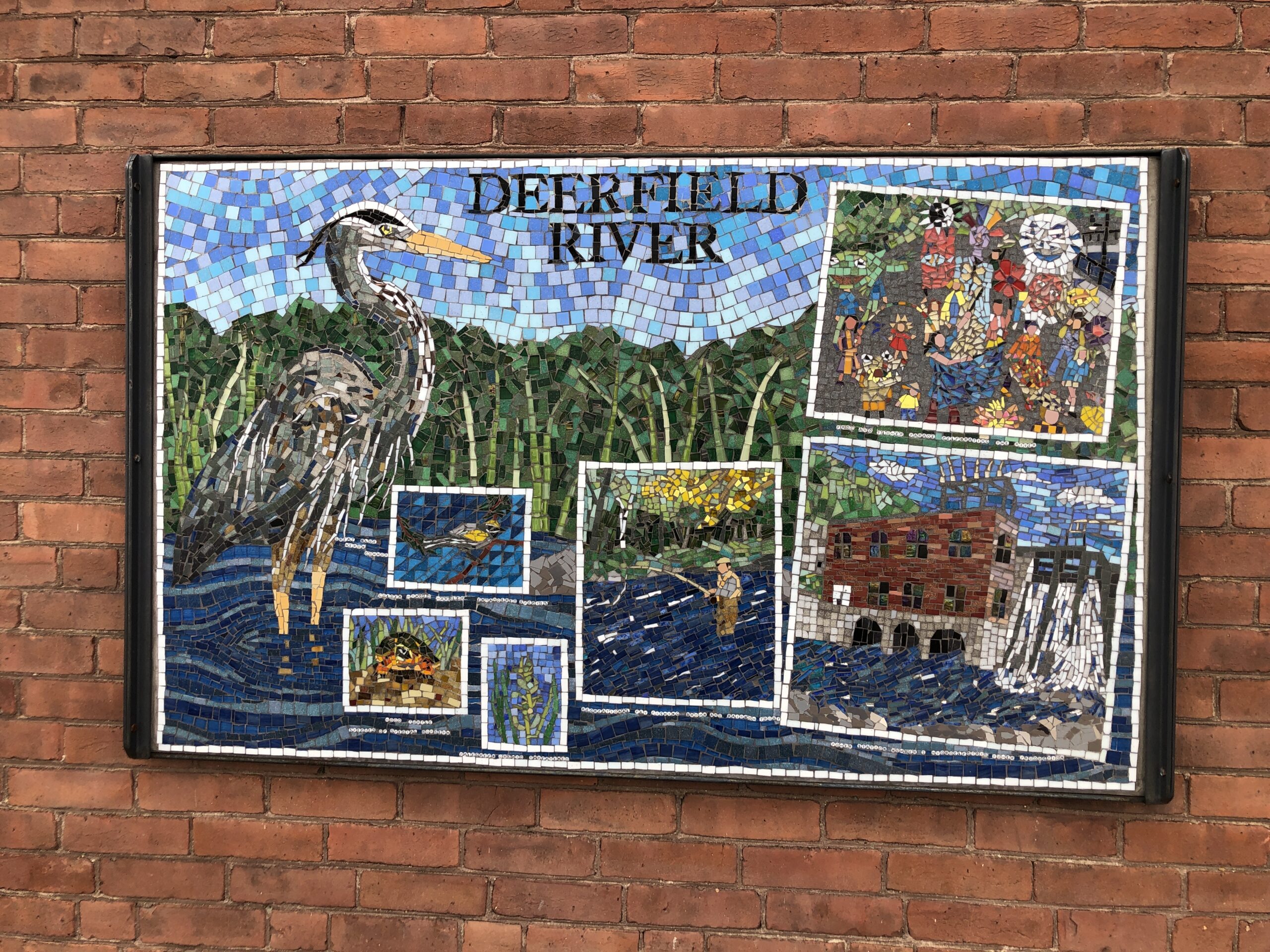
Follow the arrow and you pass a mosaic celebrating the locale. A high-quality image of this would make a good postcard.
Then come the potholes.
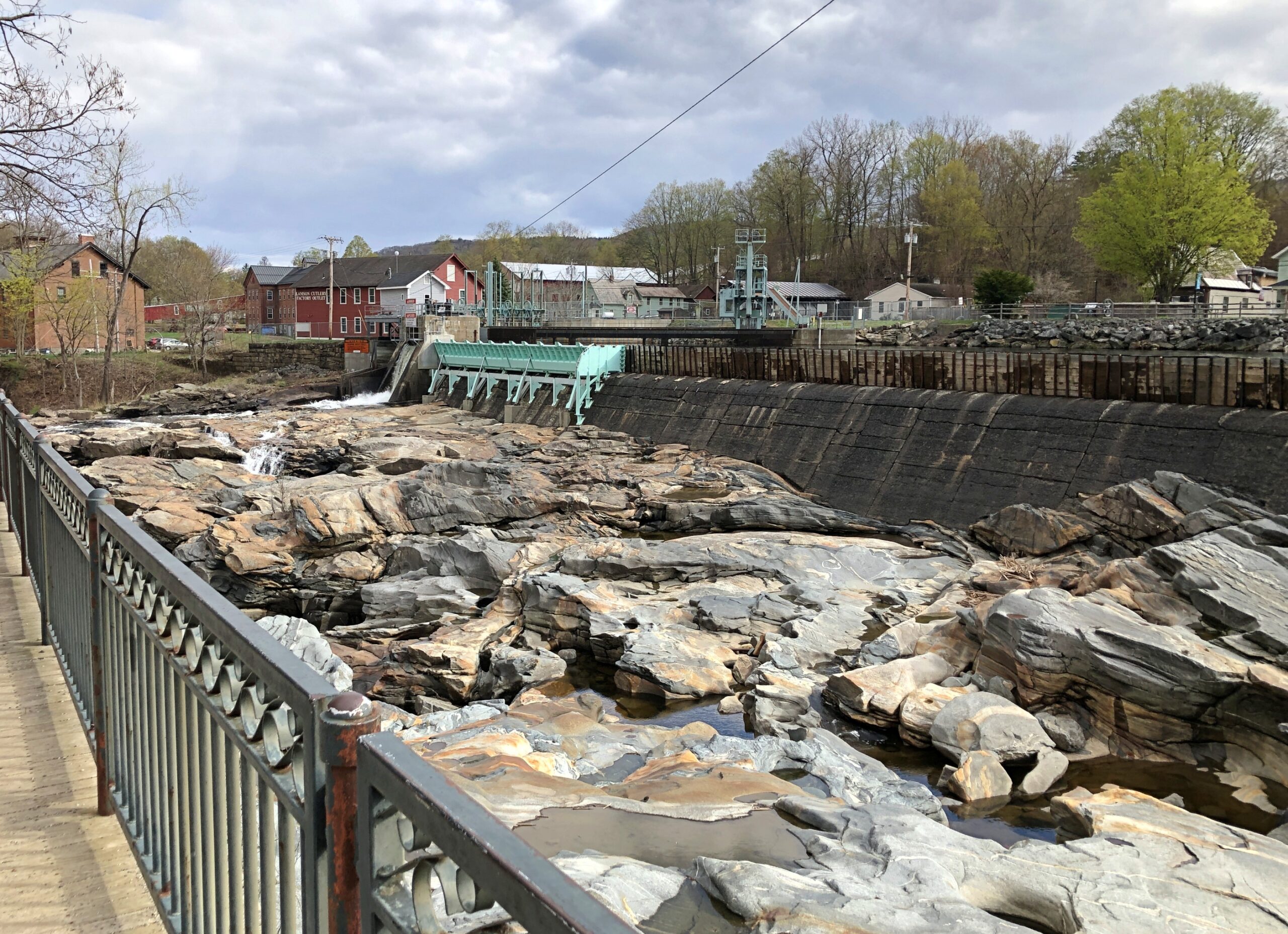
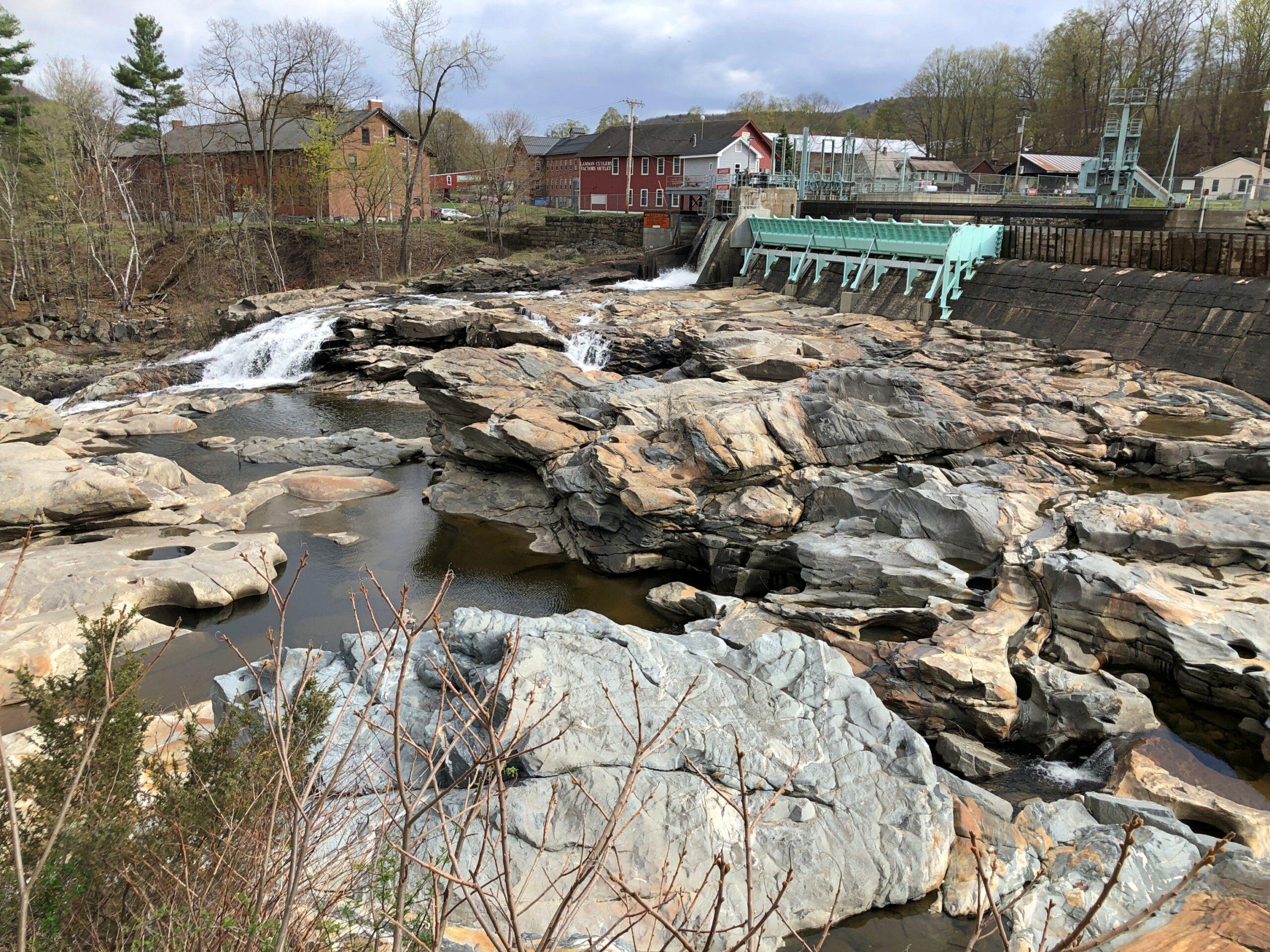
I didn’t know glaciers could create potholes, but it seems that they can and have. Also known as giant’s kettles.
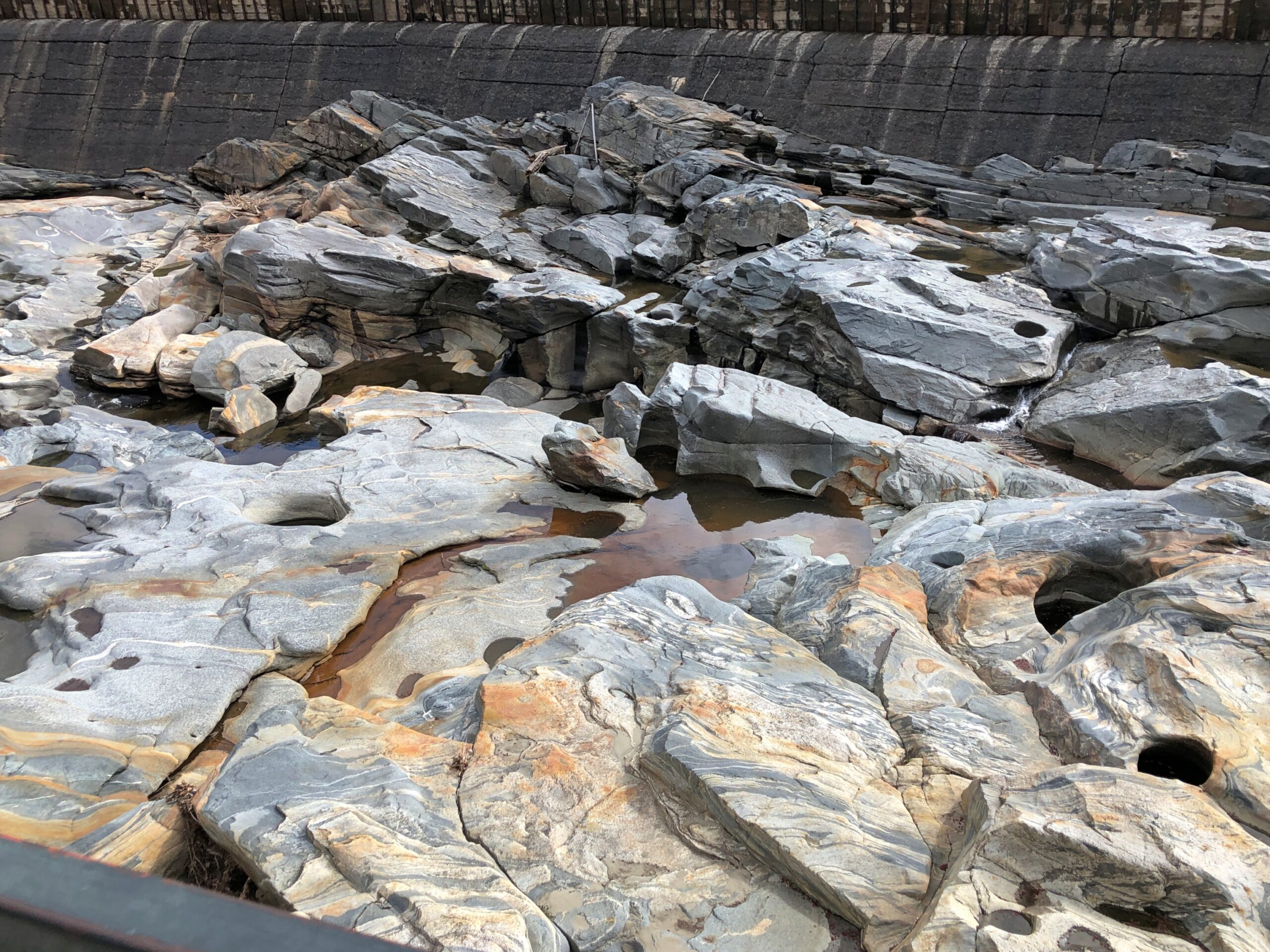
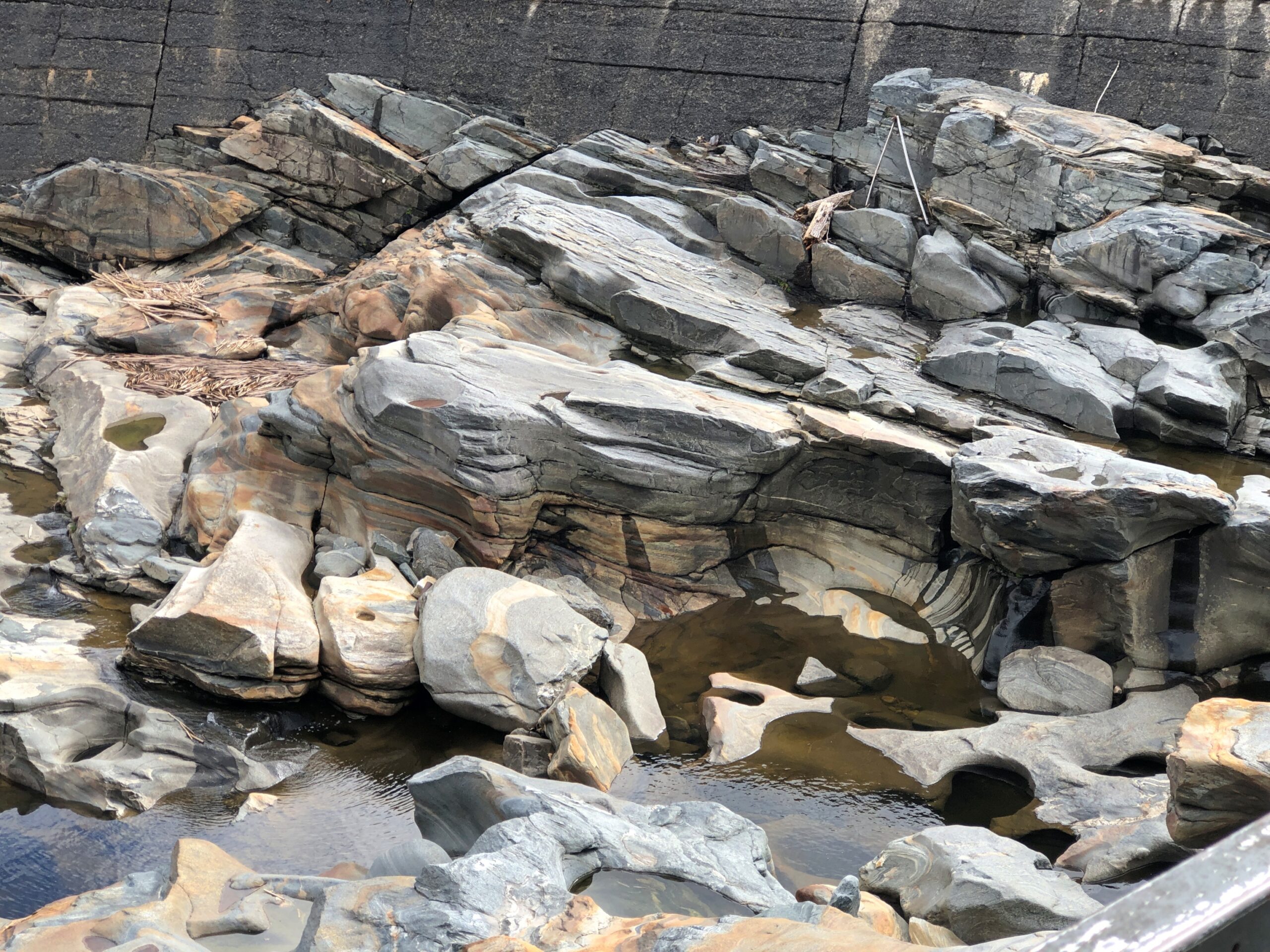
Different in details — stone and coloration and process — but erosion as much as Sioux Falls in Sioux Falls. Or on the Bruce Peninsula. Or the coast of Maine, for that matter. Water doing its grind beyond the timescales of humanity.
The spillway was busy. It had been a rainy day before.
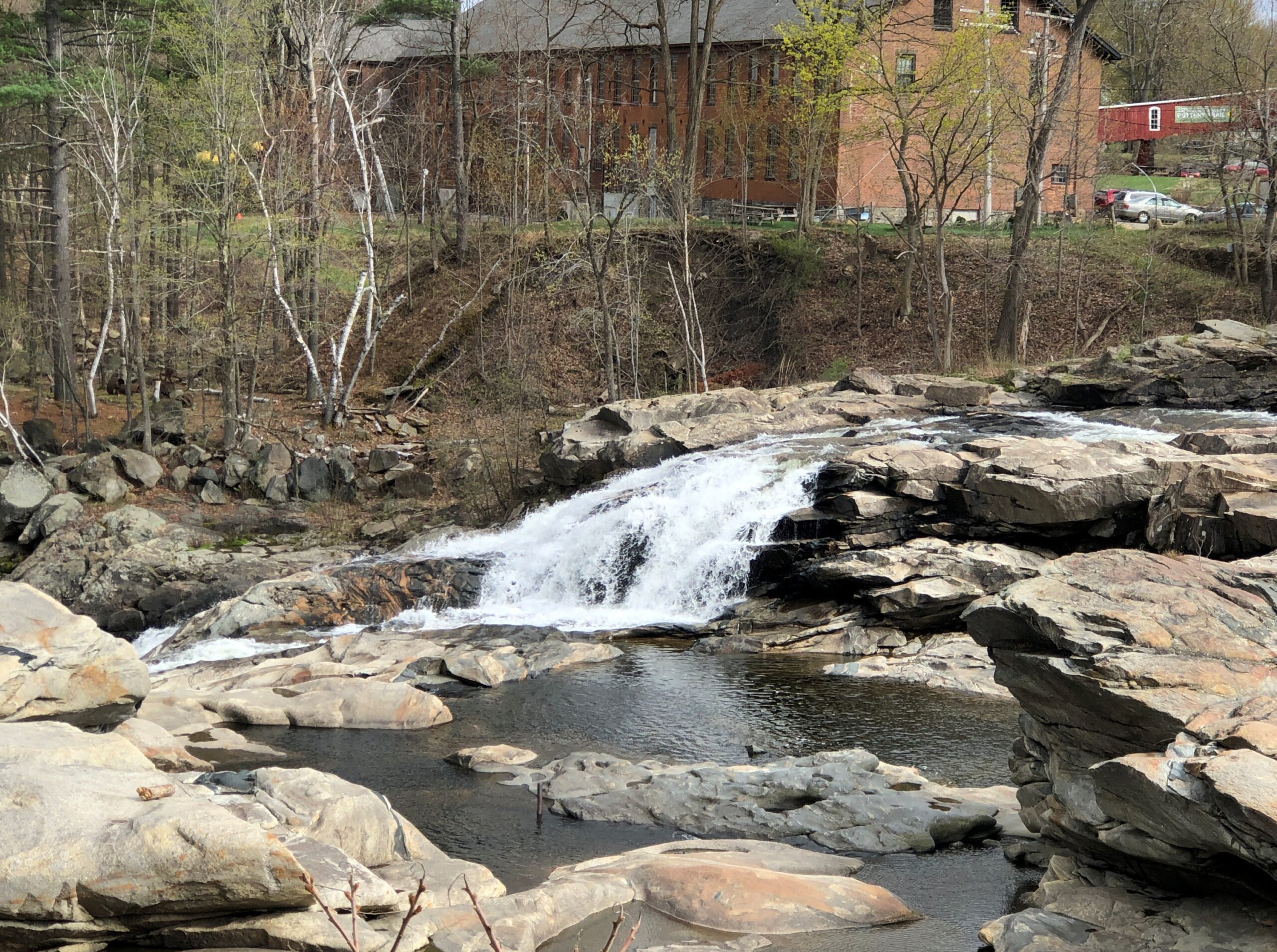
Artful rocks, with no artist except erosion.