Amazon Fresh, Adieu

Yesterday, behemoth retailer Amazon announced that its Amazon Fresh grocery stores are closing. All of them, about 70 locations, and closing soon, as in Sunday. I read about that this morning, and happened to mention the fact to Yuriko early this afternoon, so we decided to mosey over to the closest Amazon Fresh, about a 10-minute drive from our home here in the northwest suburbs.
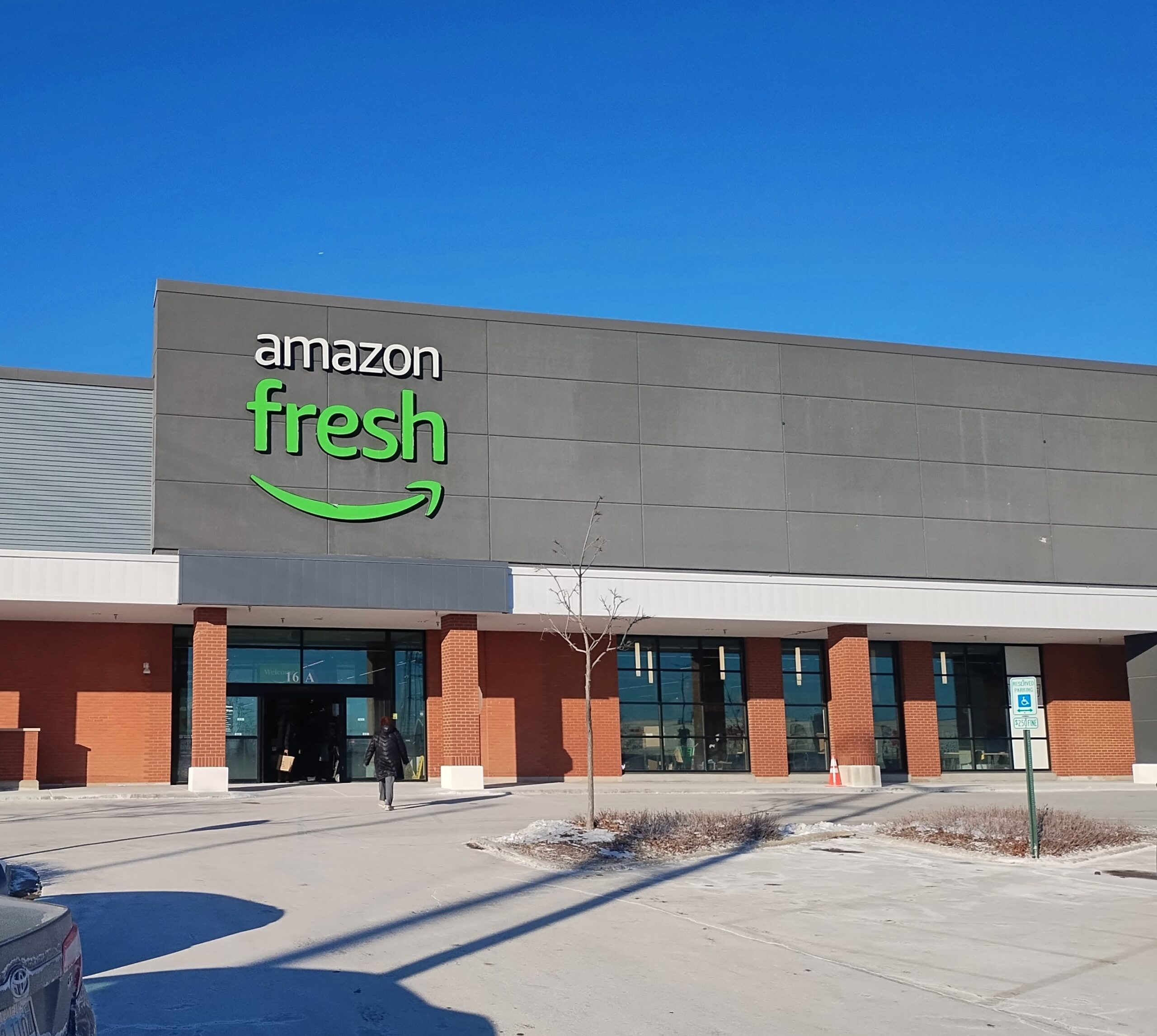
We’d been there. In the store’s early days especially, a few years ago, weekly fliers came in the mail offering coupons that could, if used right, mean 40 percent or even 50 percent discounts. That was worth some visits. After a few months, however, the coupons got progressively more miserly or disappeared all together.

That was no surprise. The coupons’ main function was to get you in the door, and acquainted with the store, and ideally form a good opinion that inspires return visits. A good marketing plan, even if it relies on something as analog as paper coupons, and it might have worked but for one thing: there was very little distinctive, to an ordinary shopper, about Amazon Fresh.

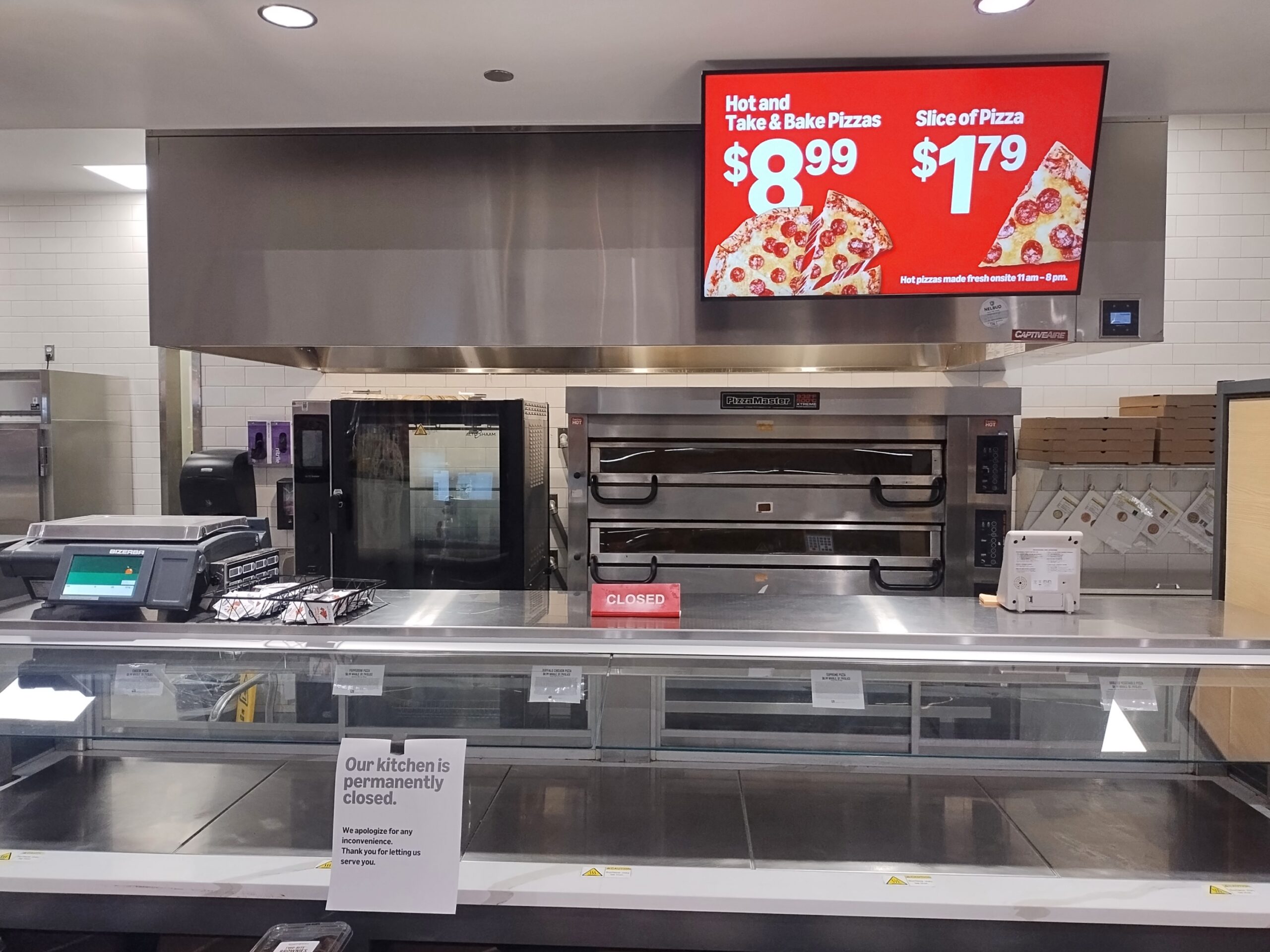
The store promised to be something of a discounter, and sometimes it was. Until recently, for example, it sold sizable and reasonably good pizzas for $9 a pie or less than $2 a slice – entirely competitive. Other items were sometimes discounted as well, but in that the store was no different from any other store in the area.

Even that might not been a discouragement, if the store had competed on selection. By current standards, the NW suburban Amazon Fresh is mid-sized, so isn’t going to be able to offer everything under the sun. But even smaller stores can pull off a remarkable selection, if they try. Such as Trader Joe’s. Or even Aldi, whose more recent iterations are about the same size as the Amazon experiment in grocery stores.

But no. The Amazon Fresh selection is good enough, and certainly would be a boon in a food desert, or even at the edge of one. But the NW suburbs are the opposite of a food desert: we have hyperstores, warehouse stores, standard supermarkets of considerable size, discount grocers, and plenty of ethnic specialty grocery stores of varying sizes, all within a fairly reasonable driving radius. There are even dollar and convenience stores thrown into the mix, and every variety of take-out food that you can imagine. These parts are a highly competitive retail grocery and food & beverage environment, is what I’m saying.

And what did Amazon Fresh bring to the table in such an environment? A lot of meh.

Then there was this business of “Dash Cart.” Amazon Fresh made a big deal about how technically advanced the stores were, because you could “Skip the checkout line. Scan, bag and pay – right from your cart.” Well, OK. Some of the carts had consoles for self-scanning.

Did Amazon actually want its customers to adopt Dash Cart, or was it just showing off? I ask because any hint of any instruction about how to use the thing was lacking. Call it an engineers fallacy: this tech is so cutting-edge, so impressive, so neat that people will be eager to learn it. People will not. Maybe had there been an employee whose job it was to school us old timers, we might have been interested, but of course that costs money, and just wait until customers don’t even have to deal with checkout clerks, how much that will cut labor costs!

Besides, you still have to do the work the store should be doing – scanning your items – for free. That is the essential irritation of any self-scanning scheme. Turns out self-scanning isn’t going to completely replace clerks anyway, for various reasons, and I’m glad.

How could Dash Cart and its ilk actually work? One: activate the cart with a debit or credit card. No messing around with some app, no inputting some code that comes to your phone, or any of that nonsense. Two: the cart itself automatically scans items as you put them in, and shows in a highly visible way how much you’re paying, so that the price jibes with the price on the shelf. Three: That’s it, you leave. You are charged a total – again, a highly visible total – as you leave, just as you would be otherwise.

Is all that technically possible? How should I know, but I’m leaning toward yes. Or it could be.

Never mind all that, we figured the store might be knocking off 10 or 20 percent in the face of its demise. The first indication that we were wrong was the store parking lot, which was as crowded with cars as I’d ever seen it. The second clue was the lack of shopping carts outside — at all, including in corrals in the parking lot or next to the entrance. No shopping carts inside the door, either.

Hand baskets were available, and Yuriko started with that, her initial goal being vegetables. I waited inside the door (since it was about 15 F outside) and after a few minutes, got a cart that was being returned. While I was waiting, a store employee announced at the front of the store that checking out, even self-check, would involve and hour or hour-and-a-half wait. It was a thing that makes you go hmmmm.

Shopping cart delivered to Yuriko, I set out to investigate. The first thing I found out: the place was crowded. An entire large cross-section of the population of the nearby Chicago suburbs was loose in the store, younger and older, families with little kids, single shoppers, people whose ancestors (sometimes pretty recently) had come from Central Europe, East Asia, the Indian subcontinent, Latin America and more. Put them all in the store and it was Supermarket Sweep time. I’ve never seen a grocery store so crowded or so many carts piled so high.

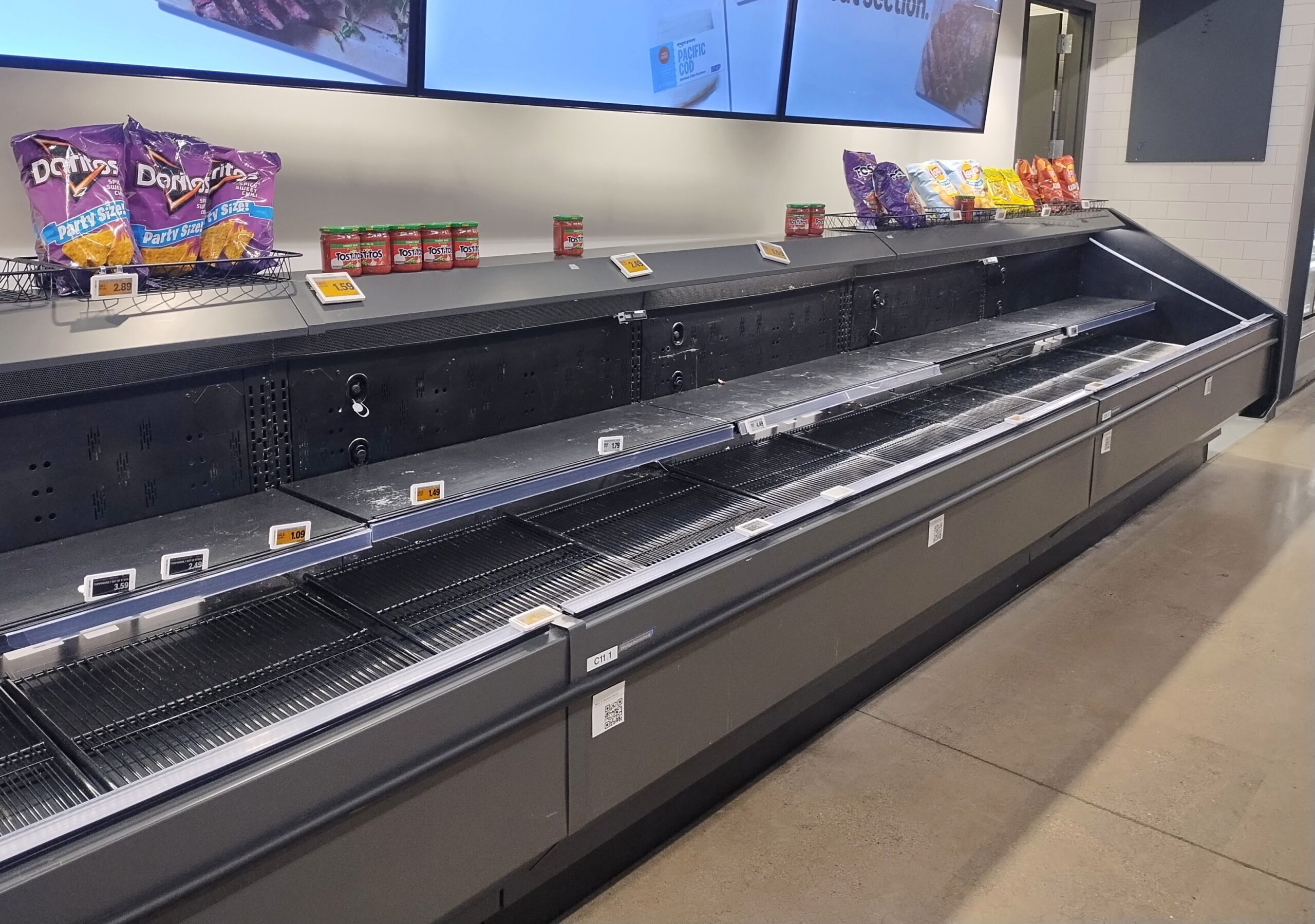
That resulted in some empty shelves, especially in the meat aisle and paper goods.
Sorry to say, the kitchen had already been closed permanently, its ovens cold and its workers presumably left to take their talents elsewhere, if possible. I’d wanted a slice of pizza at less than $2 just one more time, but no go.
But I’d misrepresent things if I left it at that. Many of the aisle and shelves still held the bounty of American agriculture and the never-ending efforts of food technologists.
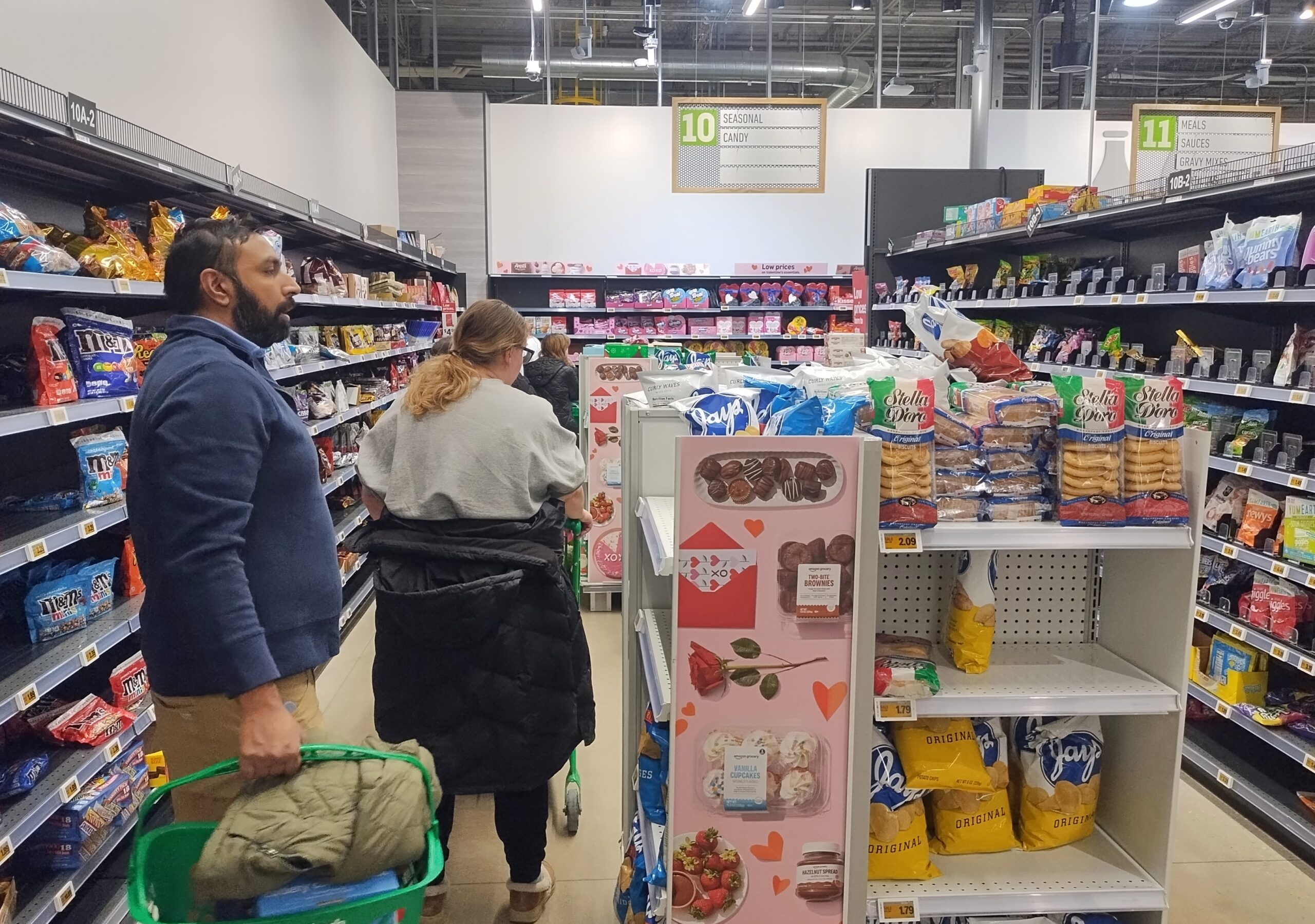
What brought the crowd? Deep discounts, of course. It didn’t take long to work that out. Later I did some back-of-the-envelope calculations and determined that nominal prices were back to late 1990s levels. Thirty years of inflation, slow and then fast, poof. That’ll pack ’em in. We joined the fun.

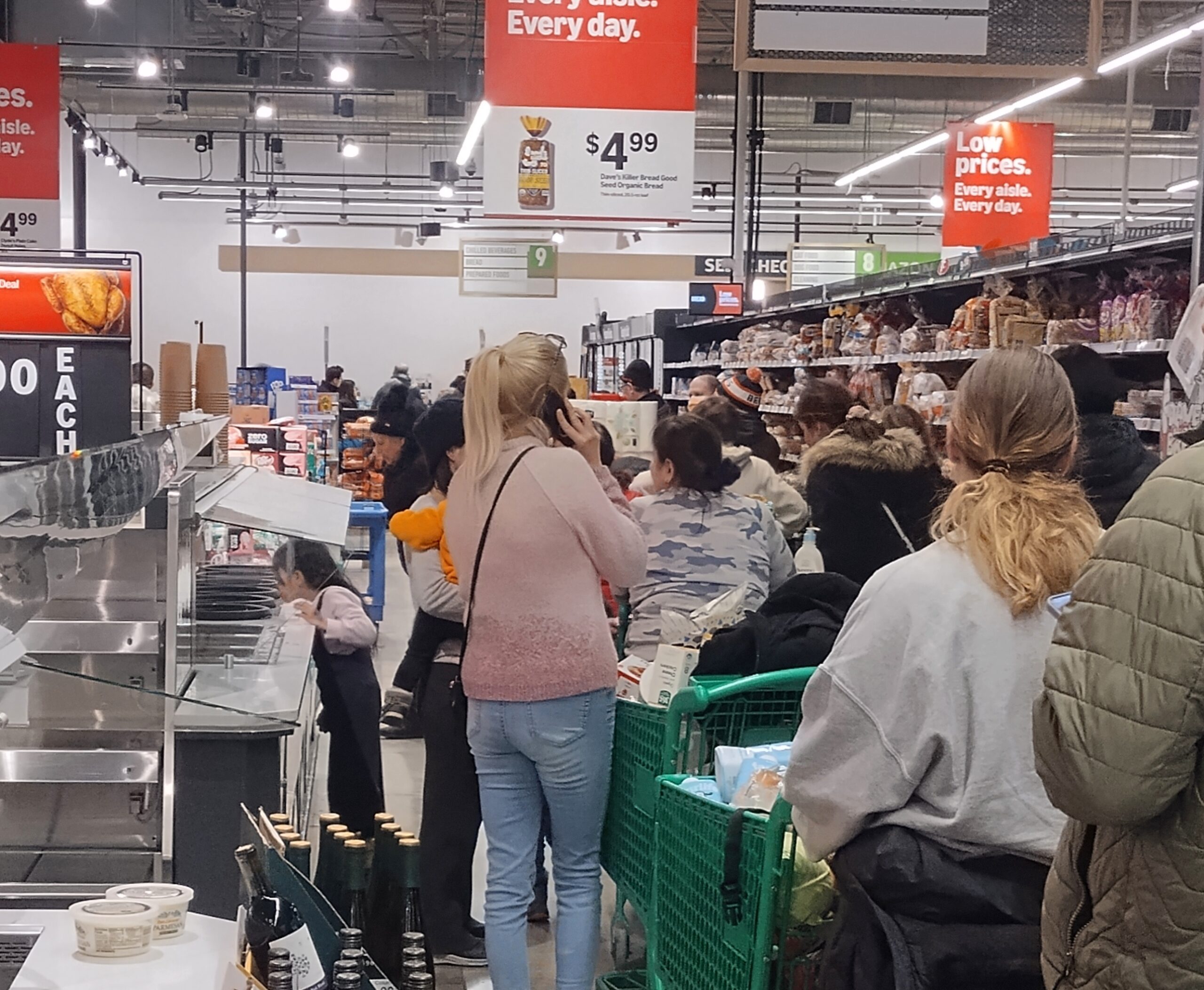
But the woman wasn’t kidding about the wait. The checkout line went back along the right-side aisle to the back of the store, turned a corner and went along the back aisle (dairy and such), and then turned a corner again at the left-side aisle, and ended about halfway back to the front of the store. Later, the line grew to go all the way around the store, back to the checkout area.

Before that happened, I got in line with the cart and Yuriko went out scouting for items, and later sometimes I did. This was a strategy employed by a number of couples in line. A view from the line:
I also went out to the car and re-arranged the items in the back, in anticipation of a large influx. Which happened, eventually, once we filled our cart – to the top – and got through checkout.
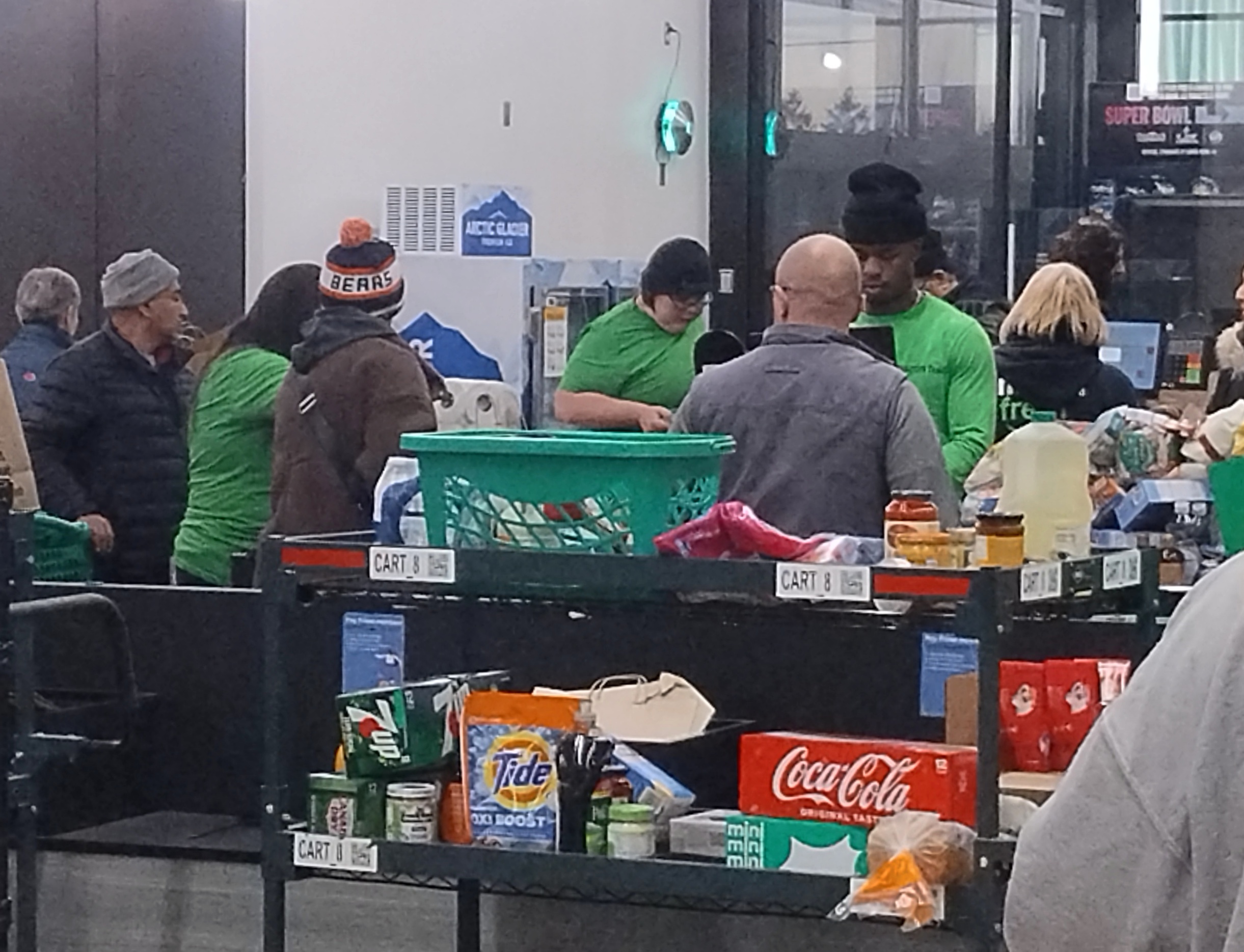
Checkout, which indeed had taken more than an hour to reach, was an anticlimax. It was just like any checkout, except more stuff than usual. Still, this is worth noting: We spent a shade over $250 on items that listed a few days ago for around $500. Definitely a deal, whatever you think of the behemoth retailer or its failed experiment in Amazon-branded supermarkets.


RIP, Mr. Lehrer

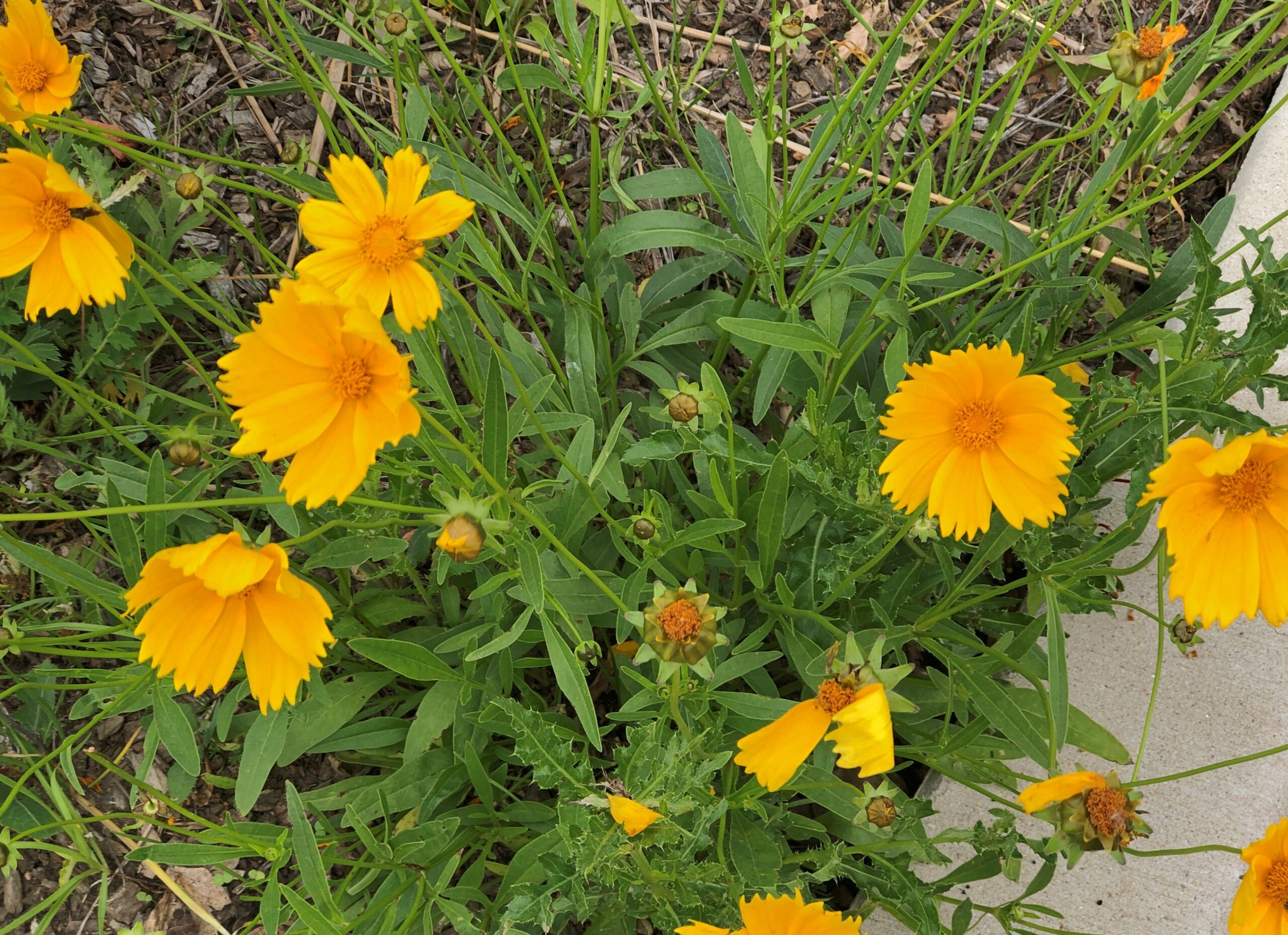
Summer moves forward. Some flora from around the time of the solstice this year, all found on public land hereabouts in the Northwest Suburbs.

flora 2025

It was a rainy summer as of June, and it has been in July. When I got home today, I found driveway and deck puddles and damp bushes. Lush, flowery bushes.

flora 2025

Sad news over the radio: Tom Lehrer, 97, died. All the cool kids in the ’70s had your records in high school, Mr. Lehrer. Not really. But I did, and so did my friends, and we’re better for it even now.

Daiso USA

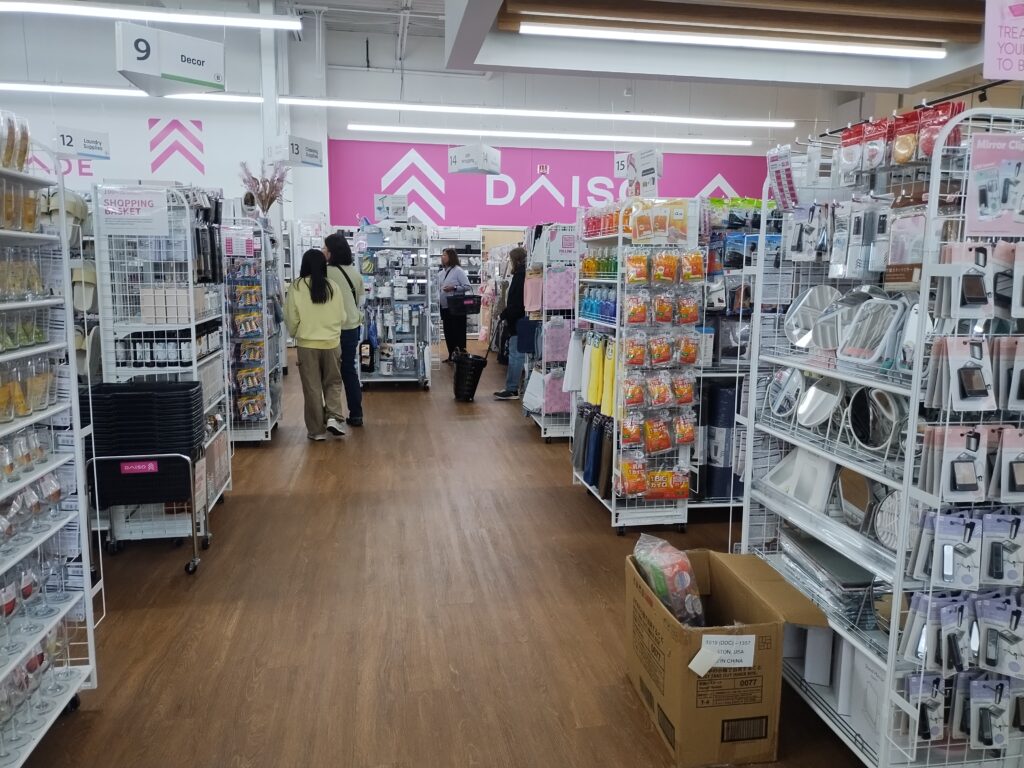
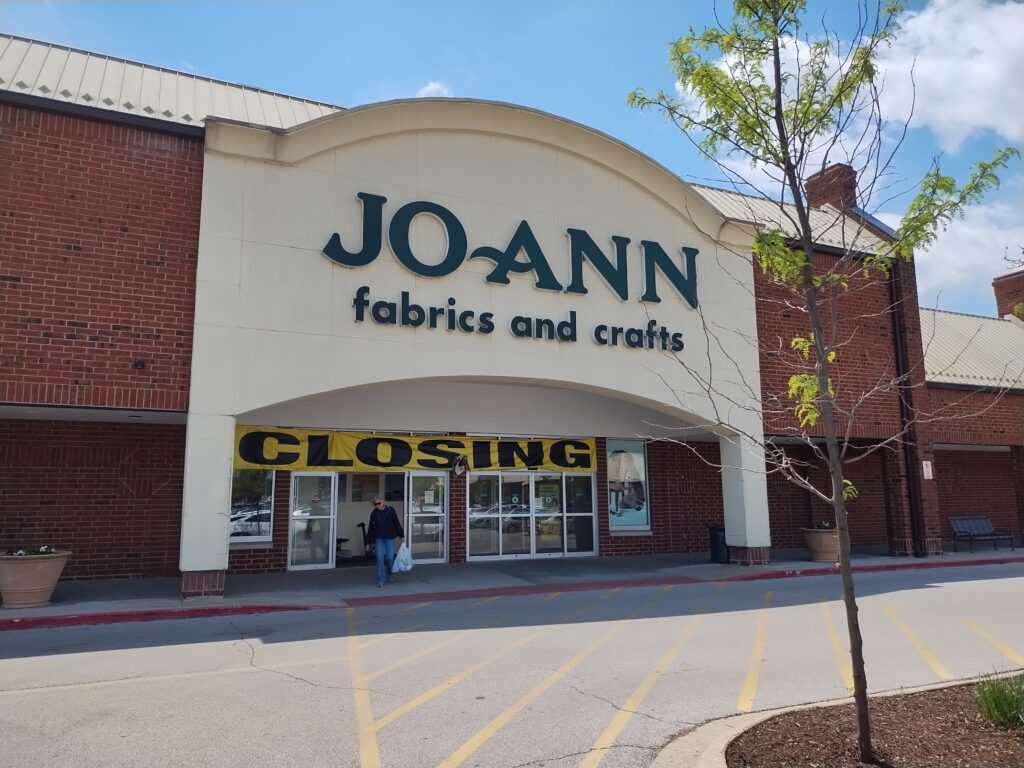
Retail comes and goes. After we visited Jo-Ann’s – where I bought a single item, an olive-theme doormat for our deck – we went a short distance to something new. Newish, that is, to North America, but well-established in Japan: Daiso.

We hadn’t noticed this particular northwest suburban location before. Back in February, we visited one in Tokyo, which was my first time at the chain, though I’d written about it before. Worldwide, there are about 6,000 Daiso locations, with only 150 in the U.S., and even those are fairly recent arrivals.

The store has an impressive amount of inexpensive goods, and a more imaginative selection that you’d find in a dollar store. Better designed, too. Things cost money in Japan, naturally, and sometimes quite a lot, but that country doesn’t share the notion, common here in America, that if you don’t pay a lot, you deserve crappy design.

Socks and clocks, among many other items.

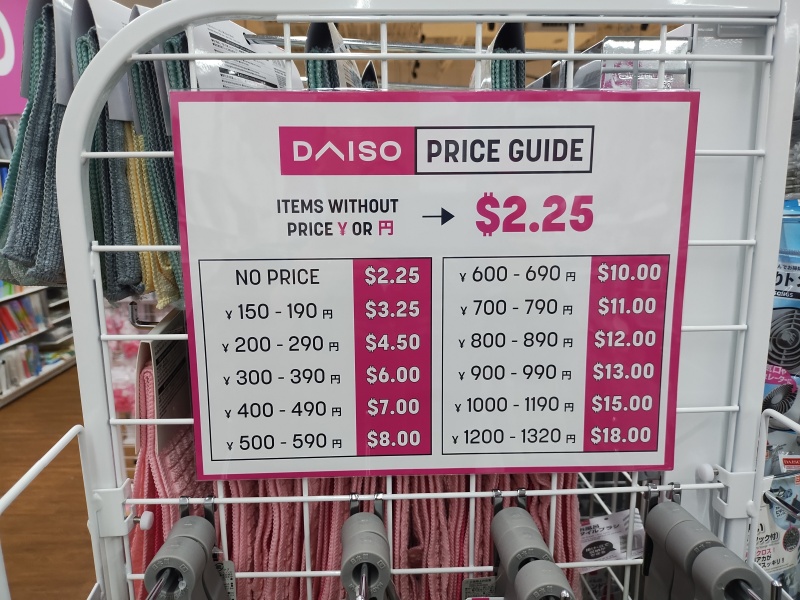
Also, an unusual pricing structure.

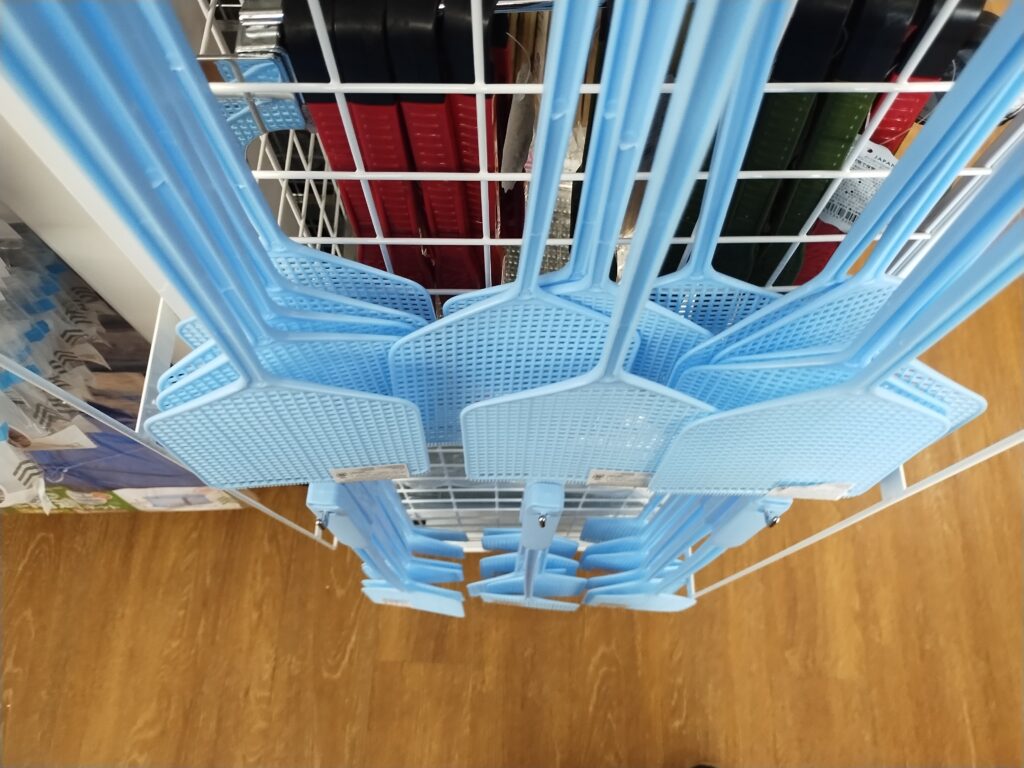
I didn’t buy one of these, because we have one – an odd souvenir from the Bluegrass Inn during a stay in ’08. More recently I used it to swat moths.

Mangled English, no extra charge. An authentic Japanese touch.

The End of an Era? No.

Recently I was thinking about the closure of Jo-Ann stores, for reasons that will be obvious shortly. Seeking more information about the retailer, I came across an article published at a site called dengarden. The headline says, It’s the End of an Era: Joann Fabrics Has Officially Closed All of Its Stores.

A human- or machine-written head? It doesn’t matter, there’s a cliché that needs to be retired. End of an Era, eh? I remember thinking the same thing when the last Radio Shack bit the dust. Or maybe not.

The company is – was – Jo-Ann Stores. What will customers do without it? “Big-box retailers like Michaels and Hobby Lobby offer a decent selection of fabric and craft materials,” the article says. “Online shops, from niche sewing stores to large marketplaces, have stepped in to fill the gap. Many small, independently owned fabric and yarn stores are also gaining attention as shoppers turn local.”

The closure might be a hardship for those who lost their jobs, but for everyone else, this barely qualifies as the turn of a page, much less the end of an era.

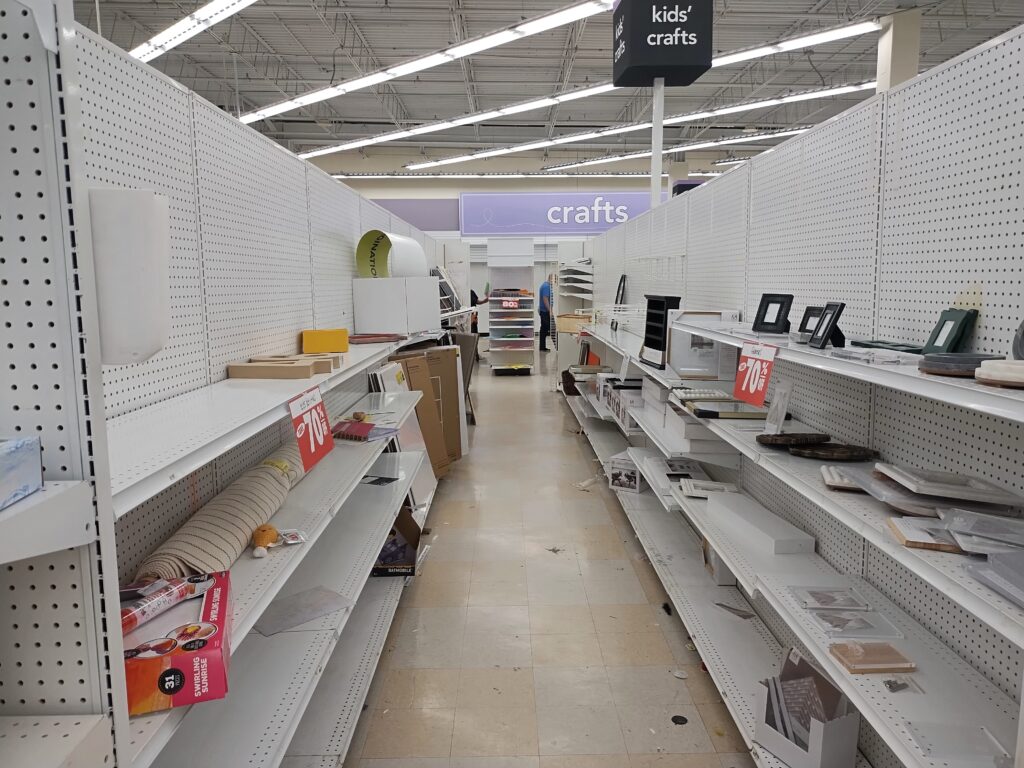
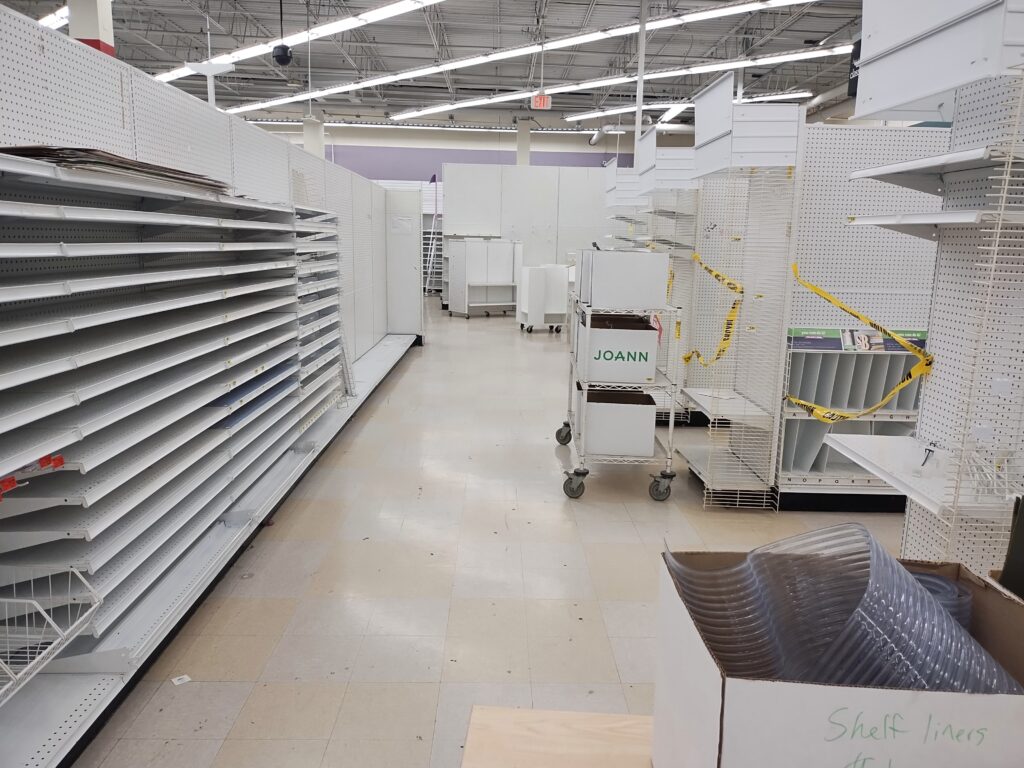
But I quibble. A few weeks ago, at Yuriko’s request, we went to a nearby Jo-Ann store to look for bargains. Rather, she did.

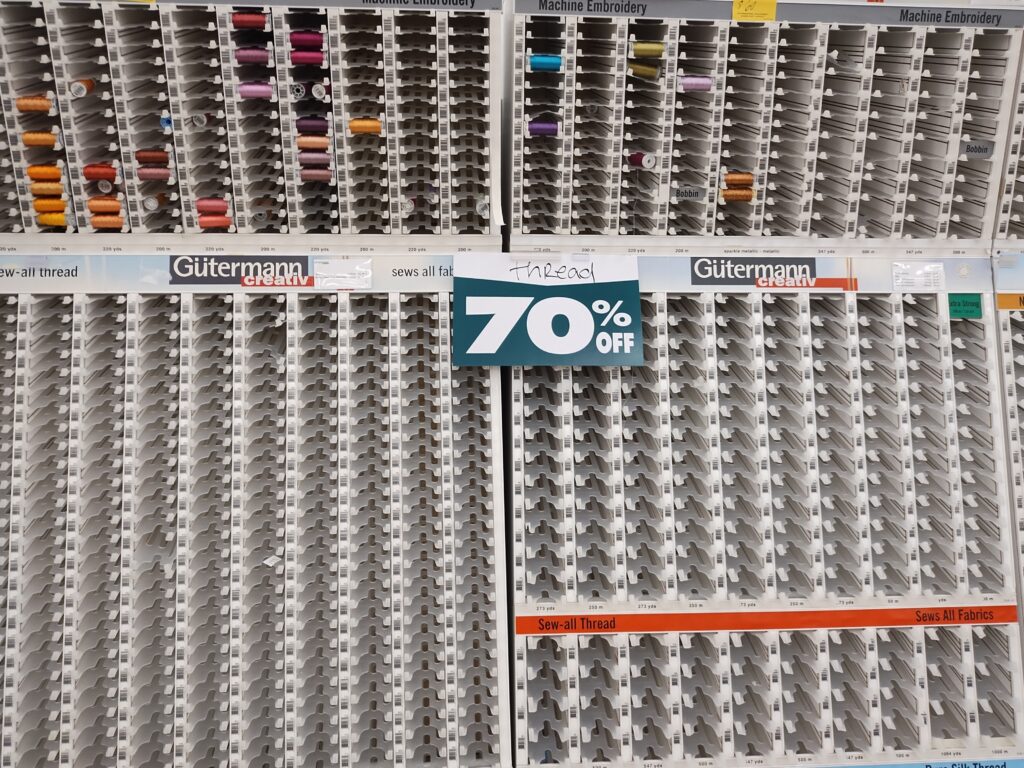
I went to witness the retail dissolution in person. The place had that Venezuelan store look, assuming the reports about that nation are still correct.

Even toward the end of a store’s existence, there can be oddities.

I didn’t buy it, even at a steep discount. Will I regret my decision from now on, until I reach my deathbed? Nah.

Volo Bog State Natural Area

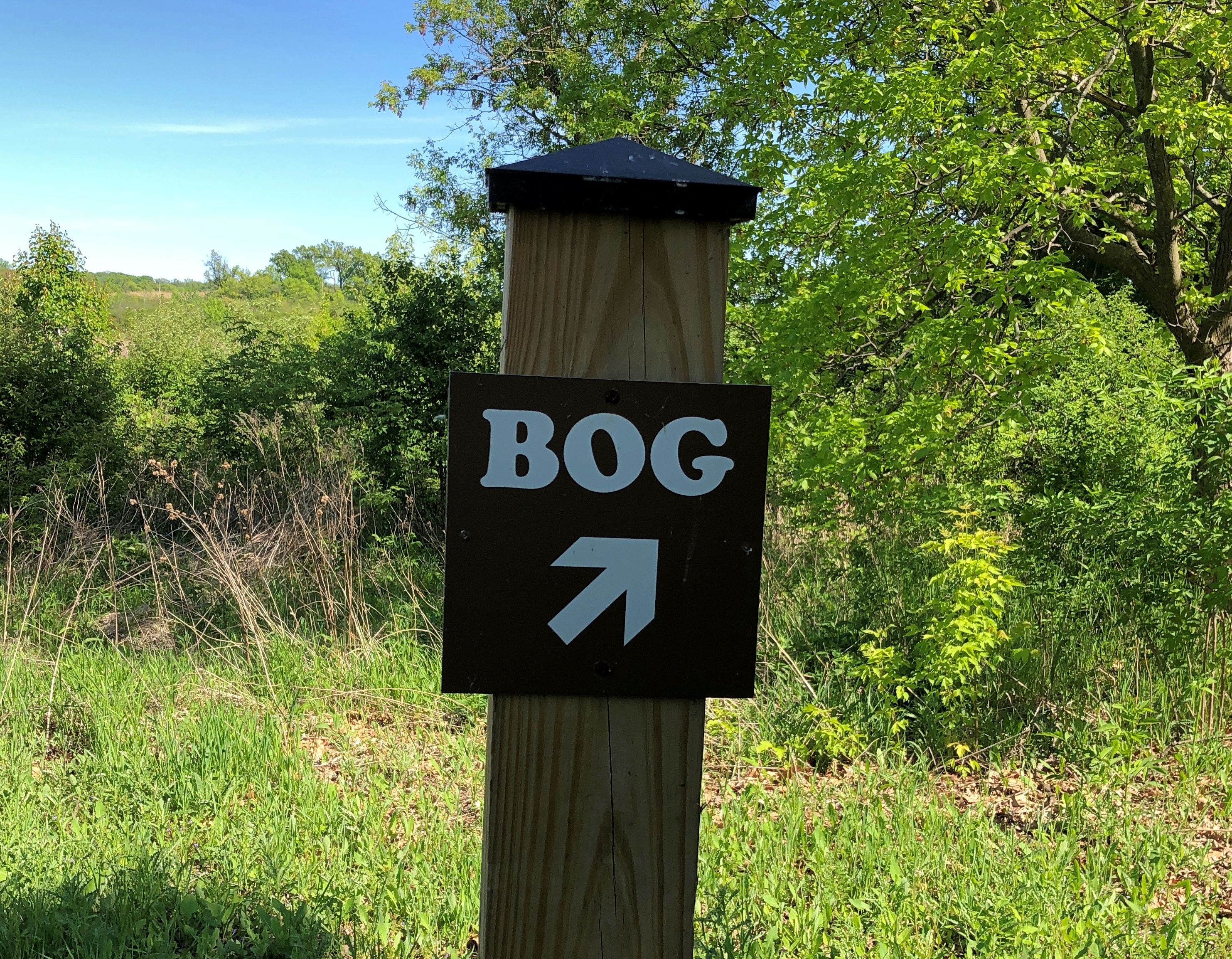
Not a sign that you see very often.Volo Bog

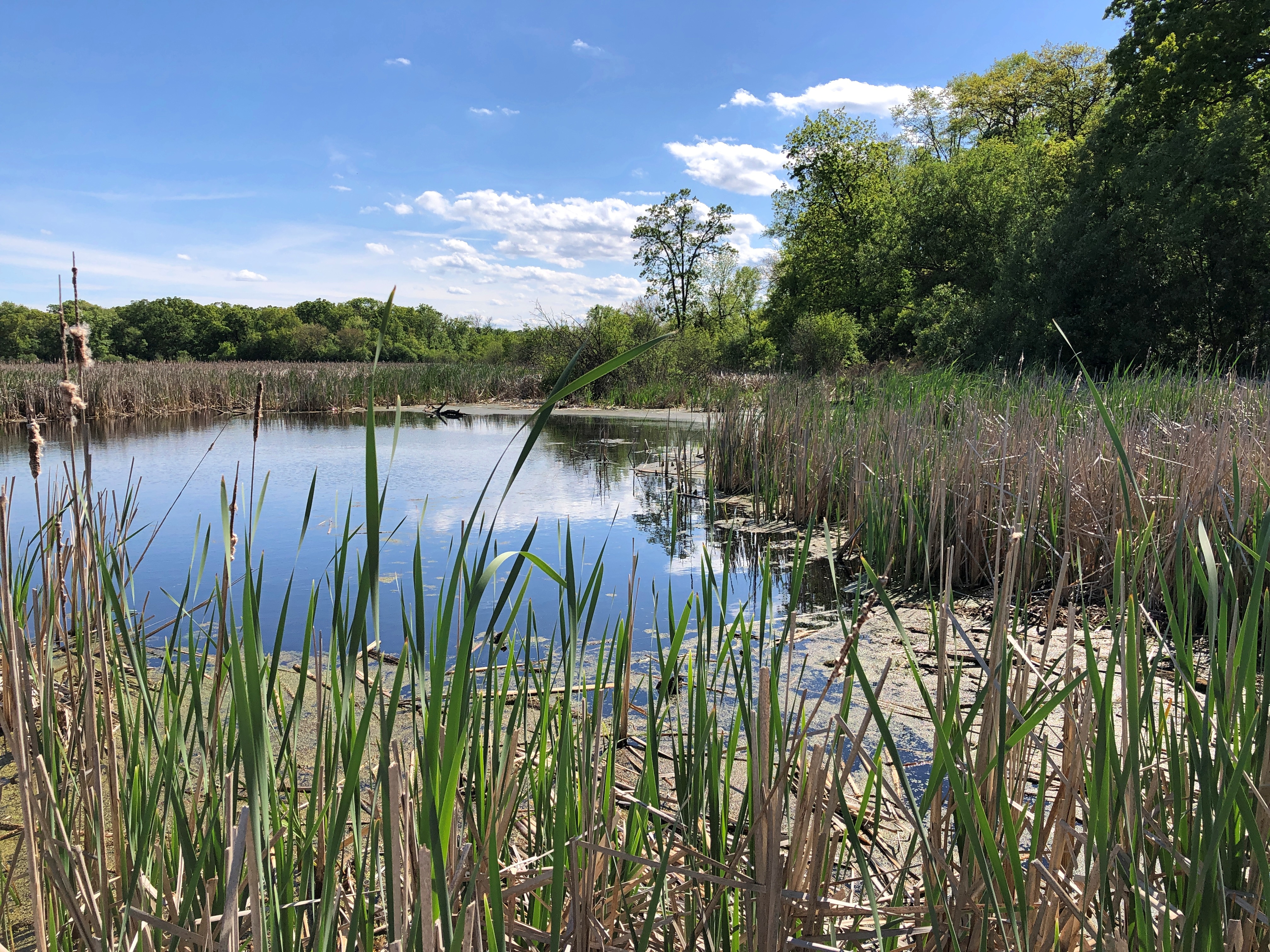
Unless you visit Volo Bog State Natural Area often. It is “the only open-water quaking bog in Illinois,” according to the Illinois DNR, and I’m inclined to believe it, though sad to say my grasp of the scientific difference between a bog, marsh and a swamp is weak. Still, as a pleasant spring day, we figured Sunday was a good time to re-visit the bog, up northwest, about a 45-minute drive.Volo Bog

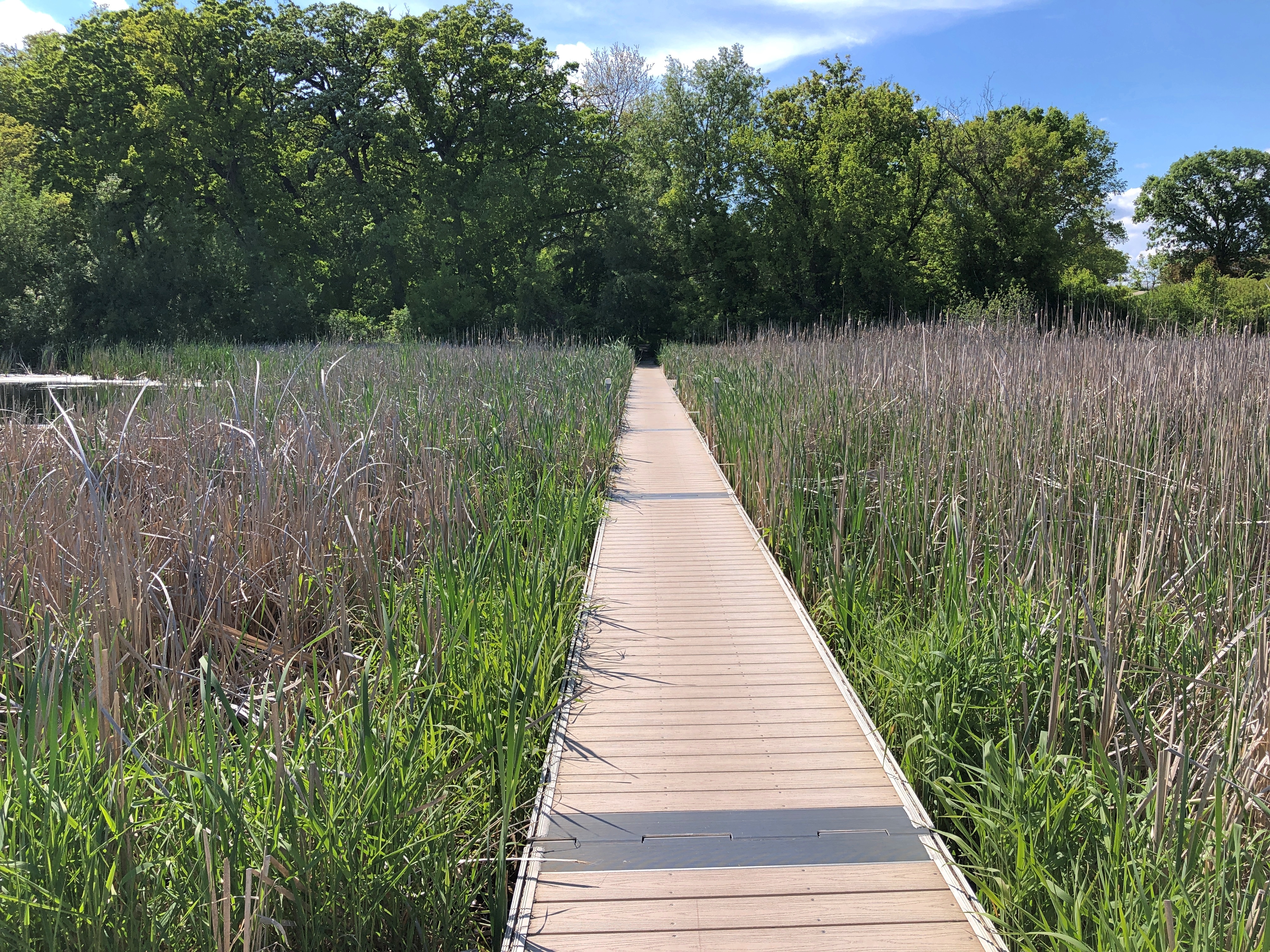
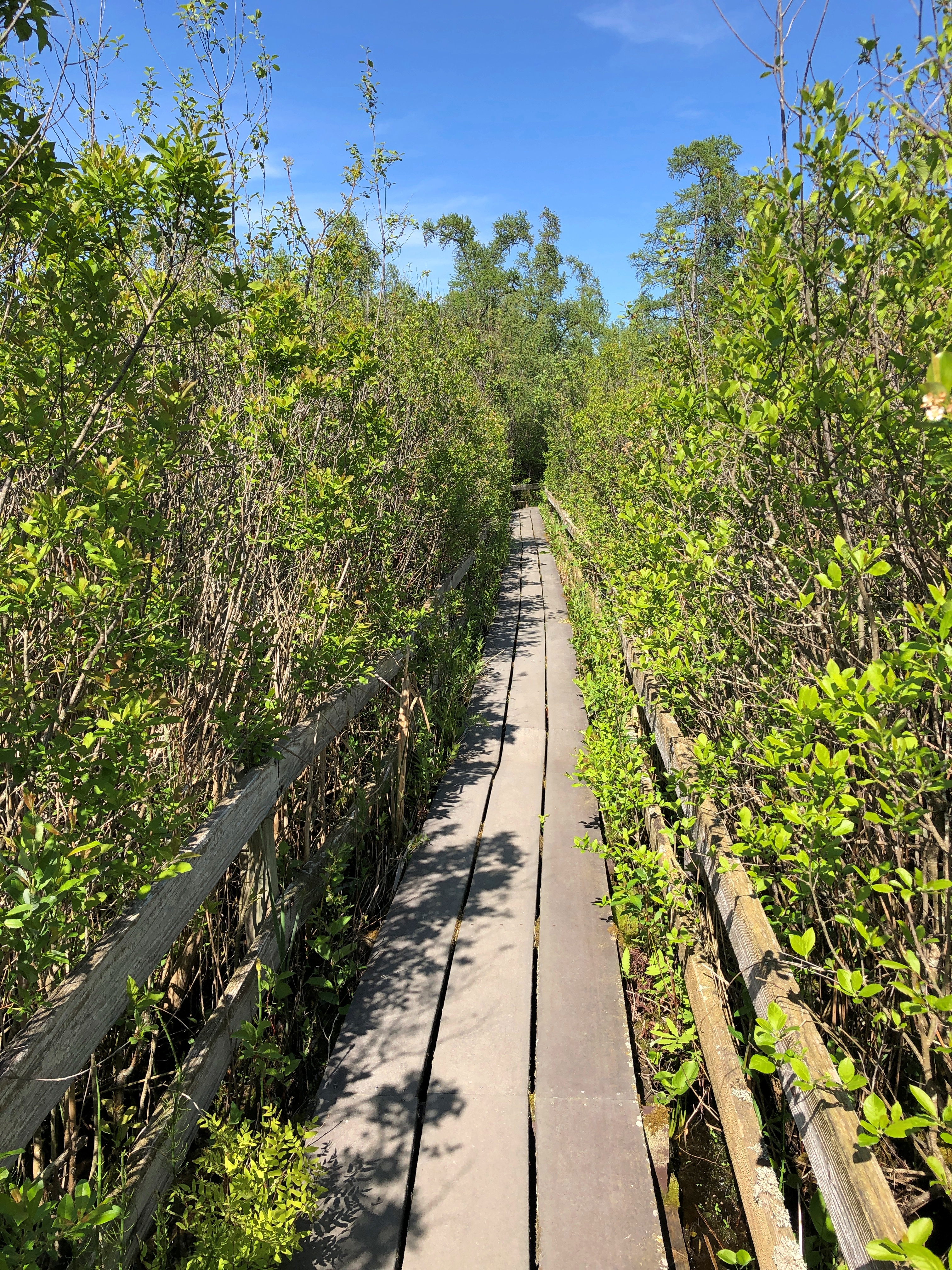
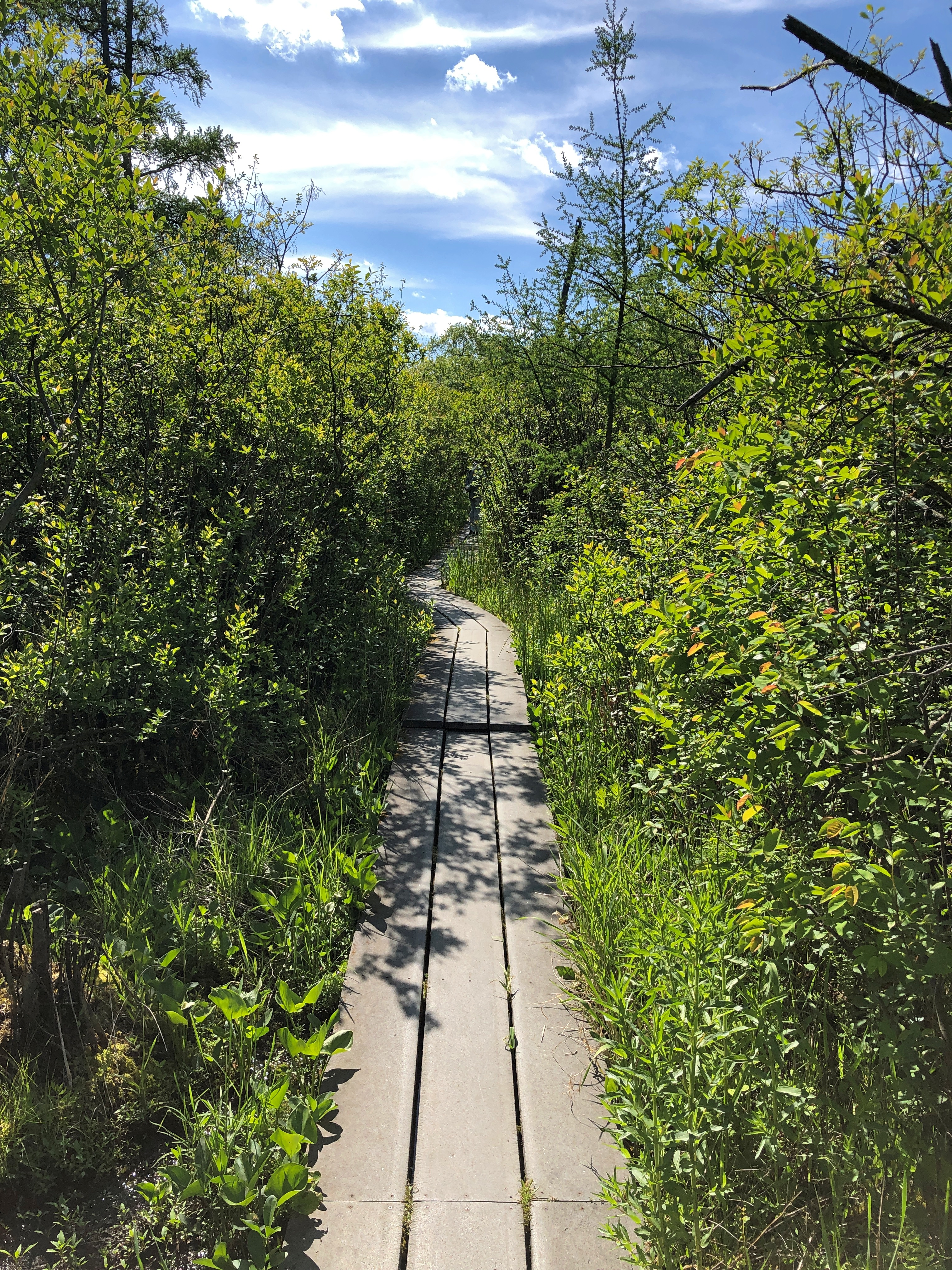
It had been a while. But I can say that the trail still wobbles a bit, which still takes a few minutes’ getting used to.Volo Bog Volo Bog Volo Bog

” ‘It’s moving,’ I heard either Lilly or Rachel say ahead of me, since they were first to reach the trail, which is a boardwalk over the bog,” I wrote in May 2010. “The boardwalk’s wobble is a little unnerving at first, but before long you get used to it. For anyone over about three years old, anyone who is sober anyway, the danger of pitching into the bog is pretty low.”

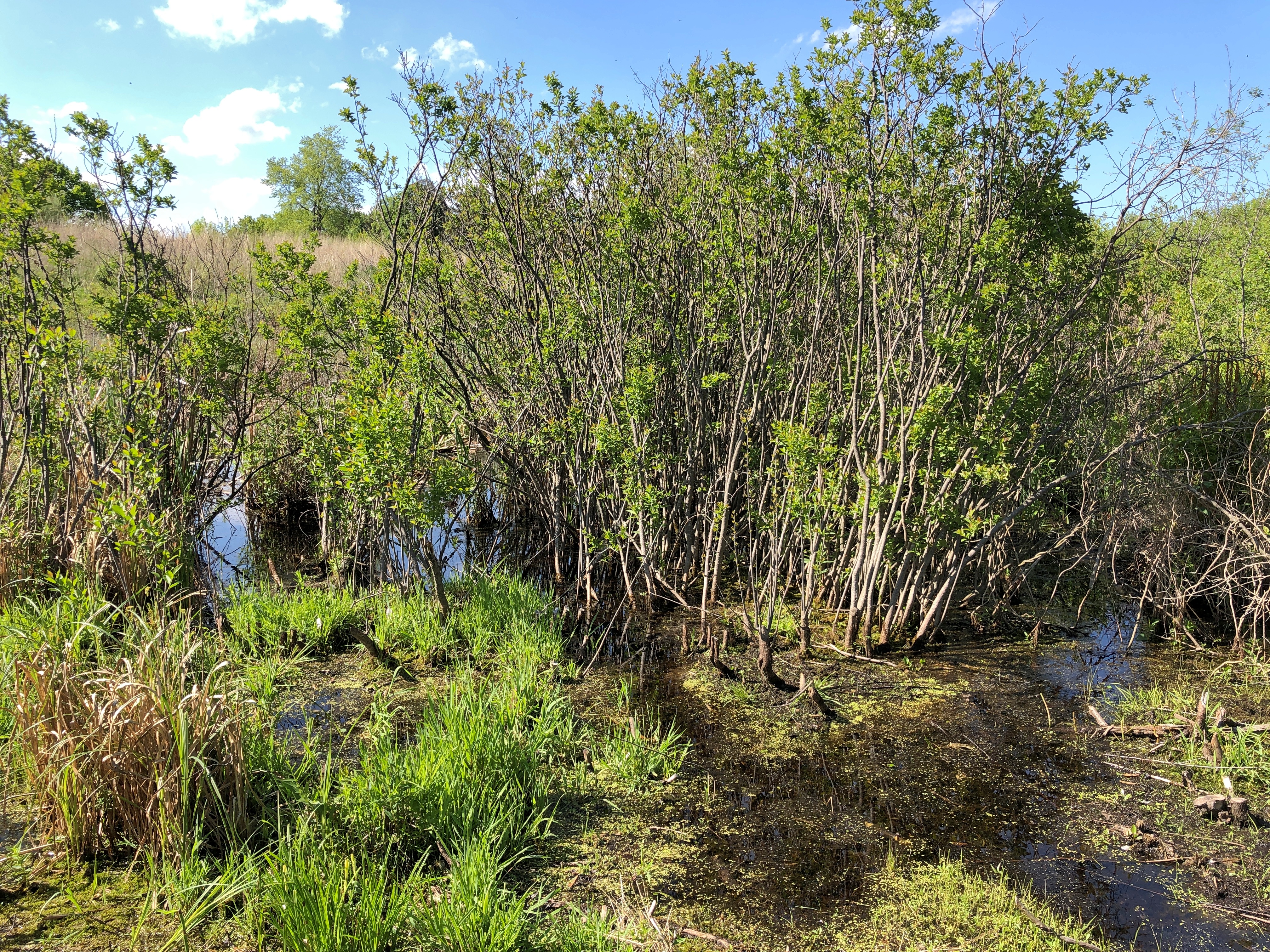
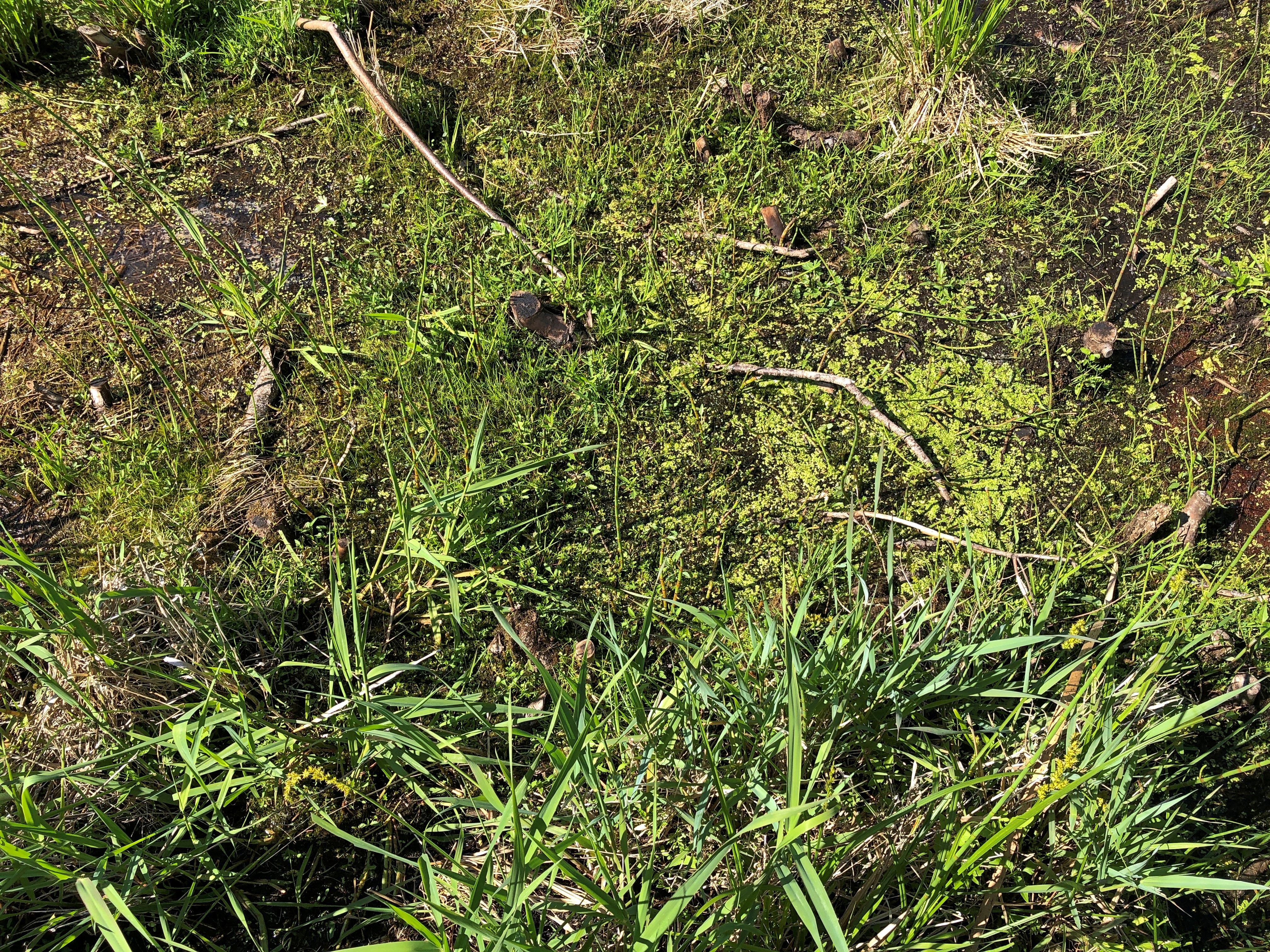
It’s moist down there. I’d expect no less of a bog. I know that much, anyway.Volo Bog Volo Bog Volo Bog

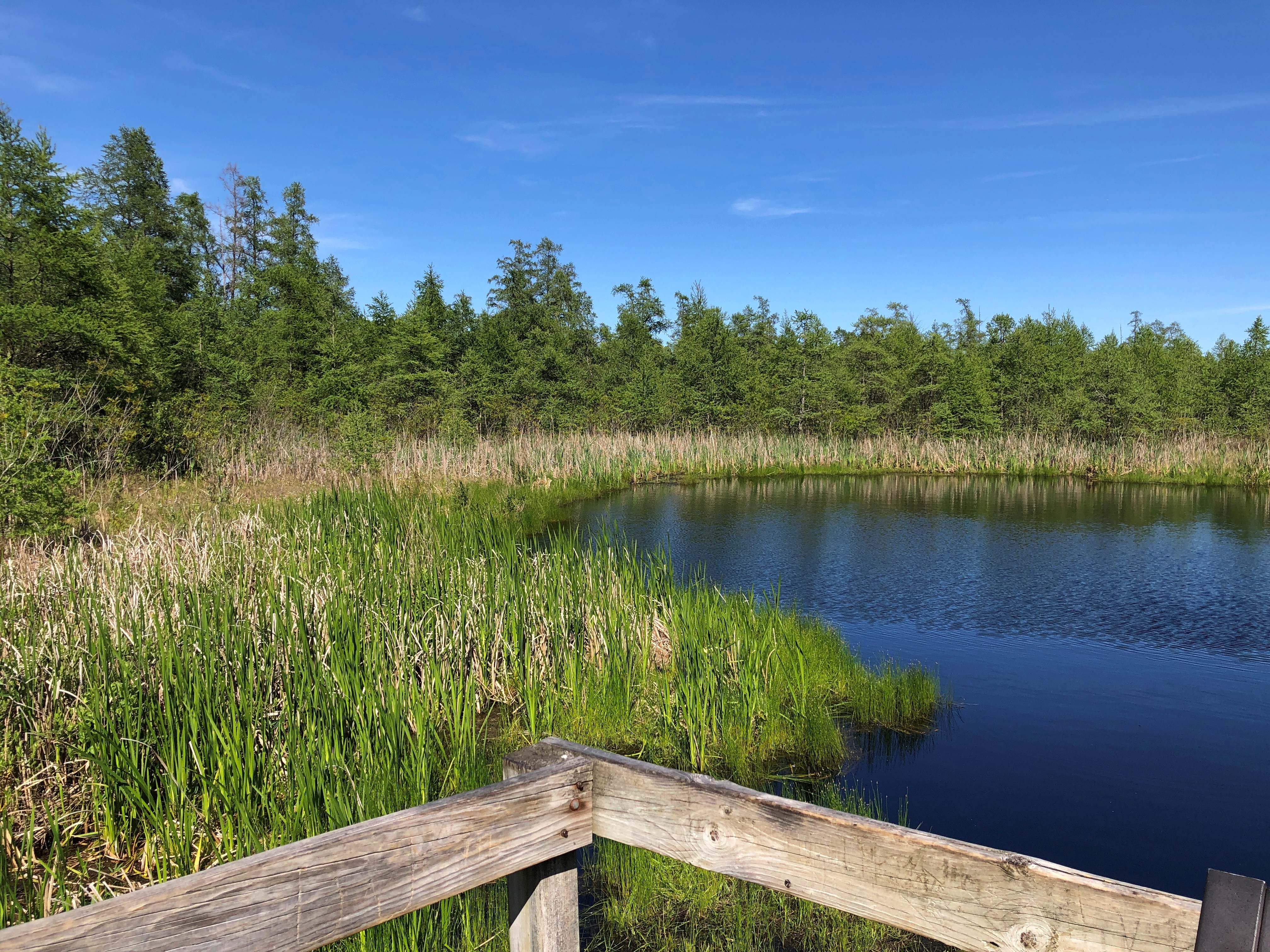
Formed in an ancient glacial kettle hole lake, Volo Bog features a floating mat of sphagnum moss, cattails and sedges surrounding the open pool of water in the center of the bog,” the DNR says. “Further from the open water, the mat thickens enough to even support floating trees!”

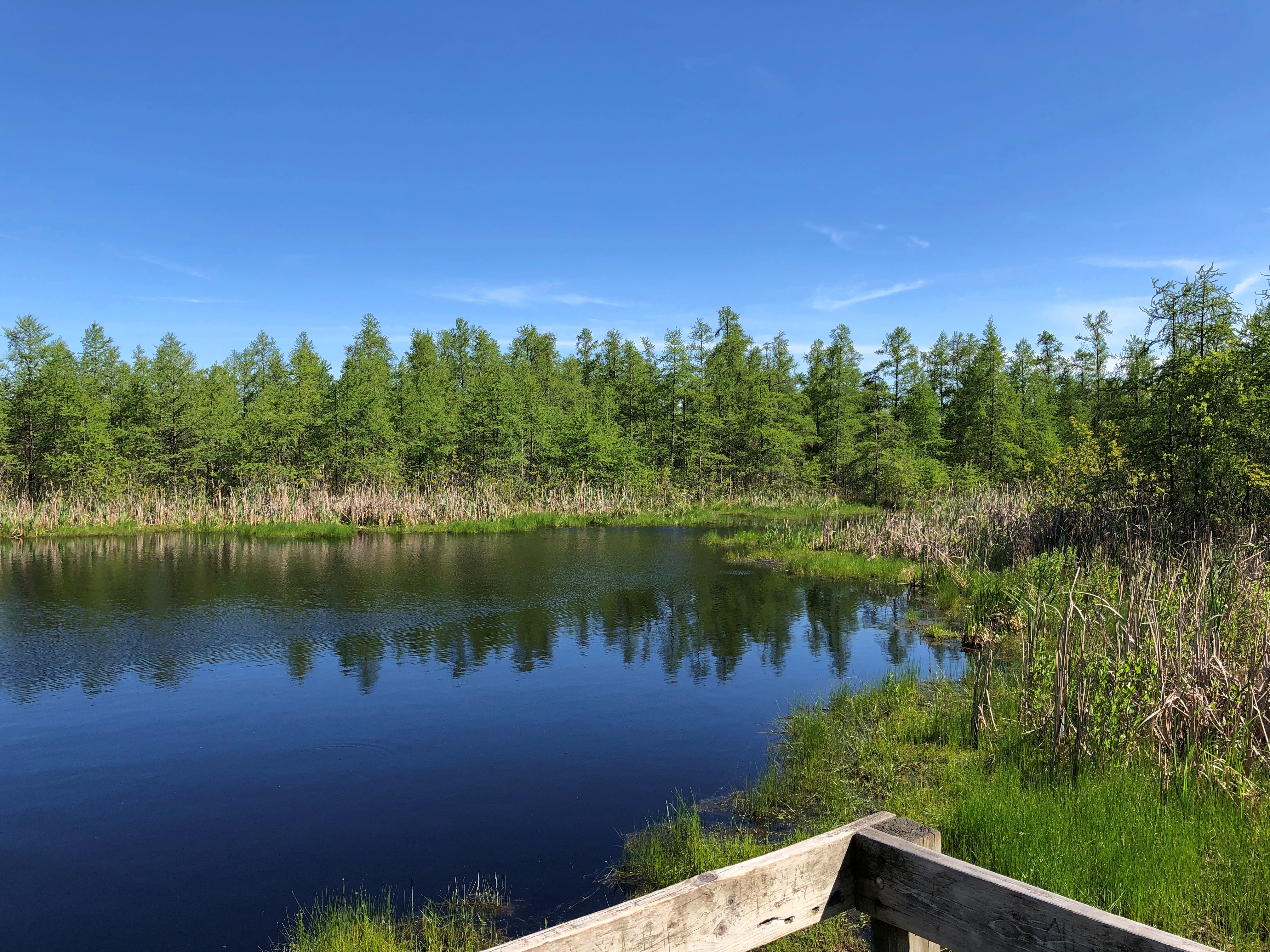
The open pool. exuberant  exuberant

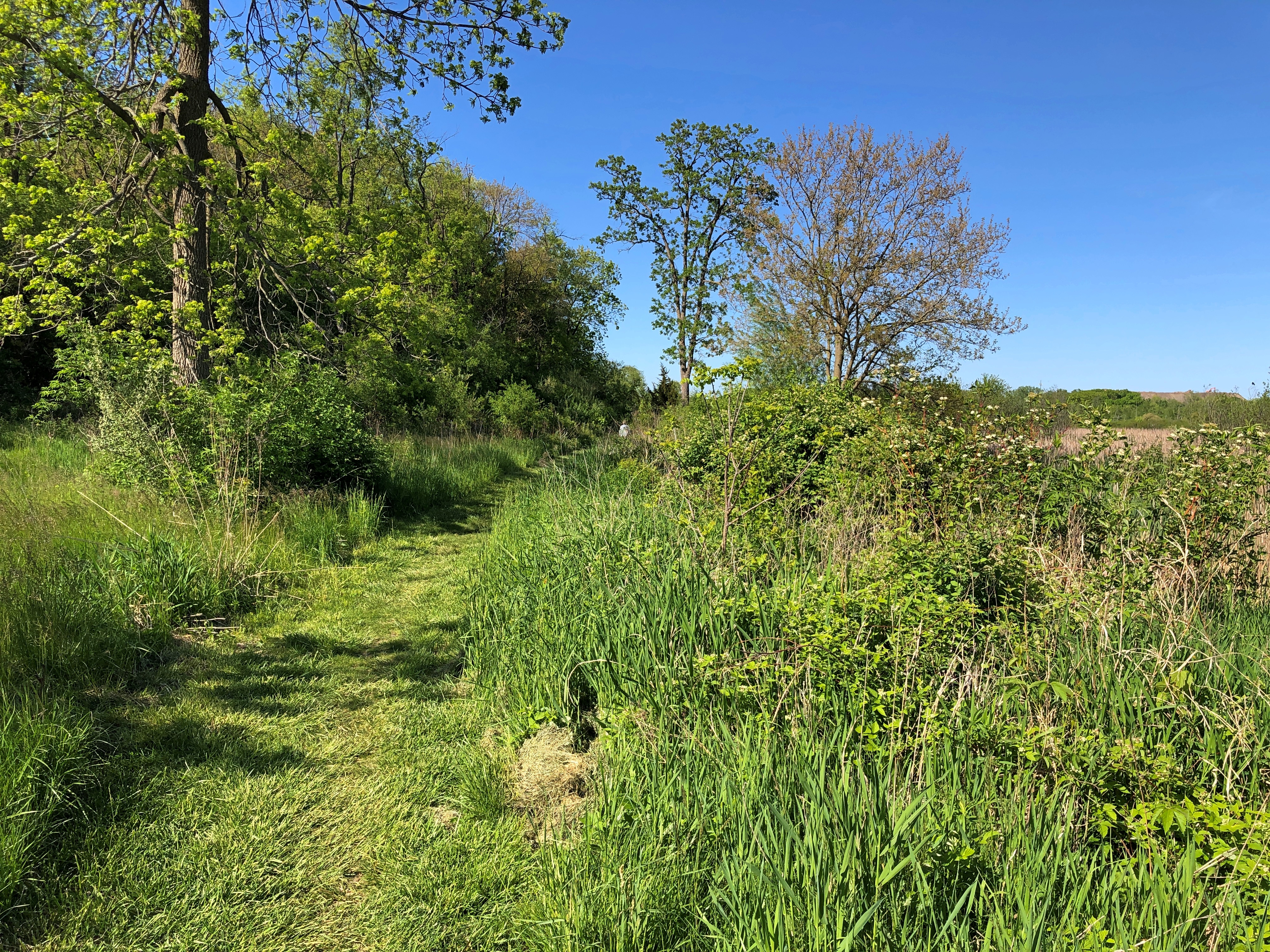
The public land at Volo Bog includes more than just the bog. A path loops around the property in parts that are a little less sloshy underfoot.Volo Bog State Natural Area

It takes a while, but when the full flush of spring comes to the North, it’s exuberant.Volo Bog State Natural Area

A modest but elegant building, a barn homage, houses the visitor center. Closed.Volo Bog State Natural Area Volo Bog State Natural Area

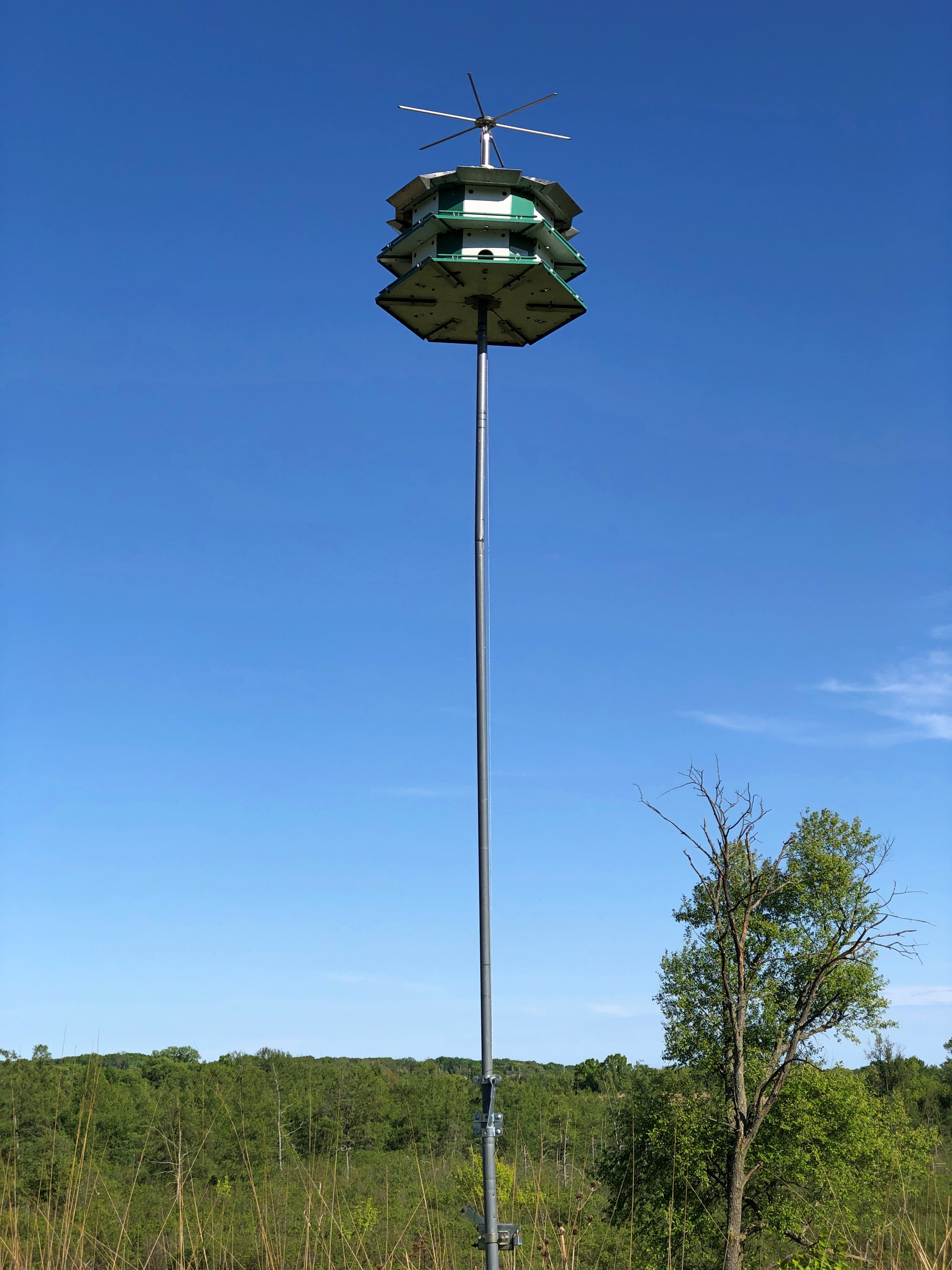
Bird apartments. Or maybe bats.Volo Bog State Natural Area

Tip of the hat (if I had a hat) to the Nature Conservancy, whose actions in the late ’50s preserved the bog. The organization has done the same for 119 million acres of land over six decades, E&E News reports, citing the organization itself.

The World Seems in Tune on a Spring Afternoon

One more image from graduation.

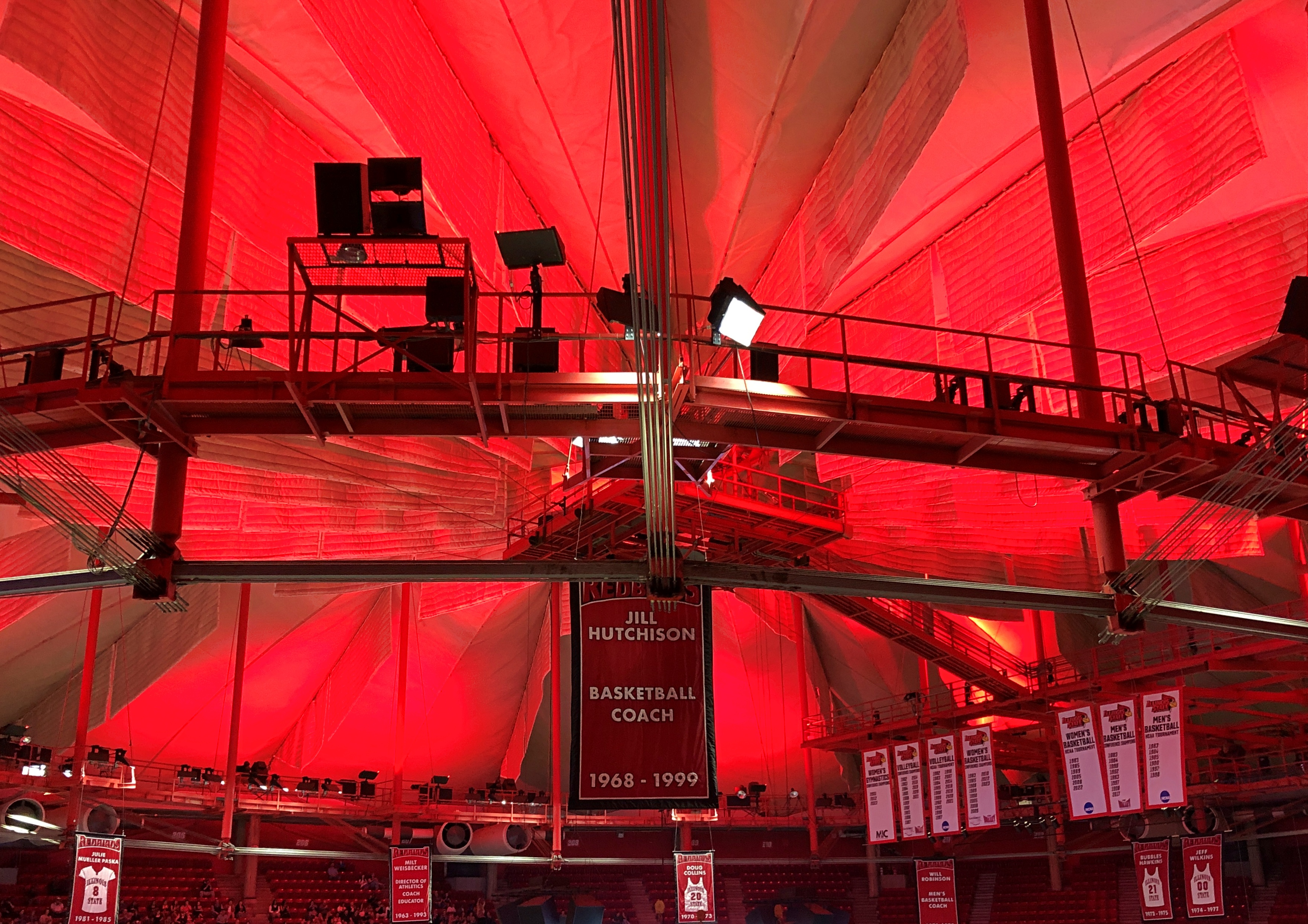
That’s the ceiling of CEFCU Arena in Normal. Once upon a time CEFCU was Caterpillar Employees Federal Credit Union. That company‘s HQ wasn’t far away, also once upon a time. But in more recent years, the entity became an independent financial services firm, renamed Citizens Equity First Credit Union to keep the initialism consistent.

It didn’t occur to me until later that the ceiling is Redbird red.

Speaking of red.May Flowers

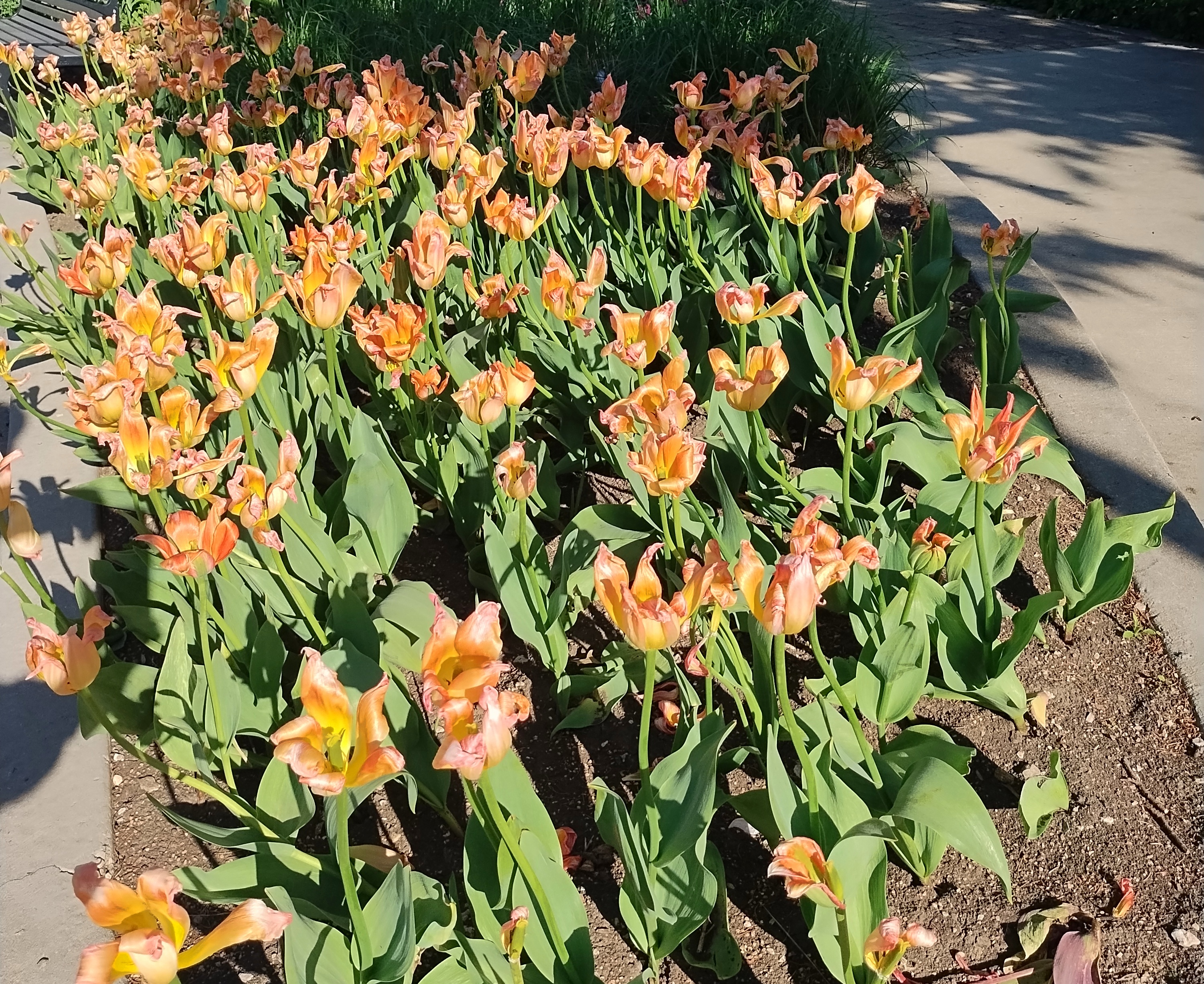
Not in Normal or anywhere else I’ve traveled lately, unless you count flowerbeds here in the northwest suburbs, about a mile and a half from home. Not just reds, either.May Flowers May Flowers May Flowers

Nothing like spring flowers to remind you of favorite old springtime songs.
The Lotus Temple

For a religion with at most 6 million adherents (maybe) – fewer than 0.1 percent of the people on Earth — the Baha’i Faith has created some remarkable temples, all around the Earth. Until recently, we’d been acquainted in person with only one of them, the extraordinary Baha’i House of Worship in Wilmette, Illinois. Especially when we lived closer to that part of metro Chicago, it was a go-to place to take out-of-towners.

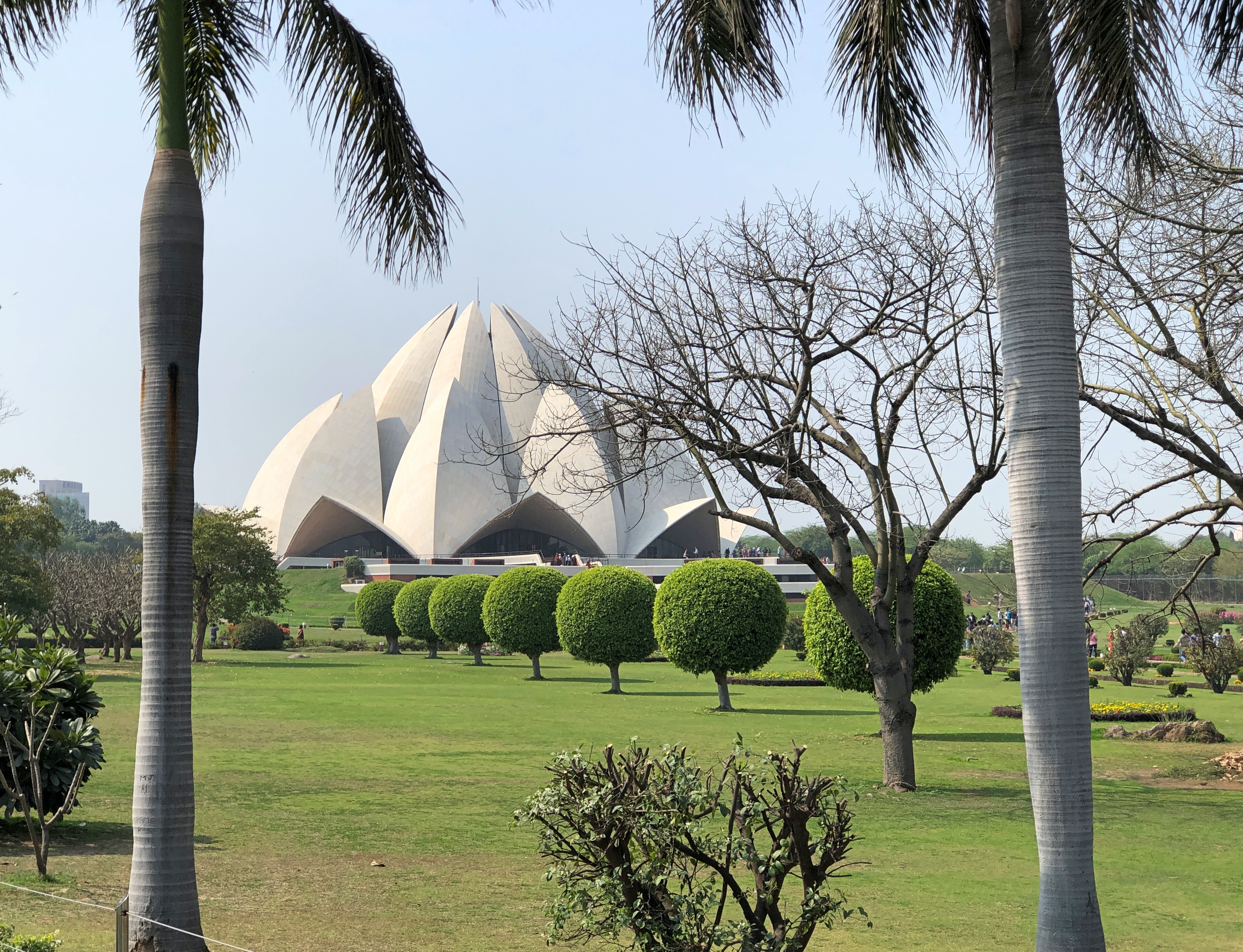
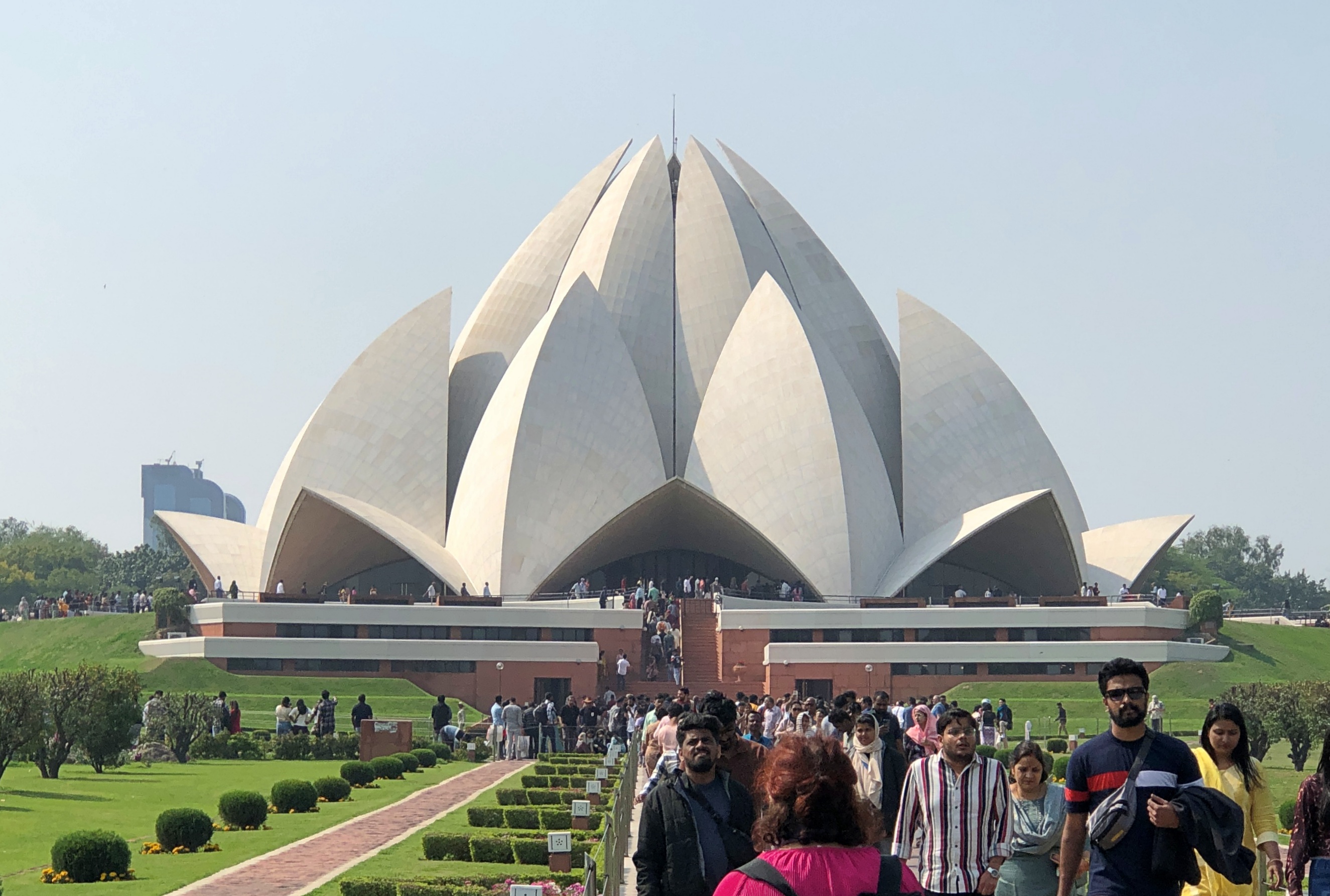
Now we’ve experienced another remarkable Baha’i edifice: The Lotus Temple (Kamal Mandir) in Delhi, set in an enormous green space in the southern reaches of that city. Green, but inaccessible to casual visitors, and probably for good reason, considering the volume of people that visit. We were among the crowd in late February.Lotus Temple, Delhi

More green space than one would think possible in Delhi, but the land was acquired by Baha’i adherents in 1953, using money left to them in the will of one of the faithful from Hyderabad. The city may have been large then, but not what it would become later. The temple was built from 1977 to 1986.Lotus Temple, Delhi Lotus Temple, Delhi

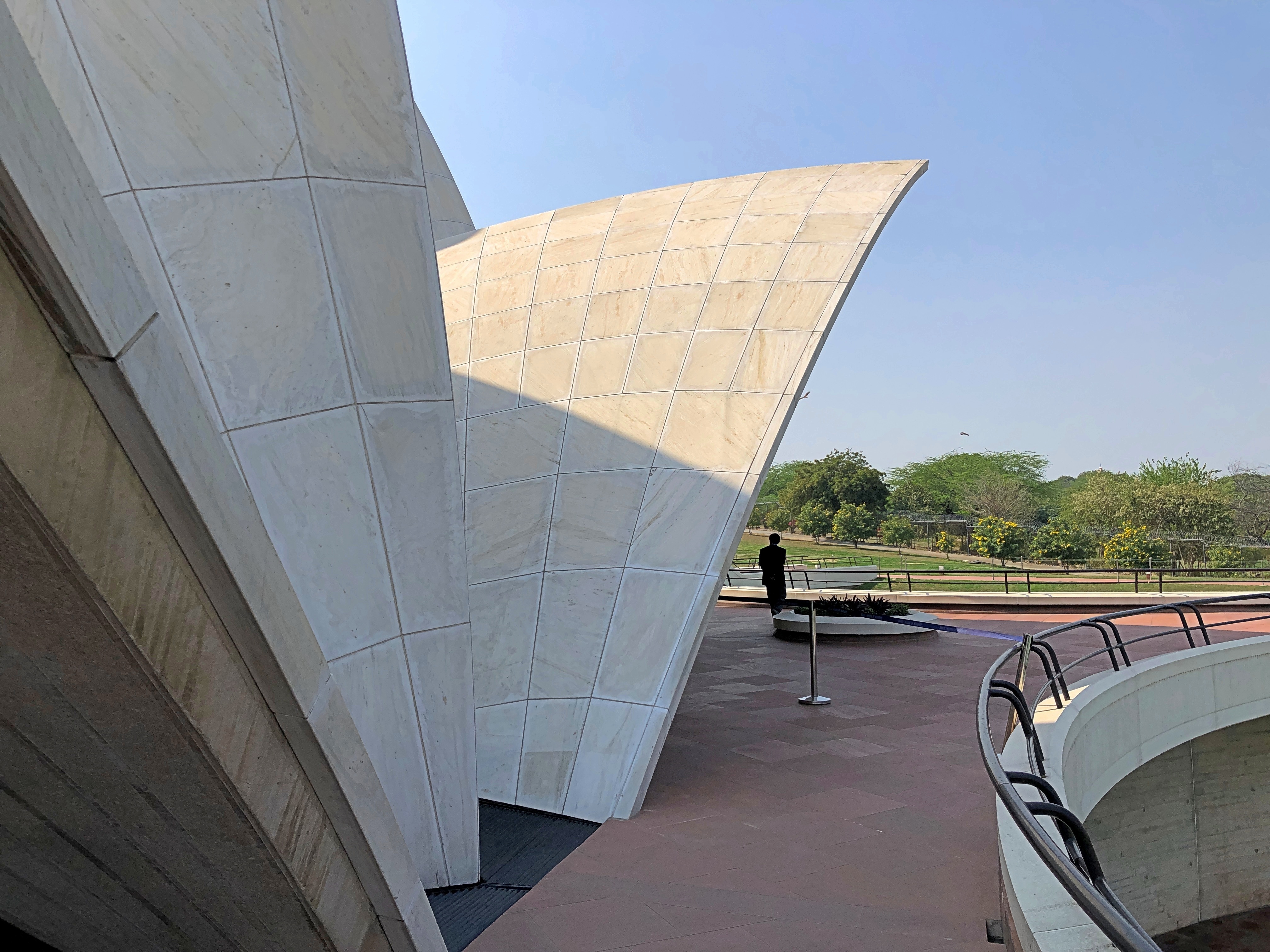
Designed by Fariborz Sahba, an Iranian architect and Baha’i who long ago left his homeland for North America, the structure includes 27 free-standing marble-clad “petals” arranged in clusters of three, forming nine sides, and surrounded by nine pools as the key landscape feature. Apparently nine sides is mandatory for Baha’i temples. This aerial image is quite striking, though invisible to ordinary tourists.

“There is a deep and universal reverence for the lotus in India,” Sahba said in a 2015 interview. “It is regarded as a sacred flower associated with worship throughout many centuries and therefore its significance is deeply rooted in the minds and hearts of the Indians.

“In the epic poem Mahabharata, the Creator Brahma is described as having sprung from the lotus. In Buddhist folklore the Buddha is represented as being born from a lotus, and is usually depicted standing or sitting on a lotus. It is also deeply rooted in the Zoroastrian and Islamic architecture; for example, the dome of the Taj Mahal is bud of a lotus.”

The Lotus Temple – formally a House of Worship, like the other Baha’i temples around the world – is a popular place. One source claims 3 million visitors a year, which would put it in the same league as the Taj Mahal (though sources offer rather varied numbers for that; it’s in the low millions anyway).Lotus Temple, Delhi

We waited 15 minutes or so to get in. No photography inside, which is a sweeping and unadorned, just as the Baha’i temple in Illinois and elsewhere. That too is a defining characteristic of the temples worldwide.Lotus Temple, Delhi Lotus Temple, Delhi

“The prayer hall is plain and has no altars or religious idols, pulpits, or fixed speaker platforms,” writes Mari Yariah, a Malaysian Baha’i who volunteered at the Lotus Temple for a couple of months. “There are no rituals or ceremonies. No talks or sermons are delivered…

“The prayer hall has a capacity for 1,300 visitors to be seated on the benches. There is capacity to increase the number to 2,500… Visitors were allowed to remain in the prayer hall for as long as they desired. Special prayer services are held four times throughout the day at 10 am, 12 noon, 3 pm, and 5 pm. [We weren’t there for any of those.] During these prayer sessions that last for about ten minutes, scriptures from various religions were read out or chanted in melodious voices.”

Christmas at Ollie’s

Choose unwisely during this time of the year, and you end up in a crowded retail setting. Not the worst fate imaginable, but I can think of better things to do, such as visit less popular stores – or at least less crowded at any given moment – and look at things.

Christmas at Ollie’s, you could say.

I might be mistaken, but I believe agriculture in the polar regions is meager indeed. On the other hand, Santa surely controls land in temperate zones, including productive cropland of all sorts. His is an operation with a global reach. But doesn’t he have farmer elves to do the actual work?

Be the life of the party.

Put something under the tree for the small fry.

Yahtzee Jr.? Kids these days. We played the same Yahtzee as the adults when we were kids, as we liked it. Actually, I only remember playing Yahtzee a few times, mostly with my cousin, and not especially liking it. Now I’ve forgotten what it involves, except rolling dice a lot. Maybe I should look it up and re-acquaint myself with it. Nah.

Not a Christmas item particularly, but the thought of shooting dog treats just makes me smile. It might or might not really work, in the sense of getting the dog to play along. Of course, it is food, so dogs might be keen to chase down the treats from the get-go. Watching that would be the amusement for the human. I haven’t lived around a cat long, but my sense is that if you shot treats at a cat, the animal would make itself scarce.

Tannenbaum ’24

The Christmas tree business is still mostly fragmented, with some 16,600 farms growing Christmas trees on nearly 300,000 acres in the United States, according to the 2022 USDA Census of Agriculture. Some farms are large – a wholesaler called Holiday Tree Farms in Oregon’s Willamette Valley asserts that it ships 1,000,000 trees a year, grown on 1,500 acres. But no single entity dominates.

Good thing, too. If an outfit called CTree Group controlled, say, 50 percent of the market, we’d have to buy an annual subscription to receive our trees in December.

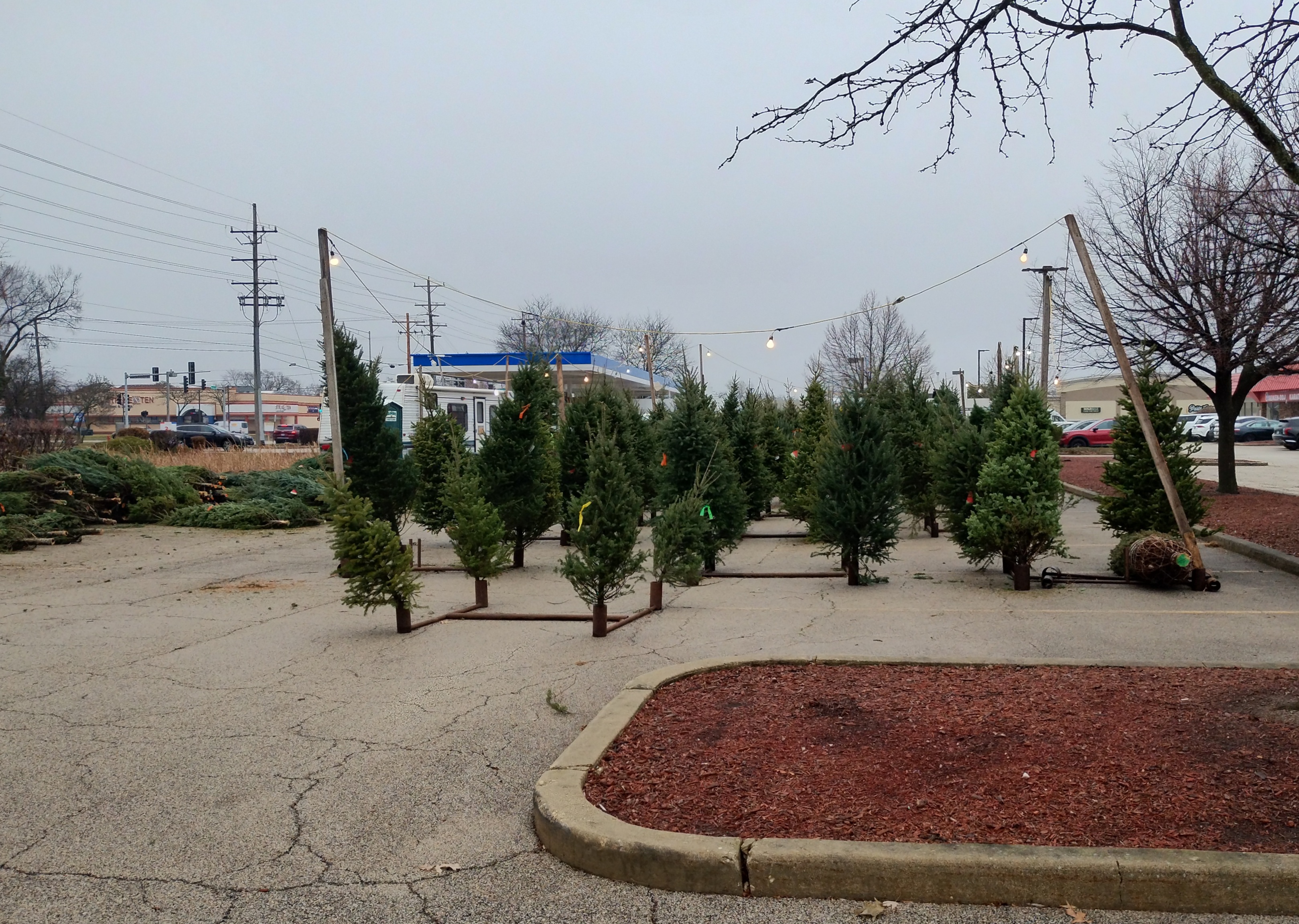
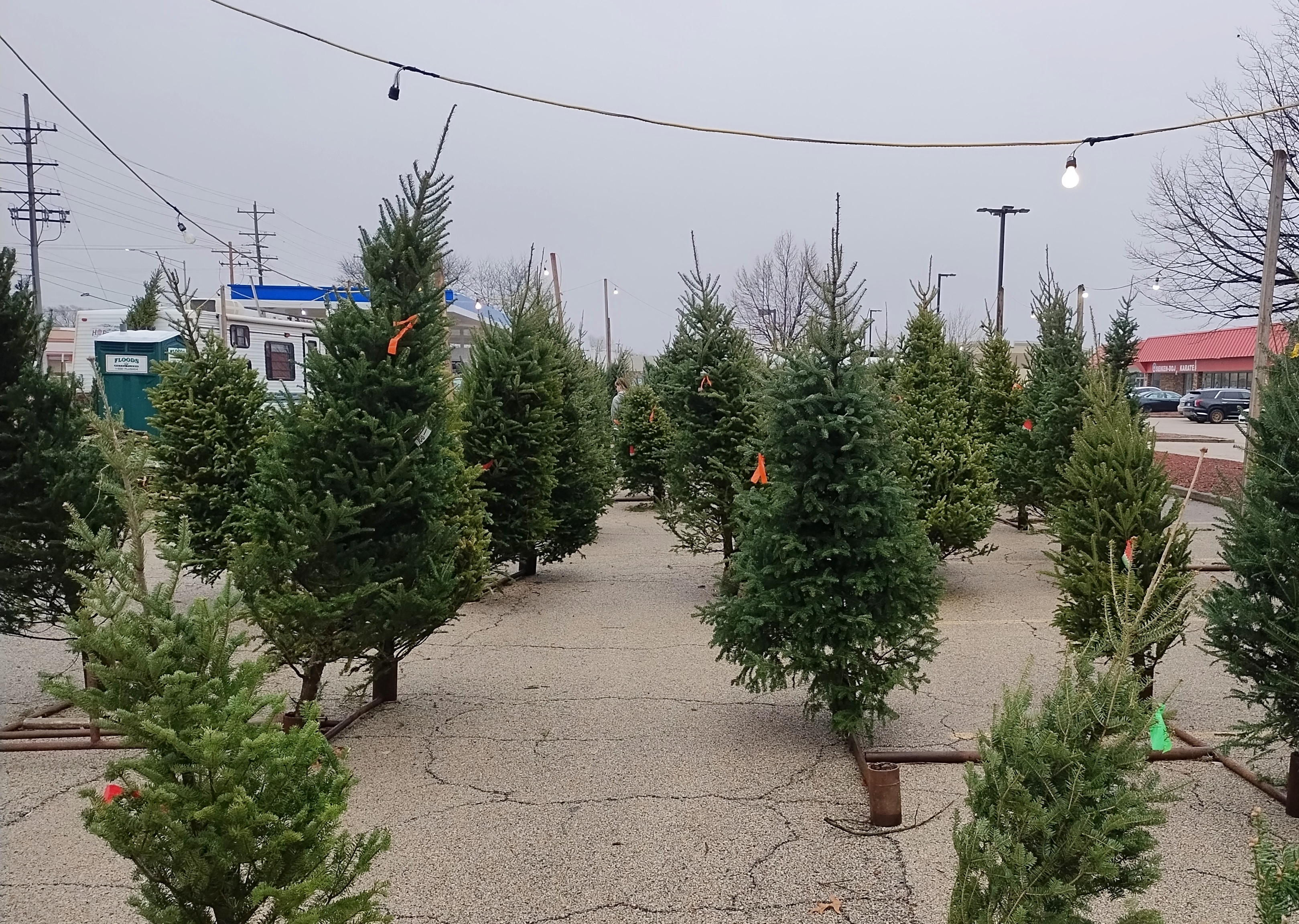
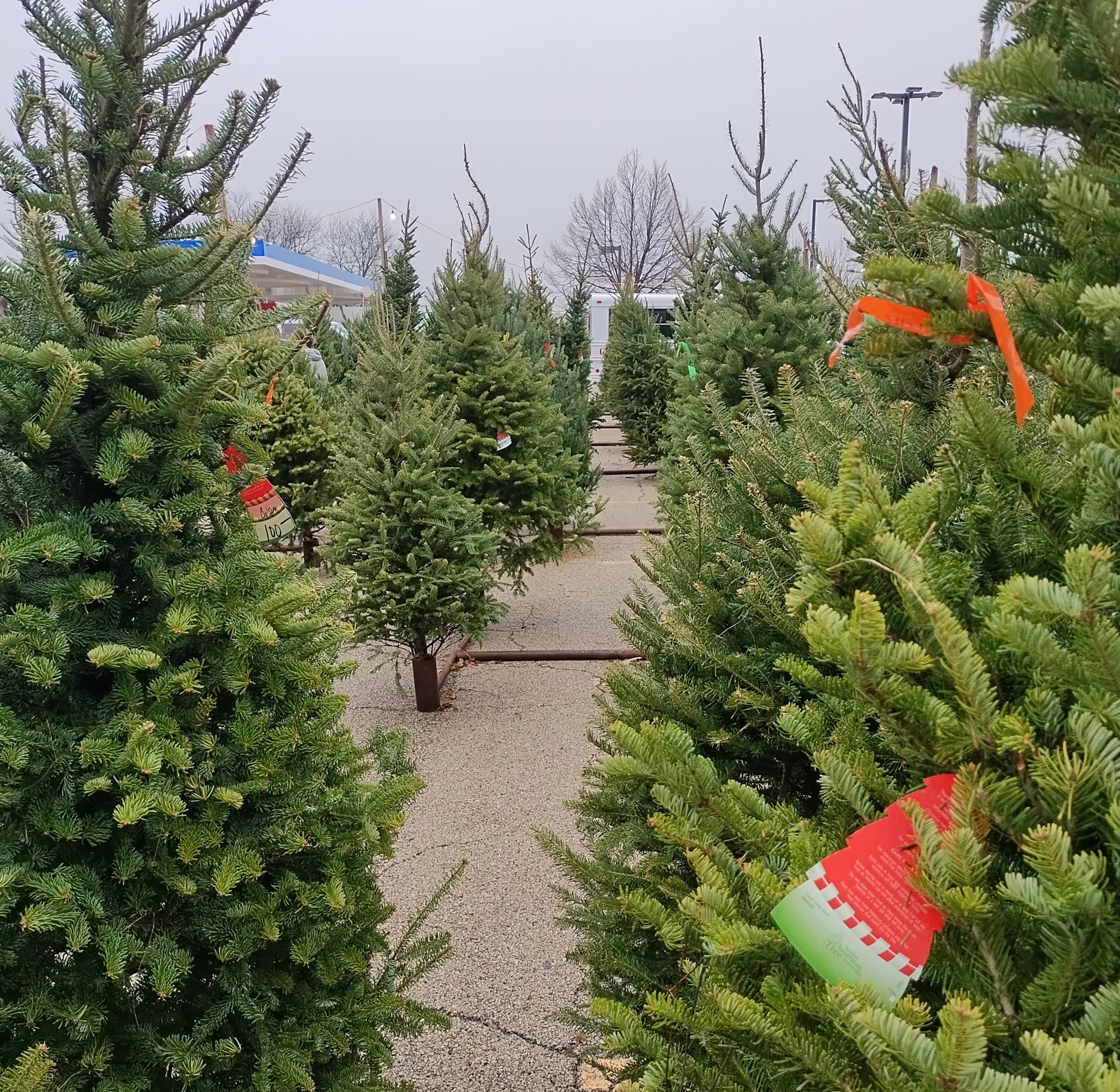
The cash money I spent today at a Christmas tree lot with no name here in the northwest suburbs pretty much went straight into the pocket of the farmer. And I mean that literally. That’s where he put it.Christmas trees Christmas trees

He and his (I assume) wife, both of whom looked roughly my age, except more grizzled from spending much more time outside, were stationed at the small trailer, taking money, chain-sawing the stumps and netting the whole trees, for easier transport. These things they did for me. I asked whether theirs were Michigan trees. Over the years, some of our trees have been, including those from the UP. No, Wisconsin. Just as good, I told them.

The thought that the money goes directly to the owner makes it less annoying that the price was up again this year ($70), and that many trees in the lot were priced at over $100, a price I’m sure not to pay. But not completely un-annoying.

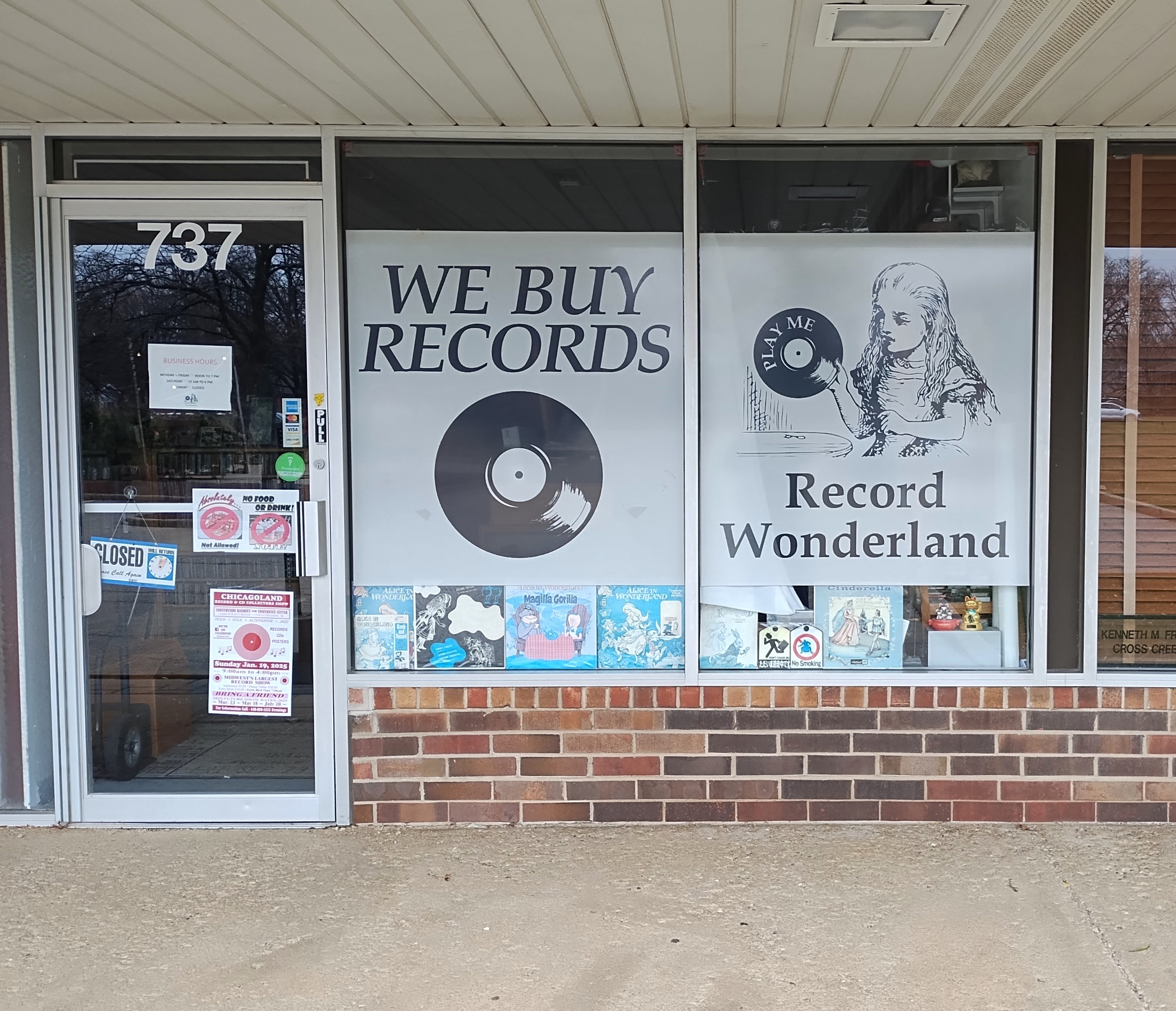
The lot, as many are, is set up on an underutilized section of parking in a nondescript strip center. But not completely nondescript. I was glad to see the record store is still there, though I’ve never been in.

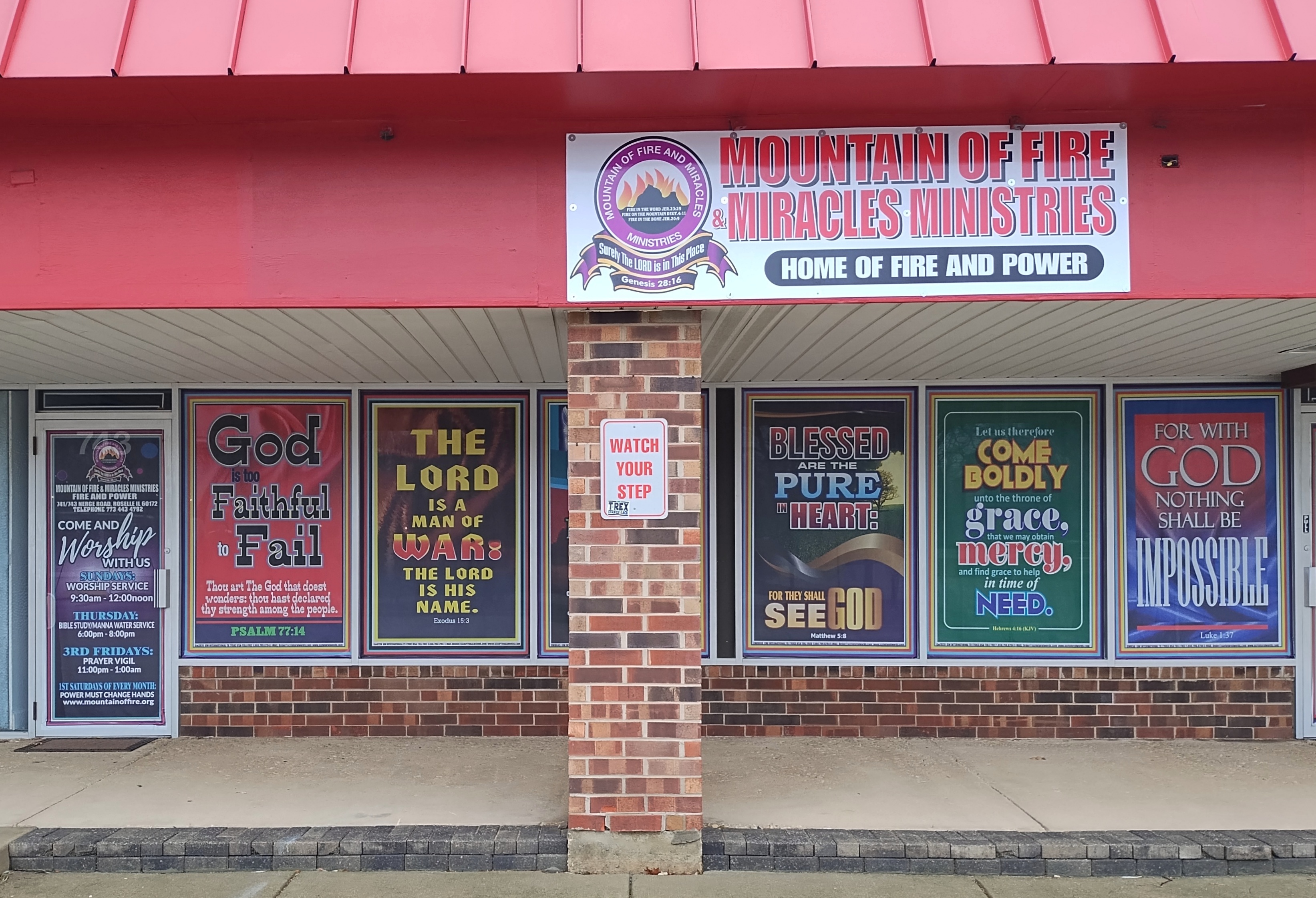
I hadn’t noticed this before, also in the strip center.

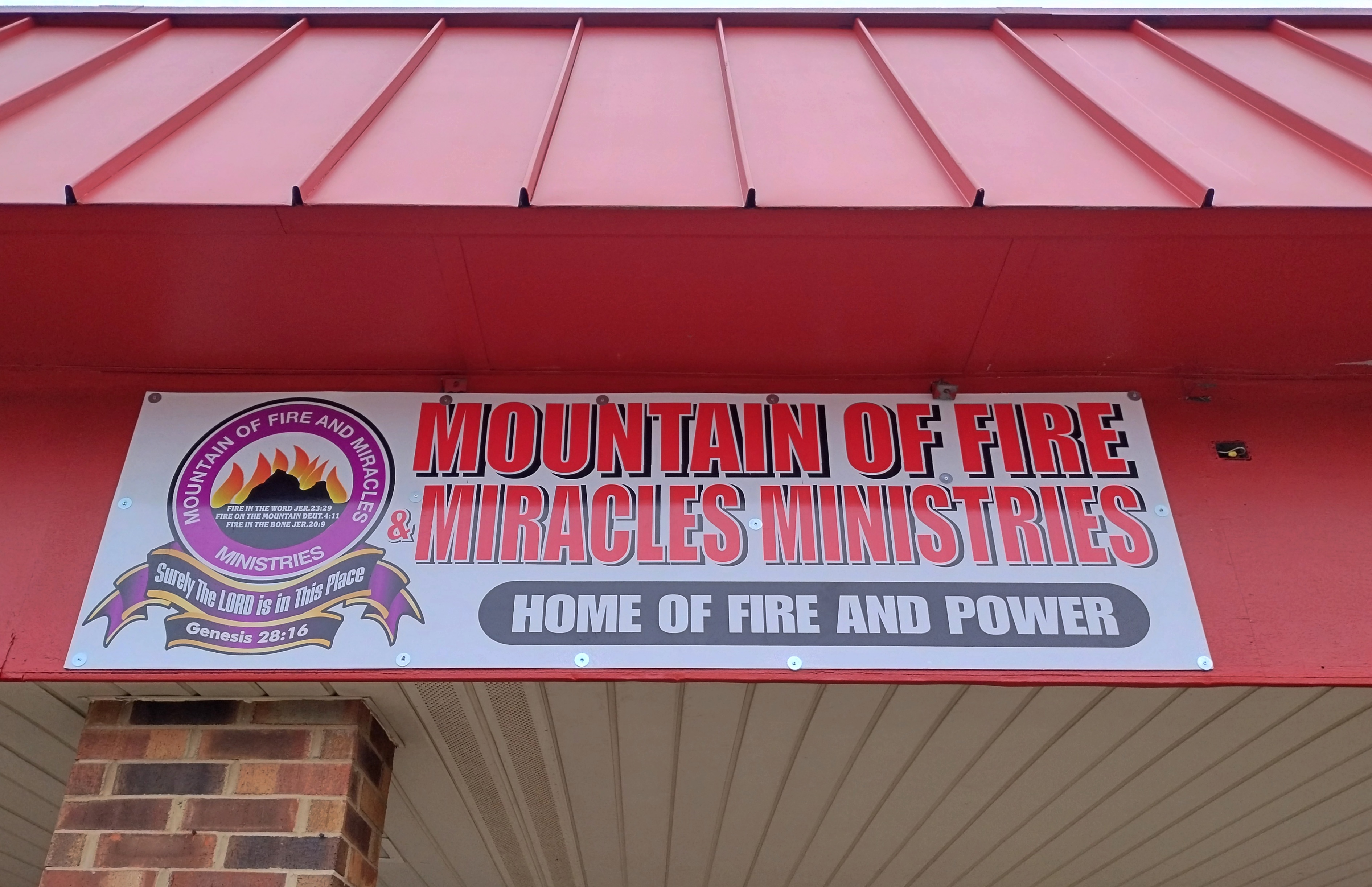
An organization I’d never heard of. Even so, I have to admit the name Mountain of Fire & Miracles Ministries has a peel of thunder and a whiff of brimstone about it. Makes you sit up and pay attention.

Some detail.

I took it for an independent Protestant sect of the homegrown sort, but no. This location is an outpost of MFM, a Nigerian Protestant sect – at least, in the sense that it isn’t Catholic — founded in 1989. Here’s something from the church’s web site, under “Mission and Vision” as one of the objectives of the ministry:

To build an aggressive end-time army for the Lord. MFM is an end-time church where we build an aggressive end-time army for the Lord. An end-time church is a church where a sinner enters with two options: he either repents or does not come back, contrary to the present day church where sinners are comfortable and find things so easy and convenient.

I don’t know much about the organization, not really, considering how ignorant I am about most things Nigerian. Still, its presence tells me that there must be more Nigerians here in the northwest suburbs than I realized. The world not only comes to Chicago, it comes to the Chicago suburbs.

Trick of the Light

When in doubt, post pictures of a cat.Minnie the Cat

Cat images are the road to virtual fame, I understand. No? That or posting selfies from dangerous places, and dying as a result. I don’t think that strategy is for me, though I like a good vista as much as anyone.

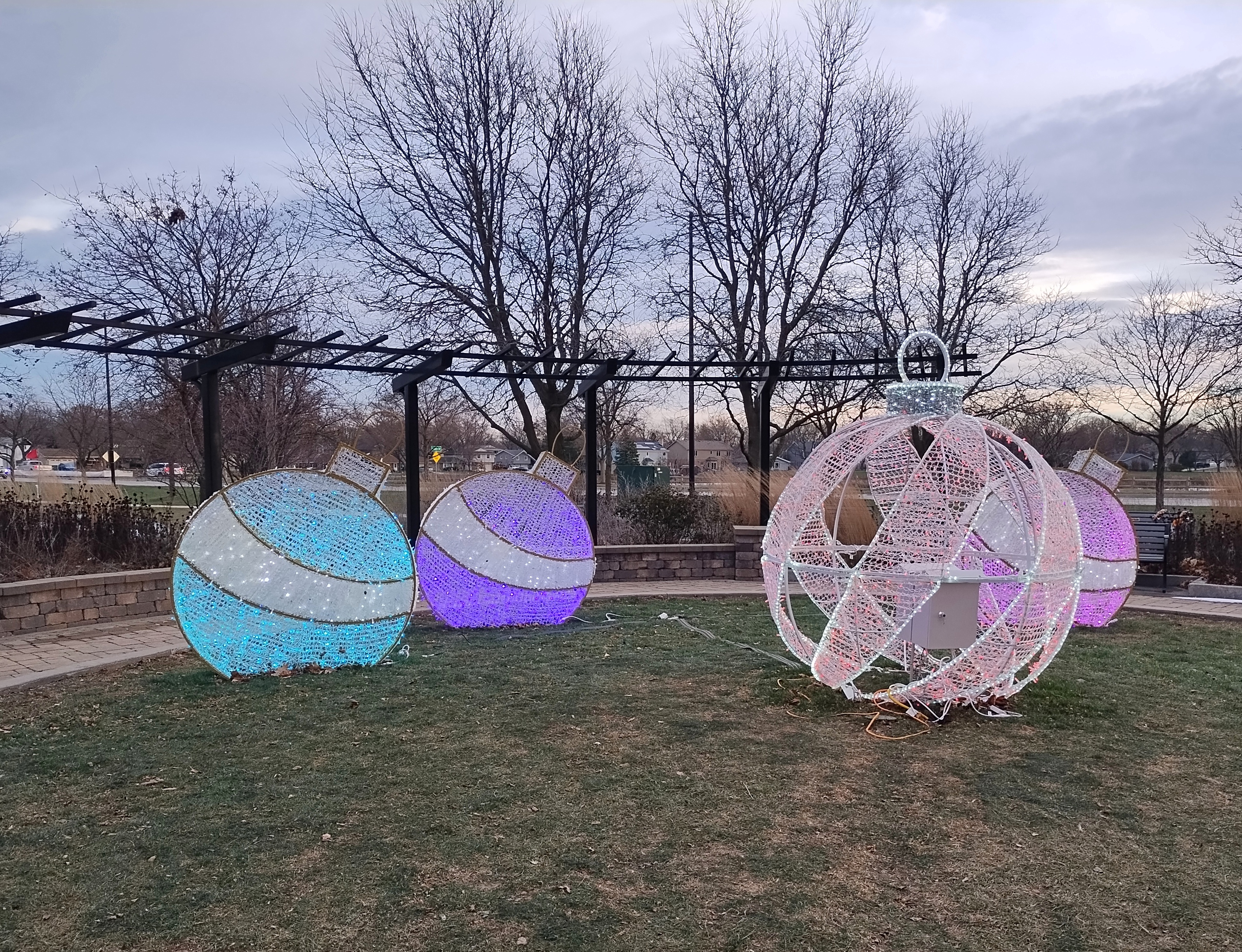
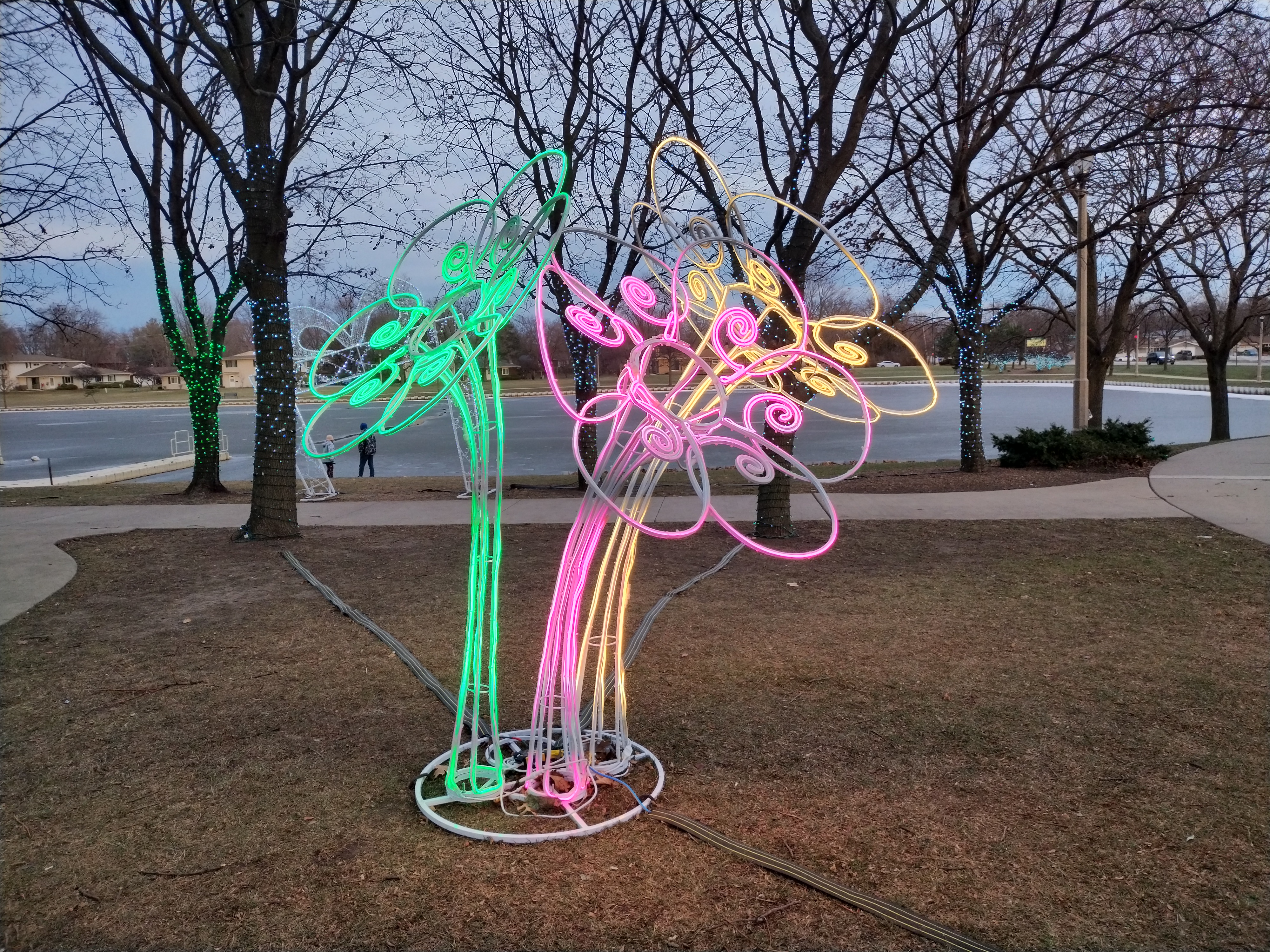
Municipal holiday lights are up.

Actually they have been since just before Thanksgiving, but I didn’t get around to visiting this particular park until the other day, just ahead of the numbing cold that moved into the area.

When pointing my cell phone camera at the light array below, I noticed something odd. Notice that the horizontal gray bands in these successive images, both unretouched, taken a fraction of a second apart – as fast as I could push the button.

As I looked through the phone, the horizontal gray bands appeared to be moving downward, but such apparent motion wasn’t visible to my eyes. Something like the distortions involved photographing an image of a video screen. The still images captured them as they seemed to travel.

I knew there must be a reason for this involving how light behaves, and sure enough, there is. I read this article about the phenomenon, and the one it links to, but don’t ask me to explain it. The best I can do is, light be weird.